How about 1776?

I was thrilled to be able to get in on a tour of the Dobbin House with an excellent tour guide.
This house was build in 1776 by Reverend Alexander Dobbin. He was born in Ireland in 1742. He set sail for the Colonies with his wife, Isabella Gamble. They could each bring one trunk. Isabella filled hers with their clothes and the things they would need to start a new life. Reverend Dobbin filled his with books. Each were practical, in their own way.
He became pastor of the Rock Creek Presbyterian Church, just a little north of Gettysburg. He was a man who believed in multiple income streams.In addition to being a minister, he acquired 300 acres which were farmed. He also had a Classical School, which we would today call a combination theological seminary and liberal arts college. It was the first institution of it’s kind west of the Susquehanna River. His large collections of books was integral to its success. See? A trunkful of books is a good thing.
I do wonder if Isabella shared his vision.
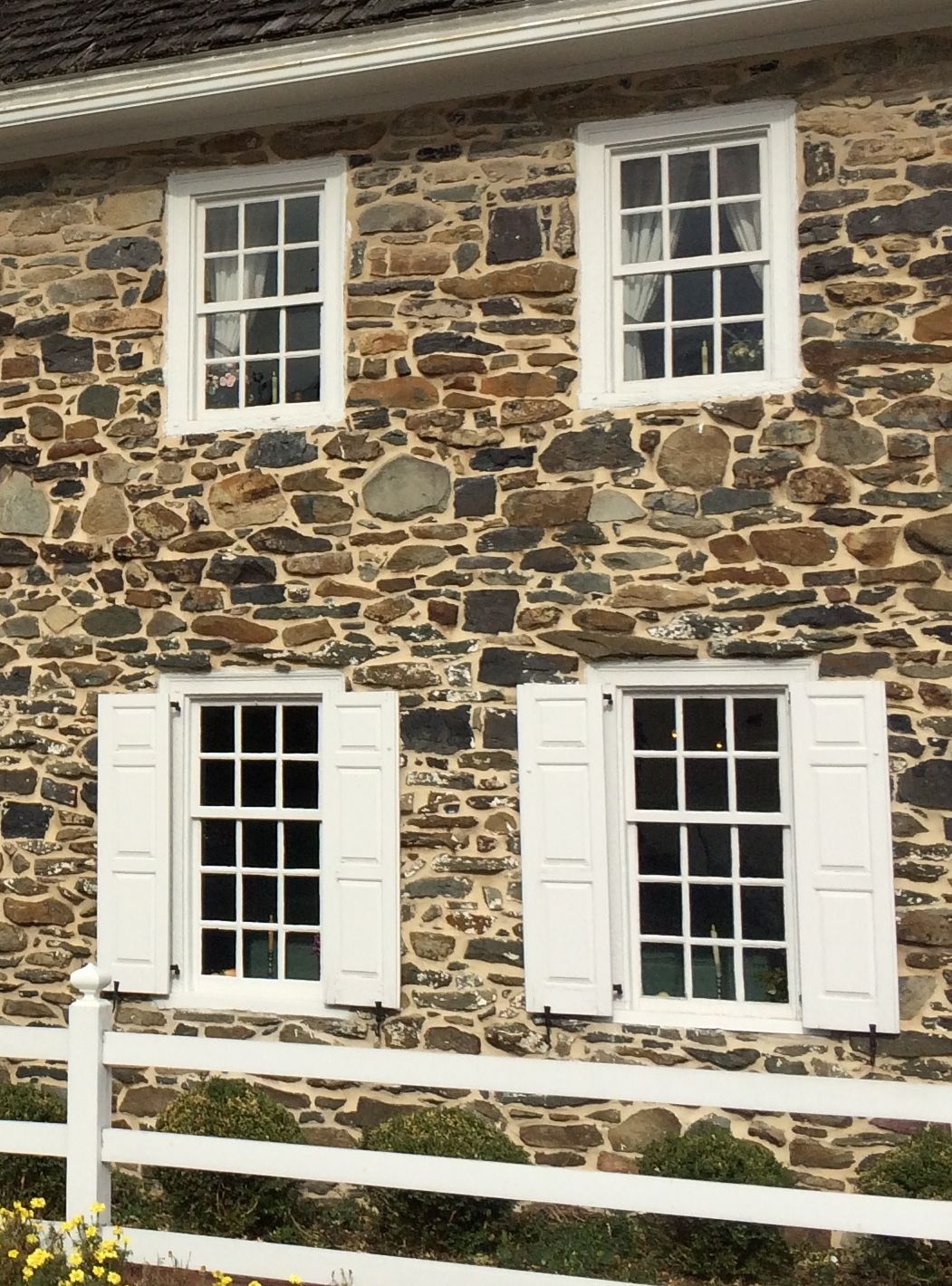
Our guide pointed out that there were shutters only on the lower windows. They chose to do that as a safety measure against possible Indian attack. It turns out that the last attack was by a Shawnee and French raiding party in 1758, years before. She told us that the woman kidnapped in the raid was a 15 year-old named Mary Jemison. Conveniently, they had a copy of the book, A Narrative of the Life of Mrs. Mary Jemison, for sale in the gift shop. I did buy it, and I look forward to reading it.
Anyway, the Dobbins needed that large house, which had six fireplaces when it was constructed. Some of the students stayed at the house, as borders, and Isabella had ten children before her death.
As if ten children wasn’t enough, Reverend Dobbin remarried. Mary Agnew brought nine children of her own into the union!
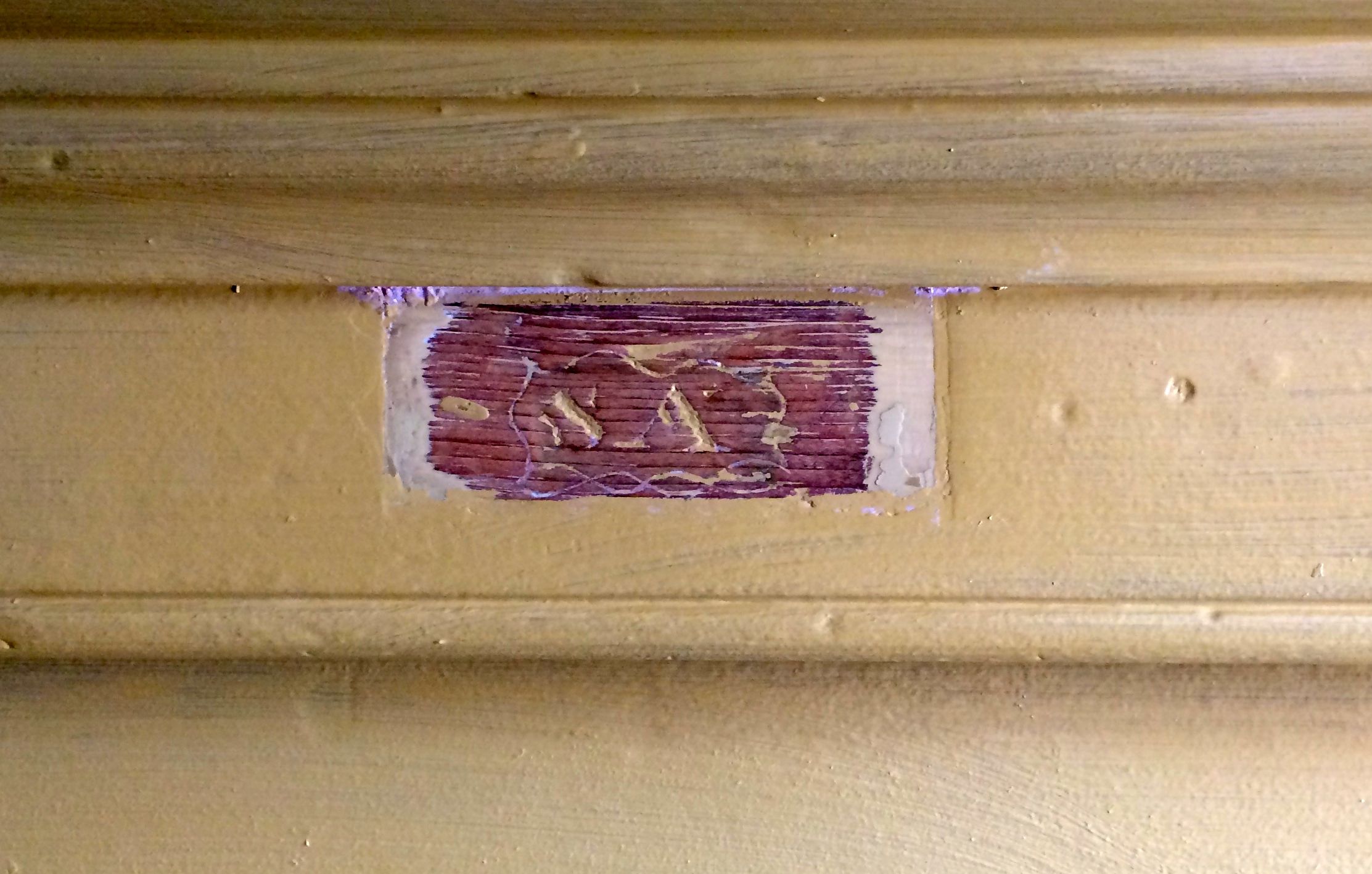
The guide told us that these initials were found carved into the mantel when the house was being restored. They are the colonial era style of lettering of the initials “S.A.” She told us that they had decided that Reverend Dobbin had permitted the eldest son of Mary Agnew to carve his initials into the mantel so that he would know that this was his home, too.
Perhaps so. It’s a nice story, but I am sure that wouldn’t have been acceptable in my house.

After Reverend Dobbin’s death in 1807, his eldest son, Matthew, inherited the property. His widow was provided for, though. According to the will, she was to be given a room and have access to the kitchen for as long as she lived.
Matthew added on to the house. He added a kitchen, a room above the kitchen and an attic. I think the guide told us that the attic portion was for spinning. He also added a secret room that was used as a stop on the Underground Railroad.
The room was situated under the eaves behind a cabinet. The shelves slide to the side on tracks and the escapees could hide behind the shelves.

The cabinet was just at the top of this photo frame. There were too many people on the tour to get a good shot of the hiding place.
The building changed hands several times over the course of its existence. The last owner before the current owner used the upstairs as a tourist attraction. They had removed the walls that separated the space into bedroom and installed a diorama of the battlefield. That is the space that became the main dining room of the restaurant.

A a nod to the former use of the space, some of the tables are set up as if they are in four-poster canopy beds.
On our way back downstairs, the tour guide pointed out the only bullet hole from the battle.
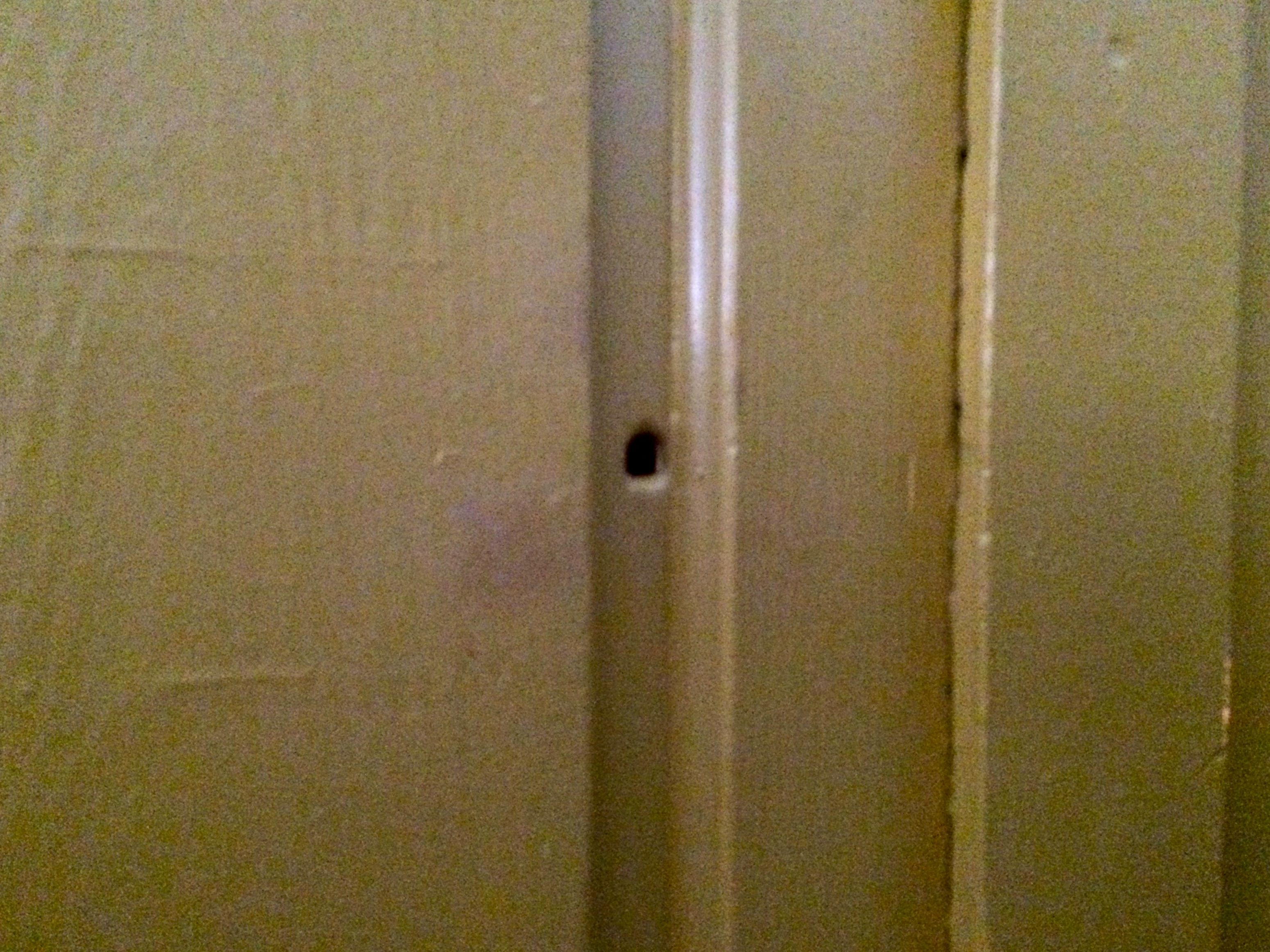
At least, that’s what she said.
The current owner dug out the cellar of the house and put in a tavern. Reverend Dobbin would never have allowed a tavern in his house.

She pointed out the ledge and said that was how much they had to excavate to put the tavern in. They also put in a steel beam to support the weight of the house.

This plaque was on the bar. The current owner had an antique dealer looking for a bar for the tavern. Her great-grandfather, who was in his 90s at the time, was able to identify the bar because of some unique dovetail joinery that, unfortunately, I didn’t get a photo that. It is a nice touch that this family heirloom made it back to the fold.
Incidentally, our word, “bar” meaning a place that sold alcohol came from this device.

Since legal tender was rare, alcohol was used as a form of money. The bars were lowered and locked when they weren’t open for business. The bars swung up and hooked to the ceiling when they were open.
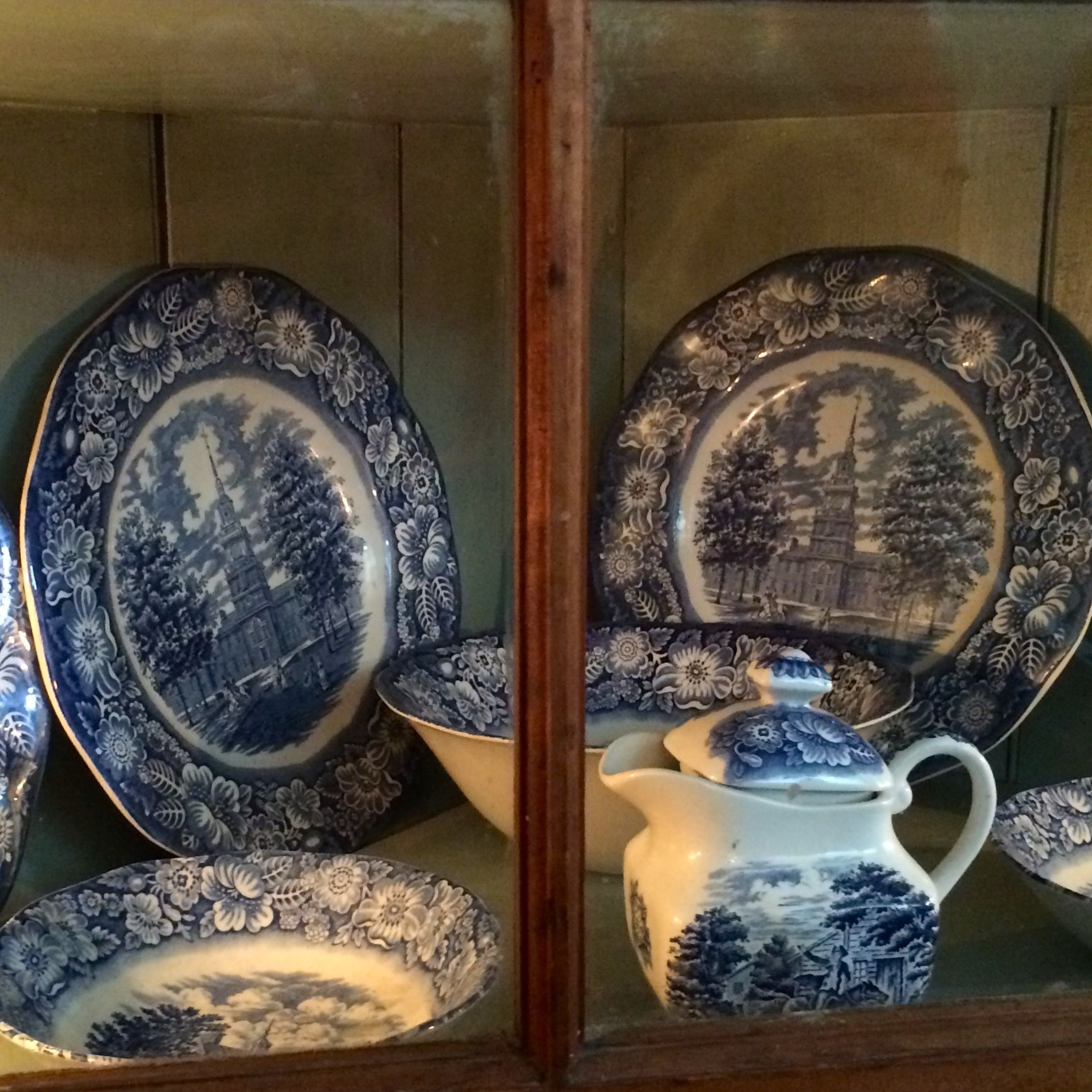
When they excavated the cellar and the midden piles (fancy term for “trash heap”) they uncovered many artifacts. These are not among the artifacts they discovered, but, based on the pottery pieces they found, they were able to buy the exact dishes that Reverend Dobbins used.
Now, the guide was very firm in telling us that the pattern used in the restaurant was Liberty Blue made in Staffordshire, England and that it was the same that the Dobbins used. I find it a little hard to believe that they would be producing dishes with pictures of Independence Hall and calling it Liberty Blue right around the time of the War for Independence.
But, that’s what she said.
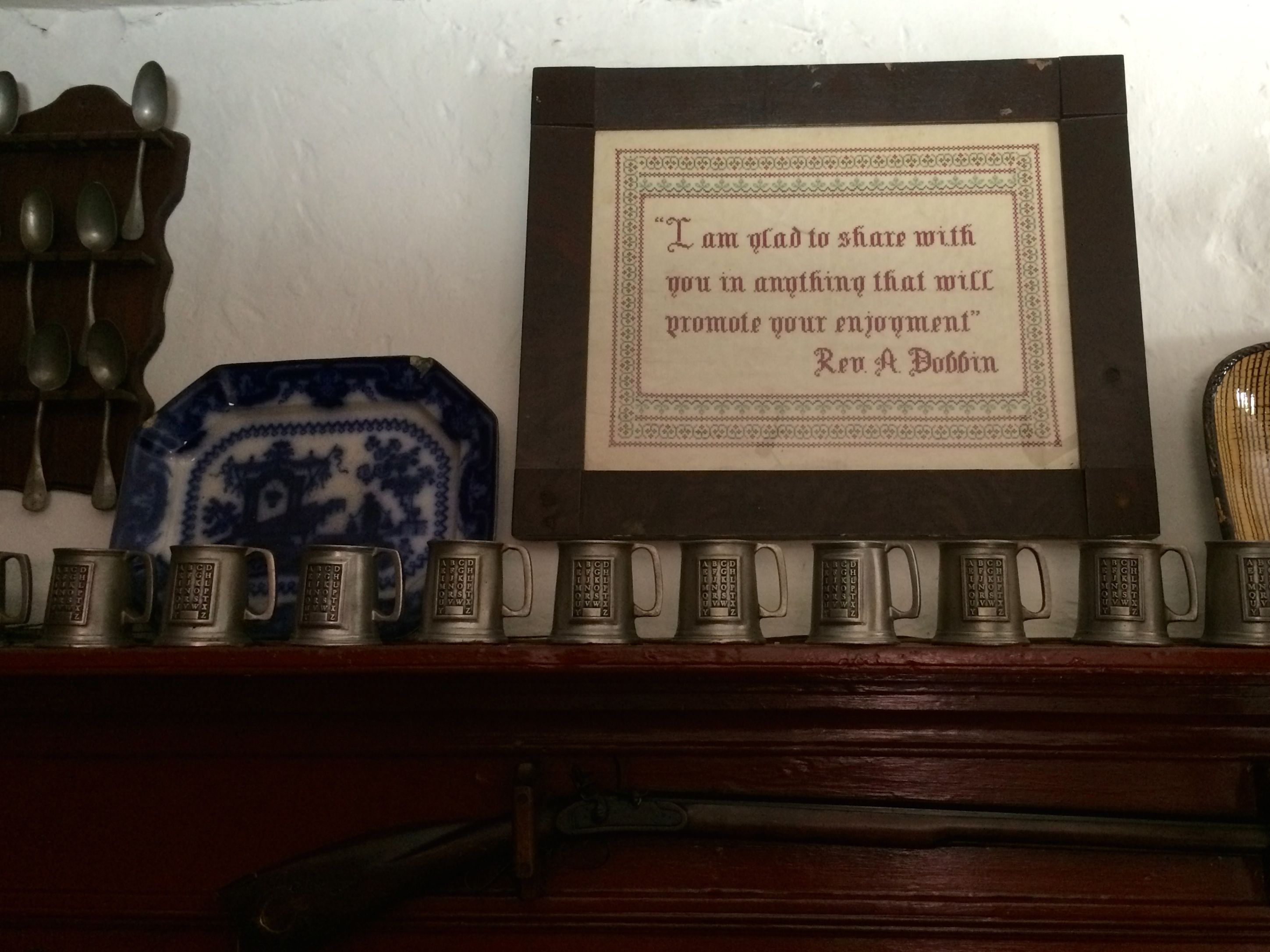
It was a lovely tour, and amazing to think that this building was standing on its original foundations nearly 240 years after it was built.
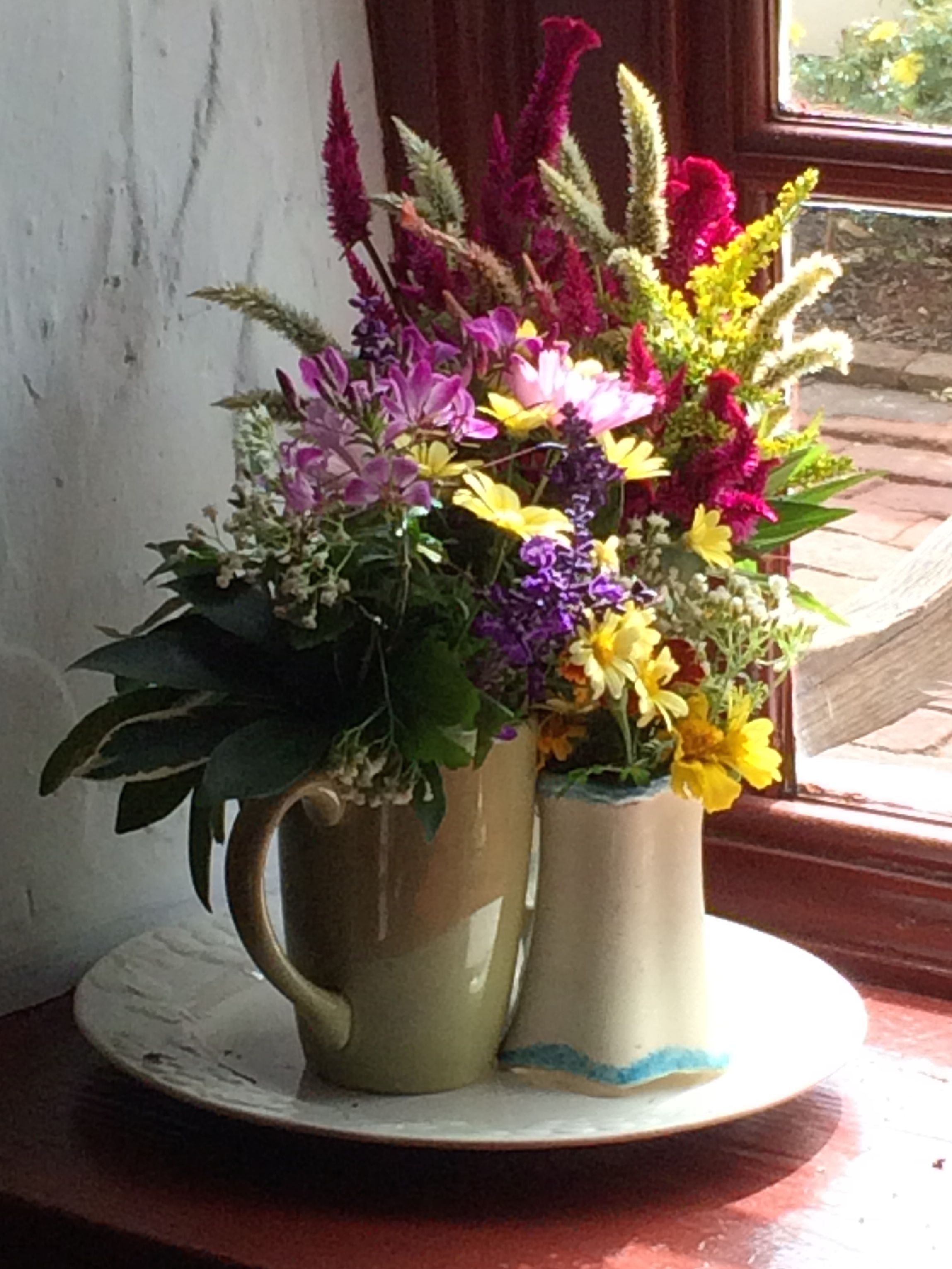
And that’s what I say!
Hi Kim! We took a ghost tour in Gettysburg, and stopped at the Dobbin House! I don’t remember the exact story, but it was something about the ghosts of runaway slaves frequenting the house… Fun!
Boy, there are always things to do “next time”! I saw all the people getting ready for the ghost tours, but I was ready to call it a day.