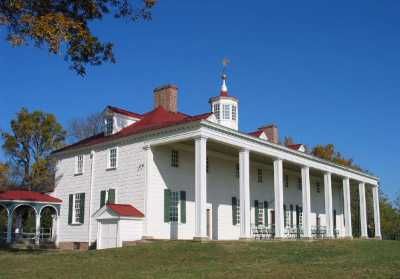
Ah, yes. The classic view of Mount Vernon. (Actually, I had to borrow this shot. I didn’t get a good photo from this side.)
Actually, it’s pretty much a miracle that the house is still standing. This is the way it looked around 1860,
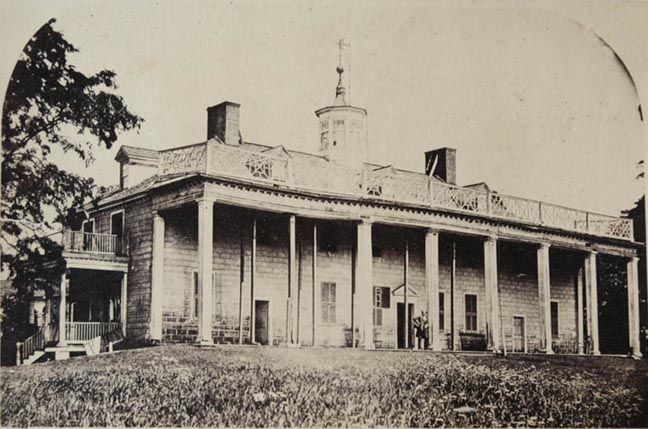
Those spindly looking things between the columns are ships’ masts, being repurposed to hold up the roof.
After Washington died in 1799, the estate passed through a few relatives, and they apparently didn’t have the will or the money to maintain the property. Part of the problem was that everyone wanted to visit Washington, and after his death, the visitors kept coming.
The visitors came and the stayed and stayed and stayed. They were a real drain on the household budget.
John A. Washington, Jr, Washington’s great-grandnephew, was the last owner in the family. He offered it for sale. Both the Commonwealth of Virginia and United States governments declined to buy the house.
In 1858, Ann Pamela Cunningham saw the house from board a ship in the Potomac. She thought it was terrible that the George Washington’s home had fallen in such disrepair. She formed the Mount Vernon Ladies’ Association of the Union, and they bought the house for $200,000 and took possession on February 22, 1860.
A good chunk of the money was raised by Edward Everett, who traveled around, delivered speeches and donated the proceeds to the cause.
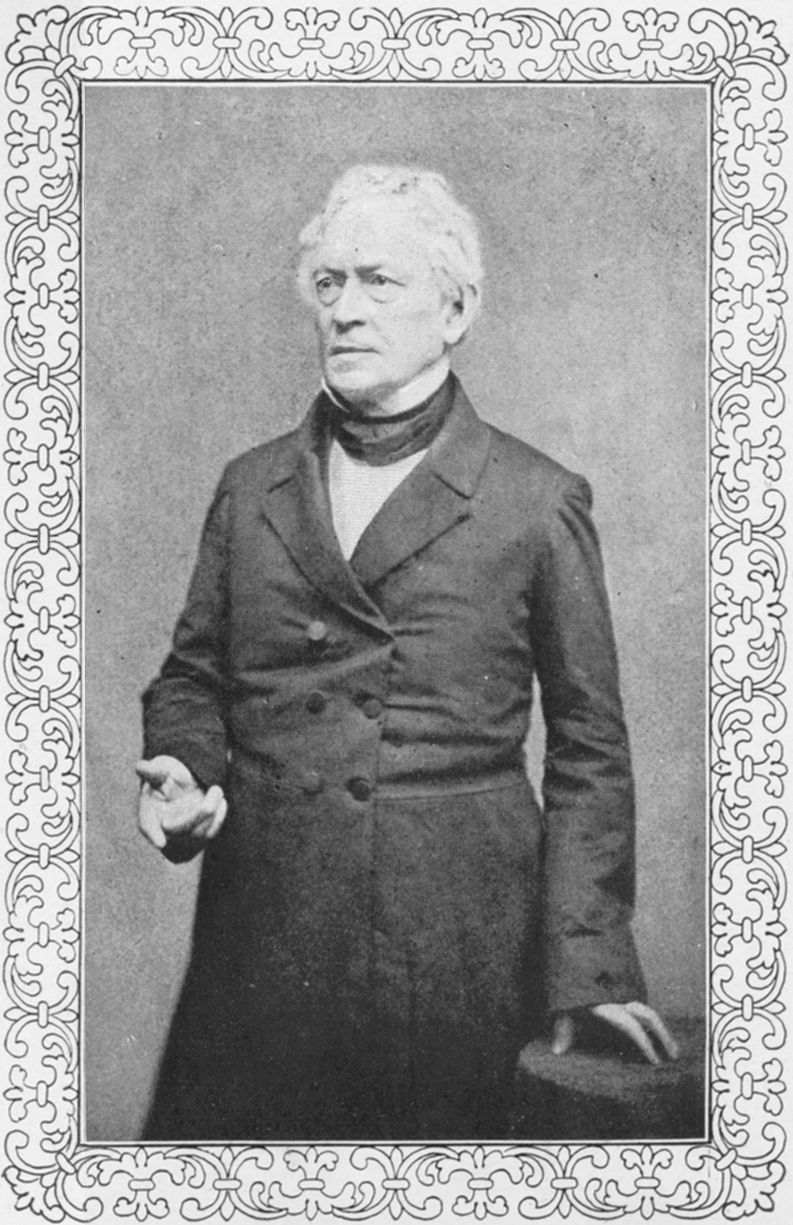
Remember Edward Everett? The man who spoke for two hours before Abraham Lincoln delivered the 272-word-long Gettysburg Address? THAT Edward Everett.
Whenever I hear of a date anywhere in the 1860s, I always stop to think of the relationship to the Civil War. Lincoln was sworn in on March 4, 1861 and the war began on April 12, 1861. Ann Pamela Cunningham managed to obtain pledges from generals on the Union and Confederate sides, and, although fighting raged across the nearby countryside, the estate served as neutral ground for both sides.
Soldiers from both sides had to leave their guns by the gate houses. See the gate houses?
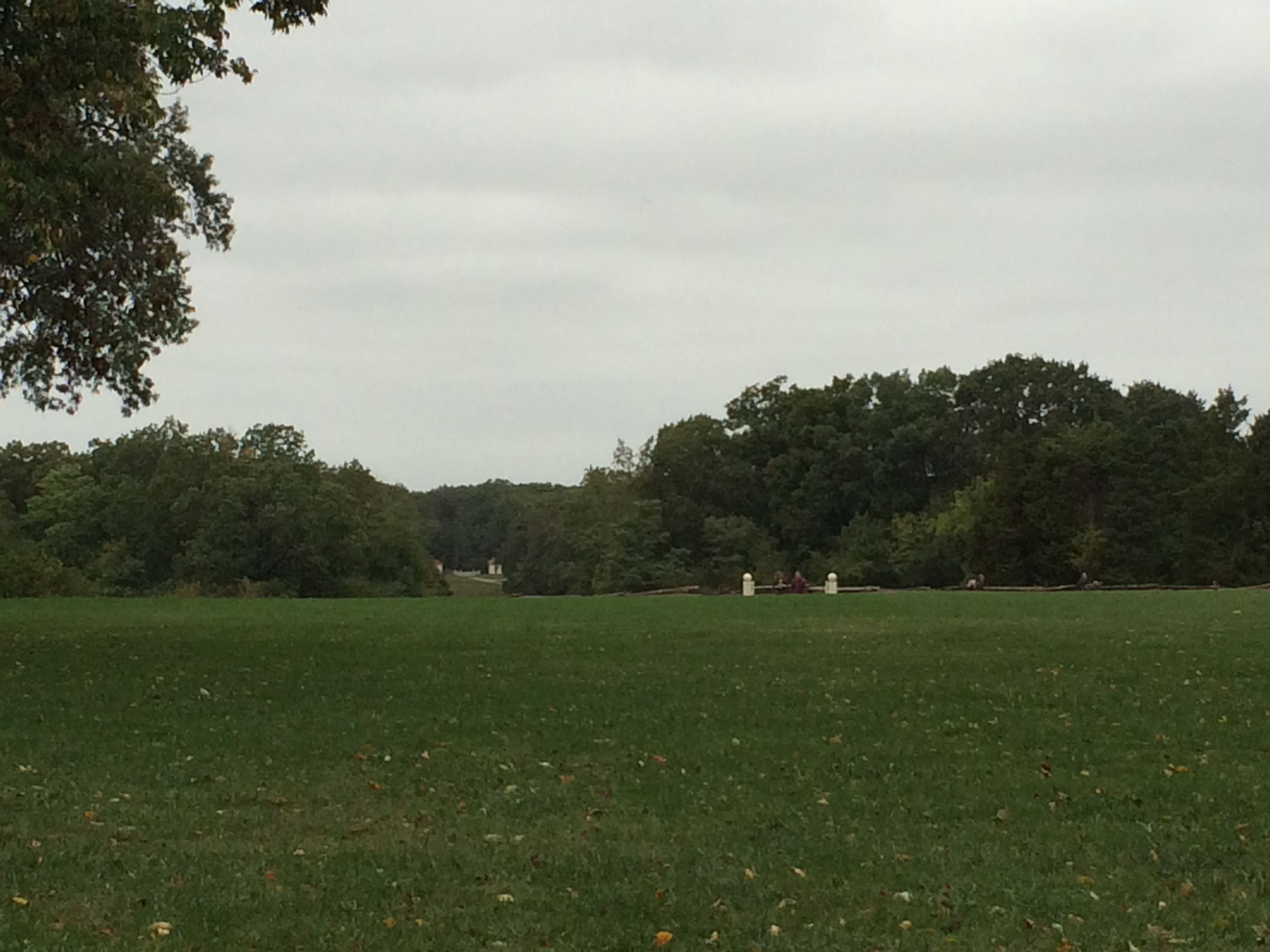
Well, they are a mile away from the main house.
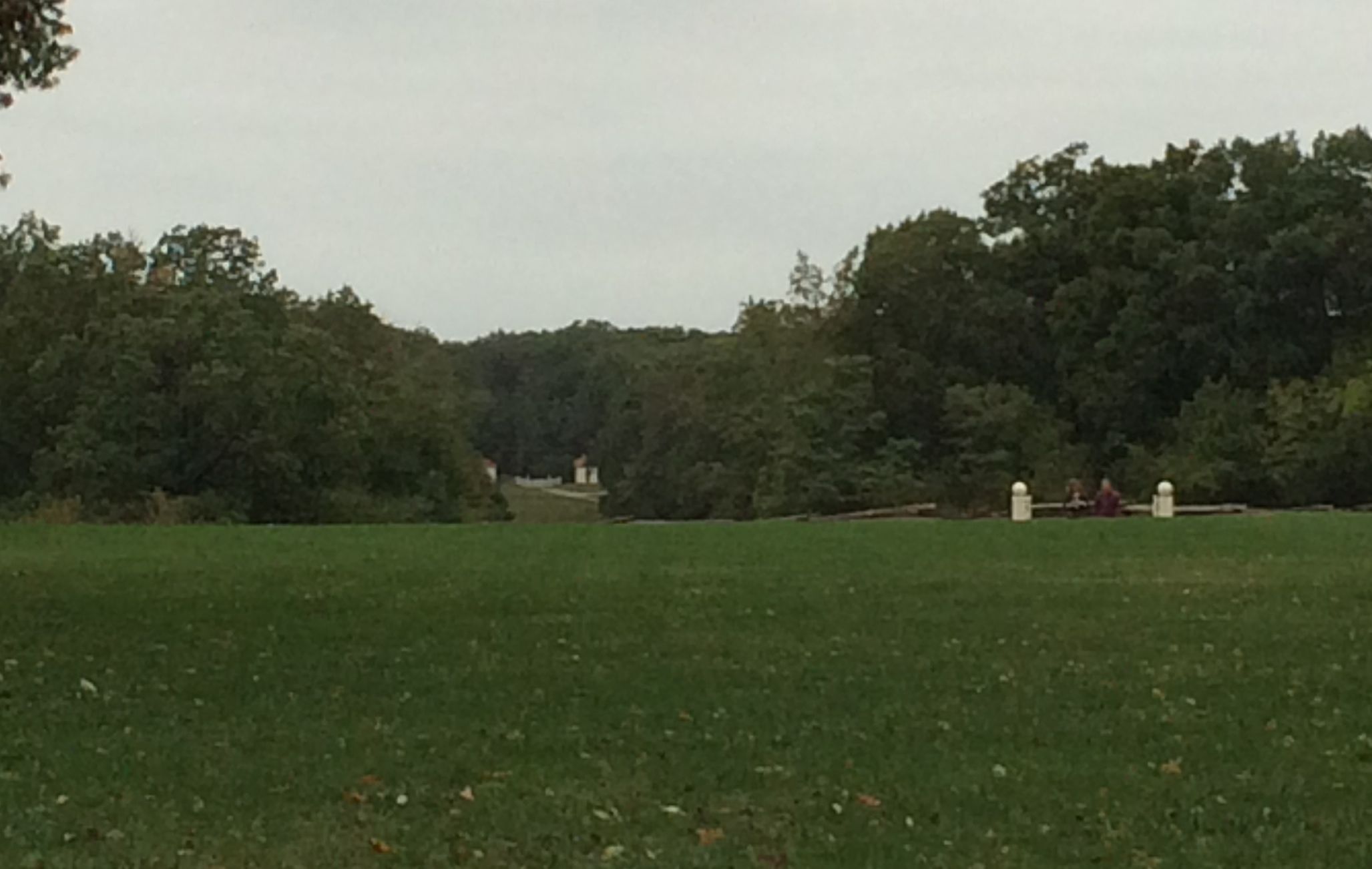
Let’s see if I can get just a little closer.
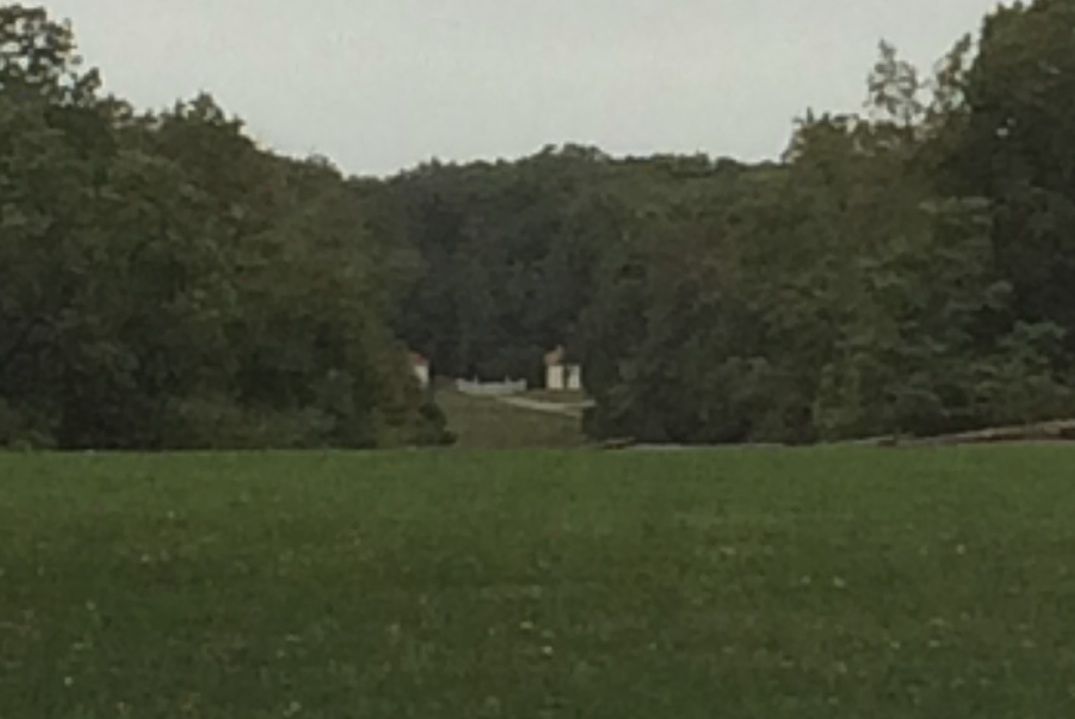
Do you see them now? Those little white houses in the center of the frame.
I learned these tidbits of information from this marvelous private tour I took with Bill on the preservation efforts at Mount Vernon. It wasn’t supposed to be a private tour, but no one else ponied up the extra $5 for the extra tour.
He also took me through the basement. It was really interesting to see the things that are still there from when the house was built. Unfortunately, I couldn’t take any pictures inside – not even in the basement!
He did urge me to take a look at Washington’s “Necessary.”
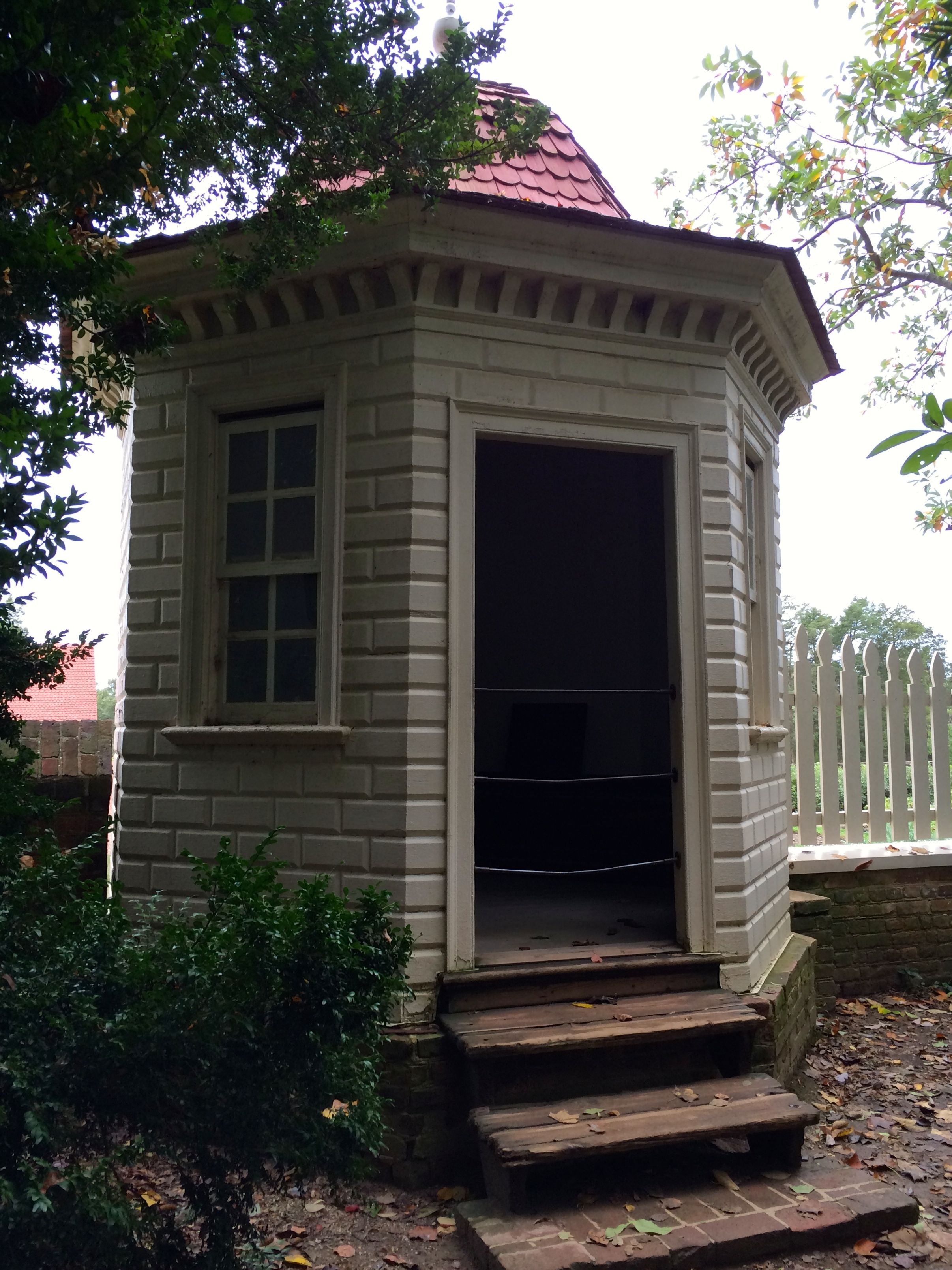
Yes, another Presidential loo.
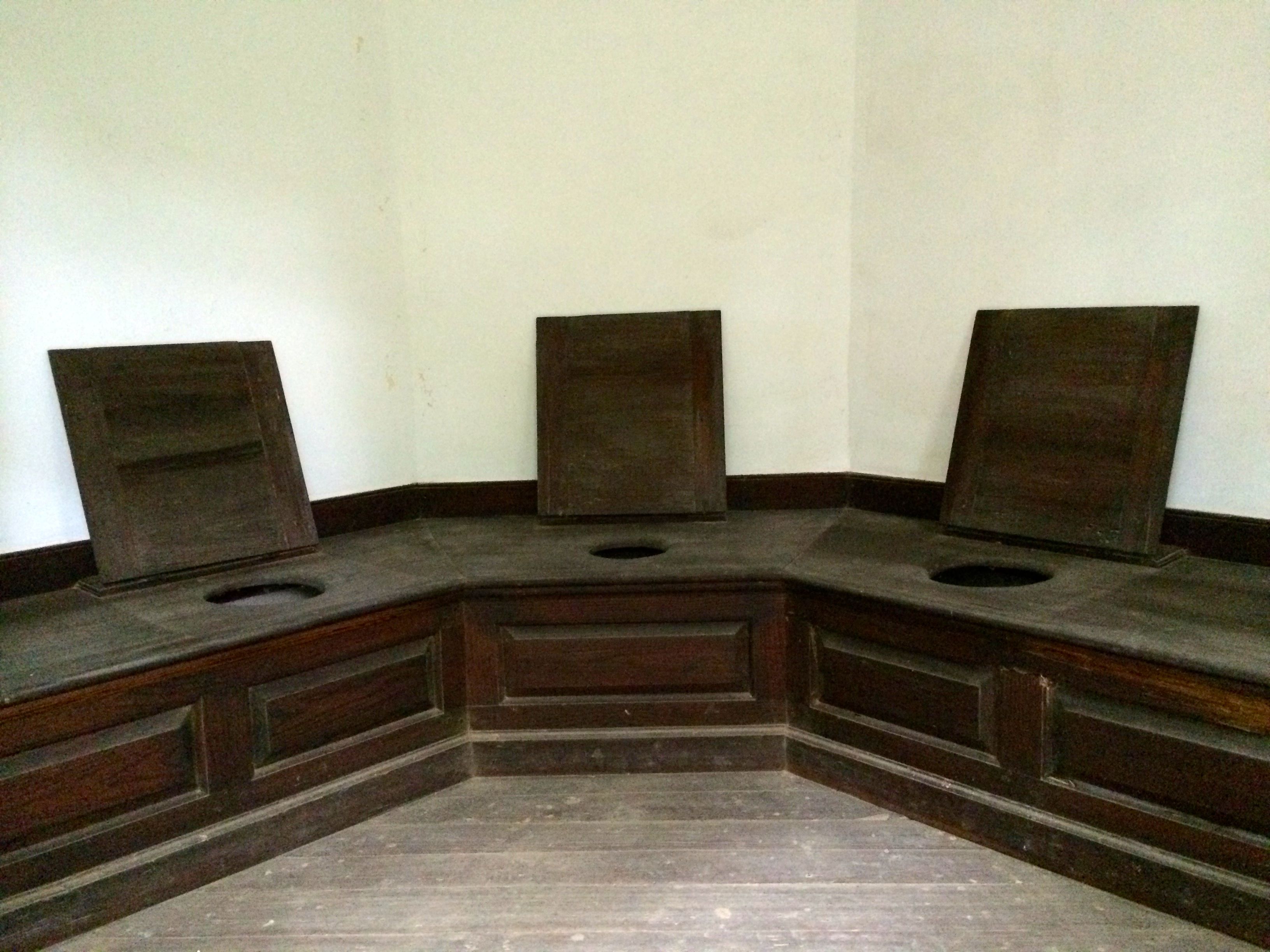
This one seems set up for a meeting.
This structure was rebuilt on the original site.
Archeology is on-going, and they recently discovered the site of a blacksmith site. Previously, they thought it was an icehouse.
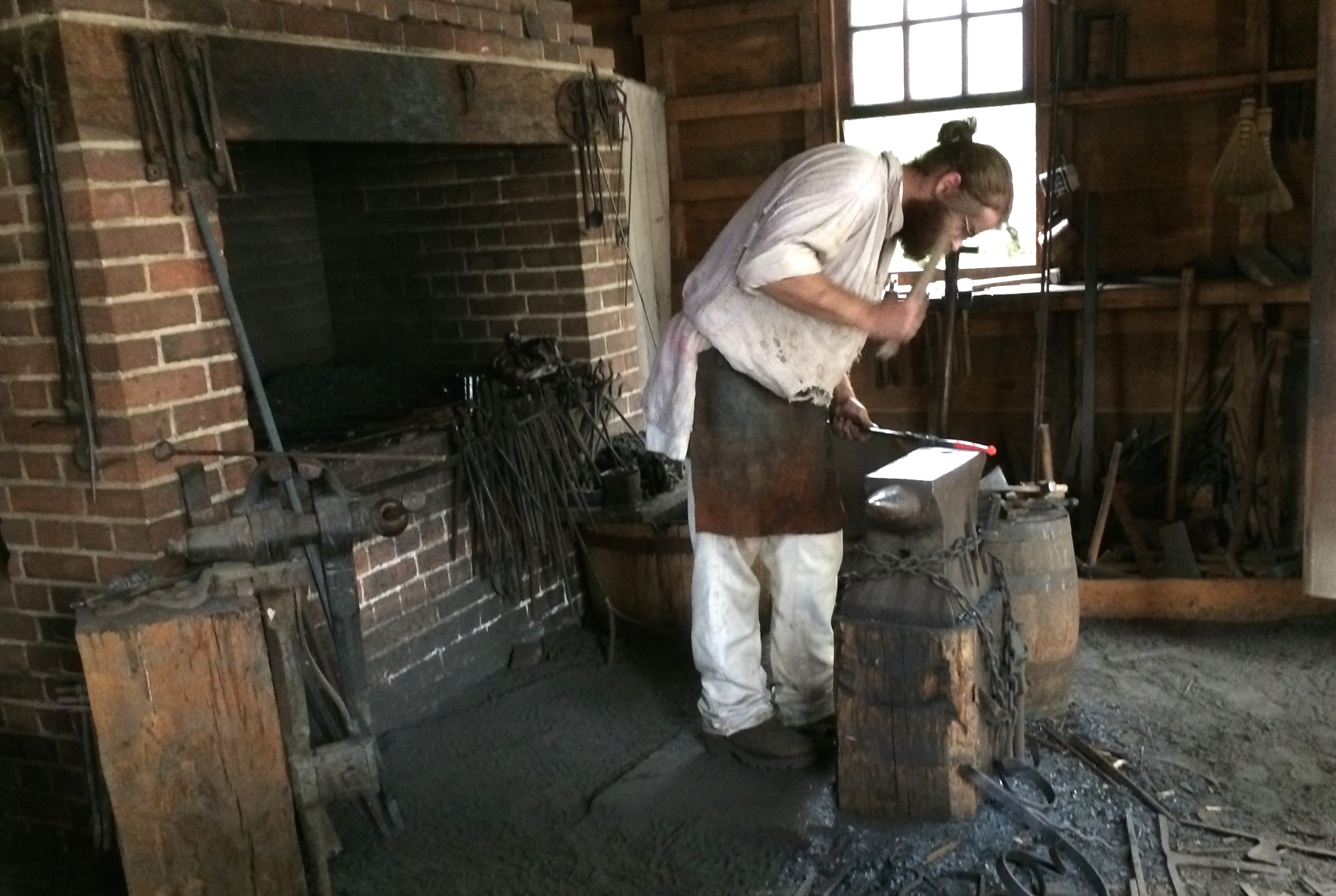
This wasn’t my first visit to Mount Vernon. Mom and Dad took us here on the vacation we took with Uncle Norm’s trailer in 1966. I only remembered three things from that trip.
I remember the bedroom where Washington died. Unfortunately, he died inside the house, so I don’t have a photo of it.
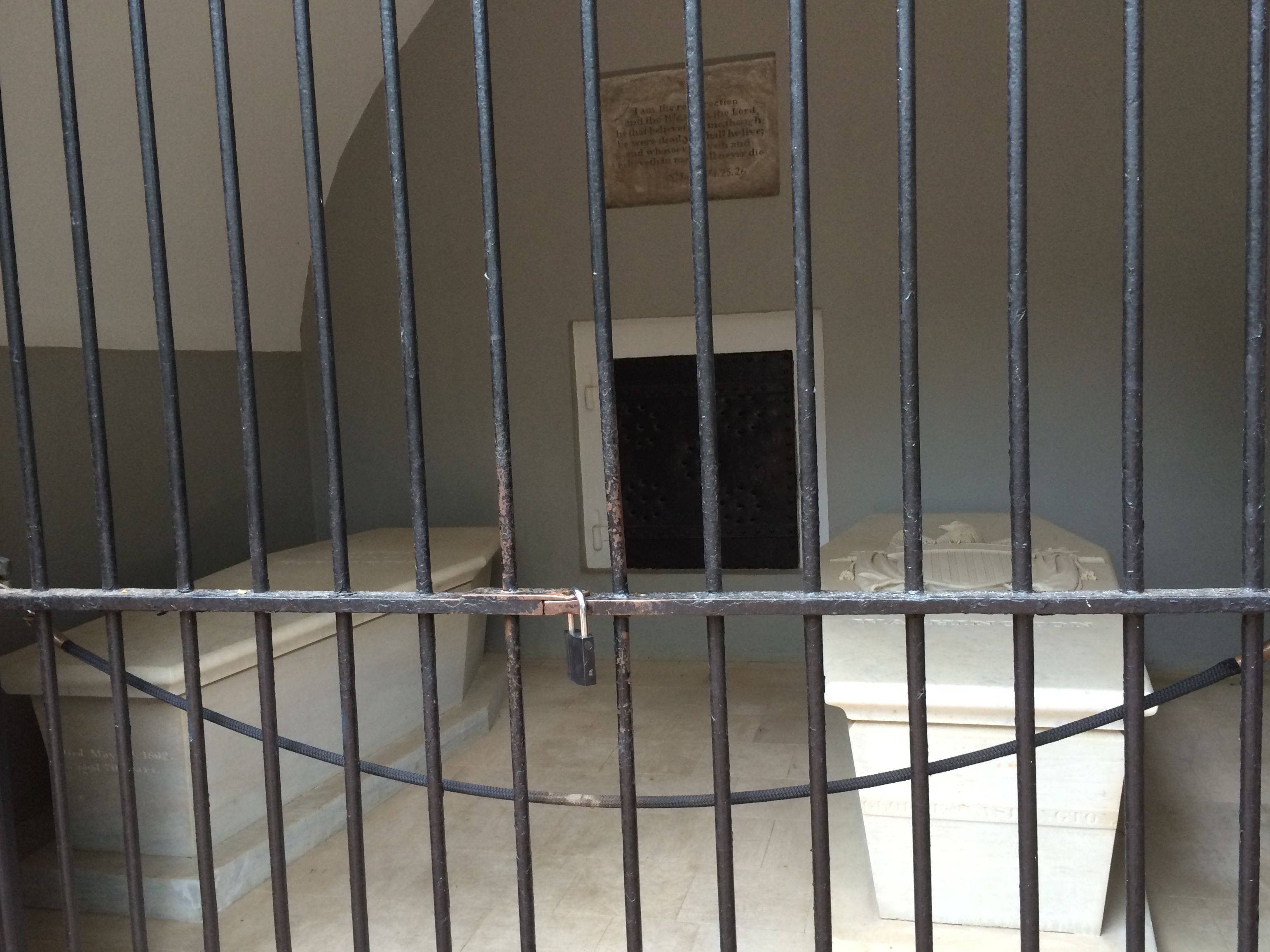
I remember this tomb. I also remember being rather perplexed with why the coffins were above ground.
And I remember boxwood. Specifically, I remember the SMELL of boxwood.
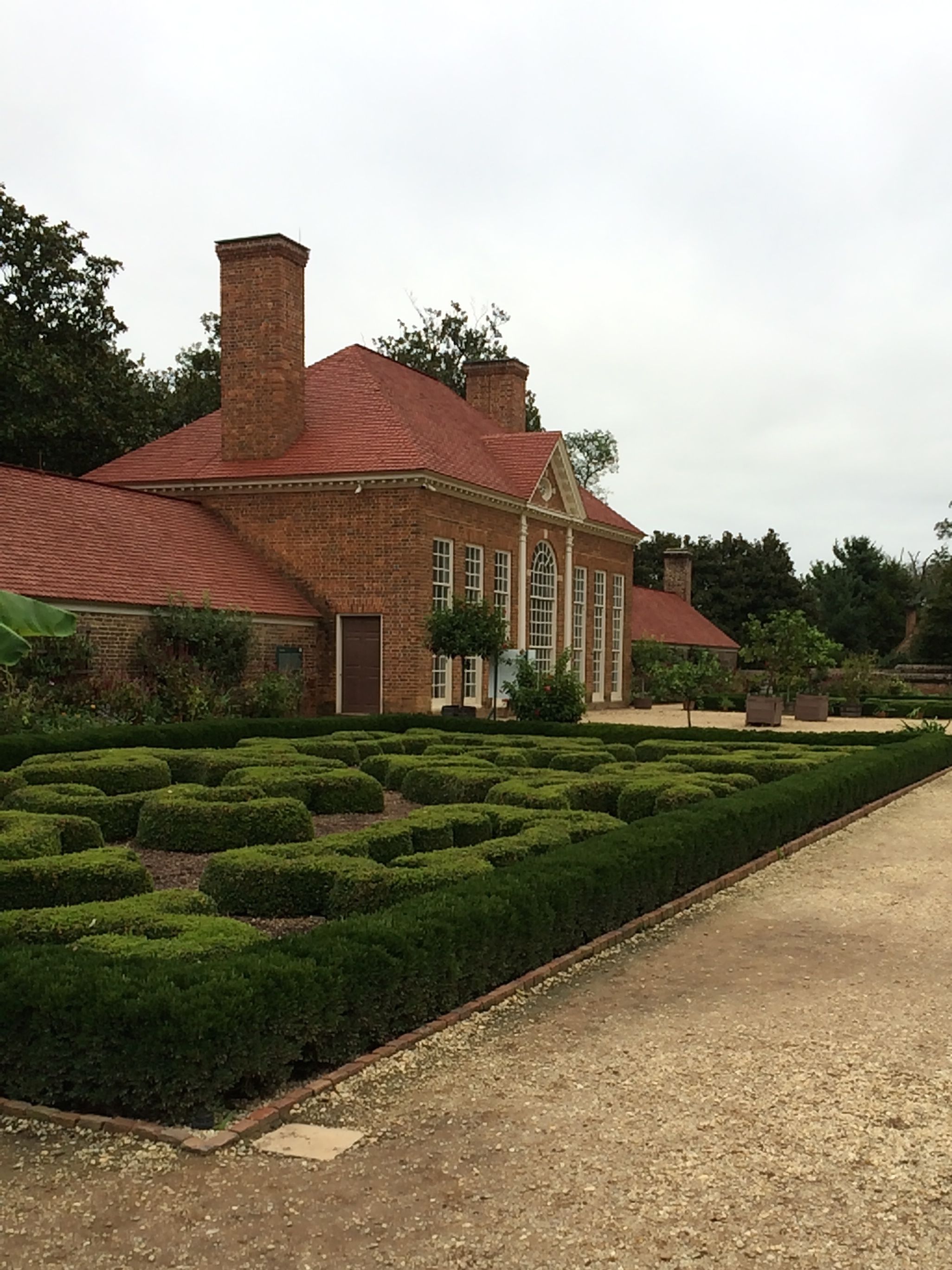
I hated the smell of boxwood! It nauseated me at the time, and I still don’t like it.
While walking around the grounds, I discovered the Old Burial Vault. Originally, George and Martha and twenty other family members were interred in this vault.
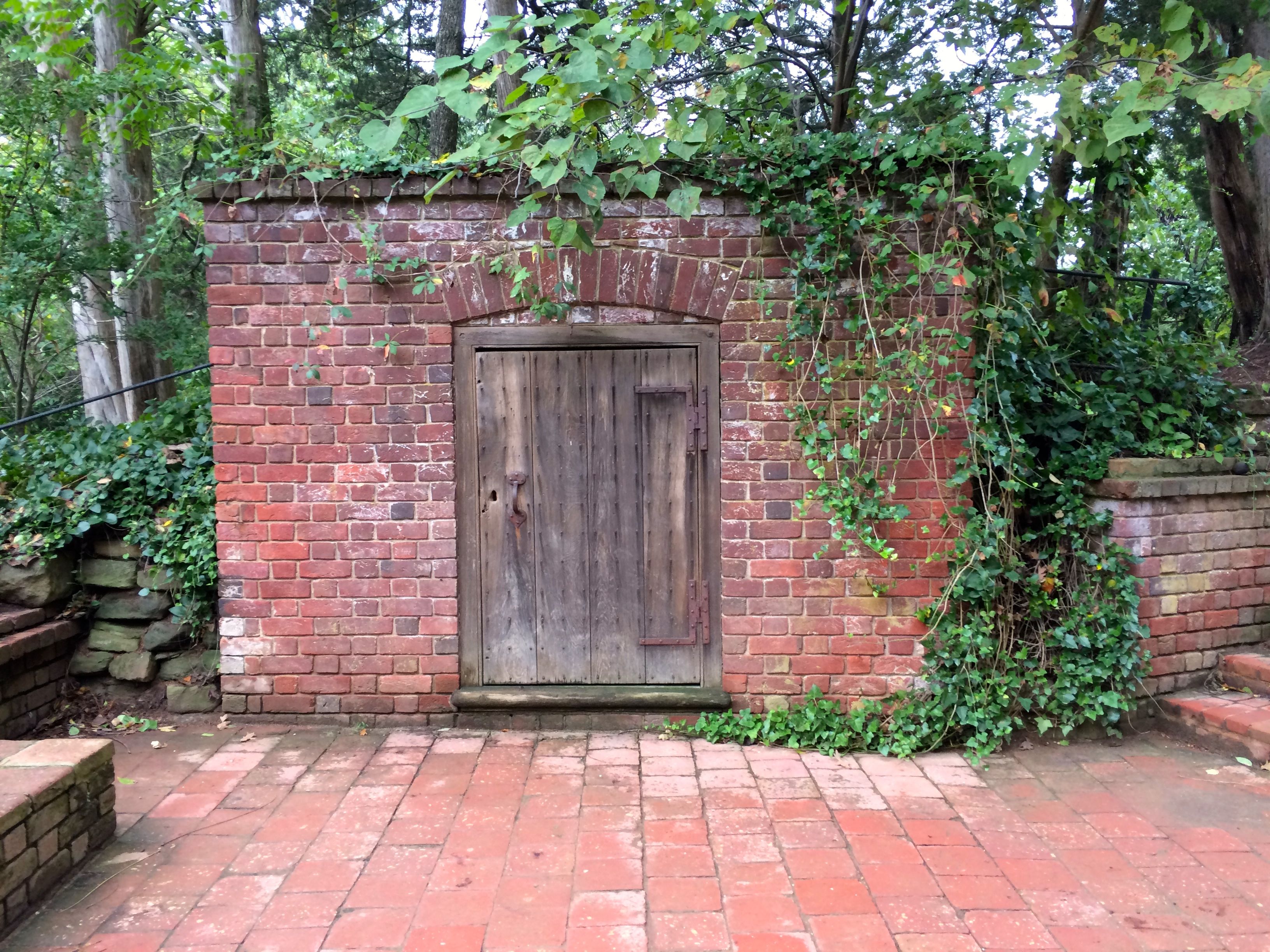
George left directions in his will that a new vault be built on the property. He wanted it built on a larger scale and made of brick. In the end, he got his way, but only because his great nephew, John A. Washington, stood his ground in 1832, on the centenary of Washington’s birth. That was the last time Congress tried to move Washington’s remains.
In spite of Washington’s specific directions in his will about his burial, Congress asked Martha if they could move his remains to the Capitol. She agreed, but the various parties and houses couldn’t come to an agreement. I guess governmental gridlock isn’t a strictly modern phenomena. At one time, they even had plans drawn up to bury him outside the Capitol in a larger, Egyptian-style mausoleum.
In any event, his tomb is right where he intended it to be. They only finished the New Tomb and got the remains moved in 1831. I guess John A. Washington figured that there was no point in moving them again so soon.
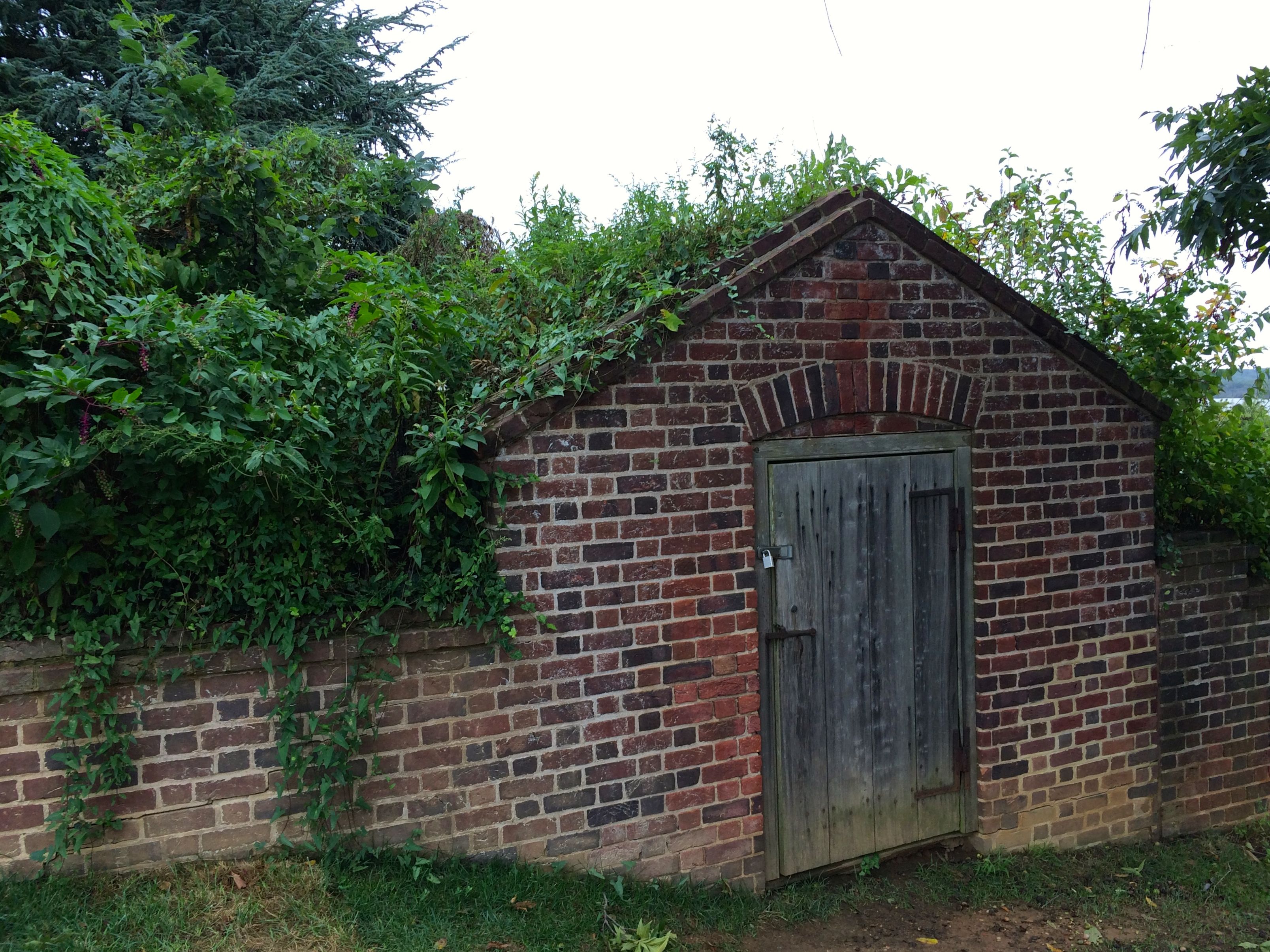
Not too far away from the Old Burial Vault is the Icehouse. It looks an awful lot like the Old Burial Vault. Actually, the above-ground portion is a restoration that was completed in 1938. The 22-foot-deep brick chamber, which was a dry well, is original. Layers of ice from the river were harvested and packed into the chamber with layers of straw and sawdust to insulate it. According to the sign at the site, further restoration is planned for 2015.
Since 2015 is winding down, I think the only restoration that might be taking place this year will be on the sign.
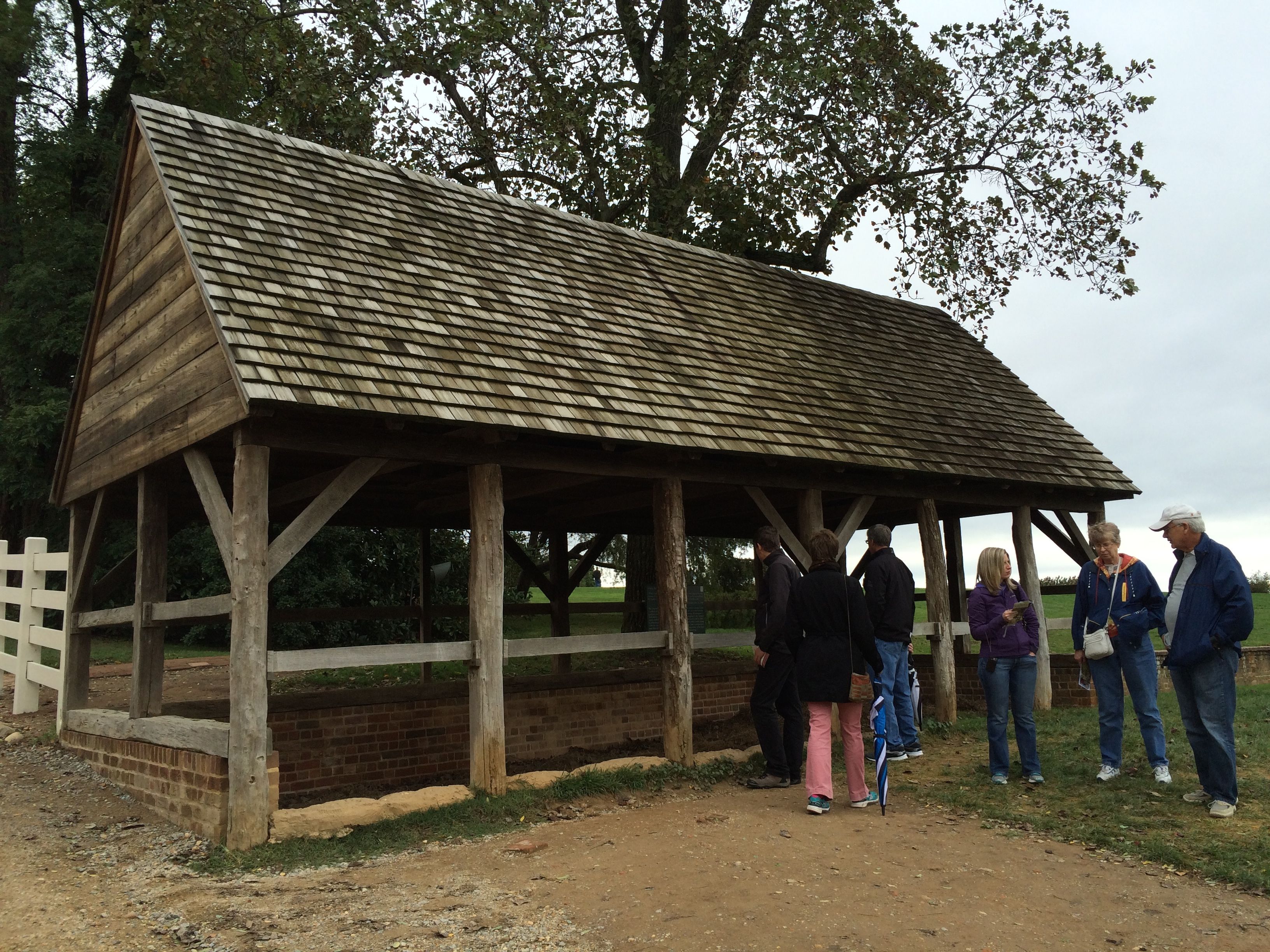
Another restoration is the Dung Repository. Washington designed this repository for composting animal manure and other organic materials to improve the soil in the gardens and orchards, which was a progressive farming technique at the time. In fact, this was the first known structure dedicated to composting in the United States.
First in war, first in peace, first in organic gardening.
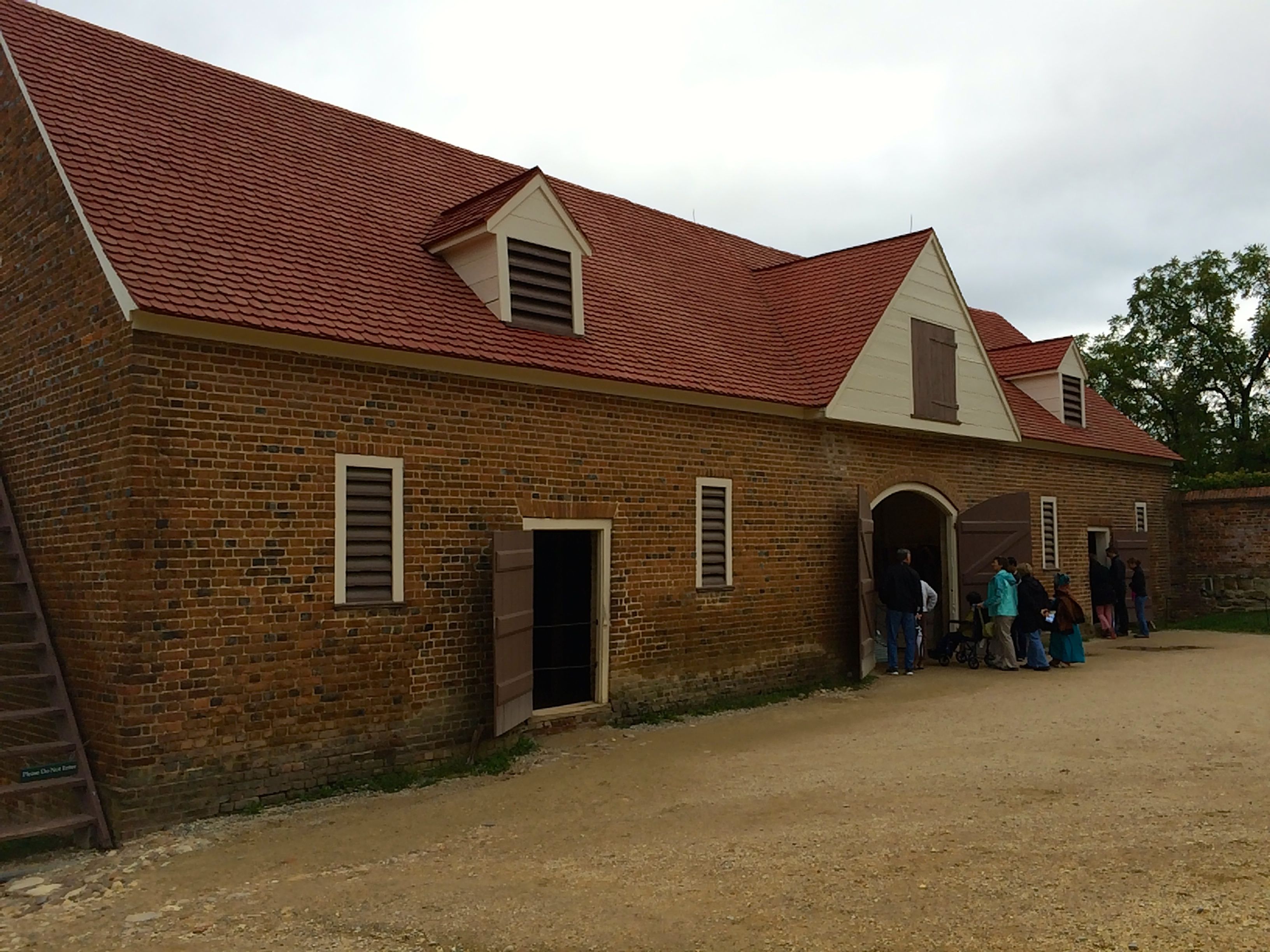
Where did the manure come from? Well, the stables were nearby. Washington was known as a horseman.
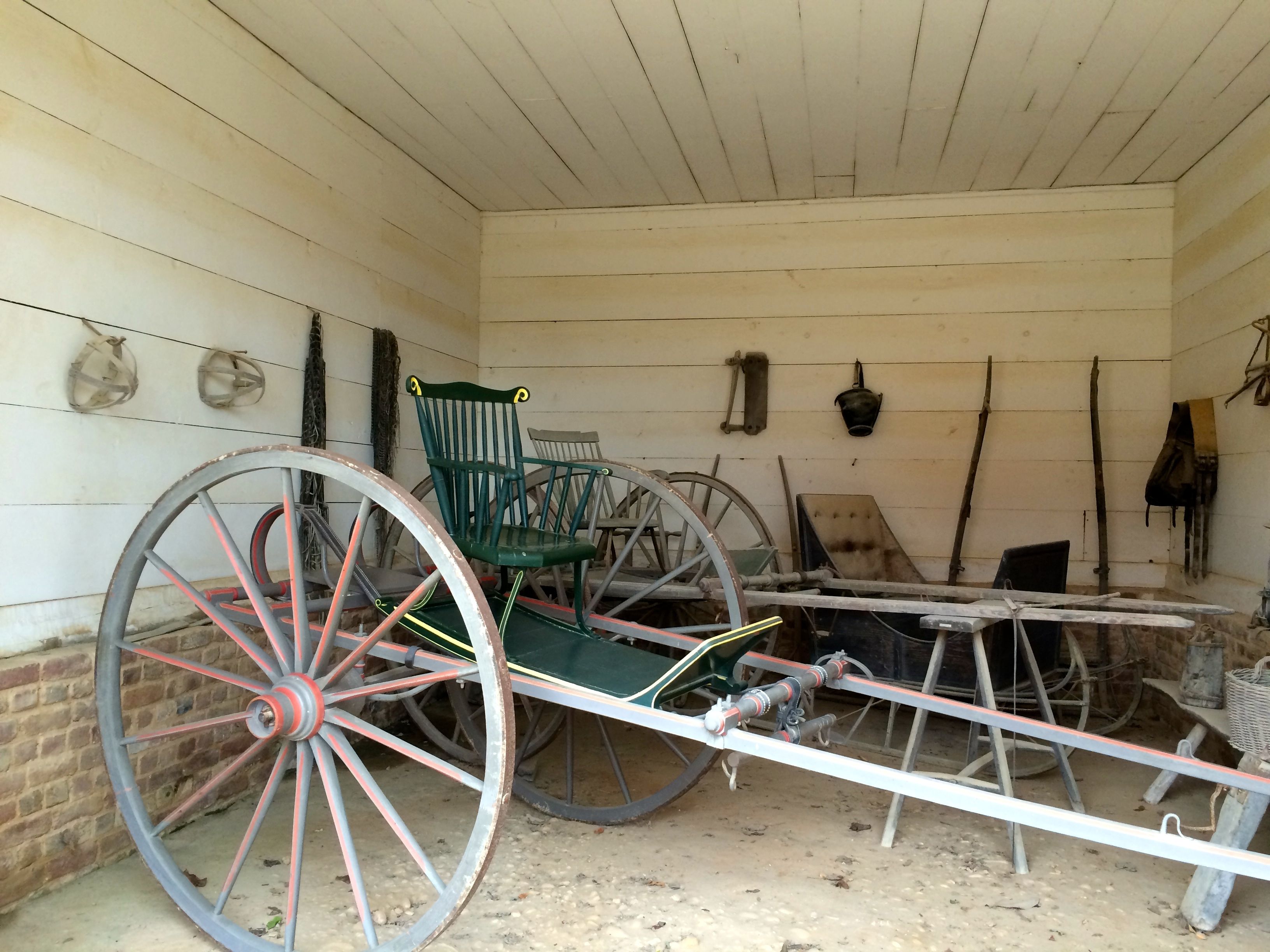
He also had vehicles like these, known as “riding chairs”. They were relatively inexpensive, in comparison with other wheeled vehicles, and they were well-suited to the rough roads and hilly terrain of Virginia.
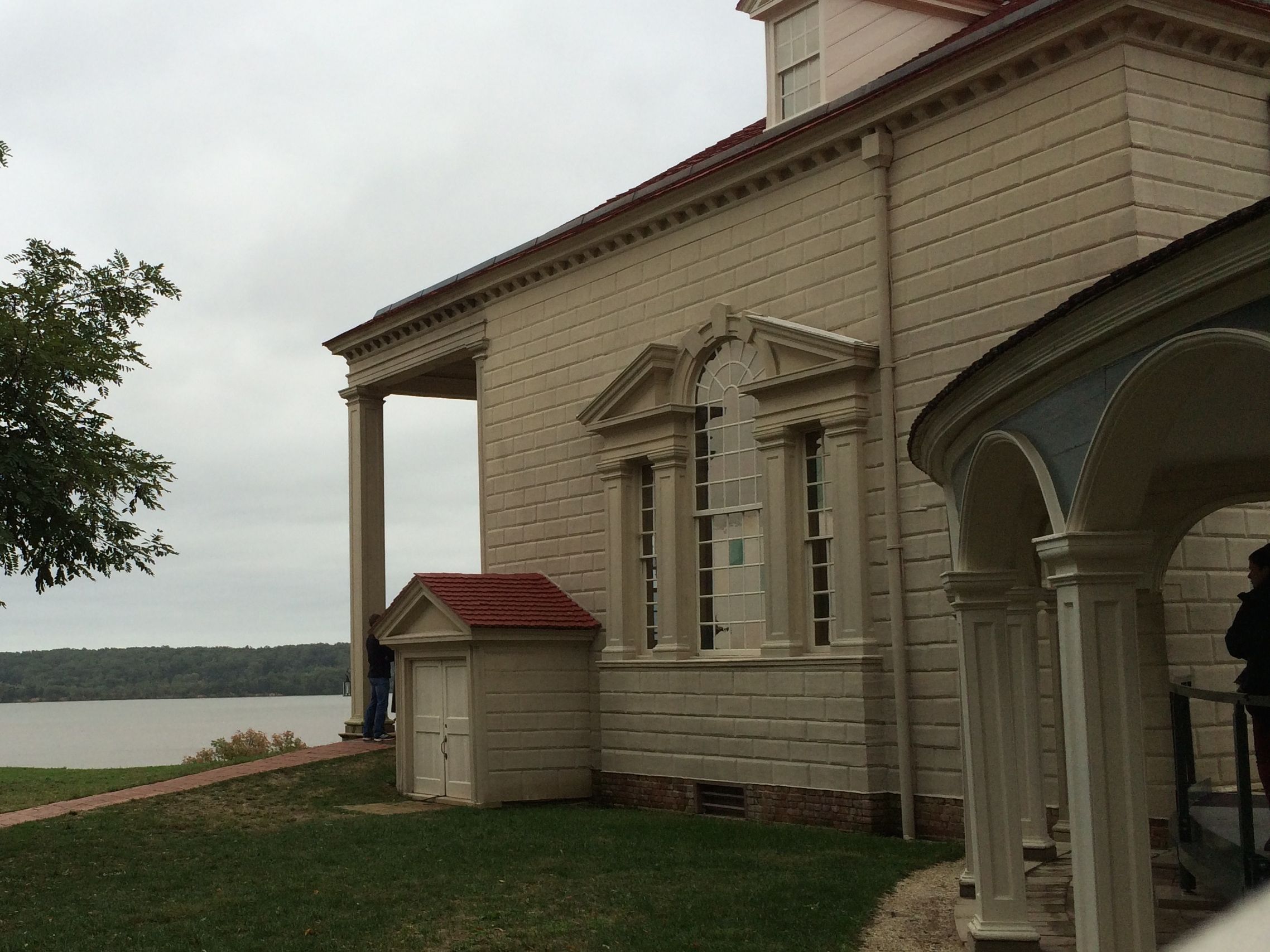
See that little structure with a door at the end of the mansion? That is one of the doors to the basement. There’s another one on the other end of the house.
In front of the house, you can see the Potomac River. With a wharf on the river, Washington had direct – if slow – access to Europe, where he could sell his goods receive products in exchange.
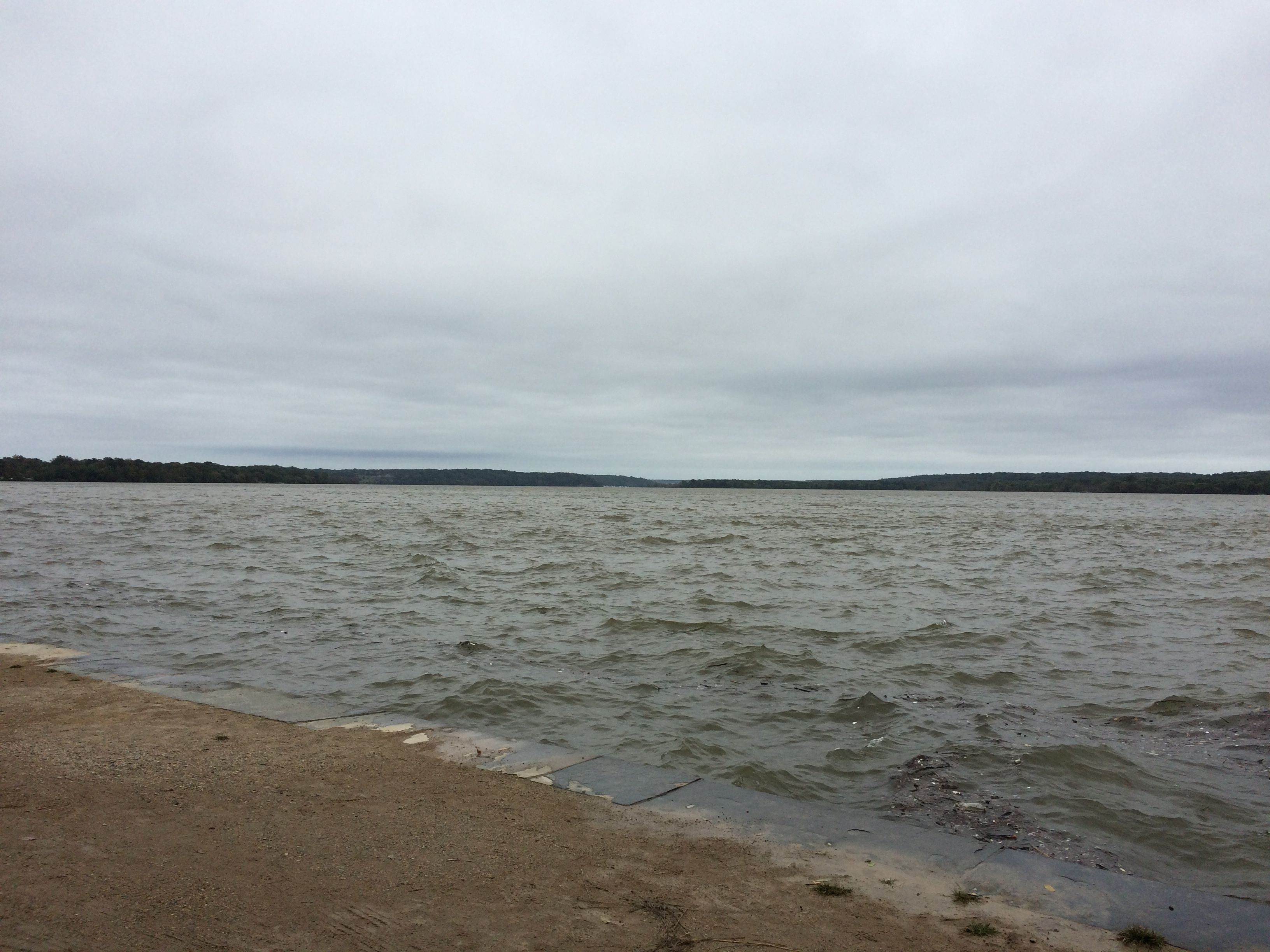
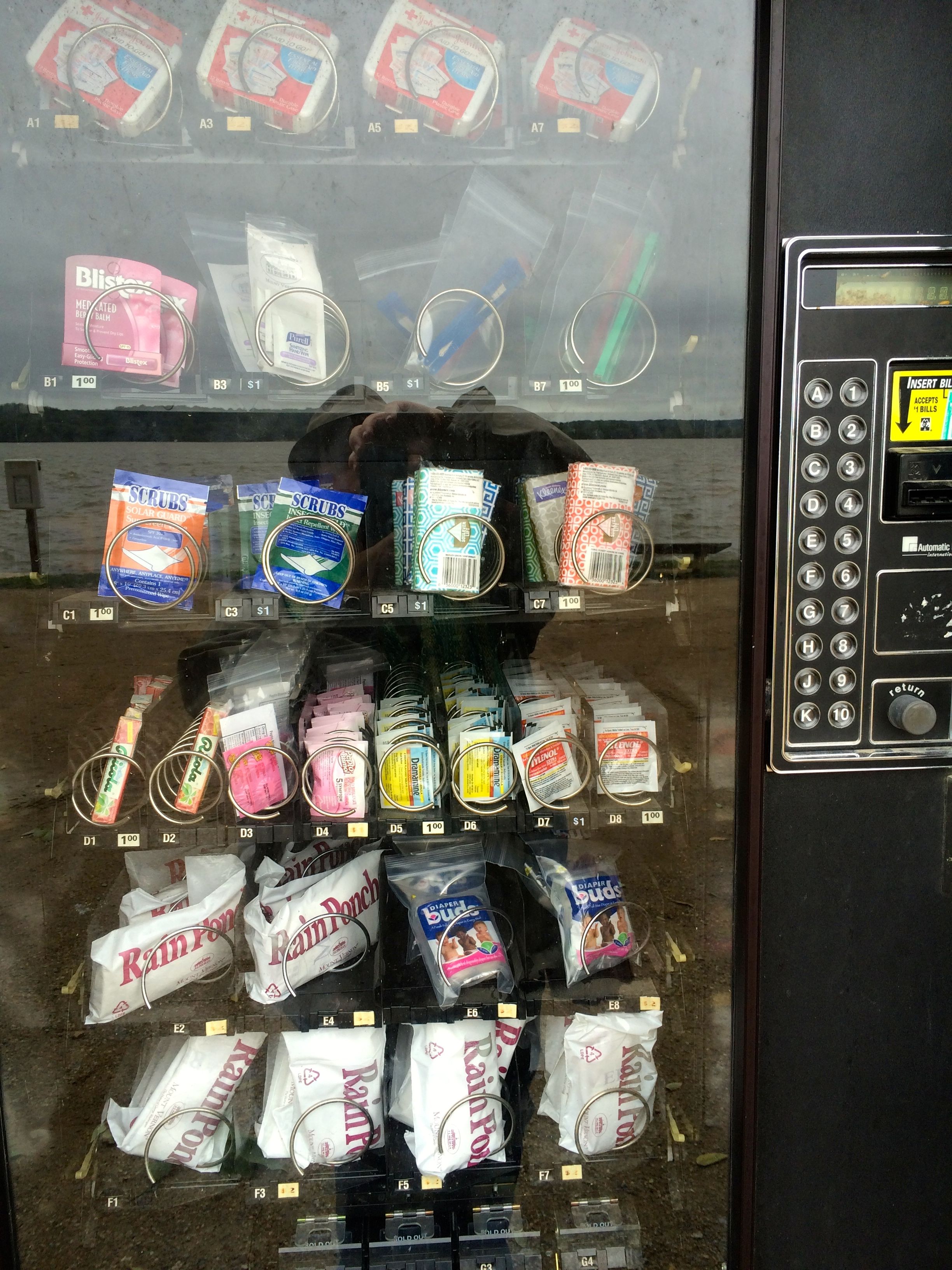
I found it interesting that products still come in by the wharf. This machine was there to meet the needs of the visiting hordes. Luckily, I didn’t need the poncho, first aid supplies or cough drops.
George, Martha and other family members aren’t the only ones buried at Mount Vernon.
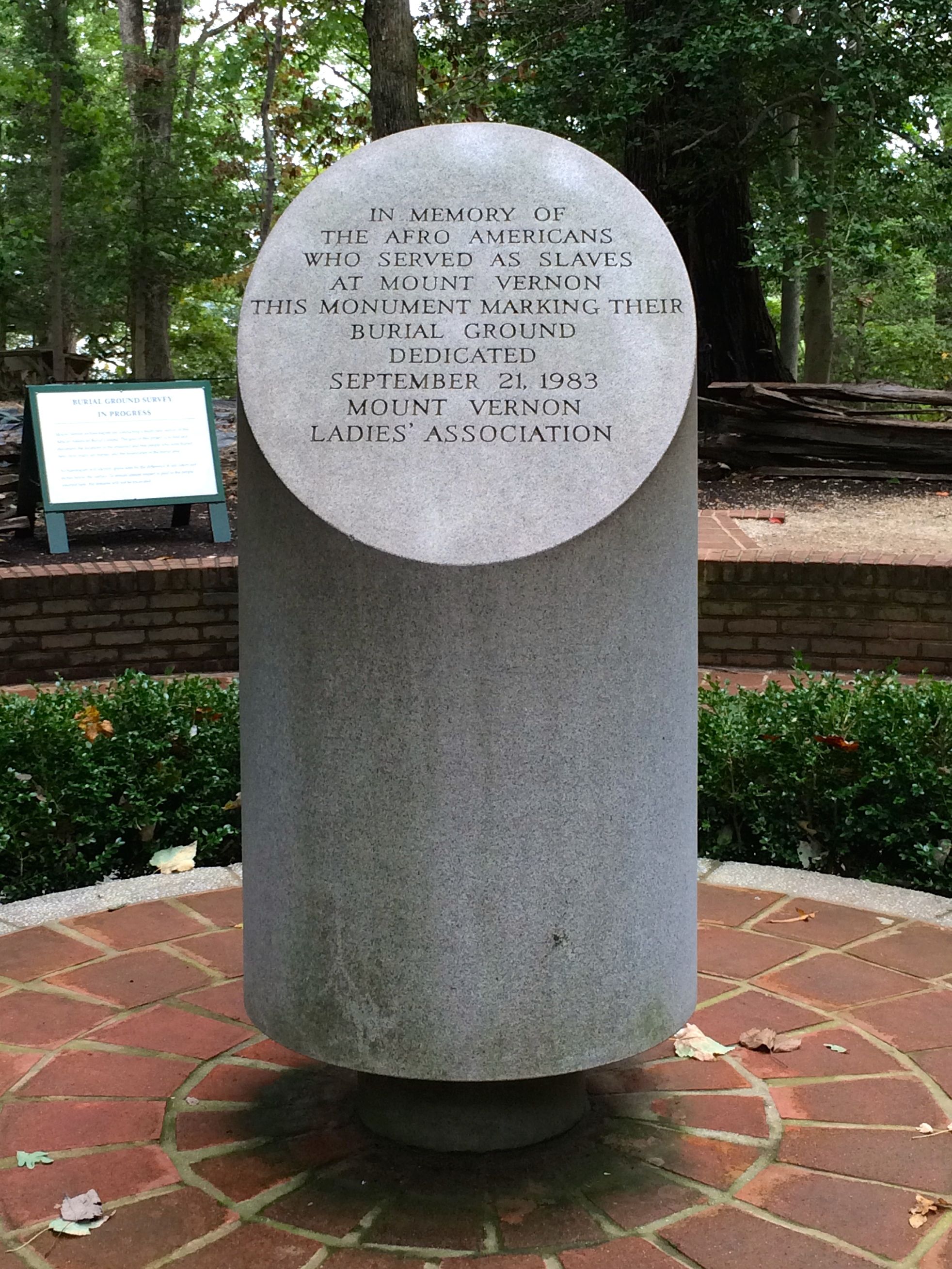
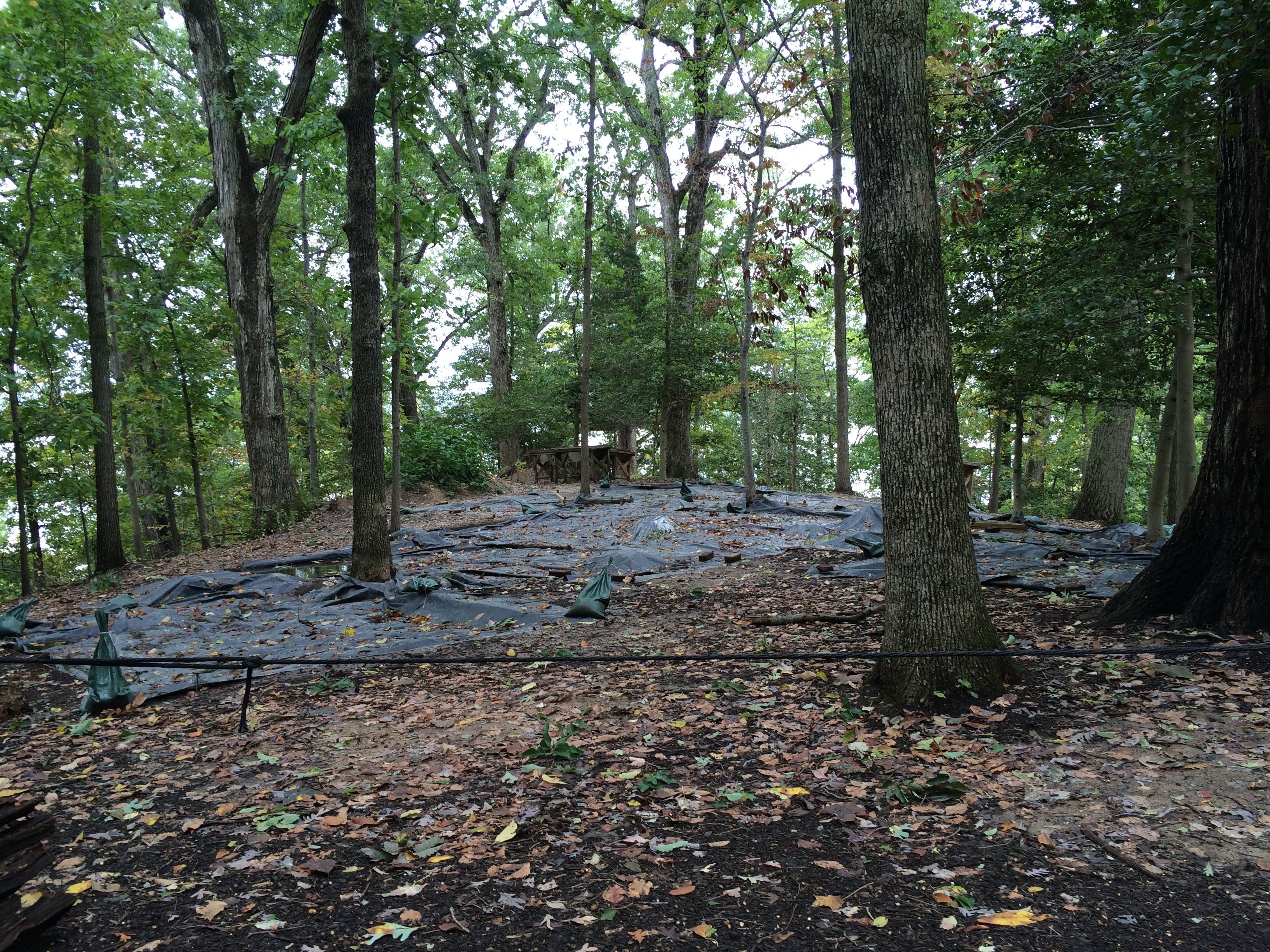
Archeology is on-going at the burial ground. There was no one available to to talk to about it, but a sign stated that the methods used were non-invasive.
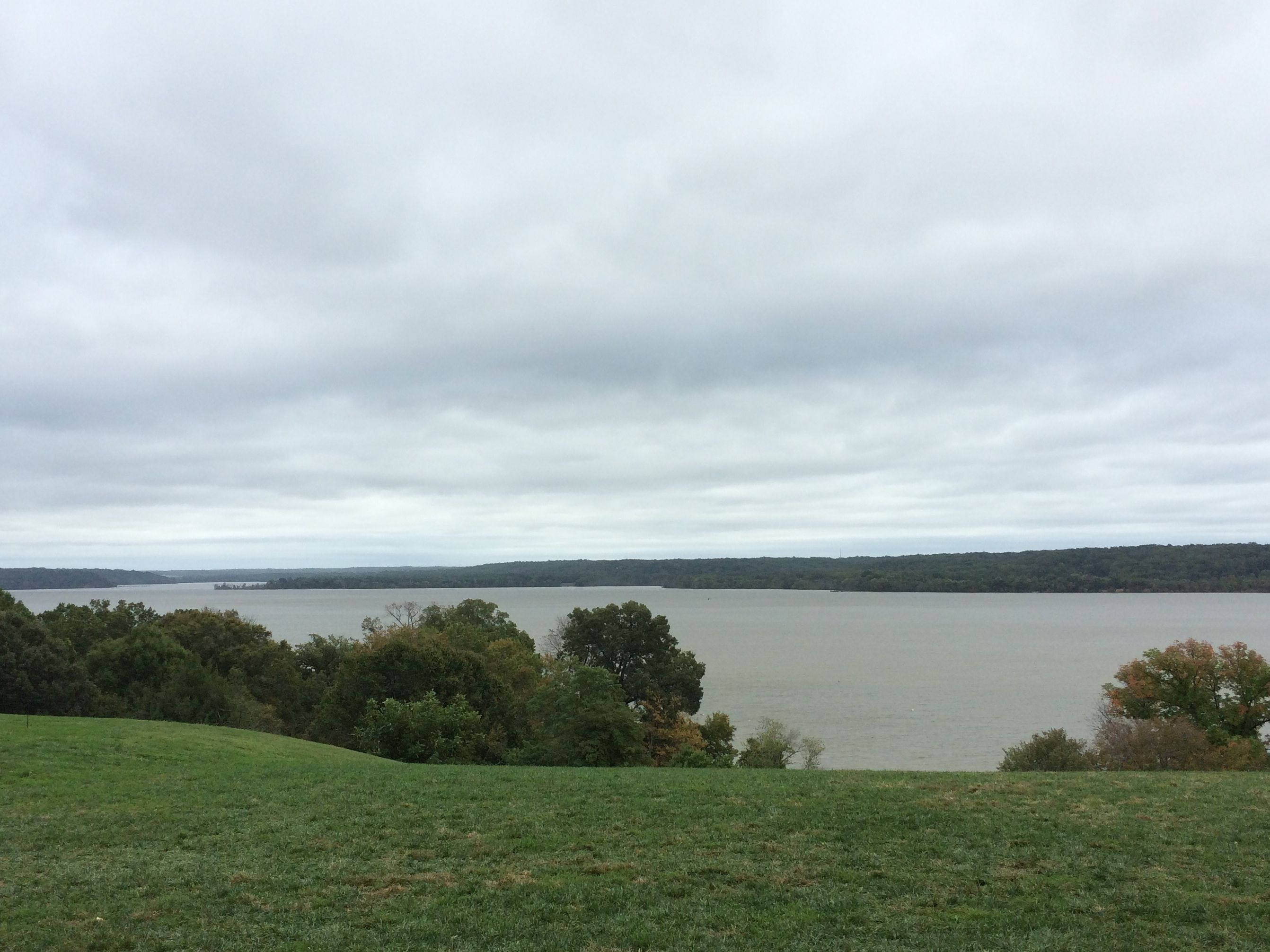
In addition to preserving the buildings, the members of the Mount Vernon’s Ladies’ Association is working hard to preserve Mount Vernon exactly as it was in Washington’s day. That includes the view. At one point, a tank farm was proposed for a spot directly opposite, as well as housing developments. The Ladies’ Association, working with the Federal Government has worked together to purchase the land necessary to preserve the view. In fact, airplanes don’t even fly over. The whole time I was there, I never heard one. I didn’t notice the absence until it was pointed out by my guide, Bill.
After doing a fairly thorough job of checking out the estate, it was time to head in to see what the museum had to offer.
But first, one more look back at the mansion.
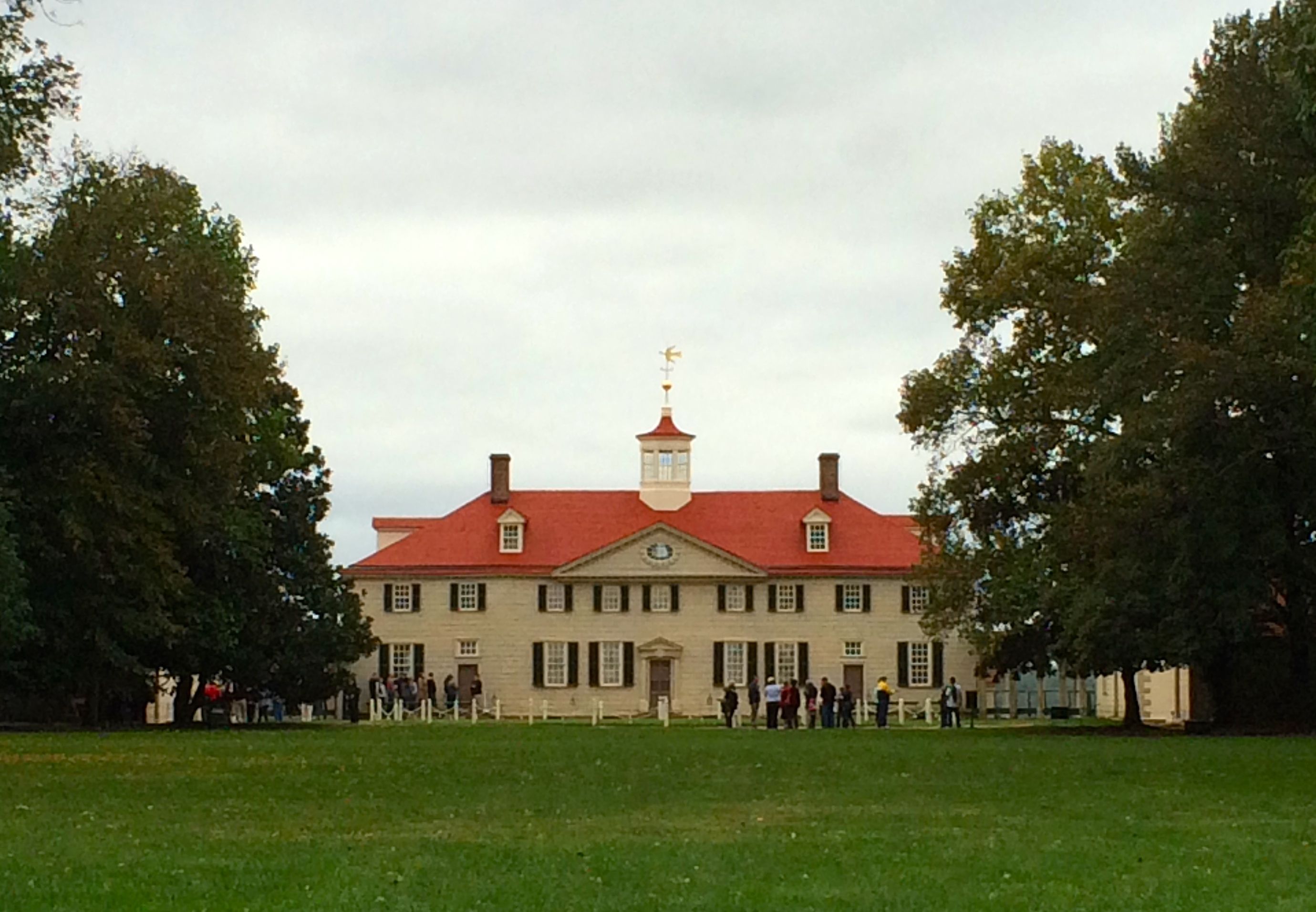
And a shot of another method for prying a few more dollars out of the hands of visitors.
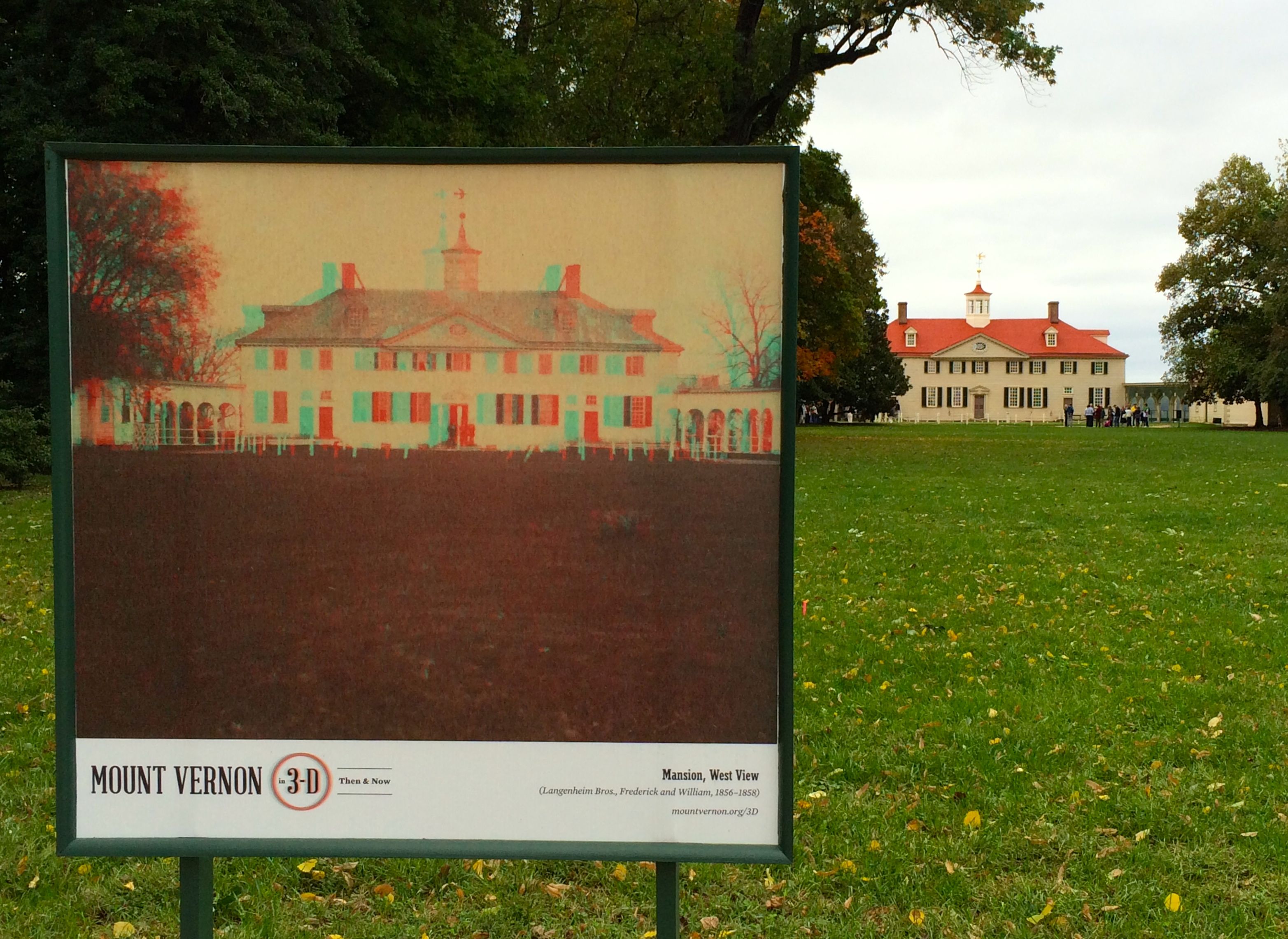
Buy a pair of 3-D glasses and you can look at historic photos with them. It’s almost like being there.
We are always reinterpreting the past. This museum is new since my last visit.
I was running short on time, so I had to move fairly quickly through the exhibits. My favorites were the series of forensic reconstructions of George though his life time.
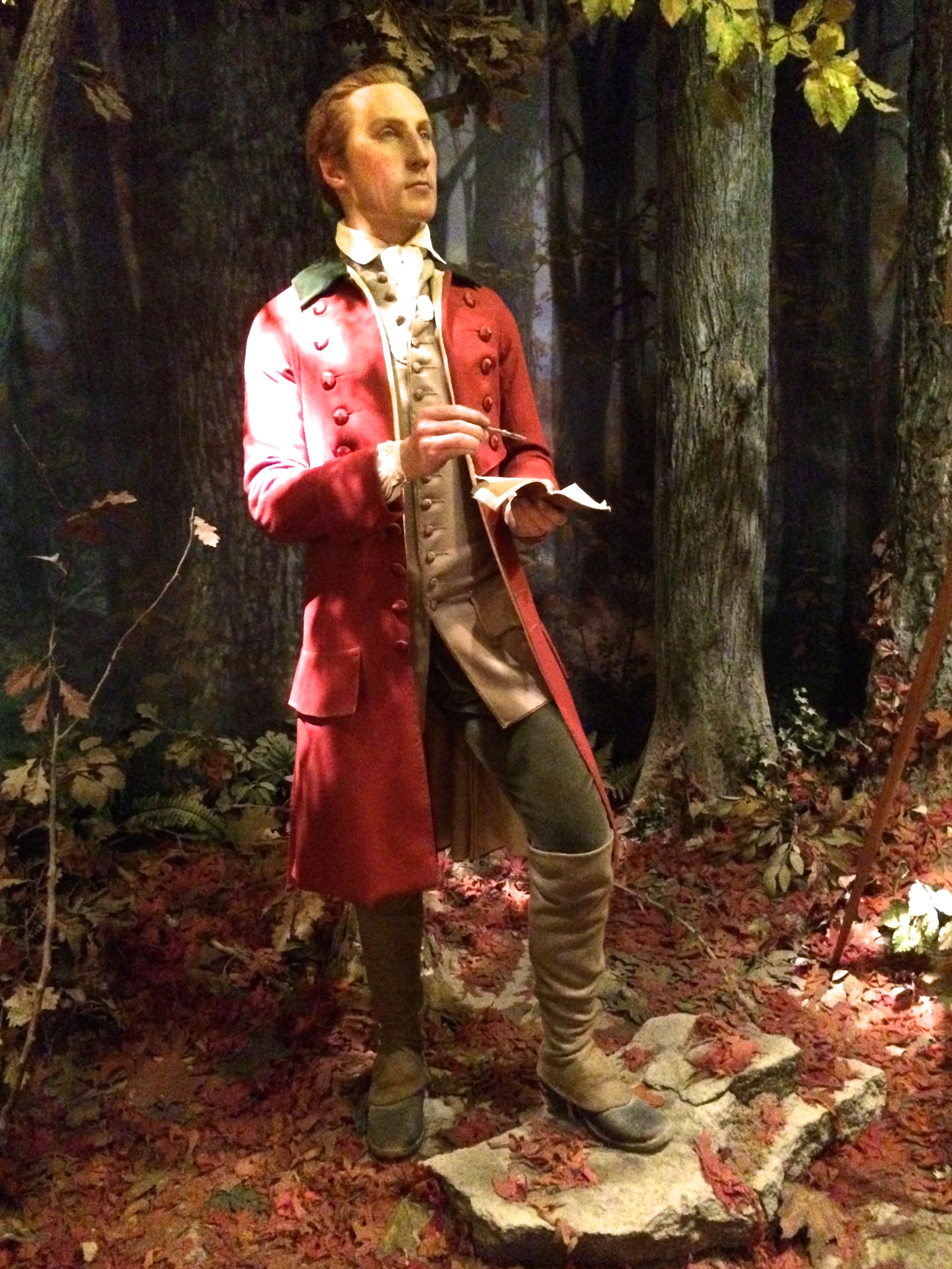
It looks like he is surveying here.
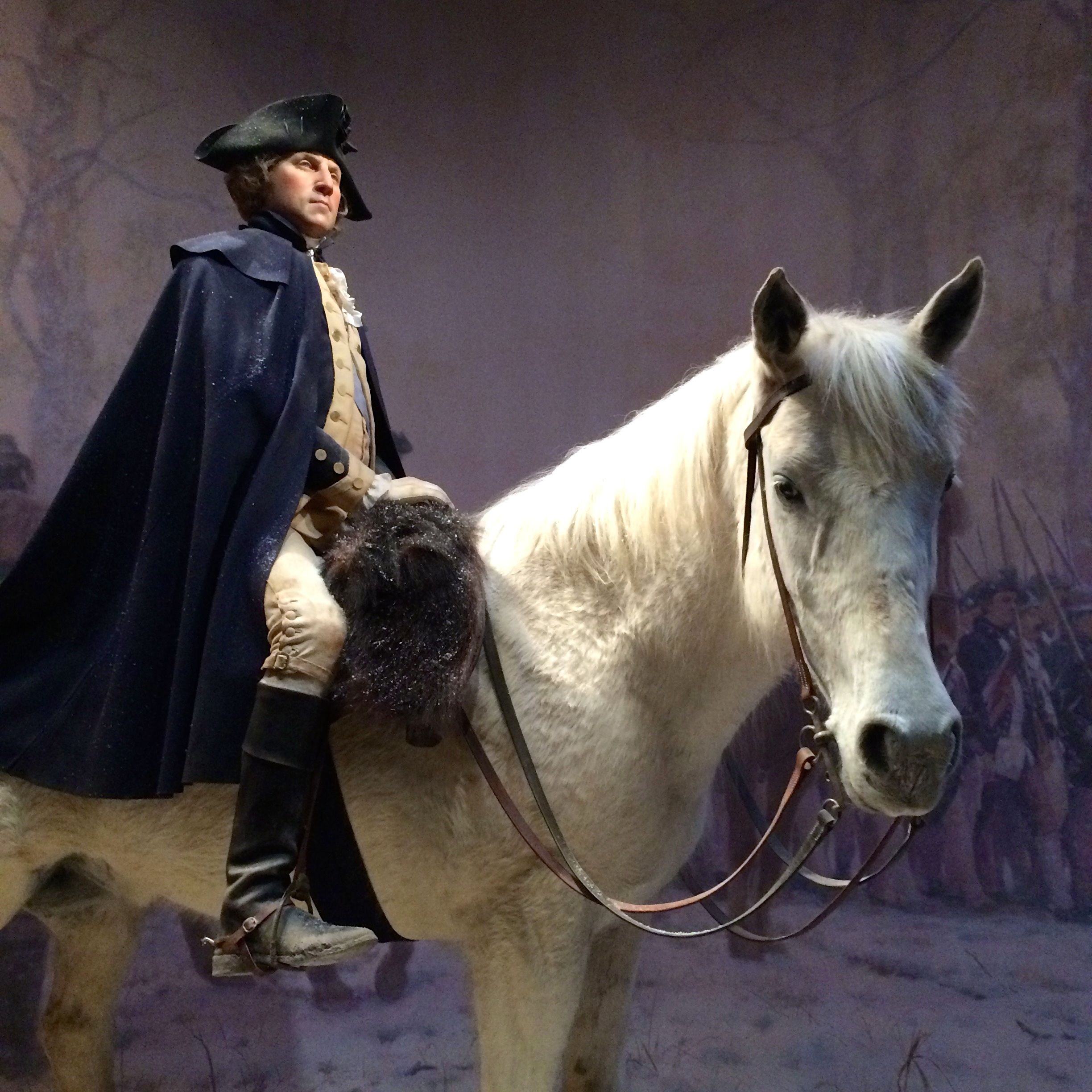
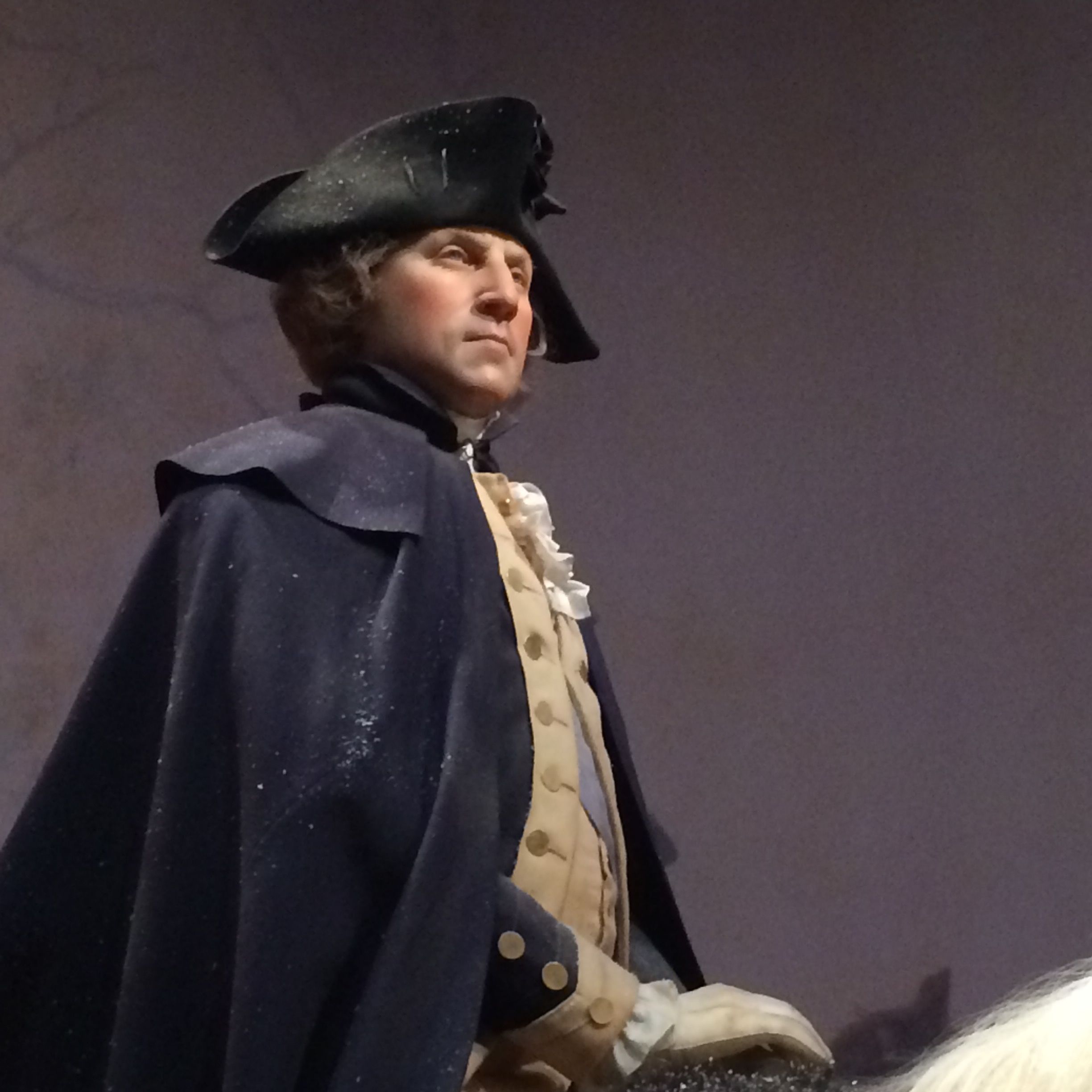
This figure is from 1777, when he was a revolutionary war general. The forensic experts studied his uniform’s waistcoat and breeches, which are now located in the Smithsonian, to be able to determine the exact proportion and density of his torso and limbs. They based the hair color on samples of Washington’s own hair, that is found in Mount Vernon’s collections.
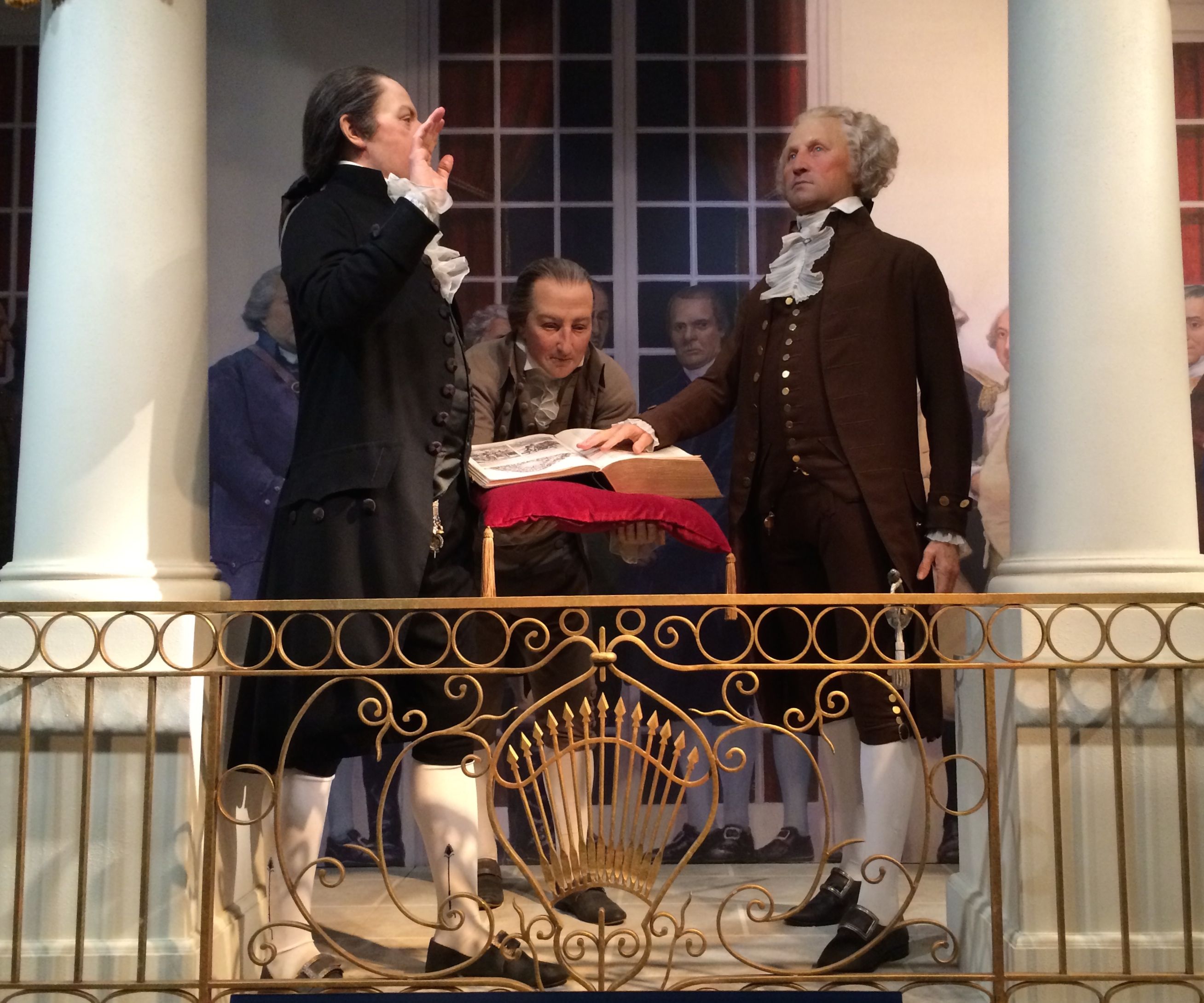
The forensic experts paid close attention to the roll that tooth loss played in shaping his face. A lifetime of tooth decay had lead to bone loss around the jaw, creating hollowness around the cheeks. At the time he was sworn into office, he had only one tooth left in his mouth.
And, while there are so many more things that could be said about George Washington, his life, the building of Mount Vernon and the struggle to preserve it, I would like to close with something that George wrote in a notebook as a young man. He copied it from another source, I do believe, but may these words guide all our actions.
Every action done in company
ought to be done
with some sign of respect
to those that are present.