My next stop was The Bullock Texas State History Museum.
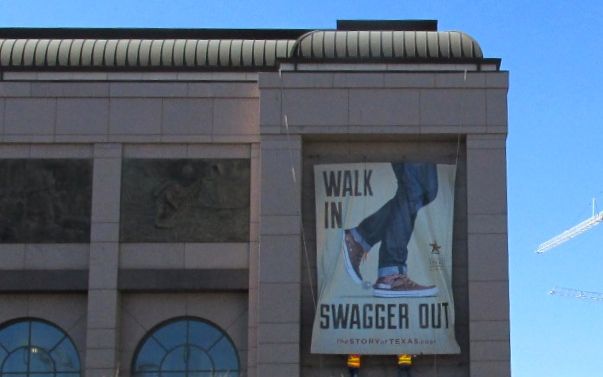
I got off the bus and swaggered in. I was greeted in the lobby by a table set up to welcome homeschoolers.
Uh…kids?
Apparently, though, they had already moved far enough ahead of me that I never really saw them, although I could hear them from time to time. No problems.
I paid my entrance fee and asked where I should start. The guy who sold me the ticket told me to start with La Belle.
LaBelle? What is that? Well, it was just across the lobby and so I figured I would go find out.
OH. MY. WORD!
LaBelle is a ship wreck – but not just any ship wreck. It is La Salle’s last ship! Robert de La Salle was a French explorer who explored the Great Lakes region, the Mississippi River and the Gulf of Mexico. He claimed the entire Mississippi River basin for France. He is significant for me because of his connection to Western New York and Michigan. I studied his exploration and the loss of his previous ships, especially The Griffin, in a course I took in 2009.
The Griffin was constructed and launched from Cayuga Island on the Niagara River. This is just a about six miles above the brink of the Falls – and only a little ways downriver from my hometown! Robert de la Salle is almost a hometown boy!
Well, la Salle lost his first ship in Lake Ontario at the mouth of the Niagara River. A storm came up, and everyone decided to sleep ashore. No one was left on board to save the ship – although they were able to retrieve some of the materials to be used in building the Griffin.
Then he lost the Griffin somewhere in Lake Michigan. This man had a poor track record with ships, even if he managed to claim a whole bunch of land for France.
Here it was – his very last ship. It turns out that he sailed past his destination when attempting to establish a colony at the mouth of the Mississippi River, secure trade routes and locate the Spanish silver mines. He left this ship and some of the settlers and took off with a group of men to try to find the mouth of the Mississippi. On the way, his men mutinied and killed him.
La Belle, the one remaining ship, wrecked in a storm and sank to the muddy bottom of Matagorda Bay. It rested there undisturbed for over 300 years until it was located in 1996.
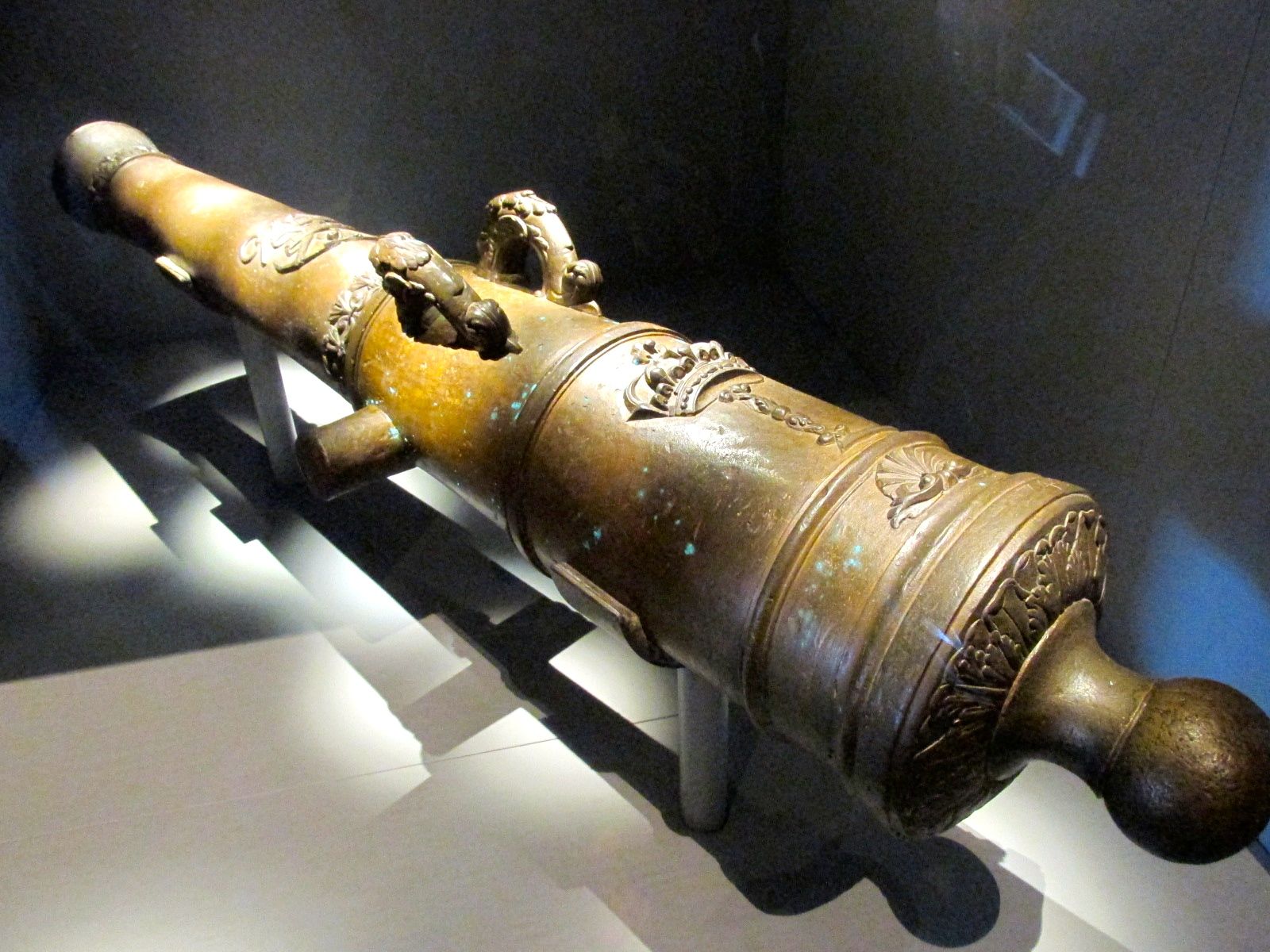
The water in Matagorda Bay is very muddy. The underwater archeologist, Chuck Meide, found this cannon said it was like searching by Braille. But, once he had these distinctive handles in his hand, he knew he had found LaBelle.
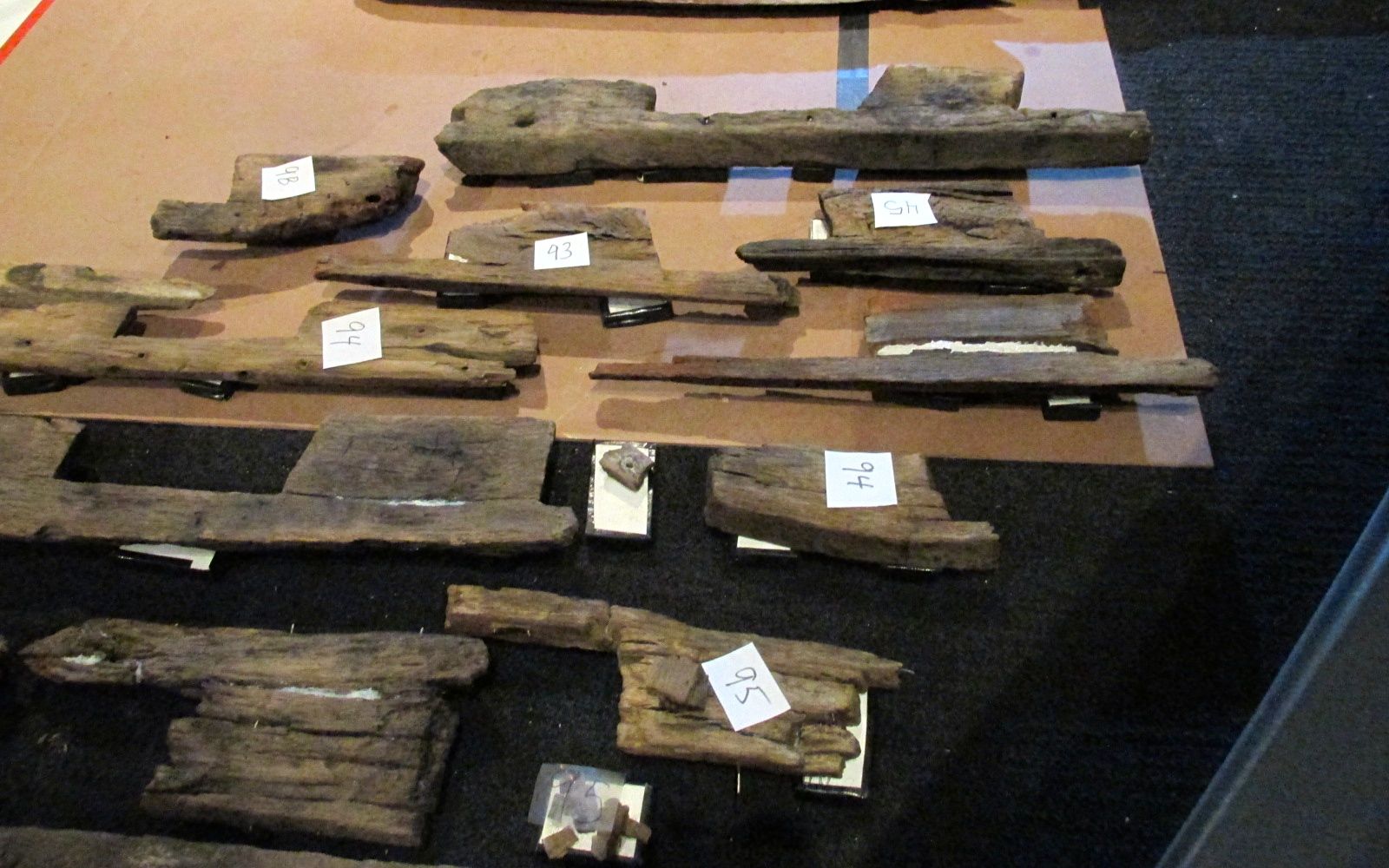
The excavation was quite a feat. They had to build a structure around it and then pump the water out. Understandably, there wasn’t much left of the ship after being underwater for 300 years.
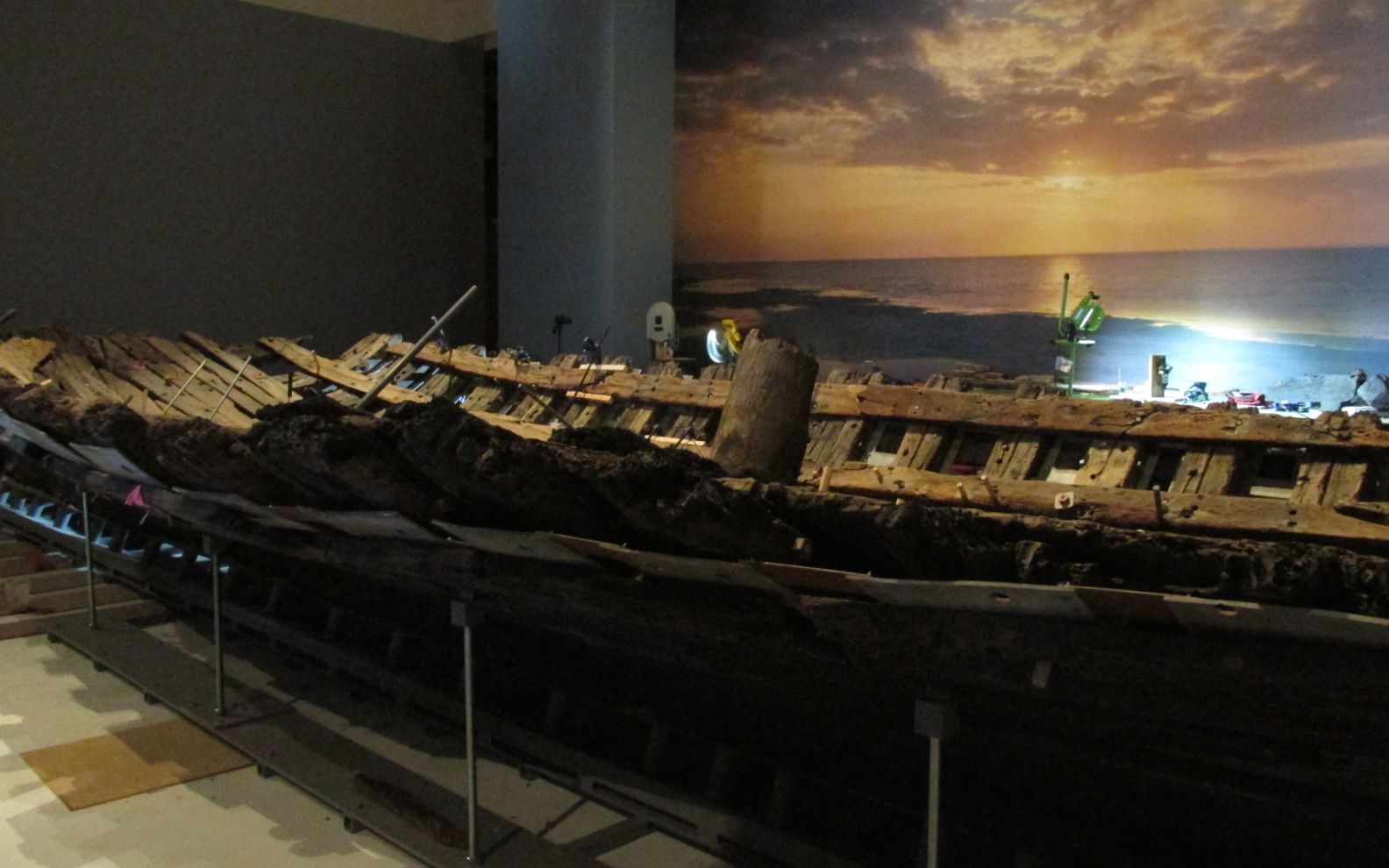
It settled into the mud at an angle. You can see the remnant of the mast coming out of the hull at an angle.
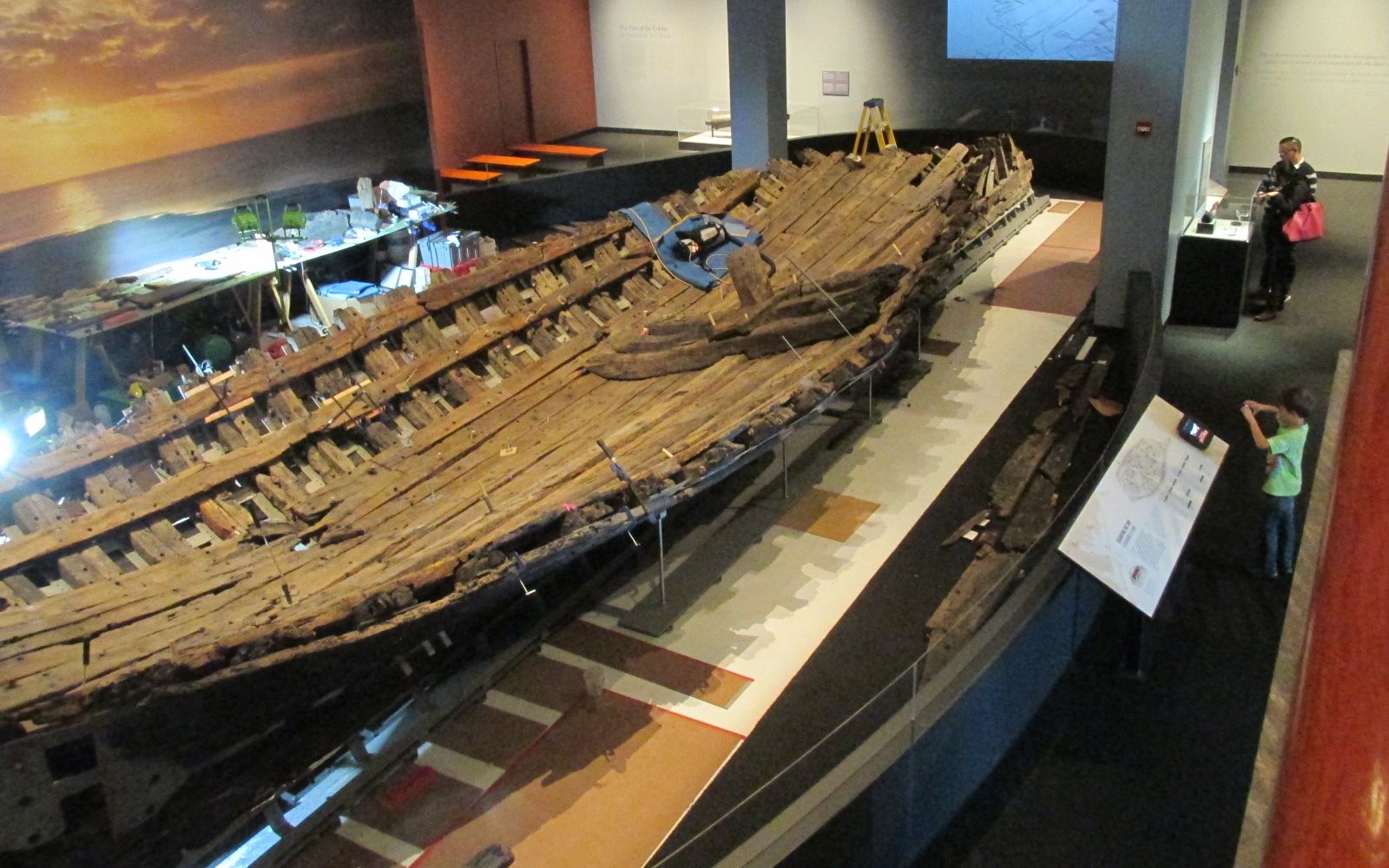
They are carefully getting the pieces back in the right places. According to one of the guides there, it was like putting together a 600 piece 3-D jigsaw puzzle.
The guide let me hold one of the pegs that were used to hold the pieces together.
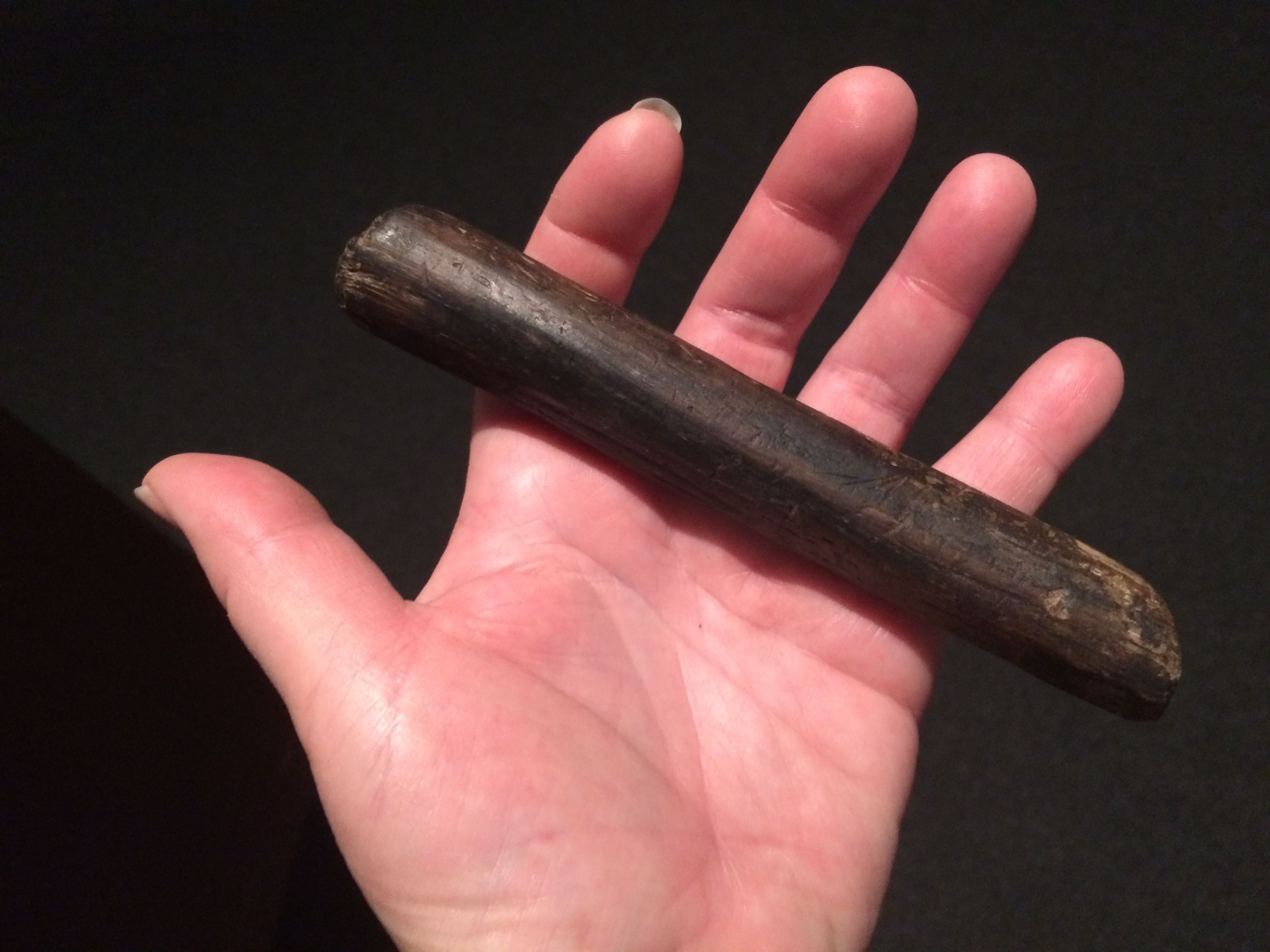
What a piece of history!
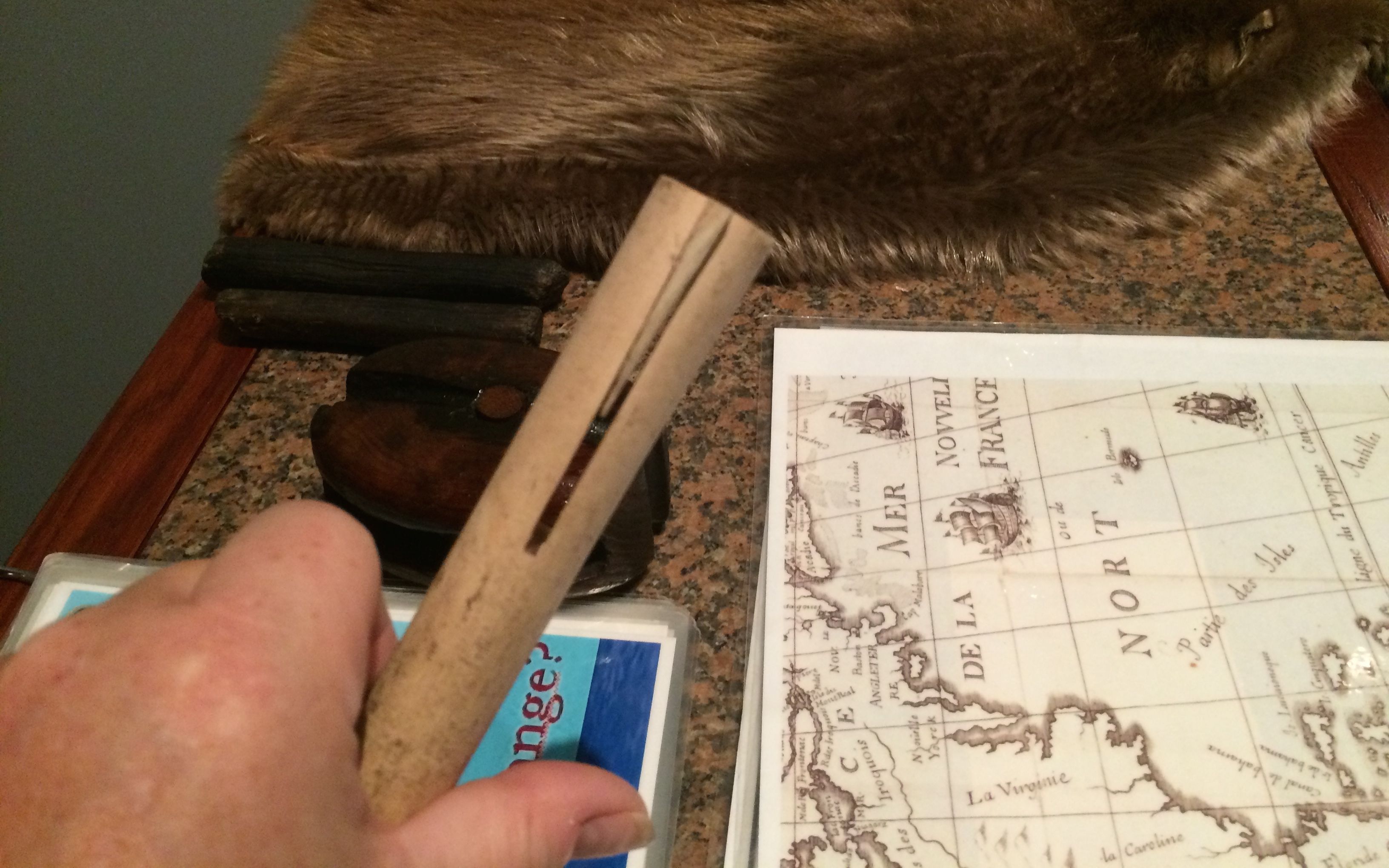
This is a peg that demonstrates how they work. The dowels were split and then a wedge was driven in to hold it tightly in the hole.
The hold of the ship was packed with goods that were going to be used in the settlement that was going to be established at the mouth of the Mississippi.
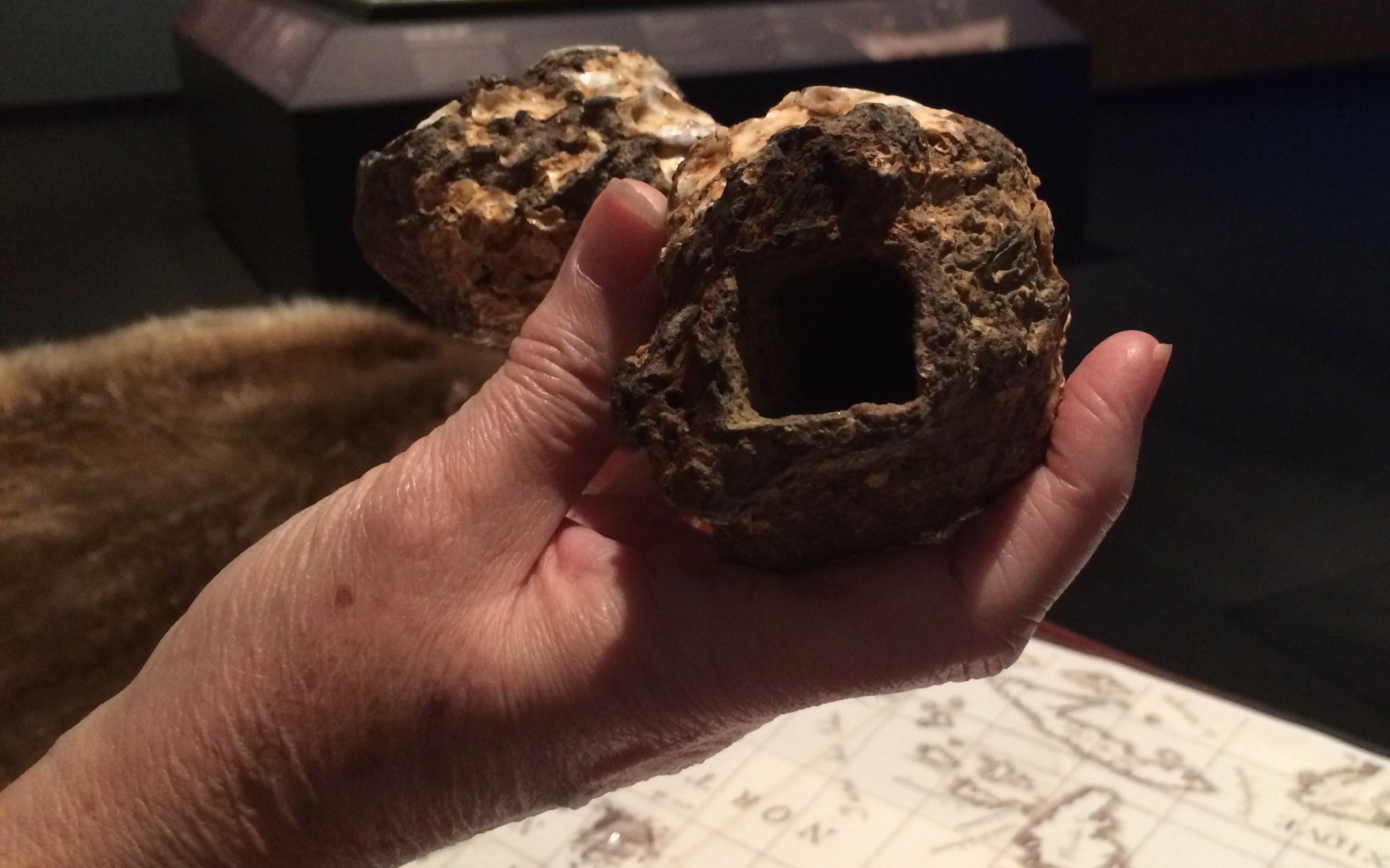
While wood pieces held up surprisingly well to being in sea water for all those years, iron pieces didn’t fare as well. The salt water ate it away, they became encrusted in the marine life that lived around them. They can recreate the metal parts by casting the negative space that was left.
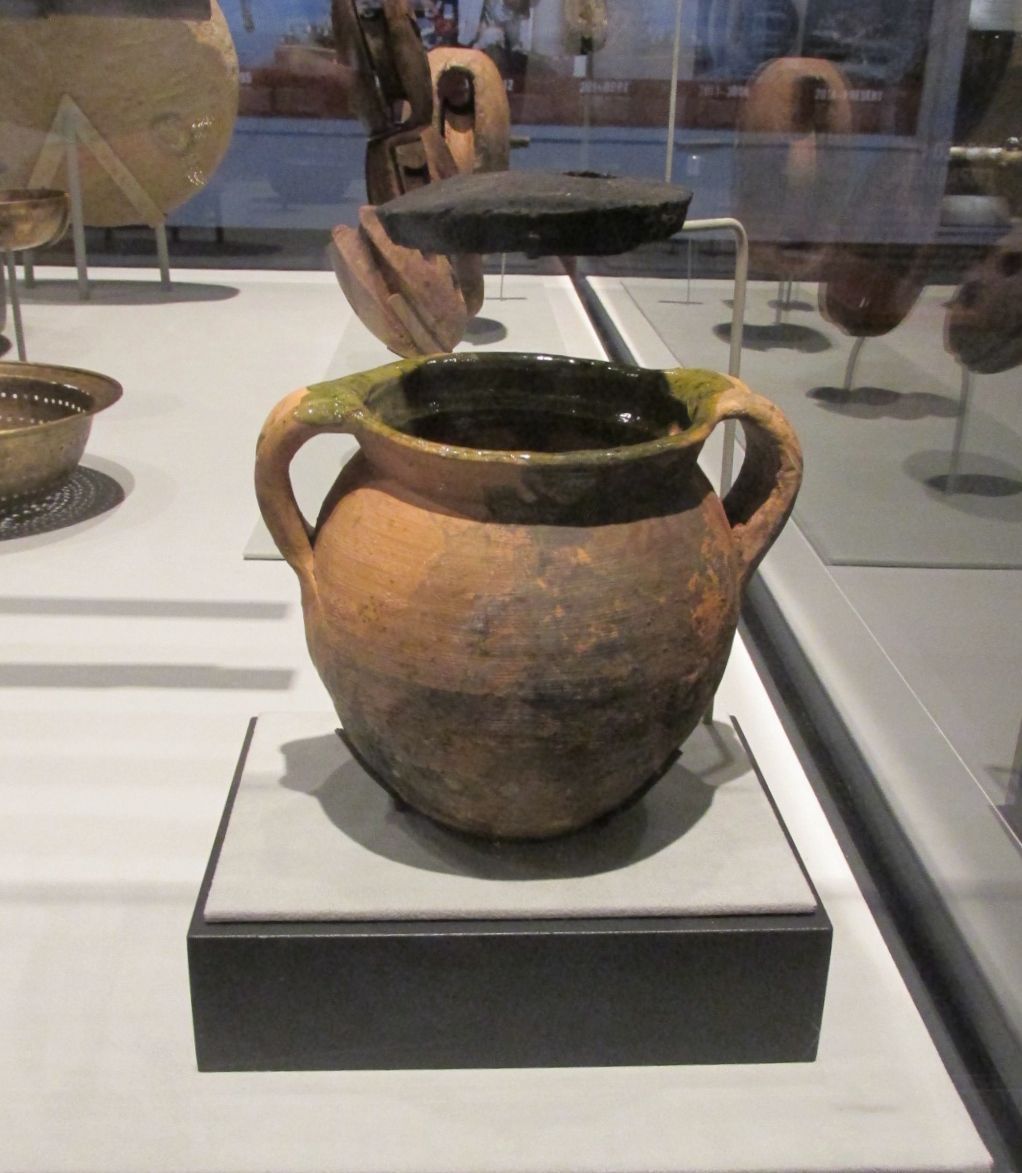
One item that the guide pointed out as being exceptional was this clay pot. It was called a fire pot. It would be packed with black powder and a wick inserted through the top that would be secured to the pot. They would light the wick and throw it, much like a bomb or a Molotov cocktail. She said that this was unusual because usually all they would find were the leftover shrapnel when they were used.
I took the stairs up and got one more look at La Belle.
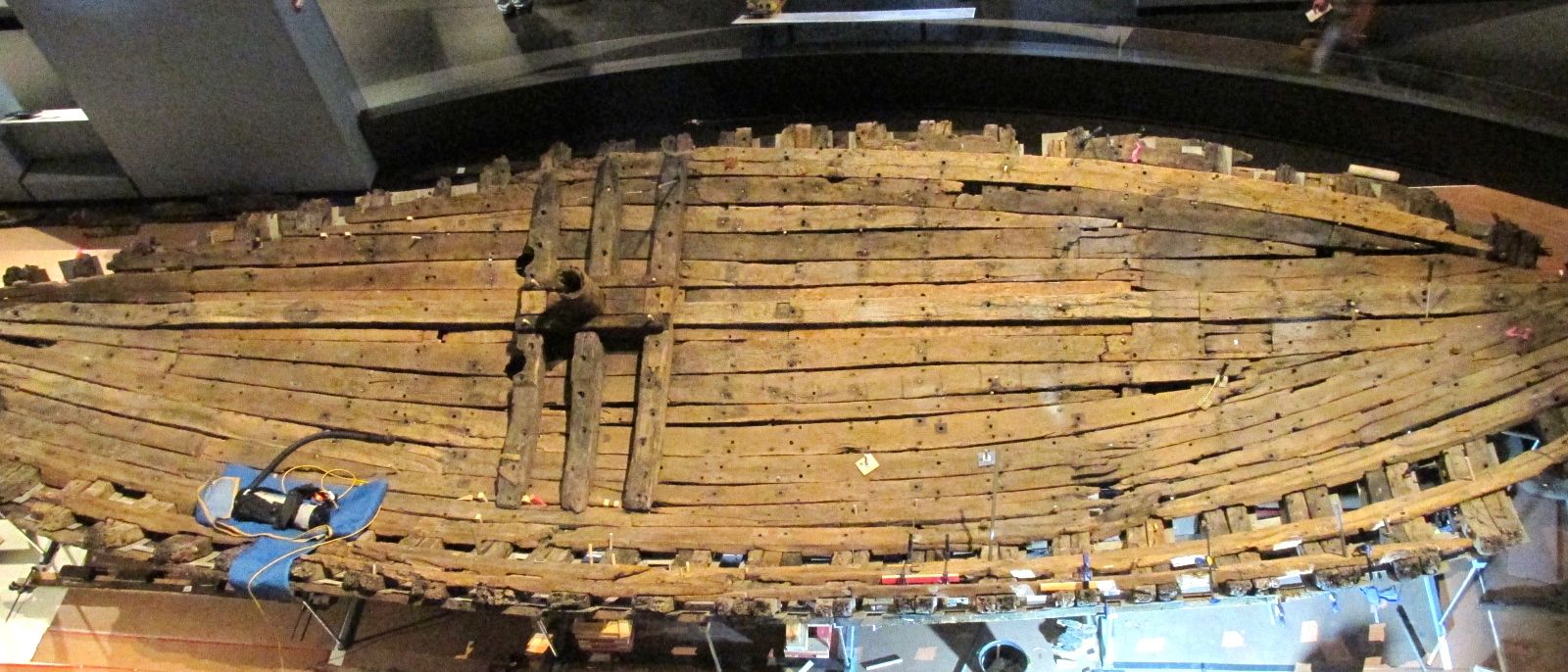
The next floor was dedicated to the history of Texas. I was so taken with the first floor that I didn’t have time to explore every exhibit thoroughly. I wanted to make sure that I got to hop on the bus when it came by again.
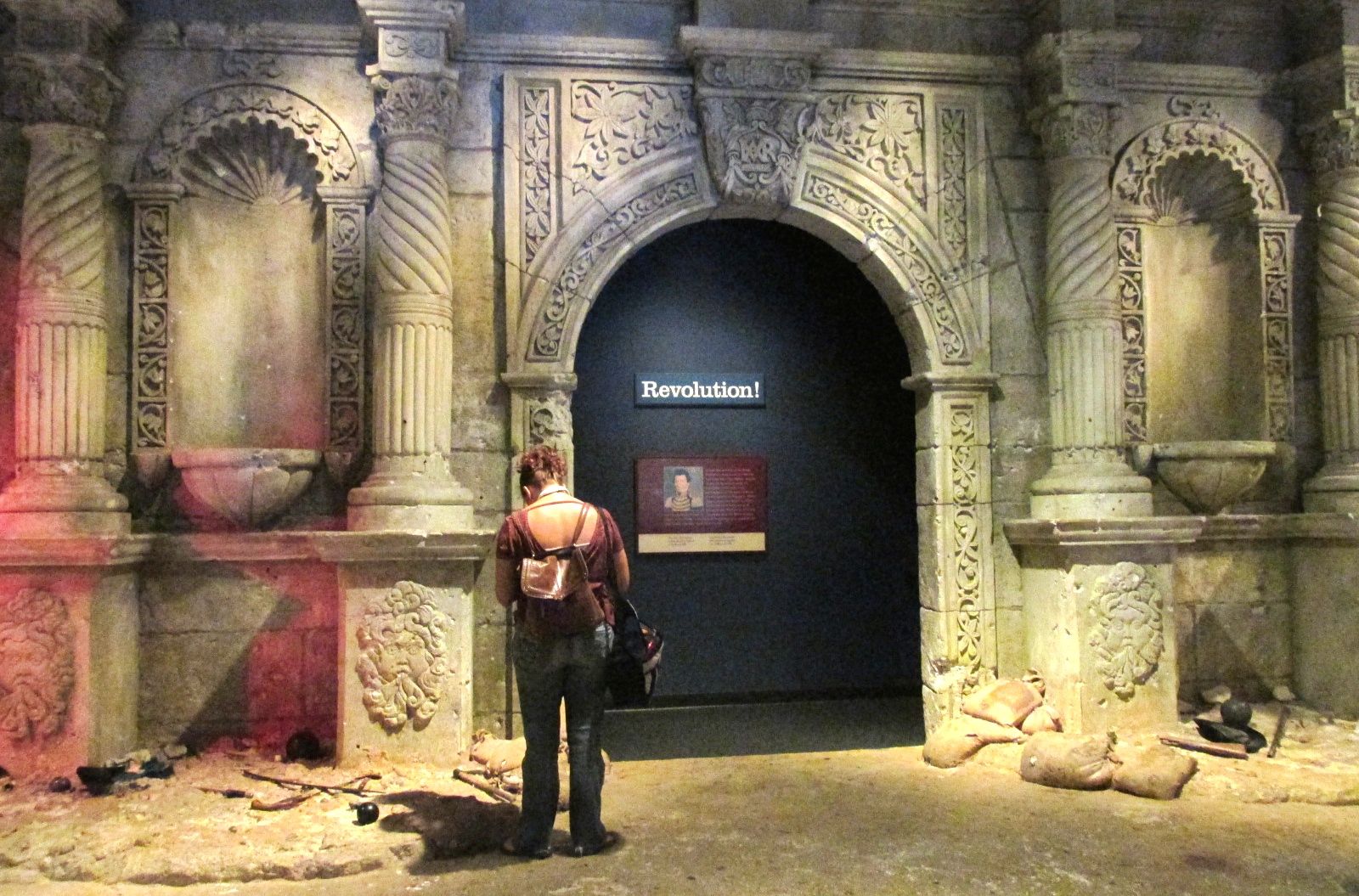
Of course, they had to remember the Alamo.
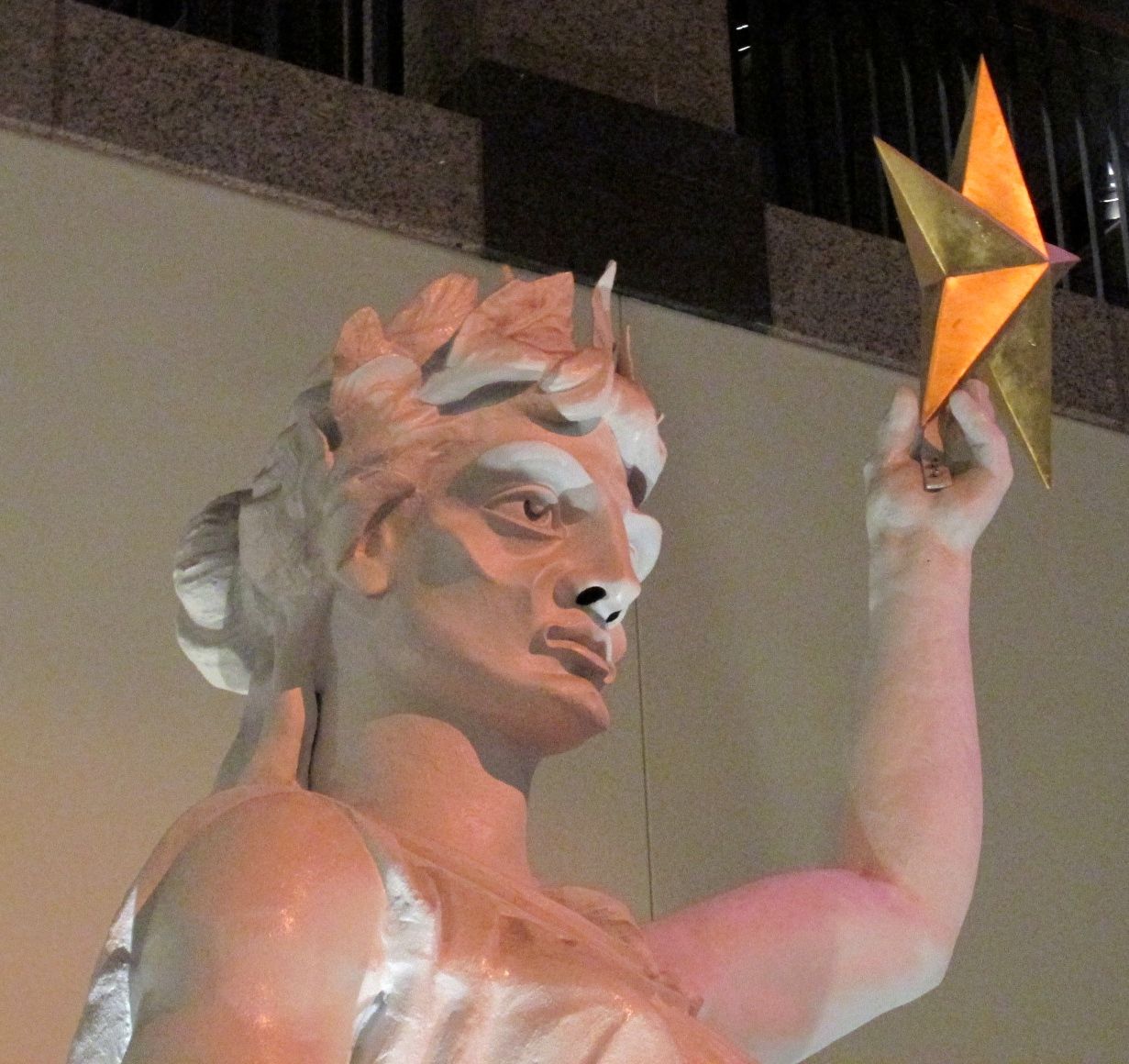
They had the original goddess from the top of the Capitol. It has been renovated; the sign said that there were holes right through her when they removed her from the Capitol. The features were exaggerated so that they could be “read” from the ground.
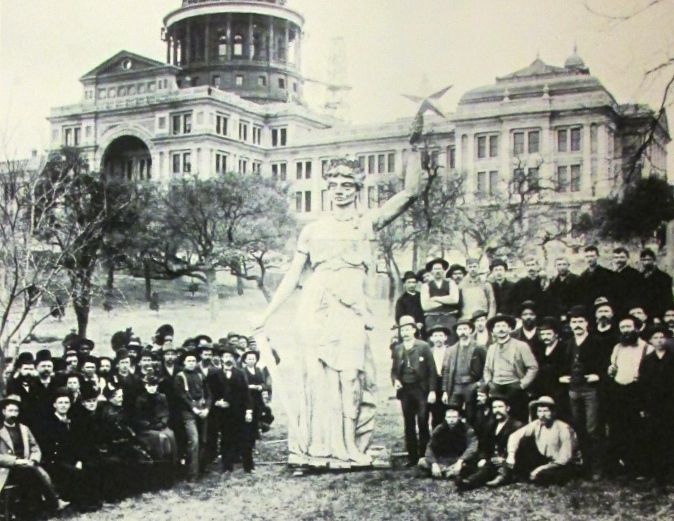
Here’s a photo from when she was originally installed.
I had to skedaddle to catch the bus. And catch it, I did. I even had a few spare minutes to peruse the gift shop.
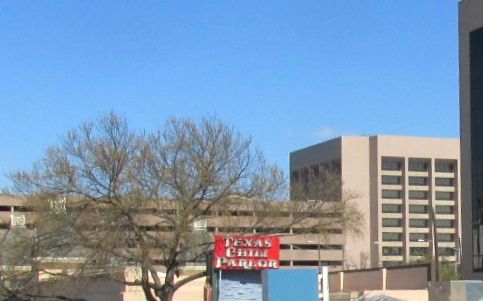
The tour guide pointed out the Texas Chili Parlor, which she said was featured in a Quentin Terrentino film. I don’t think I’ve ever seen one of his films, but at least now I have seen something that was featured in on of them.
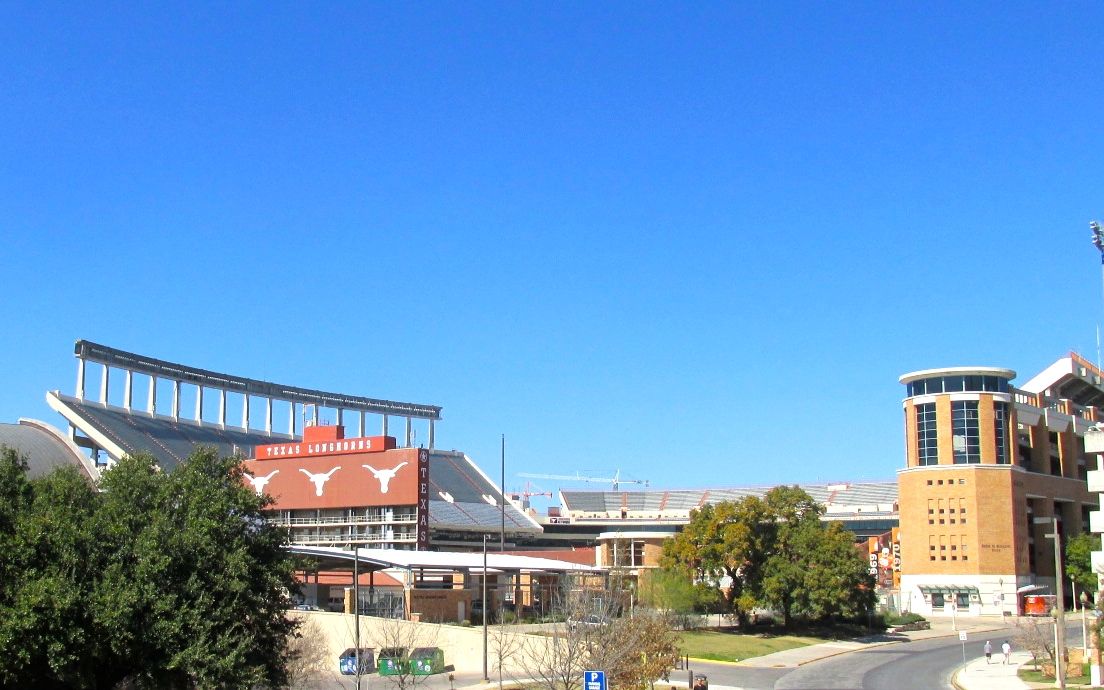
Then we passed through the University of Texas. We saw The Longhorn Stadium.
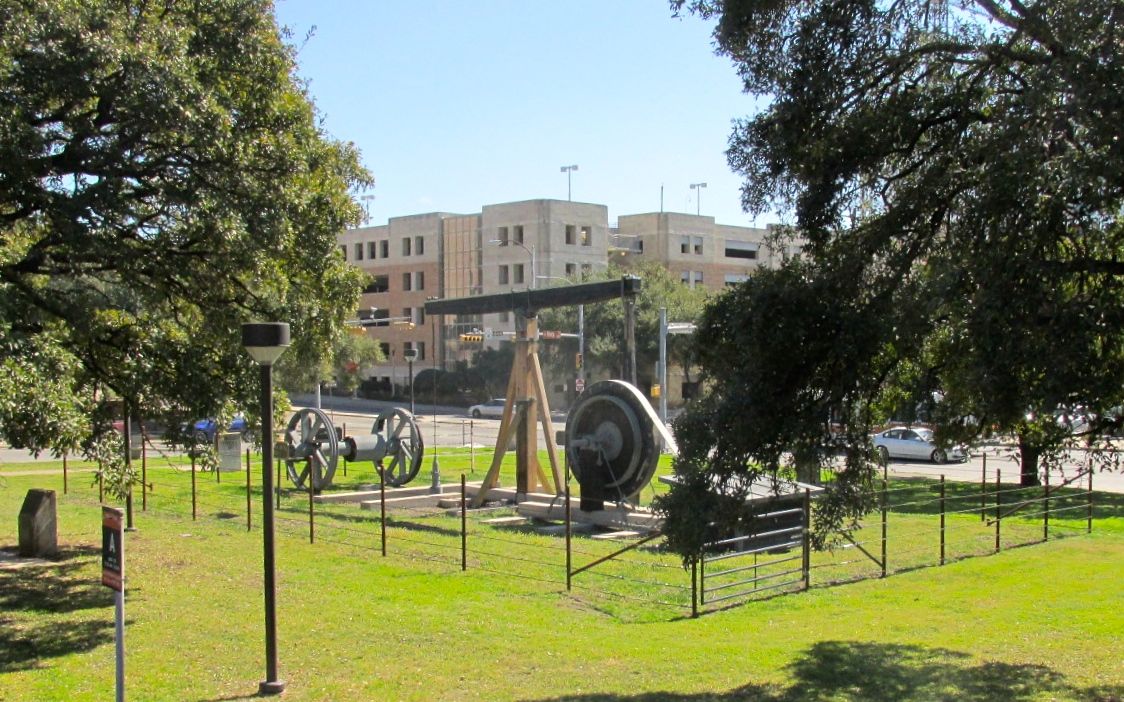
And the first oil well. Oil is what funded the growth of the University. They were given land in various parts of the state, and oil was found under that land. This was the well that started it off, and it has been moved to the university as part of it’s heritage.
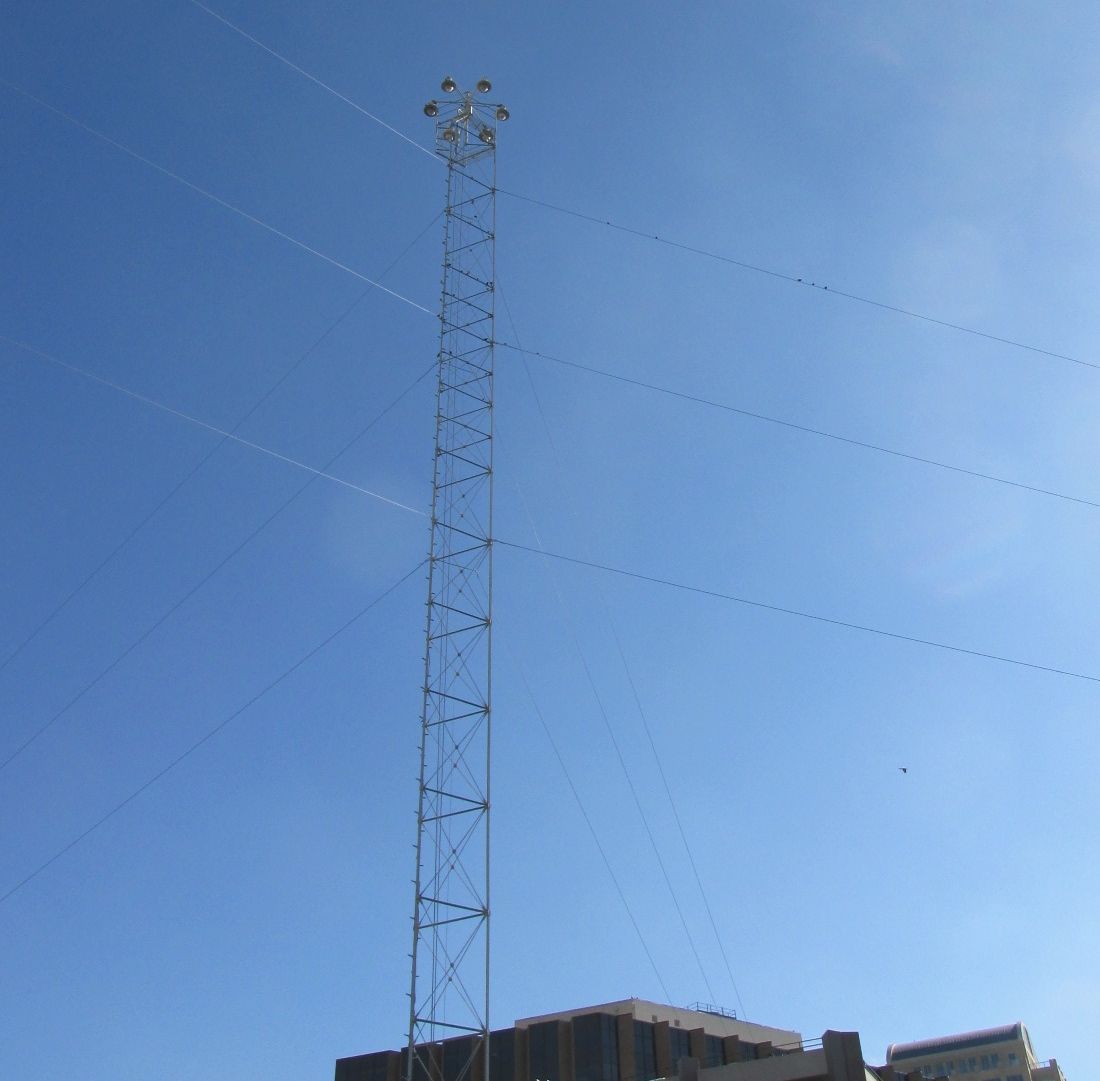
We also passed the Moonlight Tower. They were popular ways to light cities in the 19th century in the United States and Europe. The Austin Moonlight Towers were purchased used from Detroit in 1894. The source of light came from six carbon arc lamps. The carbon rods would burn away and they would need to be adjusted and replaced during the night.
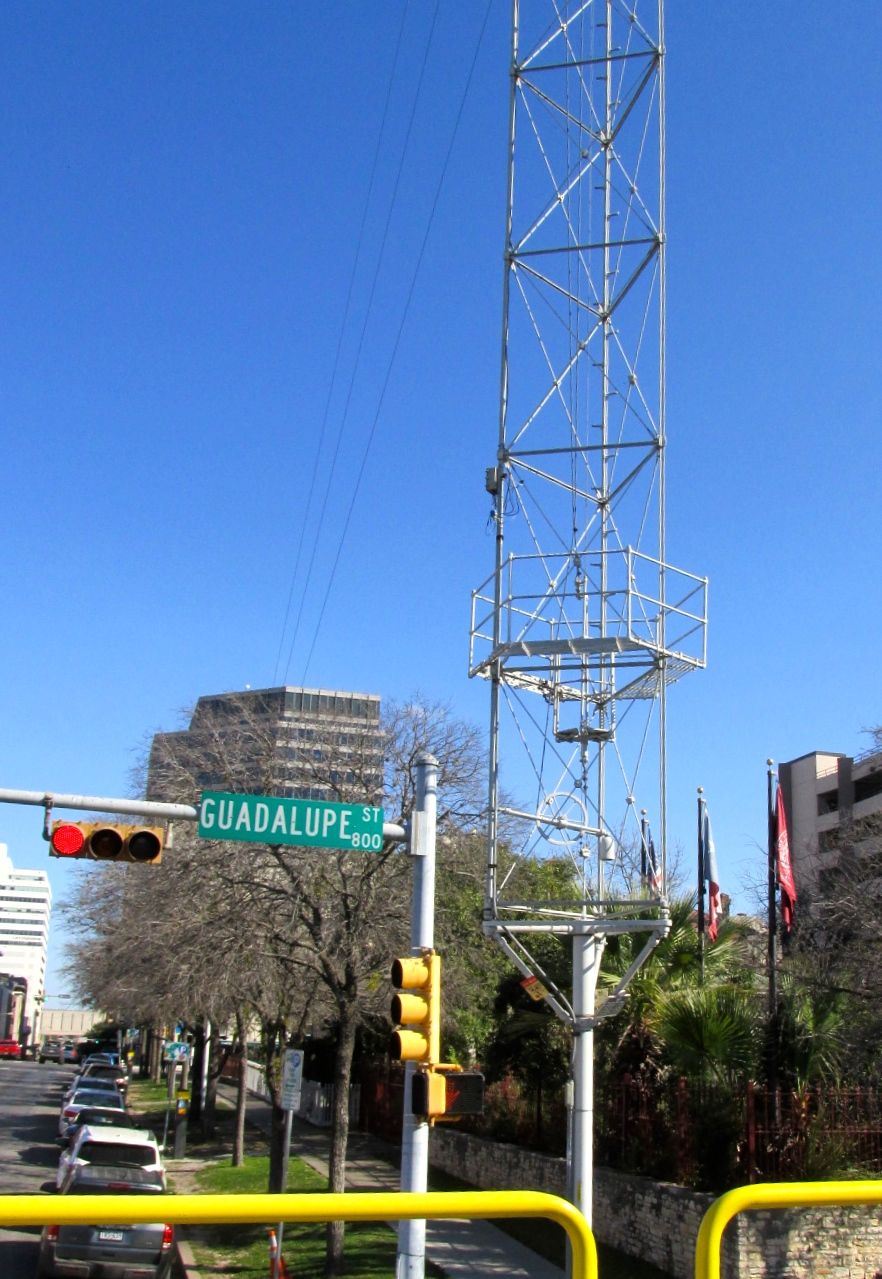
The workers would be hoisted up to the top to attend to the lights. The light was very bright, but they were exceeding time-consuming to maintain. In the 1920s, they were replaced with incandescent bulbs, and then mercury vapor lamps replaced them in the 1930s. The remaining Moonlight Towers are Texas State Landmarks.
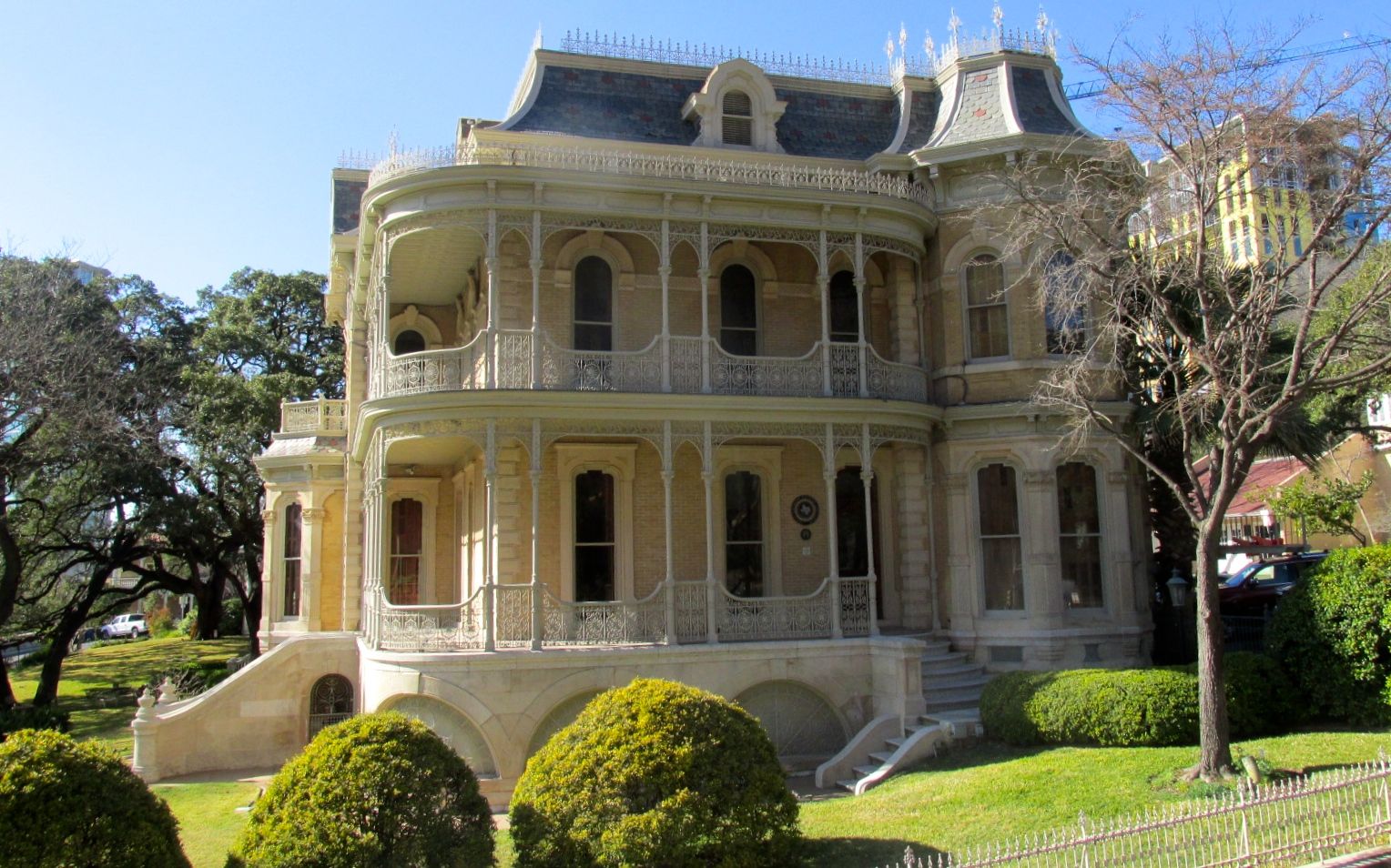
The guide pointed out this house. The interesting fact she pointed out was that there were amazingly few doors. In fact the only way to get on to the upper porch was through the windows. This was because taxes were based in part on the number of doors a house had.
We cruised though some interesting parts of town – fun stores, eateries and nests of food trucks. I have no photos to show, thought, because it was hard to frame up photos while moving in traffic on the top of a double decker bus.
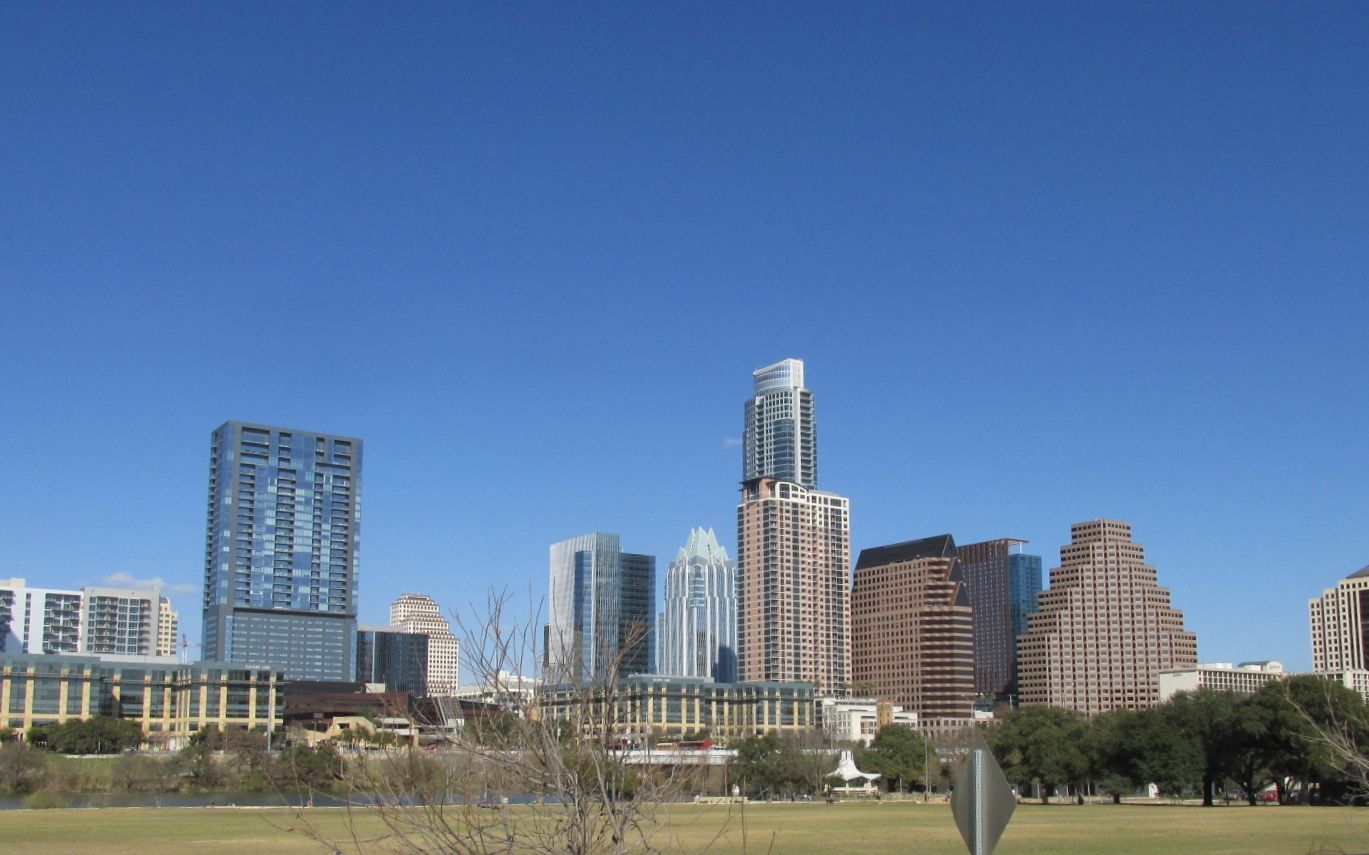
We headed back to the end of the tour and I was able to grab a shot of the skyline.
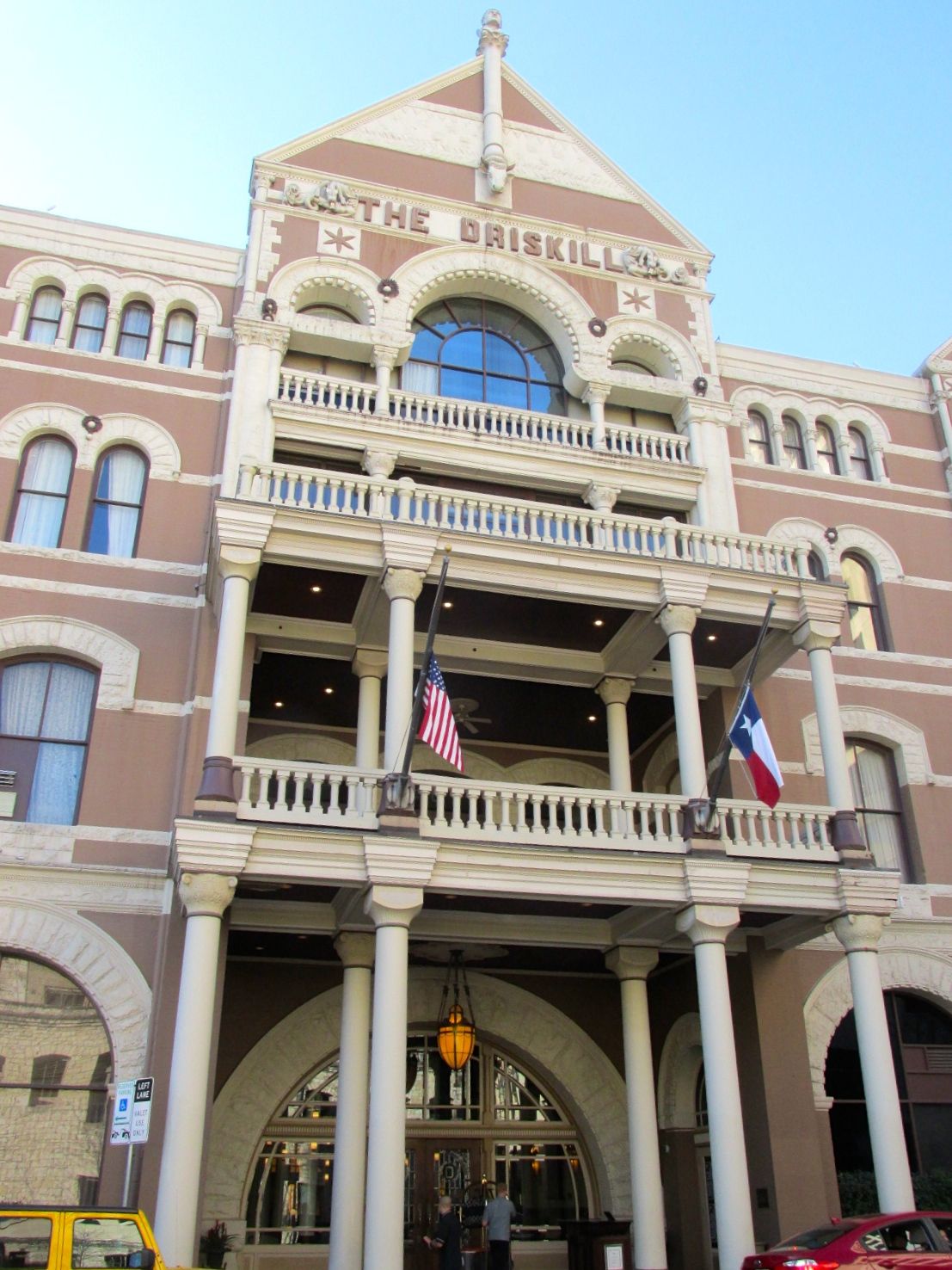
After the tour, I needed a bit of sustenance. I decided to treat myself to a light dinner at The Driskill, a Romanesque-style building that was completed in 1886. It was built by Colonel Jesse Driskill, a cattleman who spent his fortune building “the finest hotel south of St. Louis.”
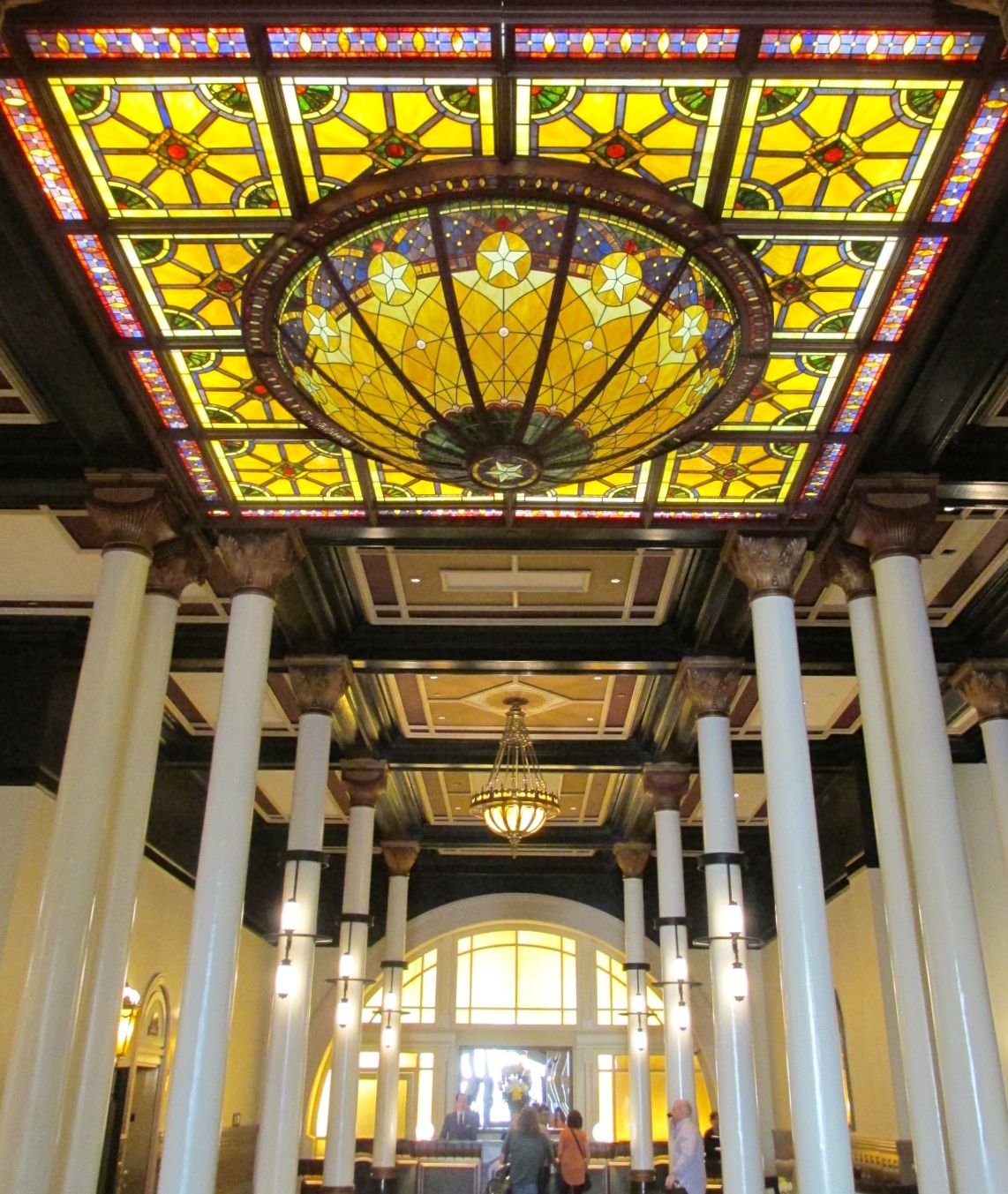
It was quite opulent. Here is the lobby.
I made my way to the Driskill Bar.
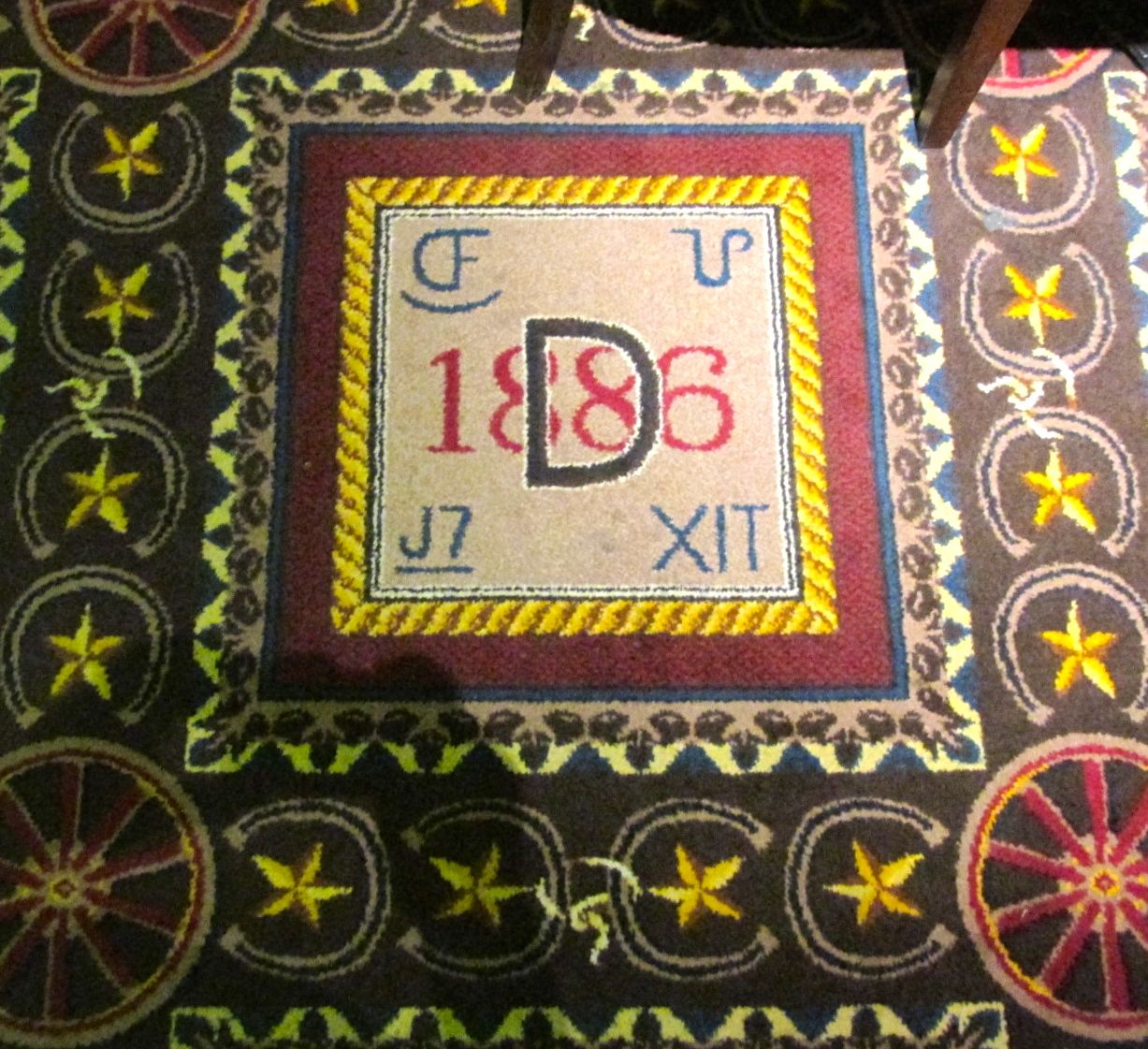
I walked down the special carpet that was full of significant designs.
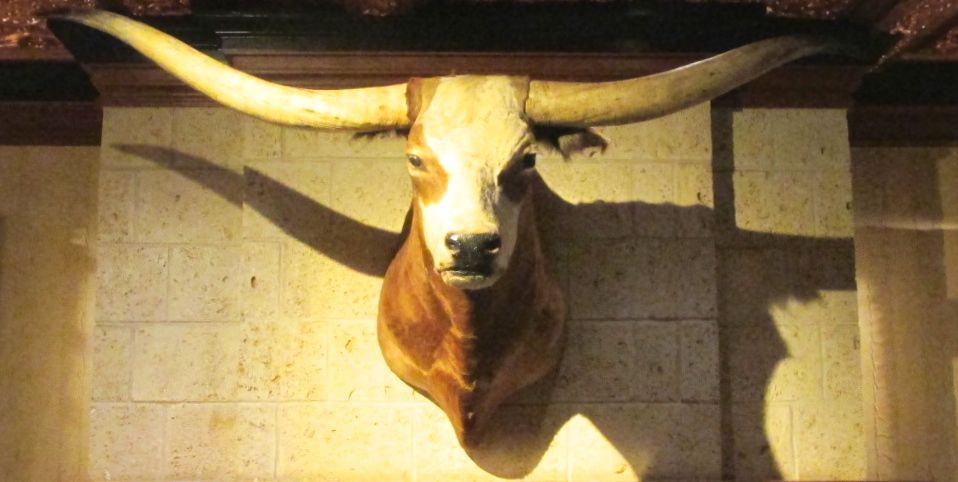
There was a Texas Longhorn hanging over the fireplace. How Texan!
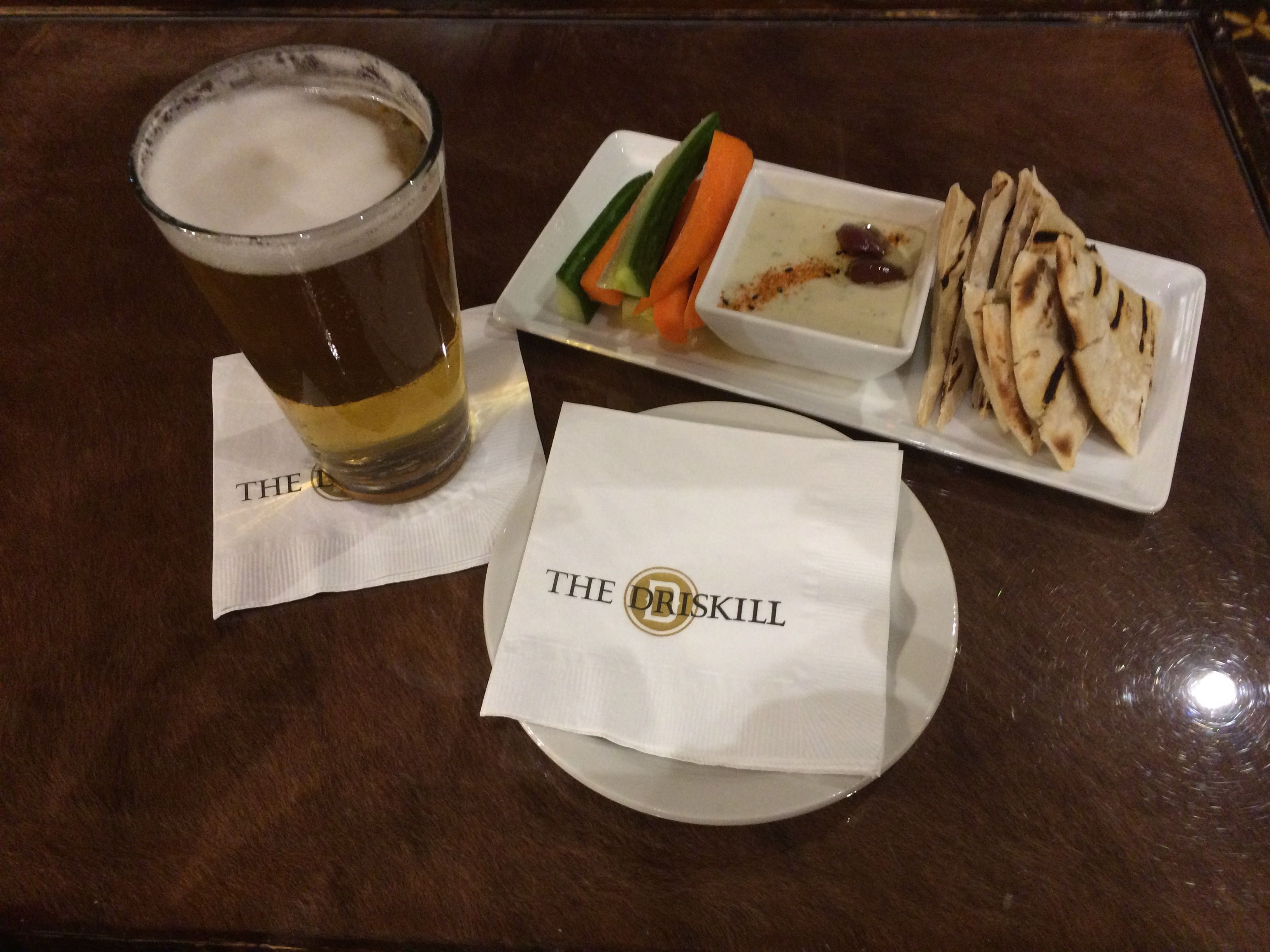
It was Happy Hour! I chose the white bean hummus and a local brew.
Suitable refreshed and refueled, I headed back to the garage to pick up ol’ BART.
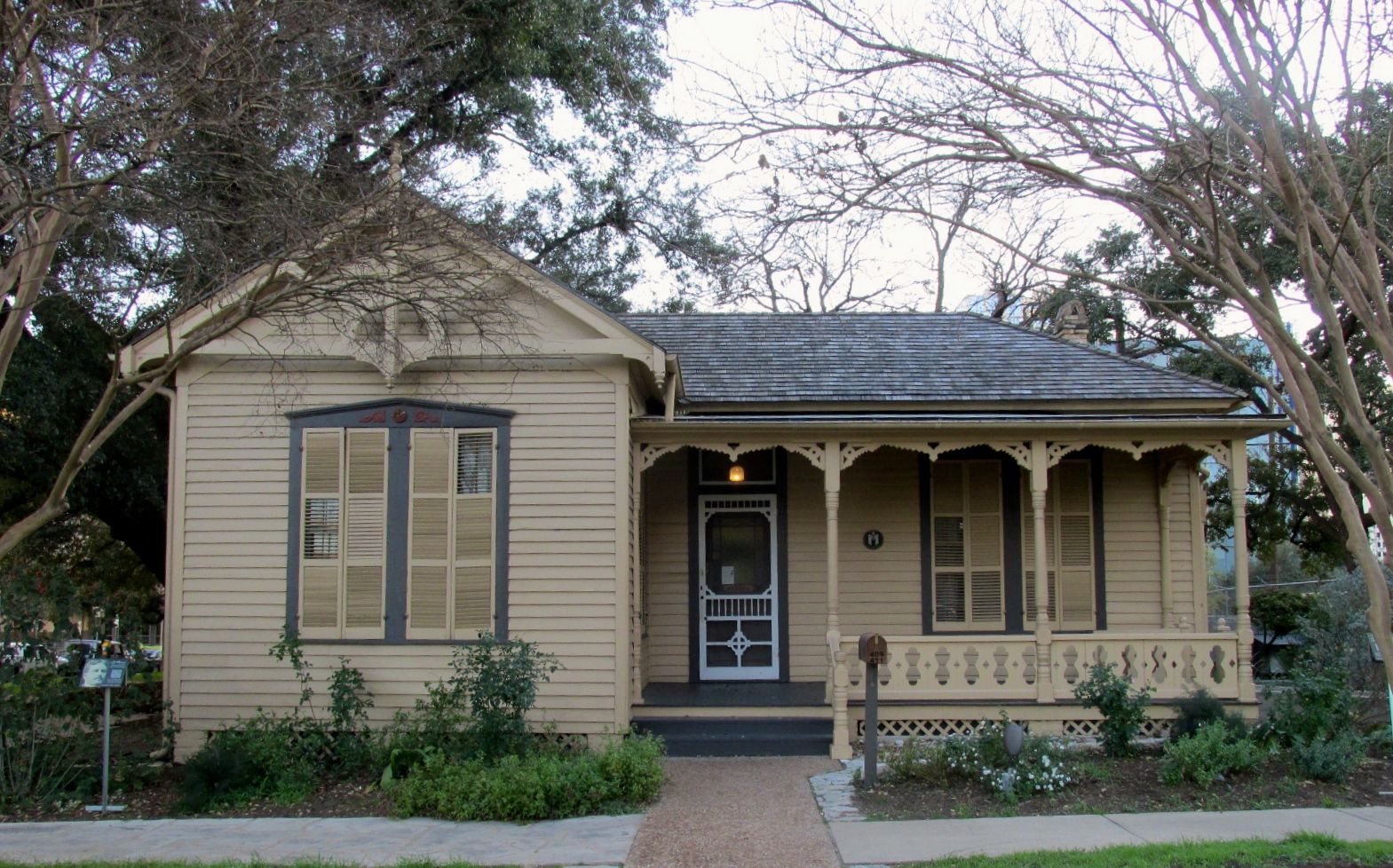
Along the way, I passed the O. Henry’s house. It was late in the day, so it wasn’t open. However, William Sidney Porter, better known as O. Henry, lived there between 1893-1895. The house was built in 1886 – the same year as The Driskill.
Next door to that house was the Susanna Dickenson-Hannig house.
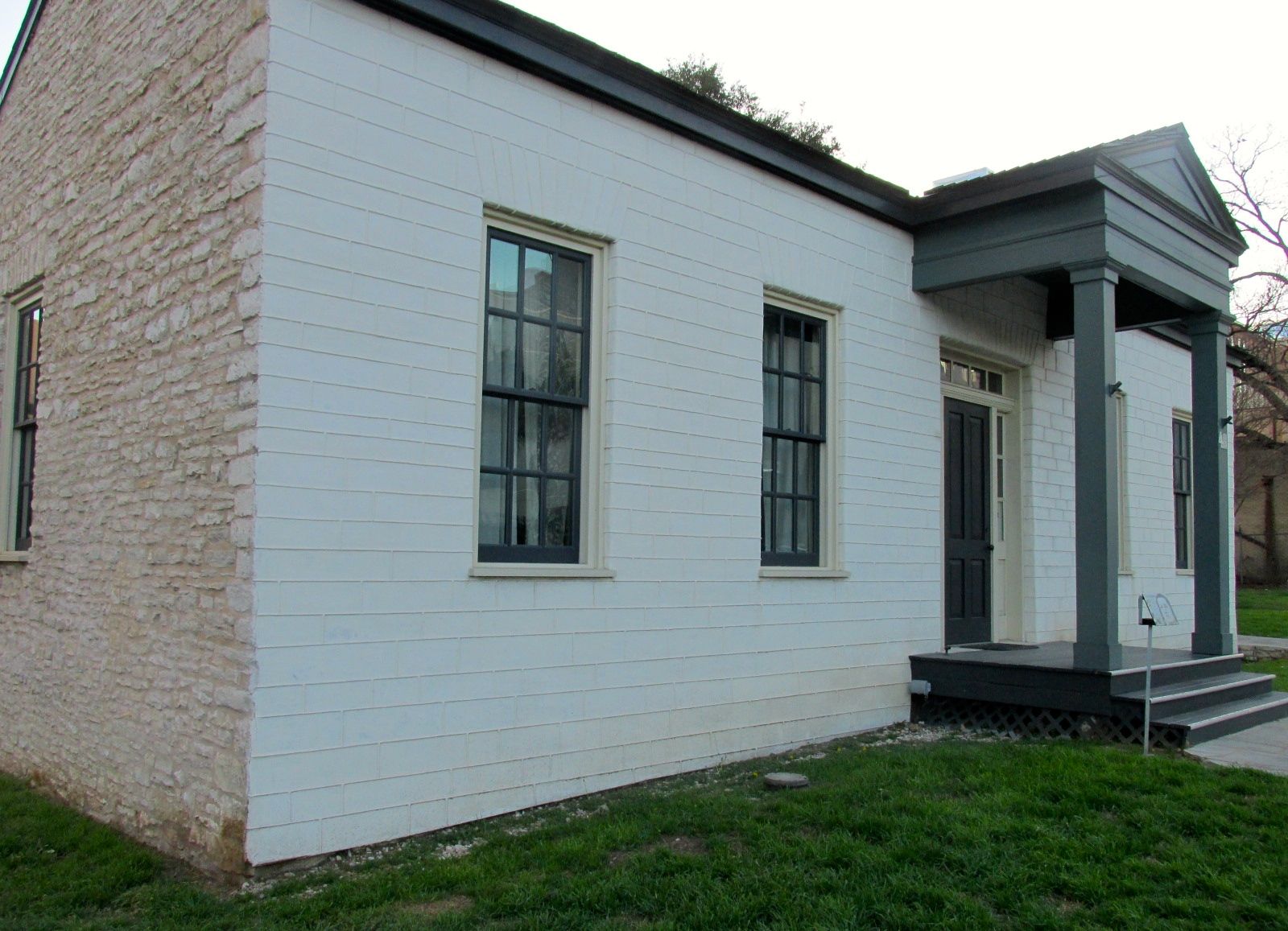
Susanna Dickenson-Hannig and her daughter Angelina were among the few Texan survivors of the 1836 Battle of the Alamo. Her husband, Captain Almaron Dickinson was killed in the battle. Santa Ana interviewed her after the battle and gave her and each of the other survivors $2 and blankets and allowed them to return home to spread the word of the size of the army the Texan were up against.
This is the house that she shared with her fifth husband, Joseph Hannig. It was built in 1869 and she lived there until her death in 1883.
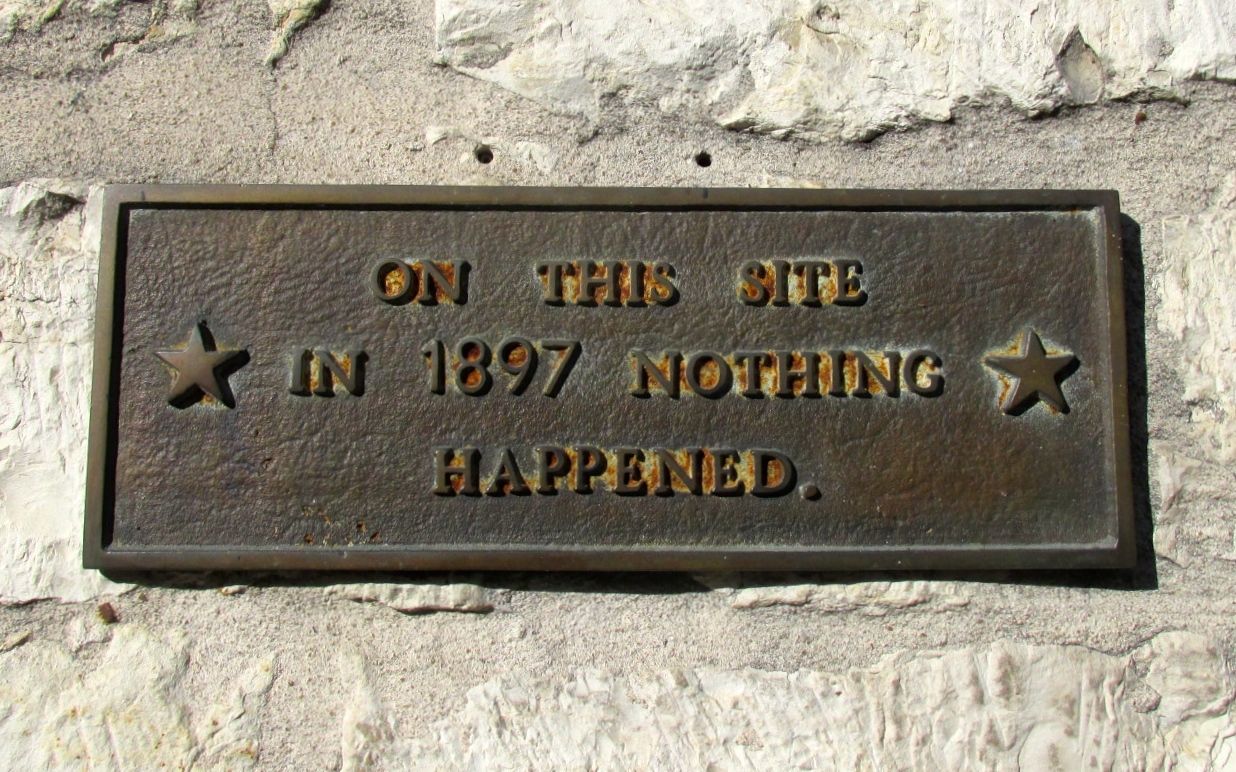
After a busy day of touring, this sign was a welcome sight.
The next day, it was time to hitch up Flo and get ready to roll.
Next stop: South Llano River State Park.
Ah, so that’s where La Salle’s ship ended up! I remember it making the news, when it was found.
I remember a buzz when they thought they had found the Griffin, but this one was new to me. I love it when I learn something new!
Thanks a bunch for this enlightening report related to Cavelier de la Salle who was born in my hometown, Rouen (Normandie, France) ????
Thanks for taking the time to read my blog, Mary!