While I was sitting in the amphitheater at Palo Duro Canyon State Park waiting for TEXAS (the musical) to start, I got to chatting with the people sitting next to me. They were the Cabbages from Hutchinson, Kansas. Not only did they recommend that I visit the Panhandle-Plains Historical Museum in Canyon, Texas, they told me that I shouldn’t miss Strataca in their home town.
What is Strataca? It’s a salt mine! It sounded like something that would interest me, so I put it on my list of things to do.
I found a campsite at the Kansas State Fairgrounds. I’ll bet it is a teaming city during the state fair. It was kind of empty when I arrived, but it started filling up toward the end of my time there. A rally of deaf campers was beginning. It was interesting to watch them talking to each other. Overall, they were very quiet, as you would imagine, but a few of them had the loudest, rumbliest motorcycles I’d ever heard. I could feel the vibrations through the ground, which was probably the point. They sure did seem to be enjoying themselves.
I don’t have photos of the campground, because it was just one of those fields with hook ups. I did take a picture of my new state sticker, though.
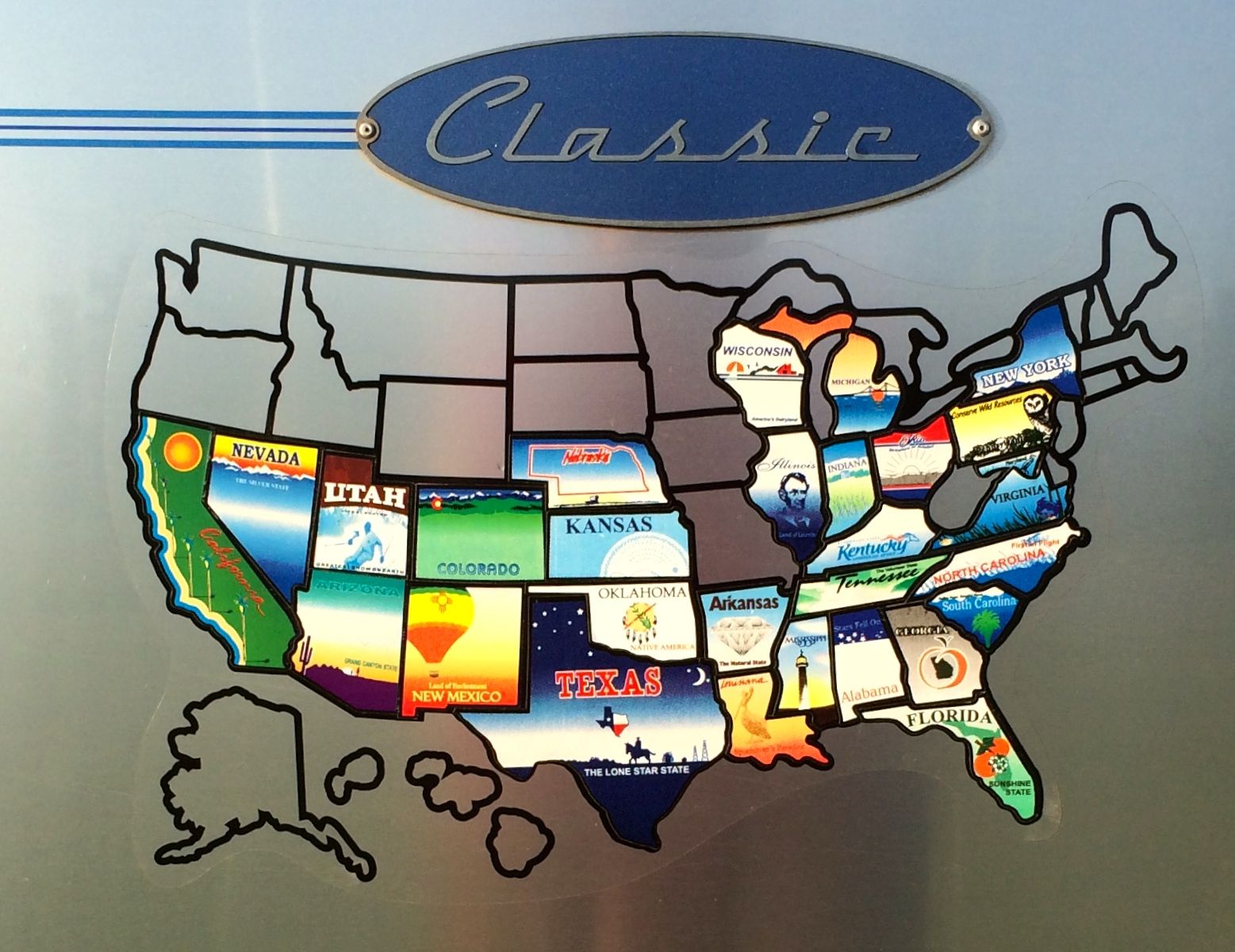
Kansas is in the house!
I made my way to Strataca. Incidentally, the emphasis in on the first syllable. STRA-ta-ca. I kept wanting to call it stra-TA-ca.
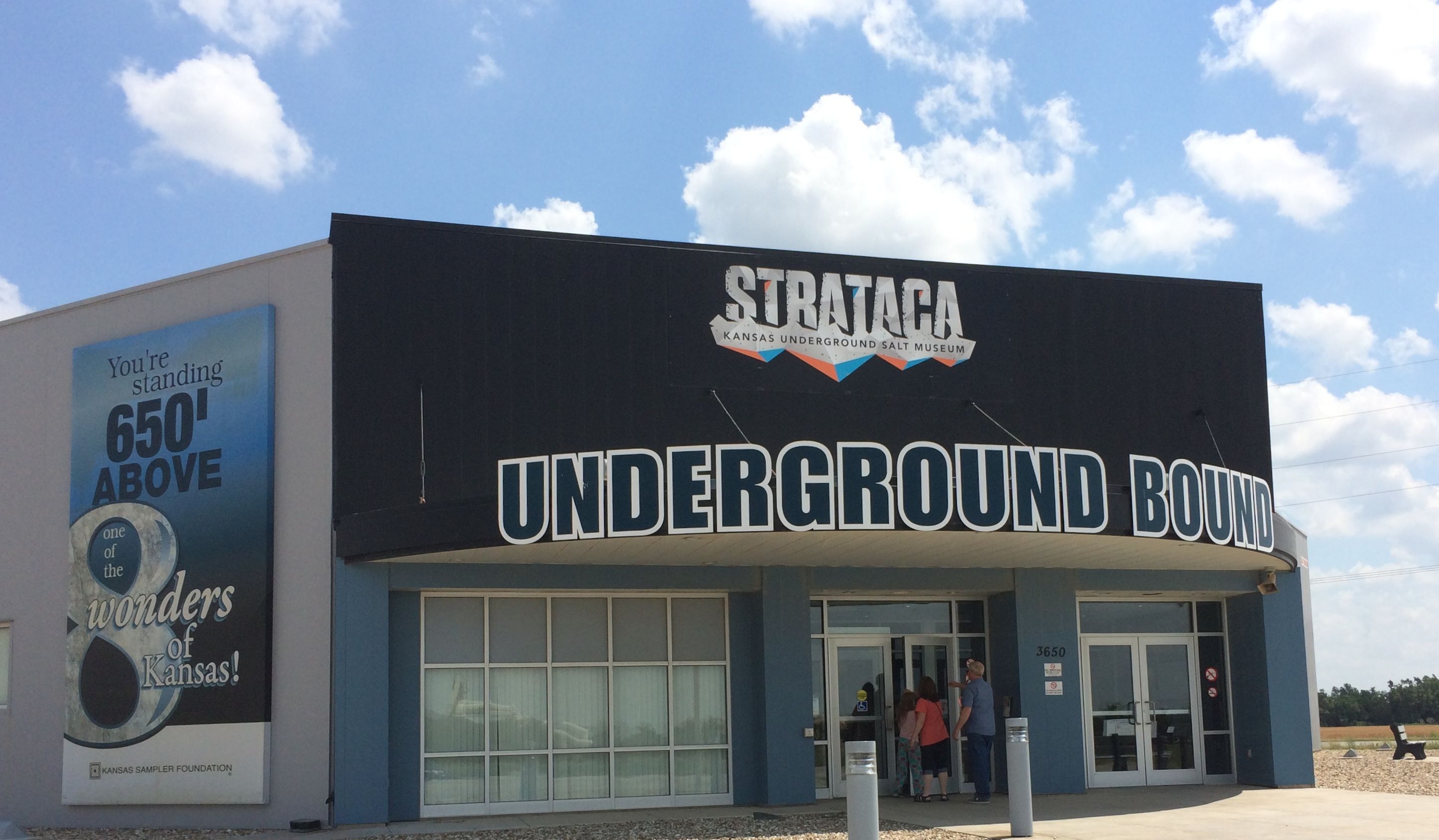
Yep! I was right over one of the 8 wonders of Kansas.
What are the 8 wonders of Kansas? Click here to find out!
I entered and bought my ticket for the tour and waited for my group to be called. While I waited, I looked at some of the displays and a wall of quotes about salt.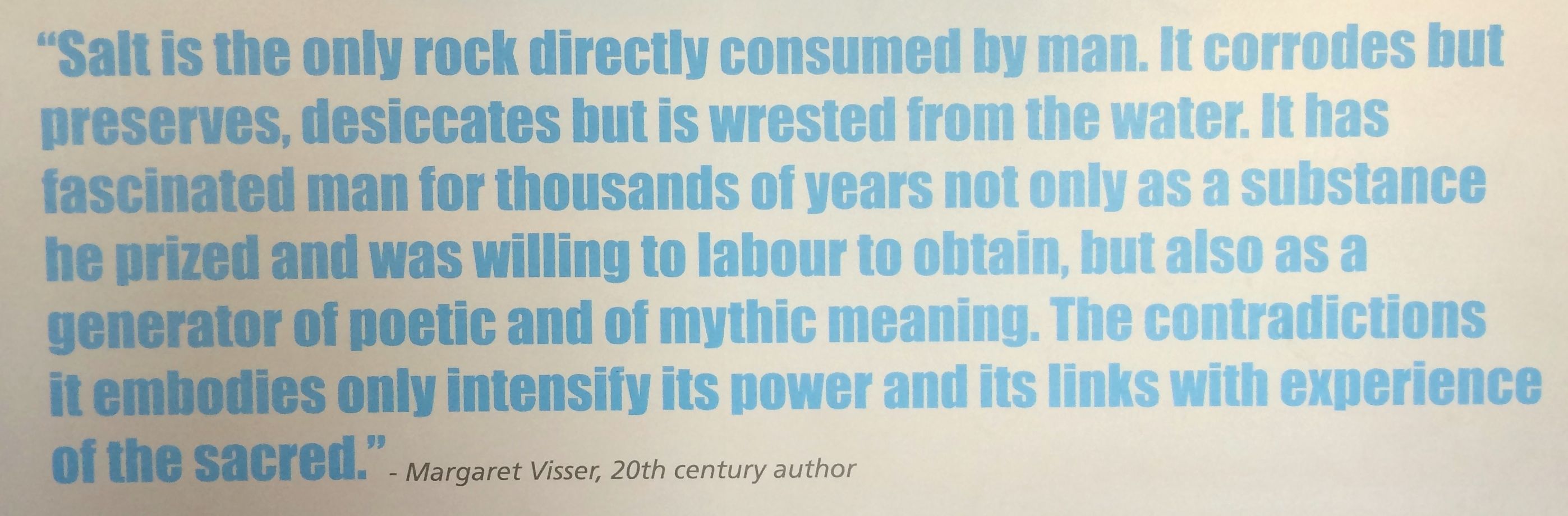
Yep, as you might expect, they are really into salt here.
My group was called and we saw the introductory movie. On the way back to get our hard hats, I passed the tags where the workers “brass in” at the beginning of their shifts.
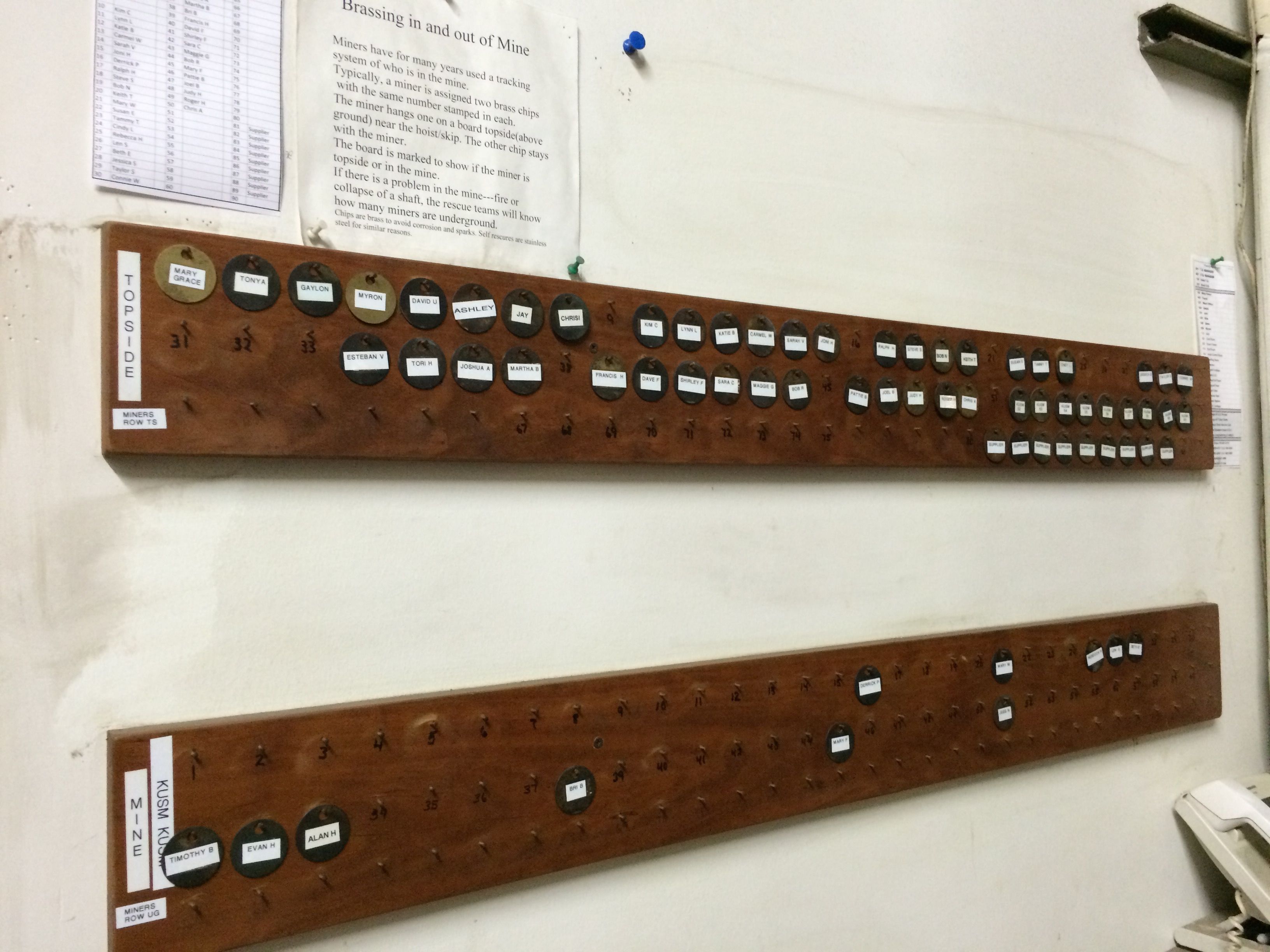
At the end of their shifts, they “brass out”. The brass refers to the tags that identify who is down in the mine. It kind of reminded me of the tags we used when we were swimming at the lake at Seven Hill Girls Scout Camp, back in the day.
Hard hats on, we got in the elevator for the trip 650 foot trip down to the salt mine. The elevator was unique in that it was a double decker elevator. They could load up one level, lower the elevator a bit and then load up the second level. The group I was in only needed one level, so I didn’t get to see the double decker feature of the elevator in operation.
Once down at the 650 foot level, we entered the Permian Room, a long gallery that was mined out in the 1940s and 1950s. The name “Permian” refers to the Permian Sea that dried up around 275 million years ago.

On the walls, you can see the layers of salt and mud. Throughout the mine, you see the same banding. According to one of the attendants, this banding made it easy to keep the mine level. They could follow the bands as their guides.
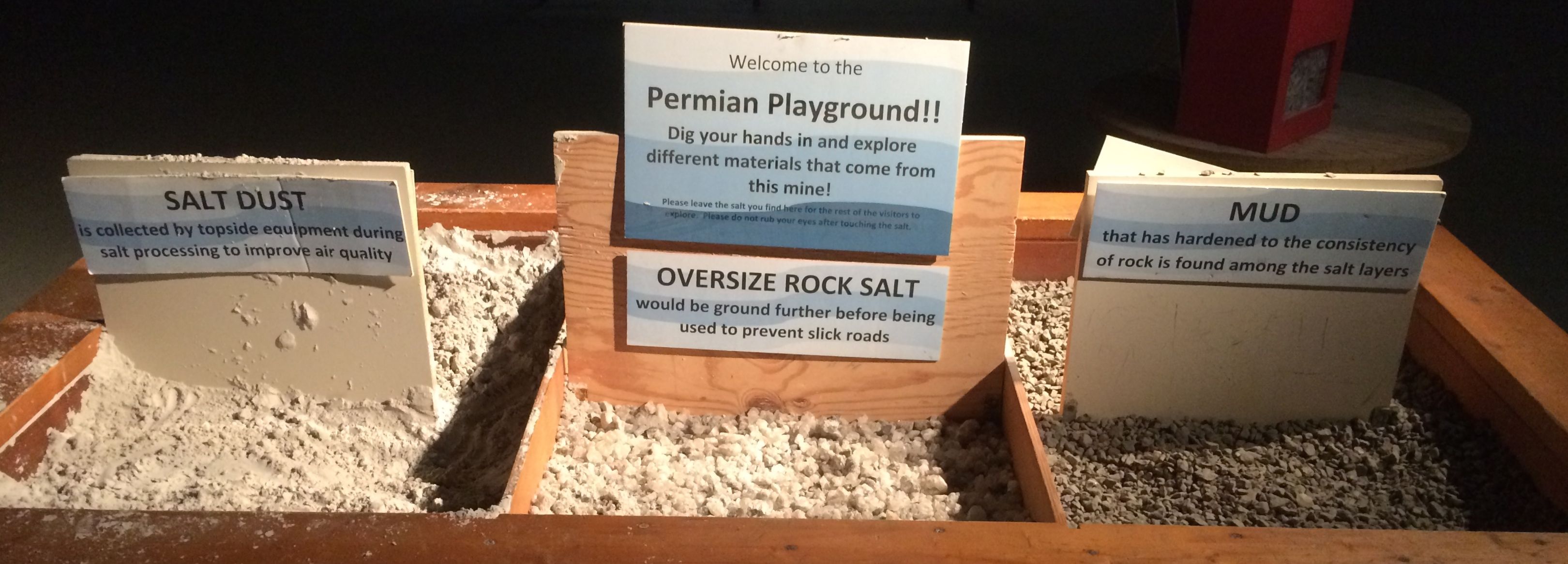
These boxes were there for visitors to experience the materials that came out of the mine – salt dust, which felt like sand, oversized rock salt and mud, which felt like gravel. Rock salt for de-icing roads was the product of this mine. One of the attendants told me that salt for eating is produced by other mines, but those are brining operations as opposed to mines. In those mines, water is pumped down into the salt layers, where it dissolves the salt. The resulting brine is then pumped back up and the water is evaporated and the pure salt is left behind.
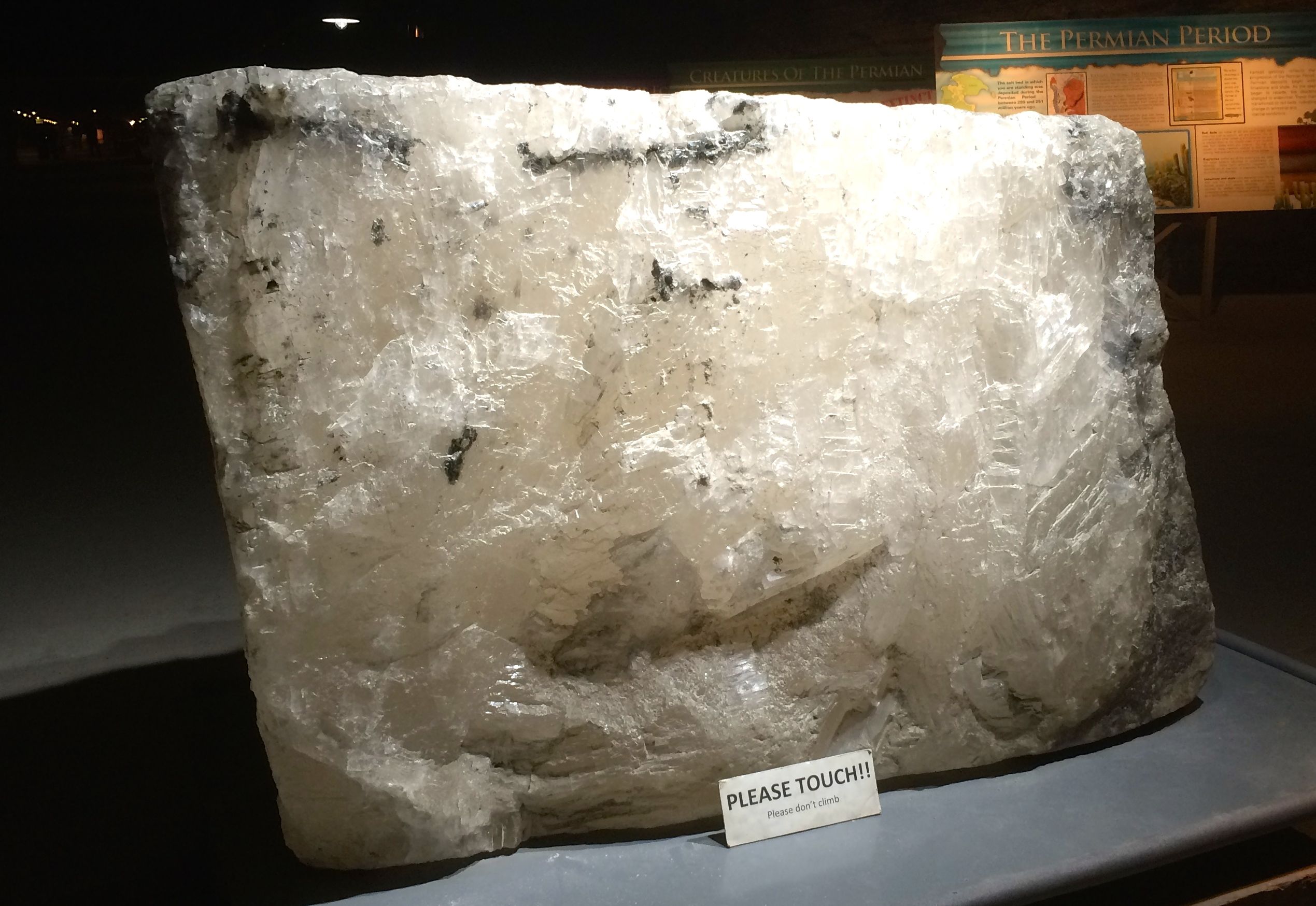
Don’t you just love it when they invite you to touch the displays? I know I do!
A cubic foot of loose salt weight about 75 pounds; when it is a solid block, it weighs 135 pounds per cubic foot. This block weighs about 6,000 pounds! (That’s almost as much as my Airstream – but much denser!)

This graffiti was left behind when they blasted through this section to joint the Permian Room to the rest of the mine. They call this the section “the narrows” because it is a narrow(er) passage. The workers signed their accomplishment with their names, the date, and their motto “Get ‘er done.” Incidentally, they got it done on my birthday in 2004!

Rusty equipment. Hmm. It’s a mine – of course there’s rusty equipment. The equipment they use in this salt mine is adapted from coal mining machinery.
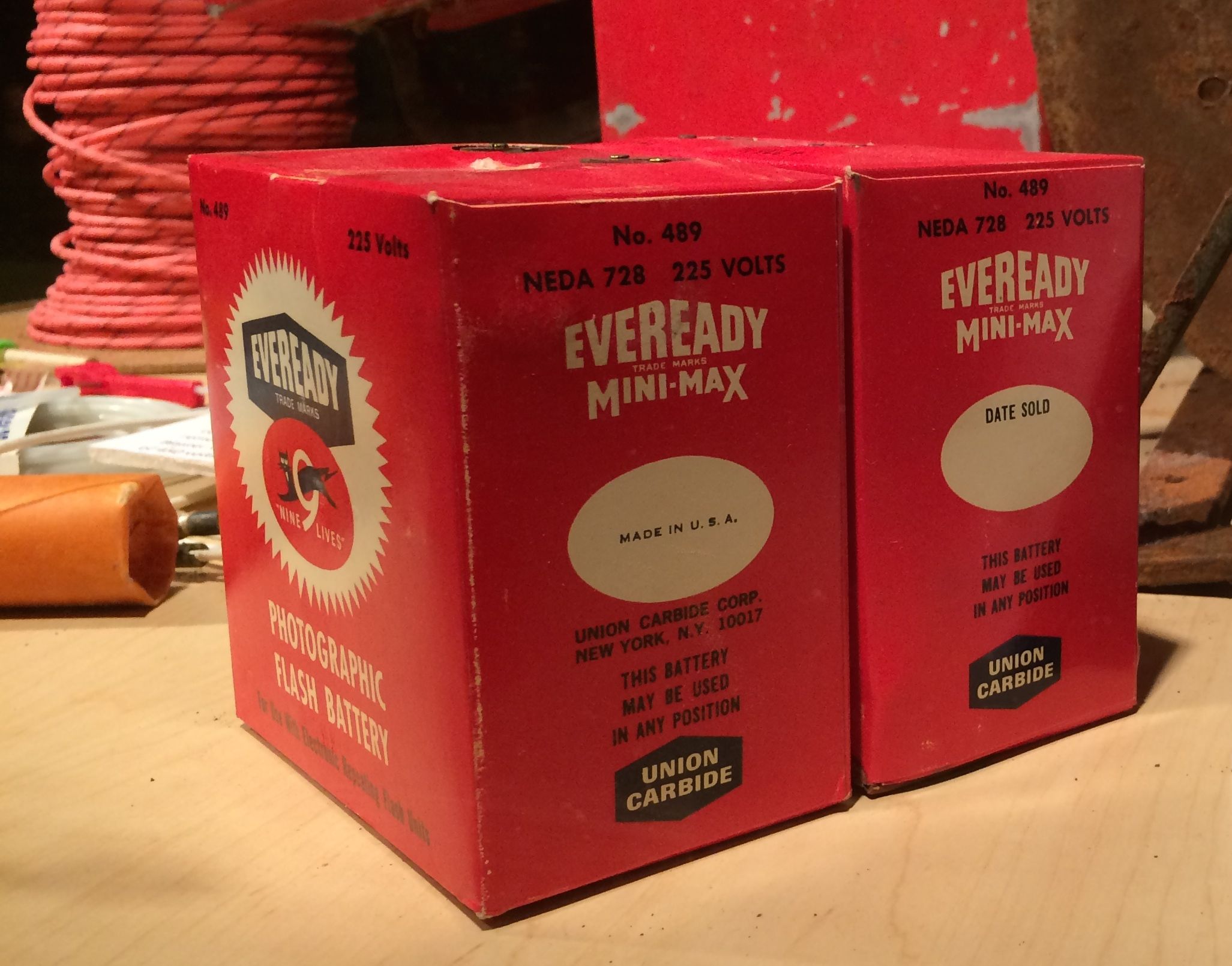
I had to snap a photo of the batteries used in the blasting. They were made by Union Carbide, where my father used to work. I owe a lot to Union Carbide. The paychecks my father earned through them kept us housed and fed.
Not all the equipment was from coal mining, though. For a while they had a rail system to get around. After they discontinued that, they started buying used cars and trucks to get around. They would take off windows and doors topside and discard them. Everything that can be removed is taken off so that the vehicles will be small enough to fit into the shaft, which is about four feet by five feet.
Once they get them underground, the mechanics weld the pieces back together and ad what ever is missing, like seats and roll bars. The vehicles run on diesel fuel, and if they have to modify the engines, they take care of that, too.
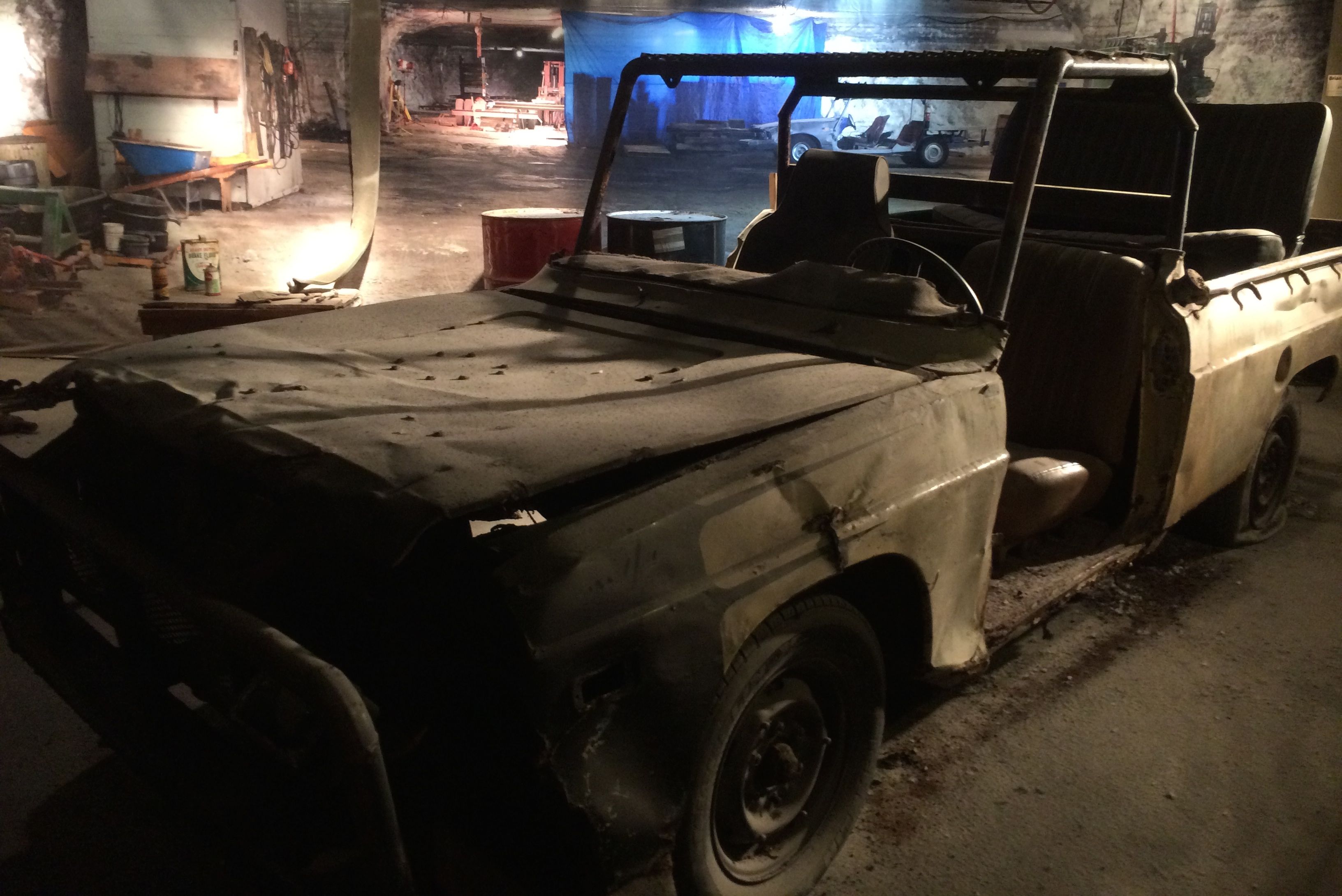
This truck was abandoned in the mine when it was no longer useful. The maintenance workers removed the engine to use for parts or to install in some other vehicles. The workers painted the fleet regularly to protect them from the salt. Each vehicle is used for about ten years before it is taken out of service. For the most part, they seem to be just left where they are last used.
Ah, but the salt culture wasn’t all blasting and digging. There were also the Miss Salt Queen Contests.
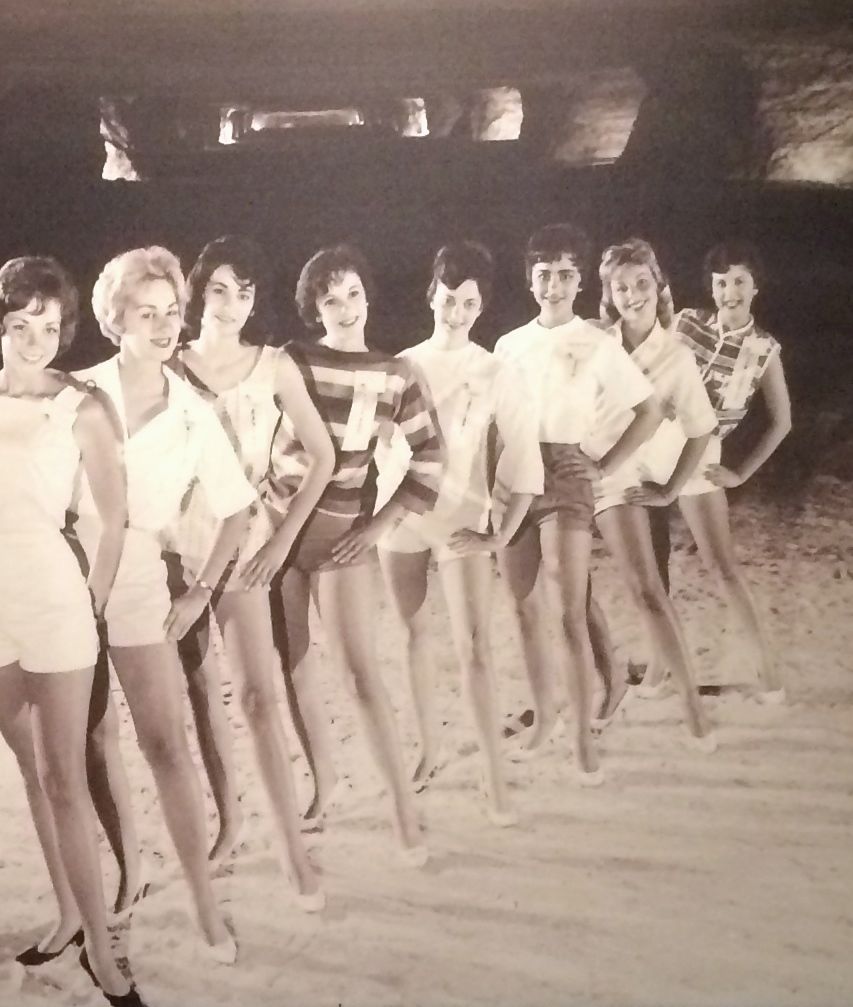
The beauty pageants were started in 1959 by UV&A (Underground Vaults and Storage) when they were preparing the mined out salt mines to use for storage of important items.
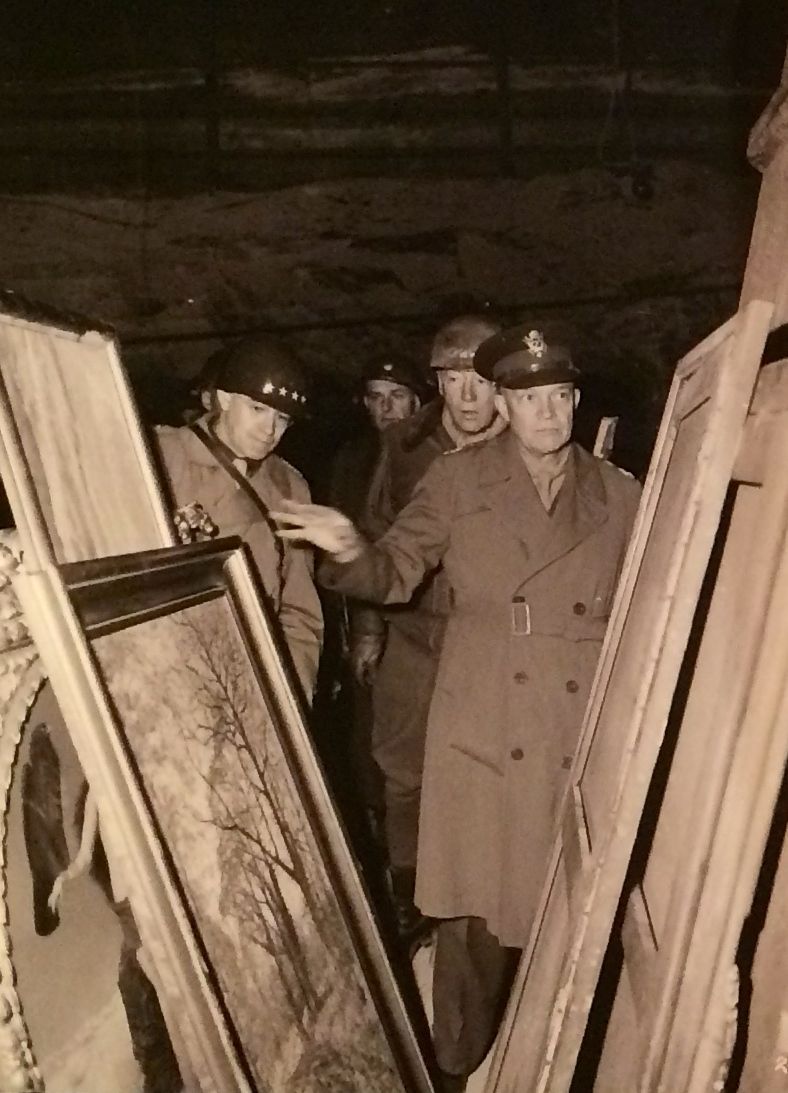
Storing important things in salt mines wasn’t a new idea. Nazis stored art they had plundered in salt mines. Here’s a shot of native Kansas son, General Eisenhower, examining the artwork they recovered at the end of the war.

In keeping with the Kansas theme, one of the displays said that the original print of the Wizard of Oz is stored here. I guess Dorothy is back in Kansas.
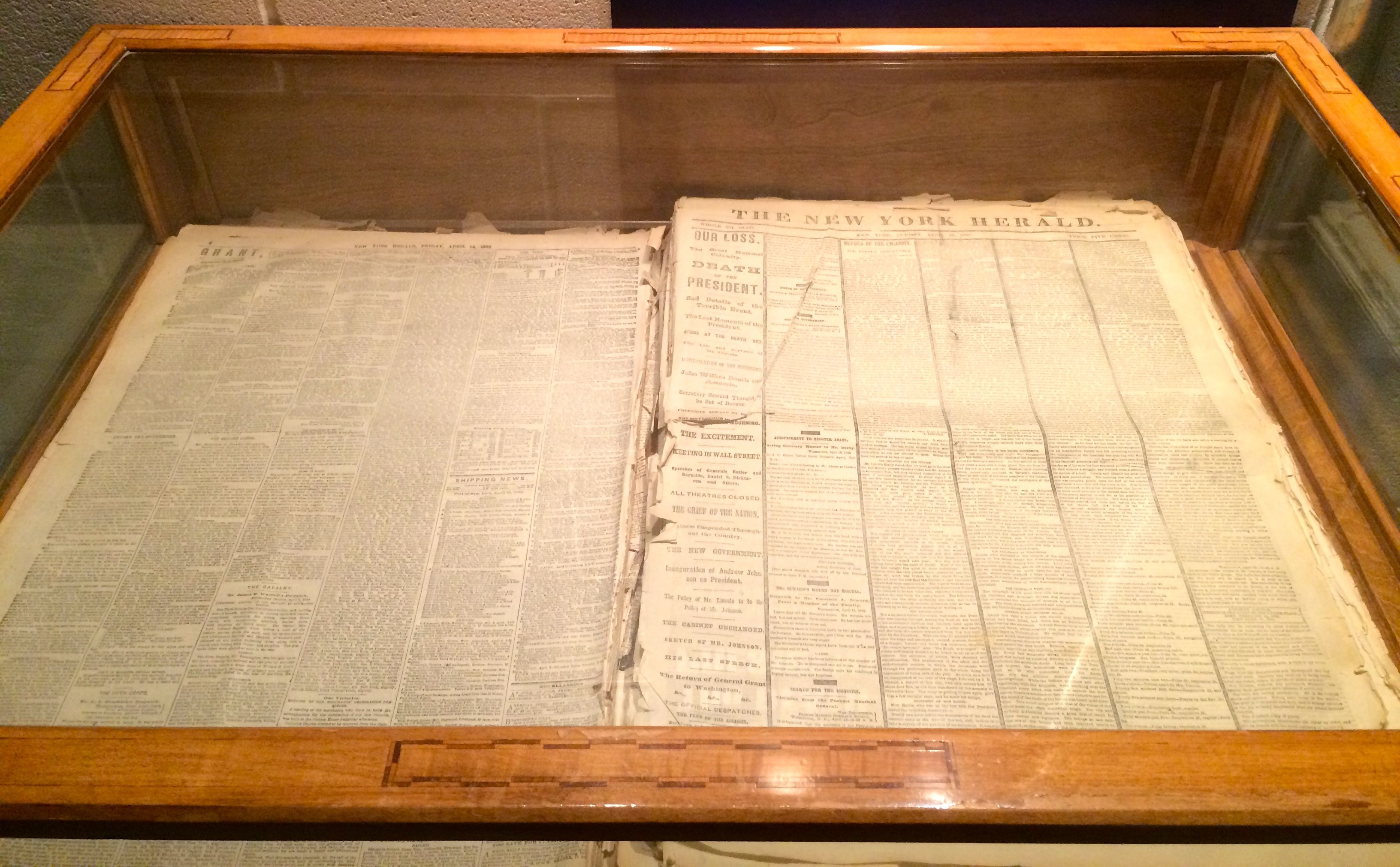
They had this newspaper on display that was published the day after the Lincoln assassination.
After passing through the display area that talked about the history of UV&A, the path went through a section of storage.
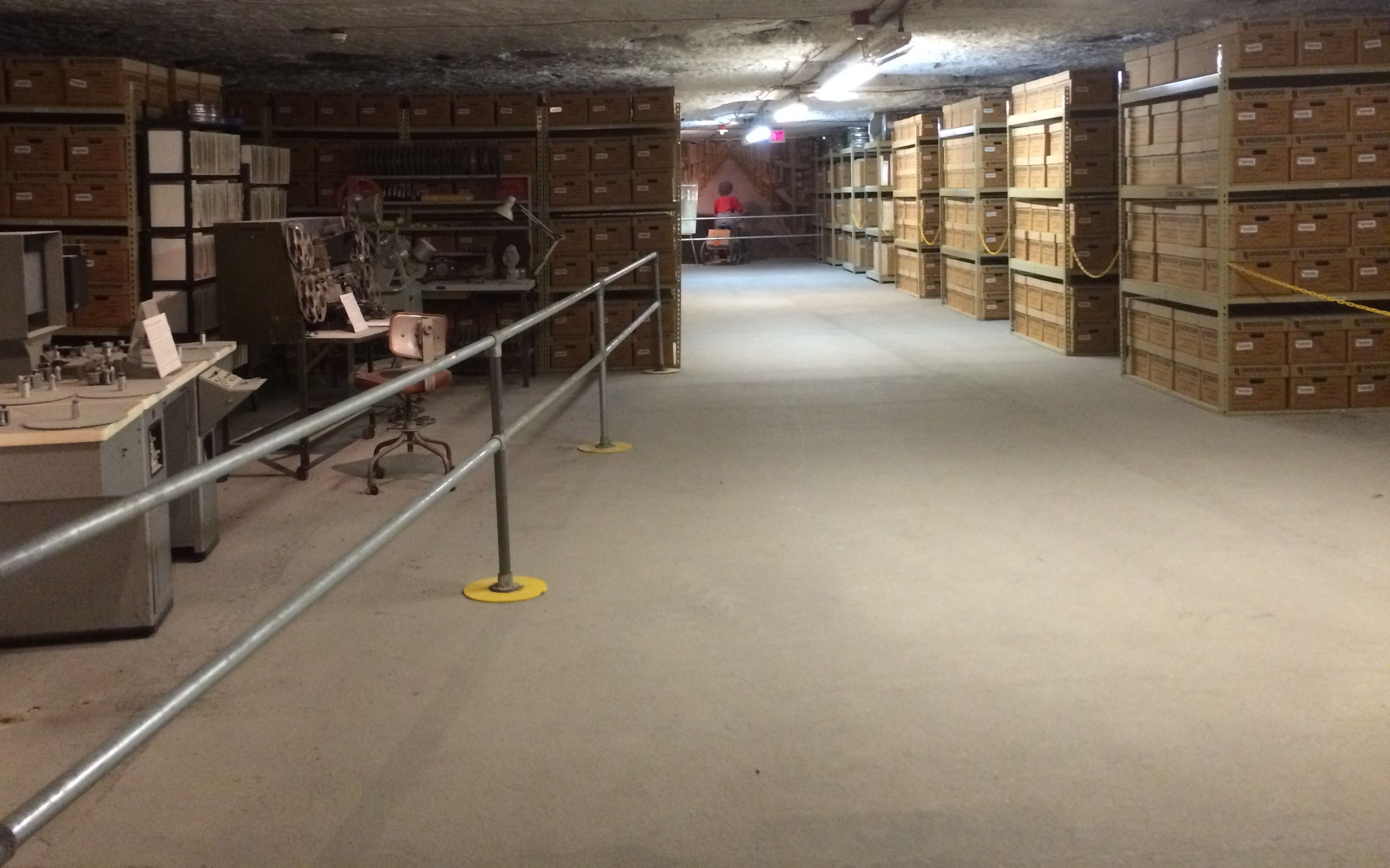
Actually, I don’t think this was necessarily real storage – or reel storage. I lifted the lid on one of the boxes, and it was empty.
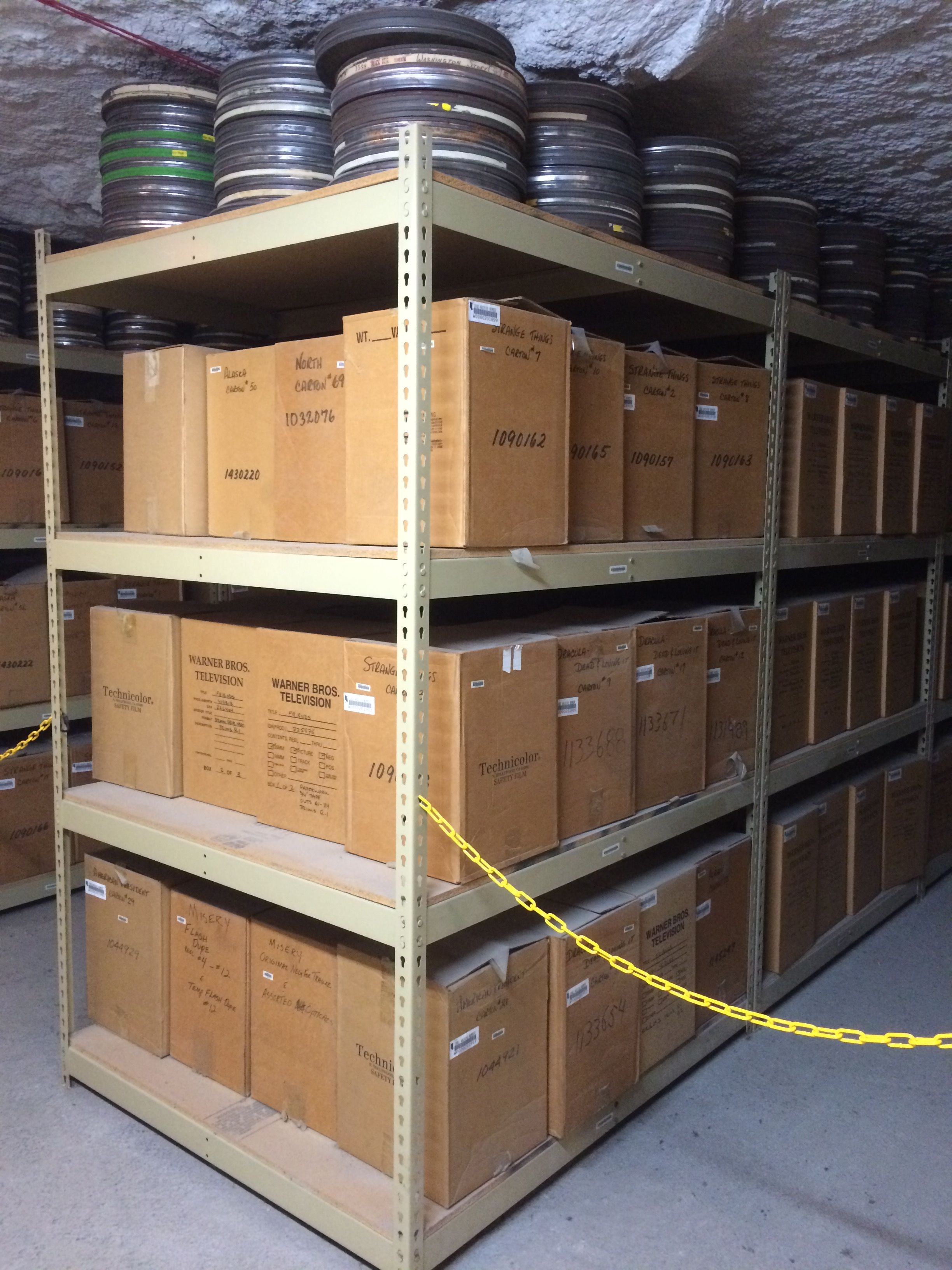
According to the labels, the Friends tapes are stored here. Maybe they are, maybe they aren’t.

These look a little more authentic, but who knows? If I were paying for storage, I don’t think I’d want it out where anyone who buys a ticket can walk up and see my stuff.
After the UV&A tour, it was time for the Dark Tour.
Actually, it wasn’t all that dark. The tram we were on had headlights. And lights would come one when needed.
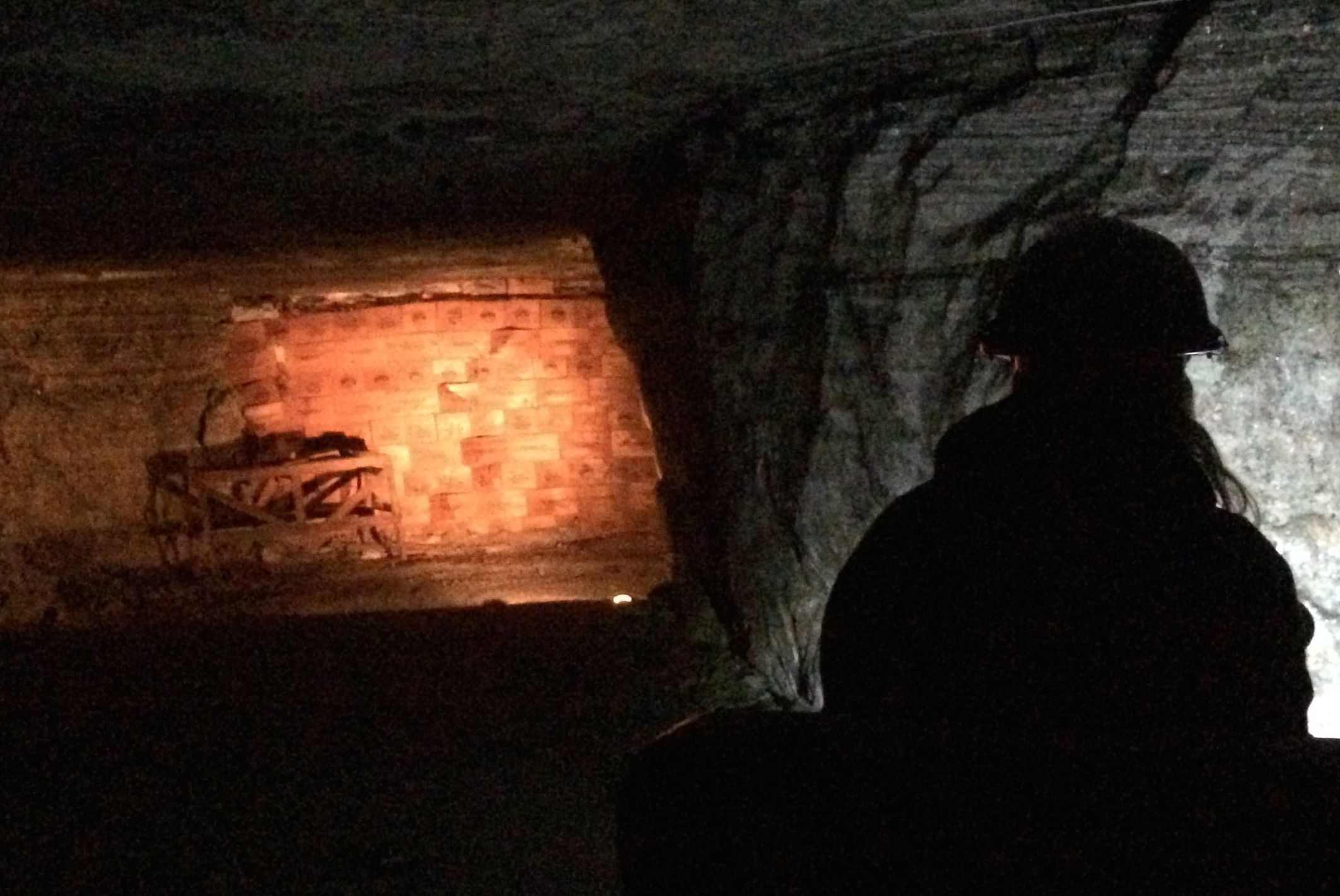
As they ceased mining tunnels, they would but up what the called “gob walls”. This conserved resources, as they didn’t need to ventilate that part any more. They would fill up boxes from the blasting supplies with mining debris and then stack them up in the opening. This is an old gob wall. These days they block off the unneeded areas with curtains.

Not all salt is white or clear. There are also deposits of red salt. They are big on puns down here. In October, they hold an event called the hunt for Red ROCK-tober. The guide told us that participants get to walk all over and collect all the red salt crystals they can find.
One of the stops on the tour was a spot where we got to select our own samples of salt to take home. We could take anything smaller than our palms from the piles. Since I am doing my best to not accumulate stuff, I only picked out a few.

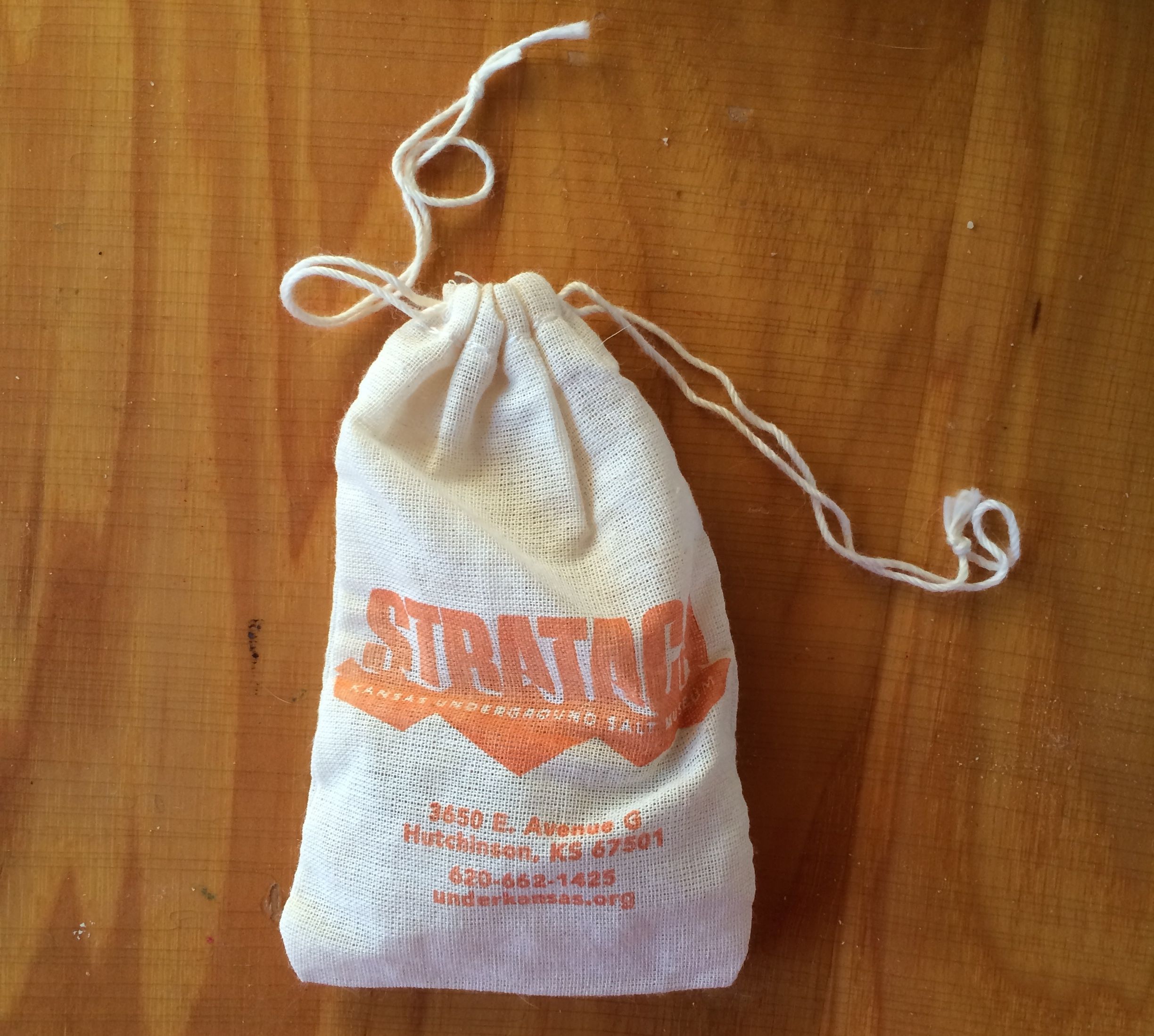
They even gave us cute little bags to hold our prizes, along with warnings not to put it in fish tanks or gardens once we got home.
With all the parts of Strataca toured and explored (well, at least as much as I had paid for) it was time to take the double decker elevator back to the surface.
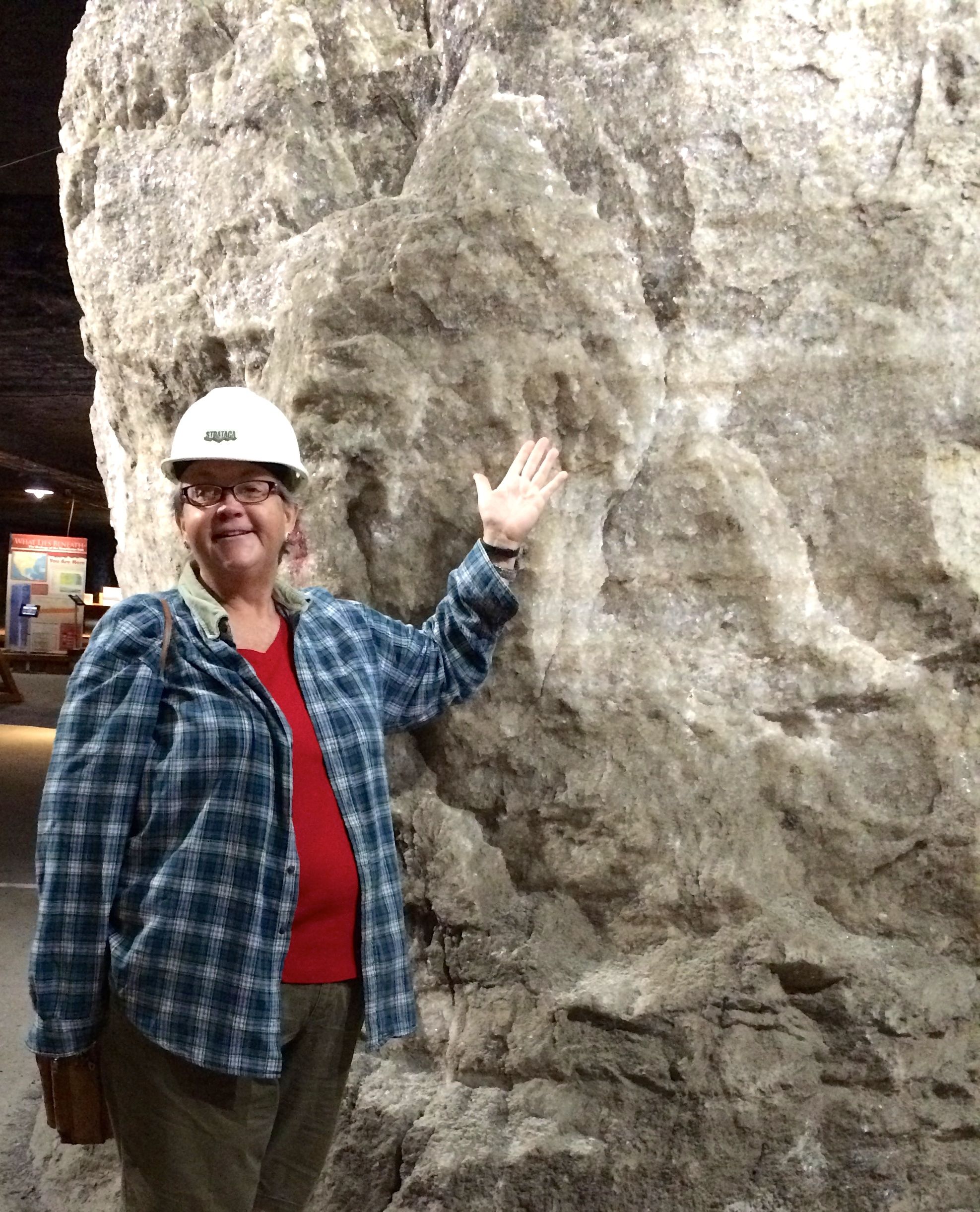
While I was waiting for the elevator to come back down with a fresh load of tourists, I had the guide snap a picture of me with the salt.
Once back on the surface, I noticed what looked like an engine.

This is Old Number 2. It was built in 1919 by General Electric. Carey Salt Company acquired it in 1928. There was a granite marker that outlined its chain of ownership in great detail. I didn’t find it particularly interesting or informative, so I will spare you a recitation. Given the size, I assume that it was used above ground to aid in getting the salt on the way to market.
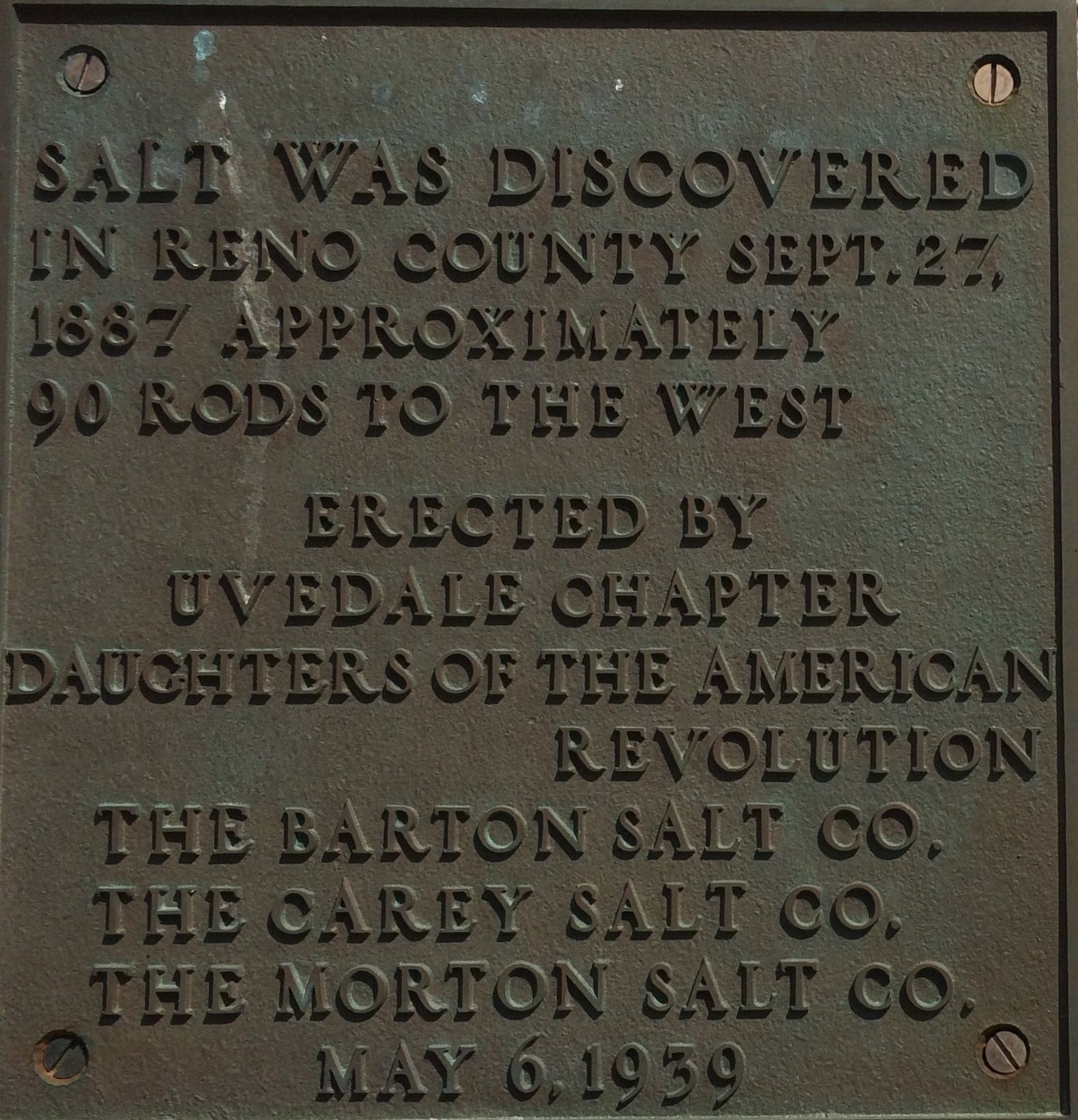
There was also a plaque commemorating the discovery of salt in Reno County. Oddly enough, this plaque isn’t at the actual site. It was put into storage during a road widening project. I tried to locate the site of the actual salt discovery, but my navigational skills weren’t up to the task. I didn’t bring my surveying tools with me, so I wouldn’t have been able to locate a site 90 yards from where the sign had originally been installed.
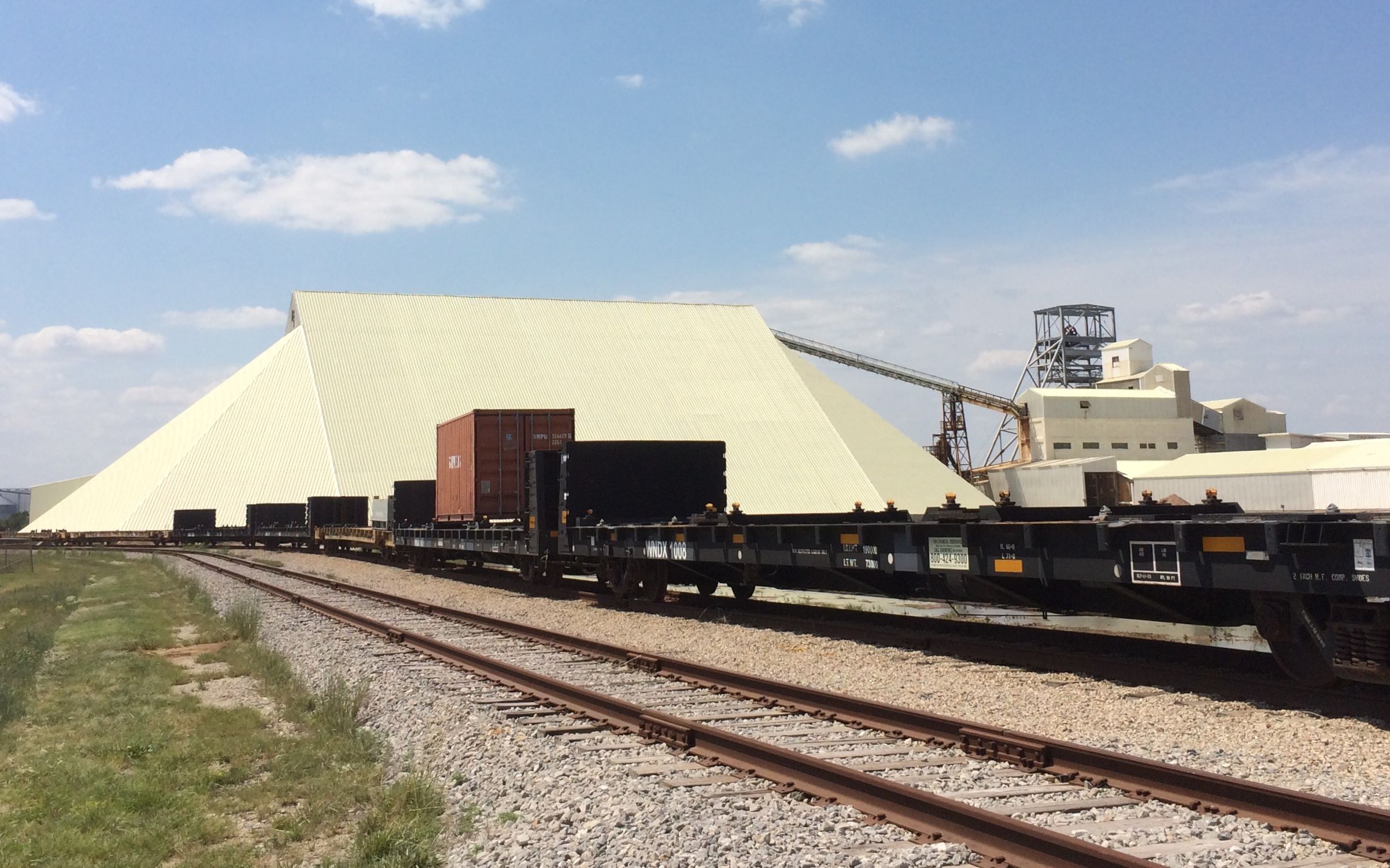
When I was in the mine, one of the guides mentioned that they had built a new shed for the road salt that followed the angle of repose. Just in case you are wondering, the angle of repose is the maximum angle at which loose material will come to rest when added to a pile of similar material. (And in case you are also wondering, I looked it up.)
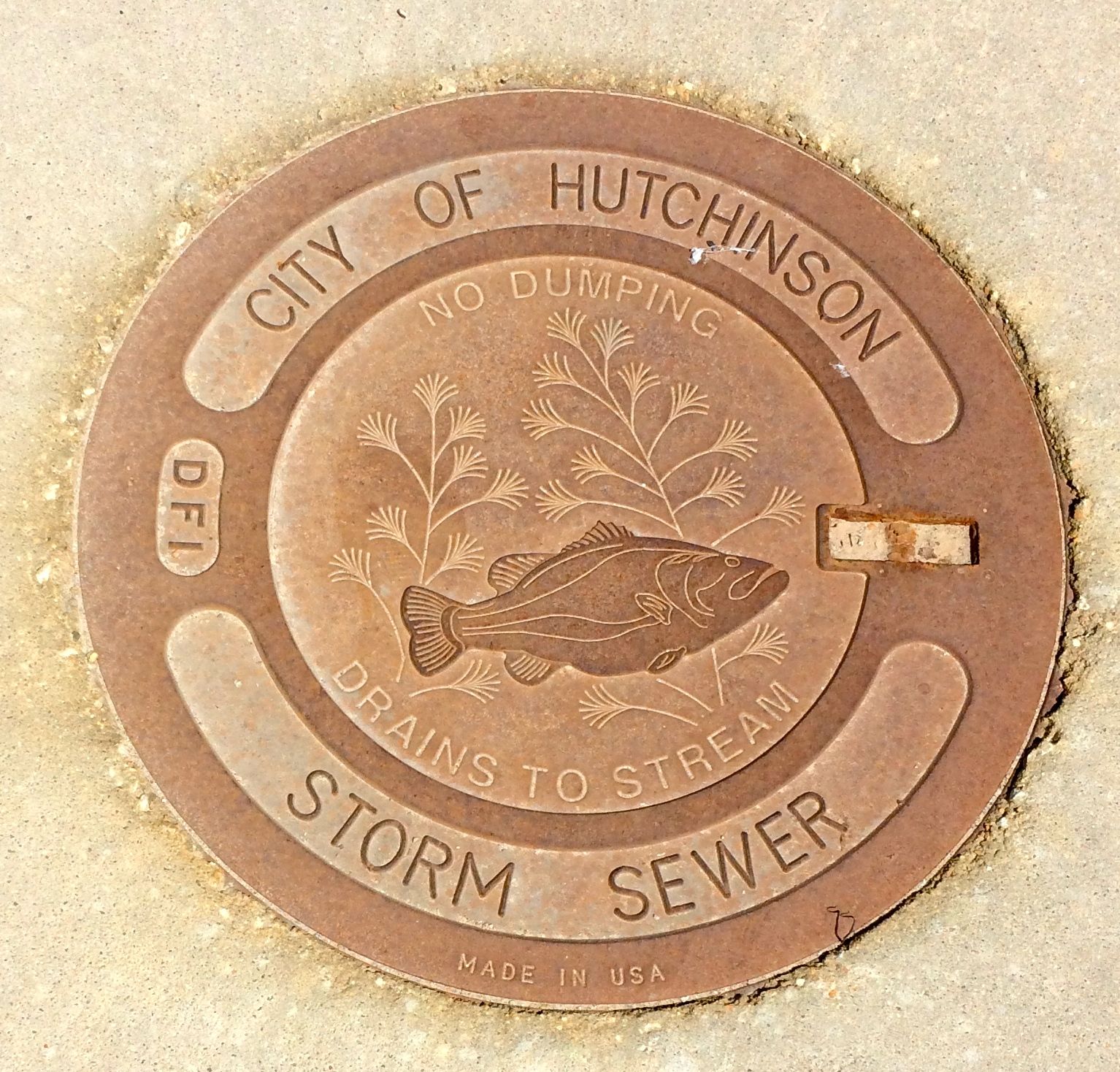
I didn’t come across any survey markers while touring Hutchinson, I did come across this interesting sewer cover. And, it was made in America.
Next stop: Neosho, Missouri!