Many people recommended the Shelburne Museum as a worthwhile visit when I was near Burlington. I wasn’t quite sure why people thought it was so great, but since I had received so many votes for it, I thought it was a safe bet that it was something special.
So, what it the Shelburne Museum? It is a collection of collections. They have over 150,000 items that are exhibited in 38 buildings spread across a 45 acre campus. 25 of the buildings are historic structures that have been moved there from different places in the area.
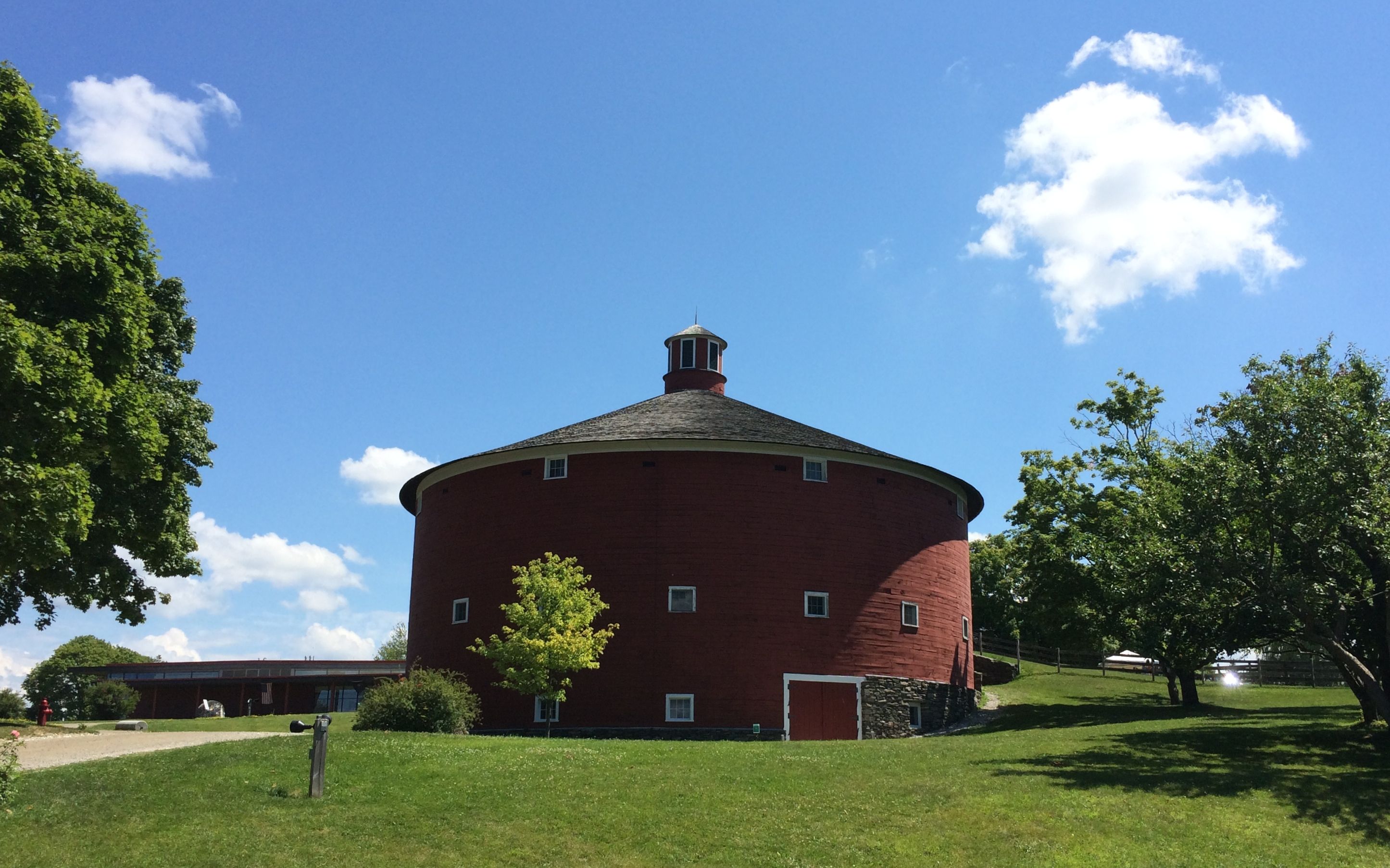
For instance, here is the Round Barn, which was built in 1901 in East Passumpsic, Vermont. The three-story round design was built to improve agricultural efficiency. Hay and feed dropped through chutes from the top floor to the middle floor where as many as sixty cows could be stanchioned for feeding and milking. Manure was then shoveled through trap doors to the lower level and hauled away by horse-drawn wagons.
It’s kind of like an assembly line for cow care.
At the museum, it is used to display horse-drawn vehicles and contemporary automobiles.

I particularly liked this sled-like item that is called a traverse. It looks kind of like a horse-drawn toboggan.
The more I walked around the grounds, I started picking up clues about the founder. (I also did some research after my visit.) After all, who in the world would spend so much of her time and money collecting all this stuff?
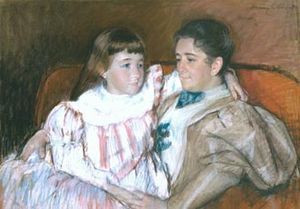
Electra Havemeyer Webb was the daughter of Henry Osborne Havemeyer. Wikipedia describes him as an industrialist, entrepreneur and sugar refiner who became president of the American Sugar Refining Company. Her mother, Louisine Waldron Elder Havemeyer, traveled extensively in Europe with her mother after the death of her father. While she and her mother were touring, they were collecting and getting to know all the artists. They got really chummy with some of them. Mary Cassatt made this pastel portrait of Louisine and her daughter, Electra, in 1895.
So, Electra came from money and then married into money. Her husband, James Watson Webb II, was a polo champion from the Vanderbilt family. I guess when you come from money like that, collecting is what you do.
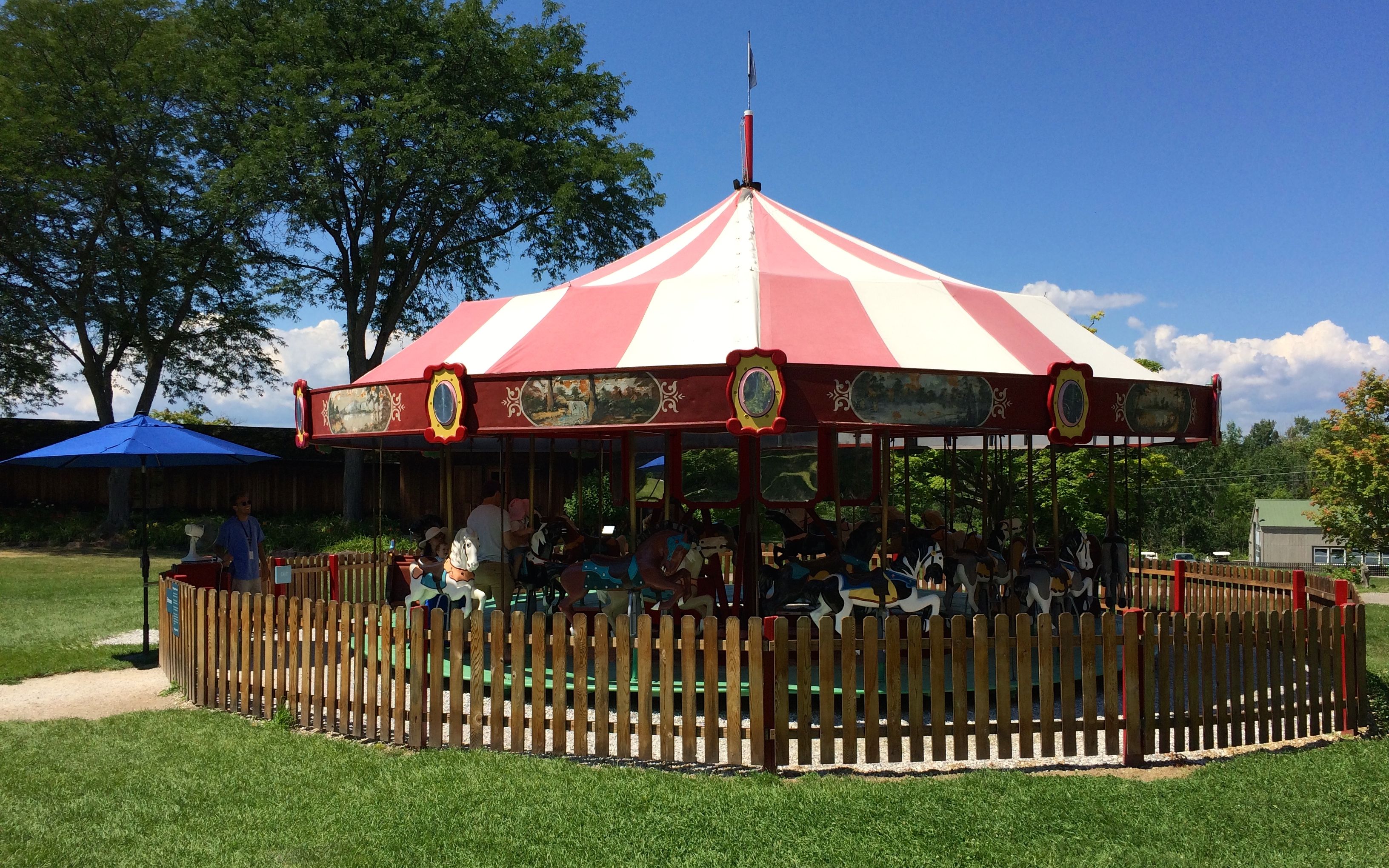
I wandered along and came to a carrousel. It was popular with the younger set. I have to say, though, after growing up with some wonderful carrousels, I was not wowed. I wondered why she didn’t buy something more eye-popping.
The answer is that she did buy an amazing carrousel, but the animals and parts were on display inside a horseshoe shaped building.
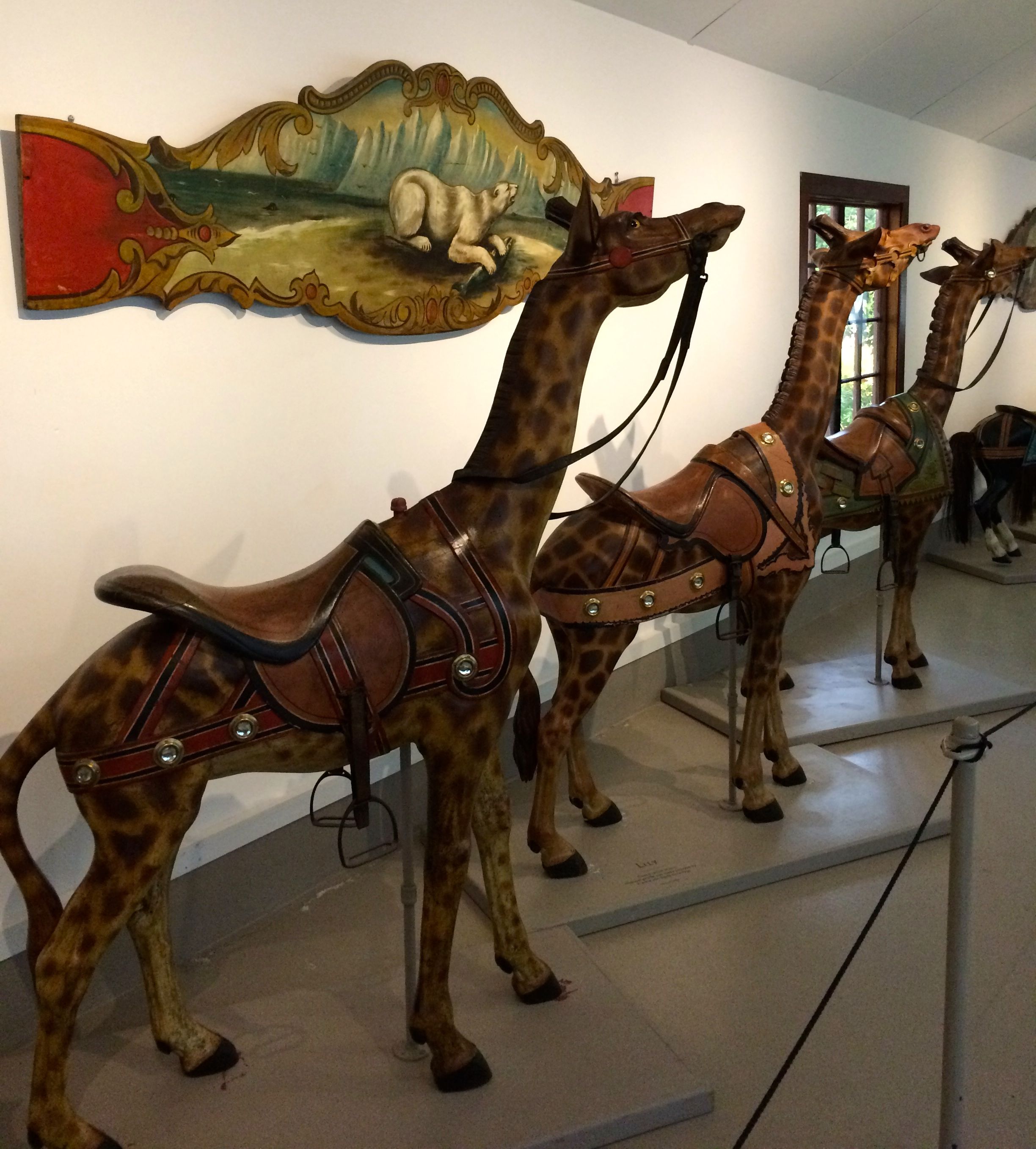
The carrousel animals were lined up on one side of the hallway. On the other side was a model of a circus parade, made by Roy Arnold from 1925-1955. It was carved on a scale of one-inch to one-foot. The parade measures 525 feet long, which would be equivalent to a two-mile parade.
I selected some of my favorite groupings to share with you.

The Mounties, in honor of our neighbours to the north.
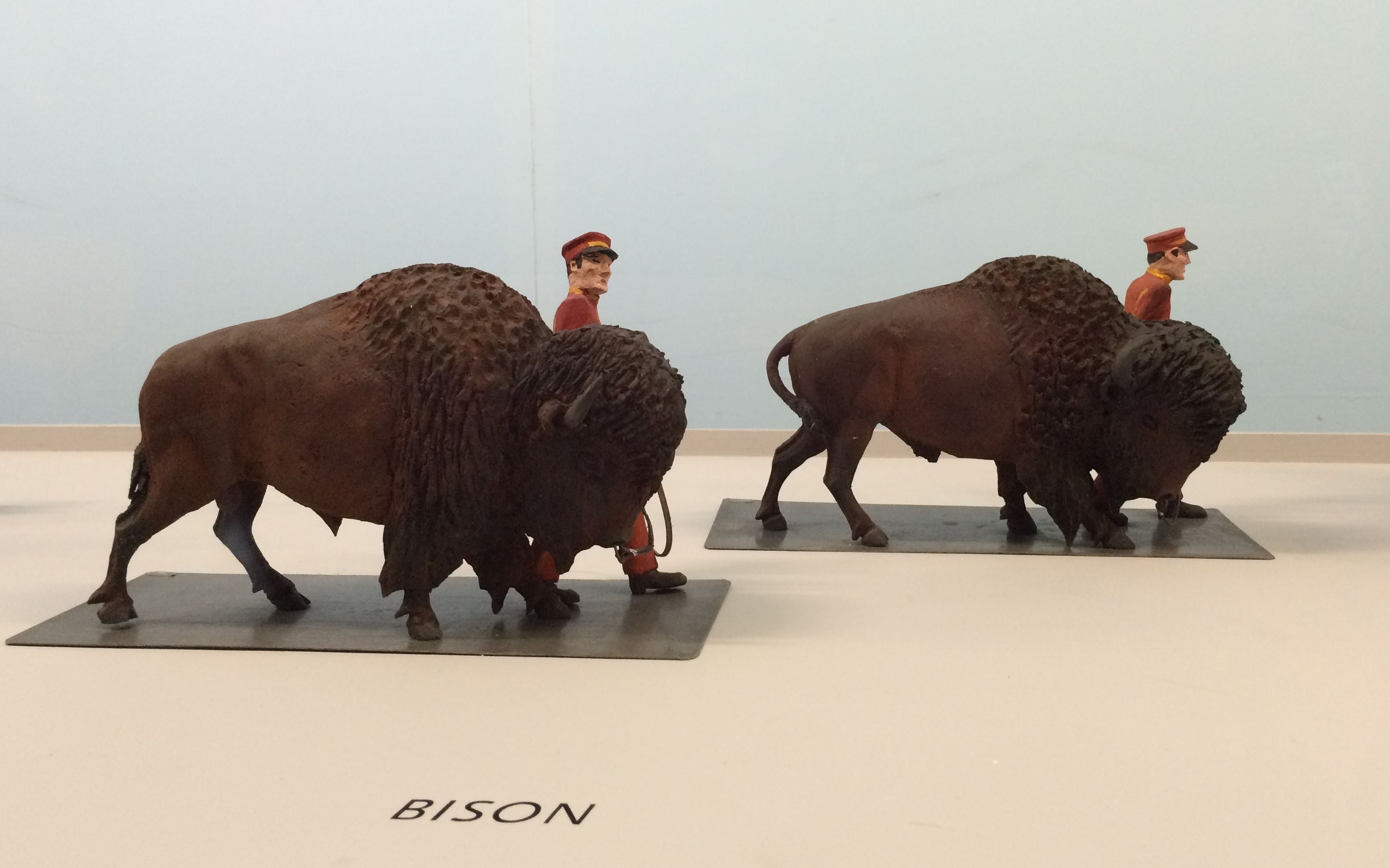
Yeah, they are labeled “bison”, but we all know they are buffalo. I snapped this photo in honor of my hometown.
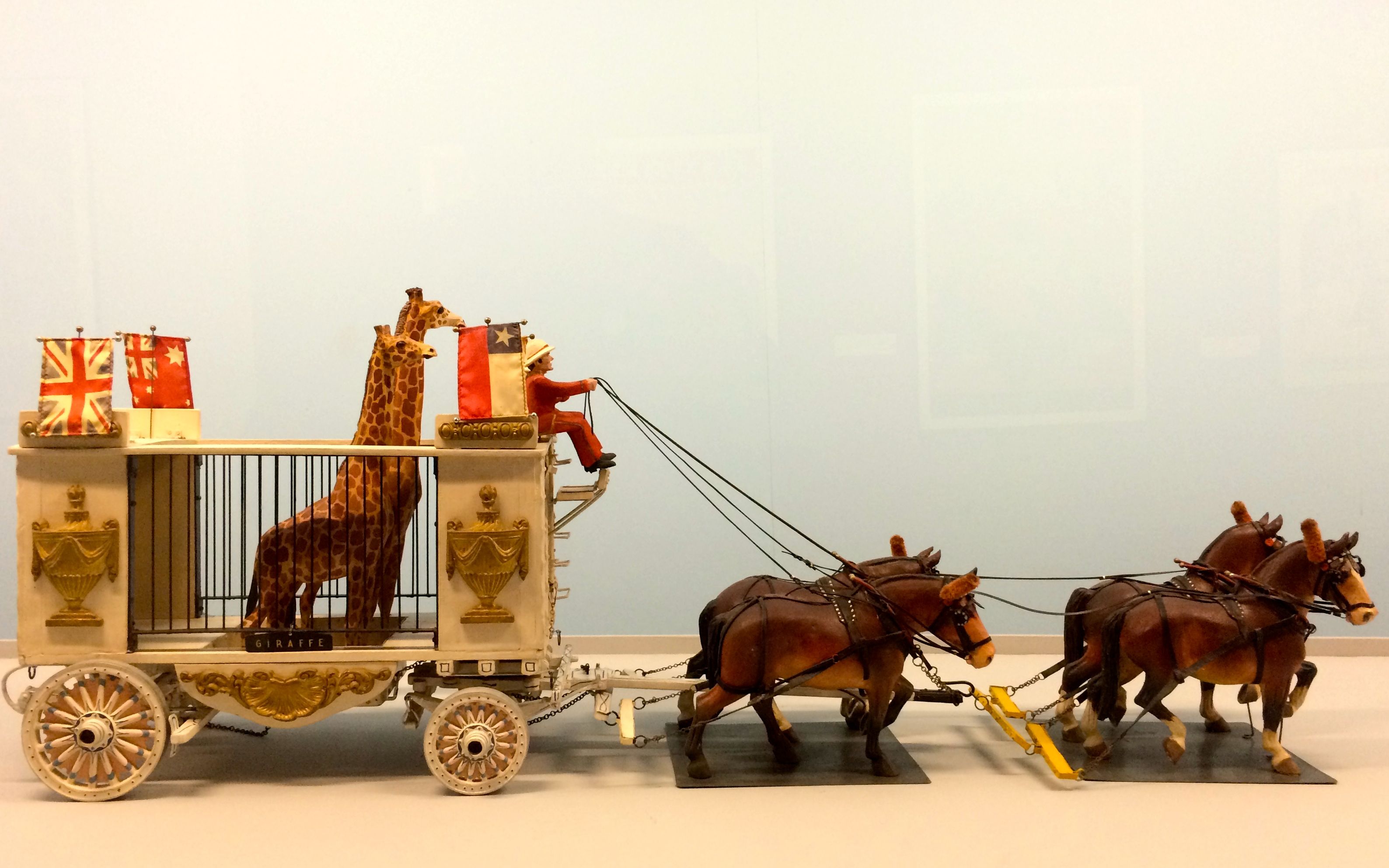
I rather liked the wagon with the giraffes’ heads sticking out.
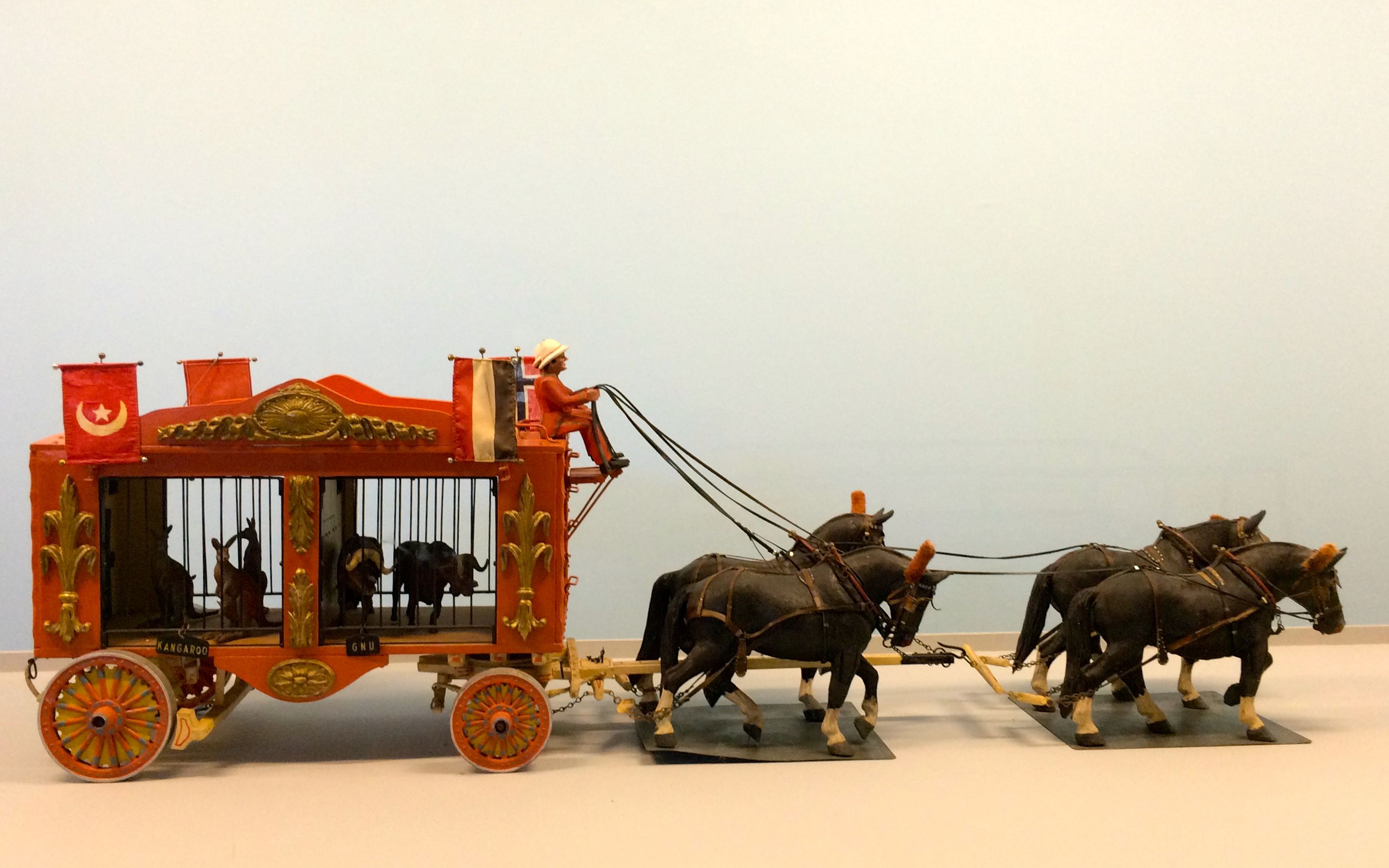
And this one reminded me of …
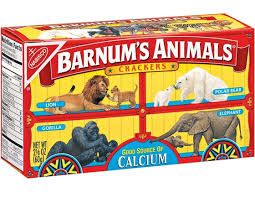
animal crackers!
In addition to the 525 foot long circus parade that took 30 years to create, there was also a 3,500 piece circus that took 46 years to make.
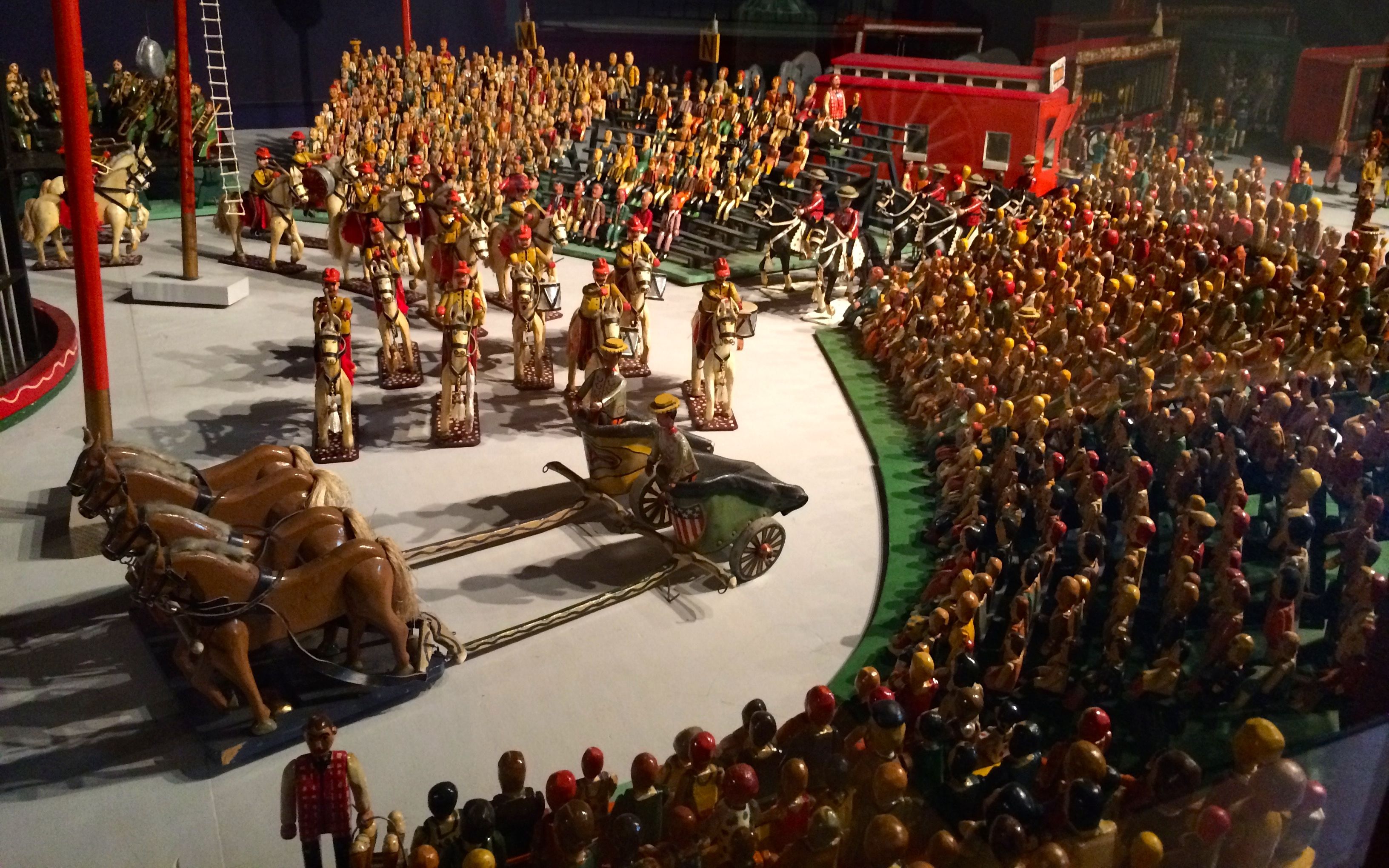
Edgar Decker Kirk started making this circus set as a gift for his four children.
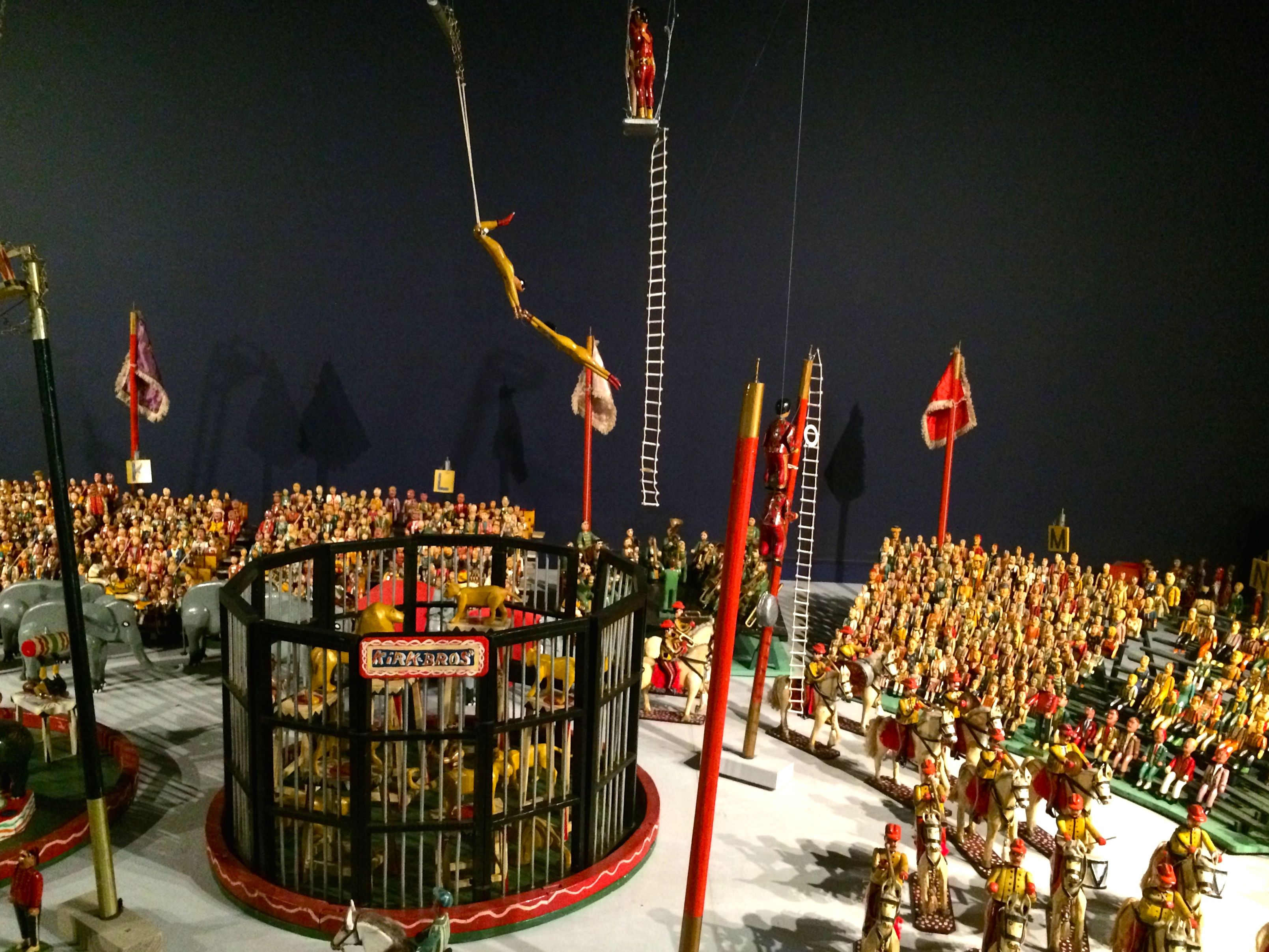
He was a brakeman for the Pennsylvania Railroad, and he worked on his carvings during his breaks using his penknife and a foot-powered jigsaw.
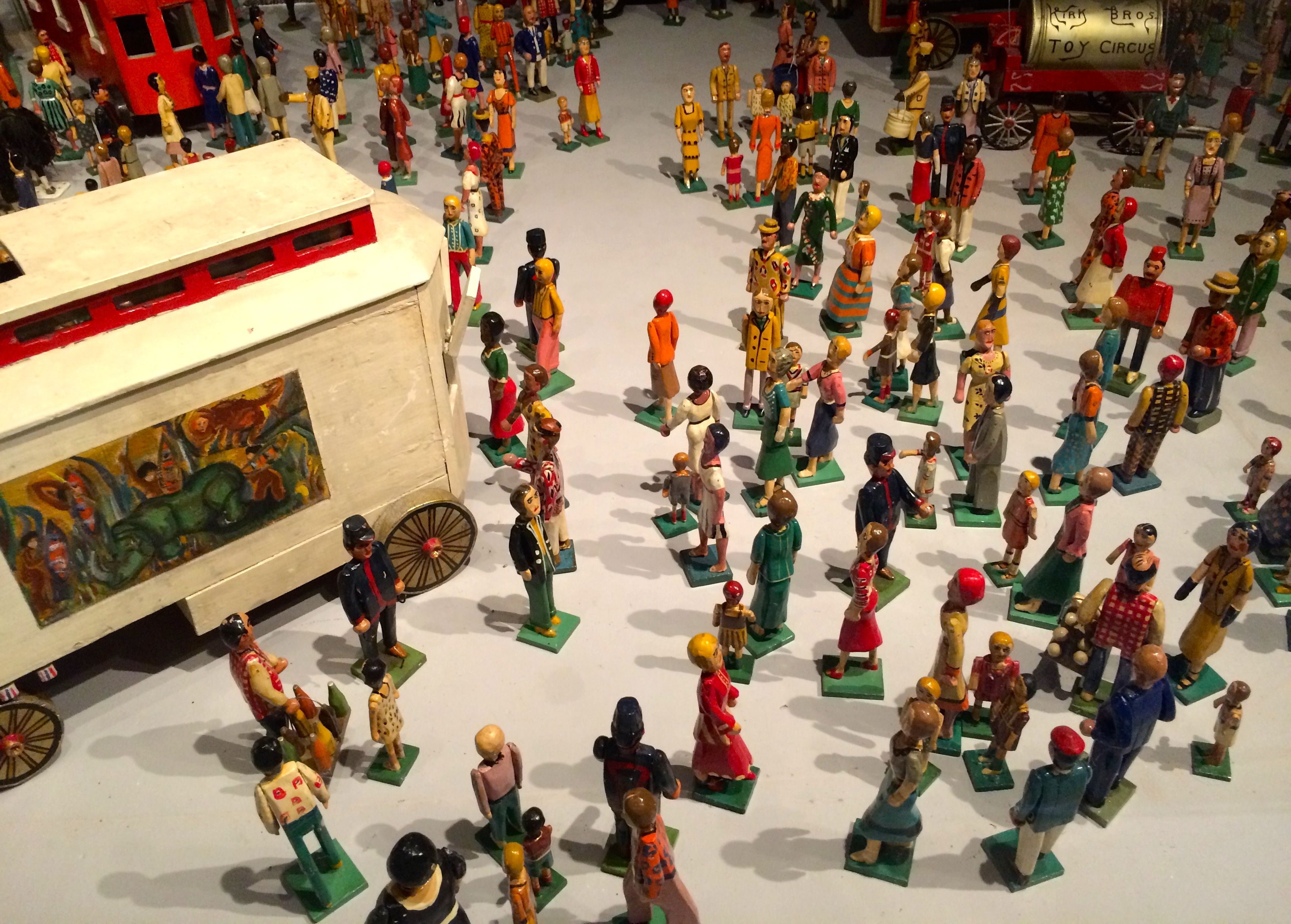
After his children outgrew playing with toys, he would occasionally set the entire three-ring circus in his backyard for the enjoyment of the neighborhood children.
I left the circus building and headed out to see what else I could discover. I found two cabins that Electra Web had built to honor her hunting friends.
Inside one of the cabins was a collection of firearms that were made in Vermont.
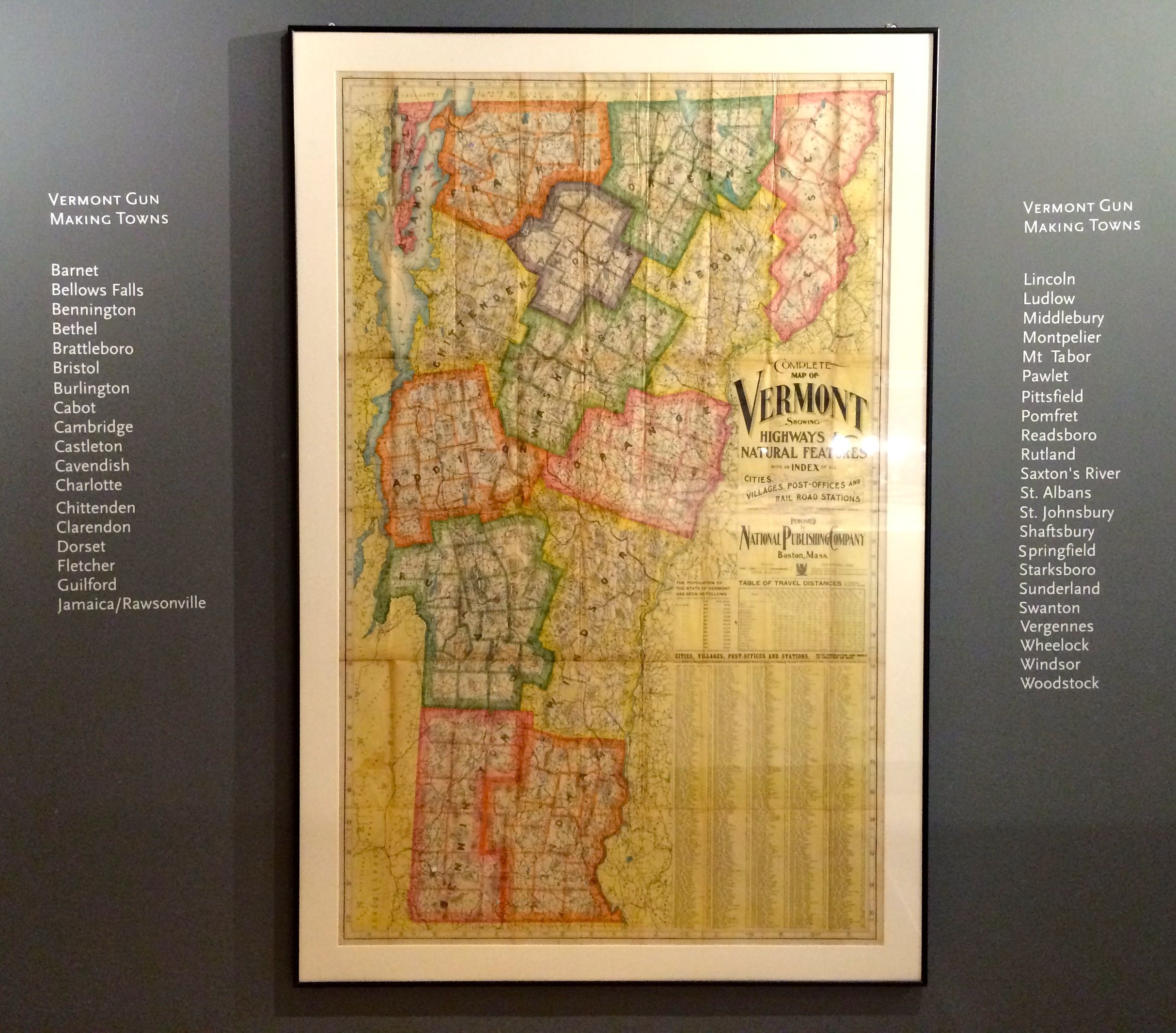
There were quite a few places where guns were made back in the day. The docent told me that these were not necessarily large factories – many times they were just one-man shops. I asked her if she had any favorites among the collection. She pointed out this group.
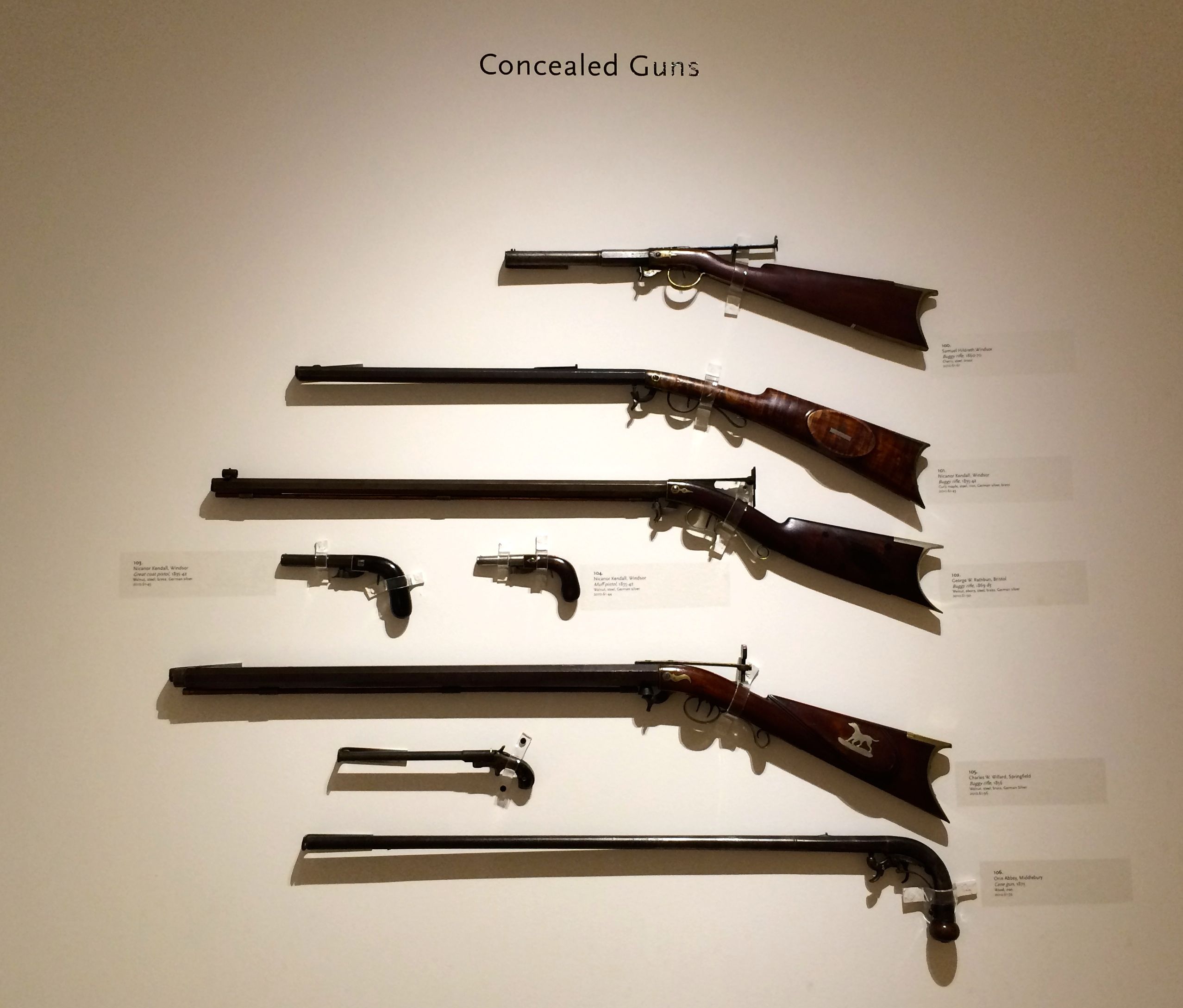
She liked these because they were guns designed to be hidden. I’m not sure how the larger ones were able to be concealed, but I guess anything is possible.
Speaking of rich people, here is a gun for the filthy rich.
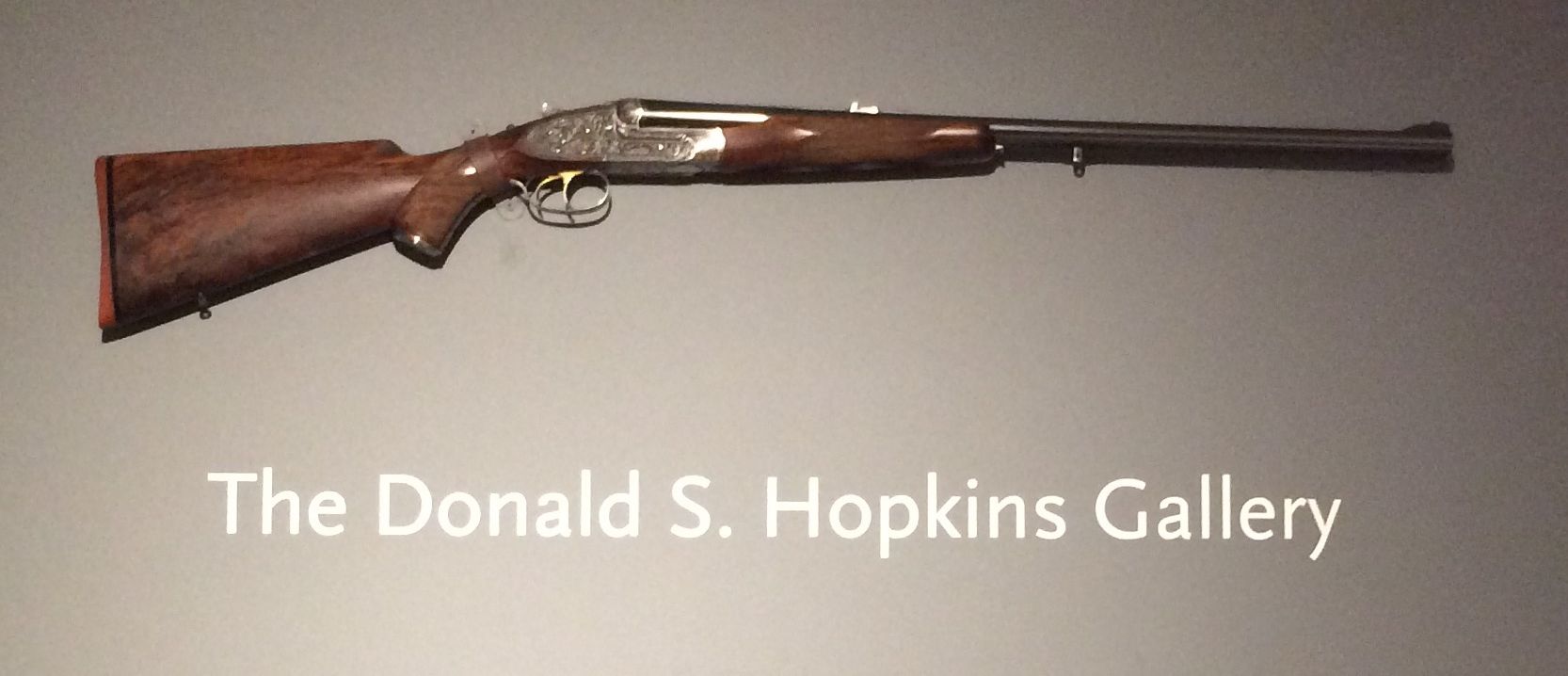
This is a double-barreled .470 caliber rifle that was made for Donald, S. Hopkins in the 1950s. He was a sportsman and friend of the Webb family, and this rifle is known as the Nitro Express. According to the information in the museum, the high caliber of the rifle gives it tremendous firepower that is enough to bring down animals such as elephants, buffalo and rhinoceros. The animals in question have nothing to fear from this gun, however. It has never been fired.
Talk about rich! You buy a high-powered rifle with gold and silver work on it and then you don’t use it.
The next cabin over was dedicated to the animals that were not able to escape the sportsmen.
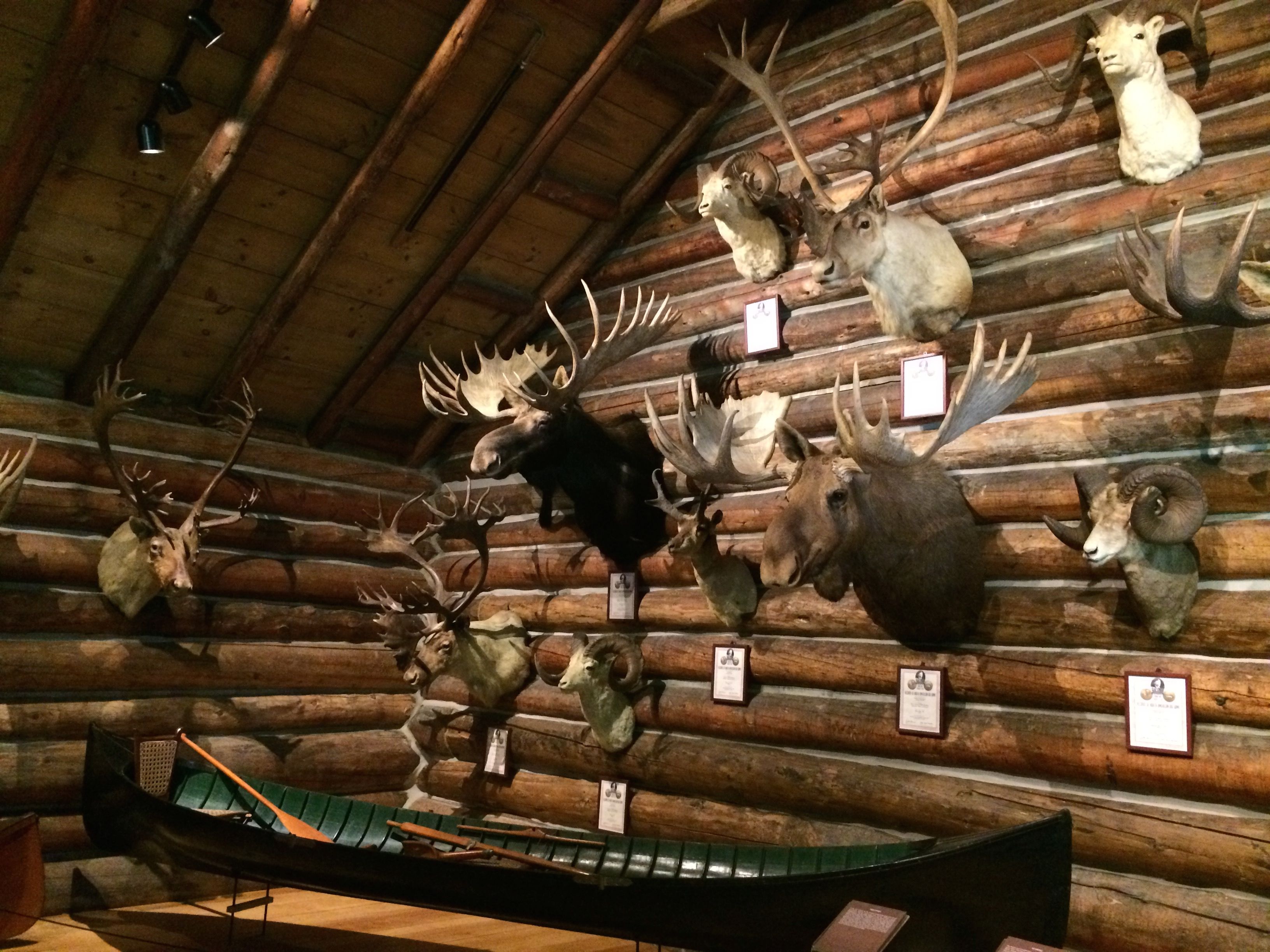
A little further along, is the homage to rail transportation.
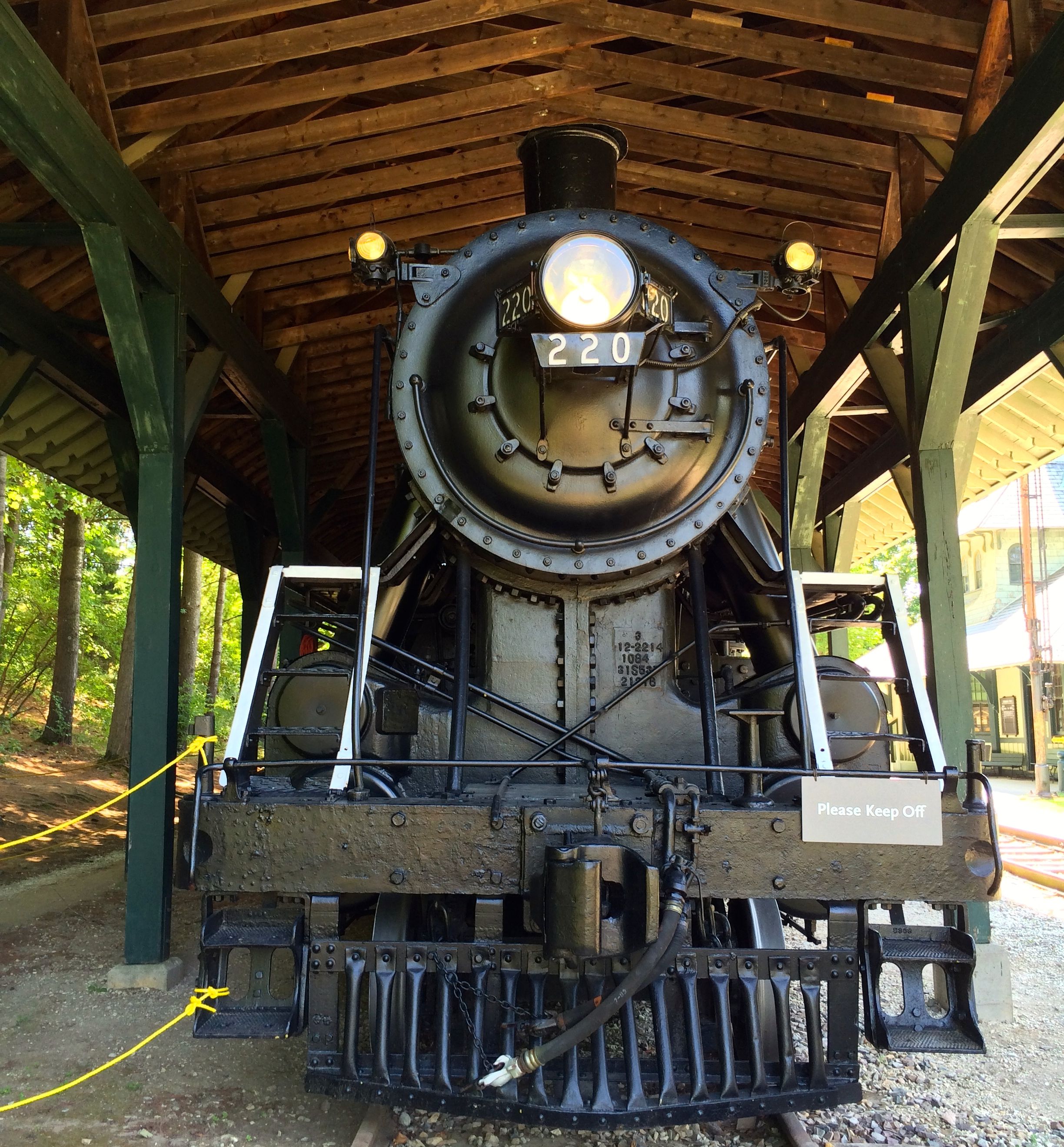
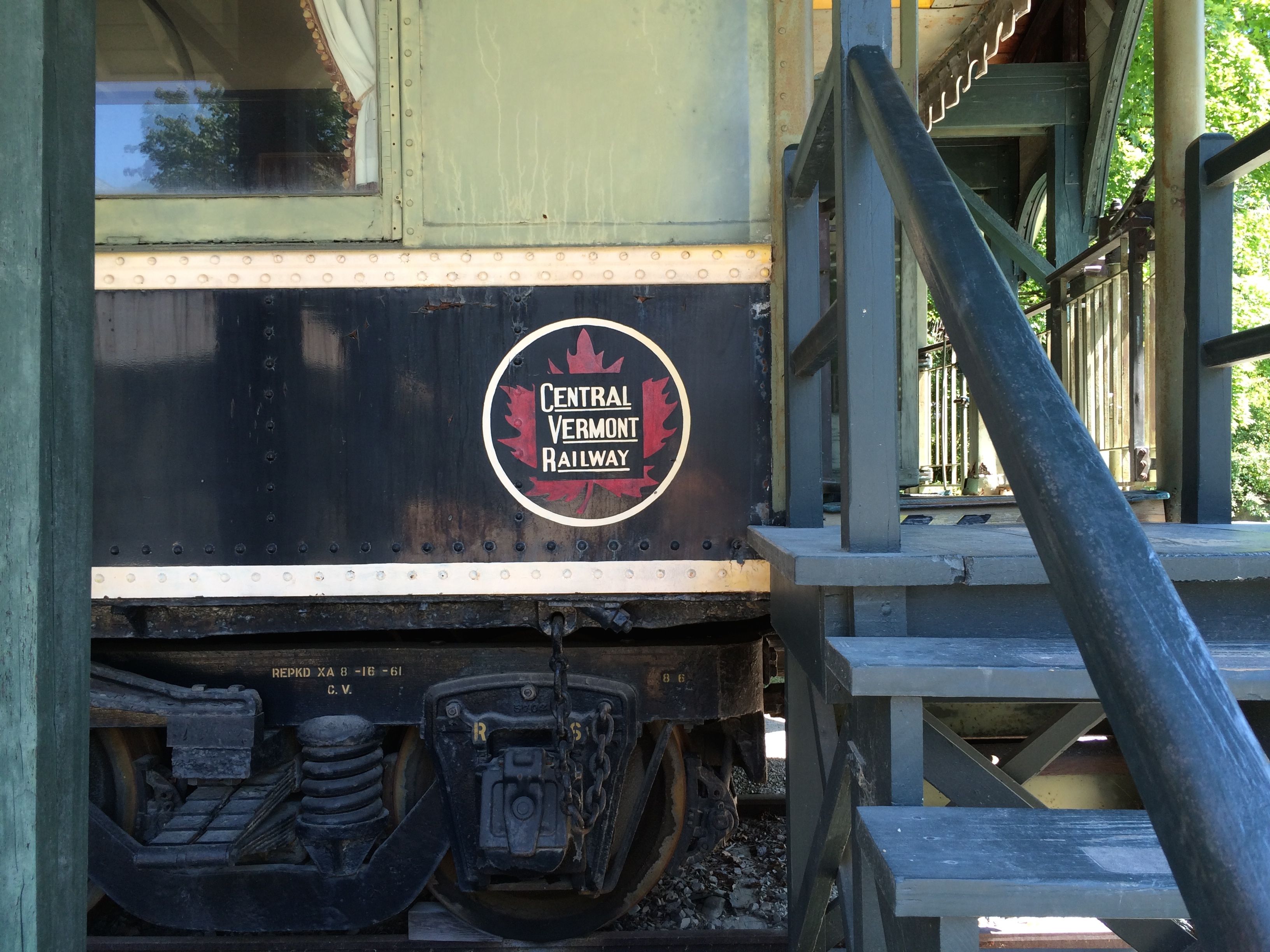
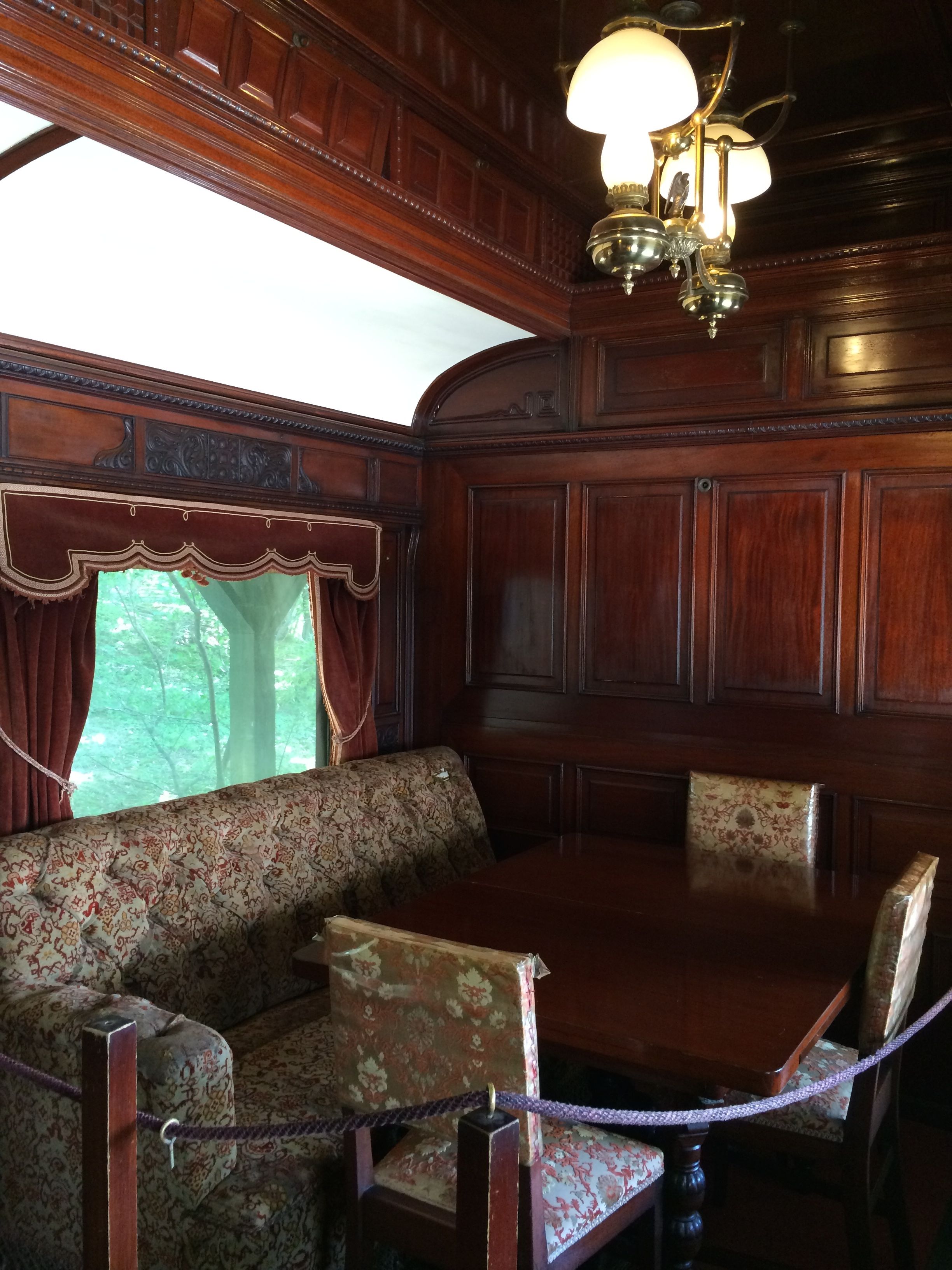
There is a locomotive and a railcar that was similar to the one that Electra Webb’s family used to shuttle back and forth from Shelburne to New York City to attend to business.
There is a wood-paneled room with a table and seating at the end of the car.
Down the hallway, you find the compartments.
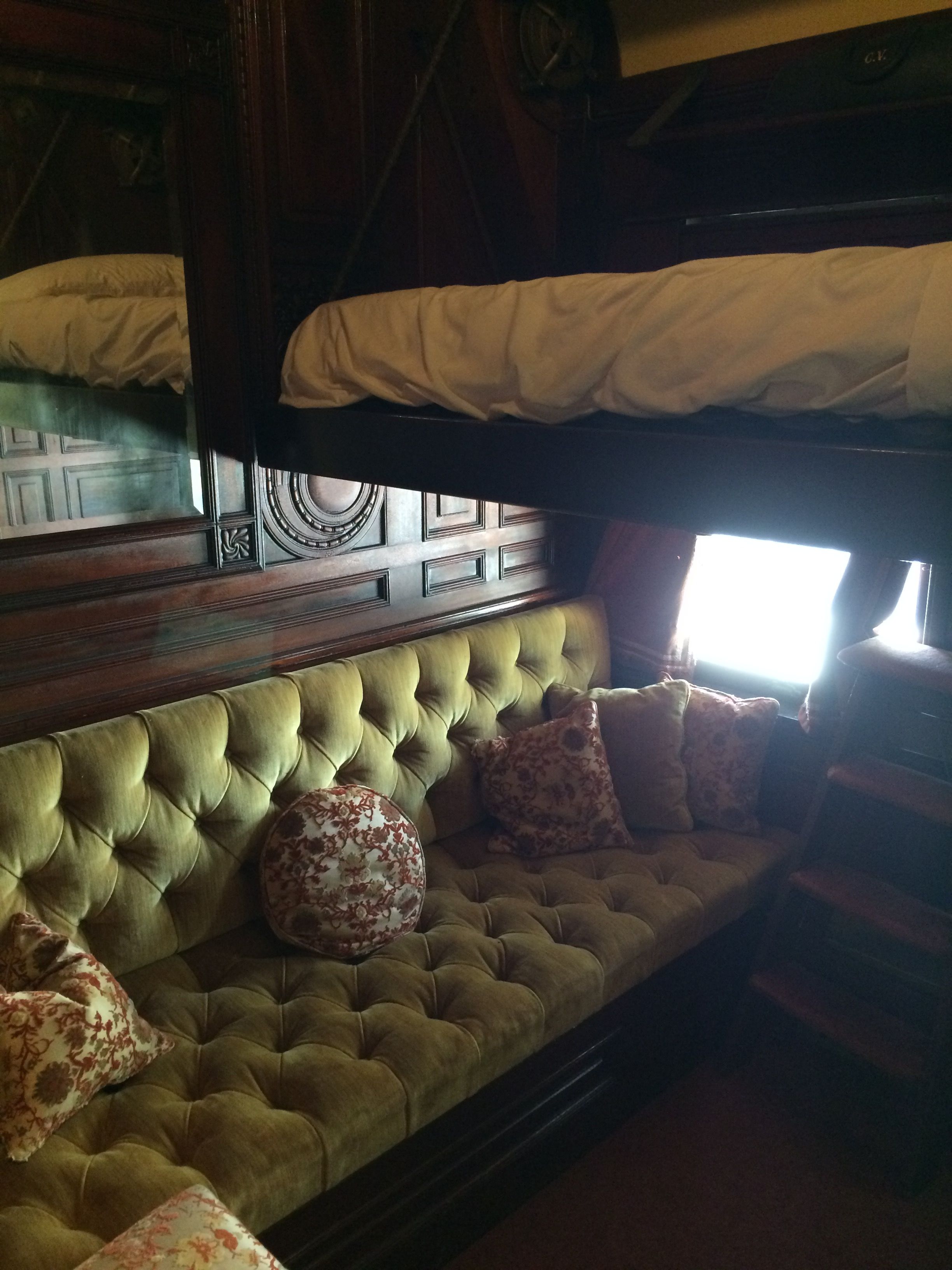
There are couches as well a bunks that fold down. You can see the steps to ascend to the upper berth.
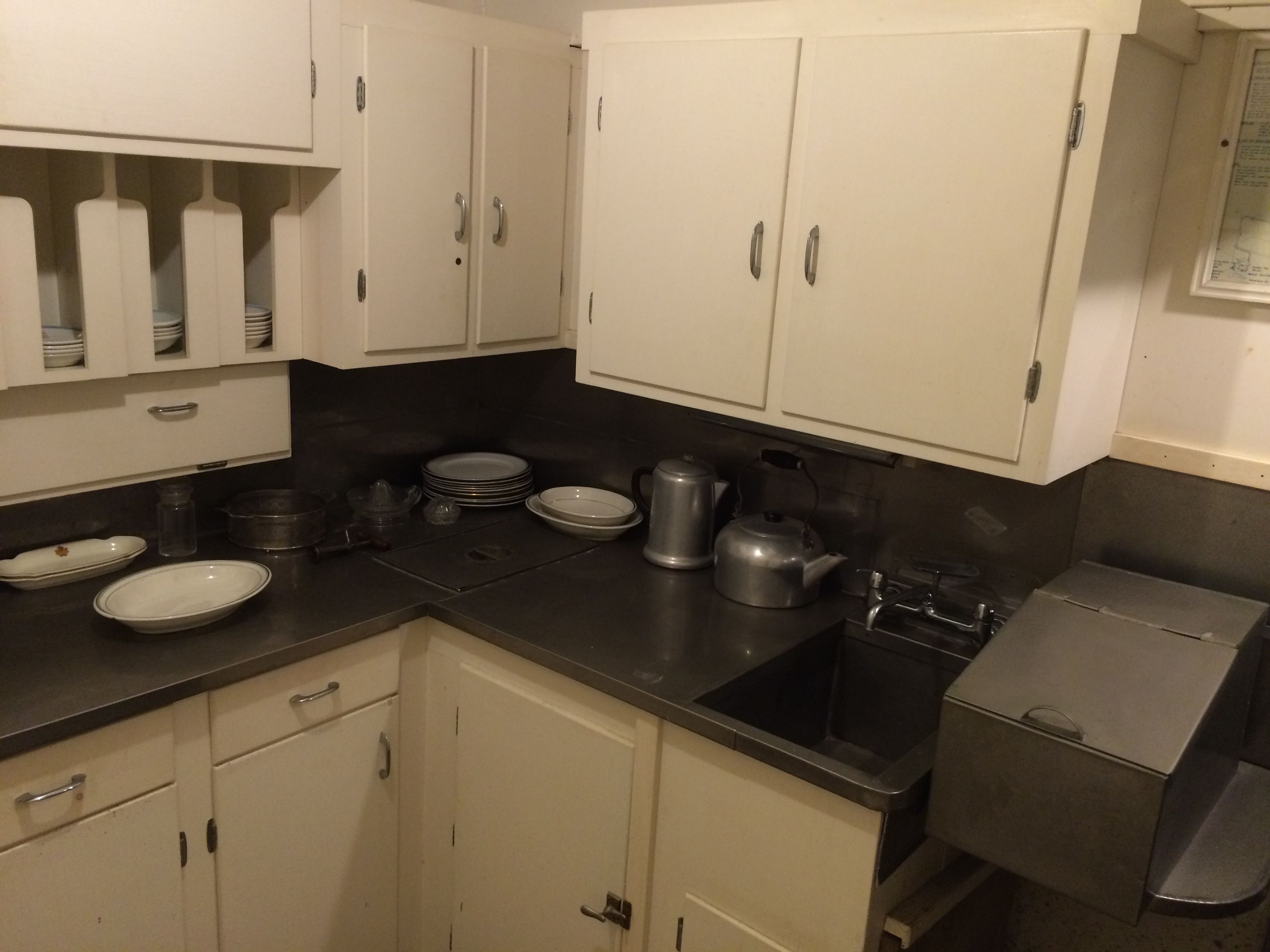
Of course, you wouldn’t want the passengers to travel hungry, so there is a kitchen in the railroad car, too.

And, at the end of the journey, there was the train station. Electra Webb bought the station and moved it here, too.
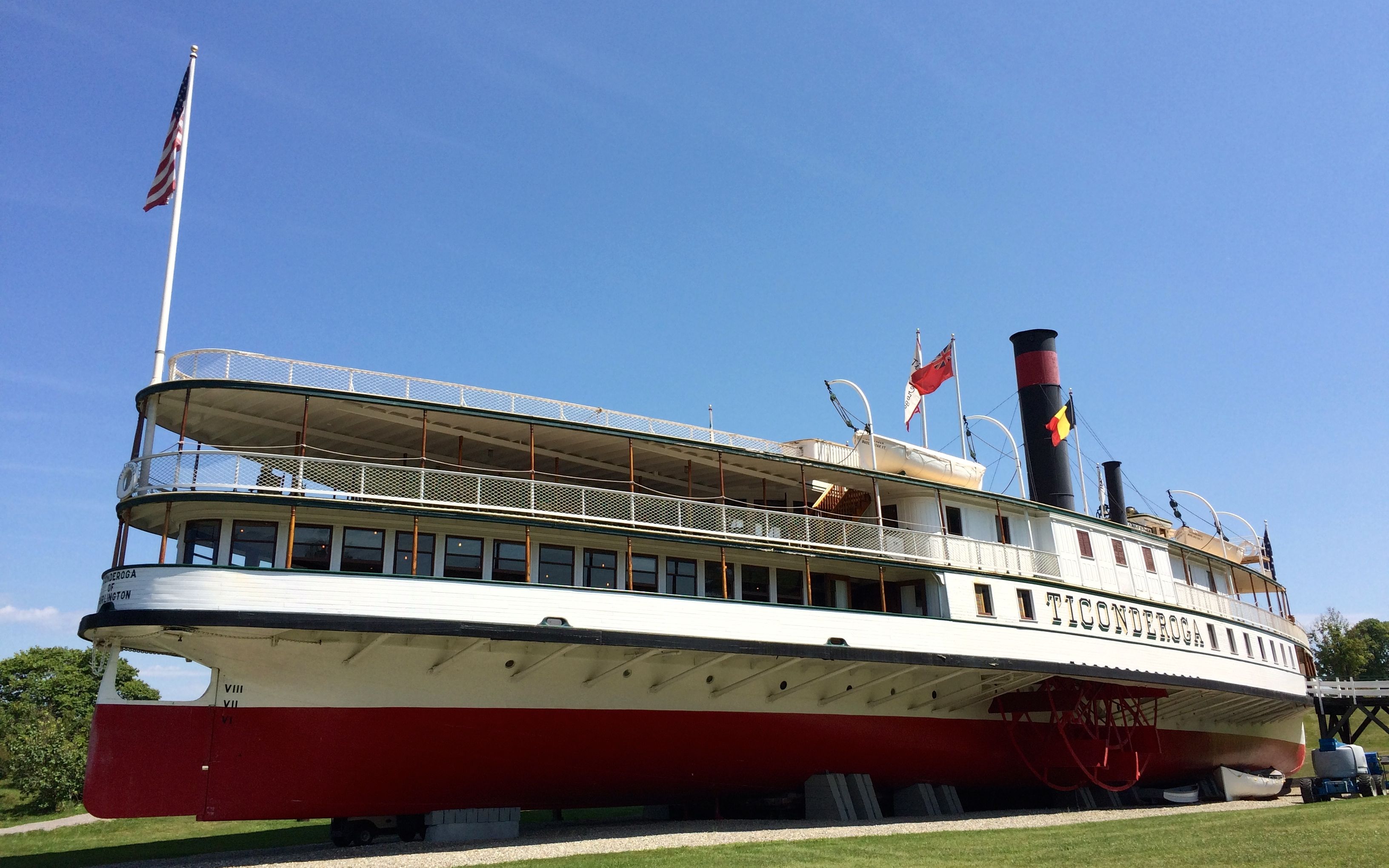
Next stop on the tour was the Ticonderoga, a 900 ton side-wheeler that plied the waters of Lake Champlain. It was built in 1906 and was in regular operation as a boat that connected to the railroad for many years. As more modern methods of transportation evolved, the Ticonderoga’s days were numbered. By 1950, she was saved from the scrap heap by Electra Webb. She tried to keep it in operation, but eventually, the lack of people who knew how to operate and maintain it finally made it impossible to continue using it in the water.
The decision was made to move the ship two miles inland to the museum. During the winter of 1955 Ticonderoga was moved on railroad tracks that were specially laid for the purpose. It was hauled across highways, over a swamp, through woods and fields, and across the tracks of the Rutland Railway to reach her permanent mooring on the Shelburne Museum grounds, where it was lovingly restored.
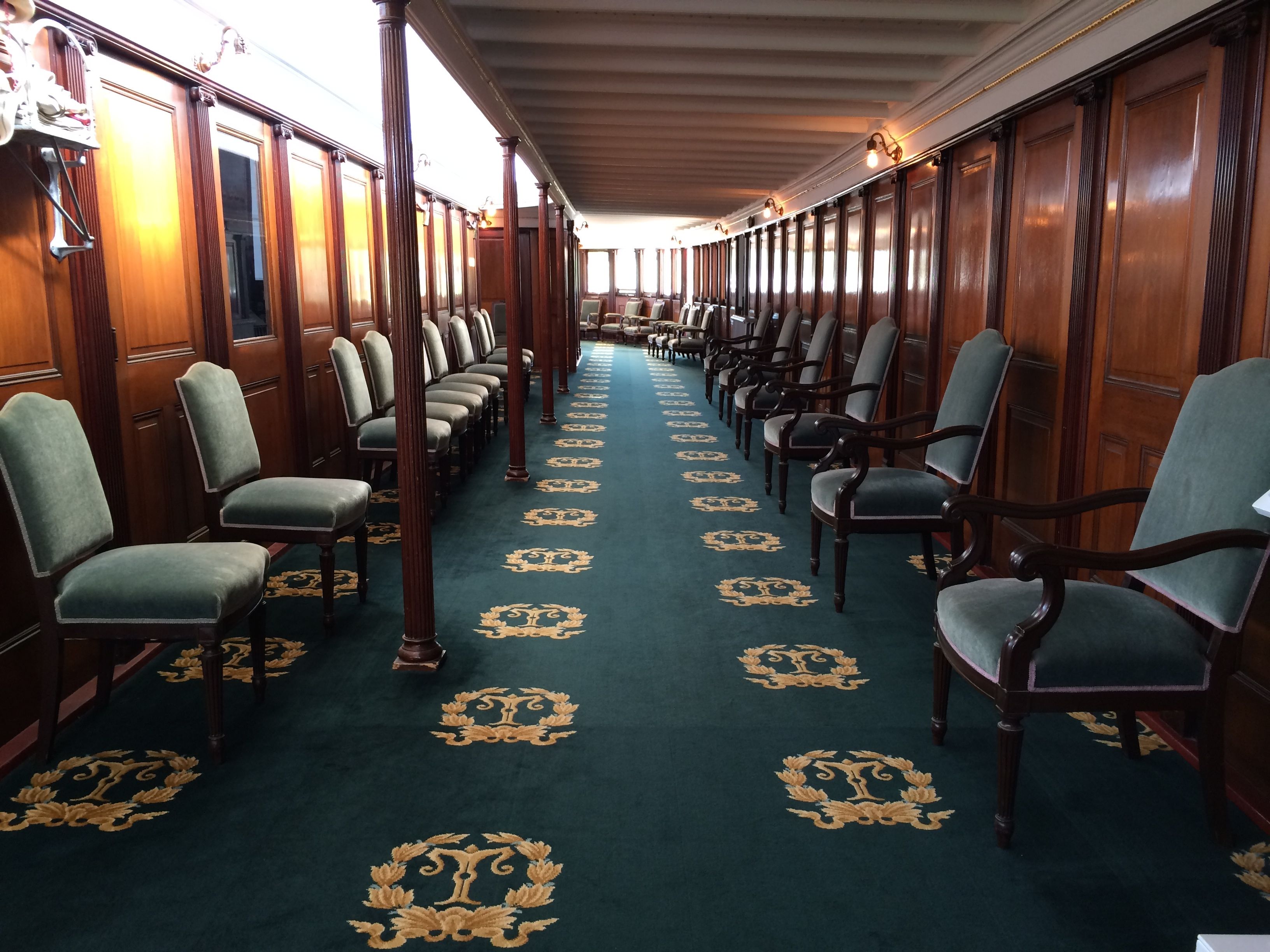
This is the area where people would sit during the passage. There was also a dining area, as well as several sleeping compartments.
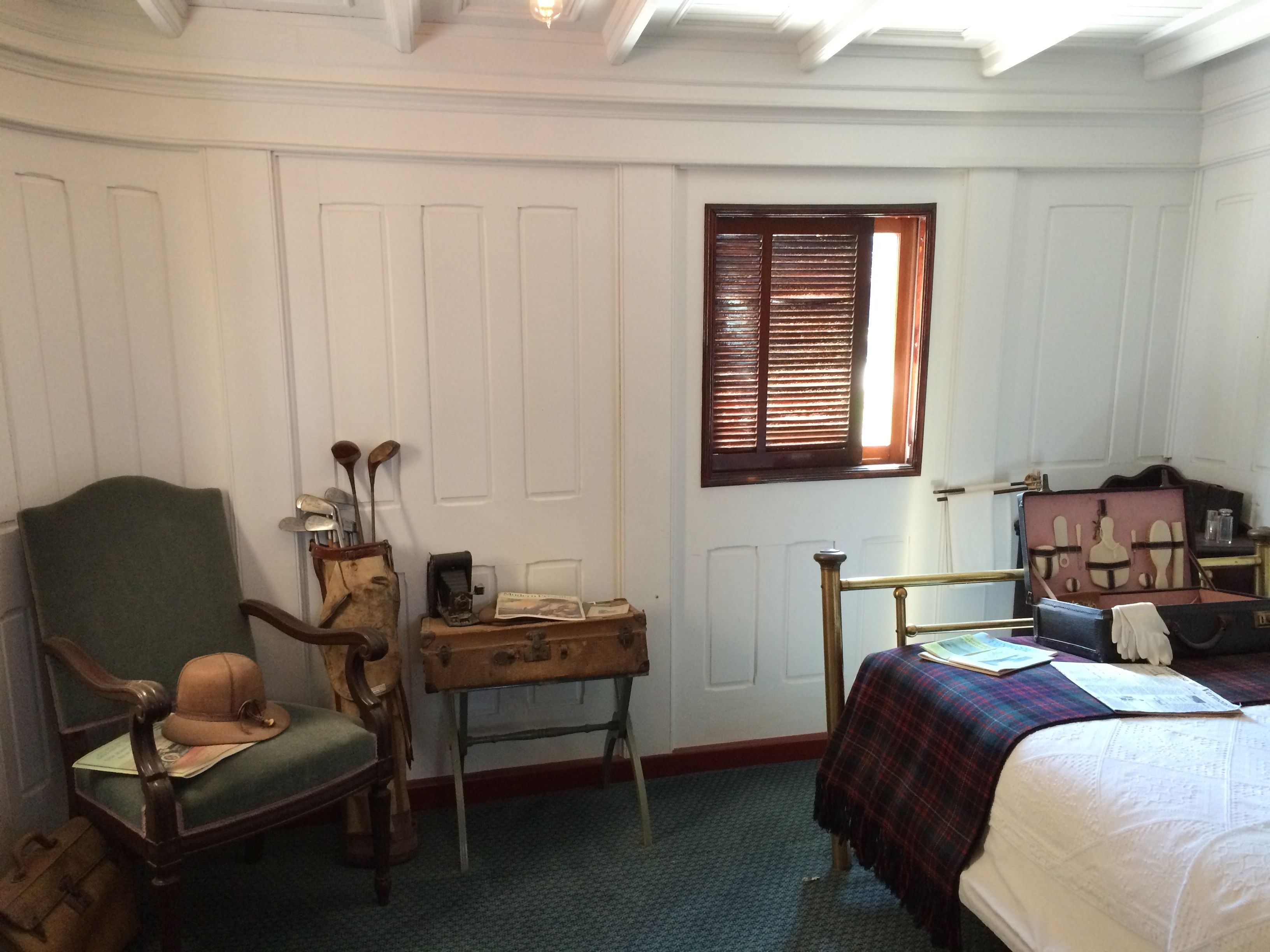
This was a deluxe room, suitable for a honeymoon.
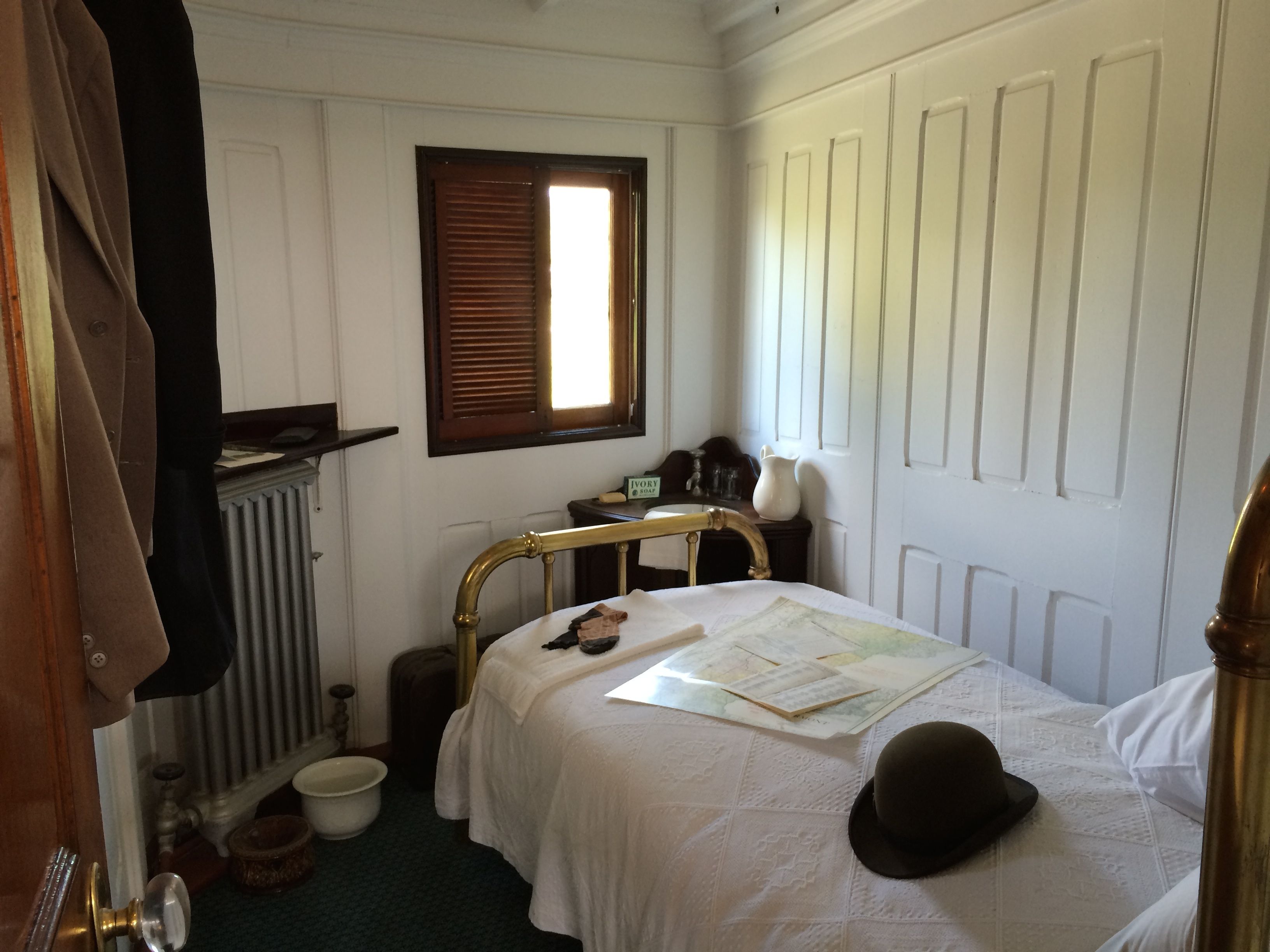
This was a smaller room, more suitable for a traveling businessman.
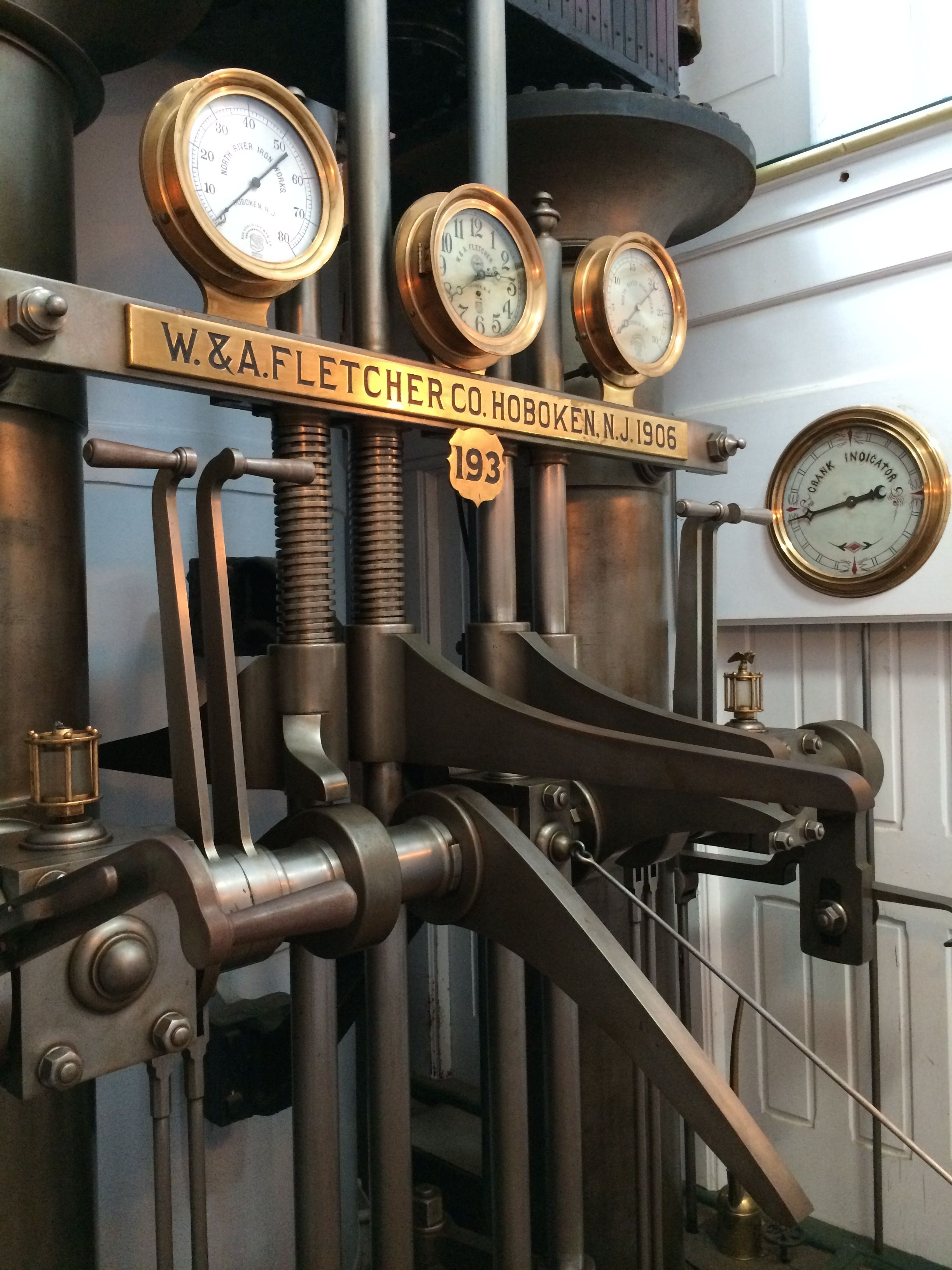
The mechanicals are also restored, although they are no longer functioning on a daily basis. If I remember correctly, they do fire it up on a yearly basis to keep things in good repair. (Of course, I might be conflating the Ticonderoga with something else with an engine that I have seen along the way.)
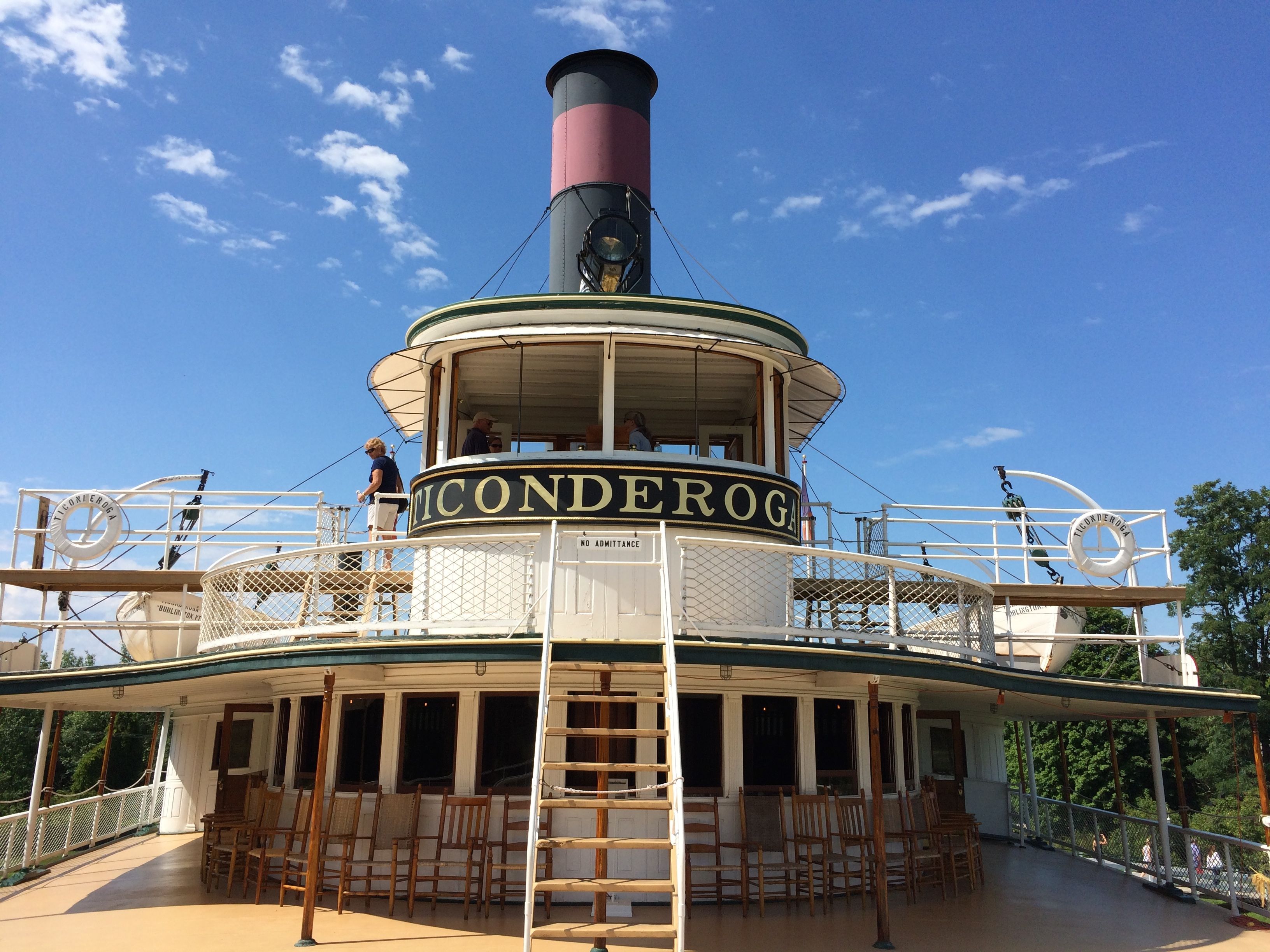
You can walk all over the ship, from the lower levels where there is freight and the ticket booth all the way up to the bridge.
One interesting bit of information that I picked up somewhere is that when they built the ship in 1906, it had a planned lifespan of about 25 years – maybe a little longer. After outliving its expected use by a couple decades, it has been completely fixed up and maintenance is ongoing.
Not everything is a single historical item. This general store is cobbled together out of three buildings and stuffed full of items – some of which we had in our house.
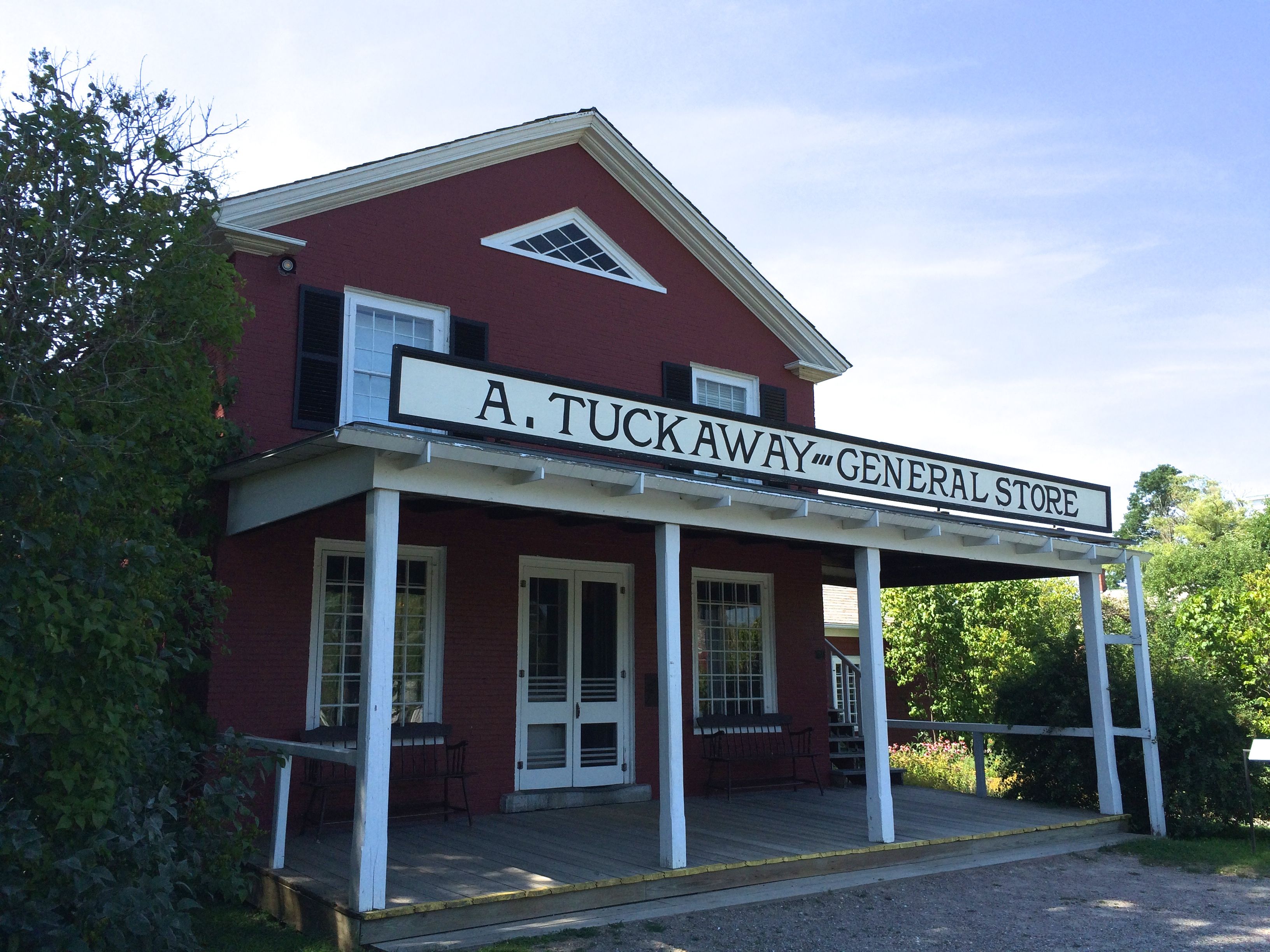
The campus is studded with “Americana”.
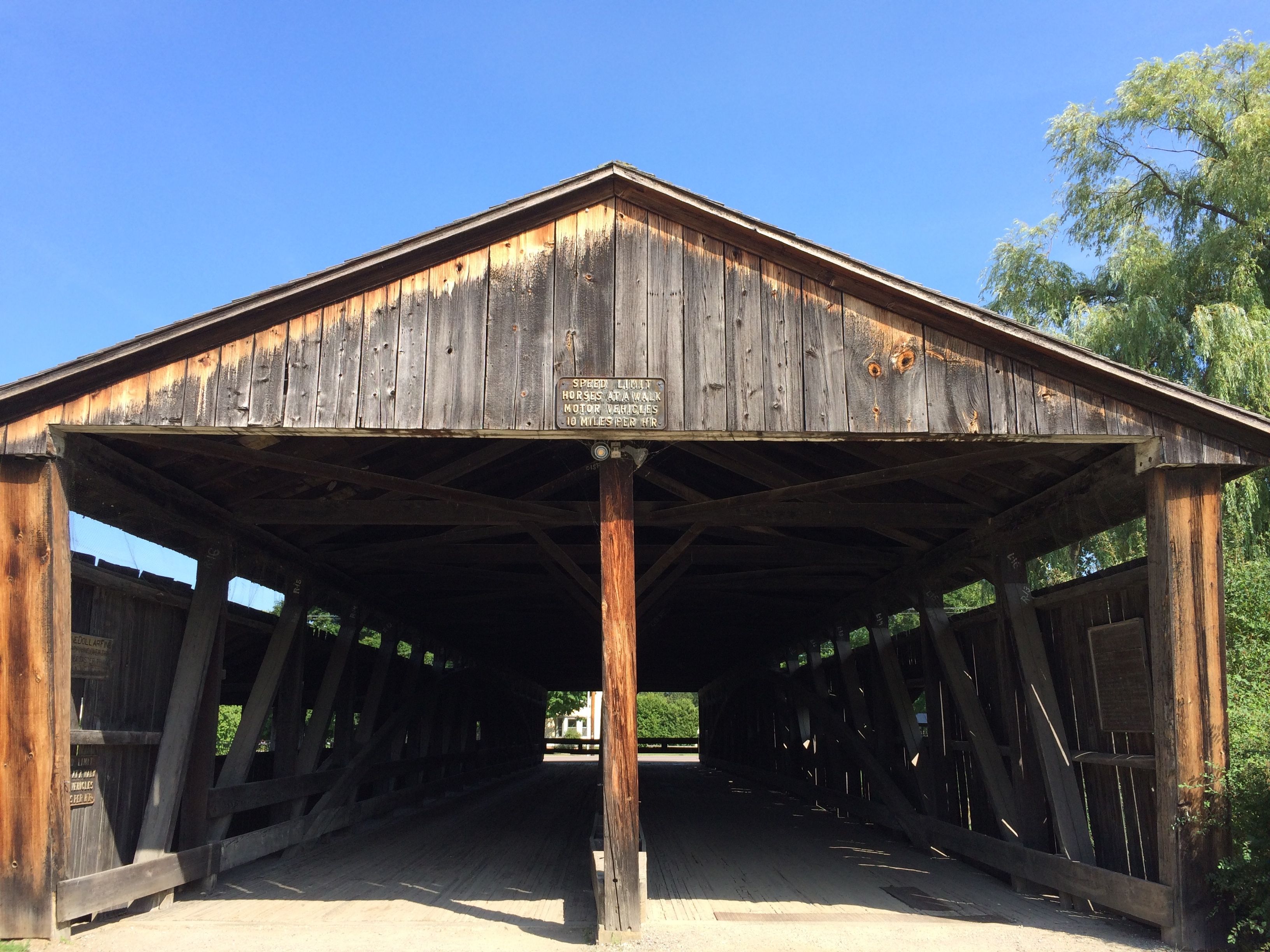
When the museum first opened, people entered by crossing this covered bridge.
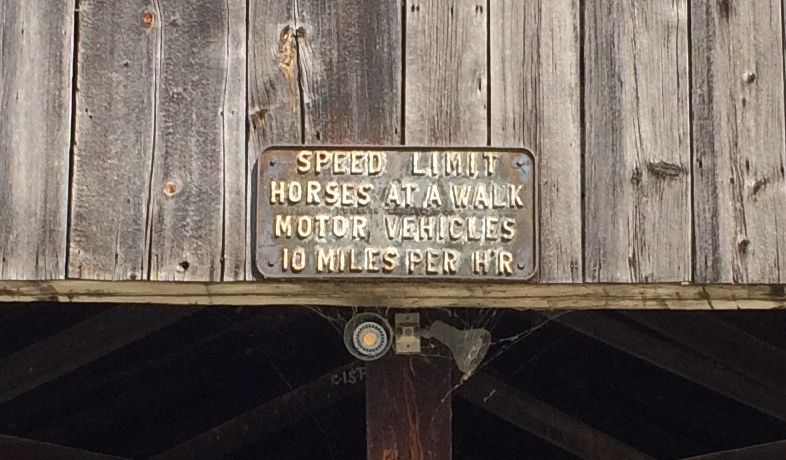
In case you wondered, this is what the sign on the bridge says, here it is.
The admission fee to the museum entitles you to two days worth of entrance. The issue different colors of stickers each day of the week. I actually went back for a second day. Believe it or not, by complete coincidence, I wore shirts that matched the stickers ON BOTH DAYS!
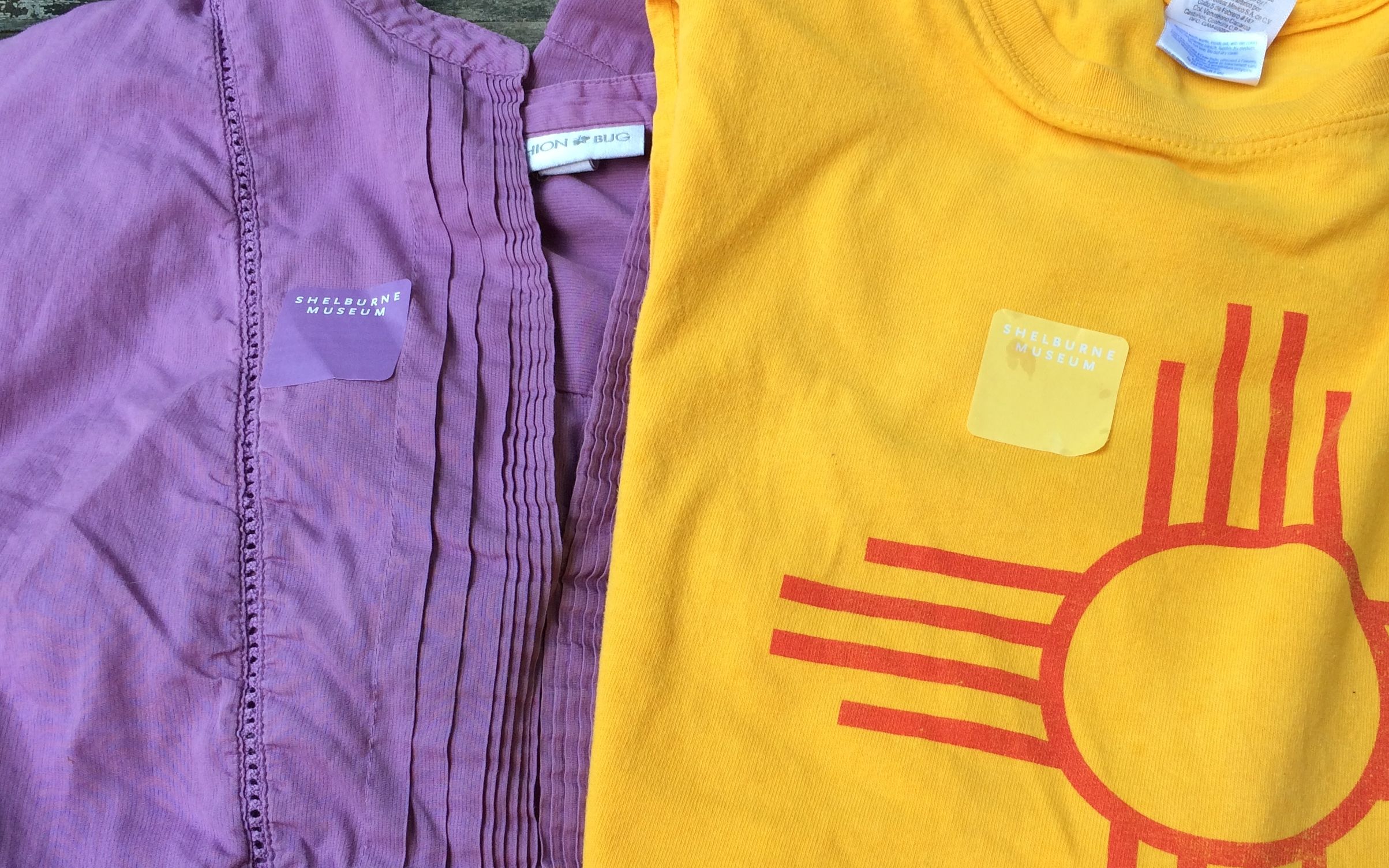
The main reason I wanted to return for a second day was to take a tour of two houses that are only available with a guide.
The first house was the Prentis House.
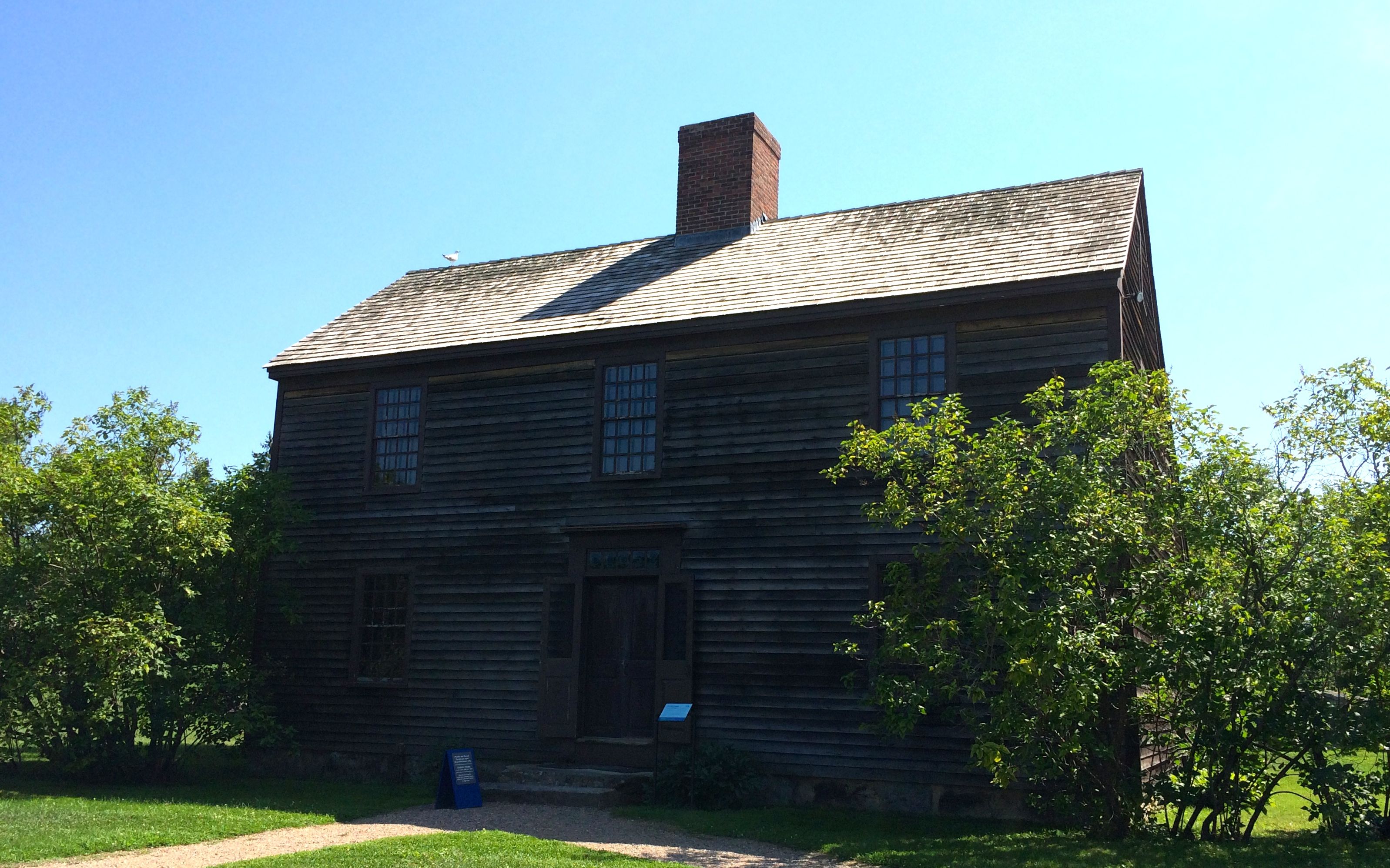
Electra Webb originally bought the house so that she could use the wide pine floorboards for another project. According to the guide, she decided to let her friend, Mrs. Prentis, decorate the interior of the saltbox-style house. Now, she didn’t worry about being historically accurate; she just stuffed the interior full of all sorts of things that were more or less ‘of the era’. Then, out of respect for Electra Webb and her friendship with Mrs. Prentis, they decided to leave it as an example of the mid-fifties enthusiasm for colonial decor. I find that a bit mind boggling.
The Prentis House was originally built in 1773 by the Dickenson Family in Hadley, Massachusetts. Since houses are usually named for the original owners, it kind of annoyed me that it was named for the Electra’s friend who decorated it in a completely inappropriate manner.
The second house was the Stencil House, so named for the elaborate stencils on the walls.
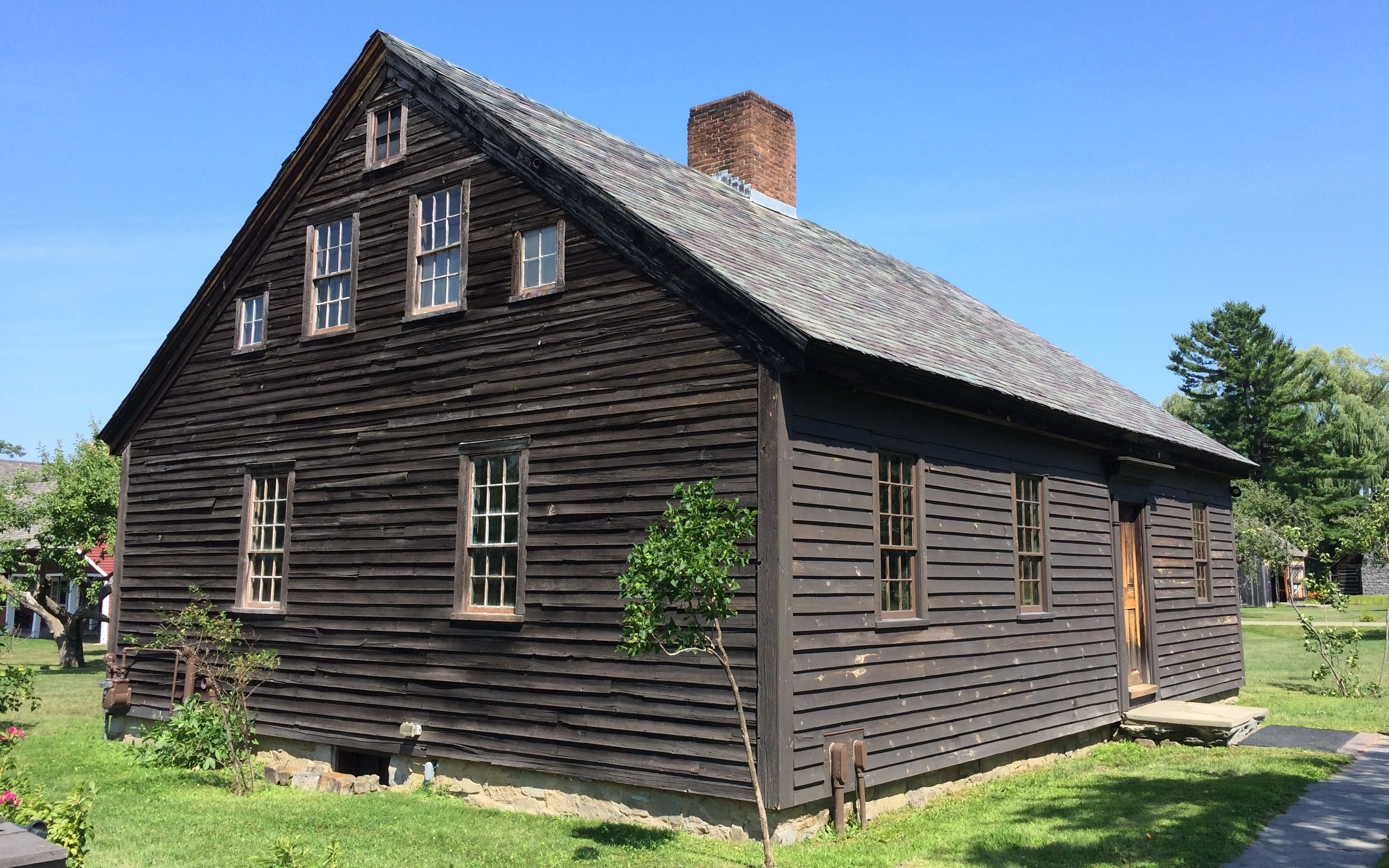
It was built in 1804 on one hundred-acre farm in Columbus, New York. When the museum bought the building in 1953, the walls were covered with wallpaper. Before they moved the house, workers removed several layers of the peeling paper, revealing extensive painted decorations on the board walls. The work was probably done sometime between 1819 and 1830.

I managed to get a photo of the fireplace. Notice the bread oven to the left of the hearth. On the right side, you can see a clockwork mechanism for turning a spit for roasting over coals.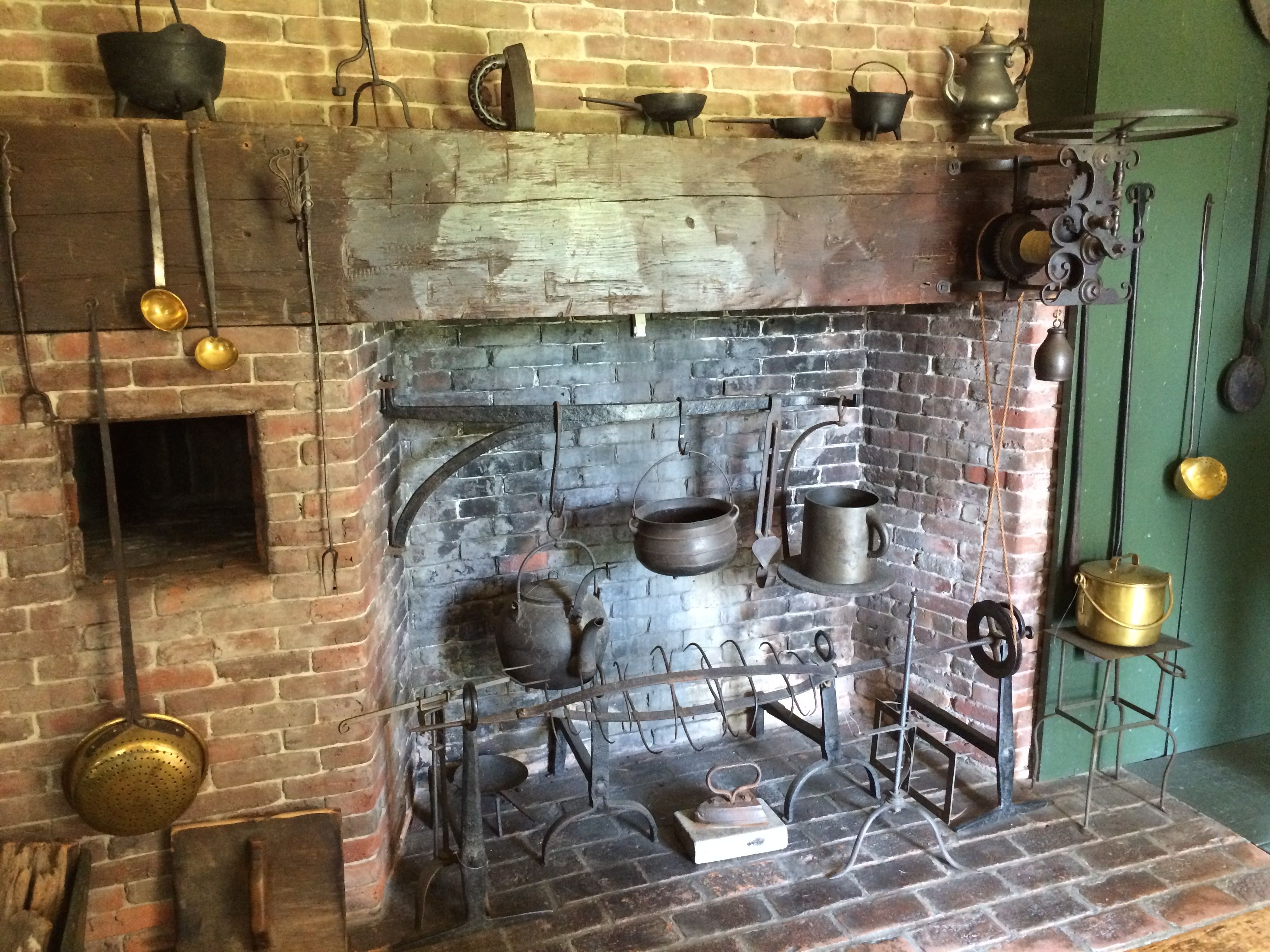
By the time I had finished touring these two houses, I was just about to my absolute limit of “Americana” – this fabricated version of a past that never really existed was really tiring me. I passed by a few more places.
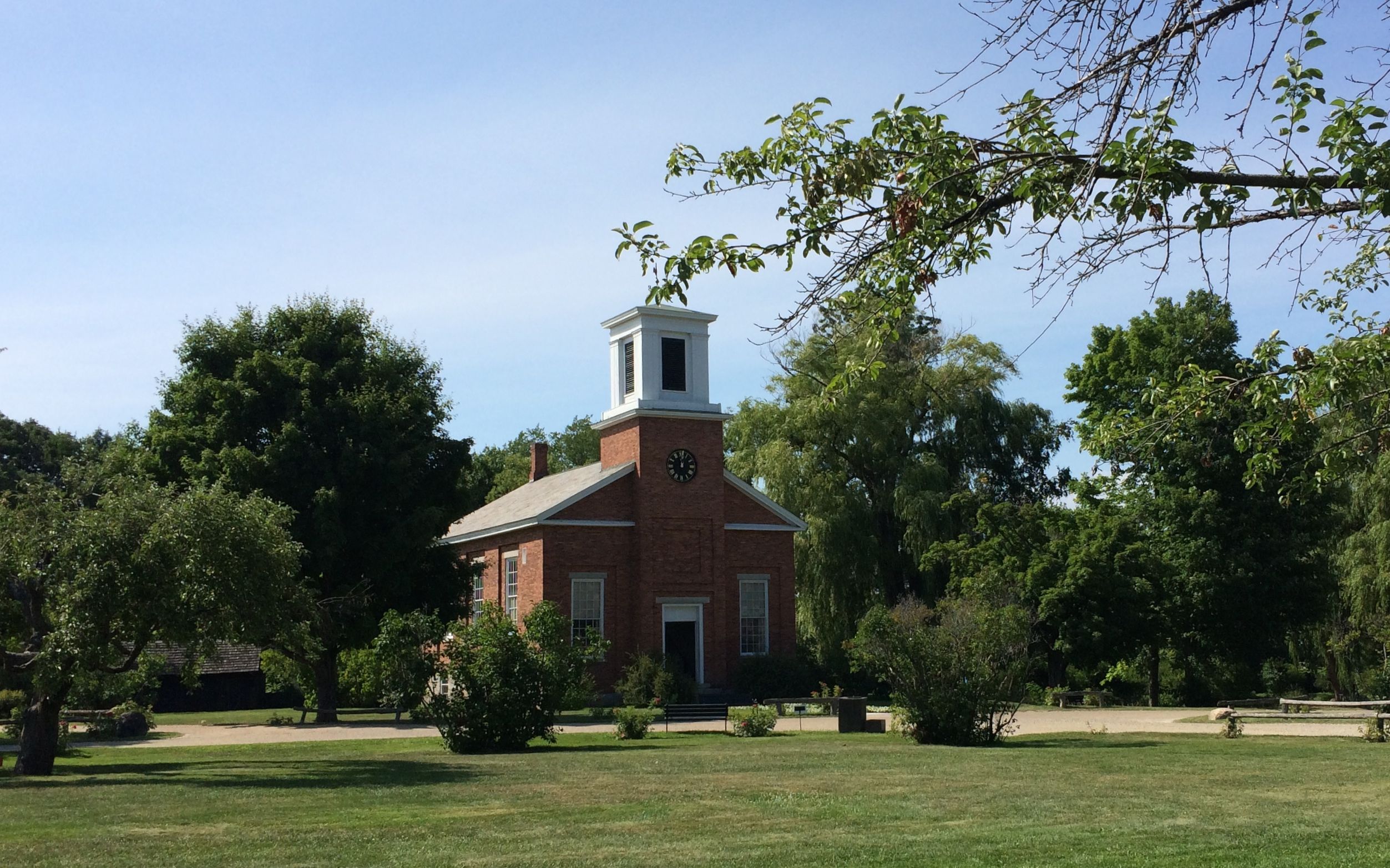
A building that I assume was a church,

And the Dutton house.
I couldn’t bring myself to visit the Electra Havemeyer Webb Memorial Building which contained furnish rooms from the New York City home of the Museum founder.
You might be able to tell from my overall tone that I was less than impressed by Electra Havemeyer Webb and her compulsive shopping and acquisition. For me, context is everything. By buying up all these items that don’t really belong together and plopping them down cheek-by-jowl left me rather cold. I’ll agree that is is kind of amazing, and I can easily see that people might enjoy it. It certainly is an attraction.
There was one part that I found quite amazing, and I will share that in another post.
Thanks for sticking with me during my tour of the Shelburne Museum. Come back later to see the part of the museum I found interesting.