My next destination was Colfax, North Carolina, a mere 450 miles away. I had an appointment to have some work done on my Airstream. I decided to break the trip up and spend the night in the Cracker Barrel parking lot in Lynchburg, Virginia.
Appomattox Courthouse was only about 25 miles away from Lynchburg, and it is one of the places I had hoped to visit last year but didn’t get to. Since I only had about 150 more miles to go to I figured I had enough time to pay a visit.
In case the significance of Appomattox Courthouse escapes you at the moment, it is where General Lee surrendered to General Grant.
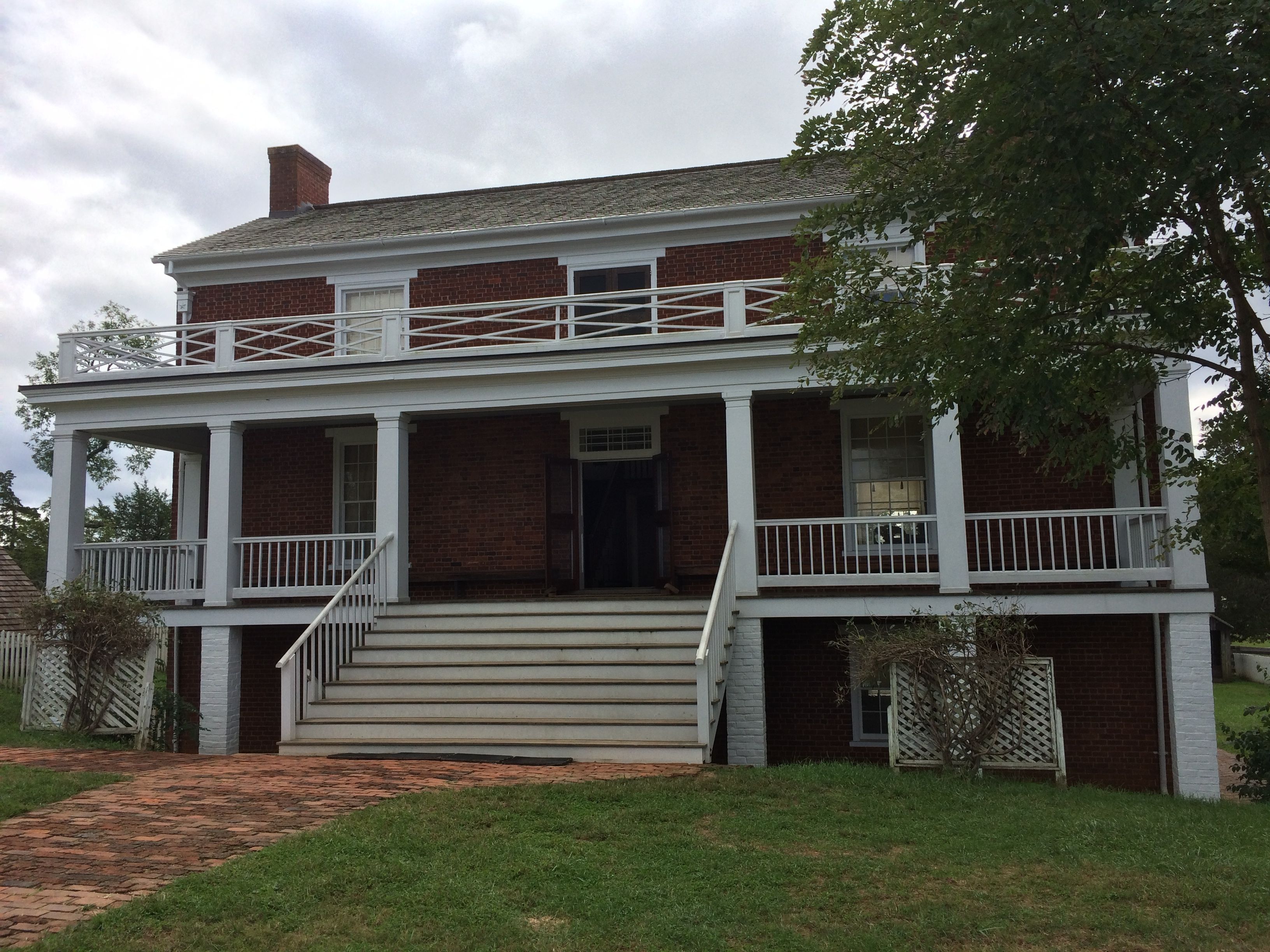
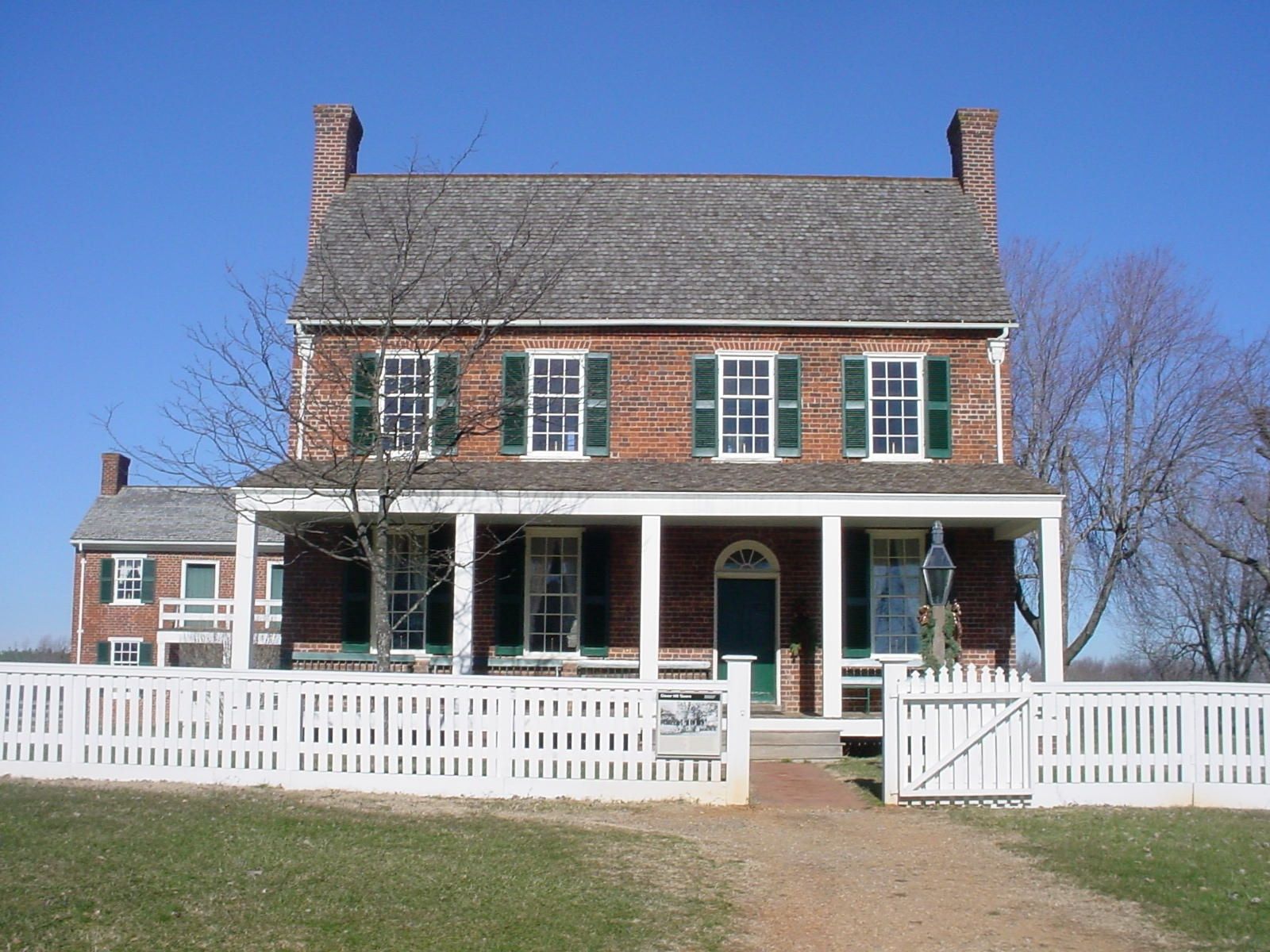
It happened right here in this house, the home of Wilmer McLean and his family.
Poor Wilmer McLean! His house was involved in the first battle of Bull Run in 1861. For business reasons as well as to keep his family safe, he moved about 120 miles south.
I was so excited to visit! This is another one of my “bucket list” places. I parked Flo and Bart in the overflow area and made my way to the courthouse.
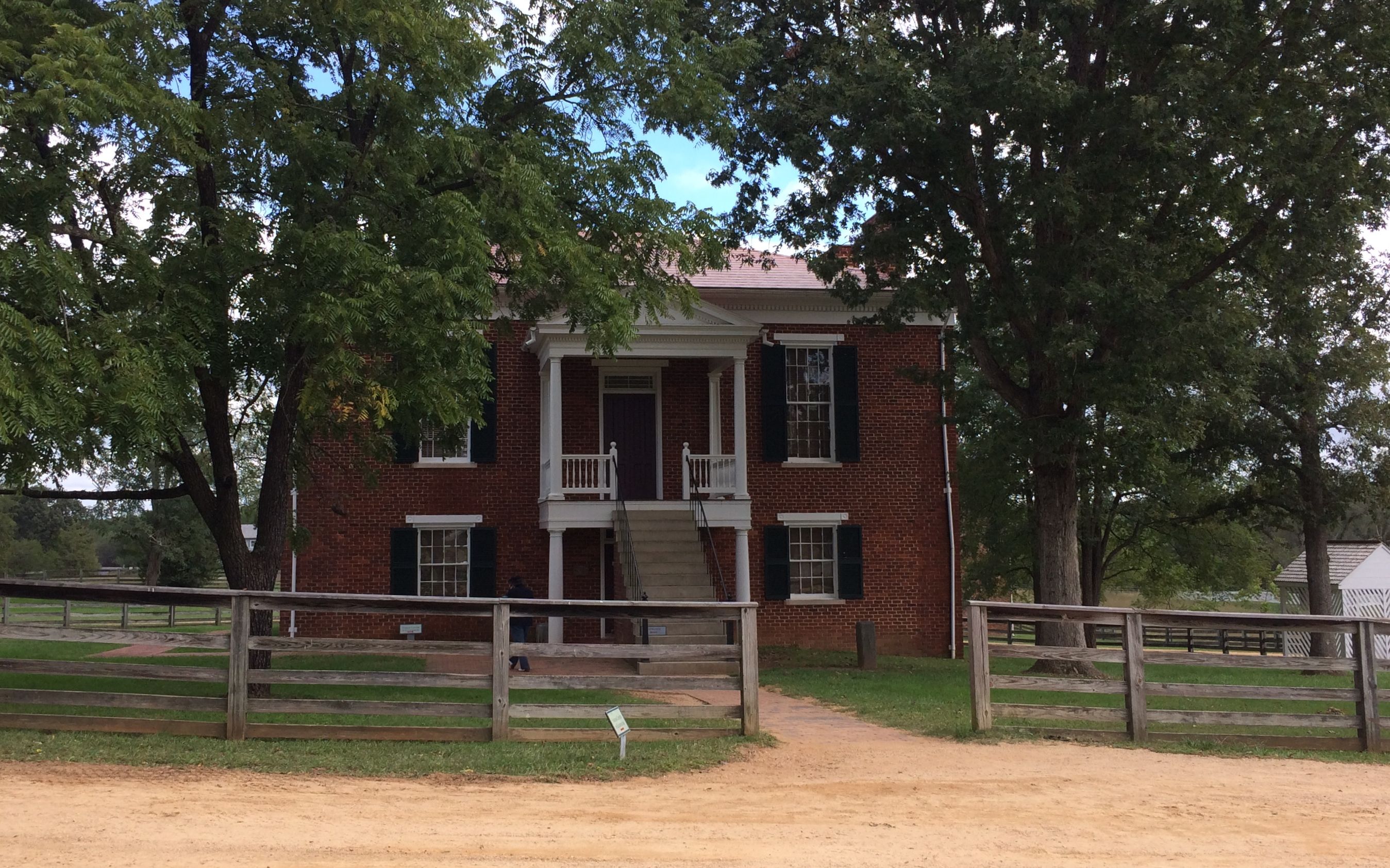
The park headquarters and museum was located there. It was very informative. One thing I learned is that the whole village was there due to aggressive restoration.
“Aggressive restoration” is my term. It turns out that the McLean house looked like this before it was restored.
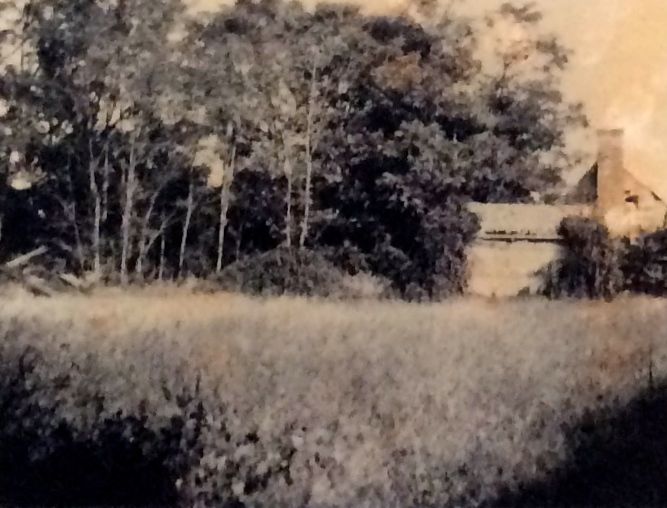
Do you see a house there? This photo was taken in 1914. It turns out that the house was sold to people who dismantled it. They intended to reconstruct it somewhere and probably charge admission to see it. They dismantled the house, documented it so that they would be able to reconstruct it and then stored the materials on site.
They never got around to carrying out their plans and some of the materials got carried off by people looking for souvenirs or maybe just looking for building materials. According to the ranger, about 30% of the bricks in the house today were actually there in 1865. They did a masterful job of recreating the house.
They started with archeological examination of the site in 1941.
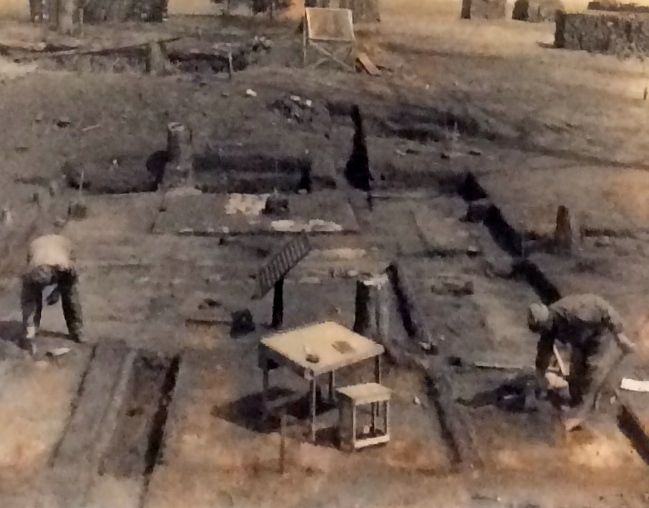
That, with the detailed records made when they dismantled the house allowed them to put the house back the way it was in 1865.
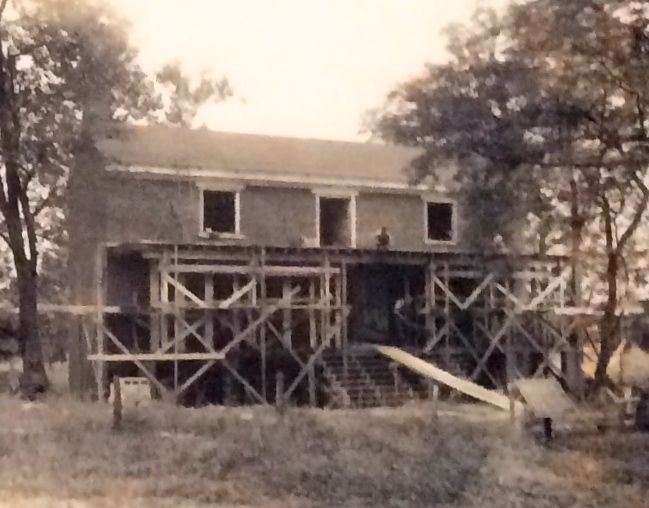
Here’s a shot of it under restoration in 1948.
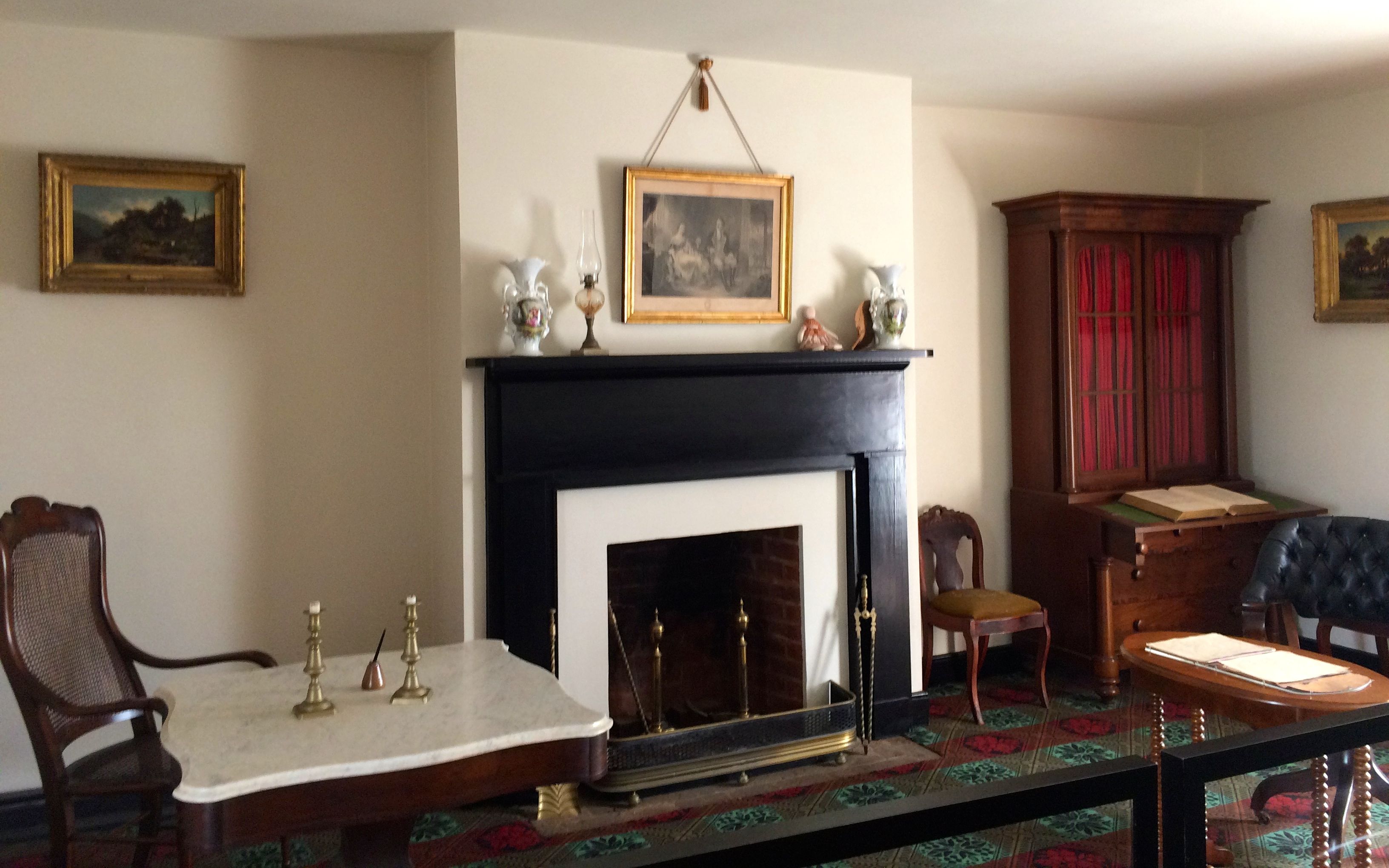
This is the parlor where Lee and Grant reached the terms of surrender. It was on the first floor, at the top of the stairs
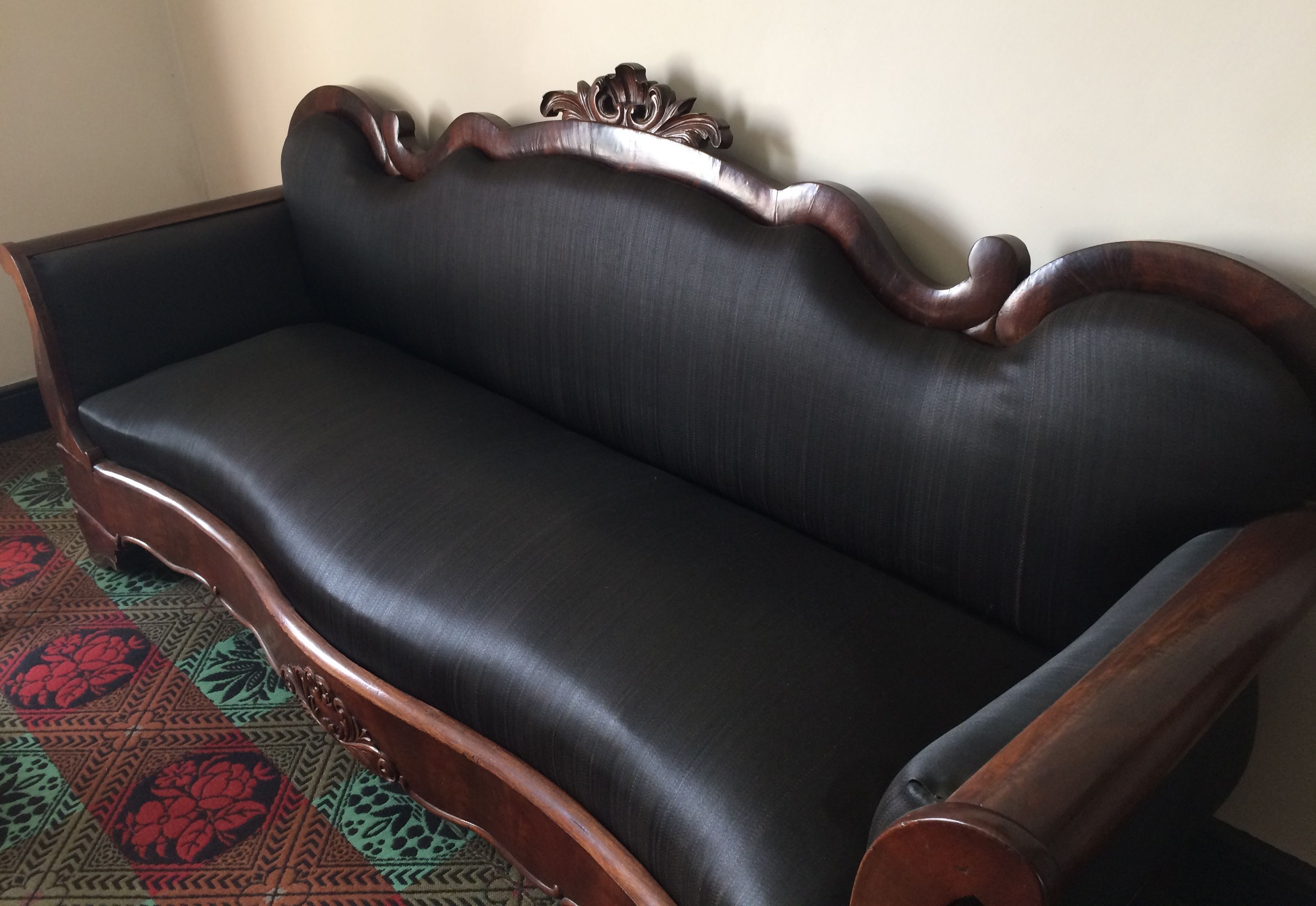
Horsehair furniture was all the rage in the Victorian era. I always thought that the horsehair was used as stuffing. It turns out that it was used also used to weave the fabric.
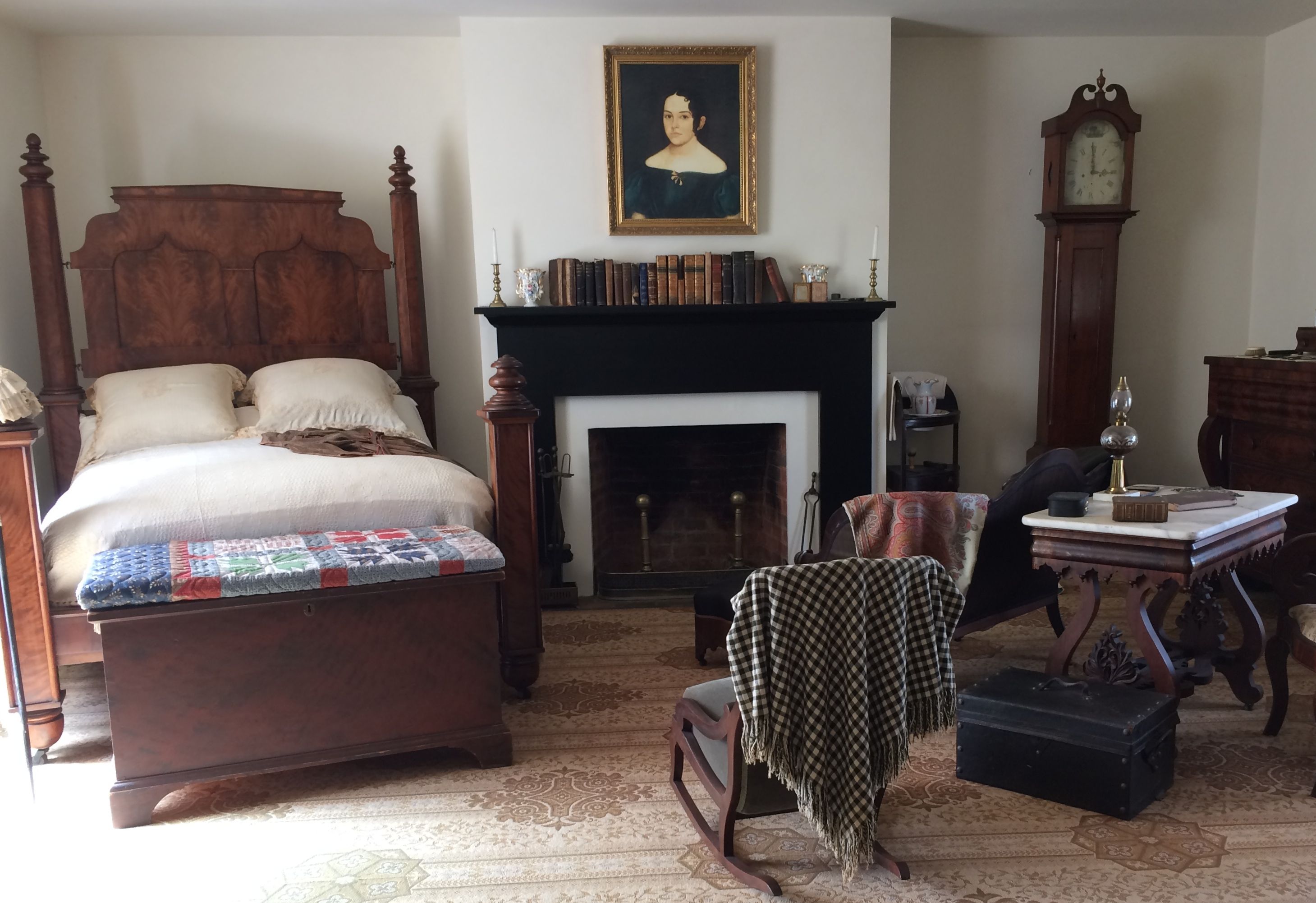
This was Wilmer and Virginia’s bedroom, across from the parlor.
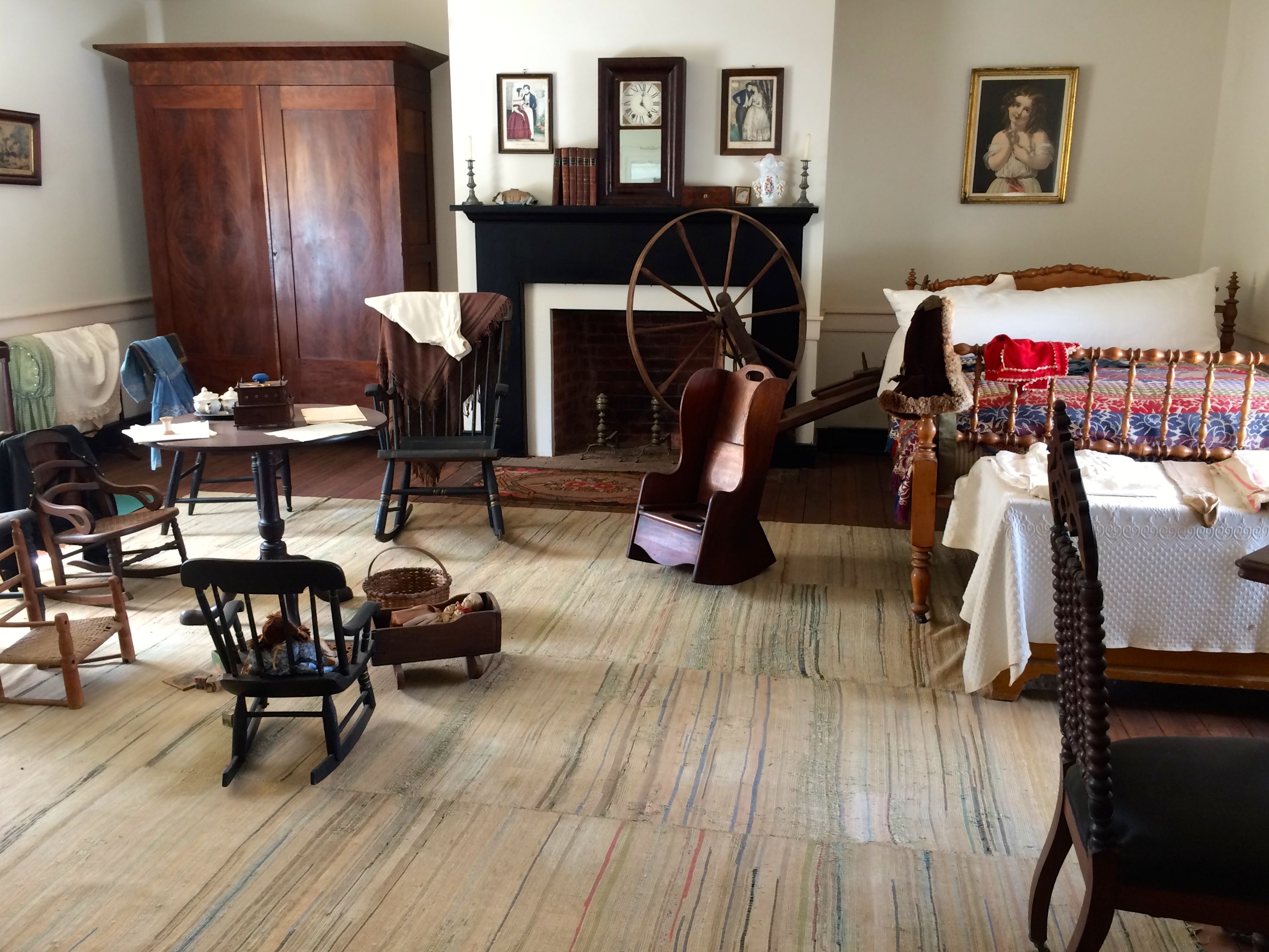
This was one of the children’s bedrooms on the second floor.
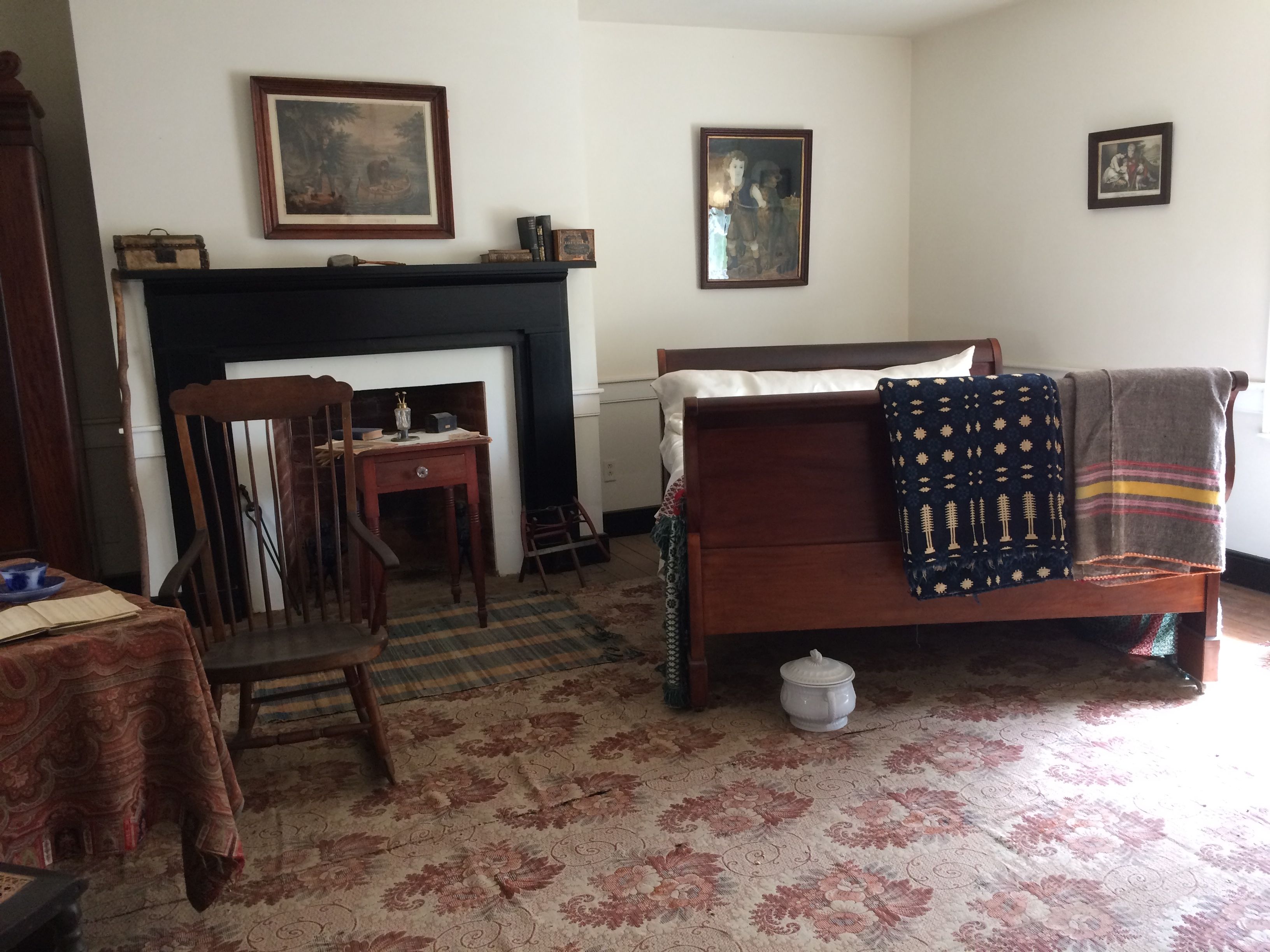
This was another of the children’s bedrooms.
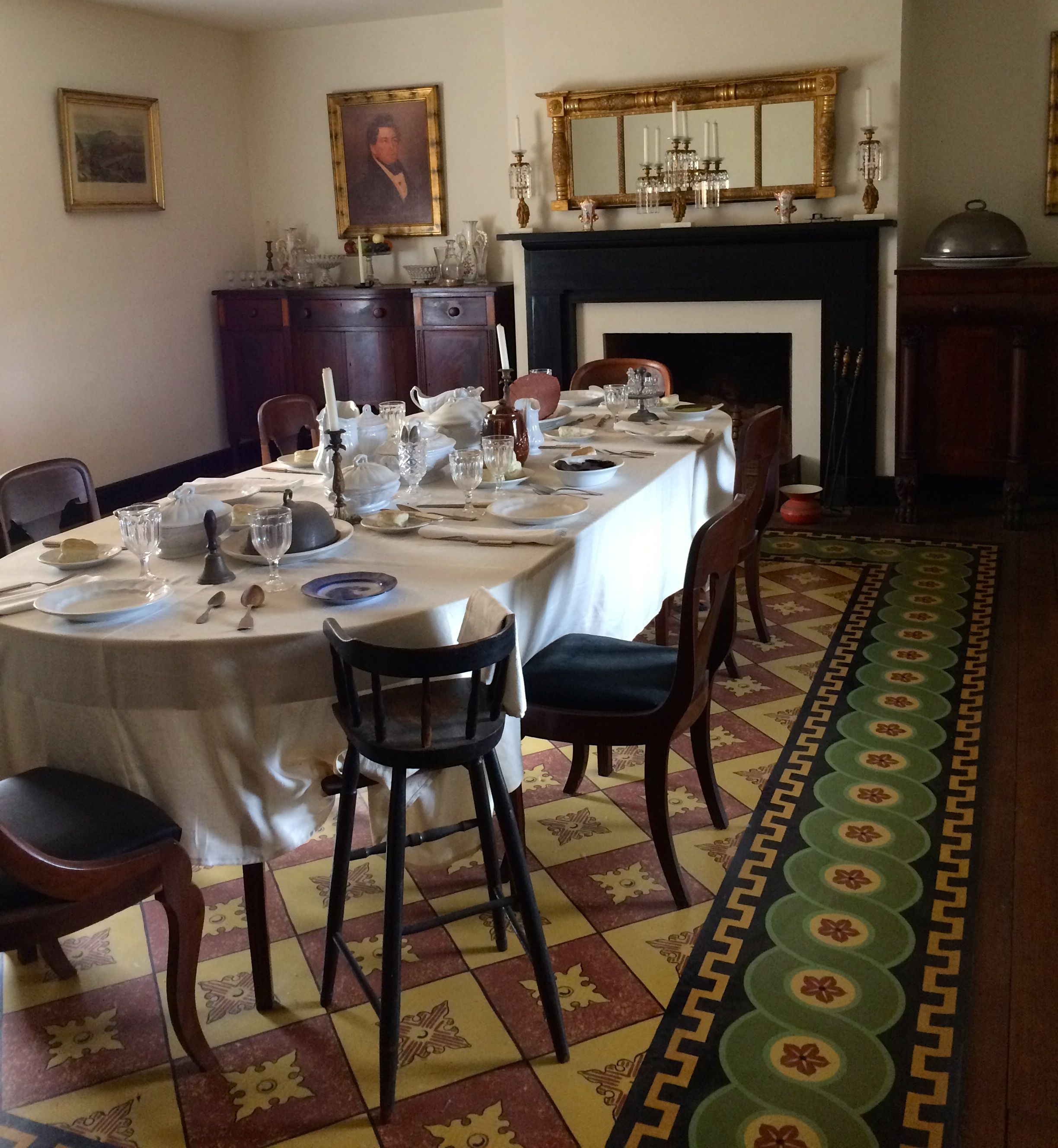
The dining room was on the ground floor,
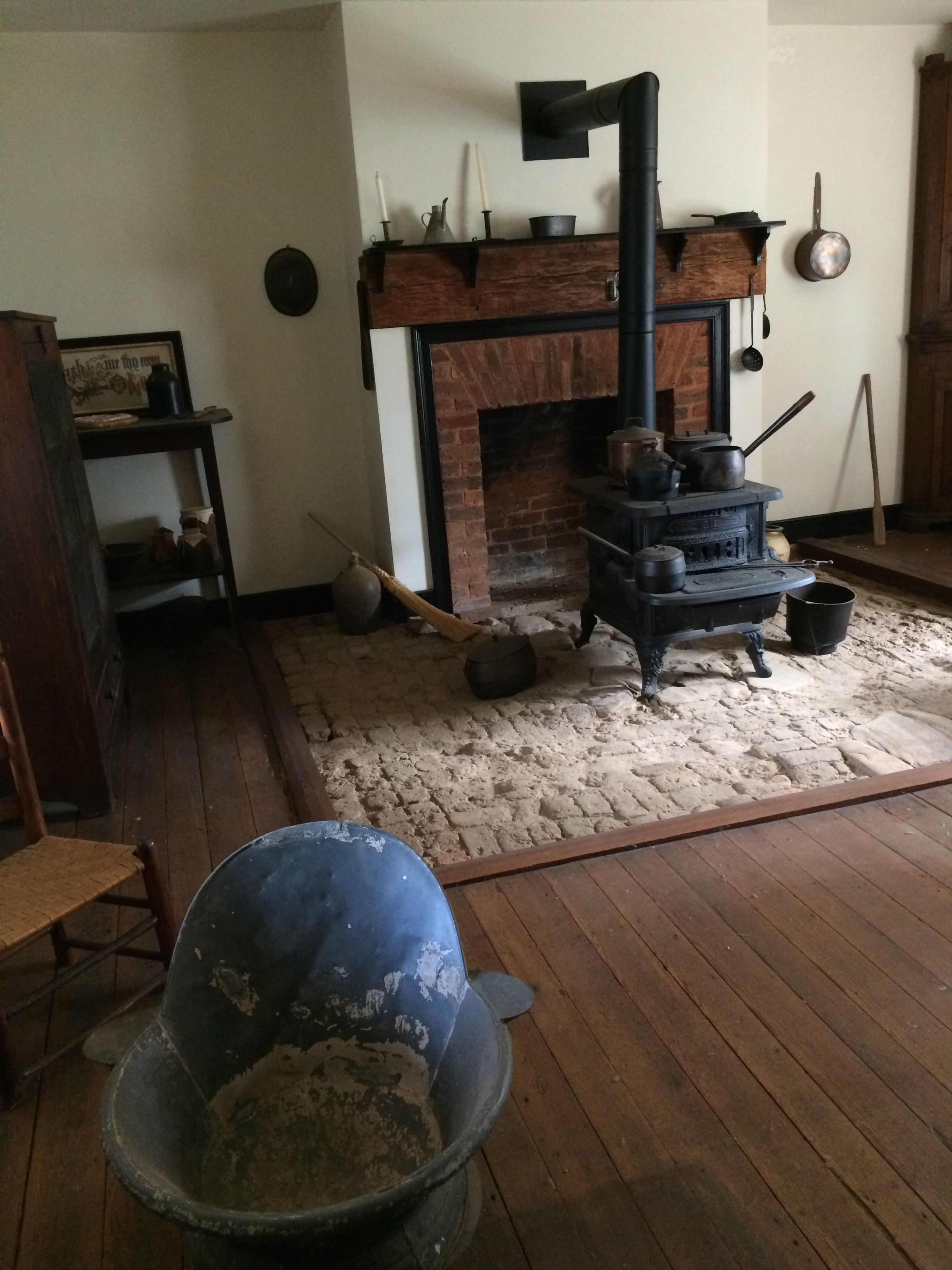
and the warming kitchen was right across from the dining room. Kitchen fires were very dangerous, so most of the cooking was done in a separate building.
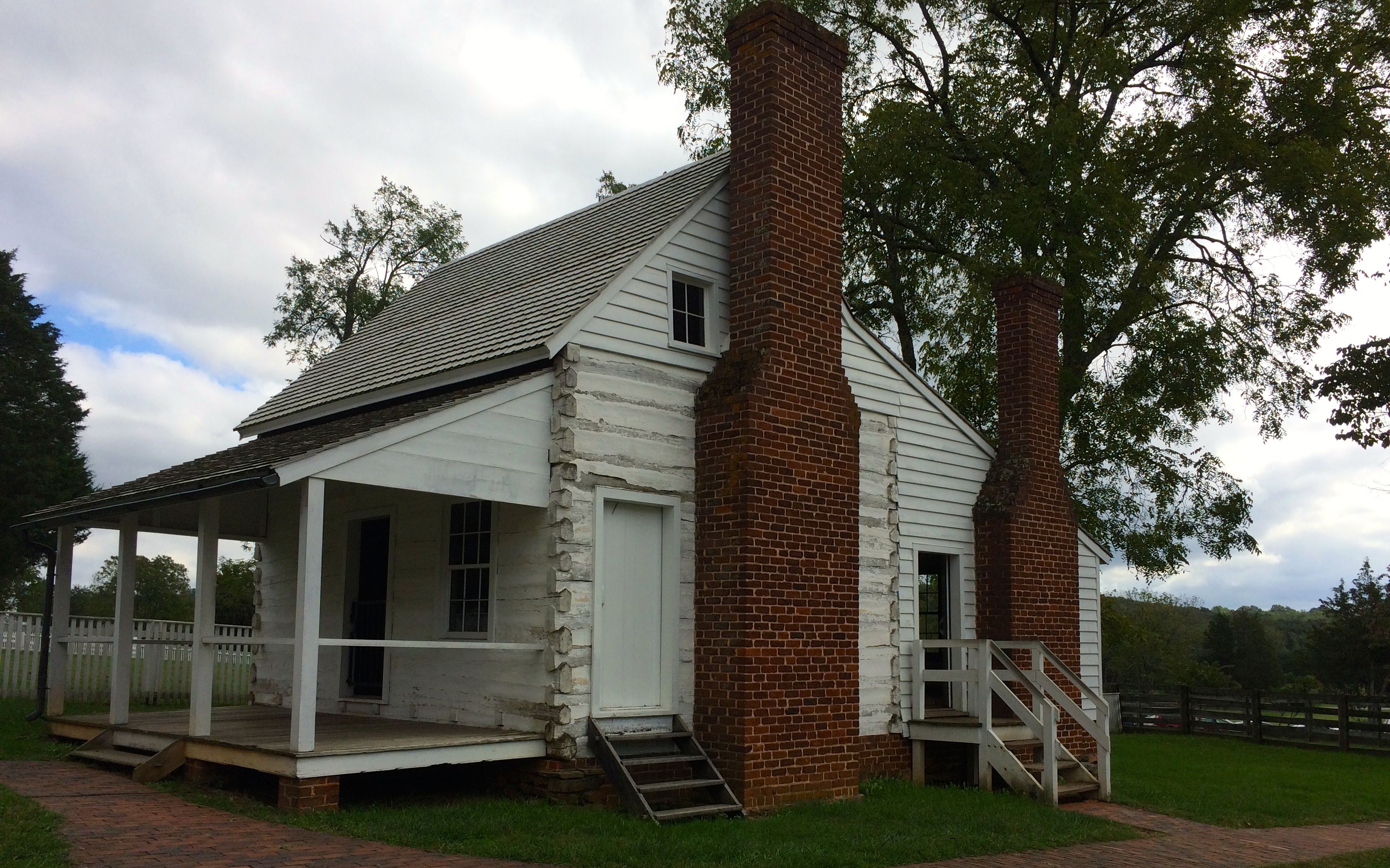
This is the kitchen behind the house.
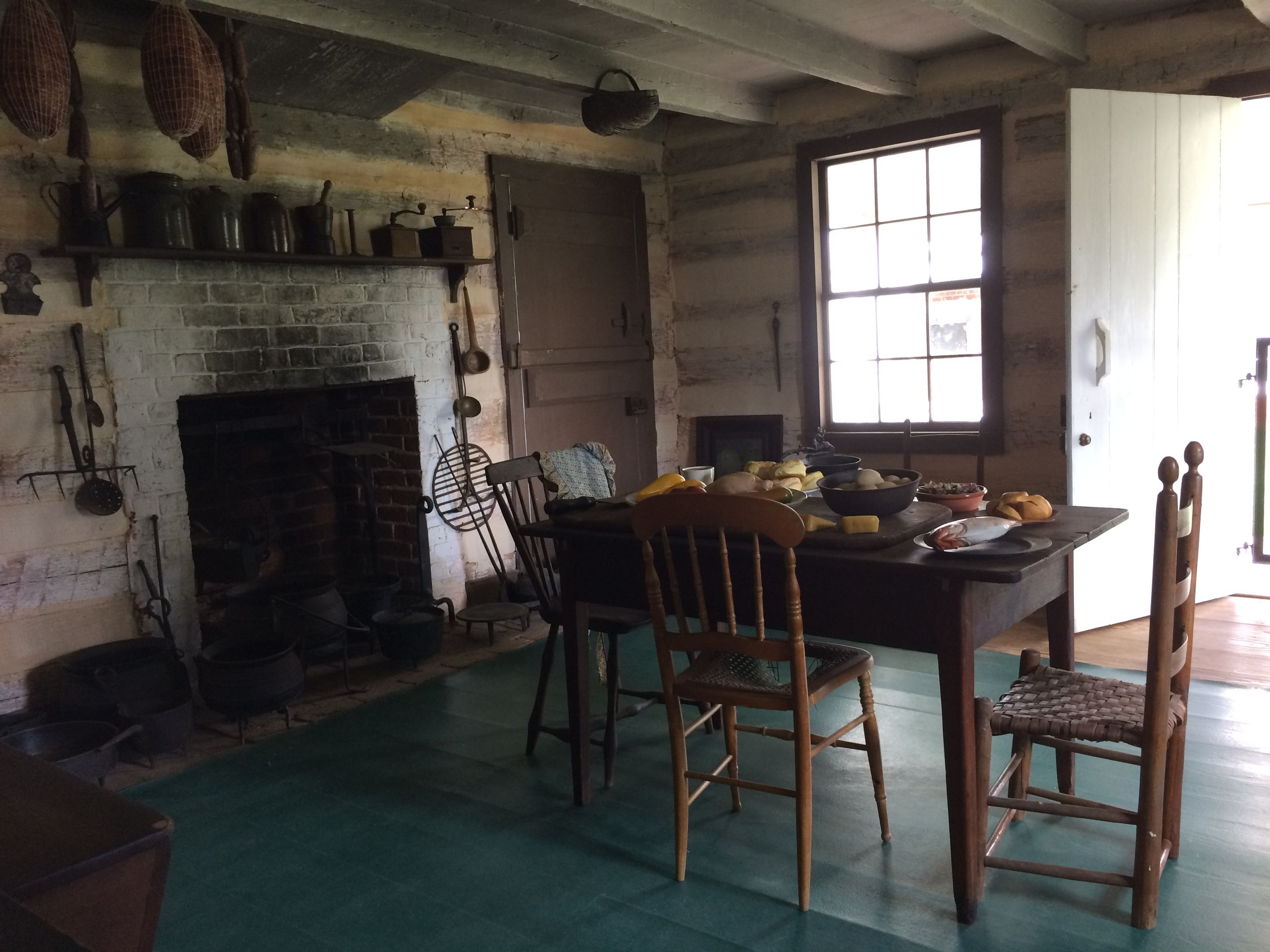
This is the real kitchen where the majority of the food preparation took place. Of course, the cooking wasn’t done by any of the McLeans. It was done by their slaves.
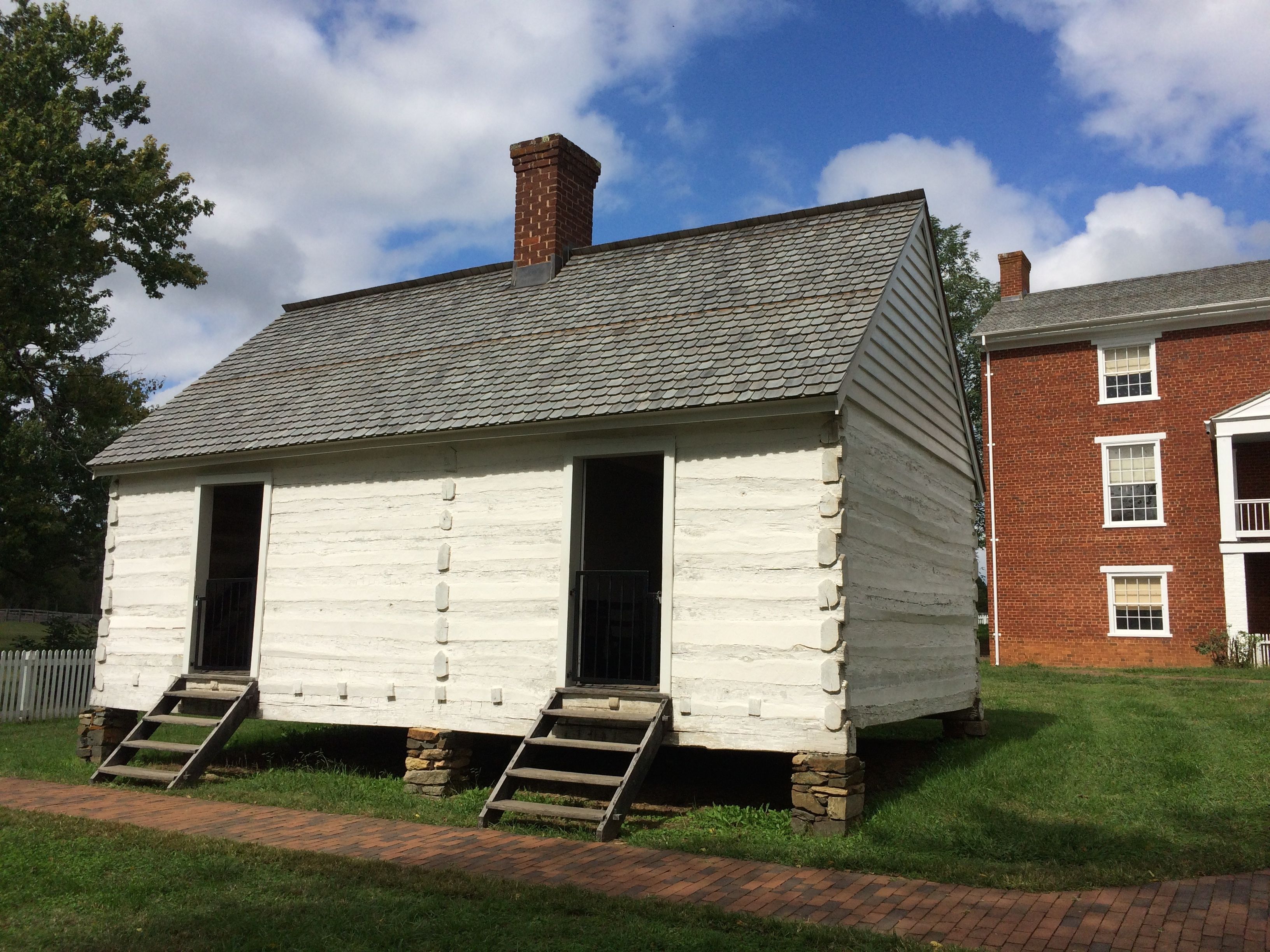
Their quarters were also behind the house.
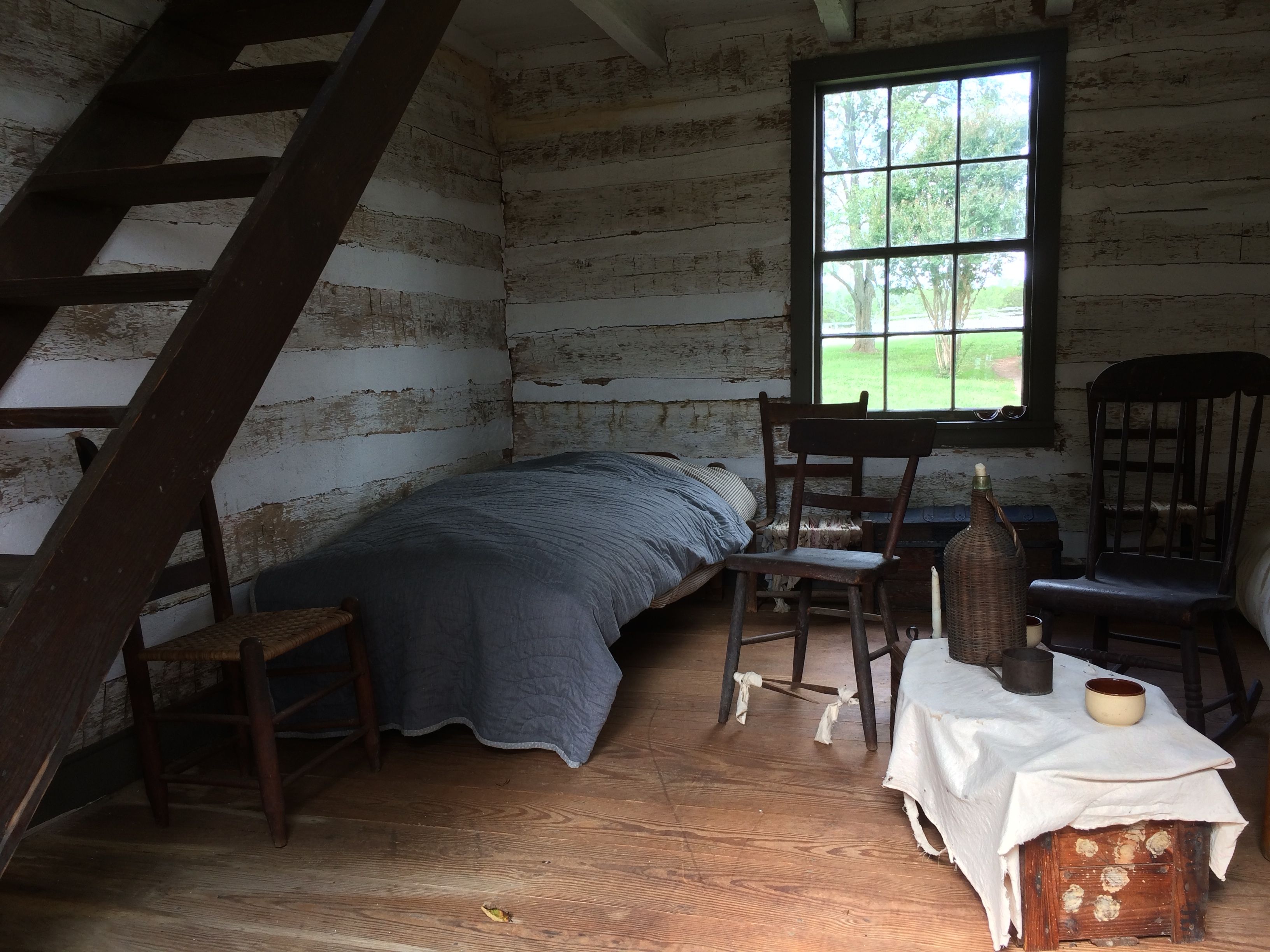
This was the room on the left.
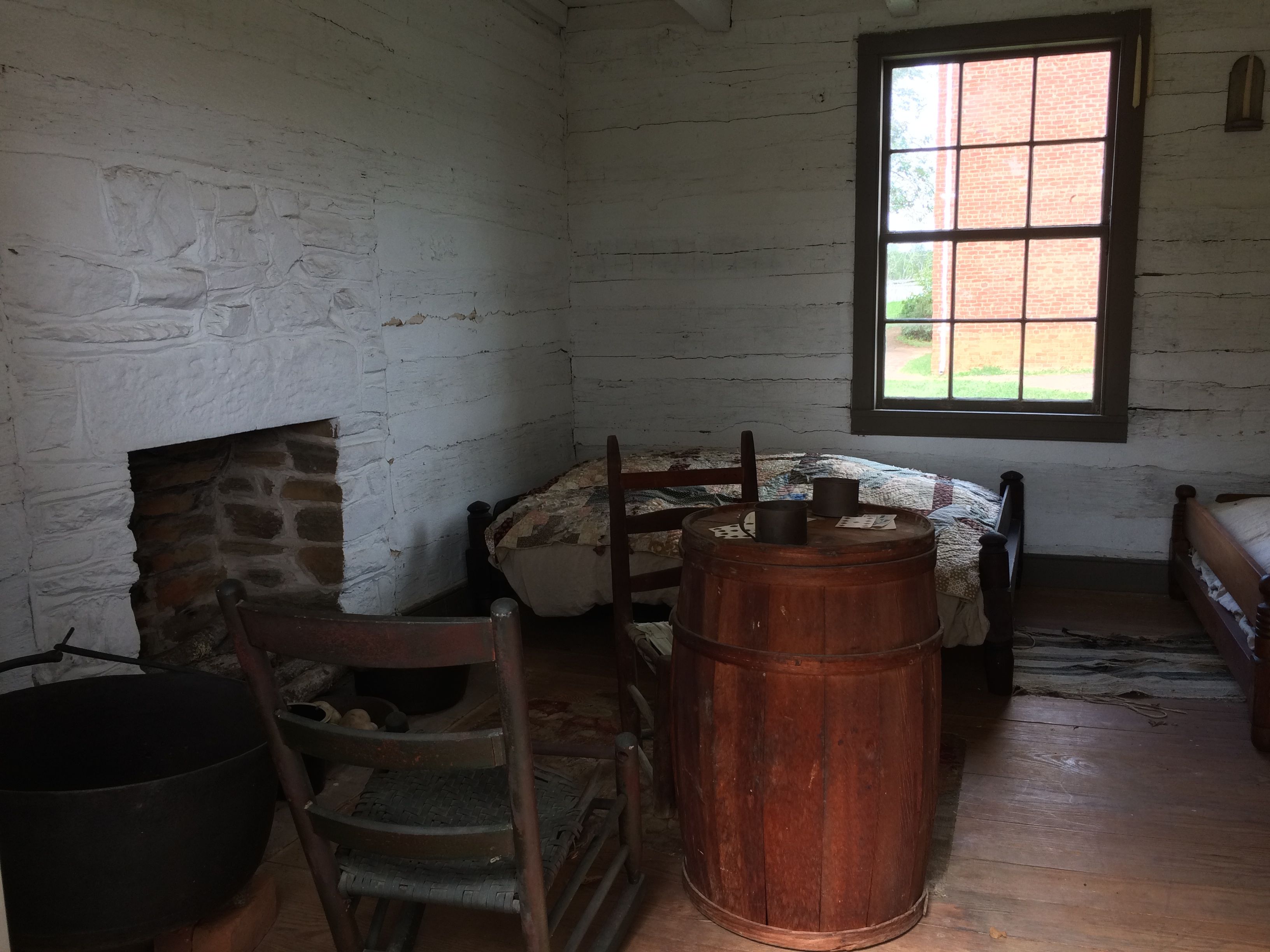
This is the room on the right.
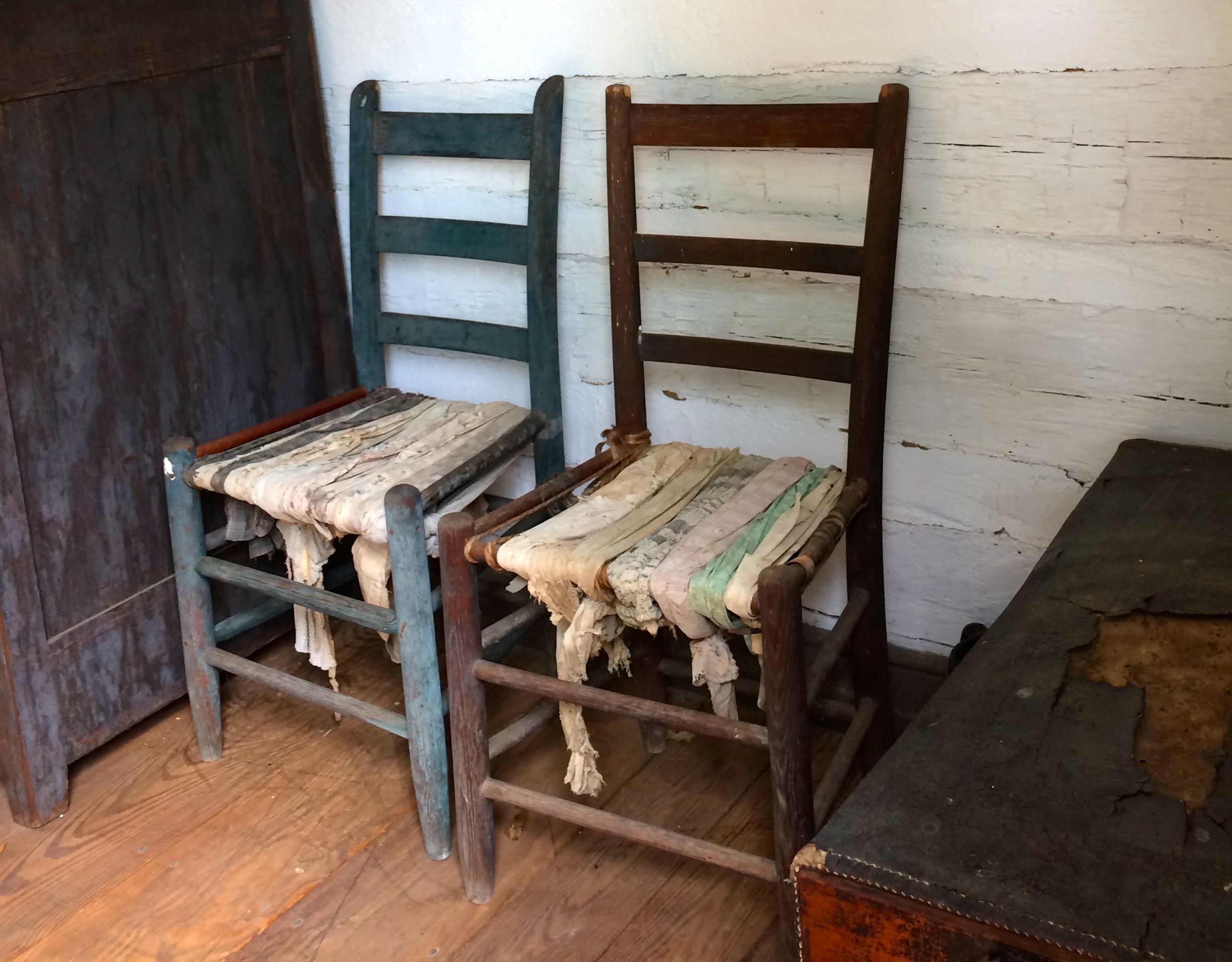
I was struck by the creativity in repairing these chairs that they were allowed to use.
So, what happened to the family after surrender? After the war, McLean and his family sold their house in 1867, unable to keep up the mortgage payments. After all, at least part of his income came from selling foodstuffs to the Confederate army. That market kind of dried up. They returned to their home in Manassas. According to Wikipedia, the family eventually moved to Alexandria, Virginia where he worked for the Internal Revenue Service from 1873 to 1876. He died in 1886 and is buried in St. Paul’s Episcopal Cemetery in Alexandria.
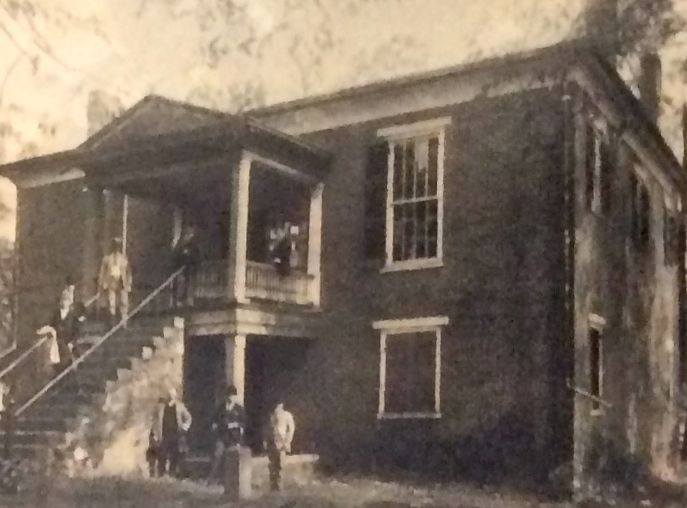
On to the rest of the town. As I mentioned before, the town was aggressively restored. This was the courthouse in 1890.
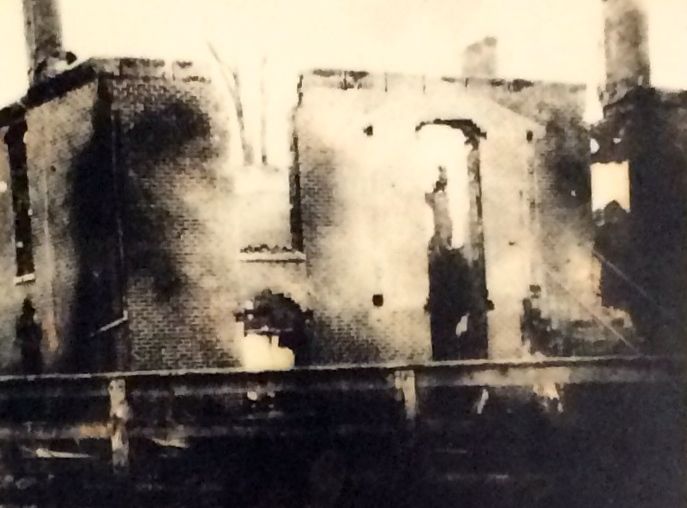
Here is the courthouse in 1892, after the fire.
They did a great job of recreating the courthouse, too.
At the courthouse, they had a great little museum.
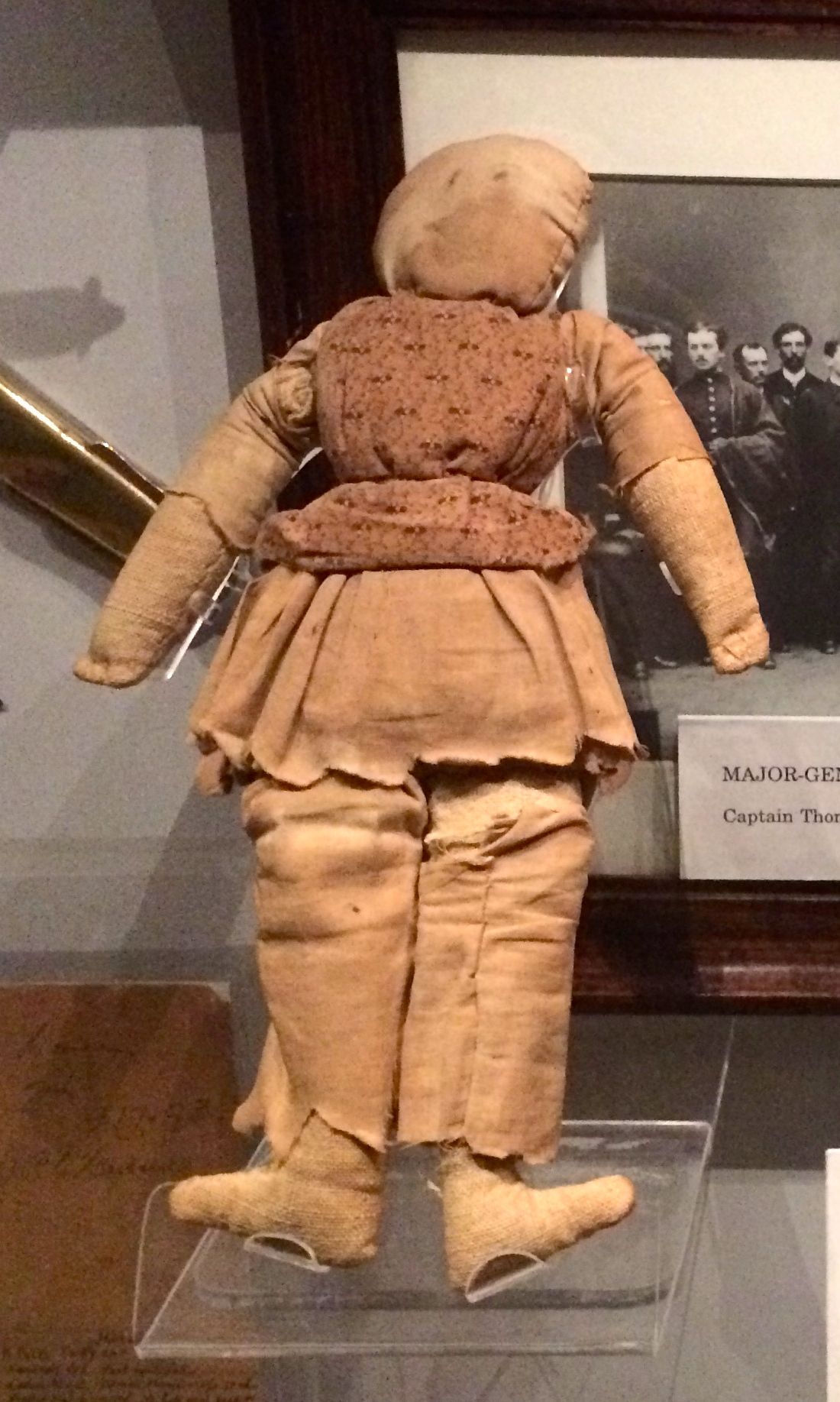
One artifact I was eager to see was a doll called “the silent witness.” She belonged Lula McLean, one of Wilmer’s daughters. She had left it on the horsehair sofa and in the aftermath of the signing, Union soldiers took things as souvenirs.
The soldiers were tossing the doll around, and joking about it as being a silent witness. Lula’s doll was taken home by Captain Thomas W.C. Moore of Major General Sheridan’s staff. For more than a century, the Moore family kept the doll as a “war trophy” of sorts.
The doll was donated to Appomattox Court House National Historical Park in December 1992, and is now on permanent exhibit at the park.
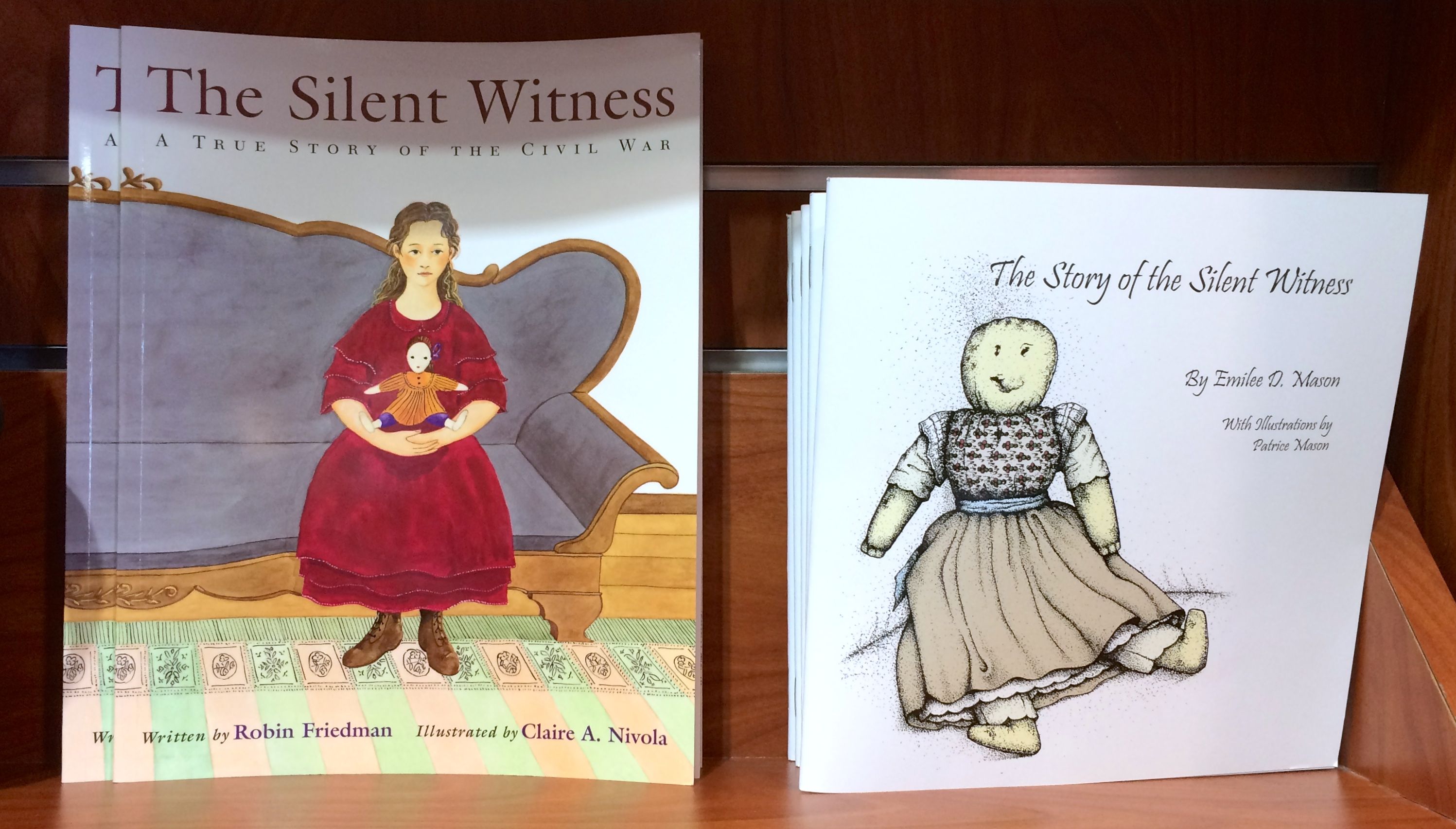
I had the book on the left in my classroom library.
The museum had all sorts of interesting bits and pieces.
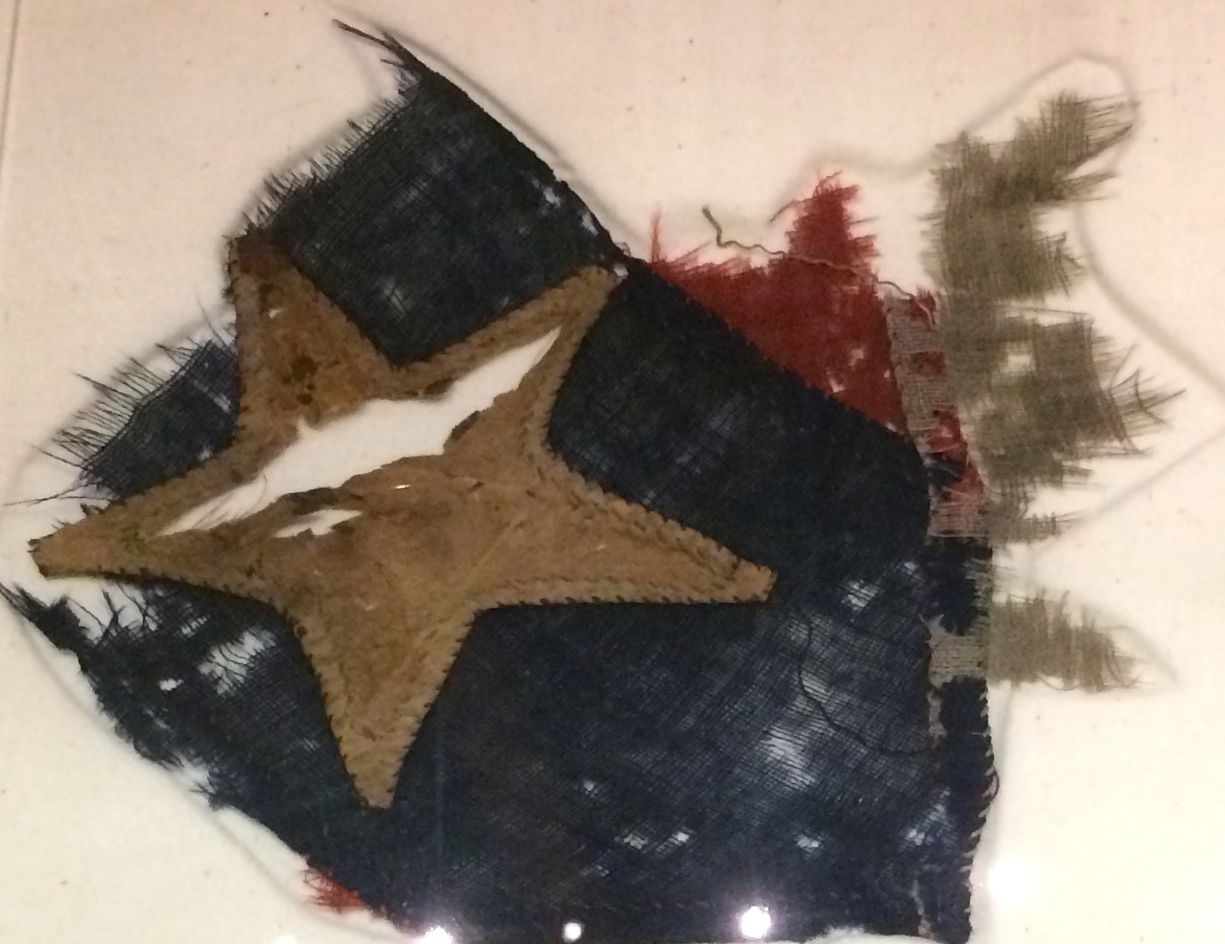
This is a section of the 24th Georgia Regiment flag.
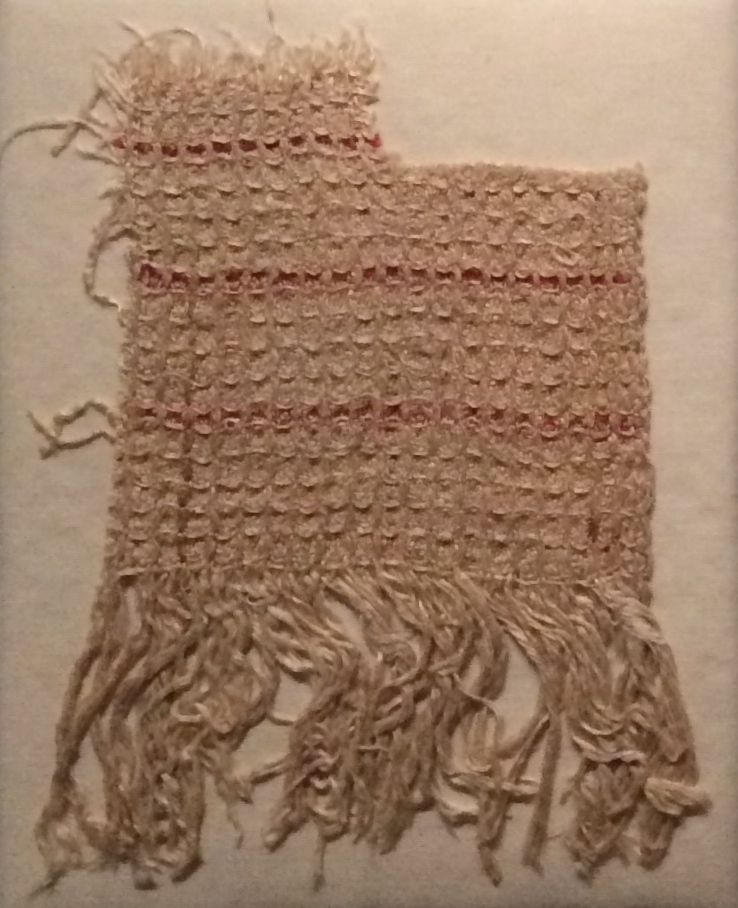
This is a fragment of the white flag that was used to signal surrender. It was actually a dish towel.
The terms of Surrender included this line “each officer and man will be allowed to return to their homes not to be disturbed by United State authority so long as they observe their paroles and the laws in force where they reside.” This one phrase would later prevent Lee from being tried for Treason and proved to be a godsend for the healing and reunification of the Nation, according to the display in the museum.
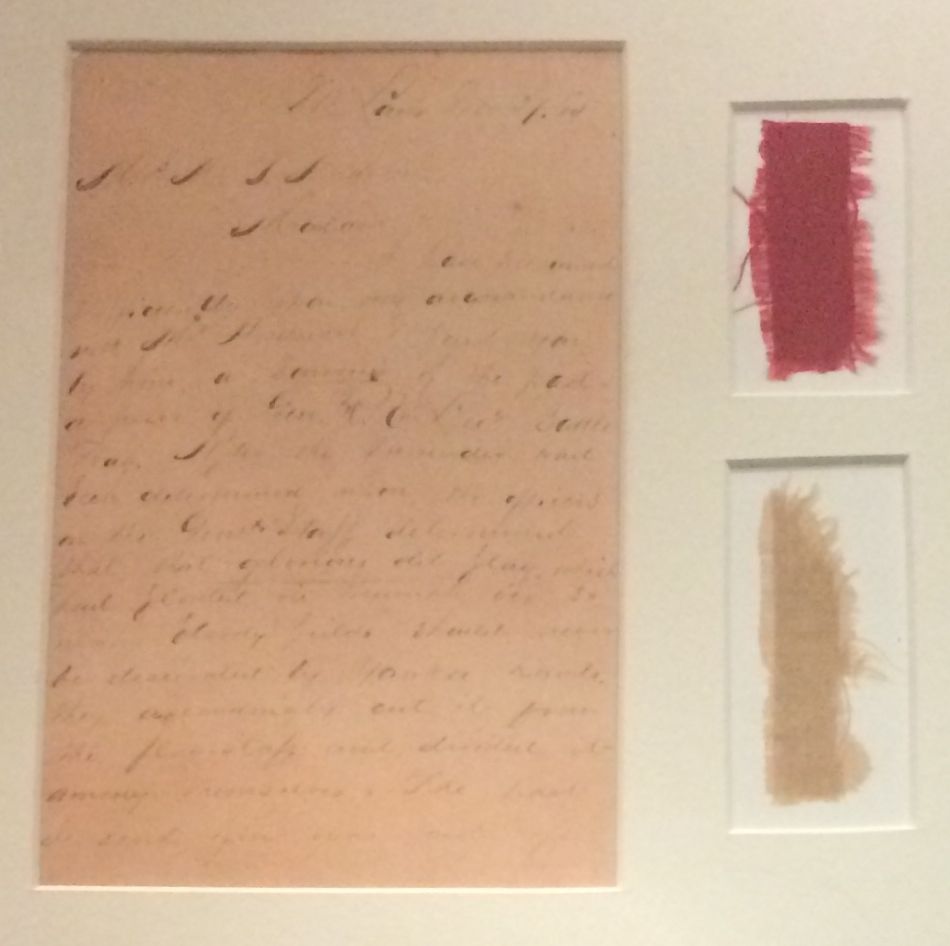
These little fragments are from General Lee’s flag. The text of the letter that accompanies it read, in part, that the officers of his staff determined that “the glorious old flag, which had floated in triumph o’er so many bloody fields should never be desecrated by Yankee hands.” They cut it from the flag staff and divided it among themselves.
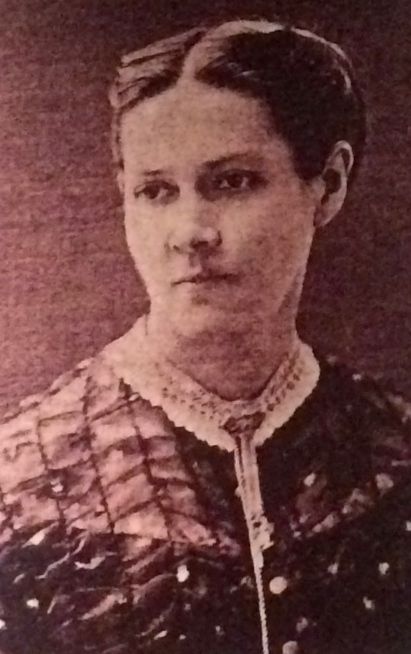
It was a Christmas gift from S.C. Calhoun, late of the C.S.A. to Mrs. M.T. Andrews.
It’s more impressive than a Chia Pet or a Salad Shooter.
At the Visitor Center, there was a schedule of tours being given by historical re-enactors. I was lucky enough to join a talk by Corporal James Cook, Federal Provost Guard.
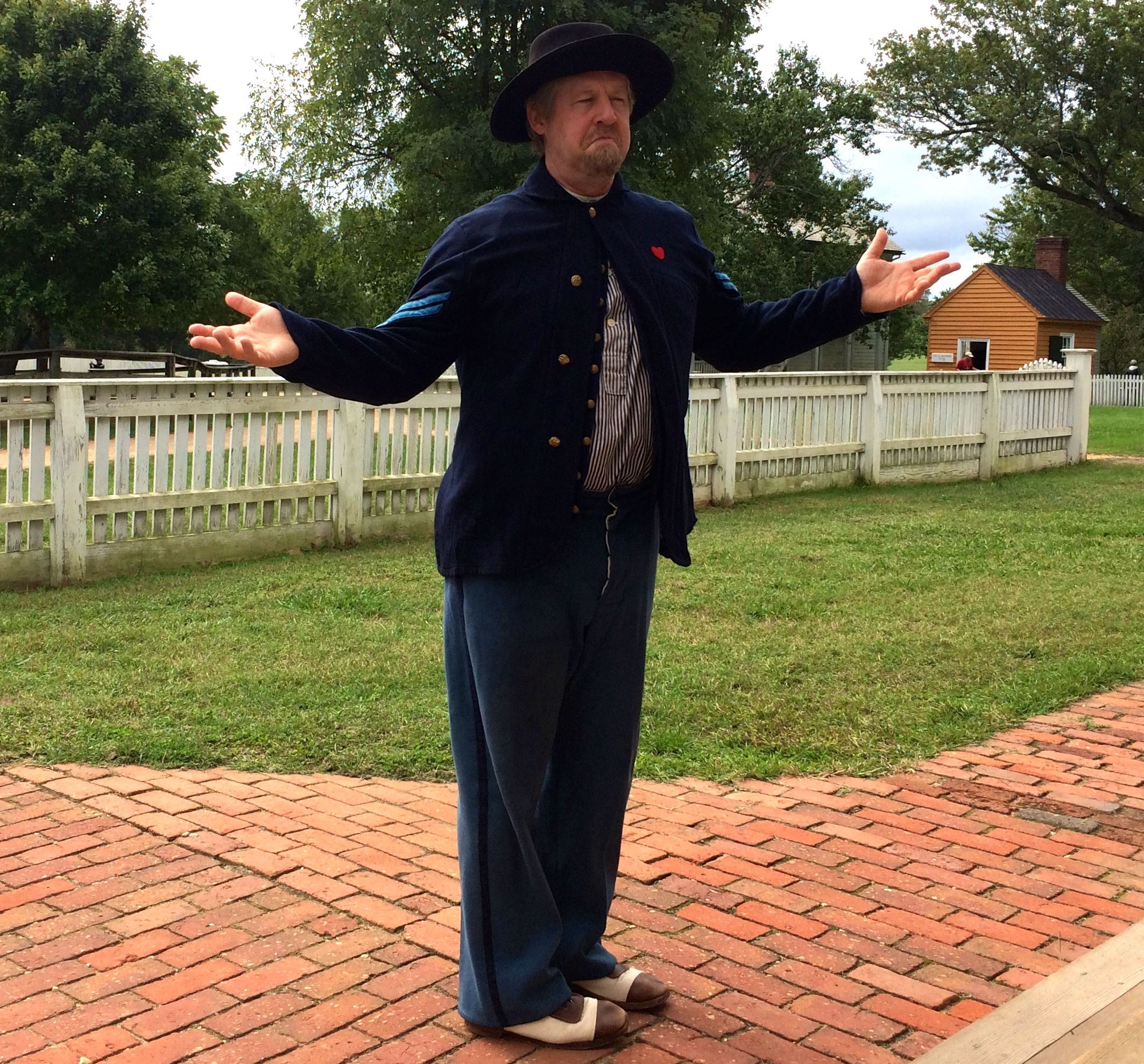
He was an animated speaker and focused on the surrender and what happened after.
He gave his talk about in front of Clover Hill Tavern, where they set up the printing presses.
In order to release the Confederate soldiers to return home, they needed to print paroles to carry with them to prove that they we free to go.
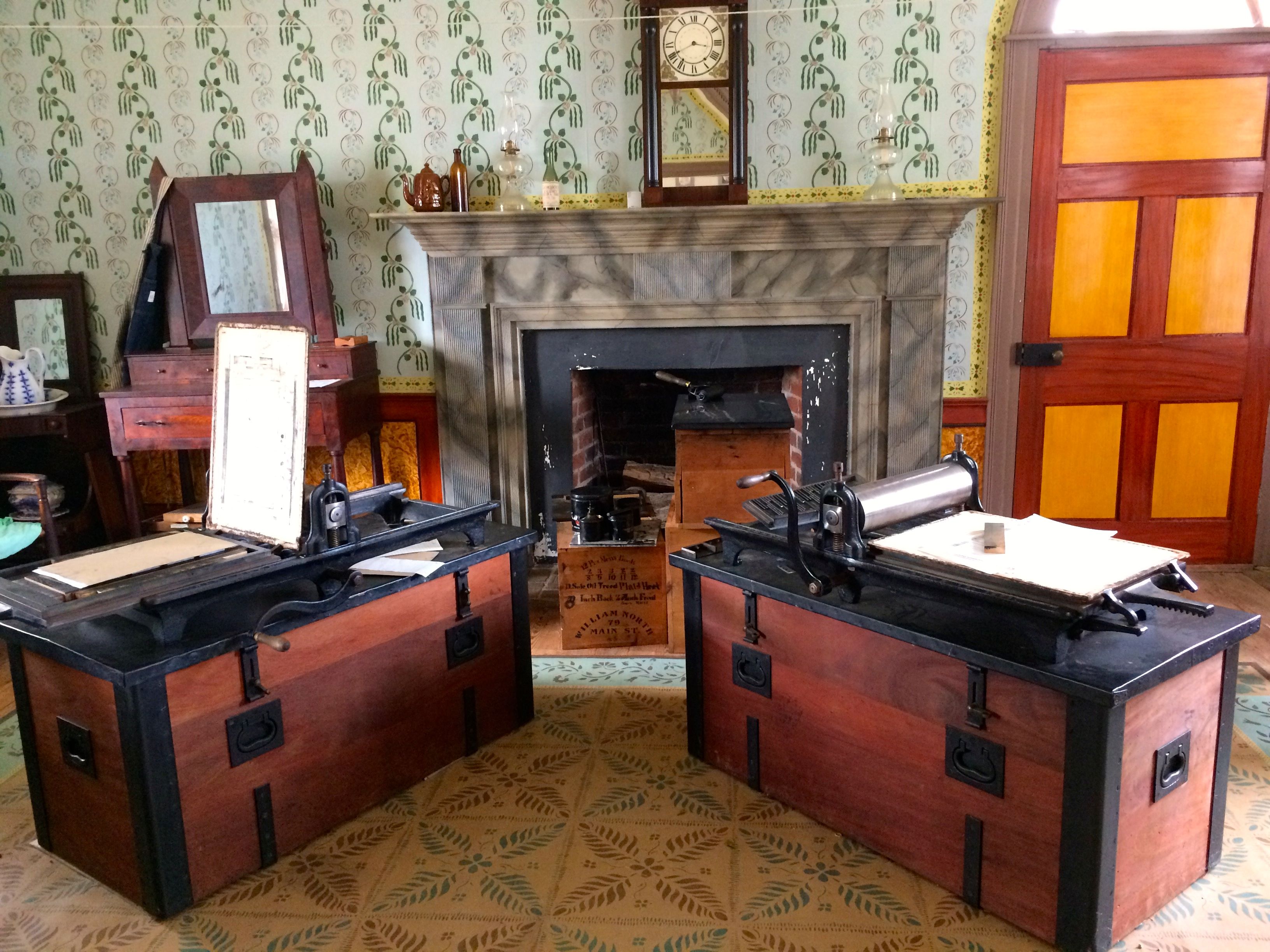
The Army sure had to carry a lot of things with them as they were fighting.
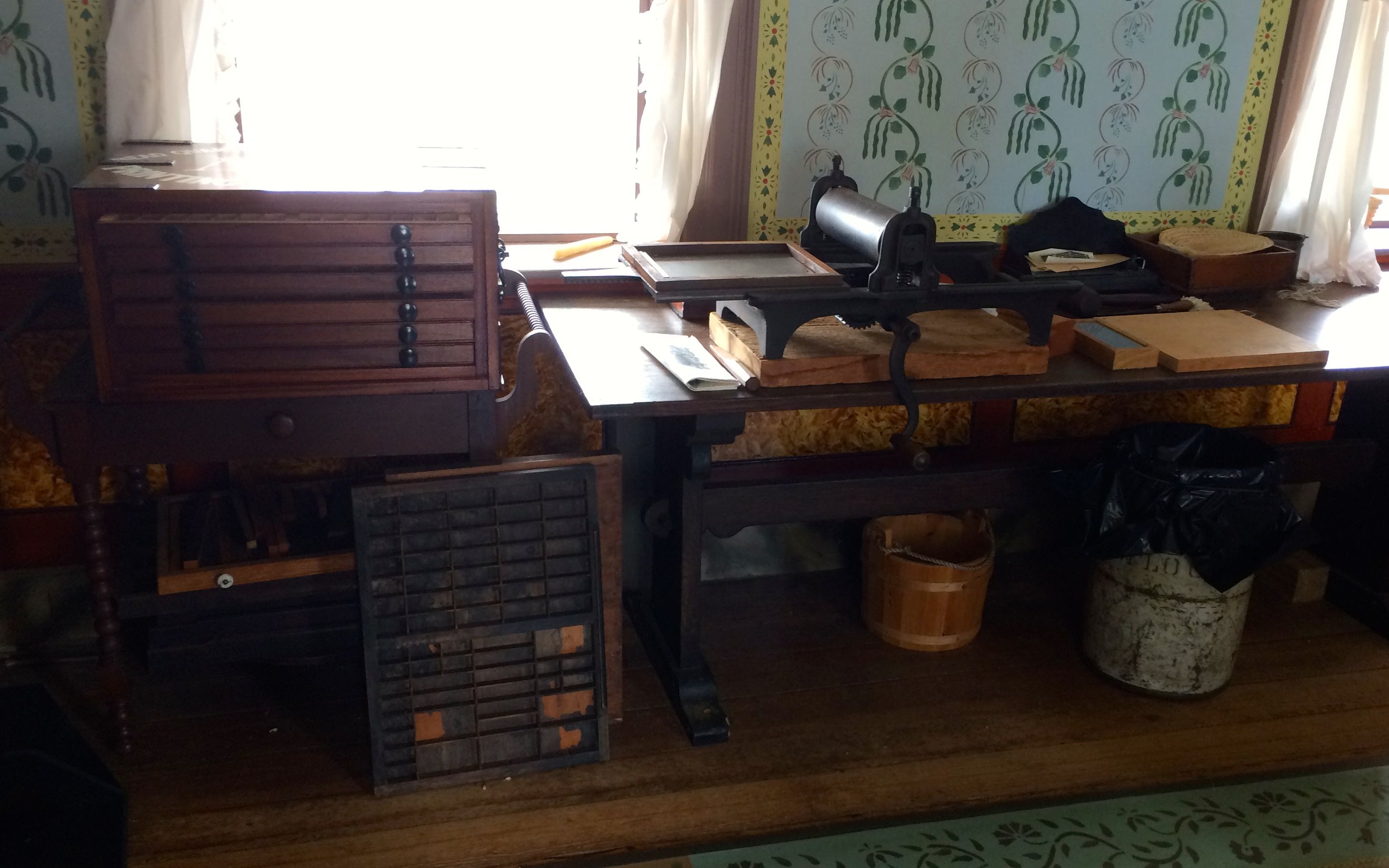
They had trays of type and ink and everything they needed to print the paroles.
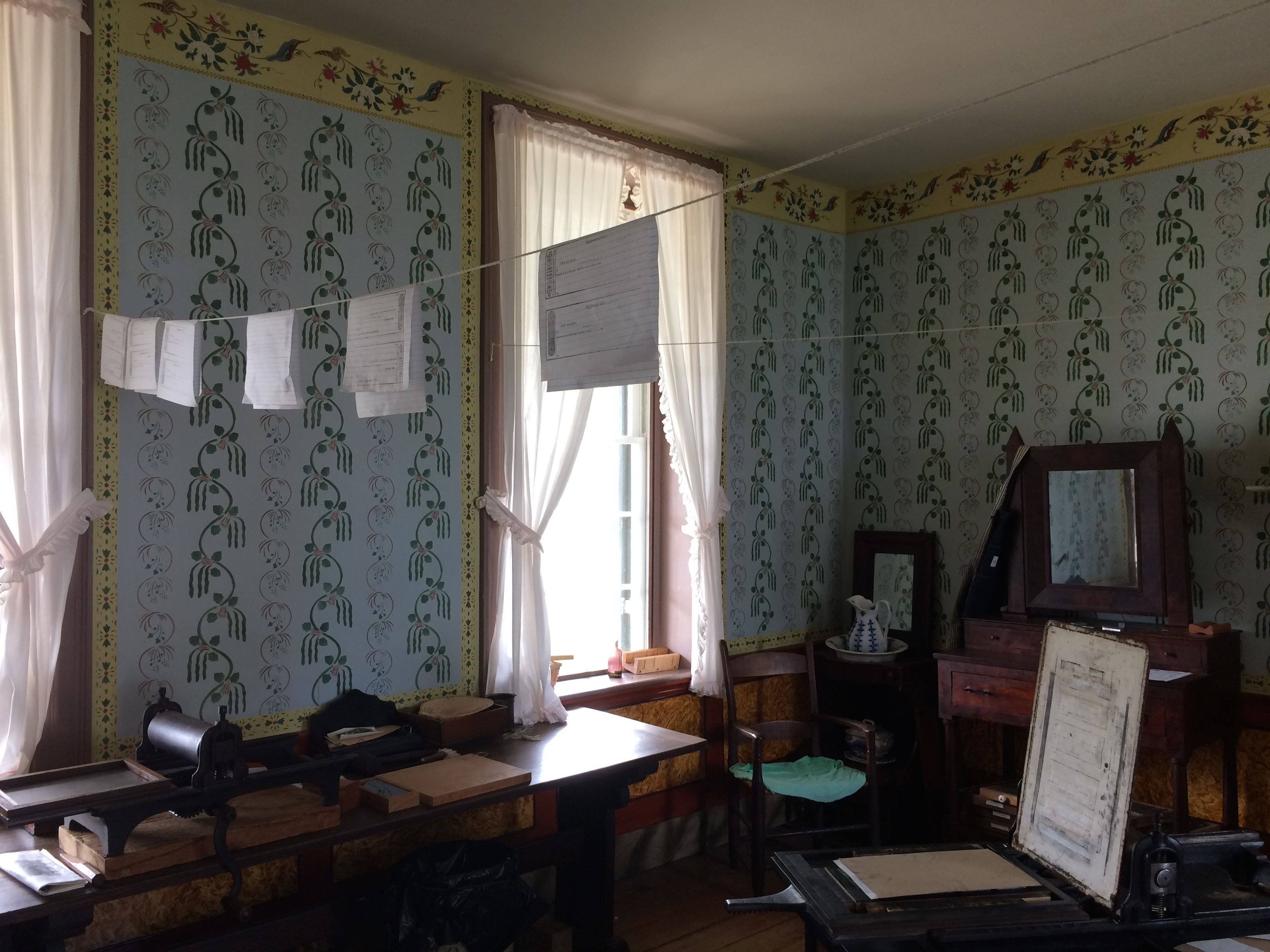
They hung the printed paroles on lines to dry. It took them a while to process everything.
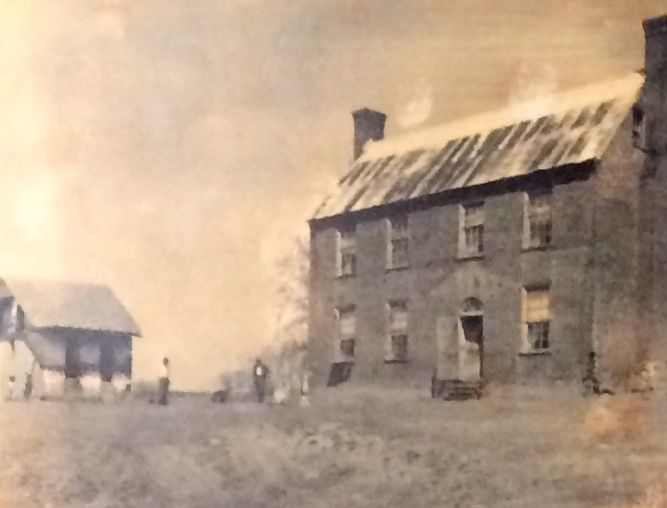
Incidentally, this is what the tavern looked like in 1932. Considering that it was built in 1819, and that there wasn’t much of a population left, it’s kind of amazing that it was still standing.
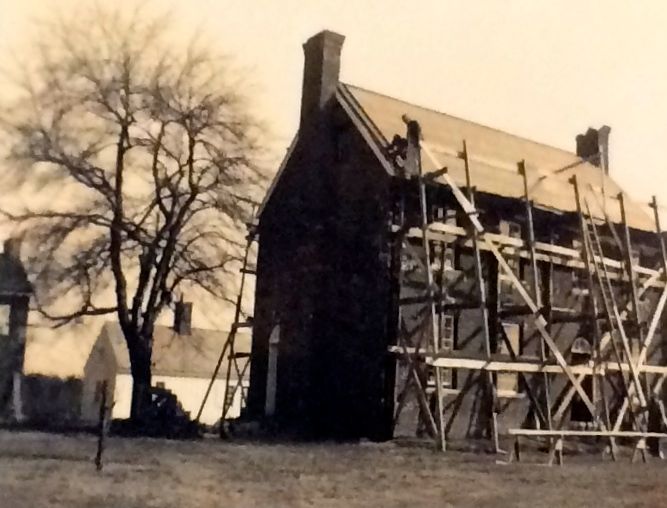
This is how it looked in 1954, when they were working on restoration.
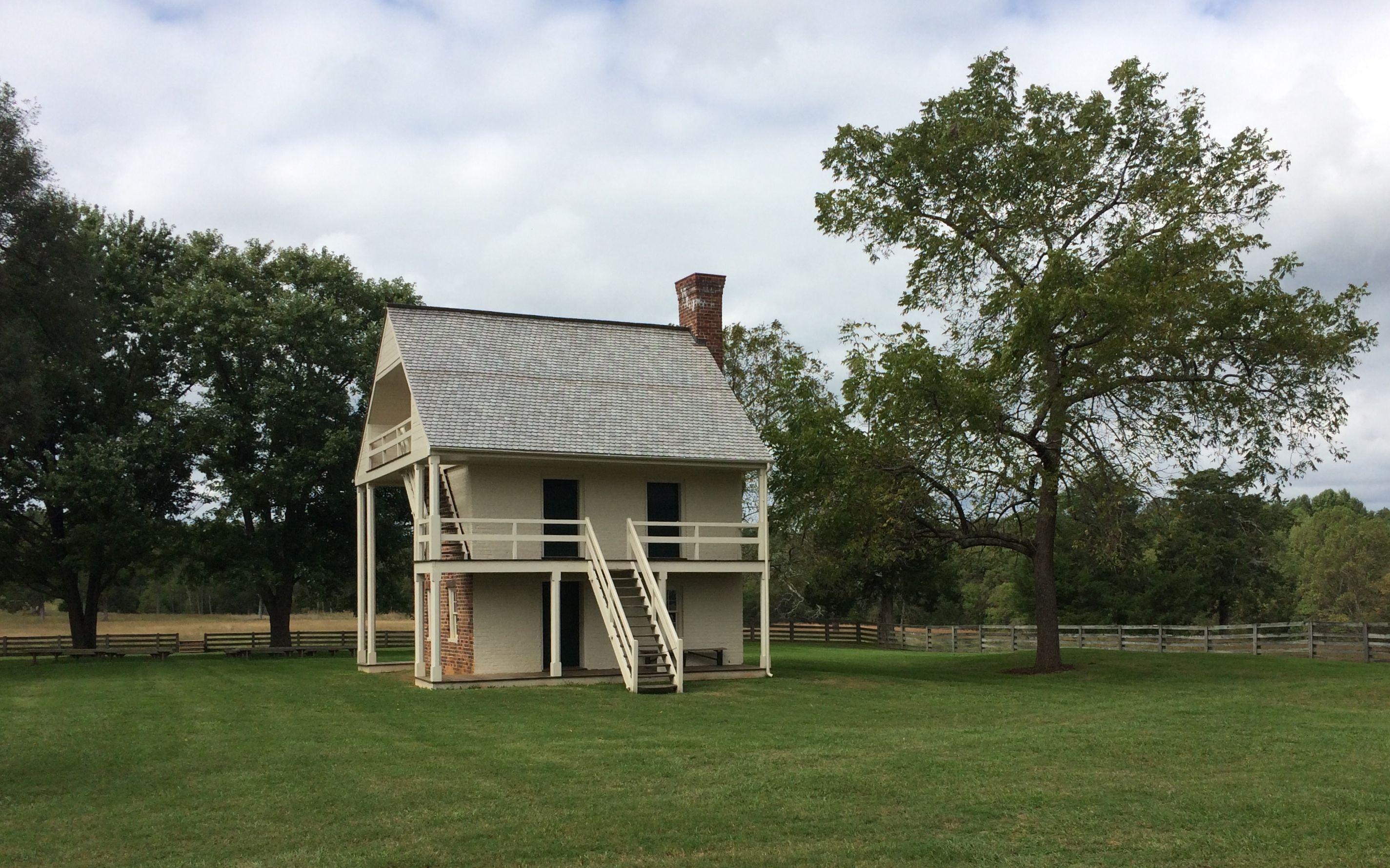
This is the tavern’s guesthouse.
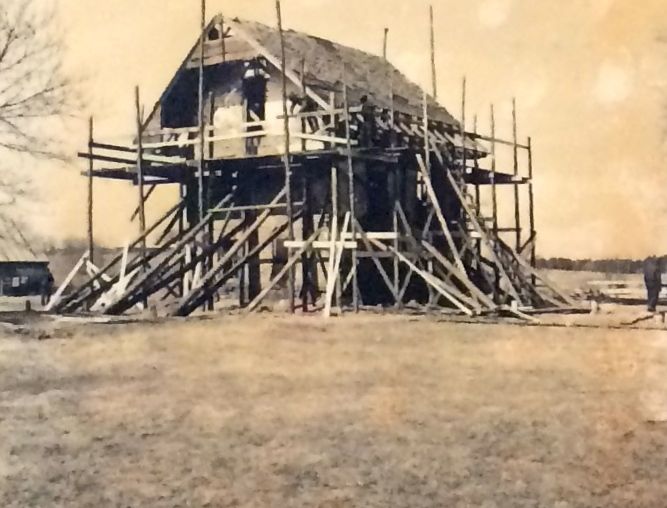
Here is a shot of it in 1942, when they were working on stabilizing and preserving it.
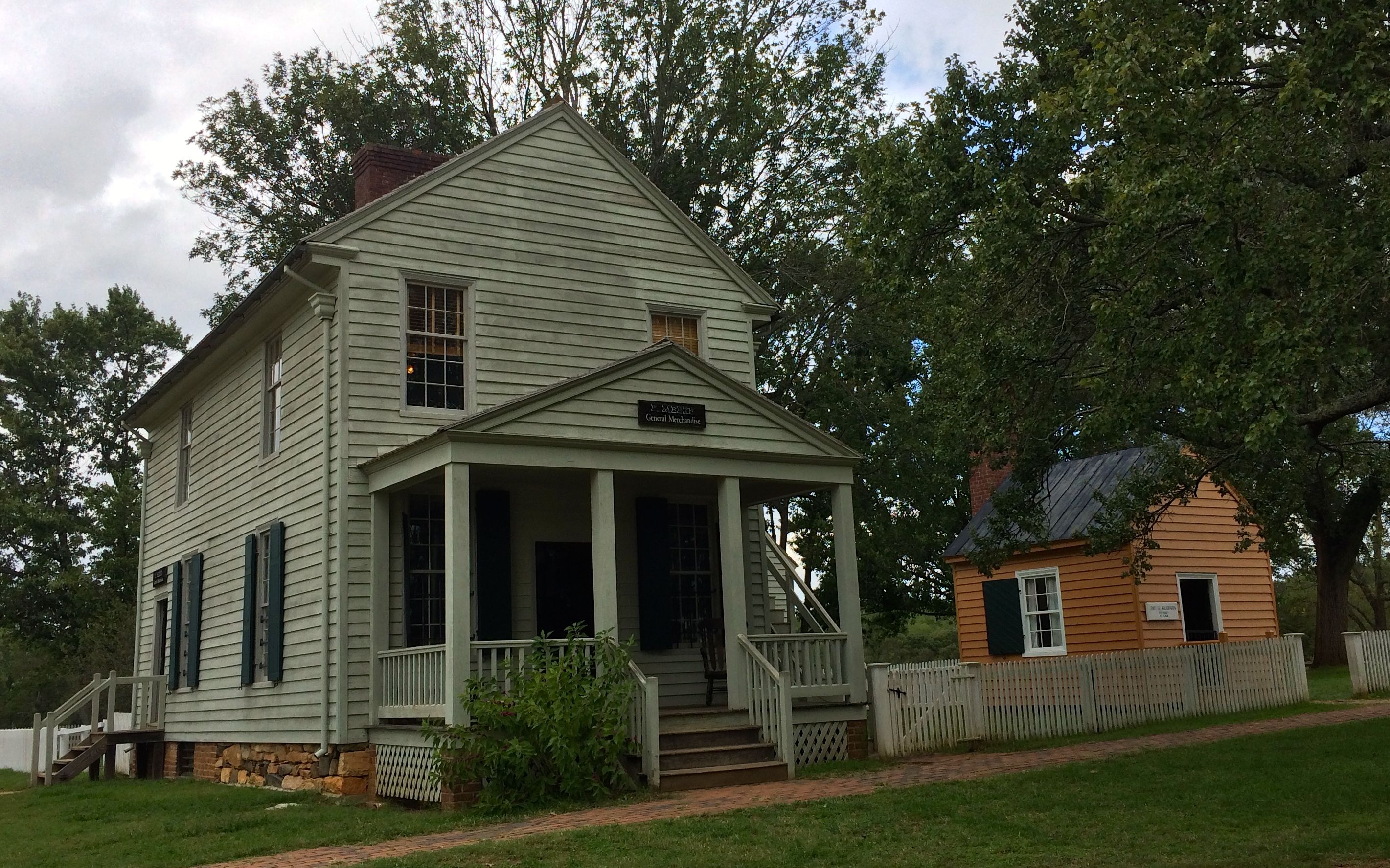
My time was growing short, so I needed to keep moving. Here is Meeks Store. The little brown building next door is a law office.
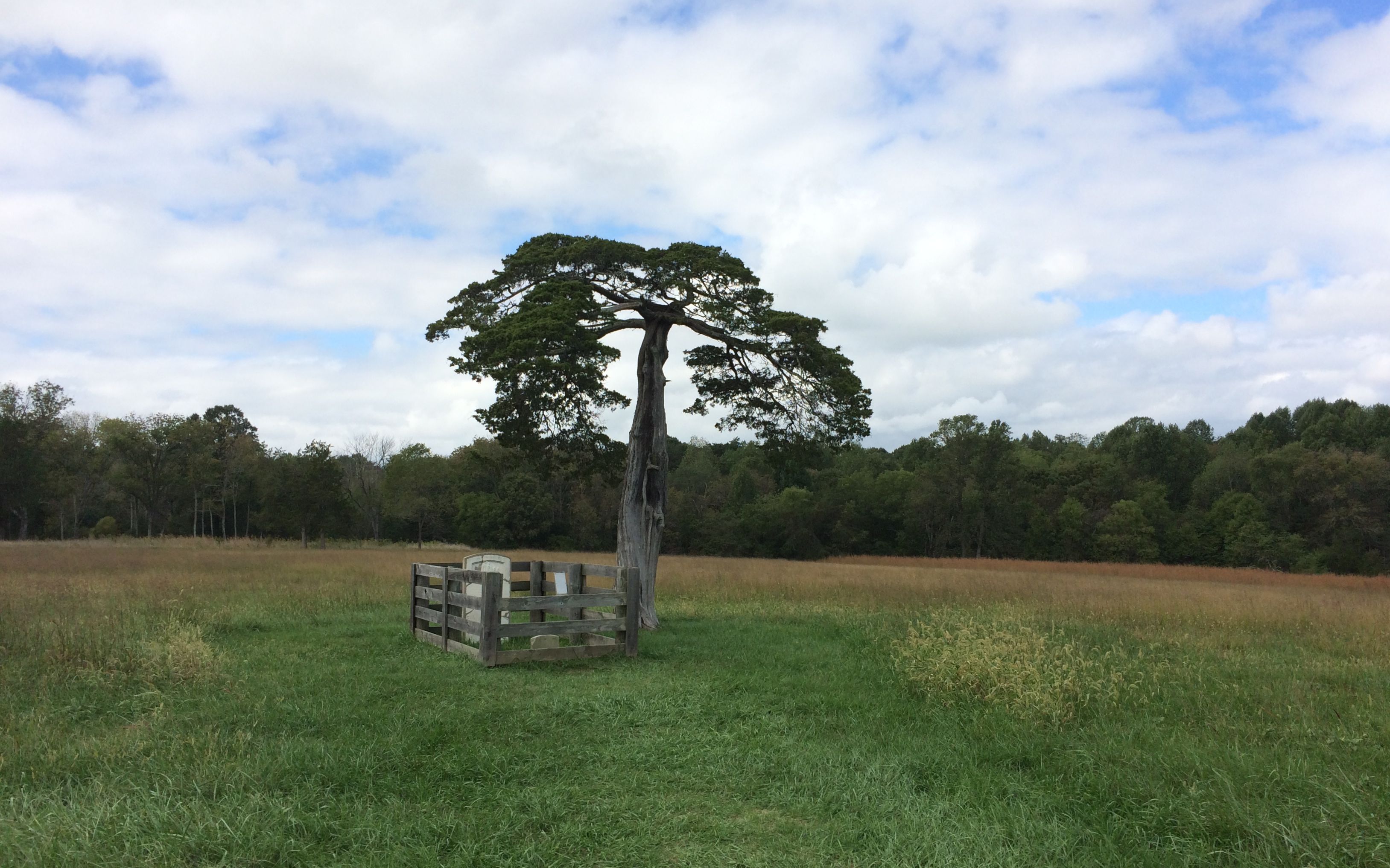
In the pasture behind the store is the grave of Lafayette Meeks, their son. He joined the 2nd Virginia Cavalry in the spring on 1861 at the age of 19. A few months later, he died of typhoid having never seen a battle. A interesting fact I learned was that 2/3 of all American Civil War deaths were from disease and not gunshot wounds.
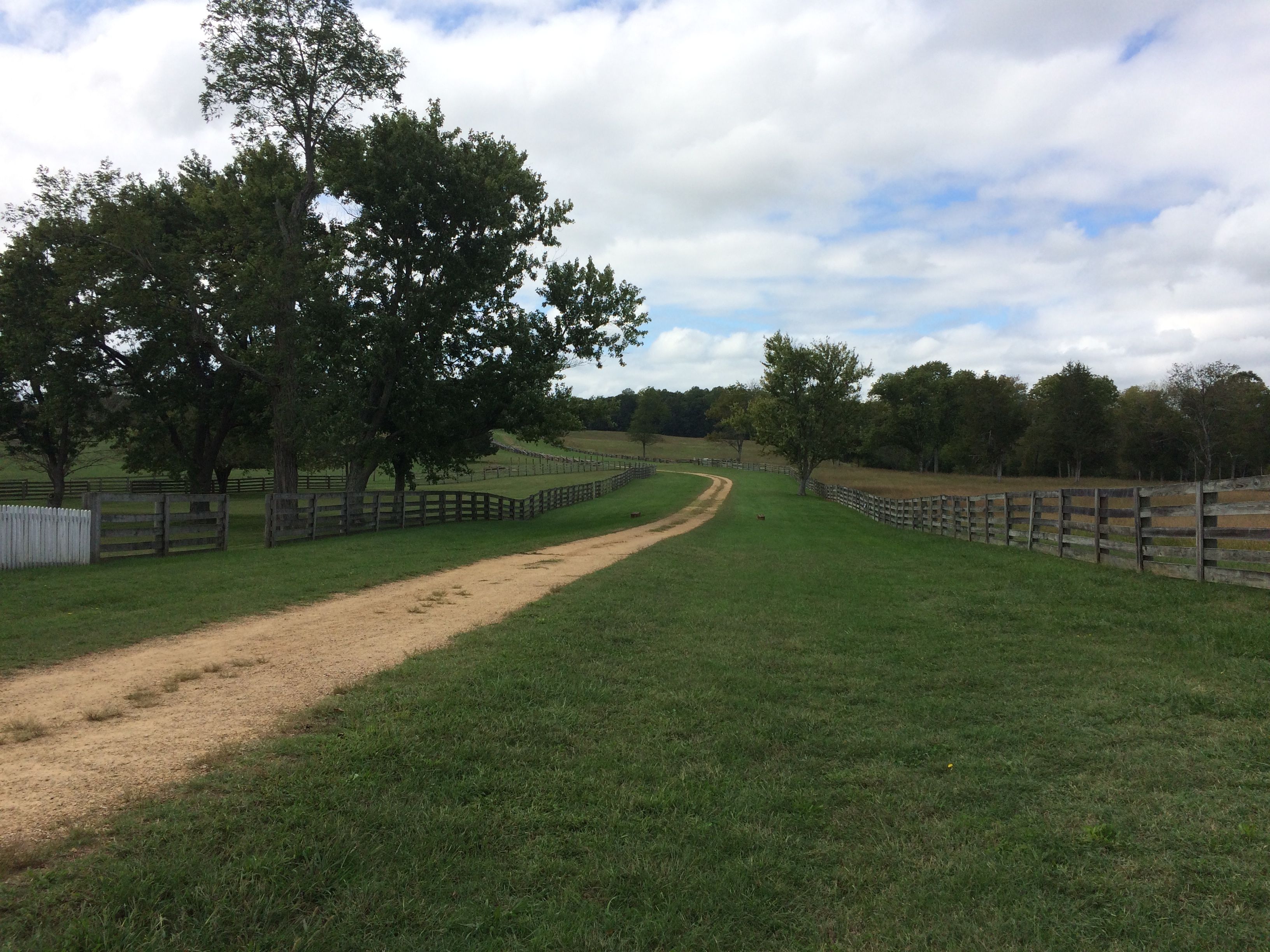
The grave was near the road through town. It is humbling to think of all the people that traveled down it in the spring of 1865.
It was a quick visit. It was time for me to get moving.
Interesting thanks for sharing.
Thanks, Betty! I’m glad you found it interesting.