Another State – Another Capitol

I have a lot of different kinds of things on “The List.” One group of things I want to be sure to hit is campgrounds people have recommended. Many People I met during my Airstreaming days were extremely enthusiastic about Kentucky Horse Park Campground. If you are a lover of all things equine, and you want to camp, this is the place for you. It was a good campground with plenty of trees, level, paved sites and enough space between the sites so that you didn’t feel crowded. Who could ask for more?
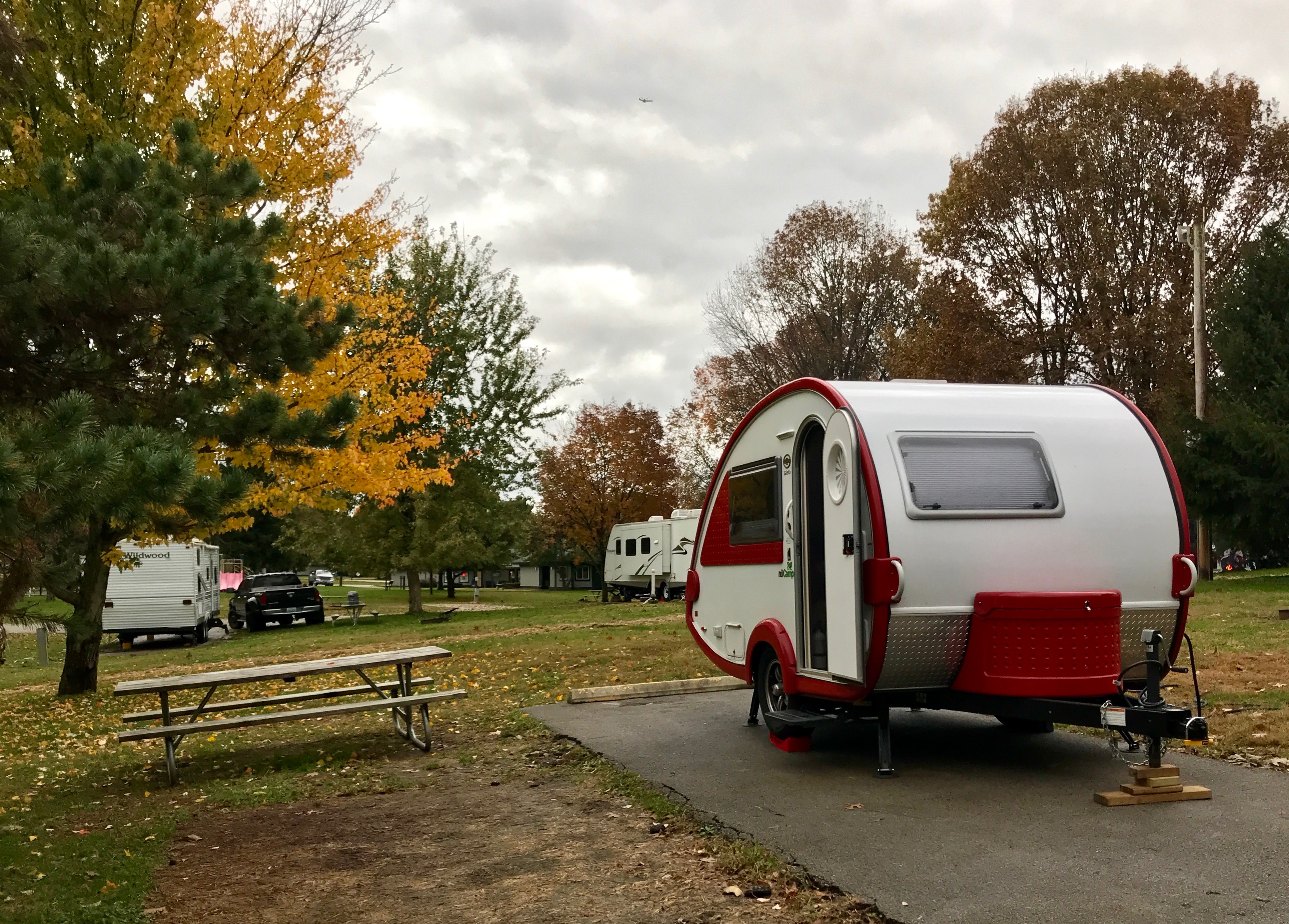
The campground is part of the Kentucky Horse Park. Not only is it close to the horses and the horse museums, it is close to Lexington. I didn’t have too much time to spend in the area, so I didn’t visit the museums or Lexington. I spent a couple of days in Lexington during my first year on the road, so I didn’t feel bad about skipping it on this trip.

No, my goal was to visit Frankfort, the capital of the Commonwealth of Kentucky. It was only about 25 miles to the Northwest.
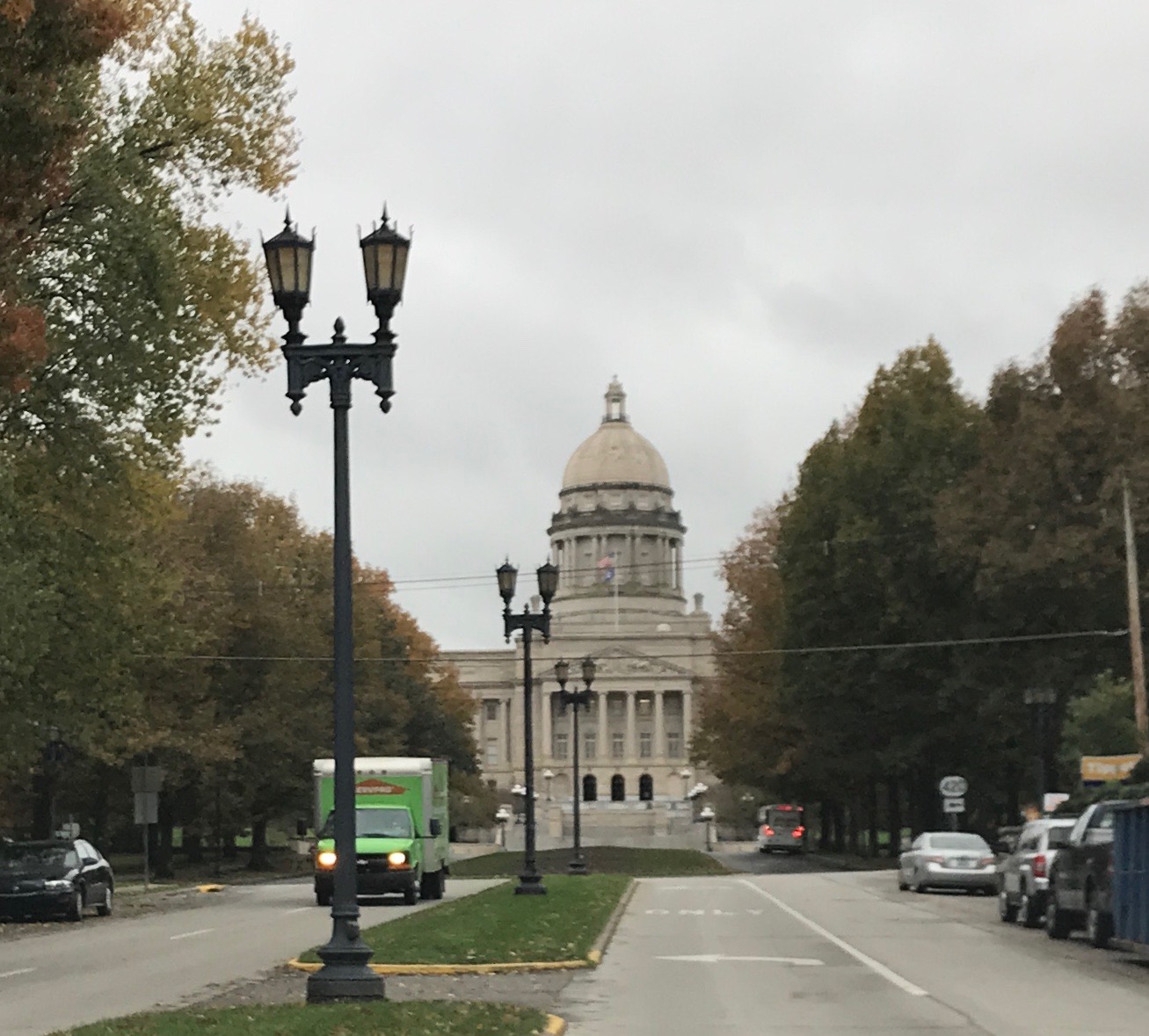
I arrived in Frankfort. It wasn’t too hard to pick out the capitol. Although it is the capitol of Kentucky, it has a small-town feel to it. I looked up the population and discovered that an estimated 28,000 people live there. It is classified as a home-rule class city.

In Kentucky, there are currently two classes of cities: First class and home rule. There used to be many more different categories, but they switched things around a few years ago. There are 419 cities in Kentucky. Two of them are first class cities – Lexington and Louisville – and the rest are home rule.

On to the capitol!
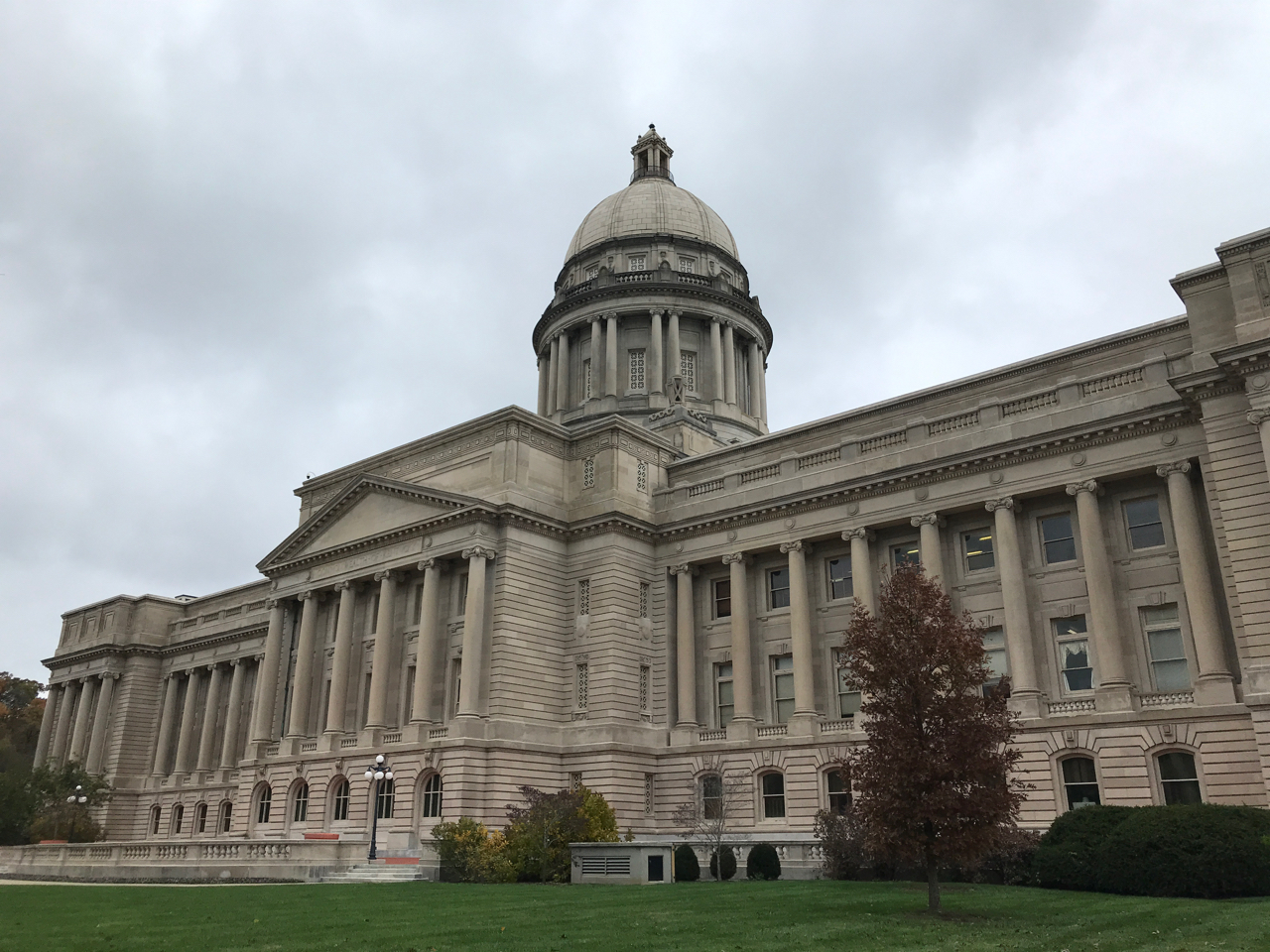
This stately building was inaugurated in 1910. Designed by Frank Mills Andrews, he used the Beaux-Arts style.

Now, this capitol has a dome and a rotunda. I entered and walked in to see what I could see.
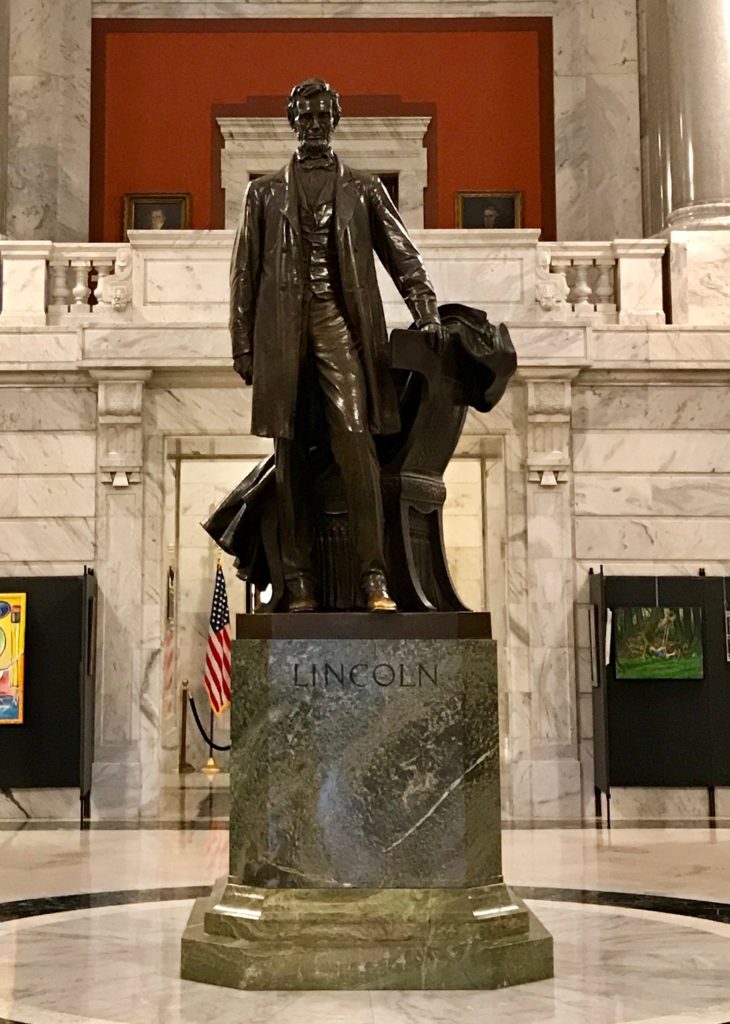
In the center of the rotunda, I was greeted by native son, Abraham Lincoln. He was born in a log cabin in Kentucky near Sinking Spring. You can still see the spring if you visit Abraham Lincoln Birthplace National Historic Site, which is about an hour and a half from Frankfort. I visited in 2014, and I’d say it’s worth a visit.

Surrounding Lincoln are other statues honoring other significant Kentuckians.

Alben W. Barkley, who was elected to the U.S. House and Senate and served as Vice President with Harry S Truman.
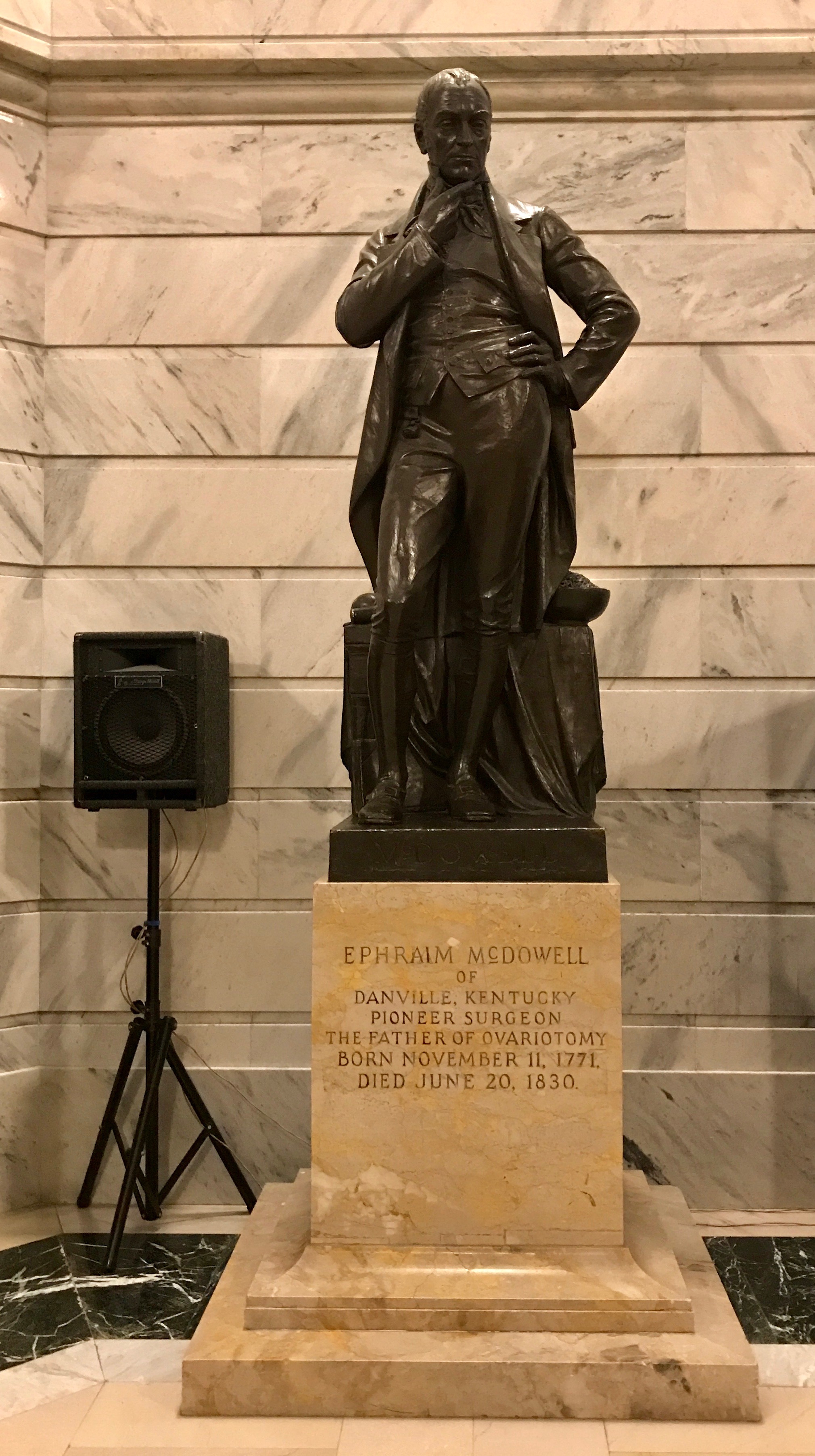
Then there is Ephraim McDowell, who was a pioneer surgeon. He was the “Father of the Ovariotomy.” If you remember your suffixes, you’ll remember -otomy means “the removal of” and it comes from the Greek “ectomy.”

Okay, this ‘pioneer surgeon” was removing ovaries with, apparently, morpheine the only option for anesthesia and before Joseph Lister got antiseptic surgical procedures to be accepted. It boggles the mind. Well, my mind is boggled.
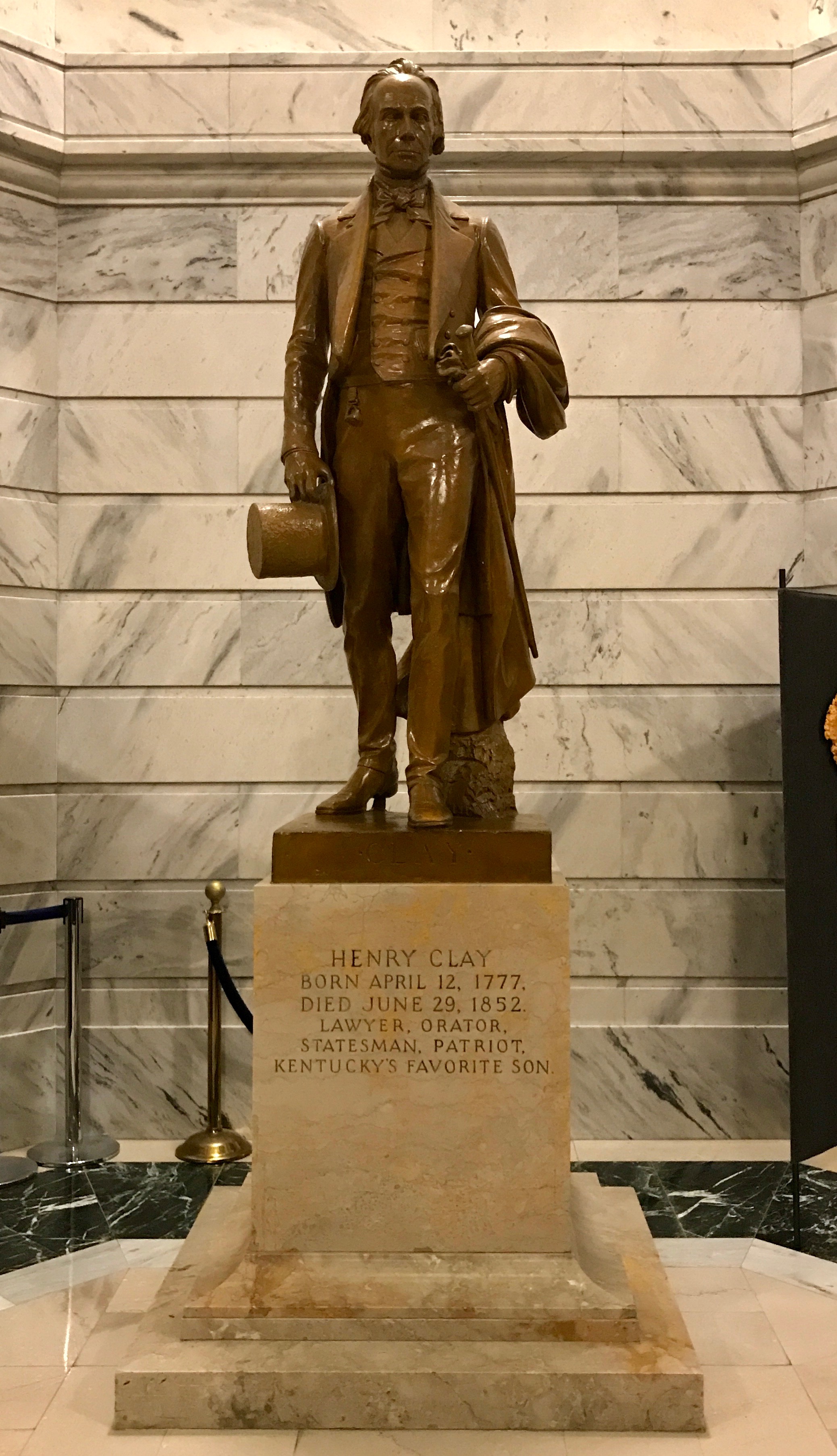
Henry Clay was born in Virginia in 1777, but moved to Kentucky before the end of the century. He served in the U.S. House and Senate as well as serving as Secretary of State under John Quincy Adams. He died while he was serving as Senator.
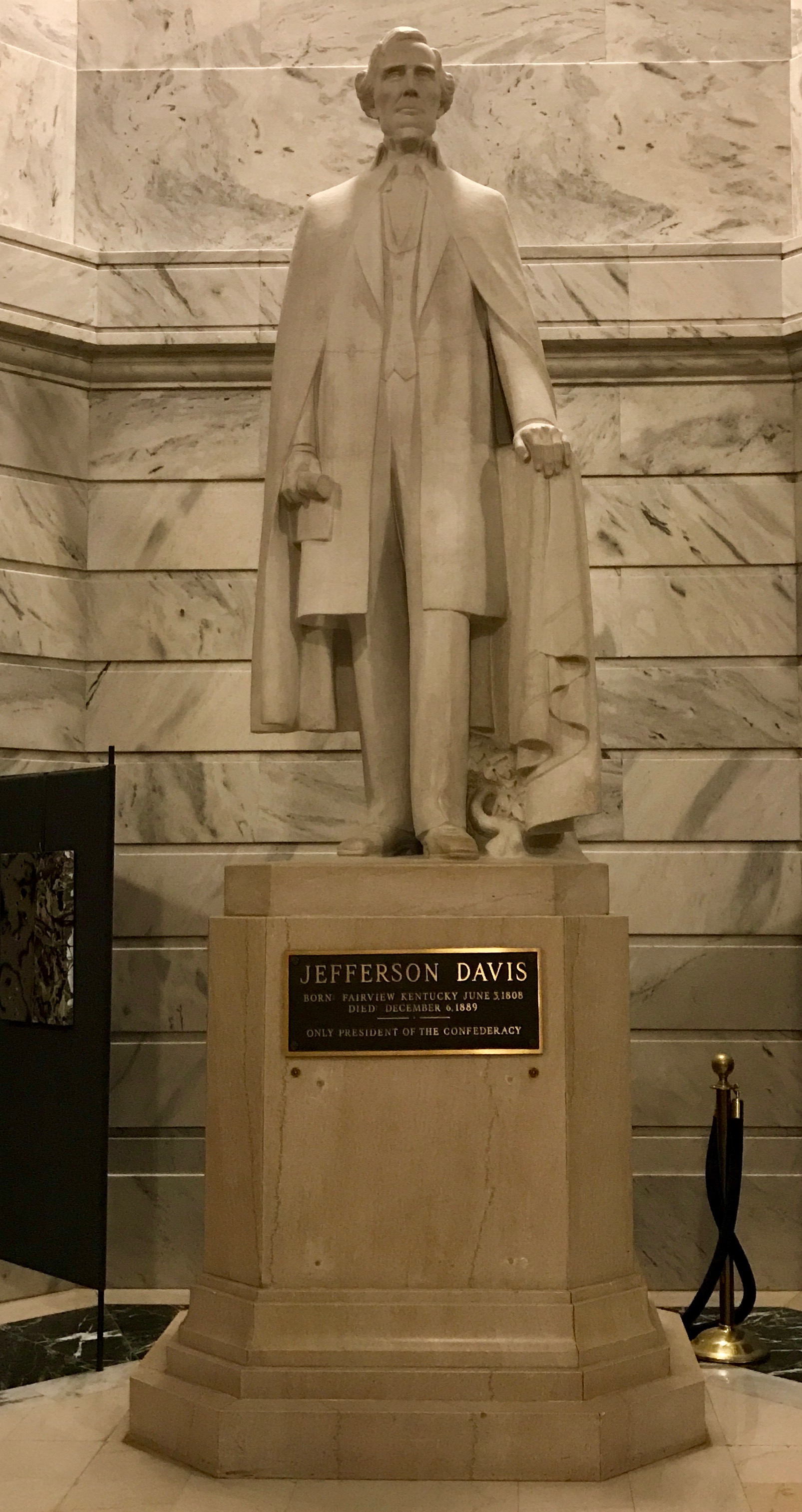
Then, there is Jefferson Davis. Born in Fairview, Kentucky, he moved at an early age to Mississippi. He is honored for two things: being born in Kentucky and being the only president of the Confederacy. Seems like just maybe they could have found a woman to honor somewhere in Kentucky’s history.
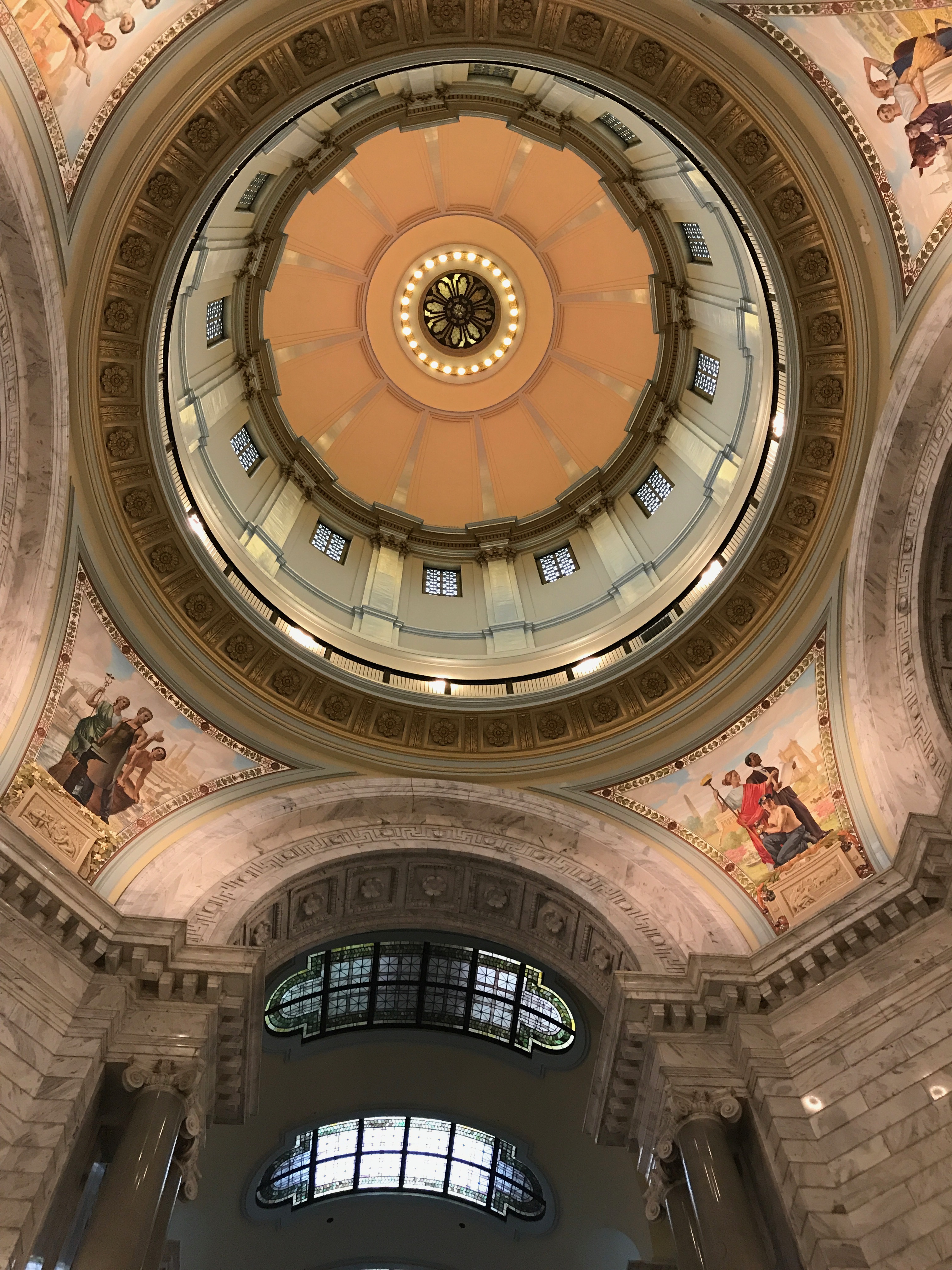
The dome is something to behold – but more about that later.
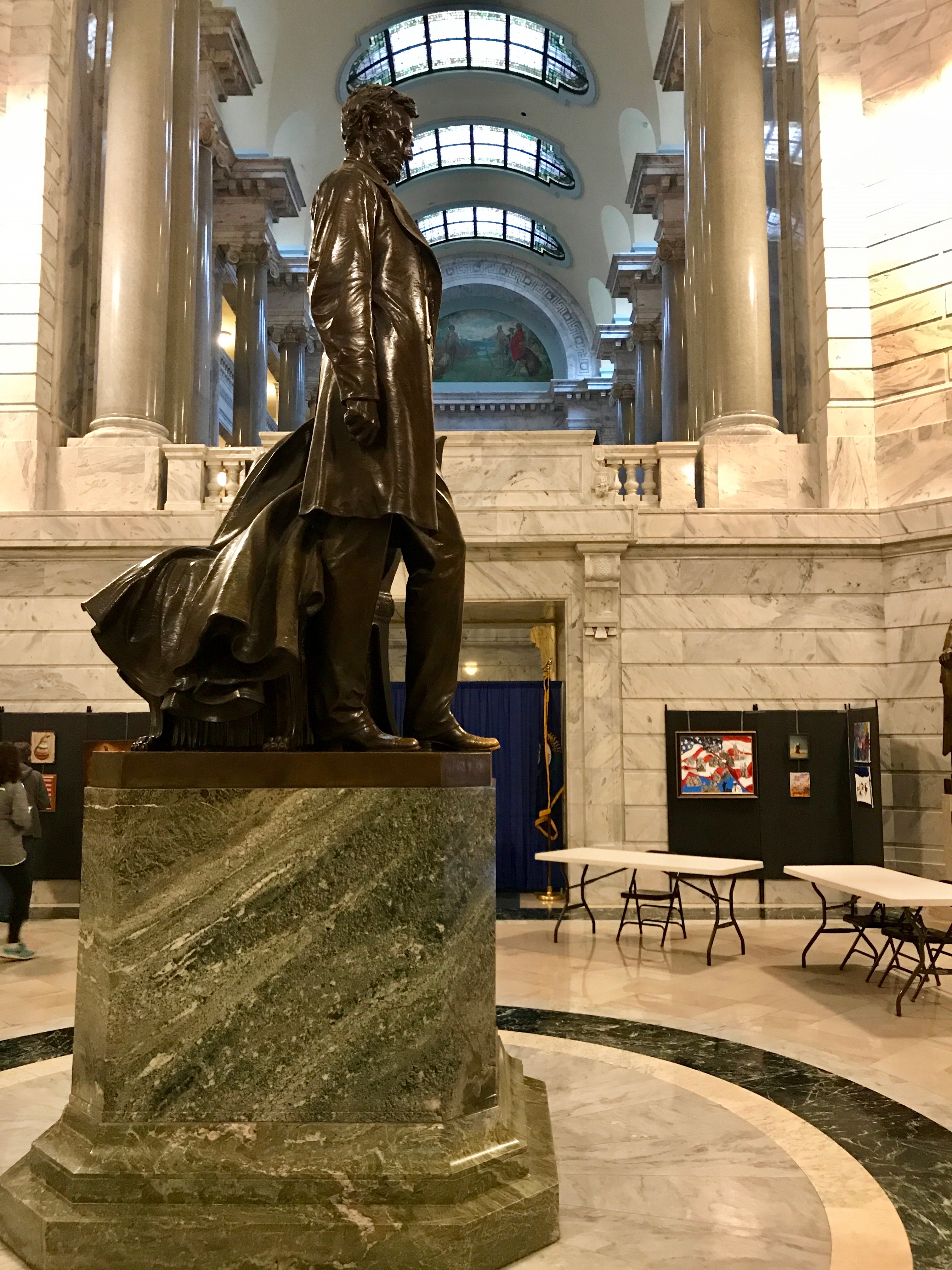
Just another look around before I head off to explore.
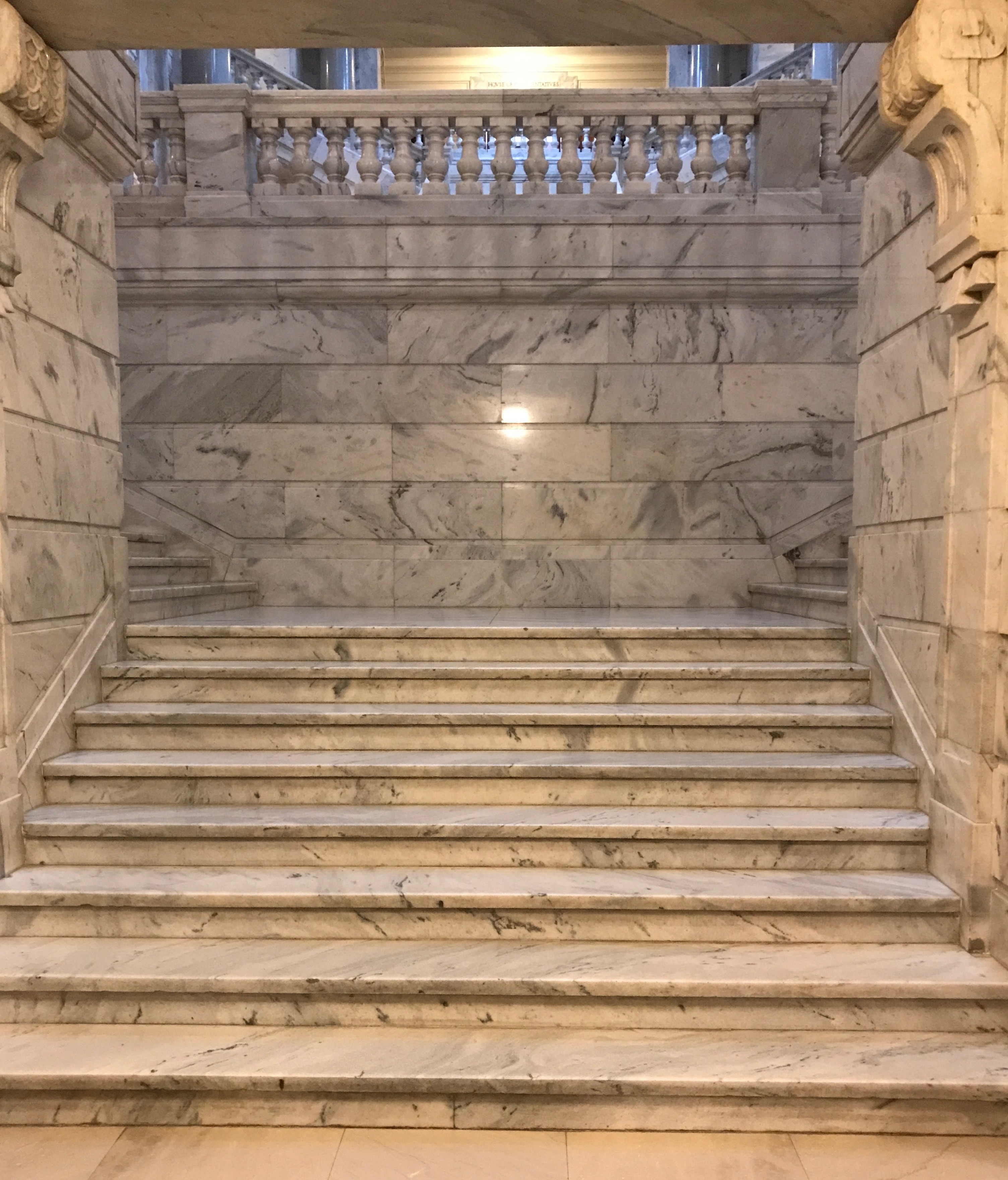
Up the marble stairs.
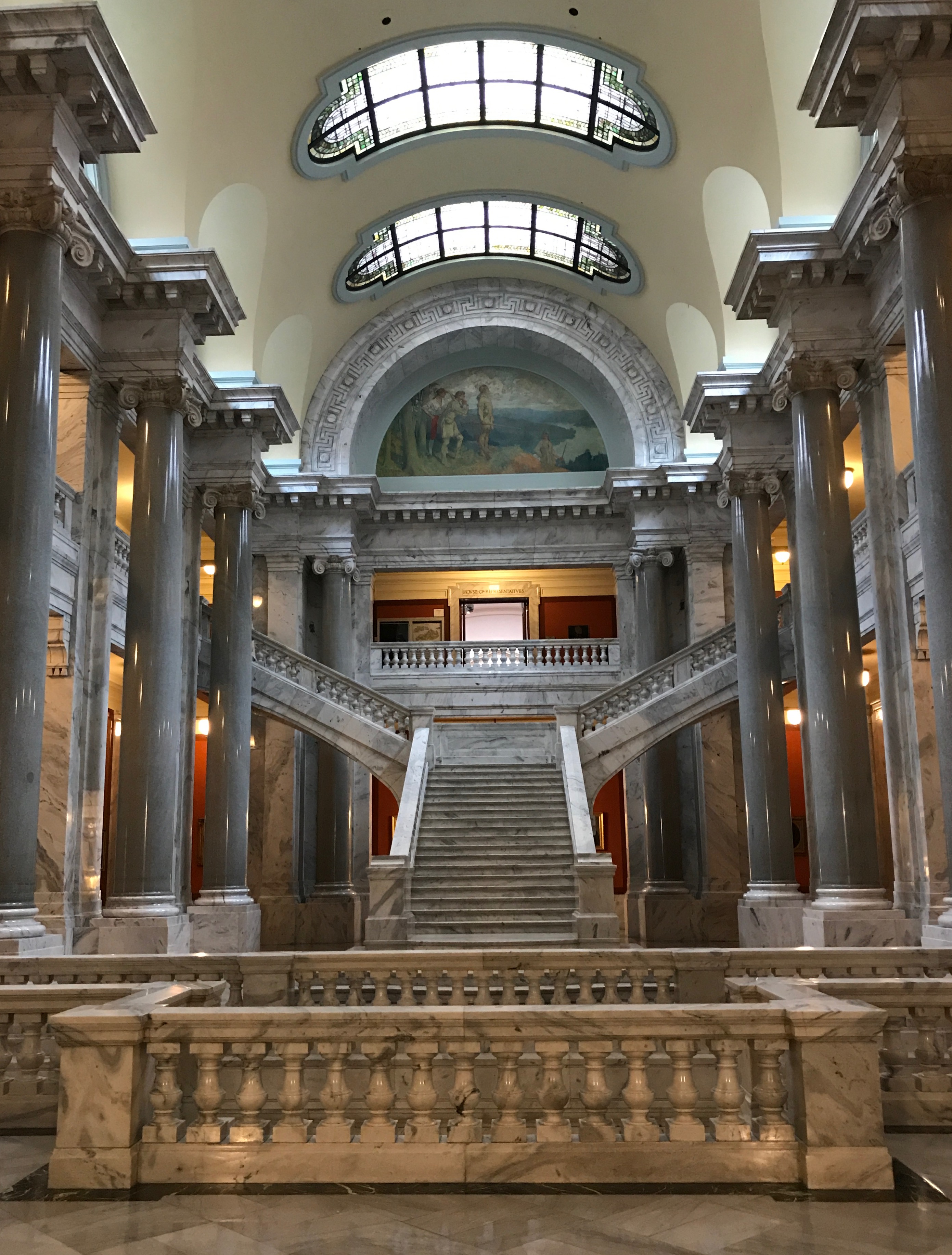
My goodness! What a lot of stairs! My Preferred Source says that the staircases are replicas of those of the Opera Garner in Paris.
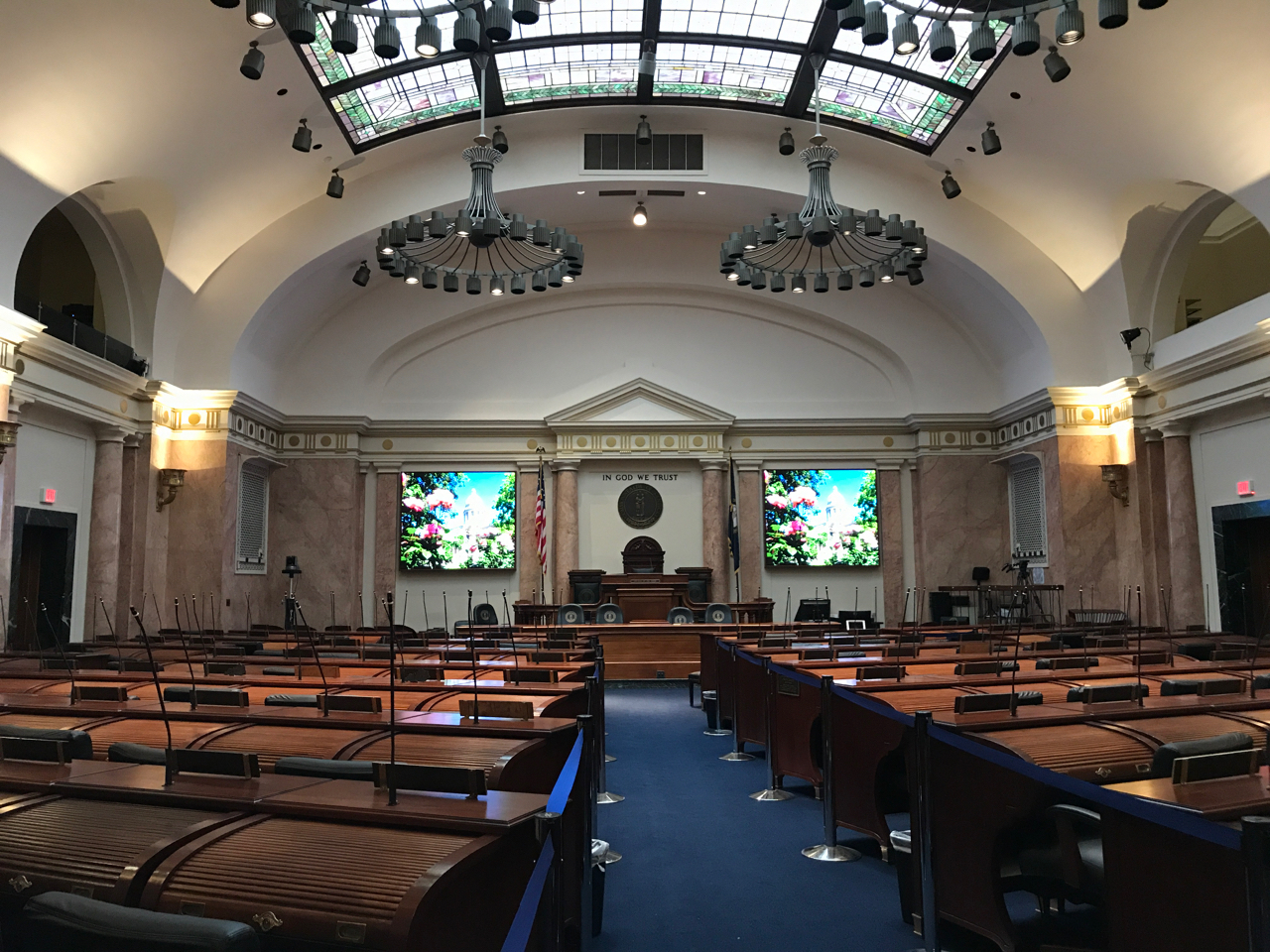
On to the House, which seems like a calm venue to do the people’s business.
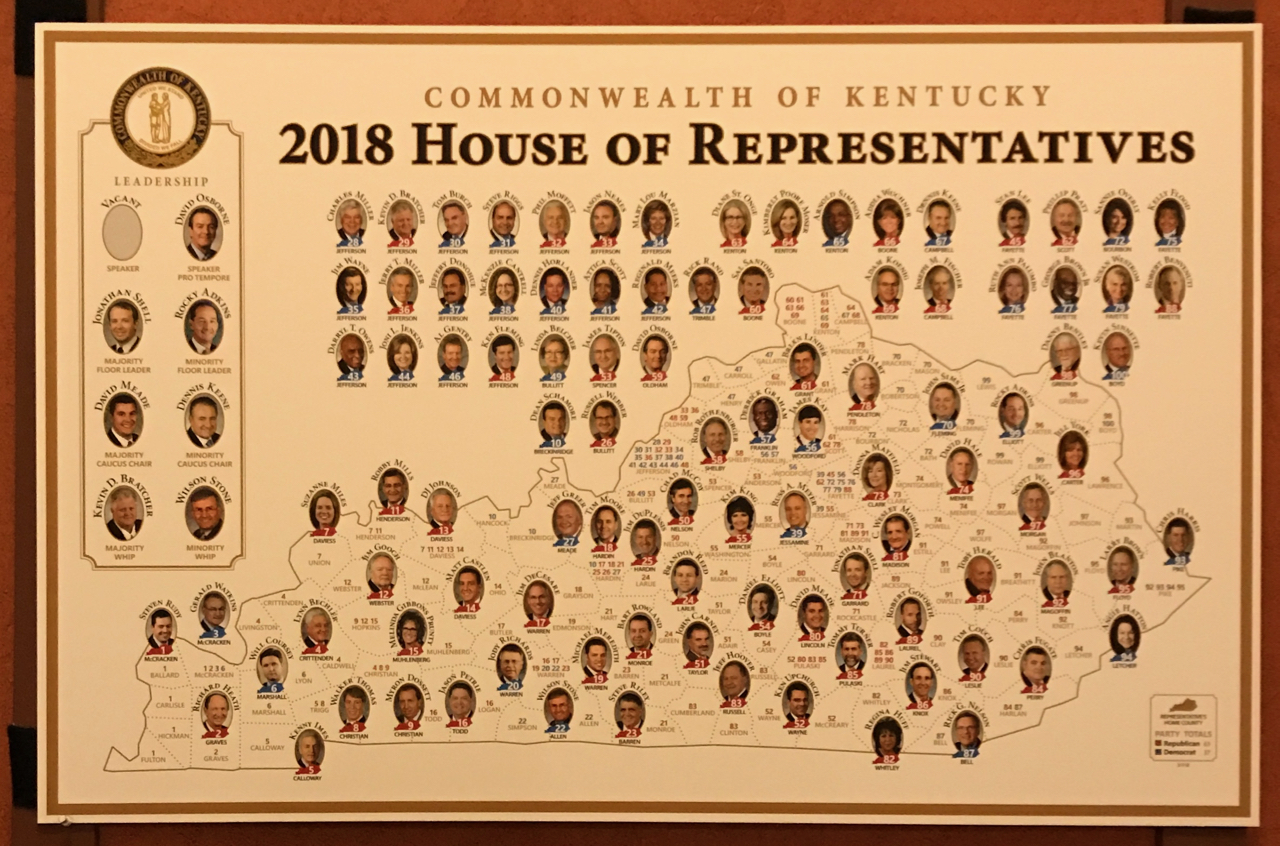
This map would help you be able to pick out your Representative.
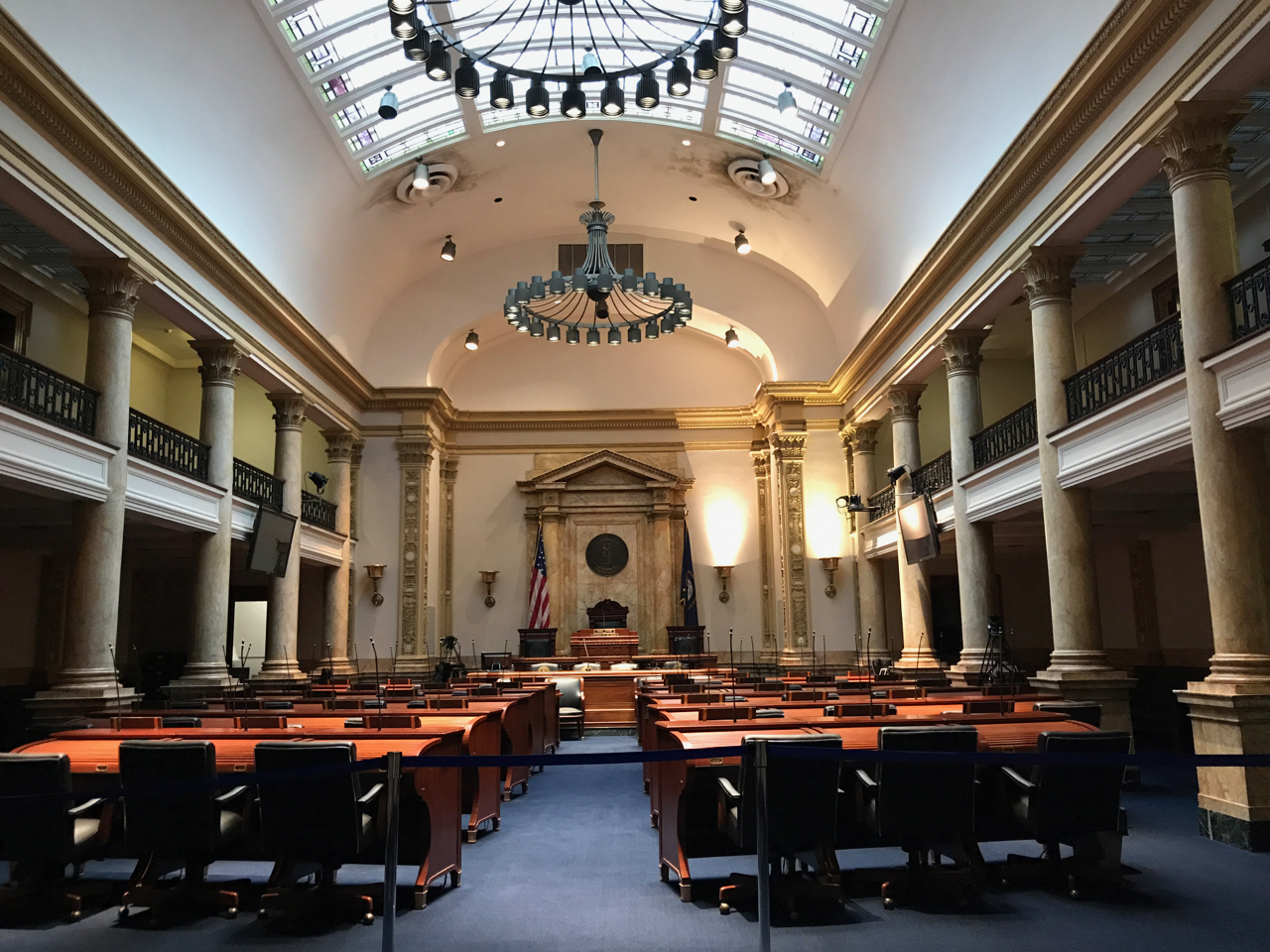
Next, the Senate. This chamber seems a little more imposing.
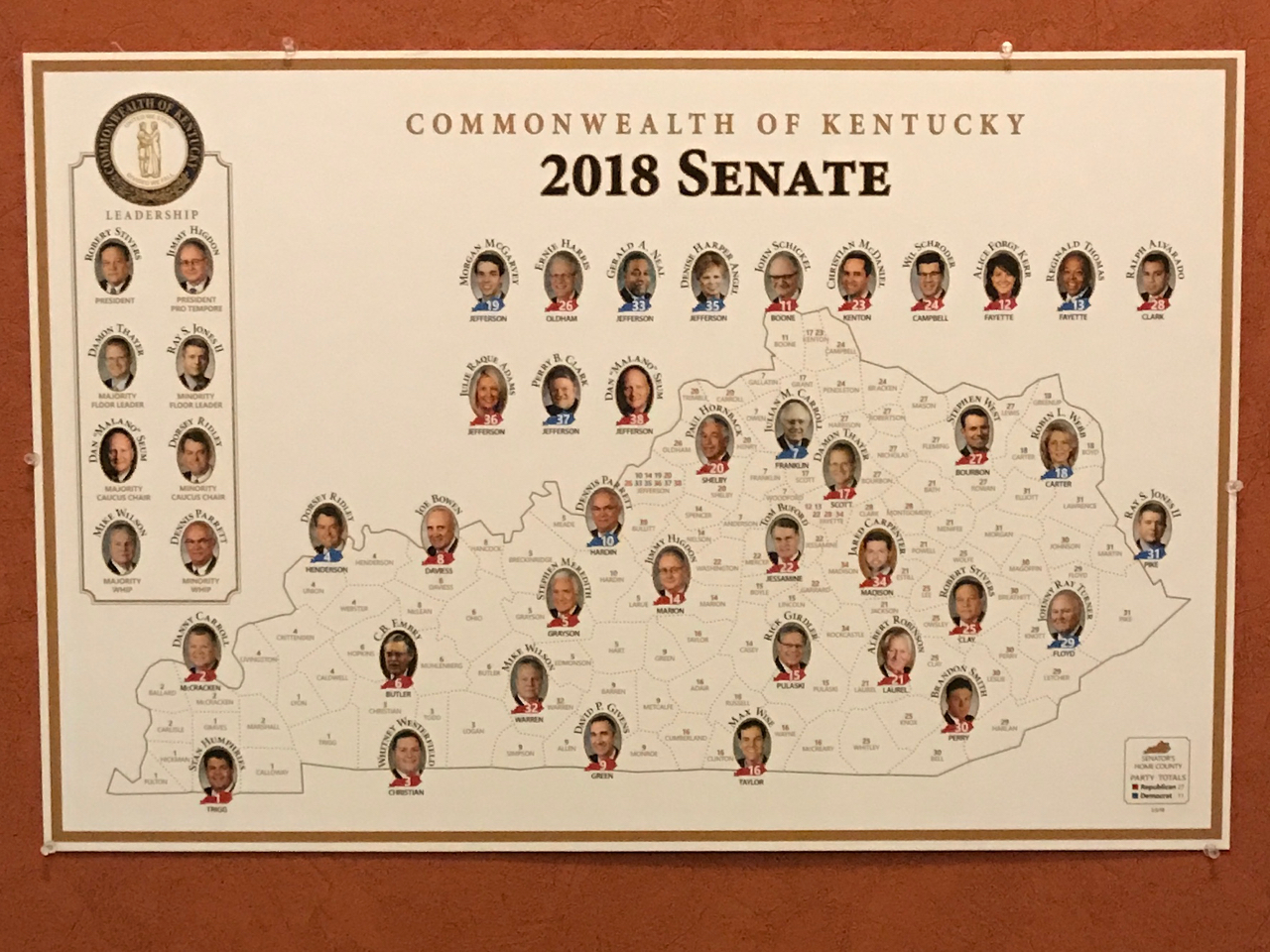
They, too, provide a guide to help you identify your Senator.
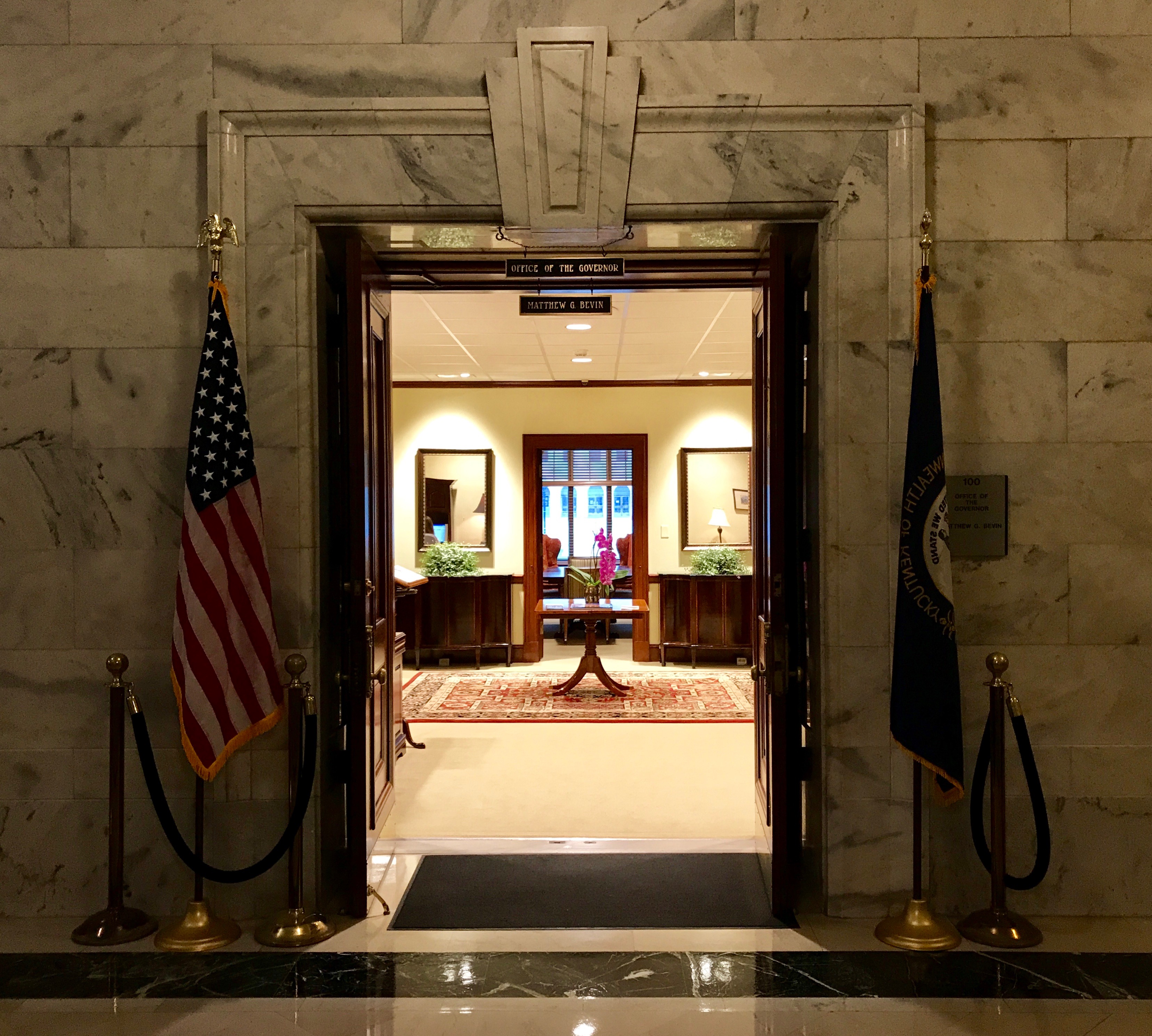
Ah! The Governor’s office.
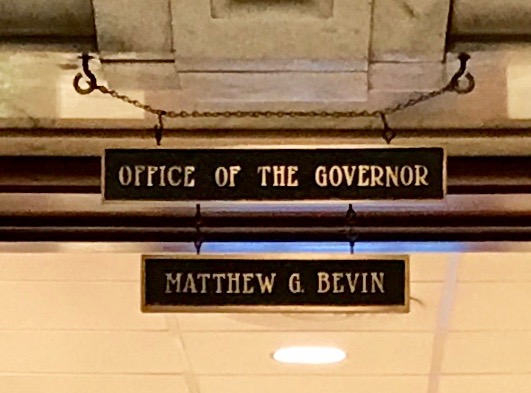
Well, this was 2018, after all. Governor Bevin was replaced by Andy Beshear in the 2019 election.
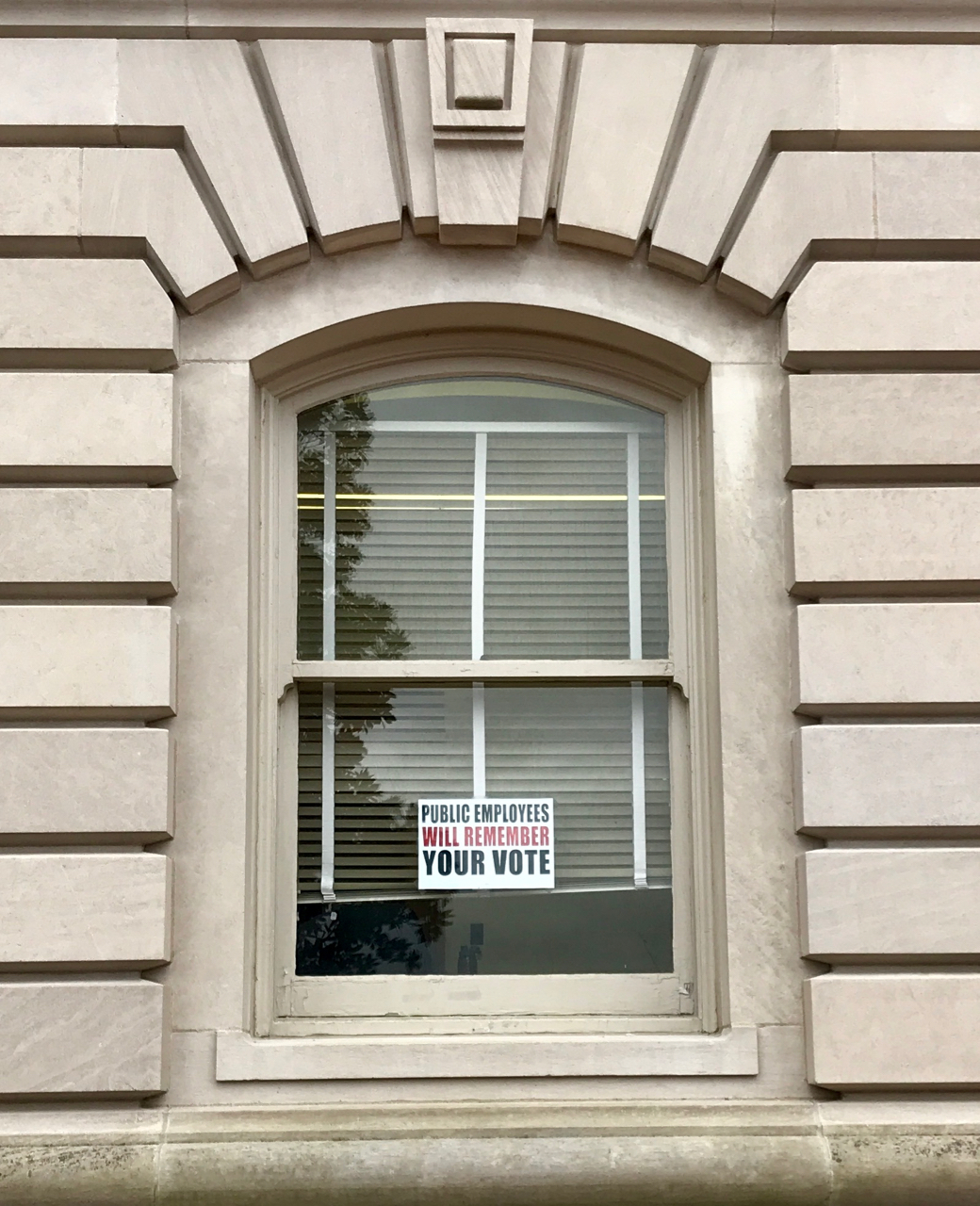
I saw this sign posted in a window as I walked around the building. I wonder if there is a connection to Bevin’s ouster and public employees?
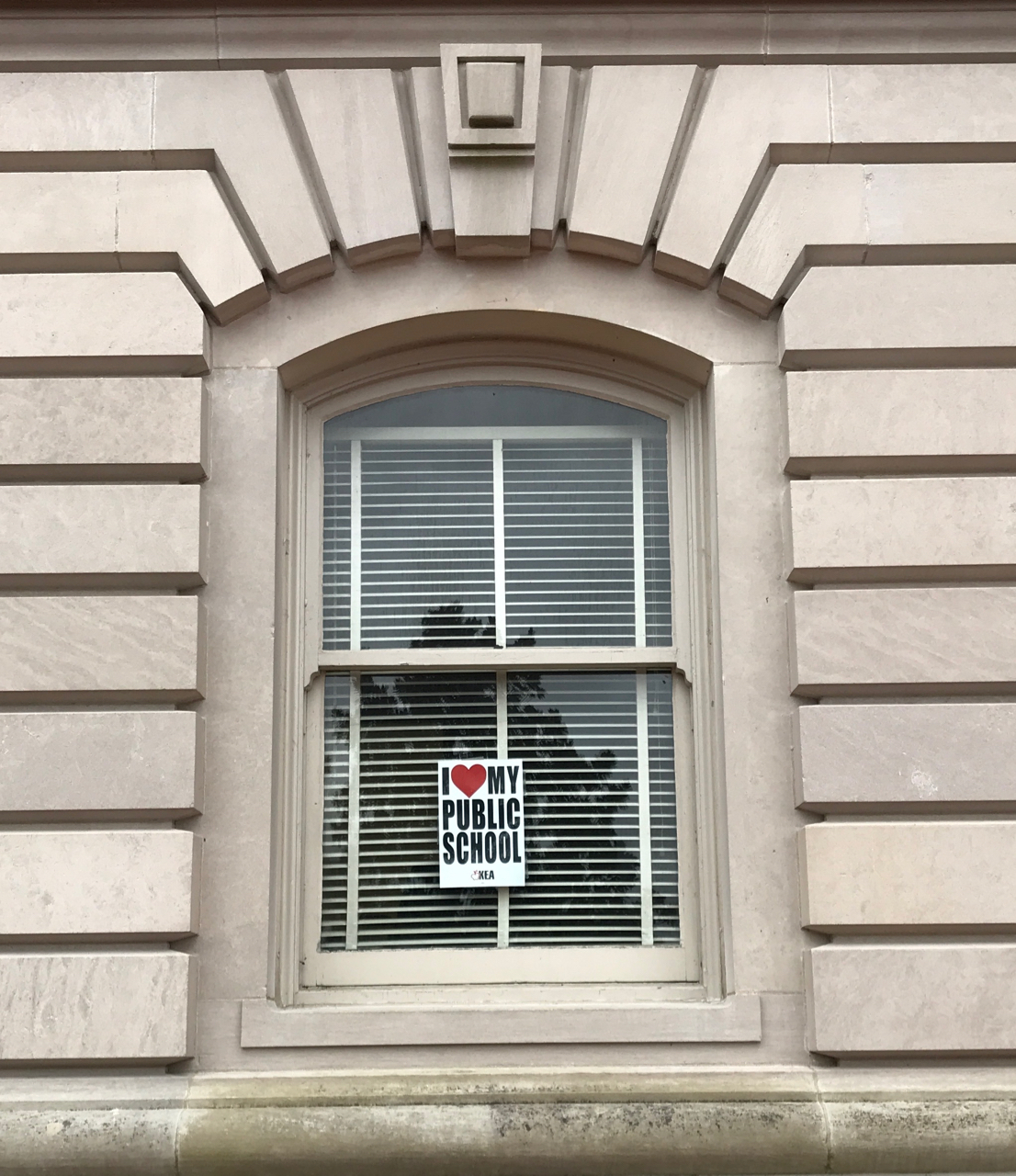
I guess it’s a good idea not to push teachers past their breaking points.
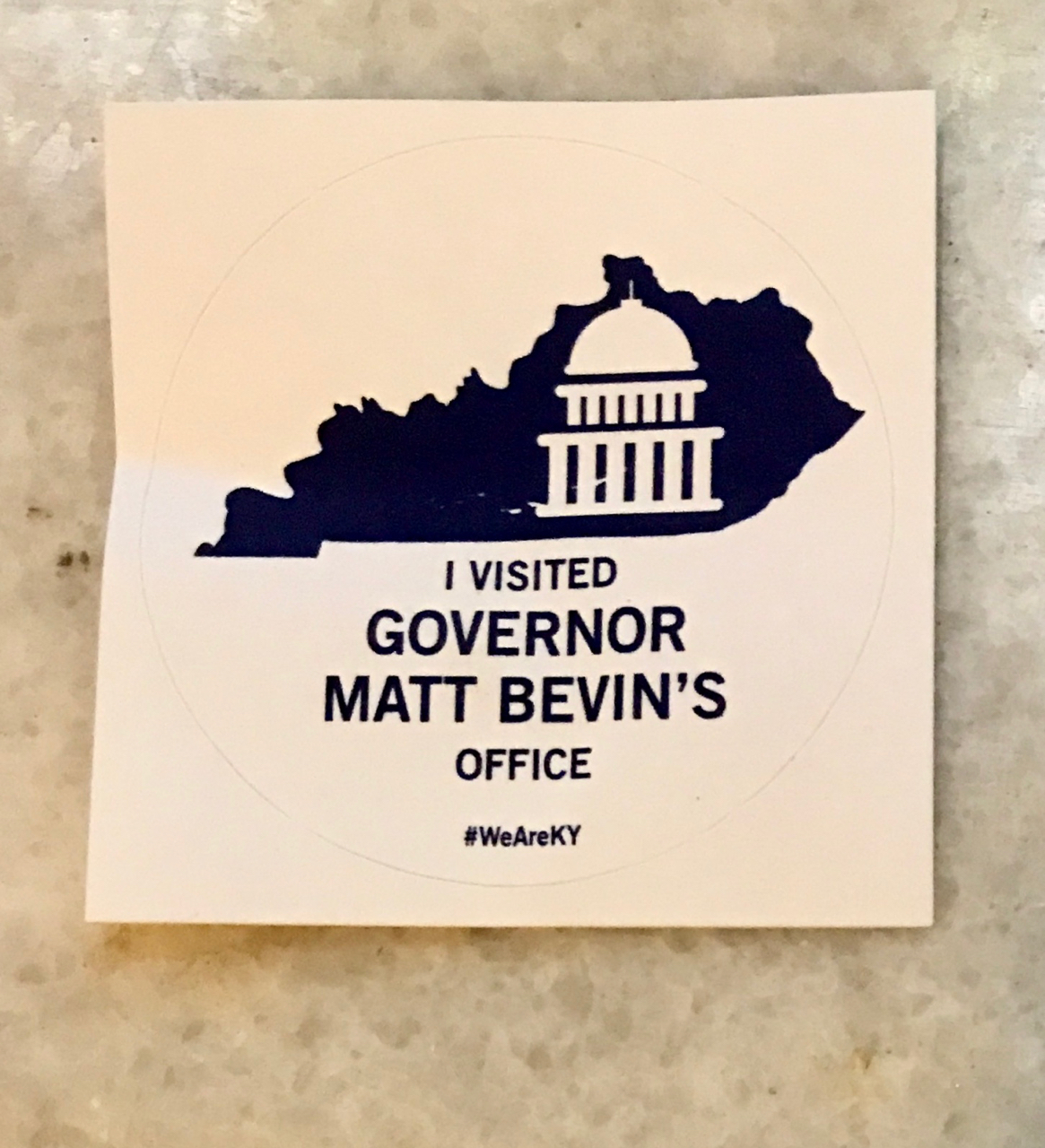
Even though I wasn’t a constituent, they let me have a souvenir.
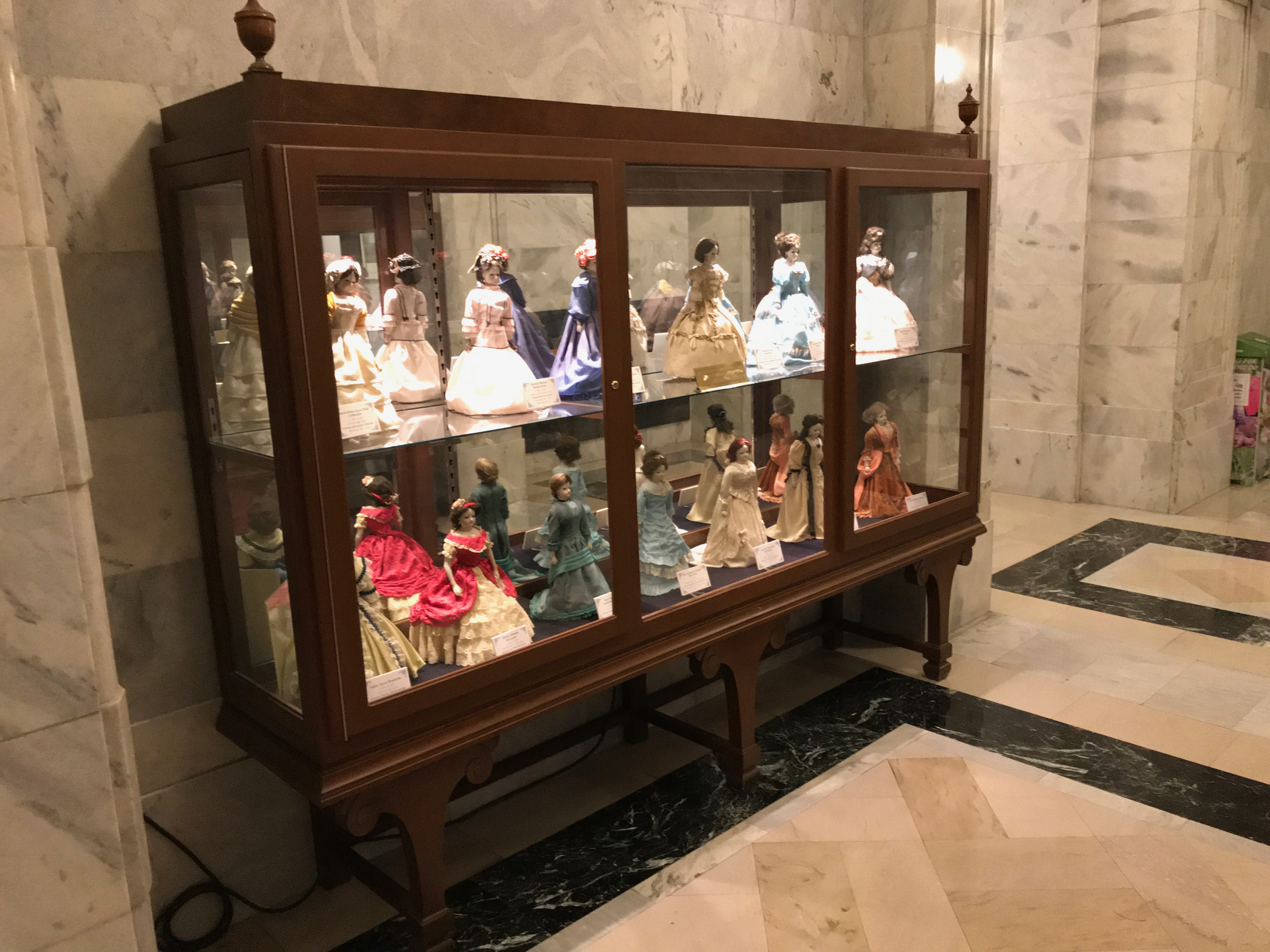
One thing they do have that I’ve never seen in any other capitol is a collection of  first lady dolls.
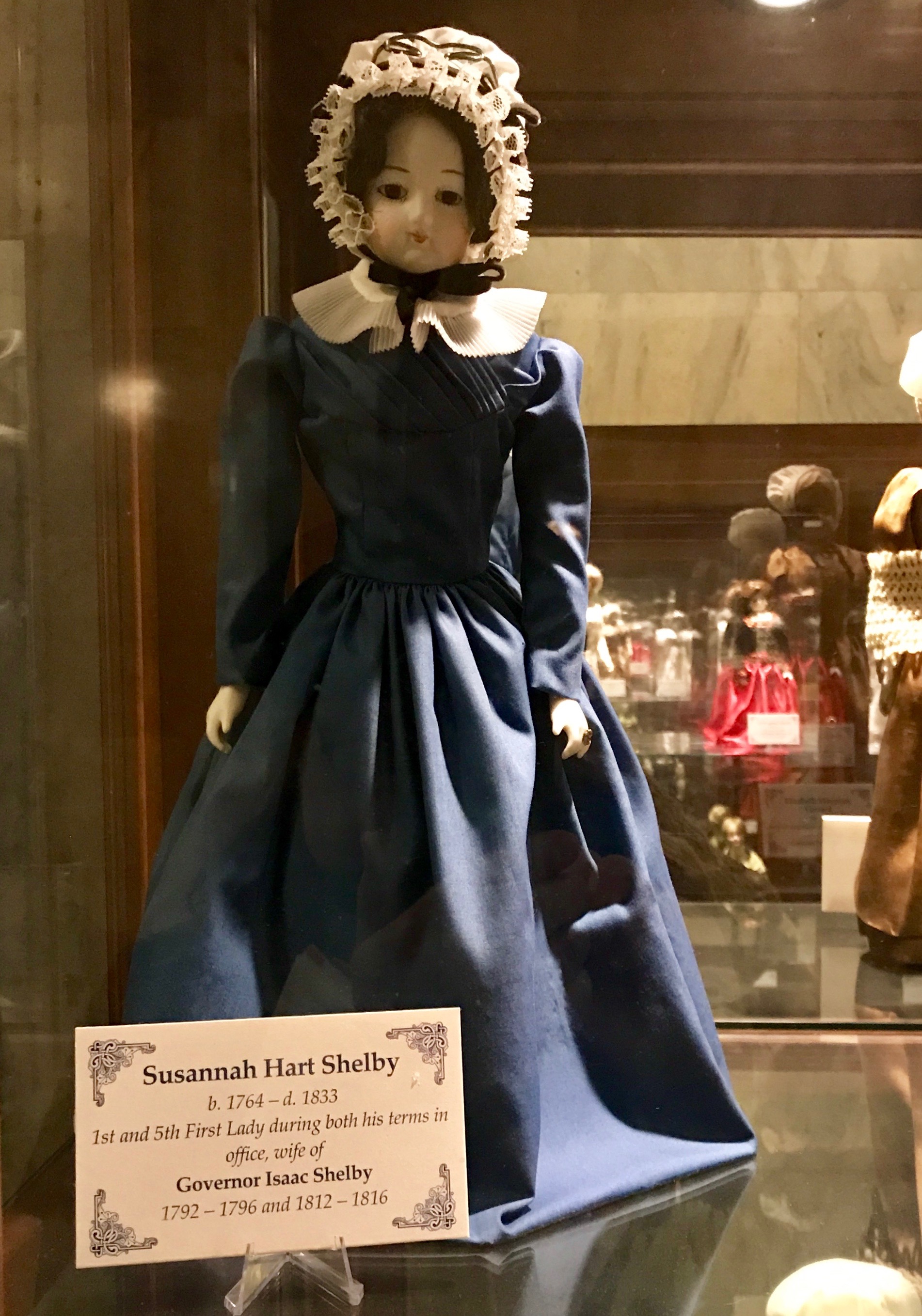
This is the 1st First Lady, Susannah Hart Shelby.
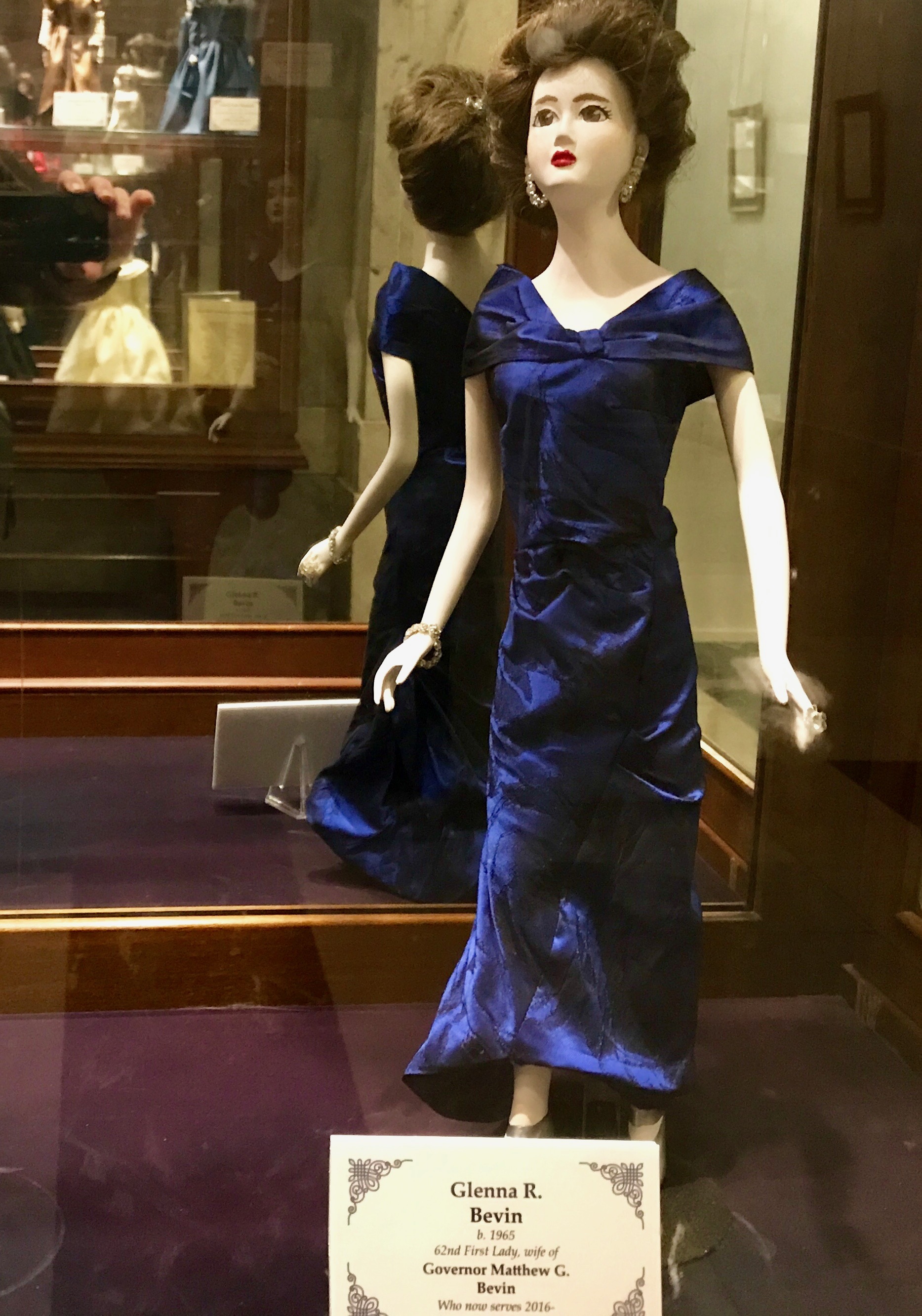
And the First Lady at the time I visited, Glenna R. Bevin.

I guess the doll collection makes up for the lack of female representation in the statuary.
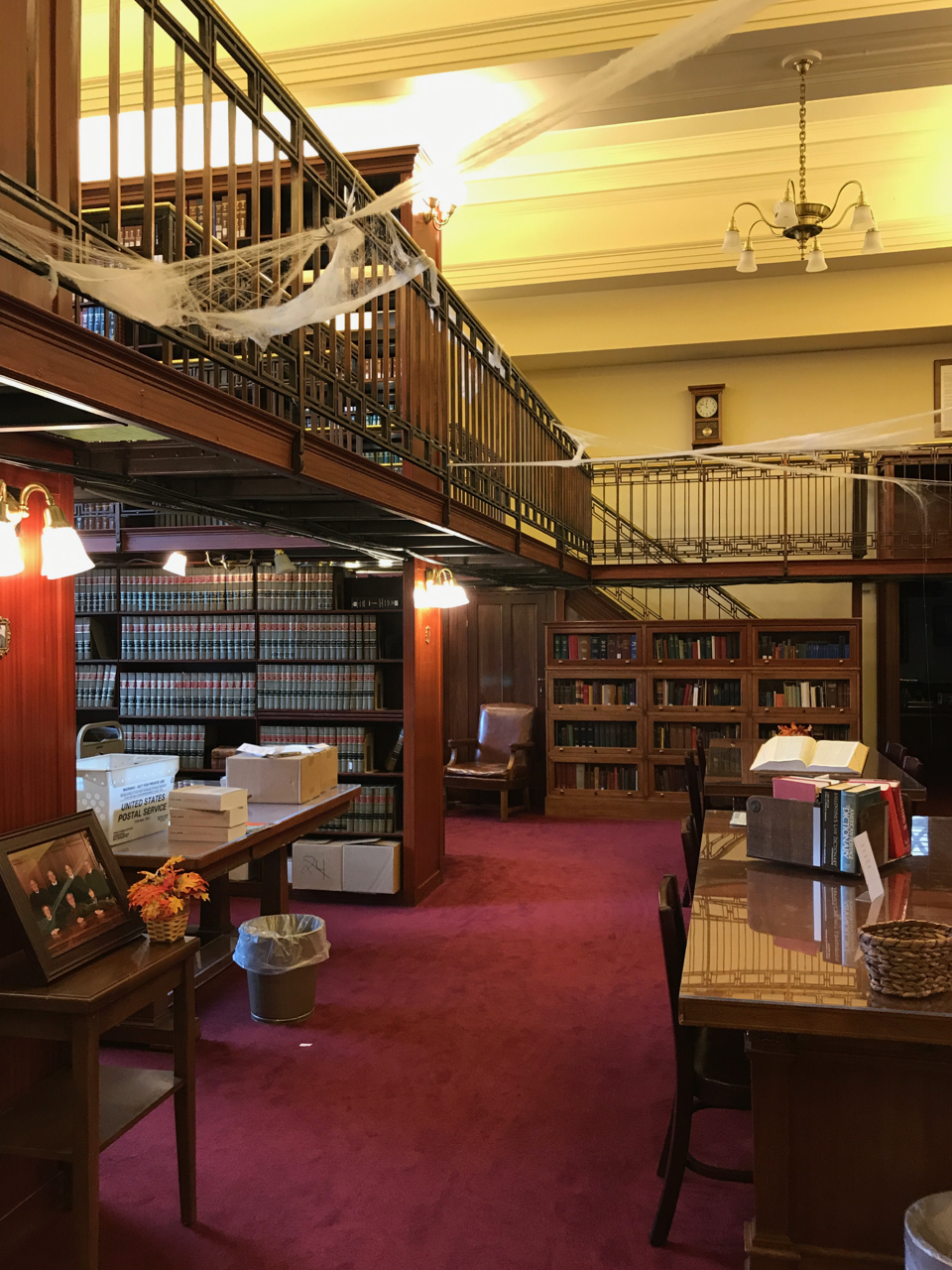
It was just after Halloween when I visited, and the library was still decorated for the season, with cob webs galore.
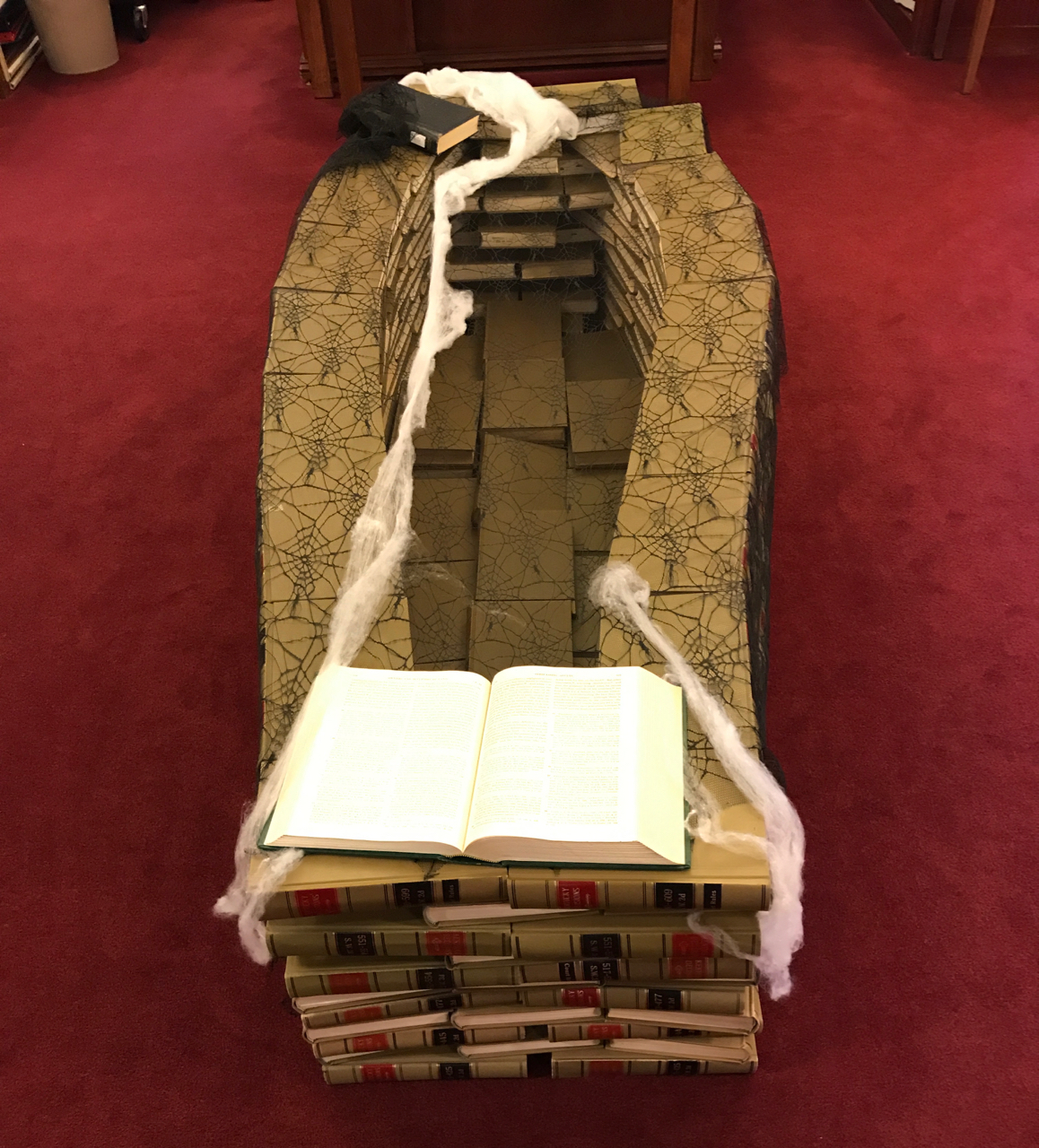
They also made a coffin out of the law books.
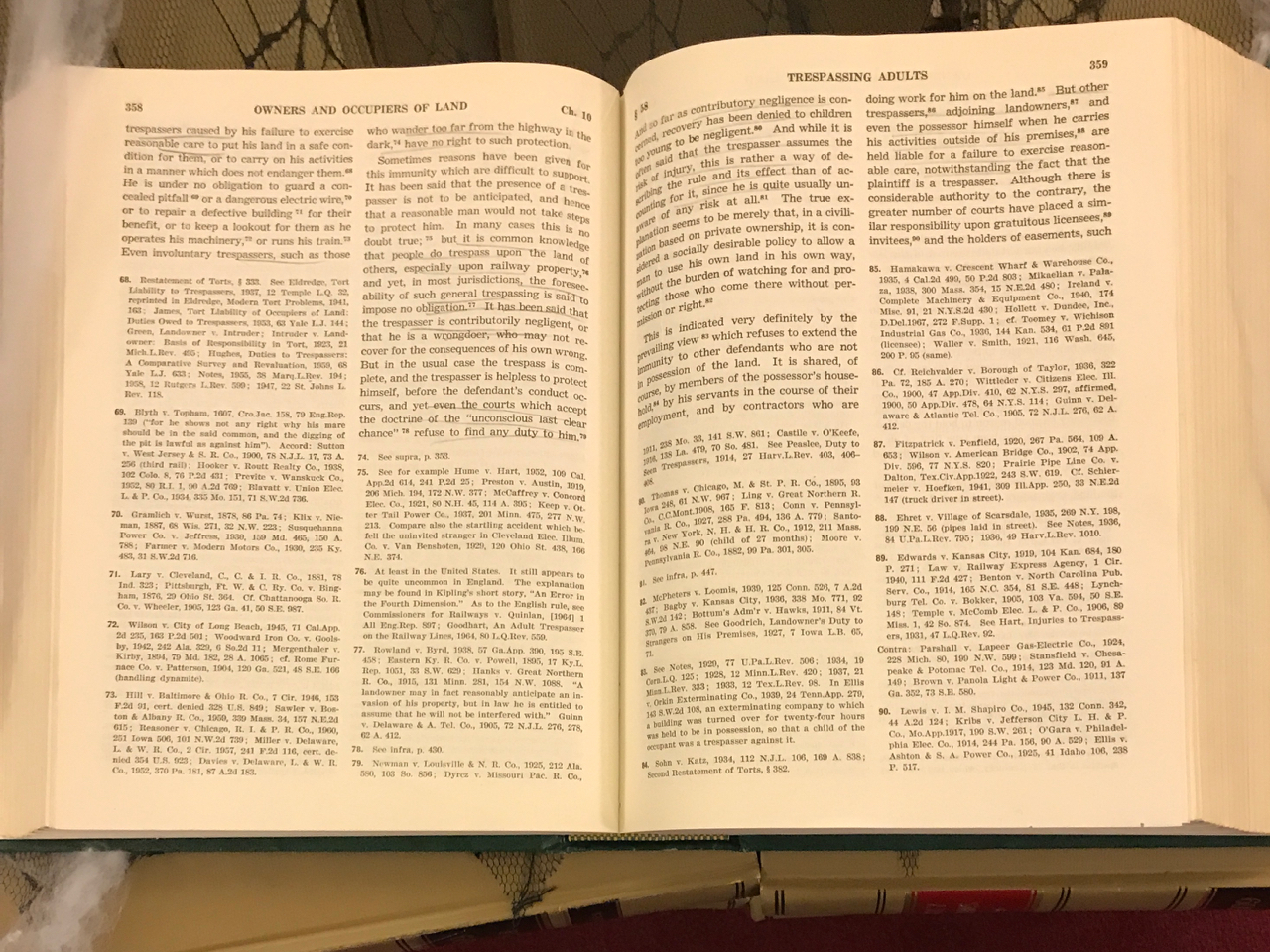
Just in case you are curious, this is the book that is open on the end of the coffin.
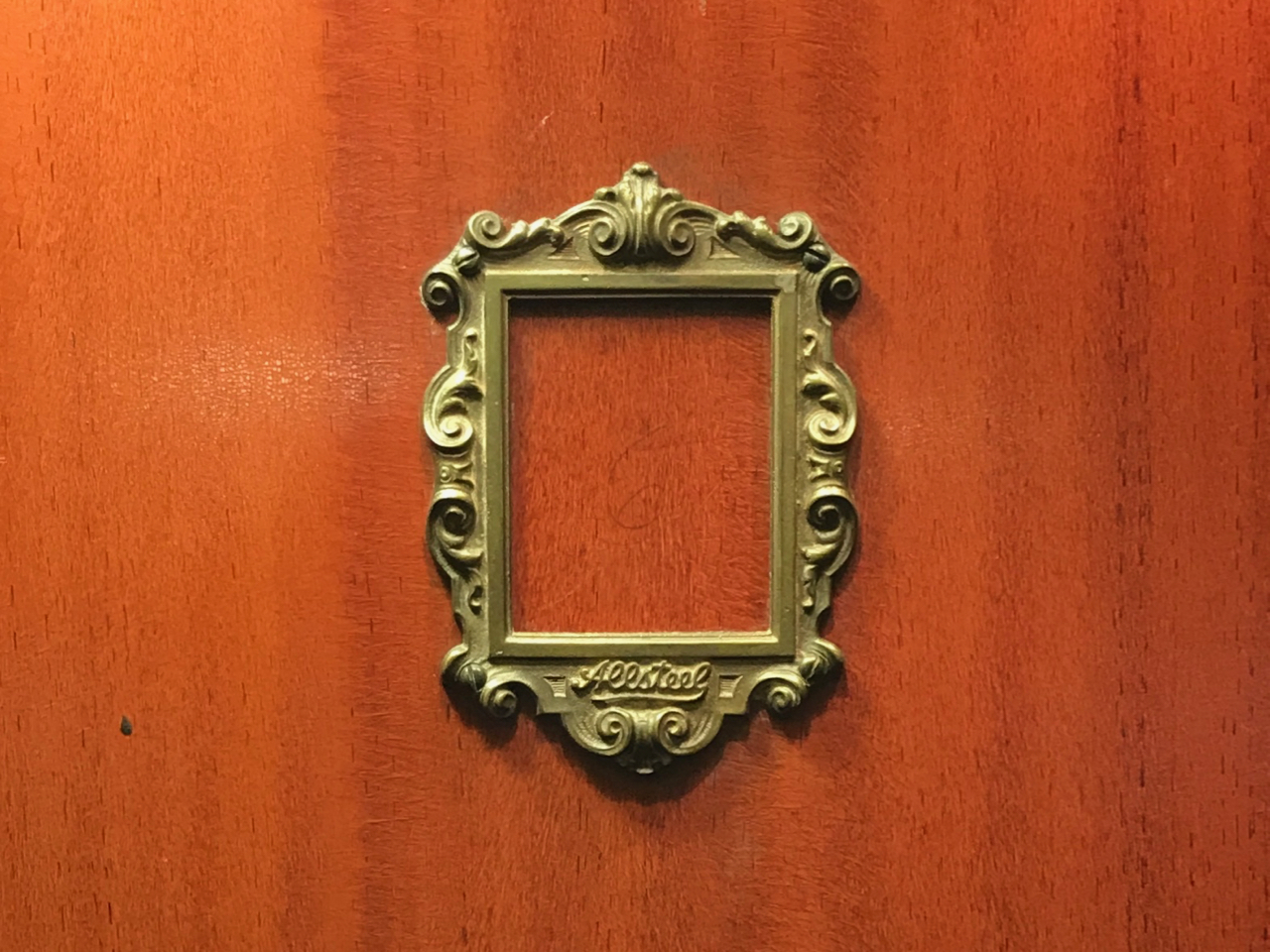
Although this library is modest in comparison with Tennessee’s capitol library, there was this hint of metallic grace. I wonder why the frame is empty?
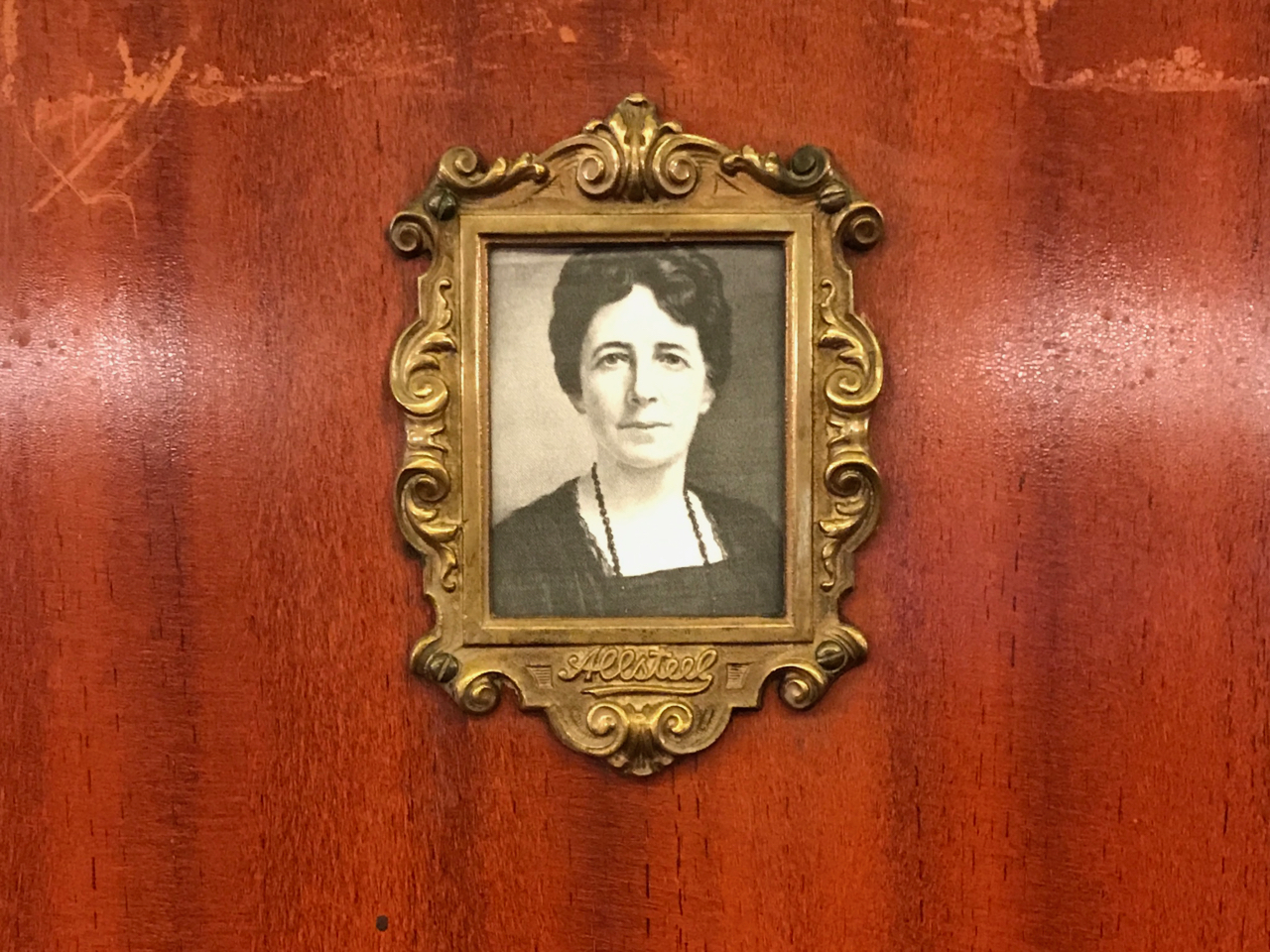
And, who do you suppose this woman is?
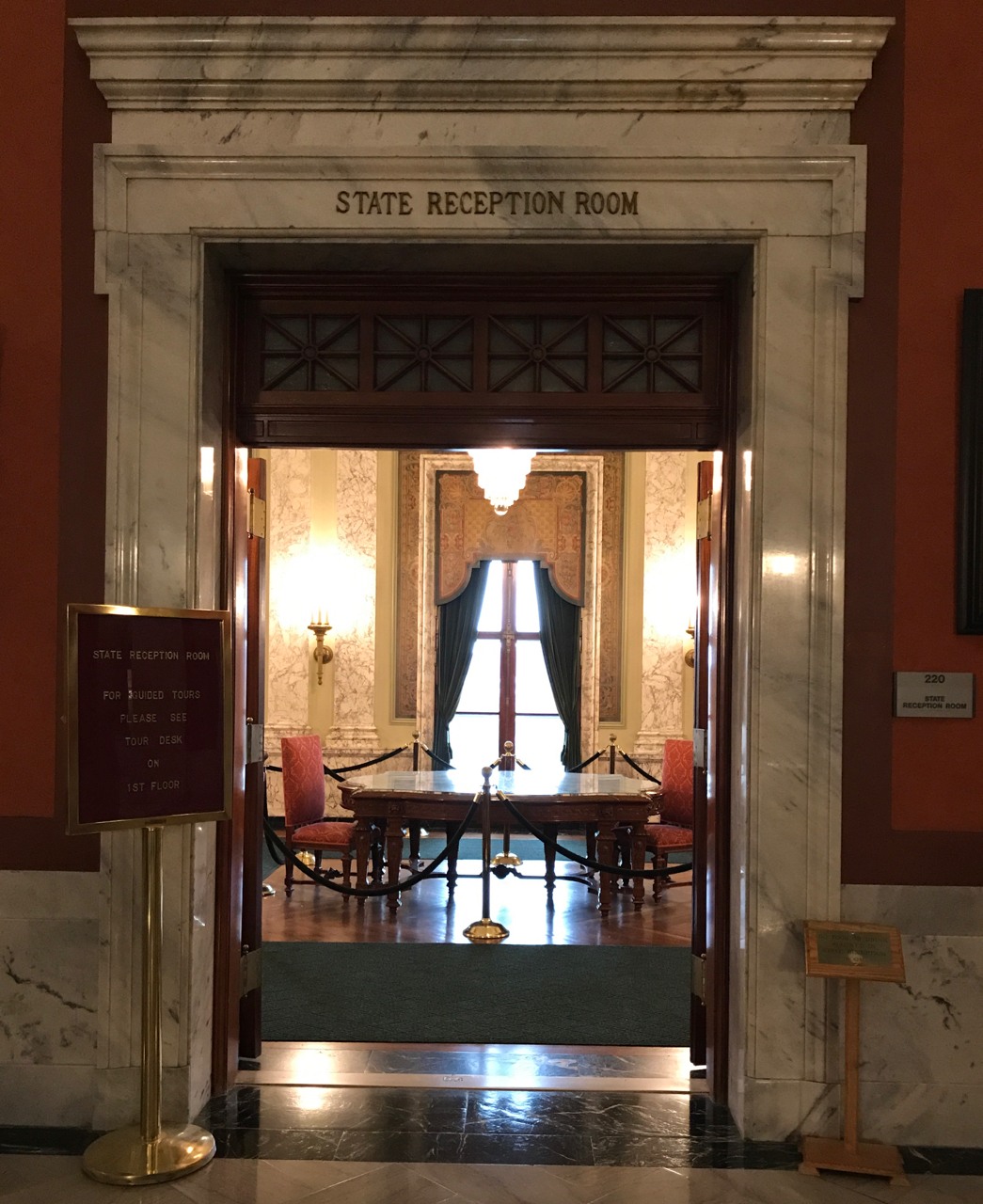
The State Reception room was open for viewing.
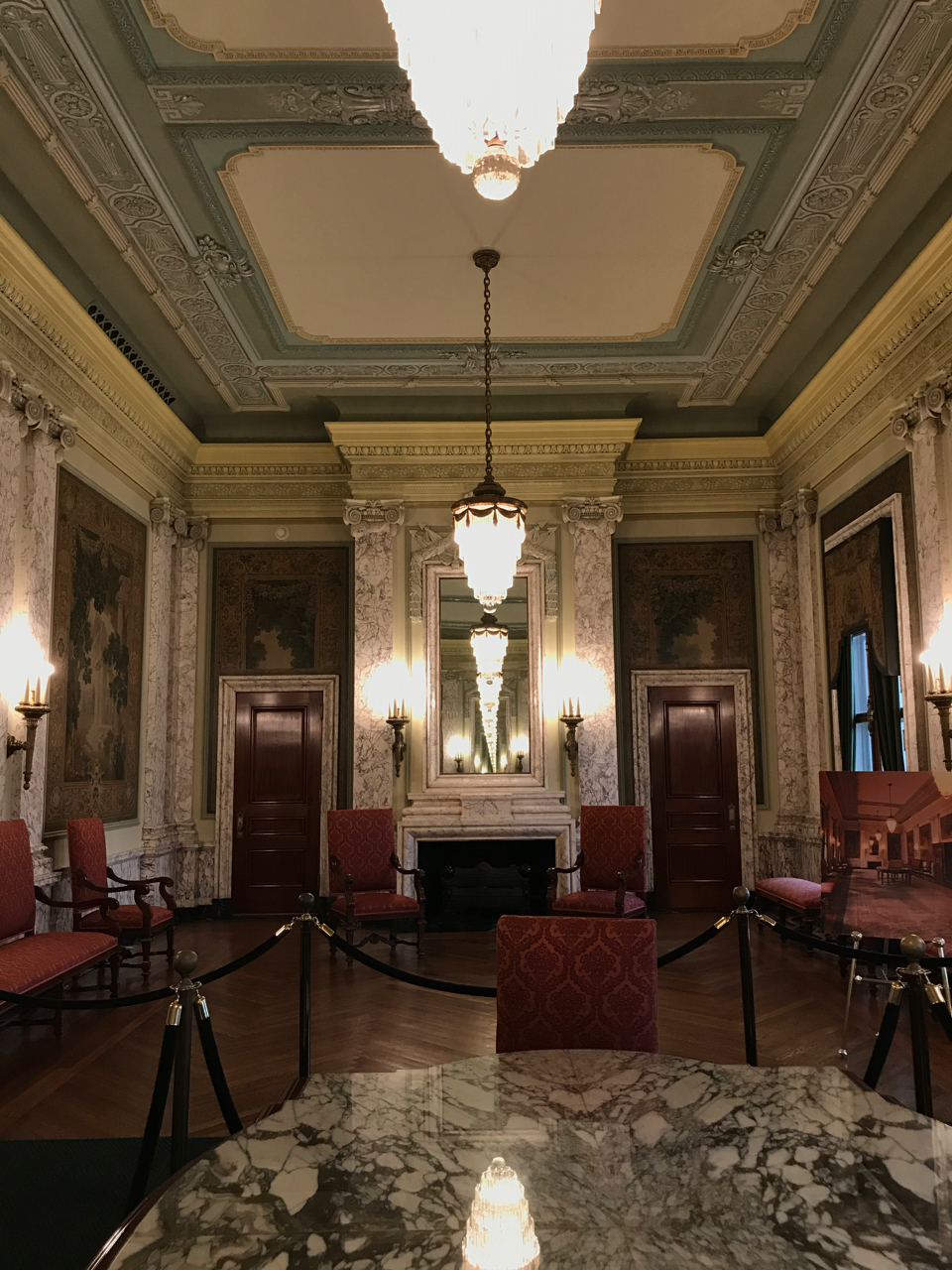
It was quite an elegant venue for a soiree.
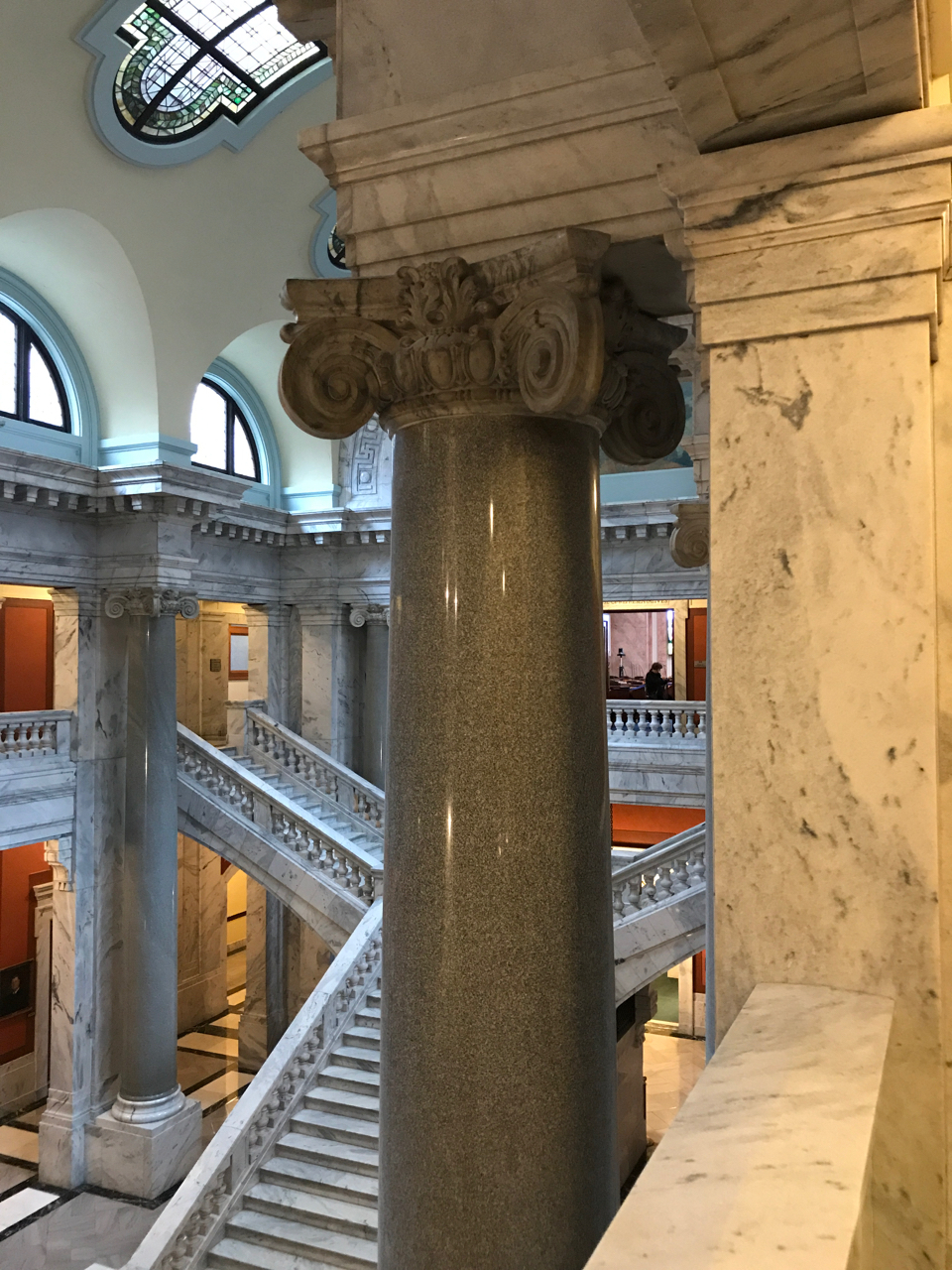
They made extensive use of stone. It was quite grand.
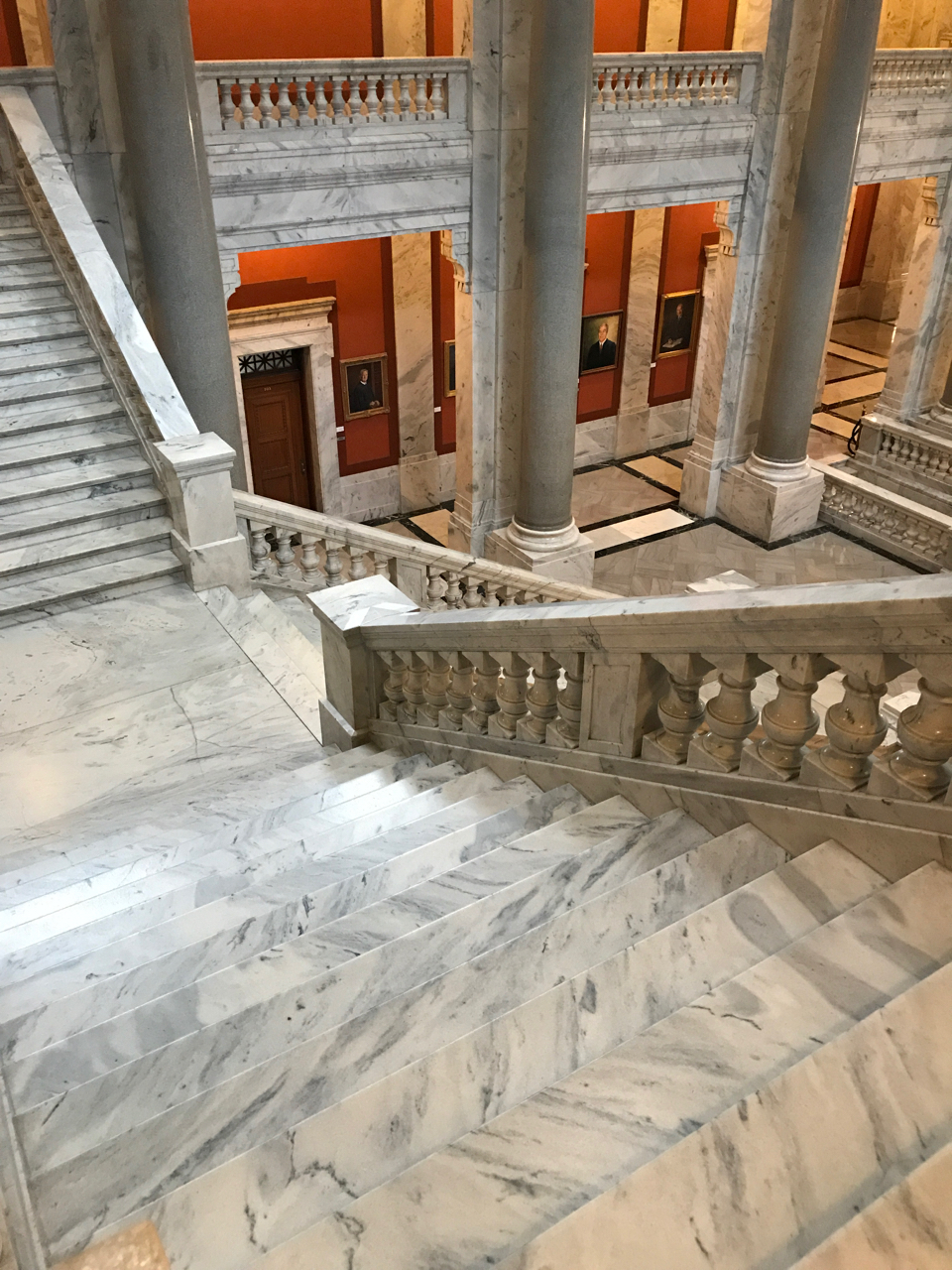
Okay, back to the rotunda and the dome.

The Kentucky Capitol Centennial Commission selected the rotunda pendentive murals as the legacy project for the 100th anniversary of the capitol. Just in case you are wondering about the word “pendentive,” it refers to those triangular shapes that permit placing a circular dome over a square room.

They are quite elegant.
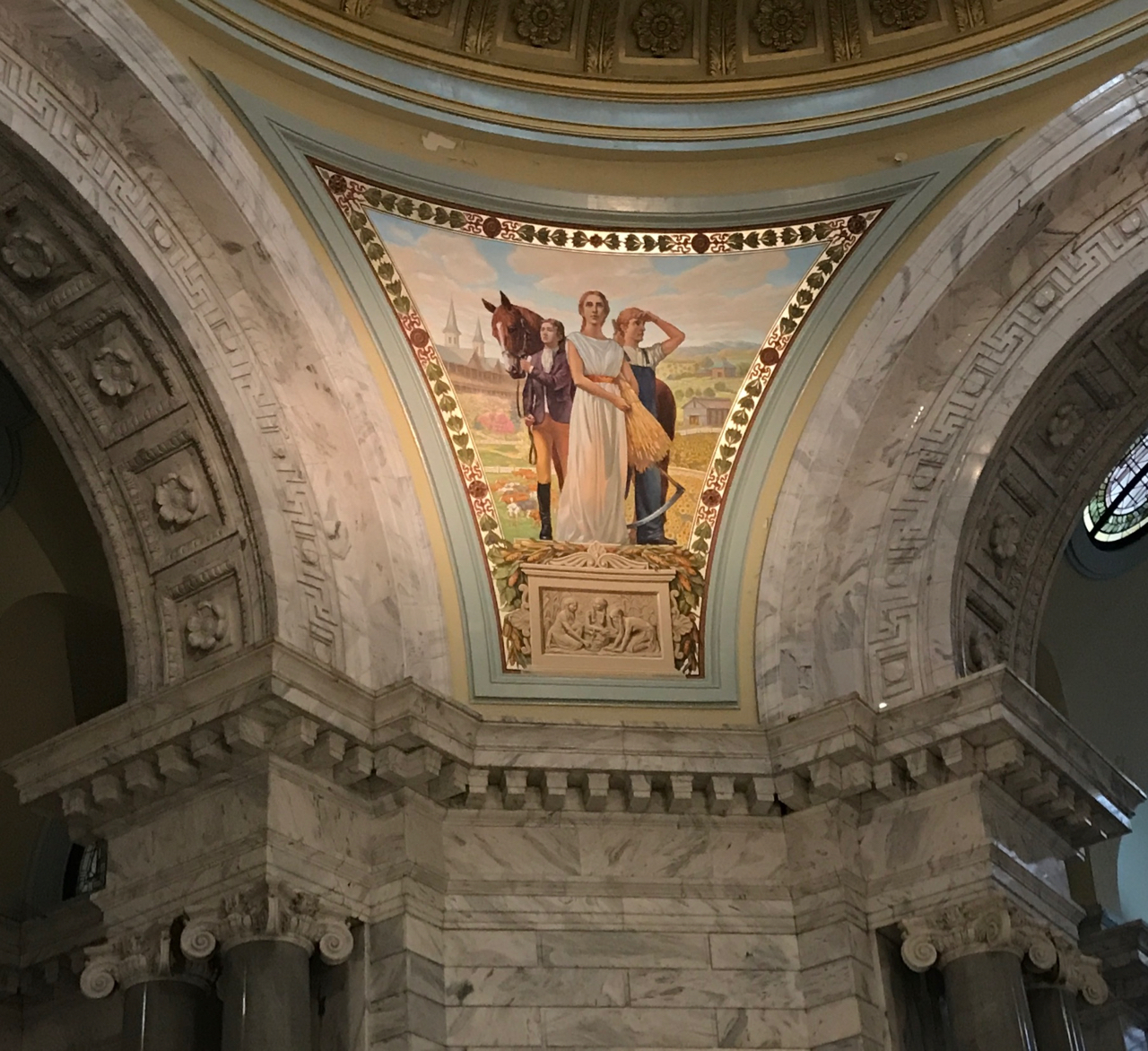
You can see Kentuckians’ points of pride: horses and agriculture…
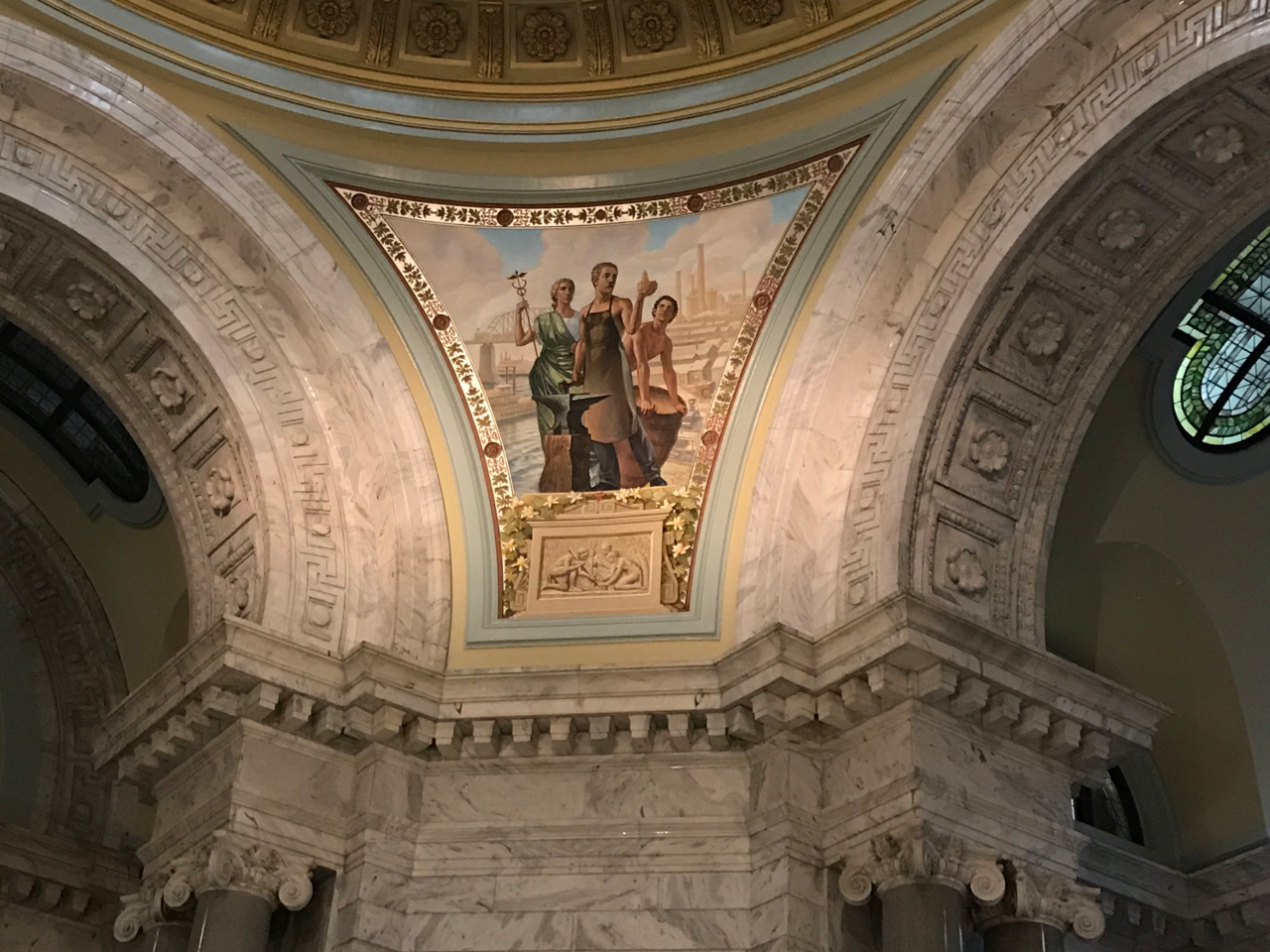
industry…
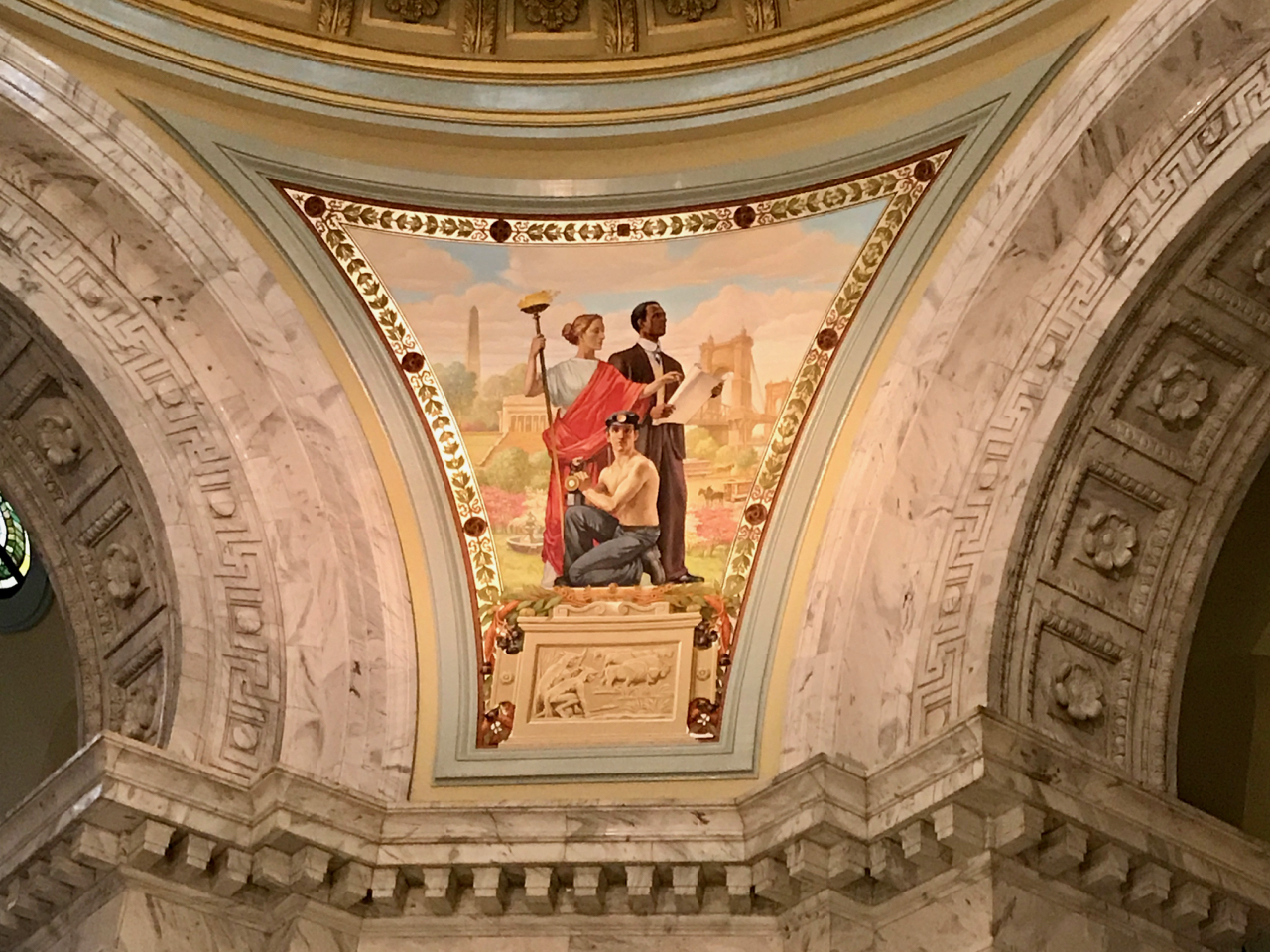
planning for the future.

This photo shows how the pendentives help transition the circular shape of the dome to the square room below.

This dome does something I have never seen in any of the other state capitols – it has a light show!
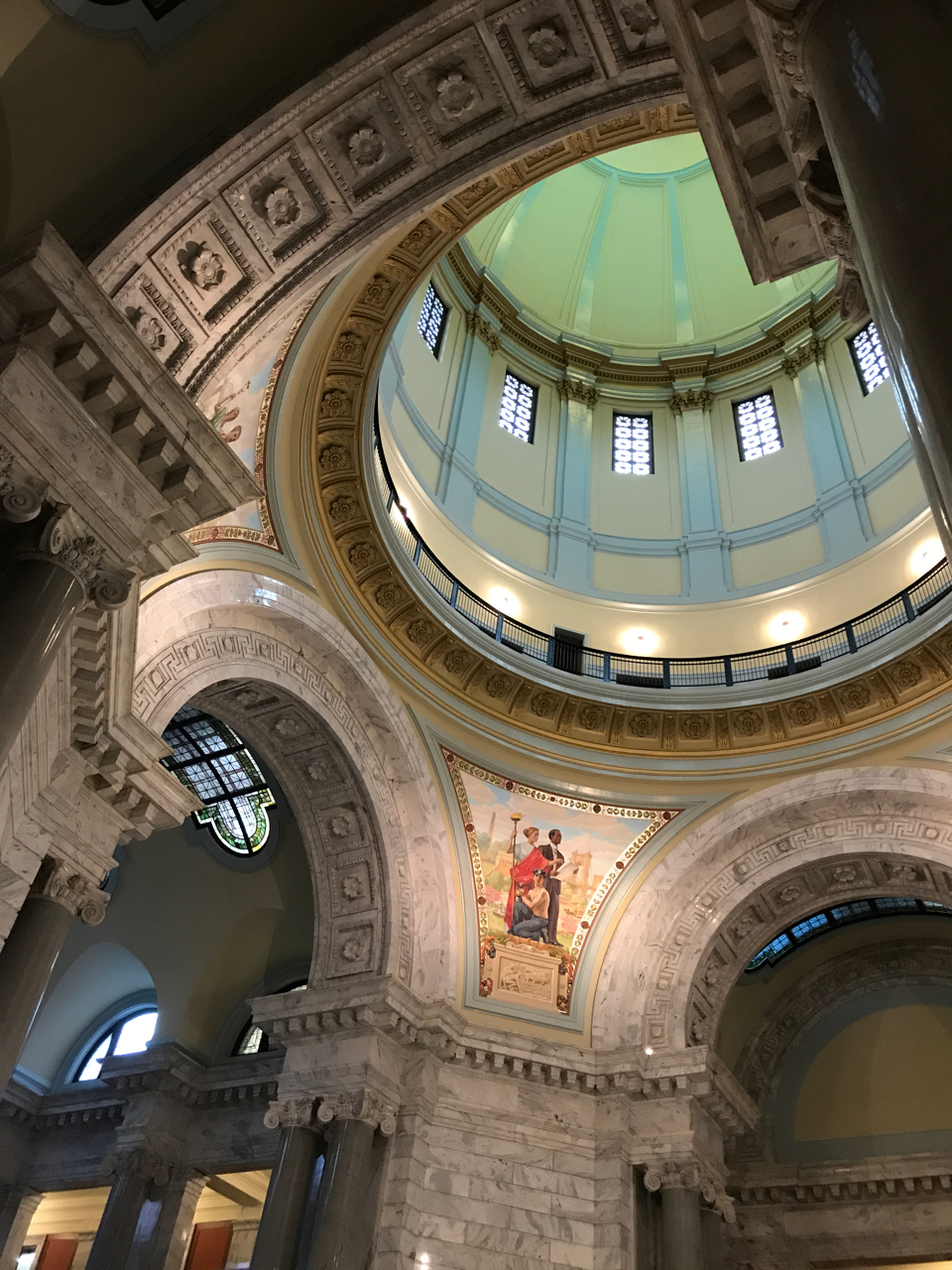
It changes from the yellow to green…
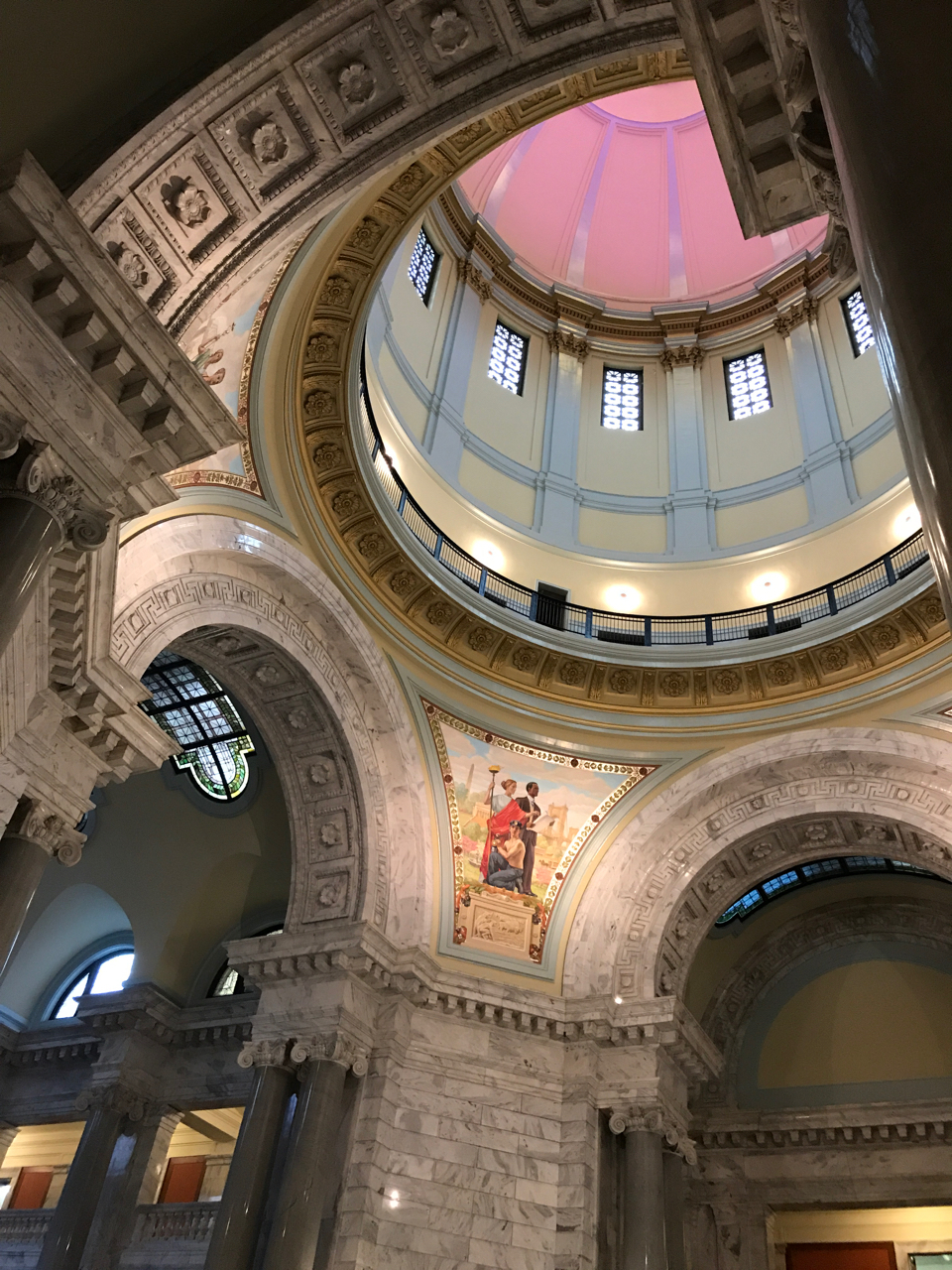
to pink…
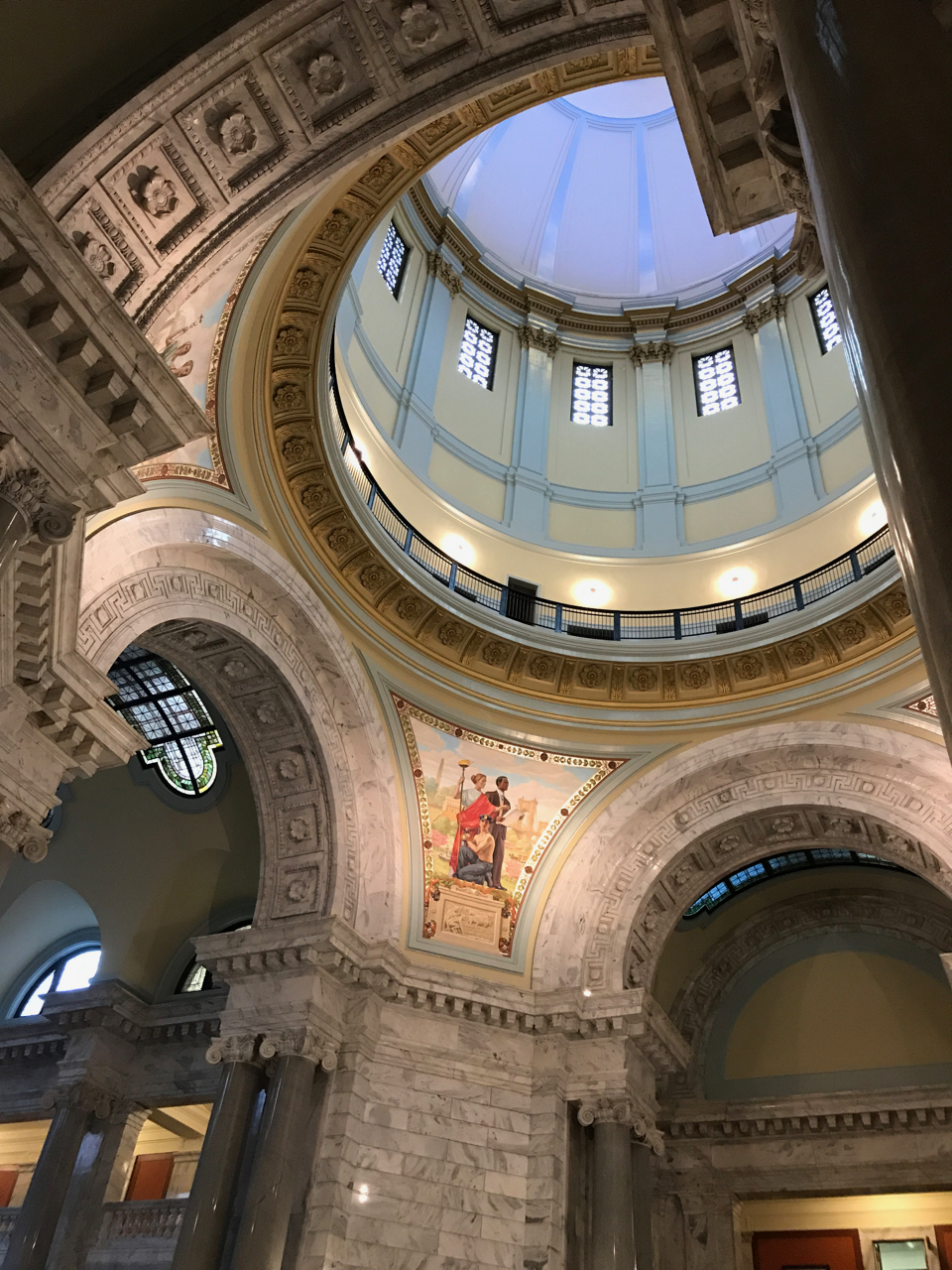
to blue…
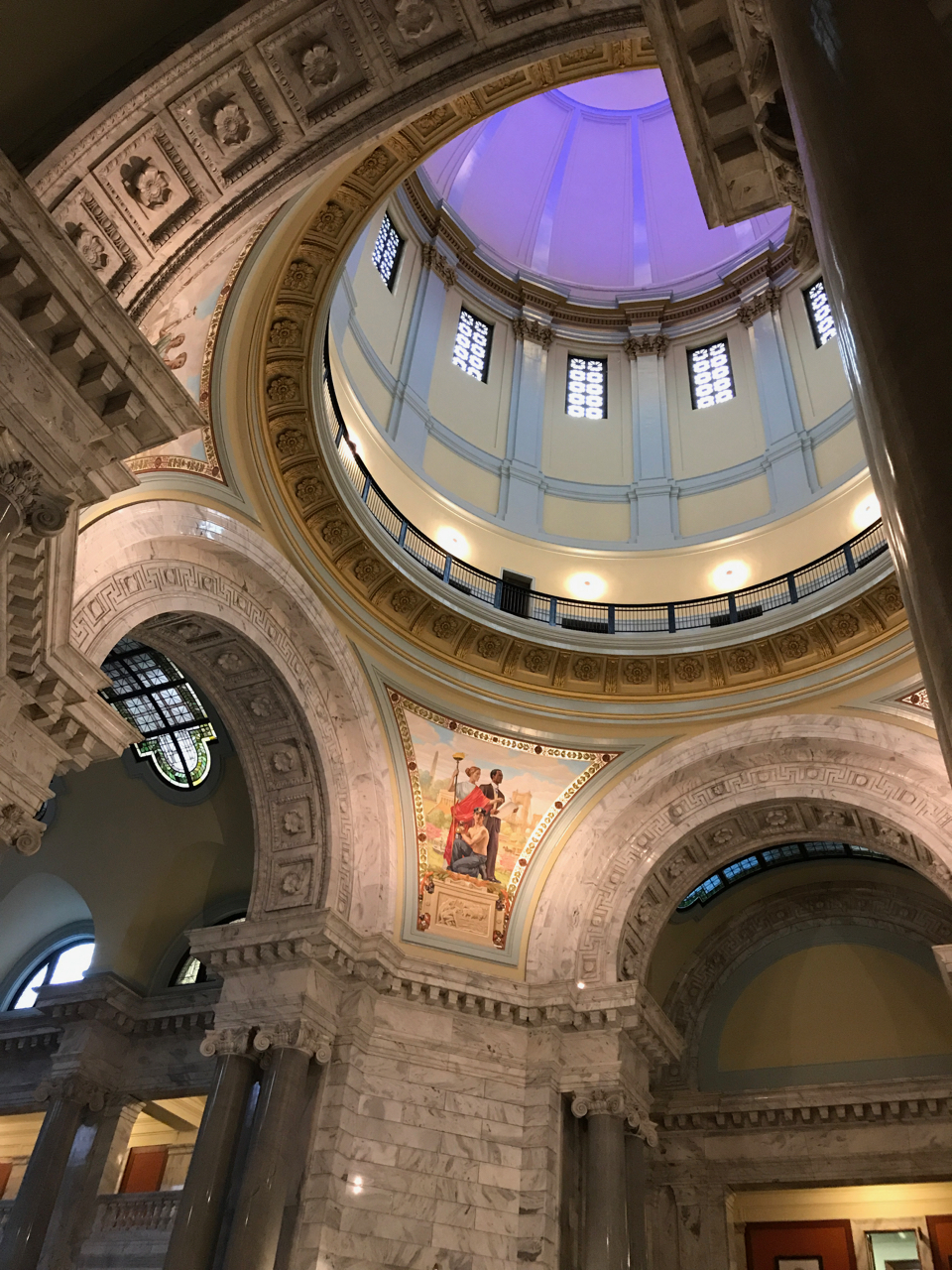
and finally to purple.

Isn’t that unique?

I am just about done with my visit to the capitol. Before I leave, I want to share a few photos I snapped of things that interested me.
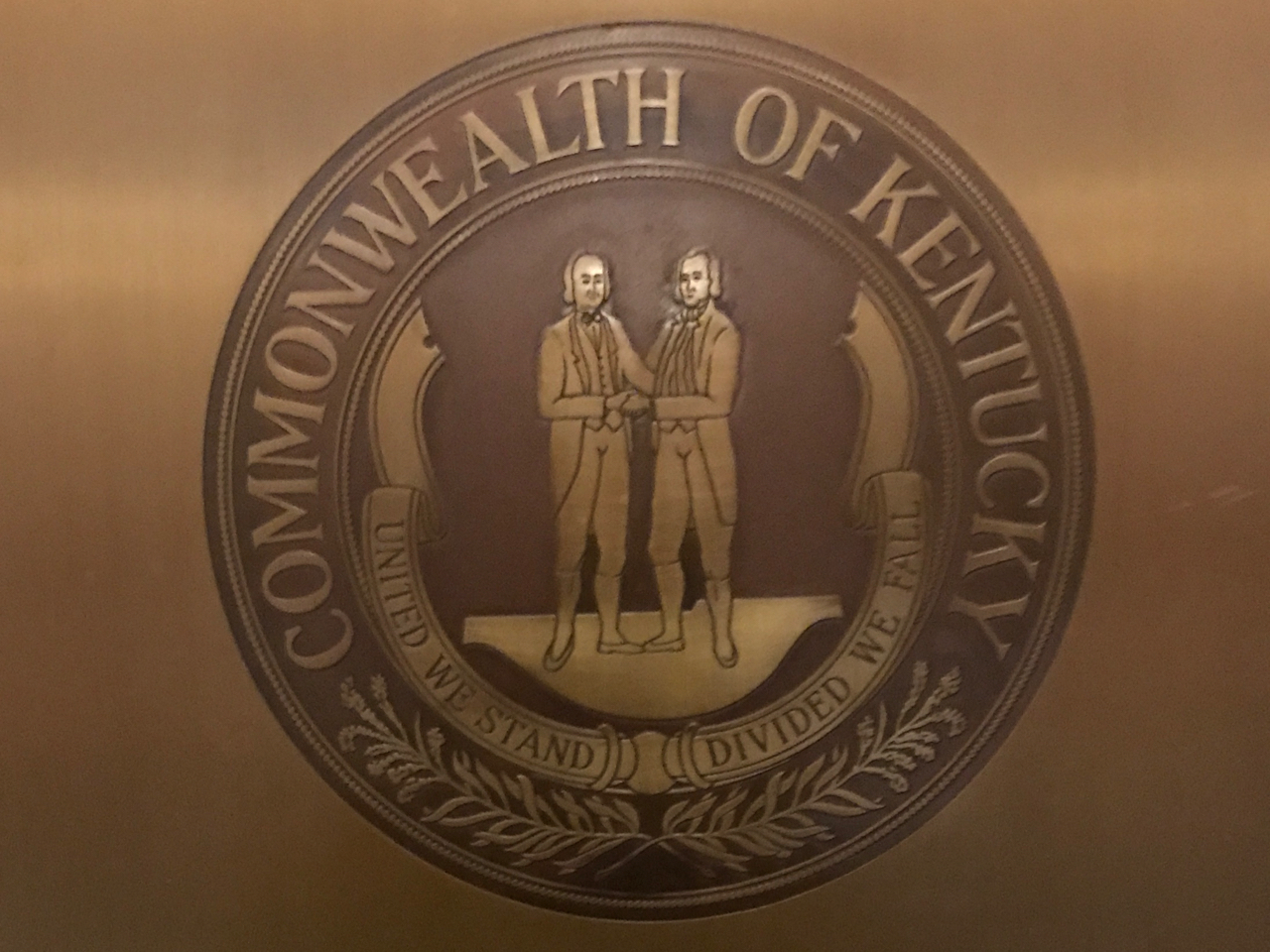
The seal of the Commonwealth of Kentucky. I got to wondering about the difference between a state and a commonwealth, so I went looking. Essentially, there is no difference. There are four states that identify themselves as commonwealths. (If you want to check your knowledge, you can click on the link and see if you were right.)

Oh, all right…the four commonwealths are Kentucky, Virginia, Pennsylvania and Massachusetts. Commonwealth is a traditional English term for a political community founded for the common good. Massachusetts, Pennsylvania and Virginia were members of the original 13 colonies. Kentucky was originally a part of Virginia. It split from Virginia in 1792 and became the 15th state to join the union. I guess it just made sense to use the title “commonwealth” – or maybe they were trying to stake a claim to being part of the original 13 by keeping the designation Virginia uses.
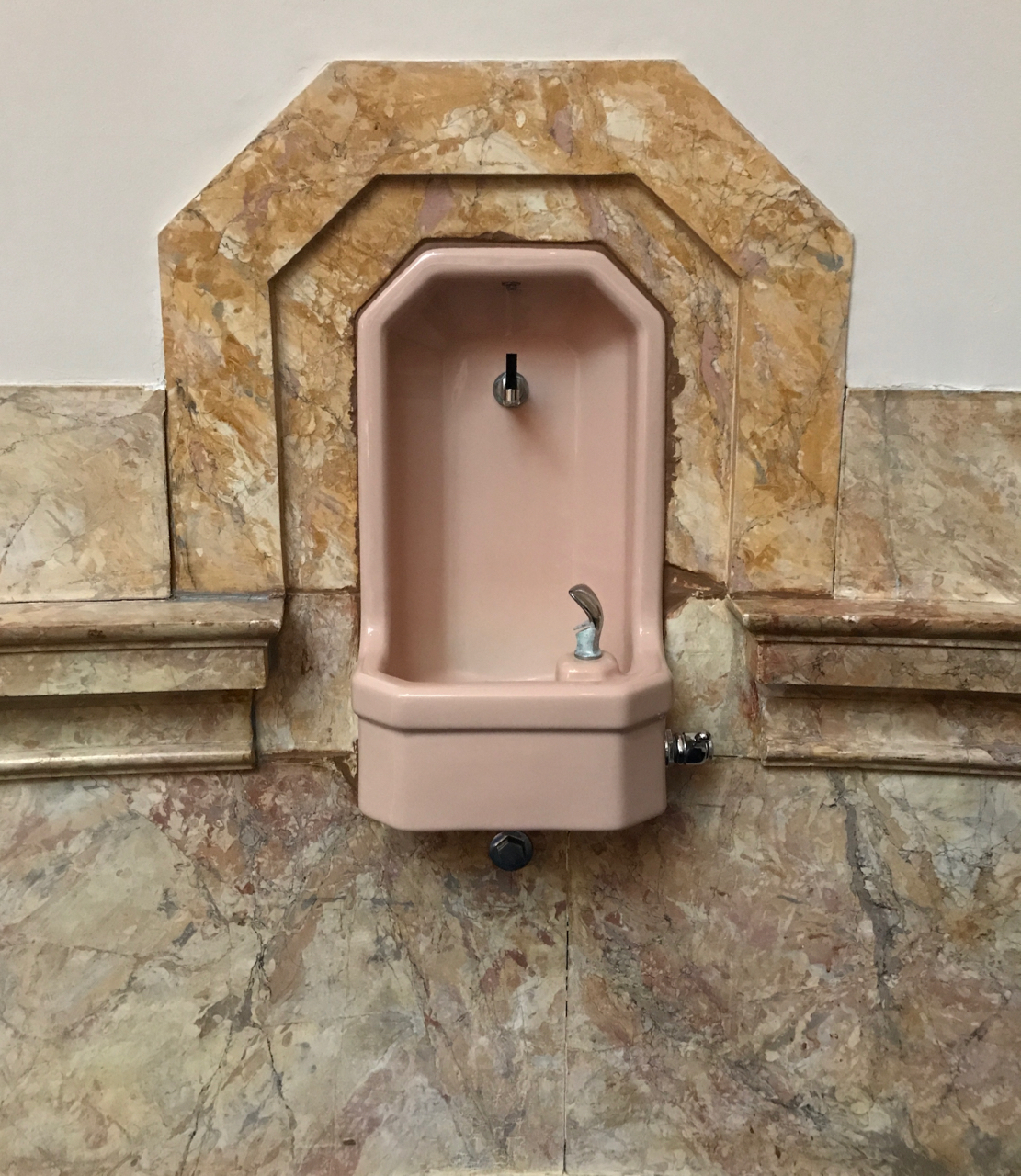
I rather liked this pink drinking fountain. It reminded me of my house with the pink porcelain bathroom fixtures I had before I left for my Airstream adventures.
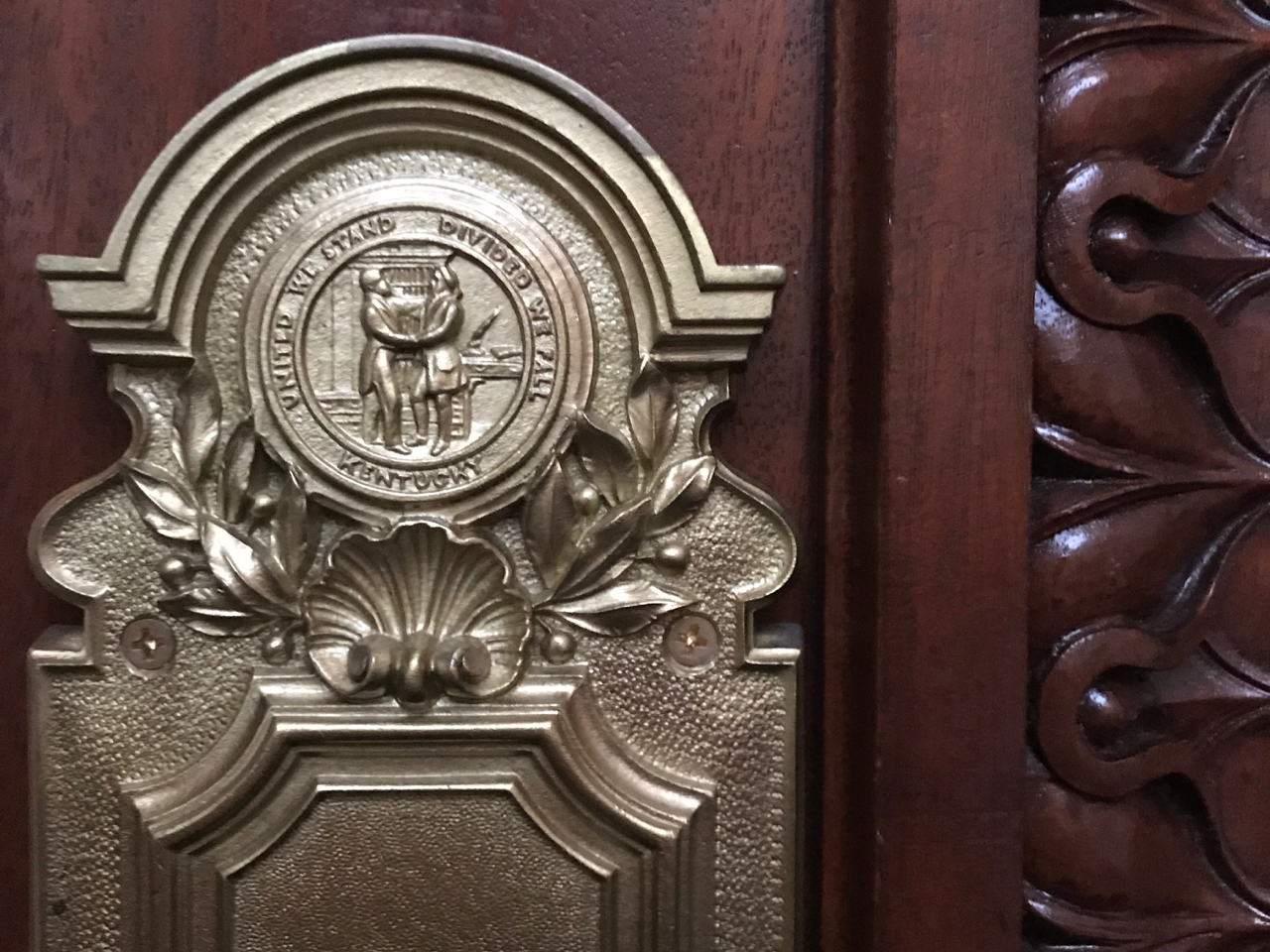
I liked this ornamental door plate.

You know, it’s a little ironic that their state motto is “United we stand, divided we fall.” I mean, they divided themselves from Virginia and they honor the president of the Confederacy in their rotunda…
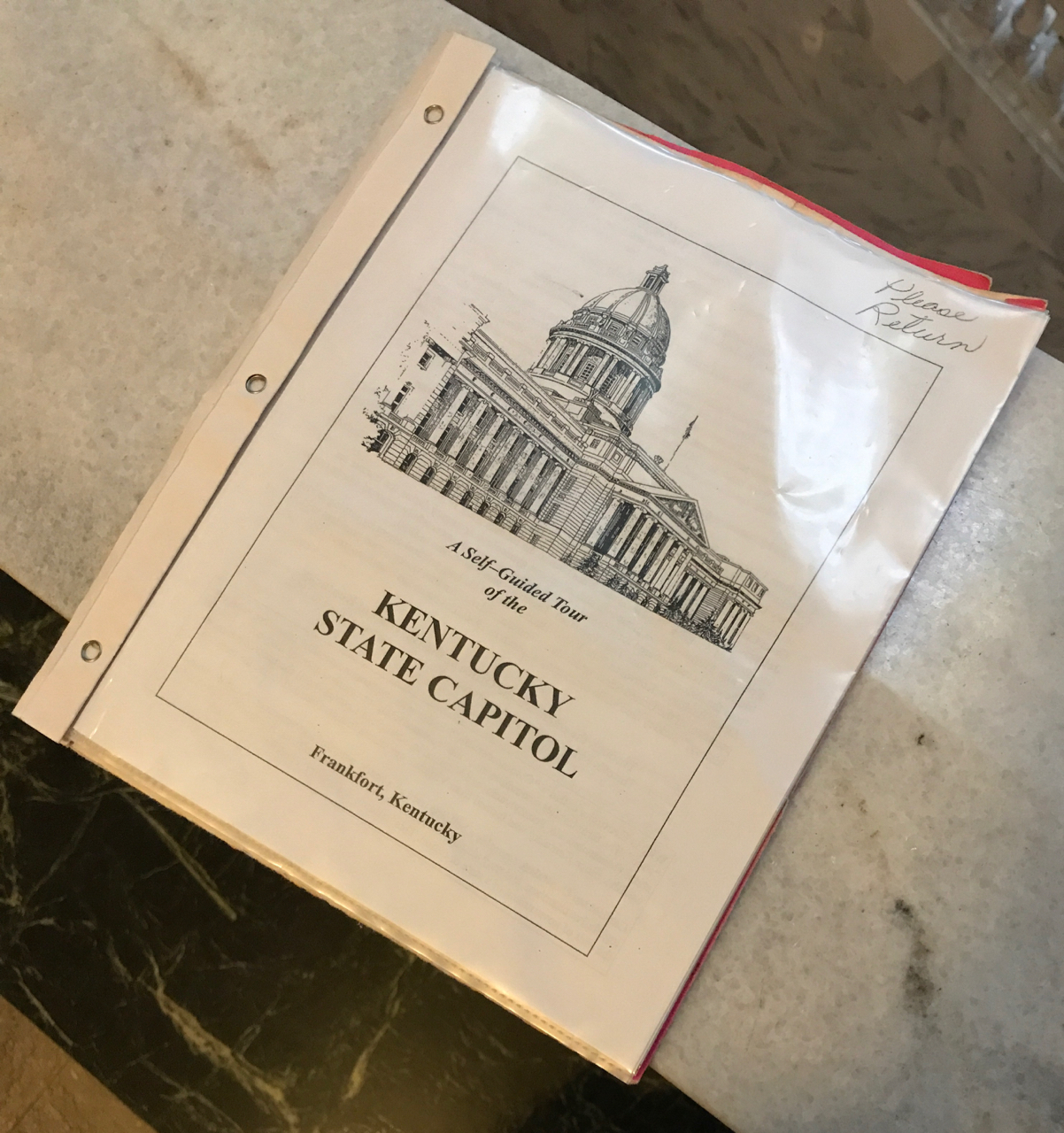
Before I left, I asked if they had a brochure for the self-guided tour. There was a guide, but it had to be returned to the desk. I have no cause for complaint – Wikipedia can give me the information that I can’t remember and I did get a sticker from the governor’s office. Besides, the visit was free.
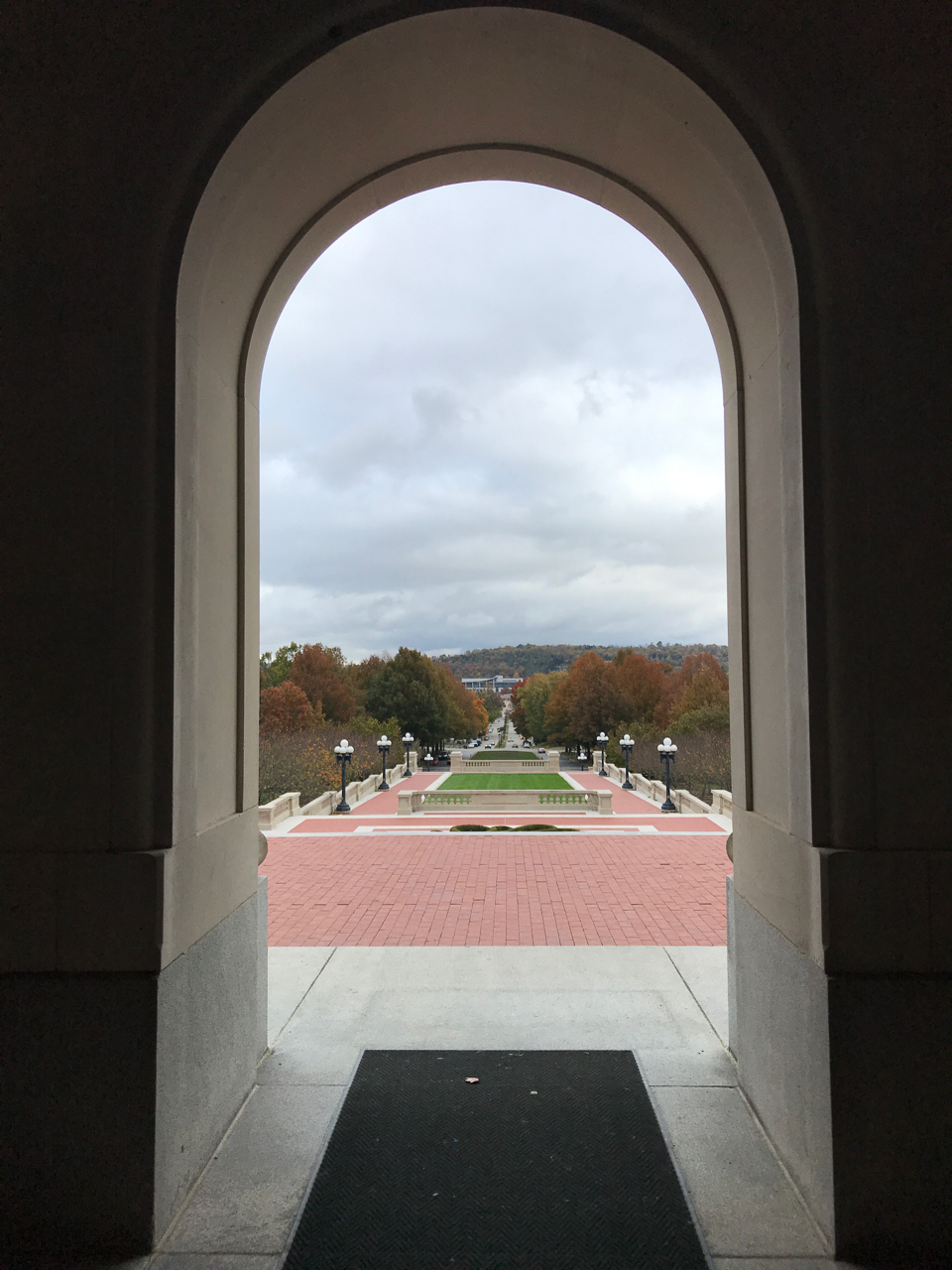
There was quite a view from the entrance.
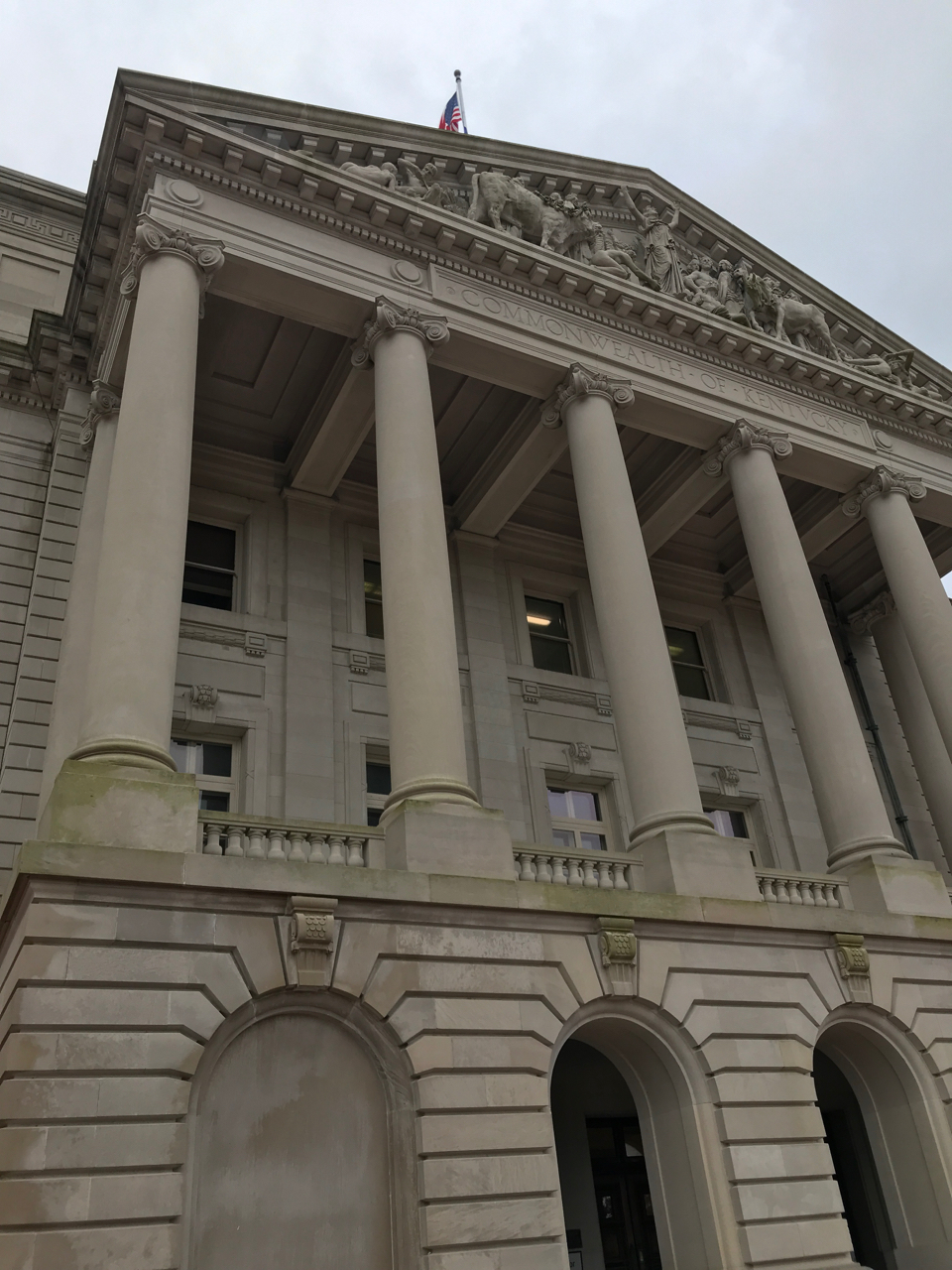
I turned around to look back at the entrance.
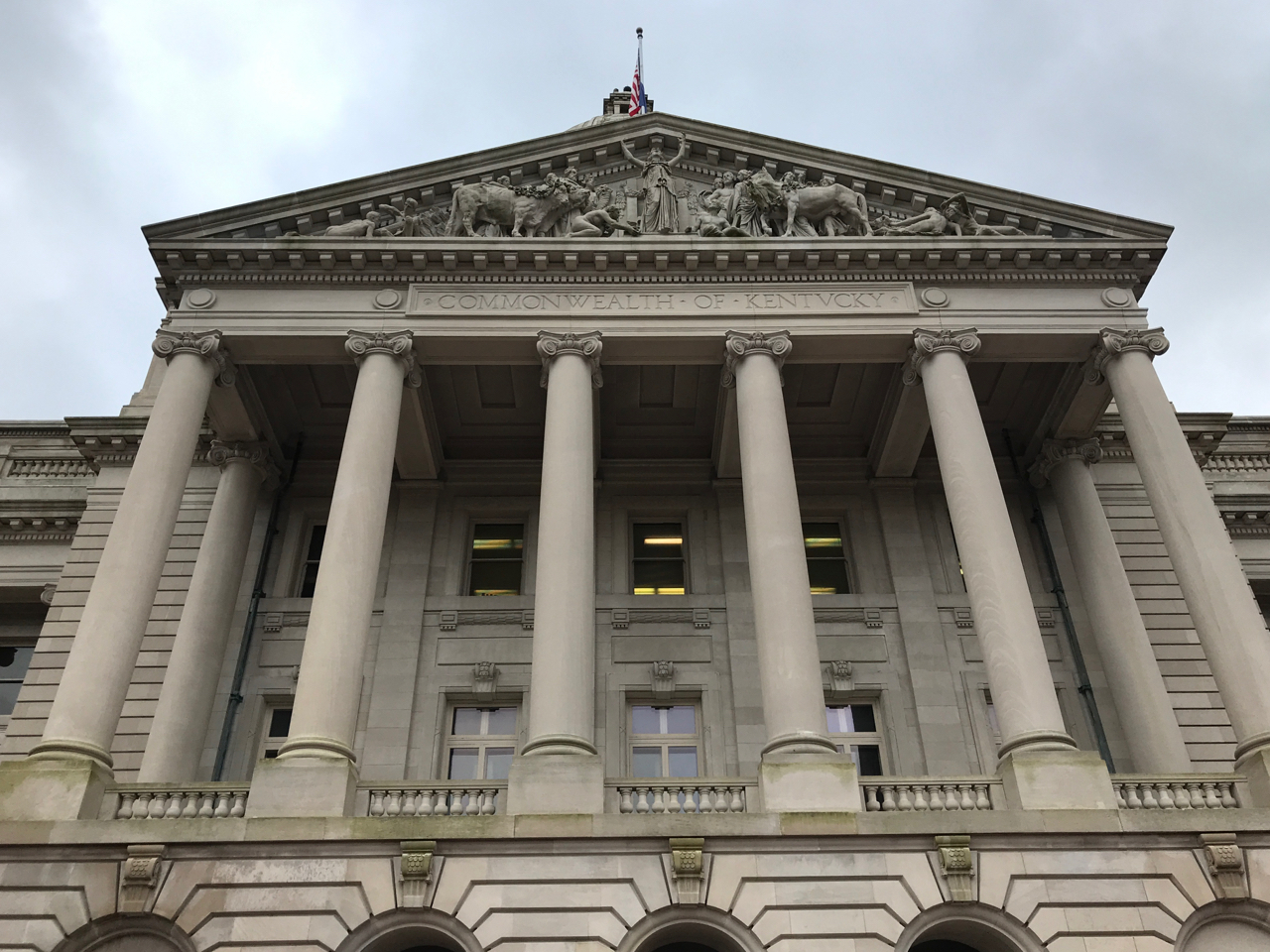
That is quite a sculpture on the pediment above the entrance!
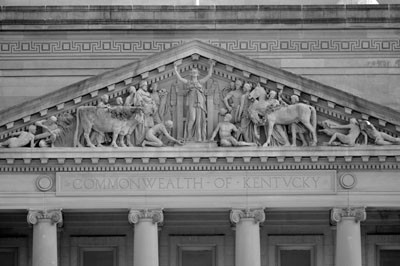
I wondered if there might be a better photo that showed the sculptures in better detail. I found one here, on the Frankfort Public Art website. I also learned that it was the work of David Henry Niehaus and is made of Indiana Limestone.
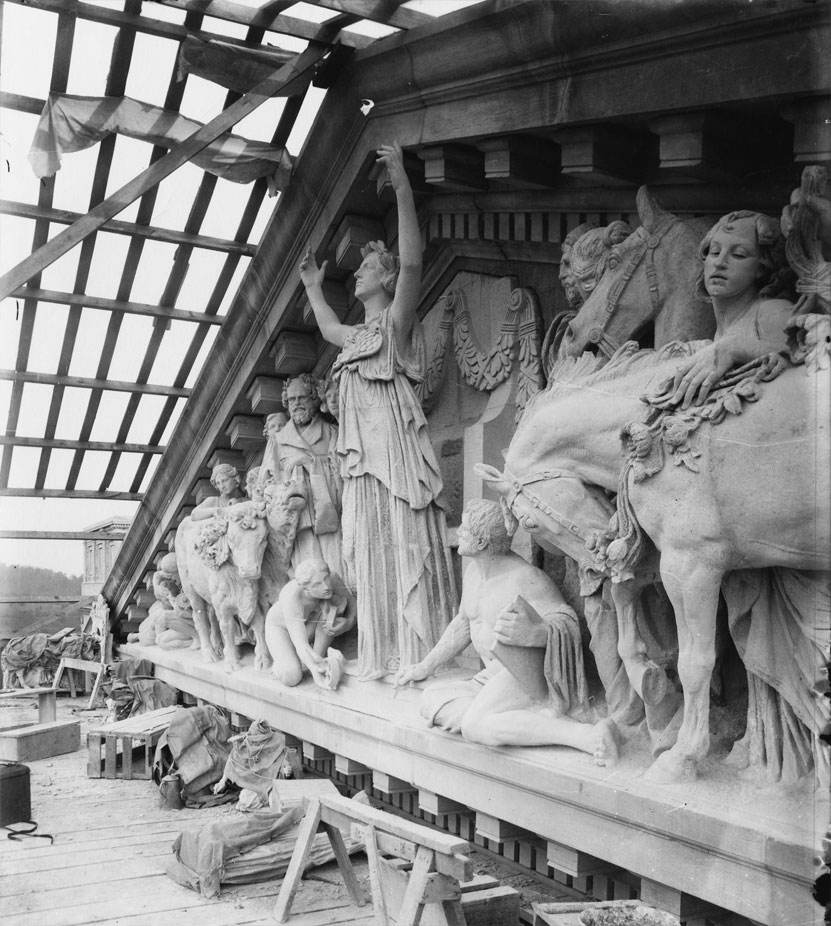
This historic photo, from the same source, gives you an idea of the monumental scale of the sculptures.
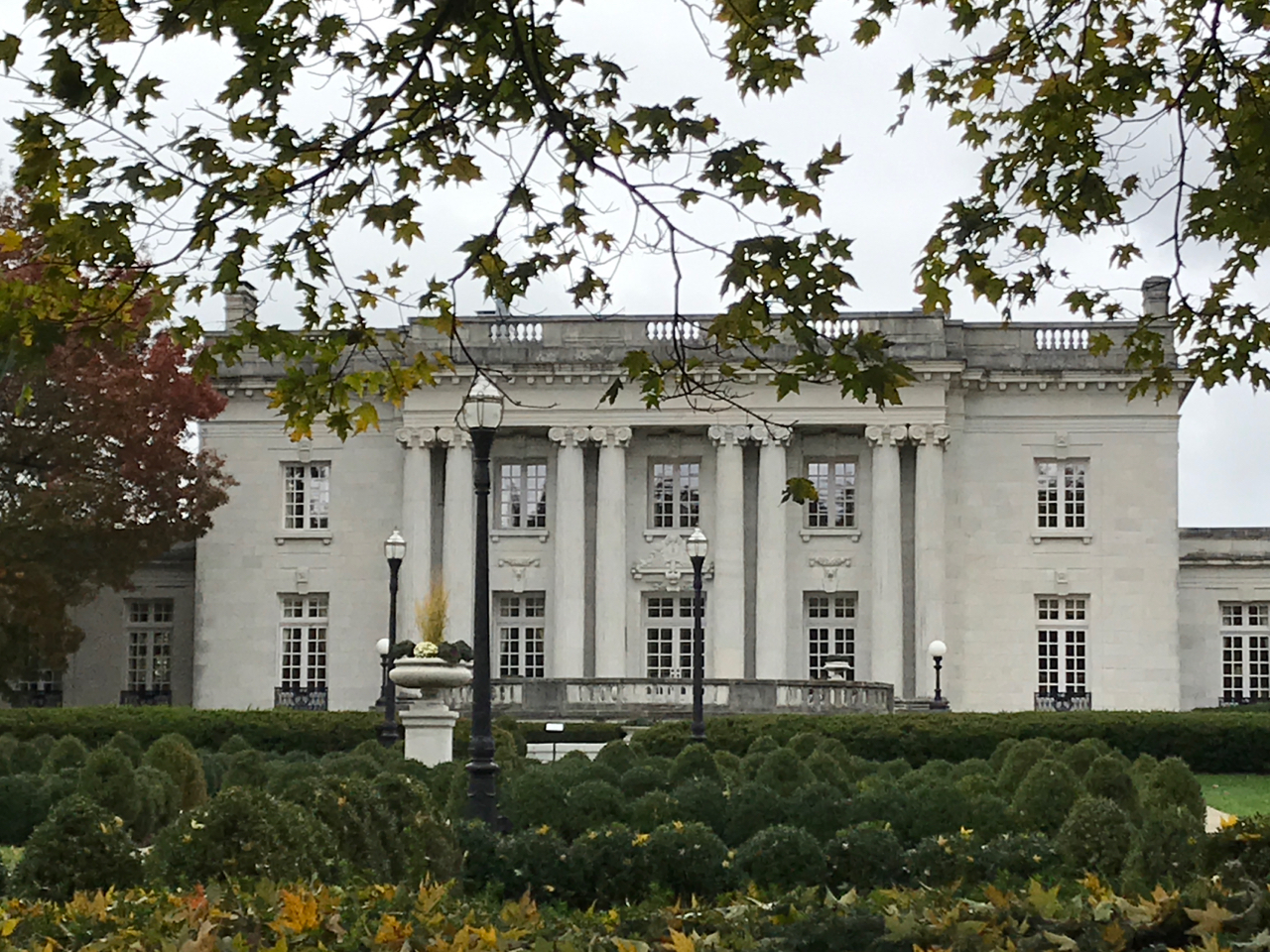
A short ways away from the capitol is the Executive Mansion. According to the marker in front, it was built just after they finished the capitol. The two year construction project cost $95,000, which would be equal to $2,516,755 in today’s money. The 25-room limestone mansion is patterned after Marie Antoinette’s villa. I wonder if they might have been able to find a building to copy of someone who wasn’t removed from prominence so…permanently.
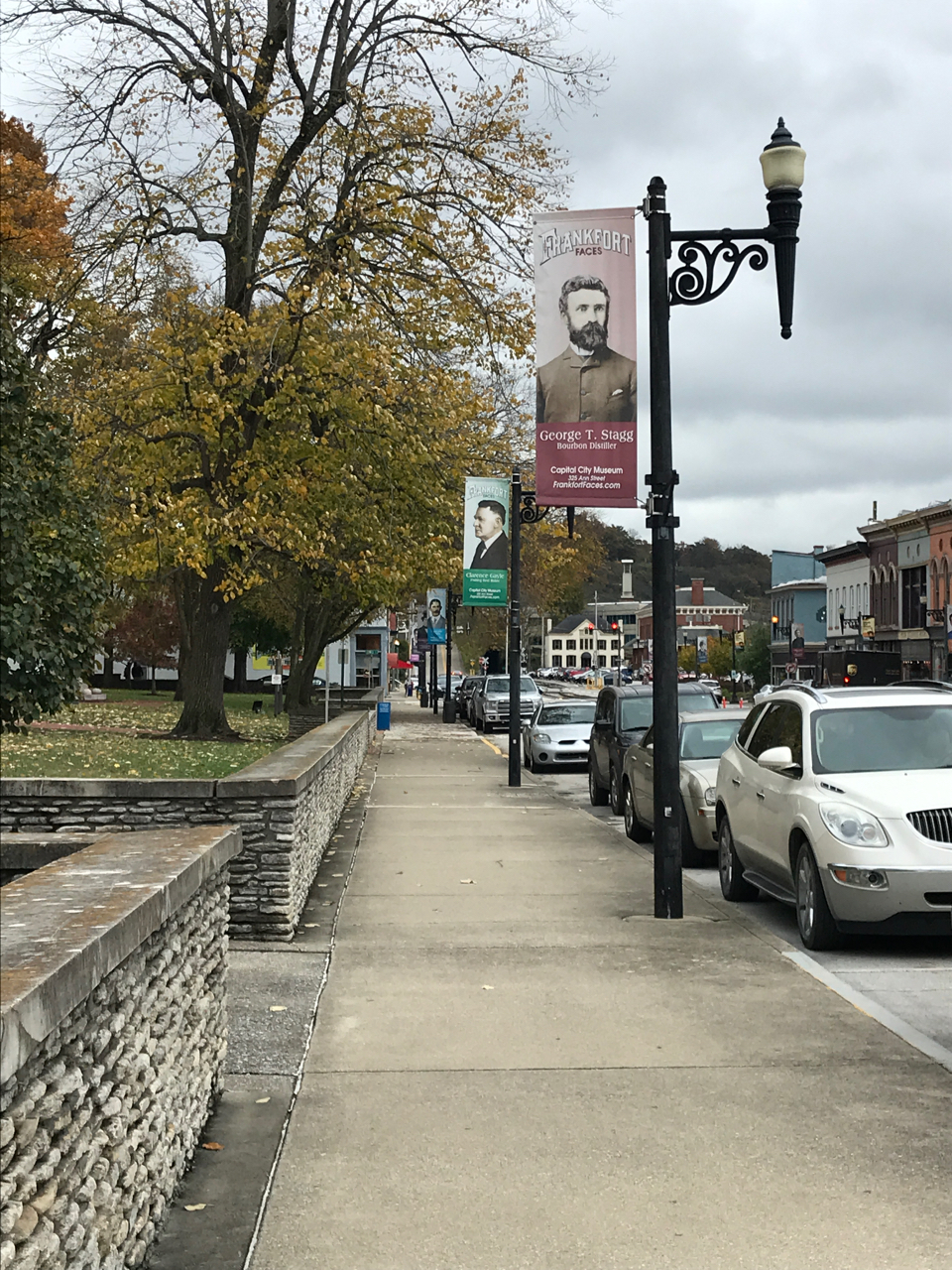
I headed over to the older section of town. There were banners celebrating “Frankfort Faces”
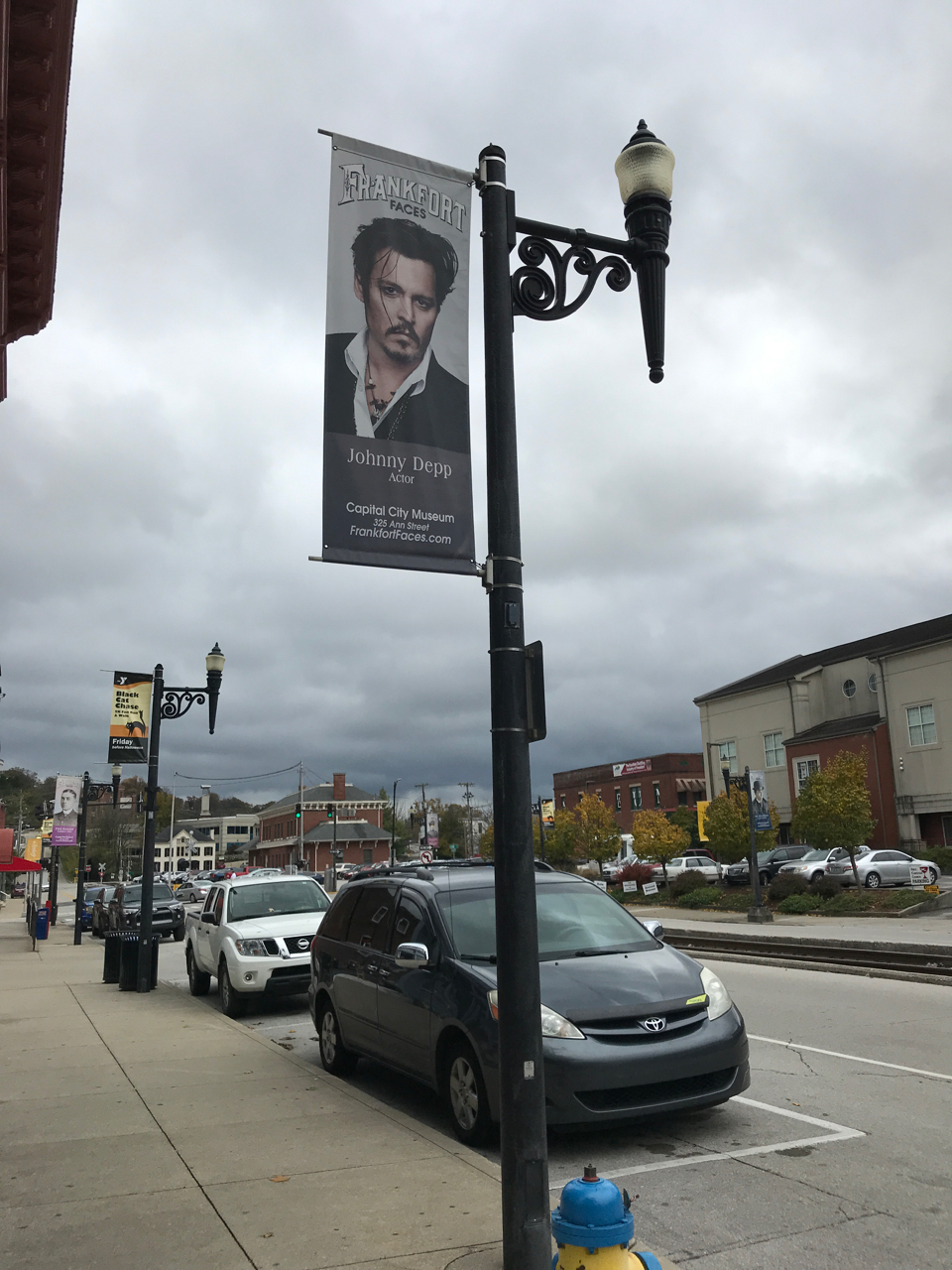
Huh! I didn’t know that Johnny Depp was from Frankfort!

Well…he isn’t, although he is from Kentucky. He was born in Owensboro, about 150 miles away. His bio says that his family moved frequently, so maybe he lived here. Or maybe he went shopping here. Or maybe he rode the train through town.
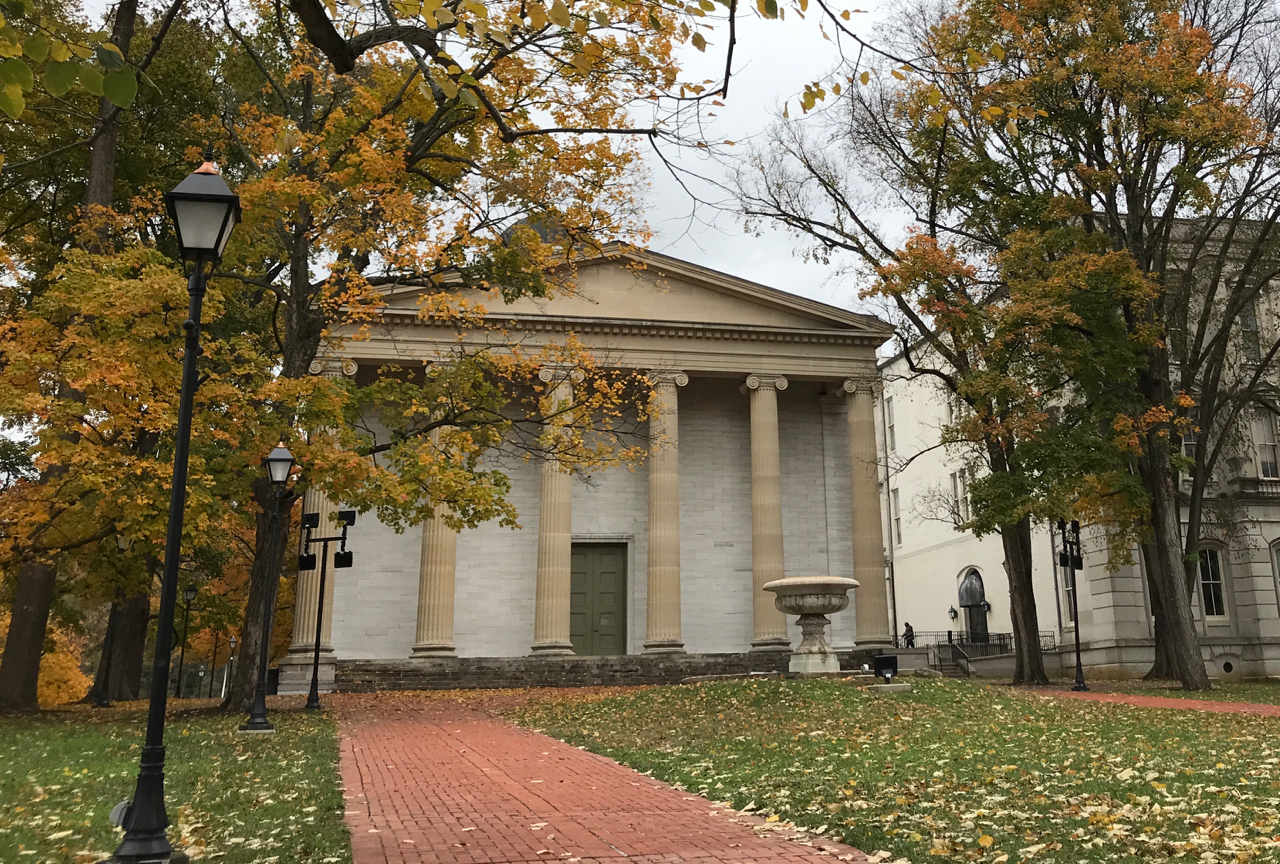
I mean, he could have ridden the train through town, as the tracks run right down the middle of what would have been the main street at one time.

My next stop was the Old State Capitol.

This is actually the third capitol building. From 1792-1830, two other buildings were used as the seat of the government, but both of them burned down completely. This building was in use from 1830 until the new capitol opened in 1910.

This building was designed in the Greek Revival style by 25-year-old Gideon Shyrock of Lexington, and it was his first building. His chose the Greek Revival style to symbolically link the relatively young republic of Kentucky with ancient Greece, the prototype of popular democratic government.

The front of the building is modeled after the Temple of Minerva Polias at Priene. Since Greek temples had no windows, he chose not to have windows in the front.
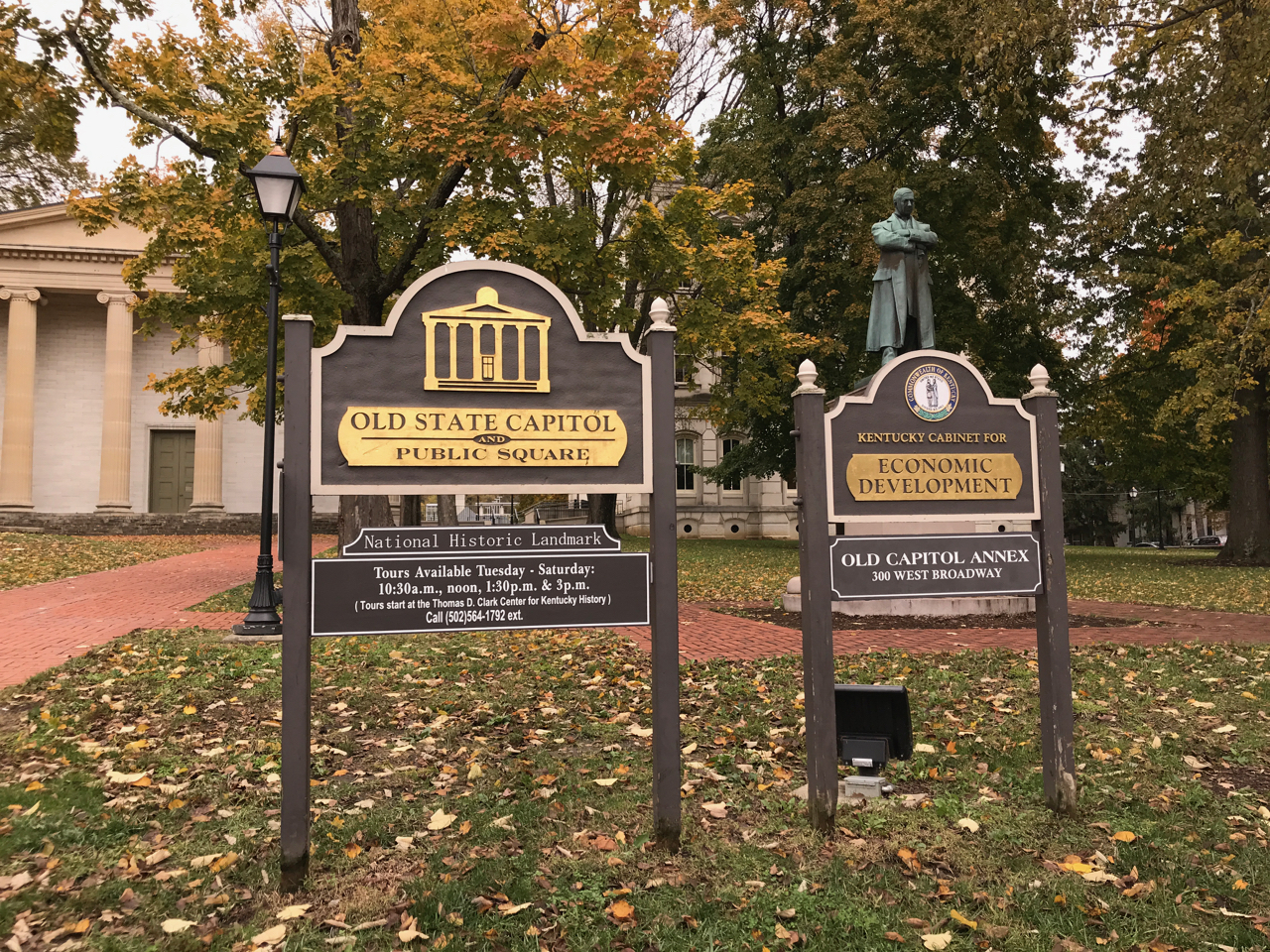
It is now a museum. I can’t remember if I was there on a day when it wasn’t open or if I didn’t feel like paying to visit.
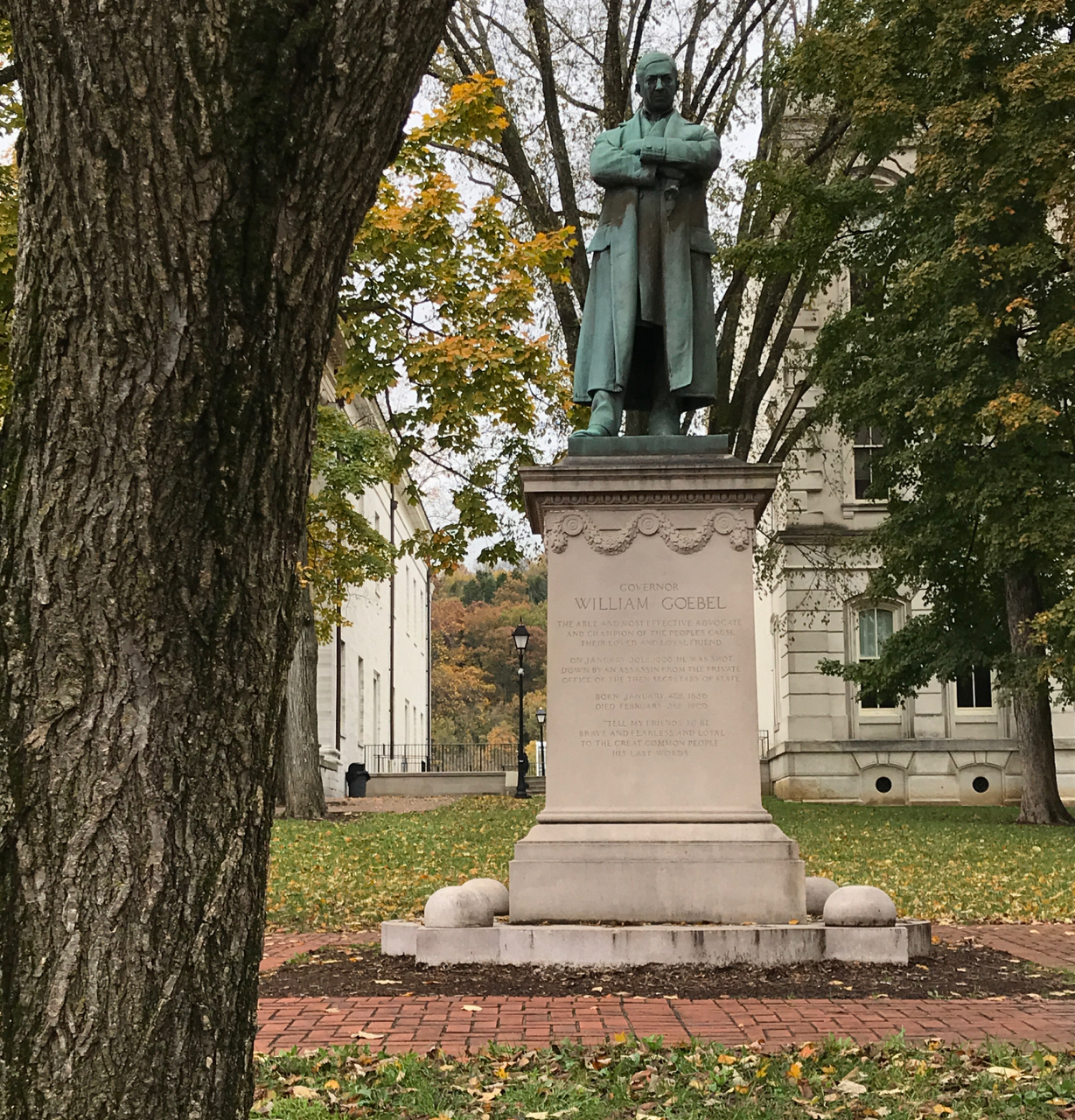
This statue is of William Goebel, who was elected in the 1899 governor race.

By Acdixon – Own work, Public Domain, https://commons.wikimedia.org/w/index.php?curid=14390488

He was assassinated at the Capitol on his way to be inaugurated.
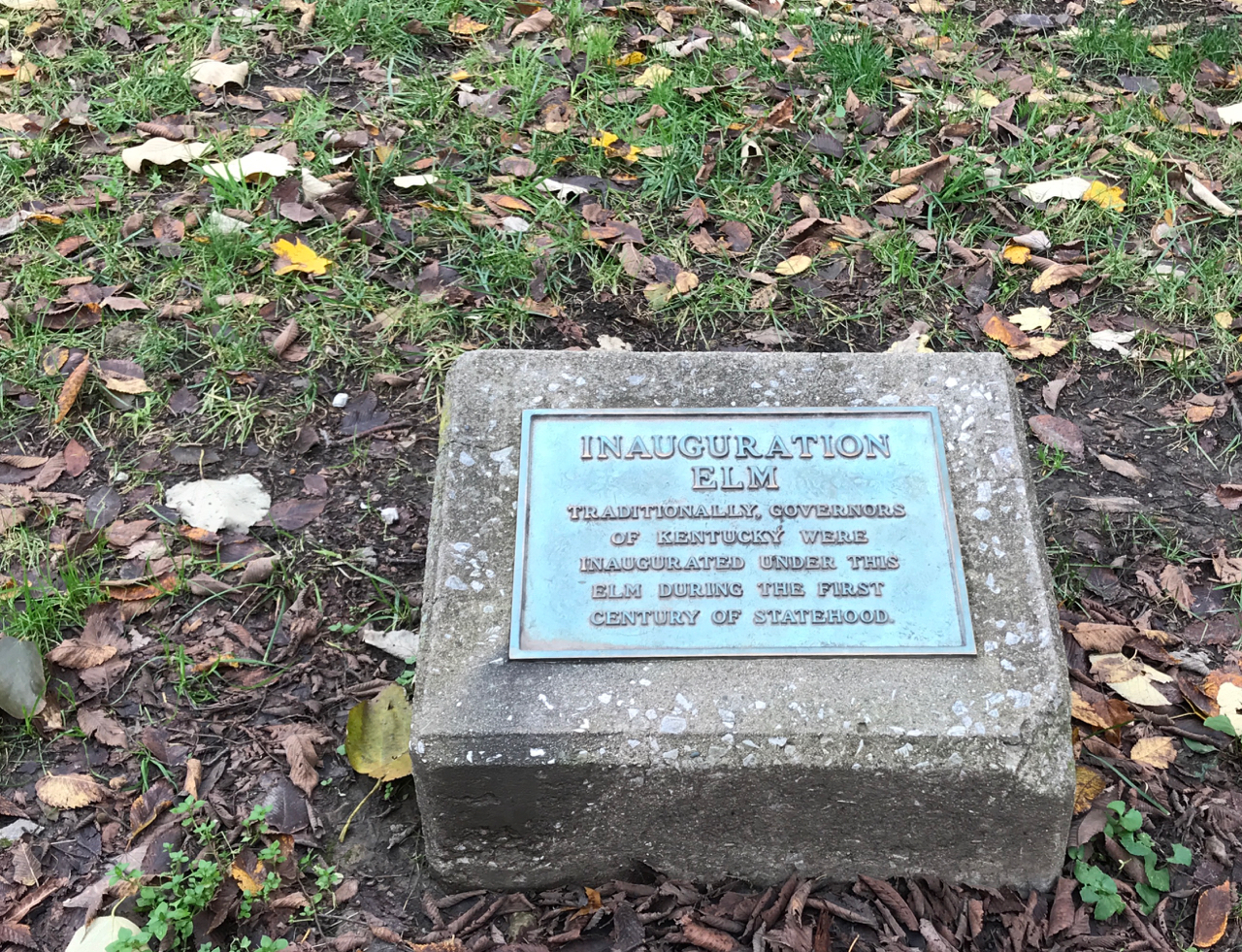
Do you remember my last post where I commented on the transience of trees as memorials? Apparently, inaugurations were carried out beneath an elm tree for more than a century. It is no longer here, but the tree carries on in trees grown from cuttings.
This elm is at the Stanley-Case home in Shelbyville, Kentucky. It’s only about 20 miles away, if you care to go take a look. (I didn’t. I borrowed the photo from the above website.) The oldest part of the building dates from the early 1800s. It is now the headquarters of the Shelby County Historical Society.
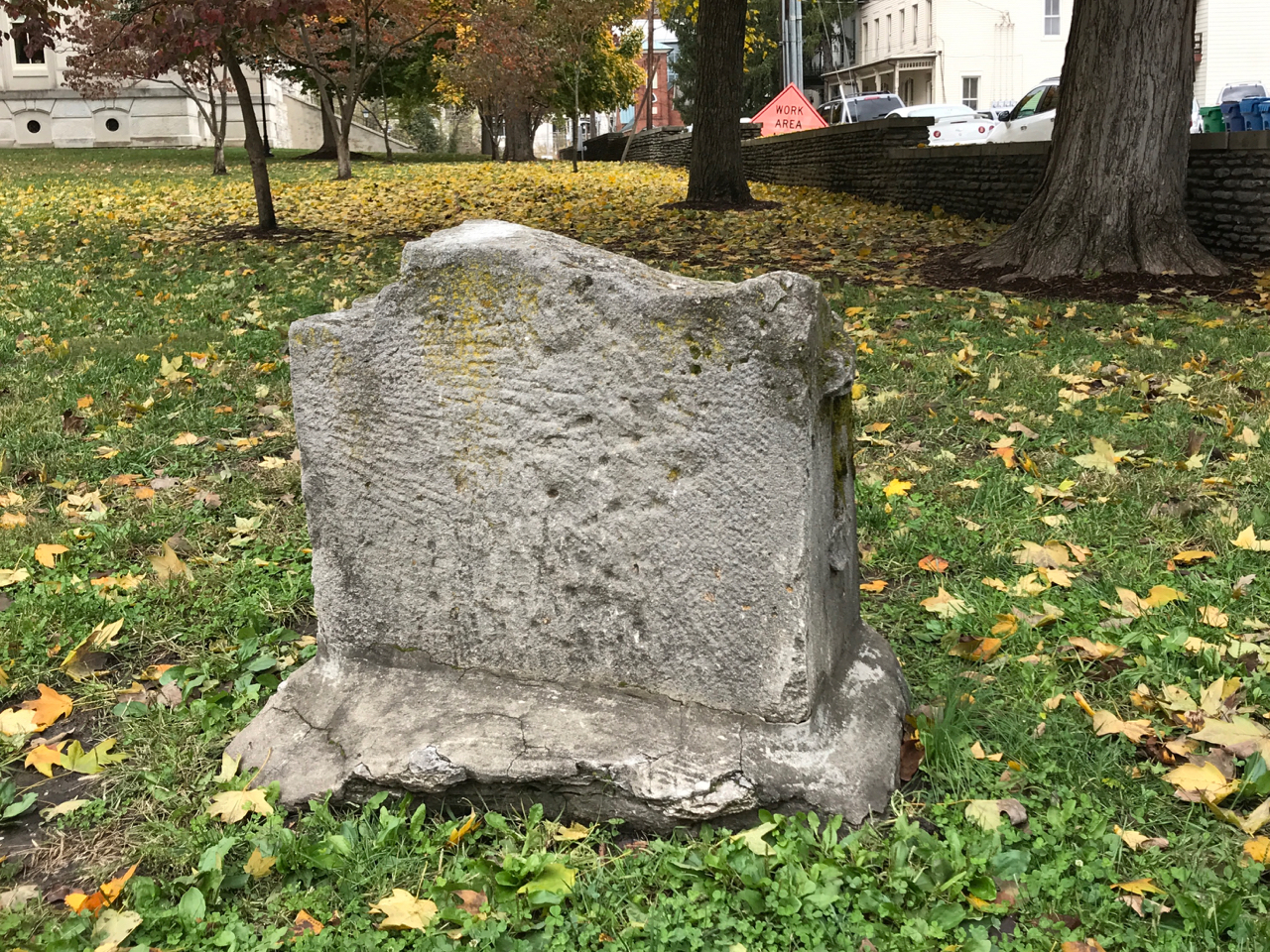
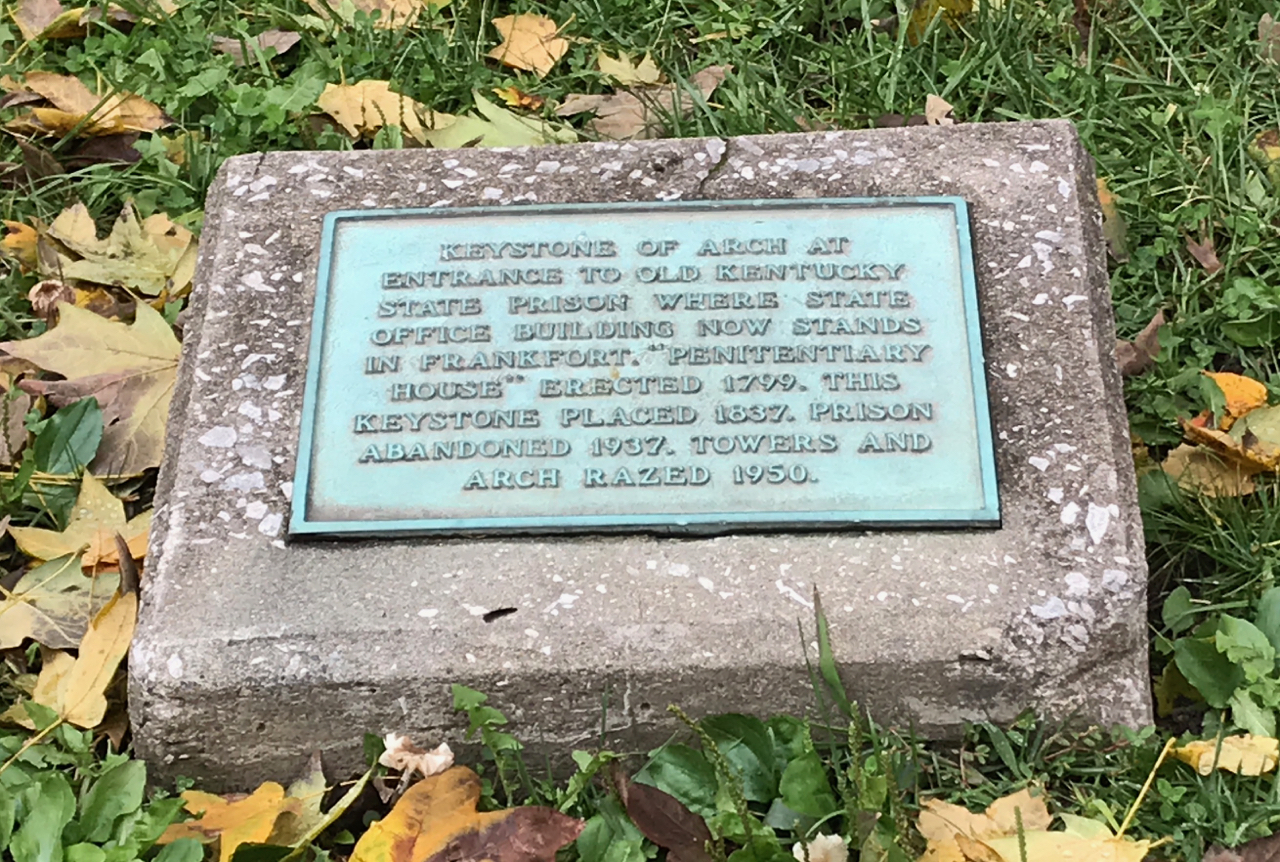
Now, I’m not 100% certain, but I think this is the keystone of the arch at the entrance to the Old Kentucky State Prison. According to a plaque nearby, the “penitentiary house” was erected in 1799, and the keystone was place in 1837. The prison was abandoned in 1937 and the towers and the arch were razed in 1950. The State Office Building  in Frankfort now stands on the site it once occupied.
I was starting to feel peckish and I went looking for some lunch.
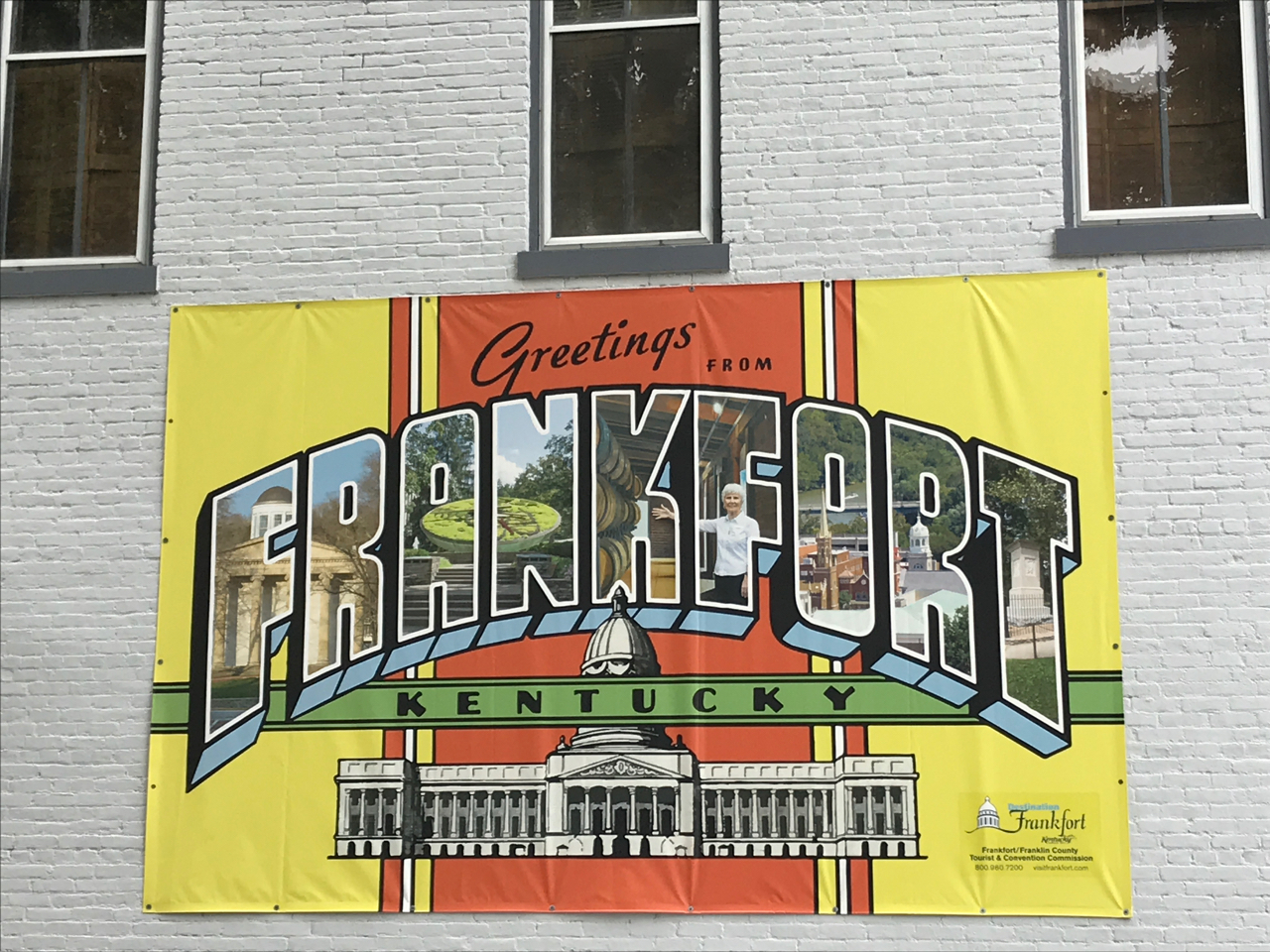
Along the way, I saw this banner.
Ah! Pizza would be good for lunch.
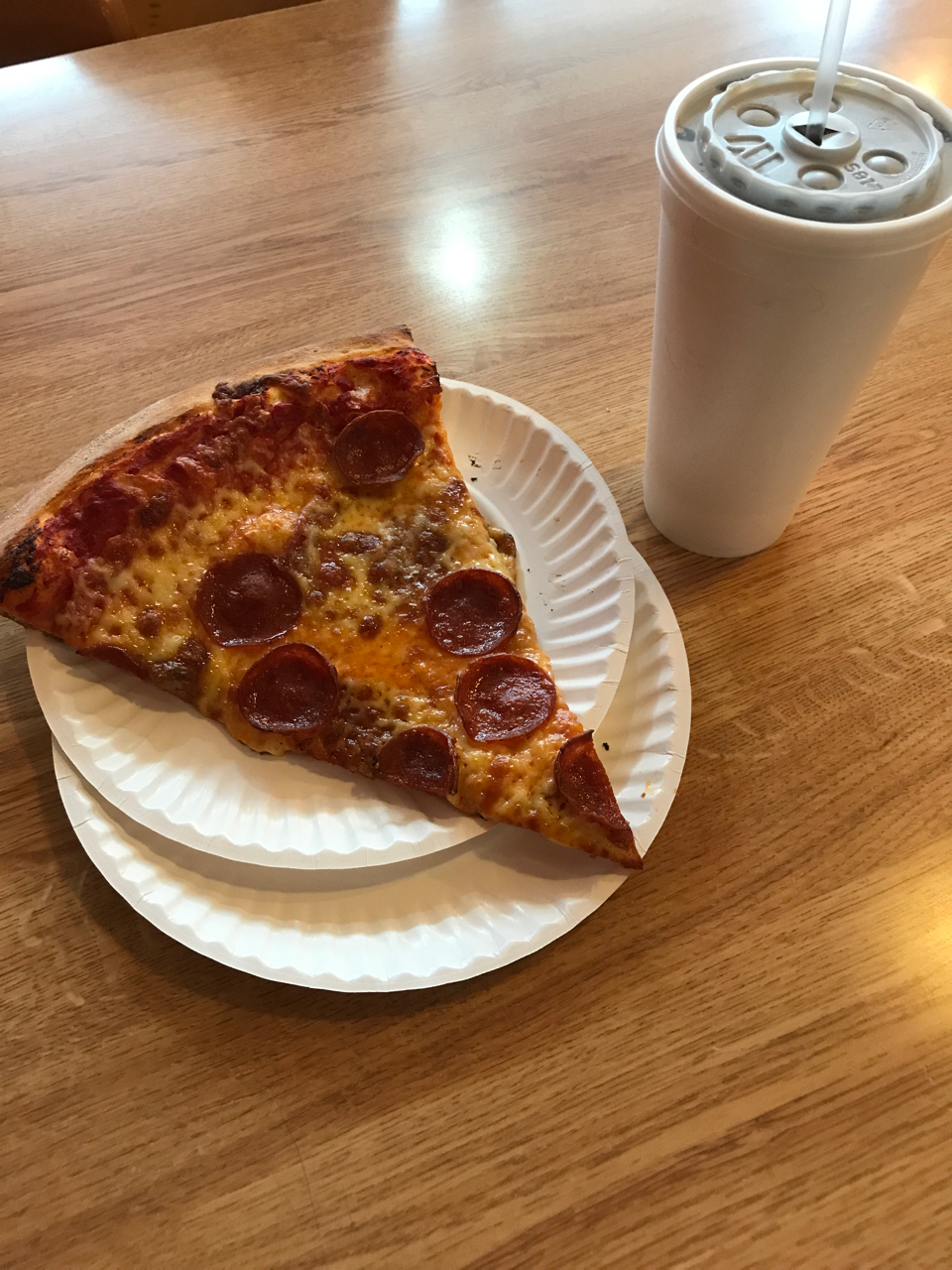
I got a slice so big they needed two plates.
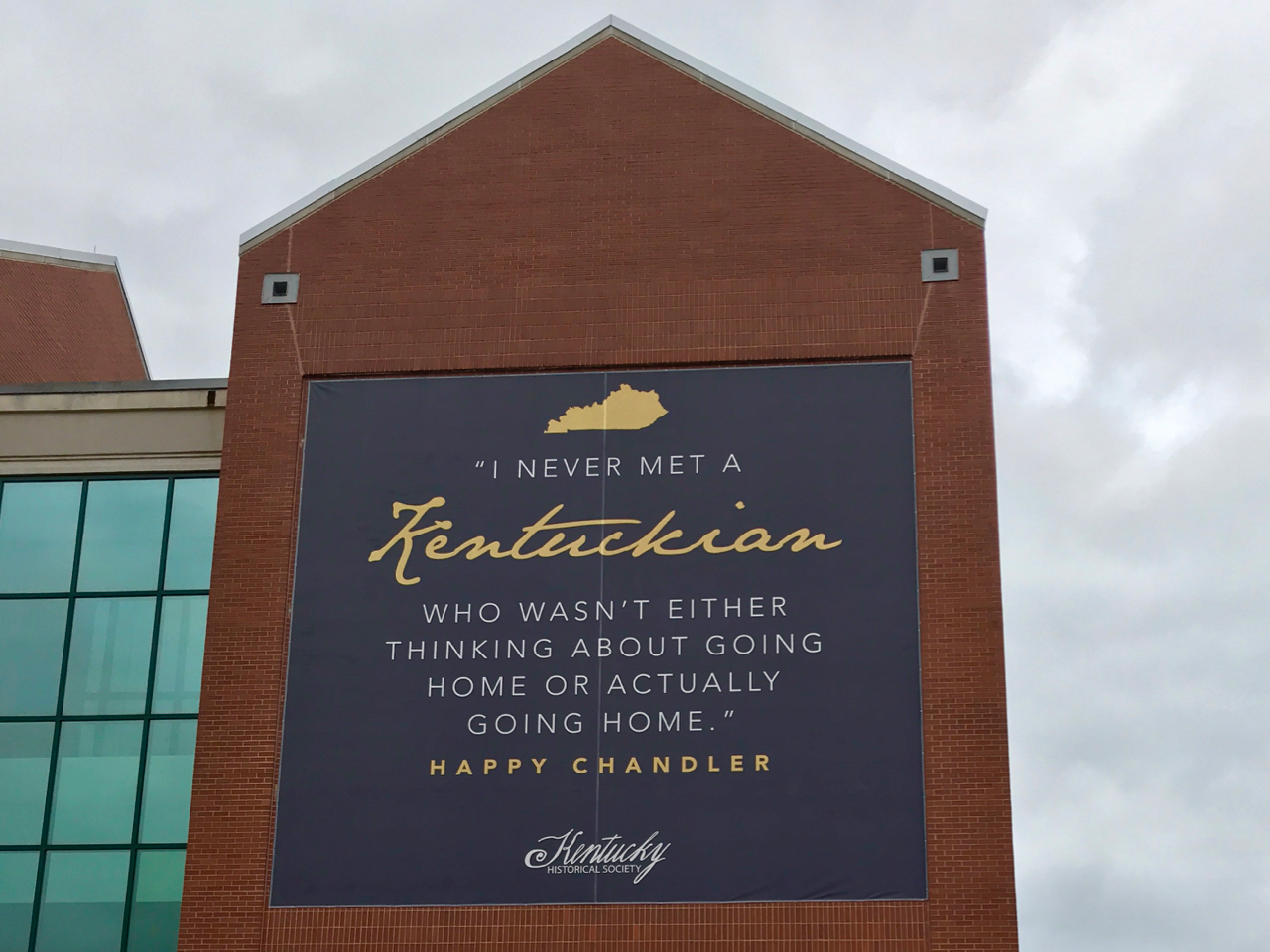
Thus restored, I headed out for a bit more exploration.
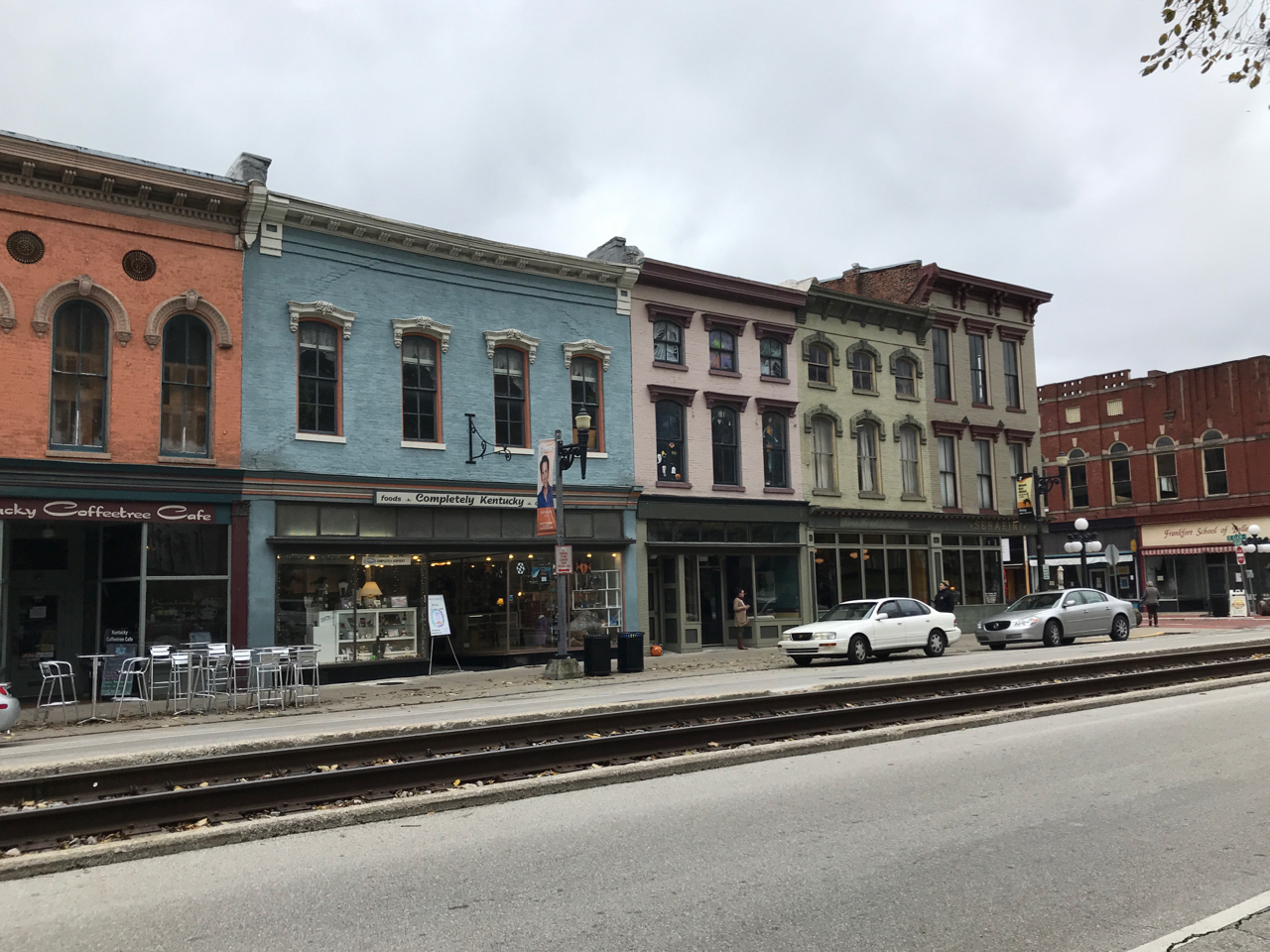
I crossed the tracks that ran right through town and over to the historic shopping area.
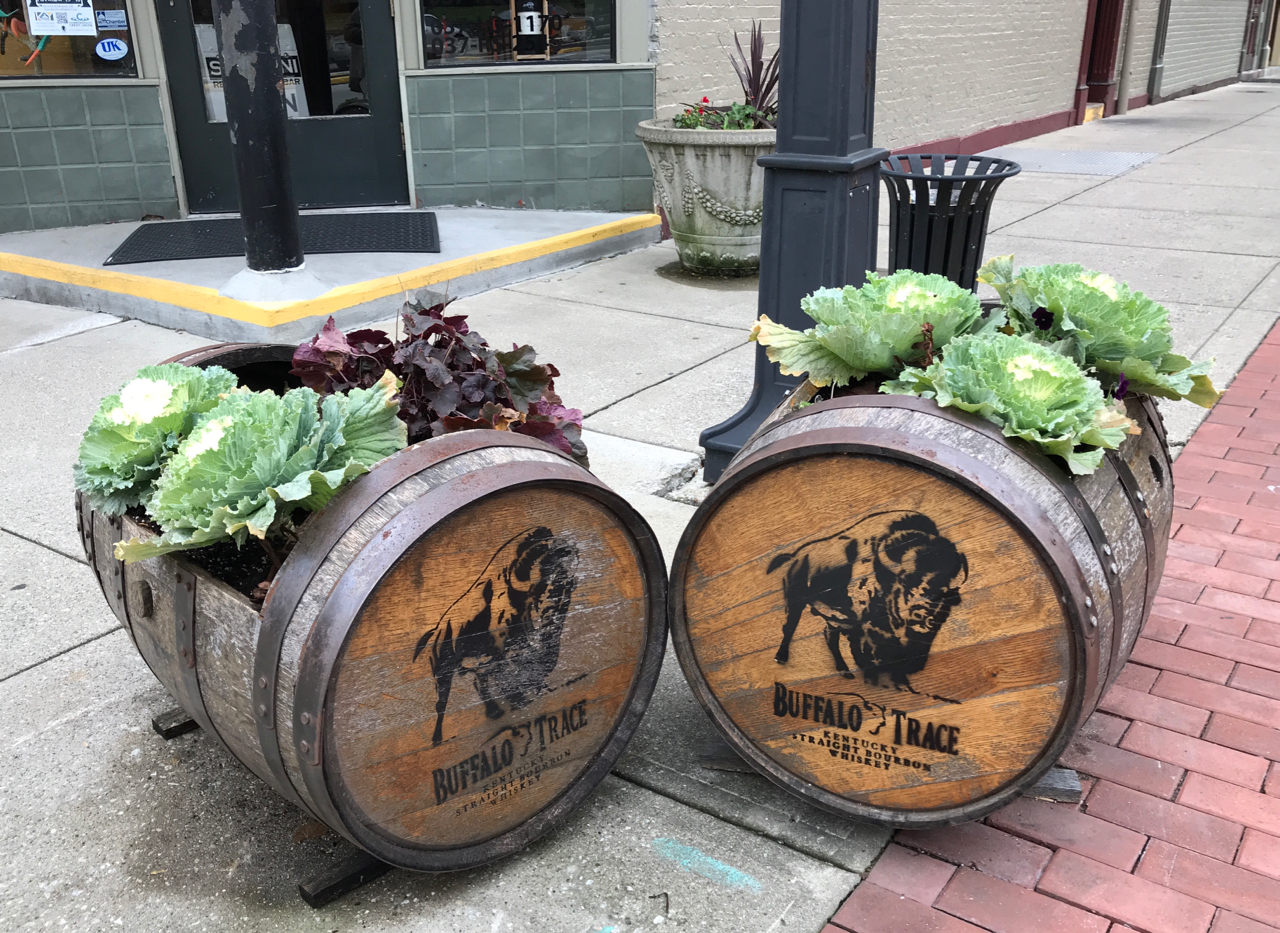
I thought this planters were interesting. I liked the decorative cabbage that was planted in them and this Buffalo Gal can’t resist a buffalo!
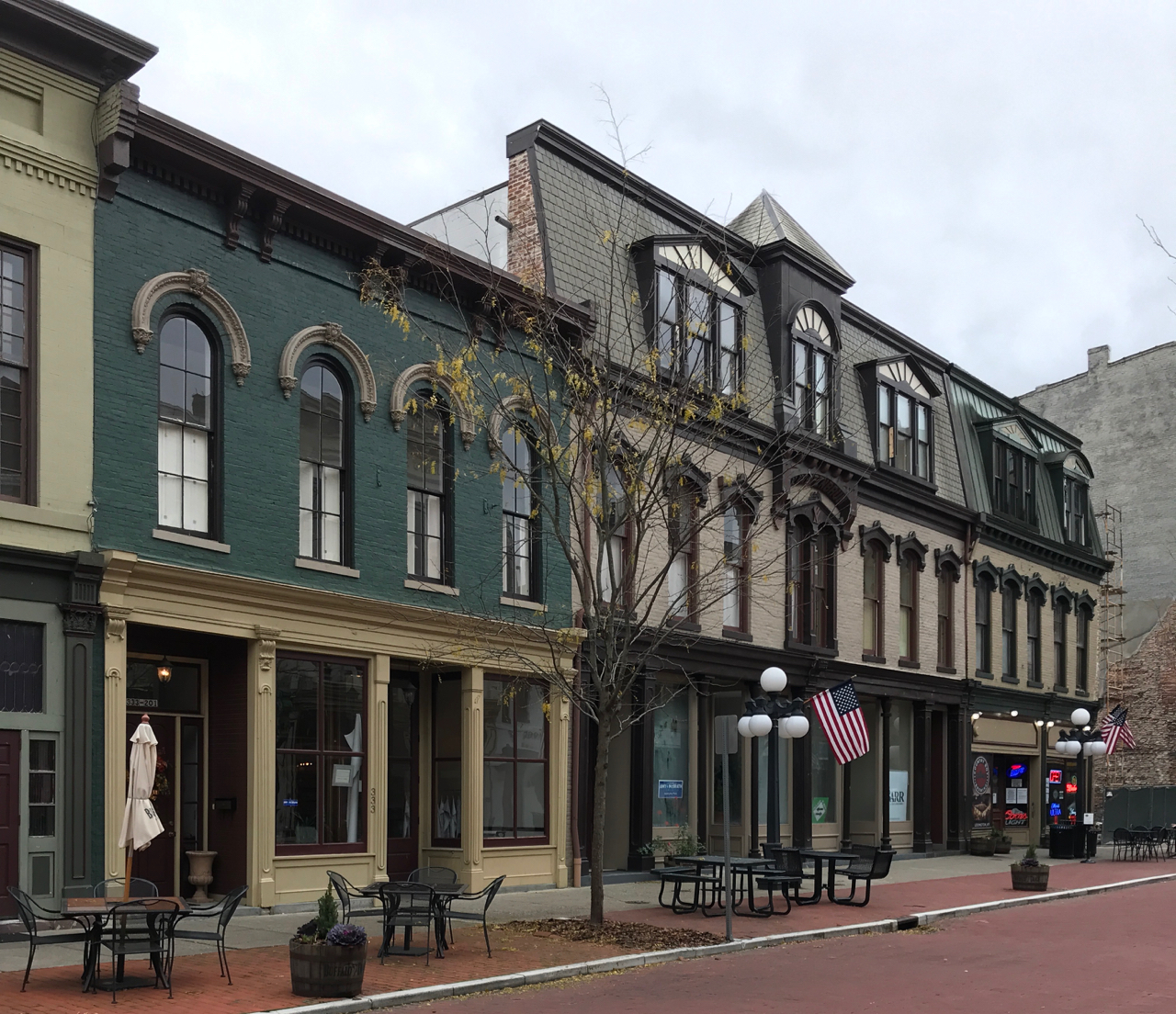
I’ll bet that this is a cute part of town to explore when the weather is nice. But, I had another objective for my visit to Frankfort. I wanted to see where Daniel Boone was buried. I headed over to the Frankfort Cemetery.
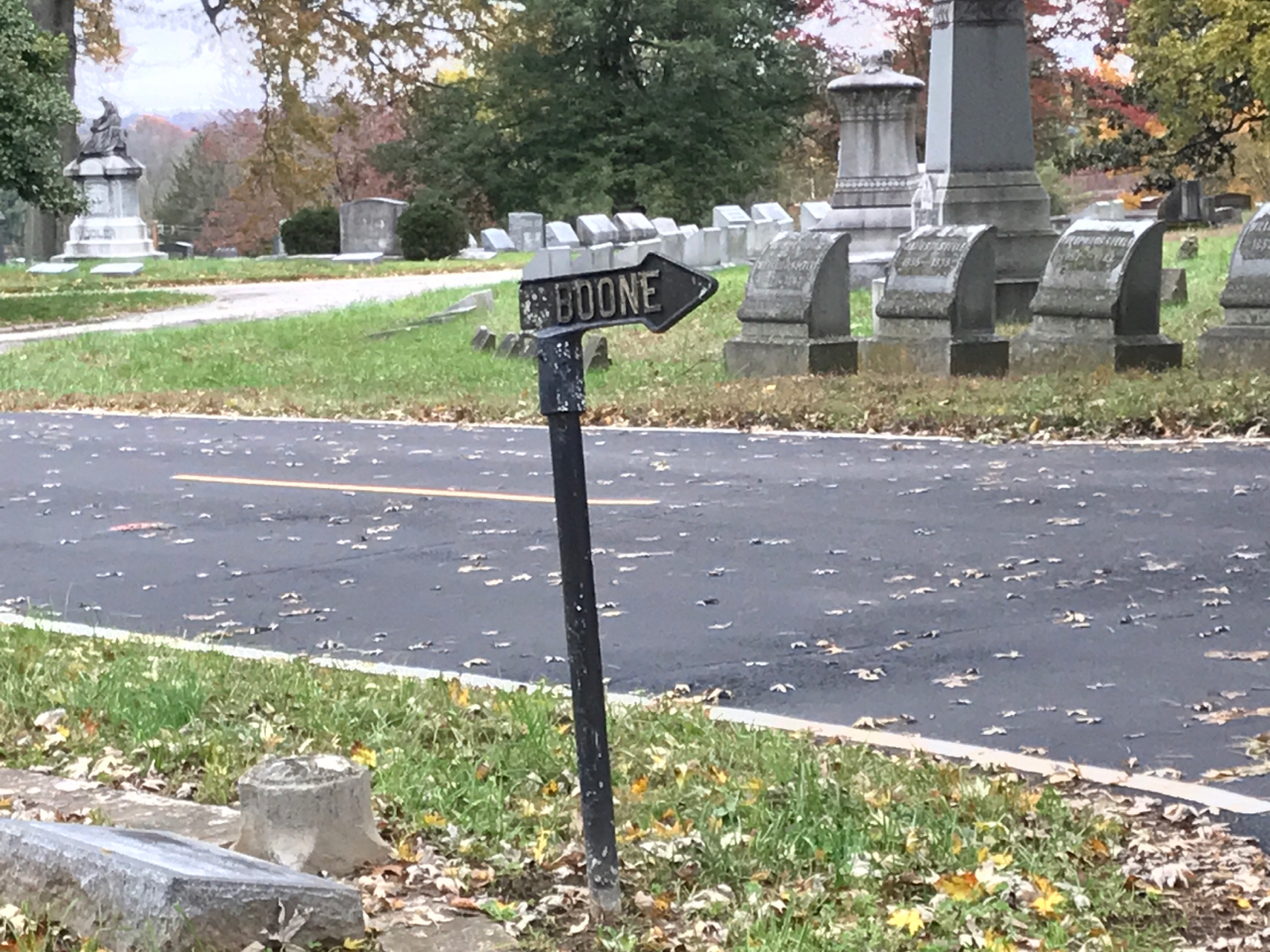
I liked how they made it easy to find this grave. Here’s the first sign.
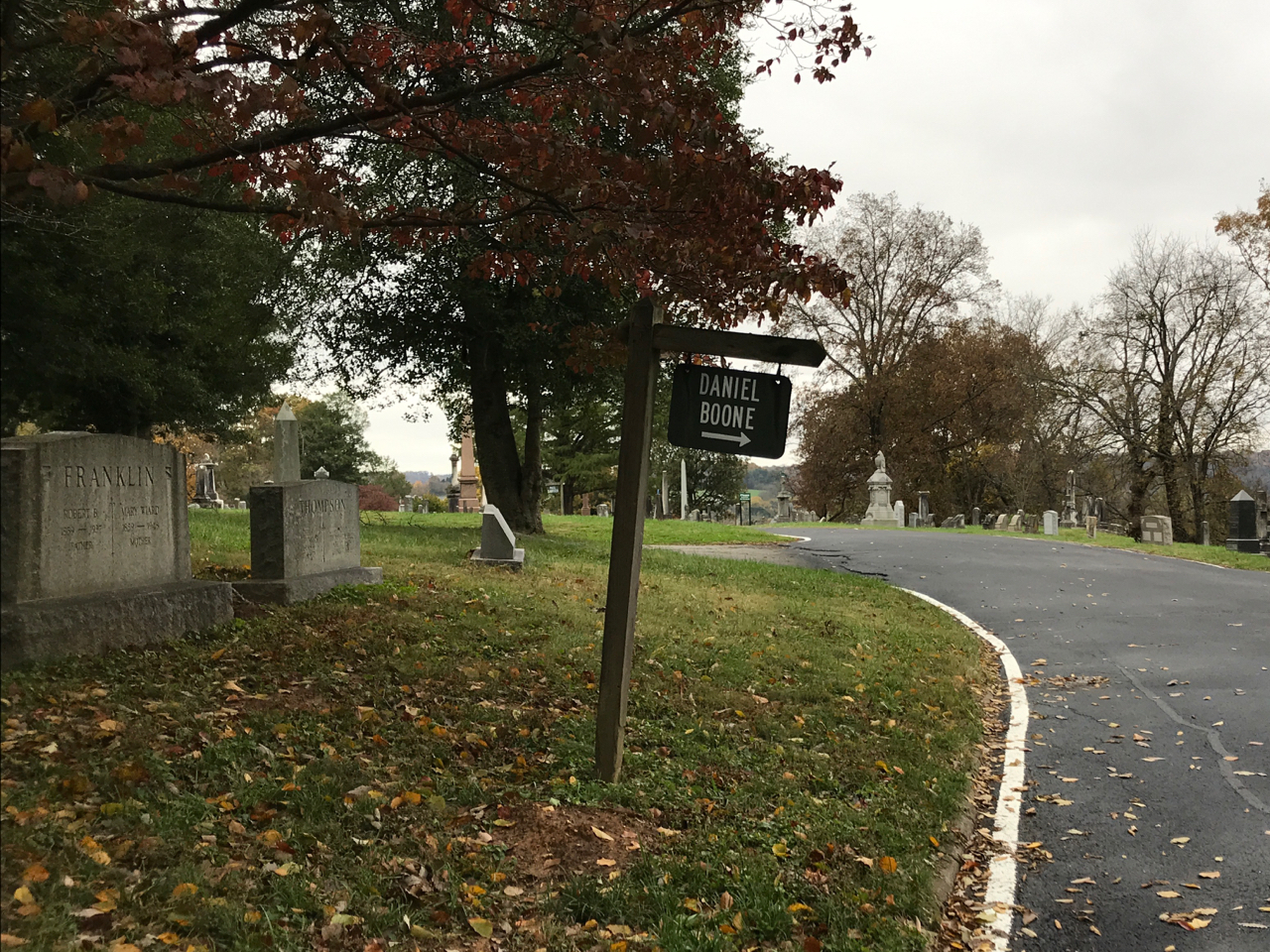
Here’s the second sign.
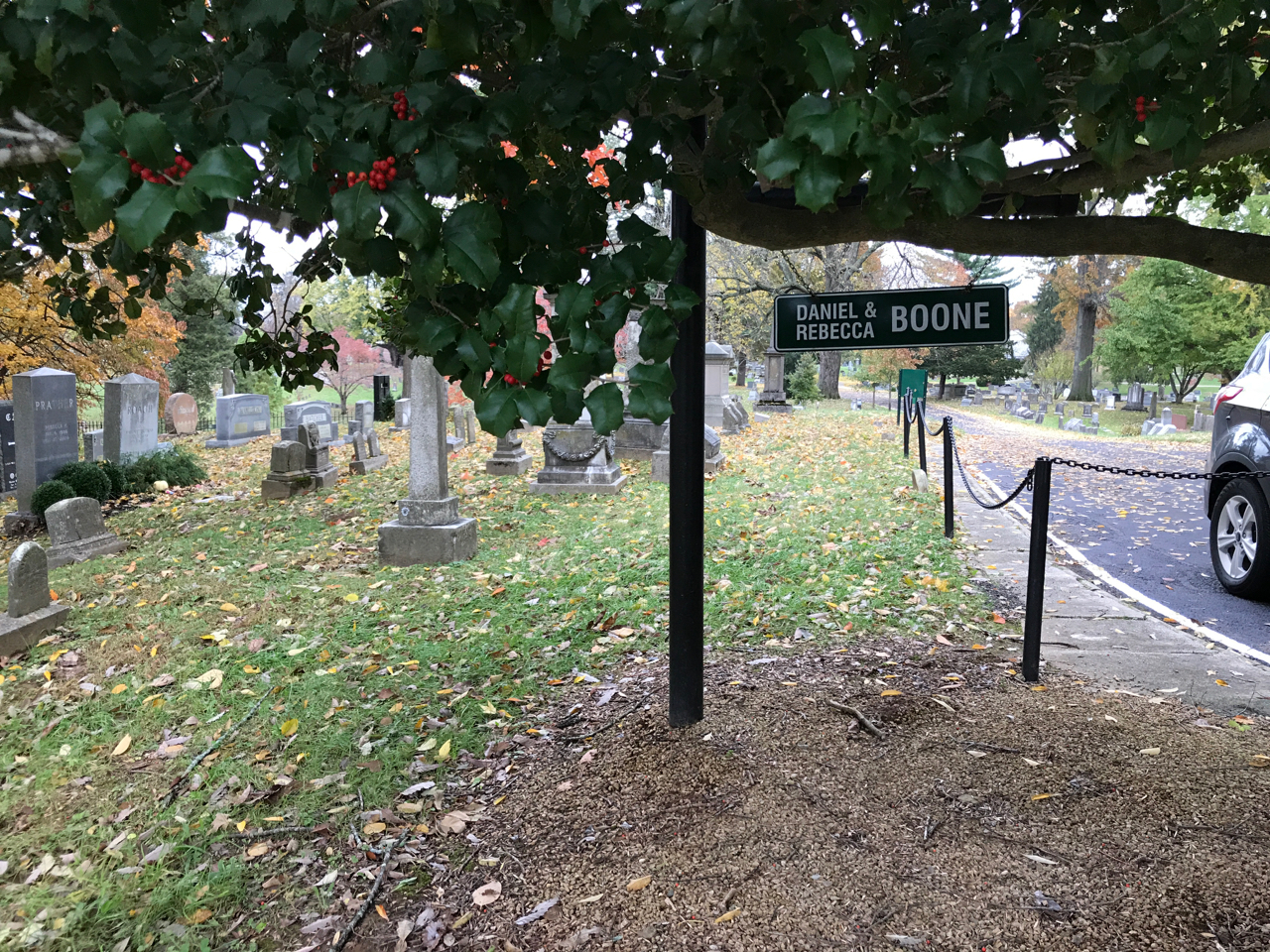
Judging why the number of cars parked nearby, I think this last sign was pointing to the gravesite.
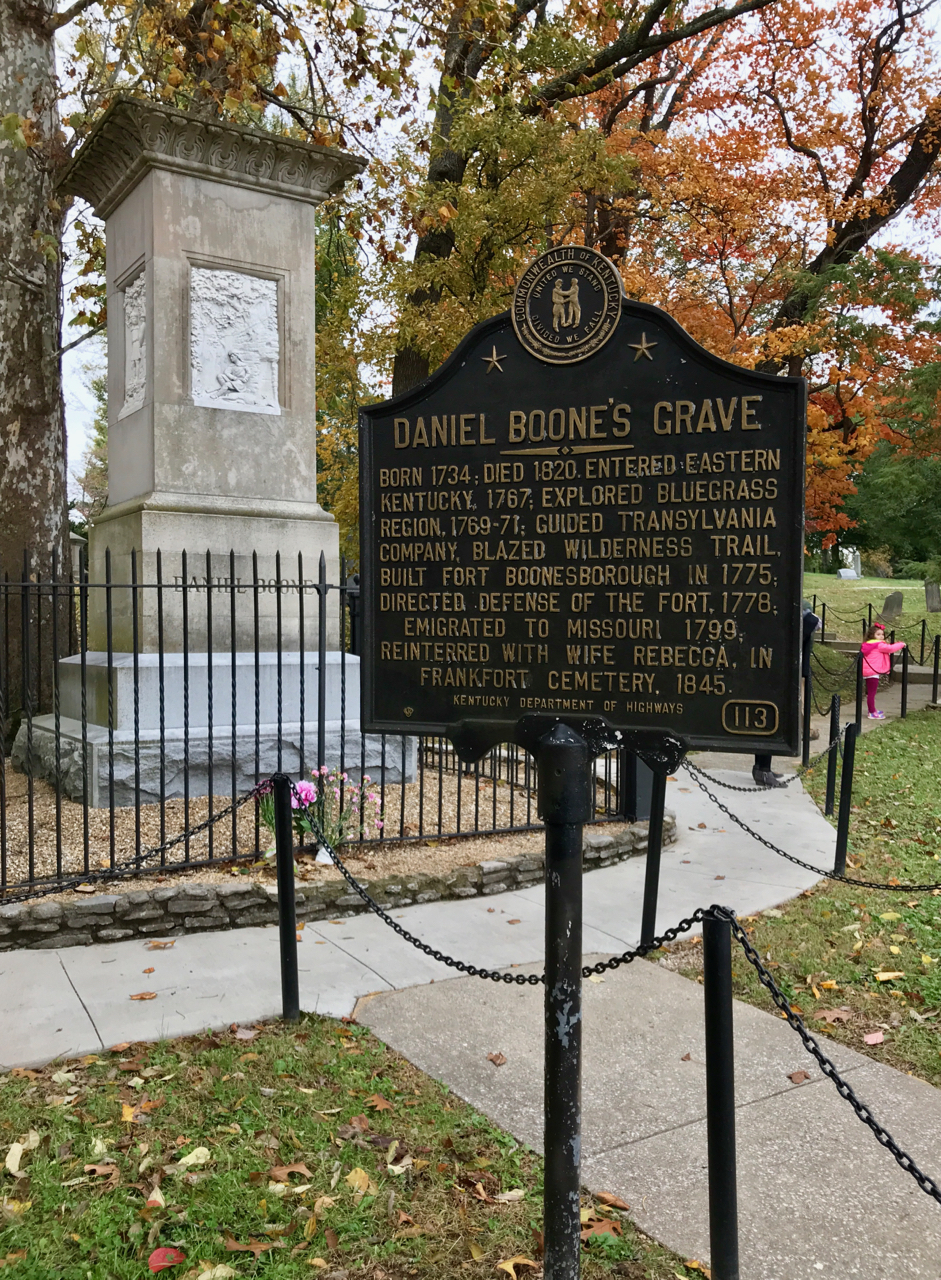
While I was there, I met a man who claimed to be related to Daniel Boone. It was right around Daniel Boone’s birthday, which is November 2.He had come to pay his respects.
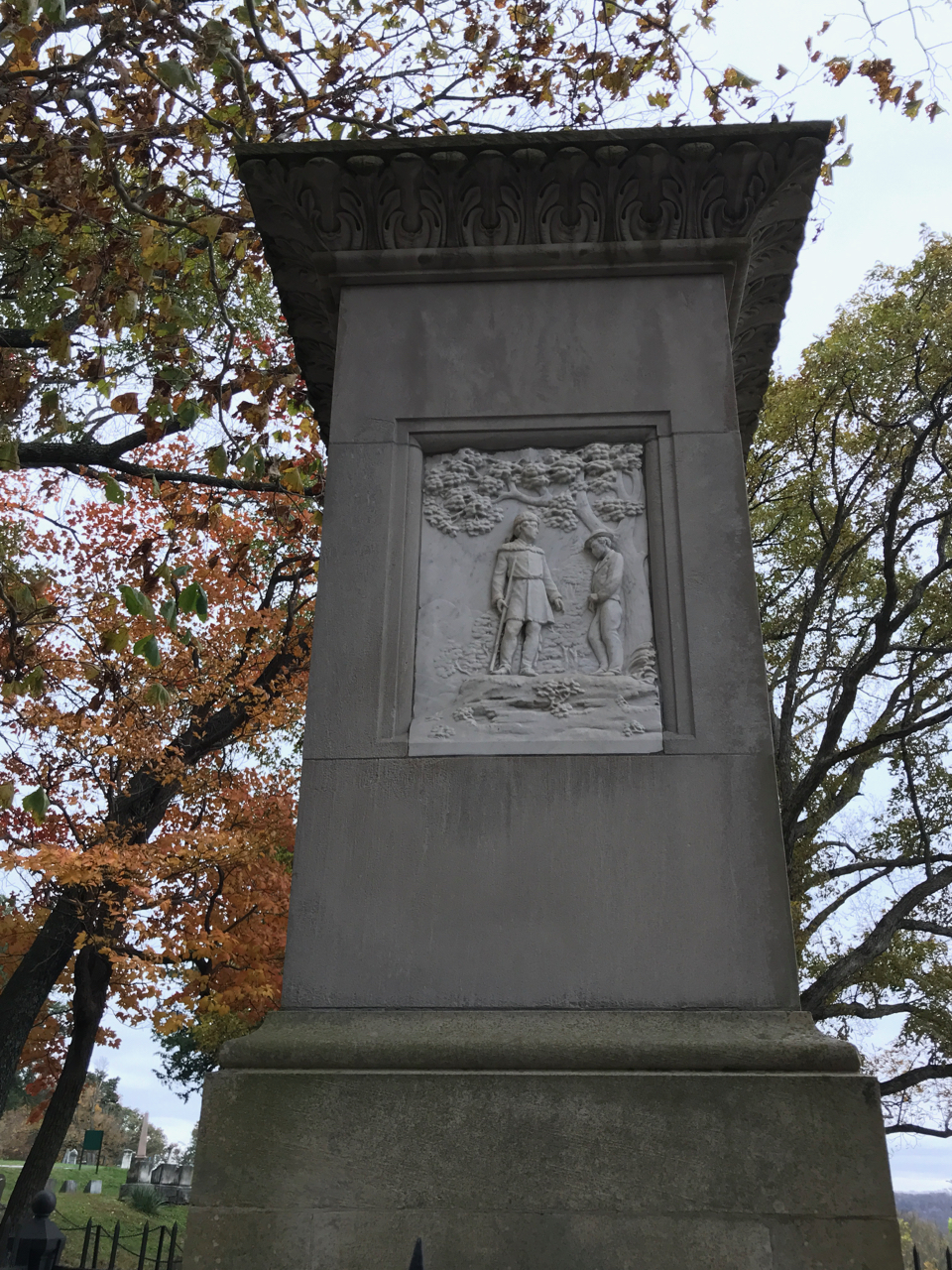
I walked around the monument and looked at the carvings depicting scenes from Daniel’s life.
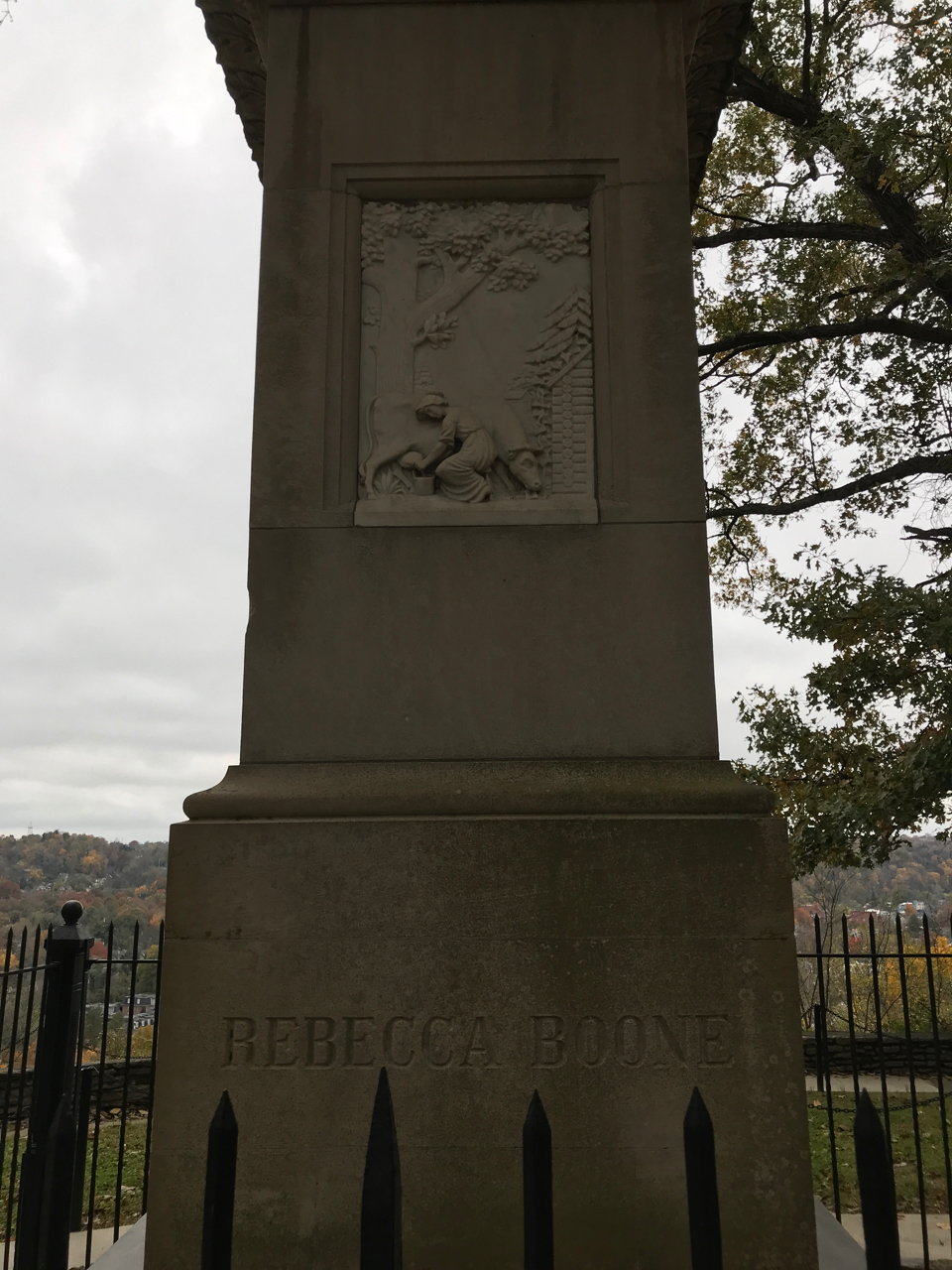
Rebecca got a panel, too. Here she is, milking a cow, which is a practical skill to have.
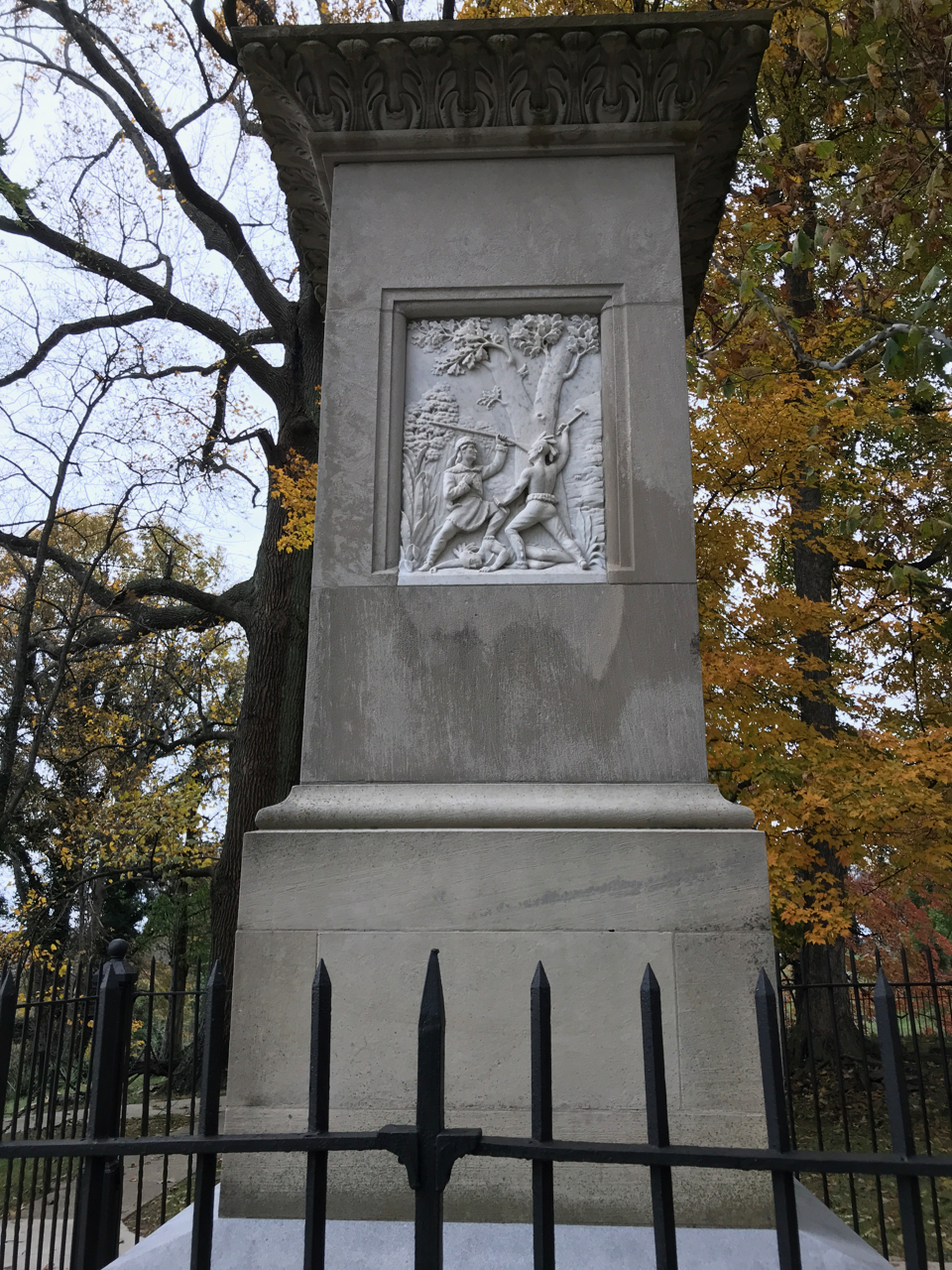
The monument was erected in 1860 and the marble panels were added in 1862. The panels were vandalized during the Civil War and restored in 1906 and again in the 1940s.
There is some interesting information about the cemetery and the Boones at this phone number.

Apparently, they established this new cemetery in the 1840s and thought that it would help make if more popular if there were famous people buried in there. they convinced Daniel Boone’s son to permit his parents’ to be dug up in from where they were buried in Missouri and reinterred here.

While there is no dispute that Rebecca’s remains are here, there is a question as to whether they dug up Daniel’s remains. Rebecca predeceased Daniel by seven years.  When they were ready to bury Daniel, the spot next to Rebecca had someone else in it, so they buried him at her feet. So, they aren’t quite certain is Daniel is here or if he got left behind in Marthasville, Missouri. If you are in the St. Louis area, and you want to go looking for where Daniel Boone’s remains might…remain, just go to Google Maps and put in Old Bryan Farm Cemetery, and it will take you right there.
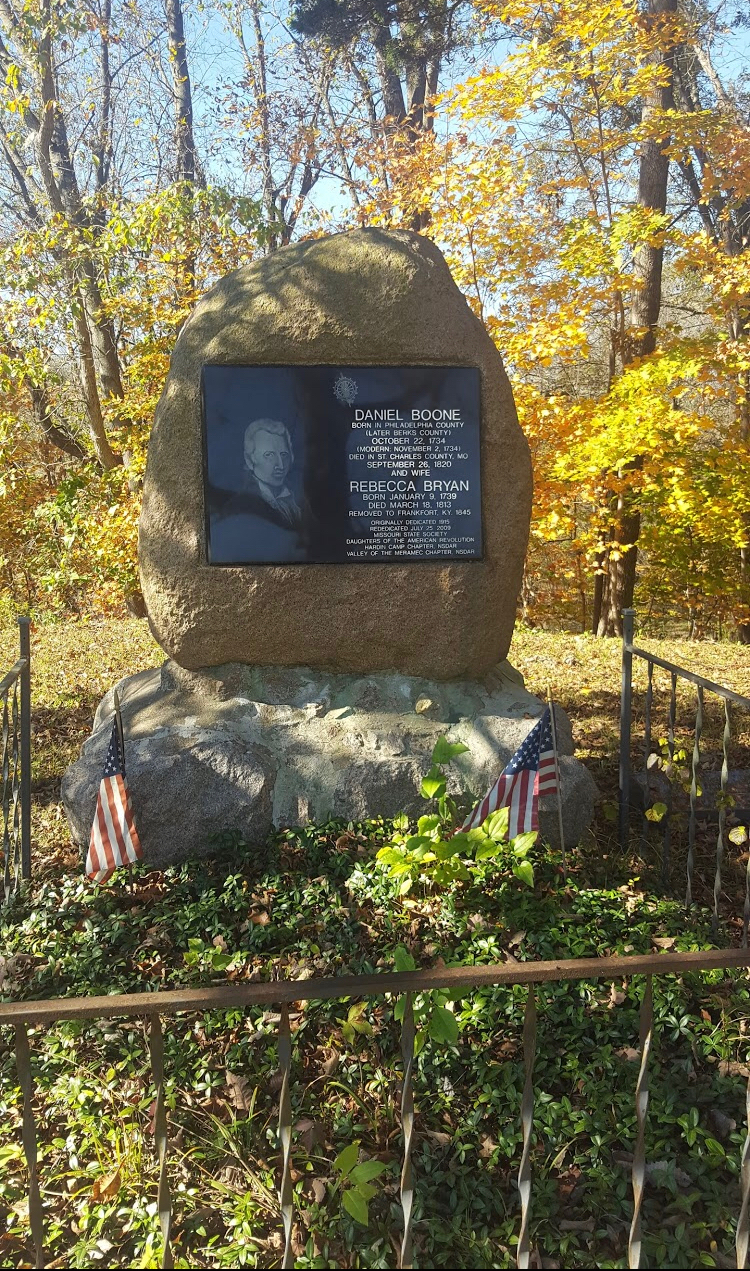
Just in case you can’t wait, here is a photo of the original gravesite in Missouri.

The cemetery is a great place for a view of the capitol and the Kentucky River.
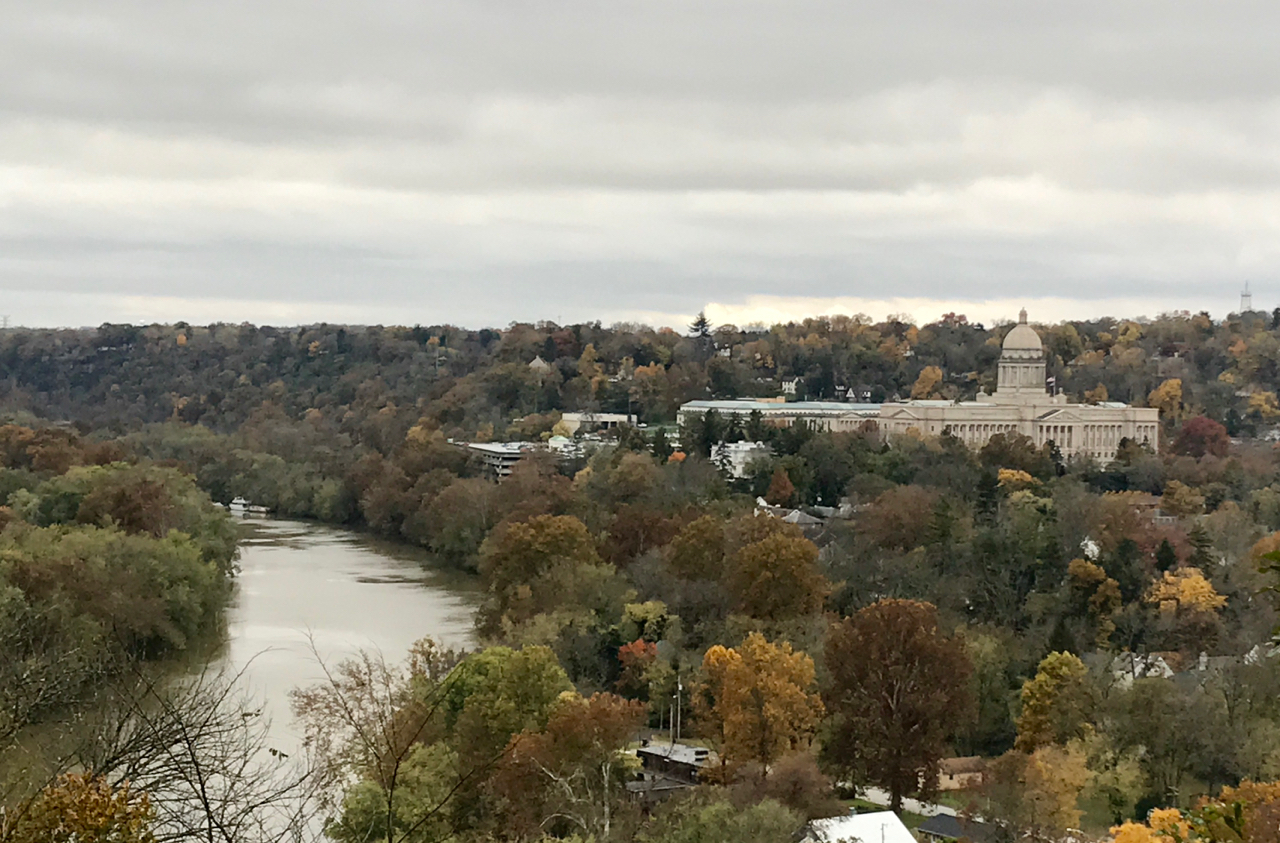
With that, it was time to head back to the campground.
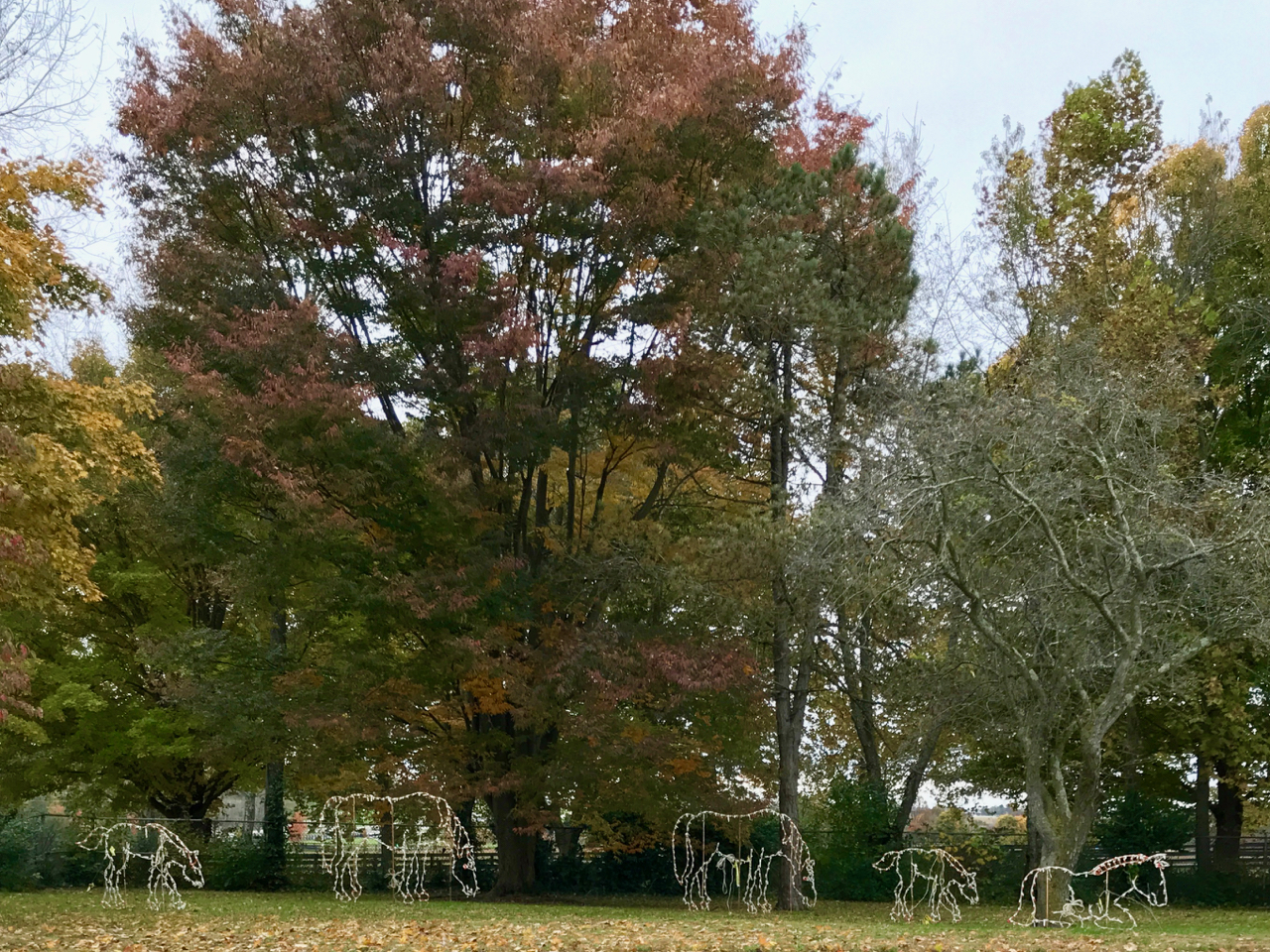
It was getting toward dusk, so I imagine that they would be turning on the horse lights soon. I had to get packed up and ready to roll in the morning, so I didn’t wait around to see them illuminated.

Next stop: Cincinnati!
The Land of Lincoln

After I finished lunch, I bid adieu to my Airstream Addicts friends and headed west from Jackson Center, Ohio toward Springfield, Illinois. This was going to be speed tourism – kind of like speed dating.

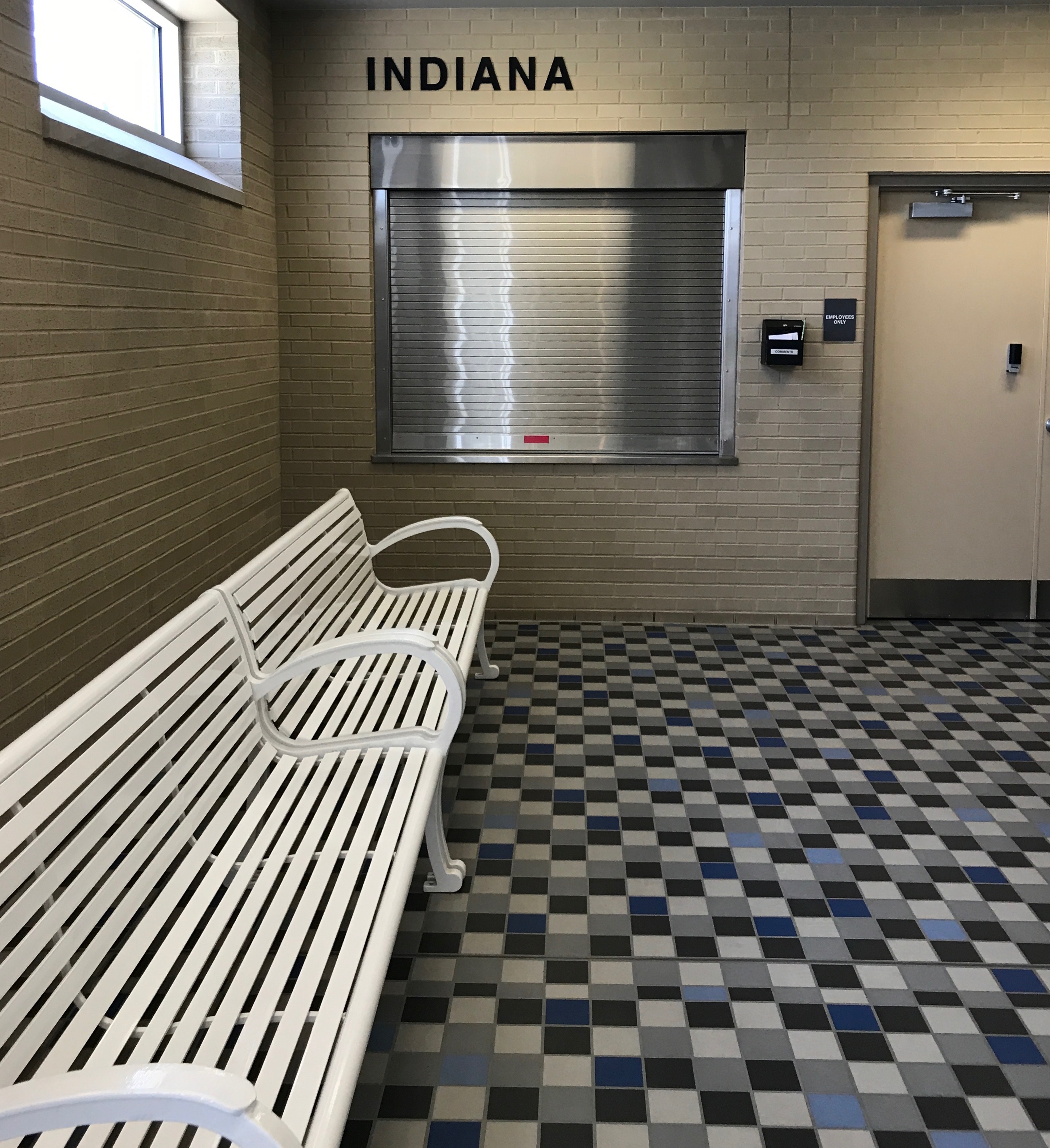
I hit Indiana, and decided that I should use the restroom.

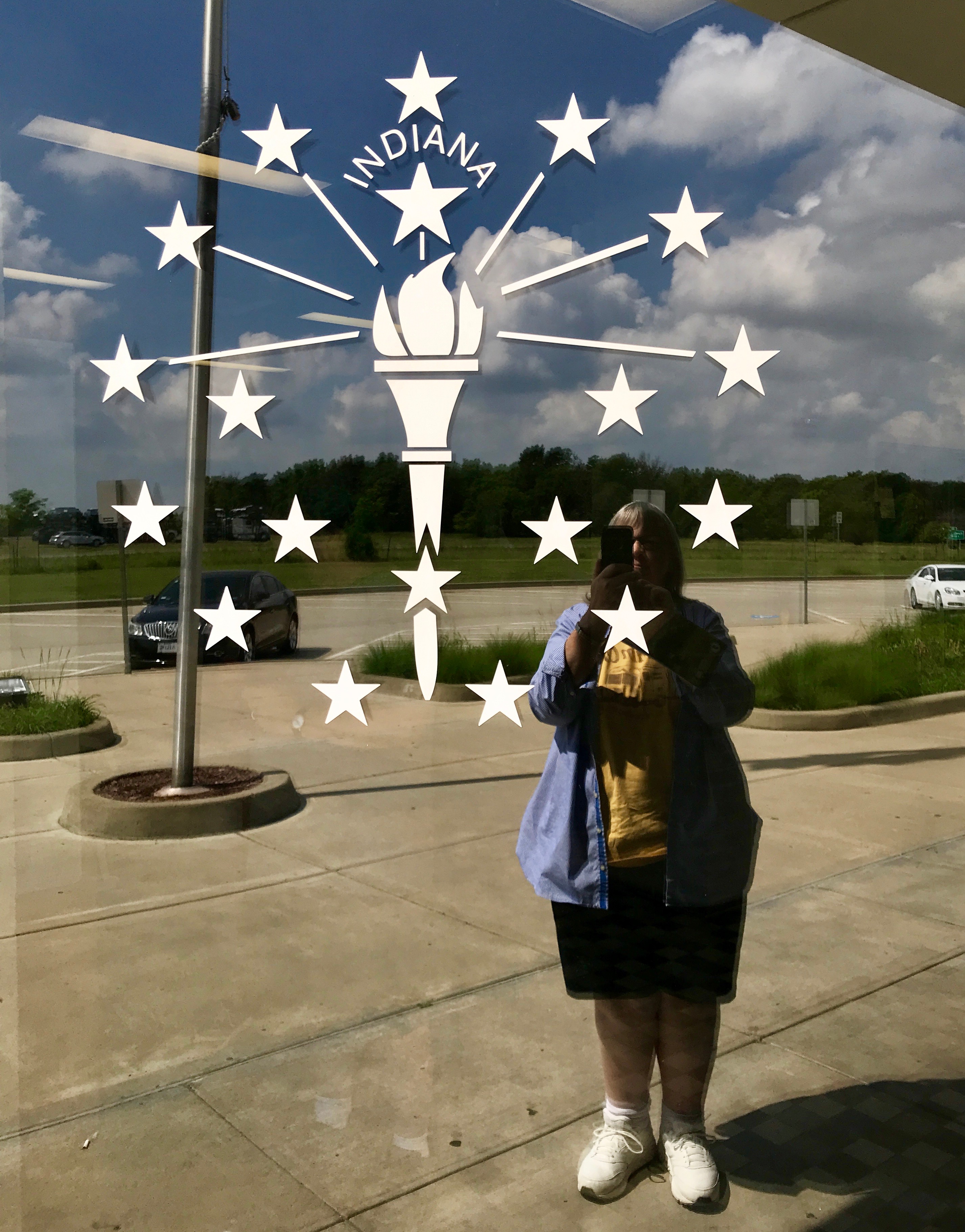
The reflective glass with one of the state’s symbols made for a great selfie.

It’s a good thing that I didn’t need any information. Apparently Indiana was closed. But there was plenty of space to wait for them to open.

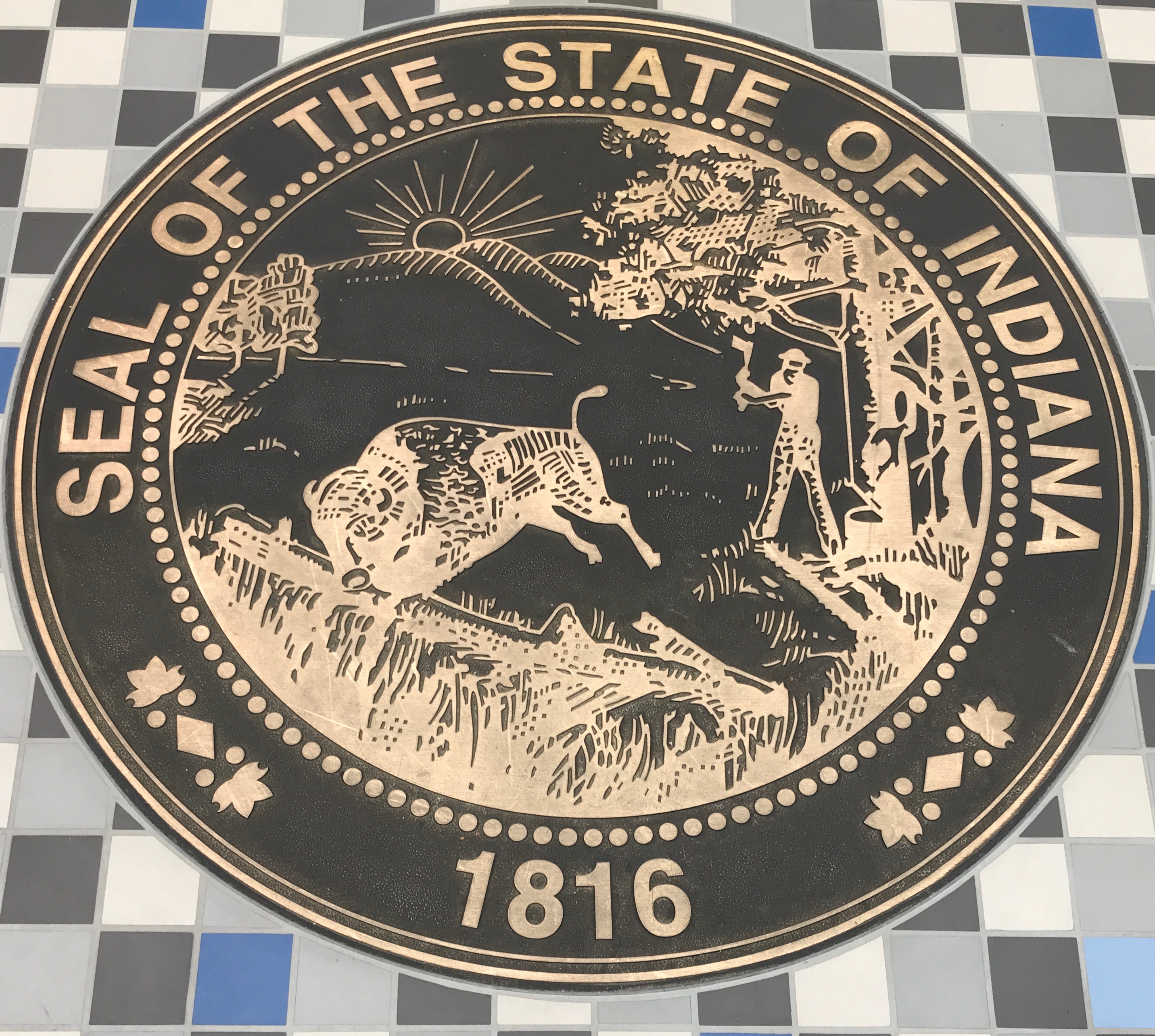
I never knew that there were buffalo in Indiana, but apparently there were many  when settlers first arrived.

I got back in the car and continued my westward travel. I got to Springfield and checked into my hotel.

The Mansion View Inn was my home for the night. It was kind of a mid-century sort of place, but not exactly mid-century modern. It was more like mid-century old-fashioned. My room had a bed and a television and a bathroom. Not exactly luxurious, but I made it through the night and headed down to the included continental breakfast.

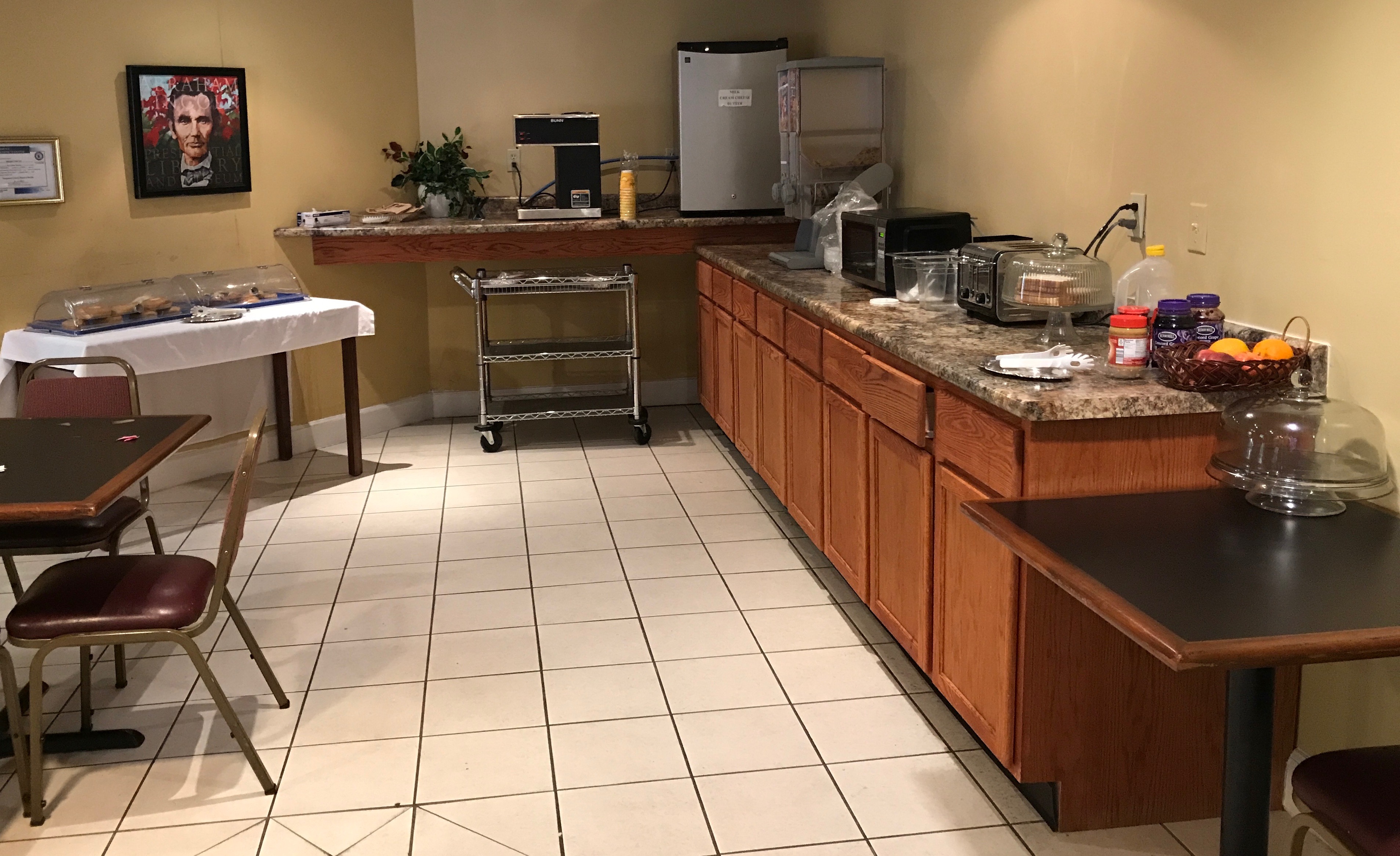
I must say it was one of the most woe-begone breakfast bars I’d ever seen! There wasn’t even any coffee! Horrors!
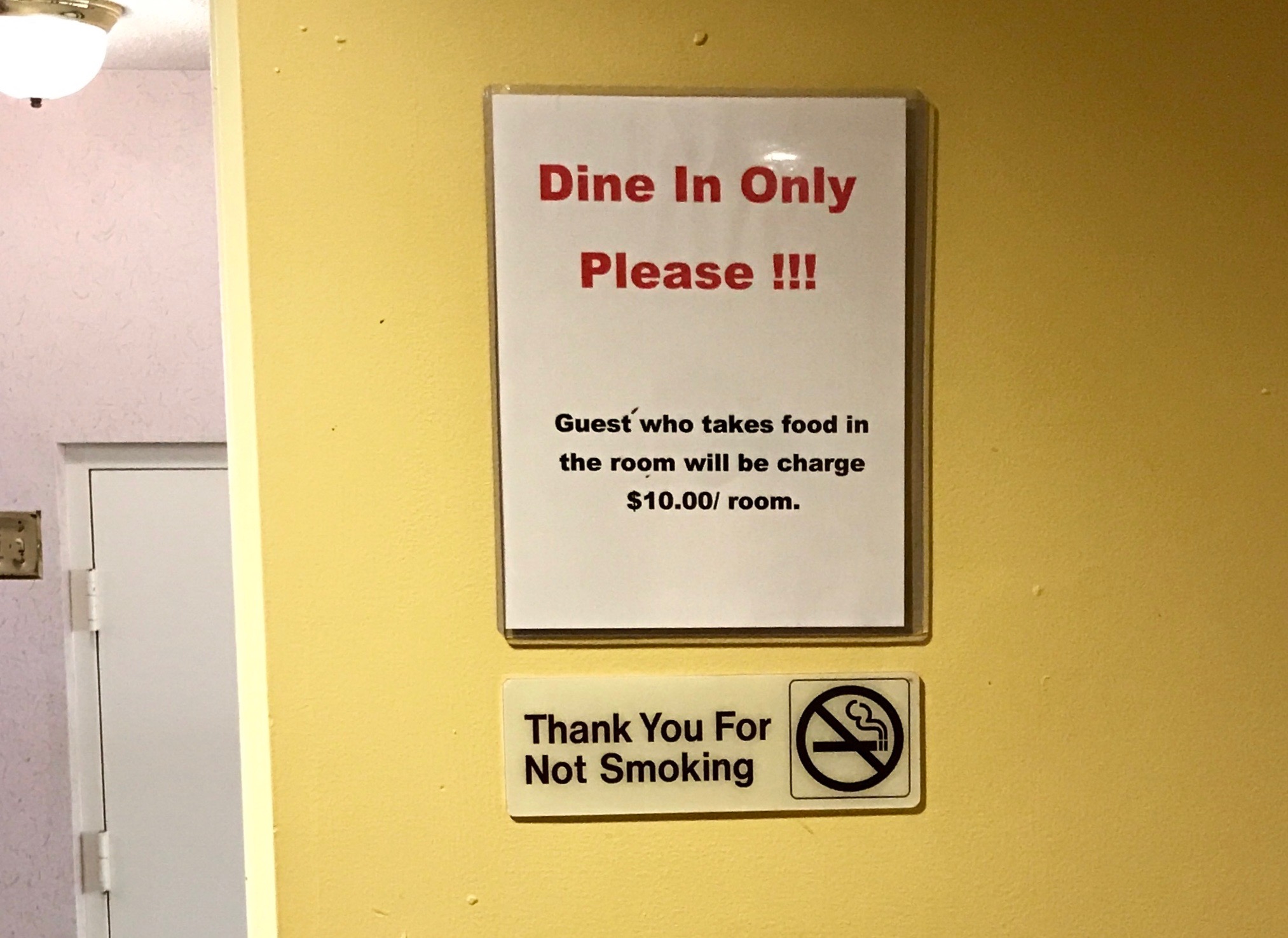
Capping off the insufficiency of the breakfast bar, they threatened “Guest who takes food” will be charged $10.00/room. I was happy to get packed up and out of this inhospitable hostelry.

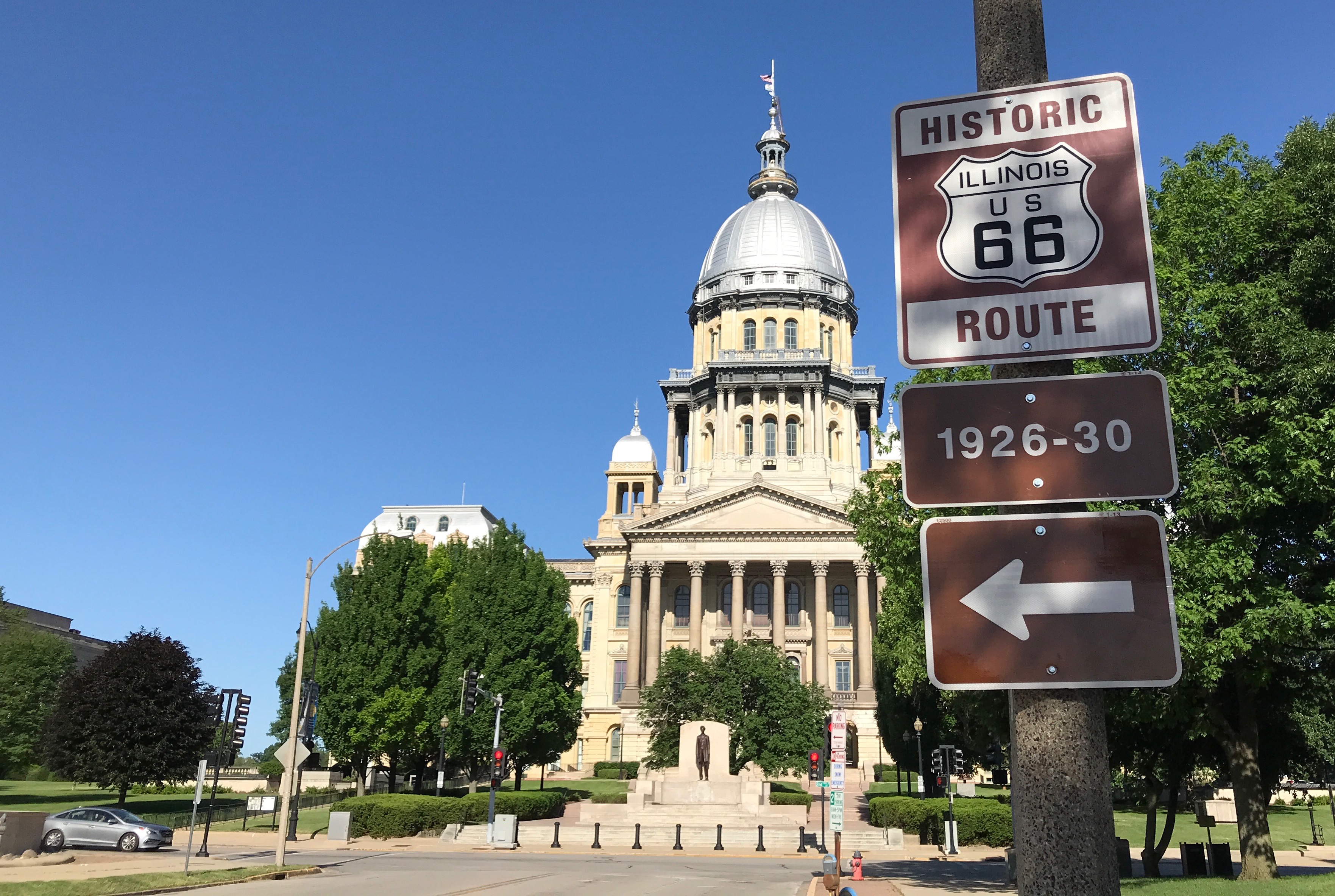
Ah, but the sun was shining and the skies were blue! It was a great day for some high speed tourism.

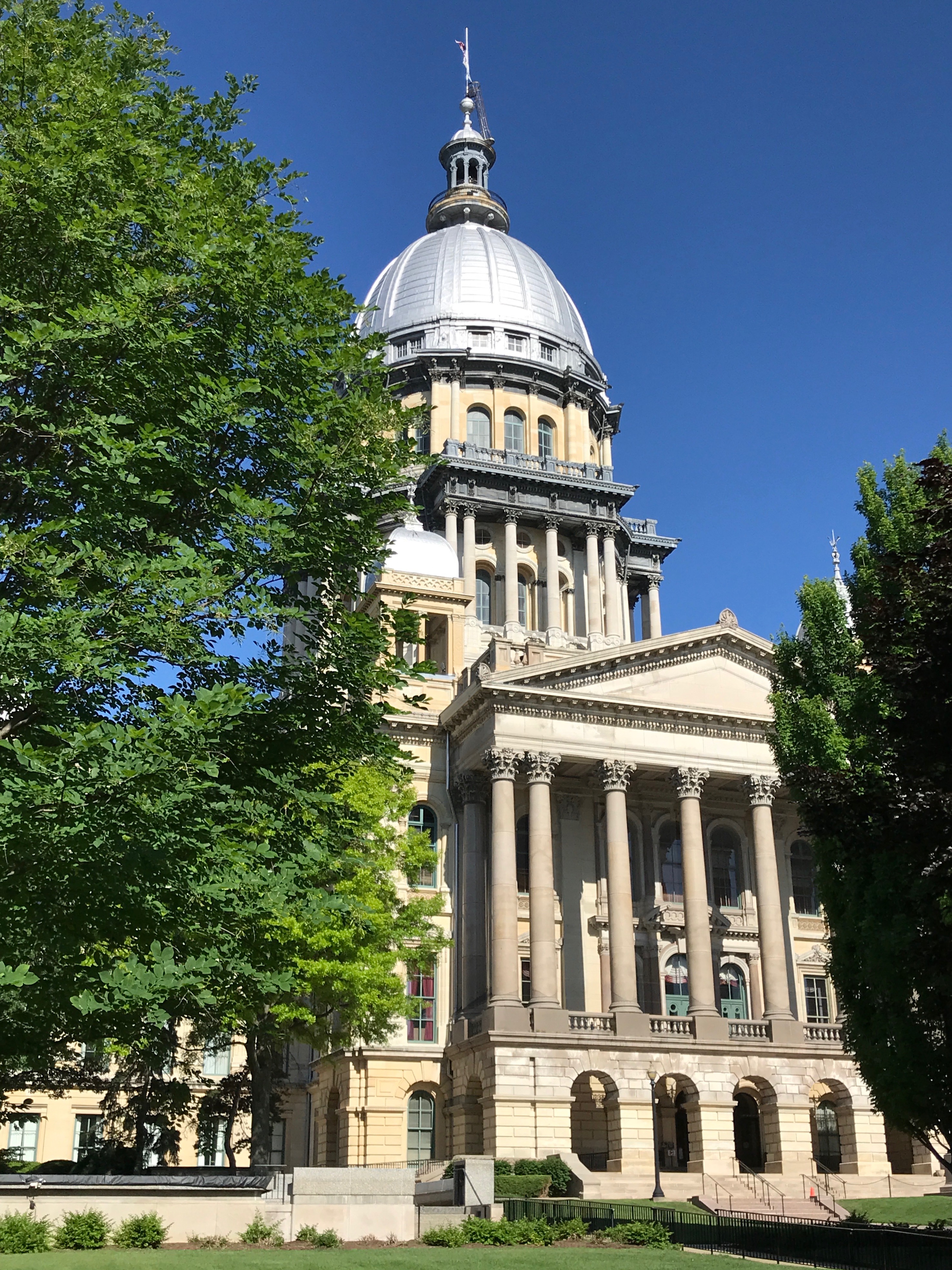
I walked toward the capitol to see what I could see. It was Sunday, after all, so I didn’t figure I’d be able to get inside. It turns out that I was right.

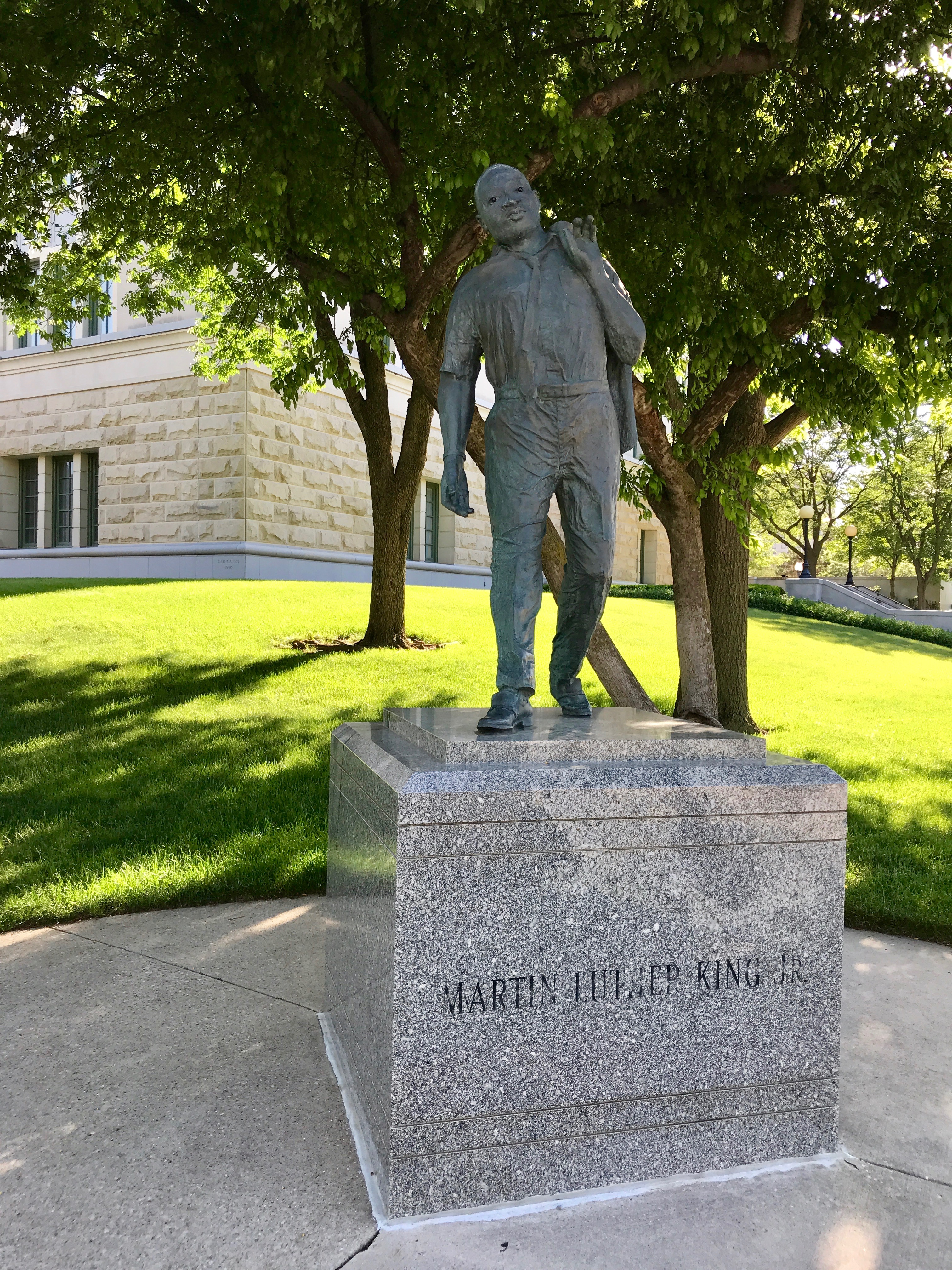
The first memorial I came to was one of Dr. Martin Luther King, Jr.

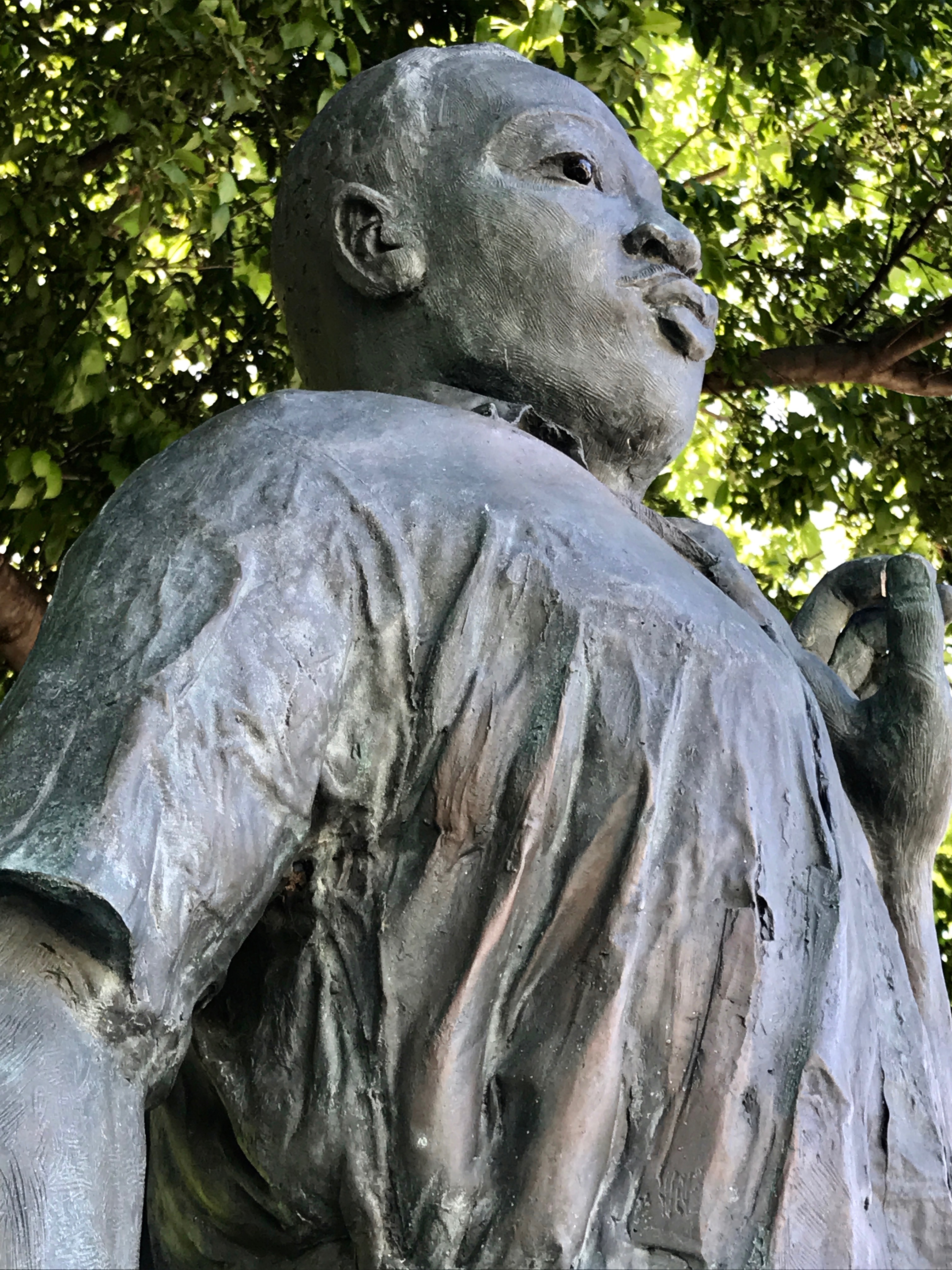
I tried to get a shot that showed his eyes. It looks like they gave him glass eyes. I was always struck by his eyes, so I can understand wanting them to be prominent in the statue. I just had never seen this sort of mixed media – at least not that I remember.

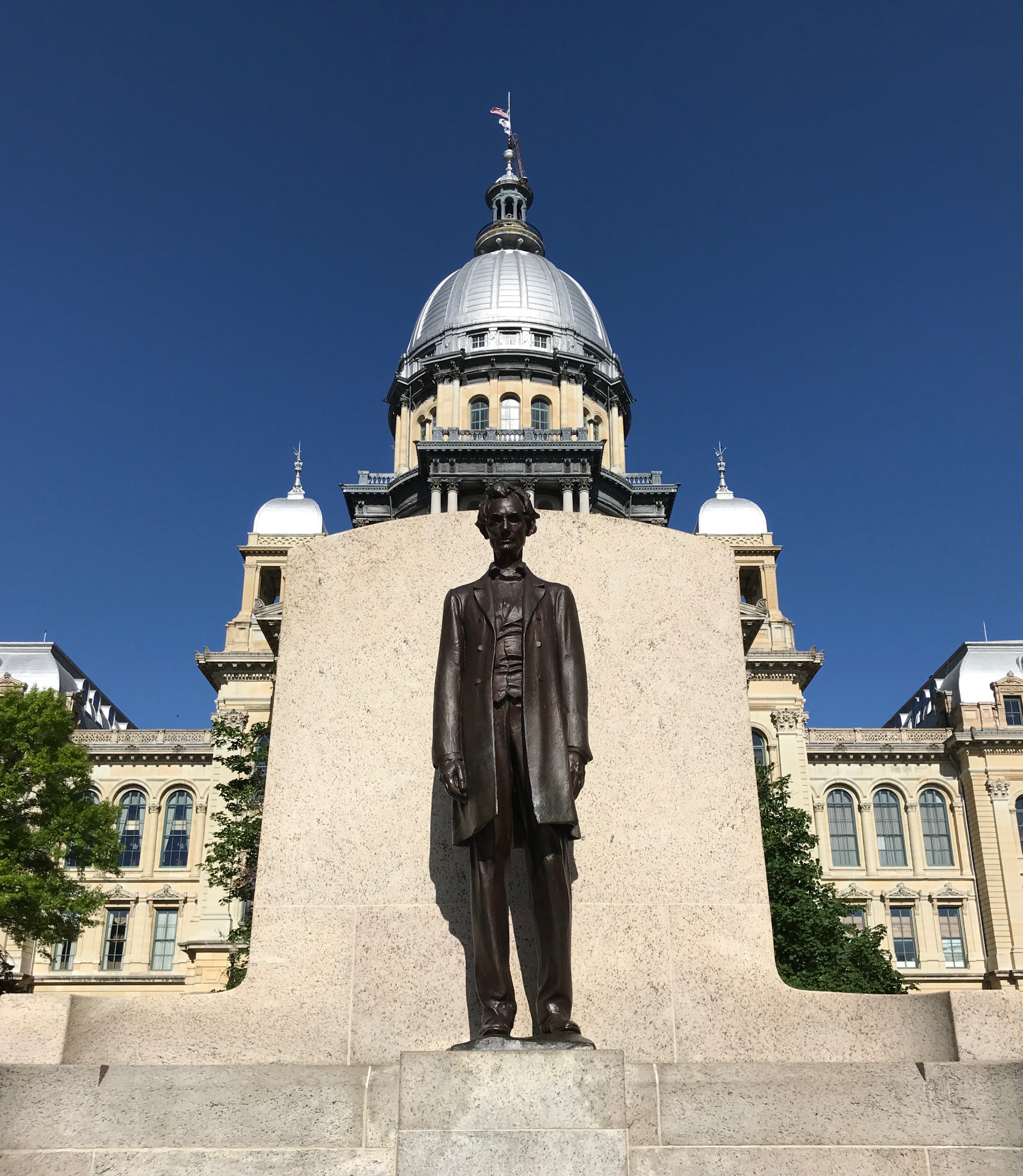
Directly in front of the capitol was a statue of Lincoln.

On the back of the pedestal was inscribed his farewell to Springfield after he had been elected president.

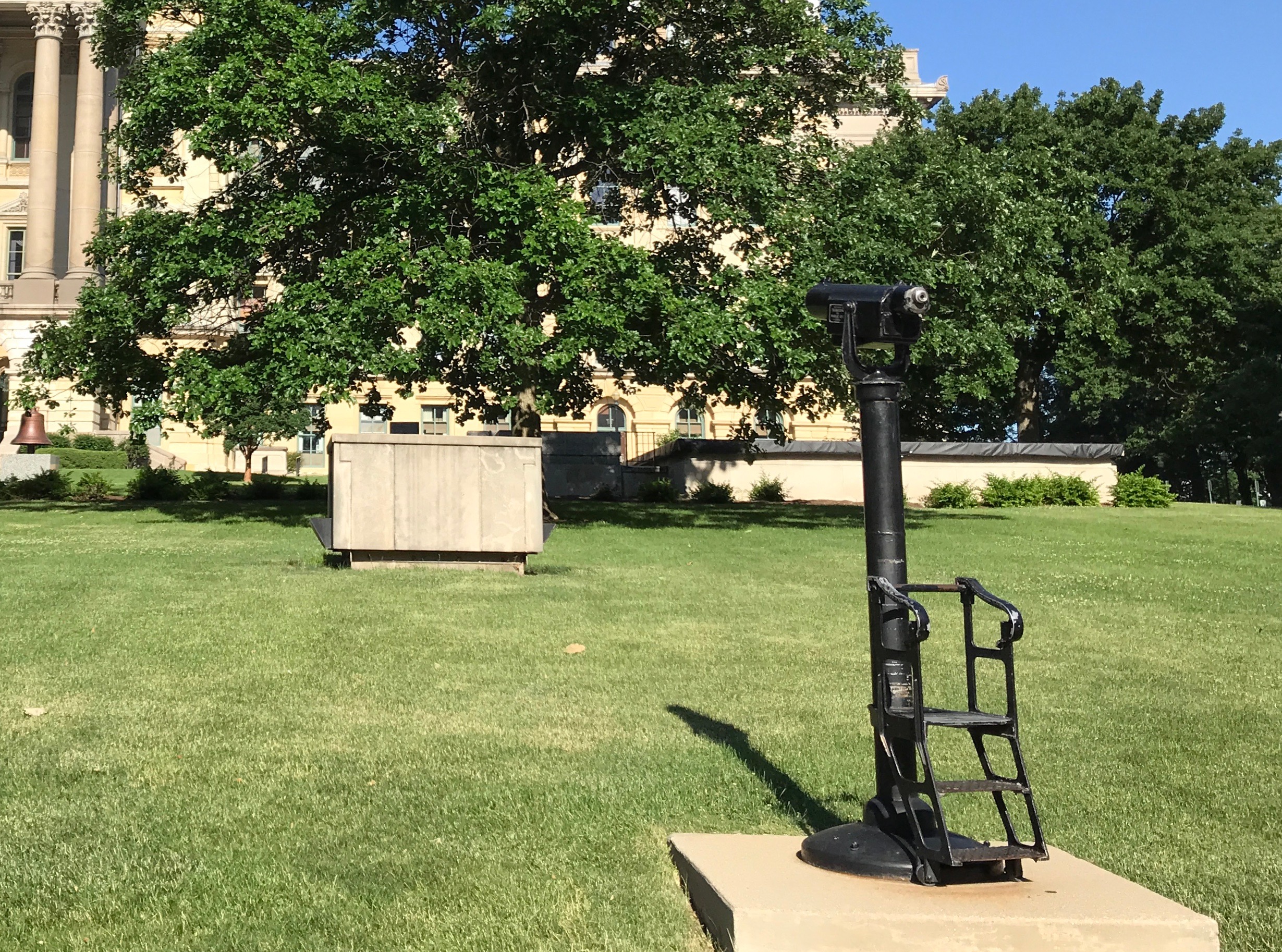
A little ways away from the statue of Lincoln was a viewer. Given the tiny steps up to the eye piece, I assume it was intended for youngsters.

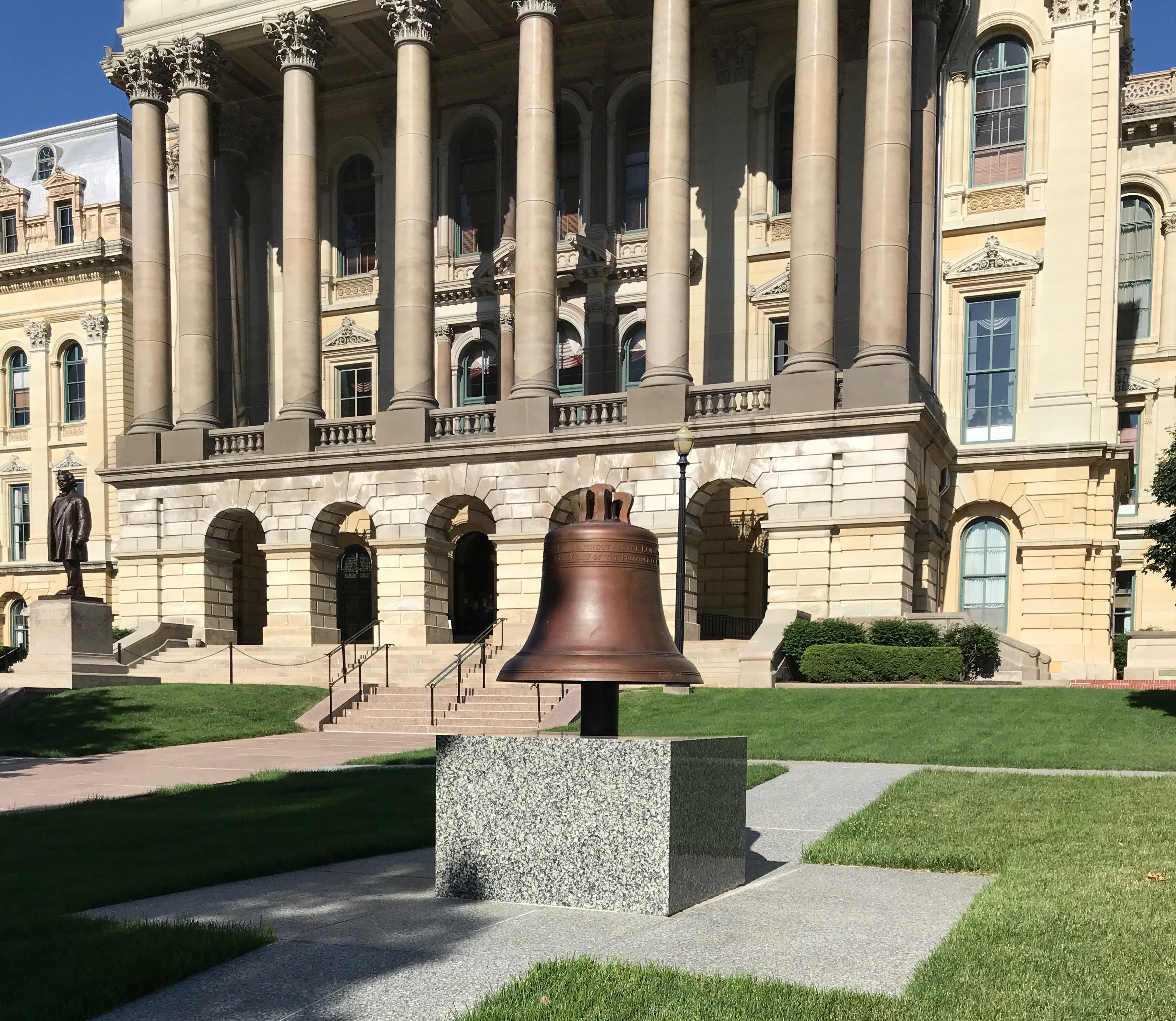
I continued up toward the entrance to the capitol and came across this replica of the Liberty Bell. I half-remembered something about a “Merci Train” that the French people sent to us after World War II to thank us for our support. I seemed to remember that these Liberty Bell replicas were on the Merci Trains. It turns out I was only partly right.

I swear you can find anything on the internet. As part of a government bonds drive held in 1950 to celebrate the 200th anniversary of the Liberty Bell, replicas of them were made in France and given to each state, the District of Columbia, and the Territories. A man named Roger Johnson has made it his mission to visit all the bells and have his photo taken with them. You can read his blog here.

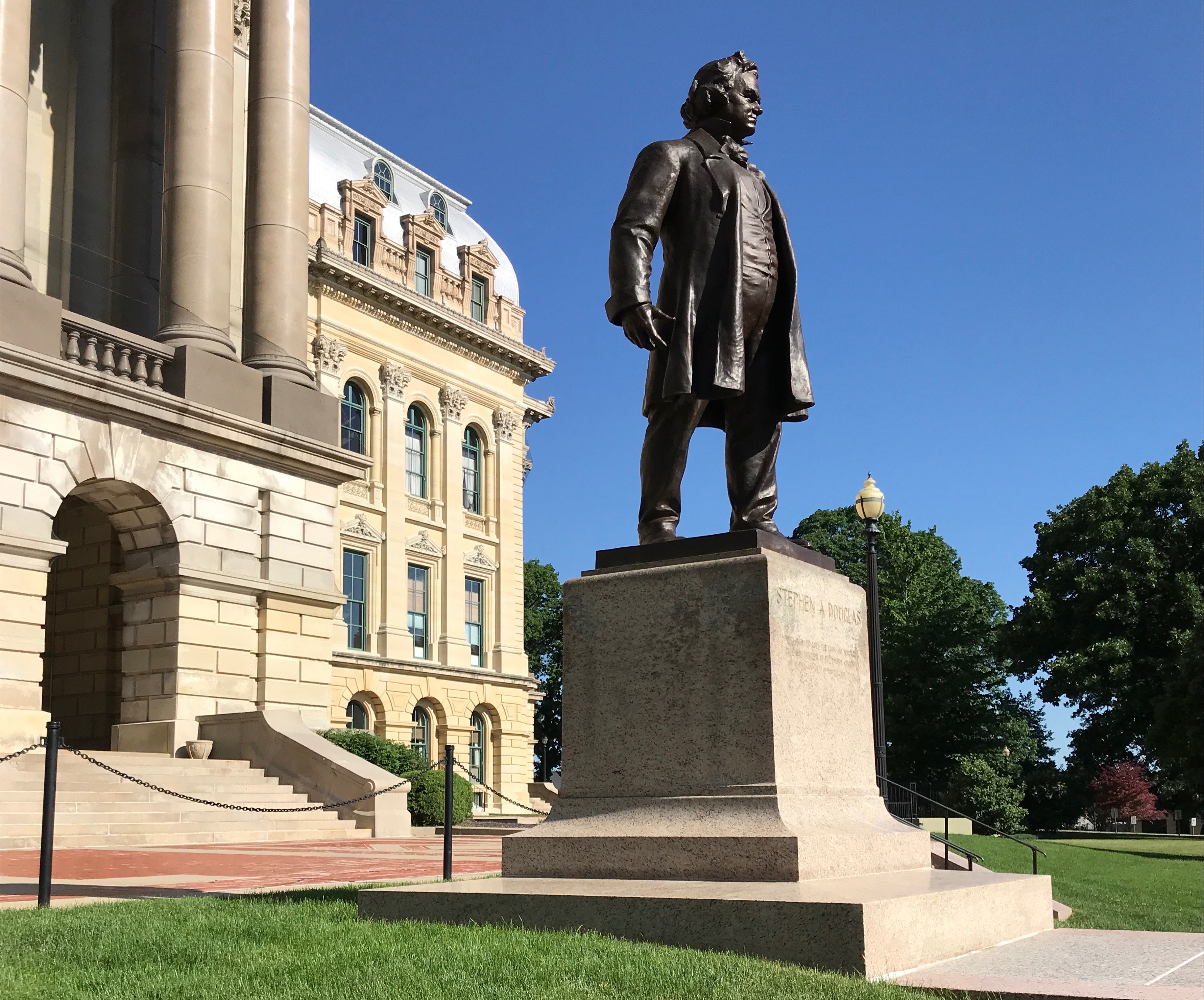
Stephen A. Douglas, the “Little Giant”, is posed right in front of the entrance to the building. He was given that sobriquet because he was short in physical stature, but a forceful and dominant figure in political.

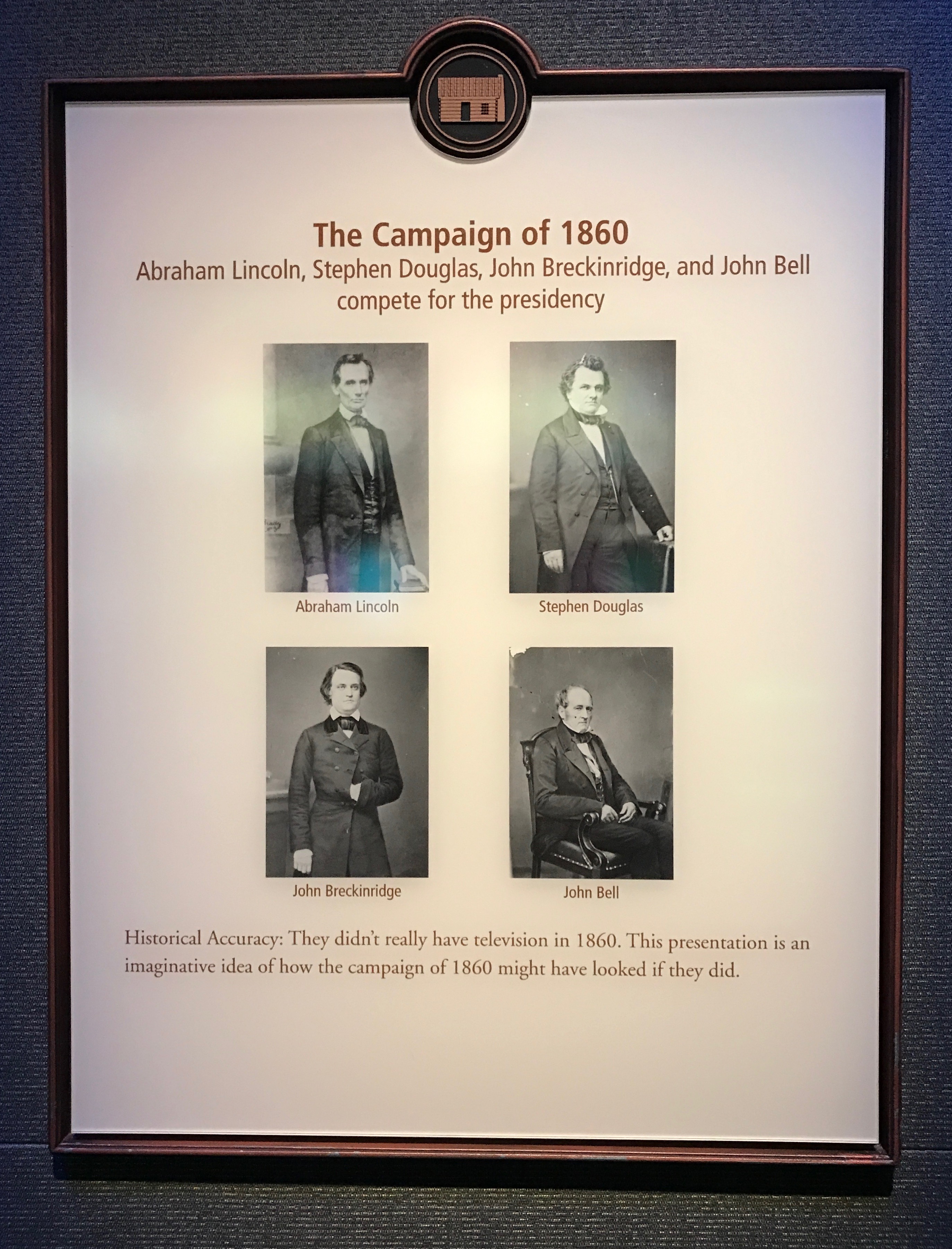
He is famous for defeating Lincoln in 1858 election for the United States Senate, and for his participation in the Lincoln-Douglas debates. In digging around a bit, I found out that he was one of the three candidates for President in 1860. The Northern Democrats favored Douglas, and the Southern Democrats supported John C. Breckenridge. Republicans nominated Lincoln. After the Battle of Fort Sumter in April 1861, Douglas rallied support for the Union, but he died in June.

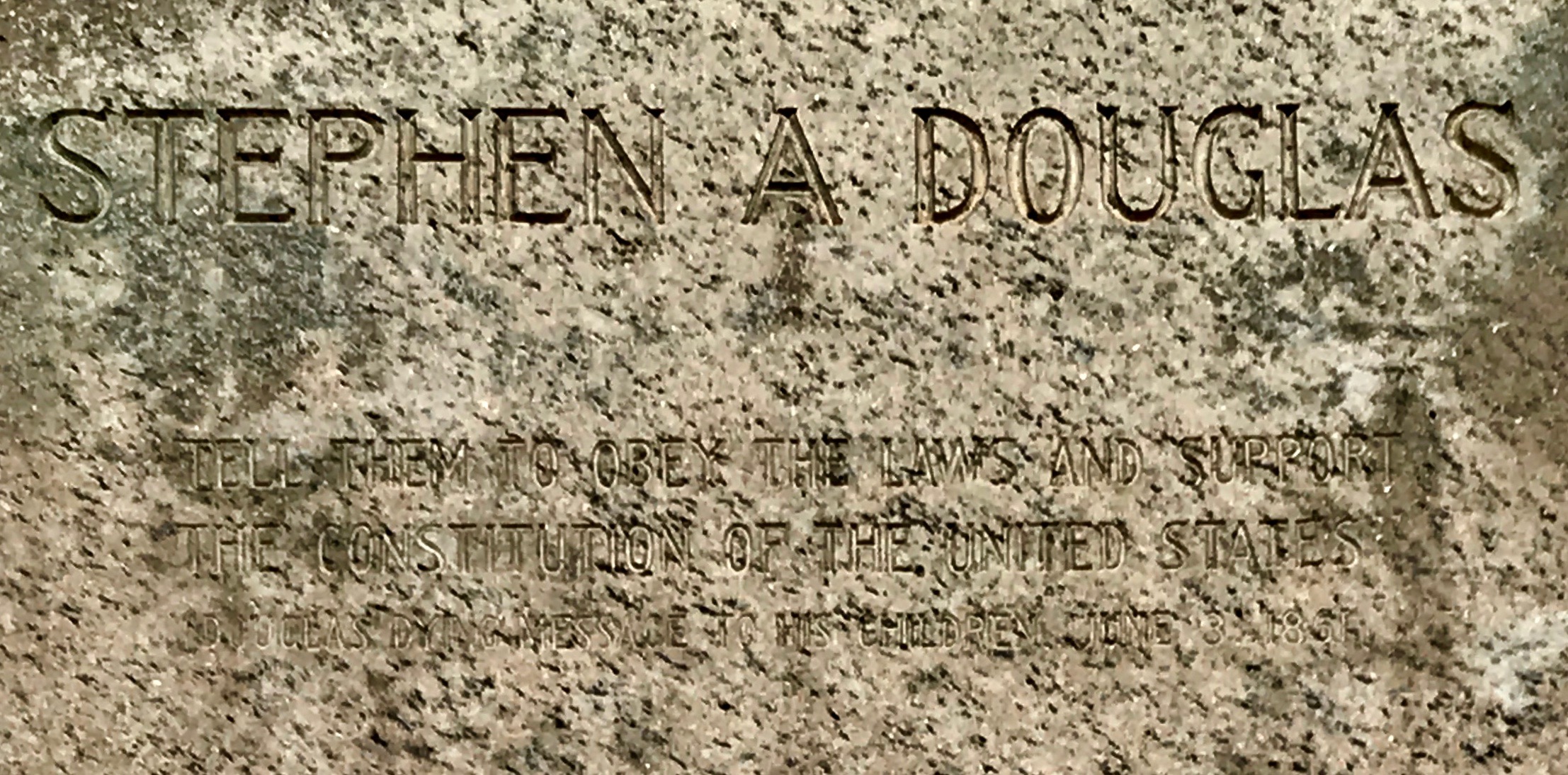
On the pedestal for his statue are his dying words to his children. “Tell them to obey the laws and support the Constitution of the United States.” Not exactly warm and fuzzy thoughts, but then again, the country was in the midst of a Constitutional crisis.

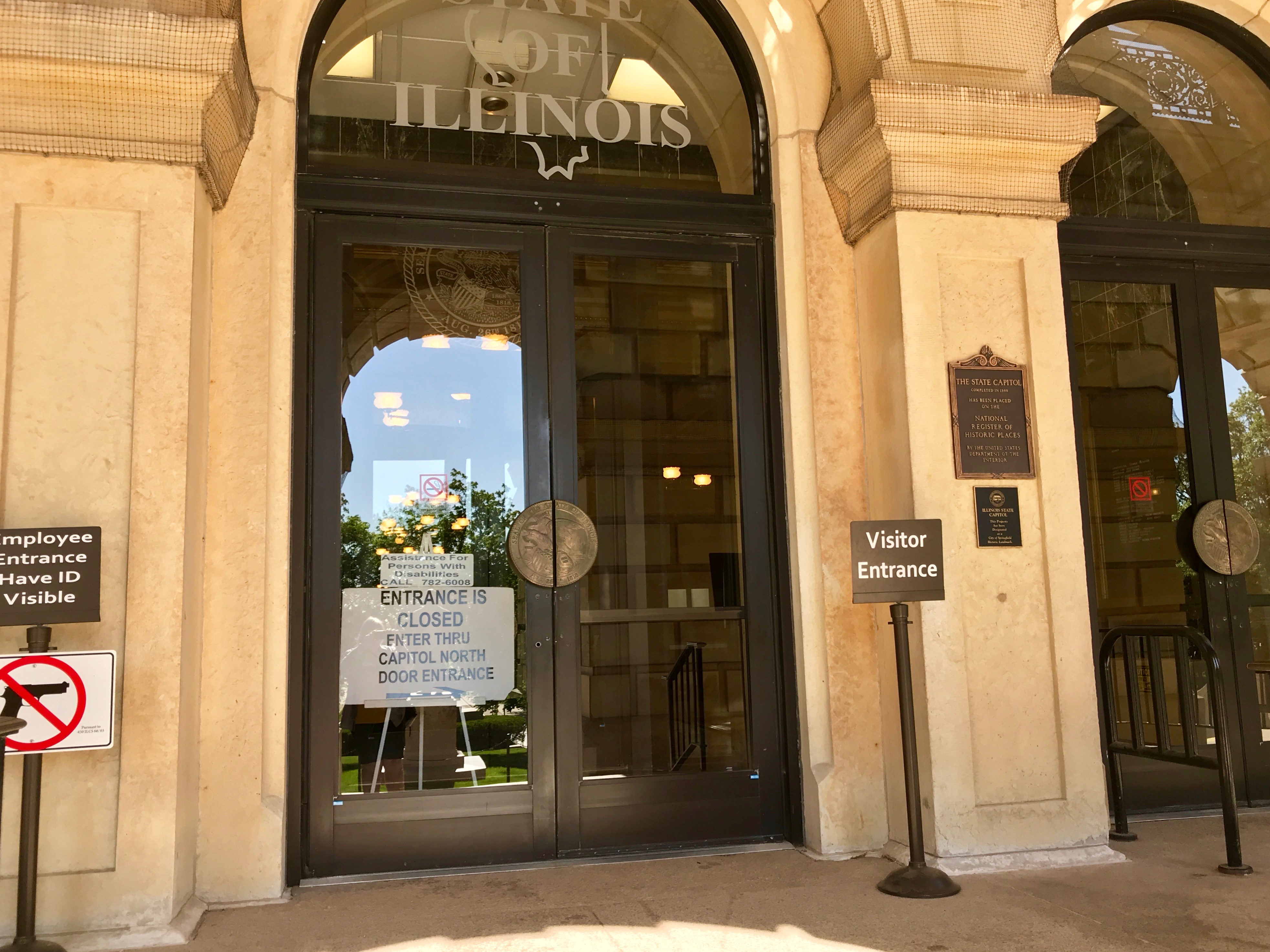
I walked up to the entrance, just to make sure it really was closed.

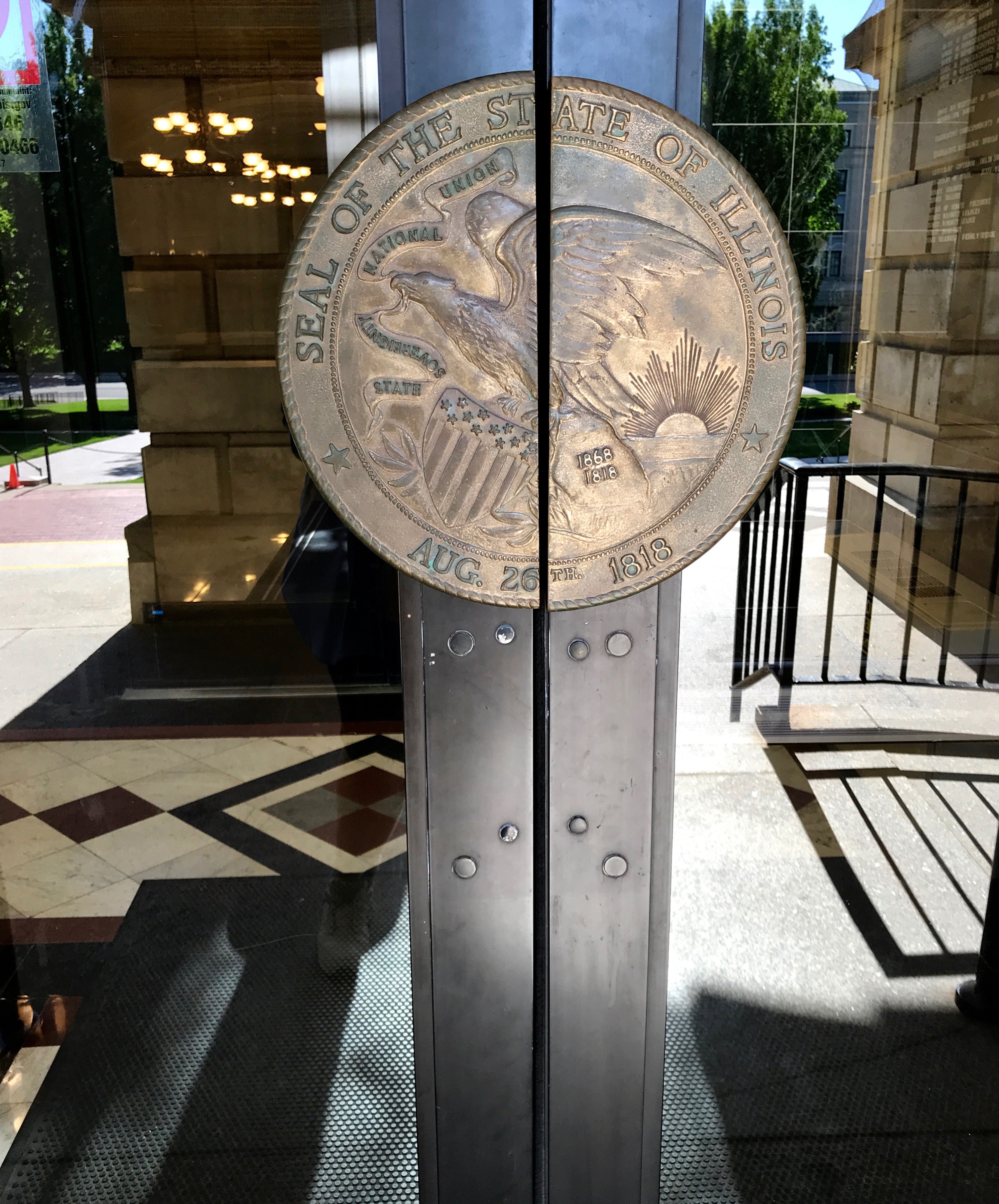
It was, but the door pulls were quite impressive.

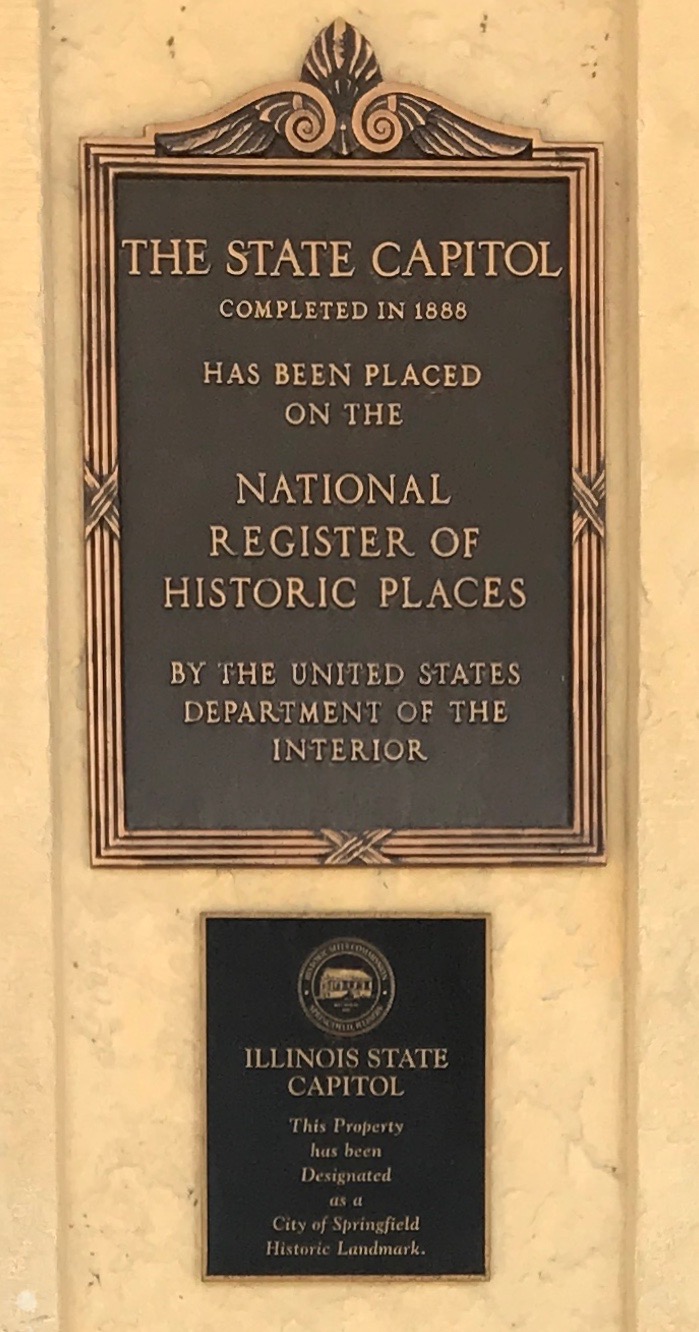
Here’s just a little more information about the building’s history and status.

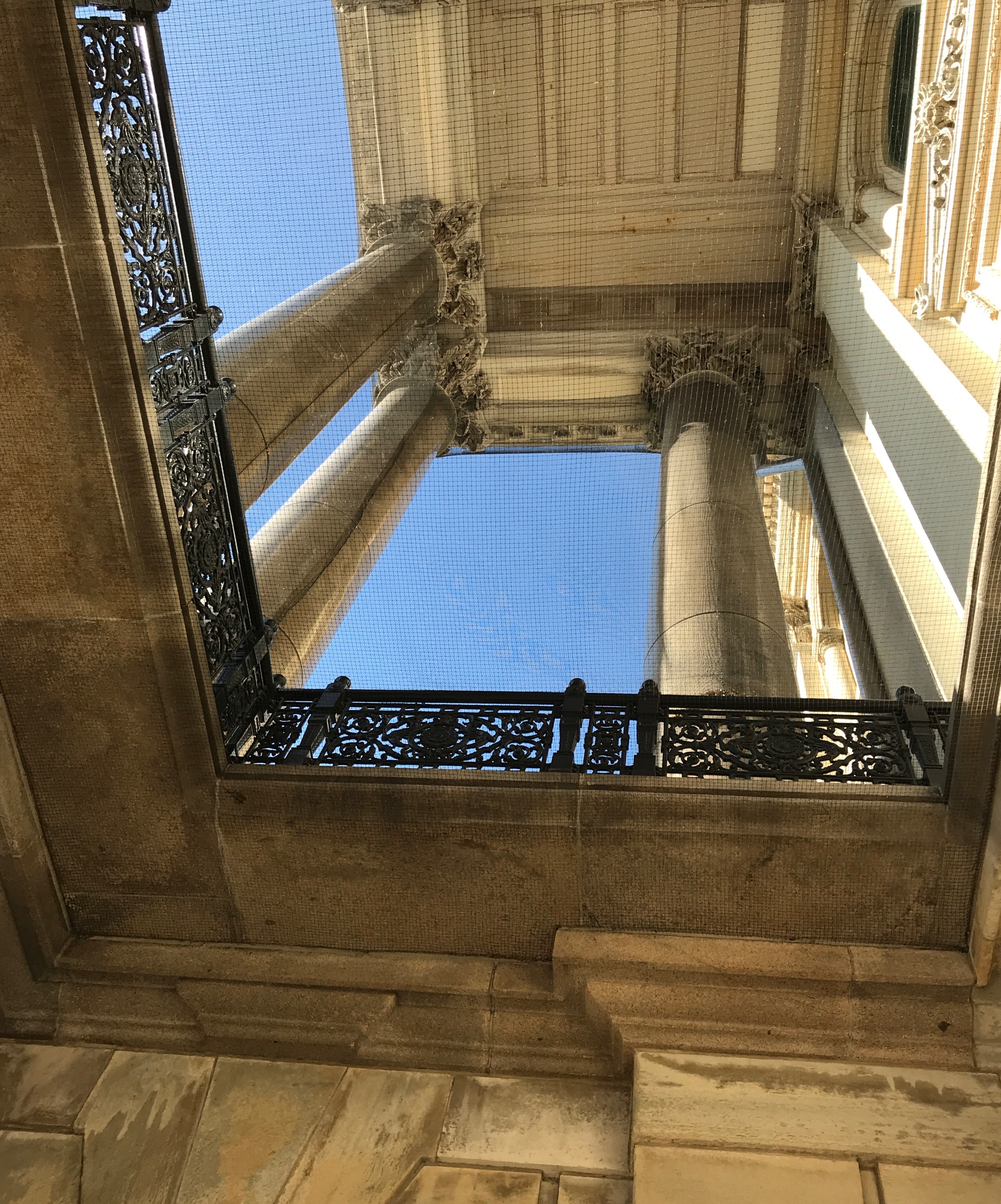
I had to satisfy myself with looking at the exterior. Can you see the mesh that is stretched across the opening right in front of the door? I imagine that it’s there to discourage avian intrusions.

It’s too bad I couldn’t get inside, but at least my Loyal Readers are spared details about the construction and my arty shots of hinges, door knobs, and mail chutes.

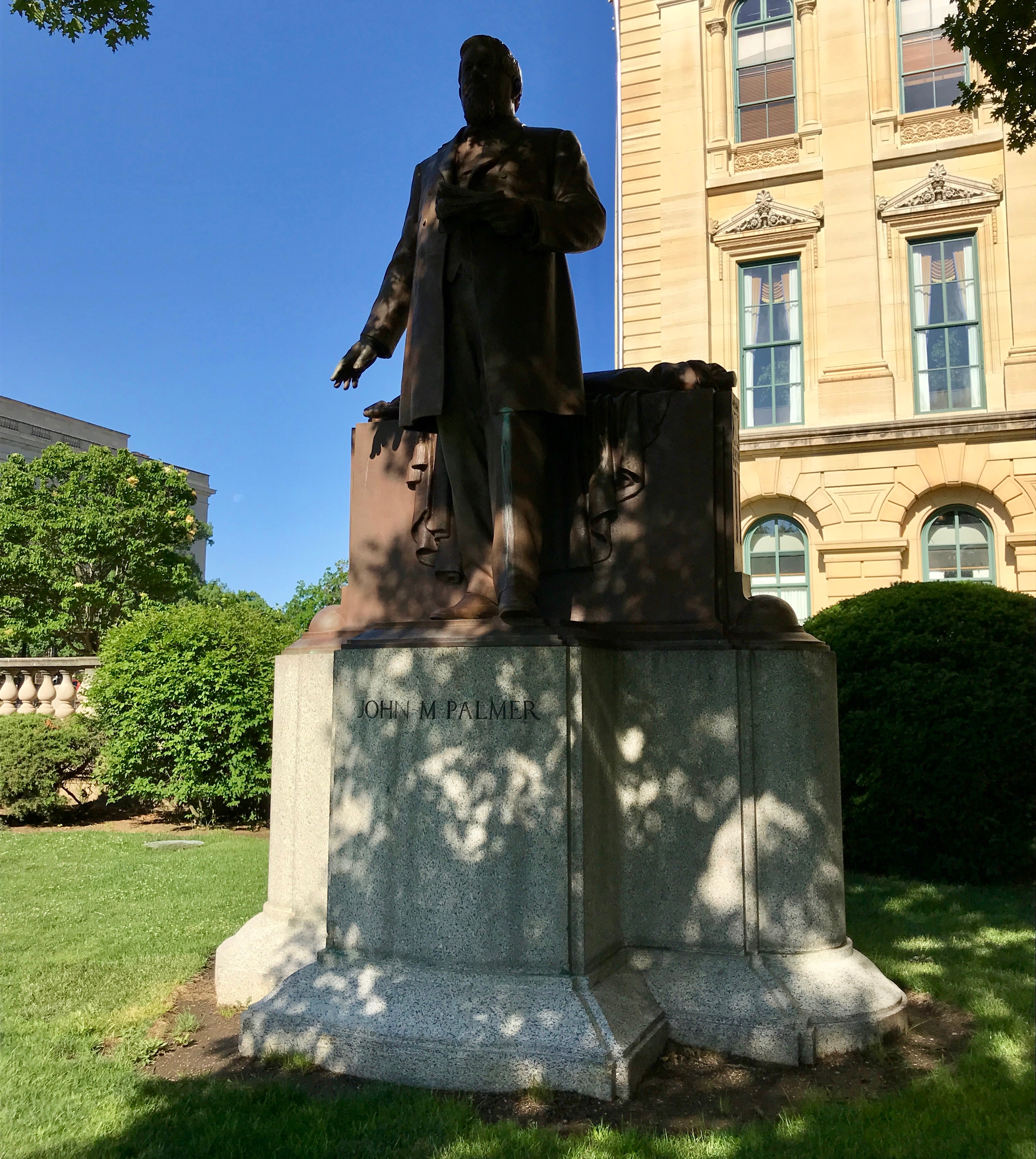
Here we have a statue of John M. Palmer. The only Palmers I knew of were Arnold and my brother’s (and grandfather’s) middle name – oh, and The Palmer House in Chicago. I had to look him up. It turns out that he was a Civil War General who fought for the Union, the 15th Governor of Illinois and a presidential candidate in 1896.

According to my Preferred Source, Palmer switched political parties throughout his life, starting out a Democrat. He became in turn an anti-Nebraska Democrat (against  state sovereignty on slavery), a Republican, a Liberal Republican, returned to being a Democrat, then ended as a Bourbon Democrat. He said, “I had my own views. I was not a slave of any party,” and added, “I thought for myself and [have] spoken my own words on all occasions.”

Bourbon Democrat, eh? That’s the first I’ve heard of that party.

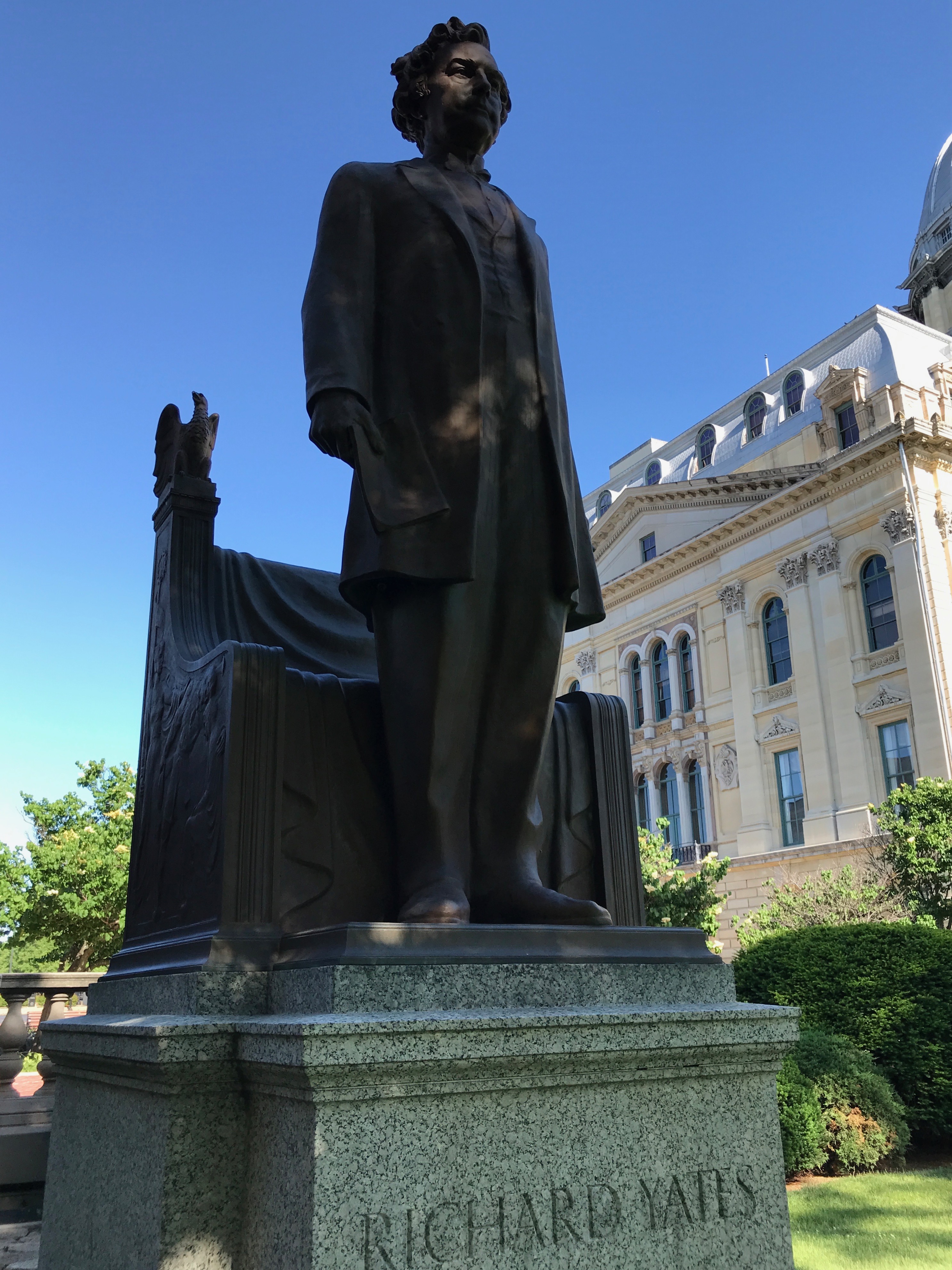
Then there was a statue of Richard Yates, who was governor of Illinois during the Civil War. Incidentally, his son, who was also named Richard Yates, eventually became governor. Can you say, “Dynasty?” (I knew you could.) Another interesting fact about Richard Yates, Jr, is that he was the first governor of Illinois who was actually born in the state.  Well, I thought it was interesting. It goes to show you that we aren’t all that far removed from the days of westward expansion and “Go West, Young Man, Go West.”

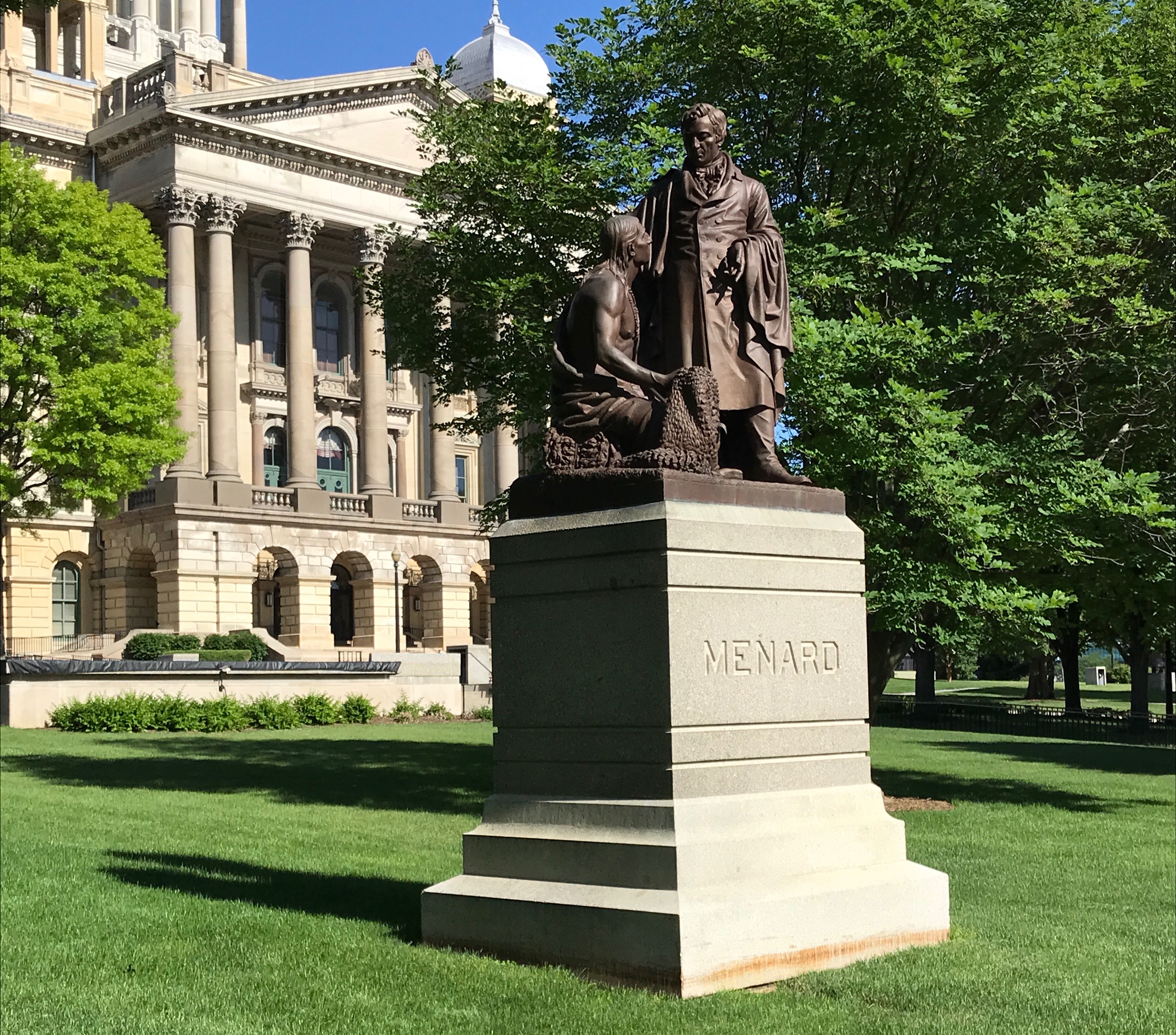
I had no idea who Menard was. I had to go look him up.  This is Pierre Menard. He was born in Montreal, and had many children. Four with his first wife, who died. Two years later, he remarried and had eight more children.

Now how did he get from Montreal to Illinois? Stick with me, here. He was a member of the Indiana Territorial Legislature. The Illinois Territory was a frontier region of the United States, which was formerly a part of the Illinois Country, which was a portion of New France. It was administered originally from Quebec and later transferred to Louisiana. I guess it was part of the deal when we bought Louisiana. When Illinois became a state in 1818, the population of the new state was divided between French-speaking and English-speaking citizens. To balance things out, Menard became the state’s first Lieutenant Governor, serving from 1818 to 1822 with the first governor, Shadrach Bond.

I came across another statue of a senator, I didn’t recognize him from looking at the statue, but anyone who was around in the 1960s would probably recognize the name of Senator Everett Dirksen.

Everett McKinley Dirksen

According to my Preferred Source, his parents gave him the middle name to honor President William McKinley. Now, since Dirksen was born January 4, 1896, and McKinley didn’t assume office until March 4, 1897, I can only assume they followed politics avidly or they held off naming him for a while.

He helped write and pass the Civil Rights Acts of 1964 and 1968. In spite of these progressive actions, he was quite conservative, and came to the Senate with the support of Joseph McCarthy. He did his best to talk McCarthy into apologizing to avoid censure, and then voted against censuring him.

On a lighter note, he is credited with the expression, “A billion here, a billion there, pretty soon, you’re talking real money.” There is no record of him saying it, but someone must have said it.

He also became the oldest person, for a time, to reach the Billboard Hot 100’s top 40 for his recording of Gallant Men. In 1968, his album “Gallant Men” won a Grammy Award for Best Documentary Recording. He also became the oldest person at that time to reach Billboards Hot 100s top 40 when the single reached #33. Two weeks later, it reached #29, just ahead of two versions of “Wild Thing” by William “Bill” Minkin. The A-side version was an impersonation of Senator Bobby and the B-side version was an impersonation of Senator Everett McKinley.

And, if you want to hear Senator Bobby, click here.

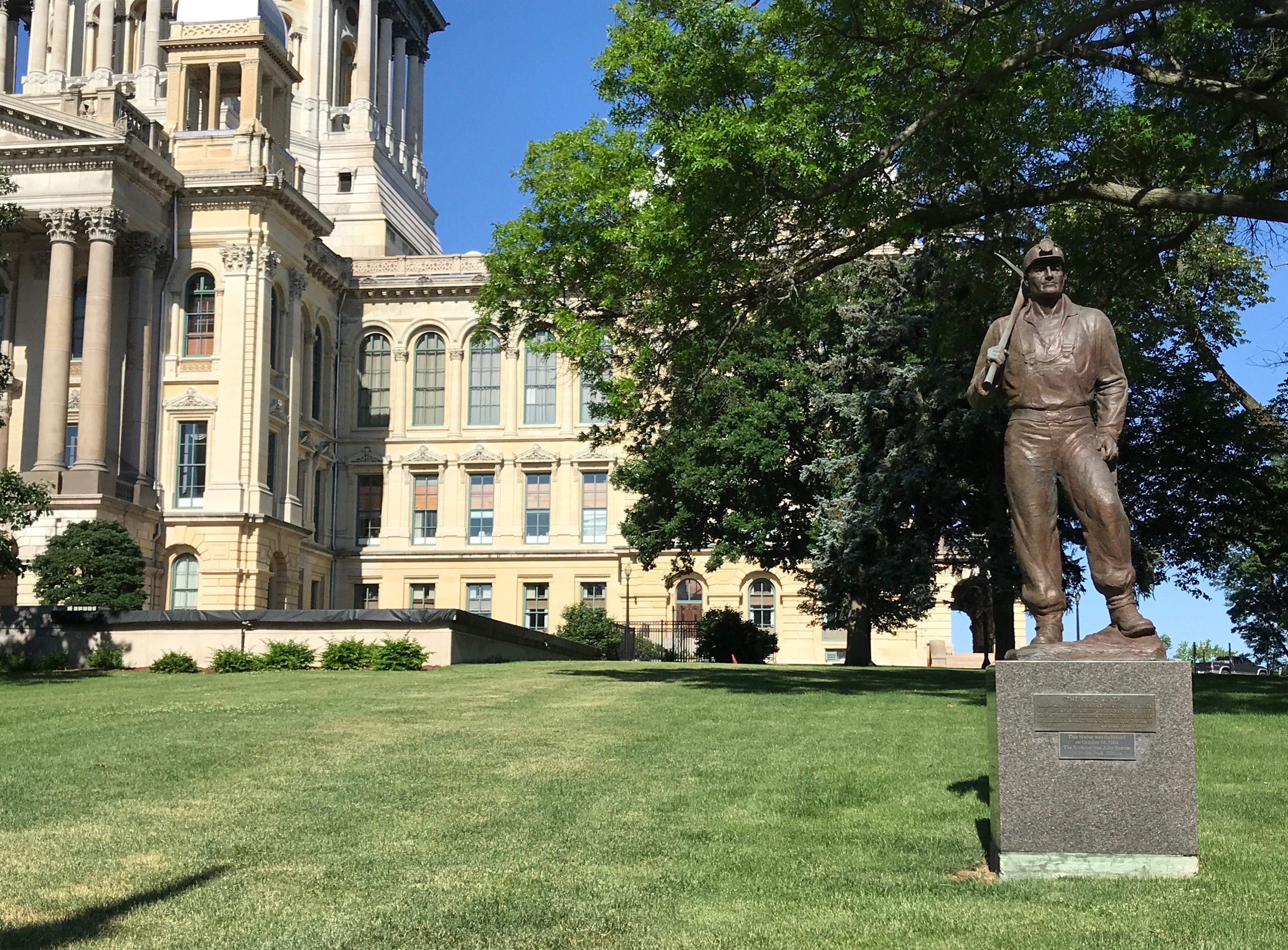
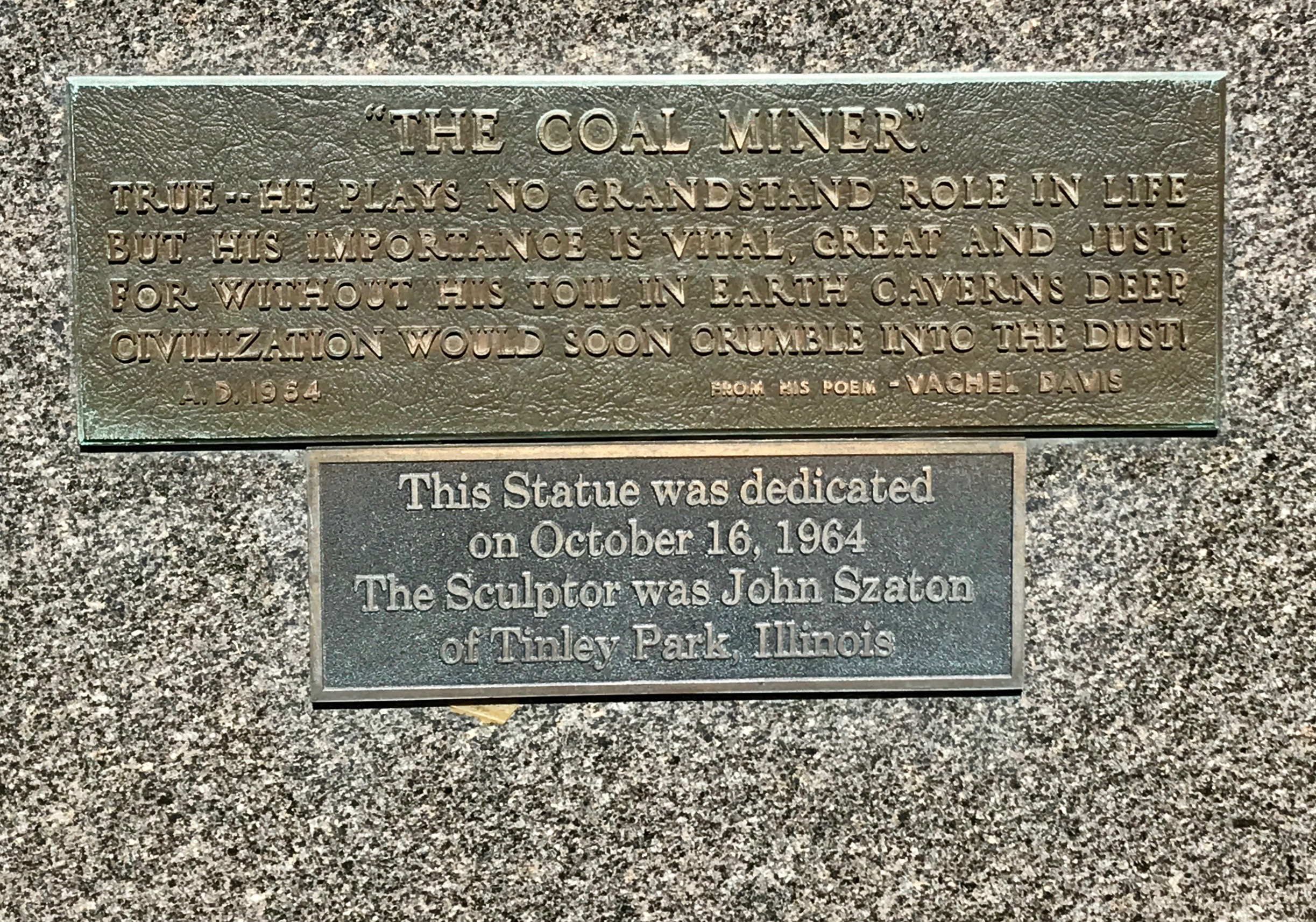
I did find it heartening that the workers of Illinois were also honored on the grounds of the capitol.
It might have been nice if there were some mention of the women and their contributions  in Illinois.
And that was it for my speed visit to Illinois’ state capitol.
My next stop, though, was my main purpose for visiting Springfield.
https://www2.illinois.gov/alplm/library/publishingimages/currentfocus/rotator1.jpg

The Abraham Lincoln Presidential Library and Museum. On my last visit, it was still under construction. It opened in April 2005, and this was the first time I was back in the neighborhood. According to my Preferred Source, it combines “traditional scholarship with 21st-century showmanship techniques.”

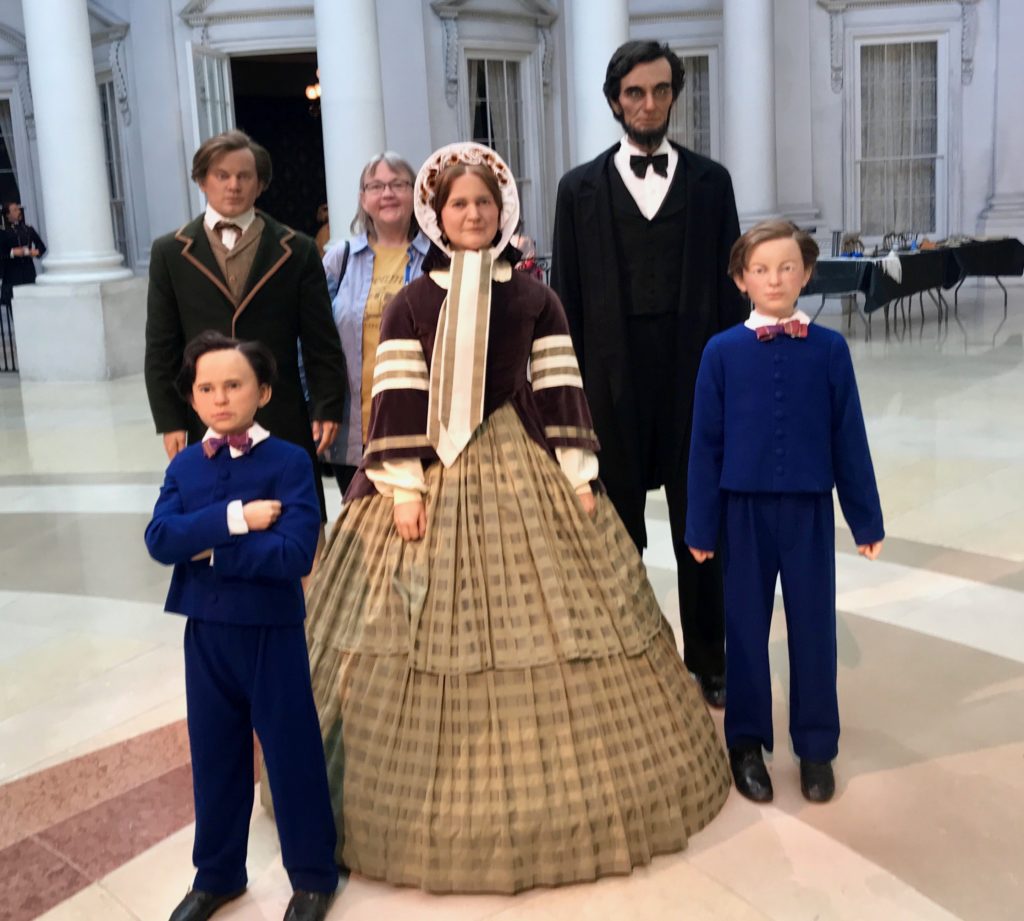
Madam Tussaud, of wax museum fame, lived December 1, 1761 – April 16, 1850. That hardly seems to be 21st-century showmanship, but I guess everything old is new again.
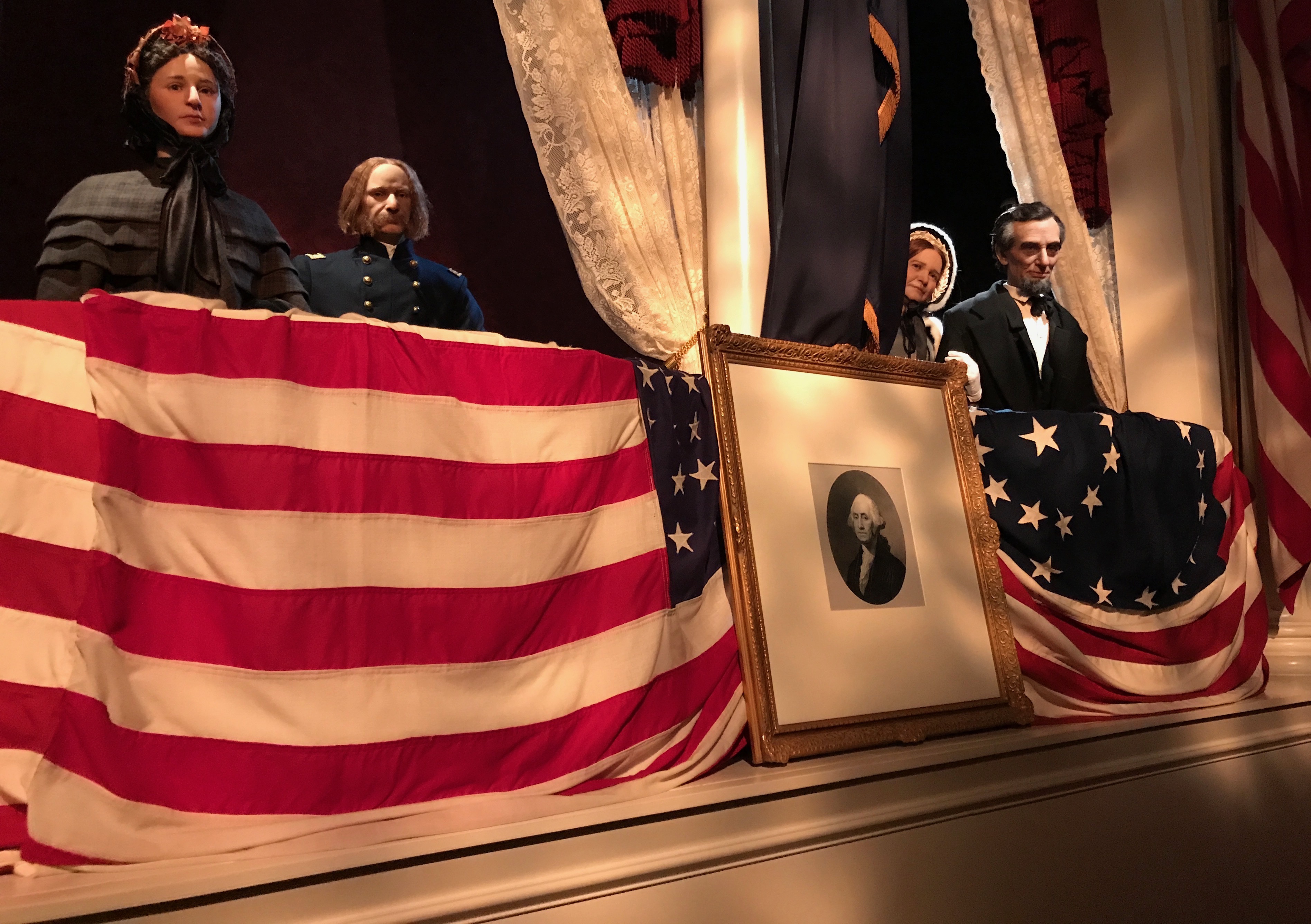
I was pleased that the Lincolns were waiting to receive me, although I did feel underdressed.
There were several galleries to visit. The first exhibit I toured was dedicated to presidents who had strong ties to Illinois.

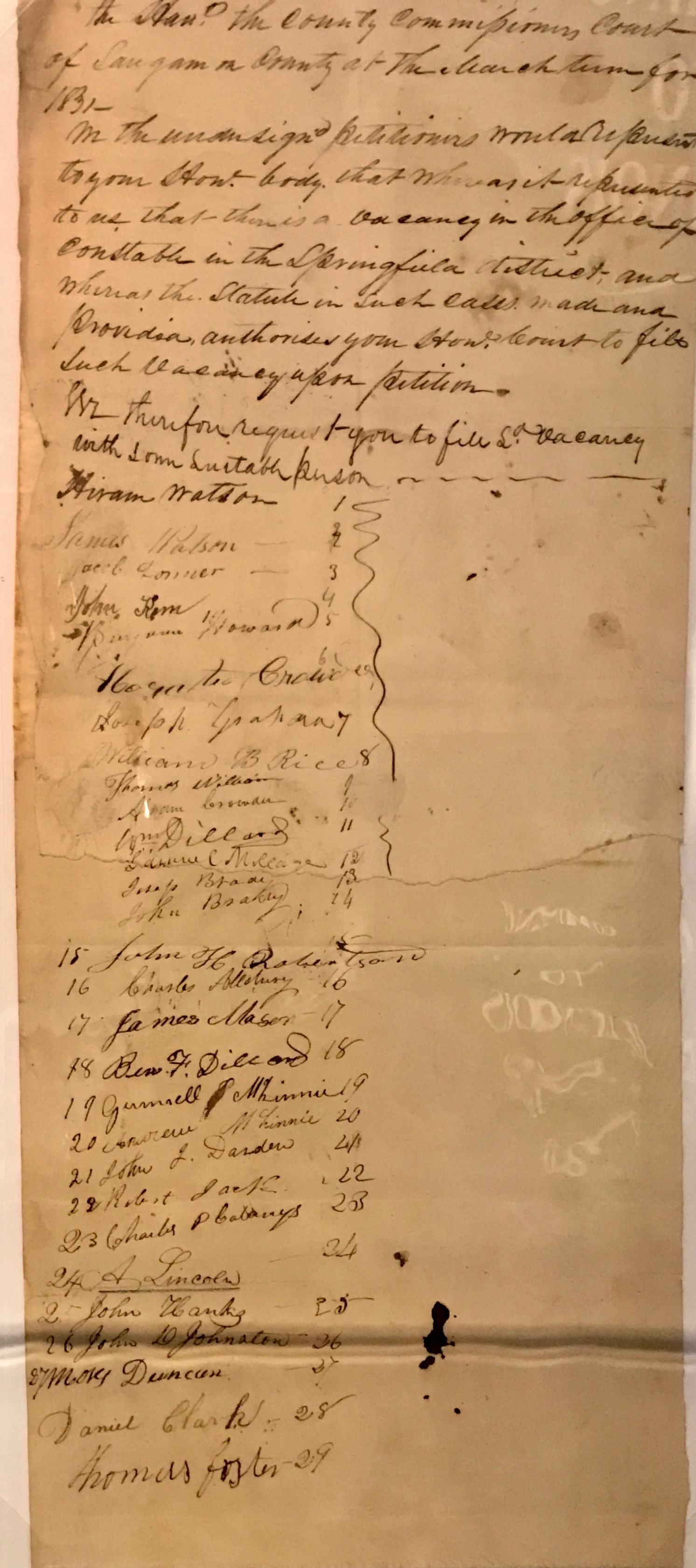
There were a number of interesting artifacts. For instance, this is the second political document ever signed by Lincoln. In fact, Lincoln signed this petition three times. In addition to his own signature, he signed on behalf of his cousin, John Hanks, and stepbrother John D. Johnson. The document urged the Commissioners’ court of Sangamon County to fill a vacant constable position. Their petition was successful, and the court appointed Willian Constant.

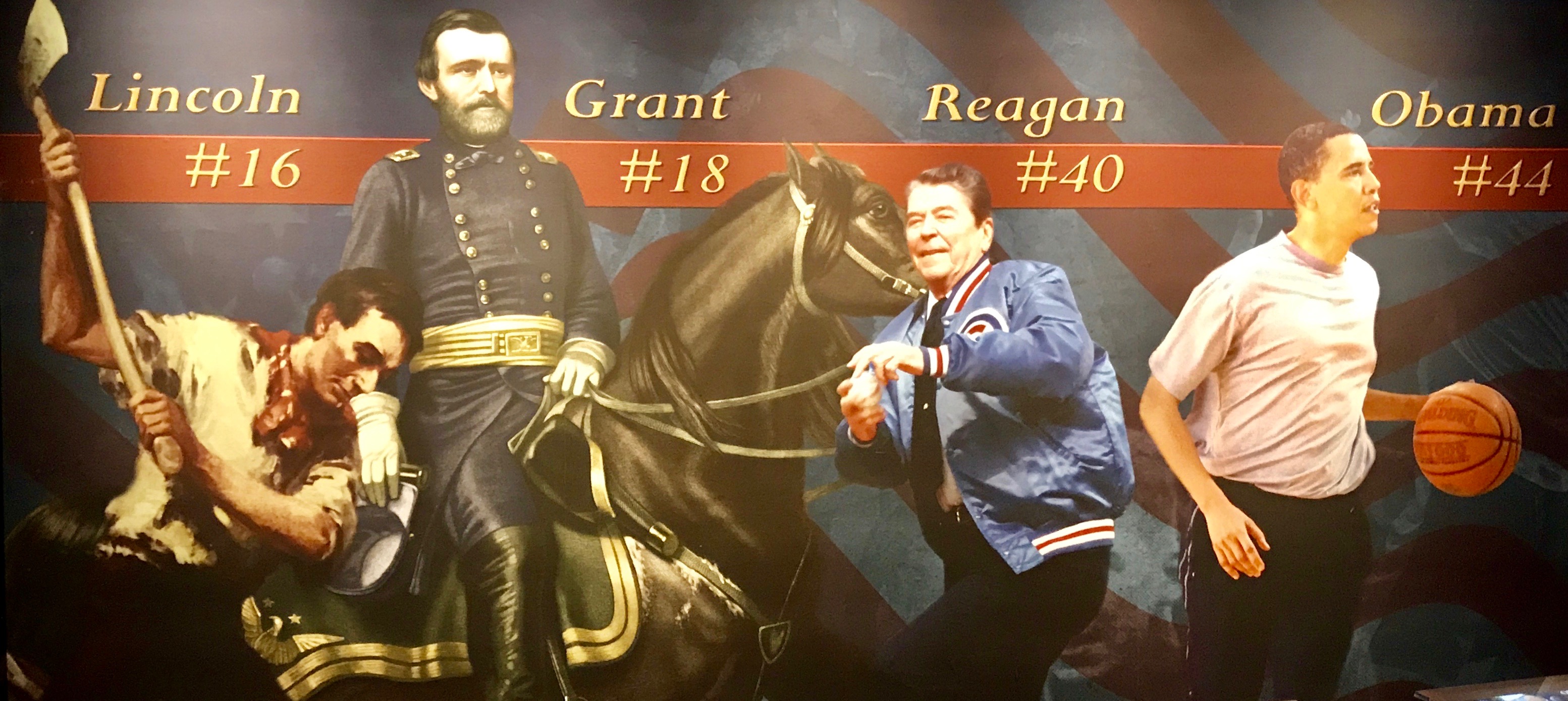
These four presidents were examples of a time when men of a less than wealthy background could be elected to lead the country.

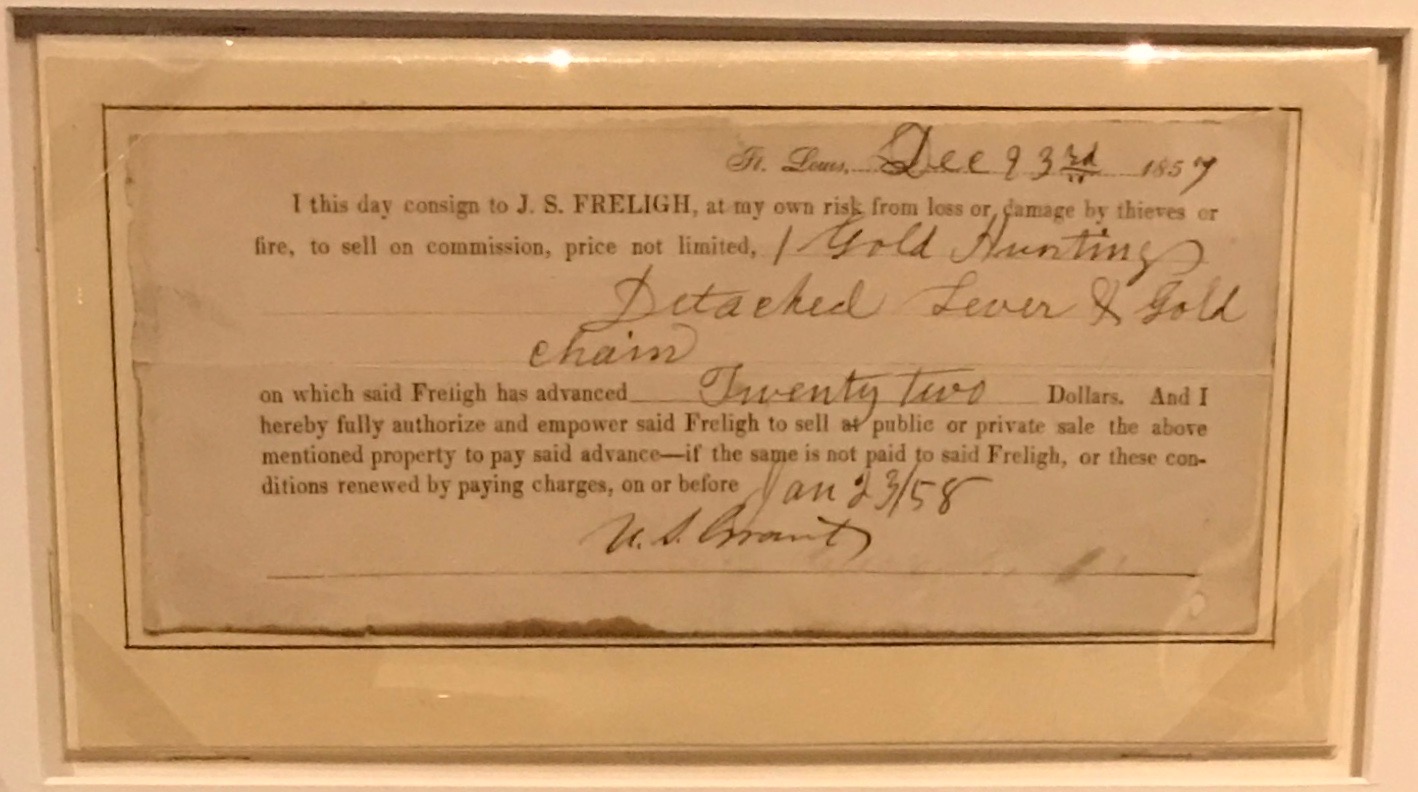
At what was described as Grant’s lowest point, he had to pawn his gold watch. He was facing increasing setbacks at his St. Louis farm, “Hardscrabble.” The sign accompanying the pawn ticket theorizes that he pawned it – for $22 – to be able to afford Christmas presents for his children. The economic distress he suffered trying to farm motivated Grant’s move to Illinois.

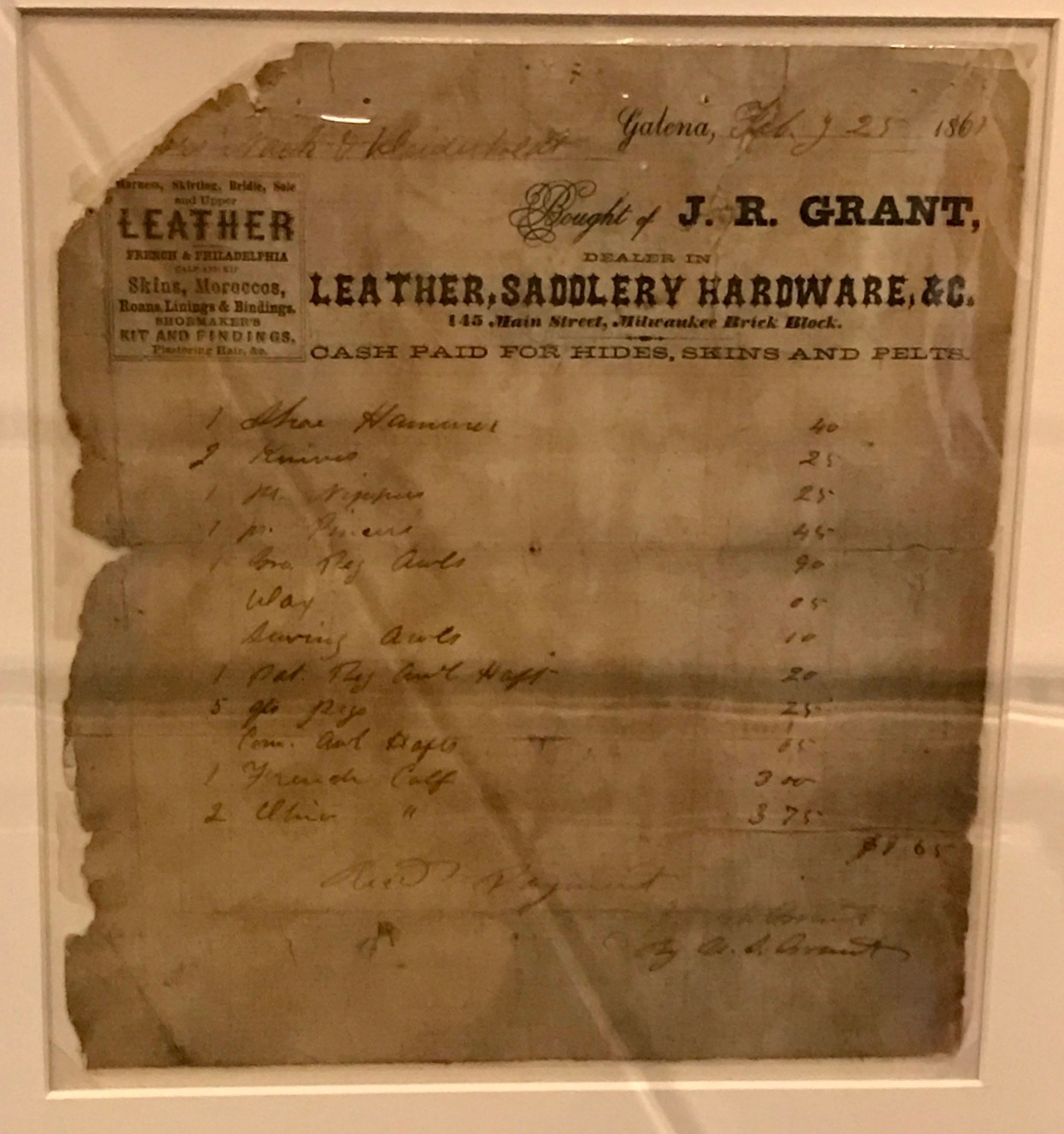
This is an invoice from the Galena leather goods store owned by Grant’s father, Jesse. It was signed by Grant on February 25, 1861, only two months before Grant came to Springfield to help organize the Union war effort.

Understandably, this museum was heavily Lincoln-centric – or maybe I just took pictures of what interested me. If you want to check for yourself, you’ll have to visit.

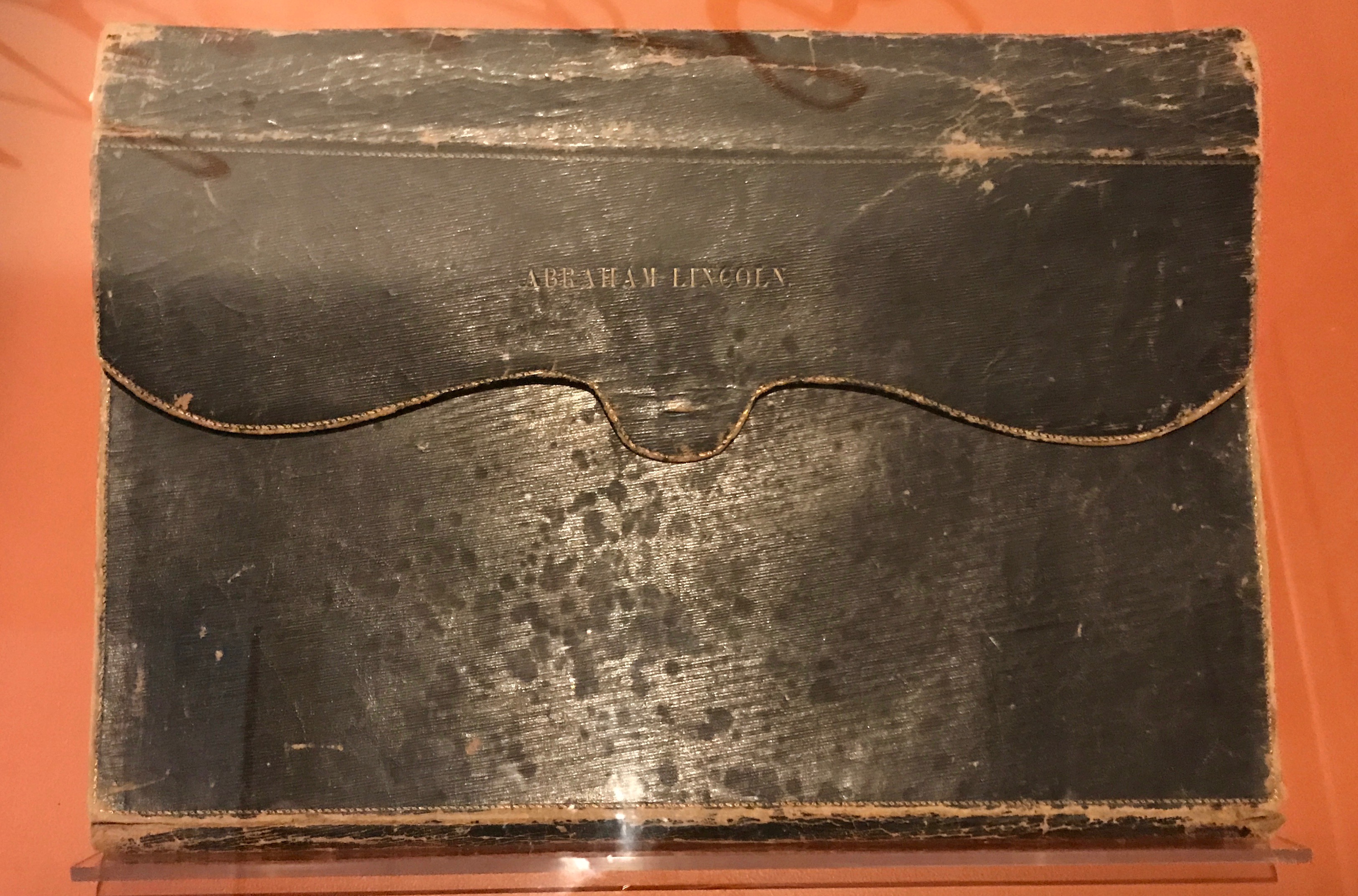
Here is his brief case.

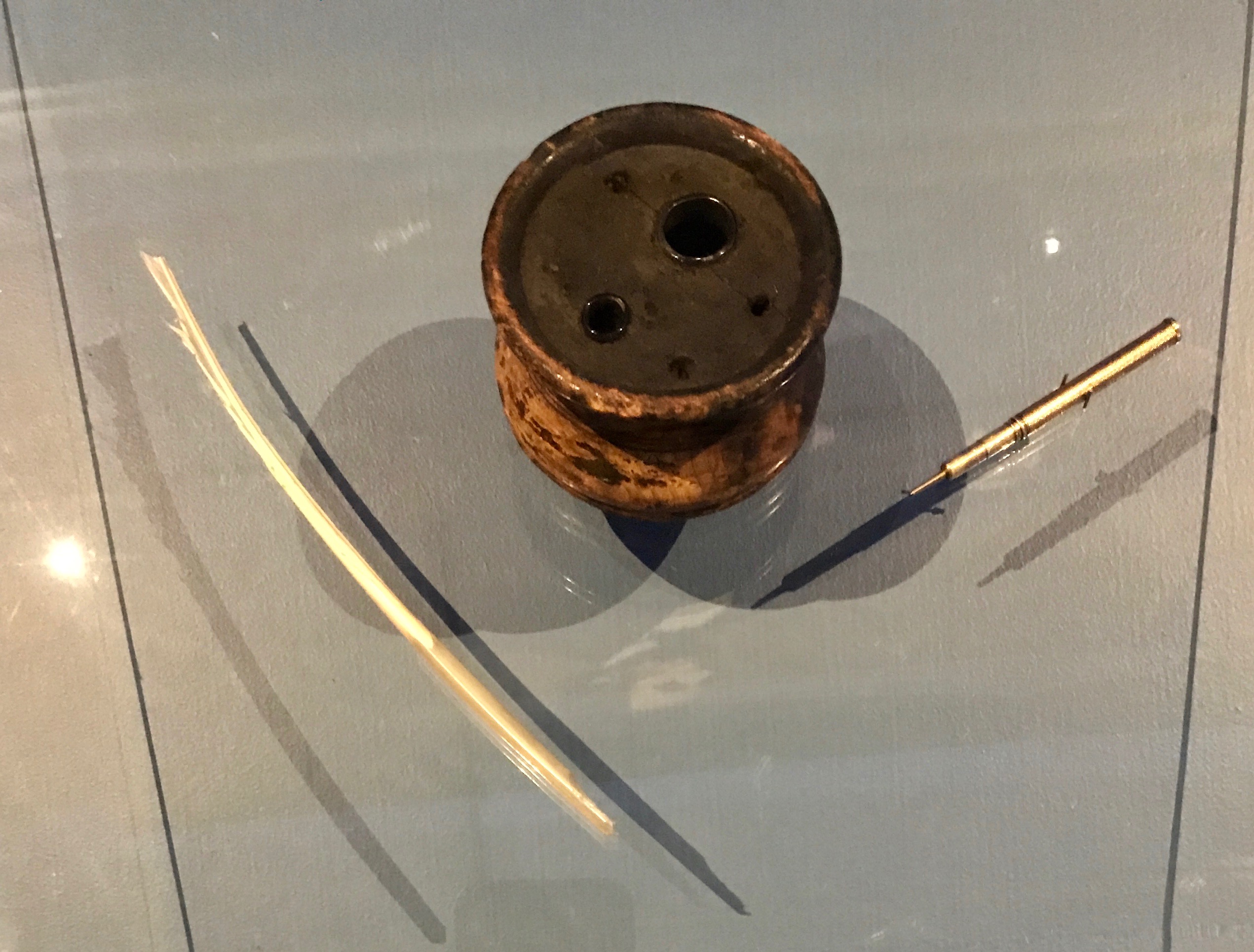
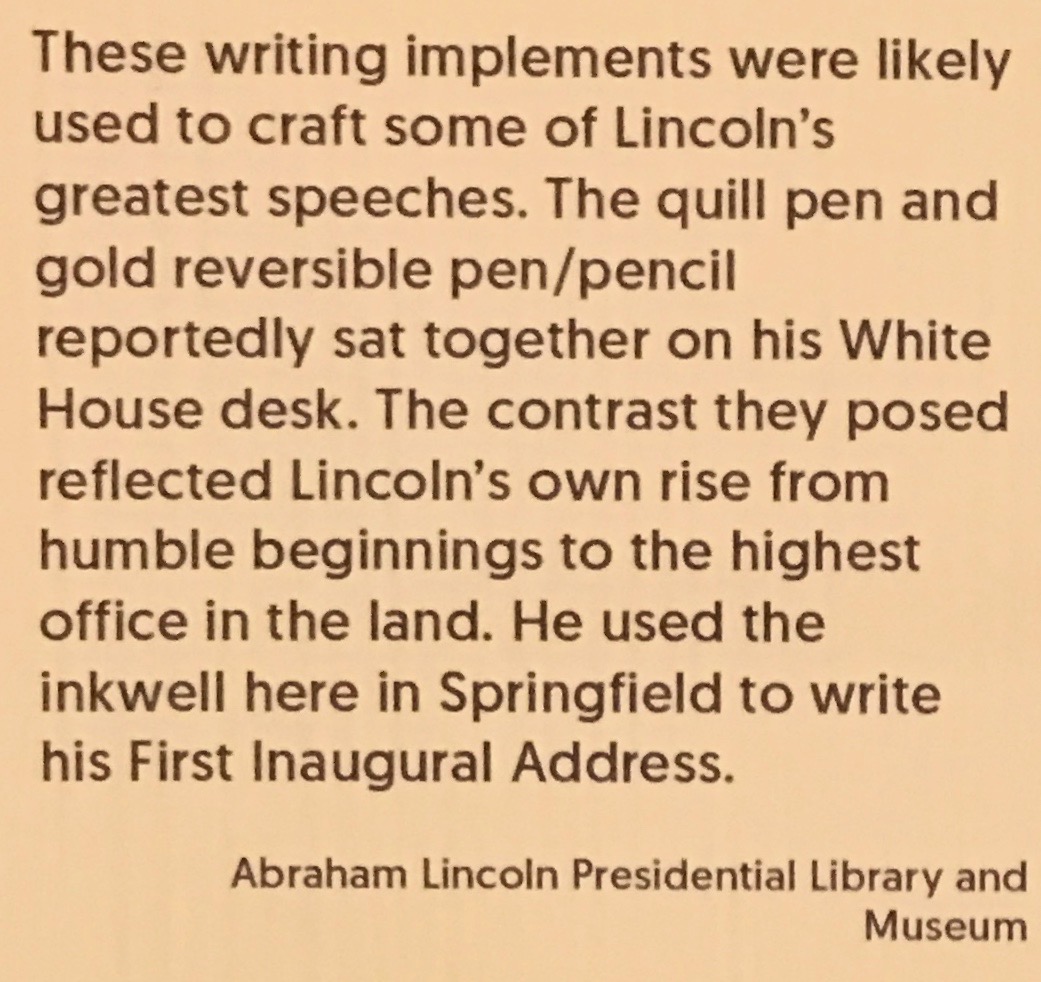
If you’d like to know more about these artifacts, read the sign I photographed from the exhibit.

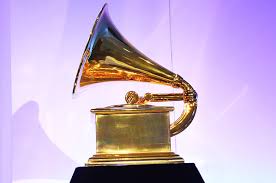
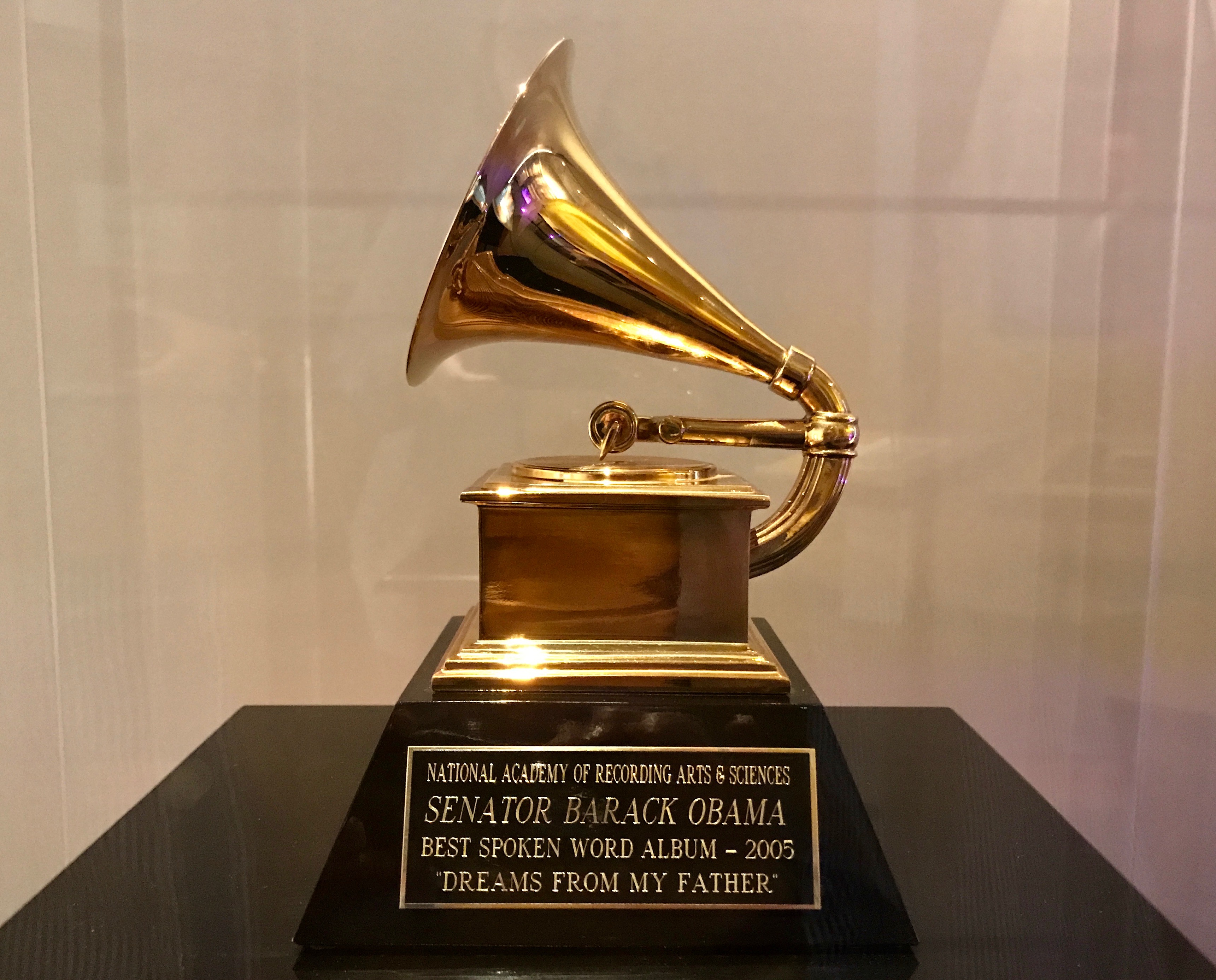
Senator Dirksen isn’t the only Illinois politician to win a grammy.

Here’s Barack Obama’s Grammy for “Dreams From My Father” in 2005.
I didn’t seem to photograph anything from Ronald Reagan. Maybe all his mementos are at his Presidential Library in Simi Valley, California. Incidentally, the Reagan Library is the largest of the 13 federally operated presidential libraries.
Wait! Wasn’t Reagan the big proponent of small government? Ironic, isn’t it?
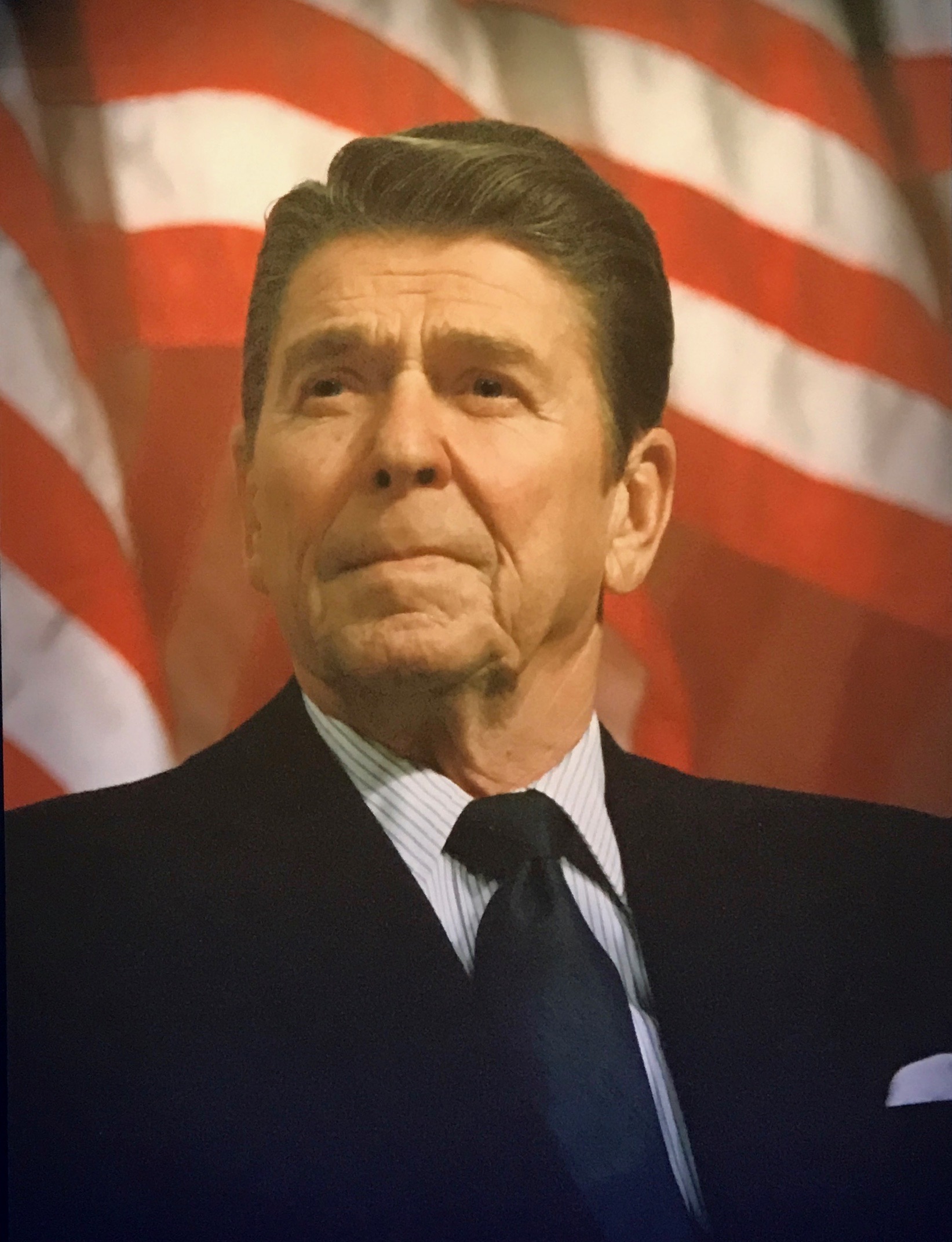
I guess this image of “The Great Communicator” will have to suffice.
And here the four Illinois boys who made good.
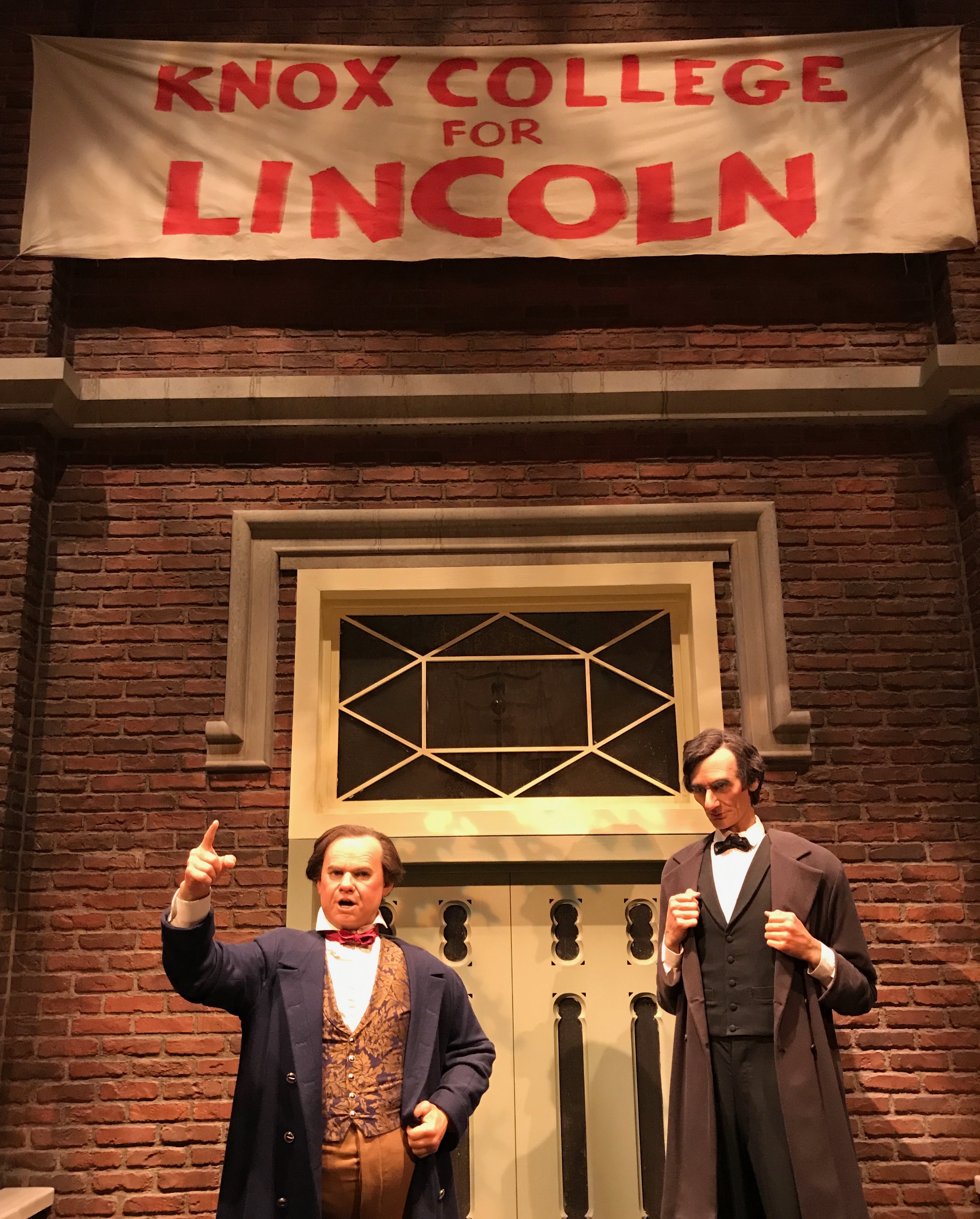
There was an interesting display about campaigning “back in the day.” The Lincoln-Douglas Debates – also known as the Great Debates of 1958 – was given attention. In this day of sound bites and Twitter foreign policy negotiations, long-form debate is quite anachronistic.
Exactly who ran for president in 1860?
 
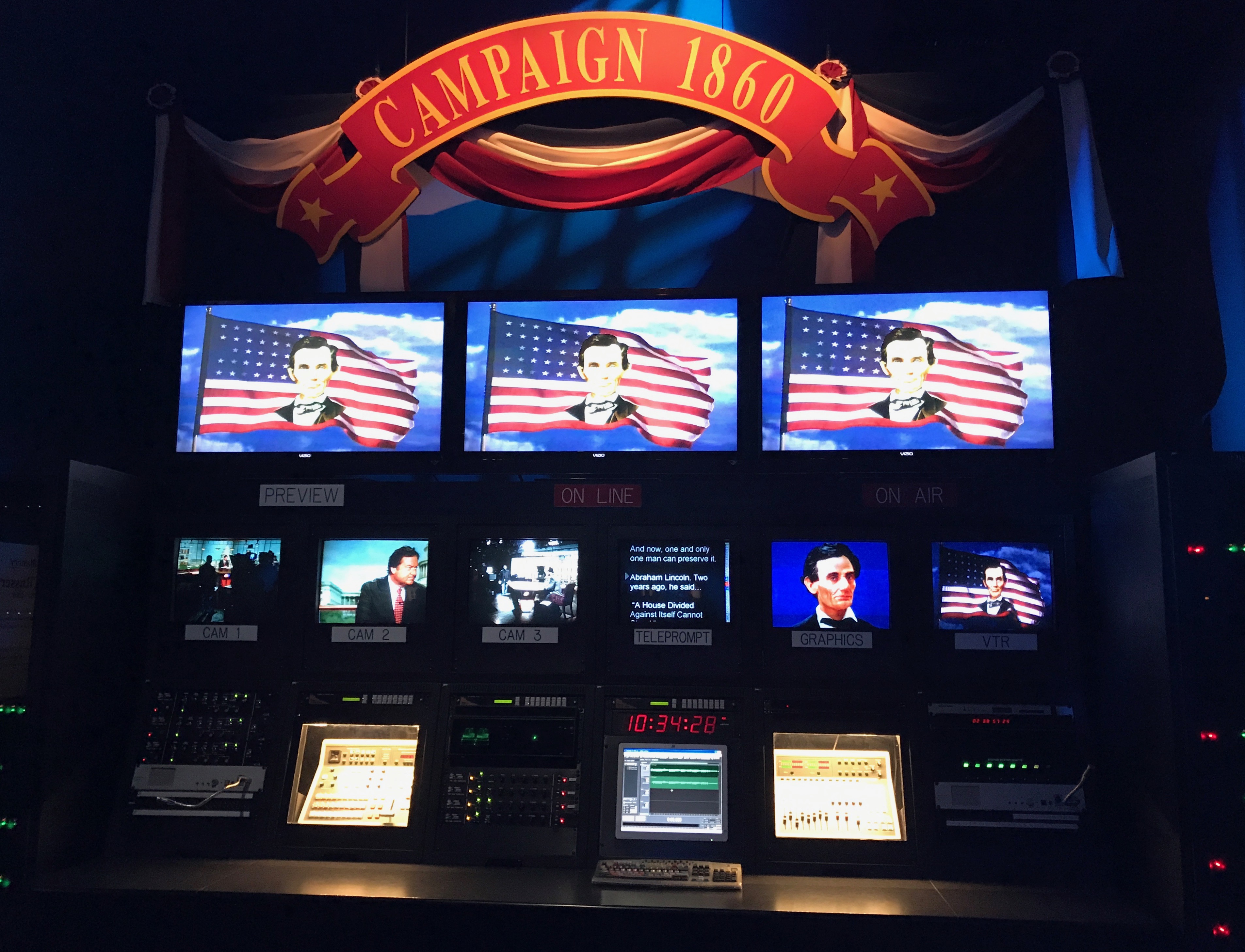
They had an exhibit that reimagined Lincoln campaigning via television.
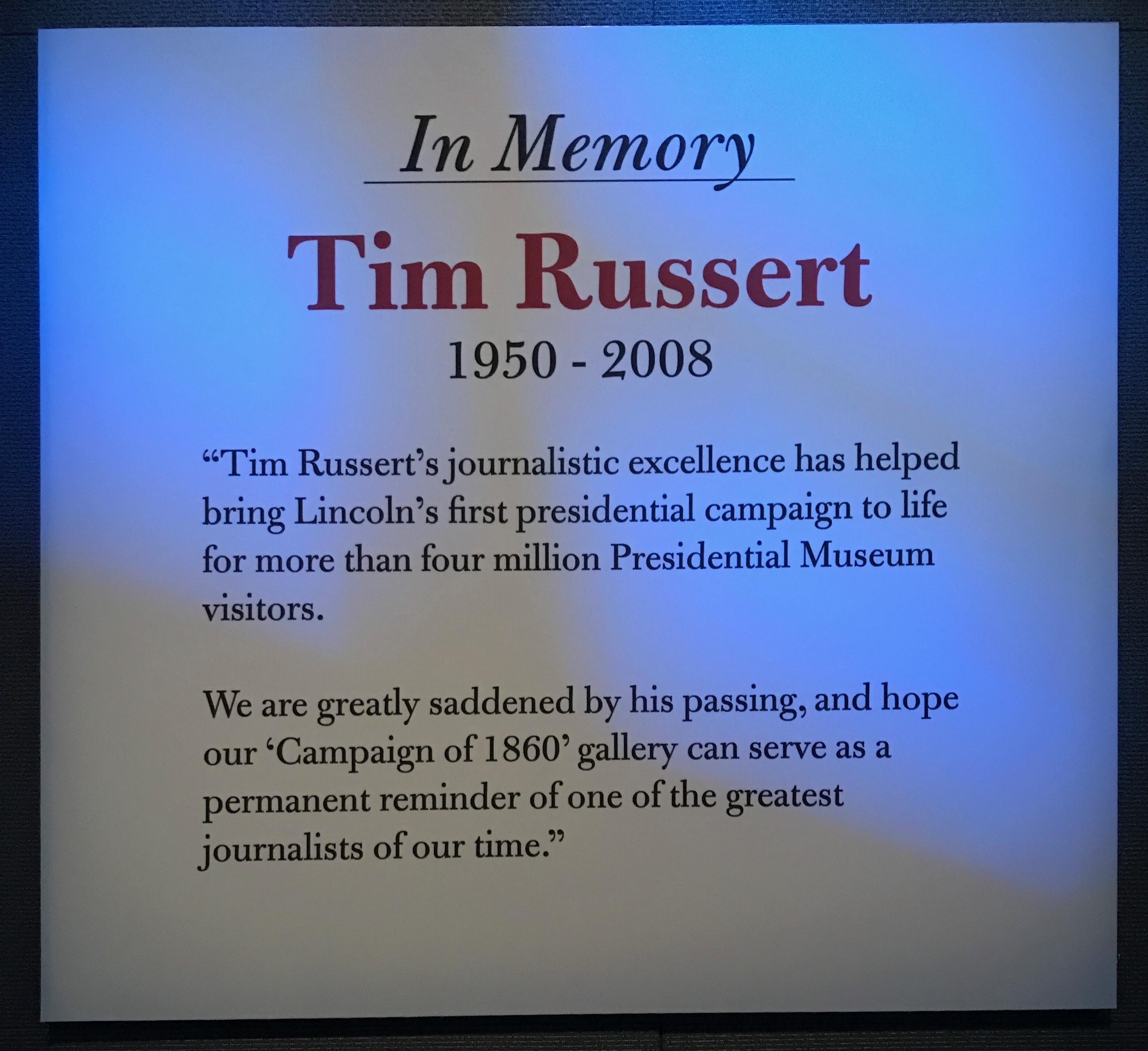
Here he is, being interviewed by Tim Russert, Buffalo hometown hero.
I guess this is the 21st century portion of the display, although, truth be told, political campaigning seems to be done more via Twitter and Facebook. But, can you imagine a display of tweets?
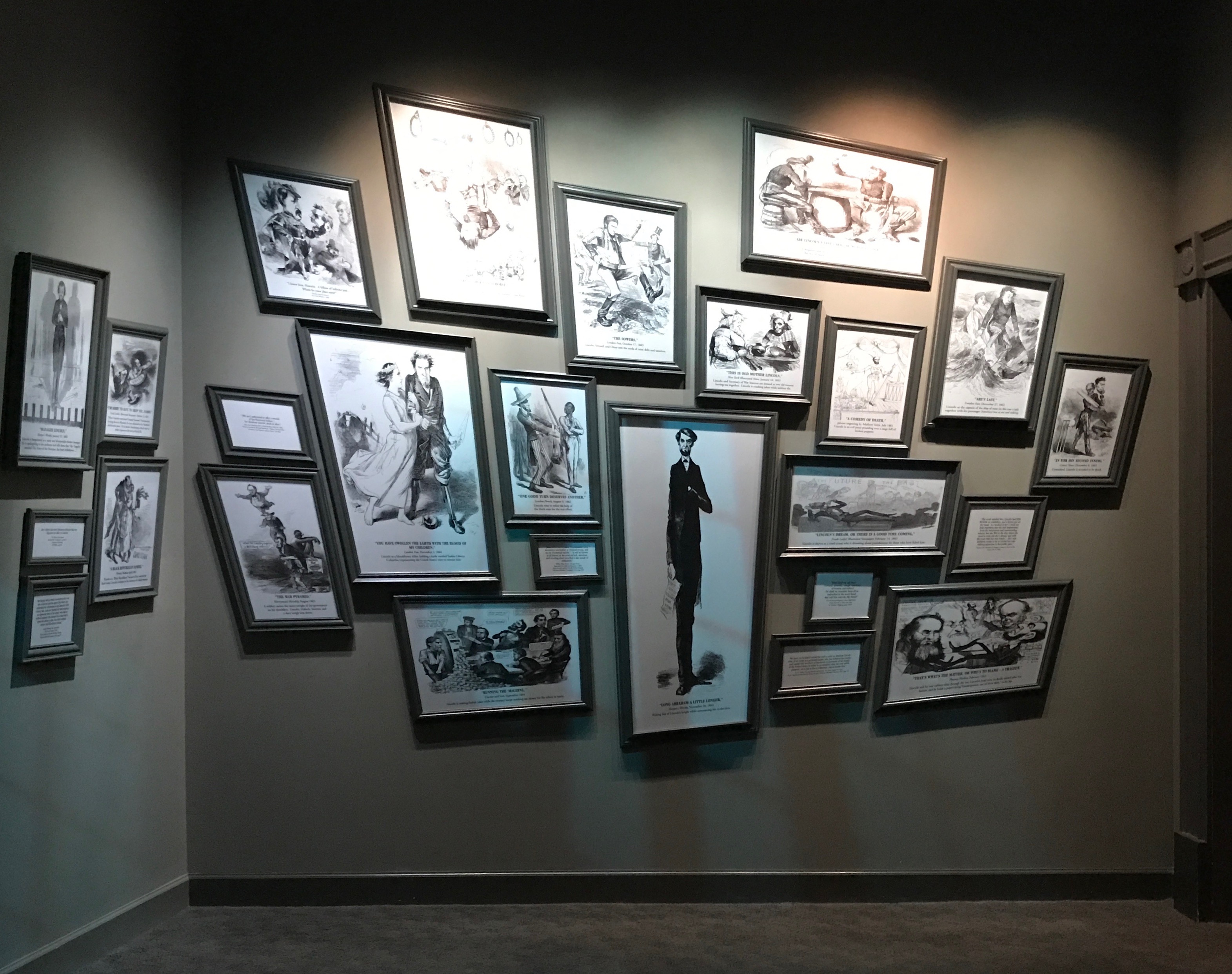
However, satire and political slant have always been part of the process.
I crossed back over to the family side of the museum.
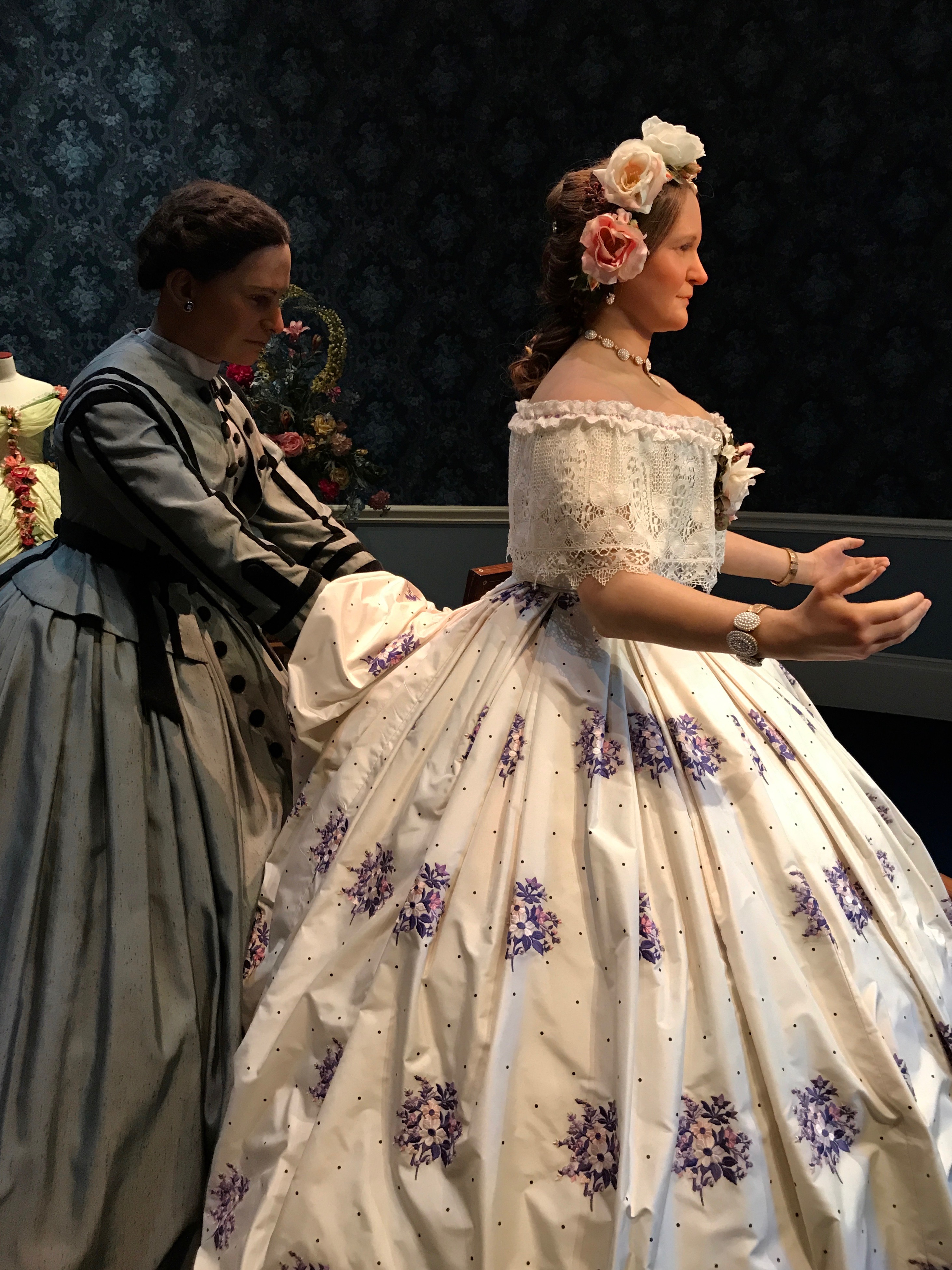
Here is a diorama of Mary Todd Lincoln having her bustle adjusted by her confidant and friend, Elizabeth Keckley. I can’t imagine wearing clothes that required assistance to put on. I much prefer our modern fashions.
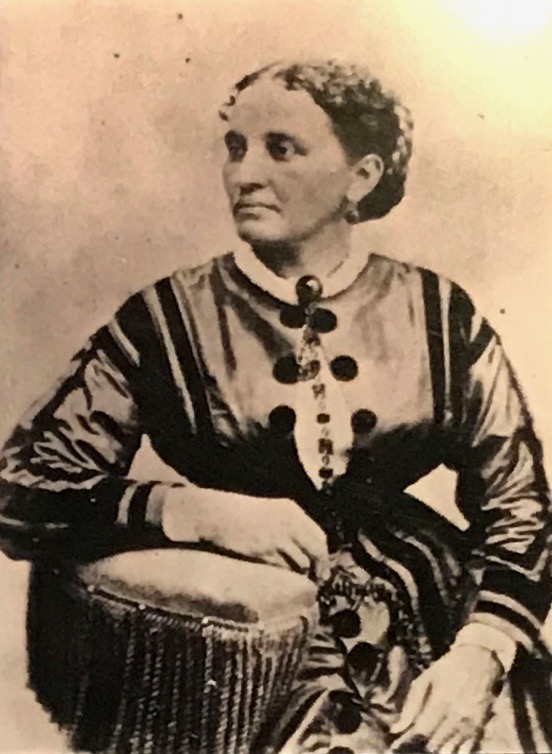
Elizabeth Keckley was an interesting person. She was a former slave who had been a dressmaker for Mrs. Jefferson Davis before the Senator from Mississippi left Washington to serve as the president of the newly established Confederate States of America. Mrs. Keckley went to work in the Lincoln White House and by early 1862, she had created no fewer than sixteen new dresses for Mrs. Lincoln.
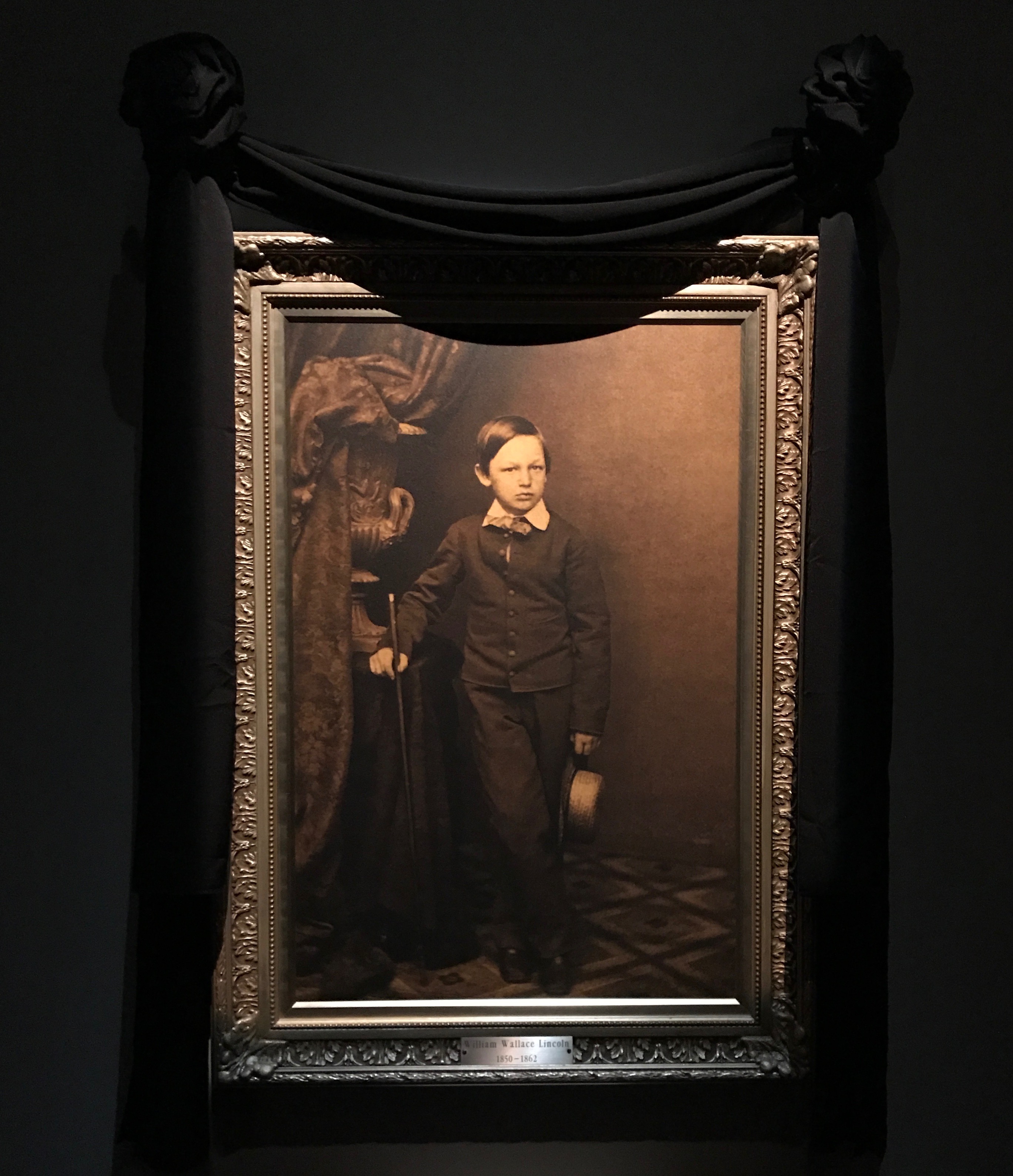
According to information at the exhibit, she was far more than a dressmaker. She quickly became Mary’s most trusted friend in treacherous Washington. She soothed the First Lady’s migraine headaches, enlisted Mary’s support in fundraising for indigent former slaves, and consoled a heartbroken mother following the shattering death of Willie Lincoln in February 1862.
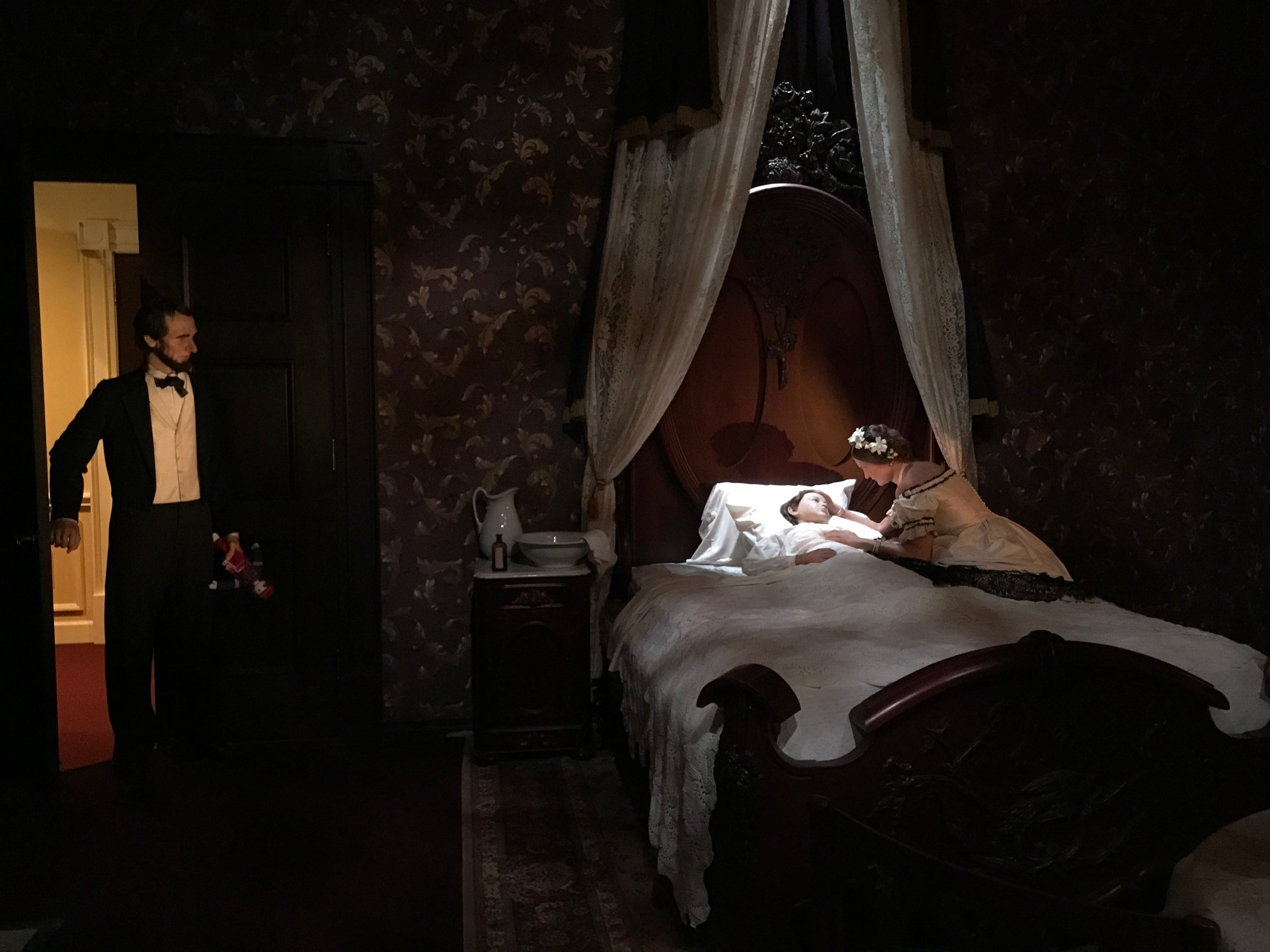
February 5, 1862 was a day when the Lincolns should have been in their glory. They were holding an elegant party in celebration of the newly redecorated White House. Nearly 500 guests were dining on terrapin and turkey. The last guests wouldn’t leave until daybreak.
Abraham and Mary left the party several times during the night to check on eleven-year-old Willie. He had been ill for several days, almost certainly from typhoid fever. On this night, he took a turn for the worse.
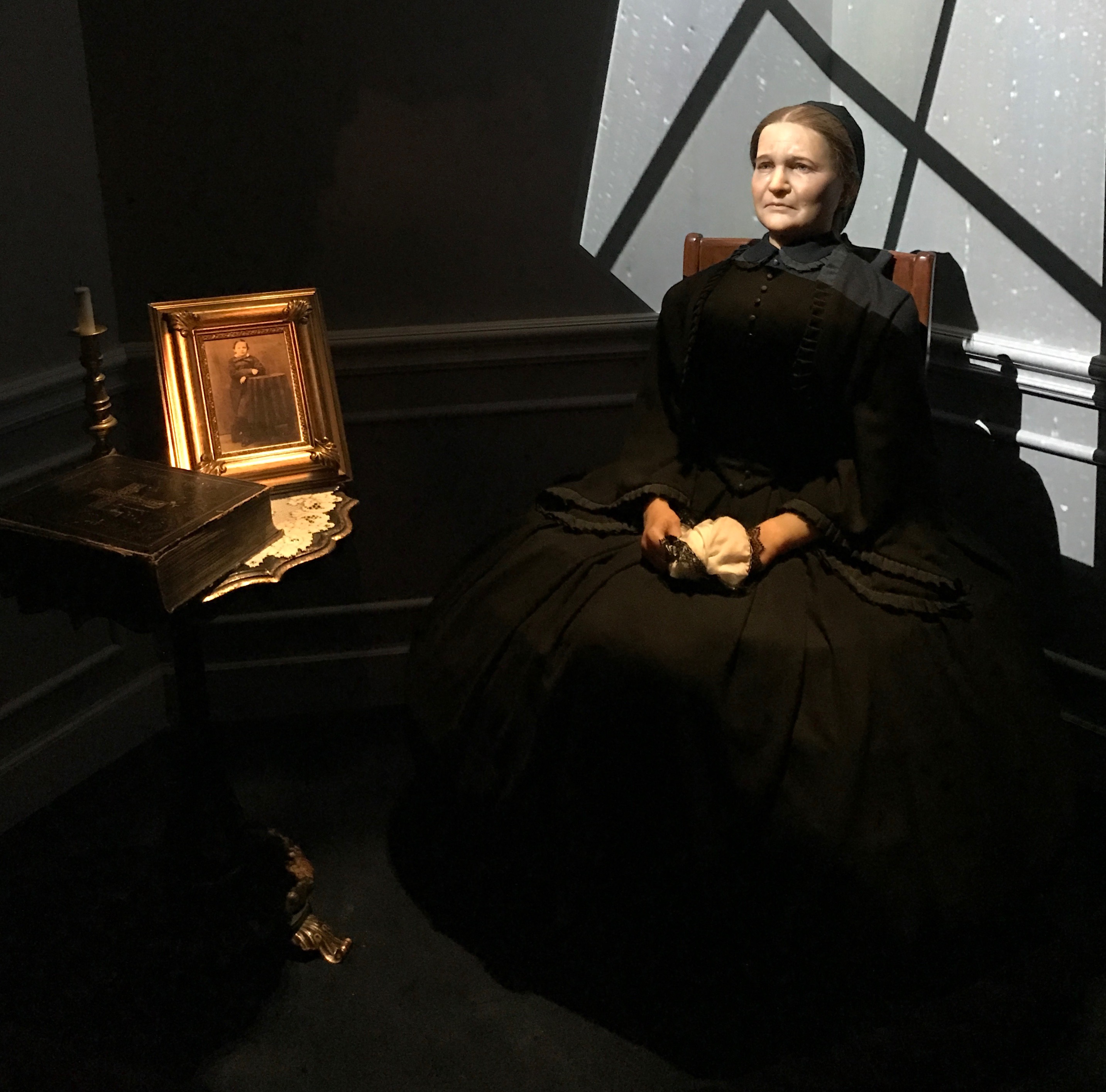
Willie died on February 20, two seeks after the presidential ball. Mary never entered his room again, but Abraham used to sit in the room alone and mourn his son.
It was three weeks before Mary left her bed to don deepest black mourning attire. She was desperate to contact Willie and attended several séances. She told her sister, Elizabeth, “Willie lives. He comes to me every night and stands at the foot of the bed with the same sweet, adorable smile he always has had.”
Adding to her distress, two months after Willie’s death, Mary’s half-brother, Sam, died in battle wearing Confederate grey.  Gossips accused the First Lady herself of being a Confederate sympathizer.
After the personal sadness of these displays, it was almost a relief to return to the mayhem of the Civil War.
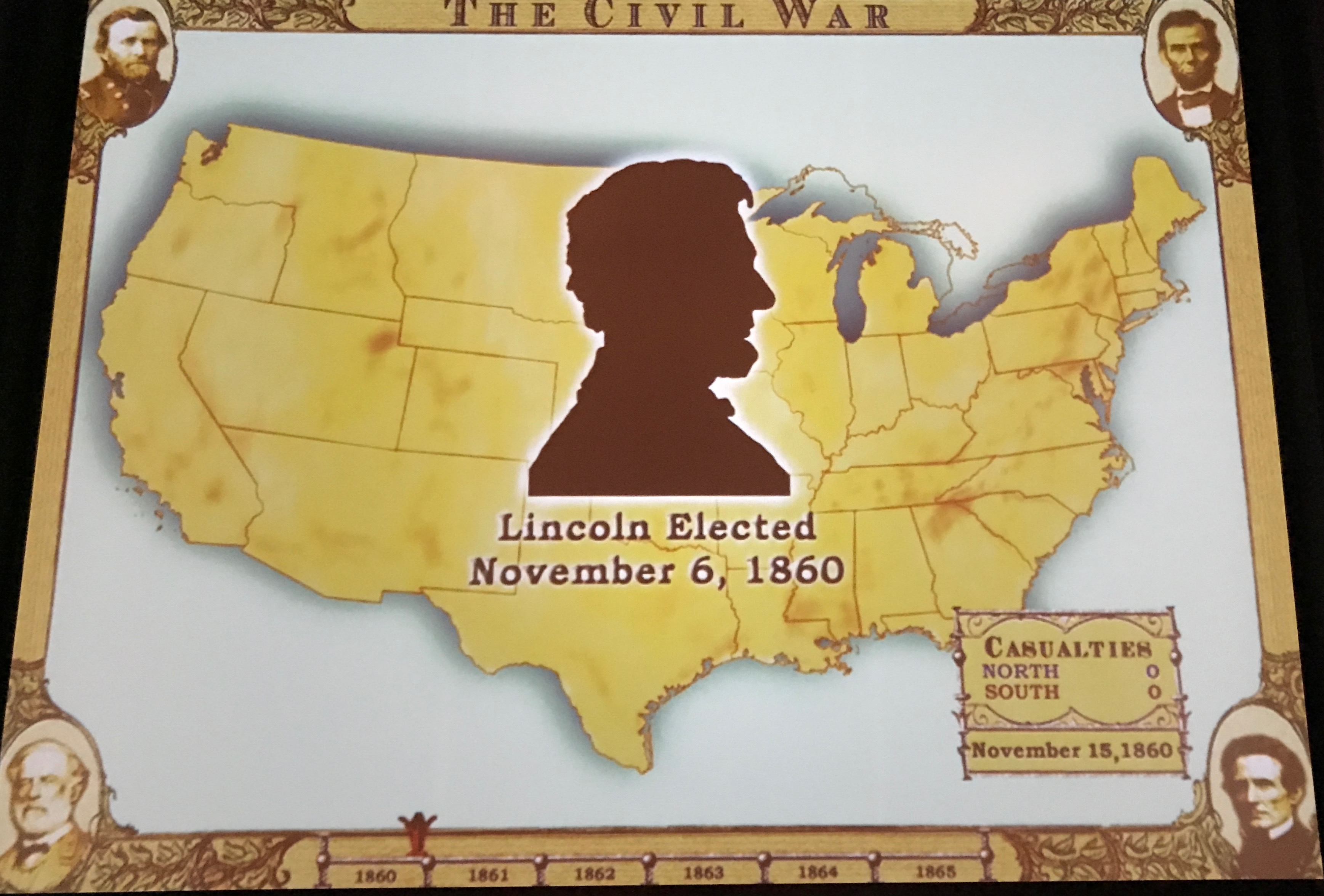
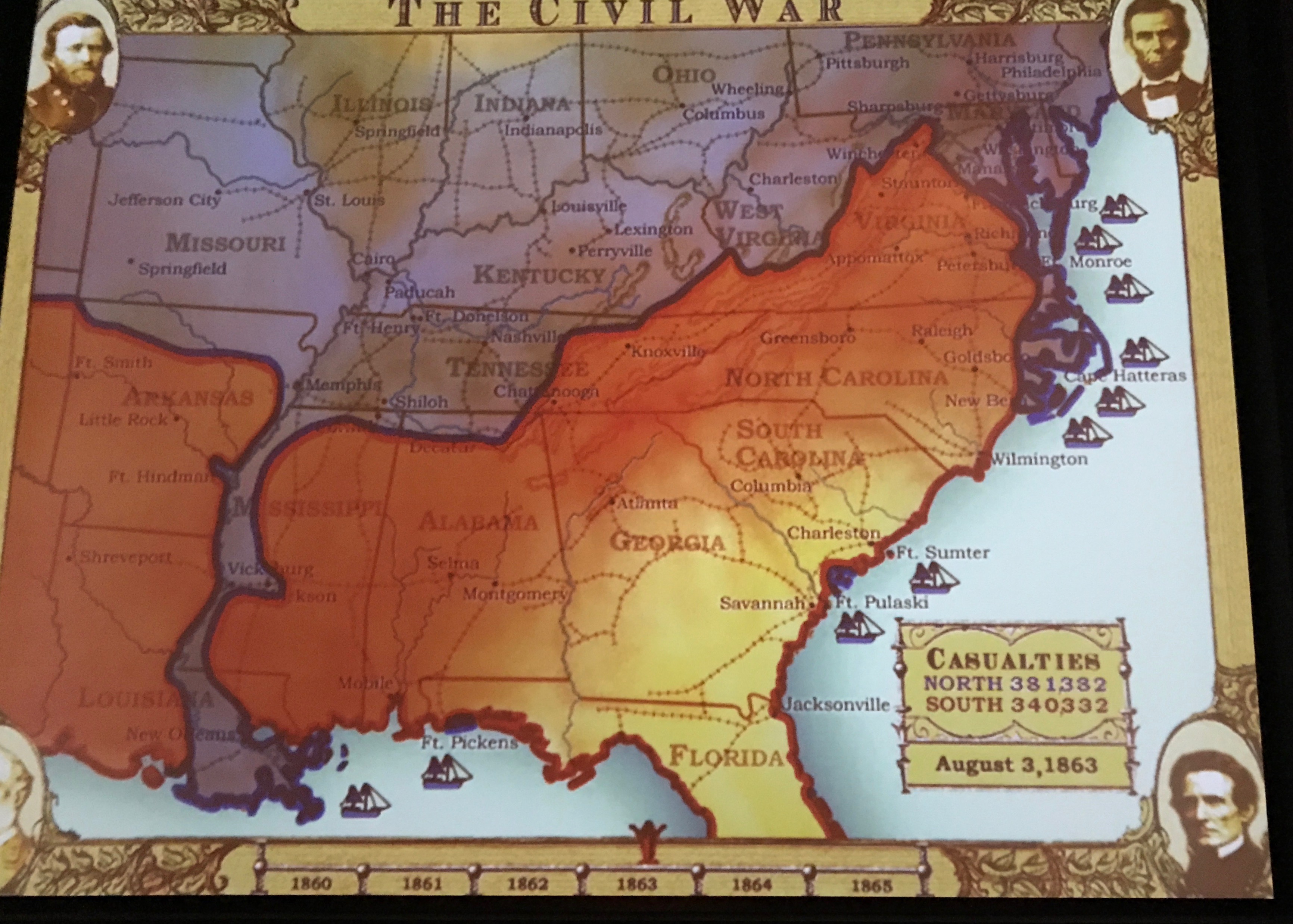
There was a map with a timeline of the land taken and the casualties. When Lincoln was elected in November, 1860, the country was whole and there had yet been no casualties.
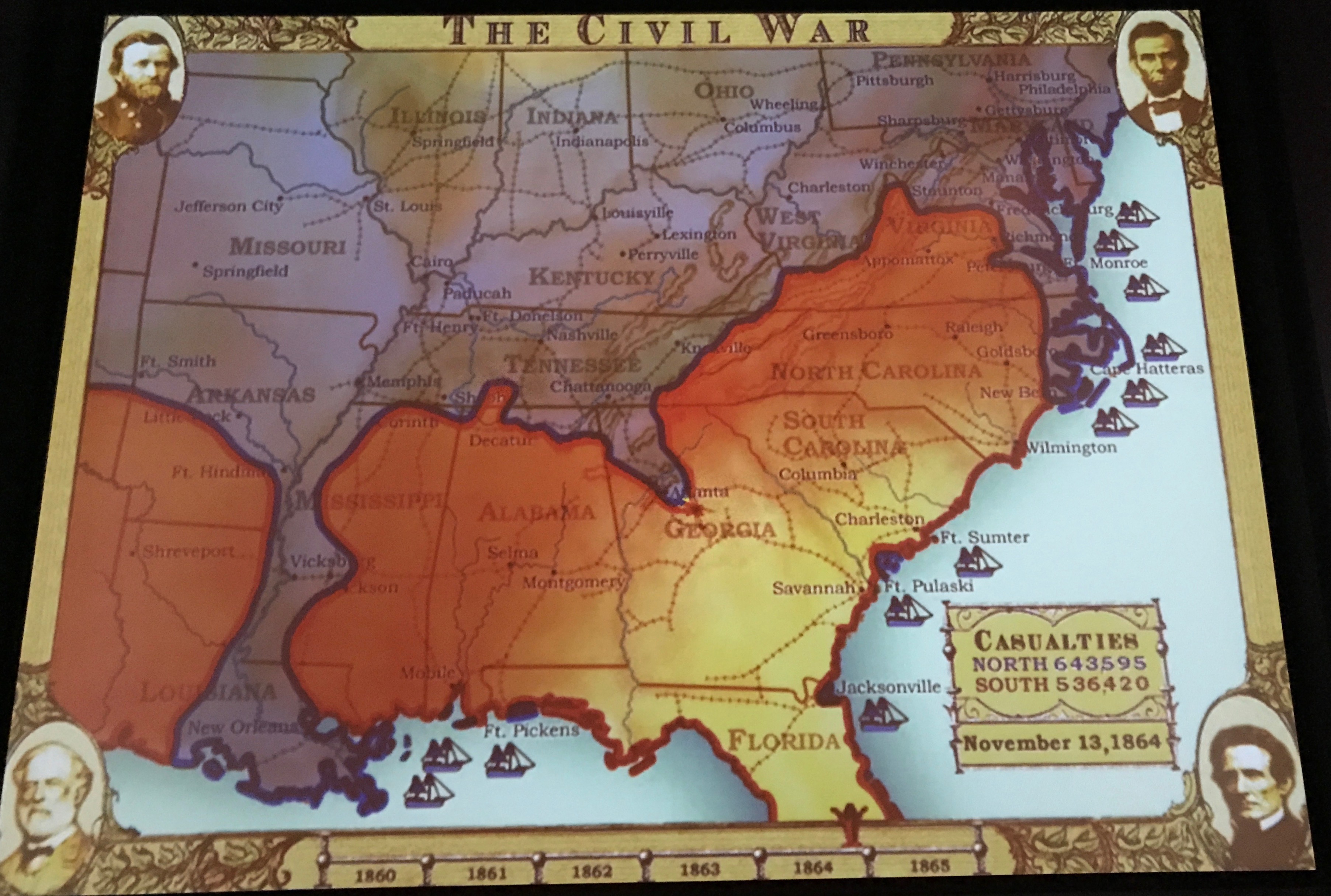
After Gettysburg and Vicksburg, the Union started to push back the Confederates, but at a tremendous cost in life.
Here we can see the results of Sherman’s March to the Sea. Just two days later, Sherman burned Atlanta.
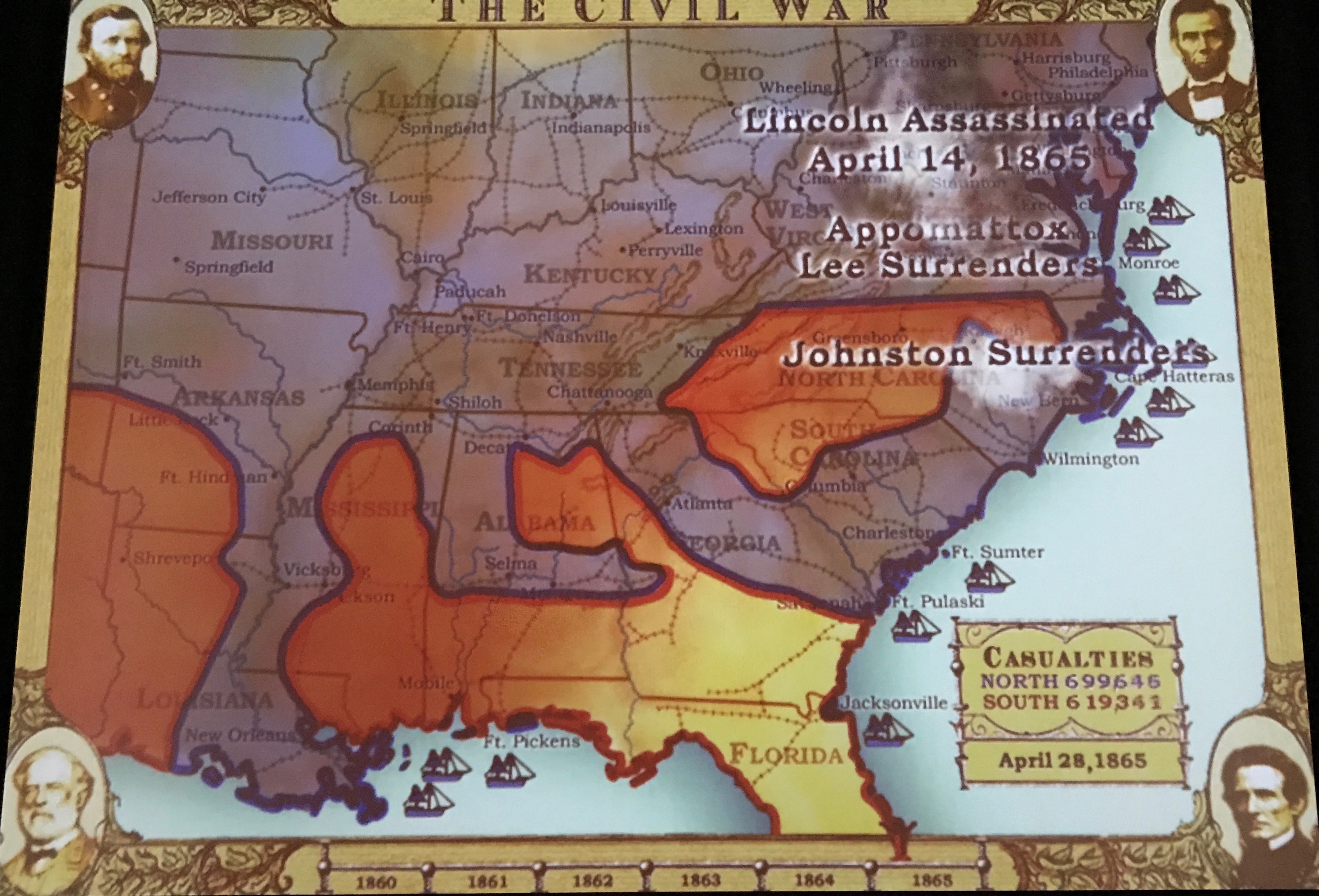
Lee surrendered to Grant at Appomattox Courthouse on April 9, 1865. You can see that there was still some resistance, but the war was pretty much over. Unfortunately, the Lincolns didn’t get to enjoy the hard-won peace.
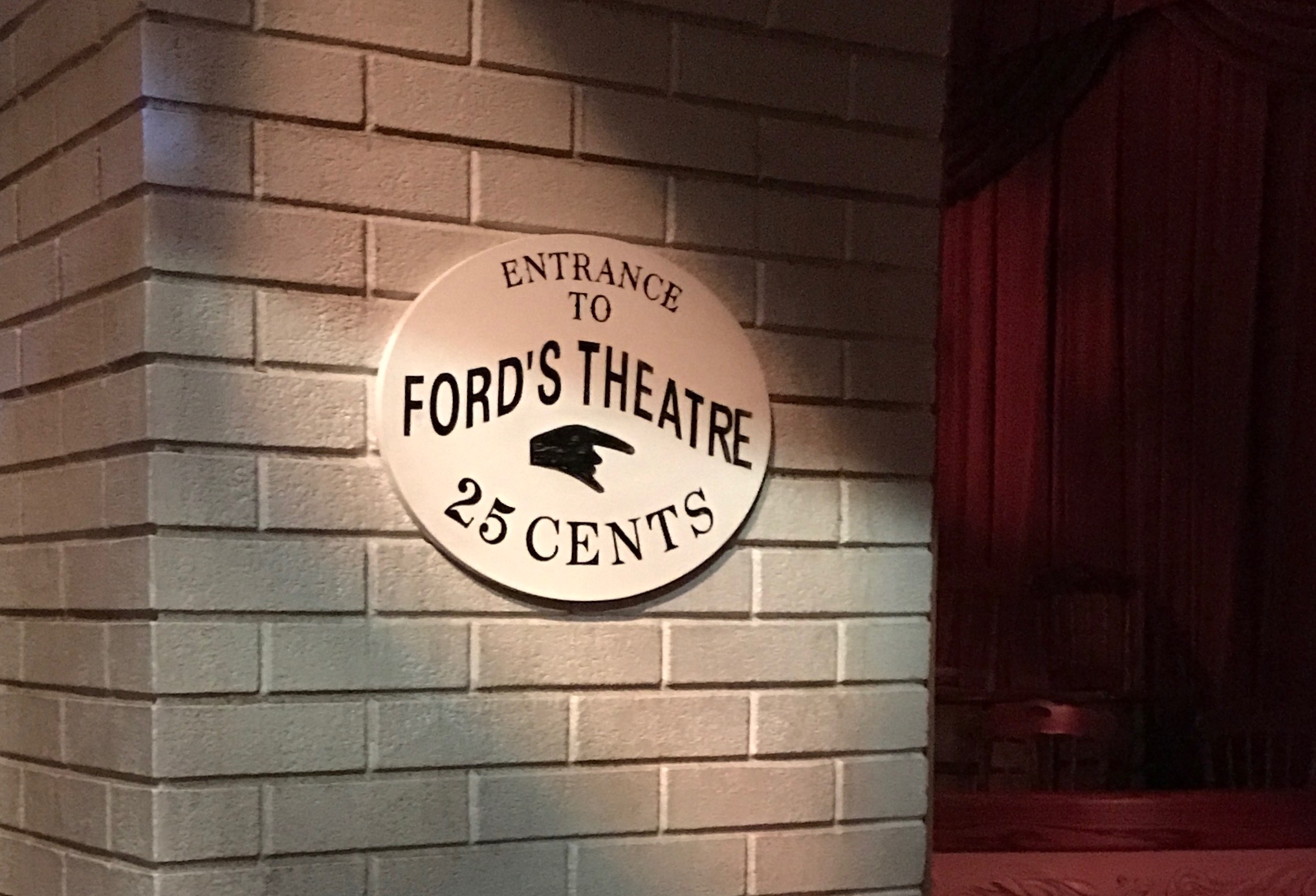
After four long years of war, they tried to relax with a bit of entertainment.
The Lincolns attended a performance of Our American Cousin at Ford’s Theater with Major Henry Rathbone and his fiancé, Clara Harris. The performers on the stage would have had this view of the presidential box.
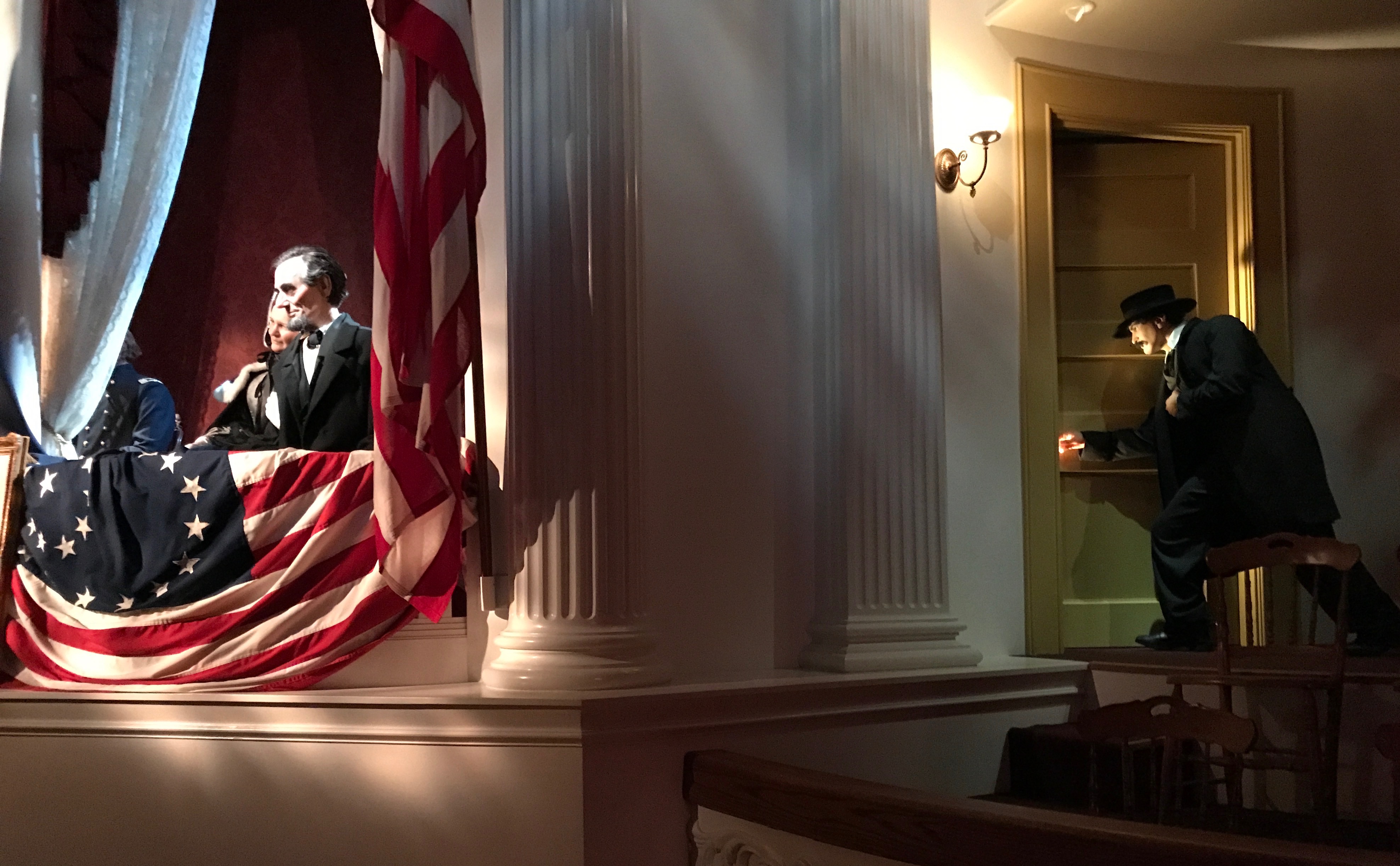
After intermission, John Wilkes Booth made his way to the Presidential box. He timed his attack with a big laugh line in the play:
“Well, I guess I know enough to turn you inside out, old gal; you sockdologizing old man-trap.”

Lincoln was laughing when he was shot.

This was the nation’s first presidential assassination. There was a three-week funeral with lyings-in-state in a dozen cities after the funeral train left Washington on April 21. In checking out things for this post, I found out that one of the stops was in Buffalo, my hometown! I am surprised that I never heard of that before.

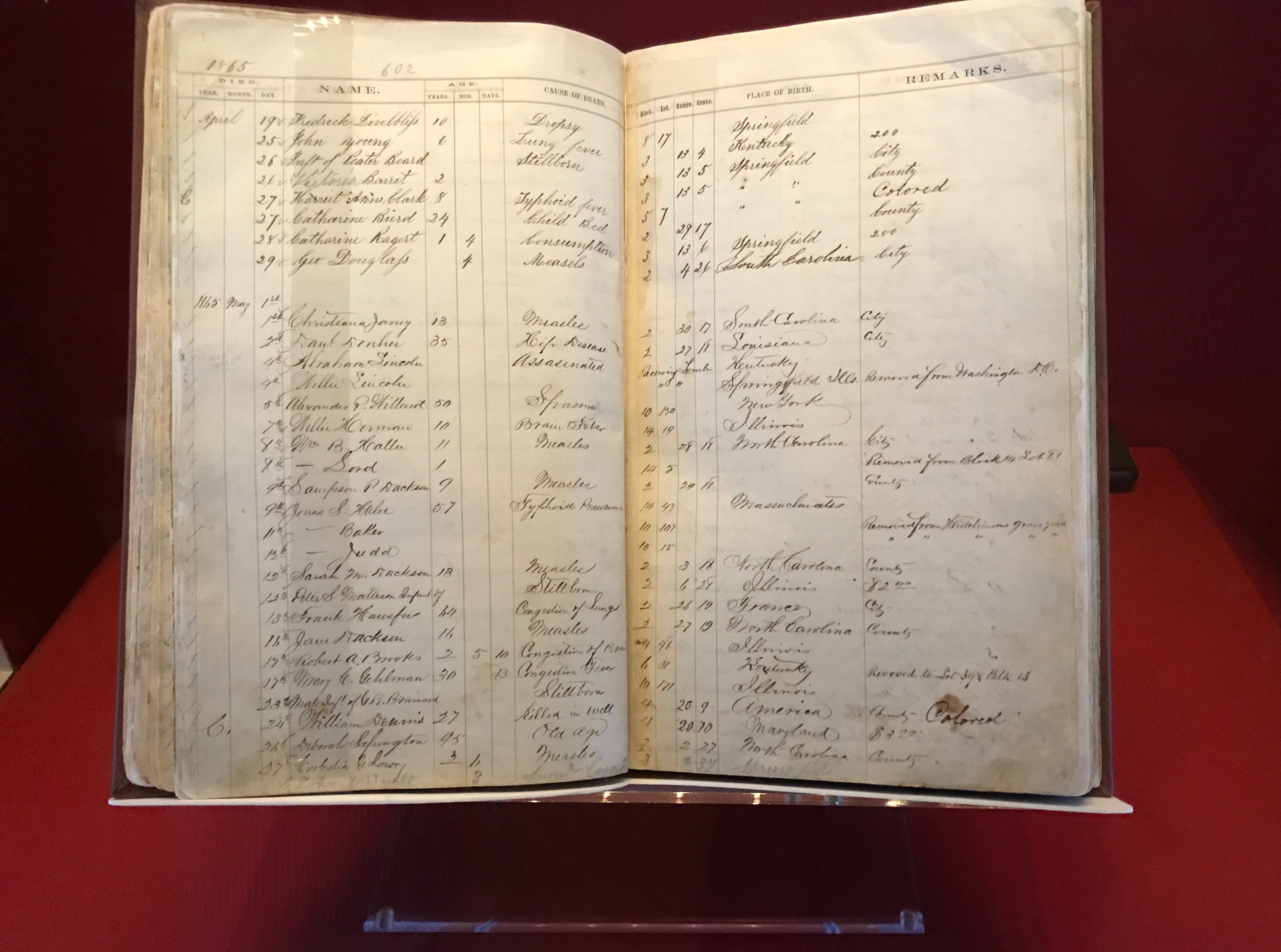
After the slow train ride through seven states and 444 communities, the cortege arrived back in Springfield. The final lying-in-state was in the Old State Capitol   and May 4, the body of Lincoln and his son, Willie, were received at Oak Ridge Cemetery. You can see the notation on the right hand of the cemetery internment book on the left hand side, just above the middle.

There are more things that I could share with you, but writing this post has now taken at least twice as long as the time I spent in Springfield.
 As always, exit through the gift shop.
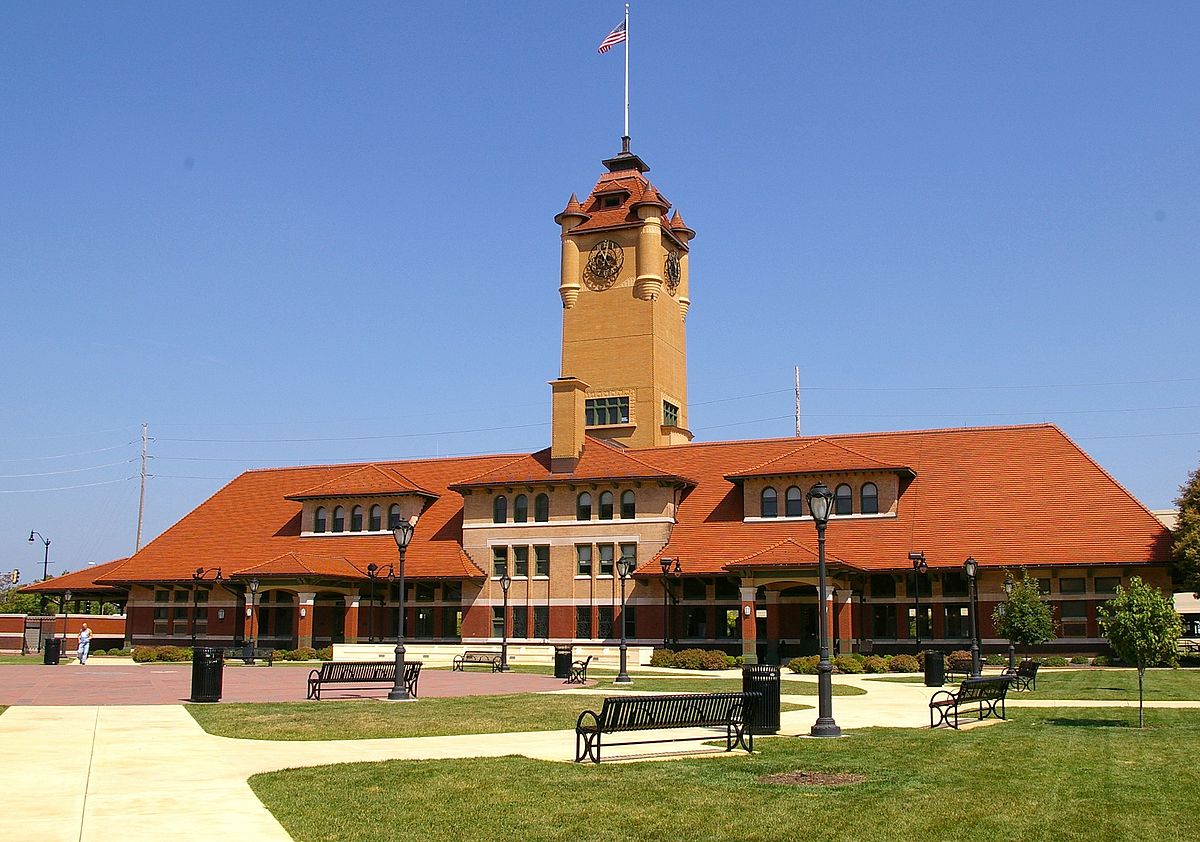
 I had one more touristic spot to hit before I left Springfield: the Springfield Union Train Station. It is now a part of the Lincoln Museum and Library and it was also under reconstruction when I last visited the town.
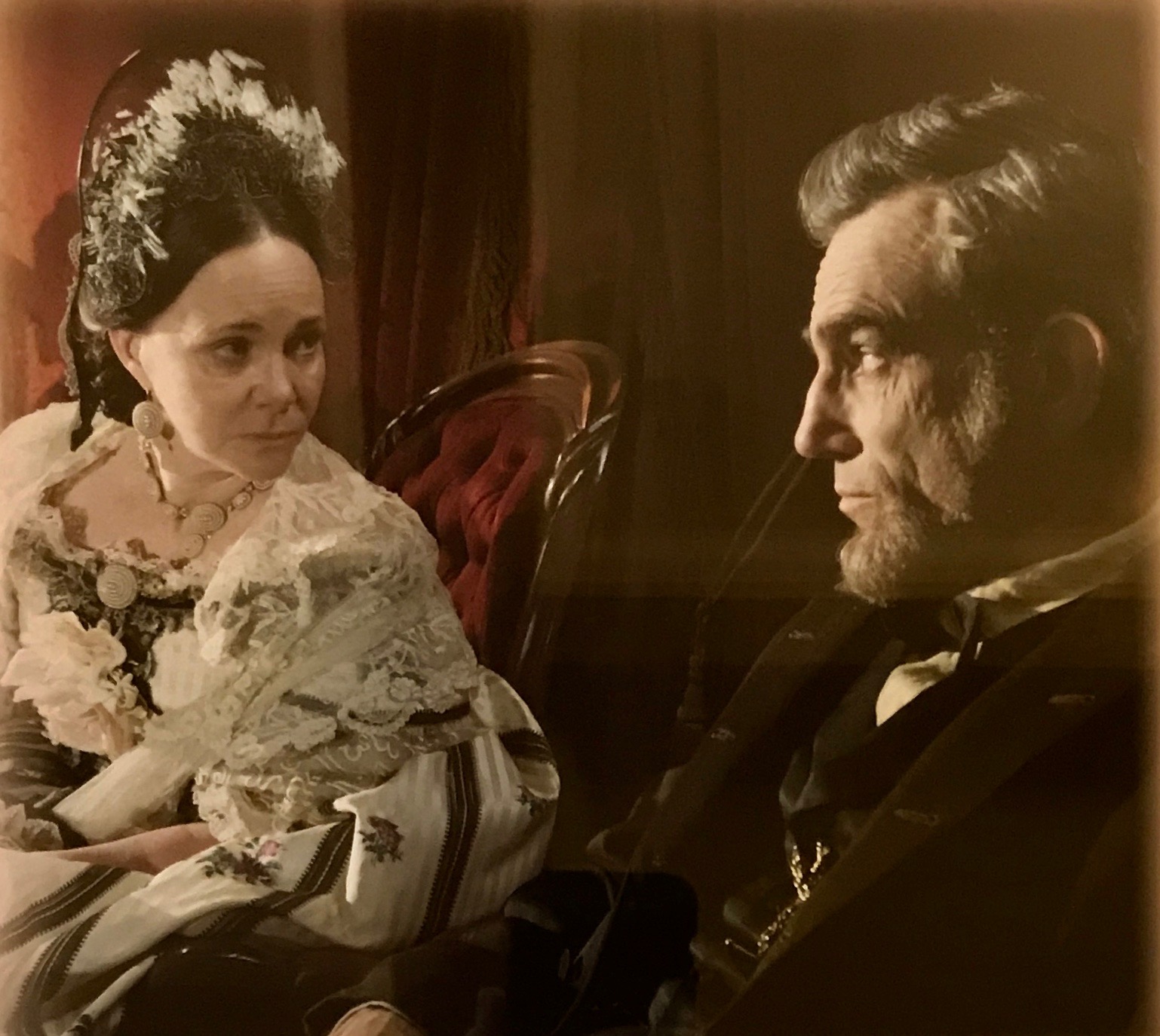
They had some exhibits related to the 2012 film, Lincoln.
According to information at the display,
“Early in the process of making “Lincoln,” Daniel Day Lewis and Sally Field would text each other back and forth in character.
“He would send me things like little limericks or notes out of the blue, and we began to build a thread of intimacy…” 
          Sally Field
From day one of filming, Sally Field felt like Daniel Day-Lewis was her husband .
“As far as I was concerned, this was the man I had been married to for a very long time and was basically driving me crazy.”
          Sally Field”
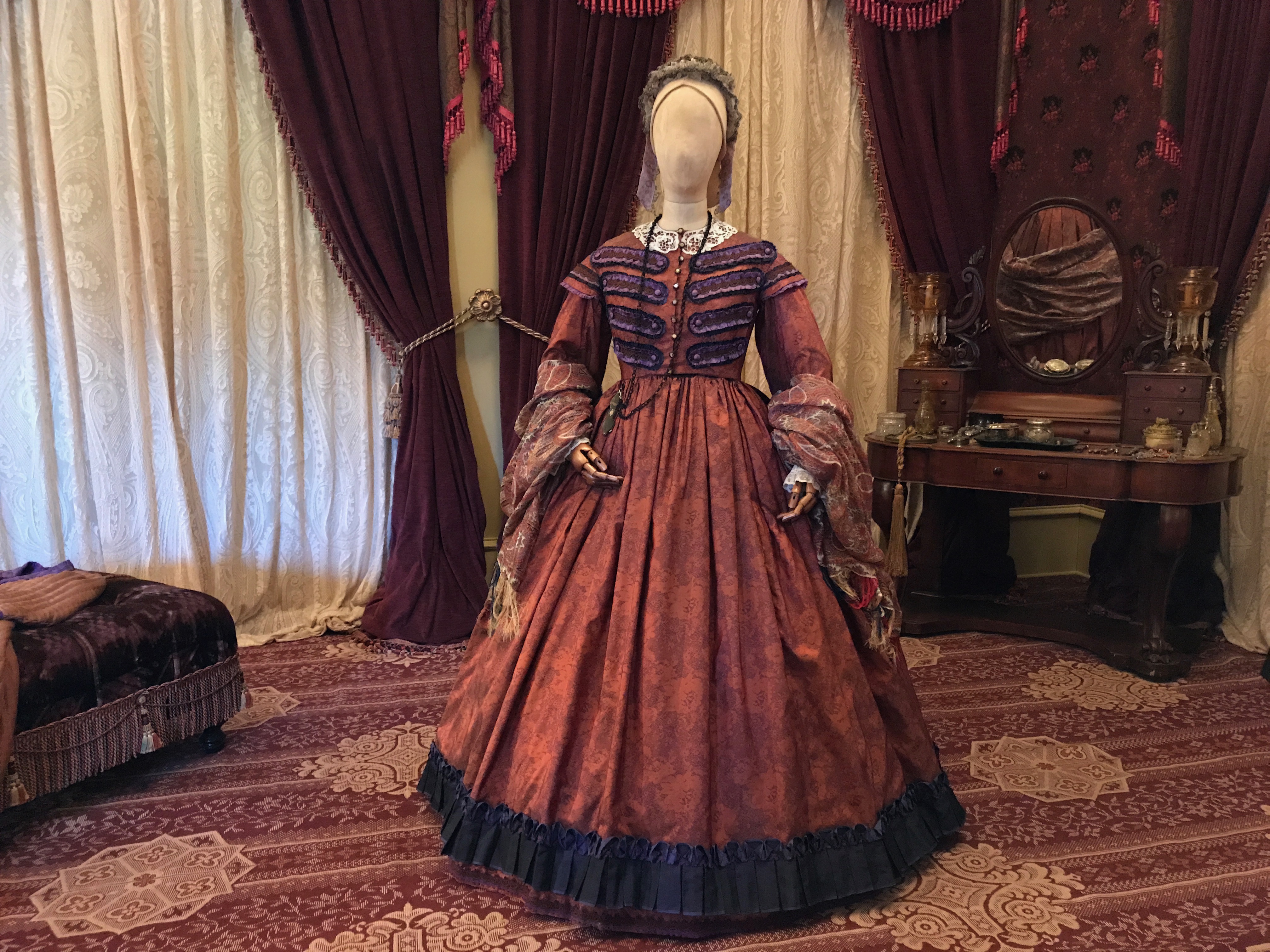
This was Mary Todd Lincoln’s bedroom. The costume was one worn by Sally Field in her role as Mrs. Lincoln.
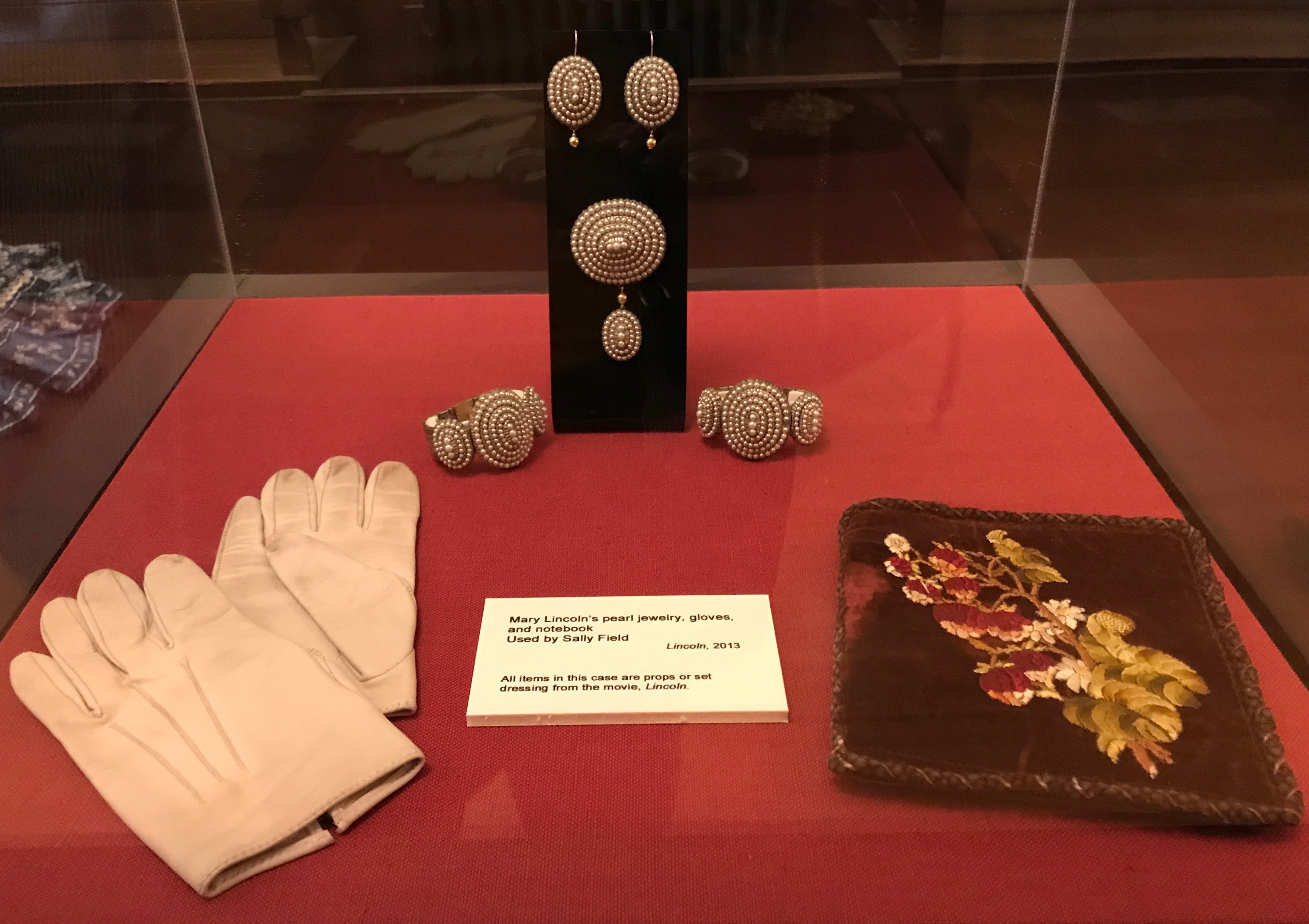
These are some of the items used by Mary…uh, Sally…in the film.
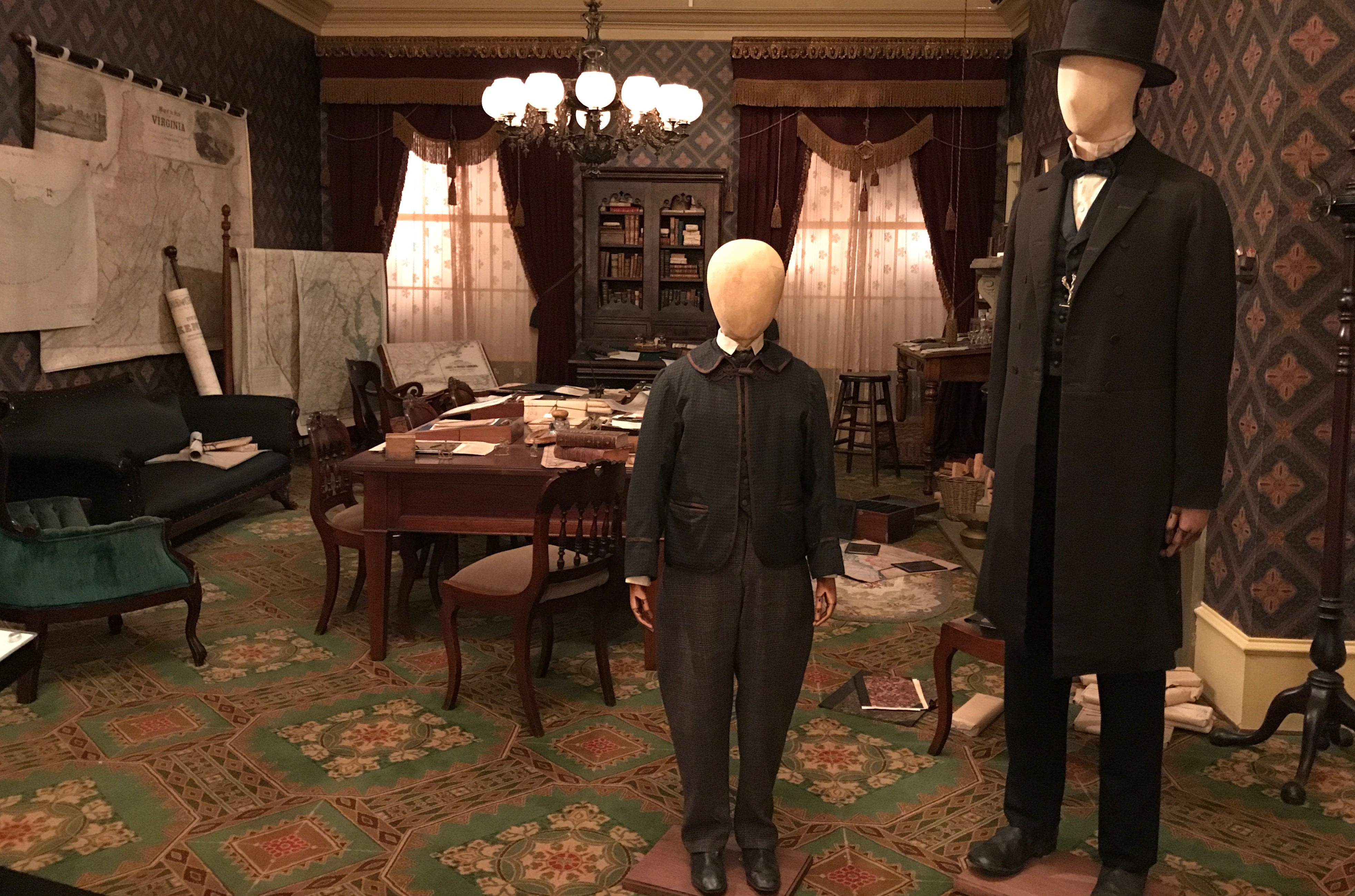
Here we see some of the costumes worn by Lincoln and Willie. They are standing in the office.
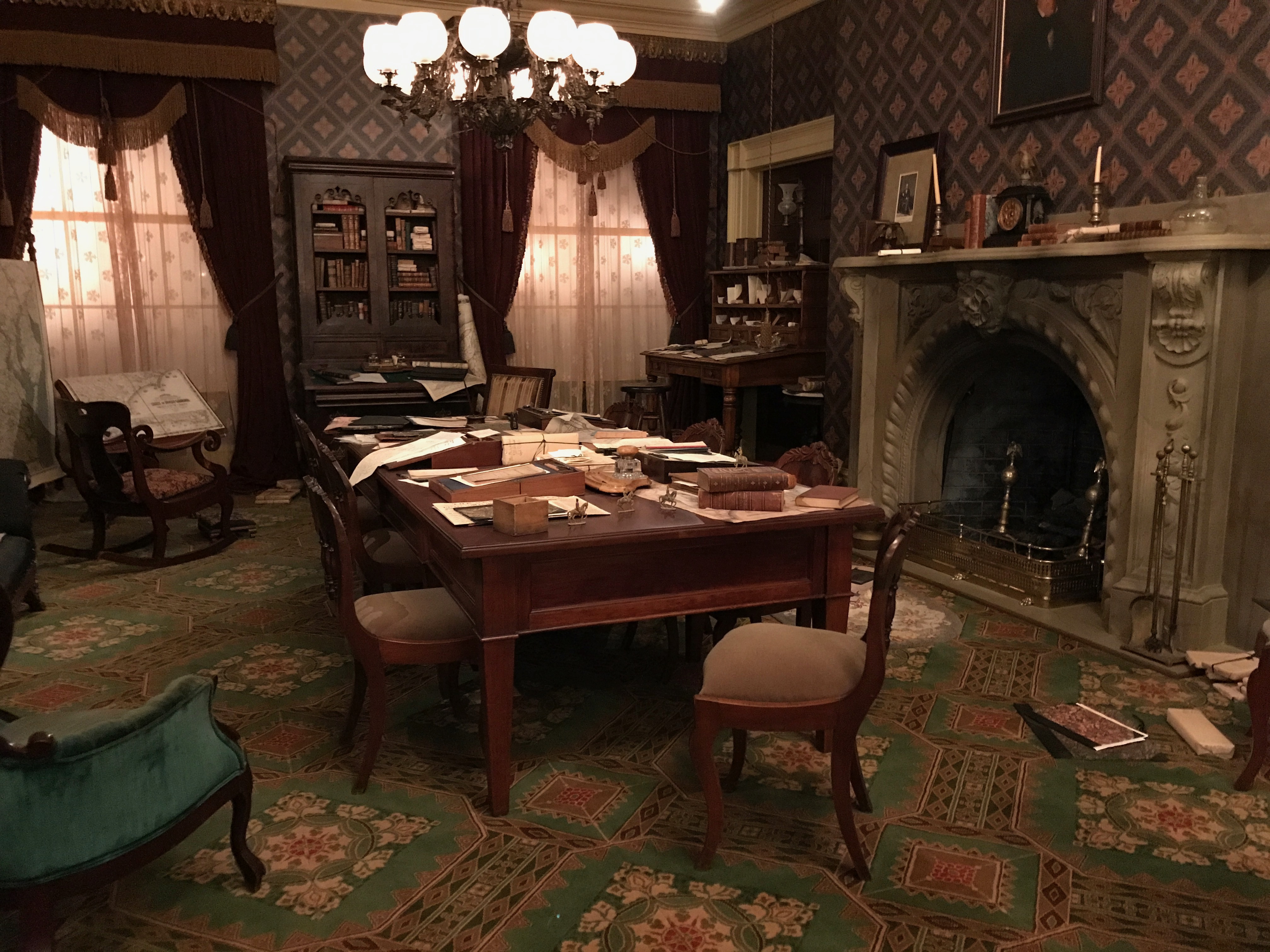
Here’s another view of the office.
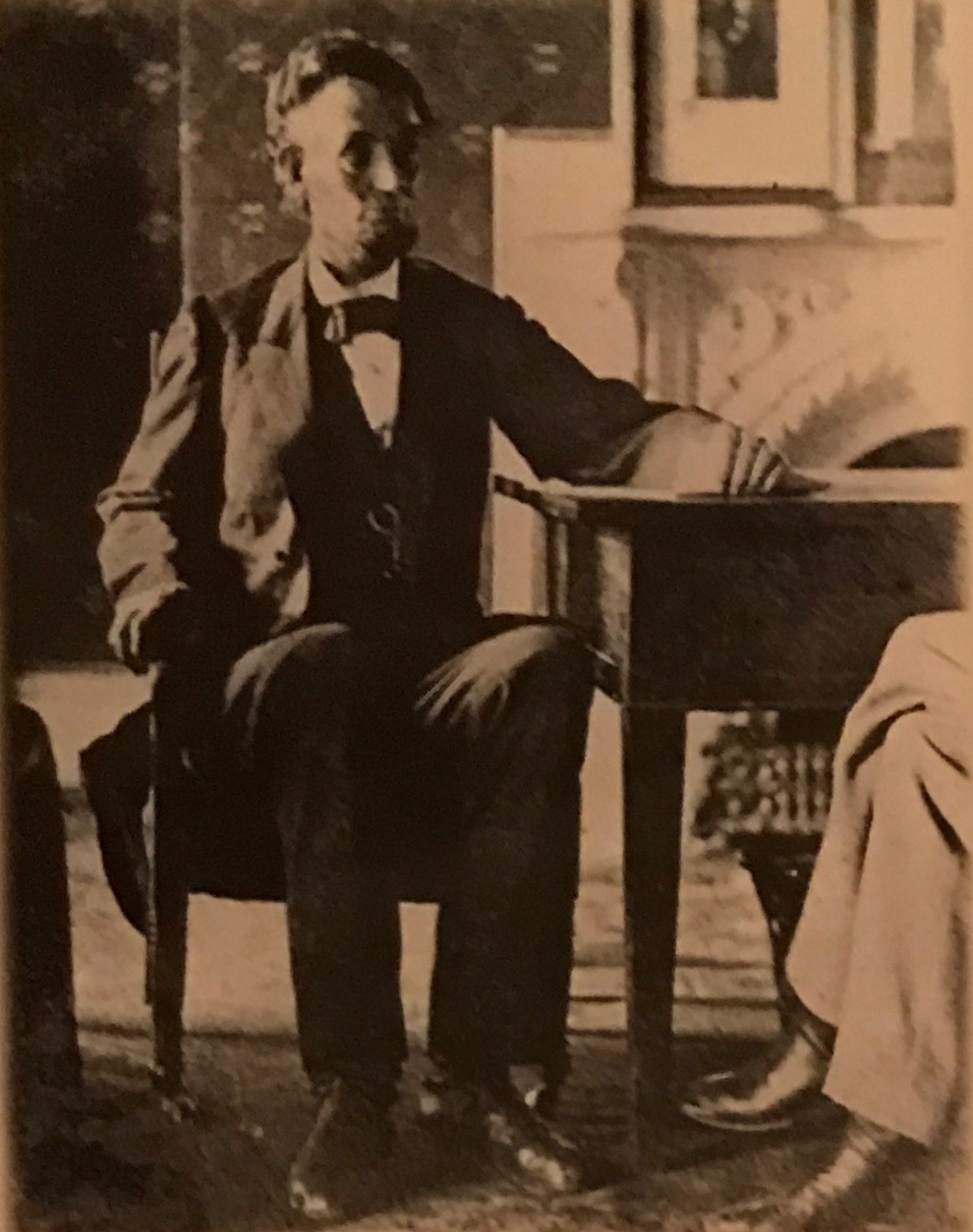
This photo of Lincoln in the office shows how close they came to replicating the office that Lincoln actually worked in.
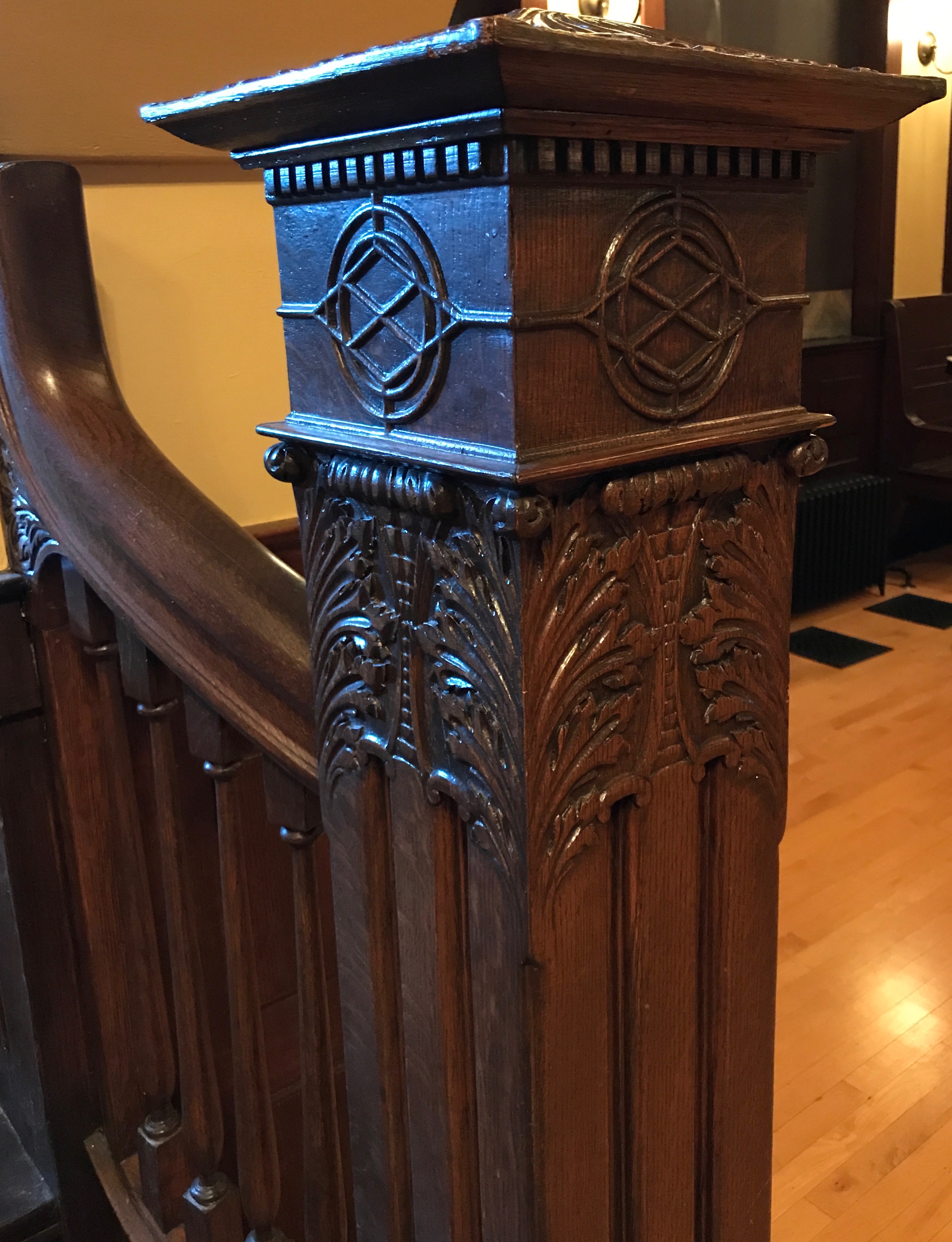
Okay, one last photo of a random architectural detail in the renovated train station that caught my eye and then I am off!
Next stop: Kansas City