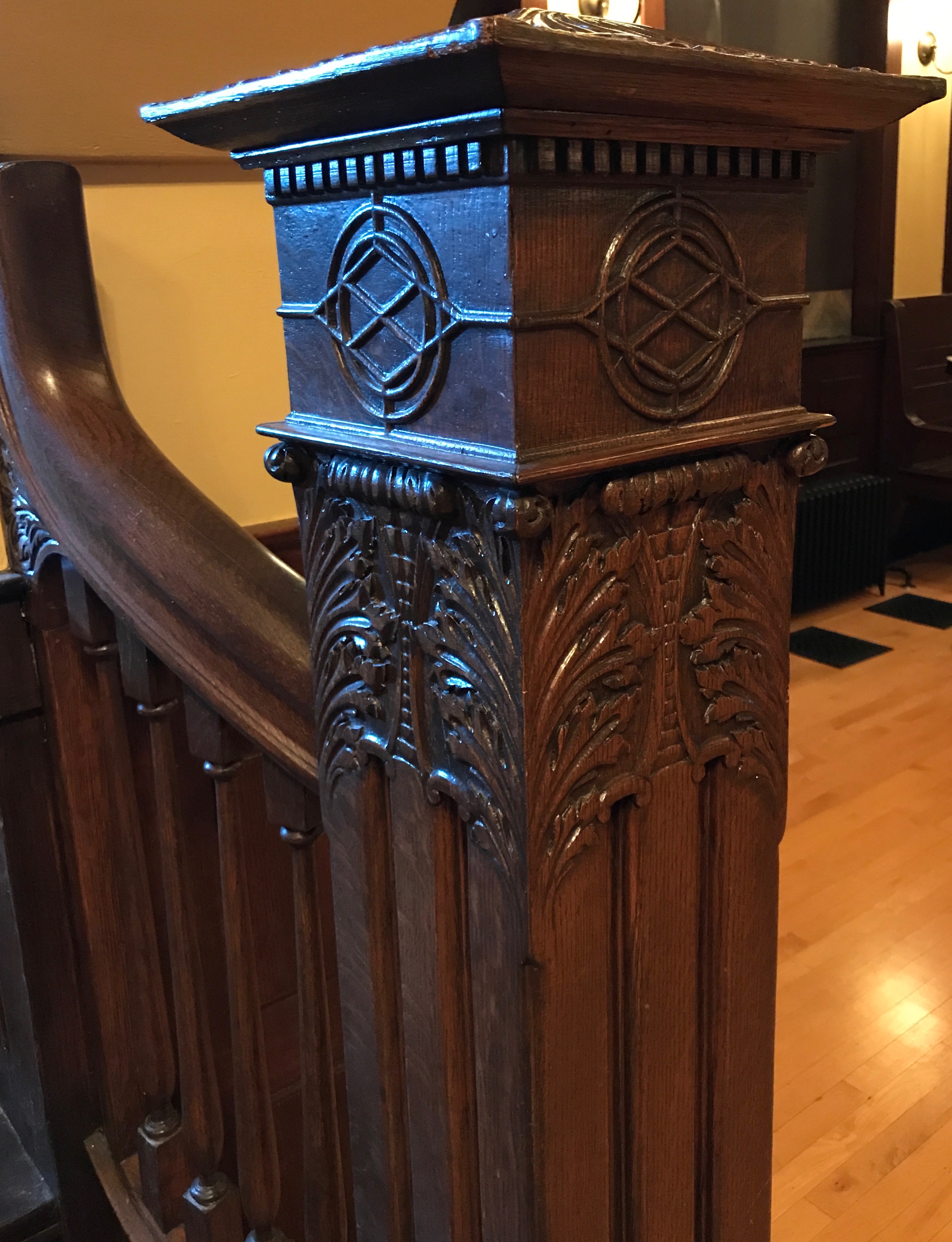
After I finished lunch, I bid adieu to my Airstream Addicts friends and headed west from Jackson Center, Ohio toward Springfield, Illinois. This was going to be speed tourism – kind of like speed dating.
I hit Indiana, and decided that I should use the restroom.
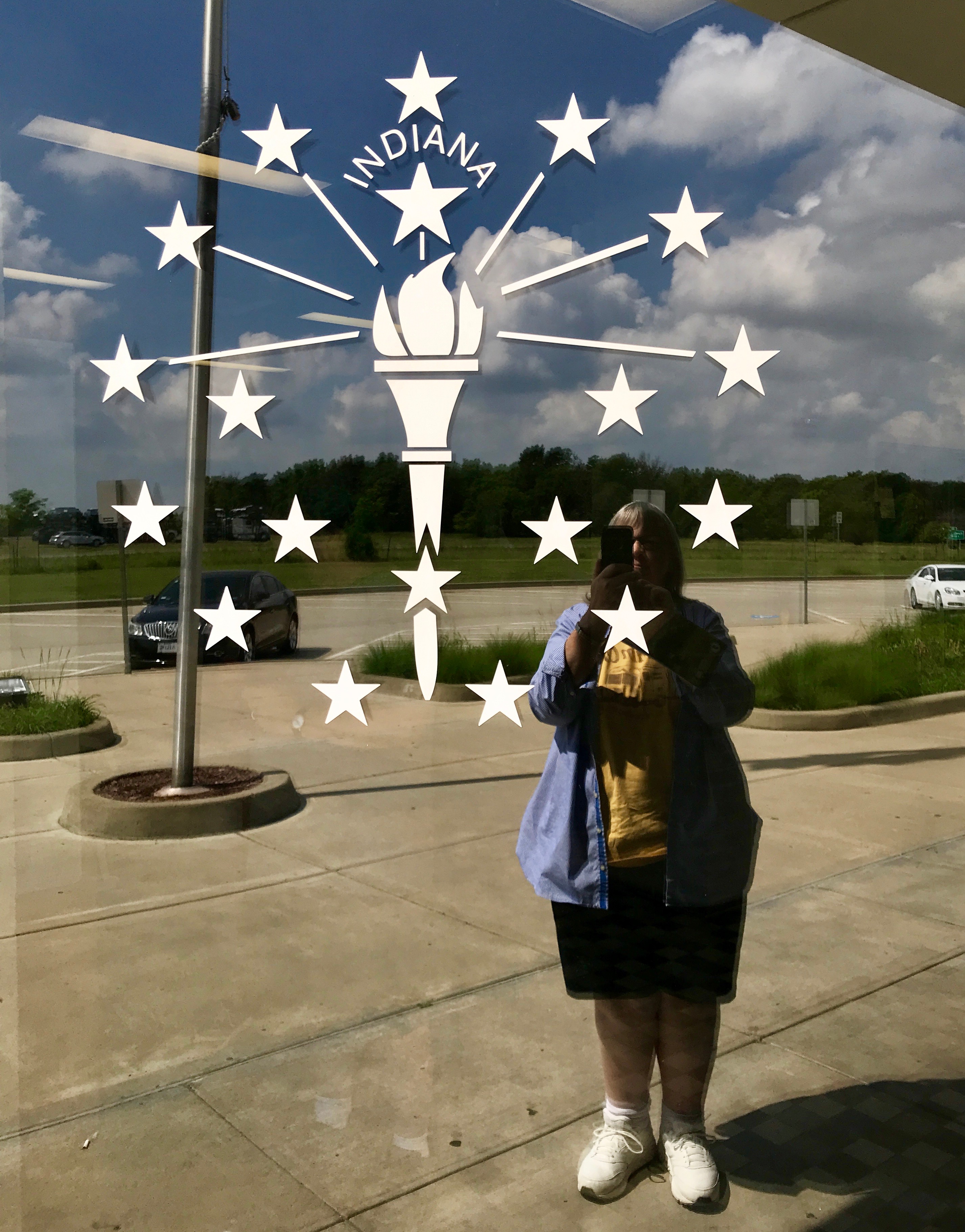
The reflective glass with one of the state’s symbols made for a great selfie.
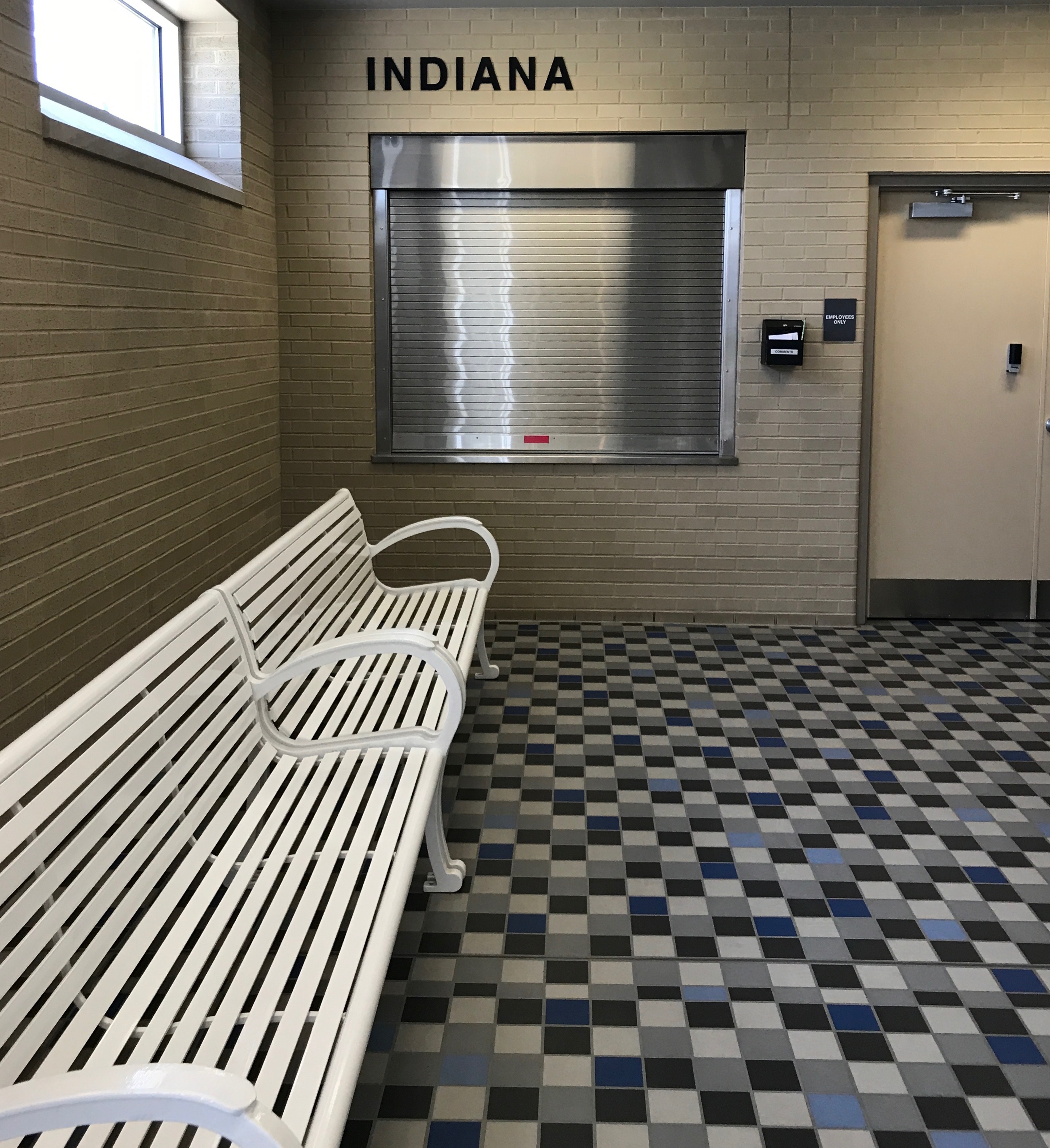
It’s a good thing that I didn’t need any information. Apparently Indiana was closed. But there was plenty of space to wait for them to open.
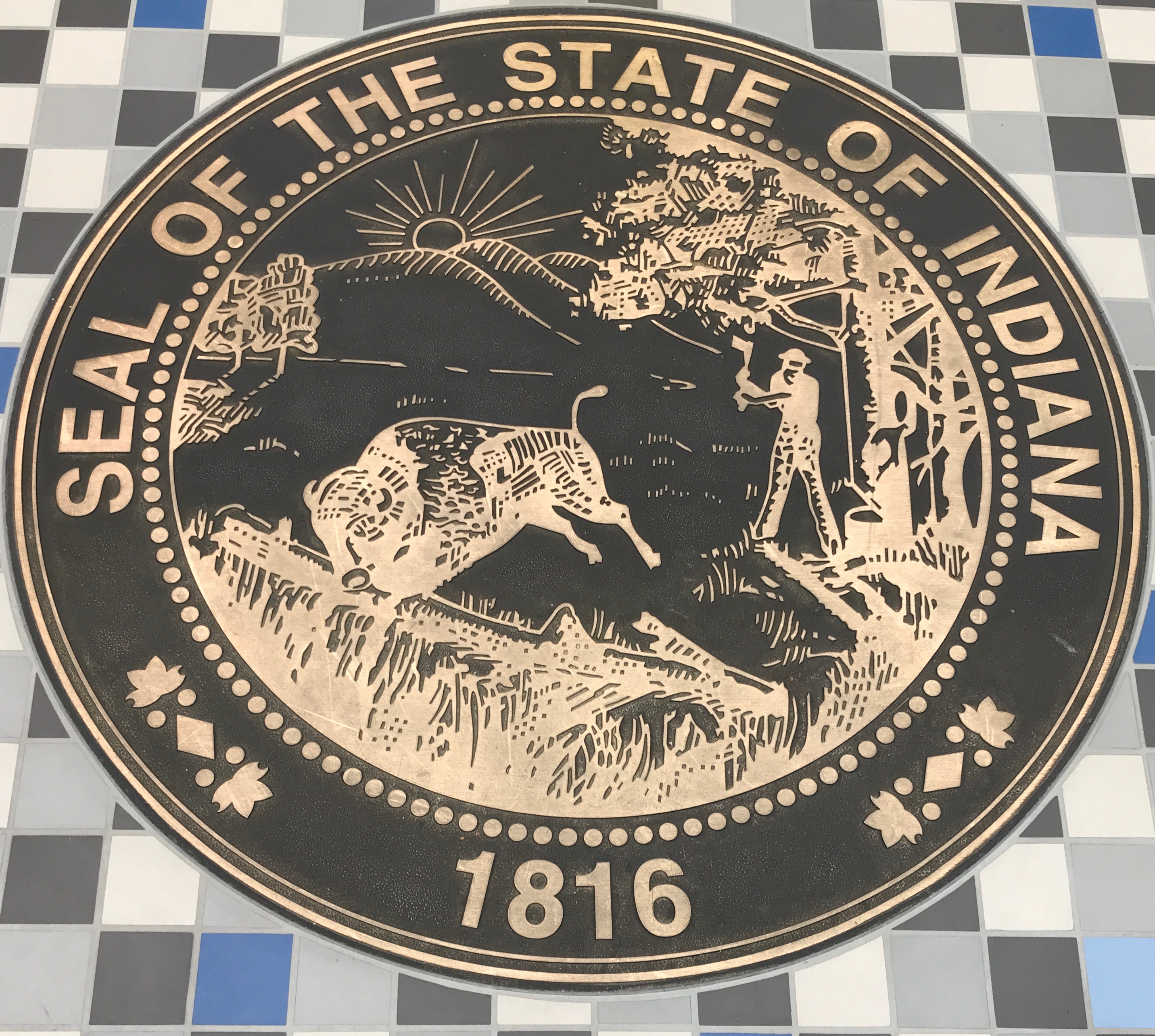
I never knew that there were buffalo in Indiana, but apparently there were many when settlers first arrived.
I got back in the car and continued my westward travel. I got to Springfield and checked into my hotel.
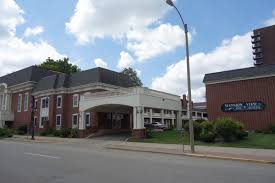
The Mansion View Inn was my home for the night. It was kind of a mid-century sort of place, but not exactly mid-century modern. It was more like mid-century old-fashioned. My room had a bed and a television and a bathroom. Not exactly luxurious, but I made it through the night and headed down to the included continental breakfast.
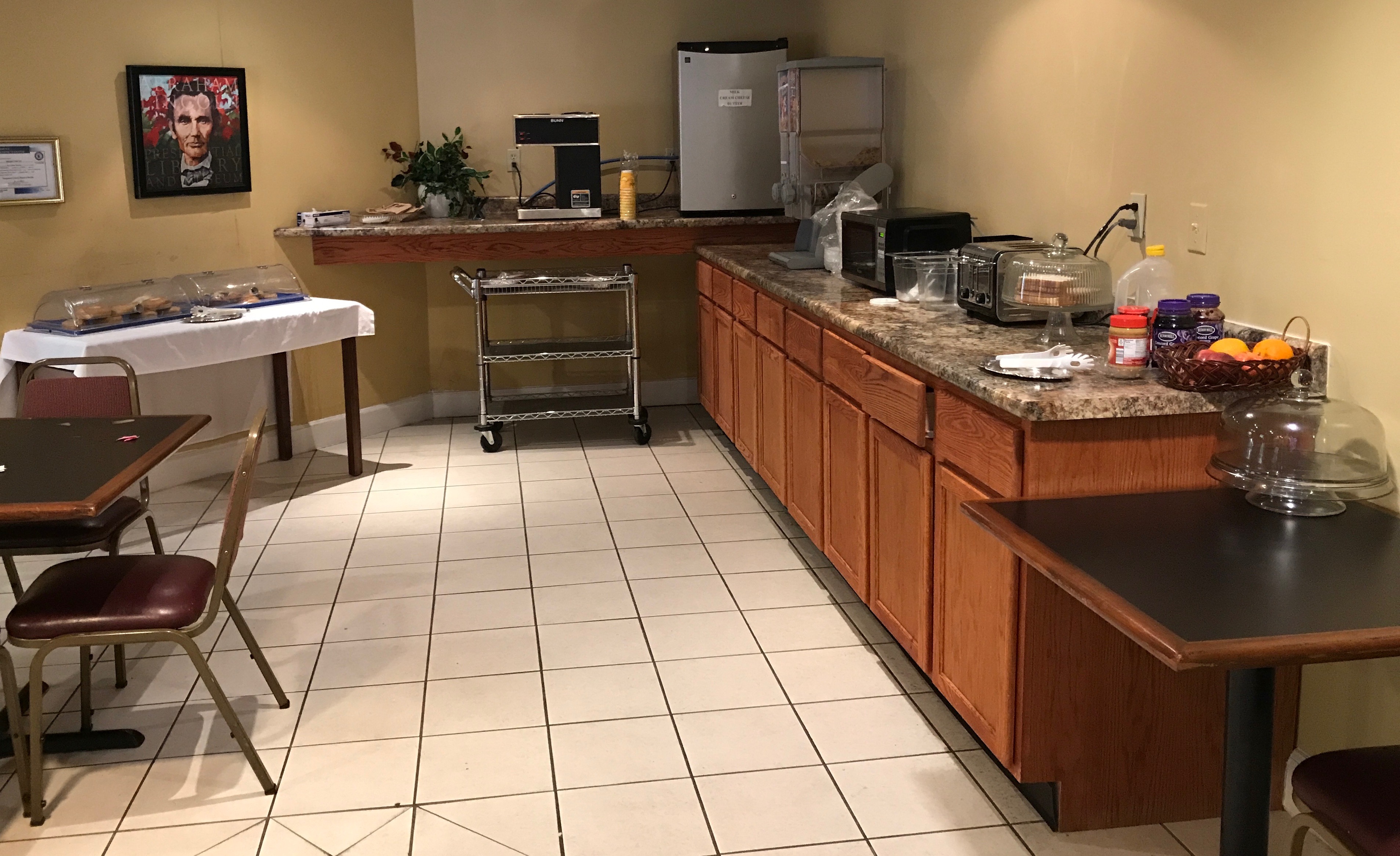
I must say it was one of the most woe-begone breakfast bars I’d ever seen! There wasn’t even any coffee! Horrors!
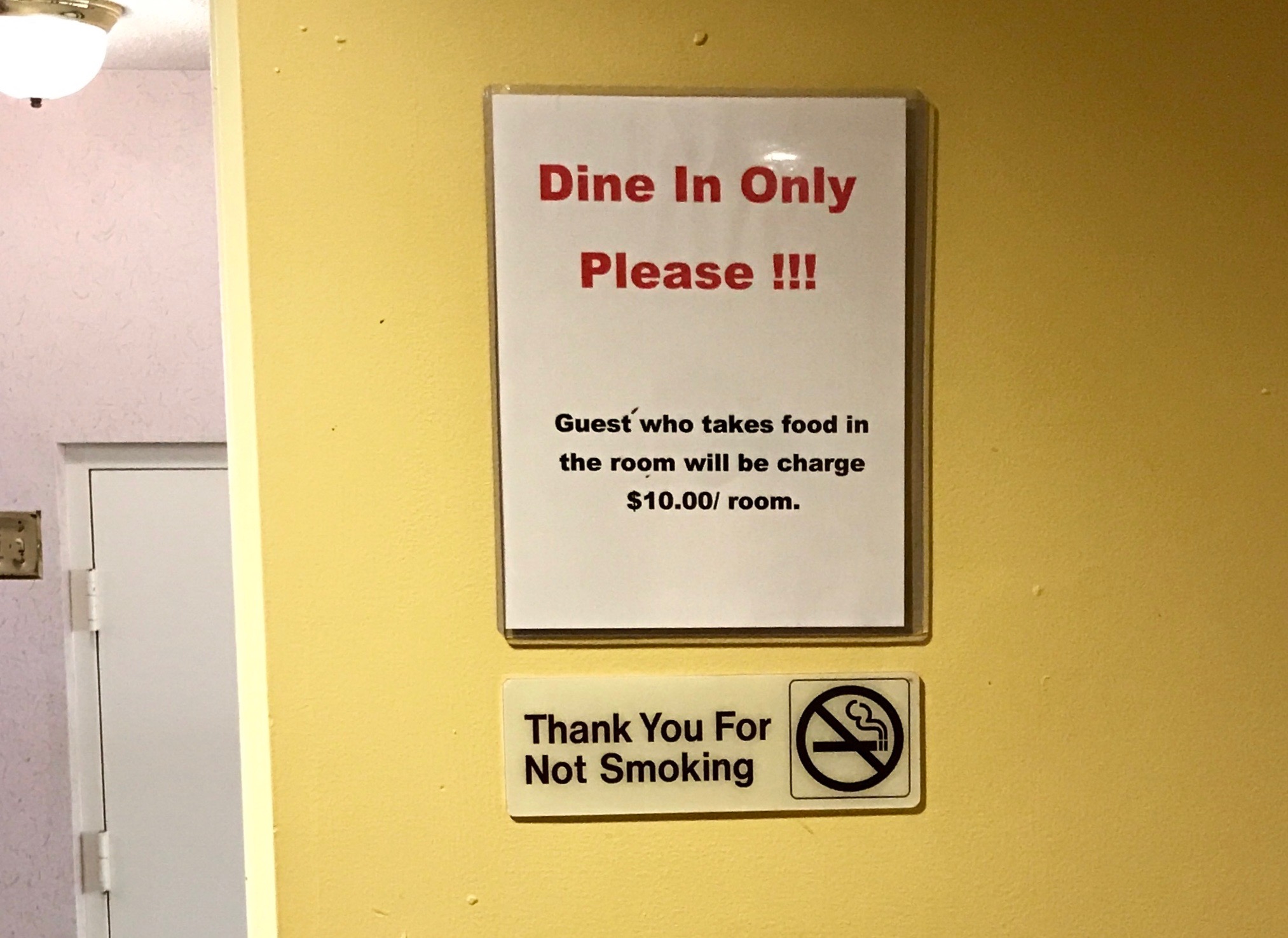
Capping off the insufficiency of the breakfast bar, they threatened “Guest who takes food” will be charged $10.00/room. I was happy to get packed up and out of this inhospitable hostelry.
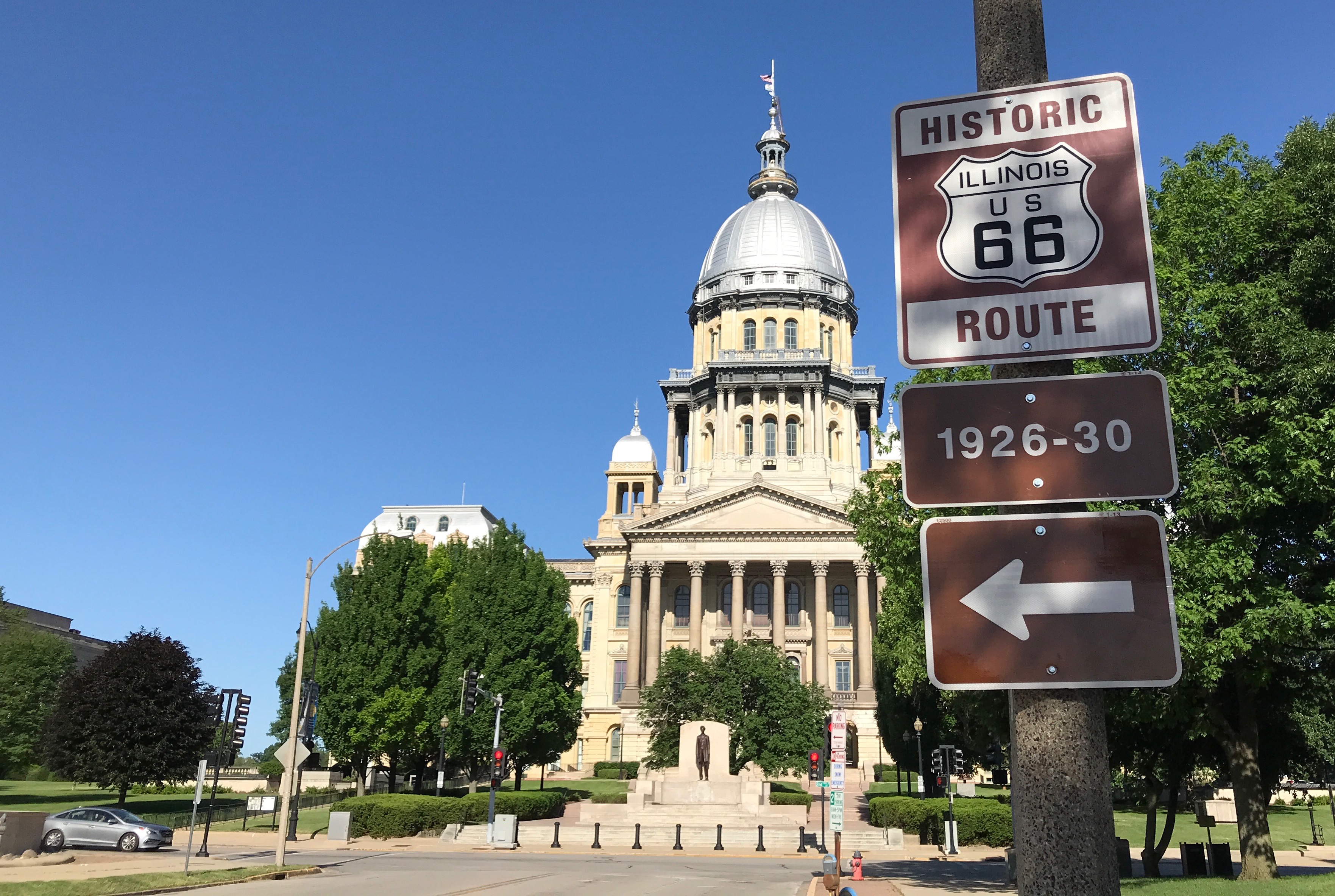
Ah, but the sun was shining and the skies were blue! It was a great day for some high speed tourism.
I walked toward the capitol to see what I could see. It was Sunday, after all, so I didn’t figure I’d be able to get inside. It turns out that I was right.
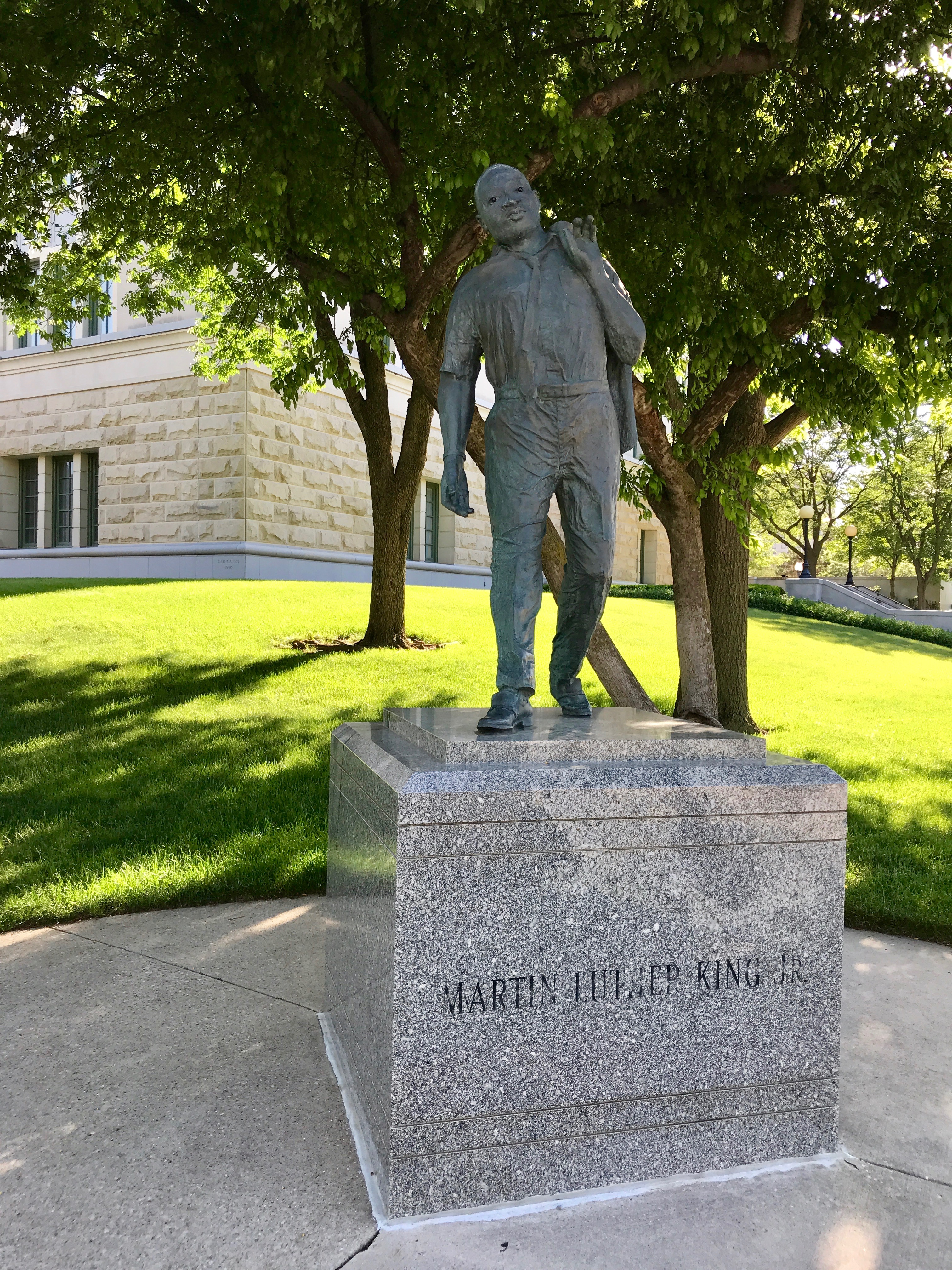
The first memorial I came to was one of Dr. Martin Luther King, Jr.
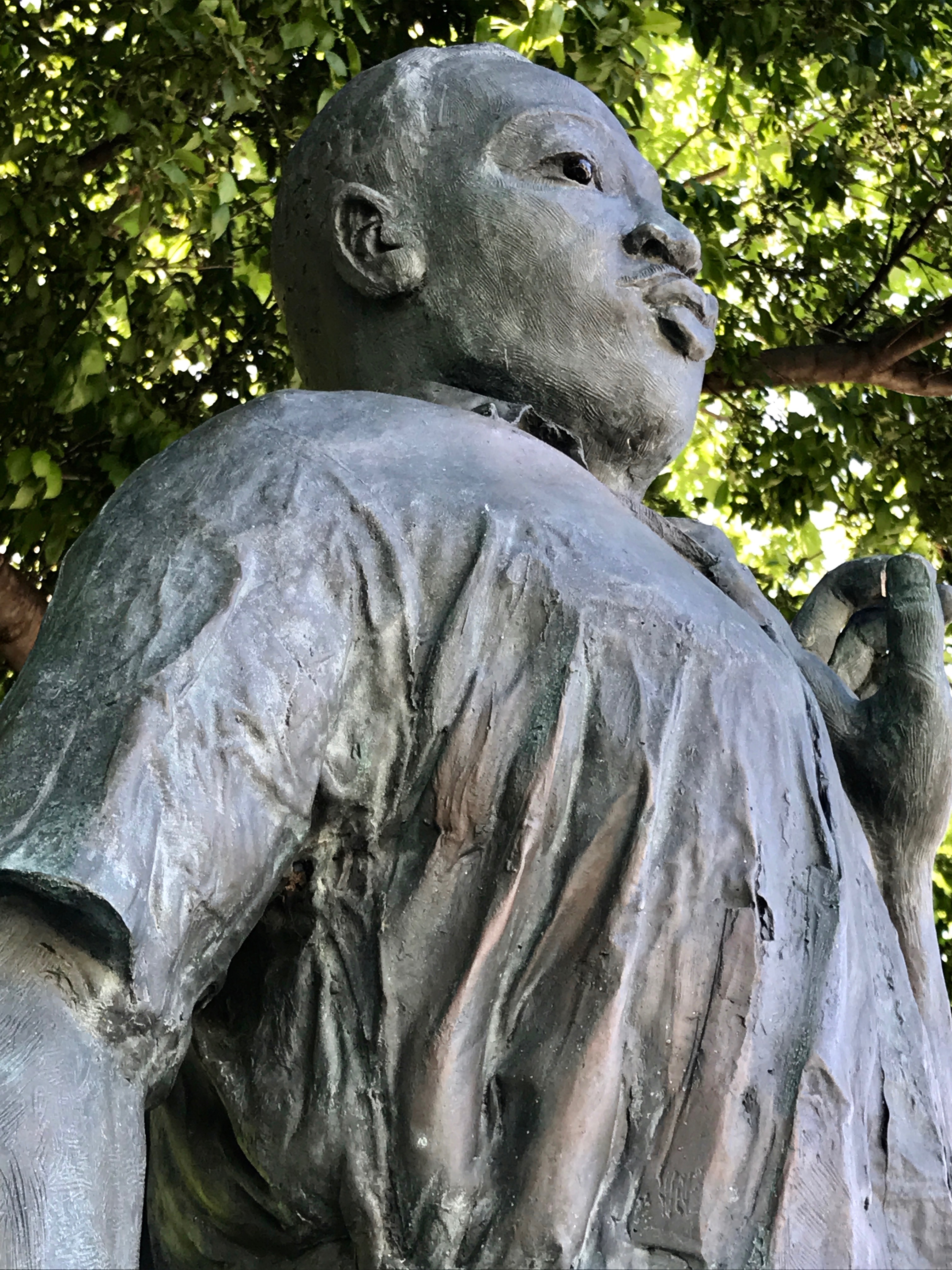
I tried to get a shot that showed his eyes. It looks like they gave him glass eyes. I was always struck by his eyes, so I can understand wanting them to be prominent in the statue. I just had never seen this sort of mixed media – at least not that I remember.
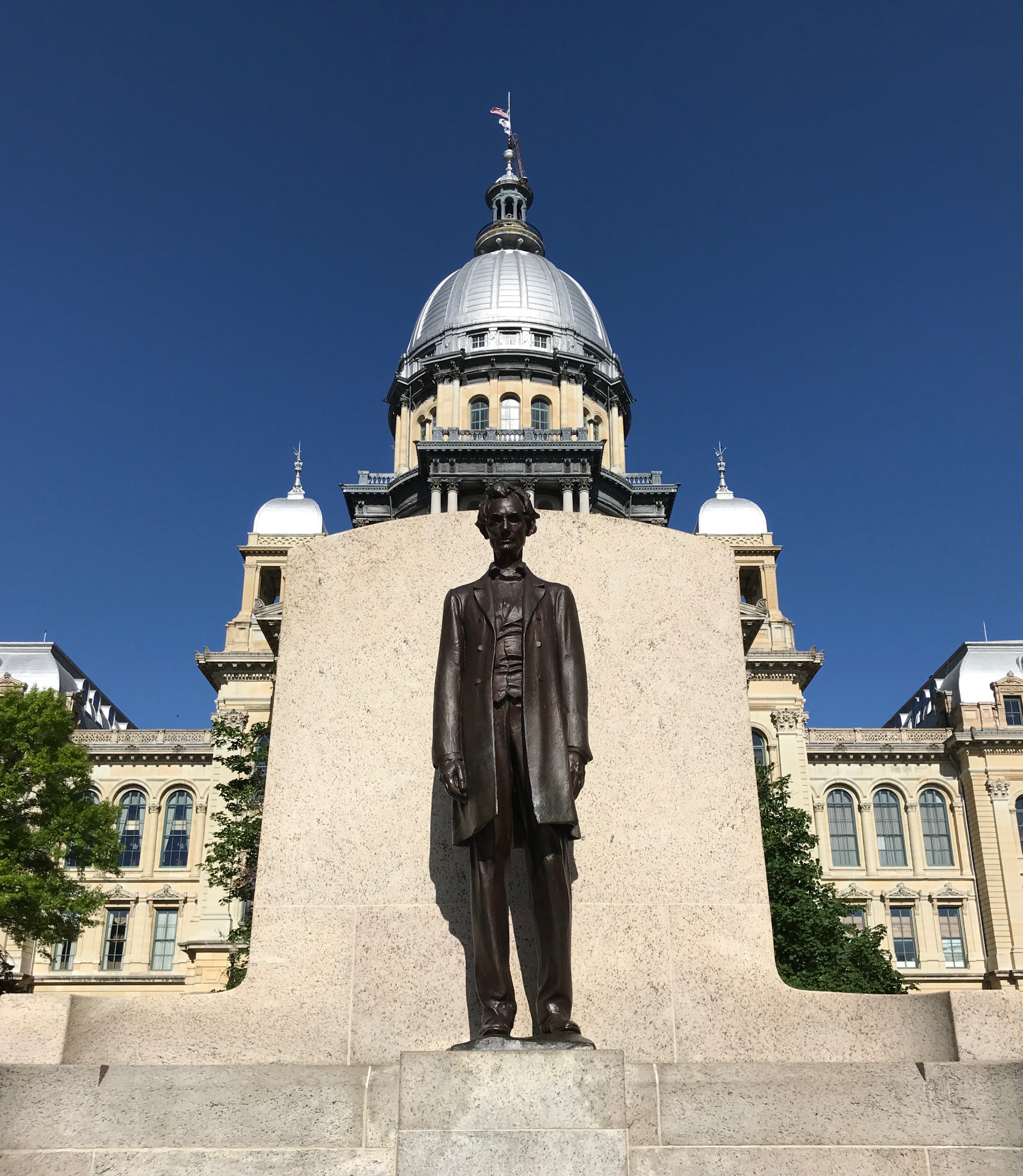
Directly in front of the capitol was a statue of Lincoln.

On the back of the pedestal was inscribed his farewell to Springfield after he had been elected president.
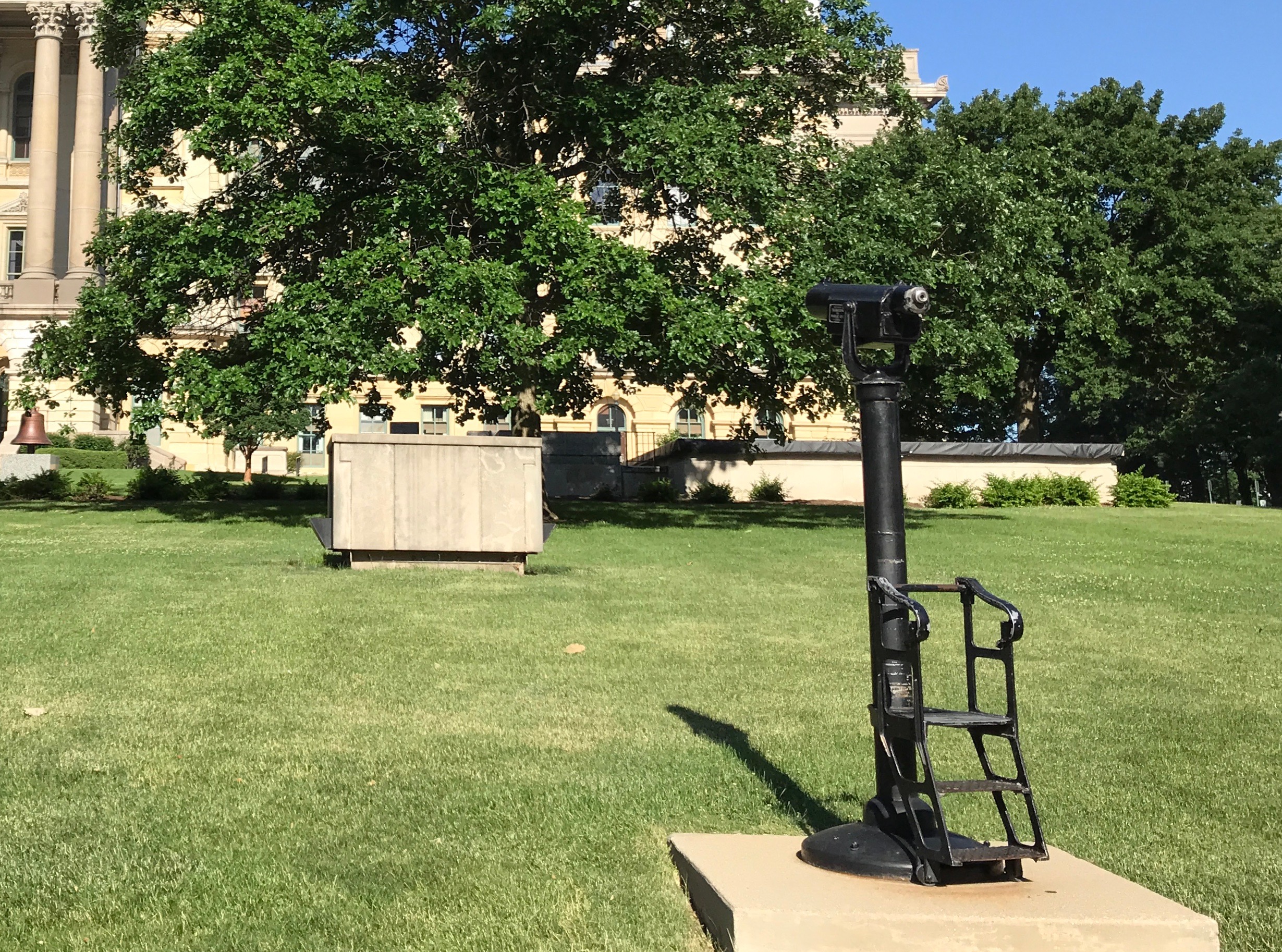
A little ways away from the statue of Lincoln was a viewer. Given the tiny steps up to the eye piece, I assume it was intended for youngsters.
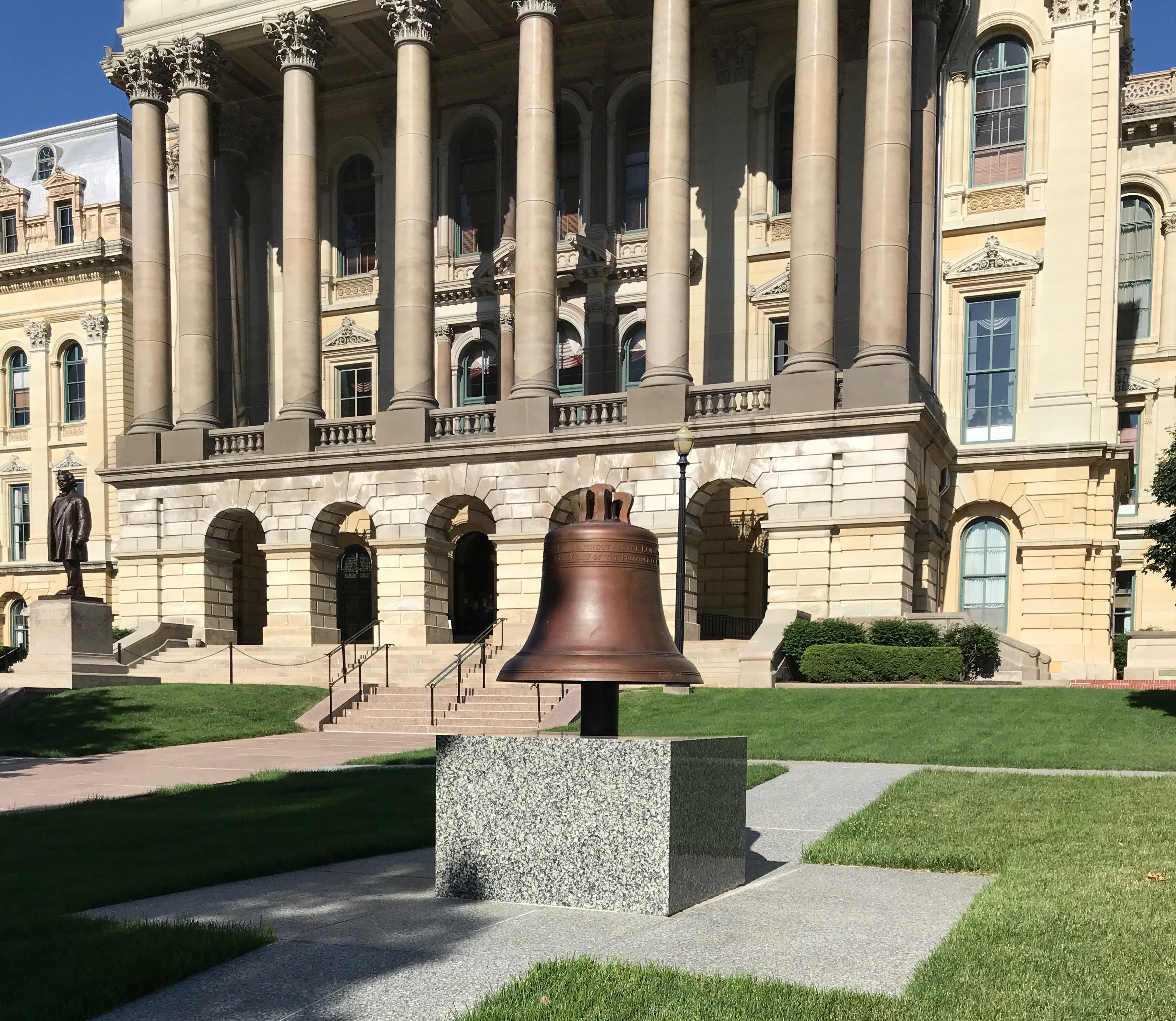
I continued up toward the entrance to the capitol and came across this replica of the Liberty Bell. I half-remembered something about a “Merci Train” that the French people sent to us after World War II to thank us for our support. I seemed to remember that these Liberty Bell replicas were on the Merci Trains. It turns out I was only partly right.
I swear you can find anything on the internet. As part of a government bonds drive held in 1950 to celebrate the 200th anniversary of the Liberty Bell, replicas of them were made in France and given to each state, the District of Columbia, and the Territories. A man named Roger Johnson has made it his mission to visit all the bells and have his photo taken with them. You can read his blog here.
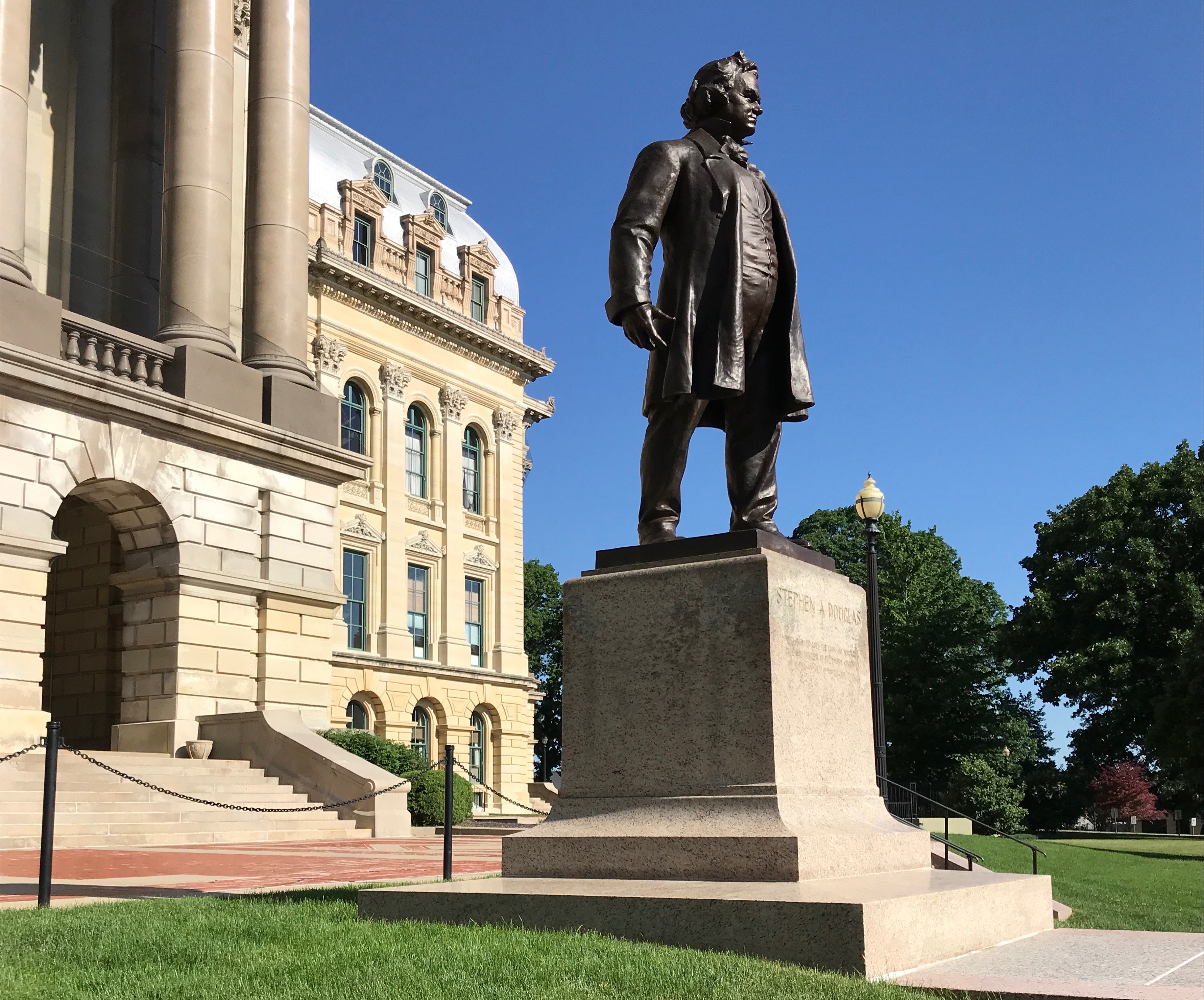
Stephen A. Douglas, the “Little Giant”, is posed right in front of the entrance to the building. He was given that sobriquet because he was short in physical stature, but a forceful and dominant figure in political.
He is famous for defeating Lincoln in 1858 election for the United States Senate, and for his participation in the Lincoln-Douglas debates. In digging around a bit, I found out that he was one of the three candidates for President in 1860. The Northern Democrats favored Douglas, and the Southern Democrats supported John C. Breckenridge. Republicans nominated Lincoln. After the Battle of Fort Sumter in April 1861, Douglas rallied support for the Union, but he died in June.
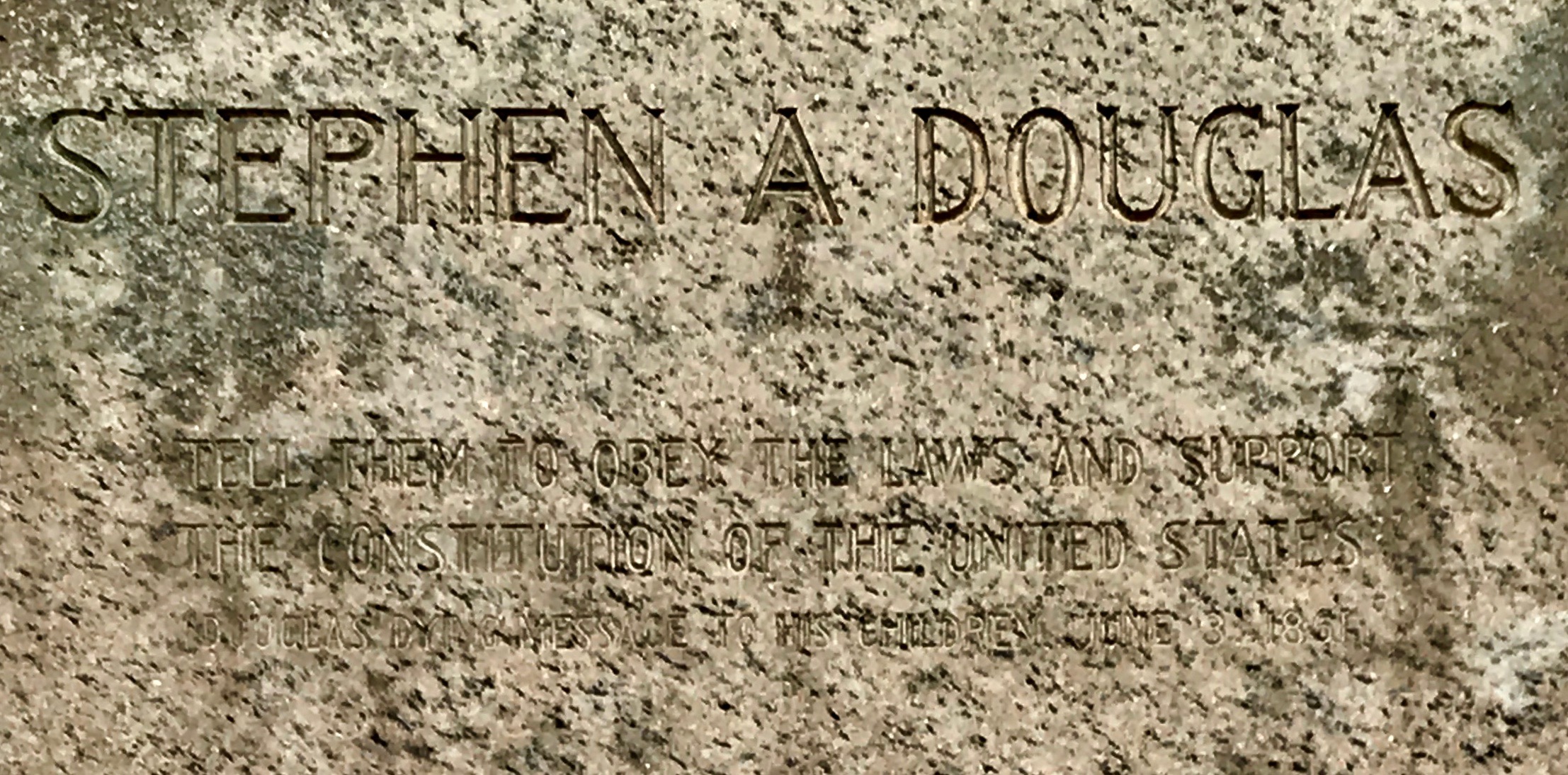
On the pedestal for his statue are his dying words to his children. “Tell them to obey the laws and support the Constitution of the United States.” Not exactly warm and fuzzy thoughts, but then again, the country was in the midst of a Constitutional crisis.
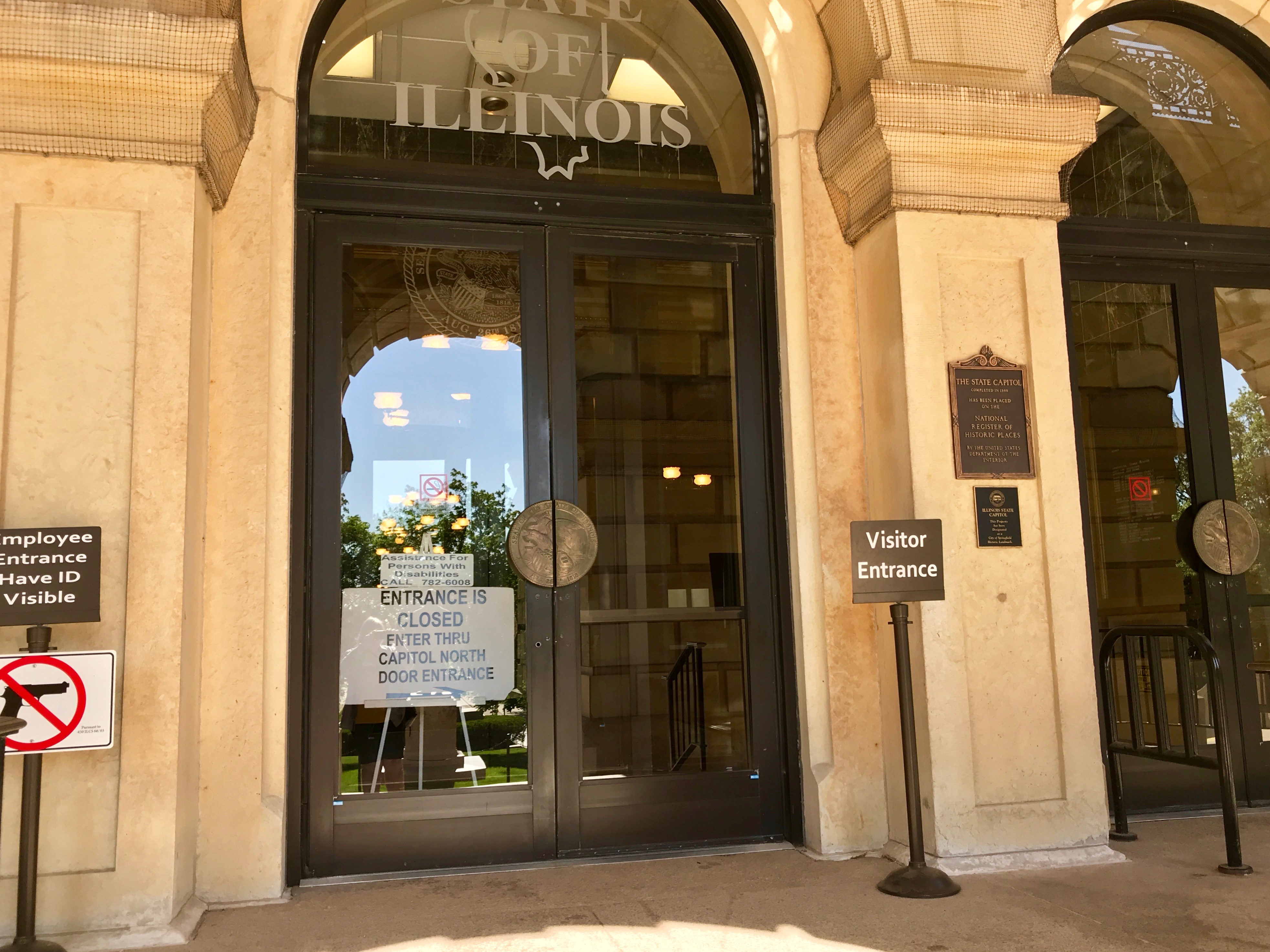
I walked up to the entrance, just to make sure it really was closed.
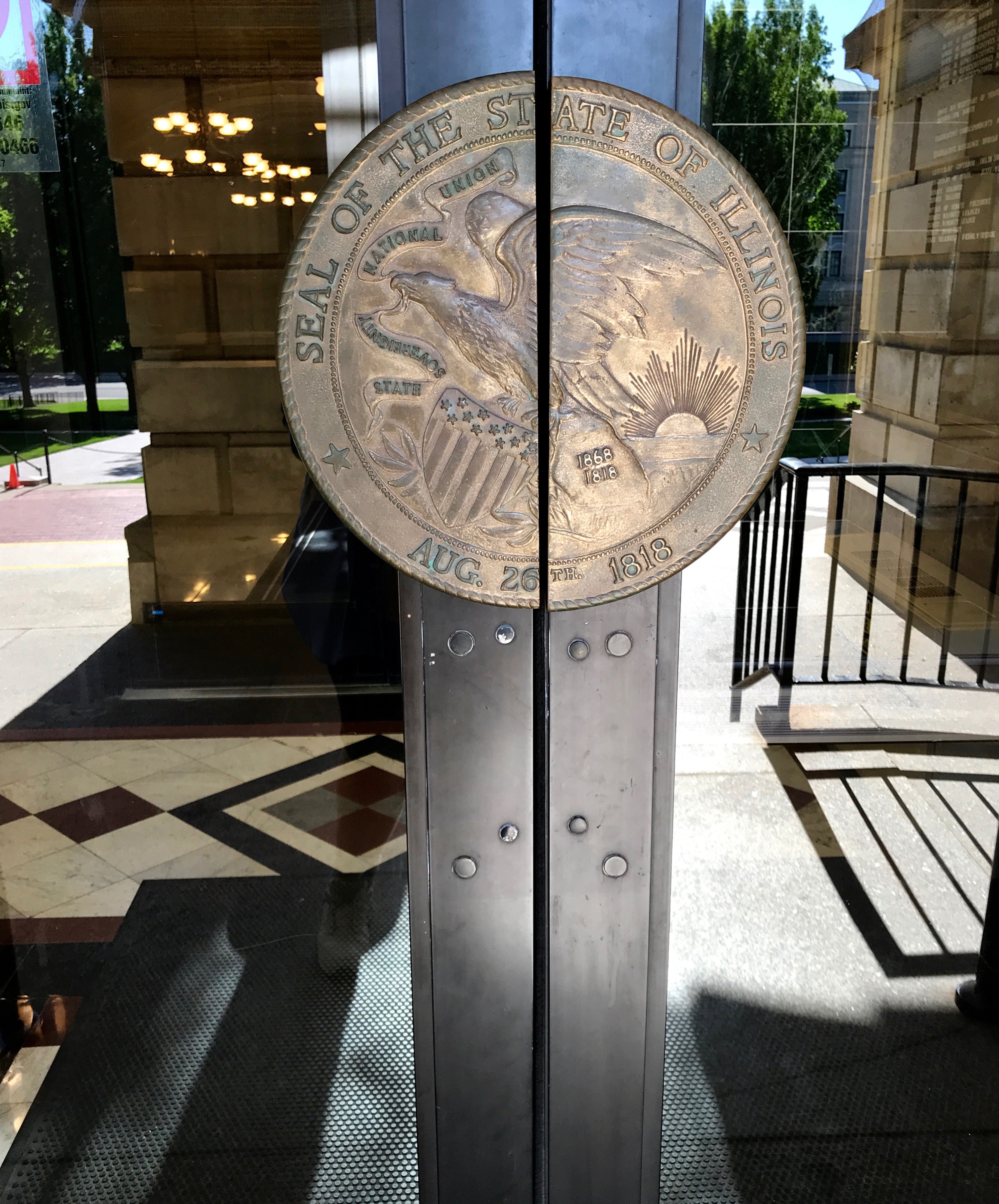
It was, but the door pulls were quite impressive.
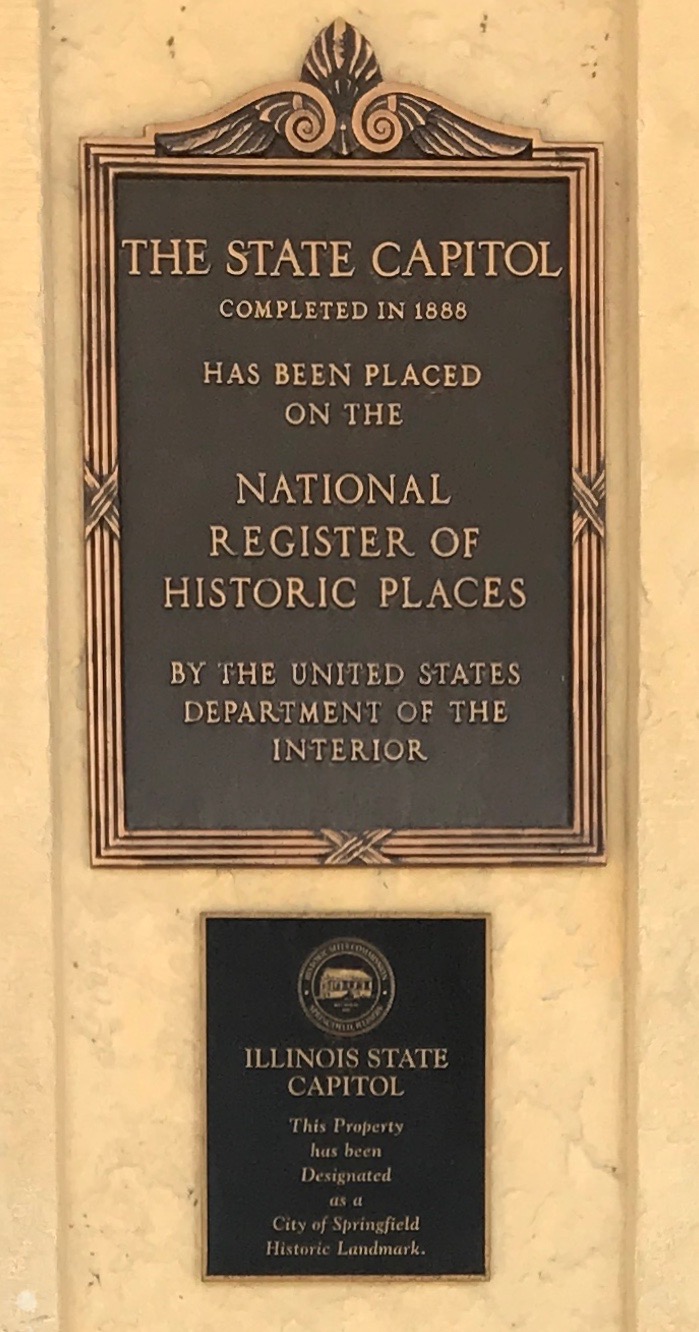
Here’s just a little more information about the building’s history and status.
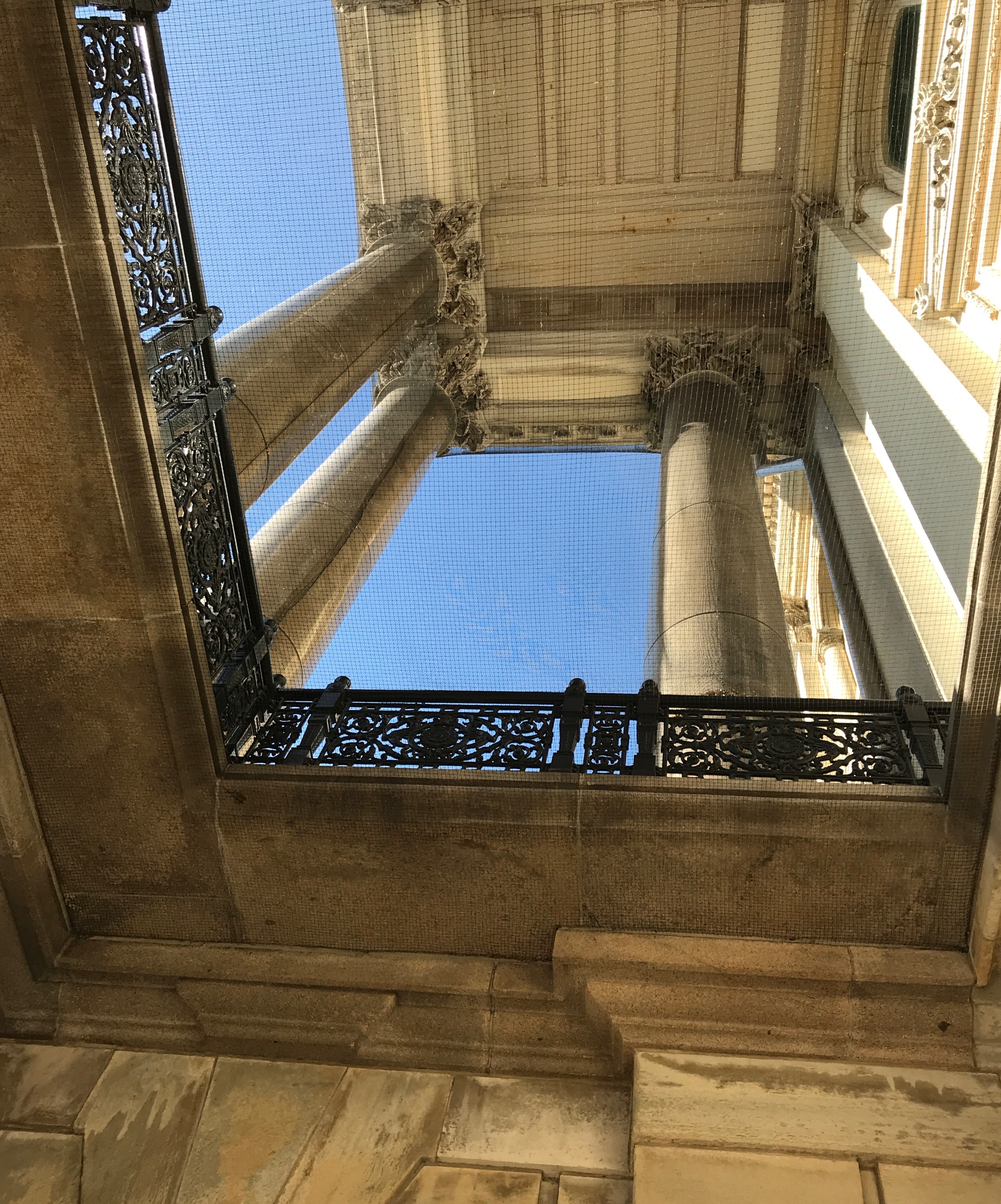
I had to satisfy myself with looking at the exterior. Can you see the mesh that is stretched across the opening right in front of the door? I imagine that it’s there to discourage avian intrusions.
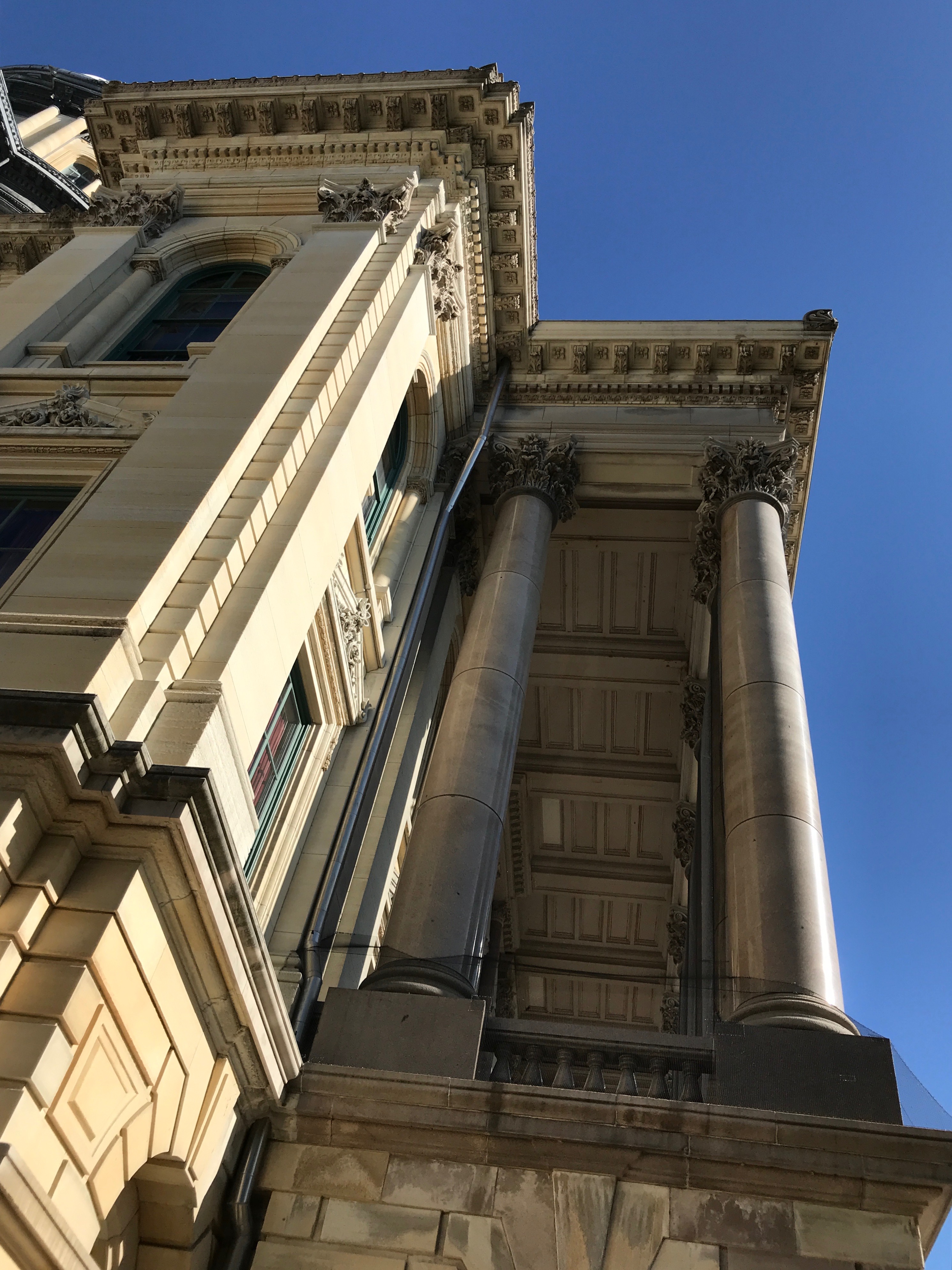
It’s too bad I couldn’t get inside, but at least my Loyal Readers are spared details about the construction and my arty shots of hinges, door knobs, and mail chutes.
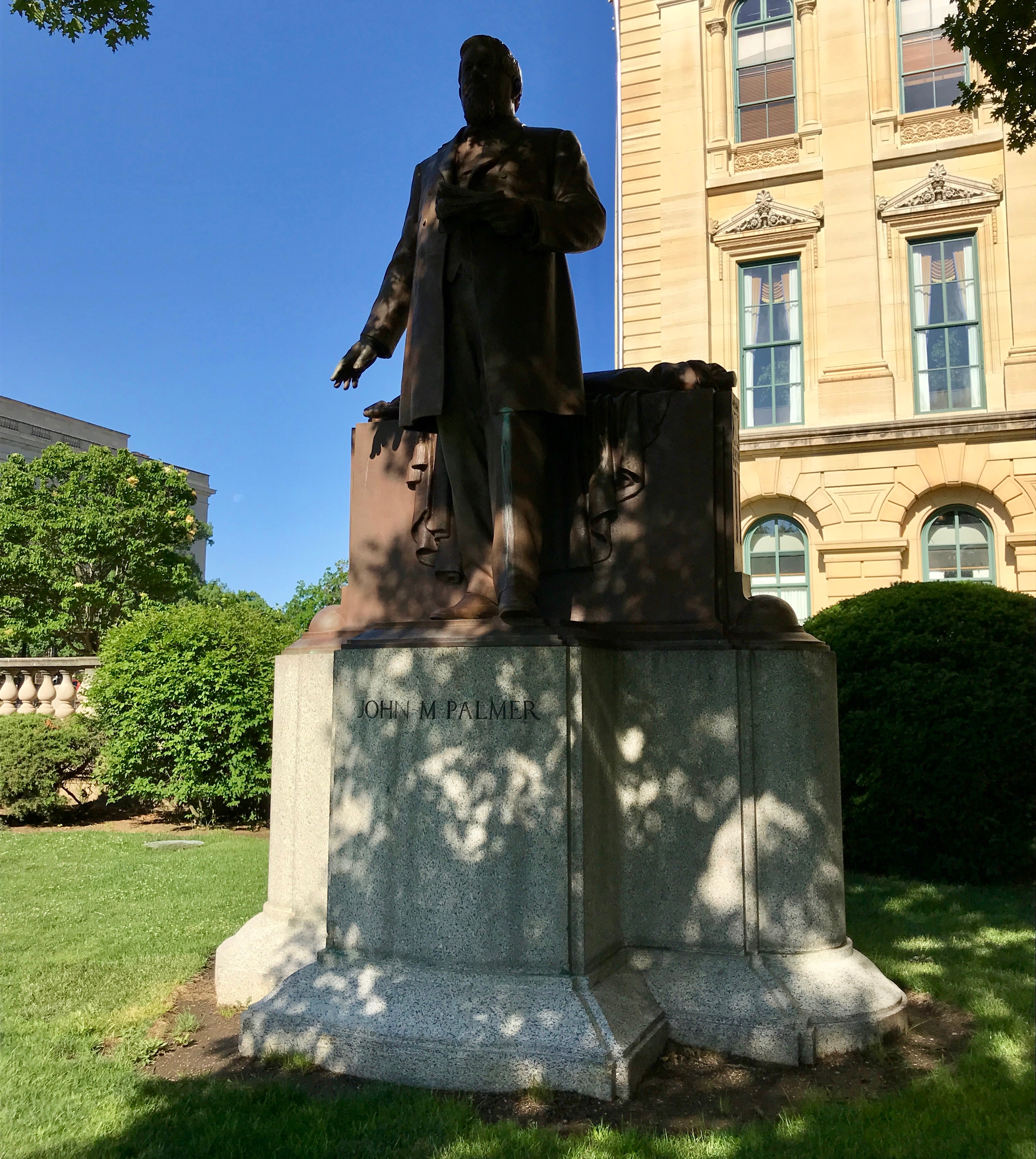
Here we have a statue of John M. Palmer. The only Palmers I knew of were Arnold and my brother’s (and grandfather’s) middle name – oh, and The Palmer House in Chicago. I had to look him up. It turns out that he was a Civil War General who fought for the Union, the 15th Governor of Illinois and a presidential candidate in 1896.
According to my Preferred Source, Palmer switched political parties throughout his life, starting out a Democrat. He became in turn an anti-Nebraska Democrat (against state sovereignty on slavery), a Republican, a Liberal Republican, returned to being a Democrat, then ended as a Bourbon Democrat. He said, “I had my own views. I was not a slave of any party,” and added, “I thought for myself and [have] spoken my own words on all occasions.”
Bourbon Democrat, eh? That’s the first I’ve heard of that party.
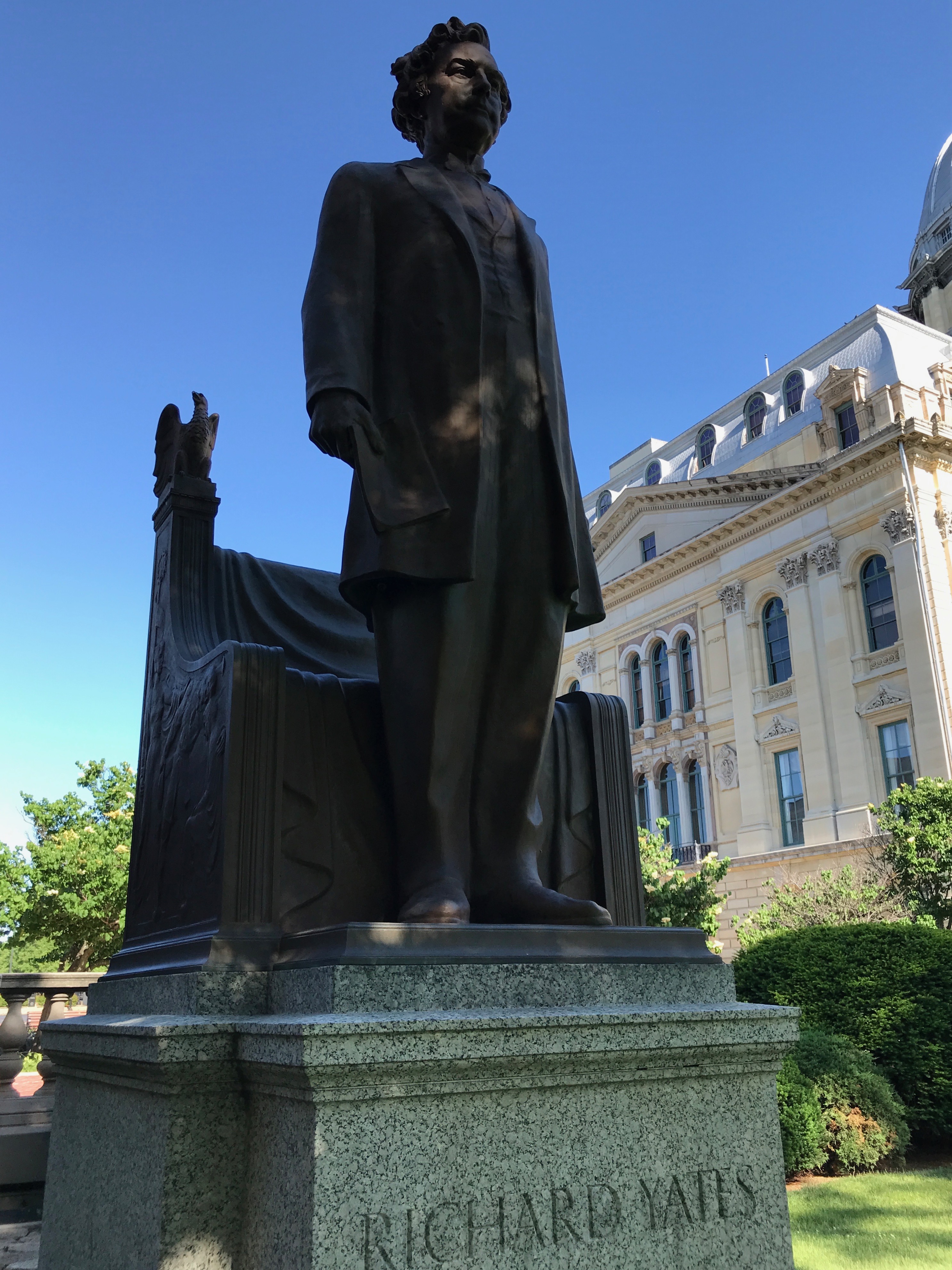
Then there was a statue of Richard Yates, who was governor of Illinois during the Civil War. Incidentally, his son, who was also named Richard Yates, eventually became governor. Can you say, “Dynasty?” (I knew you could.) Another interesting fact about Richard Yates, Jr, is that he was the first governor of Illinois who was actually born in the state. Well, I thought it was interesting. It goes to show you that we aren’t all that far removed from the days of westward expansion and “Go West, Young Man, Go West.”
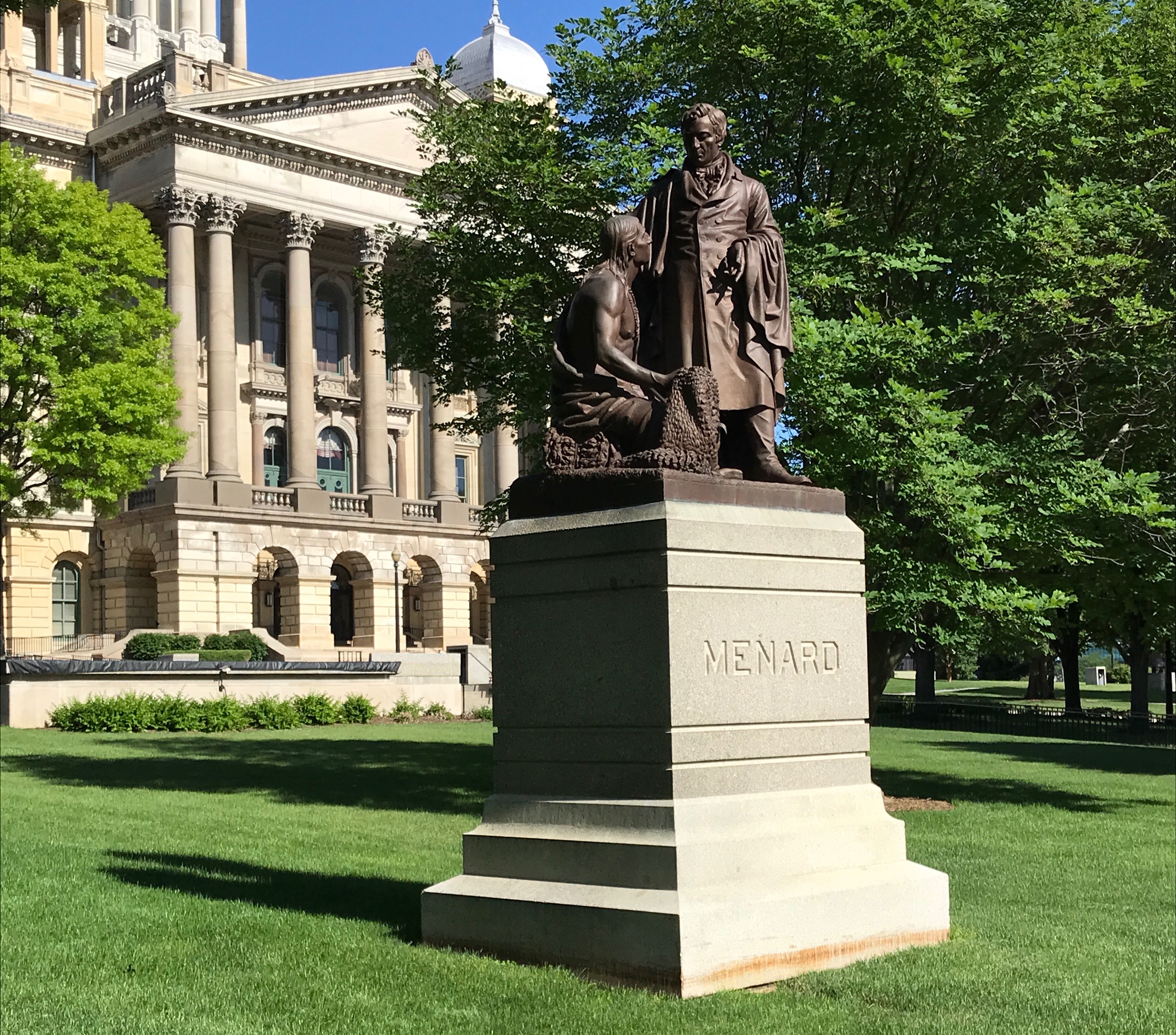
I had no idea who Menard was. I had to go look him up. This is Pierre Menard. He was born in Montreal, and had many children. Four with his first wife, who died. Two years later, he remarried and had eight more children.
Now how did he get from Montreal to Illinois? Stick with me, here. He was a member of the Indiana Territorial Legislature. The Illinois Territory was a frontier region of the United States, which was formerly a part of the Illinois Country, which was a portion of New France. It was administered originally from Quebec and later transferred to Louisiana. I guess it was part of the deal when we bought Louisiana. When Illinois became a state in 1818, the population of the new state was divided between French-speaking and English-speaking citizens. To balance things out, Menard became the state’s first Lieutenant Governor, serving from 1818 to 1822 with the first governor, Shadrach Bond.
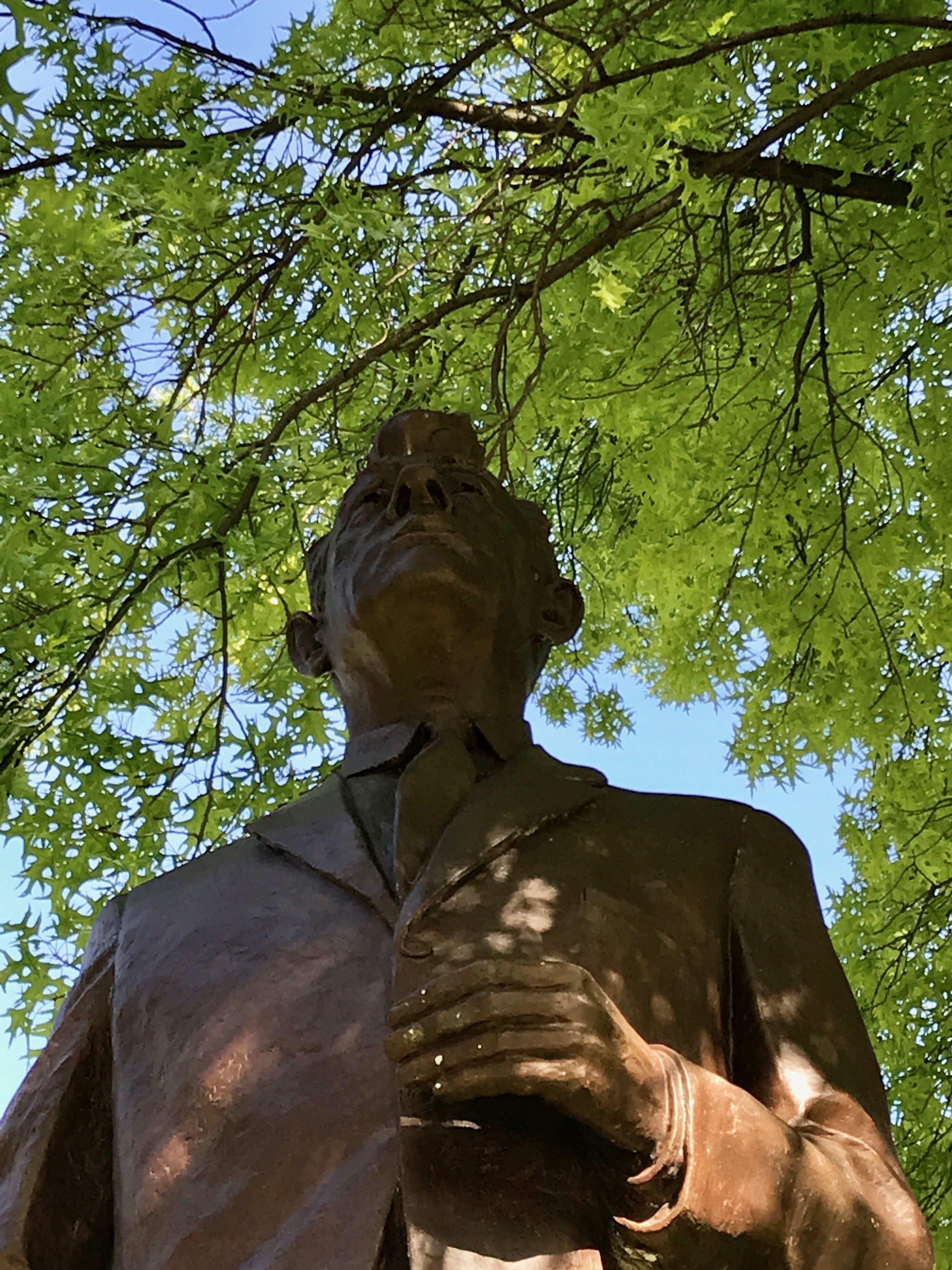
I came across another statue of a senator, I didn’t recognize him from looking at the statue, but anyone who was around in the 1960s would probably recognize the name of Senator Everett Dirksen.
Everett McKinley Dirksen
According to my Preferred Source, his parents gave him the middle name to honor President William McKinley. Now, since Dirksen was born January 4, 1896, and McKinley didn’t assume office until March 4, 1897, I can only assume they followed politics avidly or they held off naming him for a while.
He helped write and pass the Civil Rights Acts of 1964 and 1968. In spite of these progressive actions, he was quite conservative, and came to the Senate with the support of Joseph McCarthy. He did his best to talk McCarthy into apologizing to avoid censure, and then voted against censuring him.
On a lighter note, he is credited with the expression, “A billion here, a billion there, pretty soon, you’re talking real money.” There is no record of him saying it, but someone must have said it.
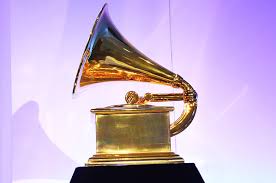
He also became the oldest person, for a time, to reach the Billboard Hot 100’s top 40 for his recording of Gallant Men. In 1968, his album “Gallant Men” won a Grammy Award for Best Documentary Recording. He also became the oldest person at that time to reach Billboards Hot 100s top 40 when the single reached #33. Two weeks later, it reached #29, just ahead of two versions of “Wild Thing” by William “Bill” Minkin. The A-side version was an impersonation of Senator Bobby and the B-side version was an impersonation of Senator Everett McKinley.
And, if you want to hear Senator Bobby, click here.
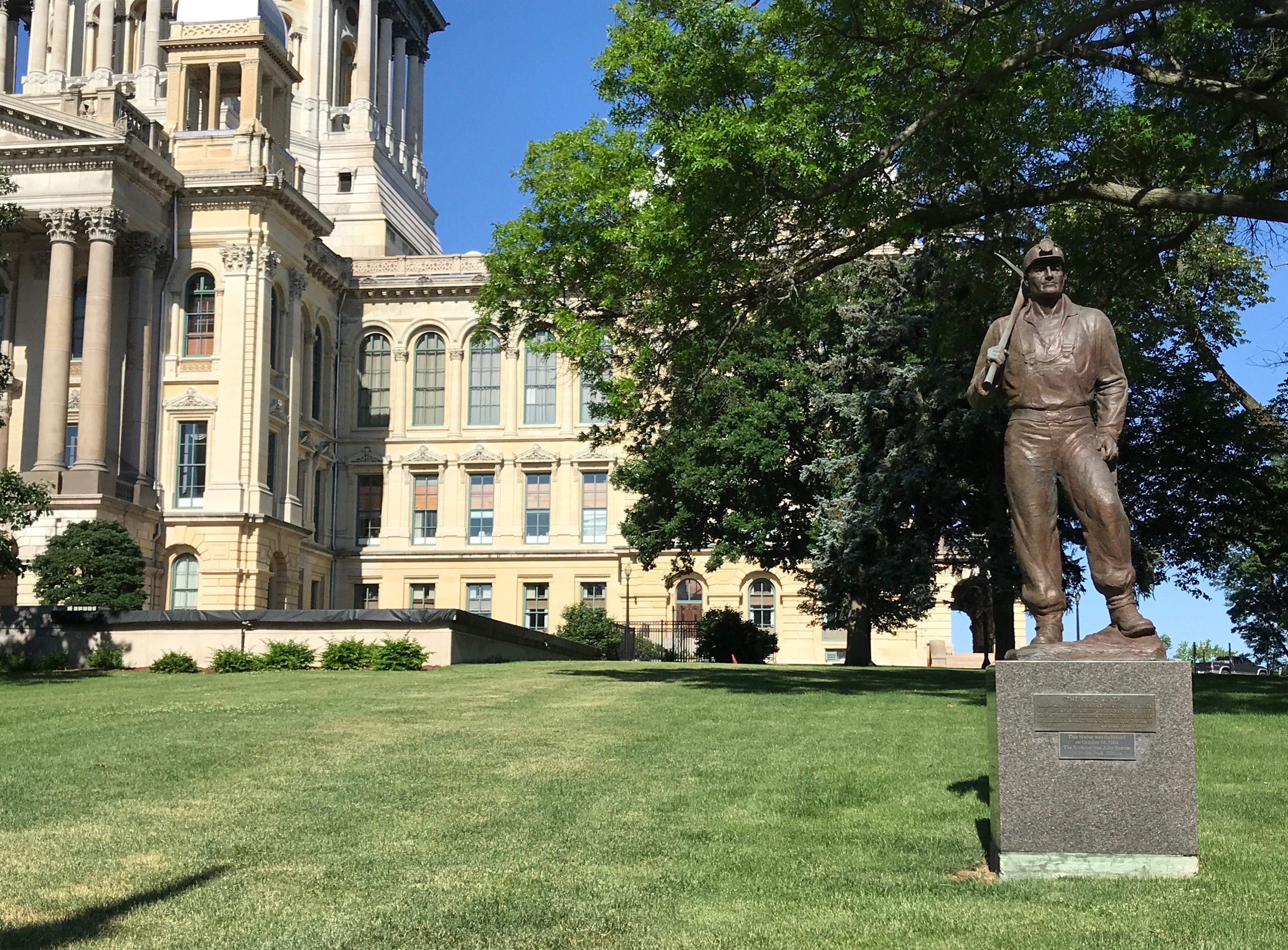
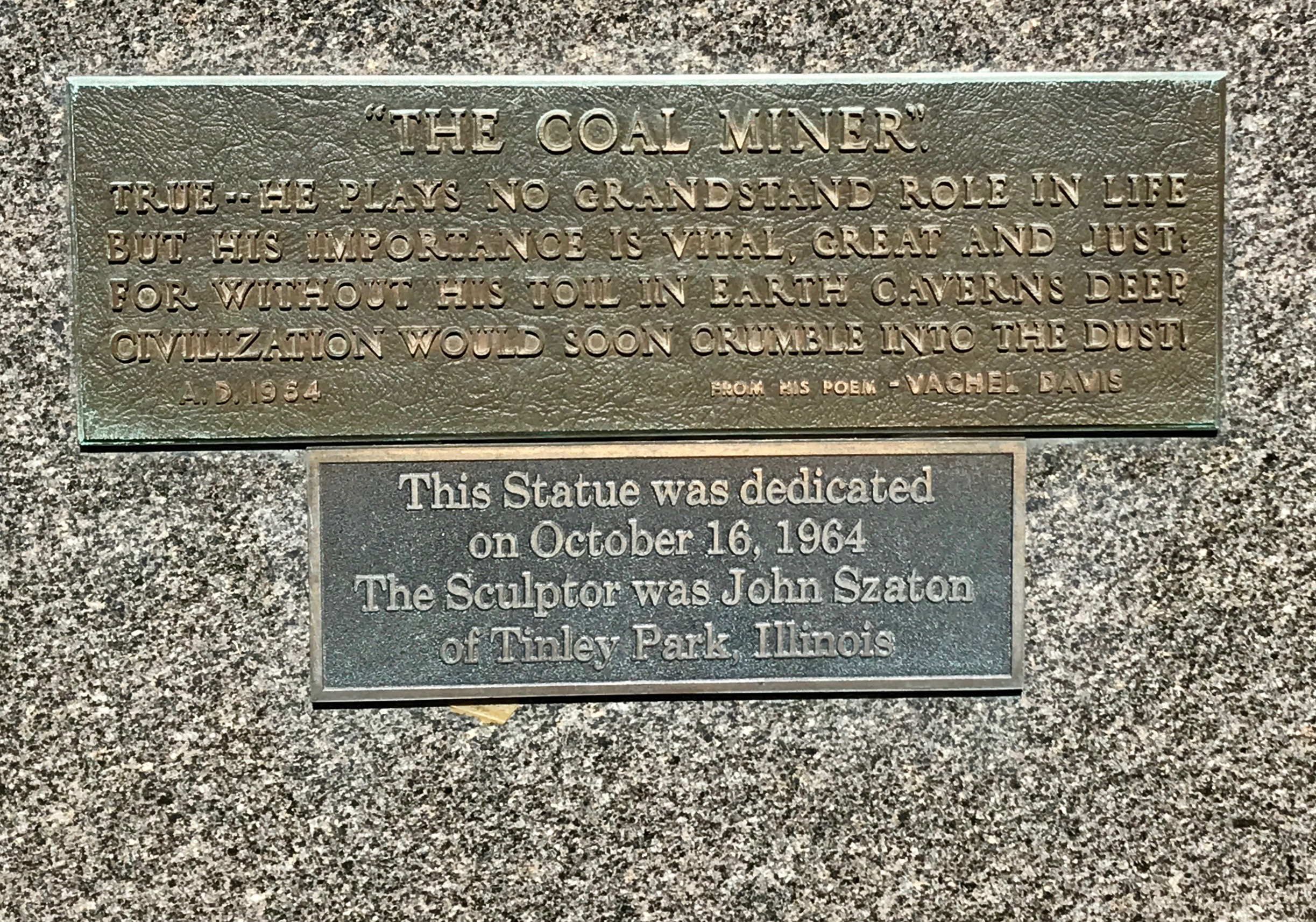
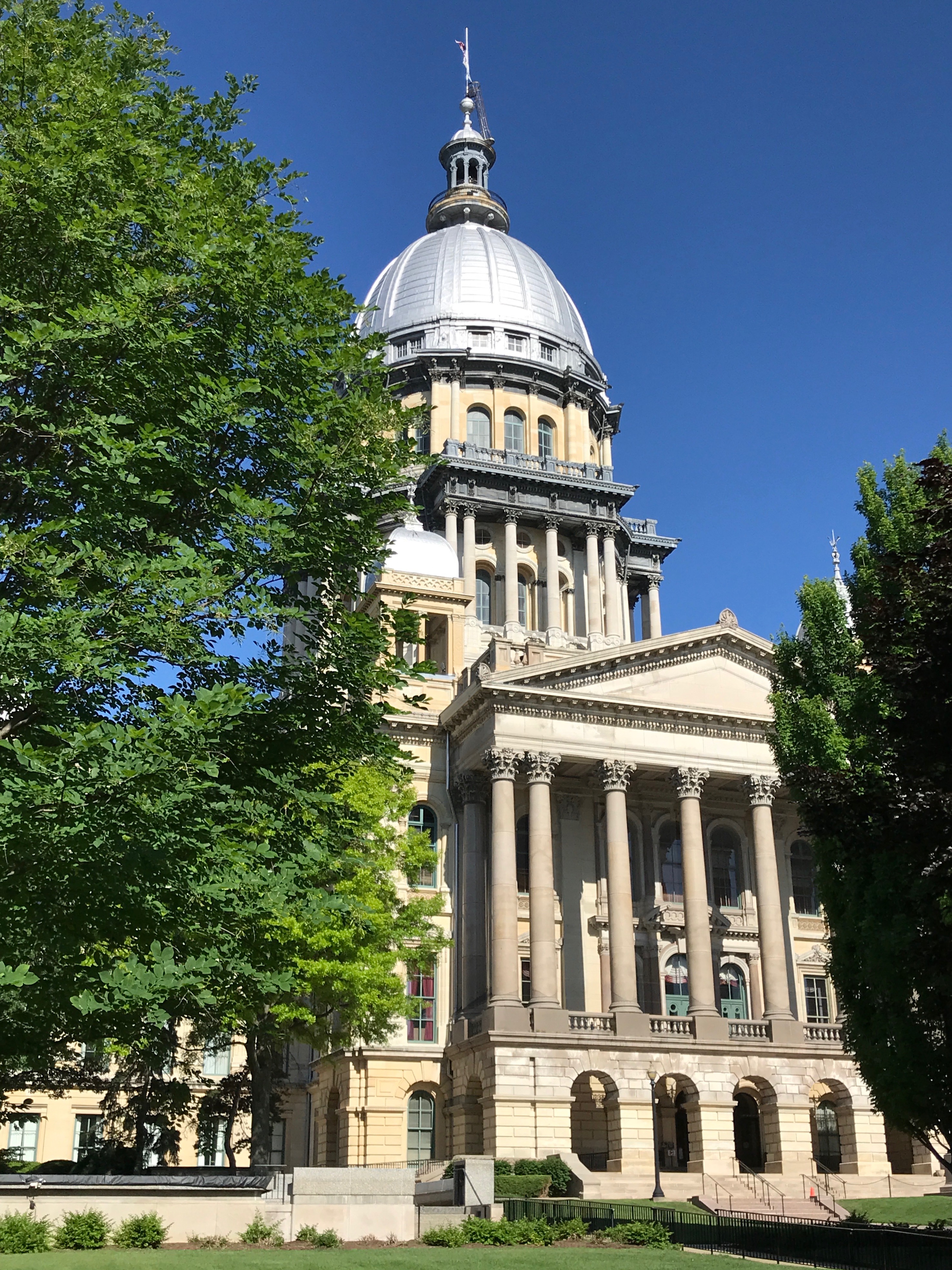
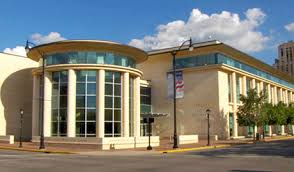
The Abraham Lincoln Presidential Library and Museum. On my last visit, it was still under construction. It opened in April 2005, and this was the first time I was back in the neighborhood. According to my Preferred Source, it combines “traditional scholarship with 21st-century showmanship techniques.”
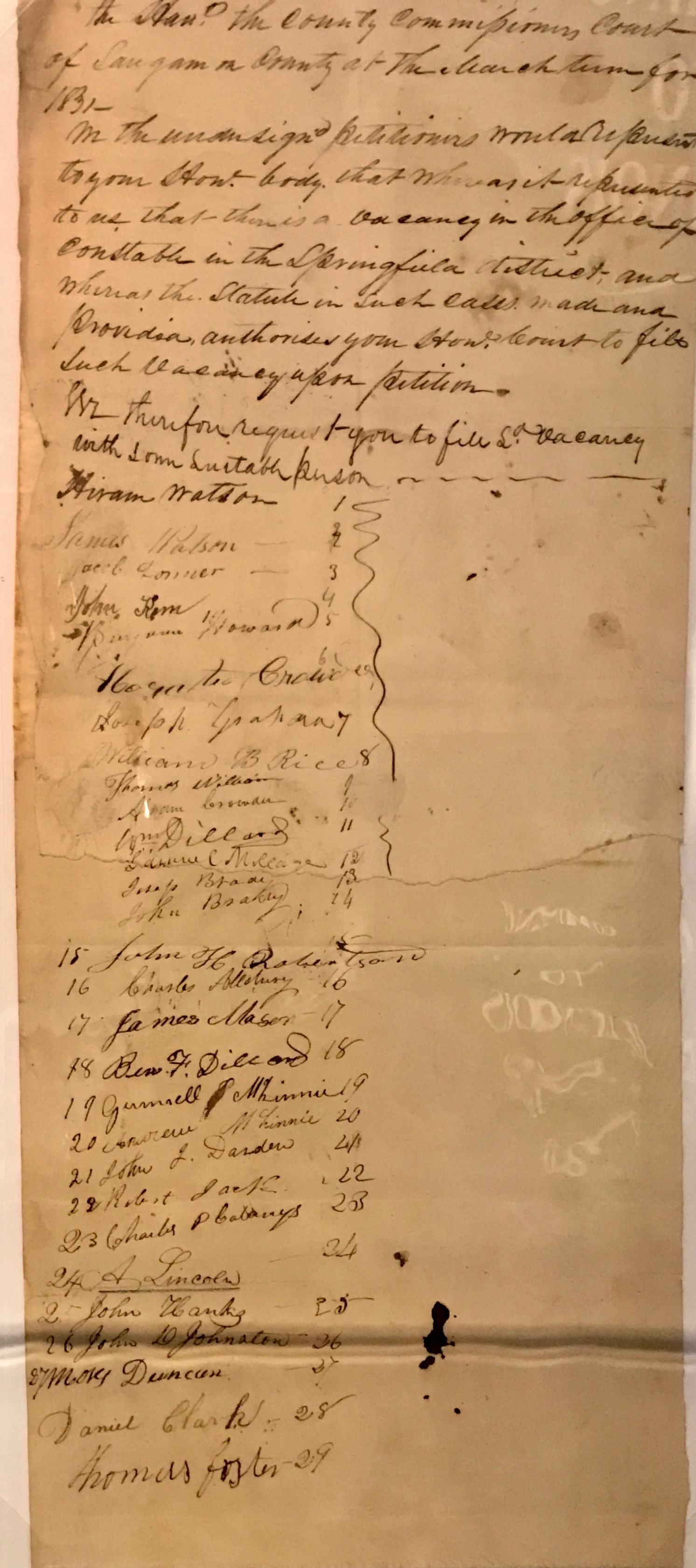
There were a number of interesting artifacts. For instance, this is the second political document ever signed by Lincoln. In fact, Lincoln signed this petition three times. In addition to his own signature, he signed on behalf of his cousin, John Hanks, and stepbrother John D. Johnson. The document urged the Commissioners’ court of Sangamon County to fill a vacant constable position. Their petition was successful, and the court appointed Willian Constant.
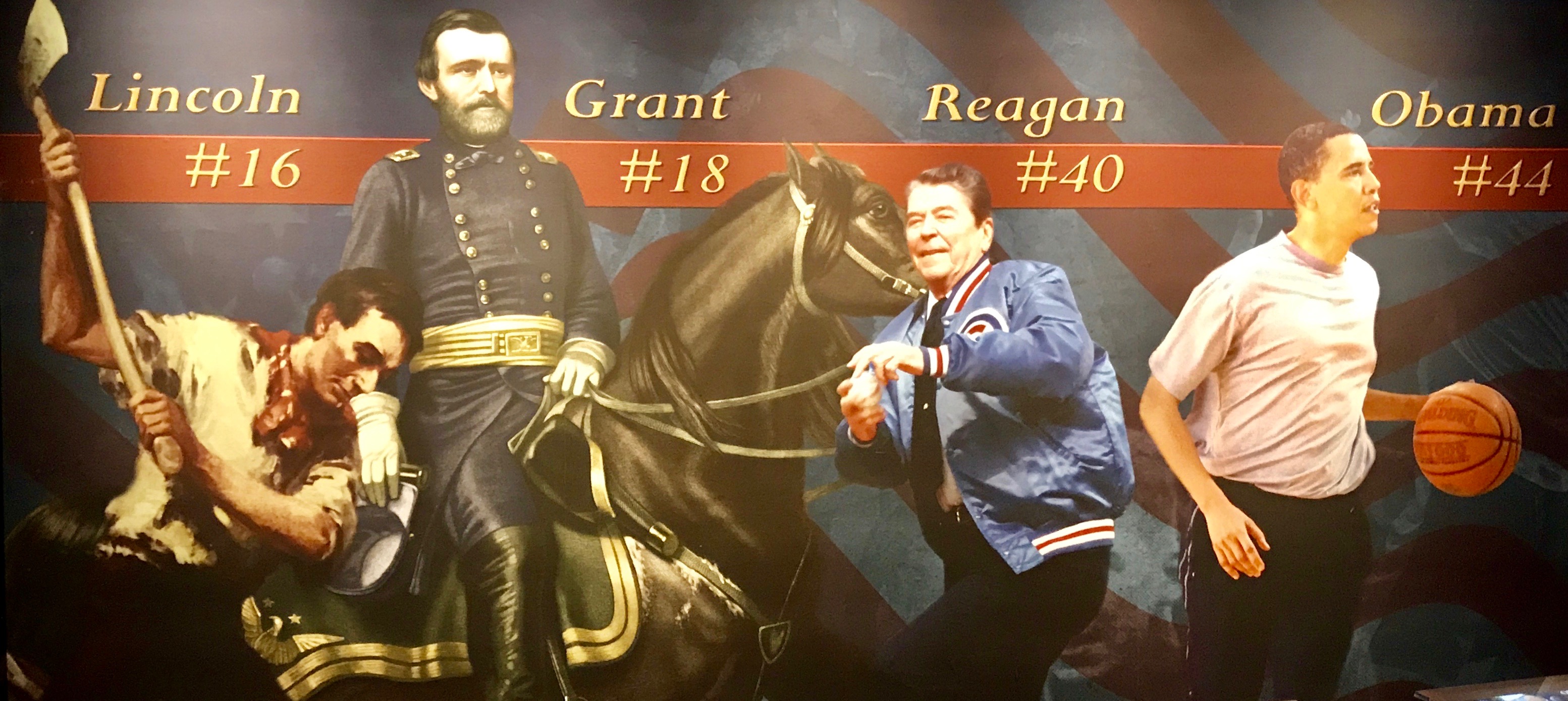
These four presidents were examples of a time when men of a less than wealthy background could be elected to lead the country.
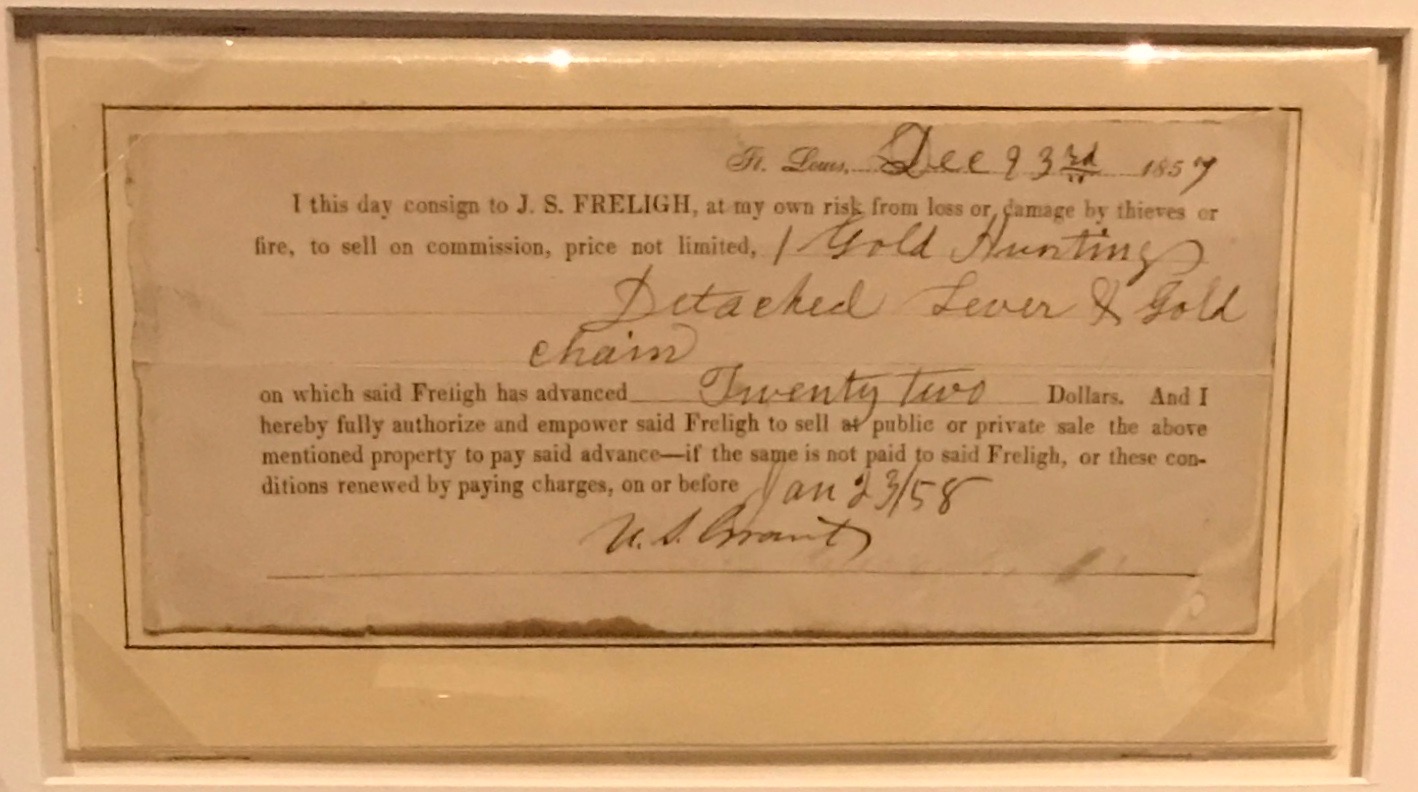
At what was described as Grant’s lowest point, he had to pawn his gold watch. He was facing increasing setbacks at his St. Louis farm, “Hardscrabble.” The sign accompanying the pawn ticket theorizes that he pawned it – for $22 – to be able to afford Christmas presents for his children. The economic distress he suffered trying to farm motivated Grant’s move to Illinois.
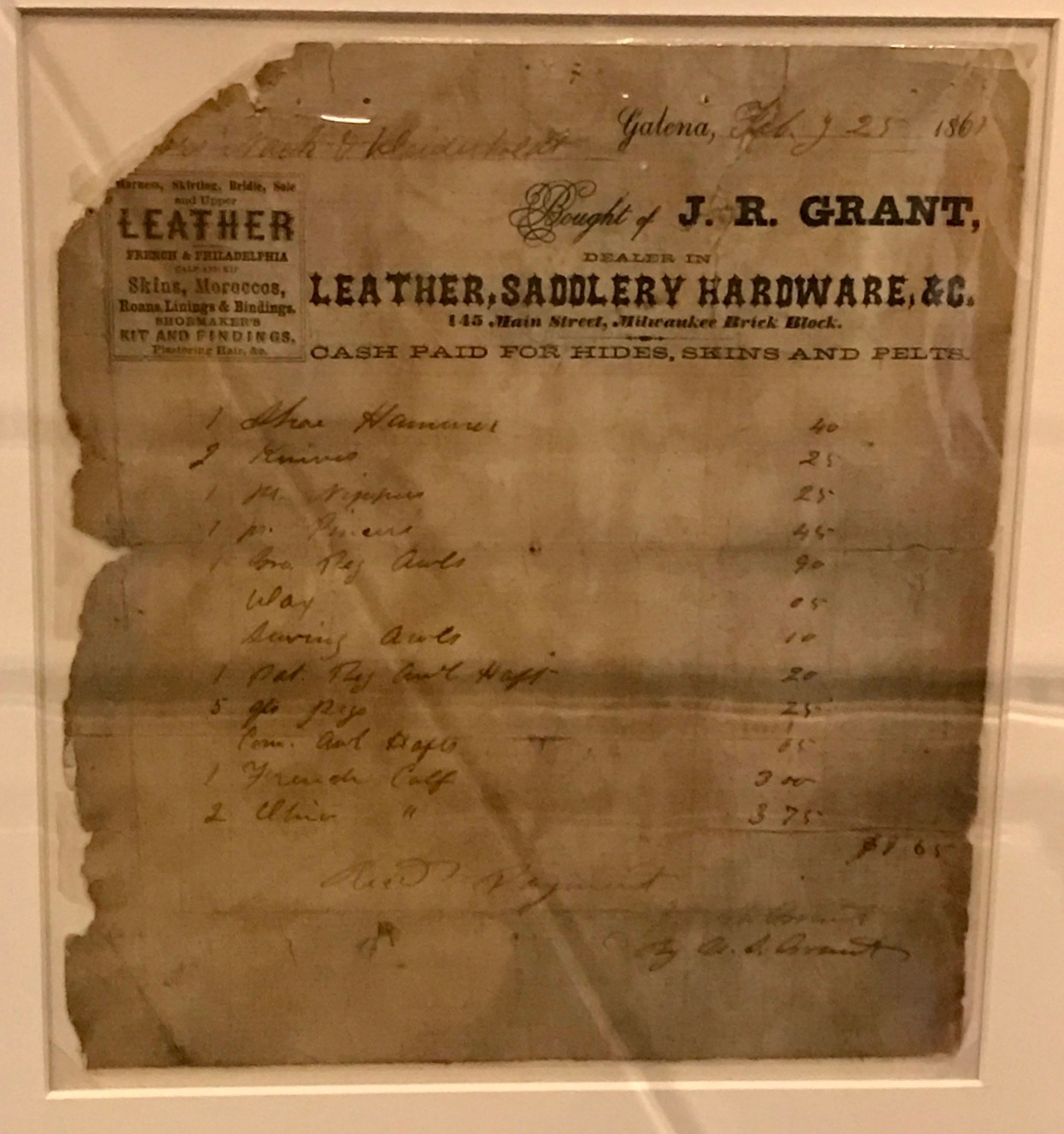
This is an invoice from the Galena leather goods store owned by Grant’s father, Jesse. It was signed by Grant on February 25, 1861, only two months before Grant came to Springfield to help organize the Union war effort.
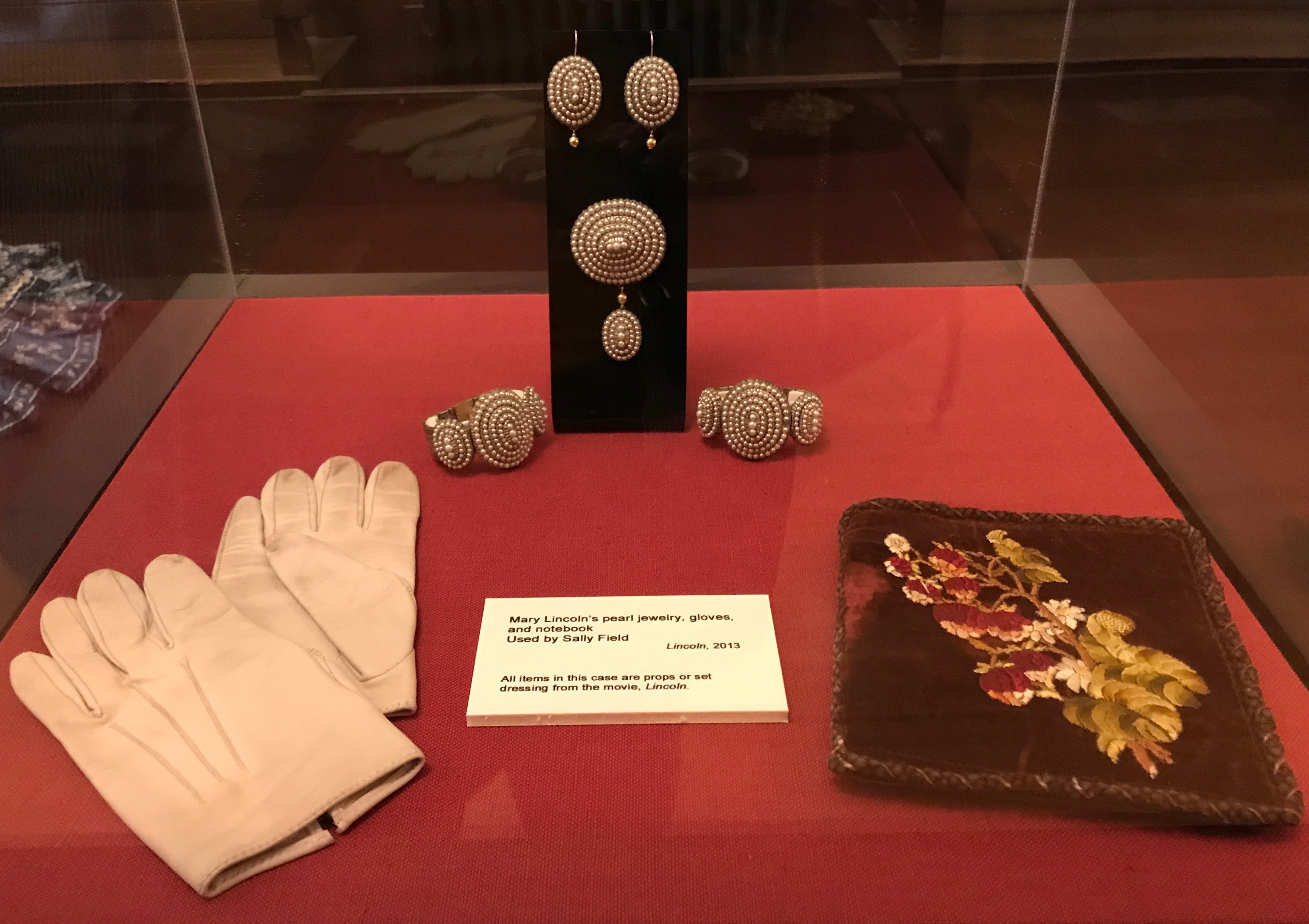
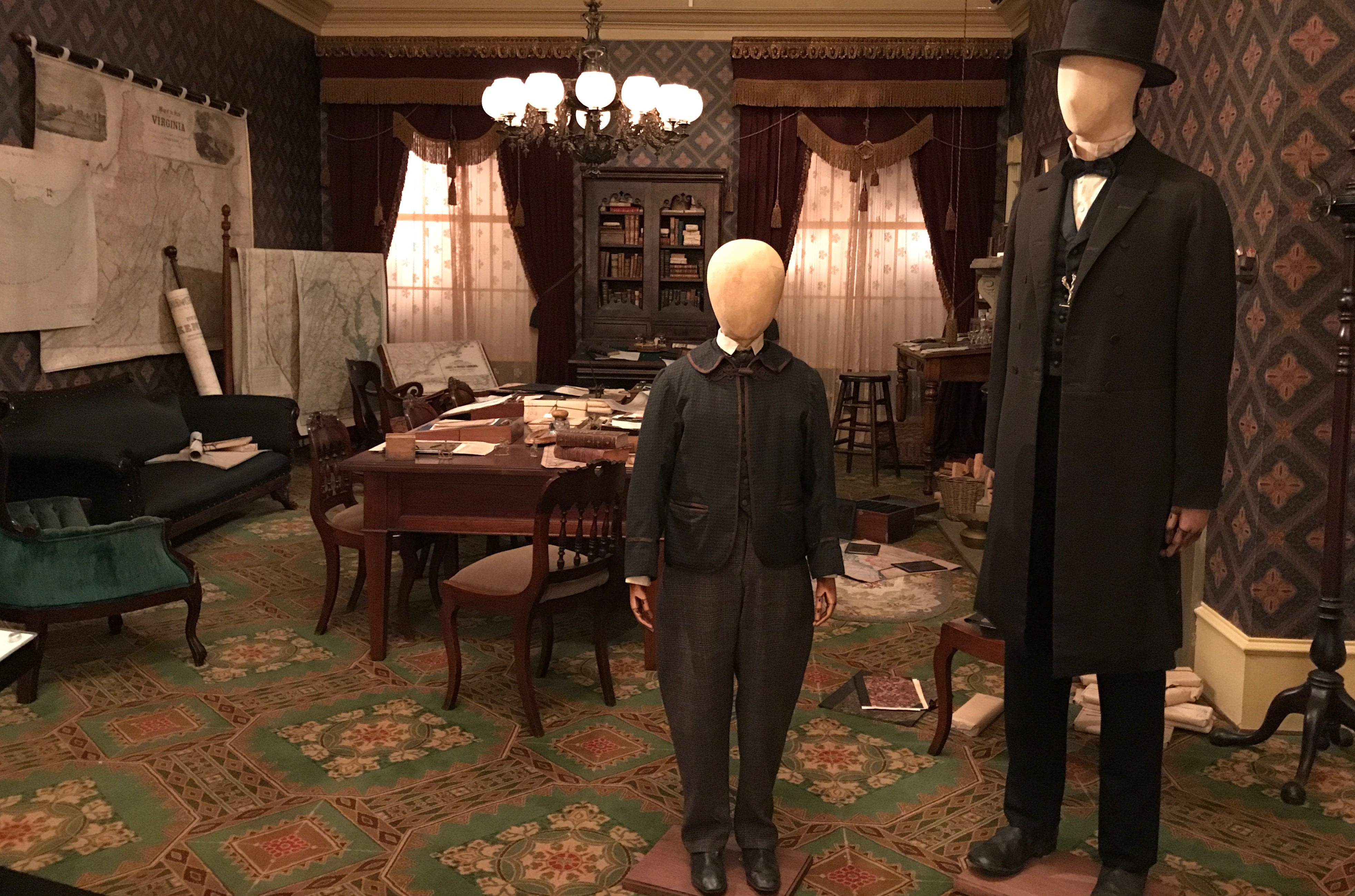
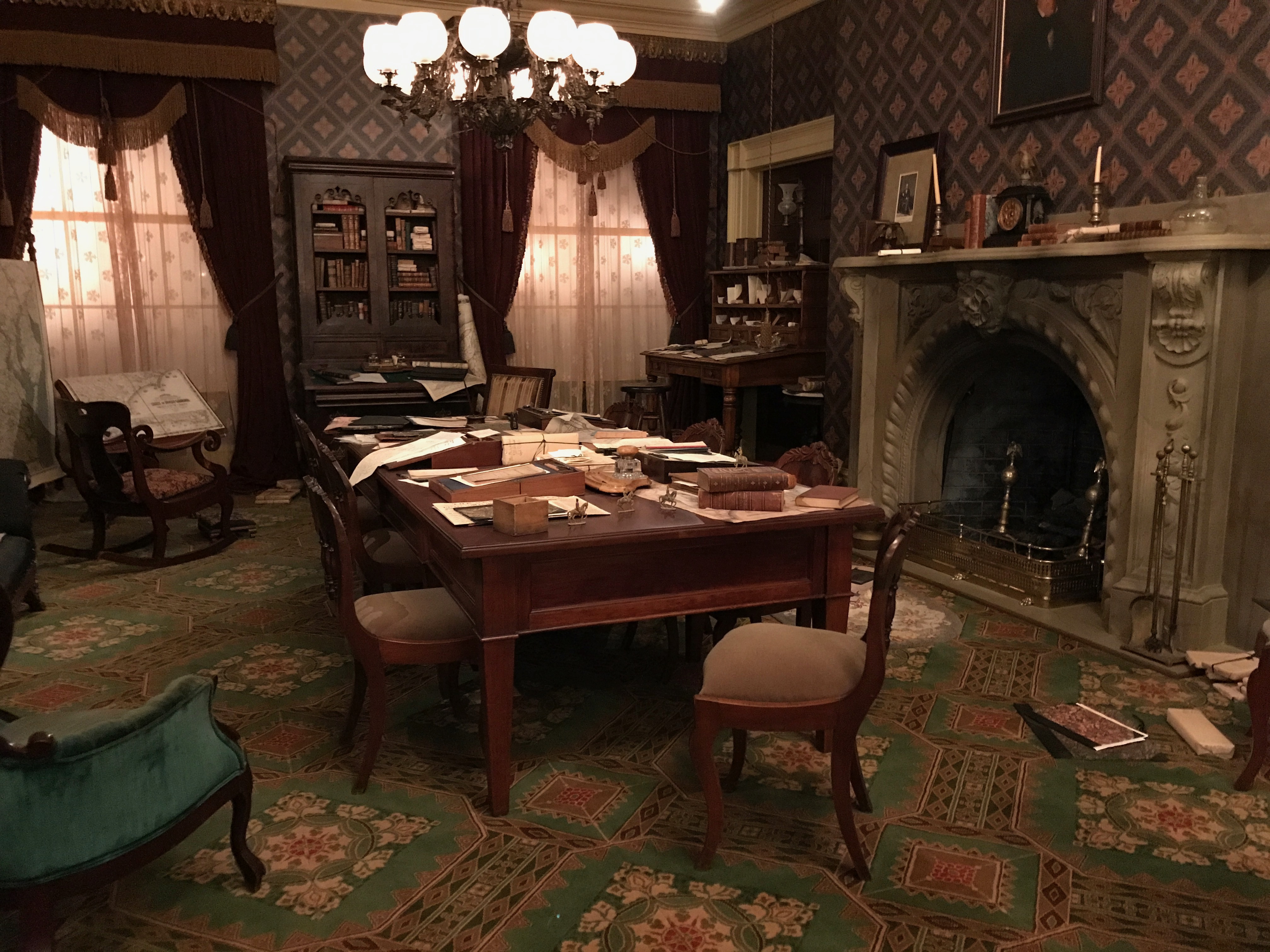
Understandably, this museum was heavily Lincoln-centric – or maybe I just took pictures of what interested me. If you want to check for yourself, you’ll have to visit.
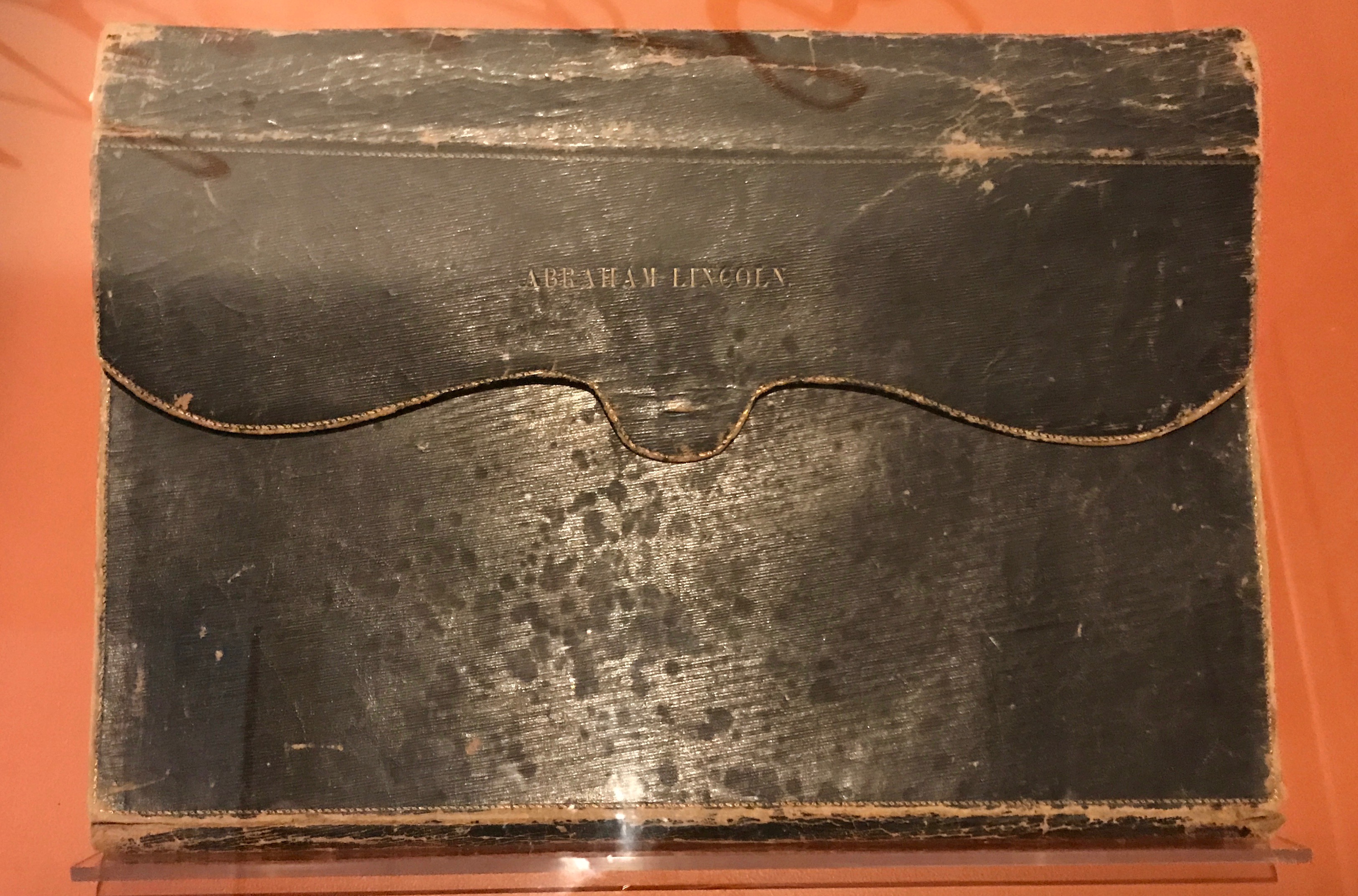
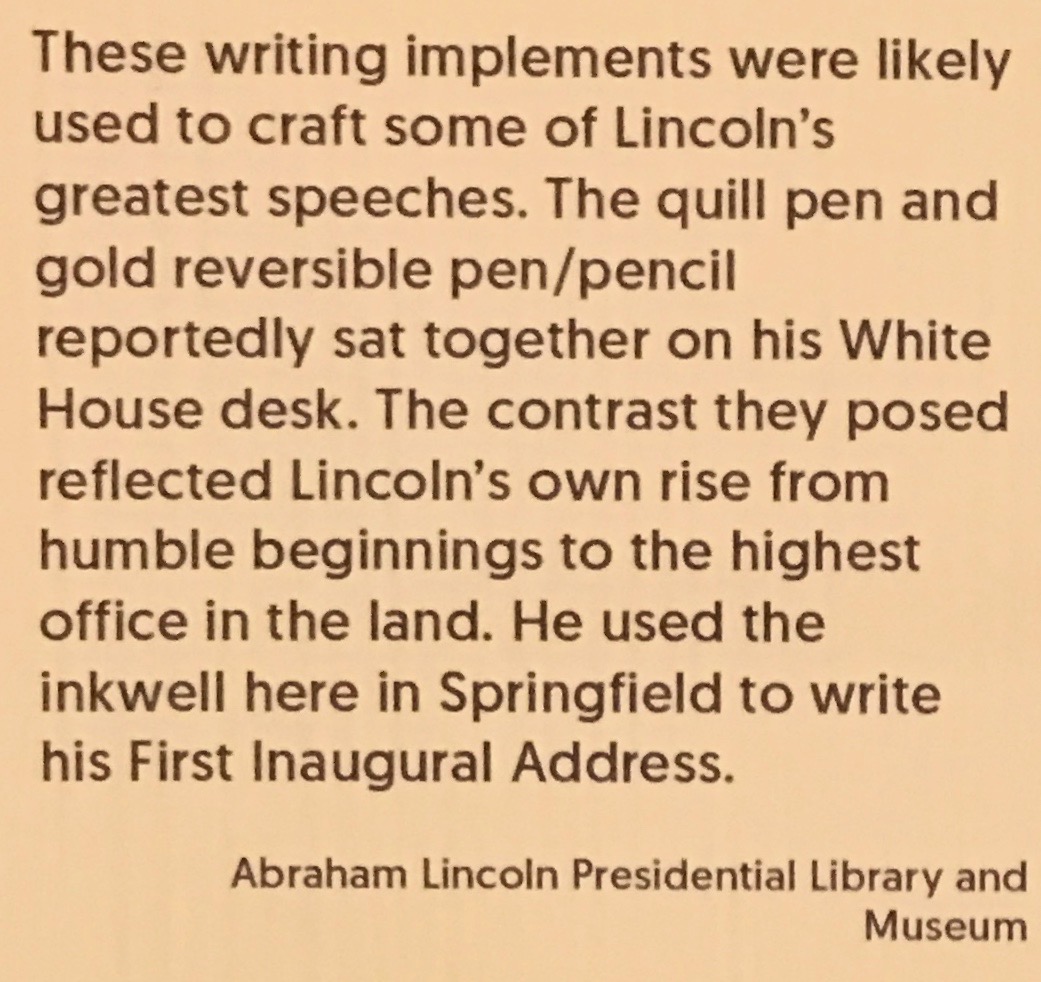
Here is his brief case.
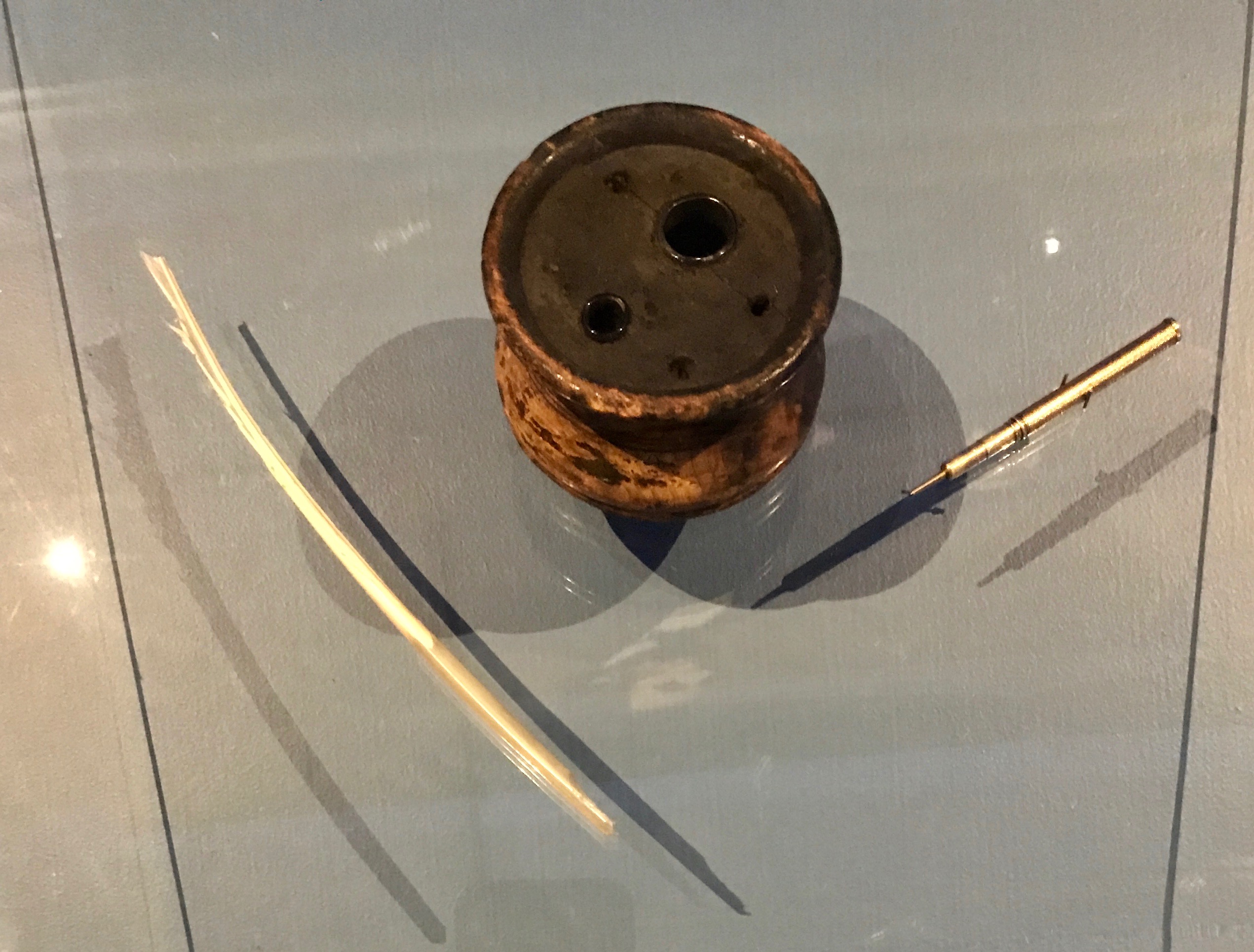
If you’d like to know more about these artifacts, read the sign I photographed from the exhibit.
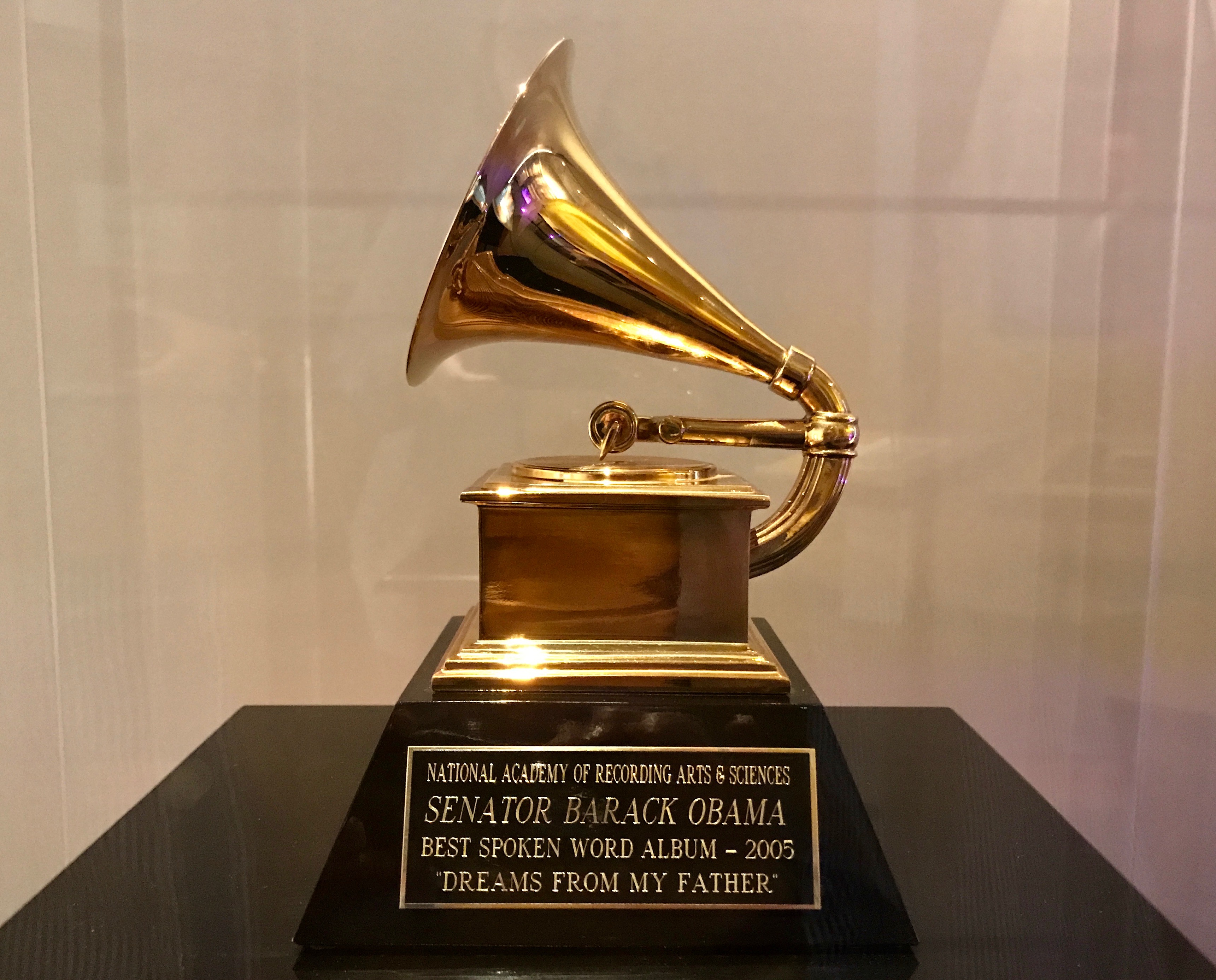
Senator Dirksen isn’t the only Illinois politician to win a grammy.
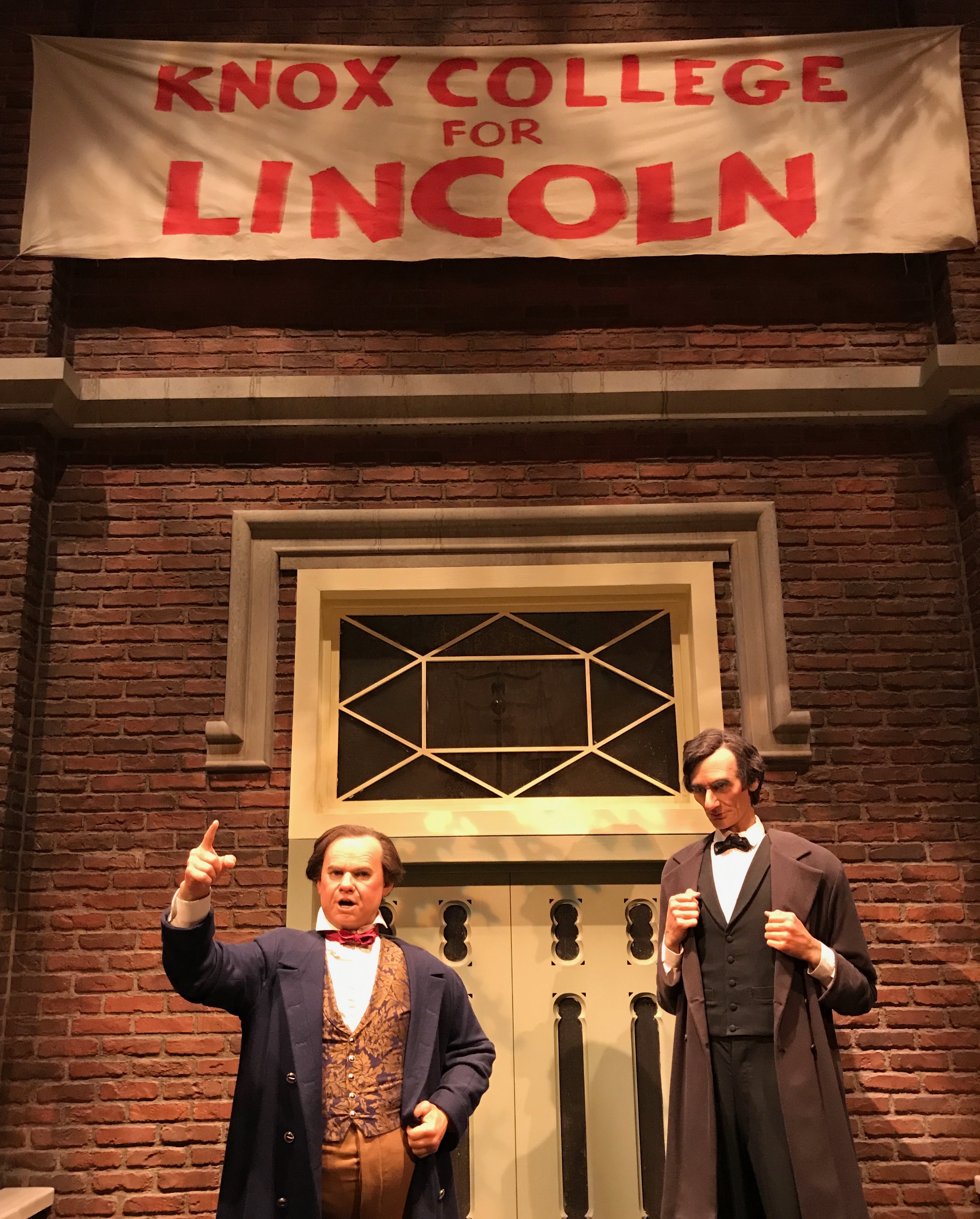
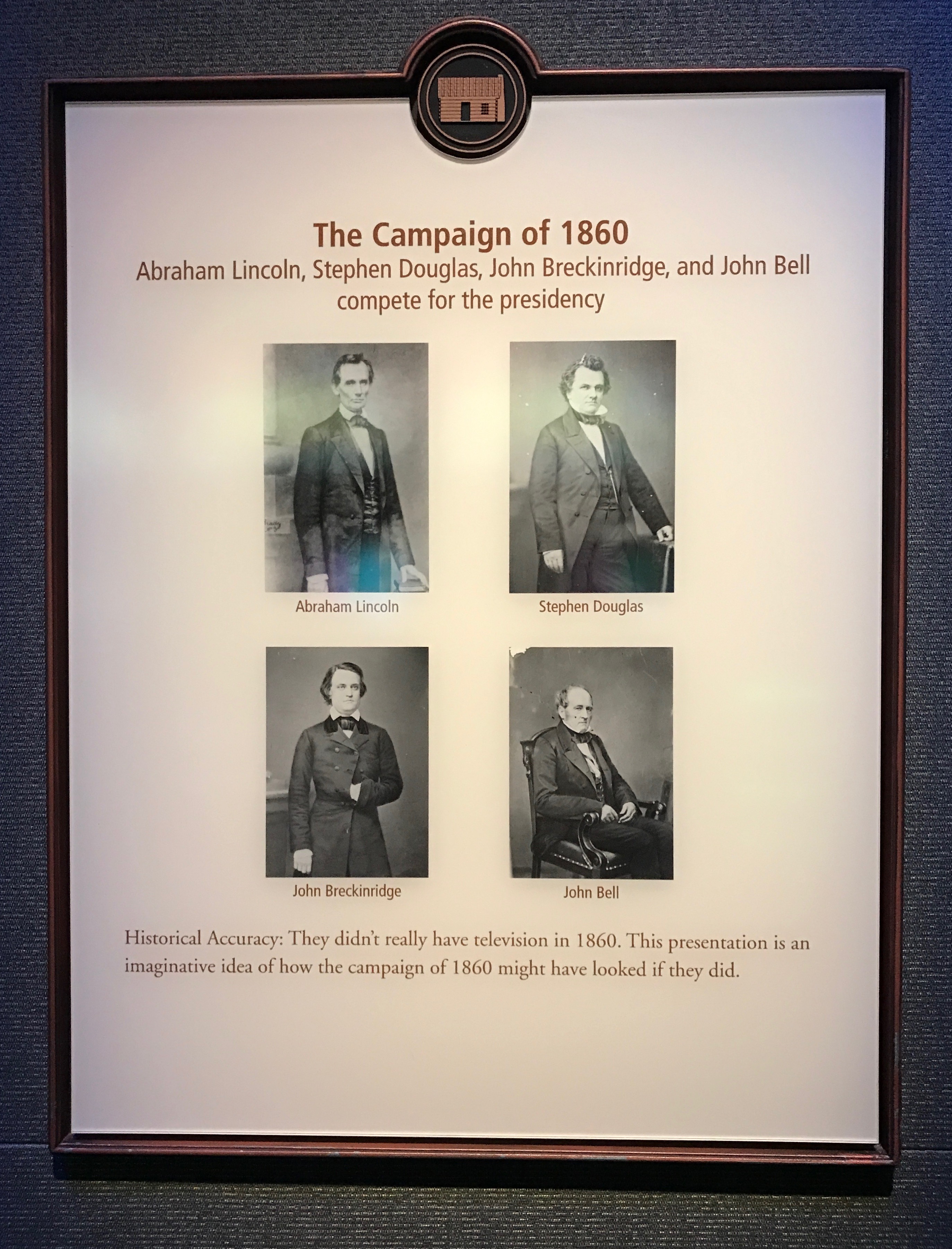
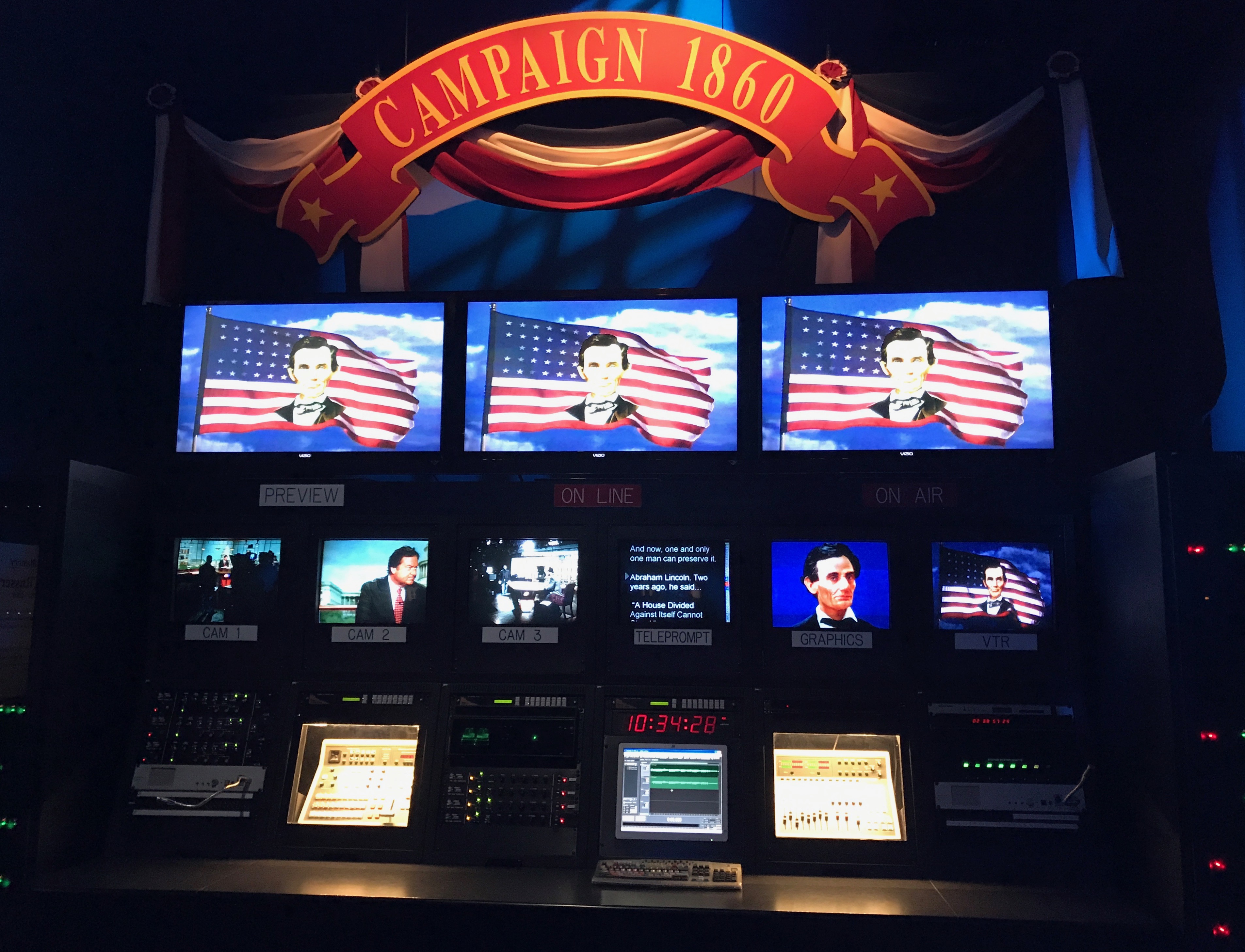
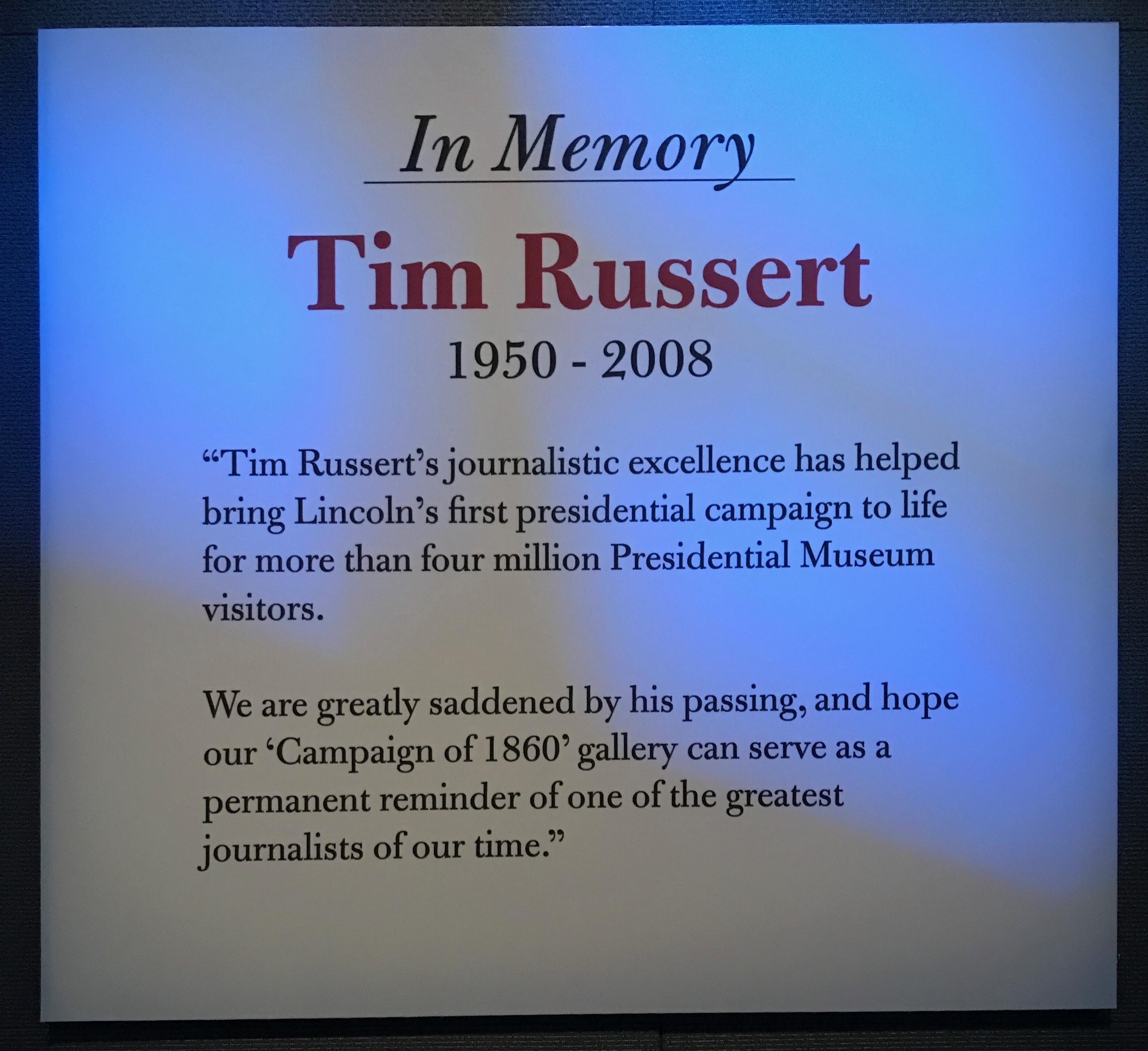
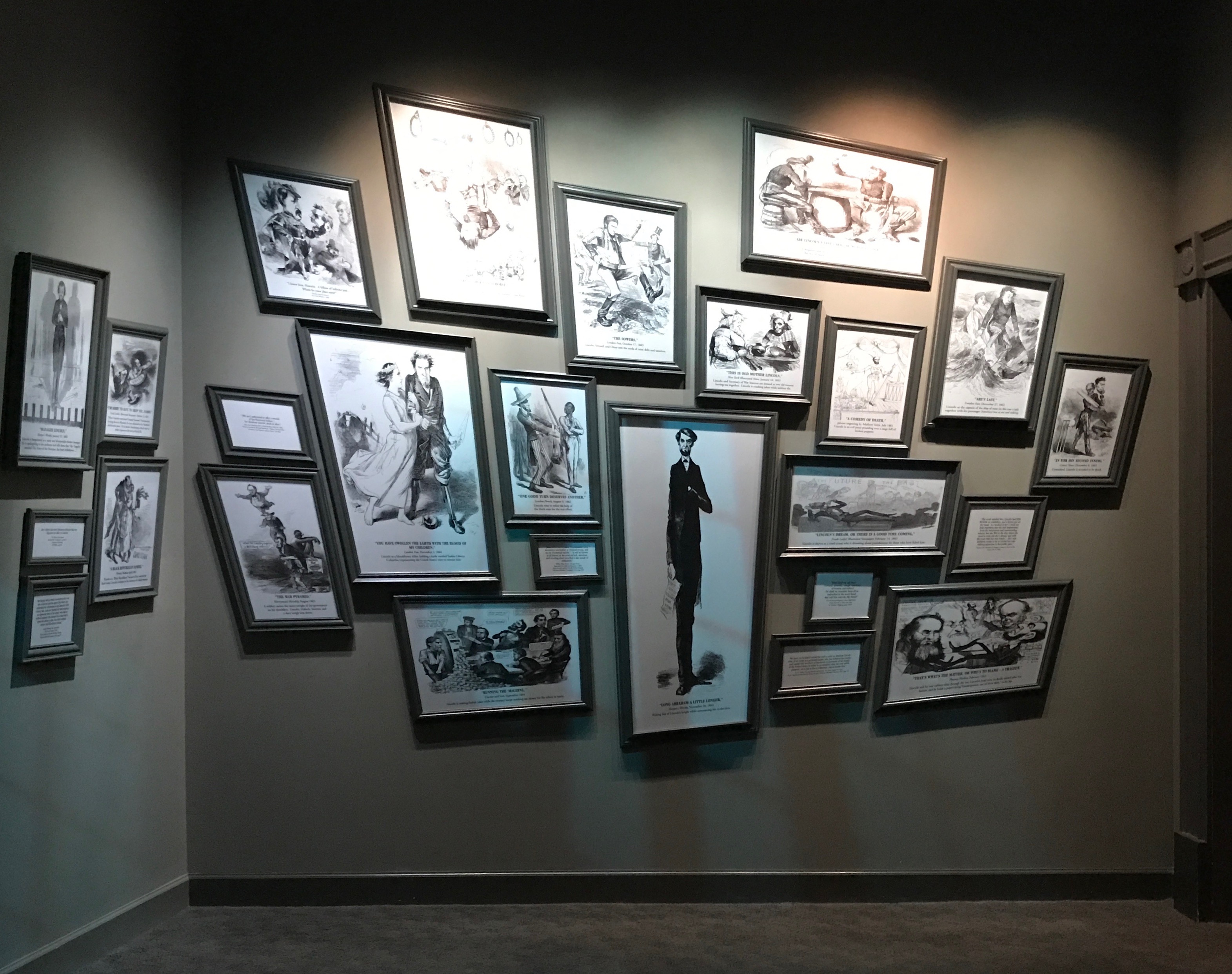
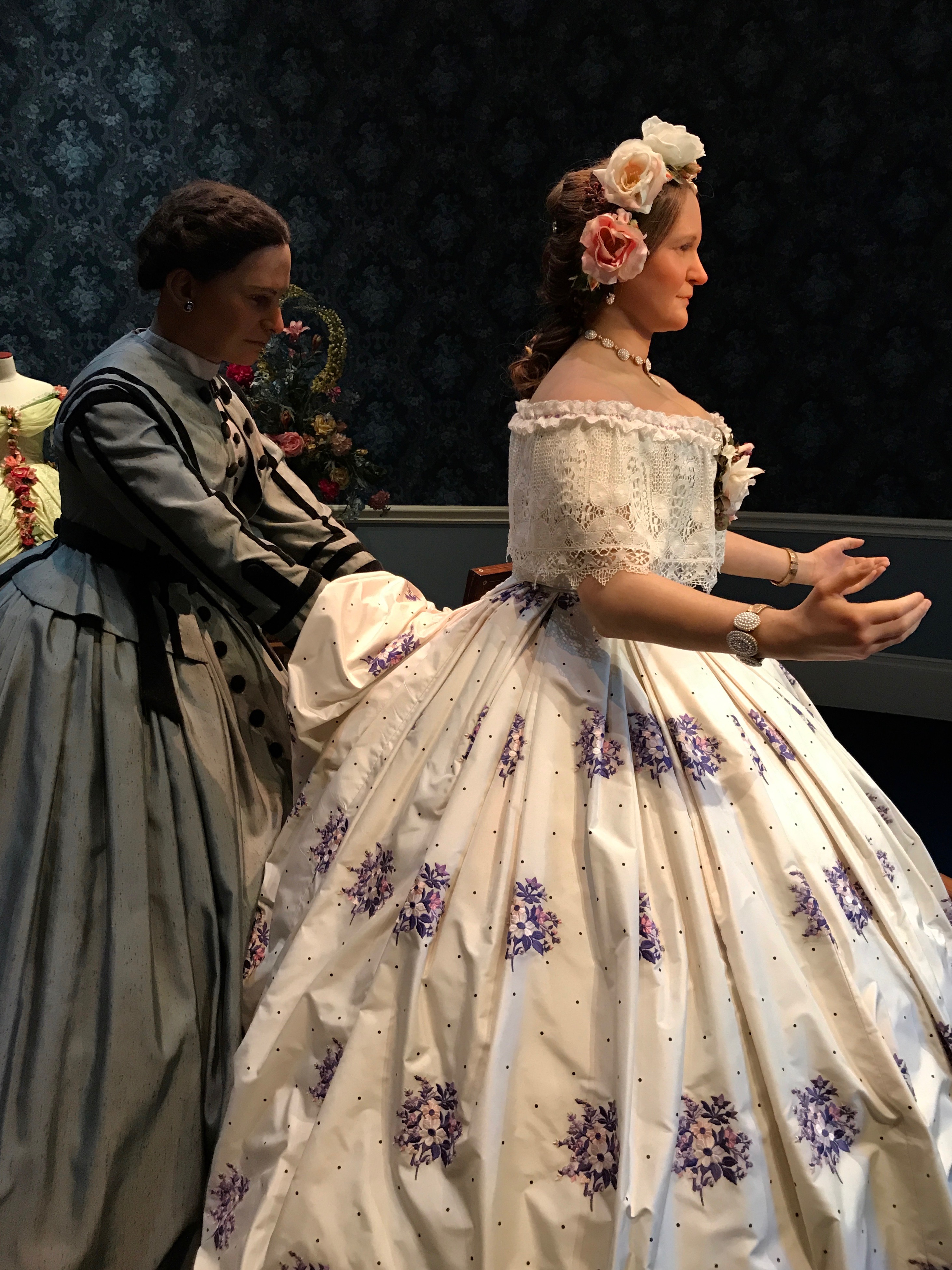
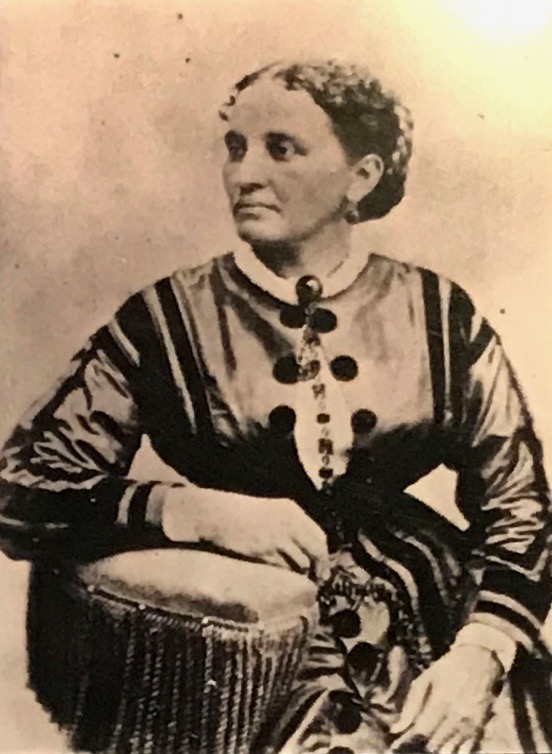
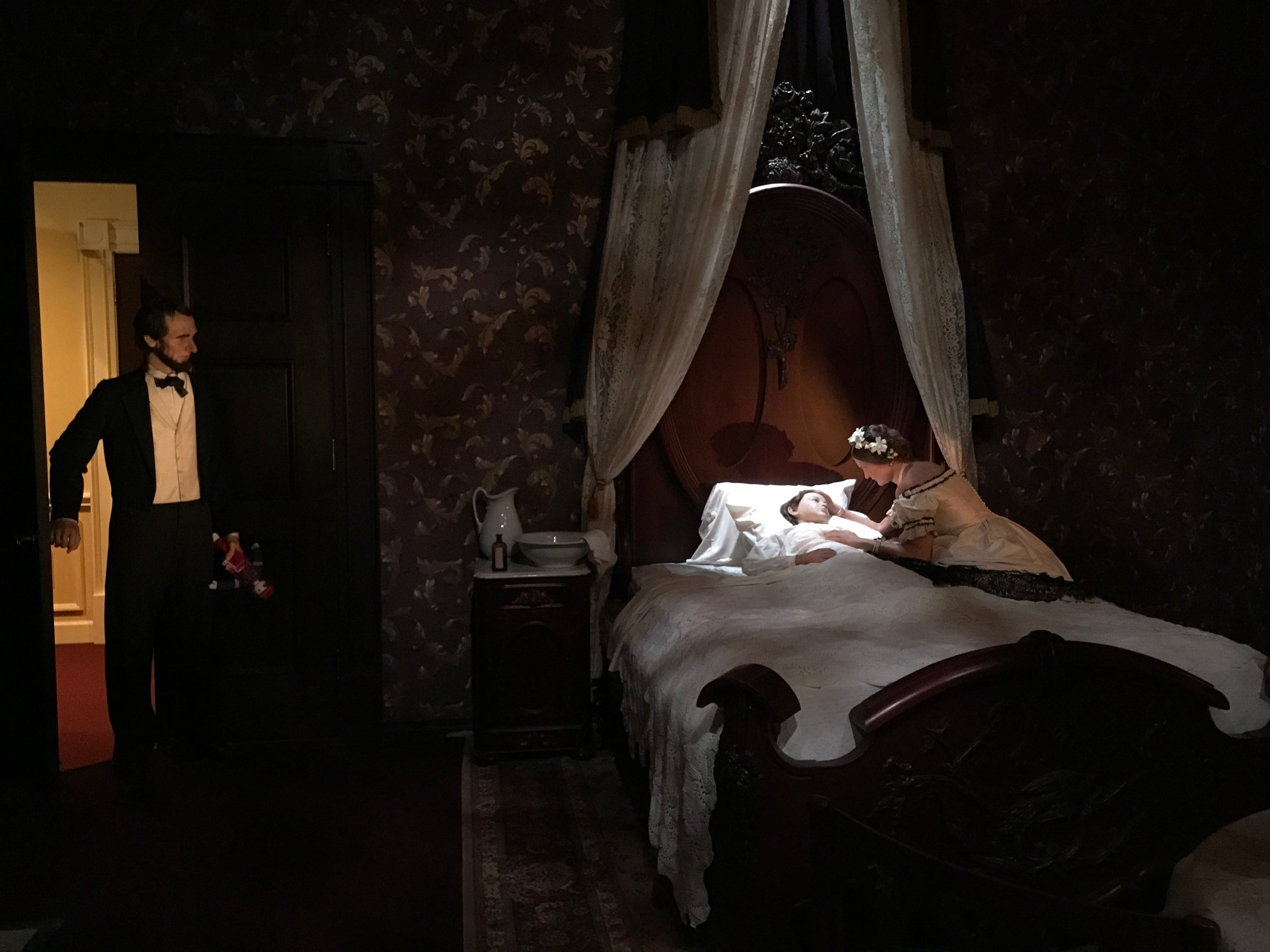
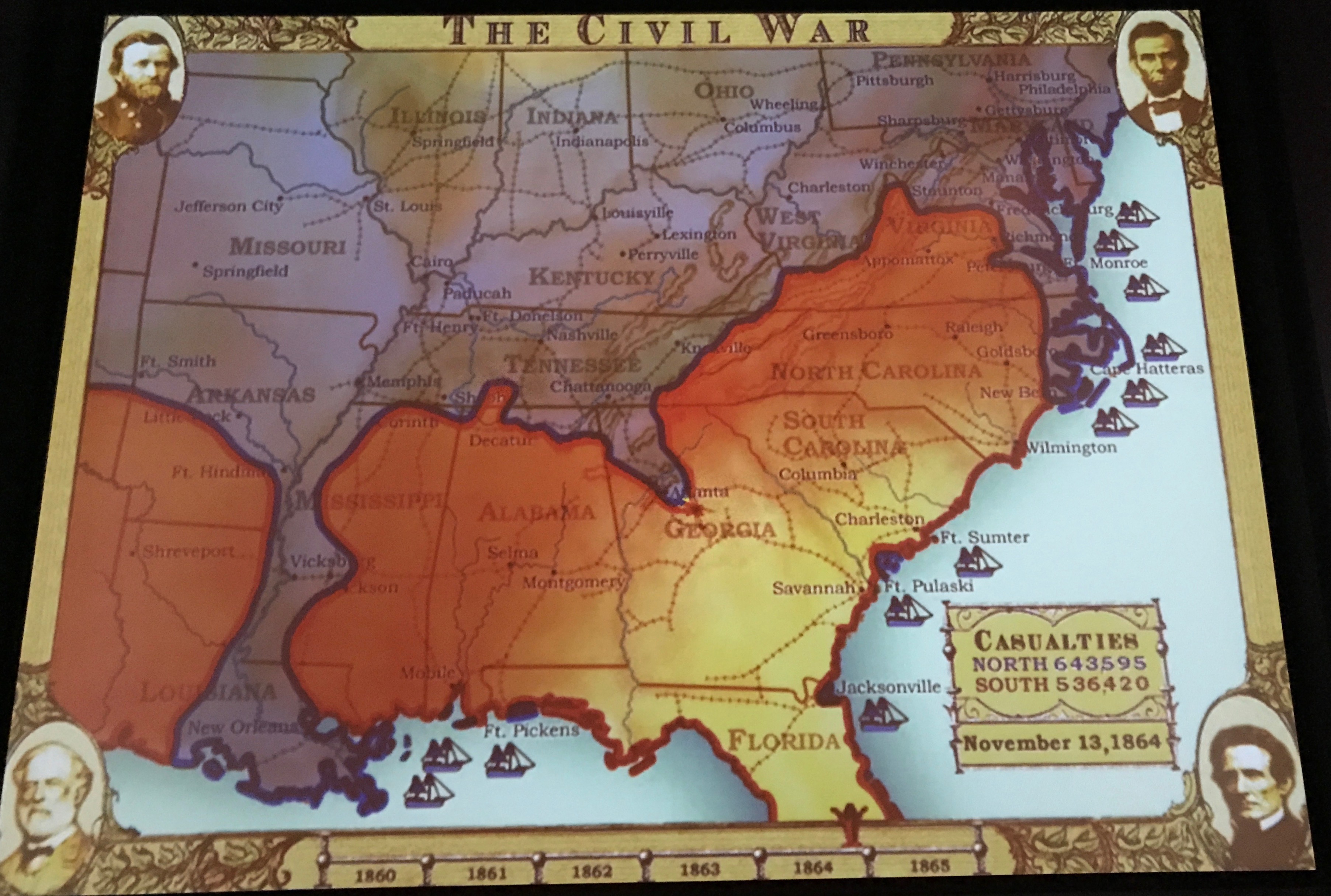
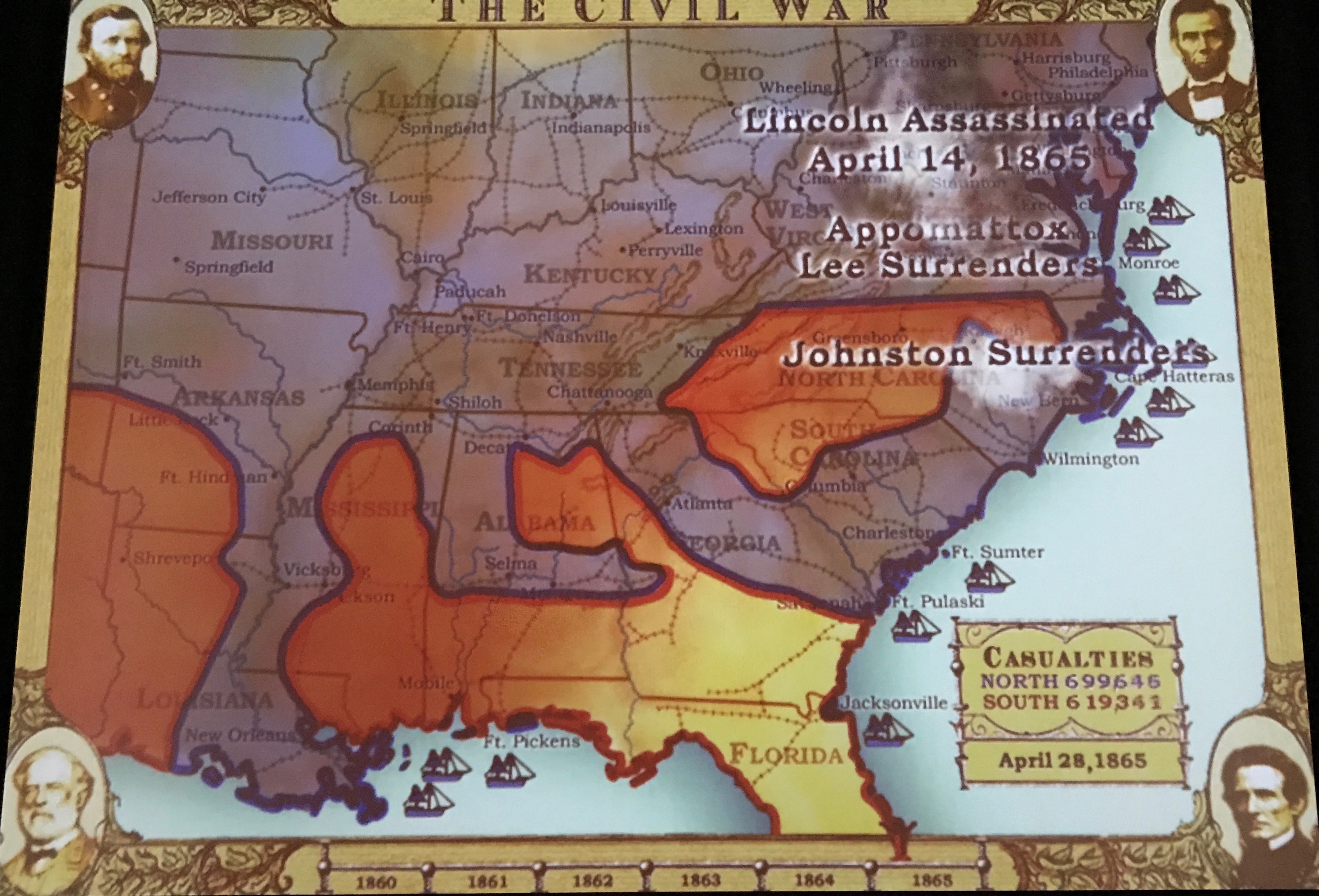
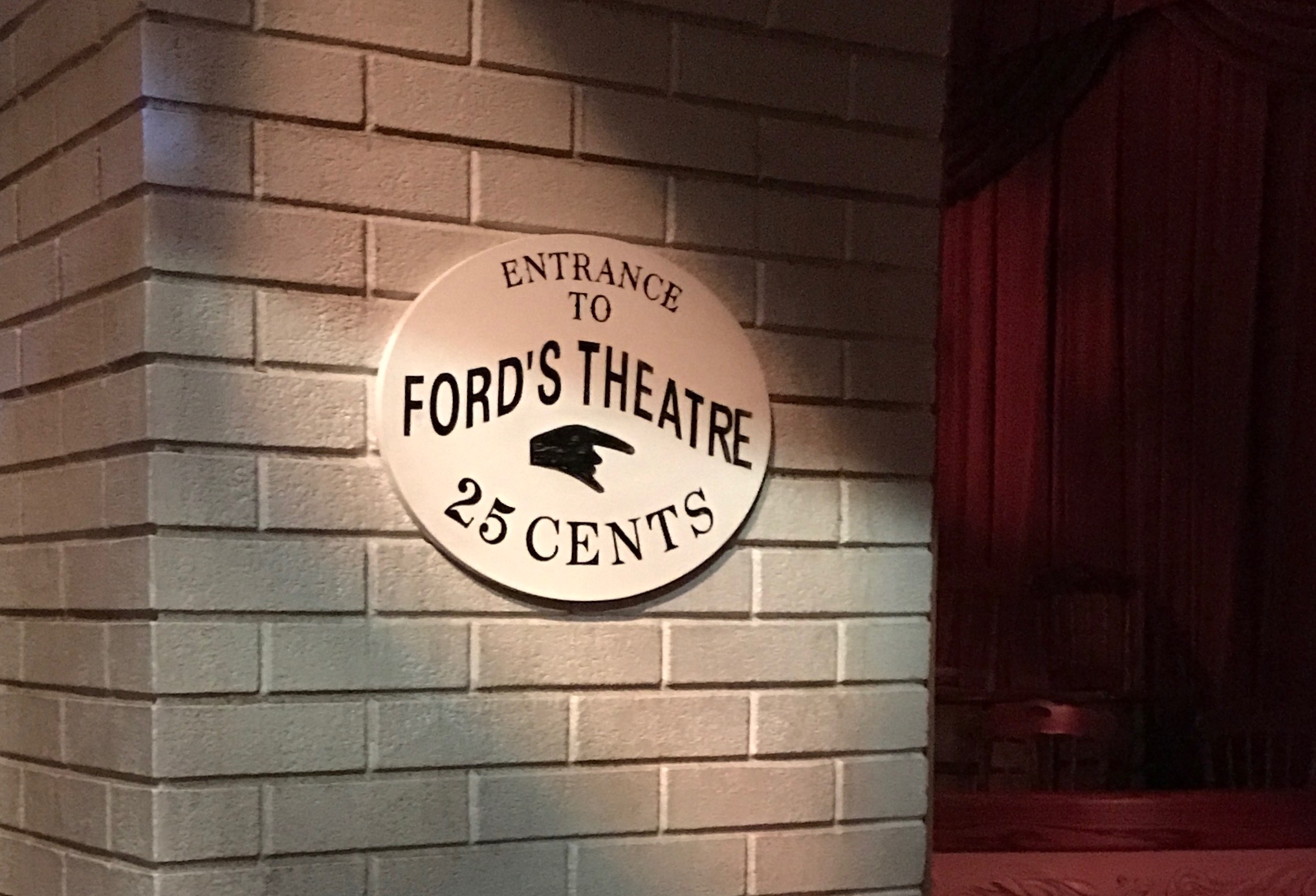
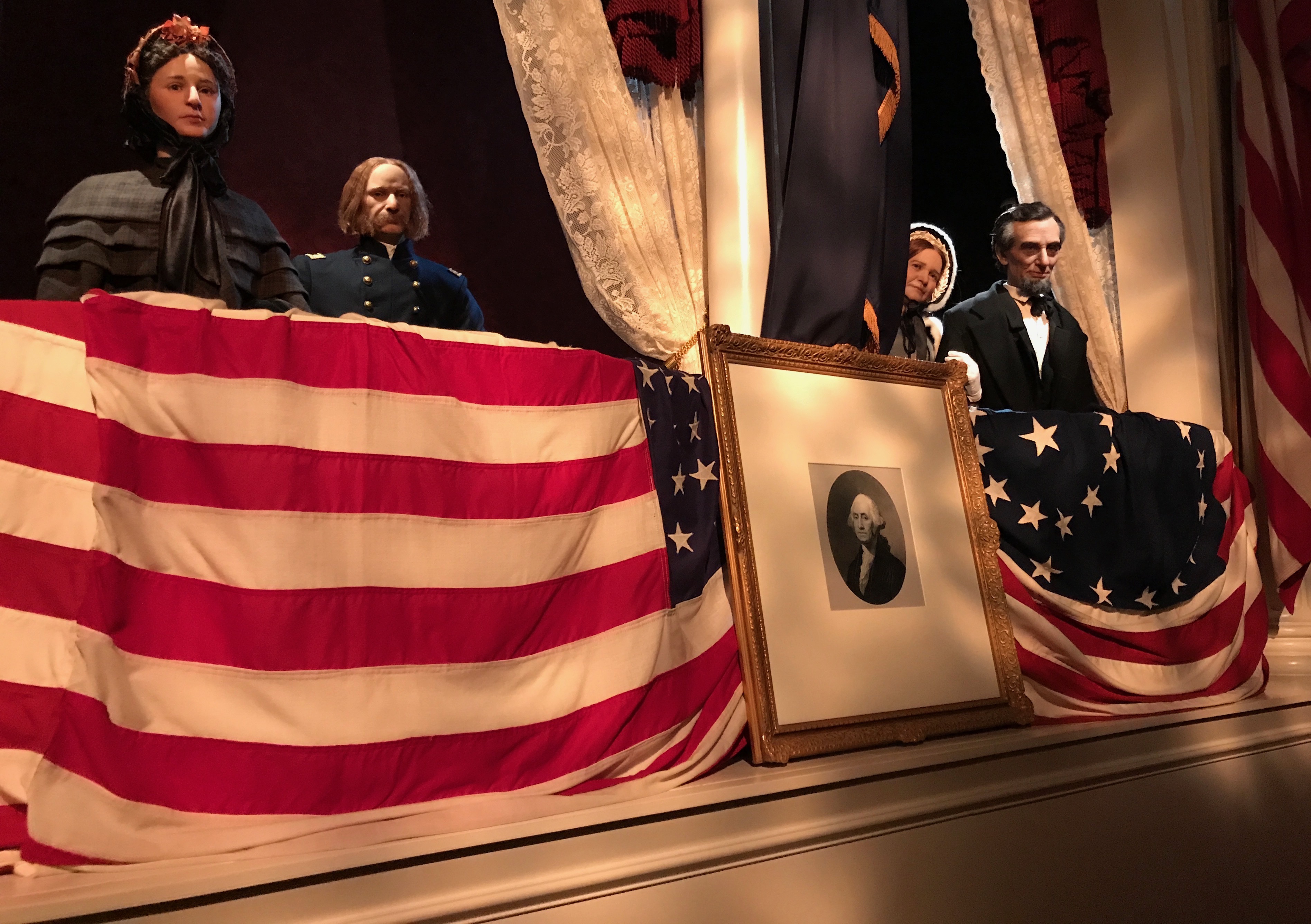
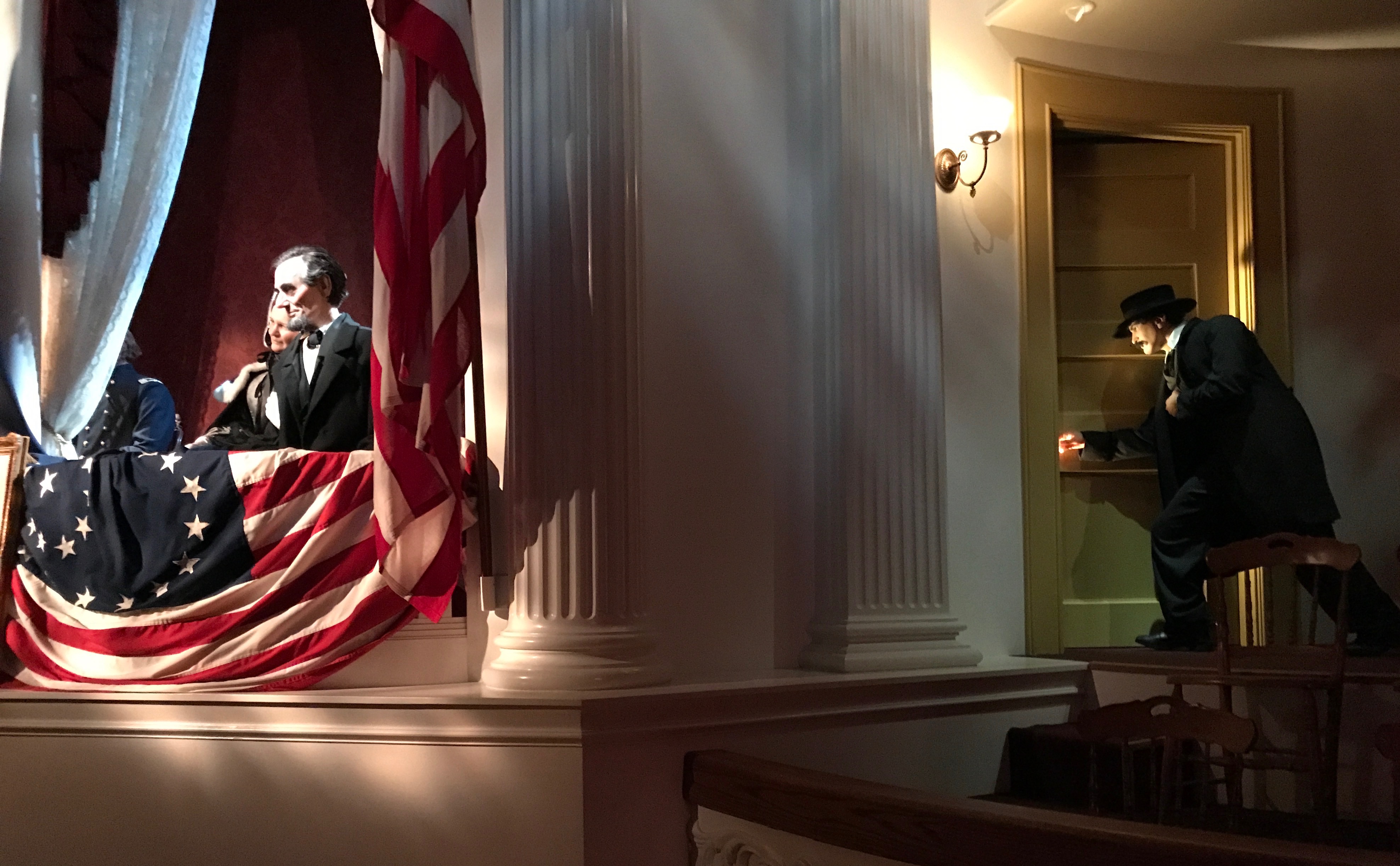
Lincoln was laughing when he was shot.
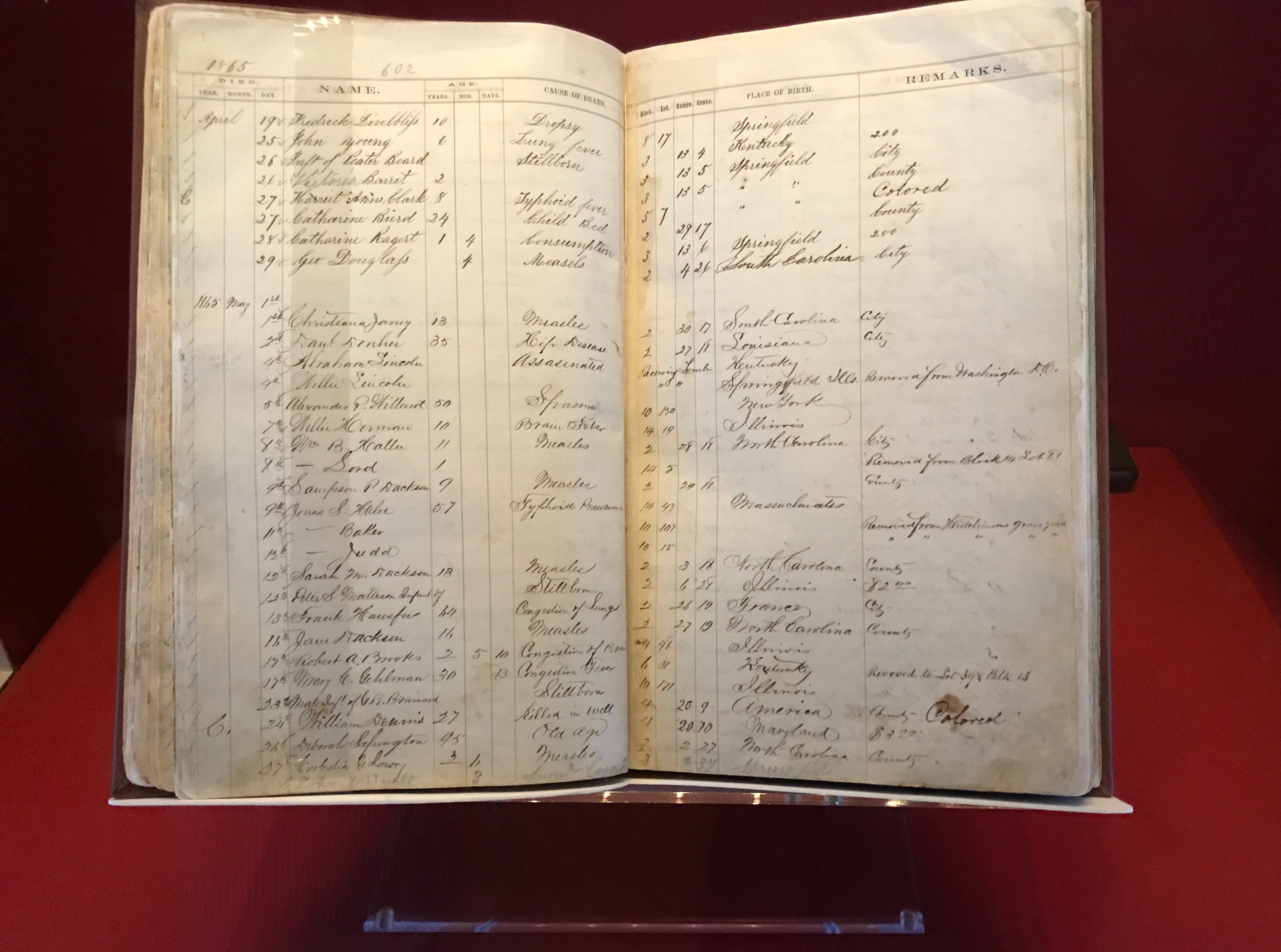
This was the nation’s first presidential assassination. There was a three-week funeral with lyings-in-state in a dozen cities after the funeral train left Washington on April 21. In checking out things for this post, I found out that one of the stops was in Buffalo, my hometown! I am surprised that I never heard of that before.
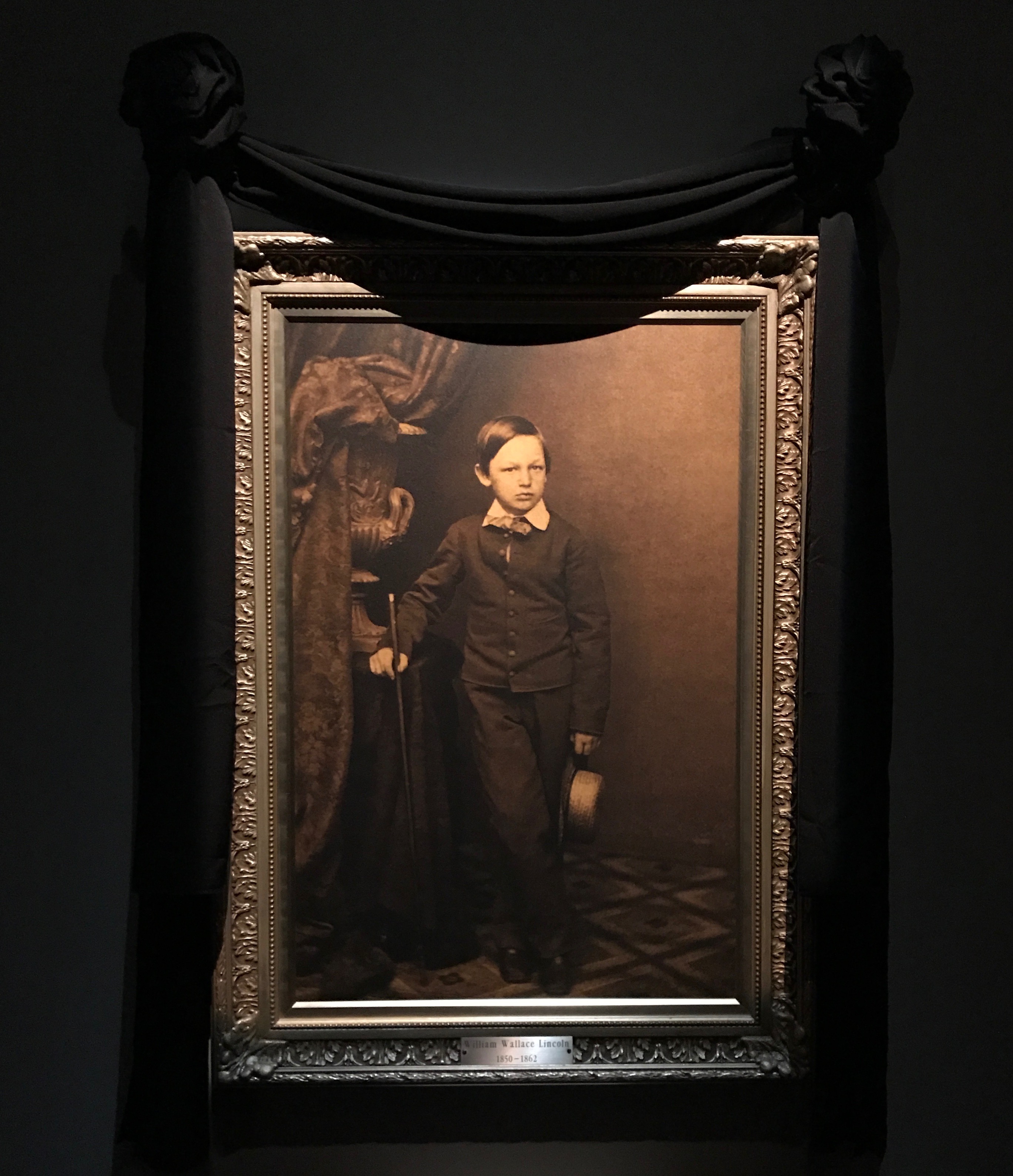
After the slow train ride through seven states and 444 communities, the cortege arrived back in Springfield. The final lying-in-state was in the Old State Capitol and May 4, the body of Lincoln and his son, Willie, were received at Oak Ridge Cemetery. You can see the notation on the right hand of the cemetery internment book on the left hand side, just above the middle.