Okay, back to 2019 – a time before Covid shut downs and travel restrictions.
After I left Bern, I headed to South Carolina.
One thing I absolutely love about traveling around is meeting up with people I’ve met during my life. This time, it was Rosemary, a high school friend. Heavens! I hadn’t seen her in 46 years!

Old friends and I’m wearing an old T shirt. I should have been wearing a T@b shirt!
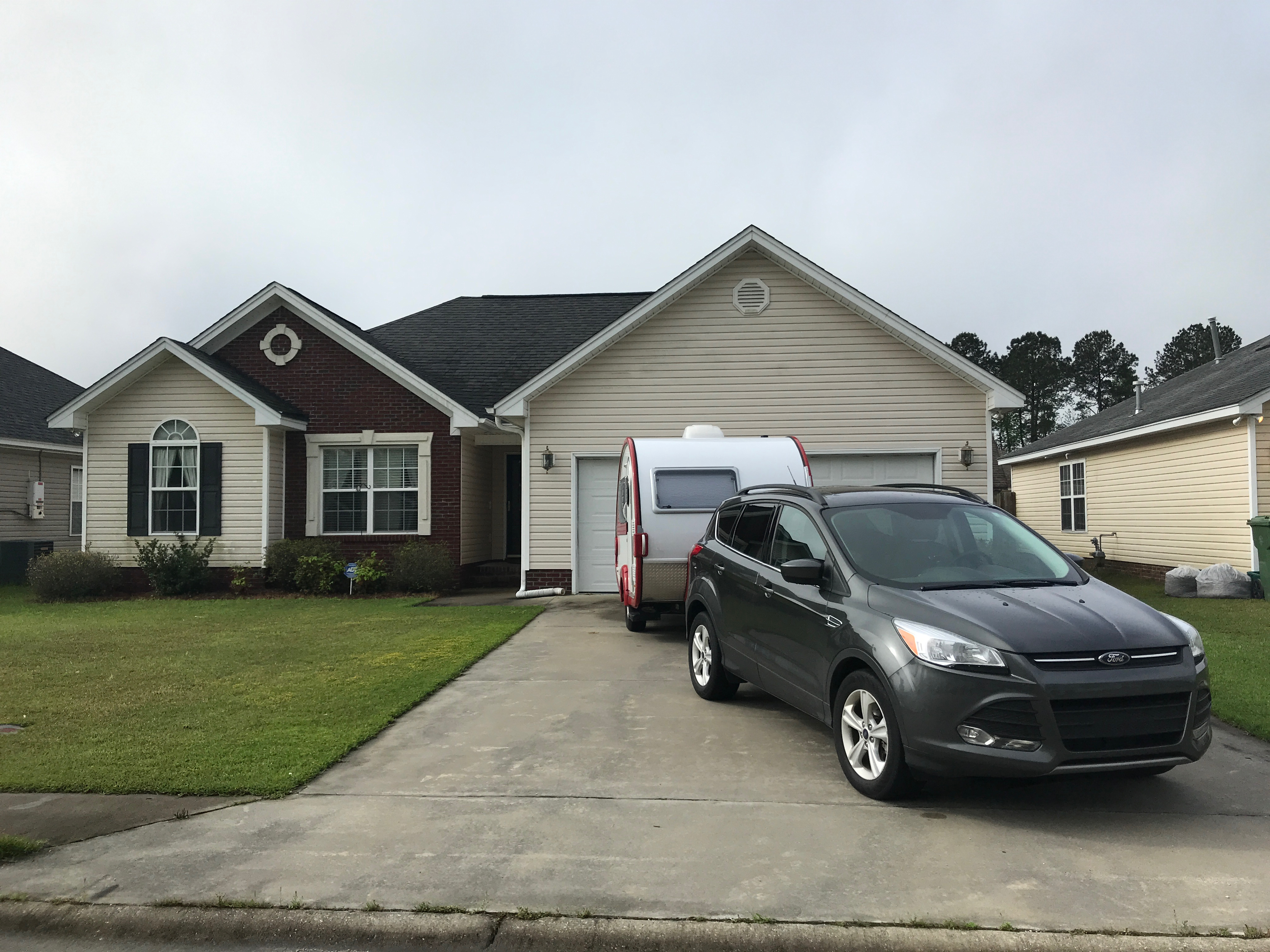
Hmm…maybe I should start a new photo series: Every house looks better with a T@b in the driveway…
We caught up as best we could. In some ways, it’s easier to catch up when you haven’t seen someone in decades. It forces you to just hit the high points. It was a quick overnight, and then I was on to the South Carolina State Capitol in Columbia.
I couldn’t believe it, but I found a place nearby to park with the trailer hitched up.
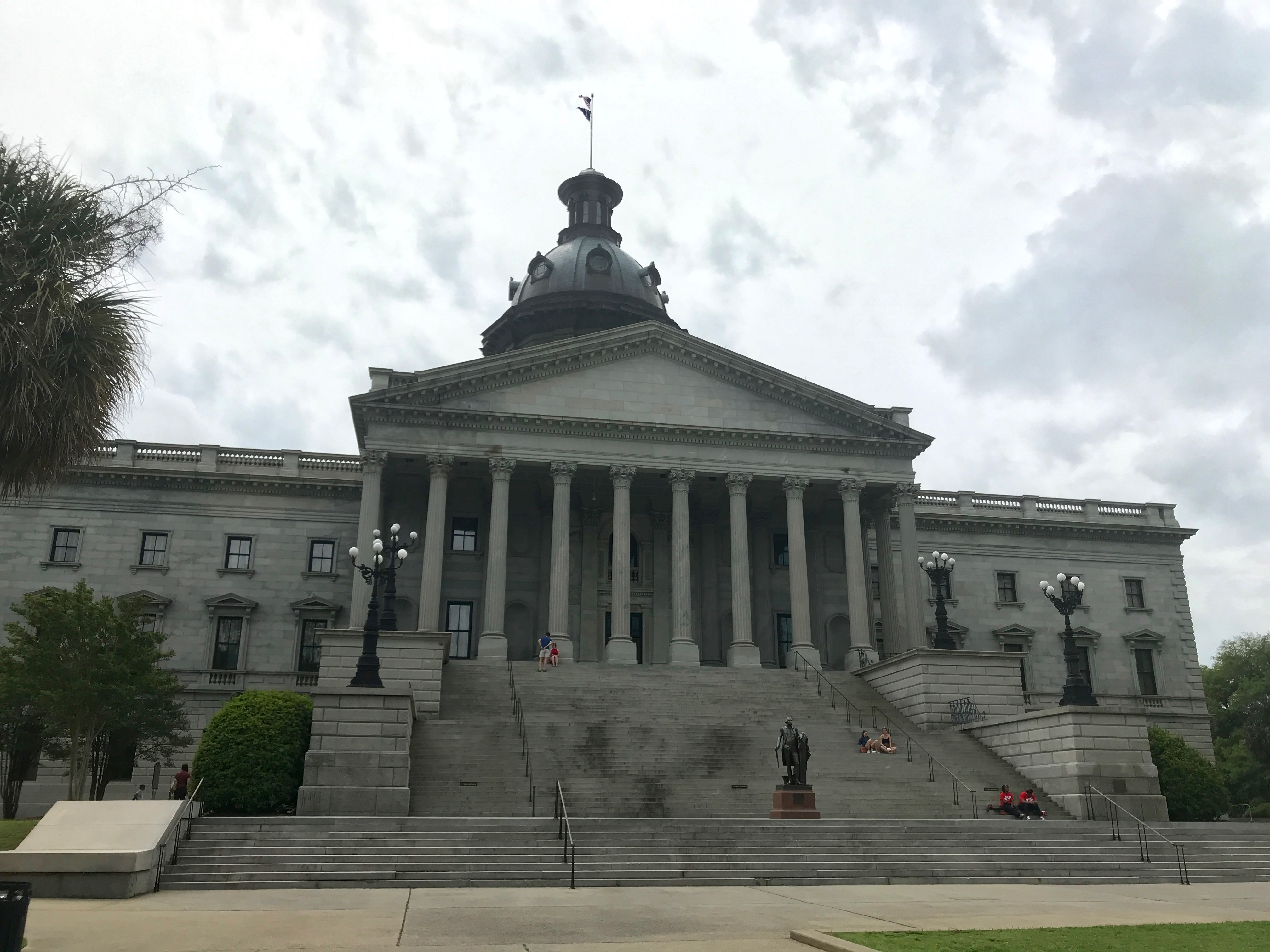
I walked toward it, wondering whose statue they chose to put in front.
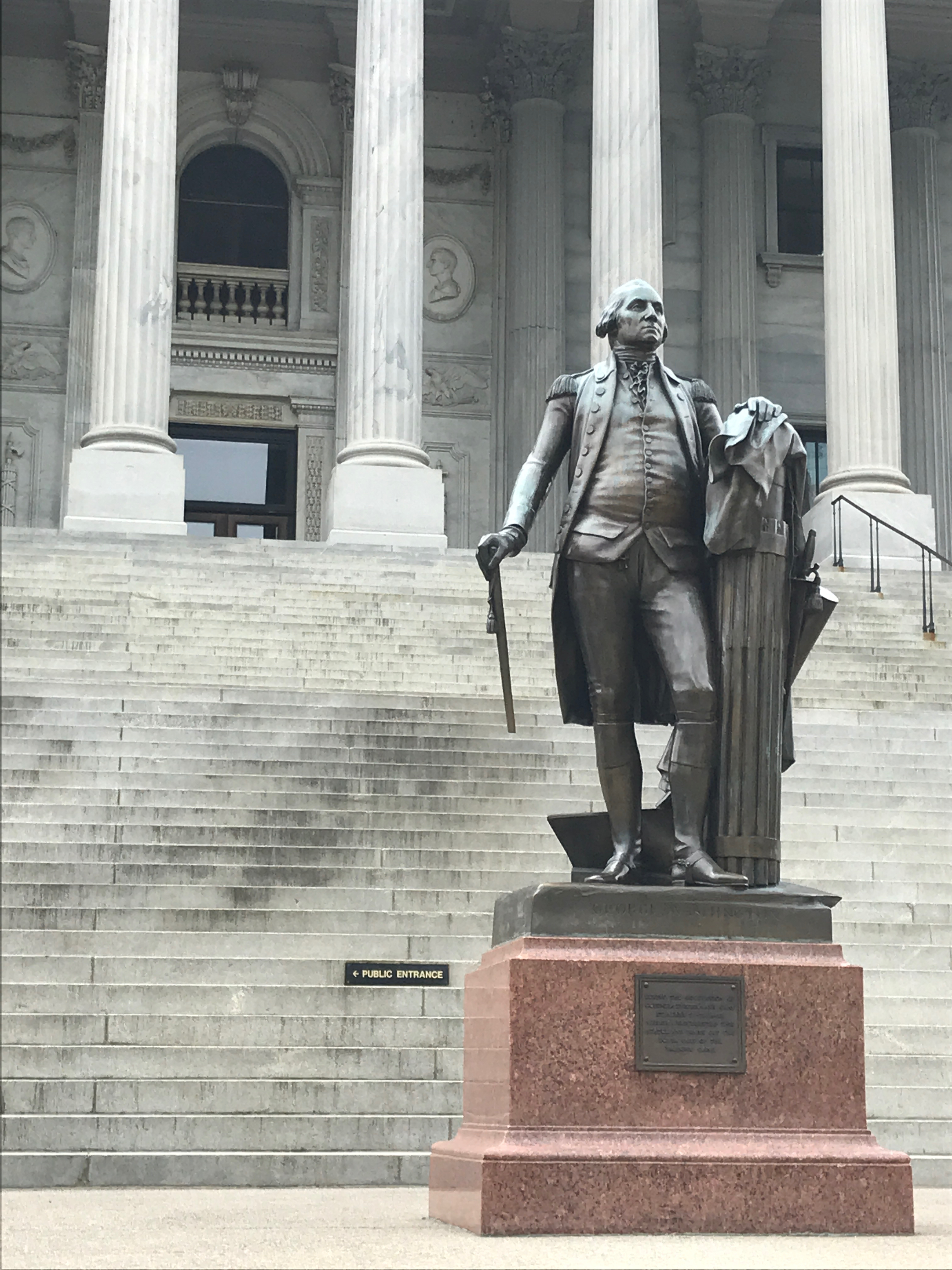
George Washington. But what’s the story with the walking stick?
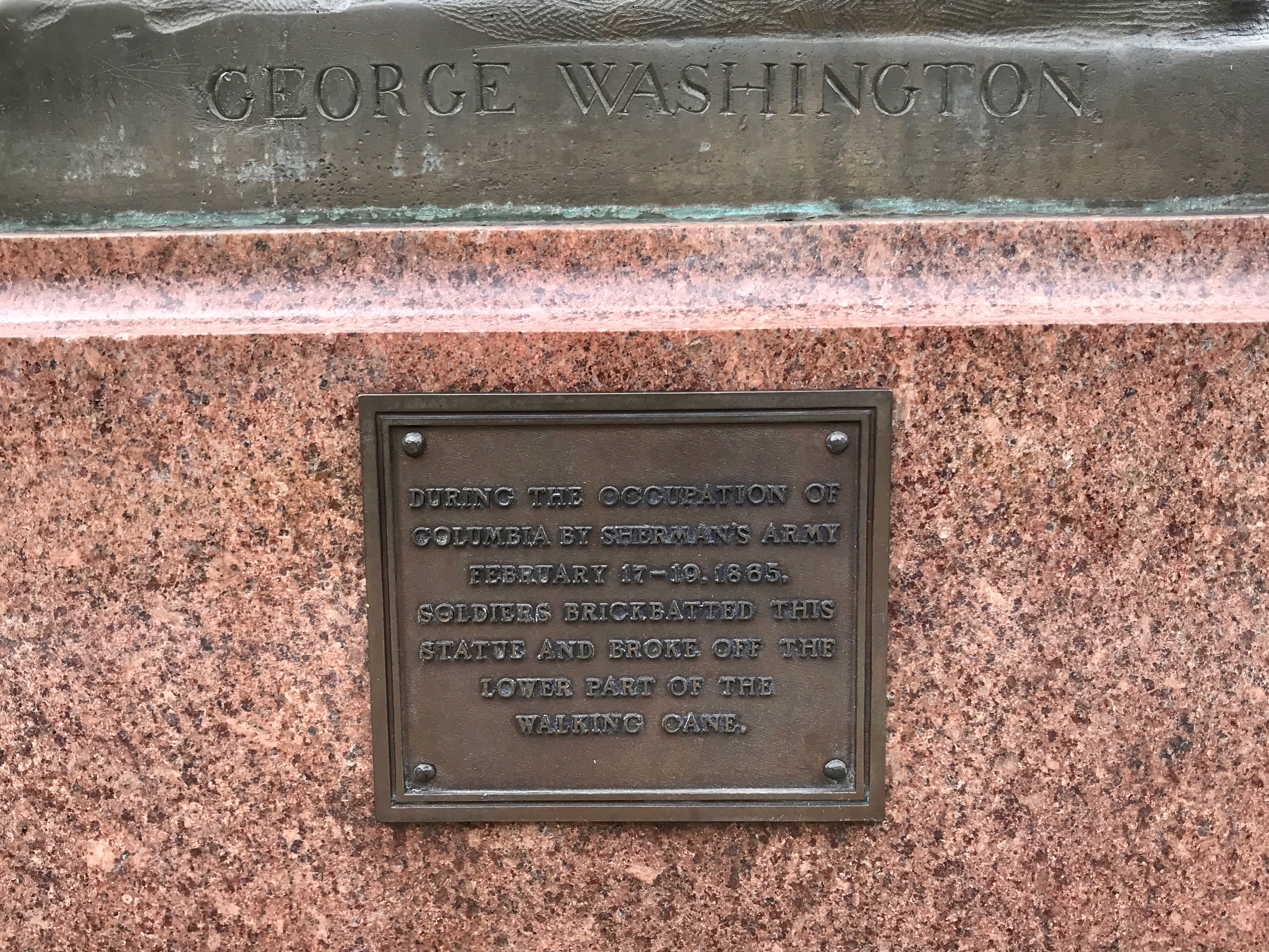
The inscription was interesting. The Union soldiers did it during Sherman’s occupation of Columbia in February 1865. “Soldiers brickbatted this statue…”
I had heard the term “brickbat” before, but I wasn’t completely sure of the definition.
According to Merriam Webster, there are two definitions.
1. a fragment of a hard material, such as a brick”
2. an uncomplimentary remark
I wonder if they meant that the soldiers literally threw chunks of bricks at the statue or if they meant to imply that the damage was an insult to George Washington?
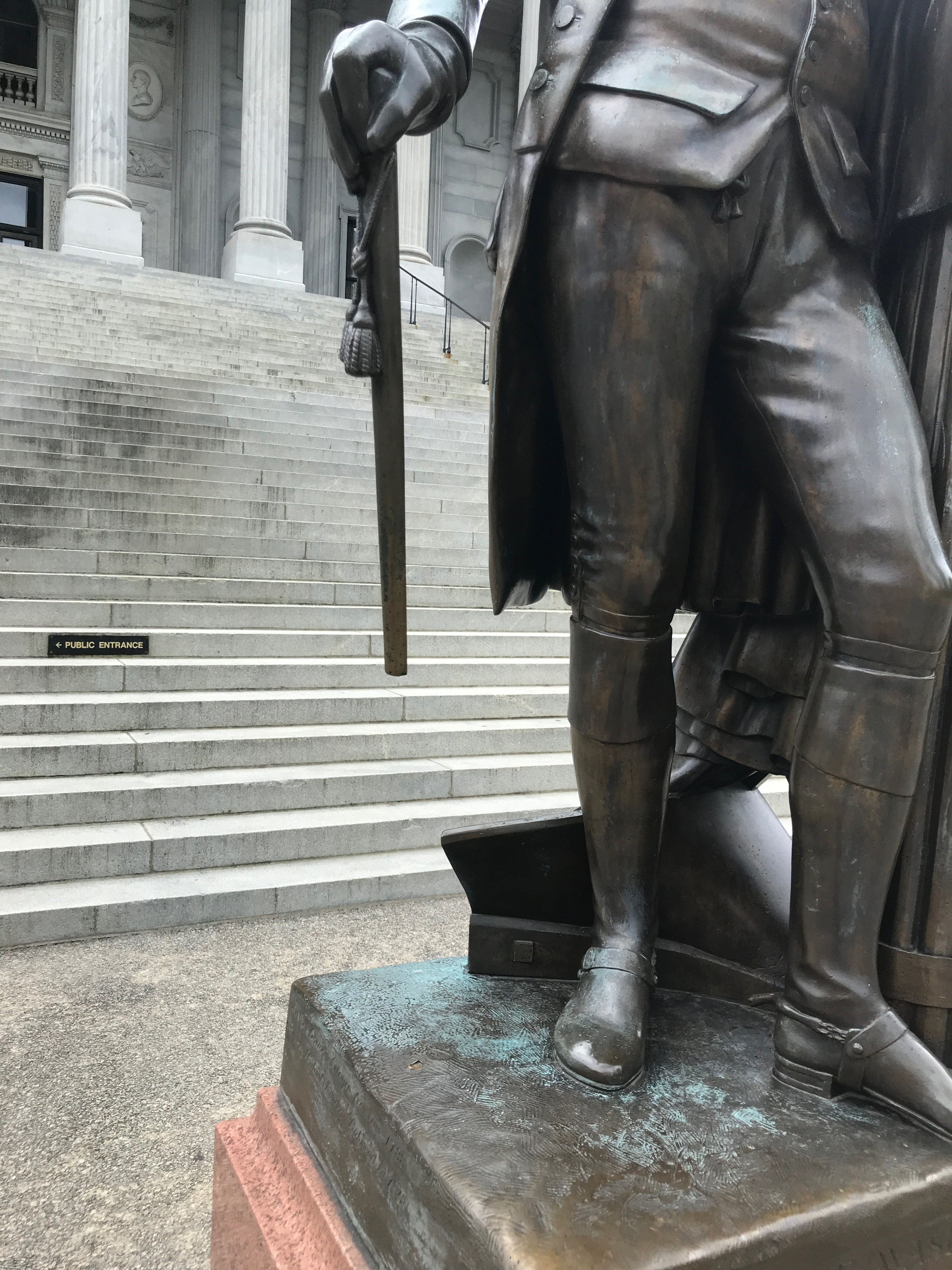
The statue is interesting. It is a full-size bronze copy of a marble statue by Jean-Antoine Houdon for the Virginia State Capitol. Here’s a picture I took of the original when I was in Richmond.
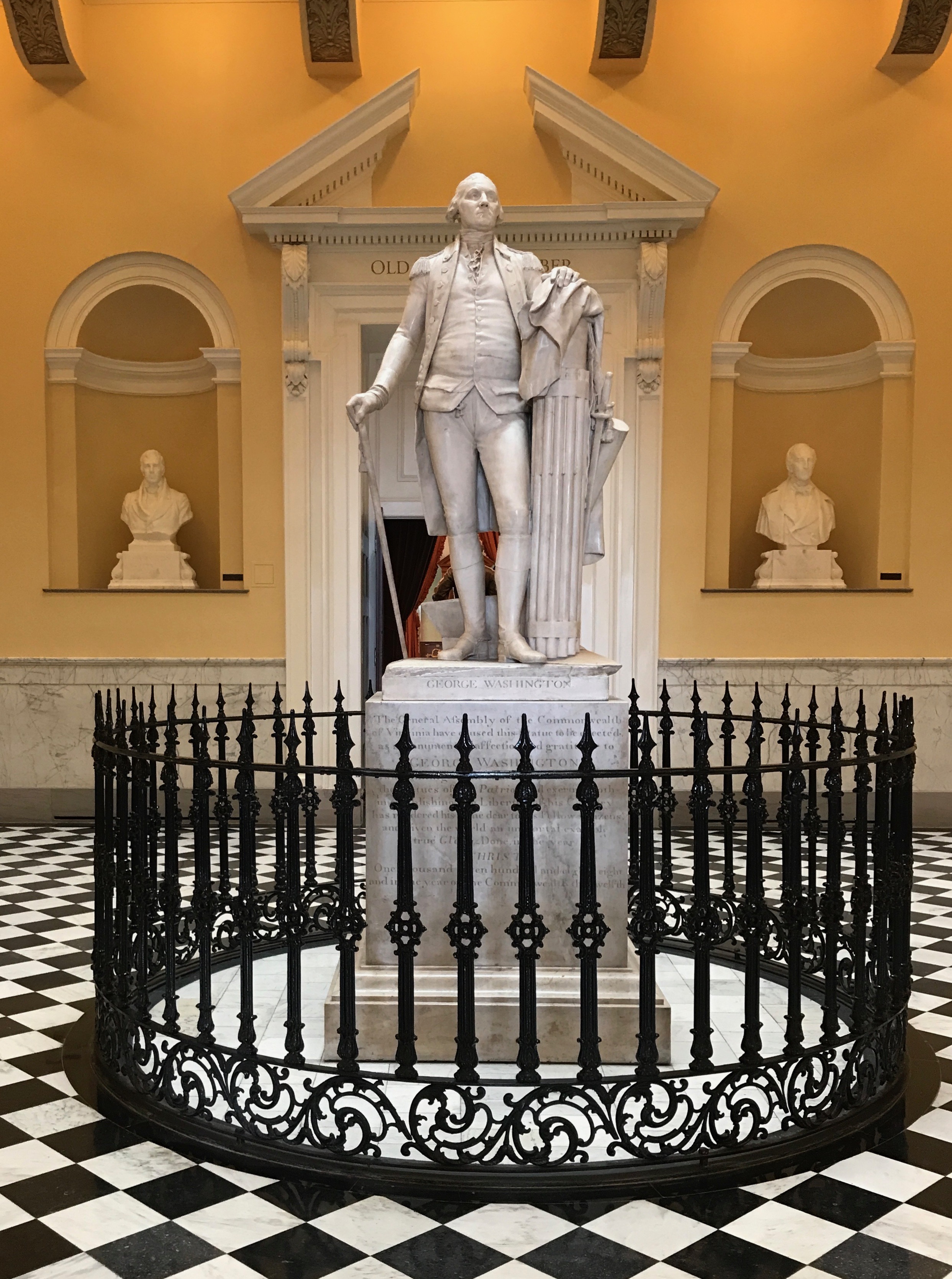
According to the Historic Columbia website, Houdon depicted Washington resigning as commander-in-chief of the Continental Army: he relinquishes his power to the democracy (represented by his sword hanging on a bundle of thirteen reeds) in order to return to his farm (symbolized by the plow at his feet). Originally installed on the ground floor of the South Carolina State House, the statue expressed the kinship that antebellum South Carolina politicians felt with the revolutionary hero and slaveholder as they defended their own right to continue as a society defined by slavery.
The statue was moved from the ground floor of the statehouse outside in 1889 and to its current location in 1911. In its 1931 report, the Historical Commission of South Carolina reported an expenditure of $40 for a bronze plaque “reciting the abuse accorded it byFederal soldiers in February, 1865.”
So, I am guessing that “brickbat” in this case meant more of the second definition, perhaps with overtones of the first.
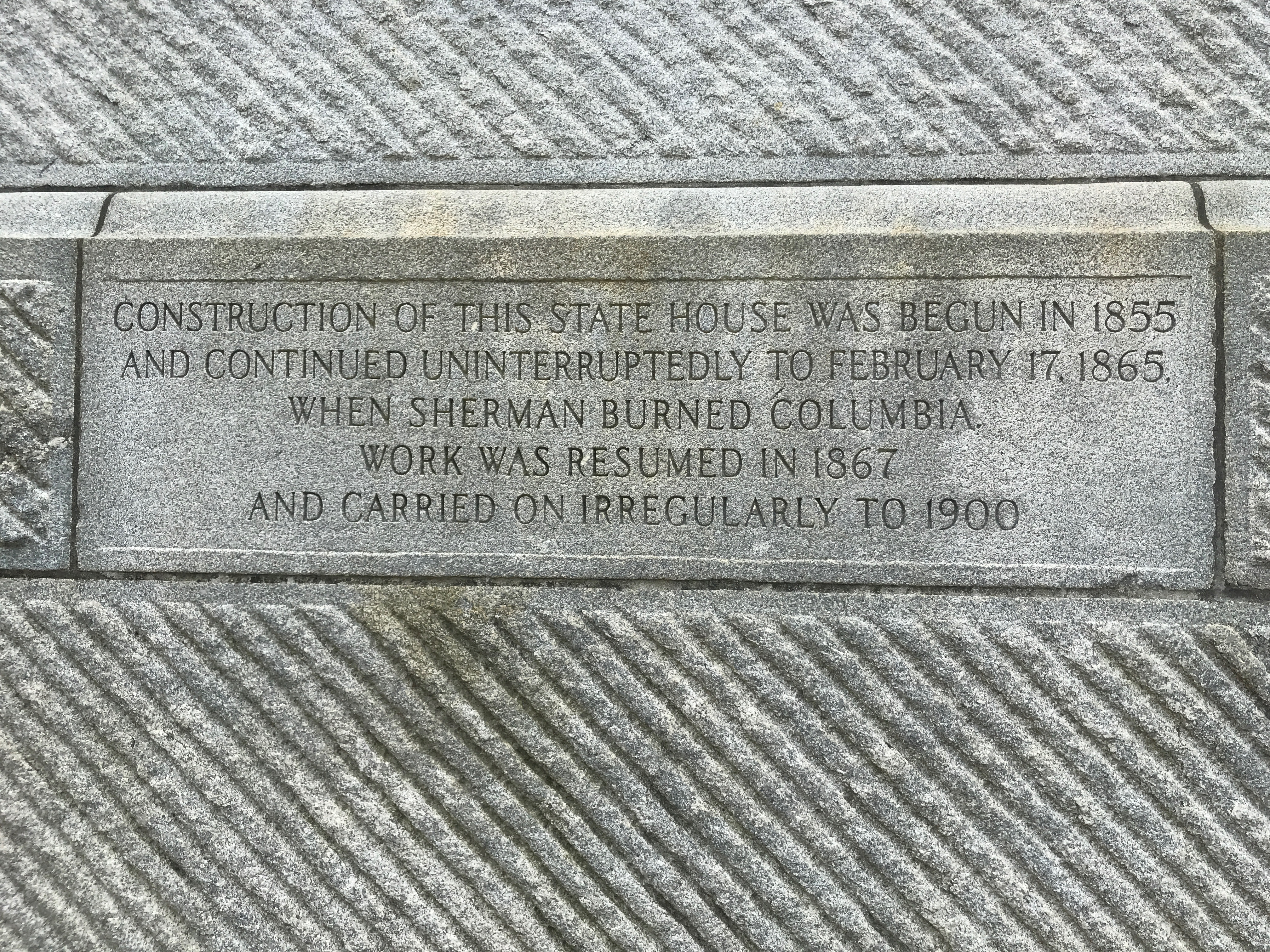
I came across the cornerstone. I guess the spirit of resentment is important to South Carolina.
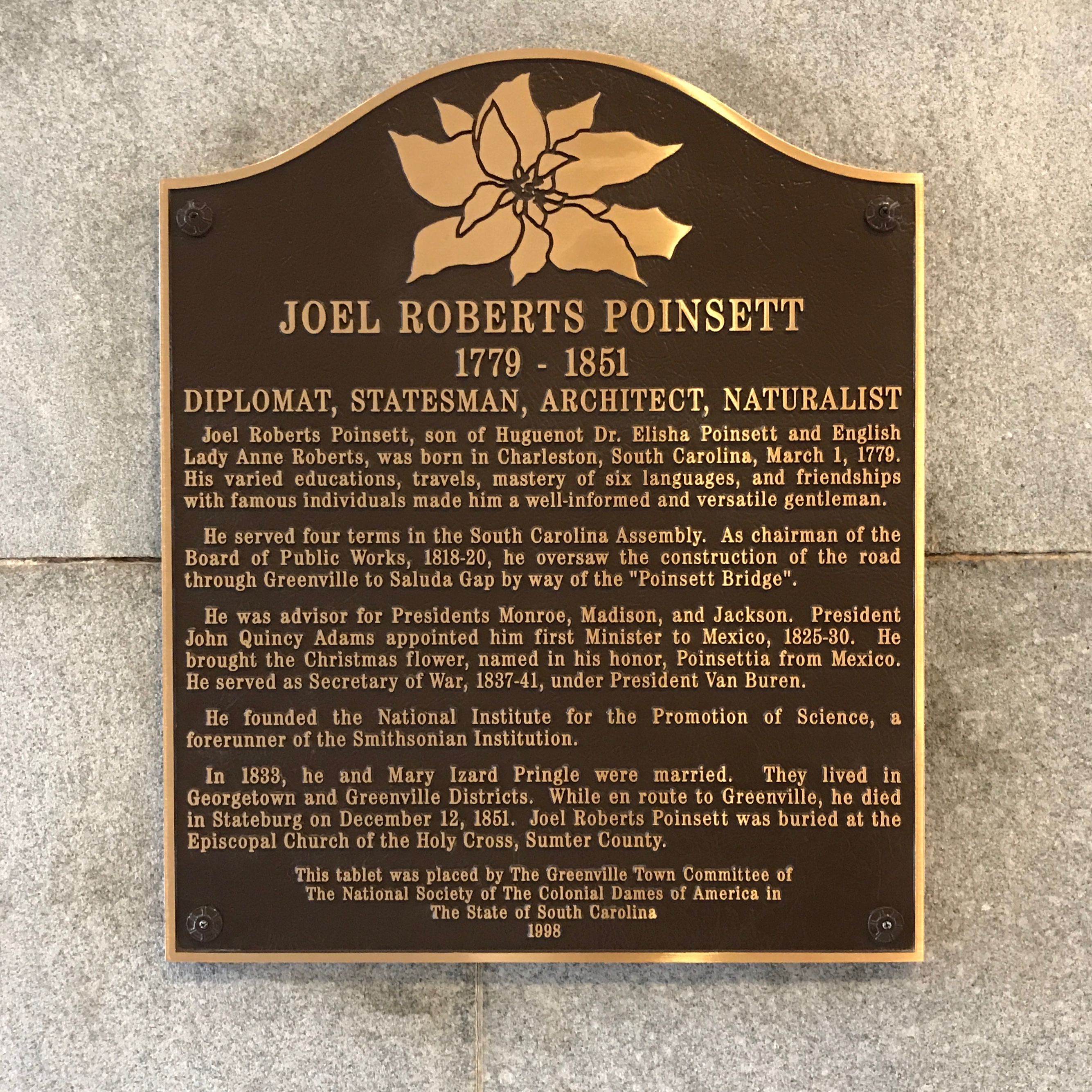
Here’s another bit of interesting information. The poinsettia has a tie to South Carolina.
I made my way inside.
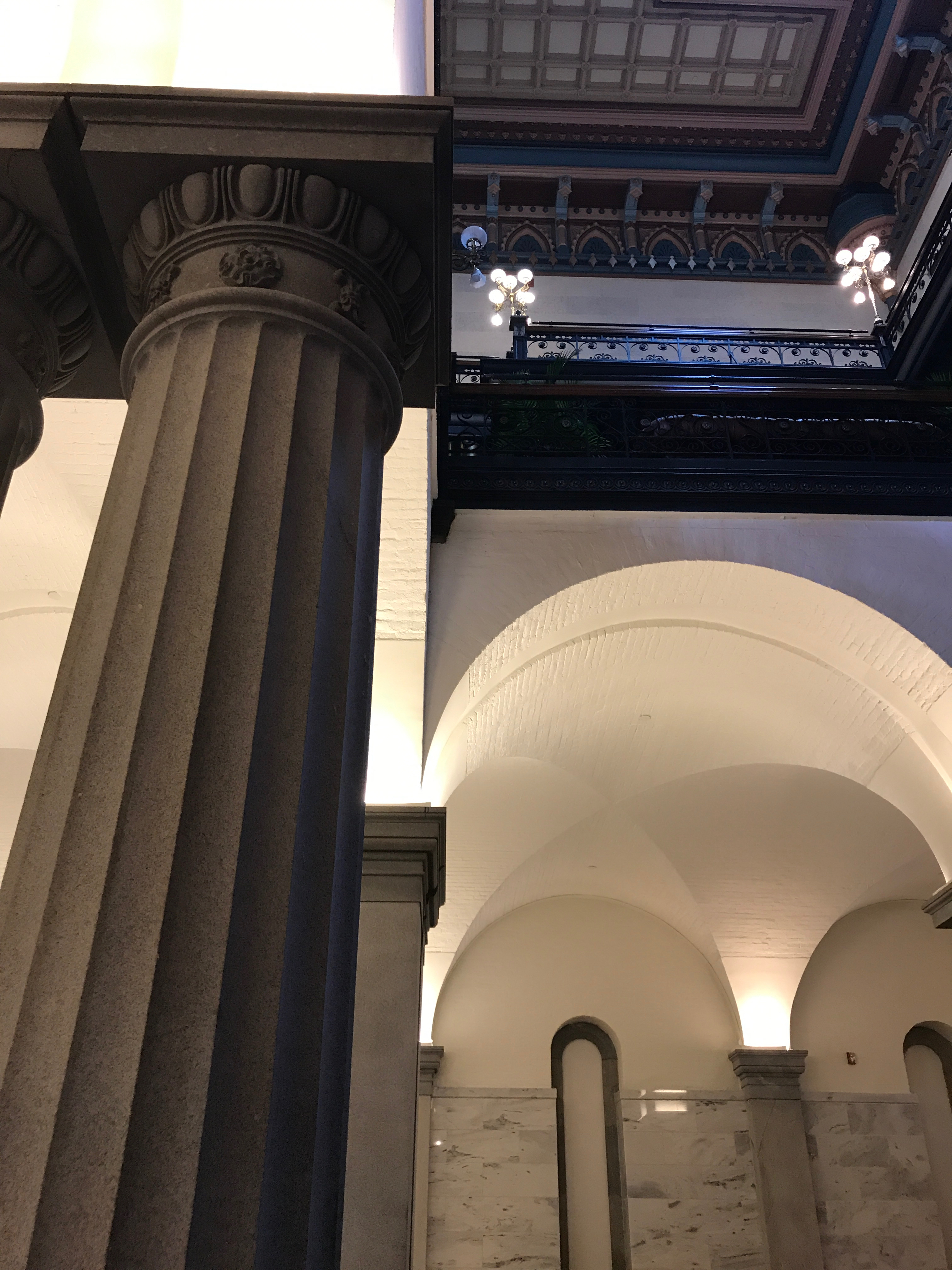
There didn’t seem to be any tours being given when I visited, so I just roamed around a bit.
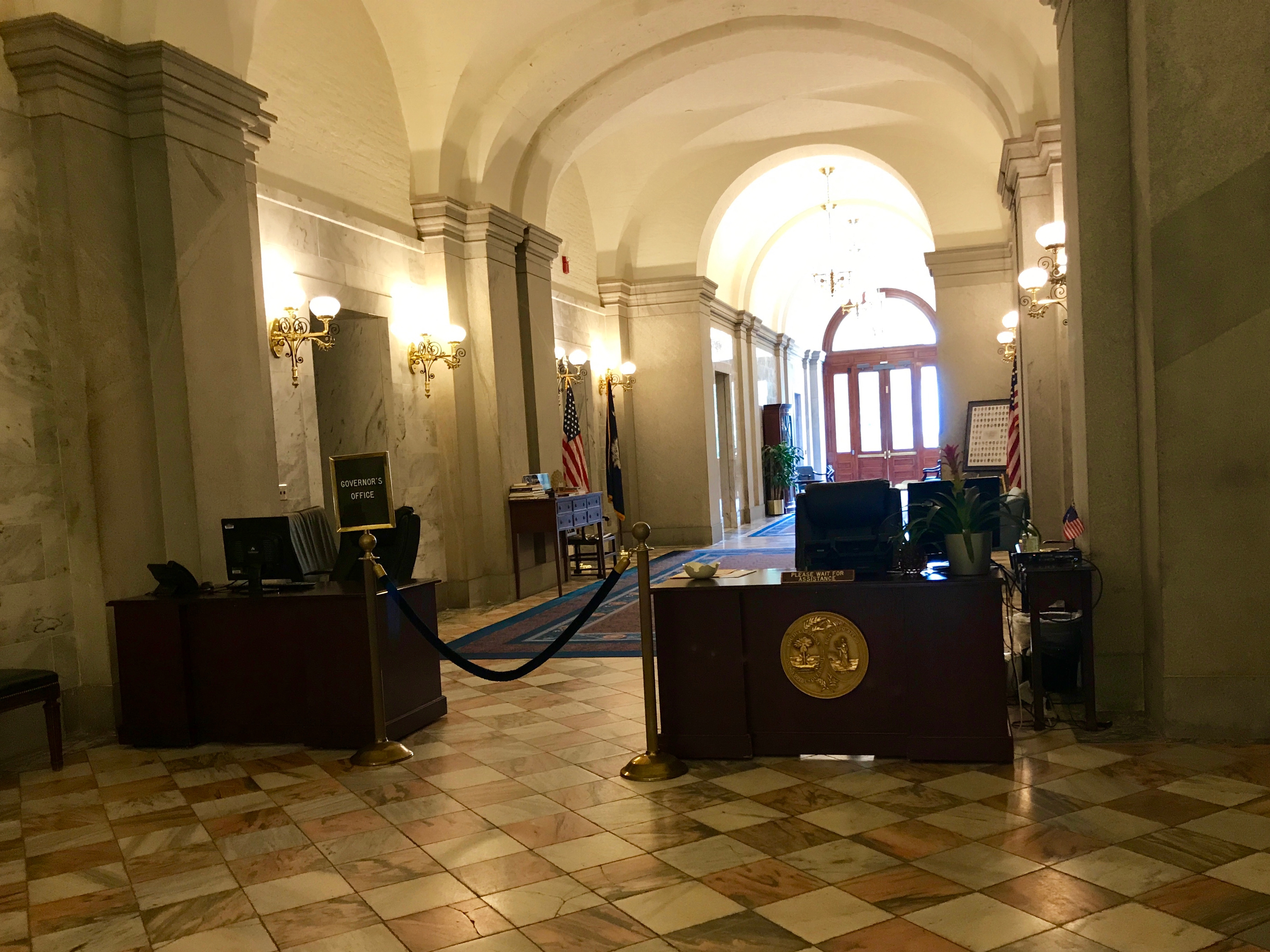
The governor’s office is down that hallway.
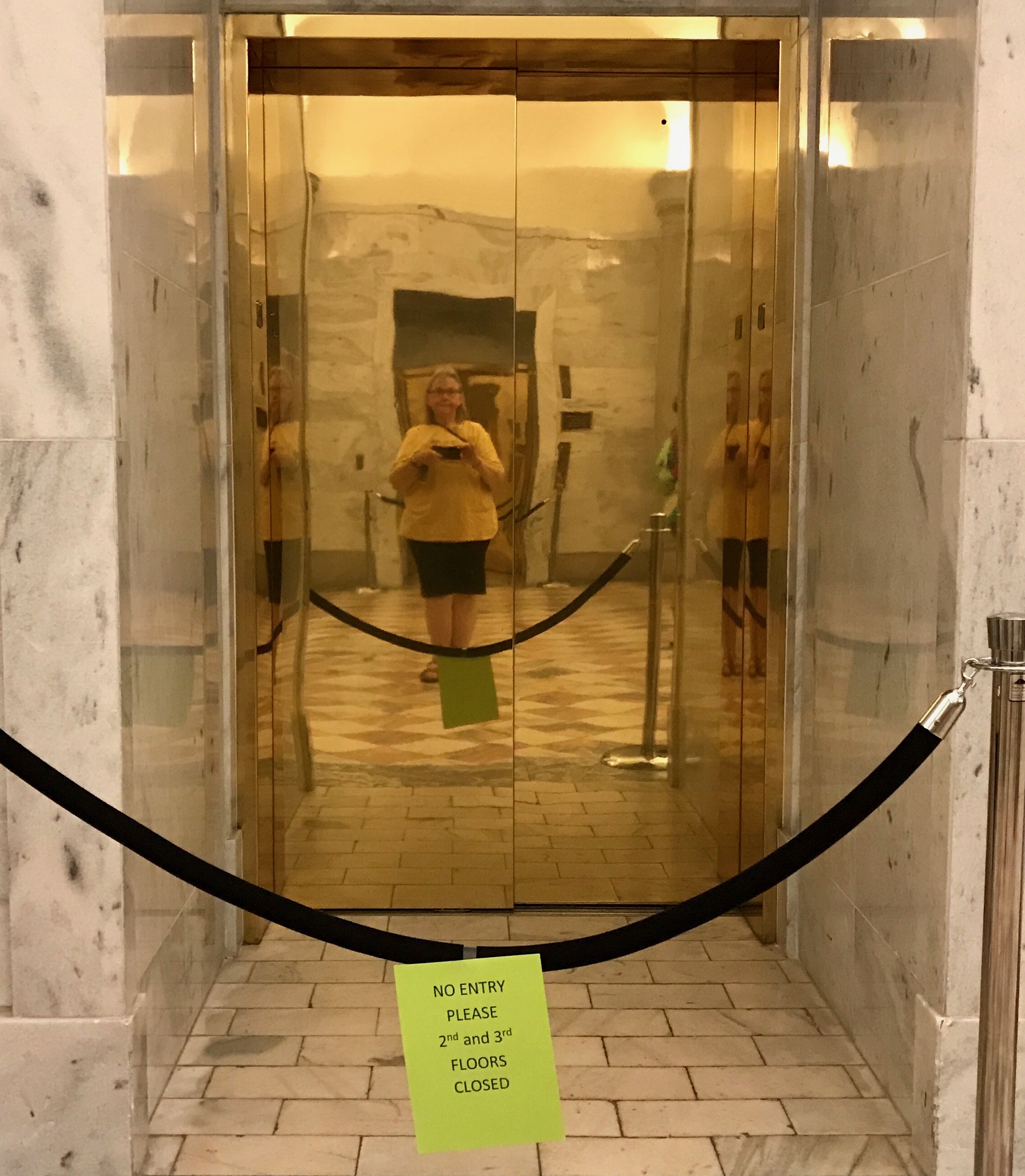
I took a selfie of my reflection in the elevator doors.

As I remember, this is in the lower level.
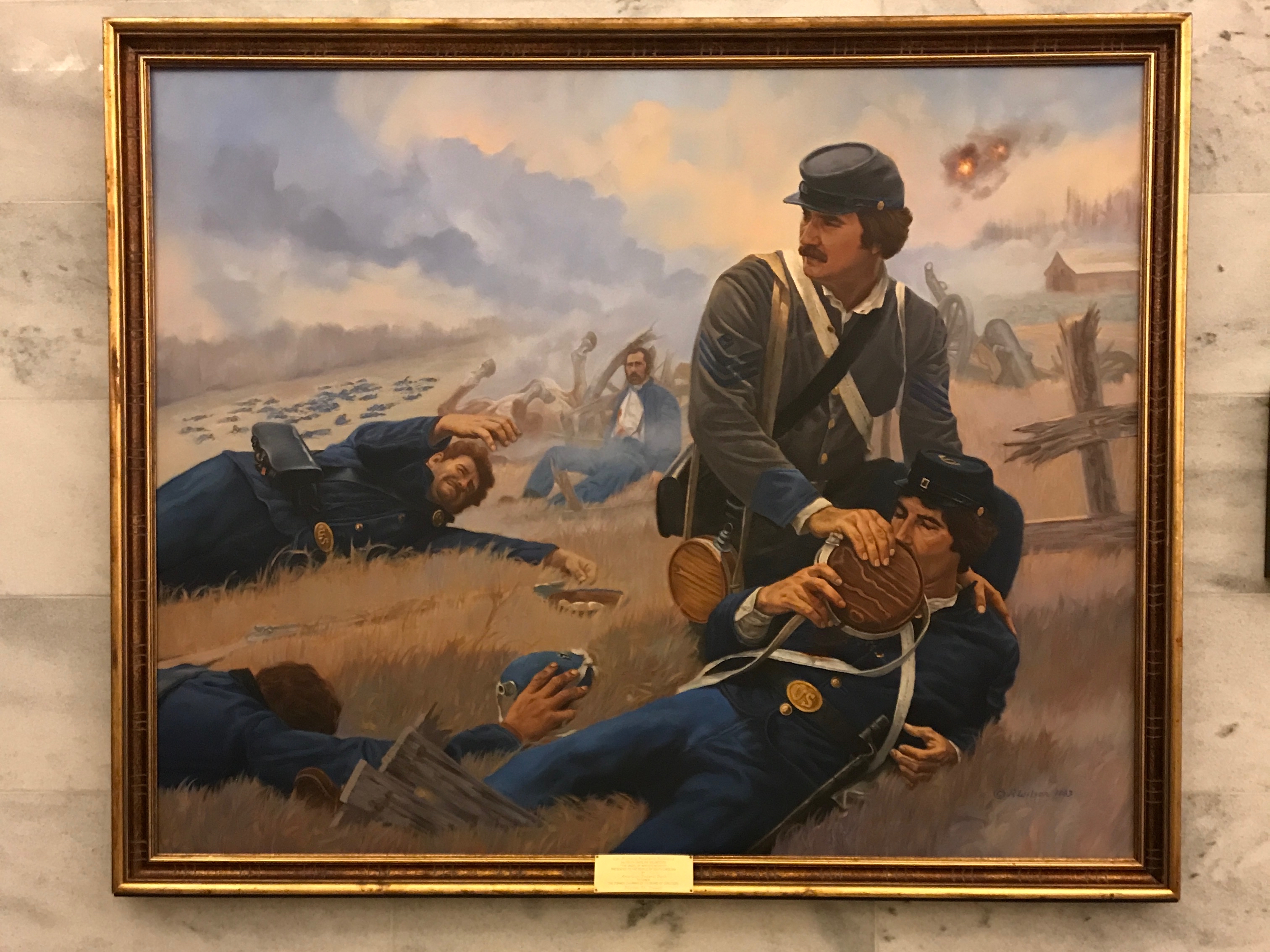
They had some displays in the basement. There was this painting of the Angel of Marye’s Heights.
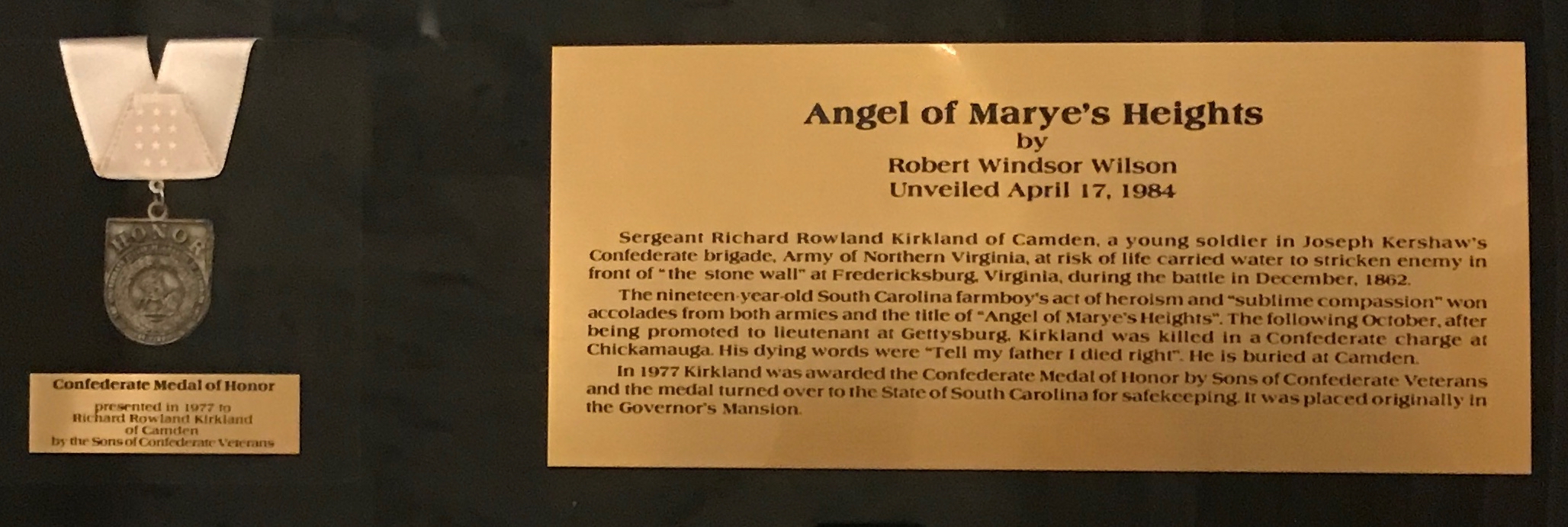
Sergeant Richard Rowland Kirkland took water to the enemy during the battle of Fredericksburg in December 1862. When he died during the battle of Chickamauga, his dying words were reported to be, “Tell my father I died right.”
He was awarded the Confederate Medal of Honor by Sons of Confederate Veterans in 1977.
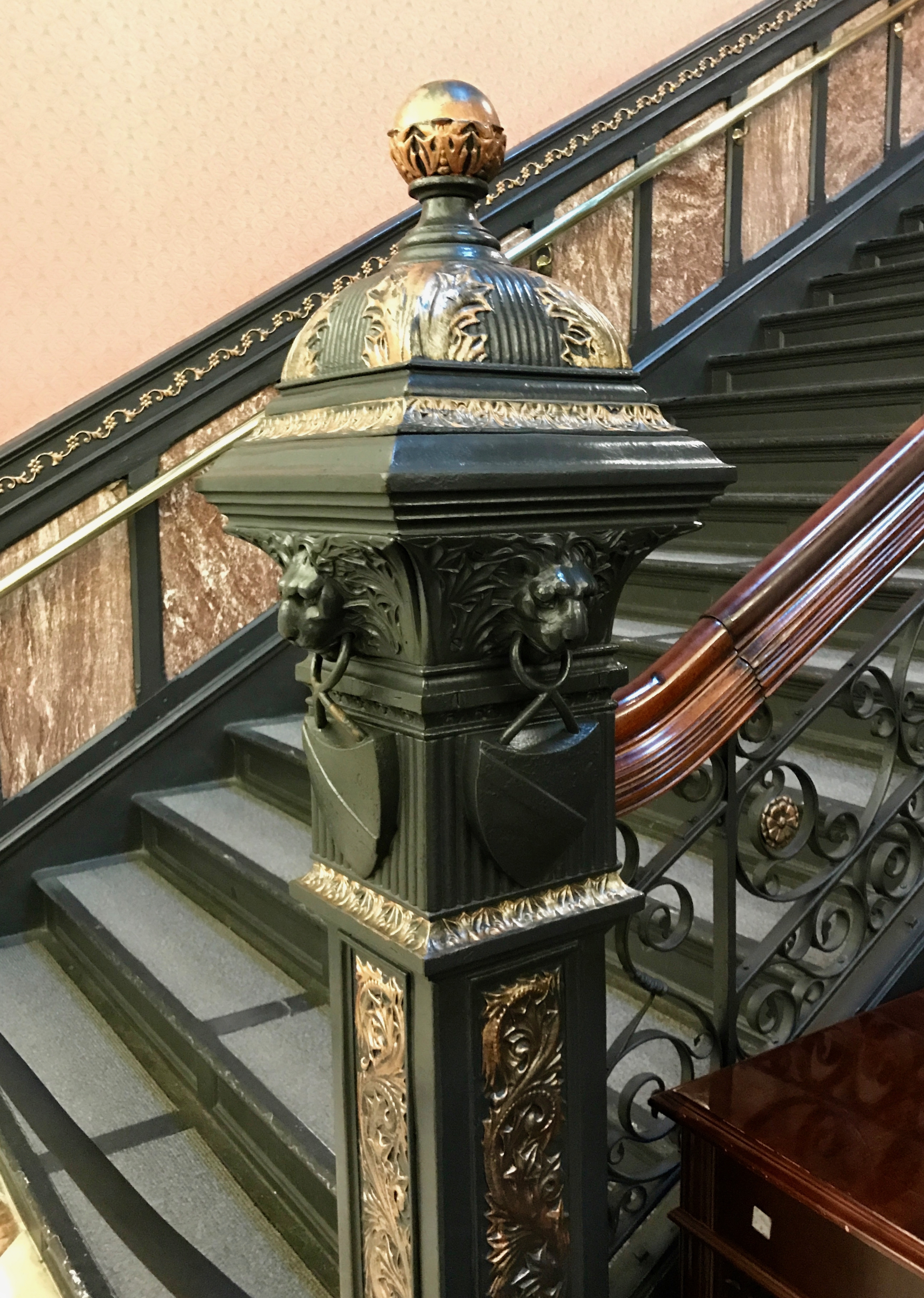
I continued my explorations.
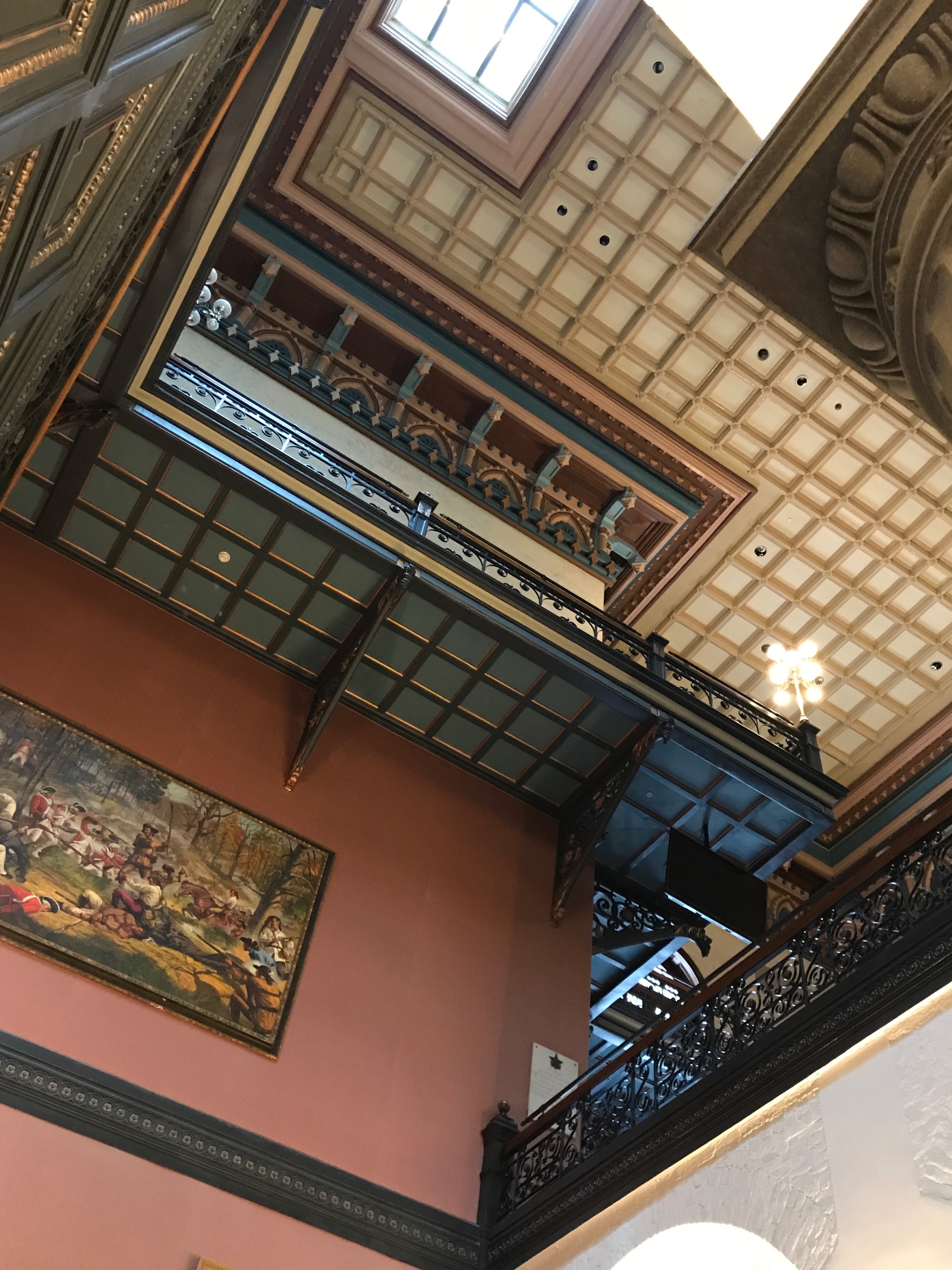
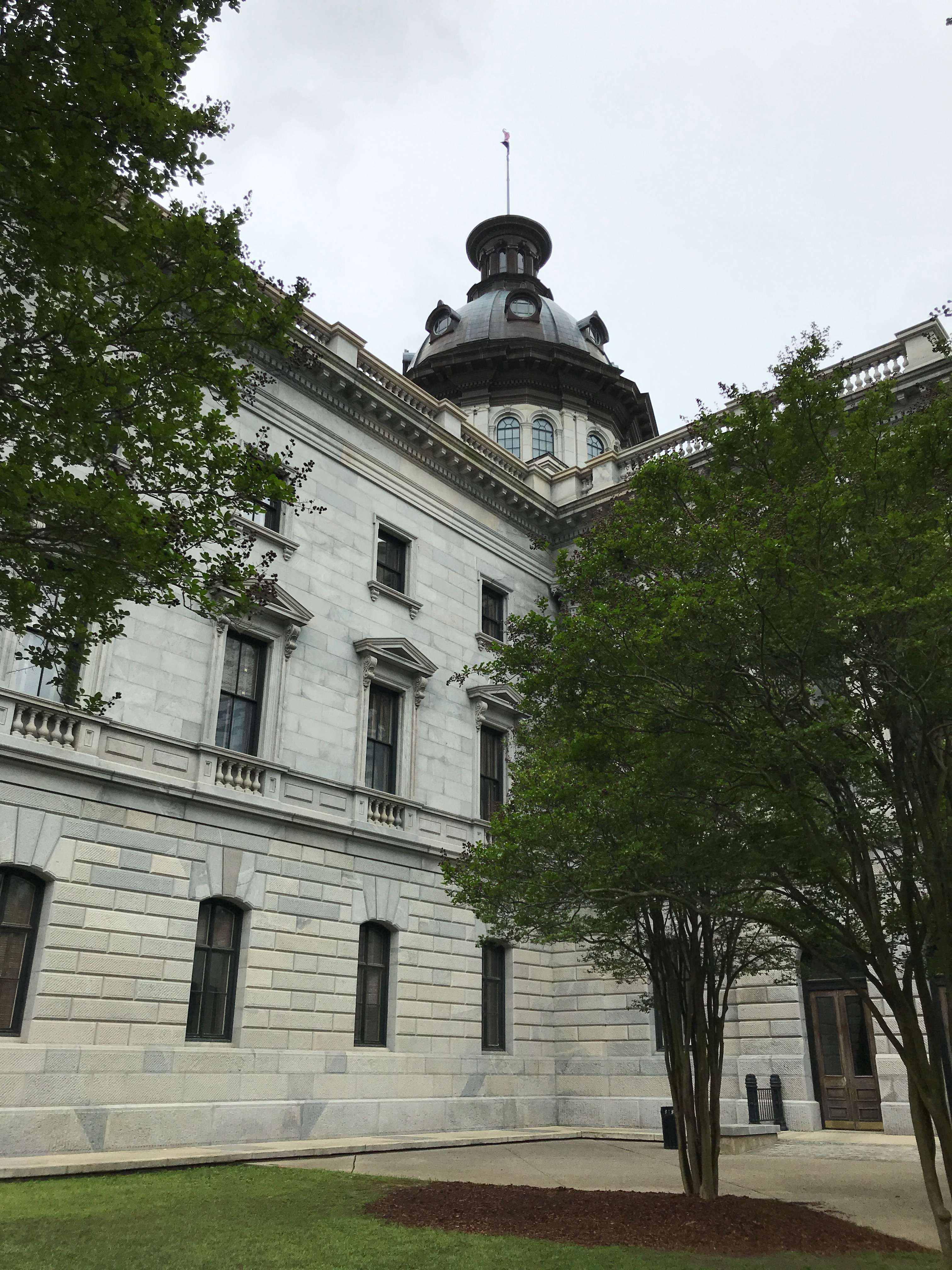
There appears to be quite a variety of architectural styles, probably due to the long time period that the building was under construction.
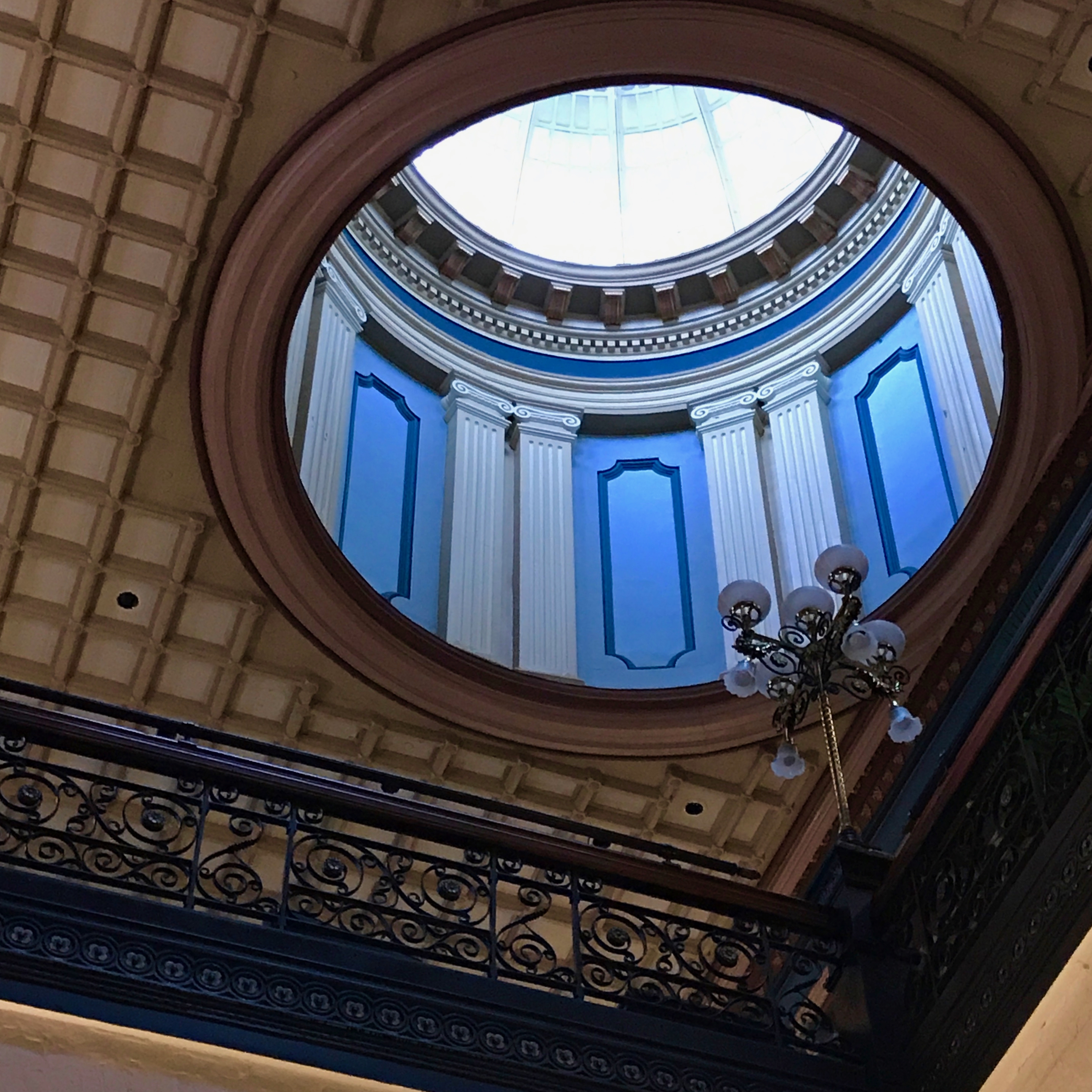
They did include a dome. I headed outside to see what else I could see.
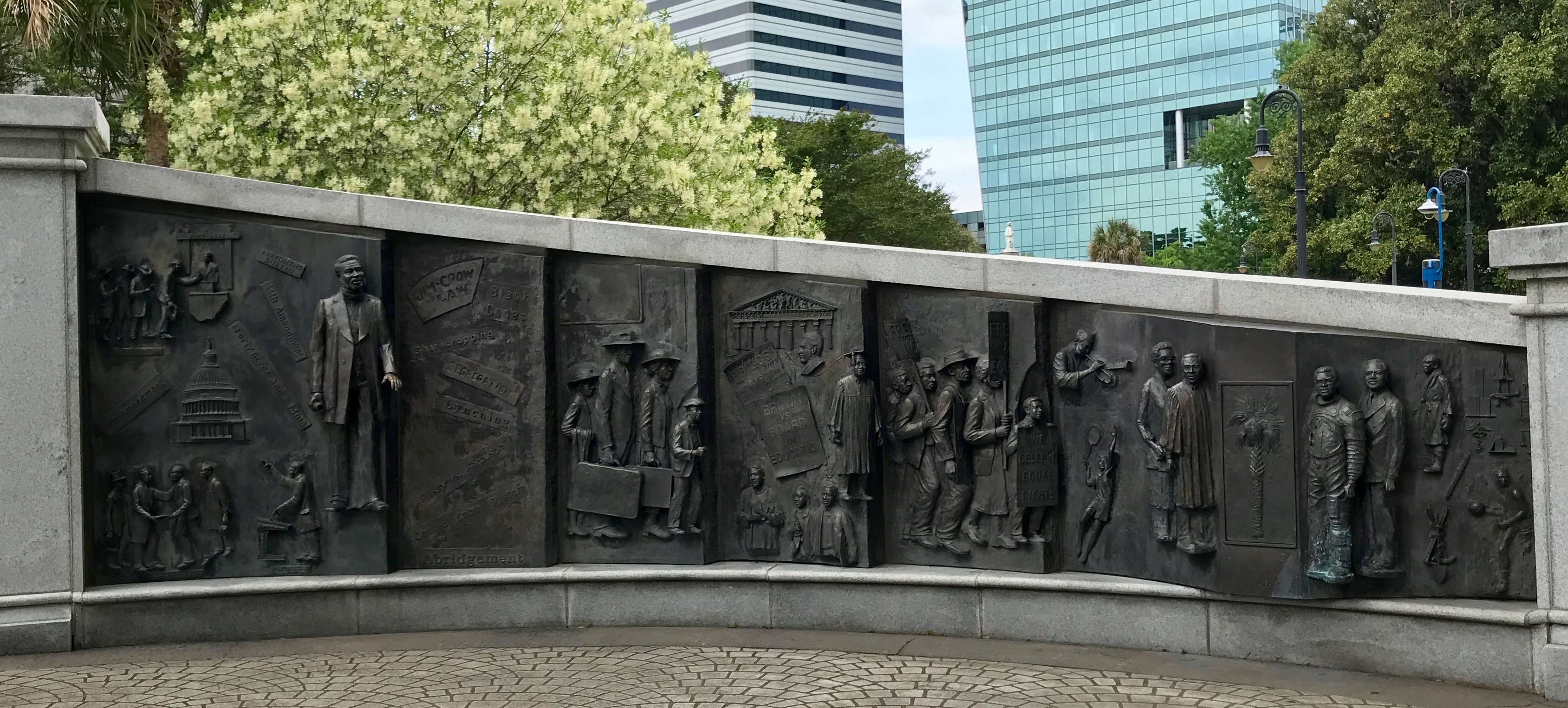
I continued around and came to the state’s African American History Monument.
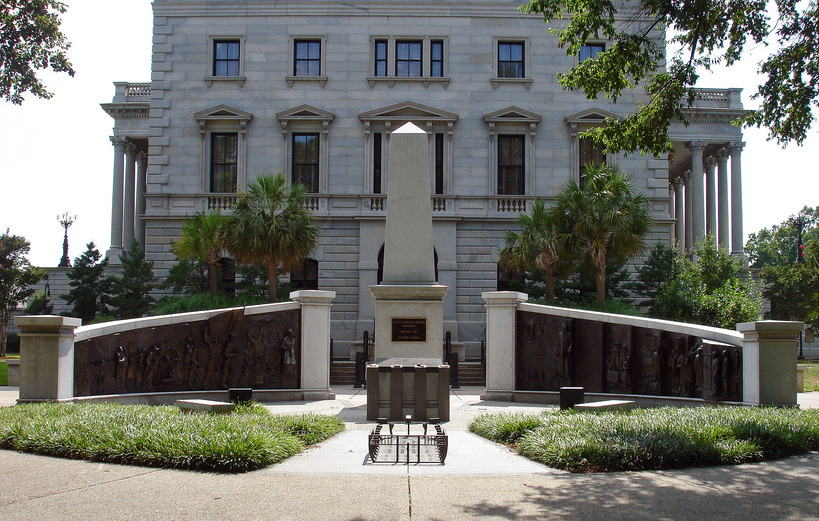
I didn’t take this photo. I found it somewhere on the web. I don’t remember why I didn’t get an overall photo. I love my iPhone and the convenience it provides, but sometimes I wish I had a REAL camera.
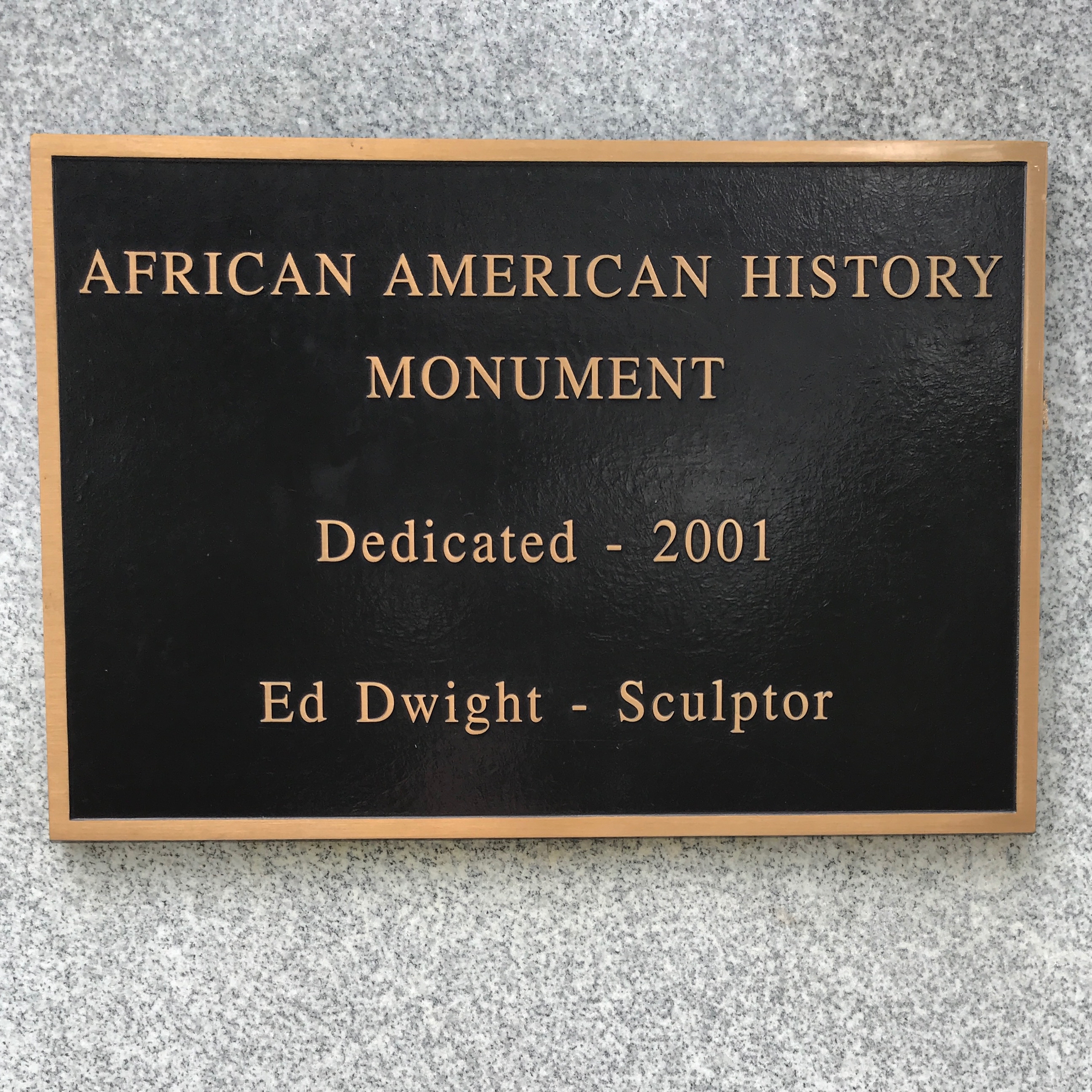
I did manage to capture details, though.
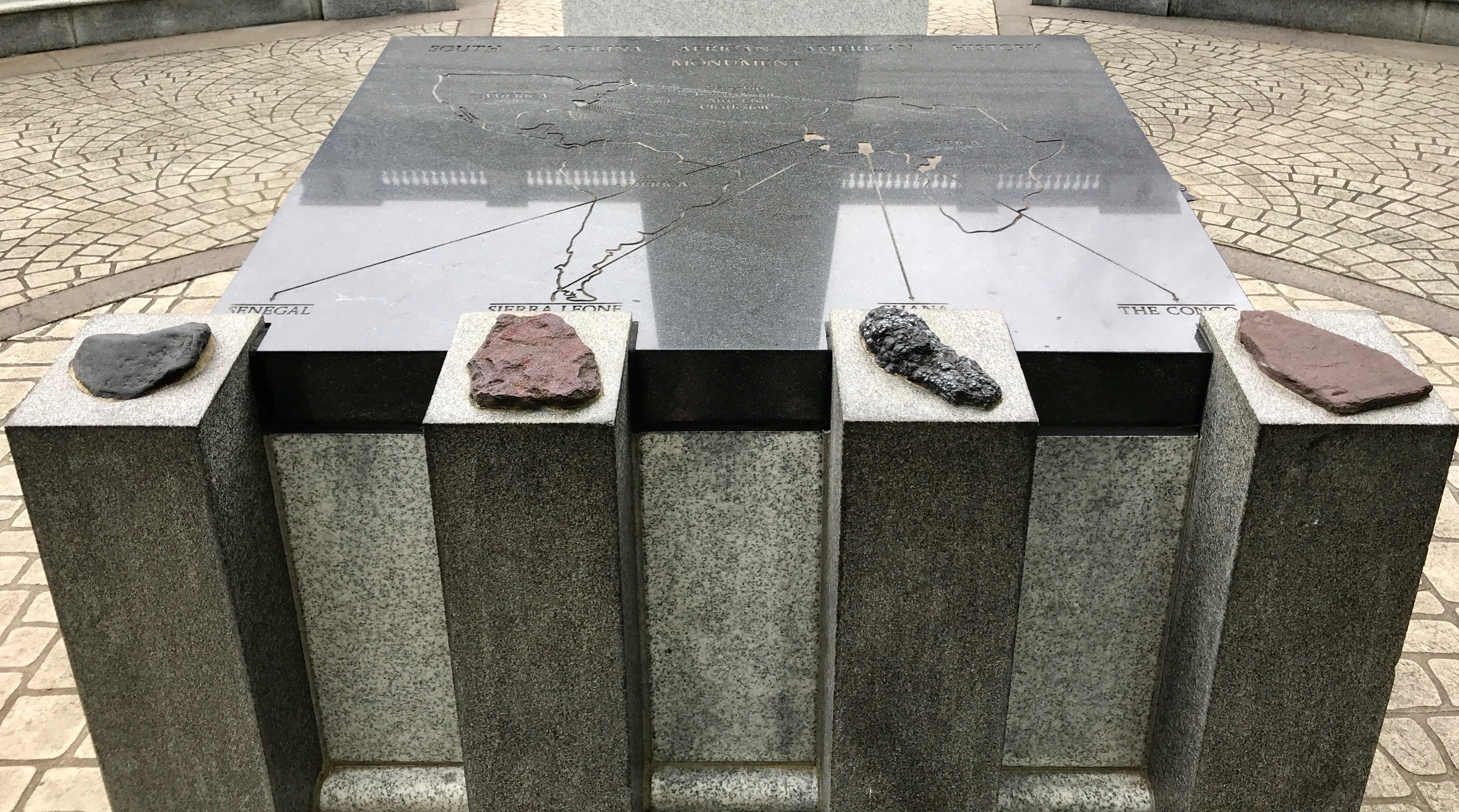
I like how they included information about the land the African Americans came from, complete with geological samples.
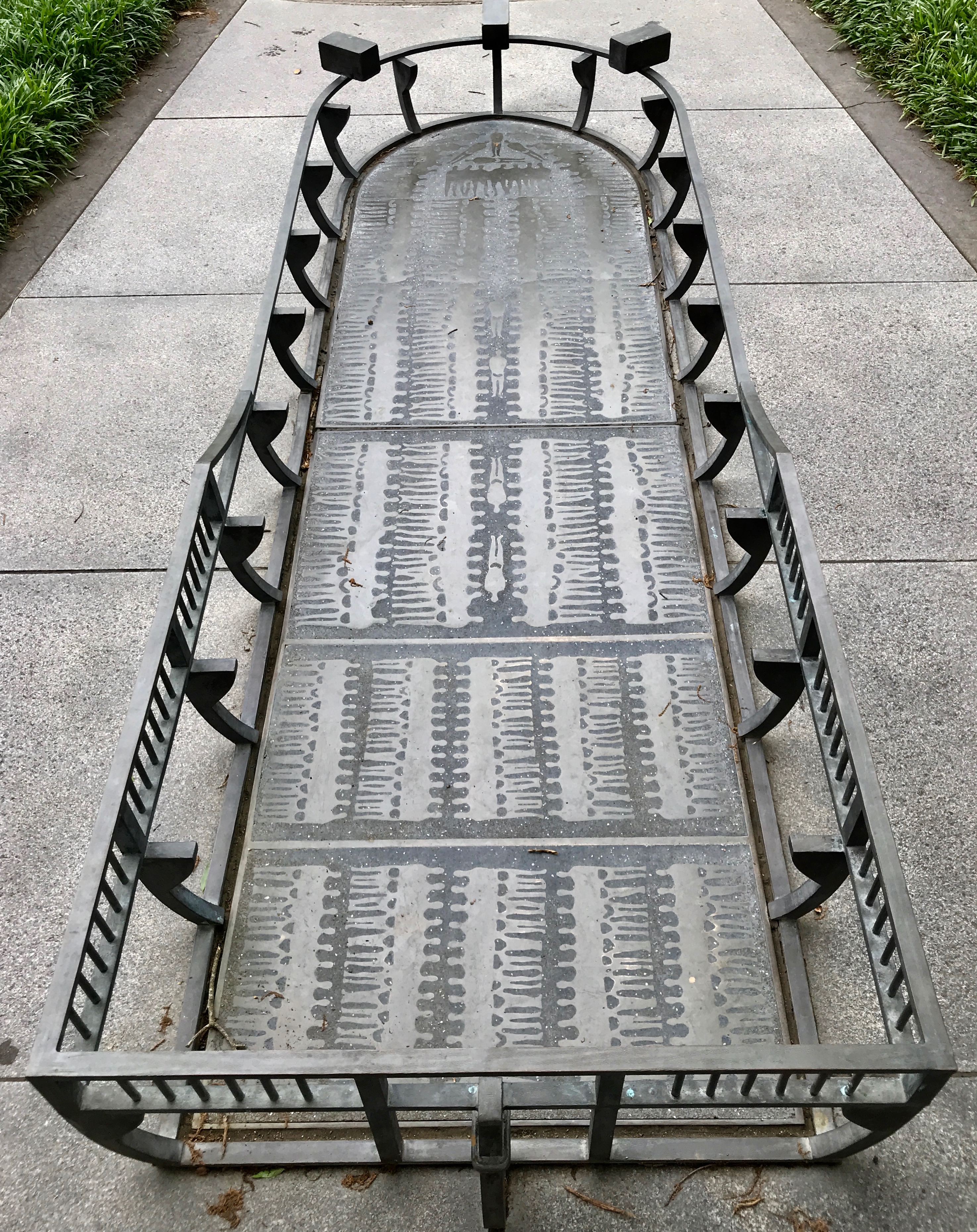
The hold of a slave ship is part of the monument.
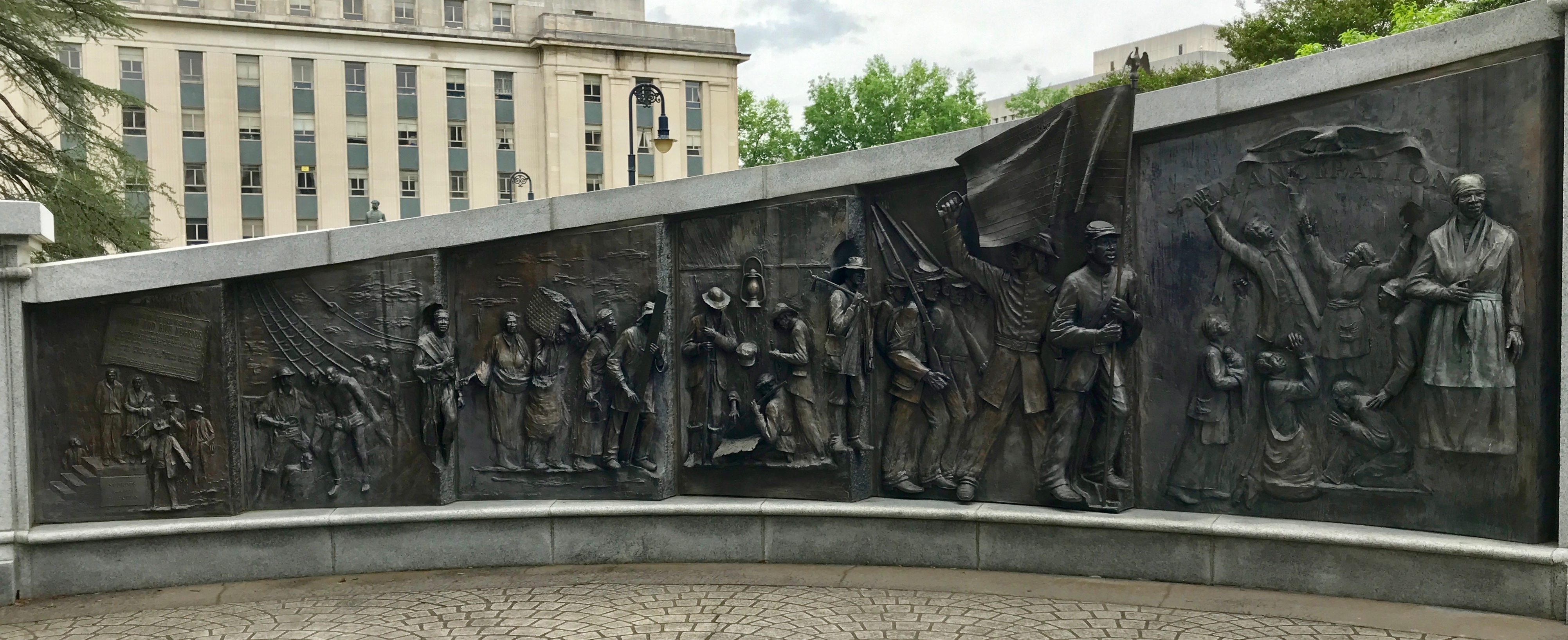
It takes in the sweep of history.
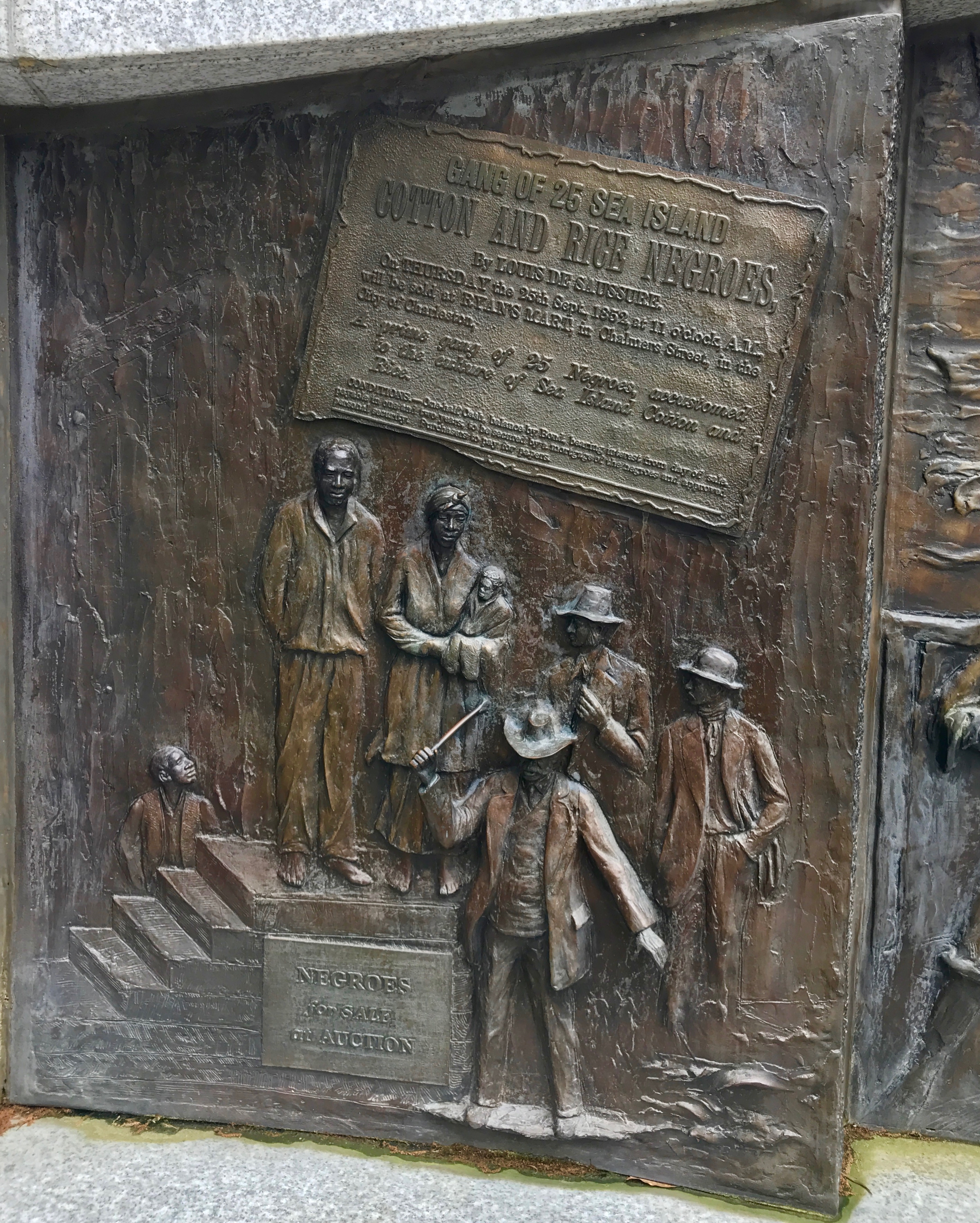
It picks up on the left side, when the Africans landed in the Americas.
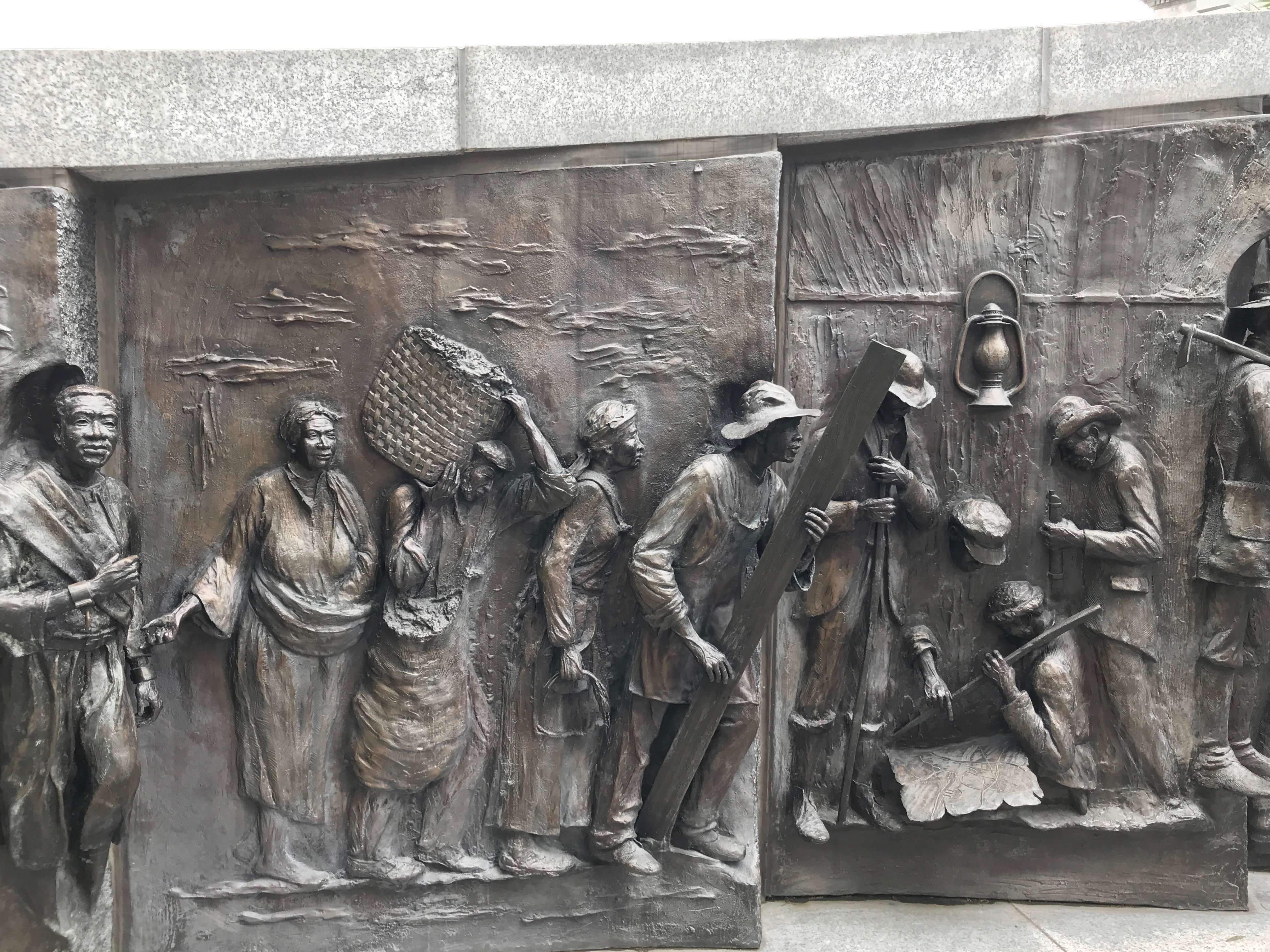
They were auctioned off, sent to work in the fields and then worked to escape.
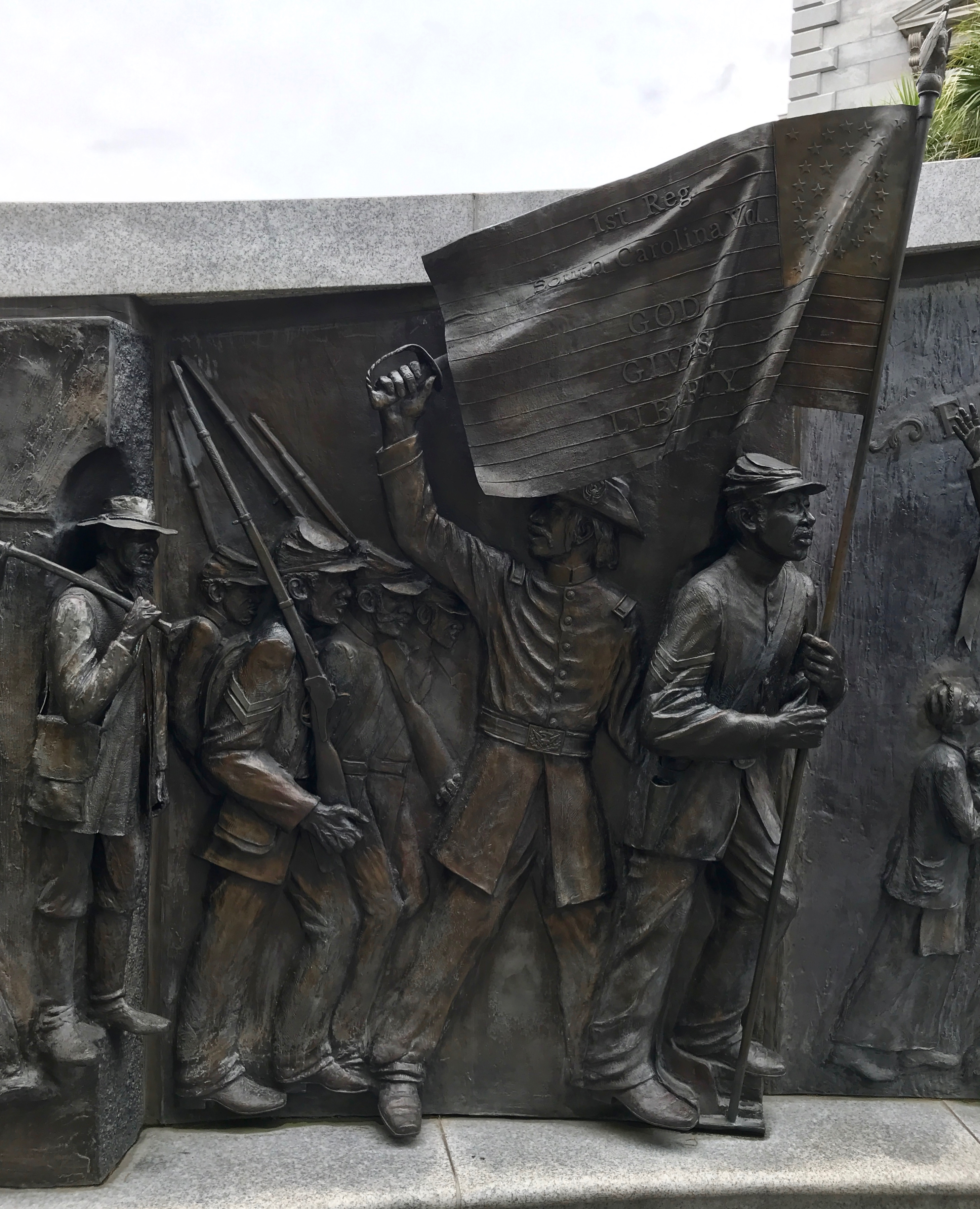
They fought for their freedom during the Civil War.
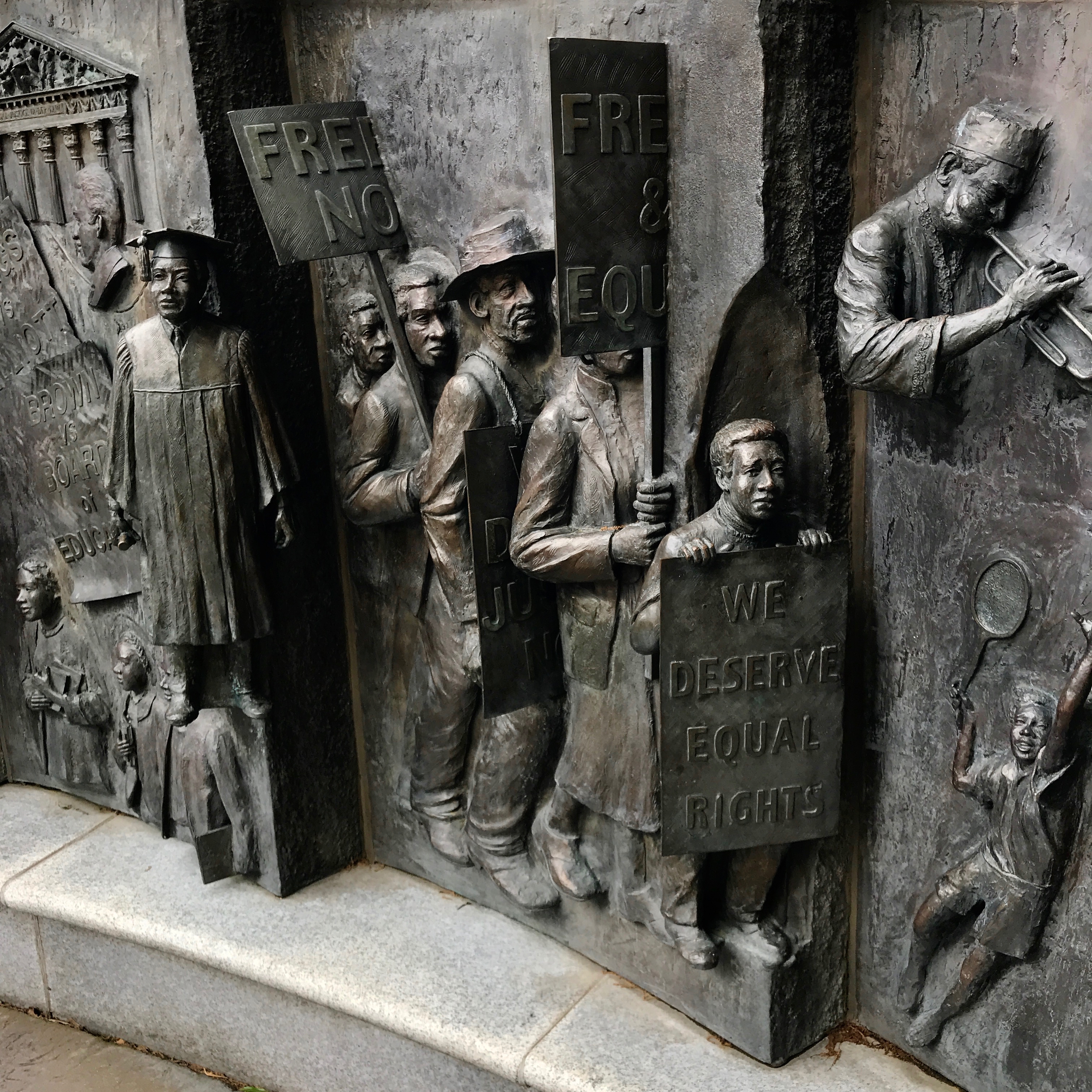
The fight continued with hard work and perseverance.
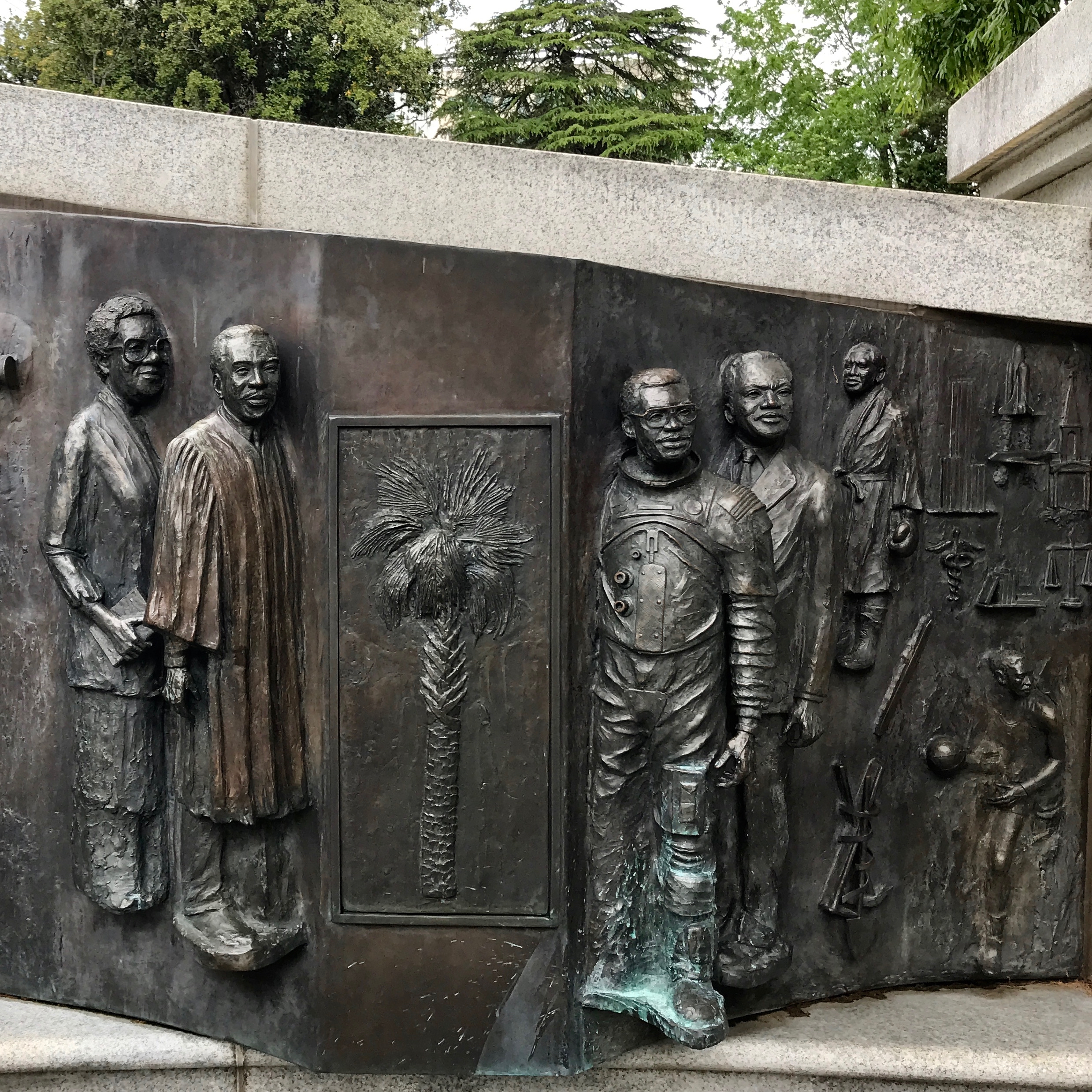
Success.
I continued around the capitol.
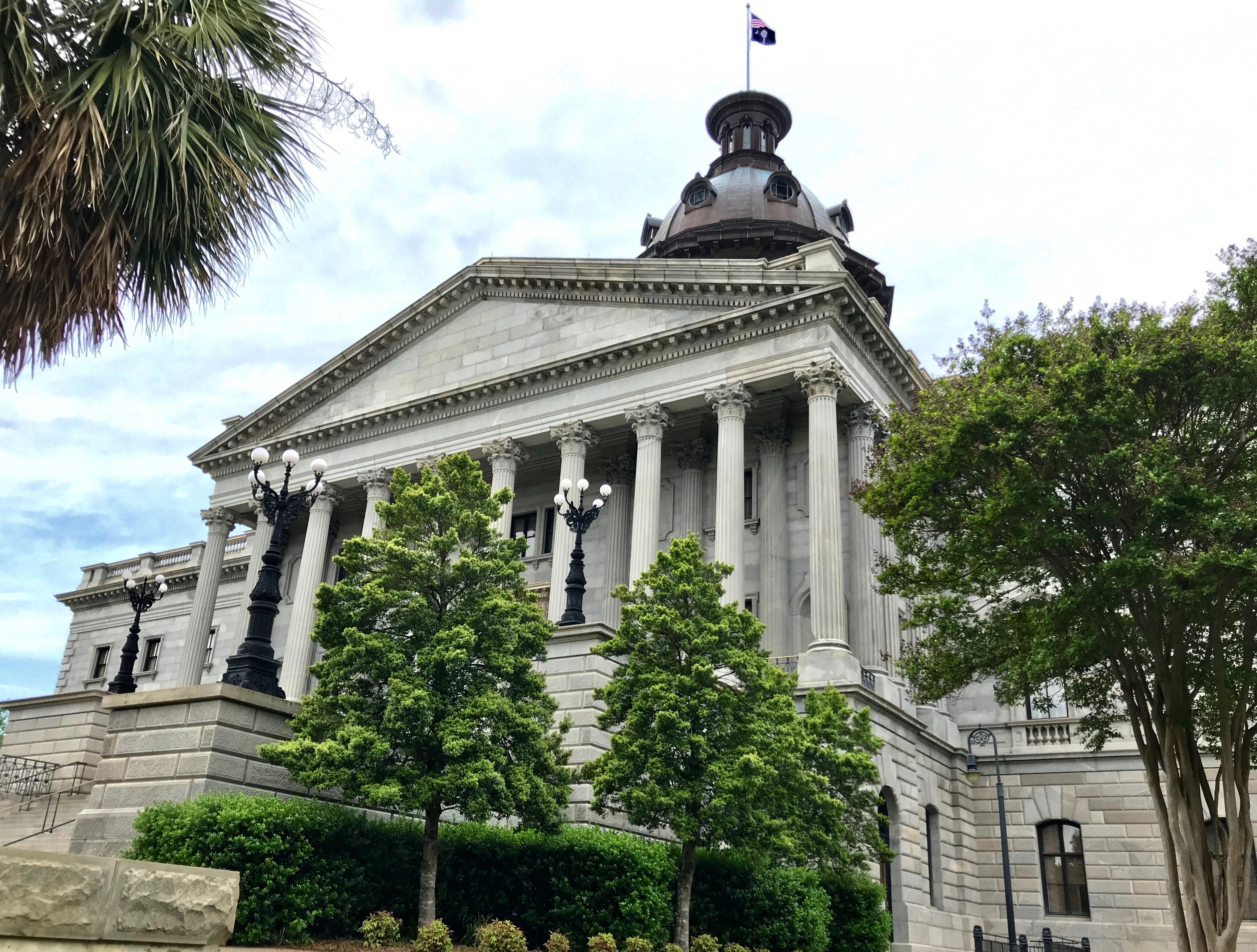
My goodness! Designers of state capitols sure do like their grand stairs.
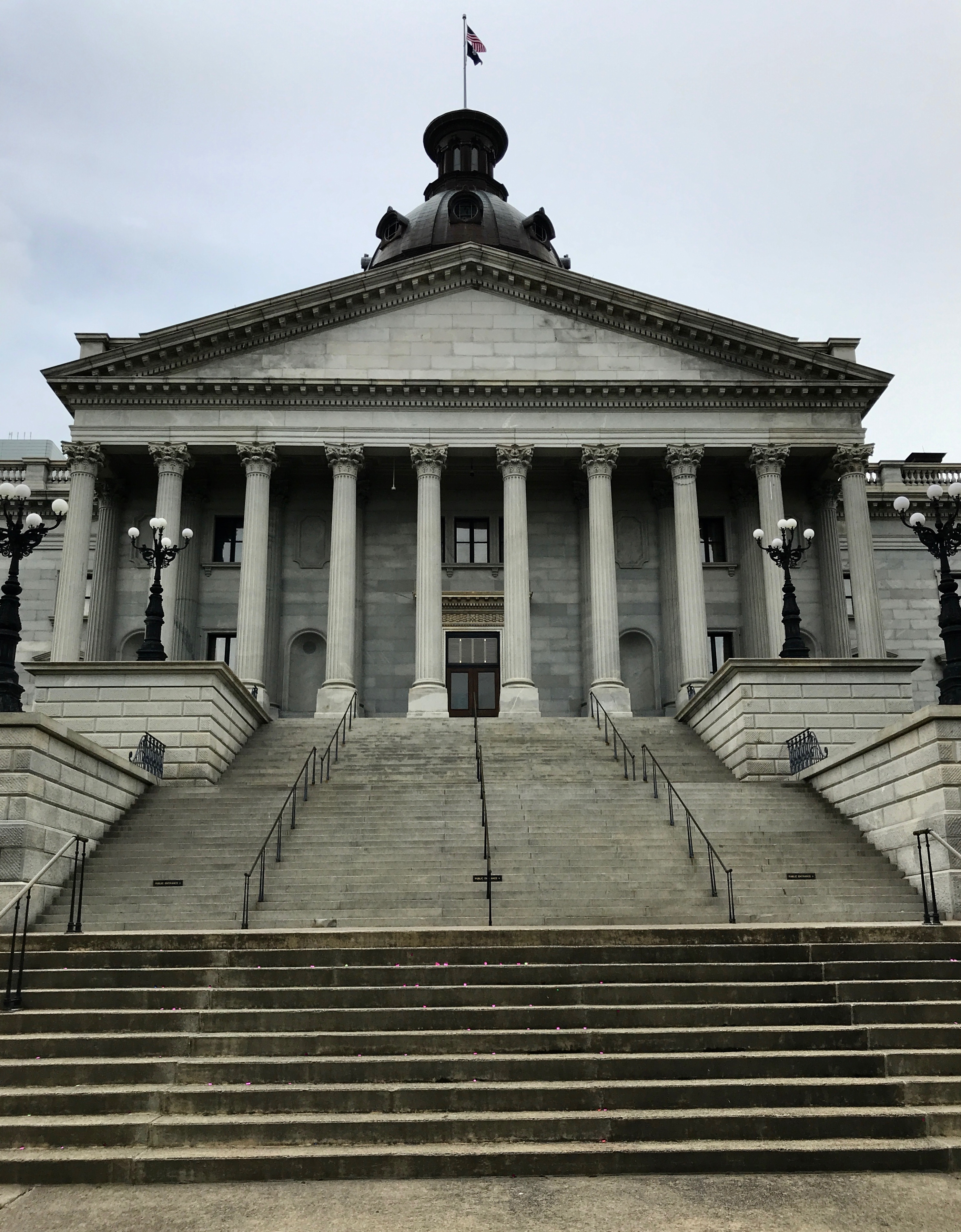
I wonder how many there are?
One thing some app I had told me to look for was damage from the Civil War marked with bronze stars.
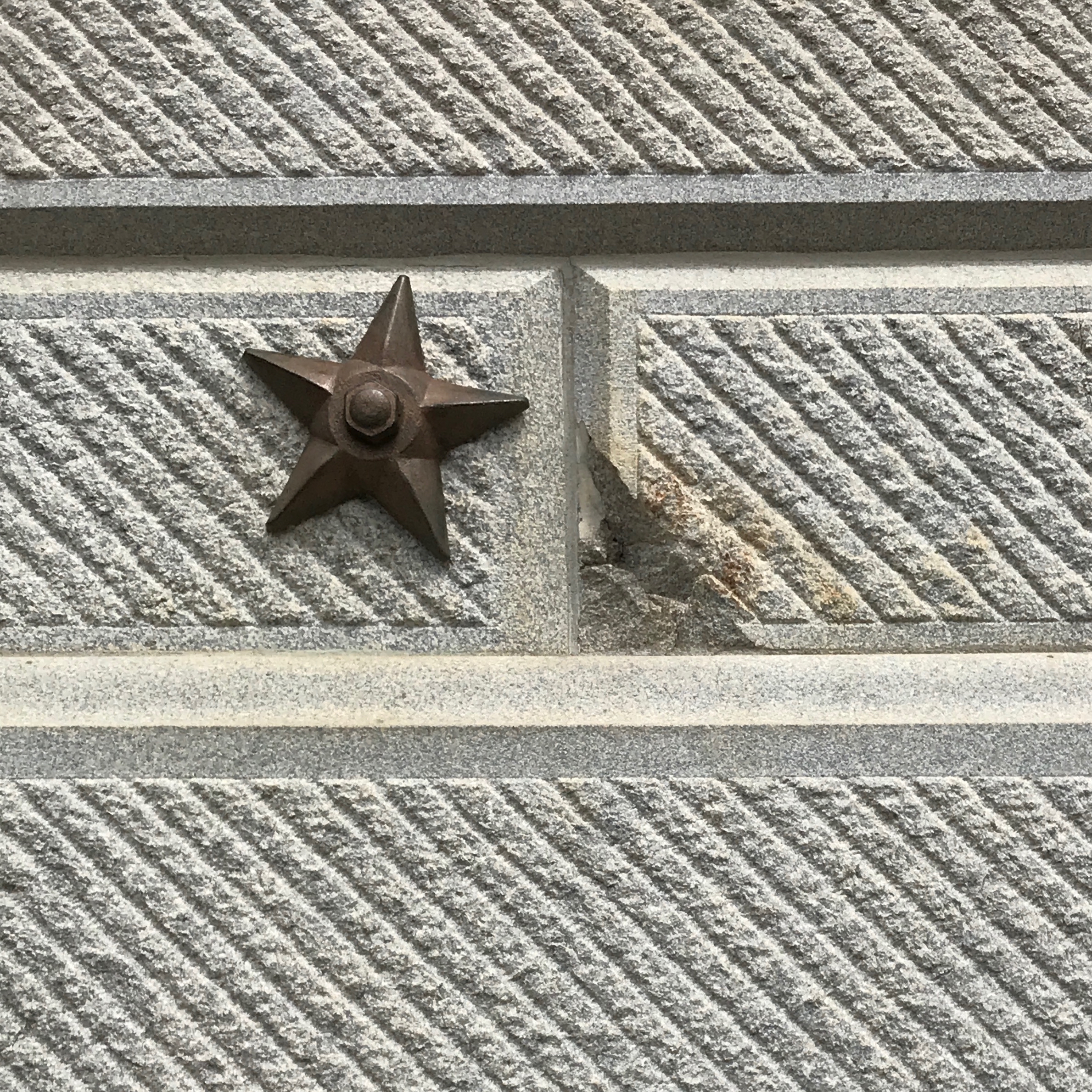
Here’s one.
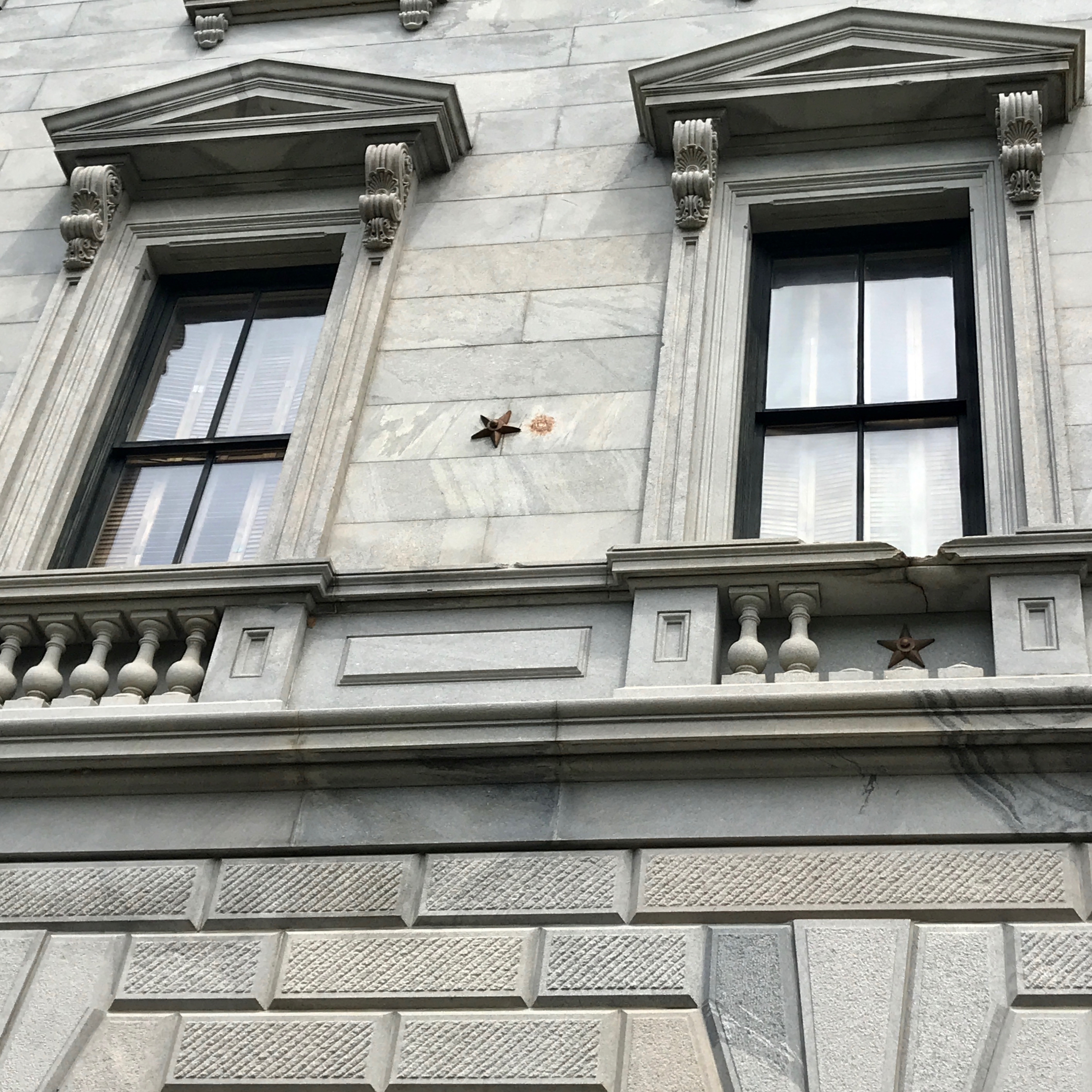
There are two more in this shot.
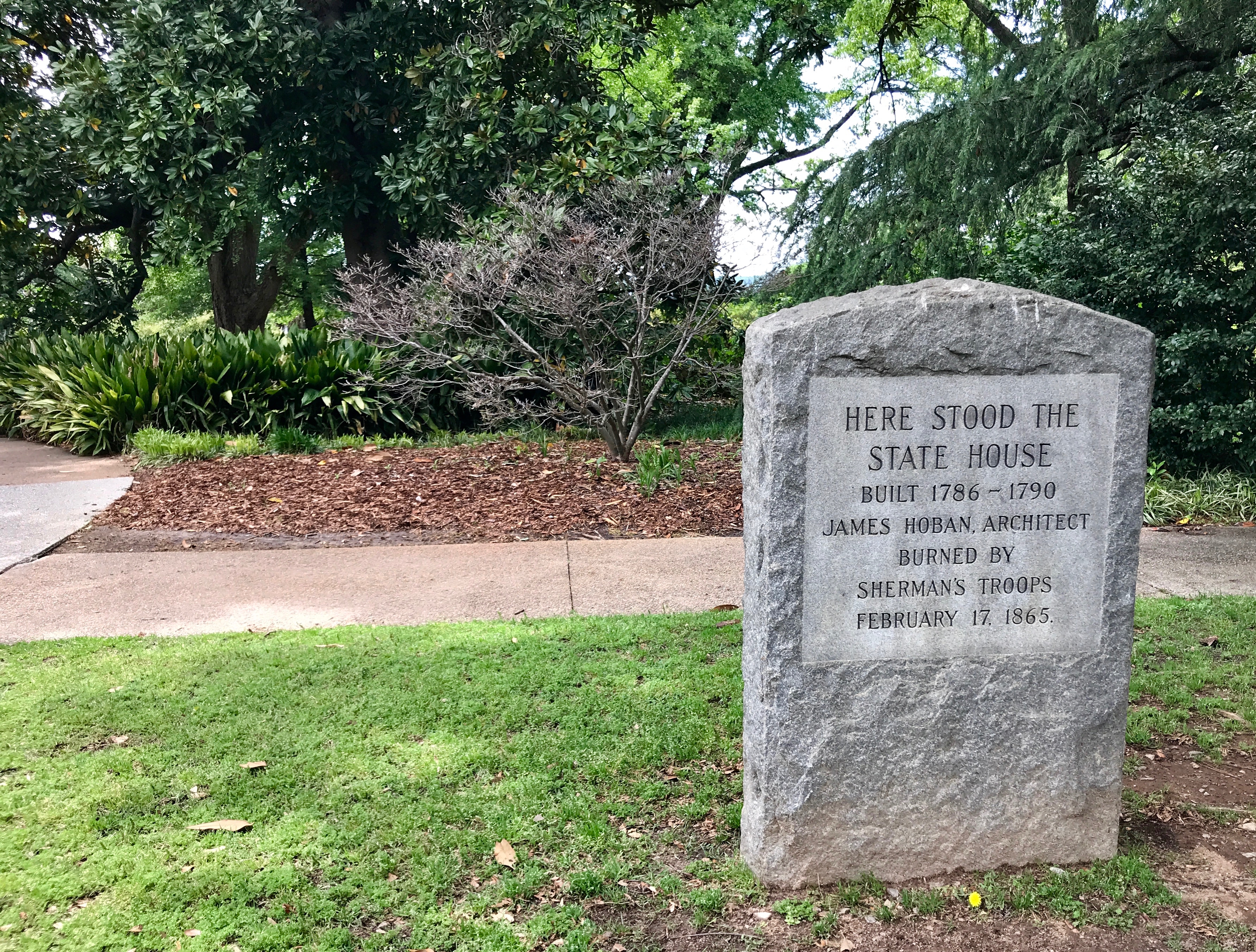
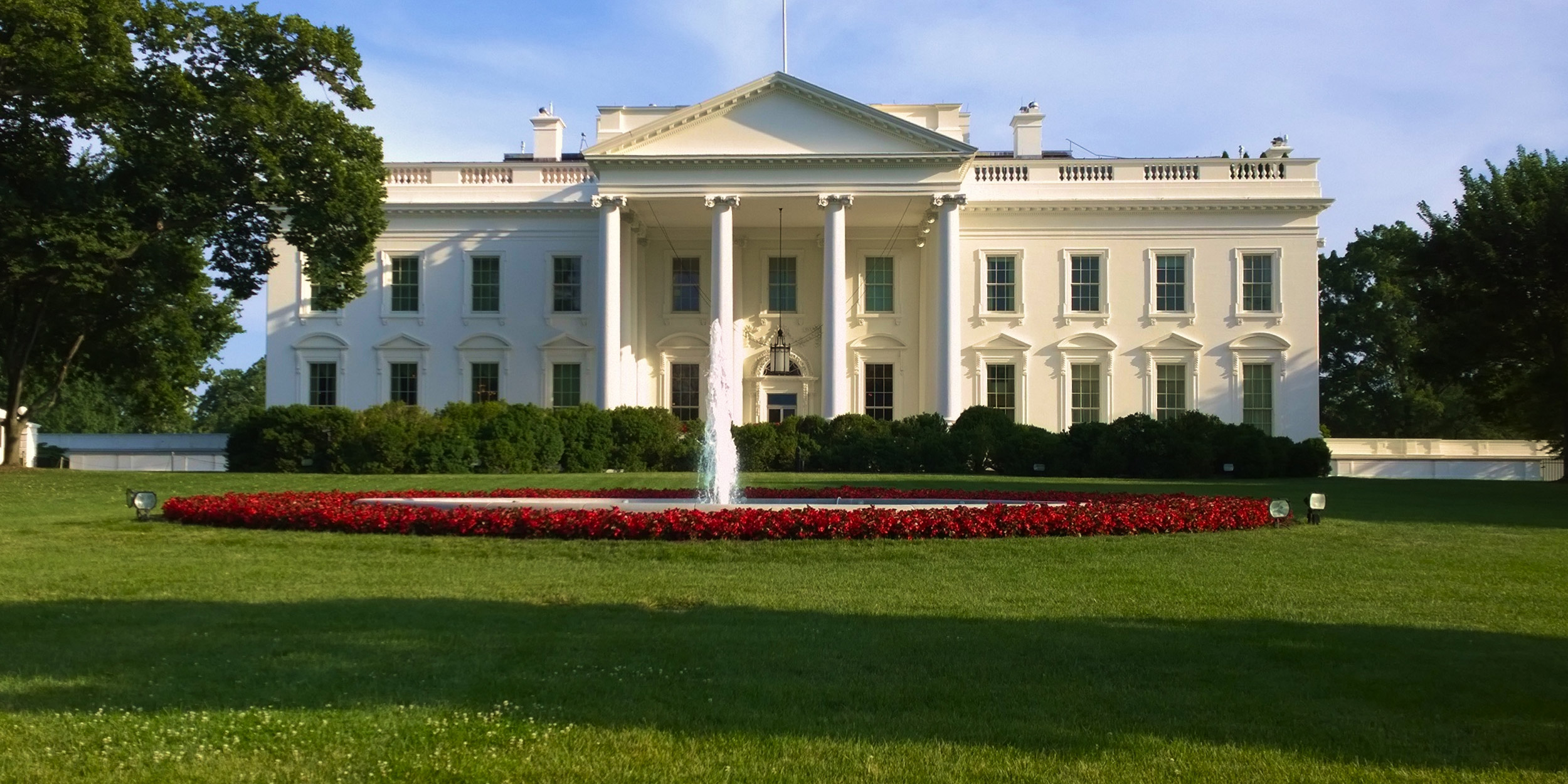
They were in the midst of building a new state house when the old one was burned. It was designed by James Hoban, who also designed the White House in Washington, DC.
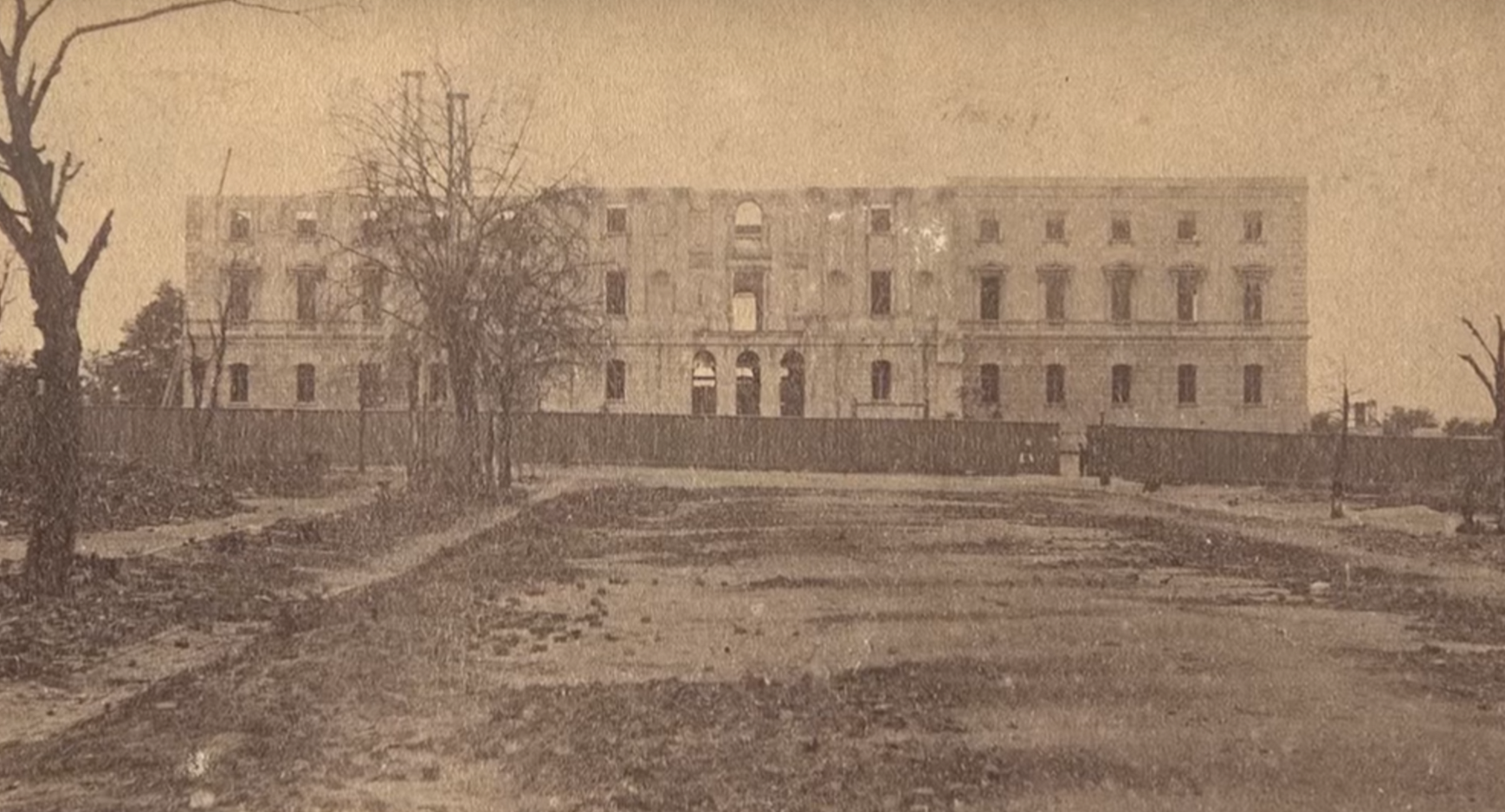
I see the similarity.
I headed back to the car and T@B and I hit the road.

Oh, my! My rig is no comparison to the one next to it, although there is a similar color scheme.
I was heading to Augusta. A Facebook friend offered overnight parking.
Tim does a beautiful job of polishing vintage Airstreams to a mirror finish.
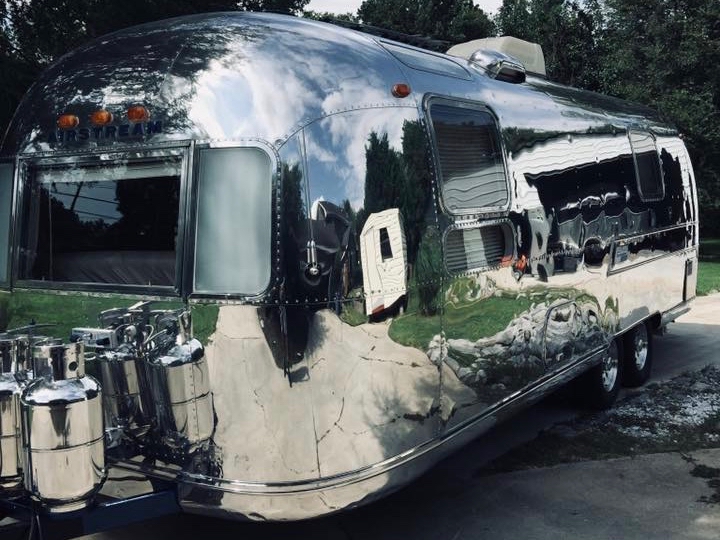
Isn’t that pretty?
We spent time talking, but I didn’t get a photo of the two of us.
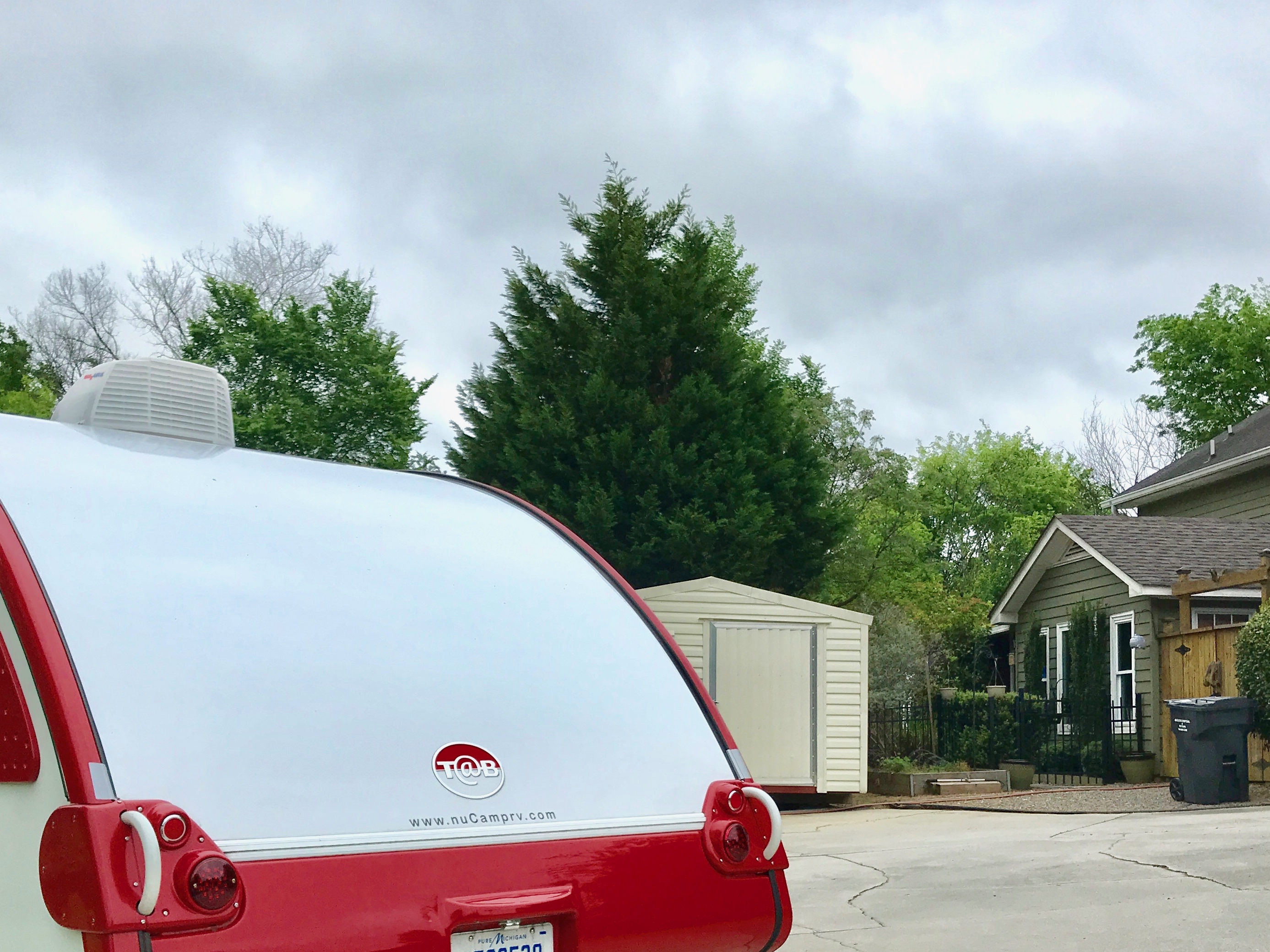
But, I did get a shot of the T@b in his driveway.
Next stop: Phenix City, Alabama