Okay, back to 2019 – a time before Covid shut downs and travel restrictions.
After I left Bern, I headed to South Carolina.
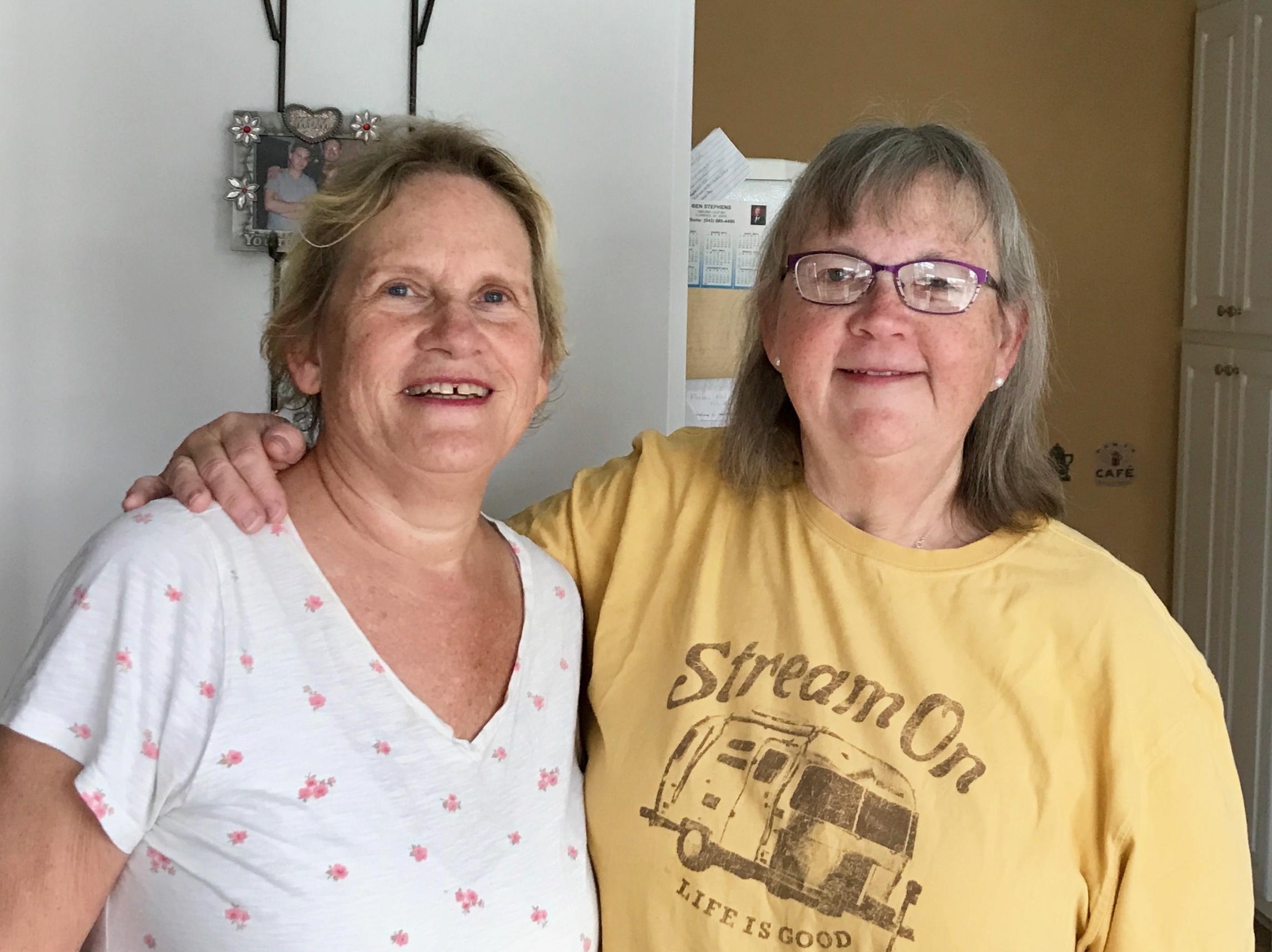
One thing I absolutely love about traveling around is meeting up with people I’ve met during my life. This time, it was Rosemary, a high school friend. Heavens! I hadn’t seen her in 46 years!
Old friends and I’m wearing an old T shirt. I should have been wearing a T@b shirt!
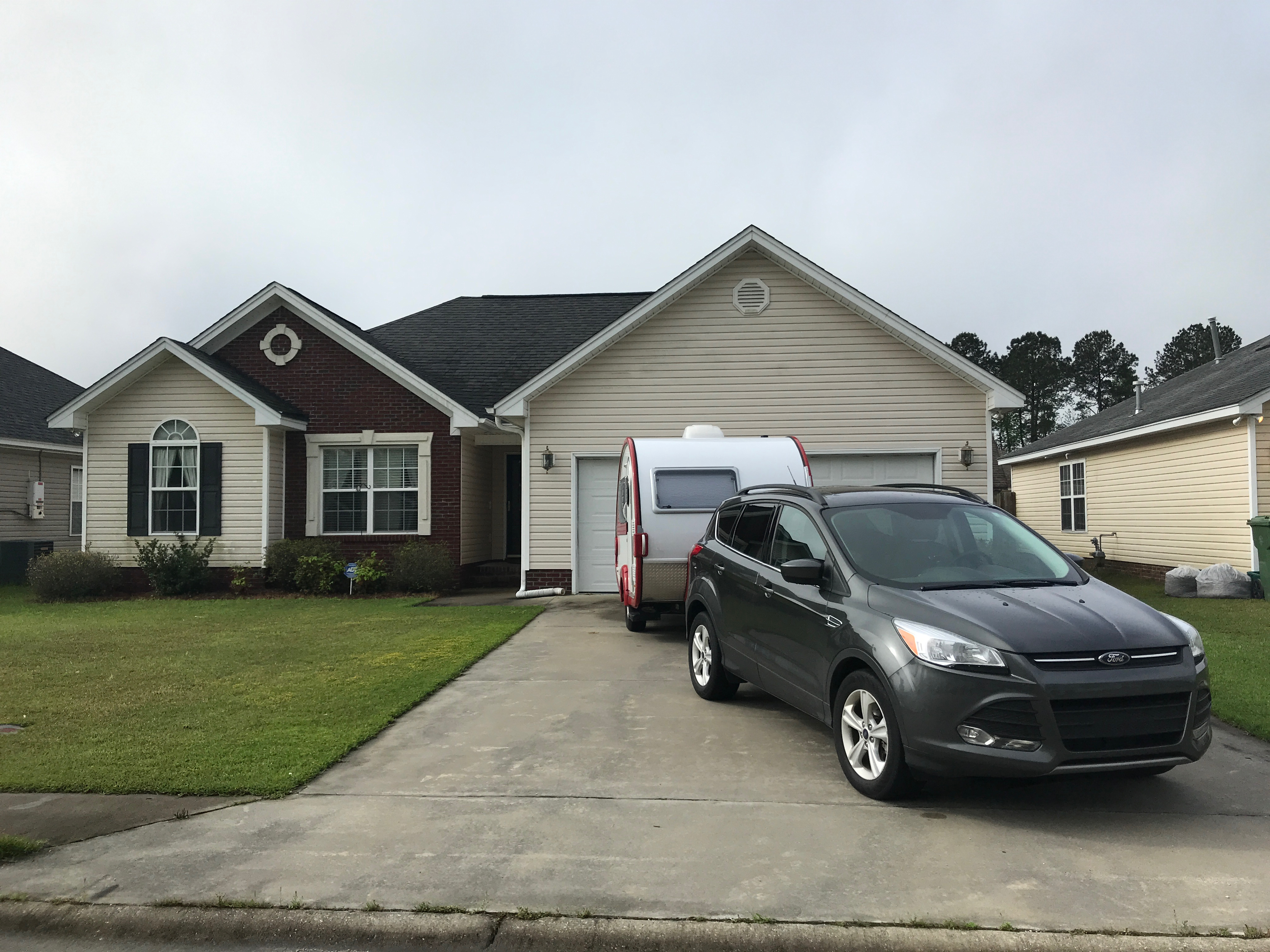
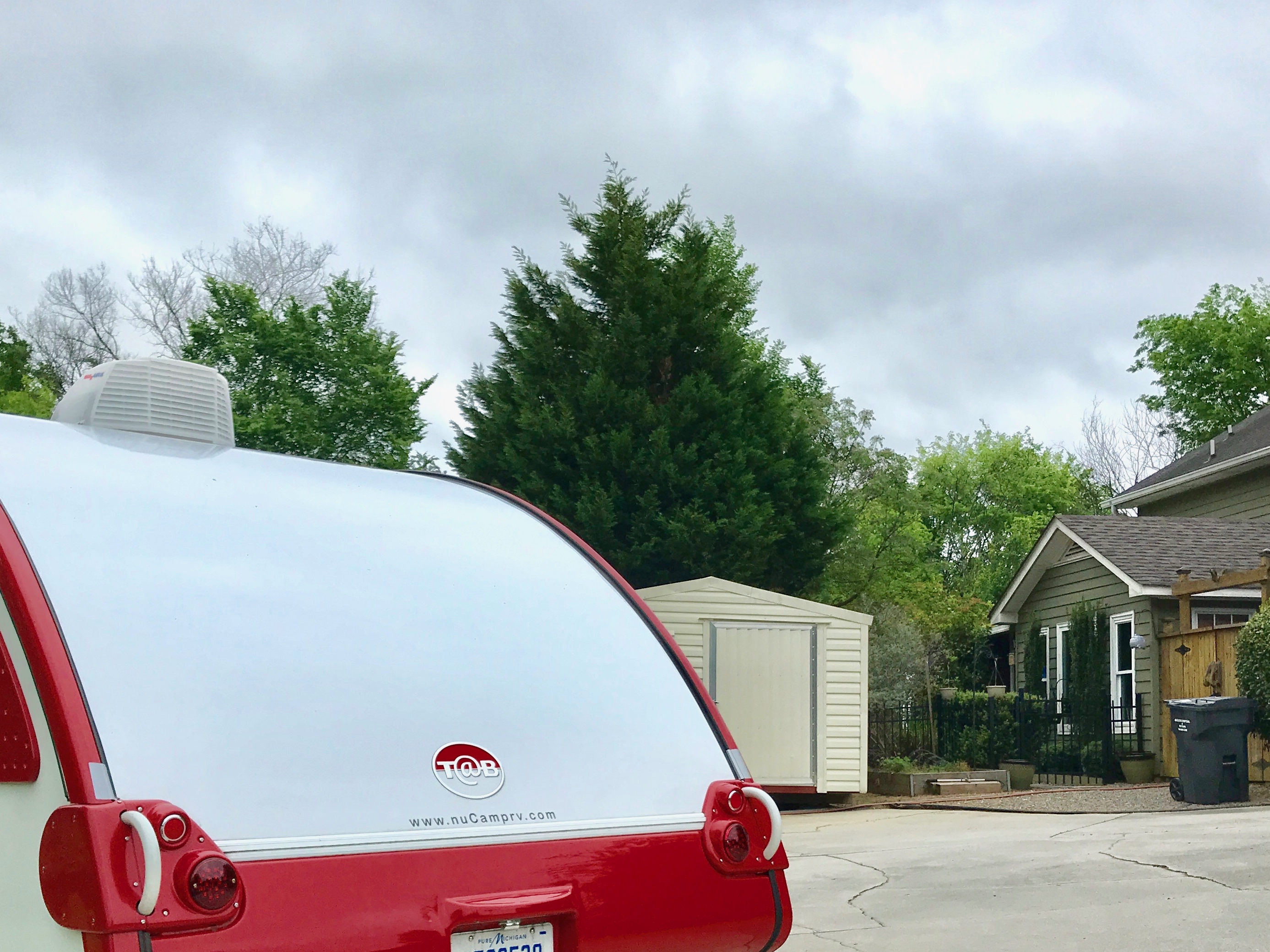
Hmm…maybe I should start a new photo series: Every house looks better with a T@b in the driveway…
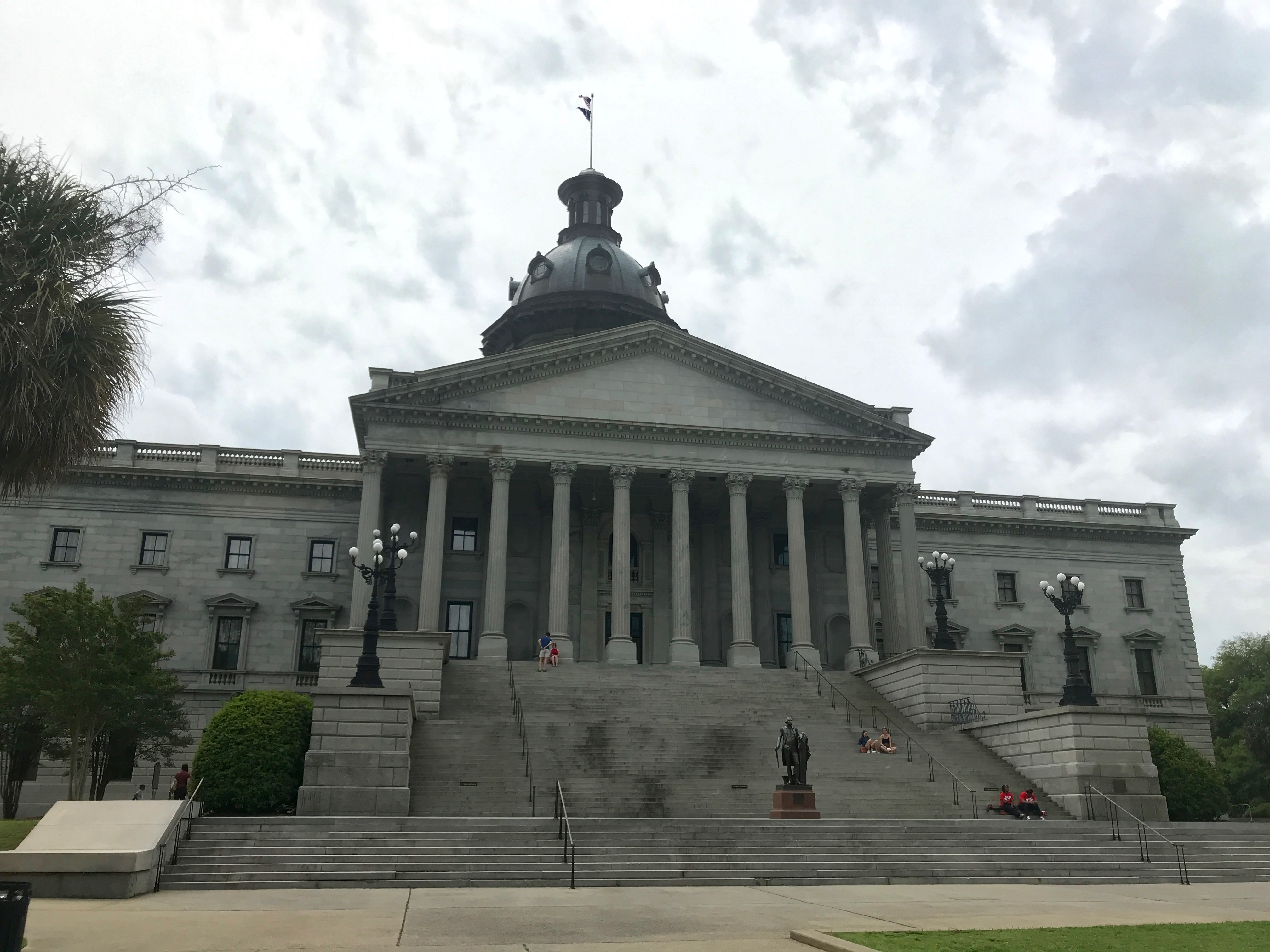
We caught up as best we could. In some ways, it’s easier to catch up when you haven’t seen someone in decades. It forces you to just hit the high points. It was a quick overnight, and then I was on to the South Carolina State Capitol in Columbia.
I couldn’t believe it, but I found a place nearby to park with the trailer hitched up.
I walked toward it, wondering whose statue they chose to put in front.
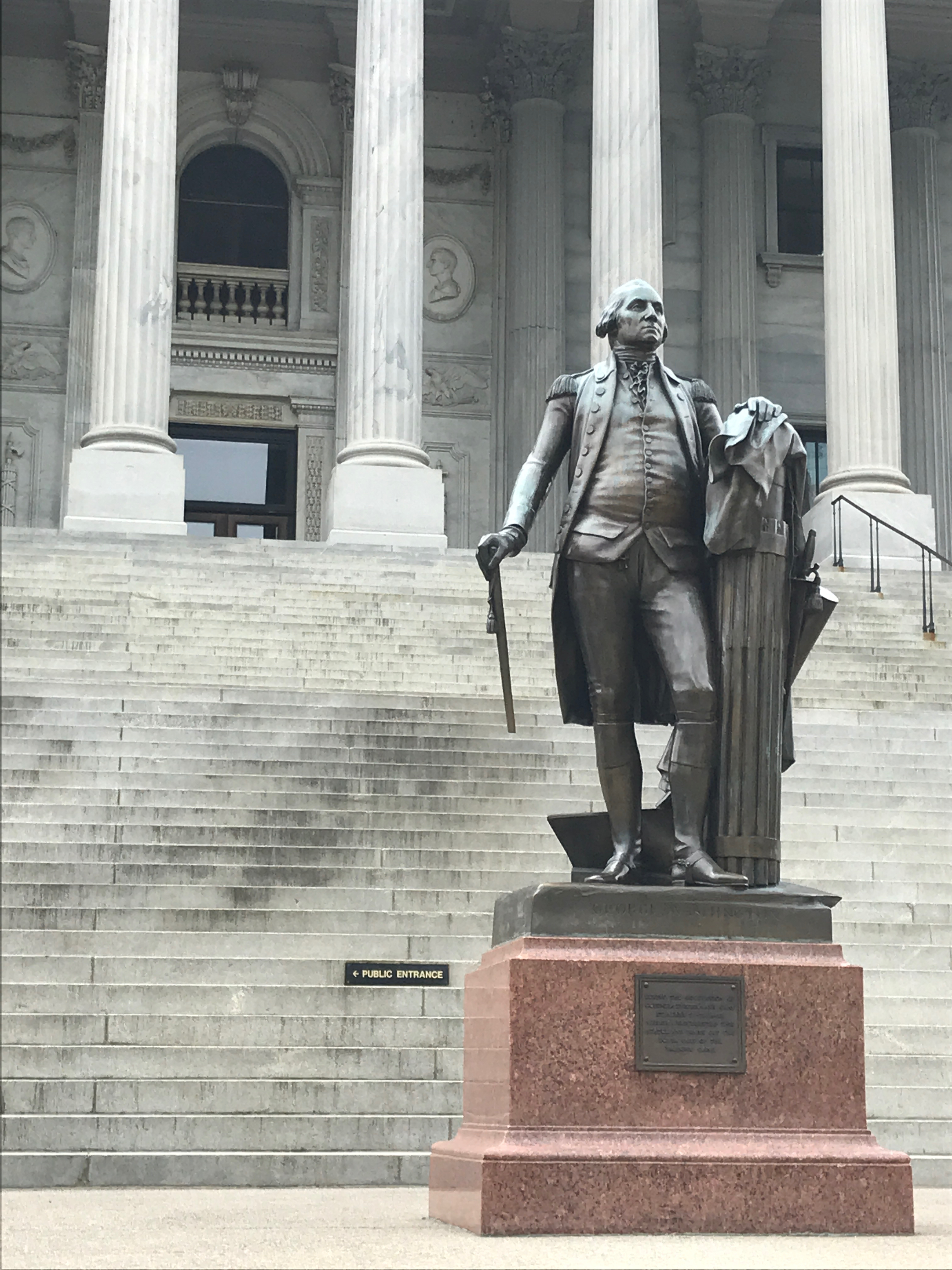
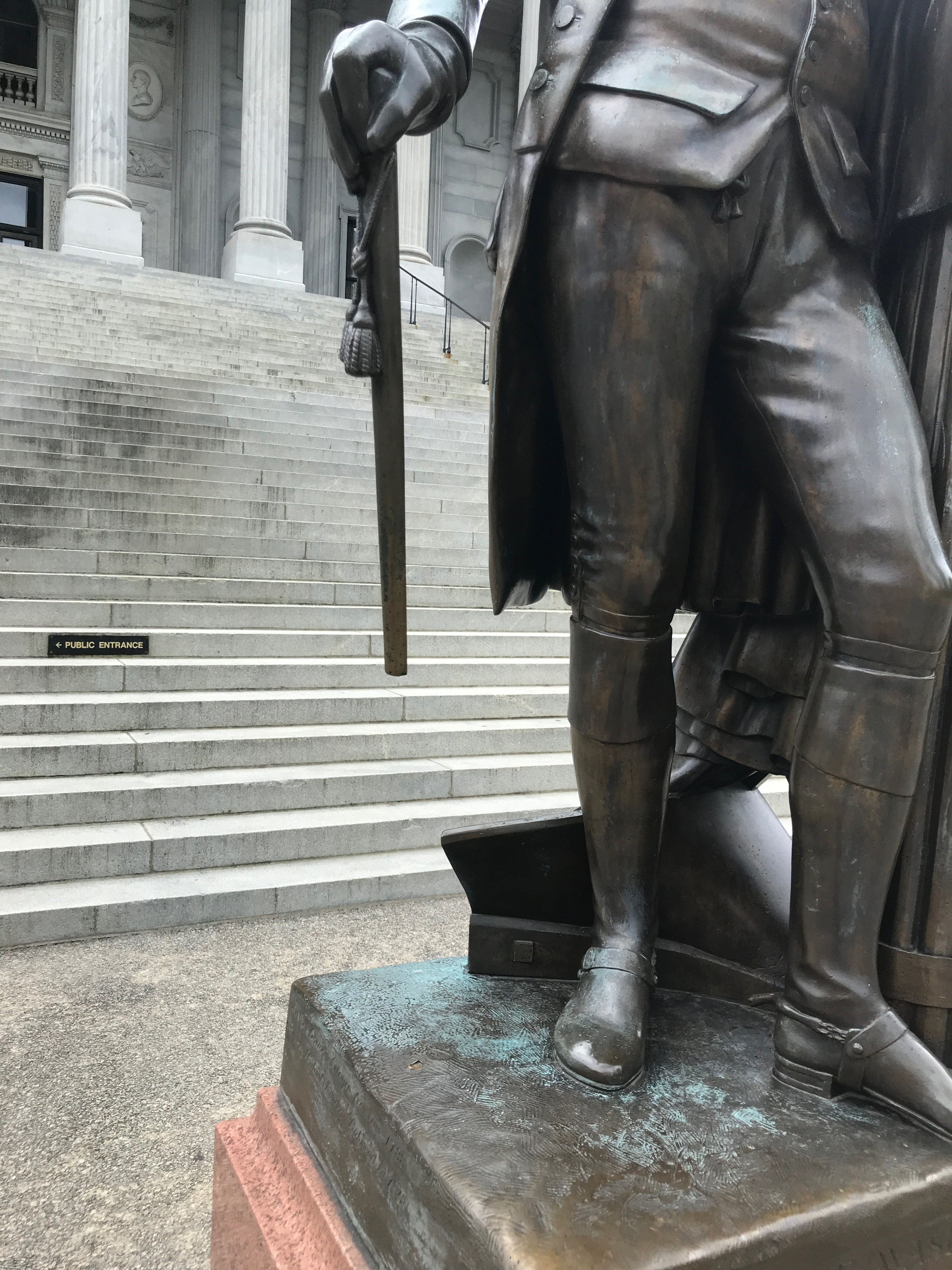
George Washington. But what’s the story with the walking stick?
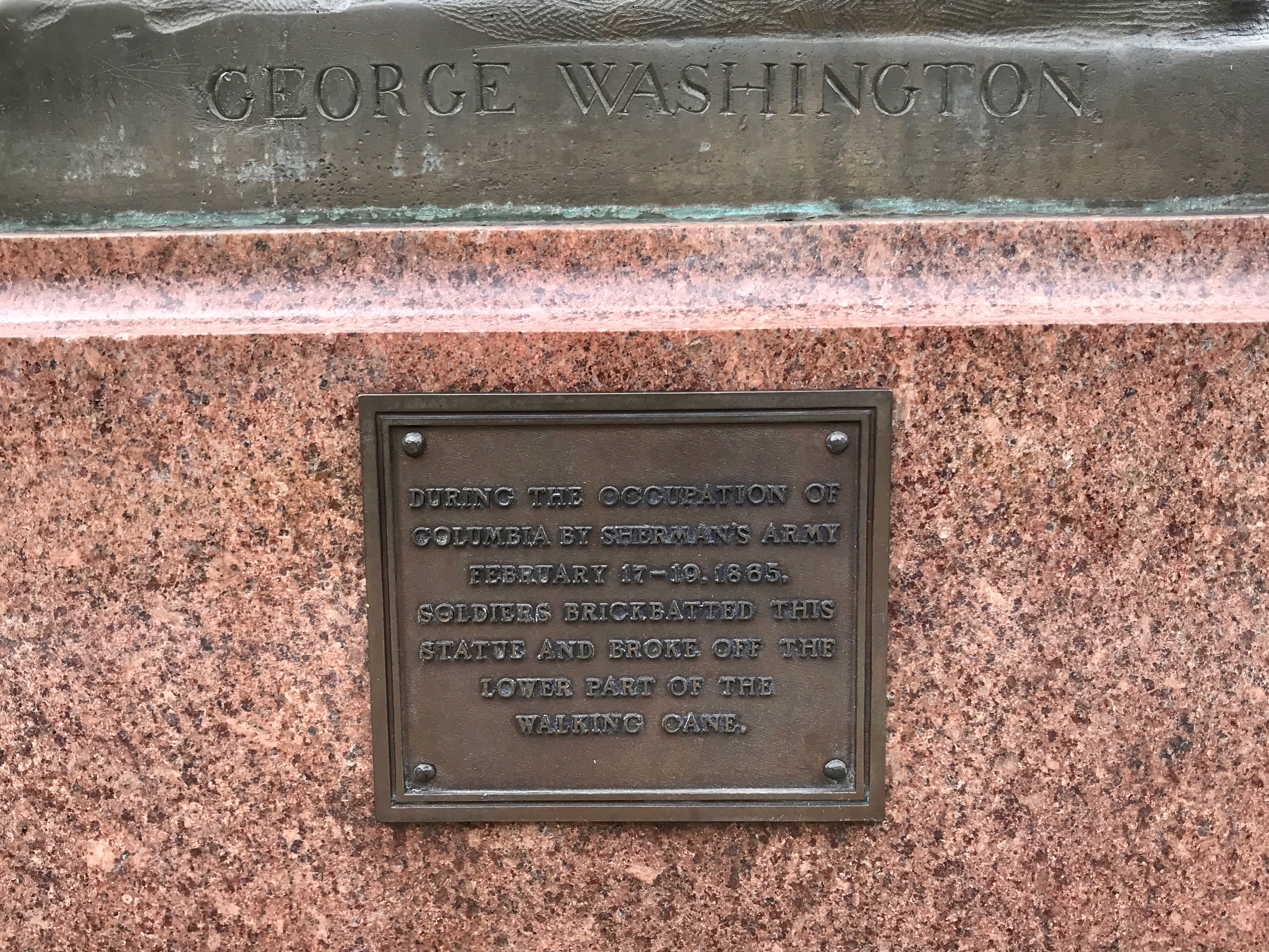
The inscription was interesting. The Union soldiers did it during Sherman’s occupation of Columbia in February 1865. “Soldiers brickbatted this statue…”
I had heard the term “brickbat” before, but I wasn’t completely sure of the definition.
According to Merriam Webster, there are two definitions.
1. a fragment of a hard material, such as a brick”
2. an uncomplimentary remark
I wonder if they meant that the soldiers literally threw chunks of bricks at the statue or if they meant to imply that the damage was an insult to George Washington?
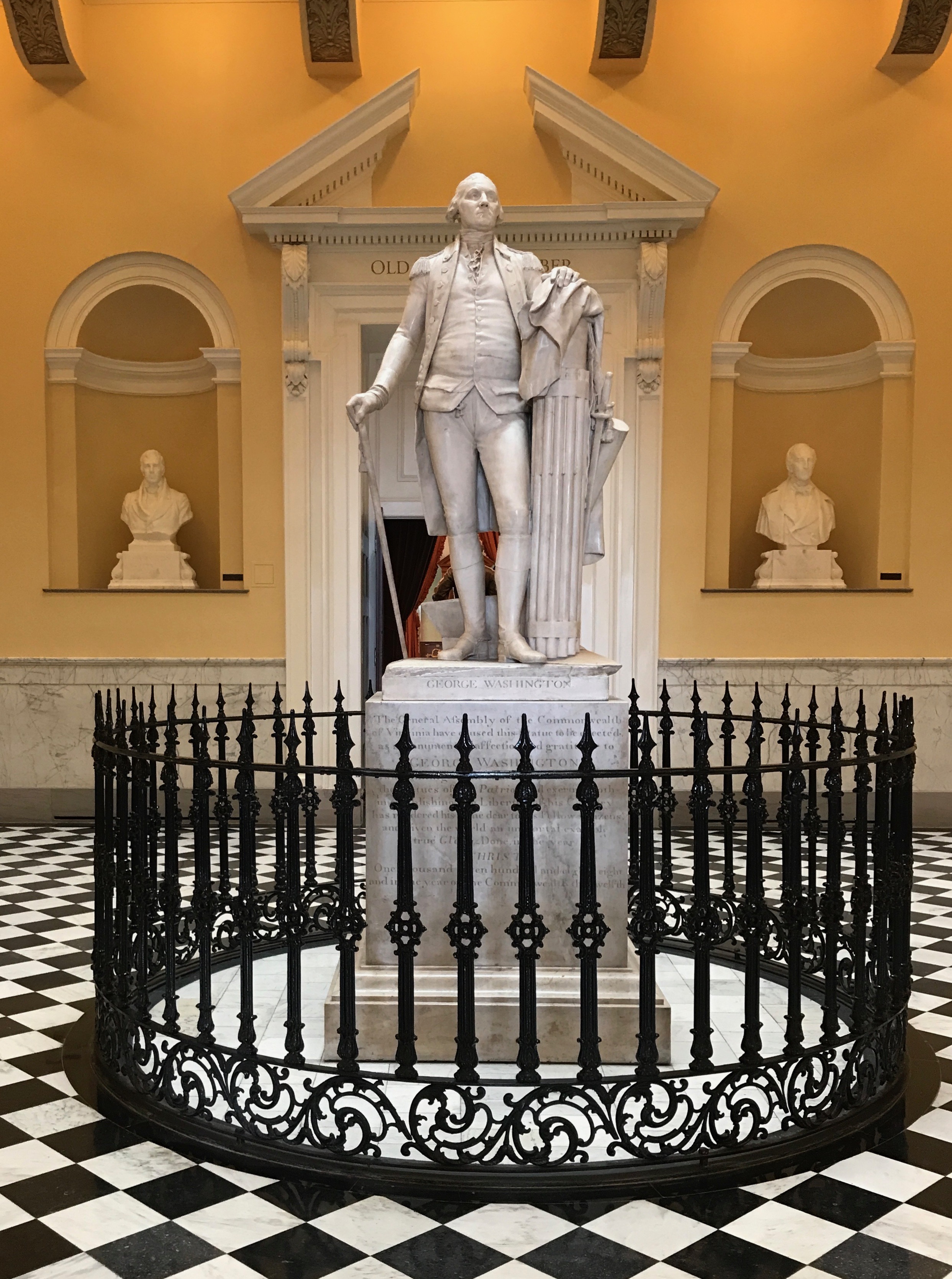
The statue is interesting. It is a full-size bronze copy of a marble statue by Jean-Antoine Houdon for the Virginia State Capitol. Here’s a picture I took of the original when I was in Richmond.
According to the Historic Columbia website, Houdon depicted Washington resigning as commander-in-chief of the Continental Army: he relinquishes his power to the democracy (represented by his sword hanging on a bundle of thirteen reeds) in order to return to his farm (symbolized by the plow at his feet). Originally installed on the ground floor of the South Carolina State House, the statue expressed the kinship that antebellum South Carolina politicians felt with the revolutionary hero and slaveholder as they defended their own right to continue as a society defined by slavery.
The statue was moved from the ground floor of the statehouse outside in 1889 and to its current location in 1911. In its 1931 report, the Historical Commission of South Carolina reported an expenditure of $40 for a bronze plaque “reciting the abuse accorded it byFederal soldiers in February, 1865.”
So, I am guessing that “brickbat” in this case meant more of the second definition, perhaps with overtones of the first.
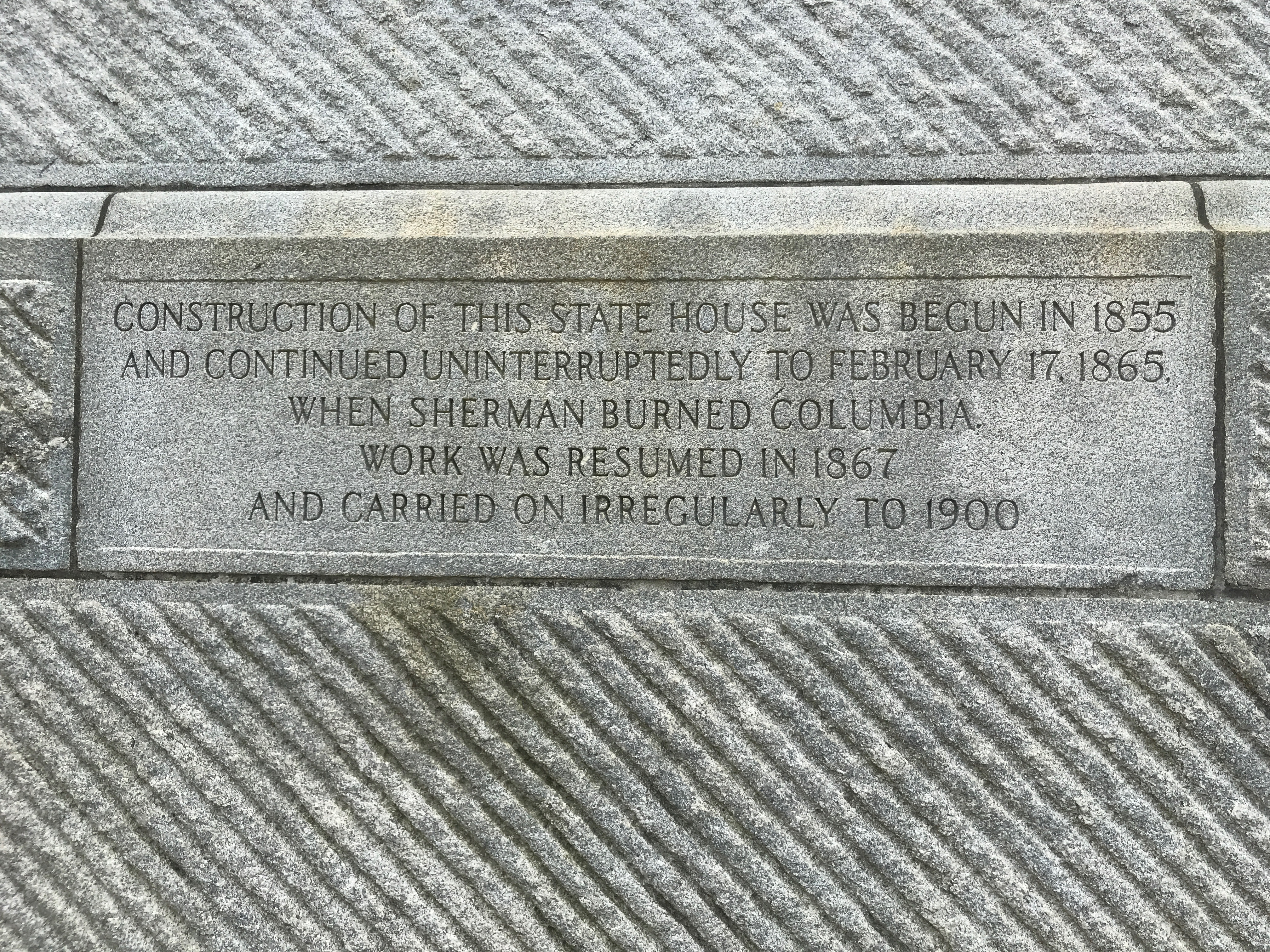
I came across the cornerstone. I guess the spirit of resentment is important to South Carolina.
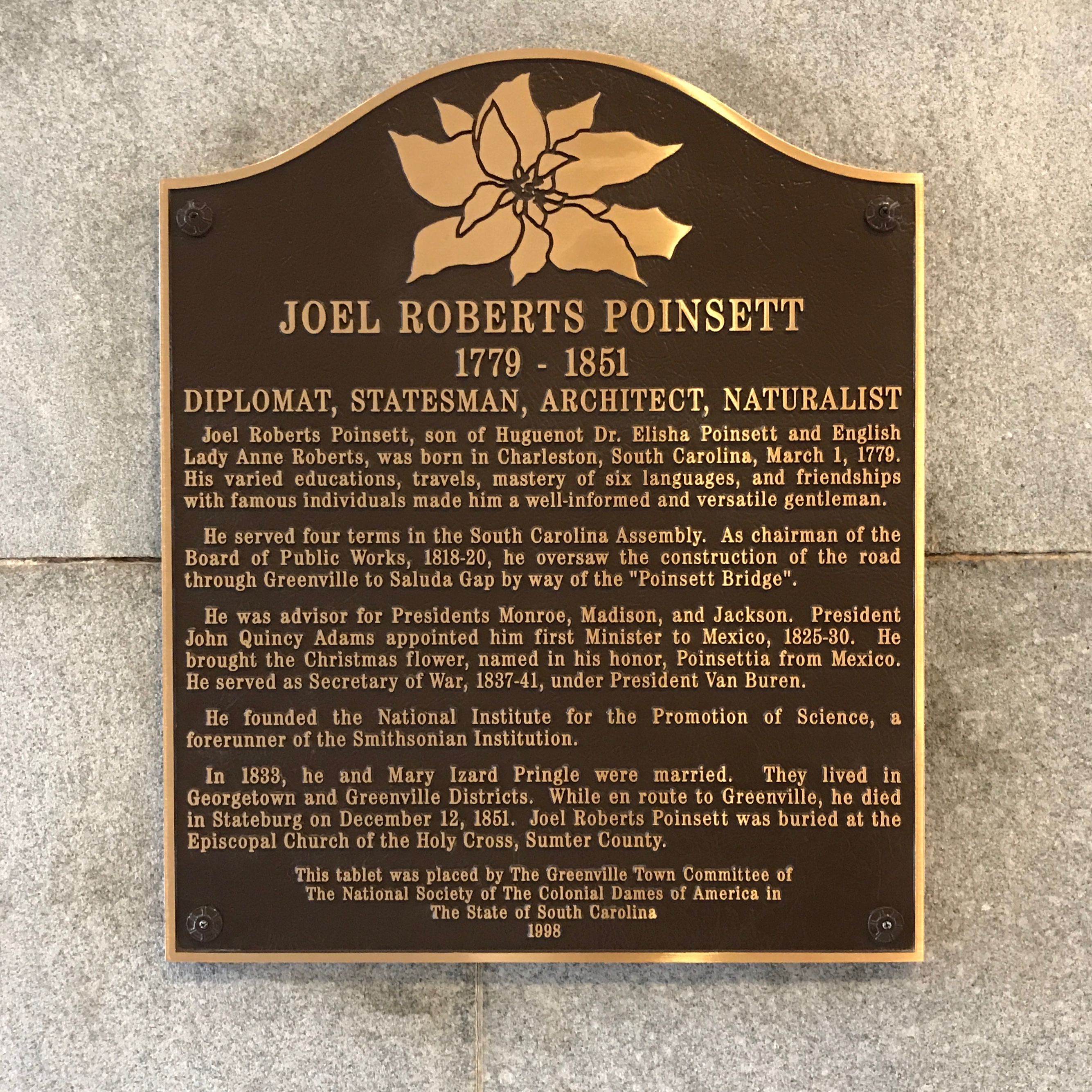
Here’s another bit of interesting information. The poinsettia has a tie to South Carolina.
I made my way inside.
There didn’t seem to be any tours being given when I visited, so I just roamed around a bit.
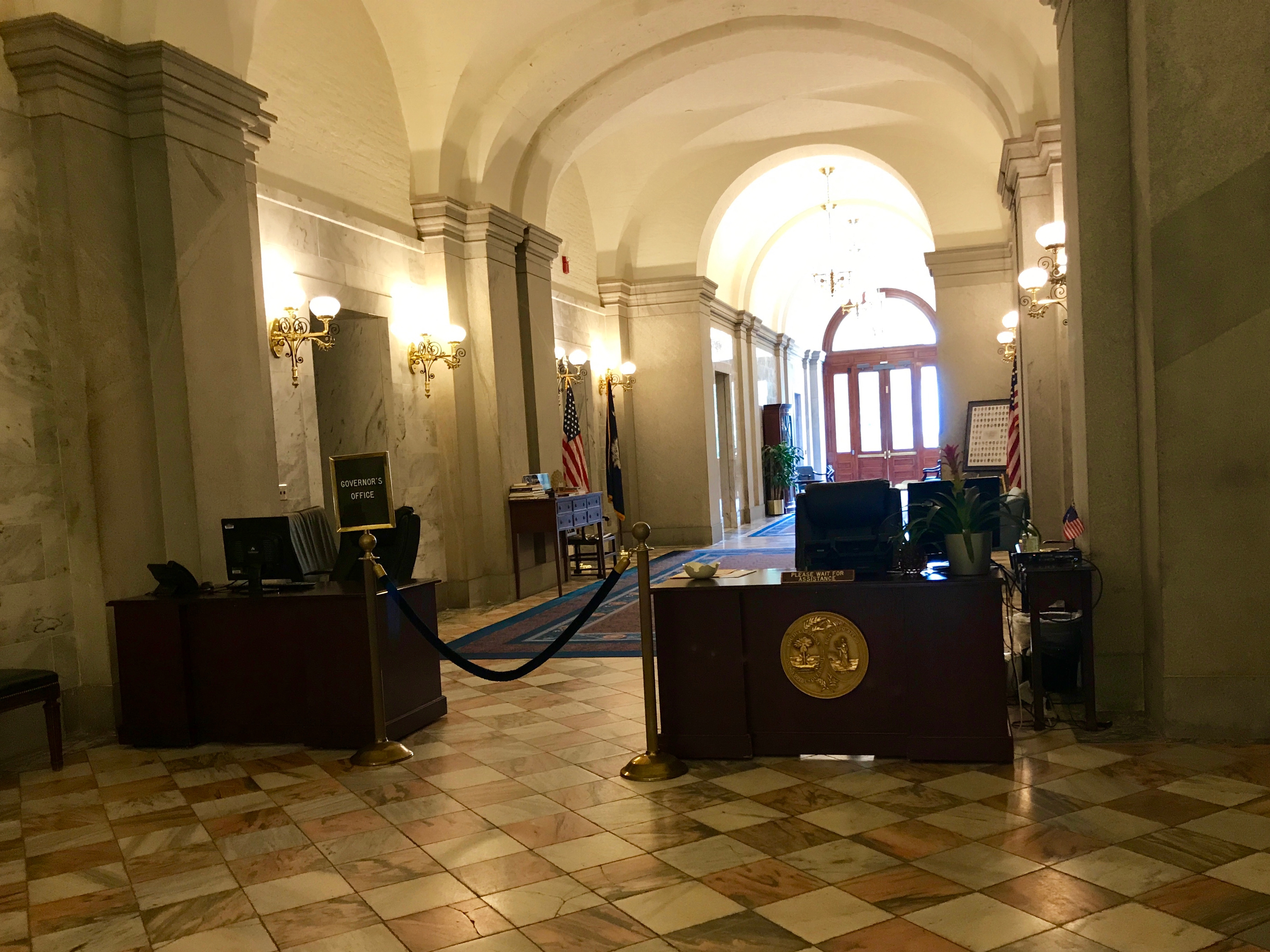
The governor’s office is down that hallway.
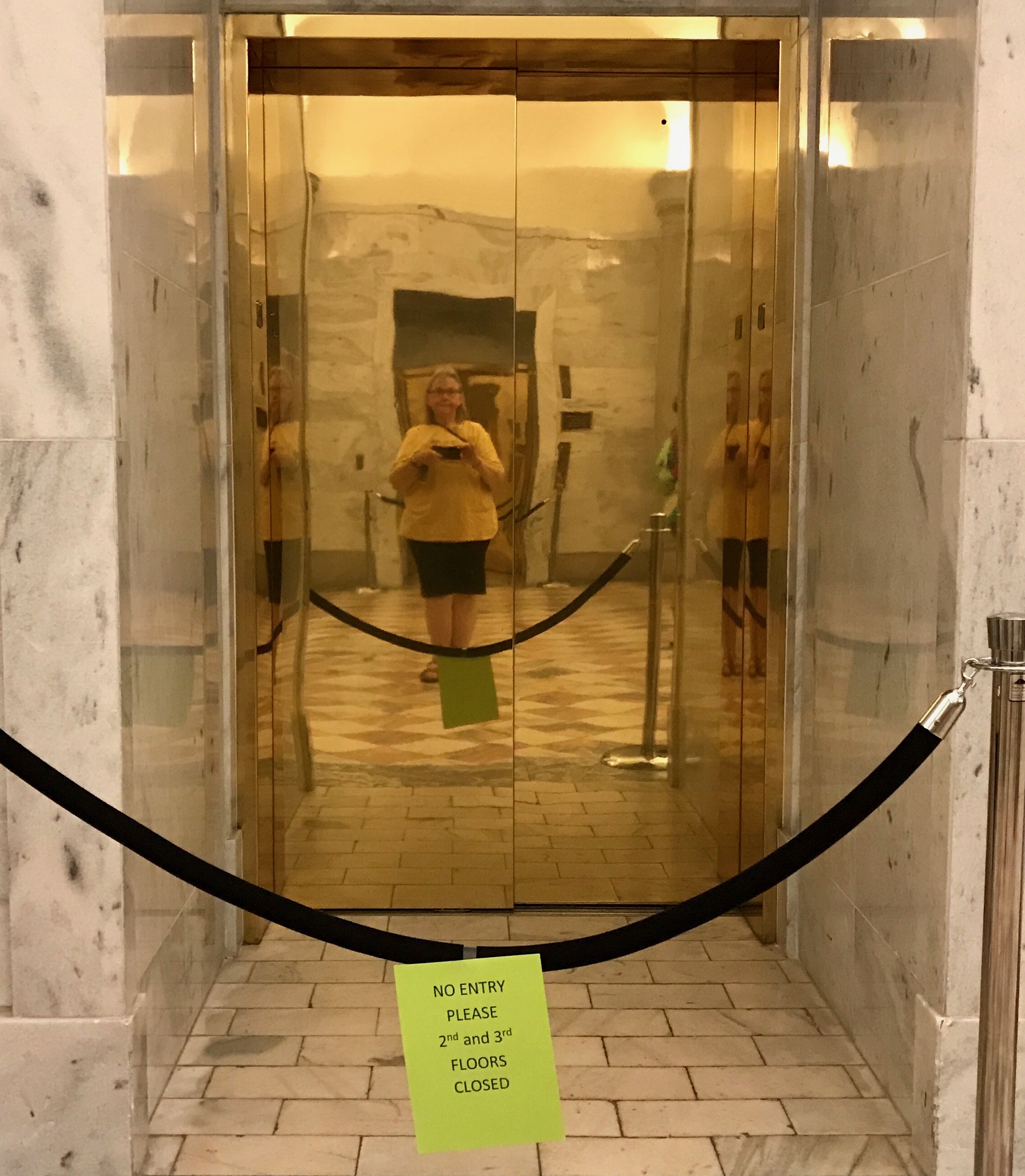
I took a selfie of my reflection in the elevator doors.
As I remember, this is in the lower level.
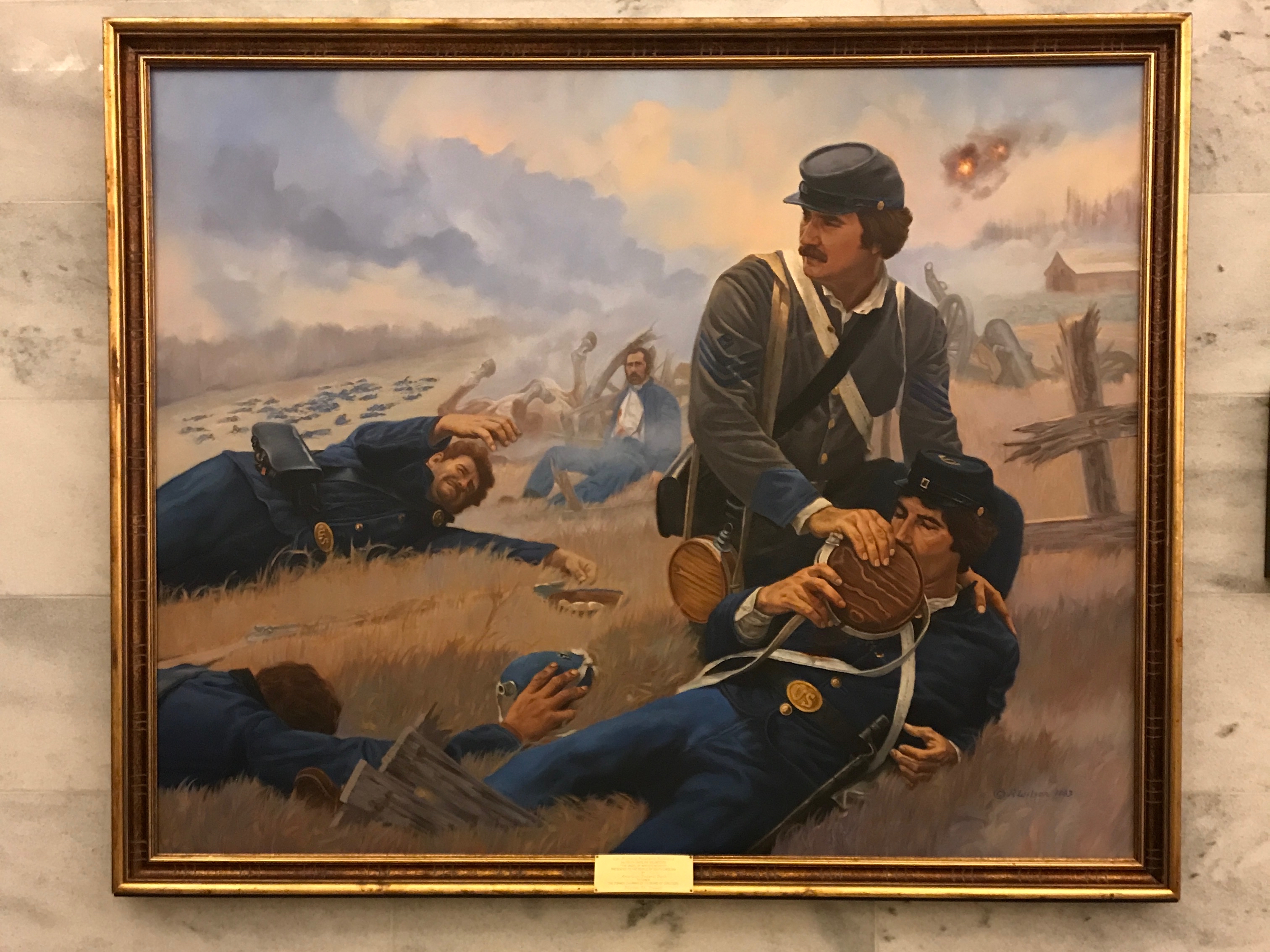
They had some displays in the basement. There was this painting of the Angel of Marye’s Heights.
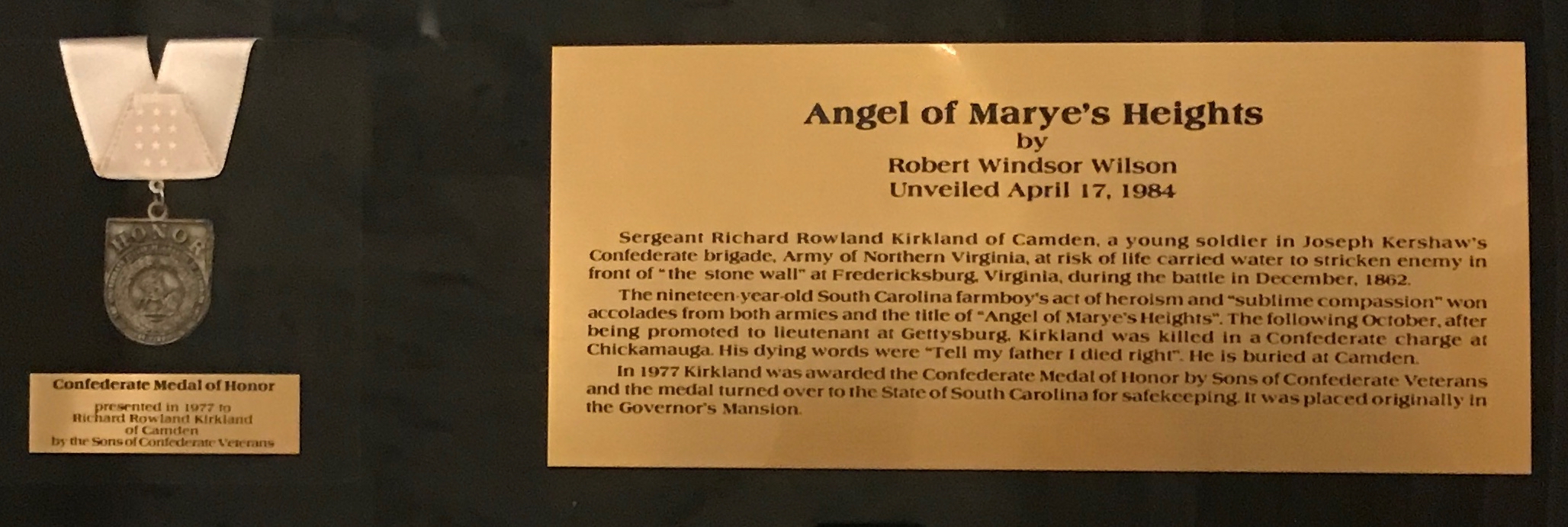
Sergeant Richard Rowland Kirkland took water to the enemy during the battle of Fredericksburg in December 1862. When he died during the battle of Chickamauga, his dying words were reported to be, “Tell my father I died right.”
He was awarded the Confederate Medal of Honor by Sons of Confederate Veterans in 1977.
I continued my explorations.
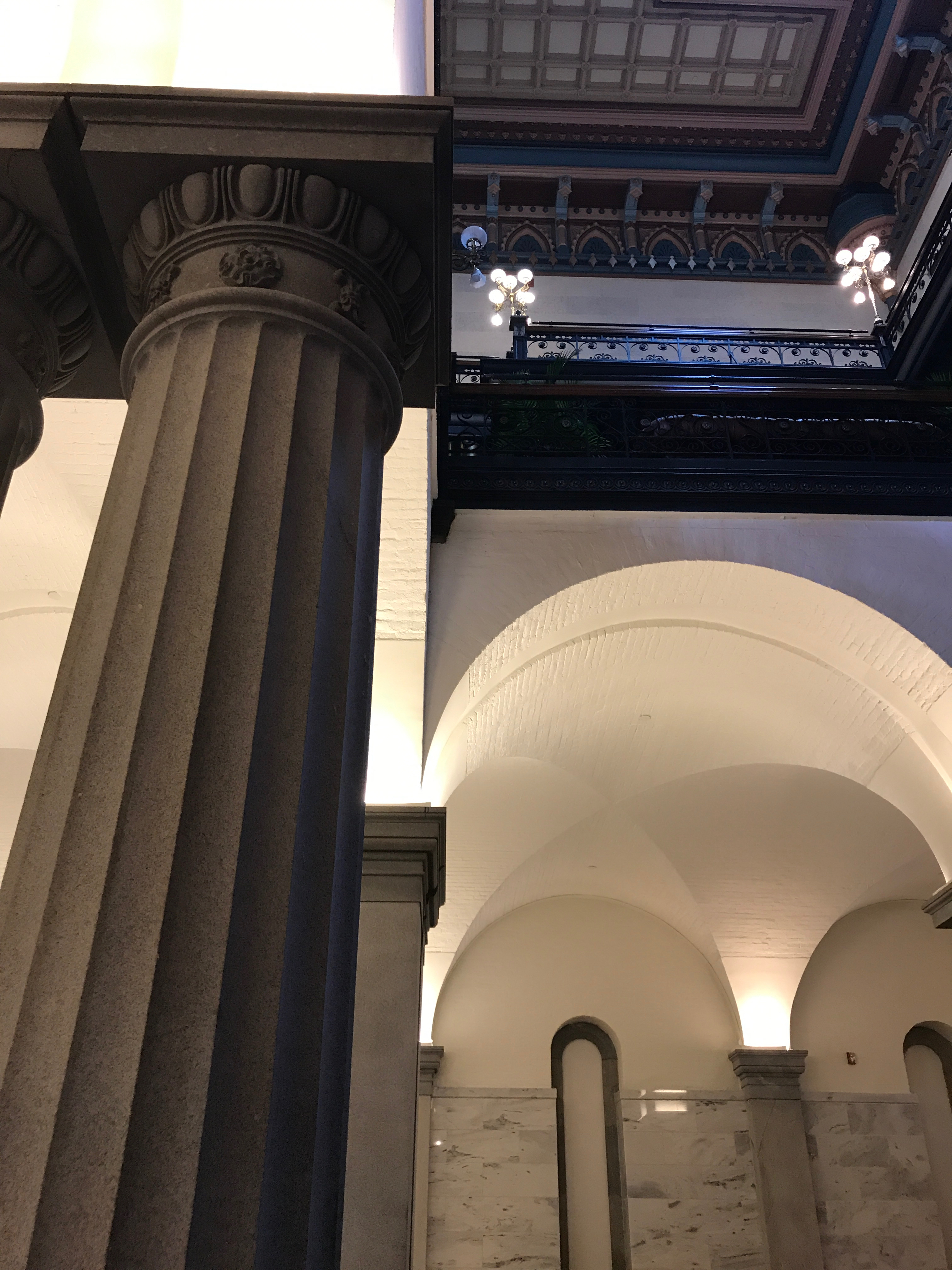
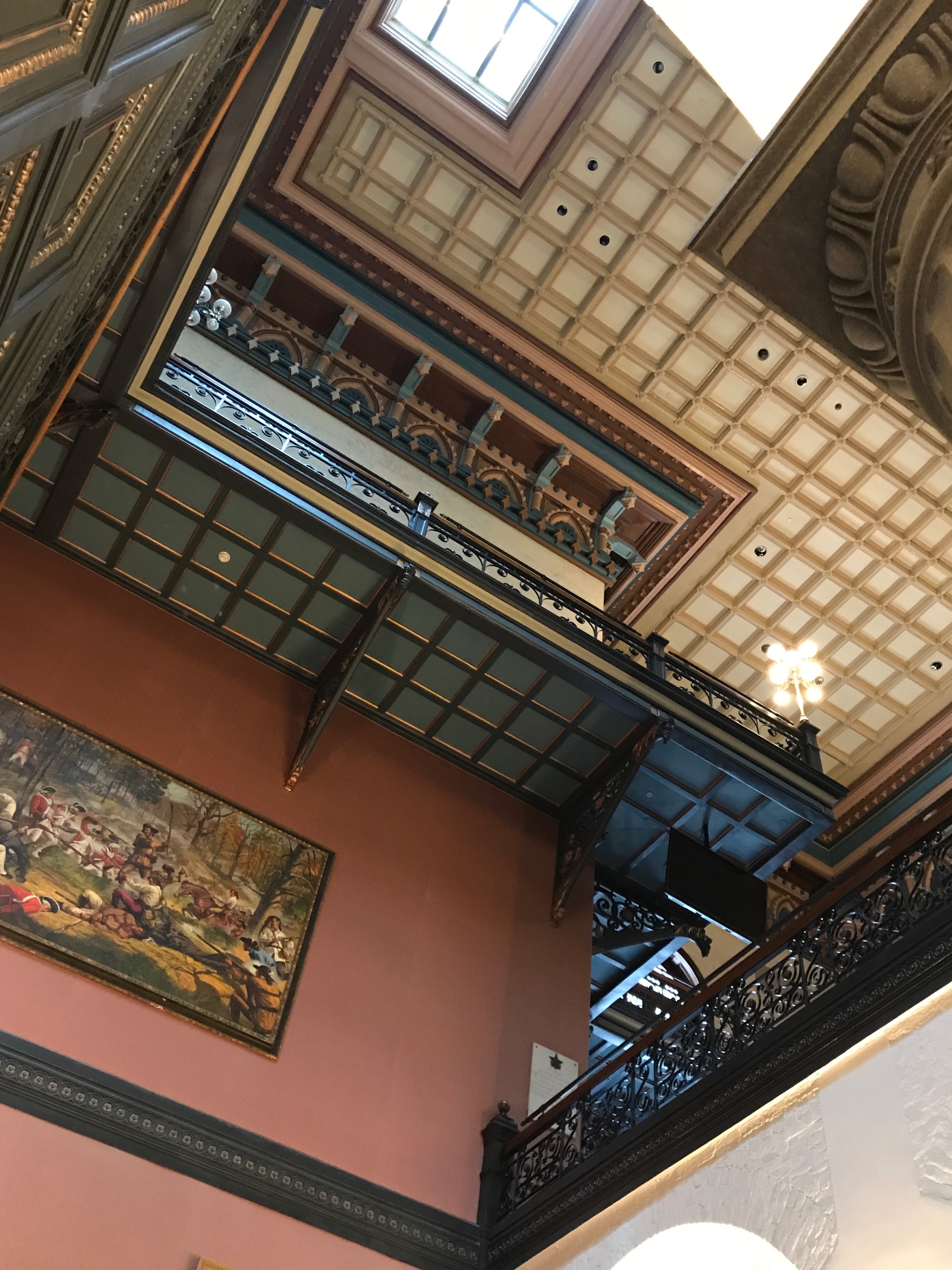
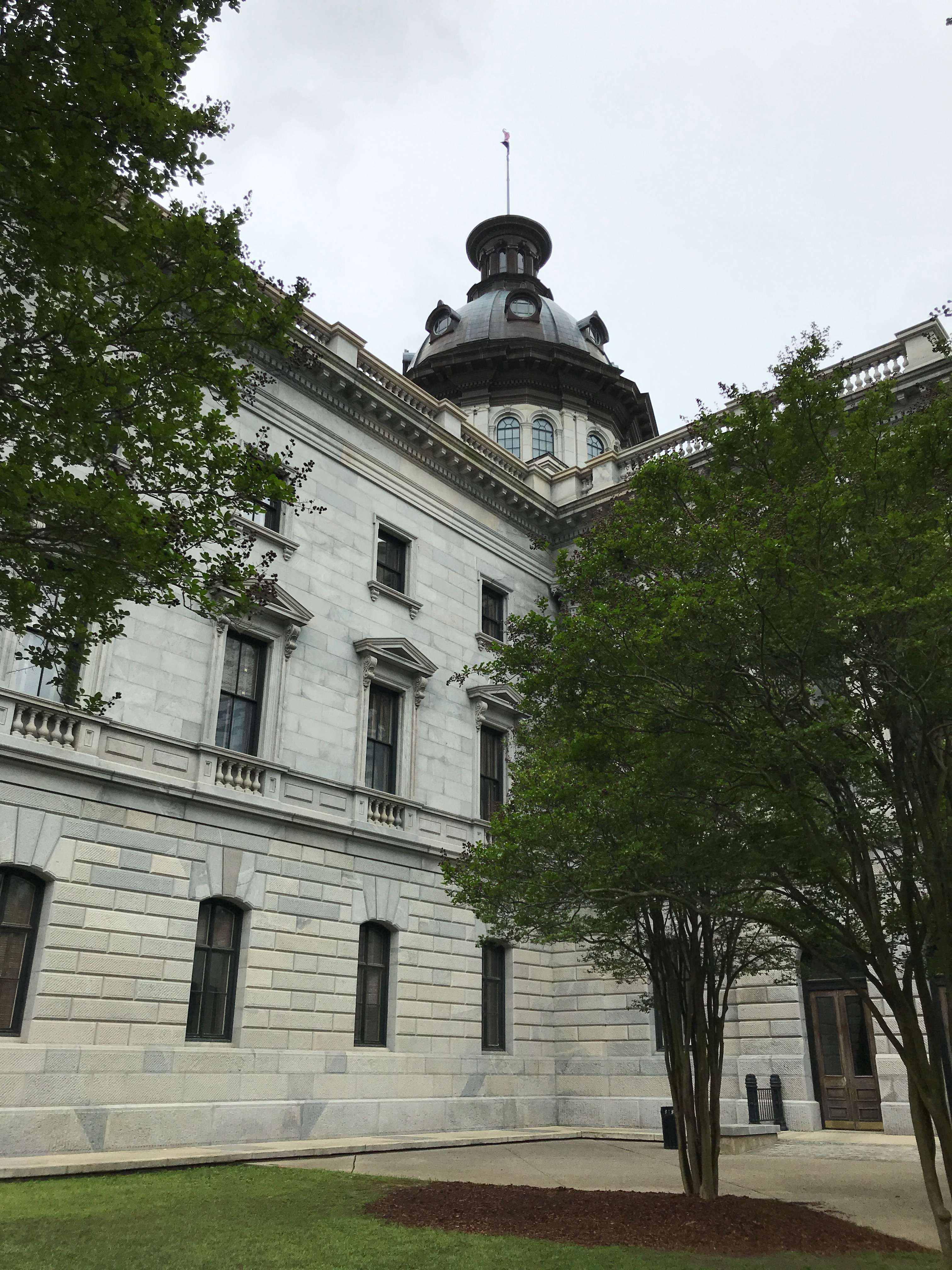
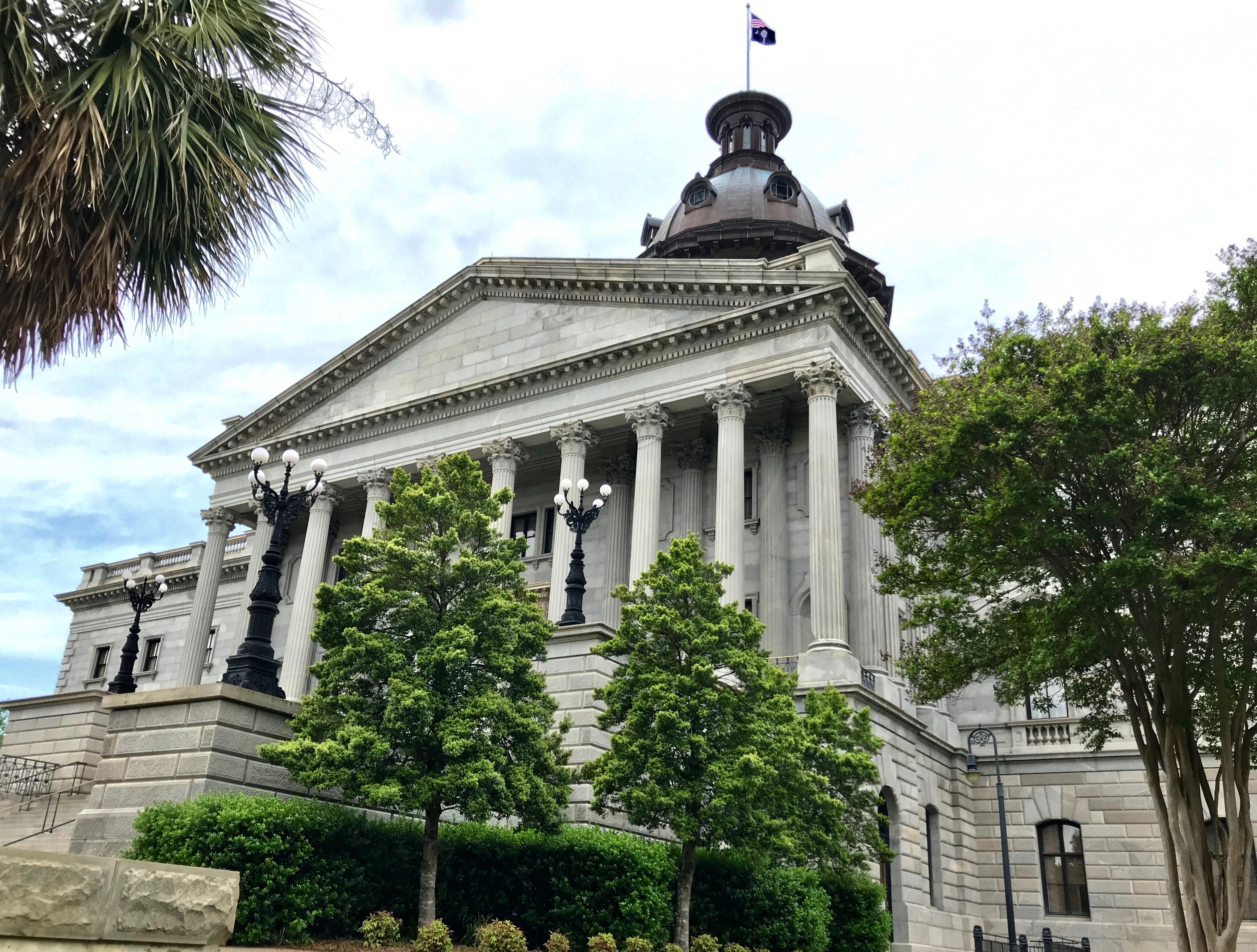
There appears to be quite a variety of architectural styles, probably due to the long time period that the building was under construction.
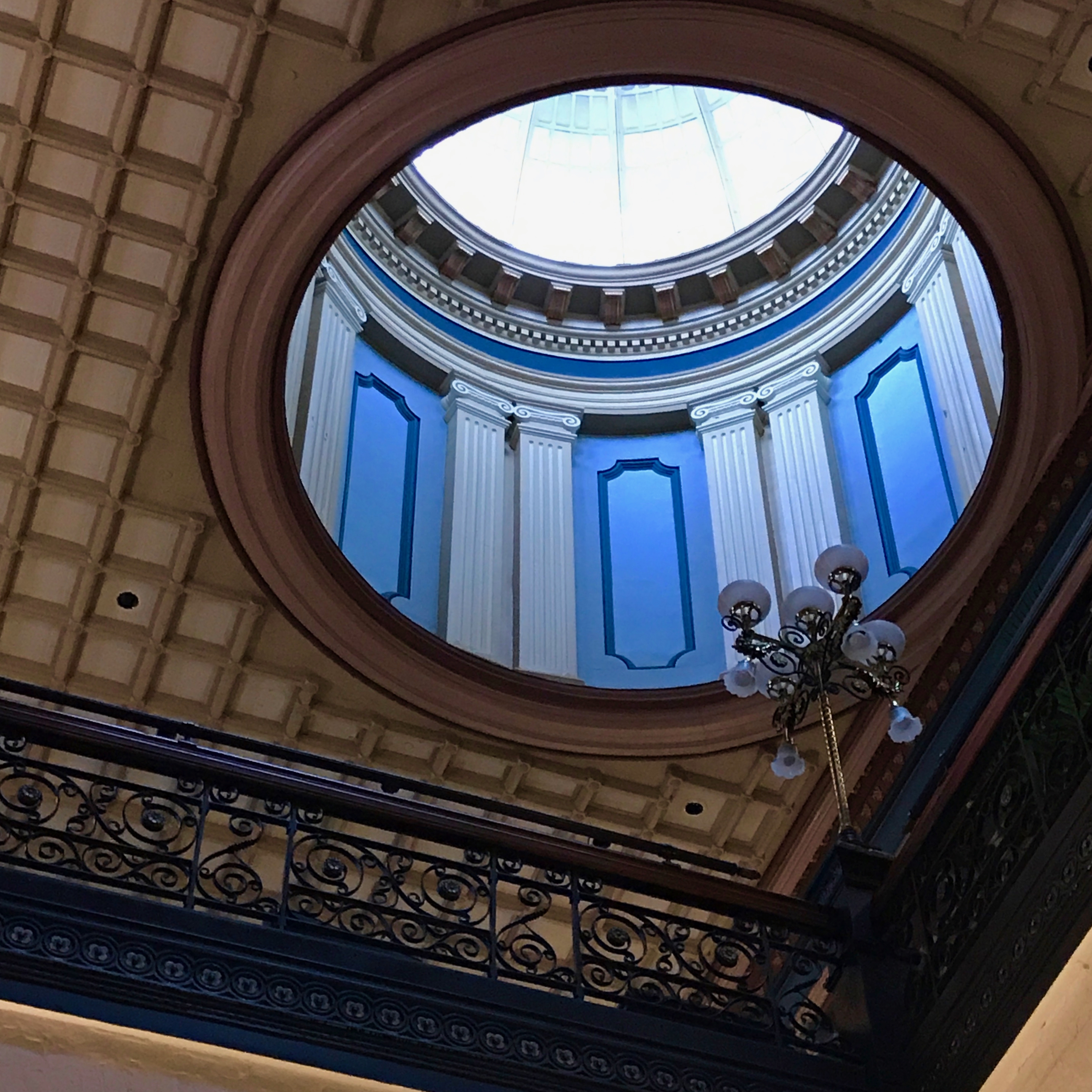
They did include a dome. I headed outside to see what else I could see.
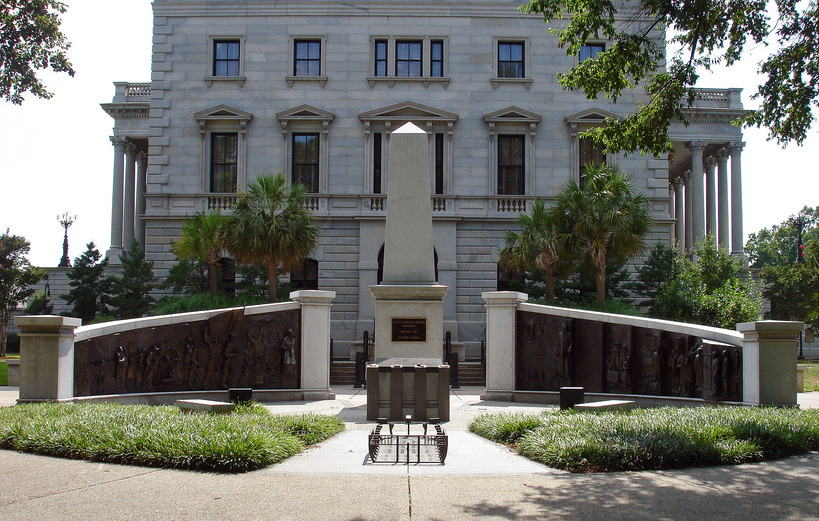
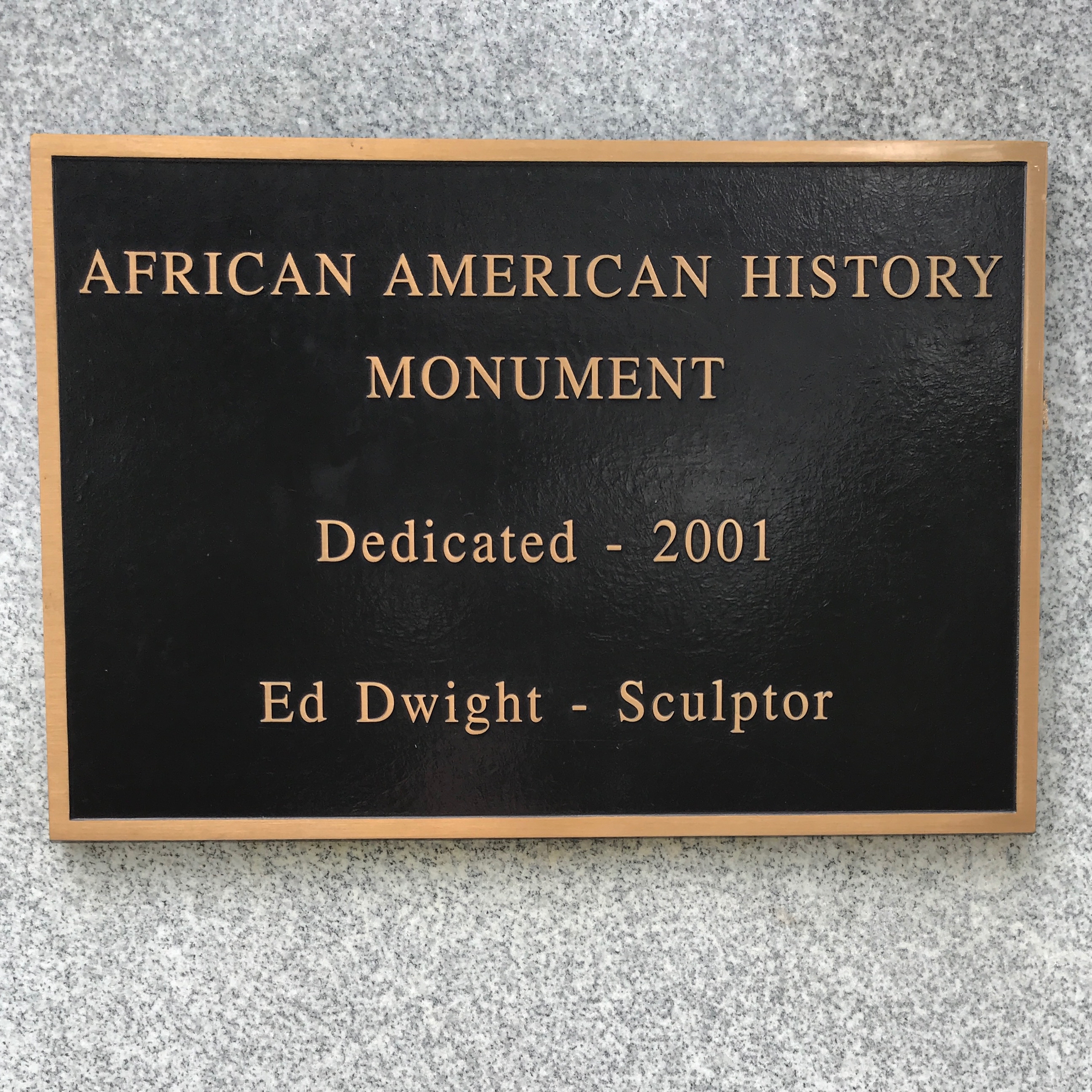
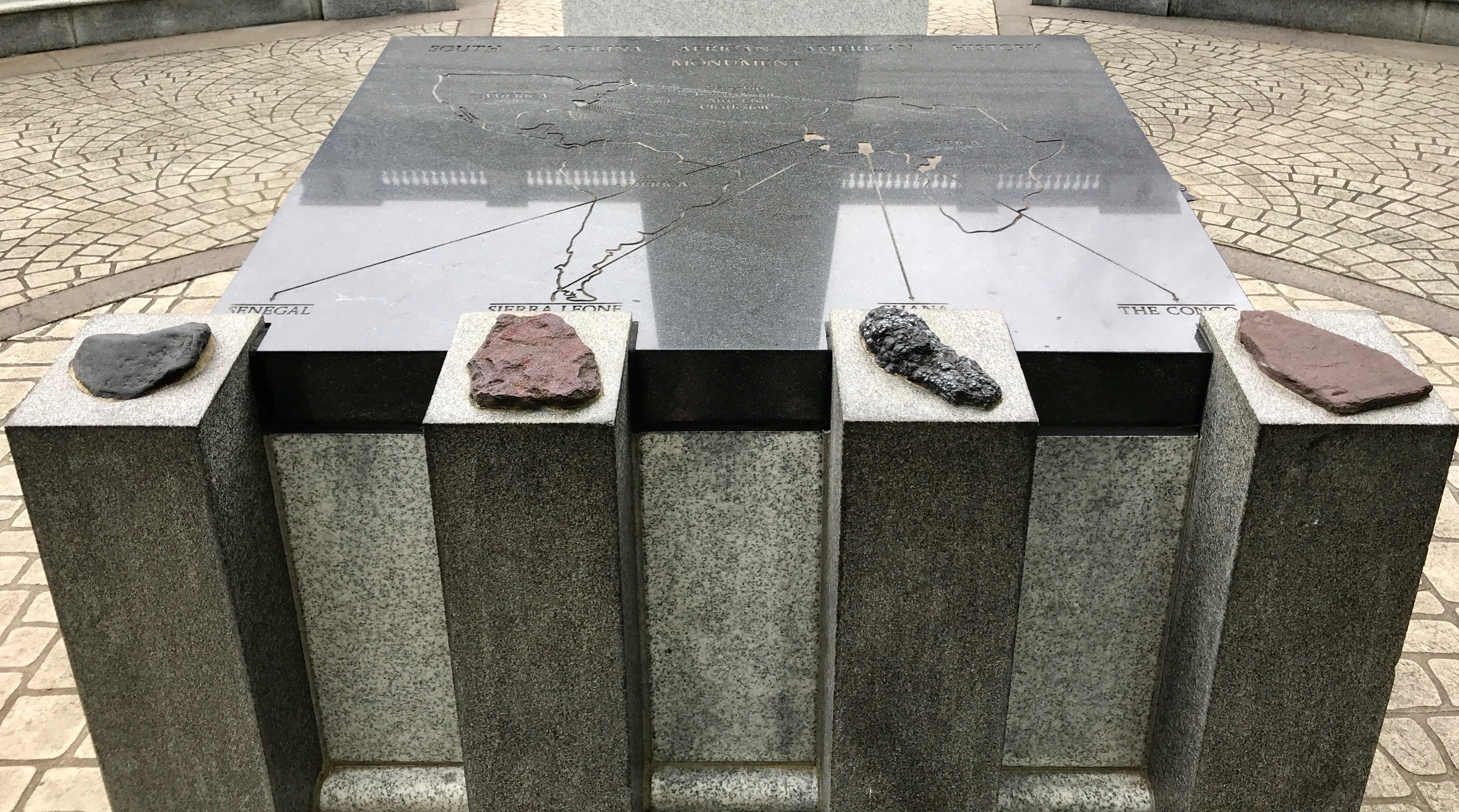
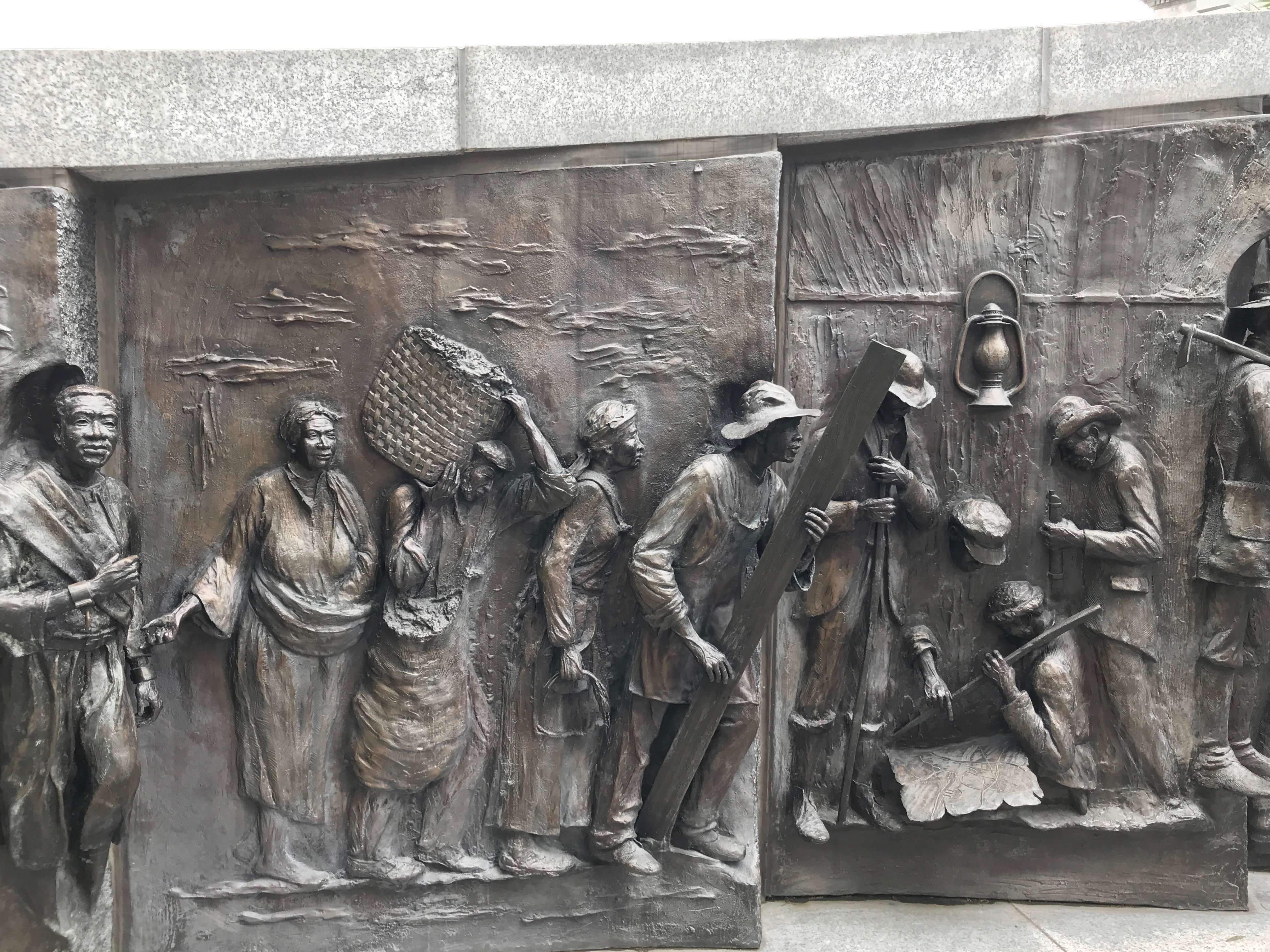
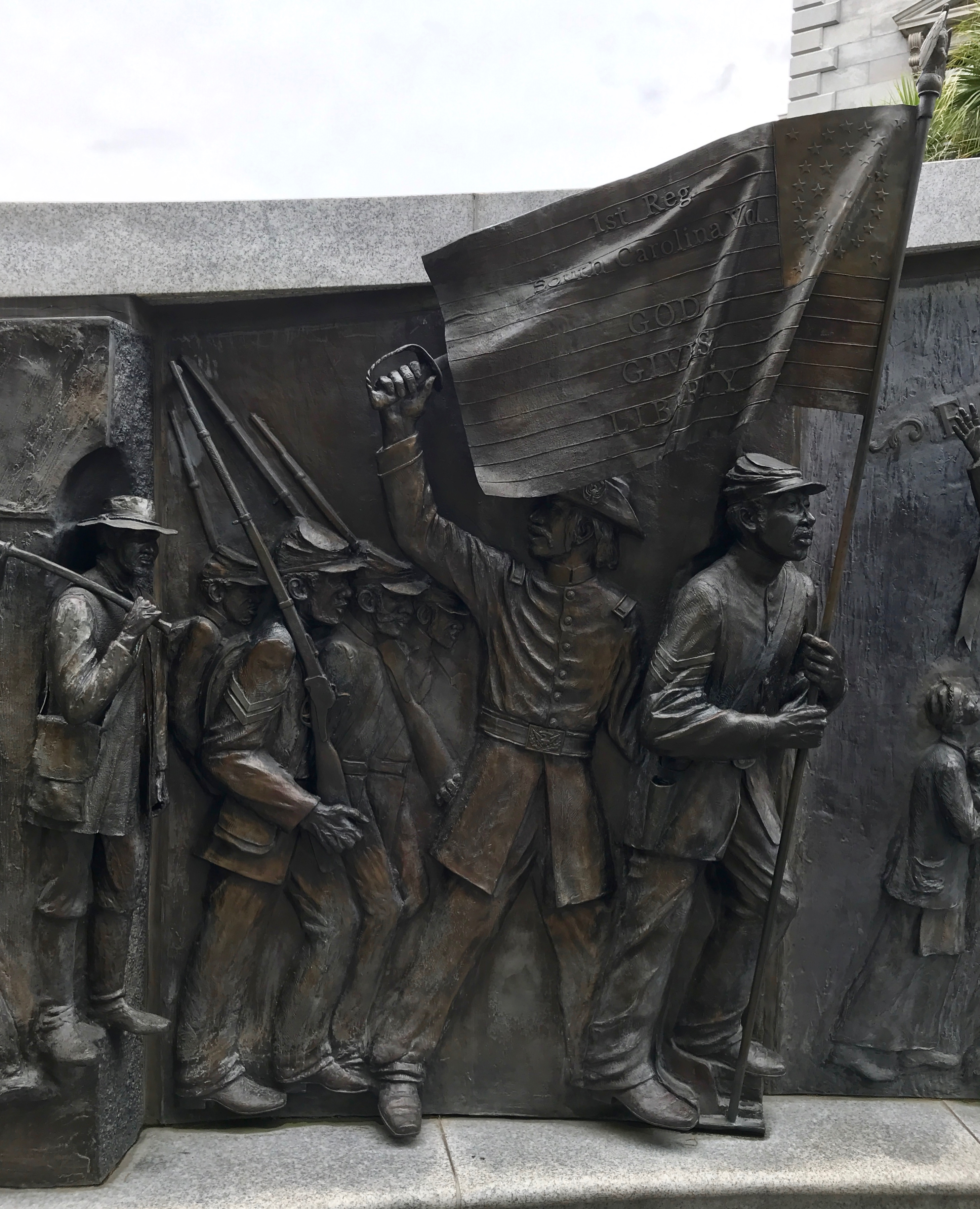
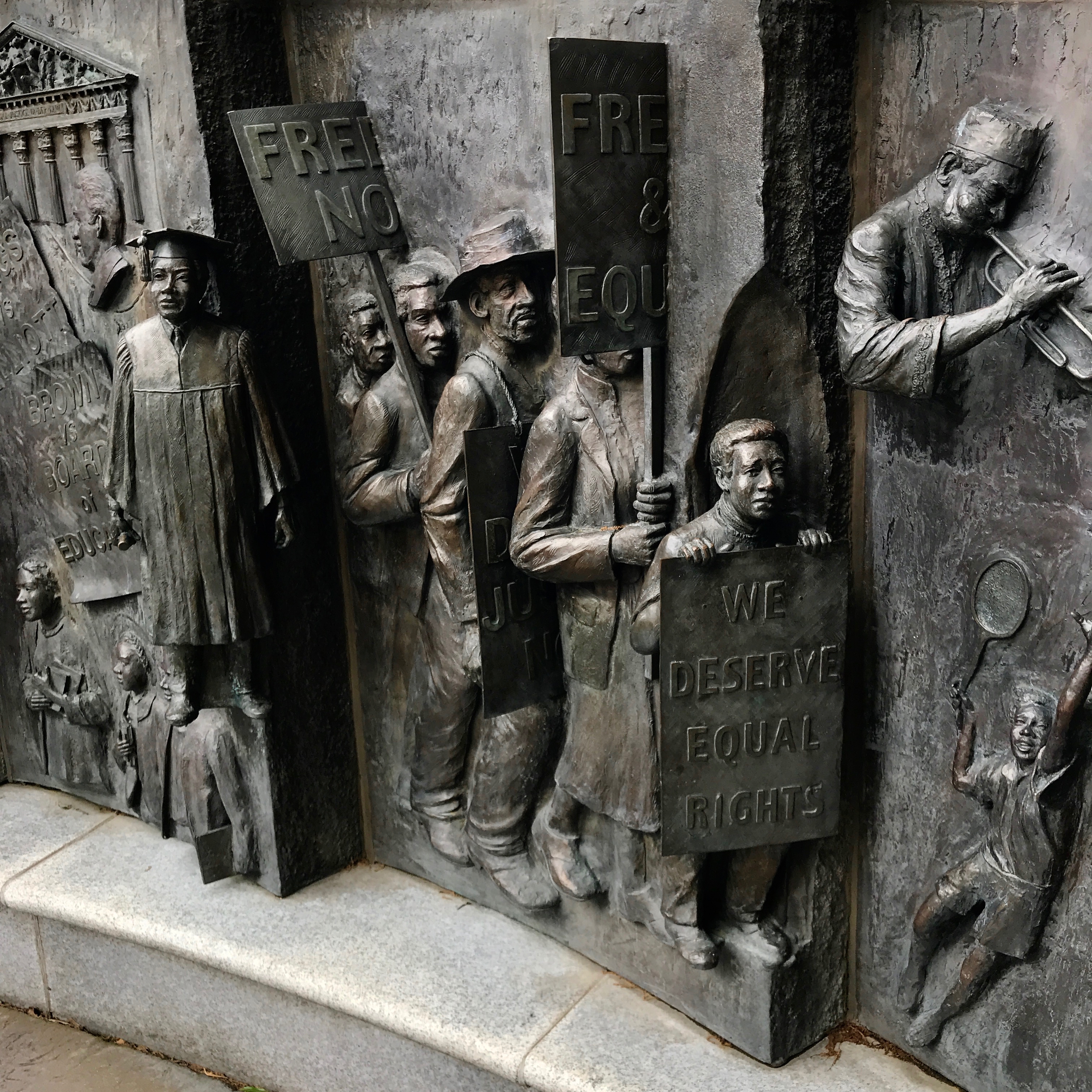
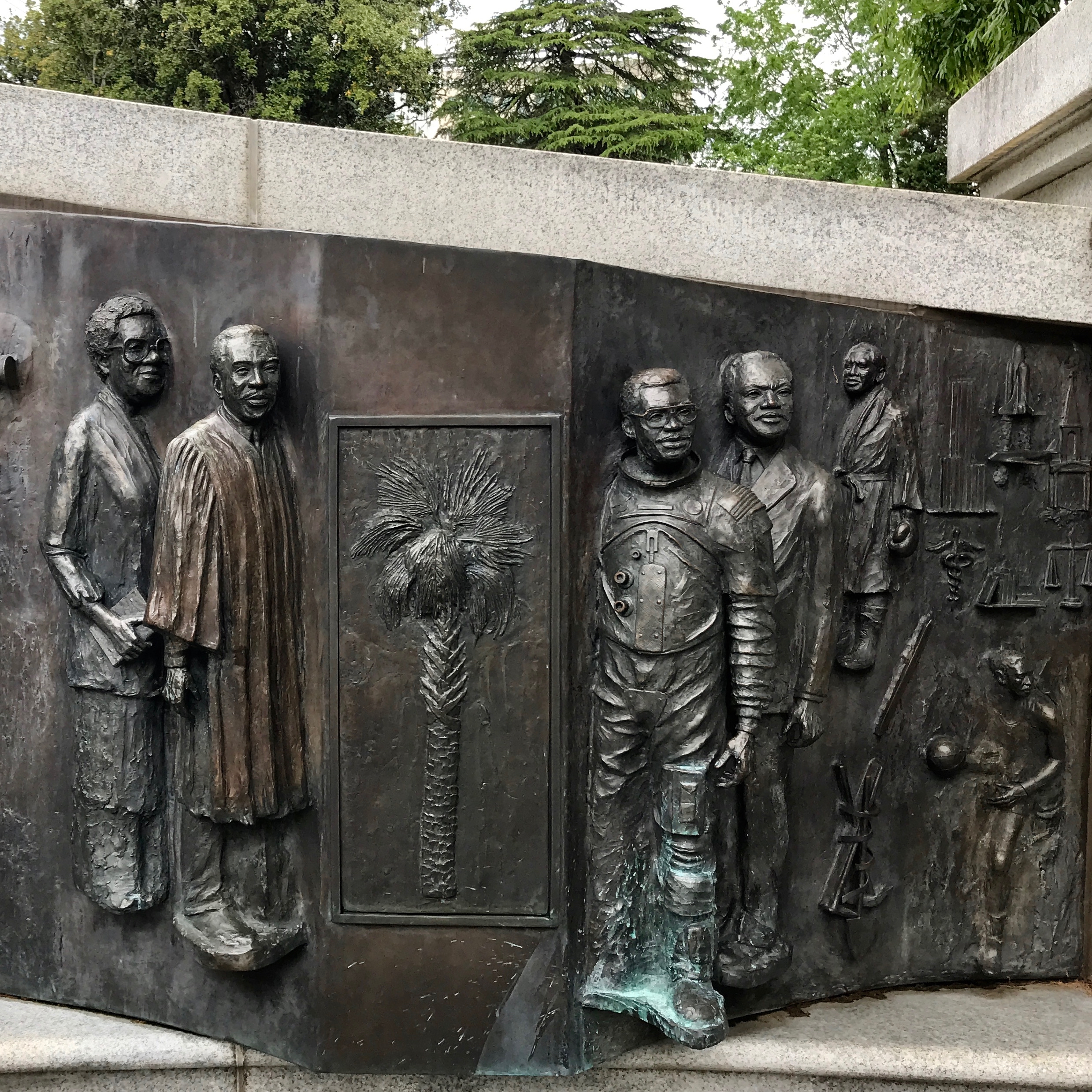
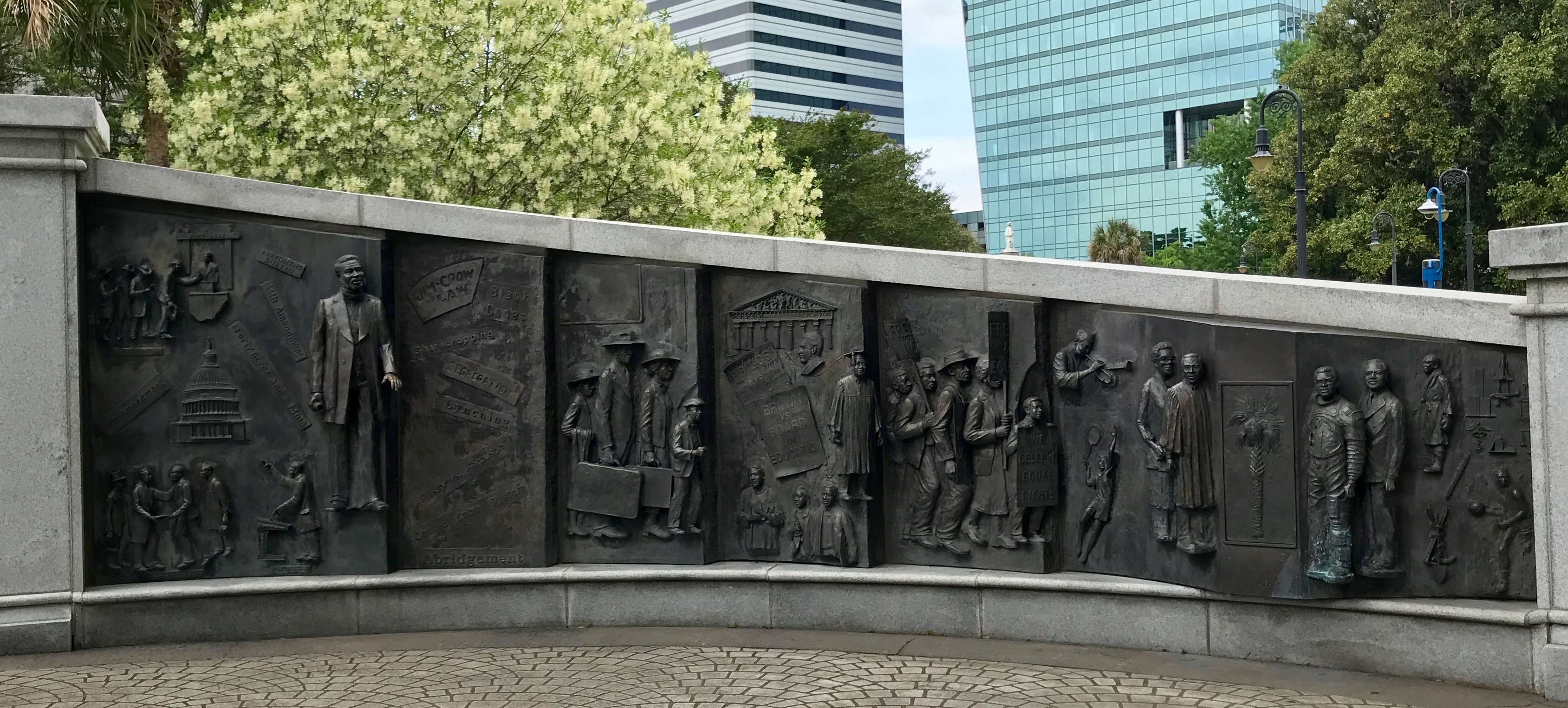
I continued around and came to the state’s African American History Monument.
I didn’t take this photo. I found it somewhere on the web. I don’t remember why I didn’t get an overall photo. I love my iPhone and the convenience it provides, but sometimes I wish I had a REAL camera.
I did manage to capture details, though.
I like how they included information about the land the African Americans came from, complete with geological samples.
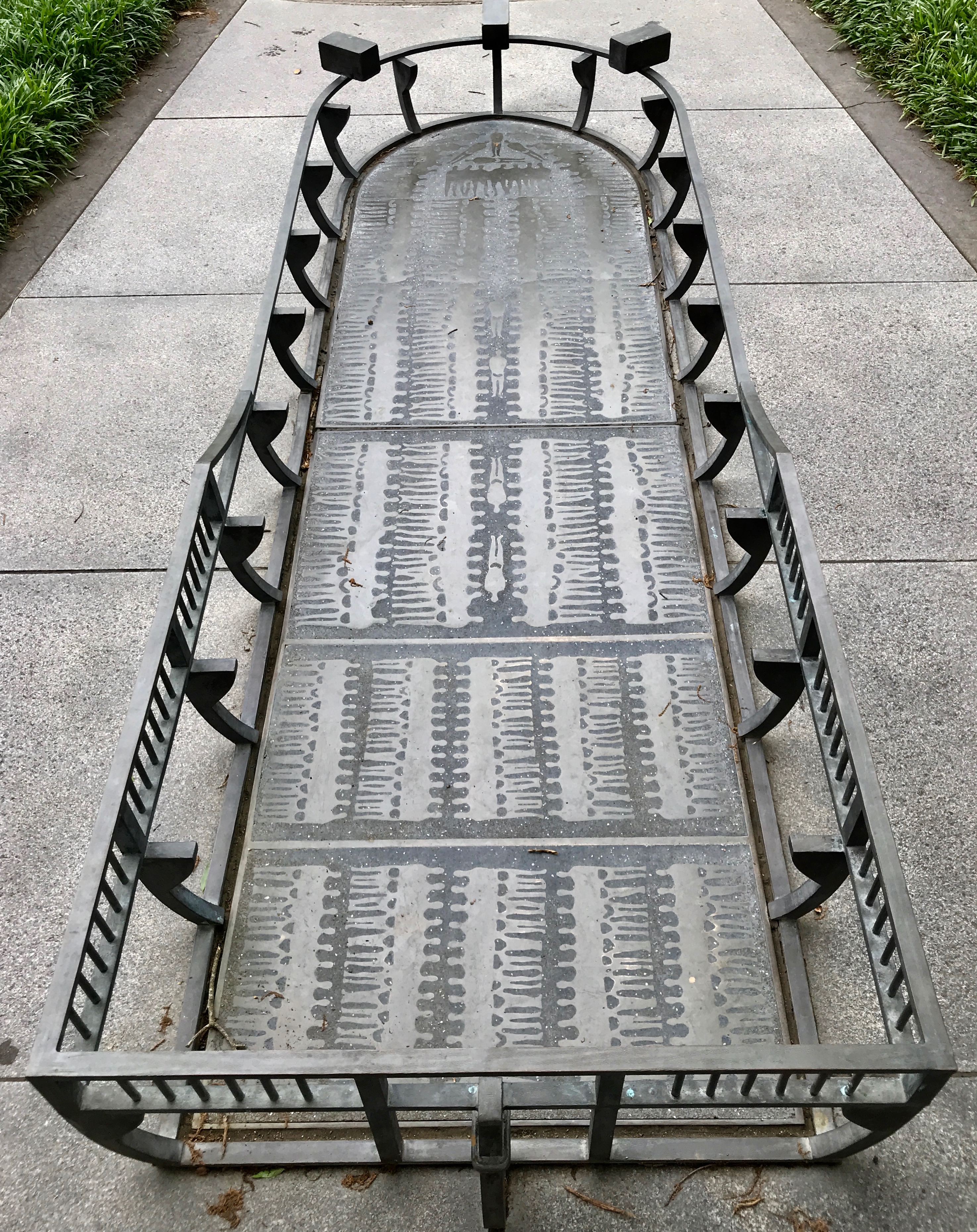
The hold of a slave ship is part of the monument.
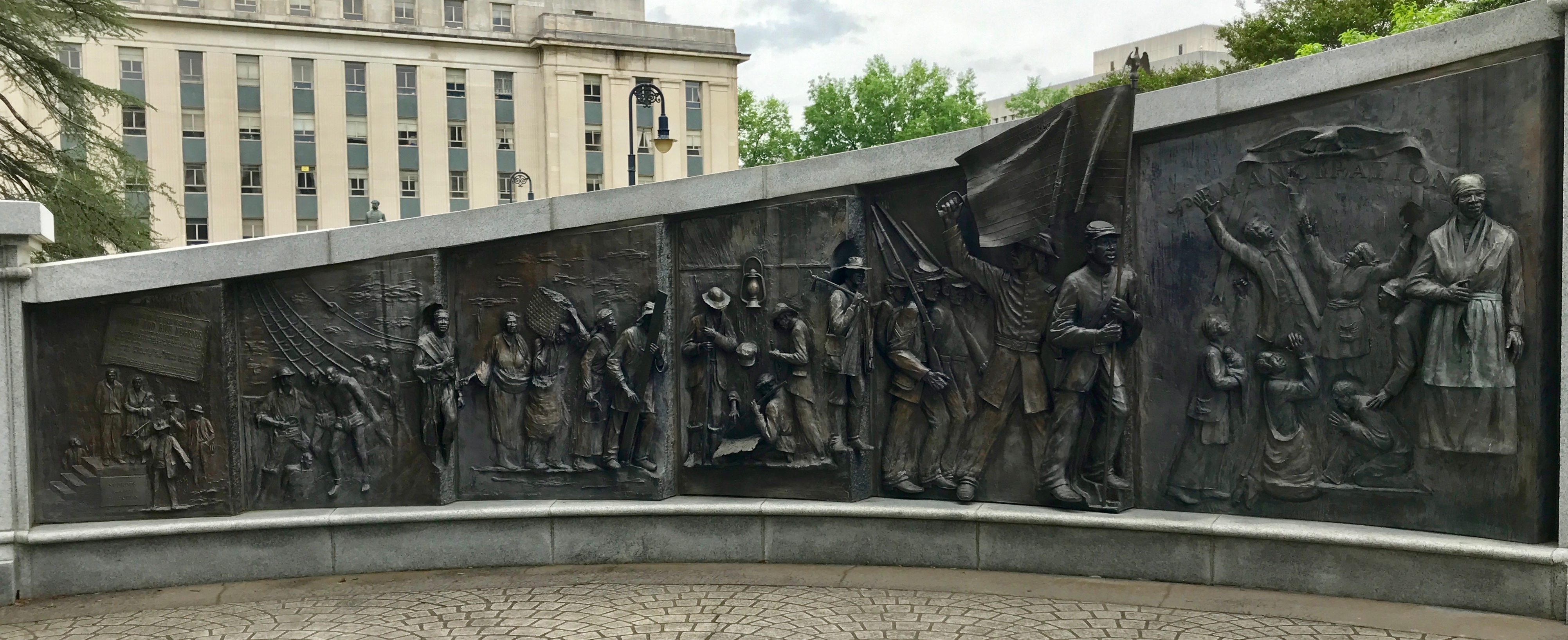
It takes in the sweep of history.
It picks up on the left side, when the Africans landed in the Americas.
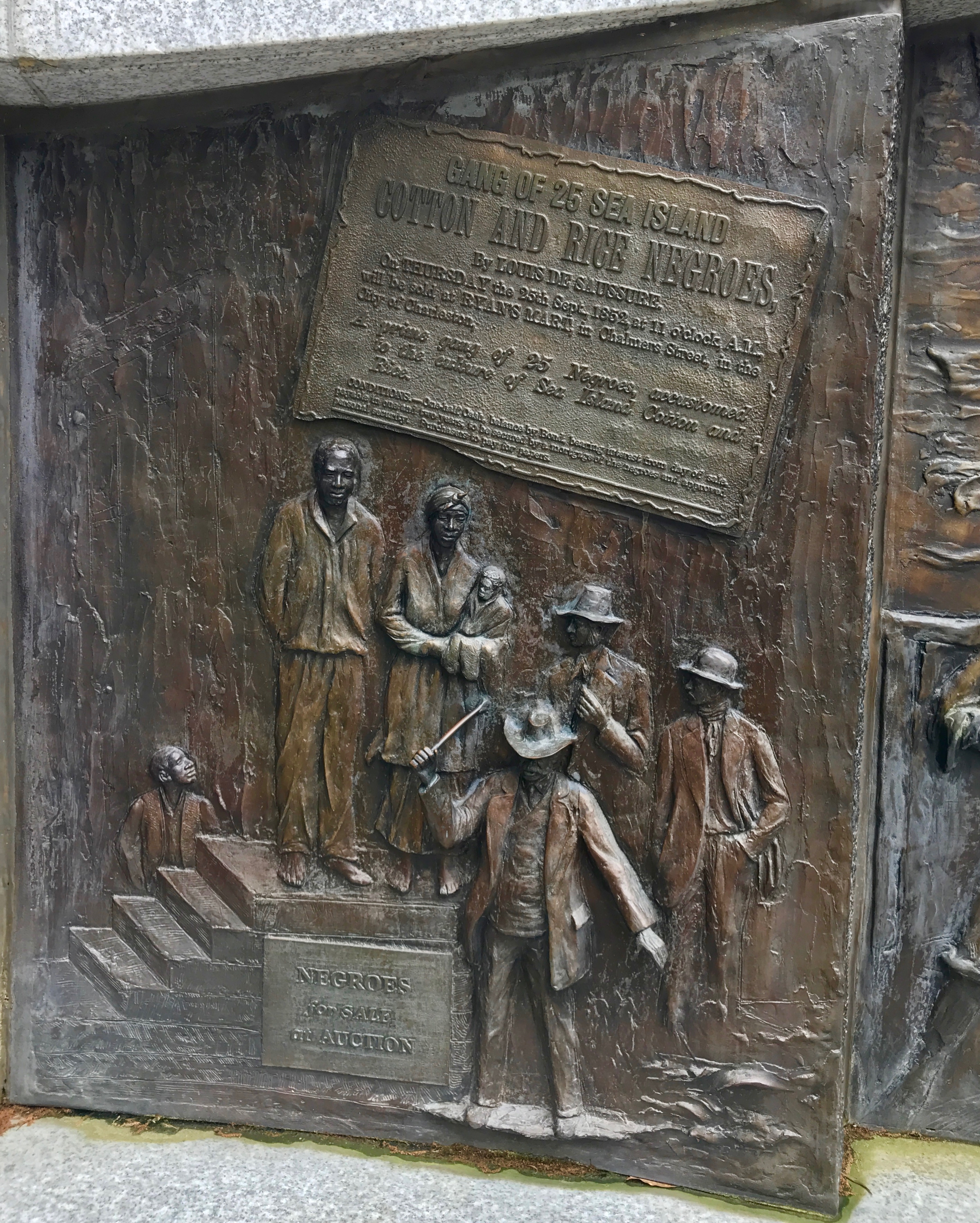
They were auctioned off, sent to work in the fields and then worked to escape.
They fought for their freedom during the Civil War.
The fight continued with hard work and perseverance.
Success.
I continued around the capitol.
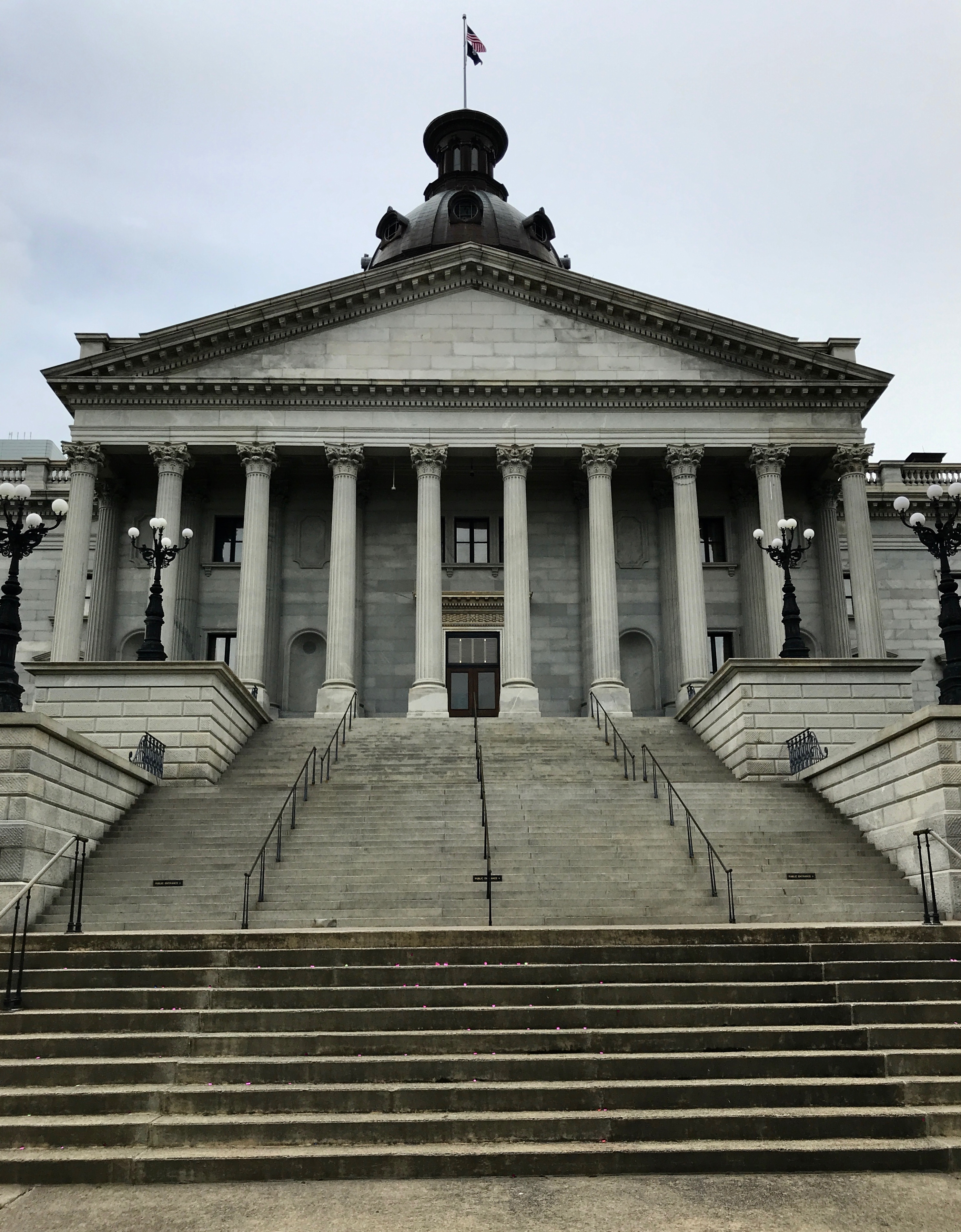
My goodness! Designers of state capitols sure do like their grand stairs.
I wonder how many there are?
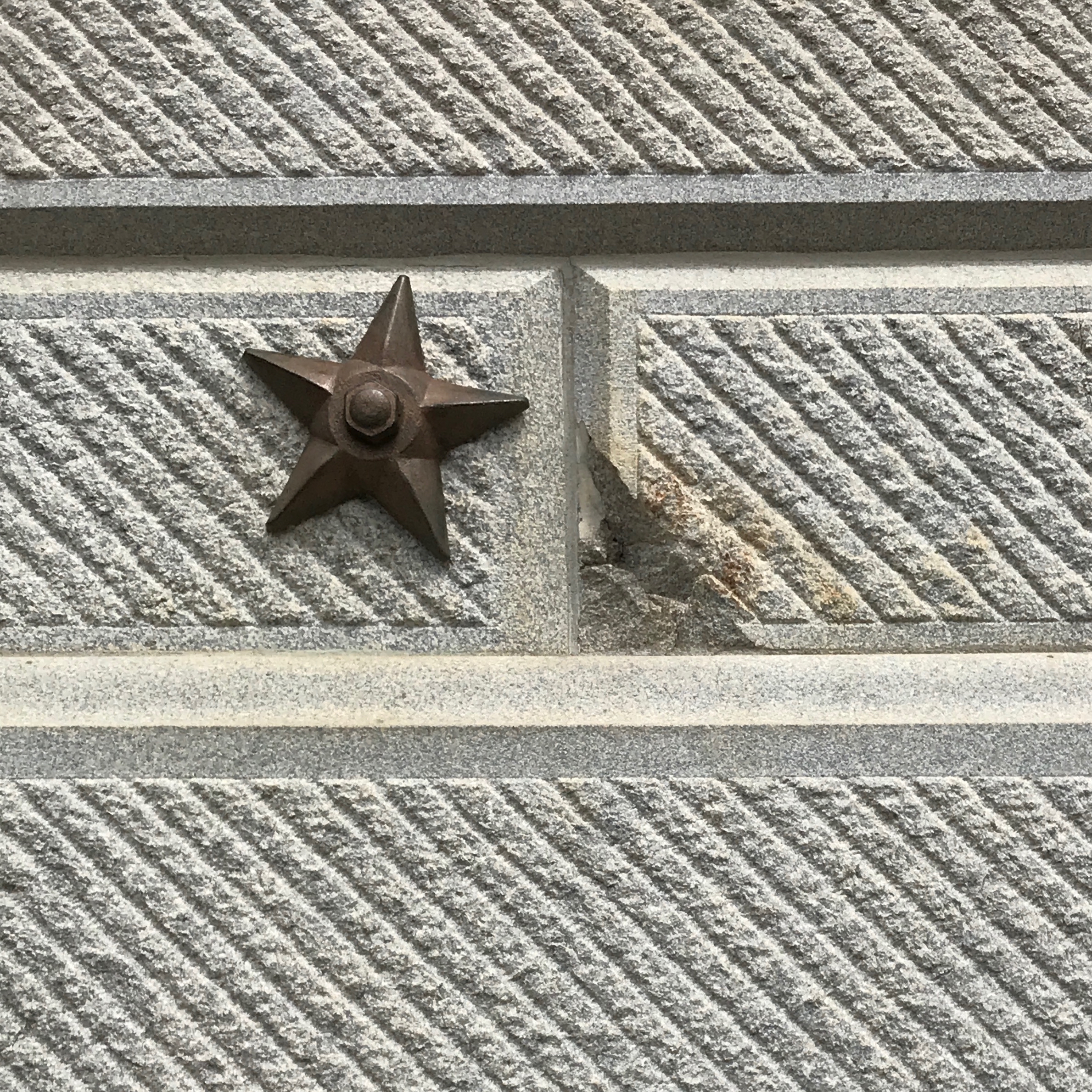
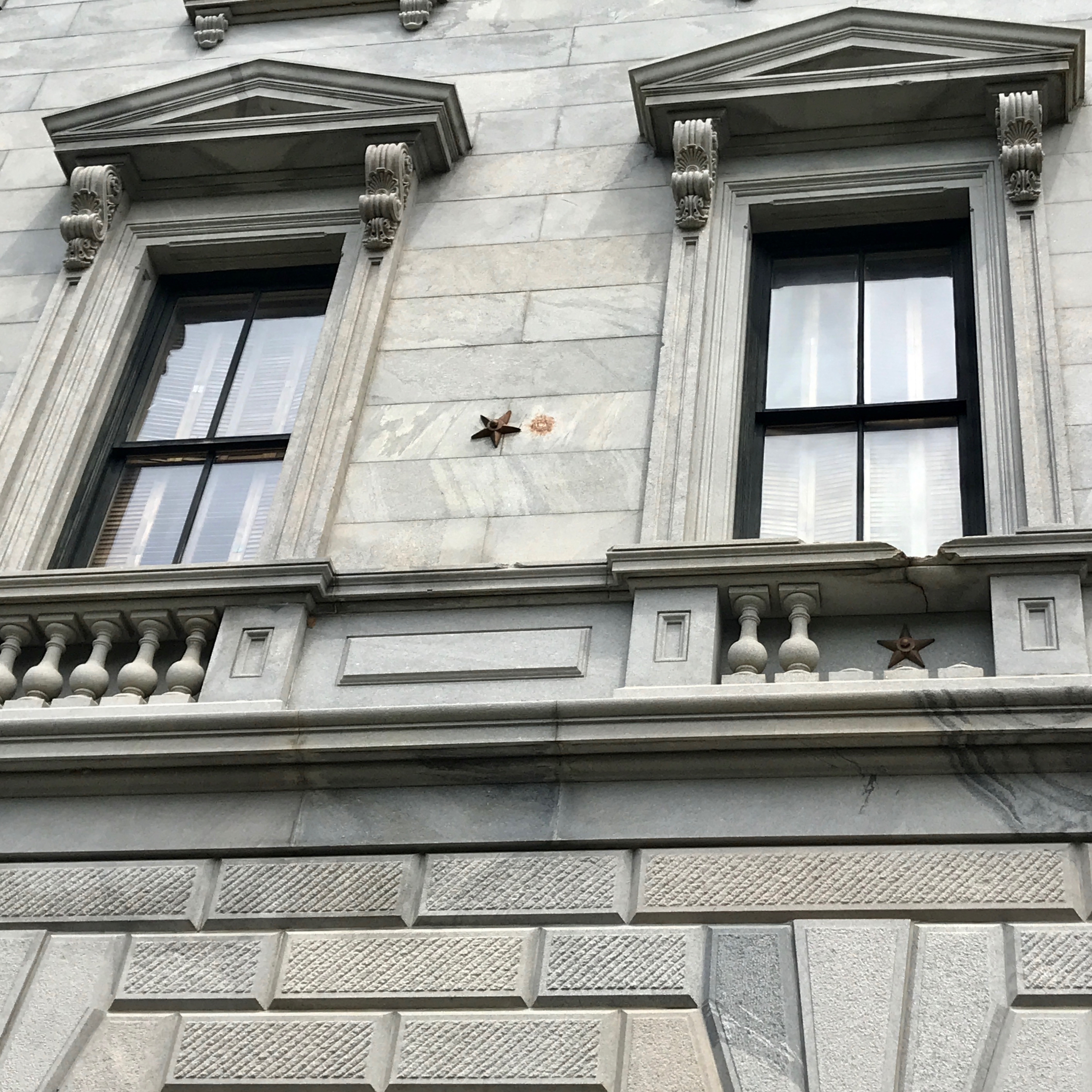
One thing some app I had told me to look for was damage from the Civil War marked with bronze stars.
Here’s one.
There are two more in this shot.
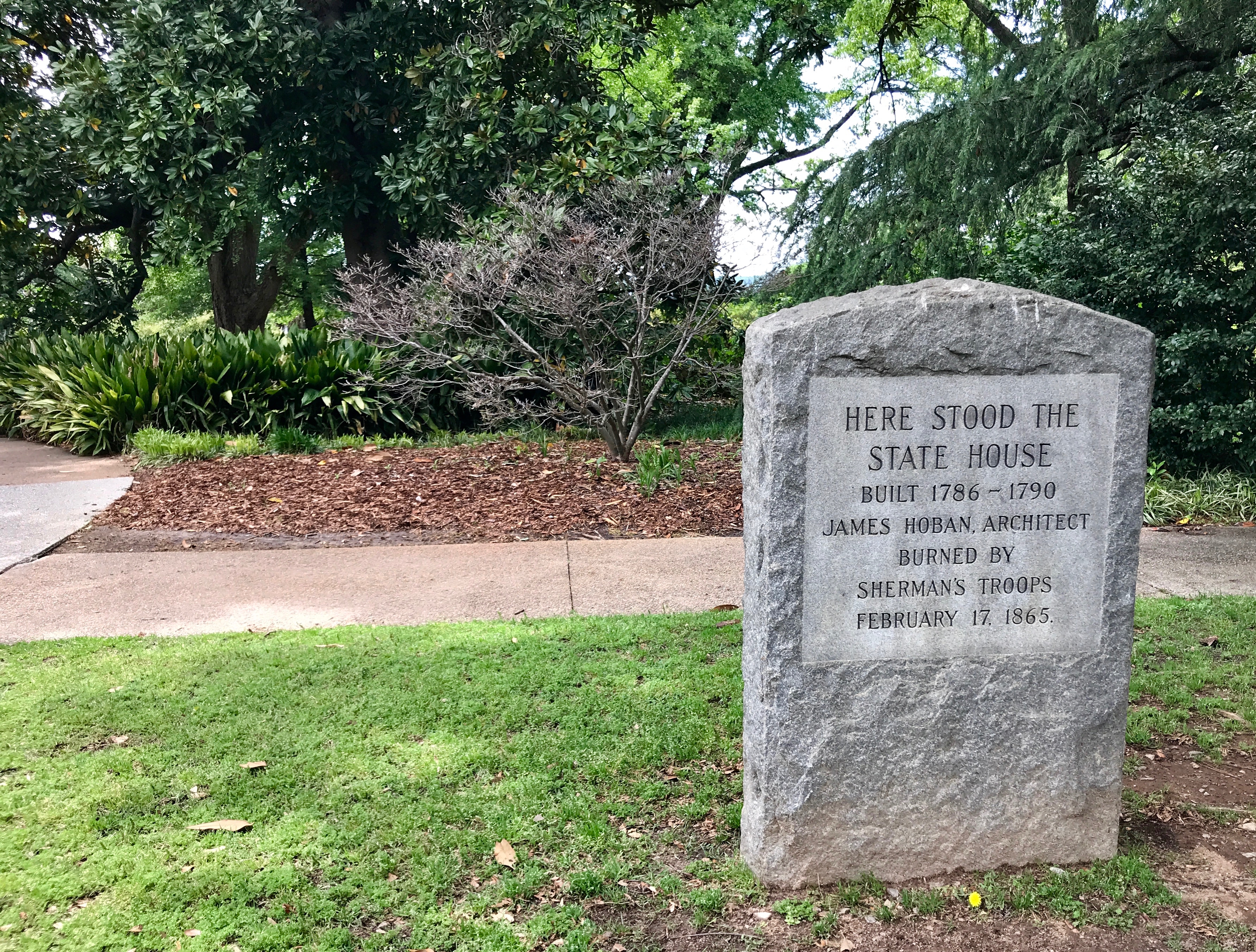
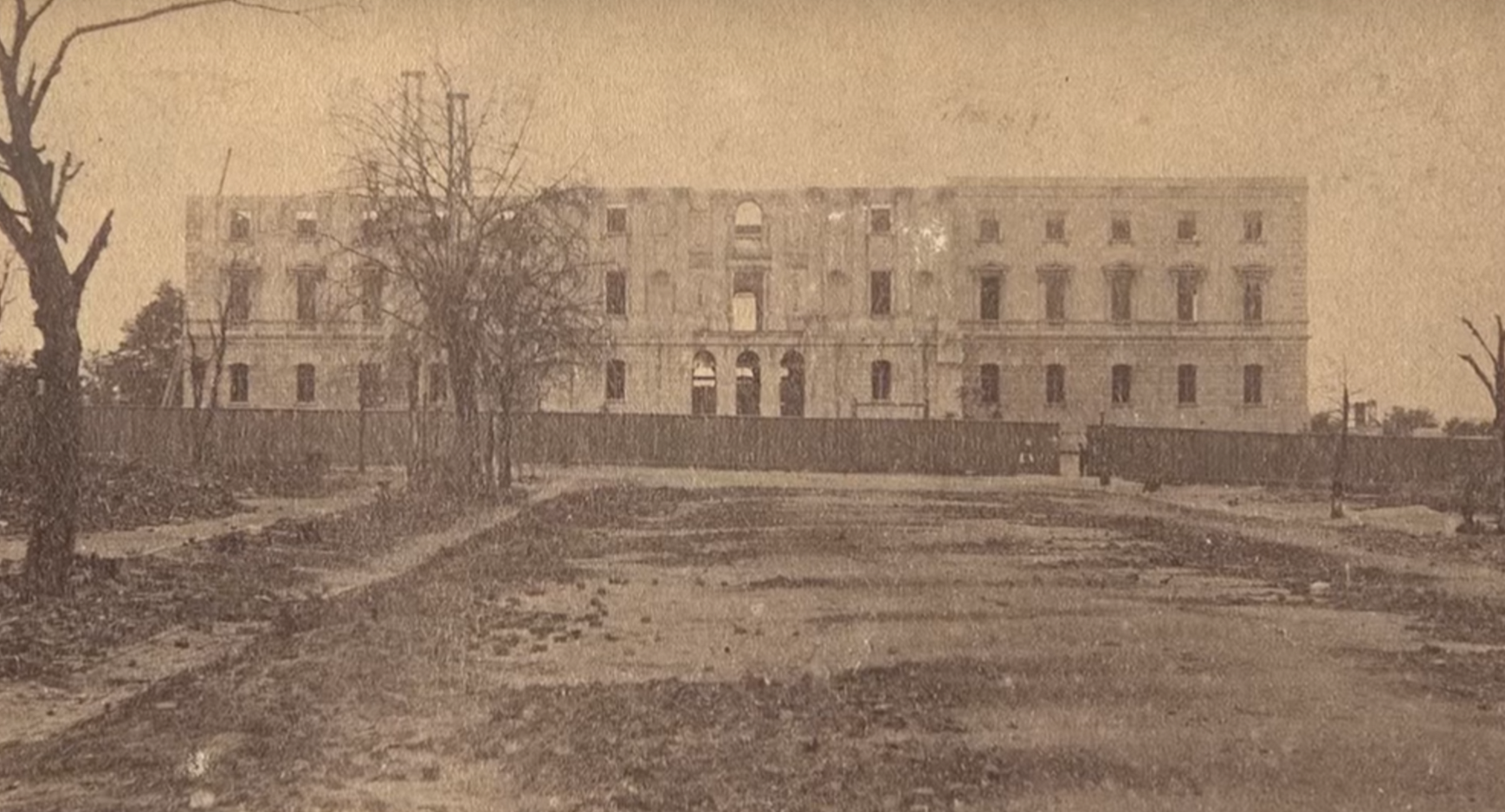
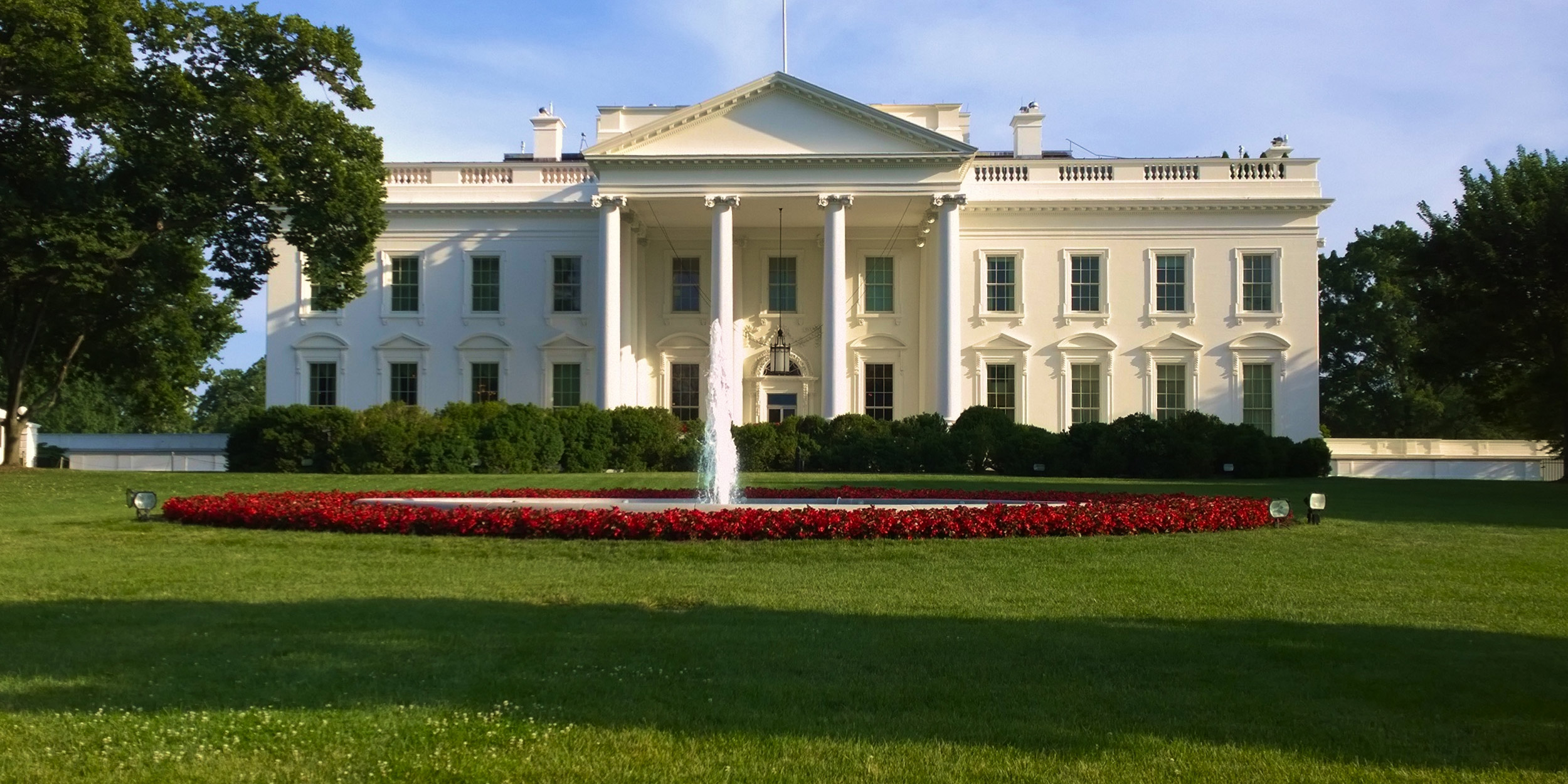
They were in the midst of building a new state house when the old one was burned. It was designed by James Hoban, who also designed the White House in Washington, DC.
I see the similarity.
I headed back to the car and T@B and I hit the road.
Oh, my! My rig is no comparison to the one next to it, although there is a similar color scheme.
I was heading to Augusta. A Facebook friend offered overnight parking.
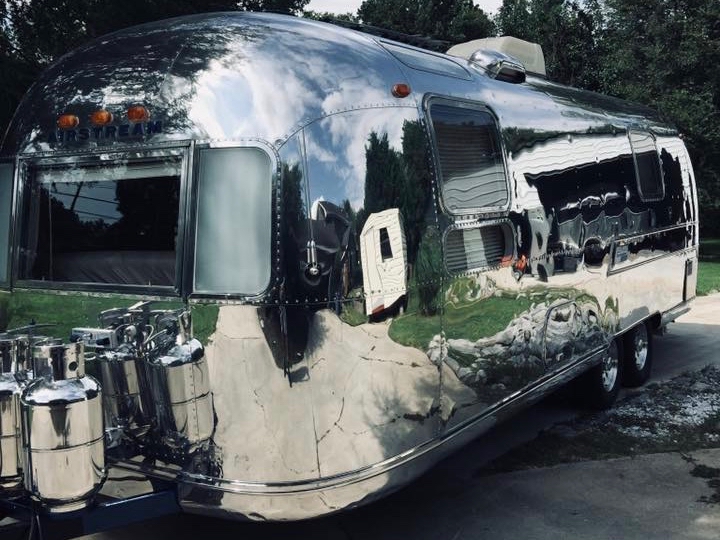
Tim does a beautiful job of polishing vintage Airstreams to a mirror finish.
Isn’t that pretty?
We spent time talking, but I didn’t get a photo of the two of us.
First stop was mass at the Cathedral of the Sacred Heart.
I ended up parking kind of a ways away, but I managed to get there on time – more or less.
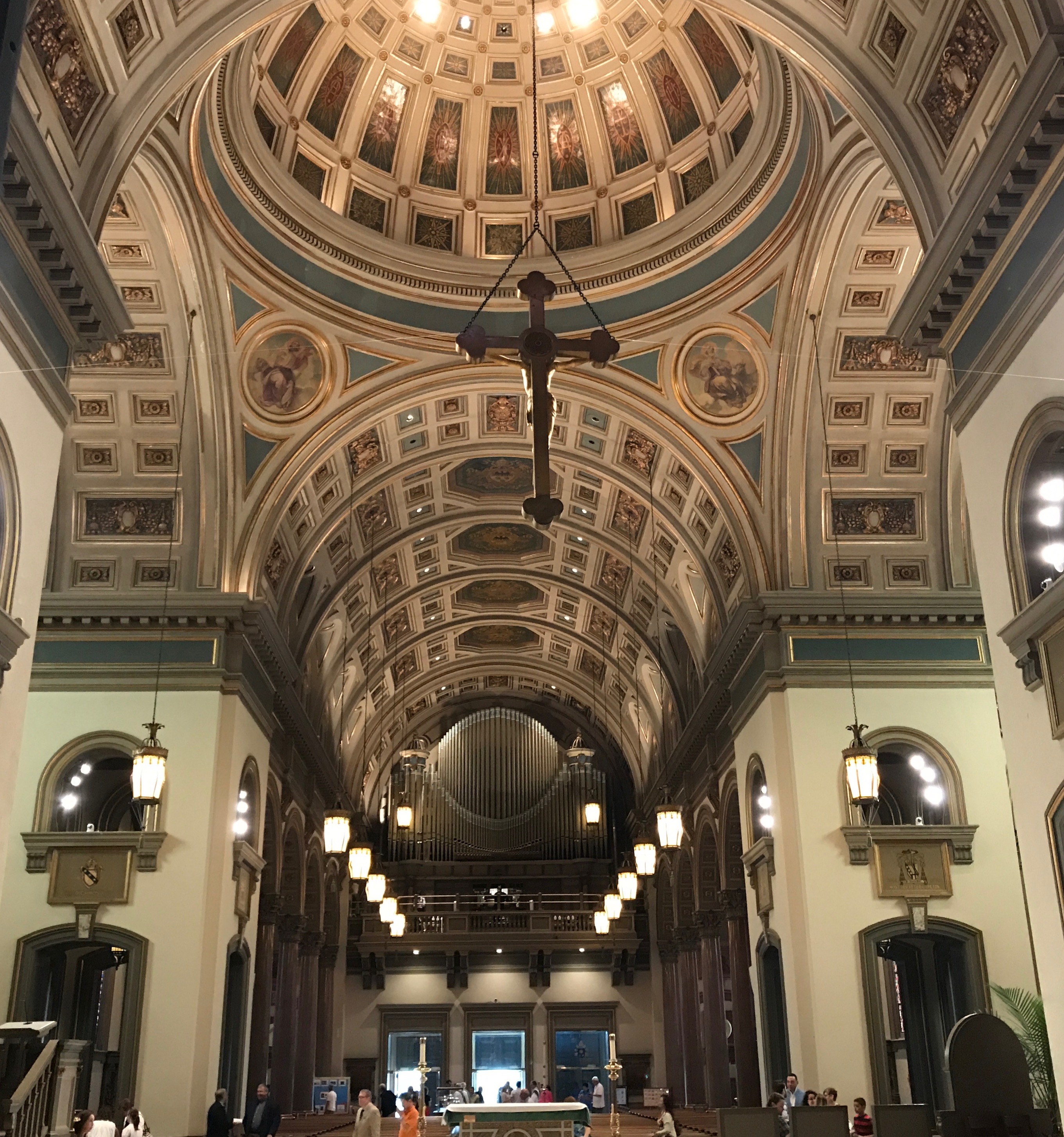
Just glancing around during the service, I thought that this would be a fun place to spend some time exploring.
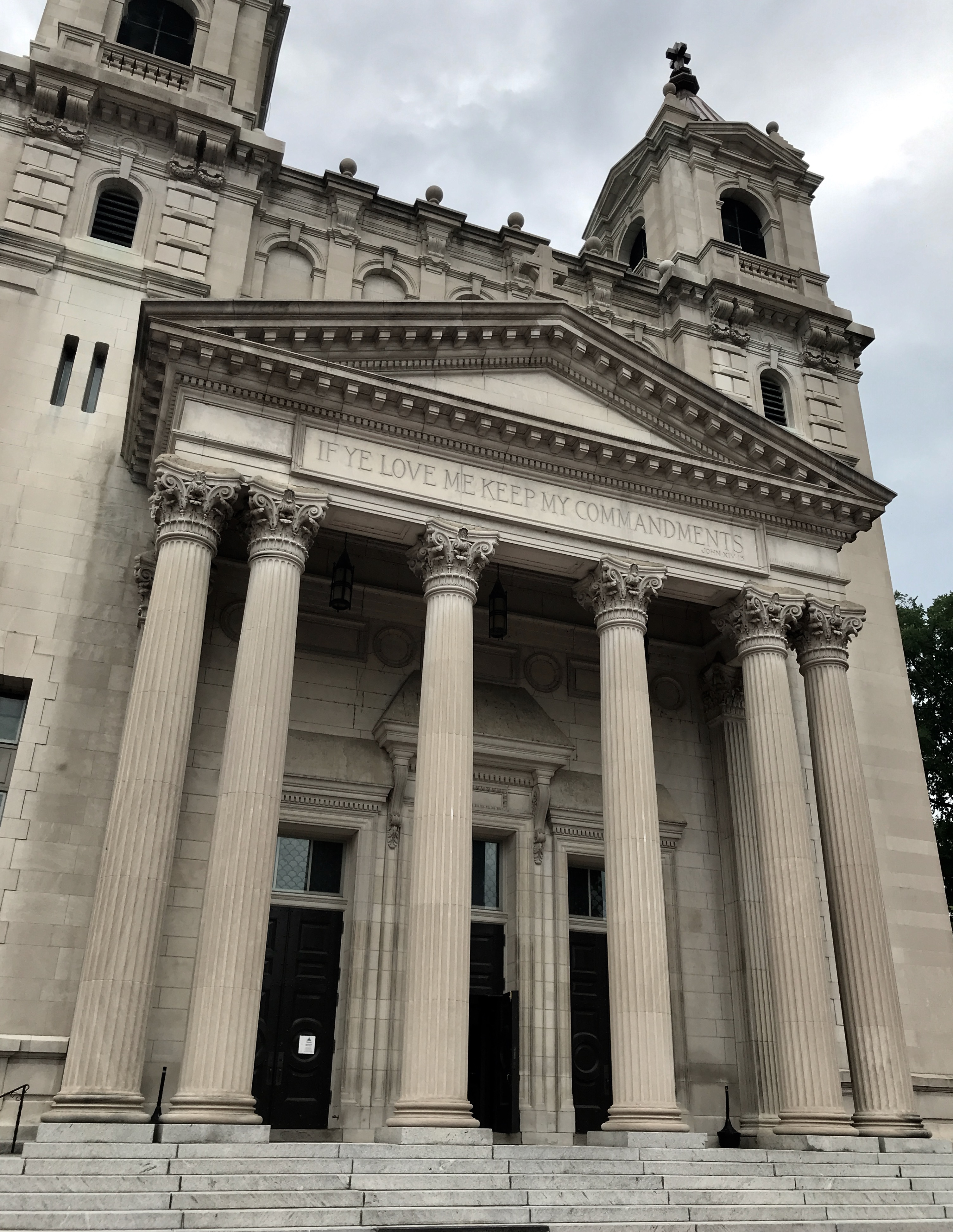
The Corinthian capitals on the columns were elegant, and there were lovely architectural details abounding. The stained glass windows were eye-catching – but in a completely different way from the Tiffany windows in the Blandford Church in Petersburg.
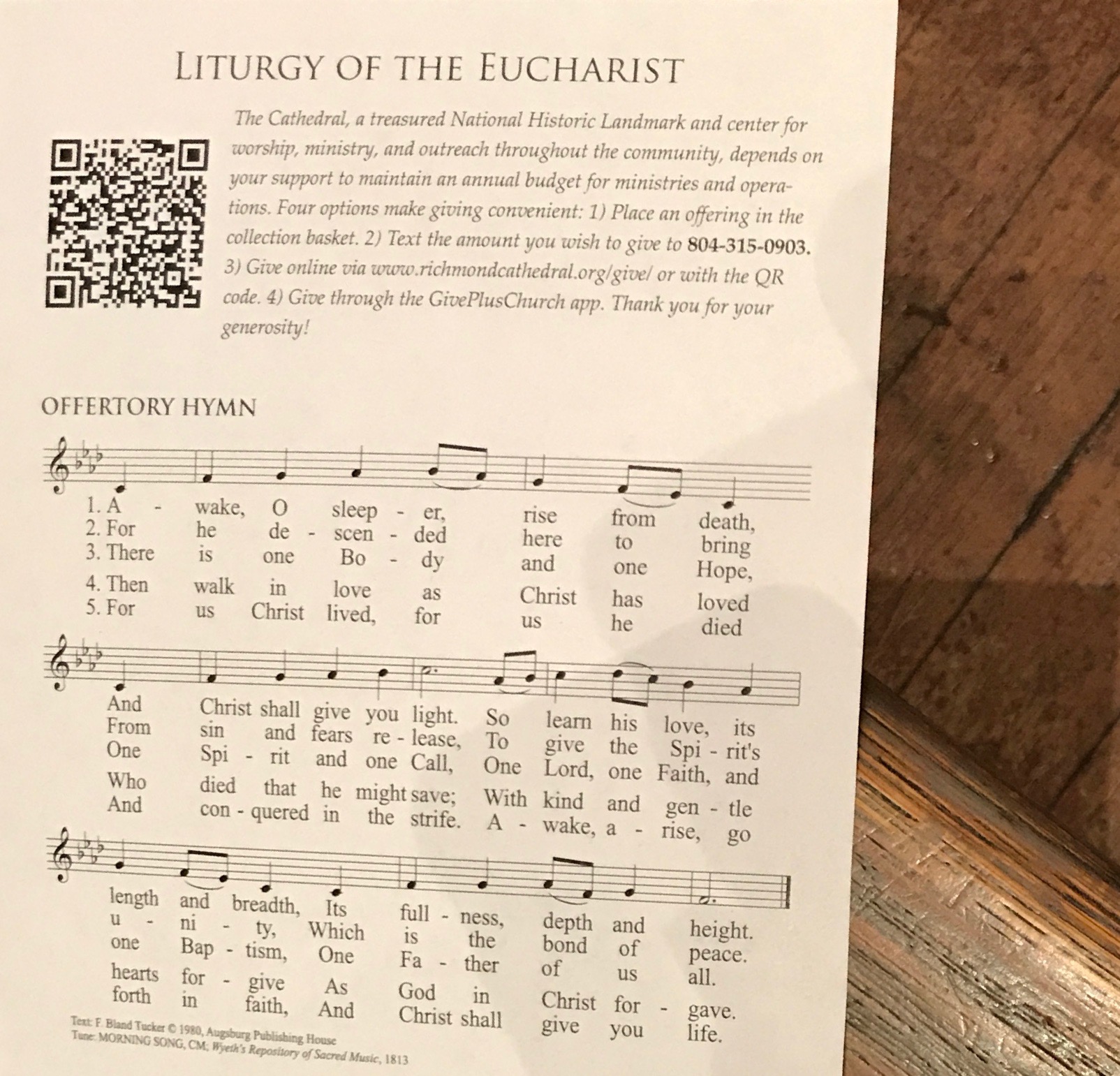
I snapped a photo of the mass guide for two reasons.
Awake, O Sleeper is a favorite hymn of mine. This one has a different tune than the one I know, but I like the words.
I found their take on how to participate in the offertory to be interesting. Put your donation in the basket, text, go online, or use the app.I guess I was just ahead of my time. I suggested alternative collection methods back in the ’90s, but they weren’t interested in the idea back at St.Augustine Cathedral in Kalamazoo.
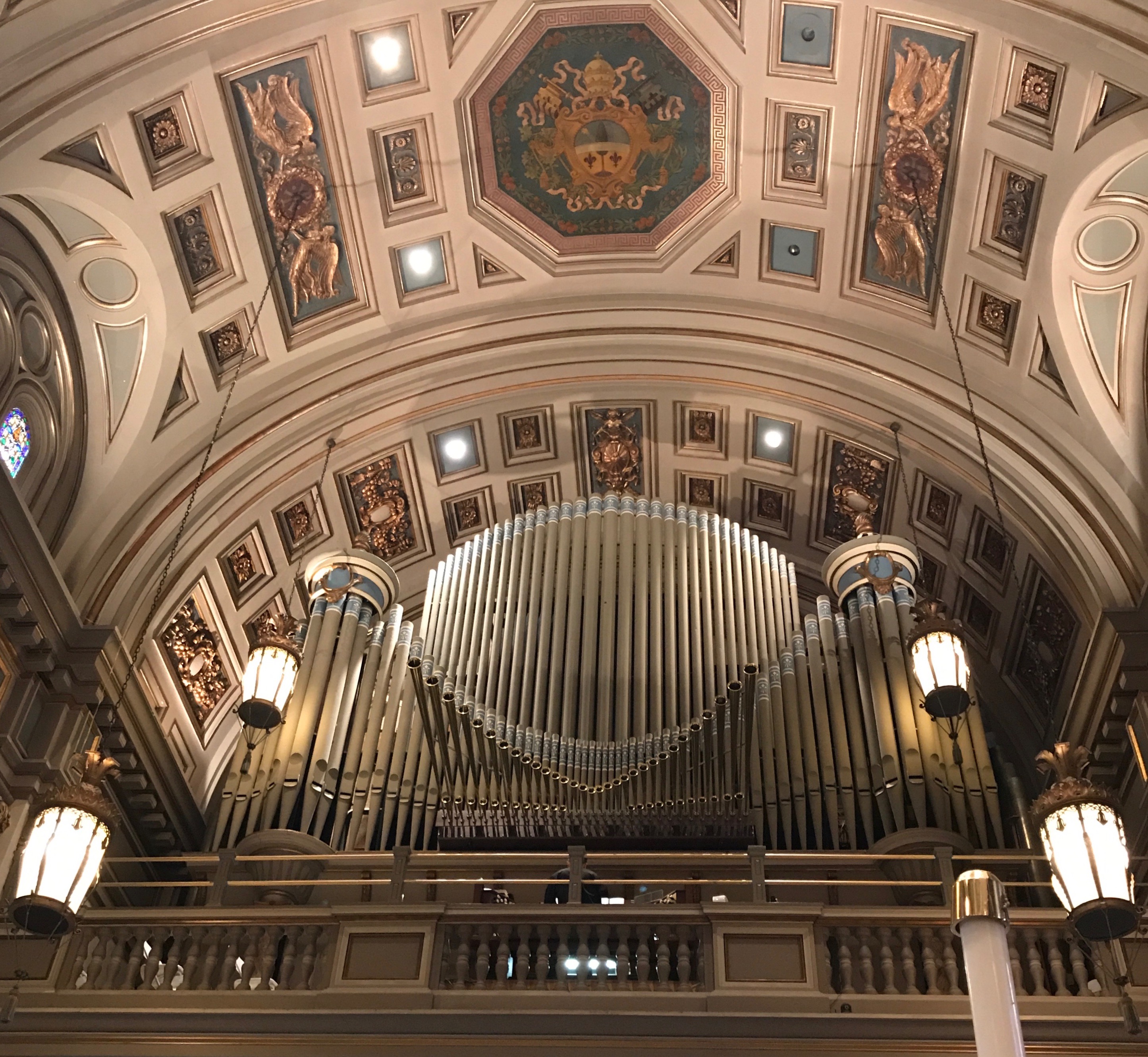
Speaking of Cathedrals, you have to know that there is a pipe organ lurking somewhere. Those who know me well – or have been reading my blog – know that I have a less than favorable opinion of pipe organ music. Pipe organs themselves don’t offend me. It’s just when they are played…
See? From this vantage point, the organ merely looks like a decorative architectural detail.
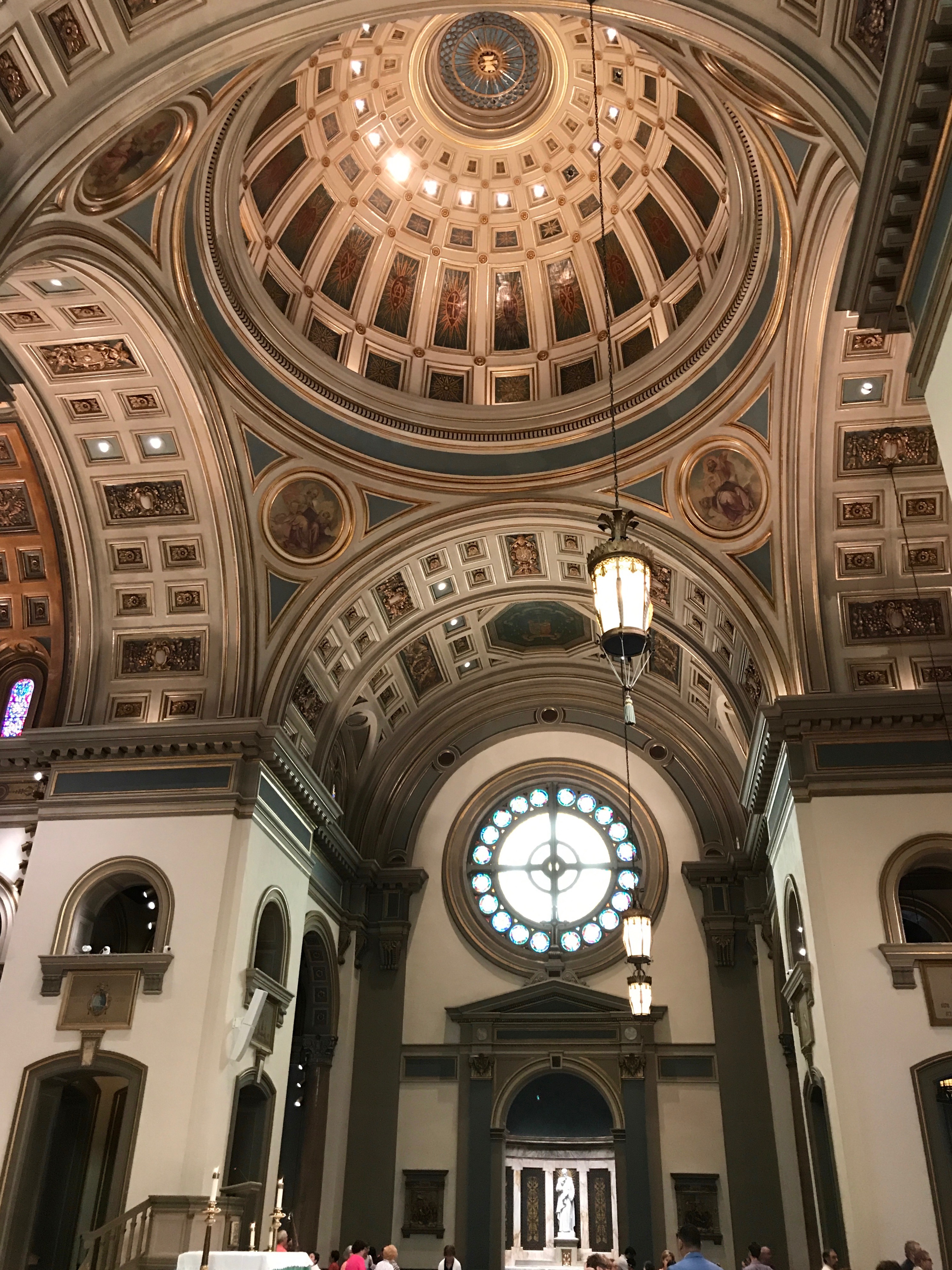
The dome over the crossing was lovely.
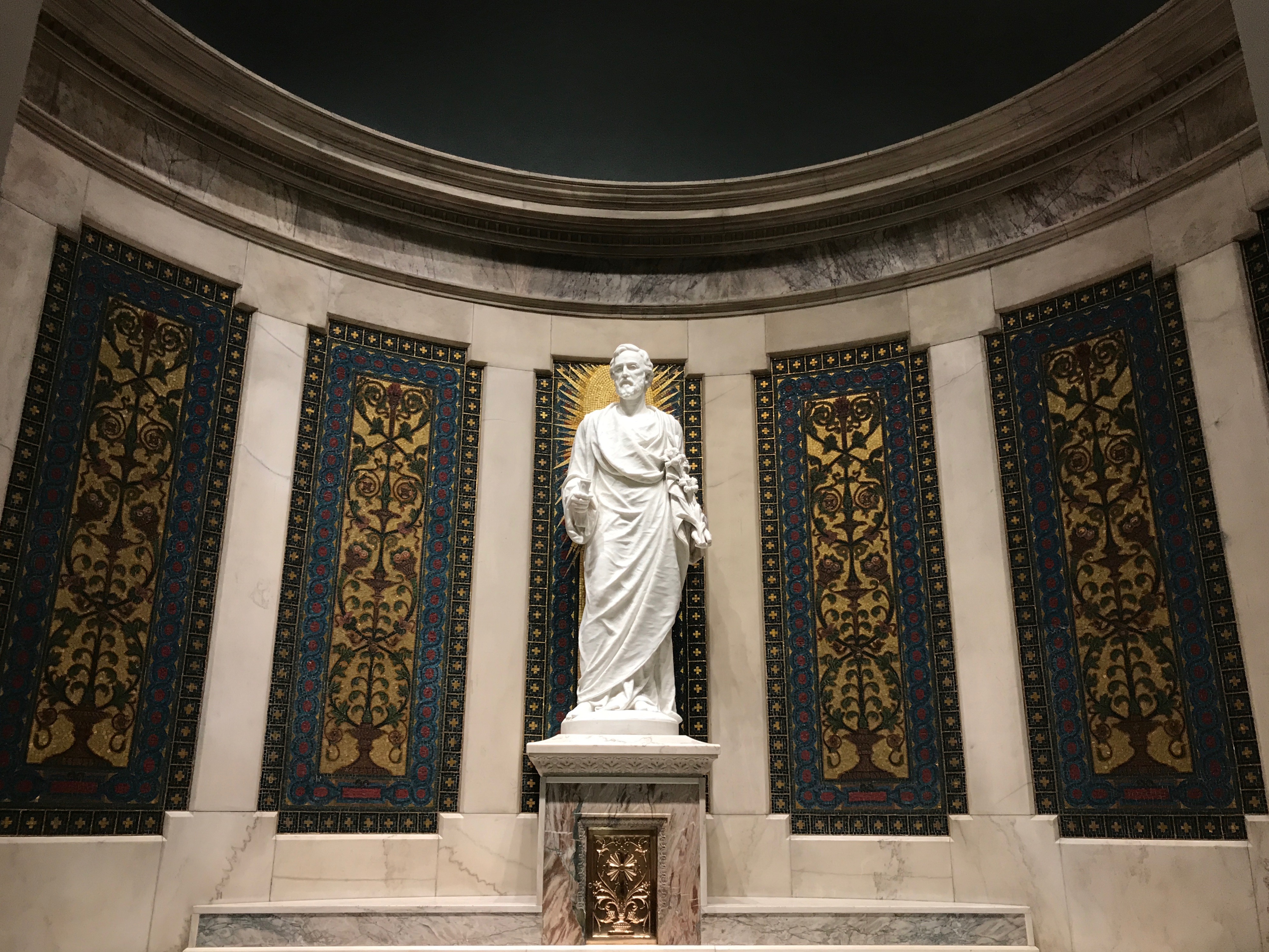
I am sorry to say that I don’t recognize the saints in many of these side altars. I didn’t see labels and there was no information about them in my Preferred Source or on the Cathedral’s webpage.
What I did find that was interesting was that the Cathedral was funded by one family – the Ryans, Thomas Fortune Ryan and his wife, Ida Mary. The cornerstone was laid in 1903, and the stone block came from the Garden of Gethsemane. It was built in the style of Italian Renaissance Revival, and it was the only cathedral at that time known to be constructed by the exclusive patronage of a single family.
Virginia-born Thomas converted to Roman Catholicism en route to Baltimore, Maryland in 1868. In Baltimore Ryan made his fortune in railroads and streetcar transit and married Ida Mary Barry, the daughter of a Catholic former employer. Thomas and Ida each donated $250,000, which would work out to about $15,000,000 in today’s money. I imagine Ida must have inherited her money from her father, Thomas’ former employer, which would mean that transportation was behind the funding of this building.
Anyway, back to the statues.
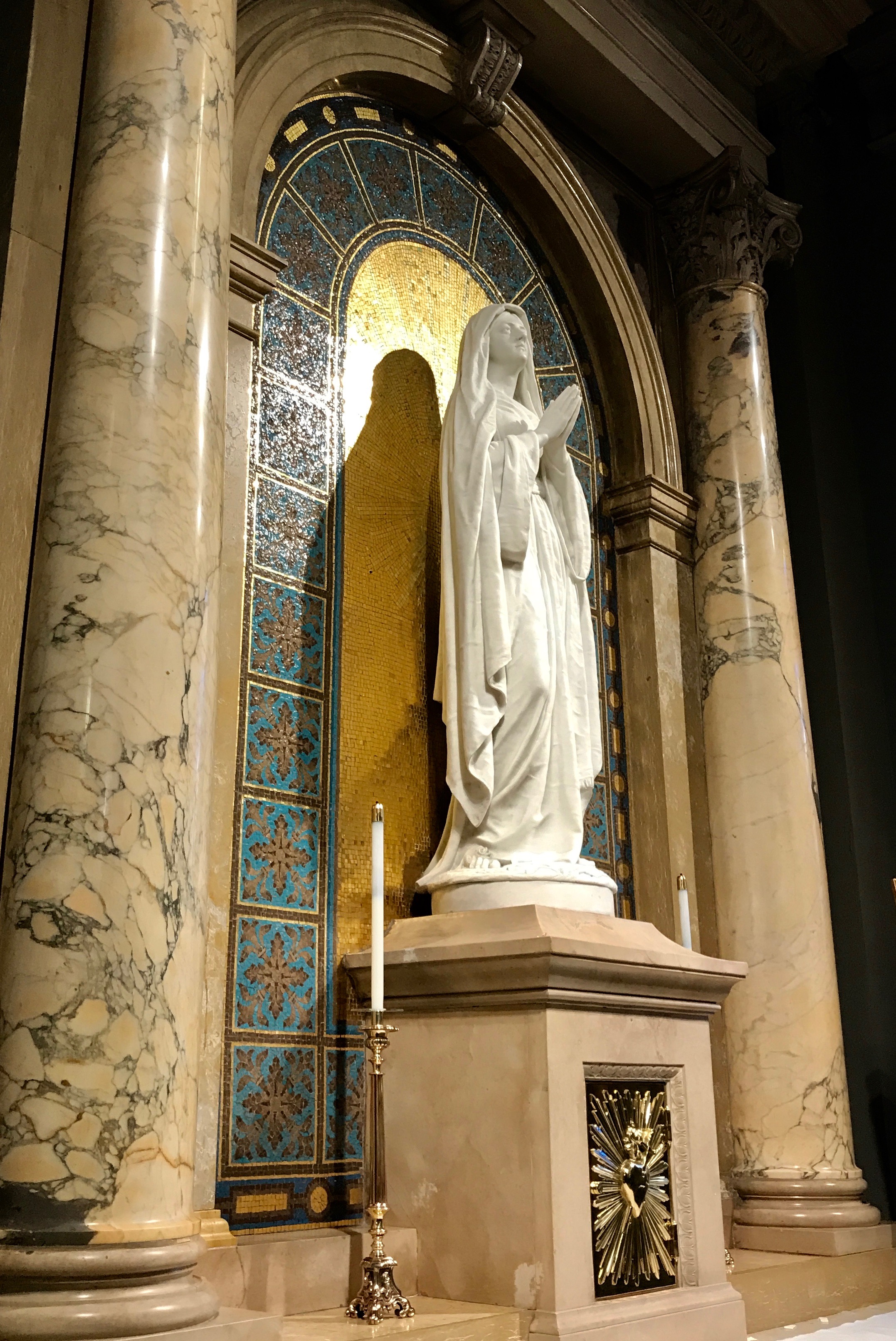
While this one isn’t labeled, either, it certainly looks like Mary.
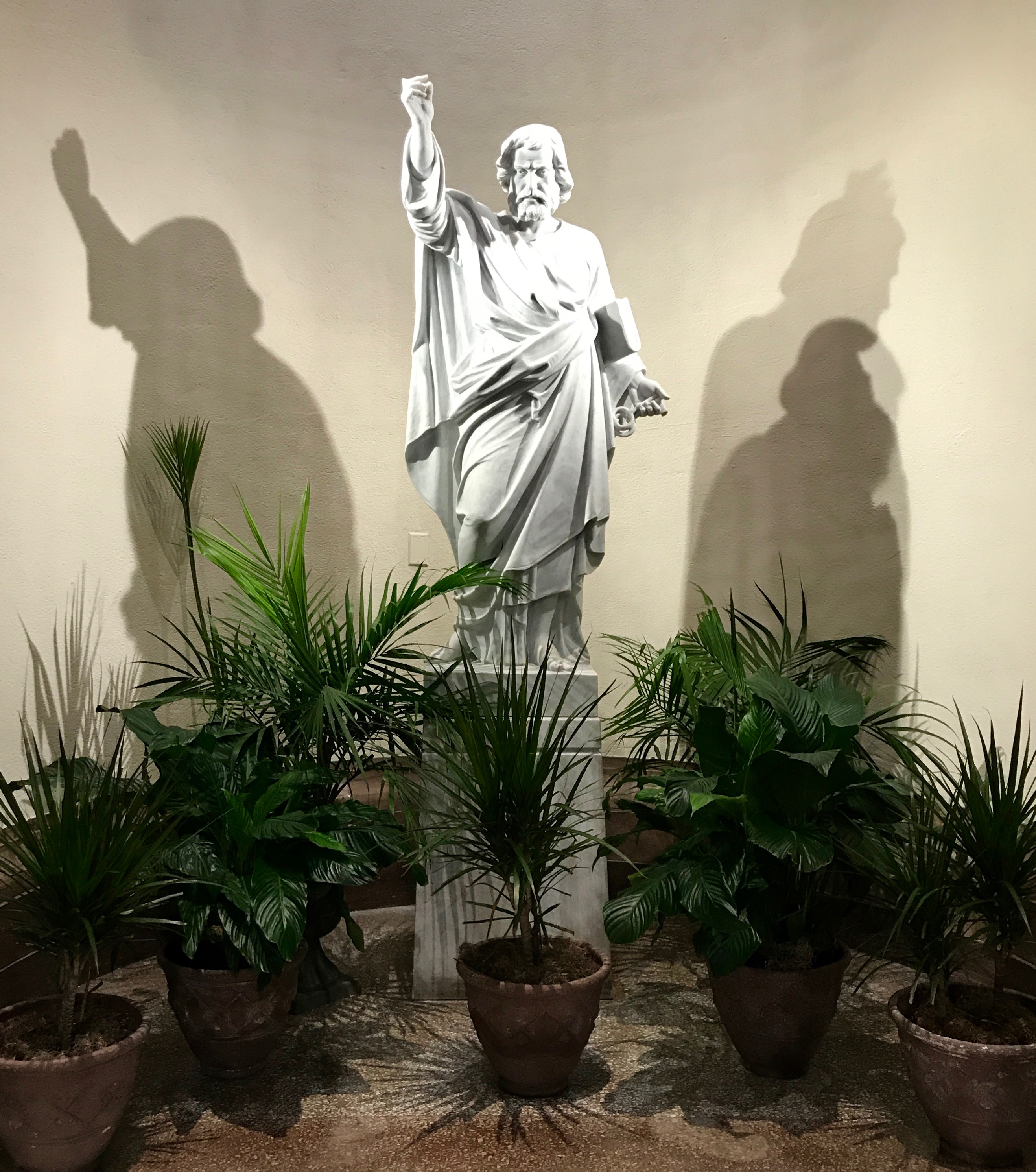
I would guess that this is Saint Peter, because he is holding the keys to heaven.
If I had to guess, I’d say this is Jesus.
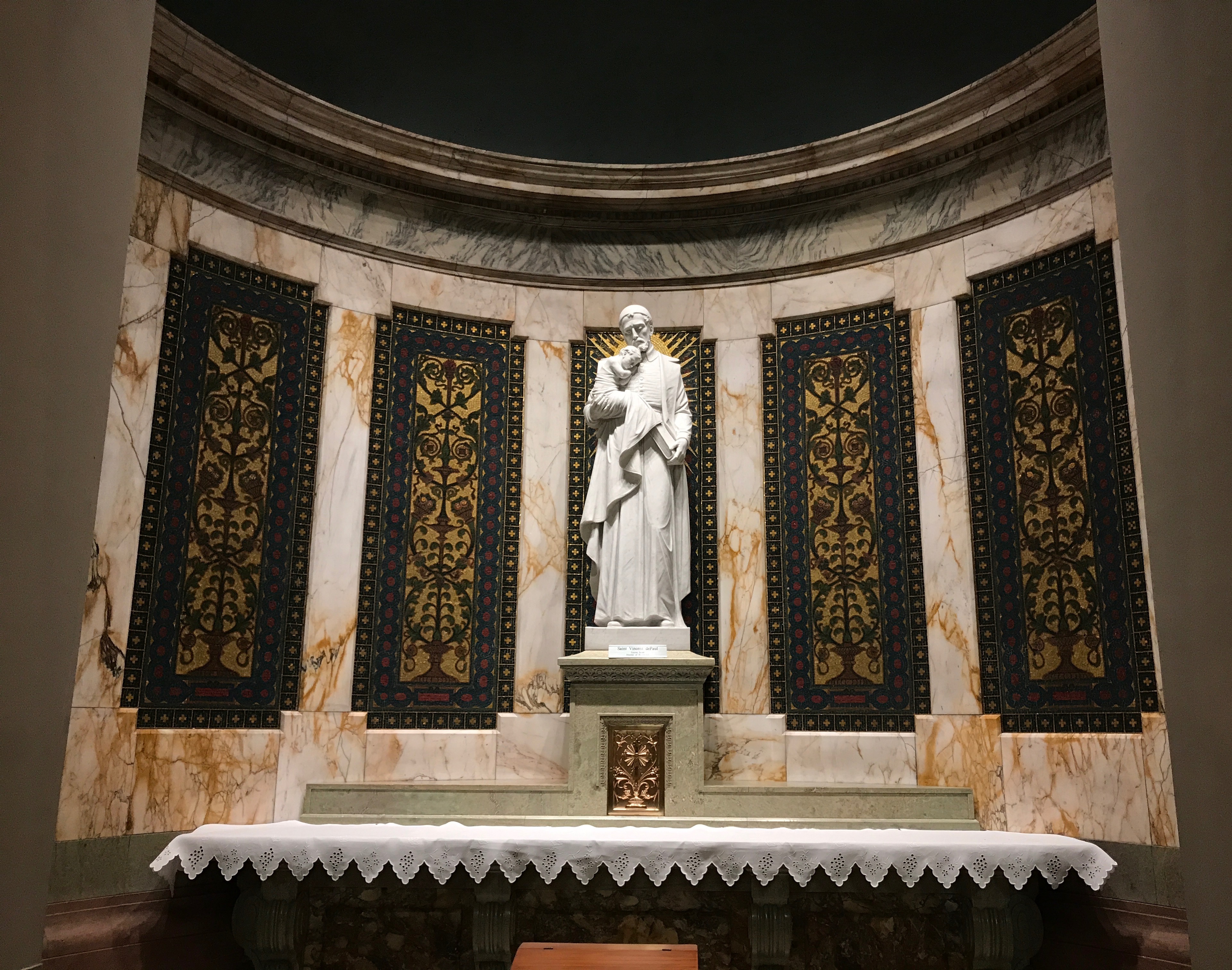
This statue actually has a label. This altar is dedicated to Saint Vincent de Paul. According to my Preferred Source, he is the patron saint of charities, horses, hospitals, leprosy, lost articles, Madagascar, prisoners, spiritual help, volunteers, and Richmond, Virginia, if I am reading that correctly. Another source has him more narrowly defined as the patron saint of charity.
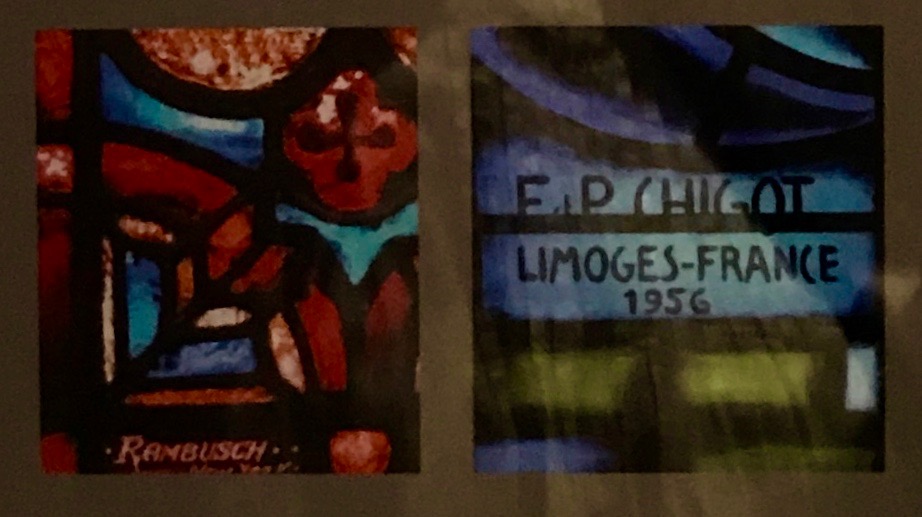
The windows are also worth some time to admire. In 1931, the Cathedral commemorated its Silver Jubilee and commissioned Rambusch Decorating Company of New York to paint and decorate the church for the anniversary celebrations. Four of the windows in the ambulatory, which is the area behind the main altar, were designed by Rambusch for the occasion. Unfortunately, I don’t have shots of those windows, as it was difficult to position myself to get a clear photo.
But, here is a shot of the iron grille that divides the ambulatory from the main altar.
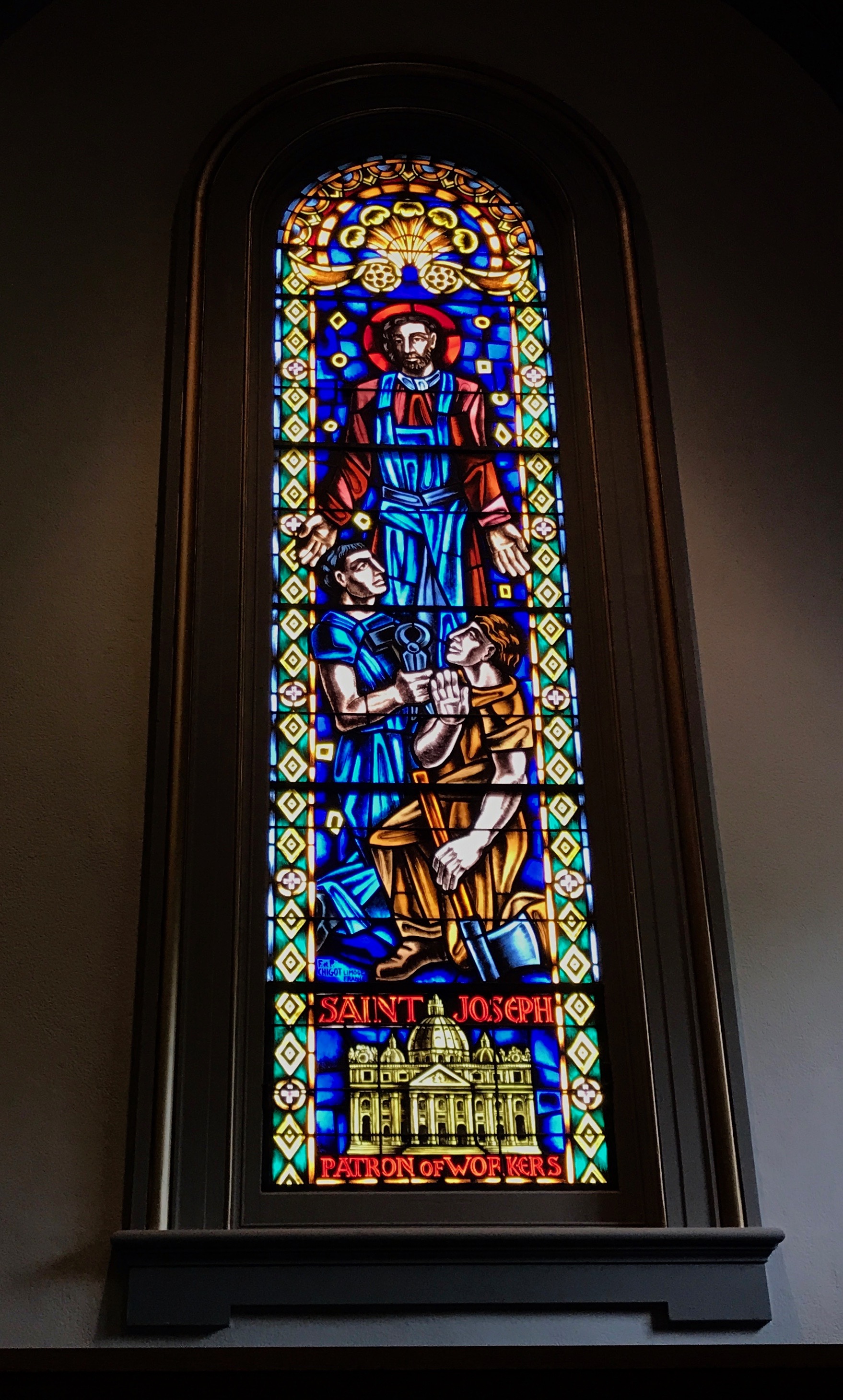
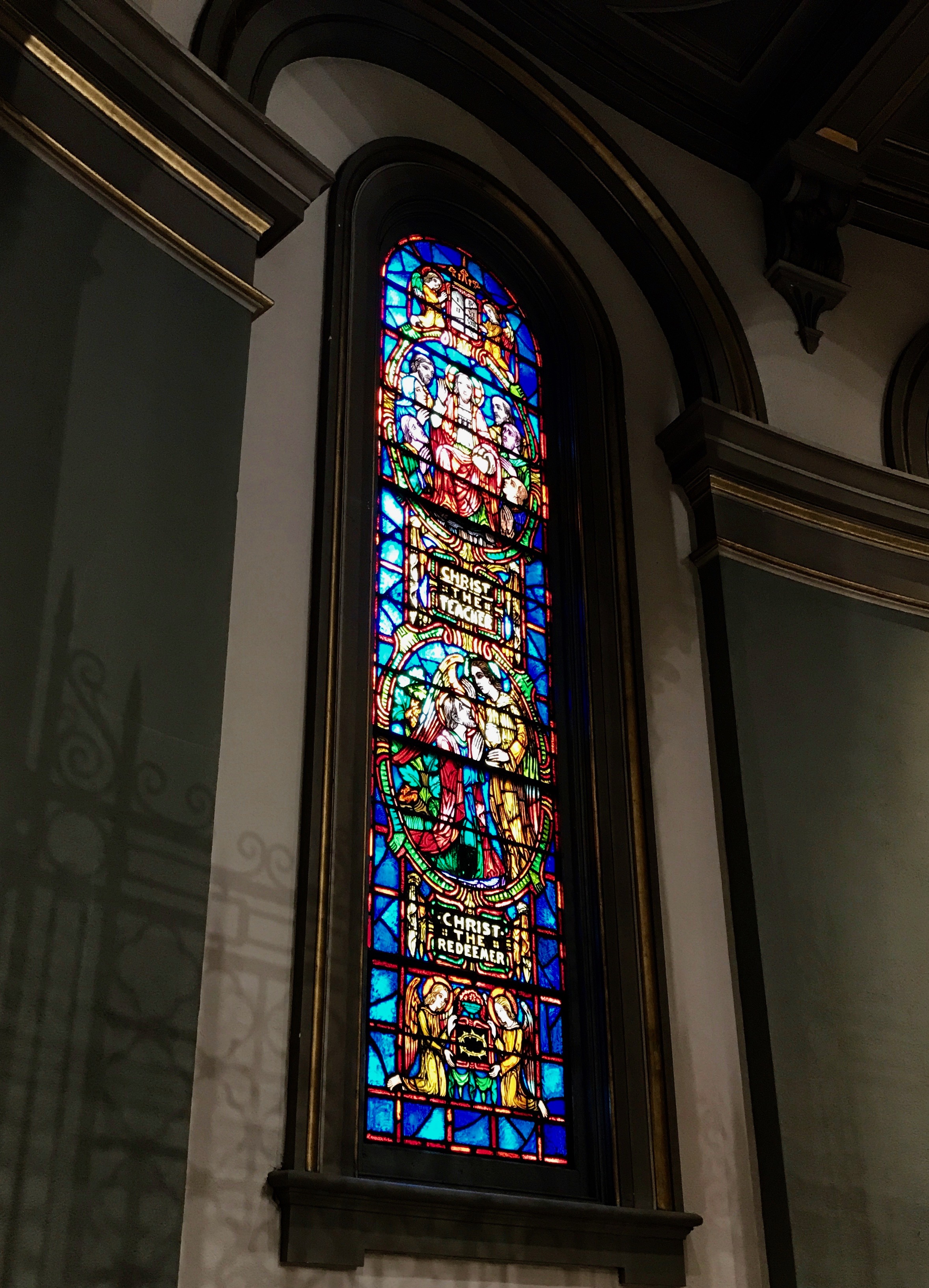
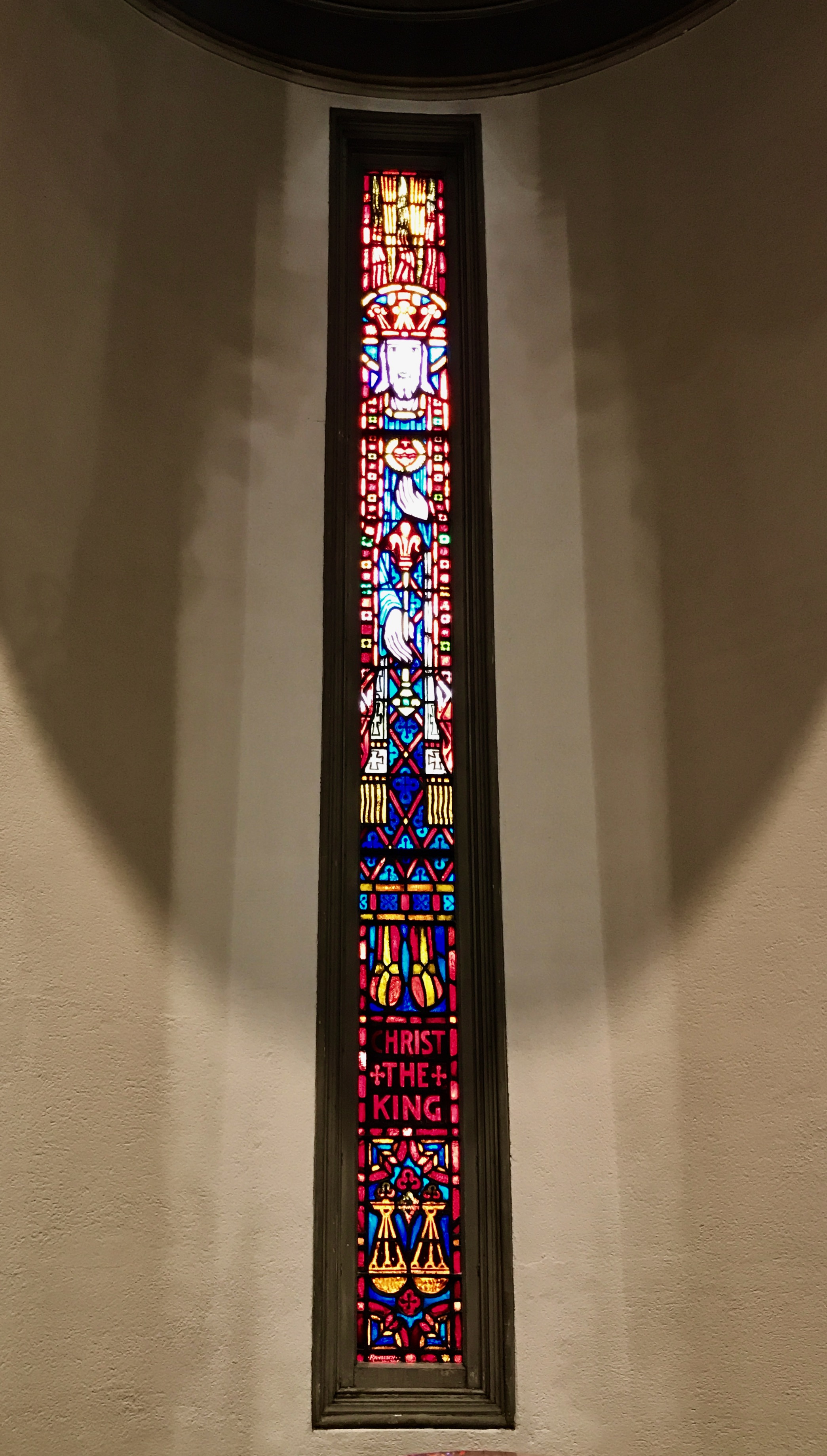
In 1956, the artisans Frances and Pierre Chigot of Limoge, France were commissioned to design several new windows for the church in honor of its 50th anniversary. Here is a sampling of what they created.
Saint Joseph, Patron of Workers.
Christ the teacher. This was in the ambulatory, and you can see the shadows cast by the grille. You can also see the oblique angle I had to stand at to snap this photo. The windows for the silver jubilee are right behind the altar.
The last window in my collection is Christ the King. If you enjoy “midcentury modern” stained glass, you can do no better than to plan a visit to Richmond’s cathedral.
While the building is impressive, I am pleased that they didn’t forget the needs of the people.
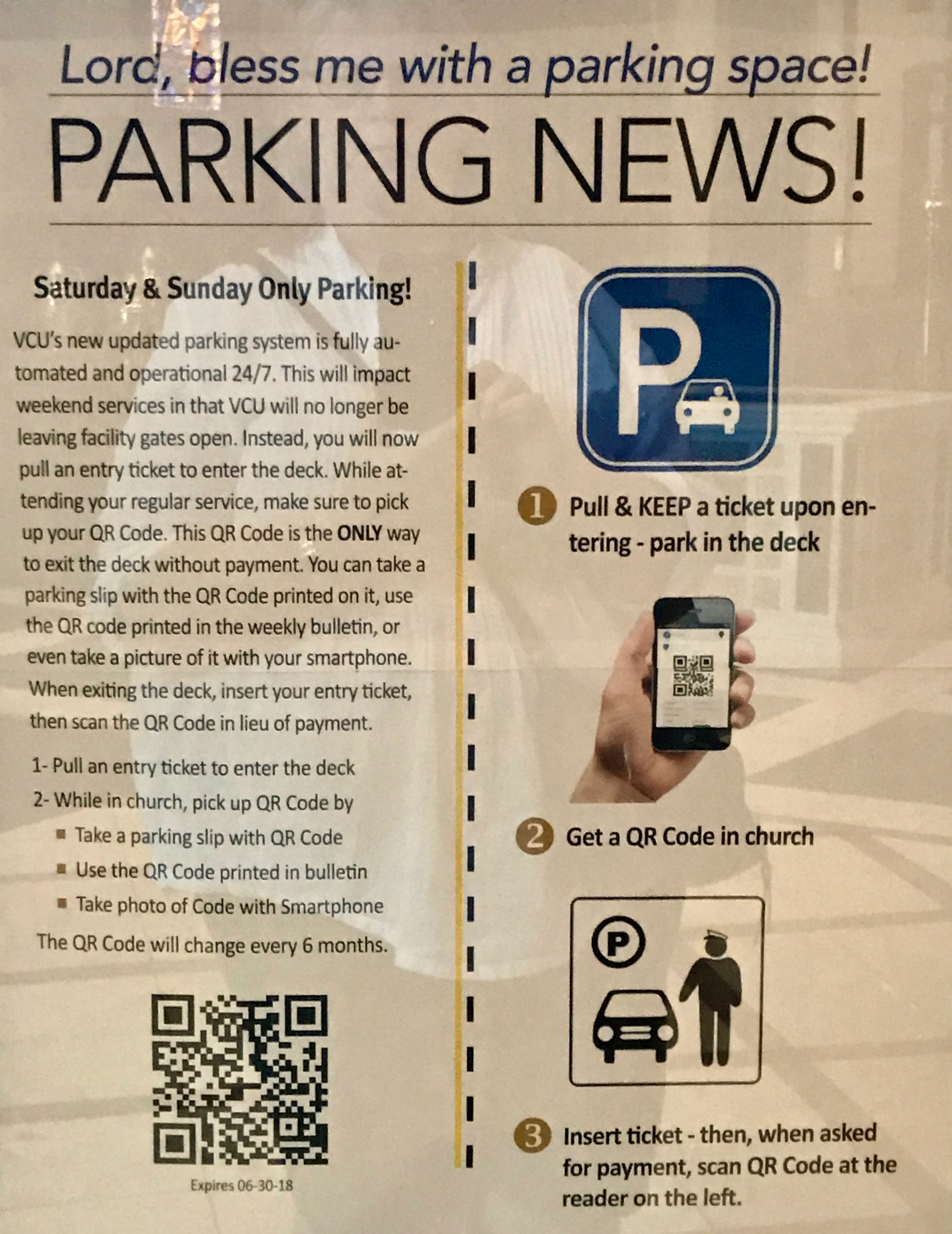
Lord, bless me with a parking space!
They didn’t forget our parking needs, either. Maybe I spent too long admiring the church after mass, but for some reason, I ended up having to pay for my parking. Or, maybe I parked in the wrong space. Oh, well…
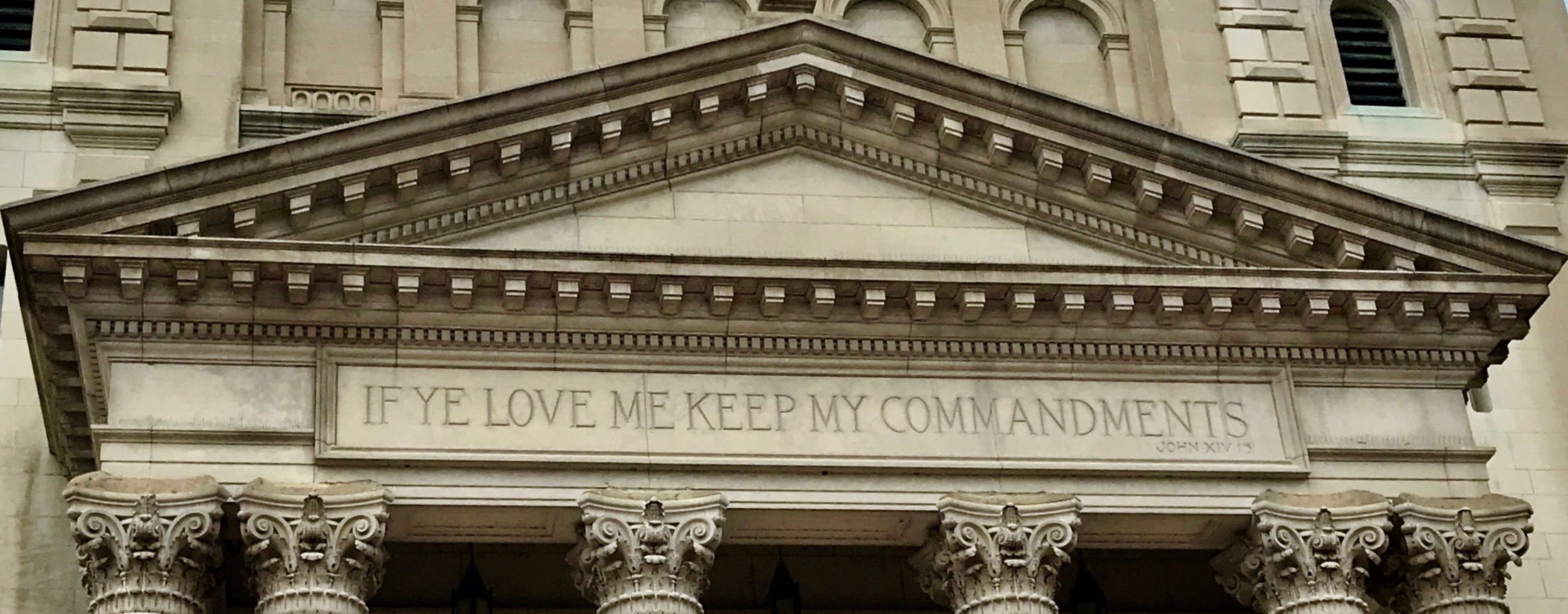
I liked the inscription over the door.
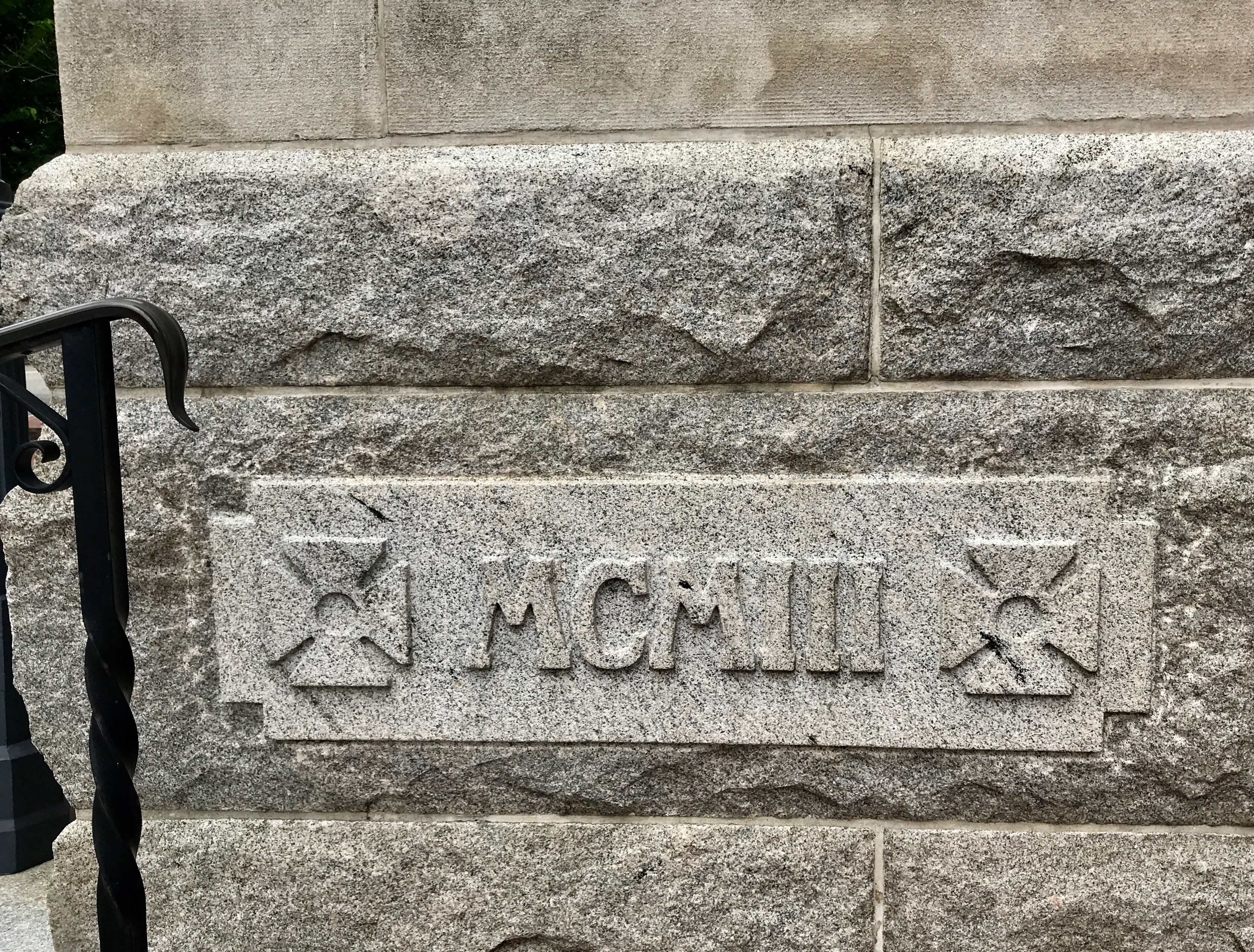
I also liked the Roman numerals on the cornerstone. 1903. I wonder if this was the stone from the Garden of Gesthemane?
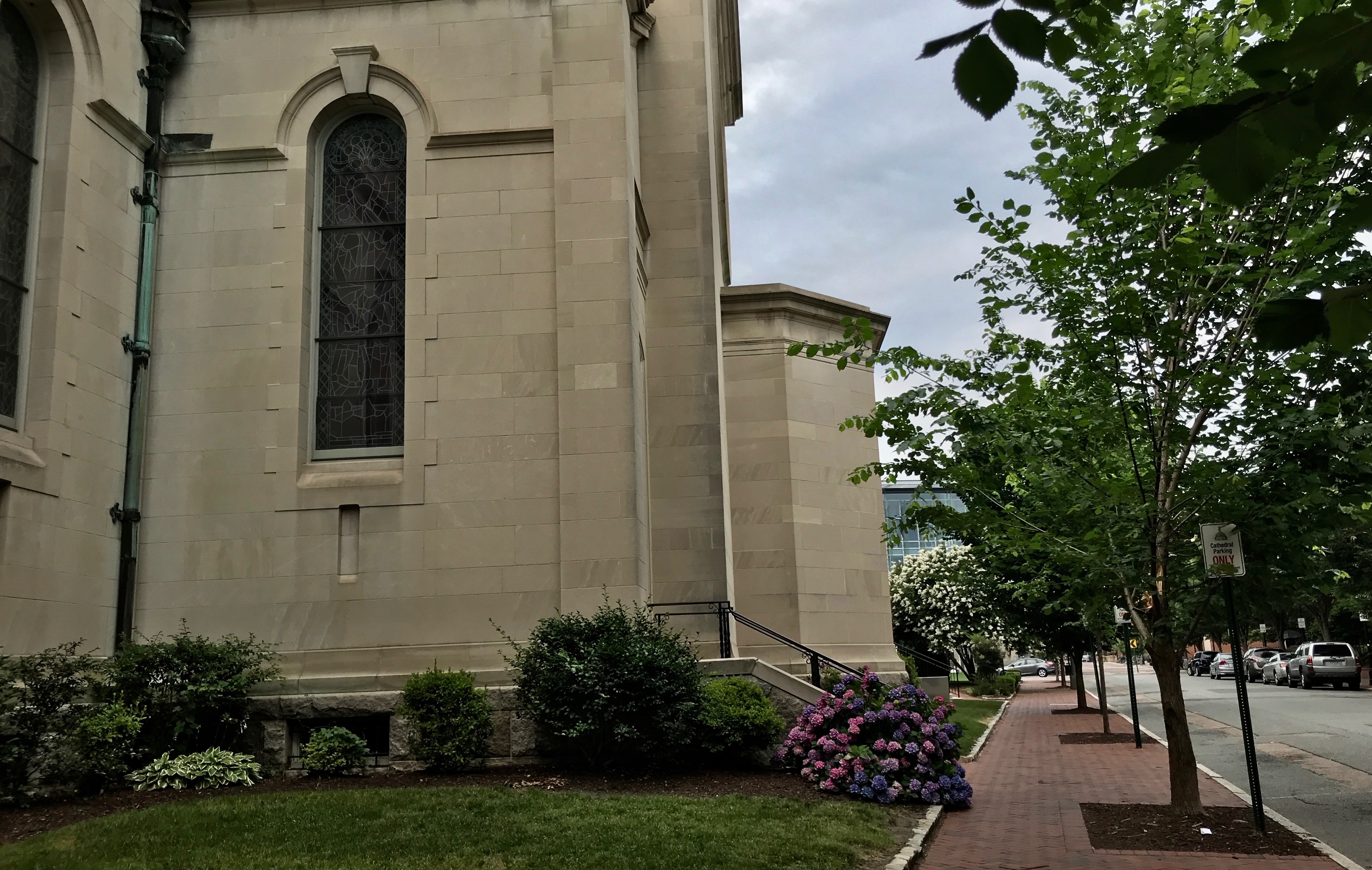
I headed back to find my car. The grounds of the cathedral were very nicely landscaped.
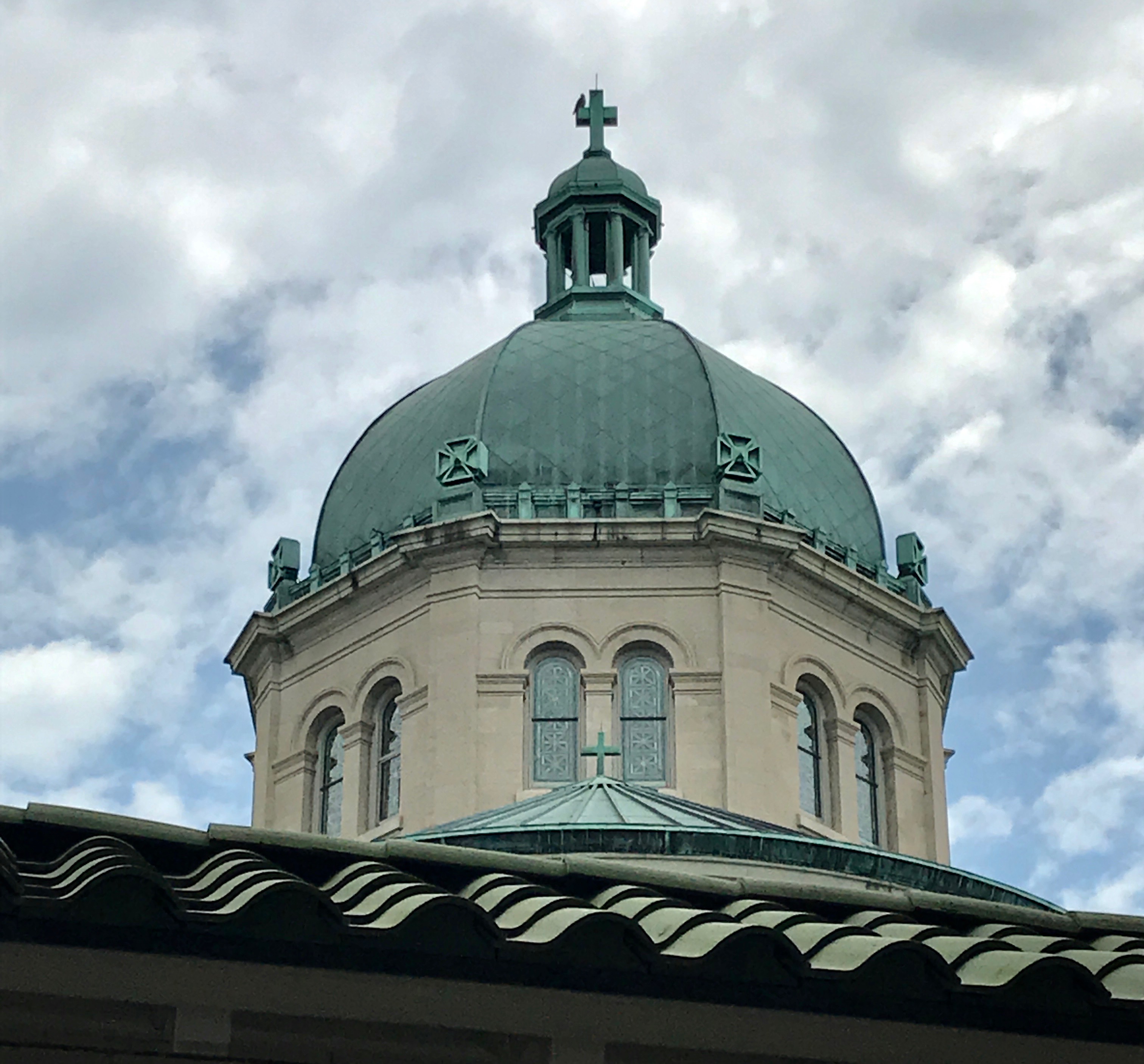
The cupola over the dome gave the exterior a regal appearance.
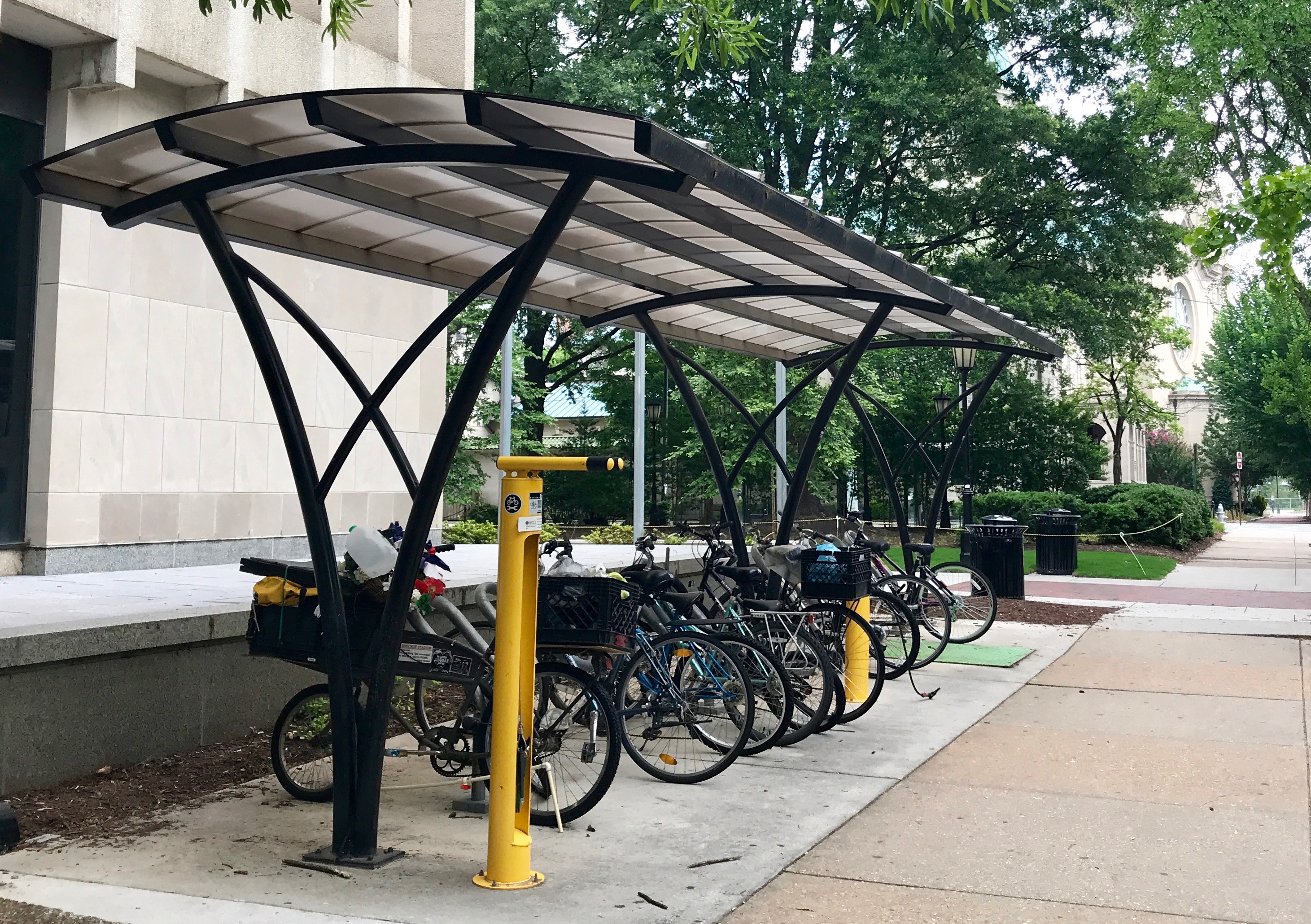
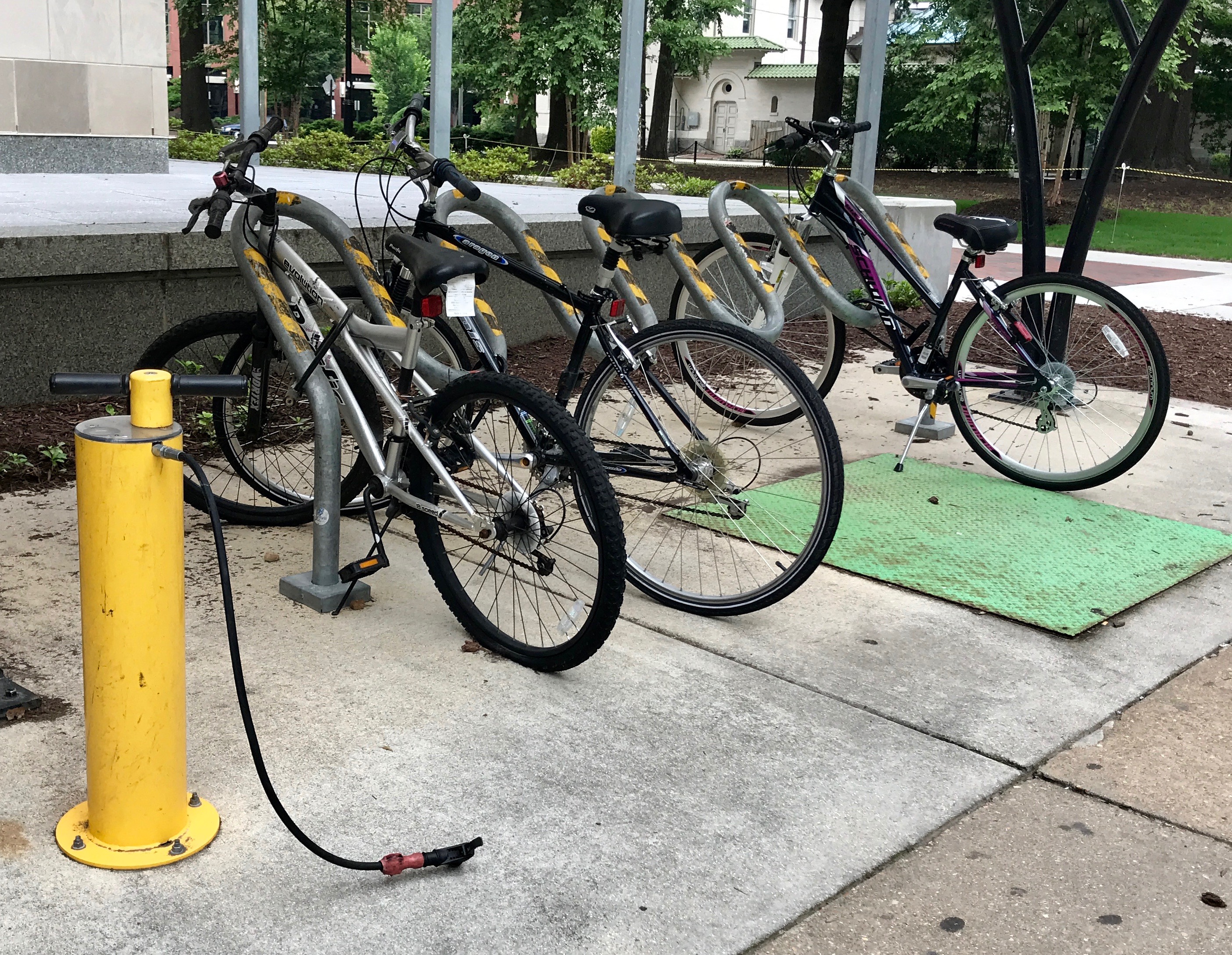
On my way back to the parking structure, I passed several facilities that really contribute to making a city “bike friendly.” I loved this little shelter.
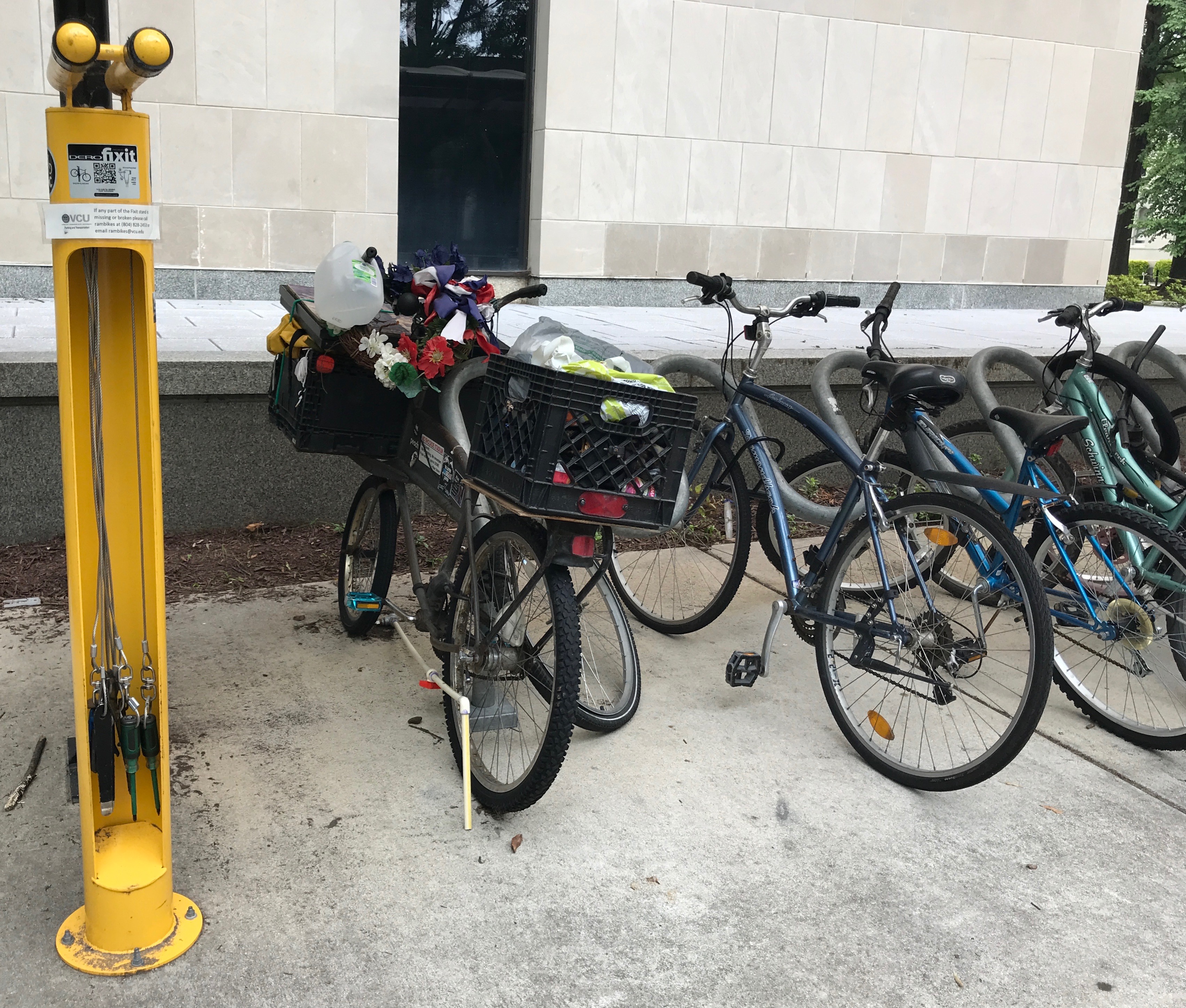
And those yellow poles? They are bicycle fixit stations! There are tools on all those cables.
This one is a pump! I’d say Richmond is the most progressively bike-friendly city I’ve seen in the United States.
I retrieved my car and set out to find some lunch.
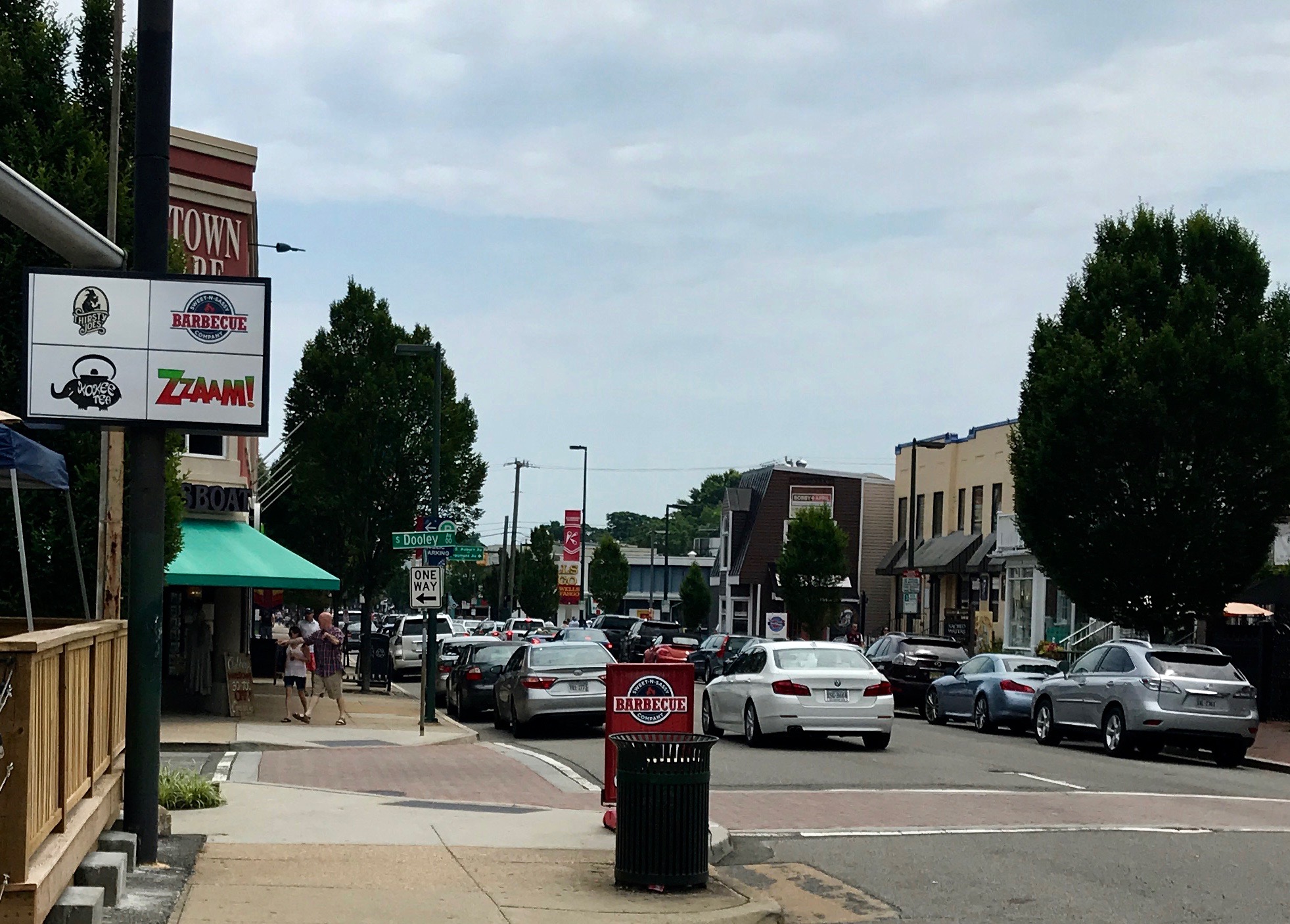
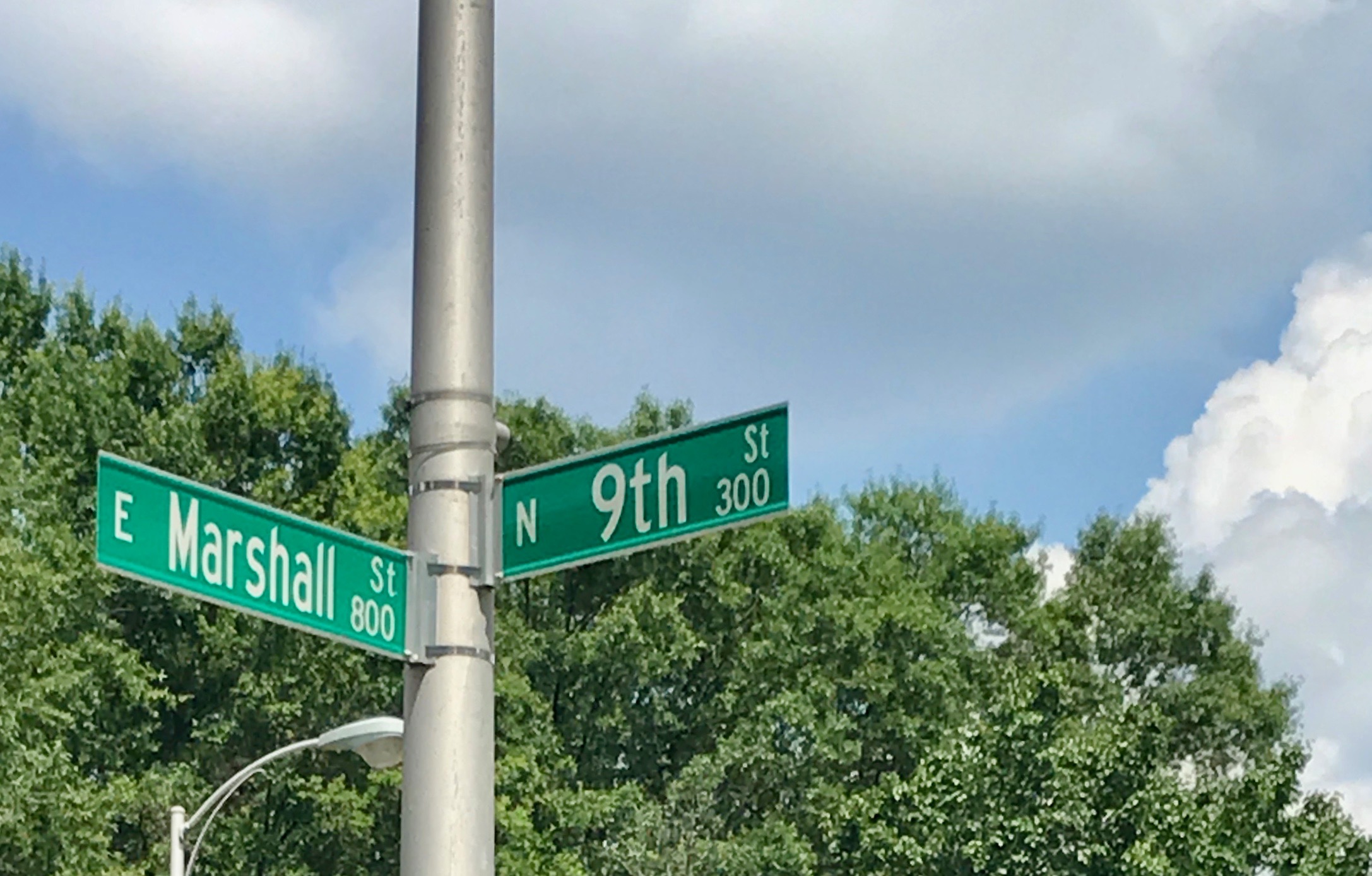
Here’s a thing that I do that helps me when I am on the move so much. Once I park, I take a photo of the street and the street sign. That way, I have a record of where to start looking for my car. I can also show it to people on the street when I ask for help. So far, I haven’t had to ask anyone for help, but I have checked my photos from time to time to help me head in the right direction.
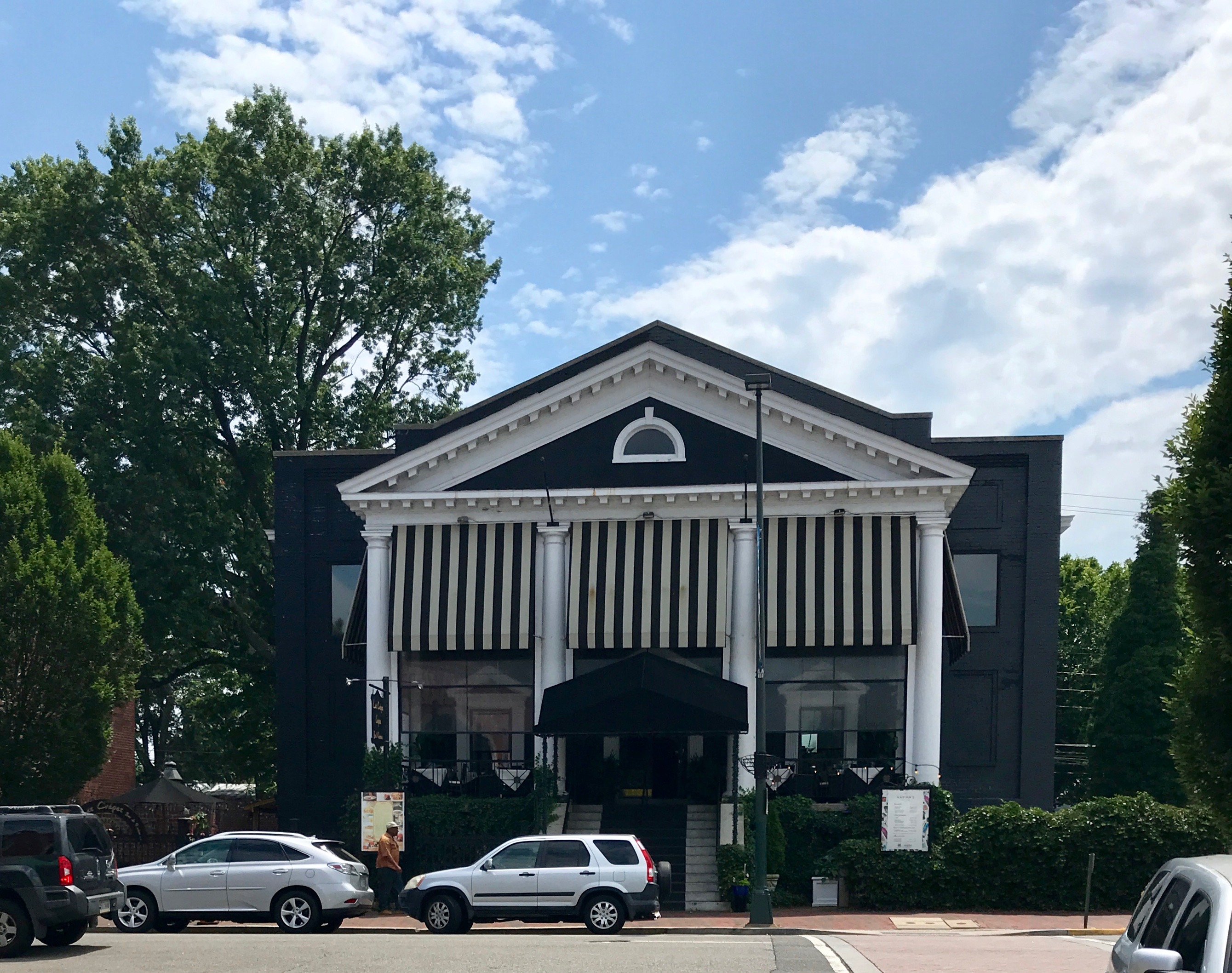
I Googled for someplace interesting to eat and found this place.
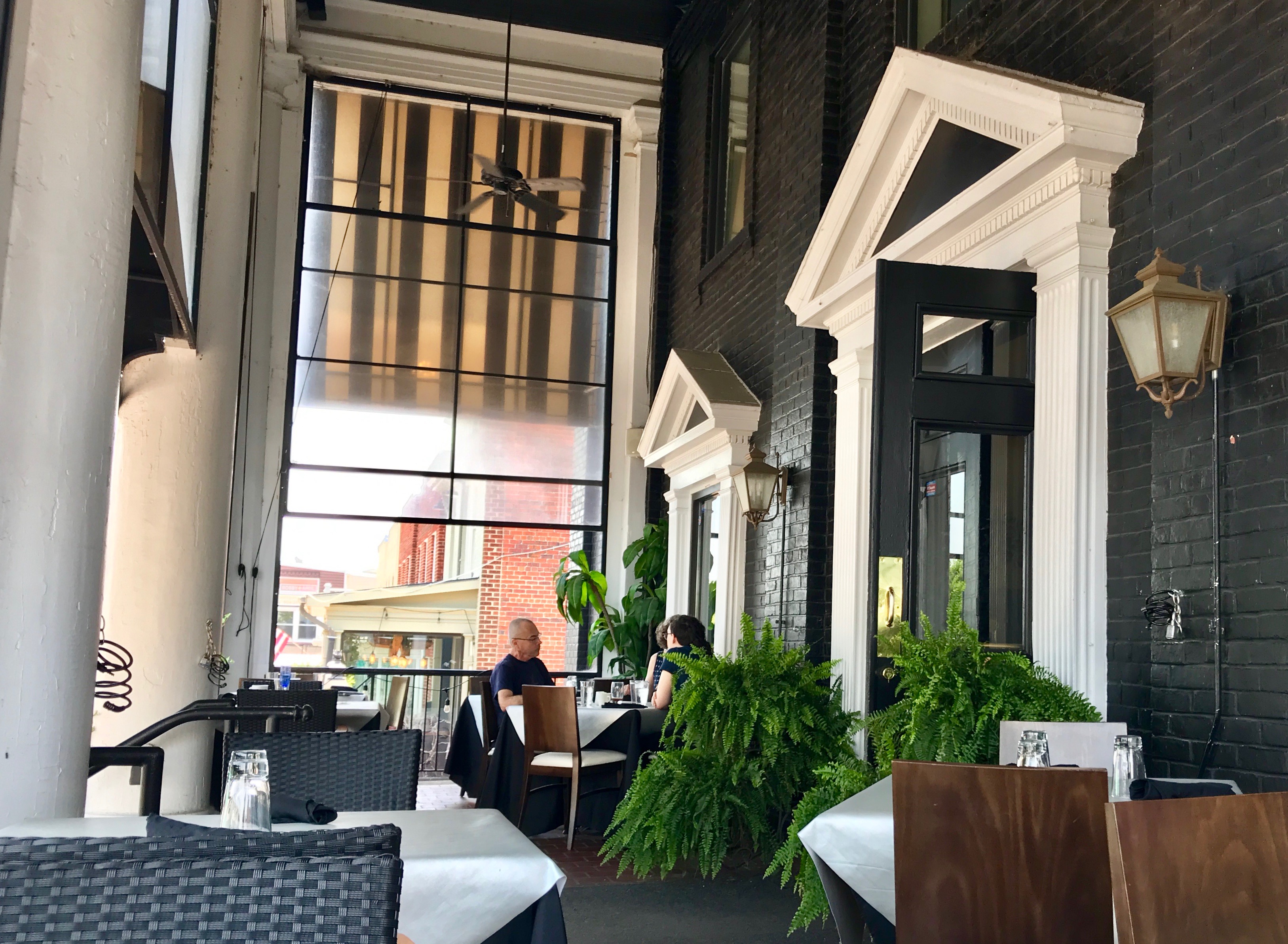
It was so relaxed and a pleasant respite from the sun.
I started off with a salad.
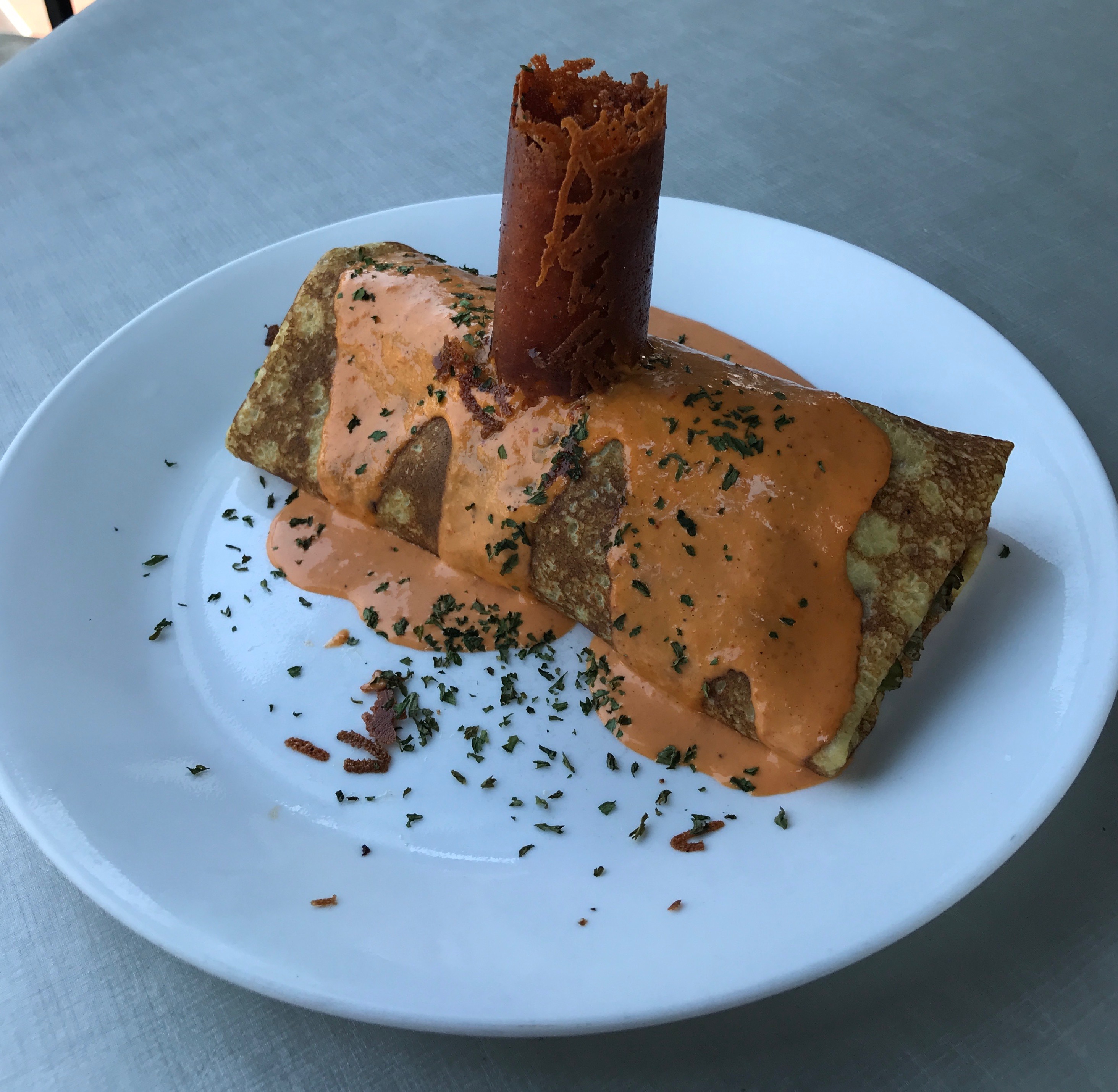
This was the main course. I think it was a crepe of some sort with a cylinder of some sort of cheese stuck in the top. It actually sounded more attractive in the menu, but I think it was acceptable fare.
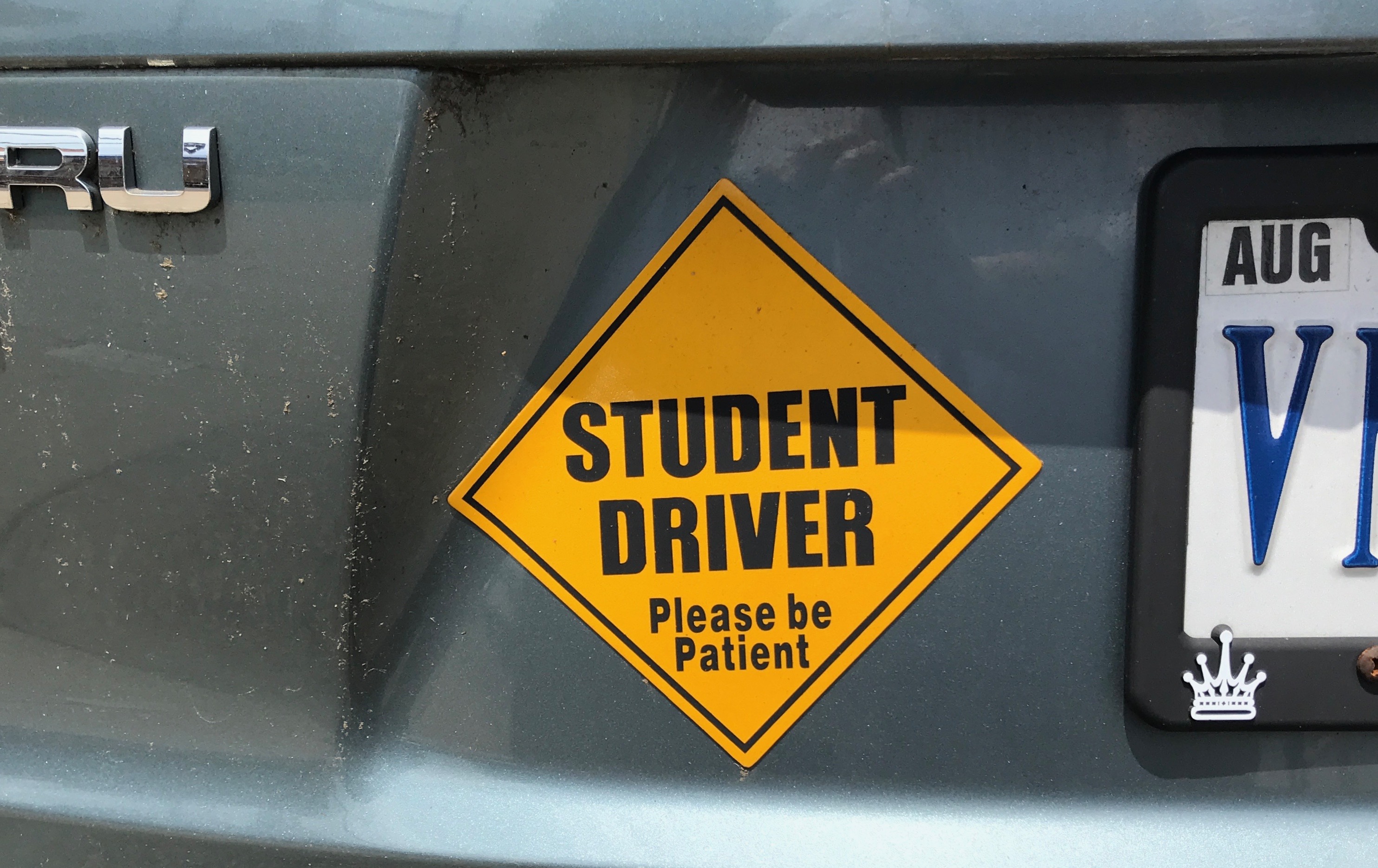
Heading back to my car, I noticed this sticker on a car. It was the first time I’d noticed it, but after this, I saw them quite frequently. Wouldn’t it be nice we were patient with everyone?
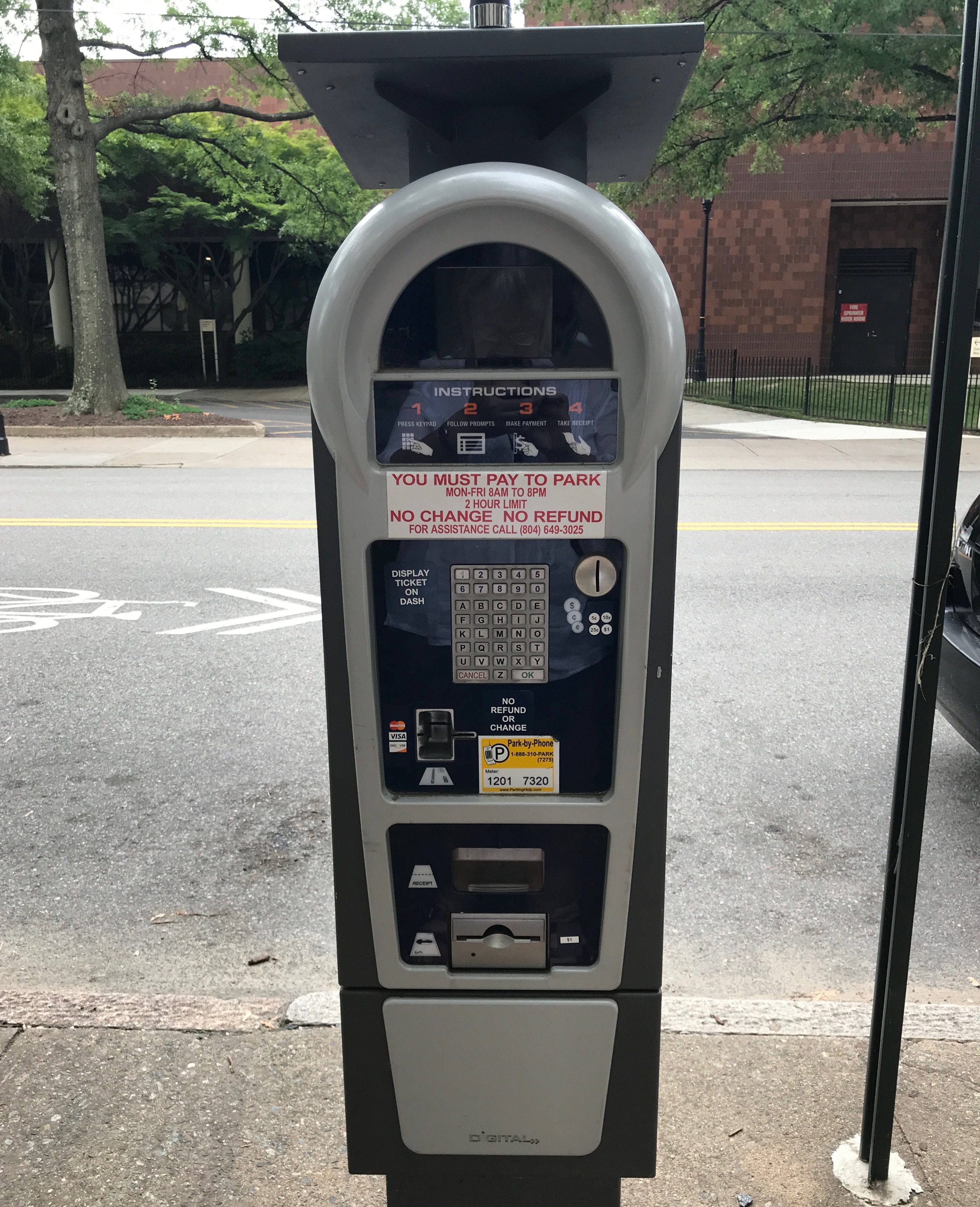
I also noticed what appeared to be a solar powered parking meter. Luckily, this was Sunday, and I didn’t have to worry about paying. These parking meters seem to be getting more complicated every year.
My next stop was the state capitol.
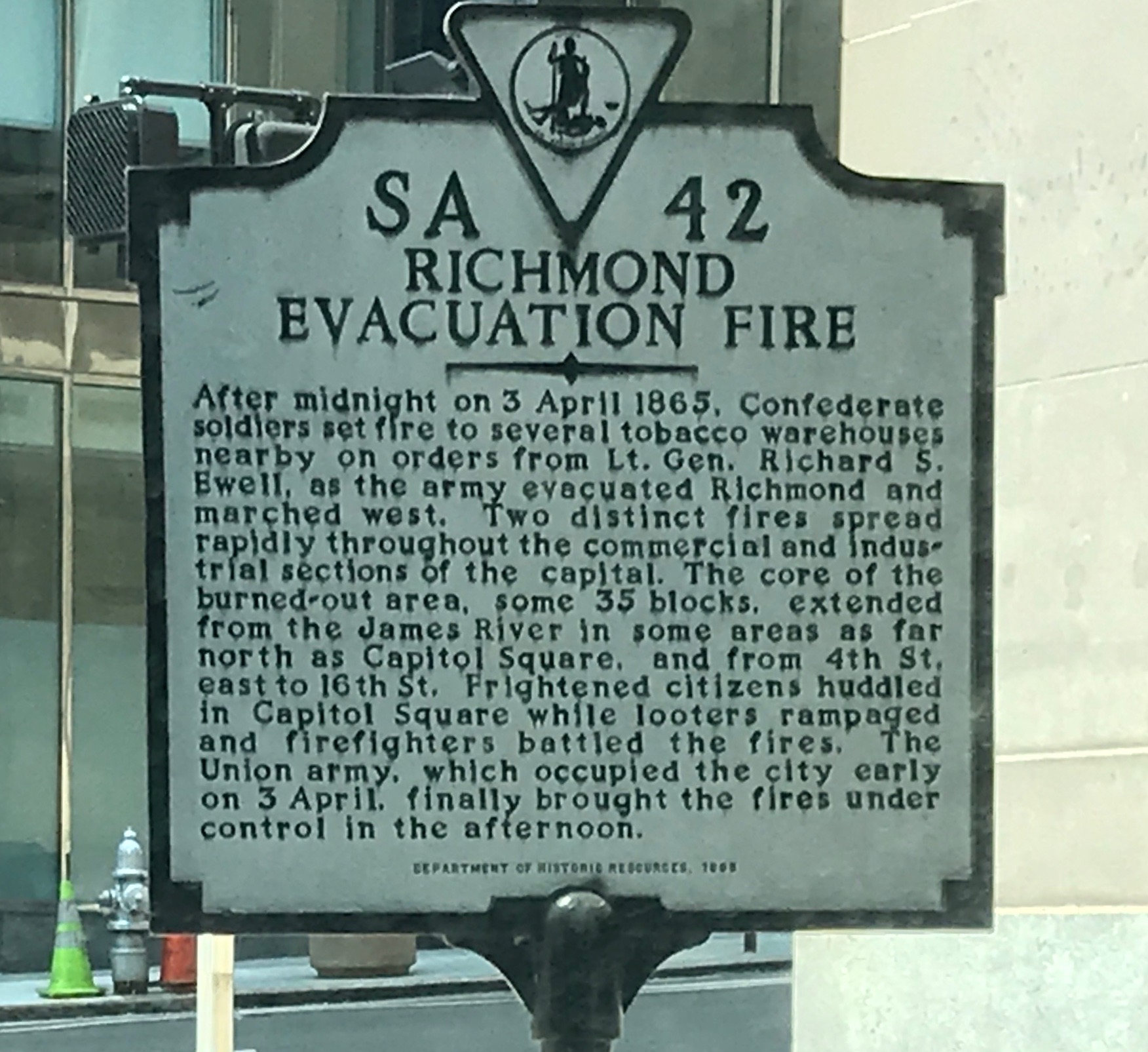
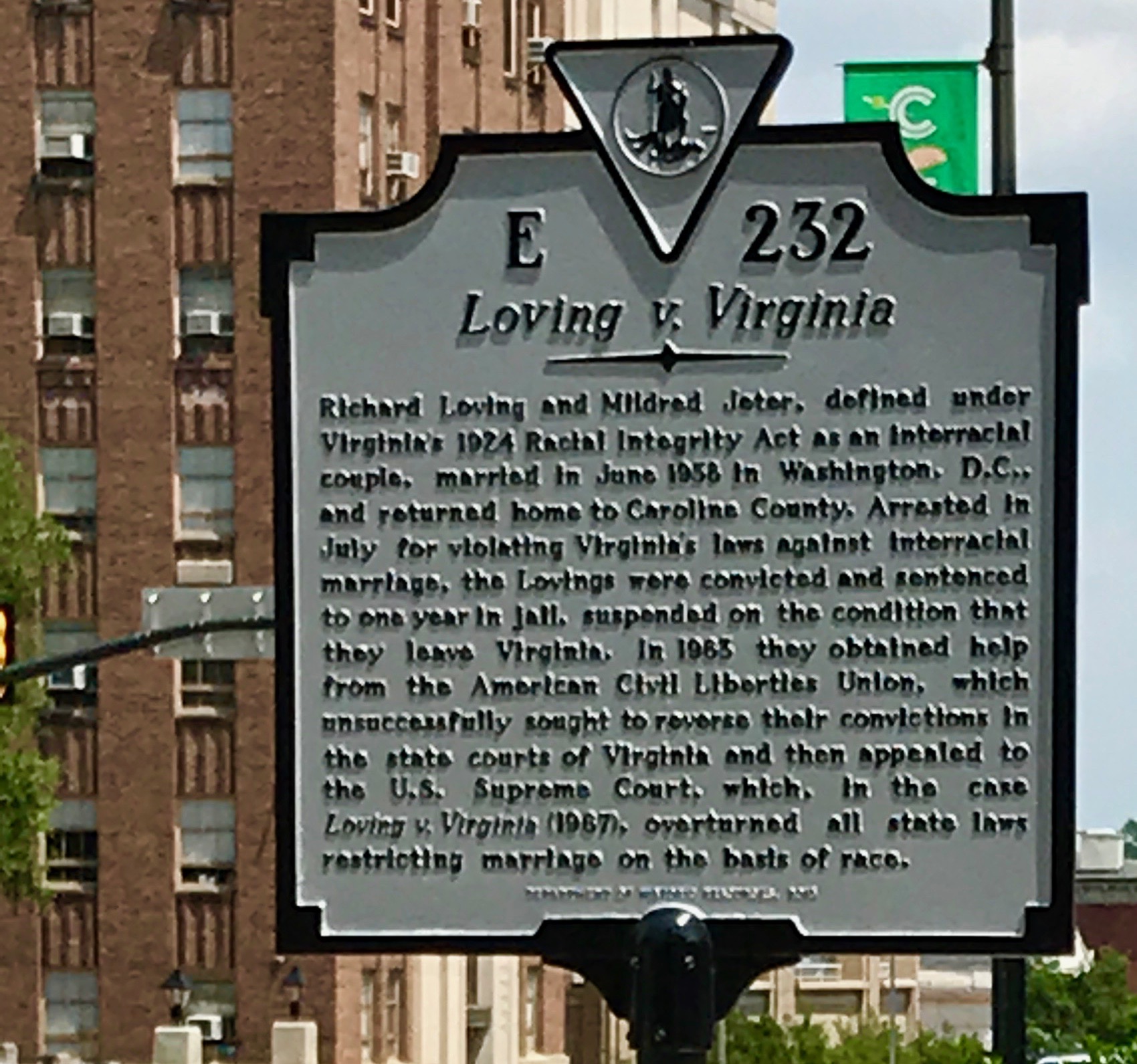
A little more drive-by tourism. I snapped this photo through the car window while I was stopped. I figured I could read it from the photo later.
I snapped this one, too.
Finally, I snapped a shot to remind myself of where I ended up parking.
I strolled past a building undergoing some radical changes. The reinforcements make it look like they are trying to preserve the facade on the right side of the building. It would be interesting to see what becomes of it.
I turned the corner and headed toward the capitol.
Of course the tourist entrance was on the other side. I started across the front of the building.
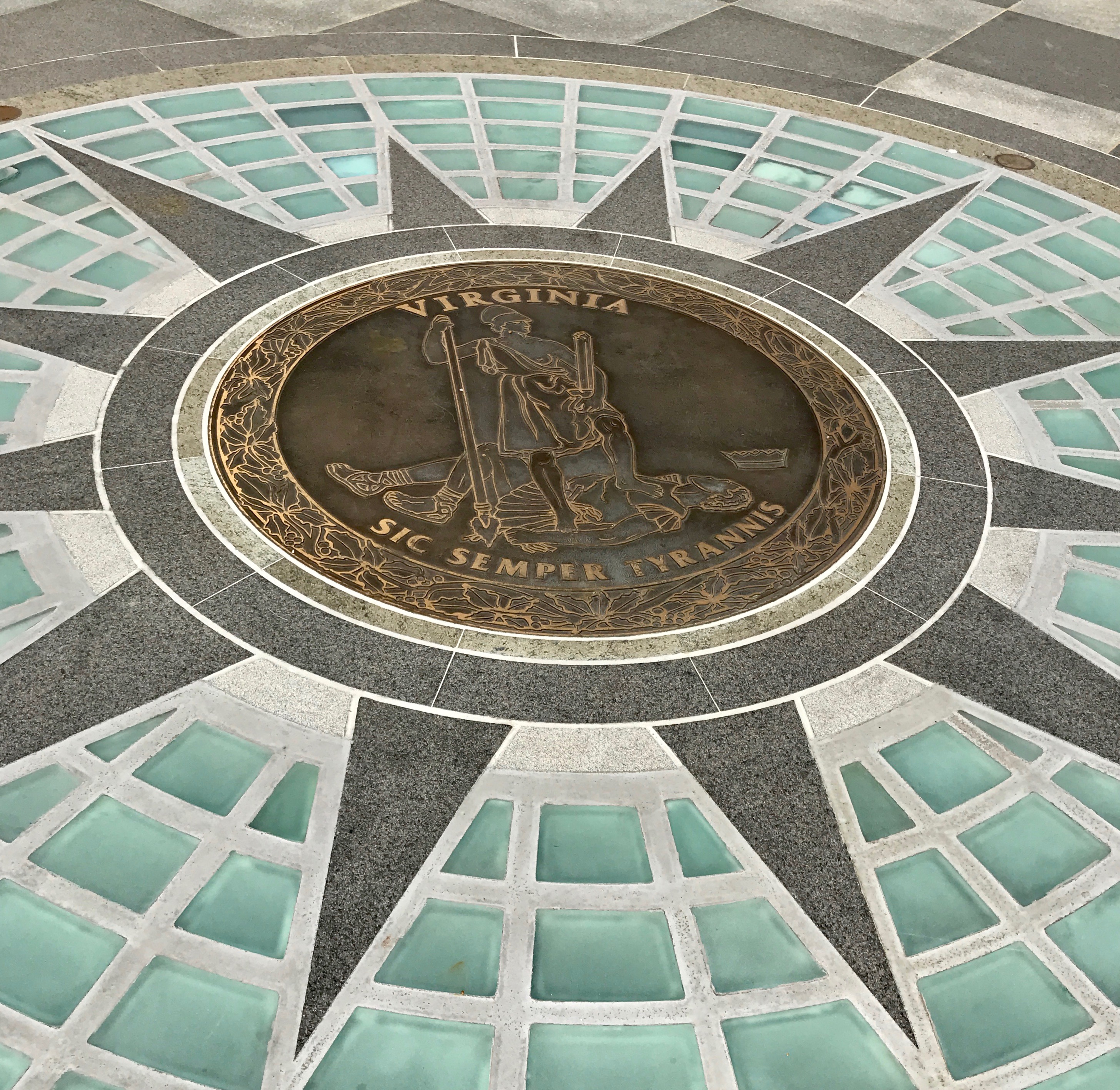
I crossed the state seal. Those of you who have studied the assassination of Abraham Lincoln will recognize the Virginia motto as what John Wilkes Booth shouted after he leapt down to the stage. Sic temper tyrannis.
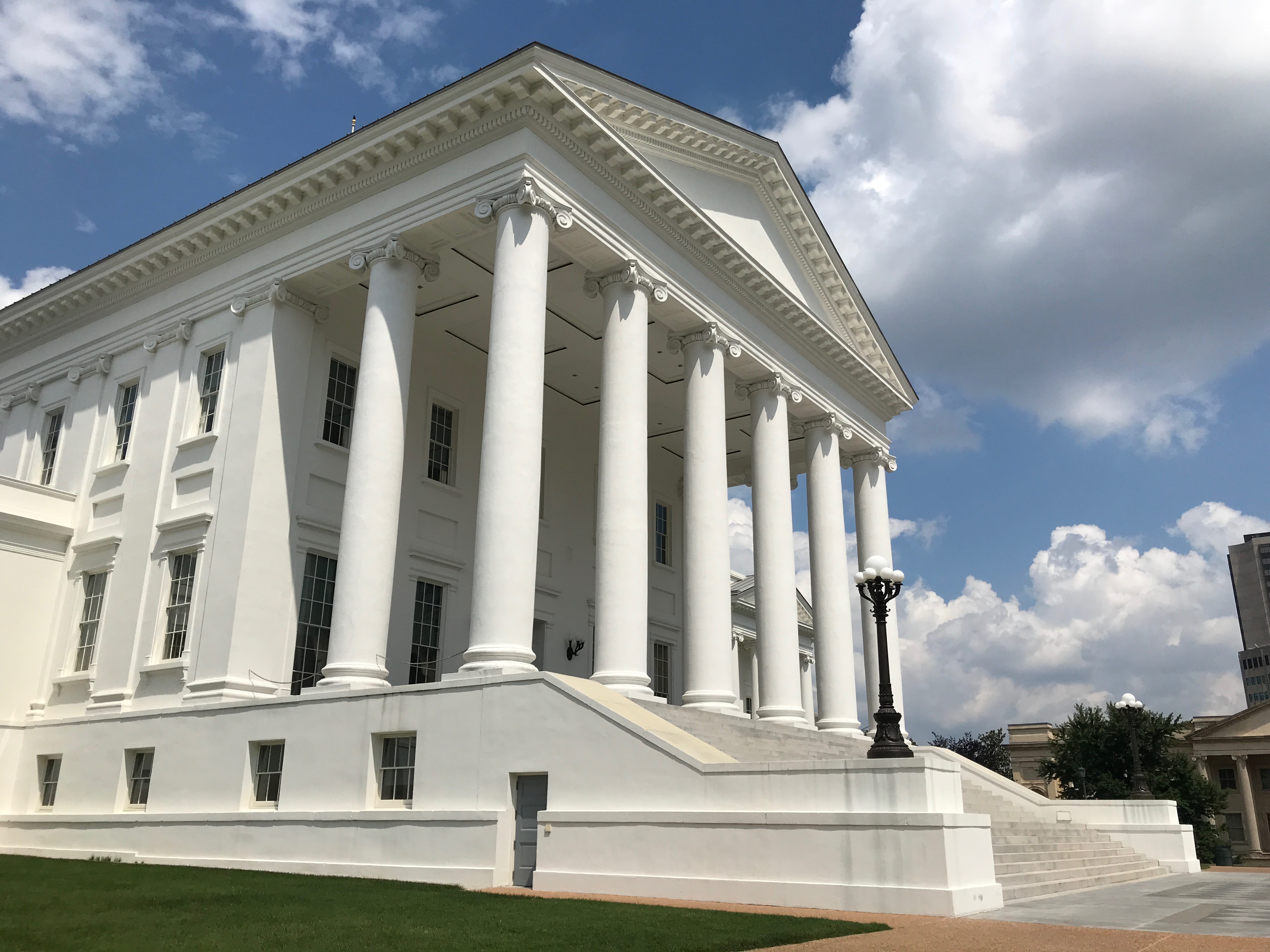
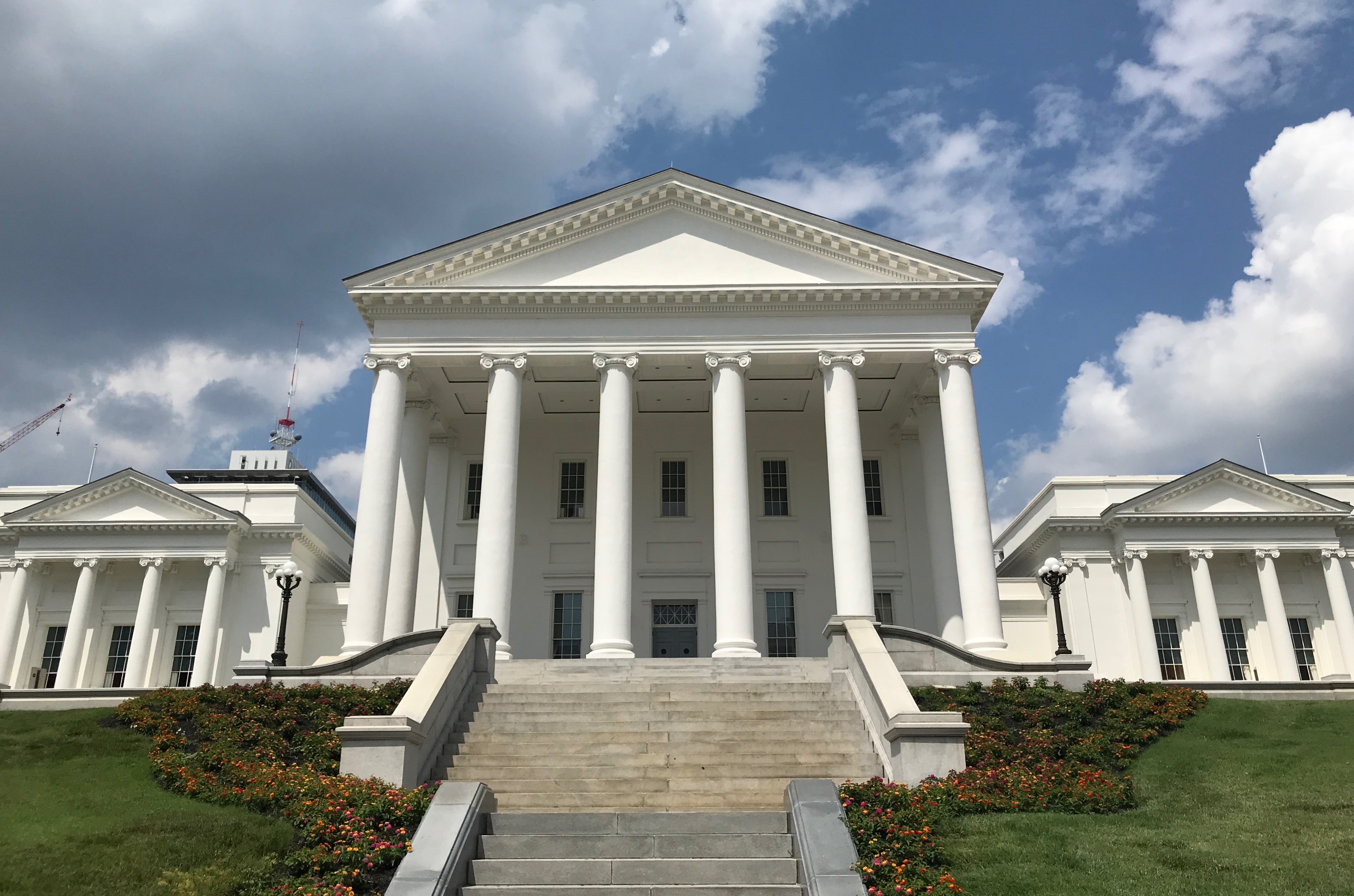
It’s quite the majestic looking building.
I finally made it around to the tourist entrance, which was in a newer addition. I was a little late for the tour, but I could catch up with them. They had already gotten to the older part of the building.
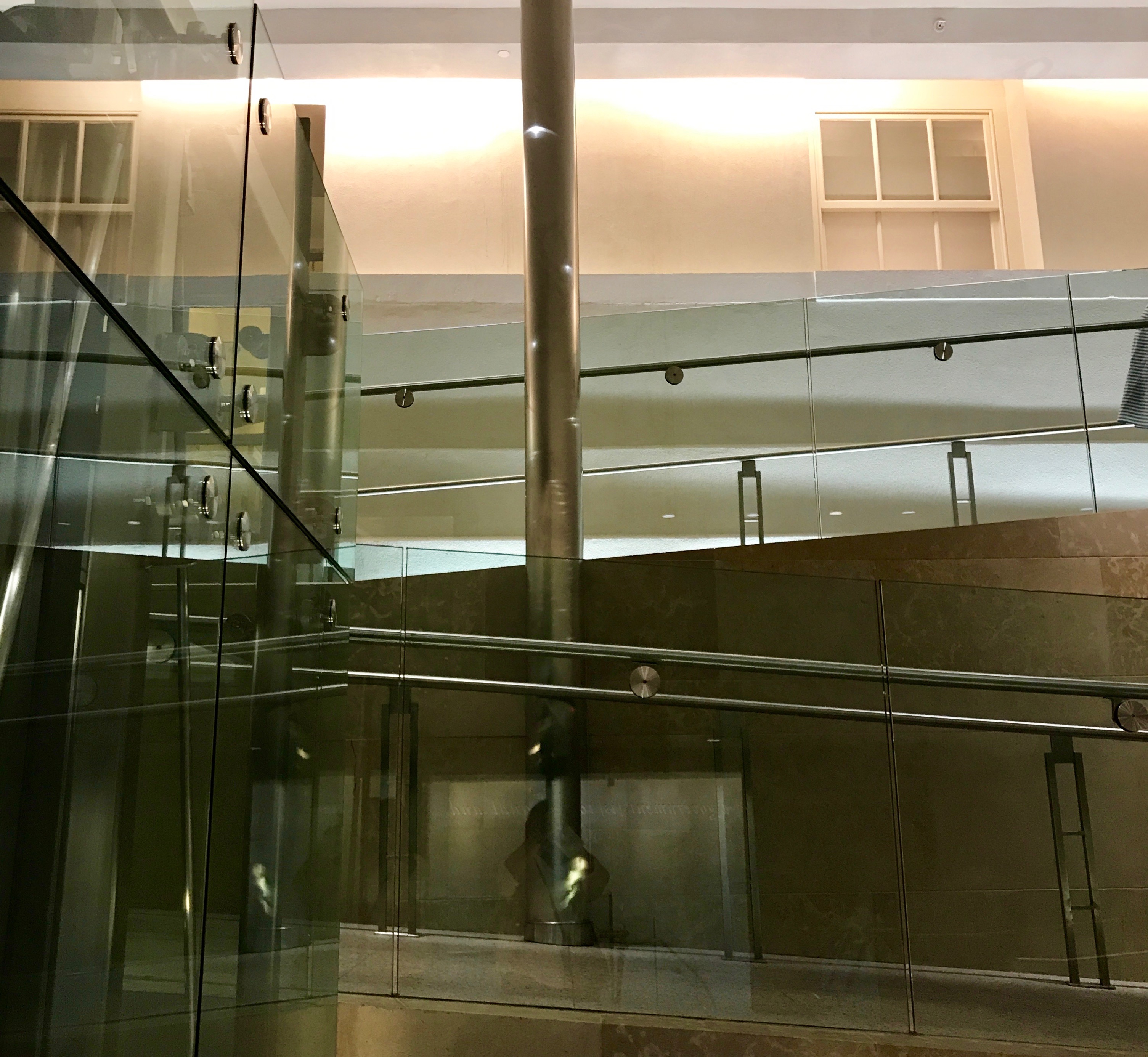
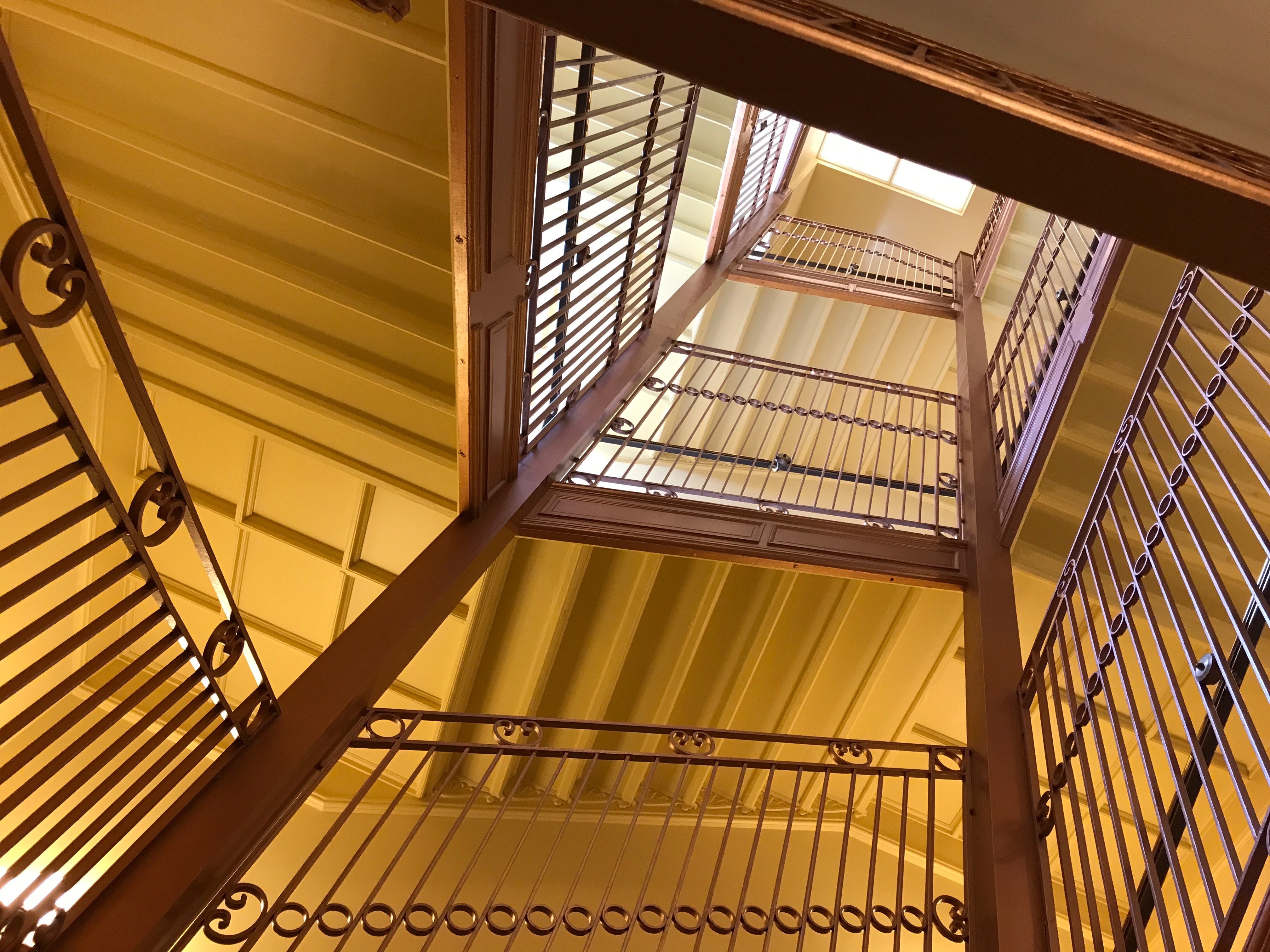
I am always looking around corners and into the backs of buildings. I thought this stairwell was interesting.
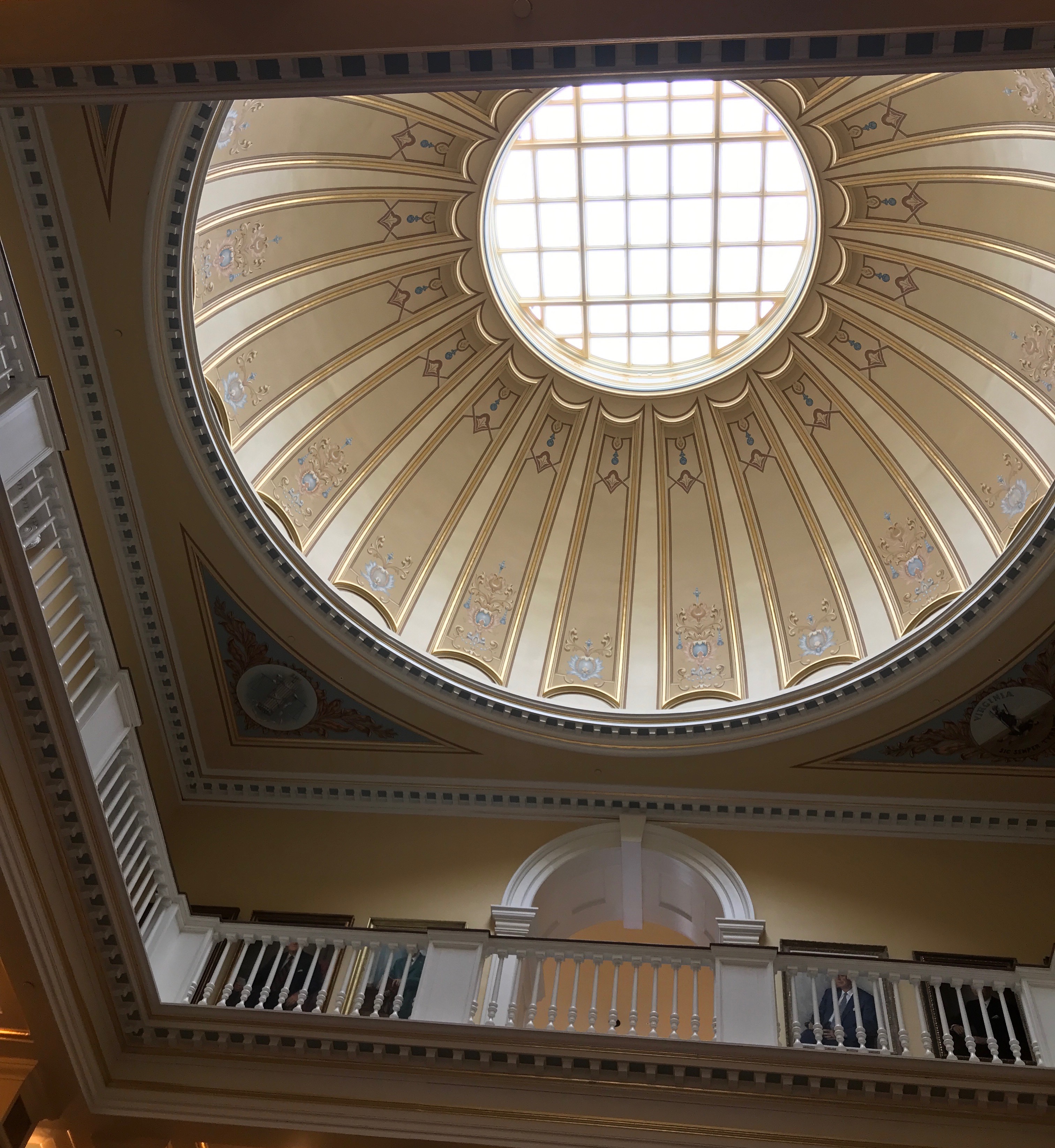
The guide took us into the rotunda. I find it interesting that this building has a rotunda but no dome.
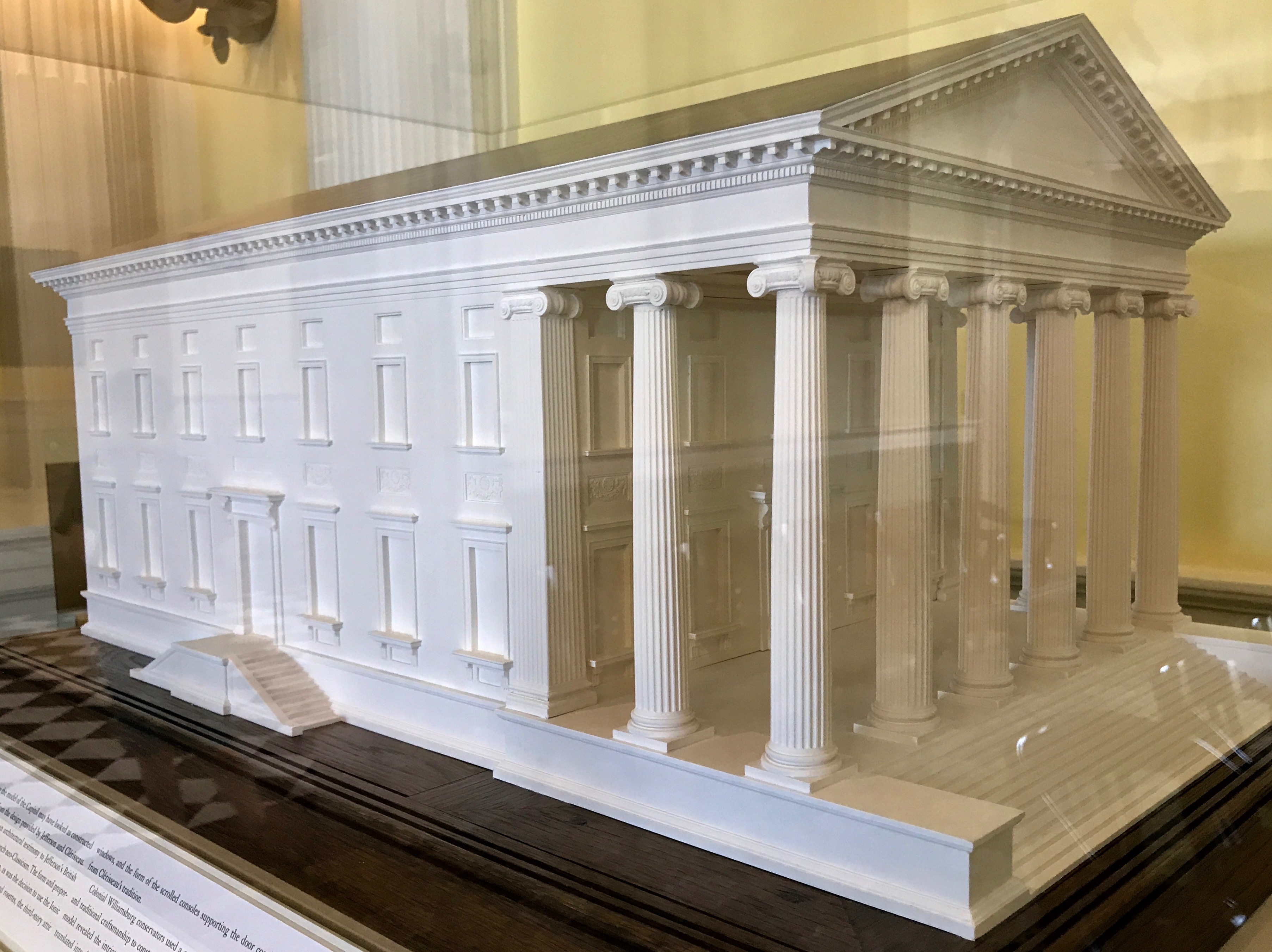
It sure looks like it has a dome, doesn’t it? But, the managed to hide it under the peaked roof.
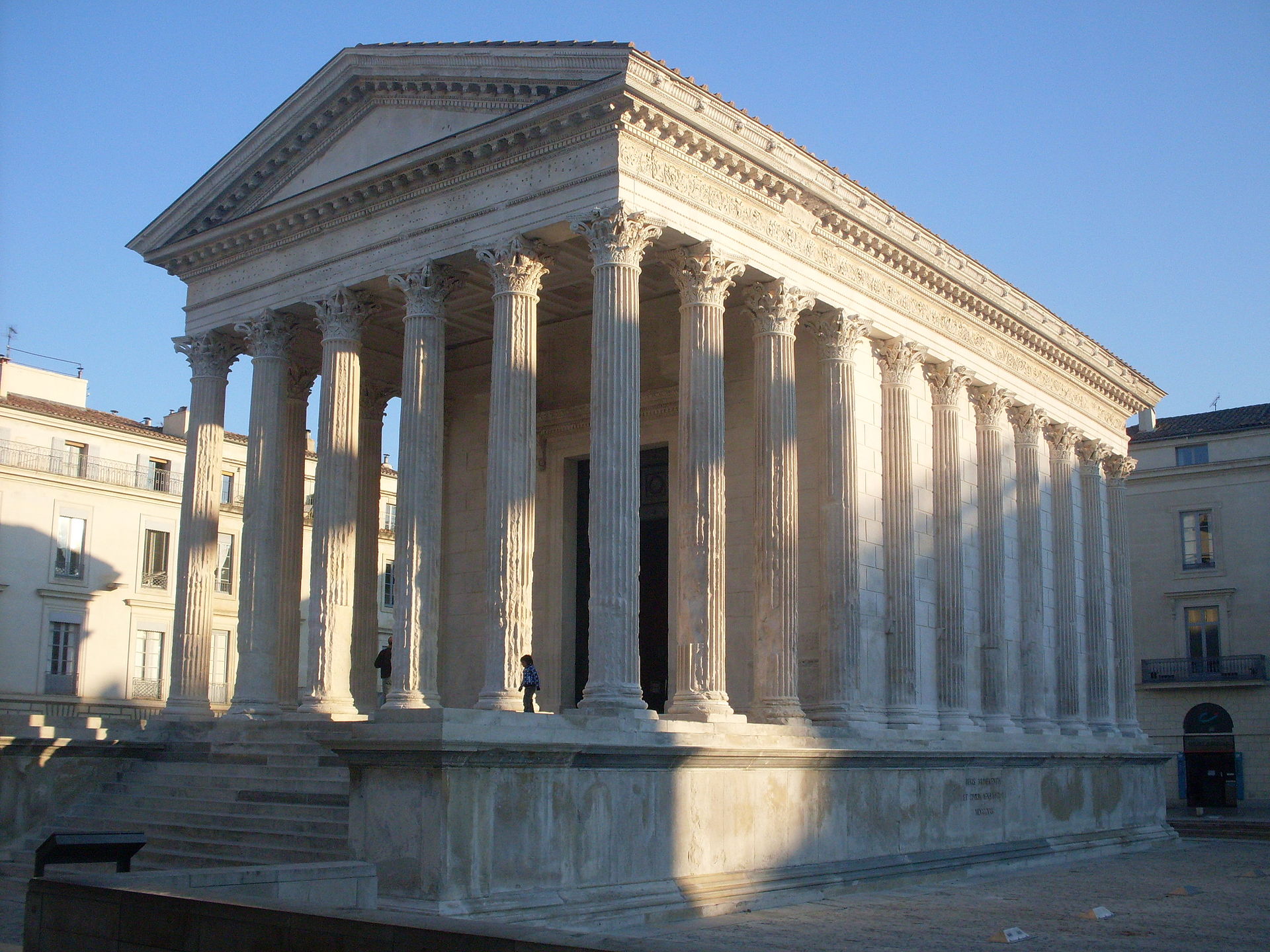
You can see from the model that there is no dome. That’s the way Thomas Jefferson and French architect Charles-Louis Clerisseau designed it. According to my Preferred Source, the design was modeled after the Maison Carrée at Nimes in southern France, which is one of the best preserved Roman temple facades to be found in the territory of the former Roman Empire.
By Danichou – Own work, Public Domain, https://commons.wikimedia.org/w/index.php?curid=12835245
This is the Maison Carrée.
In considering the fact that this capitol doesn’t have a dome, I thought that it was quite unusual. In fact, twelve of the fifty state capitols don’t have external domes:
Alaska
Delaware
Florida
Hawaii
Louisiana
Nebraska
New Mexico
New York
North Dakota
Ohio
Tennessee
So, now you know!
The cornerstone was laid on August 18, 1786, even before the design was completed. Later that year, a set of architectural drawings and a plaster model were sent from France to Virginia. It was sufficiently completed for the General Assembly to meet there in October 1792.
But, back to the tour.
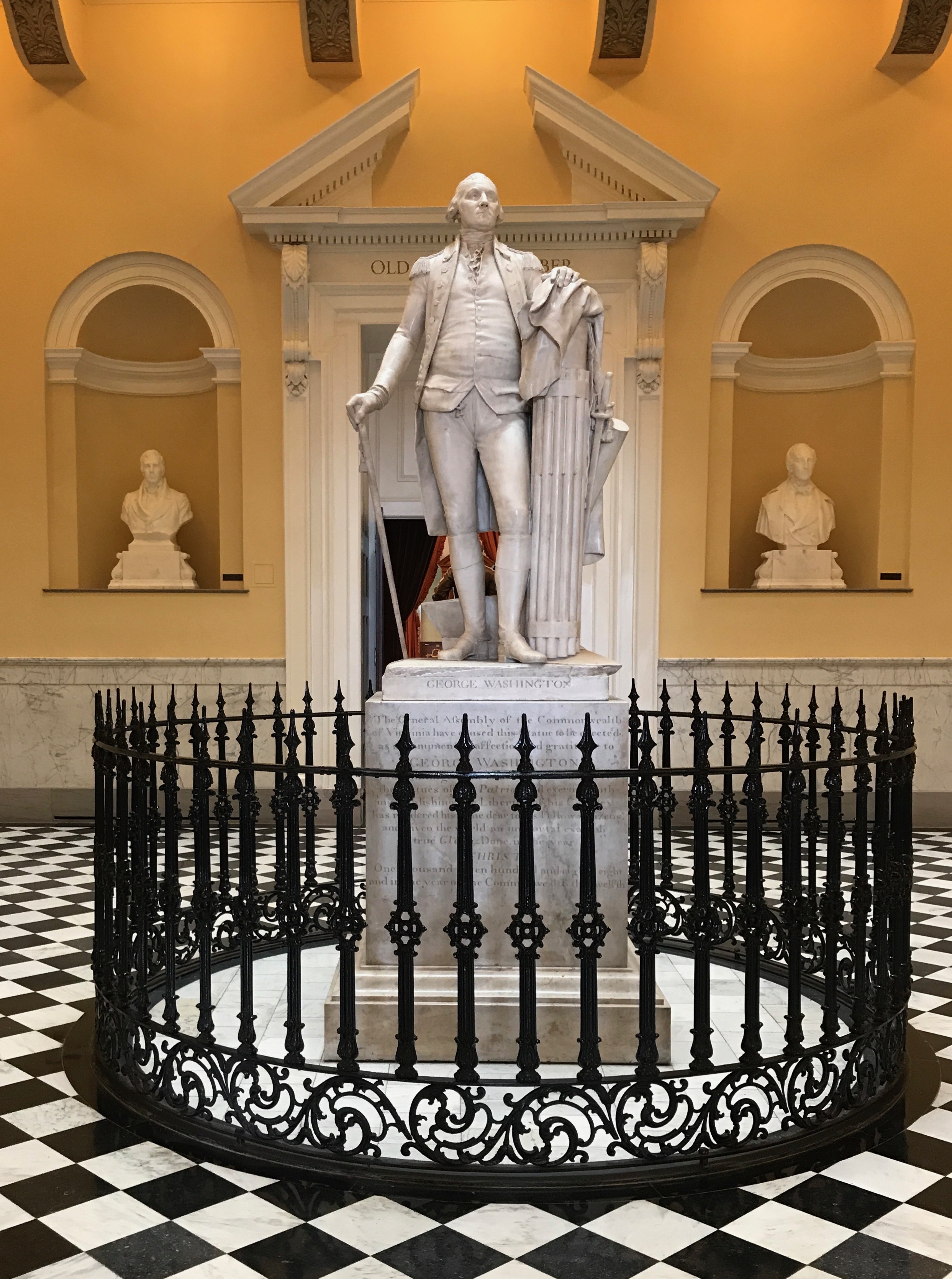
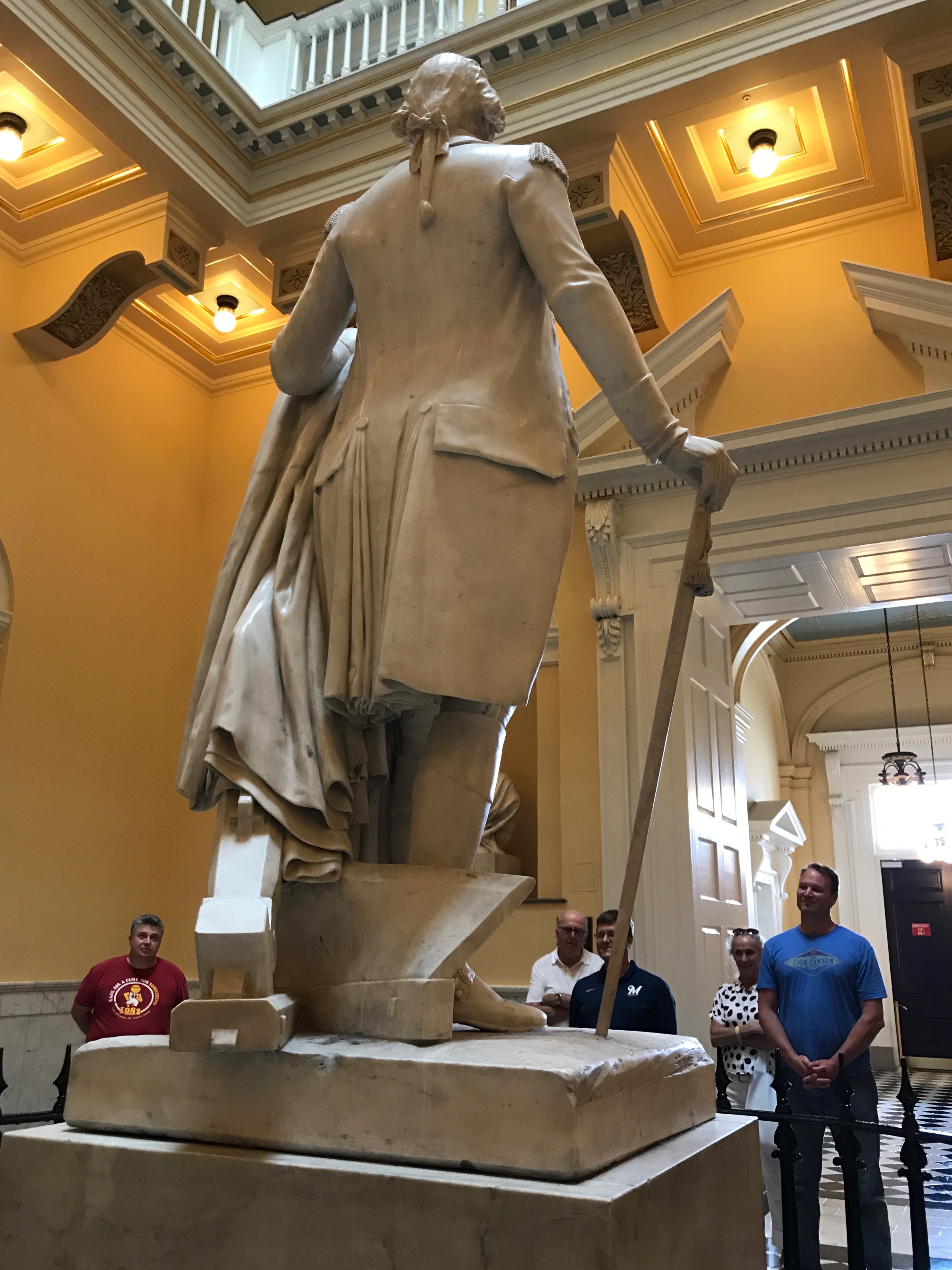
Houdon’s statue of George Washington has pride of place in the rotunda.
Benjamin Franklin invited Jean-Antoine Houdon to cross the Atlantic from France in 1785 so that Washington could model for him. Washington sat for wet clay life models and a plaster life mask. These models served formally commissions of statues of Washington, including this one that was commissioned by the Virginia General Assembly.
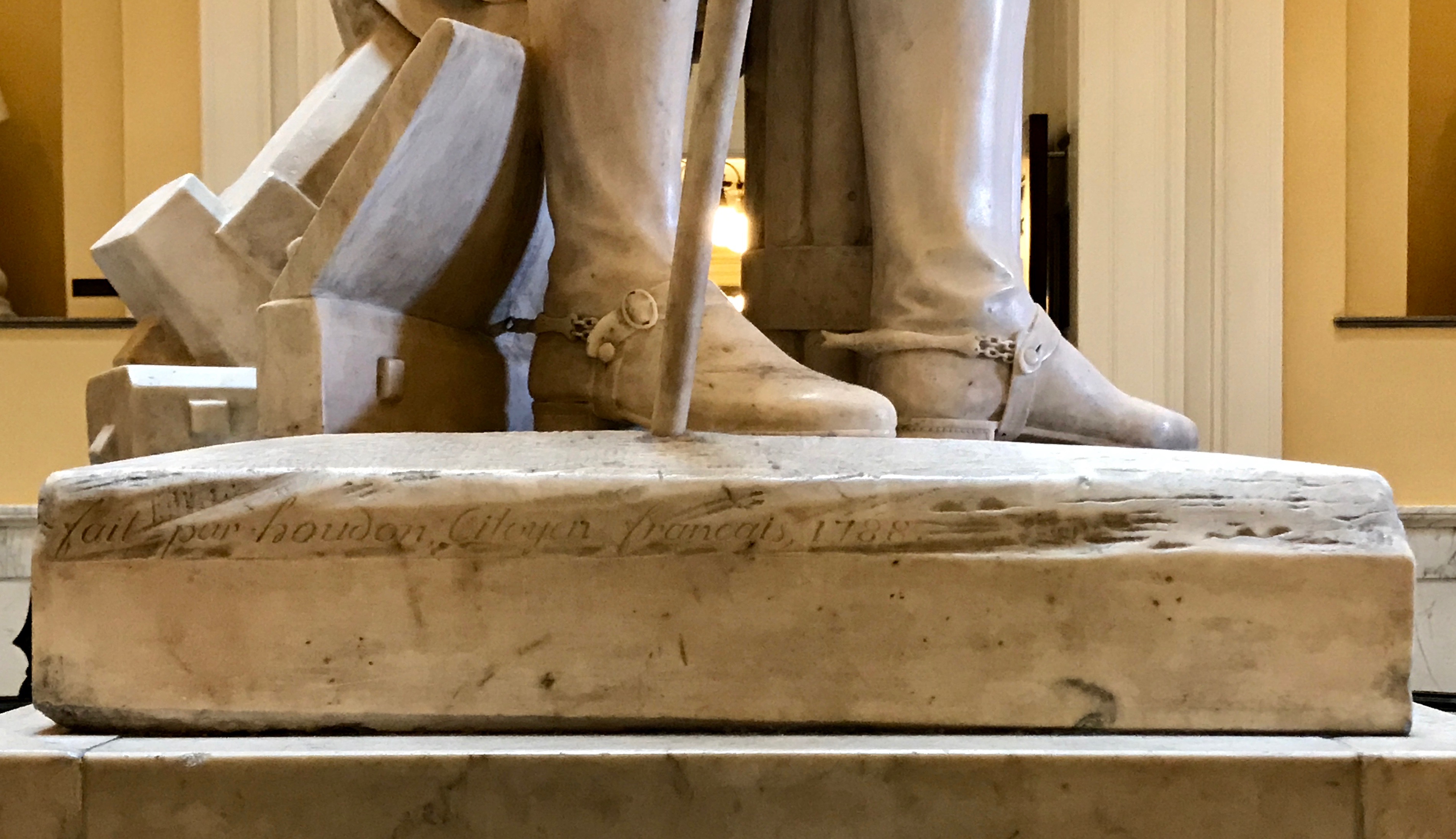
If you look carefully, you can see the artist’s signature on the left side of the base.
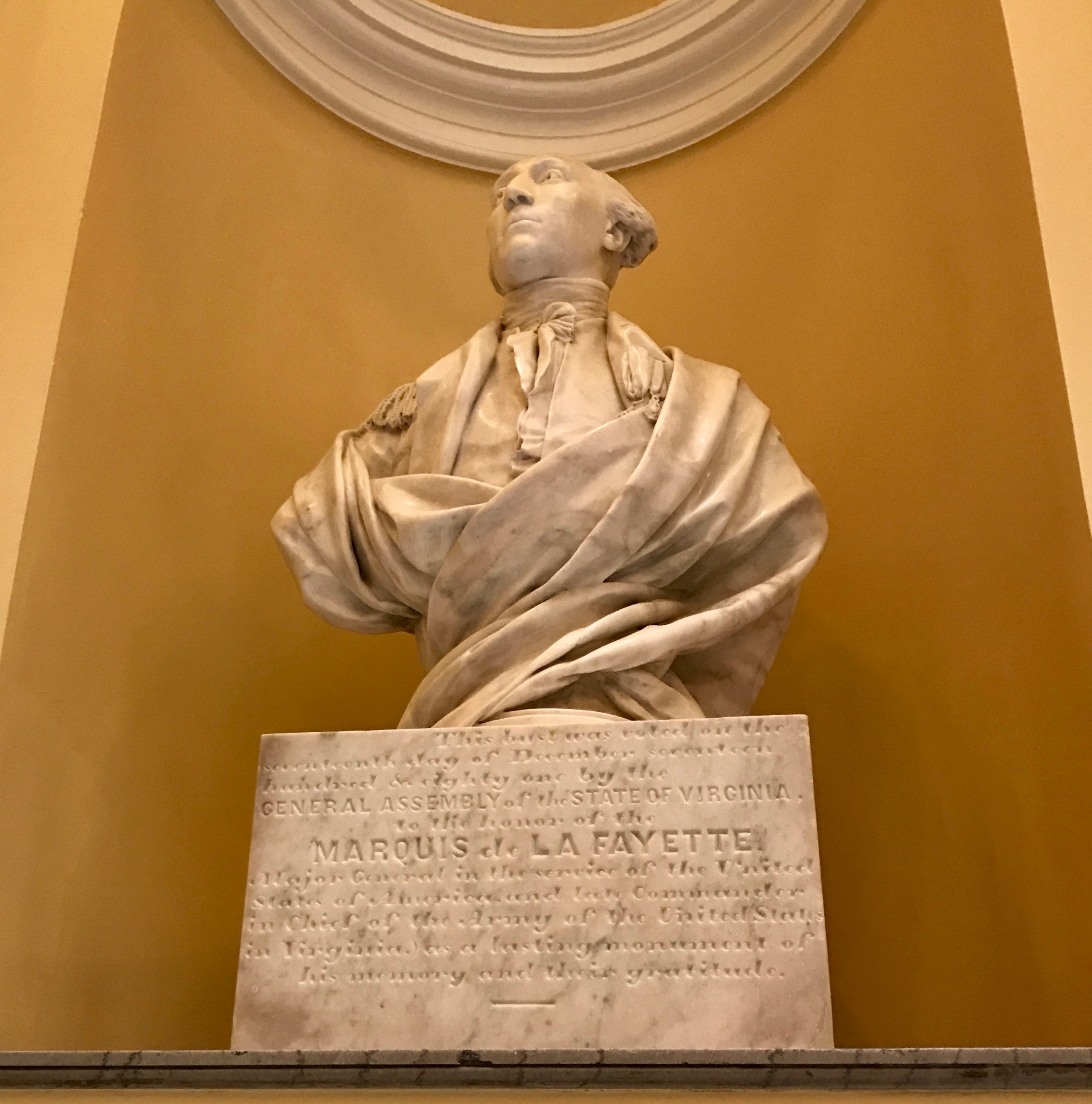
At the same time that the Virginia General Assembly commissioned a marble state of Washington, they also commissioned a marble bust of the Marquis de Lafayette.
The intent was that the statuary would represent public virtue from the Old and New Worlds. Lafayette was voted a citizen of Virginia by an “act of assembly” for his service on behalf of the Commonwealth during the American Revolution.
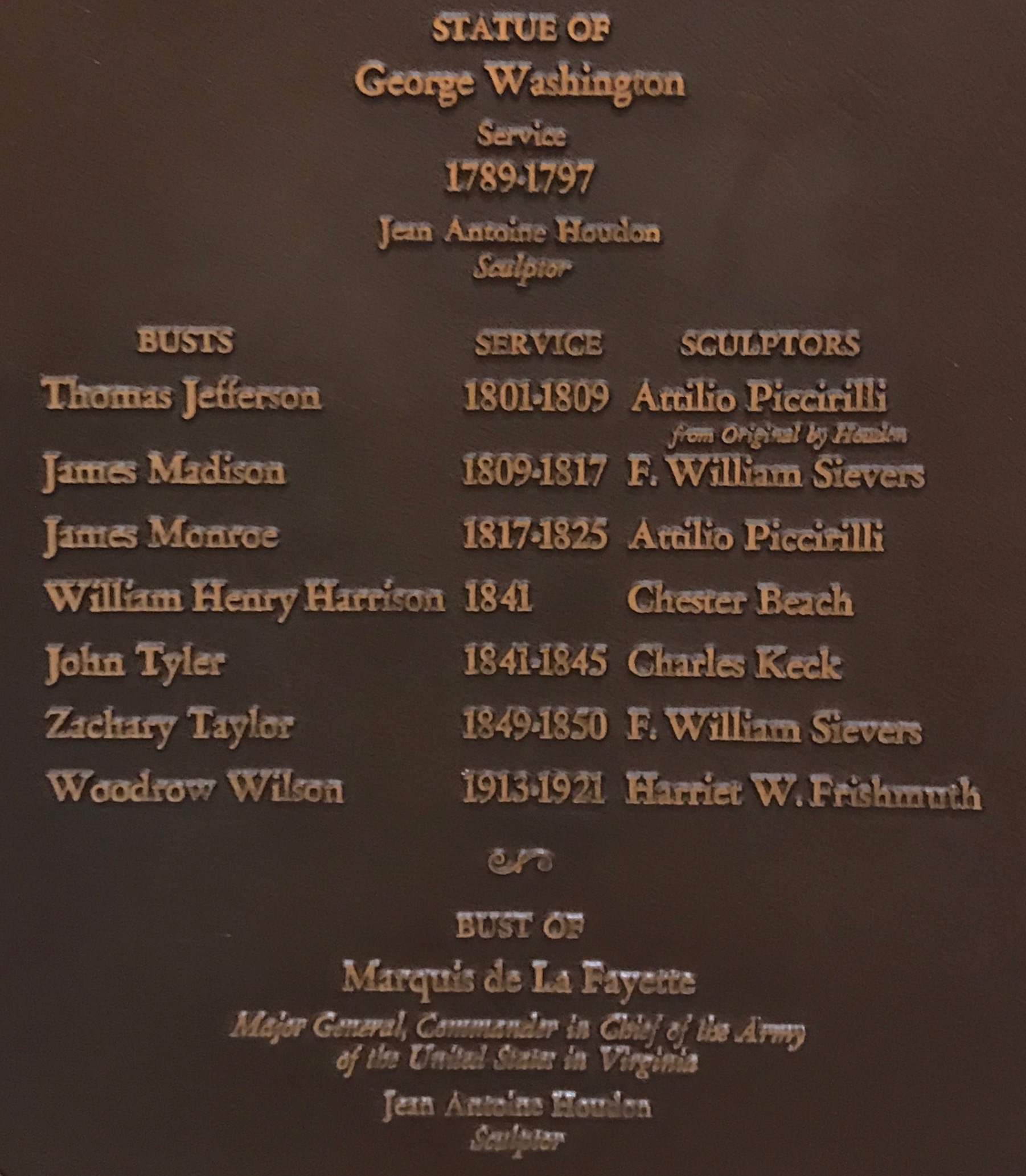
There were many other busts in the rotunda.
There were eight presidents that were born in Virginia!
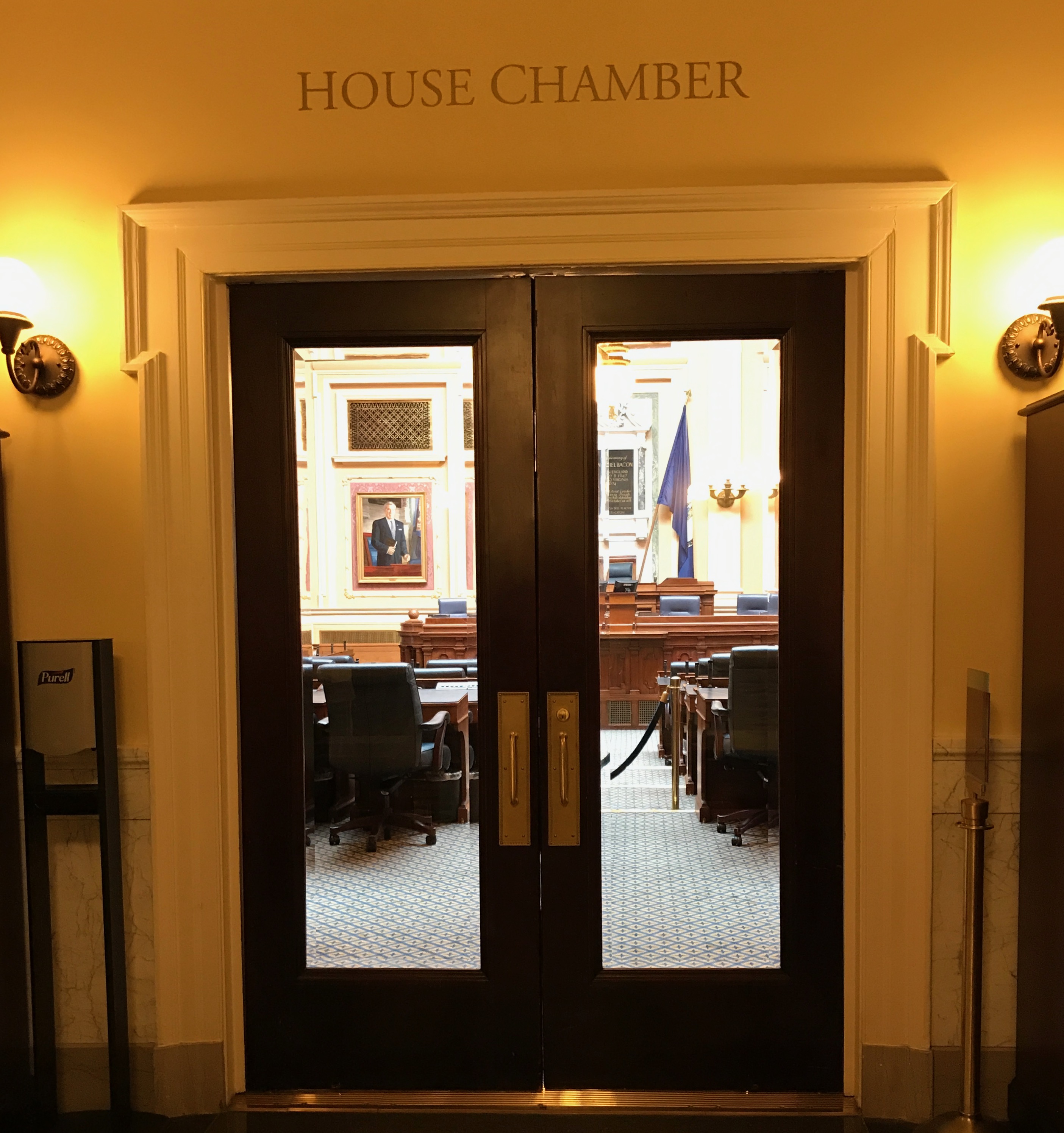
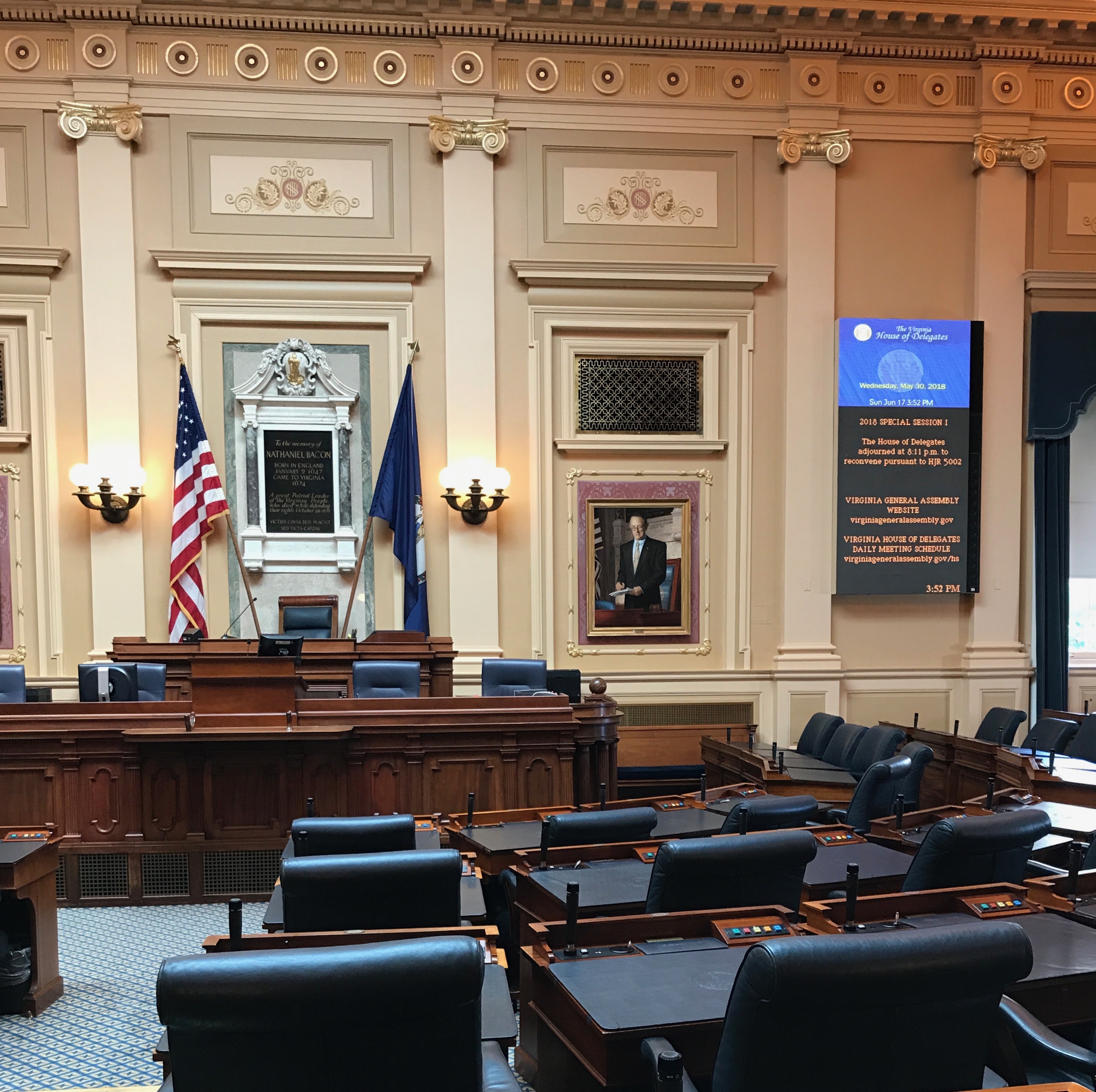
After the Rotunda, we continued on to other parts of the Capitol.
It looks like a comfortable place to work.
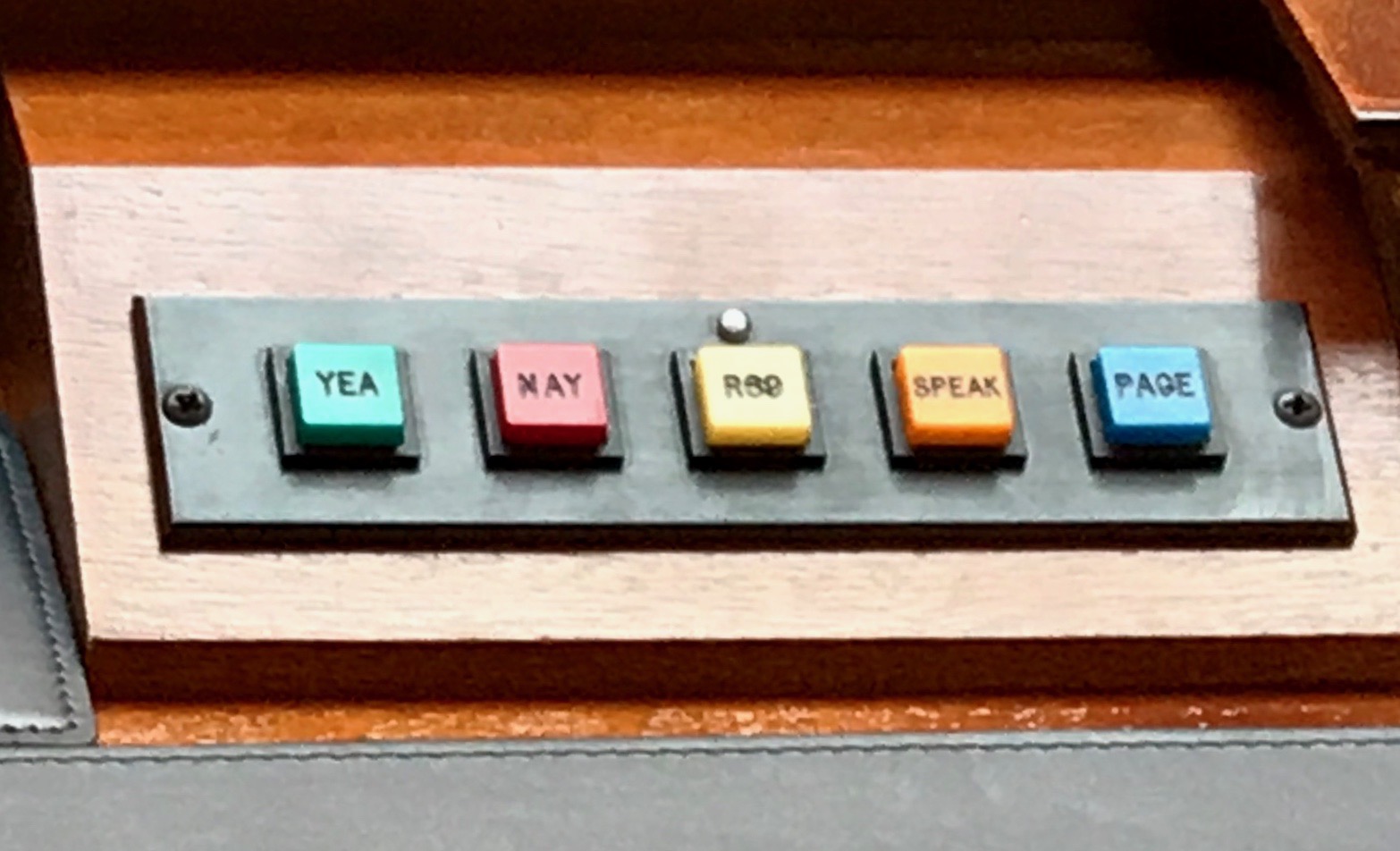
I guess pushing a button is easier or more accurate that raising your hands and having someone count.
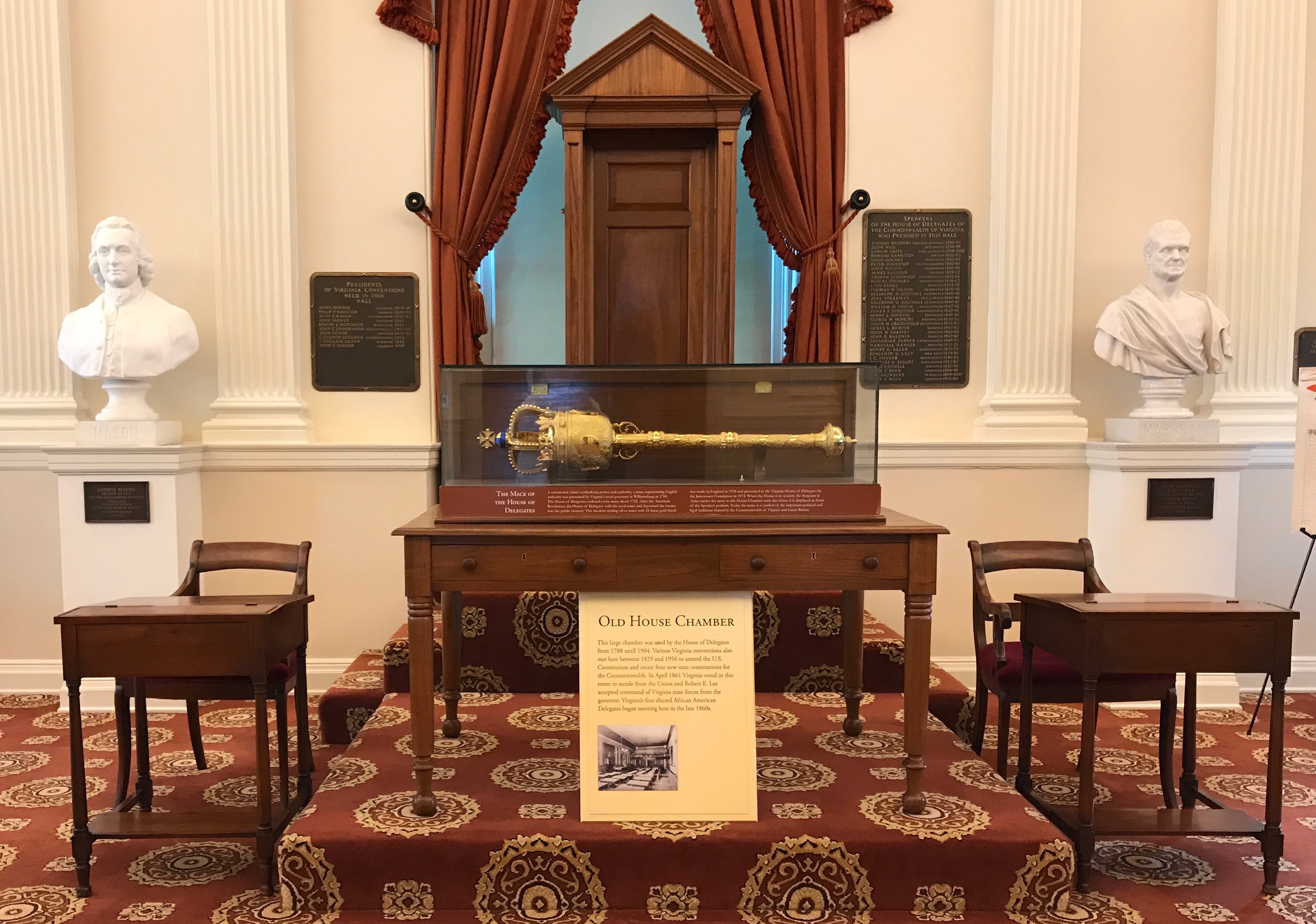
We continued on to the Old House Chamber.
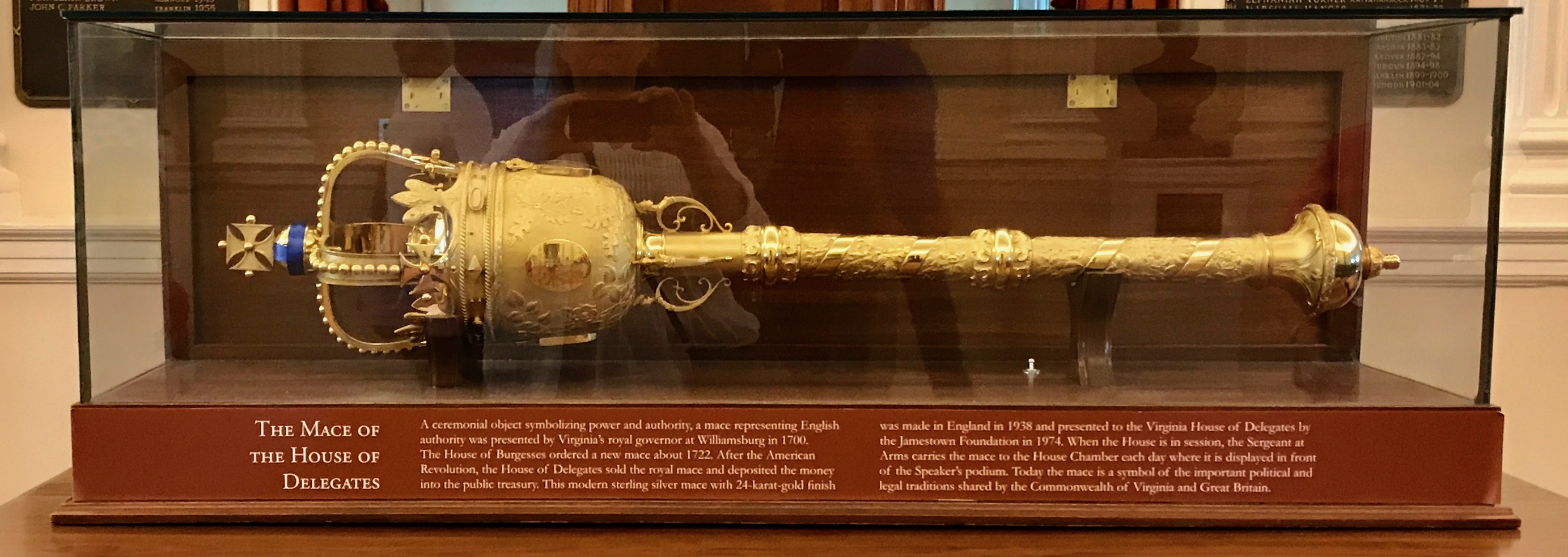
In the Old House Chamber, there is a copy of The Mace of the House of Delegates.
It seems that Virginia’s royal governor at Williamsburg presented this mace to the House of Burgesses in 1700. The house of Burgesses ordered a new mace in around 1722. After the American Revolution, the House of Delegates sold the royal mace and deposited the money into the public Treasury.
This modern mace was made in England in 1938 and was made of sterling silver with a 24-karat-gold finish. It was presented to the Virginia House of Delegates by the Jamestown Foundation in 1974. I guess the folks in Jamestown must have just held on to it and admired it from 1938-1974.
When the House is in session, the Sergeant at Arms carries the mace to the House Chamber each day, where it is displayed in front of the Speaker’s podium. According to the information with the mace, “Today the mace is a symbol of the important political and legal traditions shared by the Commonwealth of Virginia and Great Britain.
I guess they are finally over that little fracas that happened in 1776.
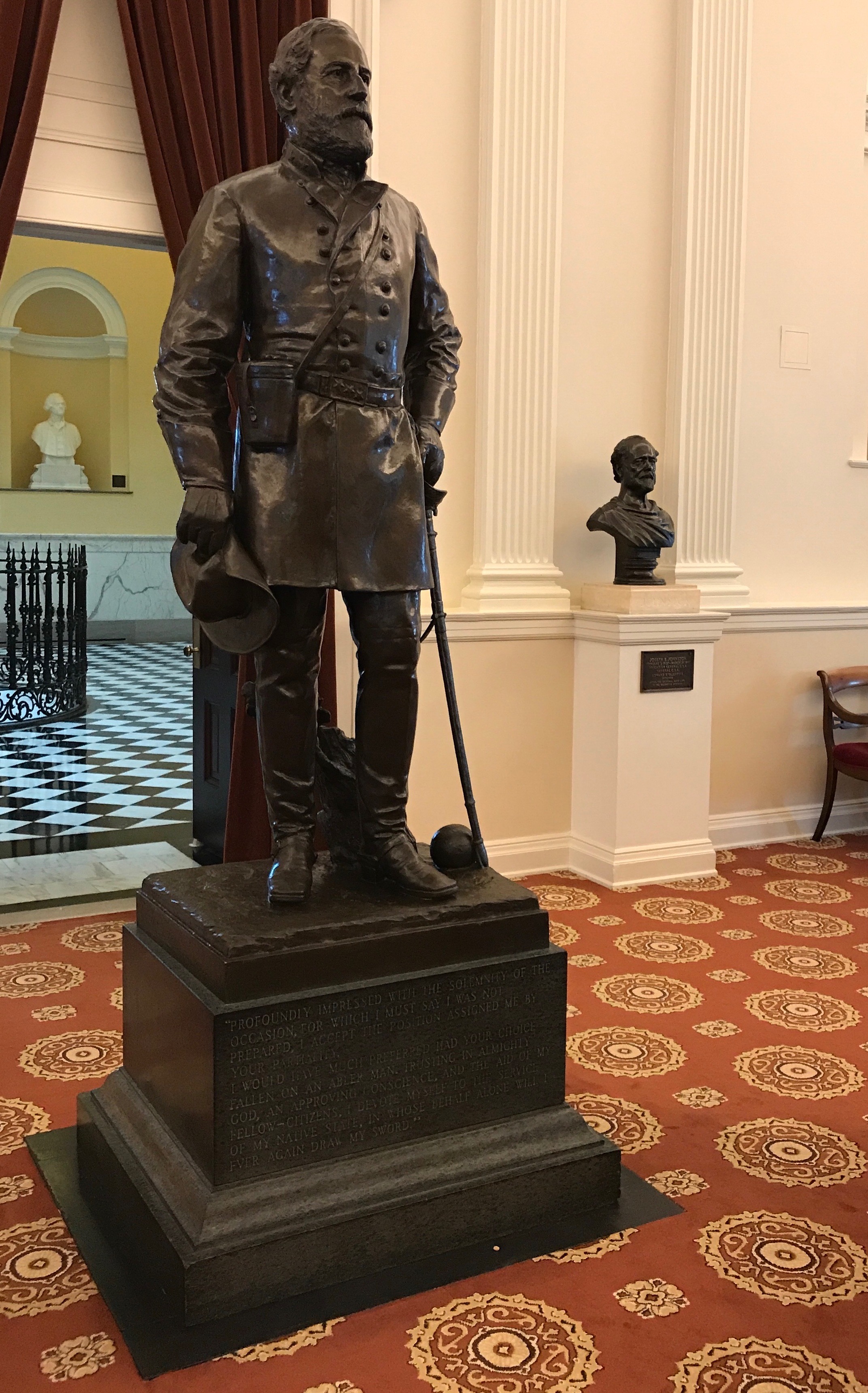
As we crossed back to the Senate Chamber, we passed this statue of Robert Lee.
Have you ever noticed that it doesn’t sound right without that “E?”
Robert E. Lee.
Incidentally, the statue was erected where Lee stood on April 23, 1861, when at the age of 54 he accepted command of the military forces of the Commonwealth of Virginia.
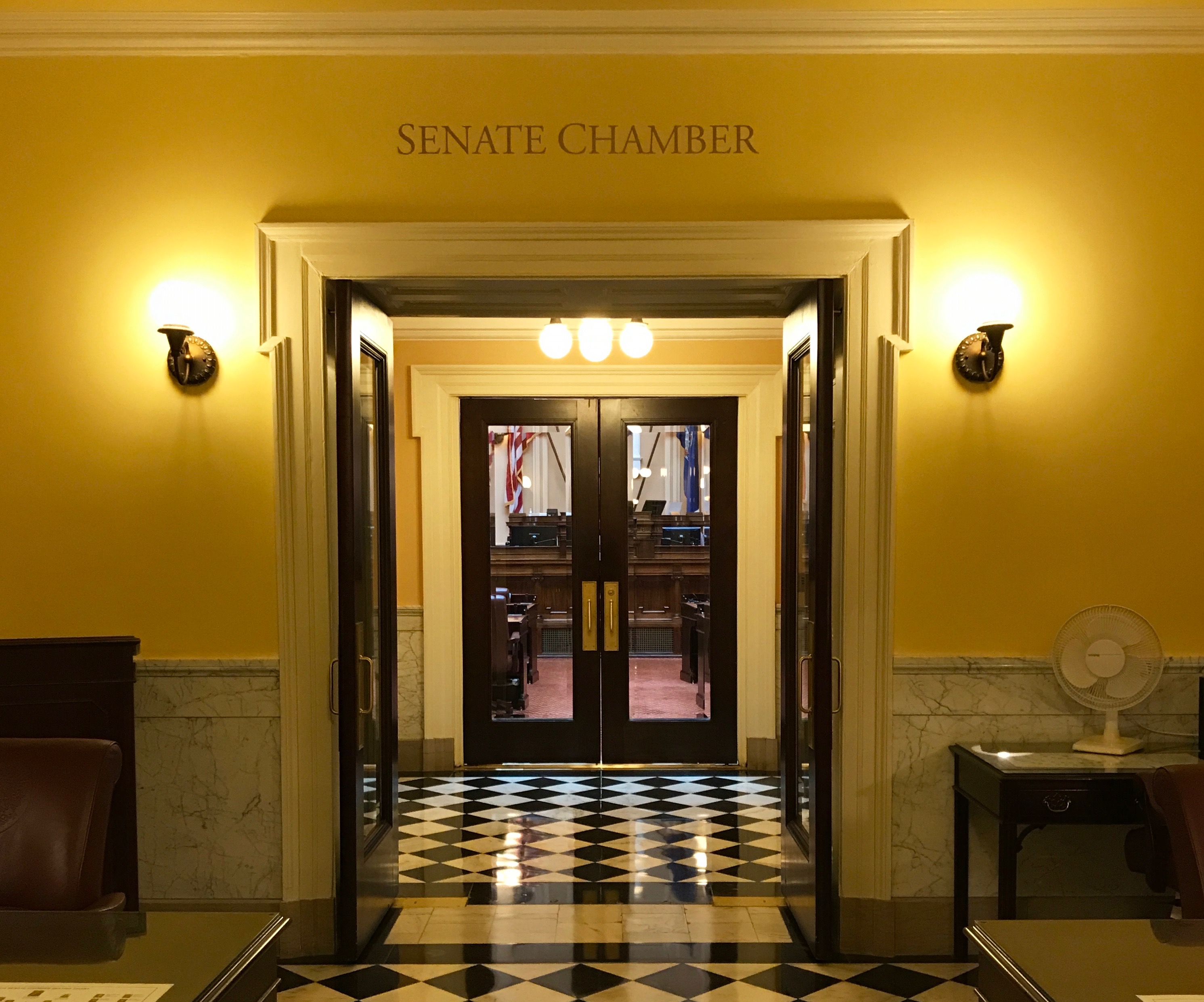
We entered the Senate Chamber.
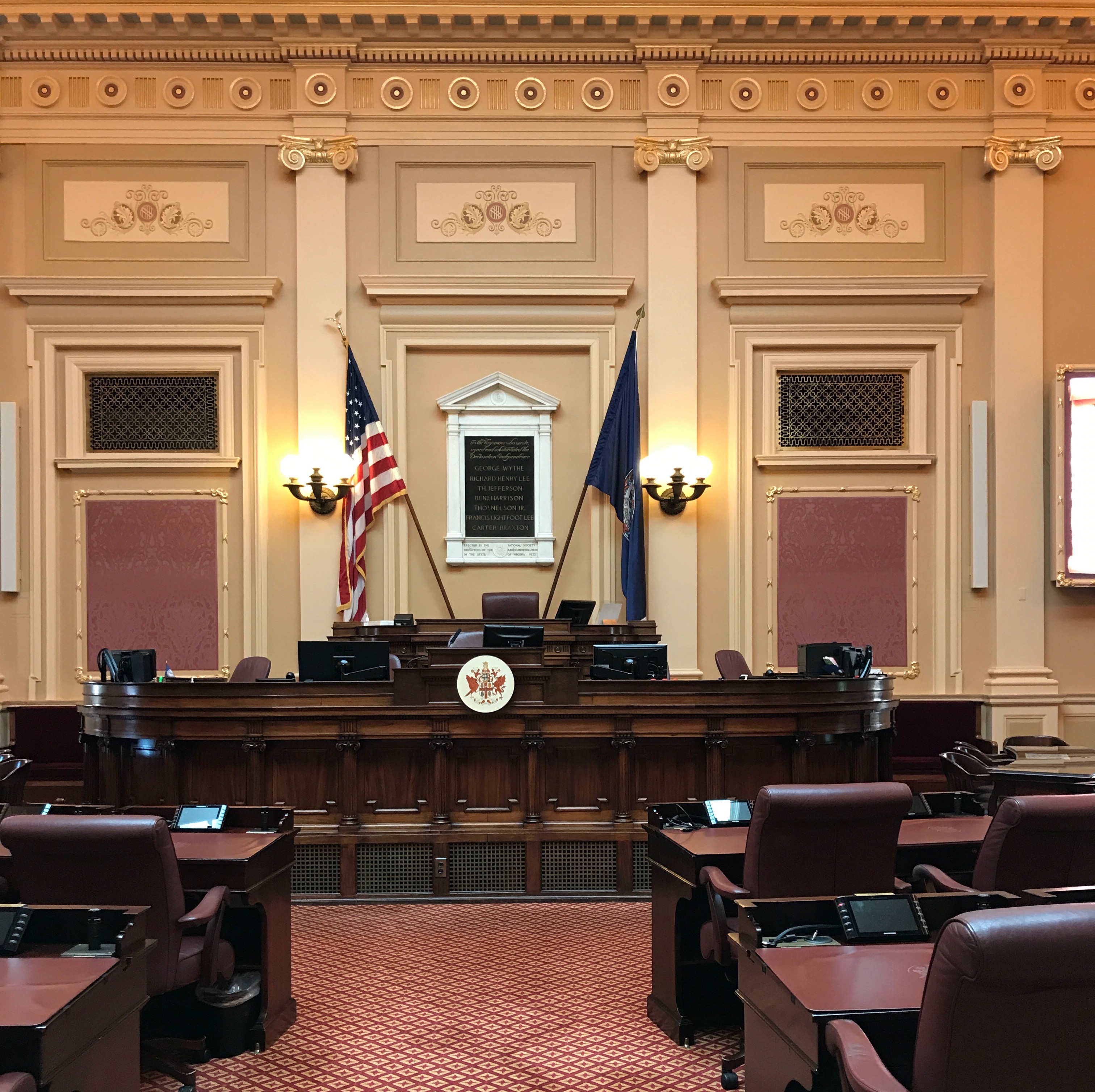
It doesn’t look that different from the House Chamber, except for the color scheme.
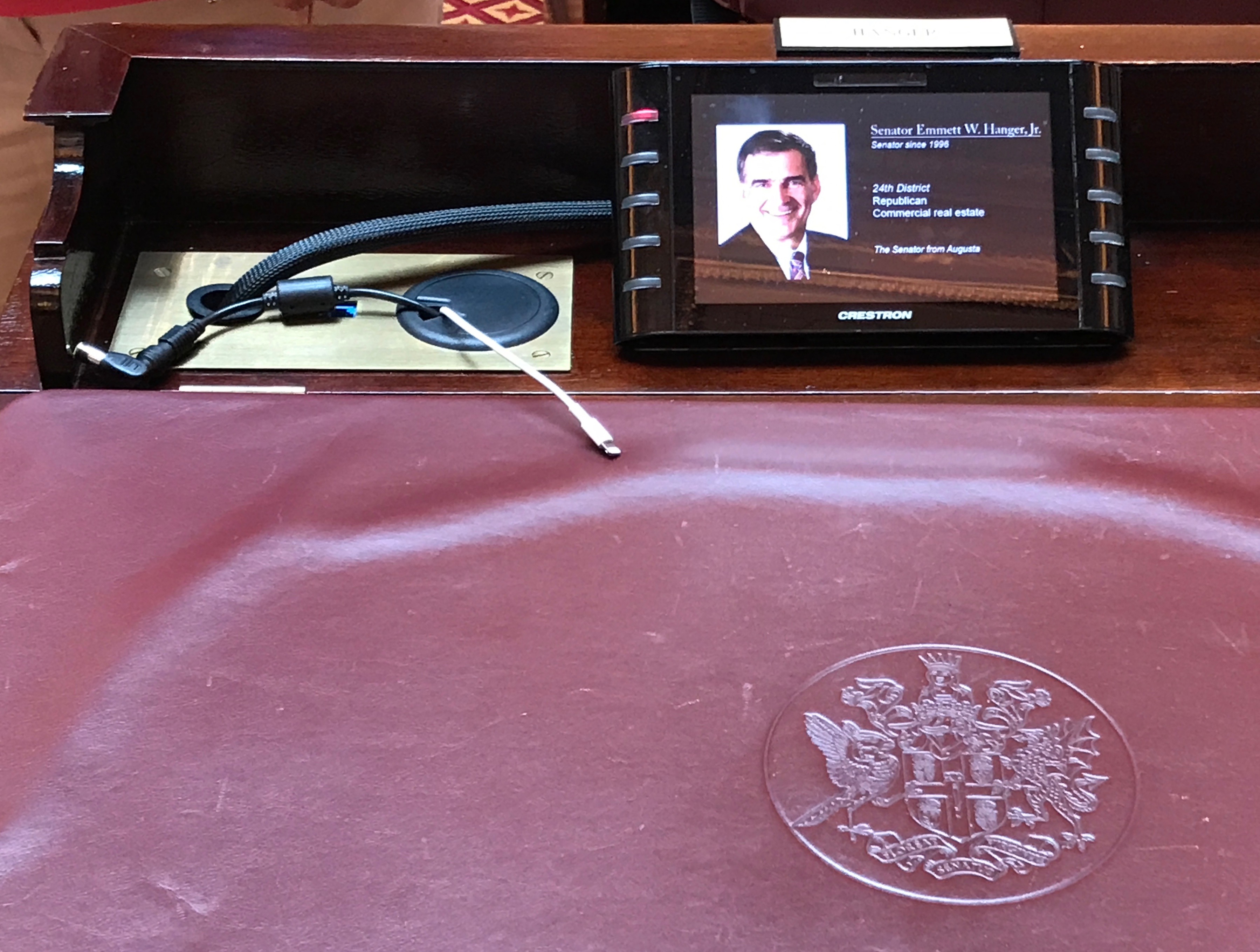
Oh, and the more up-to-date technology.
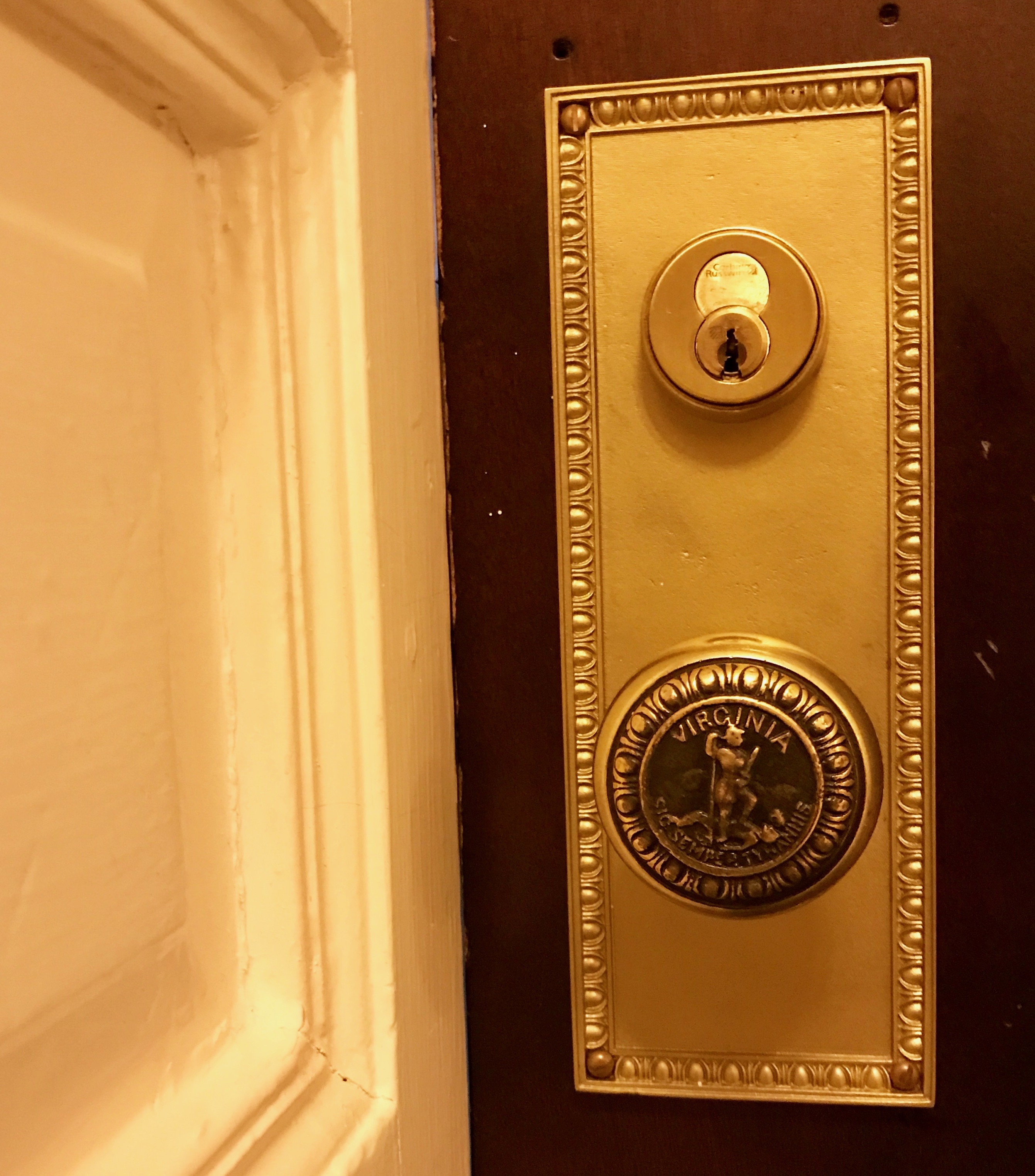
I was thrilled to find a fancy Virginia doorknob. One of these days, I’ll pull together a collection of doorknobs and hinge photos.
And with that it was time to head outside.
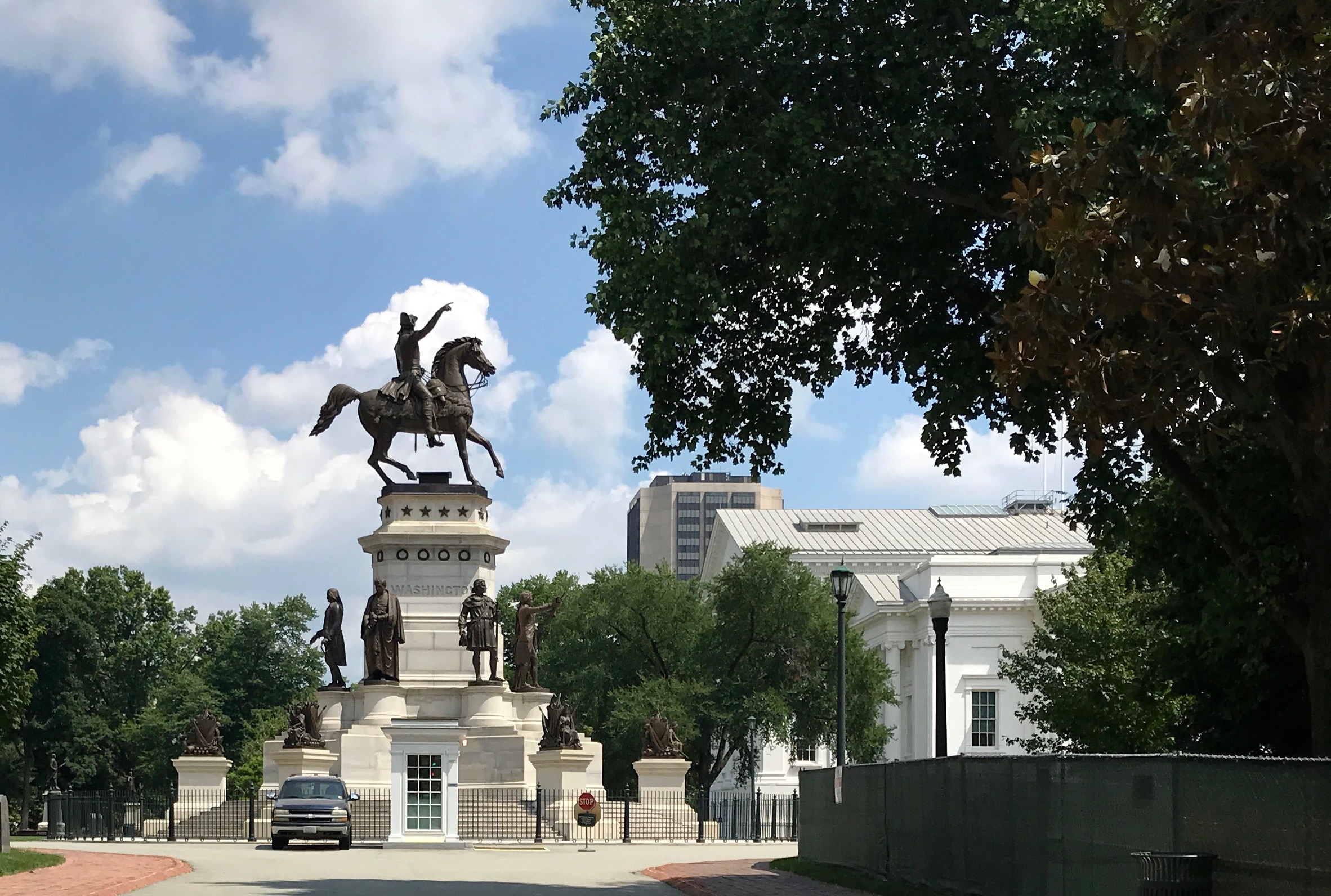
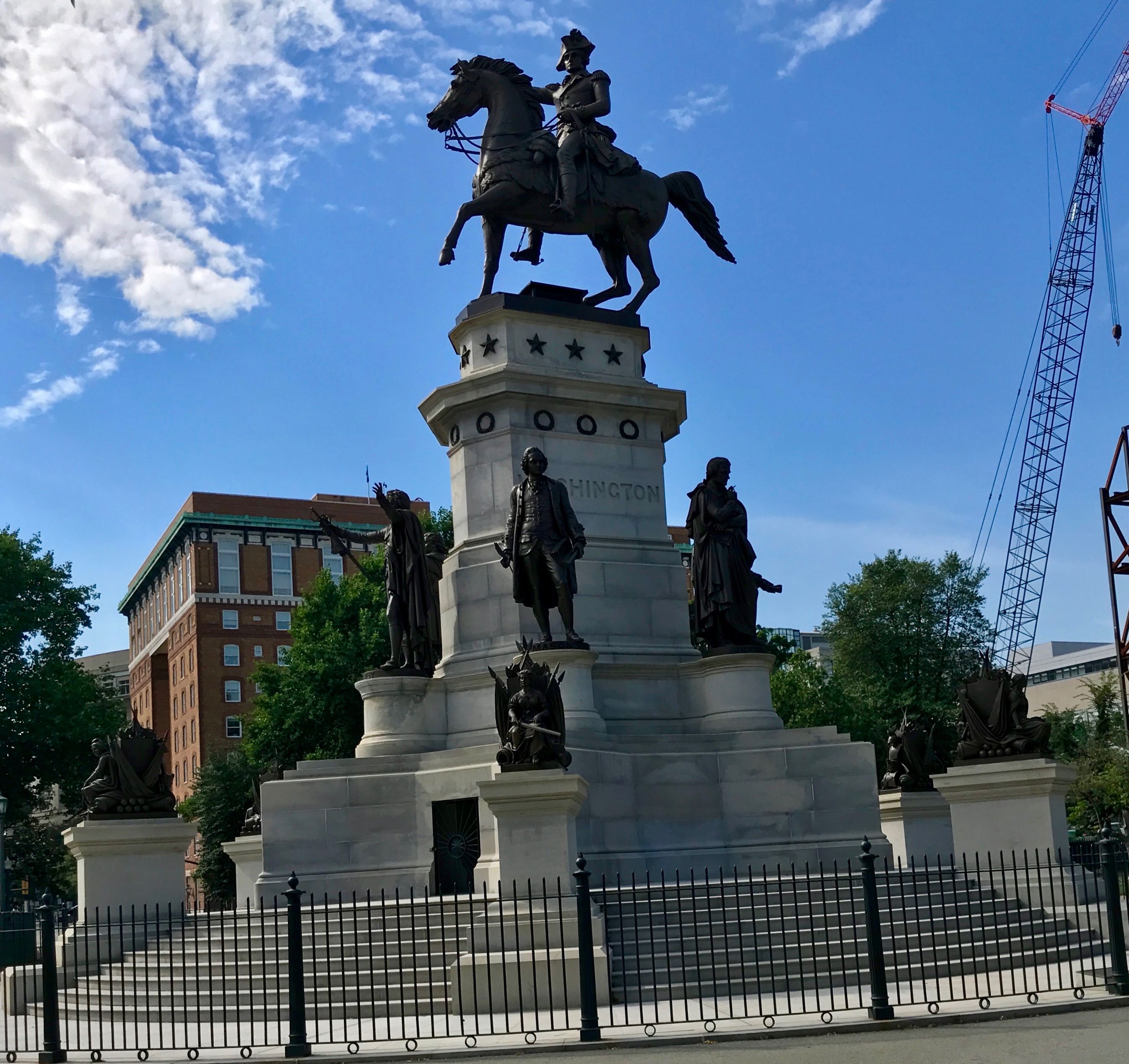
There’s Washington again. This large equestrian statue by Thomas Crawford, was intended to honor Washington and to glorify Virginia’s contributions to our nation’s independence.
The cornerstone was laid on February 22, 1850, Washington’s birthday. Washington’s stature was unveiled on his birthday in 1858. Unfortunately, Crawford died in 1857, before completing the monument.
In addition to Washington, the following native sons are included: Andrew Lewis, Patrick Henry, George Mason, Thomas Jefferson, Thomas Nelson, and John Marshall.
Randolph Rogers completed the work Crawford started. The final pieces were put into place in 1869.
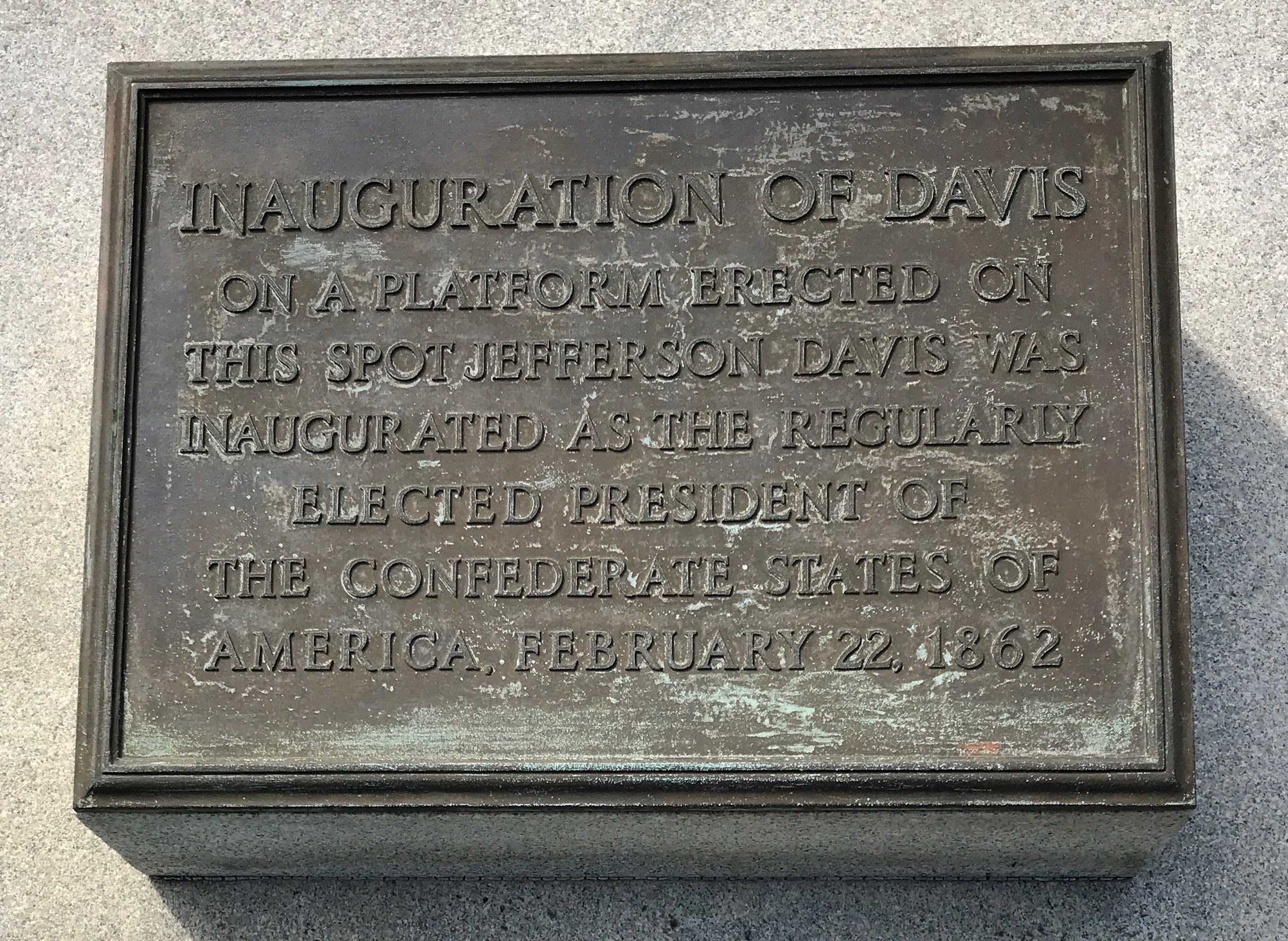
This plaque commemorates Jefferson Davis’ inauguration in 1862.
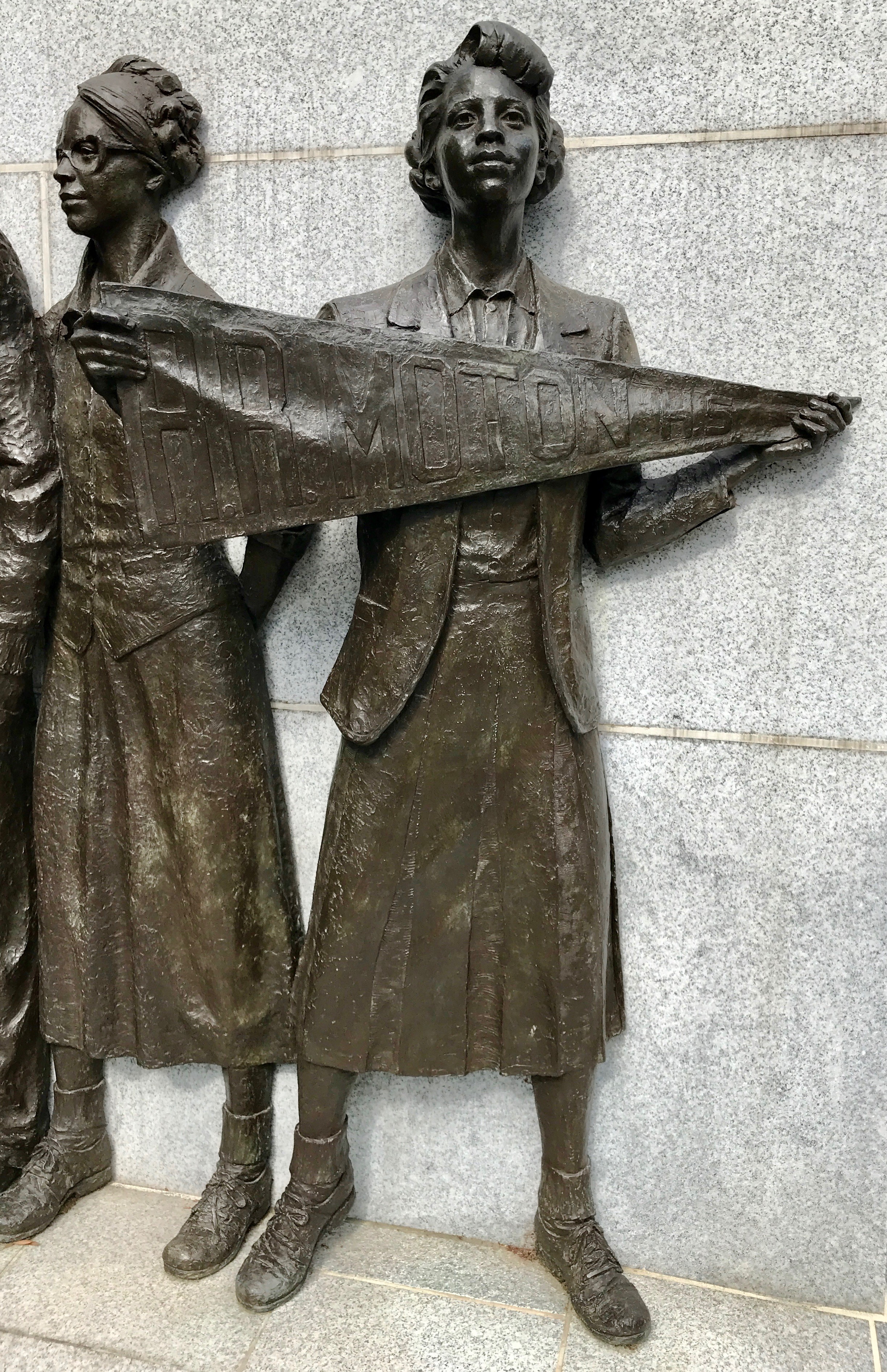
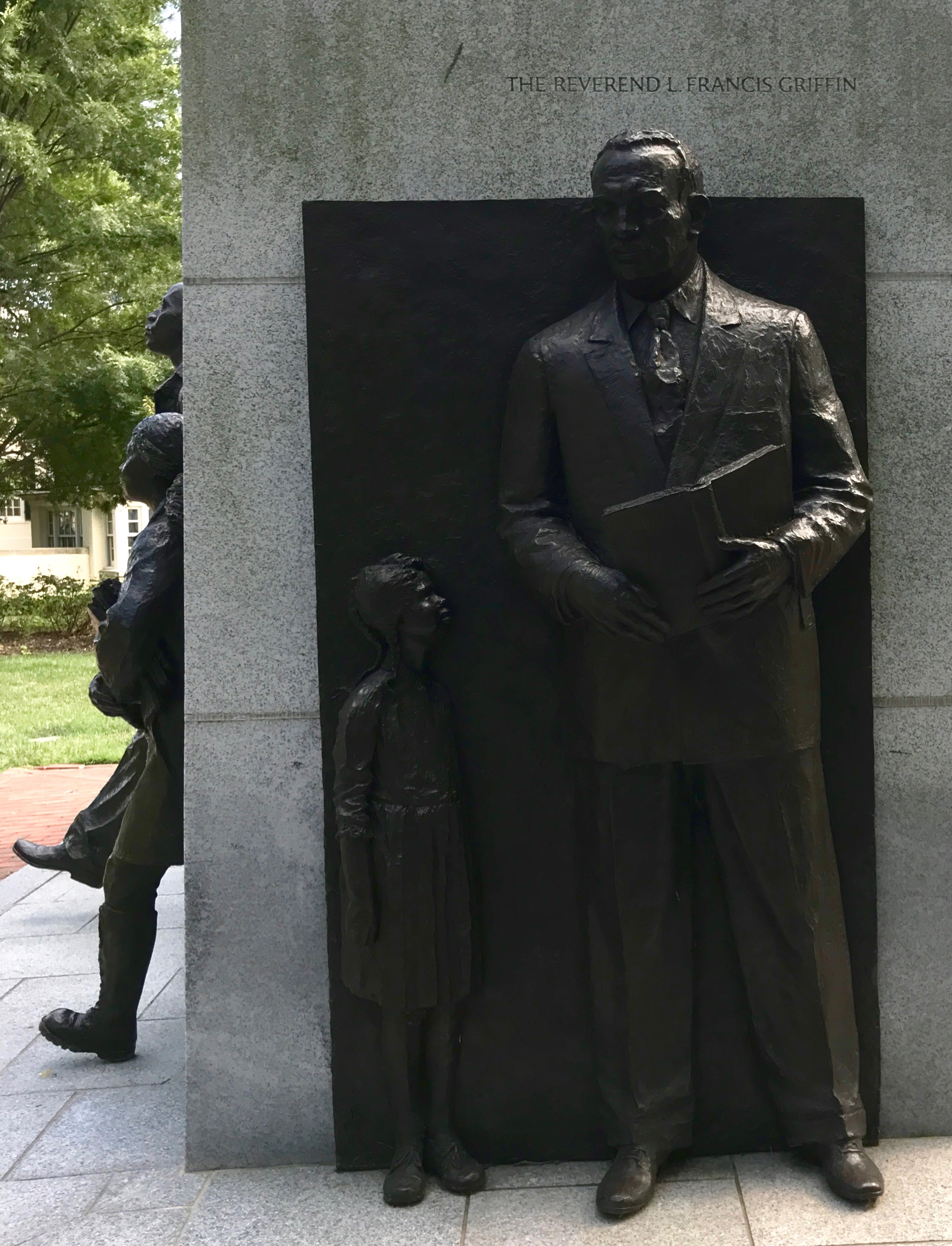
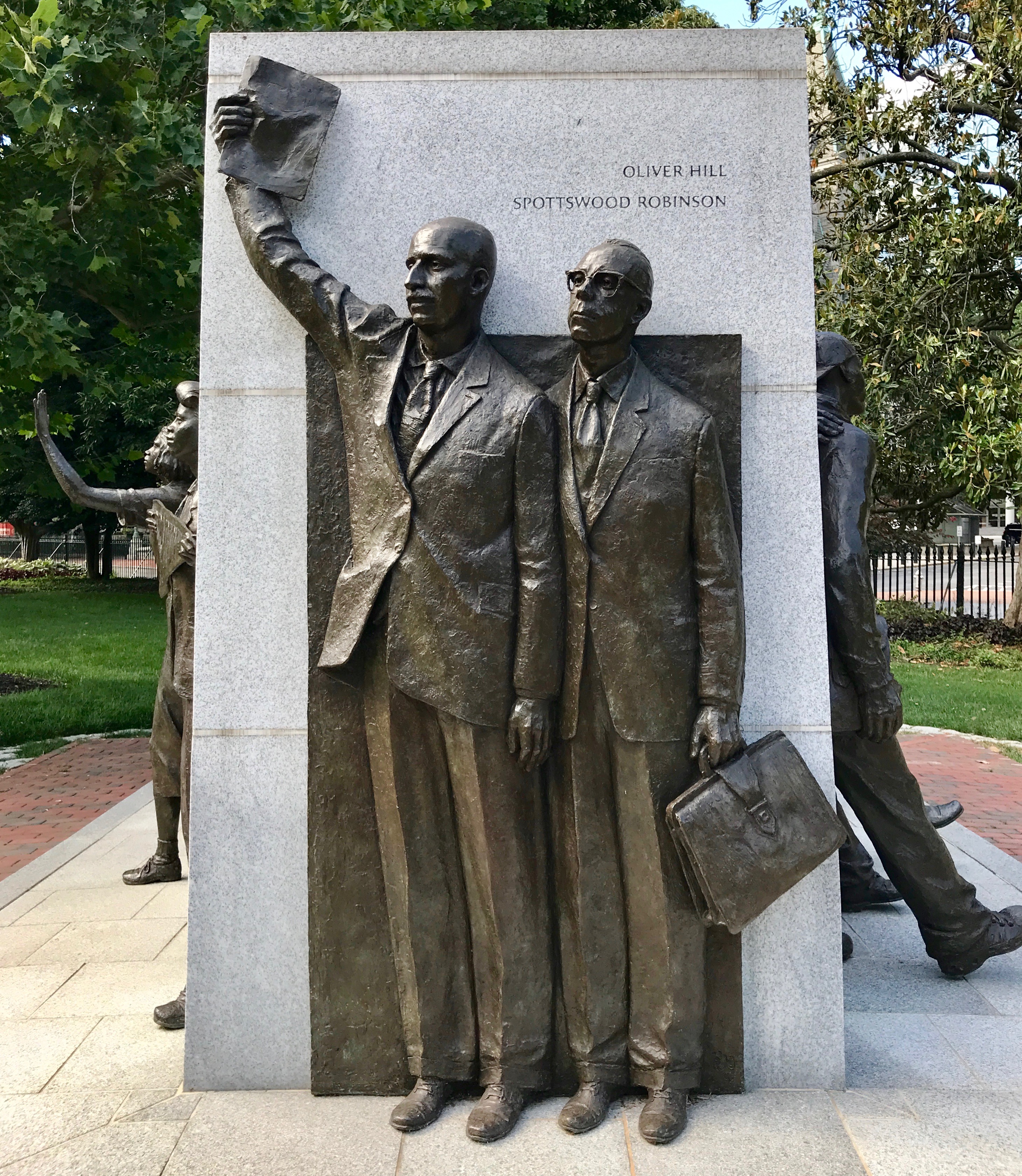
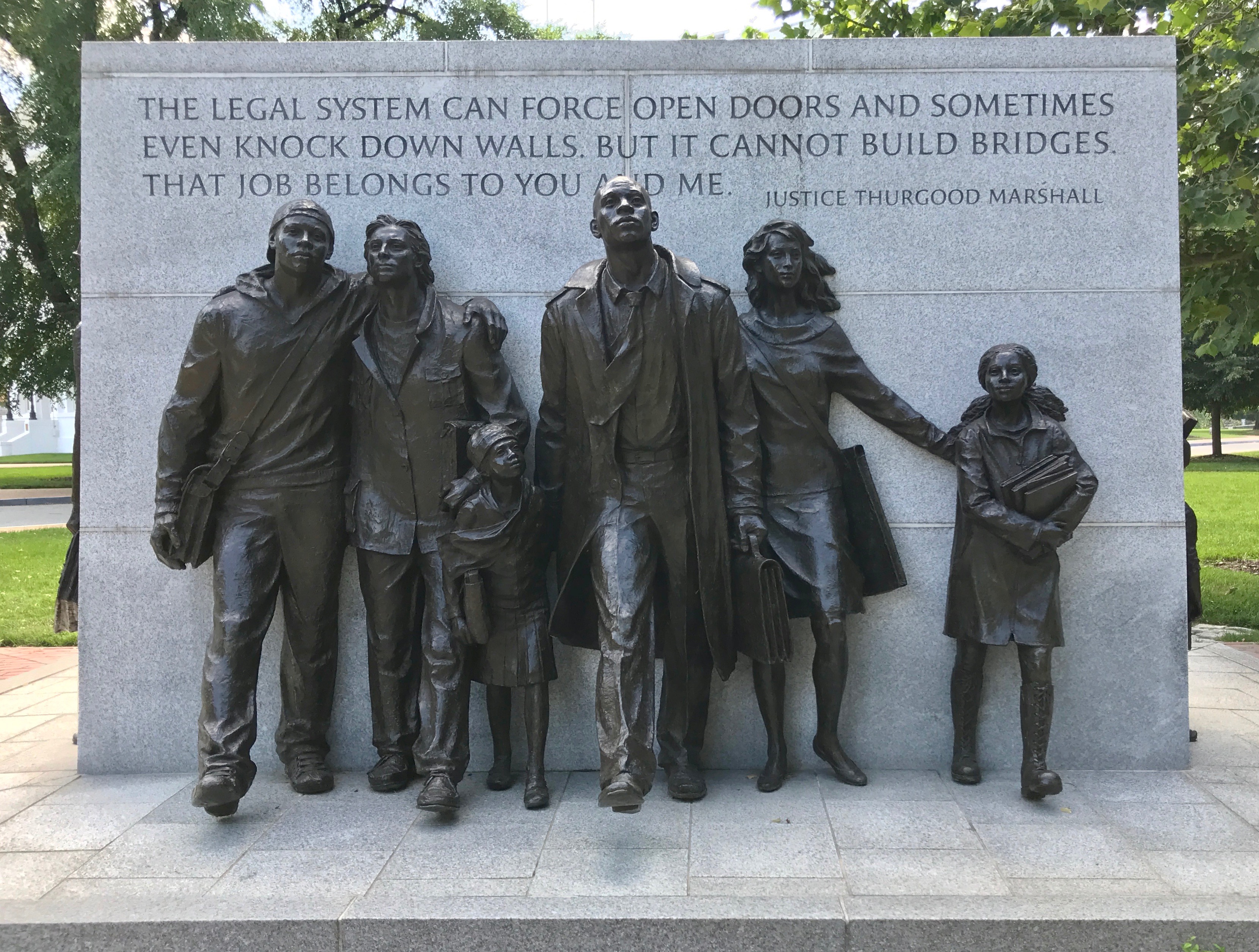
I do find it hopeful that this statue commemorating the struggle for civil rights is so much more impressive than that small plaque.
On April 23, 1951, 16-year-old Barbara Johns and several fellow students led a strike to protest the deplorable conditions at their racially segregated school.
The Reverend L. Francis Griffin united parents in support of the strike.He encouraged the students to contact NAACP attorneys Oliver Hill and Spottswood Robinson.
The lawsuit that followed was brought before the U.S. Supreme Court and joined with four other cases as Brown v. Board of Education Topeka in 1954. The Supreme Court ruled that racially separate educational systems are inherently unequal and unconstitutional.
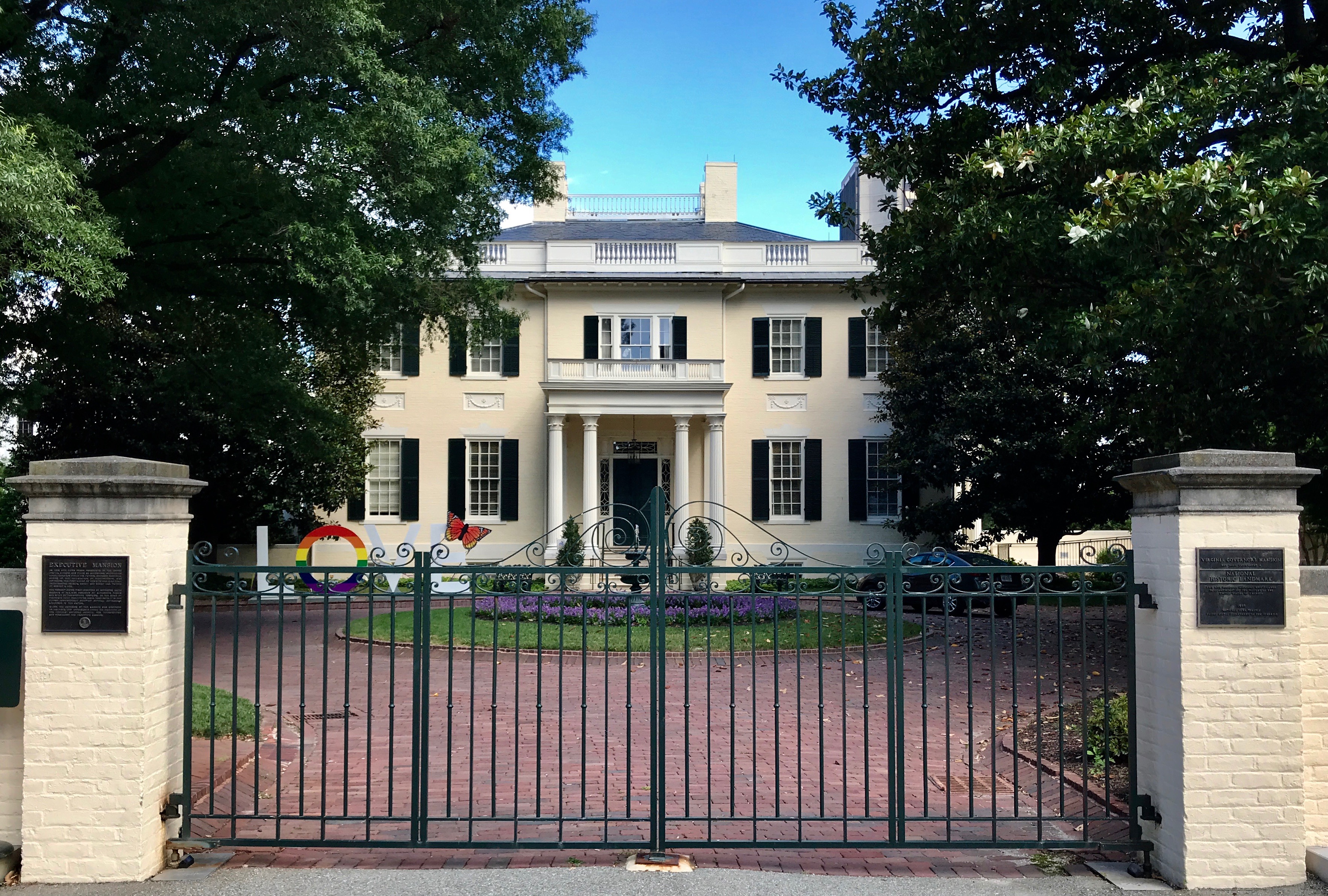
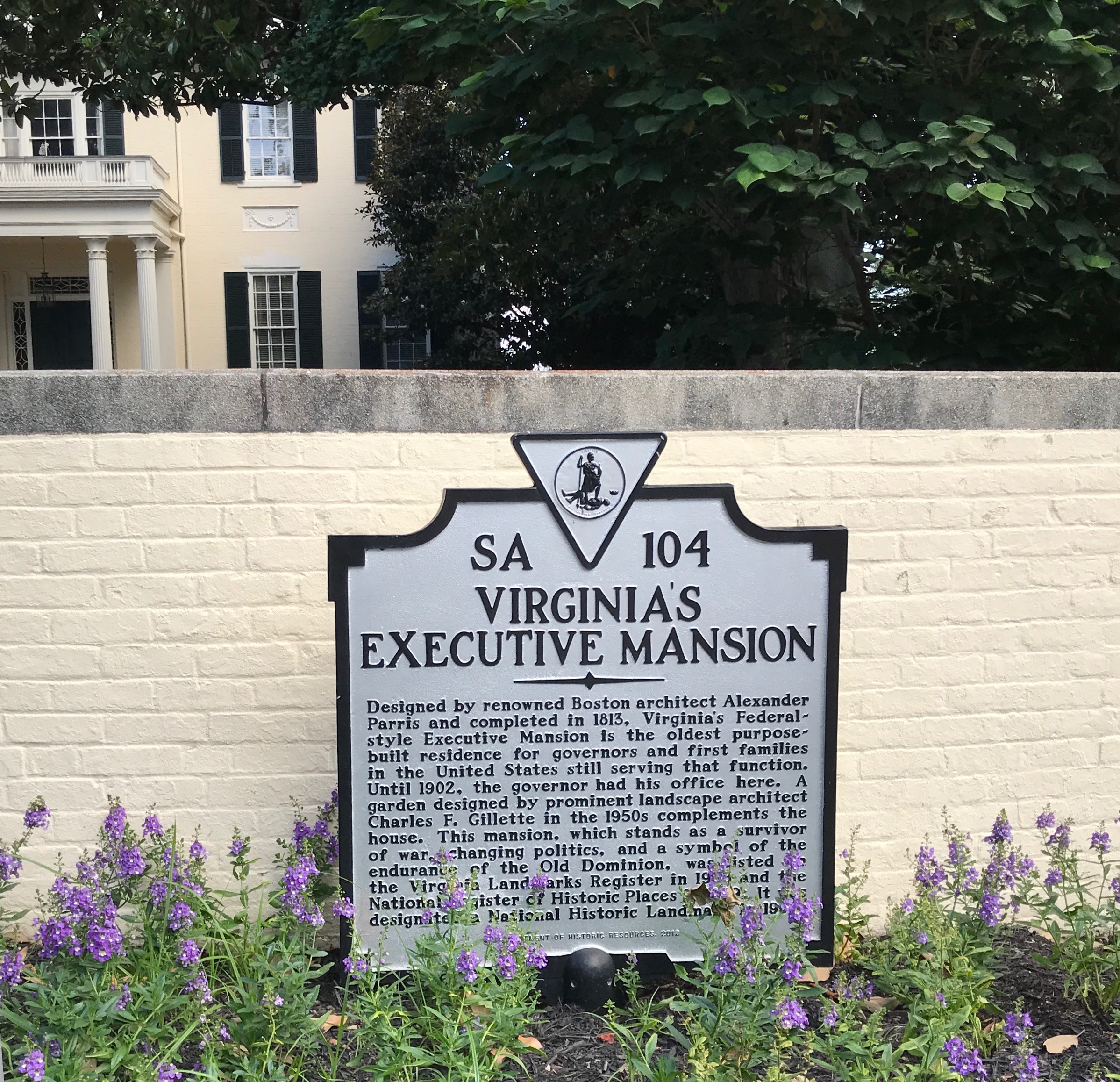
On my way back to my car, I passed the Executive Mansion.
On this site live three presidents on the United States; Monroe and Tyler as governors, and William Henry Harrison while his father, Benjamin Harrison, was governor. The first house on this site was also home to governors Patrick Henry and Henry Lee, father of Robert E. Lee.
The present house was designed by Alexander Harris in 1813 and built by Christopher Tompkins, and has been the home of Virginia’s chief executives since that date. It is the oldest continuously occupied official governor’s residence in the nation.
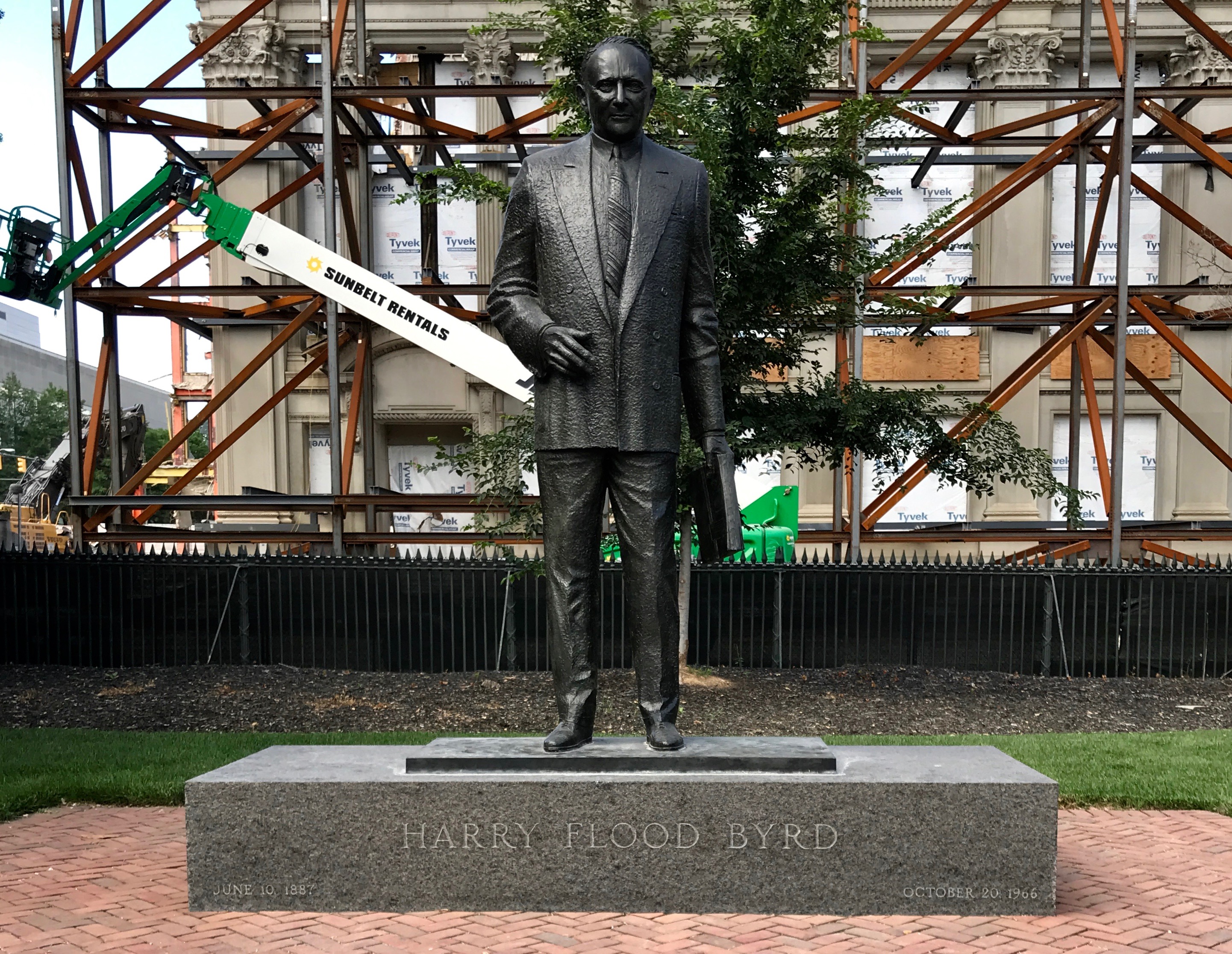
The last statue I passed before leaving the area is a memorial to Senator Byrd. He was a state senator 1916-1926, governor of Virginia 1926-1930 and a United States Senator 1933-1965. That’s some longevity!
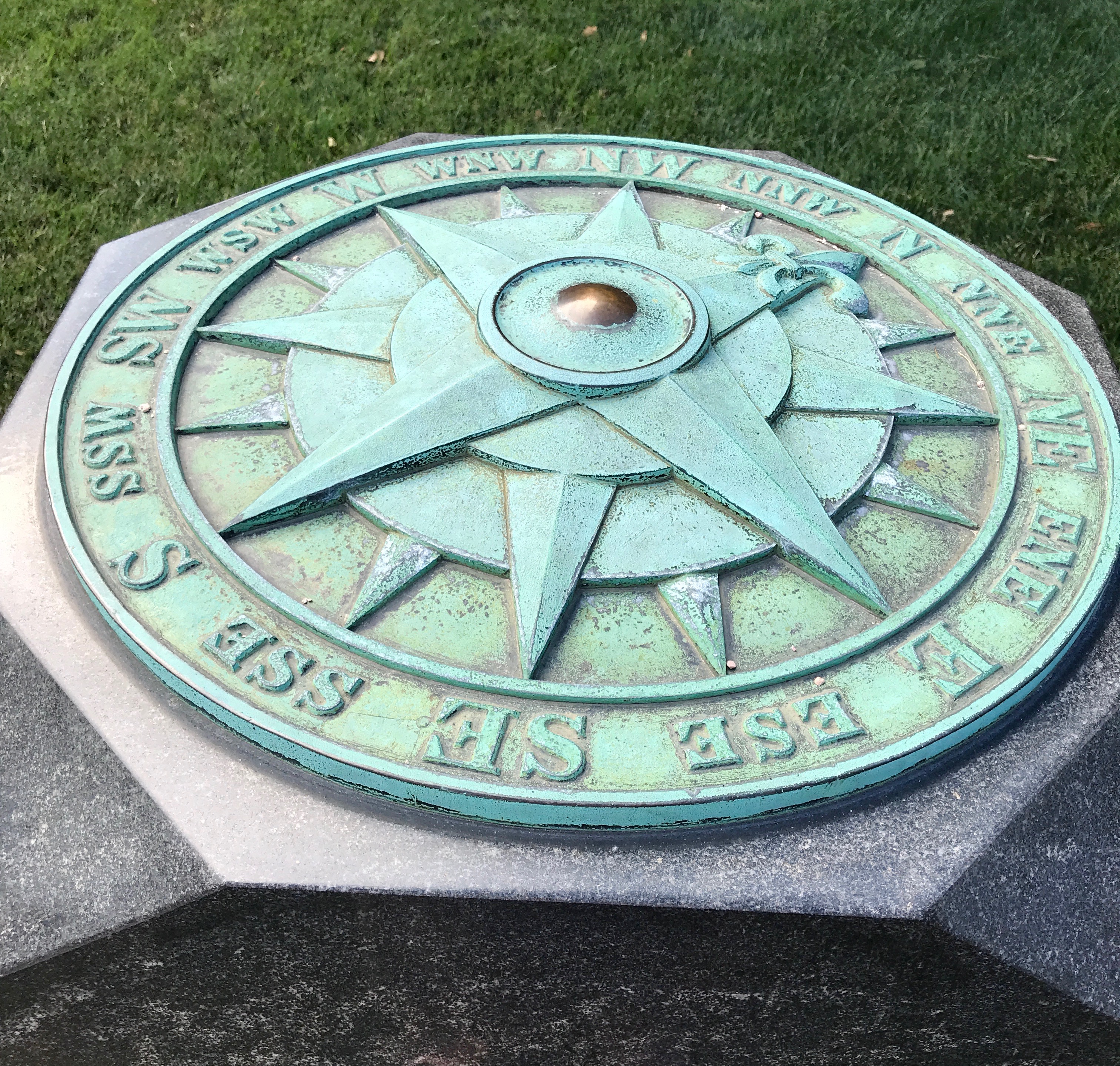
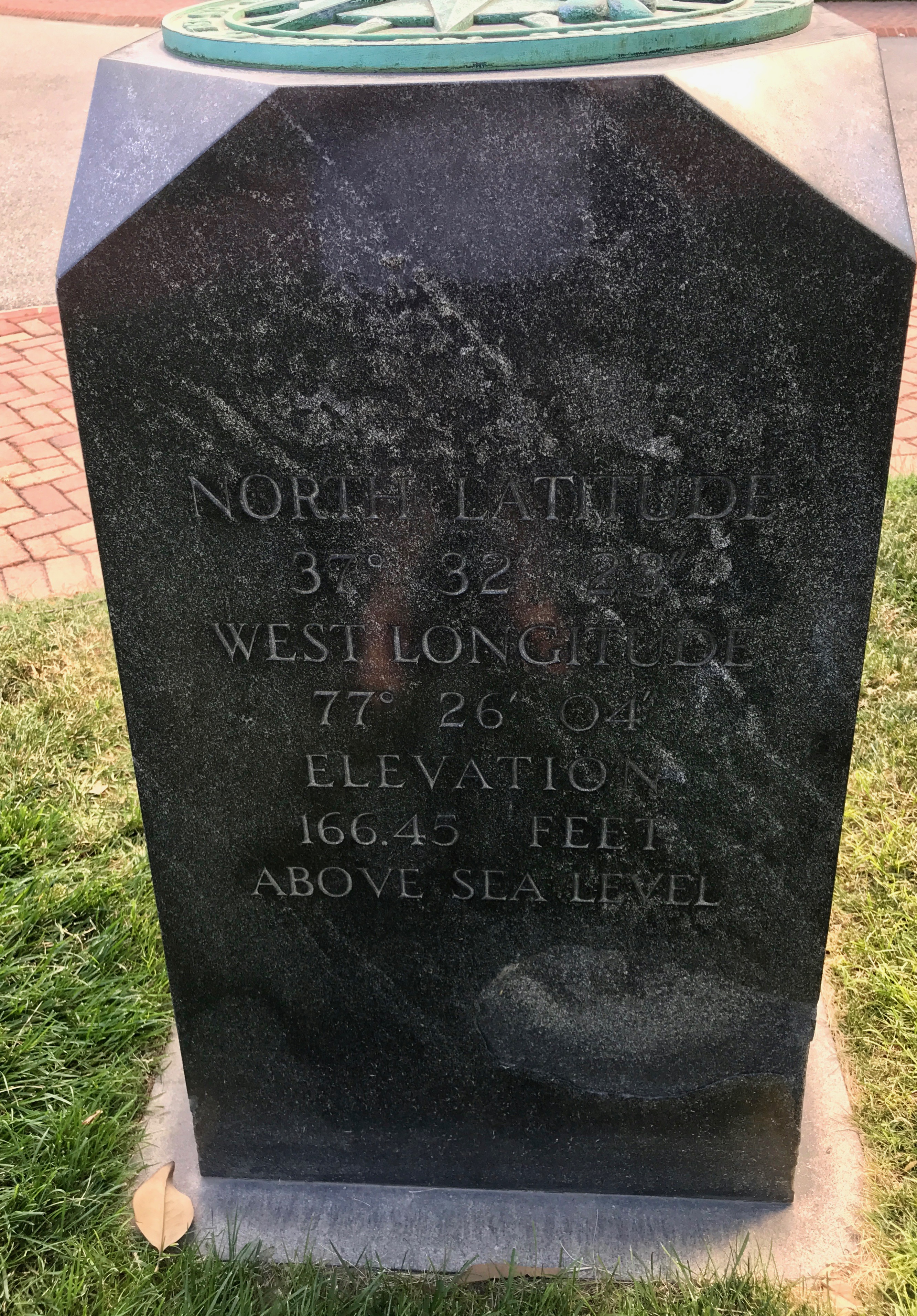
The geographer in me was fascinated by this marker.
It’s the point for the measurement of distances from Richmond on highways of Virginia.
It also has the latitude, longitude and elevation above sea level.
I wonder where the next week’s travels will take me?