After passing the Chinese terracotta, we headed to the dining room that has been relocated to the other side of the building. They told us that the tour included a snack, but this was an elegant light lunch.
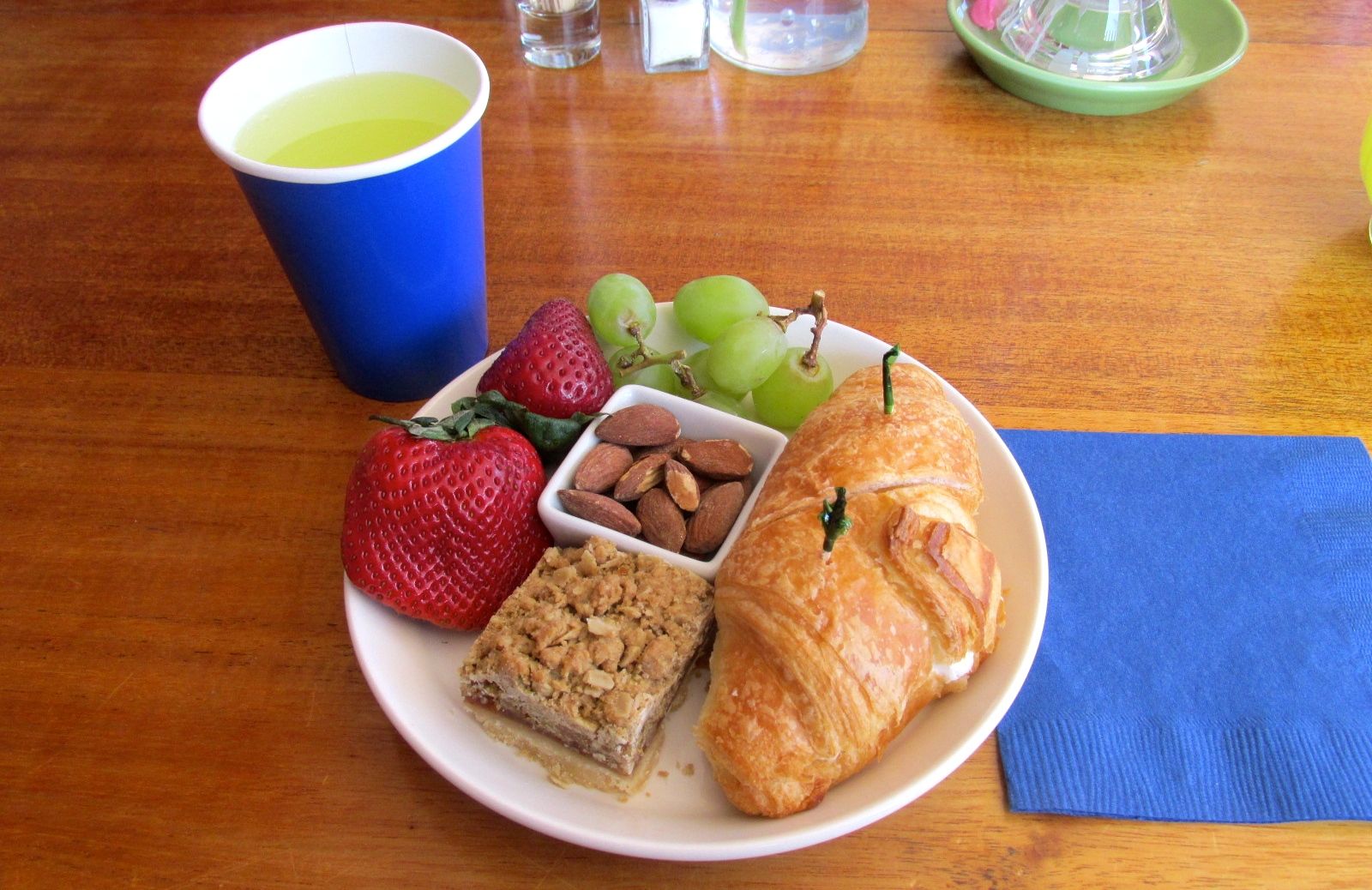
As we tucked in to our tasty treats, we were spoken to by Wright Fellow Arnold Roy.
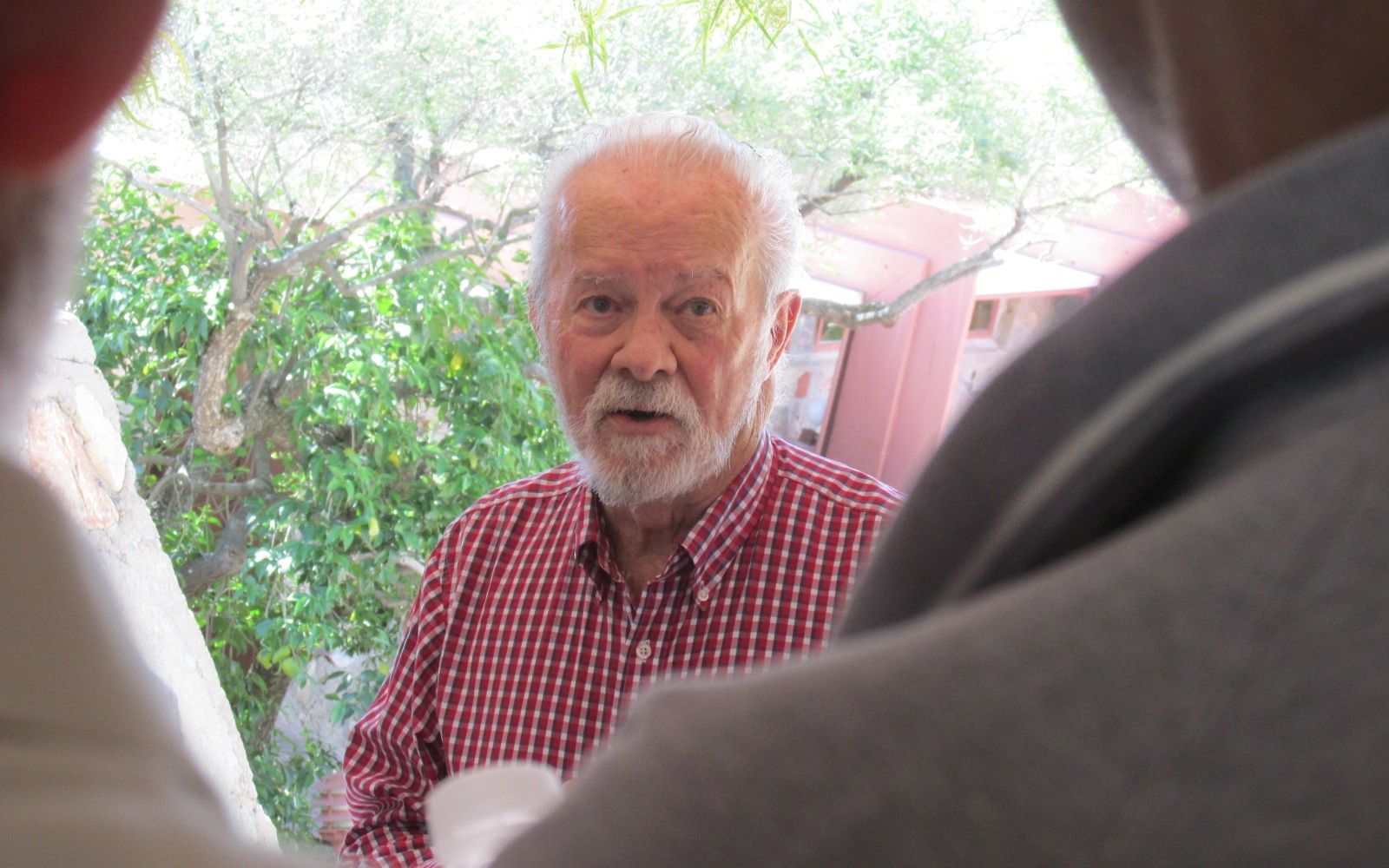
It was inspiring to hear from one of the Fellows that actually worked with Wright. The Fellows can stay on as long as they care to live in community with the current fellows. They move to Taliesin in Spring Green, Wisconsin with the rest of the crew in the summer. In fact, I think I may have see him when I was there last summer.
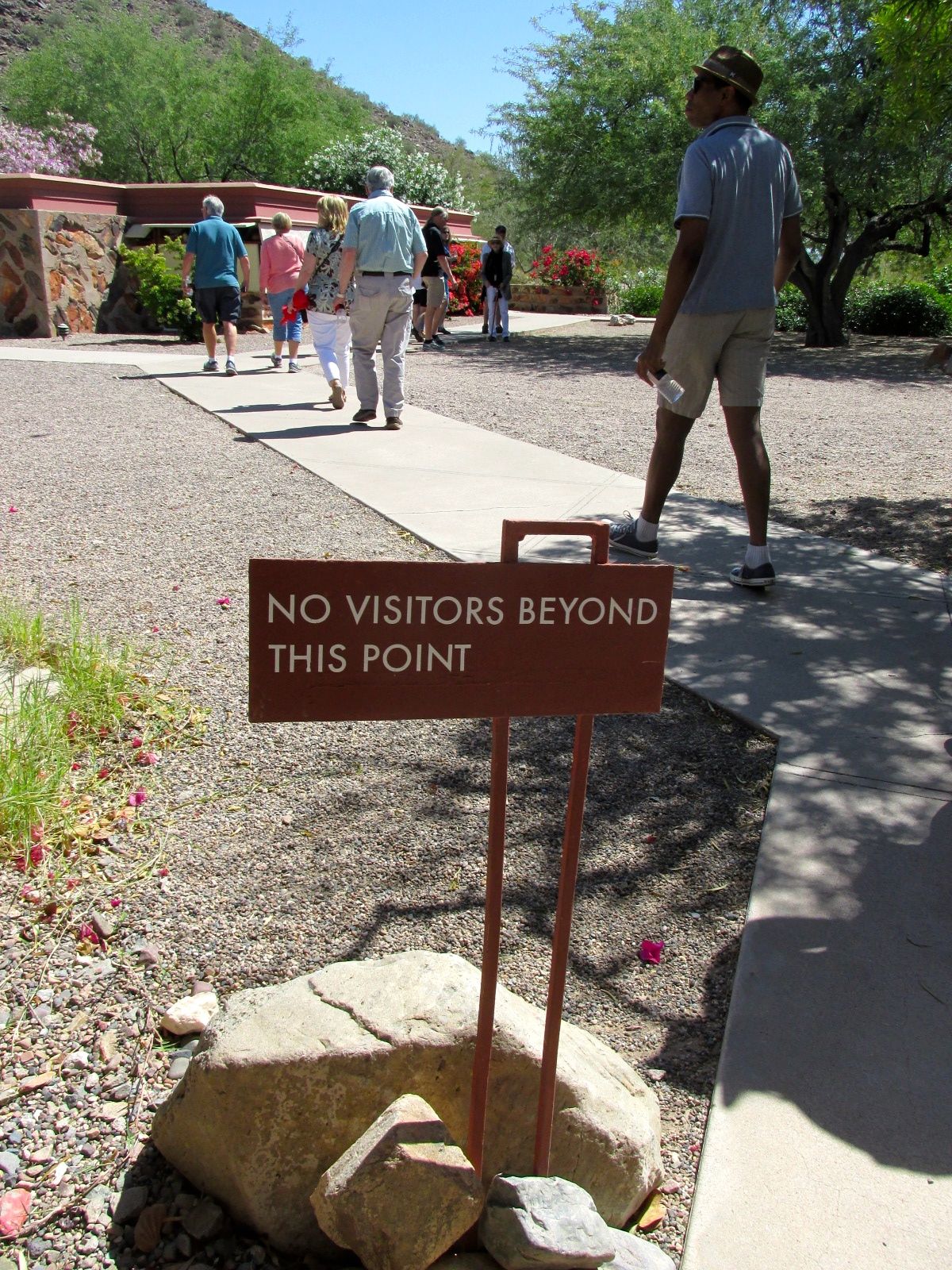
The lunch was lovely, but this sign is what made our tour of Taliesin West so special. We got to go to parts of the campus that are closed to the random, ordinary visitor.
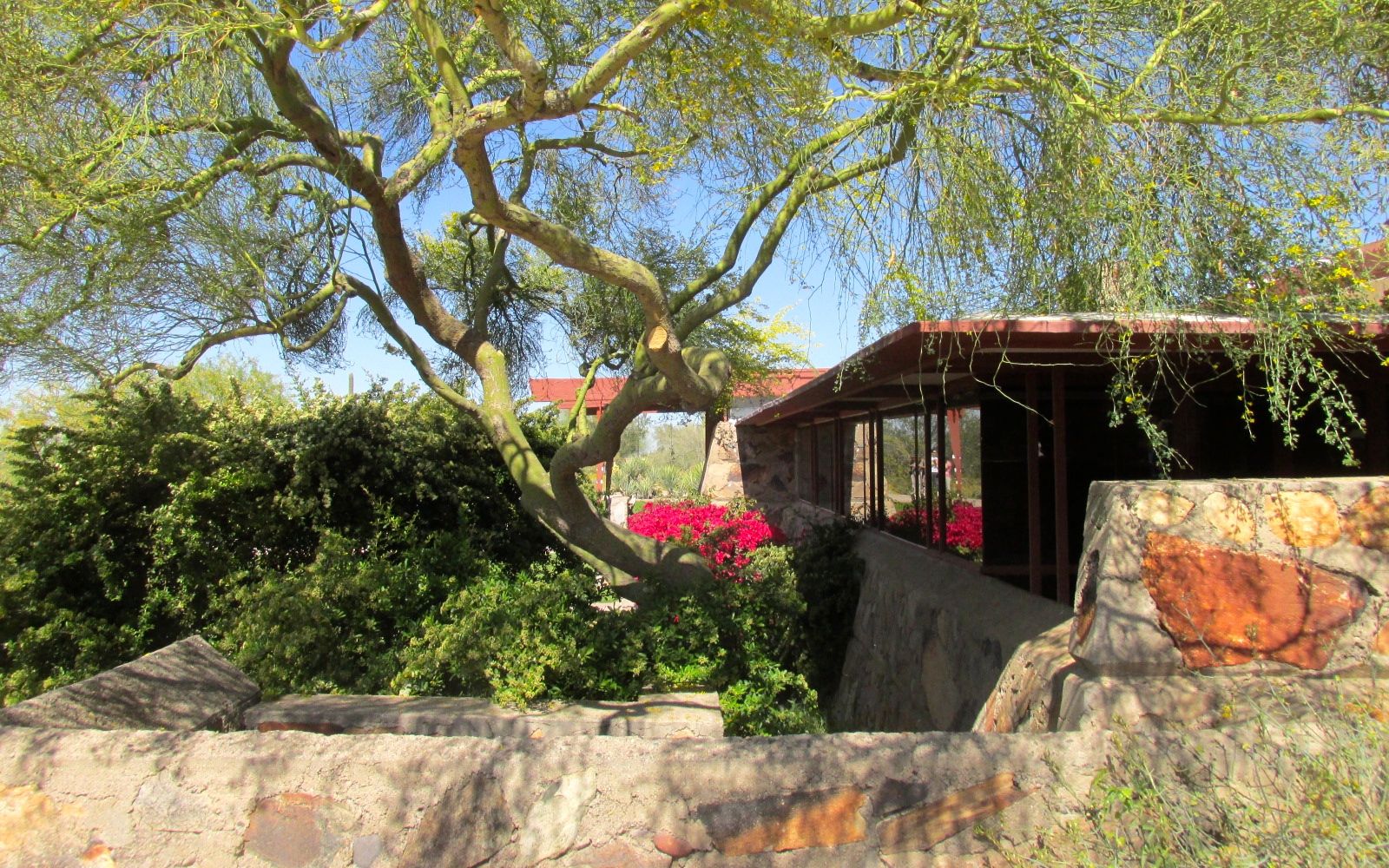
Not all the buildings were identified by functions – at least, I didn’t hear it if they were. I liked the cool airiness of this building. I imagine that it might have been a very pleasant dwelling.
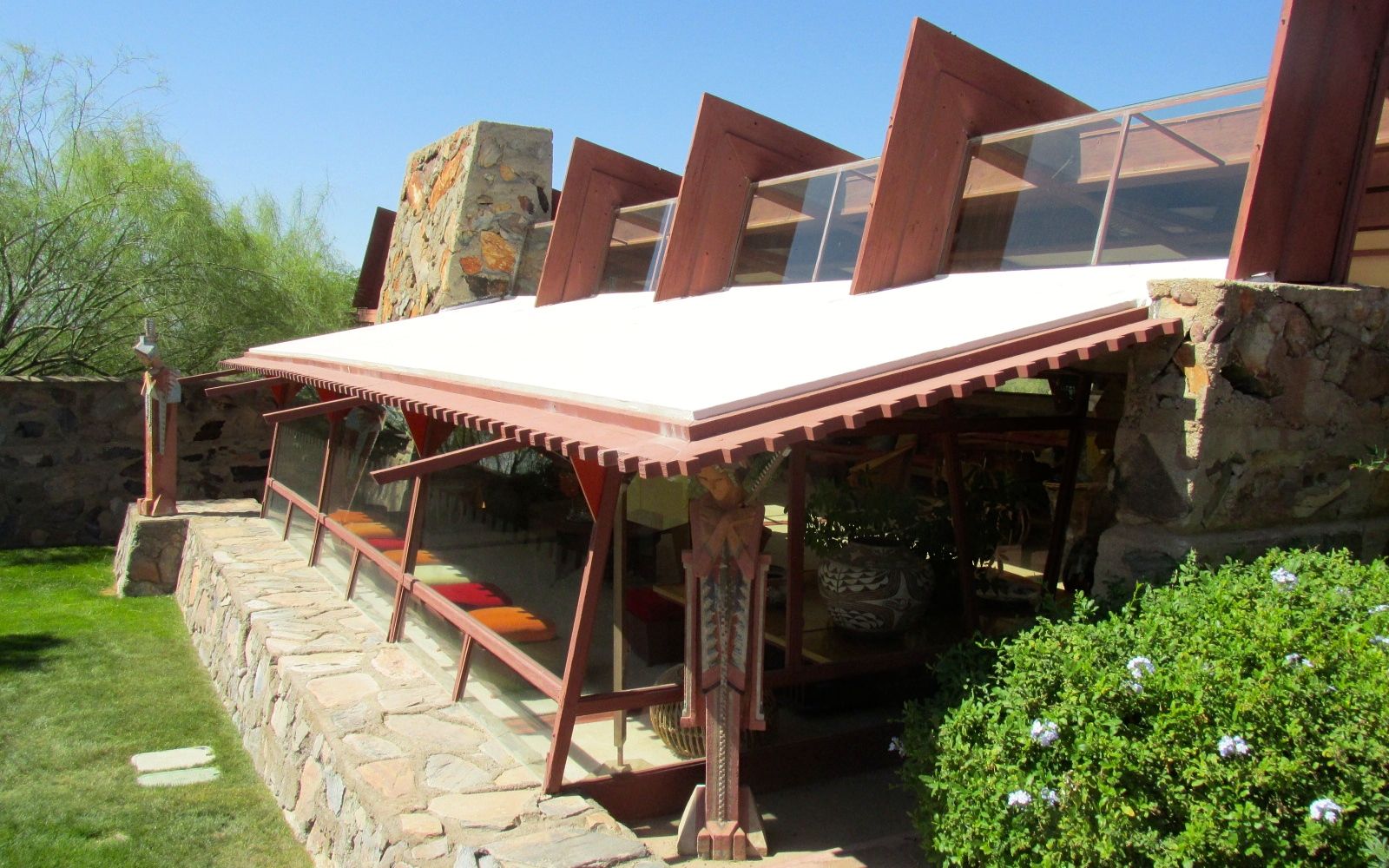 The roofline of this building is striking.
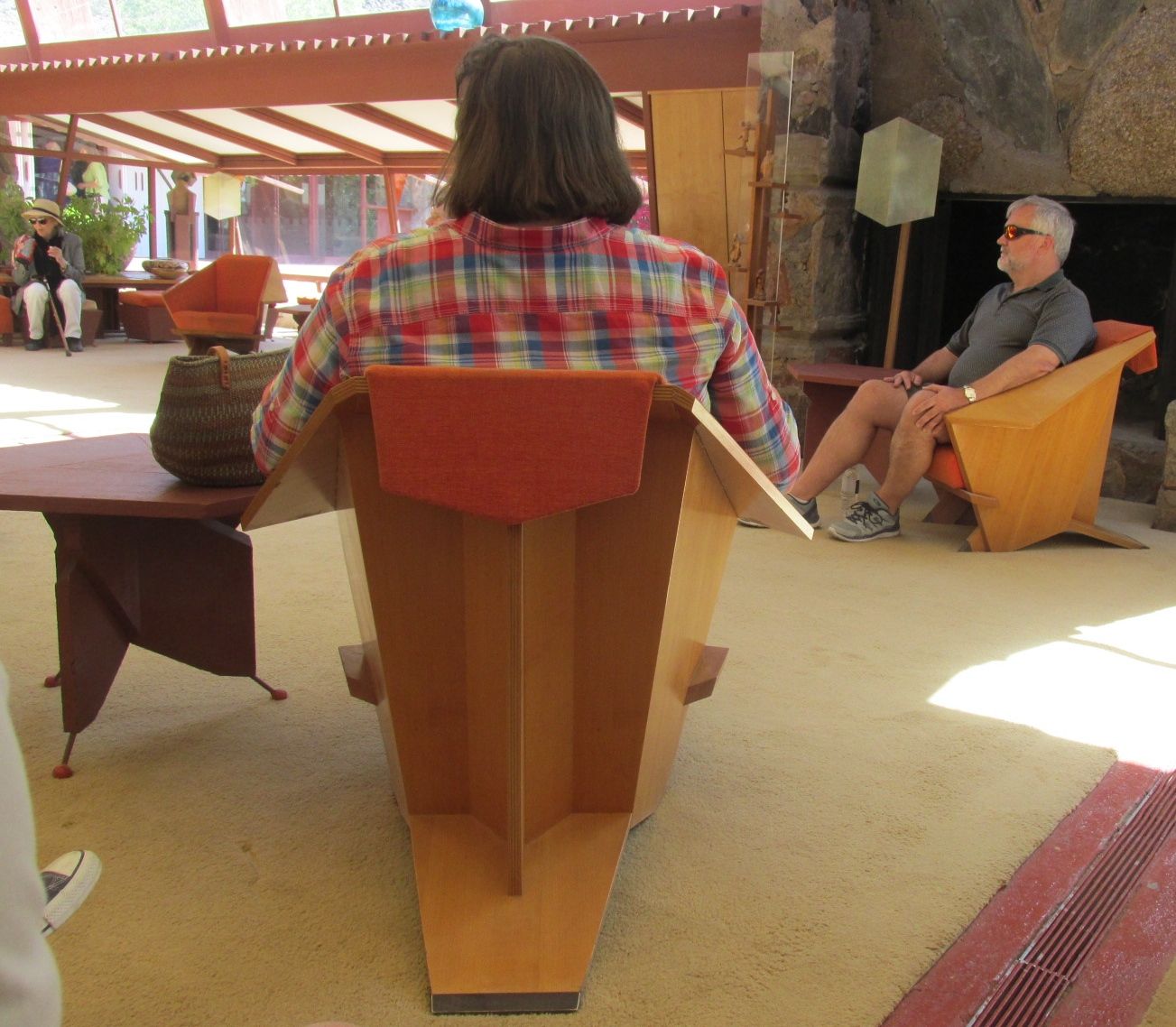
We sat for a while in one of the living rooms. I believe that our guide told us that these chairs were replicas. Only recently were the original chairs removed when it occurred to the foundation how much they were worth. They offer the replicas for sale now. I didn’t stop to find out how much they cost. I just don’t have the room in the Airstream for things like that.
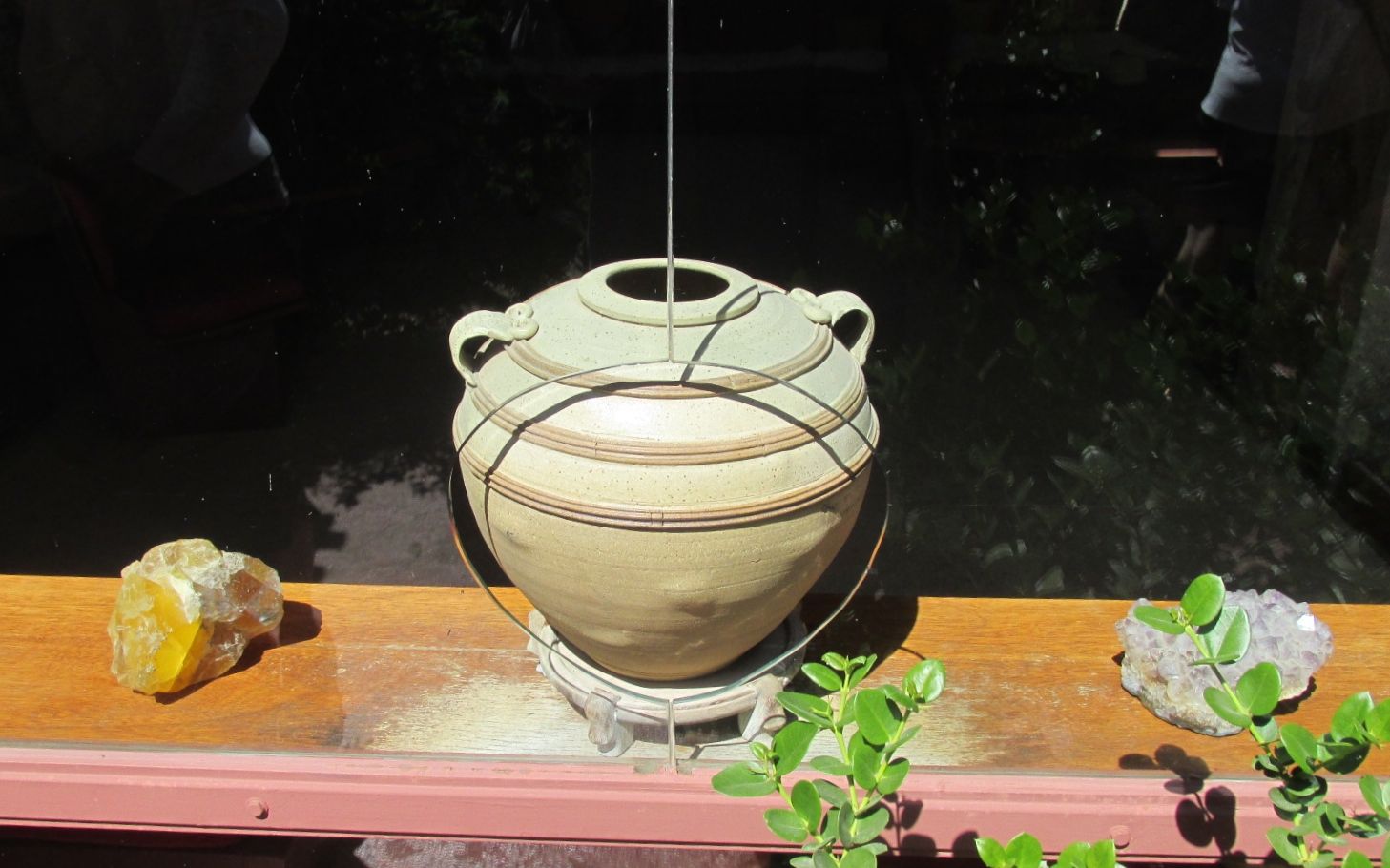
They had a couple of these large pots that stuck out thorough holes in the windows. The guide told me that is was part of the idea of bringing the outside in and the inside out. I kind of wondered if they put a hole there because that is where they wanted to put the pot – but the shelf wasn’t wide enough. They were just making it up as they went along a good portion of the time.
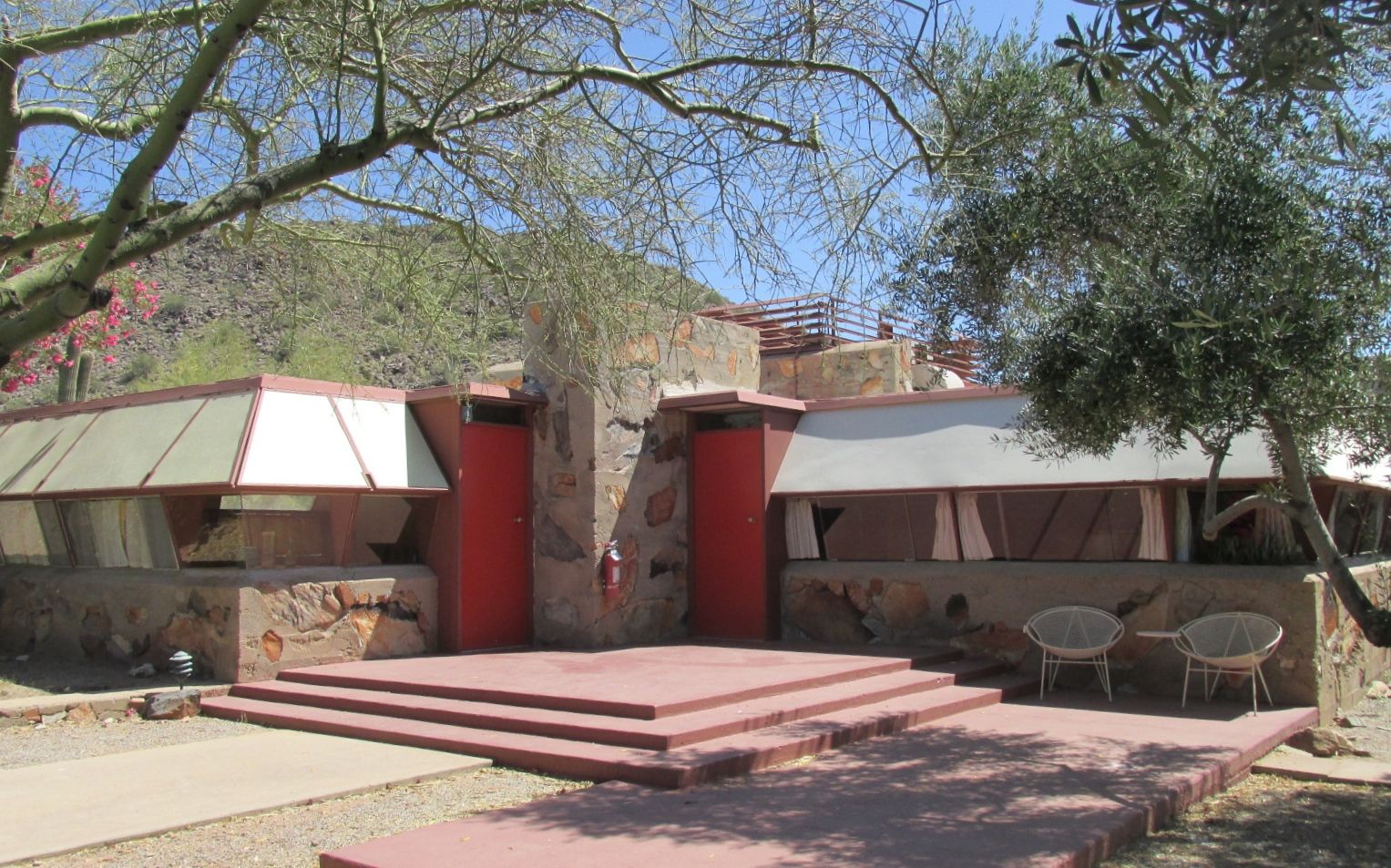
This is the guest house. I believe the guide said that there were four bedrooms and a couple living rooms in it. It used to receive a lot of use, but since the Frank Lloyd Wright archives moved to Columbia University in New York a couple of years ago, there have been fewer visitors.
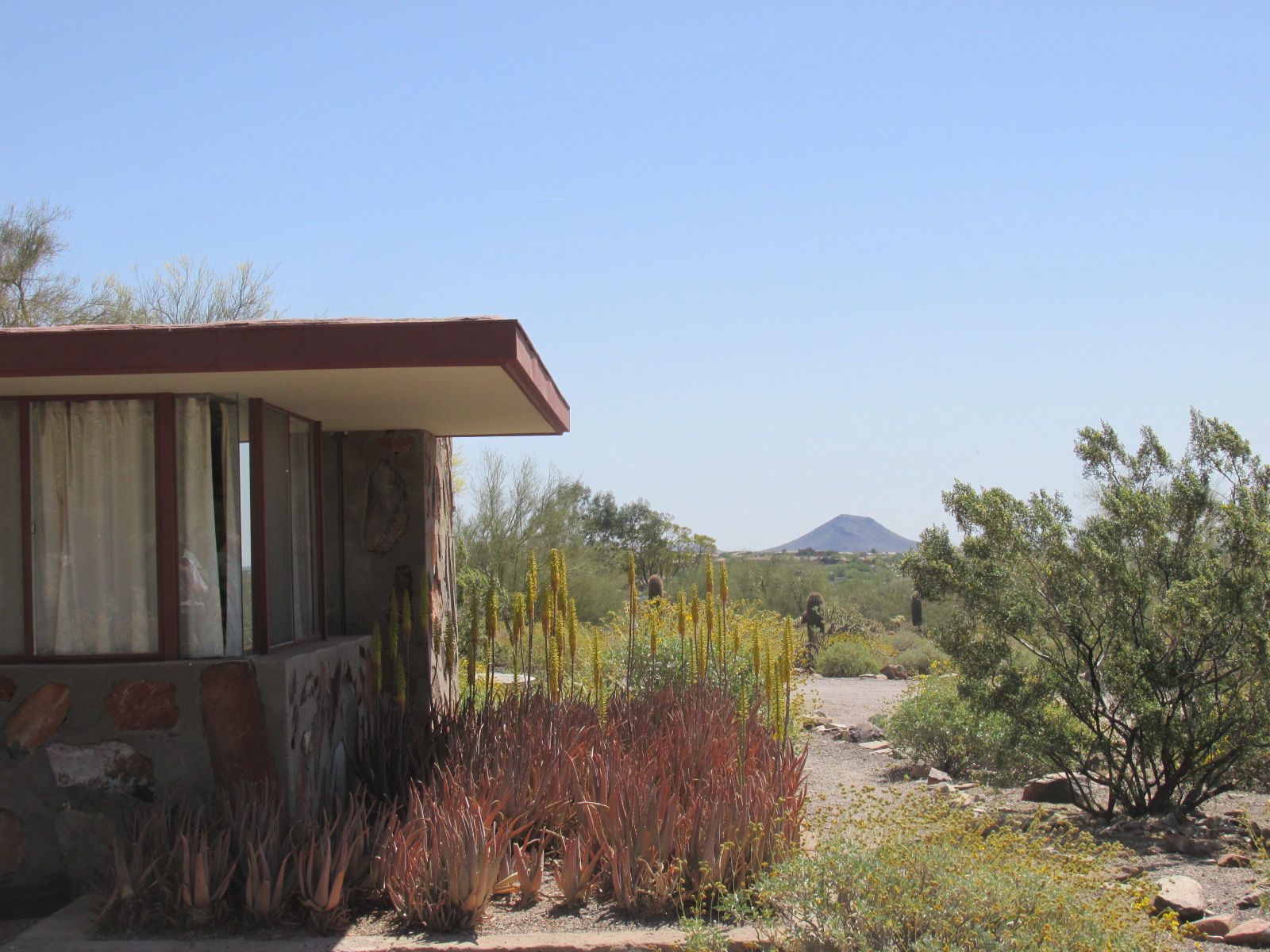
We passed by the end of the guest house.
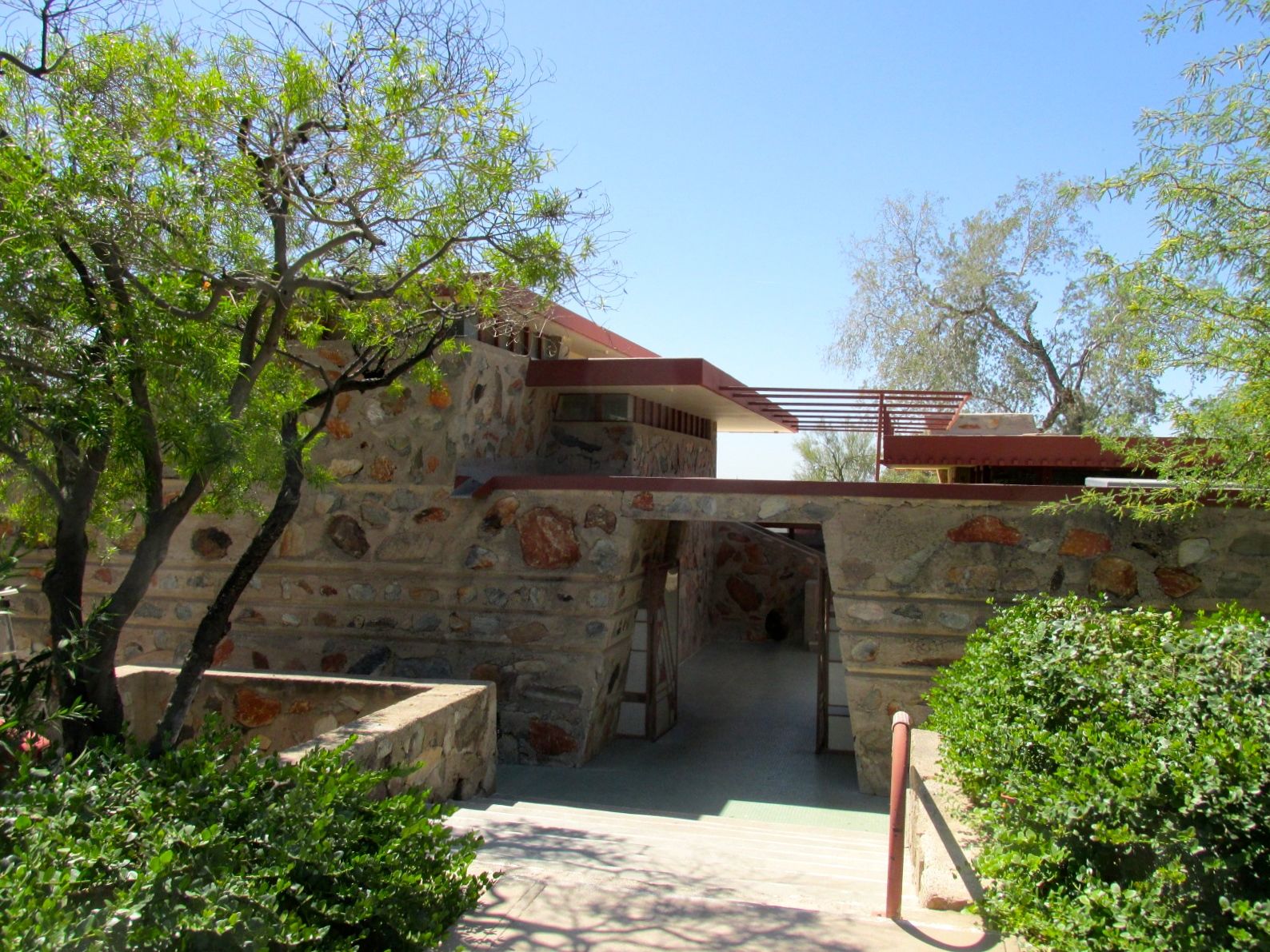
Through the gate we went and into the Wright’s quarters.
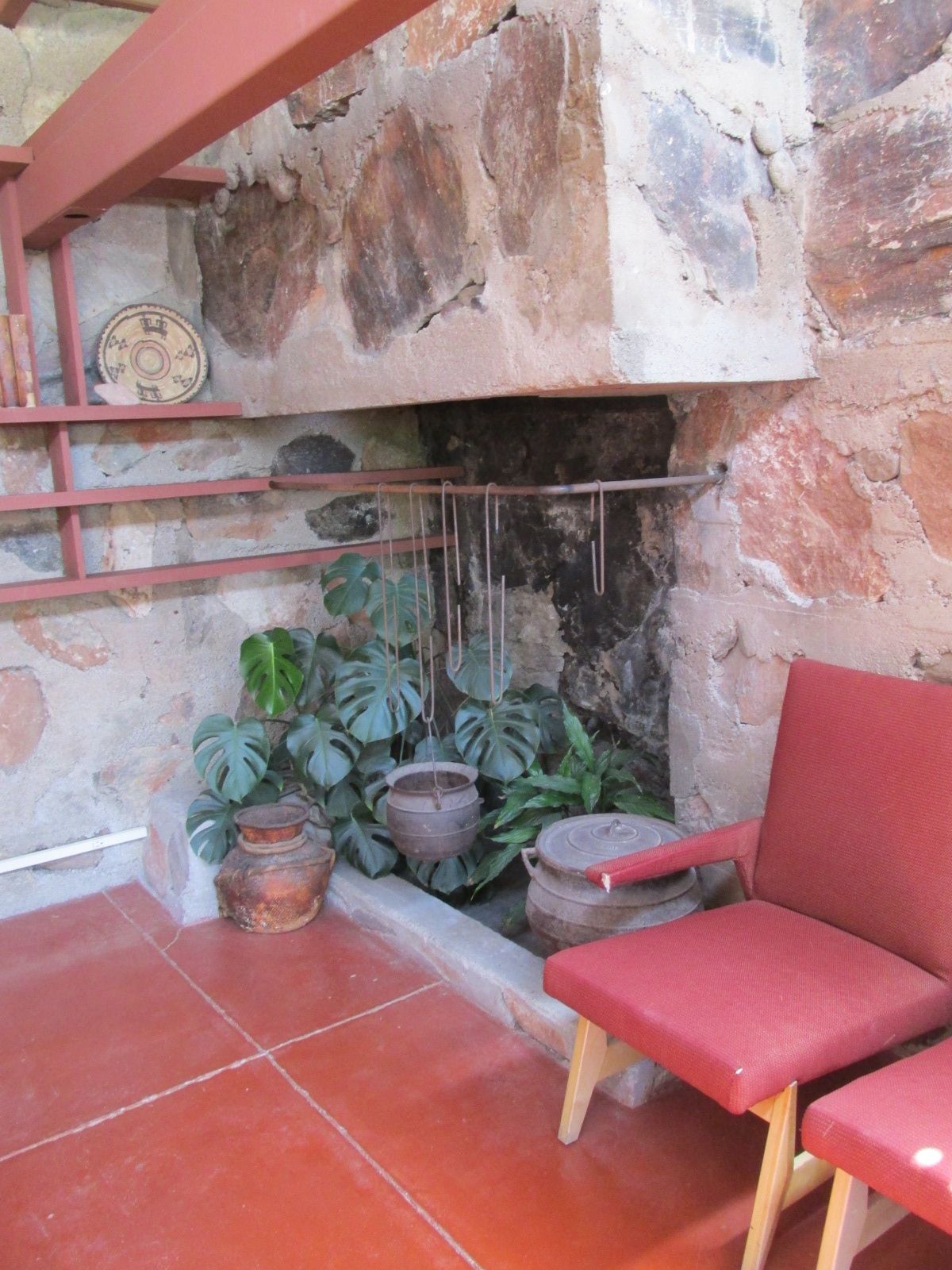
Of course, Frank had a fireplace in his bedroom.
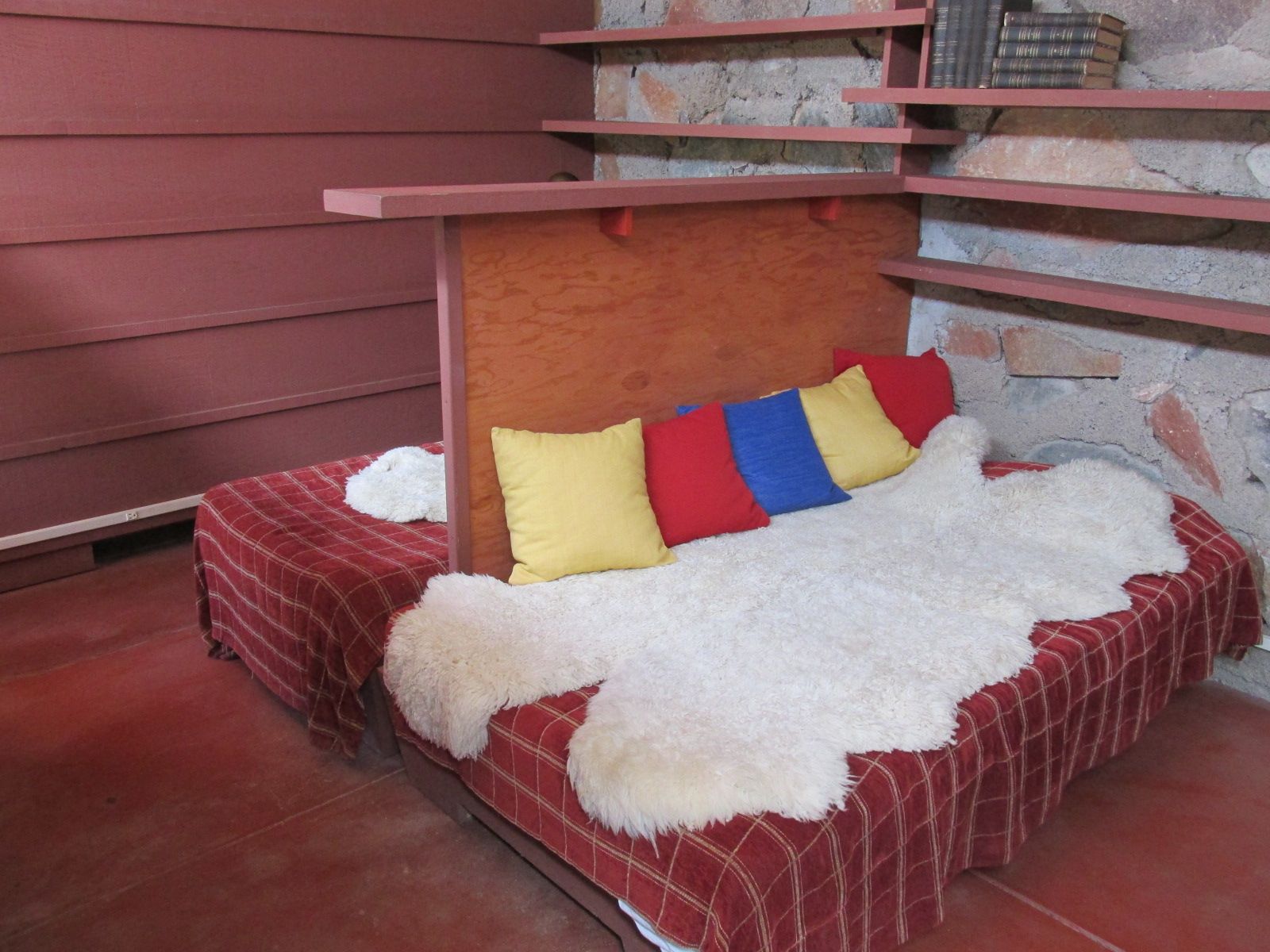
I found it interesting that he had two beds. Our guide told us that the one closer to us was taken outside for him to sleep on for his afternoon naps. Mrs. Wright had her own room, but I didn’t work quickly enough to capture a shot of it to include in this post.
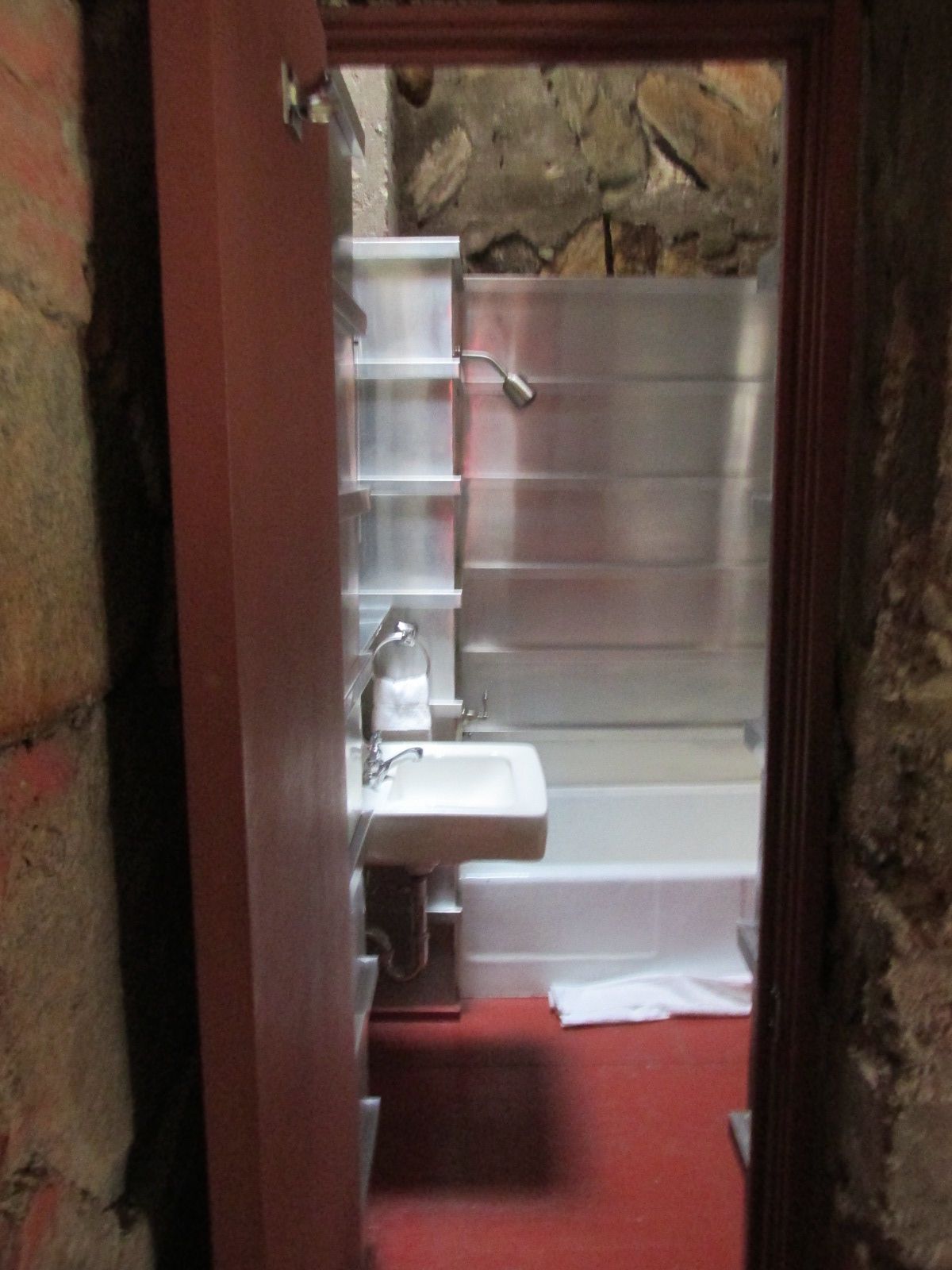
I was able to grab a shot of Mr. Wright’s bathroom, though. It looks quite modern. I wonder if it has been redone.
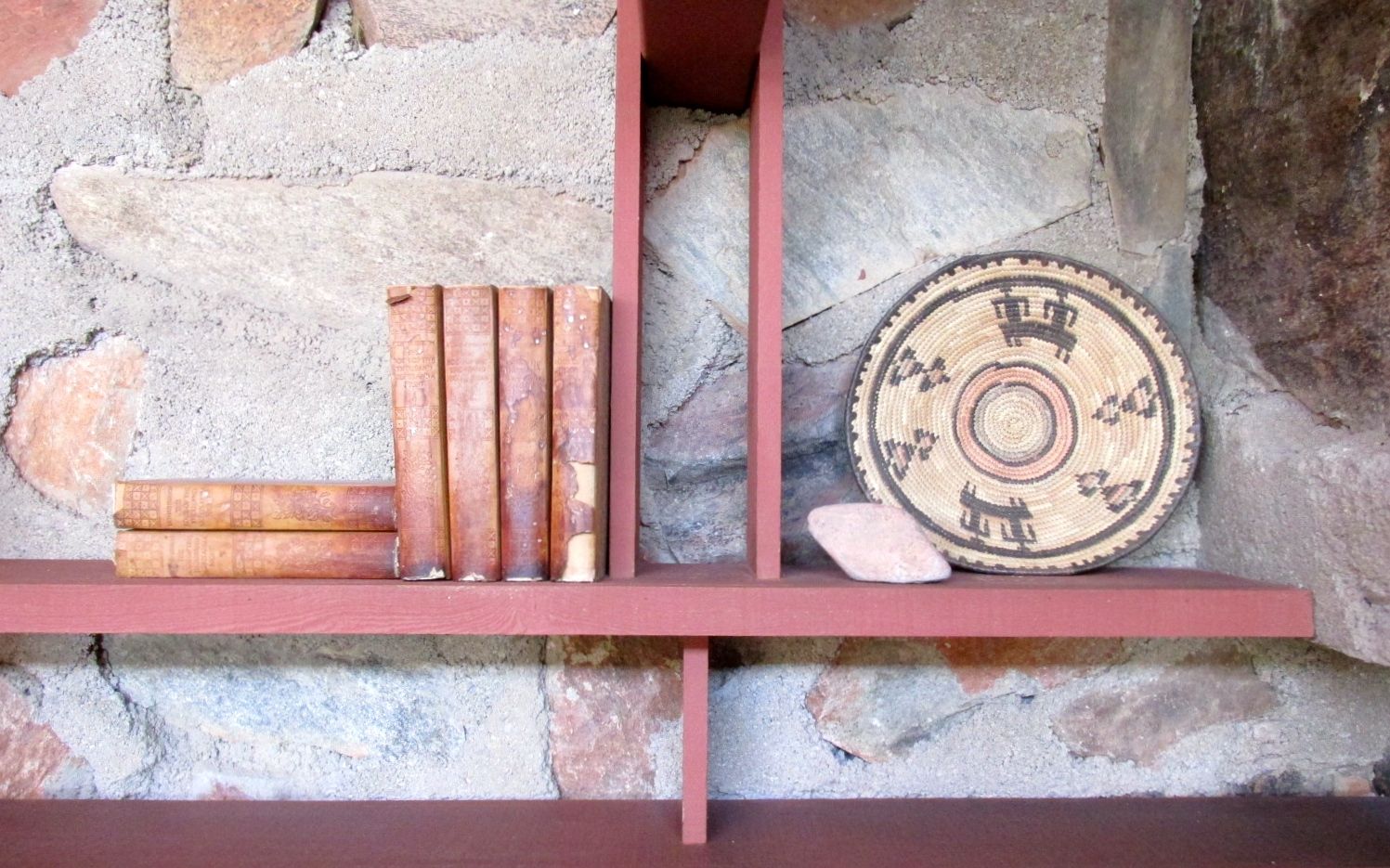
A shelf with some of Mr. Wright’s possessions.
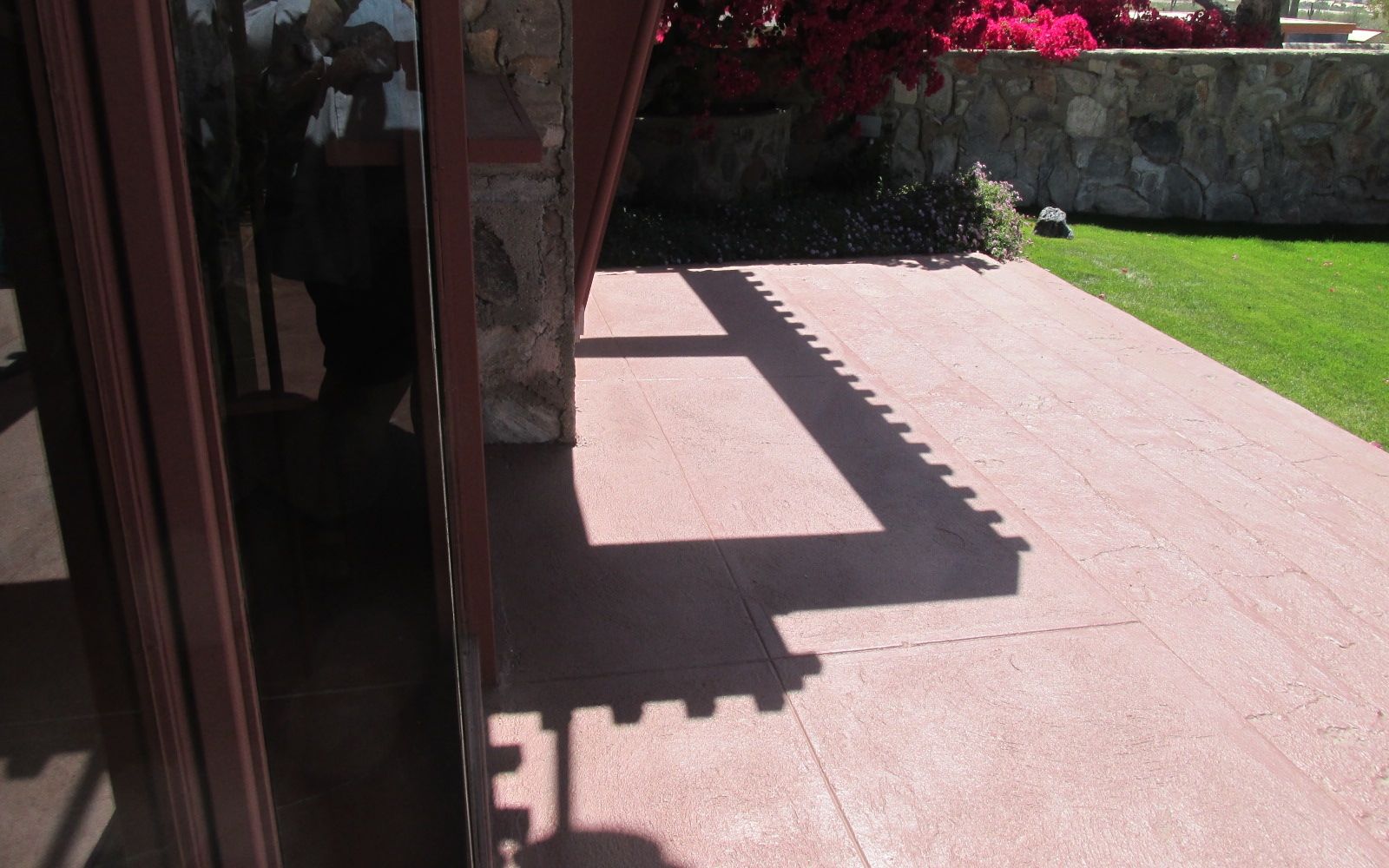
Outside his suite, you can see how the shifting shadows were used in the design of the space.
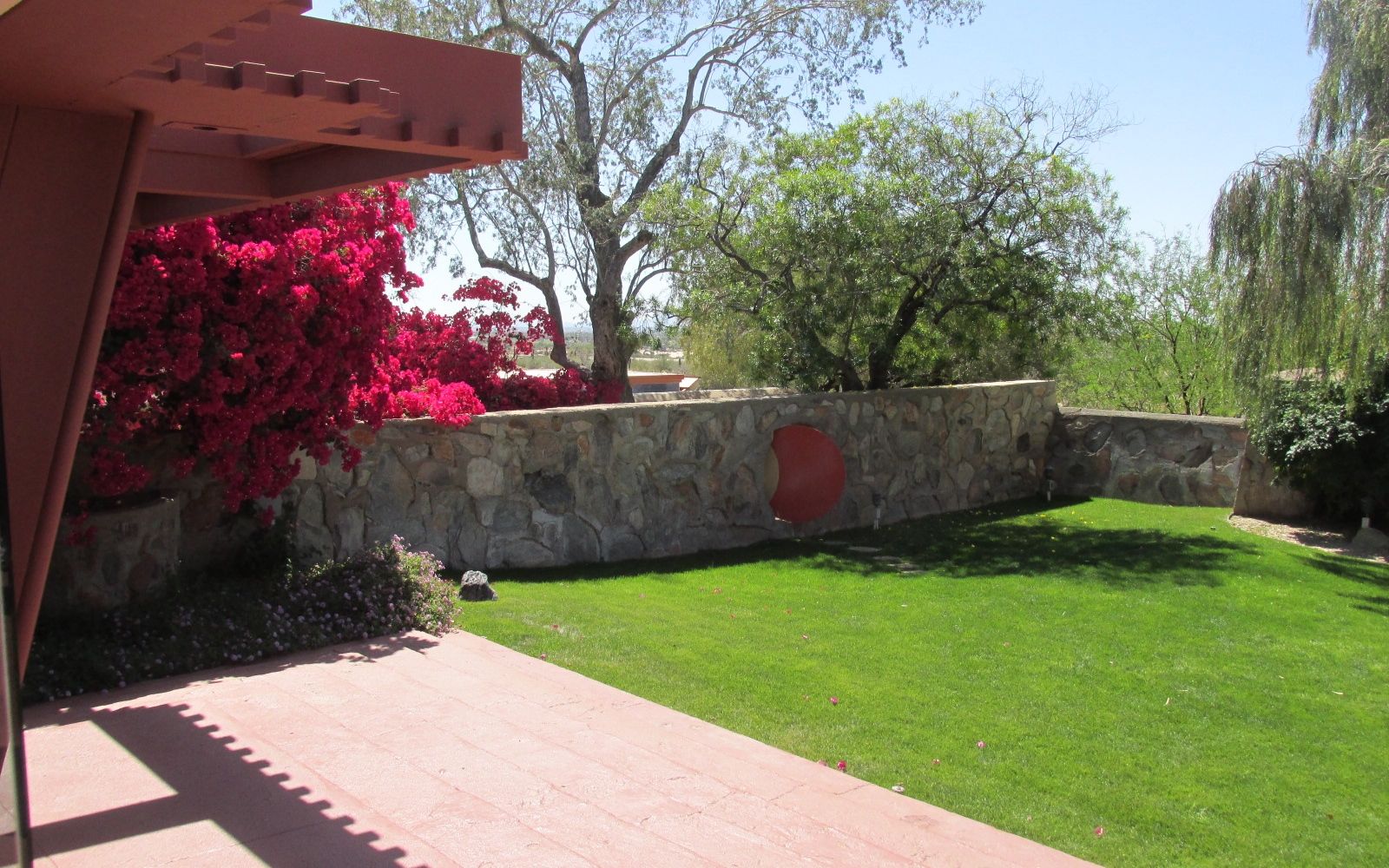
The orange circle in the wall is a moon gate, which was used to pass from one garden into another. This is the view from his bedroom suite.
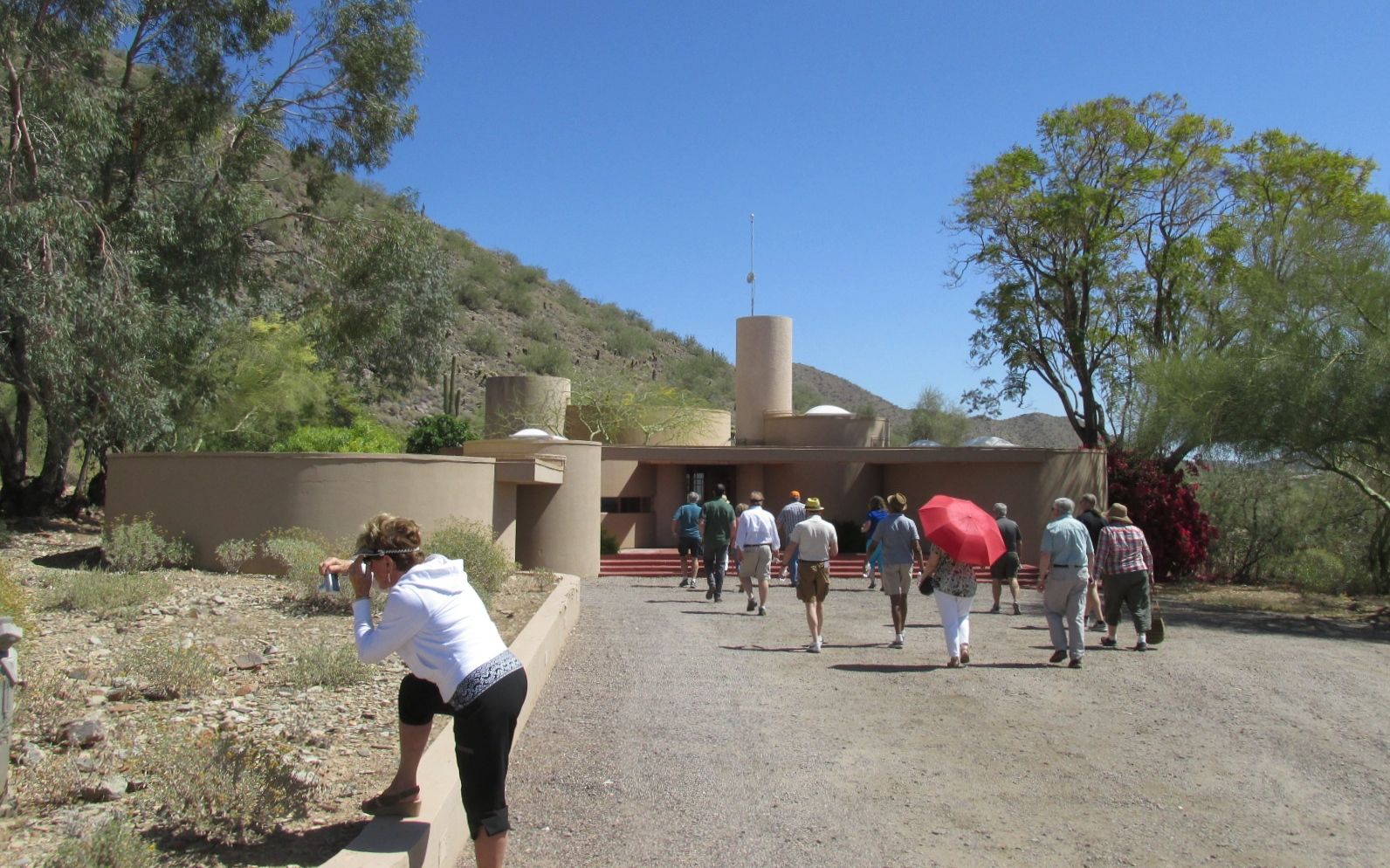
The farthest point of our trip was Bruce Pfeiffer’s house. Bruce was the foundation’s archivist, and he selected this design out of the archives of unbuilt works. Wright had originally designed this house for Ralph Jester, who was a costume designer for some famous Hollywood movies, such as The Ten Commandments and Solomon and Sheba. Jester didn’t care for Wright’s design and it wasn’t built.
As I approached the building, I have to admit that I didn’t care for it either. I didn’t feel the warmth that I felt toward the other buildings on the campus.
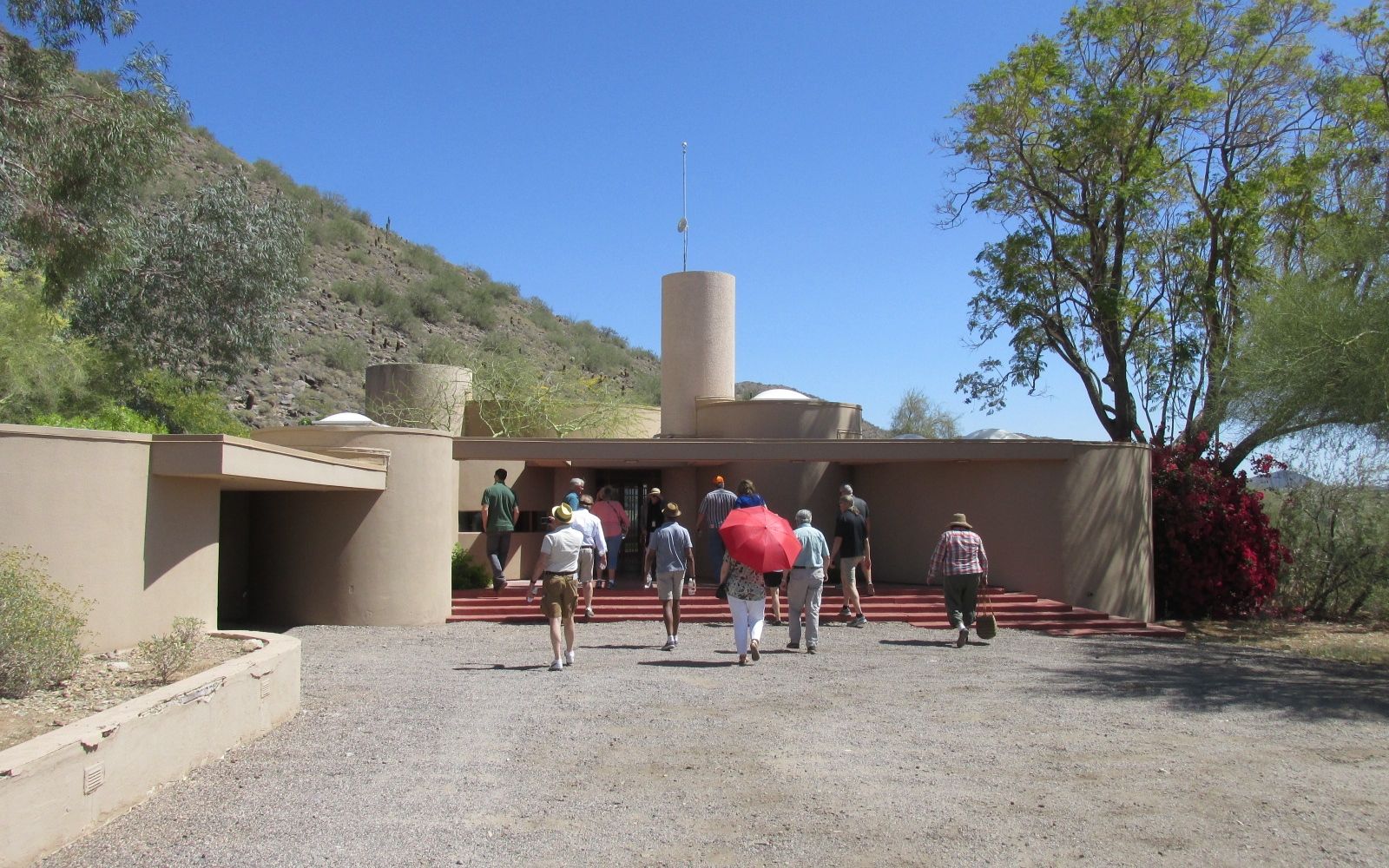
Bruce Pfeiffer needed a house for himself and his father. Olgivanna suggested that he use one of the designs in the archive, and the house was finally built.
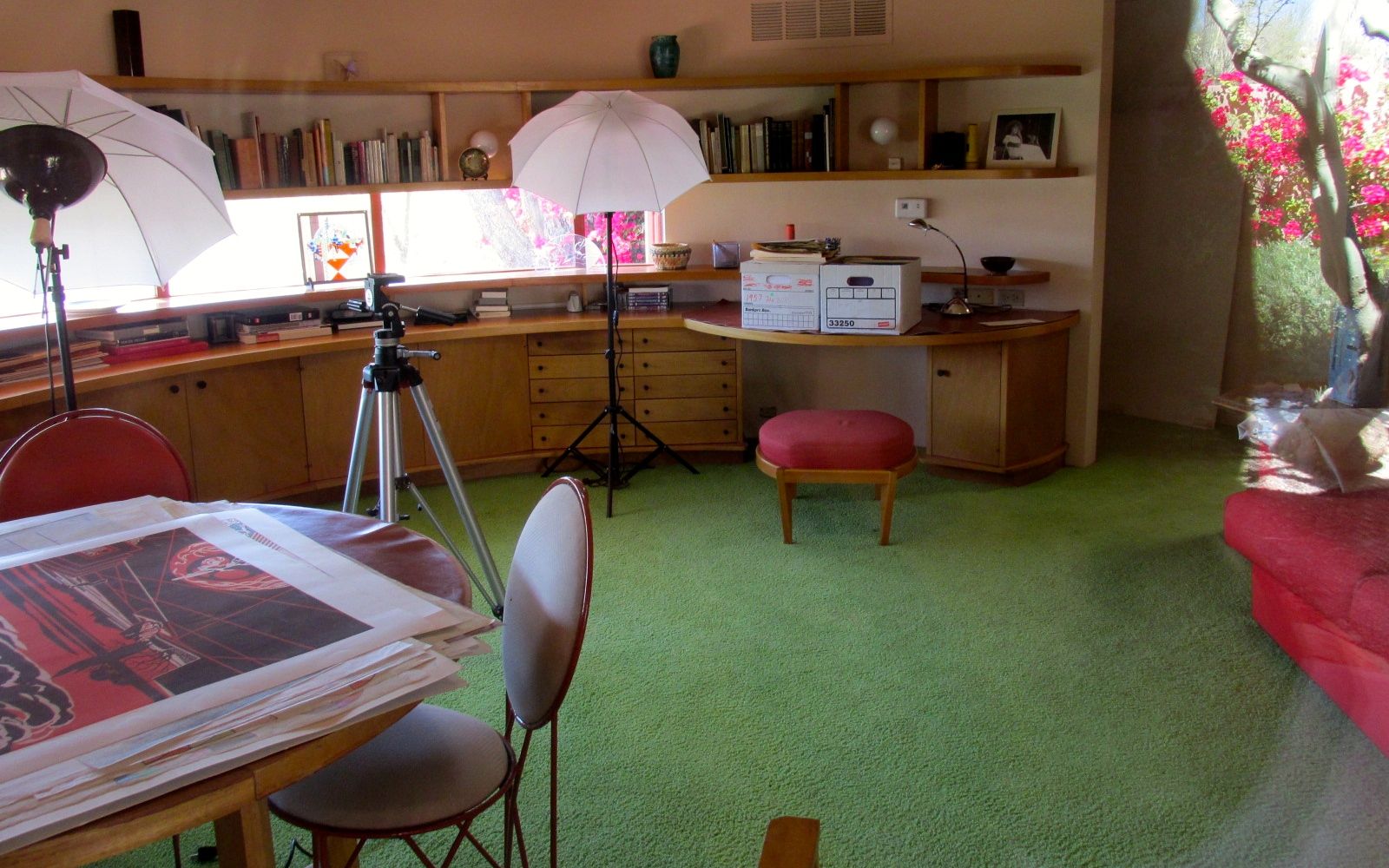
Once I was inside, however, I felt completely different. It was a very inviting building. There were three large round rooms. It seemed that the father had one and the son and the other. The third was a living room.
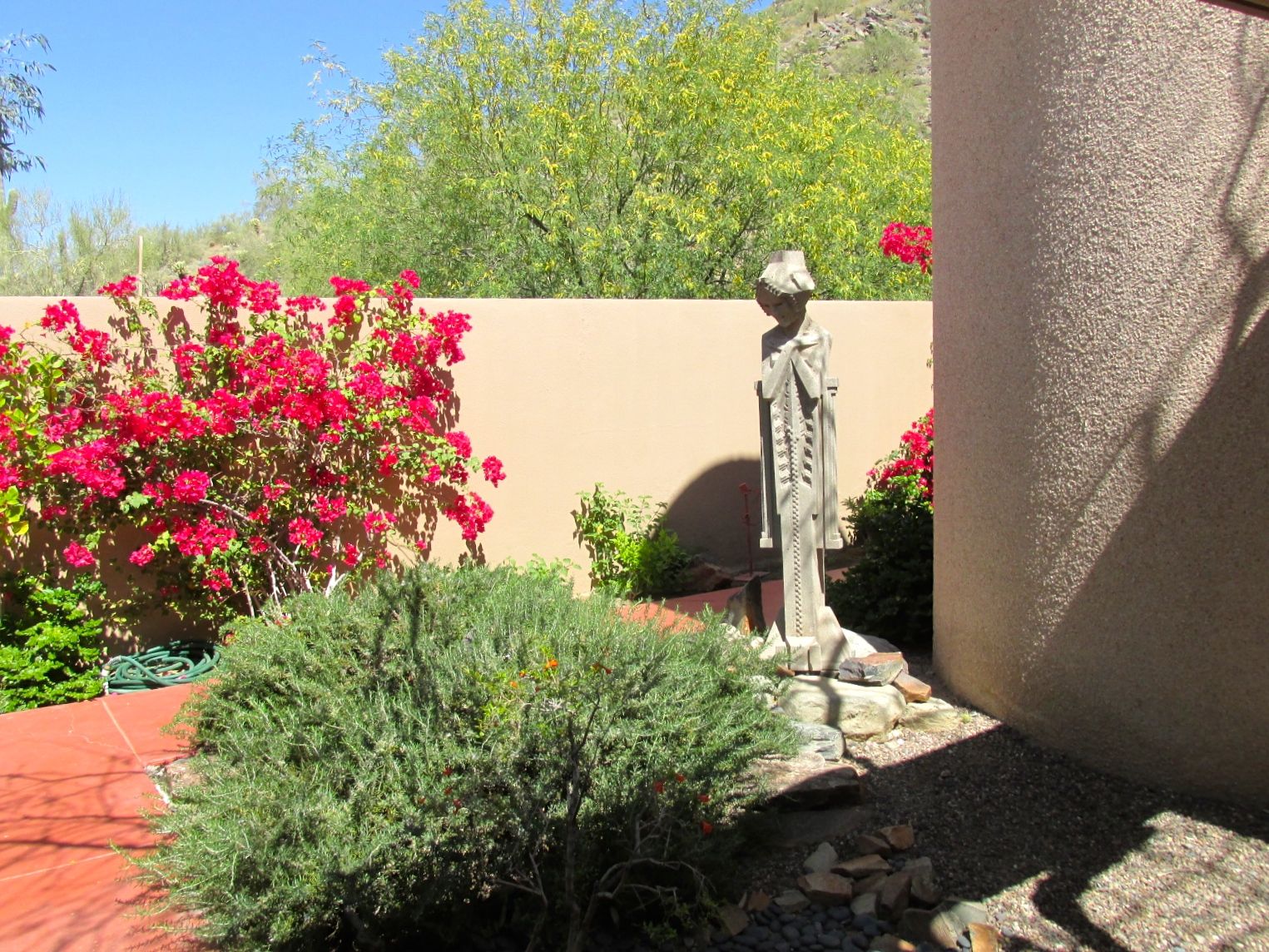
There was a small, interior courtyard with one of the sprite statues in it.
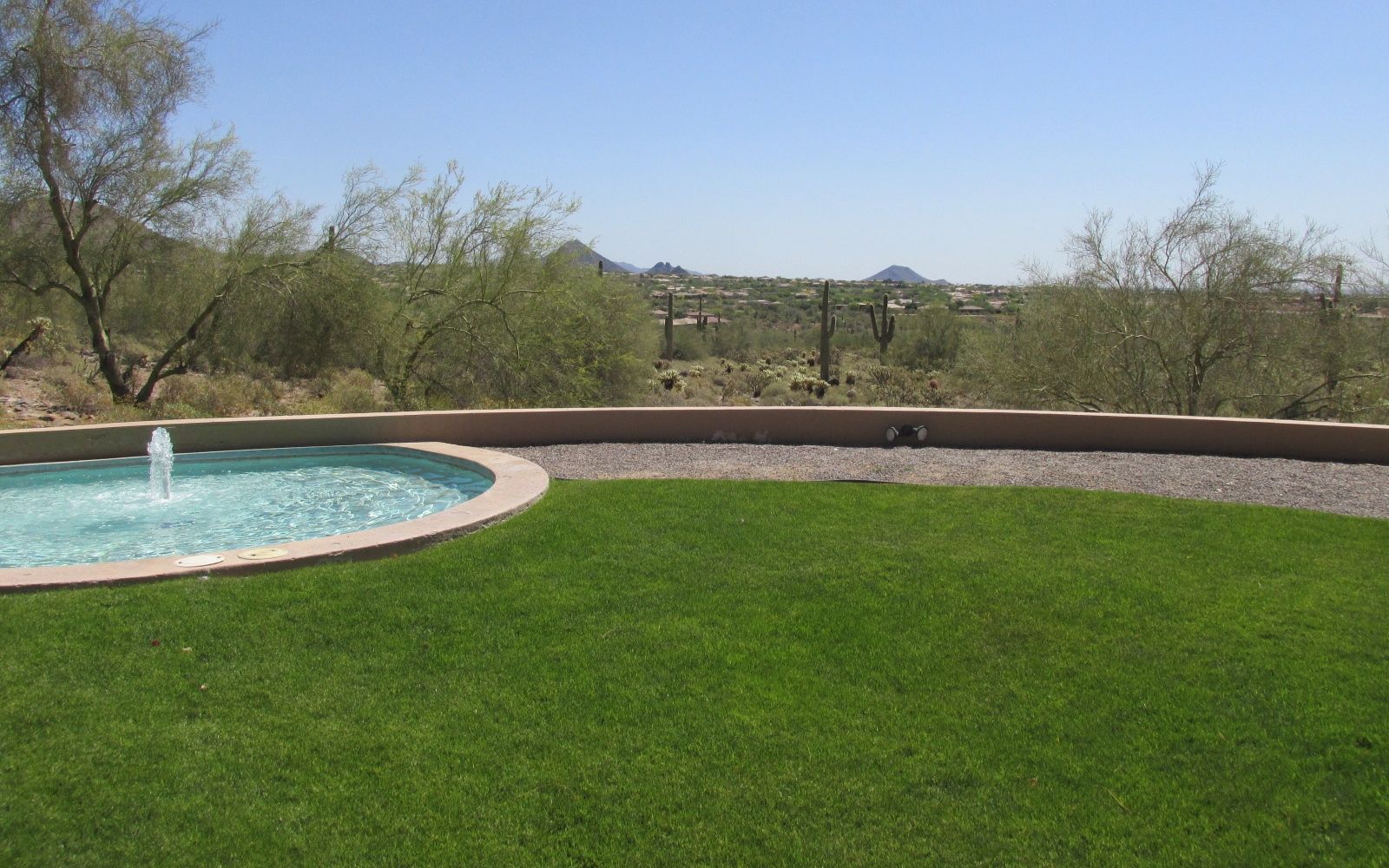
Off the living room was a large terrace. Our guide told us that in the original plans, the lawn was to have been a pool with an infinity edge. The water would go right over the lip of the pool and be recycled.
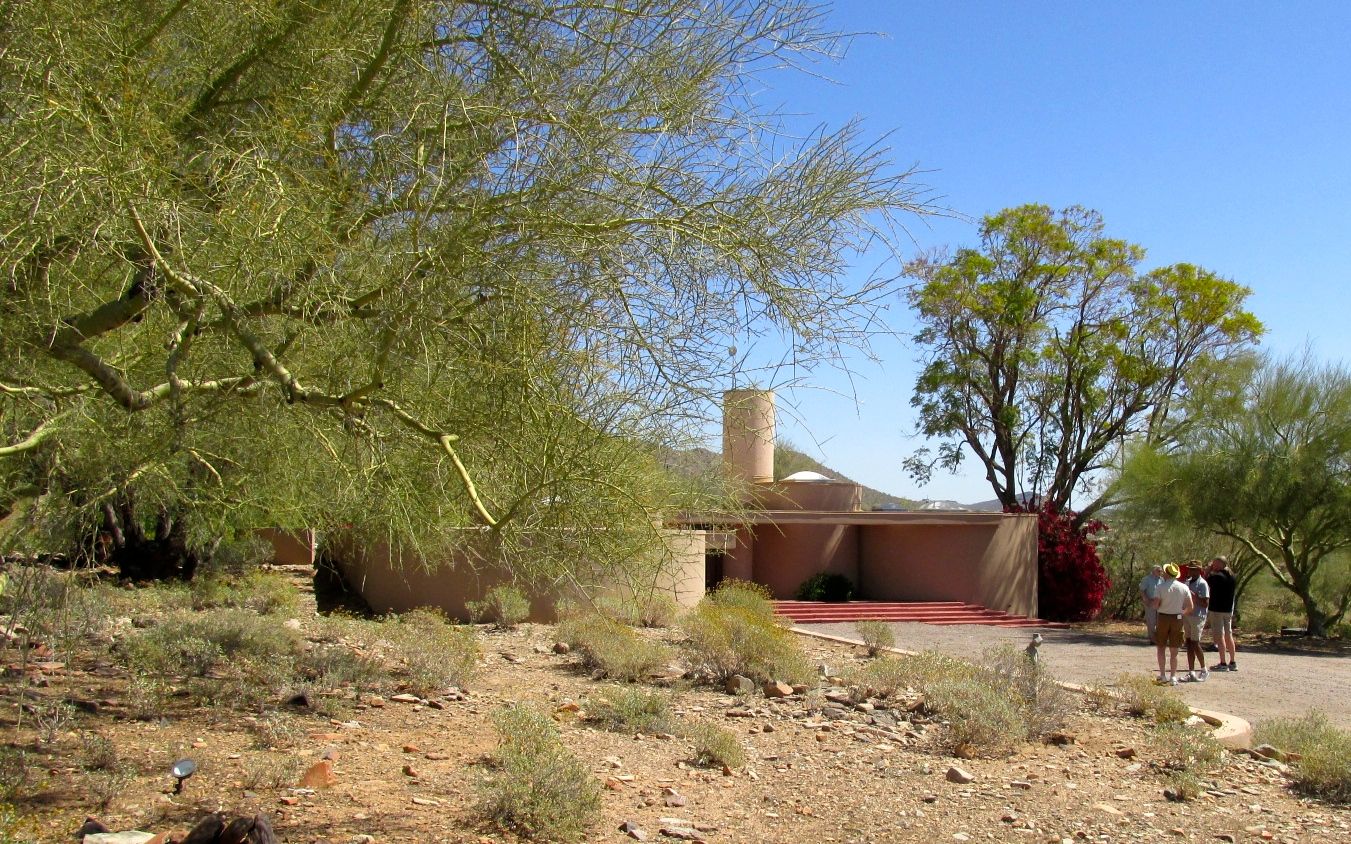
On the way back to the main part of the campus, I turned to look back at it one more time. I liked it better after having experienced it.
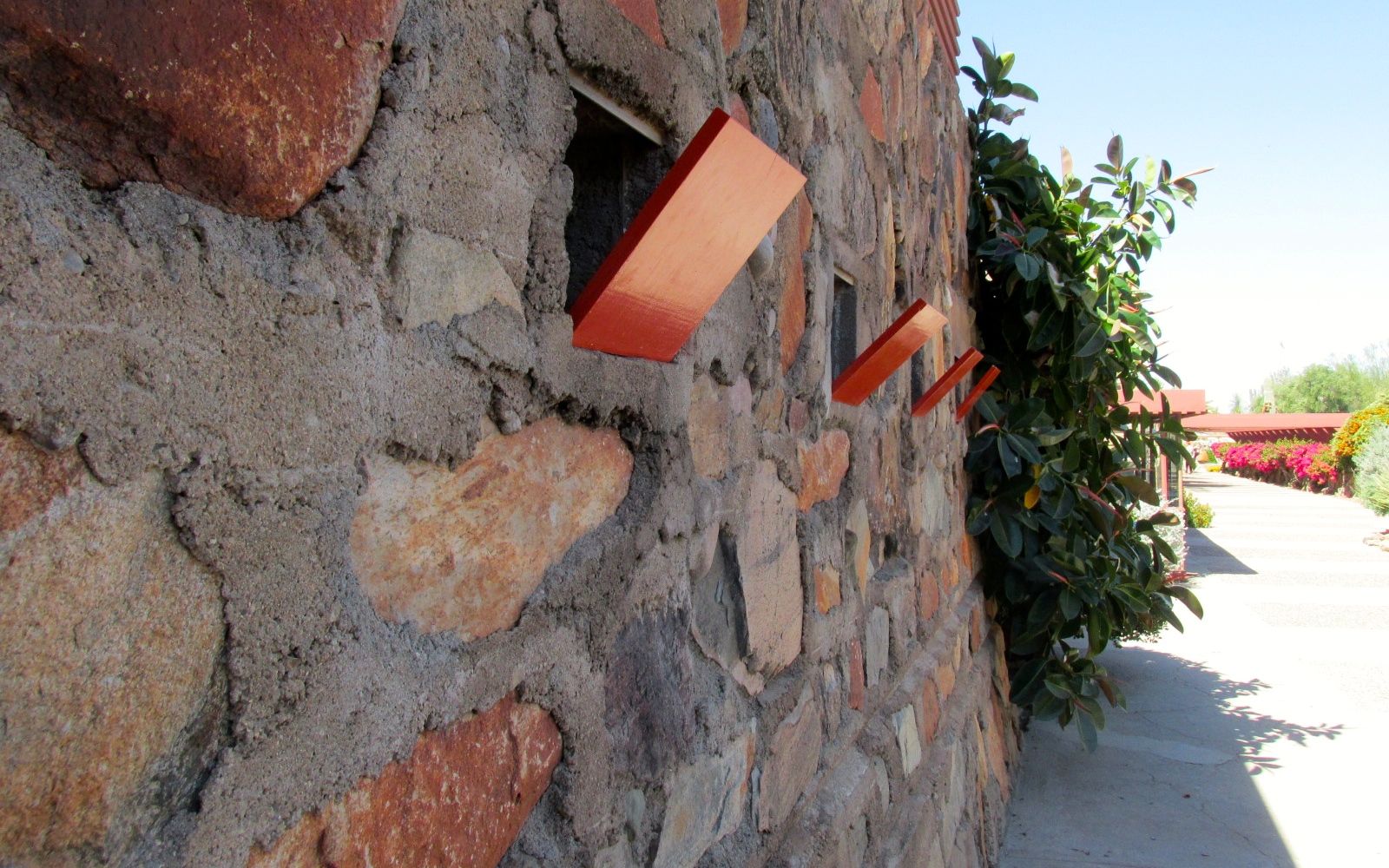
I spied these windows with square covers when we passed from one place to another. I didn’t see how they worked from the inside, but I am sure that they did the job. They looked interesting from the outside.
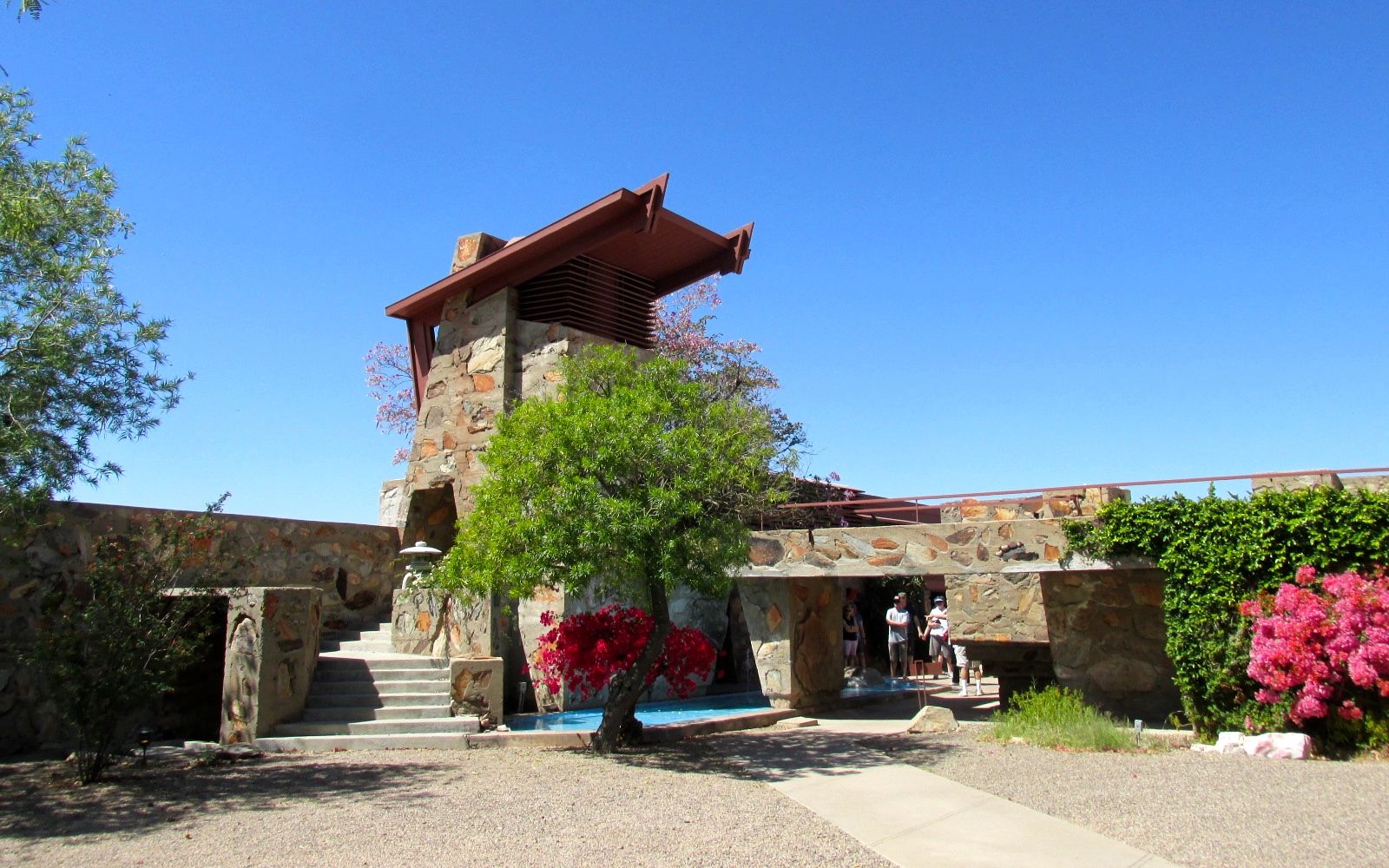
The campus is quite large, with many courtyards and buildings. I lost track of how this tower related to the rest of the buildings. I was taking notes as fast as I could, but I just couldn’t keep up with listening, walking, taking pictures AND taking notes.
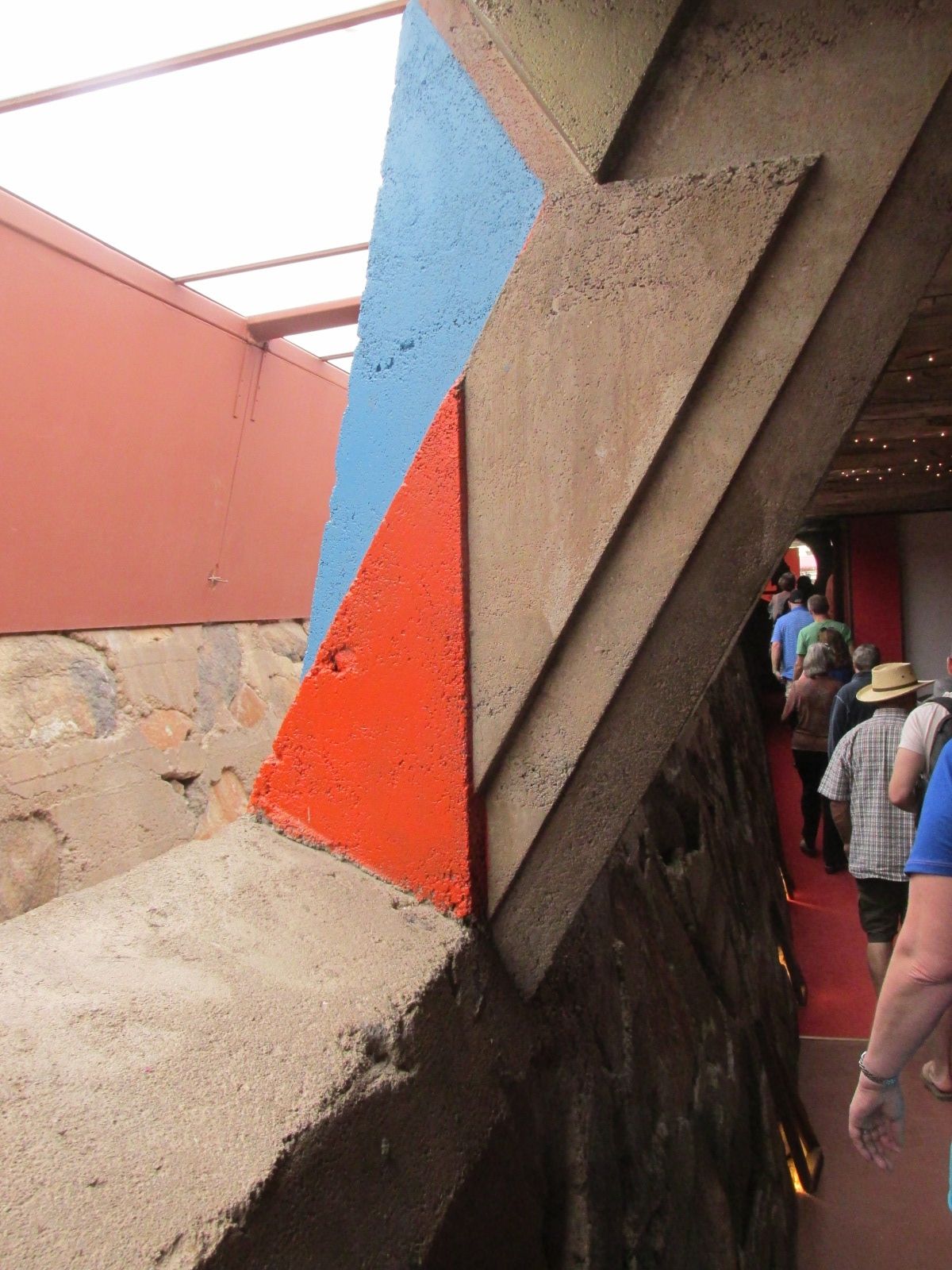
The last official stop of the tour – which lasted 45 minutes longer than the three hours that was advertised – was the Cabaret Theater. This is a detail from the passageway. Entertainment that they created themselves was a large part of the life of the Fellows.
All the tours passed through this point. We had to wait for our turn until another group finished up, and there was a tour right behind us. In addition to telling us about the building, we got the pitch to become members of the Frank Lloyd Wright Trust. They offered an attractive discount if we joined on the spot.
My friends, Konnie and Michael, were waiting for me, so I bid Taliesin West adieu and headed out.
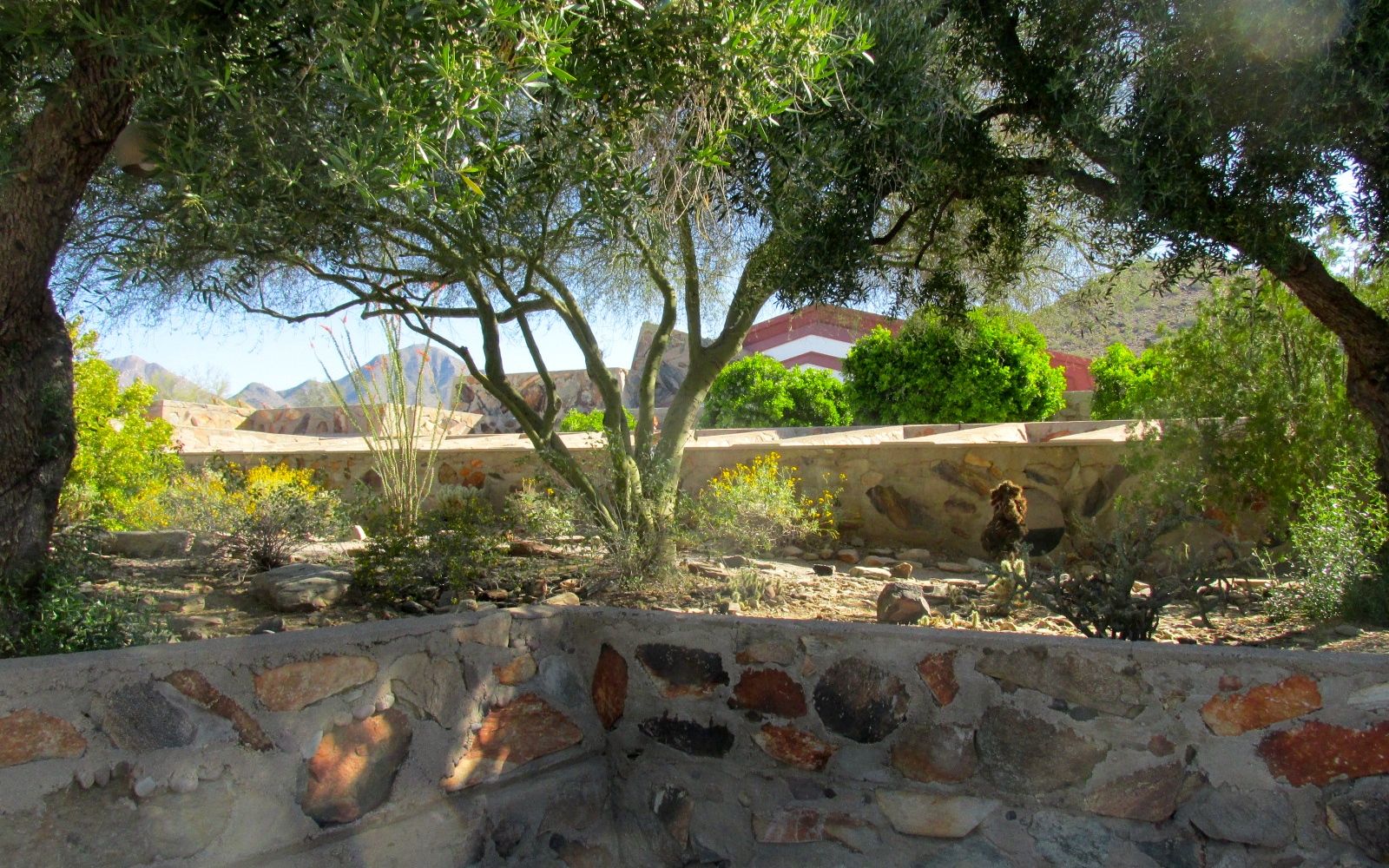
It was hard to leave such peace and return to the hustle and bustle of modern Phoenix.