I had one day between leaving Balmorhea State Park in Texas and my reservation at City of Rocks State Park in New Mexico. The last time I was trekking westward on I-10, I ended up staying at the Cracker Barrel in El Paso. I could have done that again, but Hueco Tanks State Park and Historic Site sounded interesting.
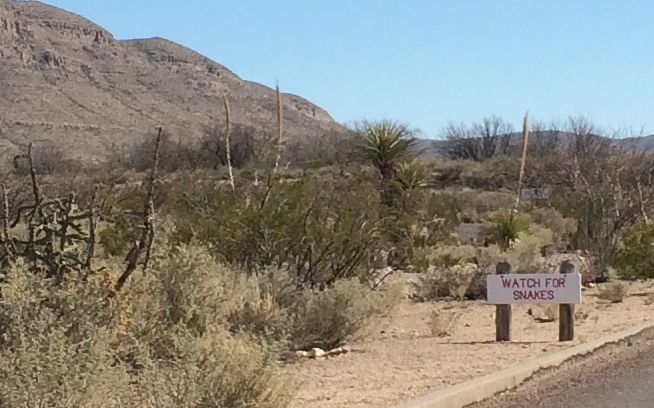
I made my reservation and checked in at the ranger’s station. In addition to the “Watch for snakes” sign on the way in, there was a lovely assortment of brochures warning of other deadly dangers.
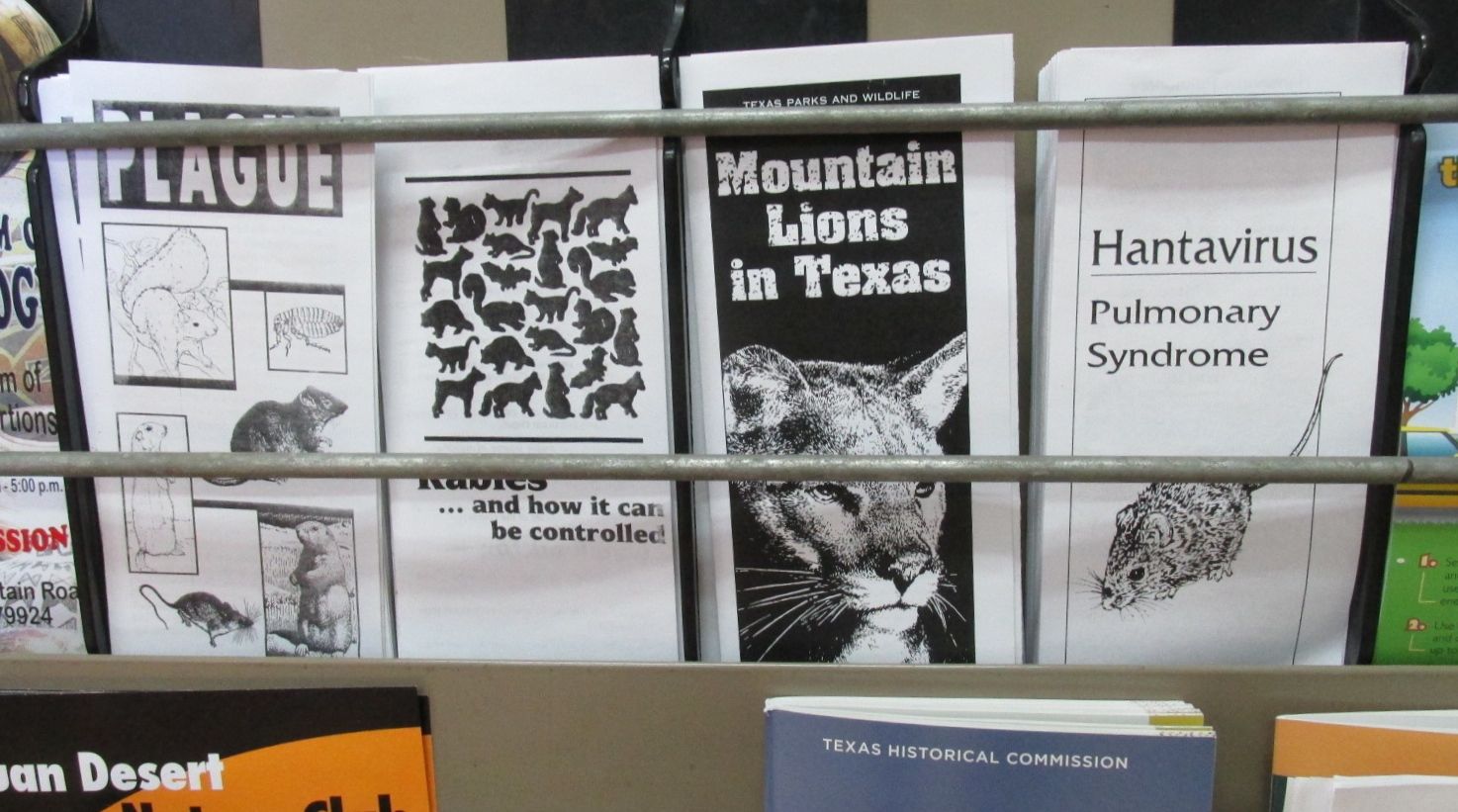
At least there were no warnings about ticks and lyme disease. But, maybe that was on another rack.
They are serious about preserving the cultural and natural resources at the park. They have each visitor watch a fifteen minute video before they are allowed to enter the campground or walk on the trails.
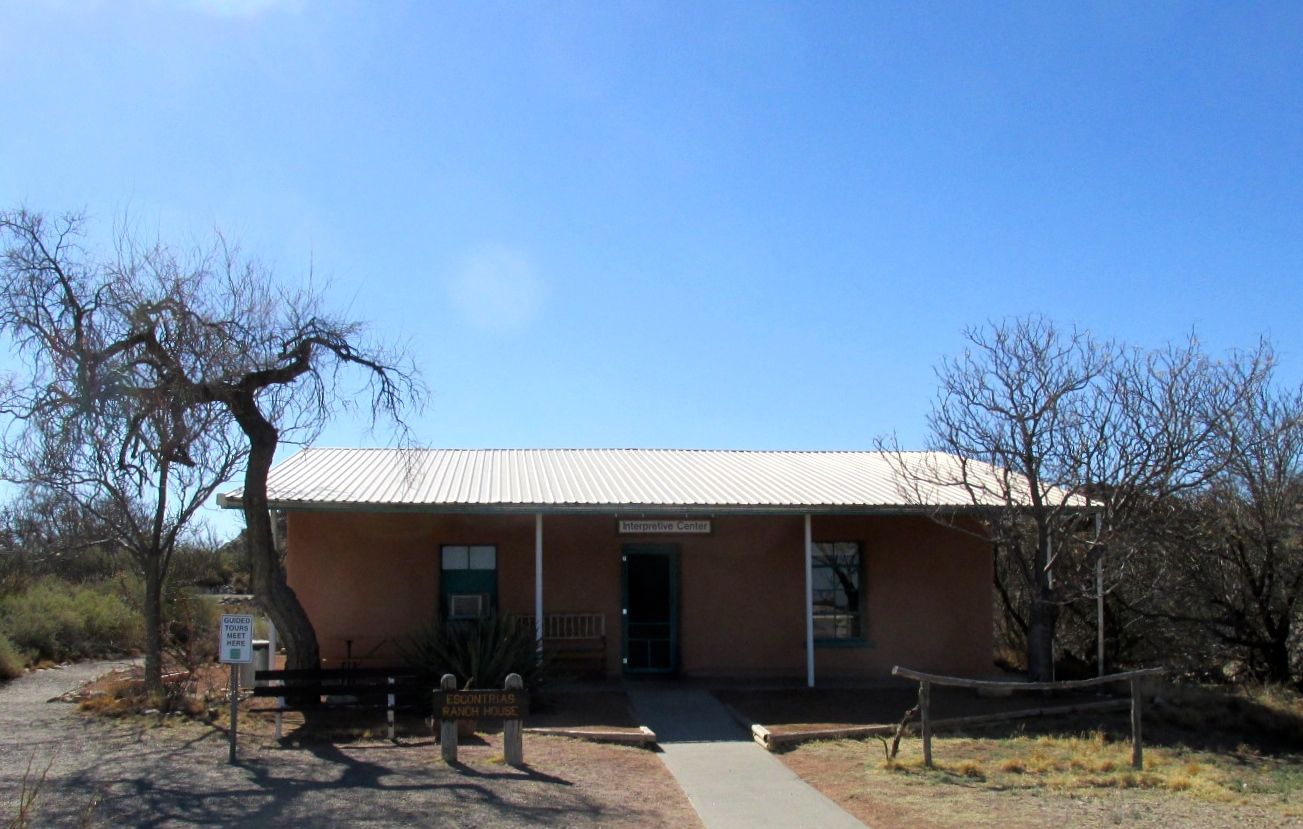
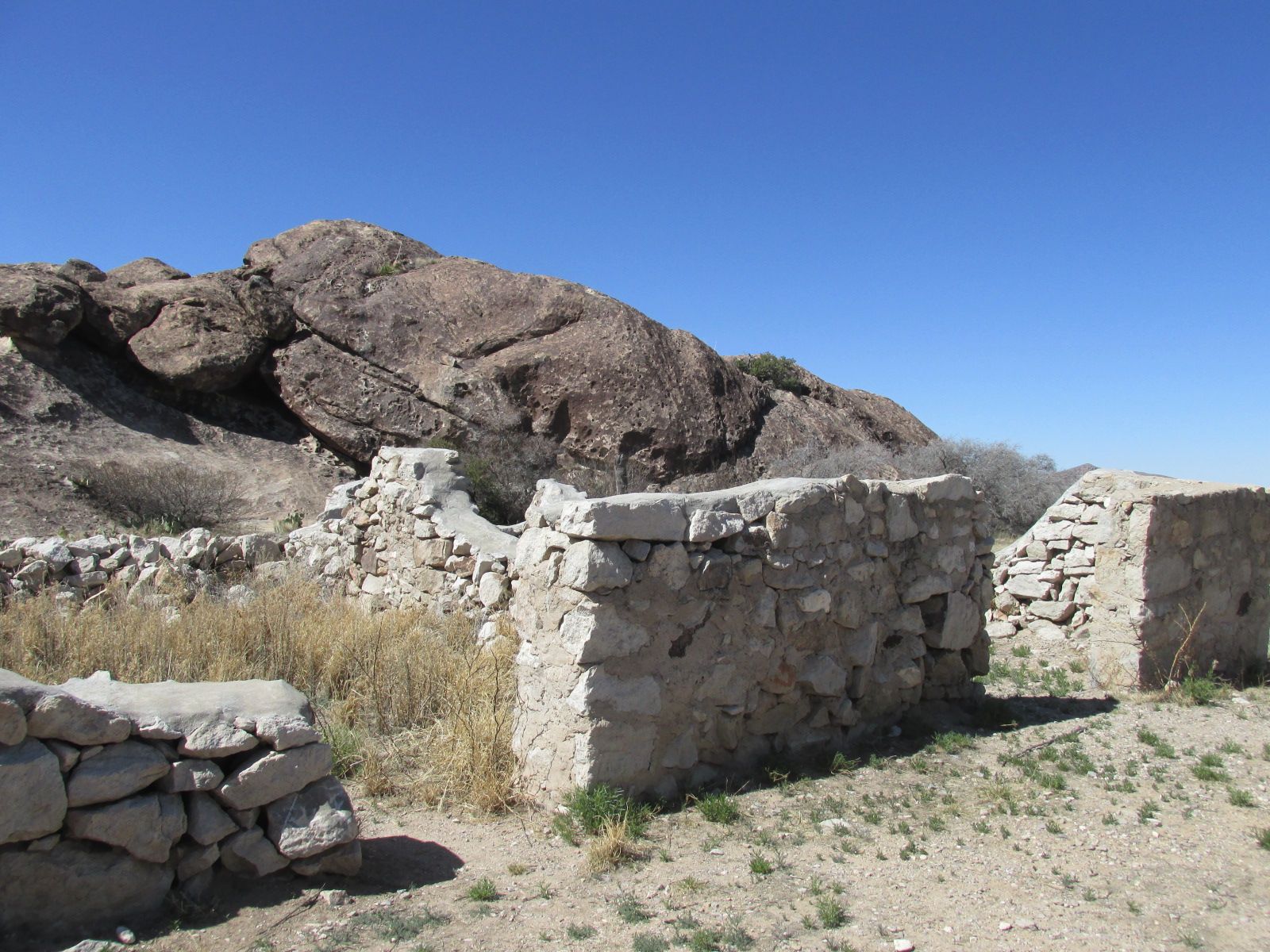
The adobe ranch house, built by the Escontrias Family in the beginning of the twentieth century, is now used for showing the videos and explaining the resources of the city. Right next to the ranch house are the remains of the Butterfield Overland Mail station. The stage line ran from 1858 to 1859.
After I watched the video, I got my card certifying that I had seen it. My certification is good for a year, so I was all set for my visit on the trails the next day. I could even return, if I happened to be in the area – provided that I don’t lose the card.
I made my way to the campground. It had a rather low-tech gate to insure our safety. You had to get out of the truck, slide the latch, swing the gate open, hook the gate so it didn’t swing shut and then drive through. After you drive through, you have to repeat the process. They do lock the entrance to the park at night, so I guess that ups the security level.
The ranger assigned me to a site that was hard to get into. That seemed odd, as the camp sites were mostly vacant. After a couple passes, the people in the campsite next door told me that they couldn’t get in that one either. They just picked their own site and then went back and told the ranger which one they were in. I decided to follow their lead, and got backed in easily to a sweet site with a shaded picnic table.
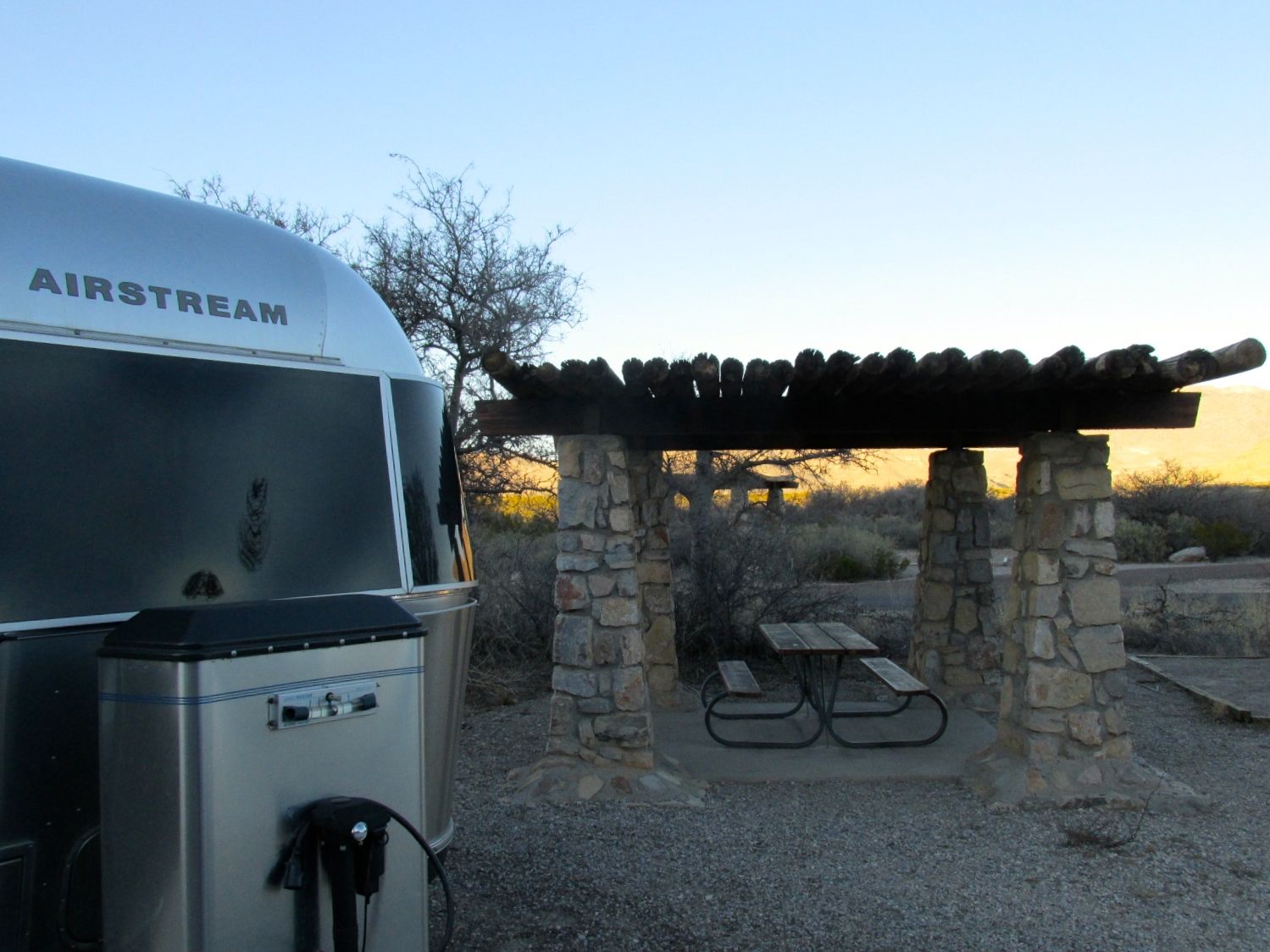
Life on the road isn’t exactly a vacation. There are still things you have to do – tasks of daily living, as it were. I dropped Flo at the park and zipped back into El Paso and got Bart’s oil changed.
The landscape is interesting. Hueco Tanks is an igneous formation thrust up through sedimentary rocks.
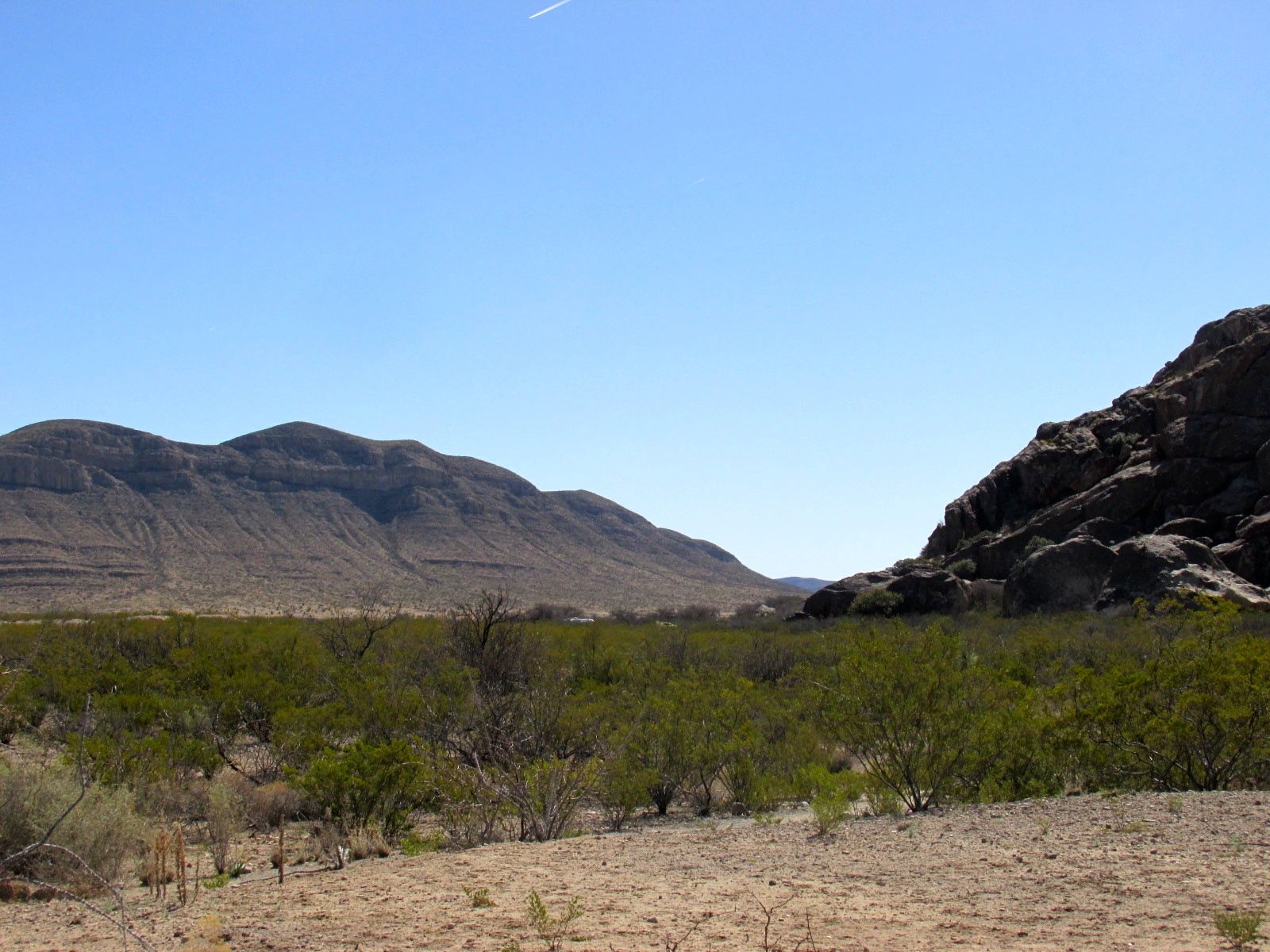
After a good night’s sleep, I set out to see the marks left by earlier inhabitants of the area. Although Hueco Tanks was not occupied continuously for 10 millennia, it is the only place in the region where every prehistoric and historic time period is represented, according to the literature. The secret to the popularity of this location is water, which collects in the “huecos” or holes in the rocks.
The access to the mountains is controlled. There are some trails that are open to the public, but there are other parts where you must have a guide. I opted for the “open to the public” option.
When I checked in at the ranger station and presented my certification that I had seen the video, I asked if I would have trouble identifying the trails. He drawled, “Well, if you can’t find the trails, then you have more than one problem.”
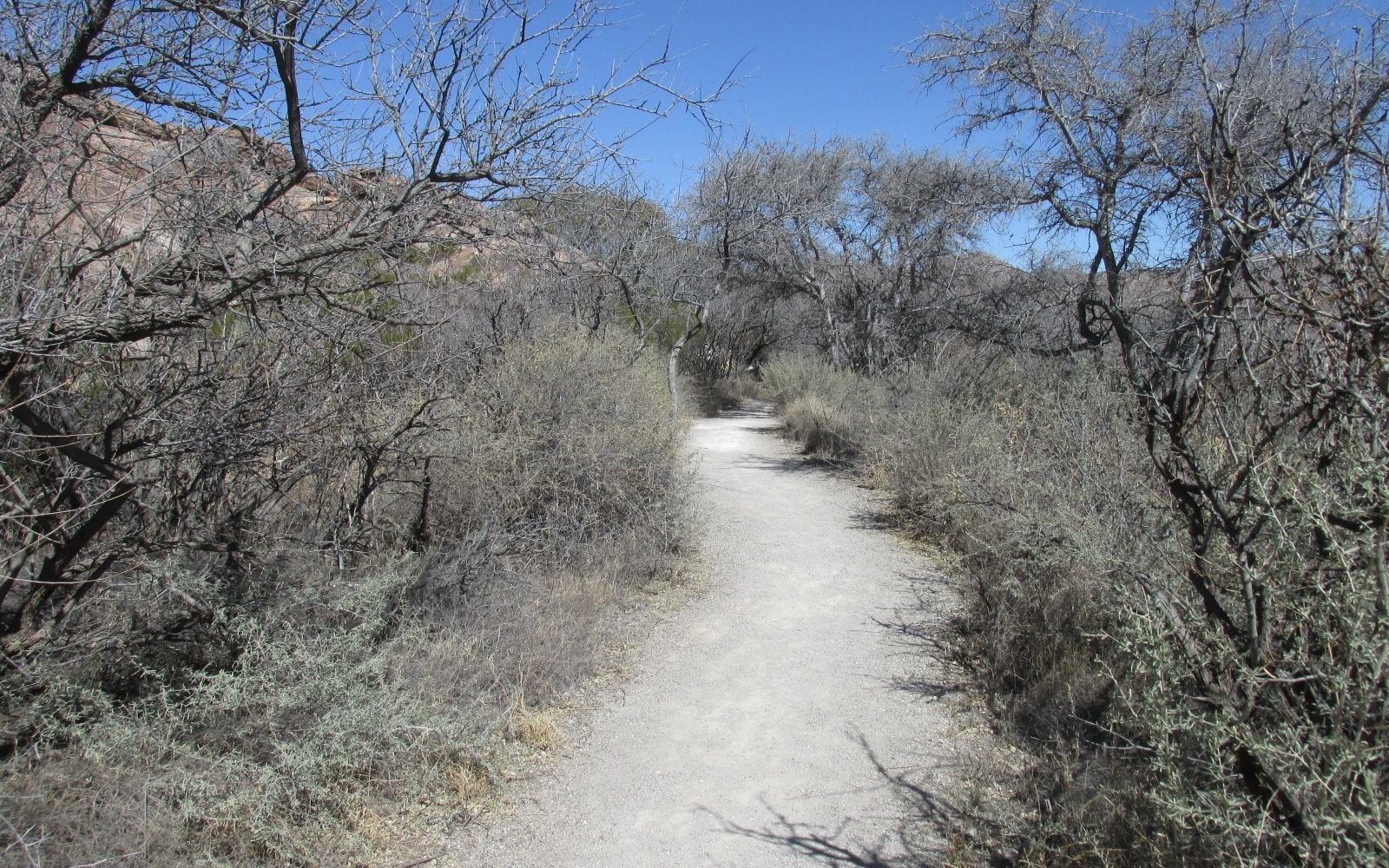
Smart Alek! Yes, the trails were easy to find.
However, you have to know that they were serious about people staying on the trails.
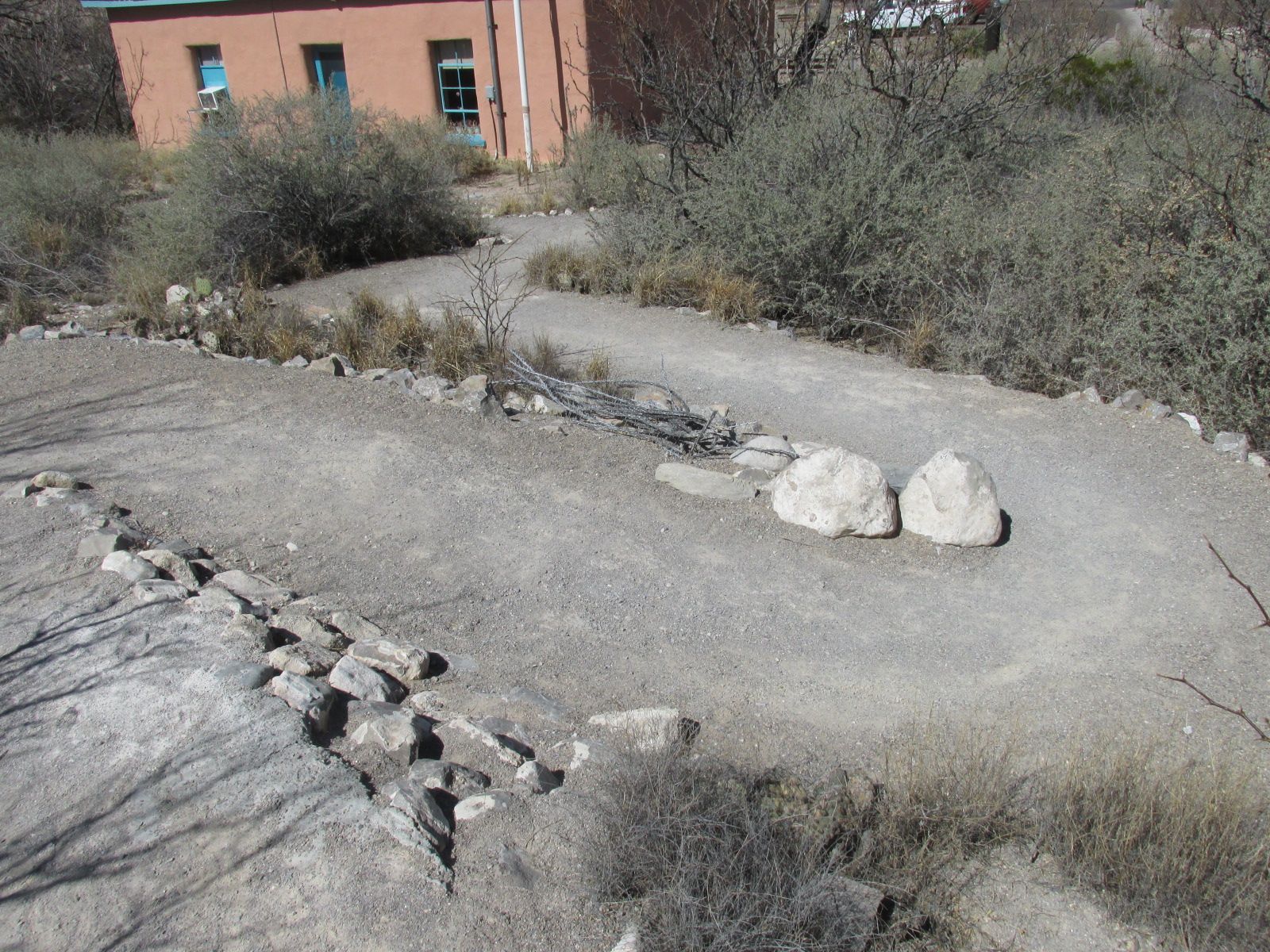
This path had some switchbacks in it.
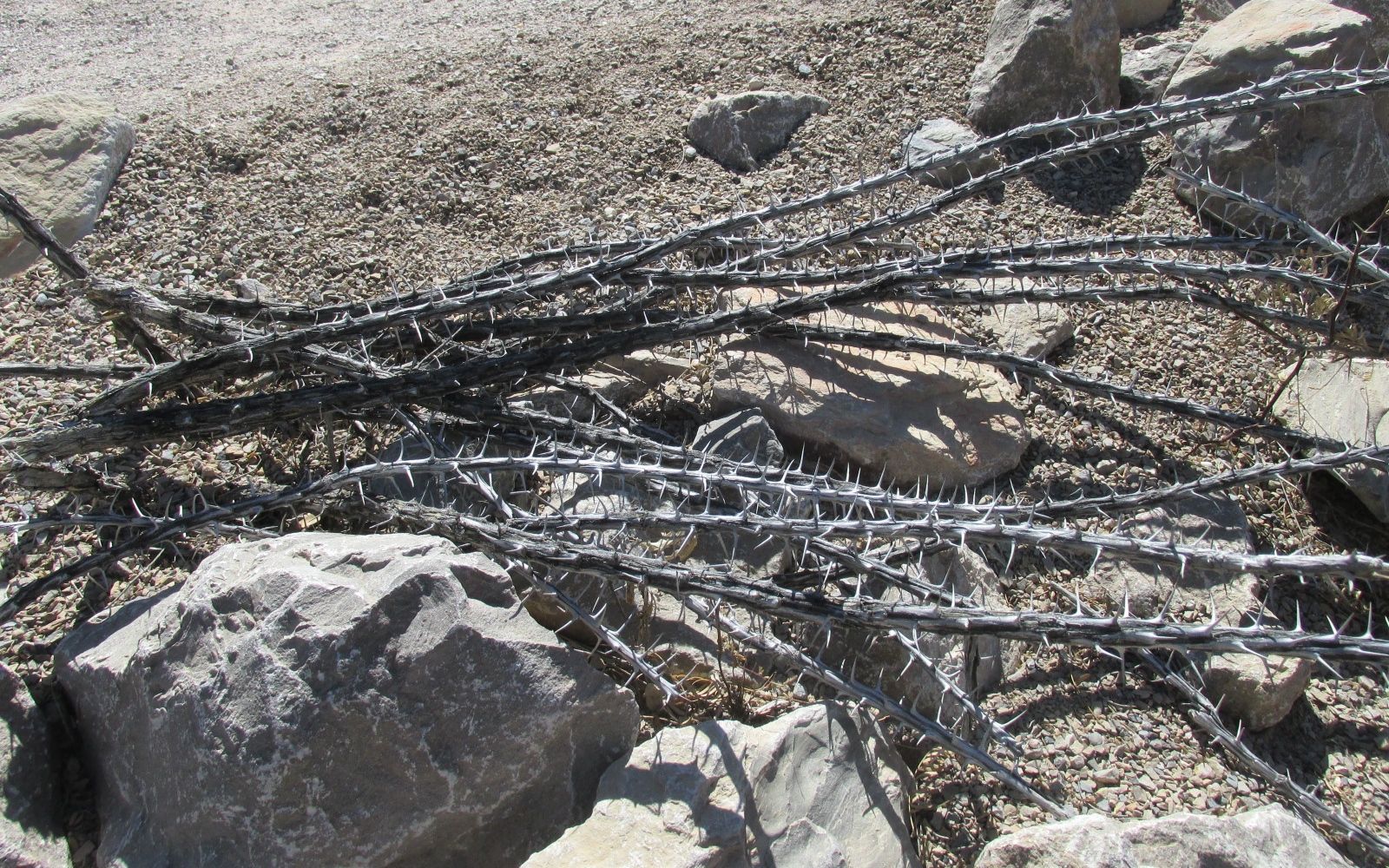
They did not want you taking shortcuts. These ocotillo stems were really effective deterrents for anyone who might even think about getting off the path.
I was in search of pictograms. They are different from petroglyphs in that they are painted on the rocks, not scratched into them. Of course, paint fades and things get marked over, so I was not sure what I would be able to find.
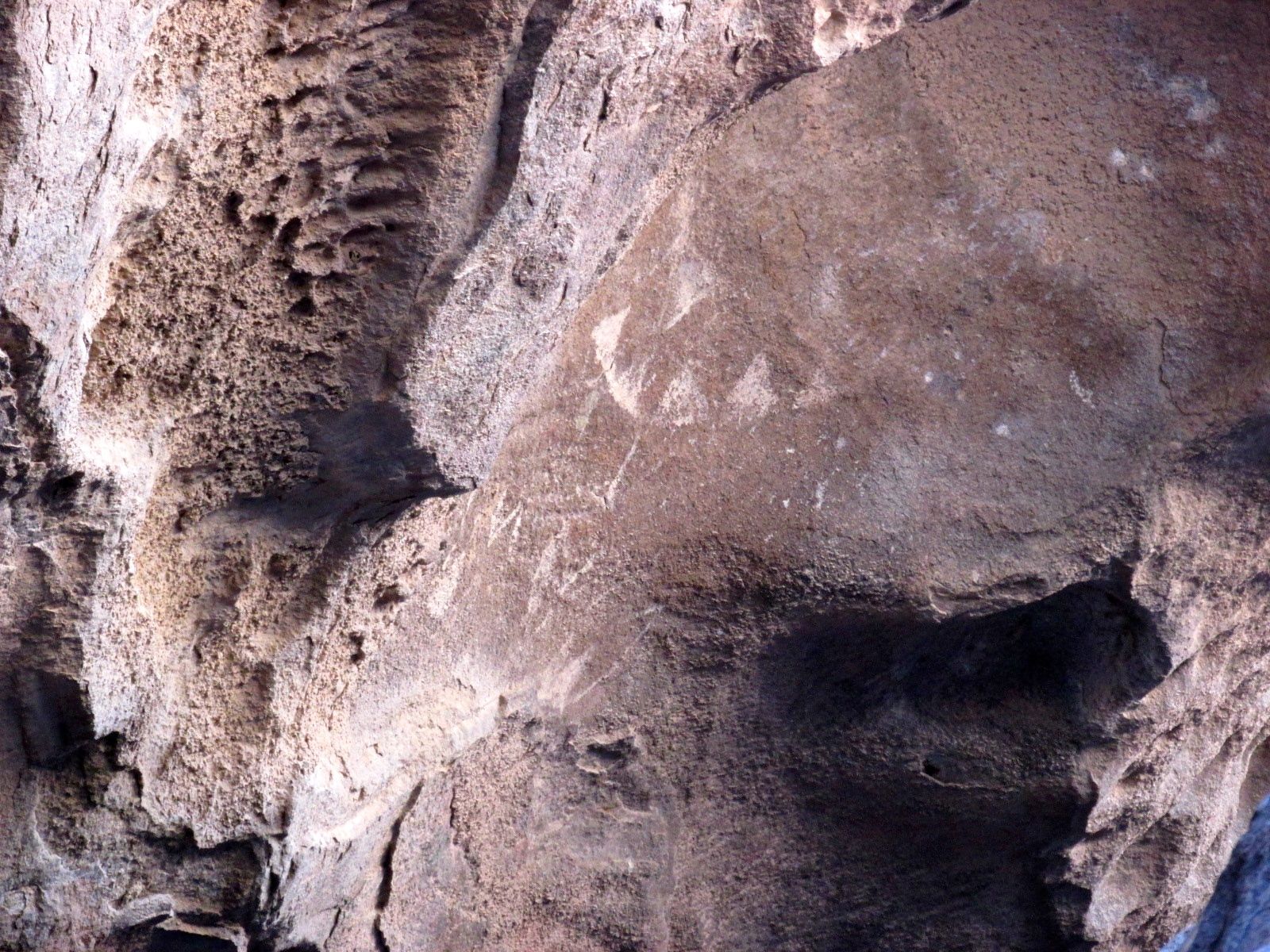
Here is one I found at the first spot.
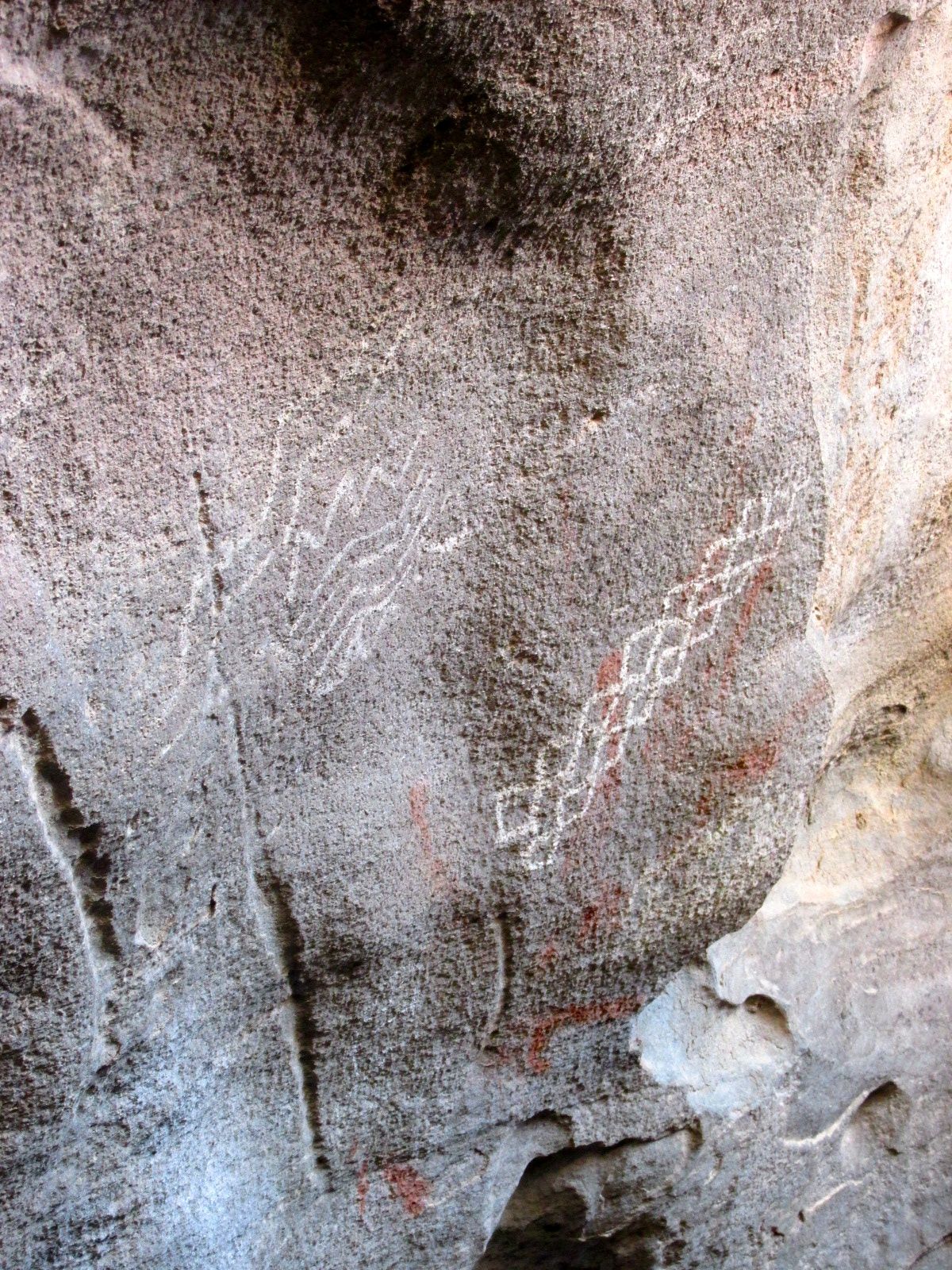
And another.
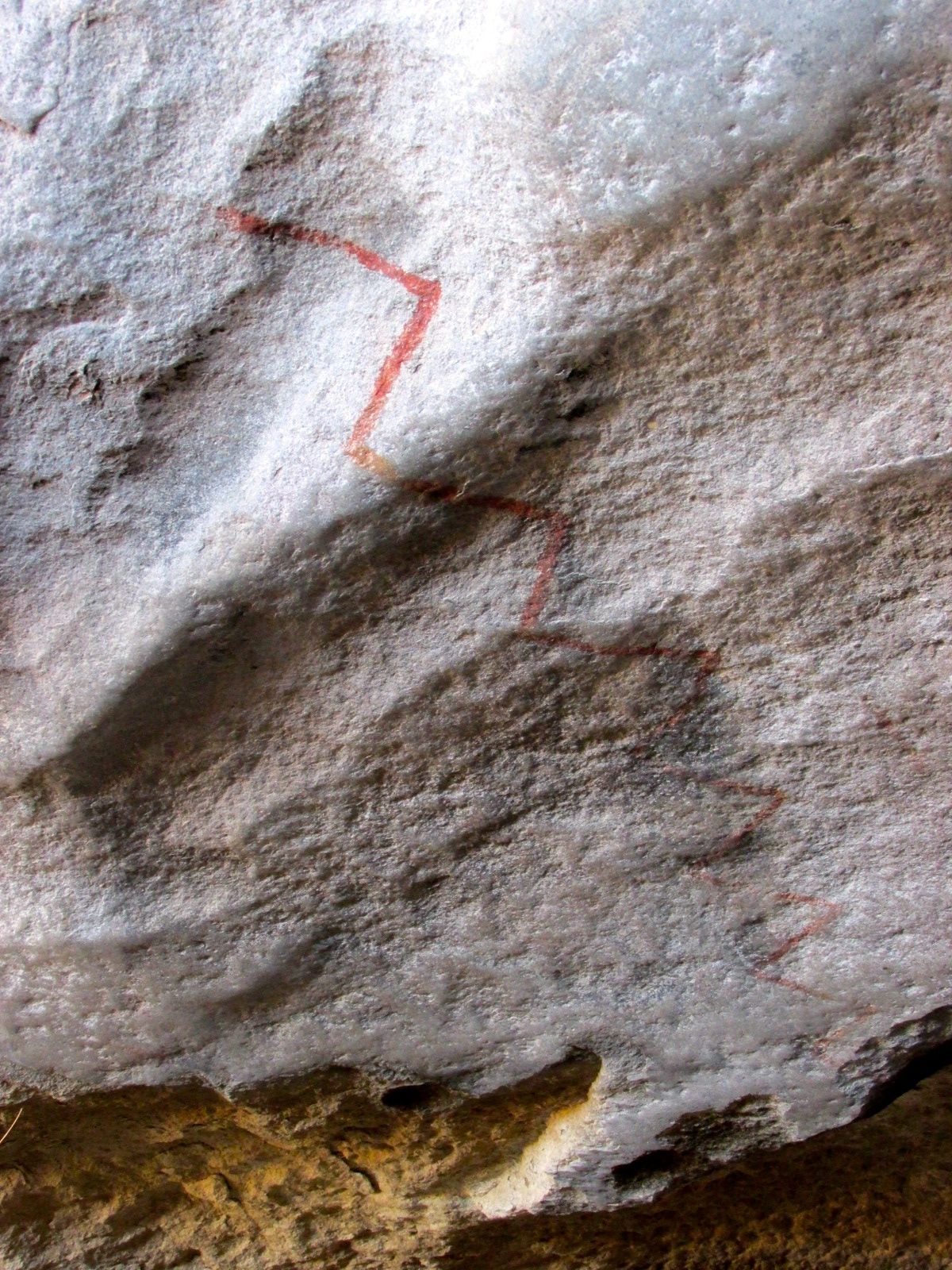
And still another. It was hard to “read” the markings. The first one looked kind of like a mouth. There are supposed to be mask pictograms in the park. The others made me think of snakes or cactus.
I left the first site and walked over to another trail.
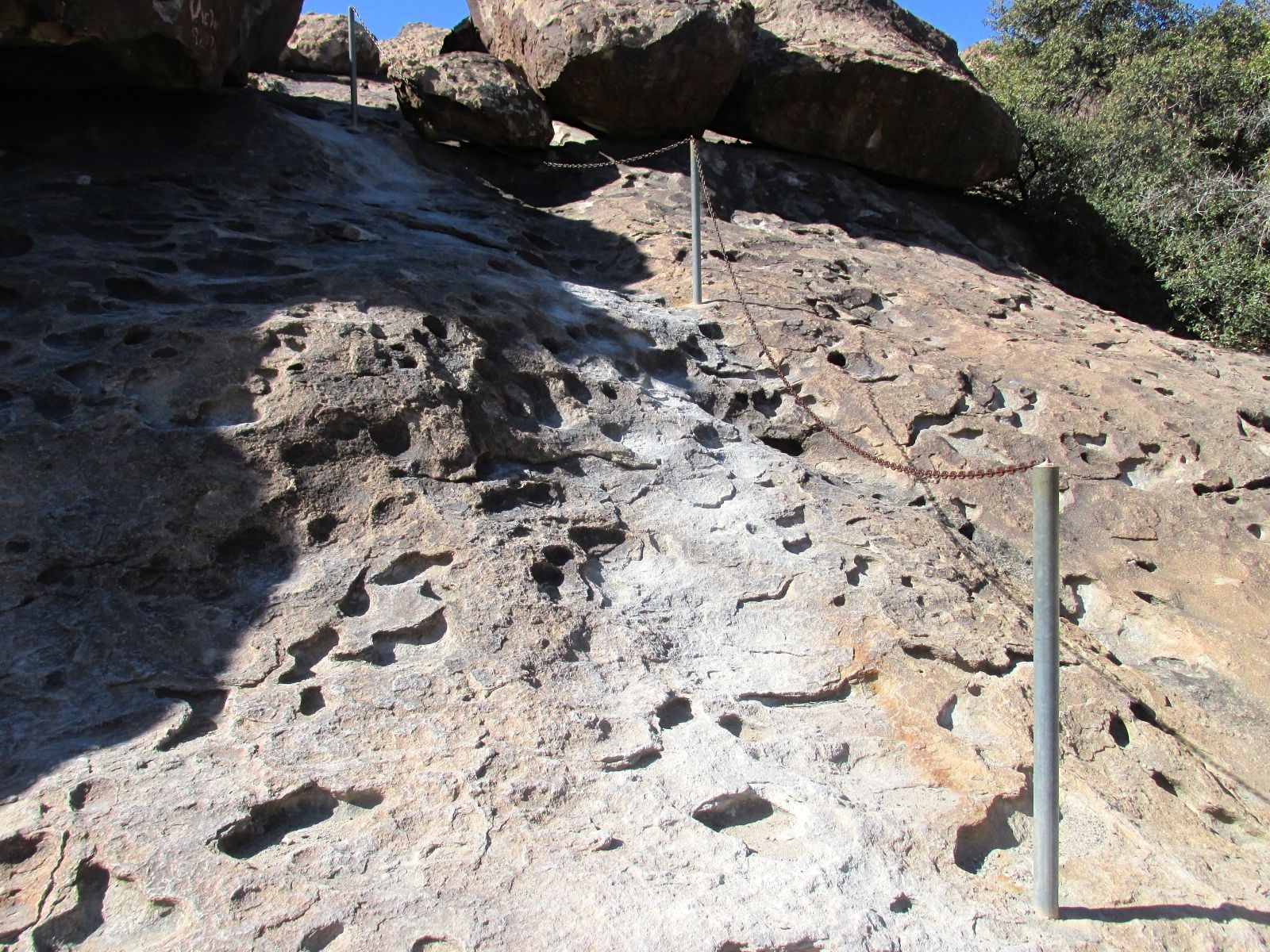
I passed up the opportunity to ascend this path, aptly named the Chain Trail. It looked like more effort than it might be worth. Also, I could see numerous opportunities for tripping. I only had a short time before I needed to push on, anyway. There were other things to see!
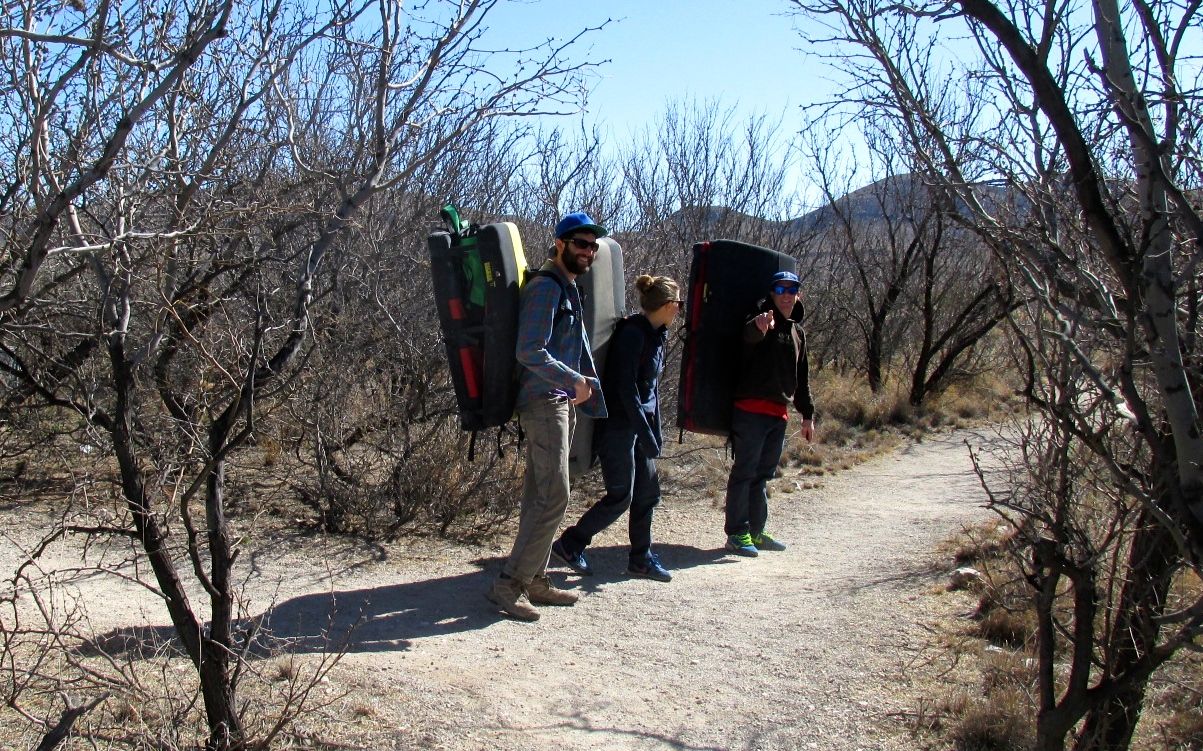
I passed – or rather, I was passed – by a group of rock climbers. They carry those large “crash pads” with them as a safety measure. They encouraged me to give it a try. I laughed! Me? I think the best safety measure is not climbing rocks – especially if you need a crash pad! I wished them a good climb, and they scooted on ahead of me.
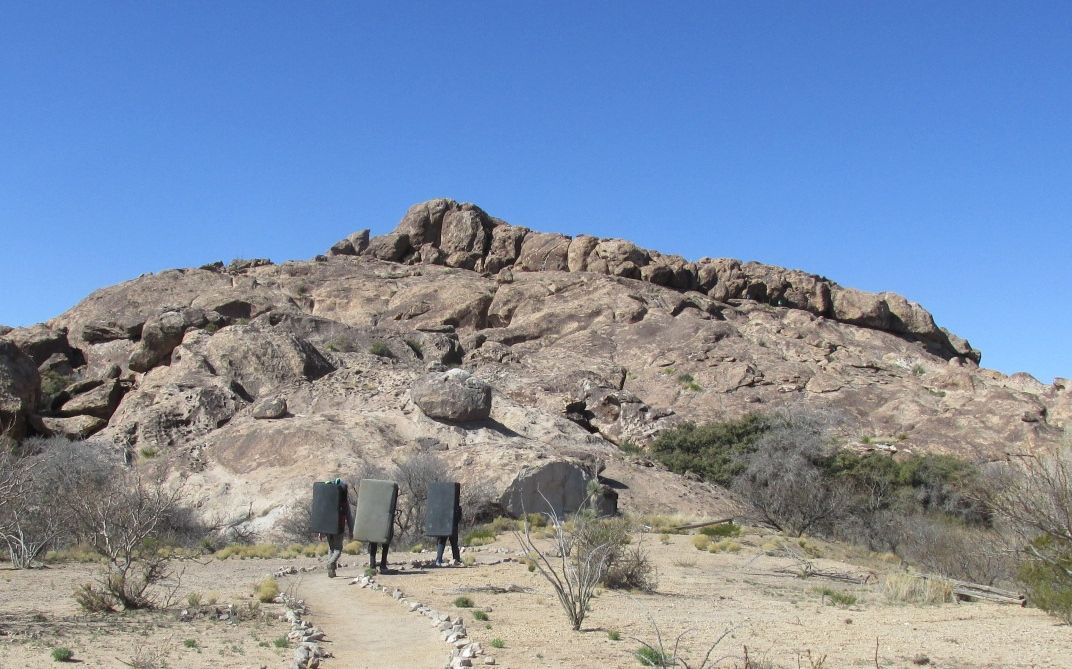
And, they’re off!
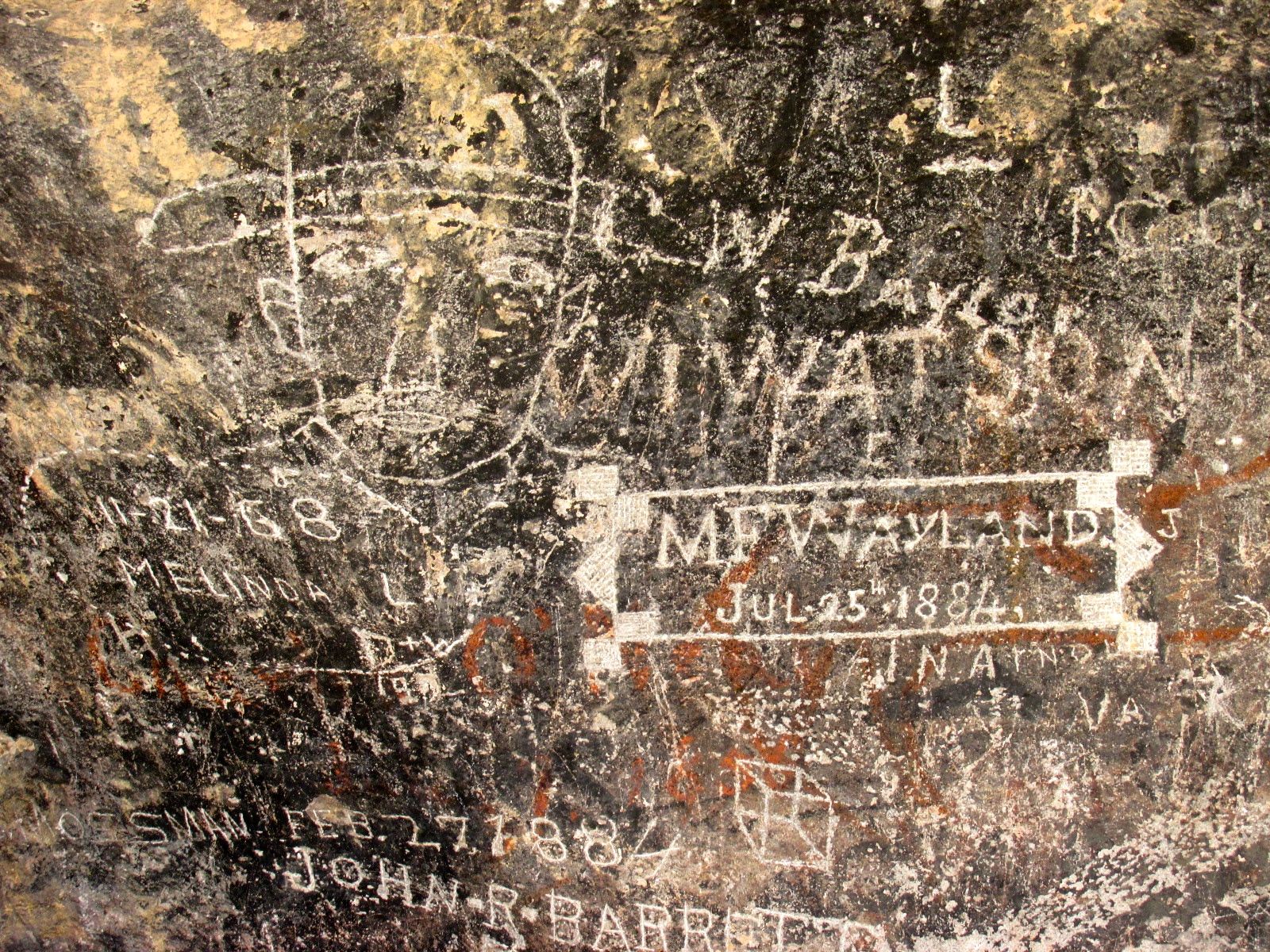
I found some more pictograms, but they were pretty much obliterated by the markings of visitors in the nineteenth century. But, even graffiti is a part of the historical record.
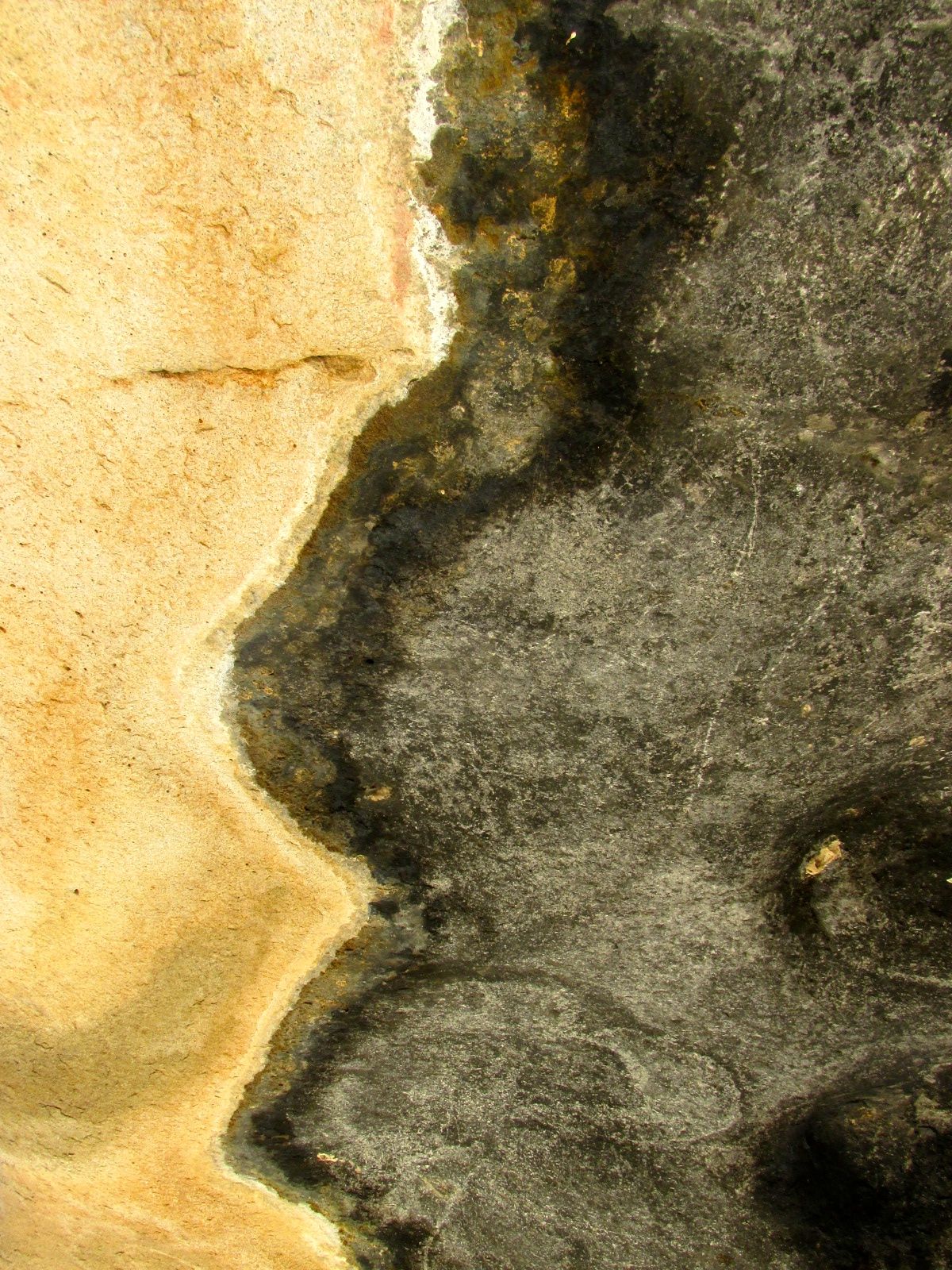
I found the different colored rocks to be eye-catching.
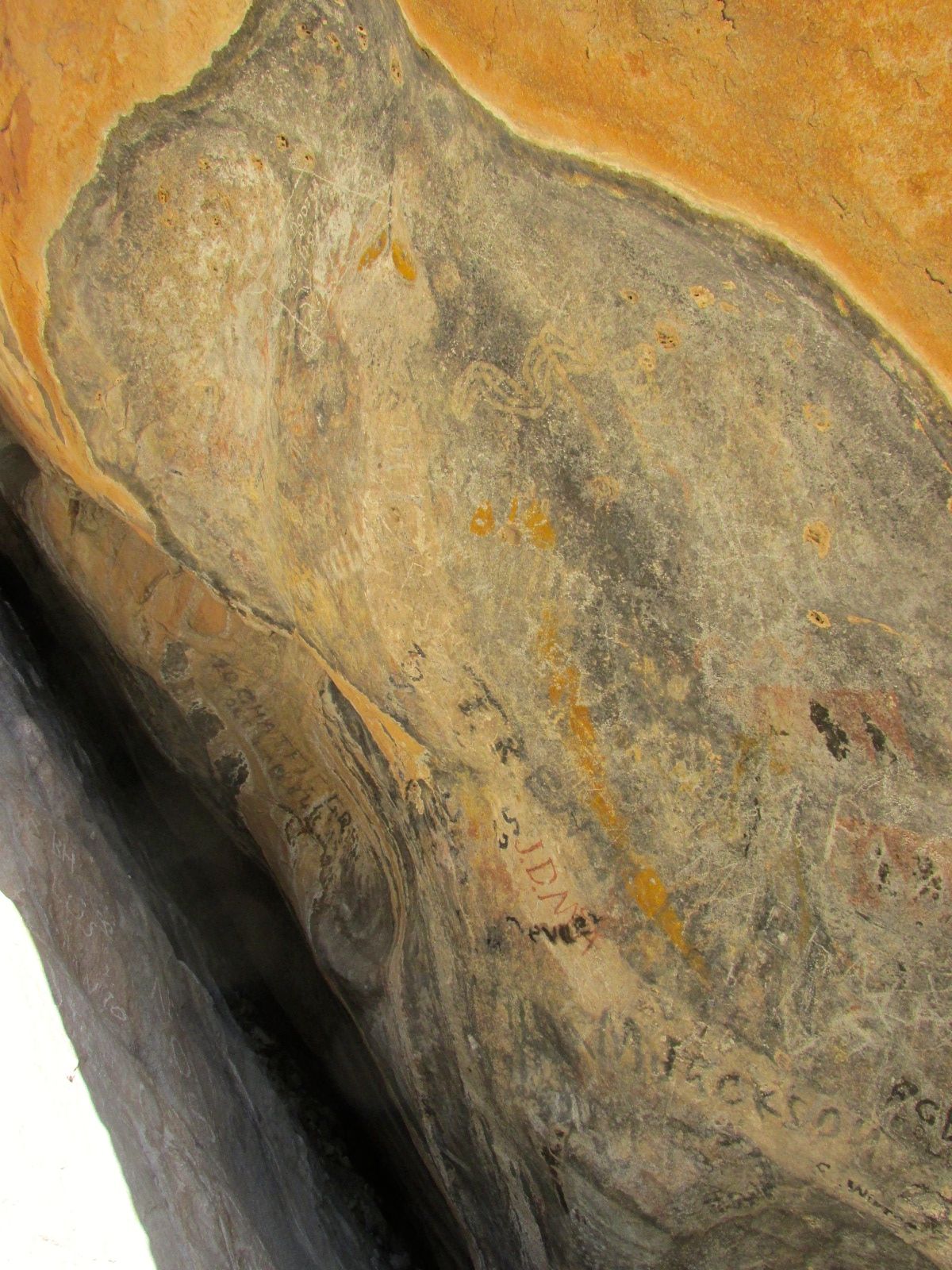
Colored rocks with graffiti.

I had one more site I wanted to see before I had to head back to the campground and get ready to leave.
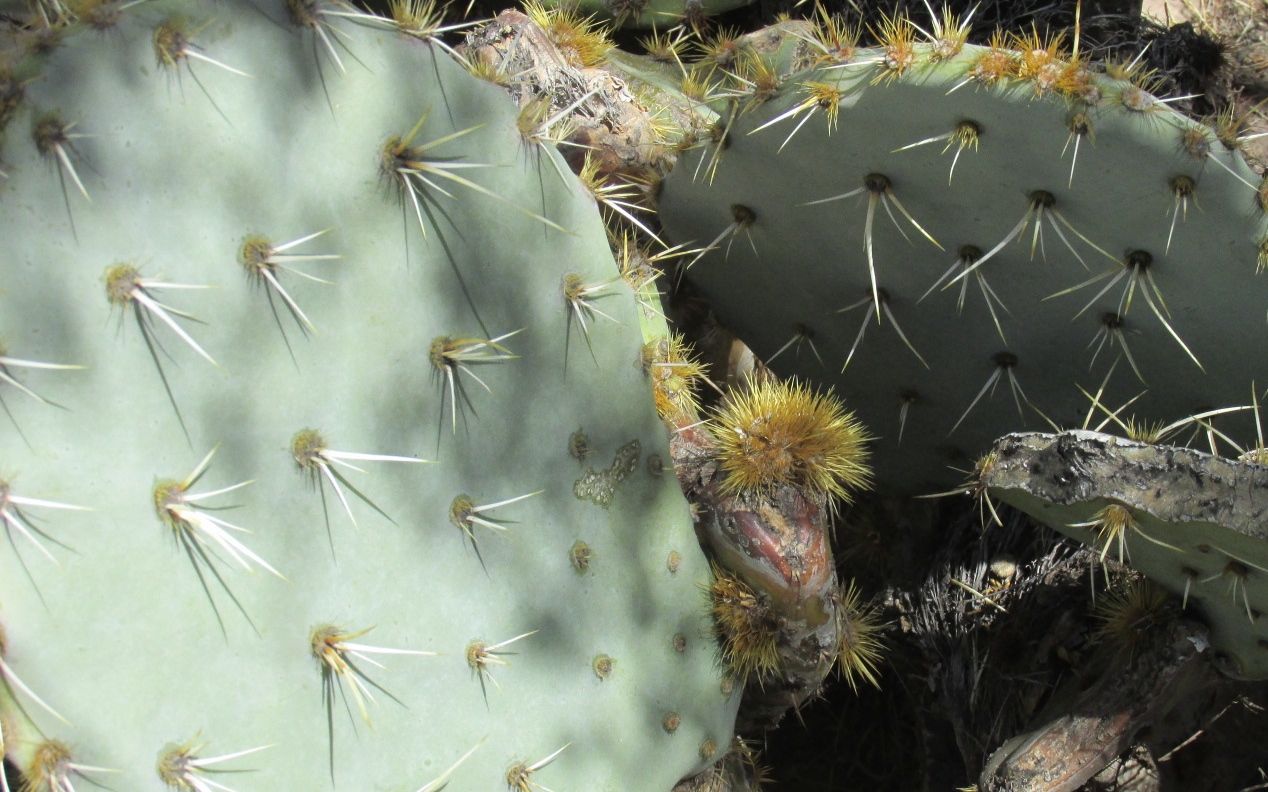
I was taken by the prickly pear. It would be interesting to see if those little nubs develop into the large lobes.
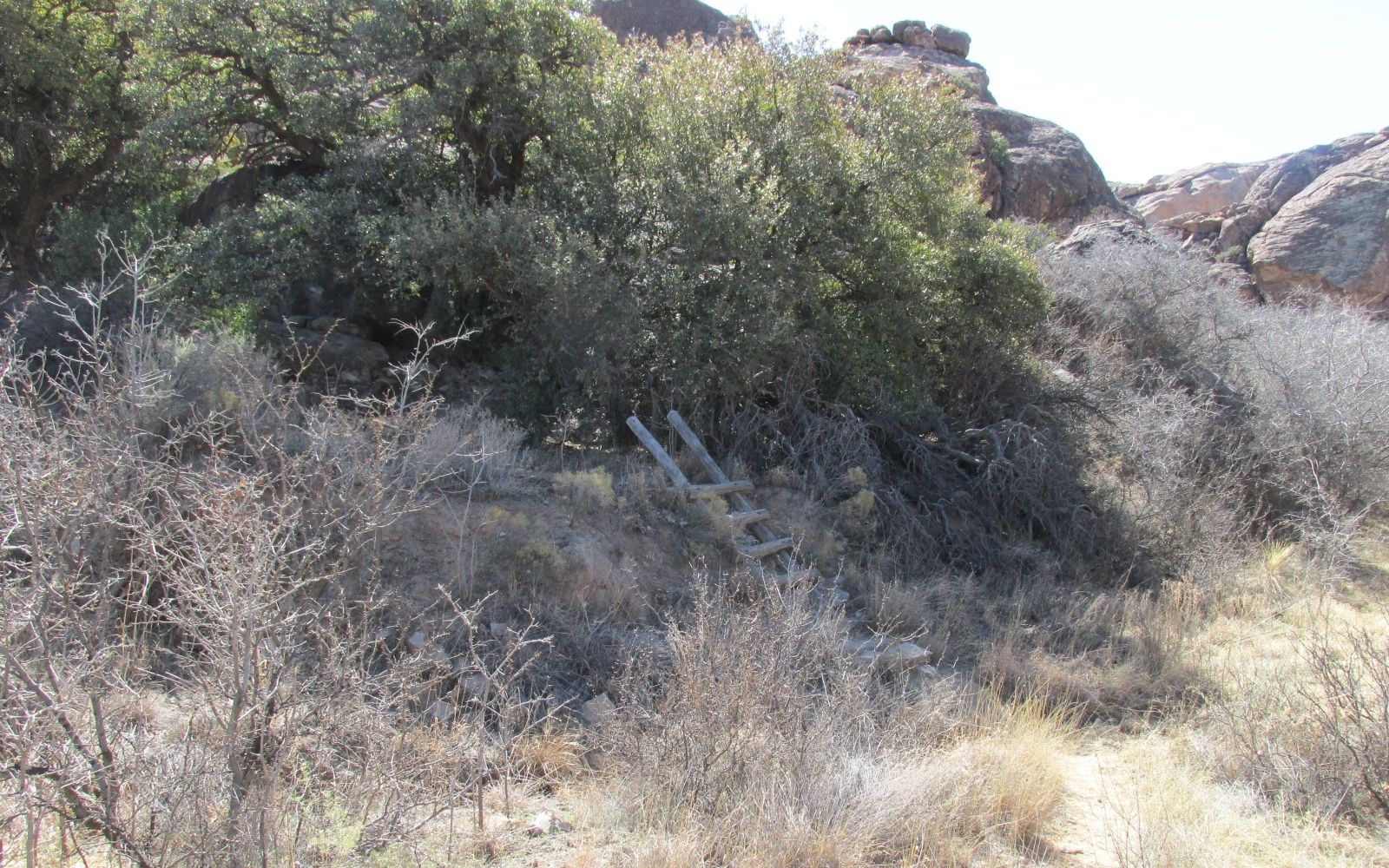
I was interested in this ladder. It was on the other side of a gate that restricted access to people with guides. A minute after I took this picture, a small group passed by. Those youngsters sure move fast! I tried to get a picture of them, but I couldn’t get them in frame.
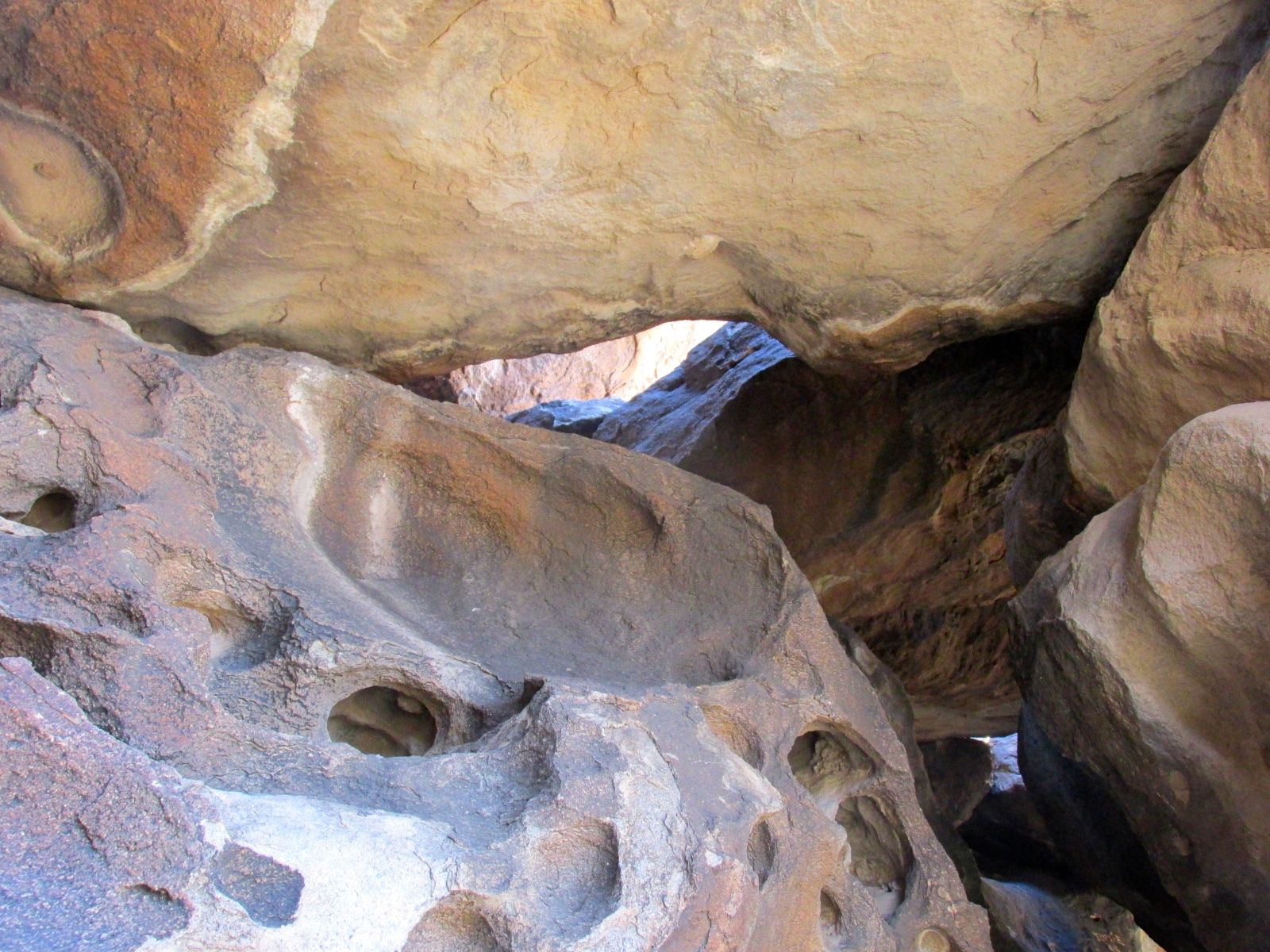
There were more interesting rocks along the way.
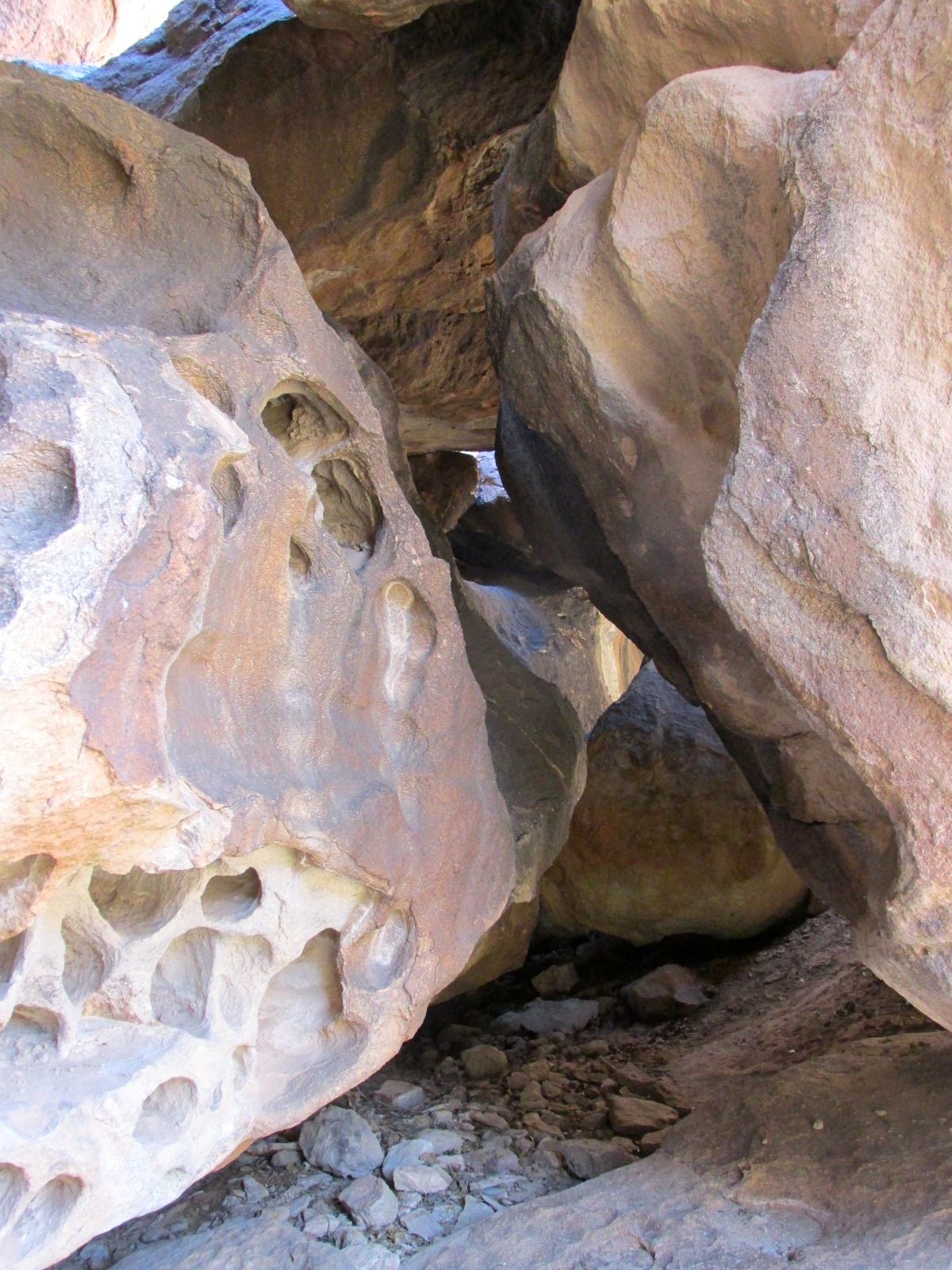
Lovely!
The last place I wanted to see was one that had a large pictogram. Just outside the site, there was a sign that had an artist’s rendering of it.
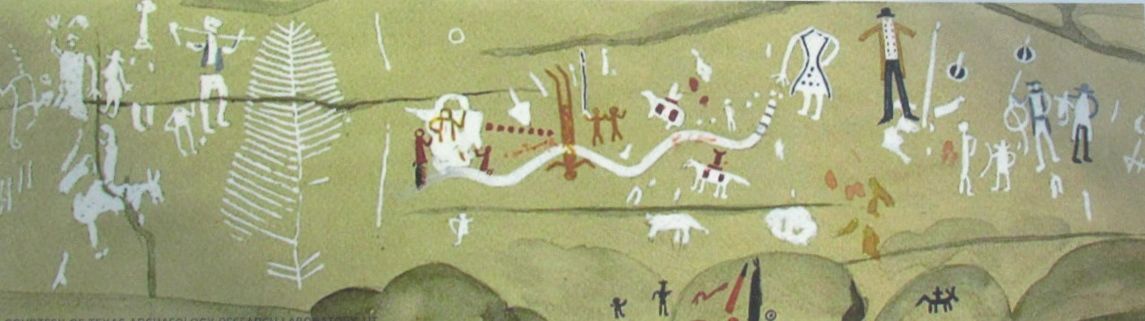
I knew that I wouldn’t be seeing it like this, but I did want to see what I could.
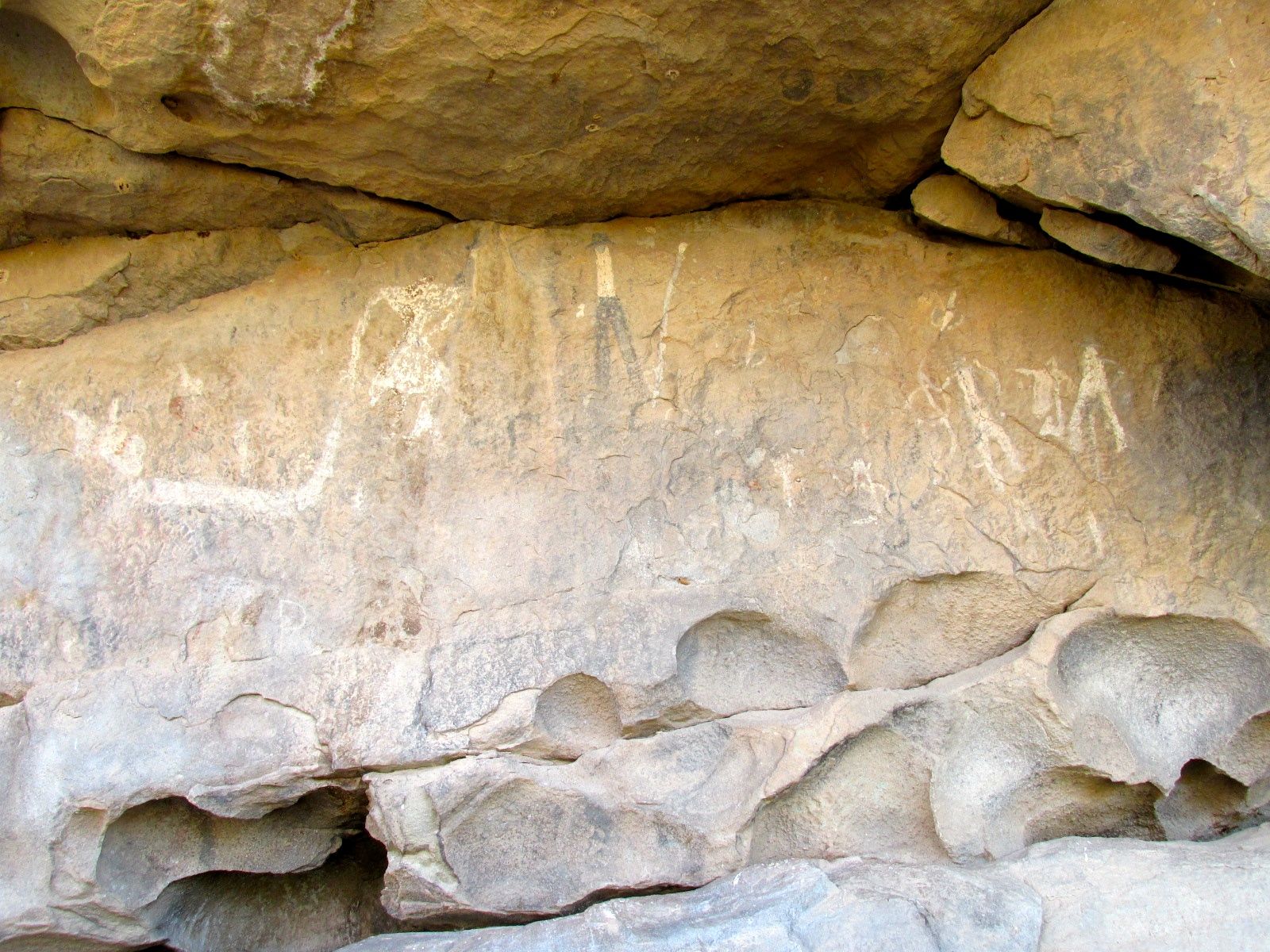
Yep, you can still make out the figures.
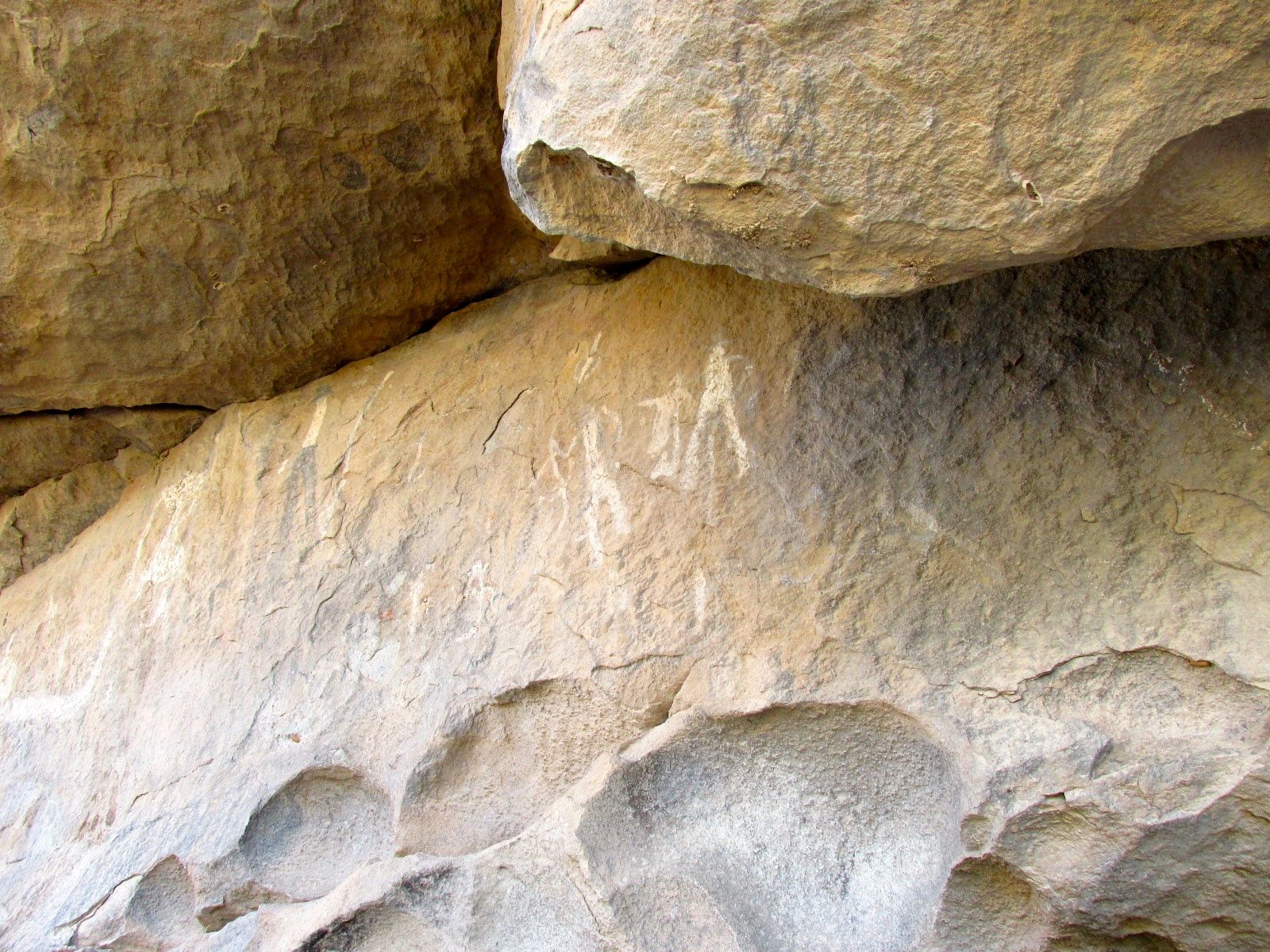
When you think about it, it’s kind of amazing that any natural pigments exposed to the elements would be visible.
I really would have liked to have seen the huecos, but they were in the areas that you needed to have a guide. However, I did see some huecos in the making.
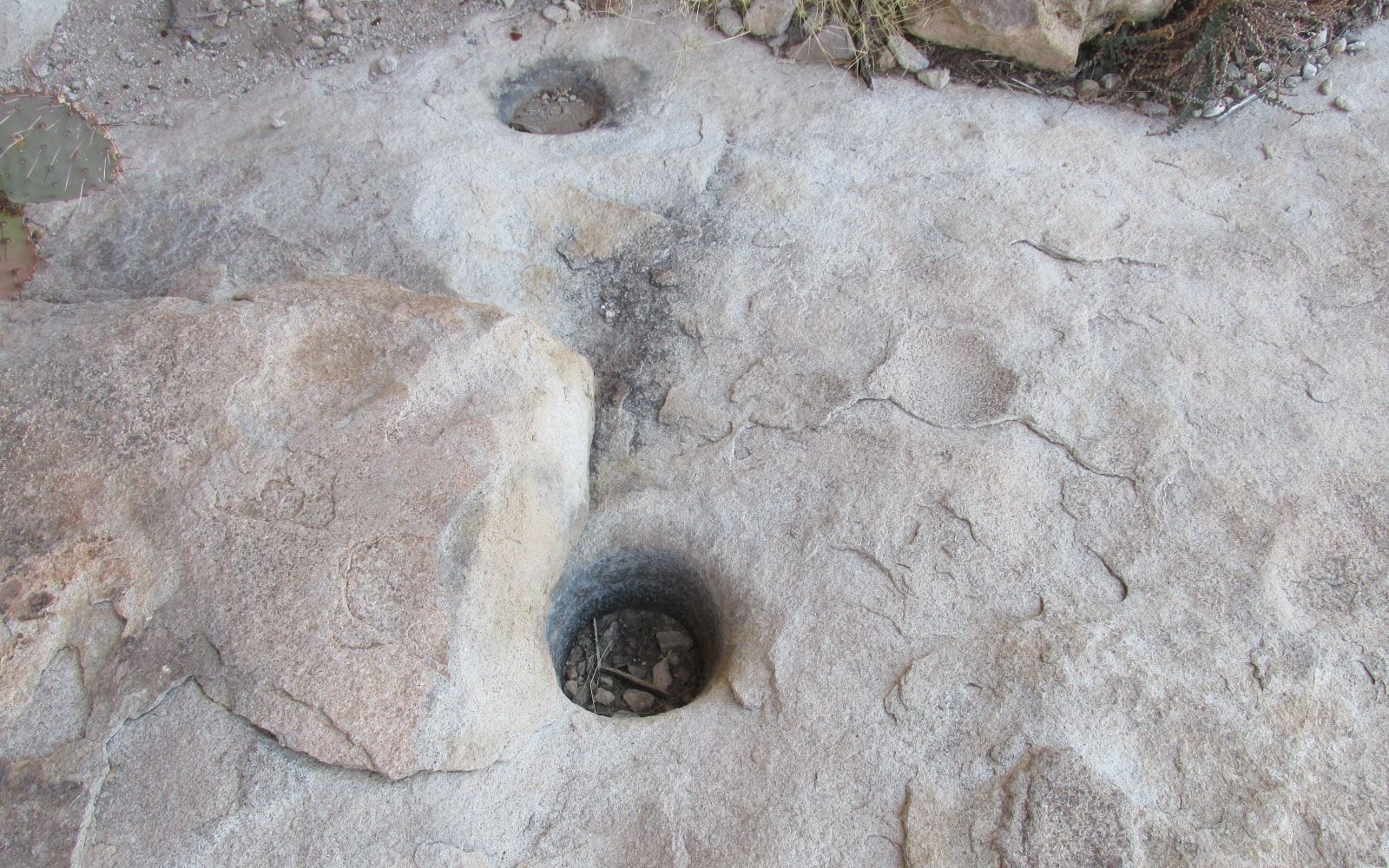
I suppose that they would hold a gallon or so. That would be life-giving in the desert.
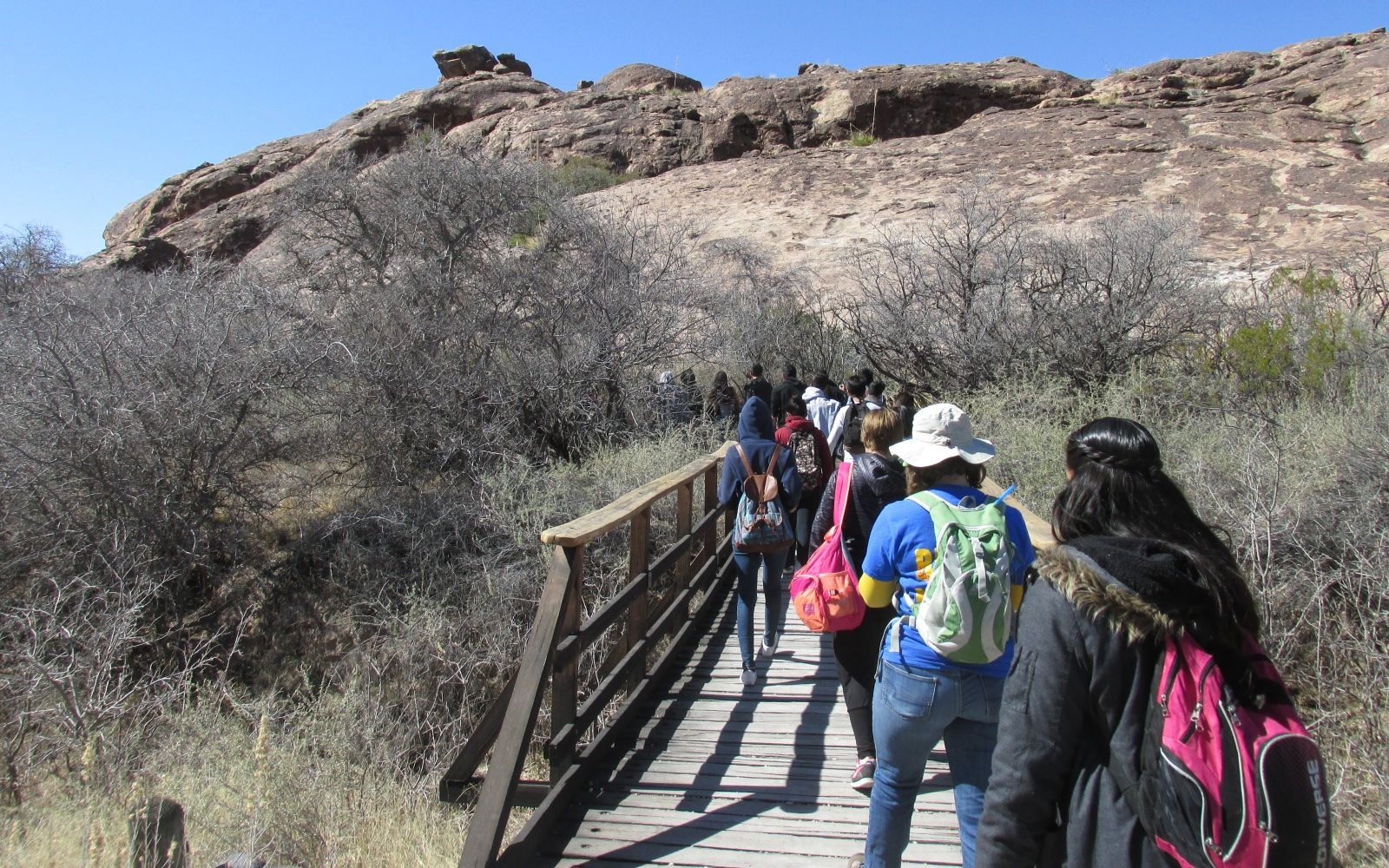
On my way back to the campground, I passed a couple of school-group field trips. I wonder how many field trips I’ve taken kids on in my 30 years of teaching? I smiled and waved and was happy it wasn’t me.
When I got back, an interesting rig pulled in to the site right across from me.
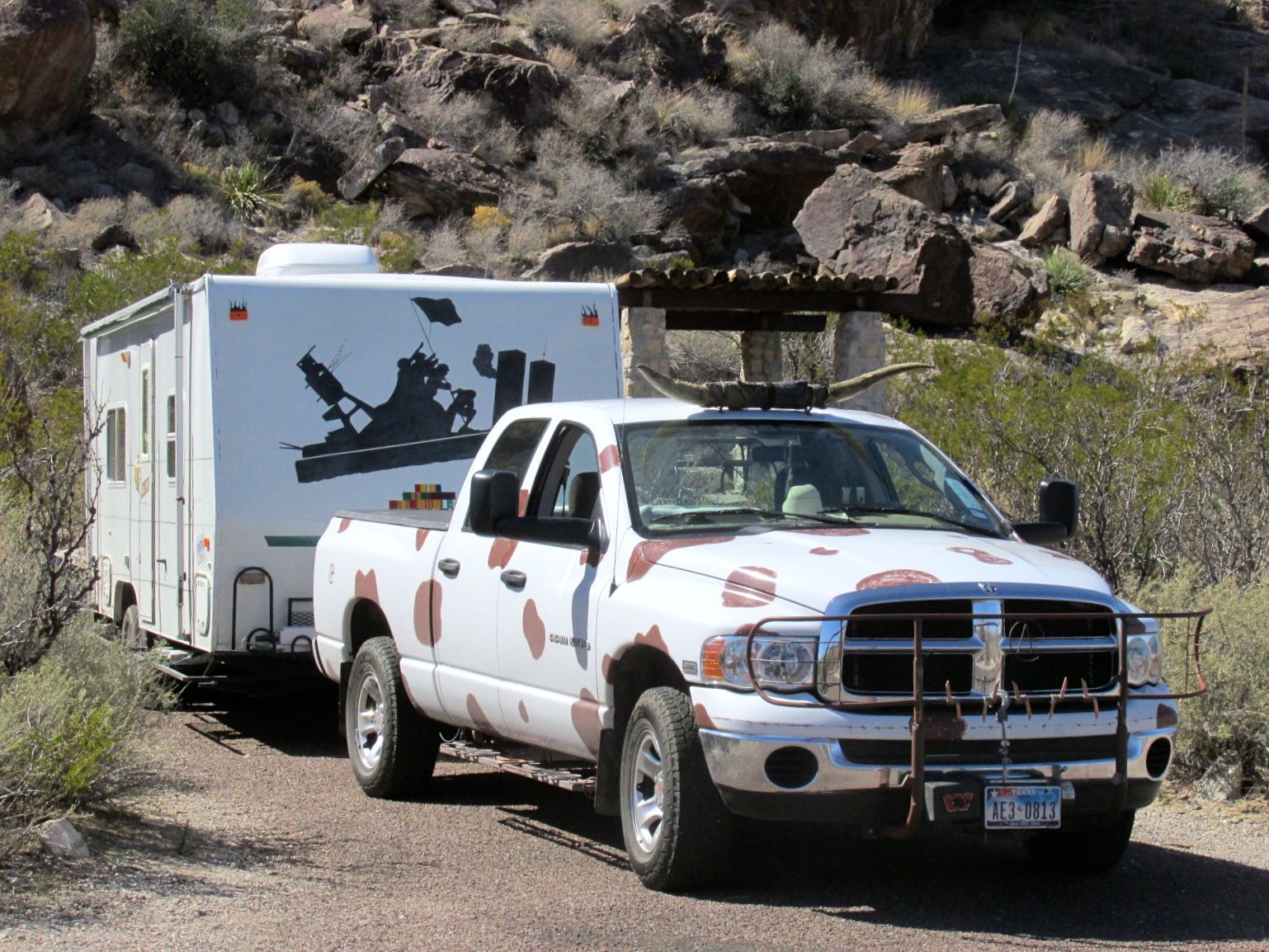
It’s gotta be Texas!