Canyon de Chelly from the Canyon Floor

I have to admit that I had to tamp down a bit of resentment that we had to take a tour if we wanted to enter the canyon. Of course, the Navajo have a right to make a living and if it I were in the same situation, I would not enjoy have hordes of visitors walking around in my back yard. However, that being said, when the vehicle you are riding in looks like this:
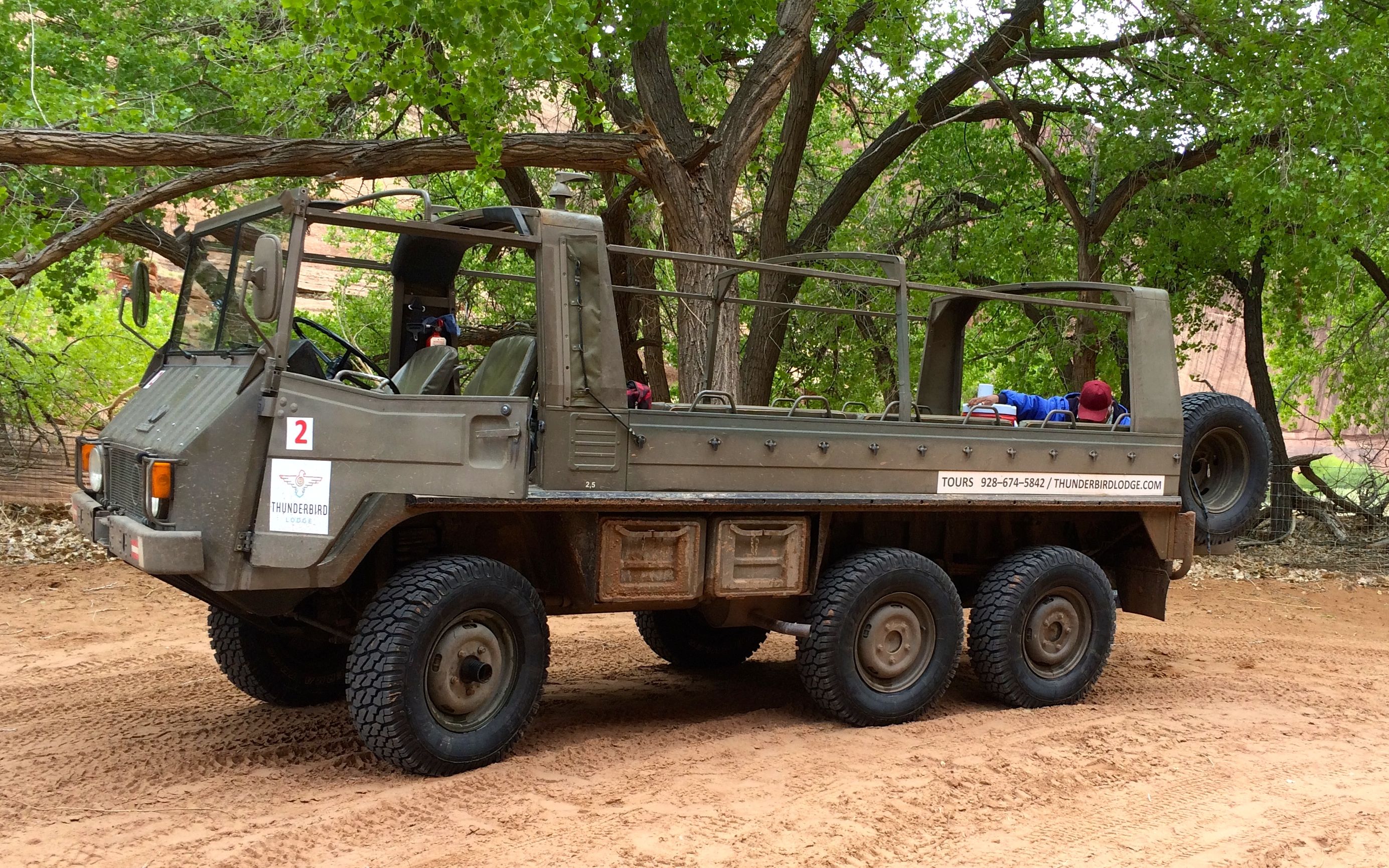
tour vehicle

and you needed all the power and wheels it had, I am just as glad I wasn’t allowed to drive my truck into the canyon.

For one thing, this is what the roads looked like:
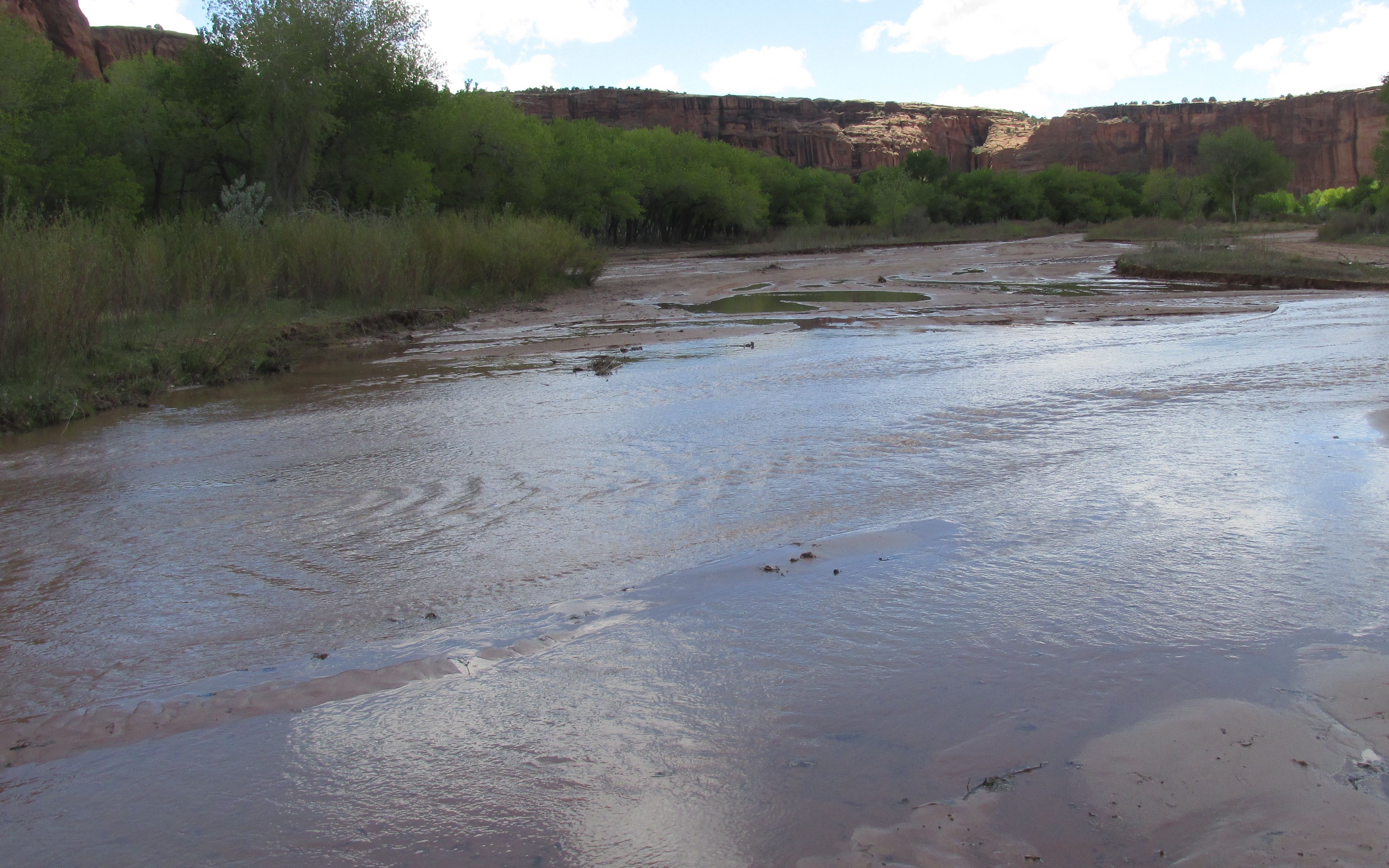
The road - stream

We drove right up the creek or river that was flowing down the canyon! Some places had more recognizable roads, but splashing through the water was the norm.
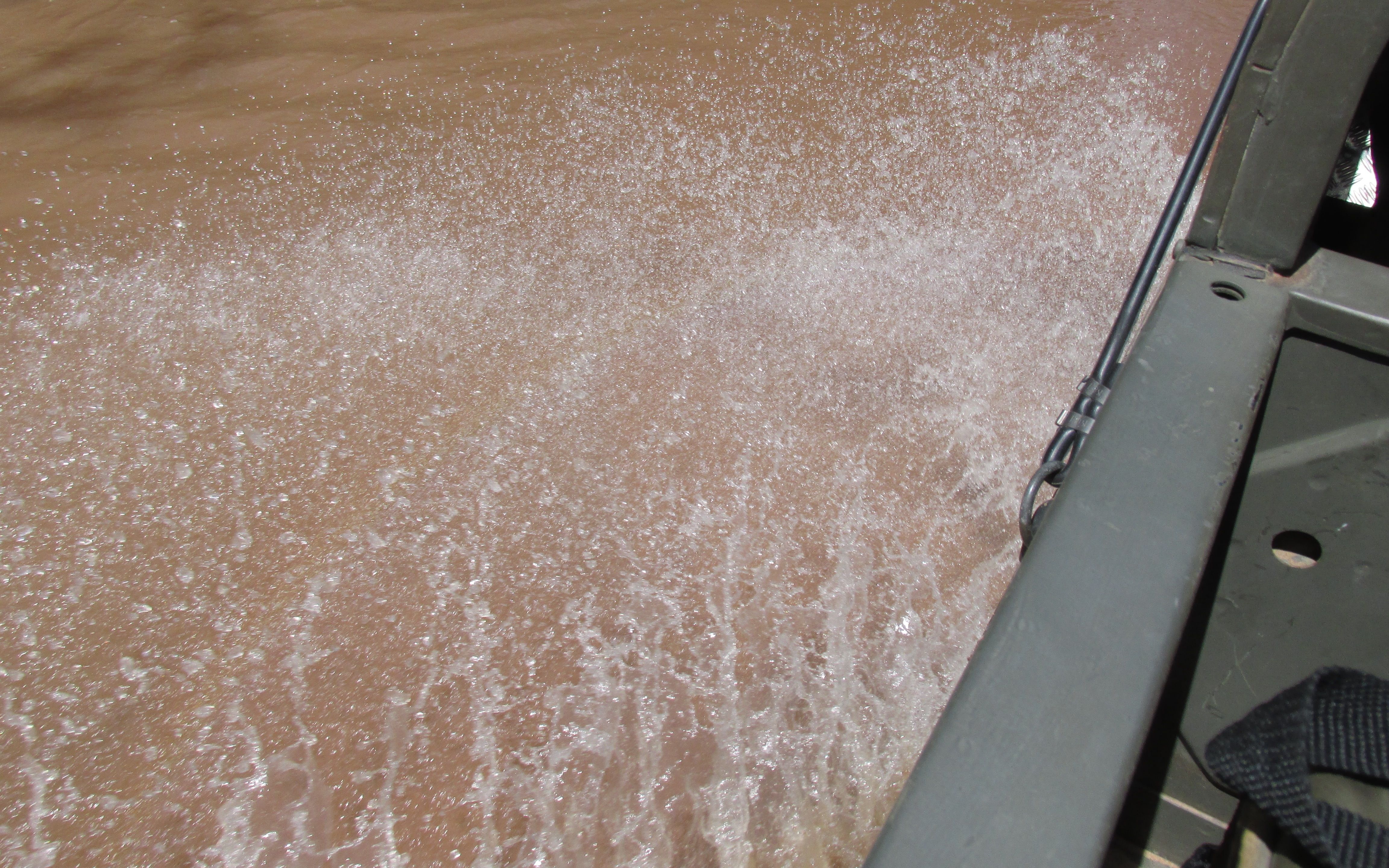
Going through the water

And I really appreciated the seat belts that were provided. It was not exactly smooth going.
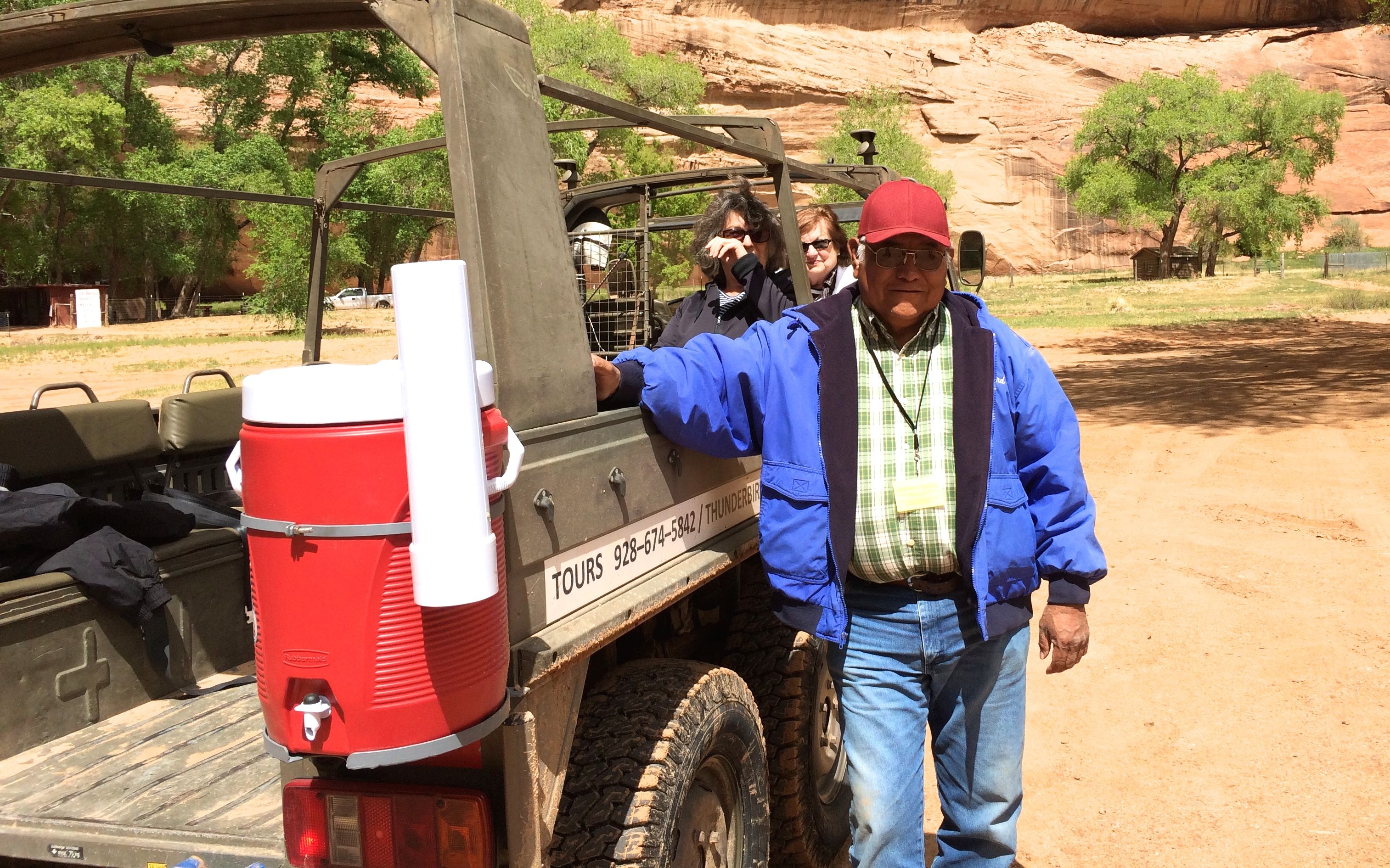
David the guide

There were five of us on the tour and George was our guide. He did a good job of pointing out all of the main points along the way. The other people on the tour were from California, and they got to talking with him about the state. He told us that he was stationed in San Diego when he was in the Navy. Somehow it came up that his uncle had been one of the code talkers during World War II. We were all quite impressed.

We passed herds of horses from time to time. I asked George if they were wild horses. He said that they belonged to families and that they were branded so that they knew whose horse was whose.
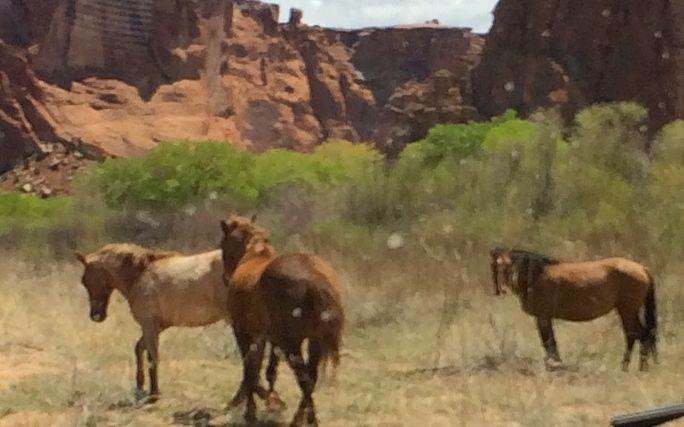
horses1

I was really surprised at how many ruins there were in the canyon. We passed by so many that George didn’t identify. The first one we stopped at was called “First Ruin.”
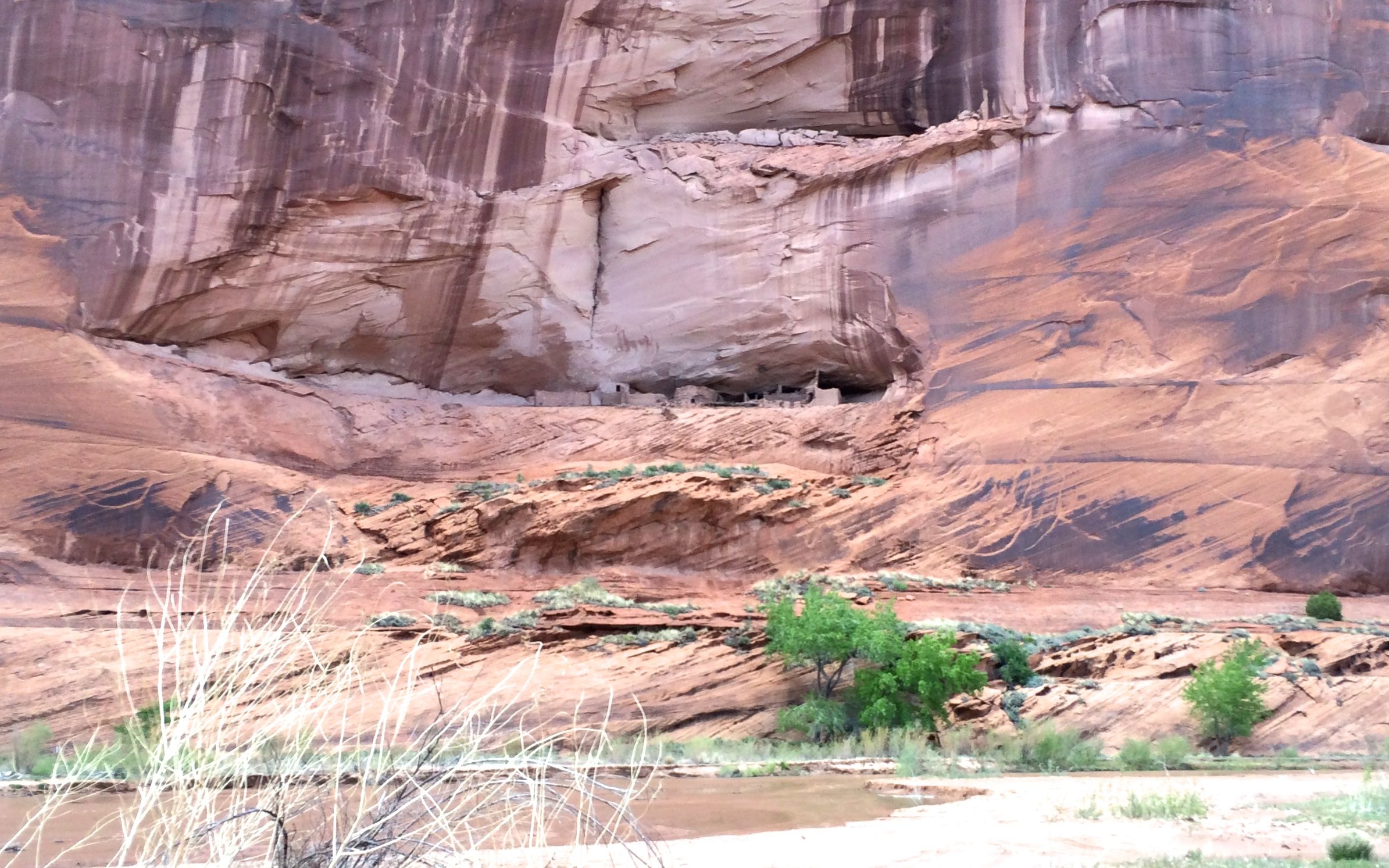
The First Ruin

These are the ruins of the Anasazi. They were ruins when the Navajo arrived in the canyon.
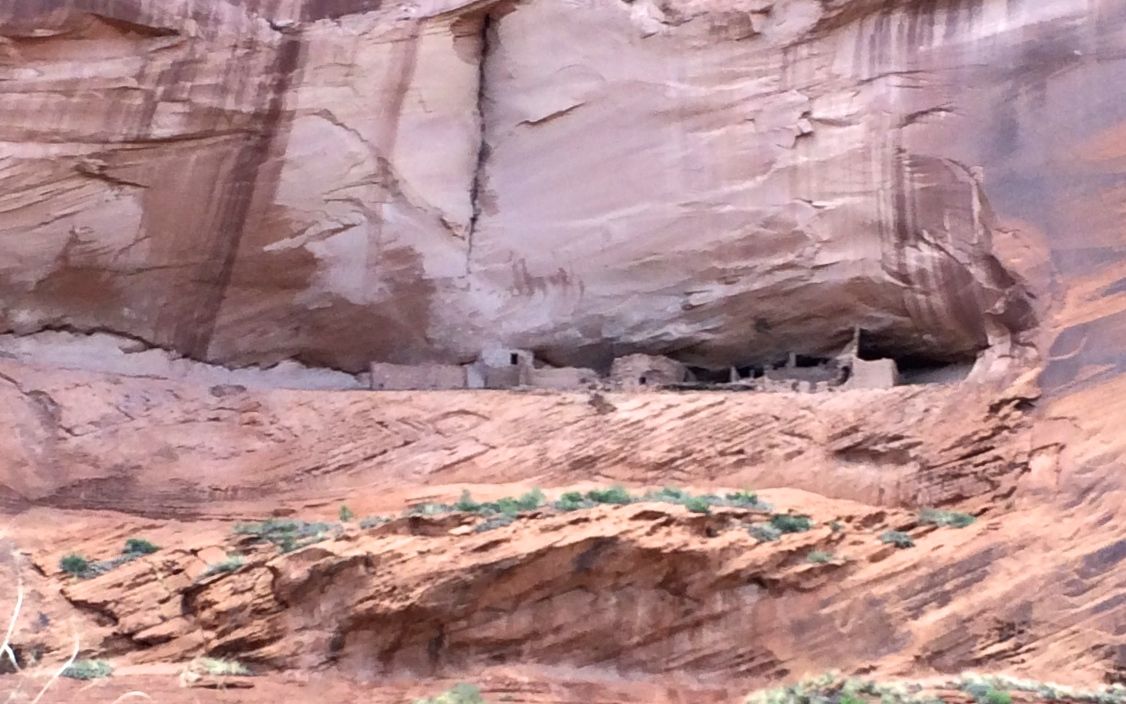
The First Ruin close up

They would live up on the ledge and then farm the canyon floor below.
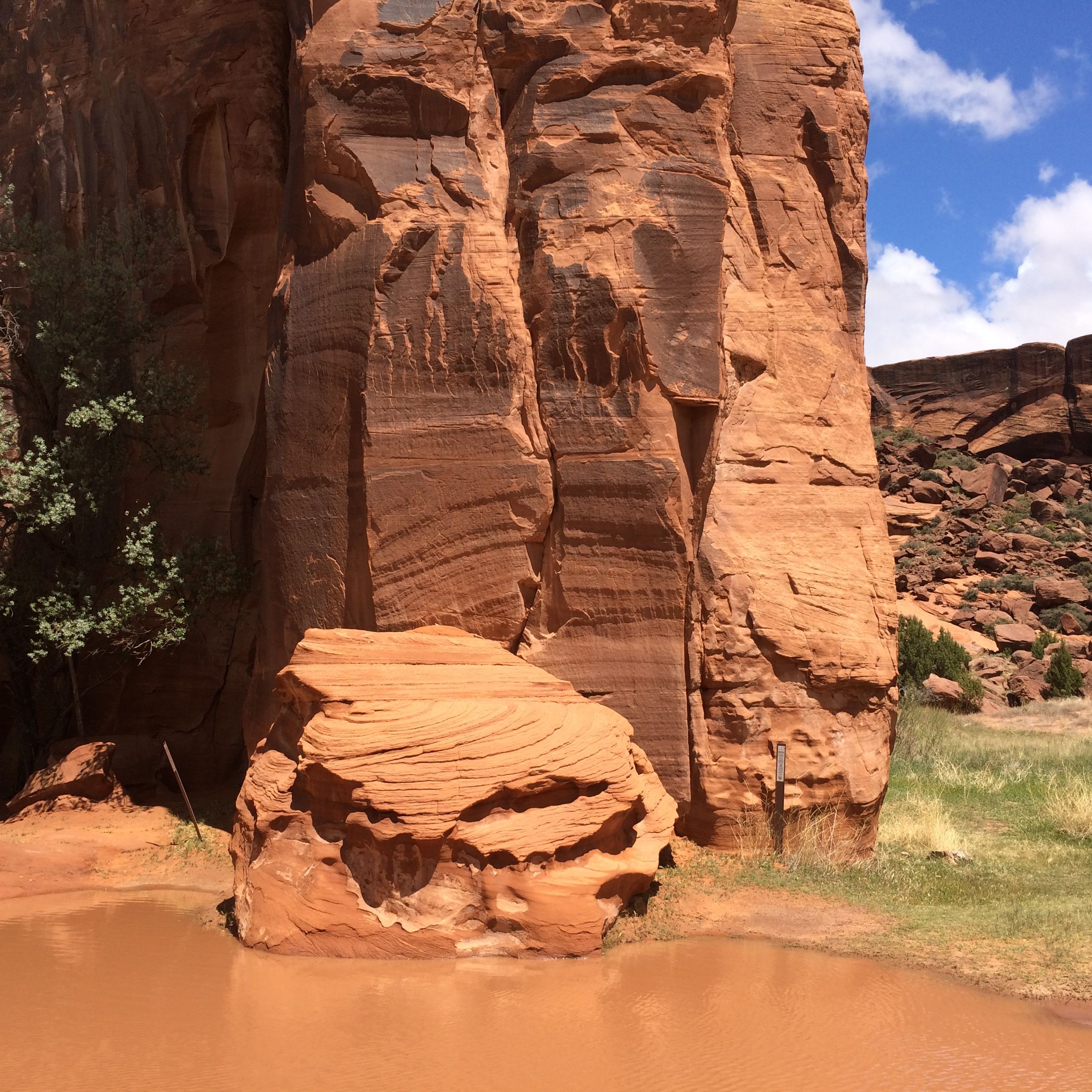
Petroglyphs first stop

I almost thought George was kidding us when he stopped at this rock to point out the petroglyphs. But, if you look long enough and carefully enough, you start to see them.
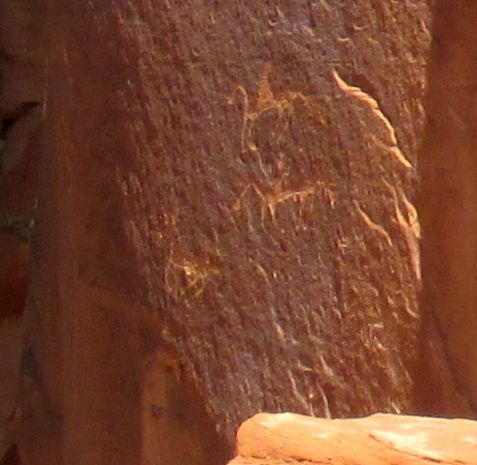
Petroglyps close up left

This panel is on the left side. George told us that these were carved by the Navajo. You can tell, because they have horses.
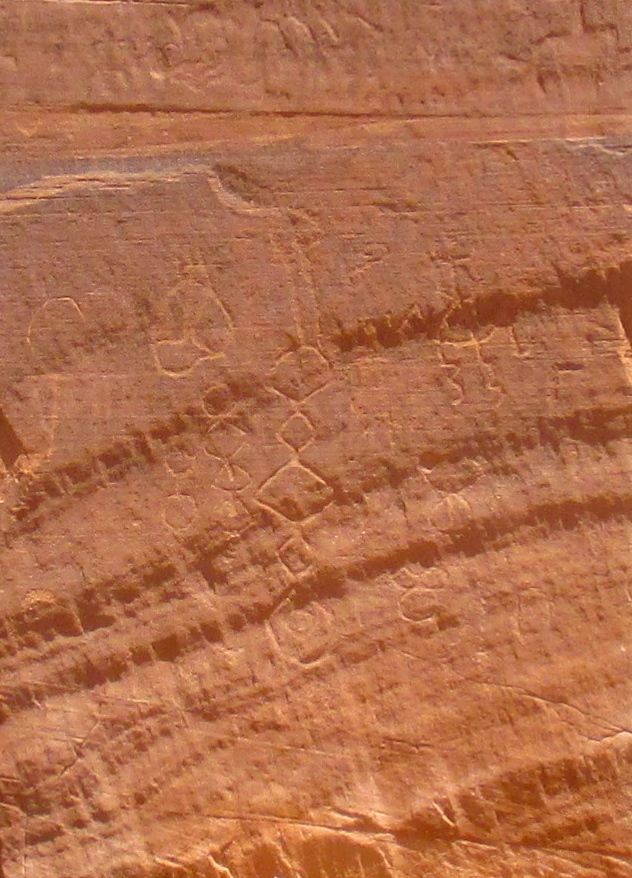
Petroglyphs close up center

This panel is in the center. If I remember correctly, he said that these were carved by the Hopi.
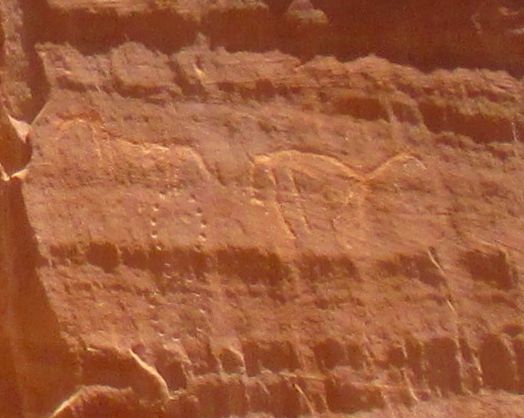
Petroglyphs close up right

These carvings were on the right. They look like more horses to me. The figure eight reminds me of the analemma – the path that the sun takes in the sky during the year.
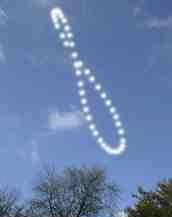
analemma

In fact, have you see the Tom Hanks movie where he tracks time by plotting the sunlight that comes through a hole in a cave?
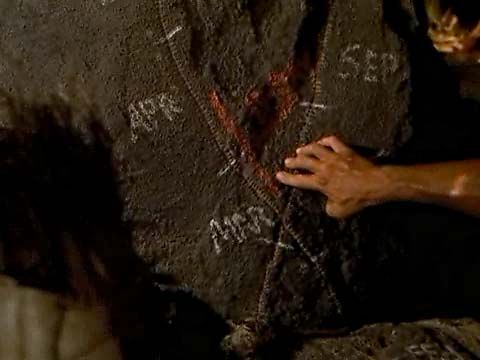
analemm-in-cast-away

I wonder if they were making some sort of a calendar?
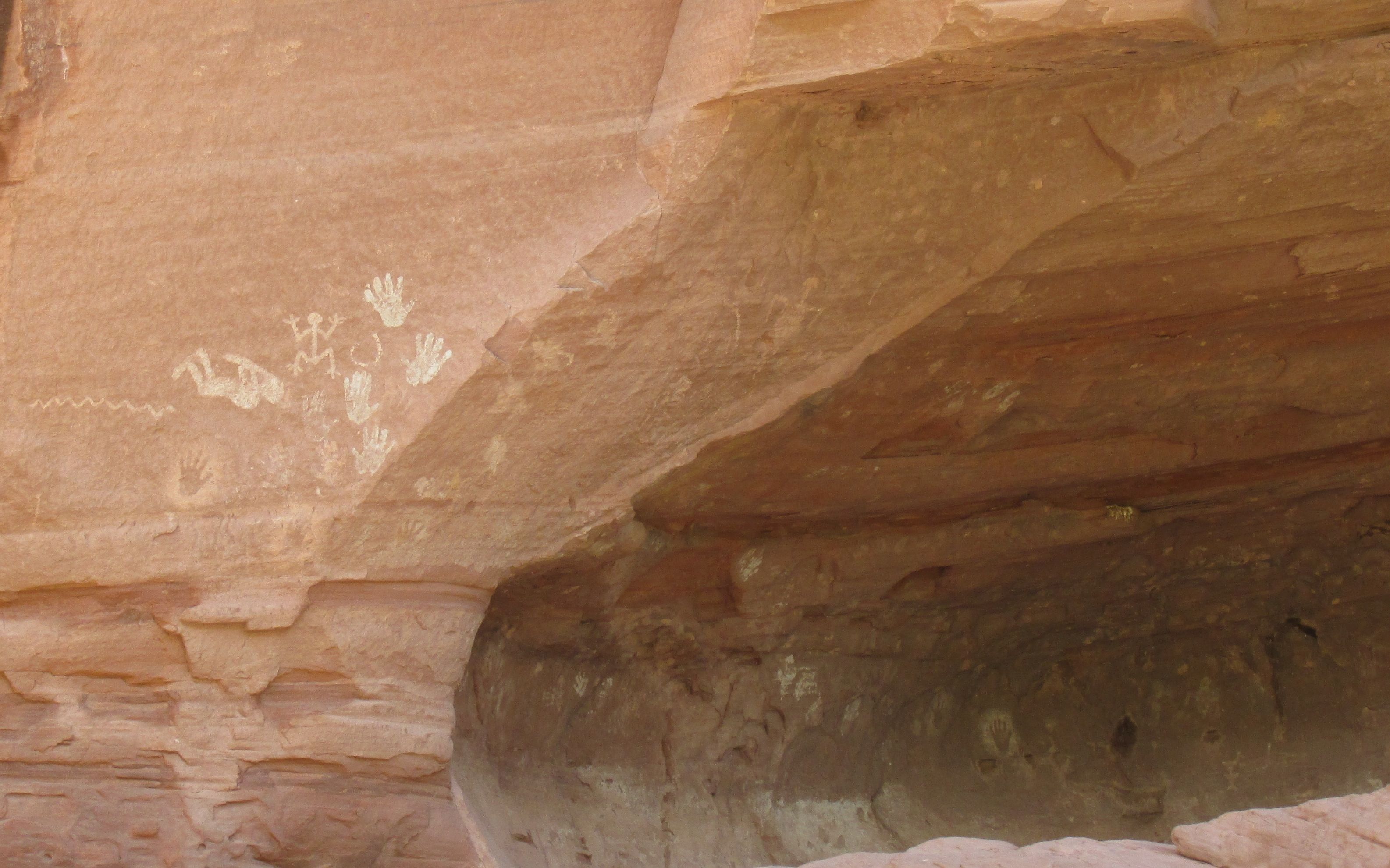
Kokopelli Cave large

Our next stop was Kokopelli cave. It was filled with pictograms, including Kokopelli himself.
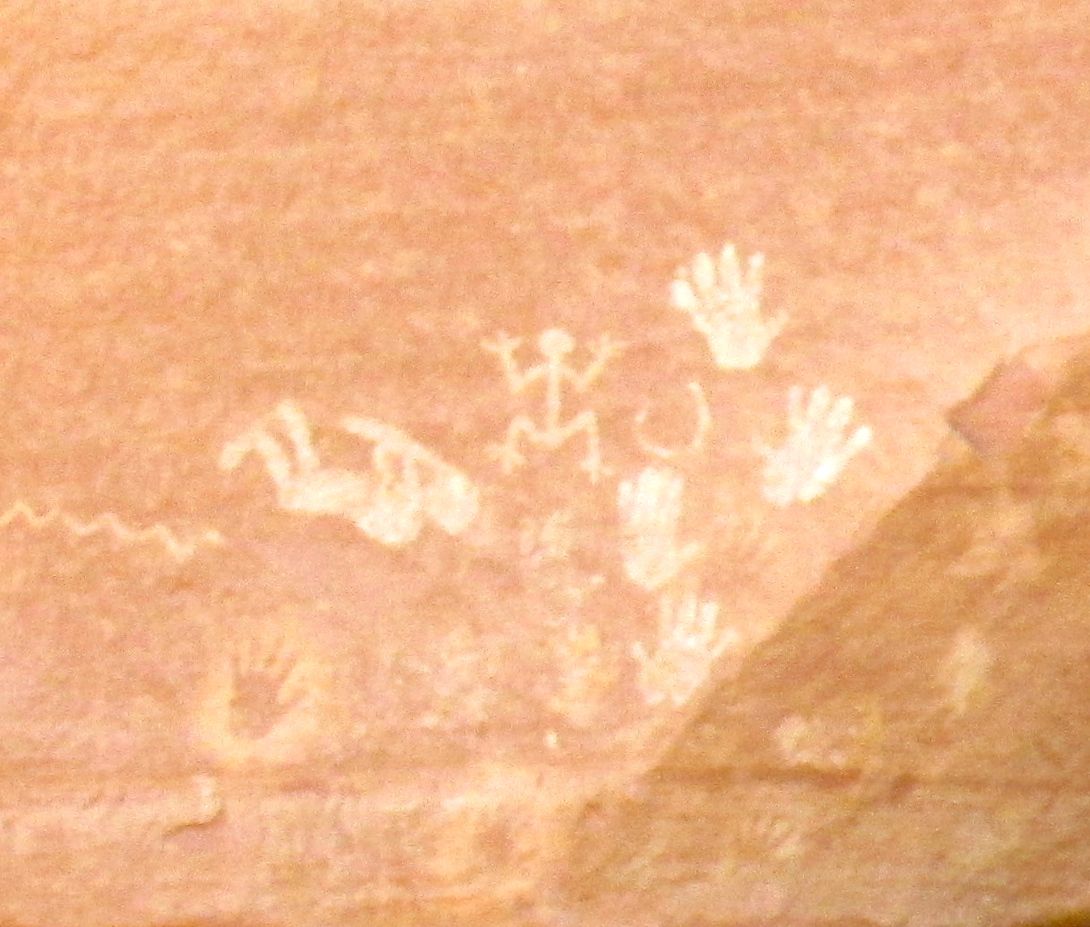
Kokopelli Cave kokopelli close up

You can see hunch-backed Kokopelli playing his flute.
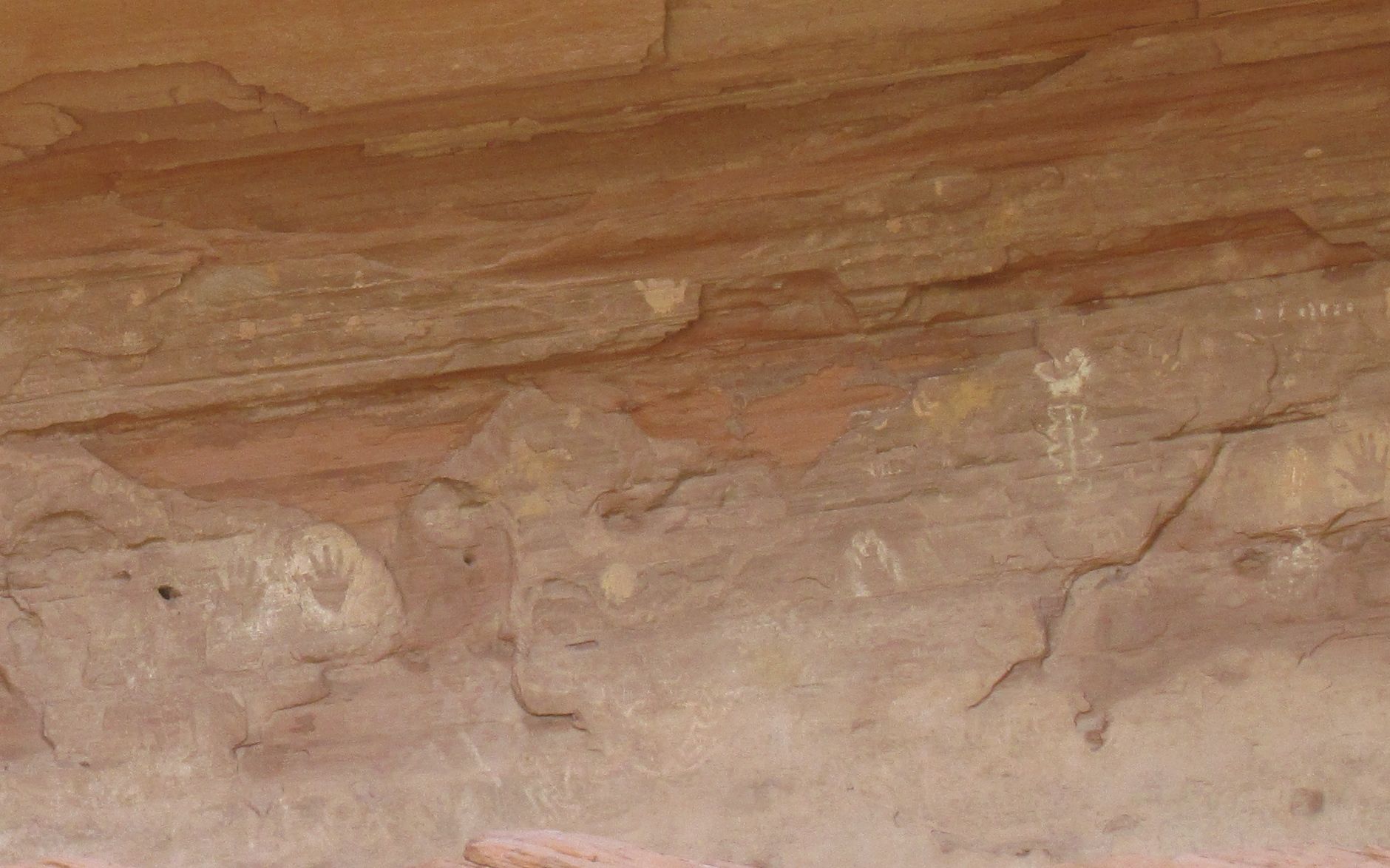
Kokopelli cave with hand print glyphs

The inside of the cave was full of handprints that were created by taking the pigment in the mouth and spraying it around the hand.
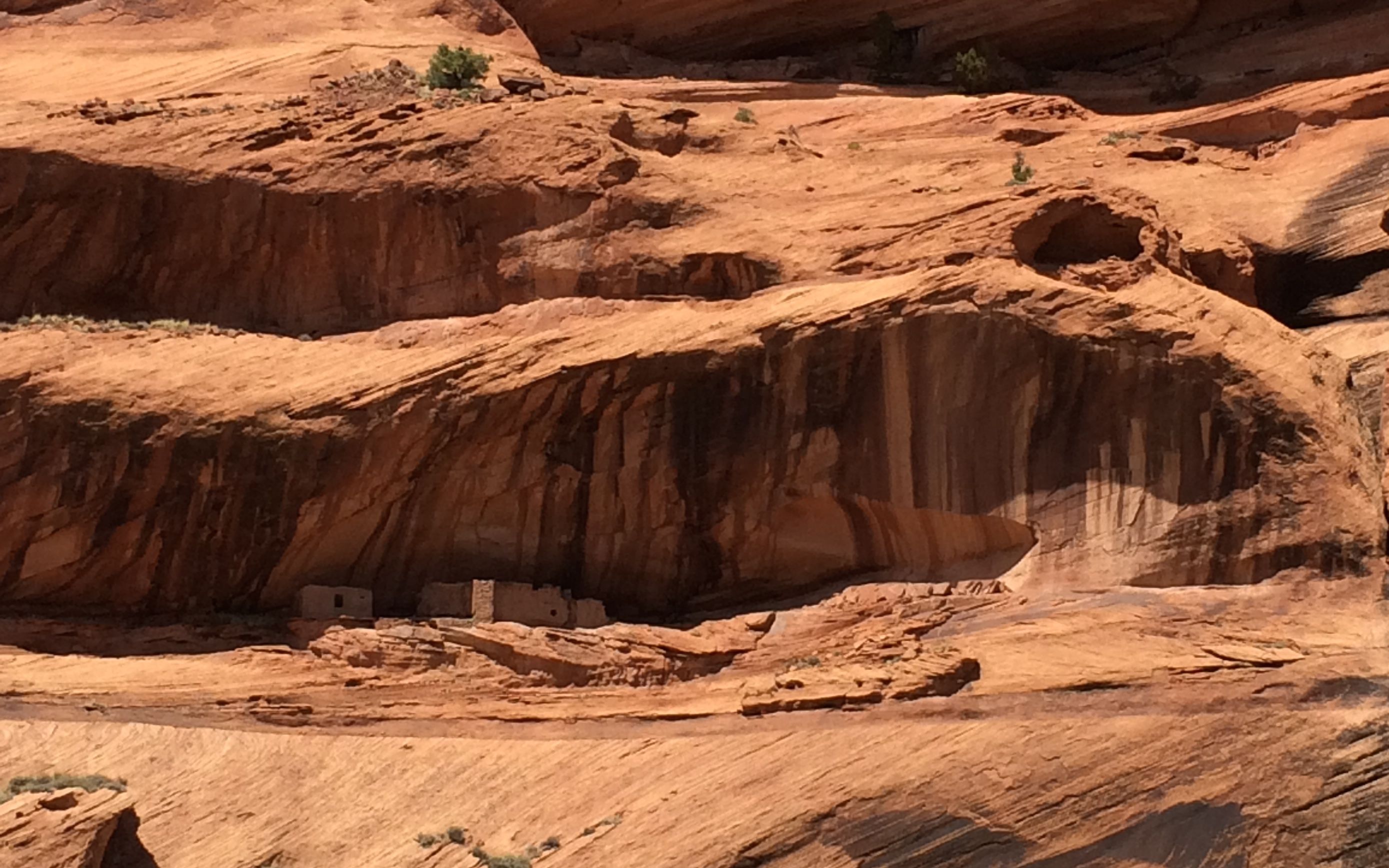
Ruin

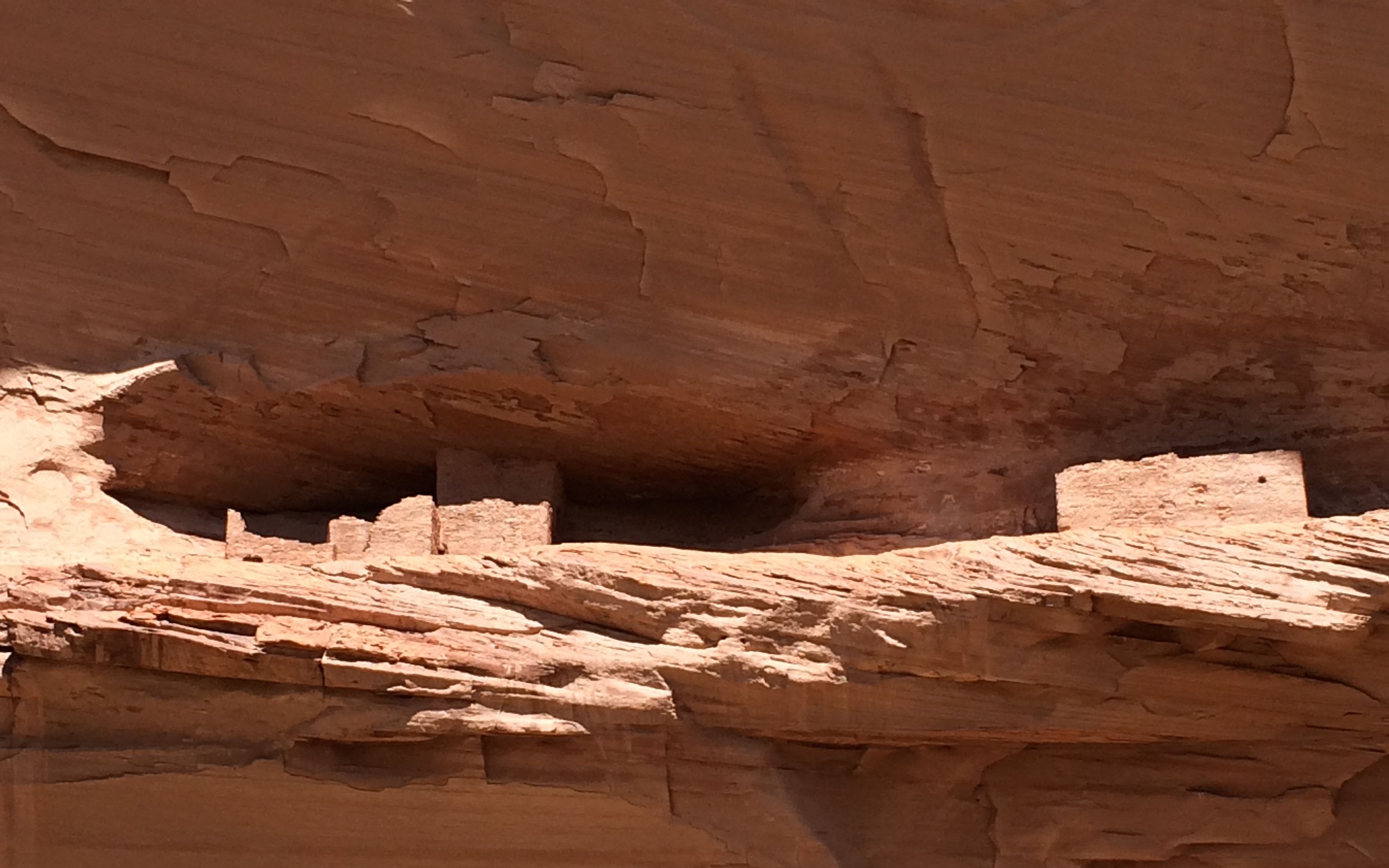
This is another ruin that we passed without explanation. I am surprised I managed to get a photo of it. The Anasazi located their building carefully, on the sides of the canyons that got the most sun.

I wish I had selected my seat in the vehicle with the same care. Every time we stopped to look at something, I had to unbuckle, stand up and turn to see what we were looking at.

The Navajo today are also taking advantage of the sun. Their farms are down in the canyon, and they move down from the rim once the growing season starts.
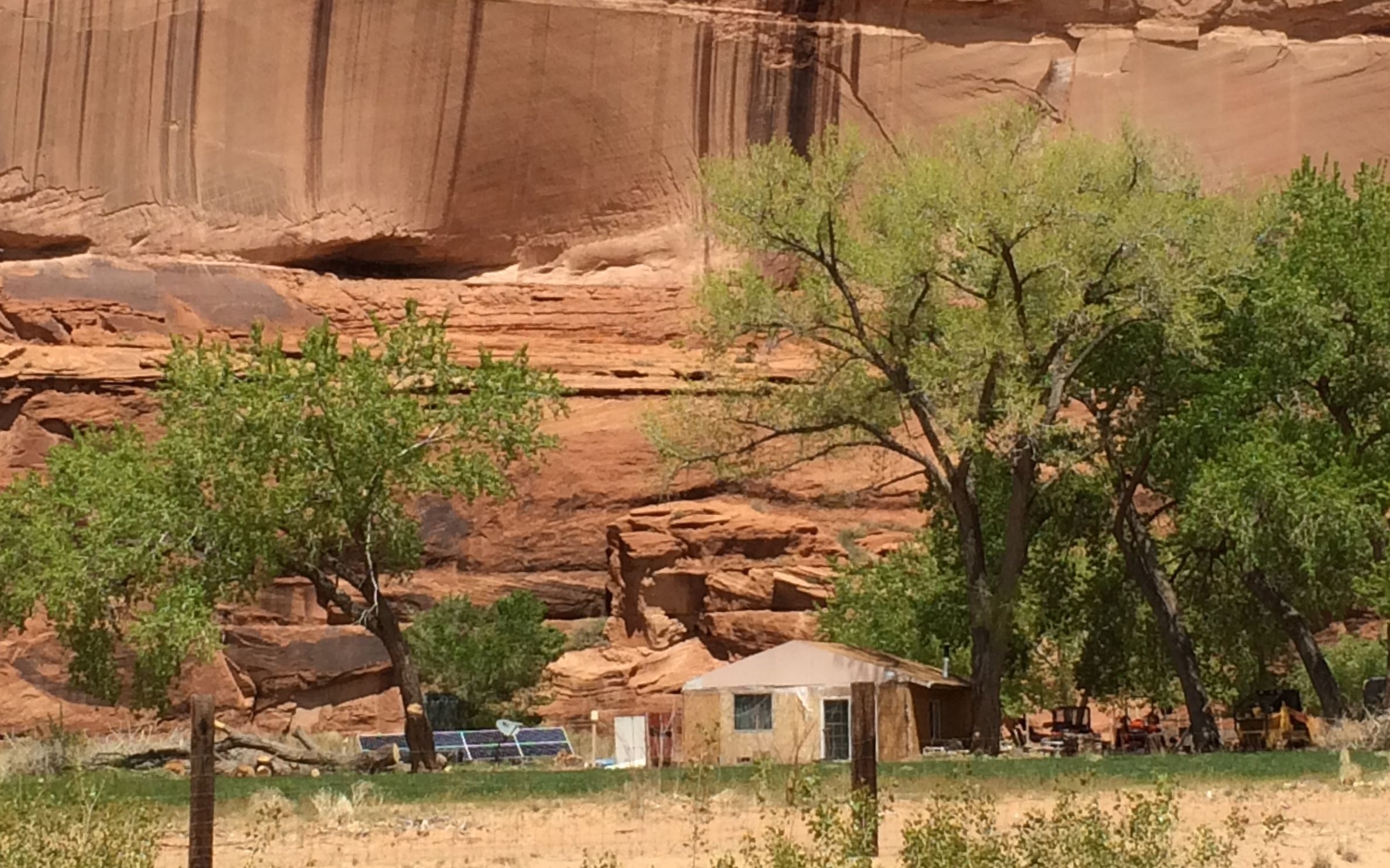
Summer home with solar power

You can see that this house, which appears to be based on the hogan, has solar panels and a dish antenna. I don’t know what they pick up down here, but it must be something – otherwise why would they have a dish antenna?

I asked George about how the land was allocated. Did the Navajo nation divide it up? Did they sell it to the families? He told me that after the Navajo were driven out of the canyon and forced to walk to the US Army’s Fort Sumner concentration camp on New Mexico’s Pesos river in 1863, they began to return in 1866. When they got there, they staked their claims to the land. Eventually, ownership was formalized and families now have title to the land. If you would like to read more about The Long Walk, click here.
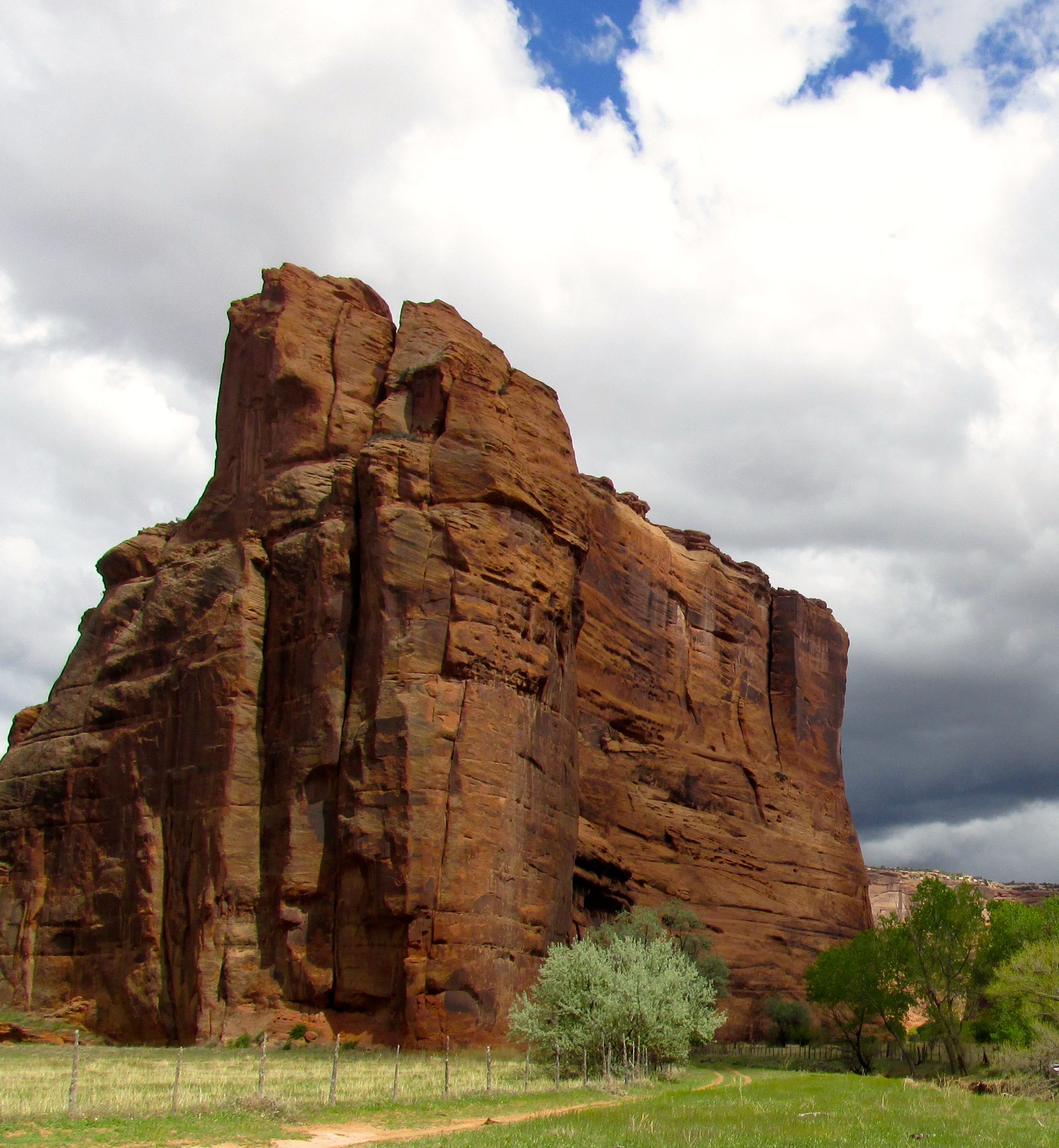
Navajo fortress

This is the Navajo fortress, where many of them hid when Kit Carson was trying to drive them out.
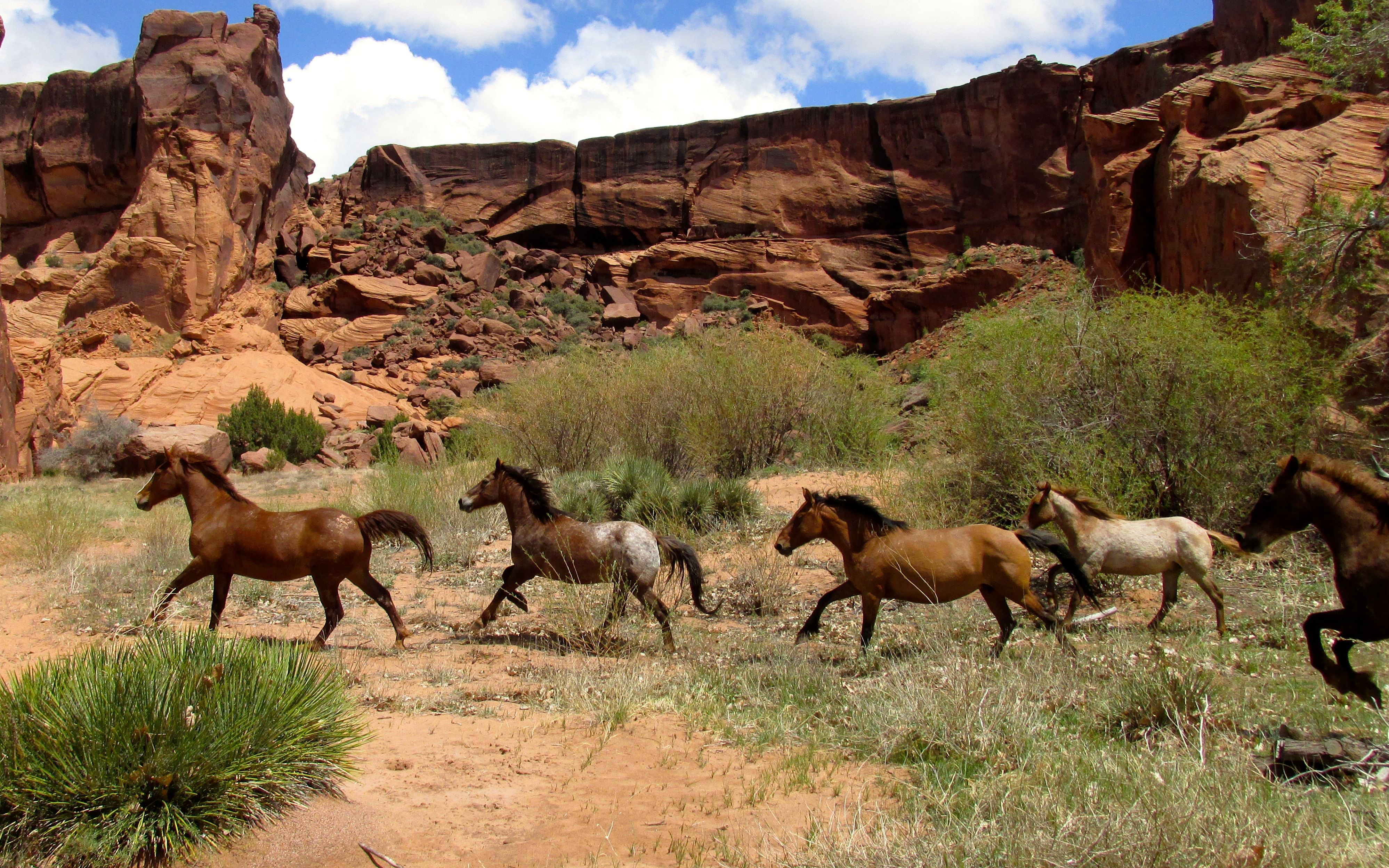
Gallopping horses

We continued along the way. It was always delightful when bands of horses would gallop past us.
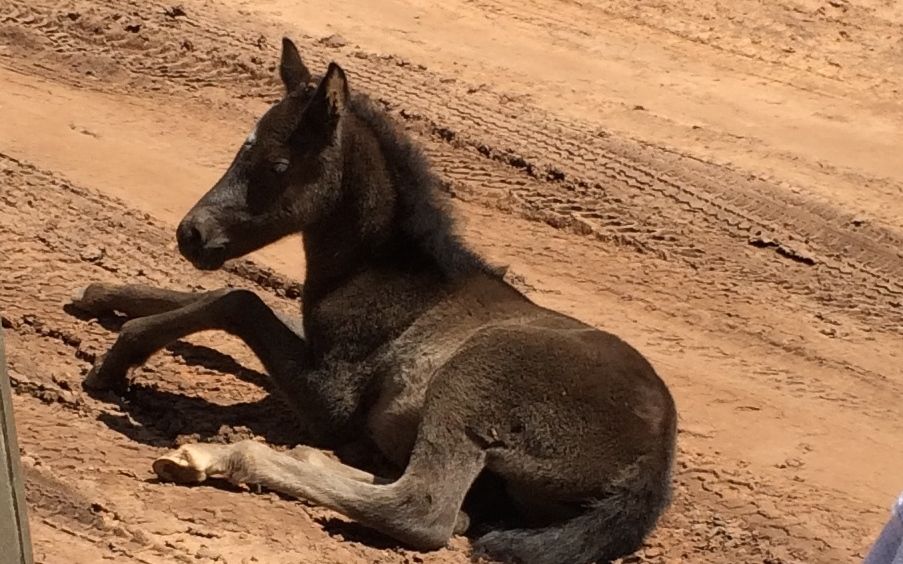
Foal in the road

It was foaling season, as some of the young ones hadn’t quite figured out that the road isn’t a great place for a nap. George slowed down so we could get a shot of him. He did get to his feet and saunter away.

Ruin

I tried to take notes on my phone, but that is hard to do that when you are bouncing all over the place. Forgive me if I can’t do some of these justice.

Channeling my best Jackie Kennedy from Vaughn Meader’s  “The First Family”,
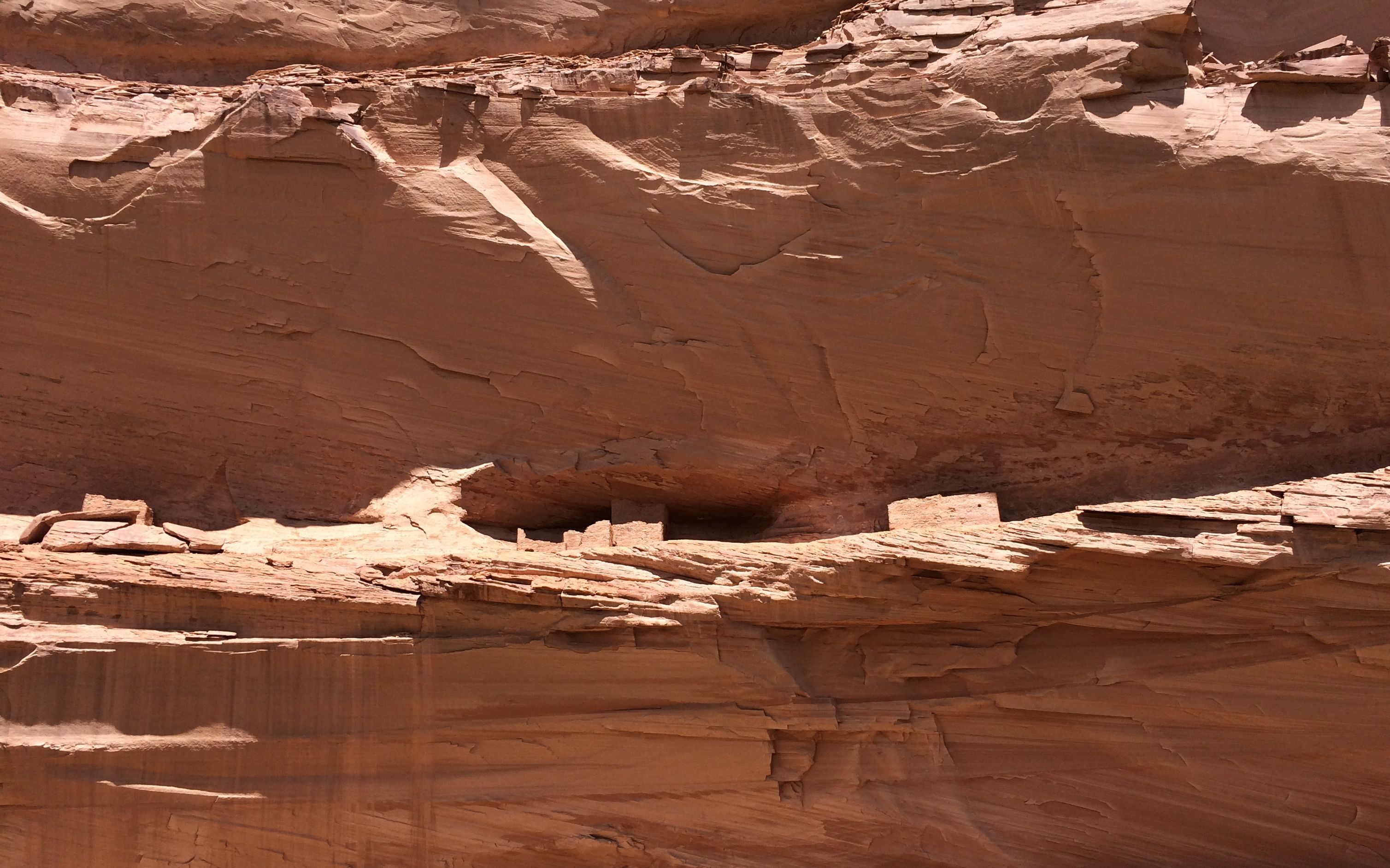
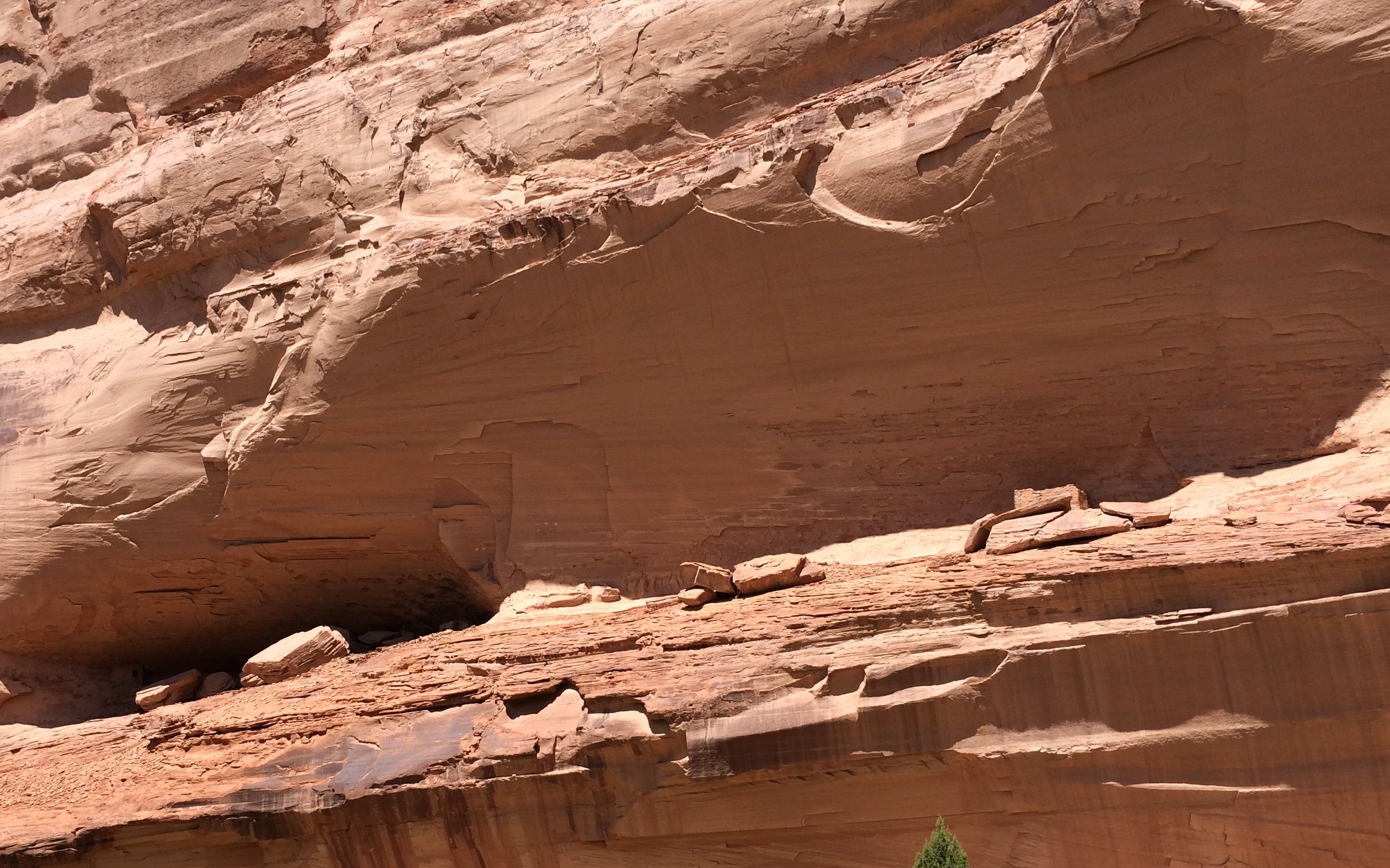
Ruin tucked up on ledge

There’s this one,

Ruin tucked up on ledge 2

And that one,

Ruin tucked up on ledge 3

And that one over there.

Junction Ruin

I did get some of the information recorded, though. This is Junction Ruin, which is at the junction of two canyons.
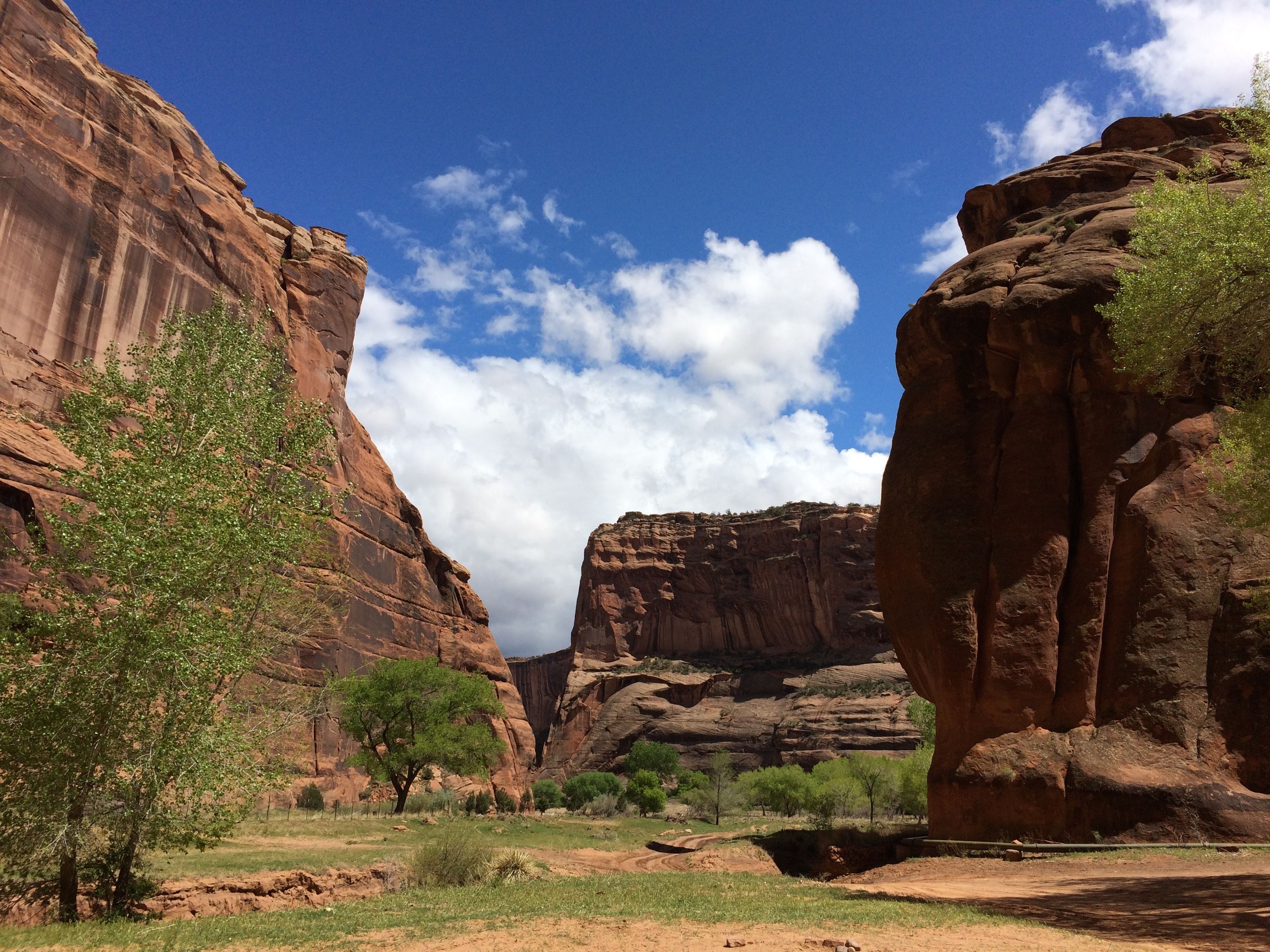
Canyon view

I can easily see how the Navajo could hide in Canyon de Chelly. It is really a series of canyons.

If you didn’t want to ride in the six-wheeled vehicle we took, there were other options. I think the most interesting alternative was on horseback.
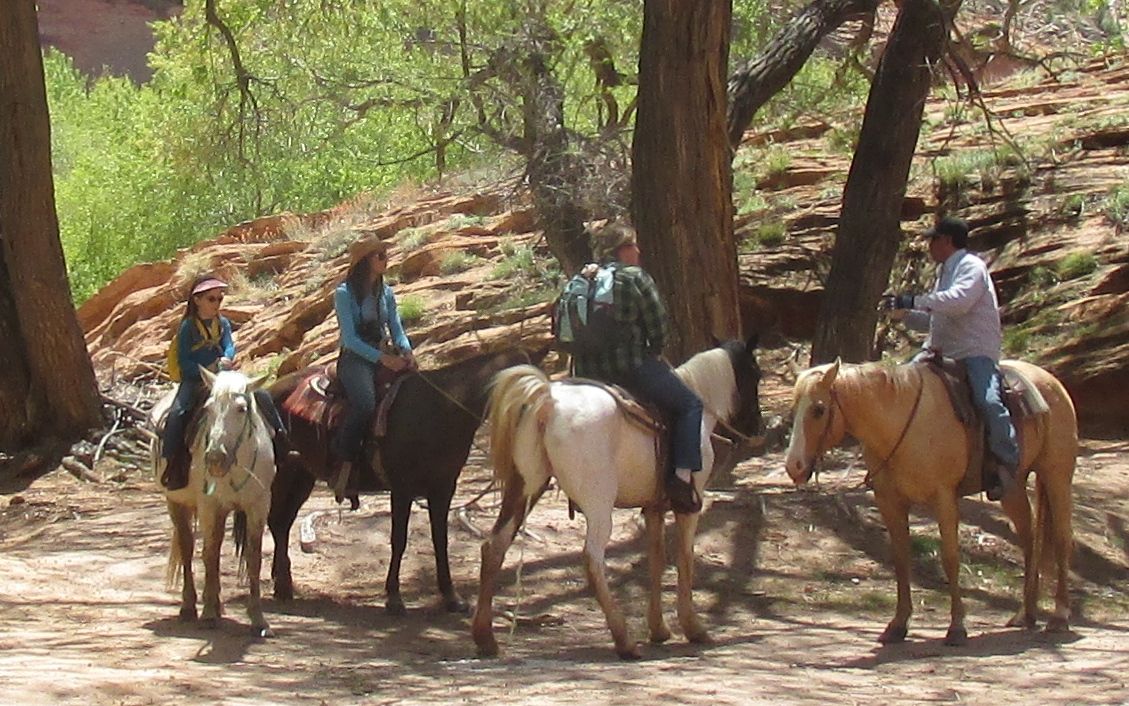
horseback tour

However, considering how tired and sore I was after my tour, I can’t imagine how I’d feel after a day-long horseback ride.

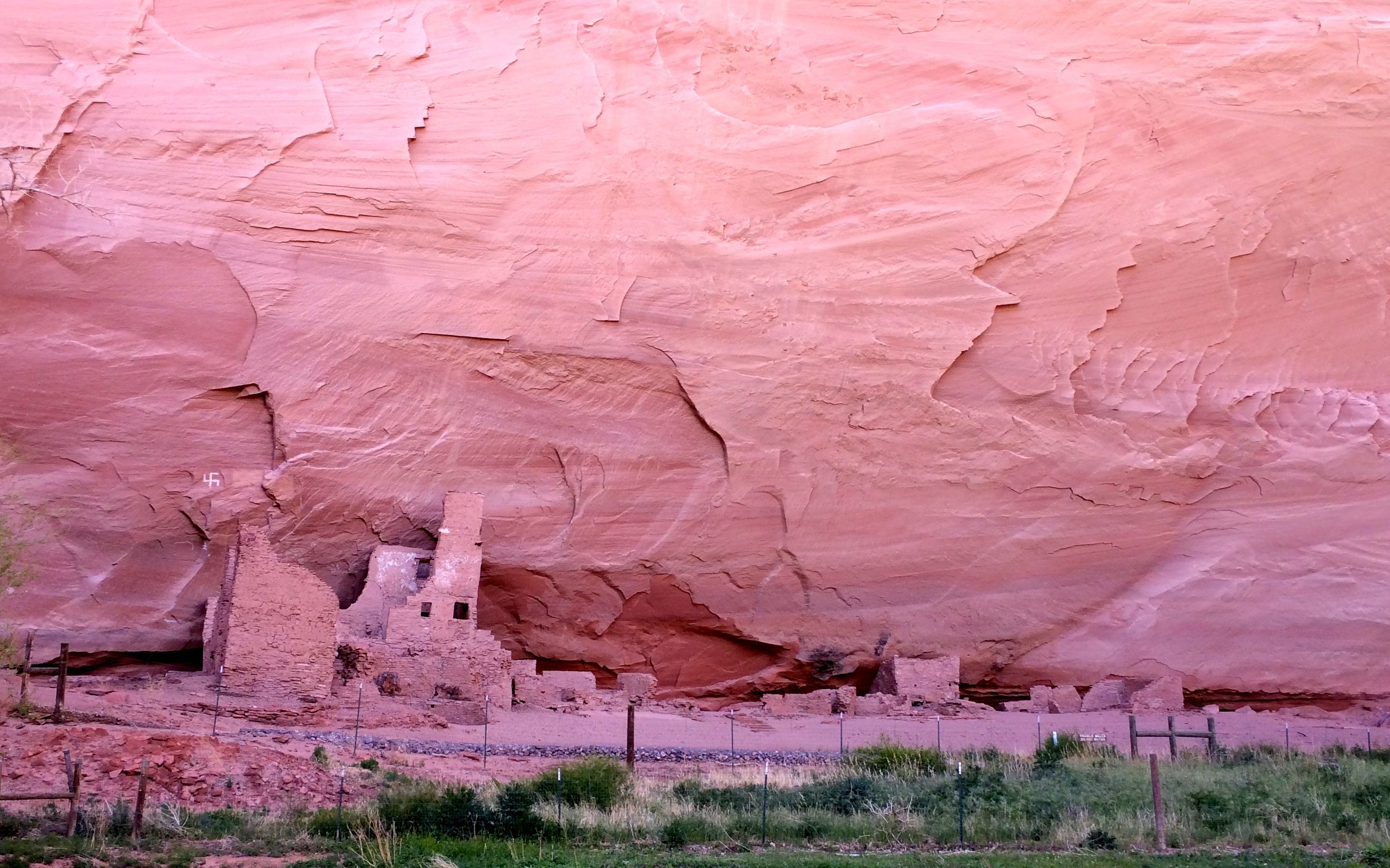
This is Antelope Ruin.
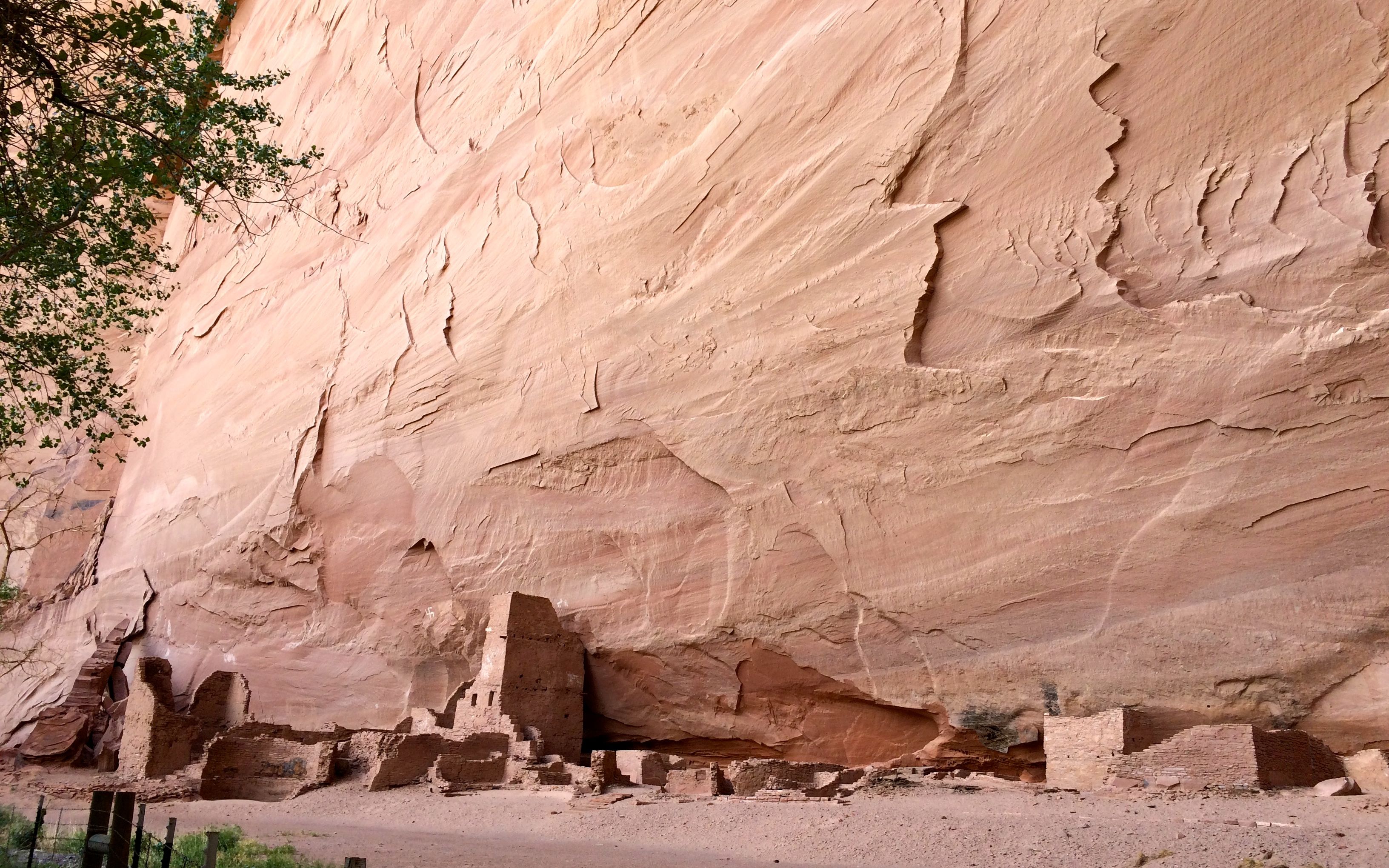
Antelope Ruin

It is named after the pictograms on the canyon walls.
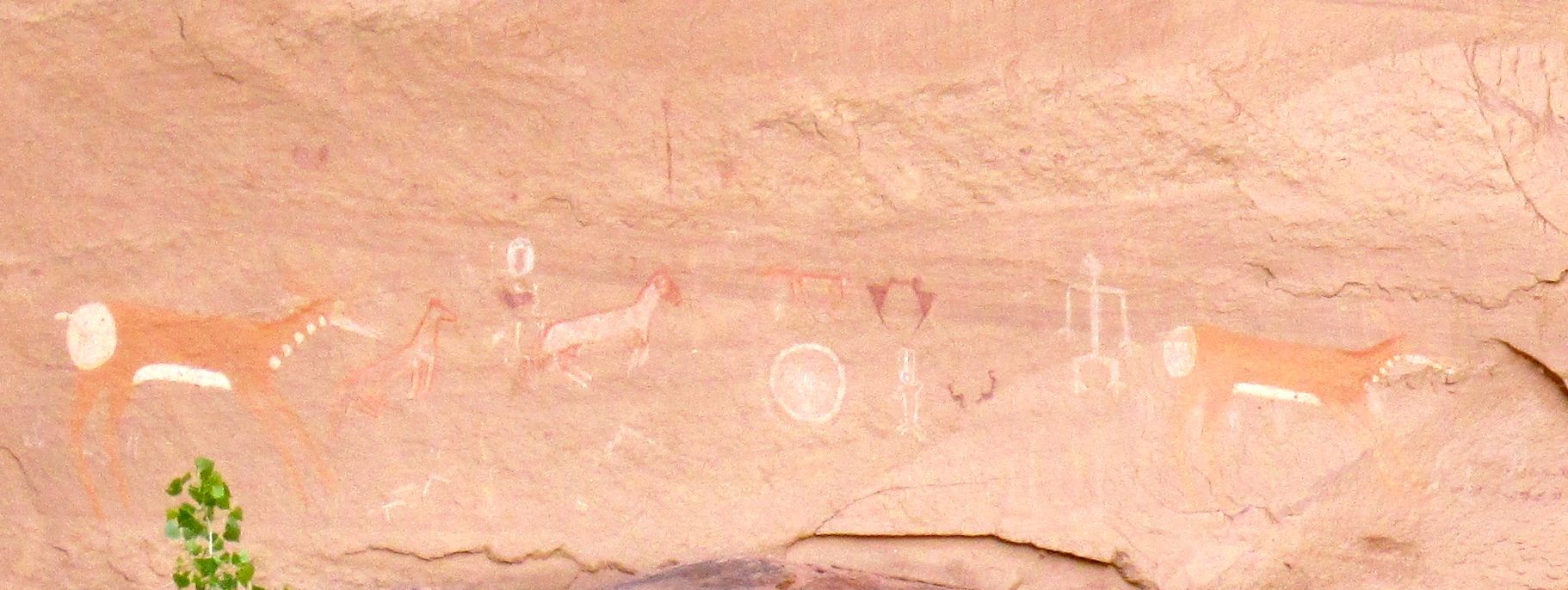
Antelope pictogramsI believe George said that the Hopi made the white images first. When the Navajo took up residence, they added their own touches. Whenever you see horse, you know that it’s the work of the Navajo.
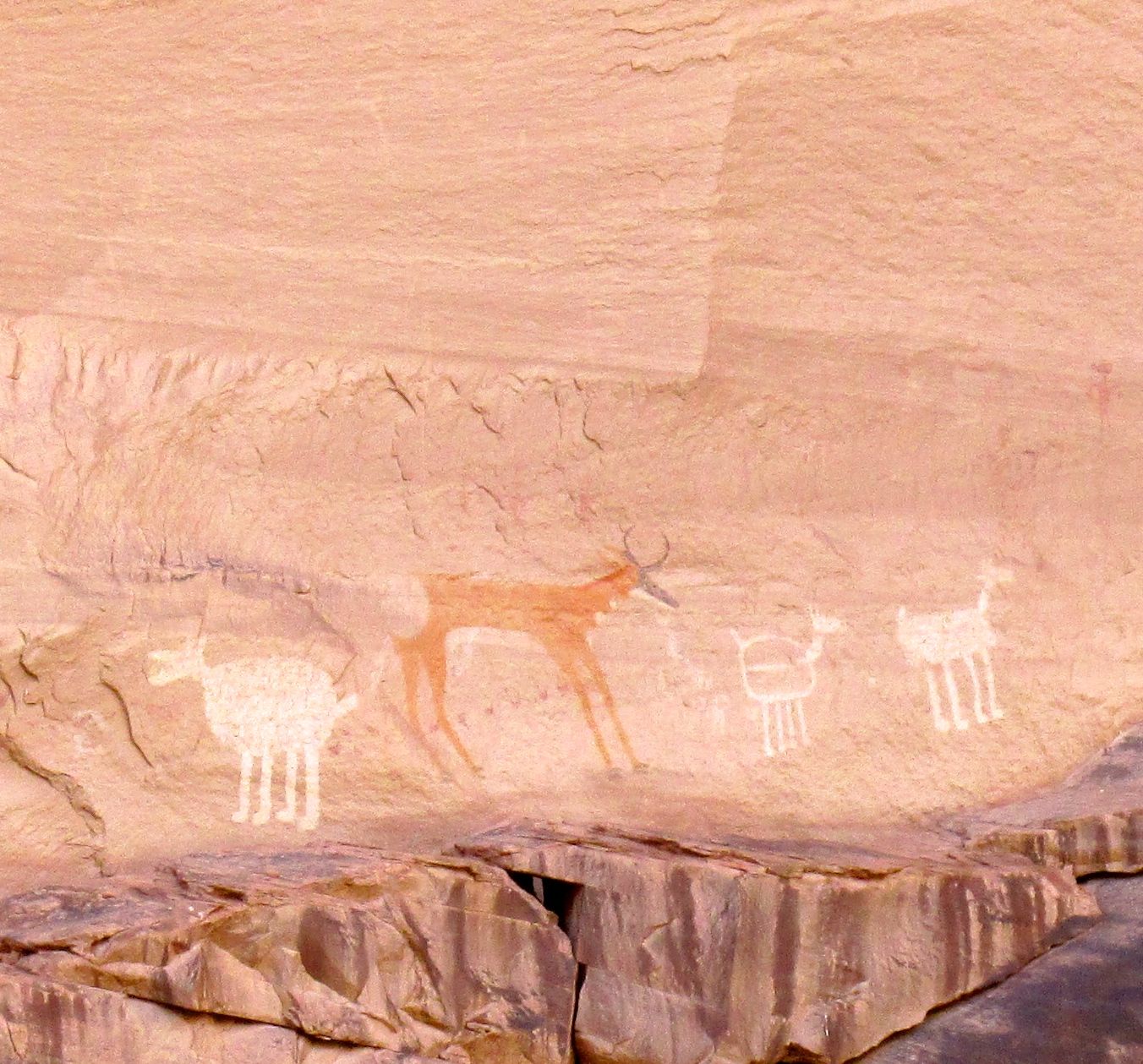
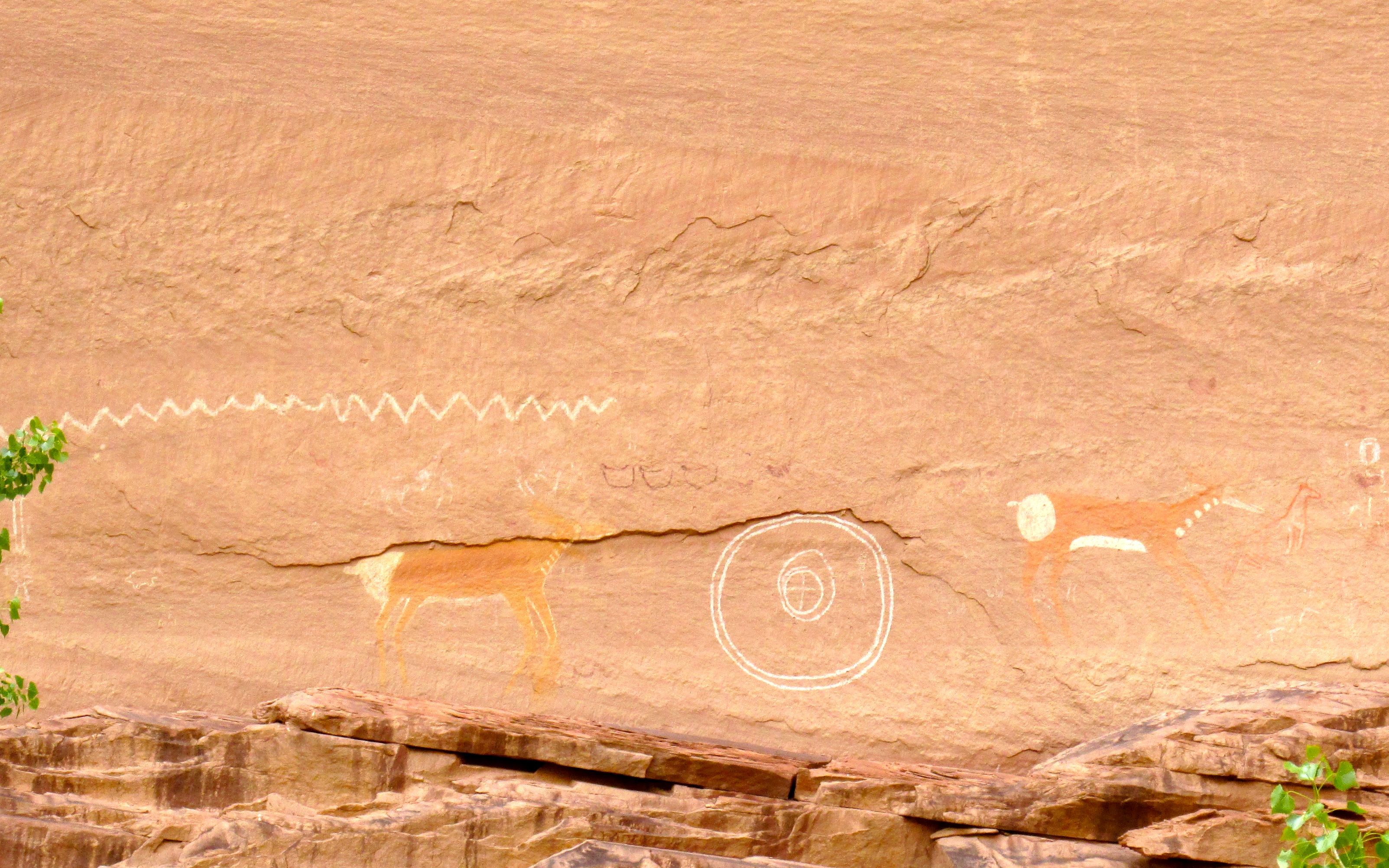
antelope ruin pictogram grouping

antelope ruins pictogram with circle and snake

You can see the older Hopi work here. George said that the zig zag represents a snake.

I am quite partial to pictograms and petroglyphs. I am not sure where in the canyon this one was from.
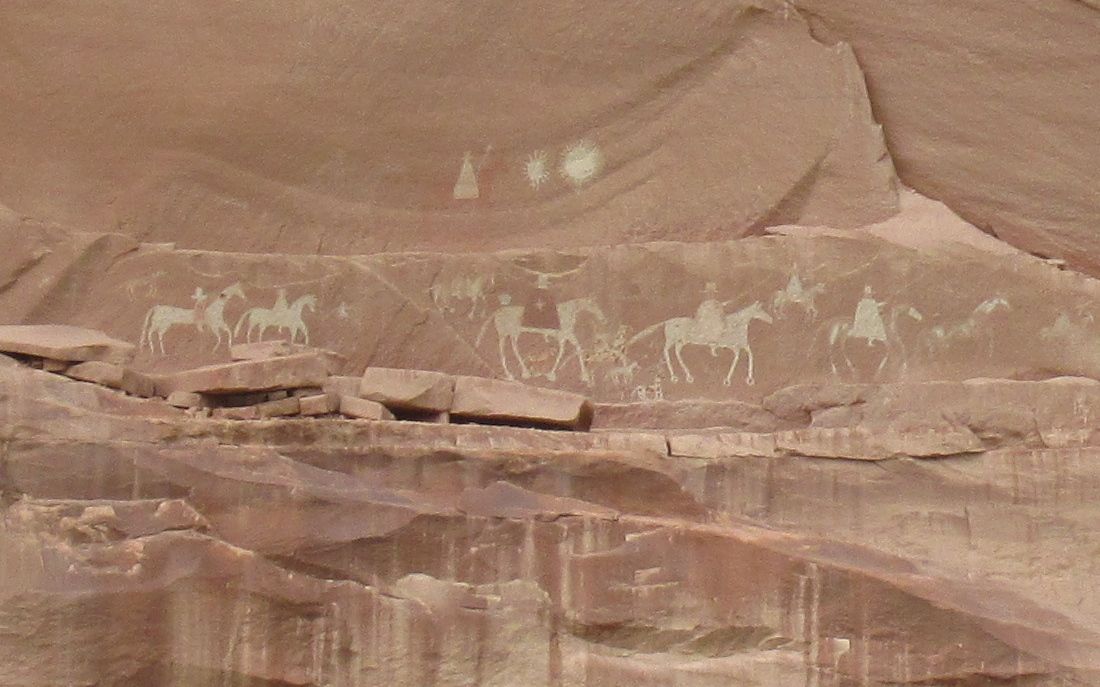
Navajo pictograms from the times of Spanish exploration

George said that it was from the time of the Spanish exploration.
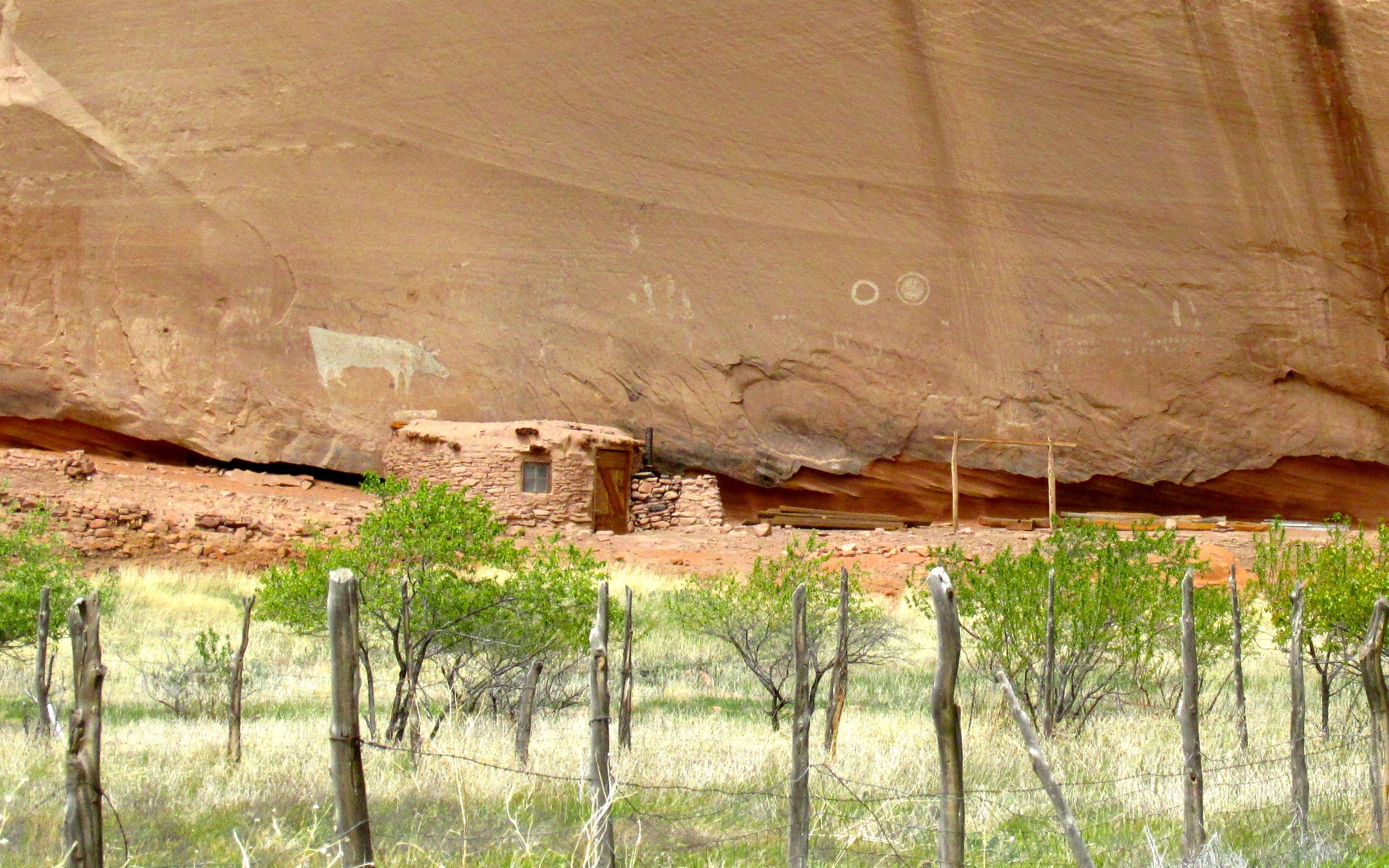
summer house

George told us that this was an old-style summer house. It looks to me like they reused some of the stones from the tumbled down ruins to build it. In the foreground is an orchard. If you look to the right of the house, you can see a loom that is used in weaving rugs.
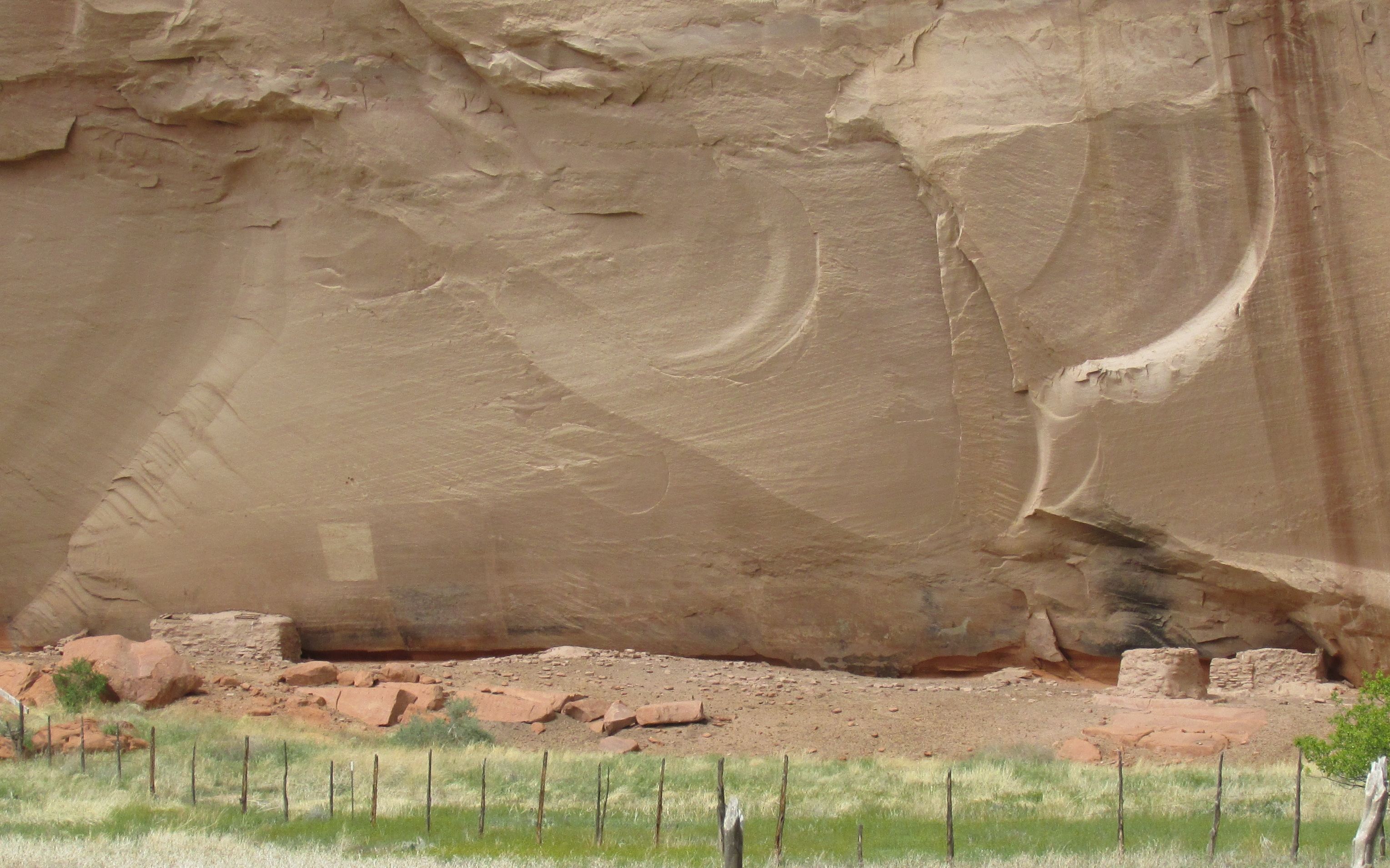
storage buildings

Over to the left are storage rooms.

The canyon walls behind the house are decorated with pictograms.

I am not sure if these pictograms were from this location or not.
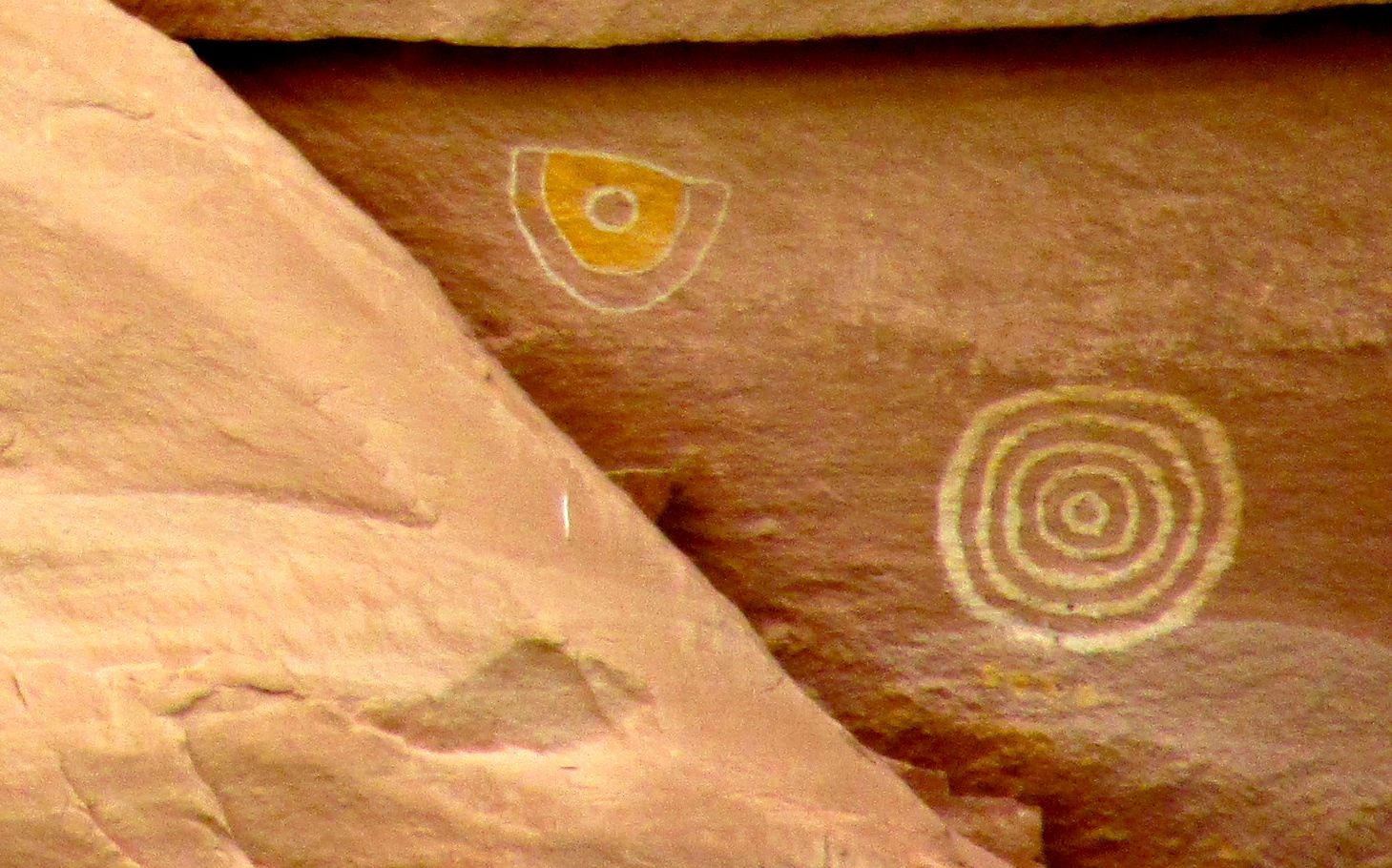
circle pictograms

Just enjoy them.

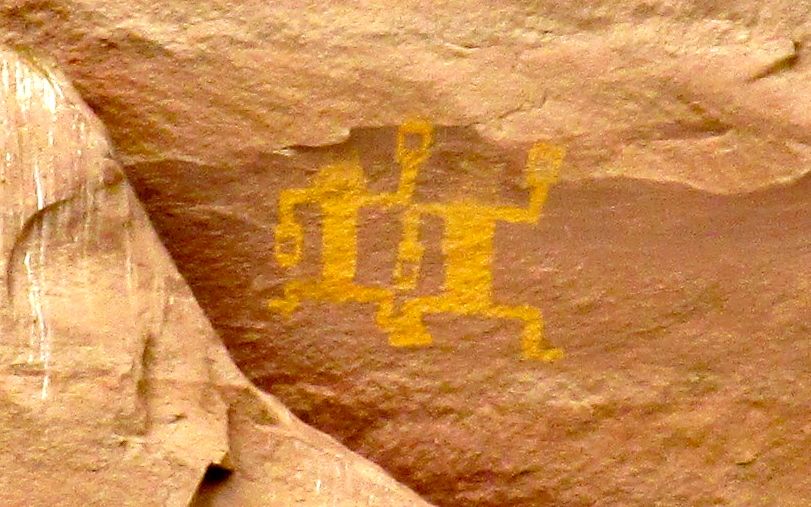
dancing figures pictograms

I find this pair charming. I hope they are dancing for joy.
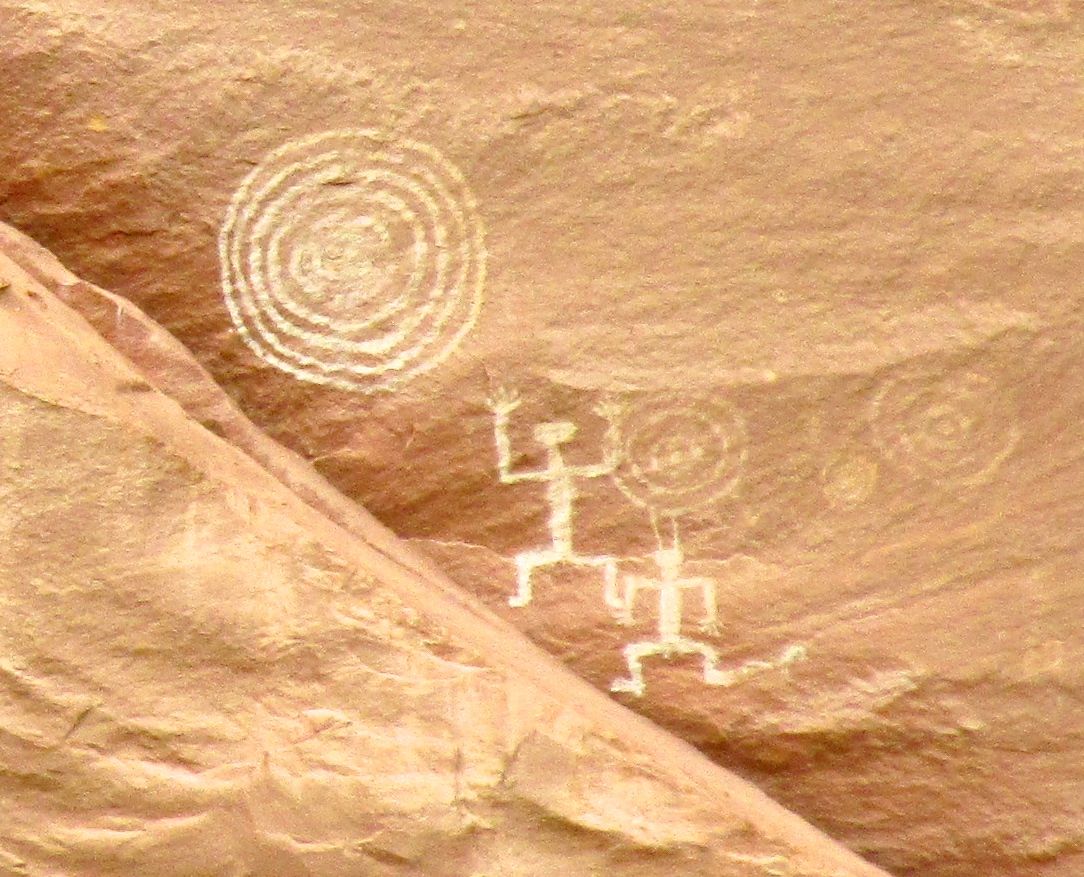
Raise the roof pictogram

This fellow seems to be saying, “Raise the roof!”

Our last stop on the tour was White House Ruin.
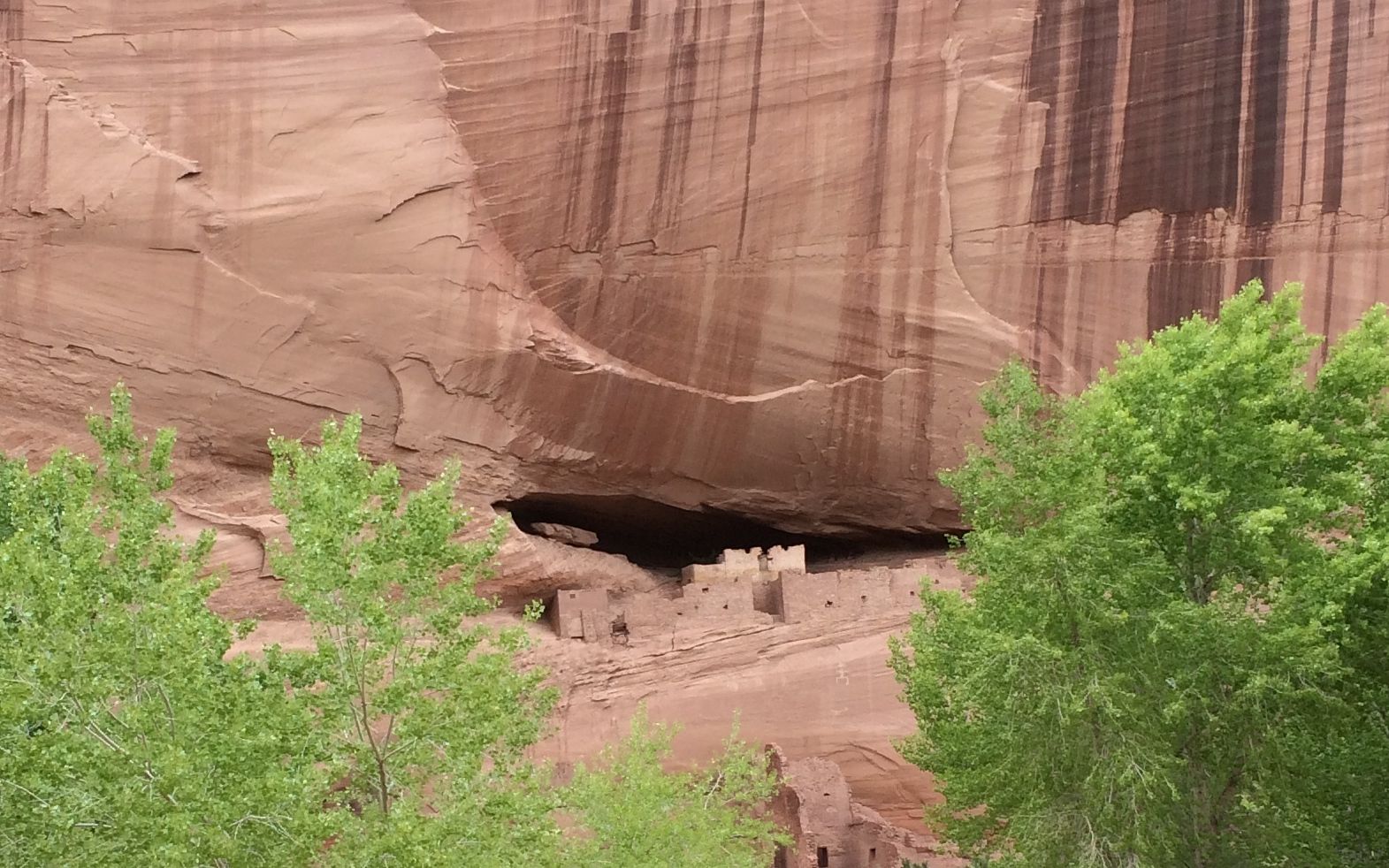
White hous ruins

We only had a little time at this stop. There were some vendors there. the other people checked out their wares. I scampered over to get a better look.
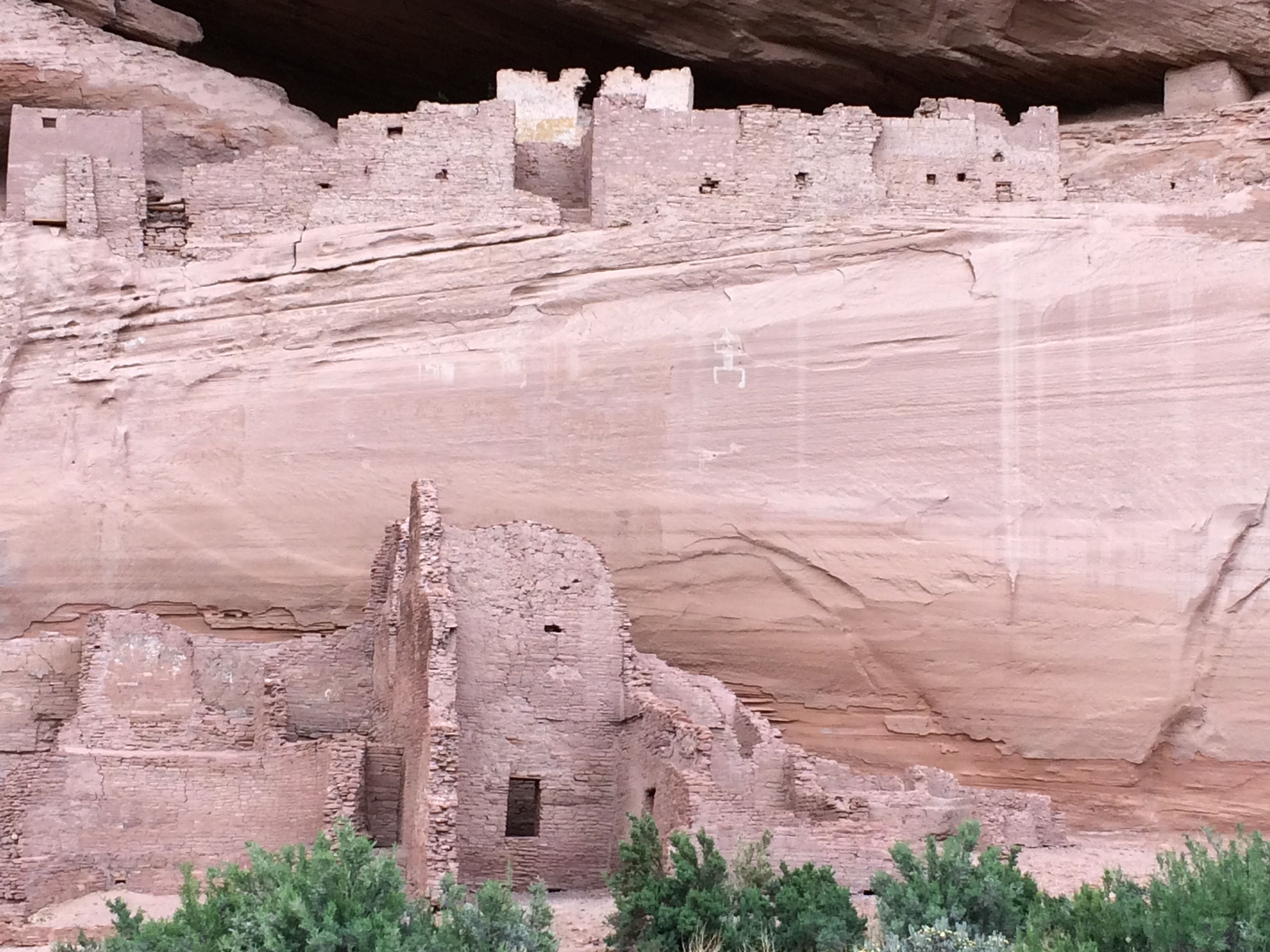
White hous ruins 2

I had one of the folks on the tour snap my photo.
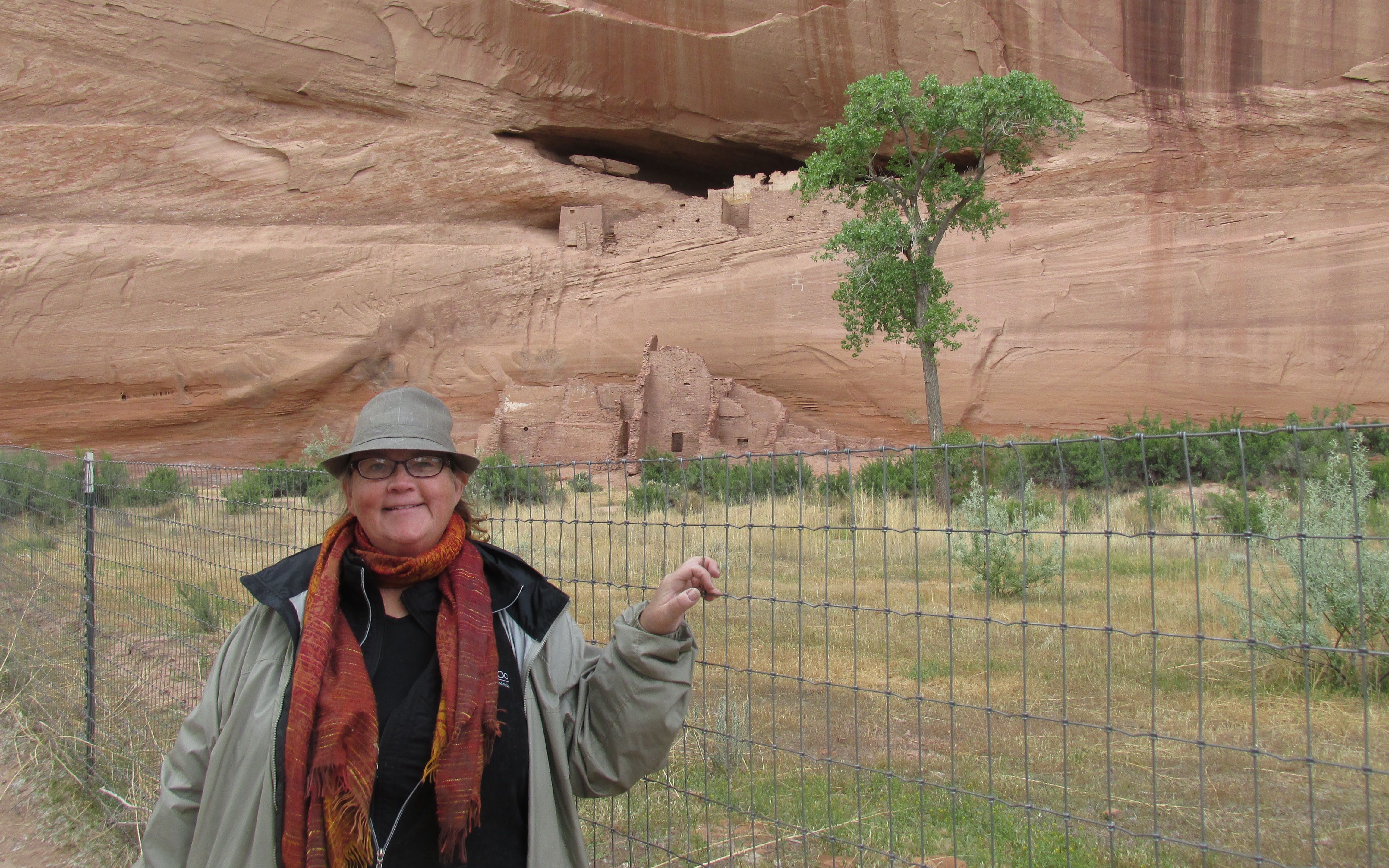
Me at White House

If you don’t have a picture, how can you prove it happened?

Then we headed back. It was getting chilly – but at least it wasn’t raining or snowing while we were out.

Back at the campground, it was time to get things ready to roll in the morning.

Next stop: The Petrified Forest!


Hueco Tanks State Park, El Paso, Texas

I had one day between leaving Balmorhea State Park in Texas and my reservation at City of Rocks State Park in New Mexico. The last time I was trekking westward on I-10, I ended up staying at the Cracker Barrel in El Paso. I could have done that again, but Hueco Tanks State Park and Historic Site sounded interesting.

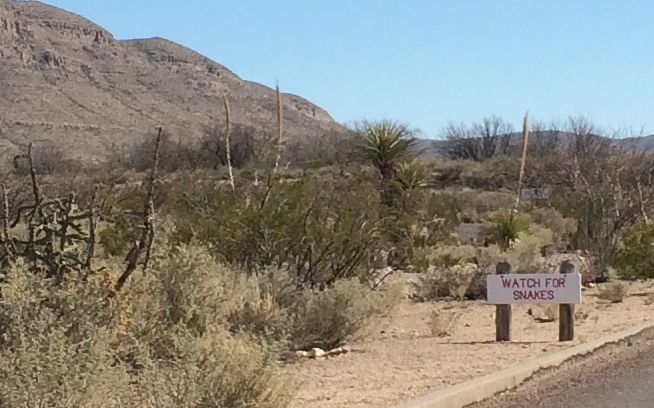
Watch for snakes

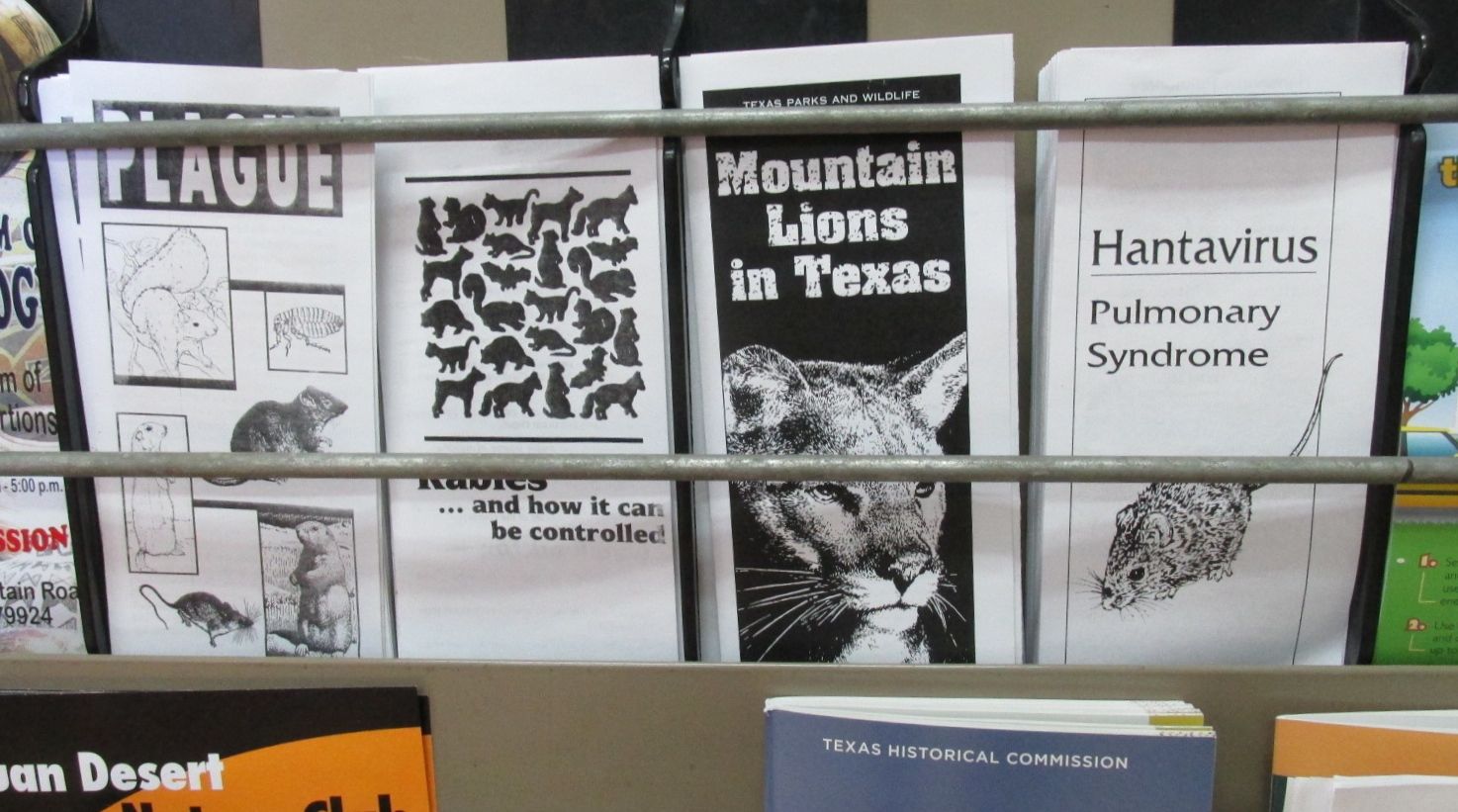
I made my reservation and checked in at the ranger’s station. In addition to the “Watch for snakes” sign on the way in, there was a lovely assortment of brochures warning of other deadly dangers.

Brochures in ranger's station

At least there were no warnings about ticks and lyme disease. But, maybe that was on another rack.

They are serious about preserving the cultural and natural resources at the park. They have each visitor watch a fifteen minute video before they are allowed to enter the campground or walk on the trails.

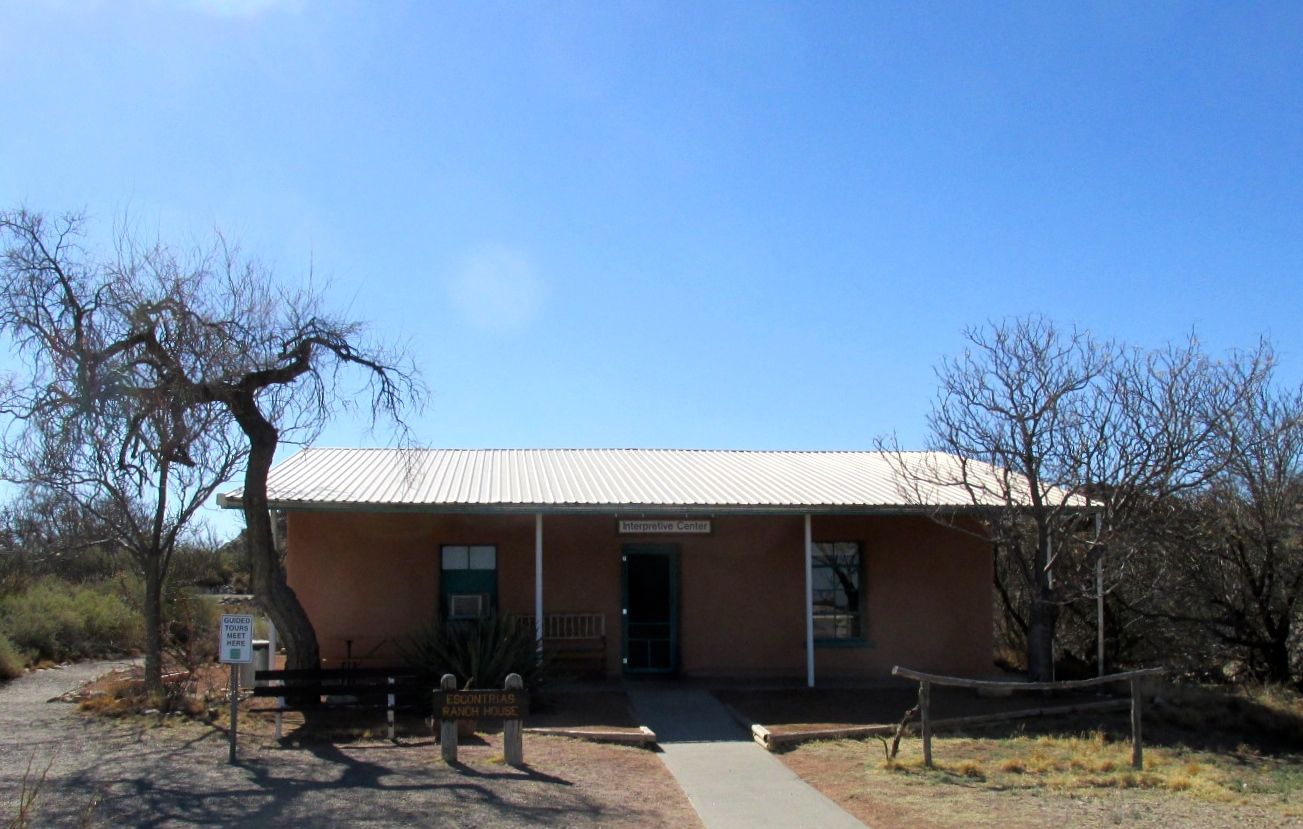
Ranch house

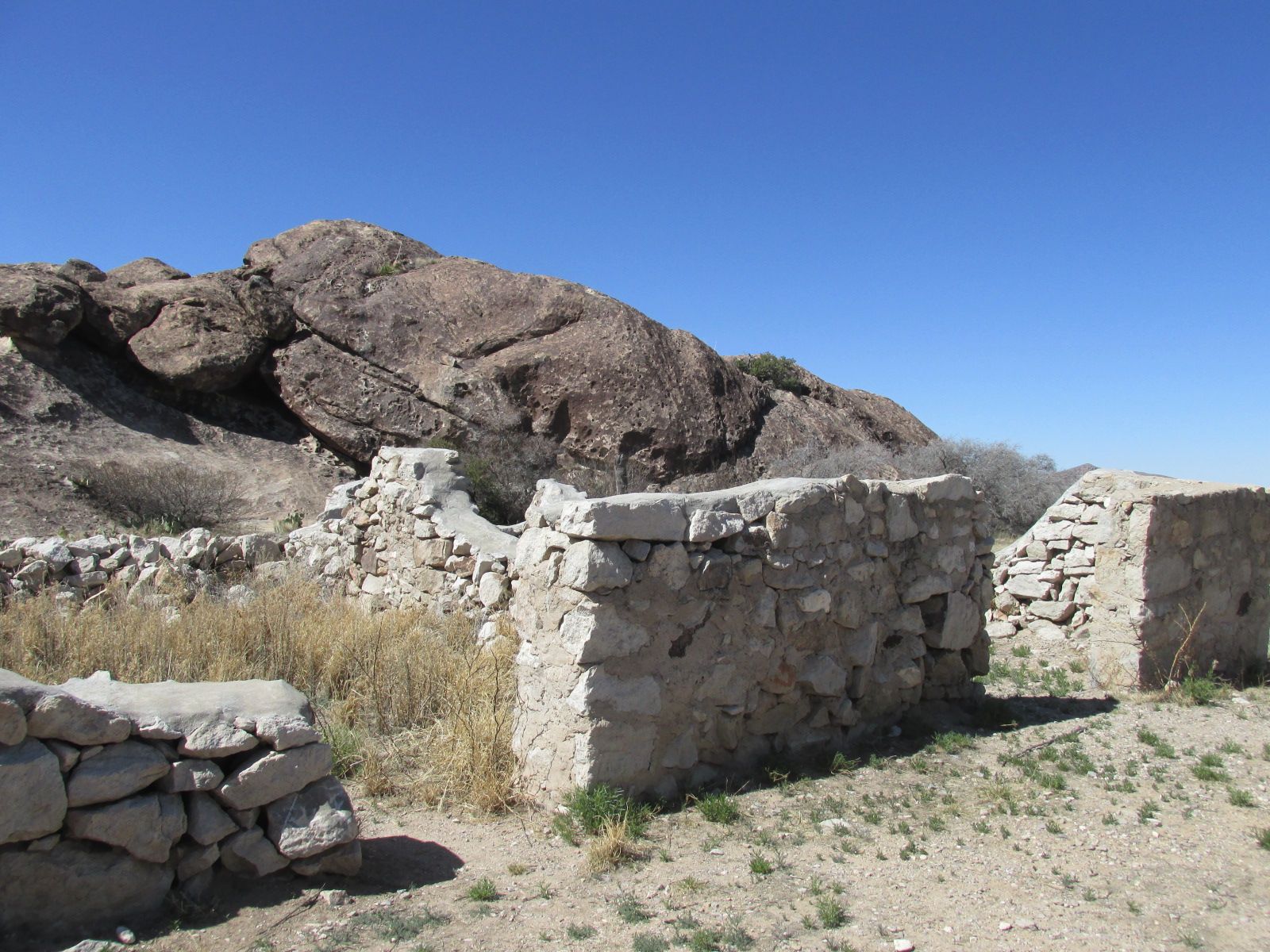
The adobe ranch house, built by the Escontrias Family in the beginning of the twentieth century, is now used for showing the videos and explaining the resources of the city. Right next to the ranch house are the remains of the Butterfield Overland Mail station. The stage line ran from 1858 to 1859.

stagwcoach station ruins 2

After I watched the video, I got my card certifying that I had seen it. My certification is good for a year, so I was all set for my visit on the trails the next day. I could even return, if I happened to be in the area – provided that I don’t lose the card.

I made my way to the campground. It had a rather low-tech gate to insure our safety. You had to get out of the truck, slide the latch, swing the gate open, hook the gate so it didn’t swing shut and then drive through. After you drive through, you have to repeat the process. They do lock the entrance to the park at night, so I guess that ups the security level.

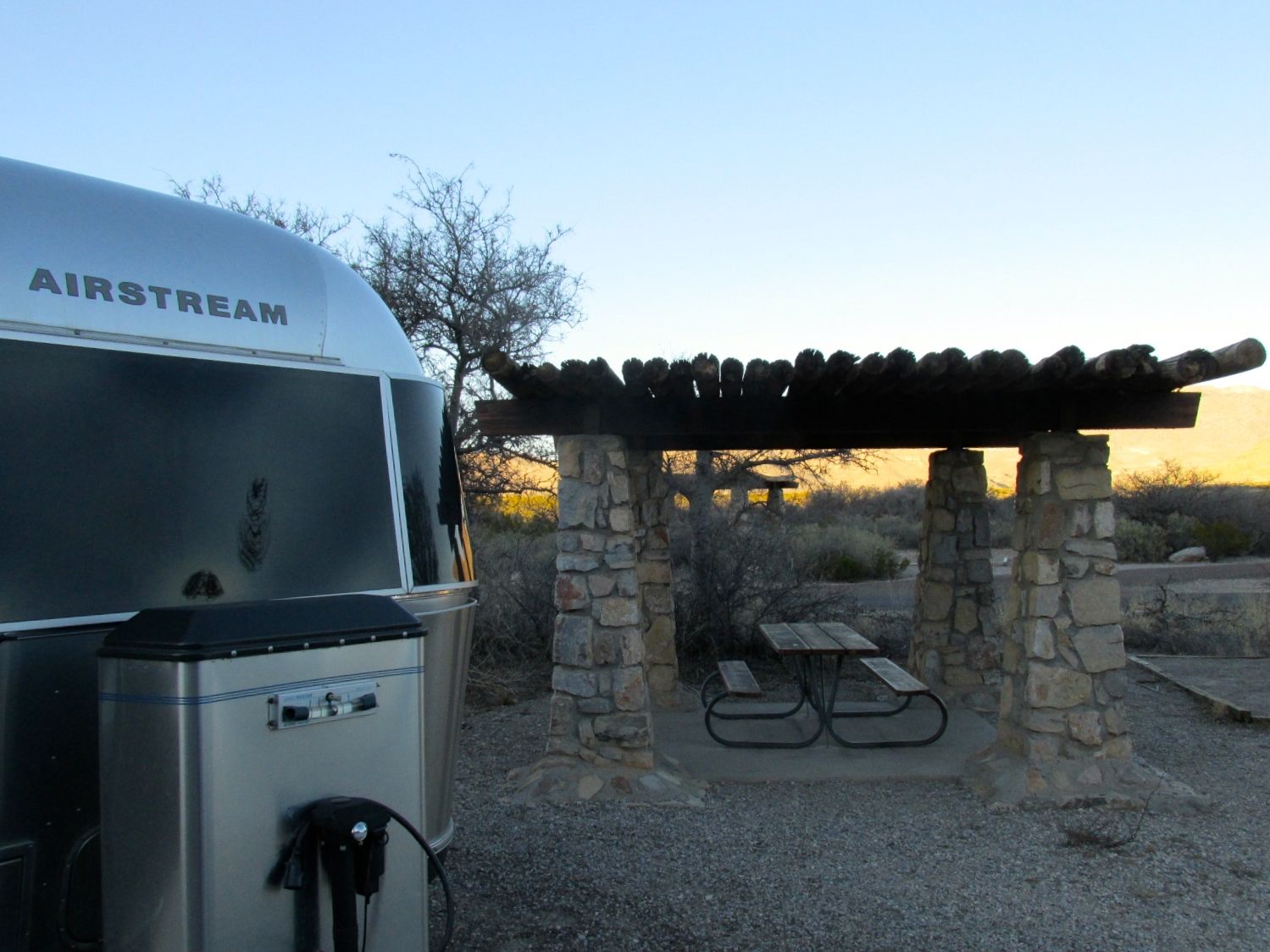
The ranger assigned me to a site that was hard to get into. That seemed odd, as the camp sites were mostly vacant. After a couple passes, the people in the campsite next door told me that they couldn’t get in that one either. They just picked their own site and then went back and told the ranger which one they were in. I decided to follow their lead, and got backed in easily to a sweet site with a shaded picnic table.

Campsite

Life on the road isn’t exactly a vacation. There are still things you have to do – tasks of daily living, as it were. I dropped Flo at the park and zipped back into El Paso and got Bart’s oil changed.

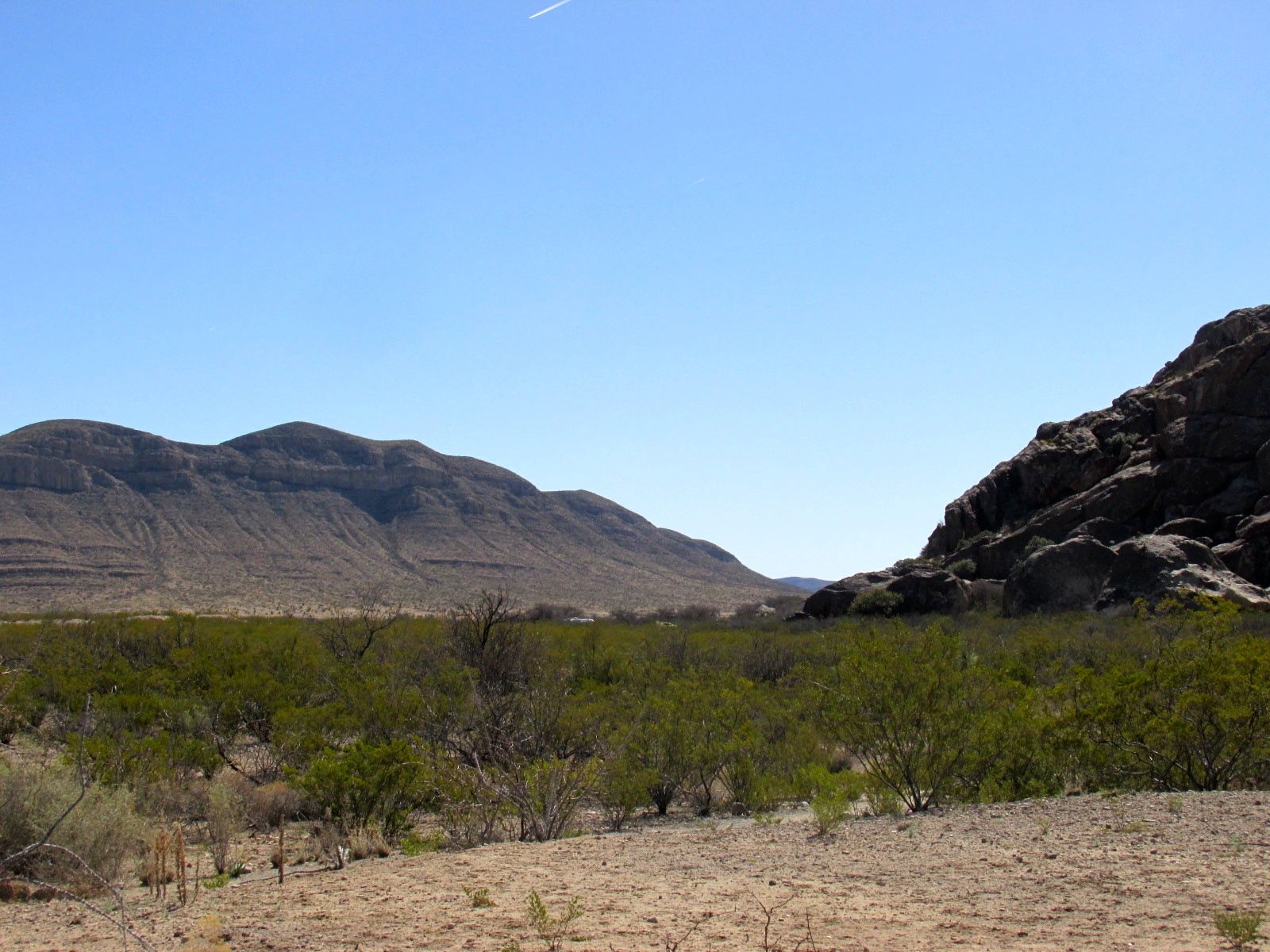
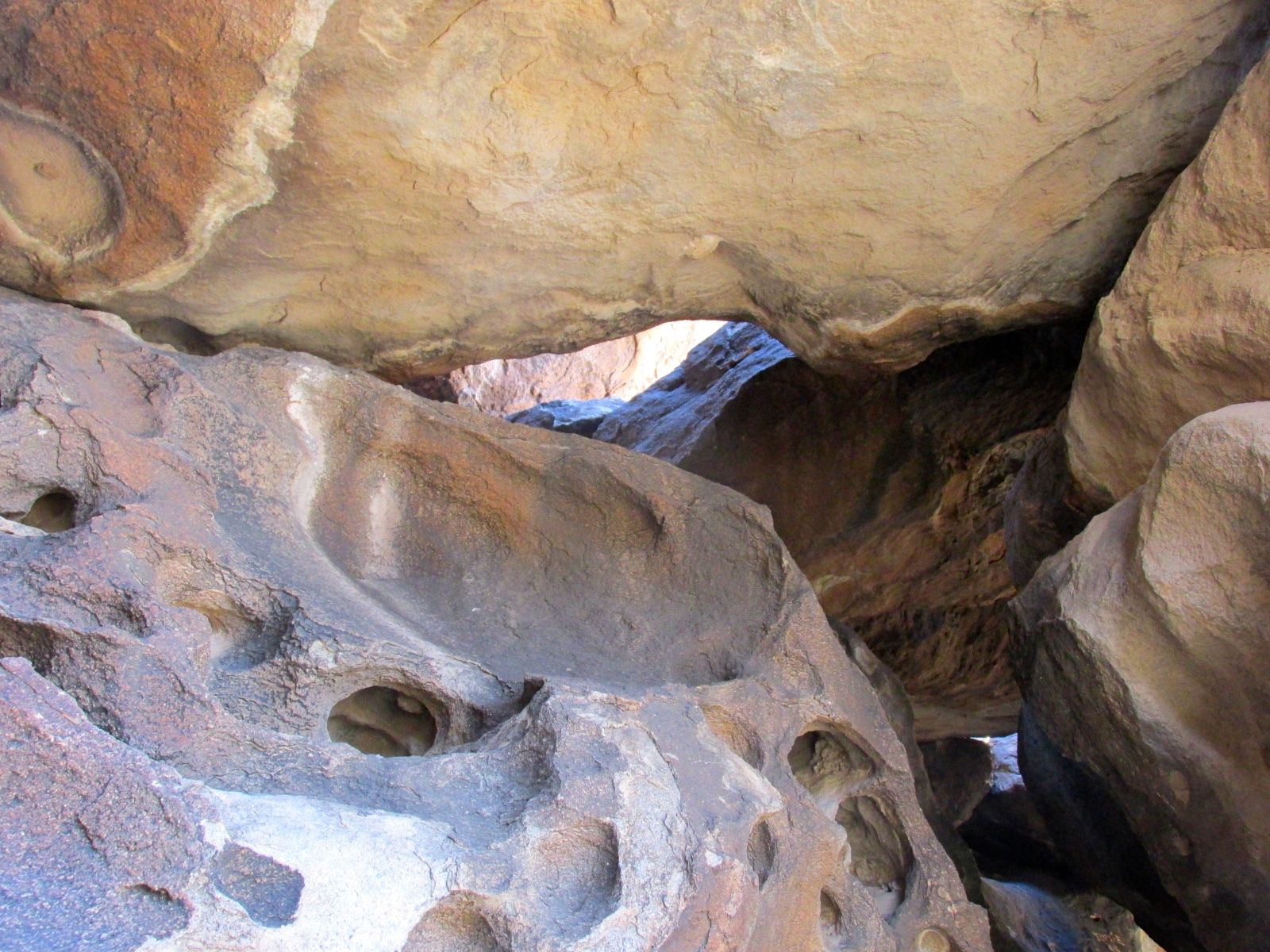
The landscape is interesting. Hueco Tanks is an igneous formation thrust up through sedimentary rocks.

Sedimentary to the left, igneous to the right

After a good night’s sleep, I set out to see the marks left by earlier inhabitants of the area. Although Hueco Tanks was not occupied continuously for 10 millennia, it is the only place in the region where every prehistoric and historic time period is represented, according to the literature. The secret to the popularity of this location is water, which collects in the “huecos” or holes in the rocks.

The access to the mountains is controlled. There are some trails that are open to the public, but there are other parts where you must have a guide. I opted for the “open to the public” option.

When I checked in at the ranger station and presented my certification that I had seen the video, I asked if I would have trouble identifying the trails. He drawled, “Well, if you can’t find the trails, then you have more than one problem.”

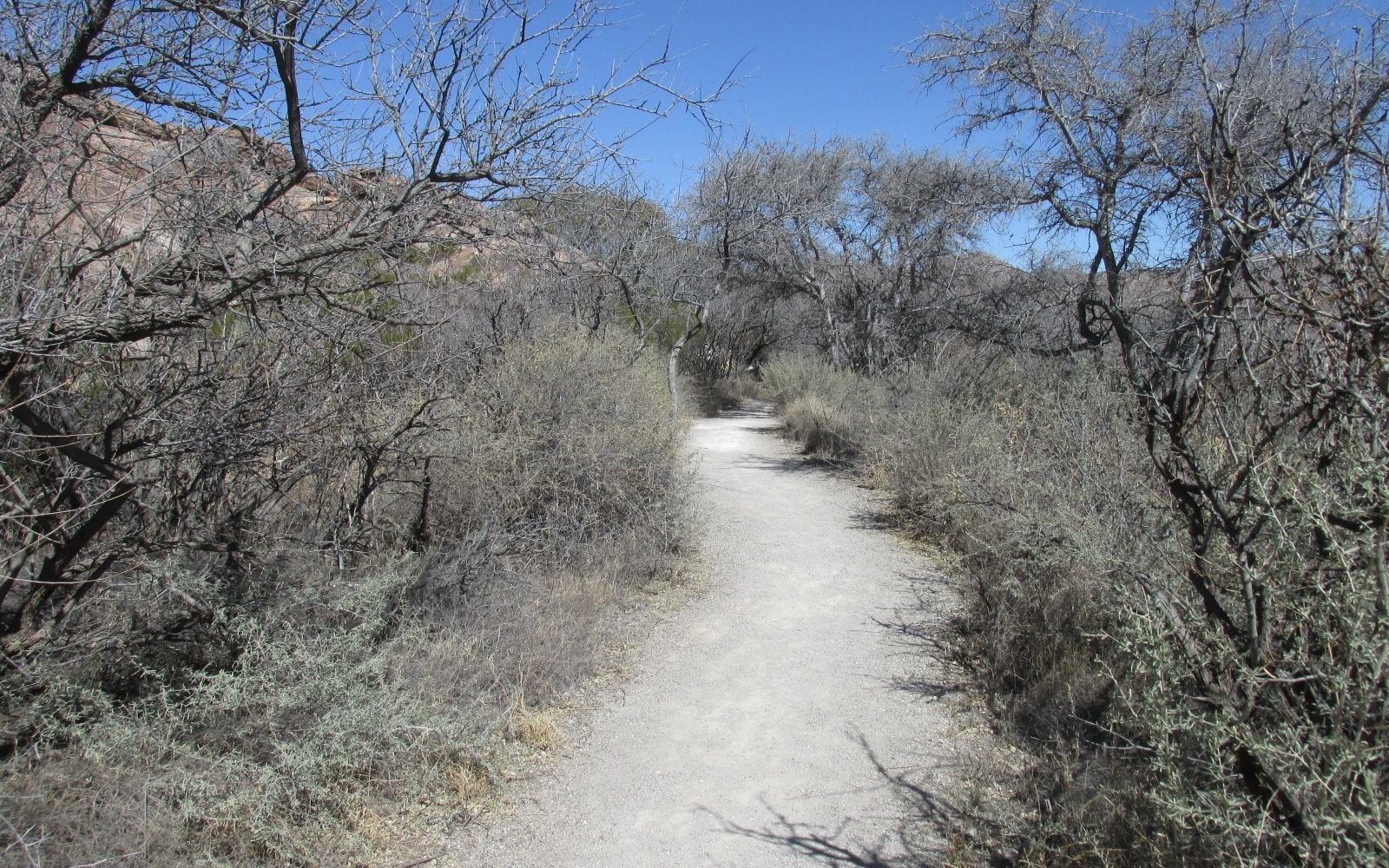
path

Smart Alek! Yes, the trails were easy to find.

However, you have to know that they were serious about people staying on the trails.

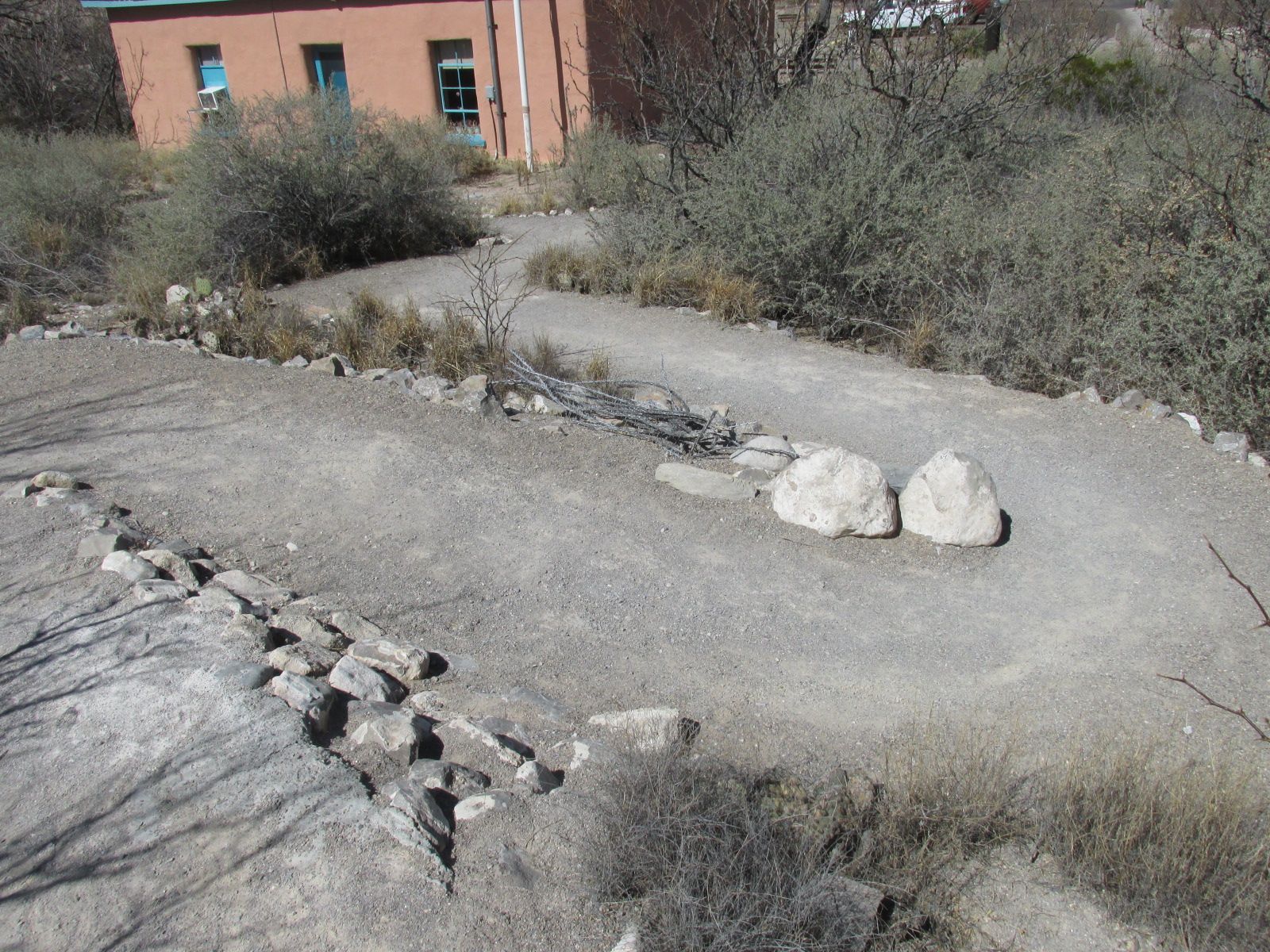
path with switchbacks

This path had some switchbacks in it.

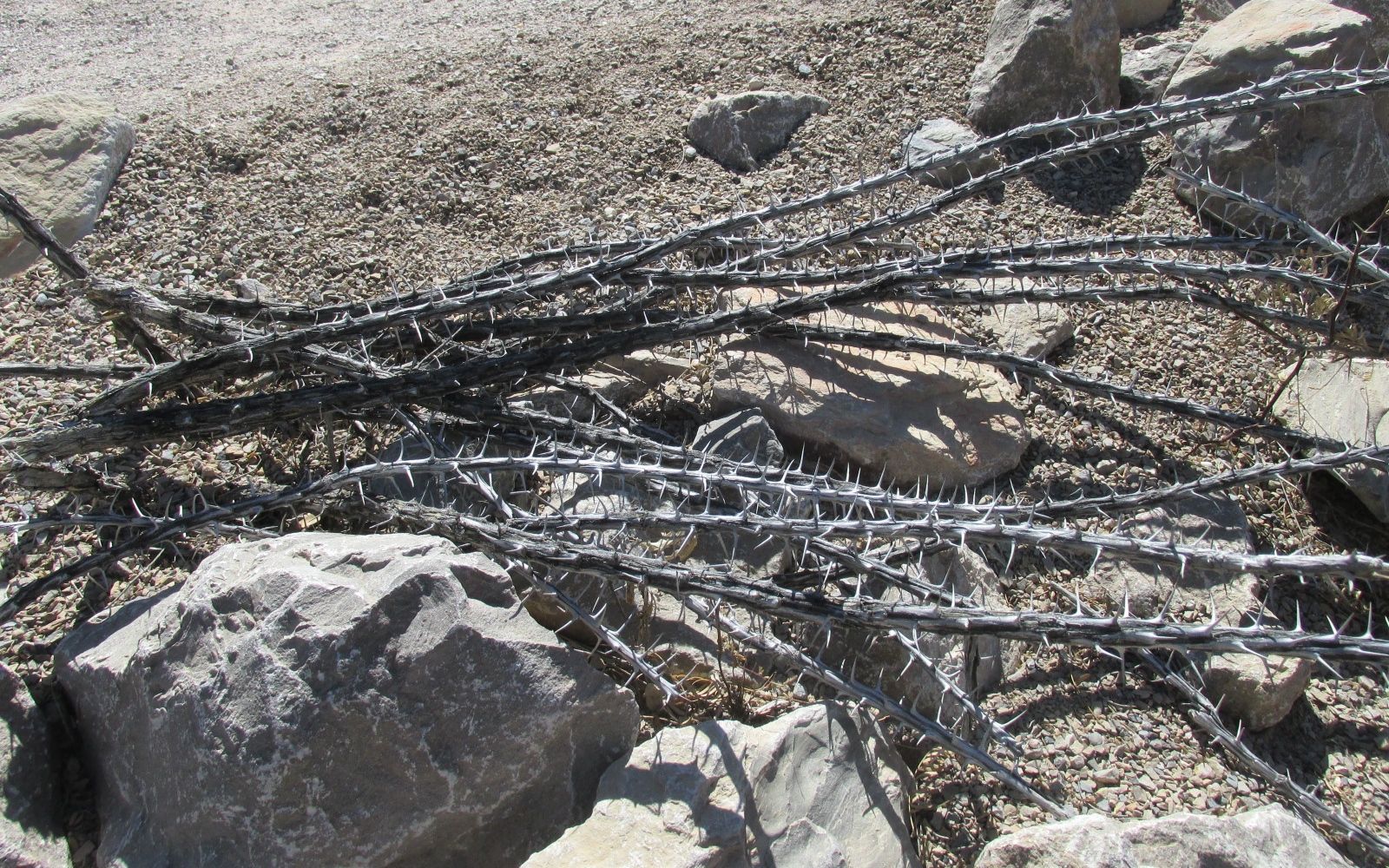
stay on the path

They did not want you taking shortcuts. These ocotillo stems were really effective deterrents for anyone who might even think about getting off the path.

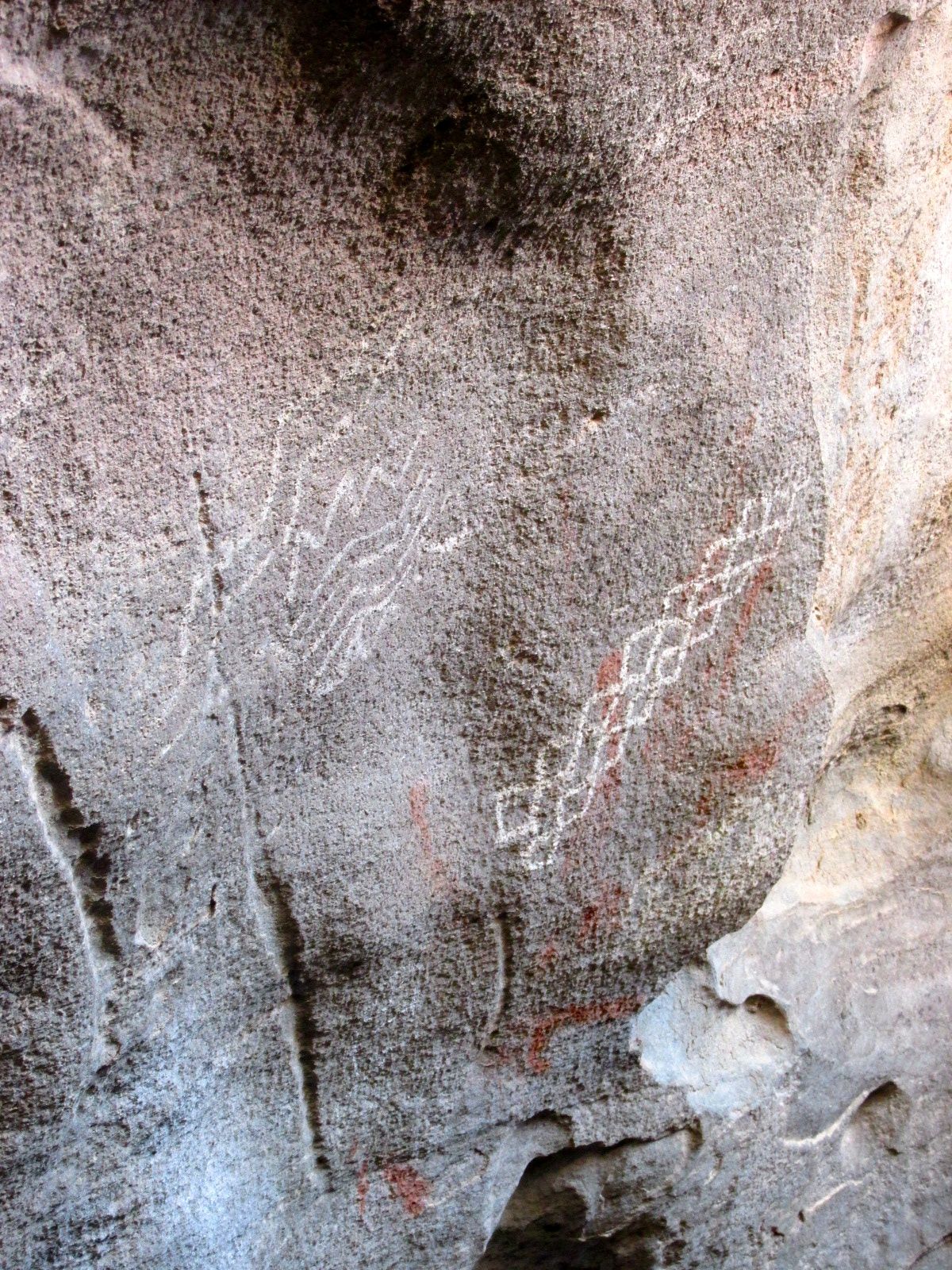
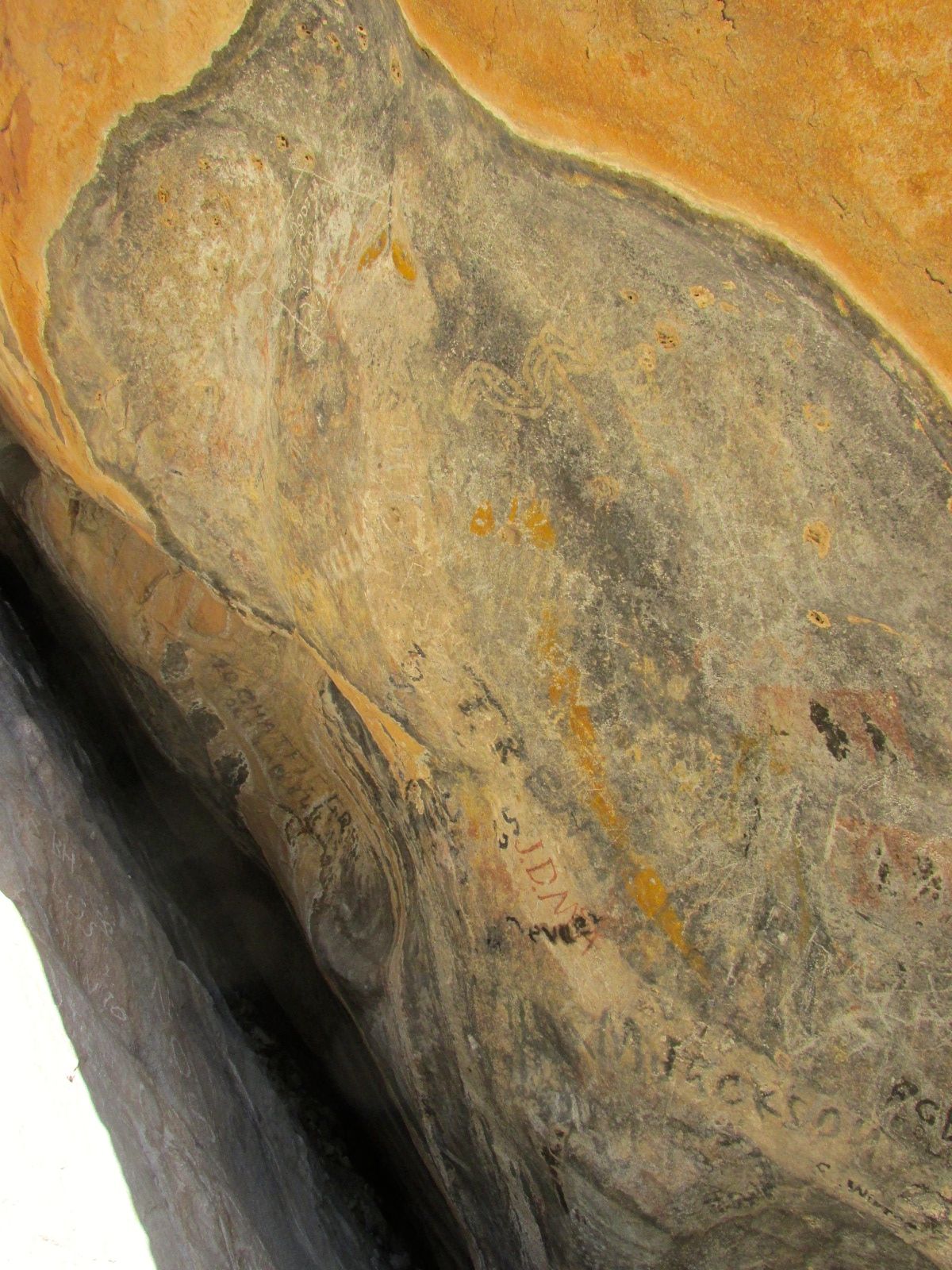
I was in search of pictograms. They are different from petroglyphs in that they are painted on the rocks, not scratched into them. Of course, paint fades and things get marked over, so I was not sure what I would be able to find.

pictogram 1

Here is one I found at the first spot.

pictogram 2

And another.

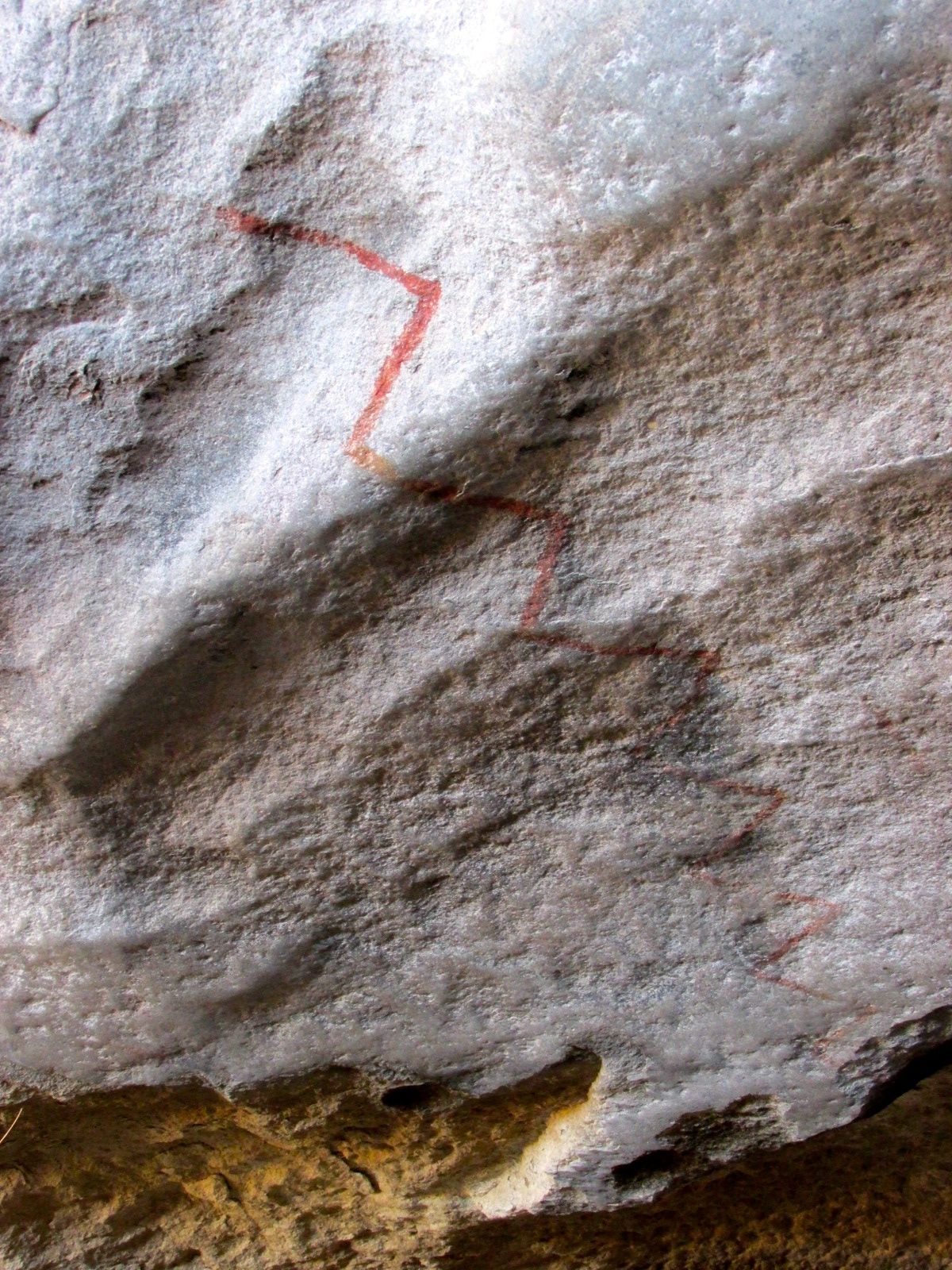
pictogram 3

And still another. It was hard to “read” the markings. The first one looked kind of like a mouth. There are supposed to be mask pictograms in the park. The others made me think of snakes or cactus.

I left the first site and walked over to another trail.

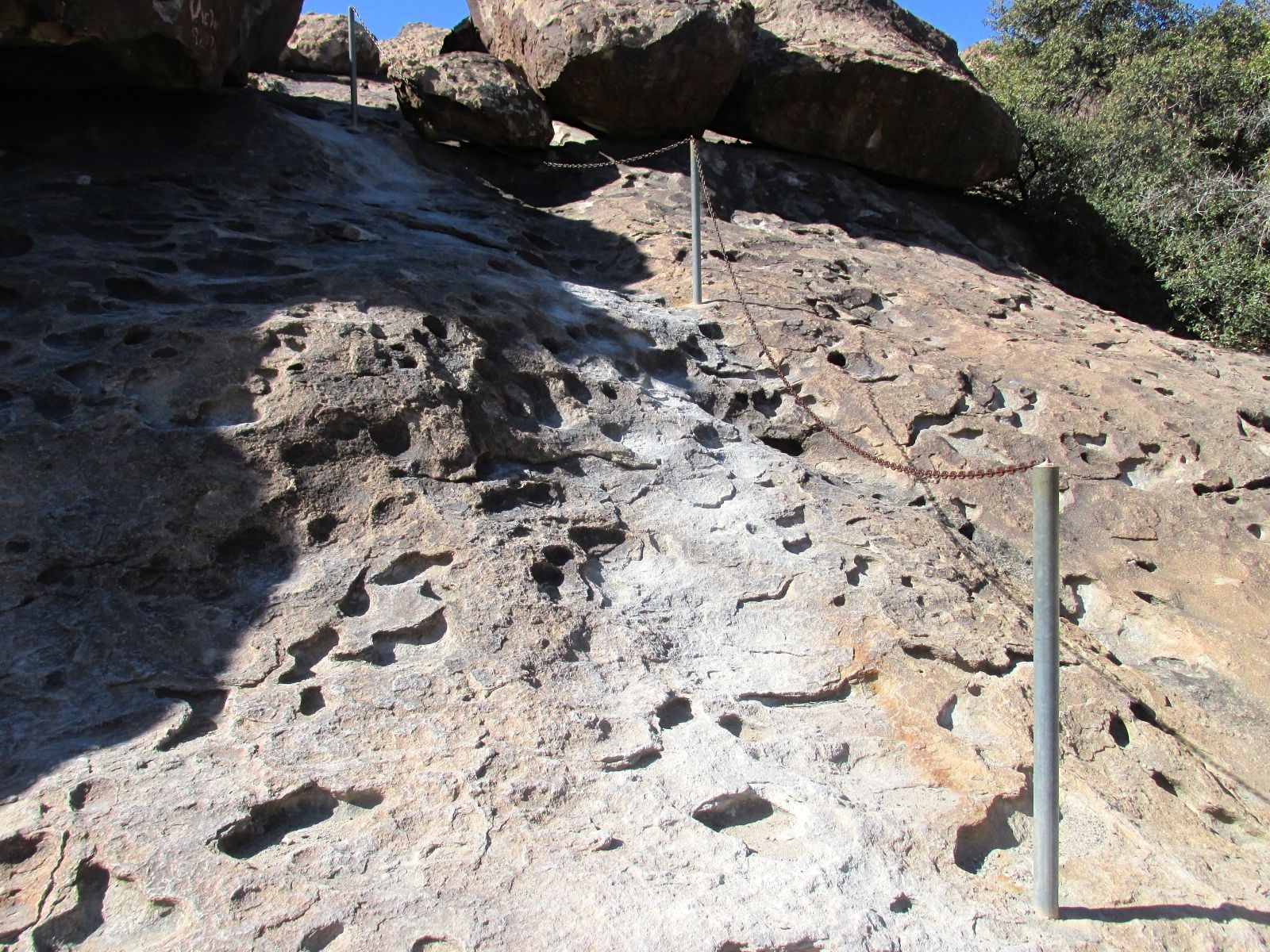
Chain Trail

I passed up the opportunity to ascend this path, aptly named the Chain Trail. It looked like more effort than it might be worth. Also, I could see numerous opportunities for tripping. I only had a short time before I needed to push on, anyway. There were other things to see!

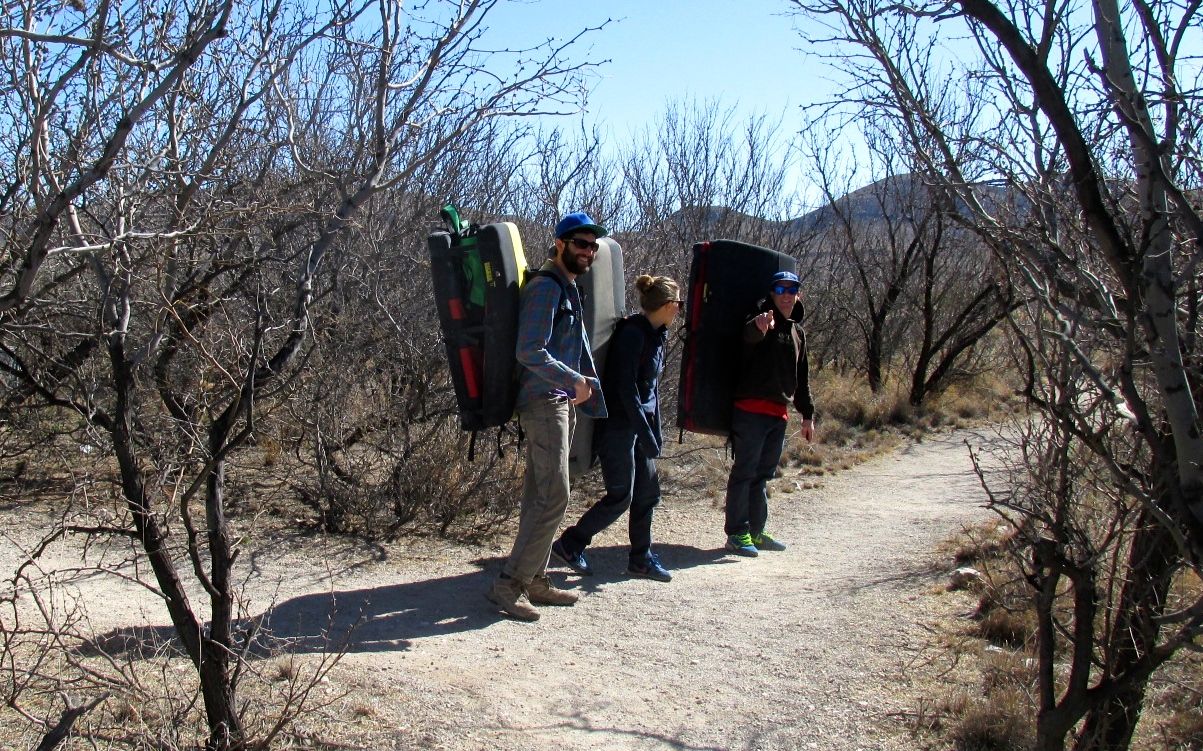
Rock climbers setting out with their crash pads

I passed – or rather, I was passed – by a group of rock climbers. They carry those large “crash pads” with them as a safety measure. They encouraged me to give it a try. I laughed! Me? I think the best safety measure is not climbing rocks – especially if you need a crash pad! I wished them a good climb, and they scooted on ahead of me.

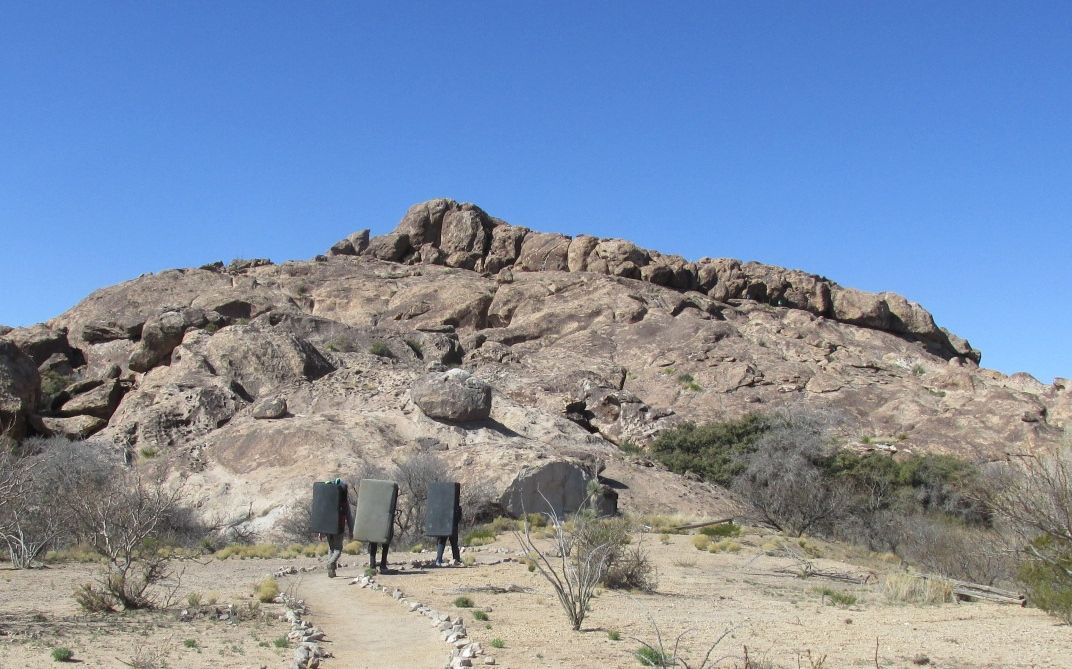
Rock climbers heading for the rocks

And, they’re off!

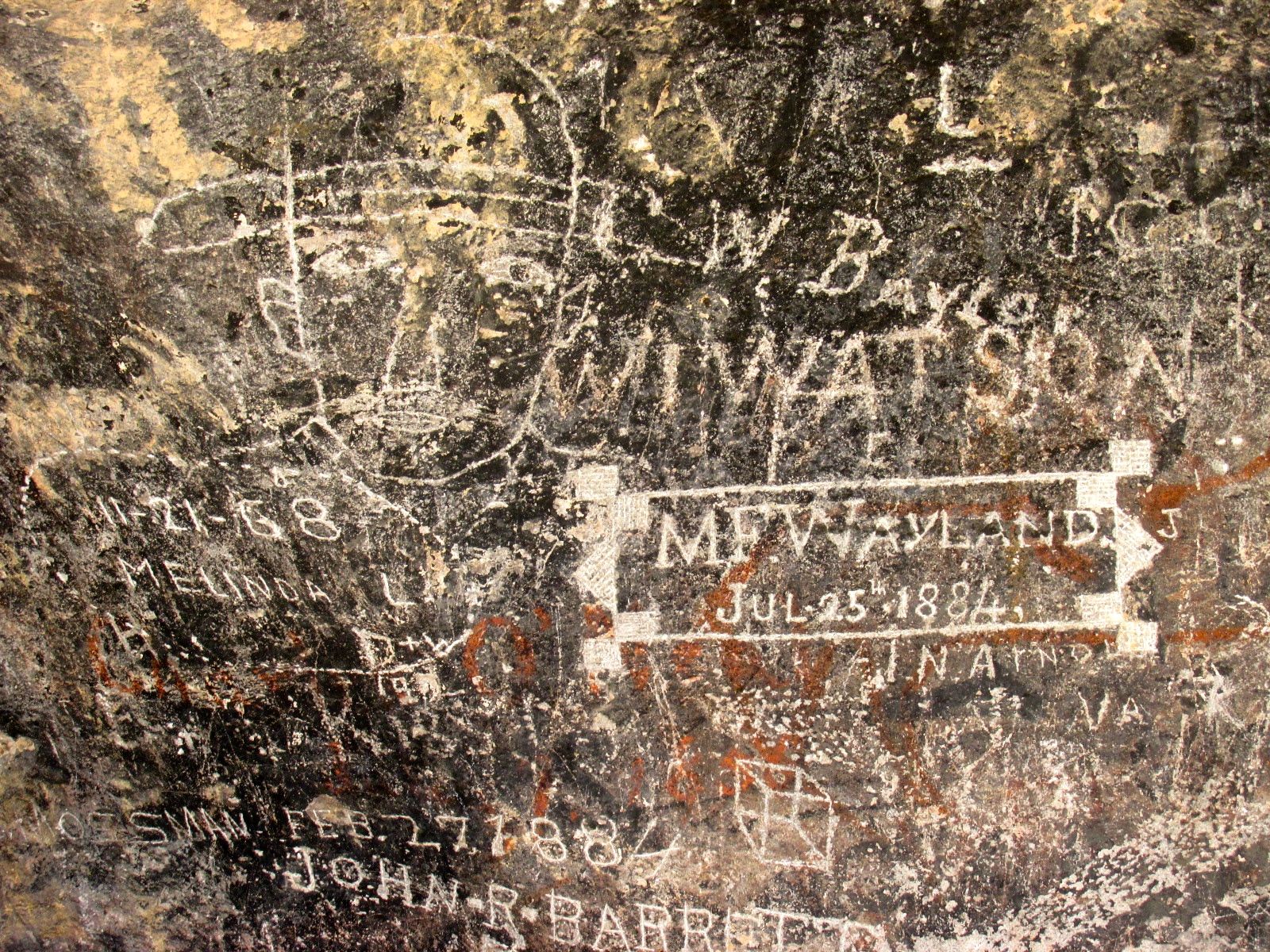
Graffitti part of the historical record

I found some more pictograms, but they were pretty much obliterated by the markings of visitors in the nineteenth century. But, even graffiti is a part of the historical record.

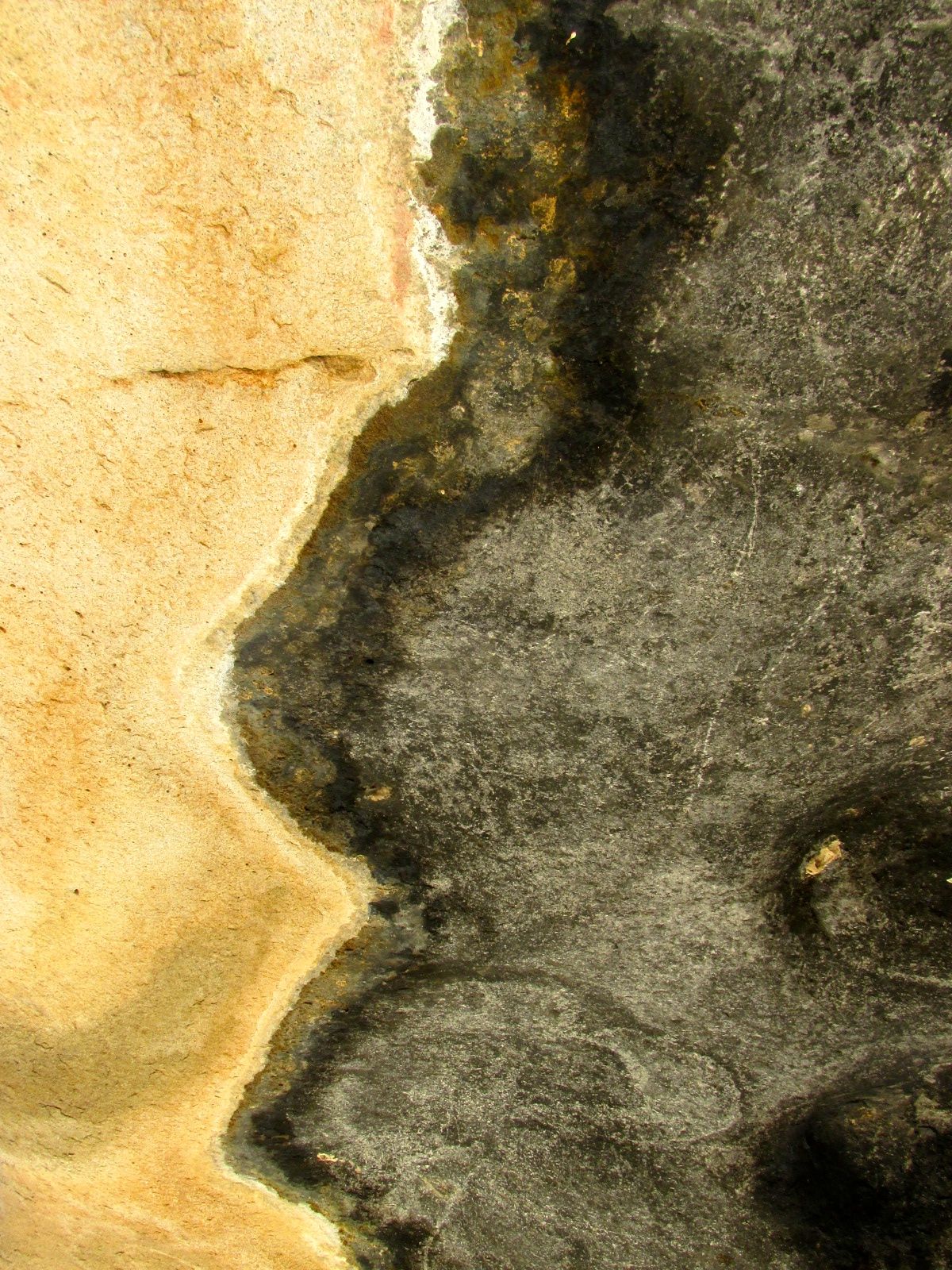
colored rocks

I found the different colored rocks to be eye-catching.

colored rocks with graffitti

Colored rocks with graffiti.

Colored rocks 2

I had one more site I wanted to see before I had to head back to the campground and get ready to leave.

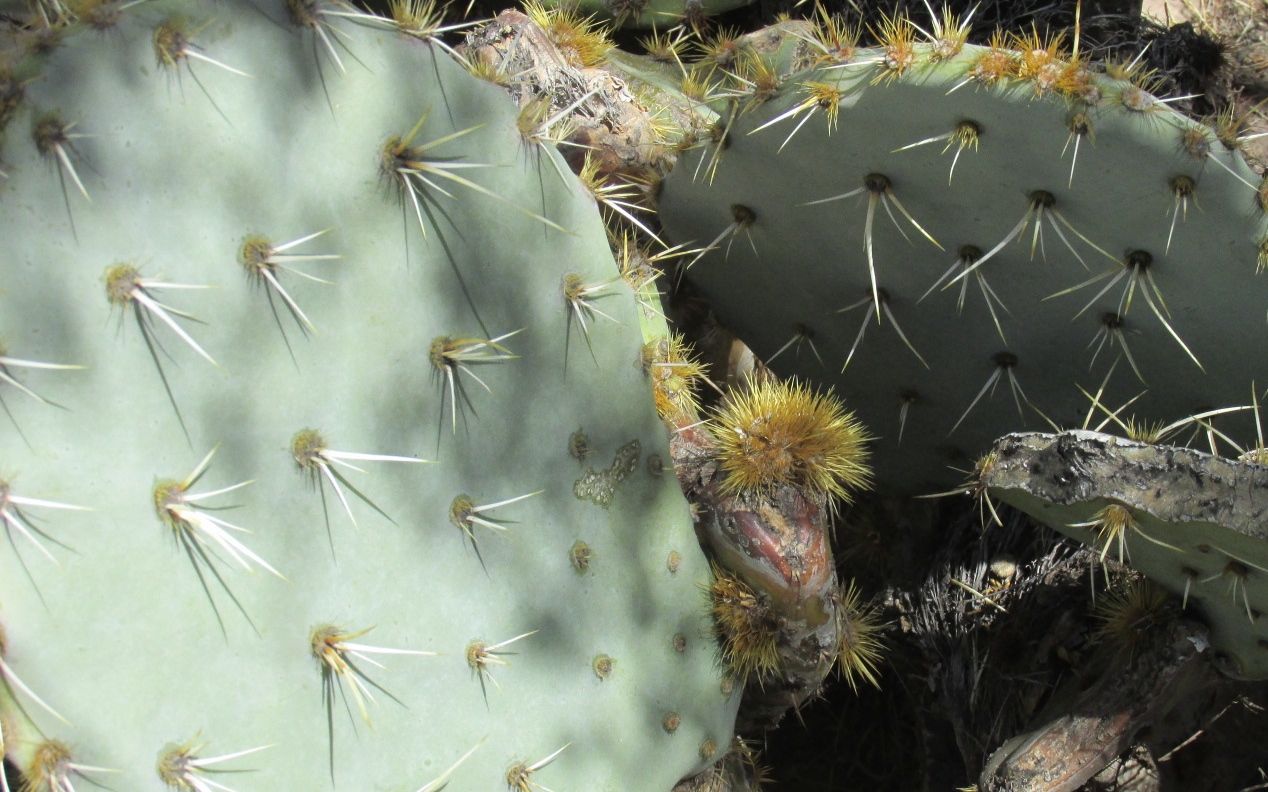
Pickly pear

I was taken by the prickly pear. It would be interesting to see if those little nubs develop into the large lobes.

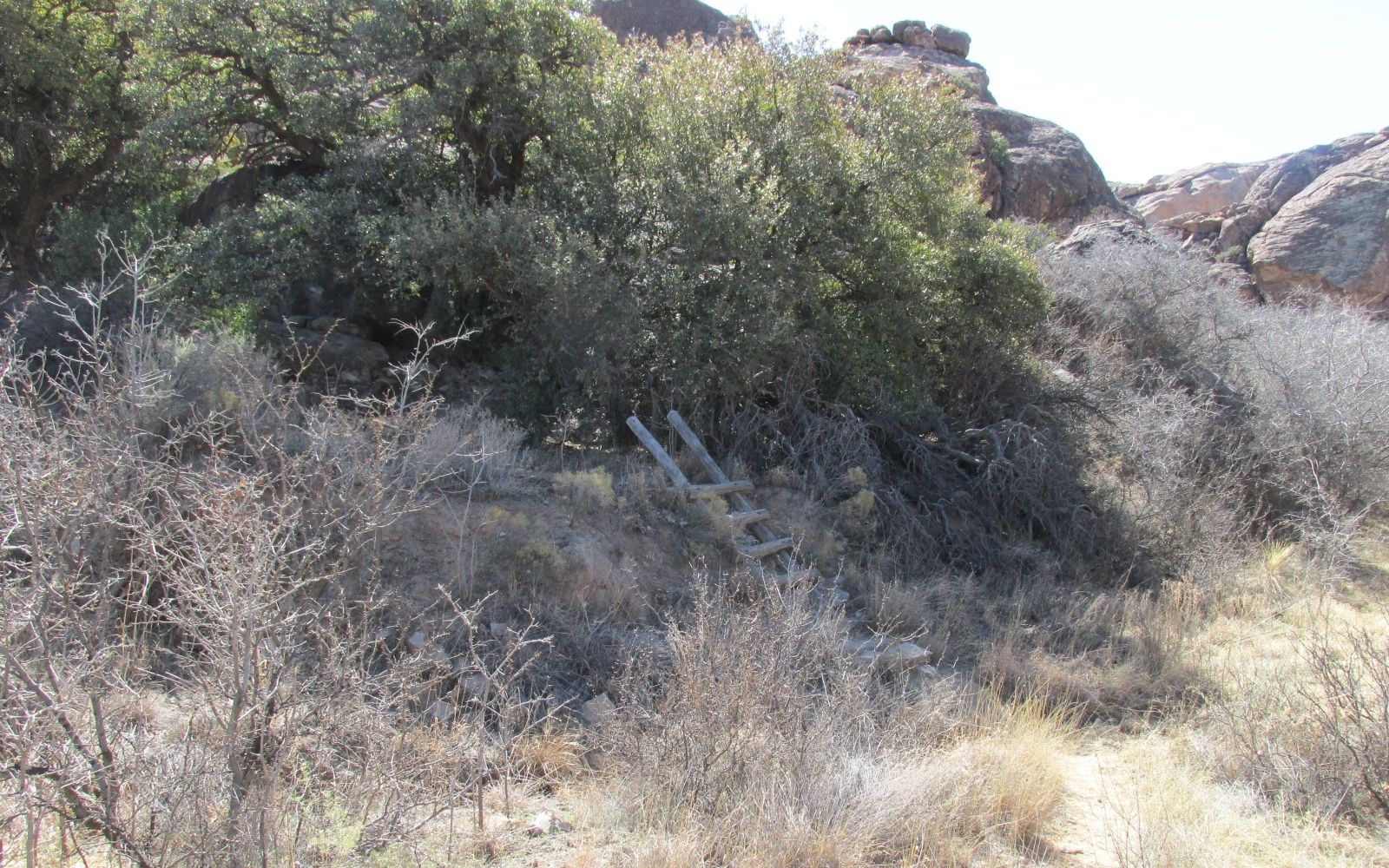
path with ladder

I was interested in this ladder. It was on the other side of a gate that restricted access to people with guides. A minute after I took this picture, a small group passed by. Those youngsters sure move fast! I tried to get a picture of them, but I couldn’t get them in frame.

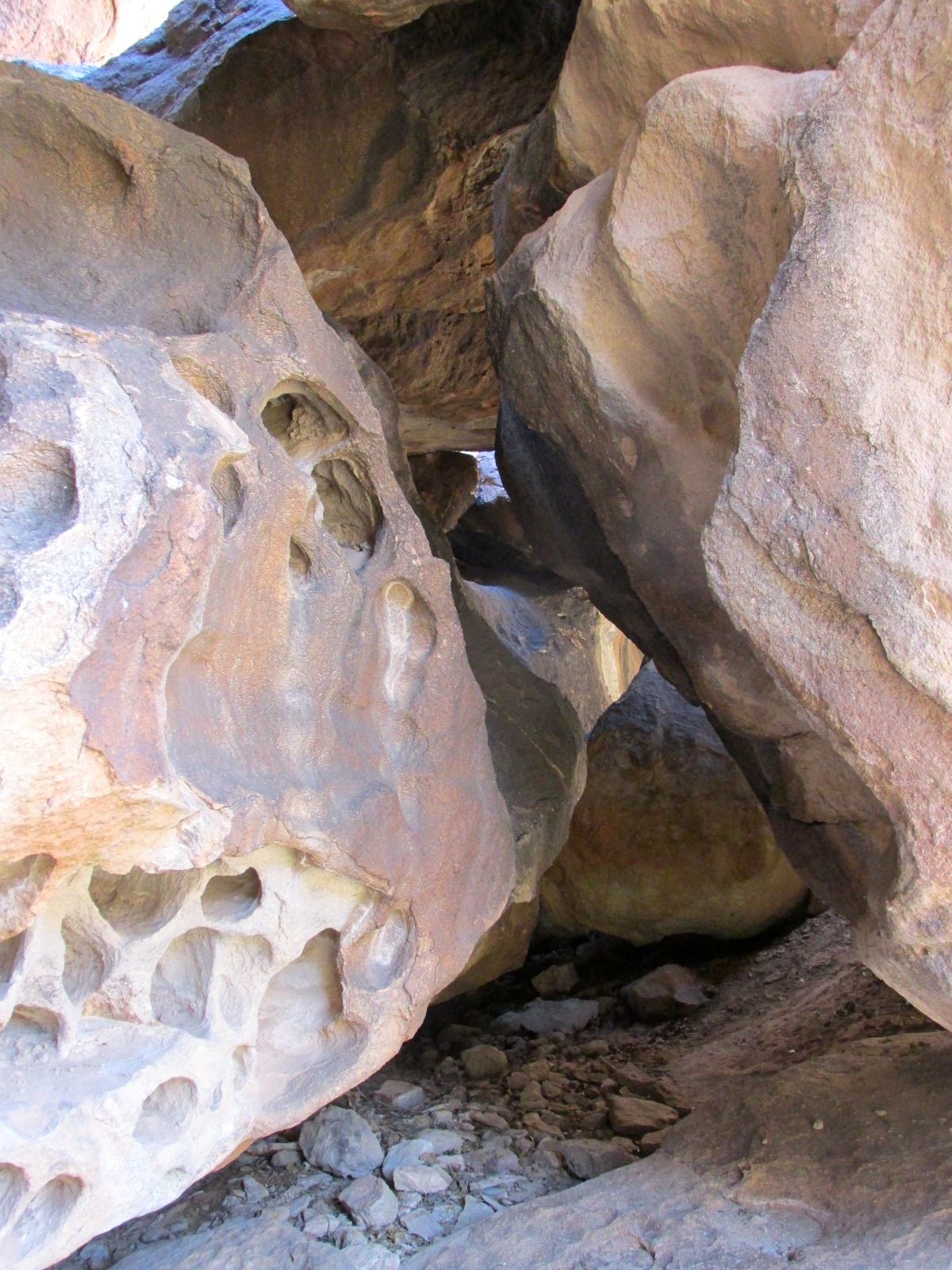
There were more interesting rocks along the way.

Rocks

Lovely!

rocks 2

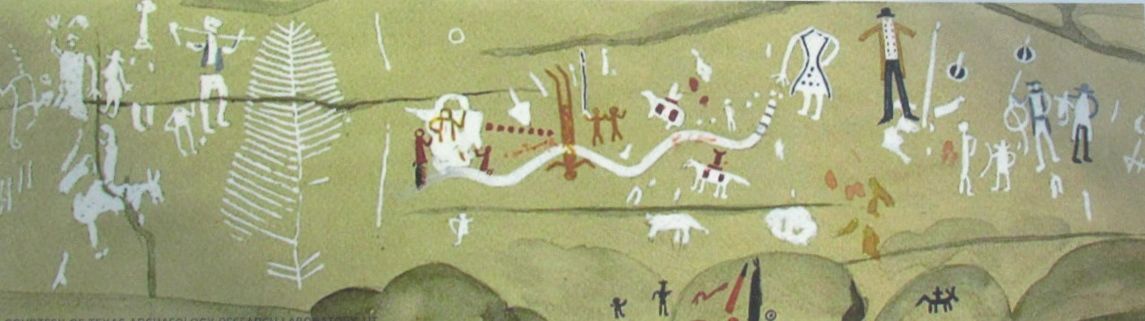
The last place I wanted to see was one that had a large pictogram. Just outside the site, there was a sign that had an artist’s rendering of it.

artist rendering of art

I knew that I wouldn’t be seeing it like this, but I did want to see what I could.

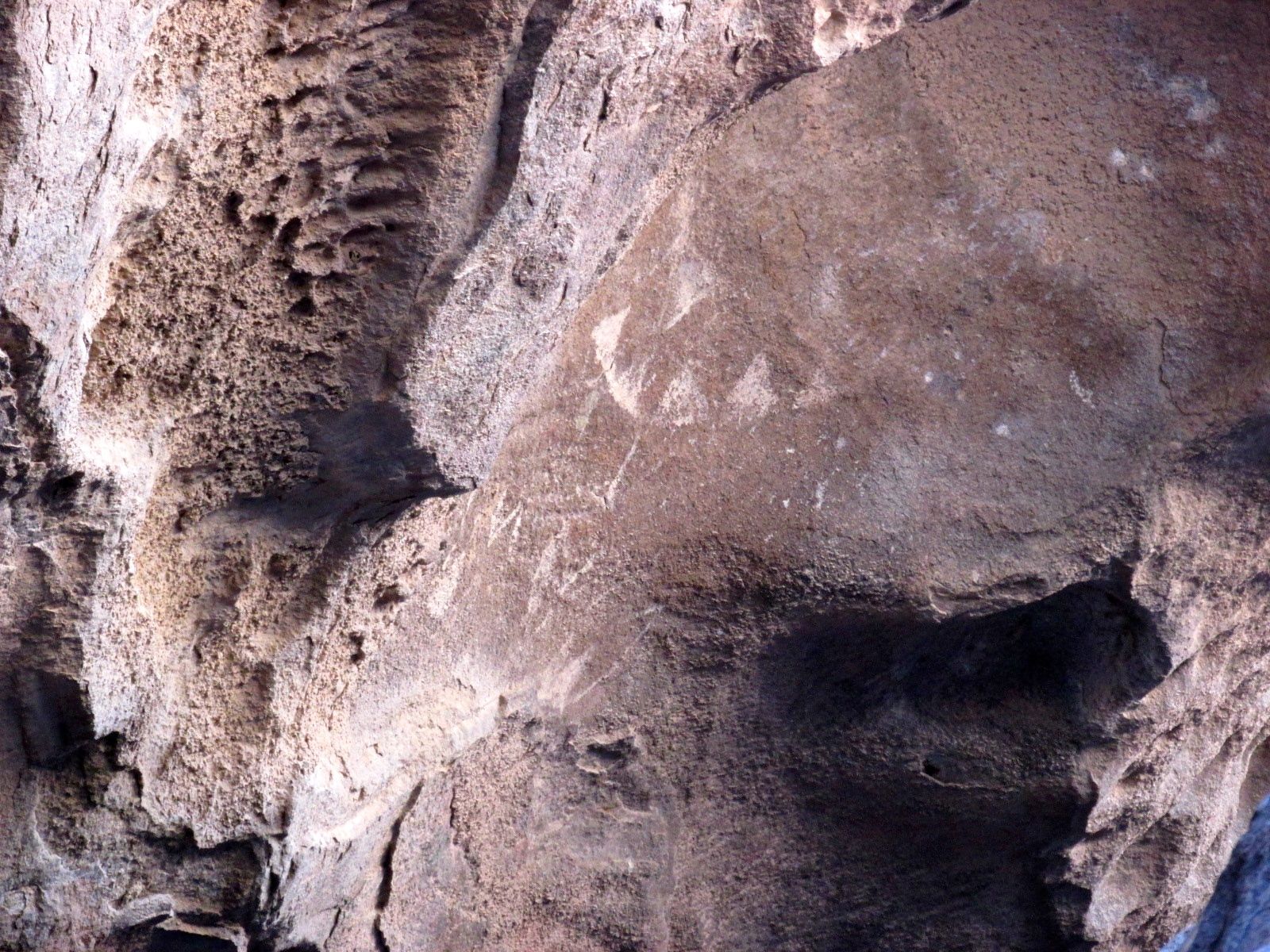
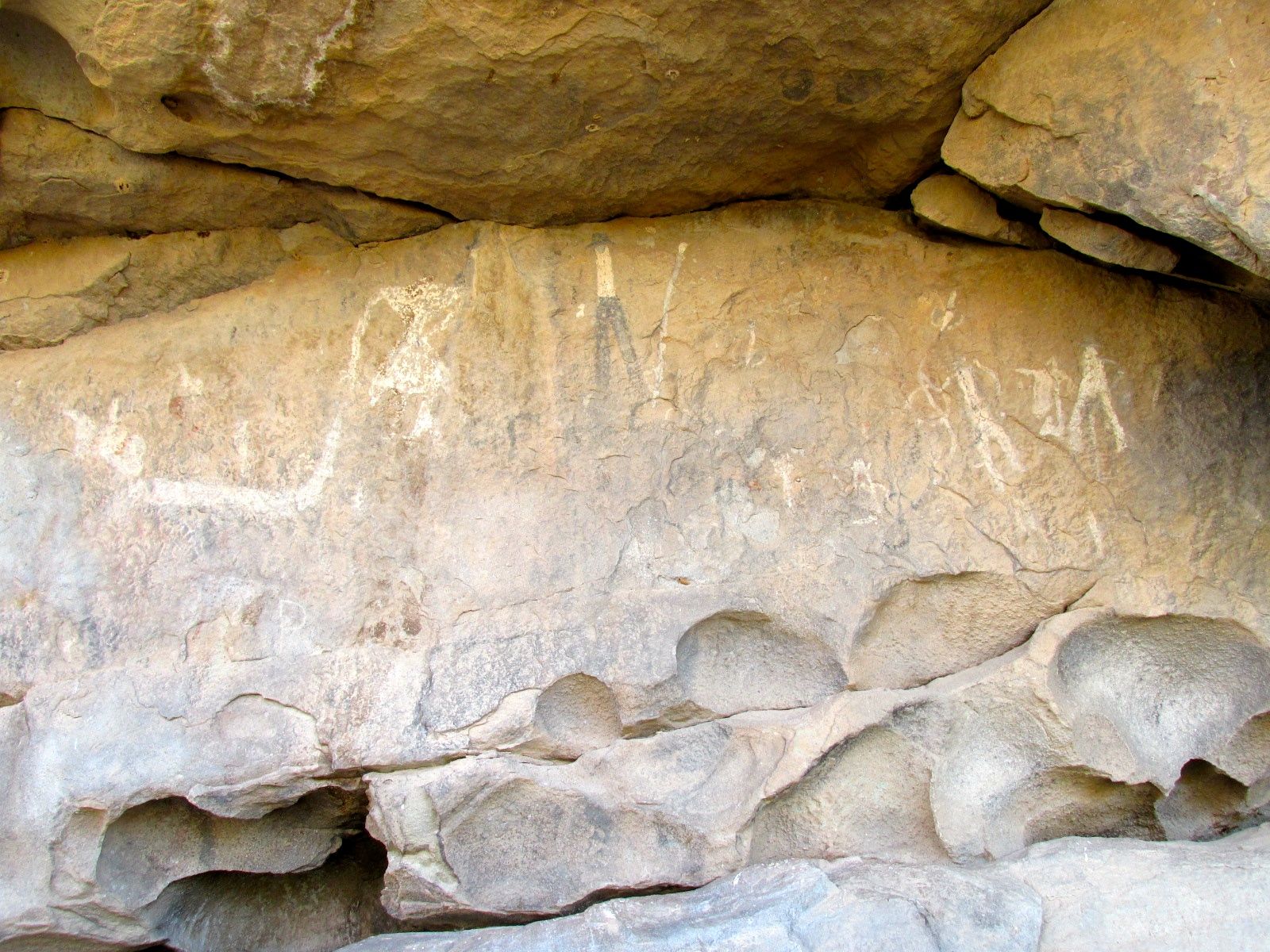
remaining pictogram 1

Yep, you can still make out the figures.

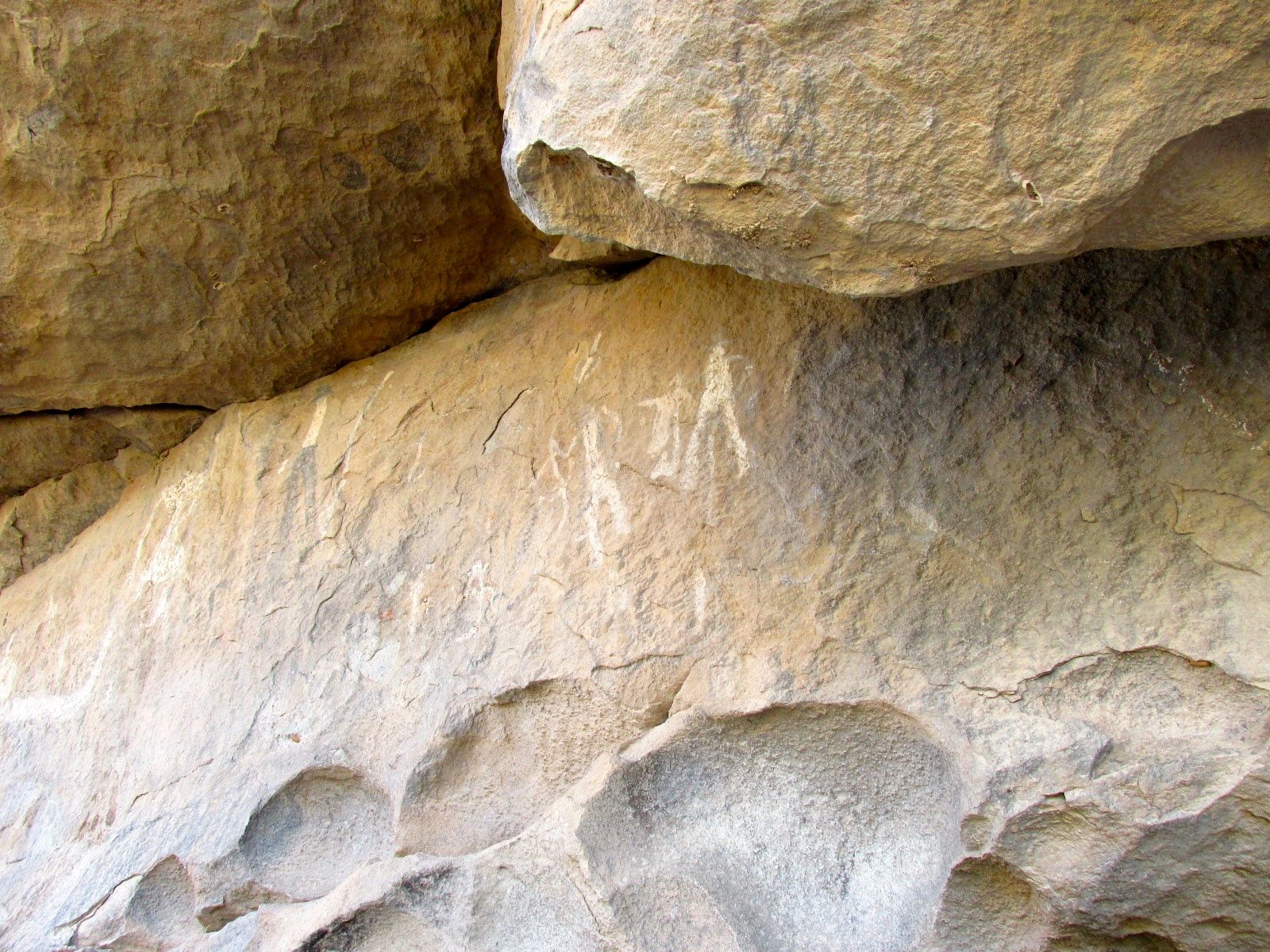
remaining pictogram 2

When you think about it, it’s kind of amazing that any natural pigments exposed to the elements would be visible.

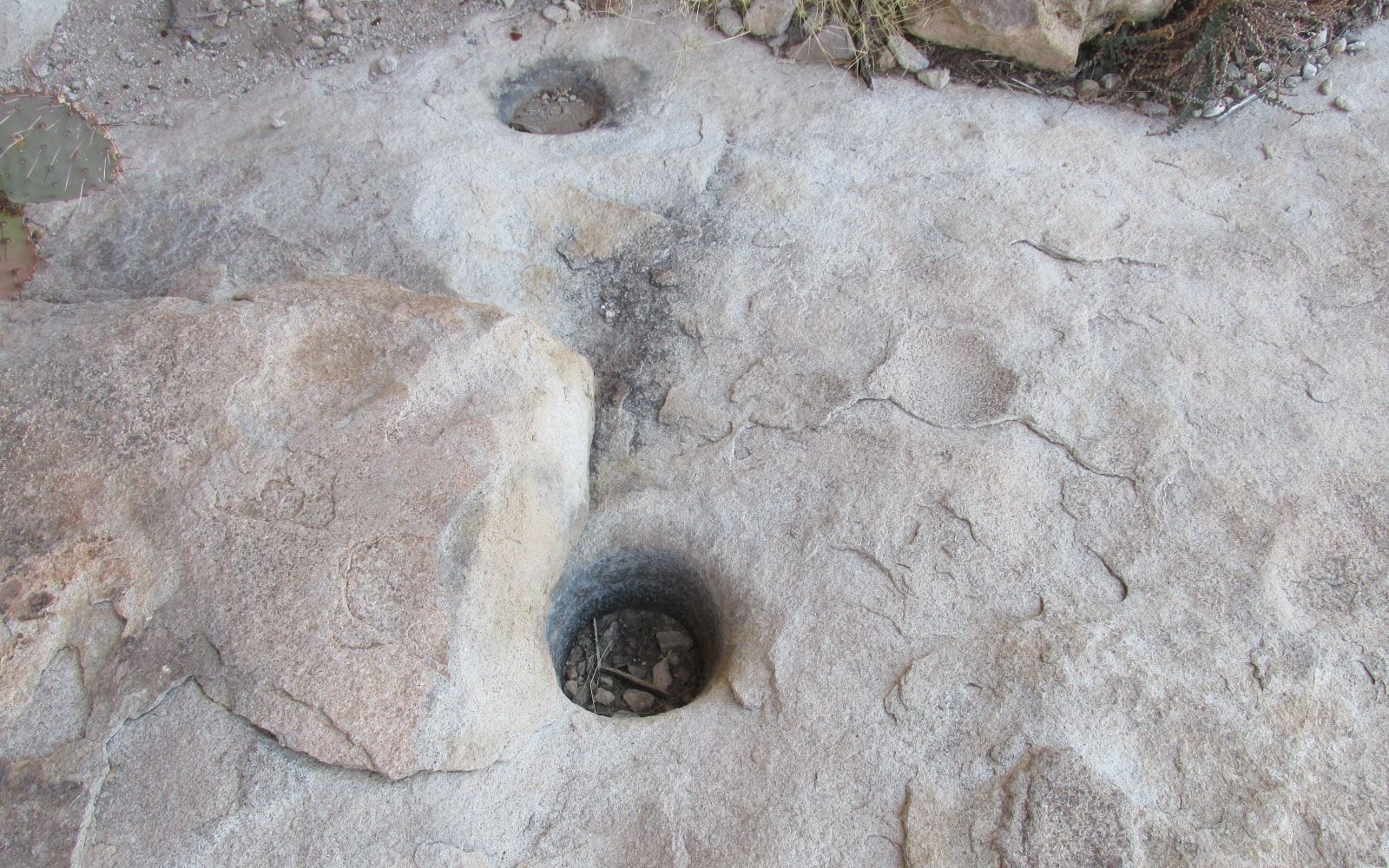
I really would have liked to have seen the huecos, but they were in the areas that you needed to have a guide. However, I did see some huecos in the making.

Baby huecos
Baby huecos

I suppose that they would hold a gallon or so. That would be life-giving in the desert.

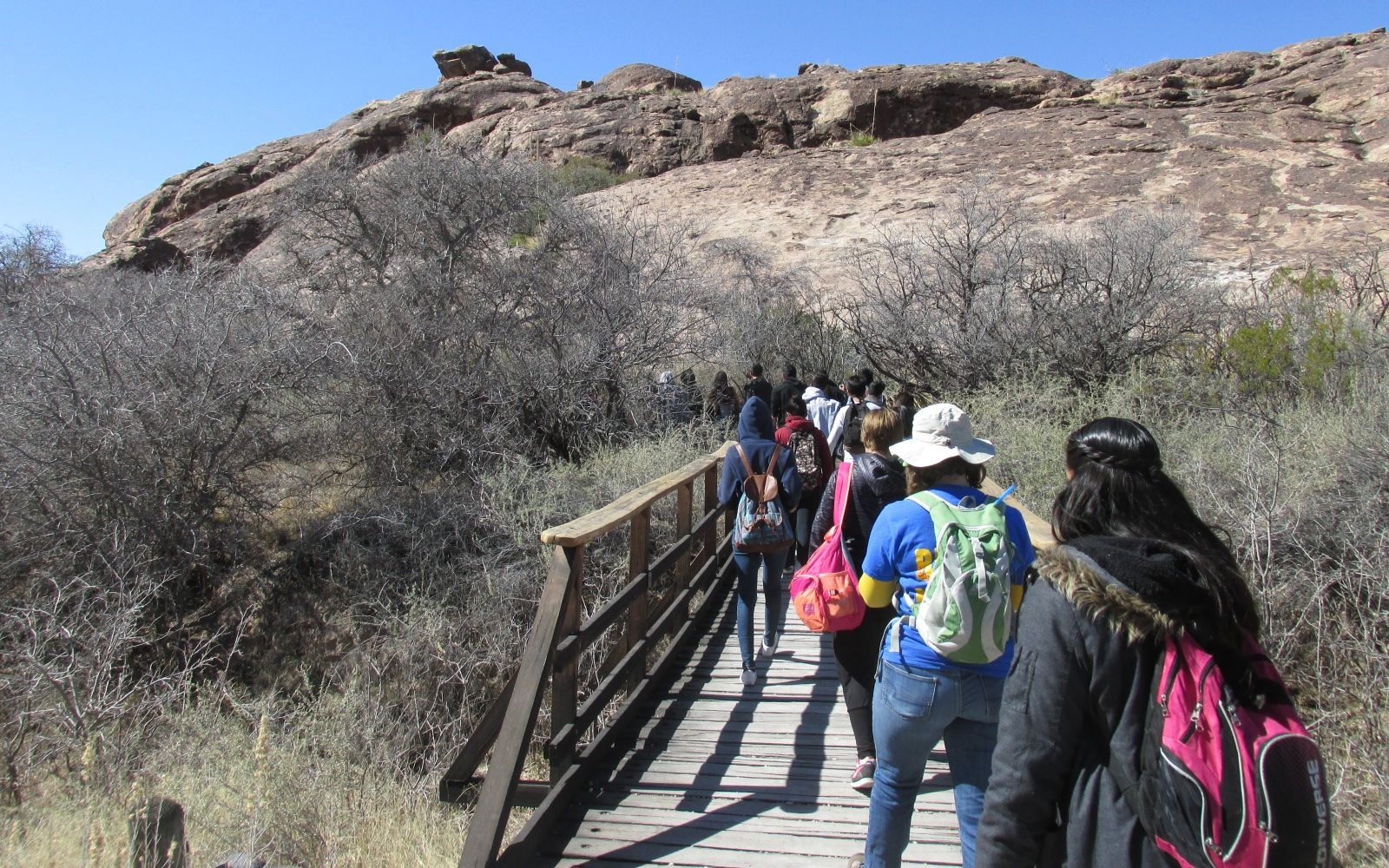
fieldtrippers

On my way back to the campground, I passed a couple of school-group field trips. I wonder how many field trips I’ve taken kids on in my 30 years of teaching? I smiled and waved and was happy it wasn’t me.

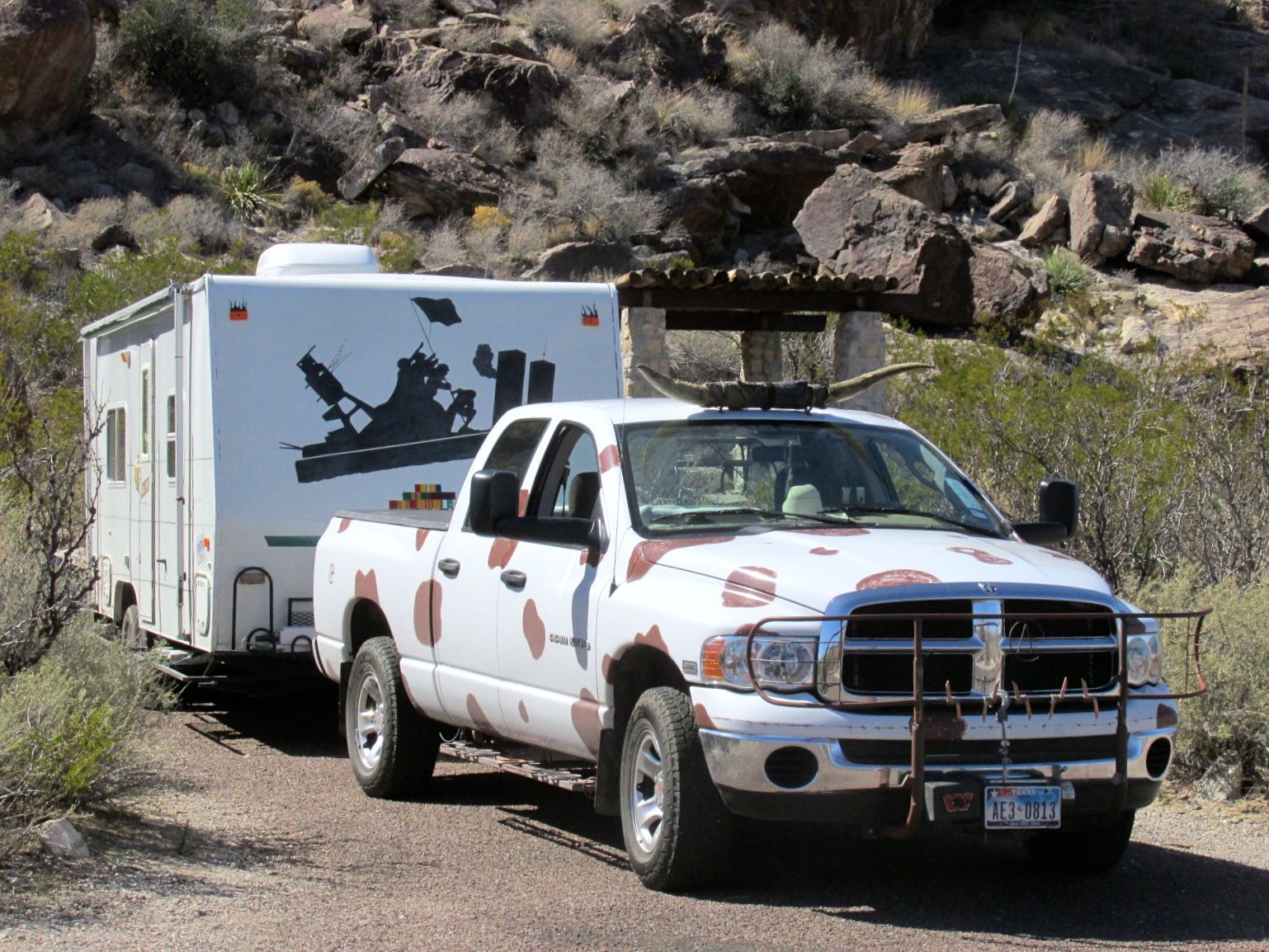
When I got back, an interesting rig pulled in to the site right across from me.

my new neighbors

It’s gotta be Texas!