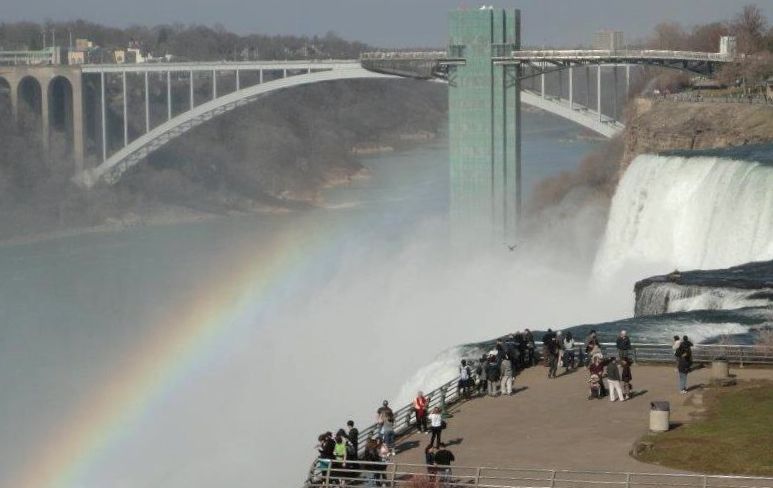
No, not those Falls!
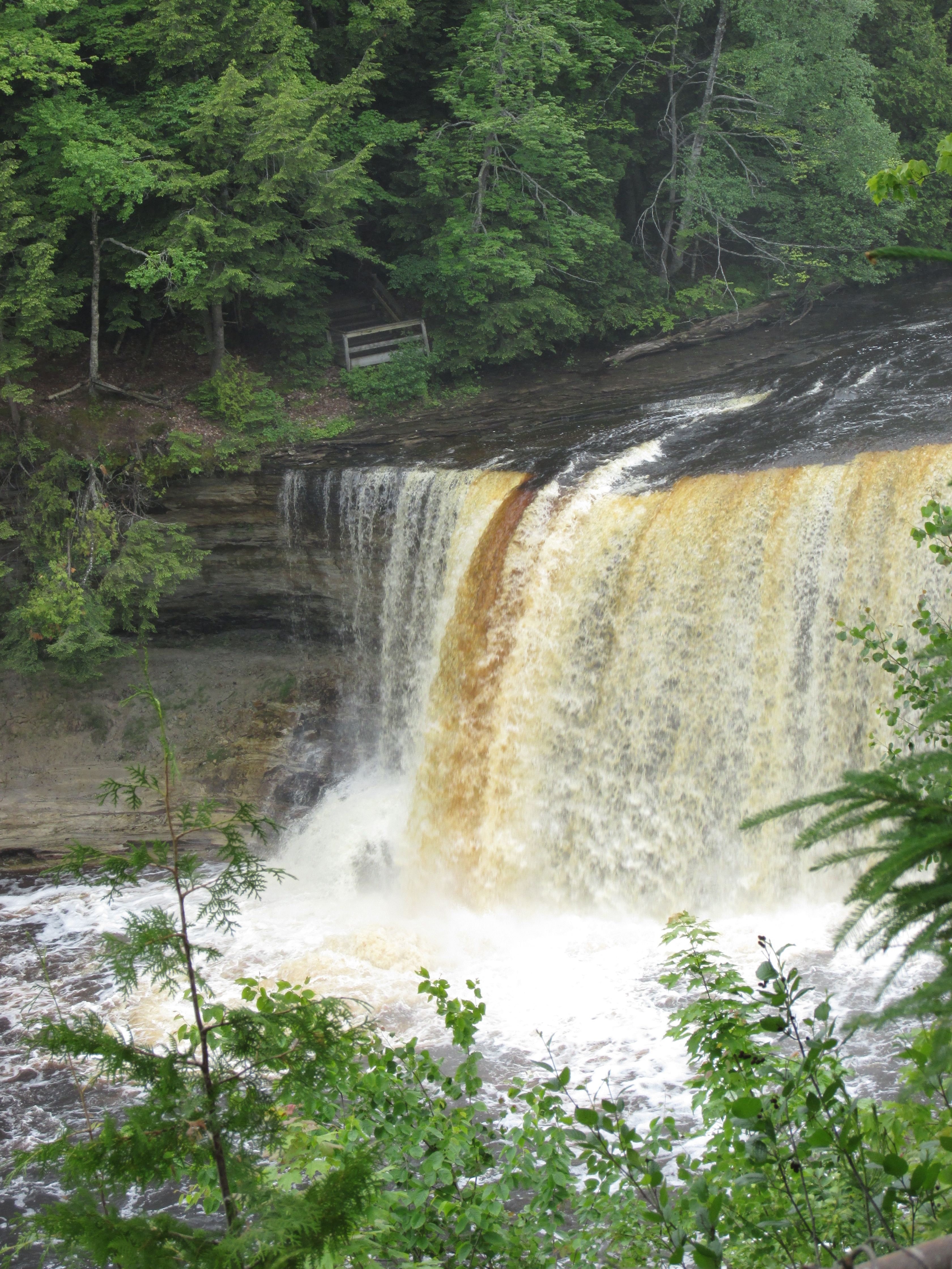
Tahquamenon Falls in Michigan’s Upper Peninsula.
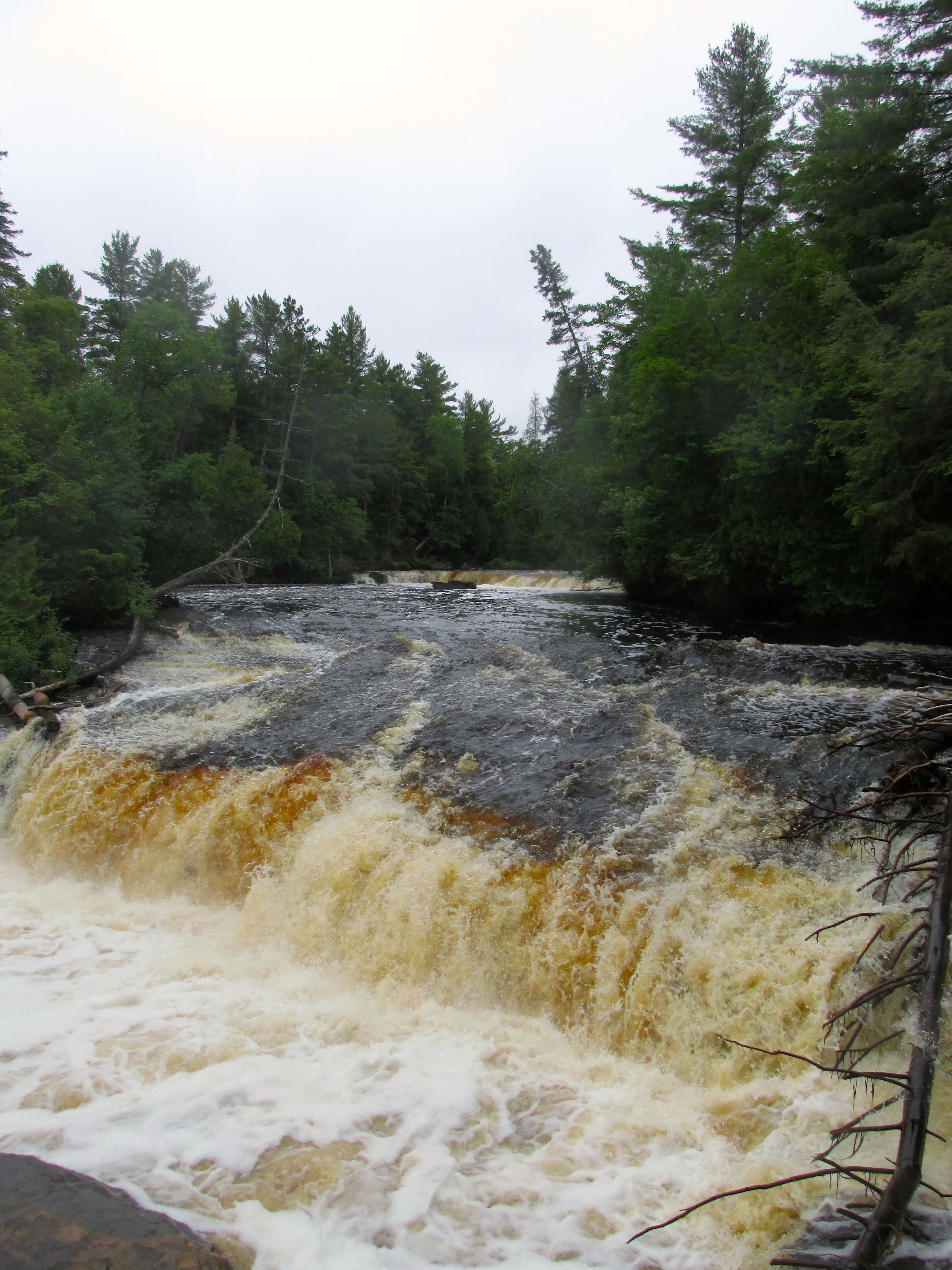
Since I lived in Michigan for almost thirty years, I knew that Tahquamenon Falls were “up there” but I didn’t know much of anything about them, other than people said they were pretty spectacular. I am here to say that they are, indeed, remarkable.
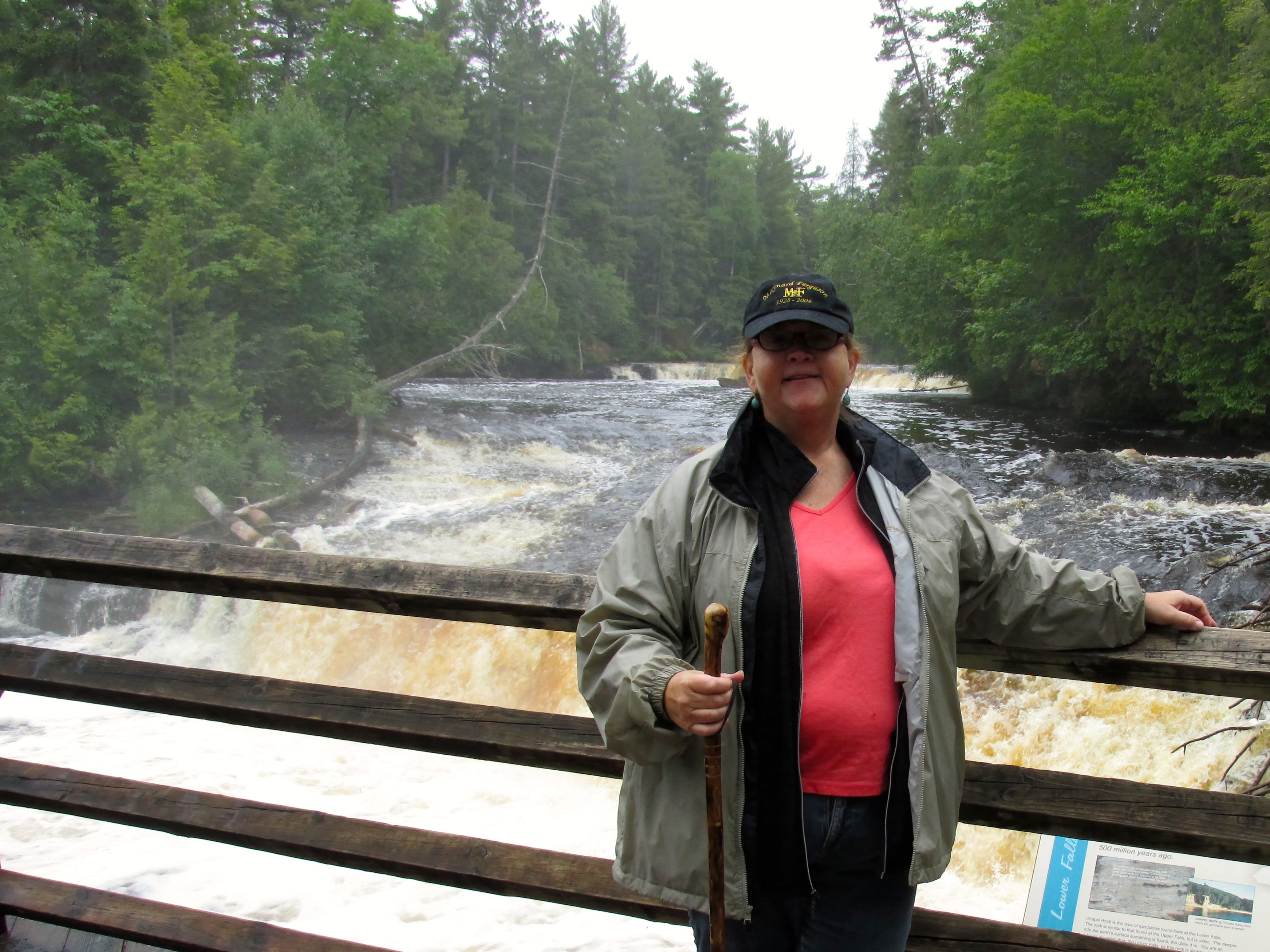
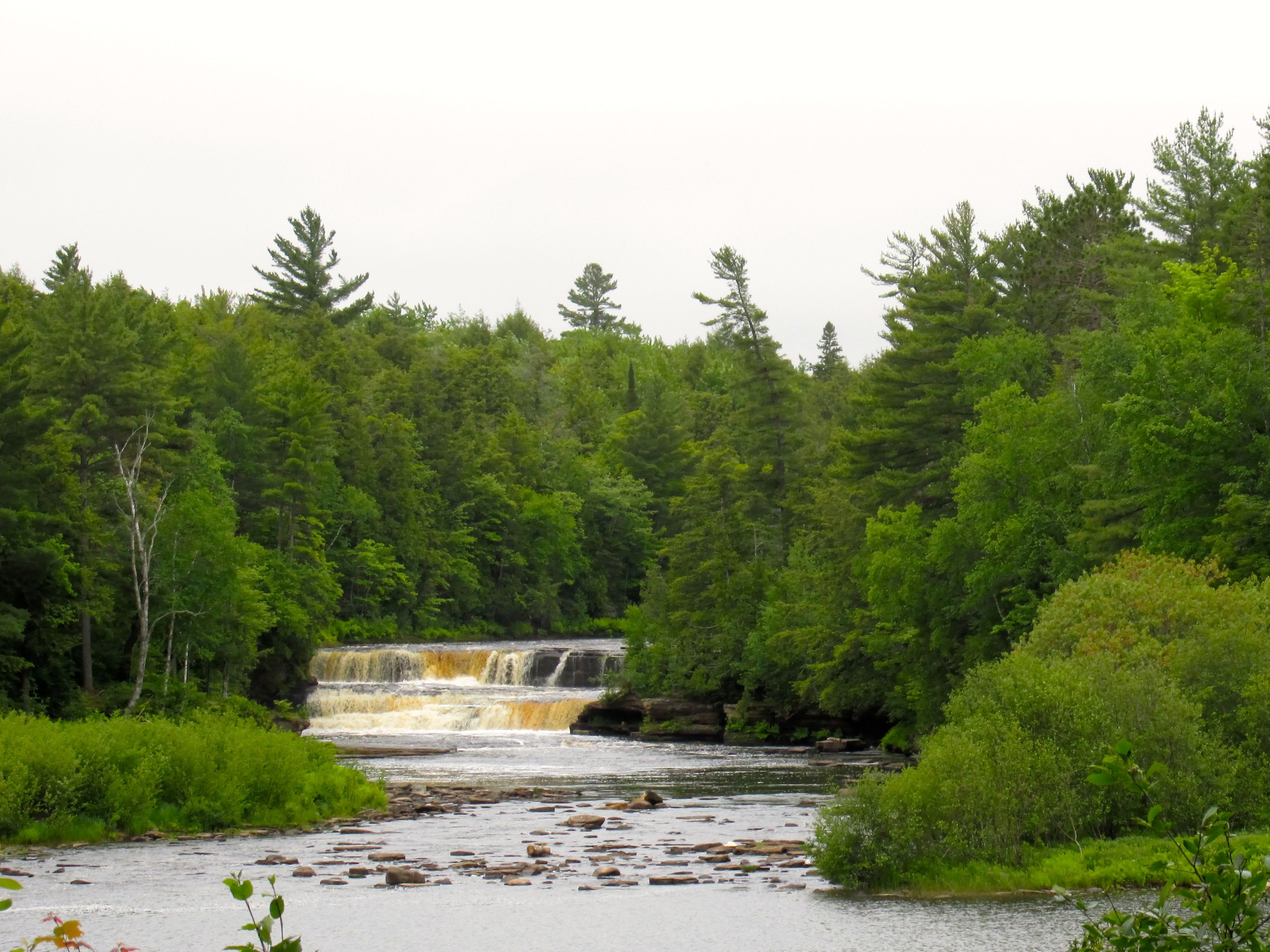
For one thing, there are two sets of falls – the Upper Falls and the Lower Falls. The Upper Falls has one big drop, and the Lower Falls has five drops that cascade around an island. They have boats available for rent that you can row across a lagoon to the island and then hike around to see all the falls up close and personal. I satisfied myself with a stroll along the top.
Another feature of these waterfalls is that the water is actually brown. The brown color comes from the tannins that leach from the cedars in the swamps surrounding the river.
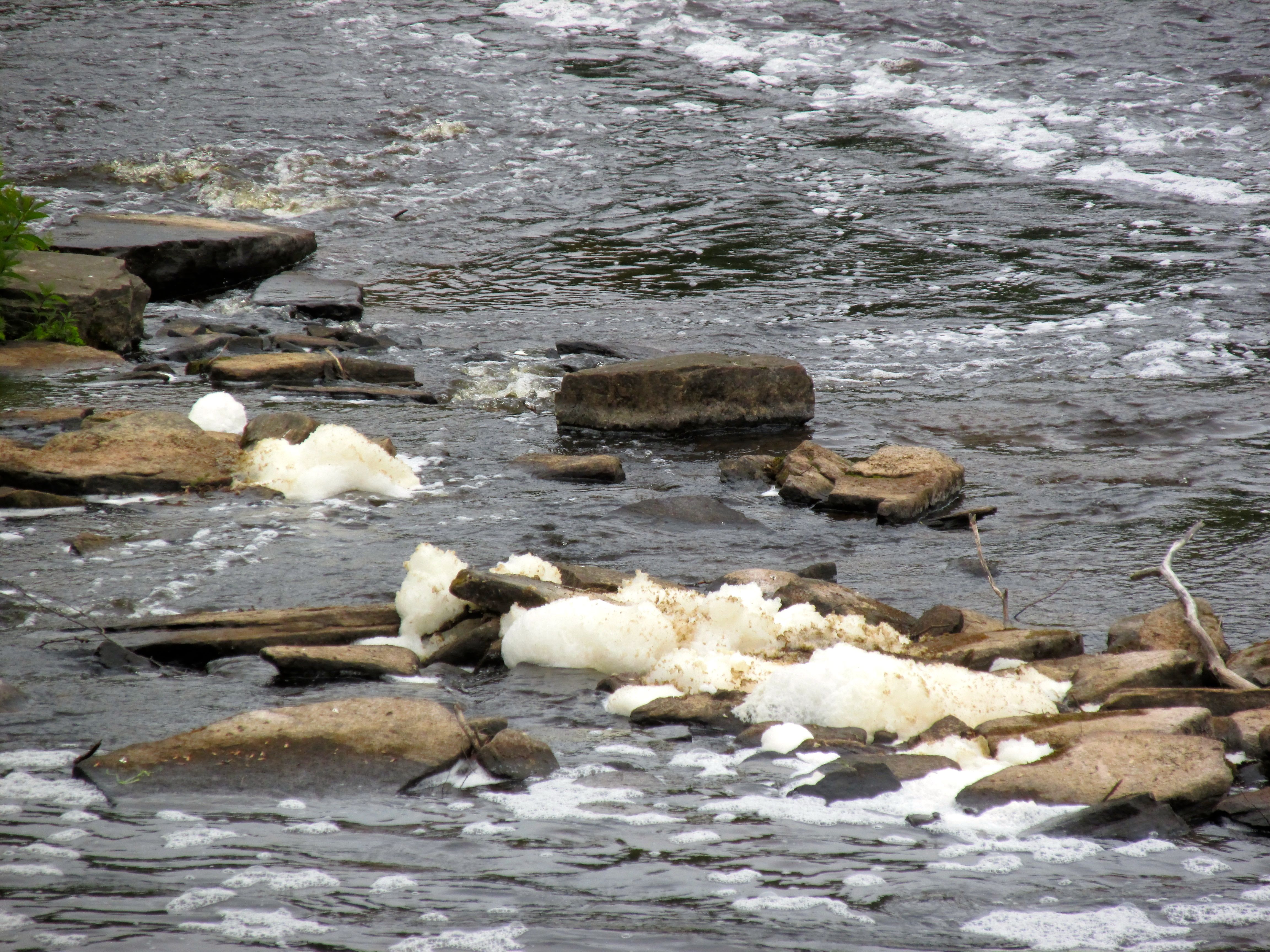
Furthermore, there are mounds of naturally occurring suds in the river beyond the falls. This happens as a result of the soft water, the aeration caused by the falls and naturally occurring lignin proteins found in decaying organic matter, if I understand correctly. At least, that is what the sign said.
On the day I visited, the river was flowing at 4,751 gallons per second. Just for the sake of comparison, Niagara Falls flow rate is about 150,000 gallons per second. Still, this was pretty impressive for a relatively small river.
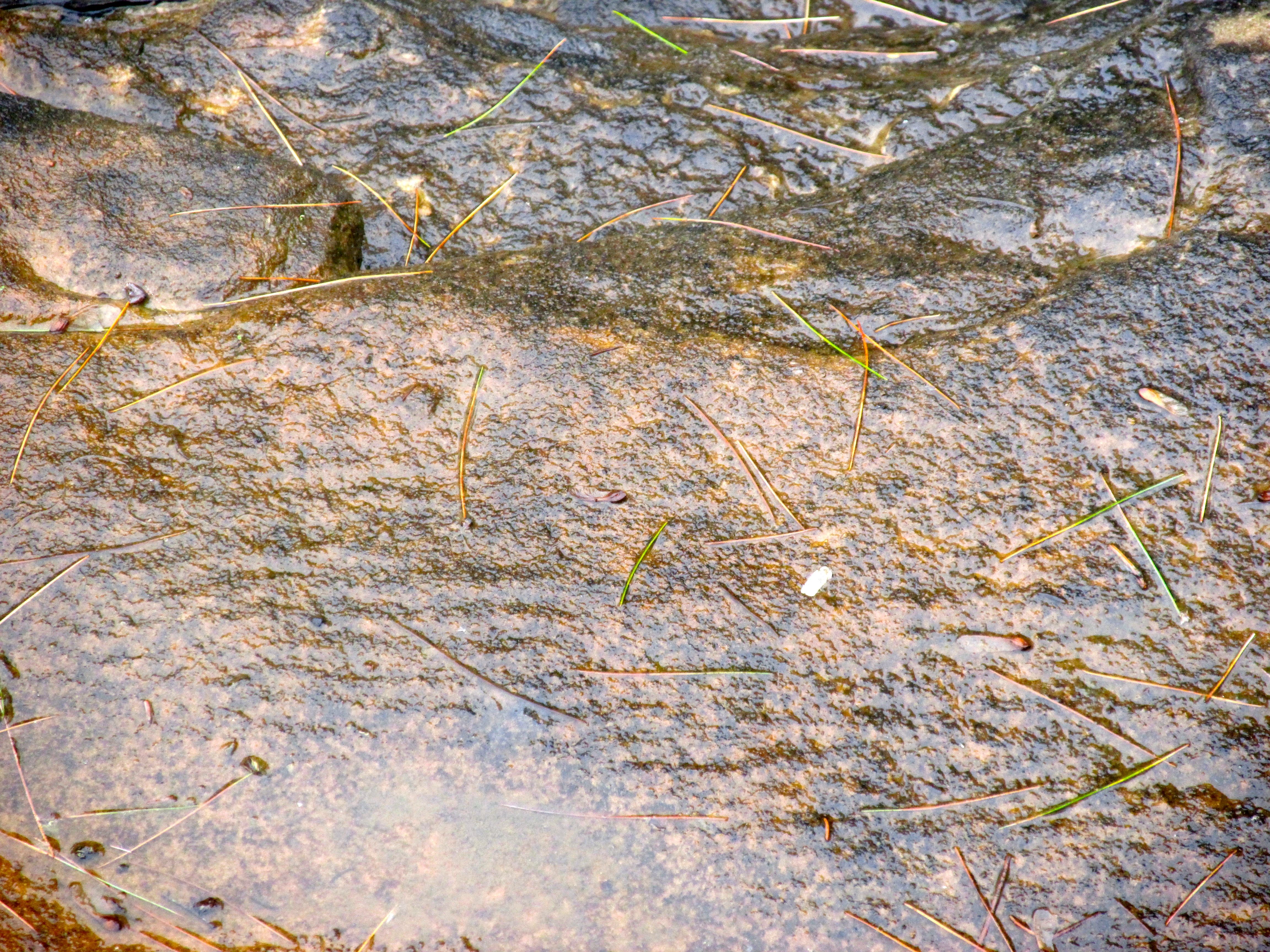
The rock that the river flows over is sandstone. There are a couple different types of sandstone, one is harder than the other. At one spot, they point out fossilized ripples from the floor of an ancient ocean that used to be here.
I didn’t actually go down to the edge of the river due to the unwanted attentions of Michigan’s second state bird, the mosquito. If I kept moving, they kind of trailed behind me like a cloud. When I would stop to take a picture, or to admire the view, they would catch up and swarm around me. It was so remarkable that people along the trail told me that they saw it happening. I was dressed in protective clothing and had bug repellant and I don’t think I got one bite while I was at the falls. However, it wasn’t pleasant.
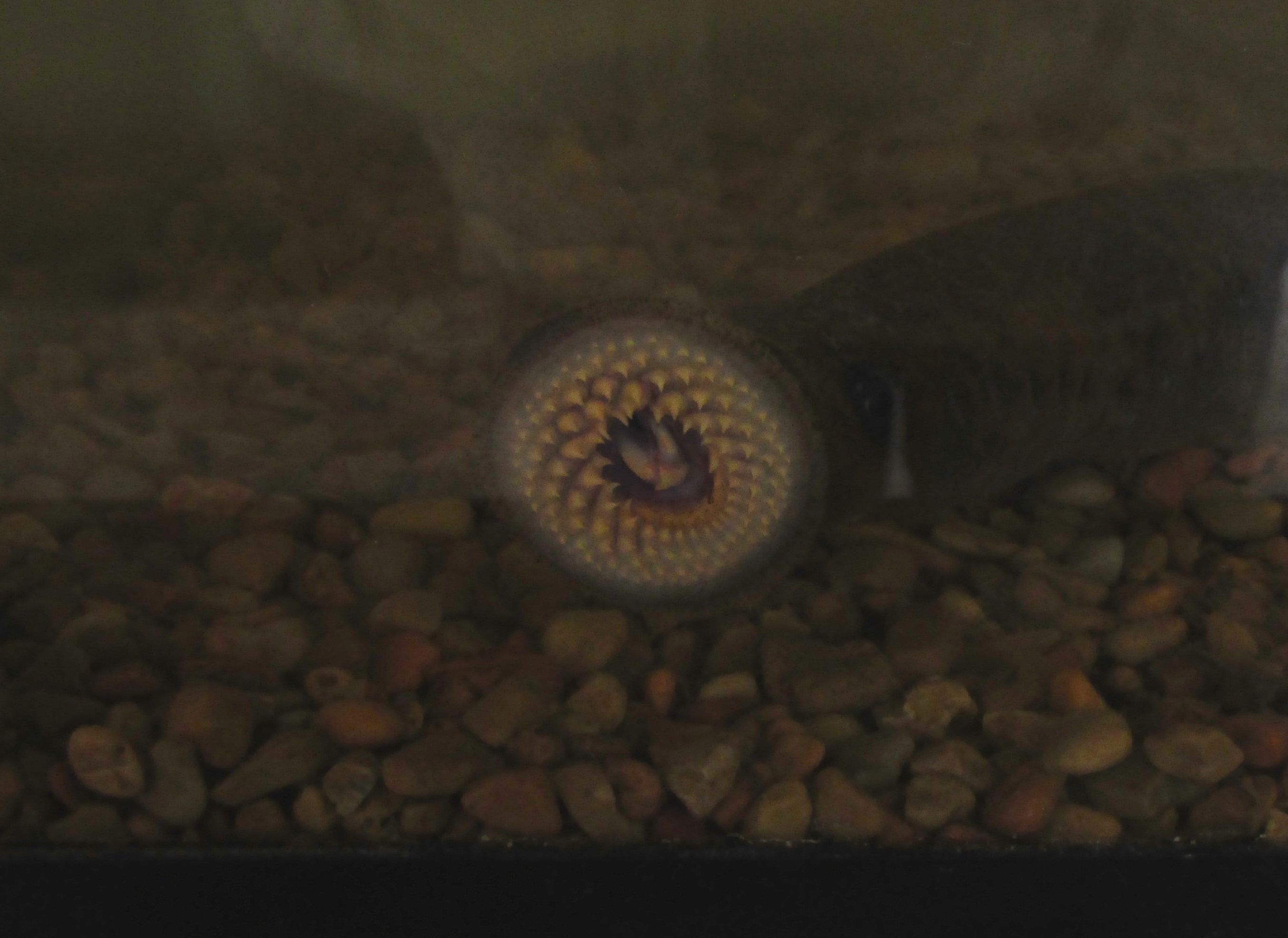
I stopped and spoke with a ranger at the Fact Shack near the Upper Falls. She was displaying a Lamprey Eel that that took from the river at the base of the Lower Falls. It is an invasive species that is native to the Atlantic Ocean. It’s now found in all of the Great Lakes – and the Tahquamenon River. It attaches itself to a host fish with its suction cup mouth until it eventually kills the host fish. This one was posing for its close up. Those teeth look fearsome.
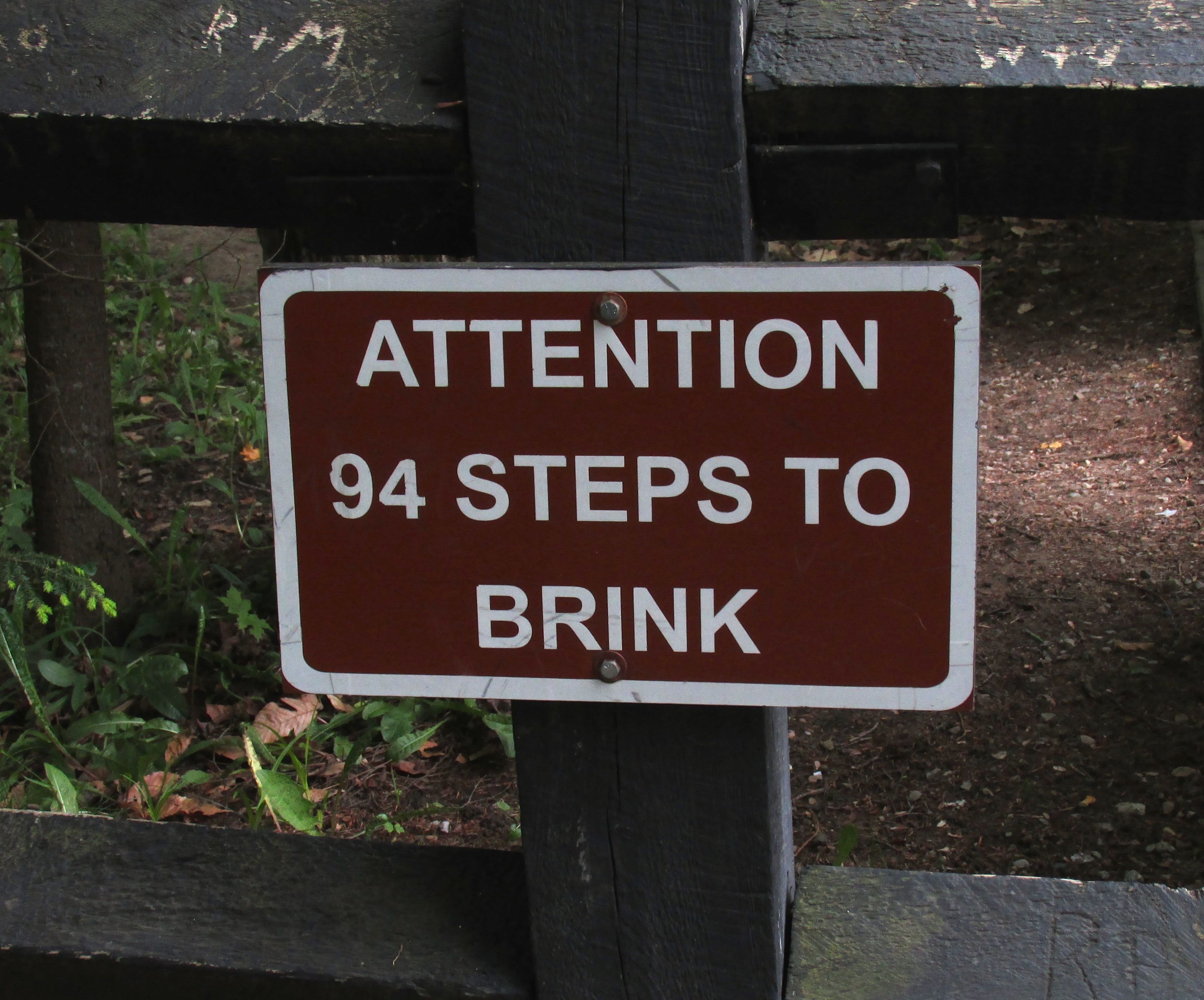
One thing that I appreciated about the trails to the river’s edge, especially around the Upper Falls, was that they told you how far down it was from the trail. Personally, I would appreciate warning signs like this in all areas of life. Who wouldn’t want to know how close to the edge they are?