After bouncing and winding my from Watkins Glen to Elmira and then all the way up to the end of the road, I arrived at Newtown Battlefield State Park. I can’t imagine how they managed to fight their way up the mountain. My hands hurt from gripping the steering wheel!
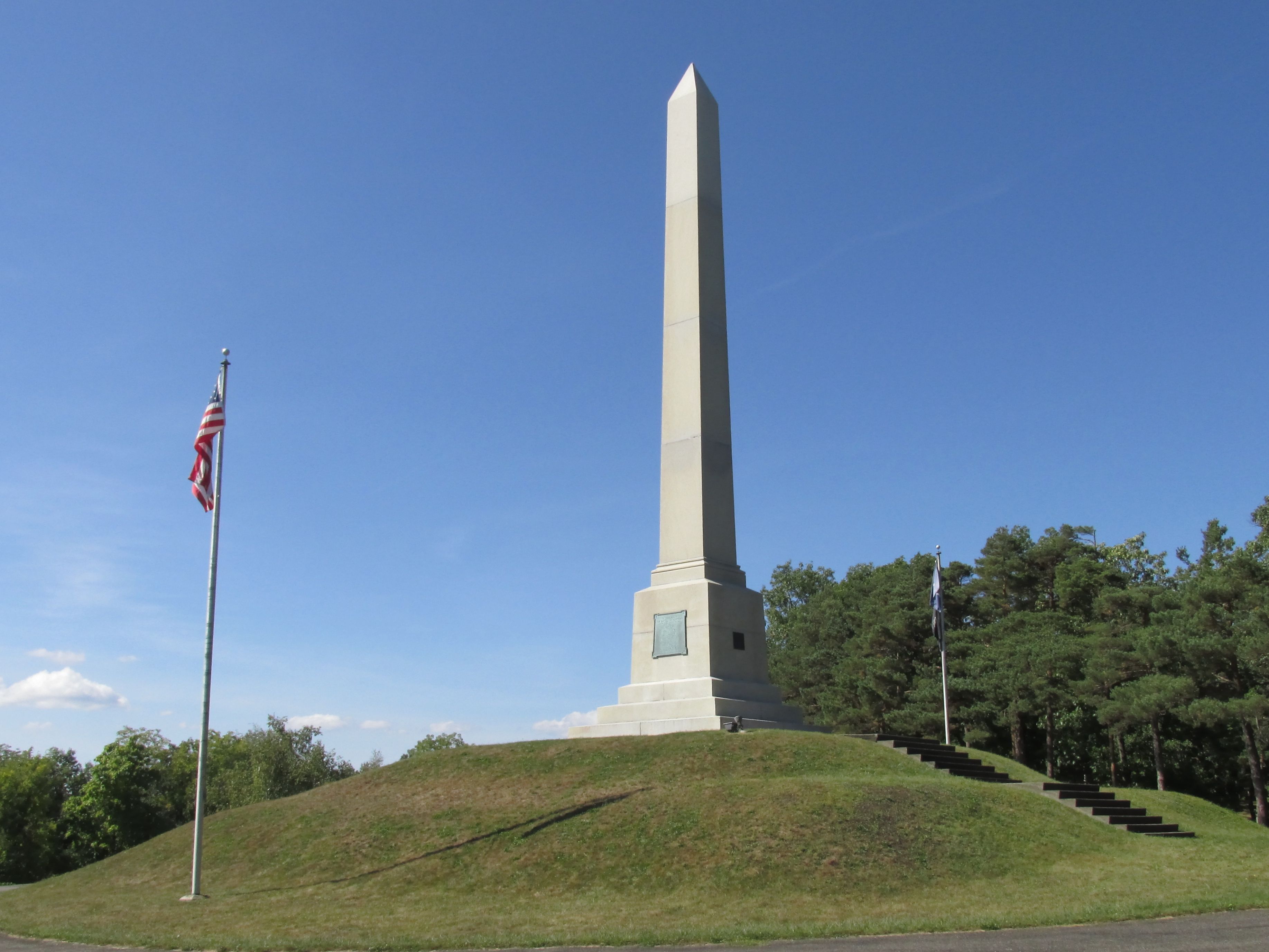
Well, technically, I guess it’s not a mountain, as the crest is only 800 feet above the road next to Chemung River. But, my goodness, it sure felt like a long way up.
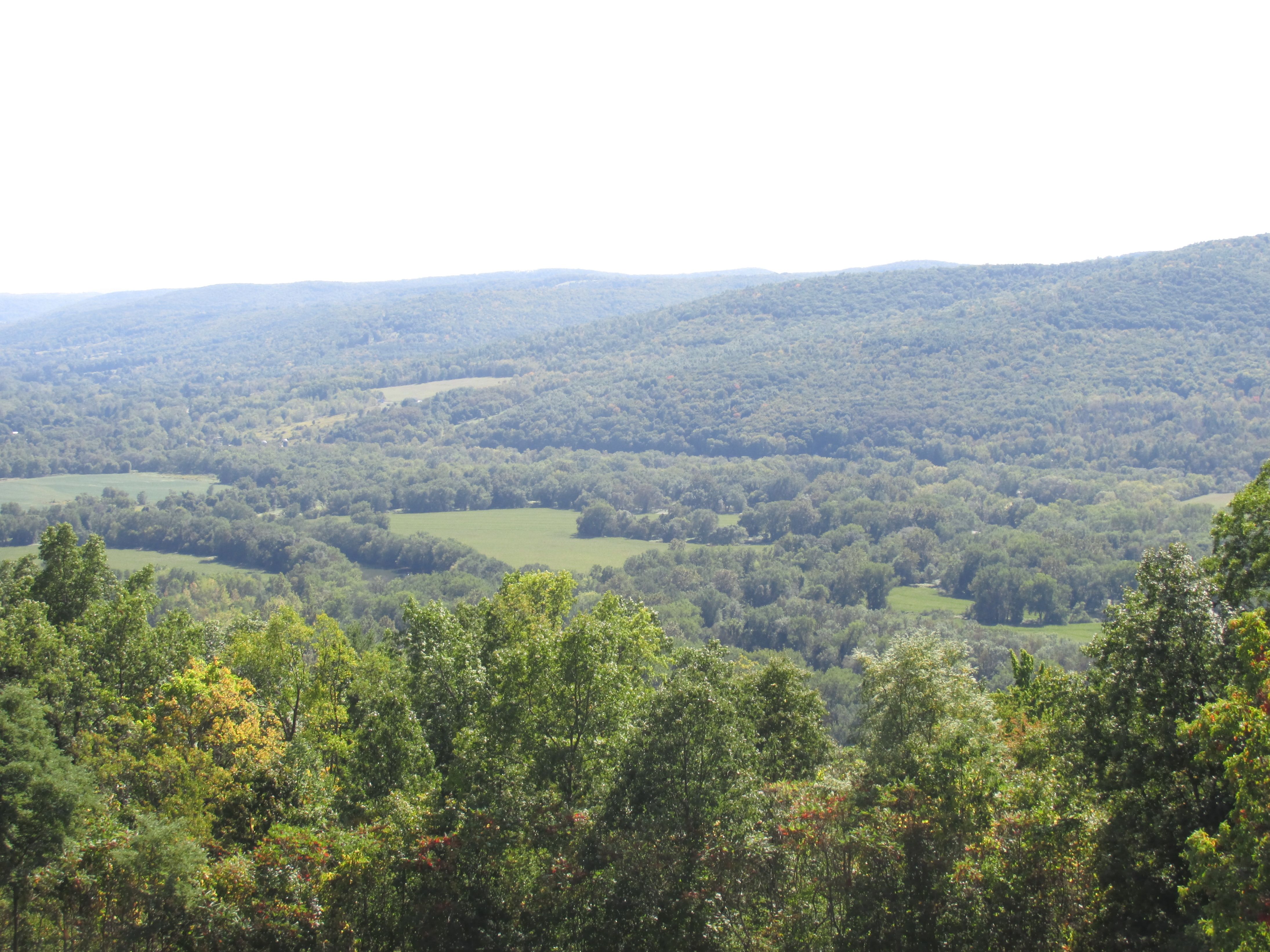
And a long way down.
The weather was warm and sunny. It was a great day for outside sightseeing. The next day would be good for indoor activities.
I set up the trailer. That is the good part about camping without hook ups – there is nothing to hook up! I just unhook the trailer and then I’m free to go.
The Newtown Battle was the major battle of the Sullivan Campaign in the Revolutionary War. In 1779, General John Sullivan was directed by the Continental Congress to end the threat of the Iroquois, who had sided with the British.
The Continentals roundly defeated the Iroquois, destroyed their villages and burned their crops. This drove the Seneca up to Fort Niagara. I guess the Seneca have a long memory.
I headed back down the twisty turny narrow road and into Elmira. My HISTORY Here app told me that Mark Twain’s grave was here.

The leaves are starting to turn. I entered the cemetery and wondered it there was a guide or directions to Mark Twain’s grave. I needn’t have worried. Elmira is proud of all their citizens.
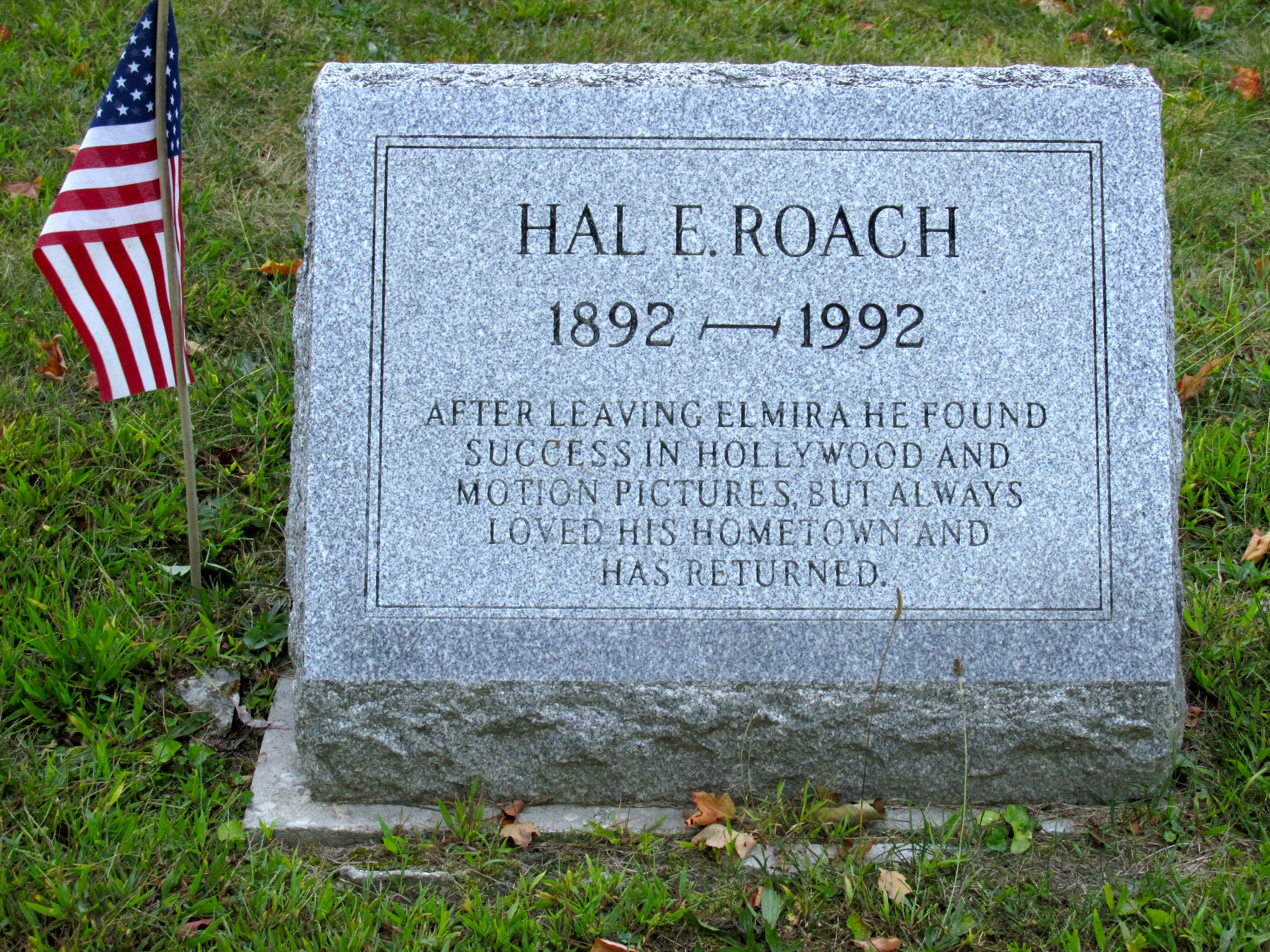
The first sign I saw was for Hal Roach, a film producer whose career spanned from Harold Lloyd in 1915 through working with Laurel and Hardy in the ’30’s and on to syndication in the era of television. He even appeared on the Tonight Show with Jay Leno when he was 100. He passed on in 1992, just two months short of his 101st birthday. That’s a good, long run for anyone!
I looped back to the main road of the cemetery, still looking for a map or for more signs. I found this memorial to the participants of the Underground Railroad.
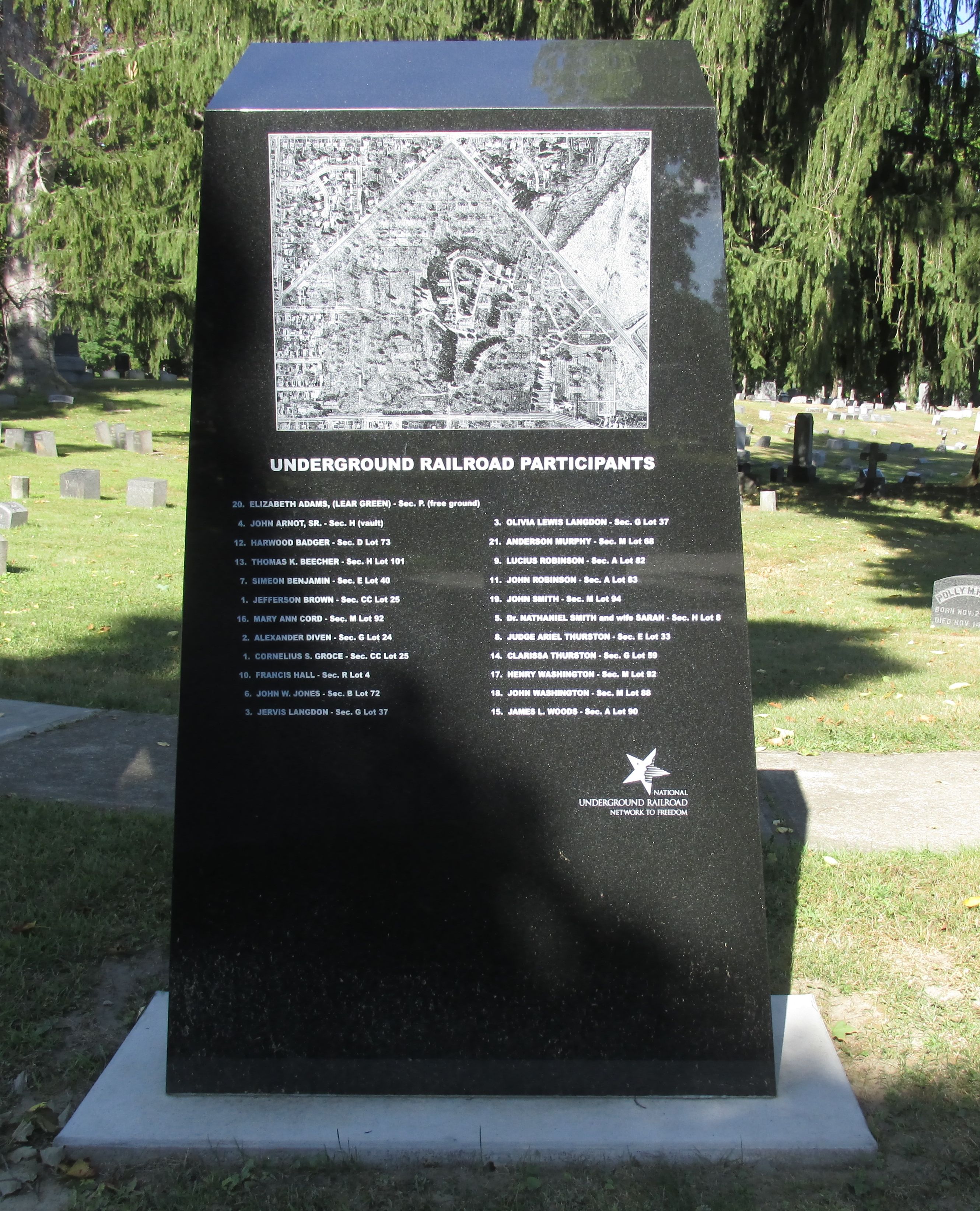
I was impressed with their continuing attention to the struggles of the past.
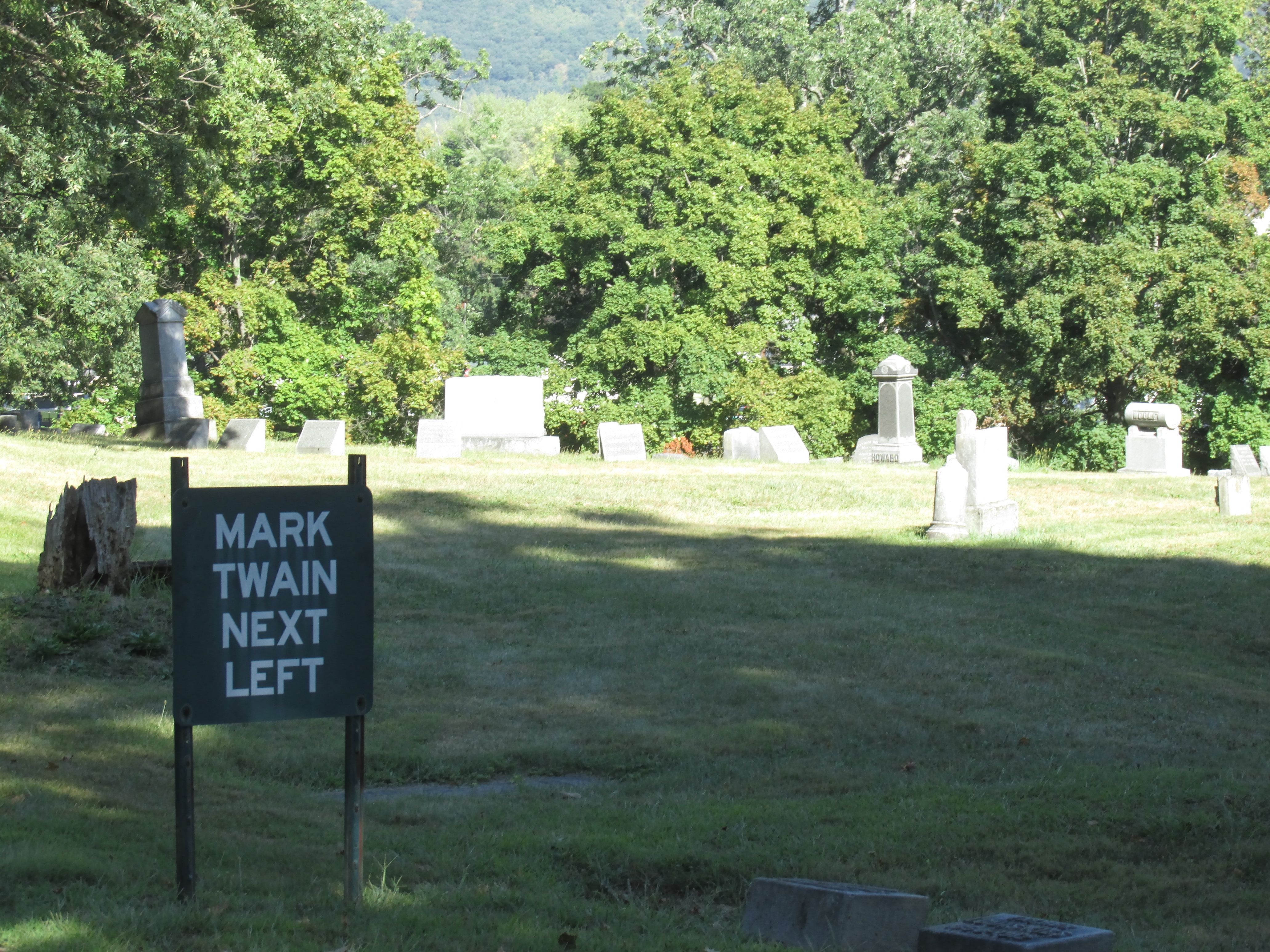
Finally! Directions to Mark Twain’s grave. And then, the grave itself.
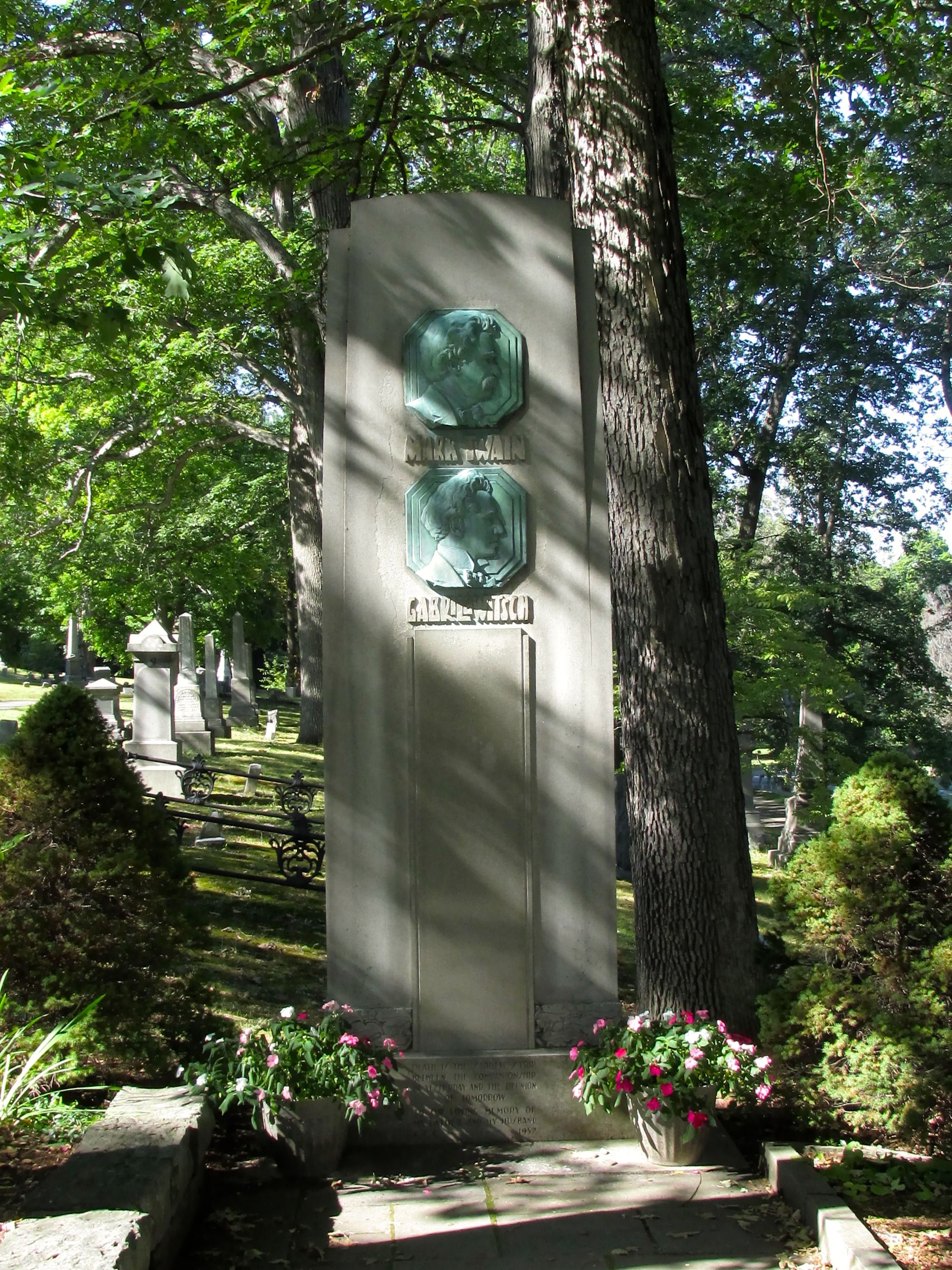
He was buried in the Langdon family plot, which was his wife’s family.

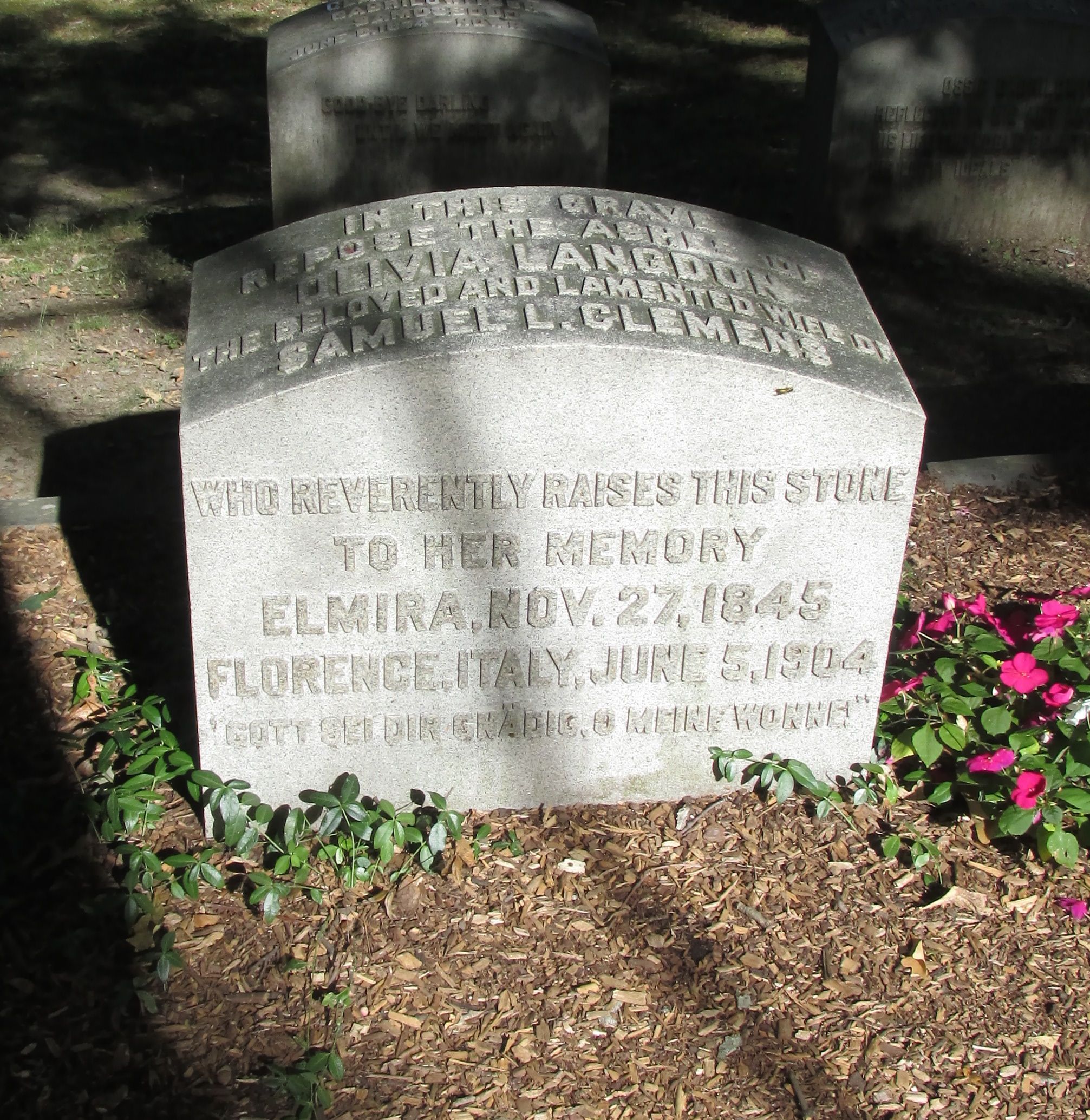
She predeceased him by six years, dying while they were traveling in Italy.
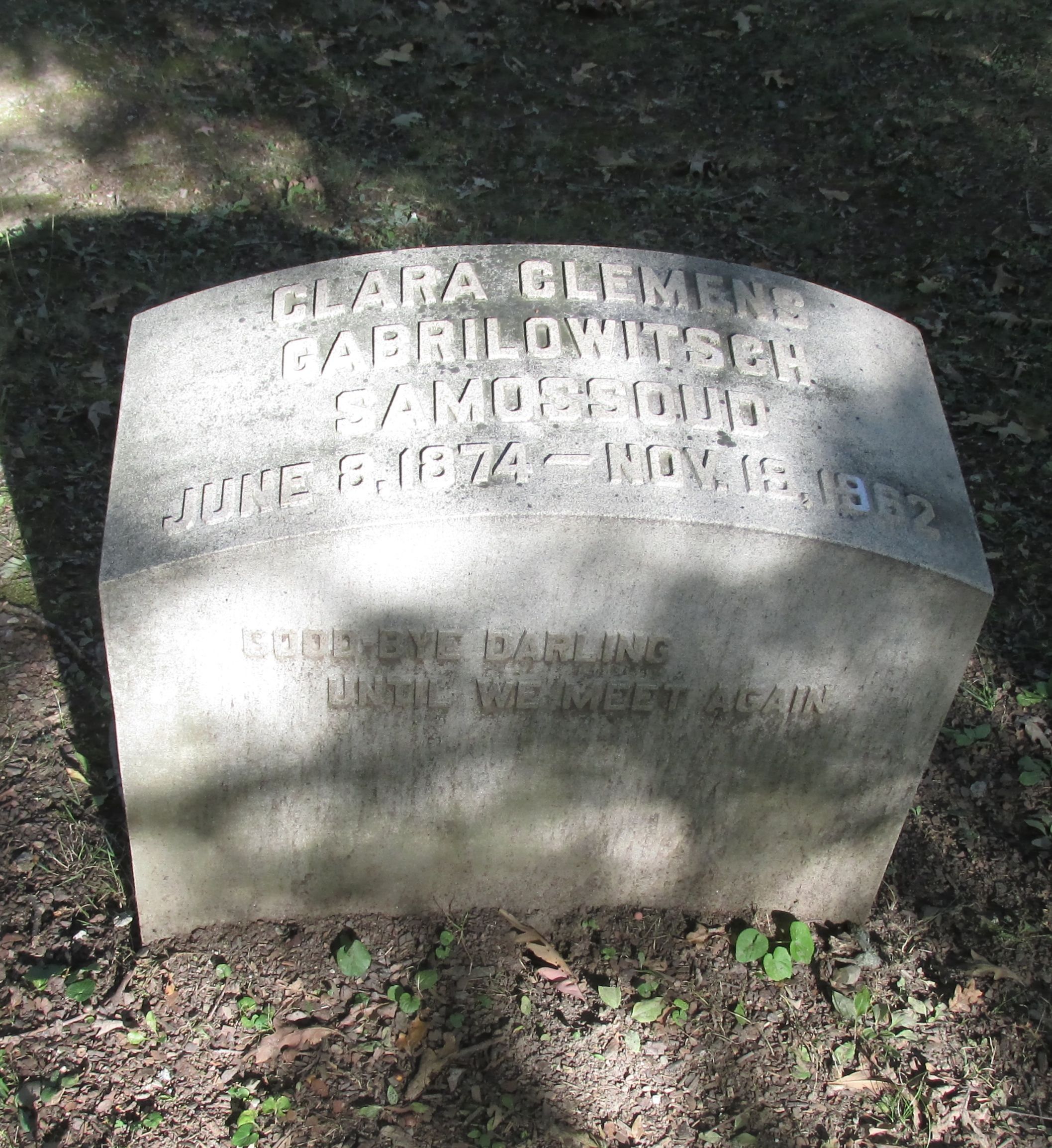
The lower bronze portrait on Mark Twain’s marker is his son-in-law, Russian pianist Ossip Gabrilowitsch. He must have had an awfully high opinion of himself, as he asked to be buried at Mark Twain’s feet. He died in 1936, and Mark Twain’s daughter, Clara, agreed with the request. She added a poem to both her father and her husband at the bottom of the memorial.
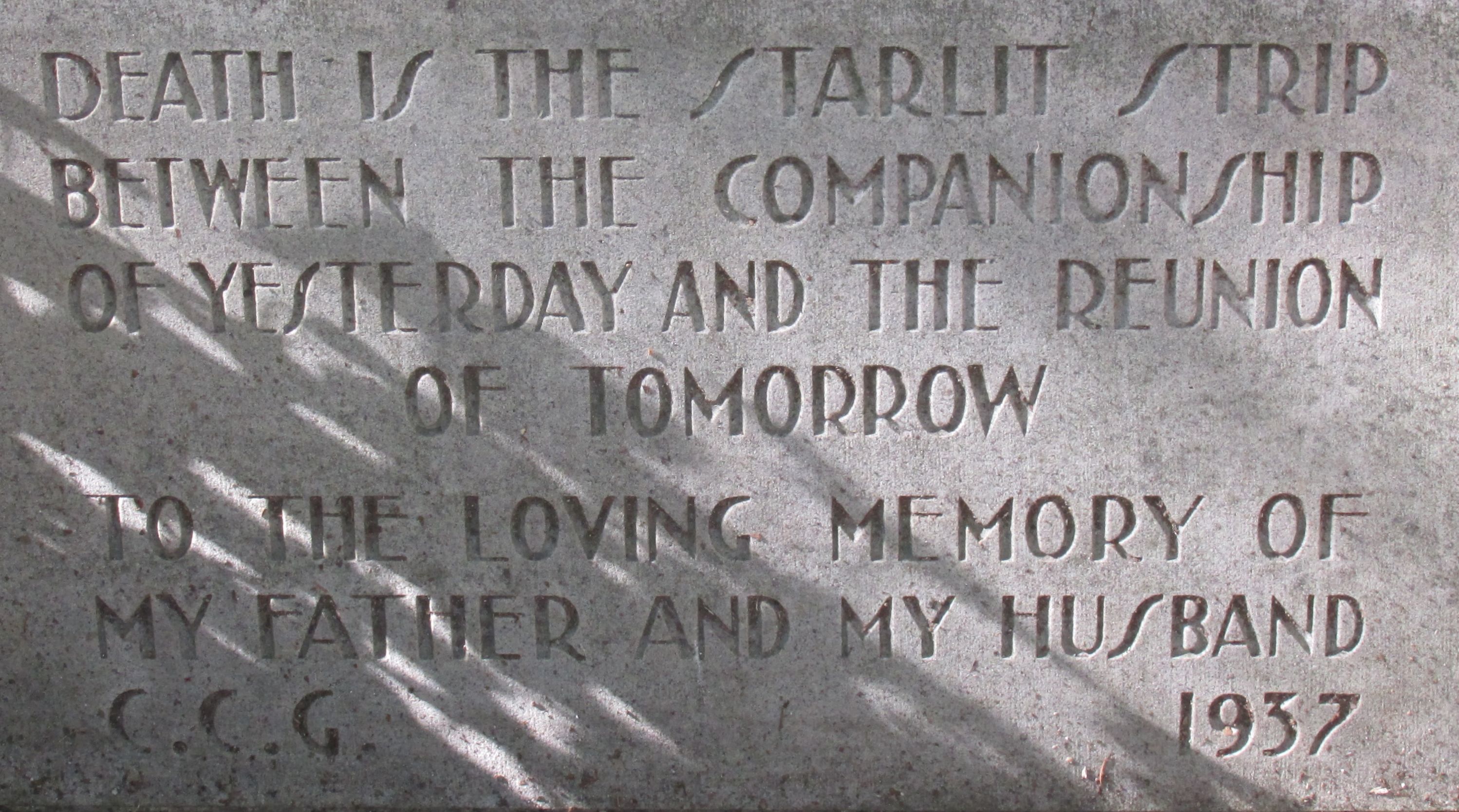
It is amazing how close the past is to the present. Mark Twain’s daughter, Clara, lived until 1962. We are practically holding hands with the past.
Of course, everyone knows that Mark Twain lived in Buffalo from 1869 to 1871. He was an editor of The Buffalo Express.
I continued driving around, and noticed a sign for Ernie Davis. I seemed to remember that name, but couldn’t quite figure out why.
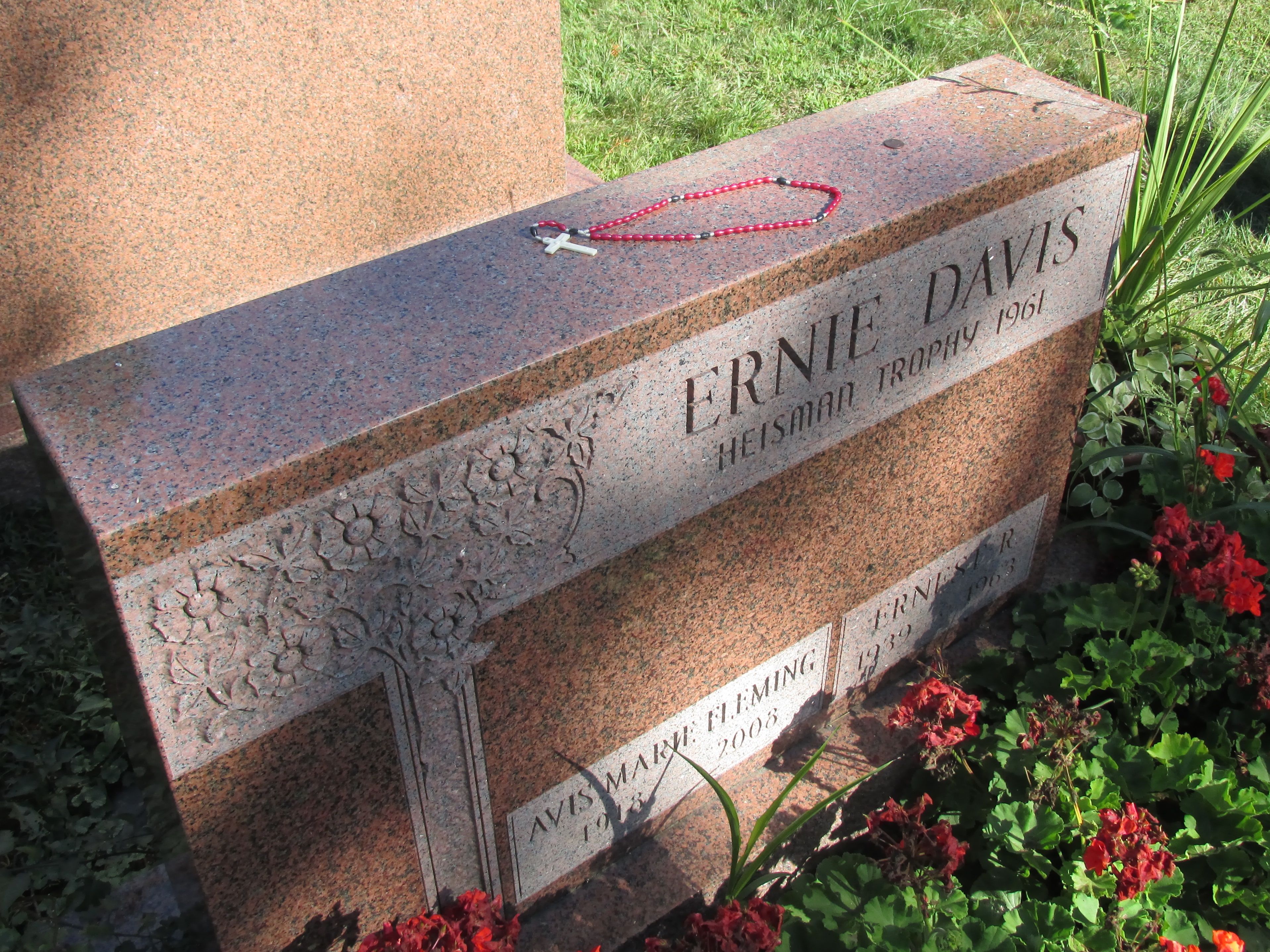
I pulled out my phone and Googled his name. I found out that he was the first African-American athlete to win the Heisman Trophy in 1961. He was drafted by the Washington Redskins and then traded to the Cleveland Browns. Unfortunately, he never got to play a professional game. he was diagnosed with leukemia and died in 1963 at the age of 23.
The last sign that I saw was one that pointed the way to the grave of John Jones.
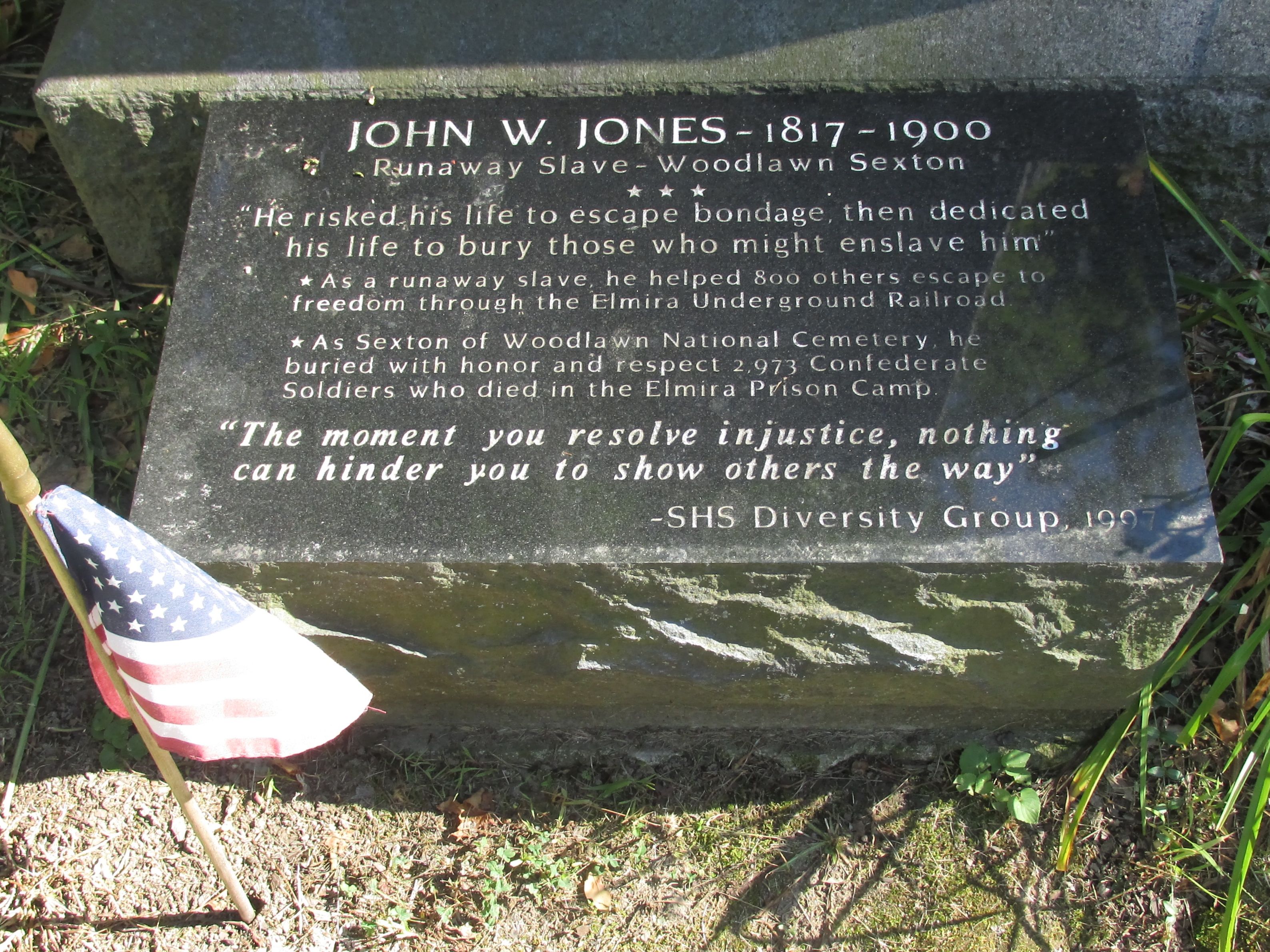

John Jones had an amazing story. He began life as a slave. He was the houseboy of Sarah Ellzy, but ran away with his half-brothers and two others when she was getting on in years. He was worried about what would happen to him after her death and that prompted him to leave for the north.
He settled in Elmira and worked to help other slaves escape to St. Catharines’ in Canada. By 1860, he had helped over 850 runaways to escape.
During the Civil War, he buried almost 3,000 Confederate soldiers who died while they were in held in the Elmira Prison Camp. He was paid $2.50 for each burial, and the amount enabled him to buy a farm.
His house is now on the national Register of Historic Places. There are plans to open a museum there, but it hasn’t happened yet.
On my way out of the cemetery, I passed a store in the right spot.
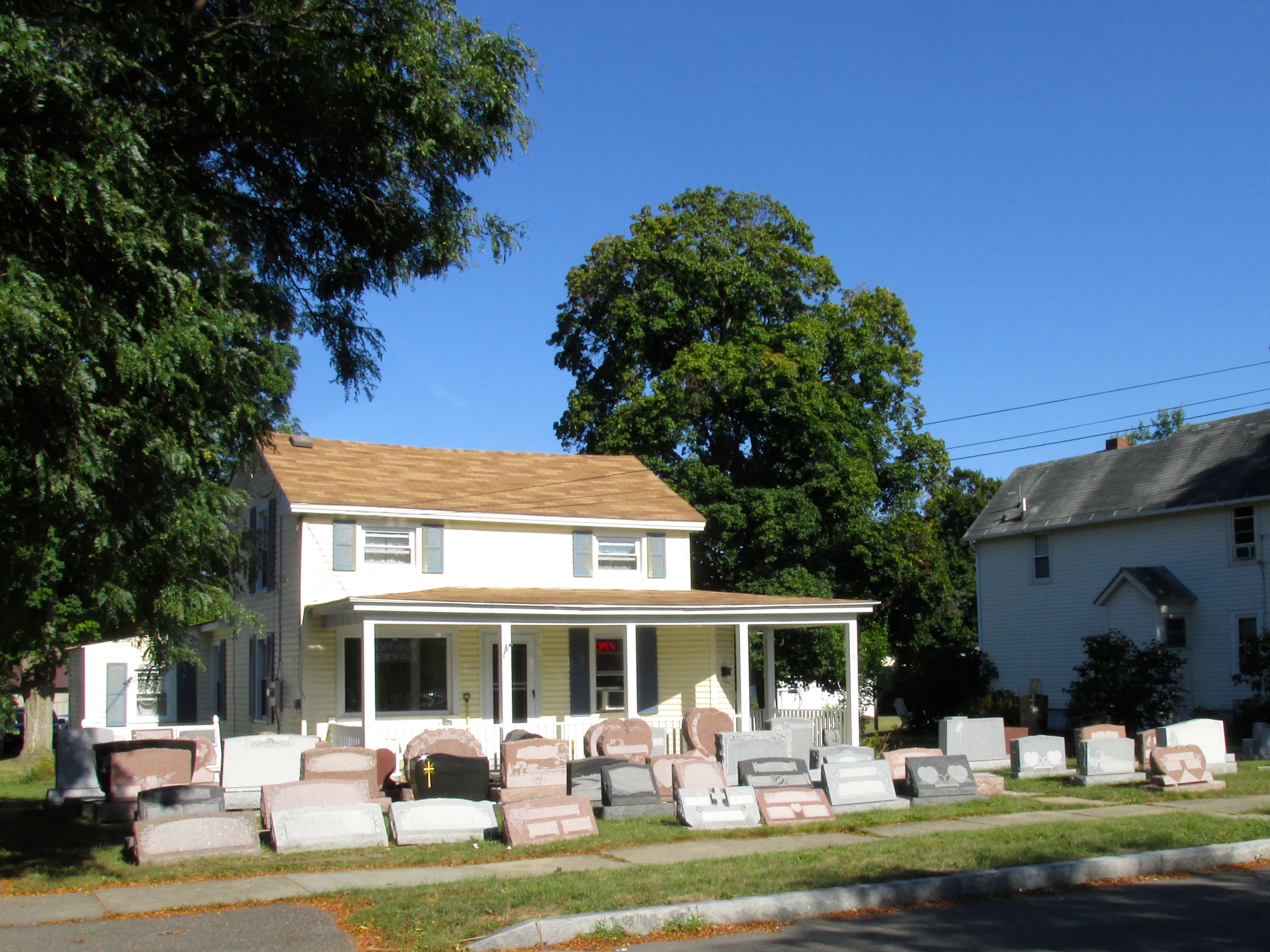
Location – location – location
My next stop was the Mark Twain Study on the grounds of Elmira College.
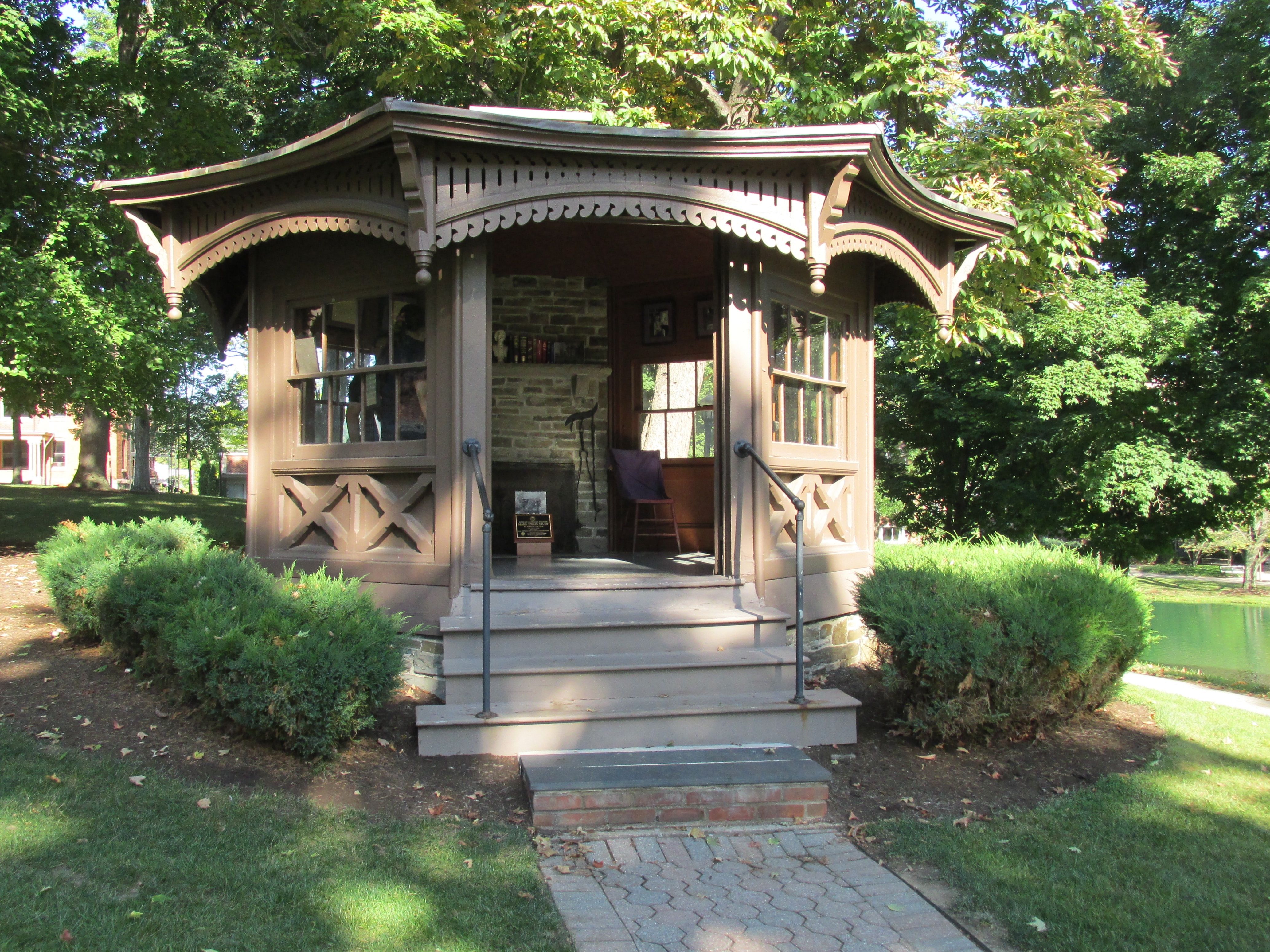
Mark Twain and his family spent summers in Elmira with his sister-in-law’s family. She had this retreat built on the hill above her house so that he could concentrate on his writing. In this little building, he worked on The Adventures of Tom Sawyer, The Adventures of Huckleberry Finn and A Connecticut Yankee in King Arthur’s Court, among other works.
I spoke with a Mark Twain ambassador from the college, and she told me that the study was moved from the house on the other side of the Chemung River to the college in one piece, and she showed me a photo of the move in process. There was a chair in the study that was original. She told me that the other original furniture was in the Mark Twain Center at the college.
My last stop of the day was Quarry Farm, the home of Mark Twain’s sister-in-law.

Unfortunately, they weren’t accepting visitors.
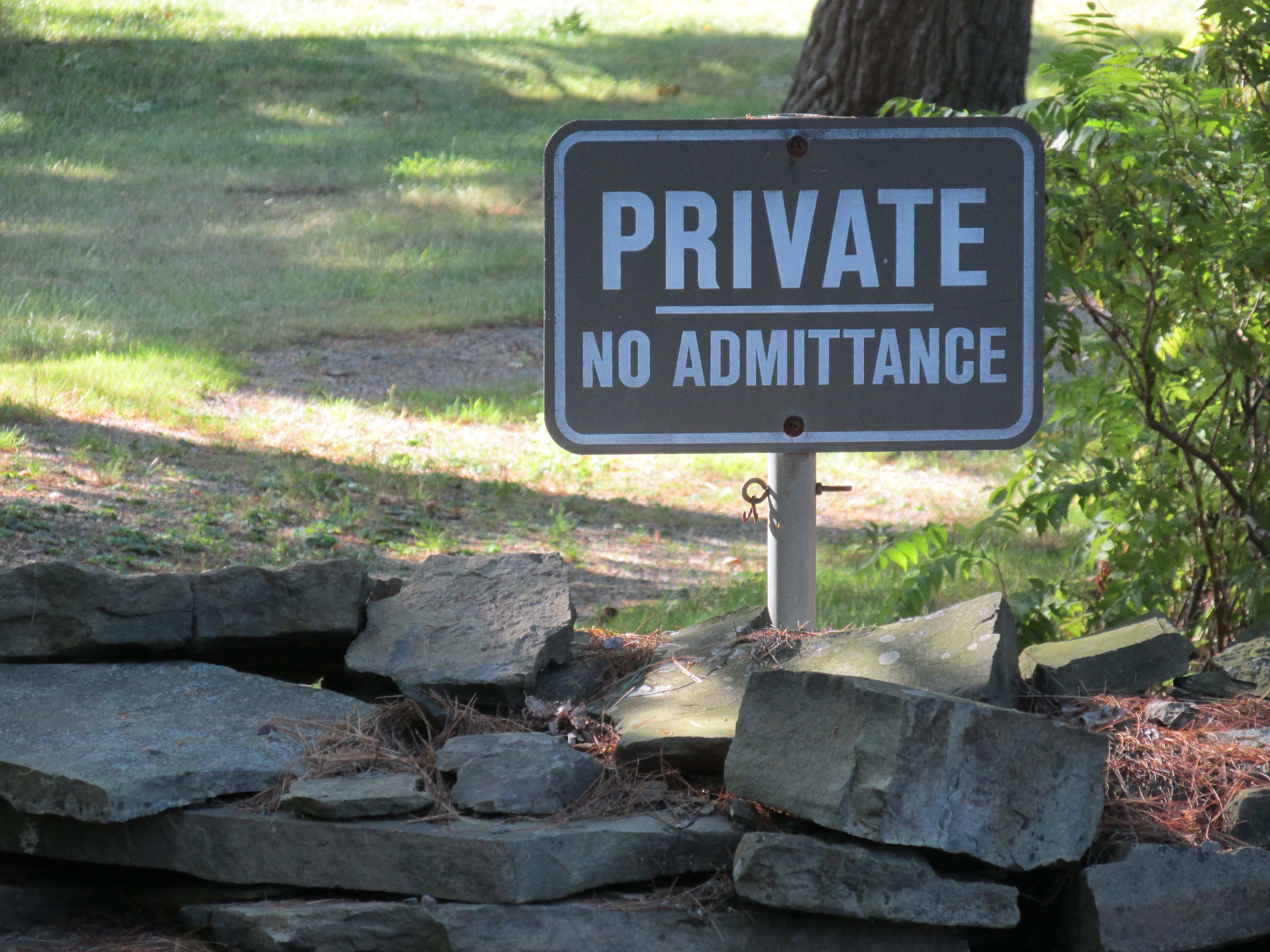
That night the clouds rolled in and the heavens opened up. It was wise to do the outside activities on day one of my stay in Elmira.
The next day, around noon, I headed over to the Chumung County Historical Society. I hoped that I would be able to shed some light on the Chemung Canal.

The Historical Society is located in an old bank building. I was greeted by Olivia, a young woman busily working on homework. She described the exhibits and told me that the entrance fee was $5. I overcame my reluctance to pay to enter museums and forked over a Lincoln.
The museum is small, but the items on display are carefully chosen to tell the story of Elmira. The interpretive signs are also enlightening.
In my opinion, Elmira owes its existence to the military. First, the Battle of Newtown opened up the areas for settling by the colonists. They dug the Chemung Canal to connect with outside markets. After that, camps for the Union Army during the civil war brought more opportunities for people to create and sell commodities.
I was surprised by the Chemung Canal, as I couldn’t imagine another canal in the area aside from the Erie Canal. But, I had no idea that the Union Army had camps this far north. And, even more amazing to me was that the Union Army had a prison camp so far north.
Elmira was originally selected as a training and muster point for the army because it The Erie Railway and the Northern Central Railway criss-crossed the city, facilitating transportation. As the war progressed, the camp was used less and eventually the camp’s “Barracks #3” were converted into a military prison. The prison camp was in use from July, 1864 until fall of 1865.
The conditions at this camp were dreadful. The inmates called it “Hellmira” and historians call it “The Andersonville of the north.”

The local population was alway prepared to take advantage of business opportunities. In July, Mr. Nichols built an observation tower that was twice as high as the prison’s walls. He charged visitors fifteen cents to climb his tower and look at the prisoners inside. A few weeks later, the Mears boys built a new tower next to Nichols’ tower. Their tower was twenty feet higher and they charged only ten cents.
In any event, the two towers were not allowed to stand for very long. For the time that they were open for business, though, this is the view that they saw.

The prisoners would do whatever they could do to survive. Rats were a prized catch, as they added much needed protein to their diets. They could also bater them for other things they wanted.

They also made items for sale to the people of the town.
There were items the prisoners used on display.


The Union was represented, as well.

The prisoners suffered from the terrible conditions. The population of the prison swelled from 400 in July 1864 to 9,262 in August. Winter snows started in October and the cold weather was exacerbated by the shortages of food, warm clothing and blankets. To top it off, more that half of the soldiers were still housed in tents.
The soldiers were housed in barracks by the beginning of 1865, but the harsh weather, poor sanitation and shortages of food and supplies kept the death rate high. In March 1865, a flood forced the prisoners to take refuge on the upper bunks.
With General Lee’s surrender, the prisoners began to be released. The last Confederate soldiers left on August 11, when the remaining camp materials and buildings were sold. 140 soldiers remained in the Elmira hospital after the camp closed.
In September 1865, the final death toll of the prison camp was released. Of the 12,147 prisoners housed in the Elmira camp, 2,961 died. That is a death rate of 24.3%, the highest of any prisoner of war camp in the north.
Back to happier times.
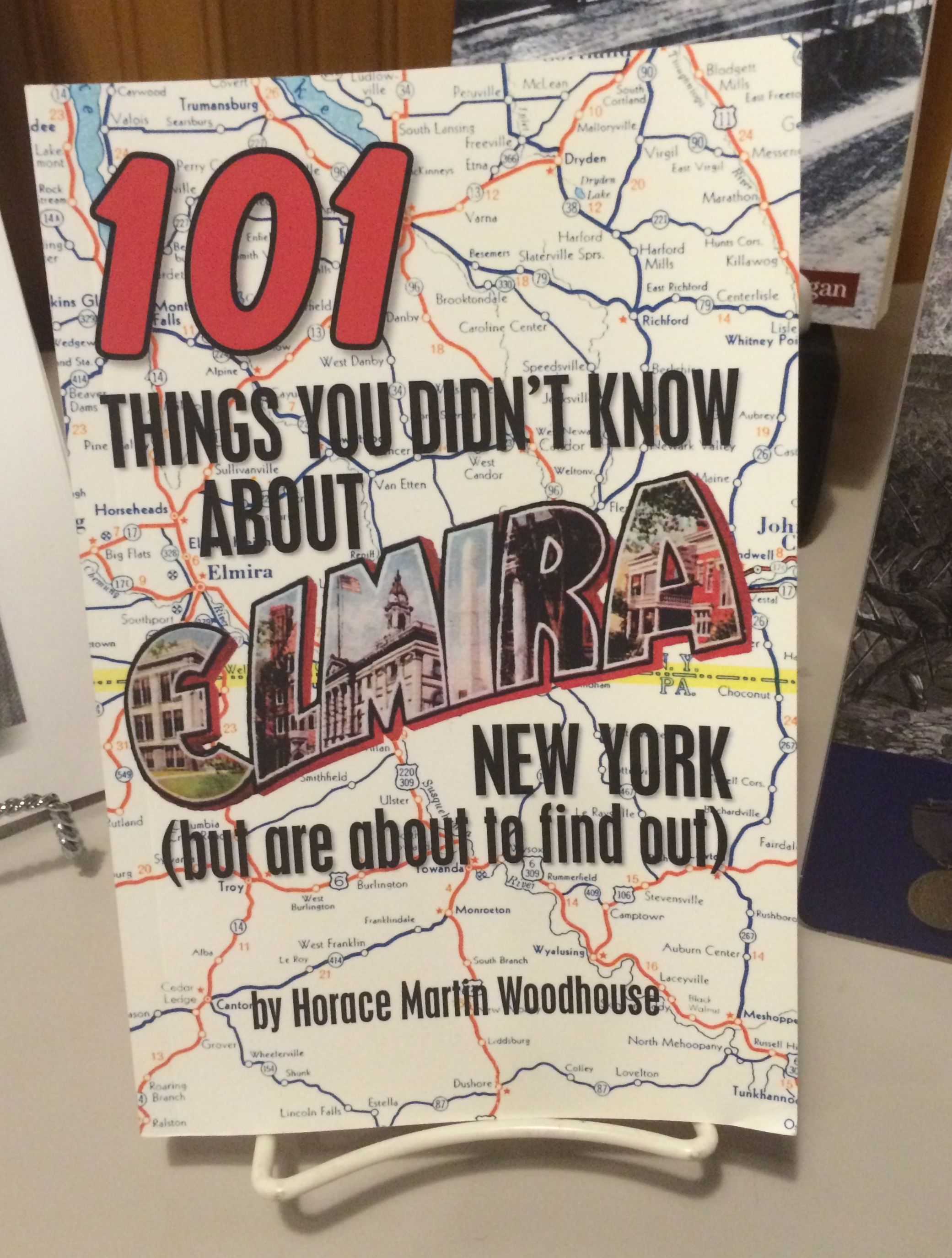
Maybe this is what I should have named this post.
Transportation seems to be an important factor of Elmira’s growth – along with the government and wars.

The Chemung River was a major thoroughfare from time immemorial. About 11,00 years ago, mammoths and mastodons roamed the area.

The Chemung River got its name when Native Americans found a mammoth tusk along its banks. The word “Chemung” is Alogonquin for “place of the big horn.”
The river made Elmira’s progress difficult as well as possible. The river has flooded the town many times over the years, as the city is built on the flood plain of the Chemung River.


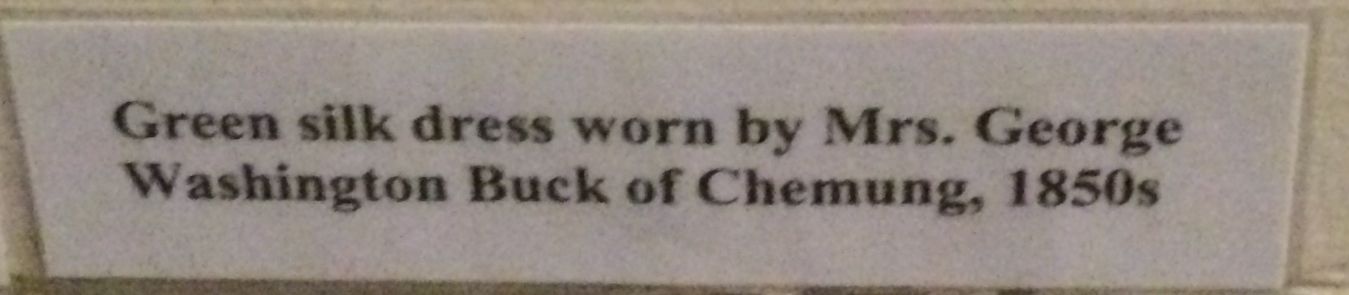
This dress belonged to Mrs. George Washington Buck. I’d like to know where she kept her internal organs. I’d also liked to know what her name was.

Red Jacket, who is buried in Forest Lawn Cemetery in Buffalo, received one of these.

George Washington got his start as a surveyor. I always wondered what kind of tools he used.
There was more in the museum, but perhaps this little preview will inspire you to visit.
The weather hadn’t improved while I was inside, but I wanted to find the statue of Ernie

I liked the fact that he was portrayed as a scholar, and the statue is in front of the Ernie Davis Middle School.
The last vision of Elmira that I’d like to leave you with is something I haven’t seen in years:
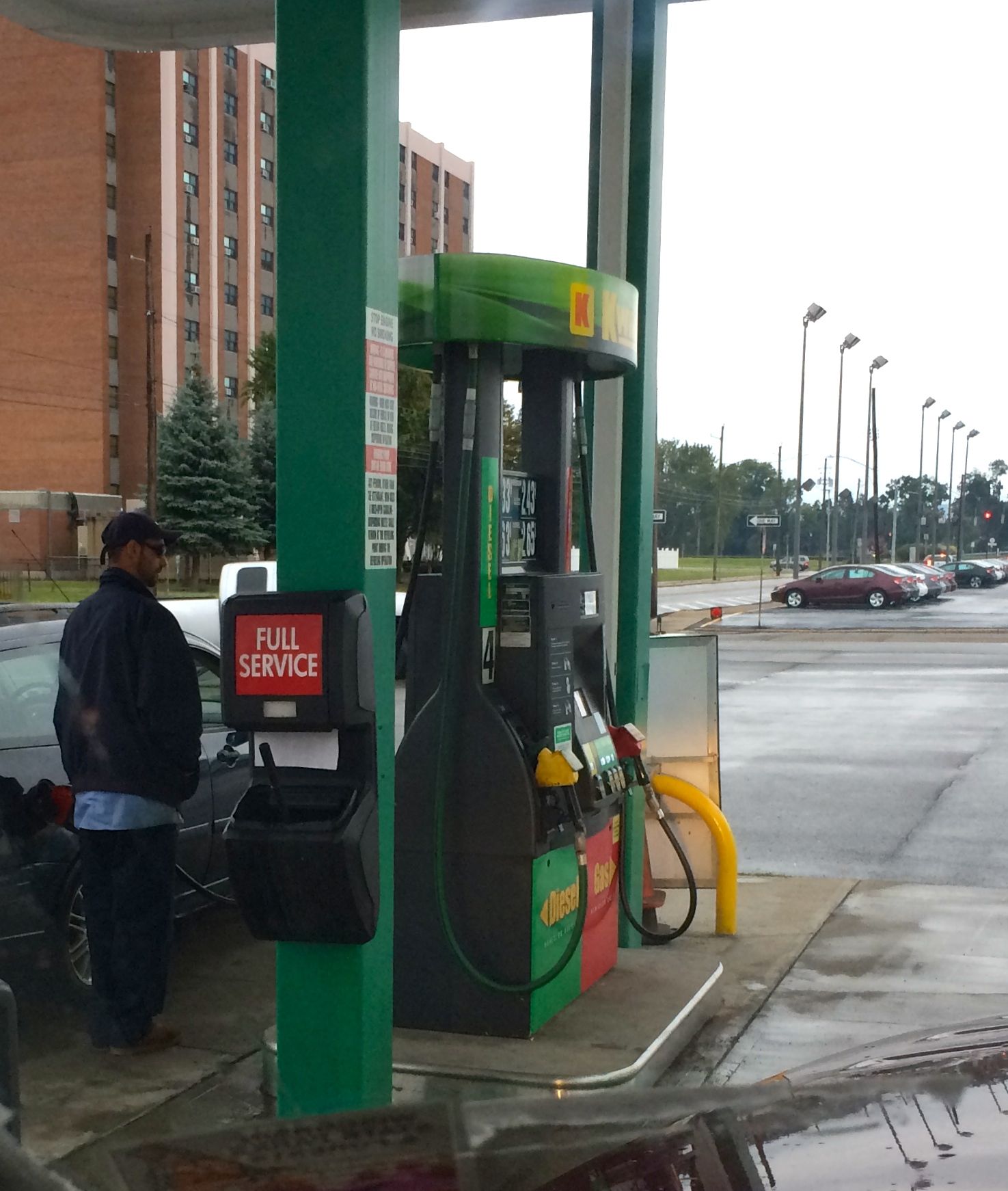
A FULL SERVICE GAS STATION!