One Last Look at the Missouri Capitol

When last, I left you, we had exited the House Lounge after appreciating the Thomas Hart Benton murals. Our next stop is the House Chamber.
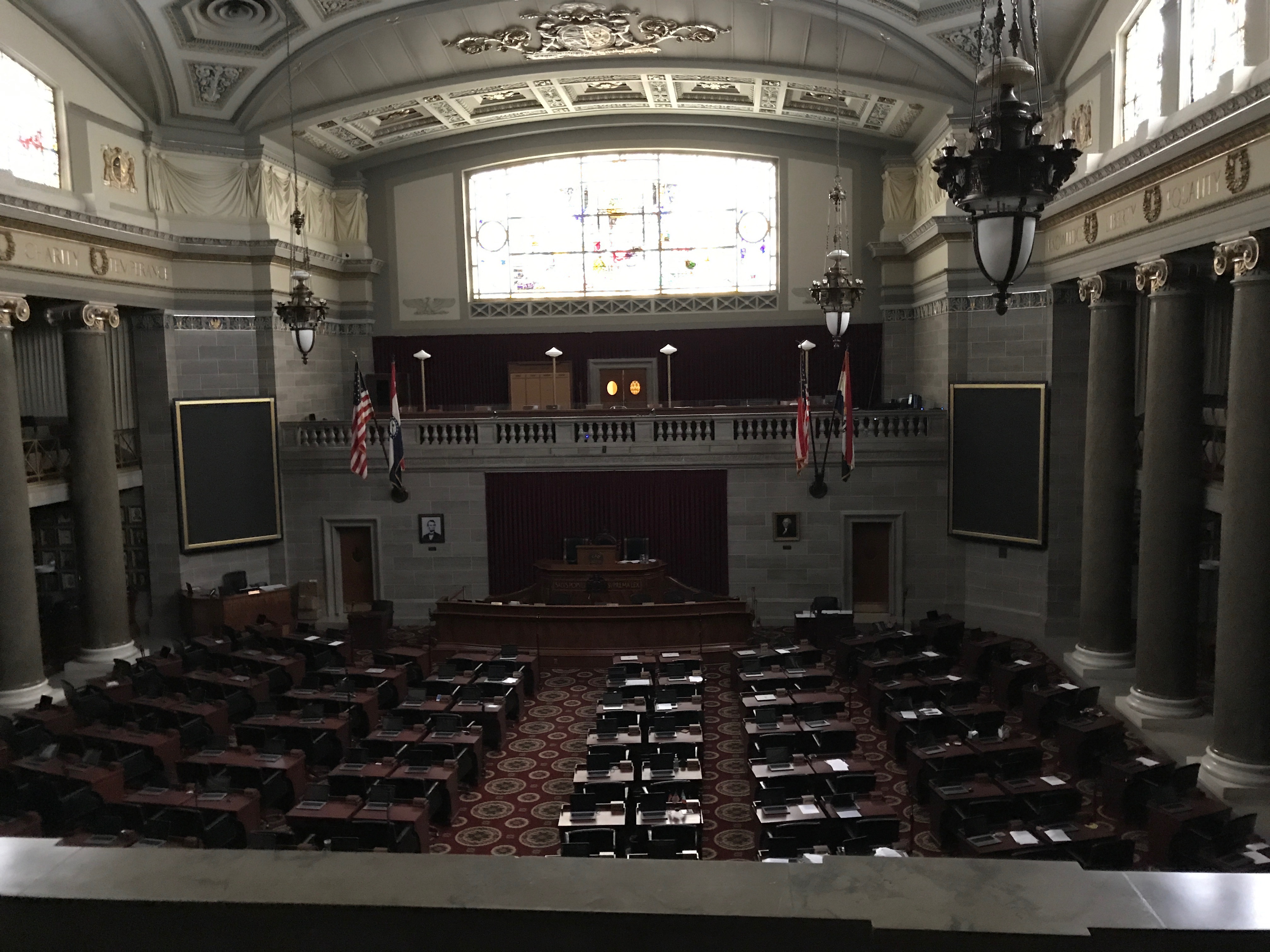
The windows are exquisite. By playing around with the exposure, I was able to bring up the colors a bit.
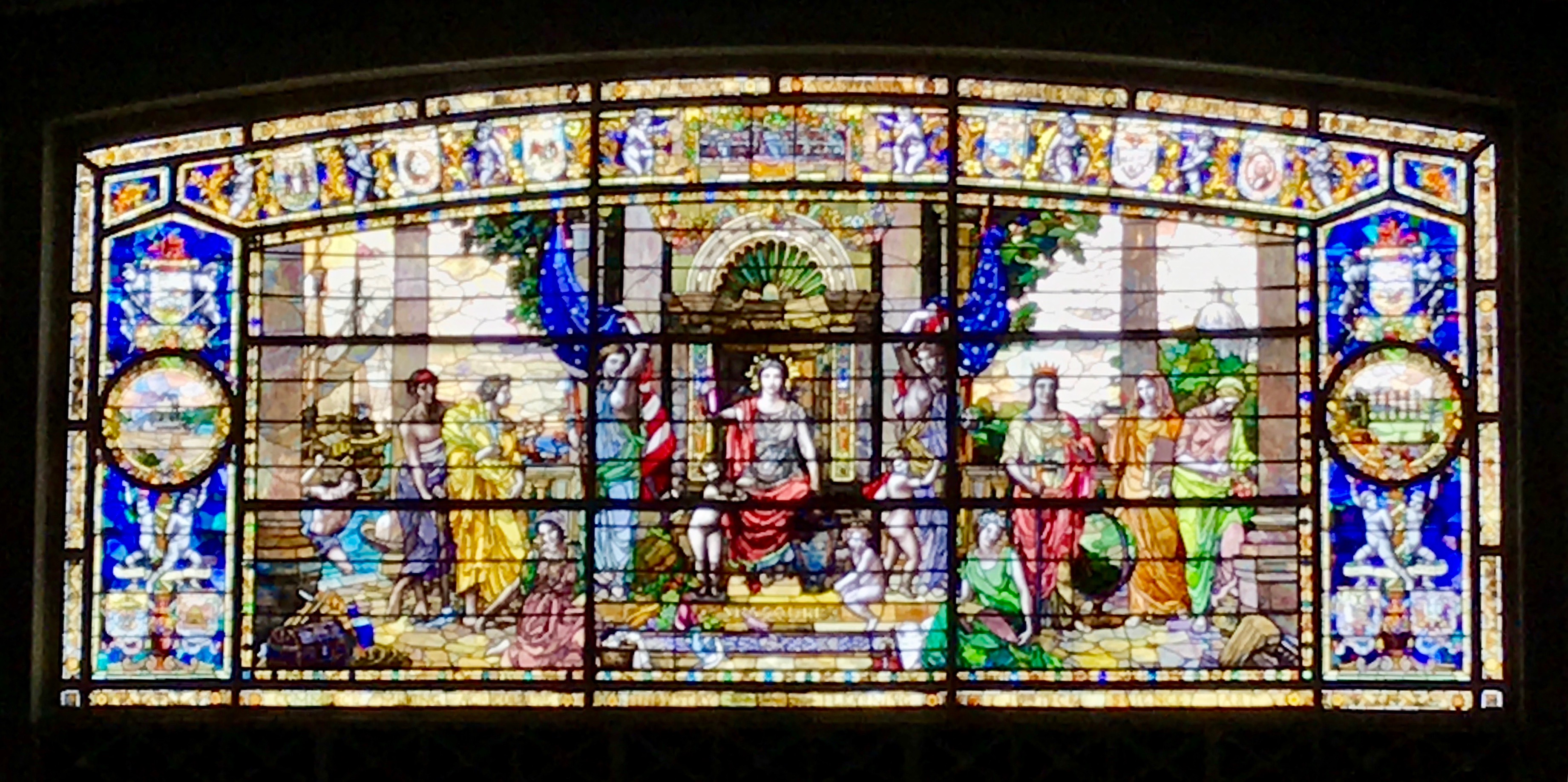
This is the stained glass window above the speaker’s platform.
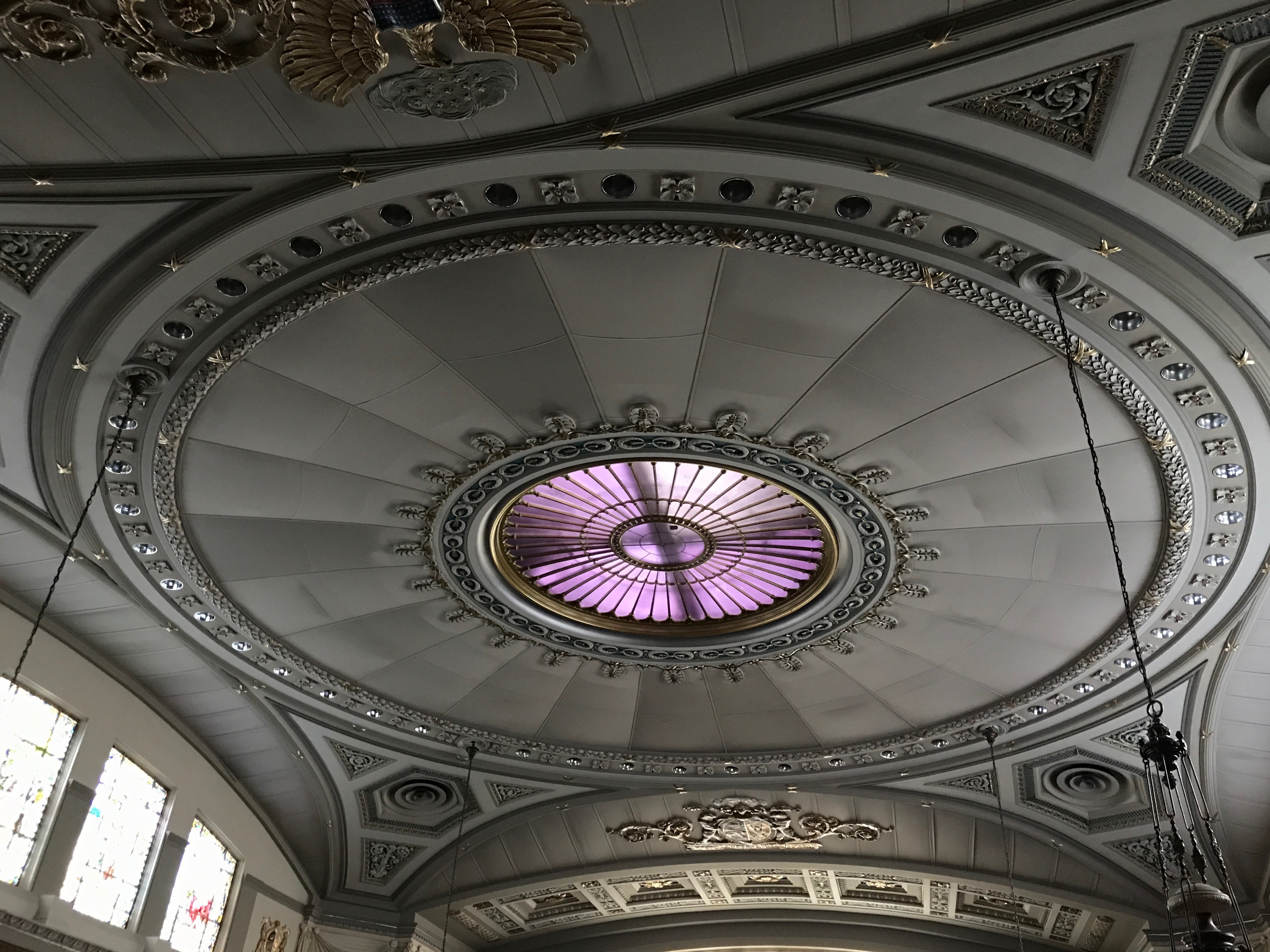
The ceiling has a beautiful piece of leaded glass in it. I’m not sure why it’s purple, but there you have it.
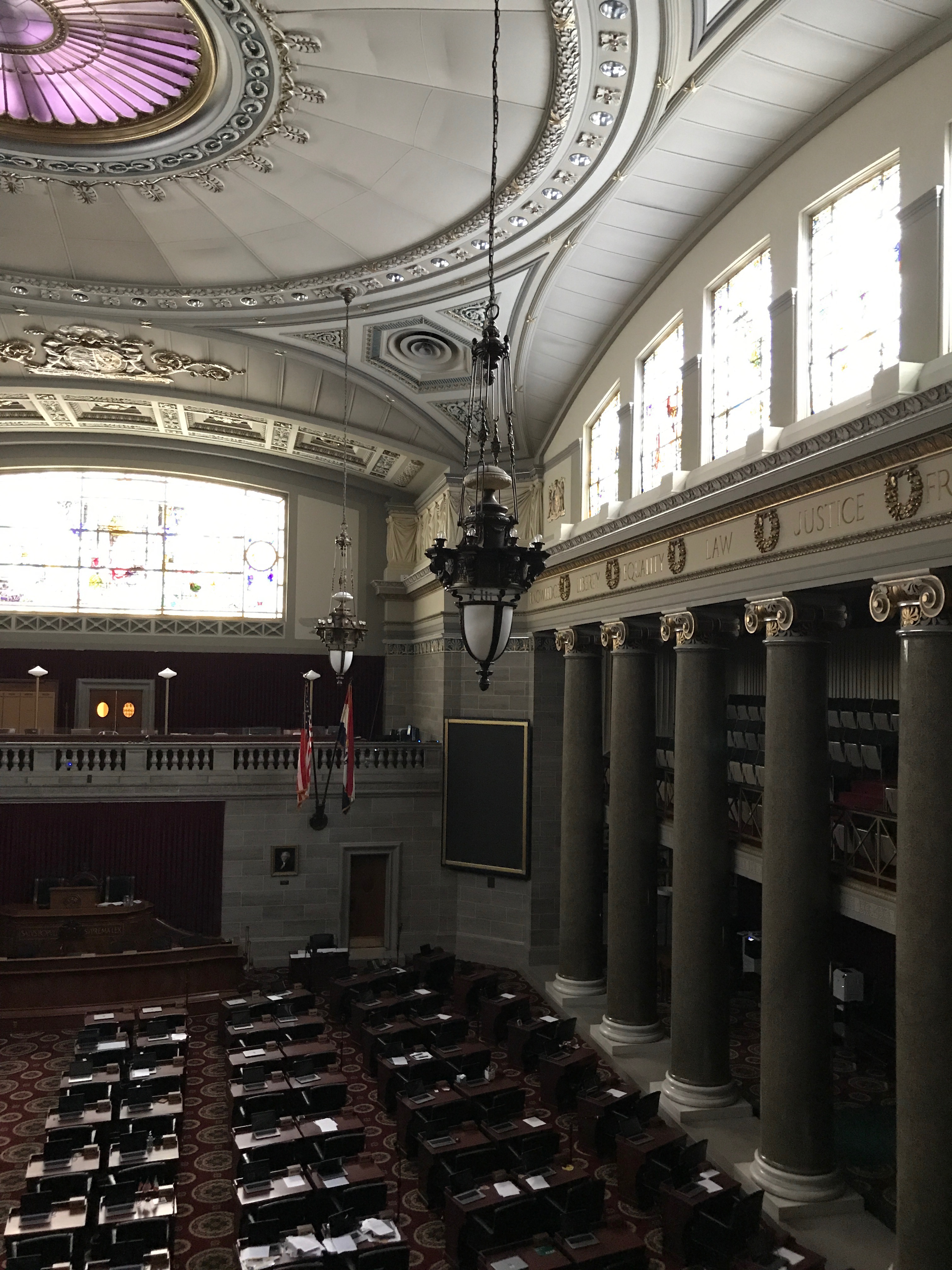
The sides of the chamber are decorated with words that I imagine are intended to inspire the legislators.

LIBERTY…EQUALITY…LAW…JUSTICE…
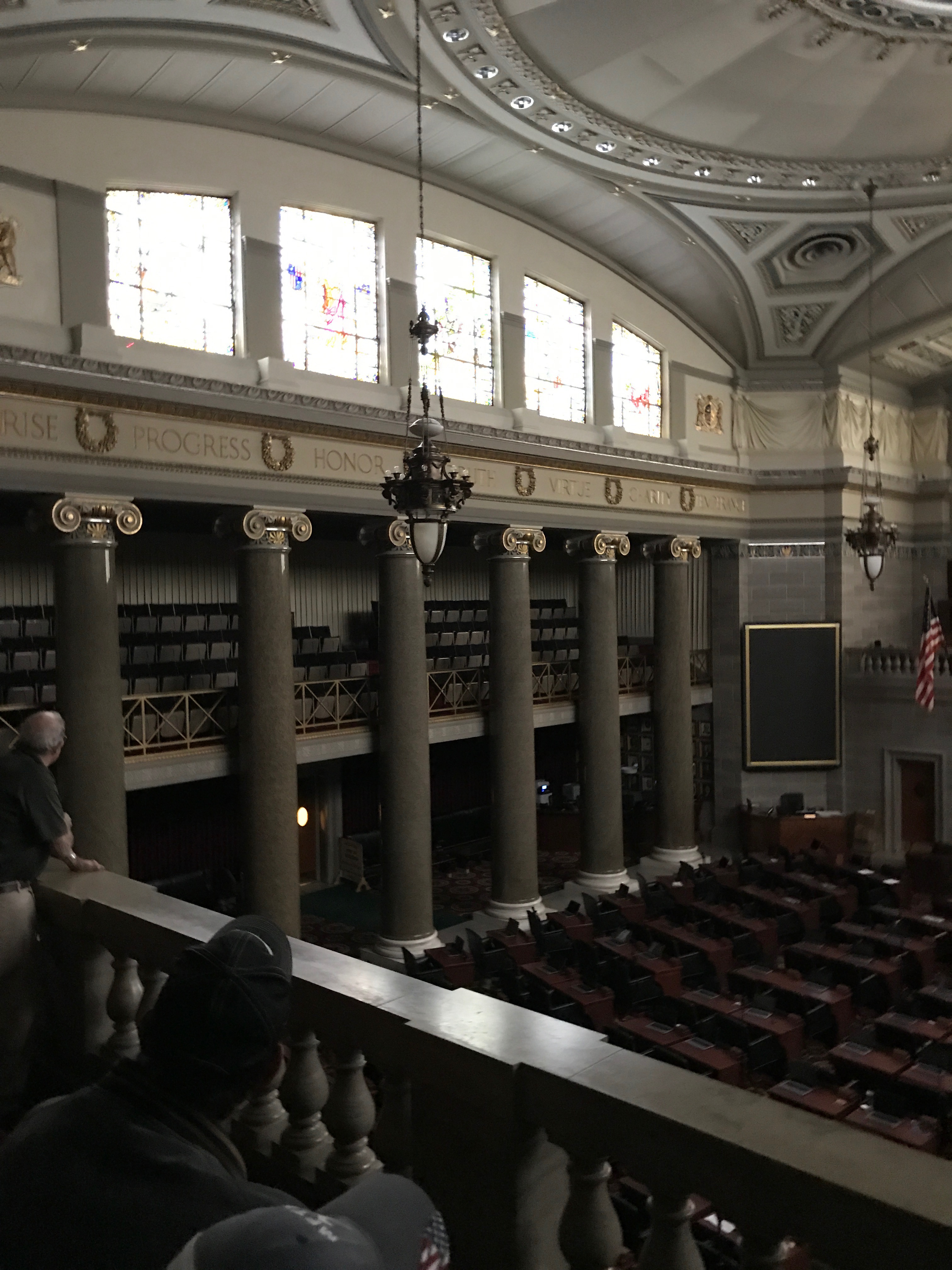
ENTERPRISE…PROGRESS…HONOR.
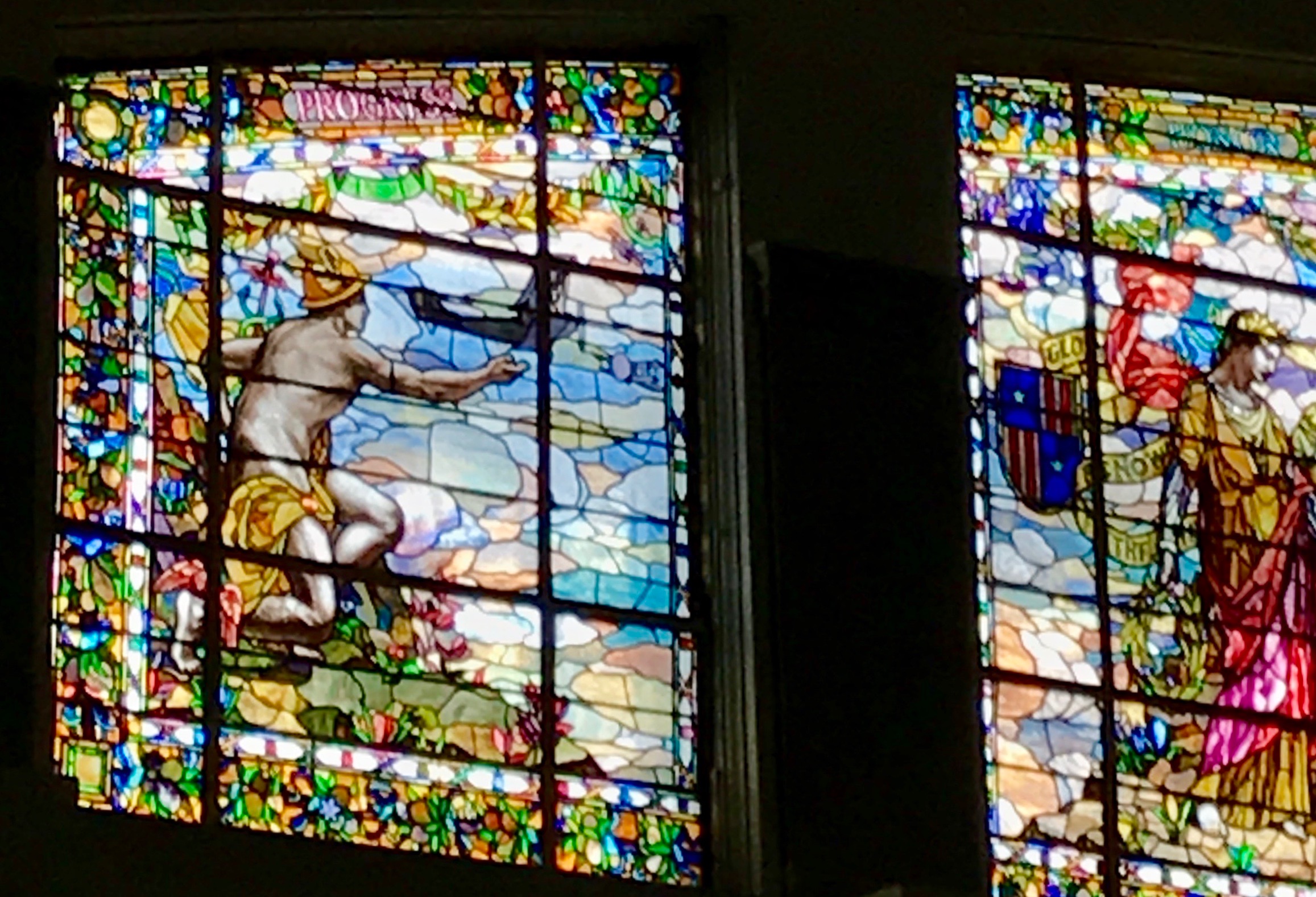
The window immediately above the word PROGRESS shows the world as it was unfolding. From what the guide said, I gathered that the artist was really forward-thinking in his depiction of the airplane. Progress, indeed.
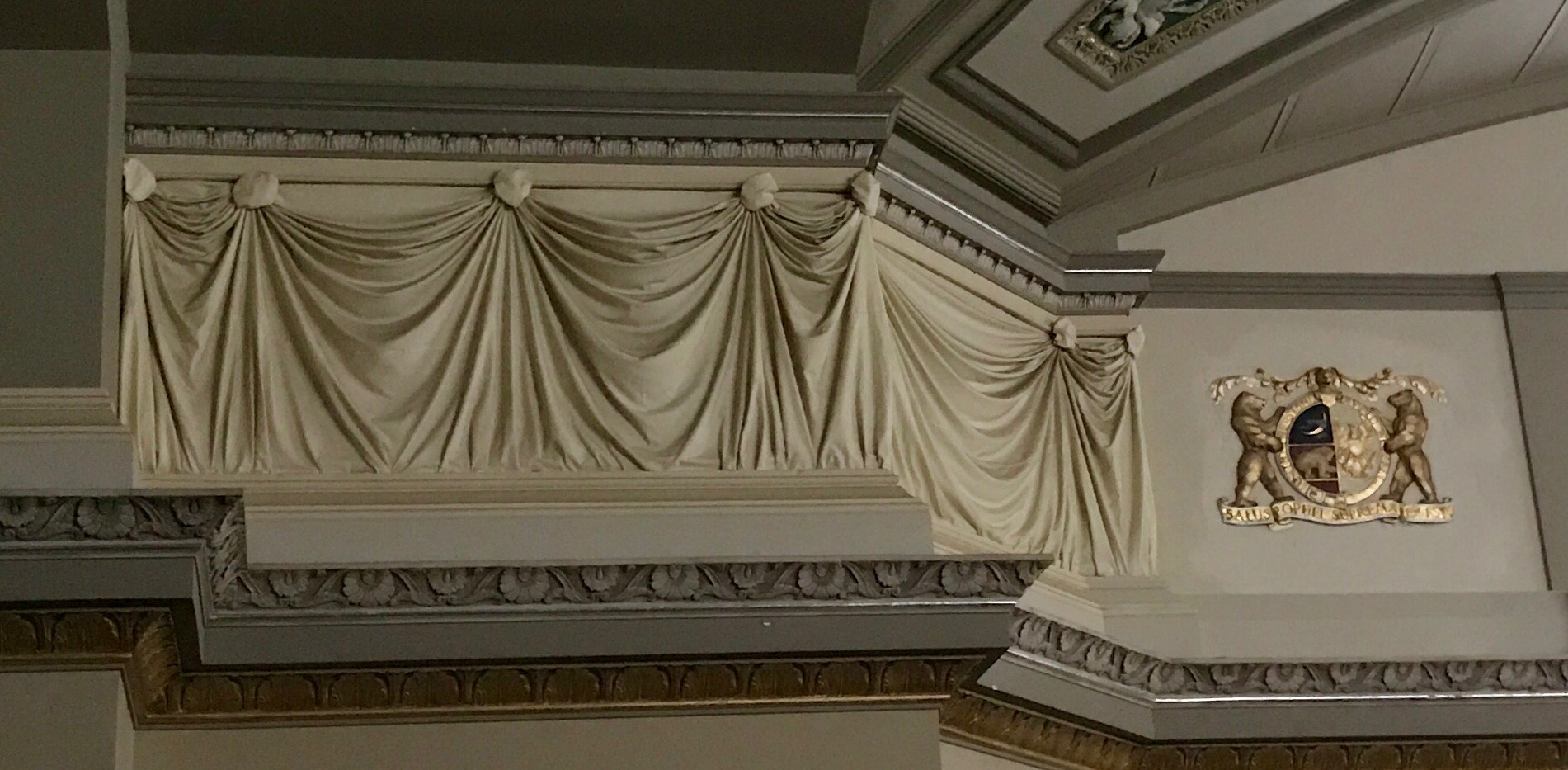
I was captured by this decorative detail and decided to include it in this post.
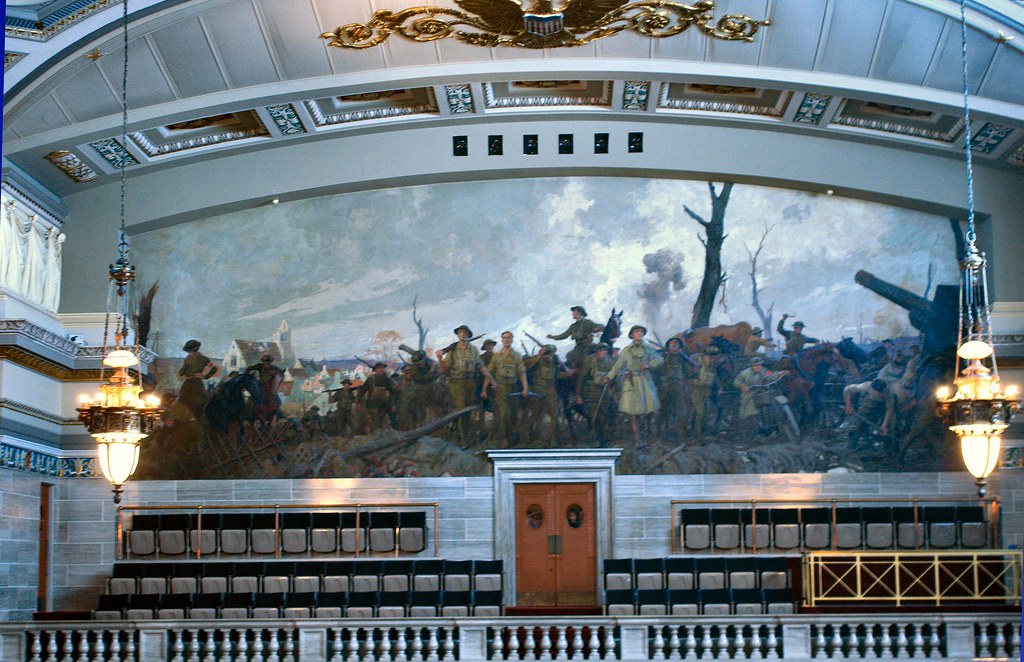
At the back of the chamber is this mural dedicated to the War to End All Wars, now known as World War I. I borrowed this from someplace on the internet. I’d cite the source, but I lost it.

Here are the photos that I managed to snap.

From one side…
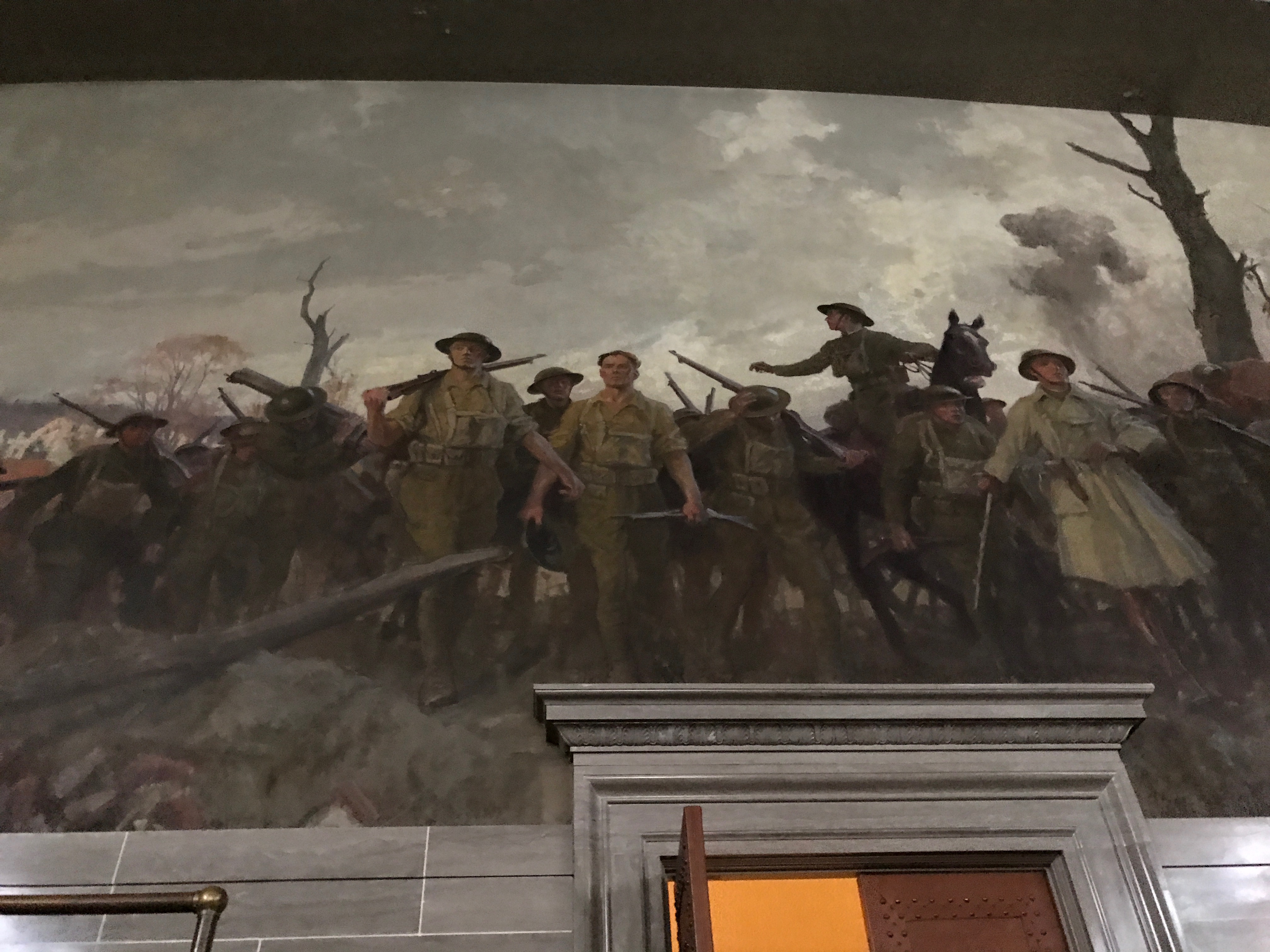
And as far away from it as I could get while still in the visitors’ gallery.

The last stop on this tour is the Hall of Famous Missourians. These busts are all privately funded and depict prominent Missourians honored for their achievements and contributions to the state. According to my Preferred Source, these busts were created by Missouri sculptors Sabra Tull Meyer, E. Spencer Schubert and William J. Williams. As of 2013, there were 44 inductees in the Hall.

You can relax. I am not going to present all of the honorees.
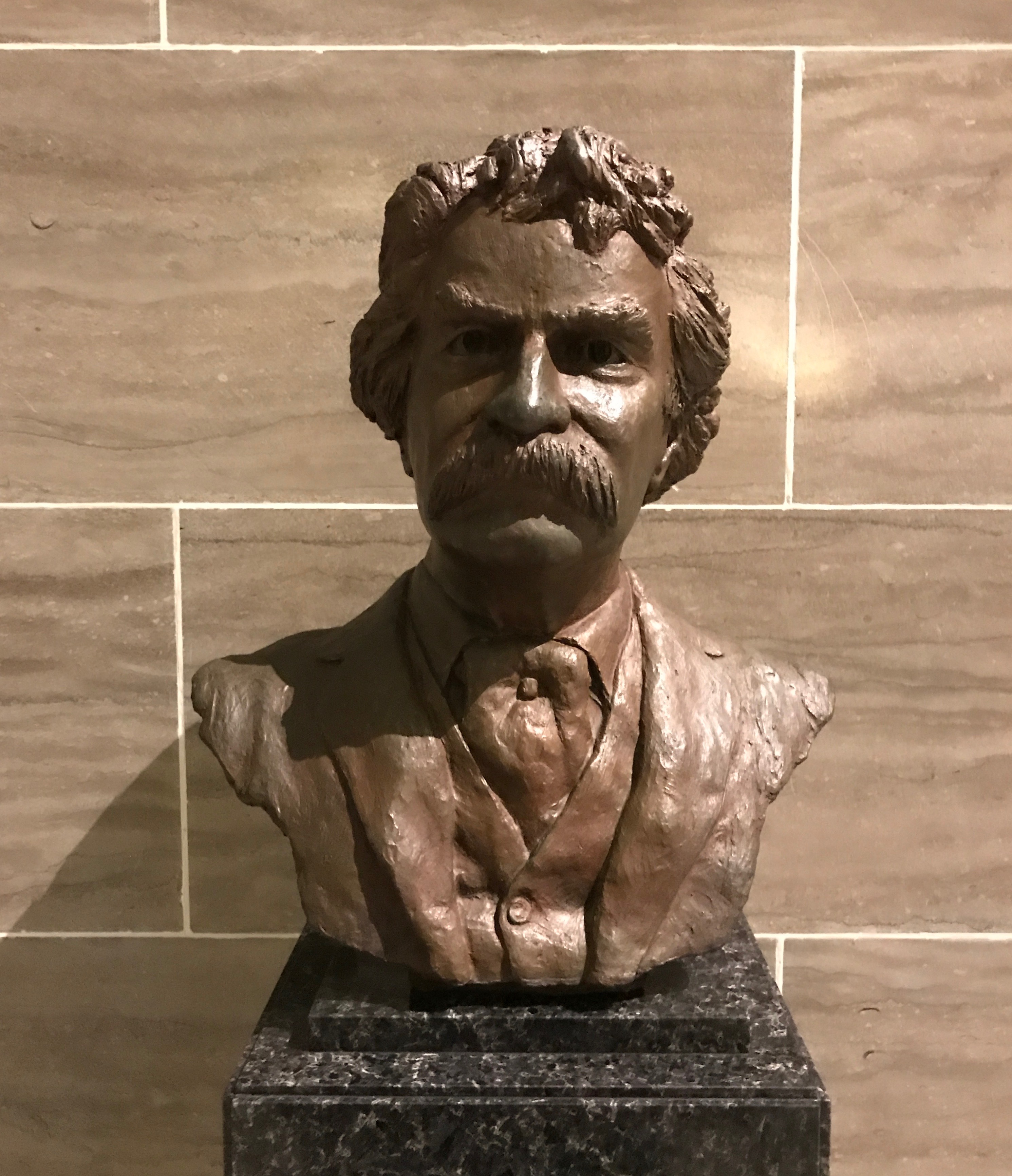
First we have Mark Twain, otherwise known as Samuel Langhorne Clements. Born in Hannibal, Missouri in 1835. He died in 1910. I visited his grave in Elmira, New York as well as his house in Hartford, Connecticut.
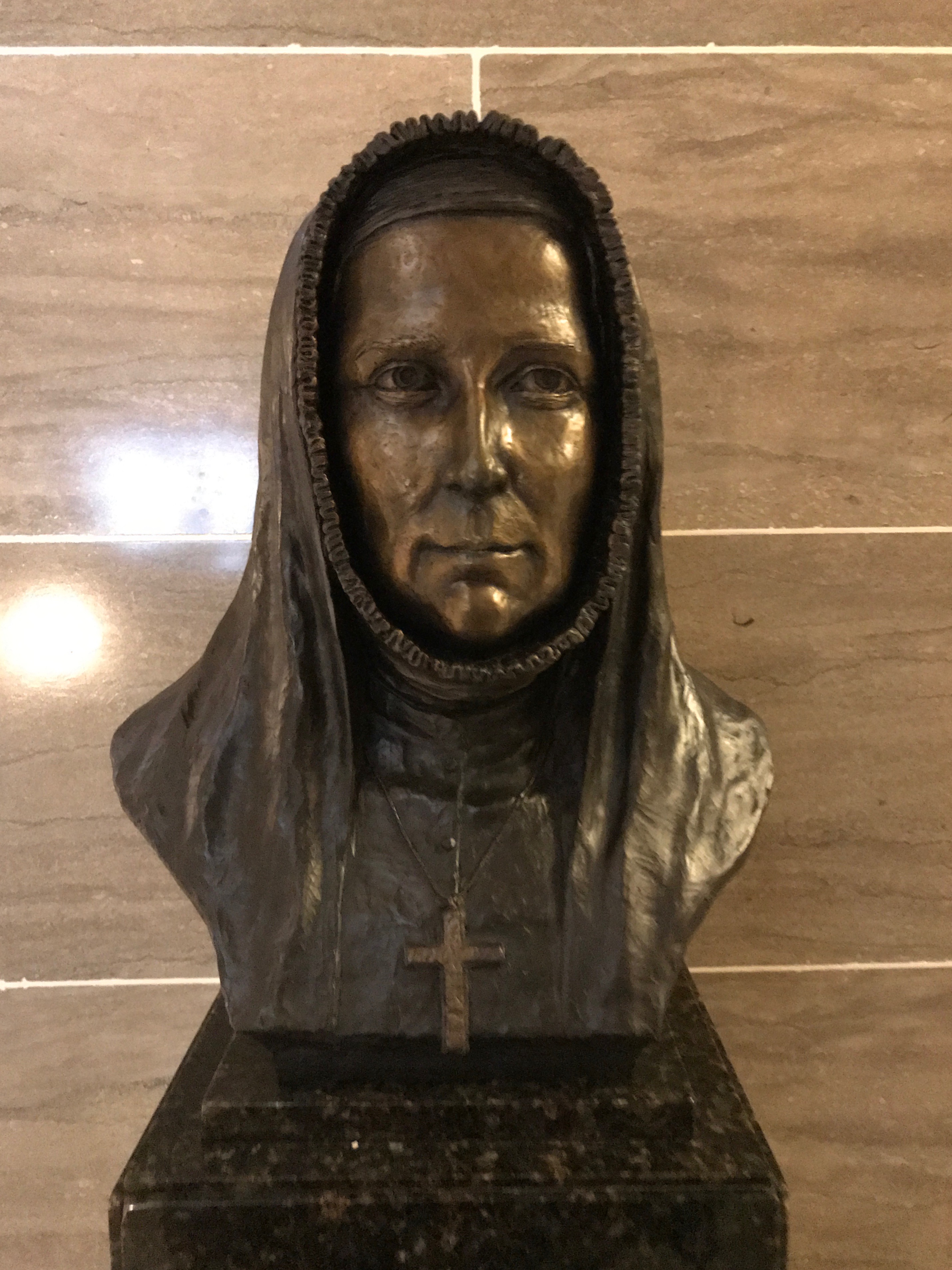
Saint Rose Philippine Duchesne, 1769-1852. She is recognized for being an American Frontier Educator. Born in Grenoble, France, she came to America in 1818 and open the first free school west of the Mississippi in a log cabin in St. Charles, Missouri.

She worked with the American Indians, who called her “Quah-kah-ka-num-ad” or “The Woman Who Prays Always.” She was beatified by Pope Pius XII in 1940 and canonized by Pope John Paul II in 1988.
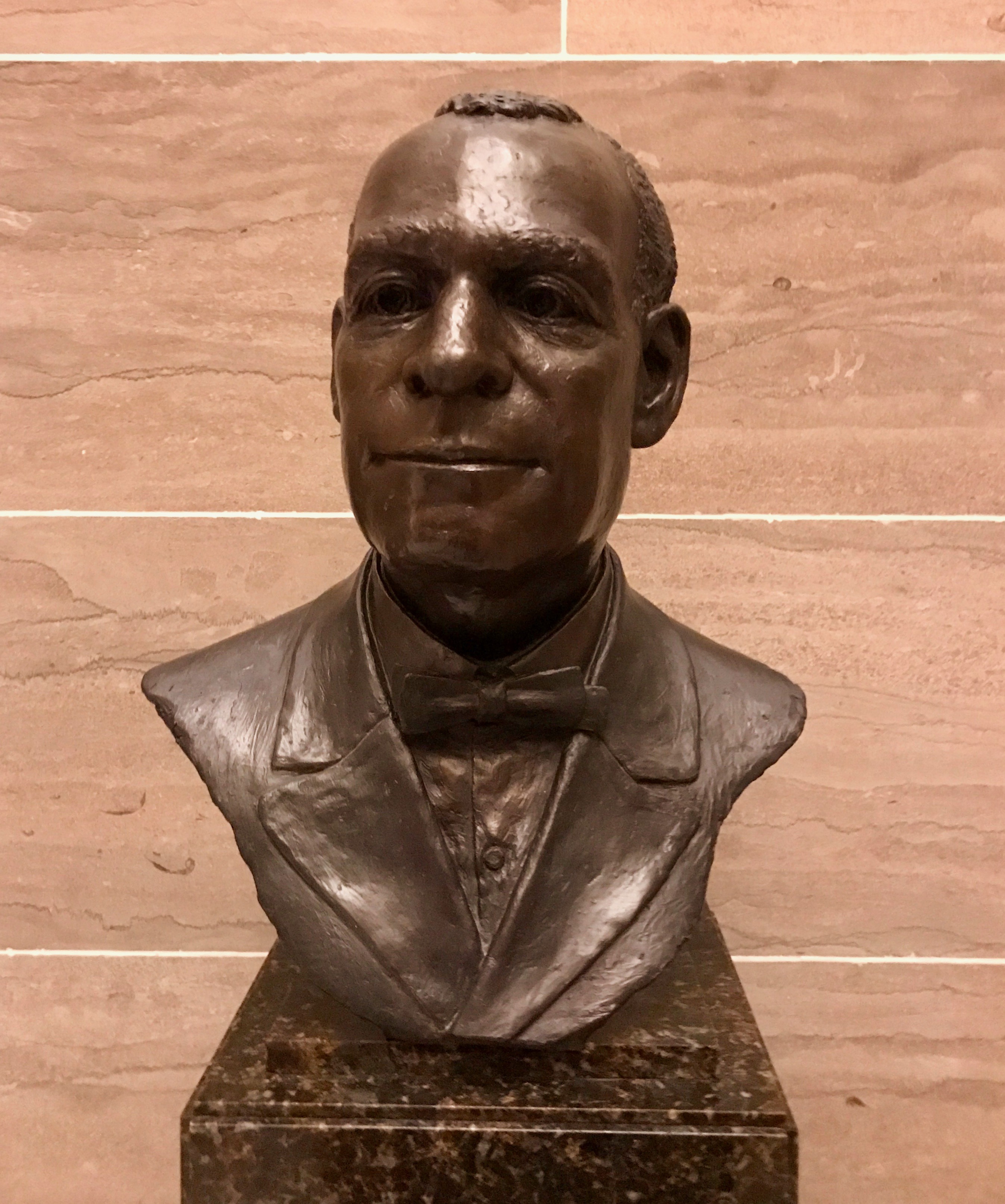
Tom Bass was born into slavery in Boone County in 1859. He lived most of his life in Mexico, Missouri. He became one of the most popular horse trainers of the late 19th and early 20th centuries. He is credited with helping to start the American Royal Horse Show in Kansas City. He died in 1934 at the age of 75. He succumbed to a heart attack, which people attributed to his distress over the death of Belle Beach, one of his favorite horses.
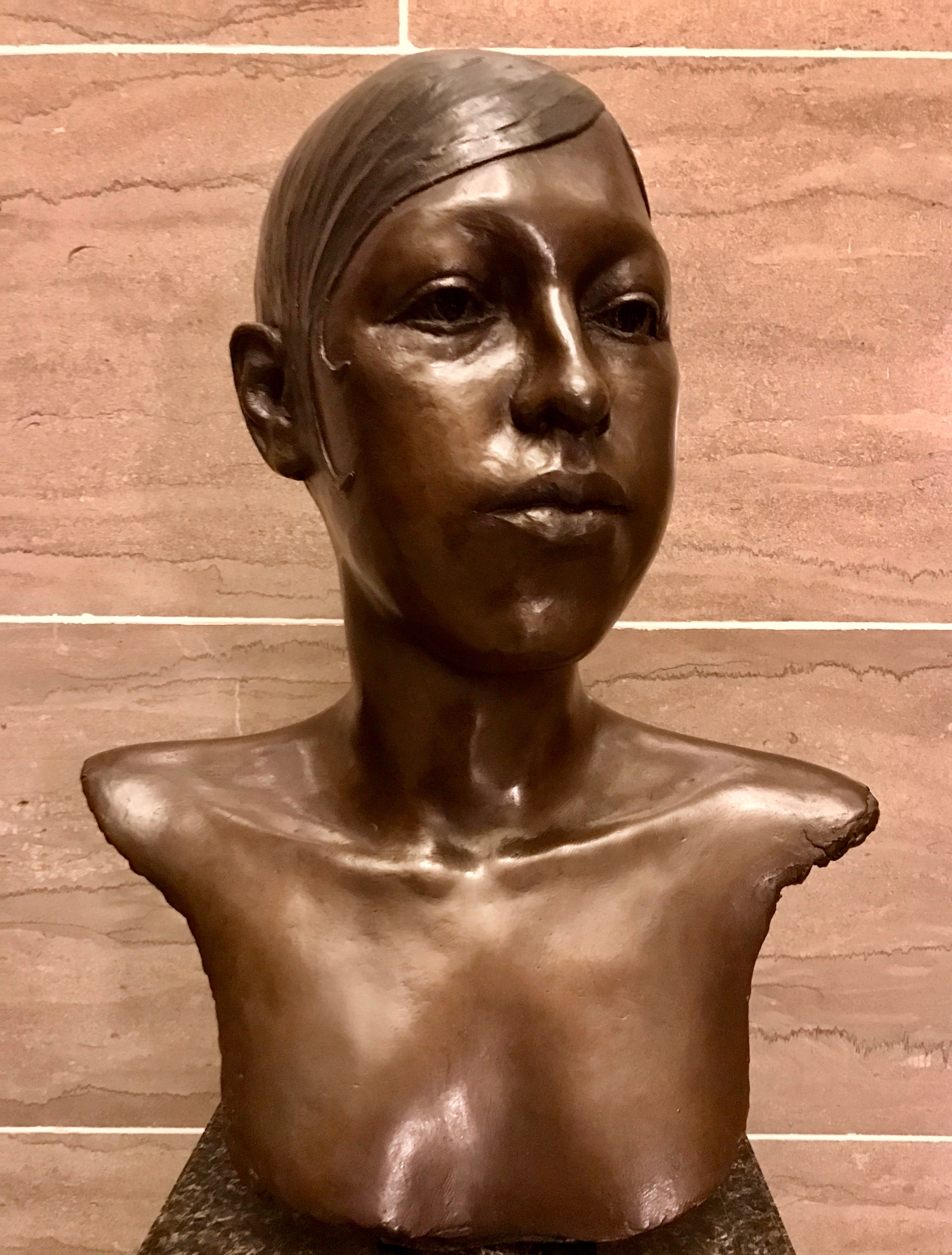
Josephine Baker is also claimed as one of Missouri’s own. She was born in St. Louis in 1906 and her plaque honors her for being an international entertainer and human rights activist. She lead an interesting life. Not only as a singer and dancer, but as a movie star, a civil rights activist, and working with the French Resistance during World War II. After the war, she was awarded the Croix de guerre by the French military and named a Chevalier of the Legion d’honneur by General Charles de Gaulle. Although she had renounced her U.S. citizenship when she married French industrialist Jean Lion in 1937, Coretta Scott King offered her unofficial leadership in the Civil Rights Movement after Martin Luther King’s assassination.
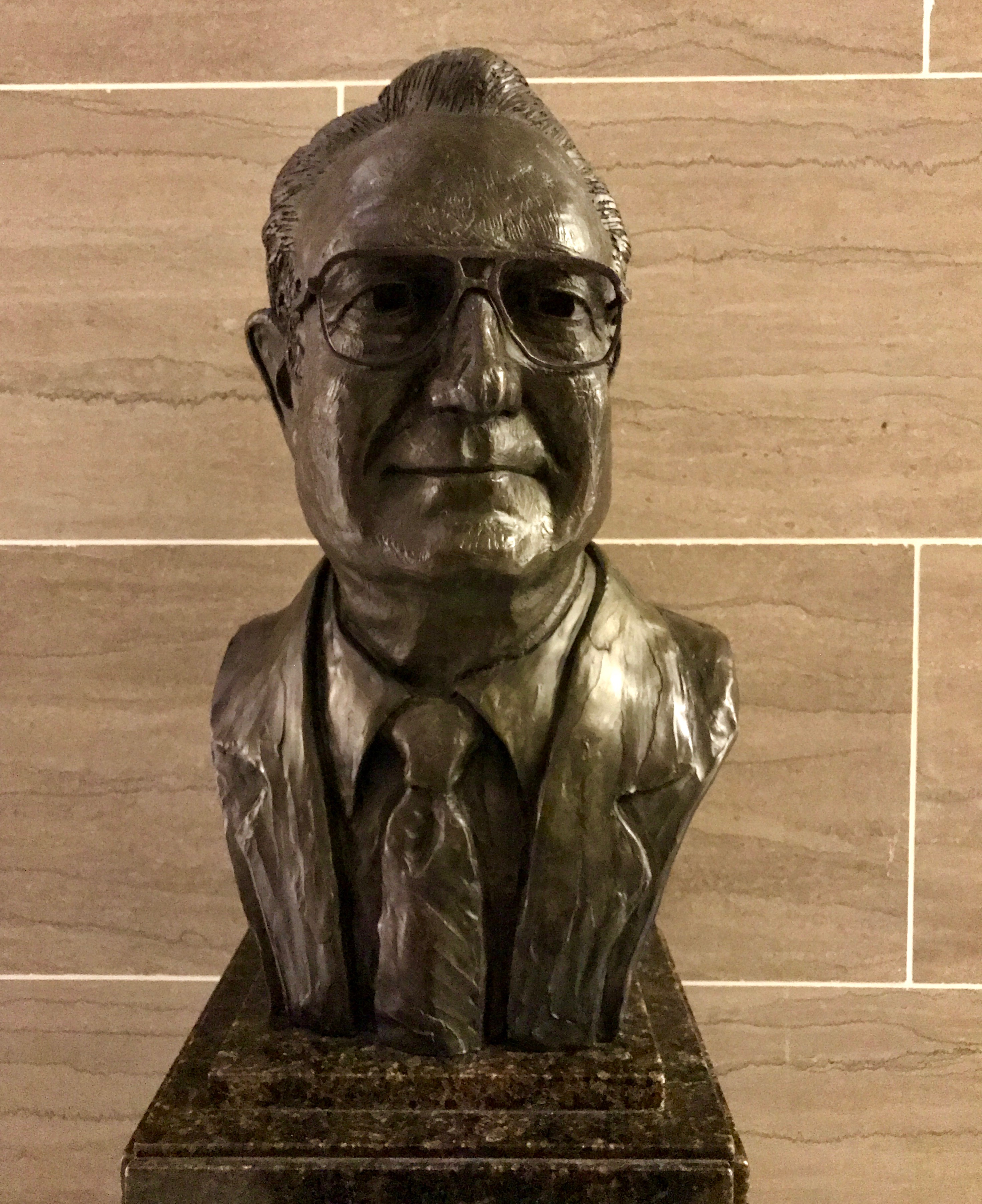
Melton D. “Mel” Hancock is included in the Hall. He is the founder The Taxpayer’s Survival Association, which put forth “The Hancock Amendment.” This is Missouri’s Constitution Tax and Spending Limitation. His organization worked with other groups in the state and got it placed on the ballot through a petition drive and it was adopted by the voters in 1980. (Side note, if this were Michigan, the legislators would feel free to do something to thwart the will of the voters.) From 1989 – 1996, he represented the state’s 7th congressional district in the United States House of Representatives.

Astronomer Edwin Powell Hubble, 1889-1953, is also one of the honorees. Hubble developed the theory and law proving that the universe is expanding, developed the theory that the universe extends beyond the Milky Way and a technique to measure the distance of those galaxies from our galaxy. Hubble Classification is still used today to measure and classify all galaxies beyond the Milky Way. The Hubble Space Telescope is named in his honor.
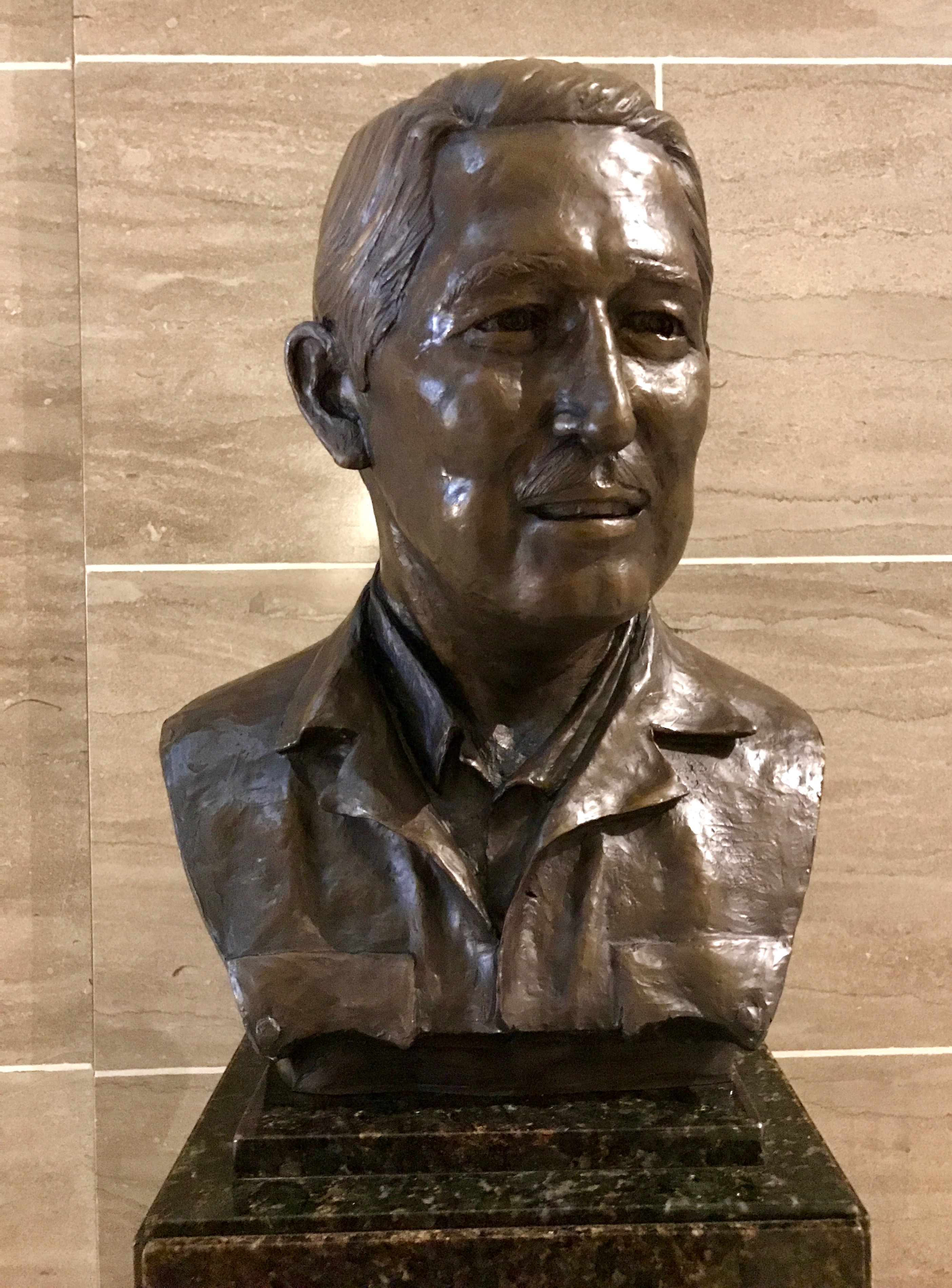
I always associated Marlin Perkins with Nebraska. I guess it was due to “Mutual of Omaha’s Wild Kingdom.” But, no, this well-known zoologist and naturalist was born and raised in Carthage, Missouri. He was also director of the Saint Louis Zoo from 1962-1970. He hosted the television show 1963-1985, which was almost to the end of his life in 1986. I’d say he had a good, long run.
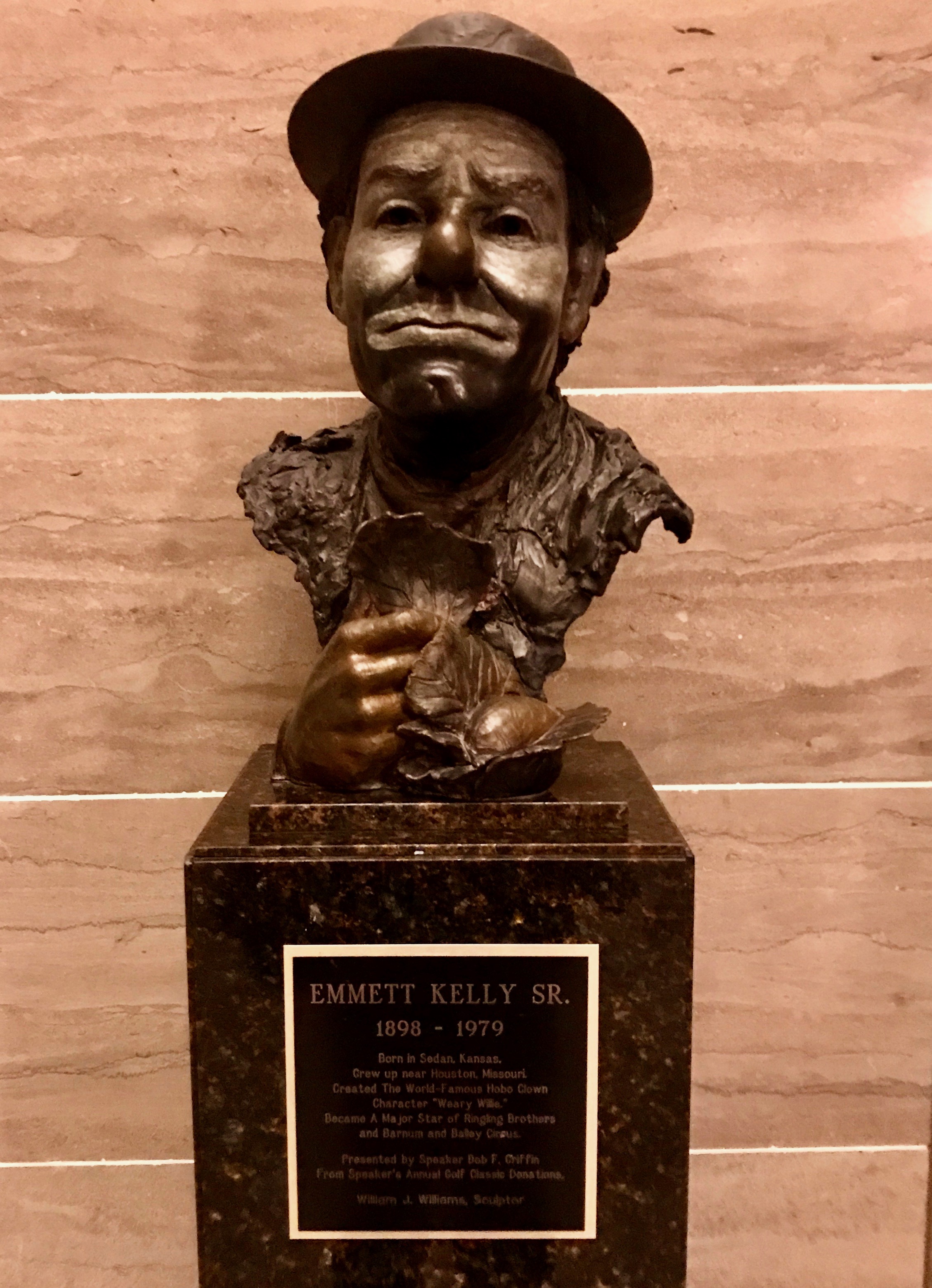
I did not know that Emmet Kelly Sr. was from Missouri, but it appears that they claim him as their own. While he was born in Kansas in 1898, his hometown was Houston, Missouri. His character, based on the hobos of the Depression Era, was known as Weary Willie. Our guide told us that the statue held a secret, if you took a flash photo of it.
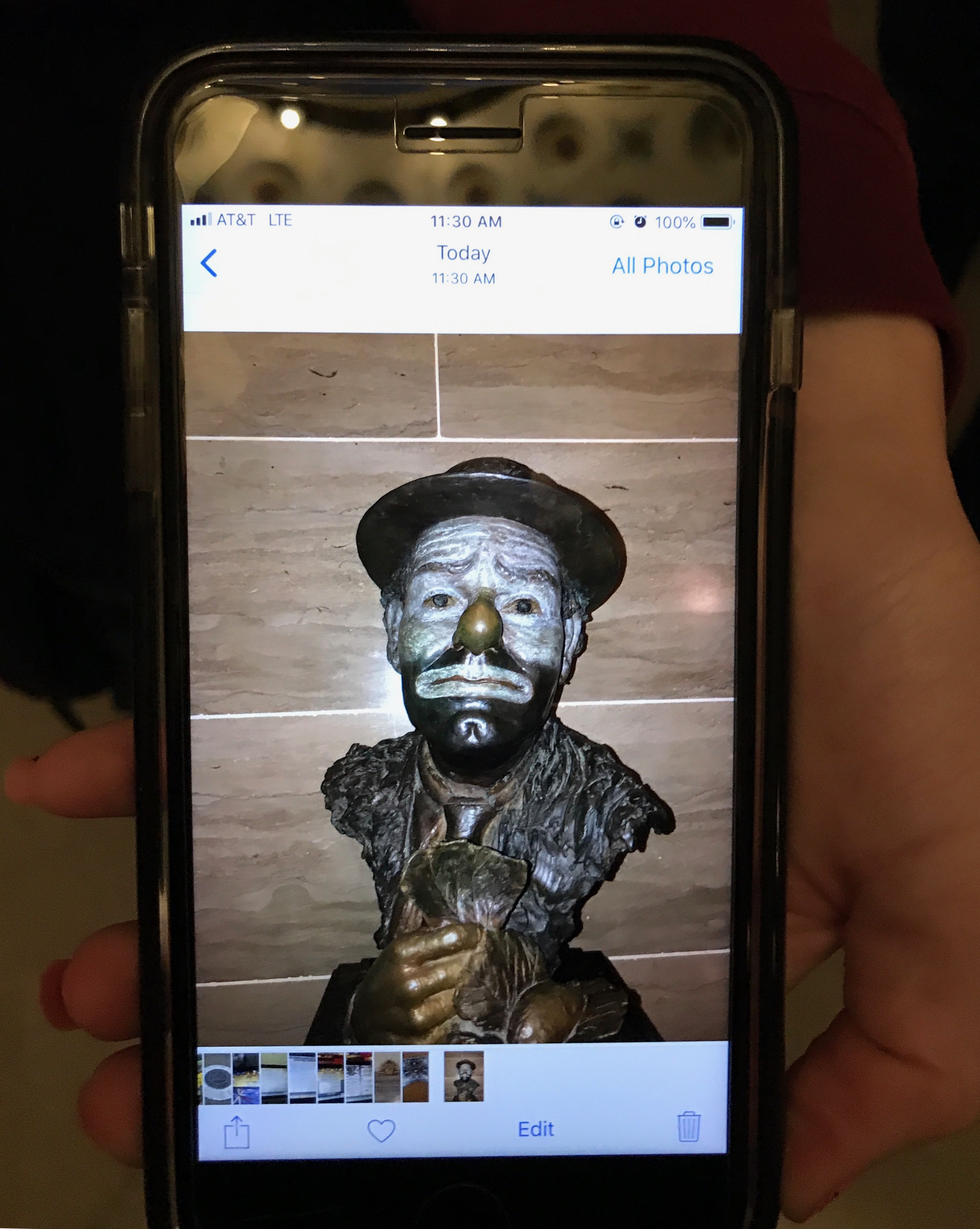
One of the tour members managed to snap a photo with flash, and I took a photo of her photo. Amazing!

Next is a completely different sort of clown. Rush Limbaugh. The citation honors him for overcoming adversity while climbing the ladder to become the top radio talk show host in the country. I read over his Wikipedia entry. The only adversity I could find was that he dropped out of college. His mother said that, “He flunked everything,” and “he just didn’t seem interested in anything except radio.”

Virginia Louis Minor was born in Virginia in 1824 and moved to St. Louis in 1843. She founded the first woman’s suffrage organization in the United States. She attempted to register to vote in 1872 and she sued the registrar who refused to let her register. Her case, Minor v Happensett, went to the United State Supreme Court, which denied women the right to vote under the 14th Amendment.

She worked for women’s suffrage until her death in 1894.
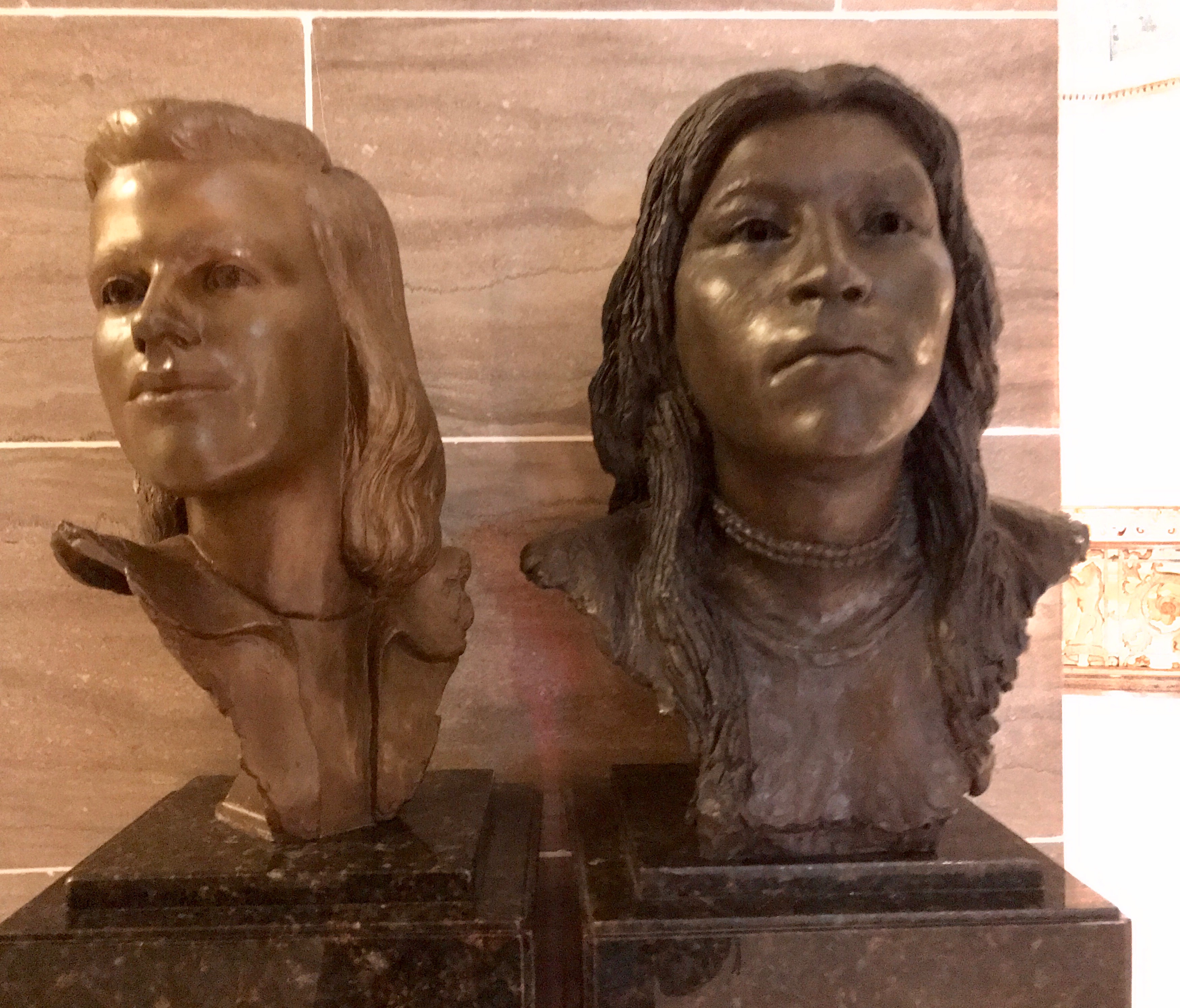
I’m not sure why Ginger Rogers and Sacajawea are displayed so close together. Do you suppose they are running out of space?

Ginger Rogers was born in Independence, Missouri in 1911. She won a Best Actress Oscar for the 1940 film, “Kitty Foyle.” She danced with Fred Astaire in ten films. Her most famous quotes is “I do everything the man does, only backwards and in high heels.”

Sacajawea was born in 1788 Lemhi River Valley, near present day  Salmon, Idaho. On her plaque, she is recognized as being the Shosone interpreter for the Lewis and Clark Expedition. in 1800, when she was around 12 years old, she and several other girls were kidnapped by a group of Hidata after a battle that resulted in the deaths of several Shoshone. She was taken to the Hidatsa village, near present-day Washburn, North Dakota.

According to my Preferred Source, When she was about 13, she was sold into a “nonconsensual” marriage along with another young girl to Toussaint Charbonneau, a Quebecois trapper living in the village. She was pregnant with her first child when Lewis and Clark spent the first winter near there. Charbonneau professed to be able to speak Big Belley language, which is what the Hidatsa spoke. He told them that his wives spoke the Shoshone language. They hired him and told him to bring along one of his wives.

Sacajawea died in 1812. Or was it 1884? There is no definitive proof, although 1812 is the more accepted date.
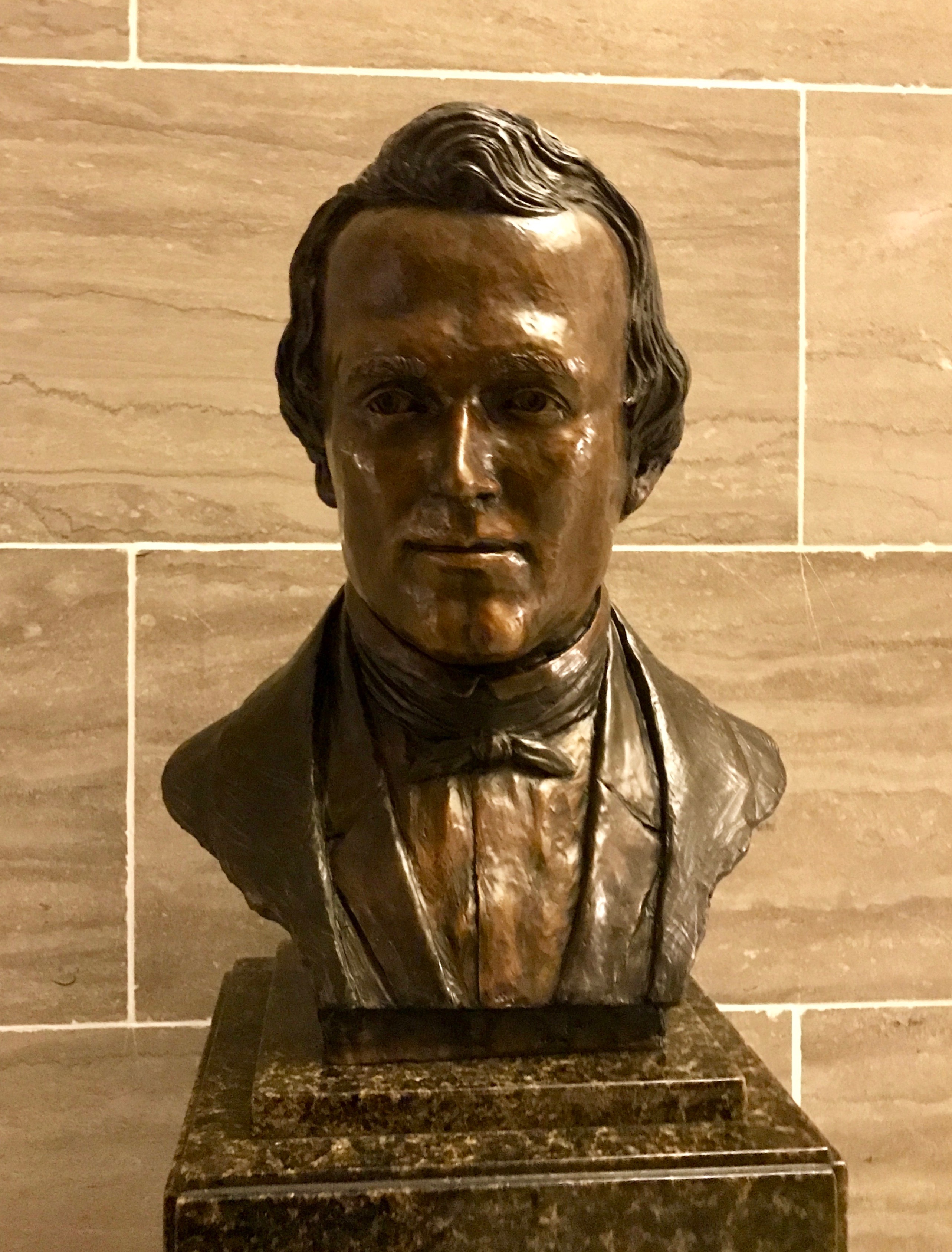
This gentleman is George Caleb Bingham. He was a 19th century American painter of the American West, with a large selections of his works of at the St. Louis Museum of Art. Much of his best work generally relates to life and commerce along the Mississippi and Missouri rivers, and to the people of Missouri in and around St. Louis, Jefferson city and Kansas City, among other Missouri places. He became known as “The Missouri Artist” and is considered by some to be Missouri’s first artist.

In addition to being an artist. he also served in the Missouri House of Representatives and other various positions in government.
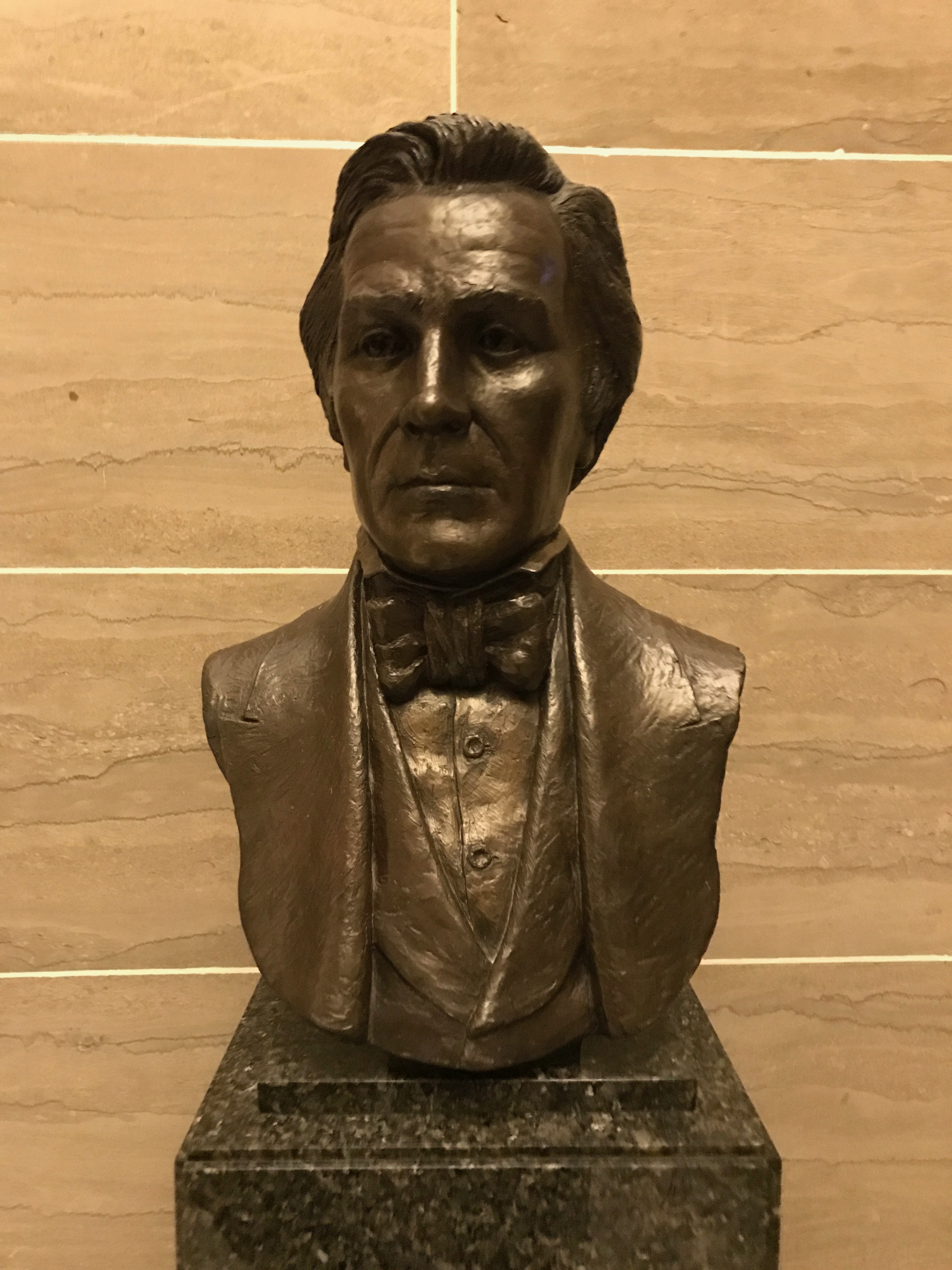
David Rice Atchison is another interesting politician. Although he was born near Lexington, Kentucky in 1807, he was the U.S. Senator from Missouri for 1843-1855, and there are those who claim that he was President for one day in 1849. That’s the President of the United States, mind you.

How did that happen?  The term of outgoing president, James K. Polk, ended at on noon March 4, which was as Sunday.  On March 2, outgoing vice president George M. Dallas relinquished his position as President of the Senate, at which time Atchison was elected President pro tempore of the Senate. According to the Presidential Succession Act of 1792, the Senate president pro tempore immediately followed the vice president in the presidential line of succession. As Dallas’s term also ended at noon on the 4th, and neither President-elect Zachary Taylor nor Vice President-elect Millard Fillmore had been sworn in to office on the day, it was claimed by some of Atchison’s friends and colleagues that on March 4-5, 1849, Atchison was Acting President of the United States.

It must be noted that Atchison himself never claimed to be Acting President and historians, constitutional scholars and biographers all dismiss the claim. tI is a fun little story, nevertheless.
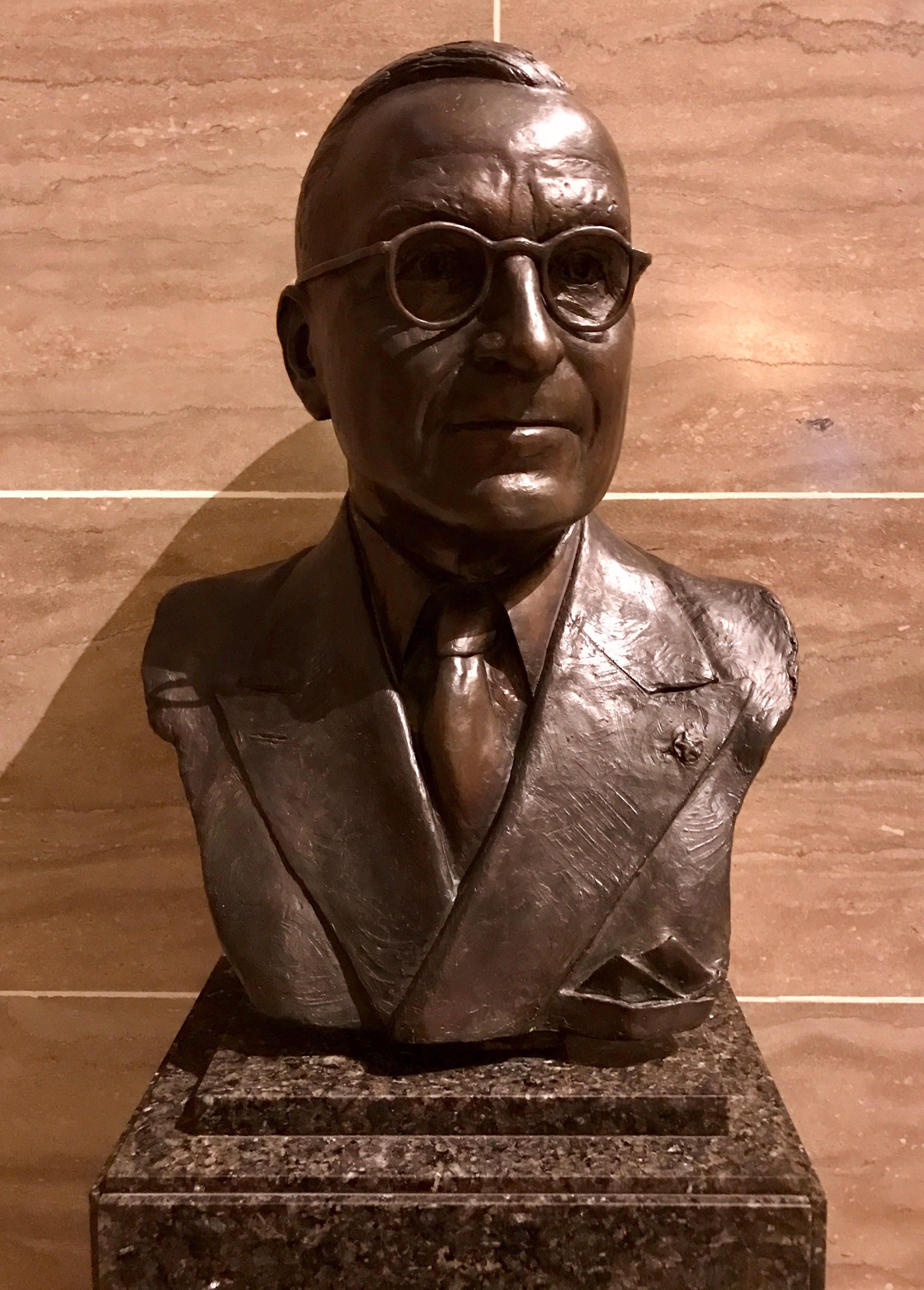
Missouri does have one genuine native son who was President – Harry S Truman. According to the plaque, he was considered one of the Nation’s greatest presidents and most remarkable statesmen. Born in Lamar, Missouri in 1884, he lived out his post-presidential years in Independence, Missouri.

He was a Missouri Senator from 1935 – 1945, when he became Franklin D. Roosevelt’s third vice president. He followed John Nance Garner, 1933-1941, and Henry A. Wallace, 1941-1945. One of these days, I am going to have to research just why FDR felt that he needed to switch vice presidents. In any event, Truman had been vice president for less than three months when FDR died from a cerebral hemorrhage in the Little White House in Warm Springs, Georgia. Talk about on-the-job training! He had to take the reins and bring WW II to a close, which included making the decision to use the atomic bomb. I  have read in several sources, that when he took office he wasn’t even aware that there was an atom bomb being developed.
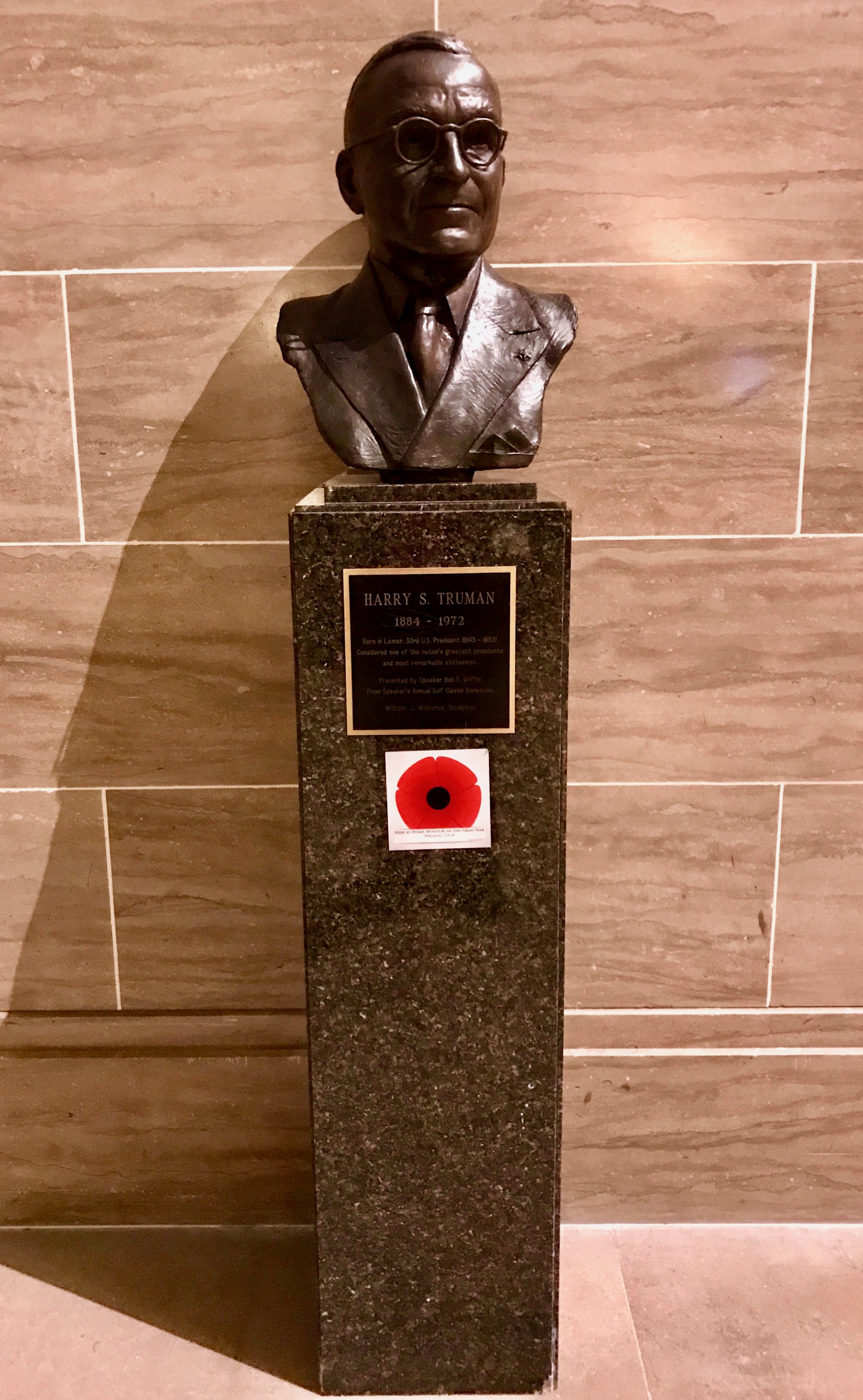
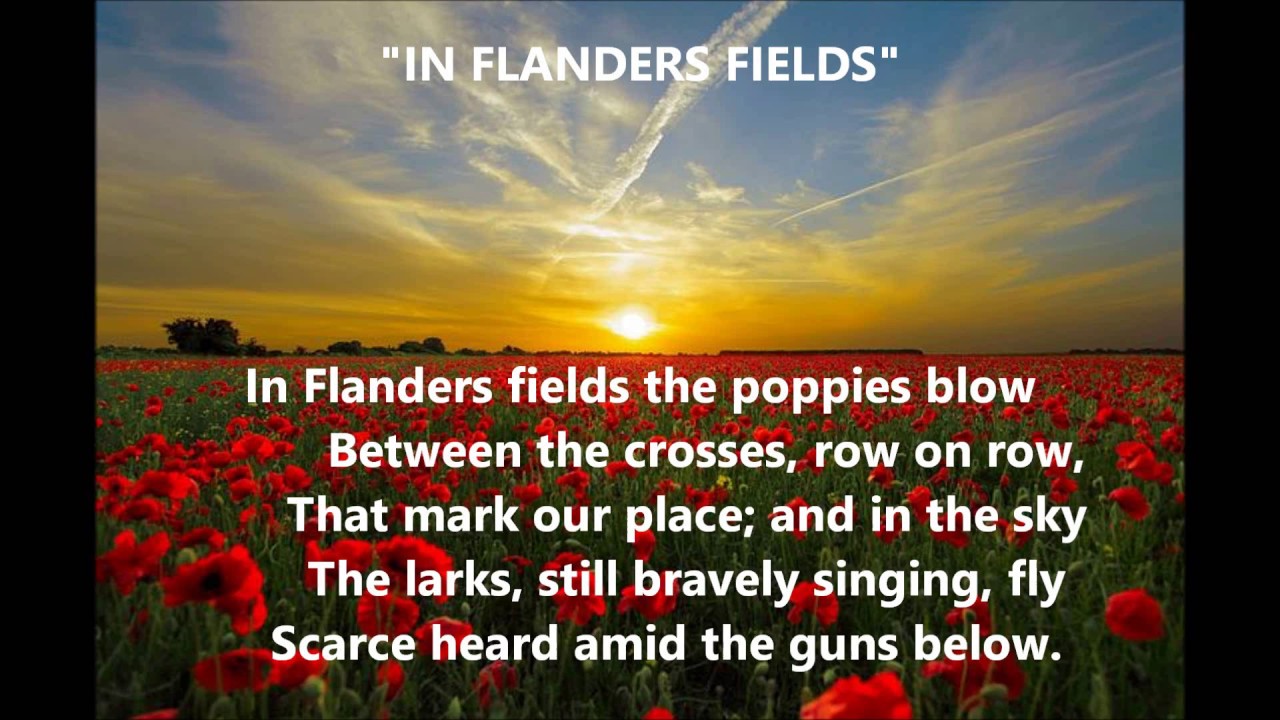
I am including this photo of his bust on the pedestal so that you can see the poppy on it. Truman served in WW I, which he only managed to get into because he secretly memorized the eye chart to compensate for his poor vision. My visit to the capitol was in 2018, which was the 100th anniversary of the end of WW I. The poppy is the symbol of remembrance. I believe it gained popularity because of the poem “In Flanders Fields” by John McCrae.
And now, I really will move along. Thank you for bearing with me through this long series of posts about the Missouri State Capitol.
Kansas City, Here I Come!

My goal was Kansas City. I had to be there the next day for my orientation as a seed courier, but that still left plenty of time for drive-by tourism.

My first stop was Hannibal, Missouri. I mean, I had been on the road for a couple of hours. It was time for a break.

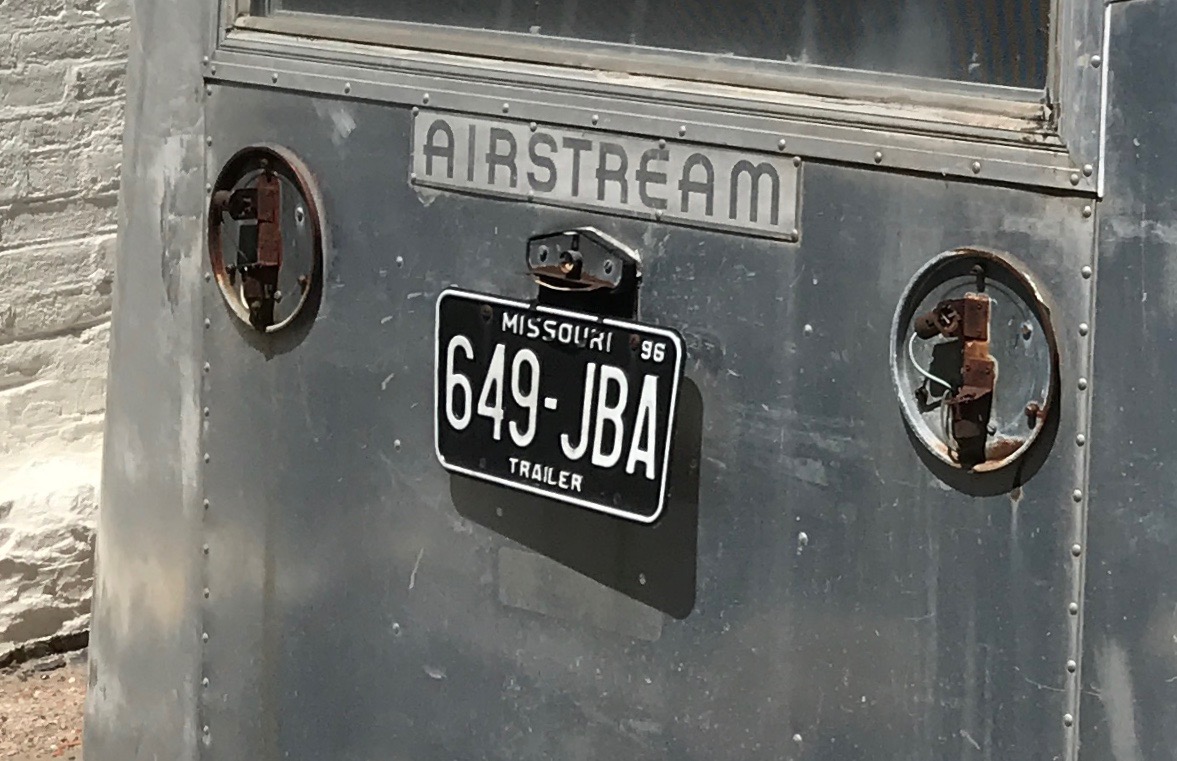
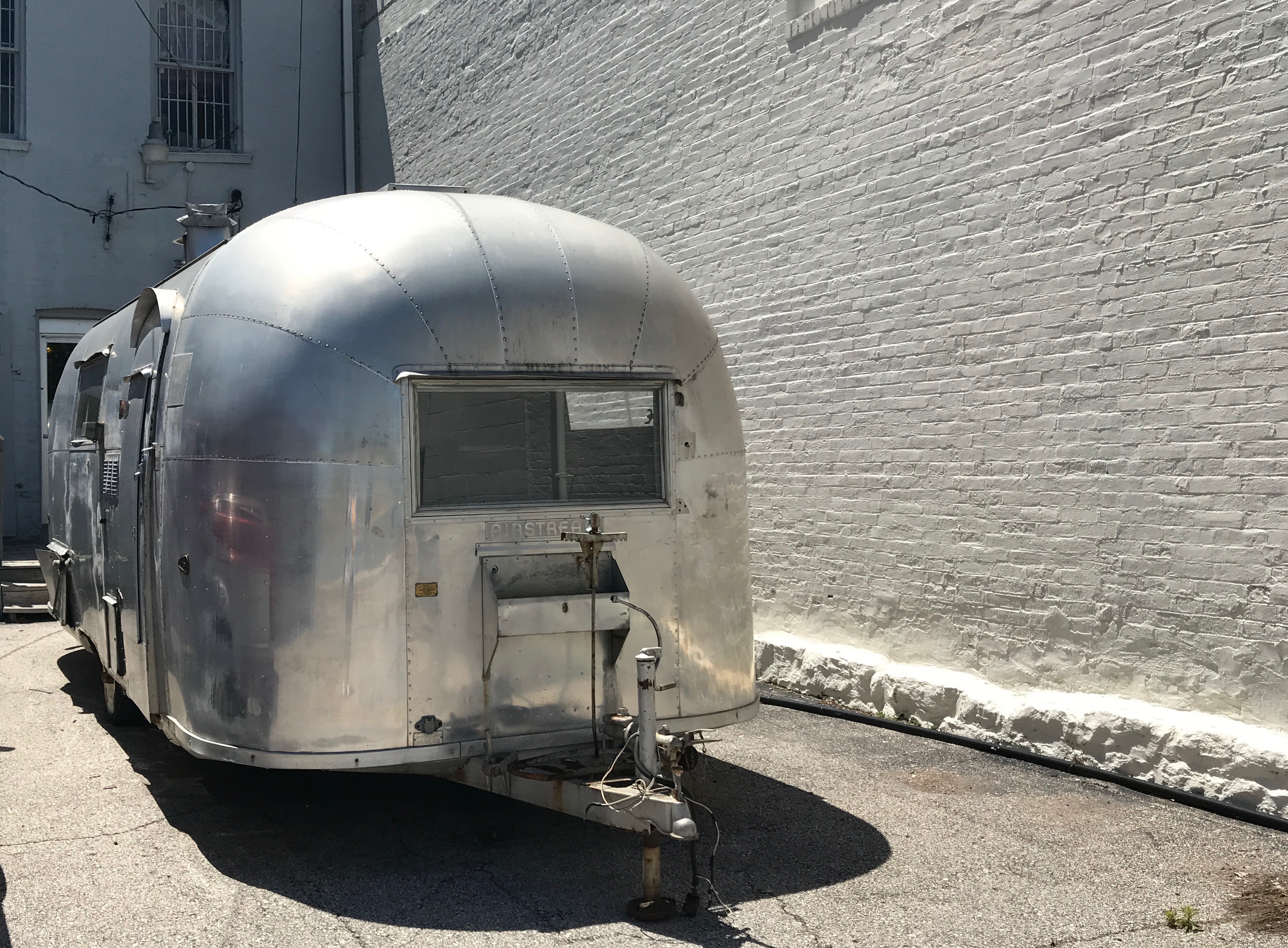
I got off the interstate and looked for a likely spot to park and then find a restroom. Wouldn’t you know it? I find an Airstream!

It’s tucked away behind some stores.

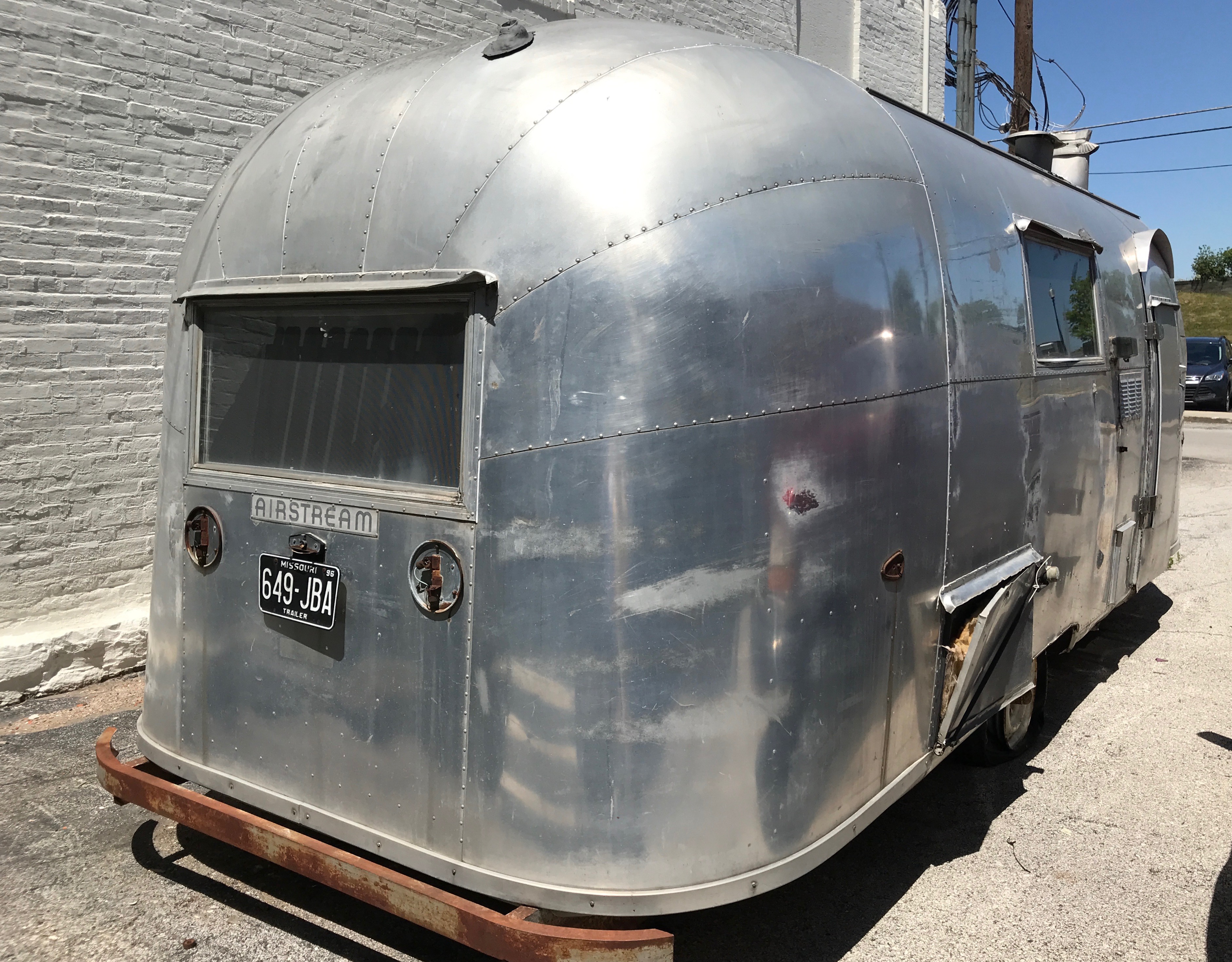
The old gal looks like she’s had many adventures behind her. She even has a plate on! However, the plate is from 1996, and there aren’t any brake lights.

I suppose the lack of brake lights is fine, since I can’t imagine that she still has working brakes.

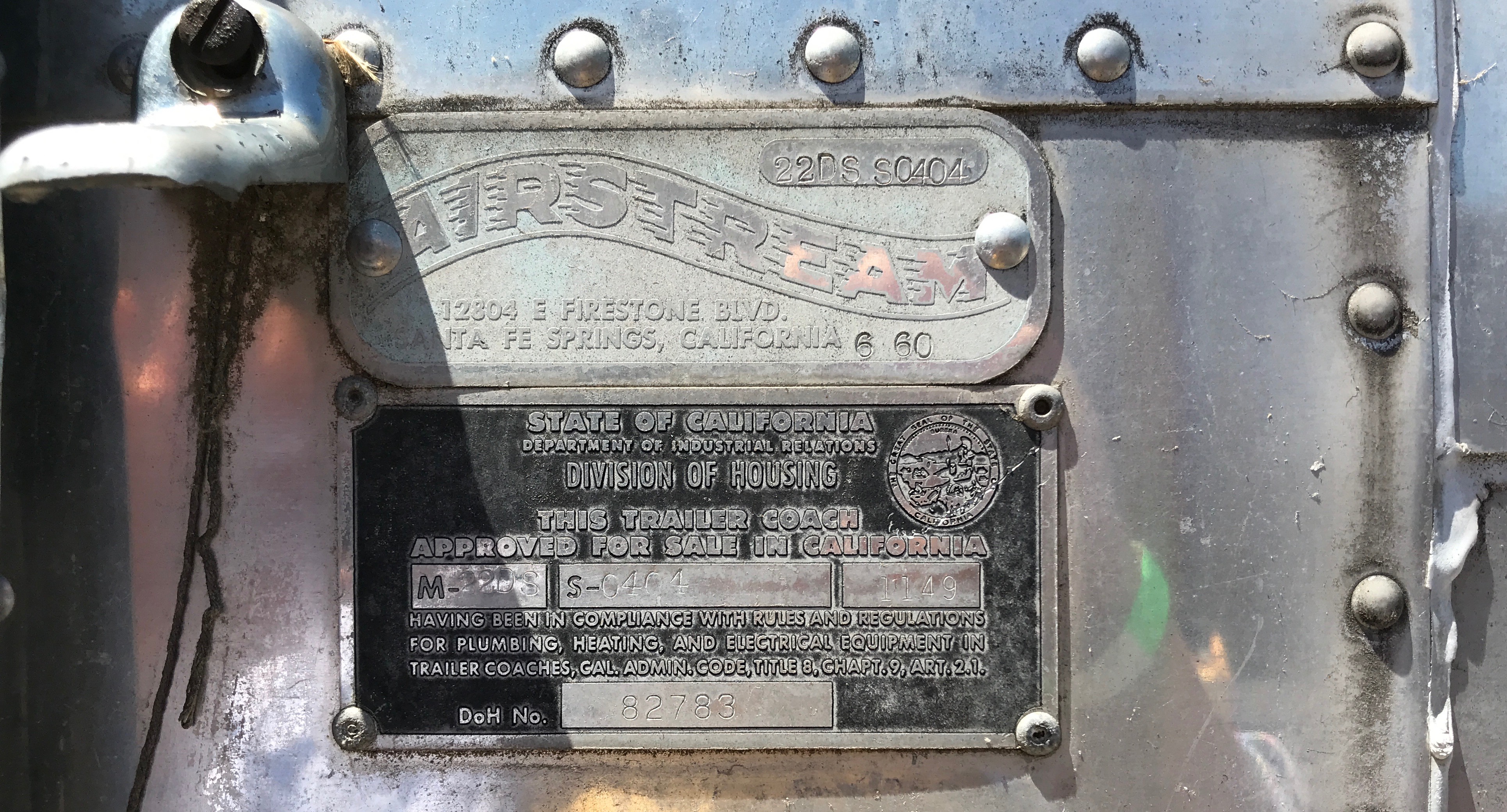
I’m including the identification tags, just in case you are into those sorts of things.

My goal, in my whirlwind visit to Hannibal, was to see what I would see of Samuel Langhorne Clemens’ childhood home.

You know, Mark Twain – the writer who gave us Tom Sawyer and Huckleberry Finn.

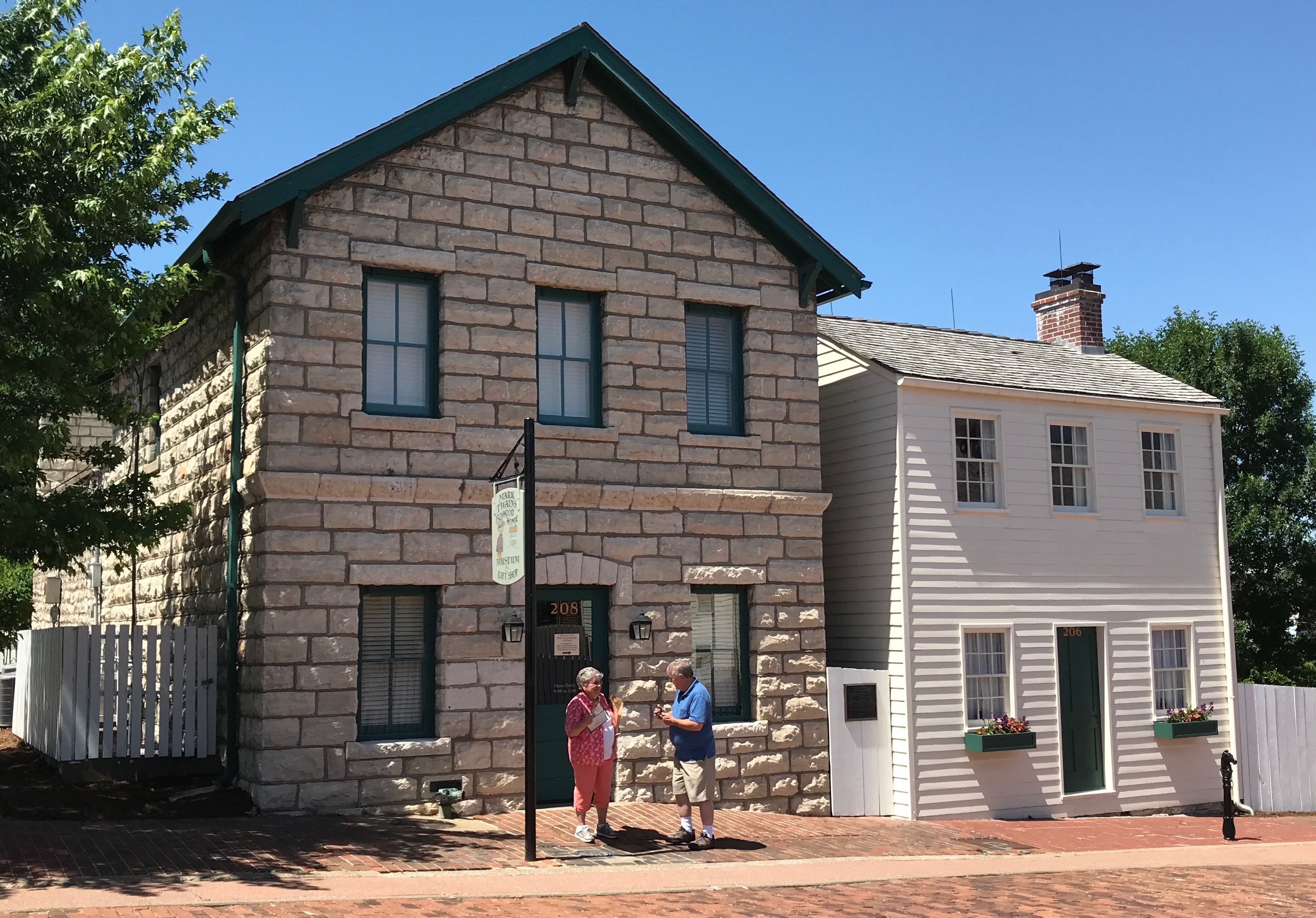
Mark Twain lived in Hannibal from 1844 to 1853, from about the age of nine to age eighteen. He lived house he lived in is now a museum. Of course, I was moving far too quickly to invest in a museum ticket. Maybe I’ll put that on my “Next Time” list.

He lived in that little white house.

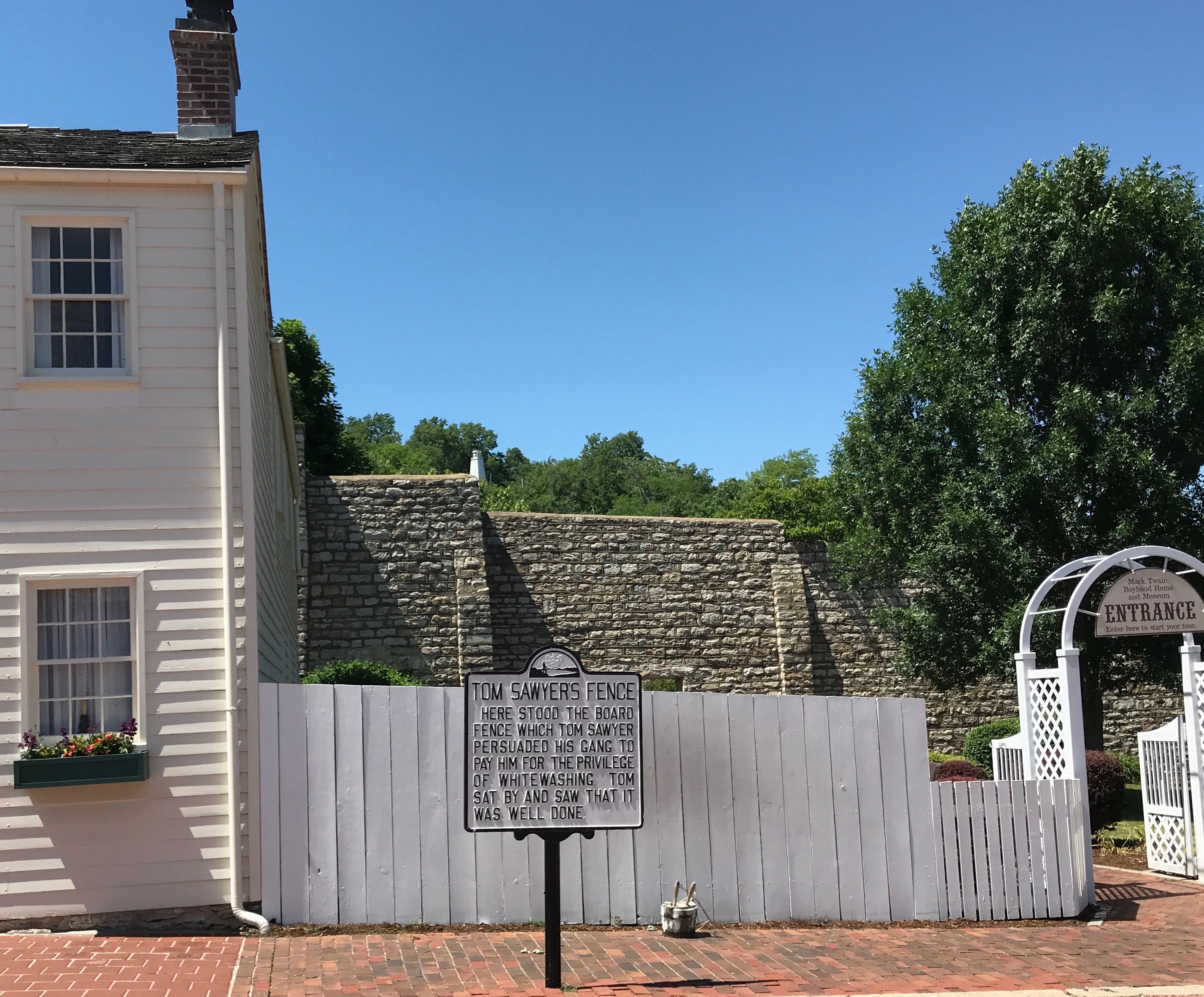
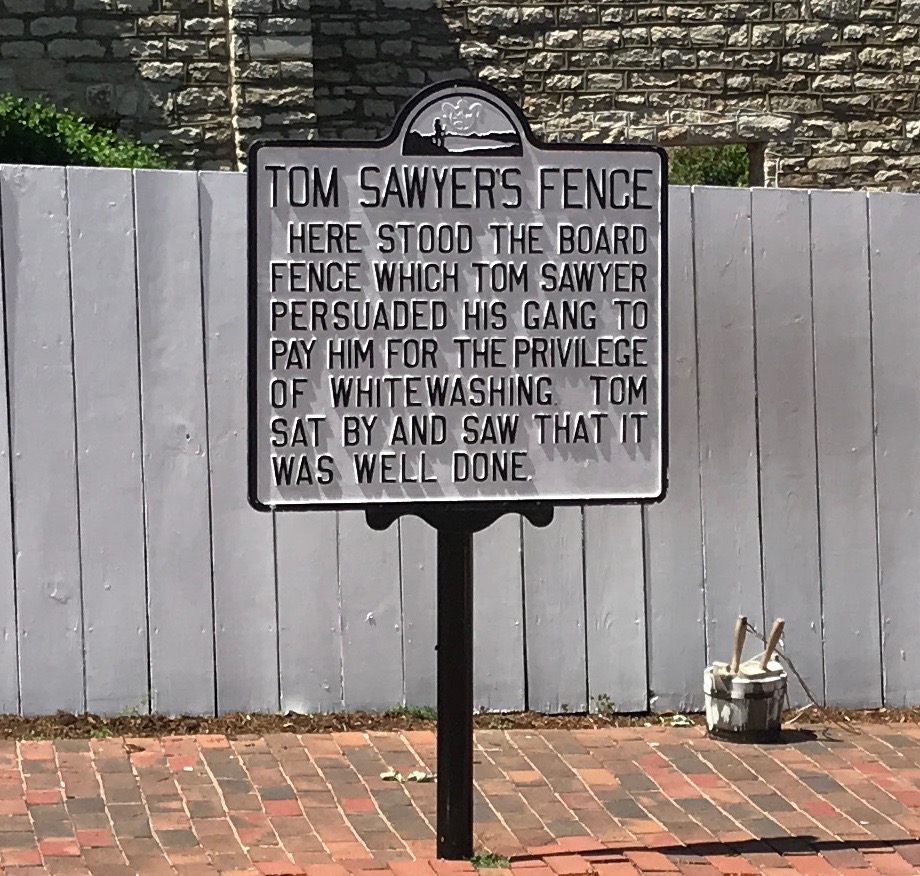
Right next to a recreation of Tom Sawyer’s fence.

It is complete with a bucket of whitewash and some brushes.

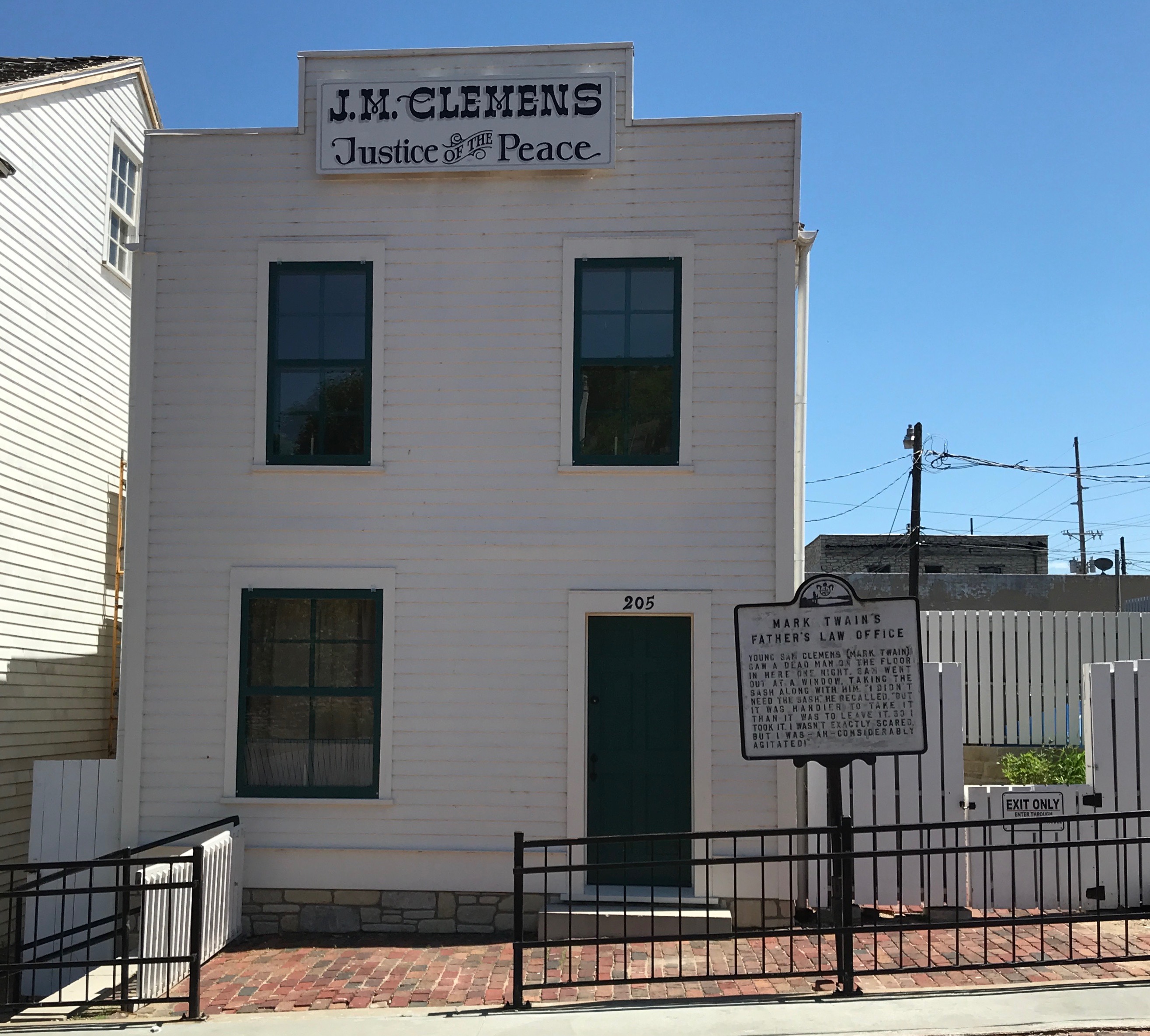
His father’s law office was right across the street from the house. According to the sign in front – in case you can’t make it out – here young Sam Clemens (Mark Twain) saw a dead man on the floor one night. Sam went out a window, taking the sash along with him. “I didn’t need the sash,” he recalled. “But it was handier to take it that it was to leave it, so I took it. I wasn’t exactly scared, but I was – ah -considerably agitated.”

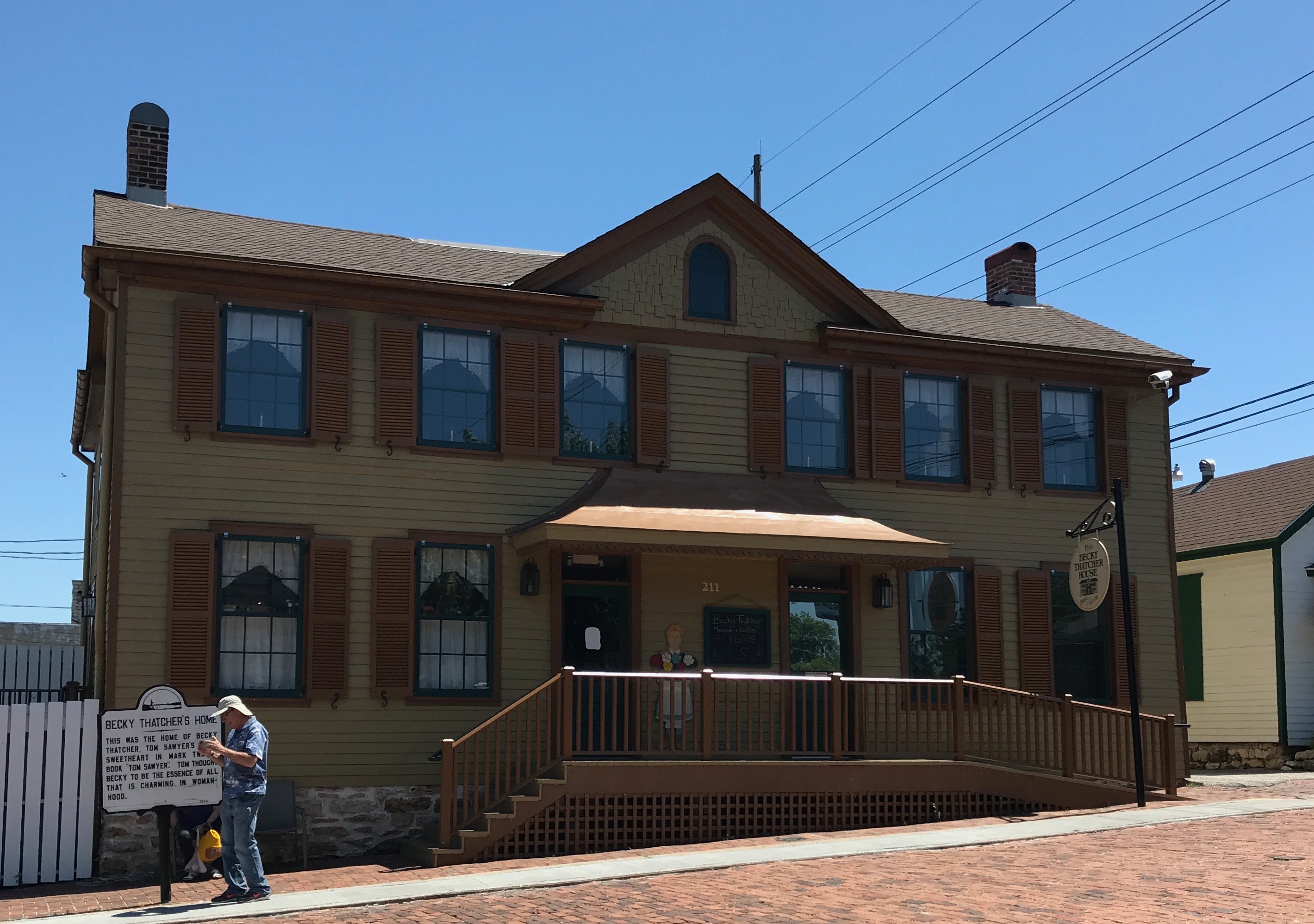
“Becky Thatcher’s” house is on Hill Street, too. Actually, it was the home of Mark Twain’s childhood sweetheart, Laura Hawkins.

Hill Street, where the Clemenses and Hawkinses lived, was paved with Missouri Block, made in Moberly, MO.

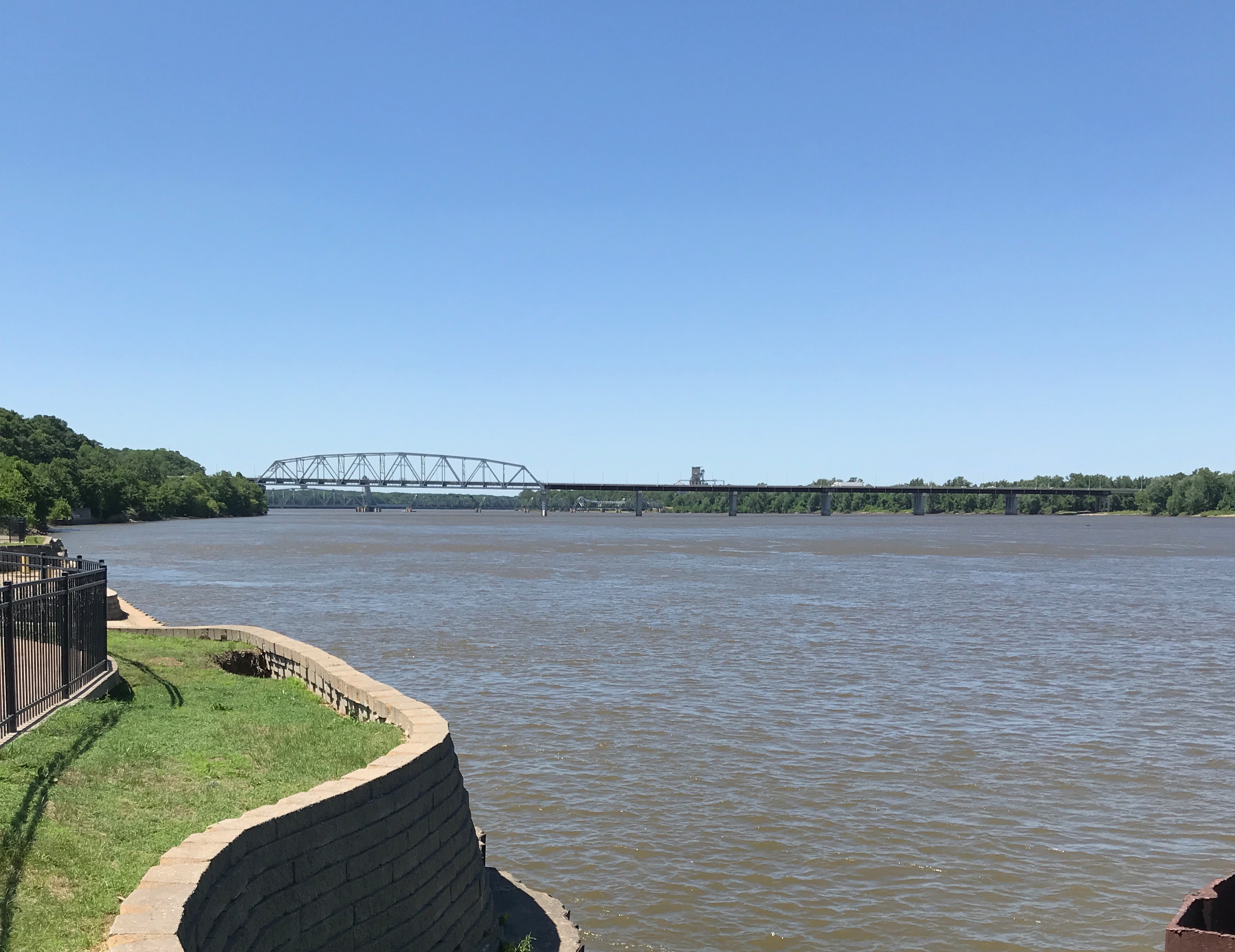
I decided that I should head down to the Mississippi River, a couple blocks away, to check it out.

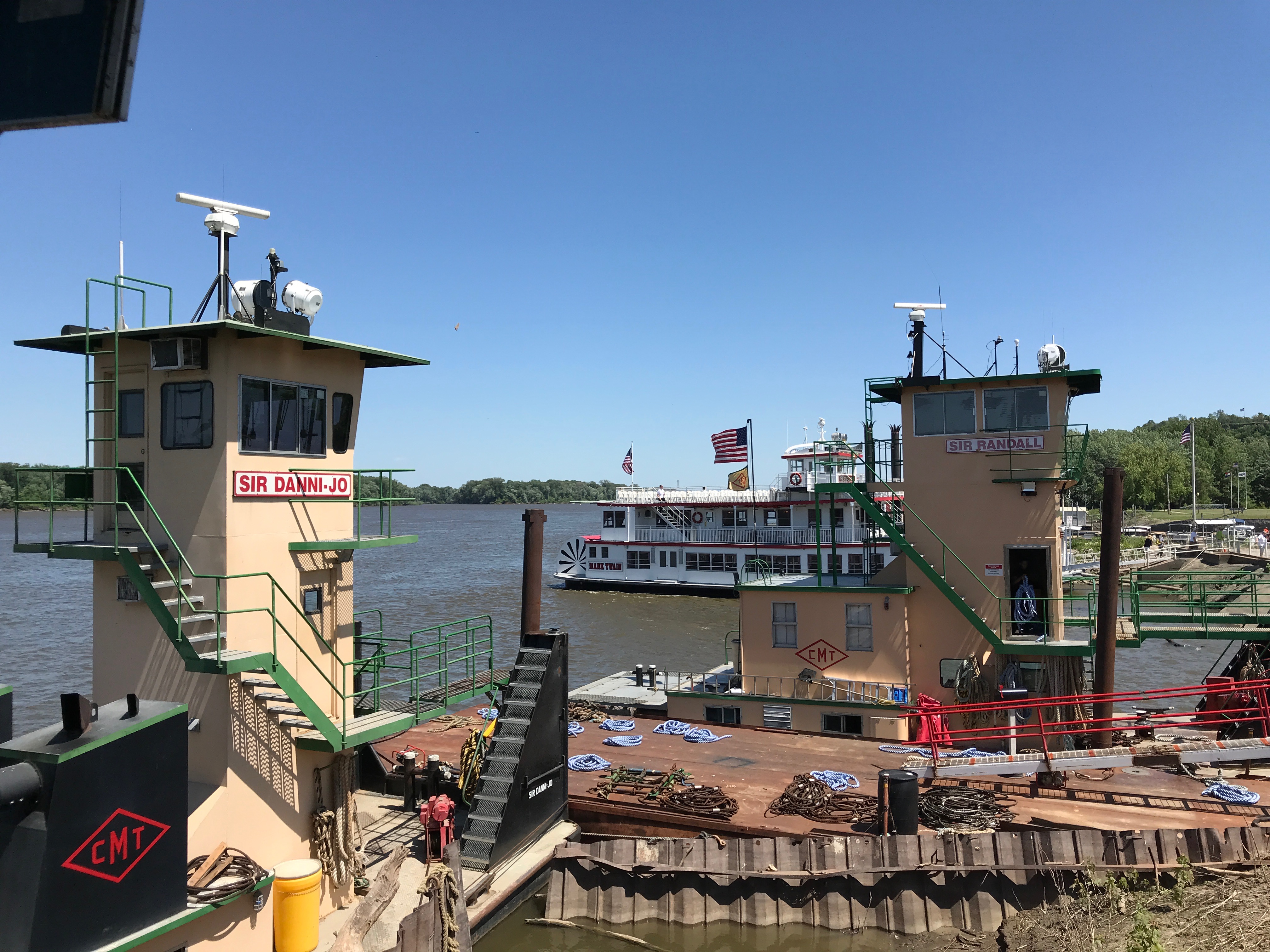
I didn’t see any barge traffic, but there was a stern wheeler there, and I imagine they had some tourist excursions scheduled. What a beautiful day to be out enjoying the river!

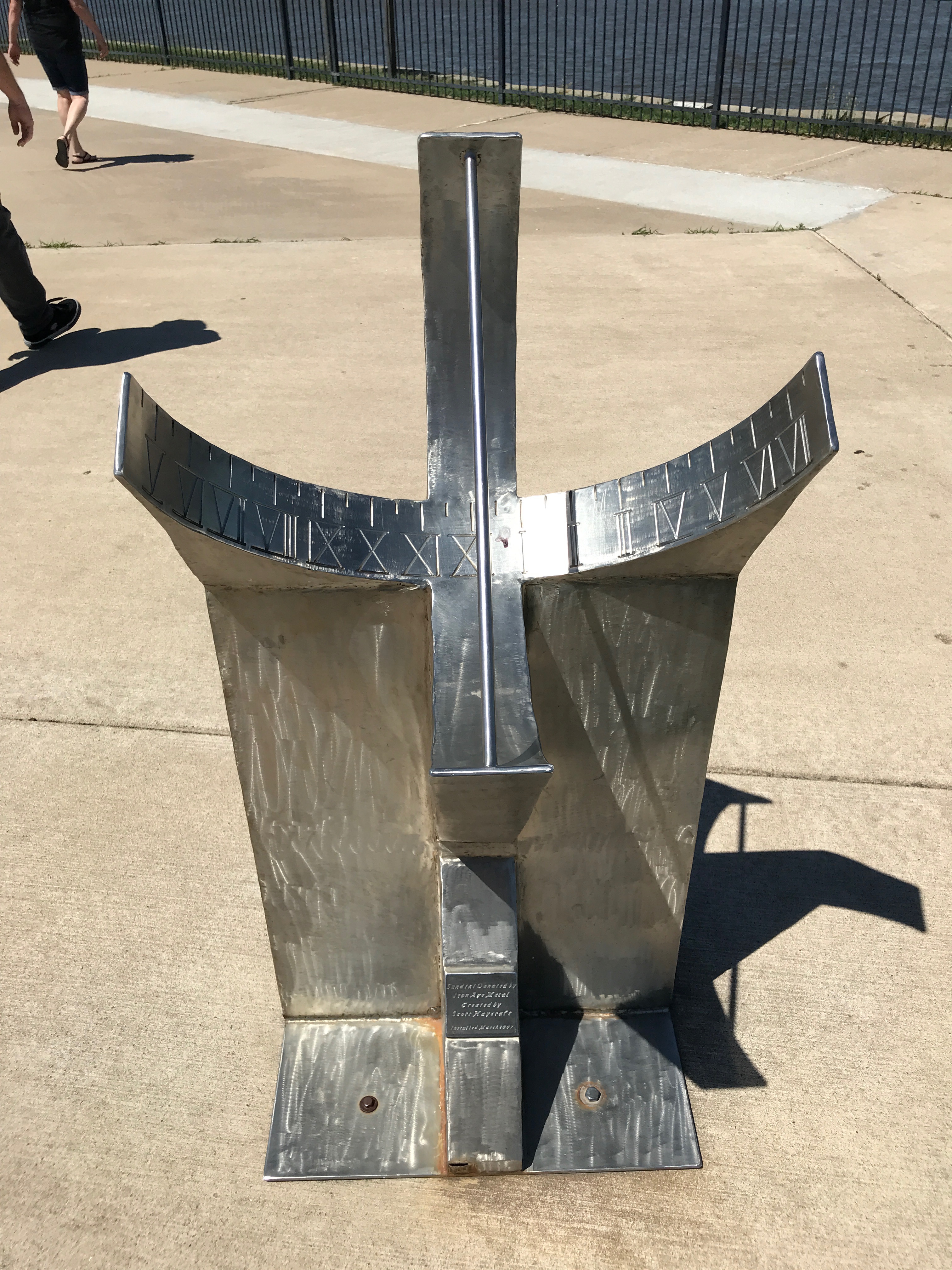
I came across a sundial.

Incidentally, this is the easiest-to-read sundial I have ever seen! For one thing, it’s in a spot that isn’t shaded by trees.

Seeing the sundial reminded me that I did need to be on my way. Bladder empty and tank full, I pulled back on the interstate.

My next goal was Kansas City and the American Motel. If I had known ahead of time, that they were paying for my expenses in getting to the job, I might have chosen an establishment that was a little more…upscale. But, it was only for one night and it would do.

I dropped my overnight bag and went out to see what I could see. HISTORY Here sent me to Clark’s Point, overlooking the Missouri River.

Fun Fact: The Missouri River is the longest river in the United States, according to the United States Geological Survey. It starts flowing in the Rockies in Western Montana and empties into the Mississippi 2,341 miles later. The Mississippi is a close second, at 2,202 miles. It starts in Lake Itasca in Minnesota and empties into the Gulf of Mexico.

After that comes the Yukon River at 1,979  miles and the Rio Grande at 1,759 miles.

Near this site, the Lewis and Clark expedition stopped to camp in 1804. At that time, this was a good vantage point for the merging of the Osage and Missouri Rivers. Another source I saw said that they stopped there in 1806. Maybe they stopped on the way out and the way back.

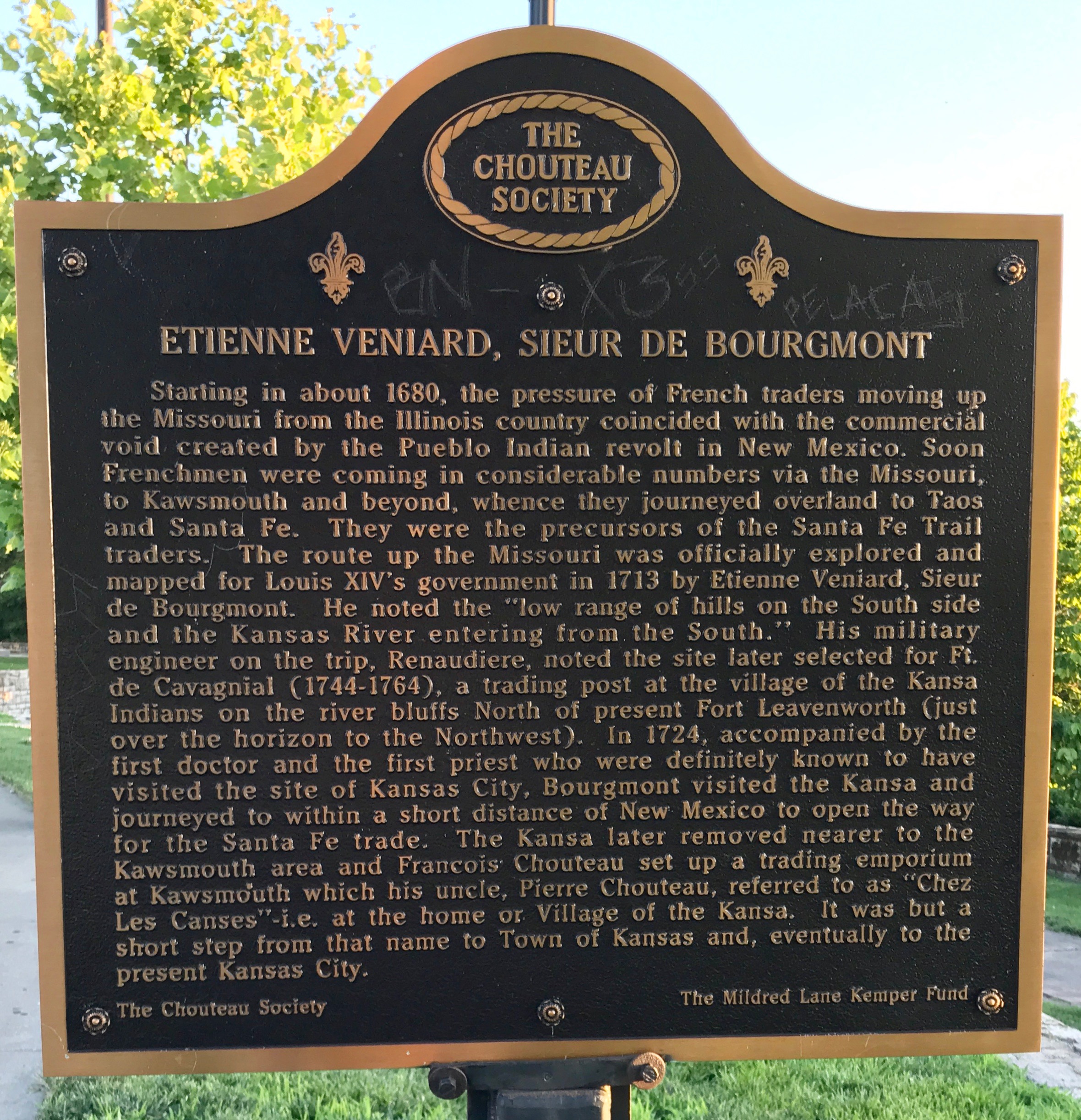
Apparently, Lewis and Clark were not the only visitors to the river. Étienne de Veniard, Sieur de Bourgmont came through, too.

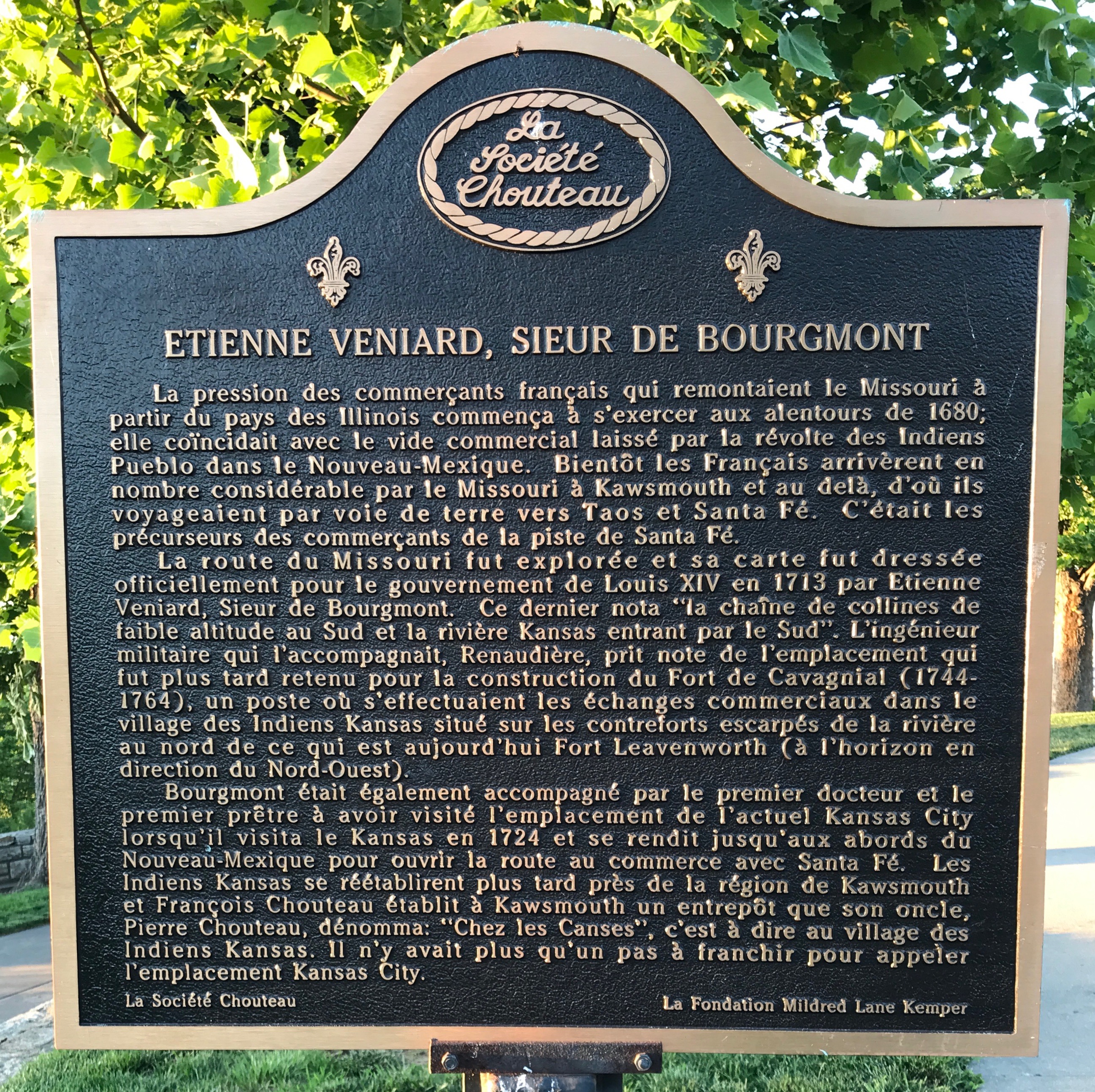
And since he was French, the sign was in English with a French translation on the other side.

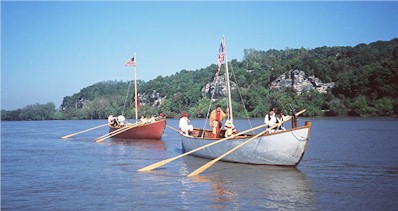
It was an arduous journey, to say the least. The men of the Corps of Discovery had to tow the keelboat and the two pirogues that made up the flotilla against the river’s powerful current. If that wasn’t bad enough, they had to cut trees down along the way to be able to tow the boats. AND it was a hot day!

Just in case, you are curious, this is a replica of Lewis and Clark’s 55 foot keelboat.

To clear up any confusion, these are pirogies…

and these are pirogues.

It was a hard bit of travel, but they got to rest for two days. At this point, they had been on the river for a month and a half and they were about 367 miles from the mouth of the Missouri.

While they were camped at this spot, then crew got to gather paw paws, otherwise know as custard apples.

I know you just want to sing the song now…Pickin’ up paw paws, put ’em in your pocket…

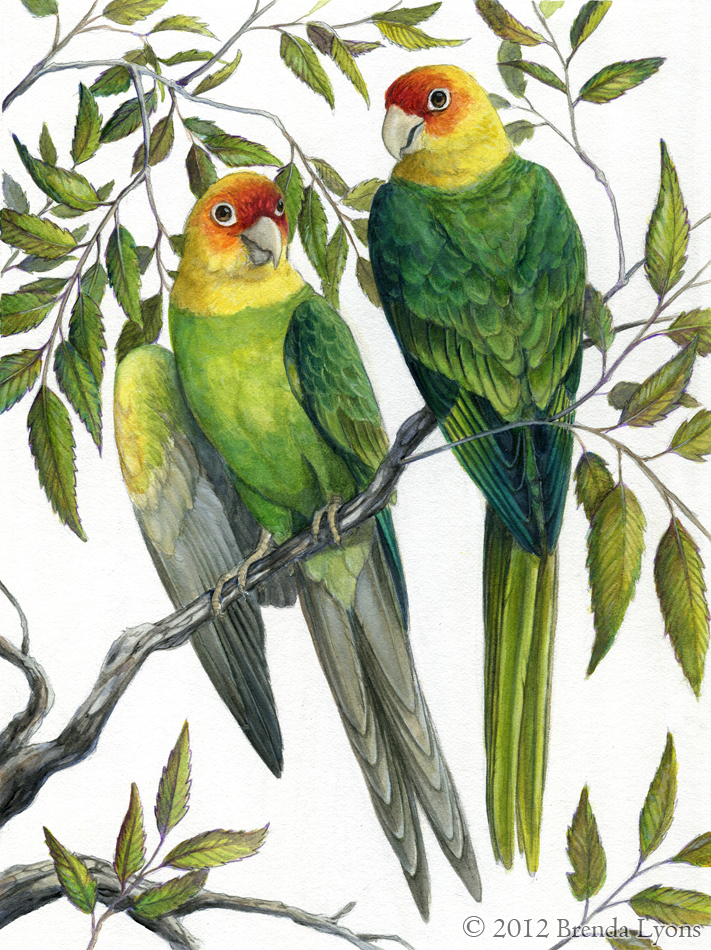
According to the signage at the park, Clark recorded seeing “an immense flock of Carolina parakeets.”

This was the first documented sighting of the birds. Unfortunately, they are now extinct.

It was getting close to sunset. I strolled around the park, to see what I could see.

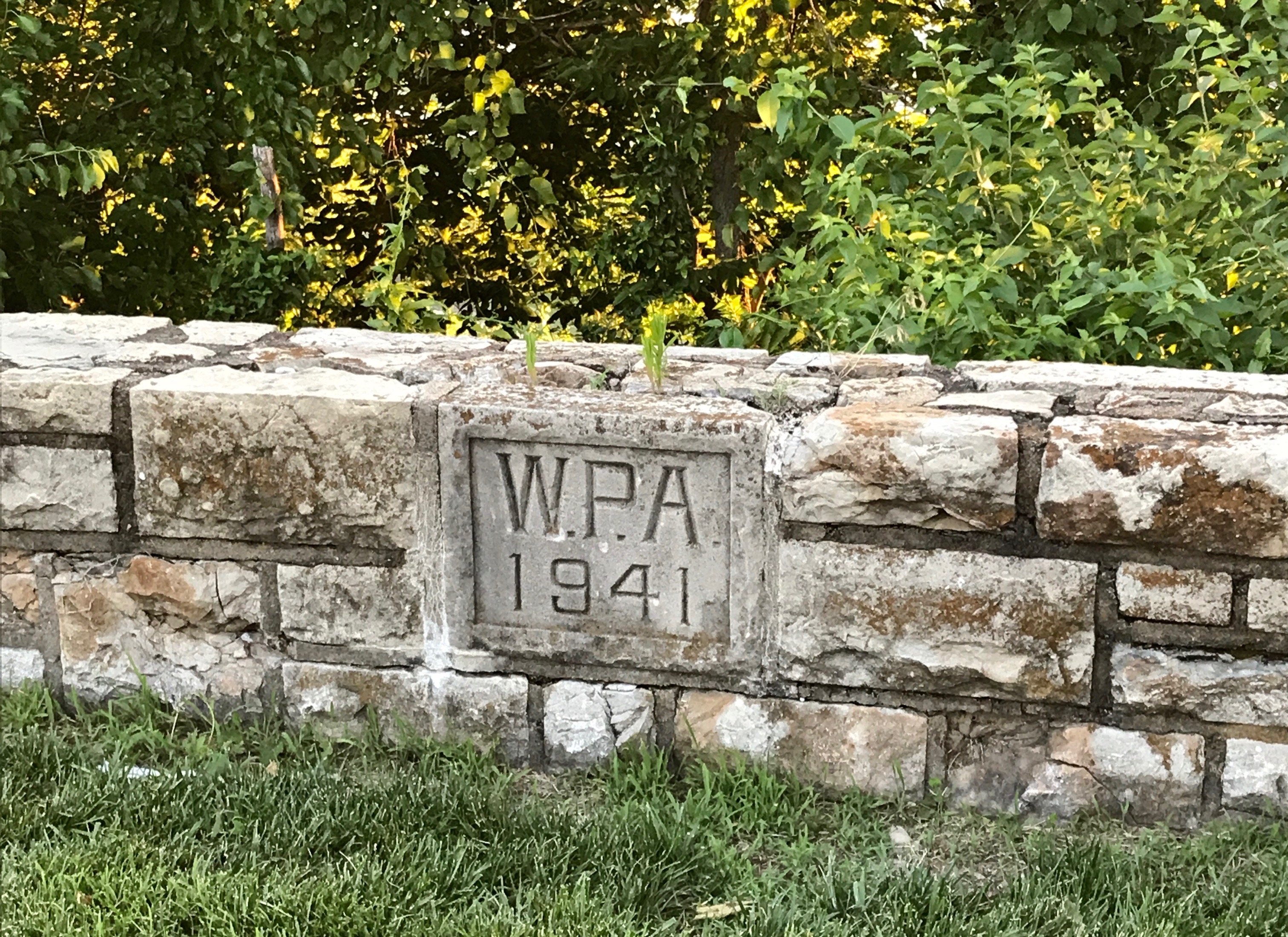
Gee…spending our country’s wealth on building infrastructure that is still in use more than 65 years later, and providing the dignity of work to the citizens.  What a novel idea!

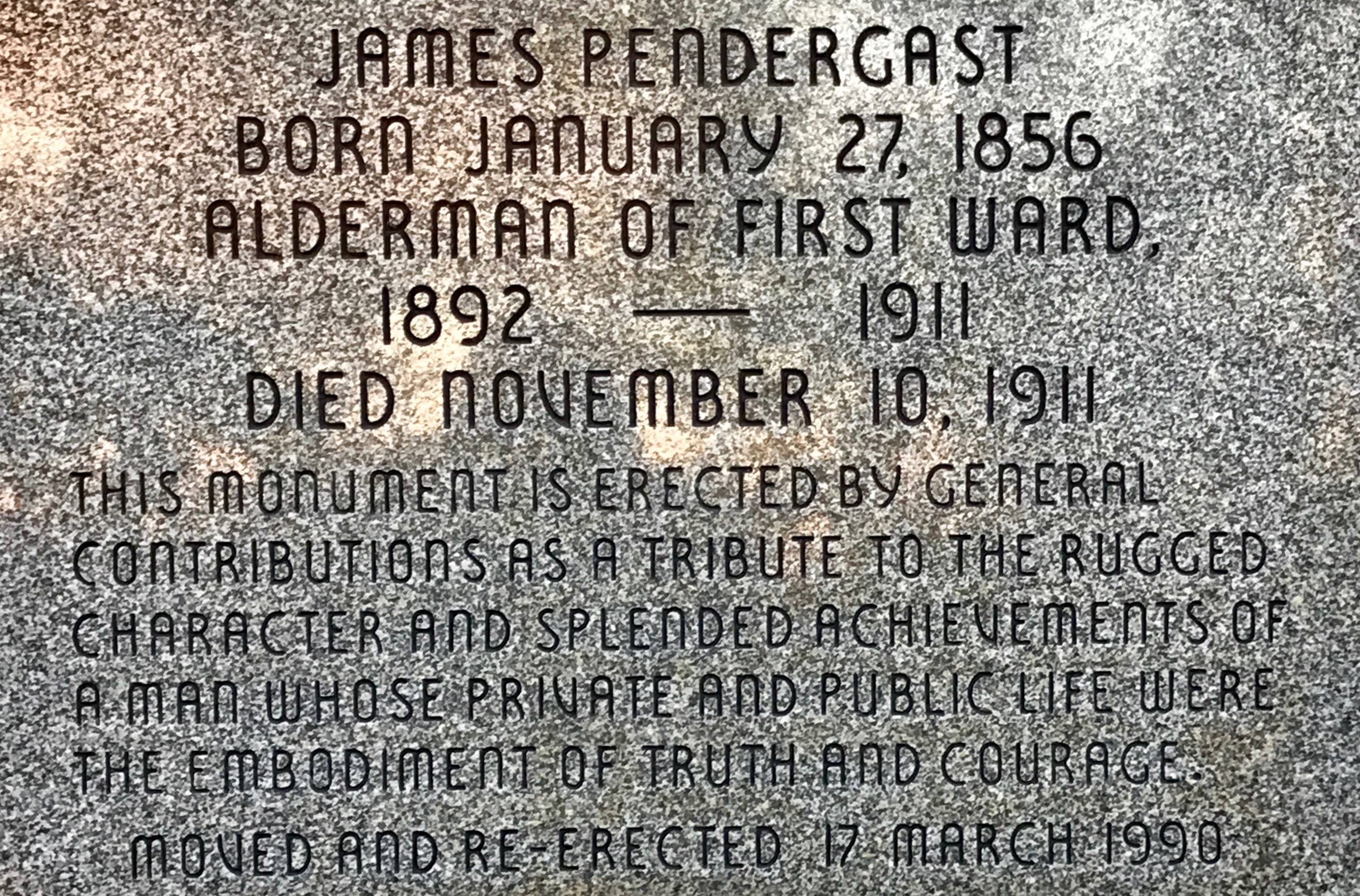
As the shadows deepen, I came across this statue of James Pendergast.

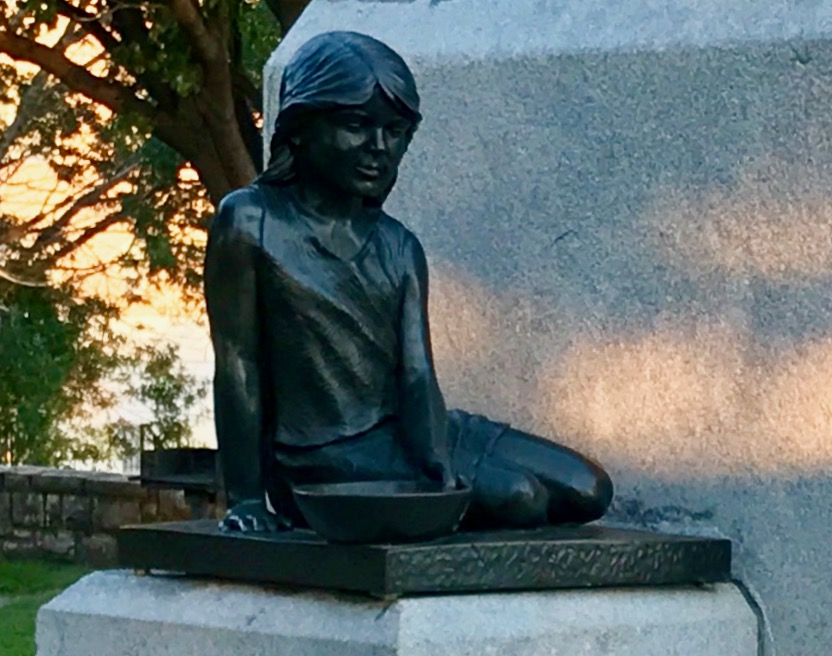
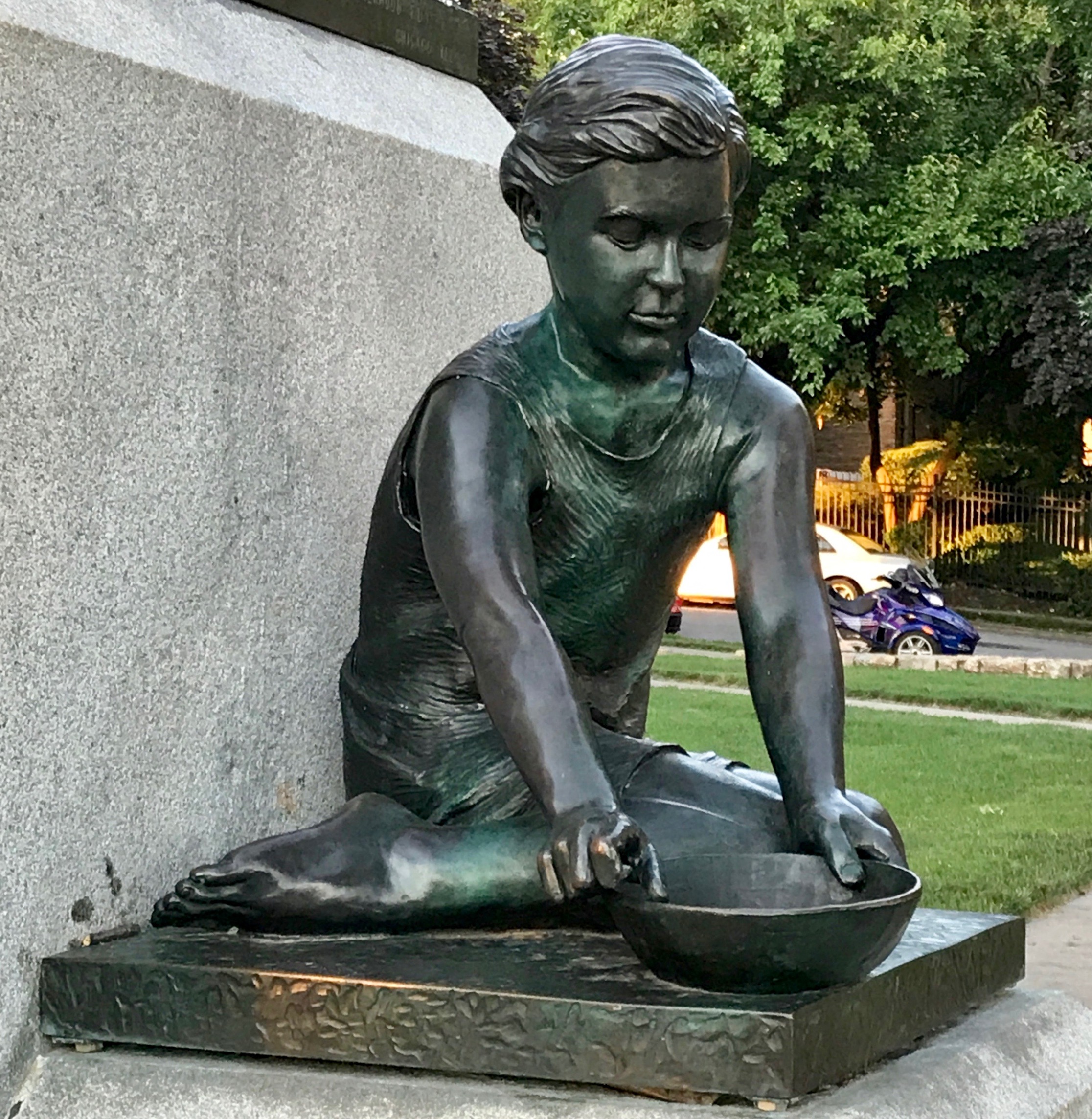
The statue of Pendergast was flanked by two smaller statues. This one of a young girl.

On the left is a statue of a young boy.

Of course I had to look for more information. I couldn’t locate as specific links to feeding hungry children or, perhaps, arts programs. I mean, who wouldn’t like to make a nice ceramic bowl?

It turns out that James Pendergast was part of the “Pendergast Machine” run by him and his brother, Thomas. At the turn of the century, political bosses and their  machines that operated in large American cities enjoyed strong support among the poor and immigrants, who returned the favor by voting for the bosses’ preferred candidates. I think the best known “big boss” – at least to those of us east of the Mississippi – is Boss Tweed of New York City.

According to an article in the Social Welfare History Project, Many immigrants saw bosses and political machines as a means to greater enfranchisement. For immigrants and the poor in many large U.S. cities, the political boss represented a source of patronage jobs.

In 1887, James Pendergast became the Democratic committeeman from the first ward, and he was elected alderman in 1892. During the peak of his power, he not only hand picked this own mayor, James A Reed, but every other key office at City Hall. One of those occupants of the key offices in city hall was his brother, Thomas. He became Superintendent of Streets, which allowed him to hire 200 workers and buy material and equipment for the street paving program.

After James’ death in 1911, his brother Thomas took over running the Kansas City political machine, but that shall be covered in a later post.

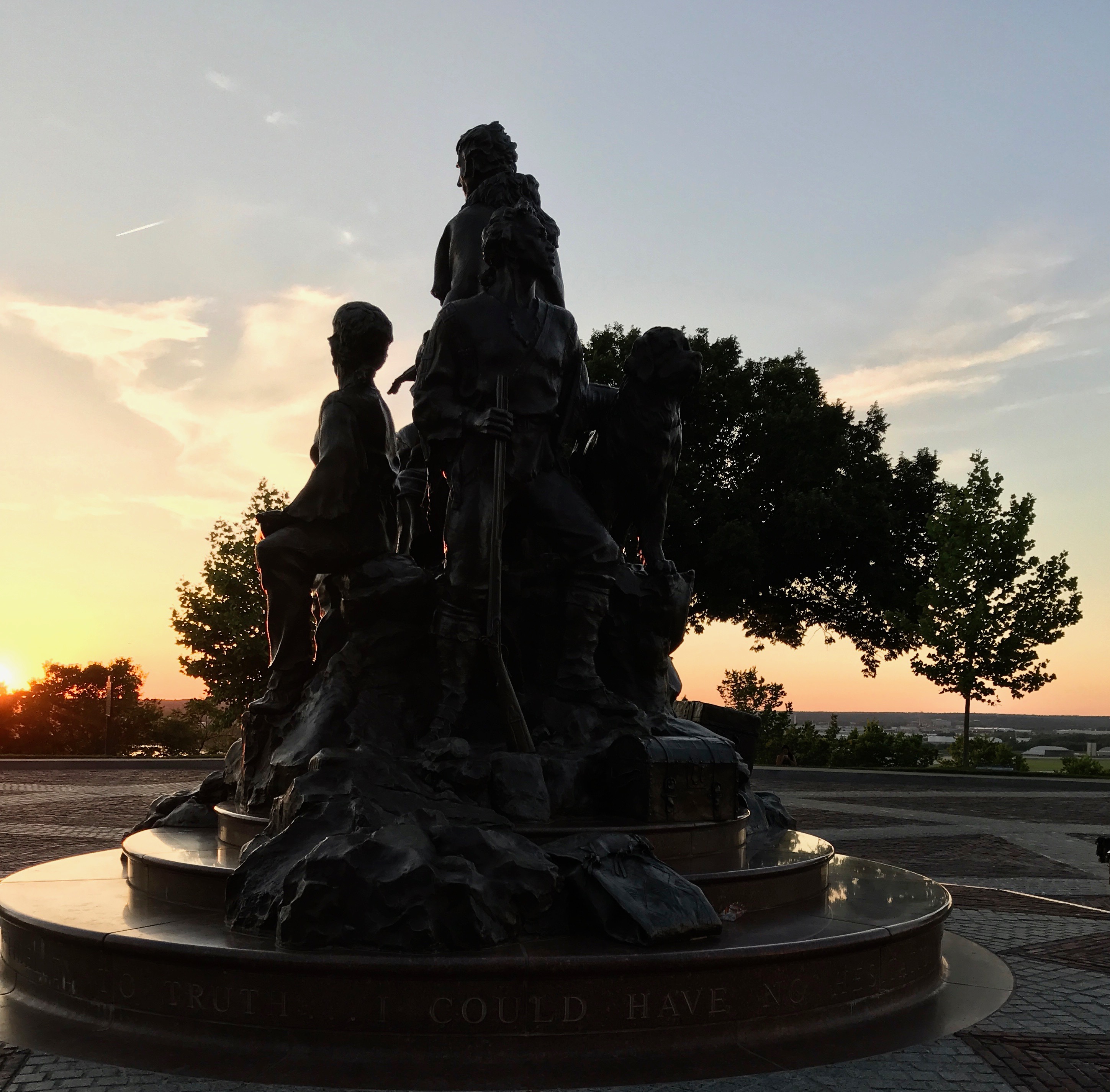
I decided it was time to find a good vantage point for viewing the sunset.

Along the way, I came across this paver for the Riverfront Heritage Trail. But there was no time for that now.

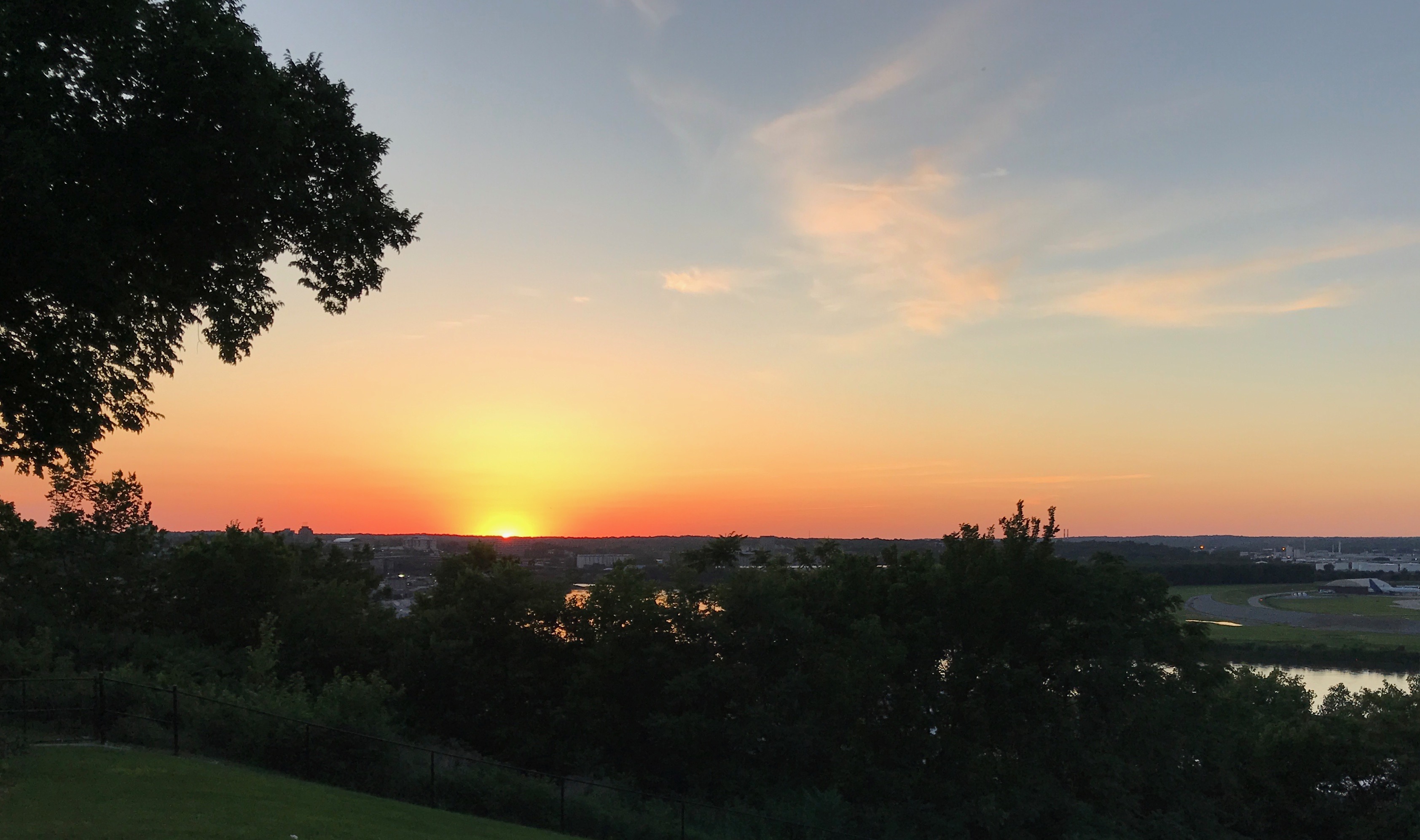
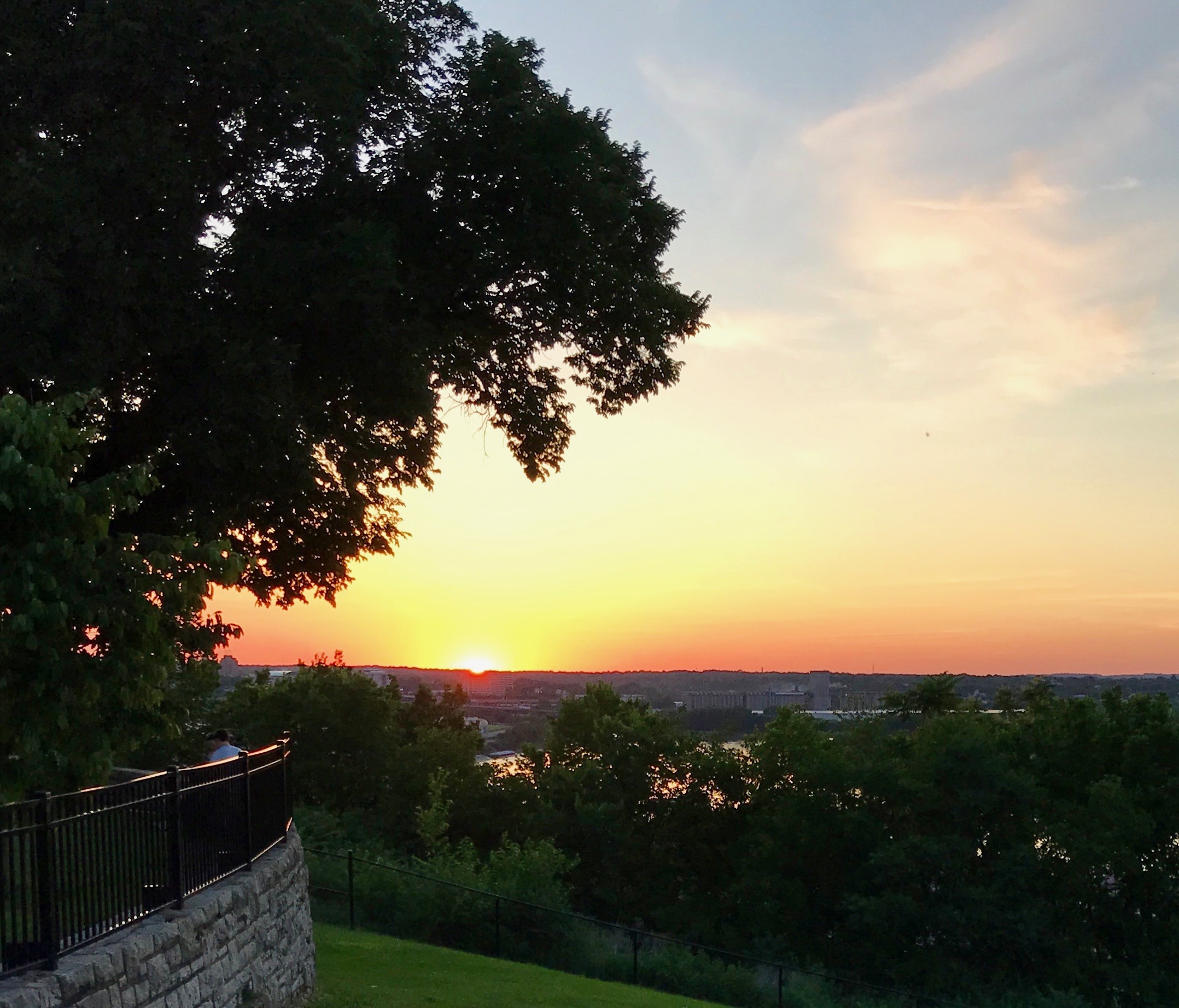
The sun was setting!

I love that peachy glow off toward the northeast.

It’s going.

And it slides behind the horizon.

And tomorrow I go to work!


Connecticut

I only had two days in Rhode Island, but I got to spend three in Connecticut. The odd thing about Connecticut is that it is kind of hard to find a place to camp. But, after searching all my usual sites, I finally found a spot at Portland Riverside Campground, a few miles away from Hartford, the capital of Connecticut.

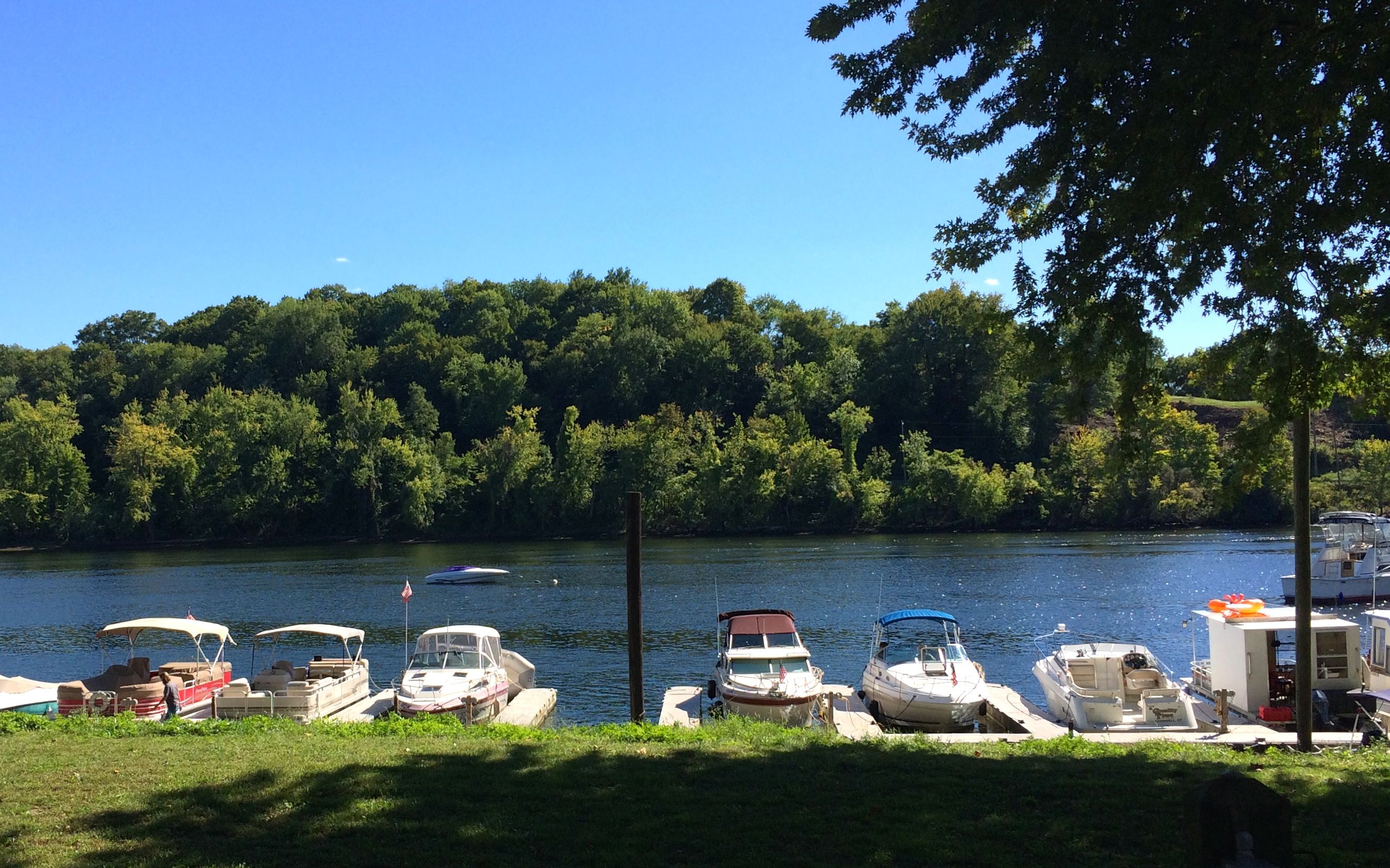
It’s an unusual place, tucked back behind a marina and a boatyard. In fact, to get to the marina, I had to mince my way through a neighborhood, taking a left at a cemetery and down a road. However, once I got there, I had a beautiful view.

view-from-trailer

As you can tell by the color of the trees, this stay was quite a while ago!

I consulted my History Here app and found a few interesting places I wanted to check out.

harriet-beecher-stowe-house

The first was the Harriet Beecher Stowe house. After all, I had just seen her grave in Andover, Massachusetts.

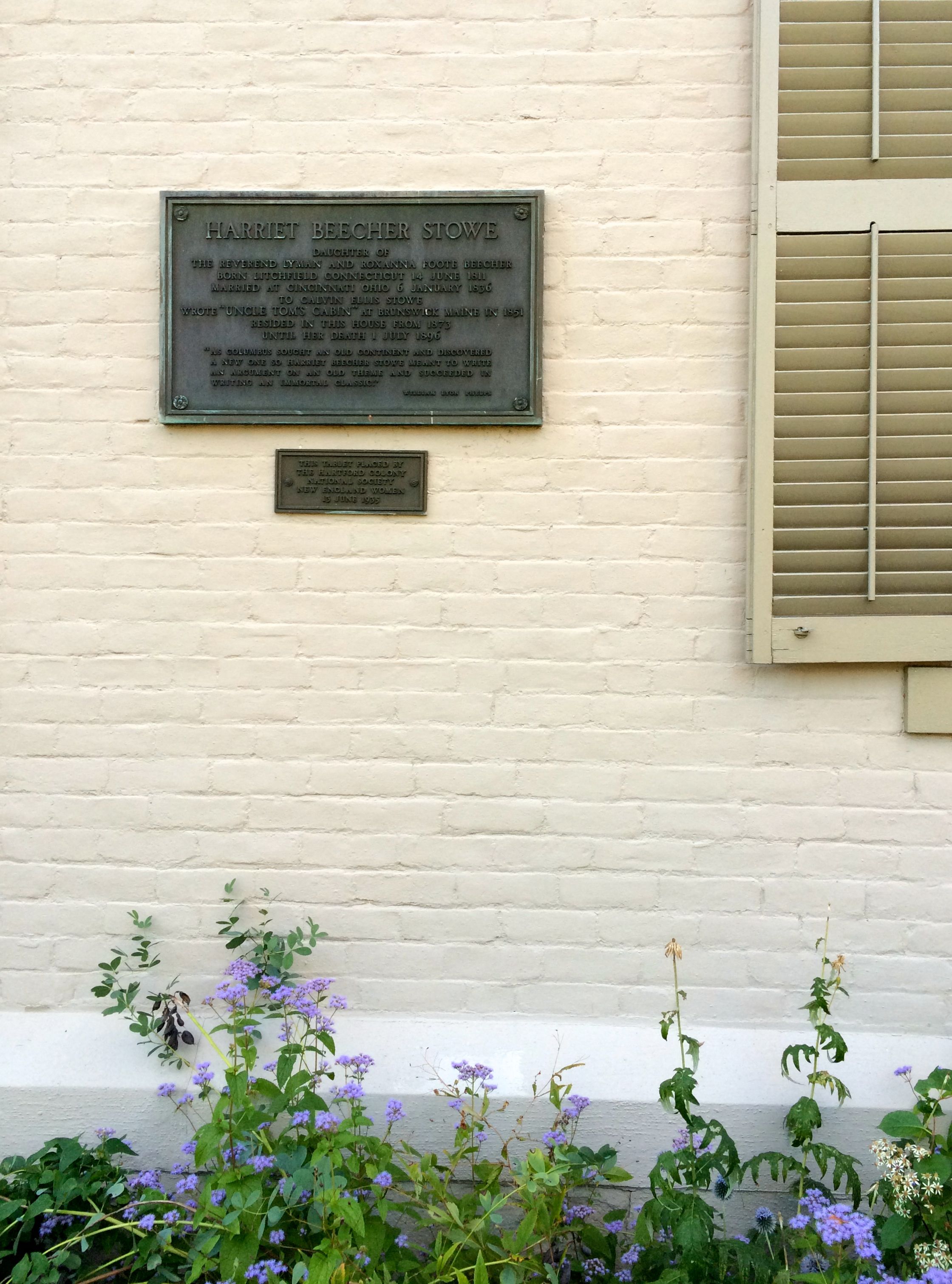
harriet-beecher-stowe-house-plaque-large-photo

She lived in this house from 1873 until her death in 1896.

harriiet-beecher-stowe-house-plaque-detail

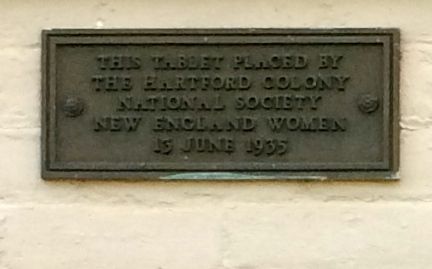
In my quest to find out when things are memorialized, this plaque was posted in 1935. They have been working on renovating the house, and it wasn’t open to tours.

preservation-eans-jobs-sign

I liked this sign in front of the house. “Preservation Means Jobs In Your Community.” We all benefit when we take care of of our cultural resources.

stowe-center-sign-next-door

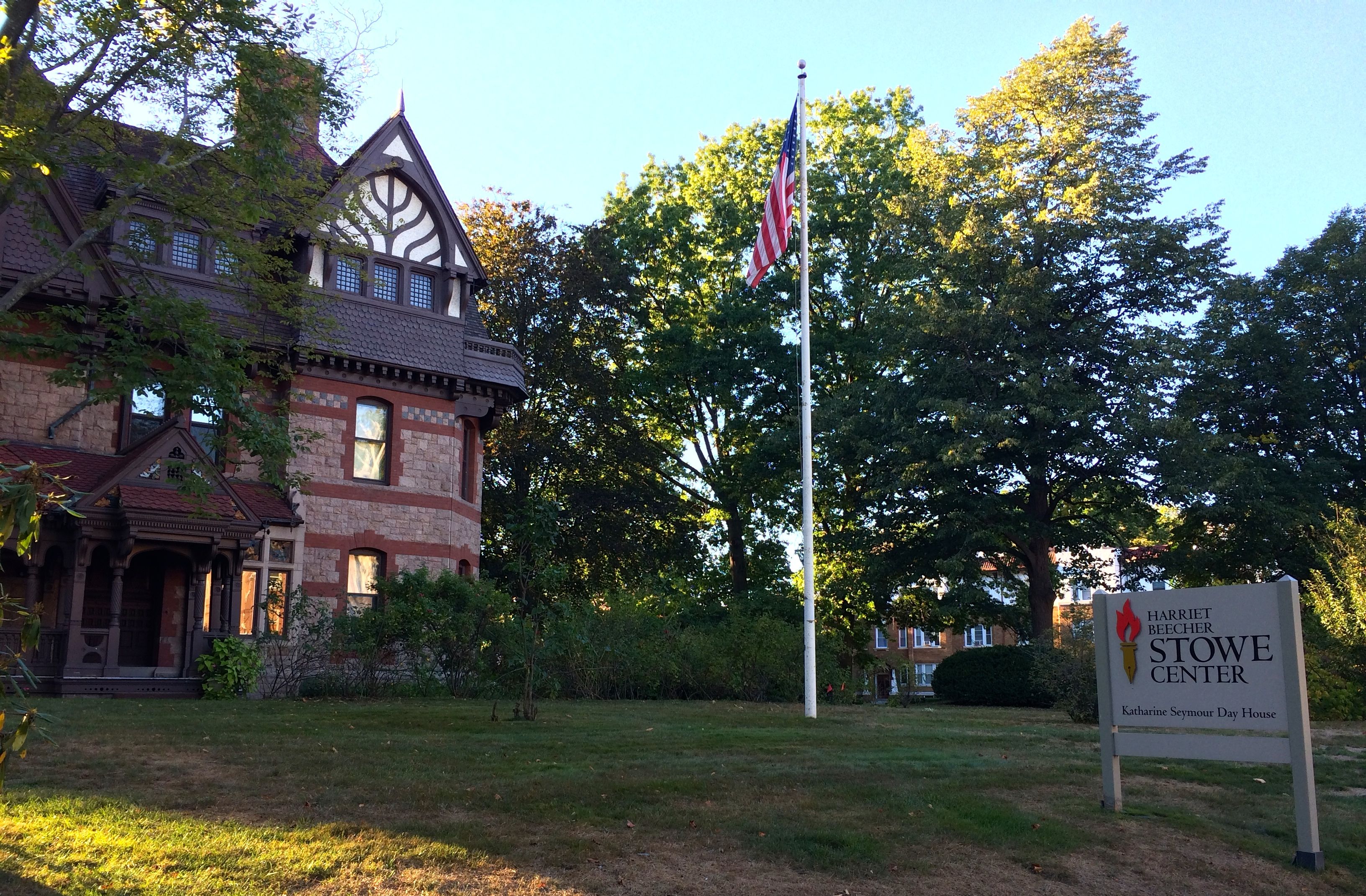
This house is part of the Harriet Beecher Stowe Center. Next door is the spectacular Katharine Seymour Cay House. It wasn’t open when I got there.

stowe-center-house-next-door

It is quite an elegant house, as opposed with the more ordinary, but still lovely, Stowe house next door.

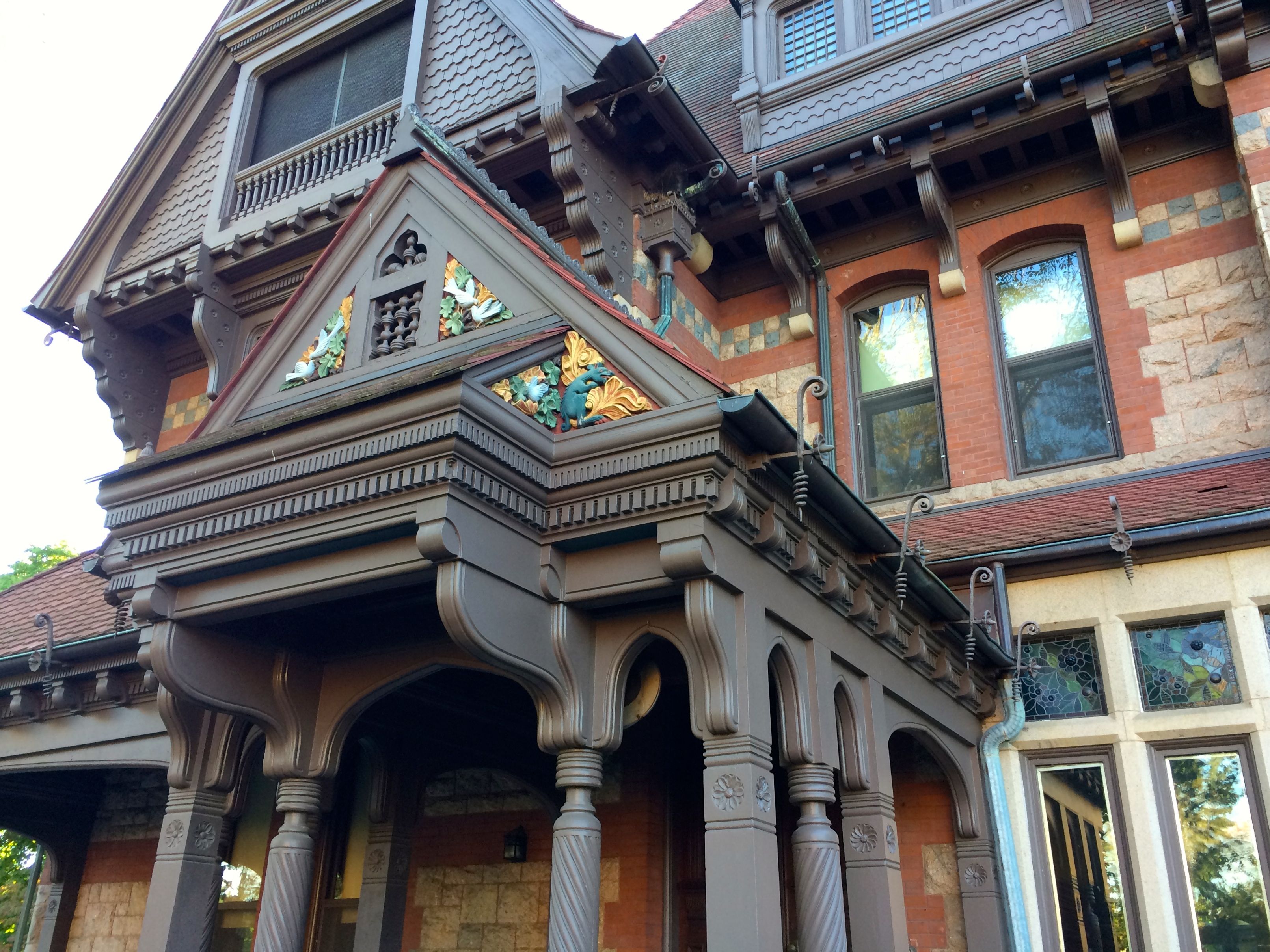
stowe-center-next-door-colorful-detail

The details are exquisite. Look at the colored inserts and the brick work.

stowe-center-house-next-door-iron-work

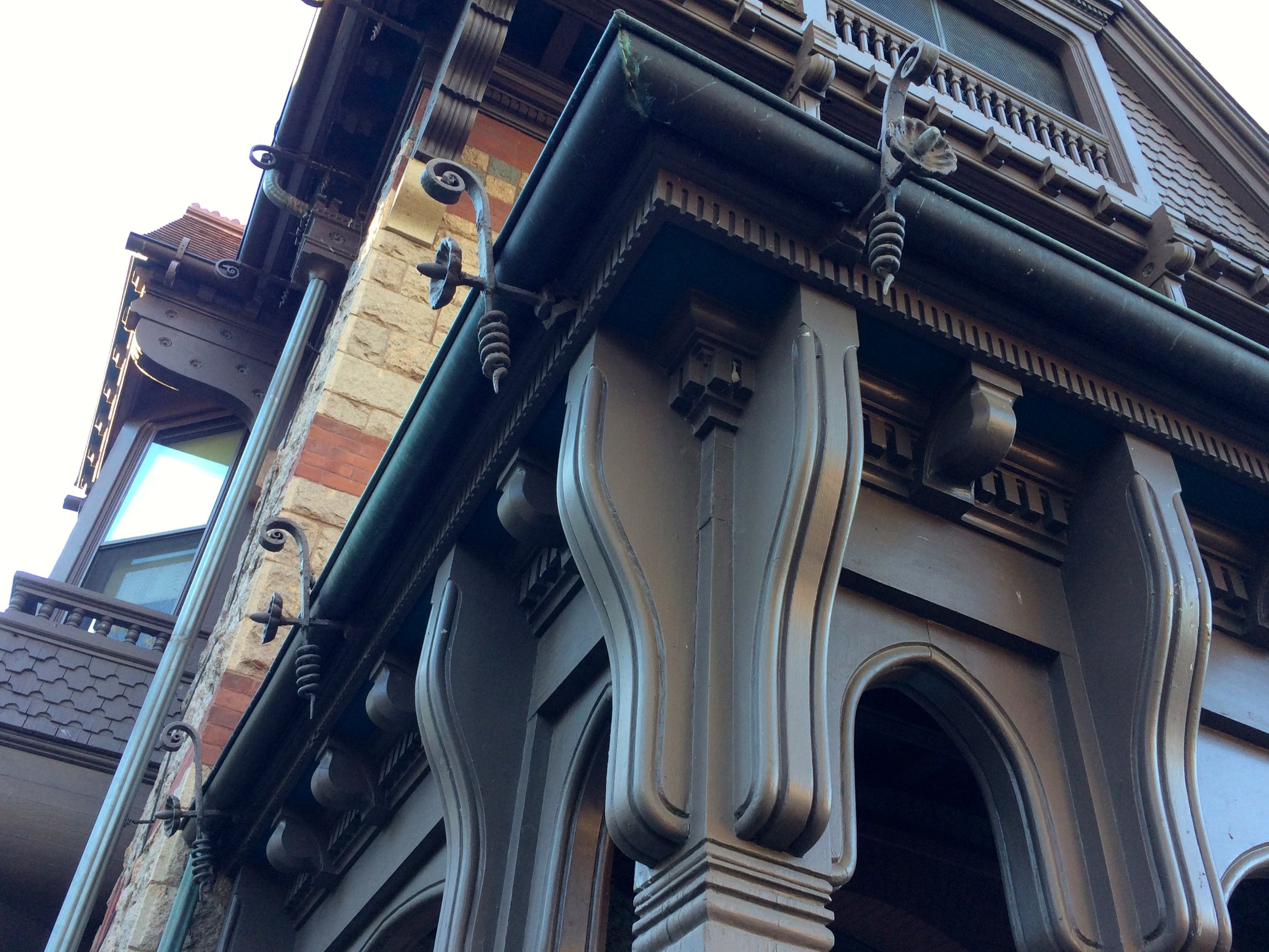
The wrought iron supports for the gutters are works of art!

Not far away was Mark Twain’s house. He’s another person I’ve encountered before in my travels. I saw his grave in Elmira, and the house he and his family stayed in when they would visit.

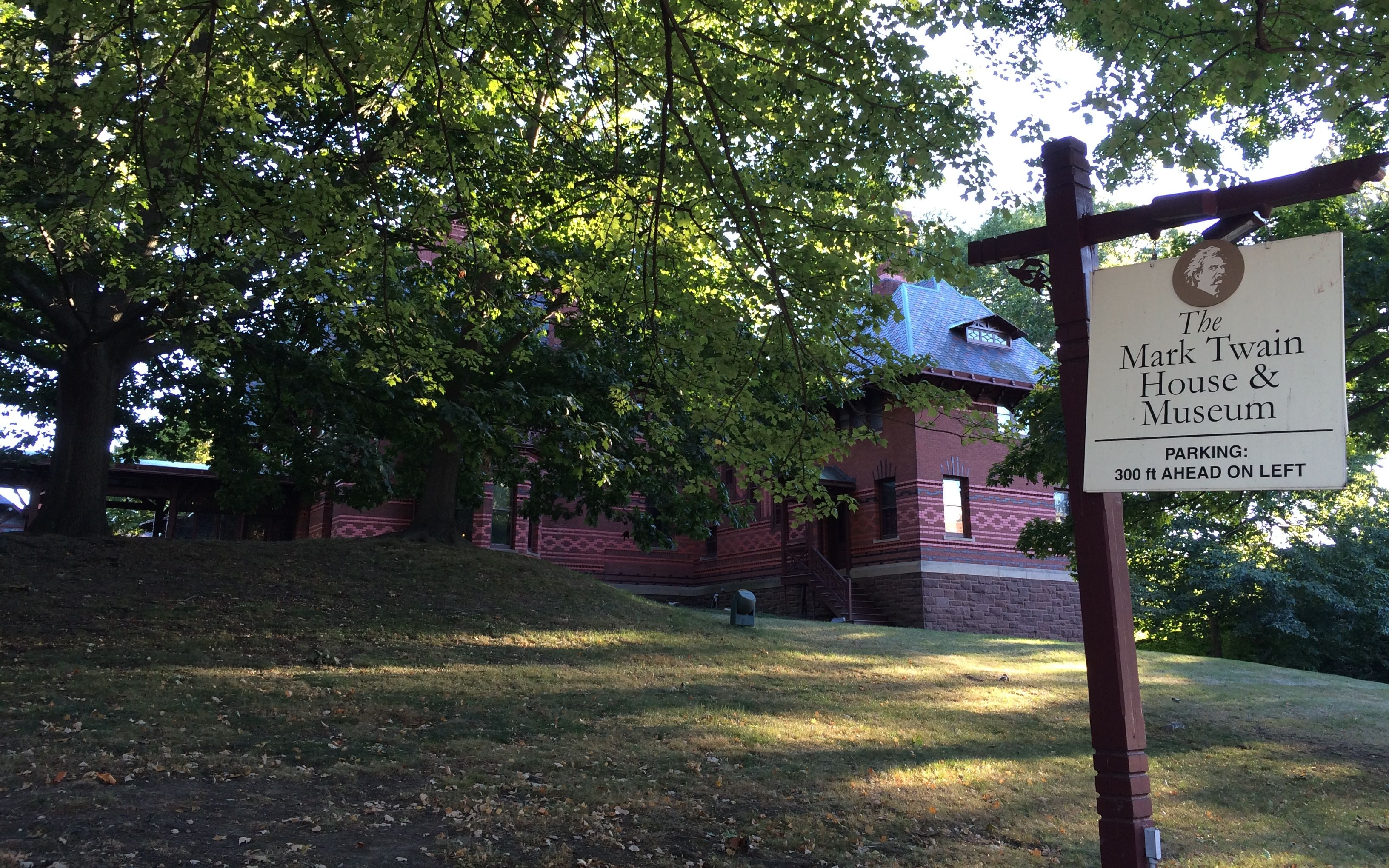
mark-twain-house-with-sign-from-road

I got there after they closed, but I walked up to take a look.

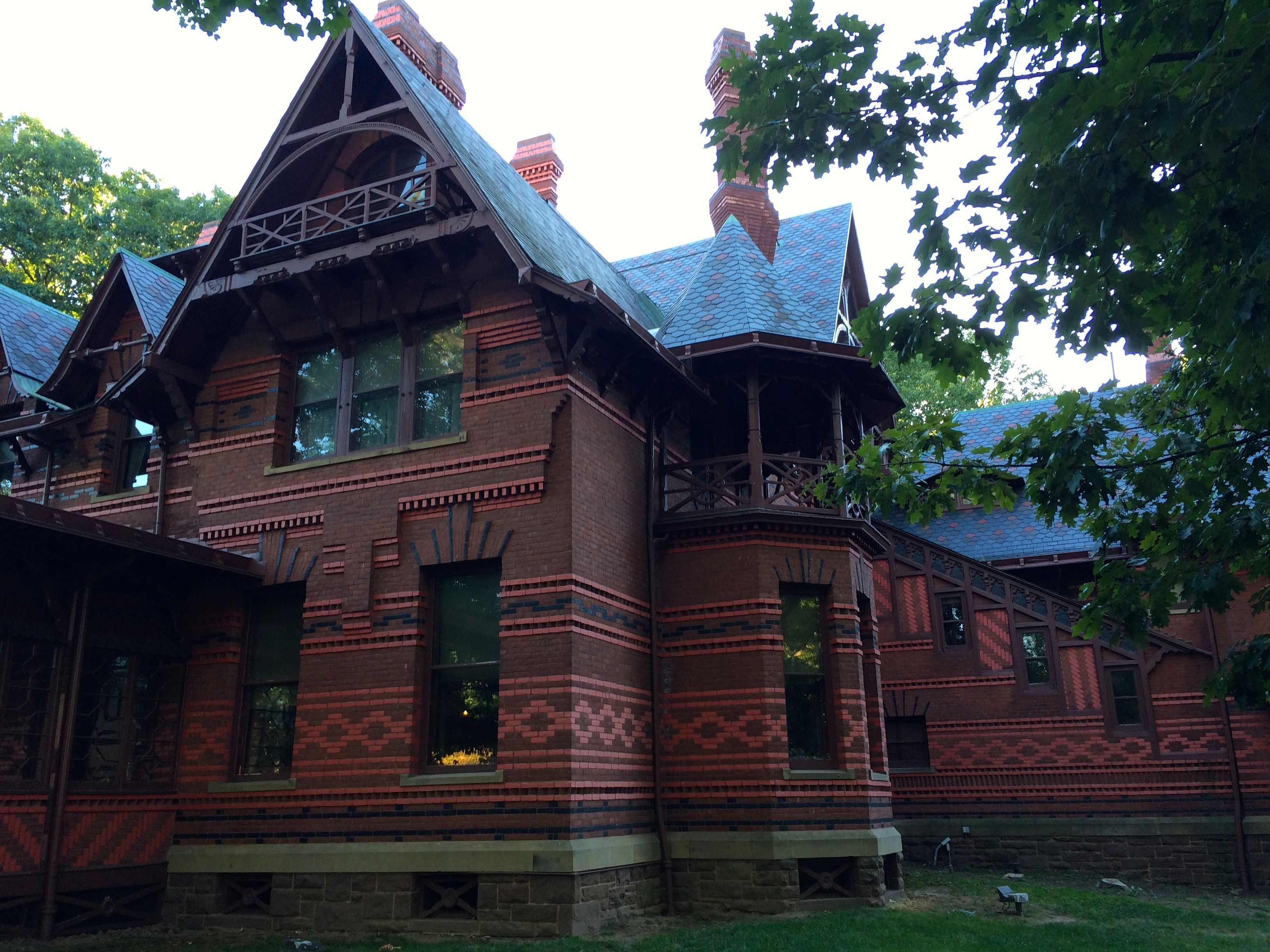
mark-twin-house

The brickwork was amazing! I had seen photos of the house, but they must have been incorrectly exposed. I always thought the house was a plain brown.

I walked up to take more shots and then I got the dreaded notice that my storage was full. Now, that shouldn’t happen!

That evening there was a story telling event at the Connecticut Historical Society, Speak Up. It was $10, and we got to tour the galleries before the show, and they had snacks and drinks before the show. It was fun.

The next day, I needed to attend to my phone. Could it be planned obsolescence? I mean, iPhone 7 had just come out.

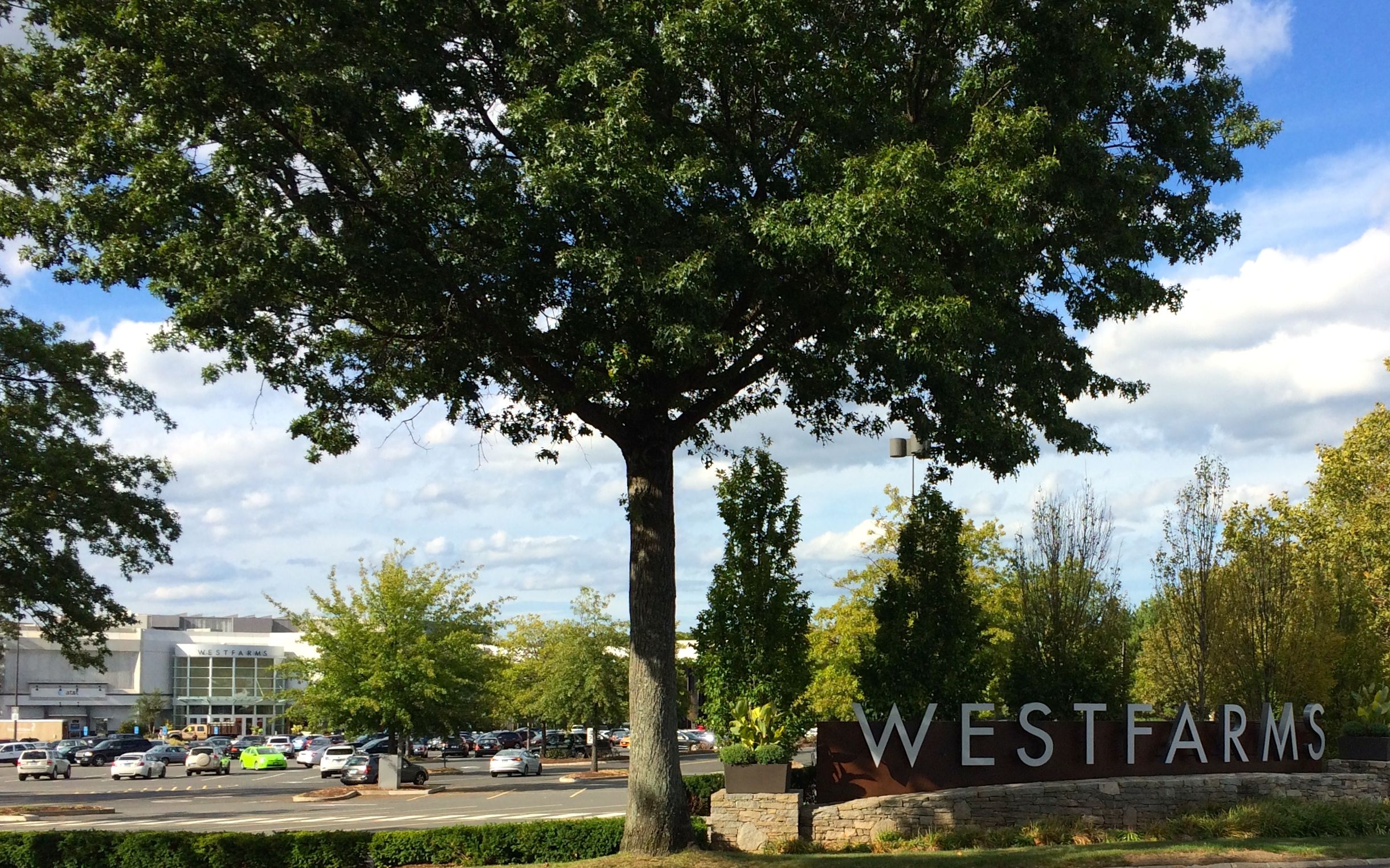
westfarms-mall

Luckily, there was an Apple store at Westfarms Mall. It was quite the shopping emporium! The folks at Williams-Sonoma were making chicken stock, and the aroma was driving me wild!

I checked in at the Apple store and got my time to come back. I roamed around the mall for a while, until I realized that it was Sunday, and they would be closing at 5:00. Even though they gave me a time at 4:45, I figured that there was no way that they would be able to get my job done that day. I decided to go get something to eat and come back the next day.

double-hump-bridge

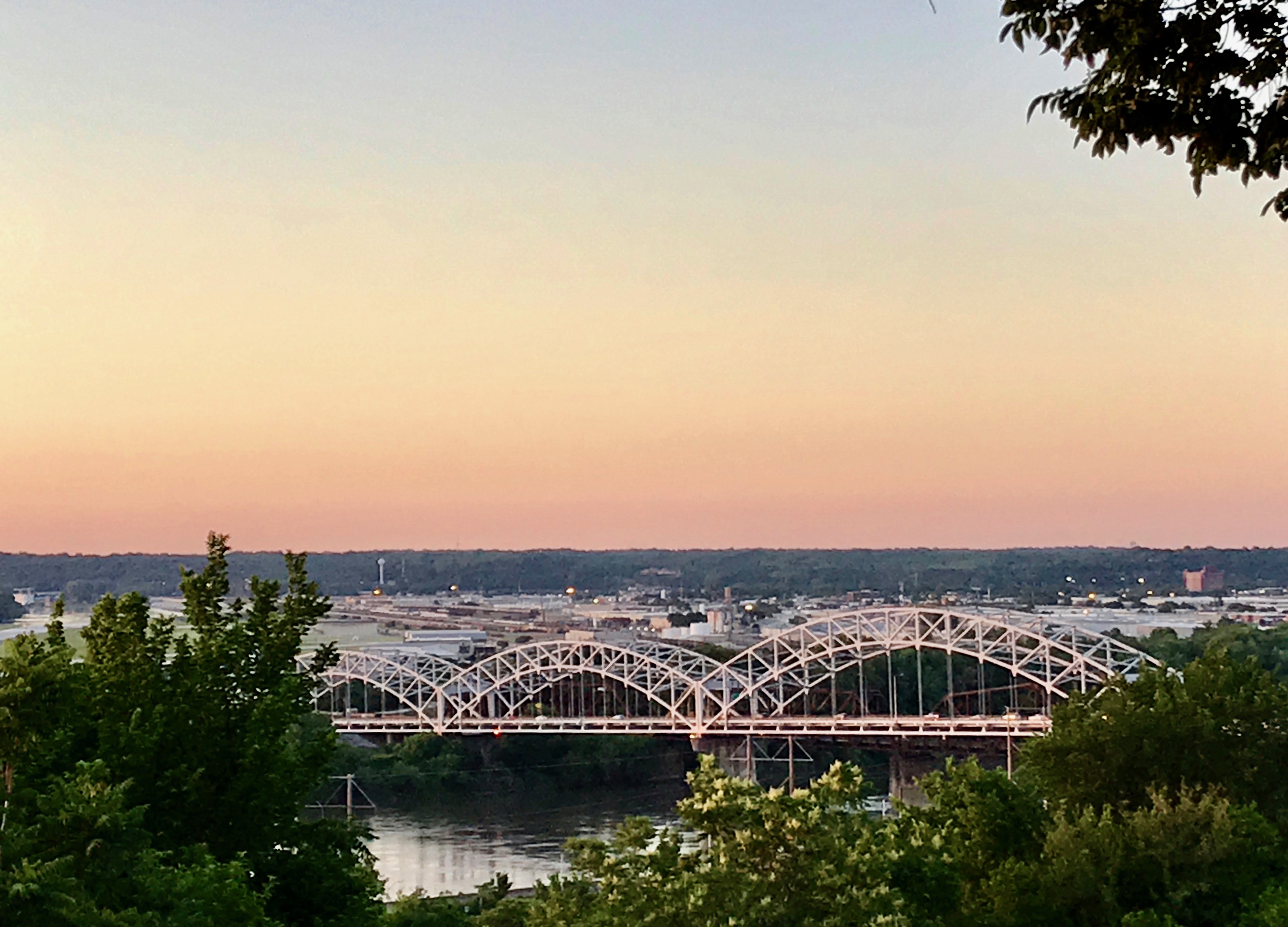
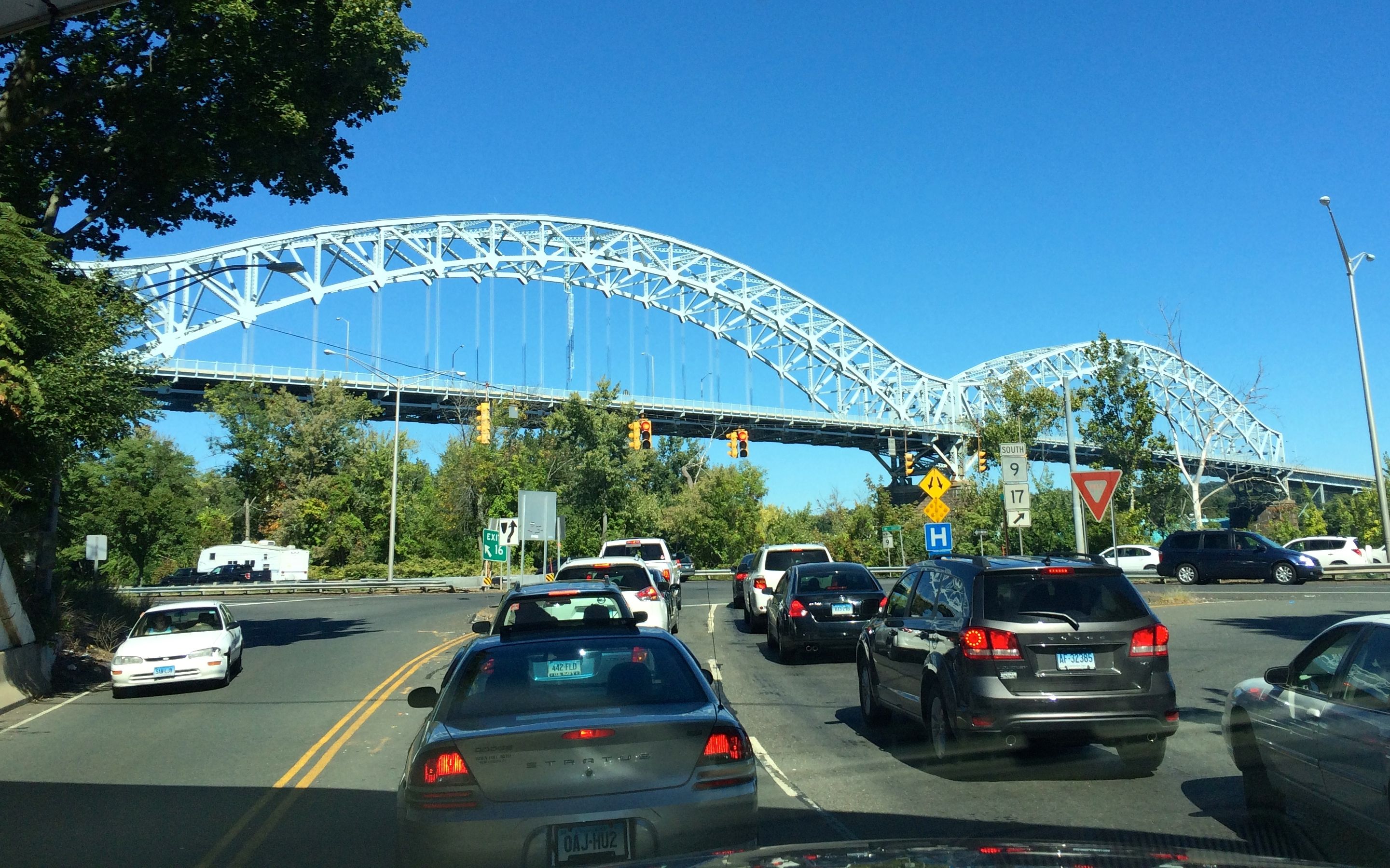
I headed back to the campground. This interesting double hump bridge leads across the Connecticut River from the Hartford side to the Portland side.

view-from-campsite

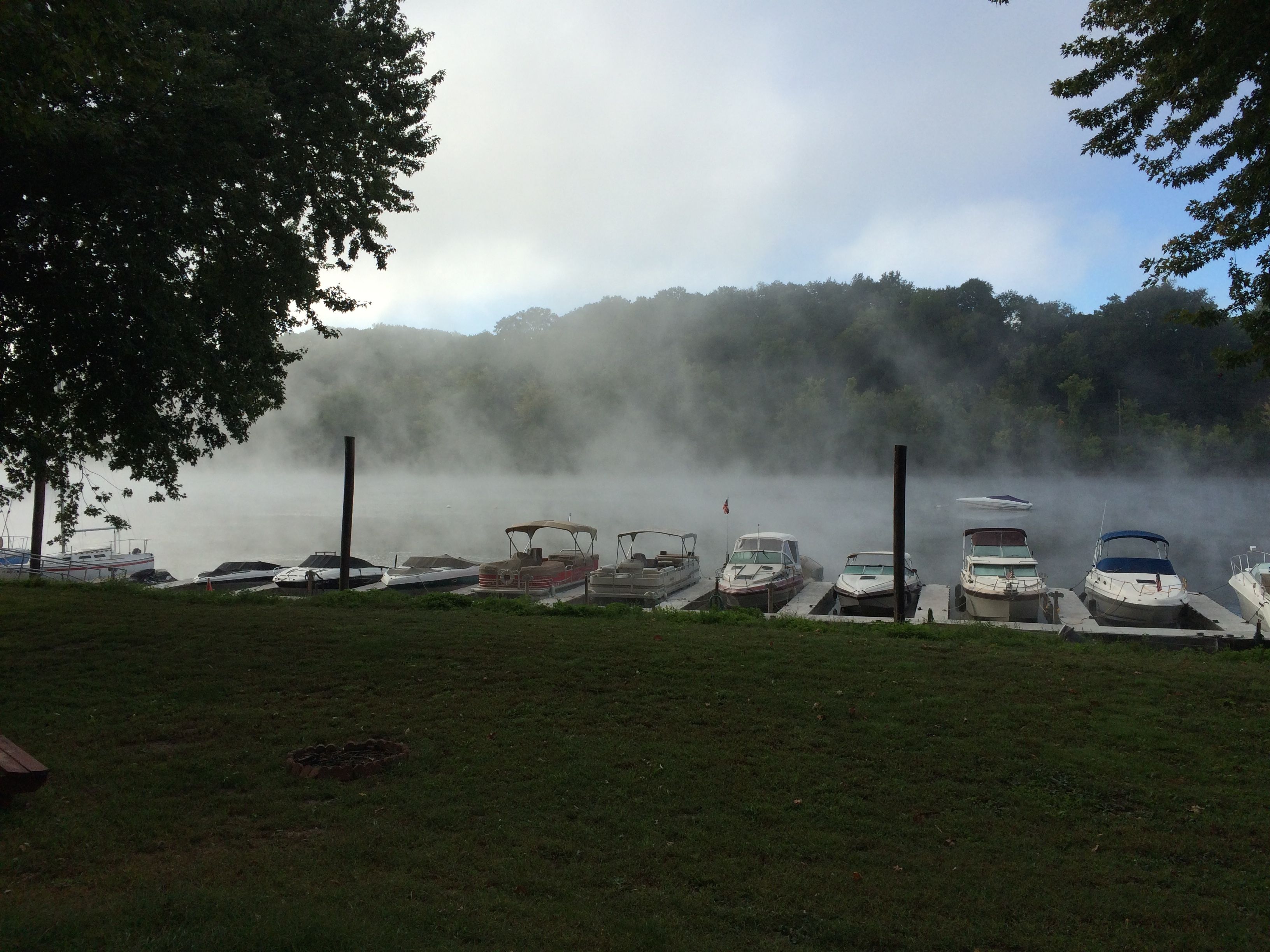
Really, this campground was pretty nice, if you give a lot of weight to the view. I love the steam rising from the water in the mornings.

apple-store

I went back to the mall and got in to the Apple store with only a minimal wait. (Well, maybe an hour…) It took the Genius who helped me more than an hour to get my phone working again.

illegal-to-place-gas-cap-in-nozzle

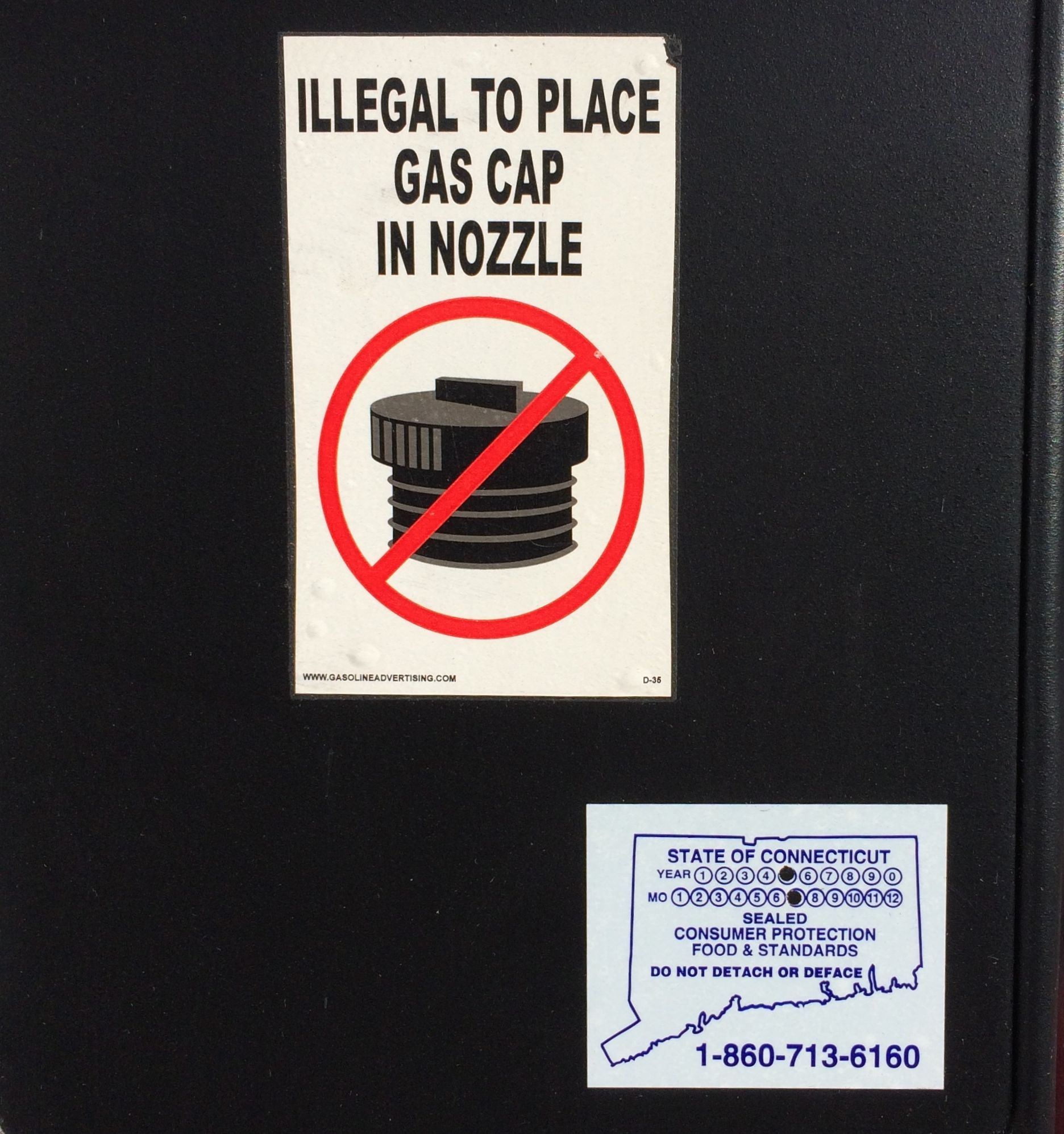
When I got gassed up and ready to hit the road in the morning, I encountered a sign I had never see before. I don’t understand several things about this prohibition.

  1. Why would you place your gas cap in the nozzle.
  2. How would you place your gas cap in the nozzle. I mean, mine is on one of those straps so that you don’t loose it.

ready-to-pull-out

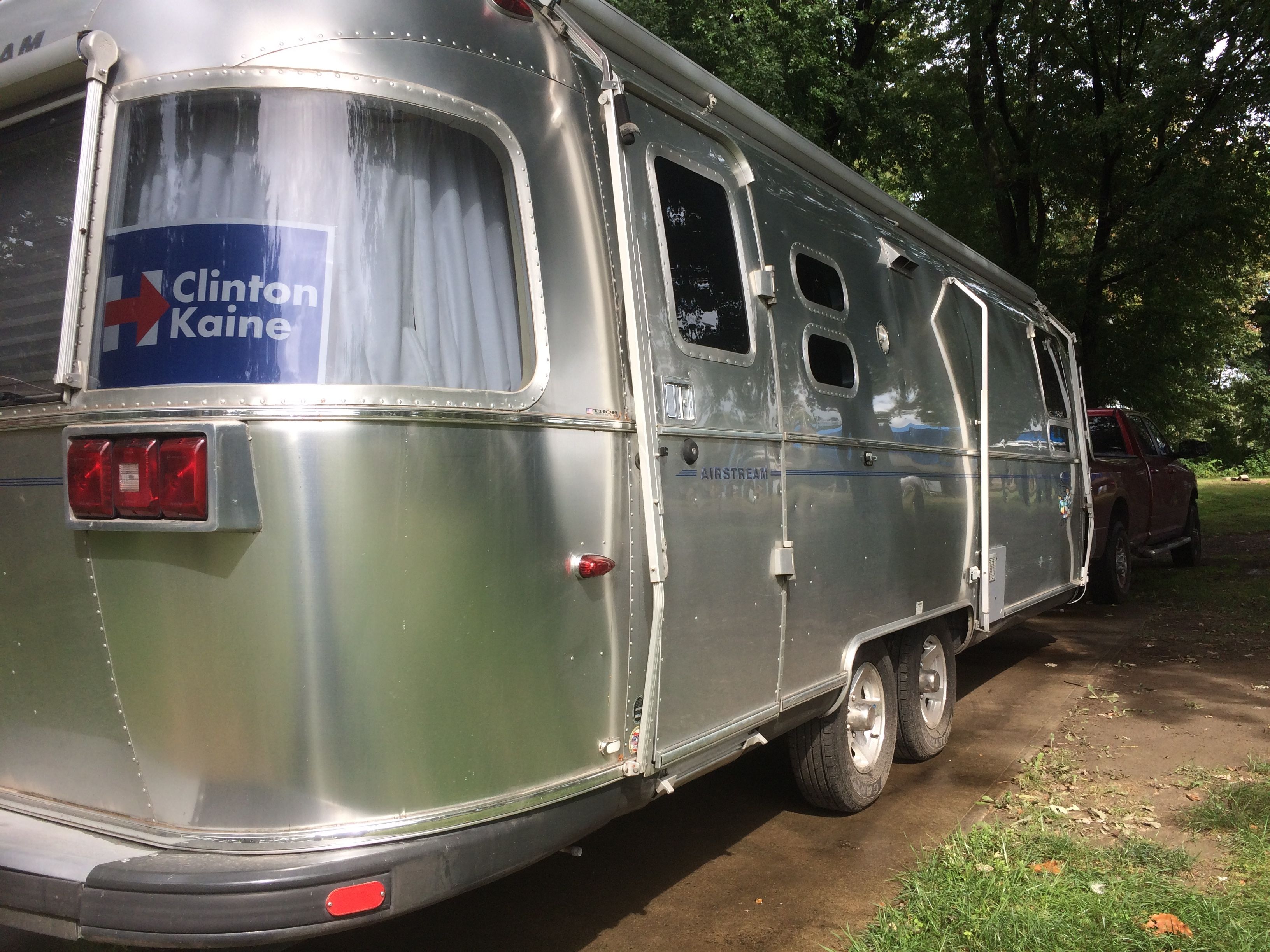
The next day, early, I got hooked up and ready to hit the road.

And, yes, I’m still with her!


Elmira and Newtown Battlefield

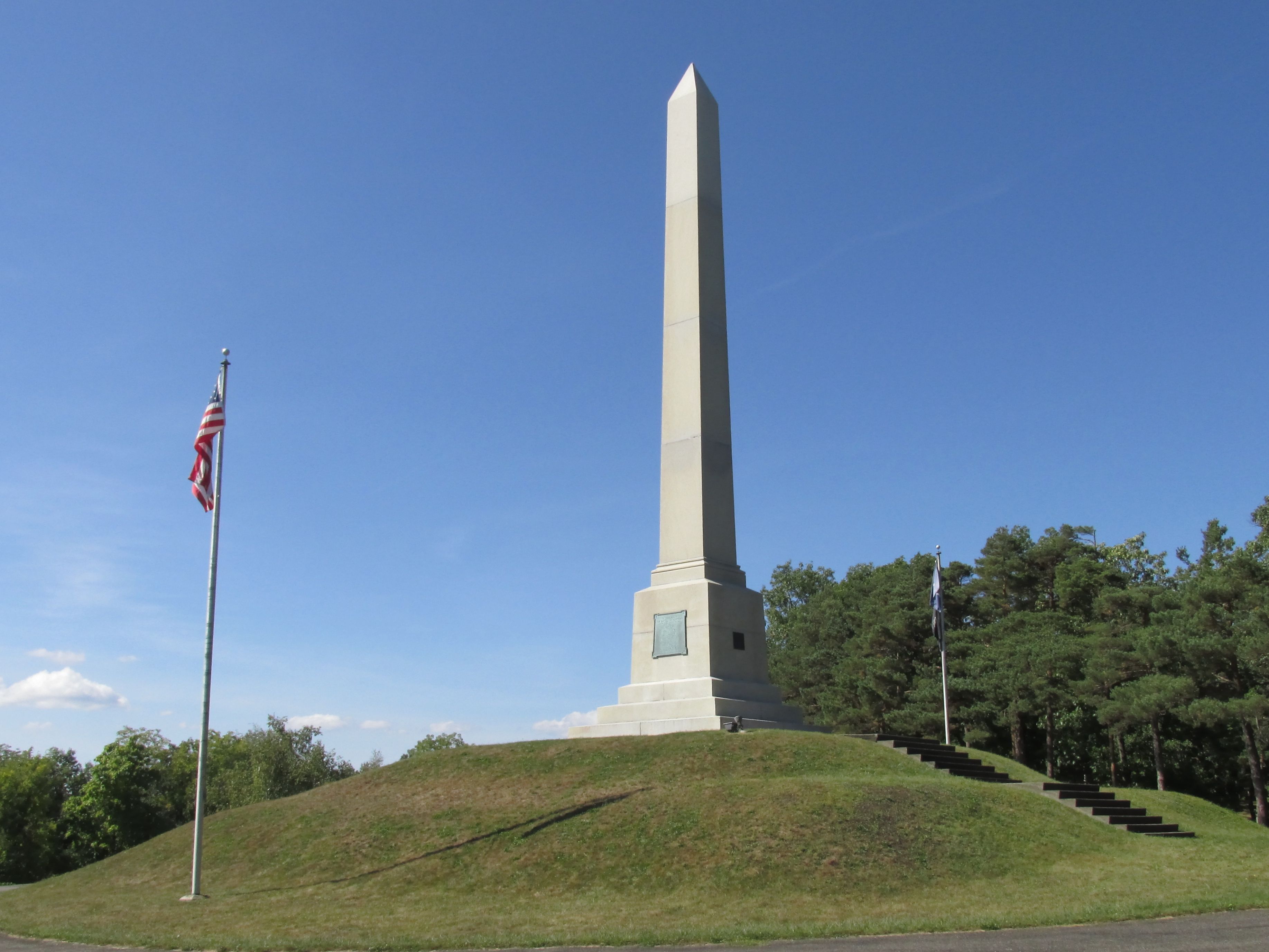
After bouncing and winding my from Watkins Glen to Elmira and then all the way up to the end of the road, I arrived at Newtown Battlefield State Park. I can’t imagine how they managed to fight their way up the mountain. My hands hurt from gripping the steering wheel!

Newtown Battlefield memorial

Well, technically, I guess it’s not a mountain, as the crest is only 800 feet above the road next to Chemung River. But, my goodness, it sure felt like a long way up.

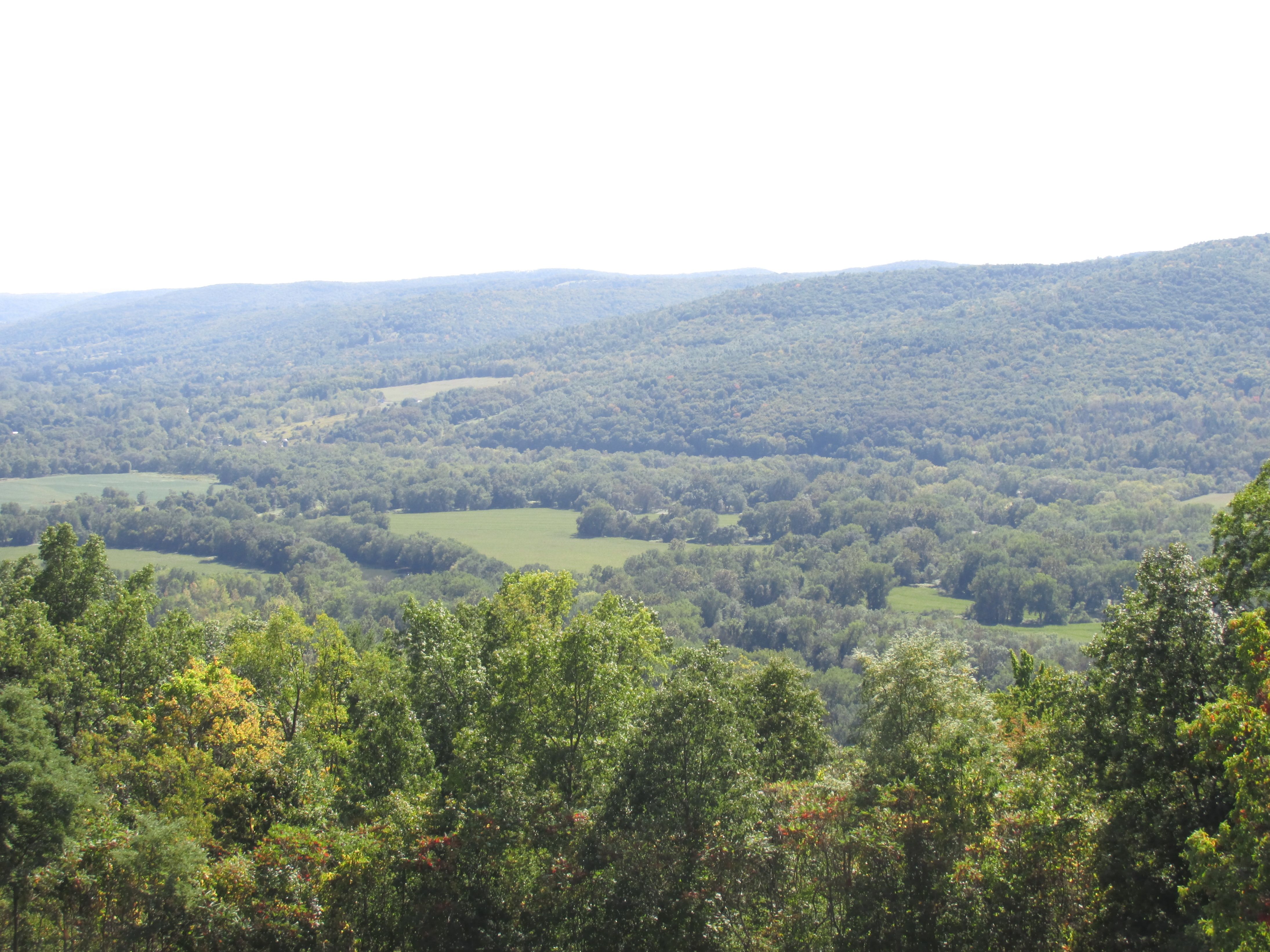
View from Newtown Battlefield State Park

And a long way down.

The weather was warm and sunny. It was a great day for outside sightseeing. The next day would be good for indoor activities.

I set up the trailer. That is the good part about camping without hook ups – there is nothing to hook up! I just unhook the trailer and then I’m free to go.

The Newtown Battle was the major battle of the Sullivan Campaign in the Revolutionary War. In 1779, General John Sullivan was directed by the Continental Congress to end the threat of the Iroquois, who had sided with the British.

The Continentals roundly defeated the Iroquois, destroyed their villages and burned their crops. This drove the Seneca up to Fort Niagara. I guess the Seneca have a long memory.

I headed back down the twisty turny narrow road and into Elmira. My HISTORY Here app told me that Mark Twain’s grave was here.

Entrance to Woodlawn Cemetery

The leaves are starting to turn. I entered the cemetery and wondered it there was a guide or directions to Mark Twain’s grave. I needn’t have worried. Elmira is proud of all their citizens.

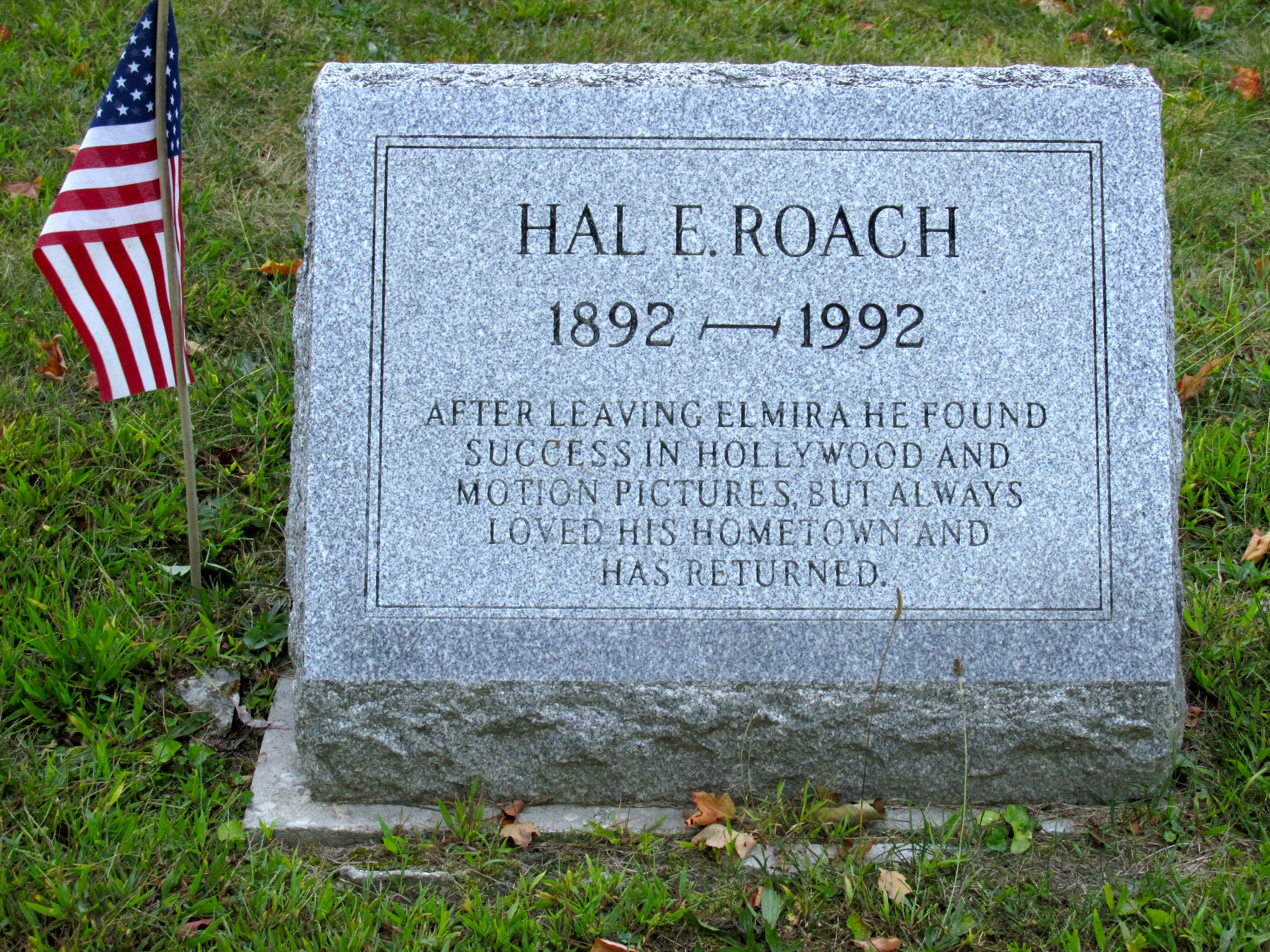
The first sign I saw was for Hal Roach, a film producer whose career spanned from Harold Lloyd in 1915 through working with Laurel and Hardy in the ’30’s and on to syndication in the era of television. He even appeared on the Tonight Show with Jay Leno when he was 100. He passed on in 1992, just two months short of his 101st birthday. That’s a good, long run for anyone!

Cemetary - Hal E. Roach

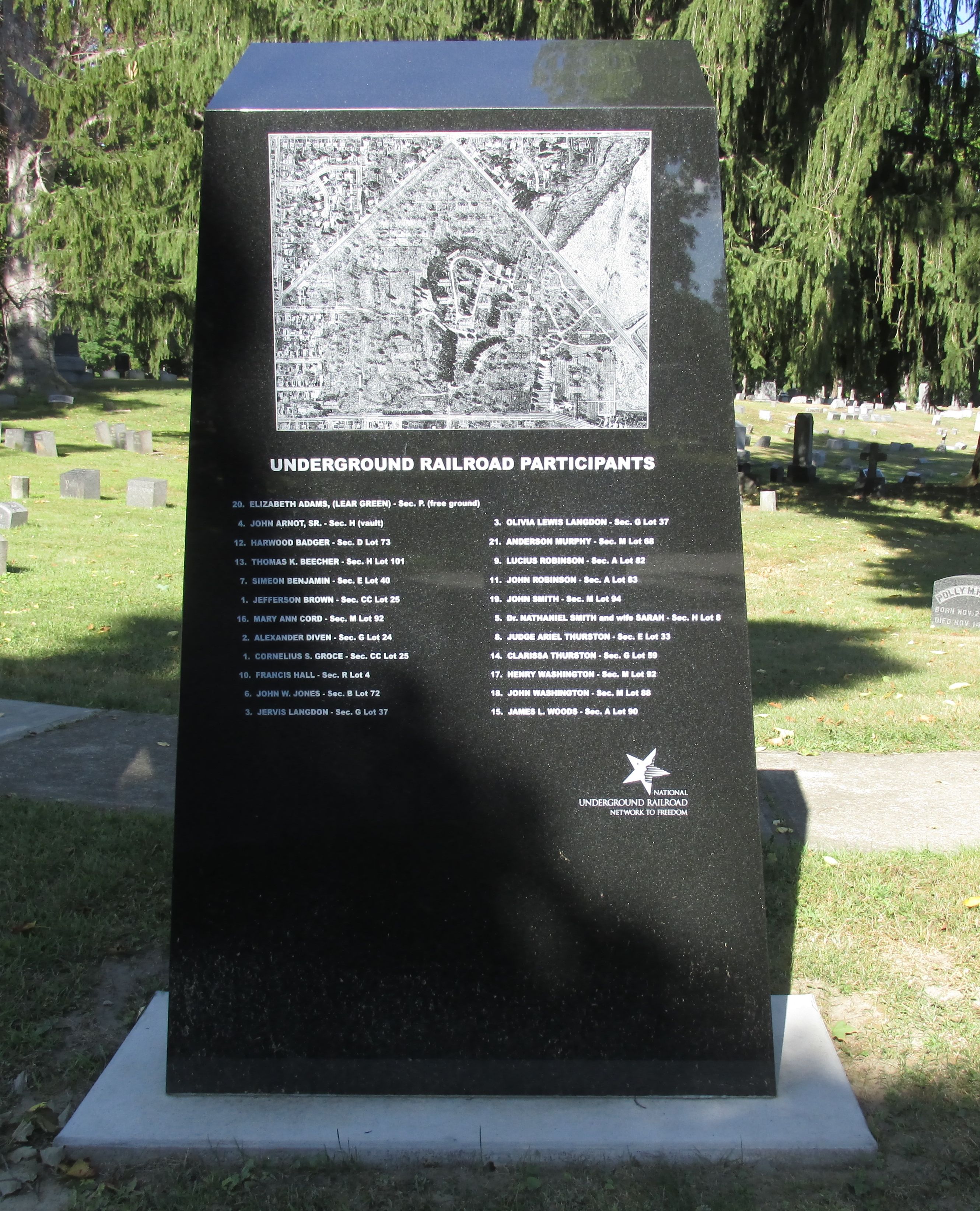
I looped back to the main road of the cemetery, still looking for a map or for more signs. I found this memorial to the participants of the Underground Railroad.

Cemetary - Underground Railroad Participants

I was impressed with their continuing attention to the struggles of the past.

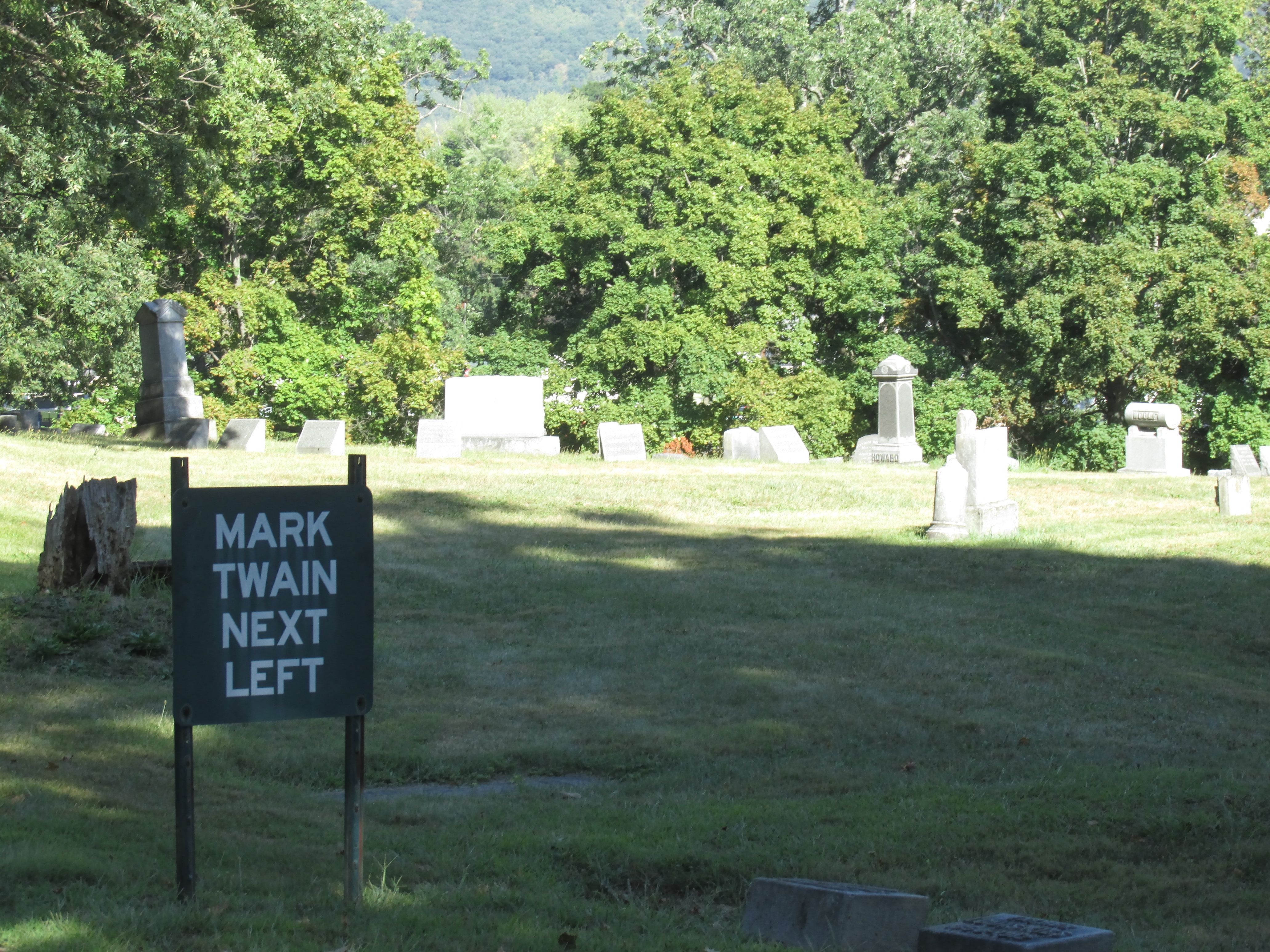
Cemetary - Mark Twain next left

Finally! Directions to Mark Twain’s grave. And then, the grave itself.

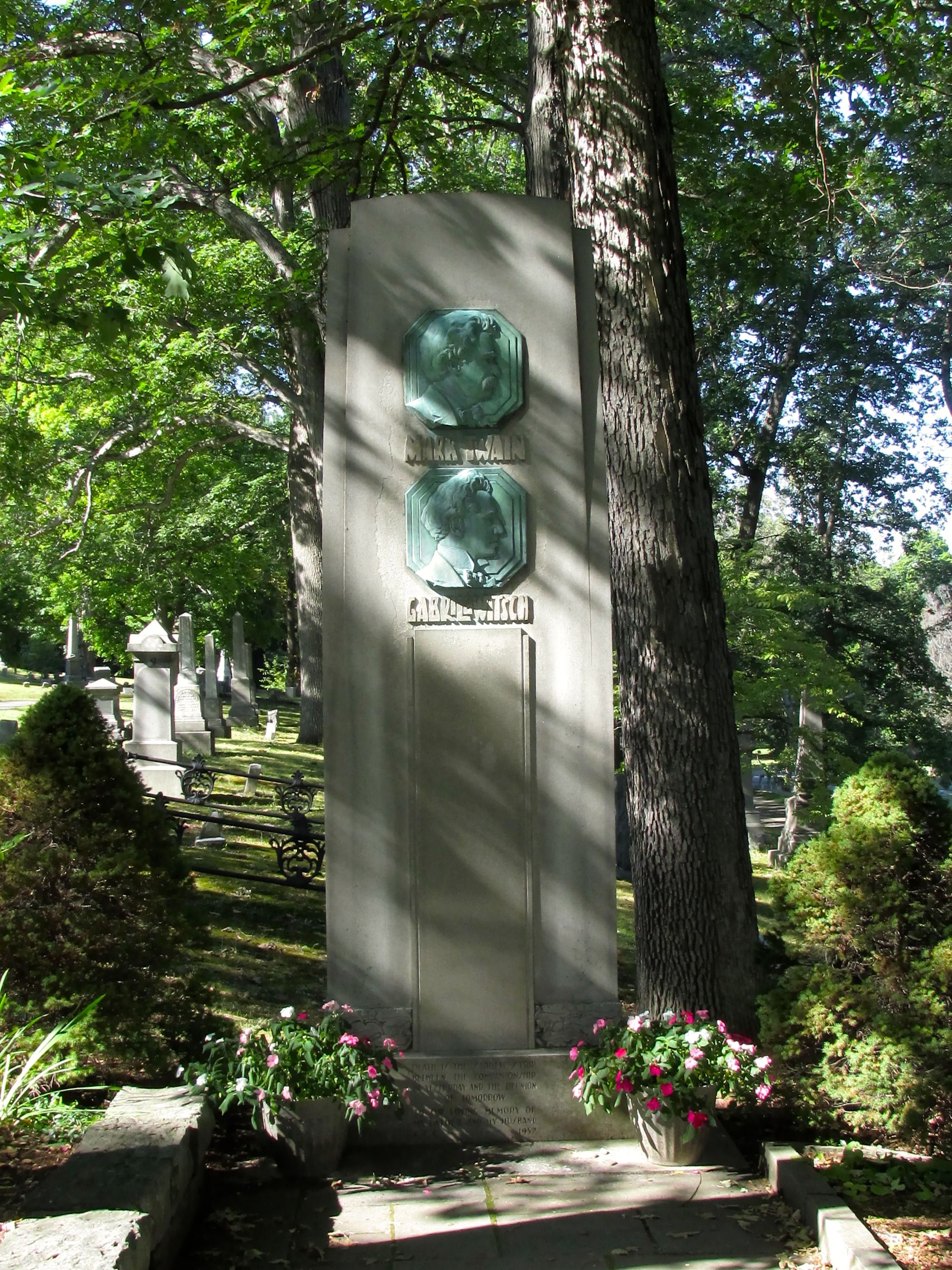
Cemetary - Mark Twain's grave

He was buried in the Langdon family plot, which was his wife’s family.

Langdon Family Plot
Langdon Family Plot

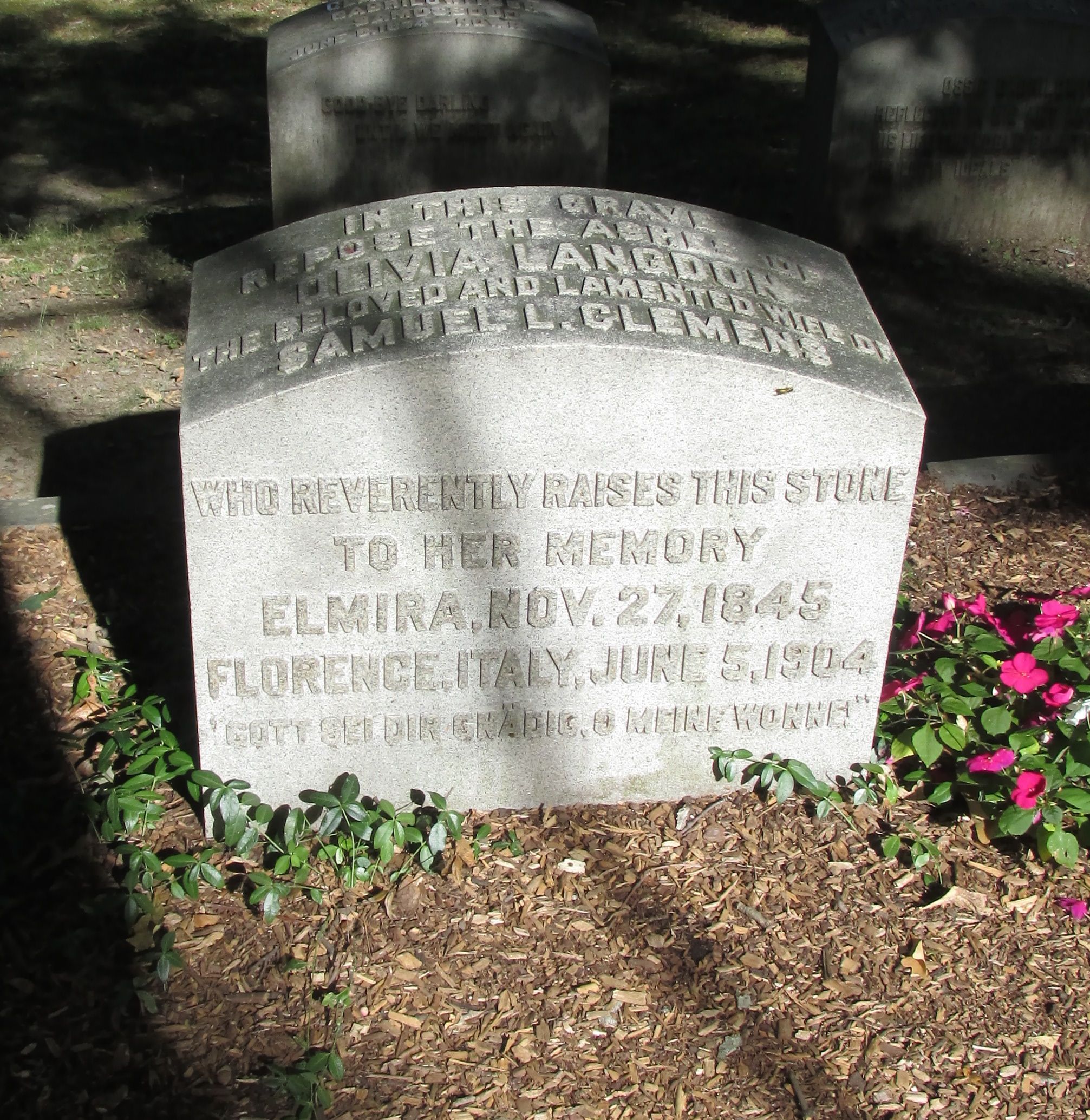
She predeceased him by six years, dying while they were traveling in Italy.

Cemetary - Mark Twain's wife

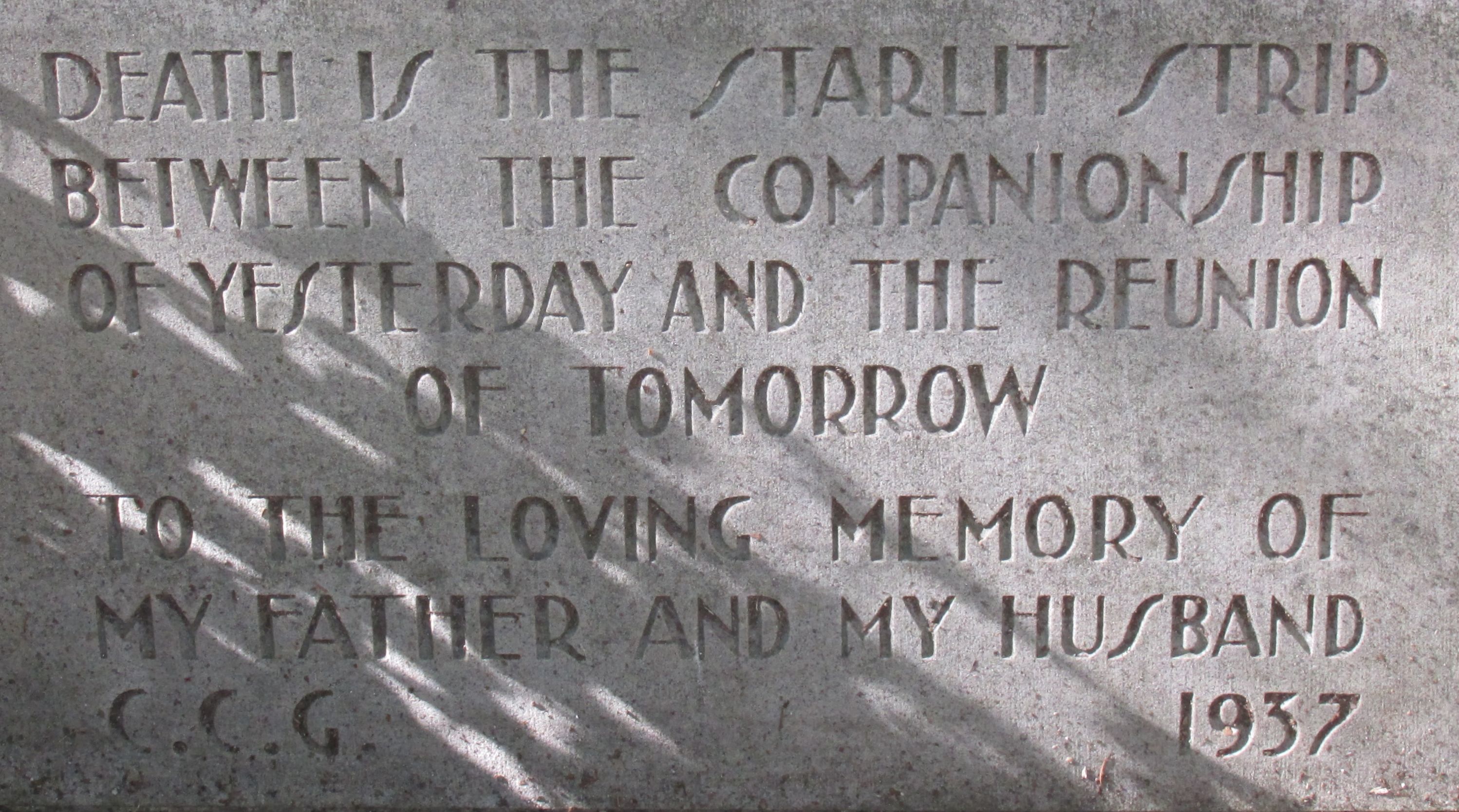
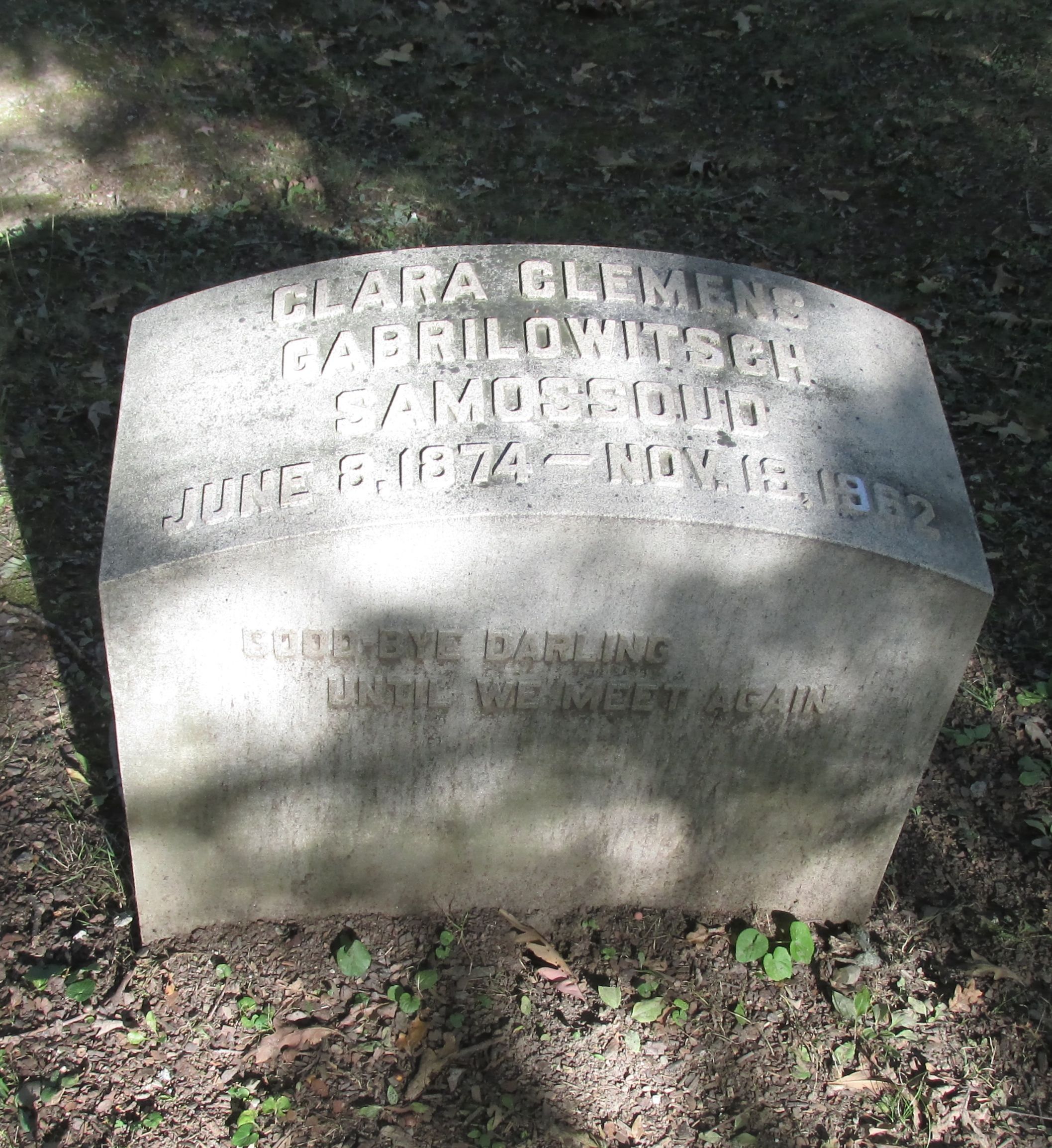
The lower bronze portrait on Mark Twain’s marker is his son-in-law, Russian pianist Ossip Gabrilowitsch. He must have had an awfully high opinion of himself, as he asked to be buried at Mark Twain’s feet. He died in 1936, and Mark Twain’s daughter, Clara, agreed with the request. She added a poem to both her father and her husband at the bottom of the memorial.

Cemetary - Mark Twain's grave poem detail

It is amazing how close the past is to the present. Mark Twain’s daughter, Clara, lived until 1962. We are practically holding hands with the past.

Cemetary - Mark Twain's daughter

Of course, everyone knows that Mark Twain lived in Buffalo from 1869 to 1871. He was an editor of The Buffalo Express

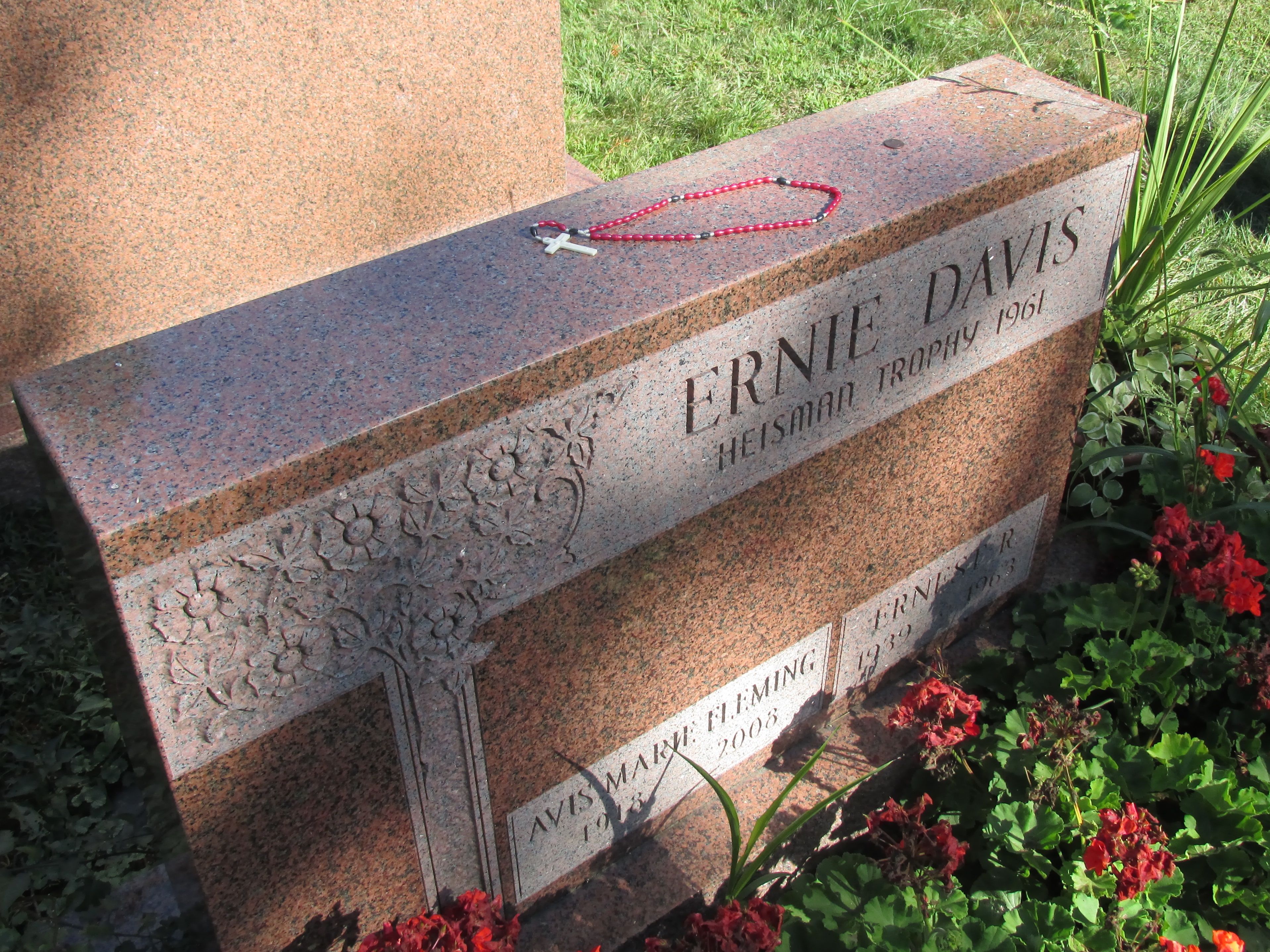
I continued driving around, and noticed a sign for Ernie Davis. I seemed to remember that name, but couldn’t quite figure out why.

Cemetary - Ernie Davis

I pulled out my phone and Googled his name. I found out that he was the first African-American athlete to win the Heisman Trophy in 1961. He was drafted by the Washington Redskins and then traded to the Cleveland Browns. Unfortunately, he never got to play a professional game. he was diagnosed with leukemia and died in 1963 at the age of 23.

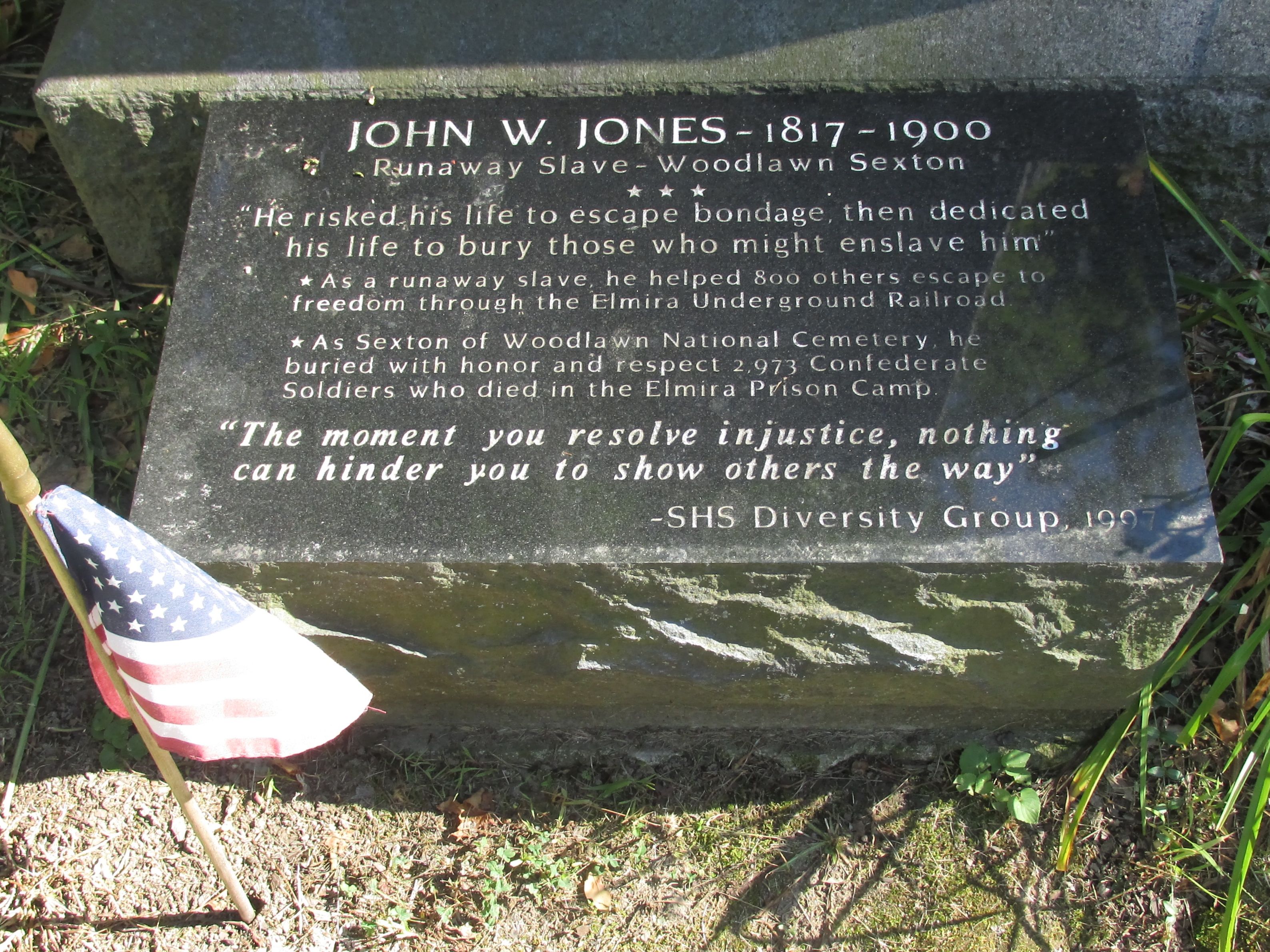
The last sign that I saw was one that pointed the way to the grave of John Jones.

Cemetary - John Jones close up

John Jones' family plot
John Jones’ family plot

John Jones had an amazing story. He began life as a slave. He was the houseboy of Sarah Ellzy, but ran away with his half-brothers and two others when she was getting on in years. He was worried about what would happen to him after her death and that prompted him to leave  for the north.

He settled in Elmira and worked to help other slaves escape to St. Catharines’ in Canada. By 1860, he had helped over 850 runaways to escape.

During the Civil War, he buried almost 3,000 Confederate soldiers who died while they were in held in the Elmira Prison Camp. He was paid $2.50 for each burial, and the amount enabled him to buy a farm.

John Jones house

His house is now on the national Register of Historic Places. There are plans to open a museum there, but it hasn’t happened yet.

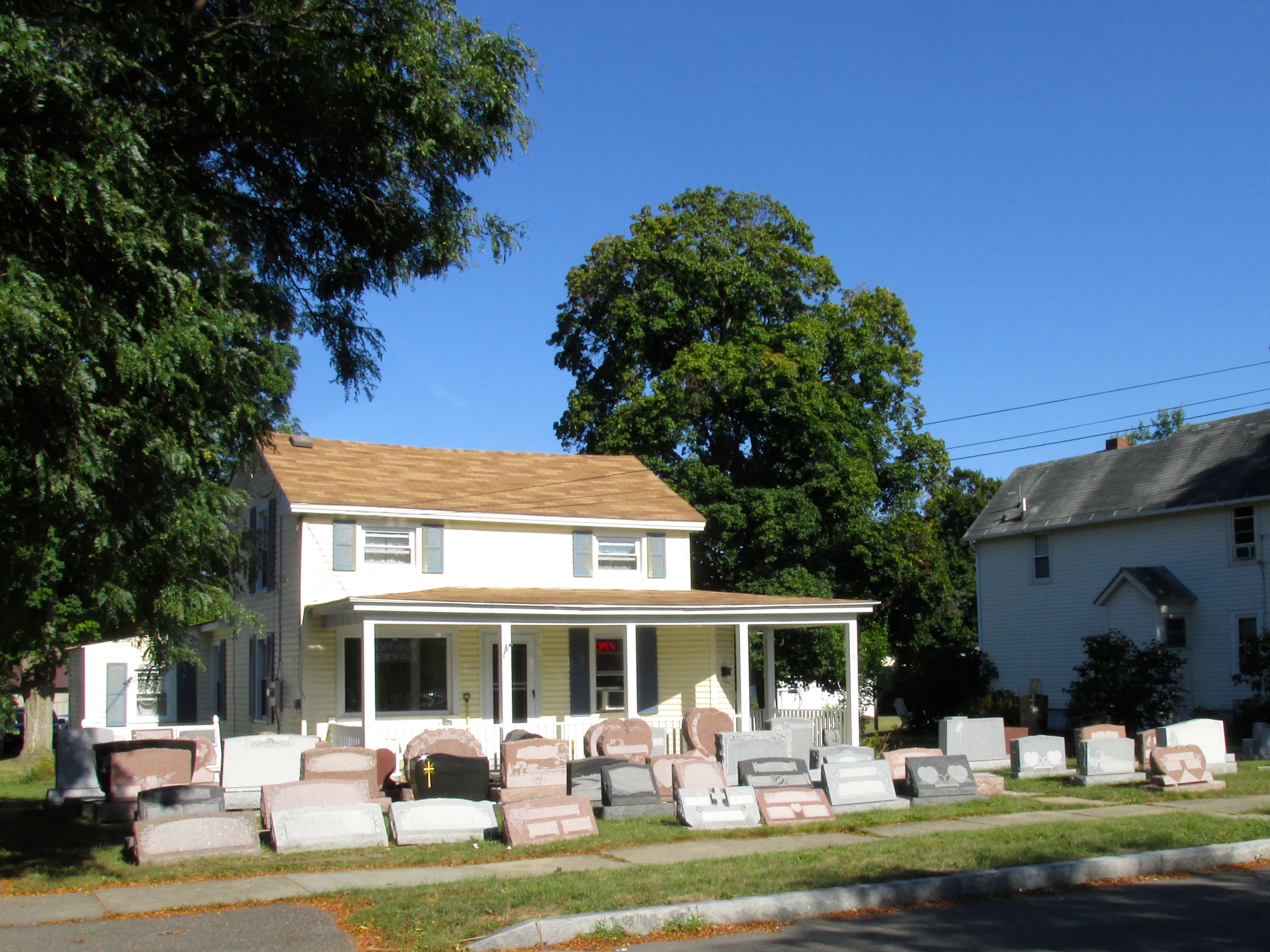
On my way out of the cemetery, I passed a store in the right spot.

Cemetary - memorials for sale by the entrance

Location – location – location

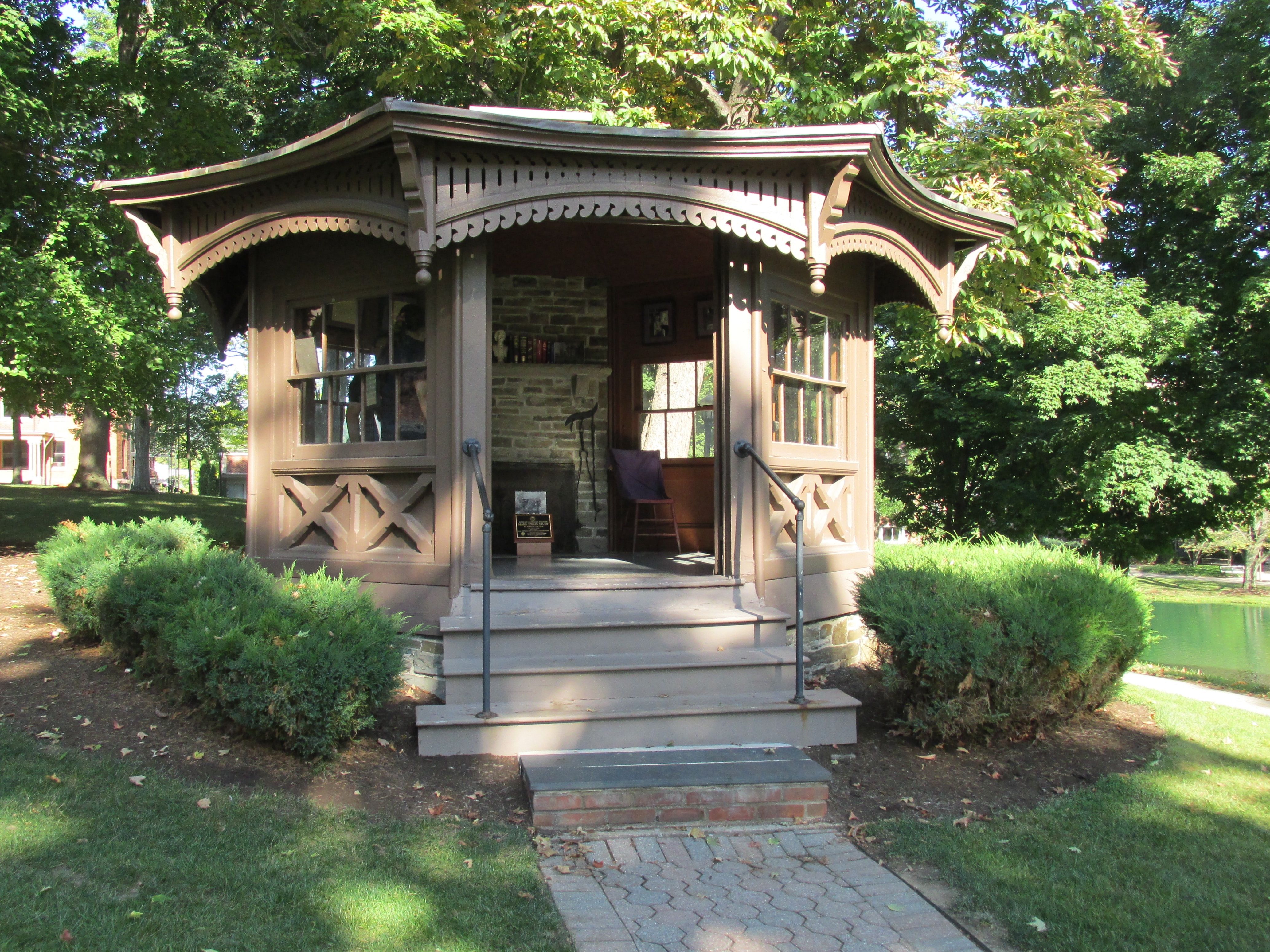
My next stop was the Mark Twain Study on the grounds of Elmira College.

Mark Twain's Study - at Elmira College

Mark Twain and his family spent summers in Elmira with his sister-in-law’s family. She had this retreat built on the hill above her house so that he could concentrate on his writing. In this little building, he worked on The Adventures of Tom Sawyer, The Adventures of Huckleberry Finn and A Connecticut Yankee in King Arthur’s Court, among other works.

I spoke with a Mark Twain ambassador from the college, and she told me that the study was moved from the house on the other side of the Chemung River to the college in one piece, and she showed me a photo of the move in process. There was a chair in the study that was original. She told me that the other original furniture was in the Mark Twain Center at the college.

My last stop of the day was Quarry Farm, the home of Mark Twain’s sister-in-law.

Quarry Farm Plaque
Quarry Farm Plaque

Unfortunately, they weren’t accepting visitors.

Quarry Hill no admitance

That night the clouds rolled in and the heavens opened up. It was wise to do the outside activities on day one of my stay in Elmira.

The next day, around noon, I headed over to the Chumung County Historical Society. I hoped that I would be able to shed some light on the Chemung Canal.

Yet another marker for the Chemung Canal!

The Historical Society is located in an old bank building.  I was greeted by Olivia, a young woman busily working on homework. She described the exhibits and told me that the entrance fee was $5. I overcame my reluctance to pay to enter museums and forked over a Lincoln.

The museum is small, but the items on display are carefully chosen to tell the story of Elmira. The interpretive signs are also enlightening.

In my opinion, Elmira owes its existence to the military. First, the Battle of Newtown opened up the areas for settling by the colonists. They dug the Chemung Canal to connect with outside markets. After that, camps for the Union Army during the civil war brought more opportunities for people to create and sell commodities.

I was surprised by the Chemung Canal, as I couldn’t imagine another canal in the area aside from the Erie Canal. But, I had no idea that the Union Army had camps this far north. And, even more amazing to me was that the Union Army had a prison camp so far north.

Elmira was originally selected as a training and muster point for the army because it The Erie Railway and the Northern Central Railway criss-crossed the city, facilitating transportation. As the war progressed, the camp was used less and eventually the camp’s “Barracks #3” were converted into a military prison. The prison camp was in use from July, 1864 until fall of 1865.

The conditions at this camp were dreadful. The inmates called it “Hellmira” and historians call it “The Andersonville of the north.”

Nichol's Prison Viewing Tower
Nichols’ Prison Viewing Tower

The local population was alway prepared to take advantage of business opportunities. In July, Mr. Nichols built an observation tower that was twice as high as the prison’s walls. He charged visitors fifteen cents to climb his tower and look at the prisoners inside. A few weeks later, the Mears boys built a new tower next to Nichols’ tower. Their tower was twenty feet higher and they charged only ten cents.

In any event, the two towers were not allowed to stand for very long. For the time that they were open for business, though, this is the view that they saw.

The view from the tower

The prisoners would do whatever they could do to survive. Rats were a prized catch, as they added much needed protein to their diets. They could also bater them for other things they wanted.

Confederate prisoner art

They also made items for sale to the people of the town.

There were items the prisoners used on display.

Tin dinner ware and a section of sheet
Tin dinner ware and a section of sheet from the prisoners hospital

Prison leg irons and cuff

Confederate coat worn in Elmira

The Union was represented, as well.

Union overcoat from the Civil War

The prisoners suffered from the terrible conditions. The population of the prison swelled from 400 in July 1864 to 9,262 in August. Winter snows started in October and the cold weather was exacerbated by the shortages of food, warm clothing and blankets. To top it off, more that half of the soldiers were still housed in tents.

The soldiers were housed in barracks by the beginning of 1865, but the harsh weather, poor sanitation and shortages of food and supplies kept the death rate high. In March 1865, a flood forced the prisoners to take refuge on the upper bunks.

With General Lee’s surrender, the prisoners began to be released. The last Confederate soldiers left on August 11, when the remaining camp materials and buildings were sold. 140 soldiers remained in the Elmira hospital after the camp closed.

In September 1865, the final death toll of the prison camp was released. Of the 12,147 prisoners housed in the Elmira camp, 2,961 died. That is a death rate of 24.3%, the highest of any prisoner of war camp in the north.

Back to happier times.

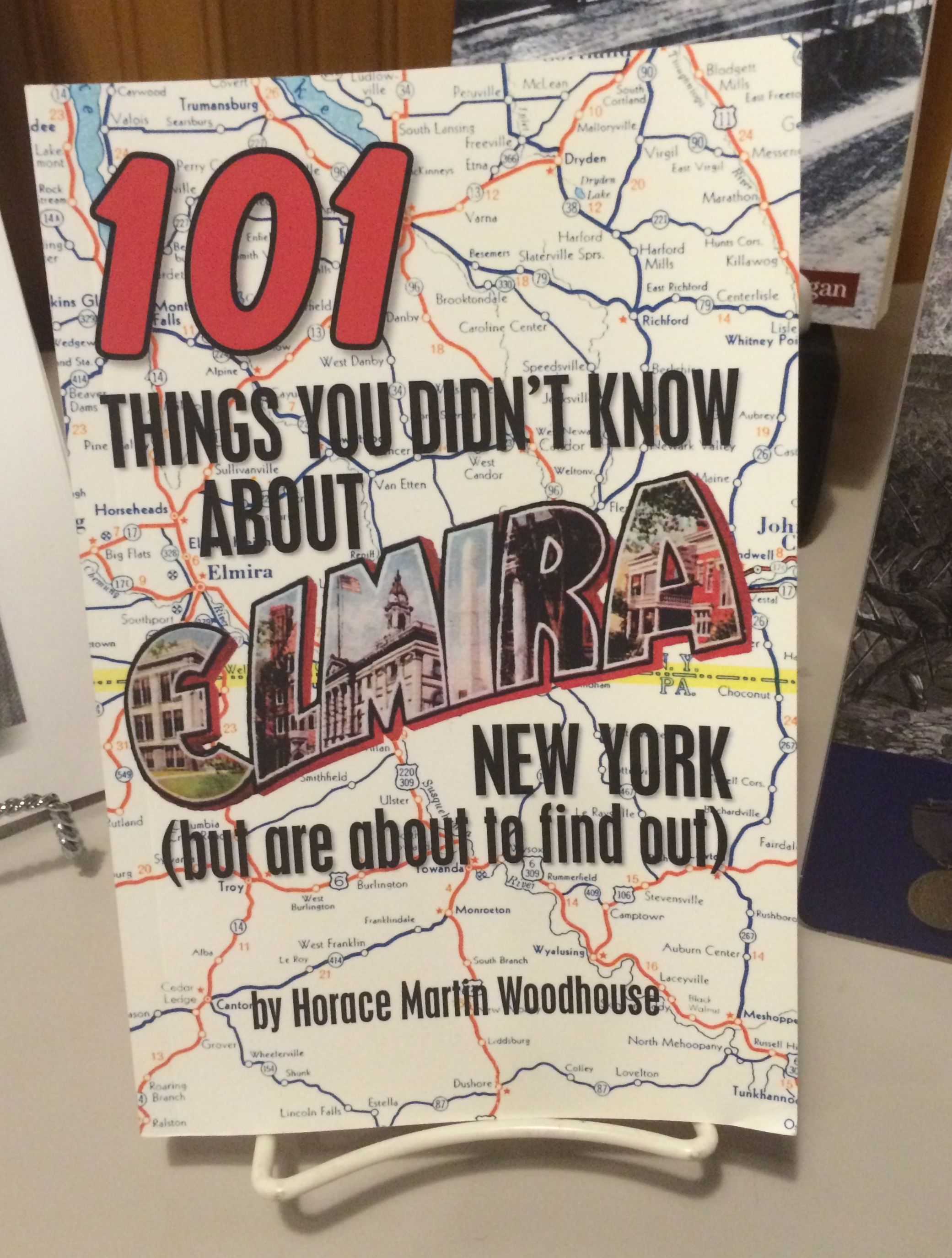
Book 101 thing you didn't know about Elmira

Maybe this is what I should have named this post.

Transportation seems to be an important factor of Elmira’s growth – along with the government and wars.

Canal boats on the Junction Canal
Canal boats on the Junction Canal that linked Elmira with Corning

The Chemung River was a major thoroughfare from time immemorial. About 11,00 years ago, mammoths and mastodons roamed the area.

Mammoth Tusk
Mammoth Tusk

The Chemung River got its name when Native Americans found a mammoth tusk along its banks. The word “Chemung” is Alogonquin for “place of the big horn.”

The river made Elmira’s progress difficult as well as possible. The river has flooded the town many times over the years, as the city is built on the flood plain of the Chemung River.

Water bottled by Utica Club
Water bottled by Brewers of Utica Club
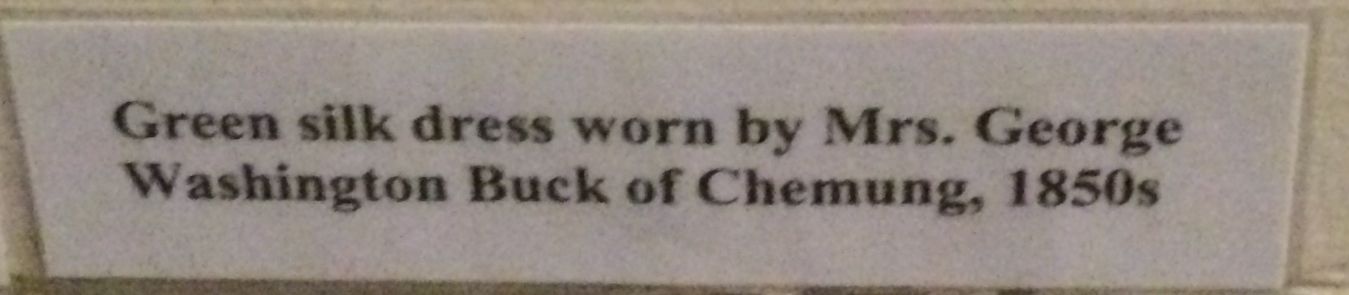
Elegant Green Silk Dress

Green dress label

This dress belonged to Mrs. George Washington Buck.   I’d like to know where she kept her internal organs. I’d also liked to know what her name was.

George Washington Peace Medal

Red Jacket, who is buried in Forest Lawn Cemetery in Buffalo, received one of these.

Surveying tools
Surveying tools

George Washington got his start as a surveyor. I always wondered what kind of tools he used.

There was more in the museum, but perhaps this little preview will inspire you to visit.

The weather hadn’t improved while I was inside, but I wanted to find the statue of Ernie

Ernie Davis Statue
Ernie Davis Statue

I liked the fact that he was portrayed as a scholar, and the statue is in front of the Ernie Davis Middle School.
The last vision of Elmira that I’d like to leave you with is something I haven’t seen in years:

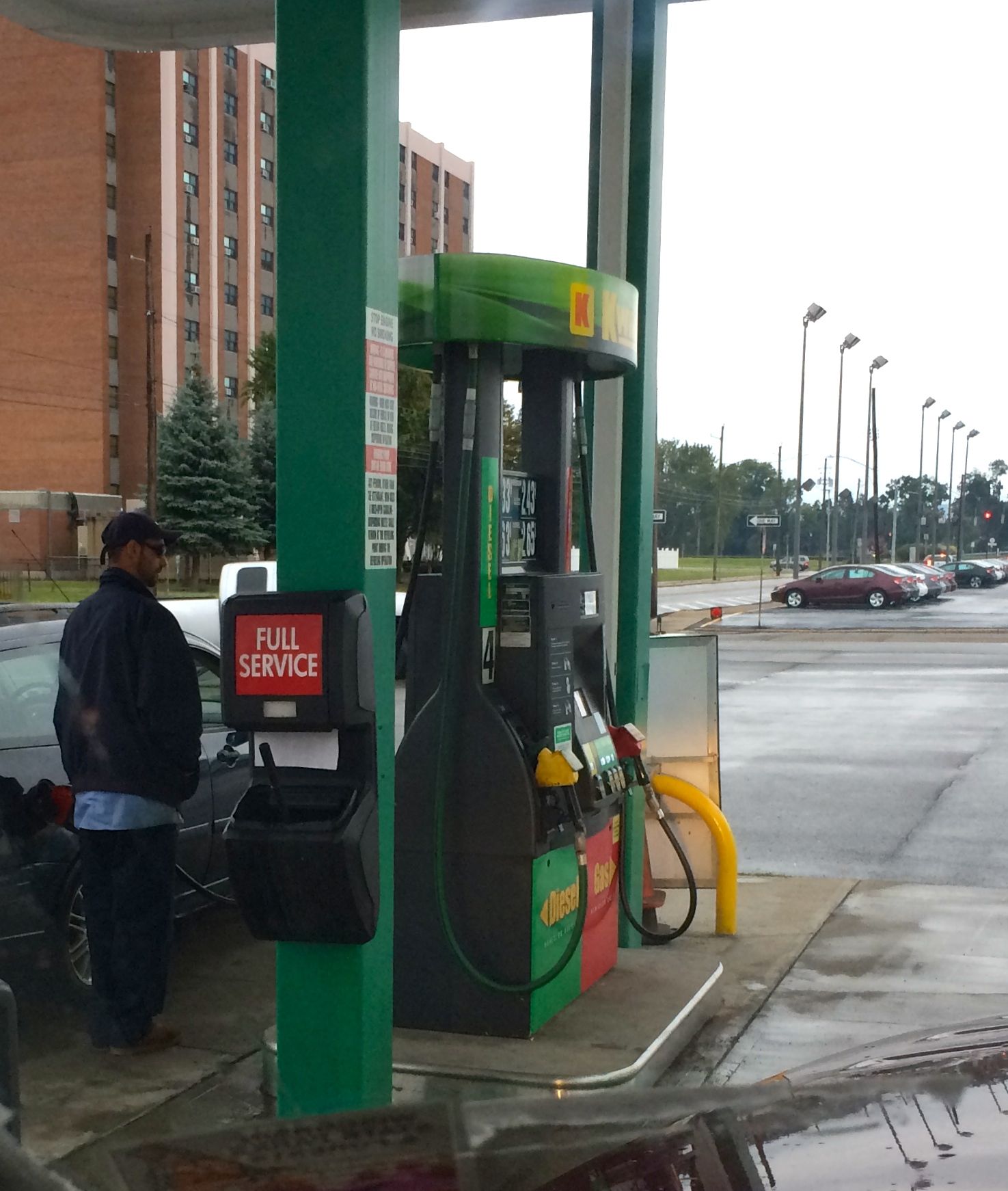
A full serve gas station

A FULL SERVICE GAS STATION!