More at the National World War I Memorial

Just as I was getting ready to head down to the rest of the museum, the field trip caught up with me.
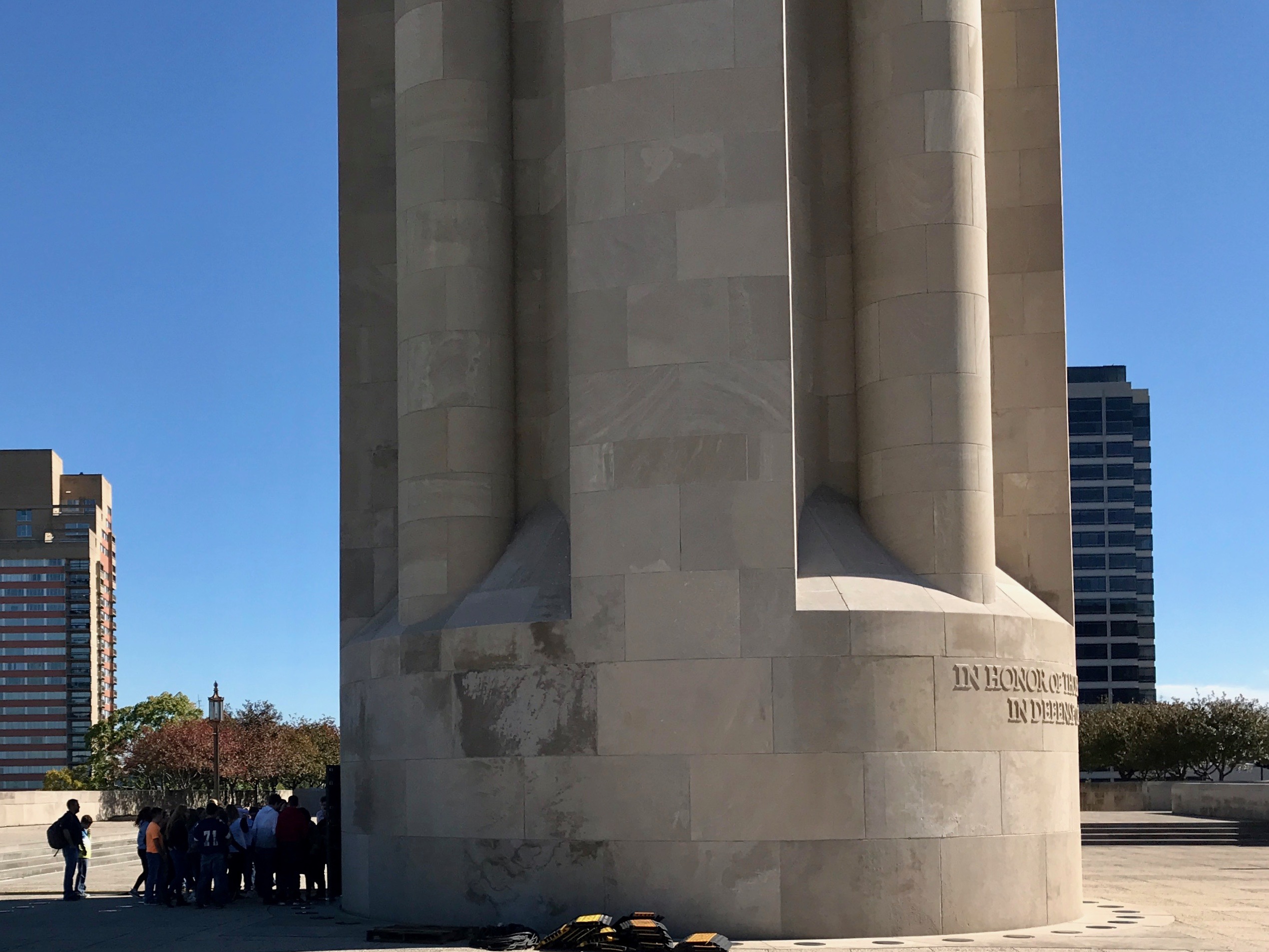
I’m glad I’m not jockeying for space with them! Besides, it was time for lunch. I decided to head to the Over There Café in the museum.
There they invite you to Eat Like a Soldier. They use the helmet icon to identify dishes that are meals that the soldiers would have eaten in World War I. Dishes like Trench Stew, Army Goulash, Chipped Beef, and a sampler platter containing tastes of the three dishes.
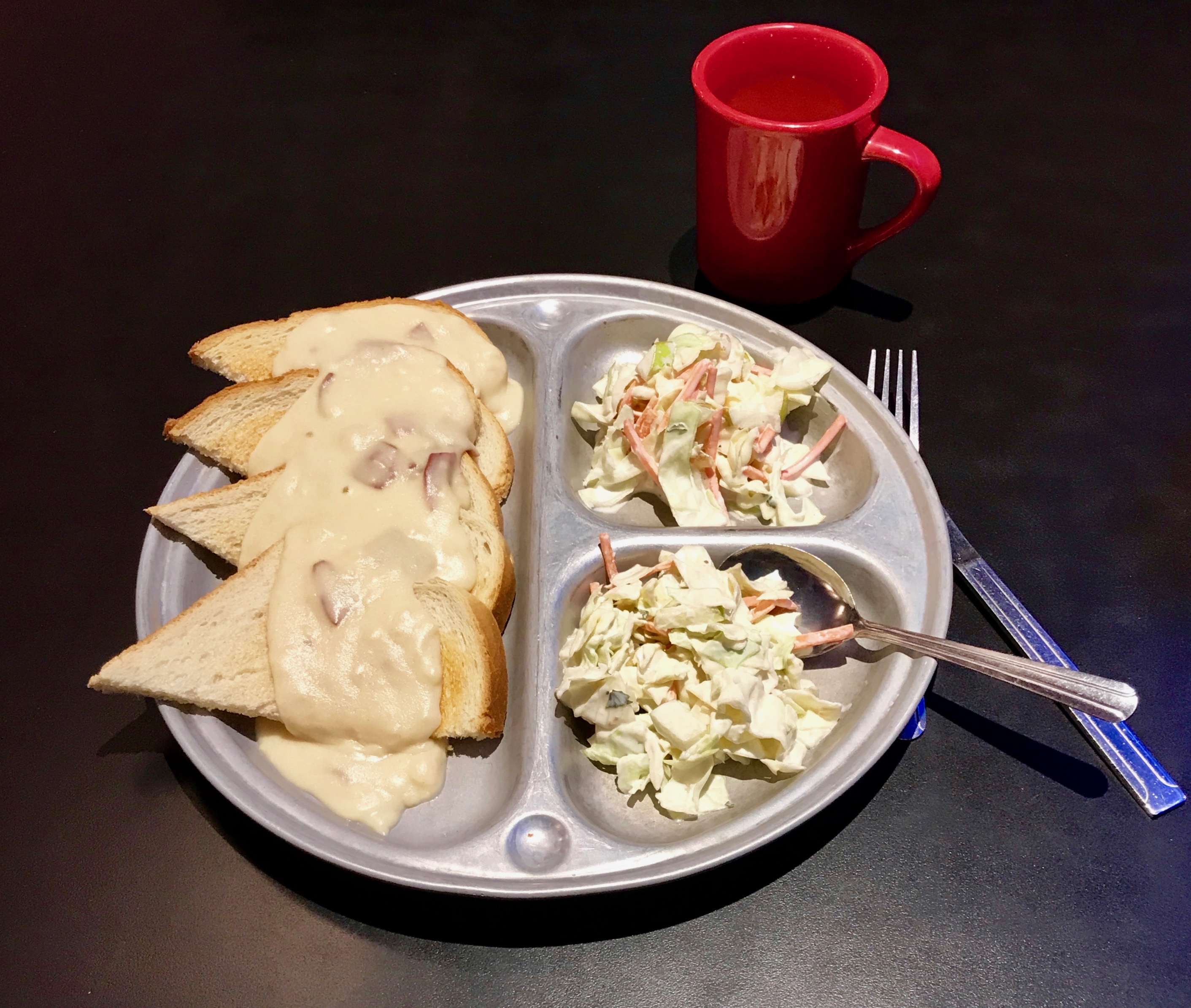
I opted for the Chipped Beef. (Here is a recipe in case you want to try it yourself.)
I always thought it was called “SOS” or “Sh*t on a Shingle” but I guess there is also a name that is used in polite society.

I thought the metal mess kit was a nice touch, as was the poppy-red coffee mug. Those poppies are everywhere!
I had this cute little arrangement on my table.
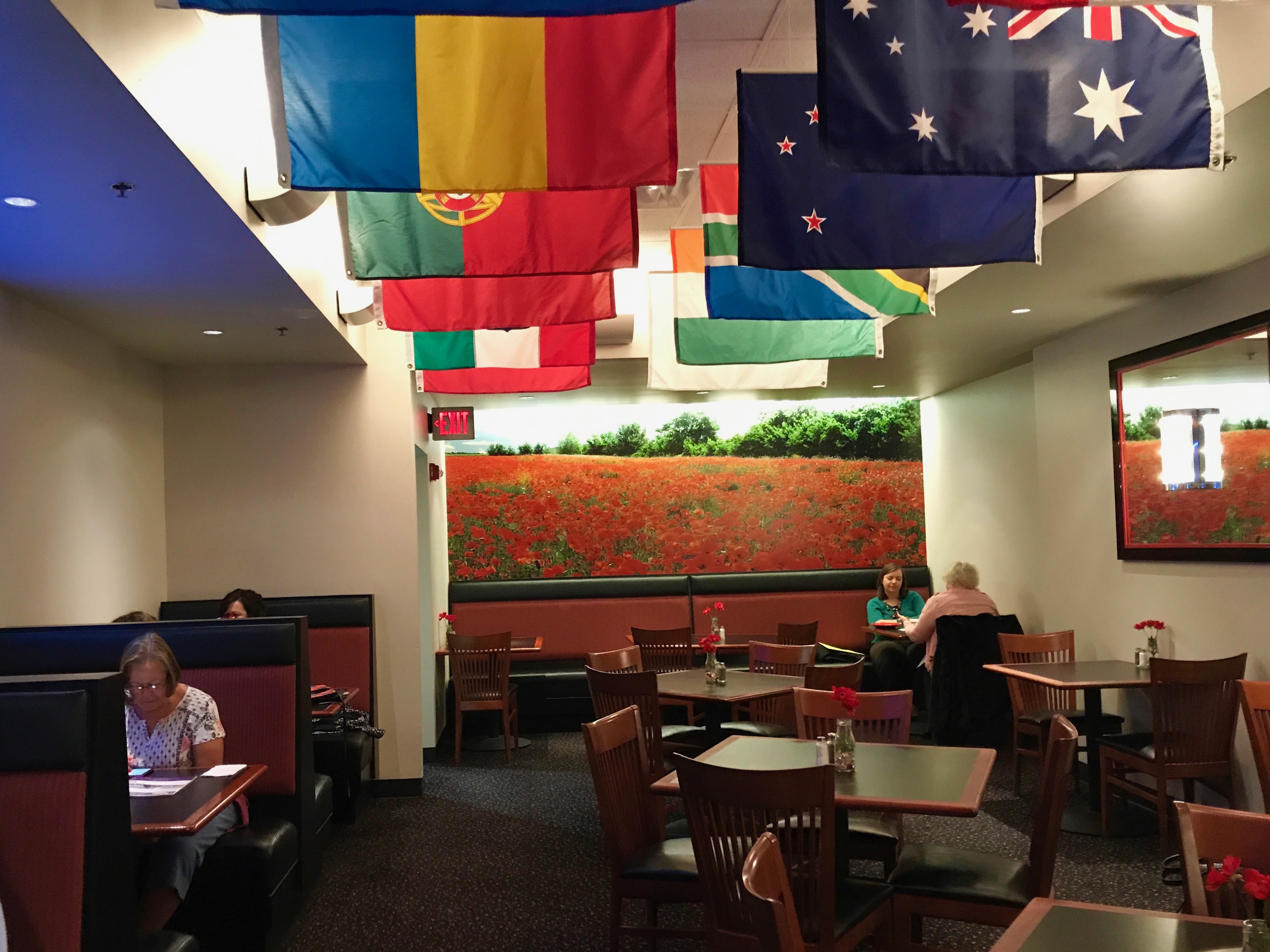
Each table had a little bouquet of poppies on it, and the walls were covered with poppy artwork. I thought the flags of the allies on the ceiling were a fitting bit of decor. I wonder how many soldiers ate like in such calm and clean dining halls?

Thus restored, I set out to see what I could see.
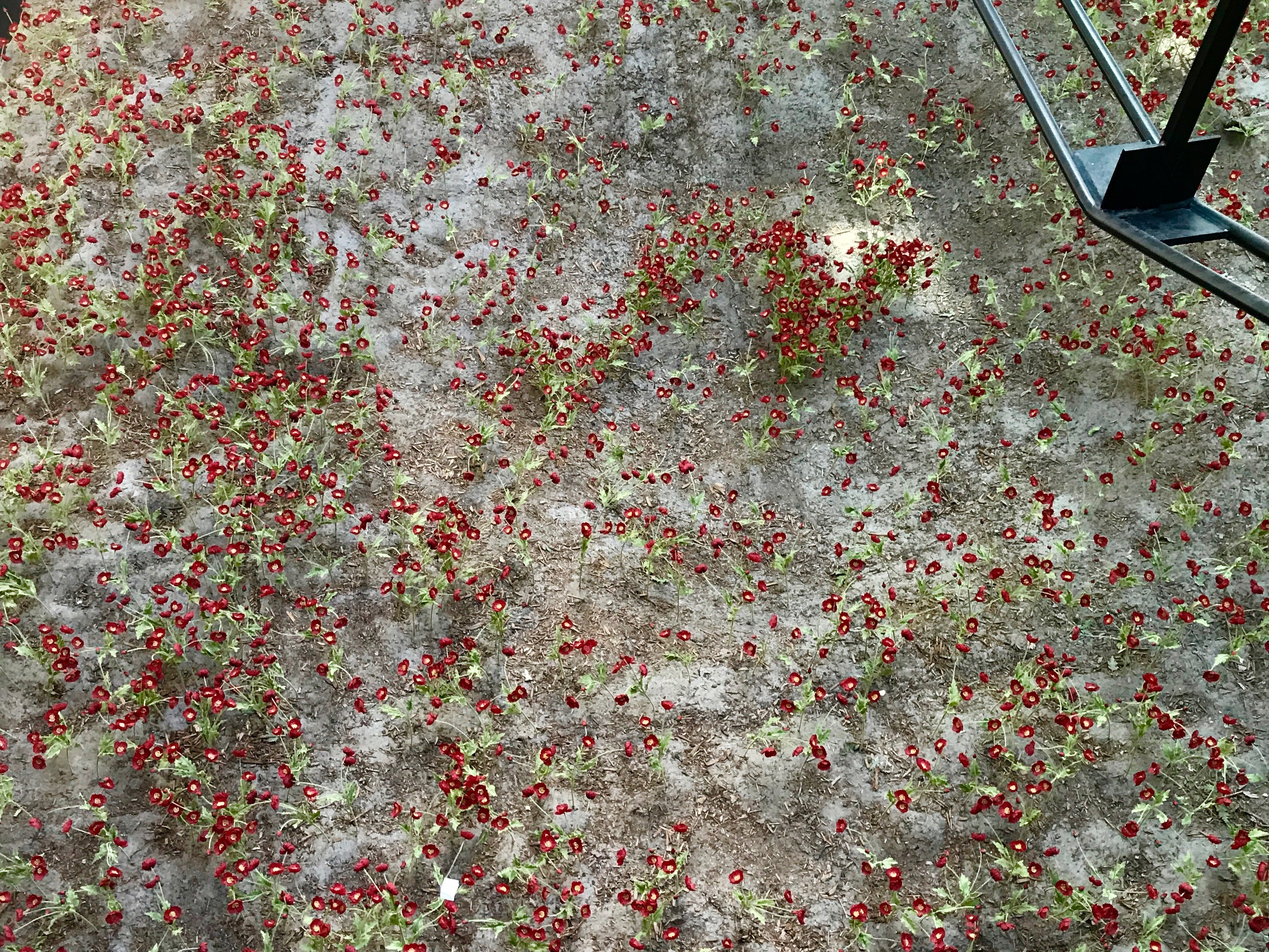
On the way to the displays, I passed another display of poppies. It runs in my mind that there are 9,000 of them massed in areas below the trusses, and each poppy stands for 1,000 dead combatants. That may be so, although I looked up the question “How many died in World War I?” 9,000,000 seems to be a bit on the low side. And you know what? That doesn’t even count the number of dead that were on “the other side.”
One more display of poppy art – this time, apparently x-rayed poppies – and it was time to enter the museum.

My loyal followers are probably just about to get up for some milk and cookies – or more substantial fare. You can relax. This time, I am going to give the museum a quick once-over. While the museum has a reputation for excellence, I found it to be extremely text-intensive.
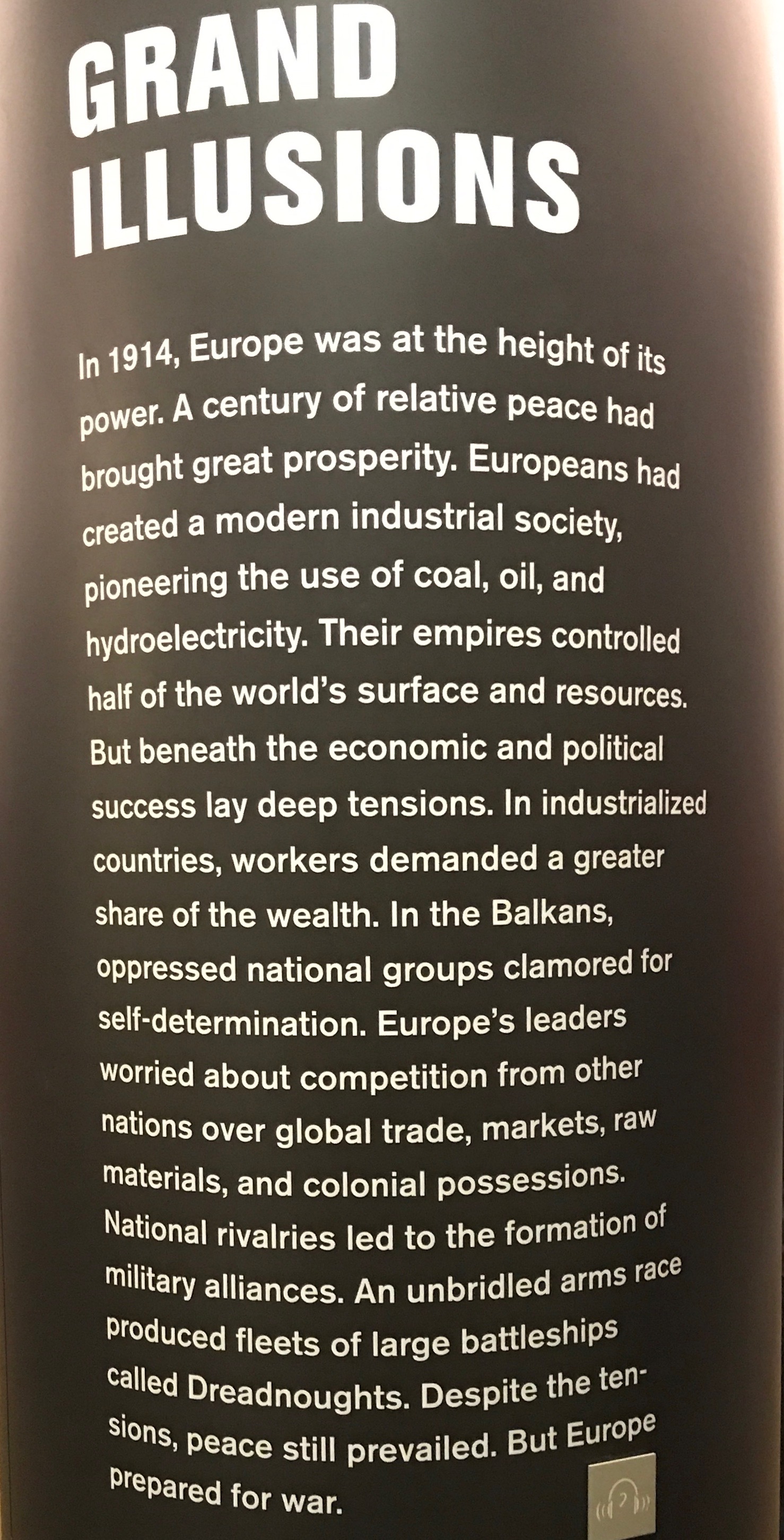
Perhaps I should have sprung for the audio tour. I snapped some photos of the information, with intentions to return to it later. Since I have been writing these posts about my visit, I realized that World War I is an extremely complicated topic. I need to do considerable study and research before I can even begin to understand it.

Additionally, “reading a museum” with bifocals isn’t a lot of fun. So, friends, I’ll just share a few items that I could take photos of.

You can still have some milk and cookies (or something stronger) if you wish.
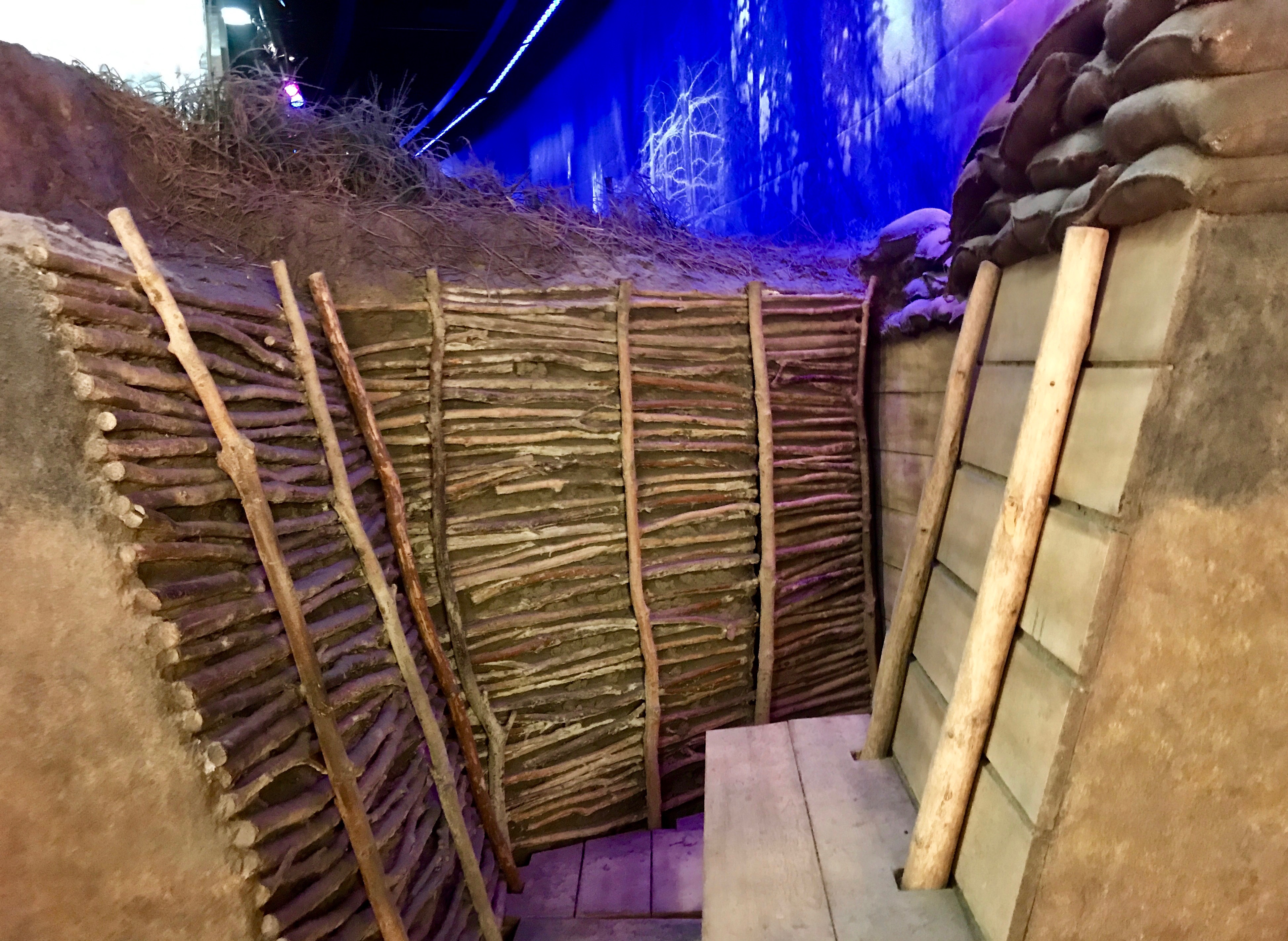
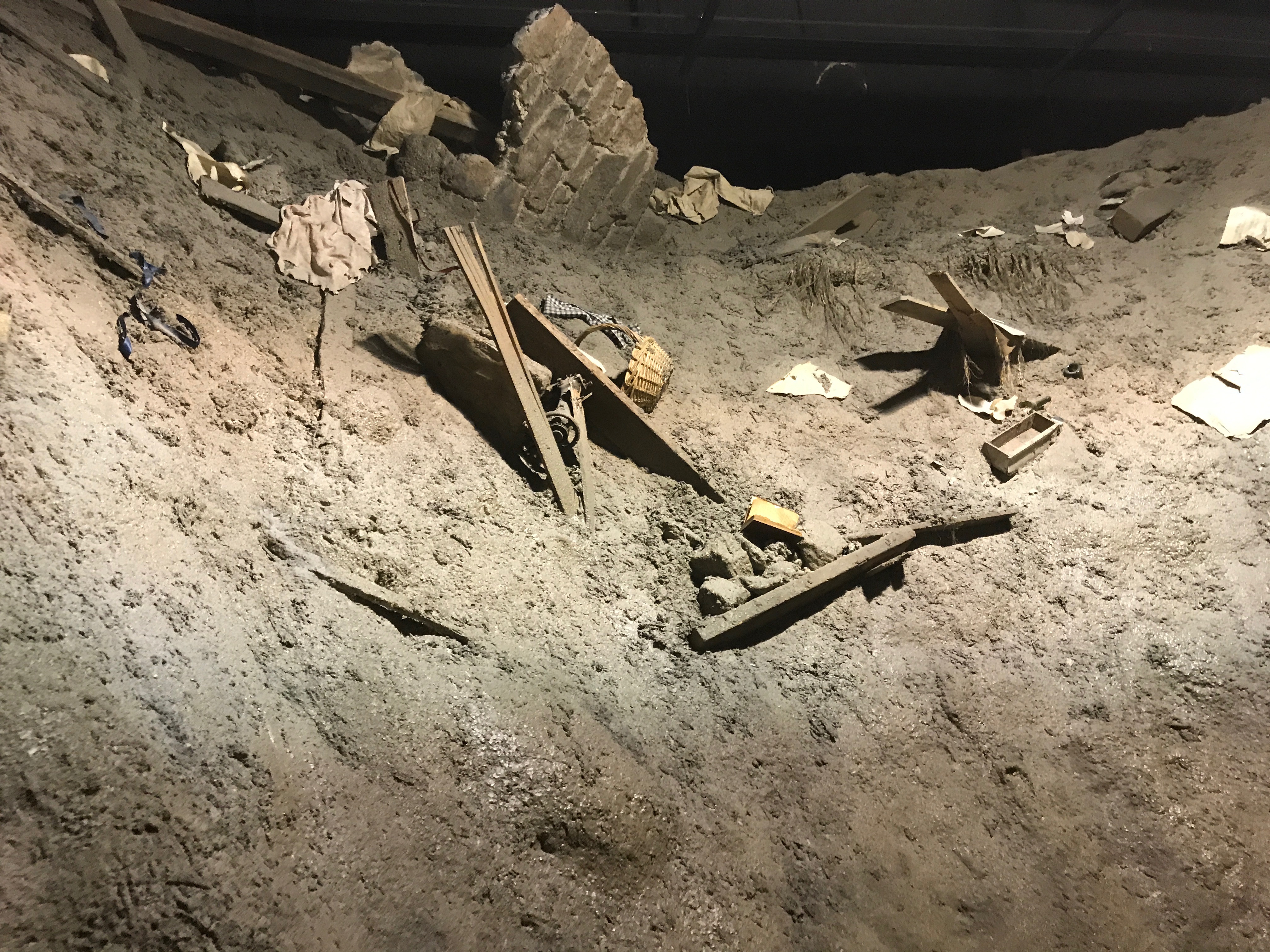
One thing that I think of when WW I comes to mind is trench warfare. This is a mock up of a trench. With so much support for the walls, you can easily see that these were positions they meant to hold. I wonder if the term “entrenched” comes from World War I?

I looked it up, but apparently it came into use  in the figurative sense in the 1590s.
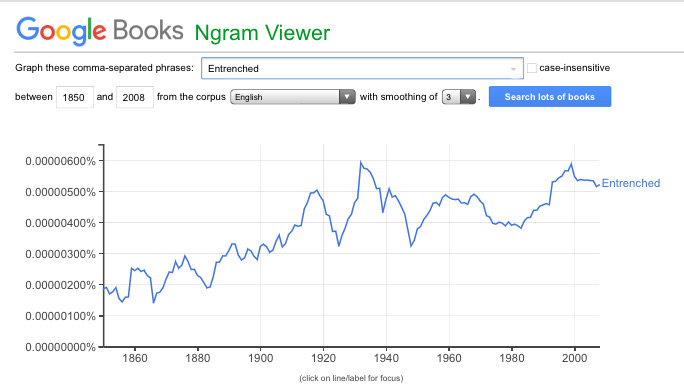
A examination of the word use on the Google Books Ngram Viewer shows its usage overtime. There are spikes in usage during the Civil War and World War I. I find it interesting that there are spikes in the 1930s and the 1990s. Currently, the word “entrenched” is used about as much now as it was during World War I.

If you’ve never used the Ngram Viewer, head over there and play around. You can even compare usage between terms. 
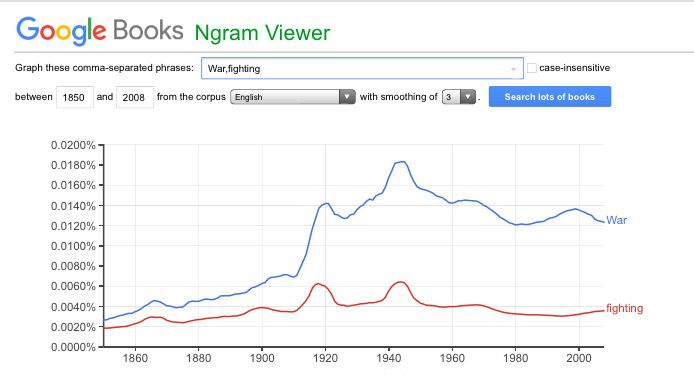
For instance, here I compared war and fighting.

Anyway, back to the museum.
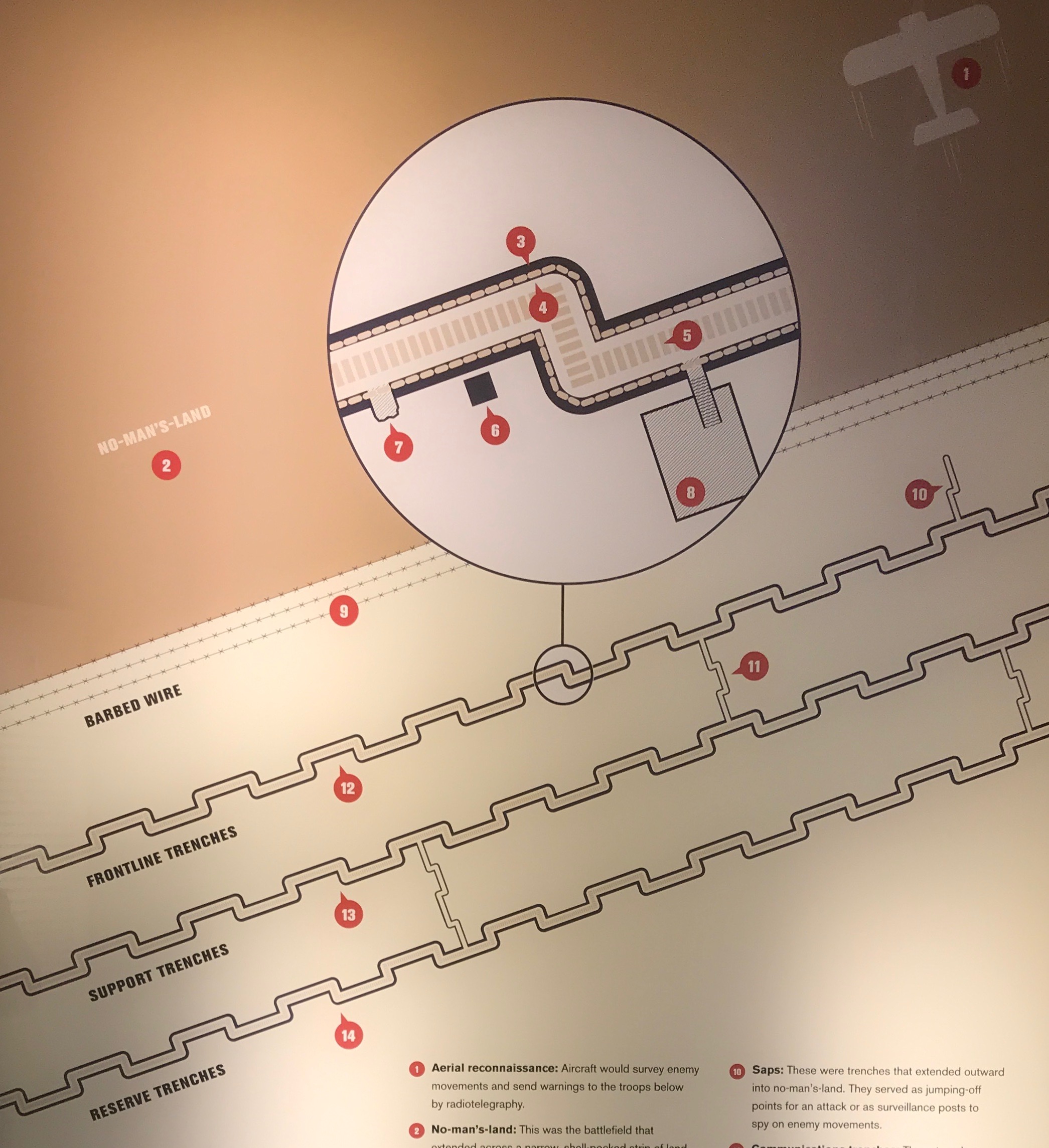
Here is a map of the rings of trenches that are behind no-man’s land and the barbed wire fences. The zig-zag layout was designed to slow down attackers and to provide a little extra protection for the soldiers.

It’s sad that they are using some of the same concepts in designing new schools.
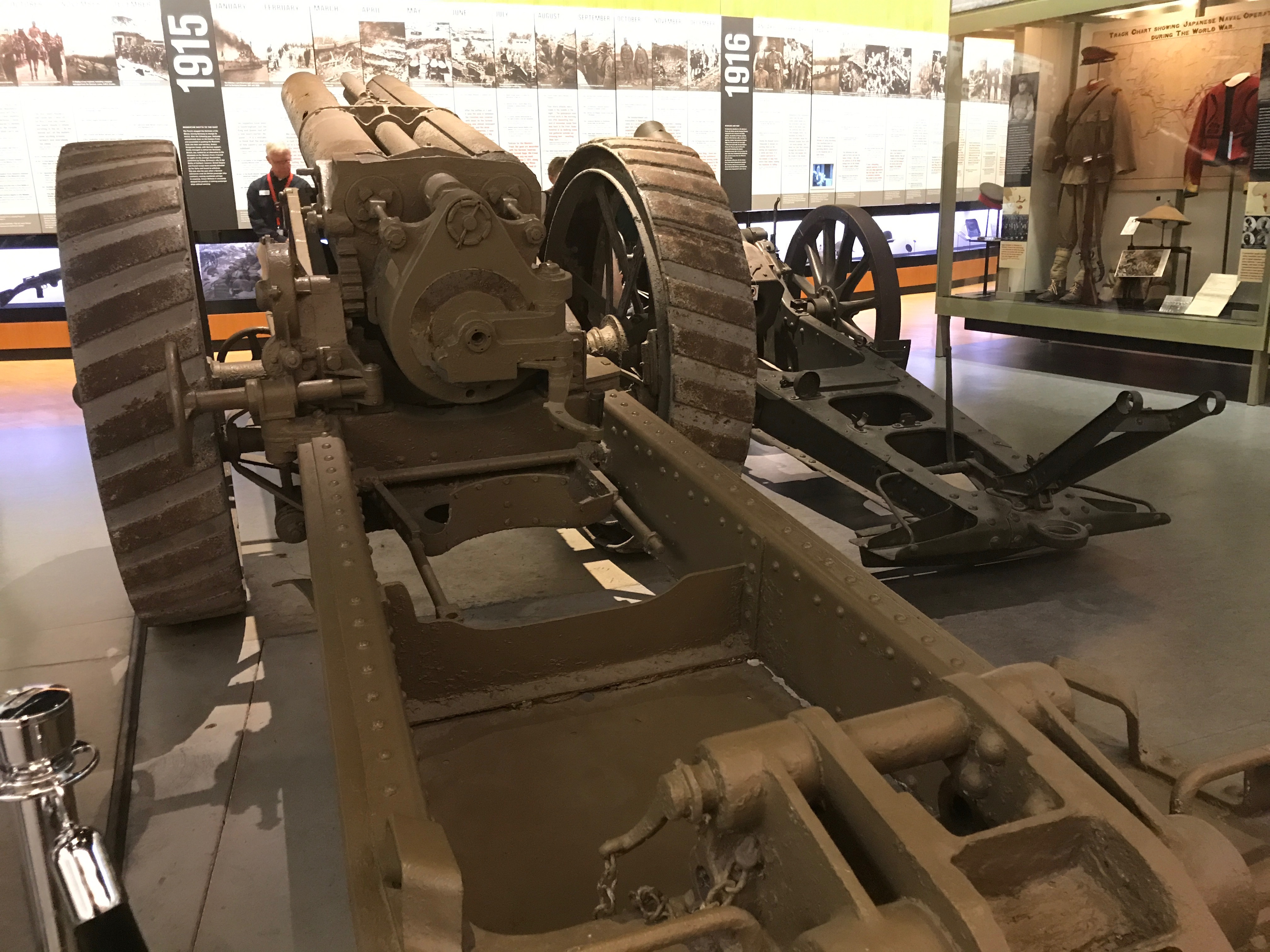
As you might expect, there were ordnance and uniforms on display.
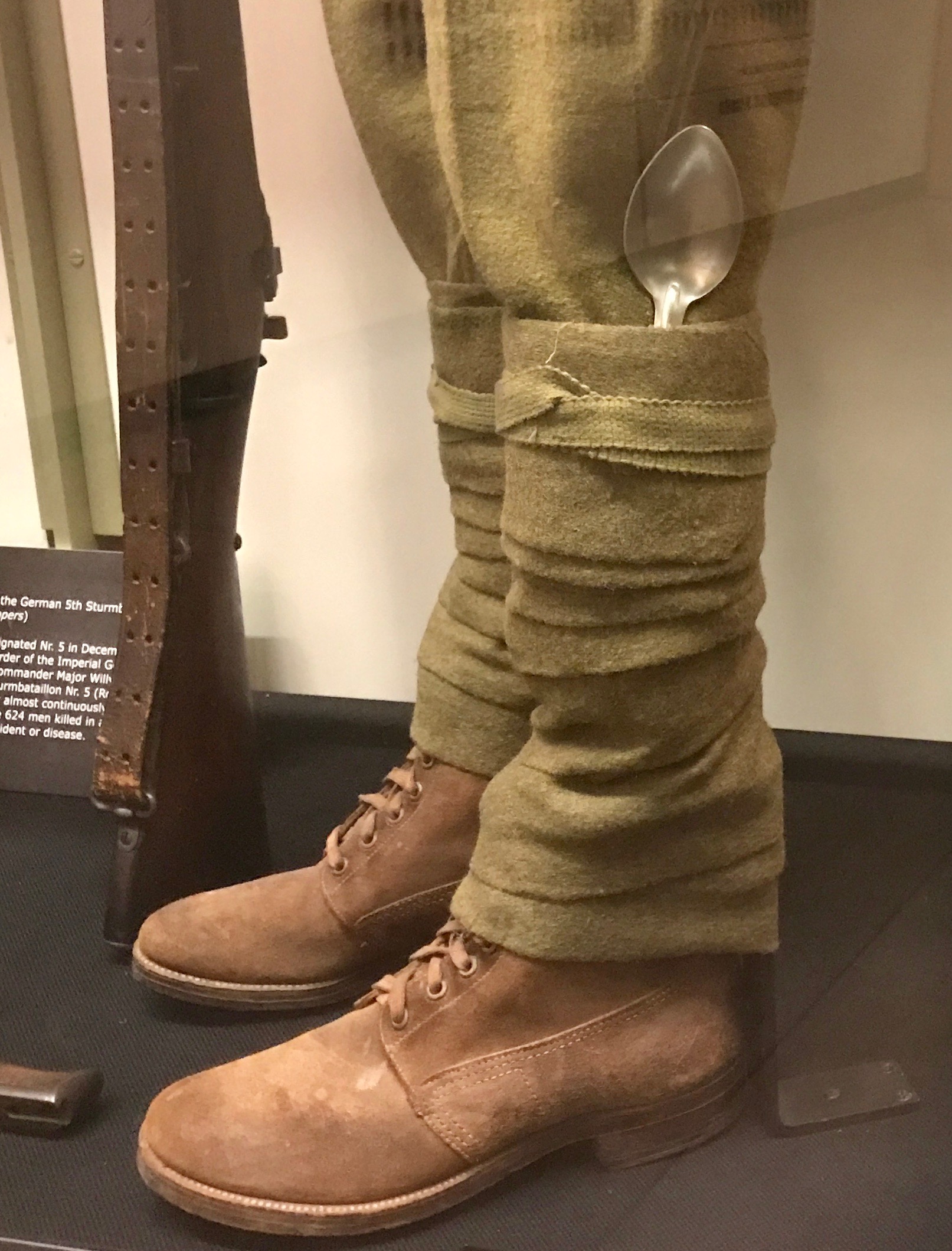
The A.E.F. (American Expeditionary Forces) often carried a spoon in the top of their spiral-wrap puttees in case they unexpectedly found some food. They wore wool uniforms, a steel helmet and hobnail boots. A soldier’s equipment included a U.S. Rifle Model 1903, with bayonet, a cartridge belt, a trench knife for hand-to-hand combat, gas mask, and entrenching tool, which those of us not in the military would probably call a folding spade. He also carried a first aid kit, mess kit, canteen and as many other small comforts as he could manage.

So, why do you suppose a soldier would need to carry a small shovel with him? Well, all that bombing trench making and such created a lot of debris.

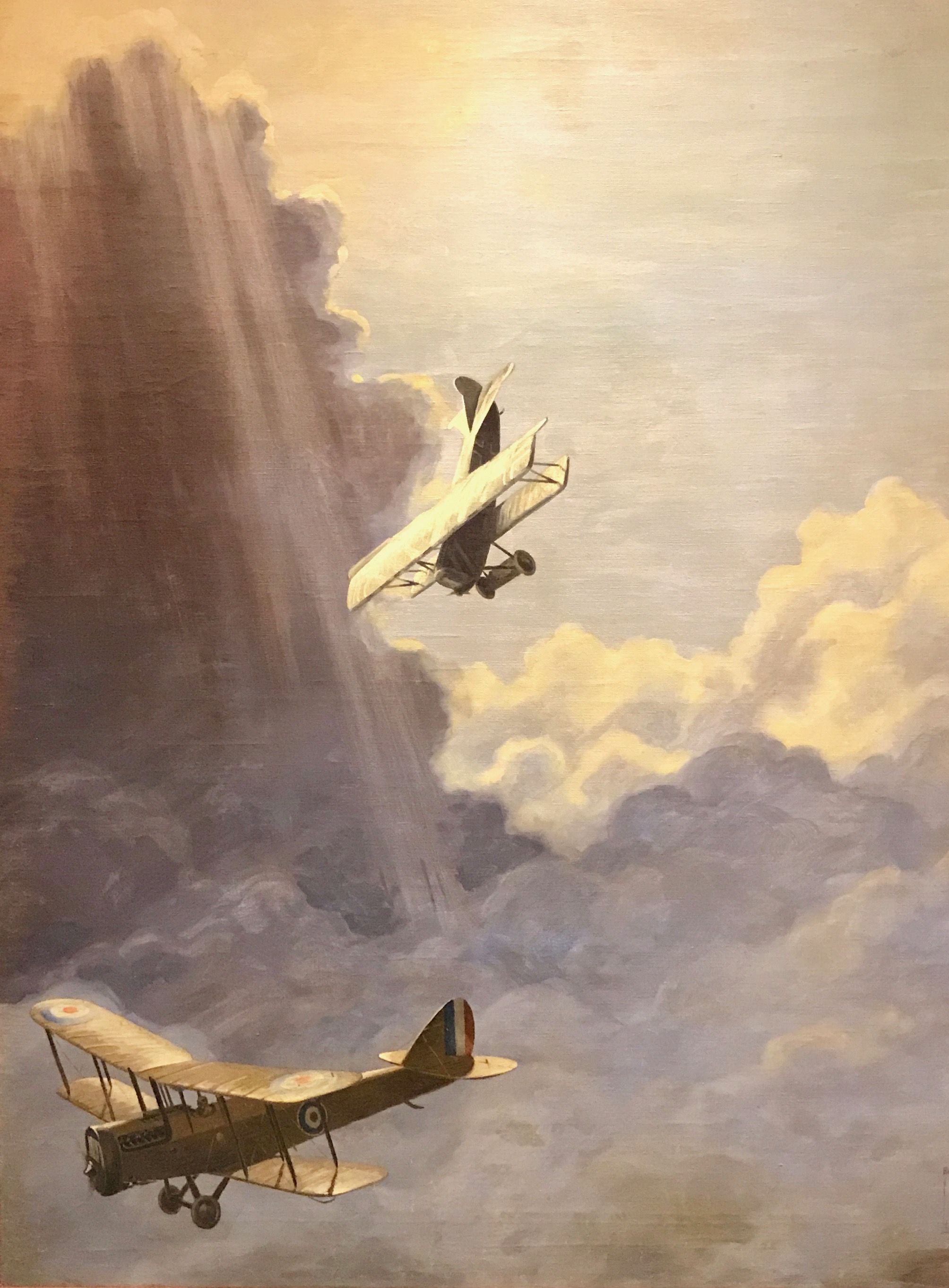
Another concept that might come to mind are the aerial dogfights that Charles Schultz made the baby boomers aware of with Snoopy’s imaginary battles on his doghouse “Sopwith Camel.

They didn’t have a Sopwith Camel at the museum, but they did have this painting. Incidentally, the Airzoo in Kalamazoo has one that is in restoration. I saw it many years ago. I wonder if they are still working on it?

The Germans were the first to use flight schools that required hours of training. Veteran pilots served as instructors to train student pilots thoroughly before sending them to the front.
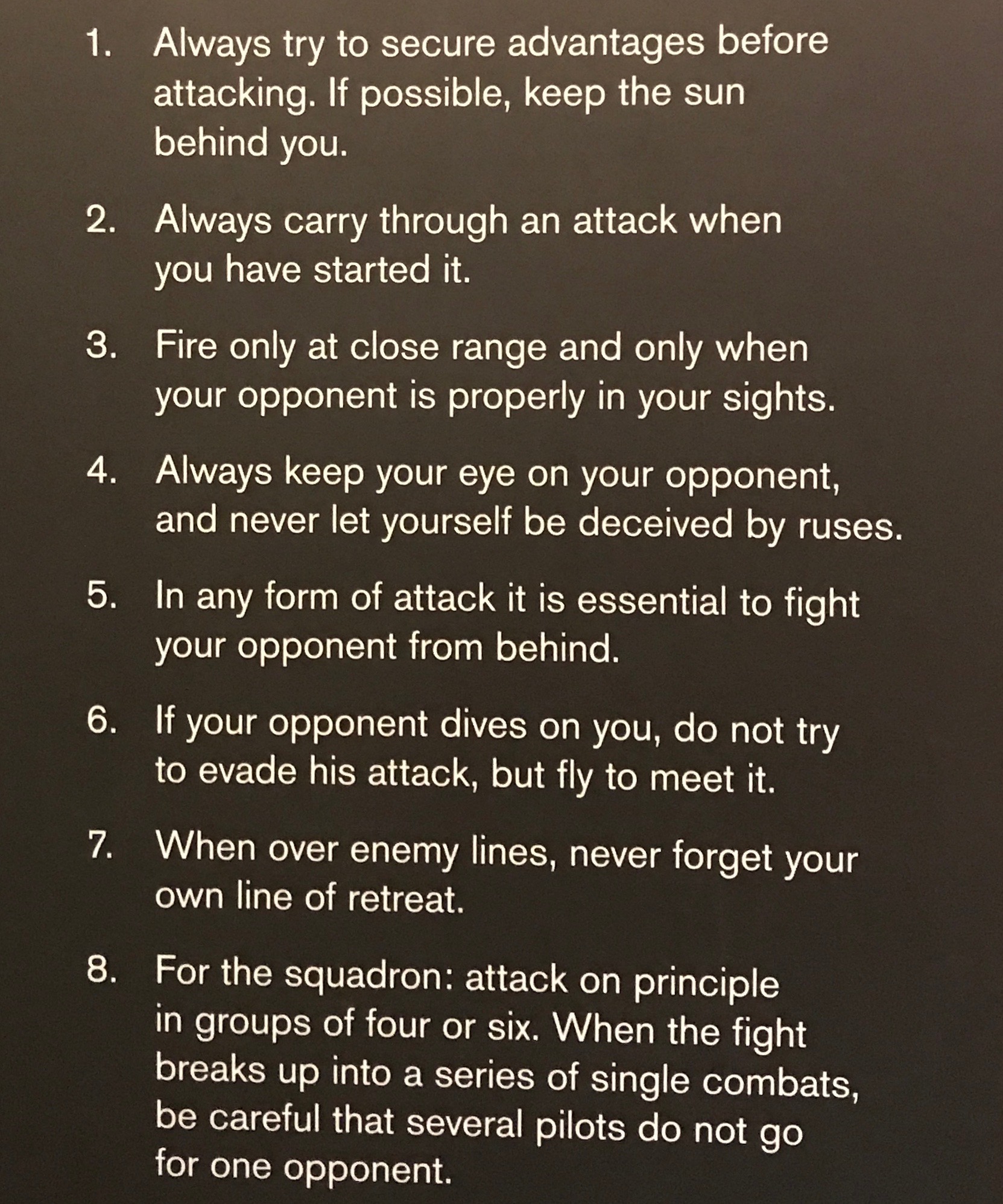
These rules of air combat were written by Oswald Beolcke, Germany’s leading ace at the beginning of the war.
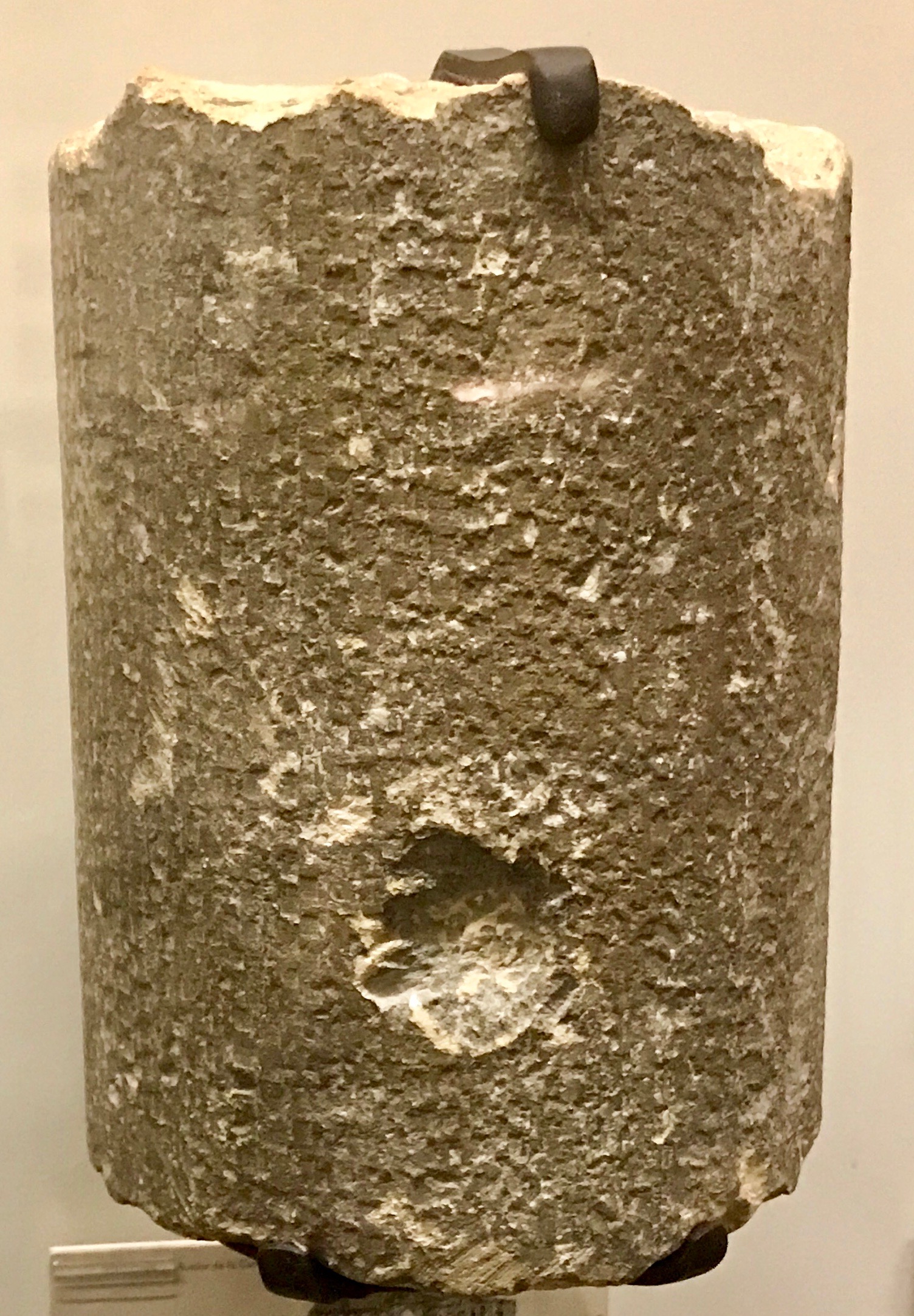
This pock-marked stone is a fragment of a small column from a window surround from the war-destroyed Cathedral of Reims. It was a gift from the Government of the French Republic to the Liberty Memorial and its museum in 1926. The letter that accompanied the fit said: ” May these sacred stones from the land of France recall both an unhappy past and the memory of the imperishable friendship and the union of two great people.”

If it weren’t for the French, the United States would never have been able to defeat the English in our War for Independence.

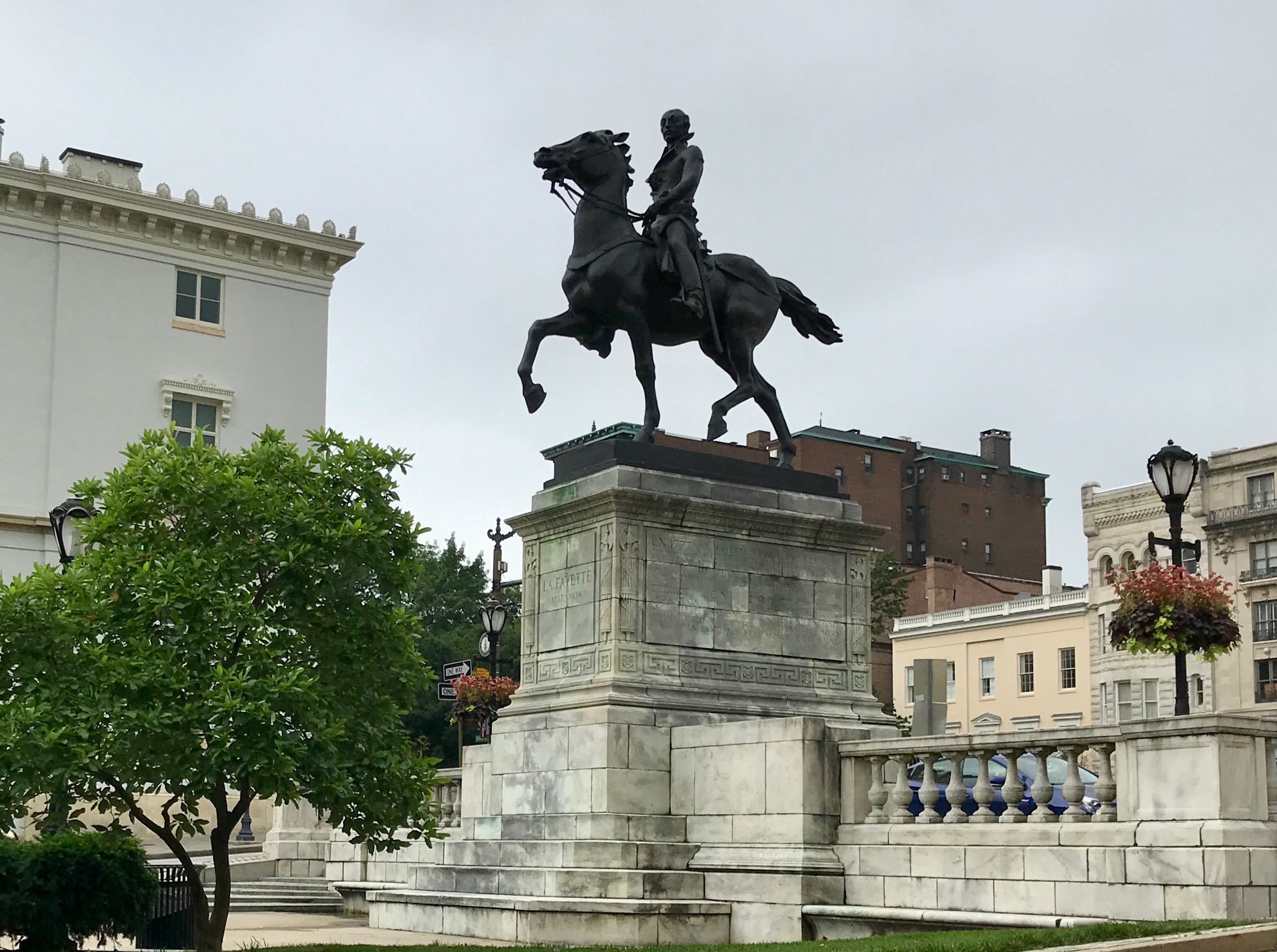
“Lafayette, we are here!”
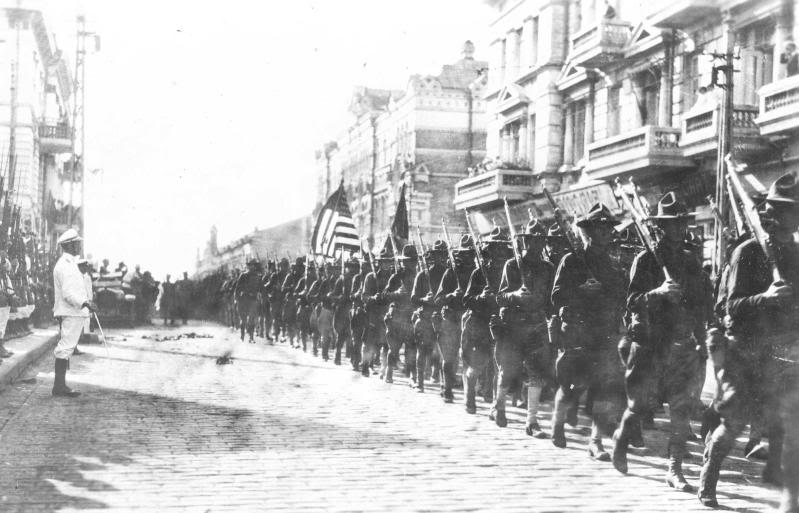
Those words are often attributed to General Pershing, but they were actually said by Lieutenant Colonel Charles Stanton at the grave of The Marquis de Lafayette in Paris when the first contingent of the American Expeditionary Force arrived in 1917.

According to Ian C. Friedman, The Marquis de Lafayette was a 19-year-old military officer who was so moved by reports of the colonial use for independence that he decided to come to America and fight the British. Benjamin Franklin urged General Washington to accept Lafayette as an aide-de-camp because of his strong reputation and because they hoped that the young French officer could help increase French support for the revolutionary cause.

The Marquis de Lafayette died in Paris on May 20, 1834, almost ten years after returning to the United States as an official guest of President James Monroe.  During this visit, he toured every state and traveled over 6,000 miles.  In 2002, an act of the U.S. Congress made Lafayette an honorary citizen of the United States – only the sixth of eight people. He is buried in Paris under soil from the site of the Revolutionary War’s Battle of Bunker Hill.

Ah, but I digress…
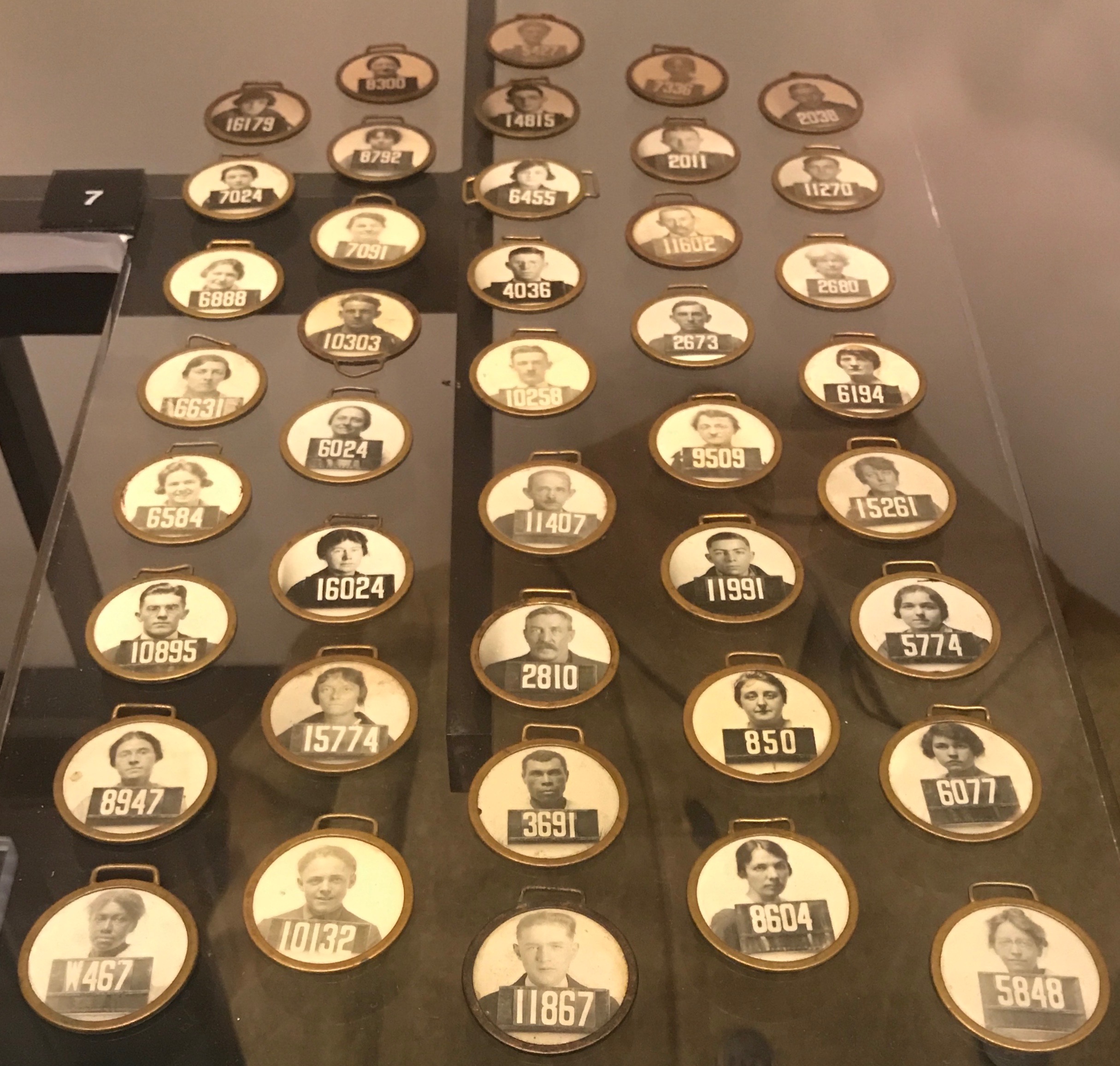
These rather somber photos are worker identity badges. They were worn by workers at the Woodbury, New Jersey, naval ammunition bag loading plant.

Long before the country officially entered the war in April 1917, posters began to make appeals to the “American sense of right and wrong.” Posters urged the country to prepare and, after the sinking of the Lusitania in 1915, to enlist.

After the United States entered the war, the poster campaign shifted into high gear.
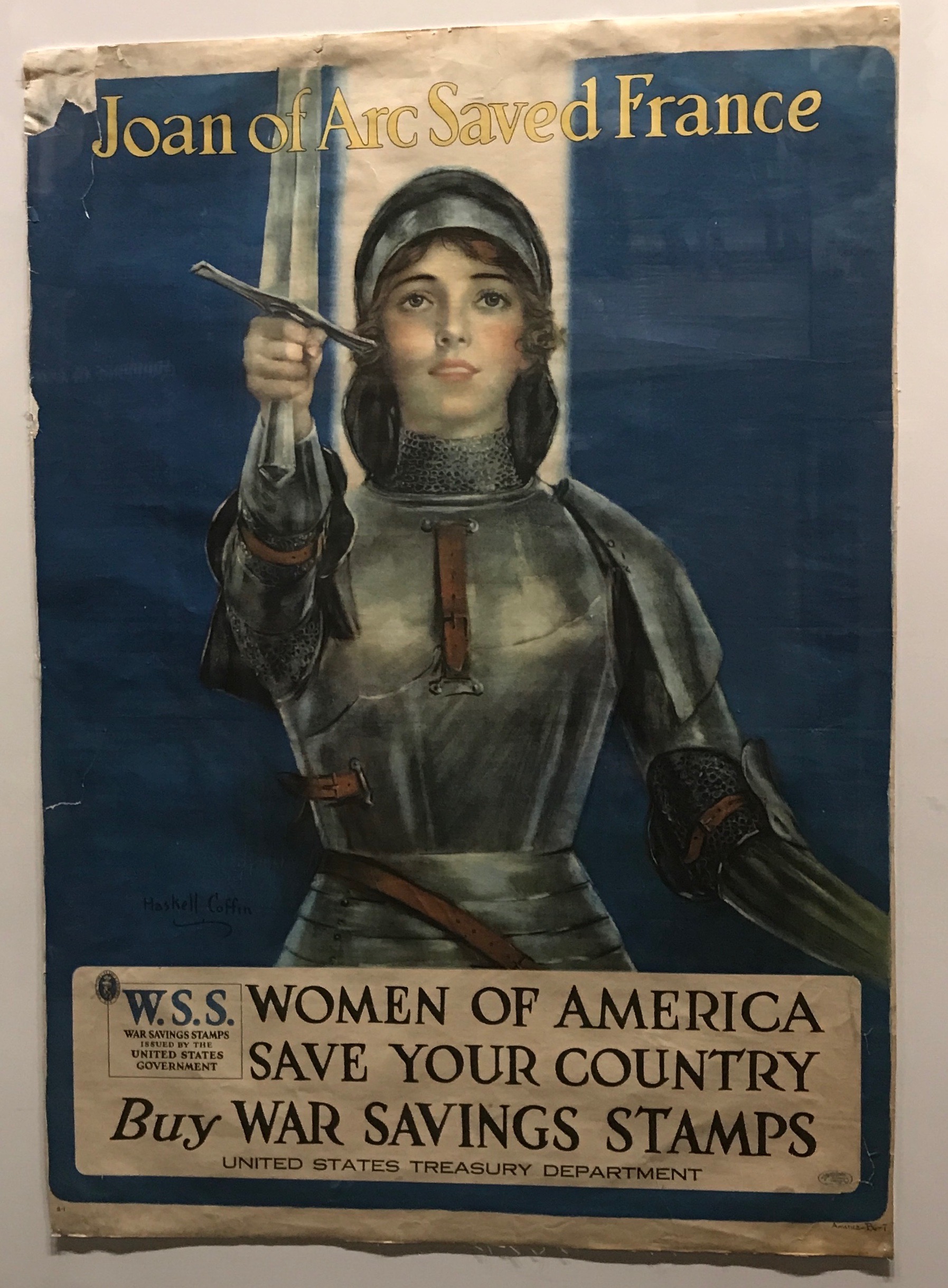
“Posters literally deluged the country,” said one observer.

“On every city street, along the rural highways, posters were to be found repeating their insistent messages day and night.”
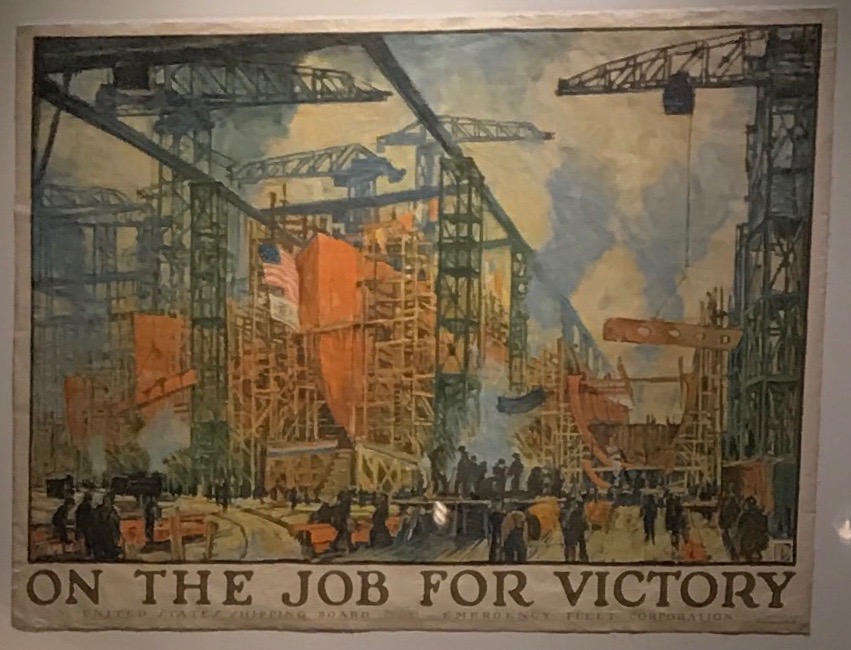
In many instances, art organizations and individual artists the highest standing volunteered their services to make posters. James Montgomery Flagg painted a self-portrait as Uncle Sam in 1917, creating probably the most recognizable poster from the war.
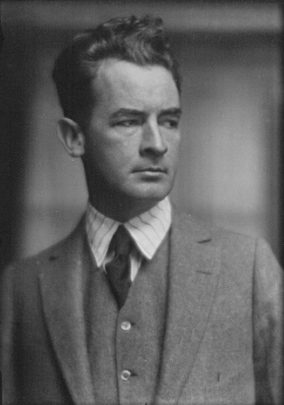
Flagg used his own face for that of Uncle Sam, although he did add age and the white goatee. He said that he did it to simply avoid the trouble of arranging for a model. When it was revived during World War II, President Roosevelt praised his resourcefulness for using his own face as the model.
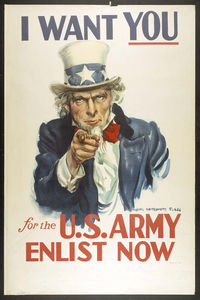
Do you see the likeness?
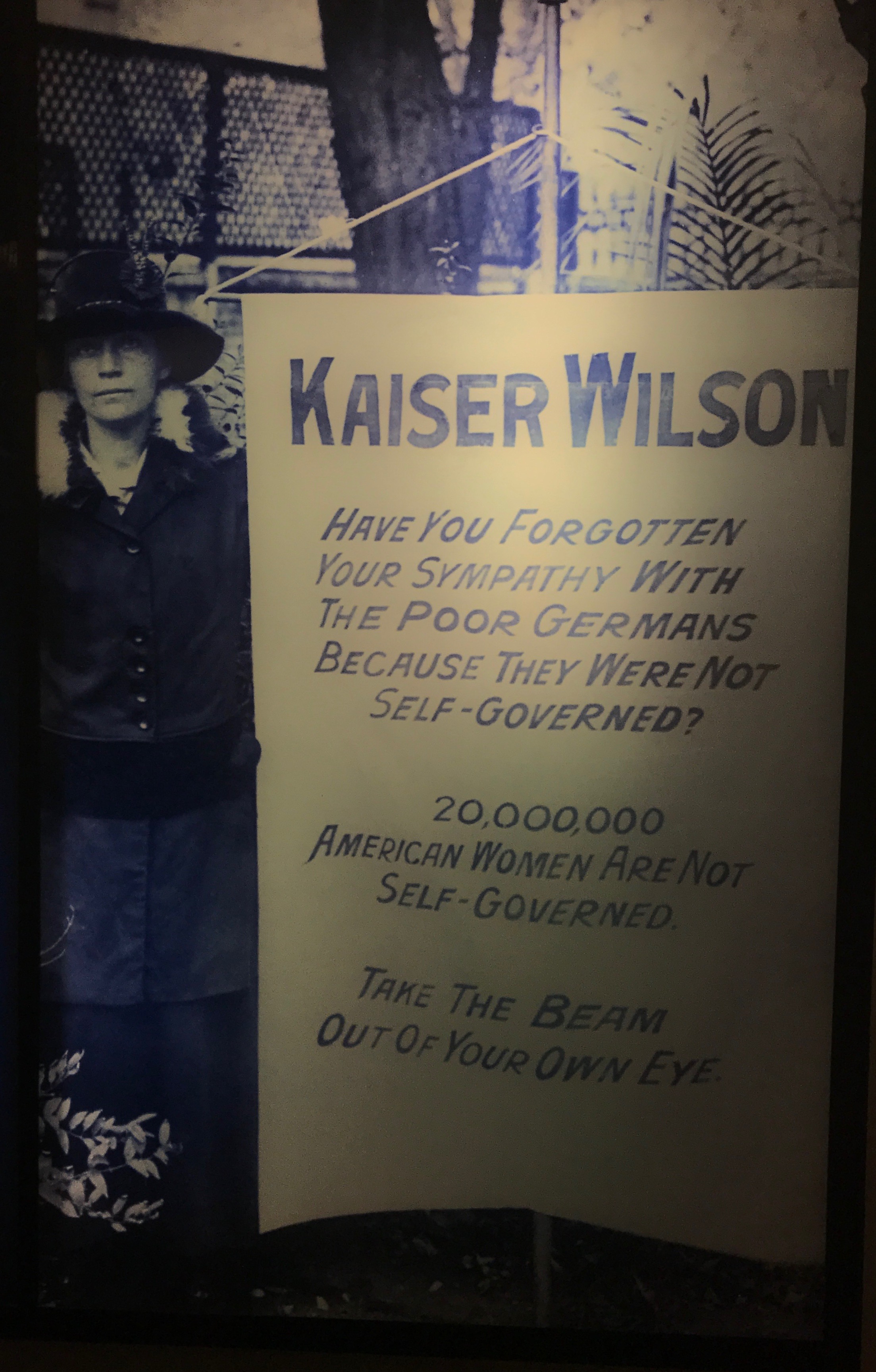
Not everyone was gung-ho enthusiastic about the war. Women continued to advocate for the right to vote. It’s hard to believe that half the population was disenfranchised by gender until 1920.
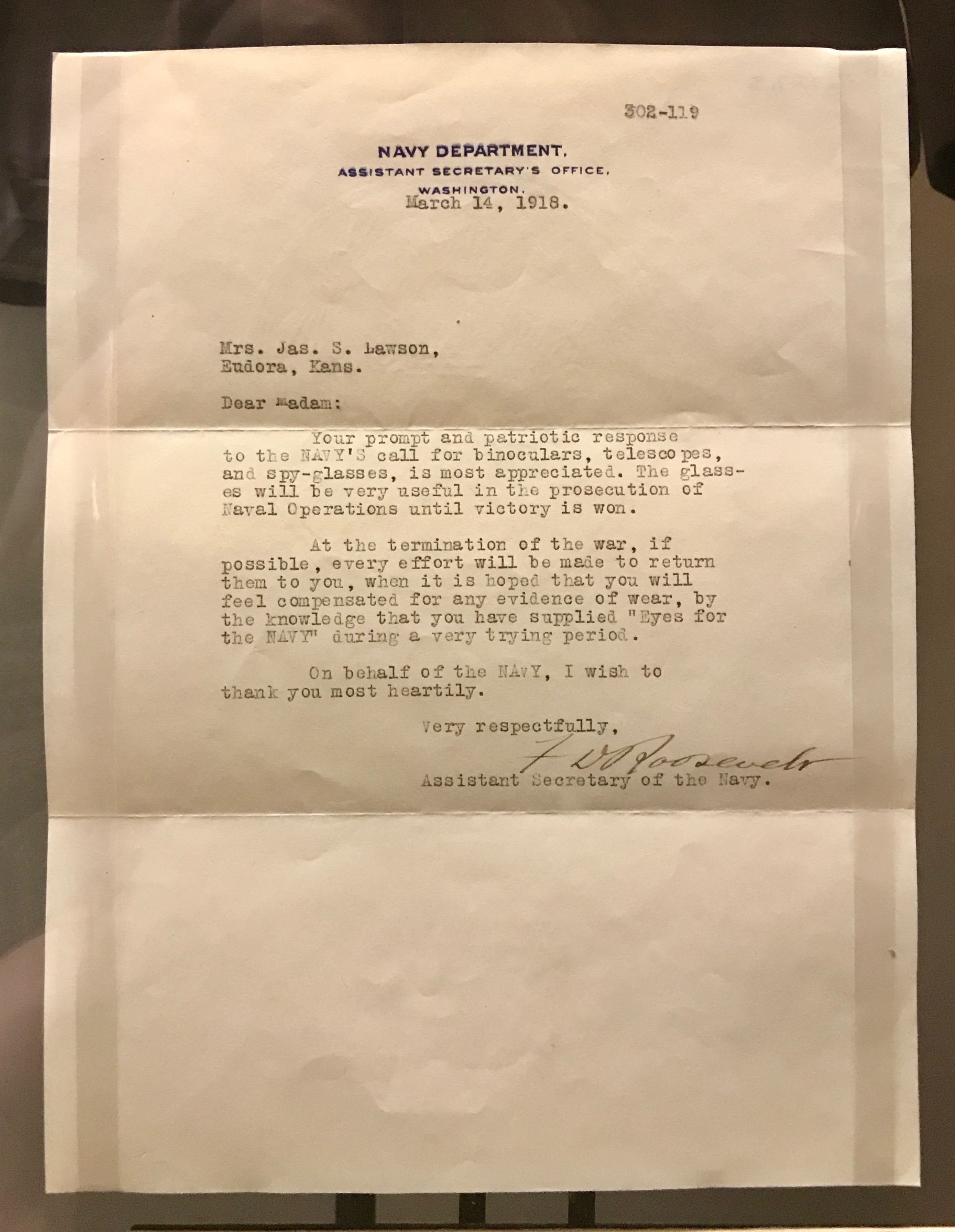
This letter caught my attention. Let me zoom in on the body of the letter so that you can see it clearly.
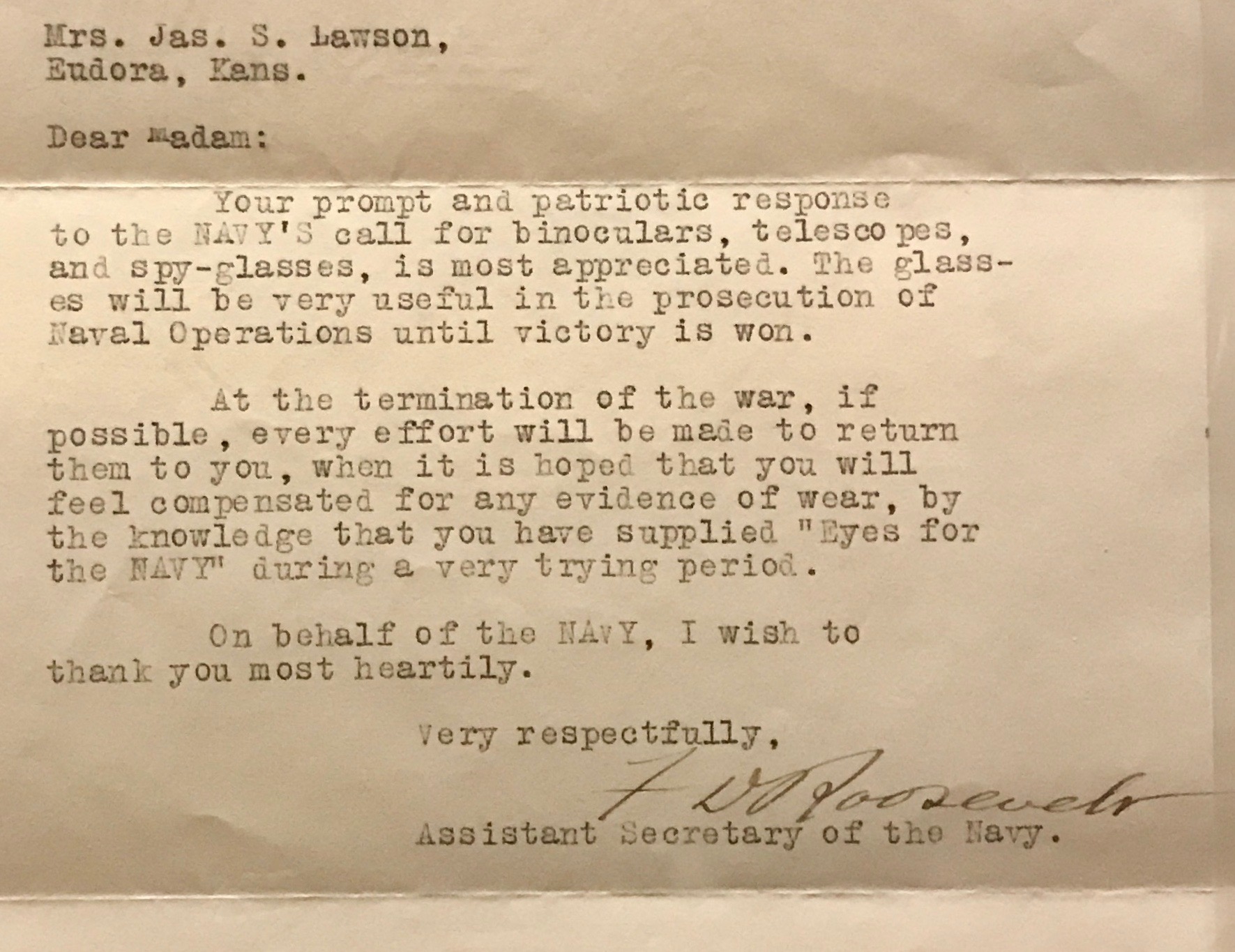
Can you imagine asking people to send in their binoculars? I guess they had to ramp up the military quickly and that they didn’t have a large stockpile of equipment. I wonder why NAVY is capitalized? And, did you notice who signed the letter? FDRoosevelt.

I have just a few more artifacts to share.
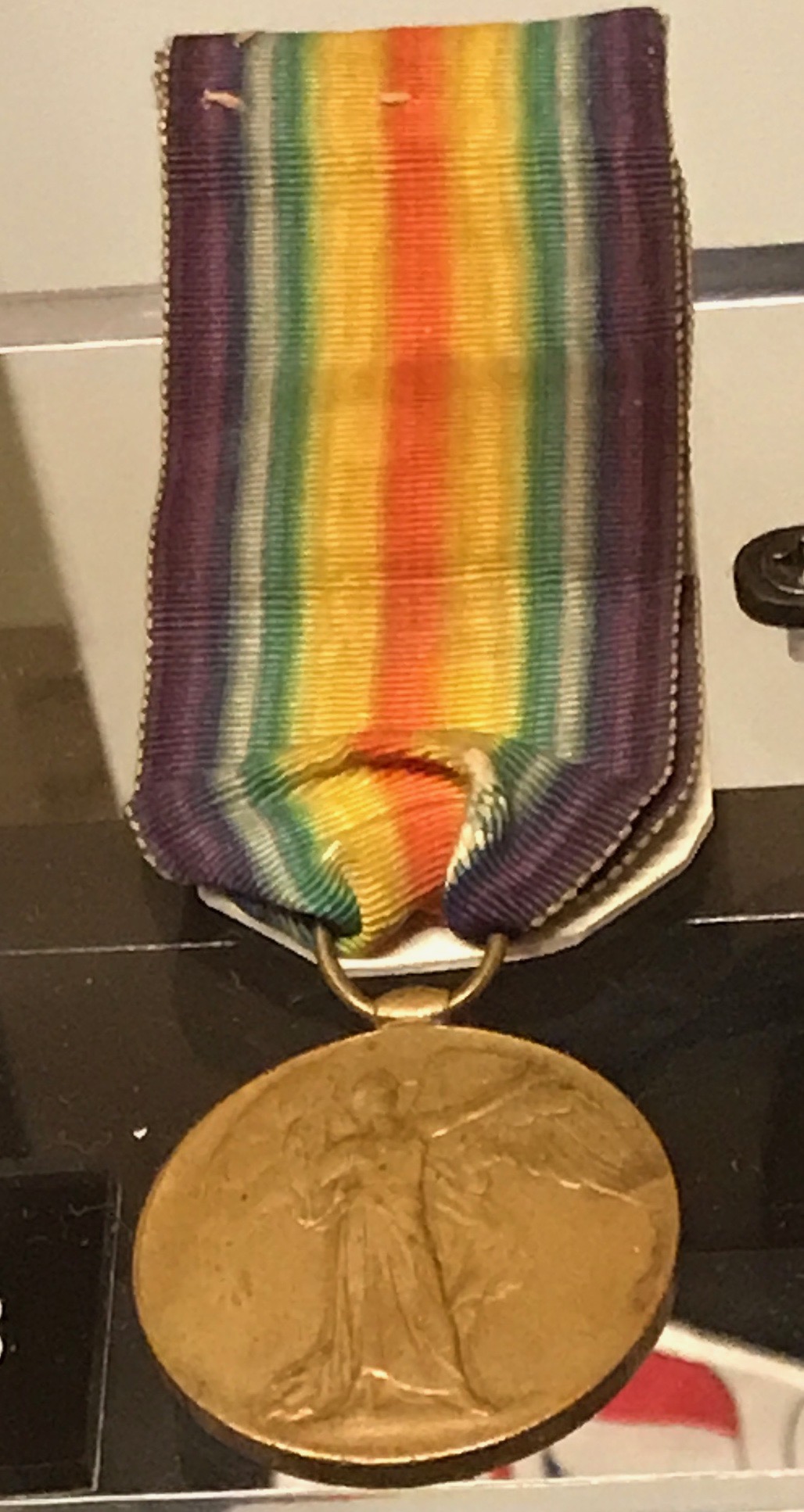
My grandfather, who served in the Canadian army, had a medal like this one. I had it for many years, but gave it to my brother when I set out to tour the country in the Airstream back in 2014.

And some poppies…
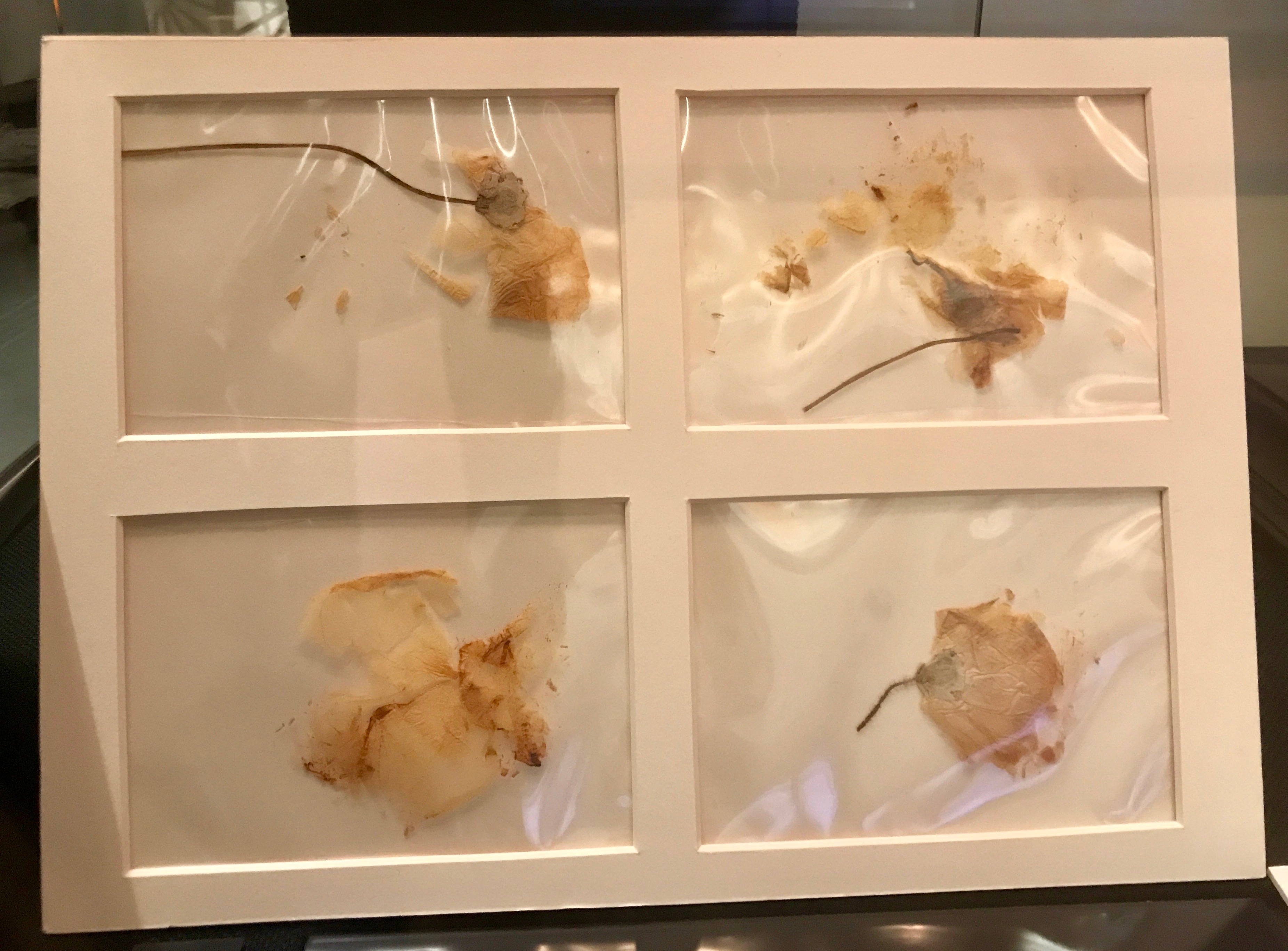
These poppies were gathered from Belgium’s Flanders Fields by Arthur Massey, 20th Field Artillery, 5th Division, A.E.F.

And with that, it was time for me to head back into the sunshine.
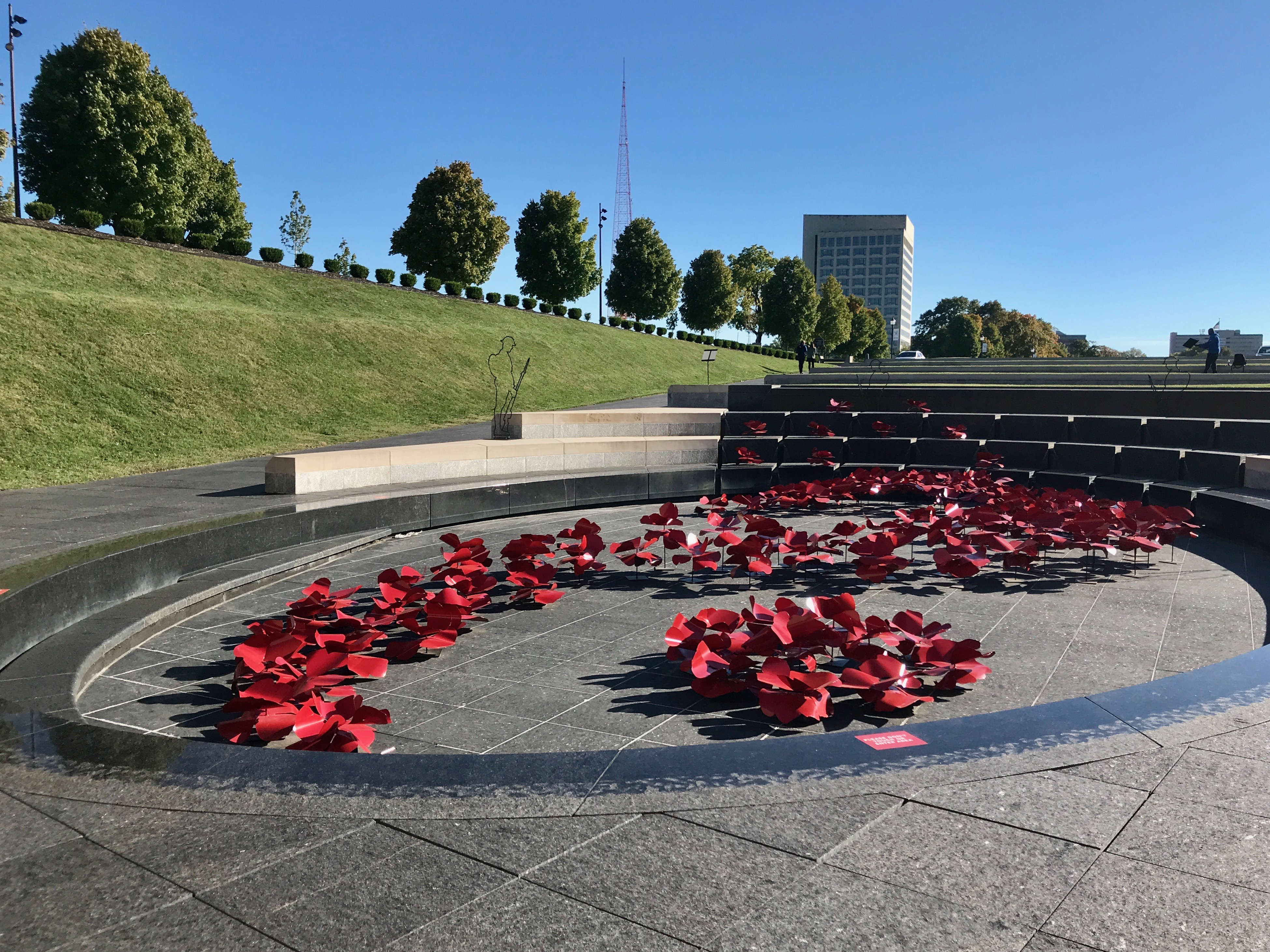
And go find my car.
Oh, Say Can You See?

My next stop of touristic importance was Fort McHenry in Baltimore, Maryland – you know – Francis Scott Key and the bombs bursting in air and all that.

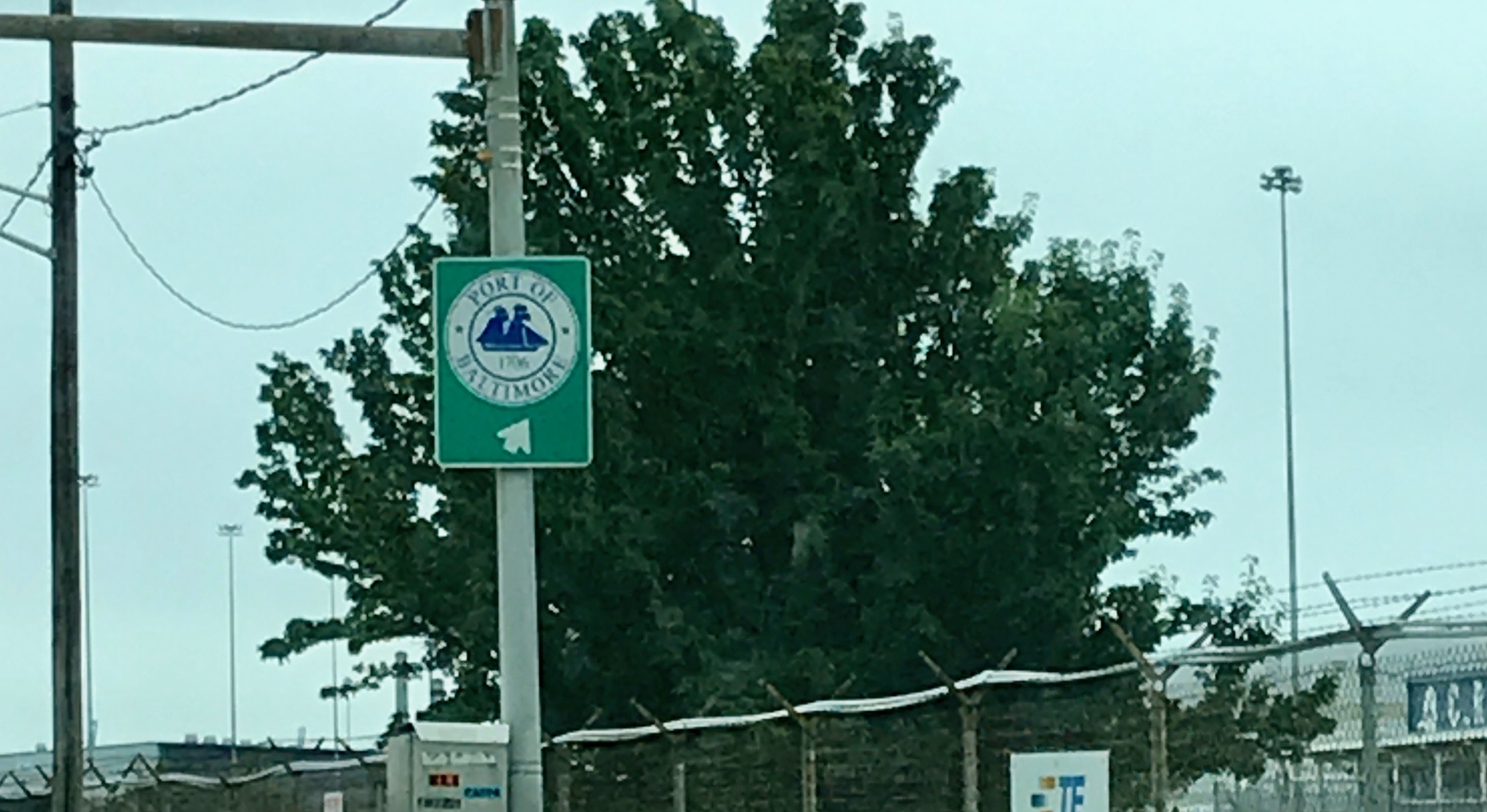
I made my way there with the help of Google maps and the signs pointing the way to the port of Baltimore.

I passed through the gate and headed toward the visitor center. Since I had an America the Beautiful pass, I didn’t have to pay the entrance fee. I’d say it was free, but the pass cost $80. However, the pass is good for the rest of my life, as long as I don’t loose it.
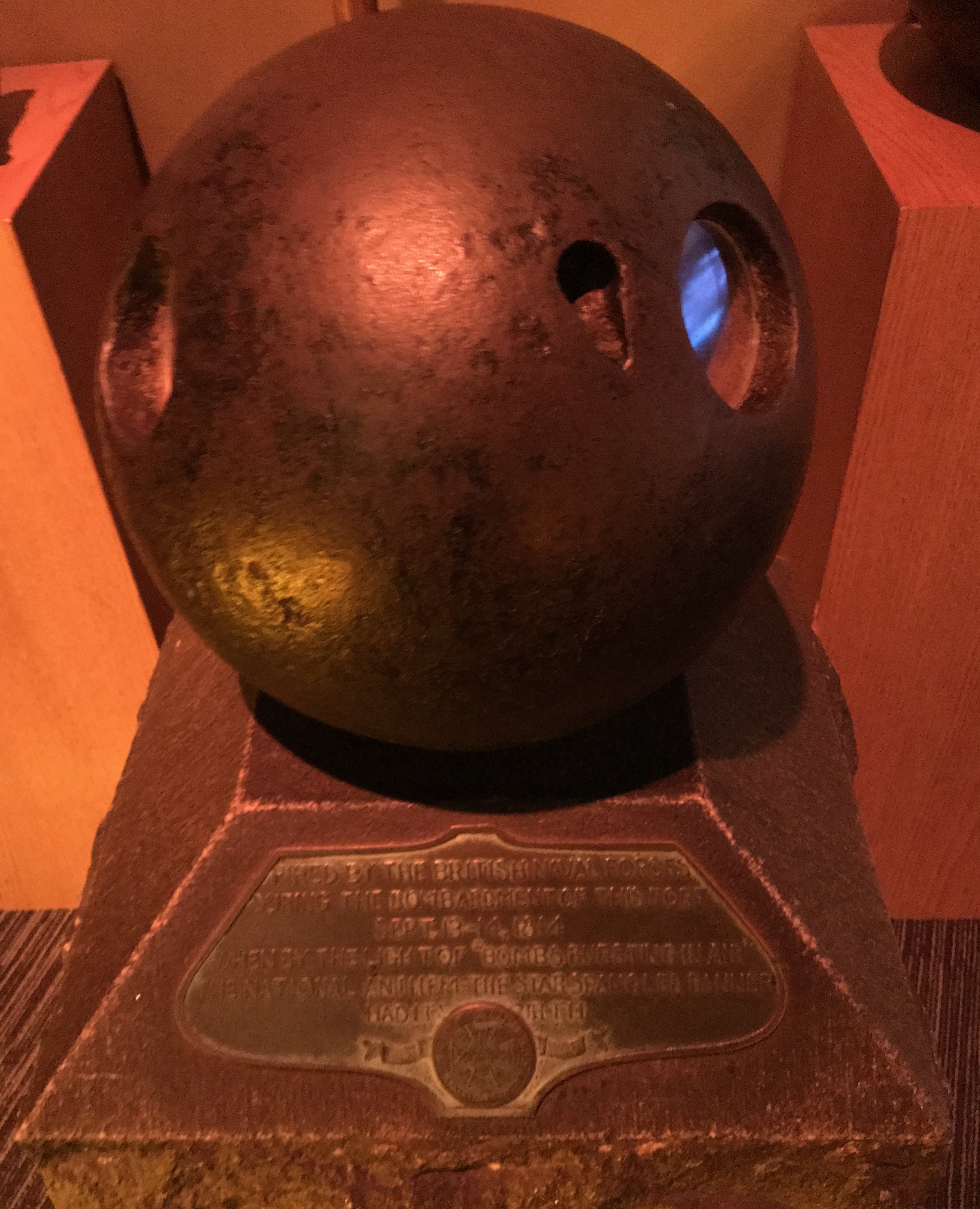
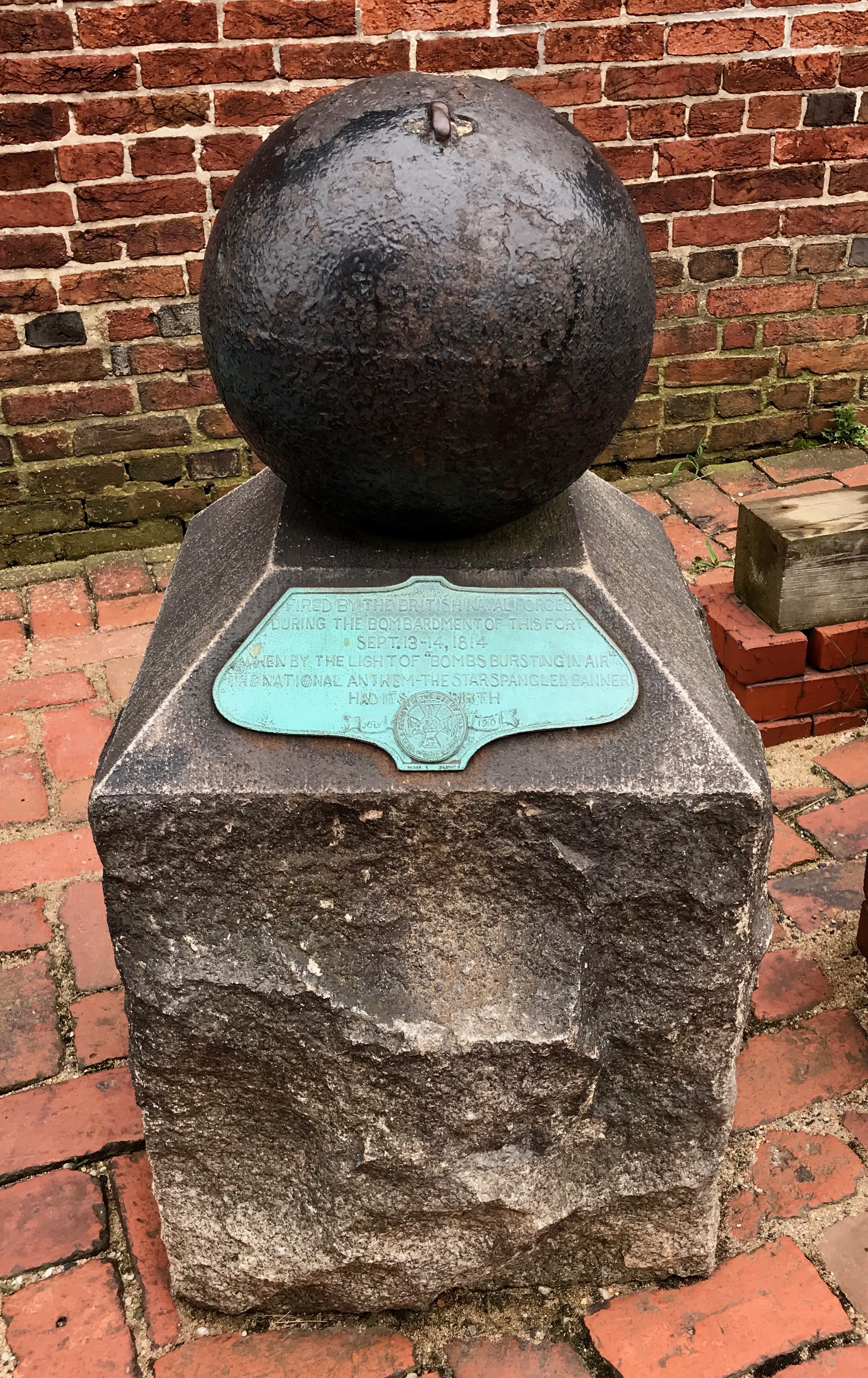
I wandered about and looked at the various displays while I wait for my turn to watch the video presentation. The plaque on this reads:

Fired by the British Naval Forces
during the bombardment of this port
September 13-14, 1814
when by the light of “bombs bursting in air”
the national anthem – The Star Spangled Banner”
had its birth.

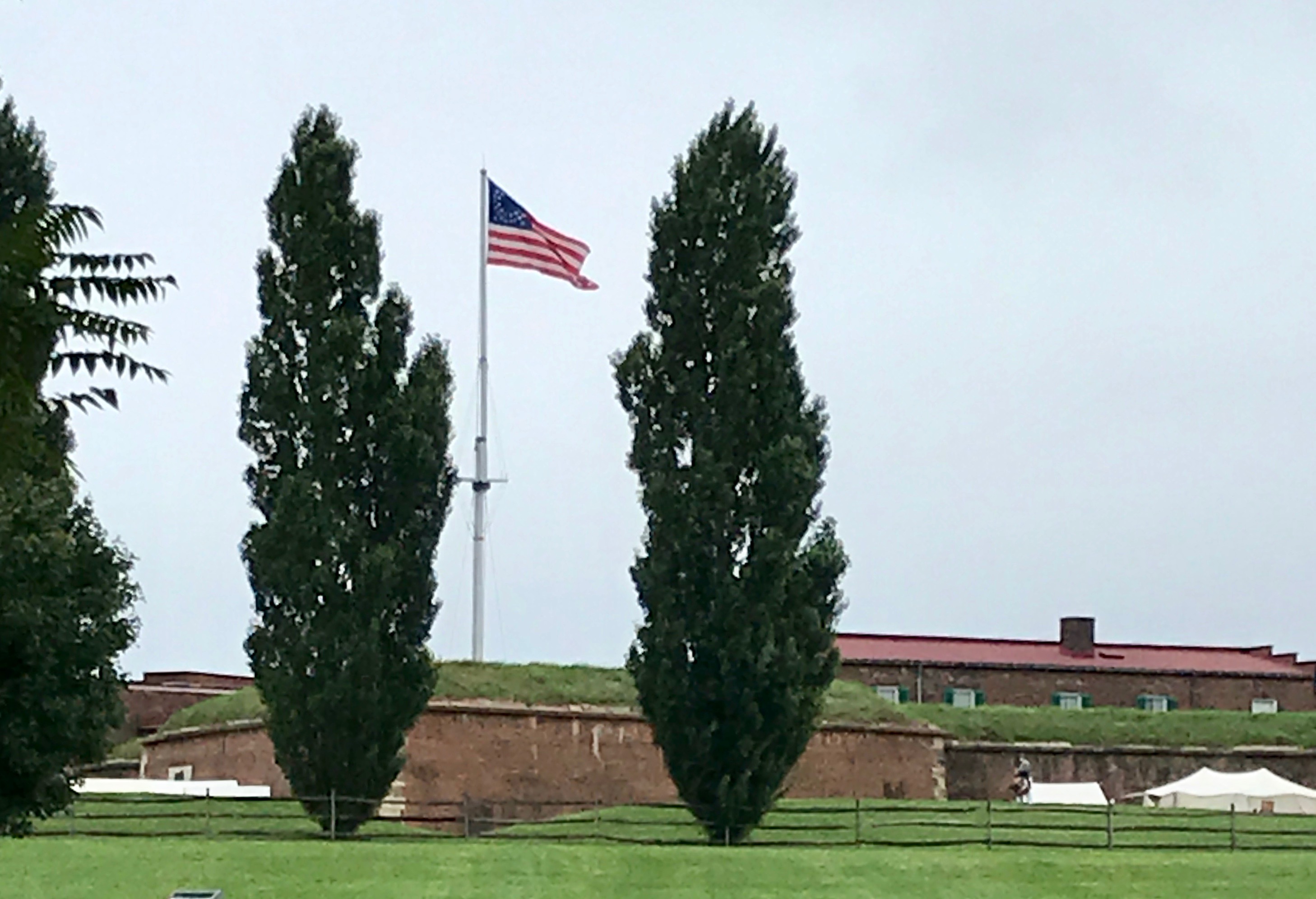
It was time for my group to enter. It was actually quite a good film, but what I remember most vividly was the end. They played The Star Spangled Banner and raised the curtain to show us Fort McHenry, with the flag waving in the breeze. This was during one of the semi-frequent arguments about showing respect for the flag. I noticed that no one stood, so I decided to lead the crowd. Eventually, all got to their feet. Was it out of respect or because the movie was over? I guess we’ll never know.

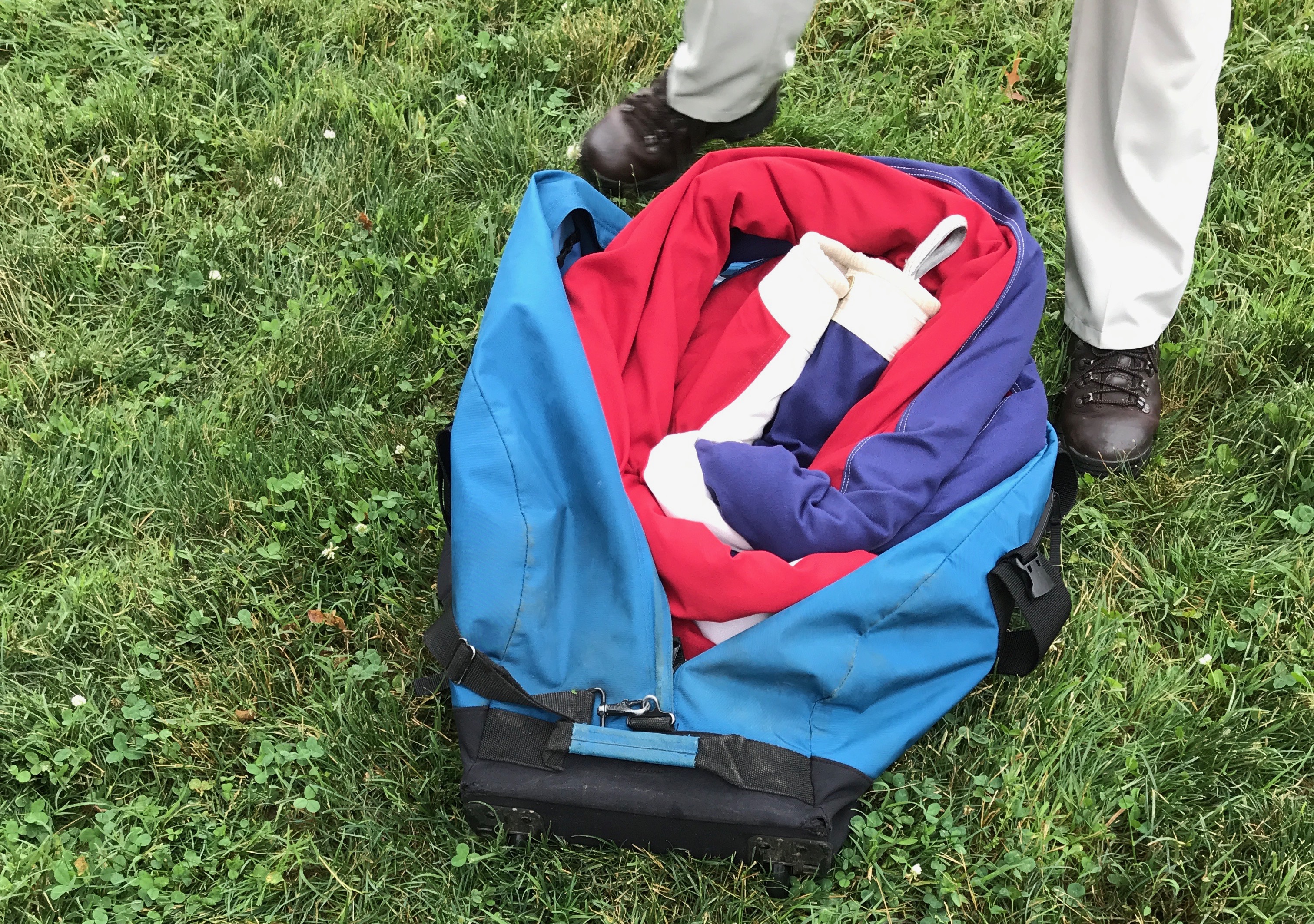
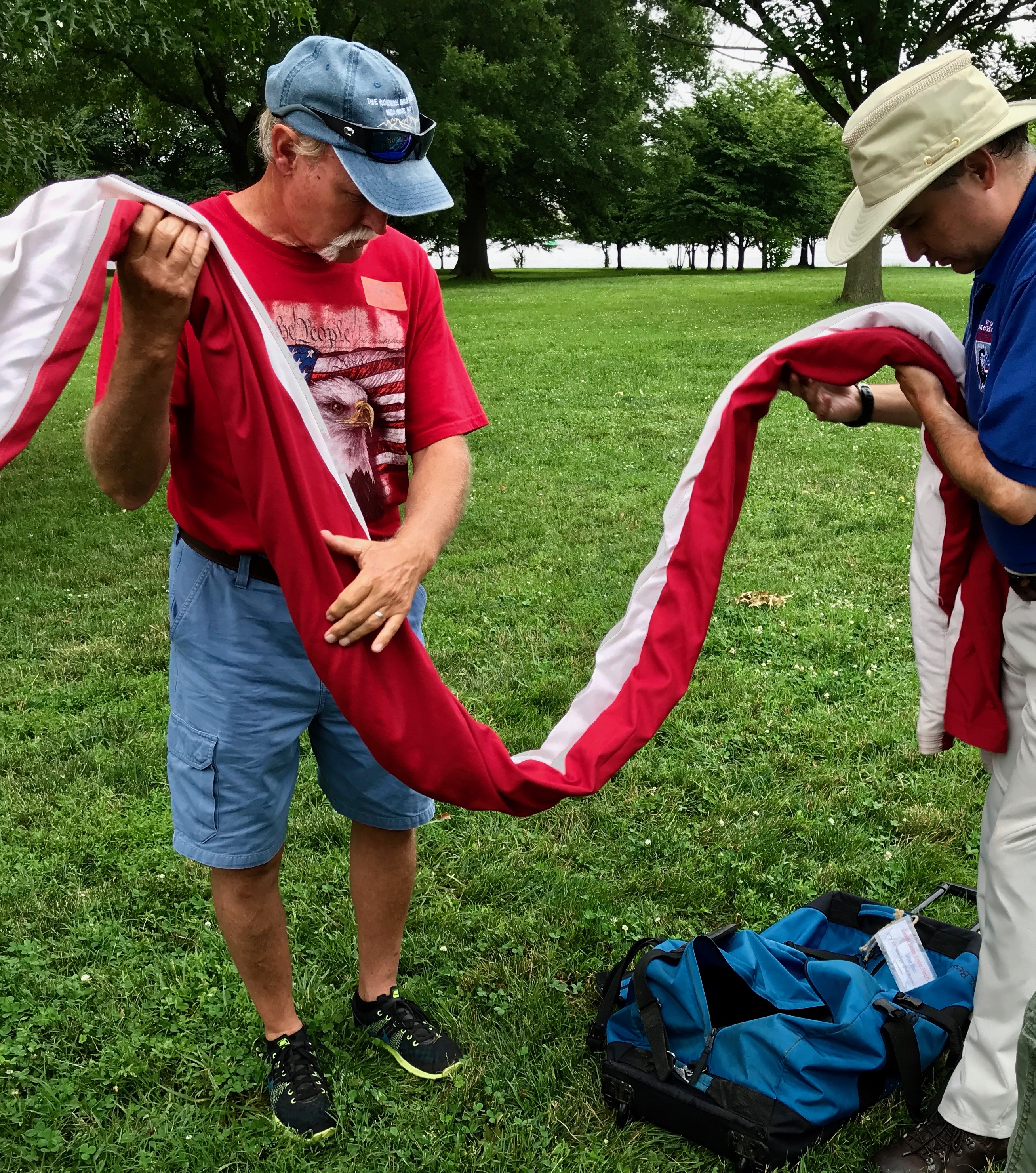
We had the opportunity to meet with a volunteer who would talk with us about the flags that are in use at Fort McHenry. For instance, larger flags are typically rolled and stored in bags, rather than the triangle fold that we are more familiar with.

Those of us taking part helped him remove it from the bag.

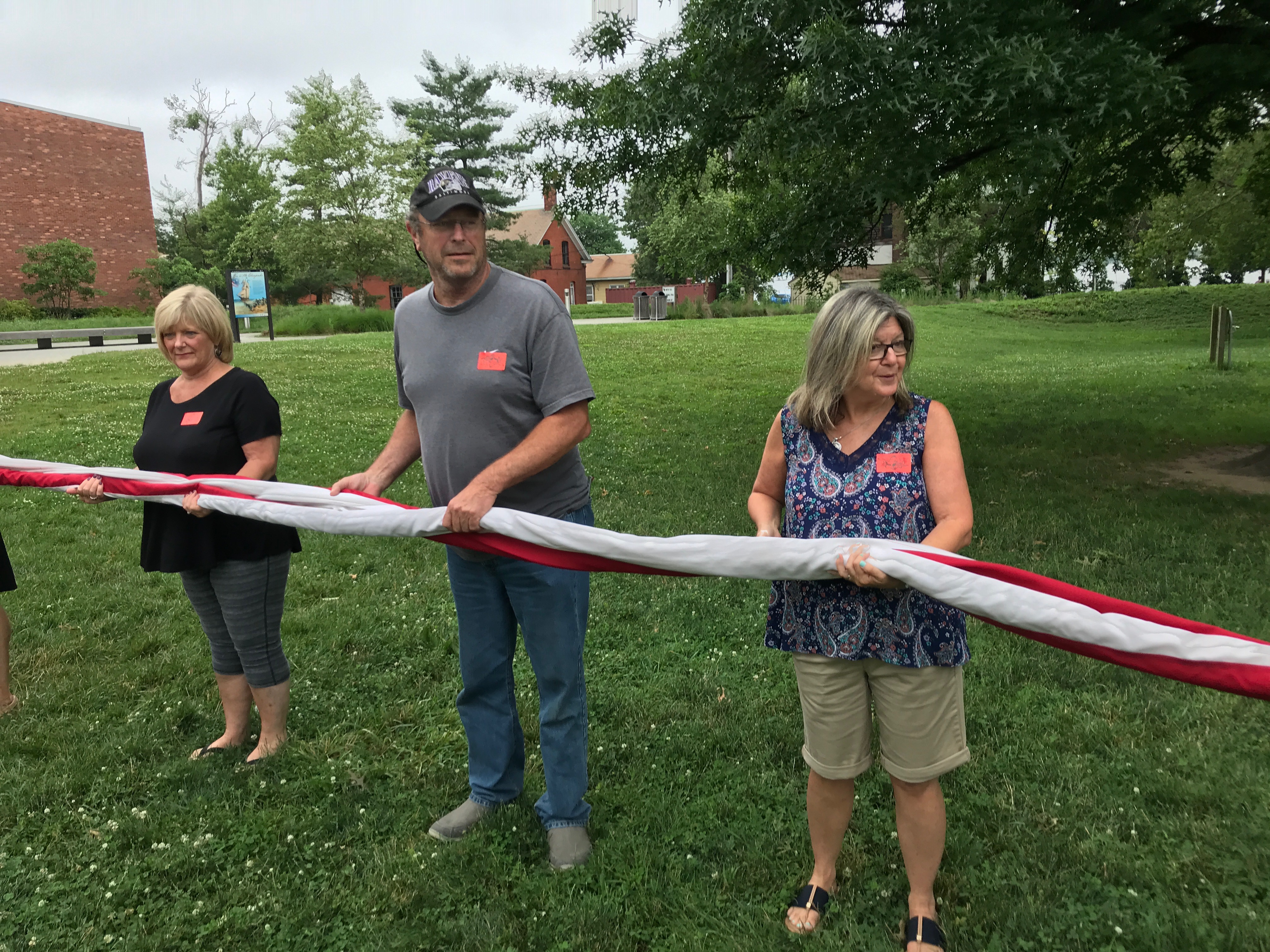
Half of us were on one side, holding the rolled flag.

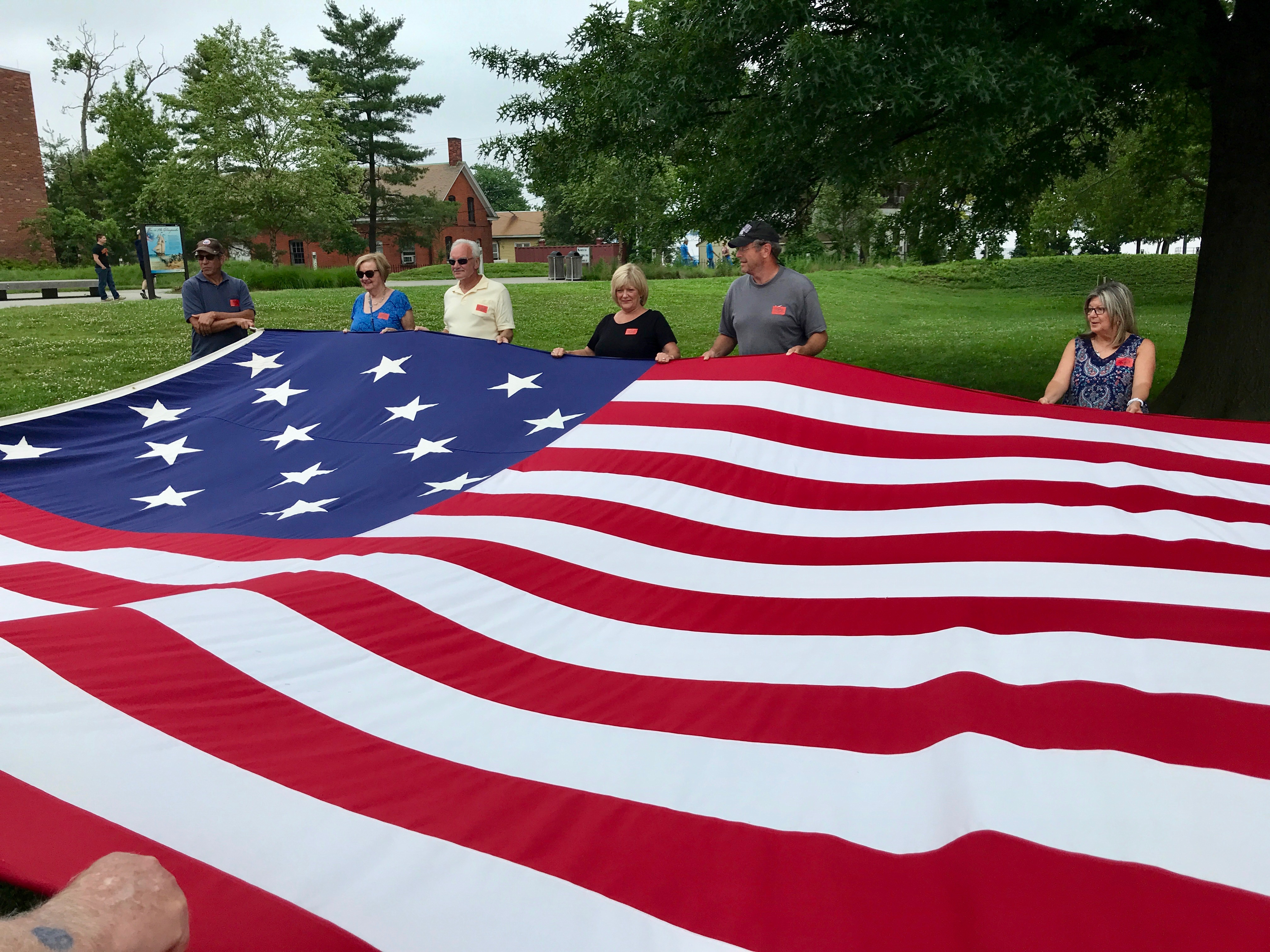
The other half joined in and helped unfurl the flag.

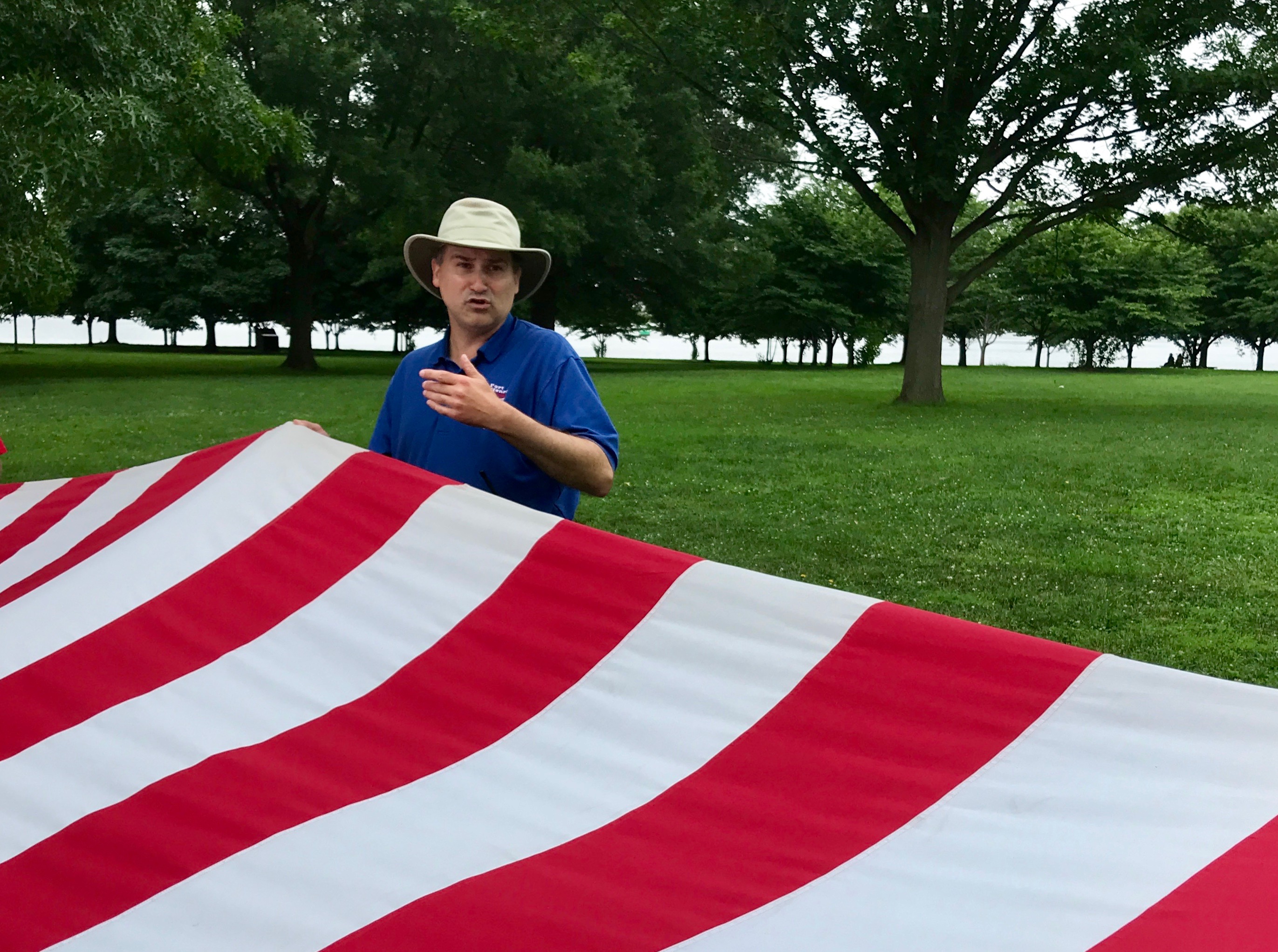
The volunteer shared some information about the flag.

For instance, this is a copy of the flag that would have been flying in 1814. You might not have noticed it, but there are 15 stripes as opposed to the 13 stripes we have today. This became the official flag of the United States on May 1st, 1795. Two stars and two stripes were added for the admission of Vermont and Kentucky.

This flag was the nation’s flag for 23 years, and five presidents served under it:

George Washington (1789-1797)
John Adams (1797-1801)
Thomas Jefferson (1801-1809)
James Madison (1809-1817)
James Monroe (1817-1825)

By the time James Monroe left the White House, it looks like there were 24 states in the Union. Can you imagine what the flag would have looked like if they had continued adding a stripe for each state? It would be a very different looking flag!

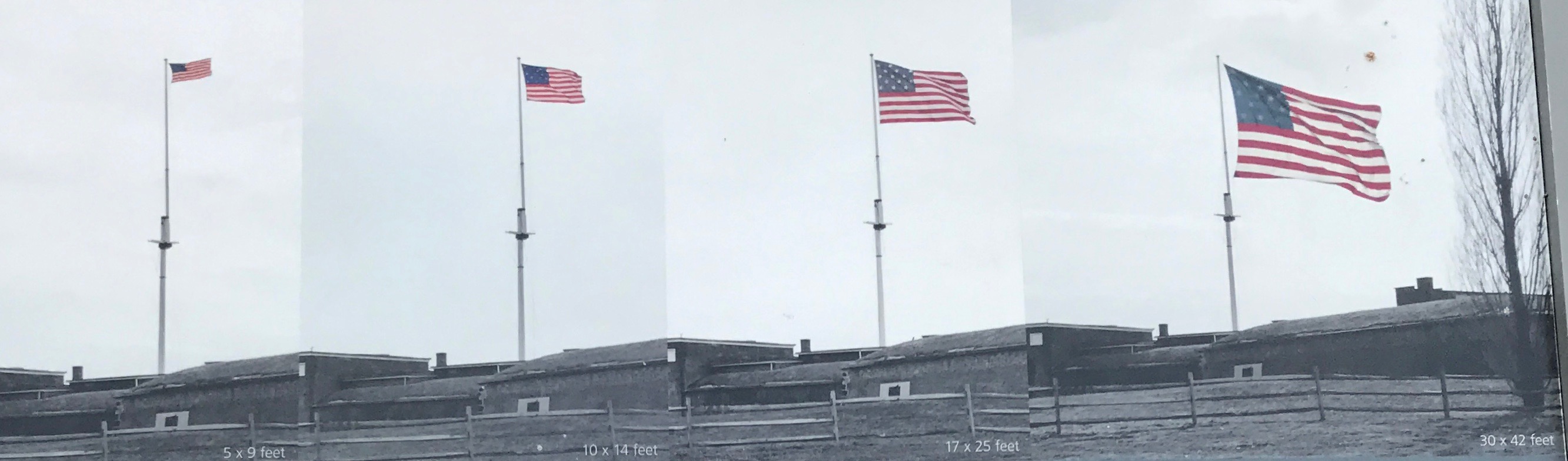
There are four different styles of flags flown at Fort McHenry. On clear days with the right amount of wind, a full-sized replica of the Star-Spangled Banner, measuring 30×42 feet with fifteen stars and strips waves. The fort also flies smaller versions of this flag. On rainy days and at night, a small, modern 50-star American flag is flown. At night, the flag is illuminated by lights powered by solar panels.

We furled the flag and returned it to its bag and set off for the fort.

Hmm…
This flag doesn’t look quite like any in the chart. Oh, well.

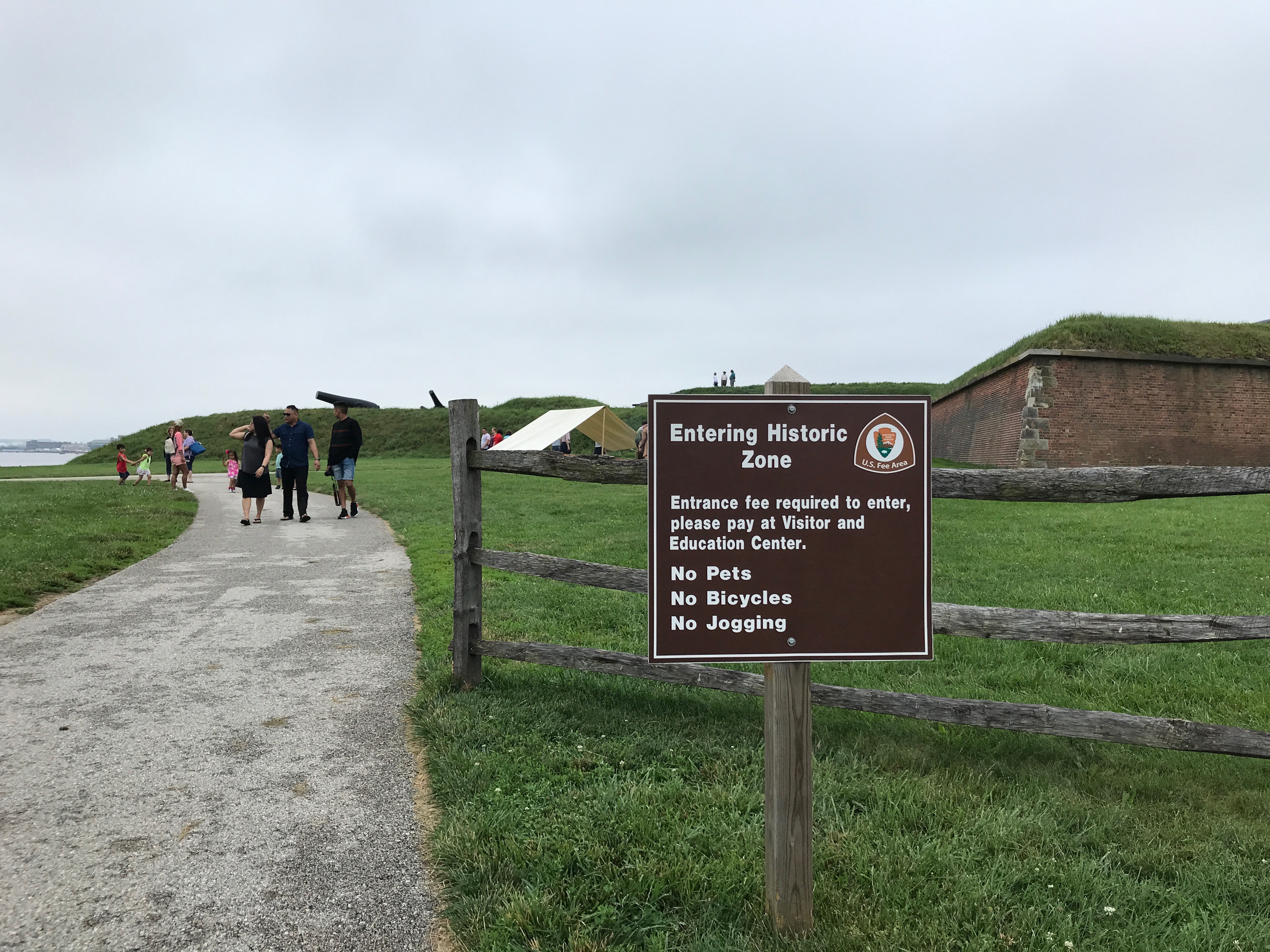
Hah! I laugh at your fees! I had my sticker on and I strode in with confidence.

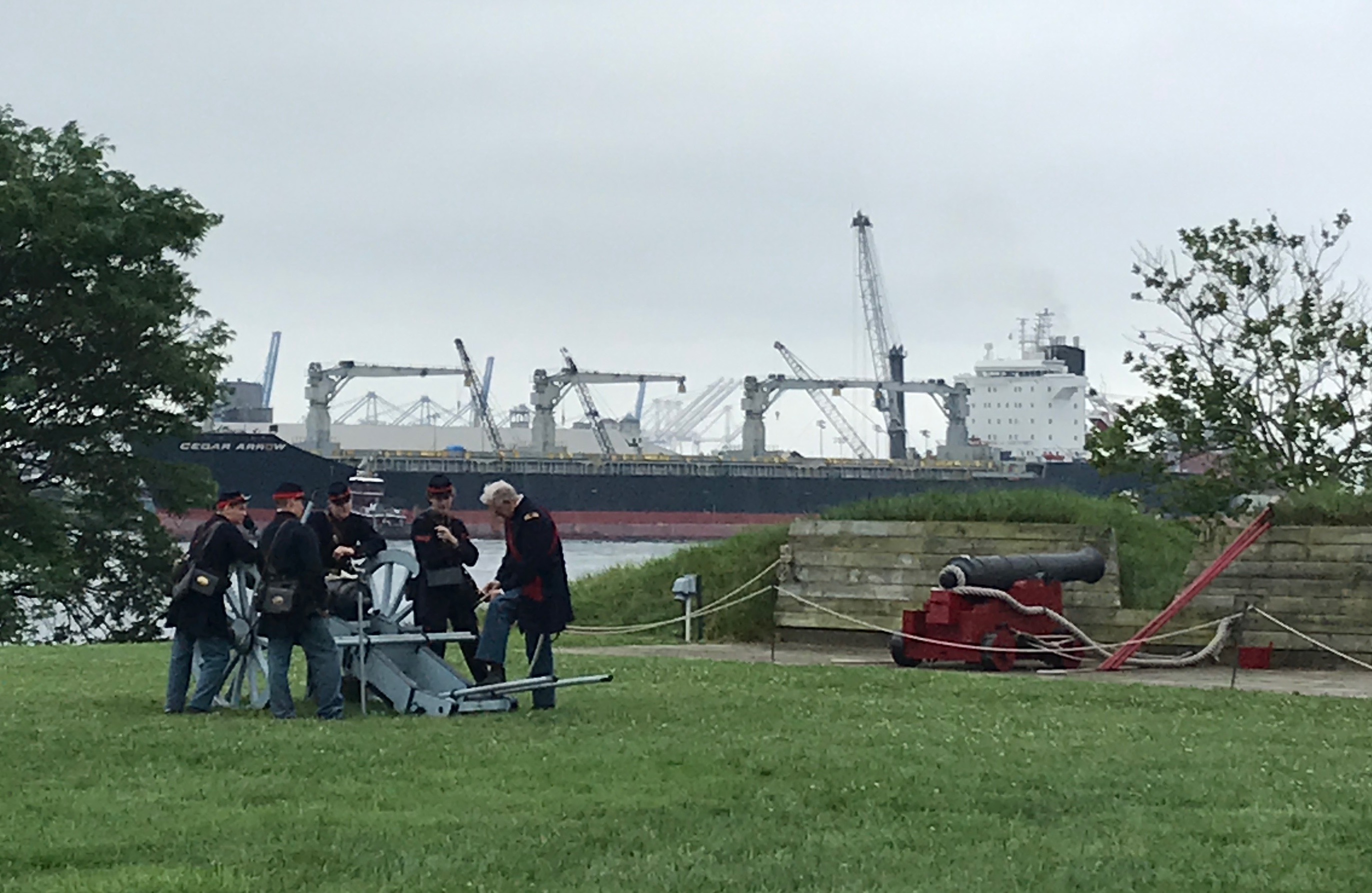
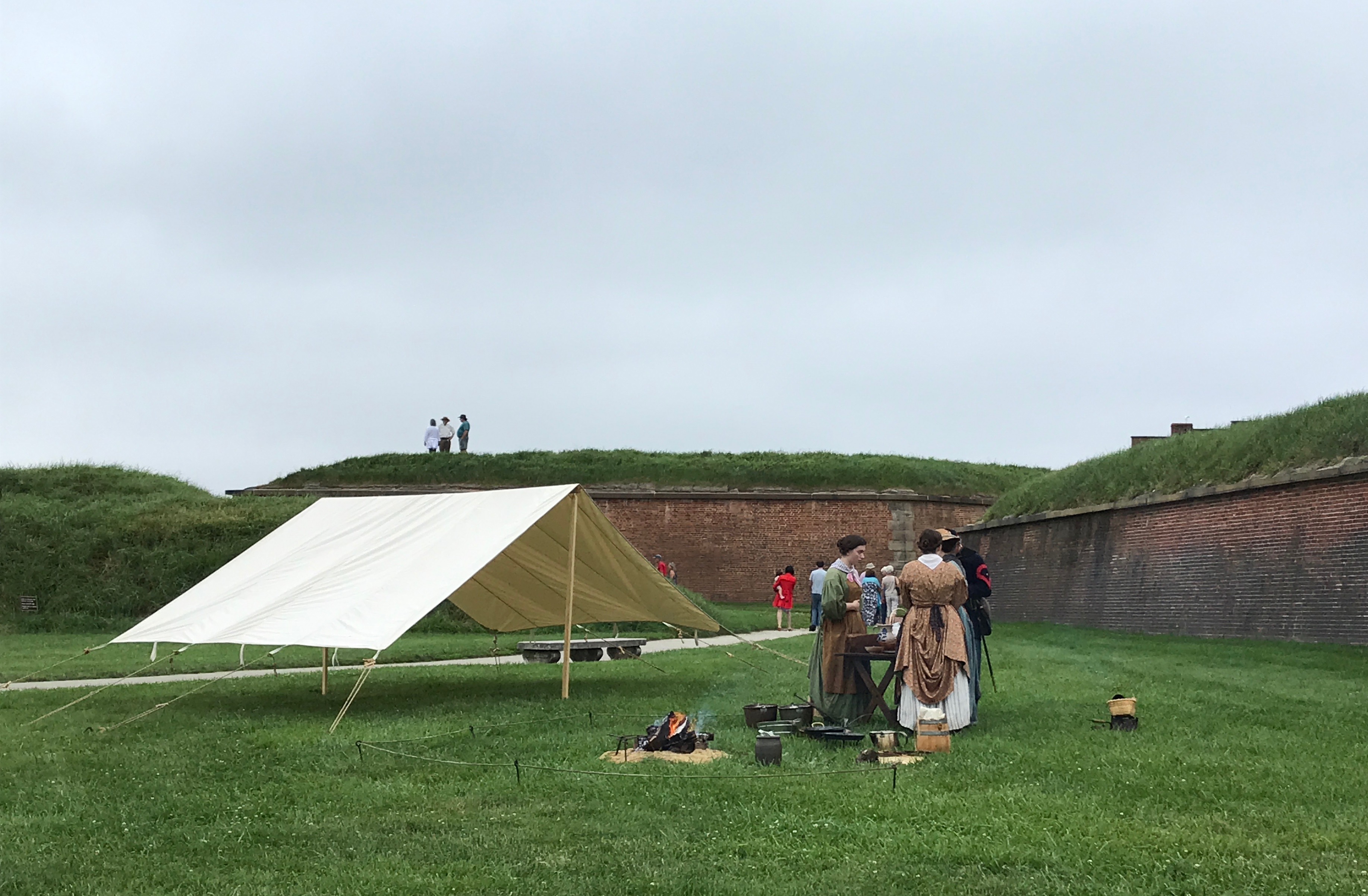
There was some sort of historic reenactment going on when I visited. It looks like there might be an artillery demonstration at some point.

Women were also taking part. I wonder what is for lunch?

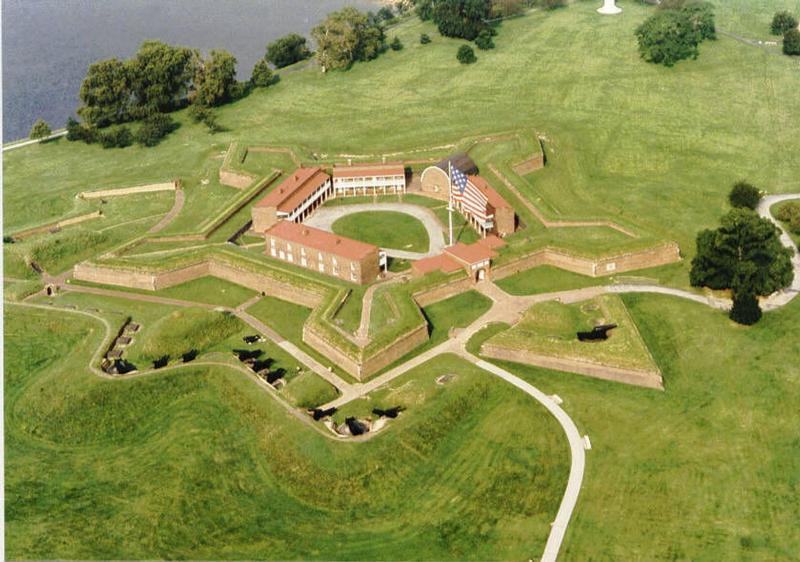
For some reason, I didn’t take as many photos as I might have, so I am resorting to my old friend Google to help me flesh things out a bit. This aerial view is from my Preferred Source.  (I couldn’t have gotten that angle anyway, as I kept both feet on the ground.)

Fort McHenry wasn’t always a National Monument and Historic Shrine. It was made a national park in 1925; on August 11, 1939, it was redesignated a “National Monument and Historic Shrine.” It’s the only such doubly designated place in the United States.

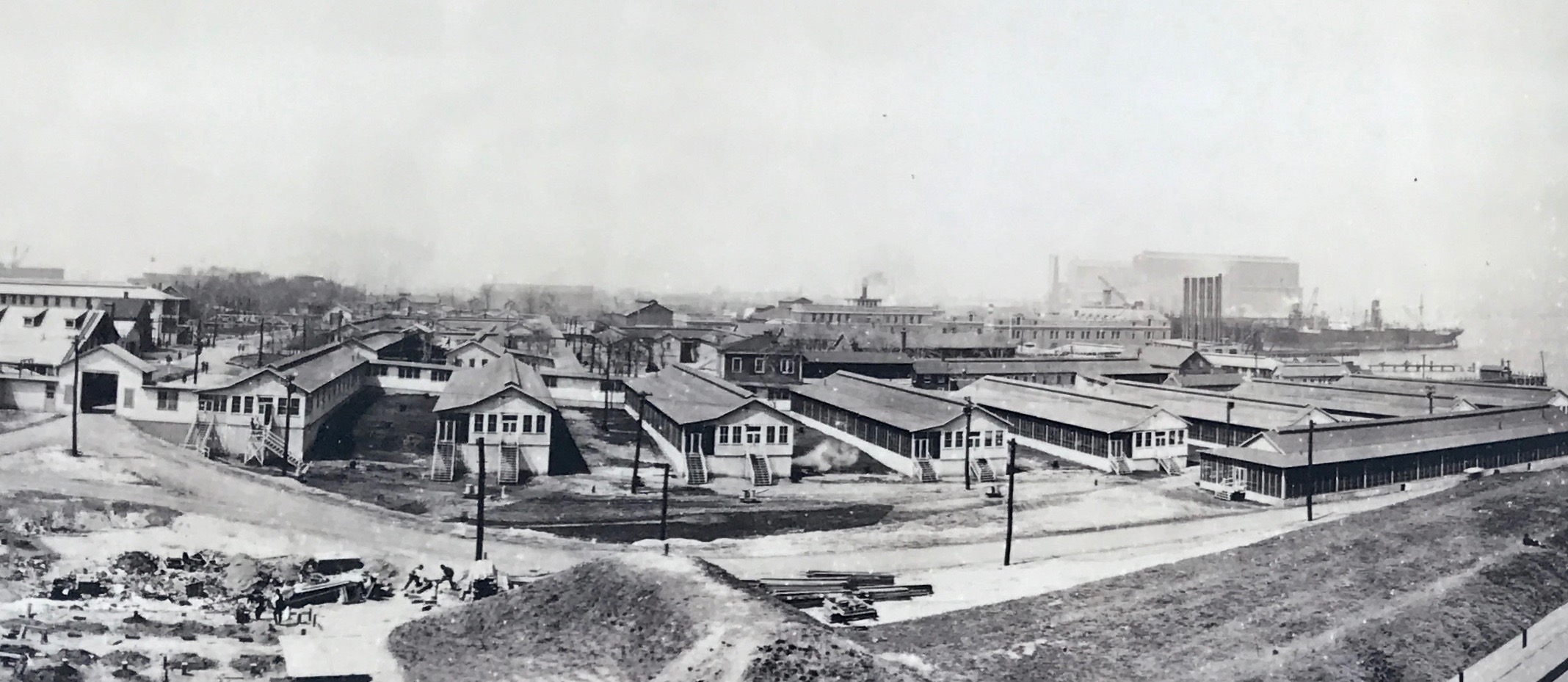
During World War I, the U.S. Army built over 100 buildings around the fort. It was one of the largest military hospitals in the country and it housed 3,000 wounded soldiers from the battlefield of France.

From 1917 until 1923, the fort also served as a surgical center. Great advances were made in neurosurgery and reconstructive surgery. It was one of the country’s first schools to reintigrate disabled soldiers into civilian life by offering special classes in typing, knitting, metal work, automobile repair and other trades, according to the informational signs at the fort.

When World War II came, it was pressed into service again. The Coast Guard used it as a training base, although historic portions remained open to the public.

But, enough of the background information. It was time to enter and see what there was to see. I entered through the sally port and encountered this odd structure.

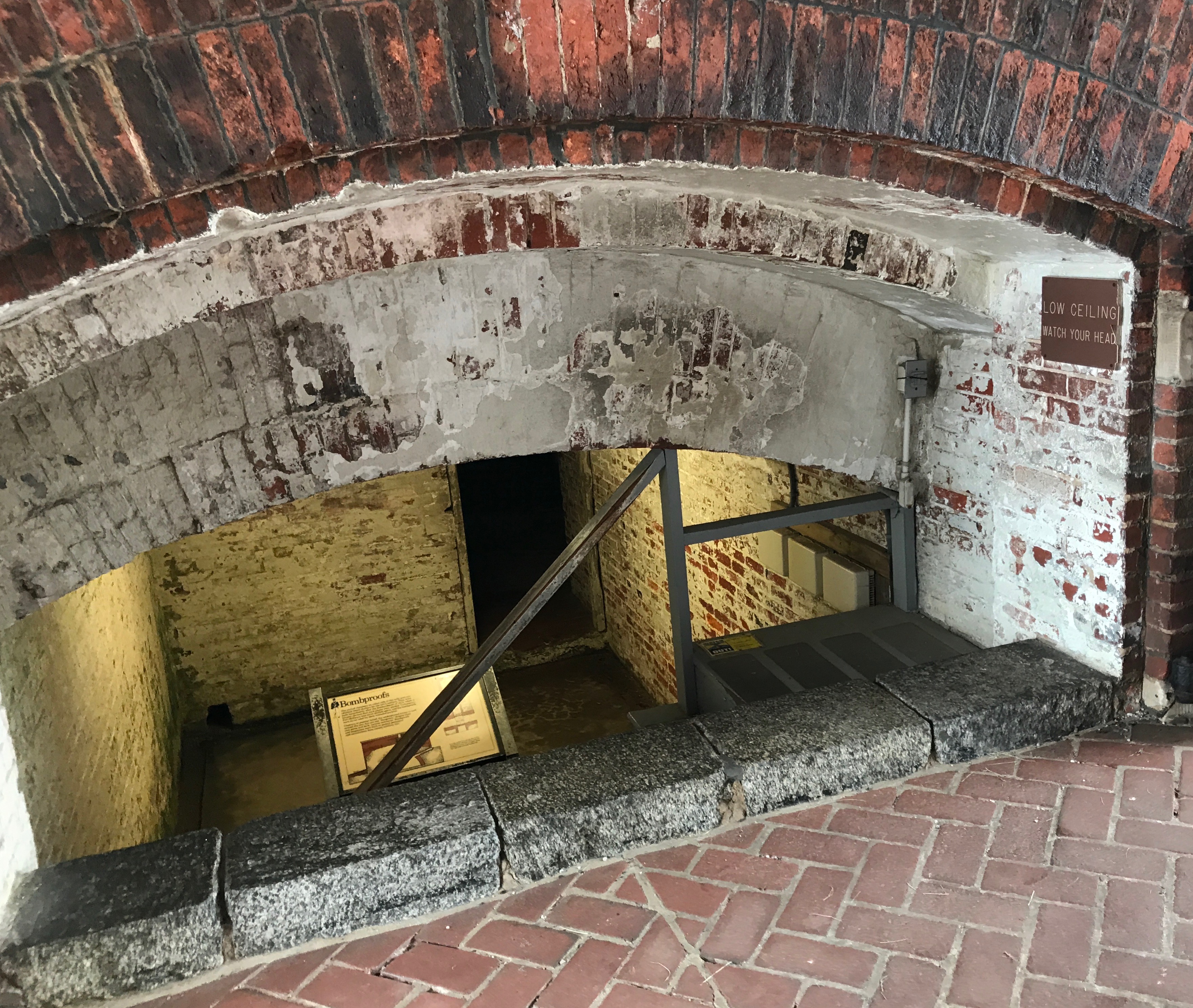
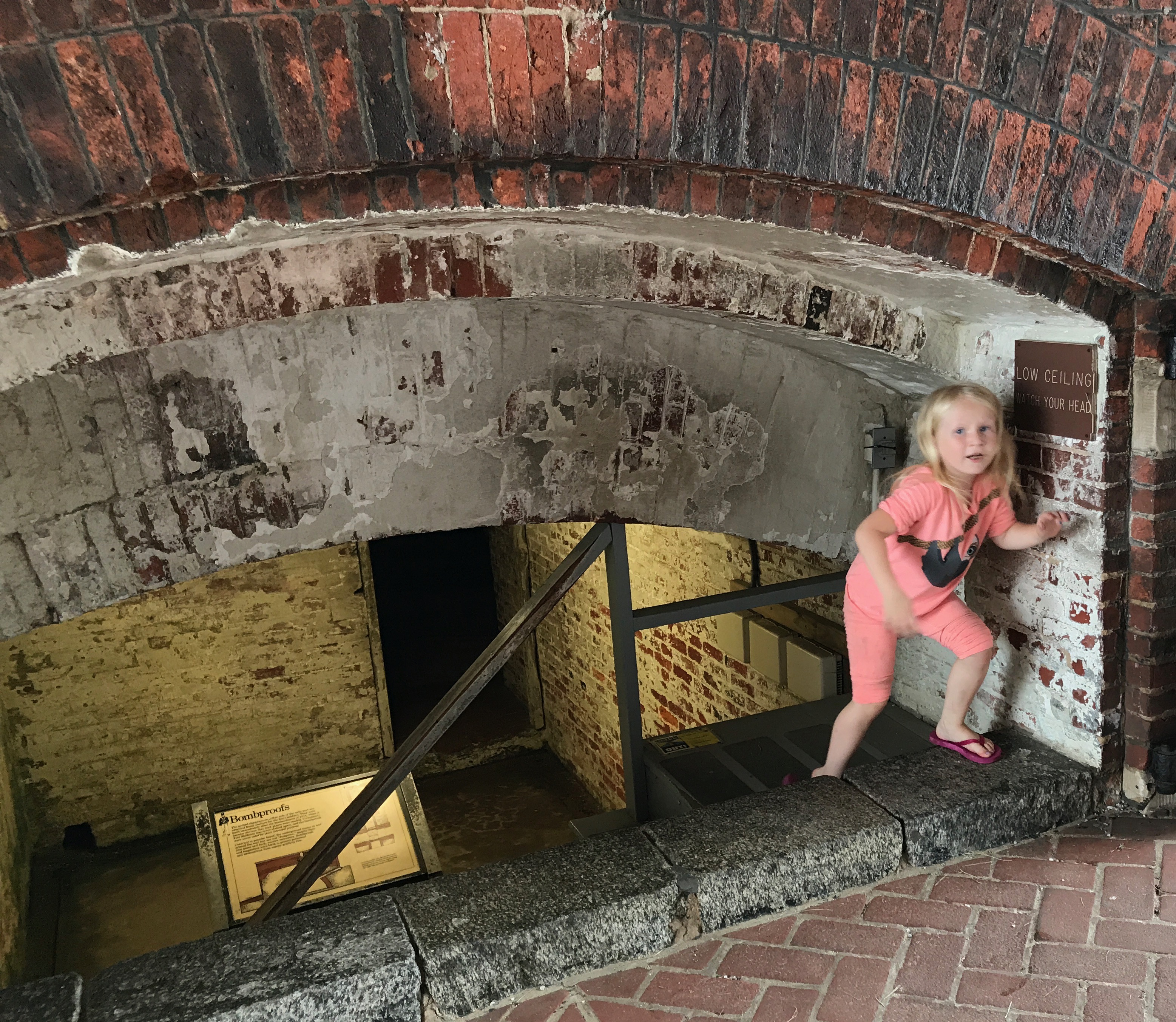
This room with the low ceiling is what is known as a “bombproof.” There are arched chambers on either side of the sally port that were built immediately after the bombardment of 1814, when it became obvious that such places were needed. Fortunately, Fort McHenry was never shelled again, and the bombproof were never used for their intended purpose.

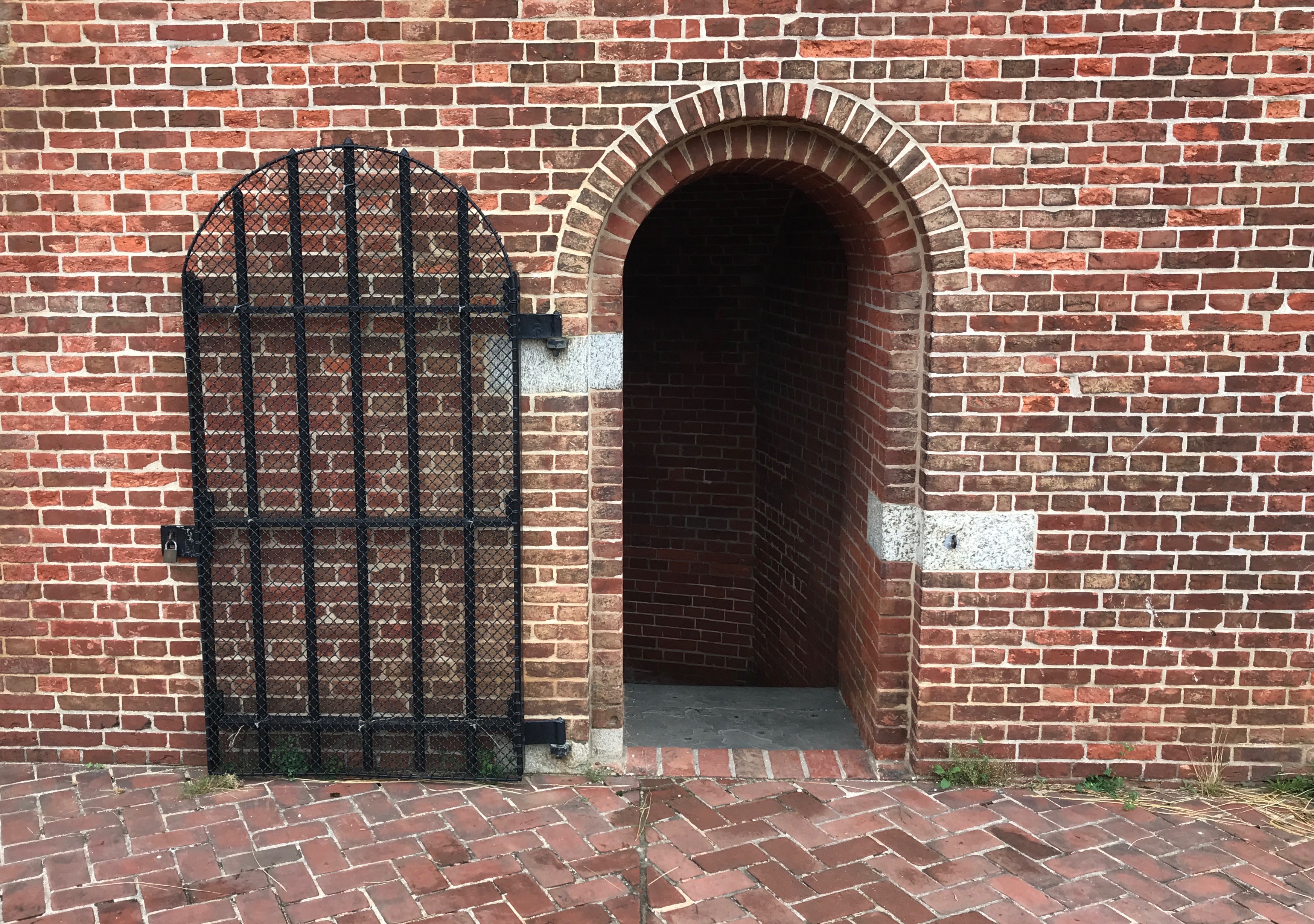
Although they look kind of like dungeons, what with their iron gates and dark, narrow entrances, bombproofs and magazines were built to protect personnel and ammunition from enemy artillery fire.

This wee Miss doesn’t seem to be bothered in the least by the low ceiling. On the other hand, I had to take pains not to bump my head when I squeezed my way down to read the sign, which is where I got the information about the bombproofs.

If I remember correctly, this is the entrance to one of the bombproofs.

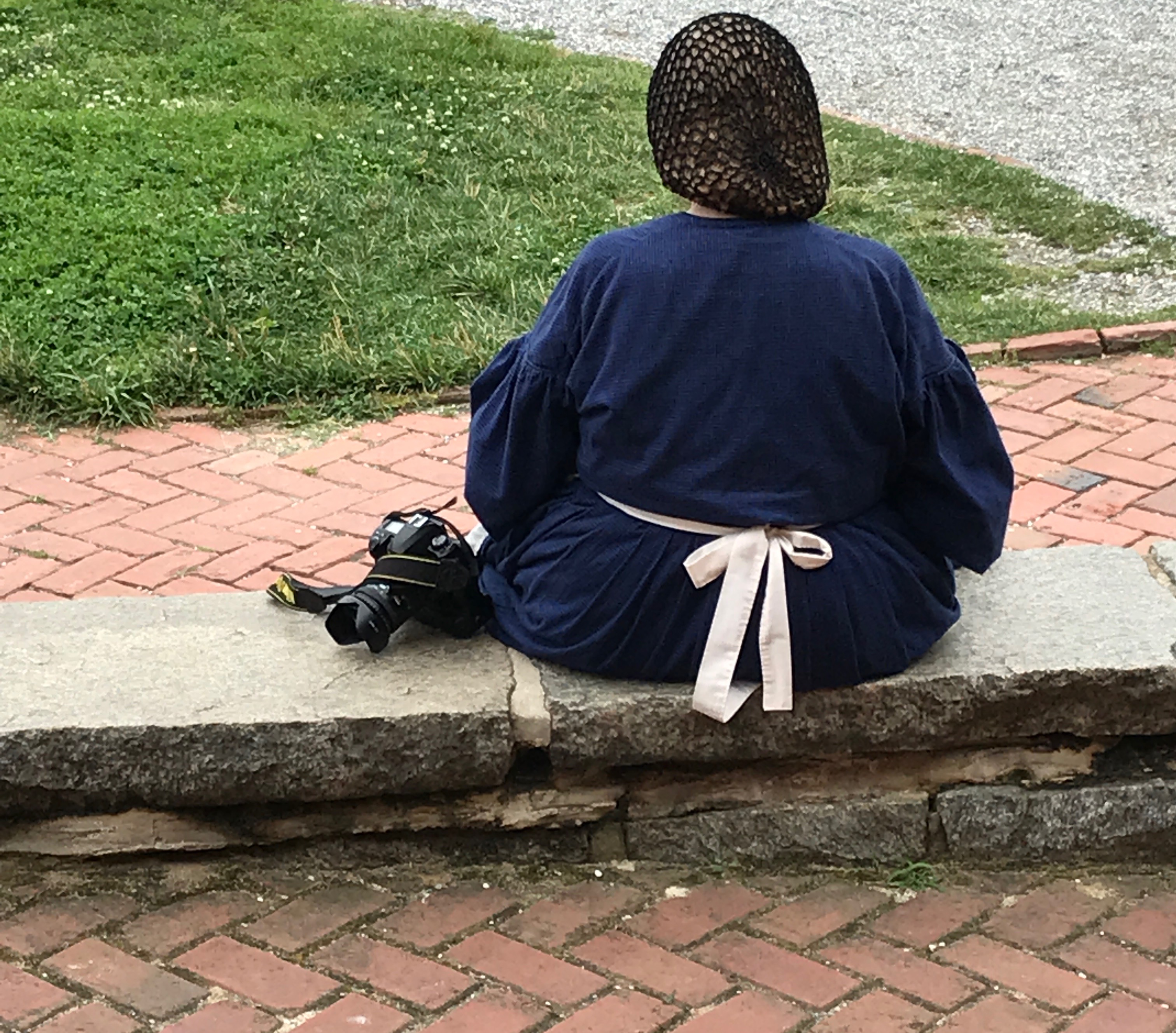
This image of one of the reenactors taking a break made me smile. That camera is a little anachronistic.

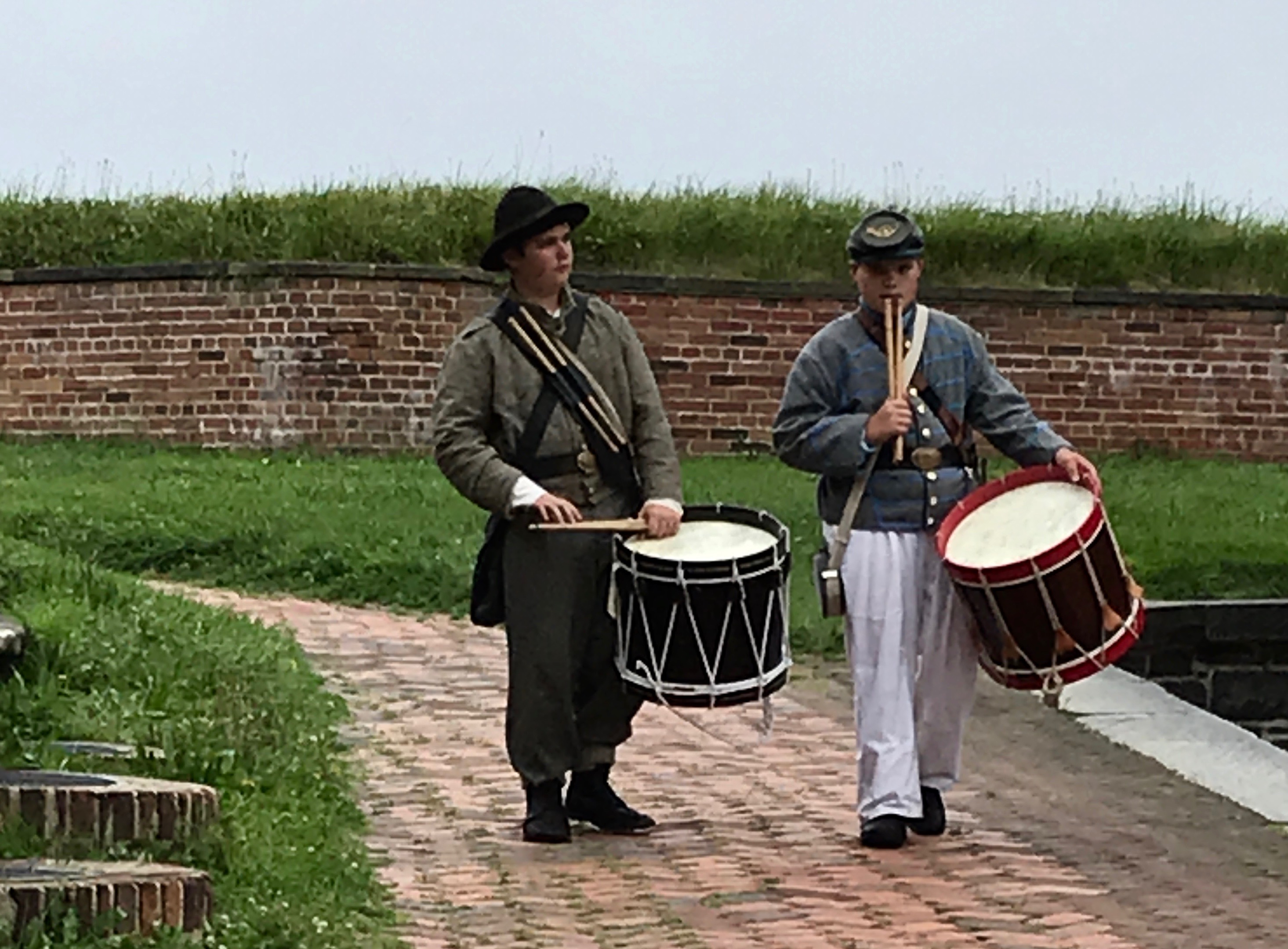
The drummers seemed more into the time period.

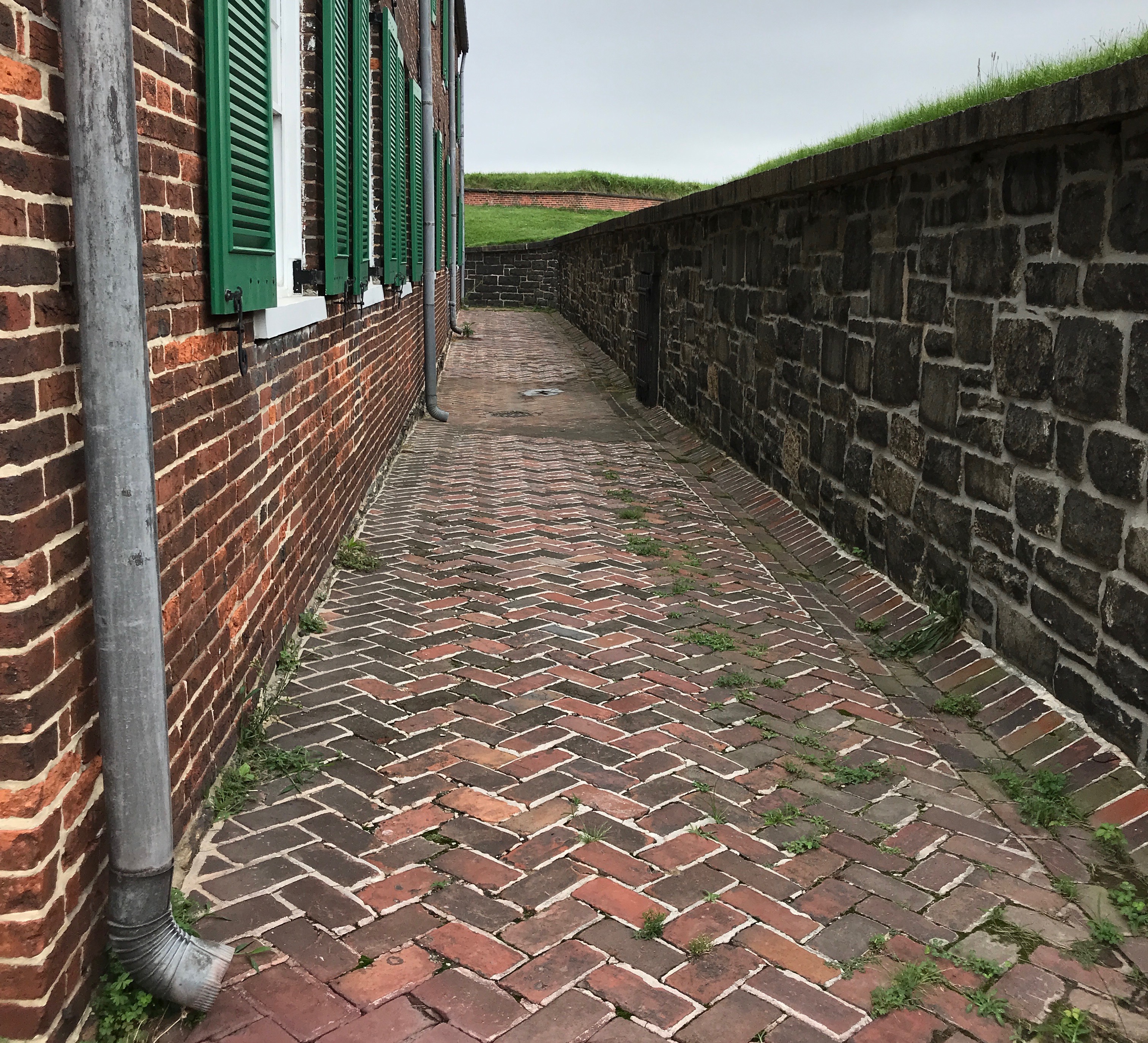
As I am wont to do, I took a few moments to look behind the buildings ringing the central parade ground. So many bricks went into these buildings!

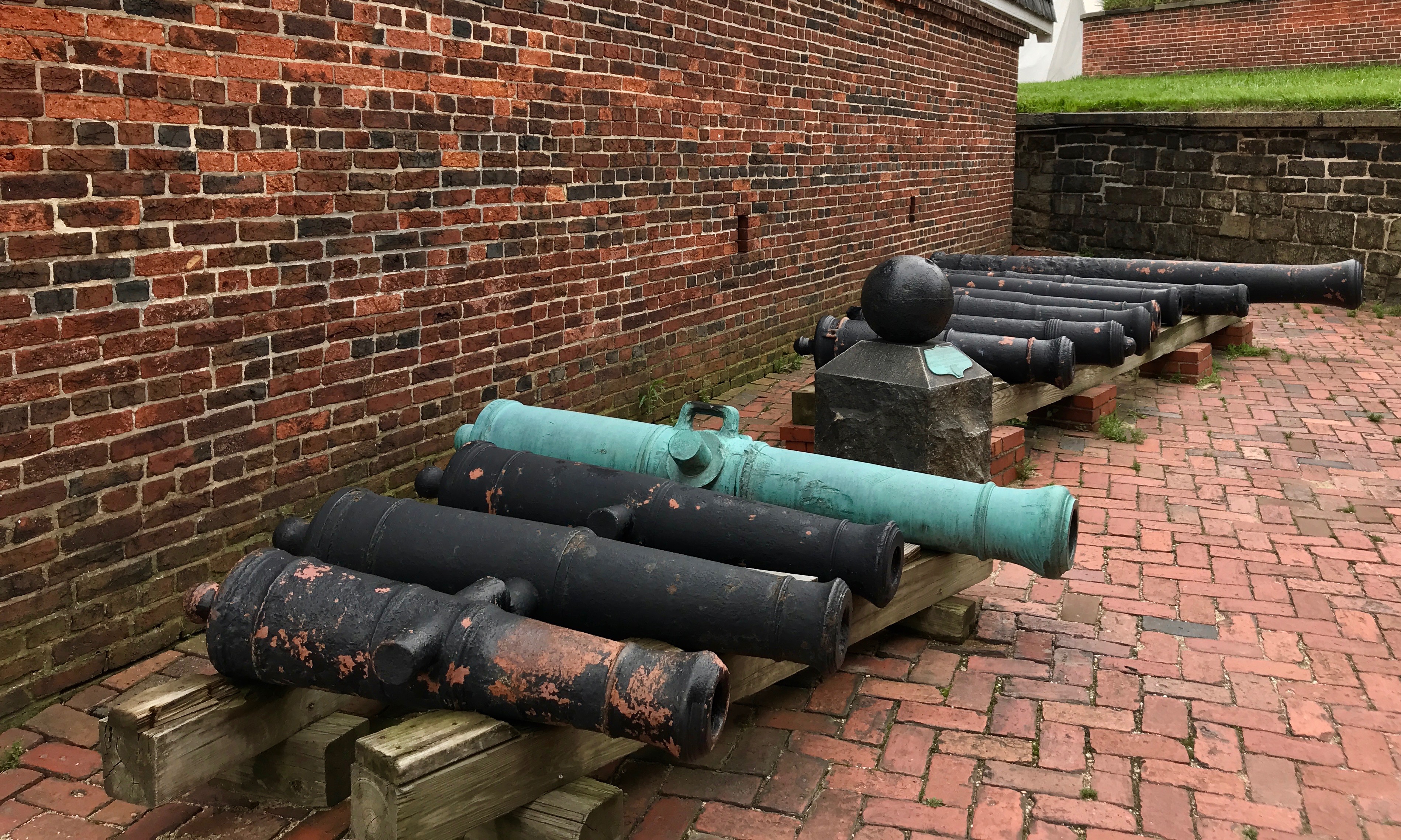
There was no interpretive signage about the ordnance behind this building, but there was another one of those cannon balls.

Its plaque said the same thing as the one inside the visitor’s center.

The buildings ringing the parade ground had many interesting displays. The one I found most interesting was information about finding the location of the original flagpole that flew the flag that Francis Scott Key wrote about.

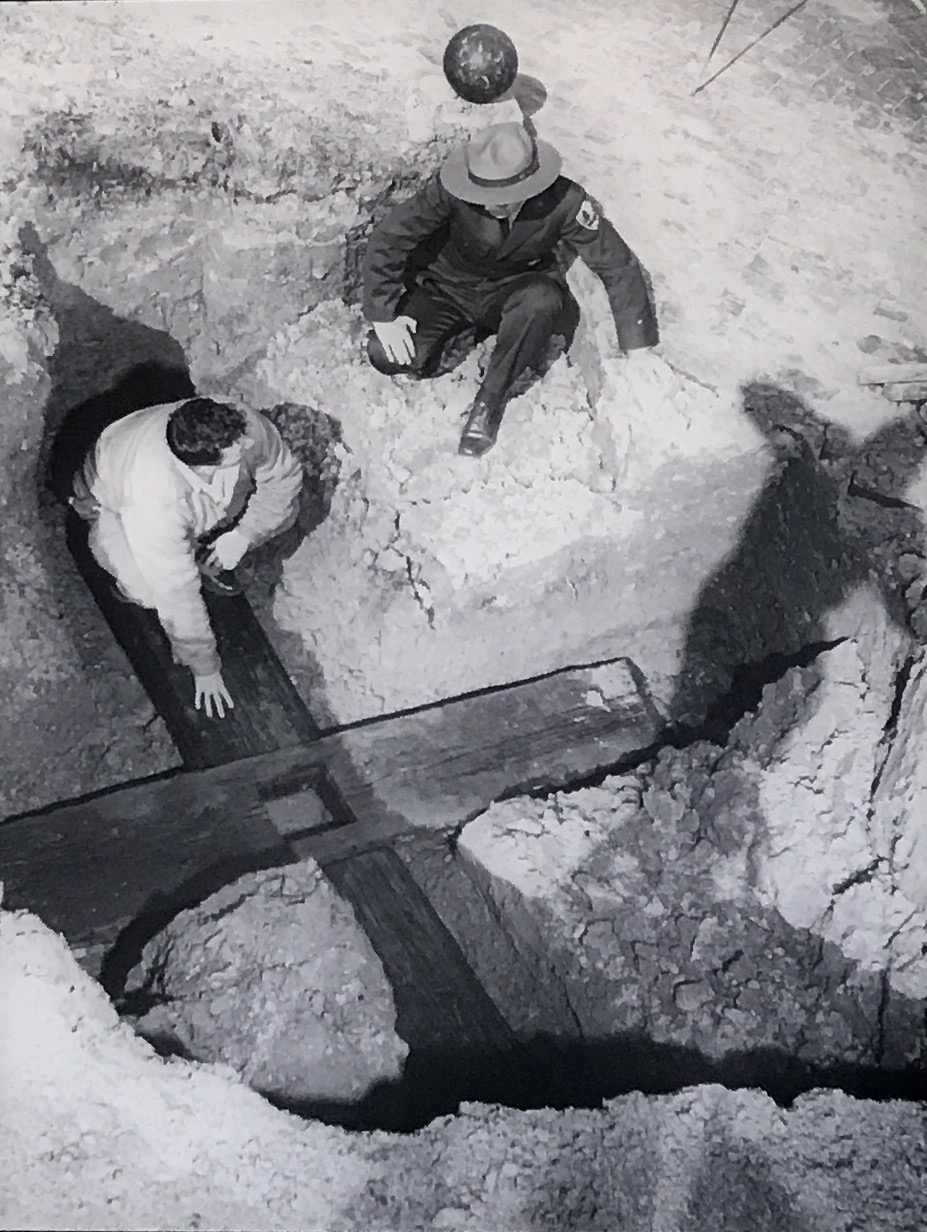
According to the interpretive information, these oak timbers are the last pieces of the 1814 flagpole that remained here at the fort. For a long time, no one knew exactly where the flagpole was. An 1803 map shows the flagpole near the sally port, but an 1839 map places it on one of the points or “bastions” overlooking the water.

Archeologists explored the area around the sally port in 1958, using the 1803 maps for guidance. The discovered two large timbers several feet under ground. They were fitted into the shape of a cross with a large rectangular hole in the center. This cross brace was designed to keep the flagpole from tipping over in the wind. All surface evidence of the flagpole had long since been lost.

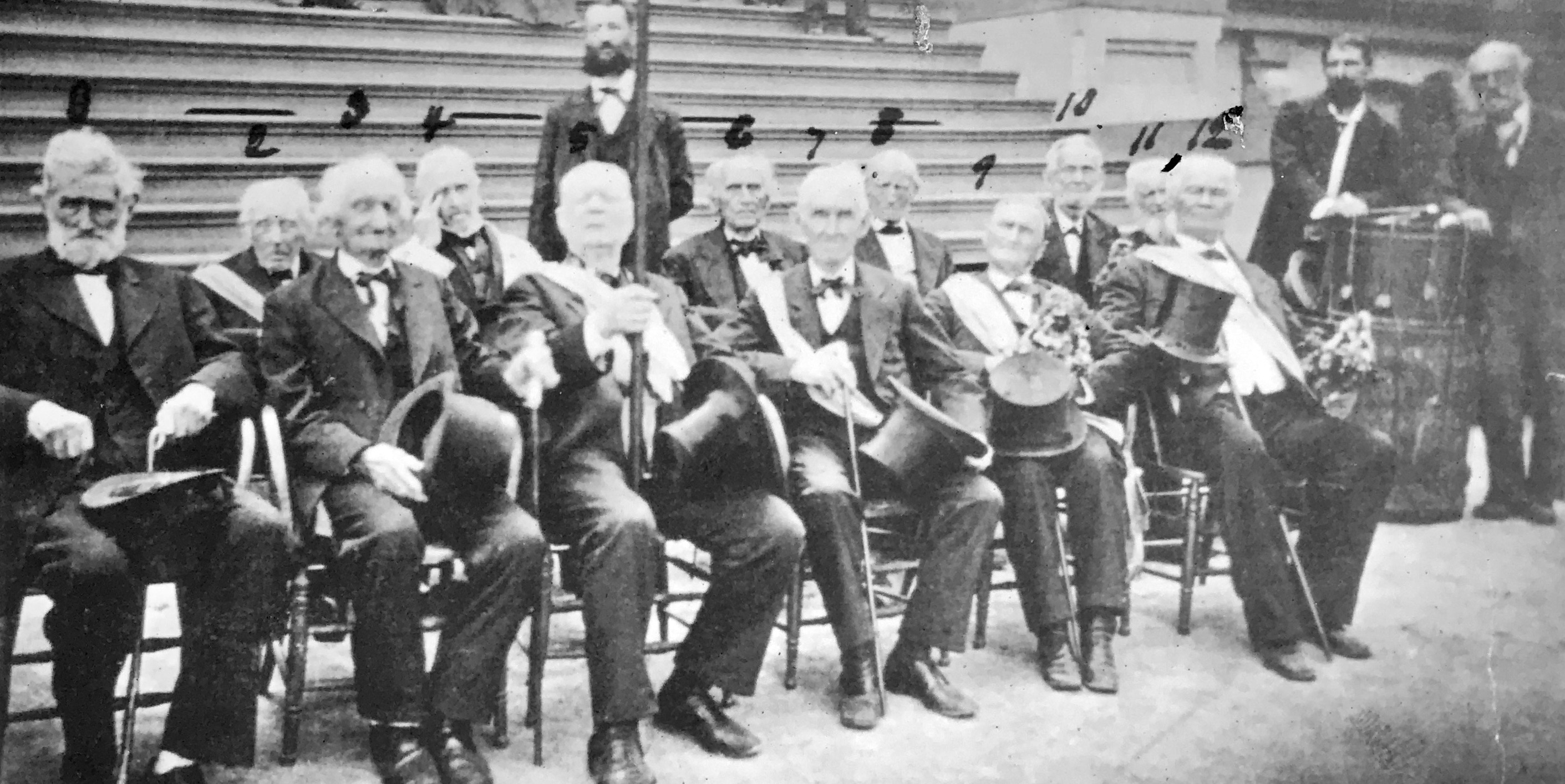
The successful defense of Baltimore from British attach has been remembered and commemorated every year since 1814.  This photo, taken in 1880, shows the last 12 surviving of the remaining defenders of the fort at a celebration at Druid Hill Pavilion in Baltimore.

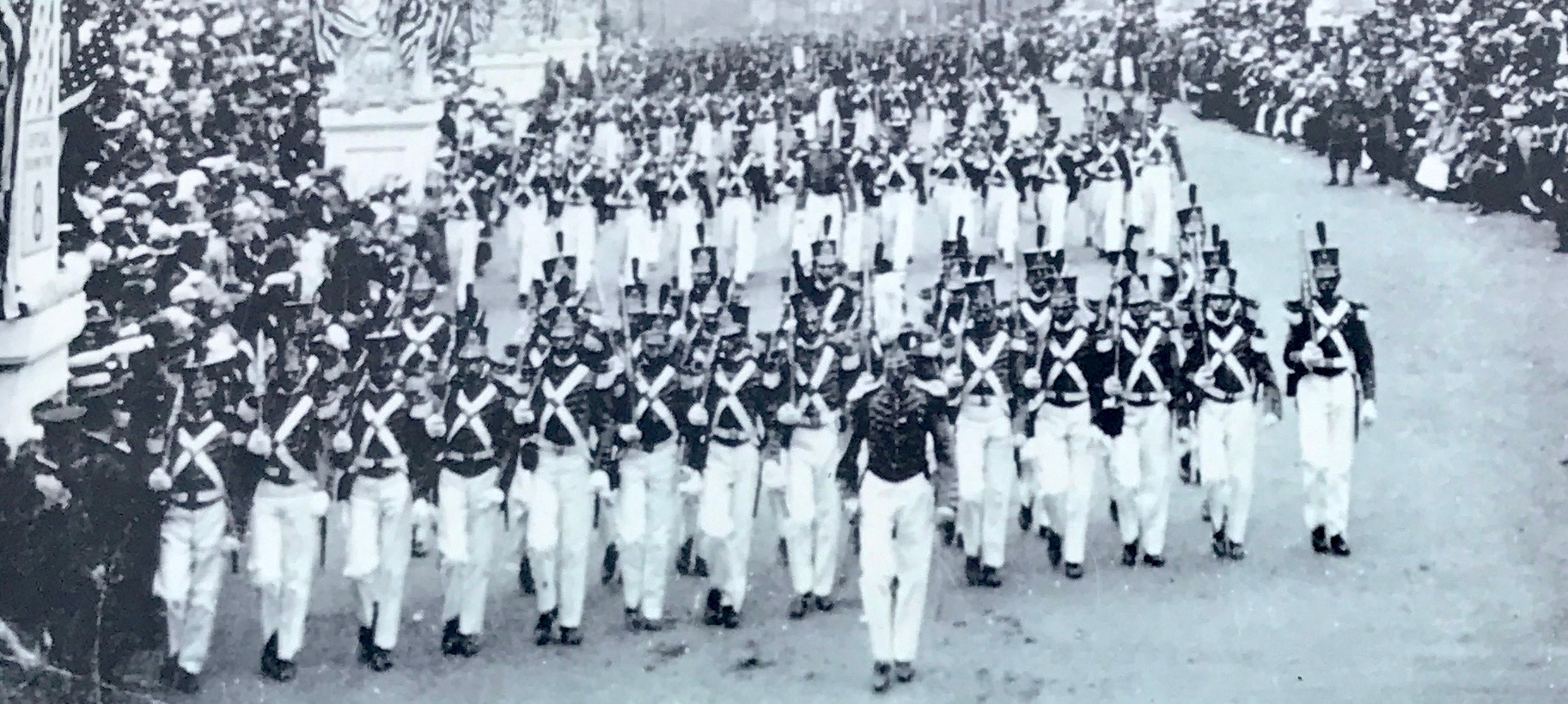
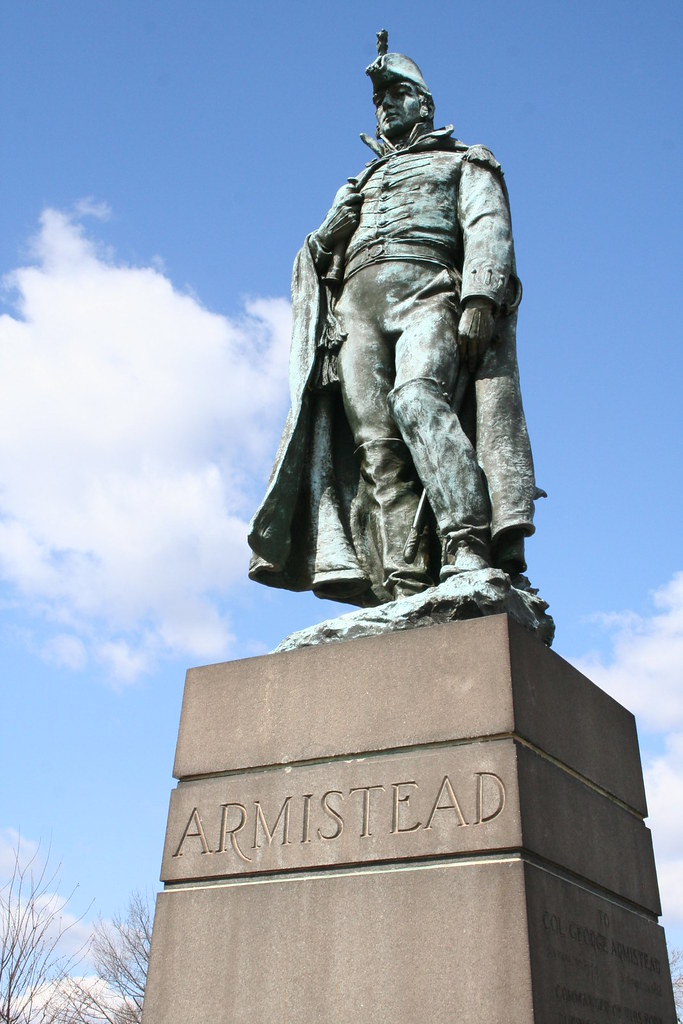
In September 1914, the nation observed the 100th anniversary of the writing of “The Star-Spangled Banner.” The fort was leased by the city and served as the centerpiece of the commemorative activities, which included a parade of tall ships, visiting U.S. Naval Vessels, parades, firework shows and the dedication of a monument to Major George Armistead, who commanded the fort in 1814.

From Flikr by day92783

Somehow, I managed to miss the stature, so here it is, courtesy of a Google search.

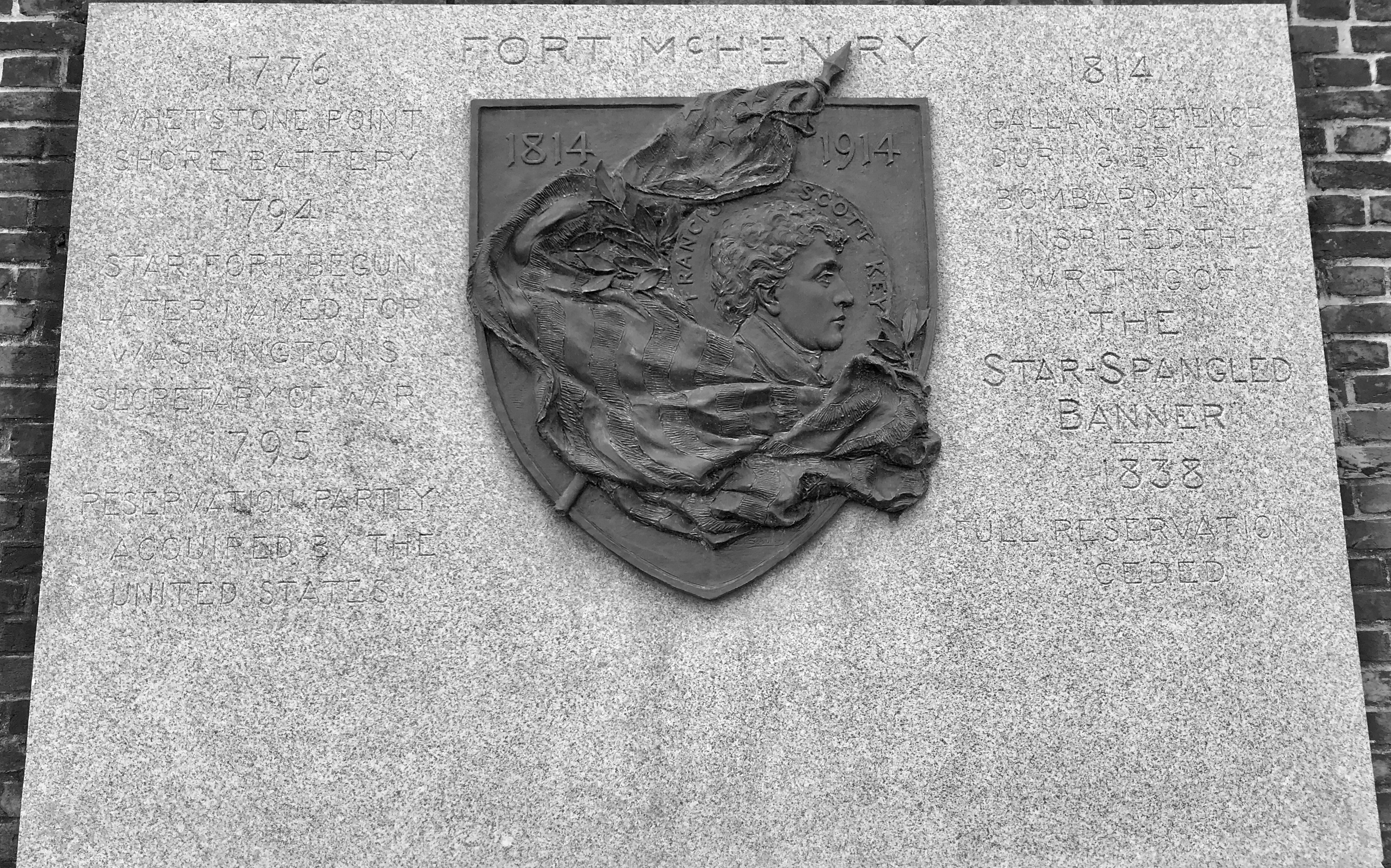
This tablet was dedicated to Francis Scott Key during the Centennial celebration in 1914. Designed by Hans Schuler, the bronze shield depicts and American flag and myrtle, symbolic of love and immortality, surrounding a portrait of Francis Scott Key.

I always visit the museums and study the displays, as time allows. Here are some questions that I found interesting.

Answer:

Wow! There’s that Fort Niagara connection again!

And the answer is:

And with that, it was time to find the exit. There was one more thing to see before I was on my way.

This is the ravelin magazine. Near the end of the Civil War, several large cannon were located on the ravelin.

The ravelin is a triangular fortification located in front of the innerworks of the fort. You can see it here, pointing toward the lower right in the photo.

The commanding officer ordered that 1,000 rounds of ammunition be kept nearby for each gun. In 1866, this magazine and two others were built to safely store the additional gunpowder.

The covered entrance with its angled stairway was designed to prevent enemy projectiles from reaching the explosives. Three feet of concrete and up to 16 feet of earth were laid over the arched brick vault.

With that, it was time to head out. I had one more stop I wanted to make before I called it a day. 

I made my way into the city.

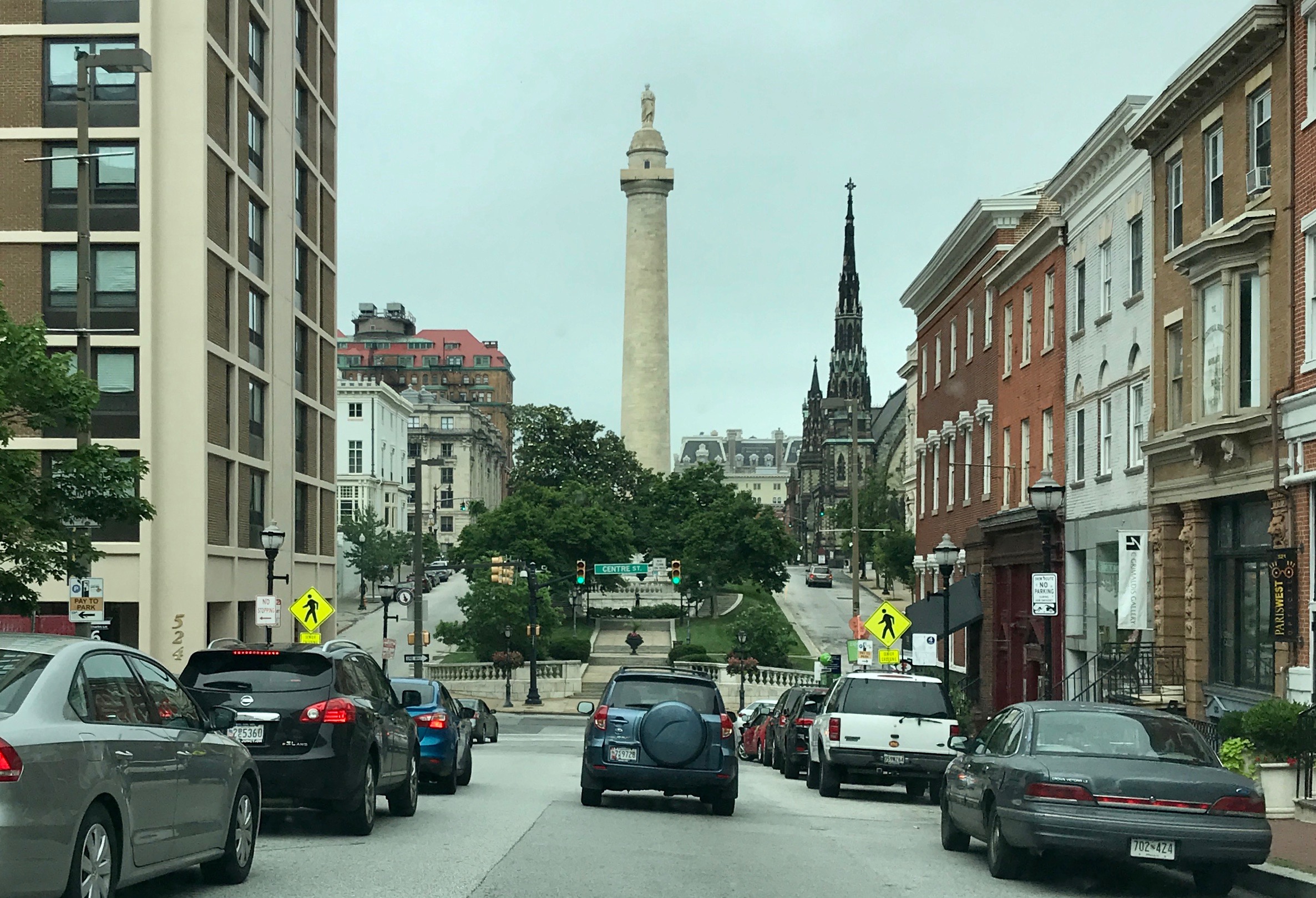
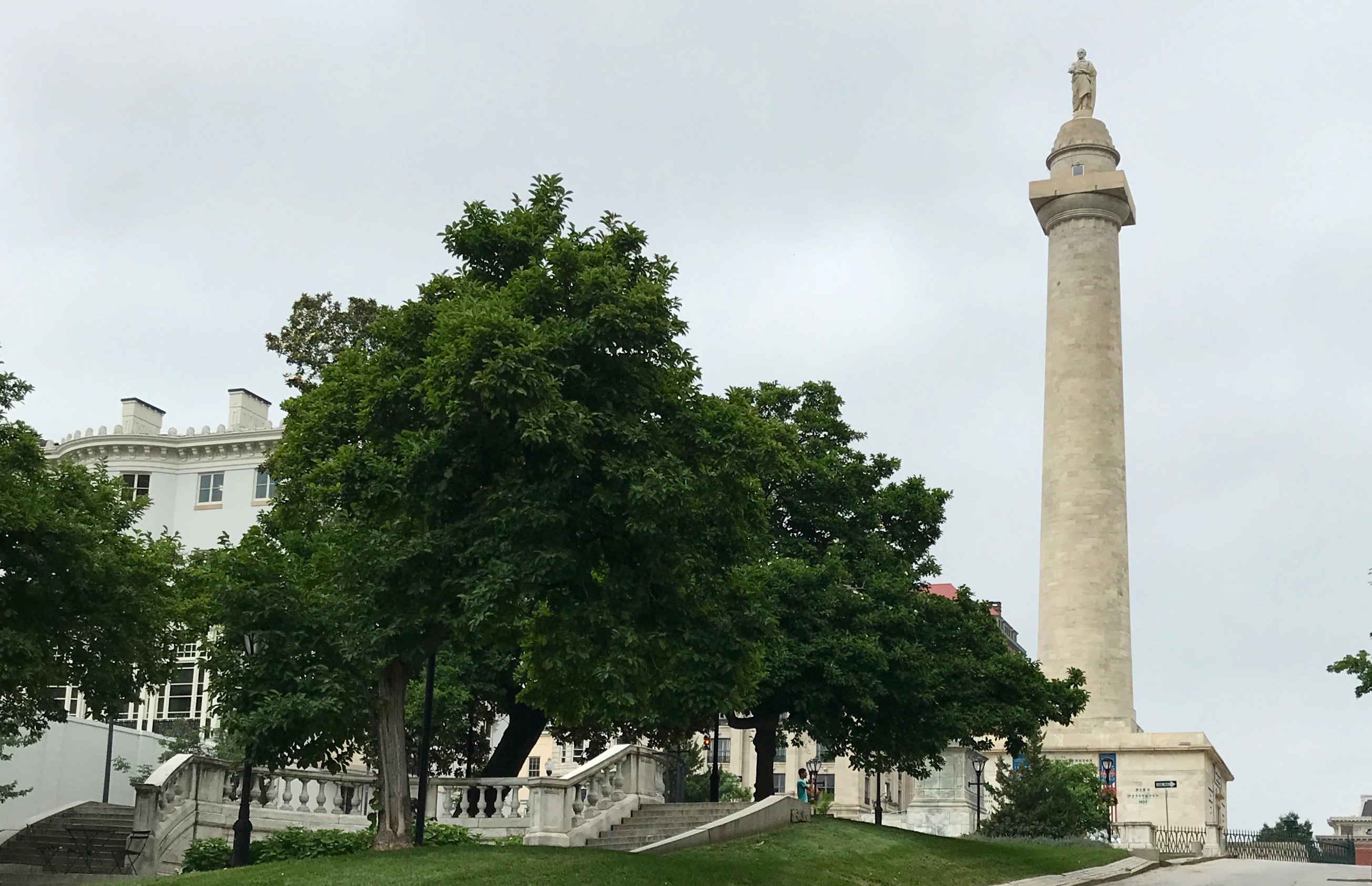
My destination was the first major monument to honor George Washington.

The Monument was designed by American Architect Robert Mills, who also designed the later Washington Monument on the National Mall in Washington, D.C.. Construction began in 1815 on land donated by Colonel John Eager Howard from his extensive estate just north of Baltimore Town. The statue, by Italian-born sculptor Enrico Causci, was installed in 1829.

Washington is depicted on the top of the Monument resigning his commission as Commander-in-Chief of the Continental Army, an act which took place in the Old Senate chamber in the Maryland State House in the state capital of Annapolis, Maryland on December 23, 1783. The Confederation Congress was meeting in the Maryland capitol which served for a few months as the temporary national capital. While there, the Congress also ratified the Treaty of Paris of 1783, ending the American Revolutionary War and recognizing the independence of the United States by Great Britain.

So much history!

Lafayette is there with Washington, too. (I would have been surprised if he weren’t.)

I could have gotten out of the car and climbed the 227 steps to the top to take in the view, but I was tired and parking wasn’t readily found. I decided to head back to the hotel.

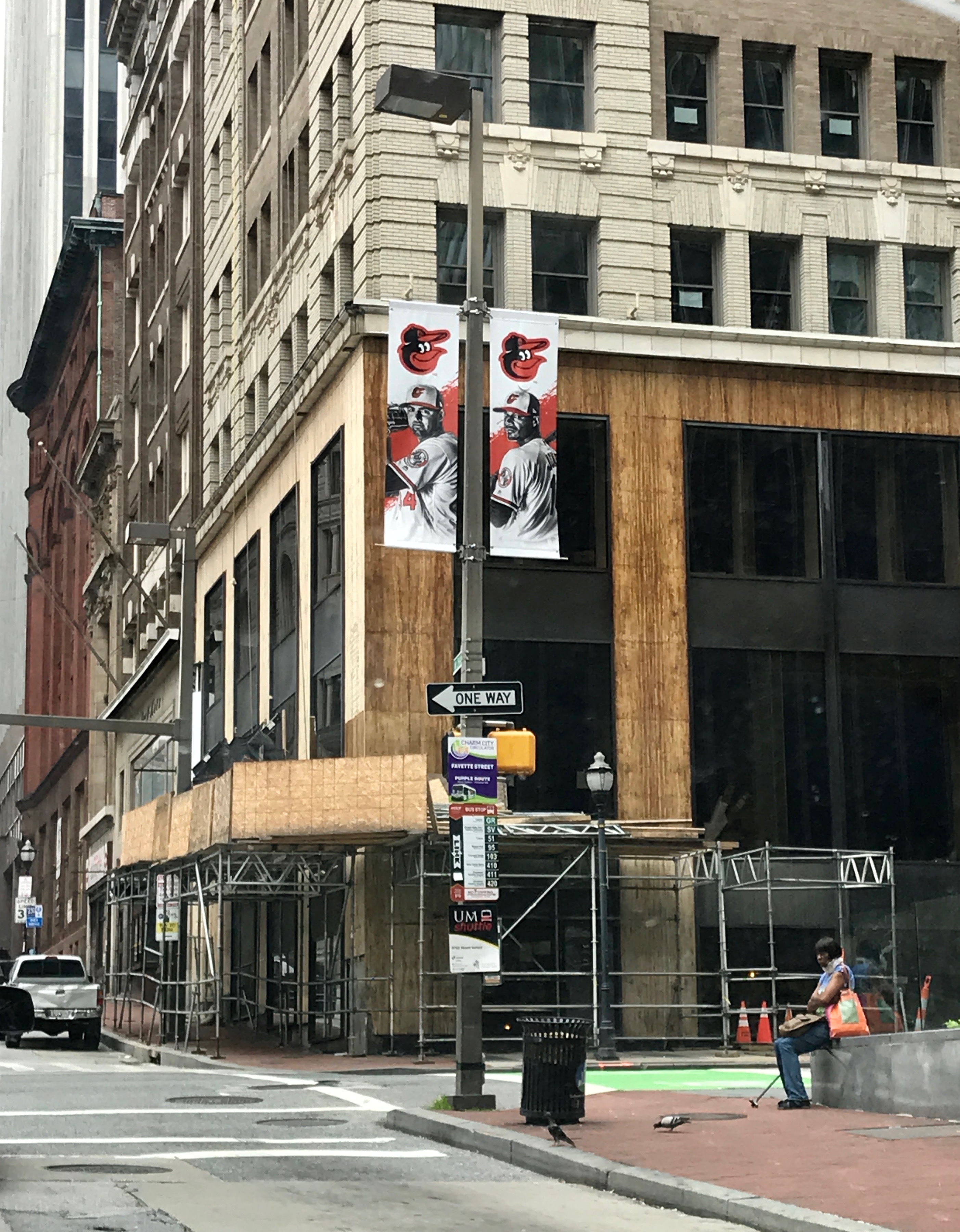
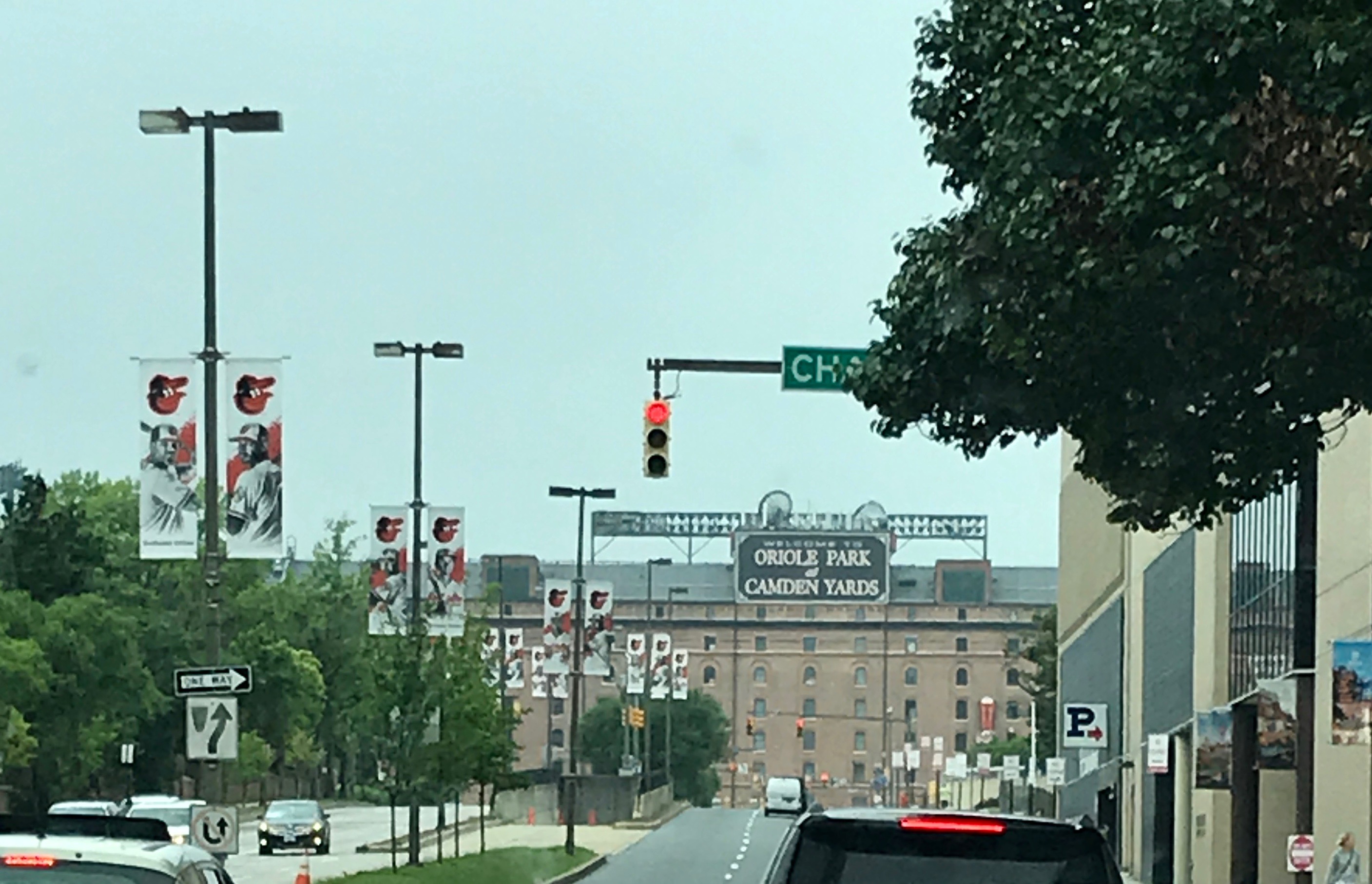
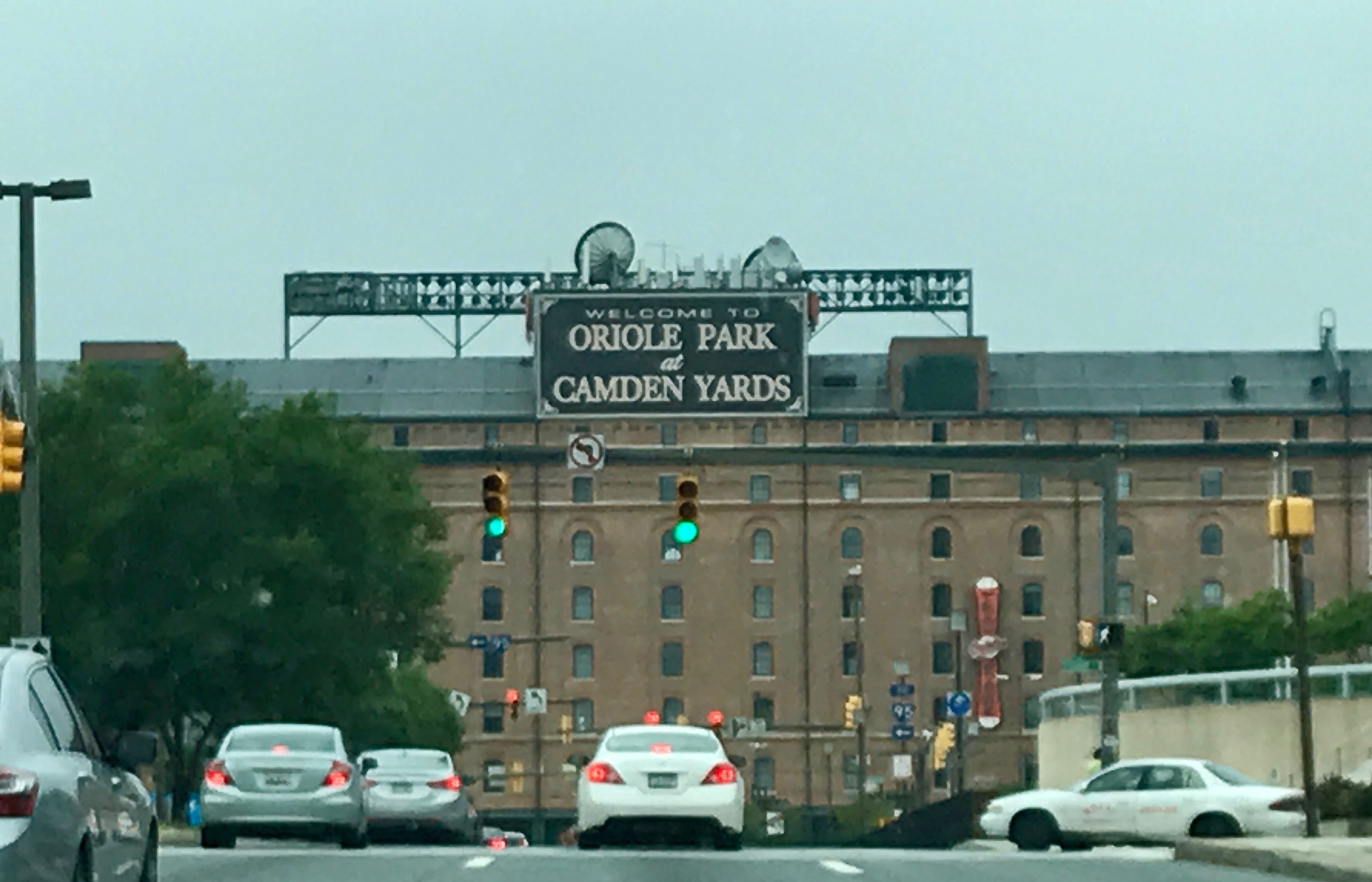
But, hey, what is that? Camden yards? Good thing the light is red. I have time to snap a photo.

The light is green and now it’s time to roll!