Just as I was getting ready to head down to the rest of the museum, the field trip caught up with me.
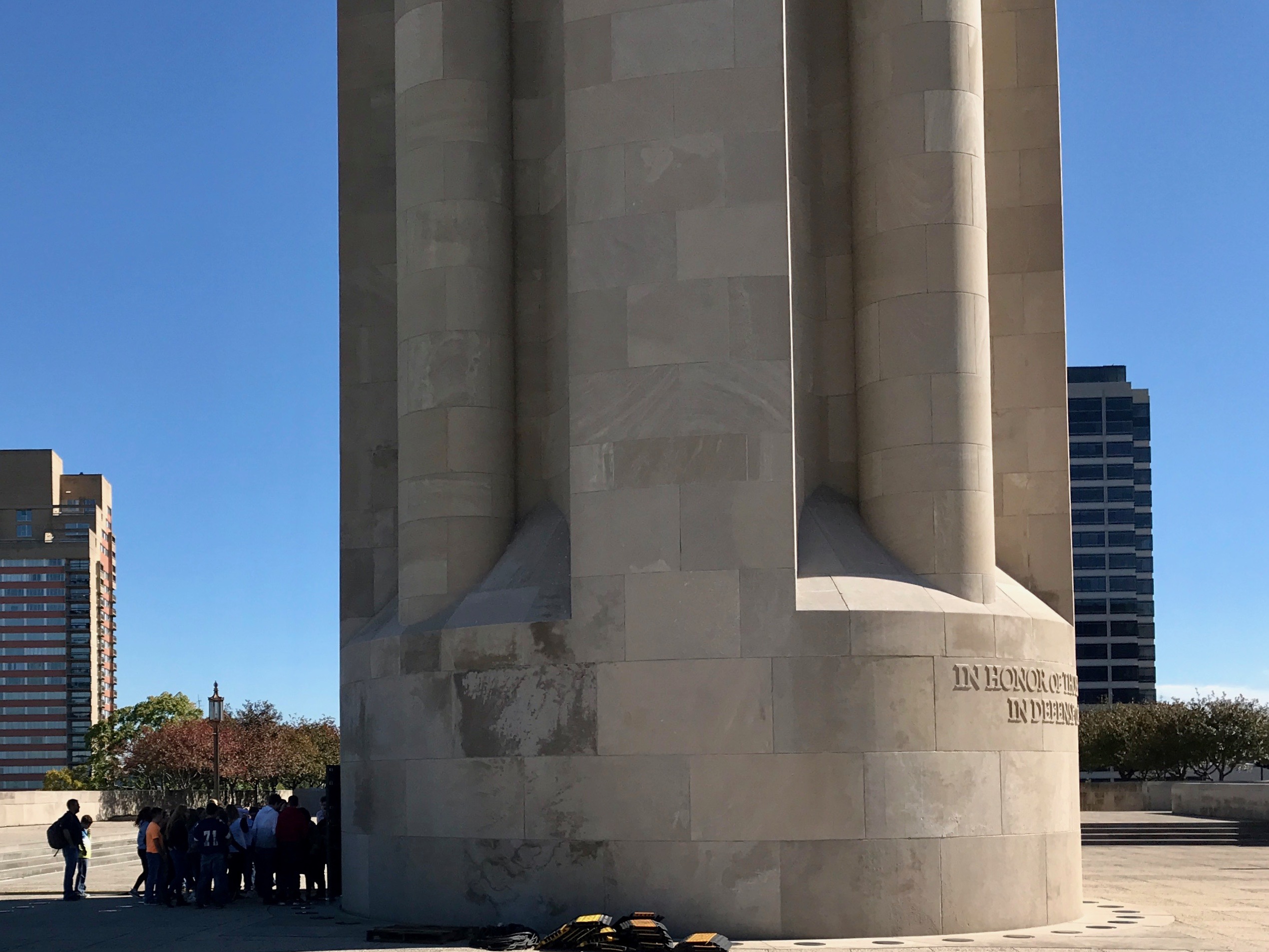
I’m glad I’m not jockeying for space with them! Besides, it was time for lunch. I decided to head to the Over There Café in the museum.
There they invite you to Eat Like a Soldier. They use the helmet icon to identify dishes that are meals that the soldiers would have eaten in World War I. Dishes like Trench Stew, Army Goulash, Chipped Beef, and a sampler platter containing tastes of the three dishes.
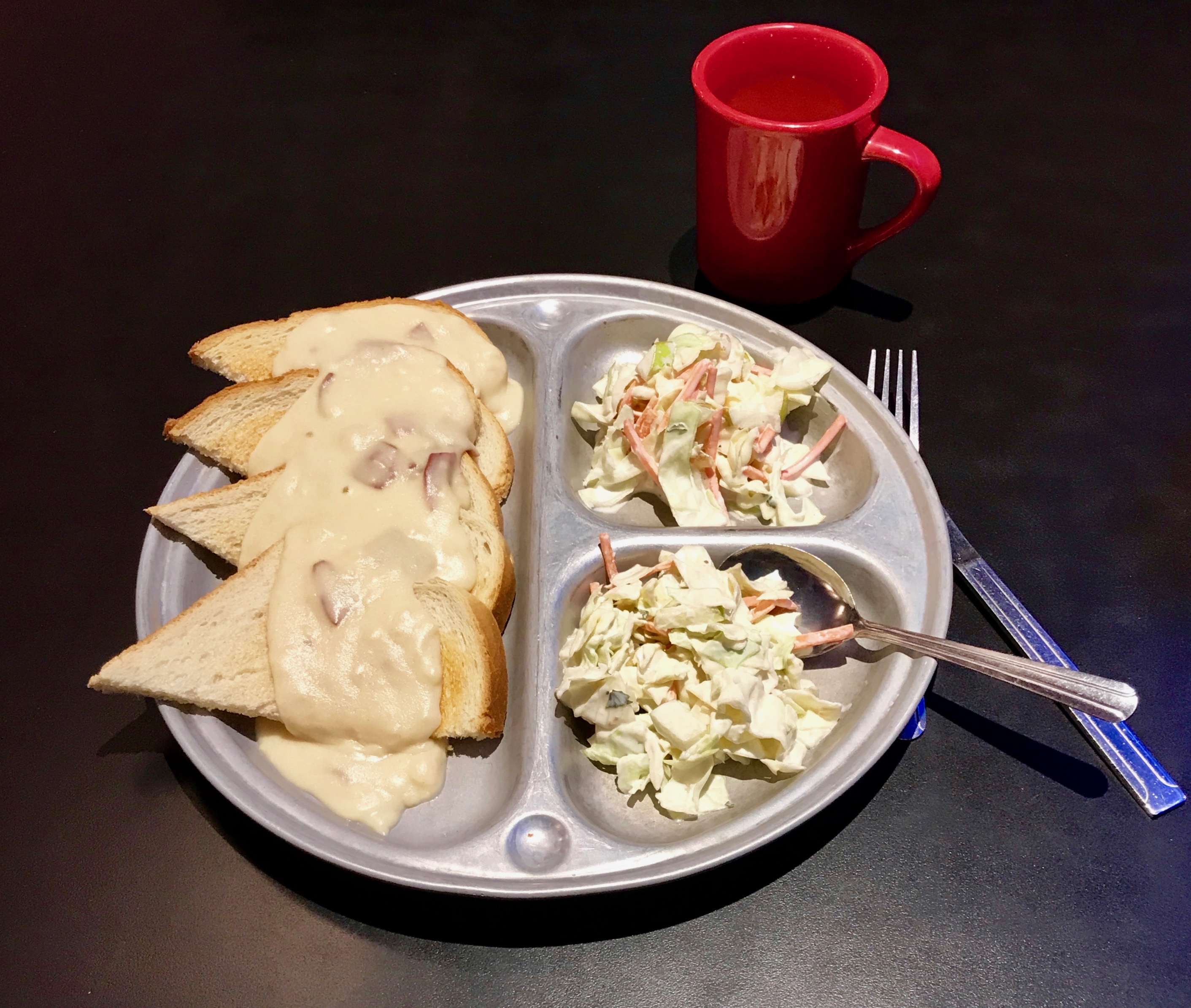
I opted for the Chipped Beef. (Here is a recipe in case you want to try it yourself.)
I always thought it was called “SOS” or “Sh*t on a Shingle” but I guess there is also a name that is used in polite society.
I thought the metal mess kit was a nice touch, as was the poppy-red coffee mug. Those poppies are everywhere!
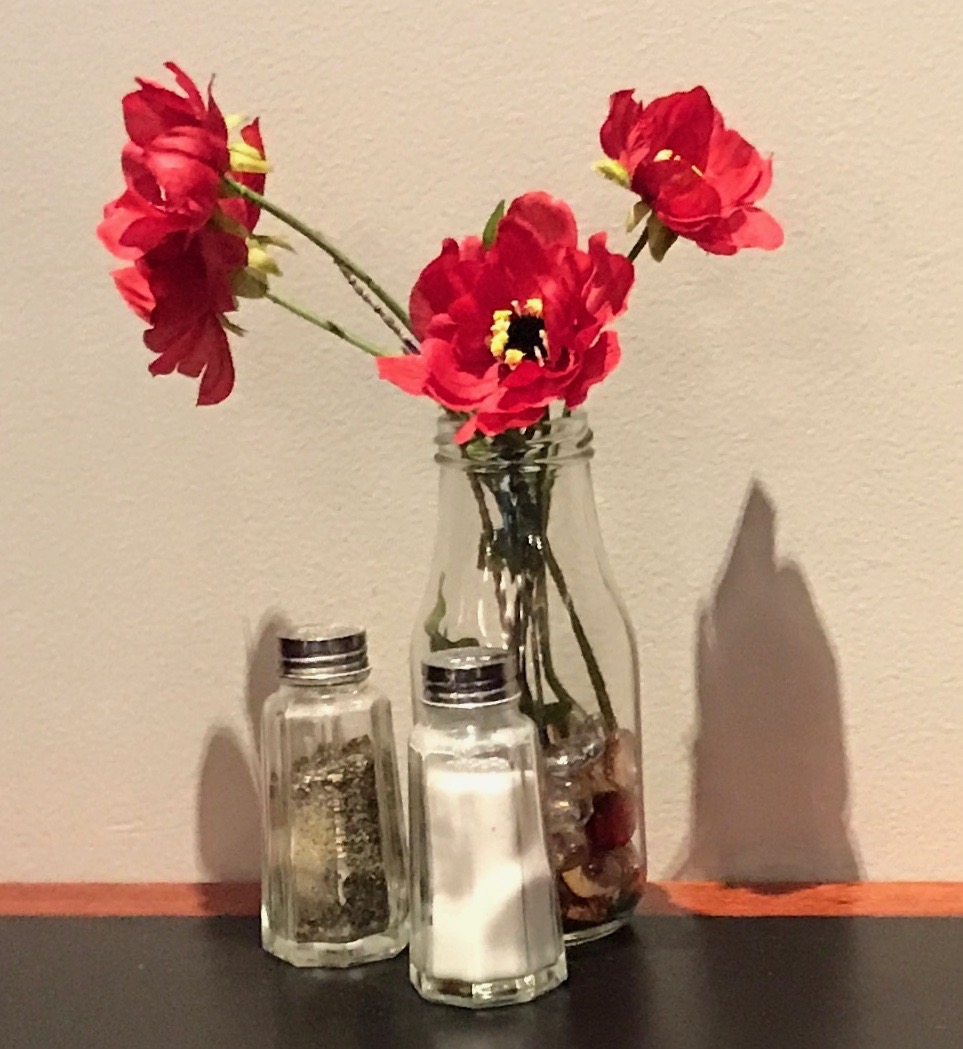
I had this cute little arrangement on my table.
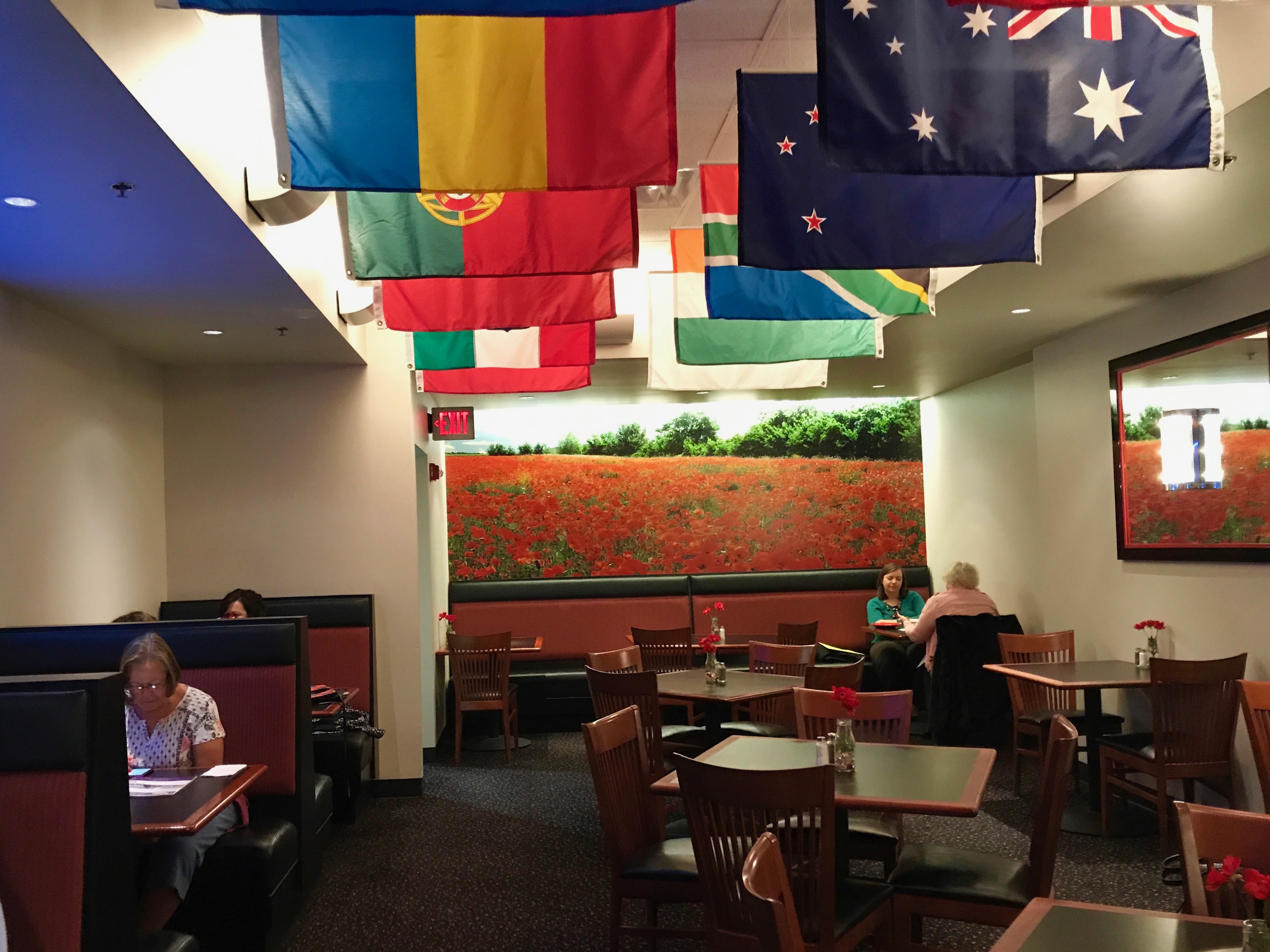
Each table had a little bouquet of poppies on it, and the walls were covered with poppy artwork. I thought the flags of the allies on the ceiling were a fitting bit of decor. I wonder how many soldiers ate like in such calm and clean dining halls?
Thus restored, I set out to see what I could see.
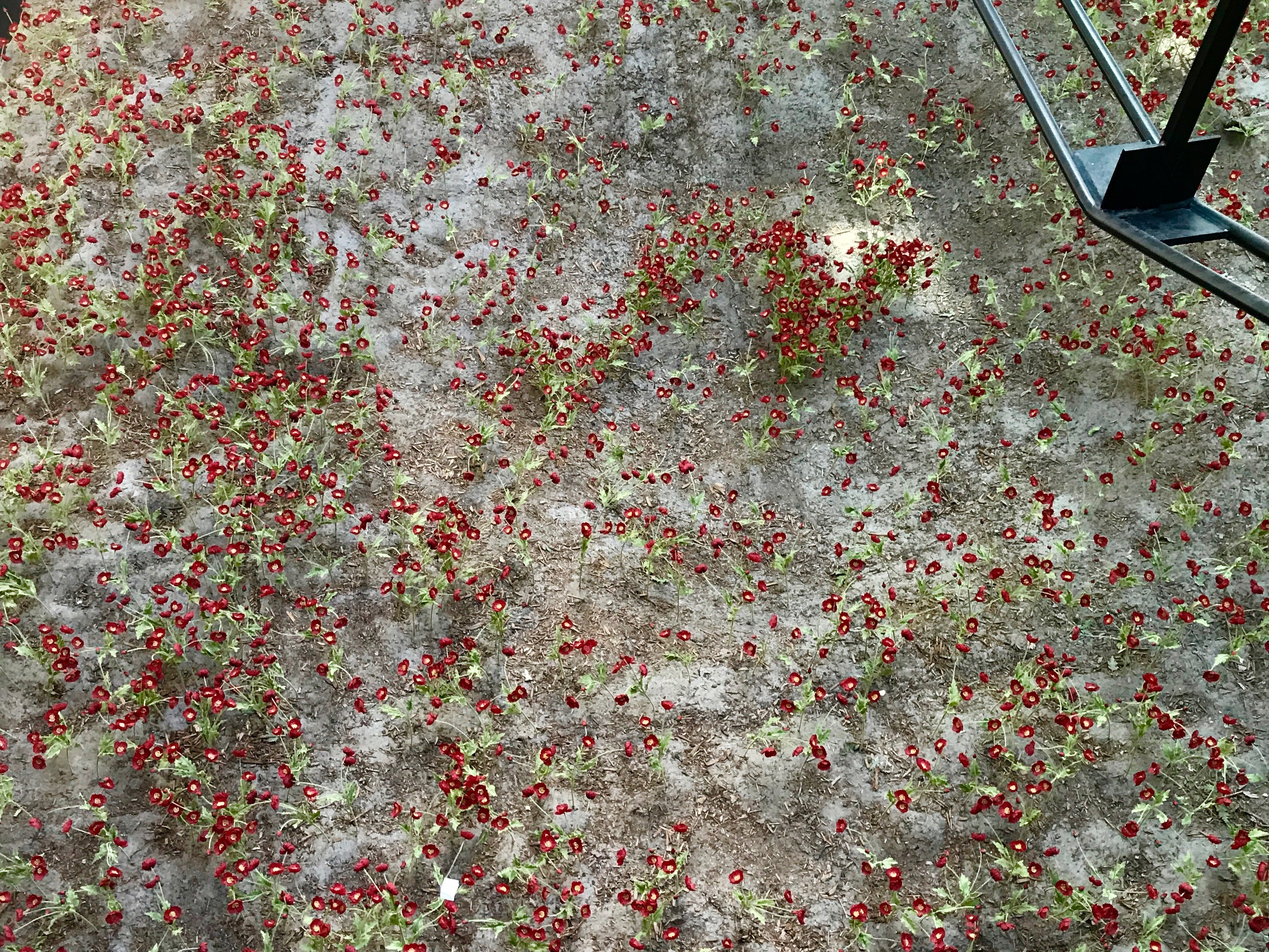
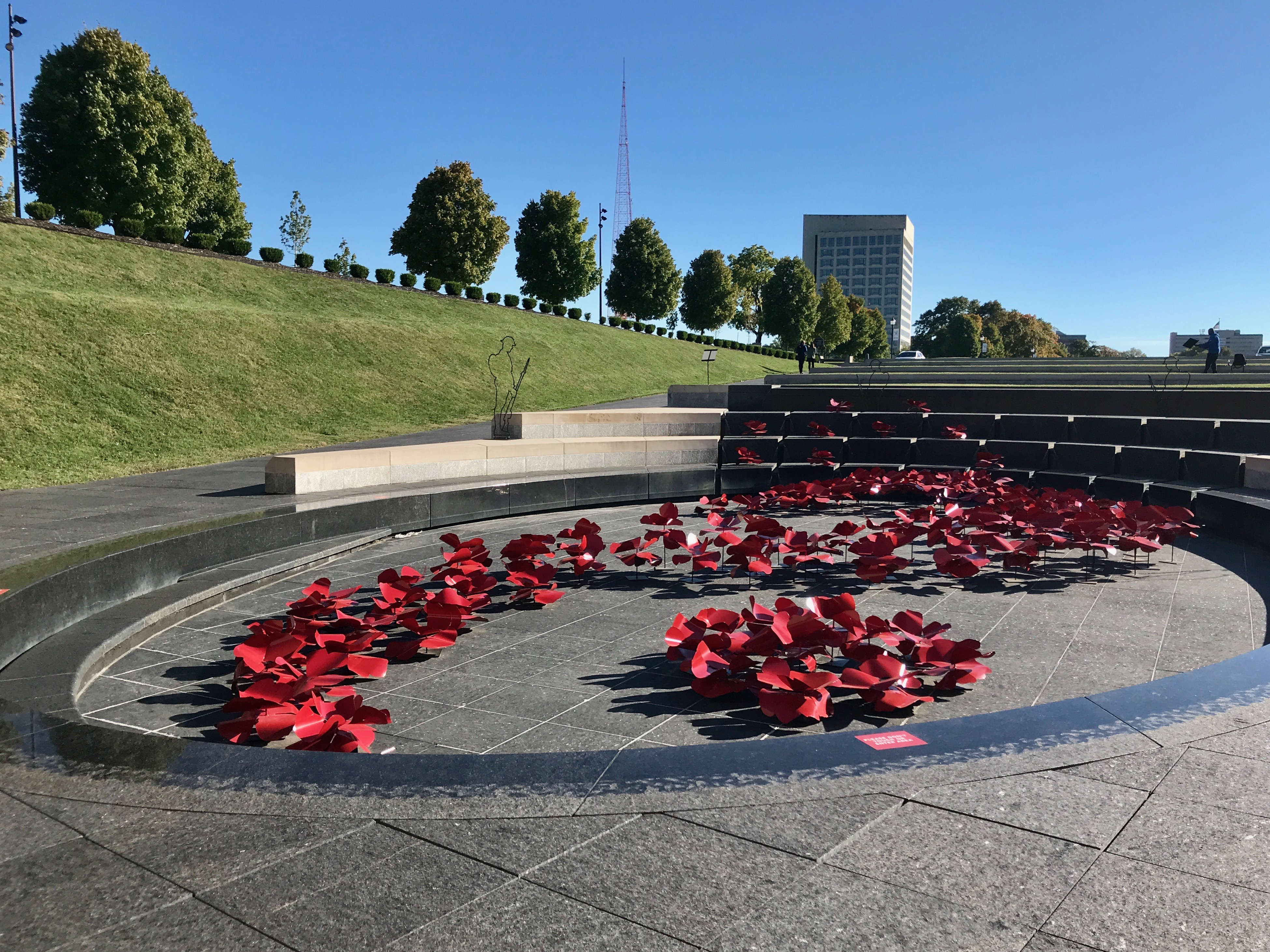
On the way to the displays, I passed another display of poppies. It runs in my mind that there are 9,000 of them massed in areas below the trusses, and each poppy stands for 1,000 dead combatants. That may be so, although I looked up the question “How many died in World War I?” 9,000,000 seems to be a bit on the low side. And you know what? That doesn’t even count the number of dead that were on “the other side.”
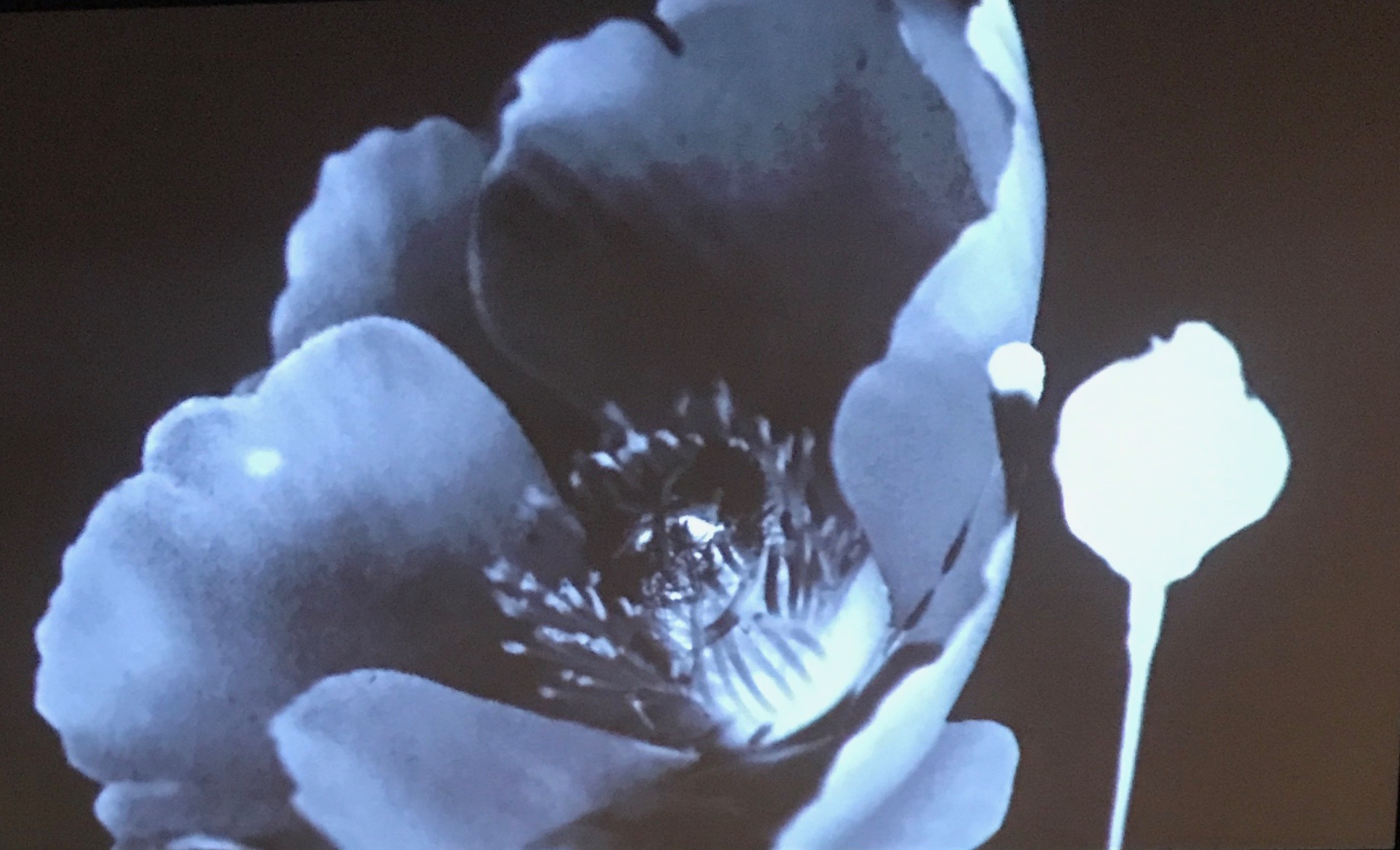
One more display of poppy art – this time, apparently x-rayed poppies – and it was time to enter the museum.
My loyal followers are probably just about to get up for some milk and cookies – or more substantial fare. You can relax. This time, I am going to give the museum a quick once-over. While the museum has a reputation for excellence, I found it to be extremely text-intensive.
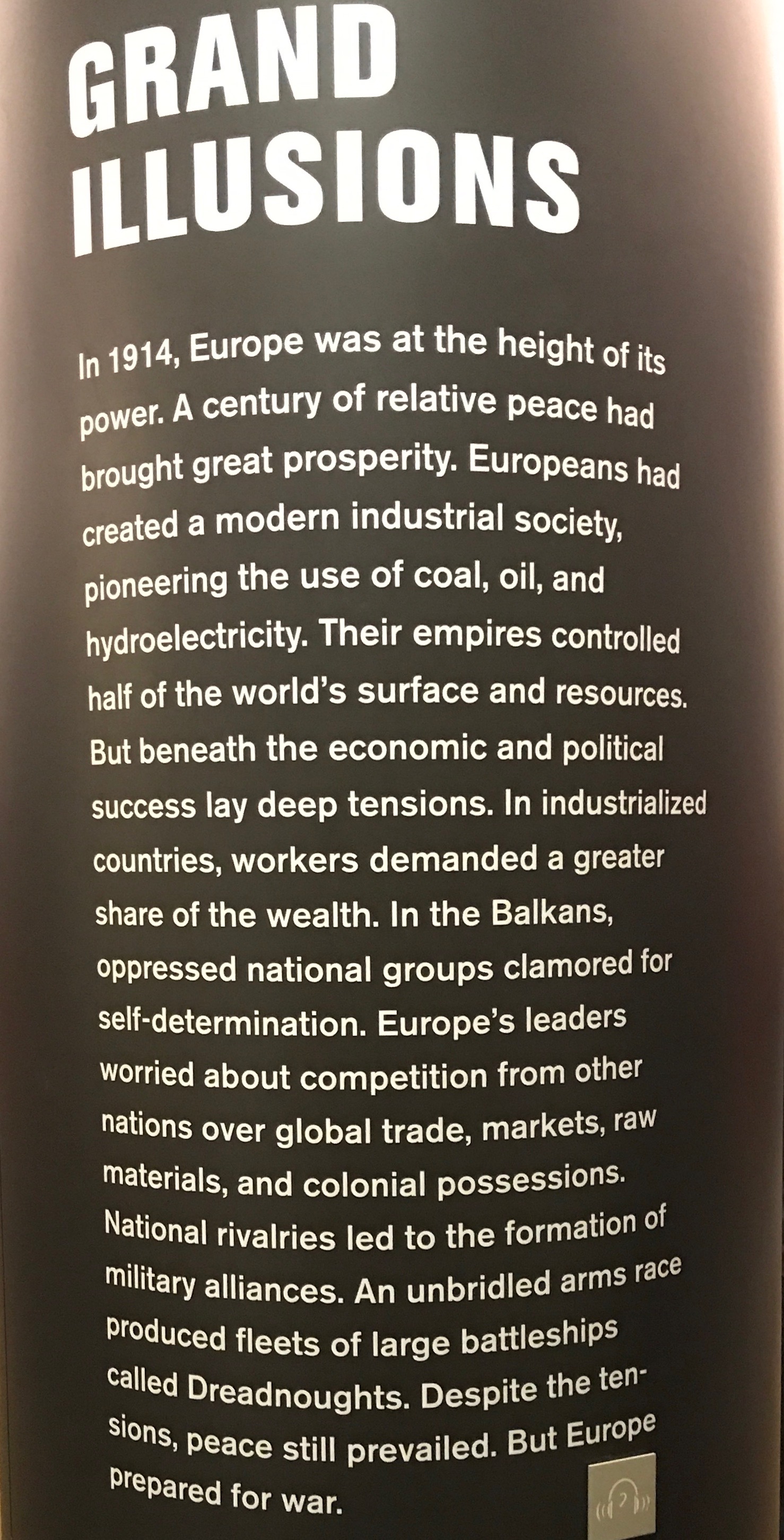
Perhaps I should have sprung for the audio tour. I snapped some photos of the information, with intentions to return to it later. Since I have been writing these posts about my visit, I realized that World War I is an extremely complicated topic. I need to do considerable study and research before I can even begin to understand it.
Additionally, “reading a museum” with bifocals isn’t a lot of fun. So, friends, I’ll just share a few items that I could take photos of.

You can still have some milk and cookies (or something stronger) if you wish.
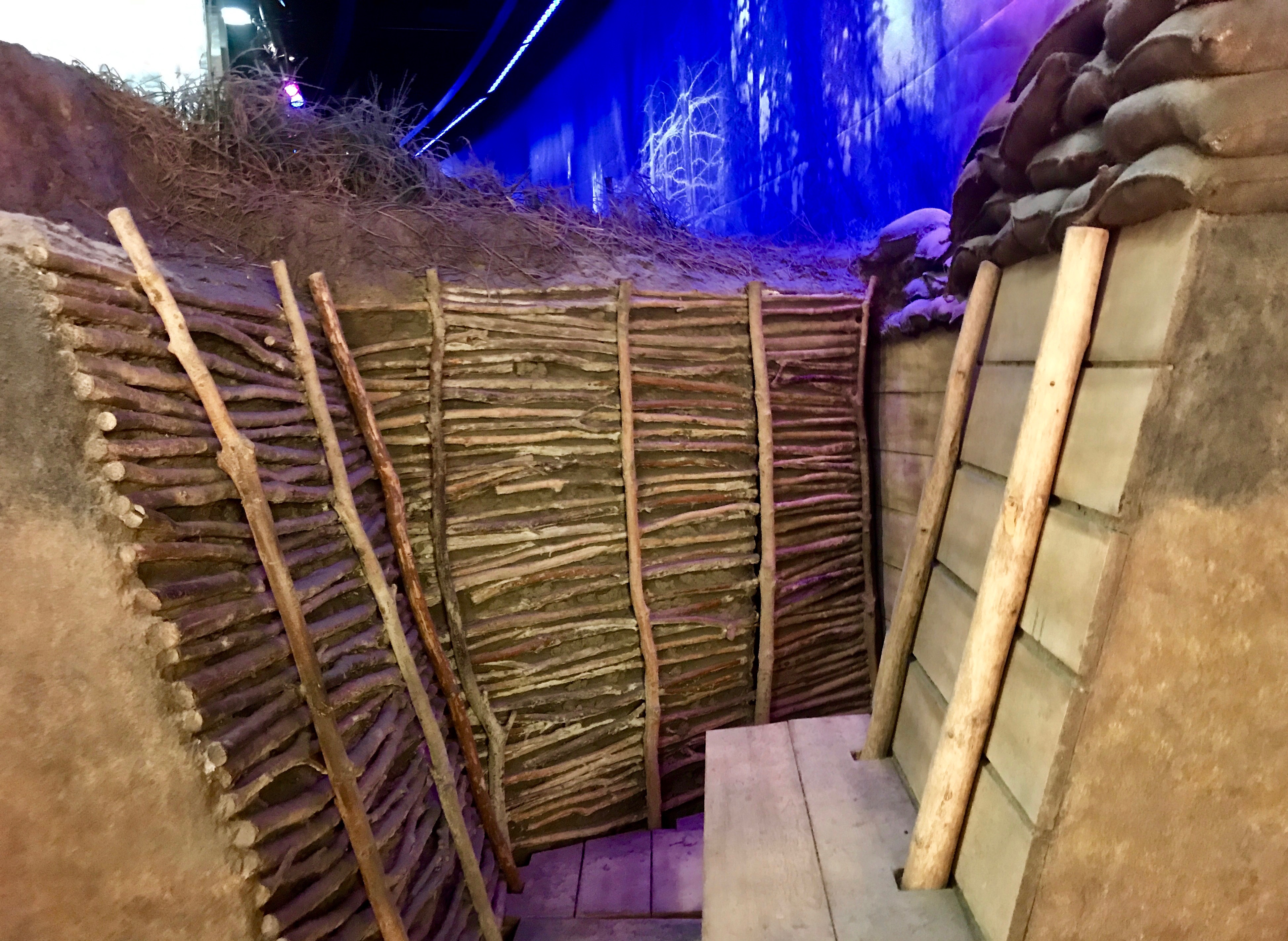
One thing that I think of when WW I comes to mind is trench warfare. This is a mock up of a trench. With so much support for the walls, you can easily see that these were positions they meant to hold. I wonder if the term “entrenched” comes from World War I?
I looked it up, but apparently it came into use in the figurative sense in the 1590s.
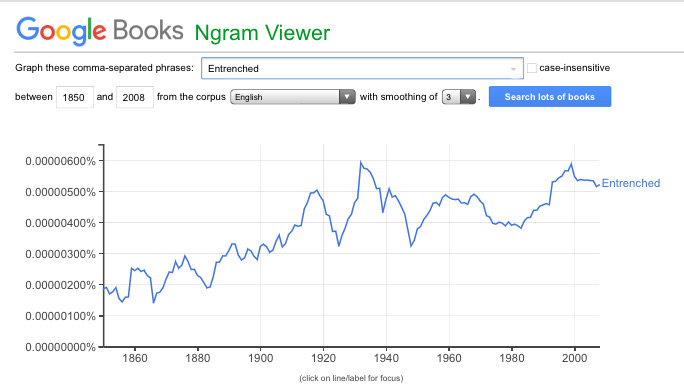
A examination of the word use on the Google Books Ngram Viewer shows its usage overtime. There are spikes in usage during the Civil War and World War I. I find it interesting that there are spikes in the 1930s and the 1990s. Currently, the word “entrenched” is used about as much now as it was during World War I.
If you’ve never used the Ngram Viewer, head over there and play around. You can even compare usage between terms. 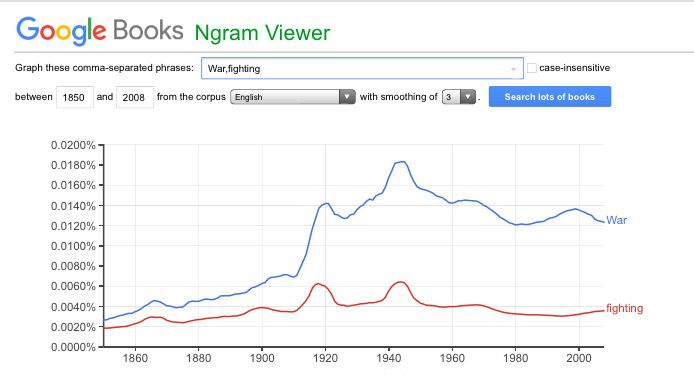
For instance, here I compared war and fighting.
Anyway, back to the museum.
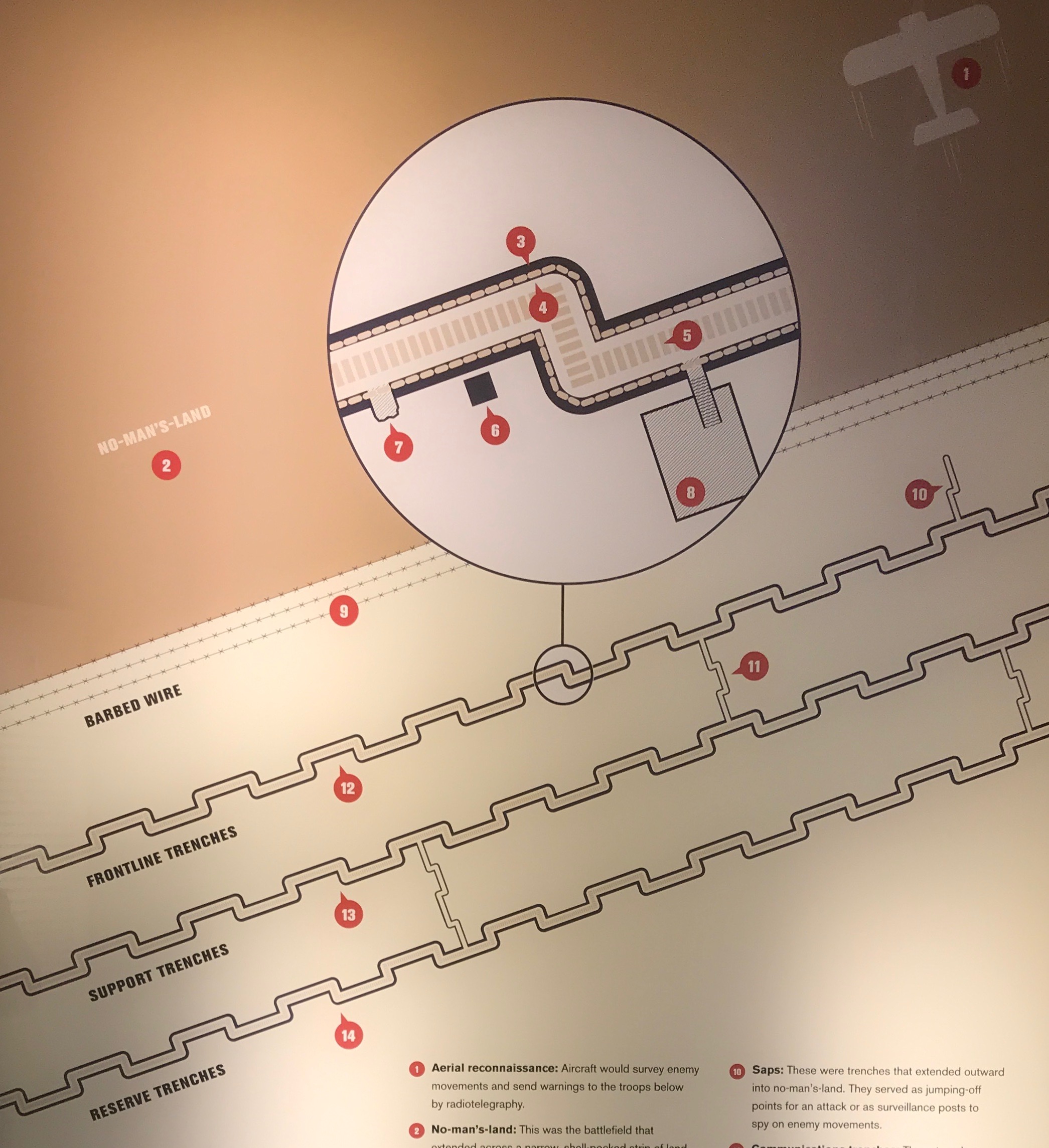
Here is a map of the rings of trenches that are behind no-man’s land and the barbed wire fences. The zig-zag layout was designed to slow down attackers and to provide a little extra protection for the soldiers.
It’s sad that they are using some of the same concepts in designing new schools.
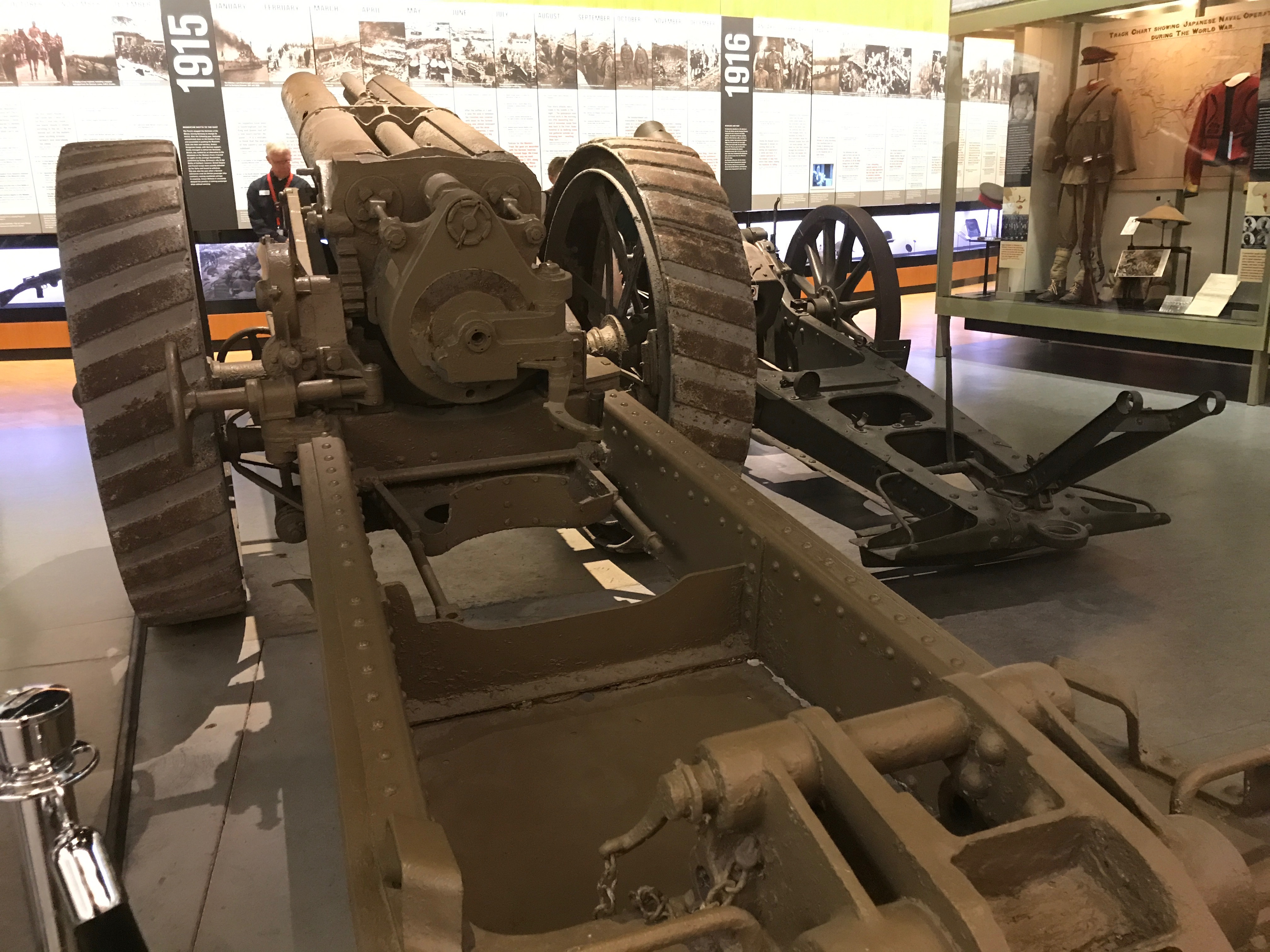
As you might expect, there were ordnance and uniforms on display.
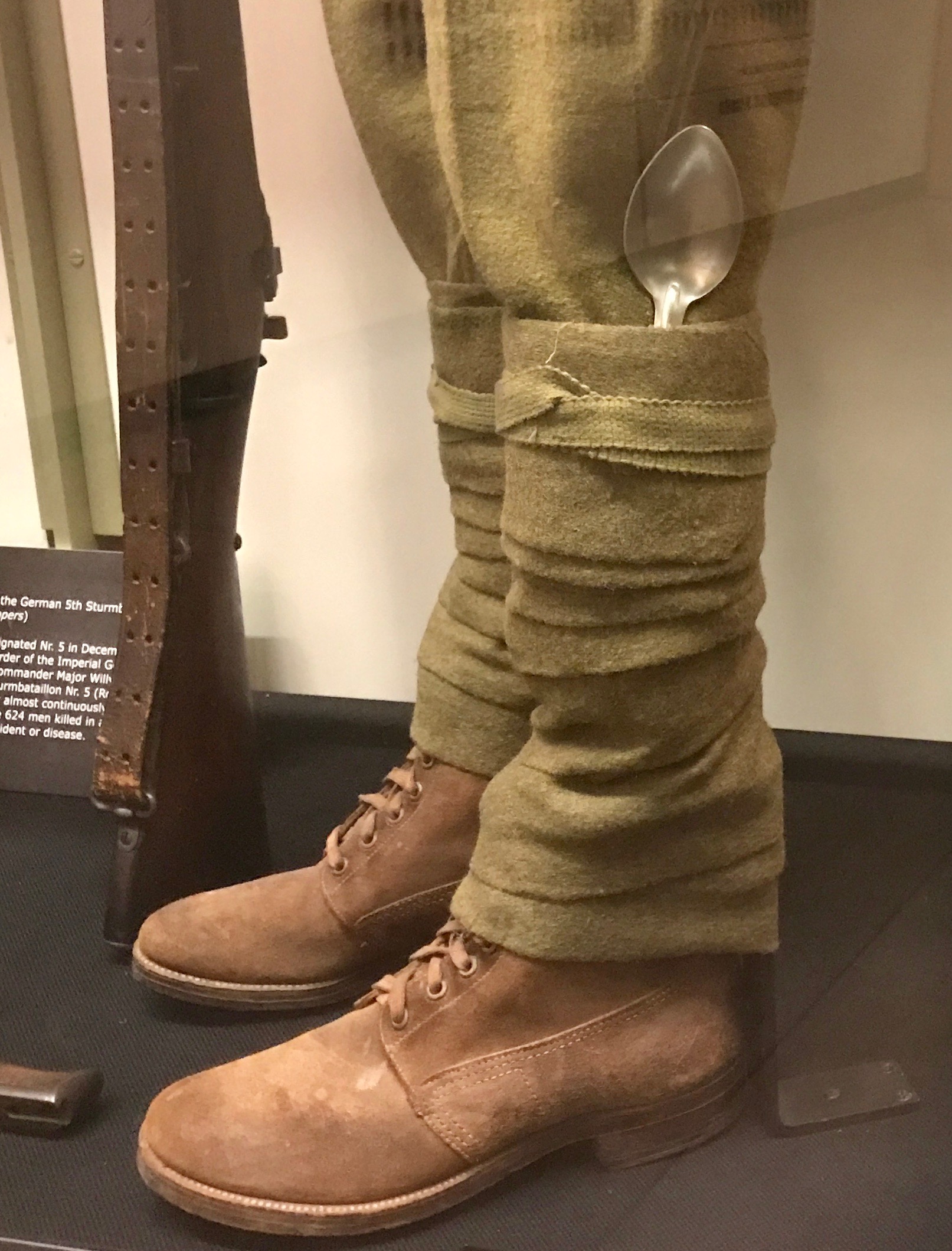
The A.E.F. (American Expeditionary Forces) often carried a spoon in the top of their spiral-wrap puttees in case they unexpectedly found some food. They wore wool uniforms, a steel helmet and hobnail boots. A soldier’s equipment included a U.S. Rifle Model 1903, with bayonet, a cartridge belt, a trench knife for hand-to-hand combat, gas mask, and entrenching tool, which those of us not in the military would probably call a folding spade. He also carried a first aid kit, mess kit, canteen and as many other small comforts as he could manage.
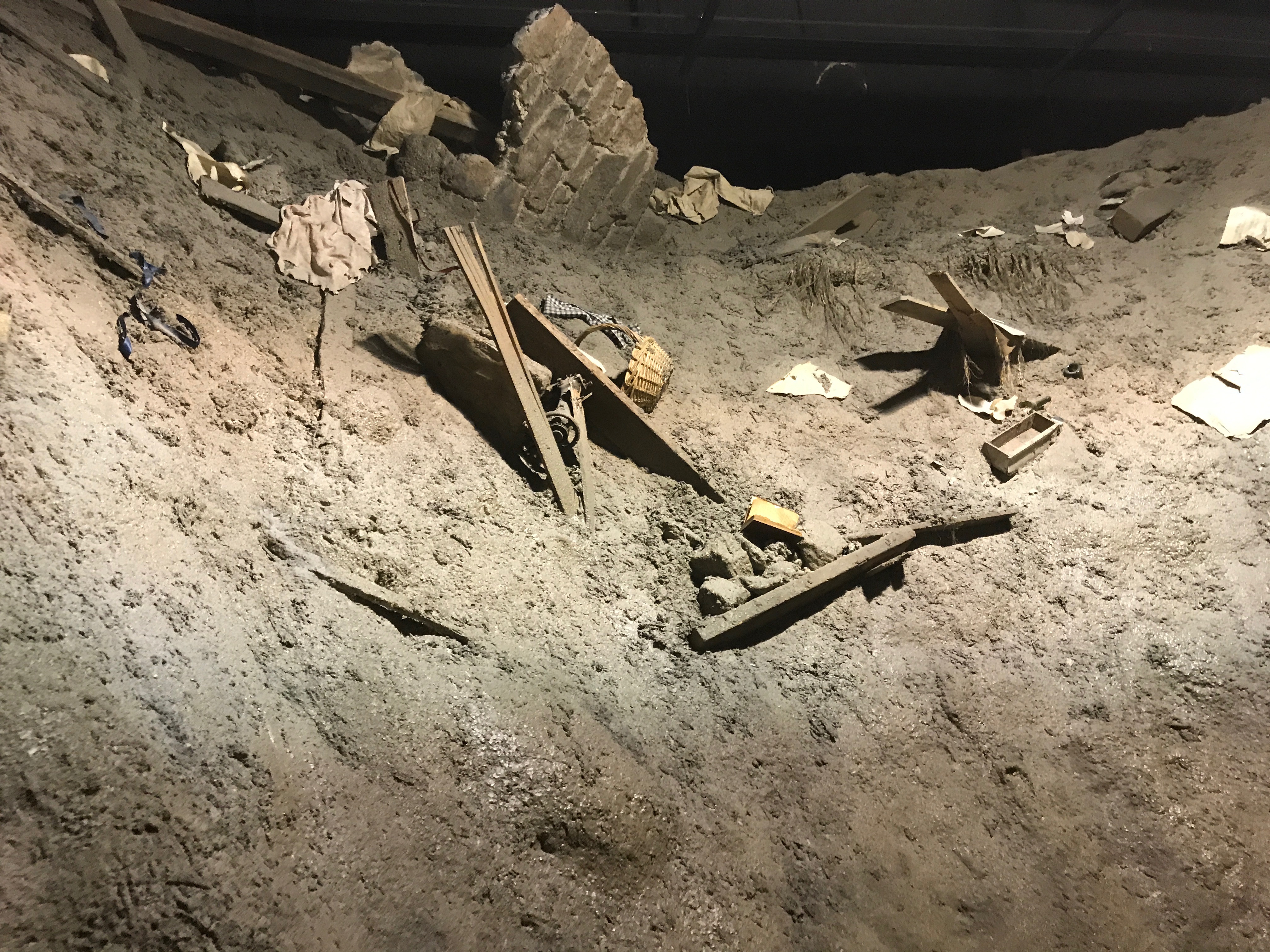
So, why do you suppose a soldier would need to carry a small shovel with him? Well, all that bombing trench making and such created a lot of debris.
Another concept that might come to mind are the aerial dogfights that Charles Schultz made the baby boomers aware of with Snoopy’s imaginary battles on his doghouse “Sopwith Camel.”
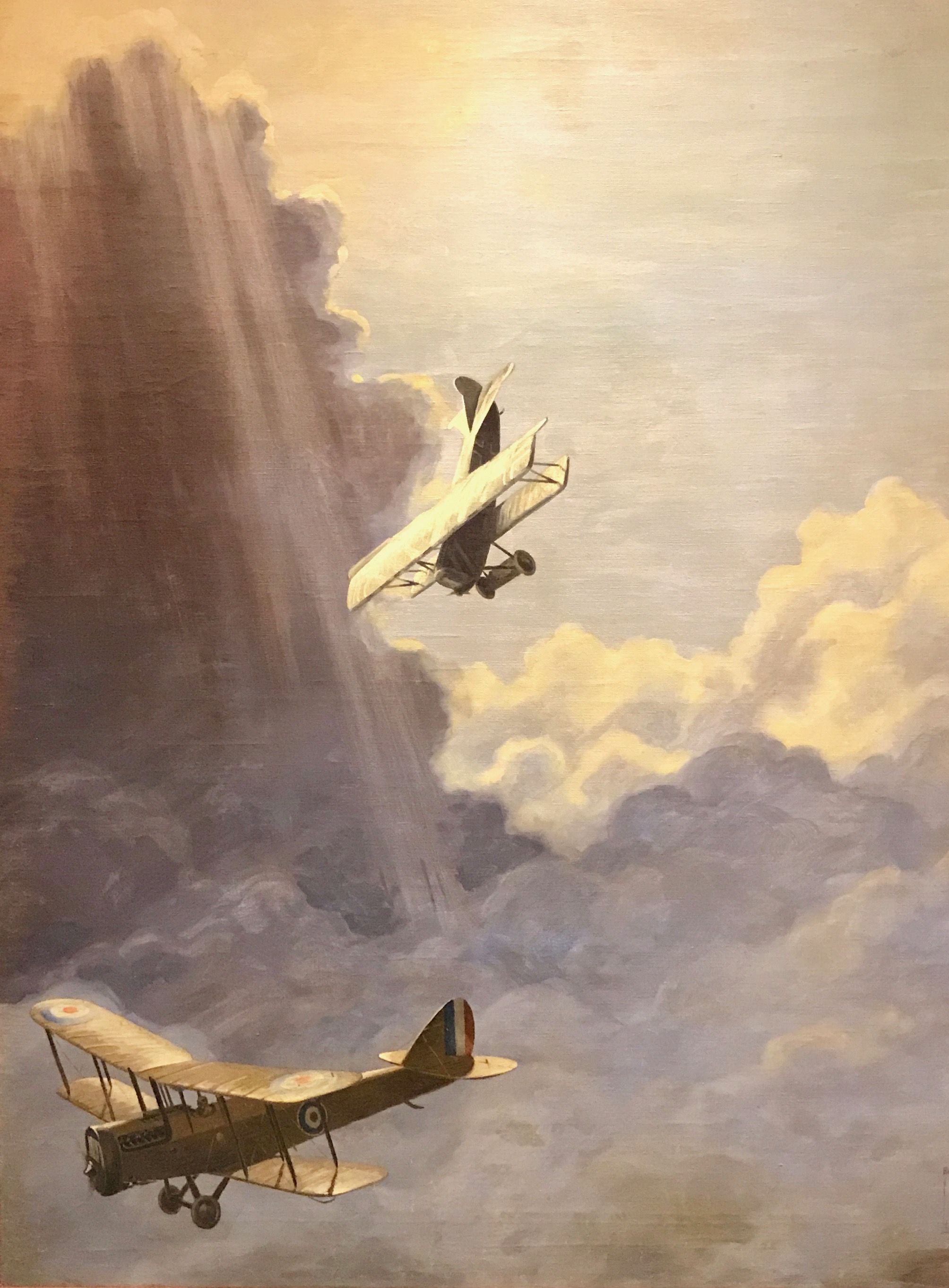
They didn’t have a Sopwith Camel at the museum, but they did have this painting. Incidentally, the Airzoo in Kalamazoo has one that is in restoration. I saw it many years ago. I wonder if they are still working on it?
The Germans were the first to use flight schools that required hours of training. Veteran pilots served as instructors to train student pilots thoroughly before sending them to the front.
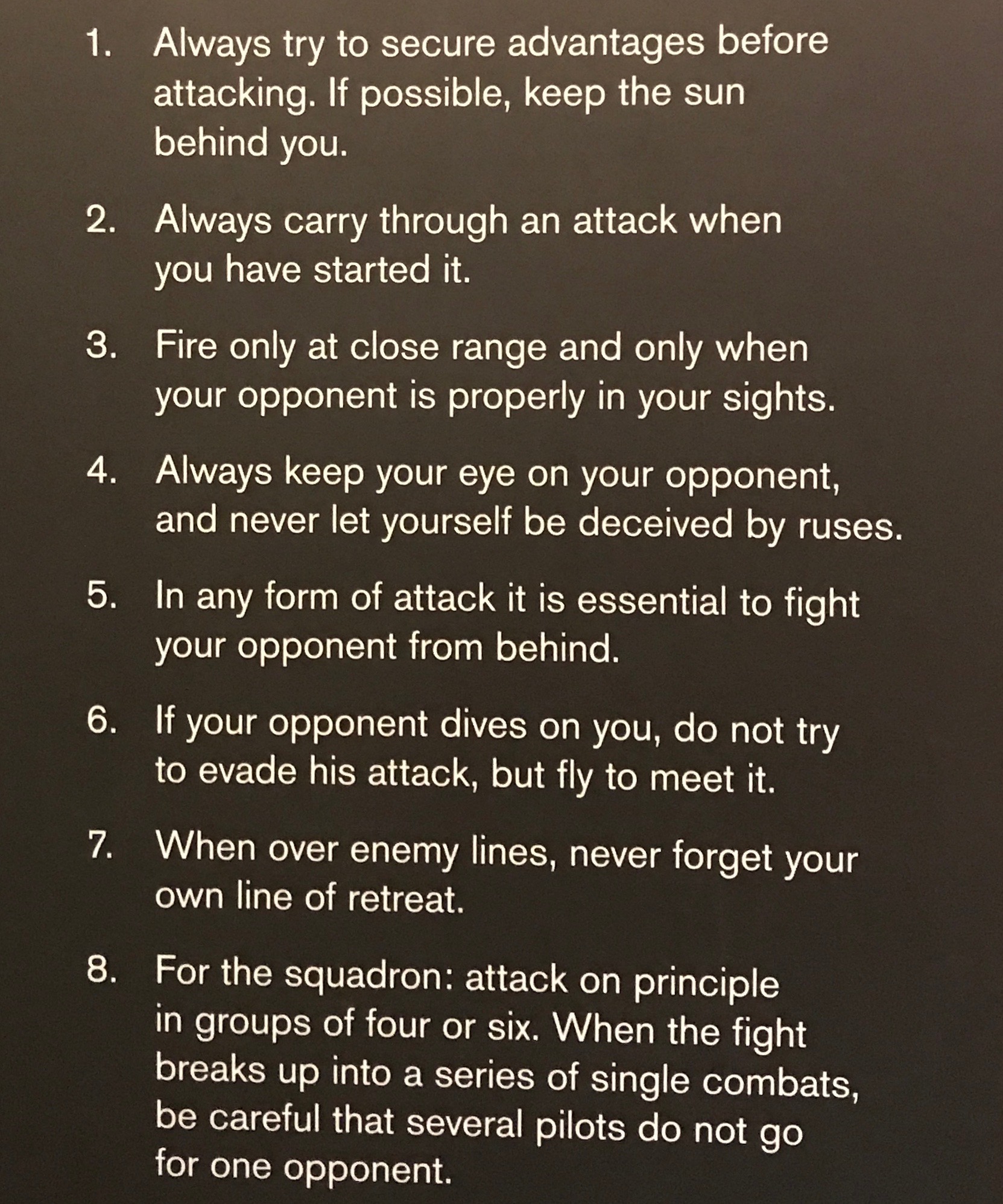
These rules of air combat were written by Oswald Beolcke, Germany’s leading ace at the beginning of the war.
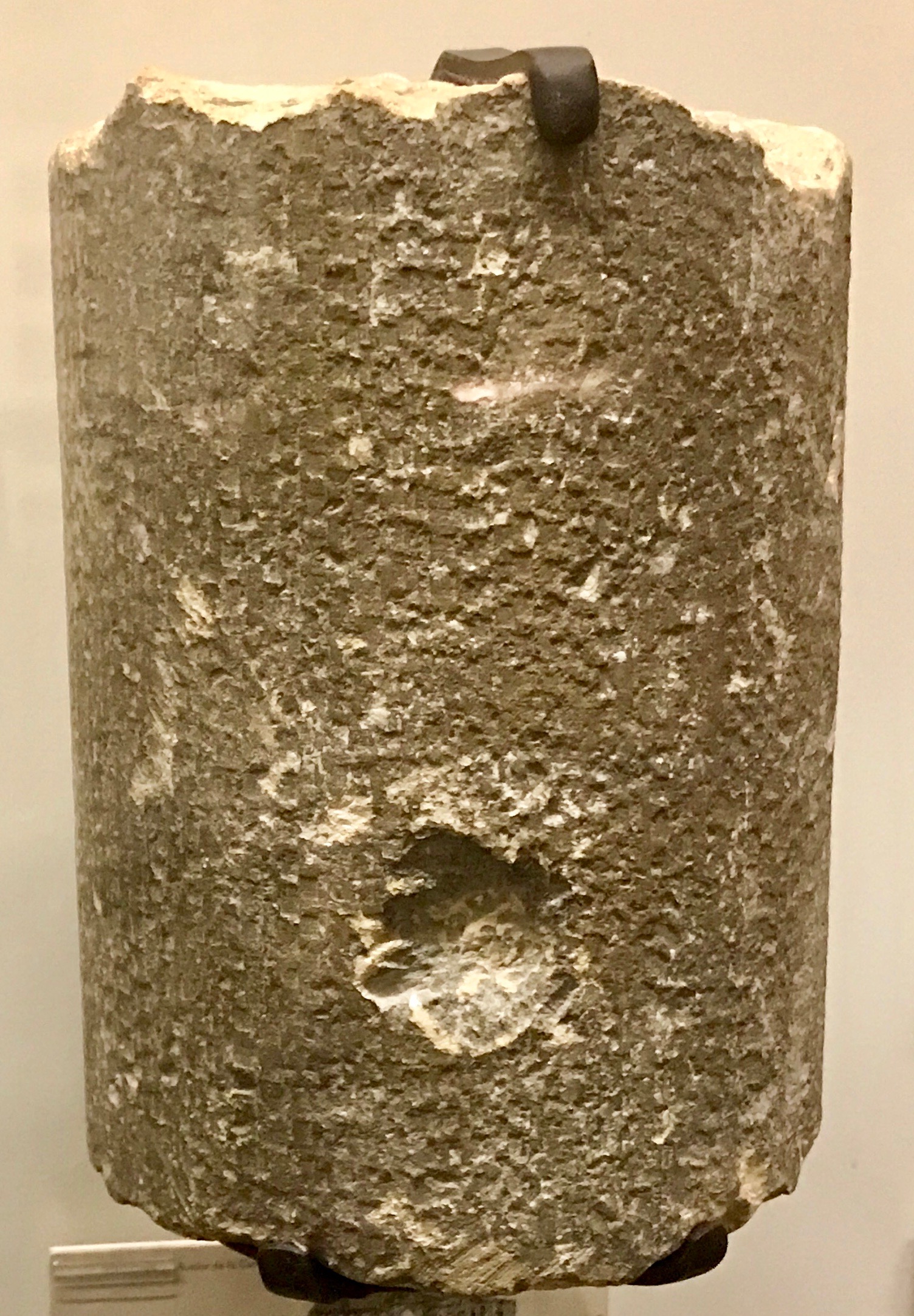
This pock-marked stone is a fragment of a small column from a window surround from the war-destroyed Cathedral of Reims. It was a gift from the Government of the French Republic to the Liberty Memorial and its museum in 1926. The letter that accompanied the fit said: ” May these sacred stones from the land of France recall both an unhappy past and the memory of the imperishable friendship and the union of two great people.”
If it weren’t for the French, the United States would never have been able to defeat the English in our War for Independence.
“Lafayette, we are here!”
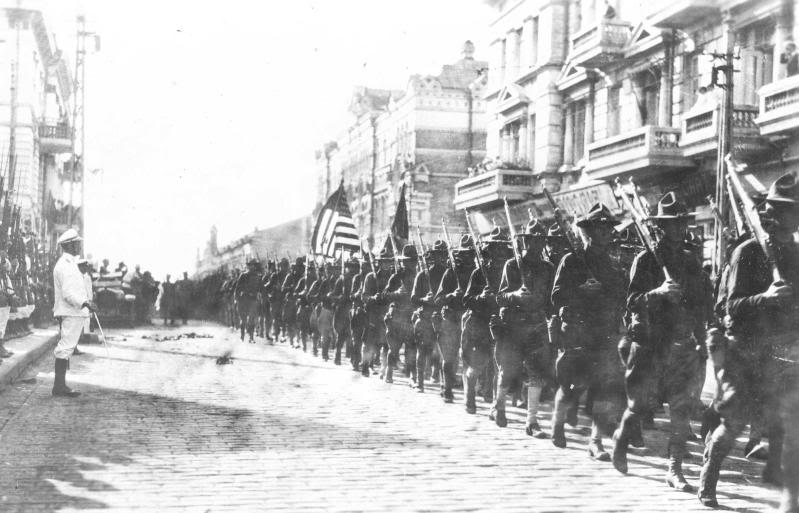
Those words are often attributed to General Pershing, but they were actually said by Lieutenant Colonel Charles Stanton at the grave of The Marquis de Lafayette in Paris when the first contingent of the American Expeditionary Force arrived in 1917.
According to Ian C. Friedman, The Marquis de Lafayette was a 19-year-old military officer who was so moved by reports of the colonial use for independence that he decided to come to America and fight the British. Benjamin Franklin urged General Washington to accept Lafayette as an aide-de-camp because of his strong reputation and because they hoped that the young French officer could help increase French support for the revolutionary cause.
The Marquis de Lafayette died in Paris on May 20, 1834, almost ten years after returning to the United States as an official guest of President James Monroe. During this visit, he toured every state and traveled over 6,000 miles. In 2002, an act of the U.S. Congress made Lafayette an honorary citizen of the United States – only the sixth of eight people. He is buried in Paris under soil from the site of the Revolutionary War’s Battle of Bunker Hill.
Ah, but I digress…
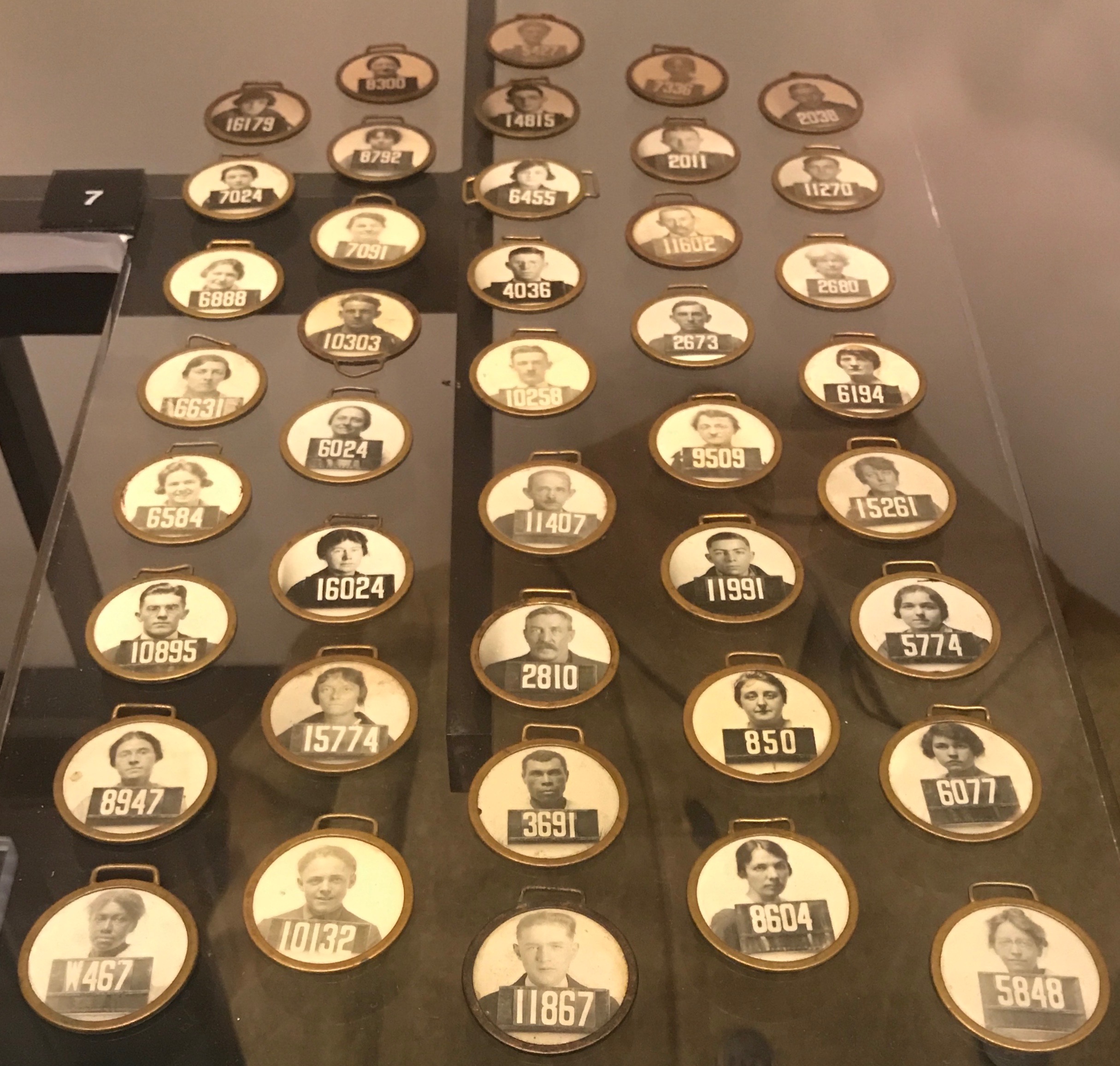
These rather somber photos are worker identity badges. They were worn by workers at the Woodbury, New Jersey, naval ammunition bag loading plant.
Long before the country officially entered the war in April 1917, posters began to make appeals to the “American sense of right and wrong.” Posters urged the country to prepare and, after the sinking of the Lusitania in 1915, to enlist.
After the United States entered the war, the poster campaign shifted into high gear.
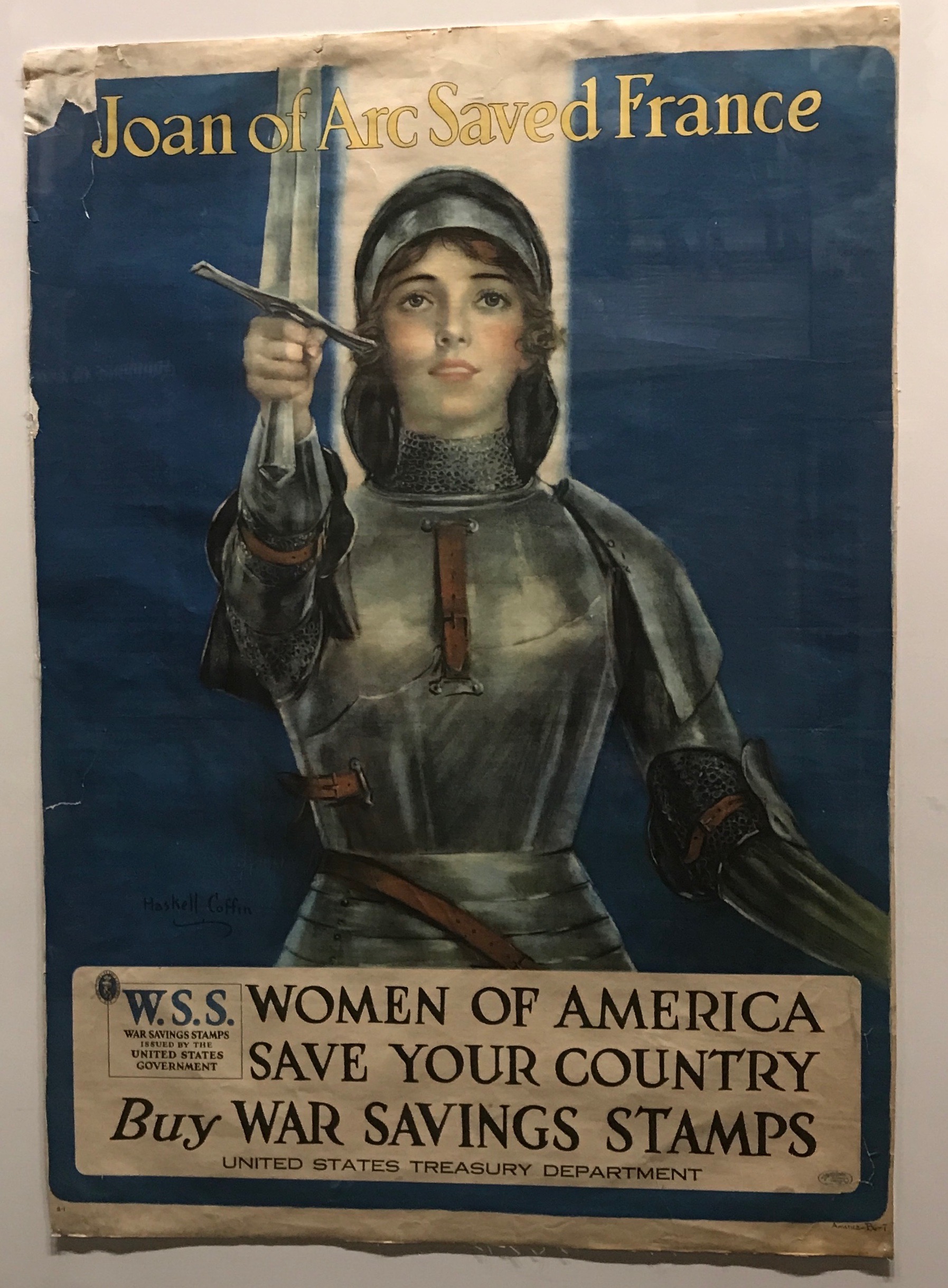
“Posters literally deluged the country,” said one observer.

“On every city street, along the rural highways, posters were to be found repeating their insistent messages day and night.”
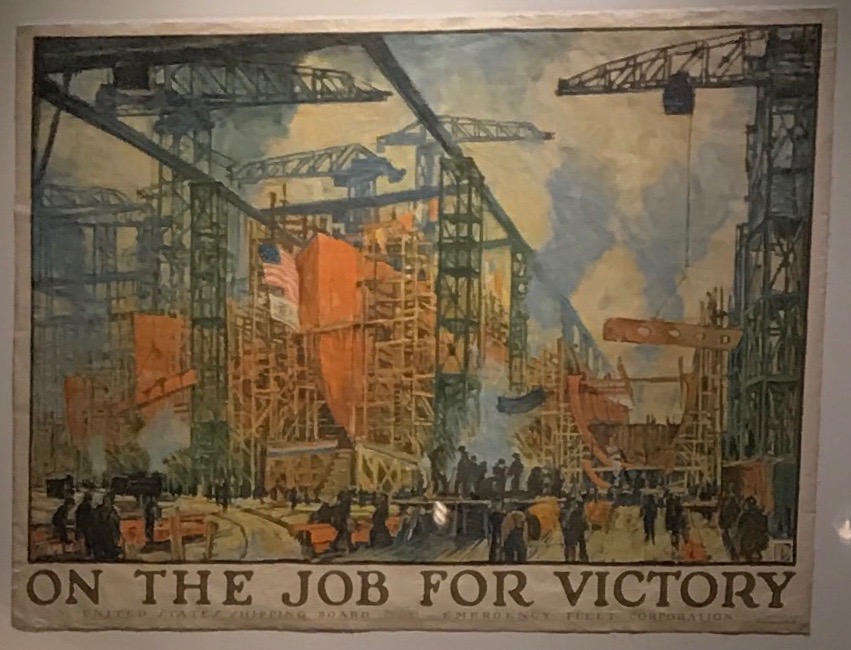
In many instances, art organizations and individual artists the highest standing volunteered their services to make posters. James Montgomery Flagg painted a self-portrait as Uncle Sam in 1917, creating probably the most recognizable poster from the war.
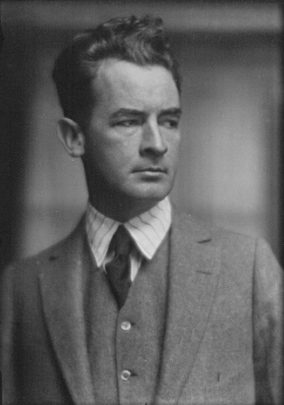
Flagg used his own face for that of Uncle Sam, although he did add age and the white goatee. He said that he did it to simply avoid the trouble of arranging for a model. When it was revived during World War II, President Roosevelt praised his resourcefulness for using his own face as the model.
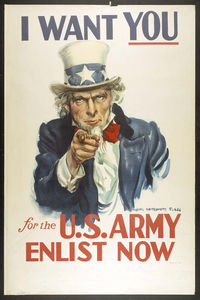
Do you see the likeness?
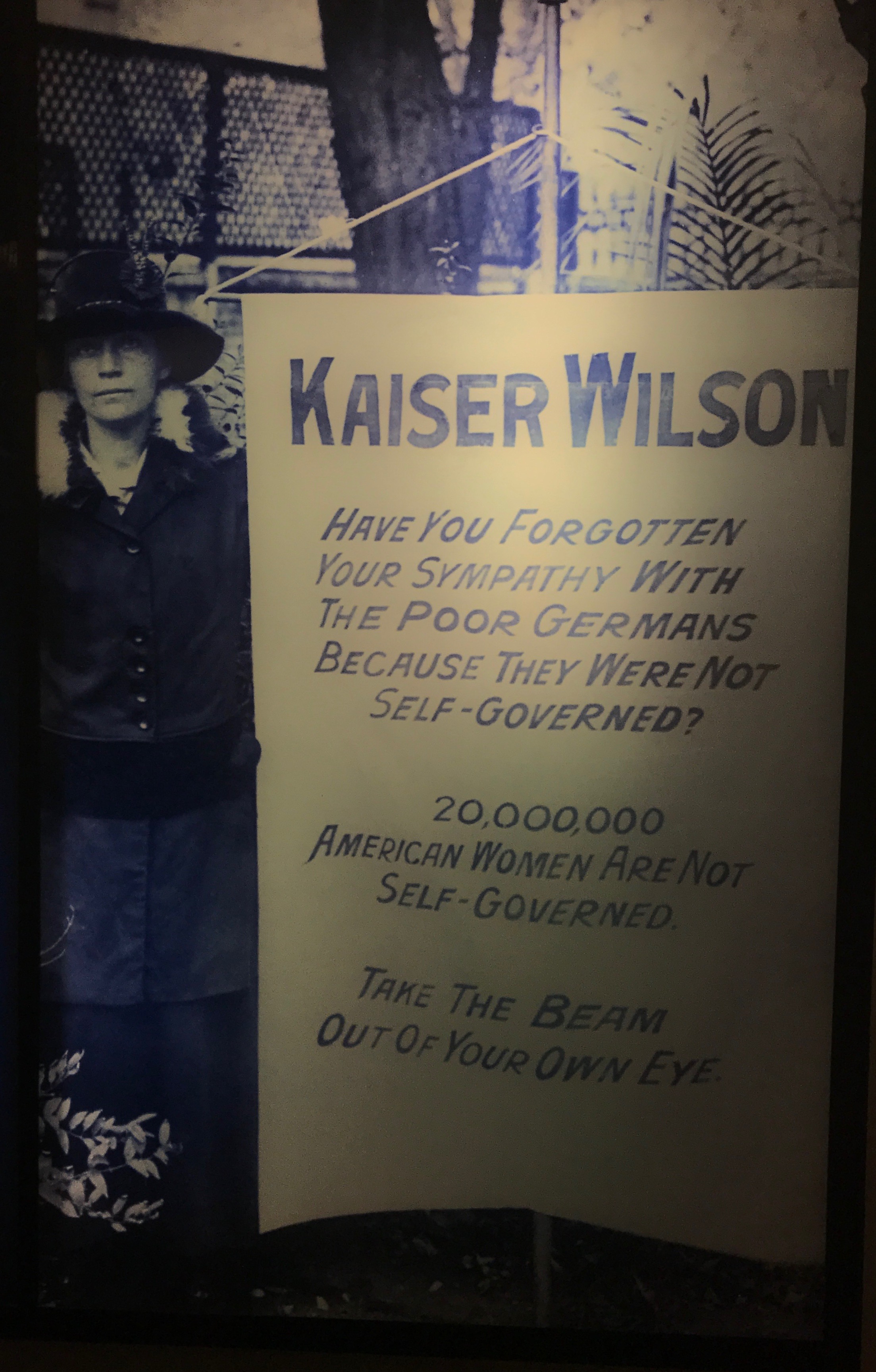
Not everyone was gung-ho enthusiastic about the war. Women continued to advocate for the right to vote. It’s hard to believe that half the population was disenfranchised by gender until 1920.
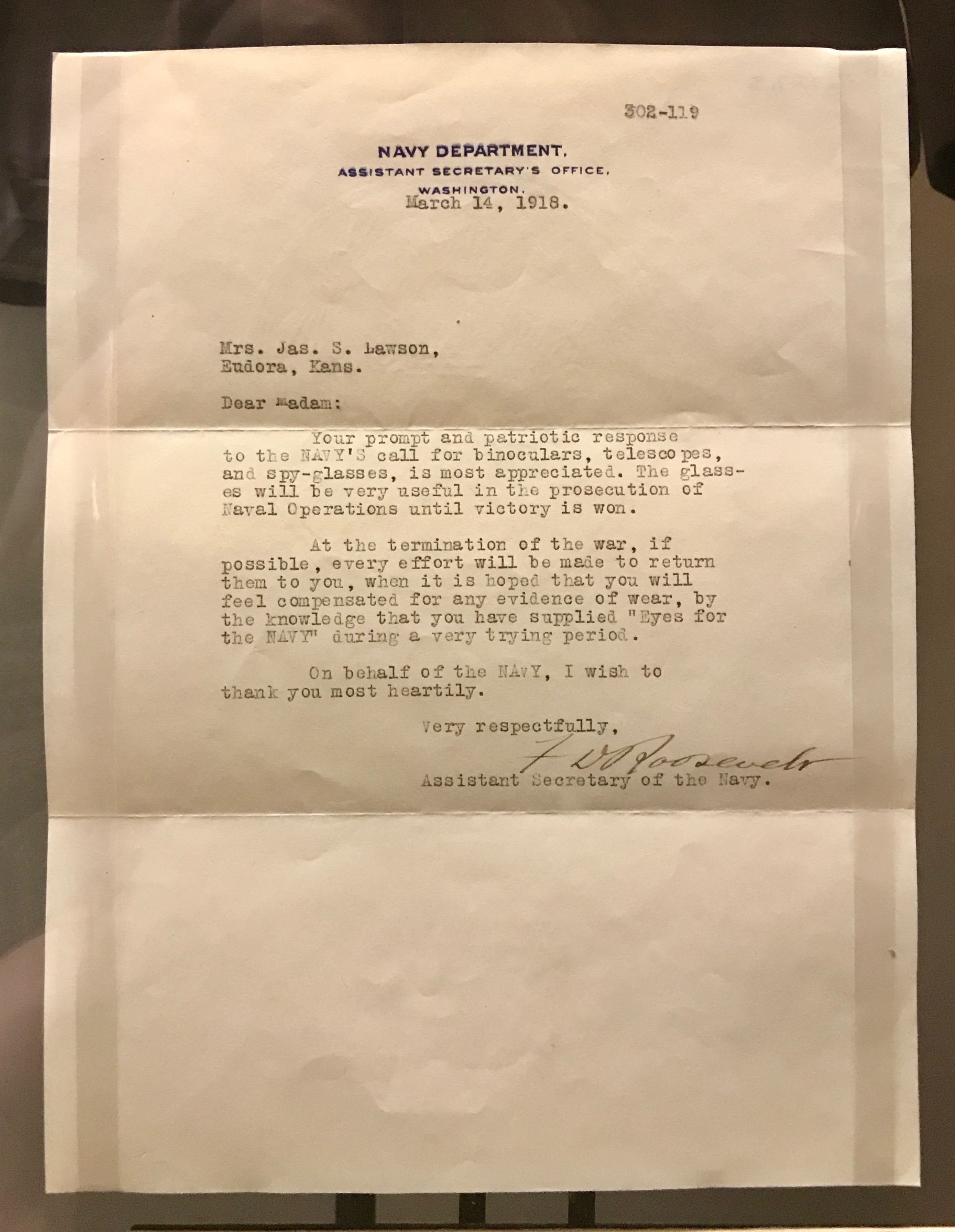
This letter caught my attention. Let me zoom in on the body of the letter so that you can see it clearly.
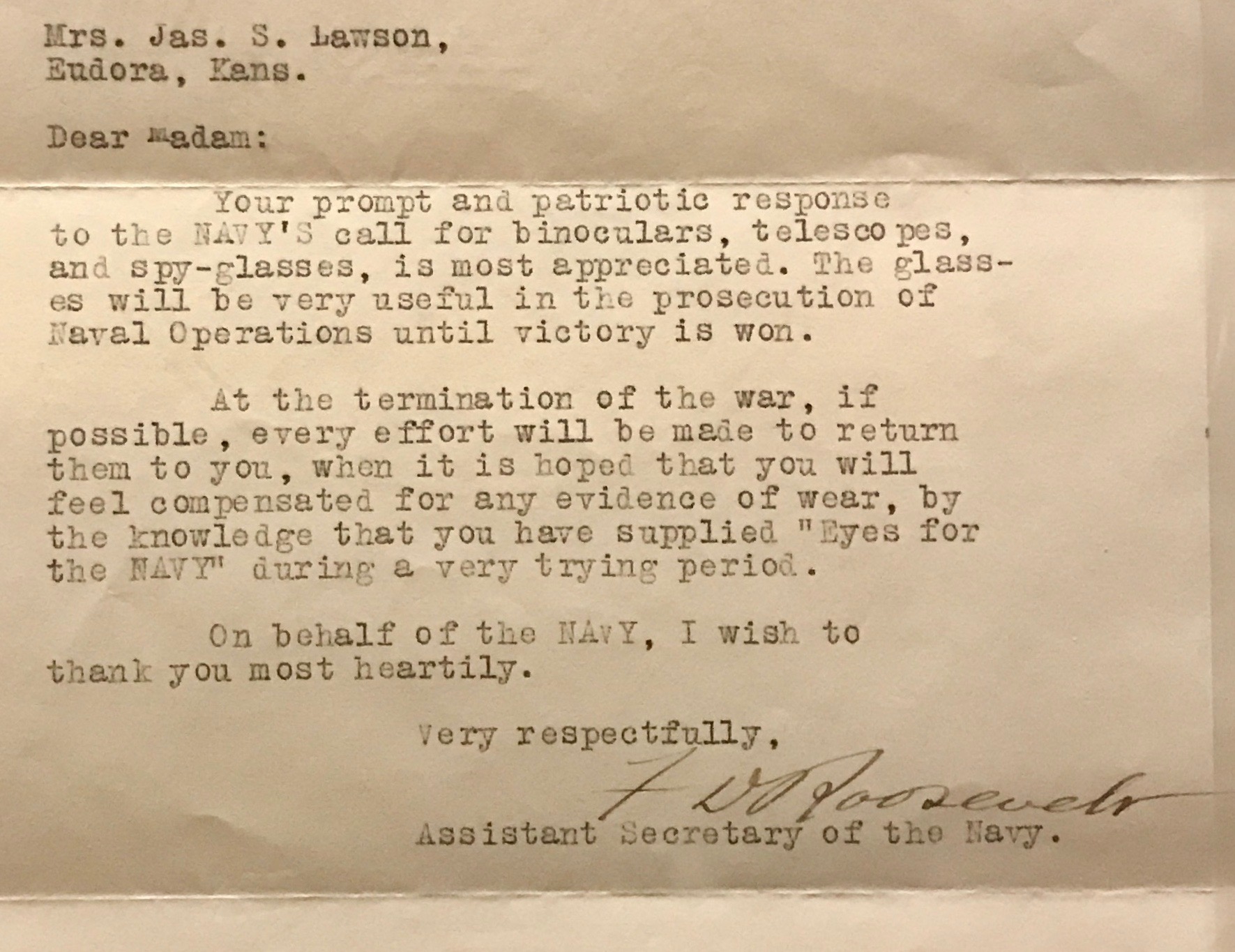
Can you imagine asking people to send in their binoculars? I guess they had to ramp up the military quickly and that they didn’t have a large stockpile of equipment. I wonder why NAVY is capitalized? And, did you notice who signed the letter? FDRoosevelt.
I have just a few more artifacts to share.
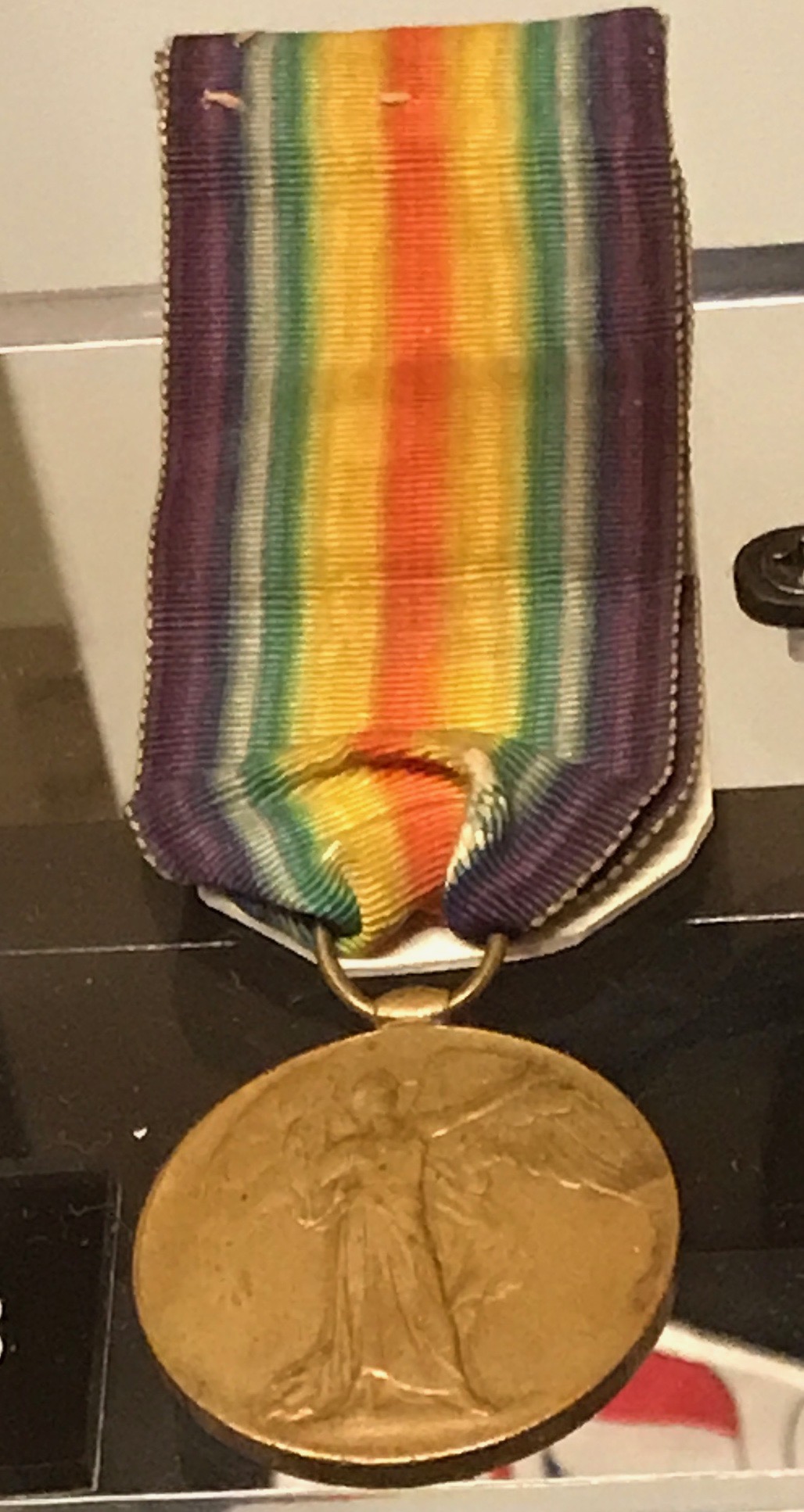
My grandfather, who served in the Canadian army, had a medal like this one. I had it for many years, but gave it to my brother when I set out to tour the country in the Airstream back in 2014.
And some poppies…
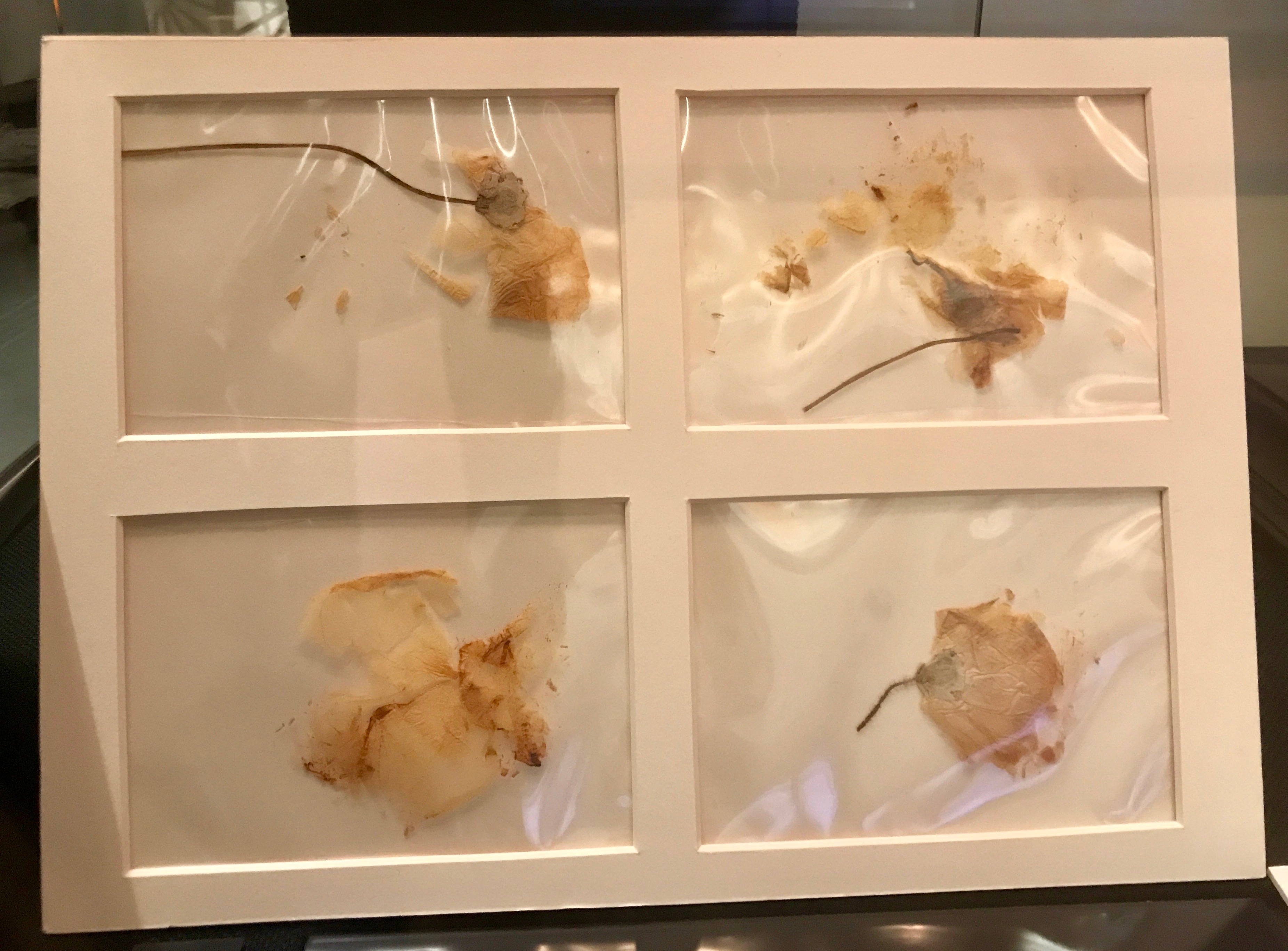
These poppies were gathered from Belgium’s Flanders Fields by Arthur Massey, 20th Field Artillery, 5th Division, A.E.F.
And with that, it was time for me to head back into the sunshine.
And go find my car.