After the wonderful days at Little Manatee River State Park, I moved a little further south to Koreshan Historical Site State Park. It was near a couple places on my “wanna do” list: Sanibel Island and Cape Coral, where my cousin, Coral Lee. lives
Koreshan State Historic Site is a relatively new state park. It was built on the land donated by the last remaining members of the Koreshan Unity in 1961. The remains of their once vibrant community is well-preserved, but more about that later.
The land is lush and the campsites are small, but I am truly proud of the masterful job I did backing in.
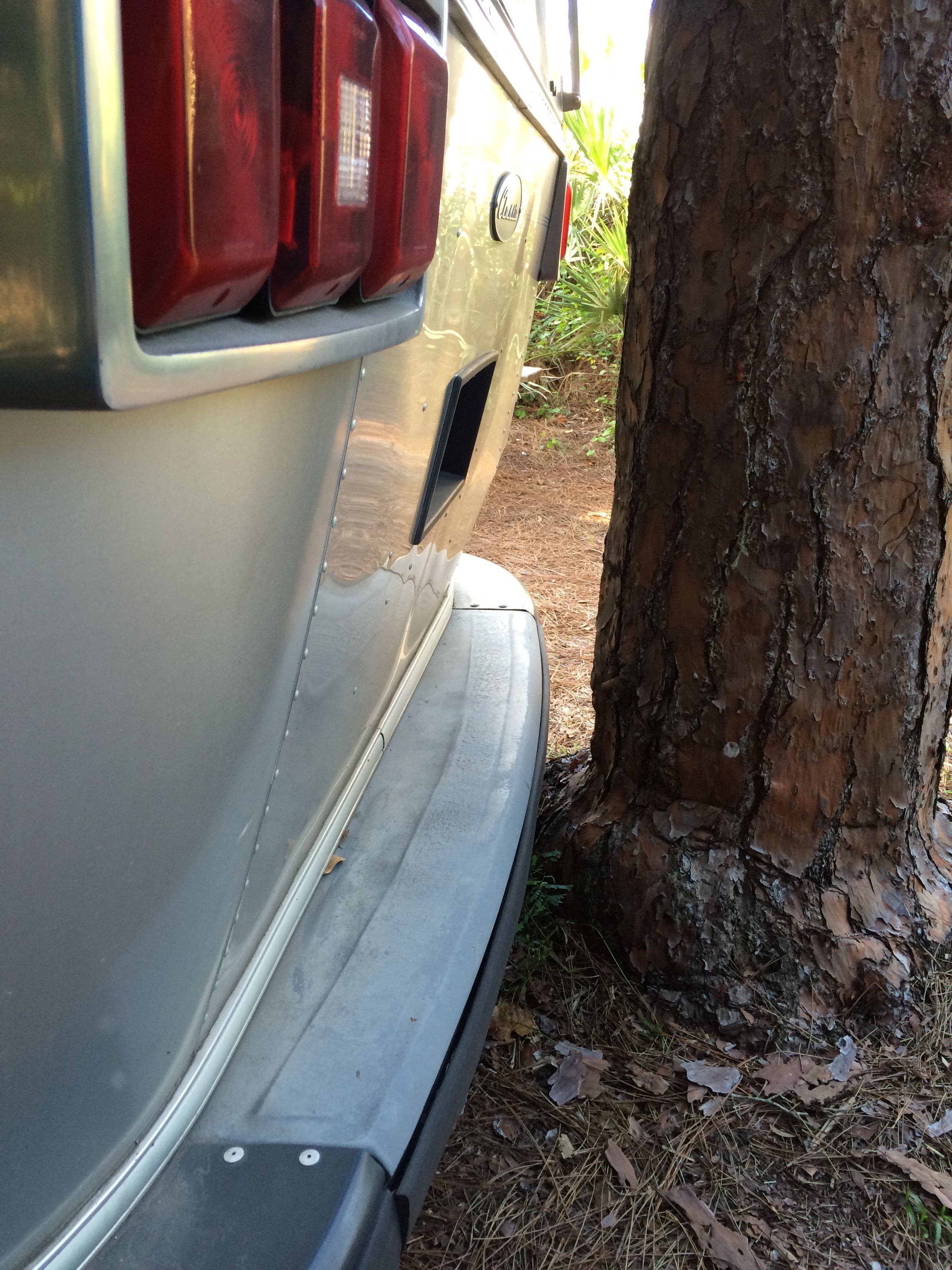
I backed right up to the tree!
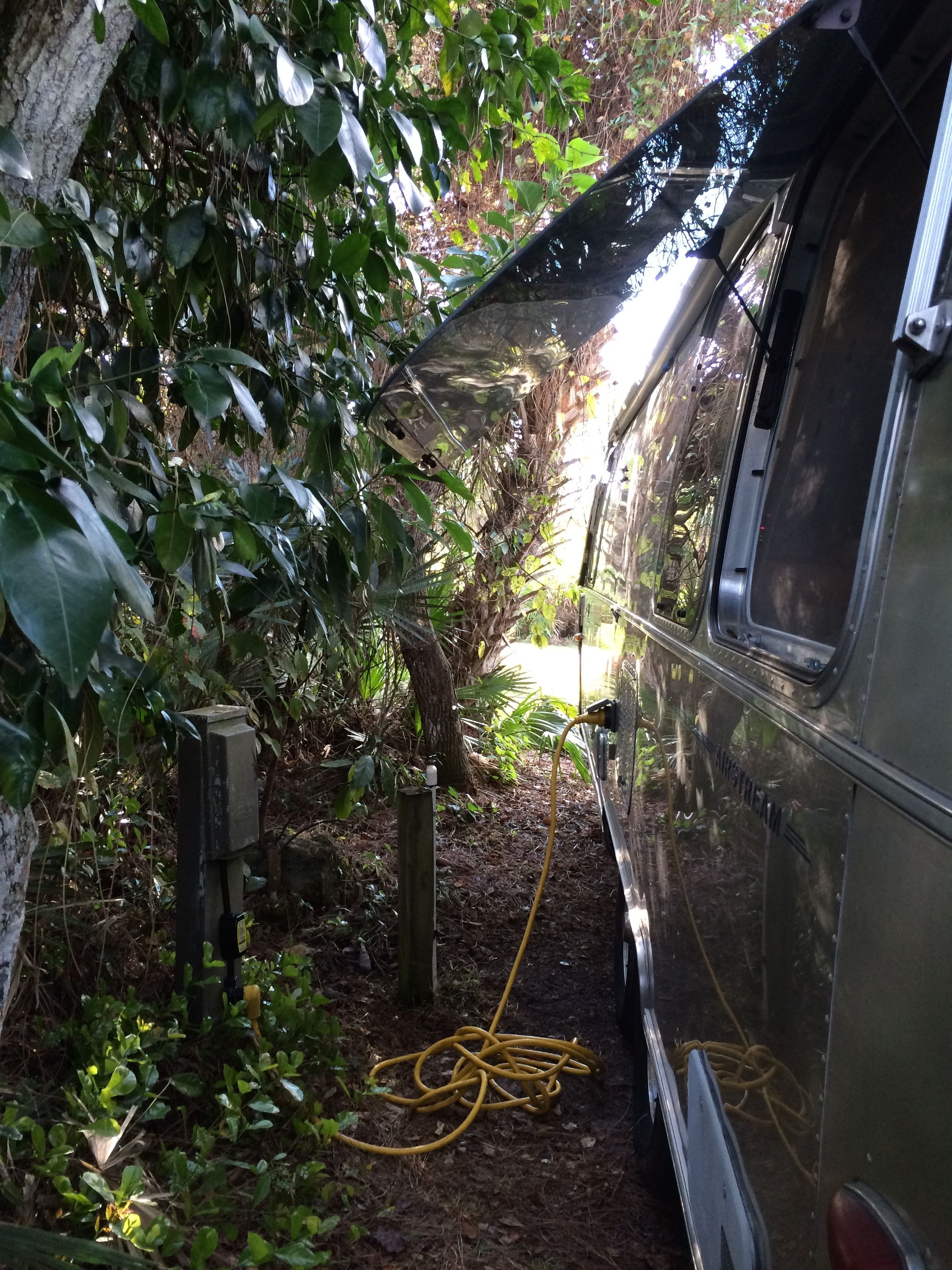
Look at the foliage by the road! And, I didn’t hit the tower box or water faucet, either! You can see how close my window is to the plants when I opened it.
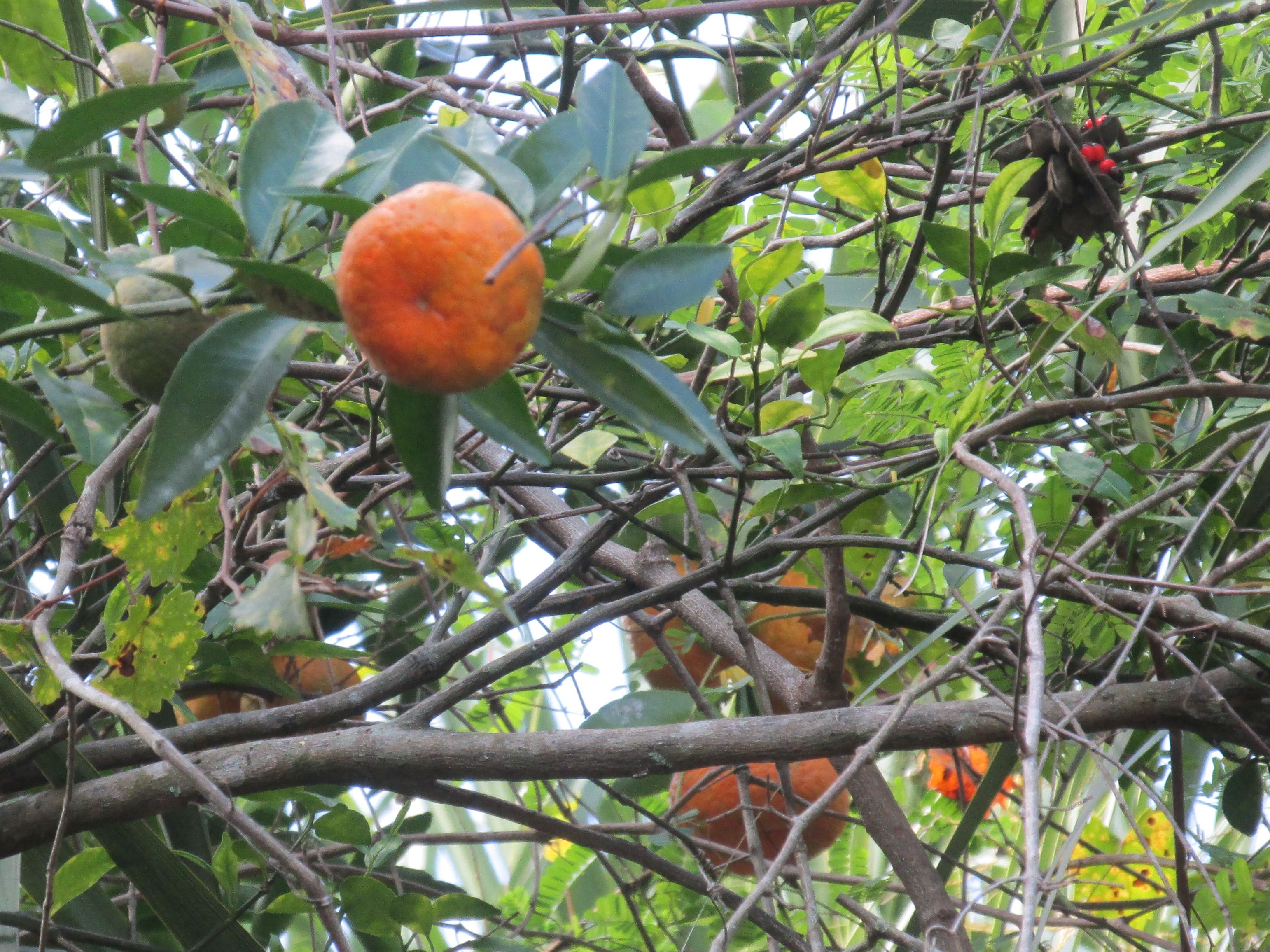
The plants are amazing, too. One camper was telling me that there was a grapefruit tree by her site that kept dropping fruit on her camper. I looked around, and I found some citrus near my site, too.
There was another plant that I found amazing. The day I pulled in, I found a small potato on the ground. I figured that someone had dropped one from their groceries.
The next day, I looked around and I found a bunch more!

I doubted that a person could be that clumsy. Besides, some of these were really petite.
I got curious, so I sliced one of them in half.

It had the same texture as a potato.

It even turned brown like a potato.
I stopped in to the ranger station and asked about them. I found out that they are an invasive species that was planted by the Koreshans, along with the citrus trees in the campground.
And, they are called – get this – AIR POTATOES!
They are a member of the yam family and the latin name is dioscorea bulbifera, They are native to Asia and sub-Saharan Africa. They are vines and they grow very quickly, sometimes as much as 8 inches a day and can grow over 60 feet long. It climbs to the tops of trees and chokes out the native vegetation.

Although it is a member of the yam family, the information I was able to locate indicates that the plant that grows in Florida is poisonous, or at least a bit toxic. It is also tricky. It can reproduce via the “potatoes” as well as from underground tubers. Is the plant is cut back to the ground, the tubers can survive for extended periods and send up shoots later.
Since it is so persistent, they are trying to eradicate by releasing a leaf beetle, lilloceris cheni. They started this method of control in 2012. You can see the holes the beetle has put in the leaves. I hope the beetles don’t decide that other plants start looking tasty.
Another feature of the campground that caught my eye were the stone slabs that were piled up in various places.
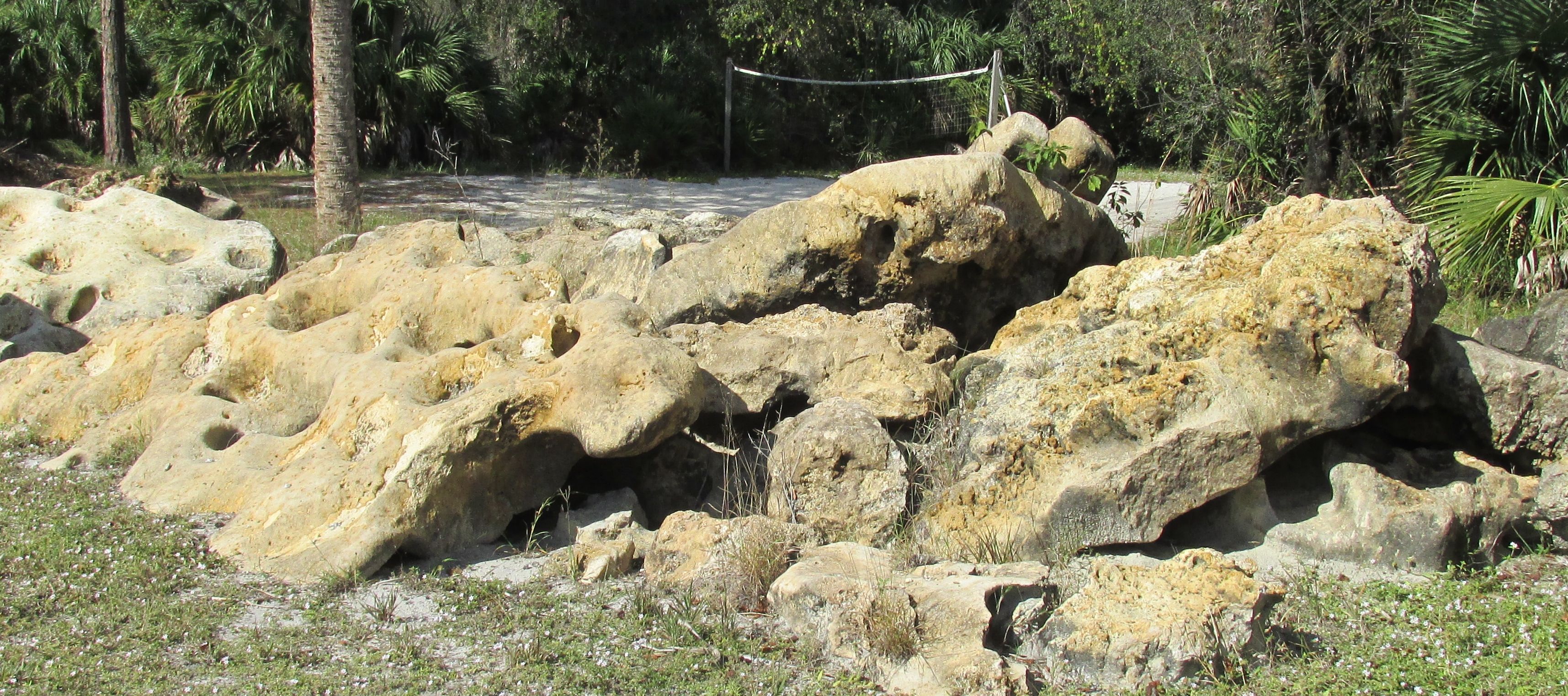
I asked the same helpful ranger about them. He told me that they were the limestone capstone that they had to excavate when they built the campground. I asked him about the odd pockmarks, and he told me that they were created by the same processes that form caves and sink holes. Ah! So rainwater become slightly acid as it passes through the air and forms carbonic acid and dissolves the rock. With all these holes, you can see how sink holes would form.

And that’s the “hole” story!