Long ago, I remembered hearing about the recovery of the Steamboat Arabia that hit a snag and sank in the Missouri River in 1856 near Kansas City. What was amazing to me is that they found it buried 45 feet beneath a farmer’s field and about half a mile from where the river runs today.
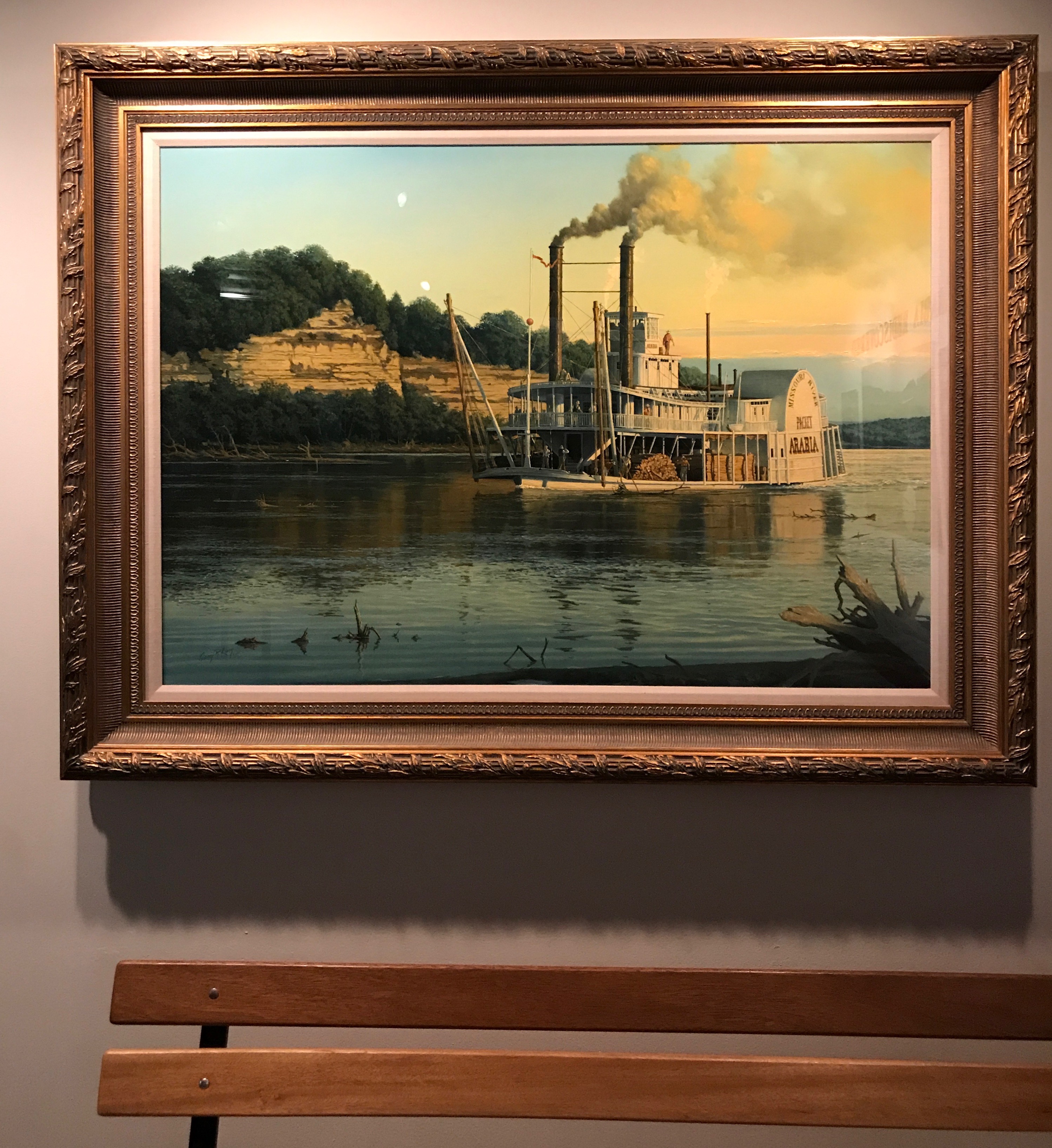
This painting, by Gary R. Lucy, is titled THE ARABIA: The Afternoon of Her Last Voyage, 1856.
The Arabia, loaded down with whiskey and other frontier necessities, was on a routine run when it hit a snag.
Incidentally, snag refers to trees, branches and such that are found sunken in rivers and streams. In this case, The Arabia ran afoul of a dead sycamore. it ripped open the hull, which filled with water. The upper decks stayed above water, and the only casualty was a mule that was tied to some equipment and was forgotten in the rush to abandon ship.
Although the upper decks were above water the day it hit the snag, the boat sank into the mud that by the next day only the smokestack and the pilot house remained visible. Within a few days, these traces were also swept away.
I found the story of the recovery pretty incredible.
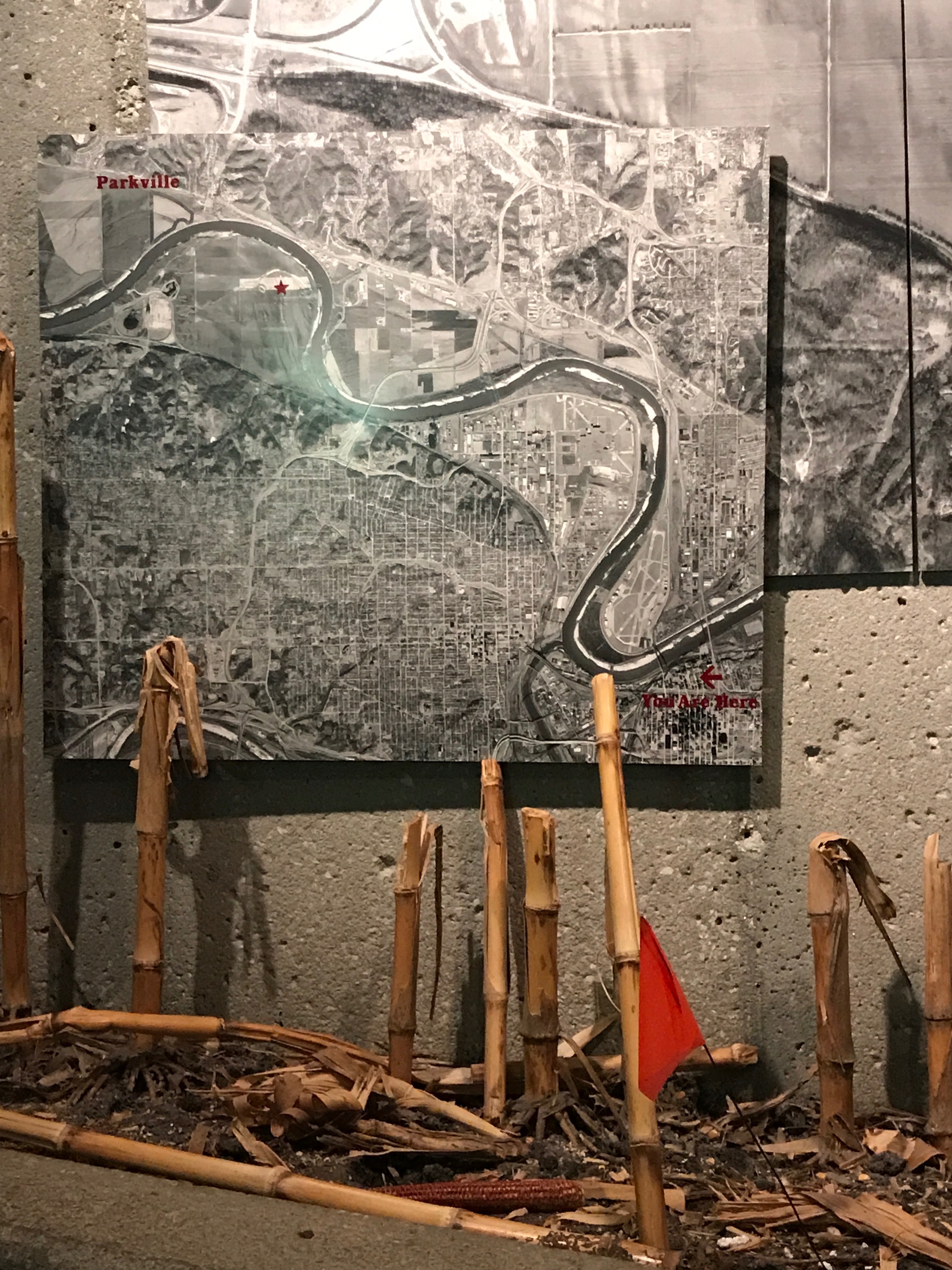
How would you know where to begin to look? In 1987, Bob Hawley and his sons, Greg and David, along with Jerry Mackey and David Lutrell and their families, set out to find the Arabia They used old maps and a proton magnetometer to decide on a probable location.
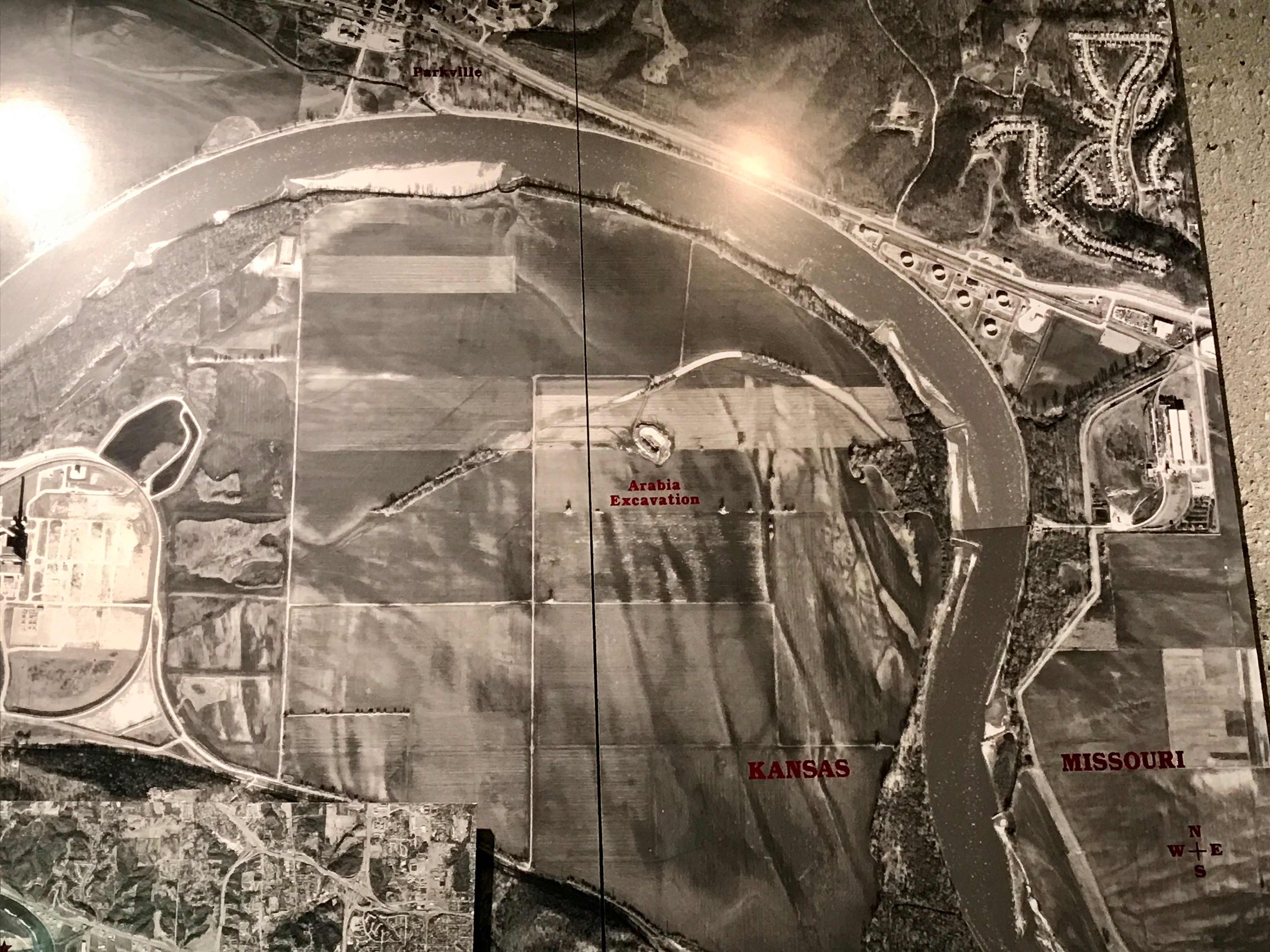
While the steamboat was found in Kansas, the museum is in Missouri.
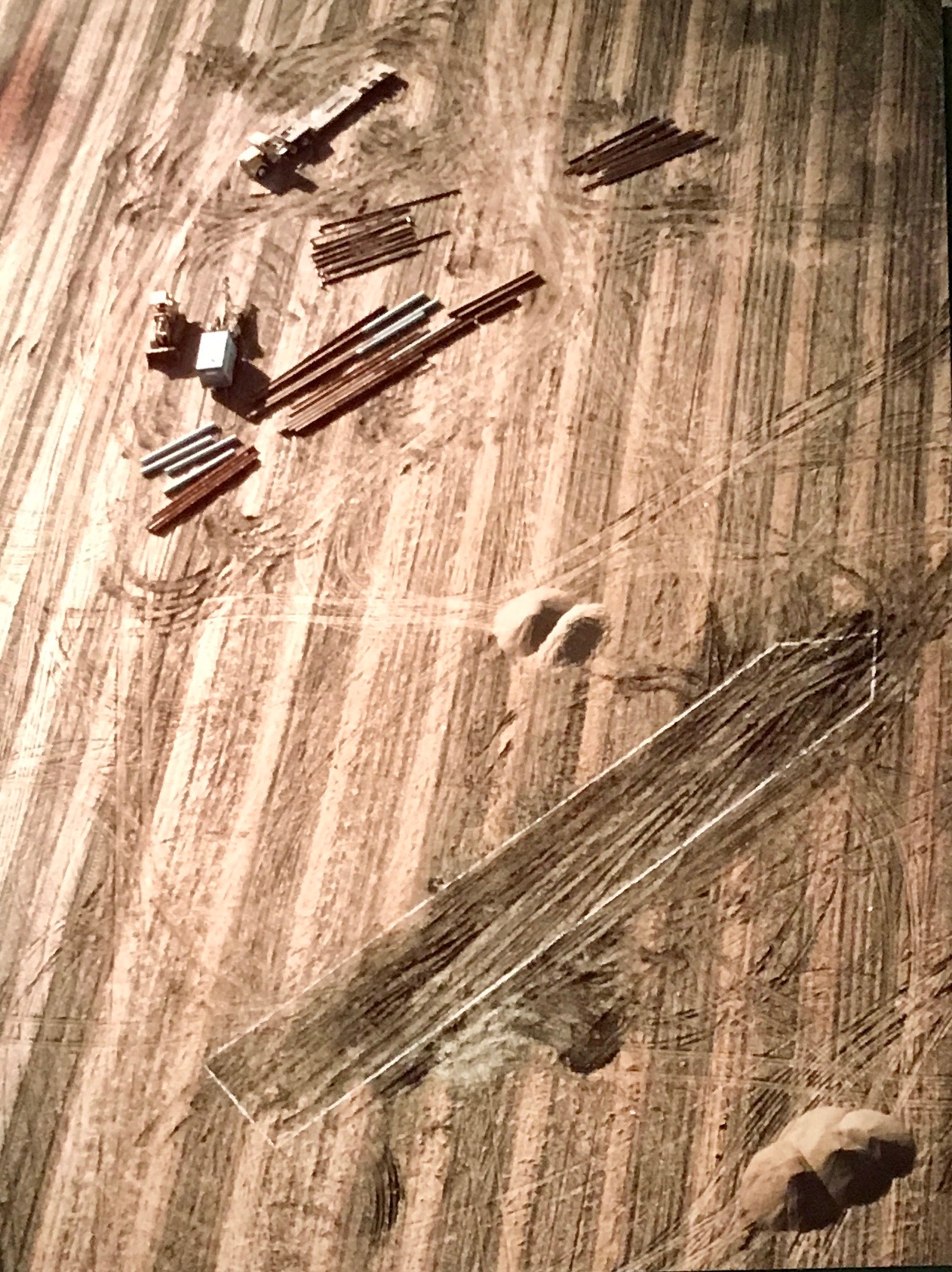
They found what they thought was the site and commenced digging in November 1988. They dug until February 1987. They were digging with the landowner’s permission. Permission was granted with one condition: the fields had to be ready for spring planting.
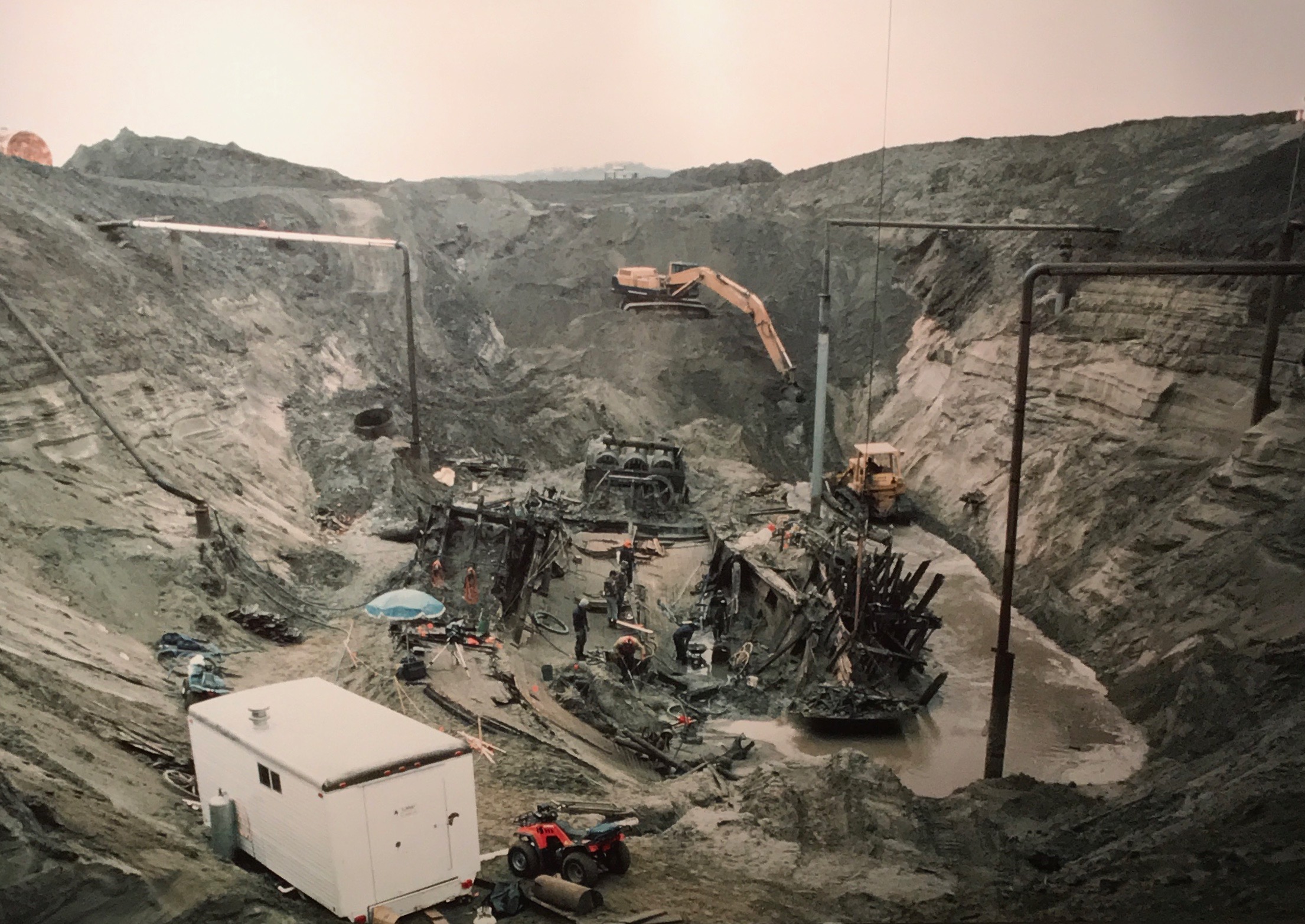
This photo gives you a view into the pit. What a monumental task!
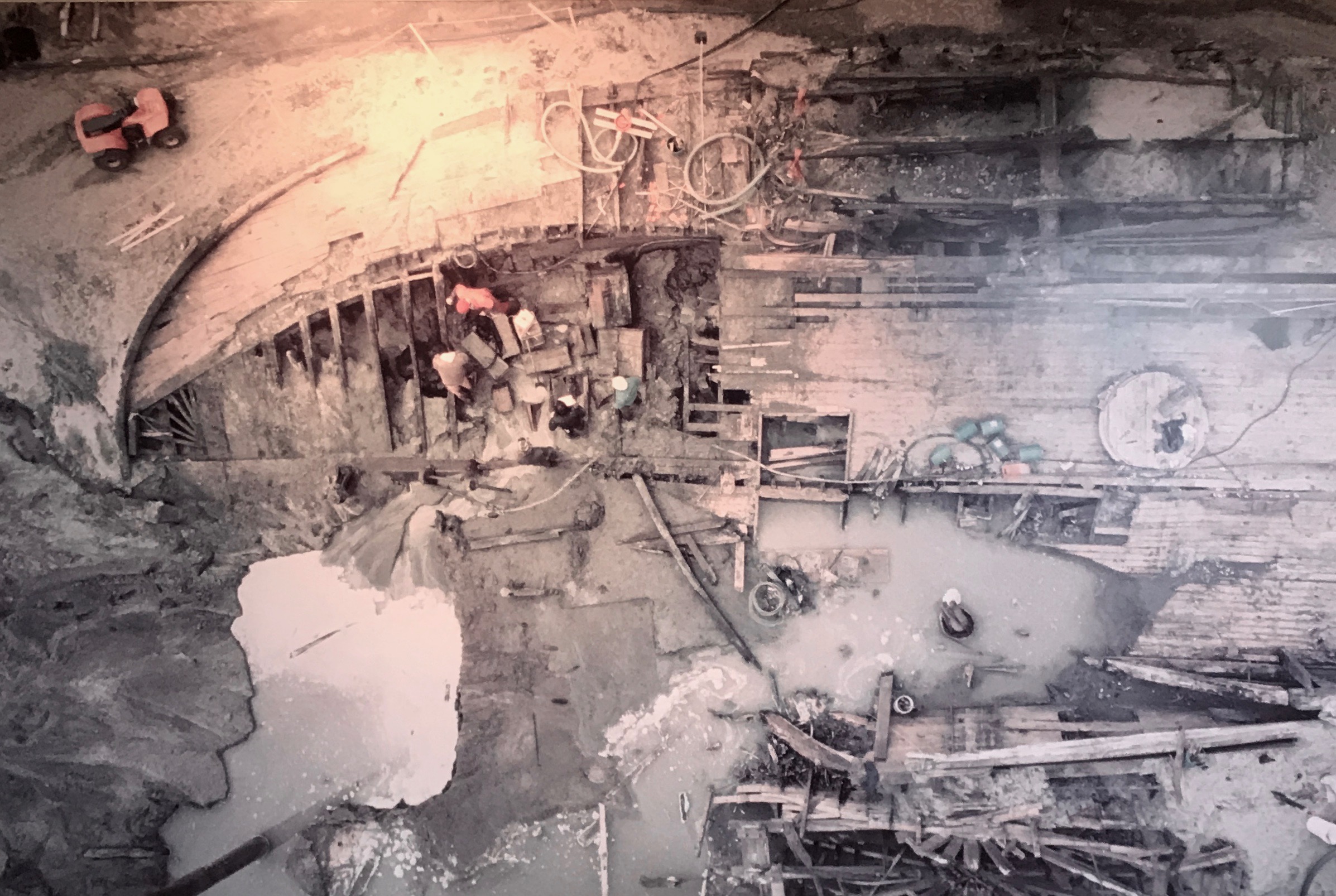
And then they had to get the field ready for spring planting! I wonder if they made the deadline?
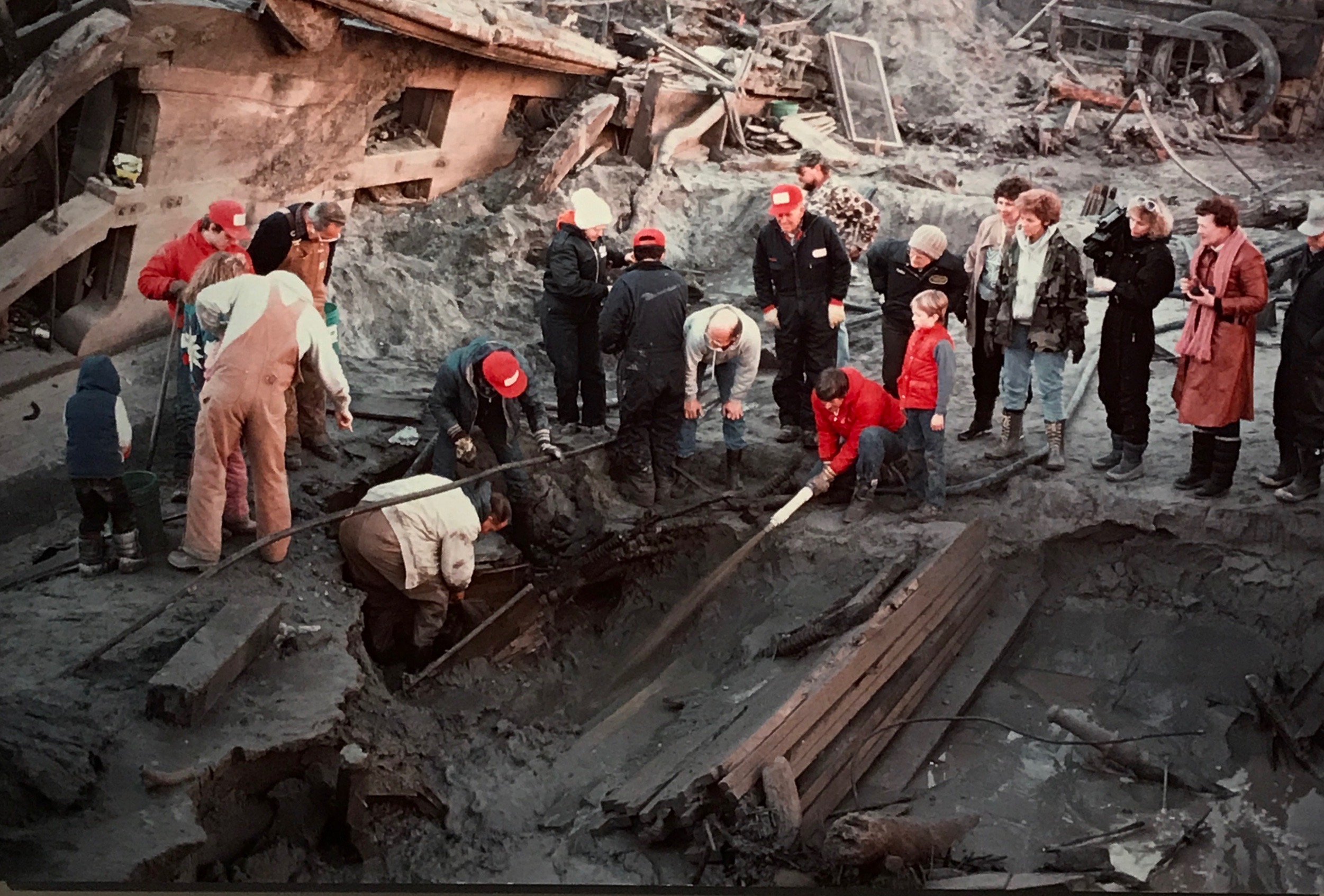
Their original goal was to sell their discoveries. The historical importance of what they found buried under this Kansas farmer’s field made them change course. They started to plan a museum – a privately owned museum. Today it is still owned and operated by the Hawley family.
In all, they unearthed 200 tons of artifacts!
With the contents of the ship protected from light and oxygen, the artifacts they found were incredibly well preserved. Their website proclaims that the museum contains “… the largest single collection of pre-Civil War artifacts in the world.” The quantity of items is amazing – and they still have 60 tons of what they excavated yet to process.
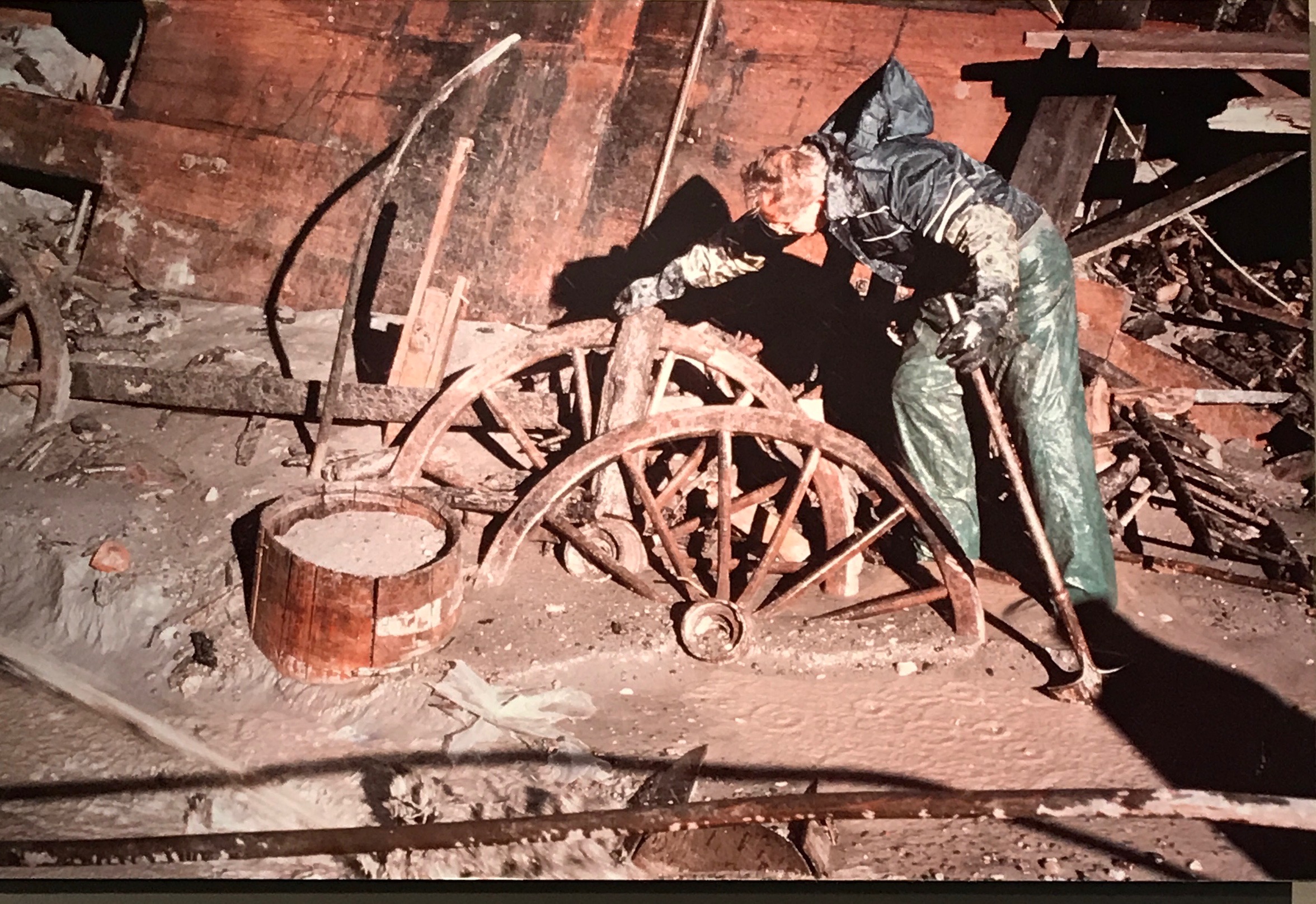
Well, enough of the preamble. Let’s go inside.
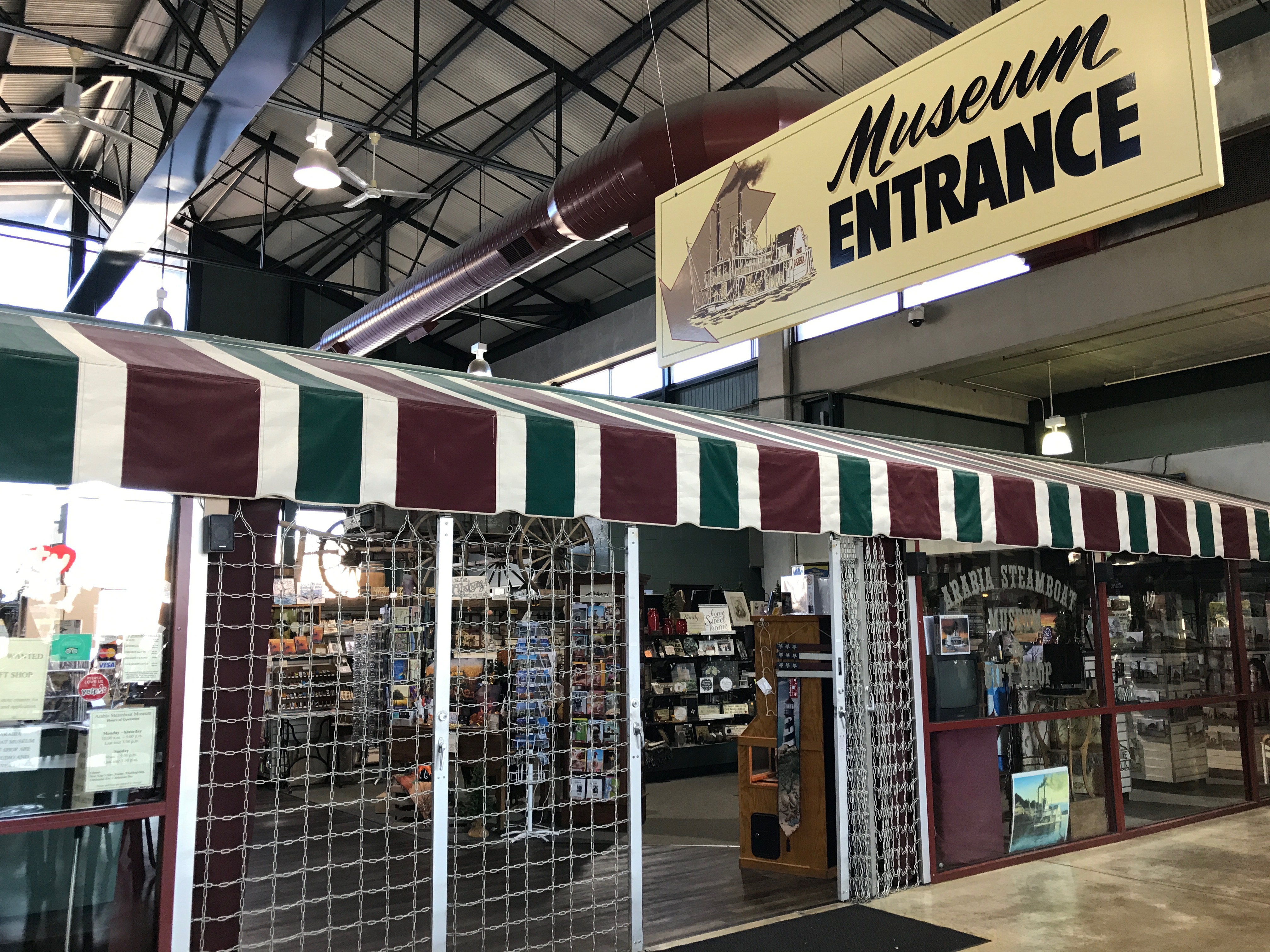
Enter through the gift shop…that’s a variation on a theme!
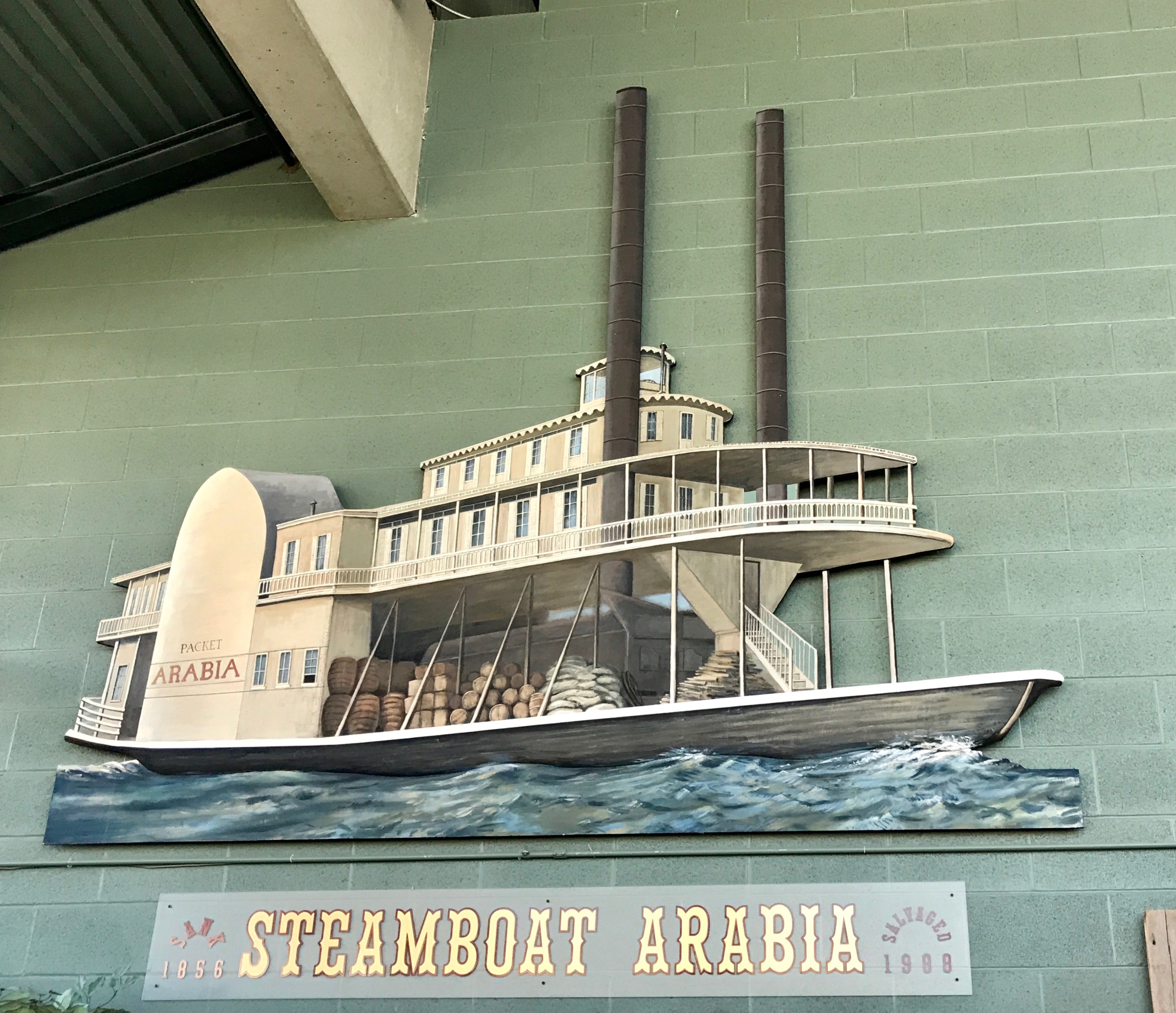
The sign let me know I was heading in the right direction.
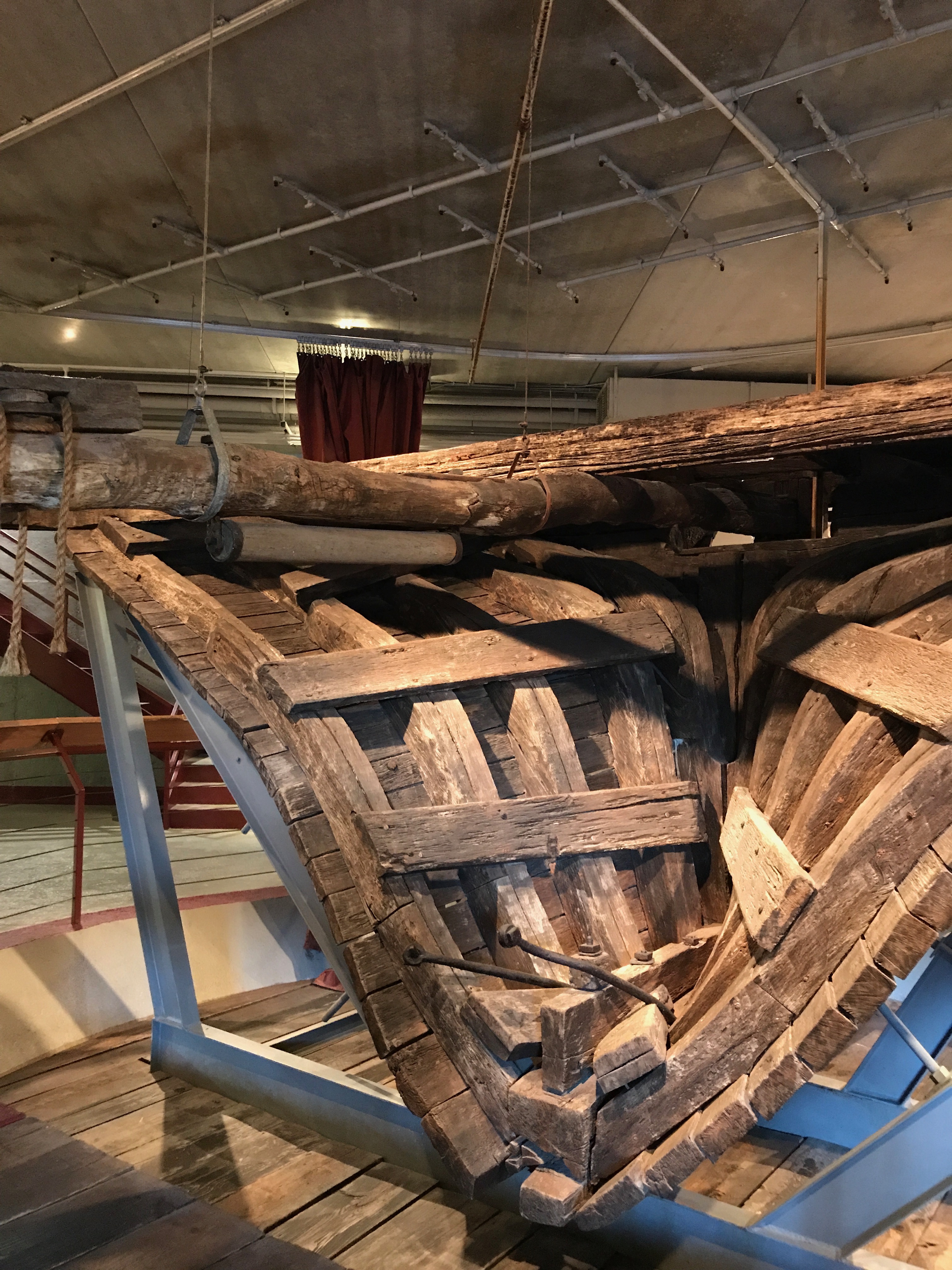
The steamboat was built in Brownsville, Pennsylvania on the Monongahela River. This hull originally travelled on the Ohio and Mississippi Rivers before it came to the Missouri River.
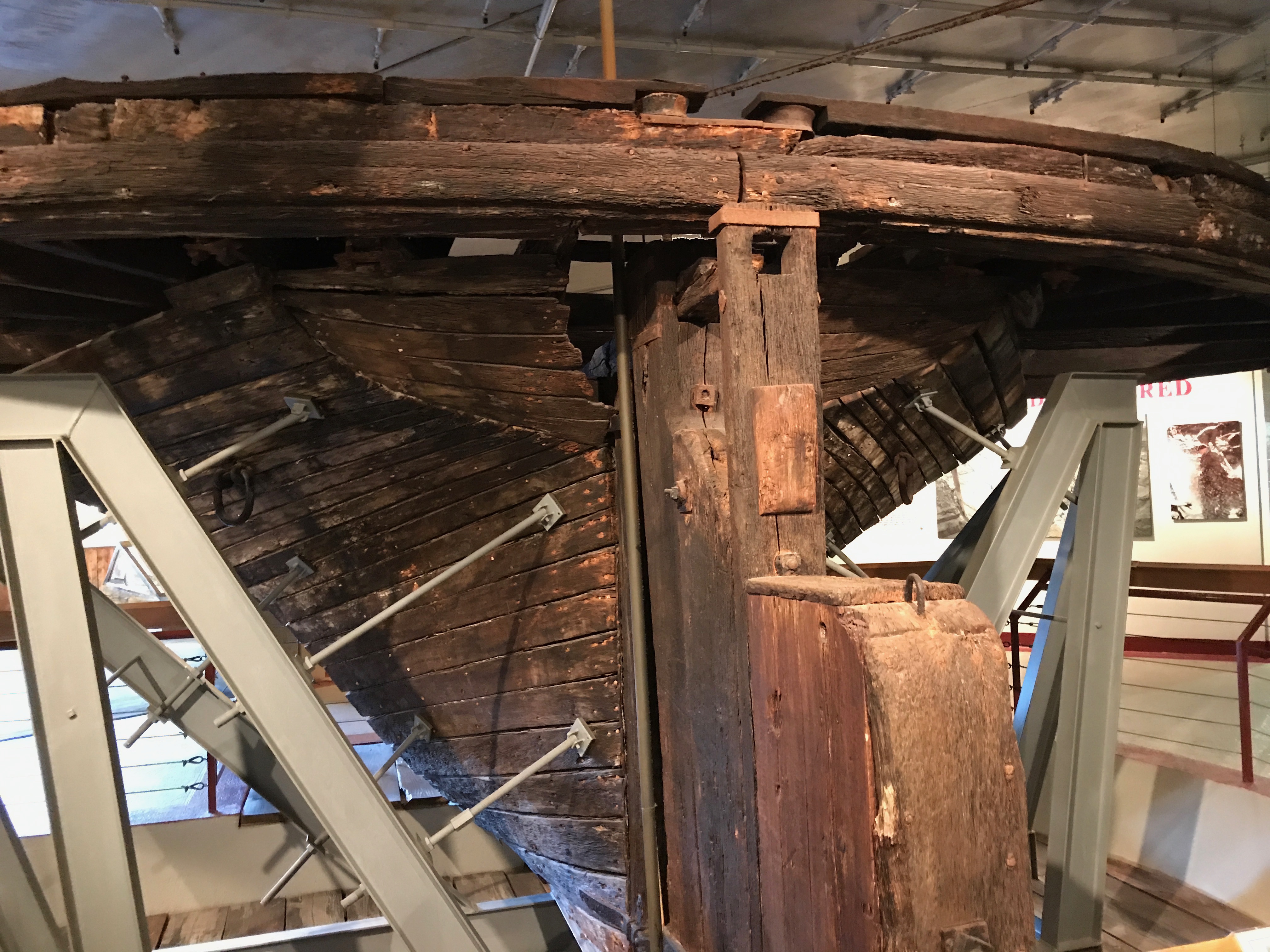
“But, what did they find in the cargo?!” I can practically hear you shouting at your screens. Your wait is over!
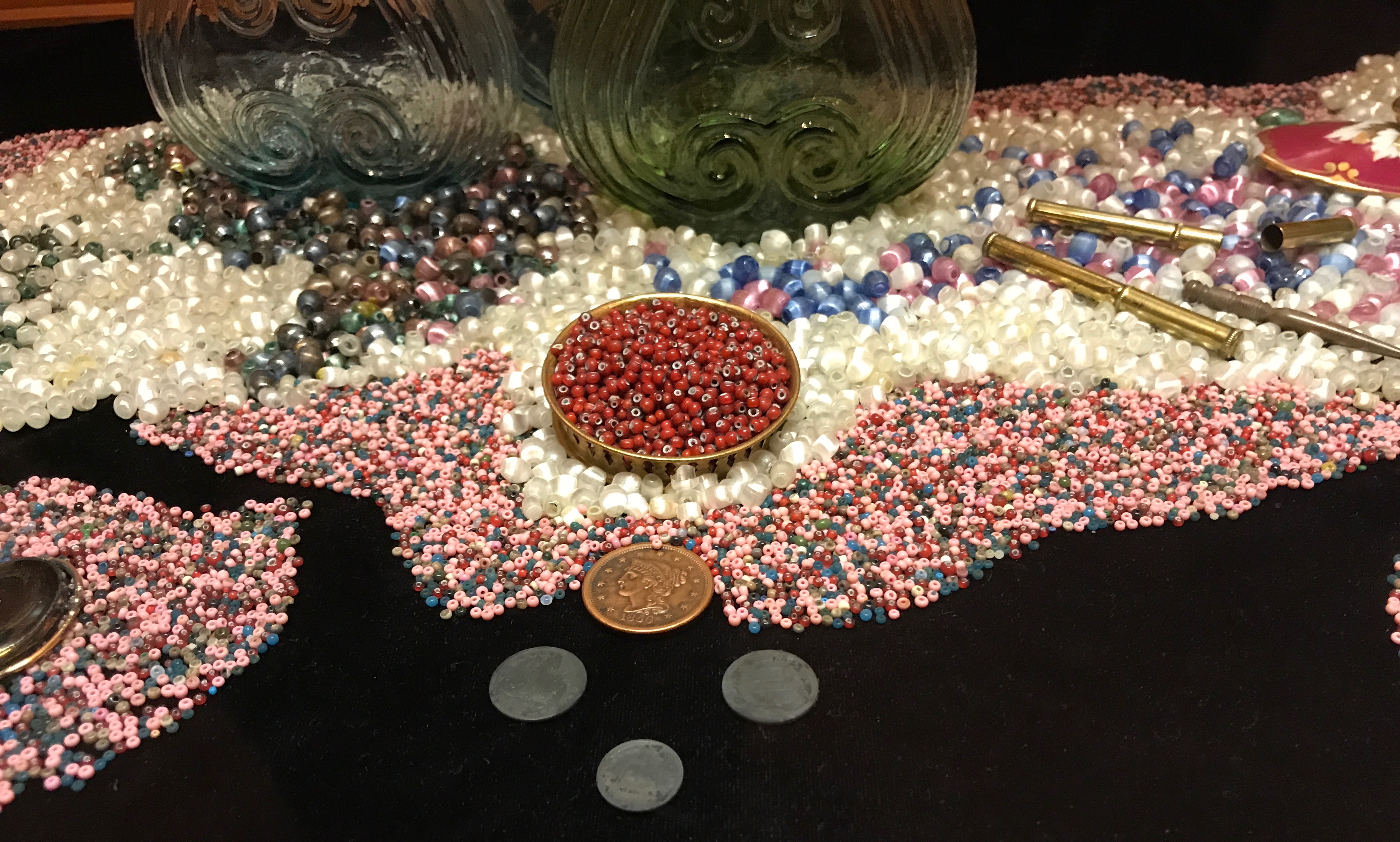
They found beads.
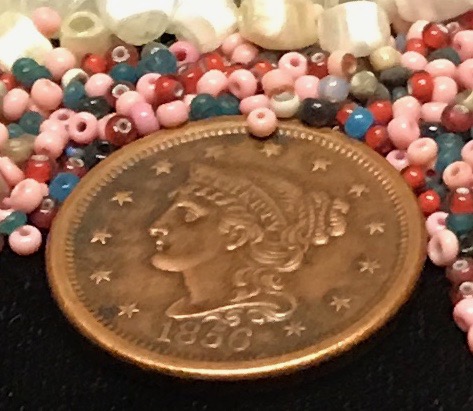
And a coin that was newly minted when the boat sank.
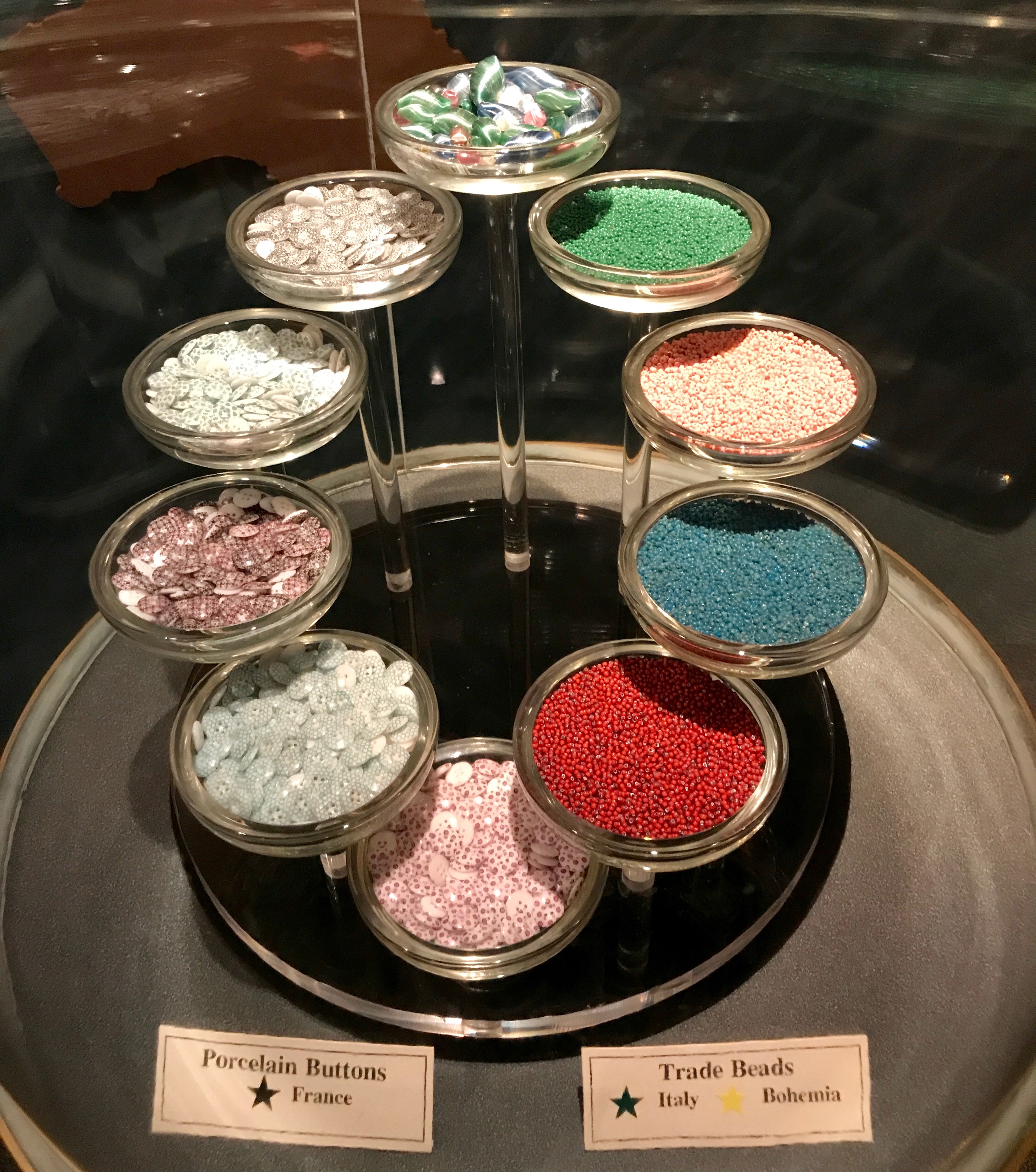
Beads and buttons – from France, Italy, and Bohemia. (Bohemia is where Czechoslovakia is today.)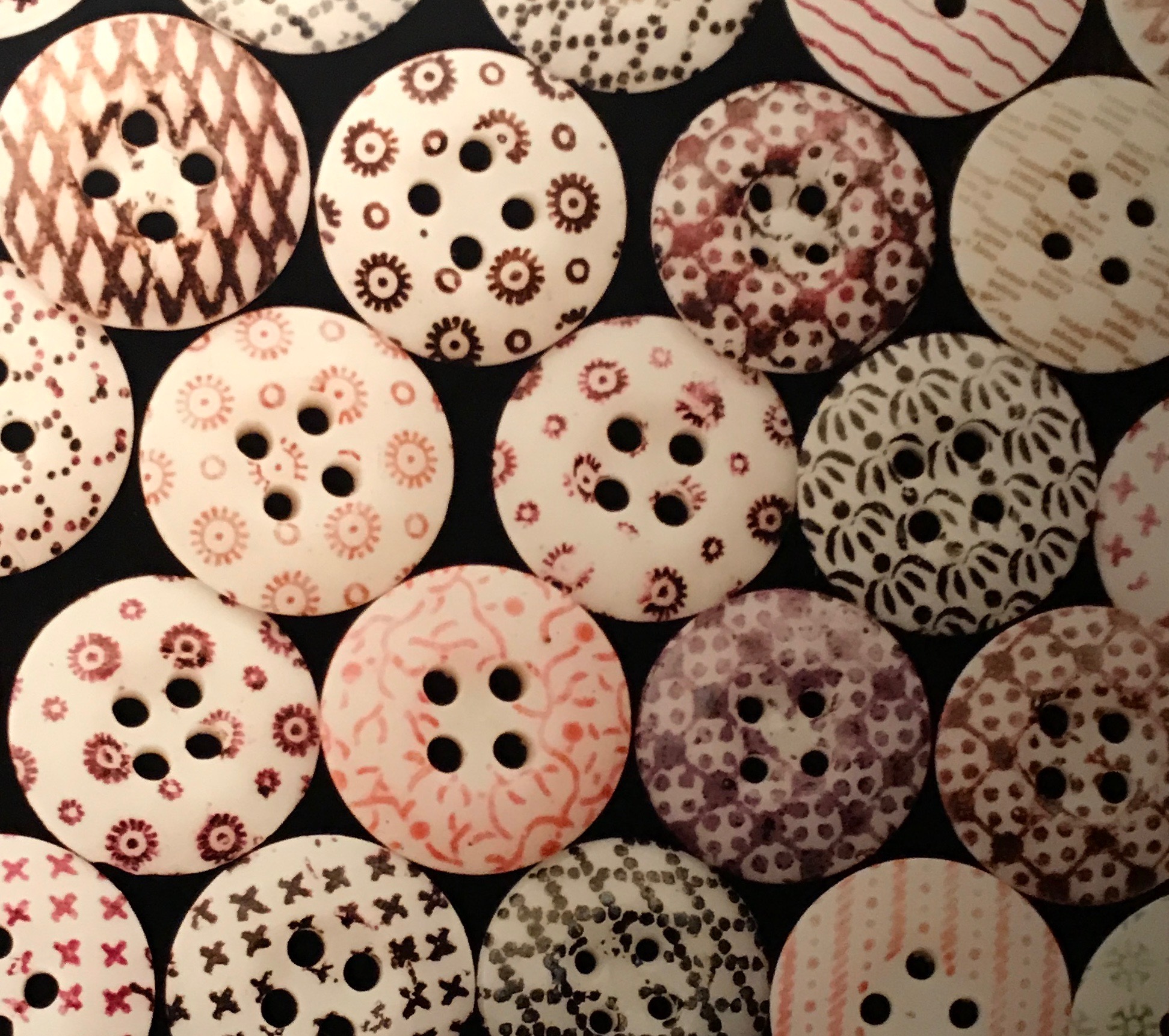
Those buttons were pretty snazzy! Each of the thousands and thousands of the buttons and beads had to be cleaned by hand.
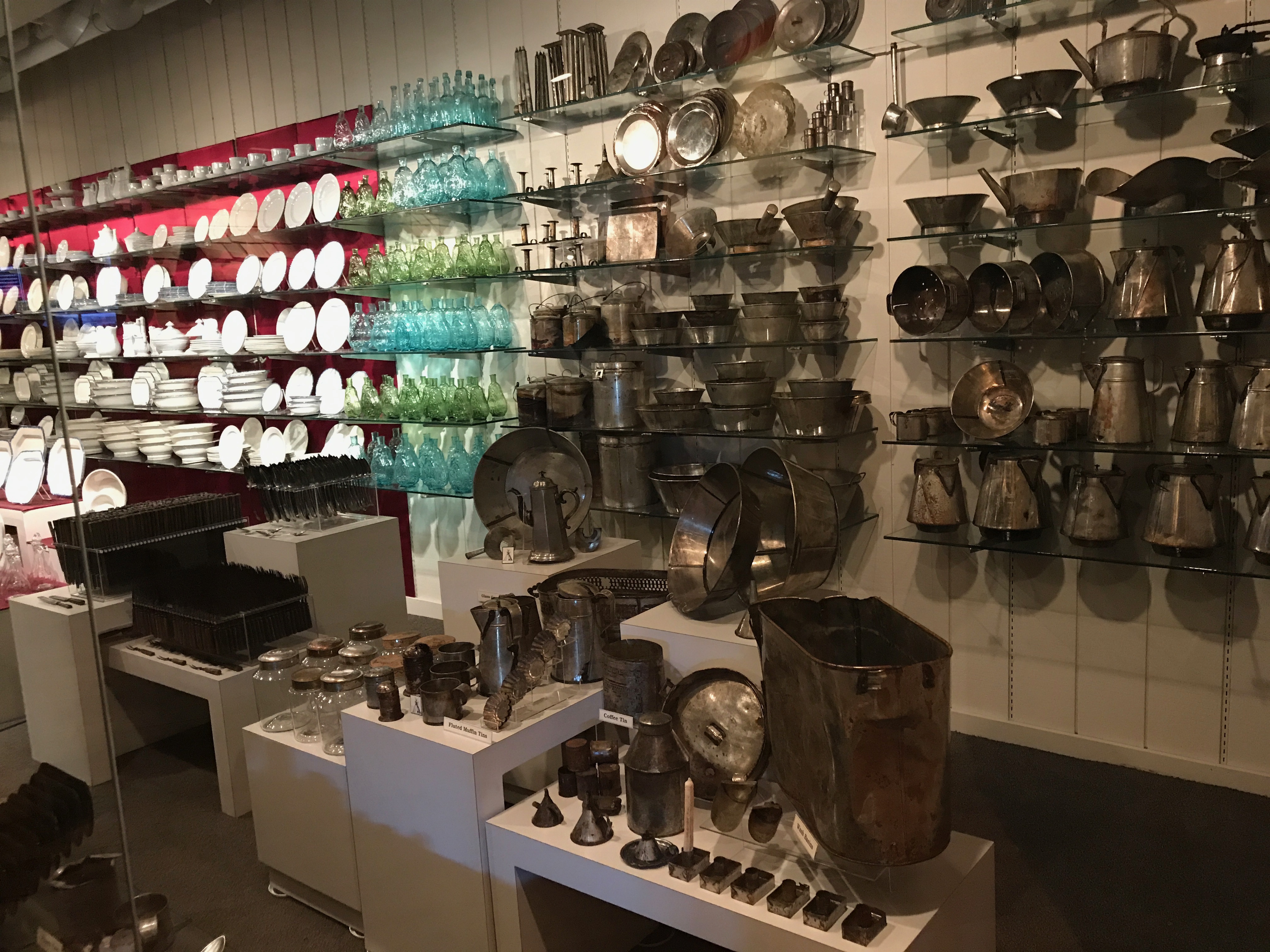
Dishes, glassware and metalware were on board.
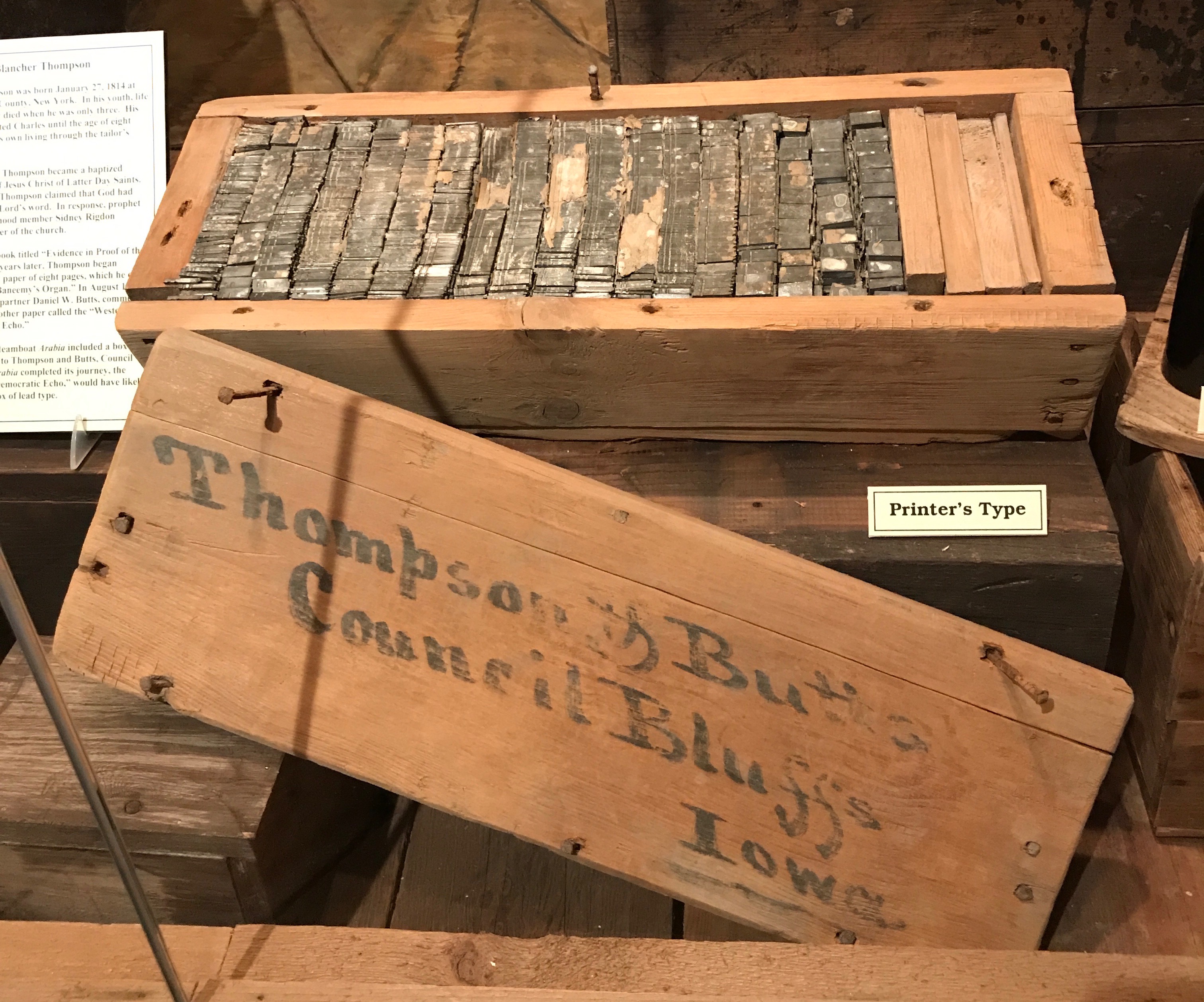
And printer’s type, bound for Council Bluffs, Iowa.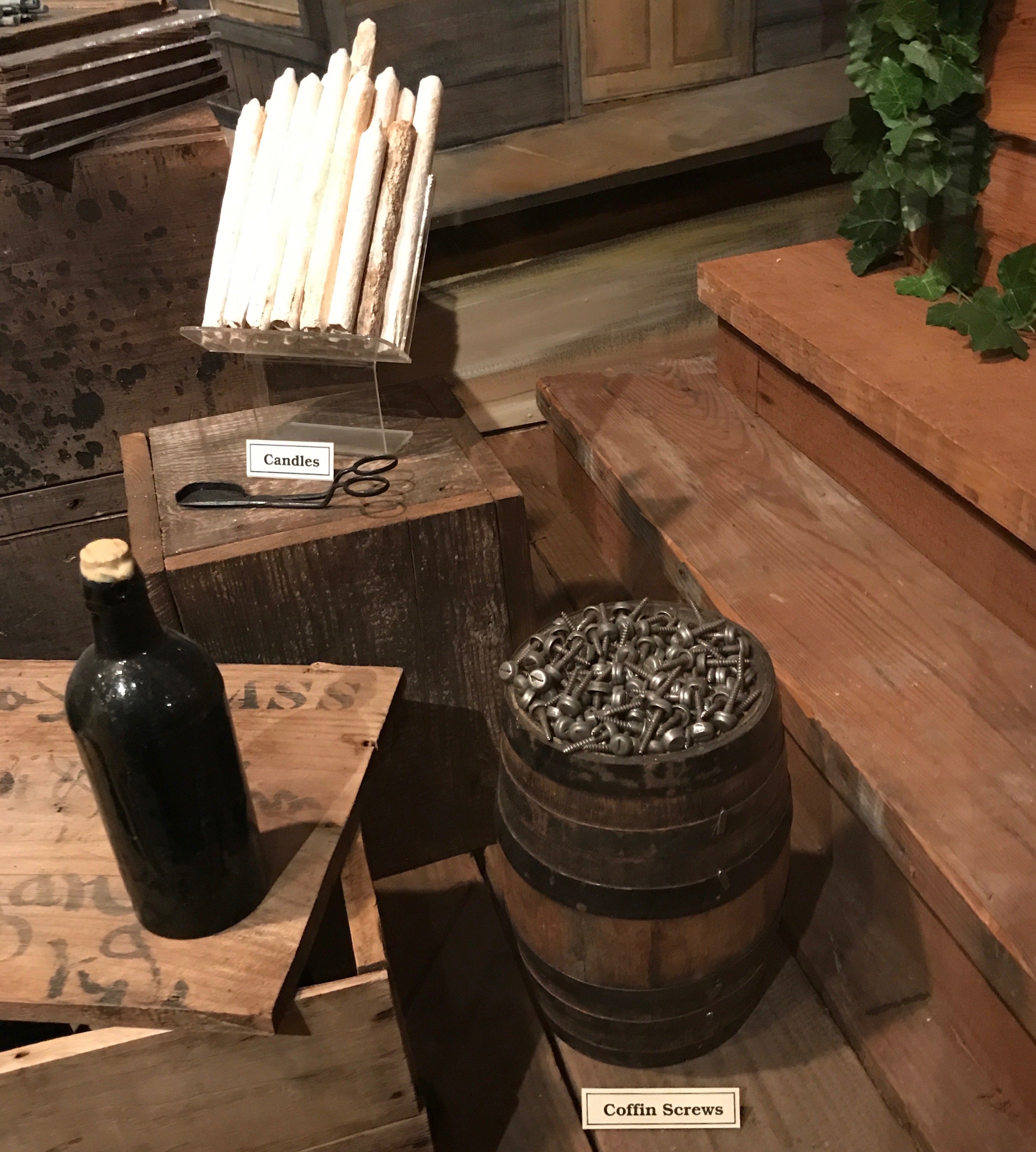
Coffin screws and candles.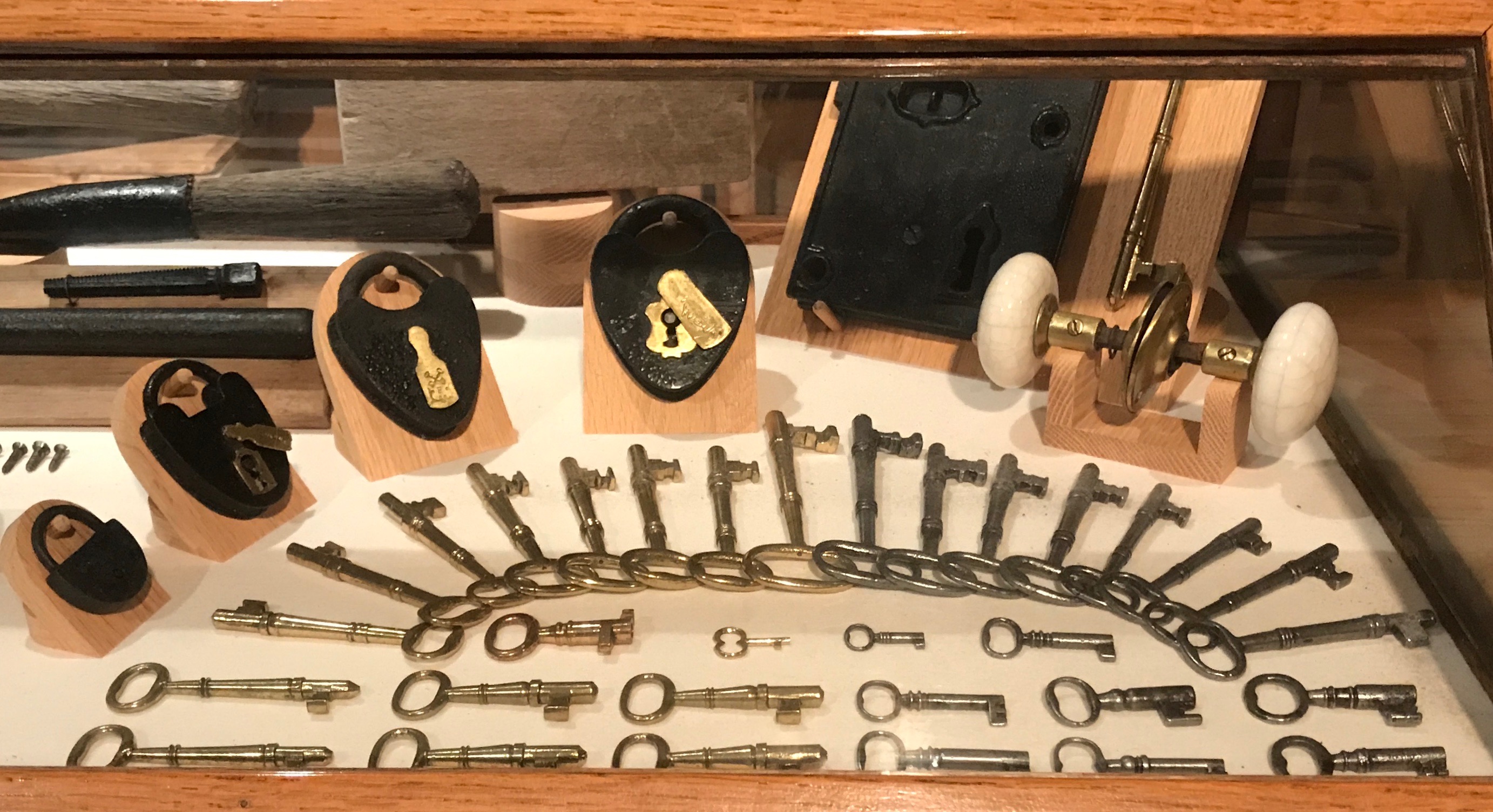
Locks and keys and doorknobs.
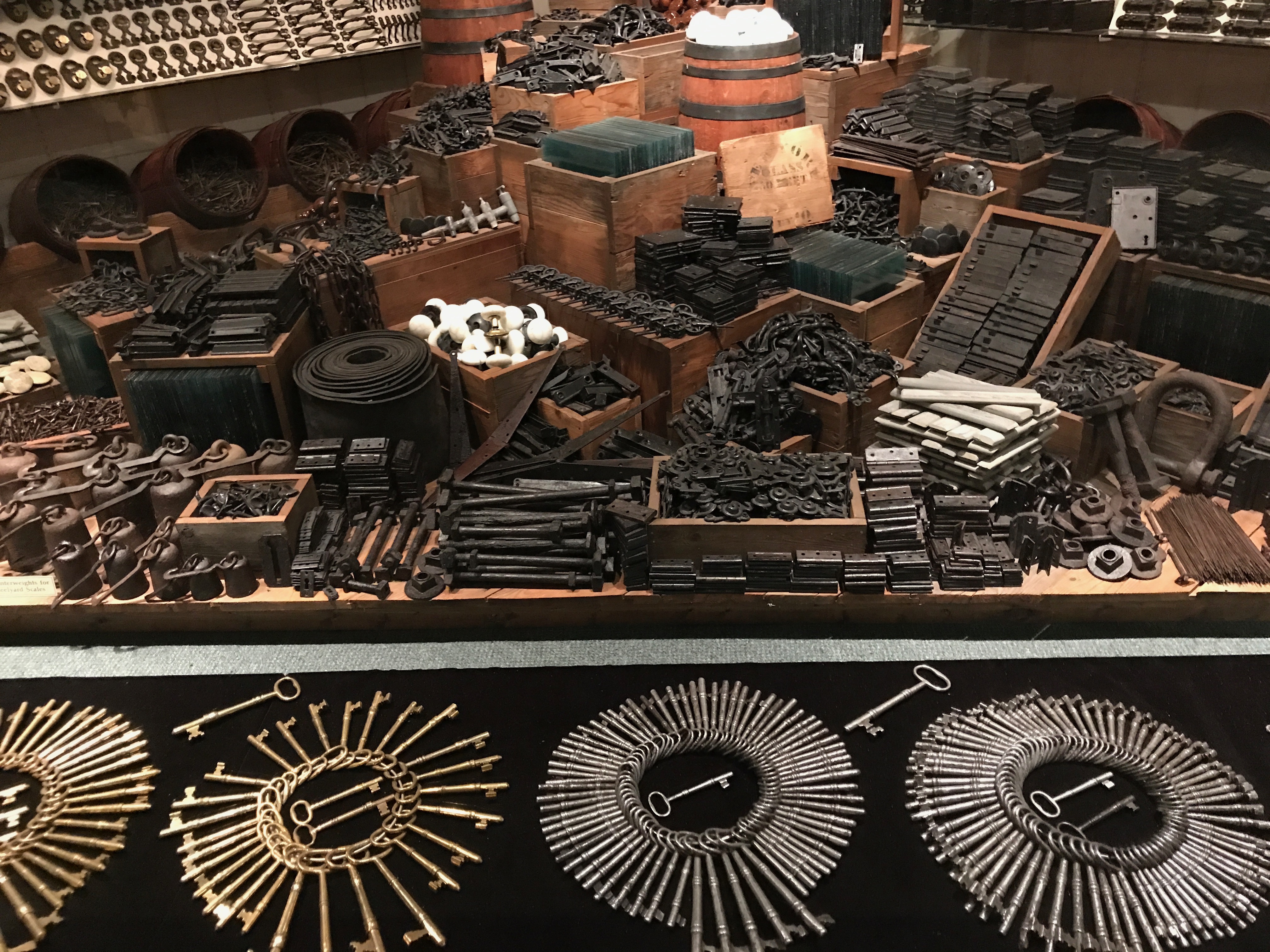
Lots of keys and all sorts of metal products.
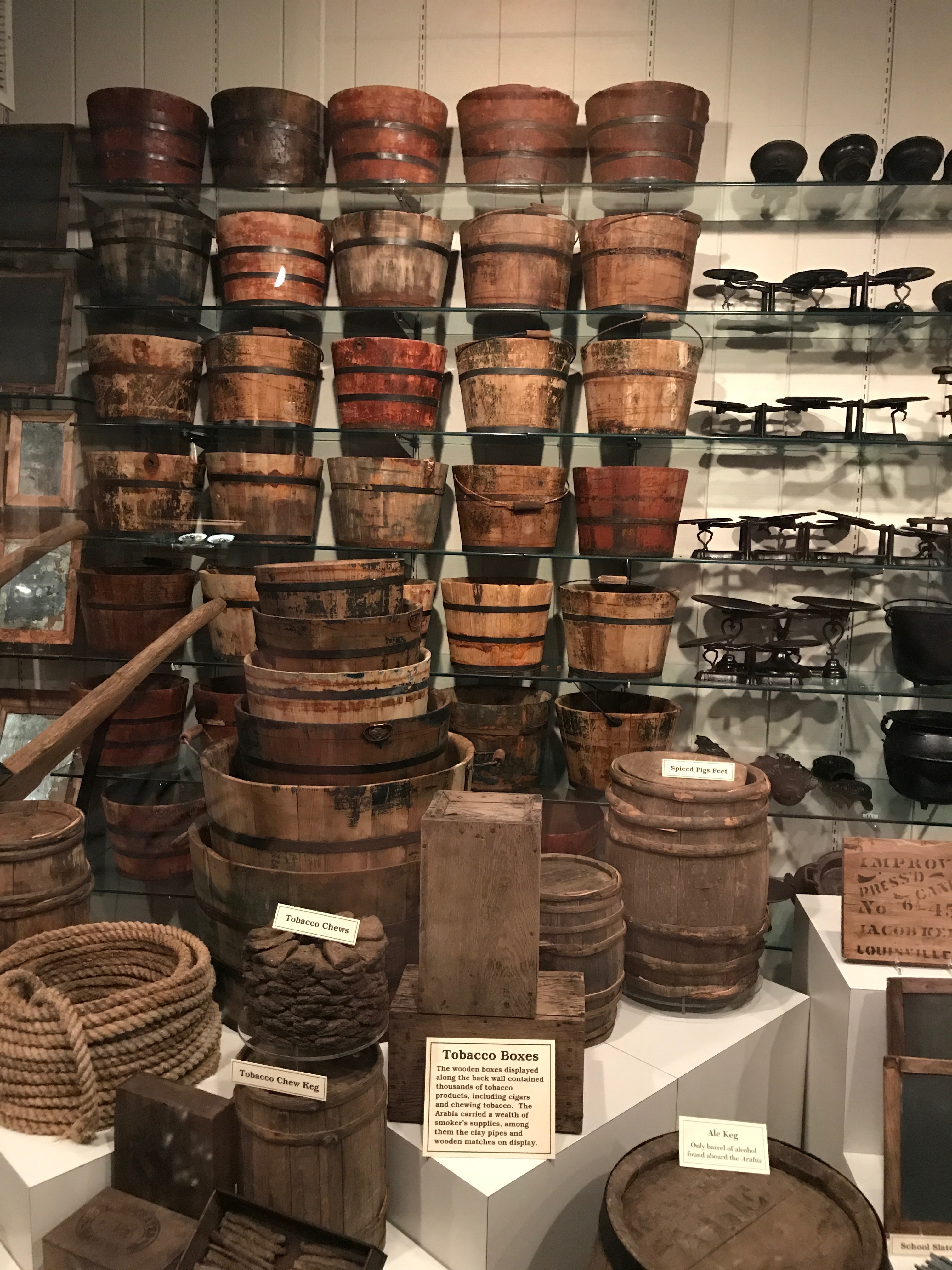
Wooden buckets, boxes, kegs, scales, rope
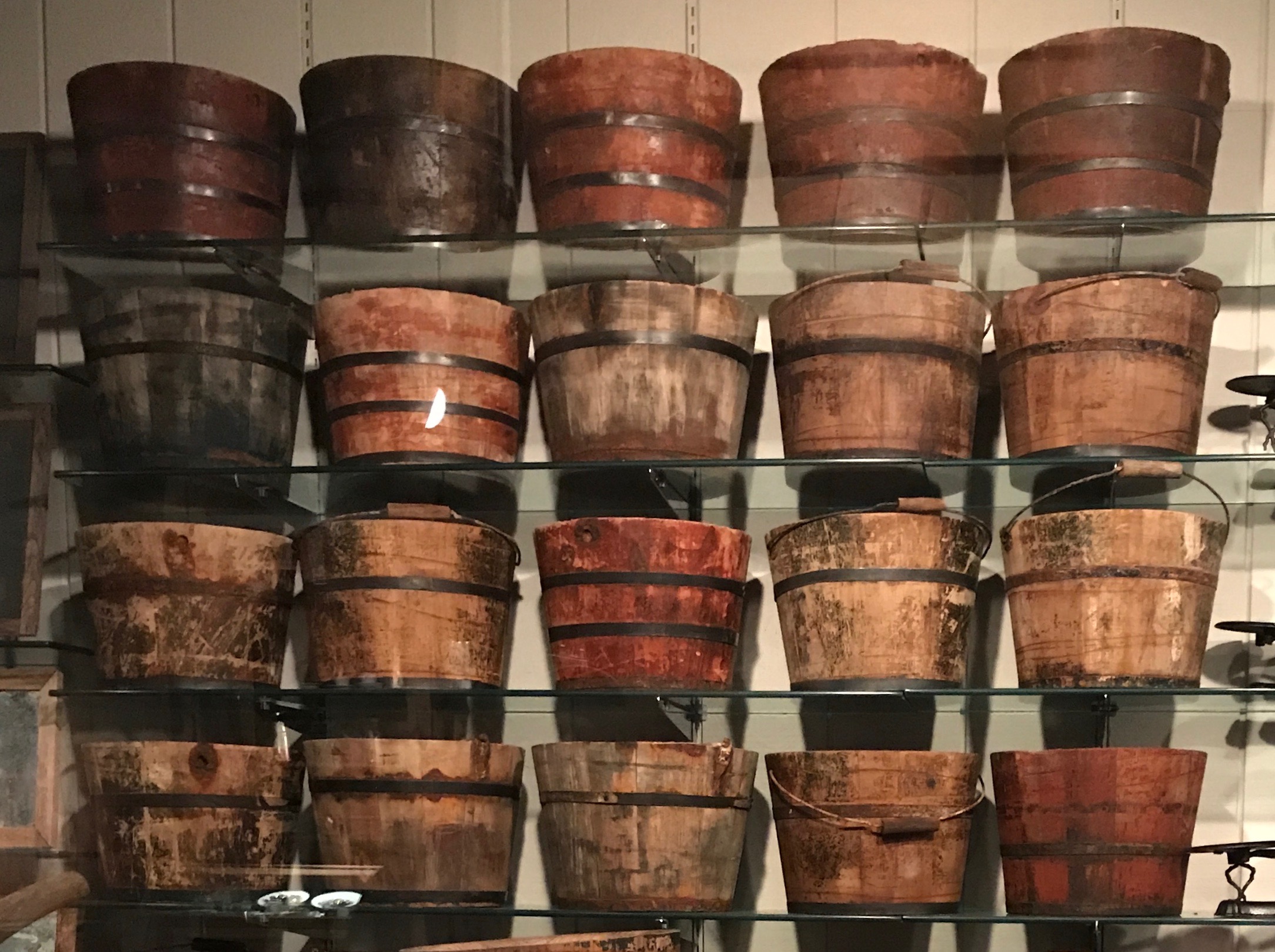
I liked the buckets, so here’s another shot of them.
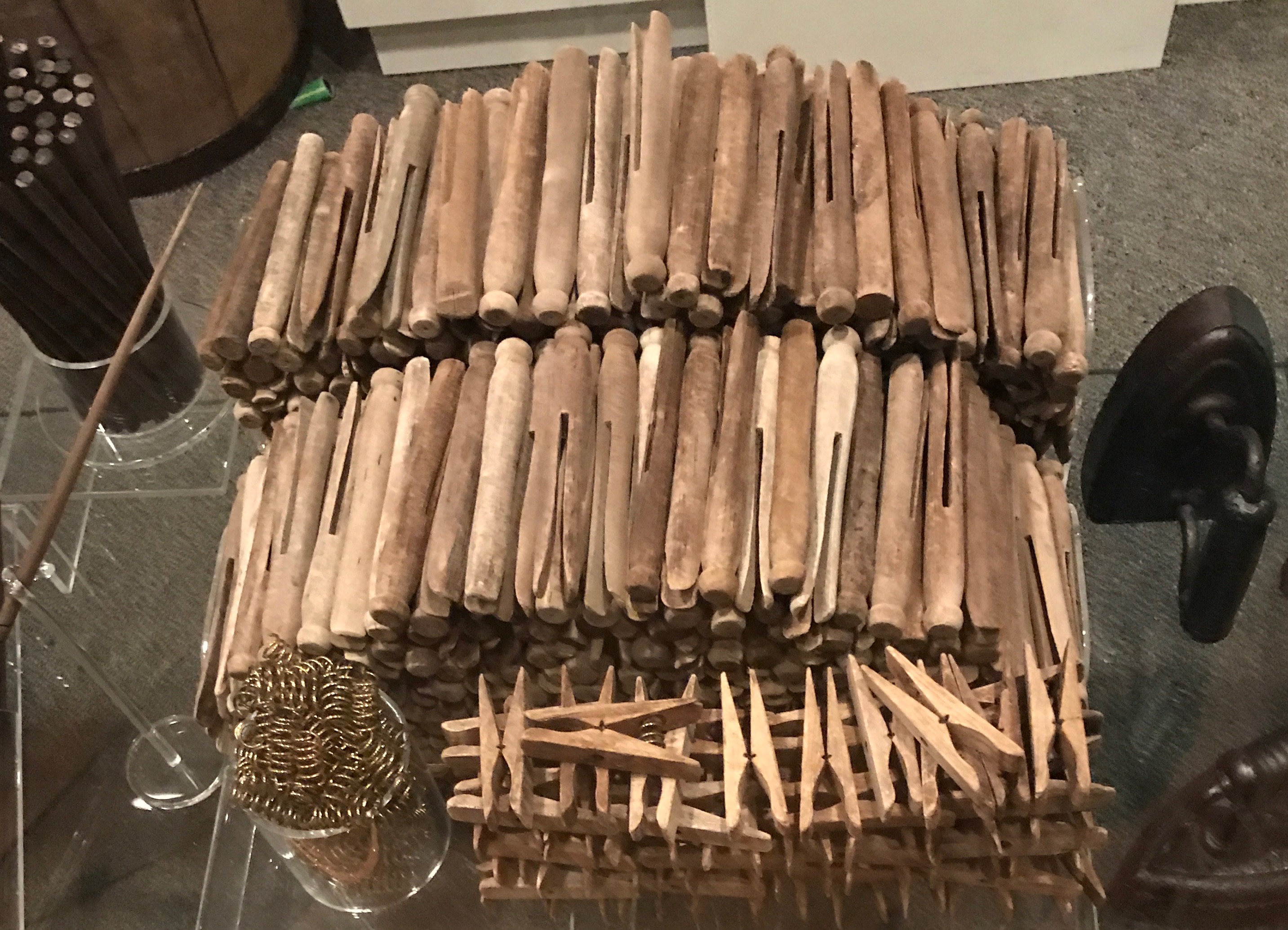
Clothes pins – or clothes pegs, if you prefer. I assume that the brass springs had something to do with laundry. There are also sad irons in the photo. What is so sad about the irons? I knew at one time, but couldn’t find that fact rattling around in my memory. I looked it up.
“Sad” is an Old English word for “solid,” and the term “sad iron” is often used to distinguish the largest and heaviest of the flat irons, usually 5 to 9 pounds.”
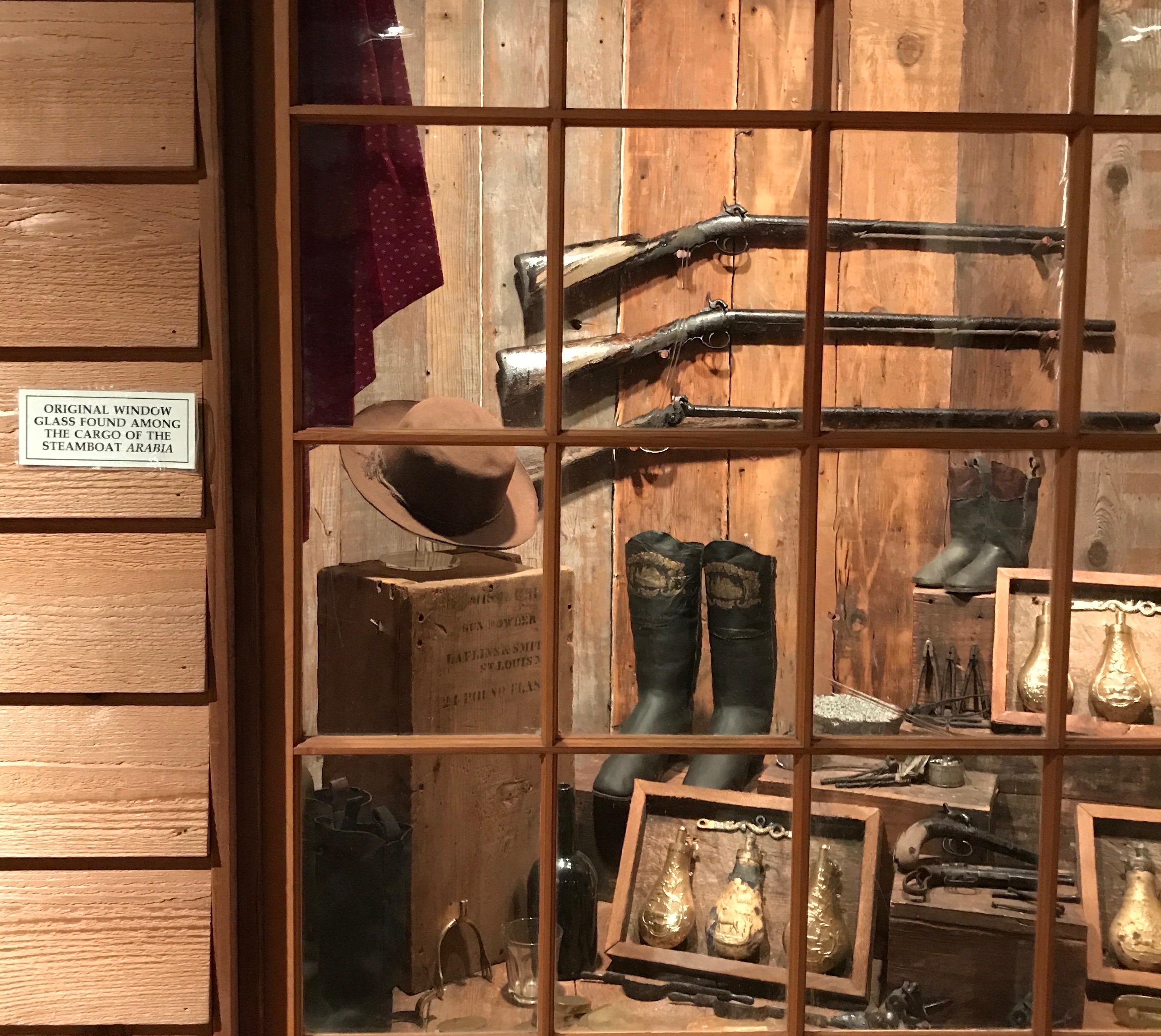
Glass was on board the Arabia when it went down – this glass, in fact.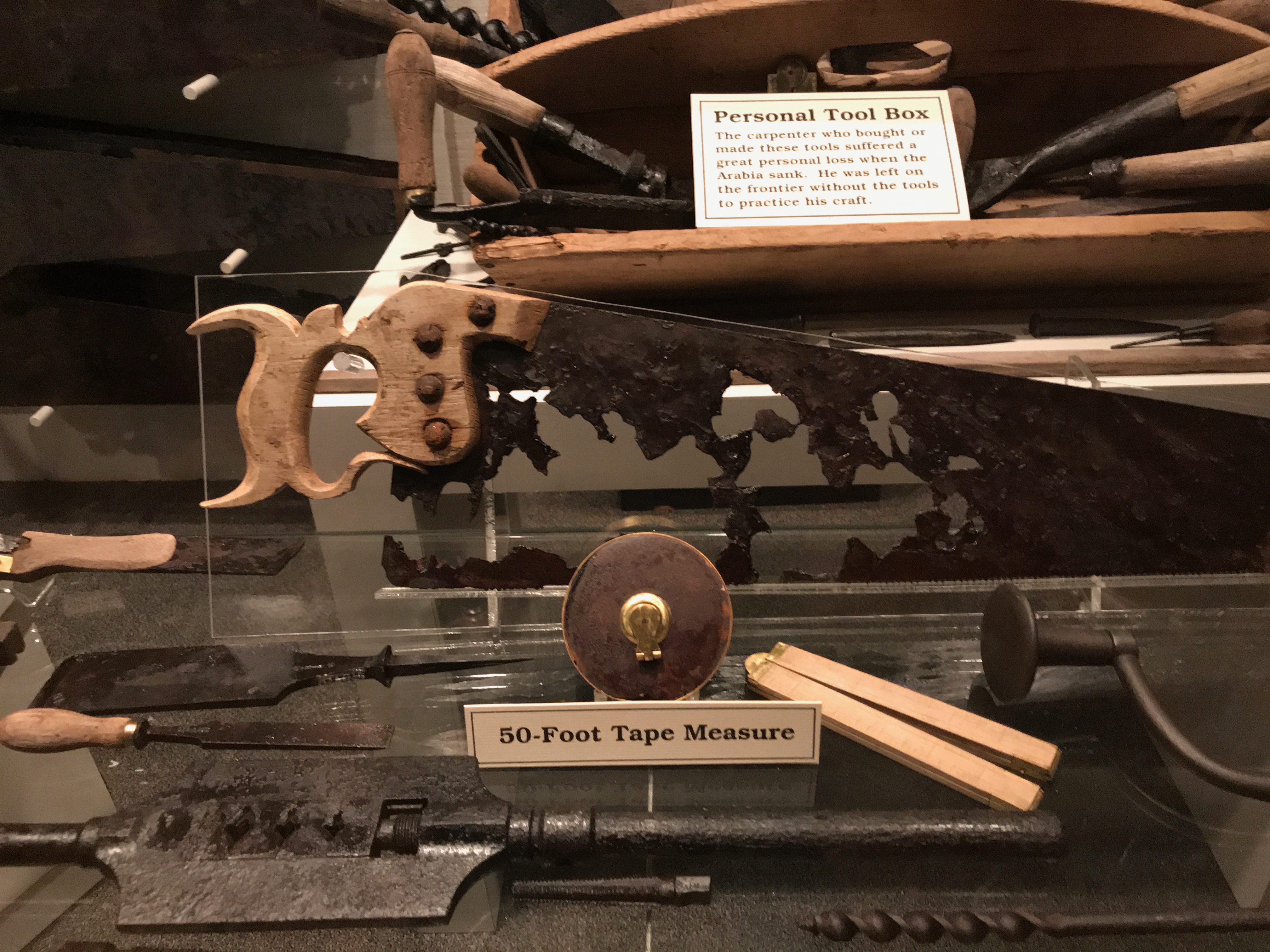
Tools. That poor saw looks kind of woe-begone, though.
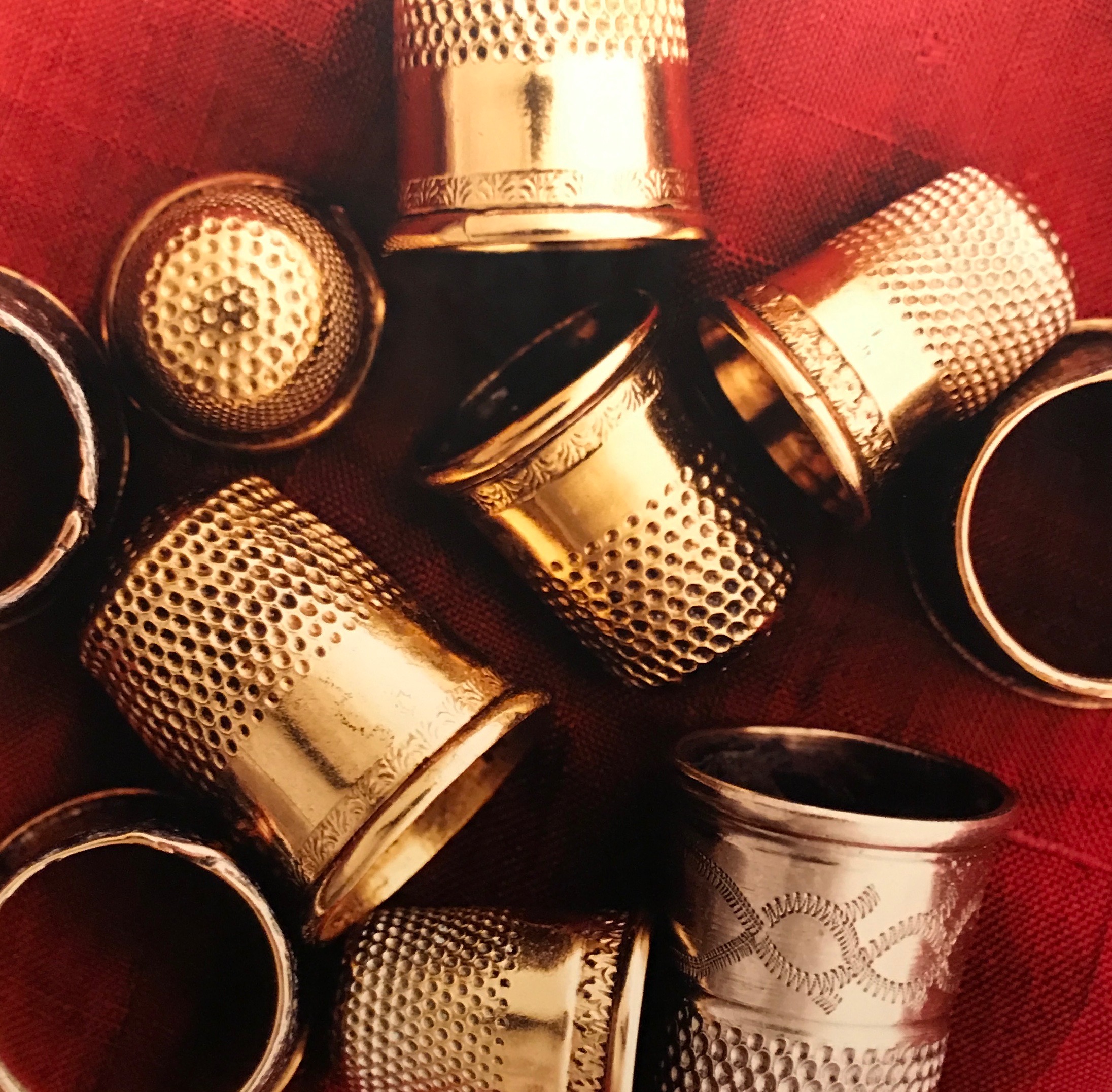
Some lovely thimbles
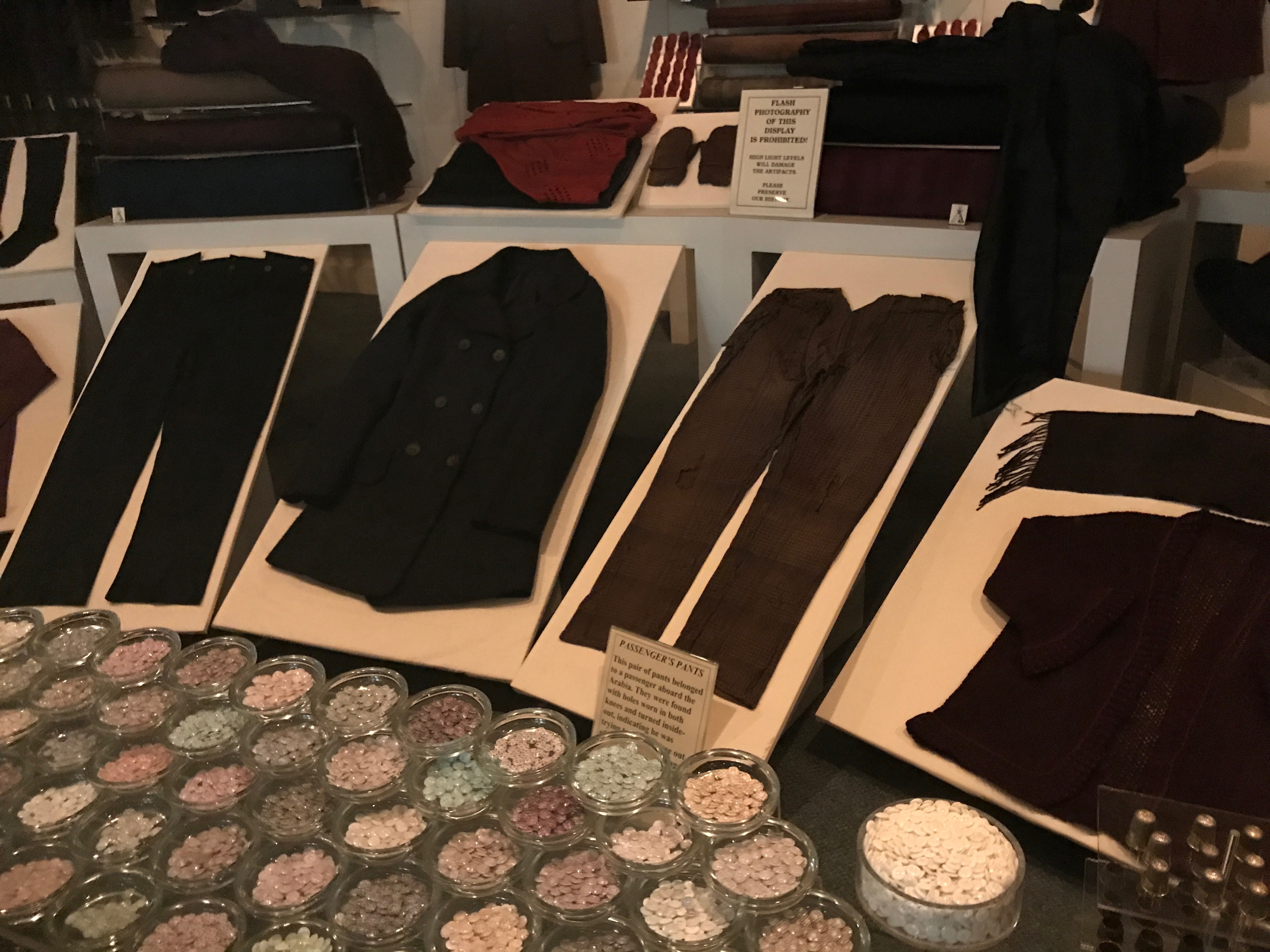
The sign by the brown pants says:
Passenger’s Pants
This pair of pants belonged to a passenger aboard the Arabia. There were found with holes worn in both knees and turned inside-out, indicating he was trying to get extra use out of them. His other meager belongings included cooking supplies, a whale oil lamp, a spittoon and 25 cents.
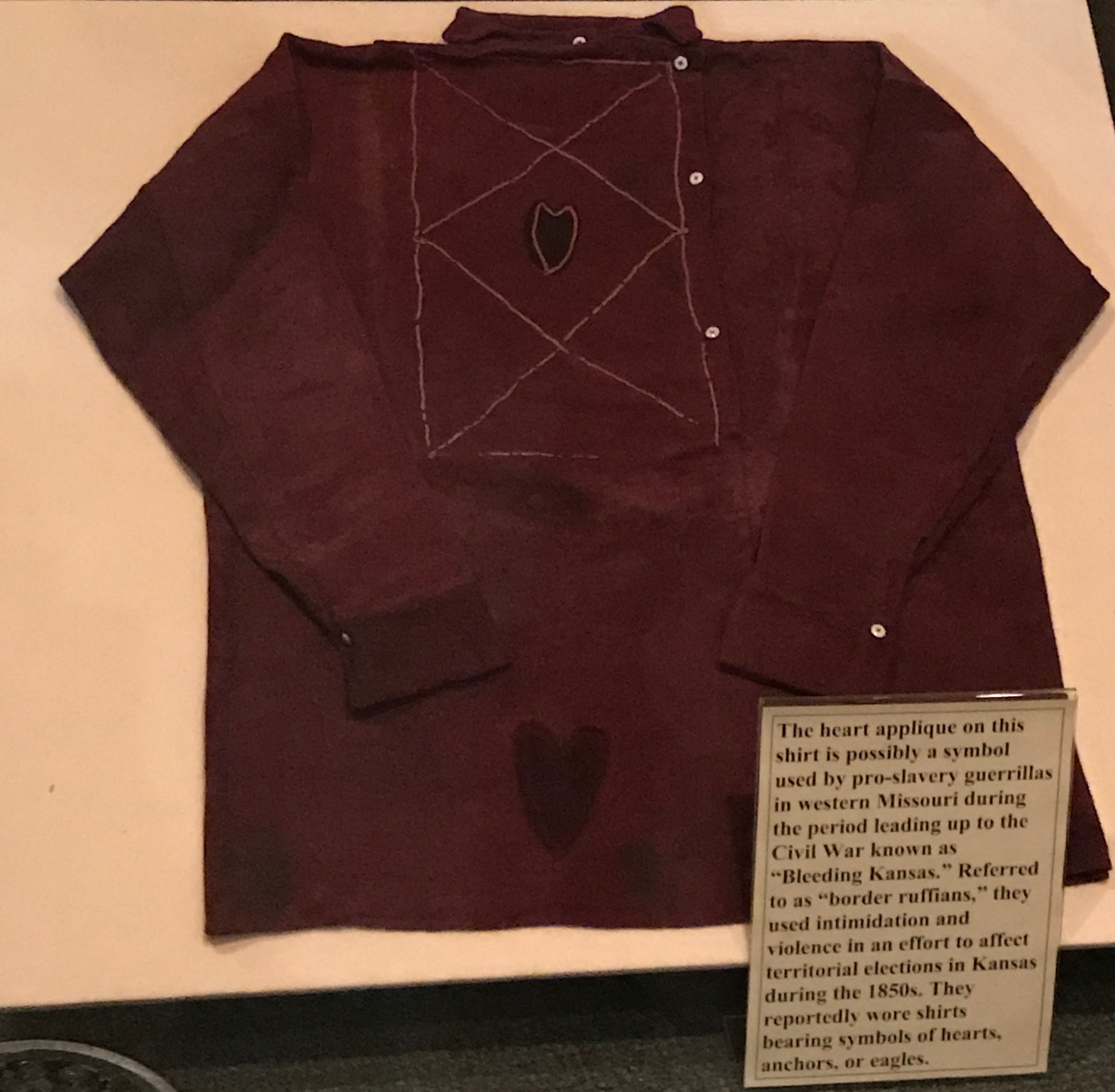
In case you are reading this on a small screen, allow me to tell you what the sign by the shirt says.
“The heart appliqué on this shirt is possibly a symbol used by pro-slavery guerrillas in west Missouri during the period leading to the Civil War known as “Bleeding Kansas.” Referred to as “border ruffians,” they used intimidation and violence in an effort to affect territorial elections in Kansas during the 1850s. They reportedly wore shirts bearing symbols of hearts, anchors, or eagles.”
Back to the inventory…
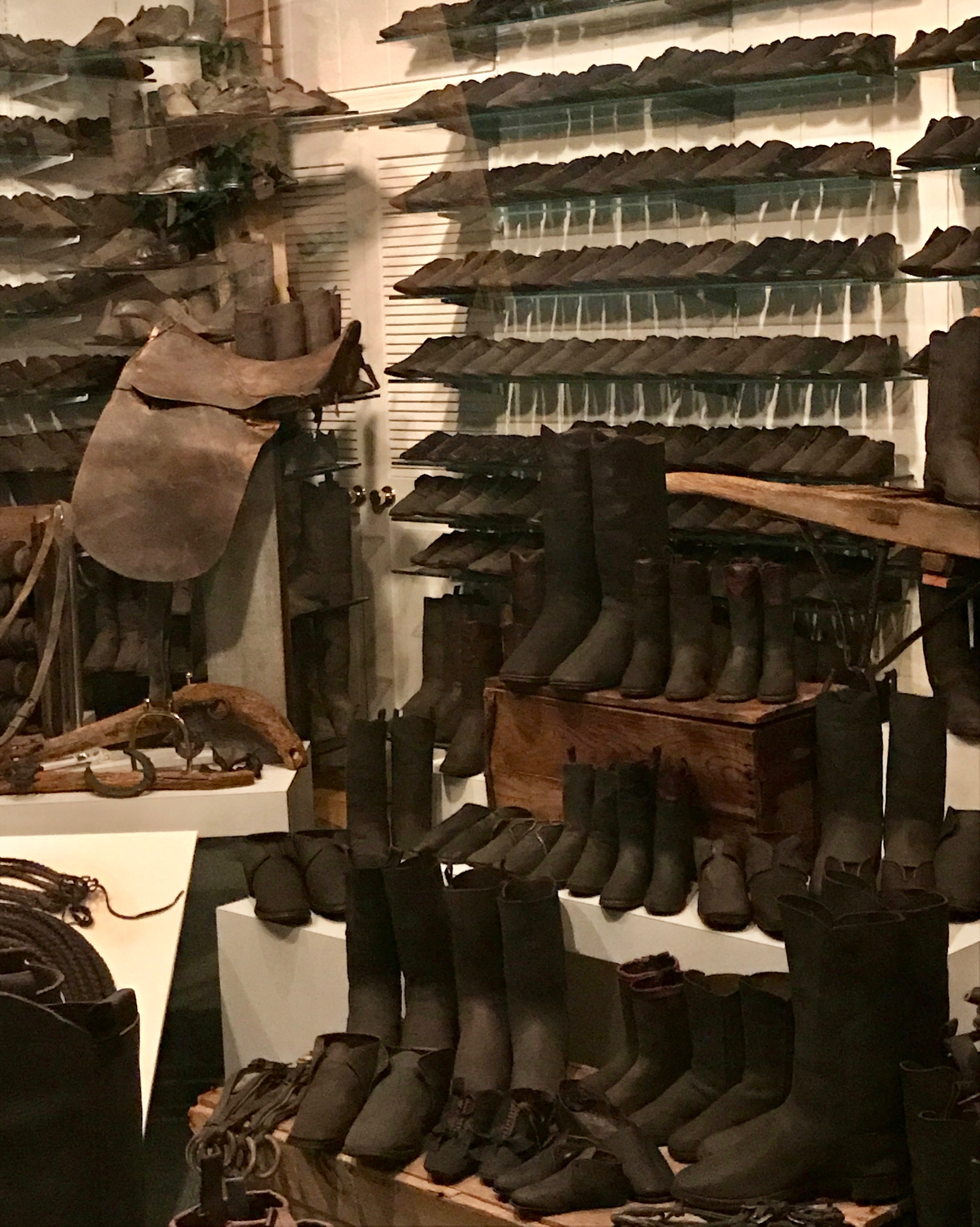
Shoes and saddles
And rubber artifacts…
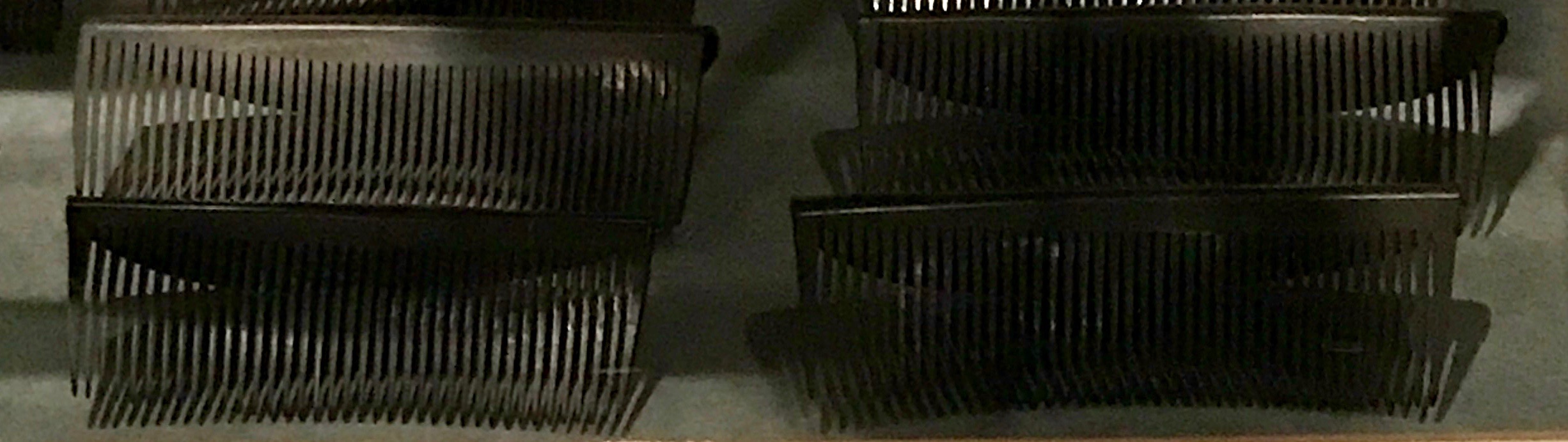
Combs
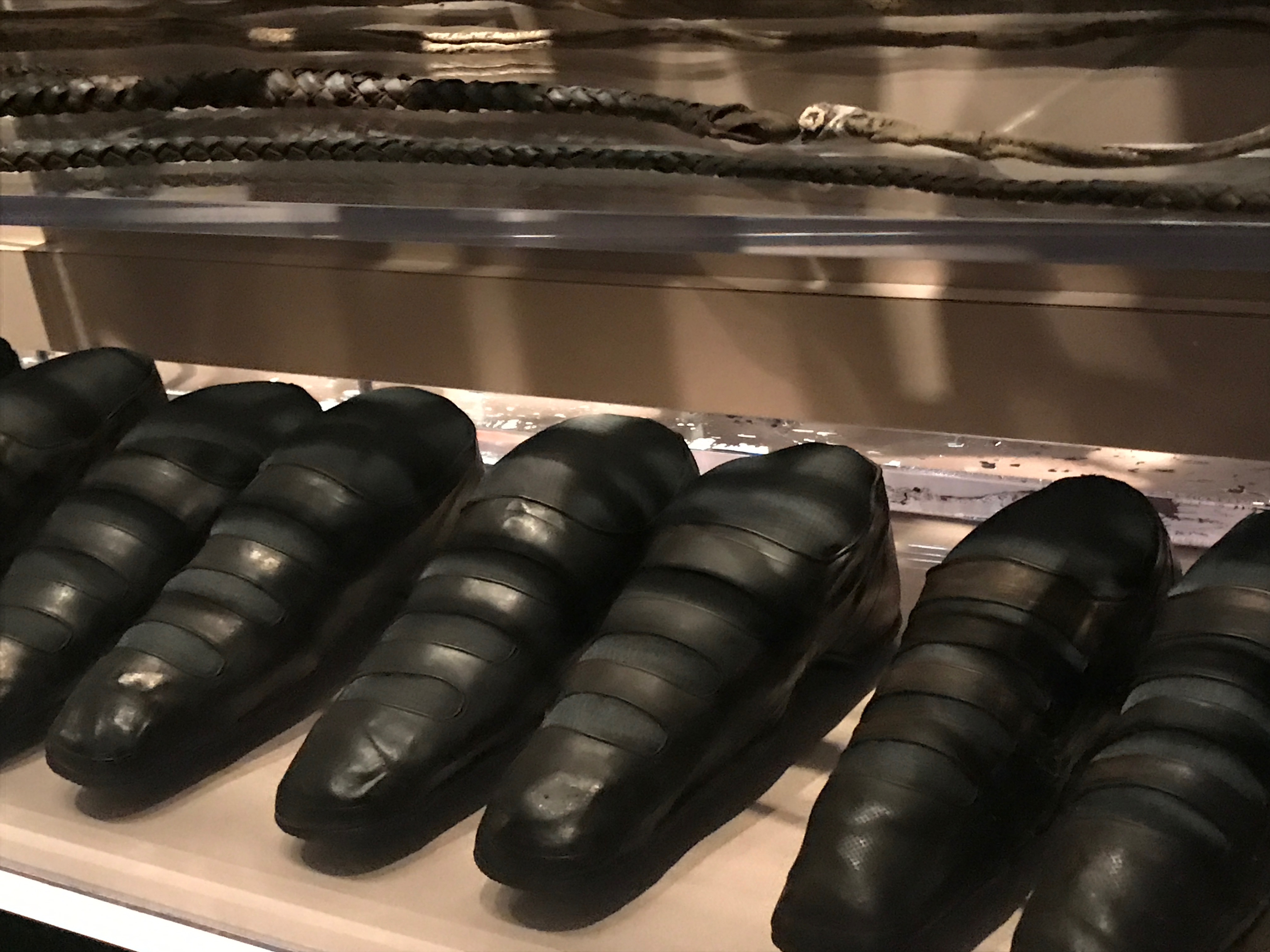
Shoes and bullwhips.
I’ll let you read the sign that was posted by the rubber items.
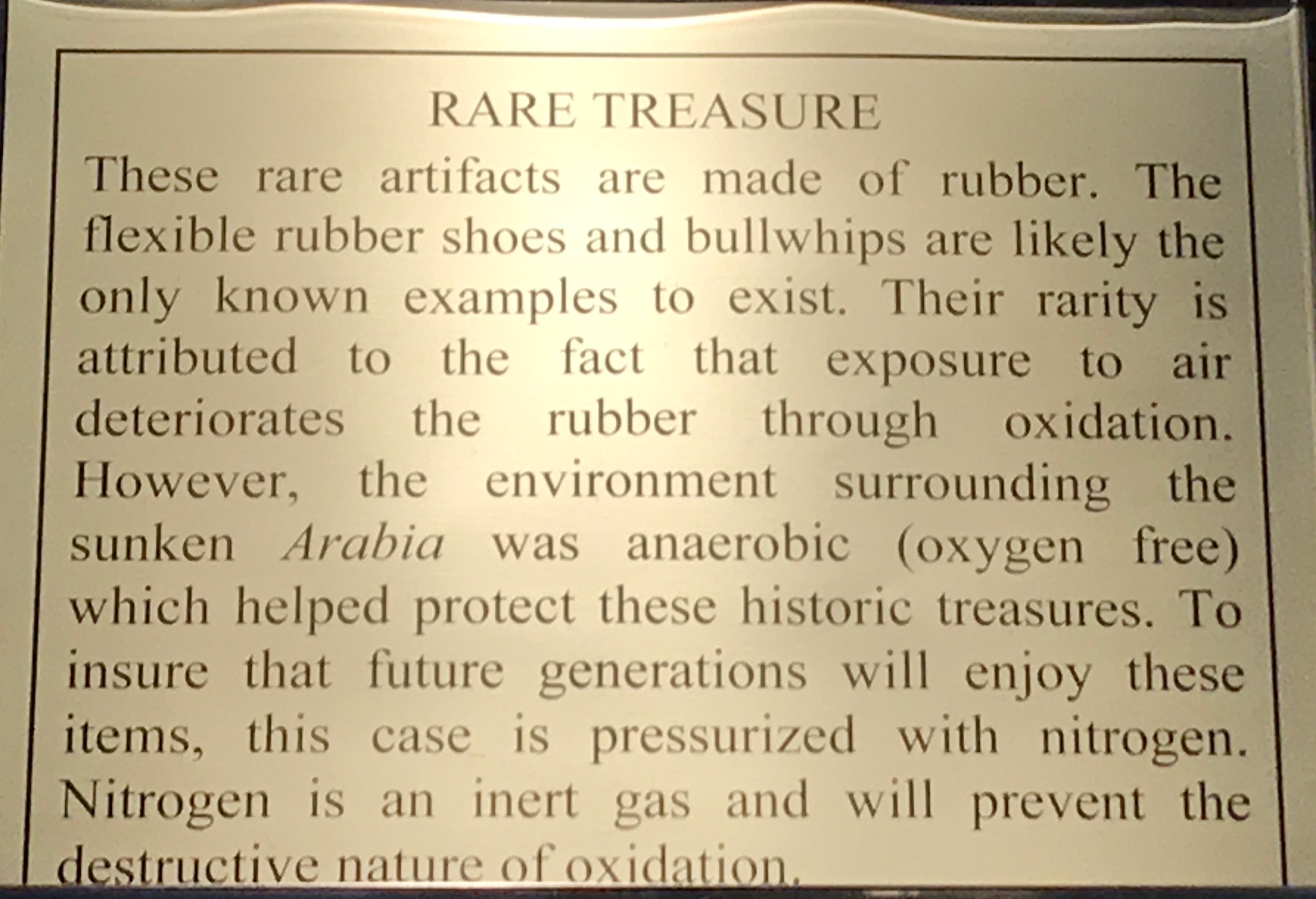
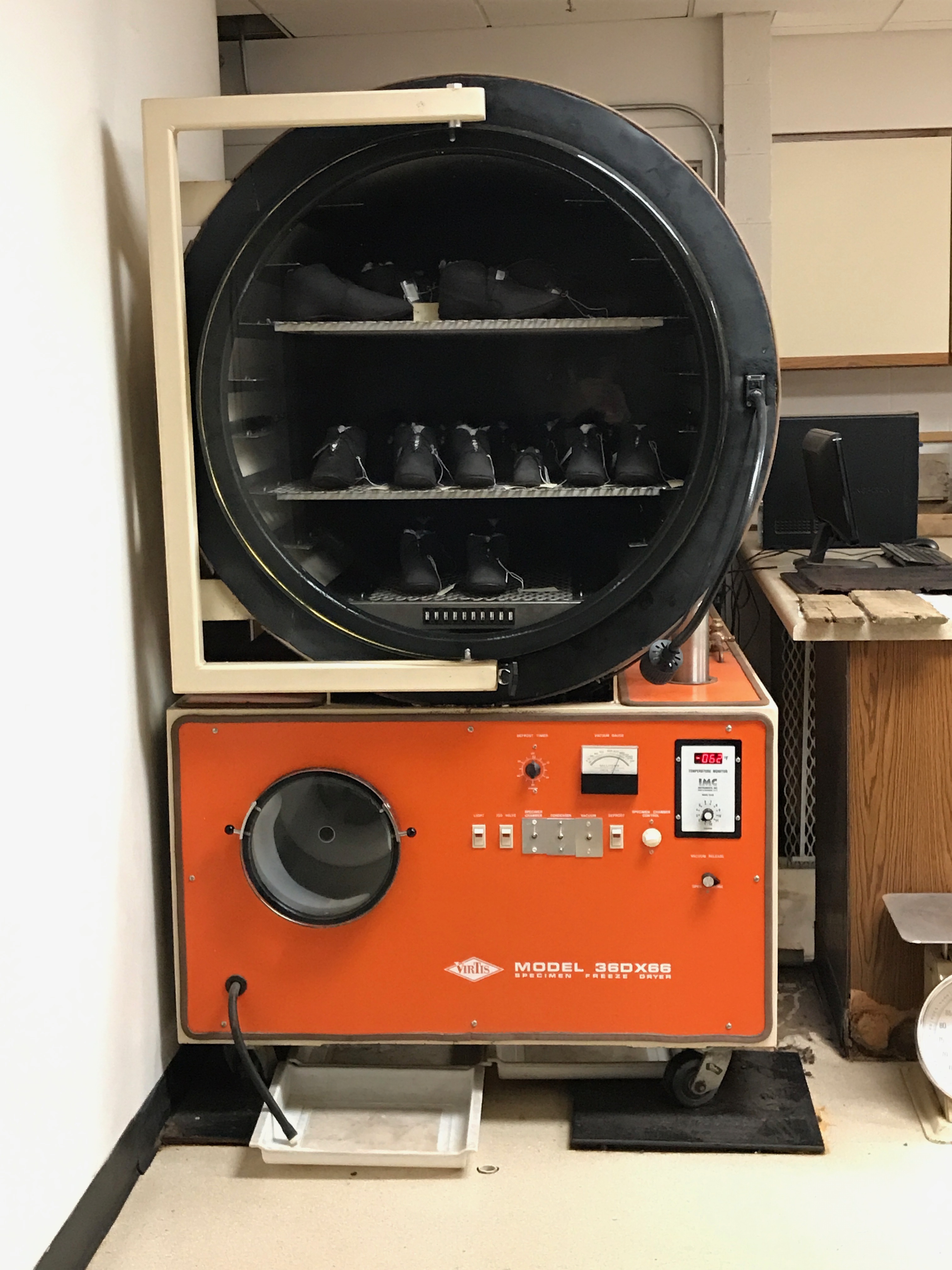
Here is some of the equipment used to preserve the rubber artifacts.
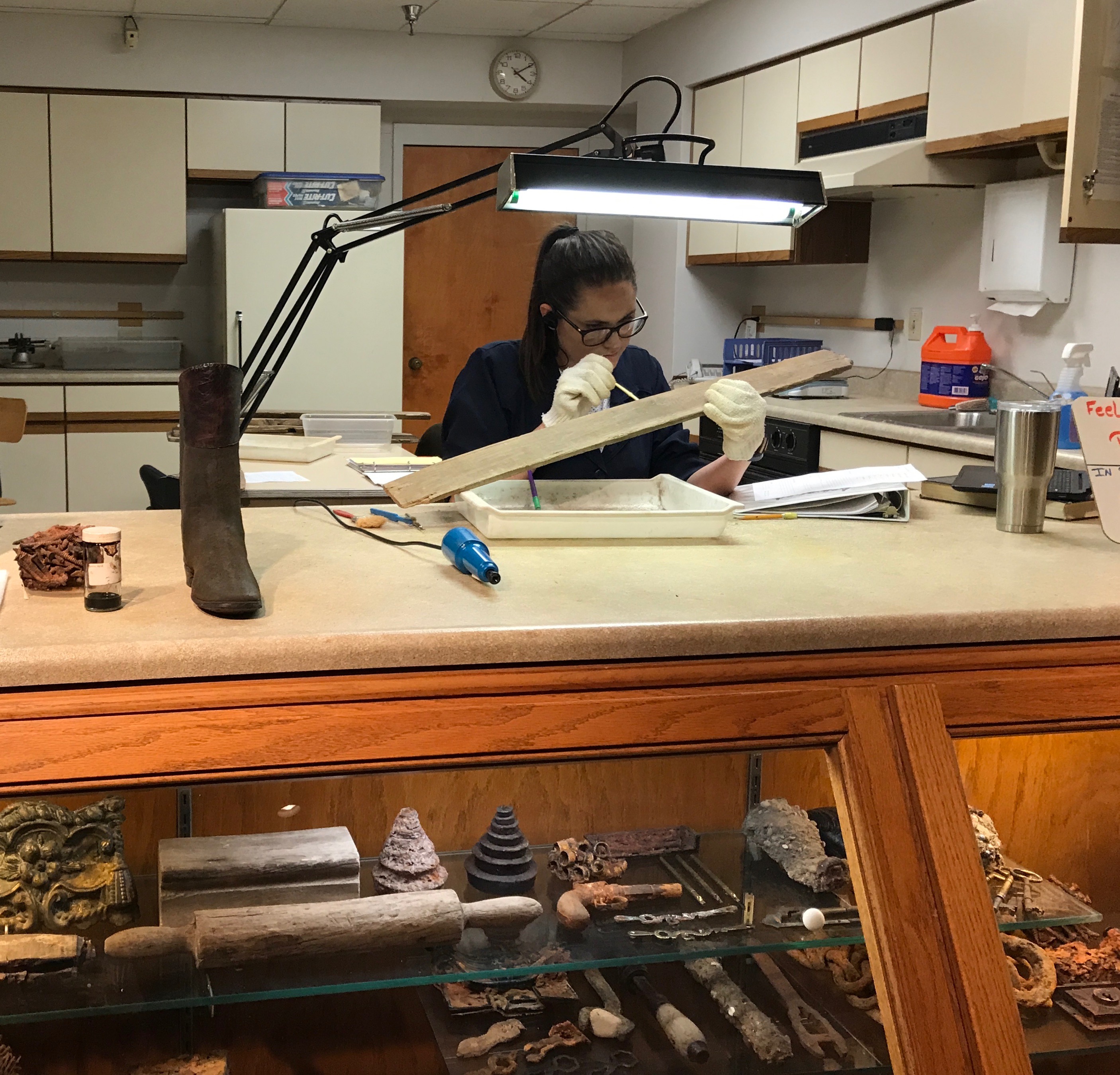
The promised us a view of the conservation lab – and there was even a conservator at work.
Here are some of the items in the 60 tons that are left to process
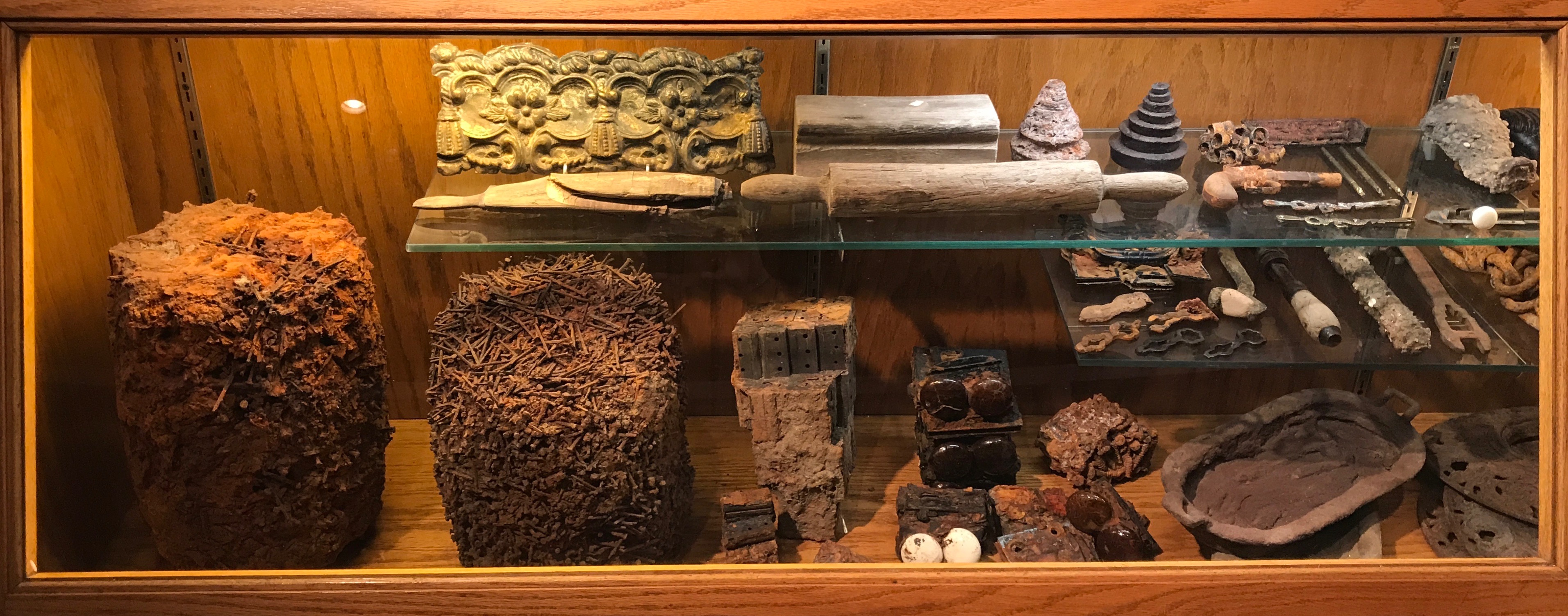
I would not look forward to having to conserve the nails in the two lumps on the left.
Not all the artifacts that were aboard survived in such pristine condition.
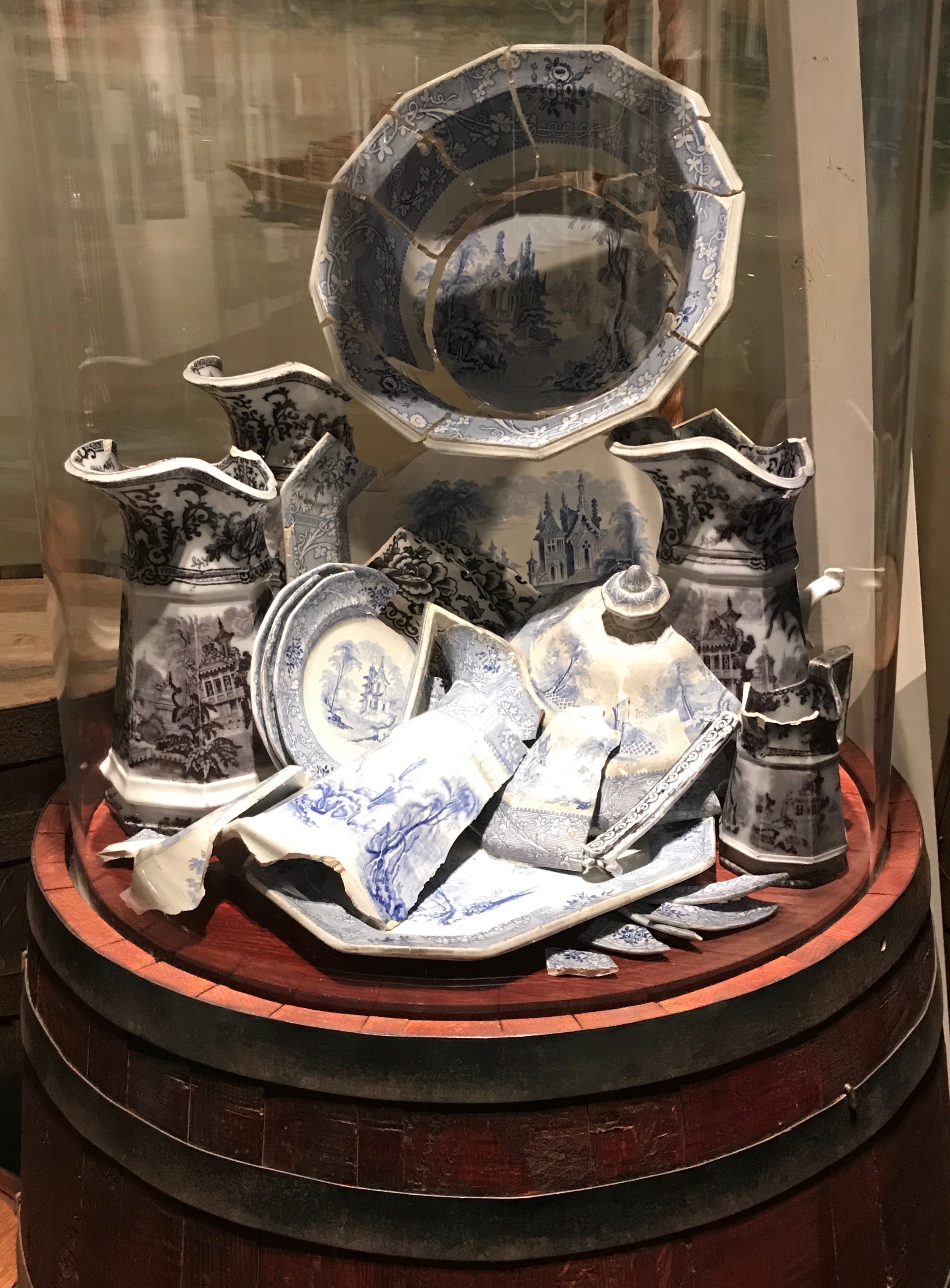
This china didn’t fare well.
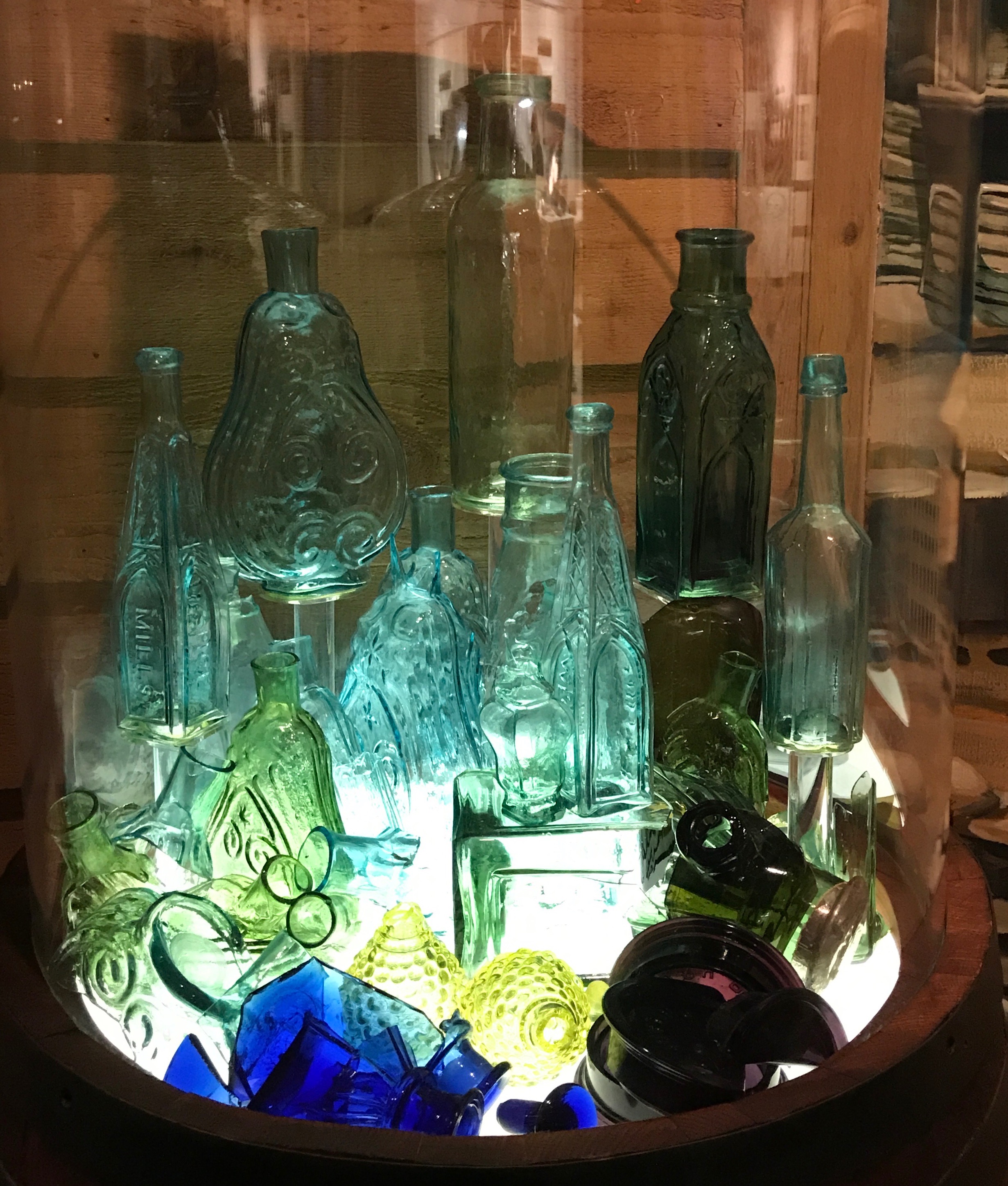
The bottles also took a hit. If you look closely, though, you can see that five of these bottles survived without a scratch.

There was also an interesting display about how the boat actually worked. It could make about five miles an hour going upstream, and it burnt about 30 cords of wood a day. How much is a cord, you ask?
“A full cord is determined by the total cubic feet of firewood, not necessary the measurements of the stack. However, the 4′ x 4′ x 8′ shape is the most common.”
128 cubic feet are in a cord. 30 cords of wood would be 3,840 cubic feet a day. That is about the size of the largest school bus that you would see on the road today. I wonder what the infrastructure was for replenishing their fuel supply?
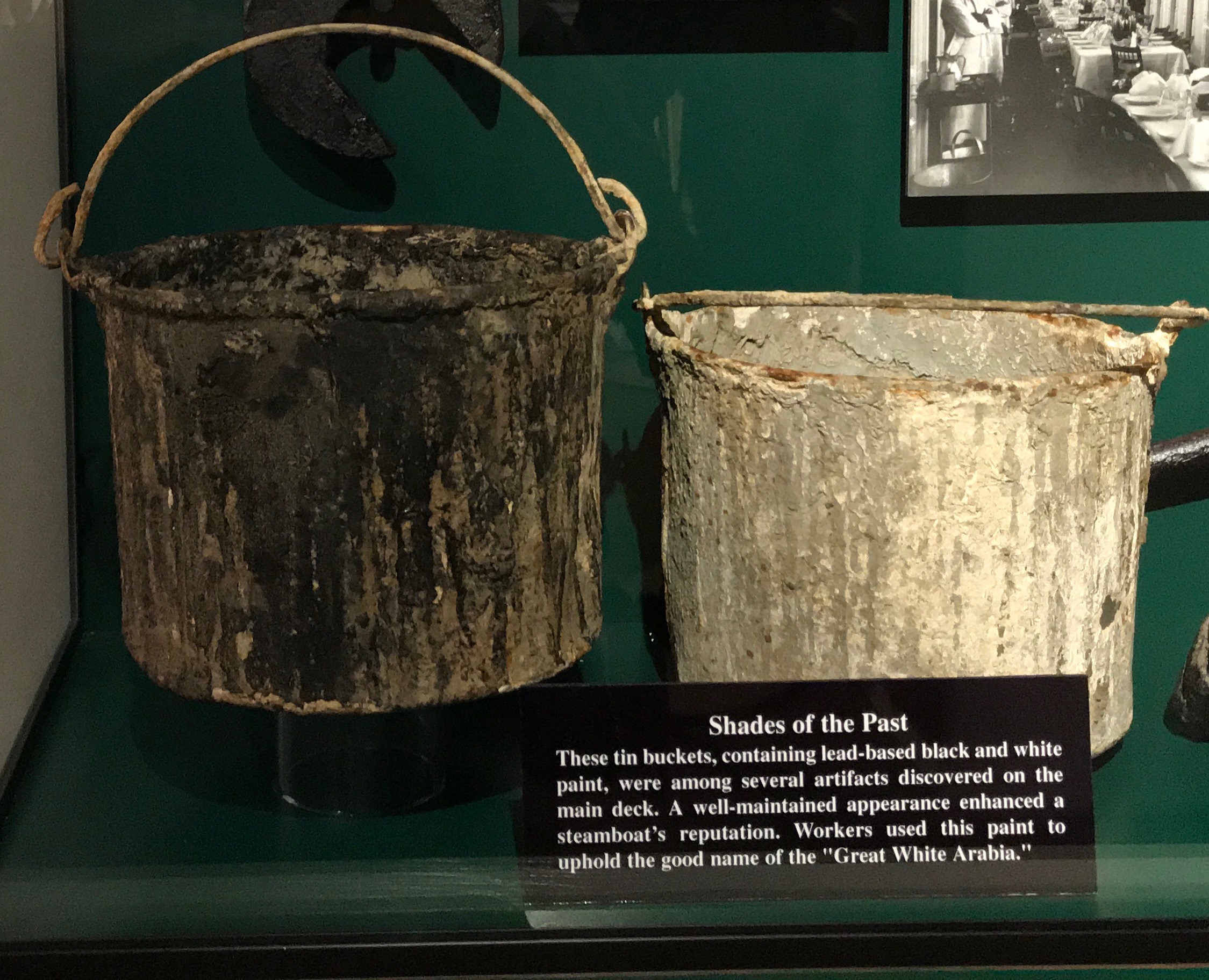
These buckets were also part of the working of the boat. The workers had to keep the Arabia looking good.
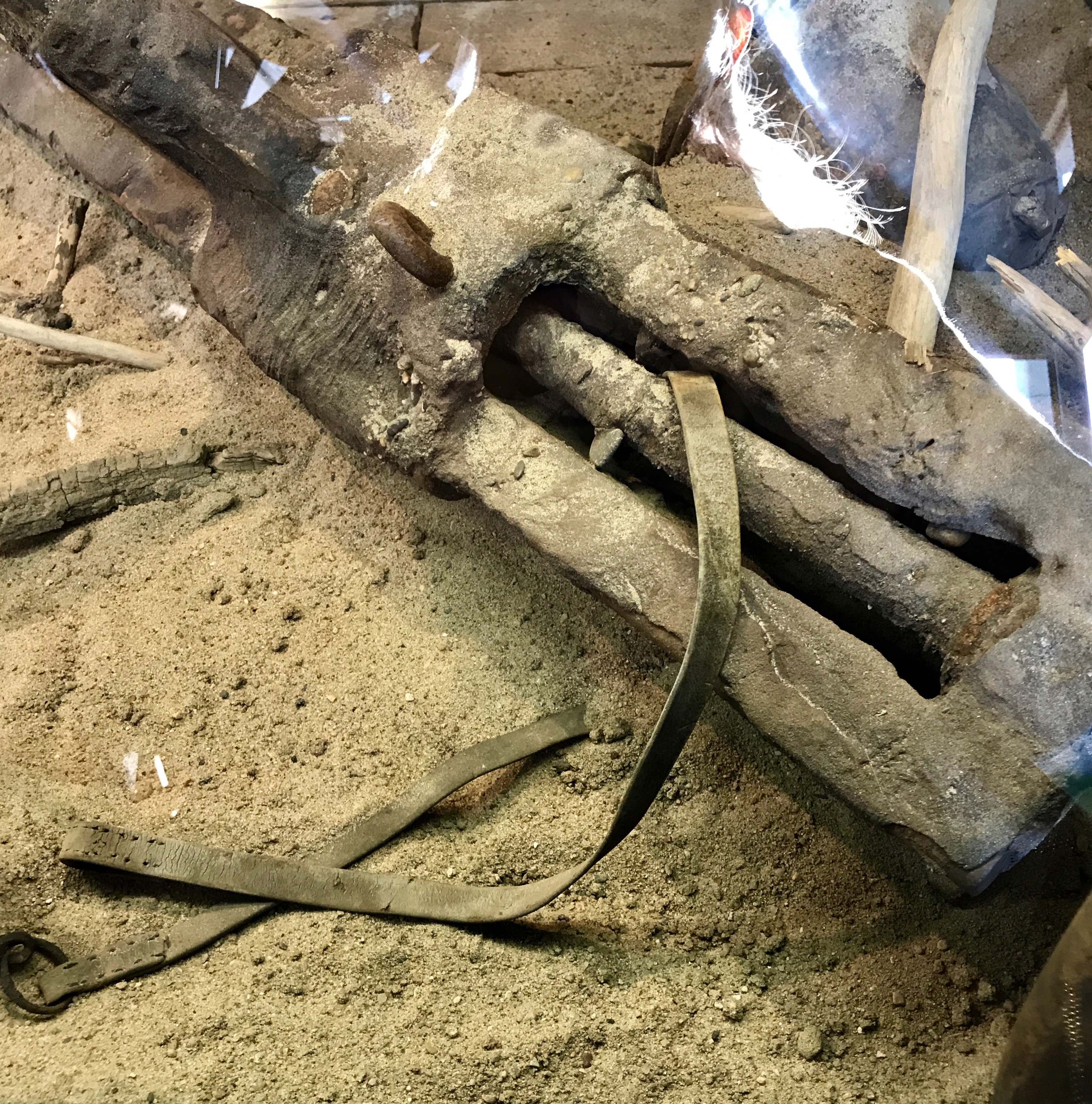
Oh, and you know the story about the mule being the sole casualty of the sinking of the Arabia? The owner was interviewed shortly after the sinking and he said that he tried to free his mule, but it was too stubborn and would not leave the sinking steamboat. The reins tell a different story. They were discovered firmly tied to this lumber mill jack.
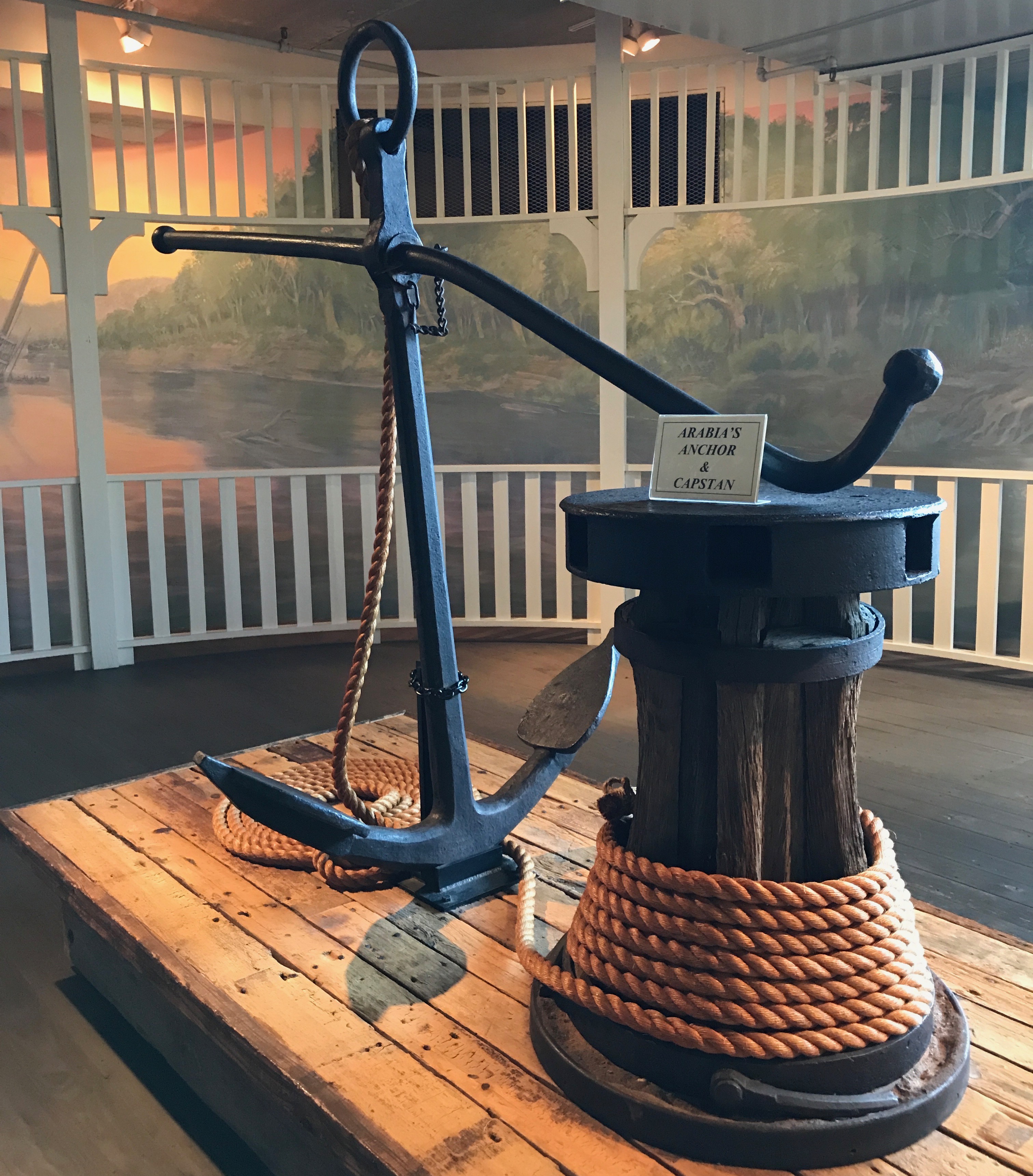
With that, it was time to weigh anchor
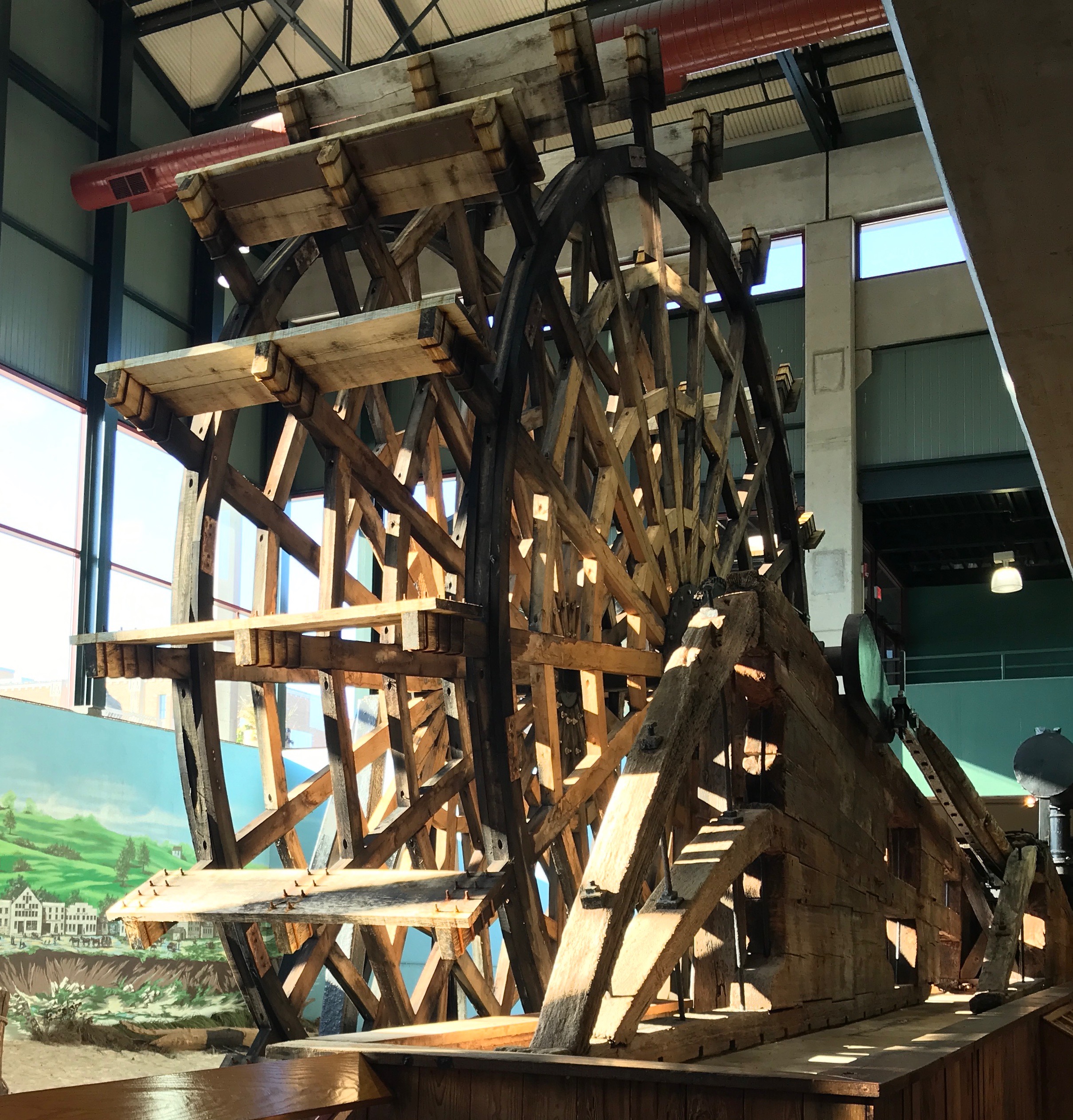
and head off to my next adventure.