Nothing.
Nothing is open on Easter Sunday.
I should have tried to find a church. At this point, I don’t remember why I didn’t go to church or if I looked or what. (Remember that I am writing this report about a year after the fact.) In any event, I set out to see what I could see. I do take my touristic duties seriously, even if I did neglect my Easter obligations.
I decided to head over to Salem to see the state capital building.

It has one of the most original domes I’ve ever seen on a state capital – or any building, for that matter.
This is the third state capital building in Salem. The first capital of the Oregon Territory was in Oregon City but moved to Salem in 1850. There was some dispute about there is should be. Corvallis was the next capital, but people objected to that because construction in Salem had already begun. Governor George Curry sent the matter to the Secretary of the Treasury in Washington in 1855. Secretary James Guthrie declared the move invalid unless acted upon by the United States Congress.
So, the legislature convened in Corvallis in December 1855, just long enough to pass a bill that moved the capital back to Salem. The bill passed on December 15. Three days later, the legislature re-convened in Salem. Two weeks later, the statehouse burned down.
The legislature re-opened debate about where the capital should be. They held a vote, but voting irregularities and low voter turnout lead to them ignore the results, which would have moved the capital to Eugene. They tried again in 1860 and in 1862, but no city received the 50 percent minimum required by law. In 1864, Salem received 79 percent and was declared the state capital. By this time, Oregon had been a state for five years.
And, yes, information for this post came from my preferred source. Check it out, if I’ve piqued your curiosity.
As I mentioned earlier, I made my visit on Easter Sunday. I don’t know if it is open on other Sundays, but it was definitely closed when I visited. However, there are always things to see.
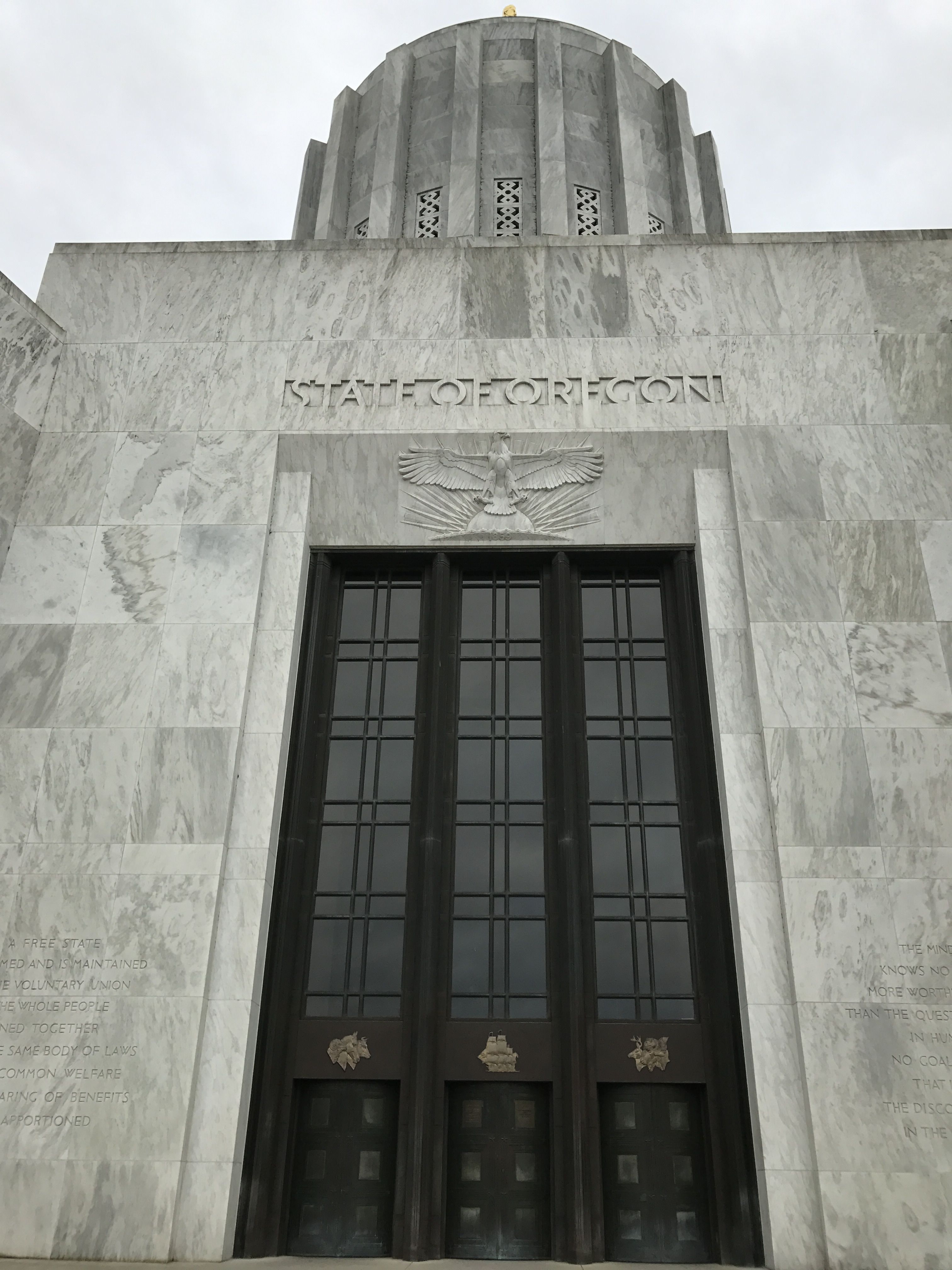
The current capital building was completed in 1938. It was partially funded by the Public Works Administration, which was part of FDR’s New Deal of 1933.
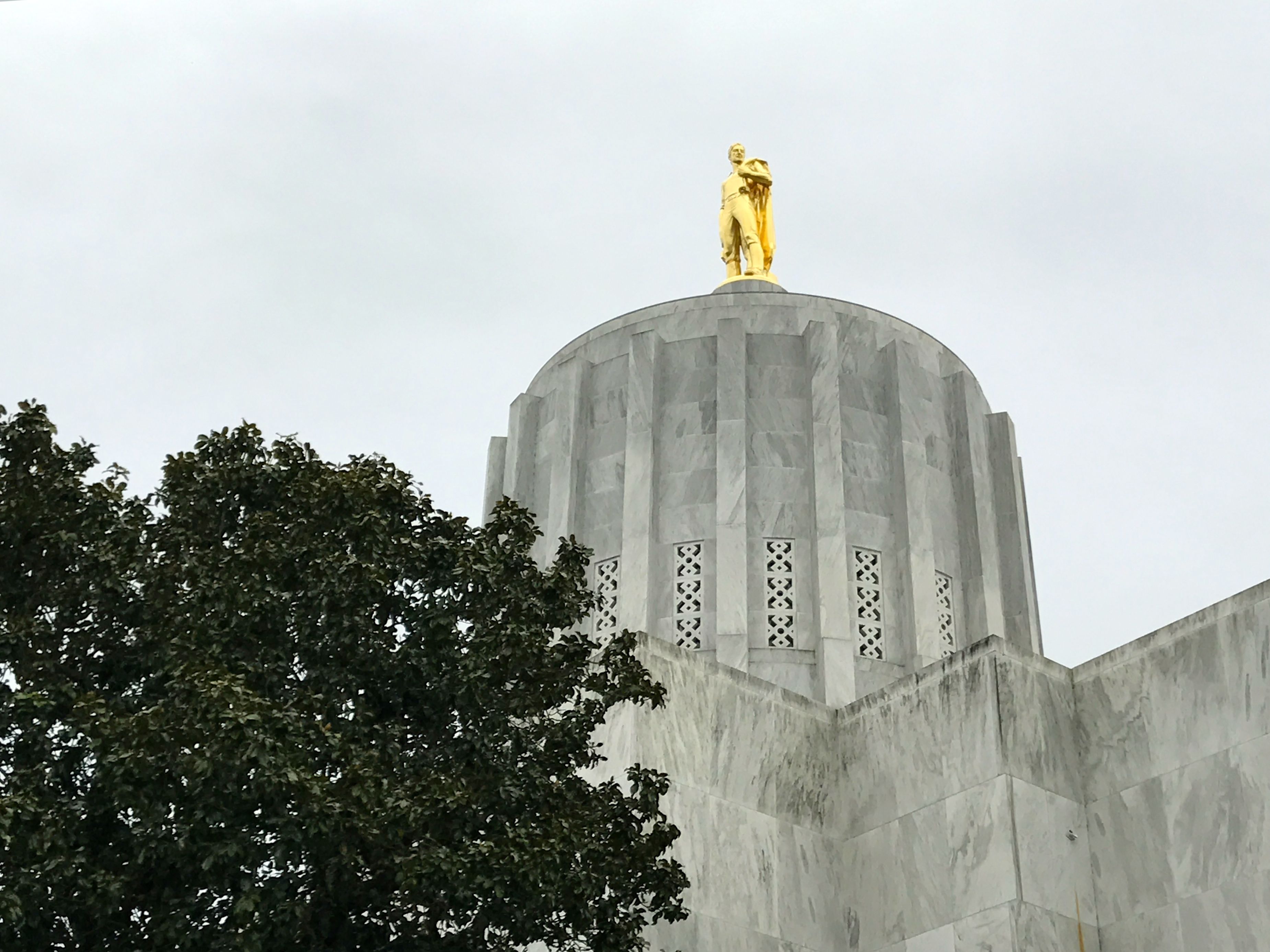
As with any public project, there were complaints. One complaint was that the dome looked like a “paint can”. It was also called a “squirrel cage”. (It kind of reminds me of a nuclear reactor.)
The pubic was also slow to warm up to the gold Oregon Pioneer statue atop the dome.
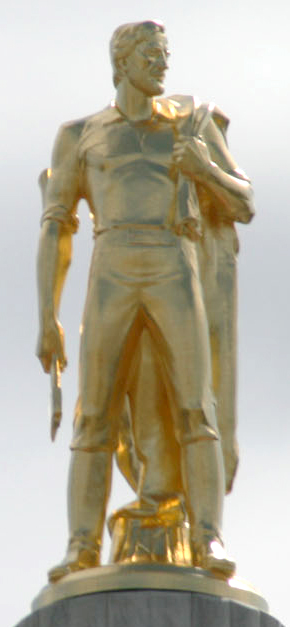
I am proud of myself for finally getting on board with properly attributing sources when I borrow images. Thank goodness that Wikipedia makes it easy! I have been approached a few time by people who want to use photos I’ve taken for their projects, and it feels good to be acknowledged.
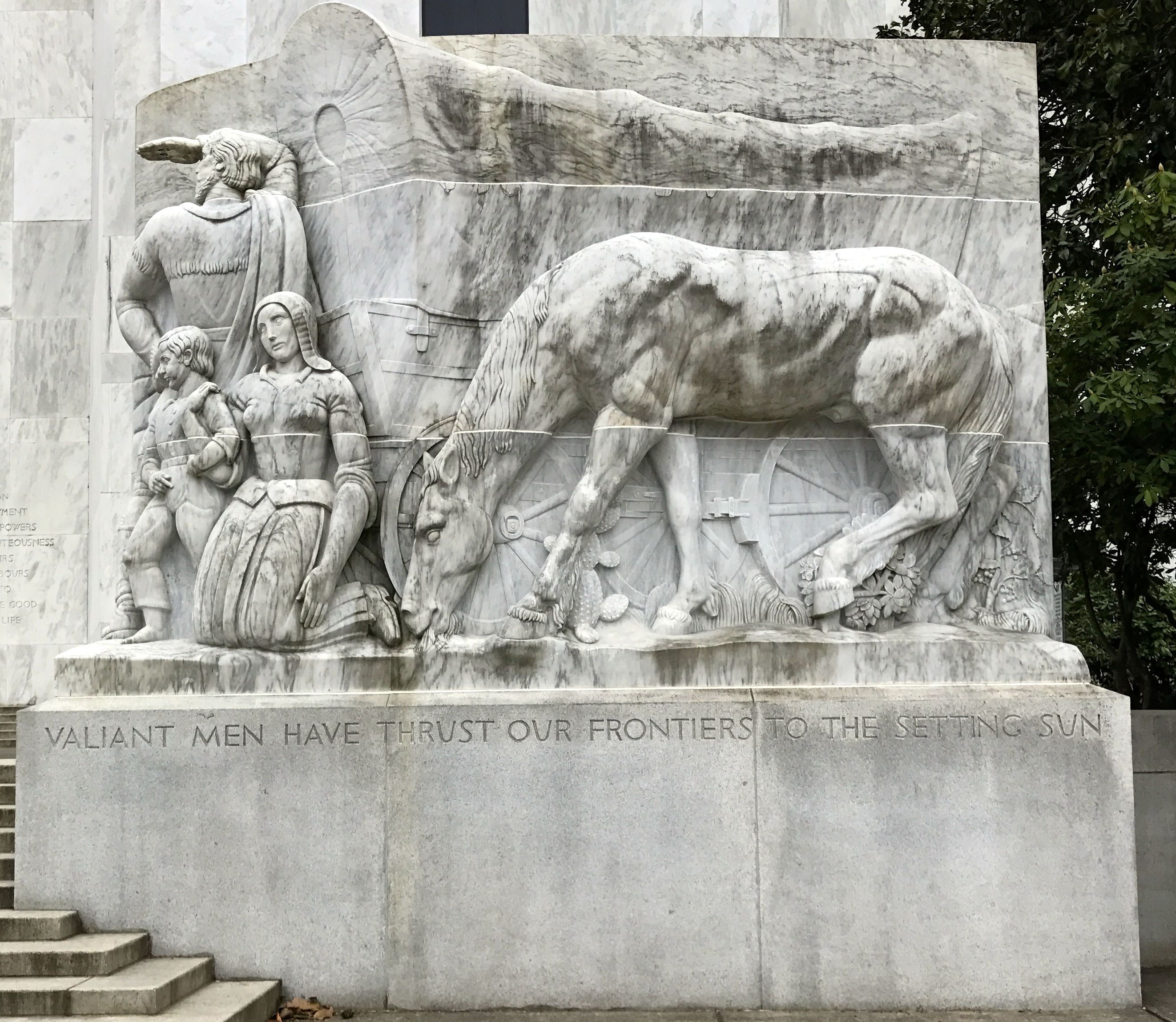
Sculptor Leo Friedlander created the large pieces on either side of the entrance. Ah, those valiant men! How about some mention of the valiant women who went west, too?
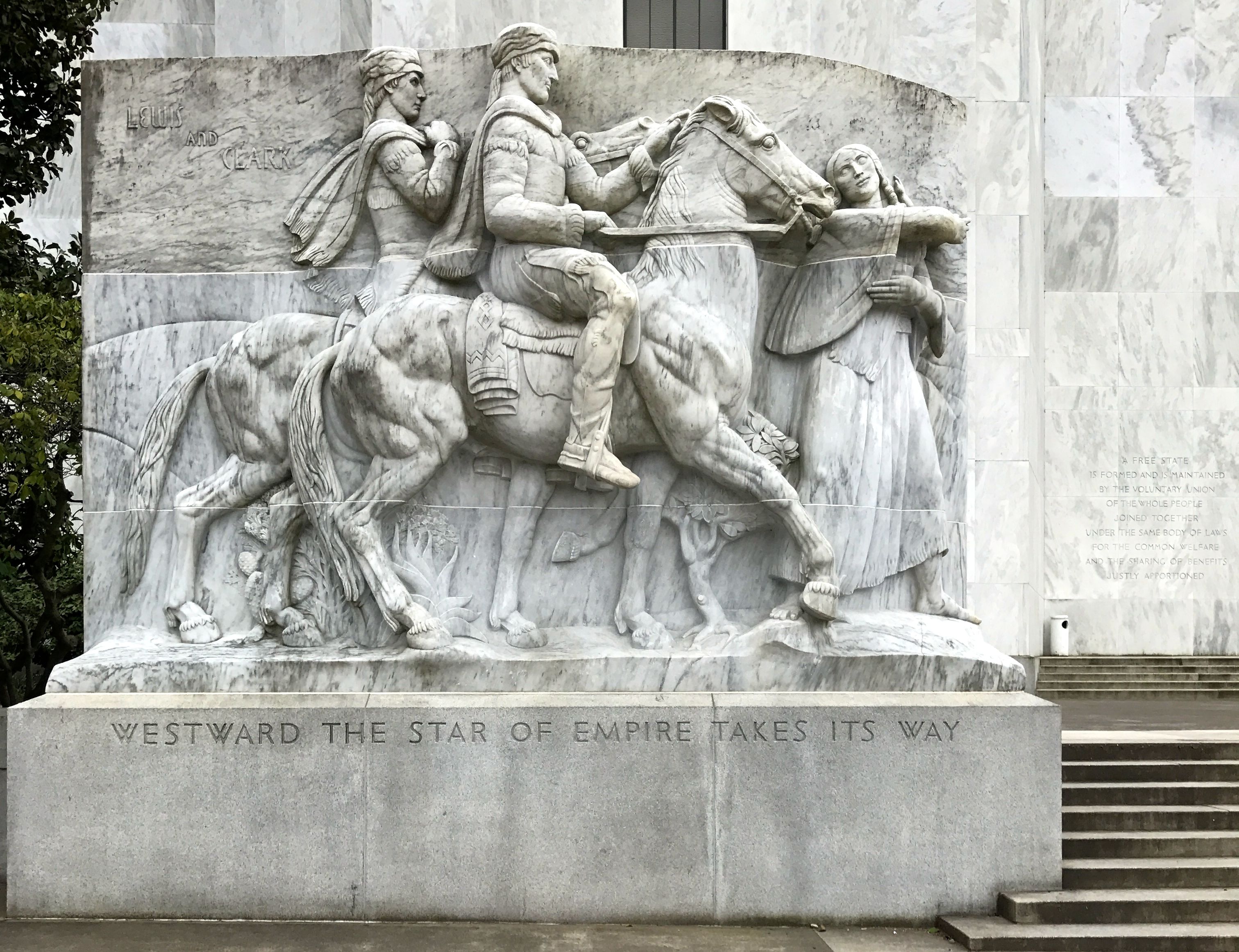
I mean, how about some mention of Sacajawea?
There were some bronze statues around the capital as well.
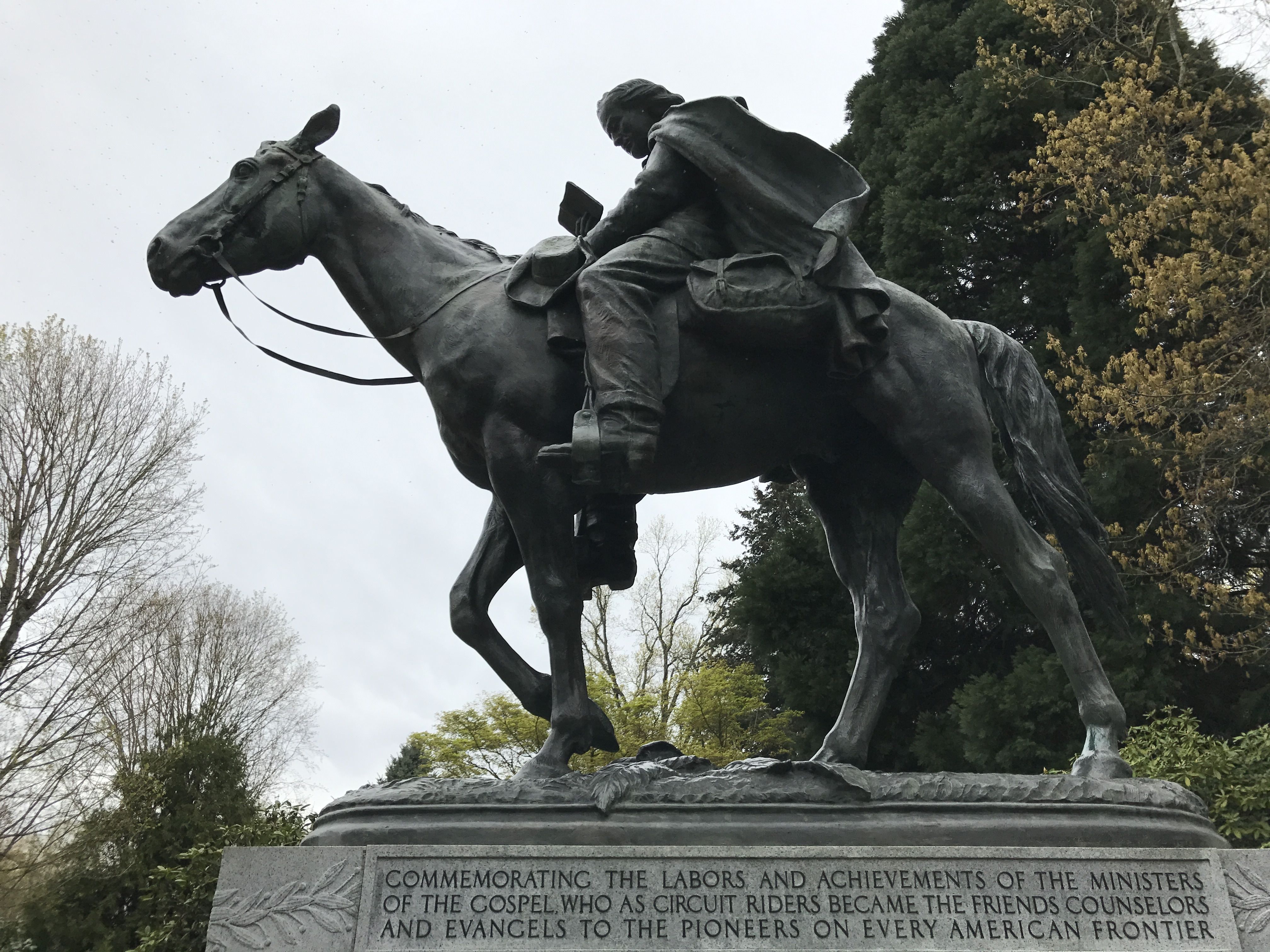
This one is a tribute to Robert Booth, who was a pioneer minister in Oregon.

It was also a tribute to his son, Robert A. Booth, who put his own name on the dedication plaque.

This statue is of Reverend Jason Lee, who lived from 1803 – 1845. The inscription of the plinth describes him as the first missionary in Oregon and a colonizer from 1834 – 1843.
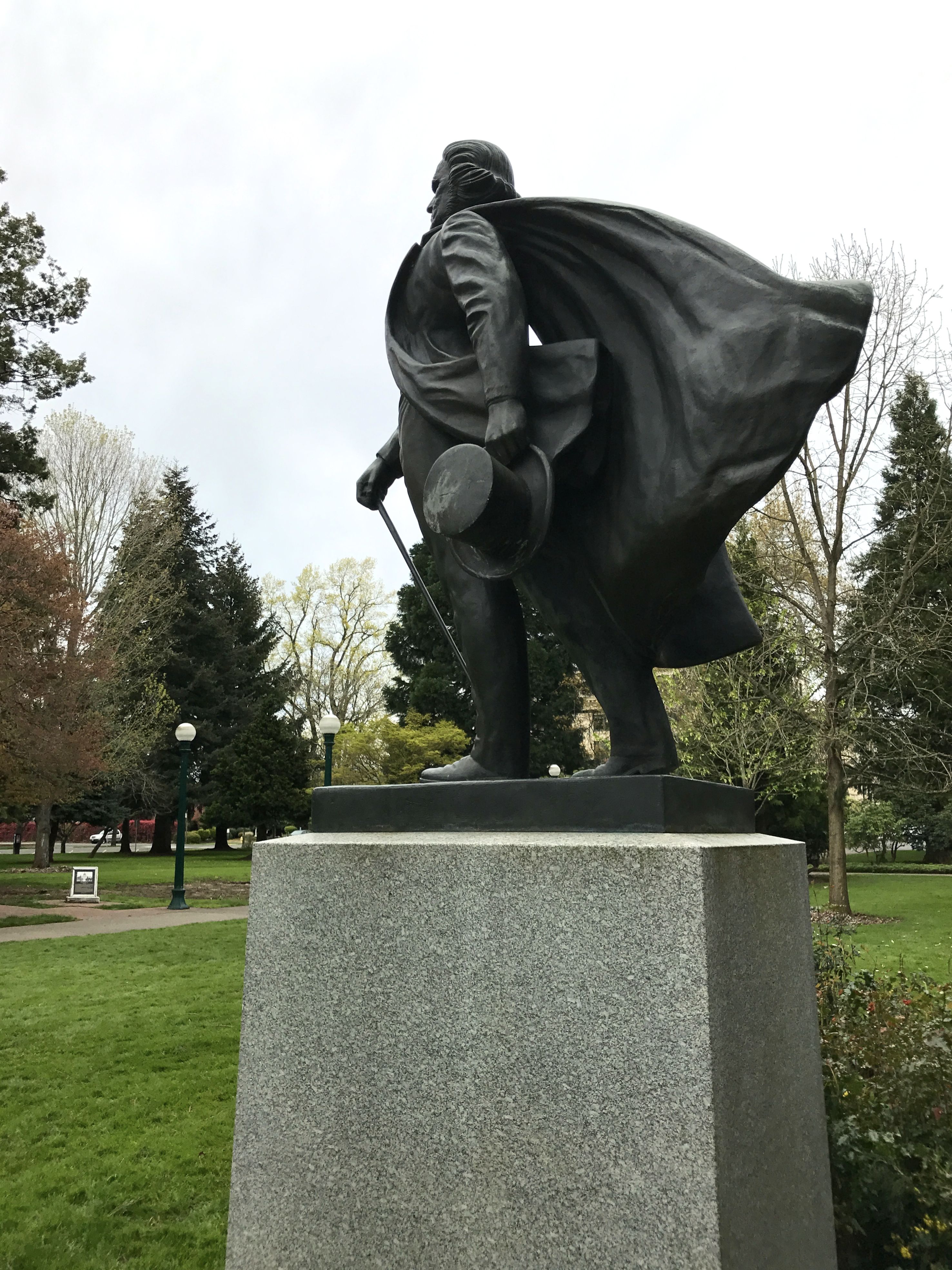
Then there is this dramatic statue of Dr. John McLoughlin, who was the first to govern the Oregon Country, from 1824 – 1843.
I find it interesting that he was born in 1784 in Rivière-du-Loup, Quebec, and he came to government through his work with the Hudson’s Bay Company.
Since I have a primarily east coast orientation, I learned many new things on my west coast adventures. For instance, I did not know that at one time there was talk of establishing Oregon as an independent nation, free of the United States. In fact, Dr. McLoughlin advocated for such an arrangement. He also got in trouble with his bosses for extending aid to the American settlers who arrived in Oregon via the Oregon Trail in the 1840s. His assistance to the new arrivals was not entirely altruistic, however. The aid he extended to the Americans probably prevented armed attacks on his outpost by the numerous settlers.
According to my preferred source, the settlers understood that his motives were not purely selfless. Some resented the assistance and worked against him for the rest of his life.
In 1843, his bosses directed him to relocate to Vancouver Island. He refused to leave the Willamette River Valley and spent the remainder of his life there. He died of natural causes in 1857 at the age of 72 .

As I explored further, I came across these sections of pillars.
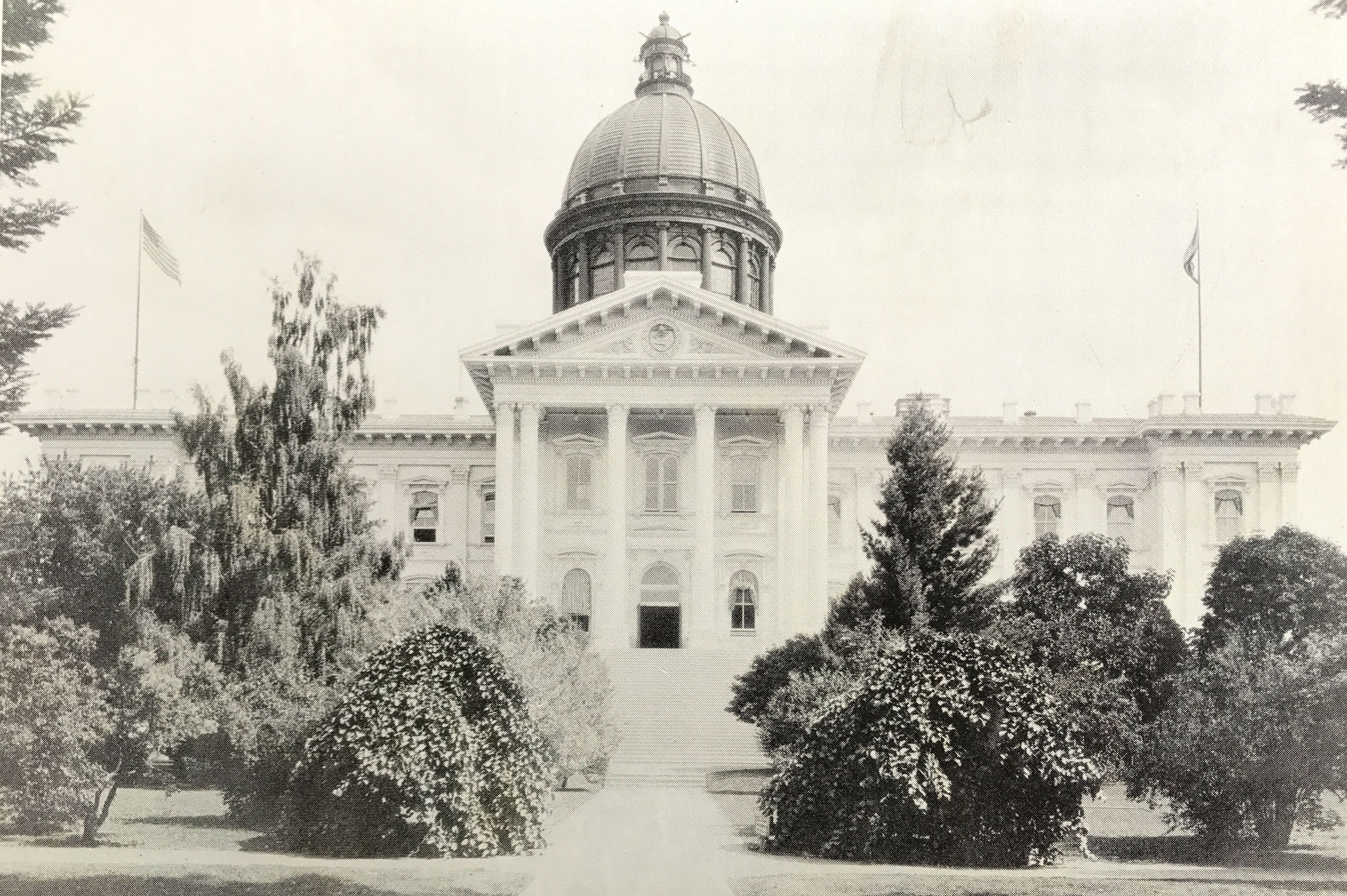
They were from the capital that burned in 1935.
According to an information plaque near the column segments, the bricks for the inner core construction of the columns and for the building were made by convicts at the Oregon State Penitentiary. The fluted limestone veneer facings came from Douglas County quarries, south of Salem.
Incidentally, Douglas Country was named after Stephen A. Douglas, who strongly supported statehood for Oregon. You may be familiar with his name from the famous Lincoln-Douglas debates.
(I do go on, don’t I?)
Anyway, according to the plaque, the columns were found in Mill Creek, near the residence of the Governor. First Lady Dolores Atiyeh and Governor Atiyeh promoted the idea of preserving the column segments as a piece of Oregon history.
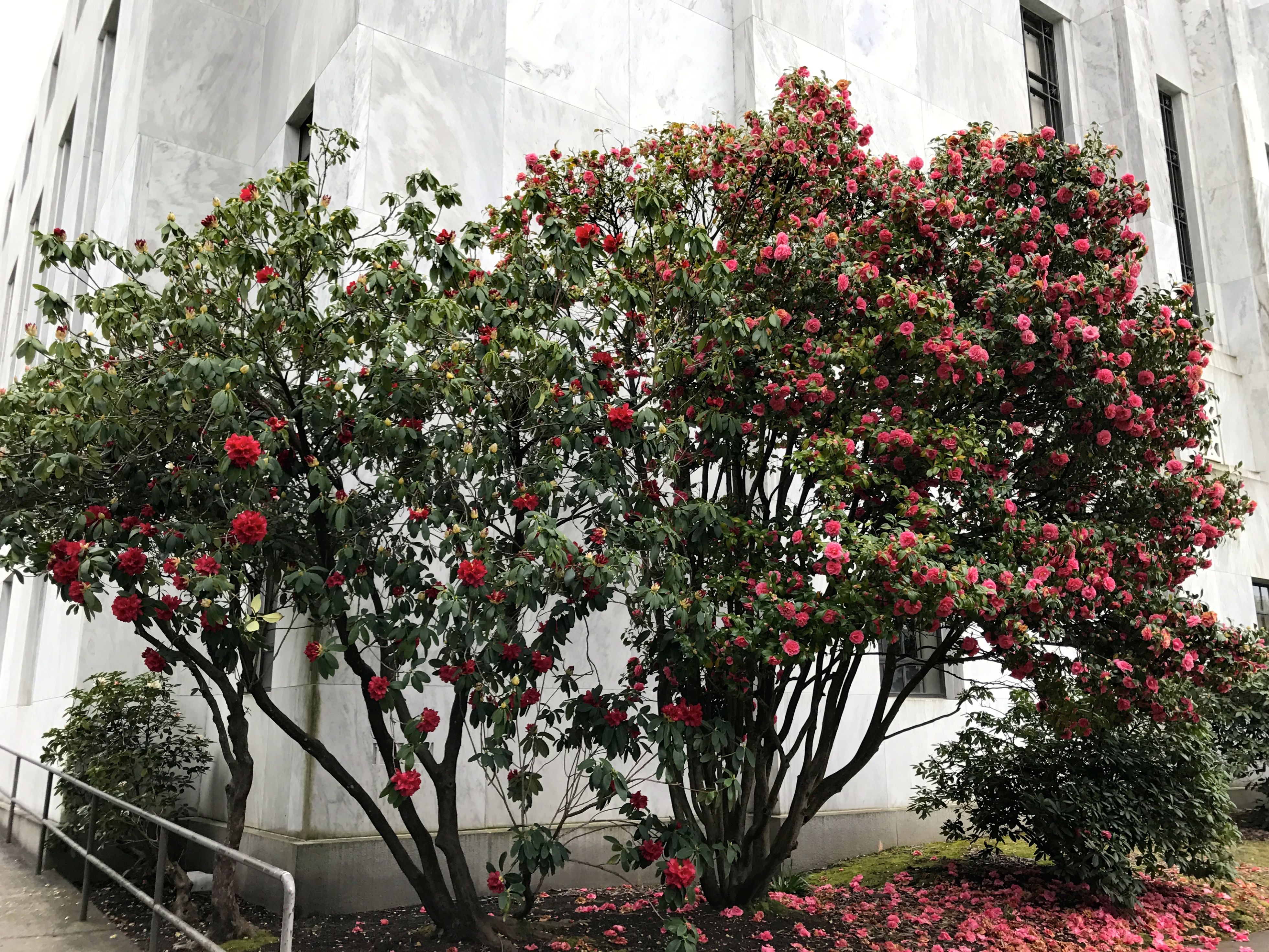
The capital’s campus was in bloom.
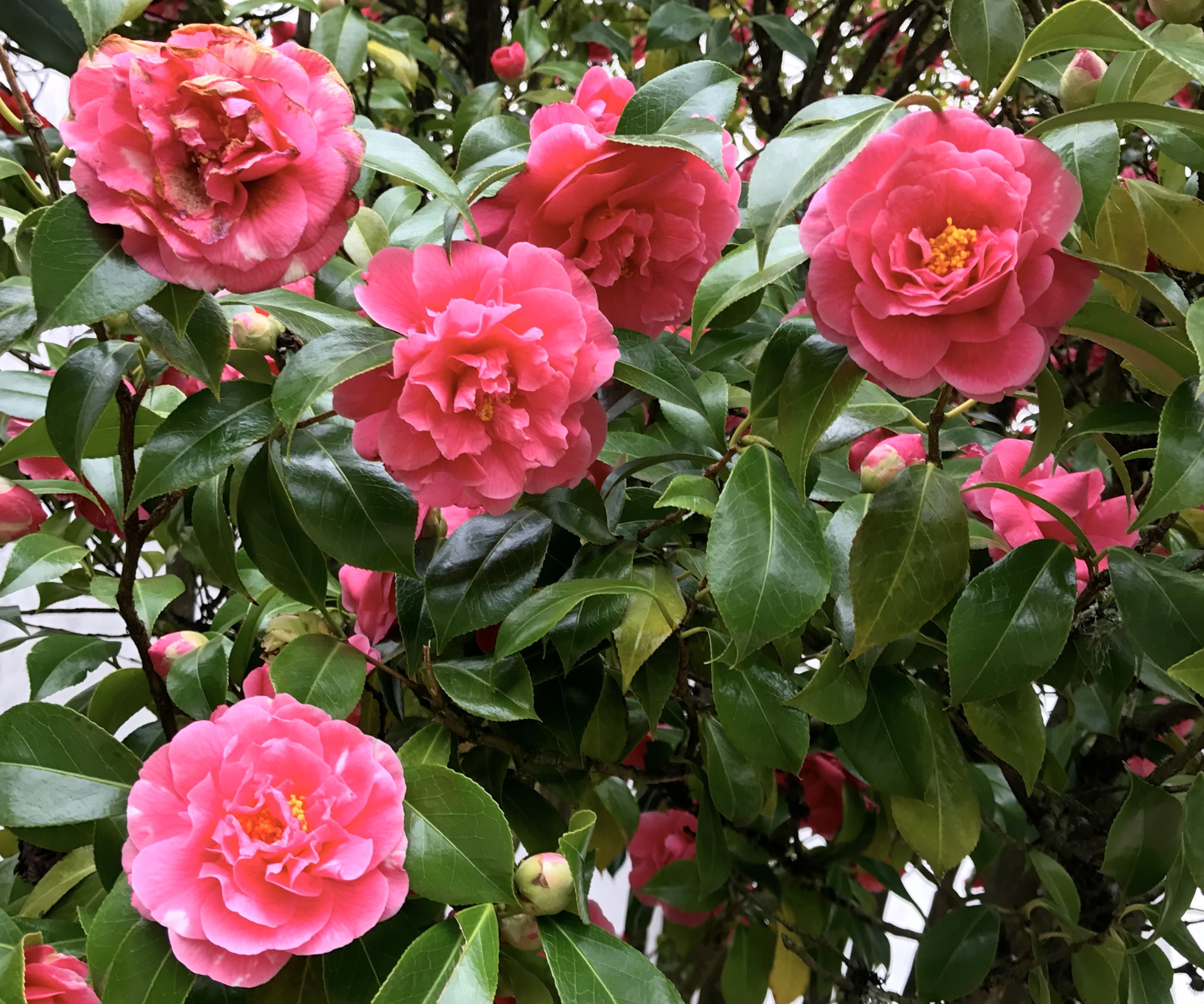
Even on this grey day, there were splashes of color.
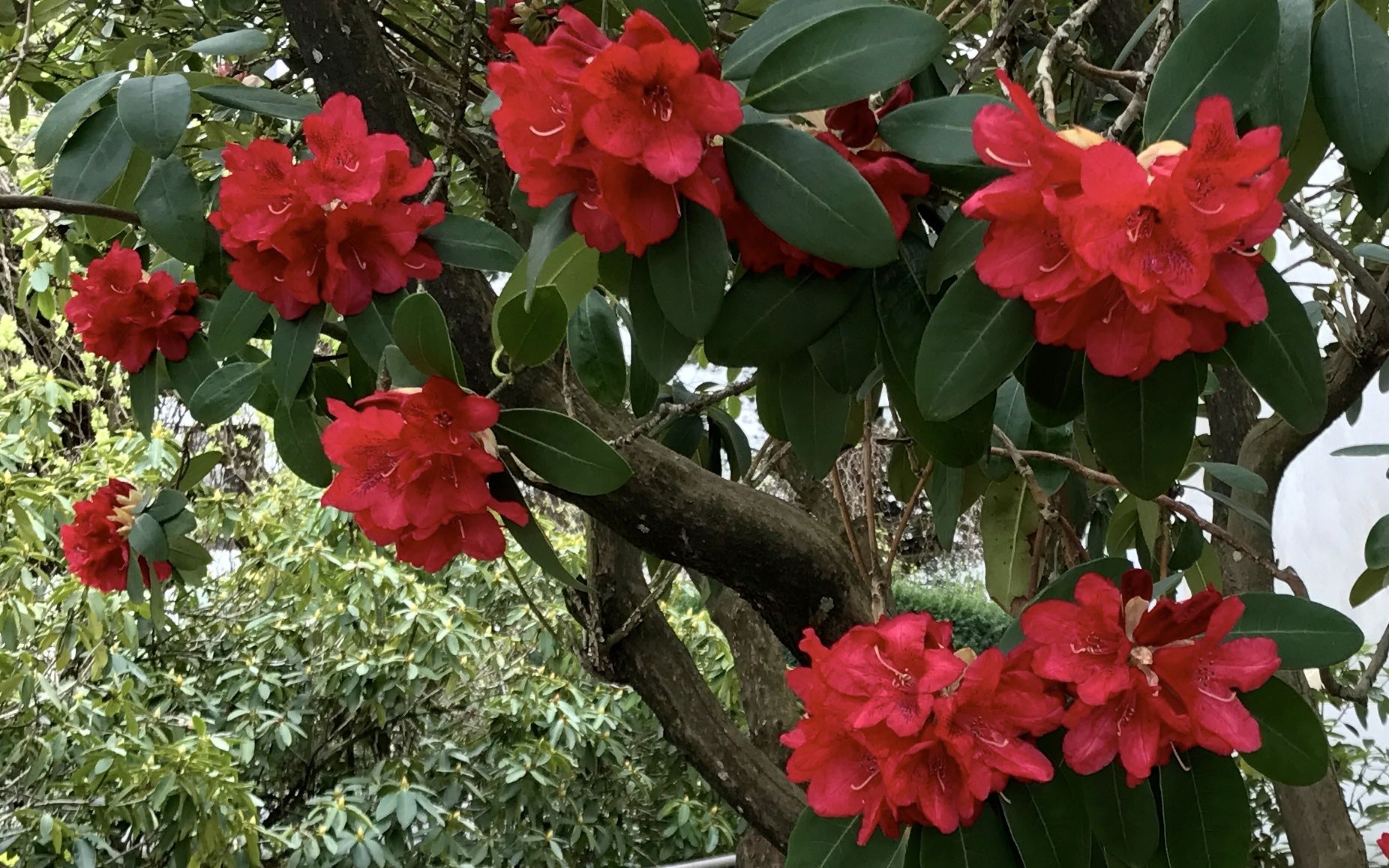
The flowers seemed exotic to me, in comparison with the ones I grew up with.
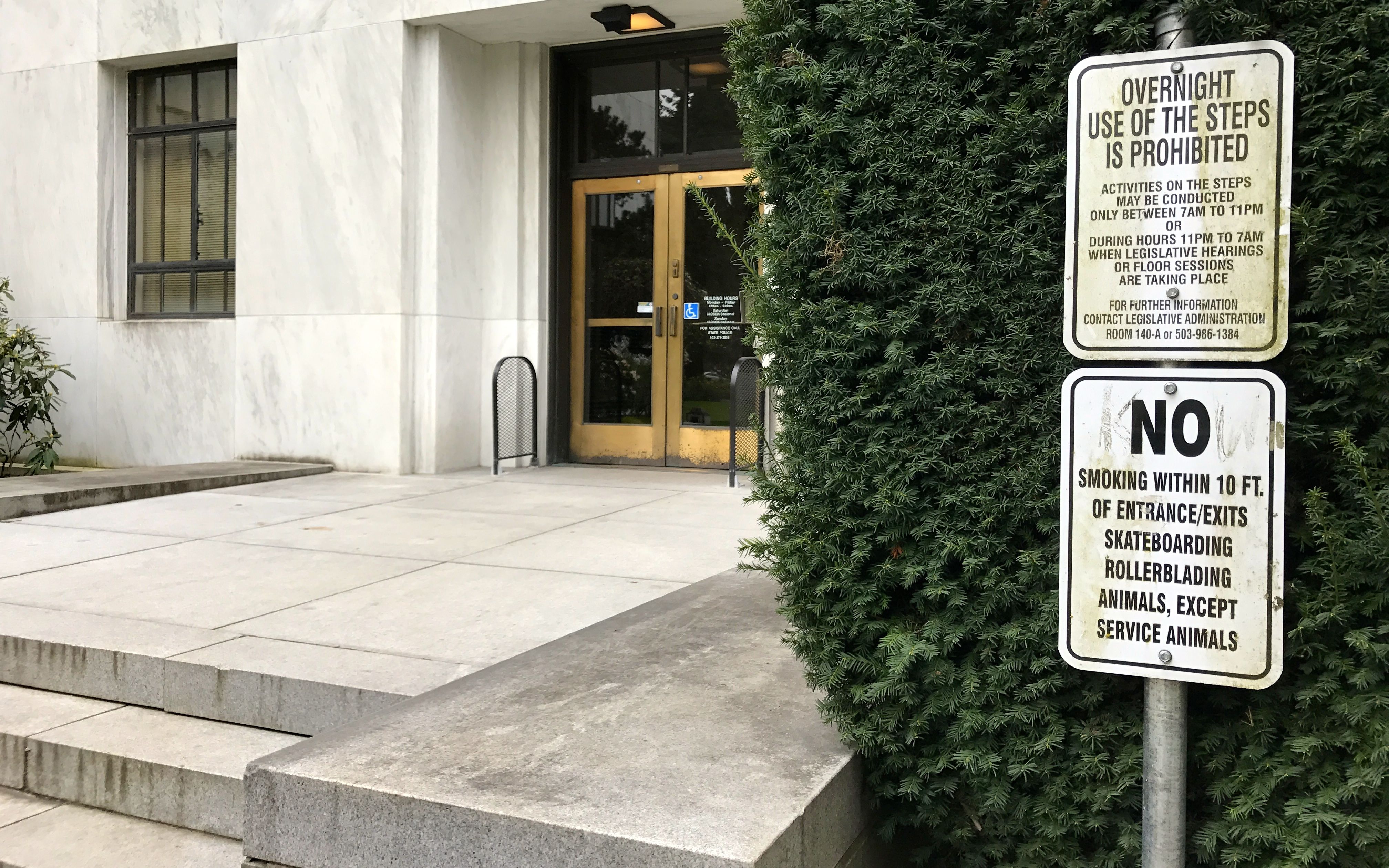
I don’t know about you, but I always thought of Oregon as kind of a free-wheeling place. Would you look at those signs!
OVERNIGHT USE OF THE STEPS IS PROHIBITED
(Okay…there are two steps here.)
Activities on the steps may be conducted only between 7 AM to 11 PM
OR
During hours 11 PM to 7 AM when legislative hearings or floor sessions are taking place.
I wonder what happened to inspire such precise regulation of these two steps?
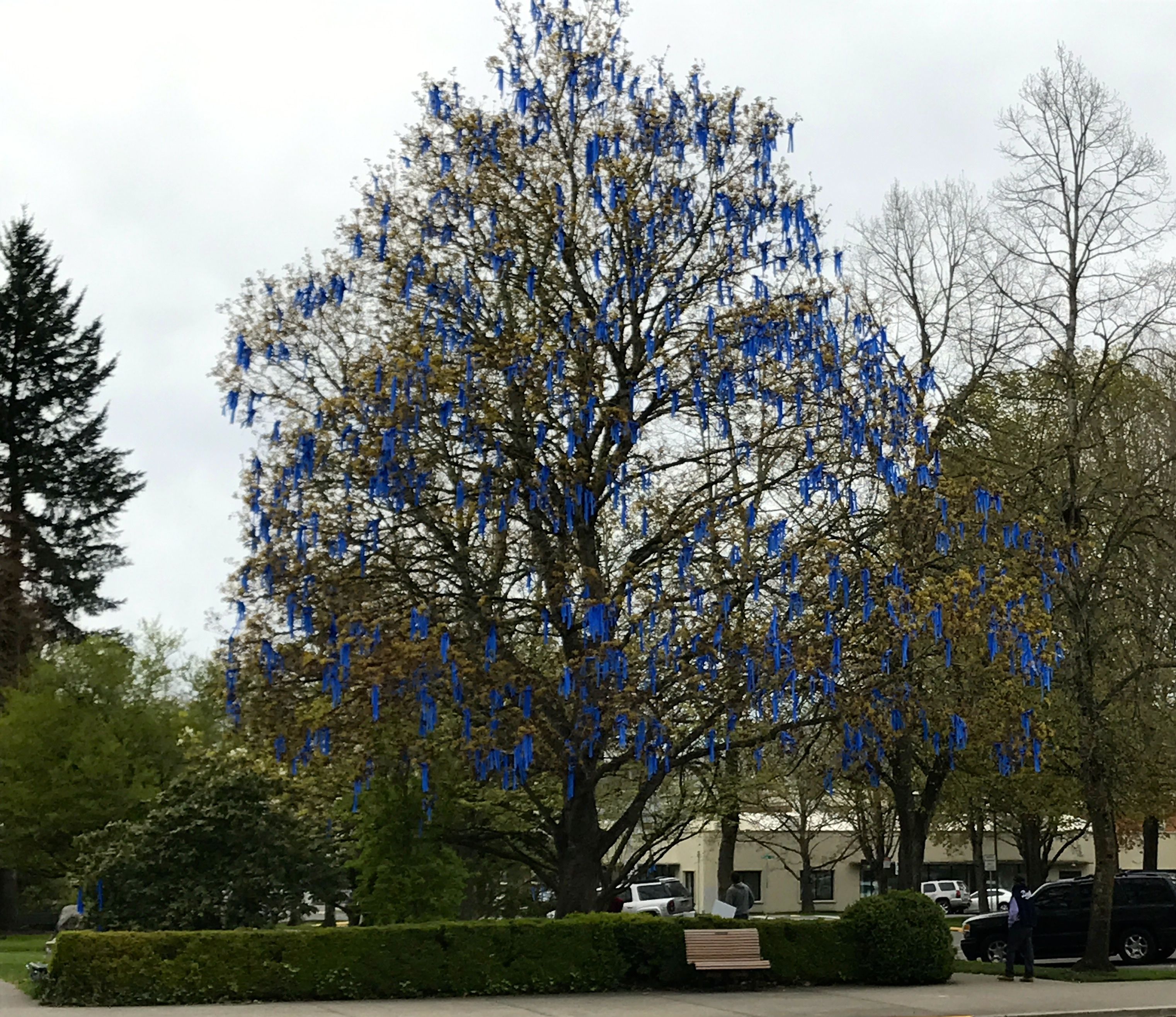
I figured that I had seen all that I was likely to see, what with the building being closed, so I got ready to head back to my truck. This tree festooned with blue decorations caught my eye. I wandered over to check it out.

At the base of the tree was a sign explaining the project.
I got back in my truck as set off for more adventures.
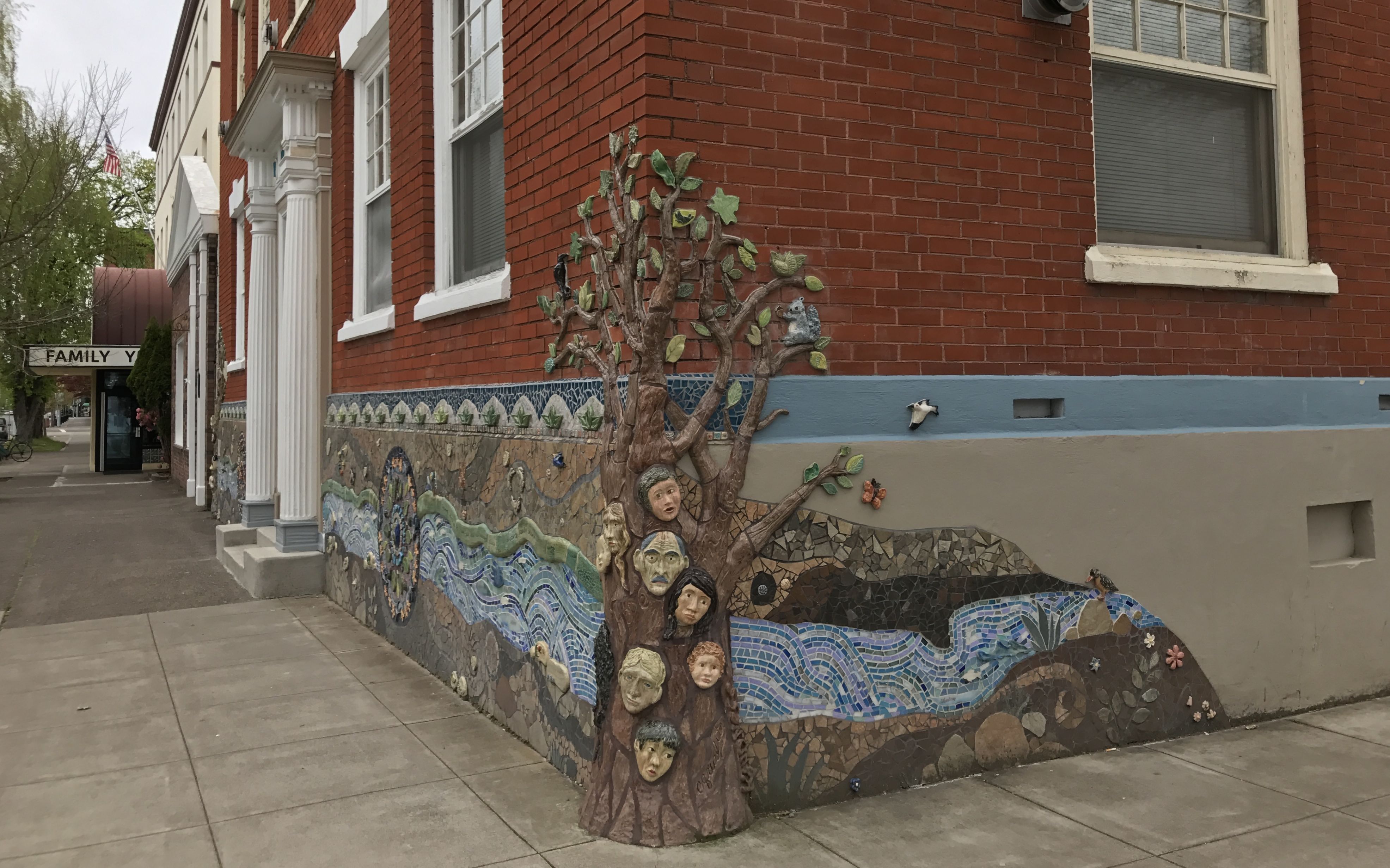
As I tooled down the street, this building with mosaic decorations caught my attention. I love mosaics and I didn’t have to be anywhere at any specific time, so I pulled over and found a place to park.
Things might not be open on Easter Sunday, true, but it sure makes parking easier.
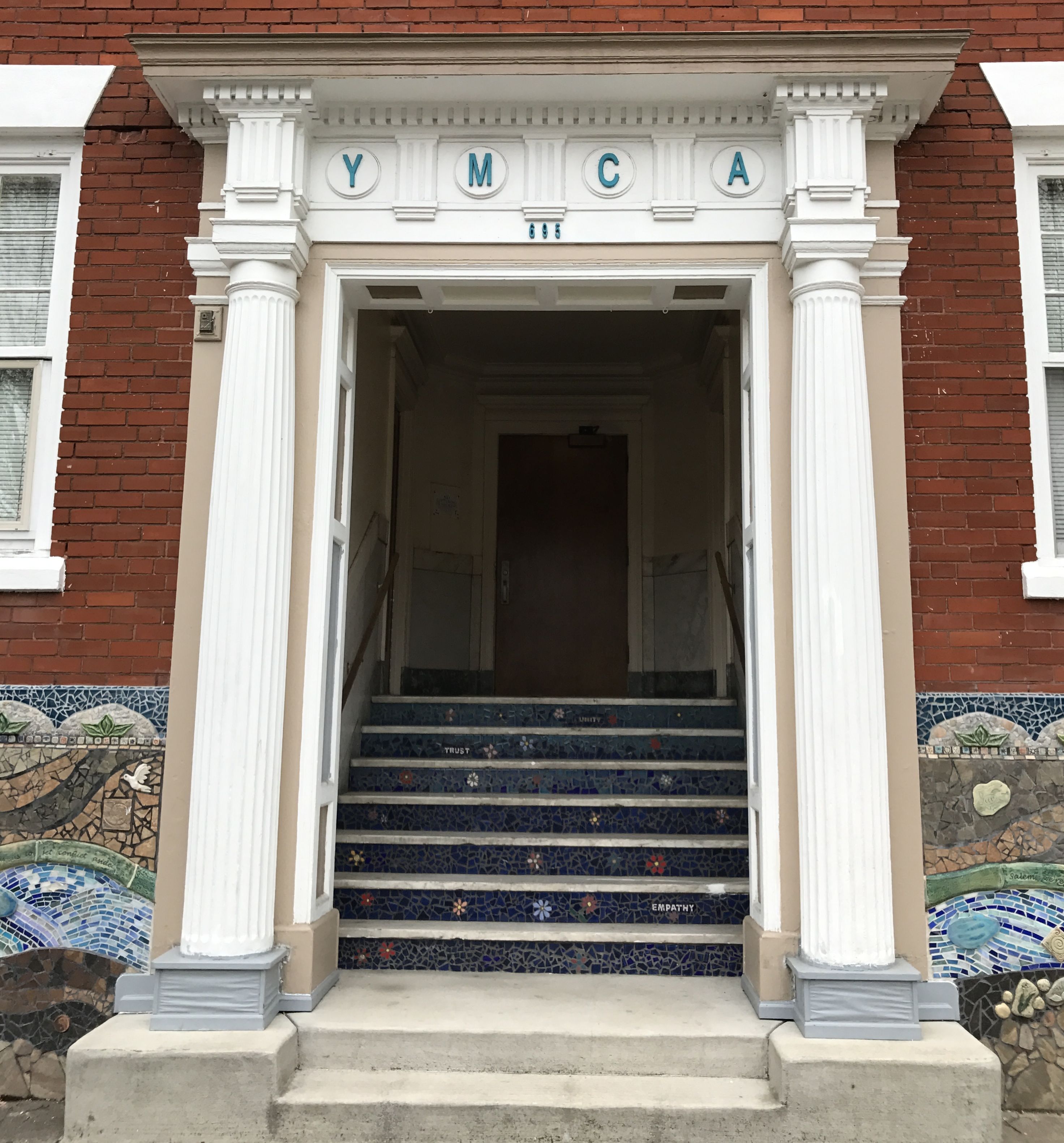
It turns out that this building was the YMCA.
The mosaic is called River of Peace. This was most appropriate, as the word Salem comes from the words “shalom” and “salaam” which mean peace.
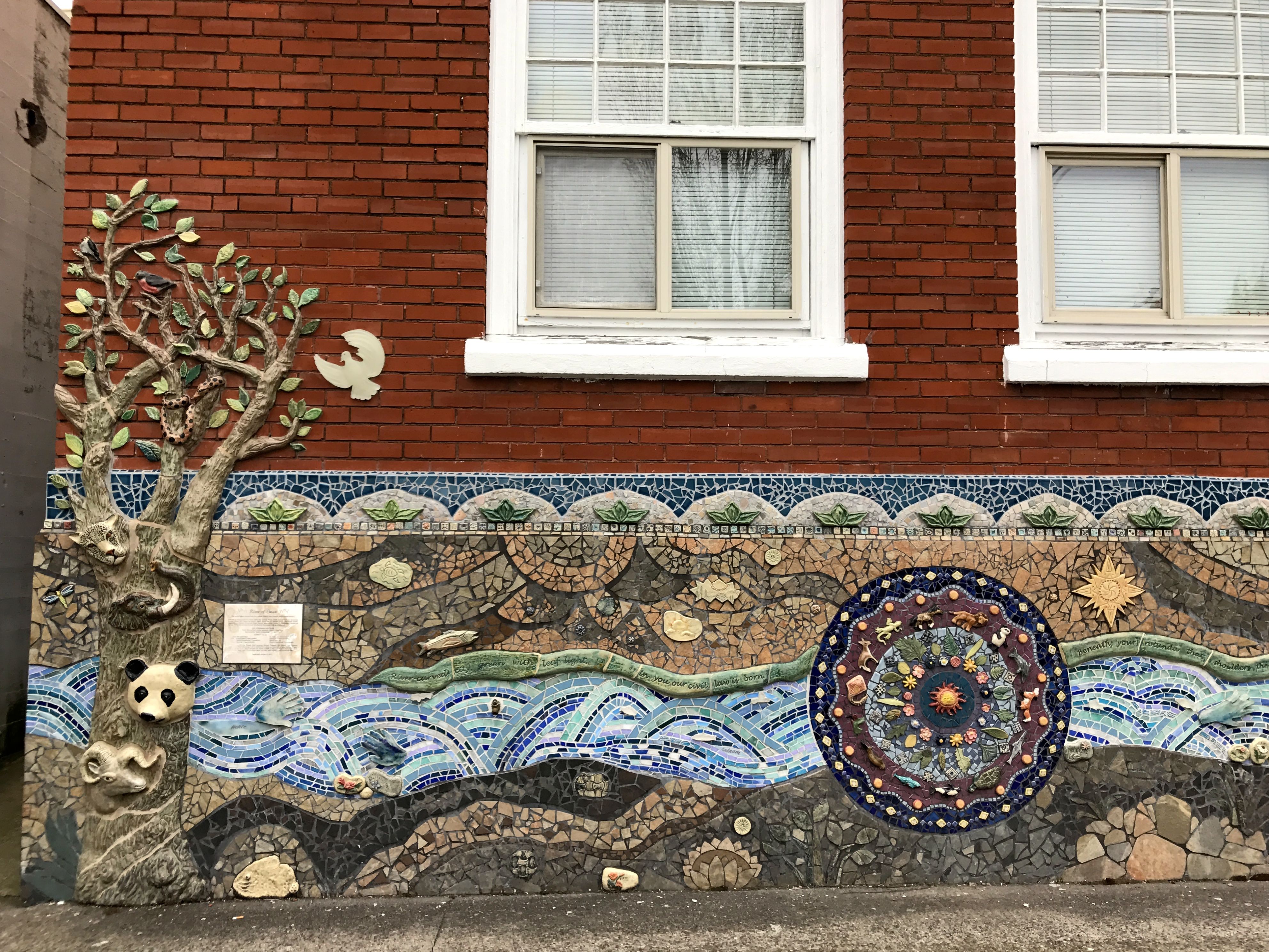
Lynn Takata was the artist-in-residence for this project. Over 600 people worked on this mosaic, which is 60 feet long. There are some lovely photos of the work and the process on her website.
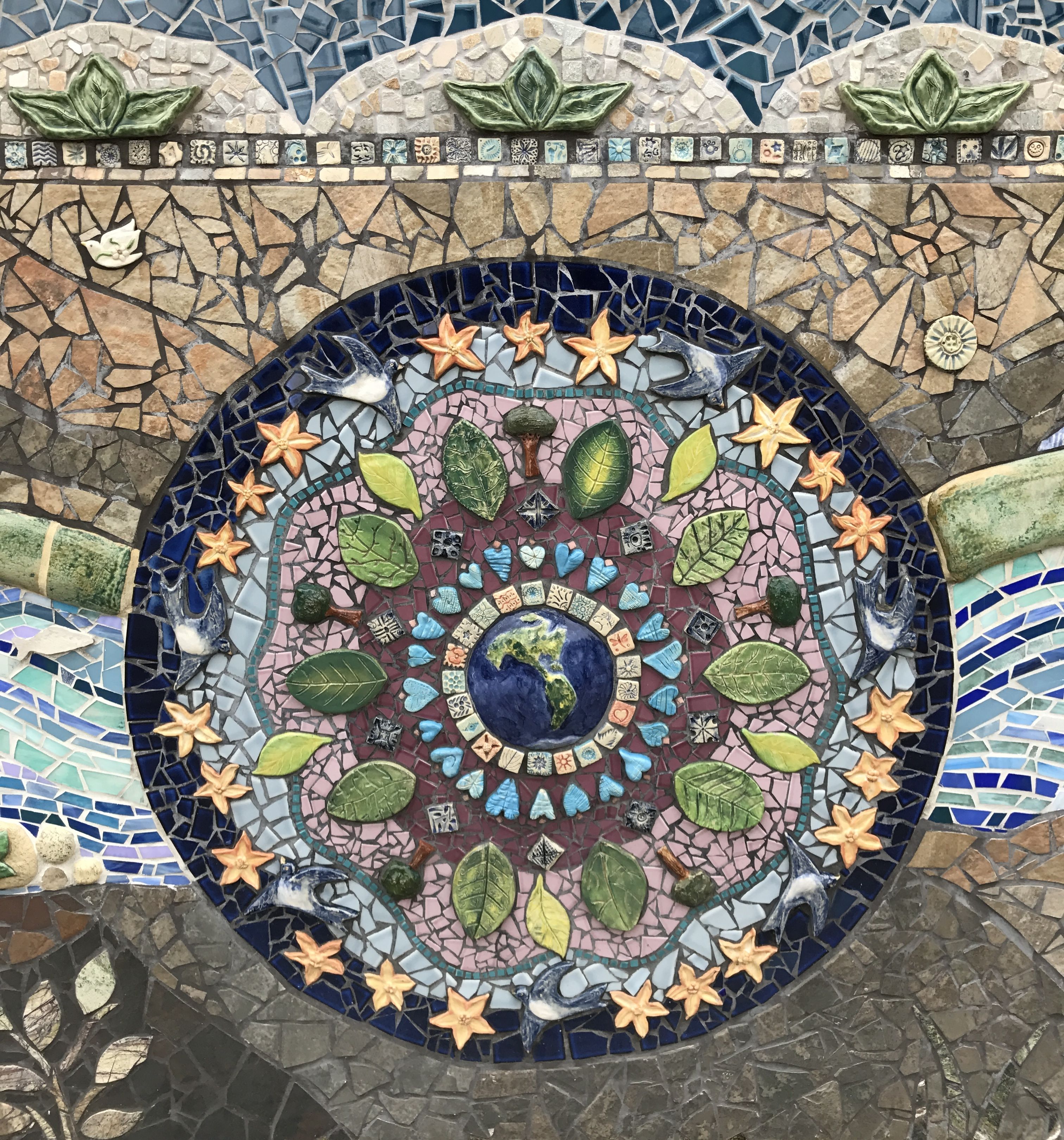
It was a rather gloomy day, so my photos don’t really pop. There are some beautiful ones on her website, if you’d like to check them out.
I was glad I stopped. What a wonderful community art project! This is something like a project I had hoped to do at my school before my retirement. Oh, well…
Another love I have, in addition to mosaics, is the architecture of Frank Lloyd Wright. There was one structure he designed in all of Oregon and I wasn’t too far away. The sources I consulted at the time indicated that it was open for visits on Sundays and it didn’t say anything about Easter, so I decided to head over. The Gordon House was my next stop.
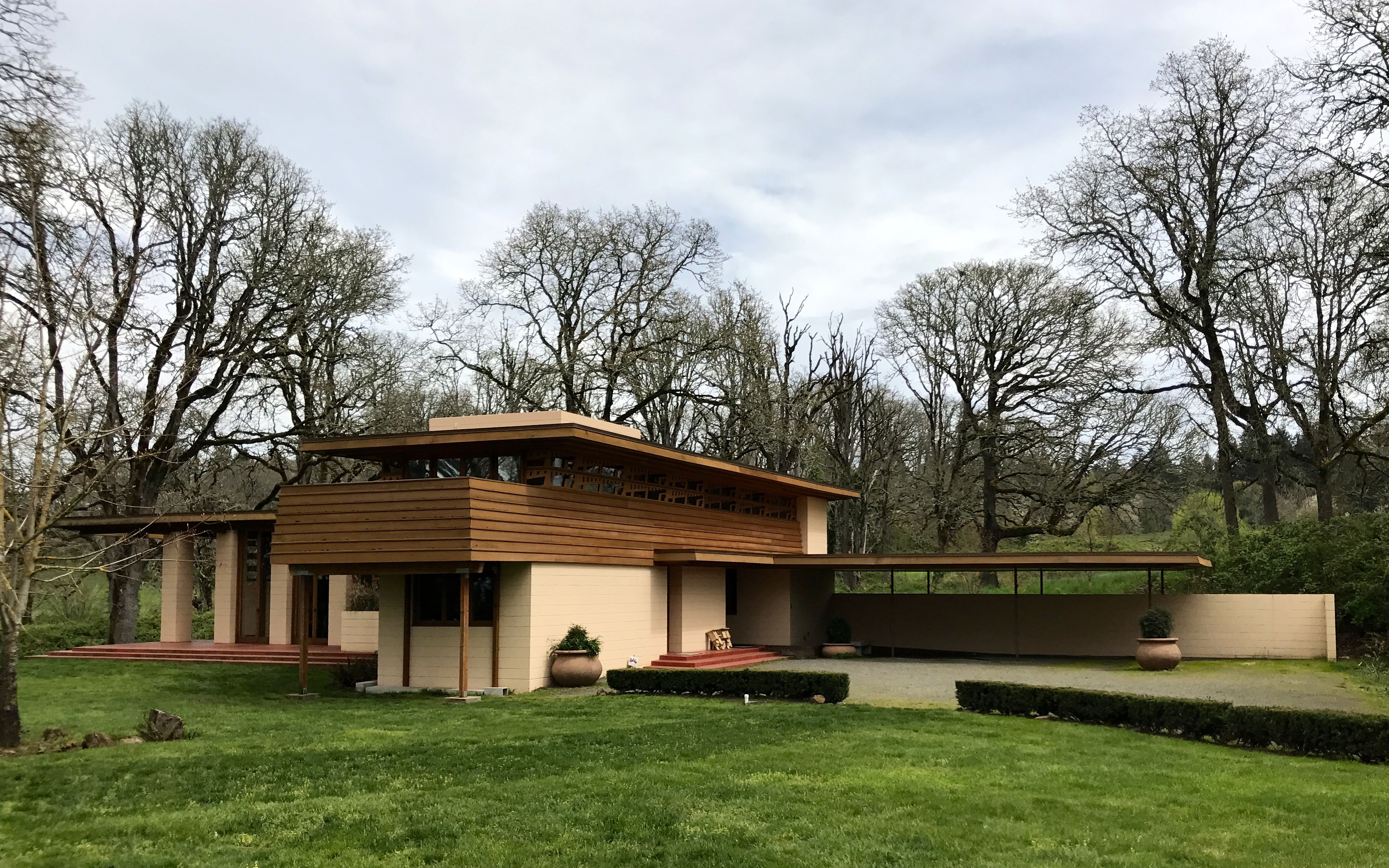
This house was designed in Wright’s Usonian style. These smaller, more modest houses were designed for the middle class. He started designing them in the 1930s when an annual income of $5000 – $6000 put you in the middle class. This house was created for Evelyn and Conrad Gordon in 1957, but it wasn’t completed until 1963, four years after Frank Lloyd Wright’s death.
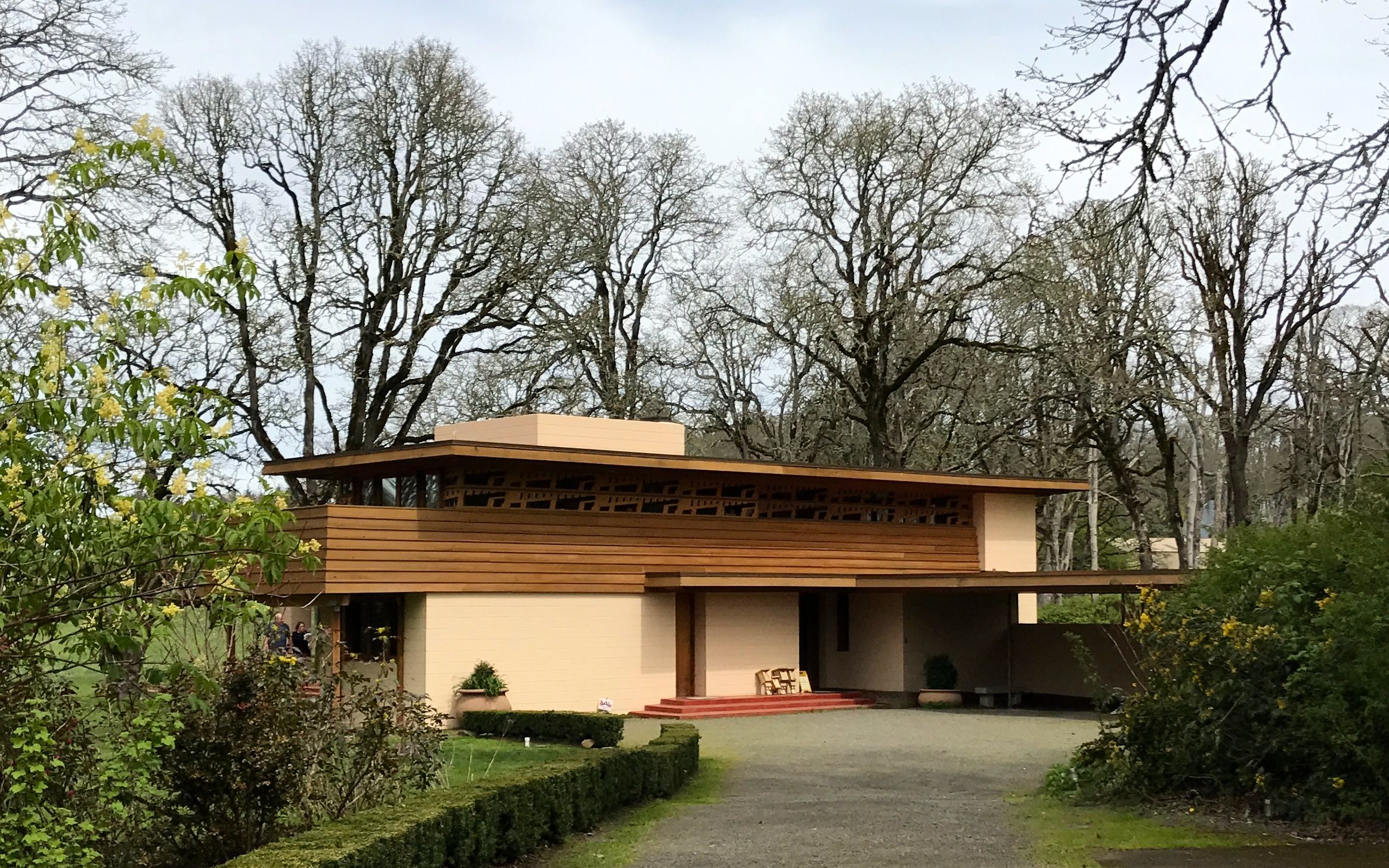
I walked up to the front door. And yes, the house was closed.
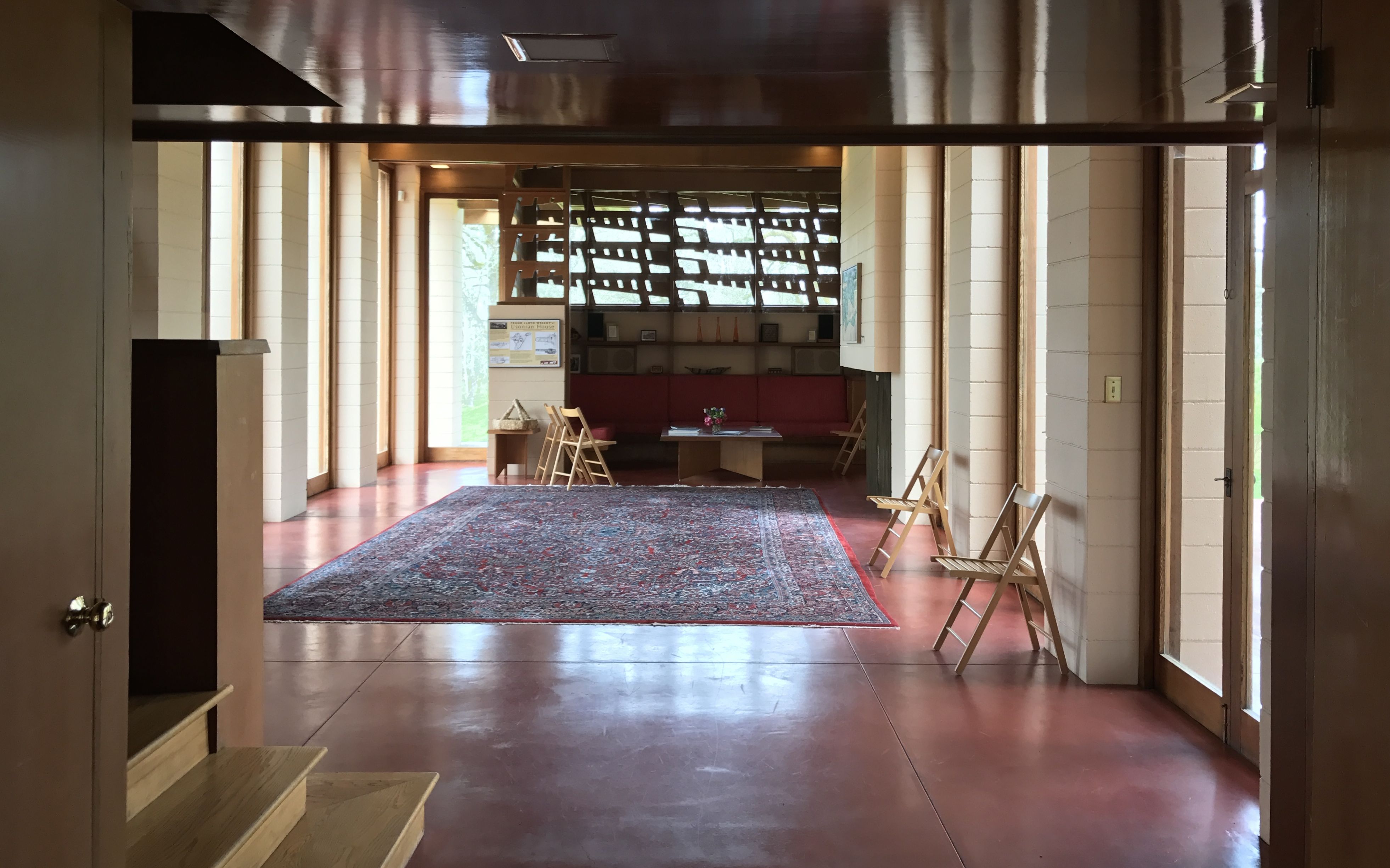
But, you can still look inside. This is the view through the front door. You can see the Cherokee red floors. An interesting fact I learned in my study of Wright is that he always identified his red floors as “Cherokee red,” but they weren’t necessarily the same shade of red.
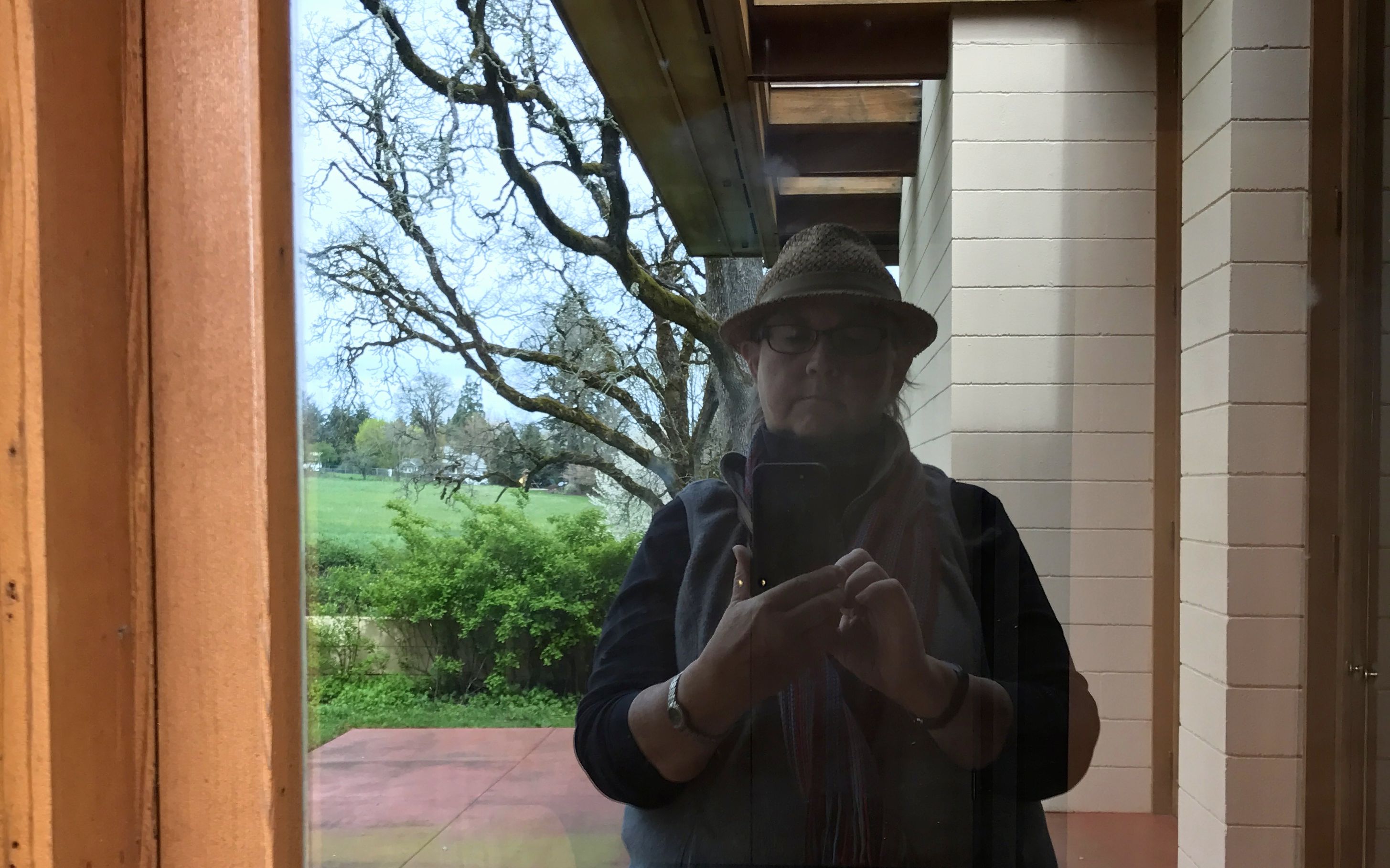
As I made my way around the house, I couldn’t resist the opportunity for a reflection selfie.
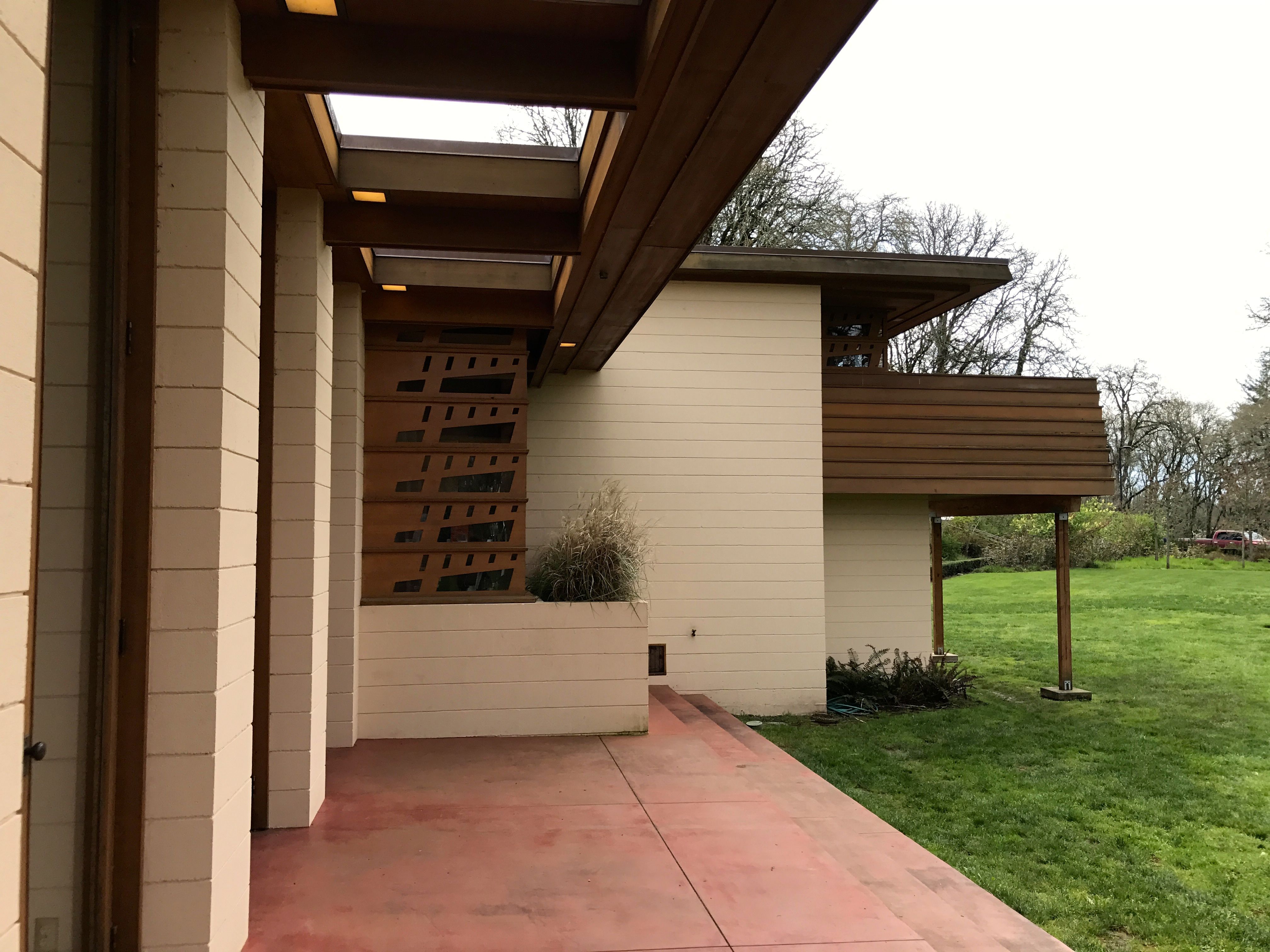
This house was originally located near Wilsonville, Oregon. After Evelyn Gordon’s death in 1997, the house was sold to new owners. They wanted to tear it down to make room for a larger, more contemporary structure. I guess they valued the location, which had views of the Willamette River and Mount Hood.
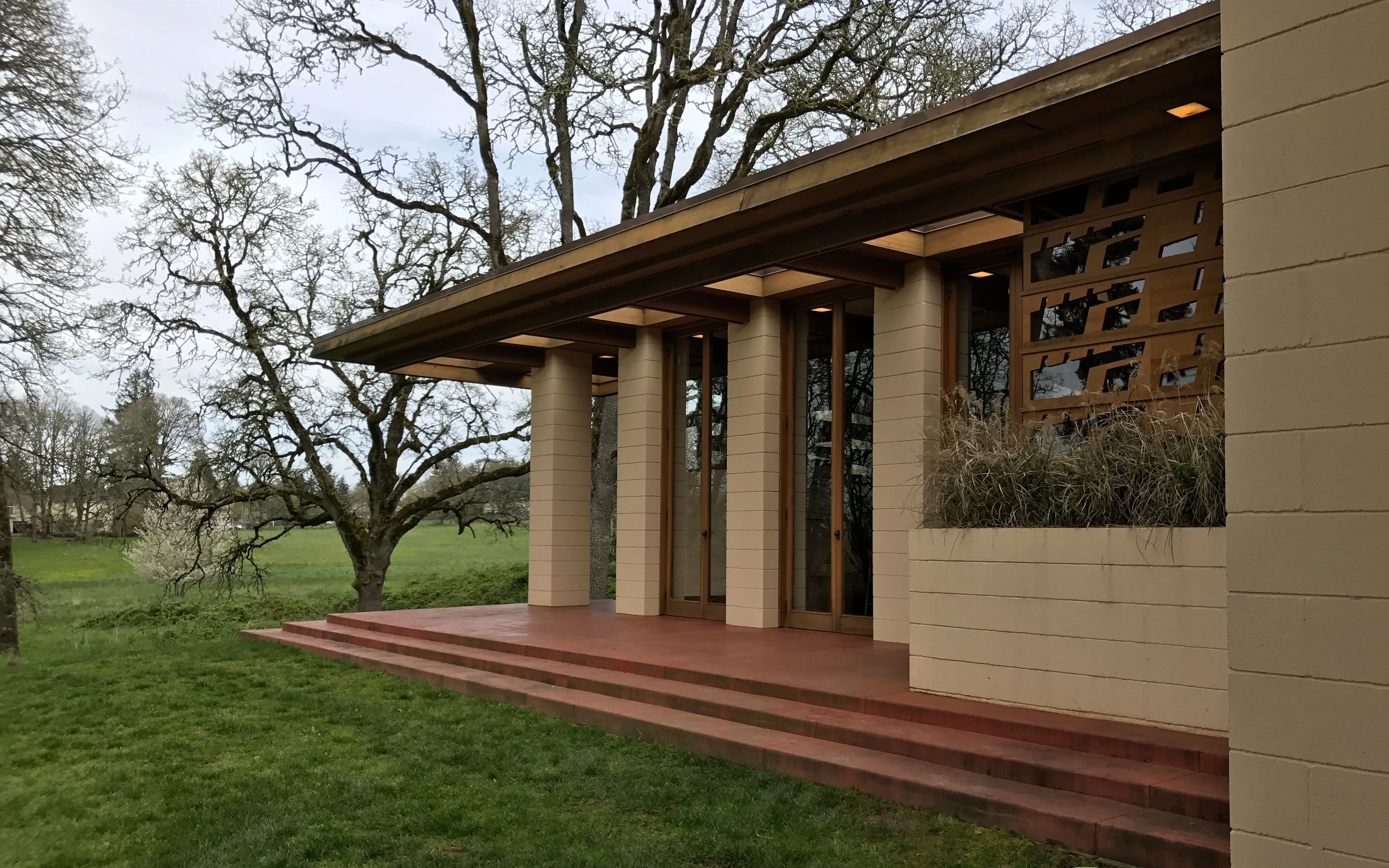
With all these glorious windows, the views must have been spectacular.
Many groups worked together to preserve the house and move it about 21 miles to the Oregon Garden in Silverton. The dismantling began on March 9, 2001, and it was moved in four large pieces. A lot of work was required to refurbish the building due to overall neglected maintenance. The team working on this project was up to the task and the house was opened to one year later as the only publicly accessible Frank Lloyd Wright home in the Pacific Northwest.
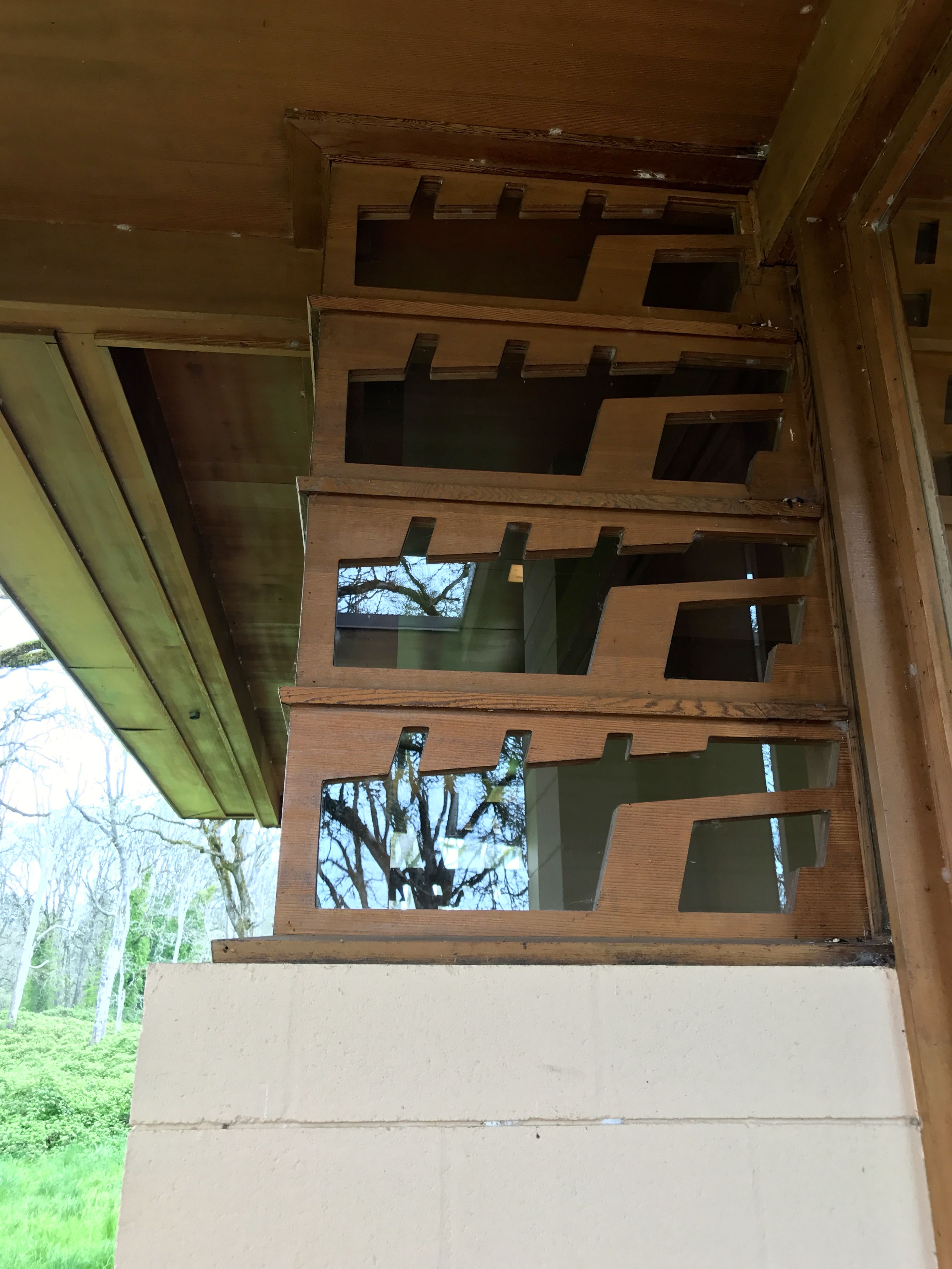
Since I couldn’t go in, I decided to head off for my last stop of the day. Third time’s the charm, maybe?

Nope. The End of the Oregon Trail Historic Site was closed, too. But, I walked around outside for a bit to see what I could see.

I am always drawn to maps. Can you imagine the effort it took to get from St. Louis to Oregon?
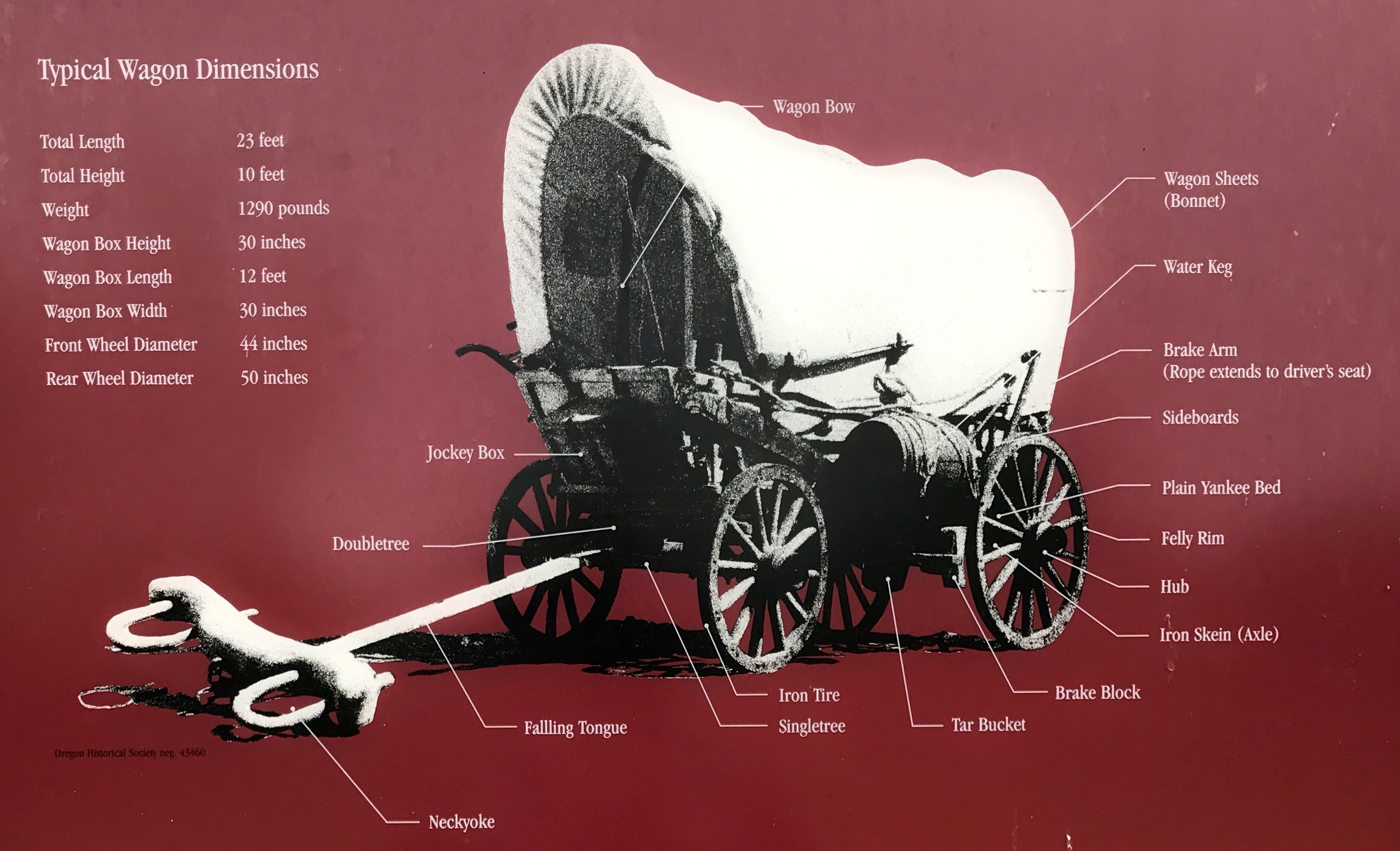
I like diagrams, too. Hmm, with the weight of the wagon at 1290 pounds, I could easily tow it with Bart. Heck! I could have towed two or three of them!
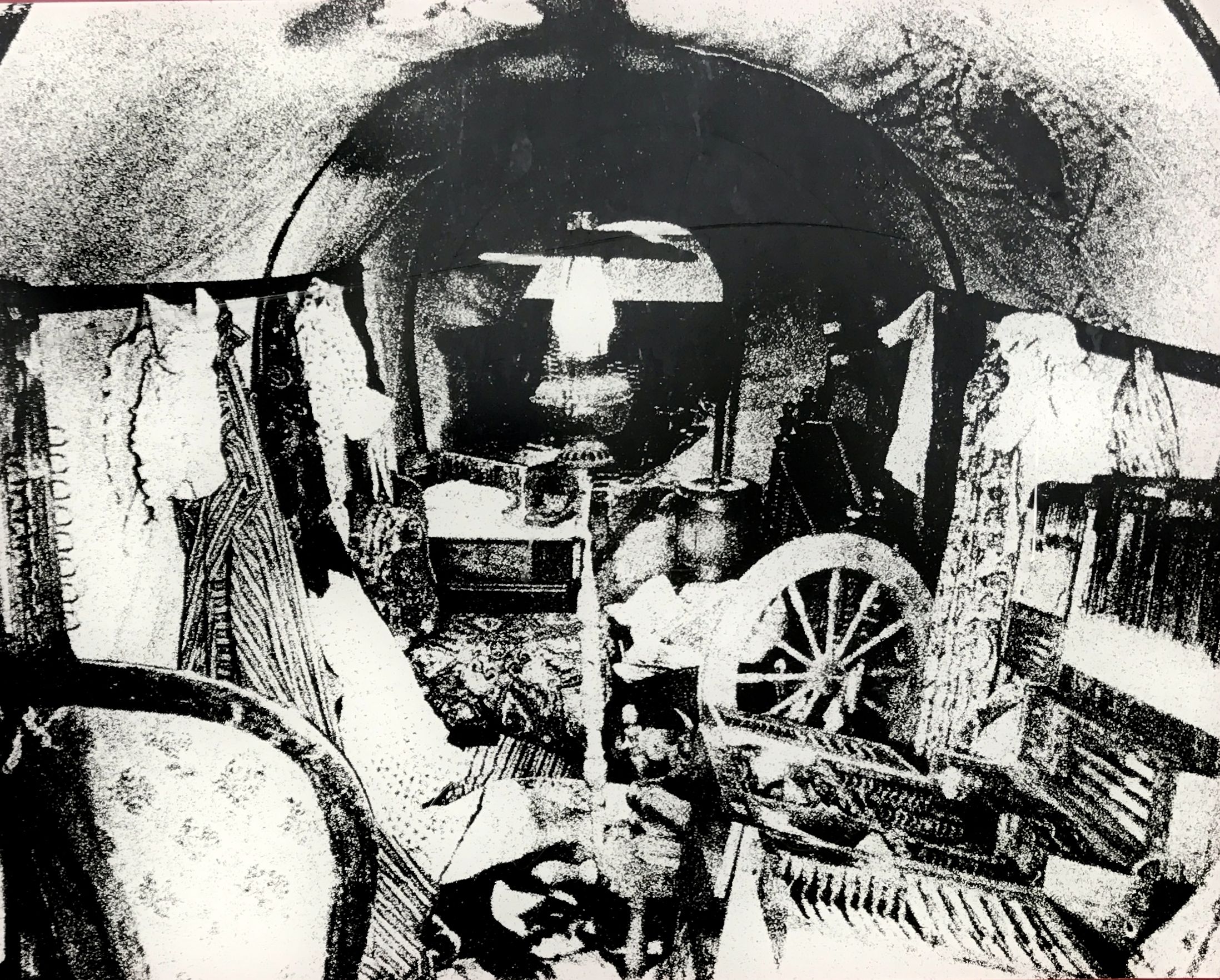
I imagine that they were quite heavy when loaded down with all the settlers’ possessions, though. They were big enough to be an RV, but not all that comfortable. At least, not as comfortable as an Airstream!
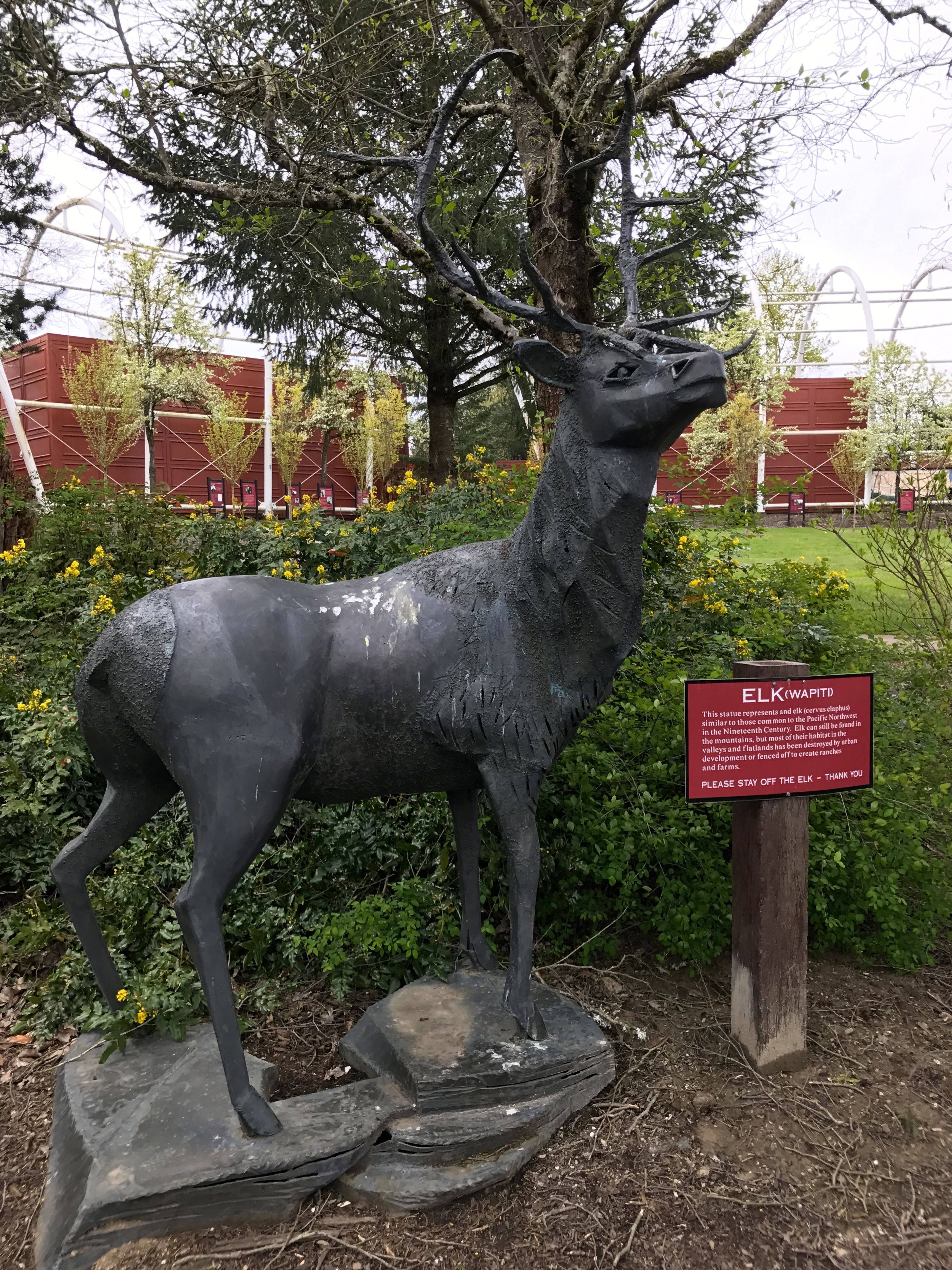
I stopped by to pay my respects to the elk, as many a bird had done before me.
And with that it was time to head back to Flo, have a little dinner and make plans for another day.