As long as I was in the Southwest corner of Minnesota, I decided to check out Pipestone National Monument. The only “Pipestone” I’d heard of before was a street in Benton Harbor, Michigan. But, I was in the neighborhood, so why not?
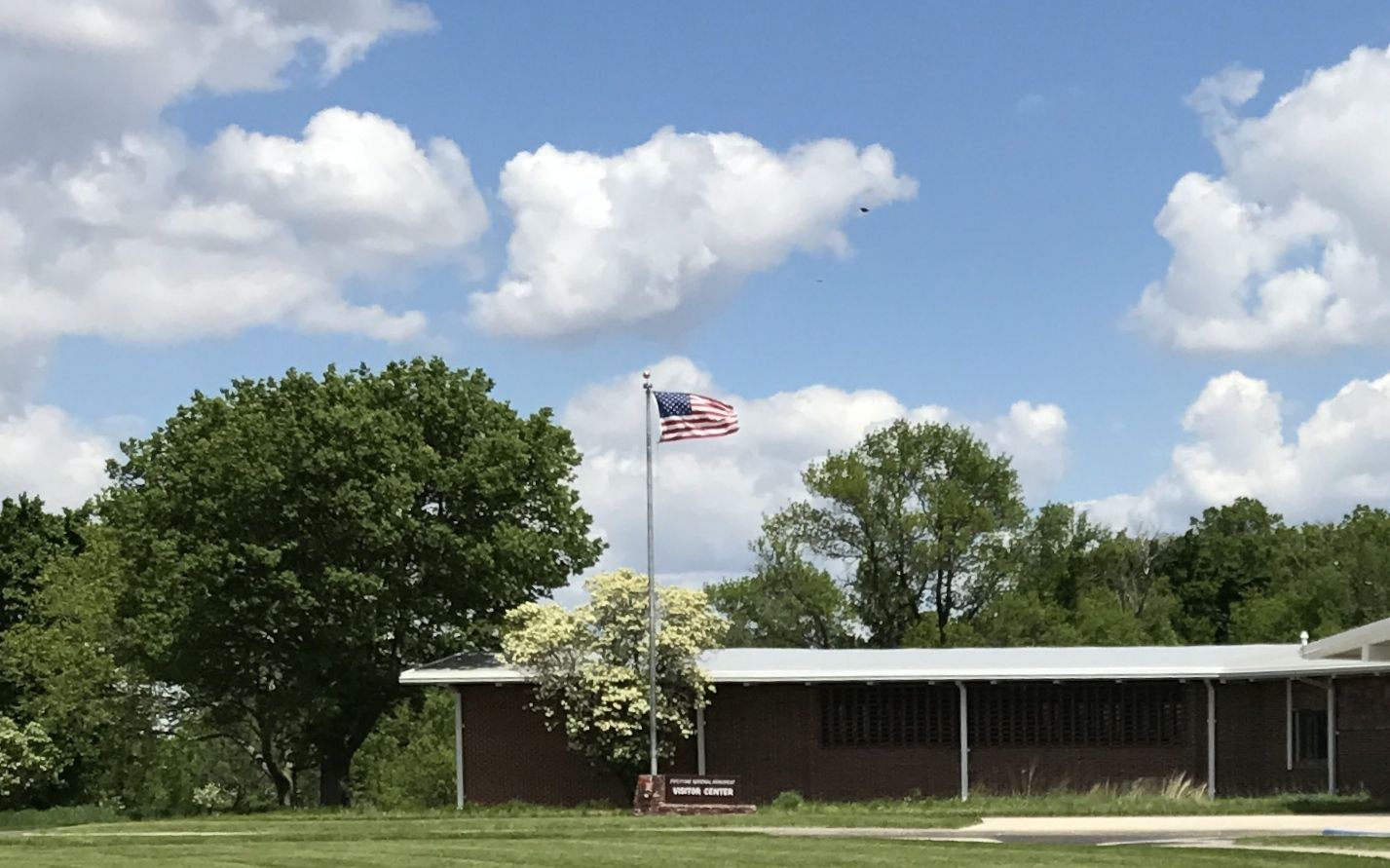
I got to the visitor center and tried to learn what I could about what pipestone was and why it was important.
It turns out that pipestone is another name for catlinite. It’s a metamorphosed mudstone that is found in formations of Sioux Quartzite. It’s fine-grained and easily worked and used in making ceremonial pipes for all of the Plains Indians. It was so important that to all the Plains Indians that this was neutral territory where all Nations could quarry stone for ceremonial pipes.
The Sioux tribes may have taken control of the quarries around 1700, but the Minnesota pipestone has been found inside North American burial mounds dating from long before that. I hope they are no longer excavating burial mounds. When you know better, you do better.
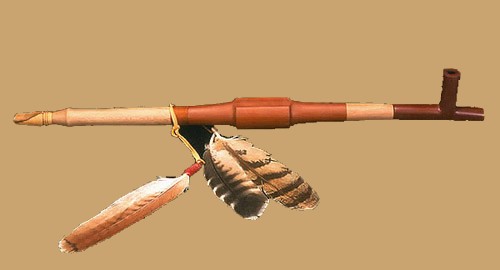
The name for the sacred pipe is “chanunpa”. If you are interested in more information, click here.
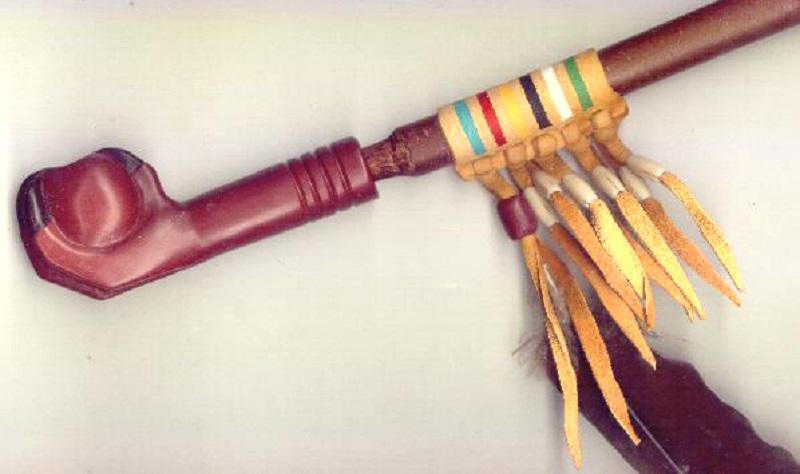
I imagine that there were any number of different styles. After all, there were numerous Nations and they produced them for many, many years.
They had some artisans in the visitor center working the soft stone. The ones I saw seemed to be producing articles for the tourist trade.
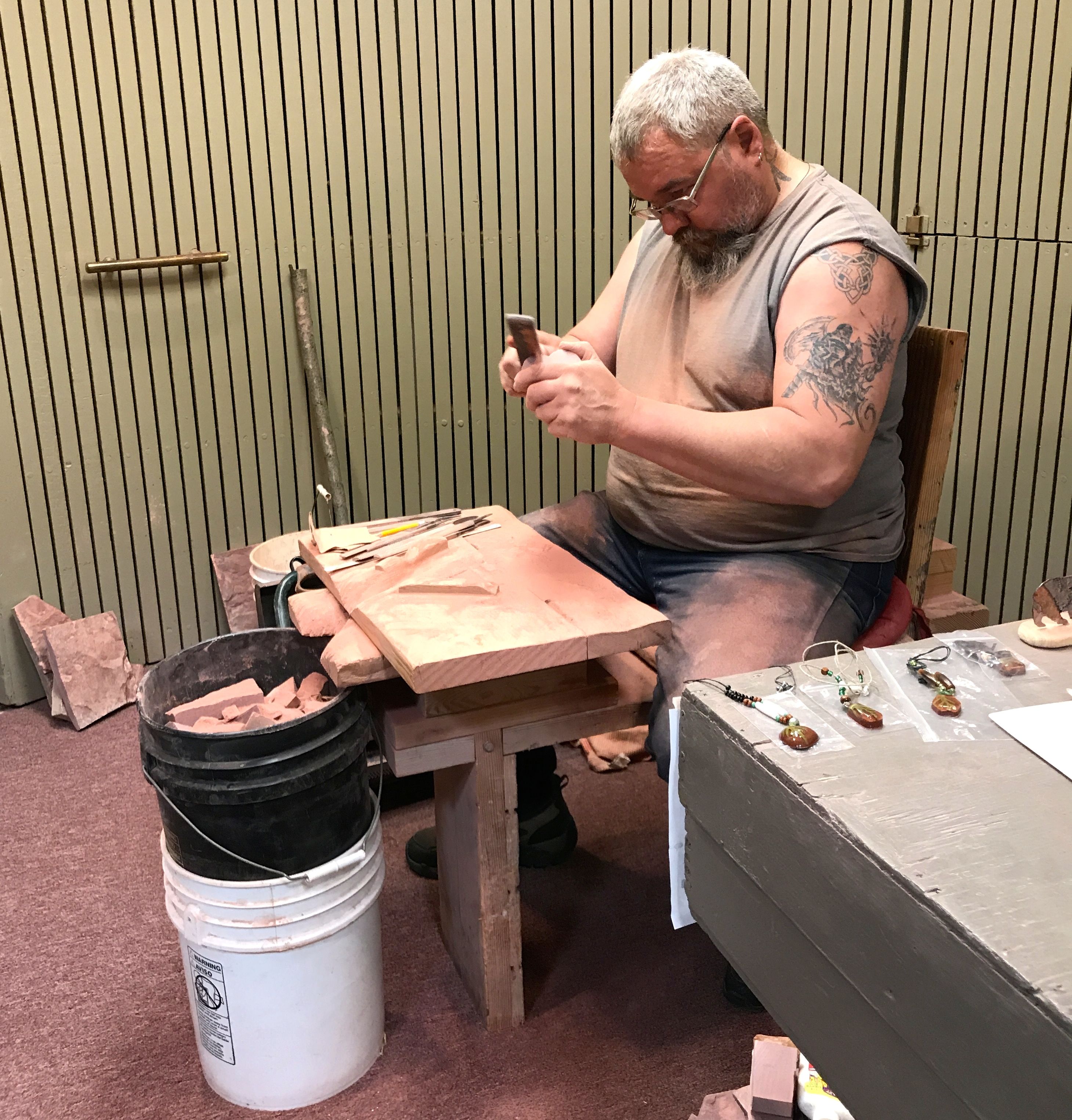
In spite of the fact that the stone was smooth and attractive, I decided against buying a souvenir. That’s just the way I roll.
There are still active quarries at the monument. In 1937, an act of Congress restored quarrying rights to the Indians. Today, only people of Native American ancestry are allowed to quarry the pipestone.
There was a trail that lead out from the visitor center that went by some of the quarries. I was eager to see what the quarries looked like.

Right outside the visitor center was an exhibition quarry. I was curious about why it was flooded. Was it permanently flooded or was this was a temporary condition? As I write this report, more than a year later, I called the center and spoke with a ranger in the interpretive center. He told me that they do pump it out, but it does tend to fill with water in the spring. Since I was visiting in the spring, I guess that explains it. In any event, there was nothing happening in that quarry when I visited.
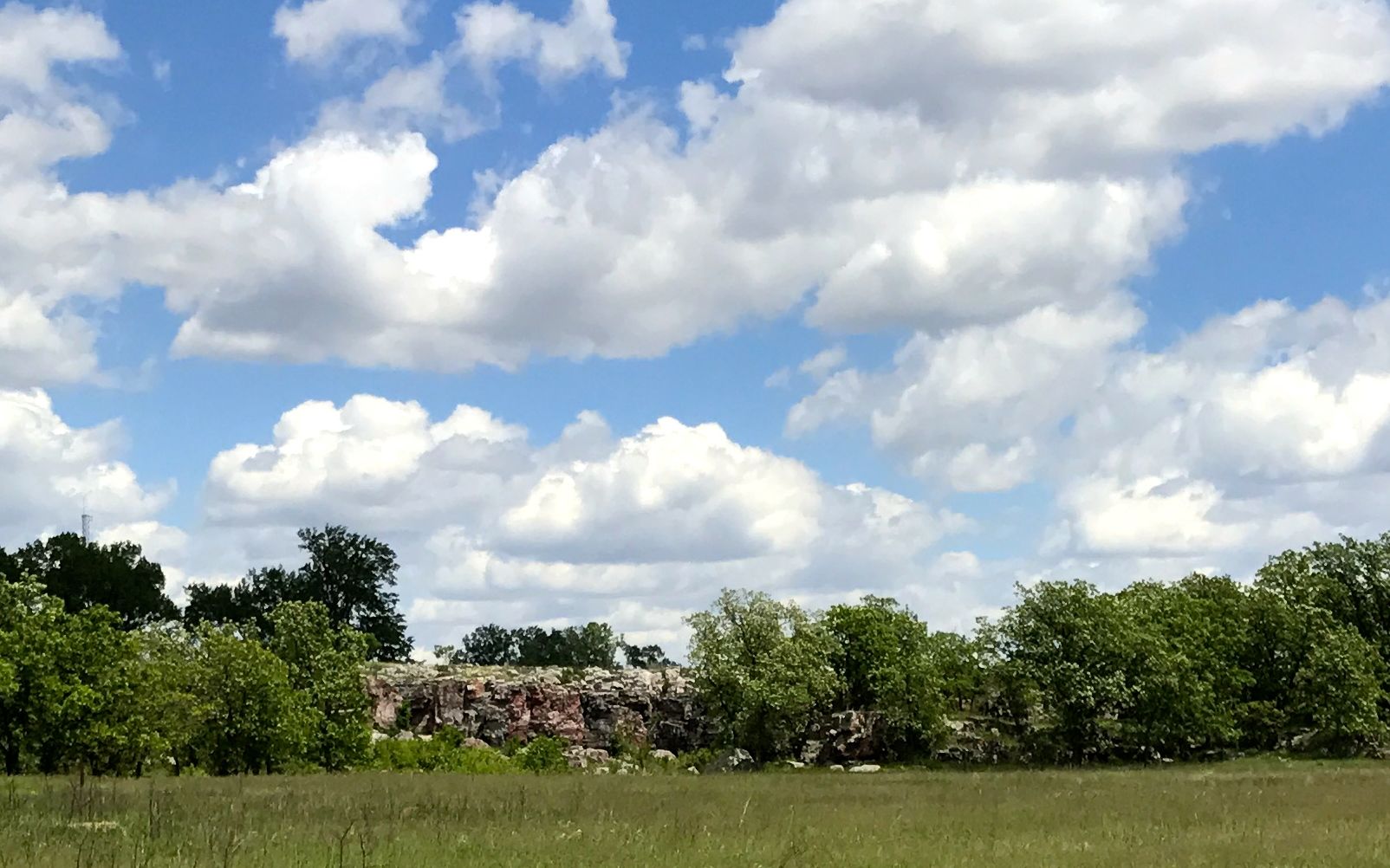
I continued along the path toward the cliff.
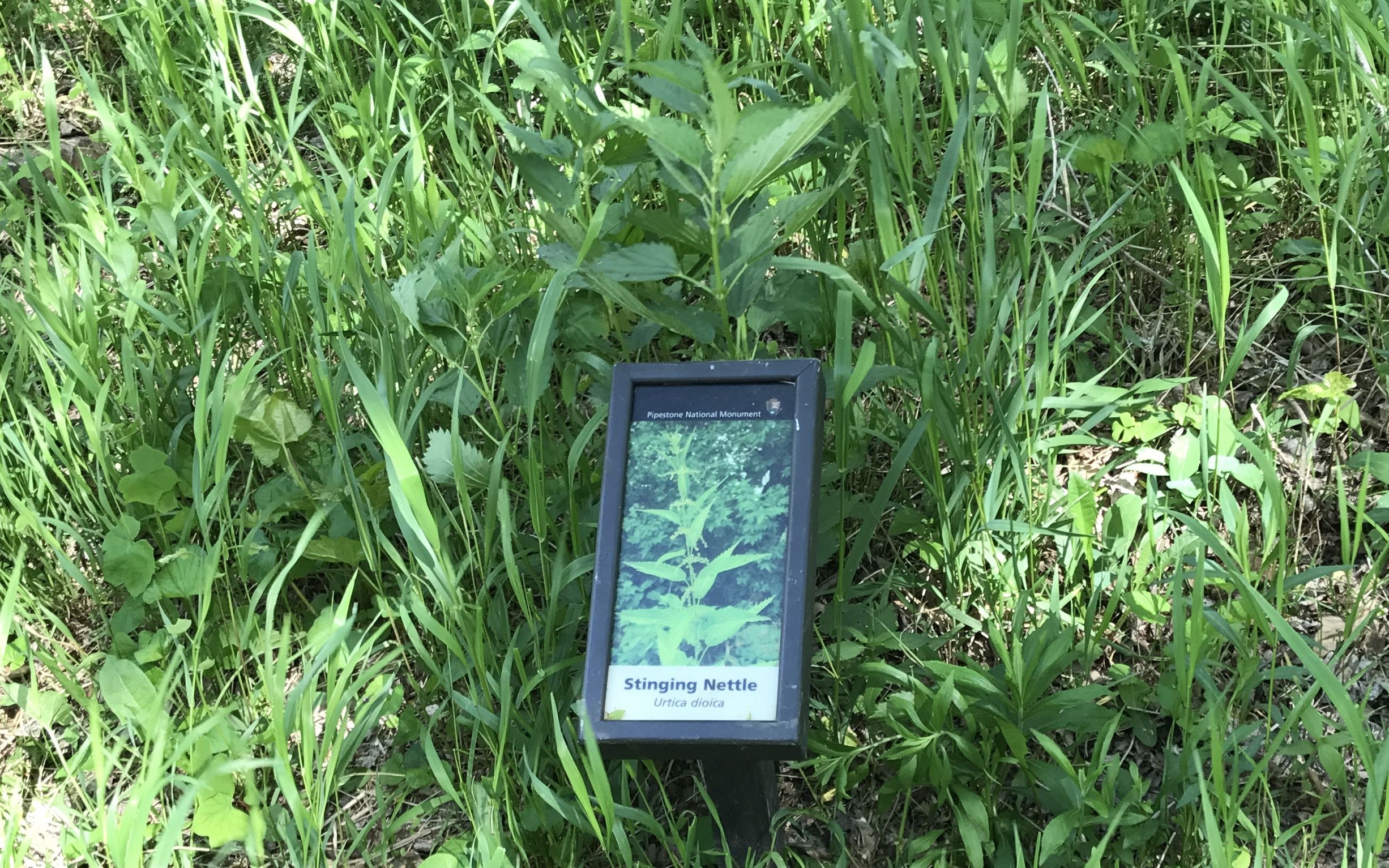
There were some interesting interpretive signs along the way identifying the plants. I always wonder what the plants are the I am looking at.
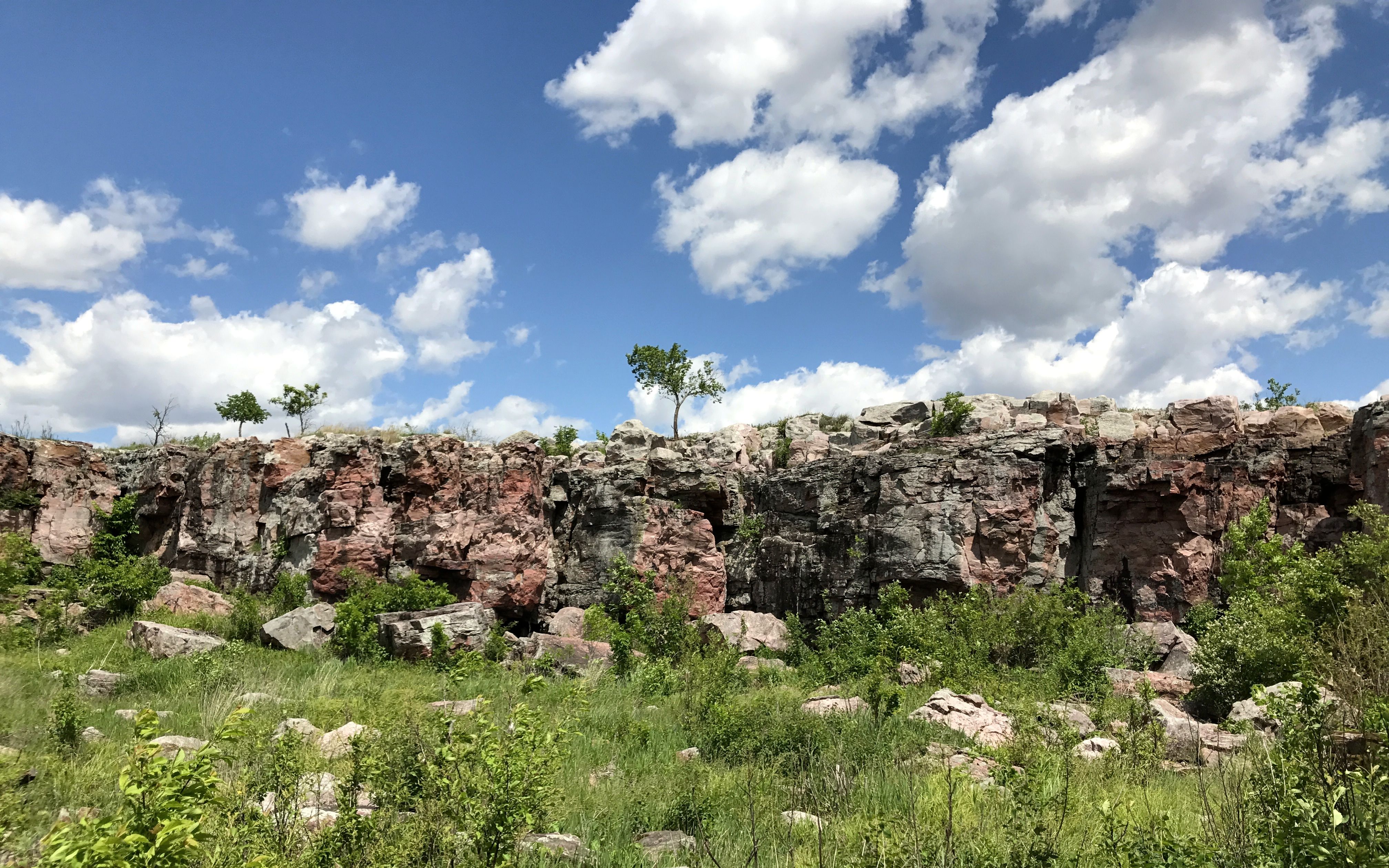
I kept walking and the cliff kept getting larger.

And finally, I was there.
The plant identification signs continued.
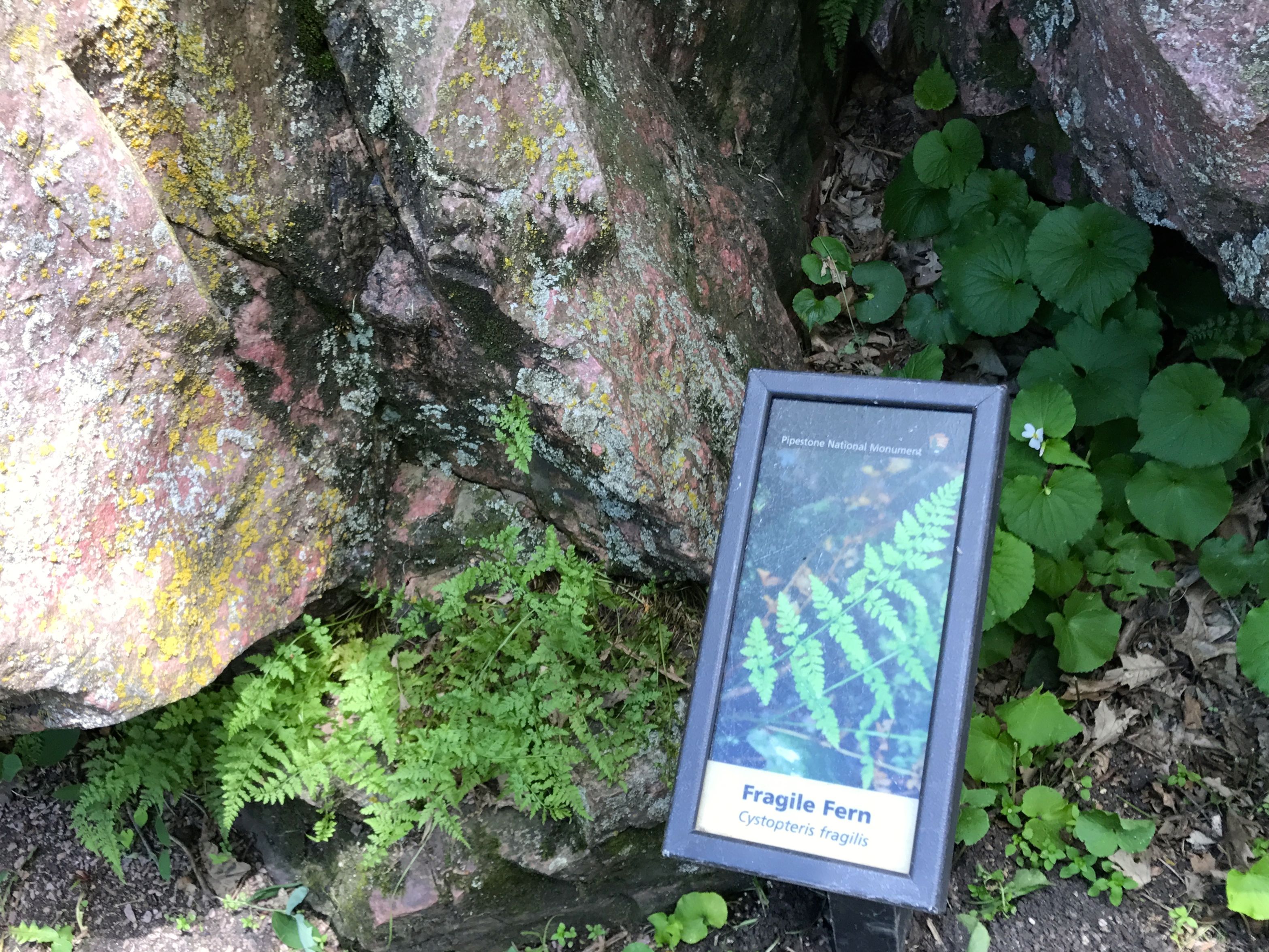
I walked up the path and came across this sign.
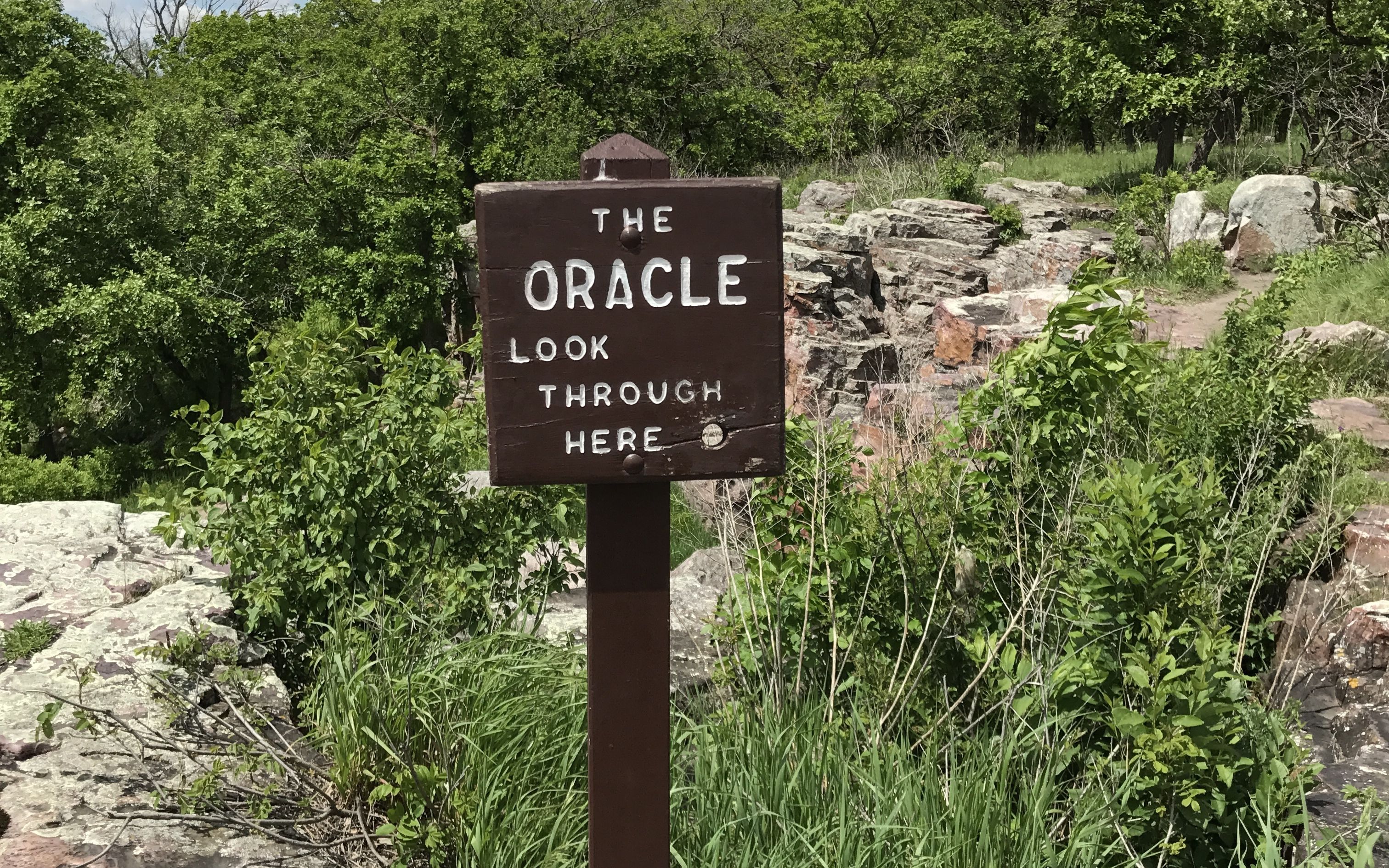
Of course I had to look.
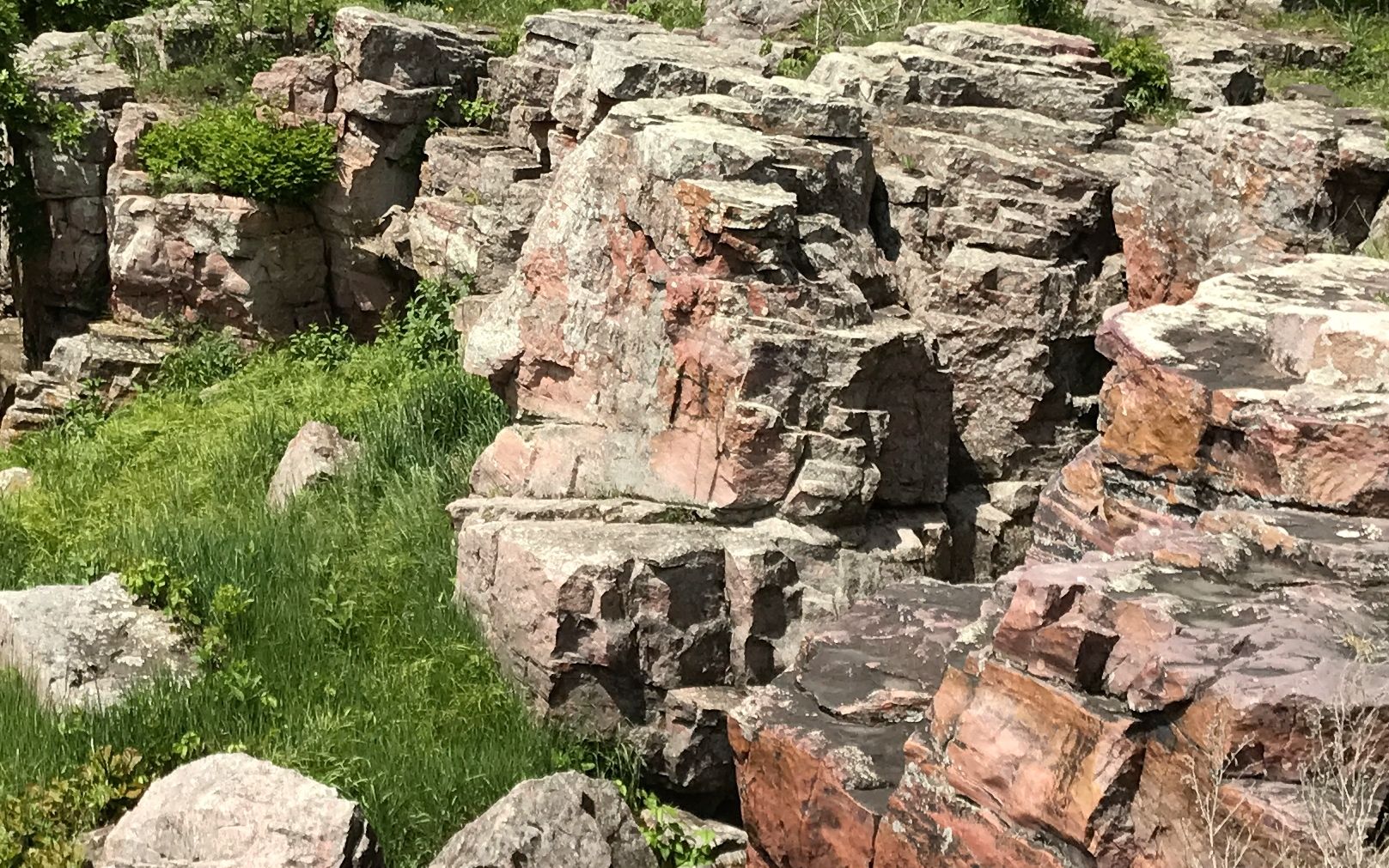
This is what I saw. Unfortunately, I didn’t know what I was looking at, so I reached out to the ranger again. This was his reply: “The Oracle is a natural stone face within the Sioux Quartzite cliff. The face is looking to the left, with a lichen covered nose and a protruding chin. Some American Indians believe that The Oracle is a guardian of the quarries, and will impart wisdom to the quarriers in how to get down to the catlinite. Offerings are sometimes left at The Oracle for this reason.”
Do you see it? I do!
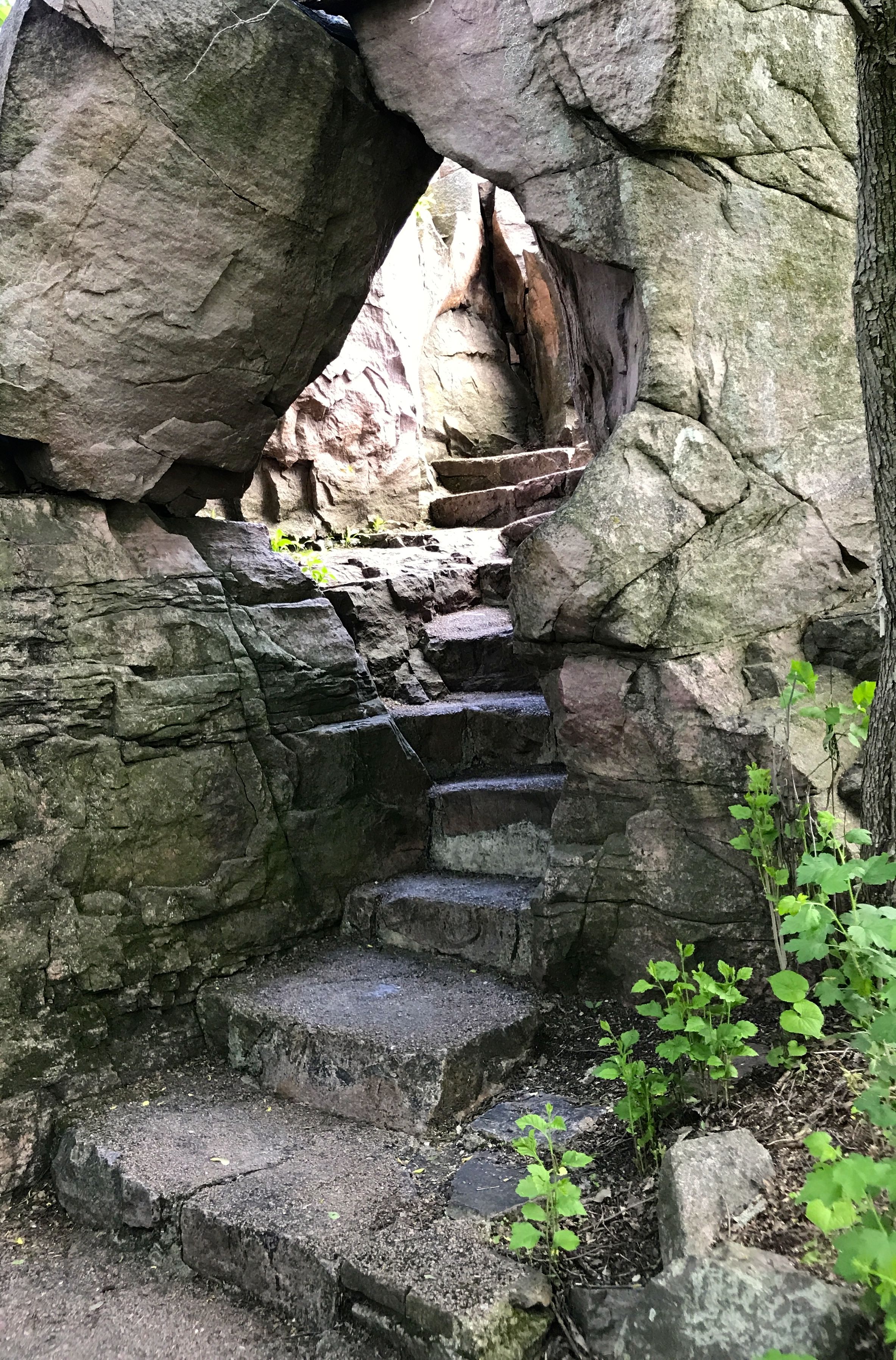
I continued along the trail. The trail went up and so did I.
In 1838, Joseph Nicollet led the first U.S. Government expedition to the pipestone quarries. He mapped the upper Mississippi River basin and his maps were the most accurate of the time.
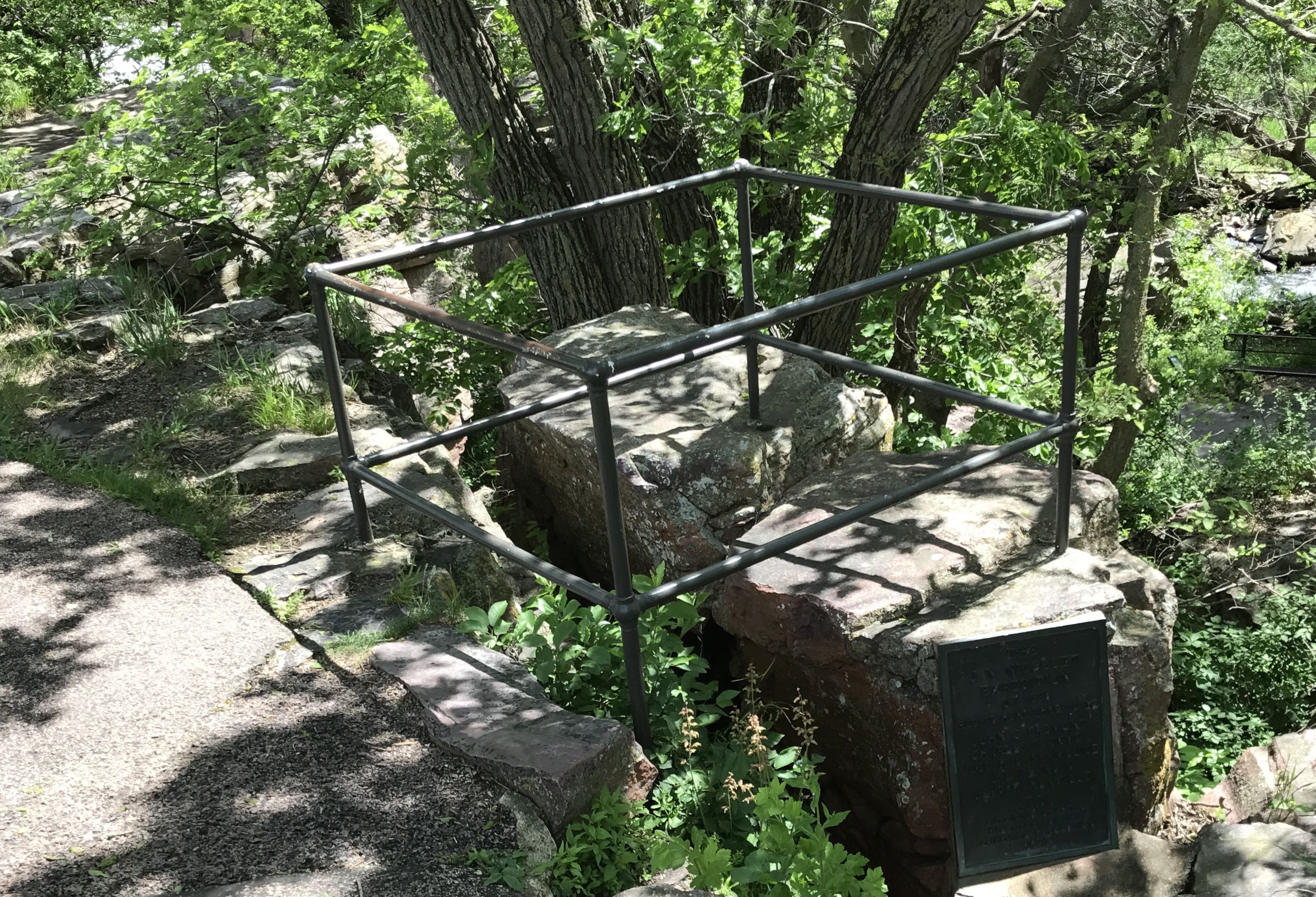
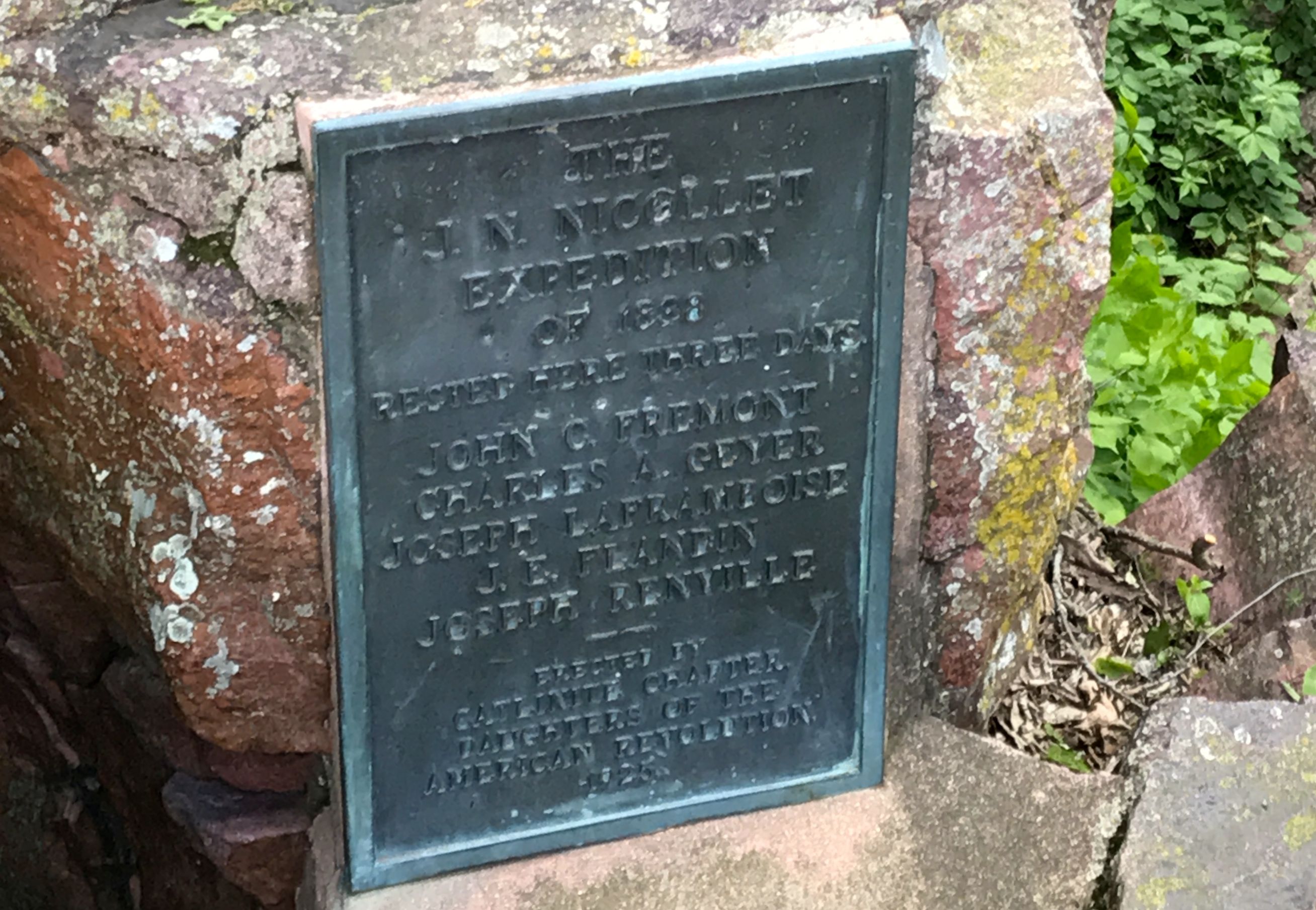
In case you can’t read this plaque memorializing the J.N, Nicollet Expedition of 1838, they rested here for three days. It lists the members of the party. I am always interested in when things were memorialized and who erected the memorial. This plaque was erected in 1925 by the Catlinite Chapter of the Daughters of the American Revolution.

According to a sign nearby, this is what the members of the expedition carved.
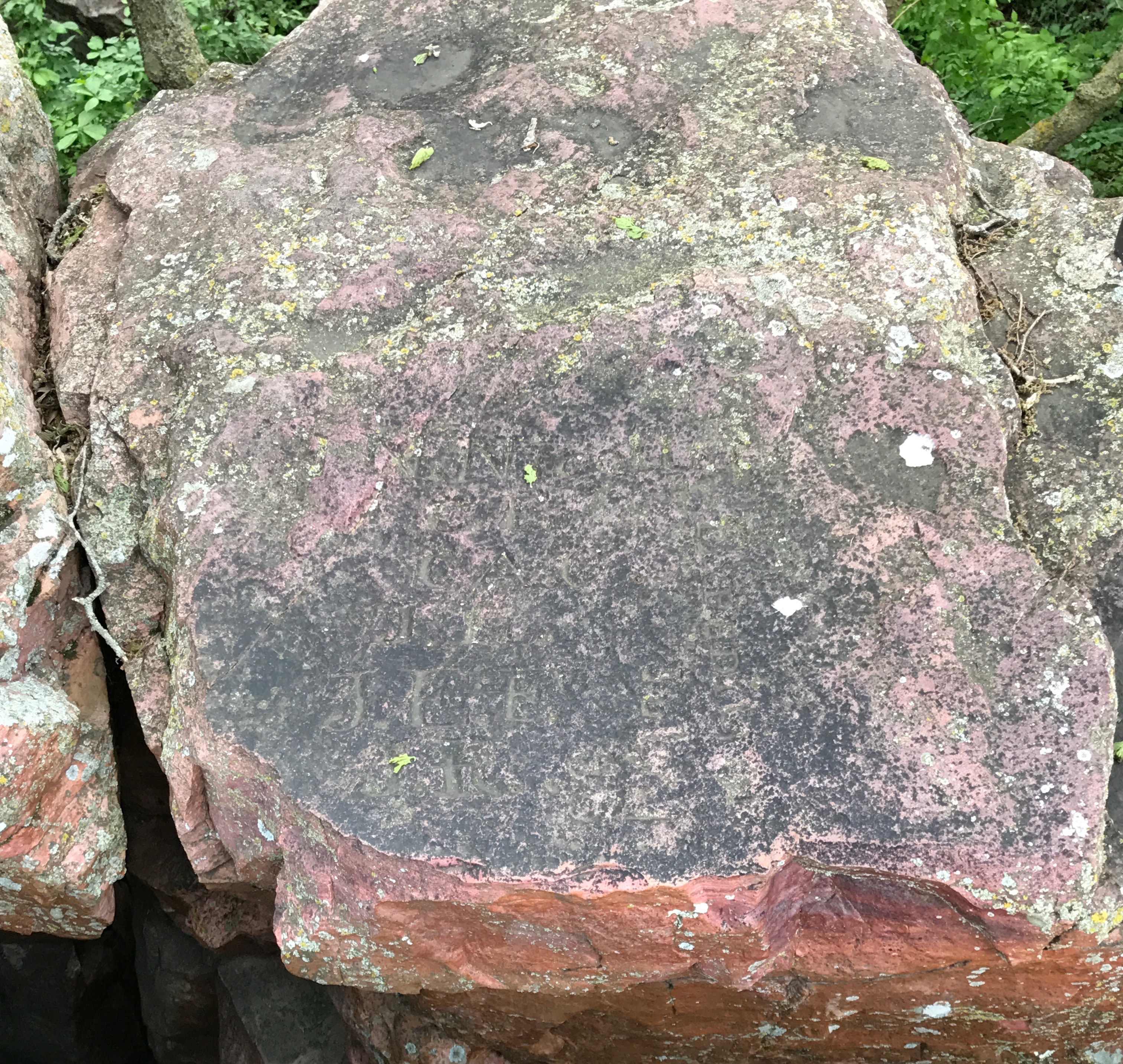
I am pretty sure that this is the stone they carved. When I enlarged it and fiddled with the settings in iPhoto, I could kind of make out the letters. The earth and its processes eventually reclaim everything. Just to be sure, I reached out to the ranger again. He said that this was the original stone.
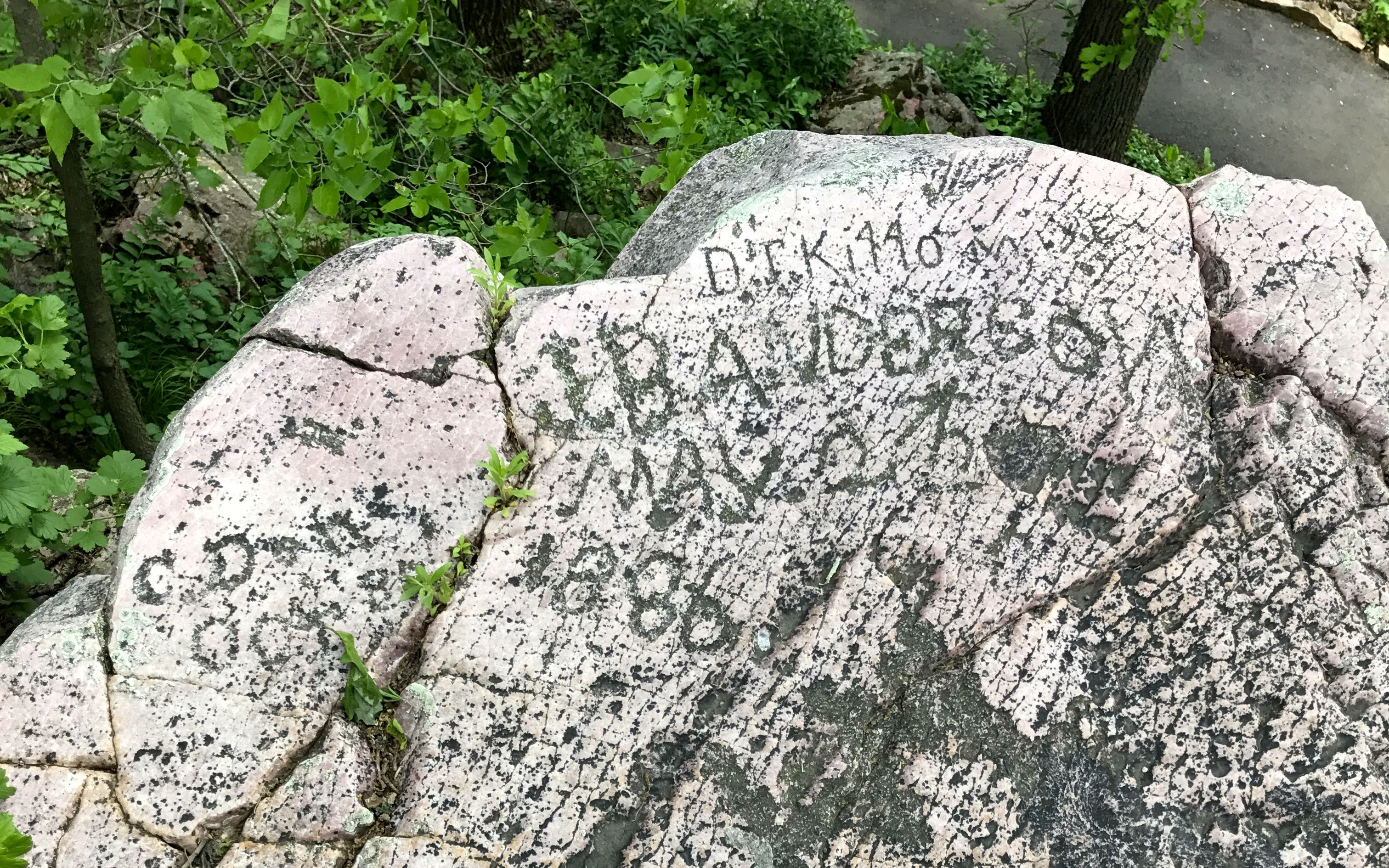
Apparently, people who came along after them left their marks as well.
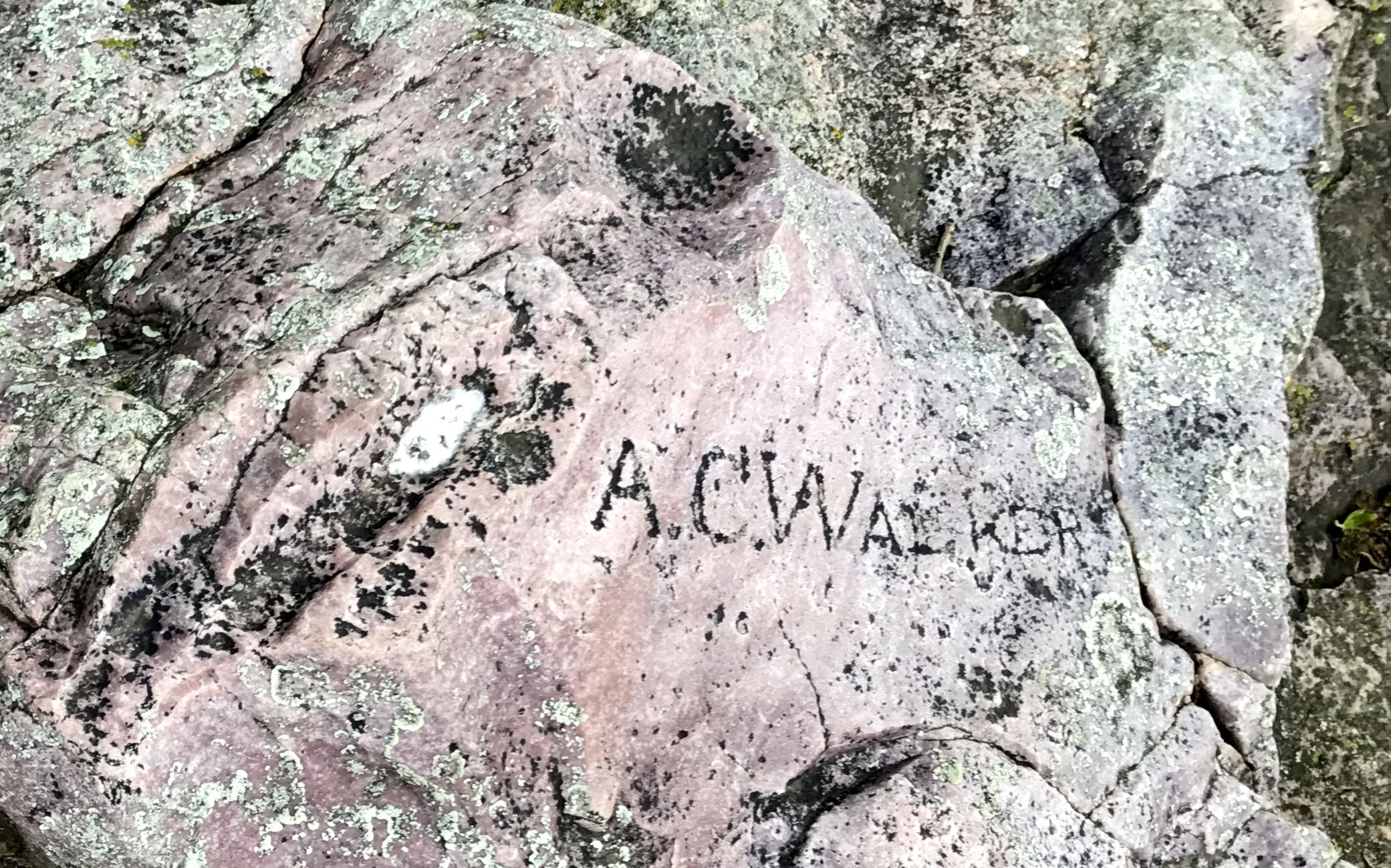
Given the hardness of the quartzite, it was no mean feat to leave your name behind.
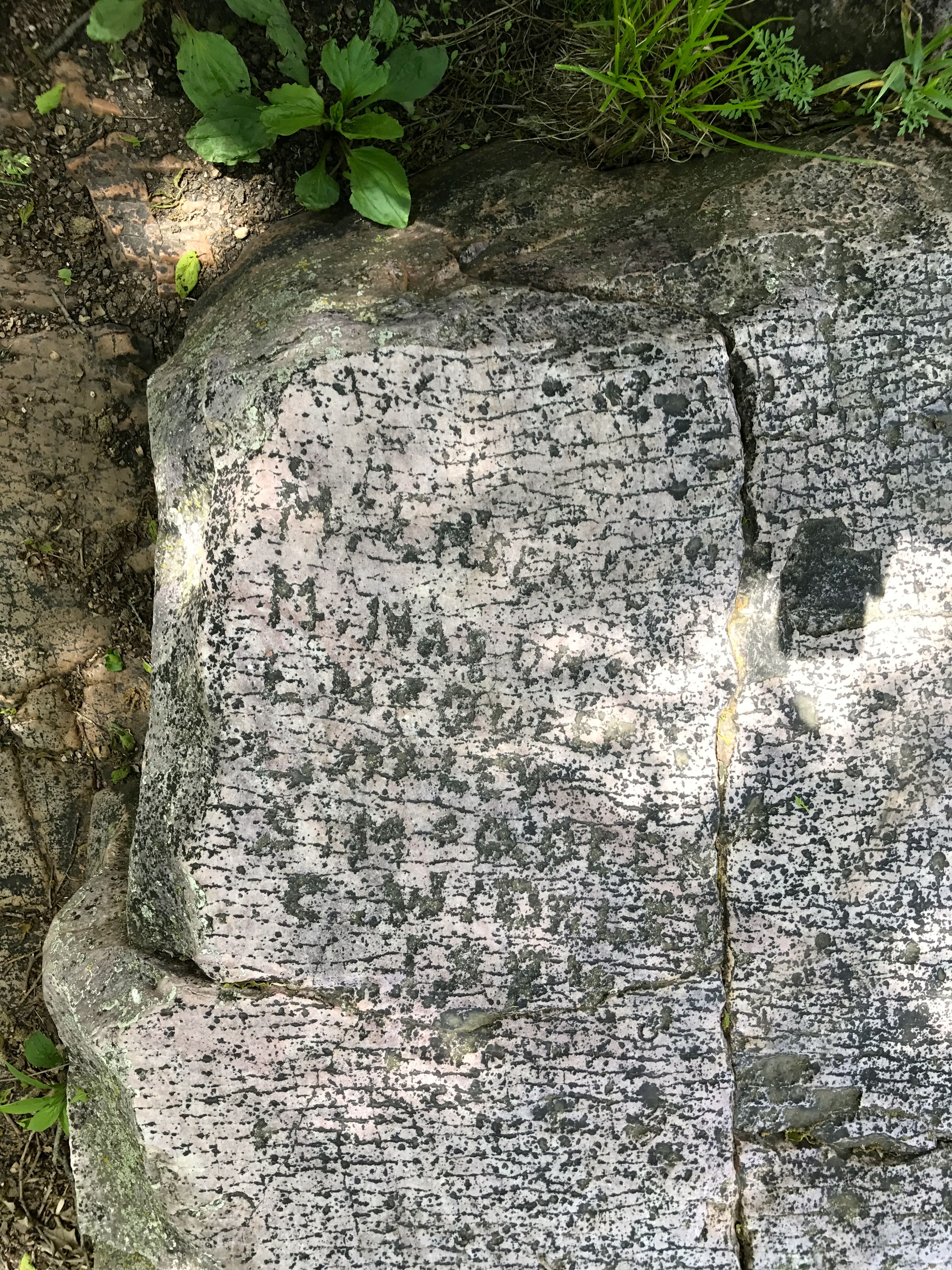
I wonder how long it took these folks?
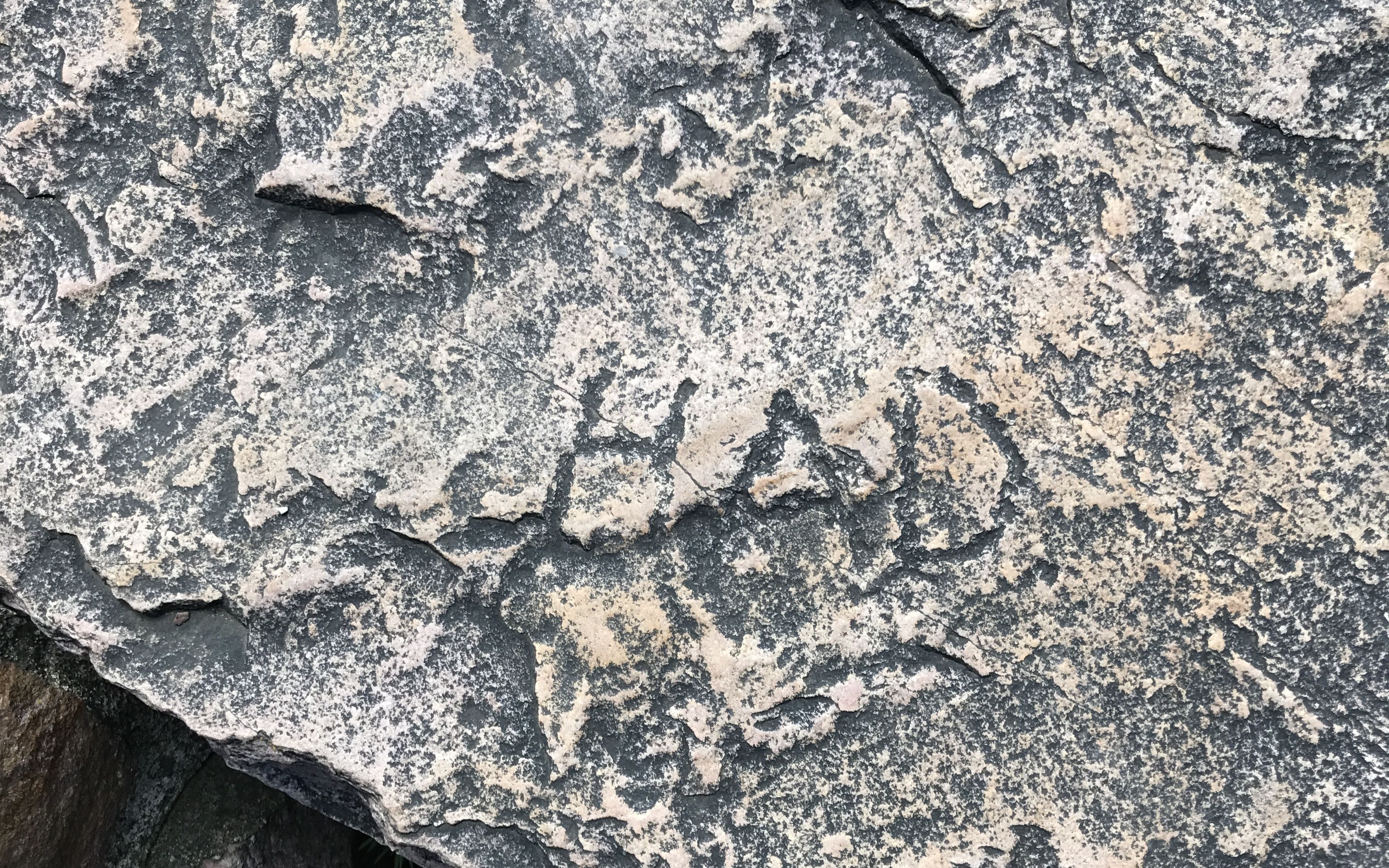
Some just settled for leaving their initials behind.
I continued along the trail and came to Winnewissa Falls.
Winnewissa Falls is part of Pipestone Creek.
According to one Native American story, “The Great Spirit called the warring nations together in the valley of the pipestone. There he pulled a piece of pipestone from the earth, formed a pipe, and told them that it was the flesh and blood of their ancestors. He smoked the pipe over them and admonished them to lay down their arms. Here is a place where different tribes can quarry side by side together in harmony. While he was speaking, a water fall poured from the rock nearby.”
I took this story from some of the excellent interpretive materials available at the site.
I continued on down the trail and came upon this sign.
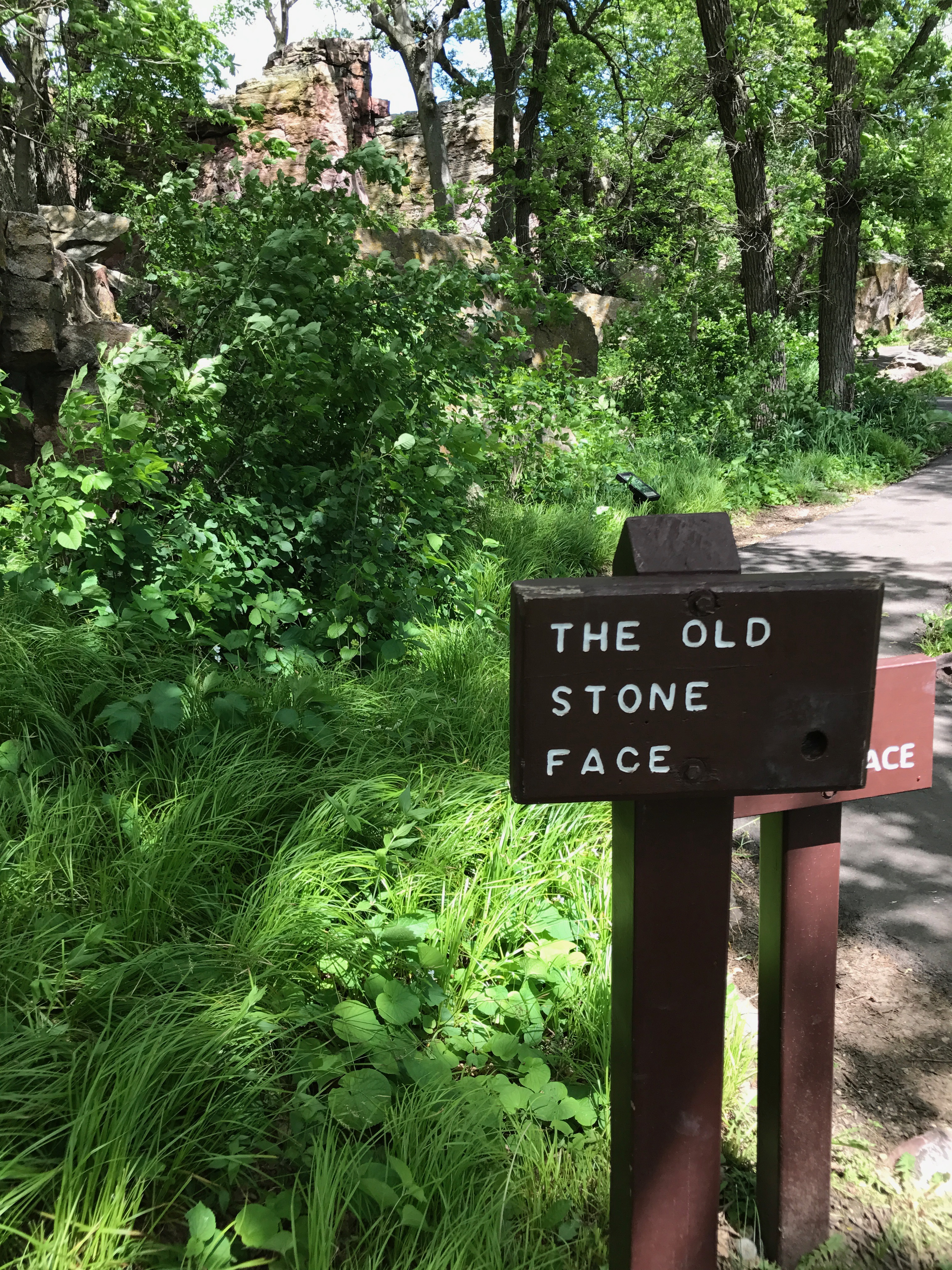
Wait! Buster Keaton is down there?
 No, not Buster Keaton, but I see the Old Stone Face.
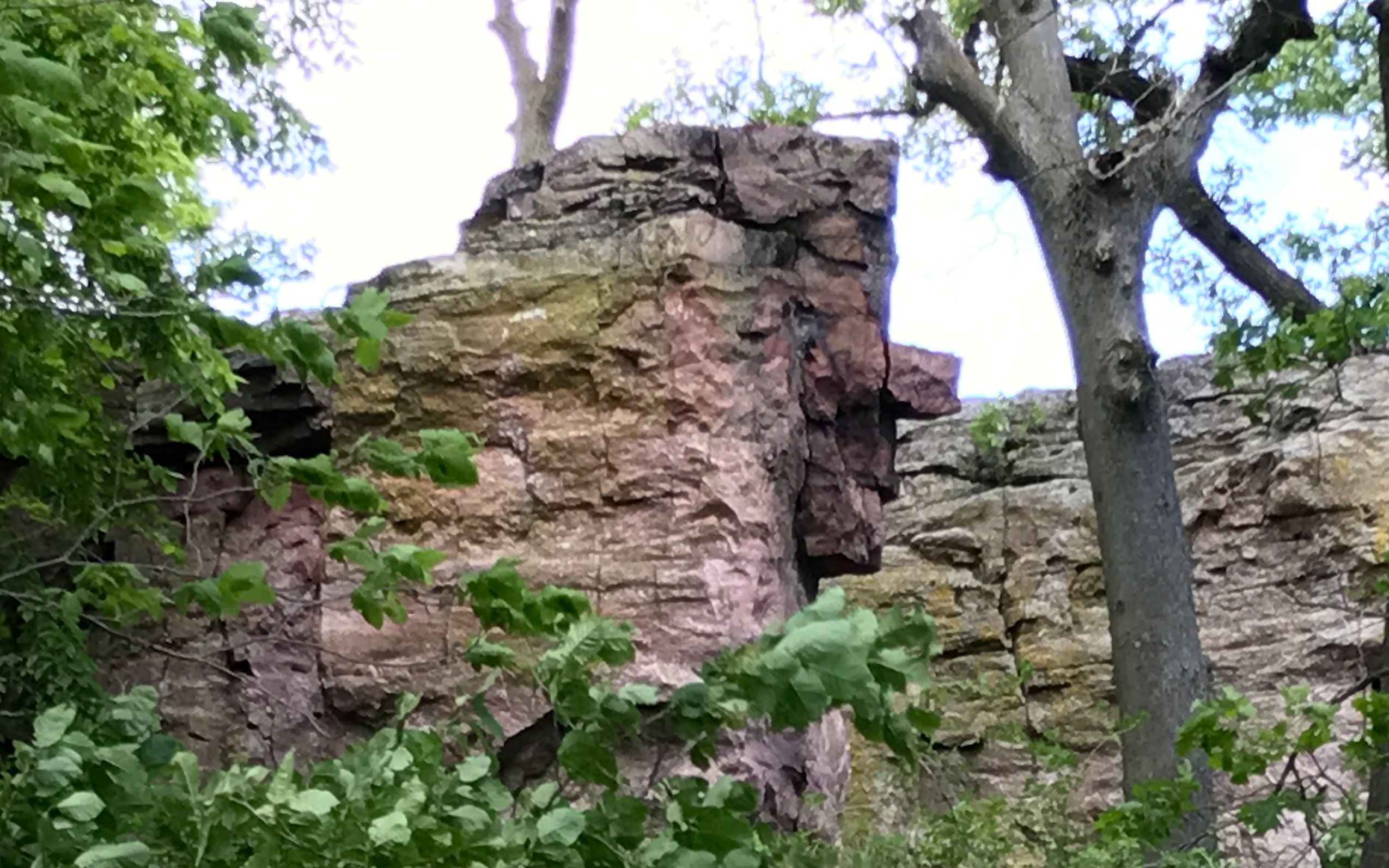
Do you?
I kept walking.
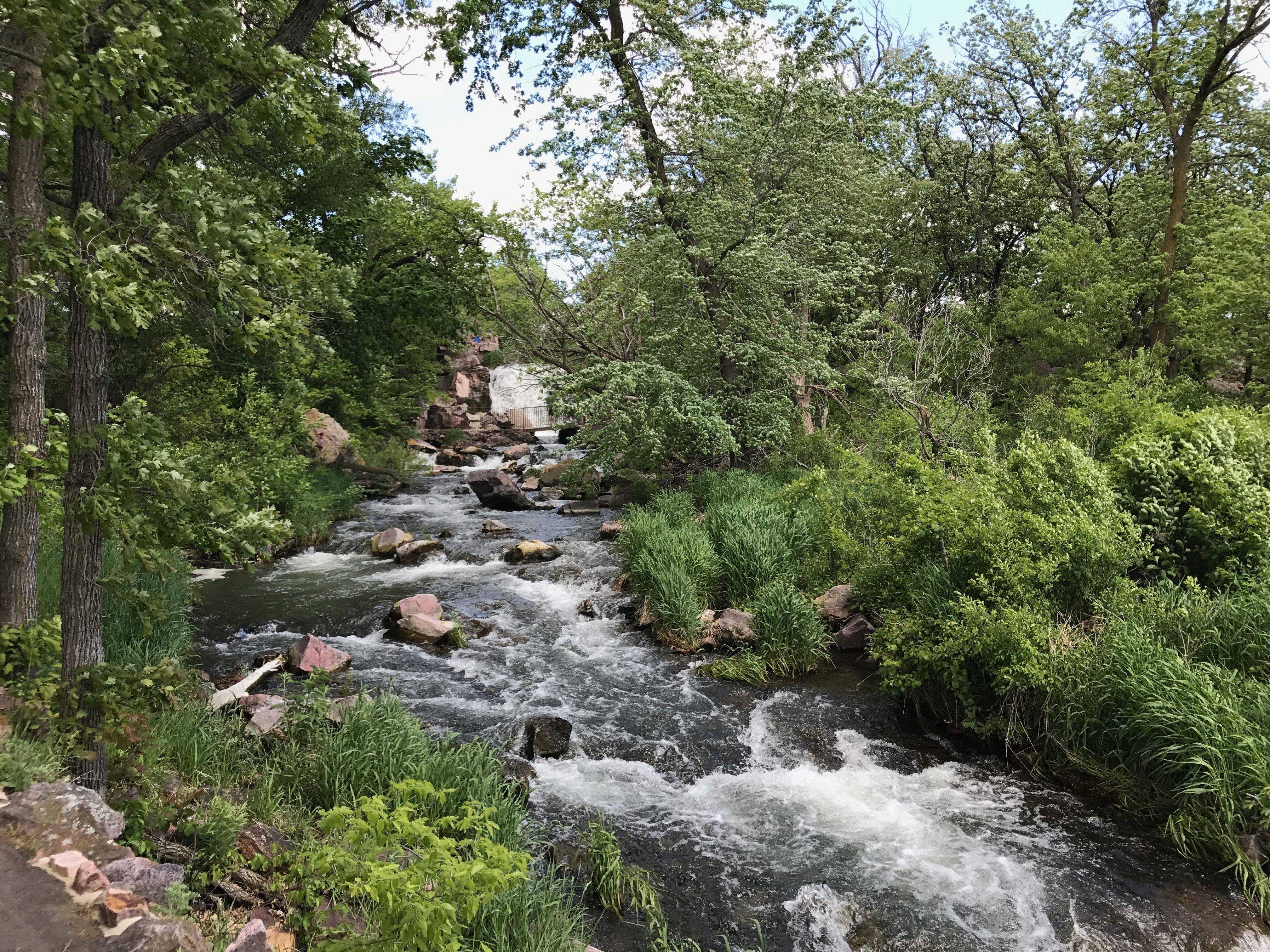
Pipestone Creek gurgled merrily along.
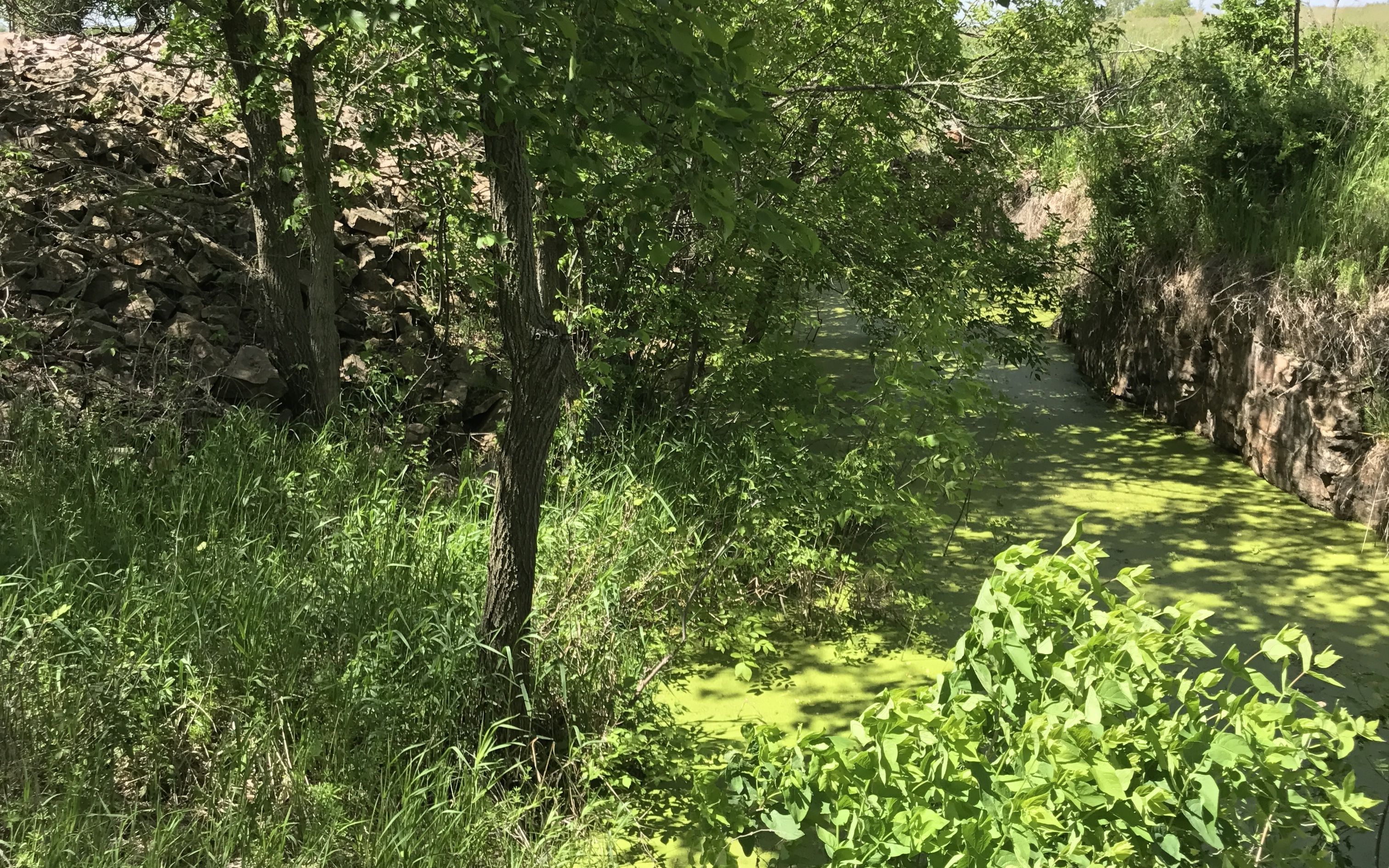
I passed at least one quarry I could identify. This one was filled with water and covered with duckweed. I wonder if it dries out in the summer?
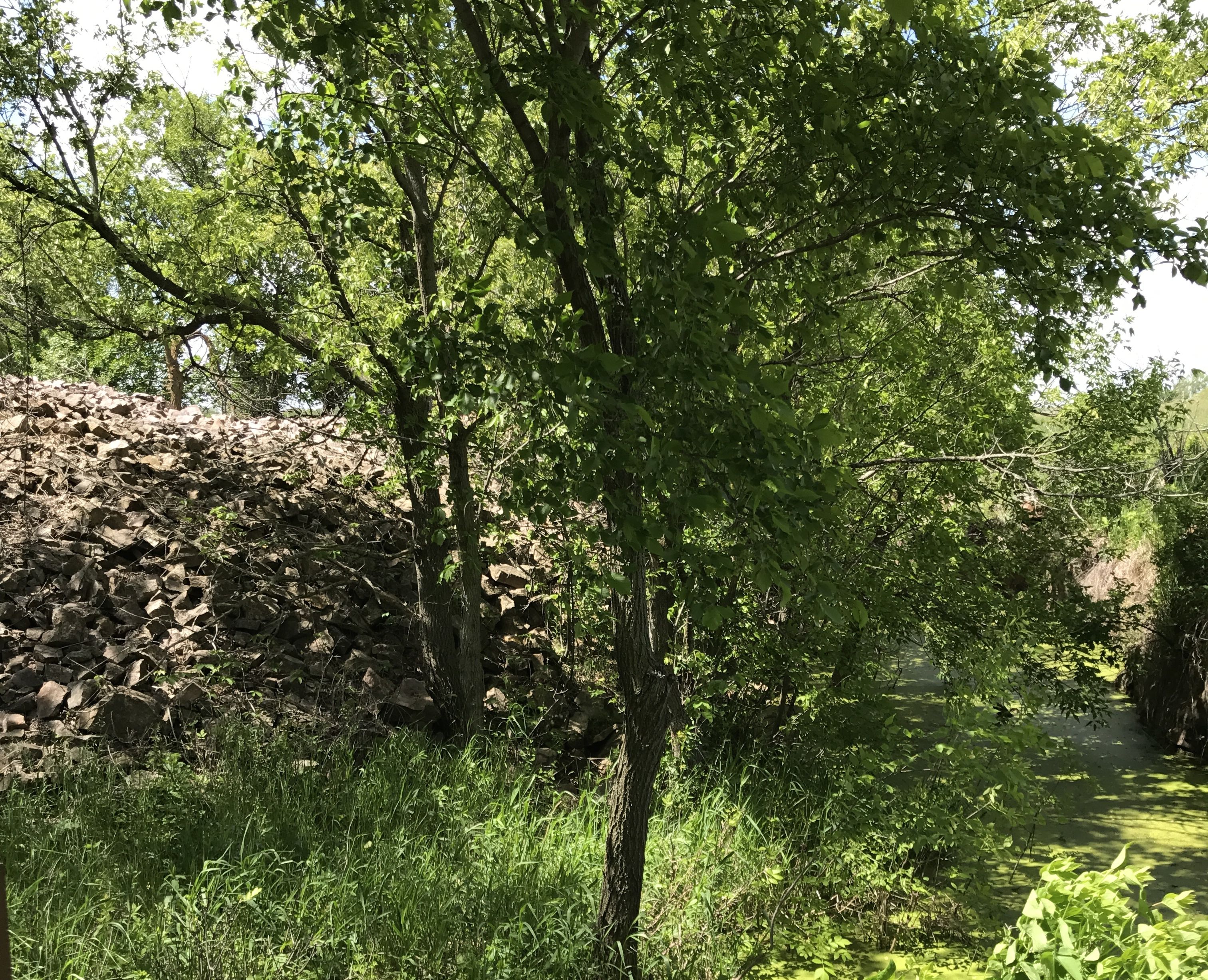
You could tell it was a quarry because of the pile of tailings left from getting to the stone they were after.
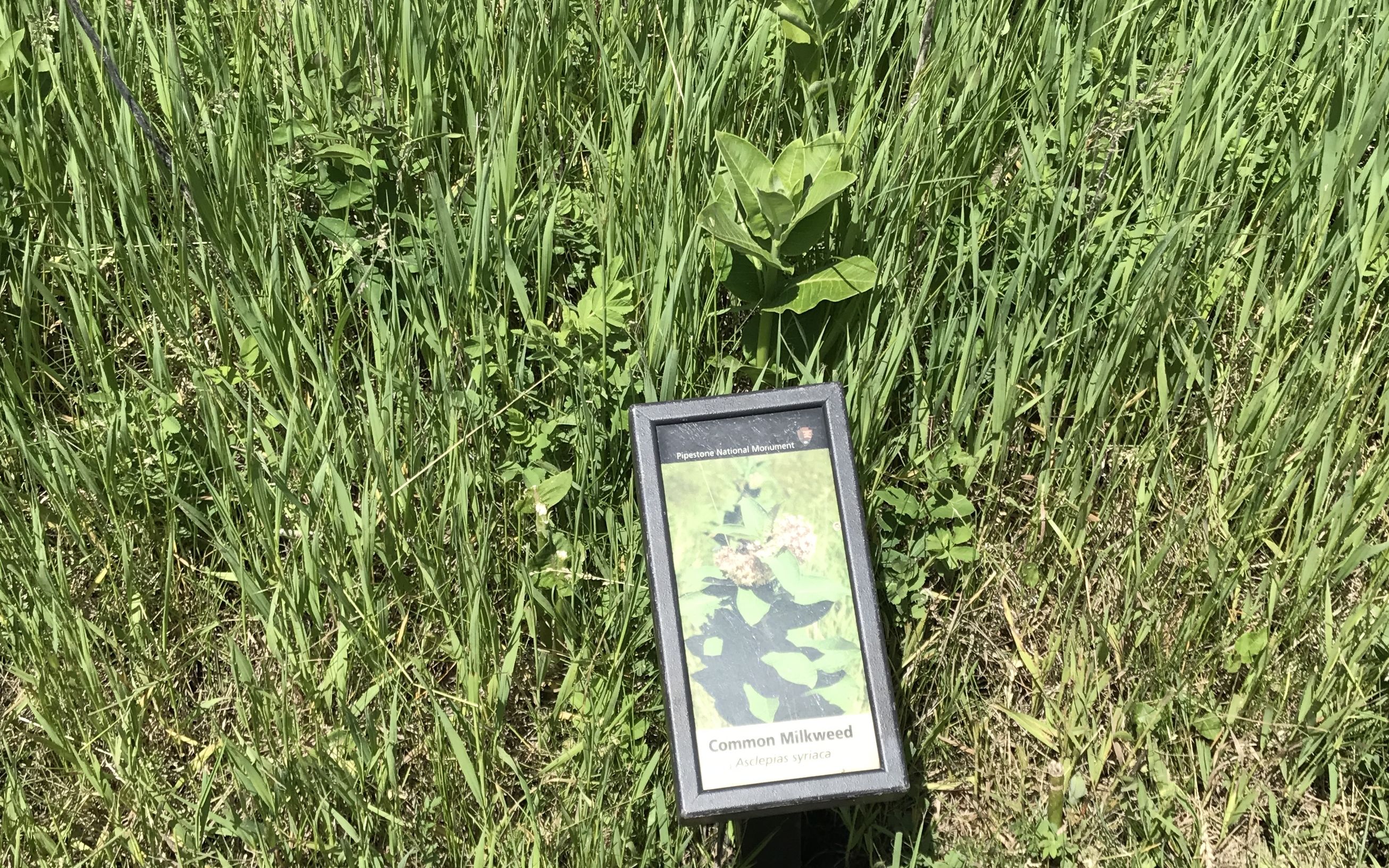
I passed more plants with interpretive plaques. I was most impressed with the legibility of the interpretive plaques. Not only could your read them, but they contained relevant information.
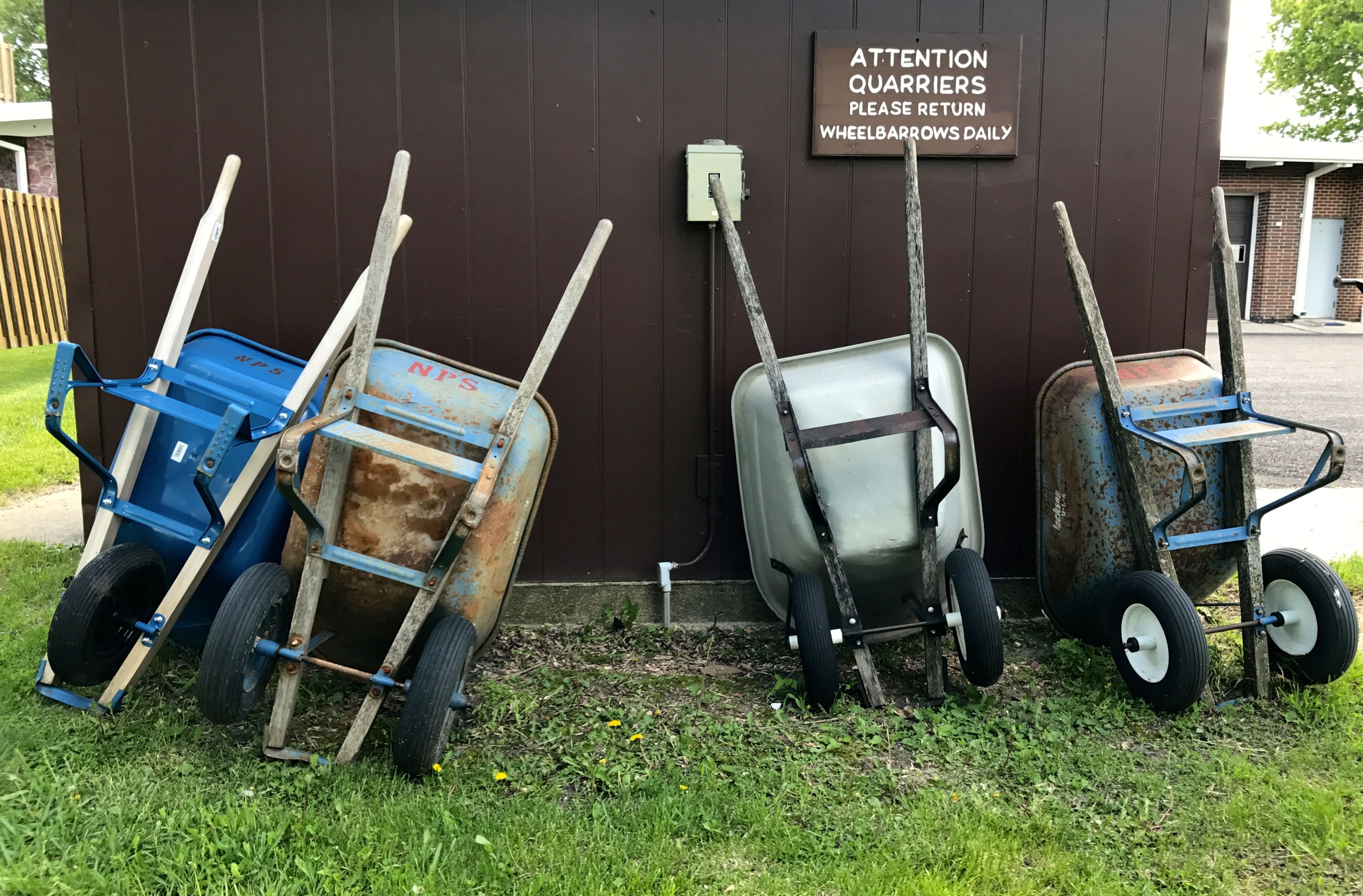
I thought it was nice that wheelbarrows were there for the quarriers to use.
Back inside the visitor center, I spotted more petroglyphs. I love petroglyphs!
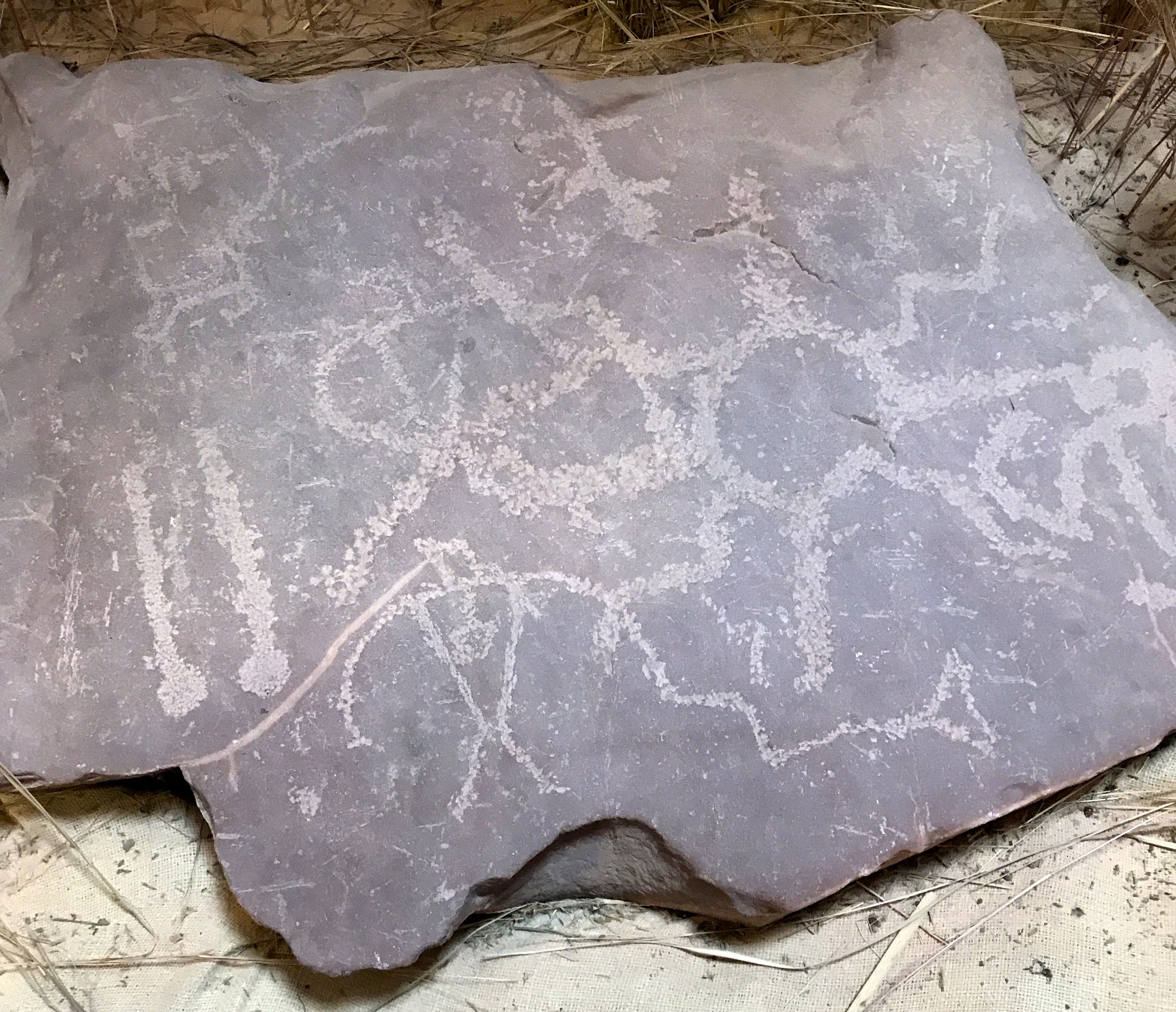
According to the information with them, in the late 1880s, the petroglyphs were removed form the quartzite bedrock surround the Three Maidens.
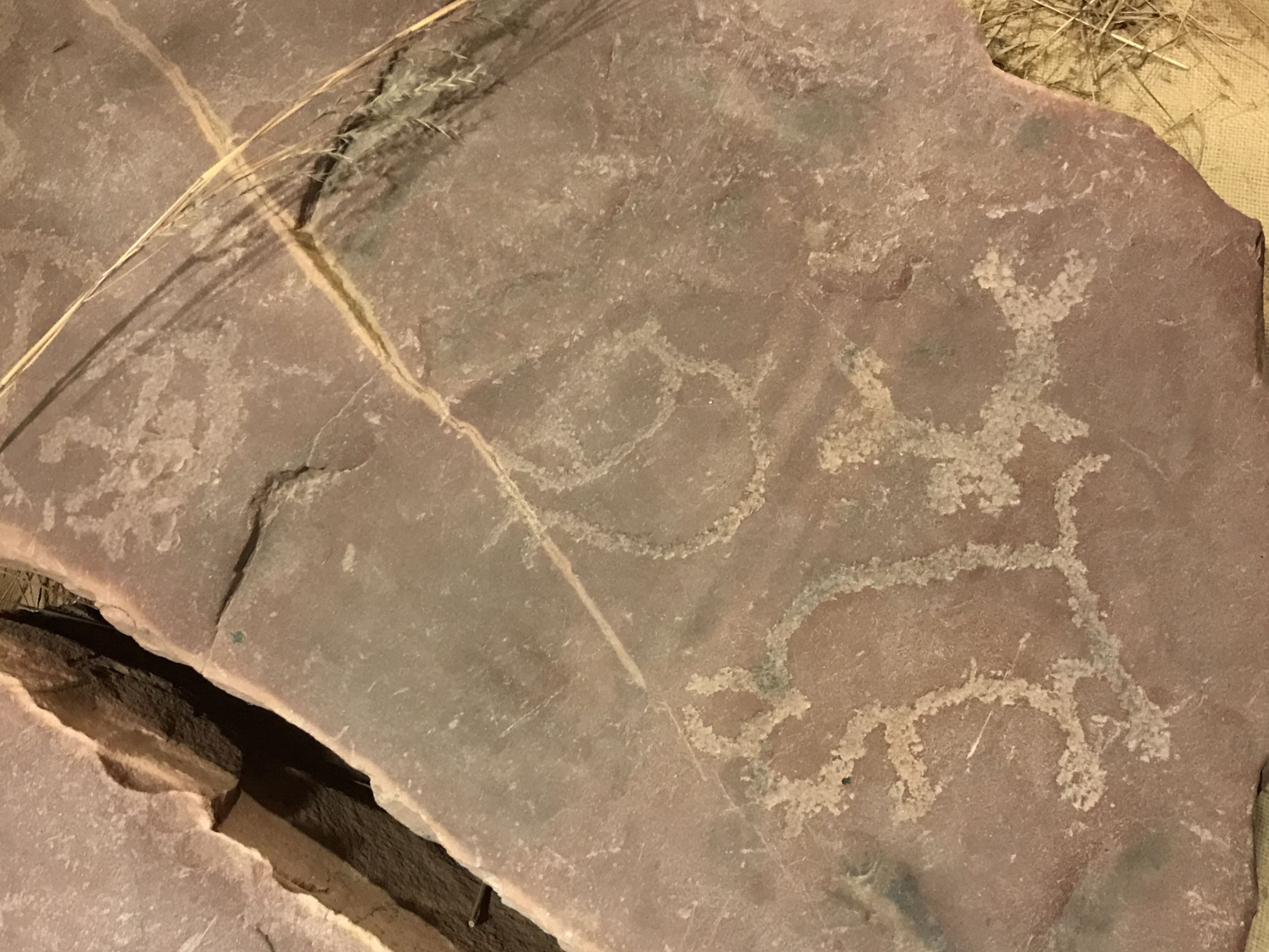
Pipestone businessman, Charles Bennett had them removed over concern that they were being defaced with names and other inscriptions chiseled over the original petroglyphs.
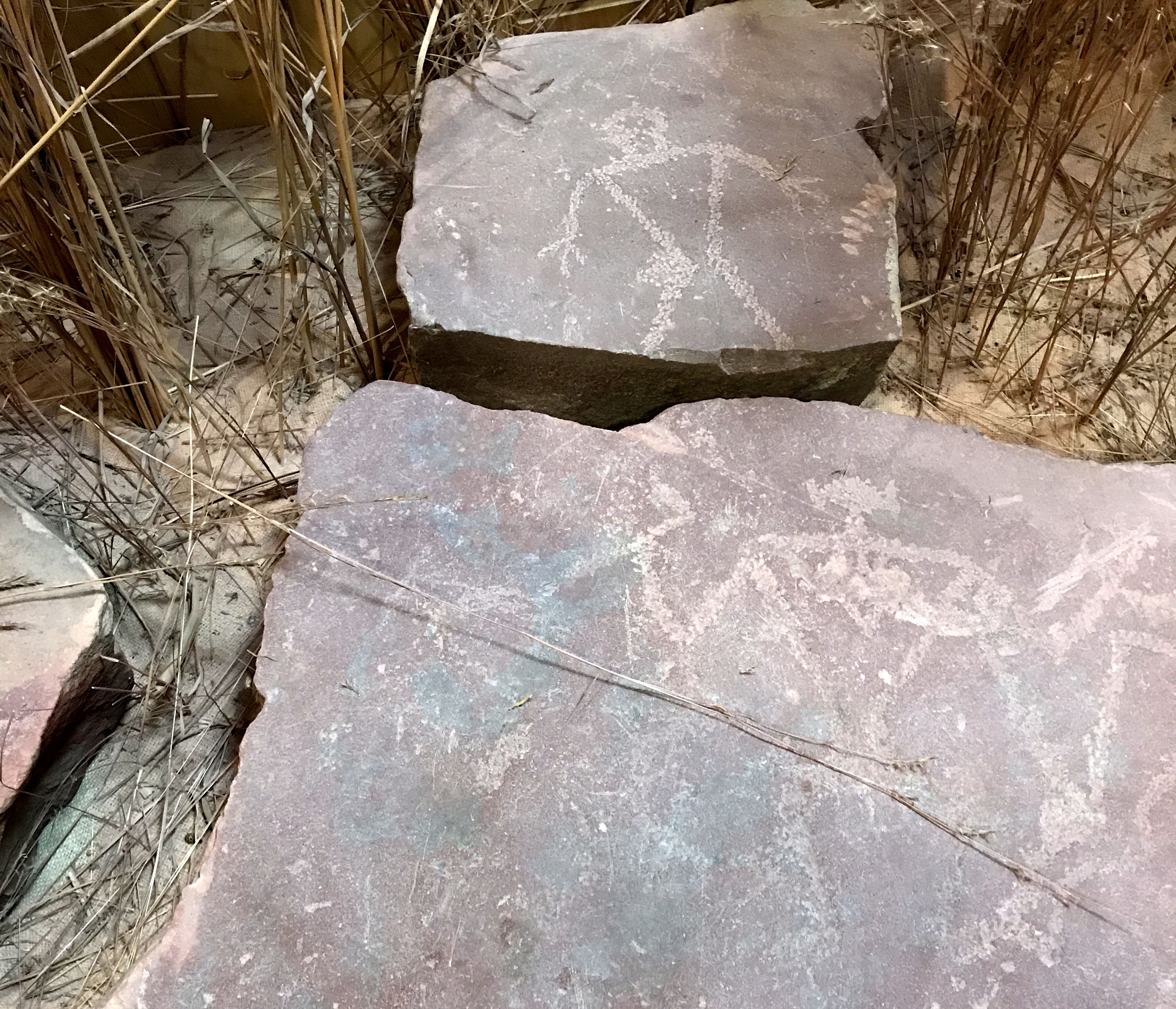
Mr. Bennett kept the collection in his side yard until his death in 1926. After that, they were kept at several places in Pipestone.
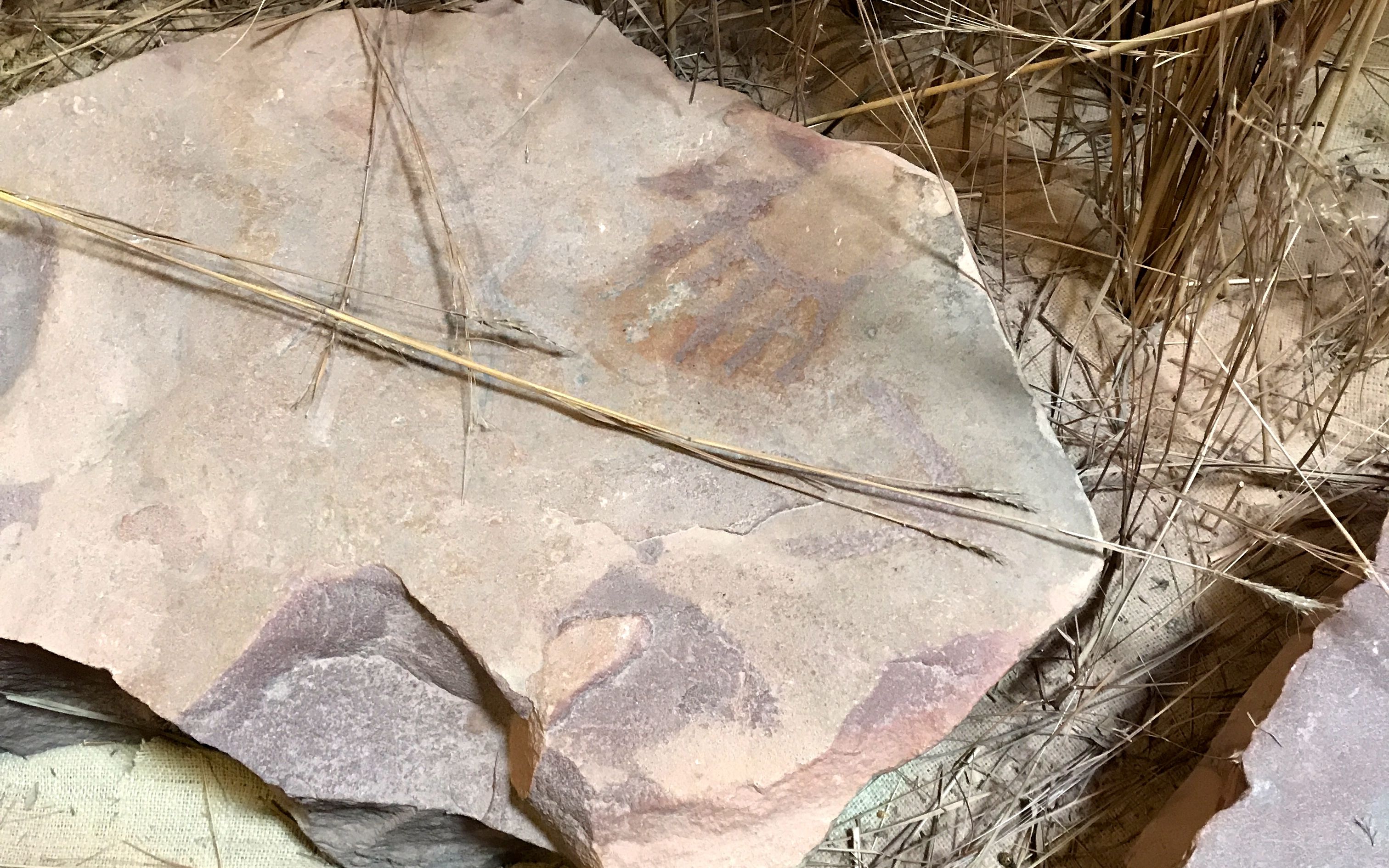
In 1946, 19 stones were donated to the National Park Service and were placed on exhibit at Pipestone National Monument.
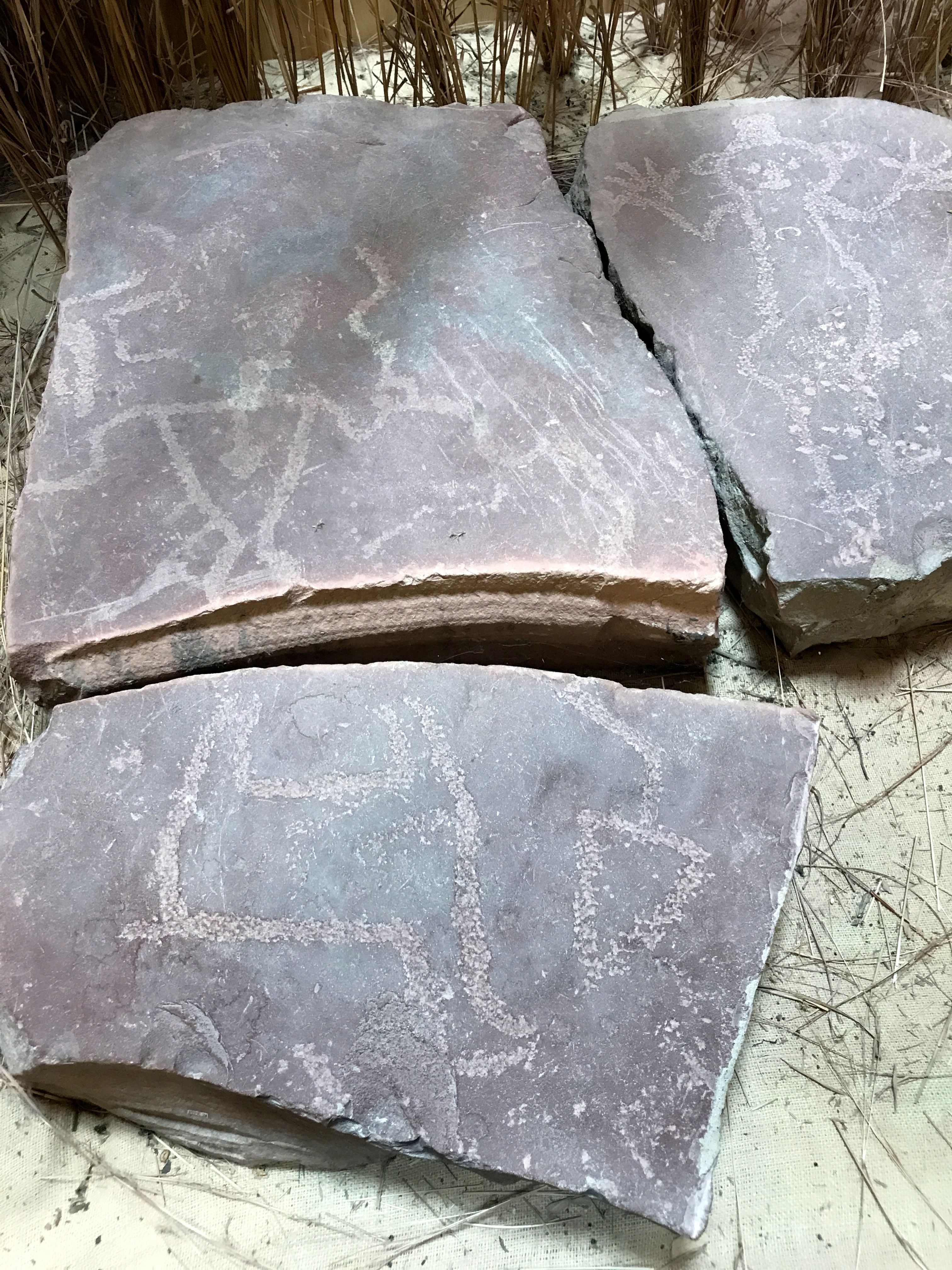
After being moved around to a number of locations, they were moved into the visitor center for security and interpretation. The current exhibition was developed with the input of many of the tribes affiliated with the quarries. The design was meant to reflect a respect for the spiritual nature of the petroglyphs.
And with that, it was time to head back to Blue Mounds Park.
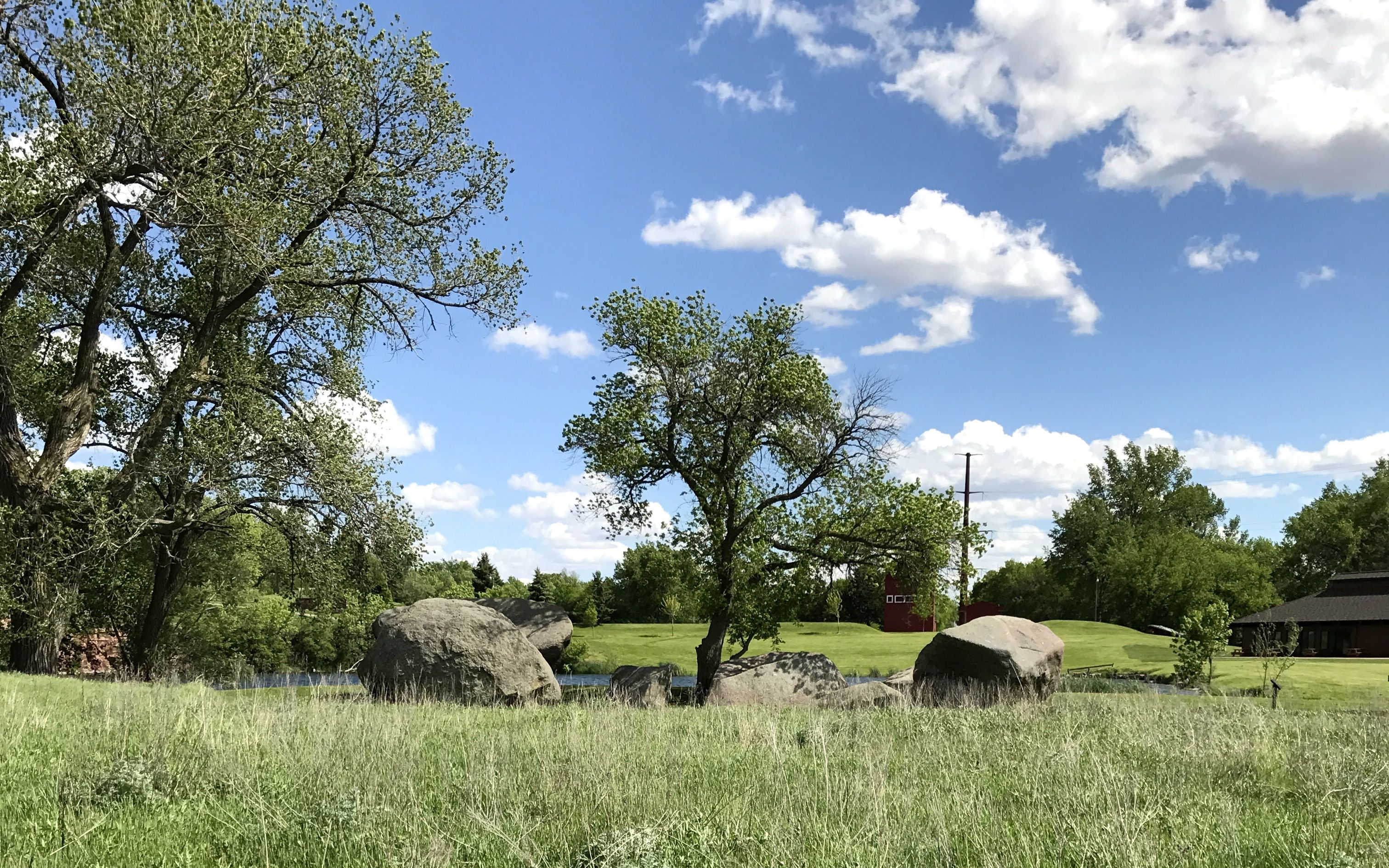
On my way back, I passed the Three Maidens. Many American Indians believe that the large boulder fragments shelter the spirits of maidens who require offerings from visiting Indians before permitting them to quarry pipestone.
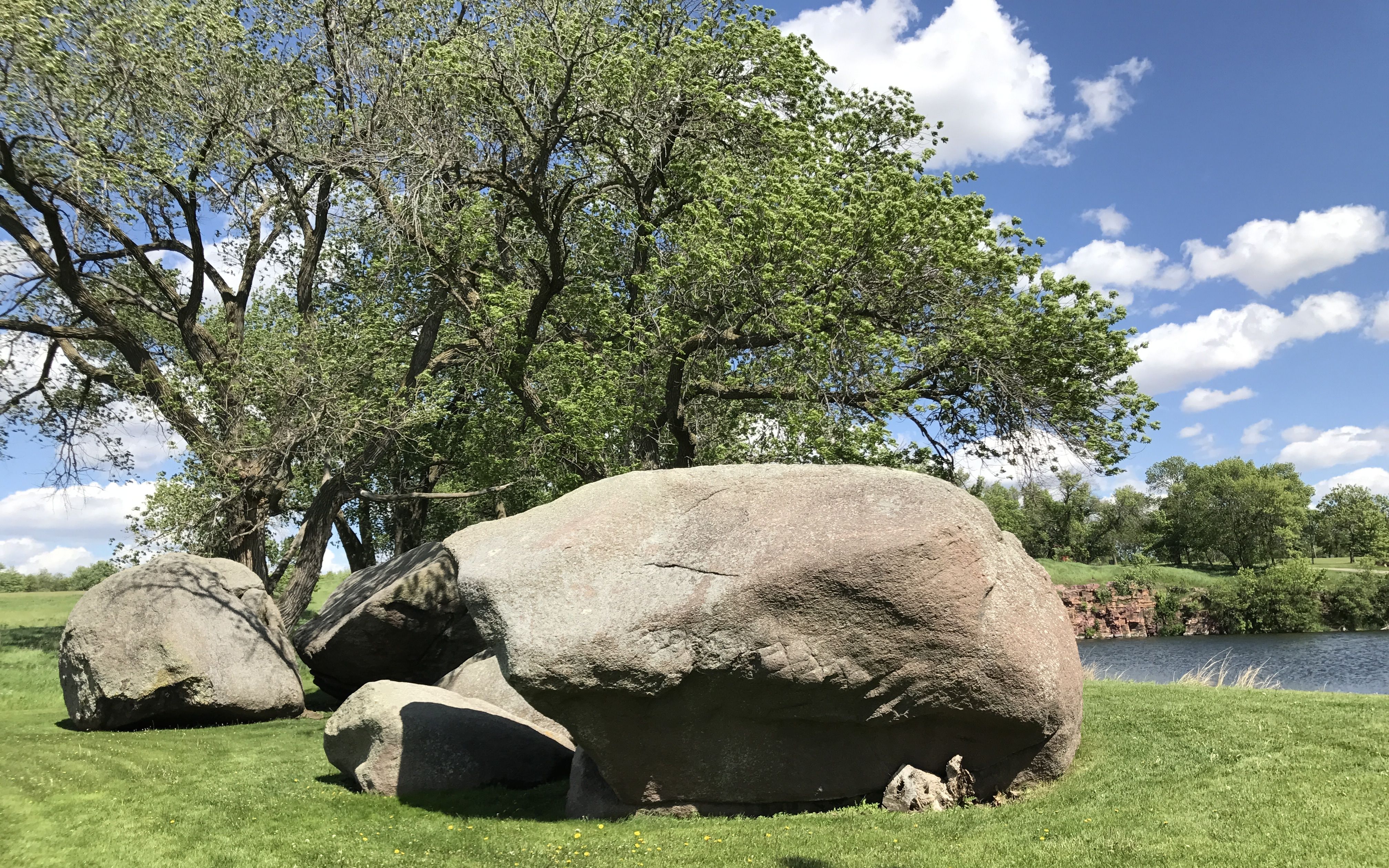
These huge granite rocks seem out of place in this landscape filled with quartzite, don’t they? According to the information at the site, they were carried down from present-day Canada during the last Ice Age. When the glacier receded, it left behind a huge boulder about 30 feet in diameter. The freeze/thaw cycle eventually split this glacial “erratic” into six pieces.
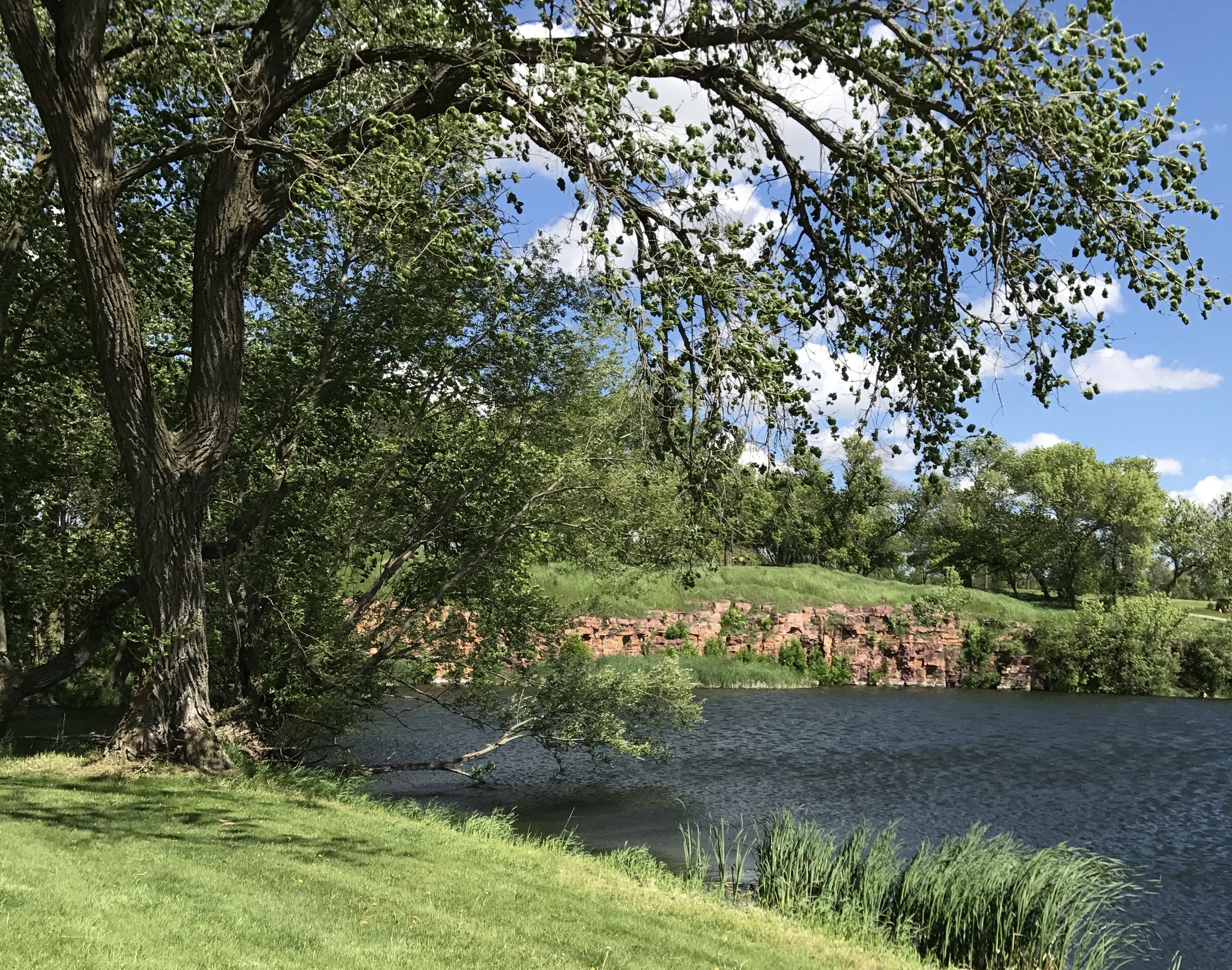
It was a peaceful setting.
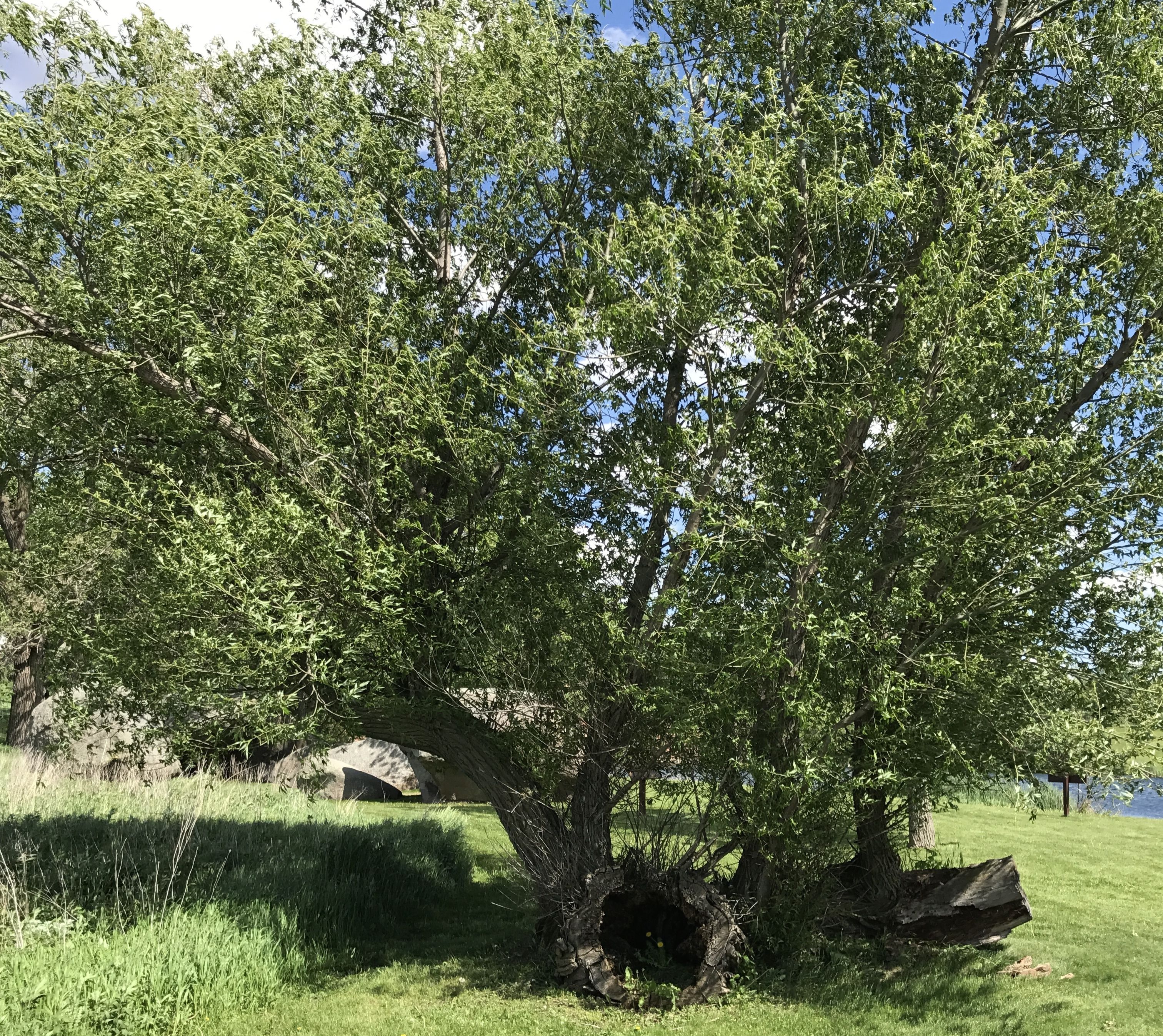
I walked around a bit. I had to admire this tough old tree. Down, but still sending out shoots and leaves.
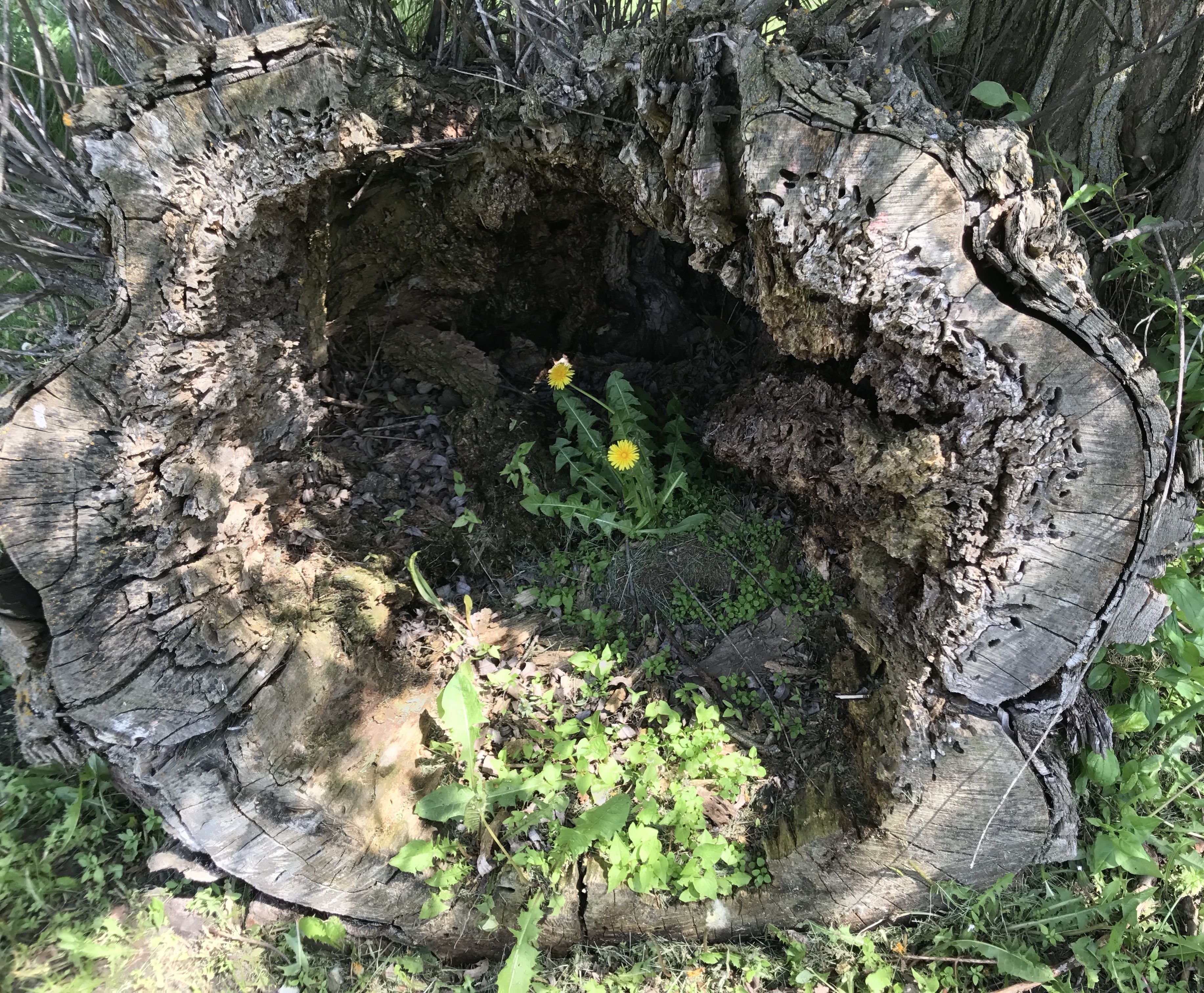
It’s the cycle of life.