Now, my main goal for this trip wasn’t touristic. I had work to do!
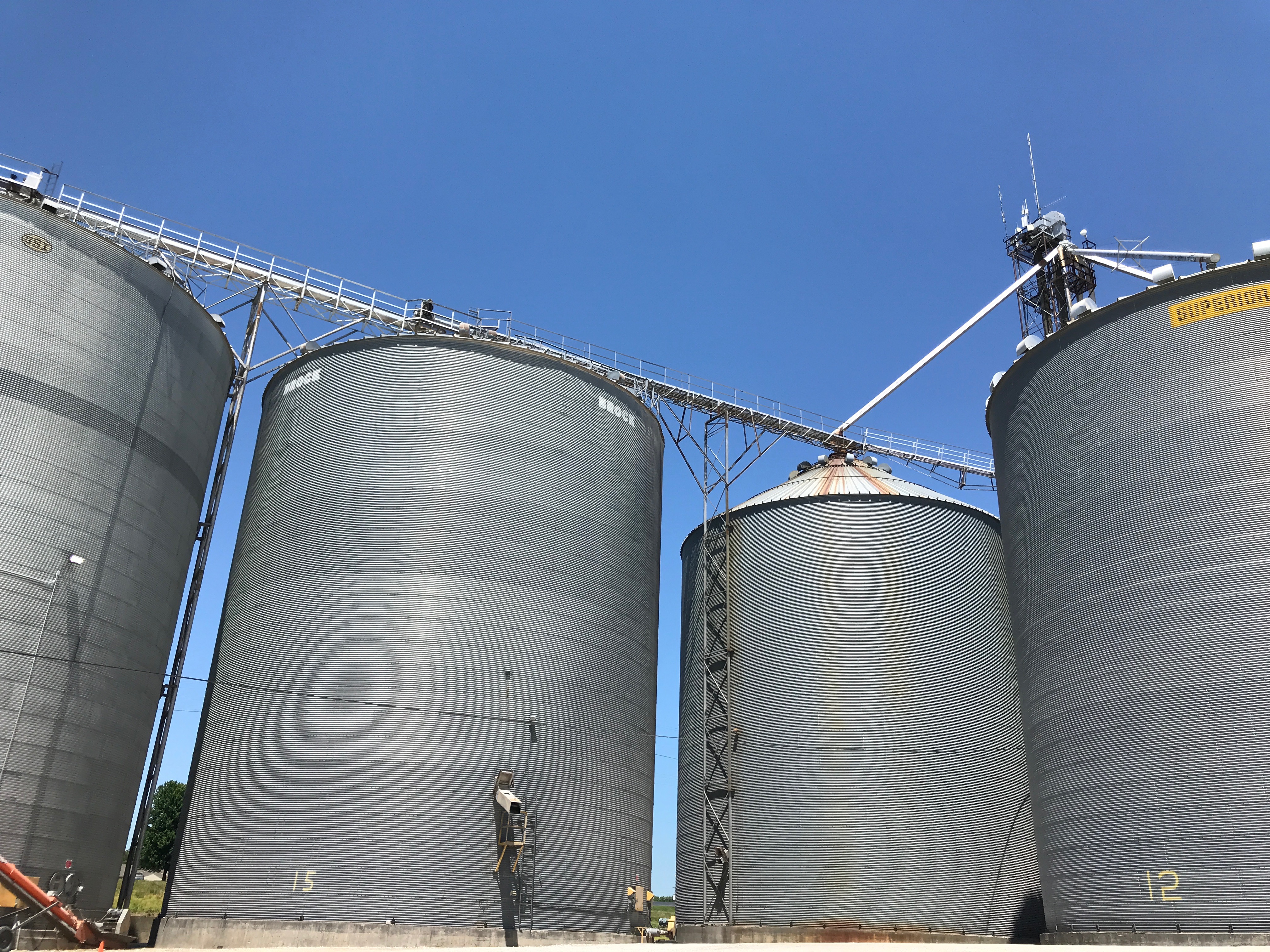
My task was to find the gain elevators that were identified on the cards in the box that I was given. I had to collect samples of wheat and try to get additional information, such as how the harvest was going, how much longer they expected to be getting in wheat – or when they expected to start – and things like that. I also got to give out the “thank you gift.” This year it was a small tape measure. The women I gave them to seemed to see the value of it. Some of the guys were disappointed not to be receiving the small pocket knife like they had gotten in other years.
Some days, I just found a motel and settled in for the night. Not every place has things to see and do. One night, I got a room near Sedalia and headed into town to see what I could see.
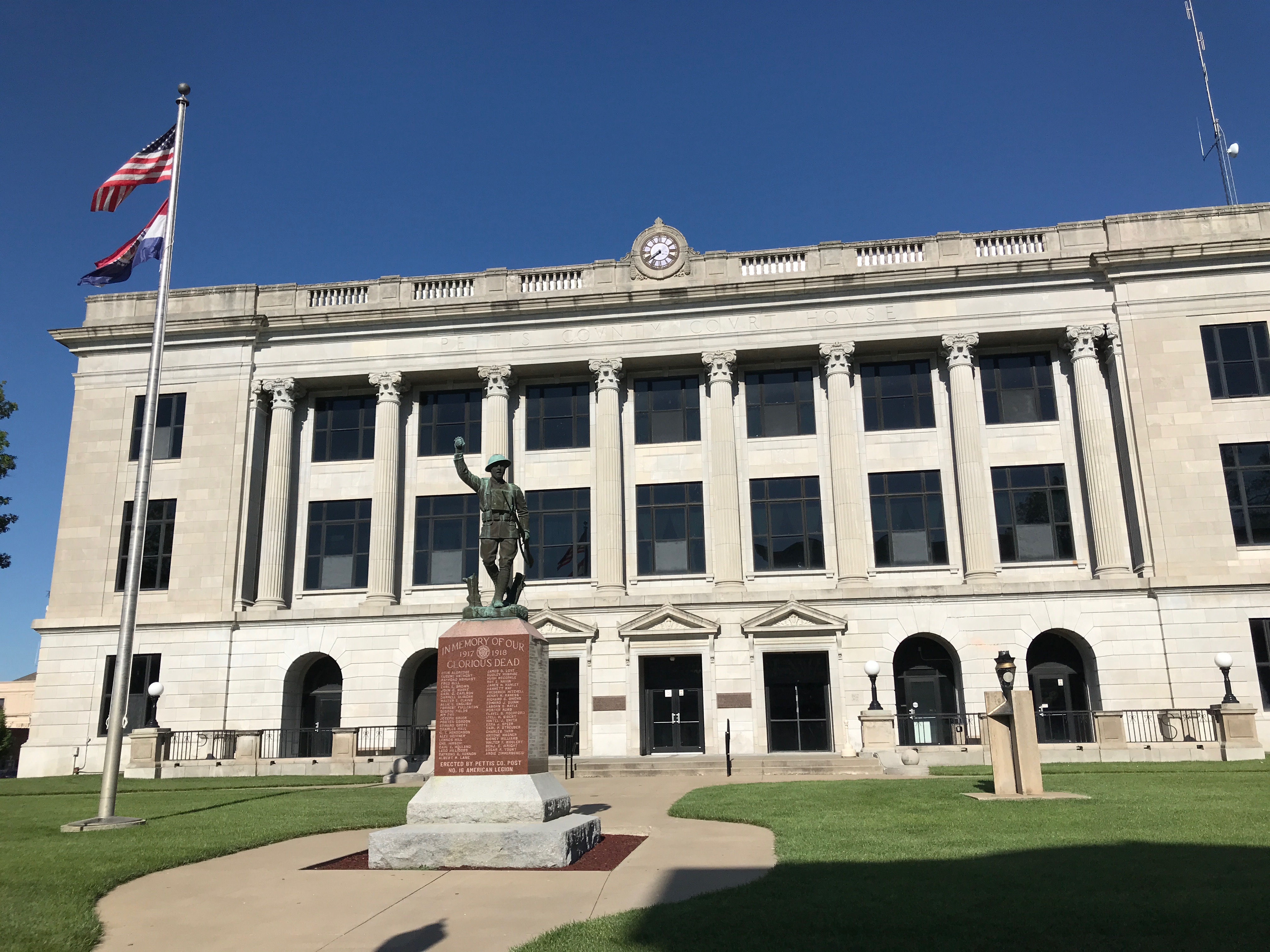
I parked near that courthouse and took a stroll to see what the people of Sedalia considered to be worth memorializing.
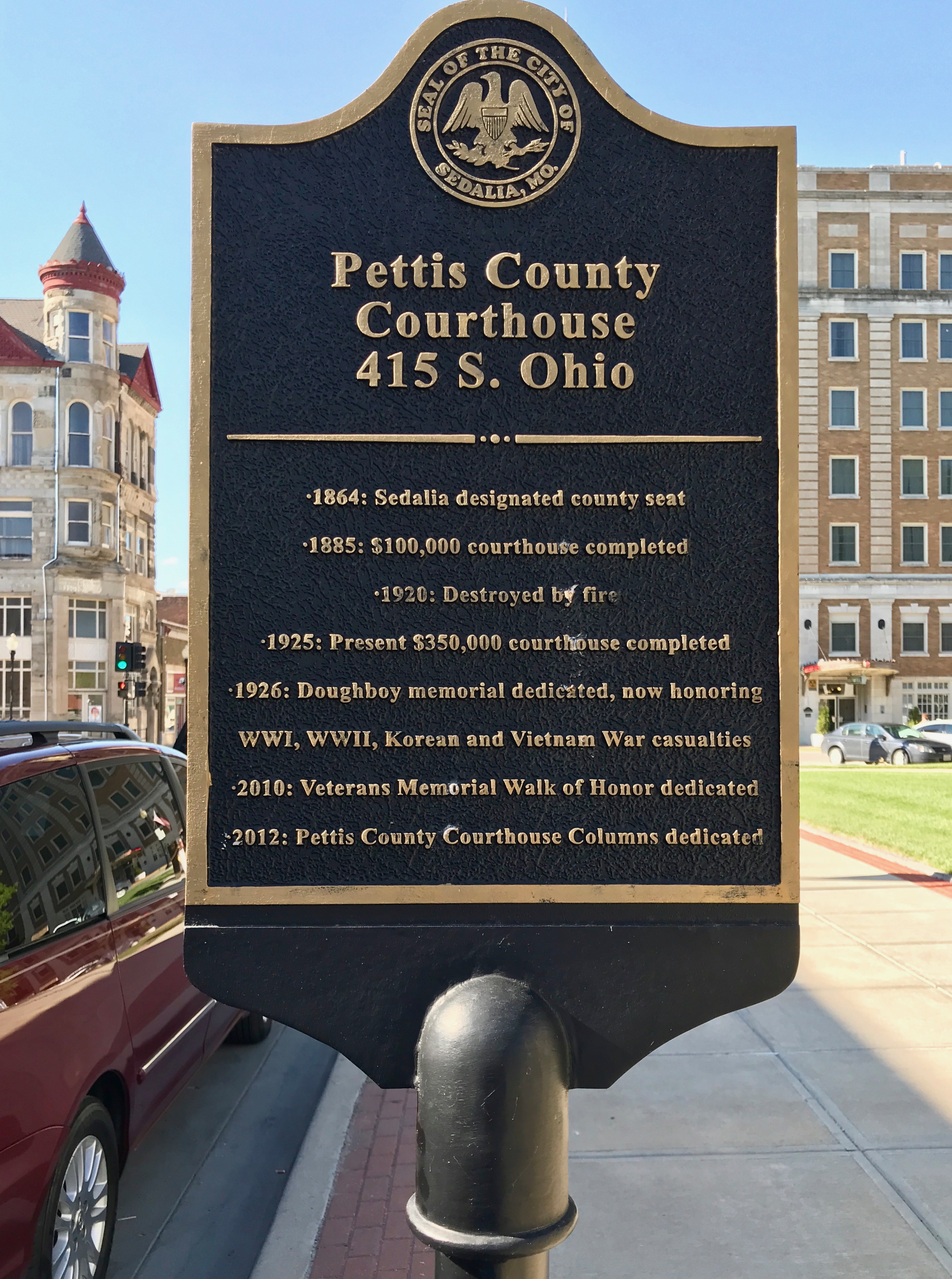
I liked this plaque that they had right in front of it, with all the important dates included.
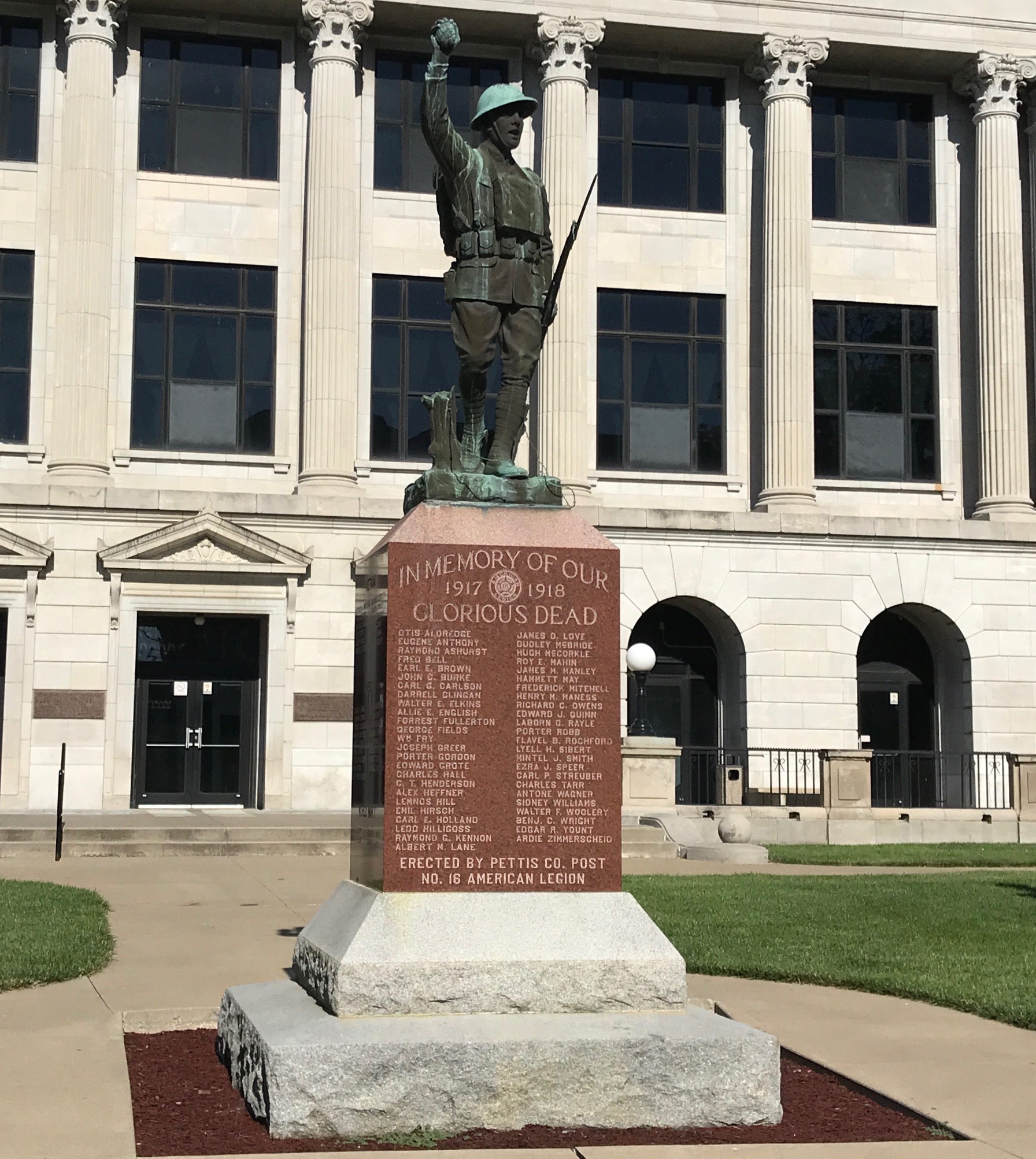
First I walked up to the doughboy memorial, which now honors WW I,
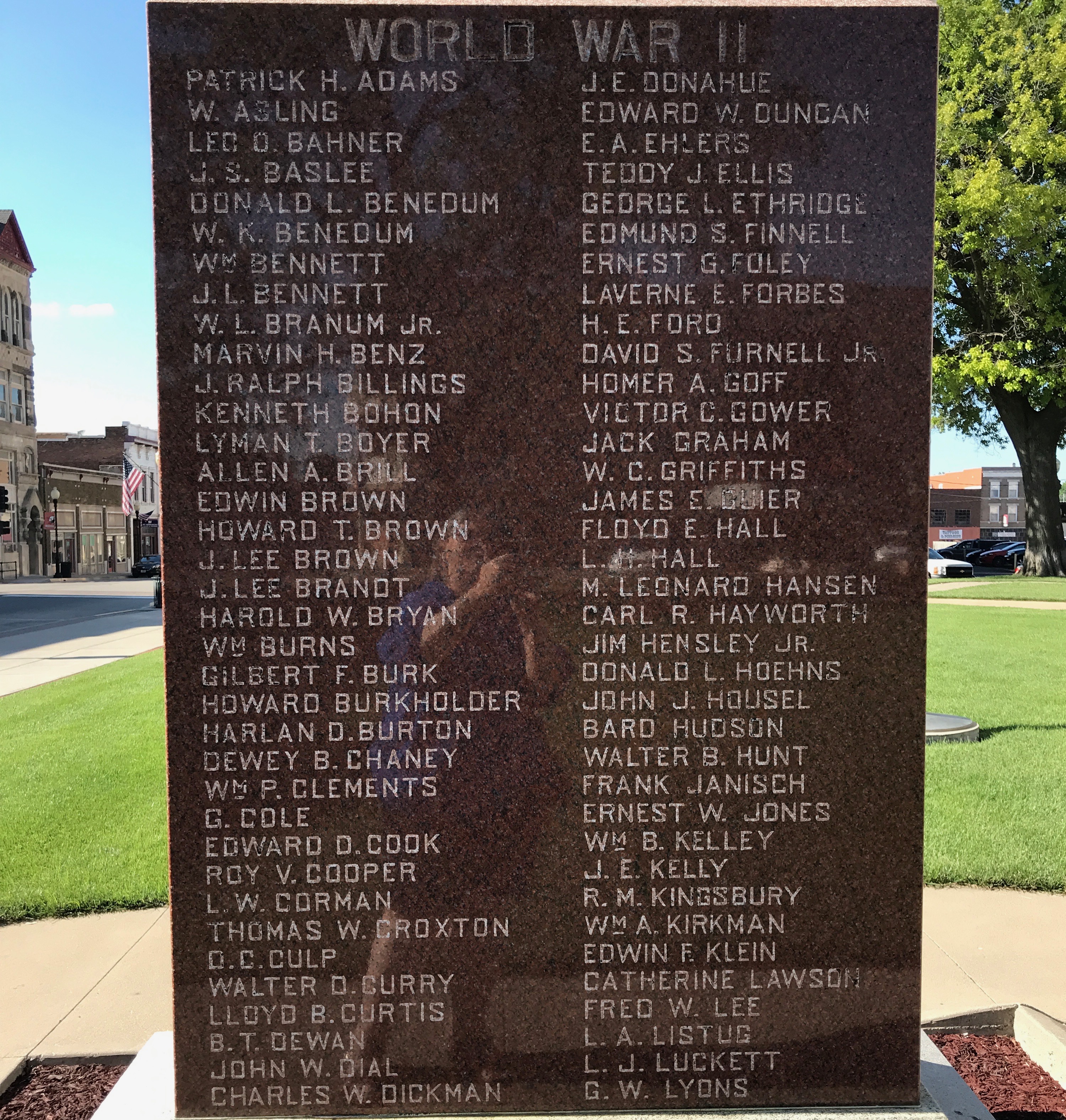
WW II,
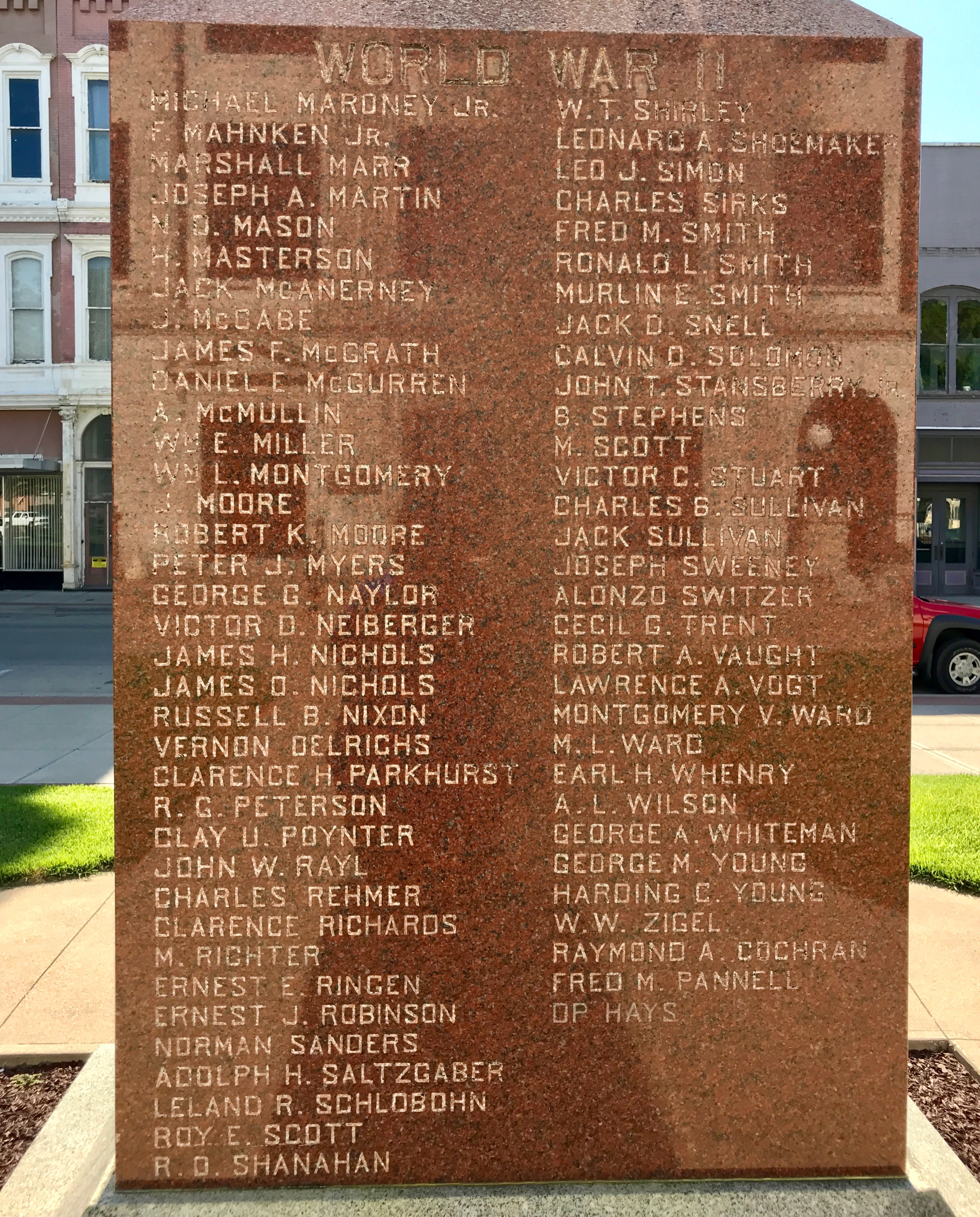
more WW II,
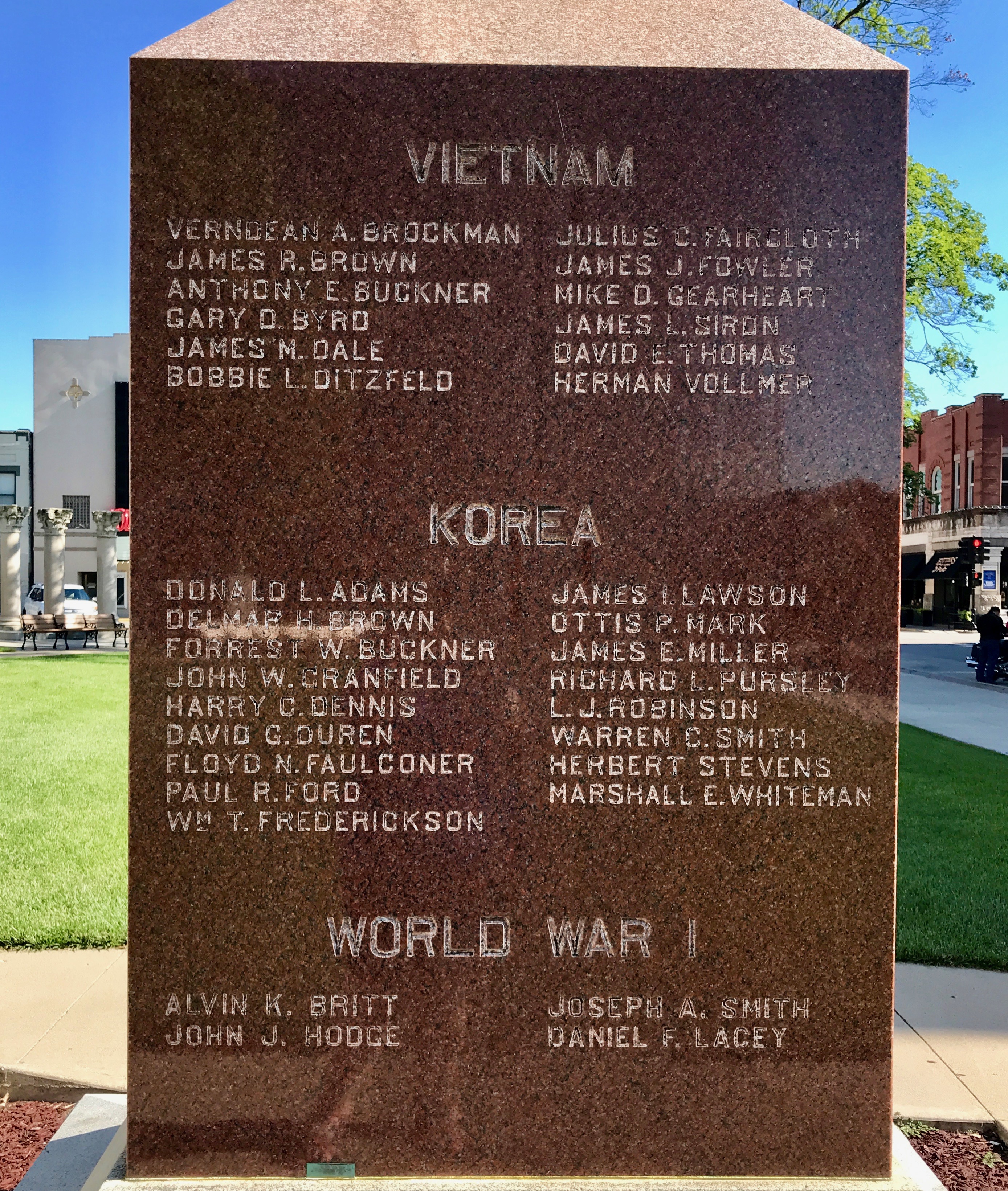
More WW I soldiers, along with Vietnam and Korea.
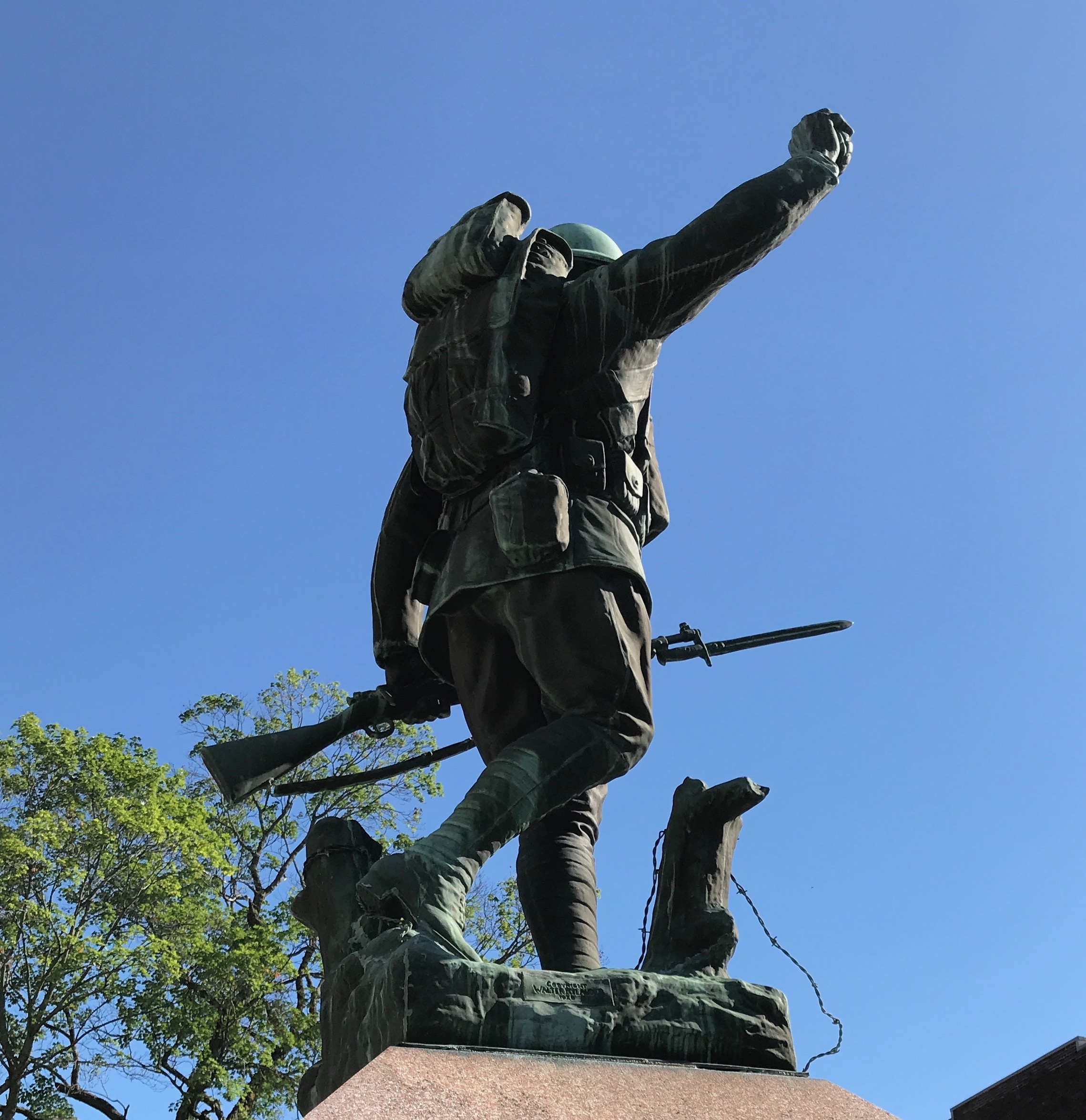
I like this view from the rear of the statue. It looks more dynamic.
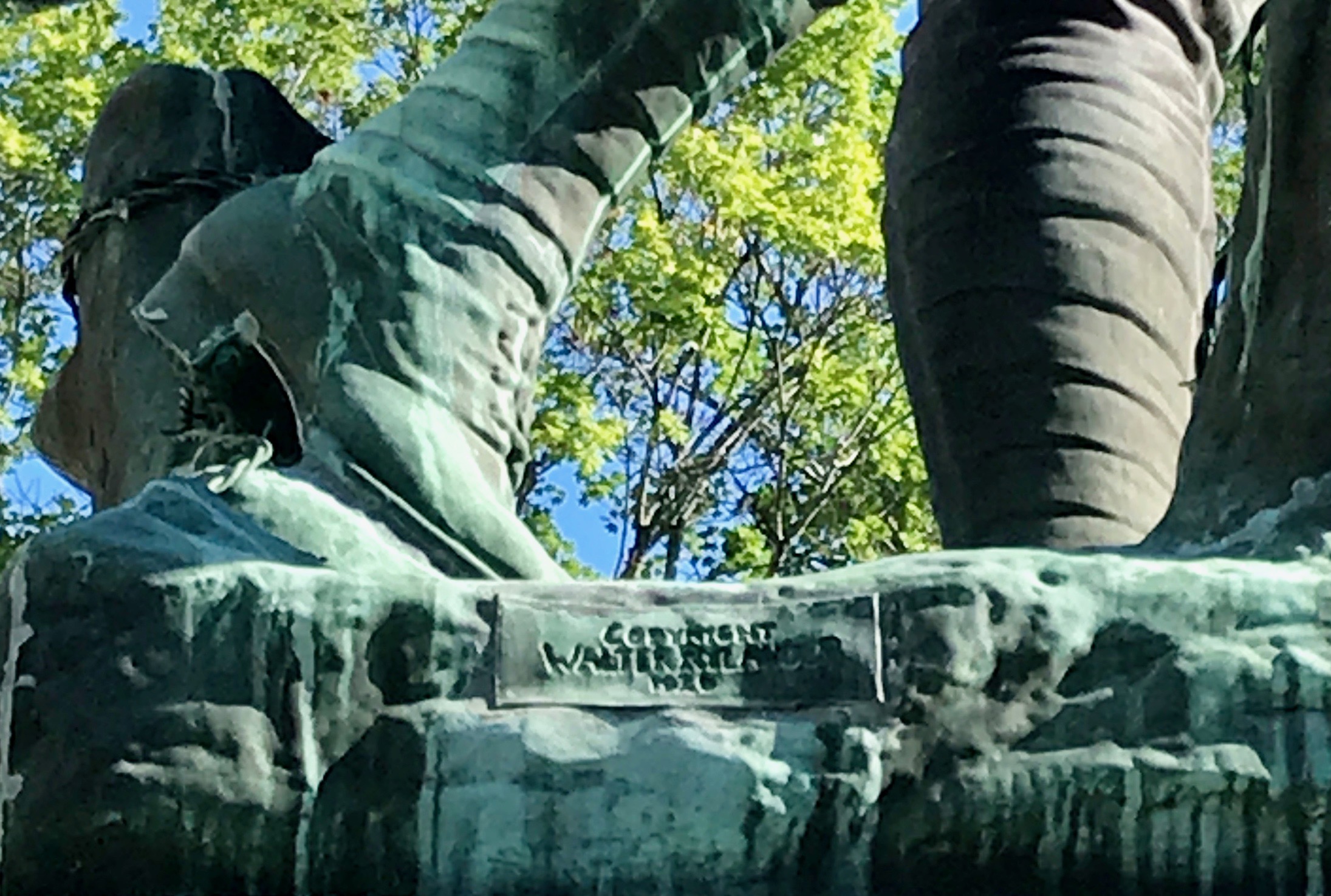
I found it interesting that the artist copyrighted his work. I was frustrated that I couldn’t make out his name. With just a few clicks in the search bar, I found a website that gave me the name of the artist: Walter Rylander.
I wondered if there are more of Rylander’s doughboy statues around the country? Well, yes, there are! In addition to Sedalia, there is one in Bolivar, Missouri, St. Bernard, Ohio, and Muskogee, Oklahoma. Oddly enough, these statues were the original work of E.M. Viquesney, who sold the company to Rylander, who owned the copyright for a few years. According to the website, roughly 10% of the United States WW I memorials are based on Mr. Viquesney’s statue. According to my Preferred Source, there are still about 140 of his statues in 38 different states.
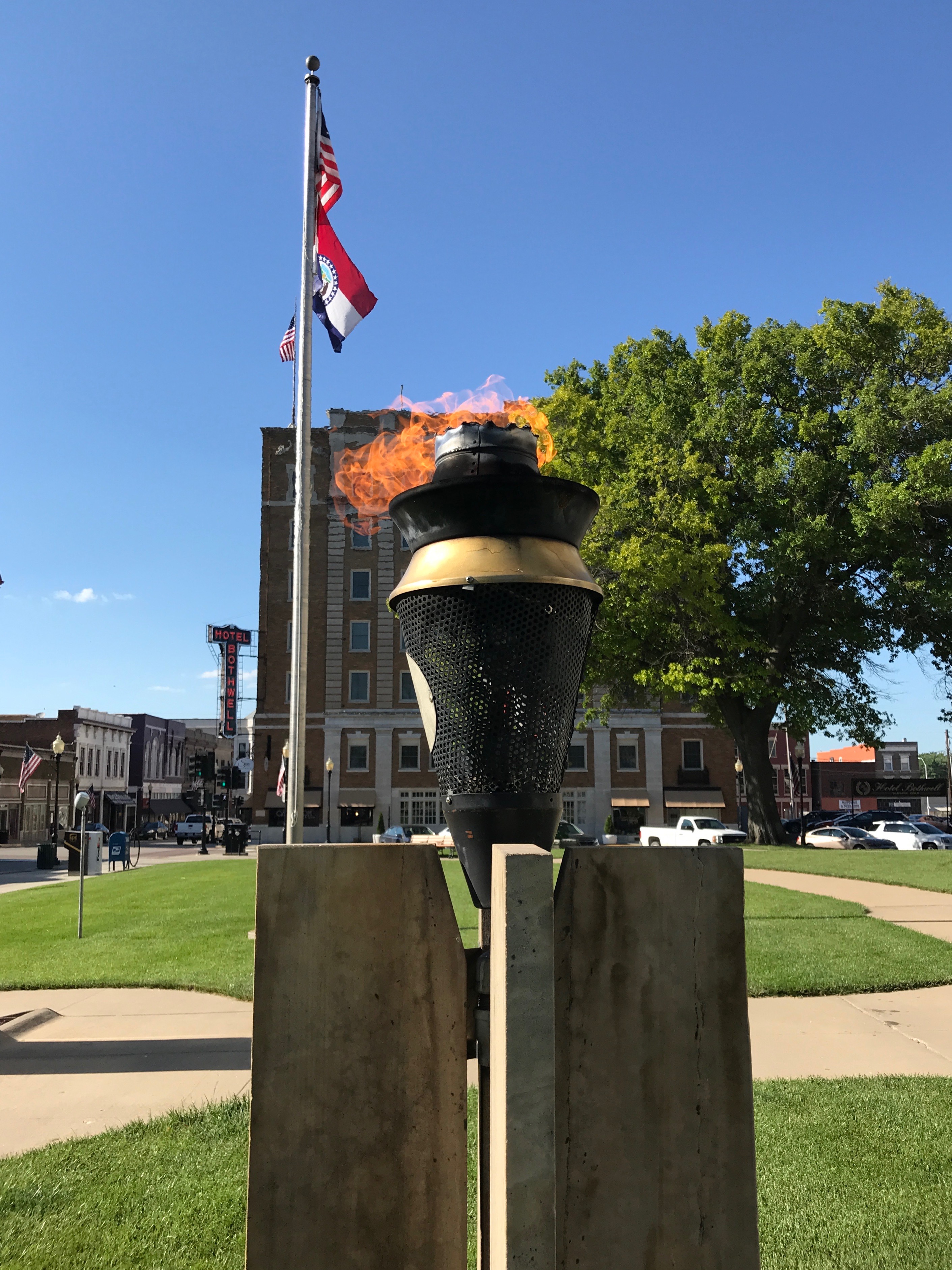
I continued with my exploration and came upon this eternal flame dedicated to all the Pettis Countians, living and dead, who served in the Armed Forces of the United States.
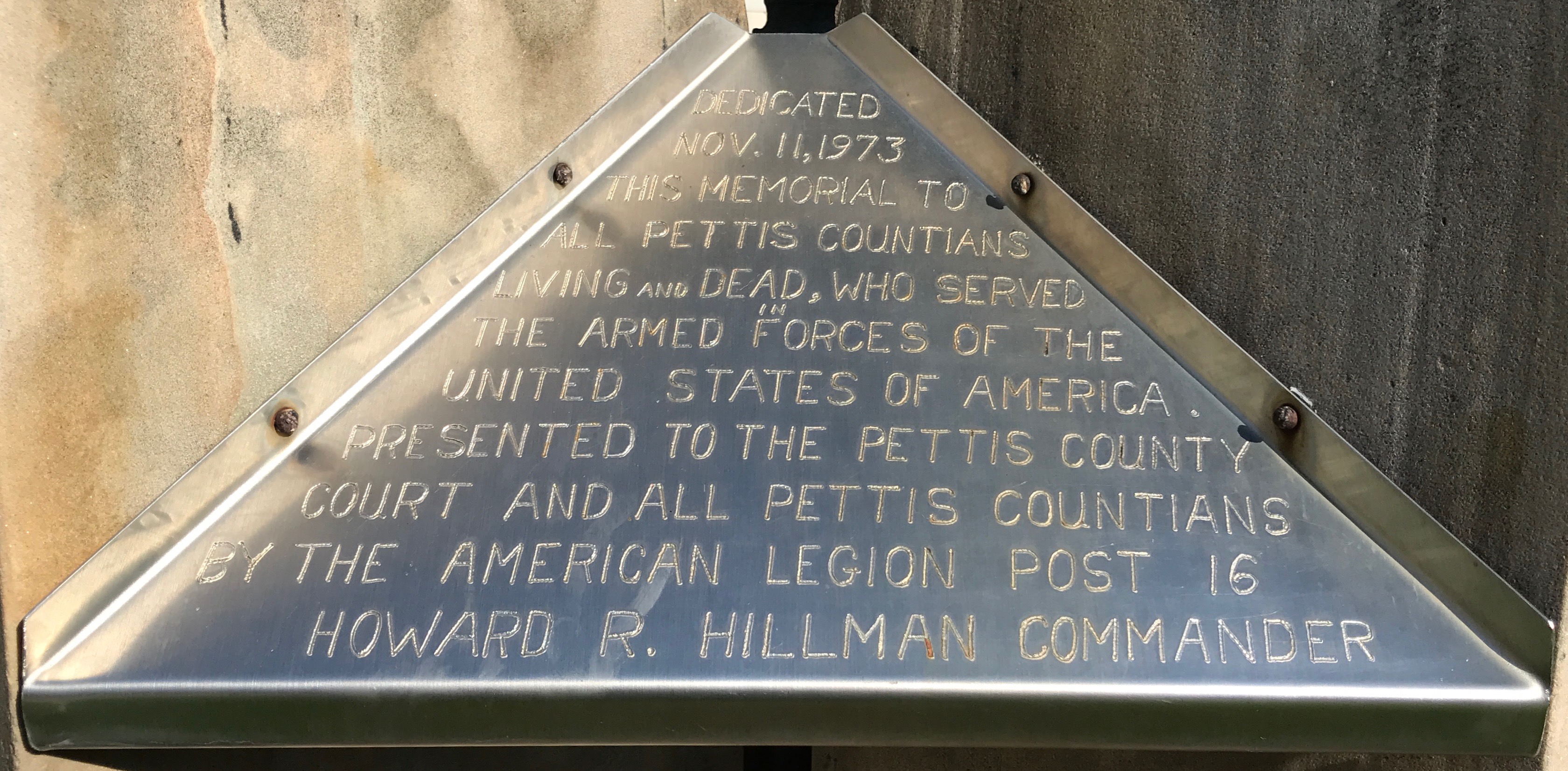
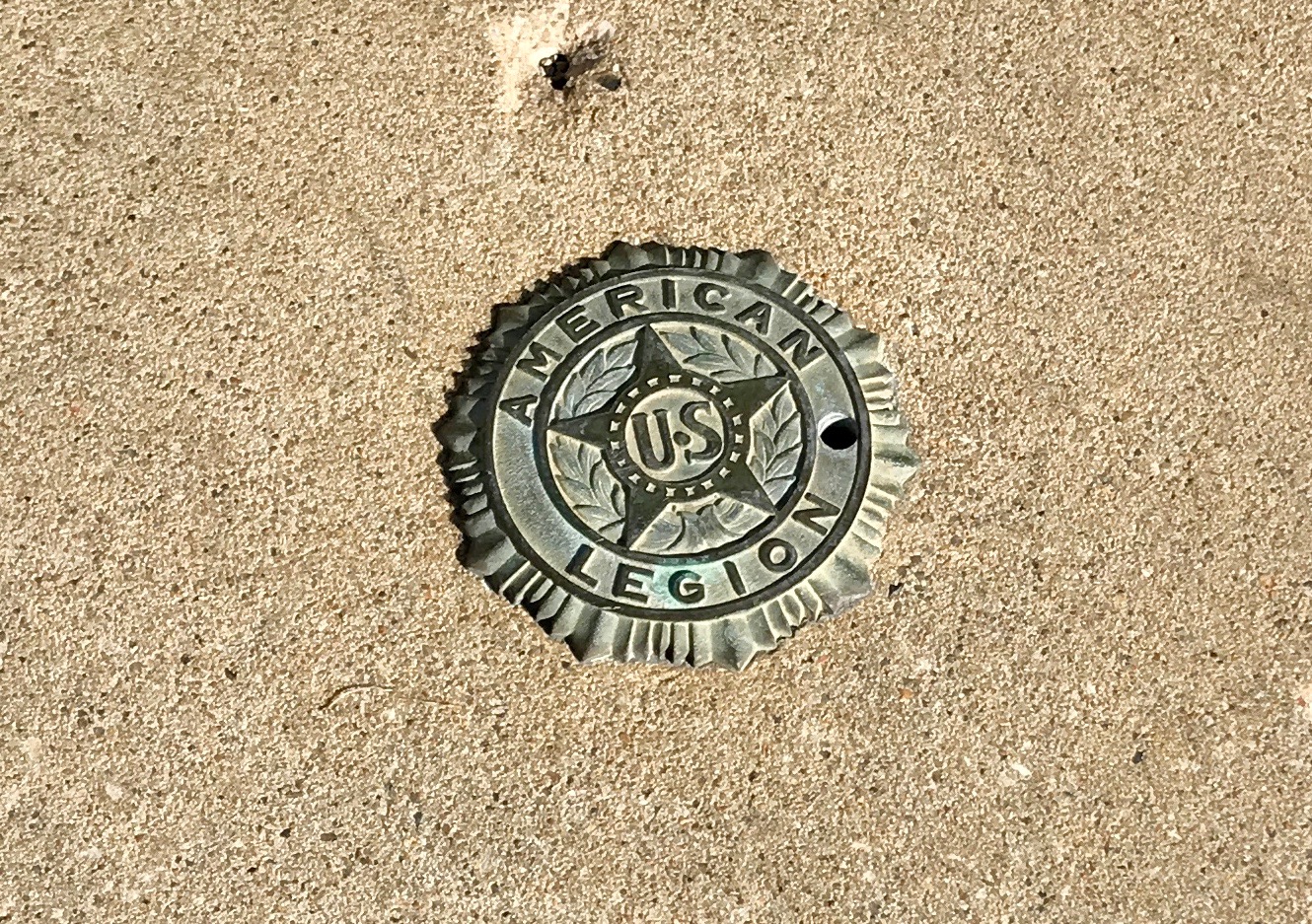
Appropriately enough, it was sponsored by the American Legion.
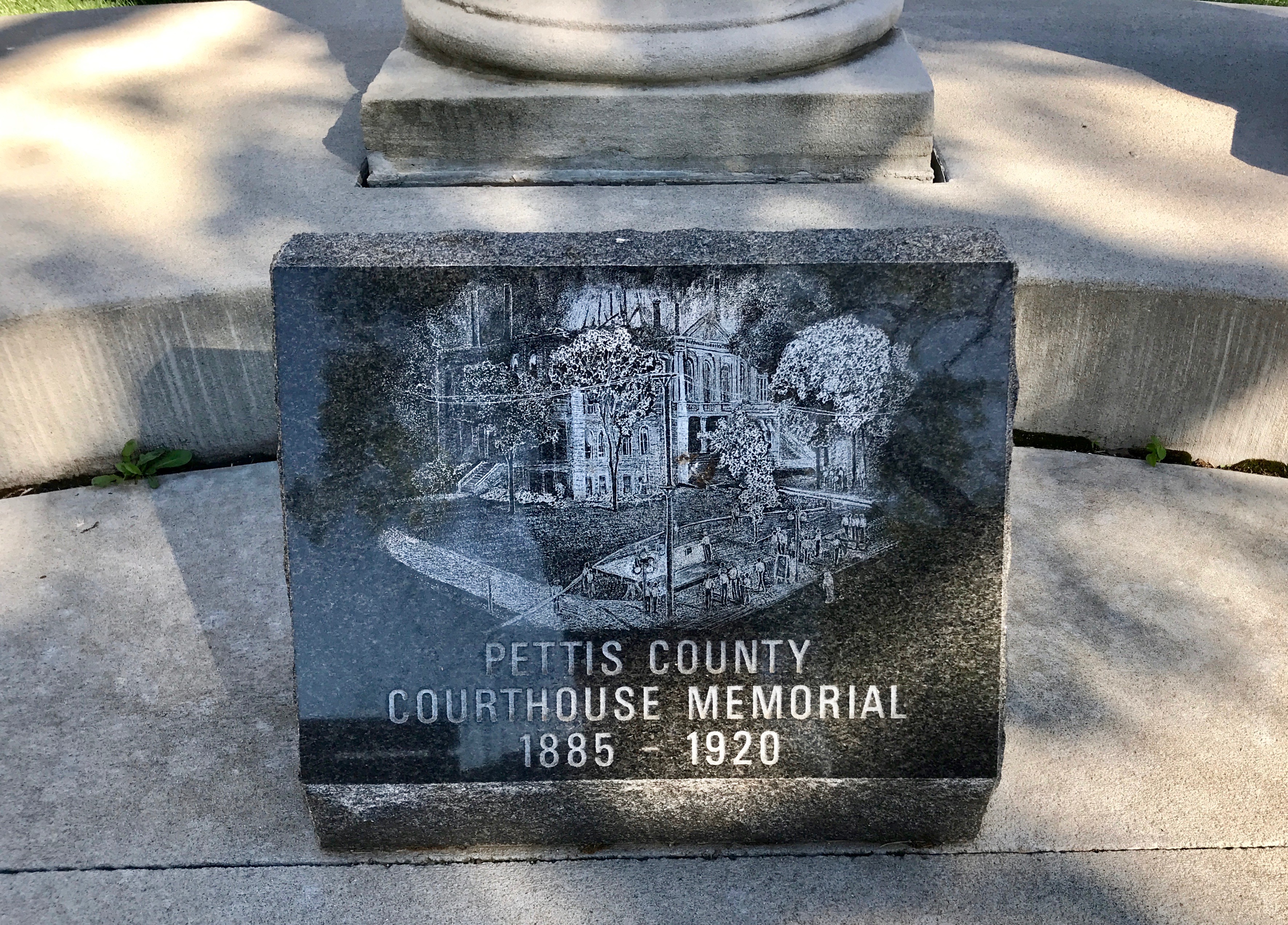
At the corner of the block was a memorial to the county courthouse that burned down in 1920.
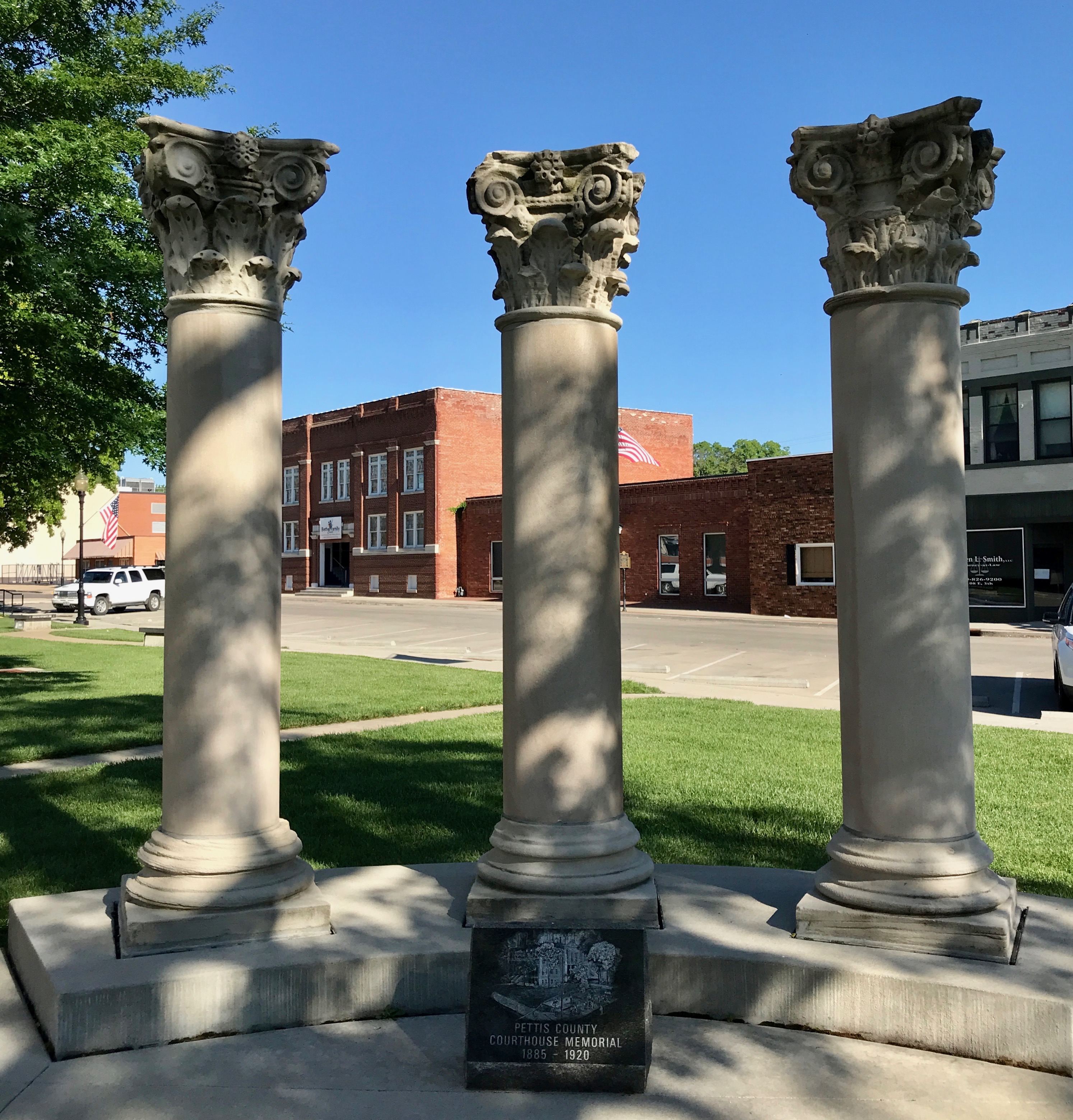
I wonder if these columns were part of the original courthouse.
The war dogs were also honored. It made me smile that their memorial was placed infant of the Fox Theater. I wonder if they were thinking of the dogs chasing the foxes when they placed it. Or, did it just turn out that way?
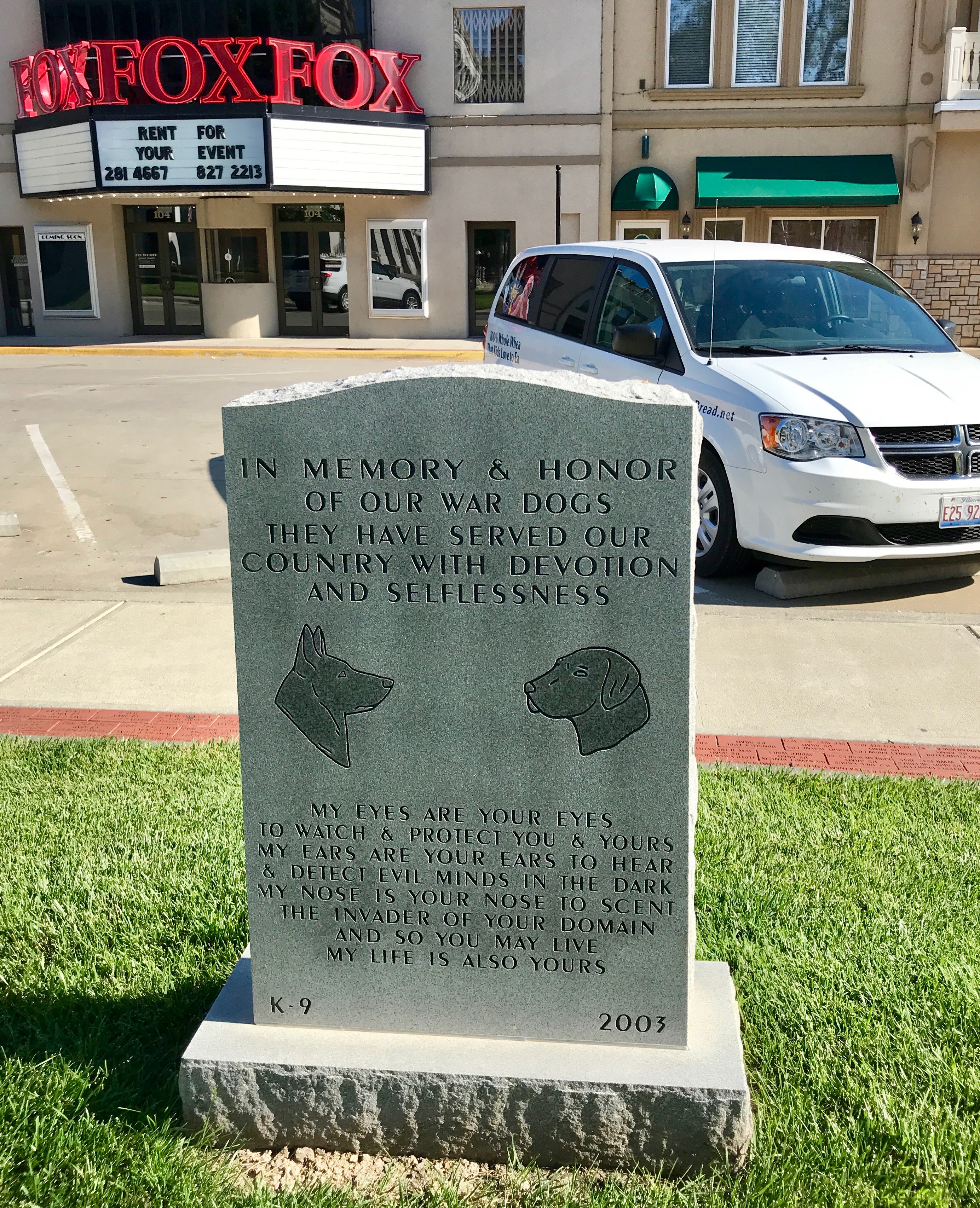
They are fairly up to date with their memorials.
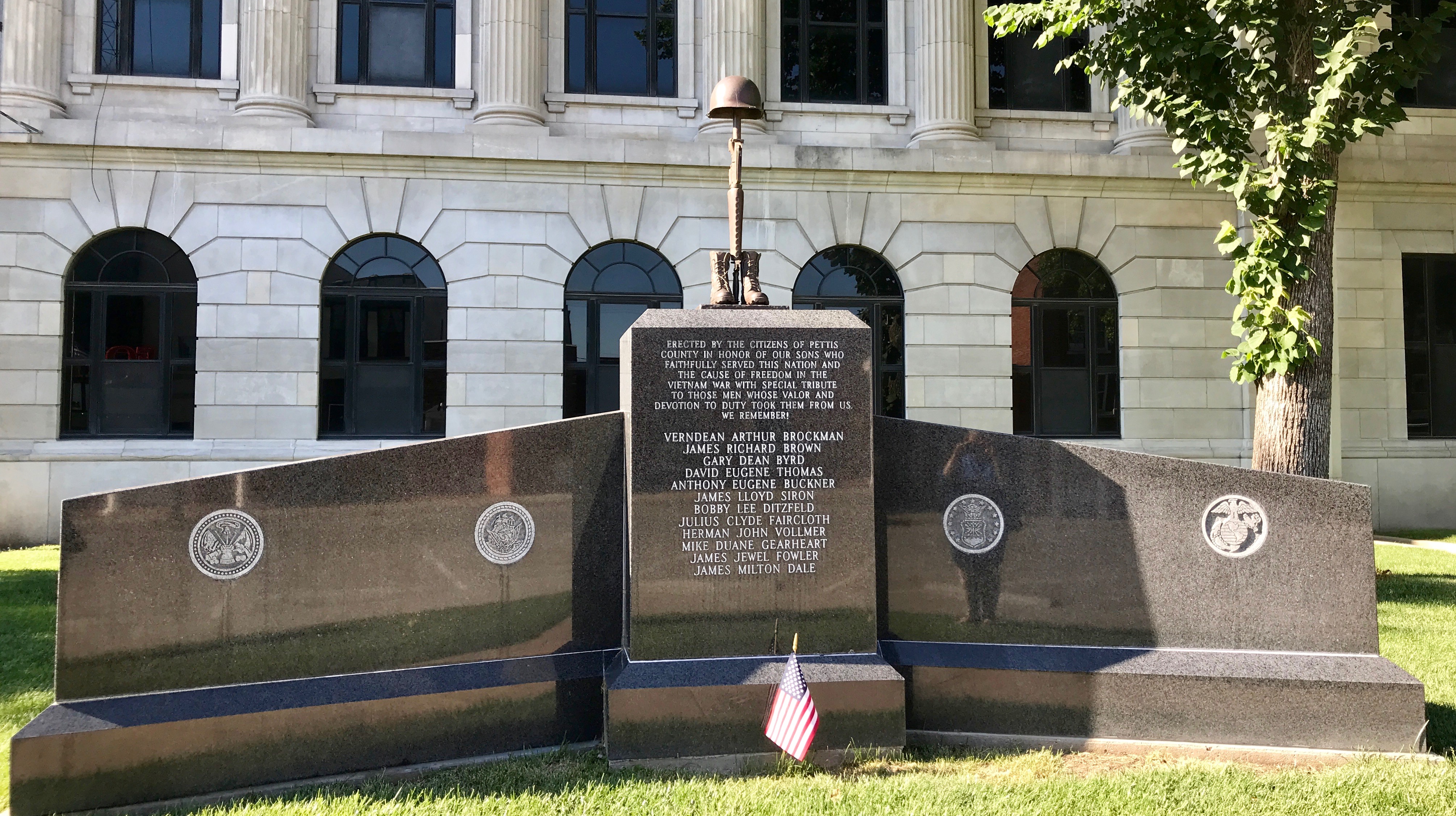
Here is the Vietnam Memorial.
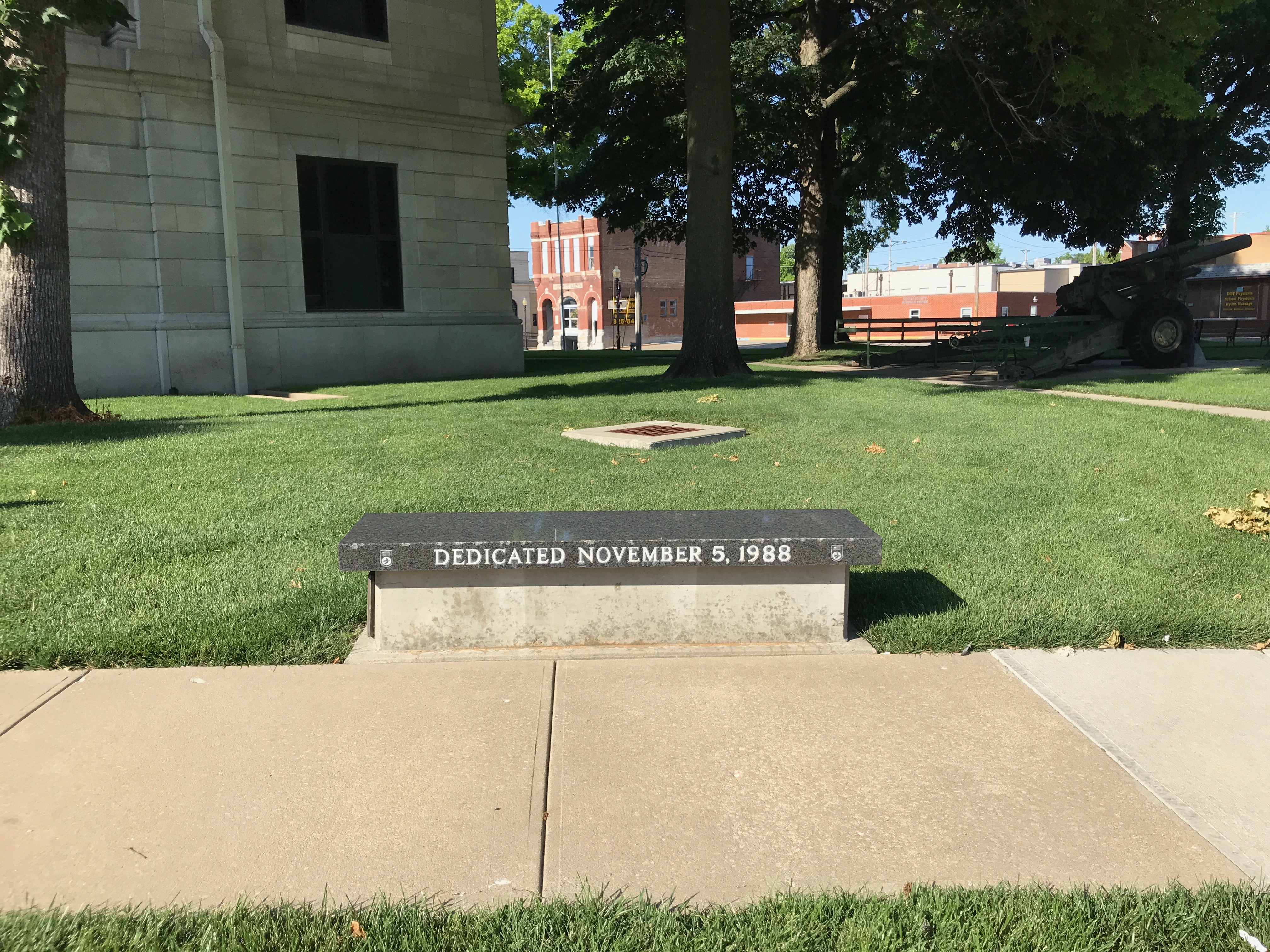
I assume this bench was part of the memorial. In any event, it is a nice, practical addition to the collection of memorials.
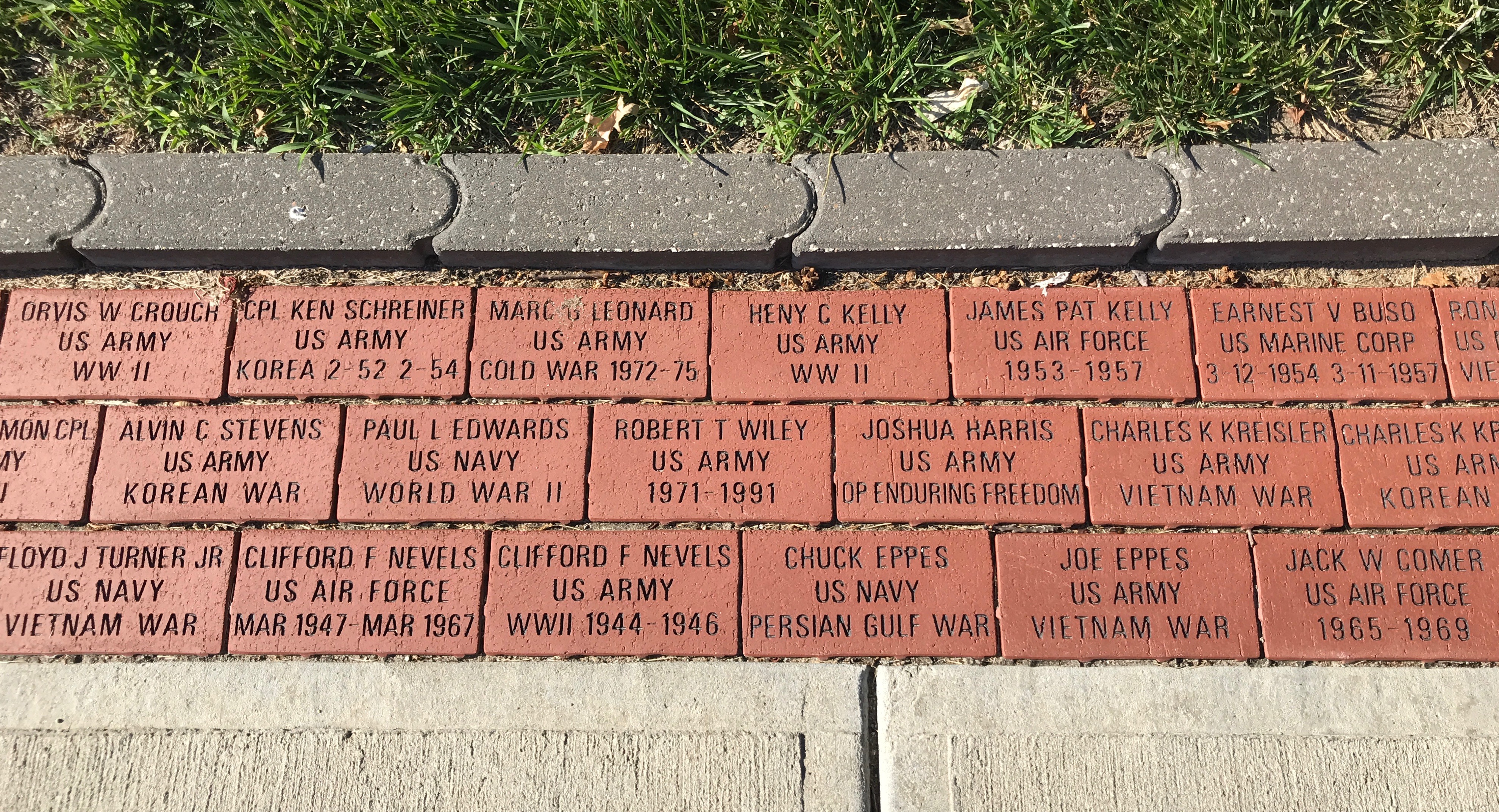
Memorial bricks edged the sidewalk.
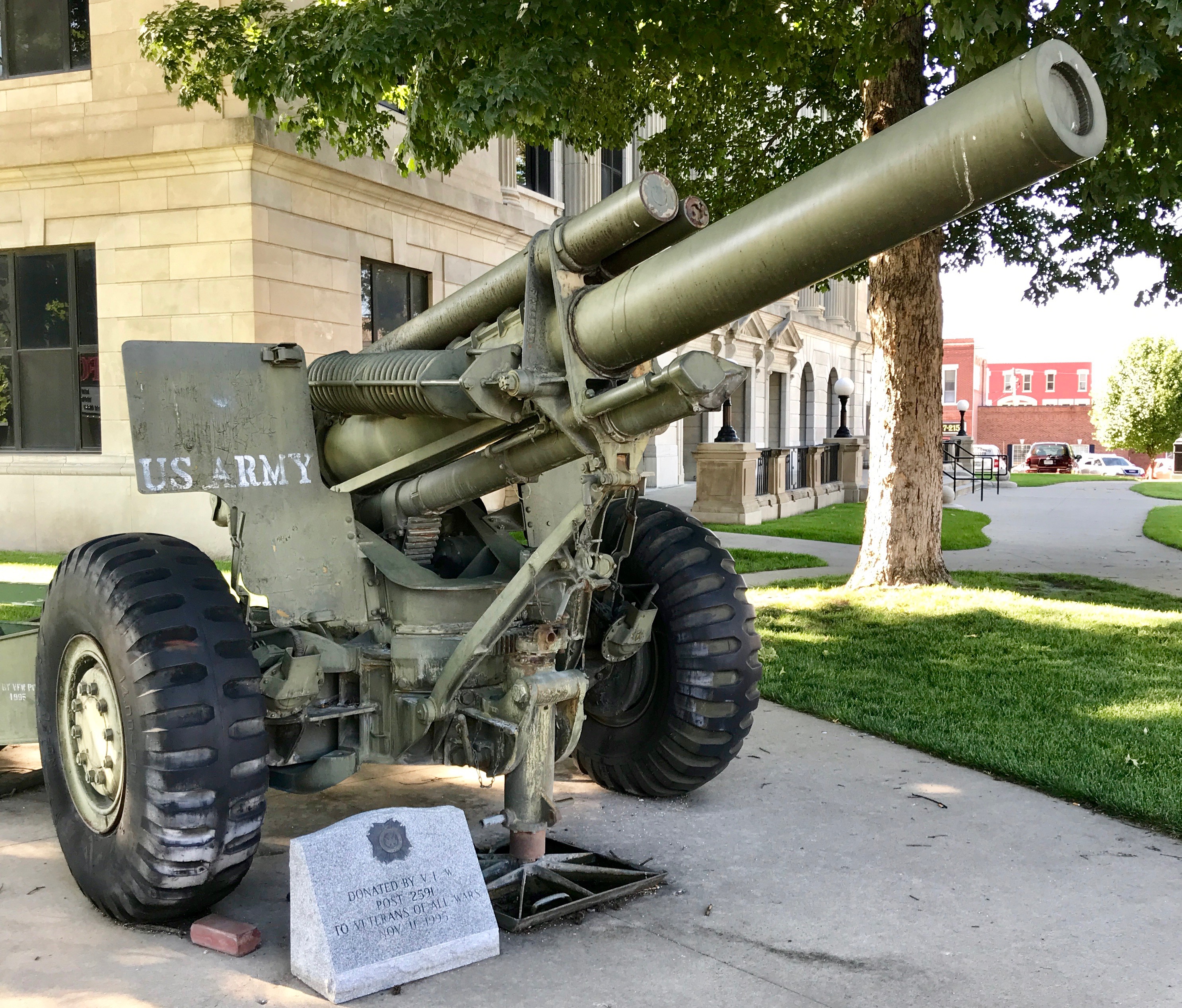
They didn’t have any of those old-timey cannons that so many places have on display, but there was this piece of ordnance. In my notes, I have it identified as “Big Gun.” I am sure that there is a more accurate name for it.
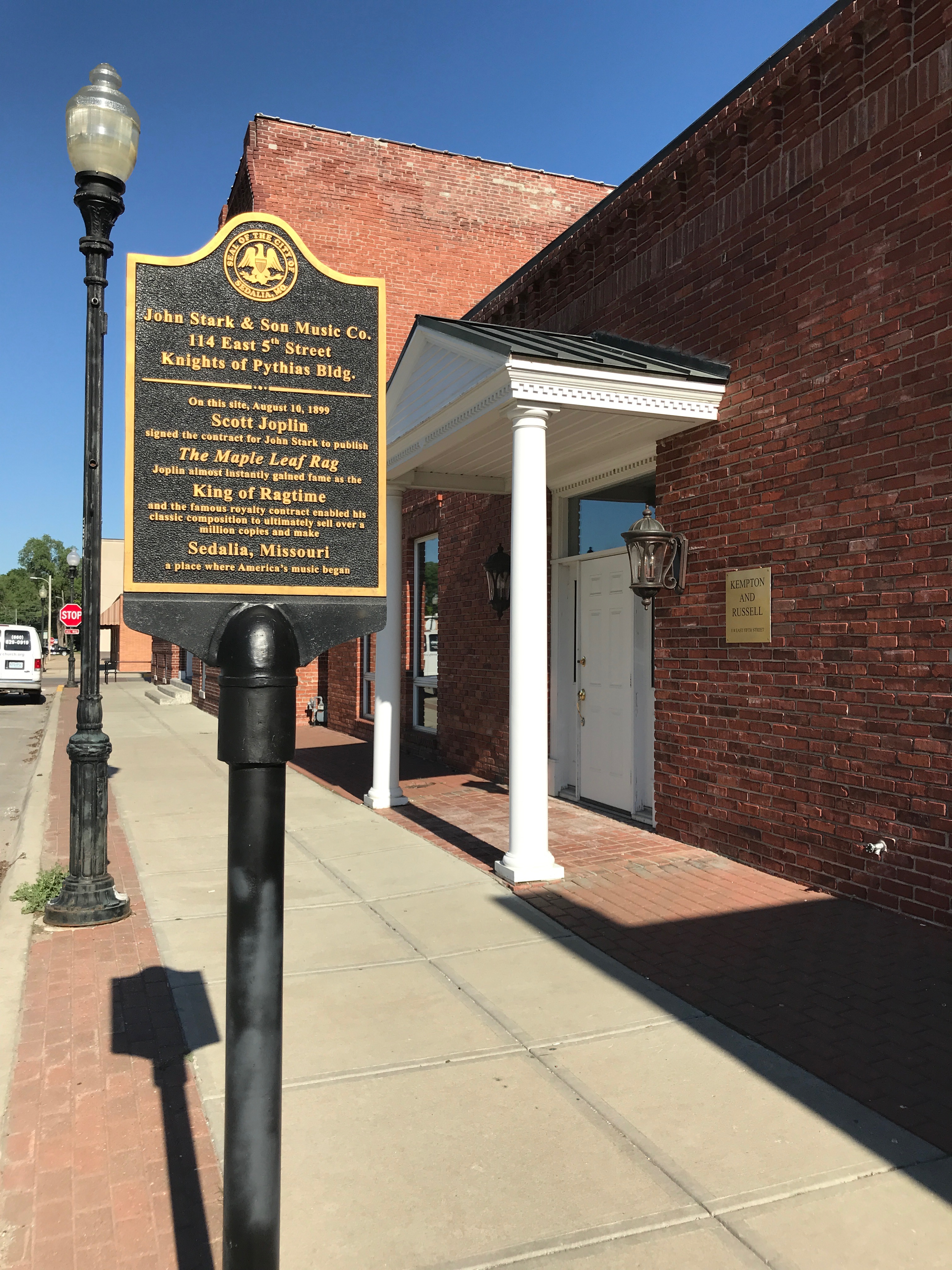
Across the street from the Big Gun was an interesting site. The sign reads, “On this site, August 10, 1899, Scott Joplin signed the contract for John Stark to publish The Maple Leaf Rag. Joplin almost instantly gained fame as the King of Ragtime and the famous royalty contract enabled his classic composition to ultimately sell over a million copies and make Sedalia, Missouri a place where America’s music began.”
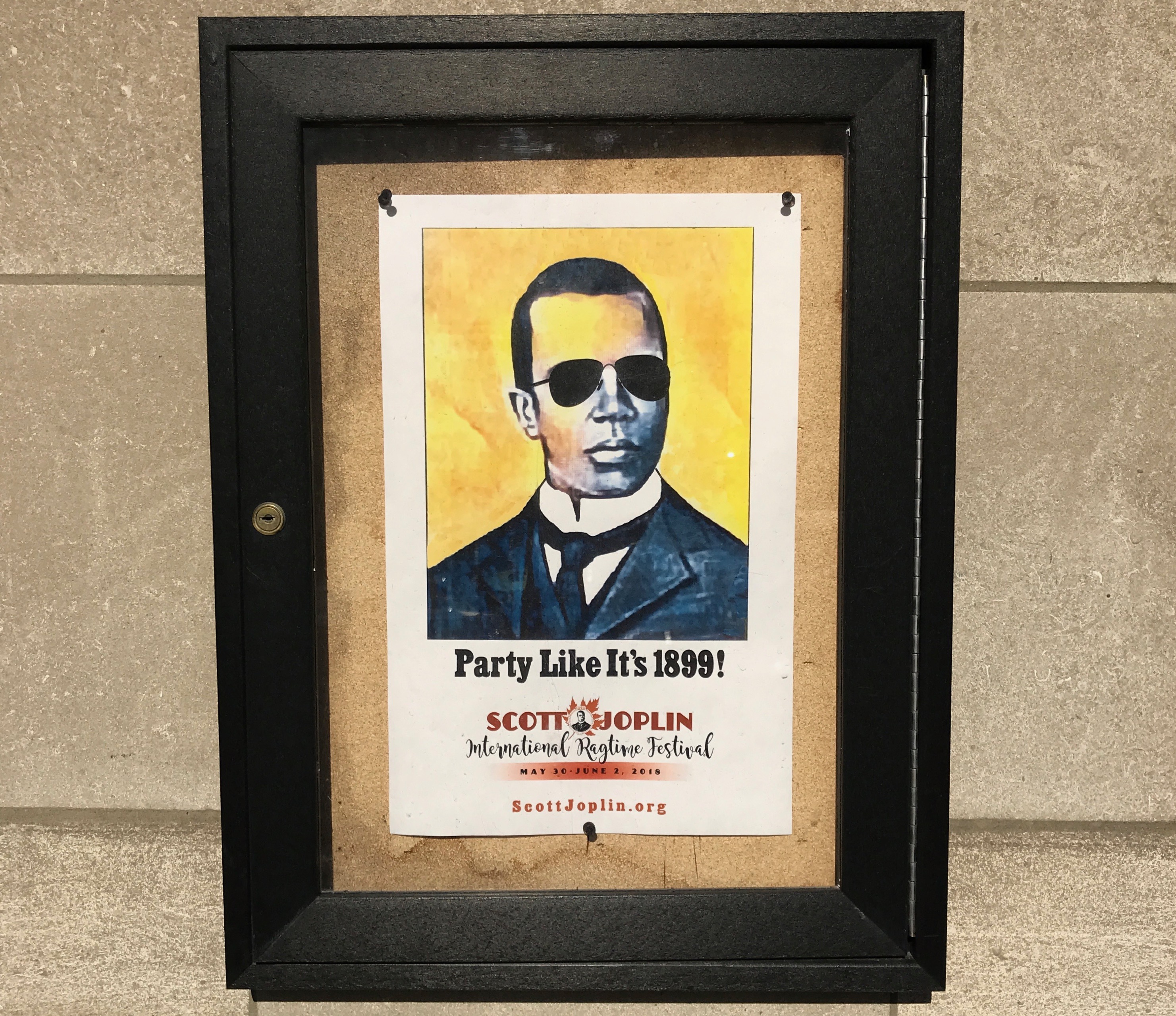
Scott Joplin is truly a favorite son in these parts.
Just in case you couldn’t remember which composition we’re referring to, here it is. This is a recording made from a piano roll that the poster said was created by Scott Joplin. So, you are listening to the piano playing of the original composer.
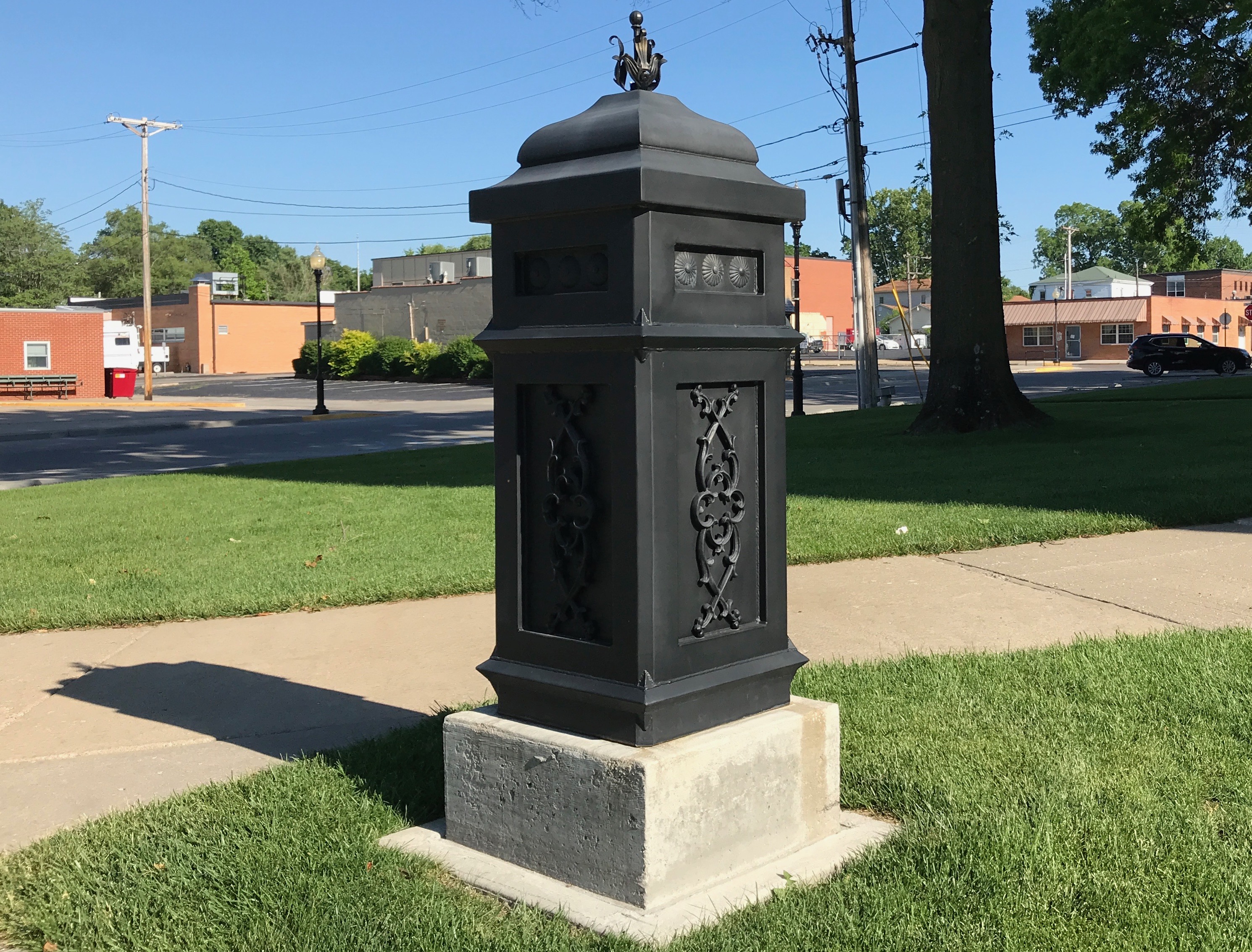
I continued my leisurely stroll around the courthouse and came upon this interesting structure. The sign explains what it is.
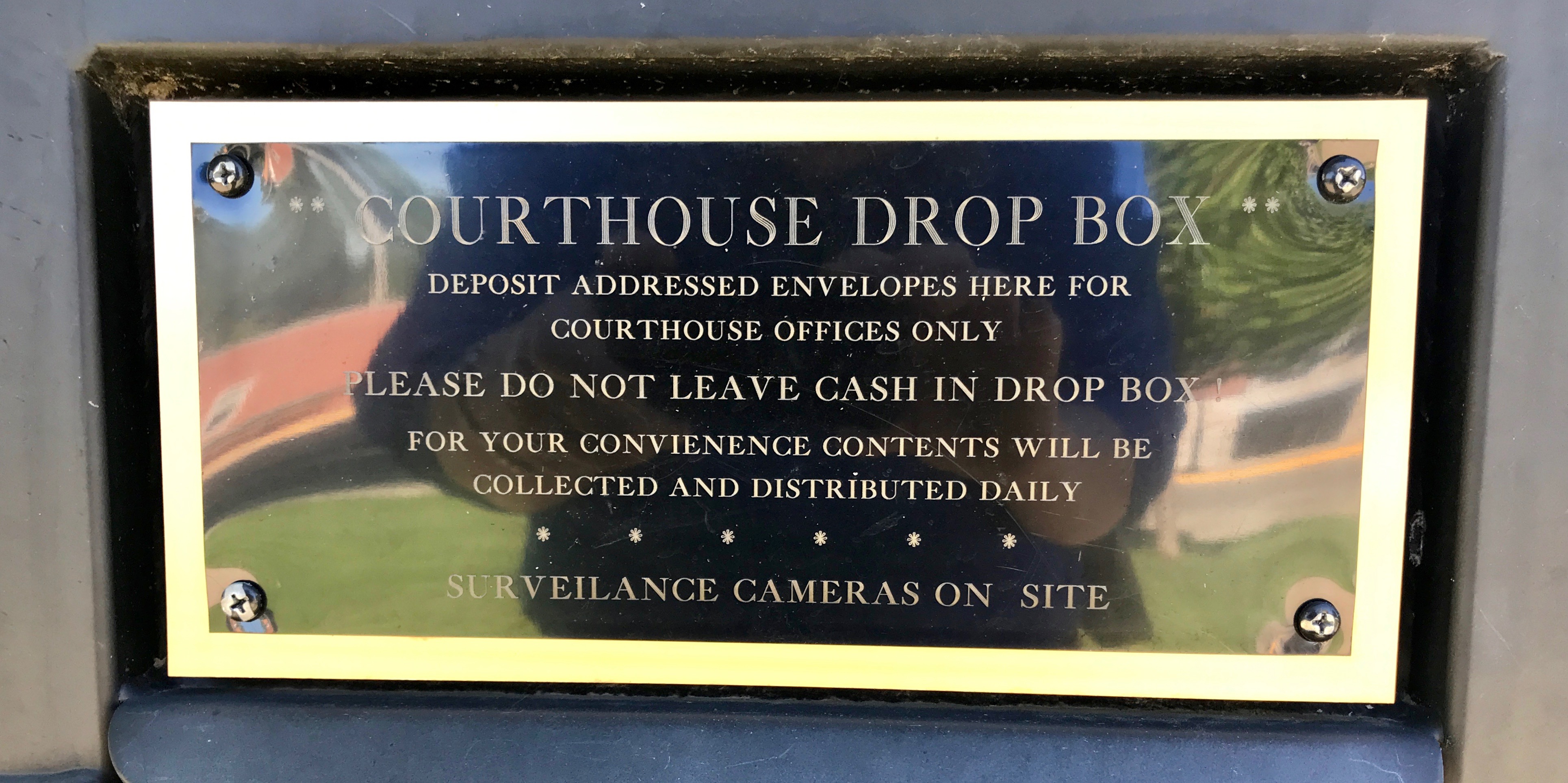
Do you suppose they have videos of this strange woman walking around and taking pictures of everything?
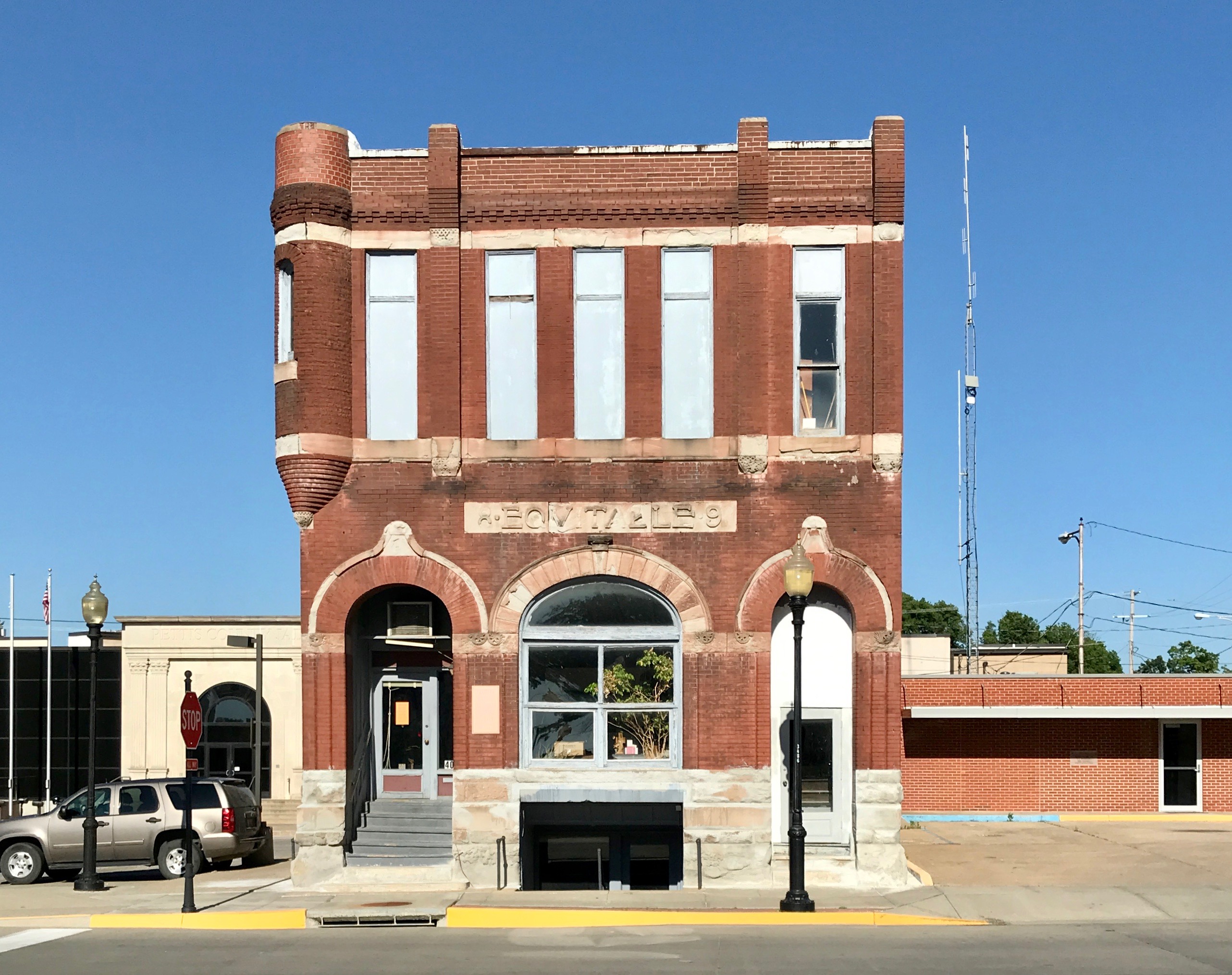 This interesting building was on the block behind the courthouse. It’s too bad that it wasn’t kept up. I wonder what it was originally. The stone sign has disintegrated quite a bit, but if I zoom in and look carefully, it looks like it says, “8.EQVITABLE.9”
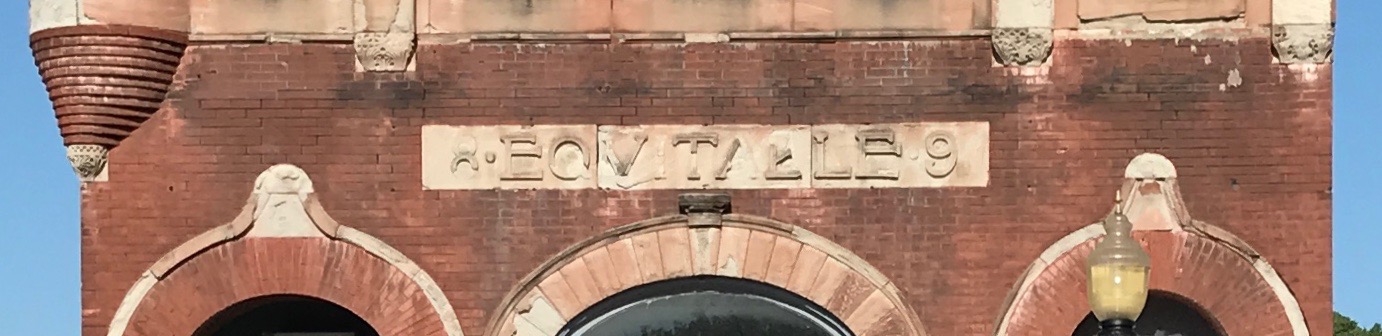
Could it be the offices of the Equitable Insurance Company and was built in 1889? Could be. There wasn’t anyone around to ask, and nearly 120 years after the fact, it would probably be unusual to find someone just passing by on the street that would know the answer.
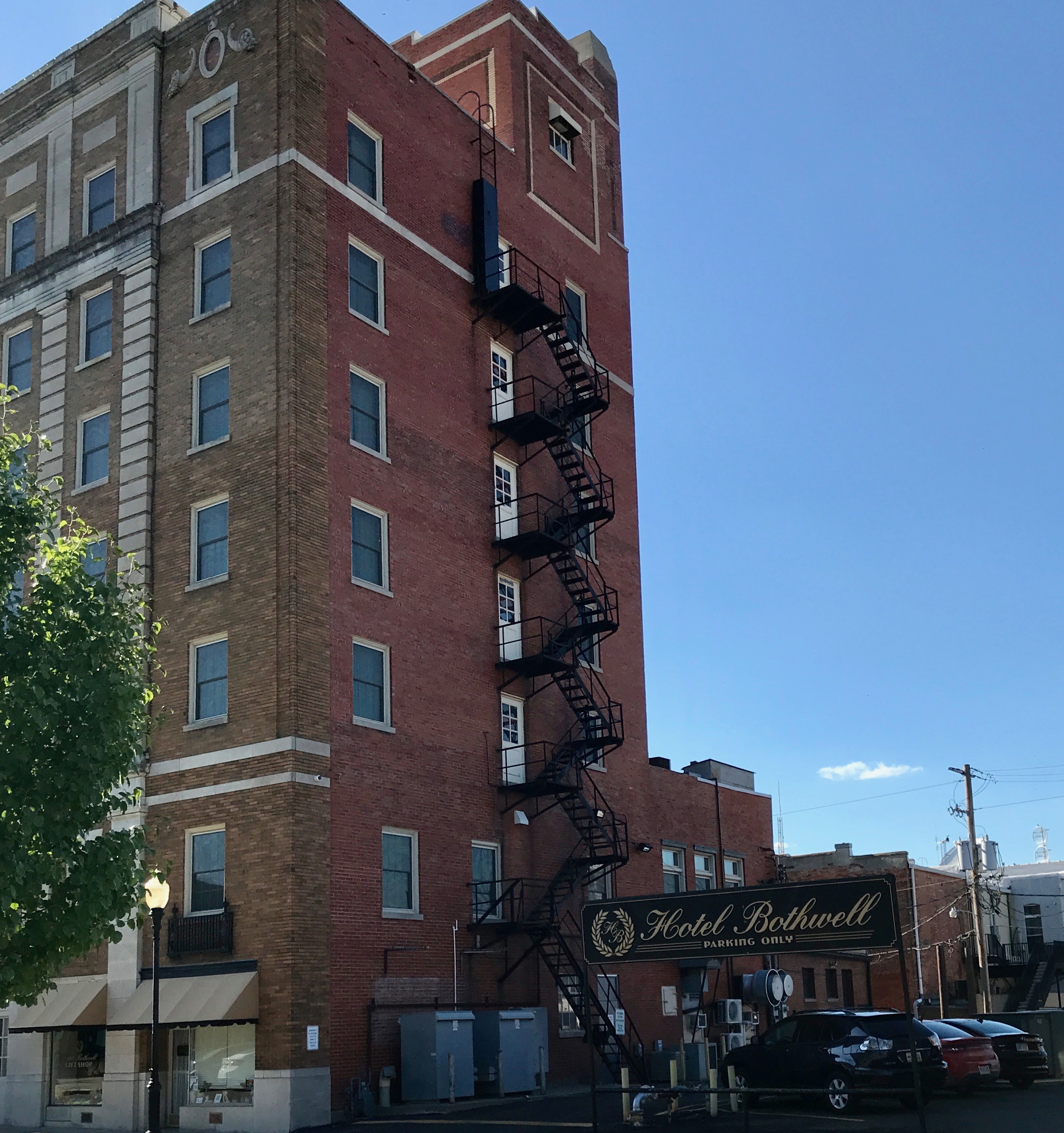
I turned the corner and came upon the rear of the Hotel Bothwell, and this building was definitely kept up.
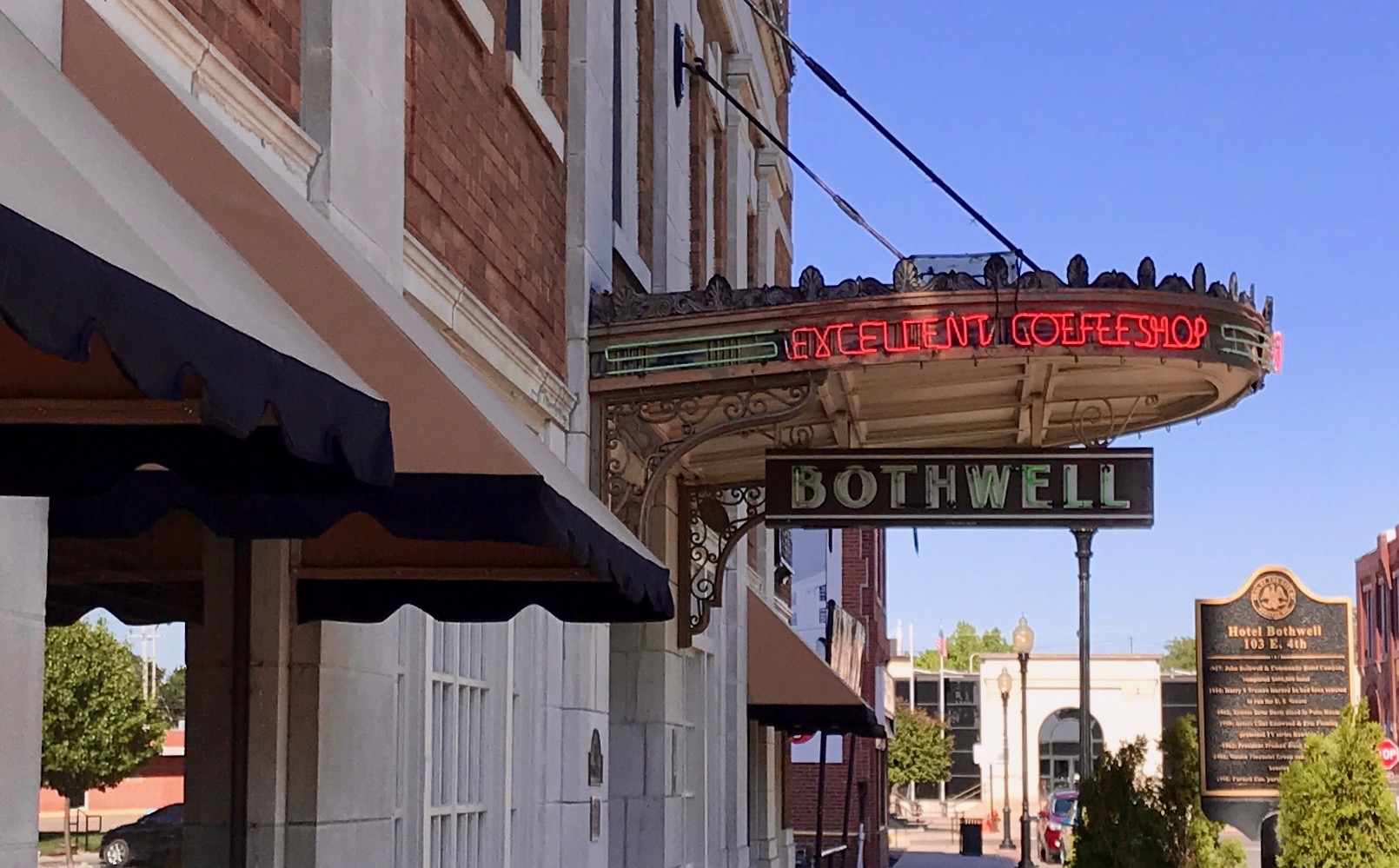
I walked under the marquee of the hotel. I like how they advertise their excellent coffeeshop. Excellent coffee is always appreciated!
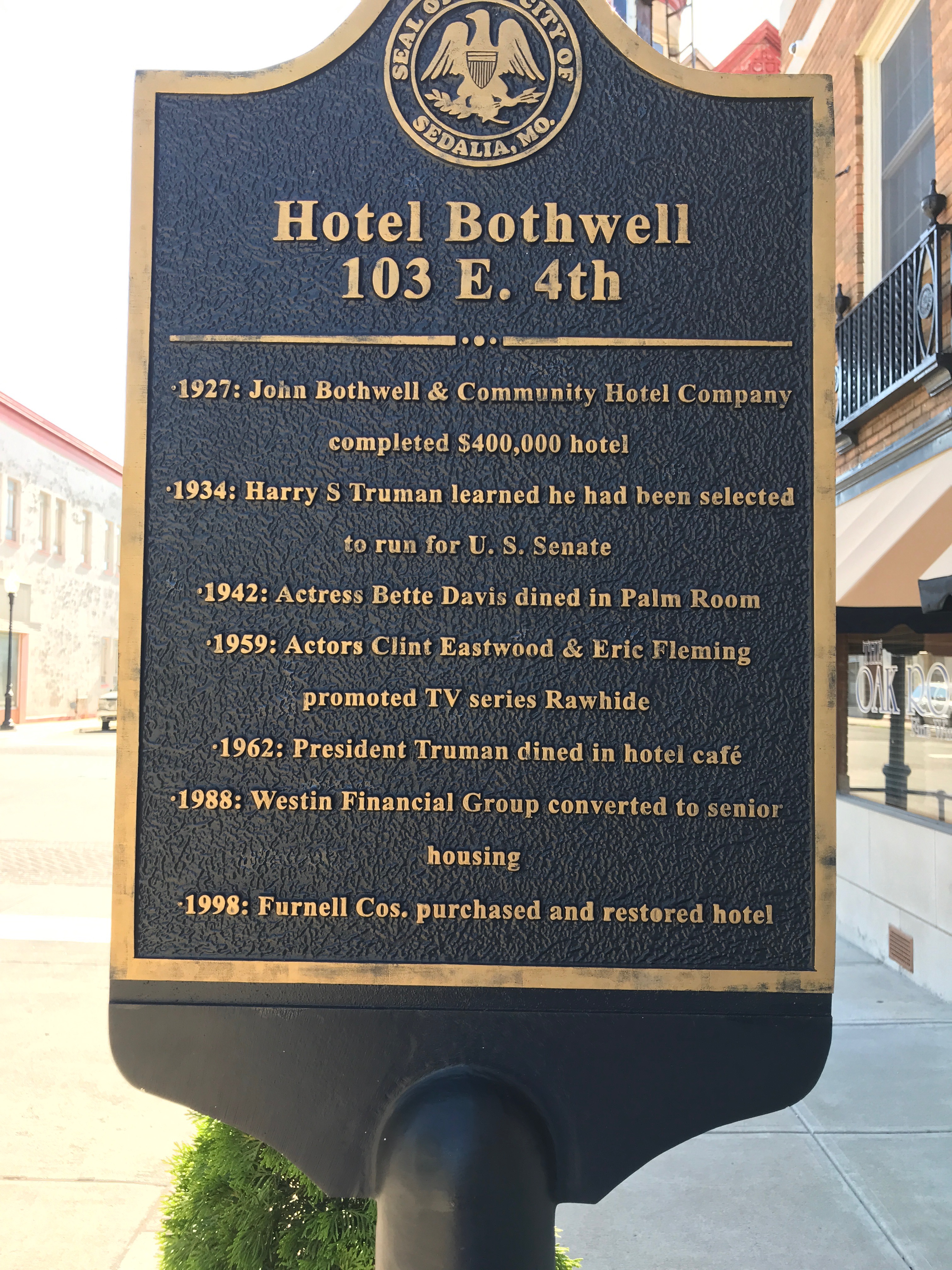
I always appreciate information in bullet points, so I am just going to leave this sign here to tell you about the history of the building. I’m glad it’s back to it’s original hotel function.
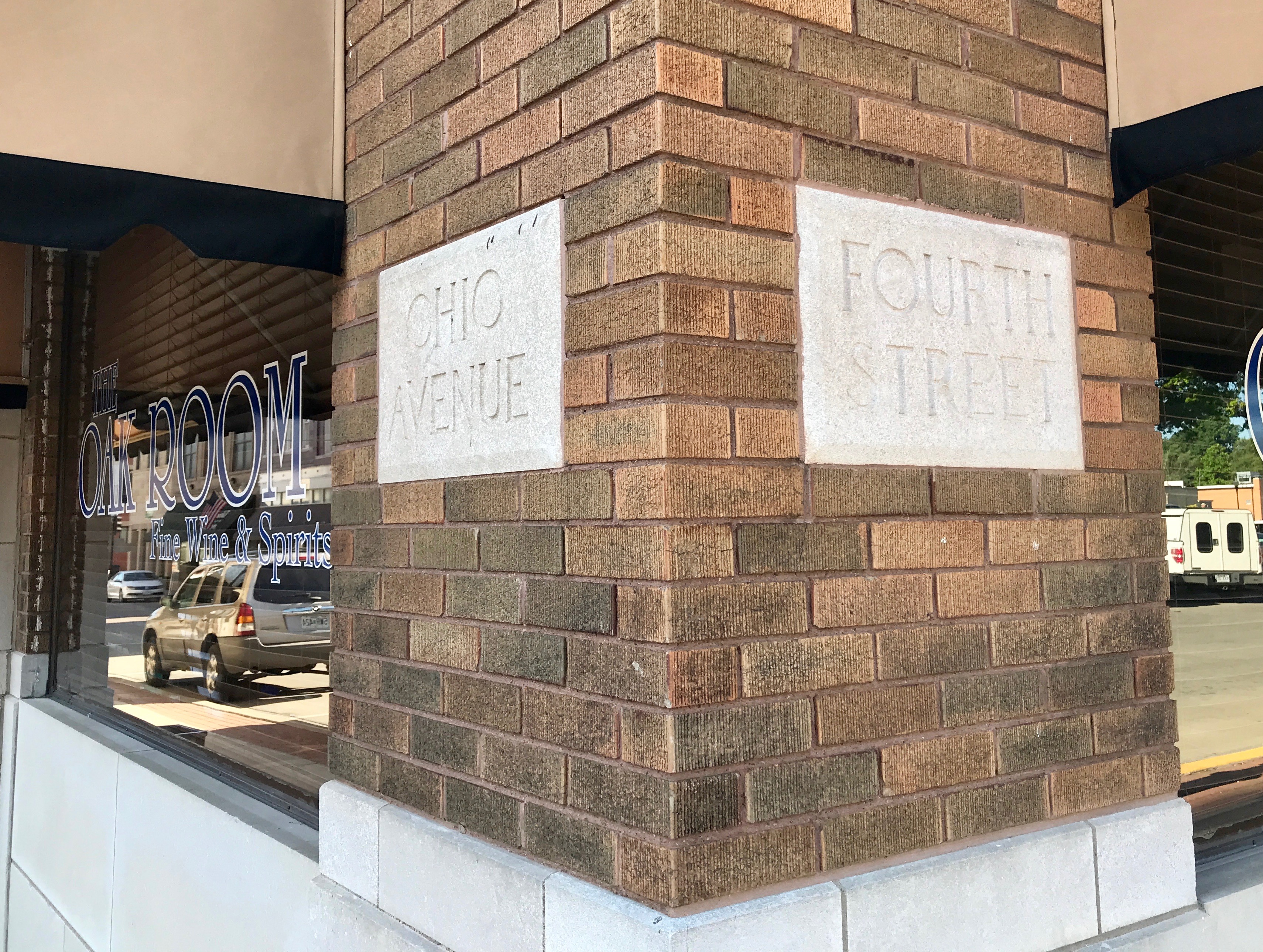
I liked the street signs. You knew just where you were: at the corner of Ohio Avenue and Fourth Street.
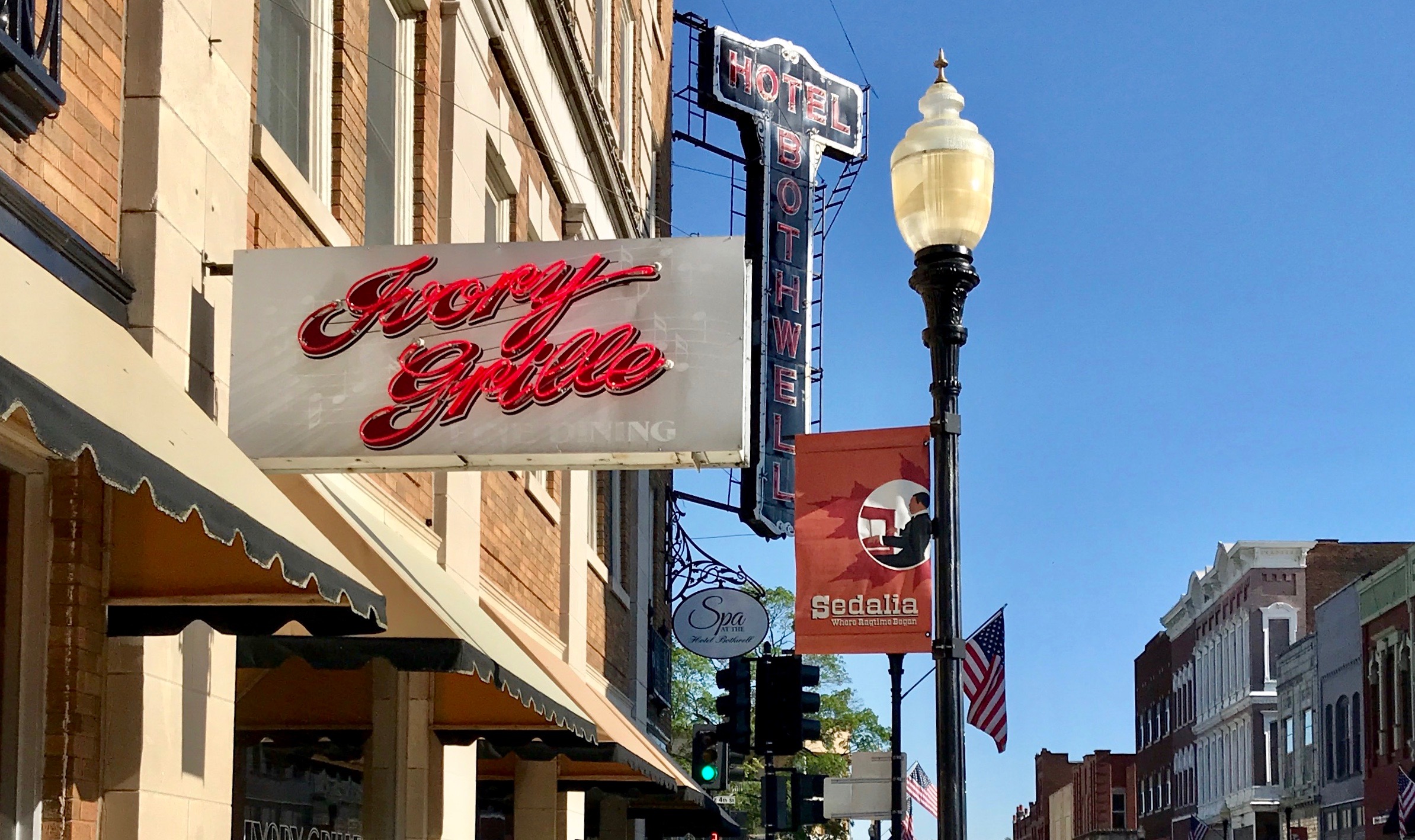
I continued my walk around the corner and down the street.
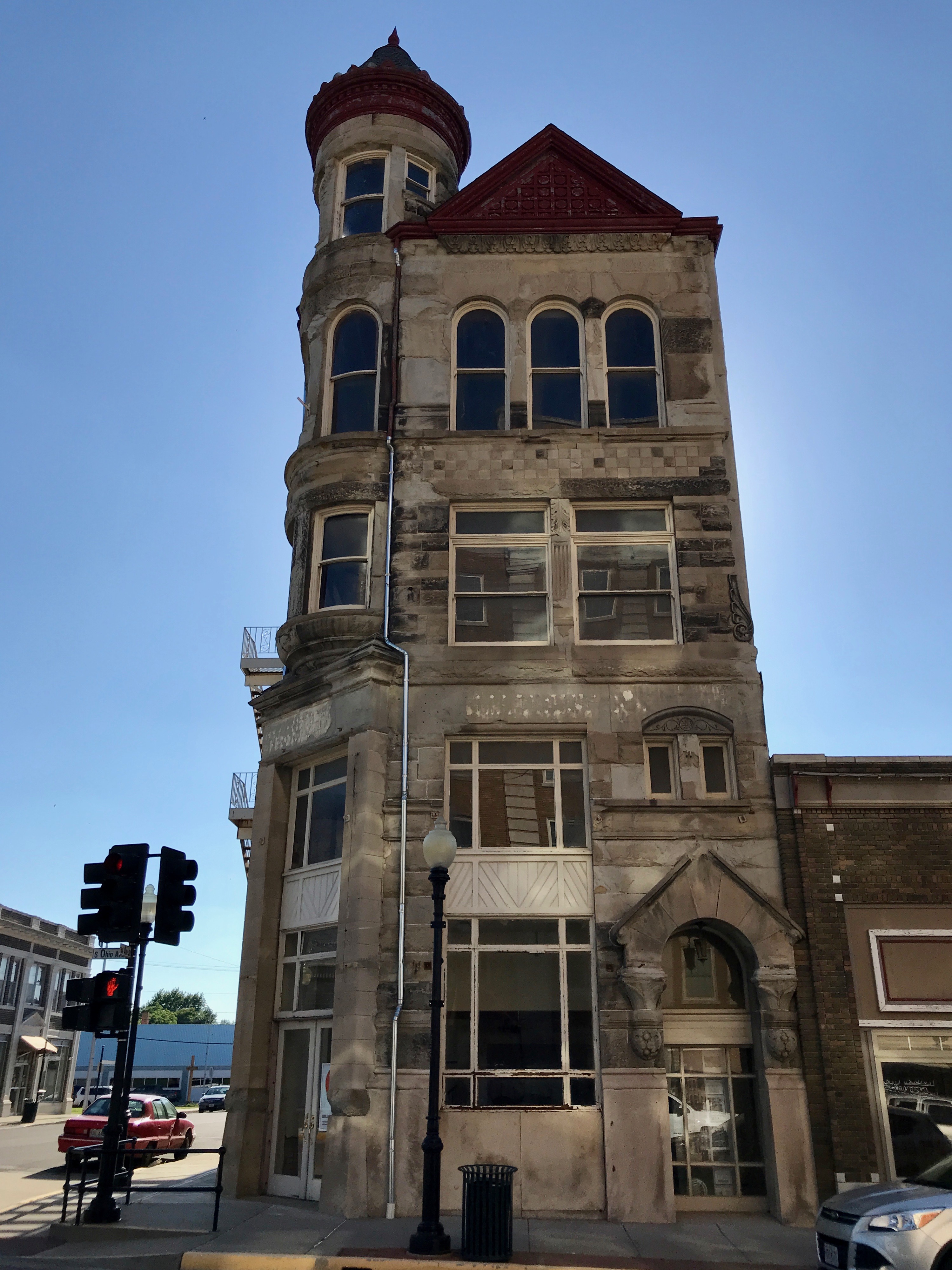
It was late in the day and any businesses trying to make a go of it in downtown Sedalia had closed up for the day. This interesting old building was right across the street from the hotel. I decided that I might as well check out the hotel. I do enjoy stately old hotels.
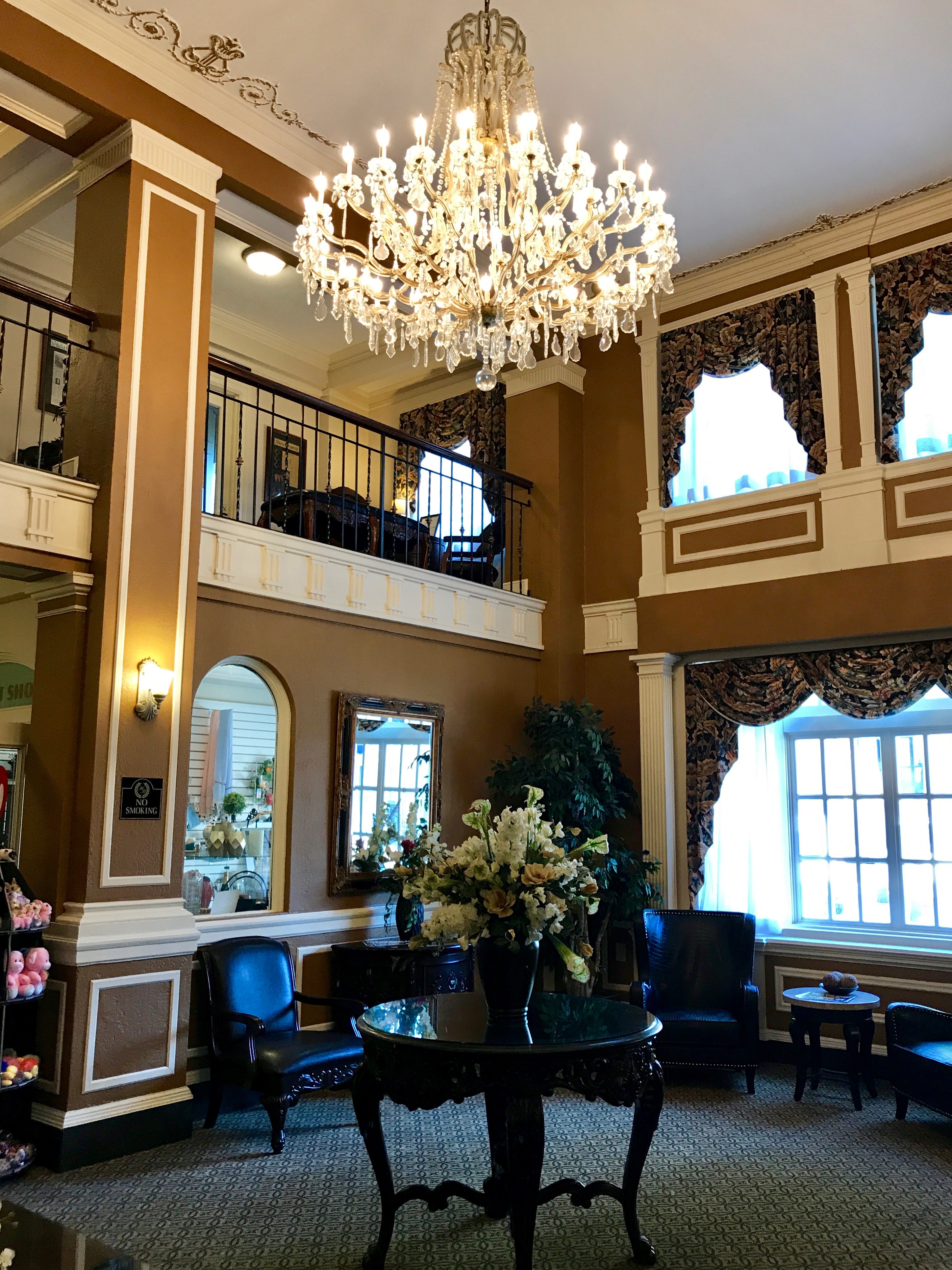
The lobby was small, but very elegant. This was where Harry S Truman learned that he had been selected to run for the U.S. Senate in 1934. You might wonder, “Who selected him?” Well, it was the Pendergast Machine that I mentioned a few posts back.
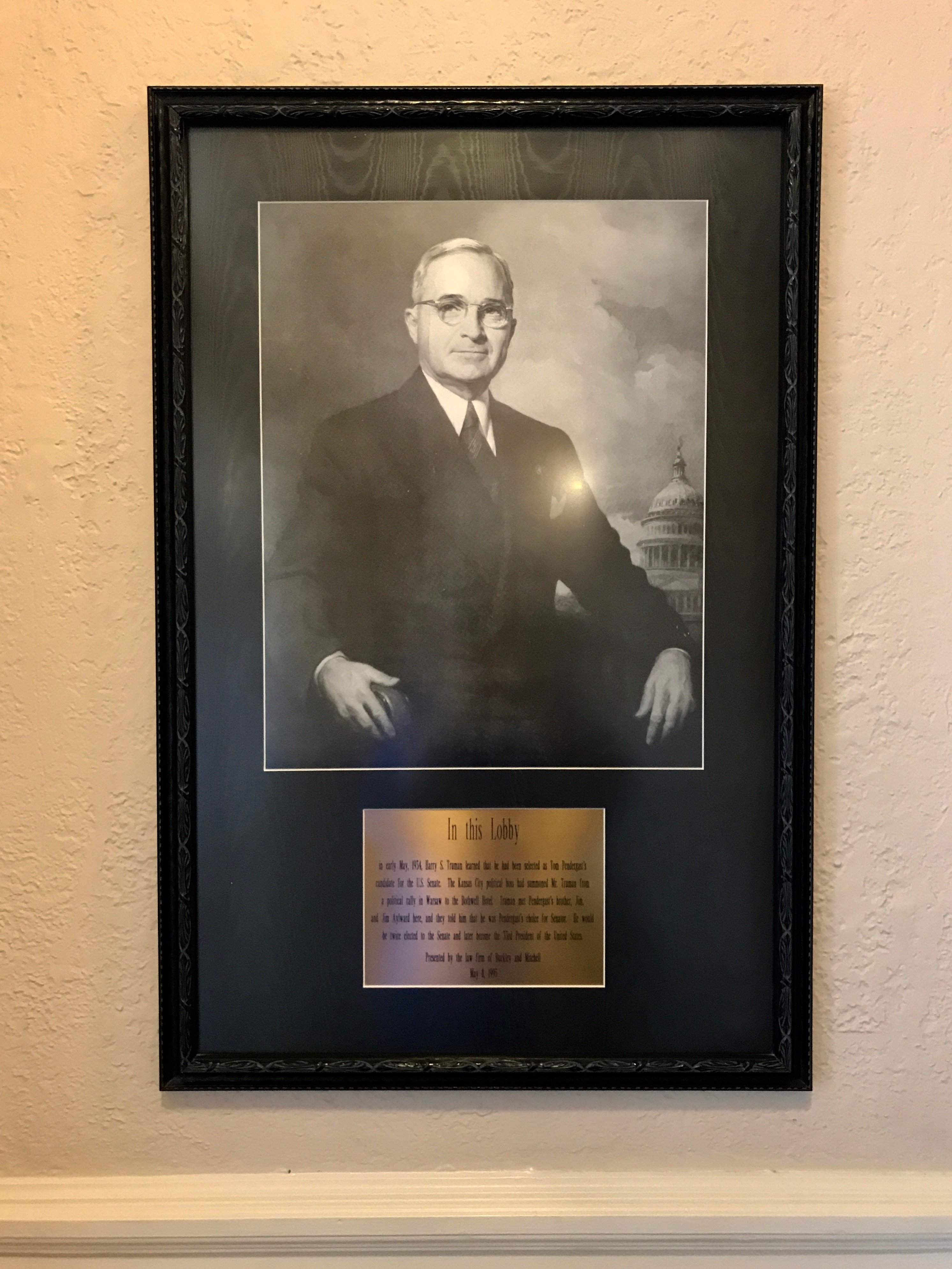
The plaque on the photo says,
“In this lobby in early Mary, 1934, Harry S Truman learned that he had been selected as Tom Pendergast’s candidate for the U.S. Senate. The Kansas City political boss has summoned Mr. Truman from a political rally in Warsaw to the Bothwell Hotel. Truman met Pendergast’s brother, Jim and Jim Aylward here, and they told him that he was Pendergast’s choice for Senator. He would twice be elected to the Senate and later became the 33rd President of the United States.”
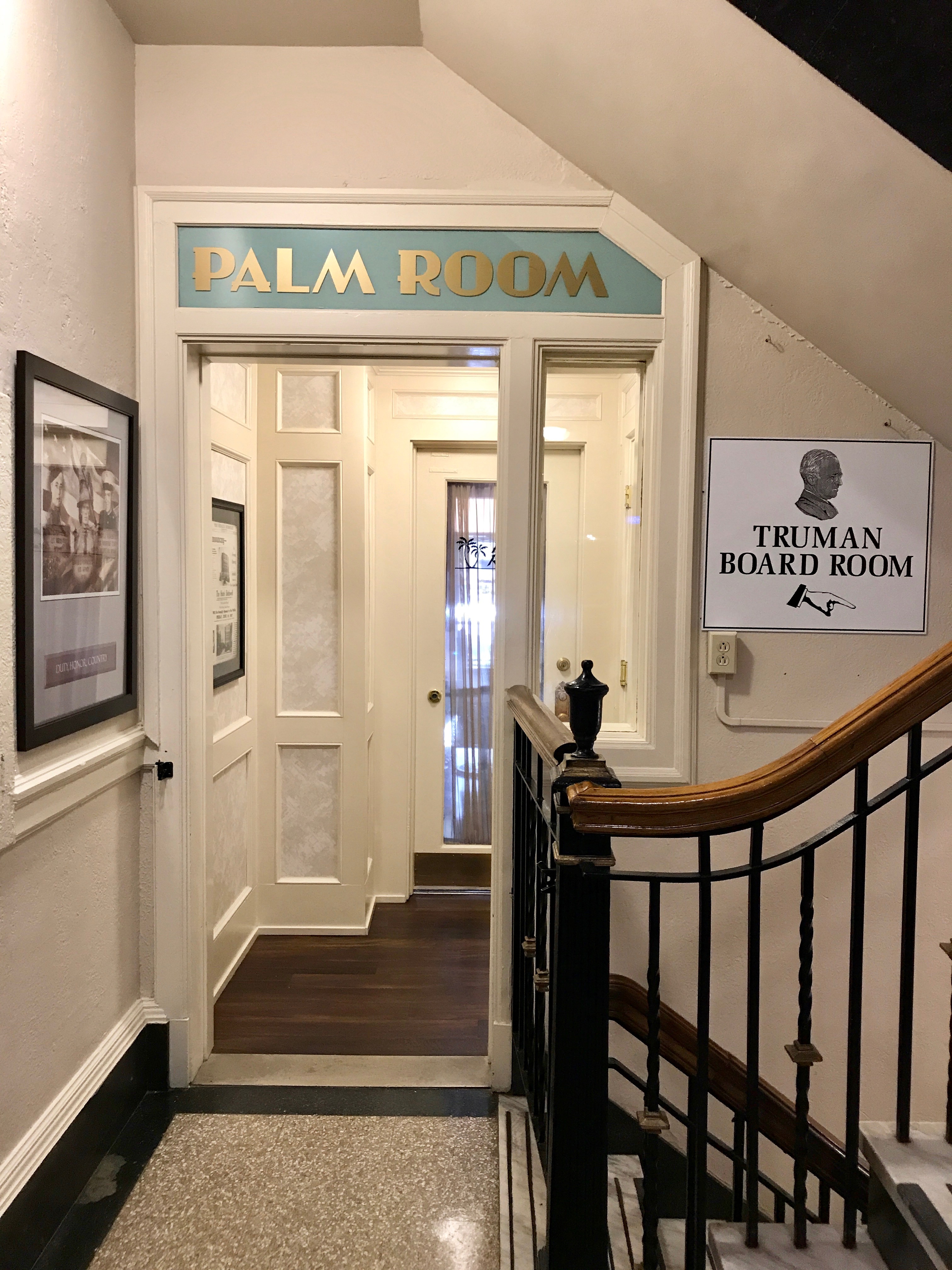
I wandered about, snapping photos.
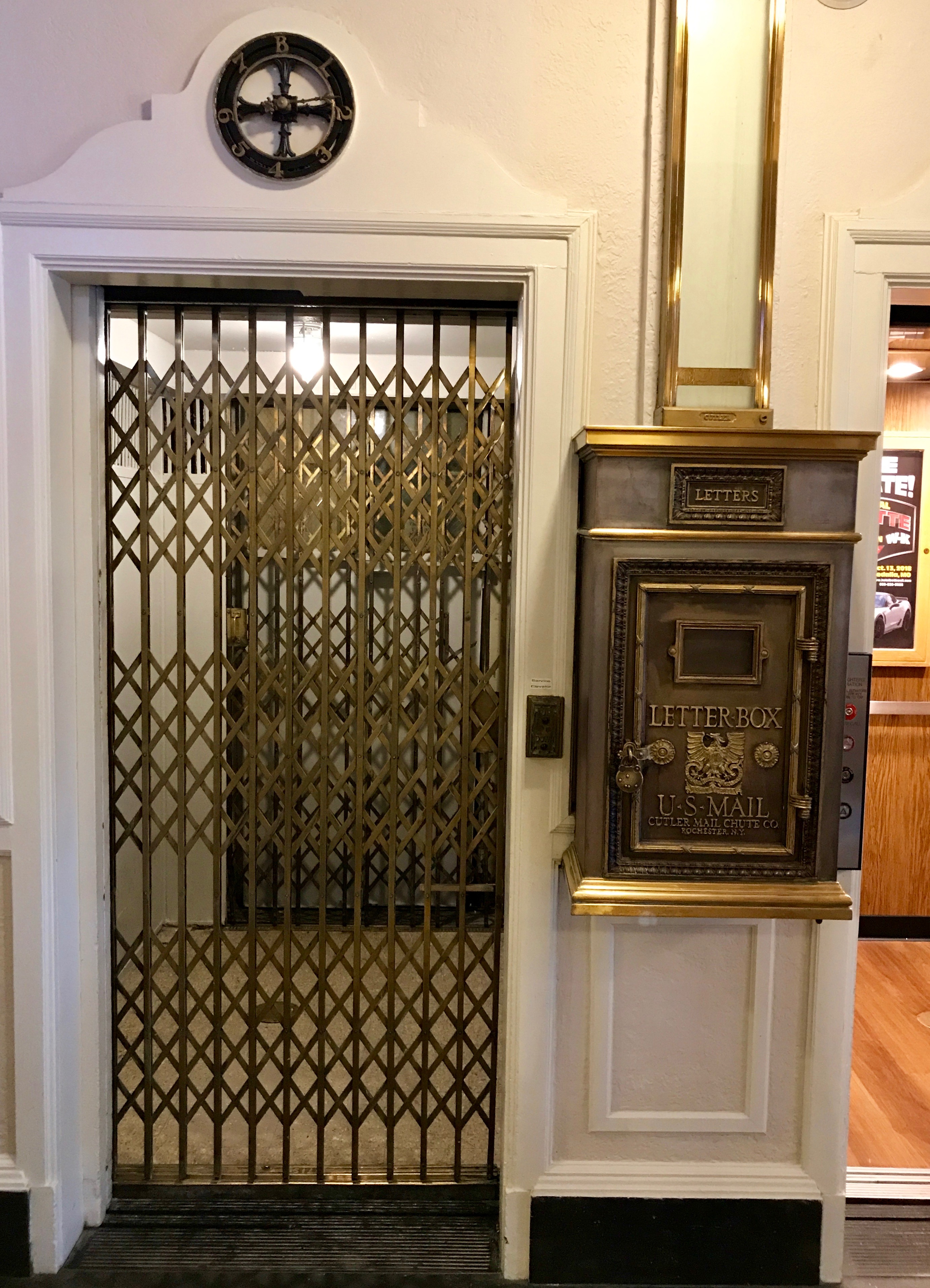
I was happy to find one of those lovely letter boxes. You wouldn’t have to wait to post your mail; you could drop it in the slot by the elevator while you waited for the car to arrive.
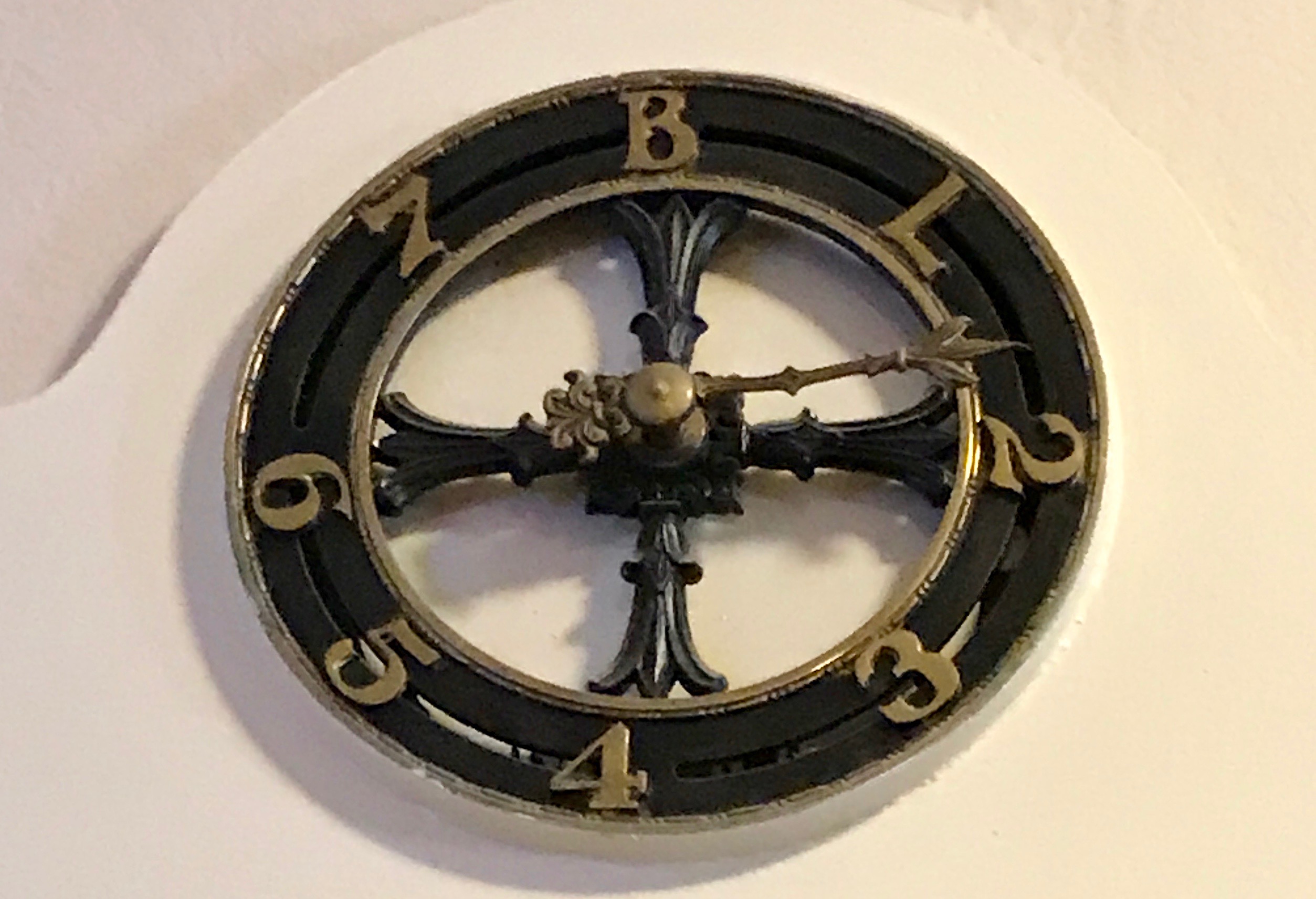
And while you were waiting for the elevator to return to the lobby, you could track its progress on the dial above the door.
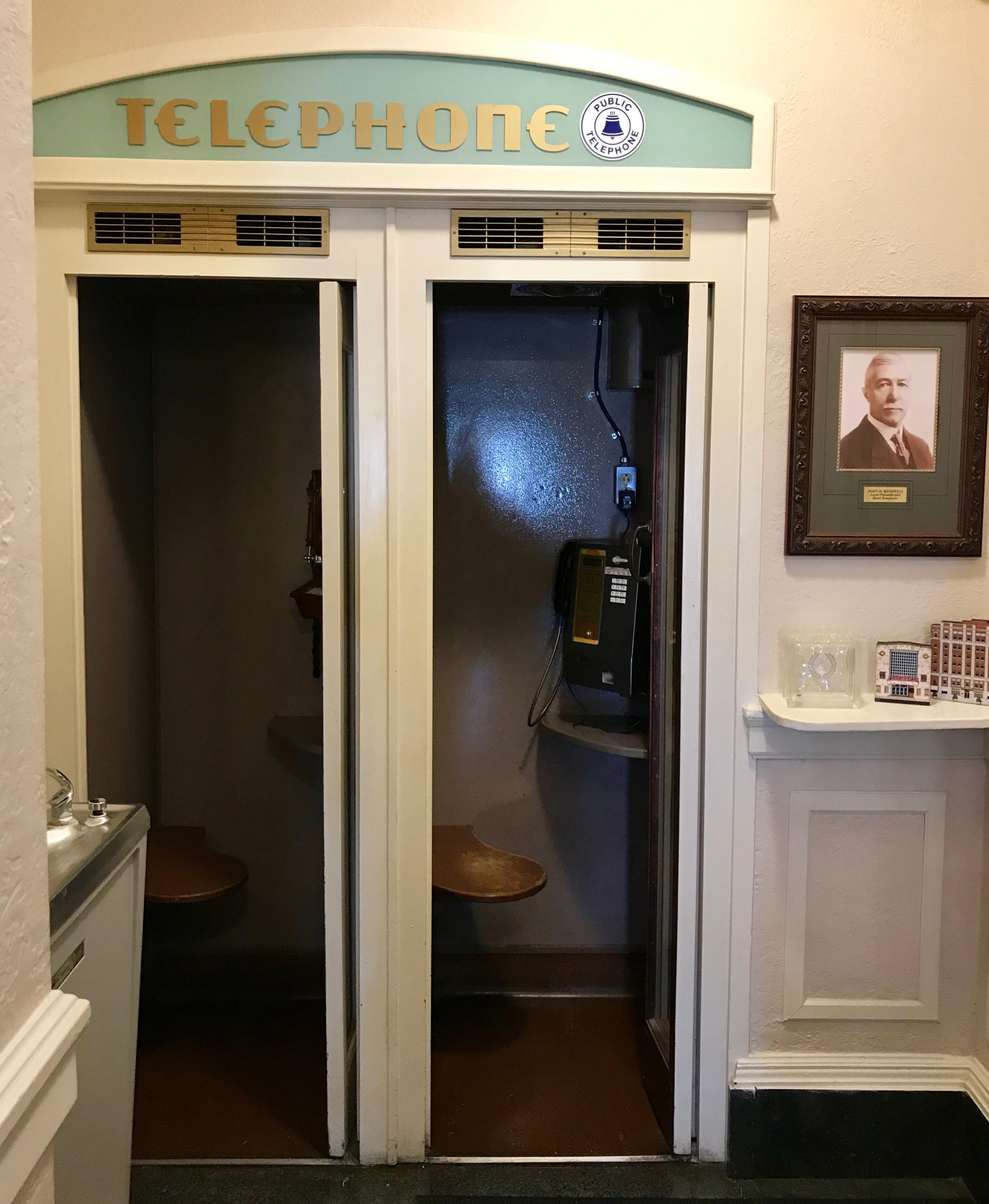
What would a classic hotel be without phone booths?
I checked out the menu at the Ivory Grille, but decided that I didn’t care for what they were offering. It was an elegant restaurant, though. I decided to head back to the hotel and find something more modest for dinner.
In this case, modest equals forgettable. I have no idea what I had.
I got gassed up and ready for the next day’s adventures in wheat collection.
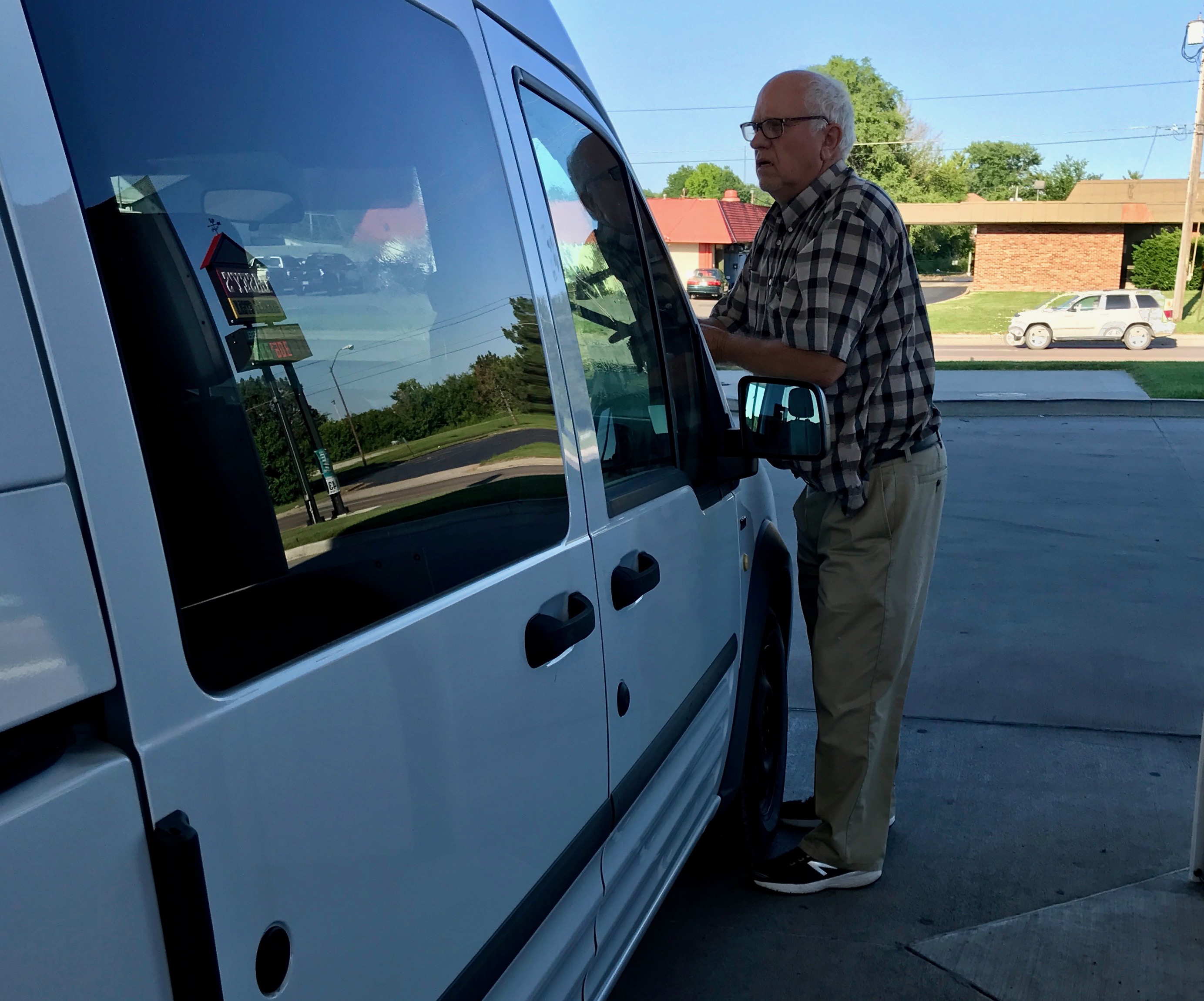
I struck up a conversation with a gentleman at the next pump, and he cleaned my windshield for me. There are friendly folks all over.
I hit the hay early, so I could get packed up and have breakfast in time for my daily check in call with the boss. I wondered what I would find. Breakfast heaven or breakfast hell?
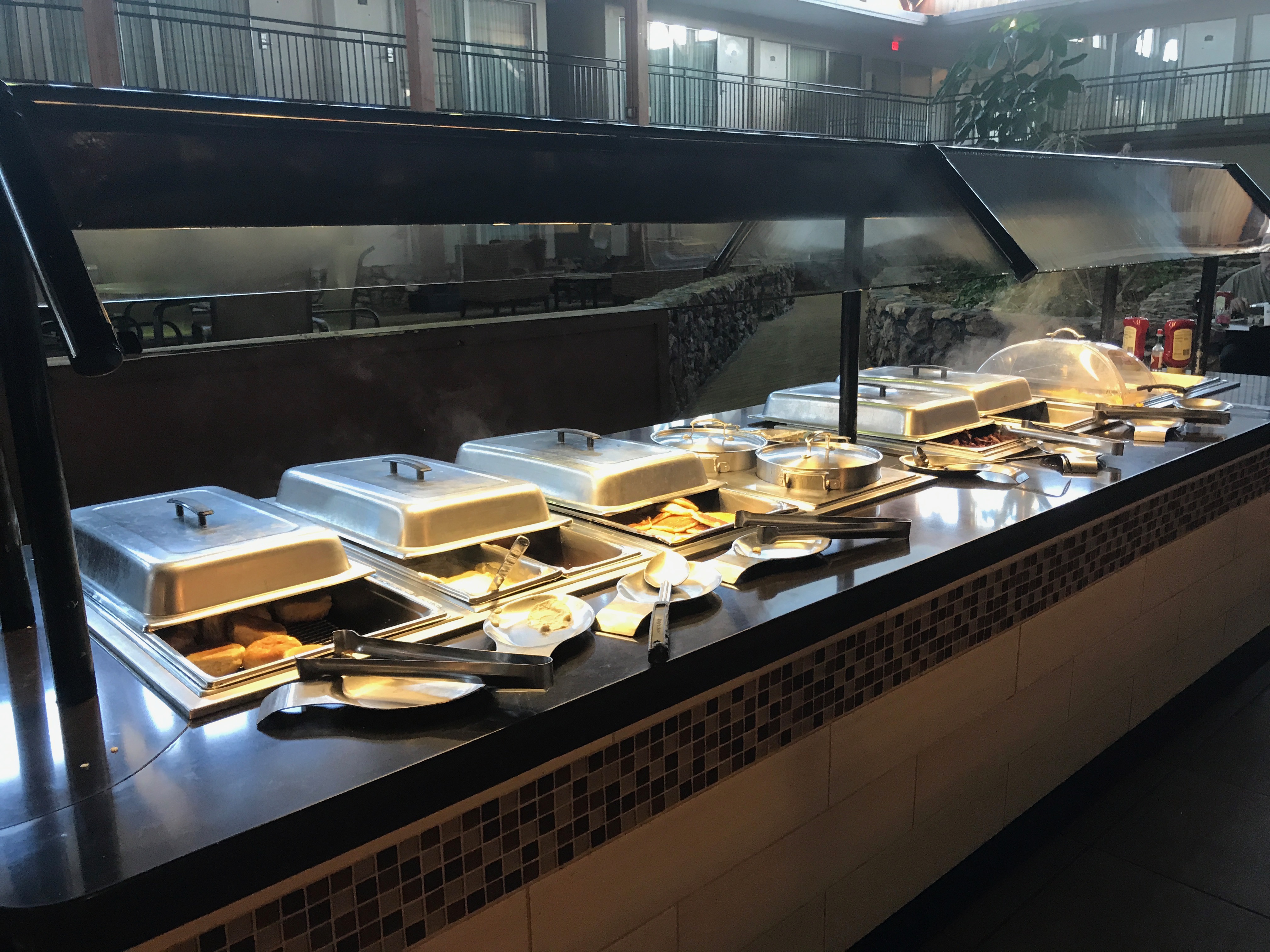
Steam table one.
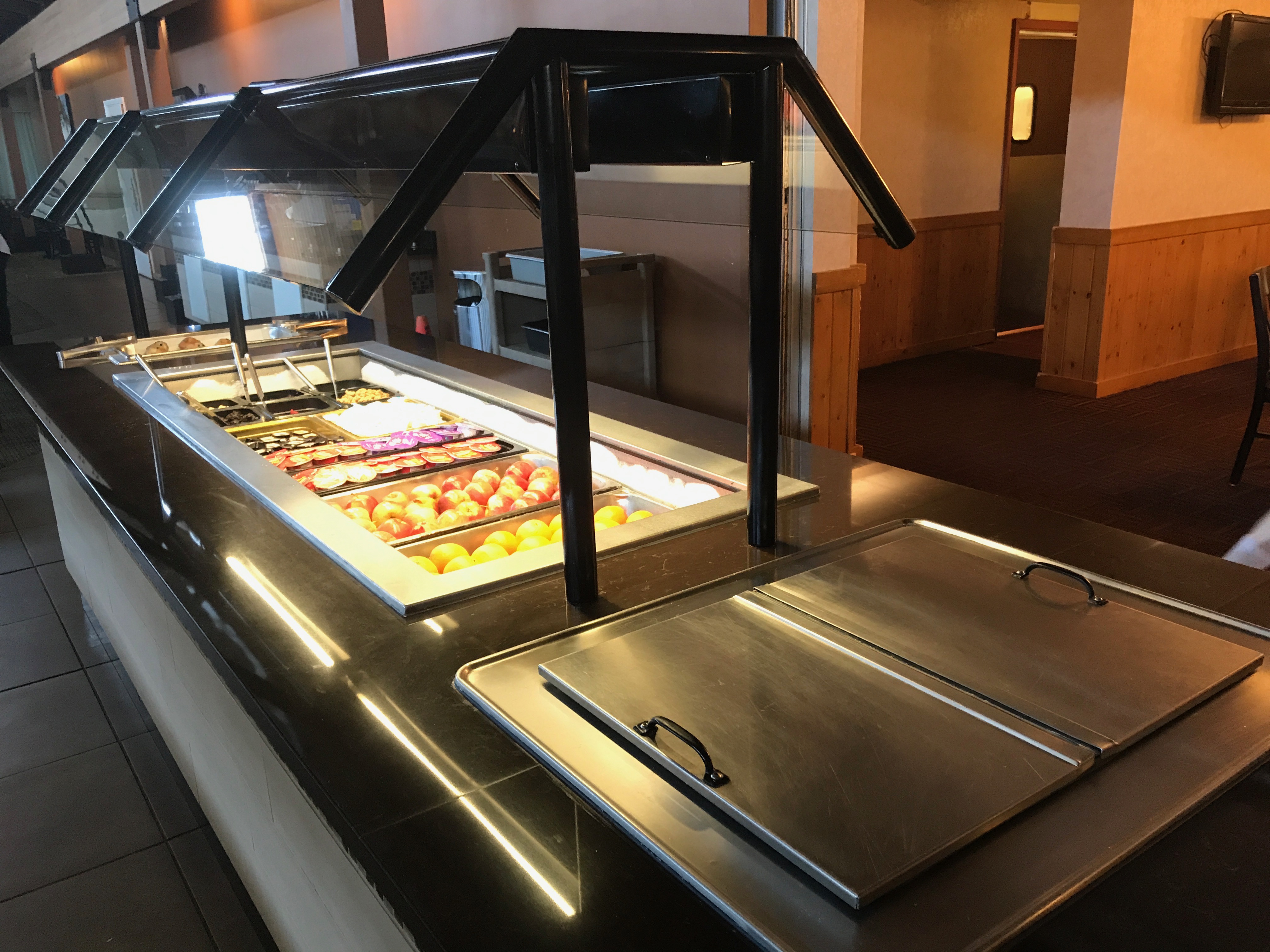
Steam table two!
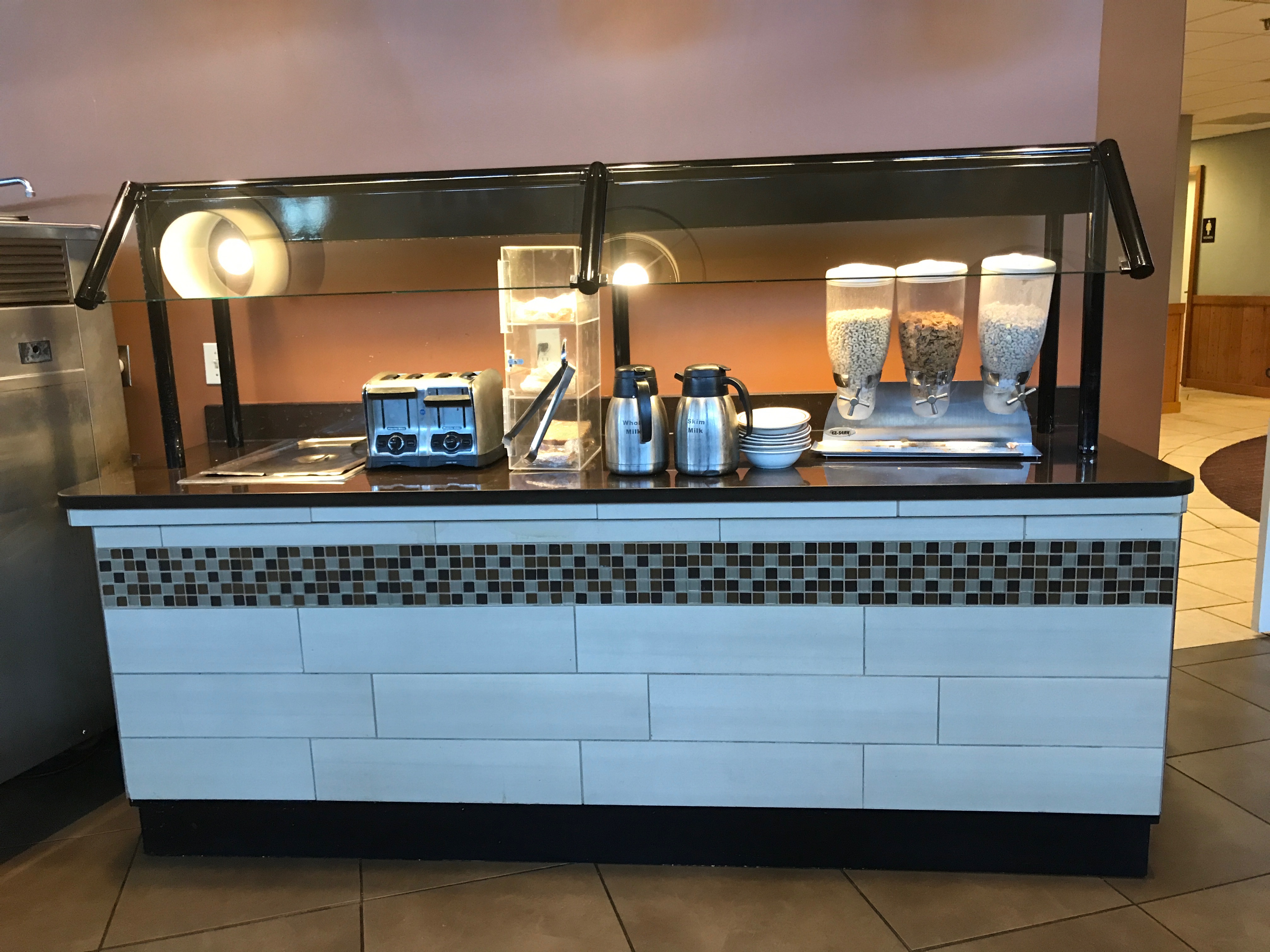 A cereal and toast bar!
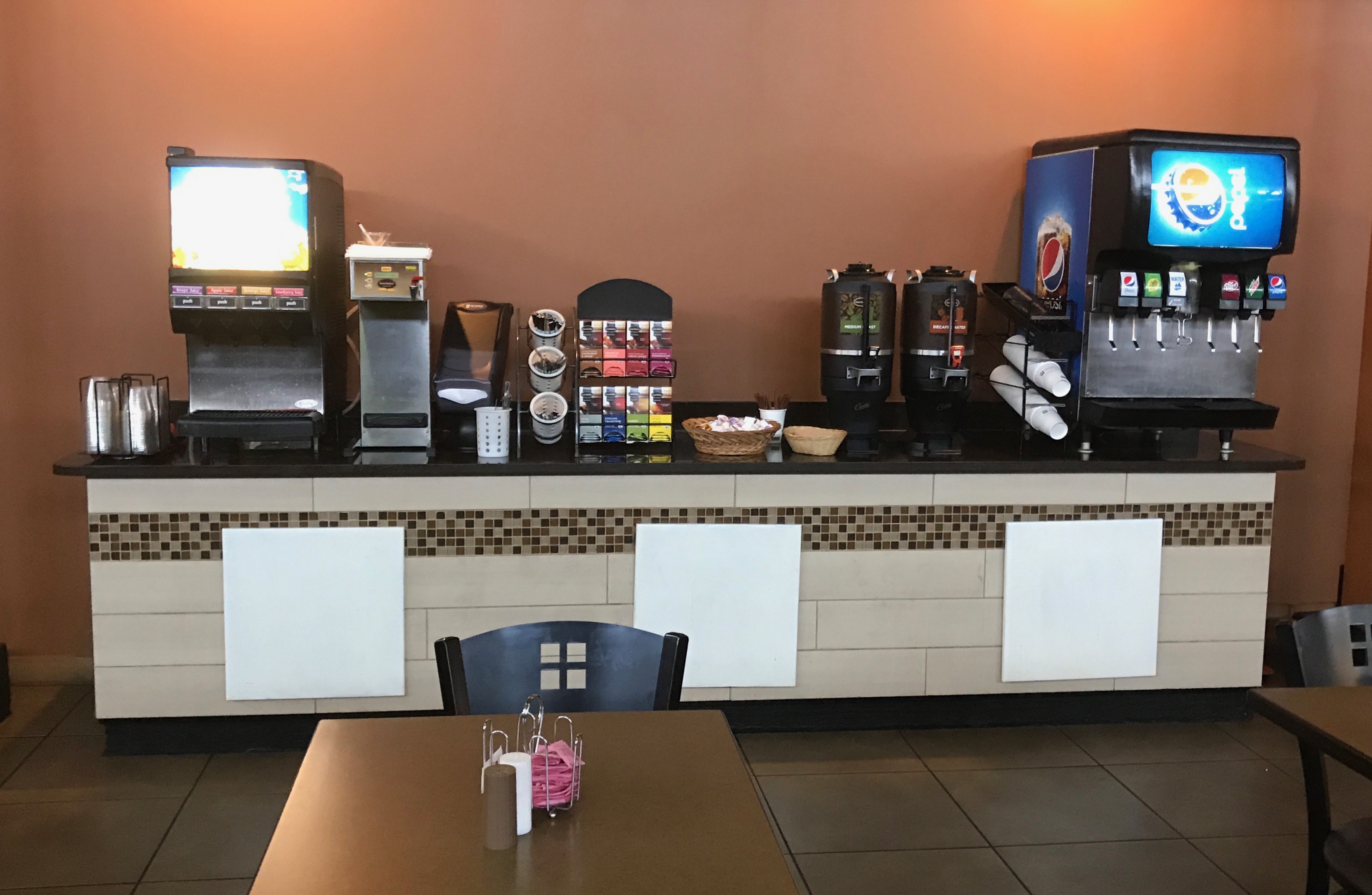 And a wide variety of beverages!
Breakfast heaven!