When last, I left you, we had exited the House Lounge after appreciating the Thomas Hart Benton murals. Our next stop is the House Chamber.
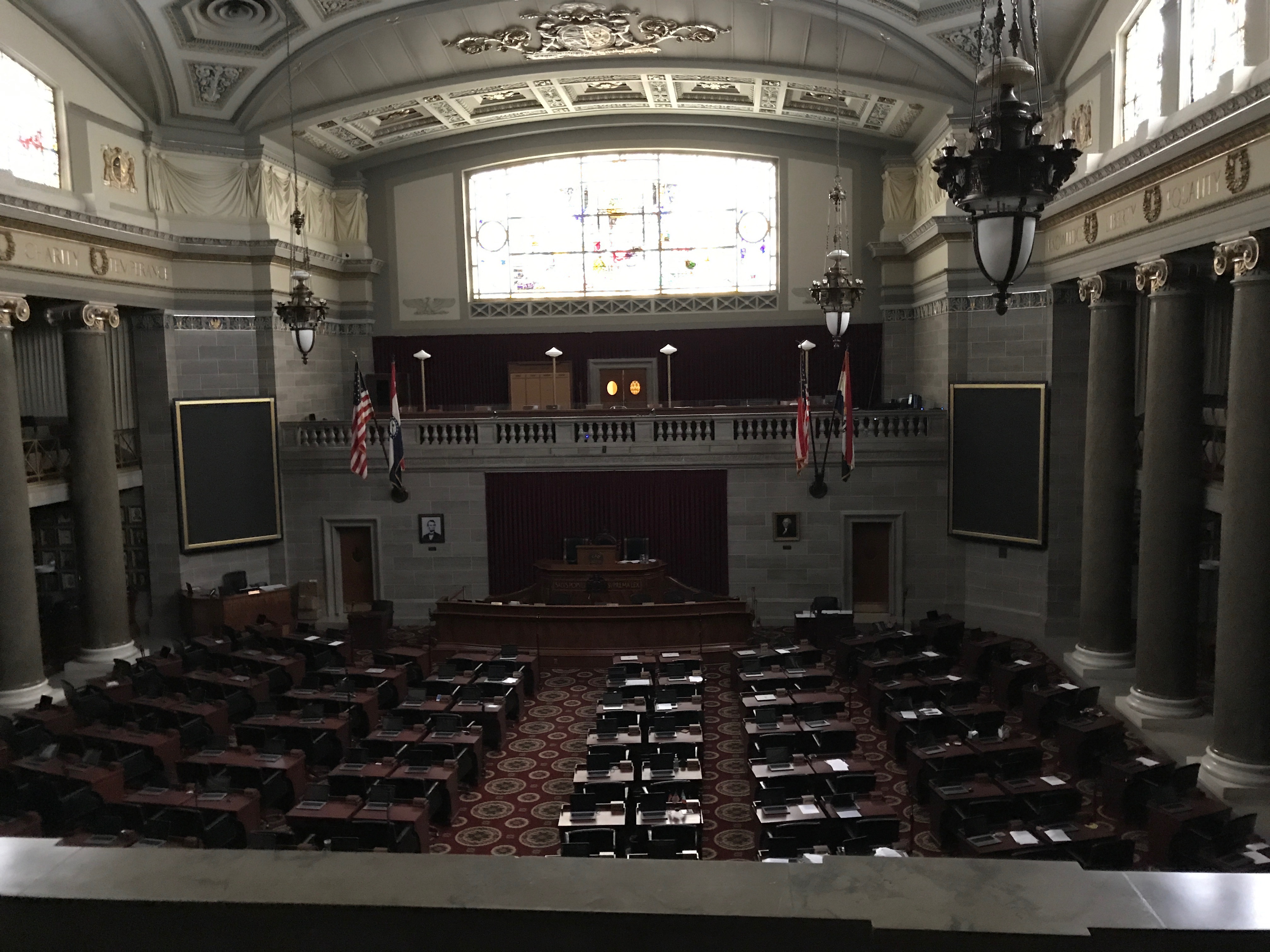
The windows are exquisite. By playing around with the exposure, I was able to bring up the colors a bit.
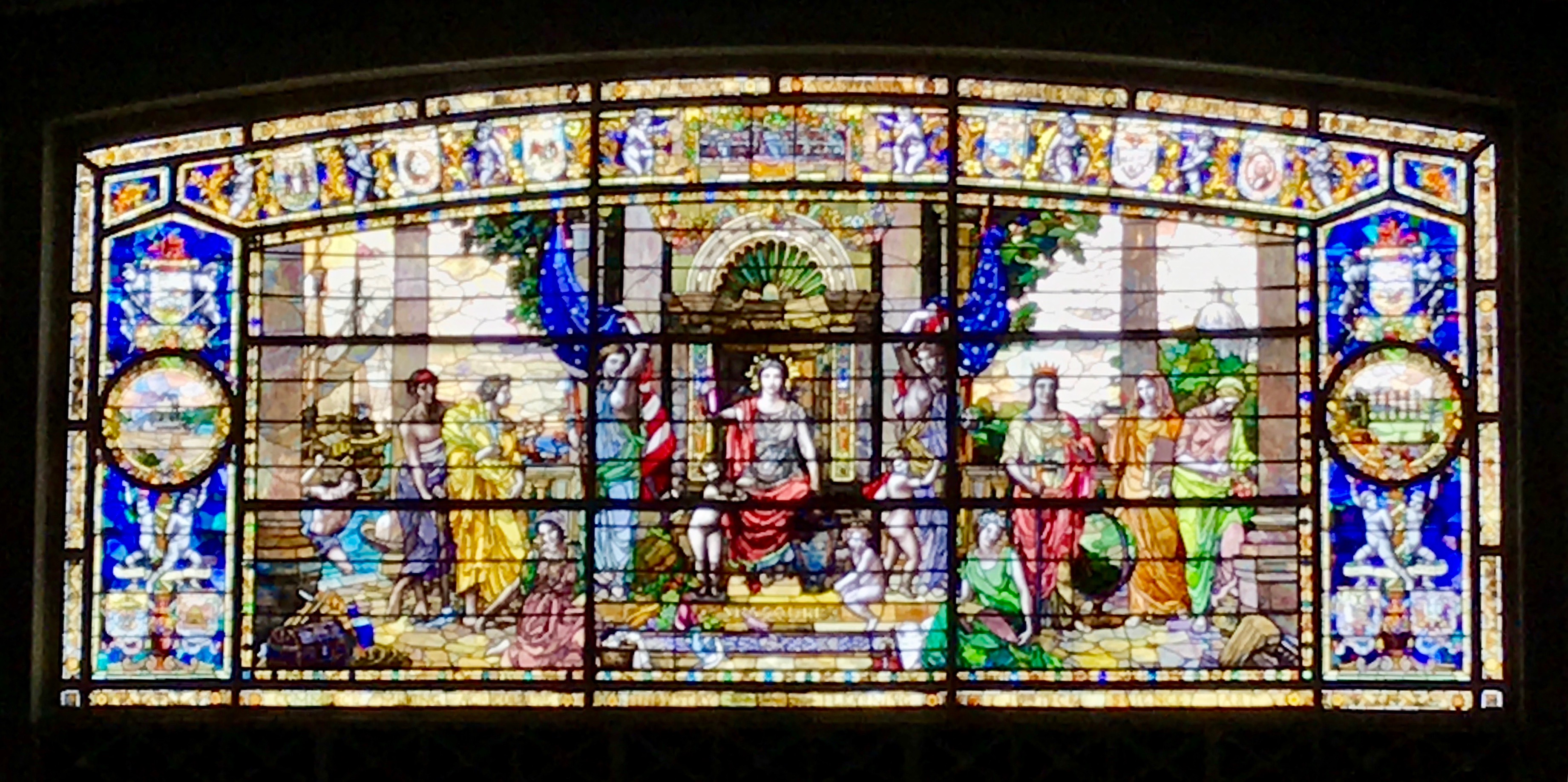
This is the stained glass window above the speaker’s platform.
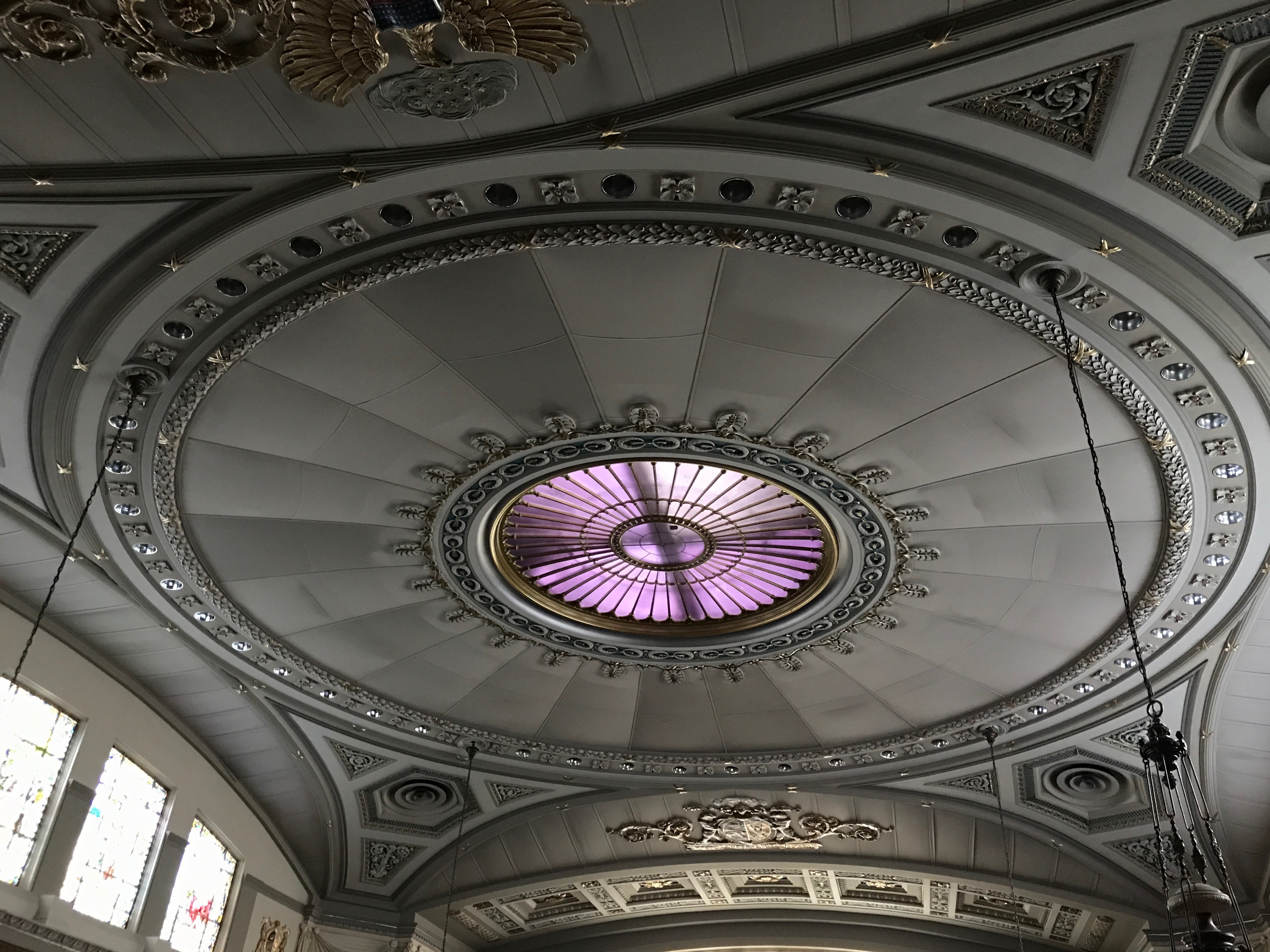
The ceiling has a beautiful piece of leaded glass in it. I’m not sure why it’s purple, but there you have it.
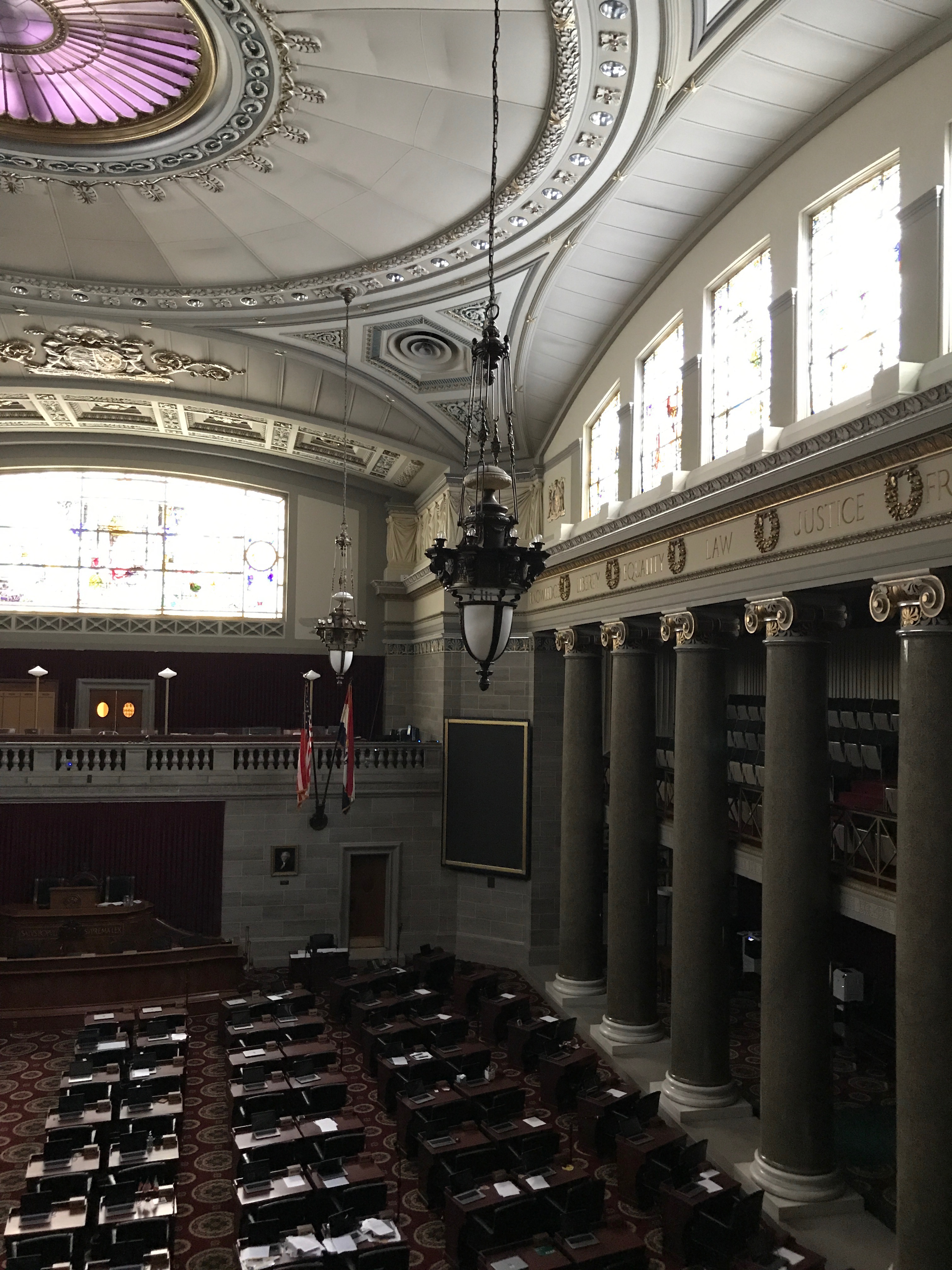
The sides of the chamber are decorated with words that I imagine are intended to inspire the legislators.
LIBERTY…EQUALITY…LAW…JUSTICE…
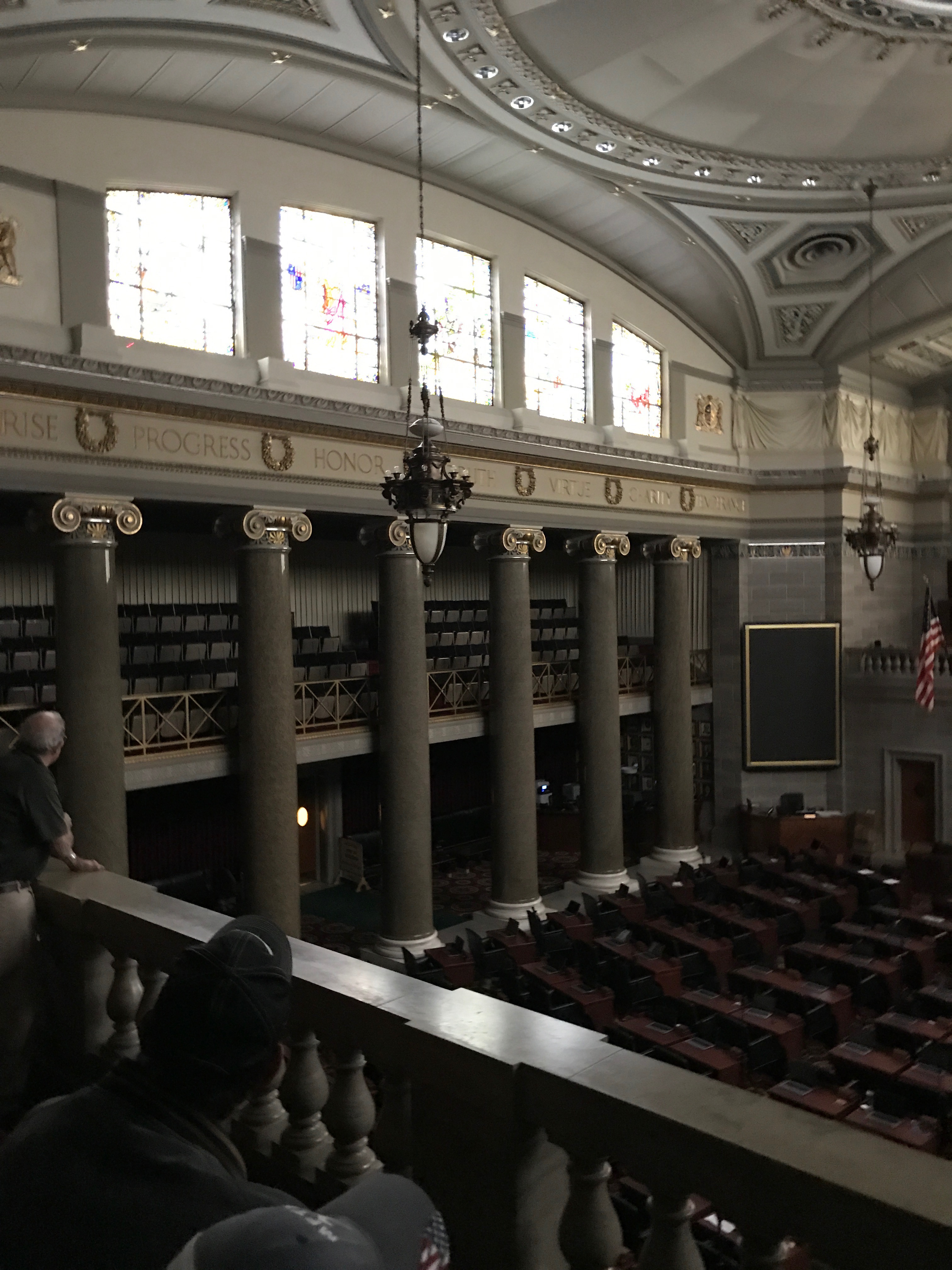
ENTERPRISE…PROGRESS…HONOR.
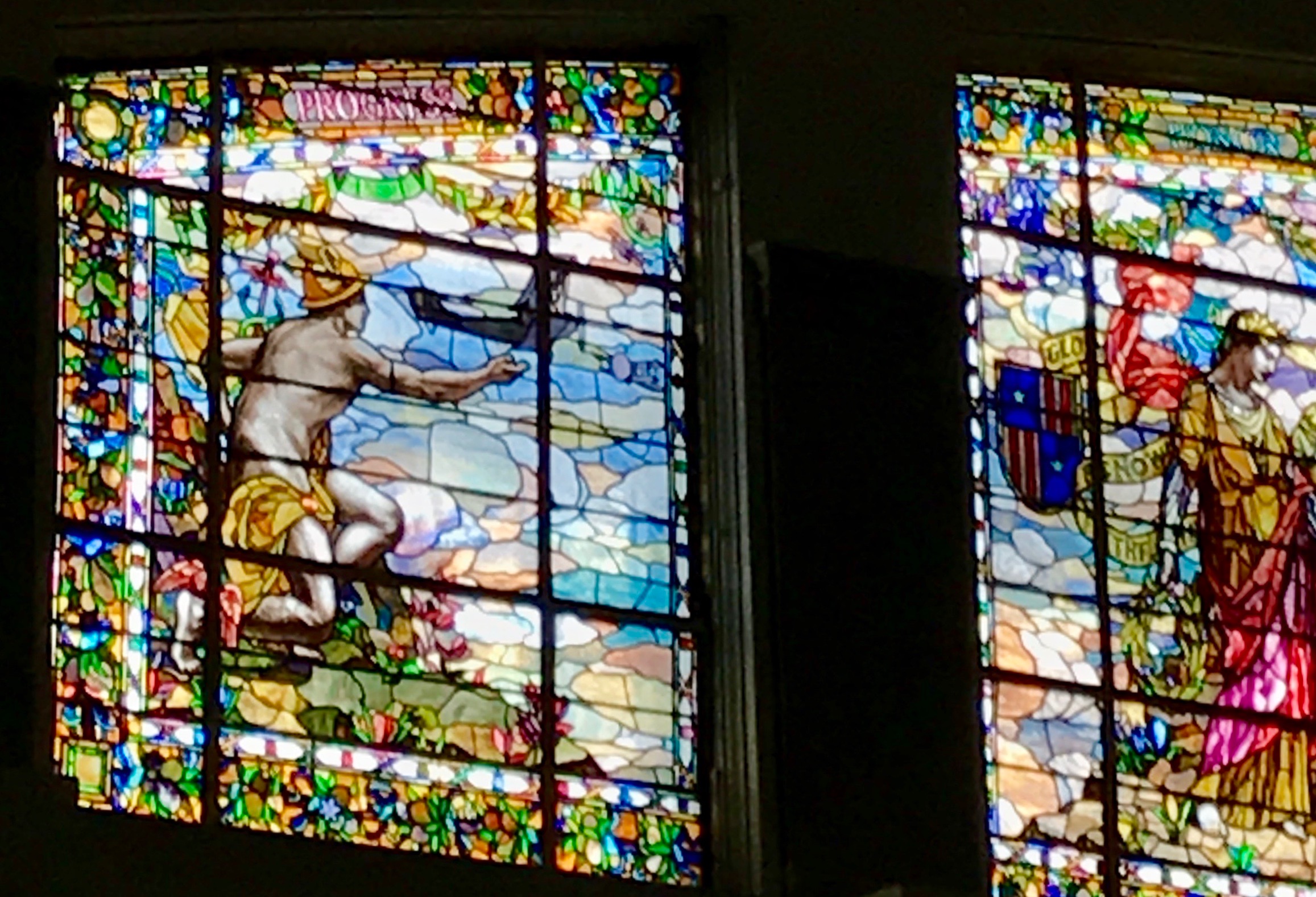
The window immediately above the word PROGRESS shows the world as it was unfolding. From what the guide said, I gathered that the artist was really forward-thinking in his depiction of the airplane. Progress, indeed.
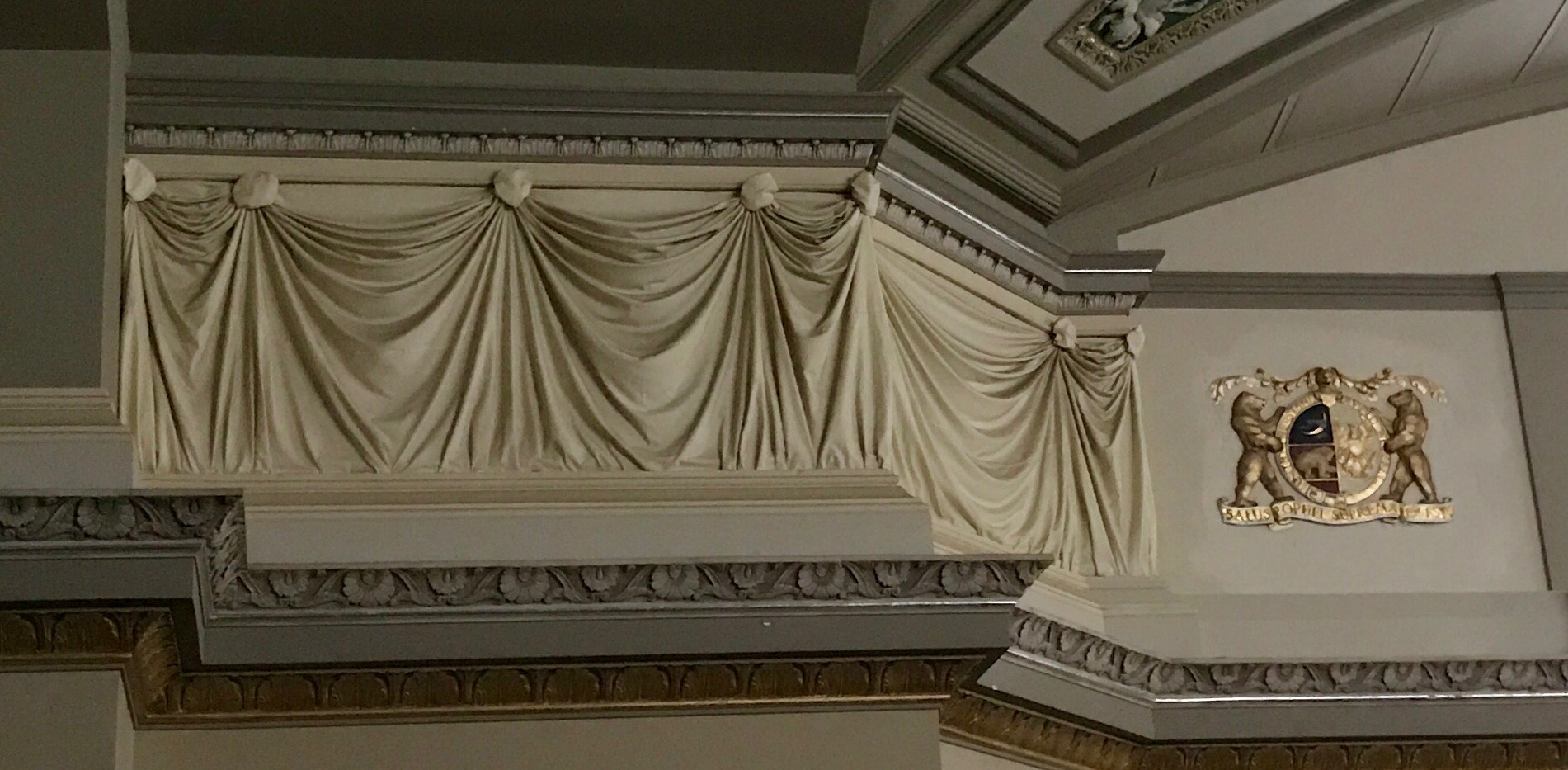
I was captured by this decorative detail and decided to include it in this post.
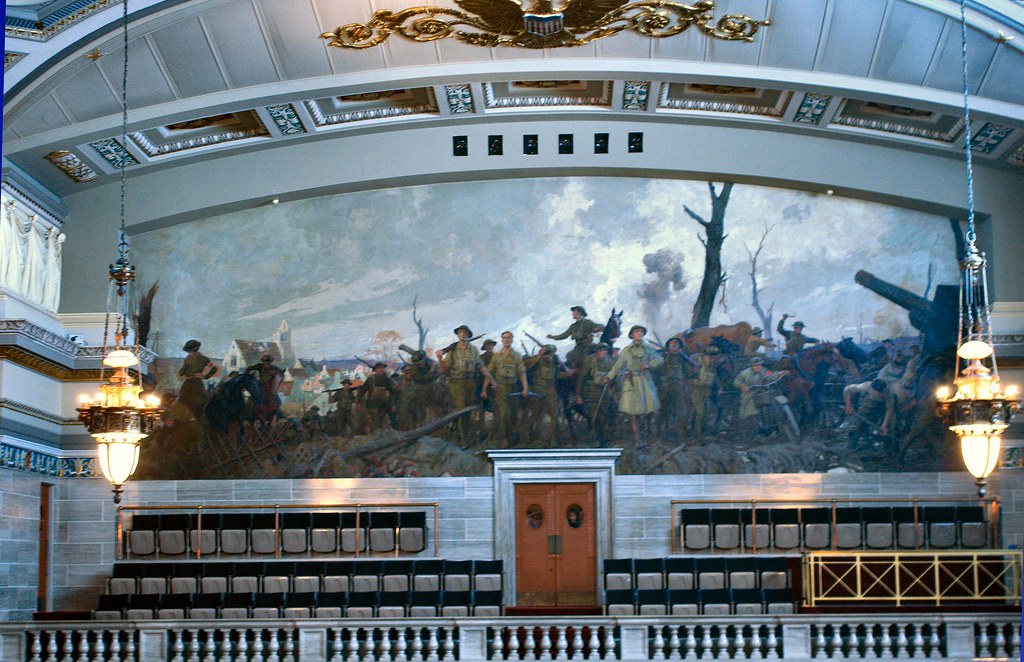
At the back of the chamber is this mural dedicated to the War to End All Wars, now known as World War I. I borrowed this from someplace on the internet. I’d cite the source, but I lost it.
Here are the photos that I managed to snap.

From one side…
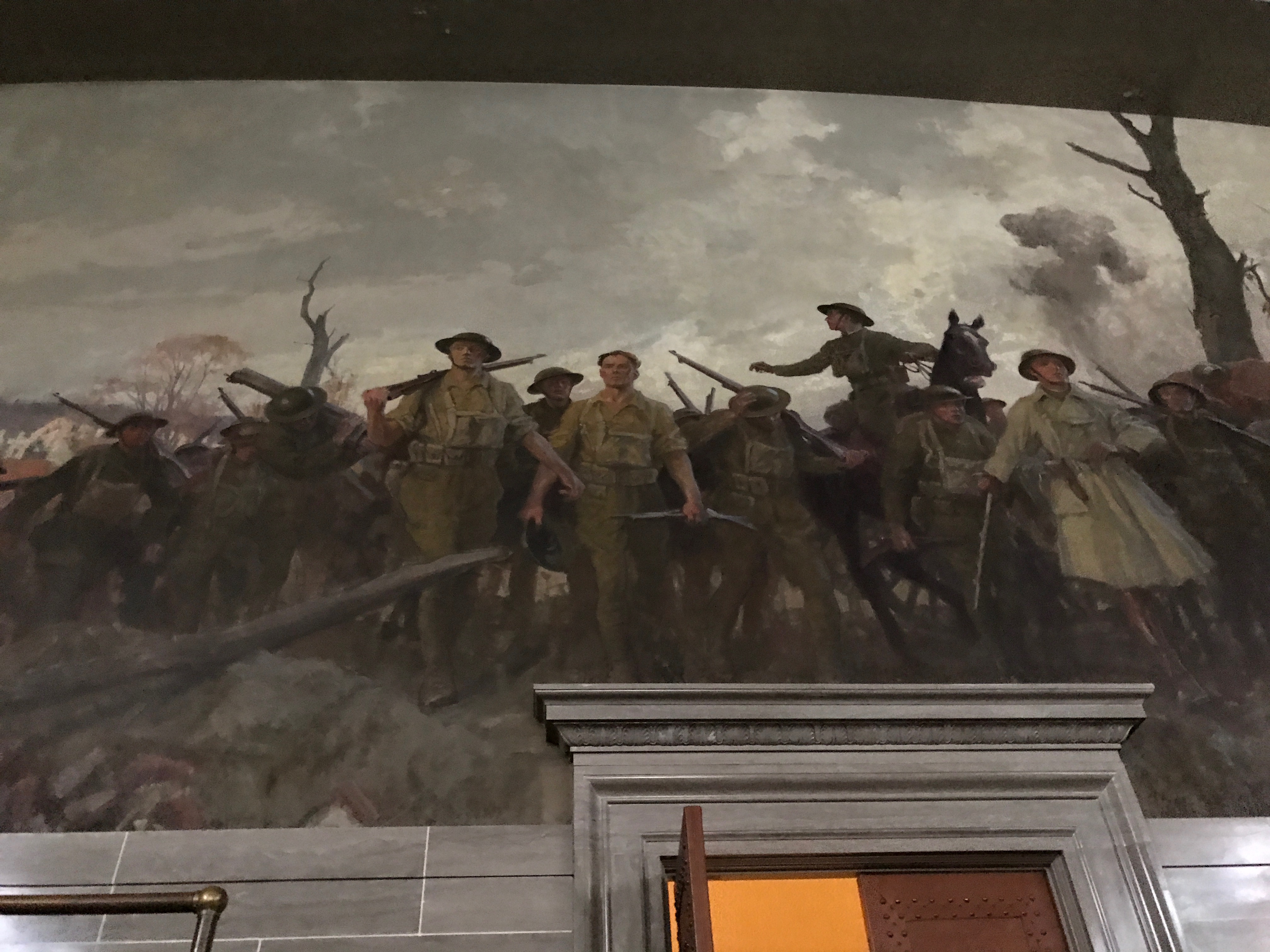
And as far away from it as I could get while still in the visitors’ gallery.
The last stop on this tour is the Hall of Famous Missourians. These busts are all privately funded and depict prominent Missourians honored for their achievements and contributions to the state. According to my Preferred Source, these busts were created by Missouri sculptors Sabra Tull Meyer, E. Spencer Schubert and William J. Williams. As of 2013, there were 44 inductees in the Hall.
You can relax. I am not going to present all of the honorees.
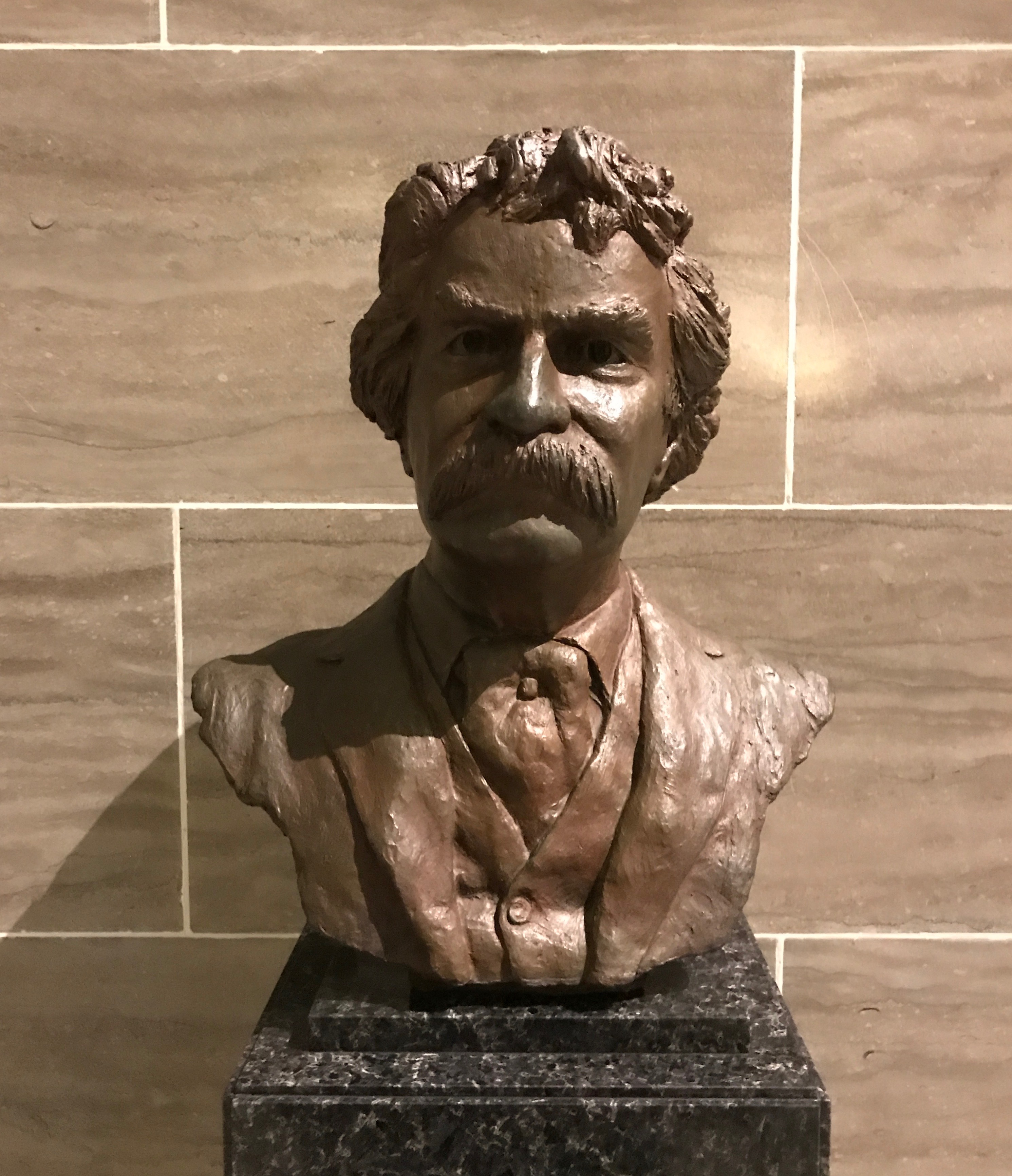
First we have Mark Twain, otherwise known as Samuel Langhorne Clements. Born in Hannibal, Missouri in 1835. He died in 1910. I visited his grave in Elmira, New York as well as his house in Hartford, Connecticut.
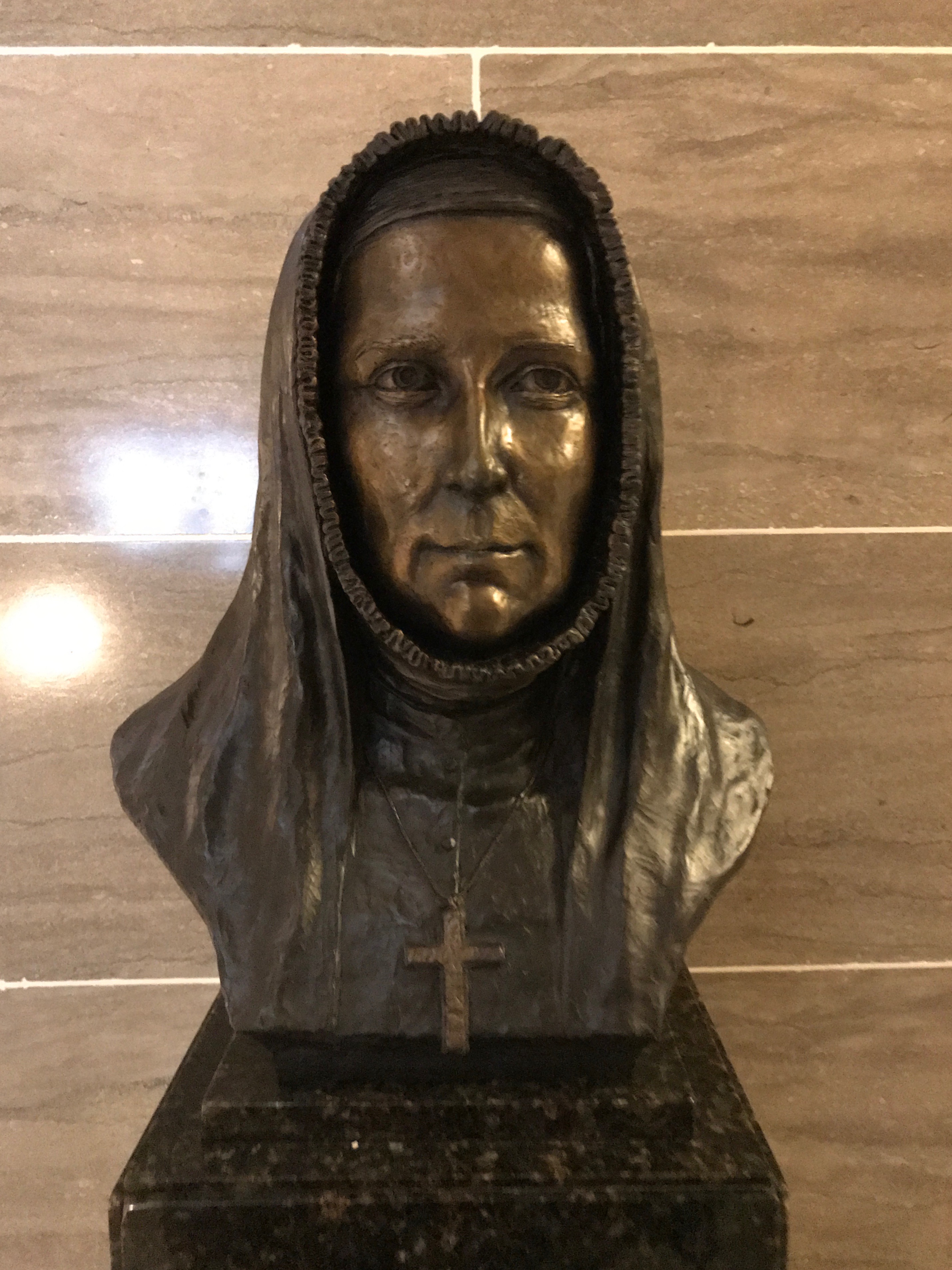
Saint Rose Philippine Duchesne, 1769-1852. She is recognized for being an American Frontier Educator. Born in Grenoble, France, she came to America in 1818 and open the first free school west of the Mississippi in a log cabin in St. Charles, Missouri.
She worked with the American Indians, who called her “Quah-kah-ka-num-ad” or “The Woman Who Prays Always.” She was beatified by Pope Pius XII in 1940 and canonized by Pope John Paul II in 1988.
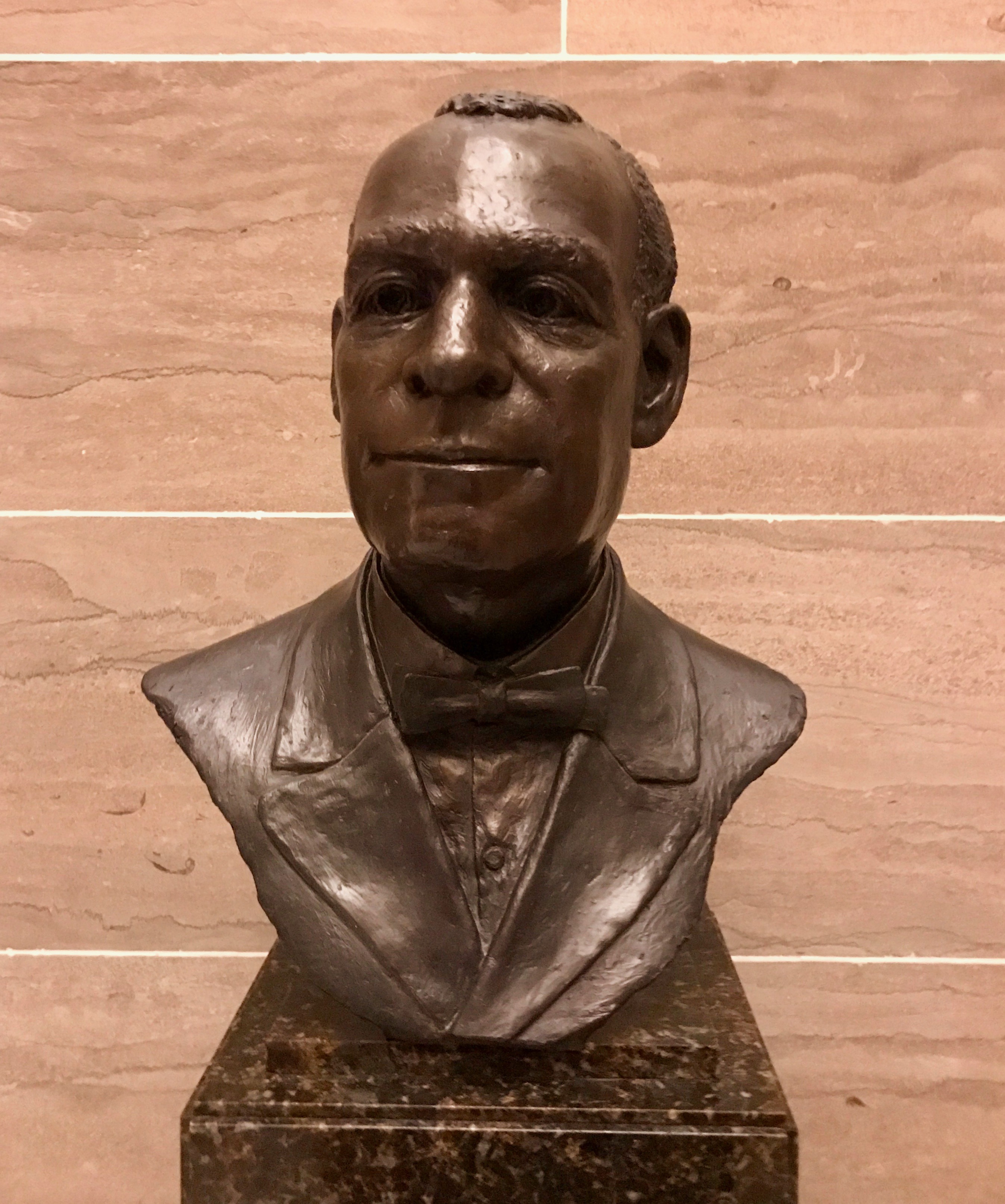
Tom Bass was born into slavery in Boone County in 1859. He lived most of his life in Mexico, Missouri. He became one of the most popular horse trainers of the late 19th and early 20th centuries. He is credited with helping to start the American Royal Horse Show in Kansas City. He died in 1934 at the age of 75. He succumbed to a heart attack, which people attributed to his distress over the death of Belle Beach, one of his favorite horses.
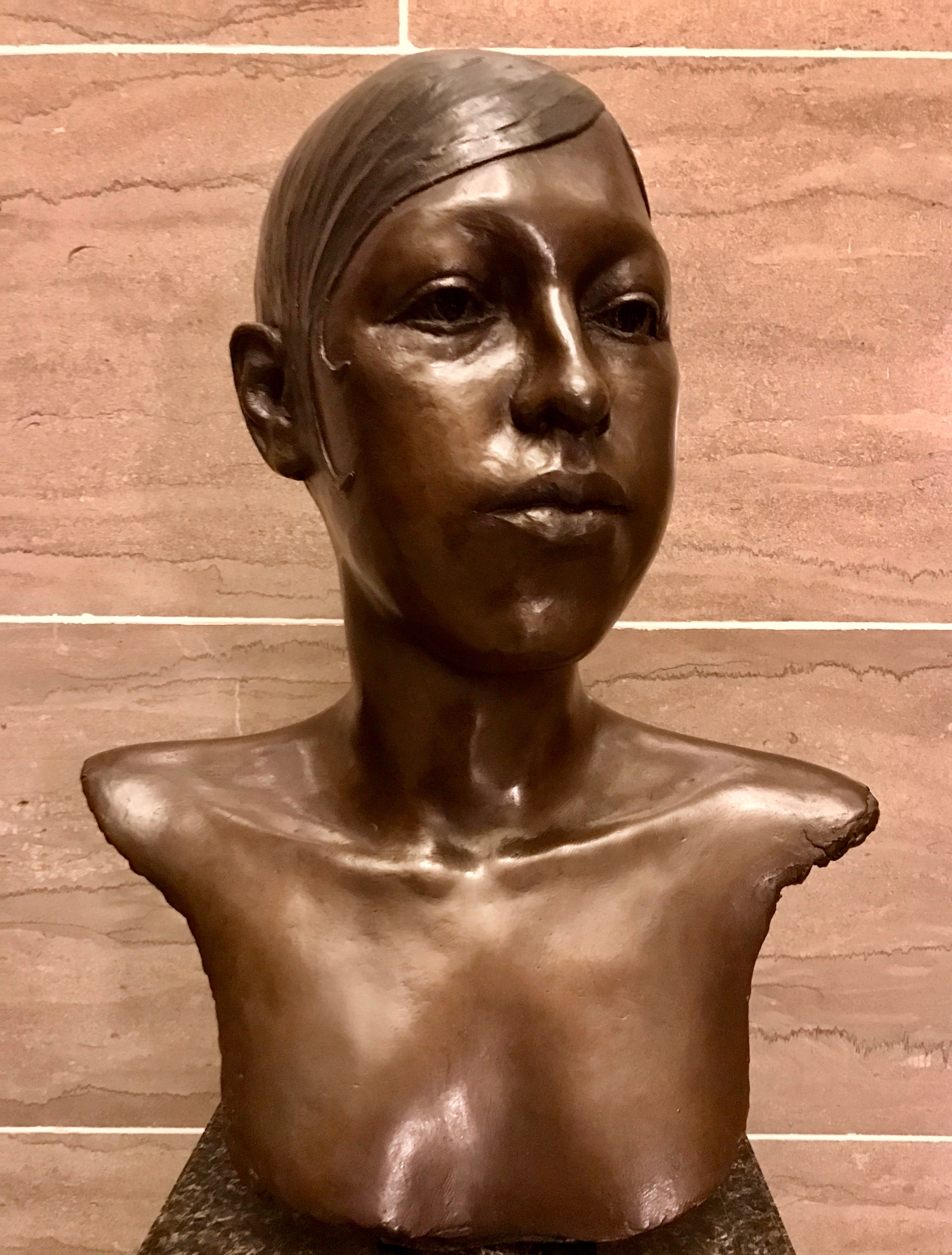
Josephine Baker is also claimed as one of Missouri’s own. She was born in St. Louis in 1906 and her plaque honors her for being an international entertainer and human rights activist. She lead an interesting life. Not only as a singer and dancer, but as a movie star, a civil rights activist, and working with the French Resistance during World War II. After the war, she was awarded the Croix de guerre by the French military and named a Chevalier of the Legion d’honneur by General Charles de Gaulle. Although she had renounced her U.S. citizenship when she married French industrialist Jean Lion in 1937, Coretta Scott King offered her unofficial leadership in the Civil Rights Movement after Martin Luther King’s assassination.
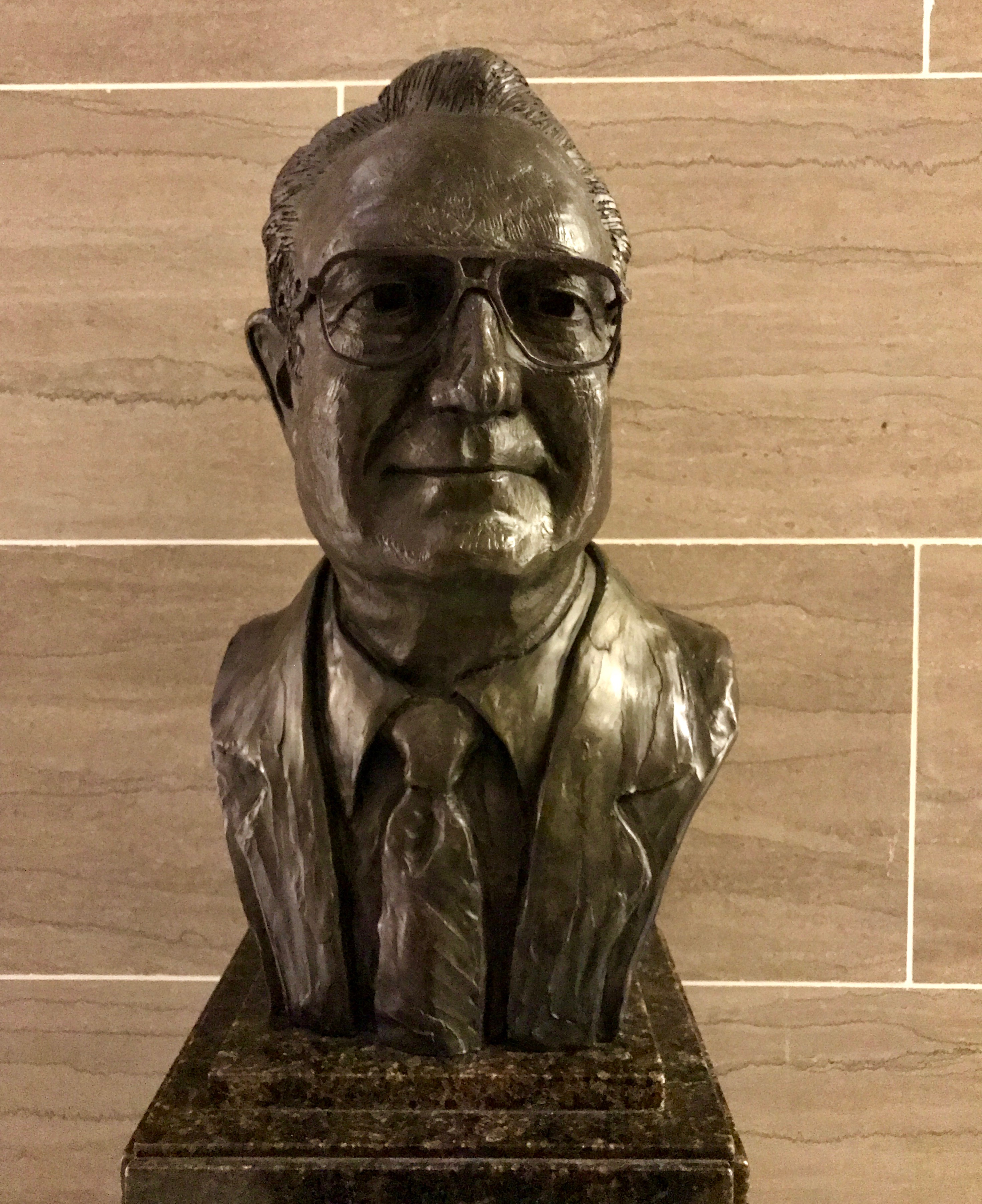
Melton D. “Mel” Hancock is included in the Hall. He is the founder The Taxpayer’s Survival Association, which put forth “The Hancock Amendment.” This is Missouri’s Constitution Tax and Spending Limitation. His organization worked with other groups in the state and got it placed on the ballot through a petition drive and it was adopted by the voters in 1980. (Side note, if this were Michigan, the legislators would feel free to do something to thwart the will of the voters.) From 1989 – 1996, he represented the state’s 7th congressional district in the United States House of Representatives.

Astronomer Edwin Powell Hubble, 1889-1953, is also one of the honorees. Hubble developed the theory and law proving that the universe is expanding, developed the theory that the universe extends beyond the Milky Way and a technique to measure the distance of those galaxies from our galaxy. Hubble Classification is still used today to measure and classify all galaxies beyond the Milky Way. The Hubble Space Telescope is named in his honor.
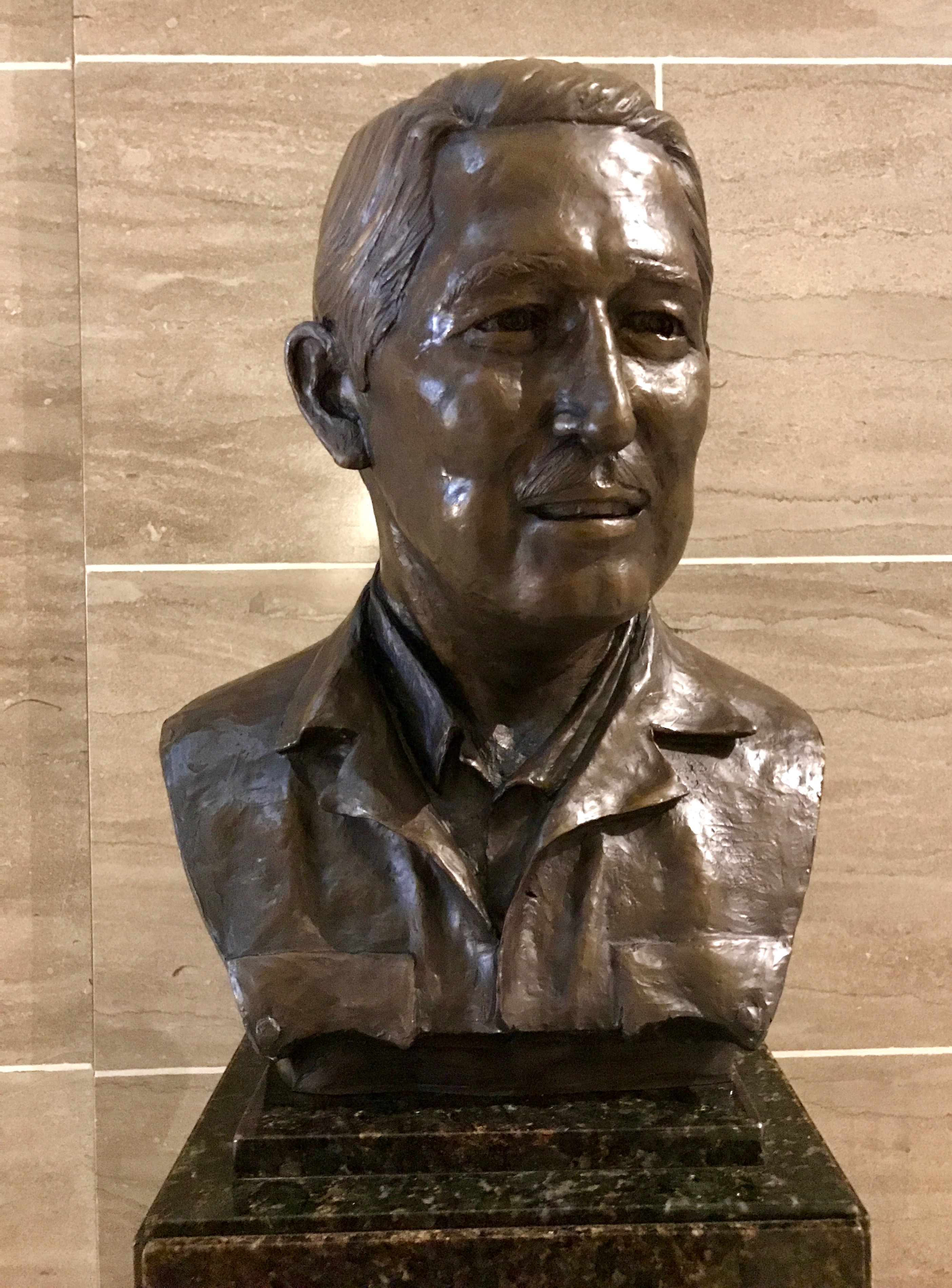
I always associated Marlin Perkins with Nebraska. I guess it was due to “Mutual of Omaha’s Wild Kingdom.” But, no, this well-known zoologist and naturalist was born and raised in Carthage, Missouri. He was also director of the Saint Louis Zoo from 1962-1970. He hosted the television show 1963-1985, which was almost to the end of his life in 1986. I’d say he had a good, long run.
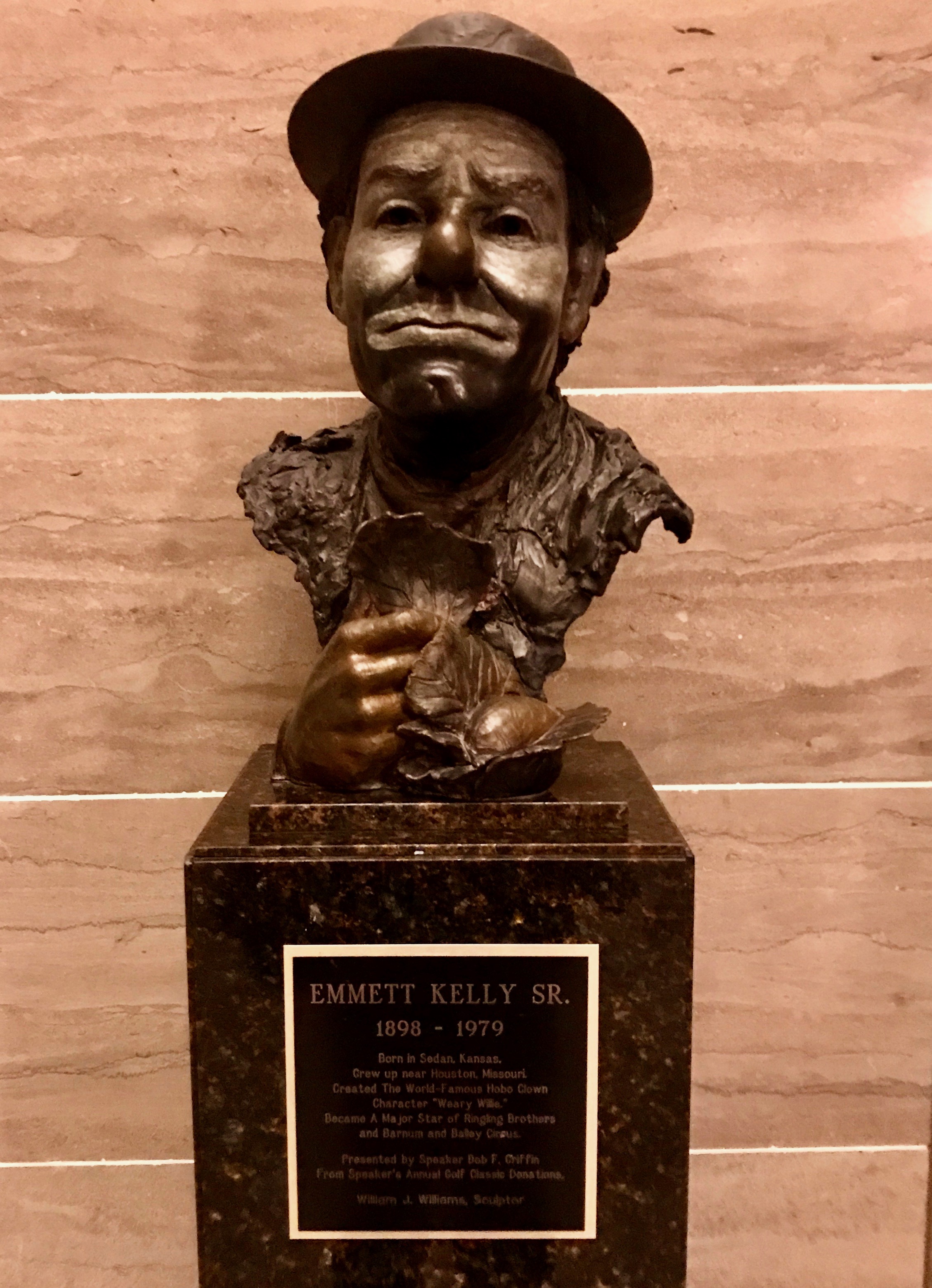
I did not know that Emmet Kelly Sr. was from Missouri, but it appears that they claim him as their own. While he was born in Kansas in 1898, his hometown was Houston, Missouri. His character, based on the hobos of the Depression Era, was known as Weary Willie. Our guide told us that the statue held a secret, if you took a flash photo of it.
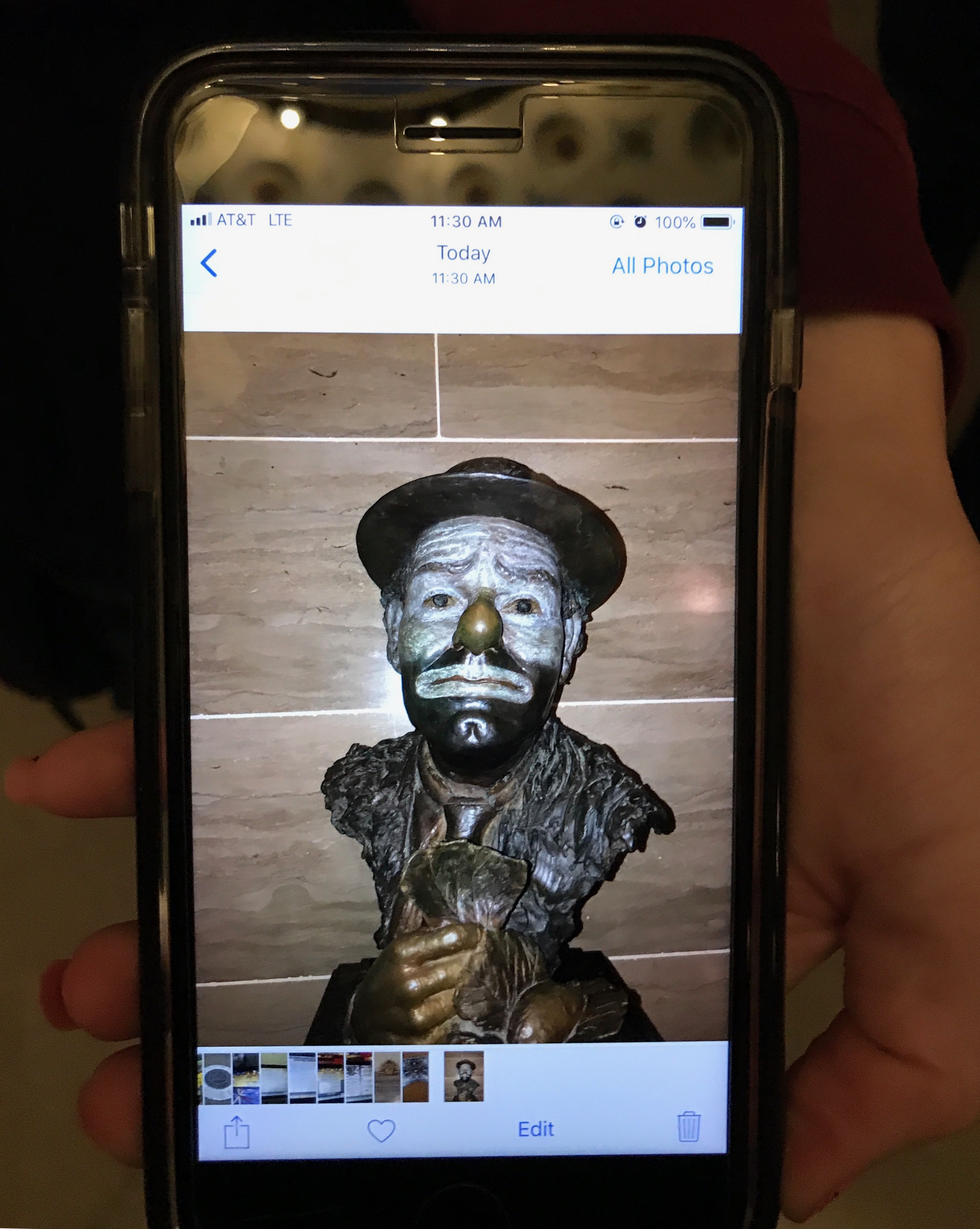
One of the tour members managed to snap a photo with flash, and I took a photo of her photo. Amazing!

Next is a completely different sort of clown. Rush Limbaugh. The citation honors him for overcoming adversity while climbing the ladder to become the top radio talk show host in the country. I read over his Wikipedia entry. The only adversity I could find was that he dropped out of college. His mother said that, “He flunked everything,” and “he just didn’t seem interested in anything except radio.”

Virginia Louis Minor was born in Virginia in 1824 and moved to St. Louis in 1843. She founded the first woman’s suffrage organization in the United States. She attempted to register to vote in 1872 and she sued the registrar who refused to let her register. Her case, Minor v Happensett, went to the United State Supreme Court, which denied women the right to vote under the 14th Amendment.
She worked for women’s suffrage until her death in 1894.
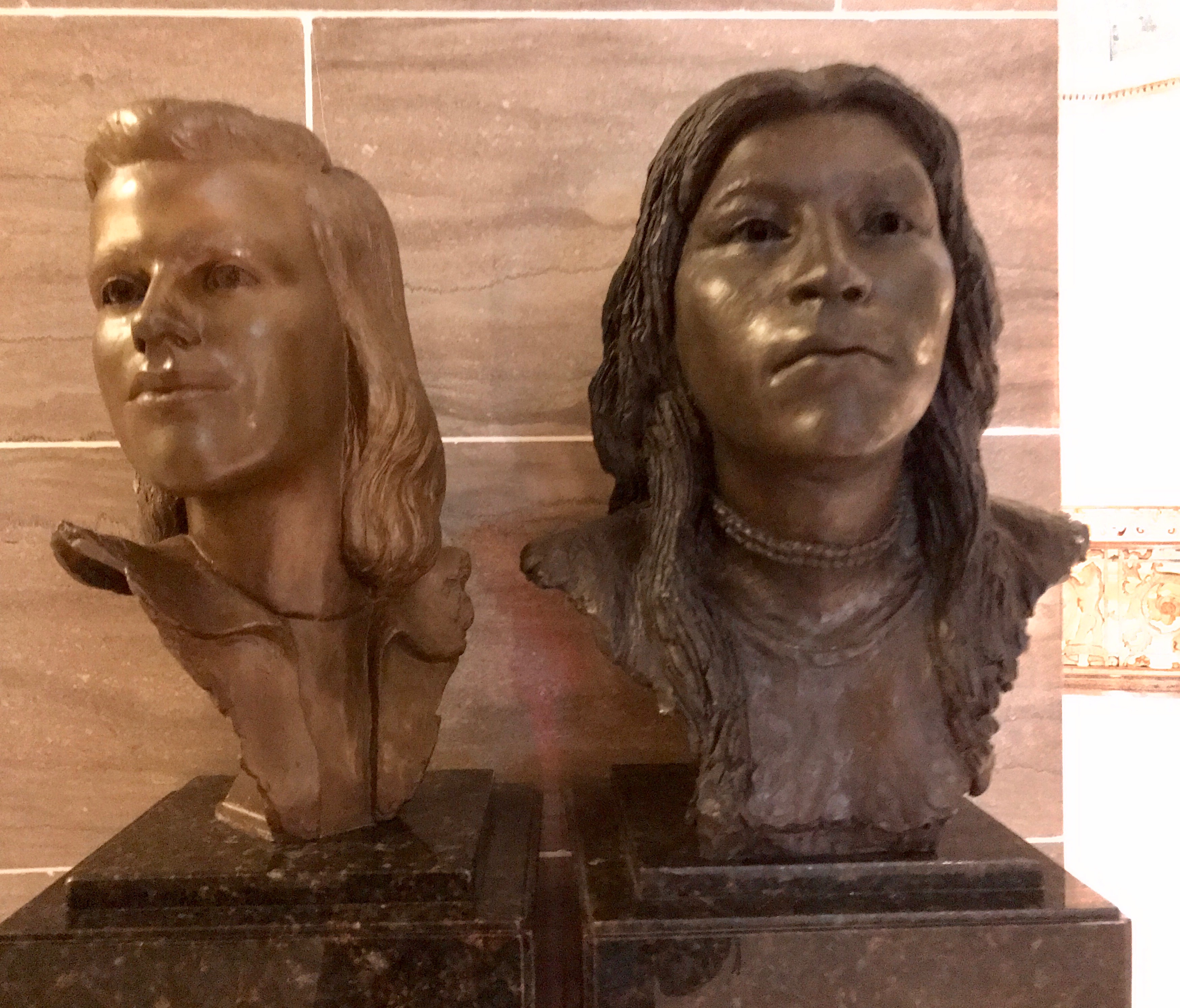
I’m not sure why Ginger Rogers and Sacajawea are displayed so close together. Do you suppose they are running out of space?
Ginger Rogers was born in Independence, Missouri in 1911. She won a Best Actress Oscar for the 1940 film, “Kitty Foyle.” She danced with Fred Astaire in ten films. Her most famous quotes is “I do everything the man does, only backwards and in high heels.”
Sacajawea was born in 1788 Lemhi River Valley, near present day Salmon, Idaho. On her plaque, she is recognized as being the Shosone interpreter for the Lewis and Clark Expedition. in 1800, when she was around 12 years old, she and several other girls were kidnapped by a group of Hidata after a battle that resulted in the deaths of several Shoshone. She was taken to the Hidatsa village, near present-day Washburn, North Dakota.
According to my Preferred Source, When she was about 13, she was sold into a “nonconsensual” marriage along with another young girl to Toussaint Charbonneau, a Quebecois trapper living in the village. She was pregnant with her first child when Lewis and Clark spent the first winter near there. Charbonneau professed to be able to speak Big Belley language, which is what the Hidatsa spoke. He told them that his wives spoke the Shoshone language. They hired him and told him to bring along one of his wives.
Sacajawea died in 1812. Or was it 1884? There is no definitive proof, although 1812 is the more accepted date.
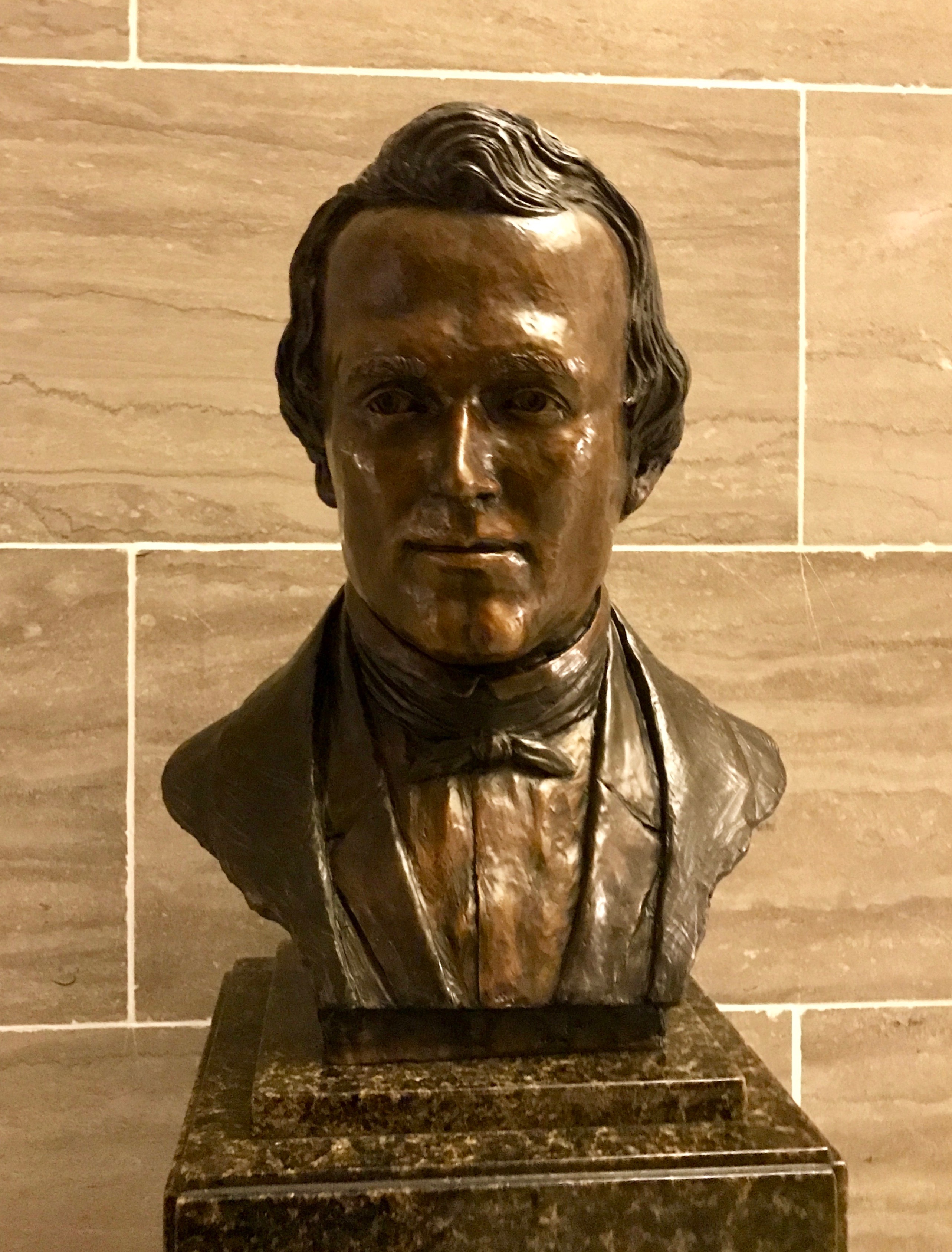
This gentleman is George Caleb Bingham. He was a 19th century American painter of the American West, with a large selections of his works of at the St. Louis Museum of Art. Much of his best work generally relates to life and commerce along the Mississippi and Missouri rivers, and to the people of Missouri in and around St. Louis, Jefferson city and Kansas City, among other Missouri places. He became known as “The Missouri Artist” and is considered by some to be Missouri’s first artist.
In addition to being an artist. he also served in the Missouri House of Representatives and other various positions in government.
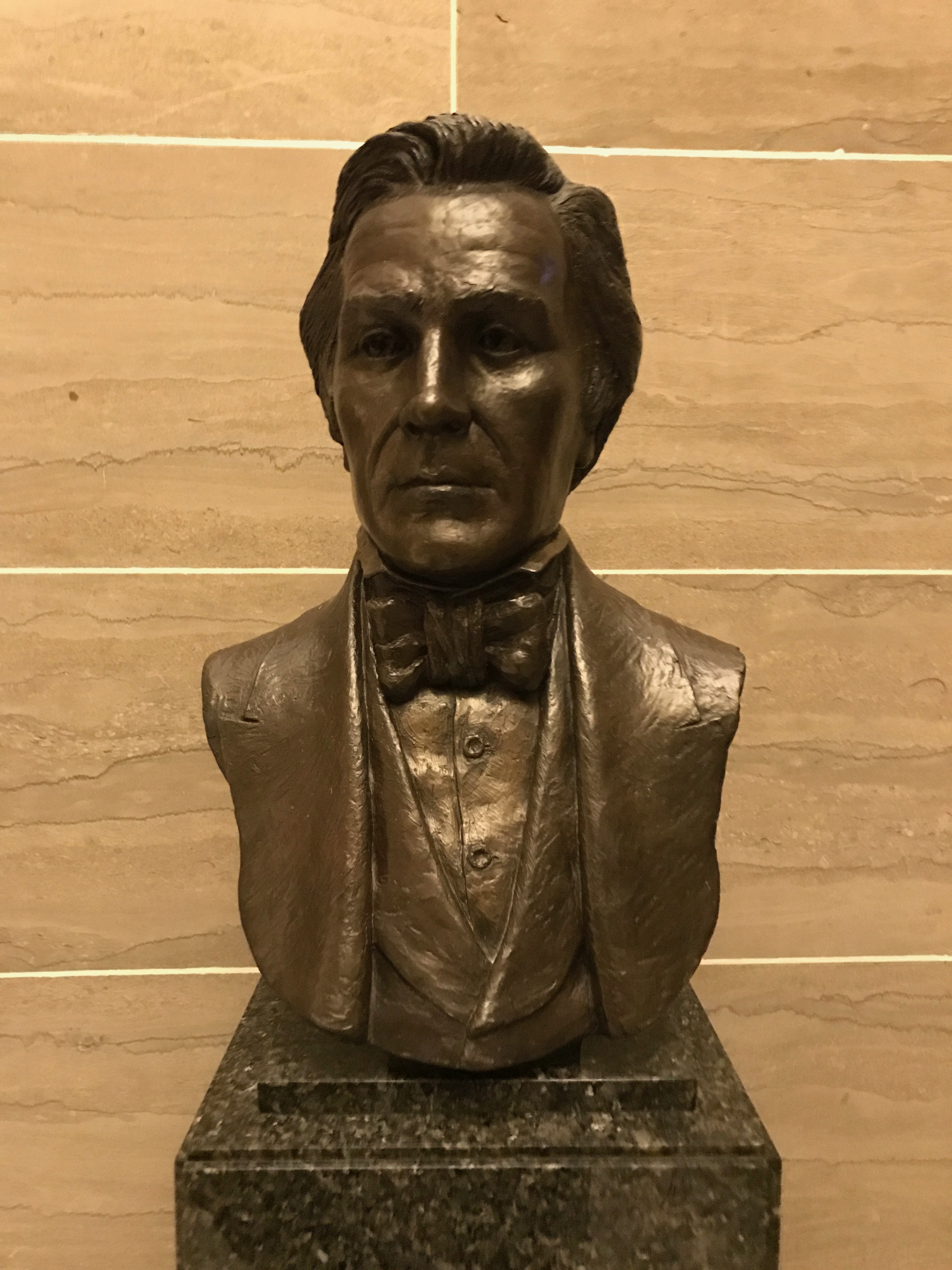
David Rice Atchison is another interesting politician. Although he was born near Lexington, Kentucky in 1807, he was the U.S. Senator from Missouri for 1843-1855, and there are those who claim that he was President for one day in 1849. That’s the President of the United States, mind you.
How did that happen? The term of outgoing president, James K. Polk, ended at on noon March 4, which was as Sunday. On March 2, outgoing vice president George M. Dallas relinquished his position as President of the Senate, at which time Atchison was elected President pro tempore of the Senate. According to the Presidential Succession Act of 1792, the Senate president pro tempore immediately followed the vice president in the presidential line of succession. As Dallas’s term also ended at noon on the 4th, and neither President-elect Zachary Taylor nor Vice President-elect Millard Fillmore had been sworn in to office on the day, it was claimed by some of Atchison’s friends and colleagues that on March 4-5, 1849, Atchison was Acting President of the United States.
It must be noted that Atchison himself never claimed to be Acting President and historians, constitutional scholars and biographers all dismiss the claim. tI is a fun little story, nevertheless.
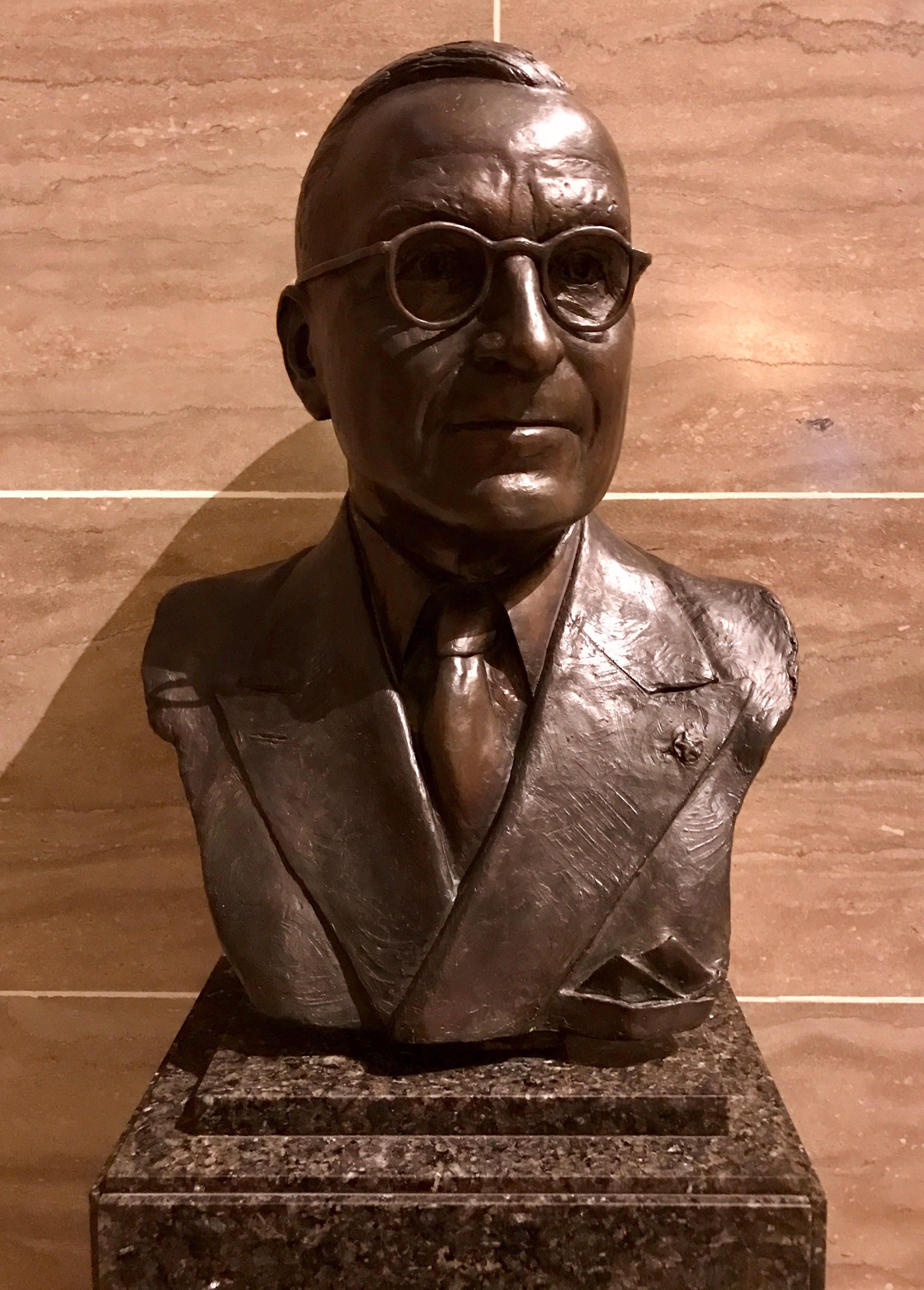
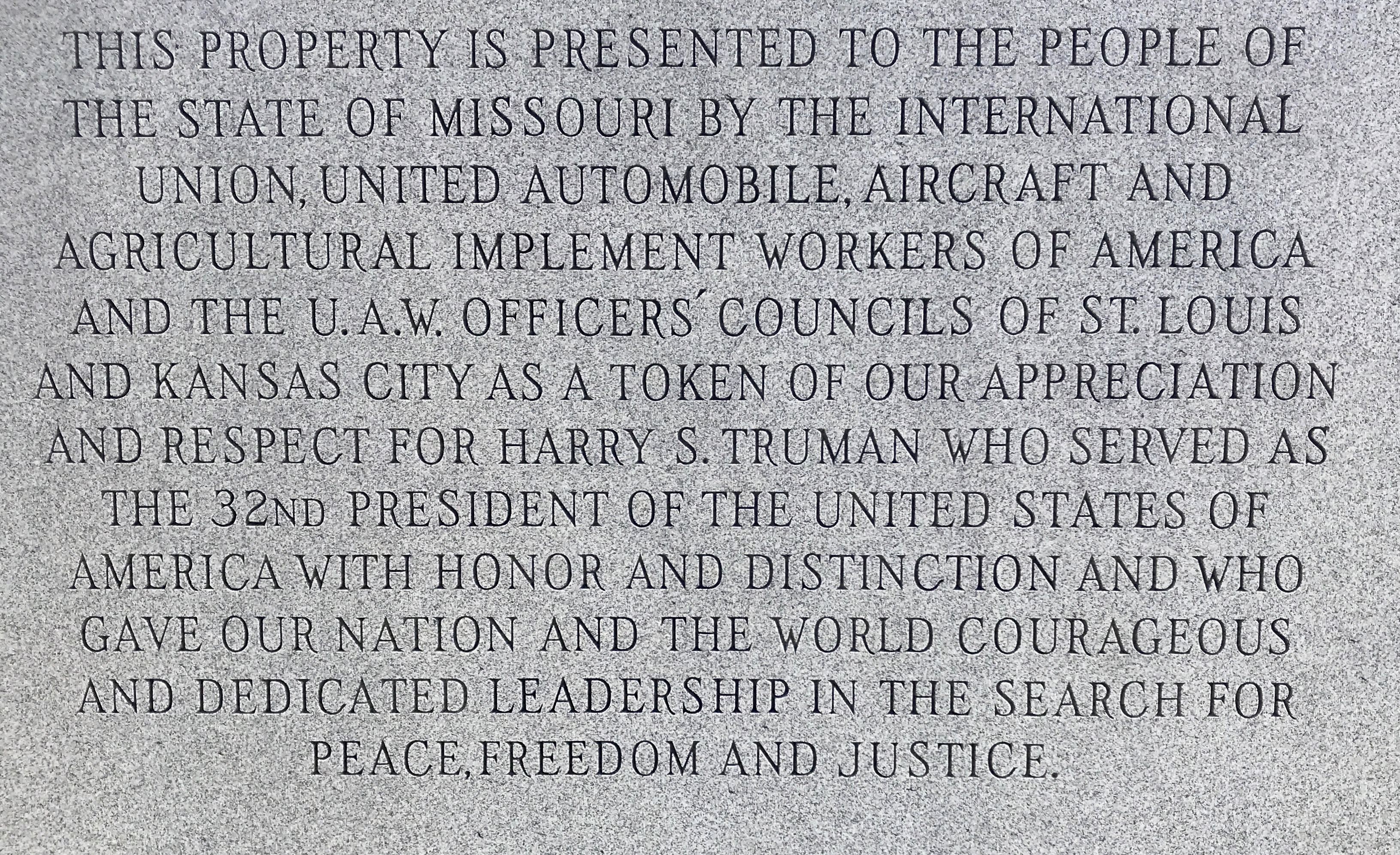
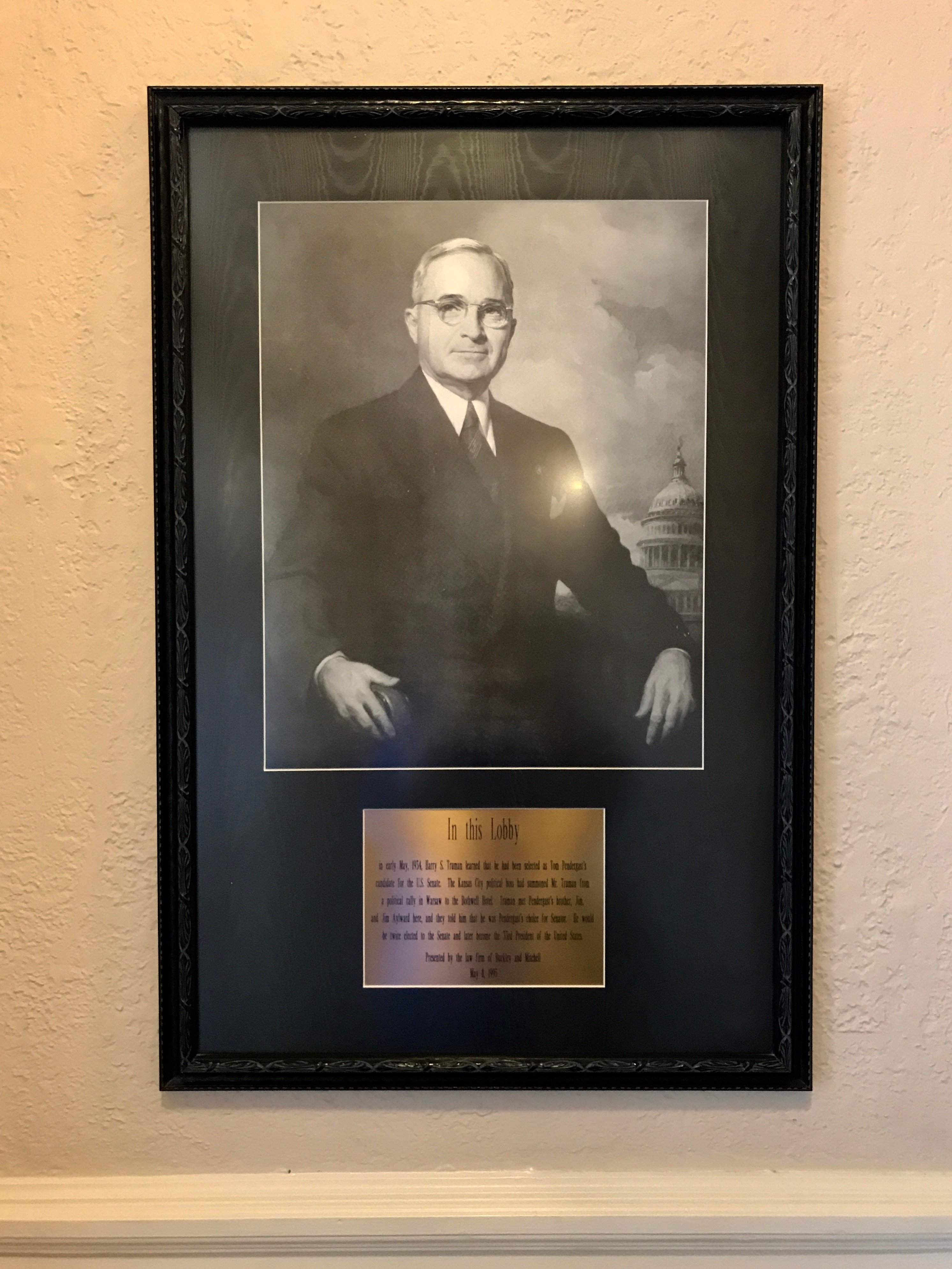
Missouri does have one genuine native son who was President – Harry S Truman. According to the plaque, he was considered one of the Nation’s greatest presidents and most remarkable statesmen. Born in Lamar, Missouri in 1884, he lived out his post-presidential years in Independence, Missouri.
He was a Missouri Senator from 1935 – 1945, when he became Franklin D. Roosevelt’s third vice president. He followed John Nance Garner, 1933-1941, and Henry A. Wallace, 1941-1945. One of these days, I am going to have to research just why FDR felt that he needed to switch vice presidents. In any event, Truman had been vice president for less than three months when FDR died from a cerebral hemorrhage in the Little White House in Warm Springs, Georgia. Talk about on-the-job training! He had to take the reins and bring WW II to a close, which included making the decision to use the atomic bomb. I have read in several sources, that when he took office he wasn’t even aware that there was an atom bomb being developed.
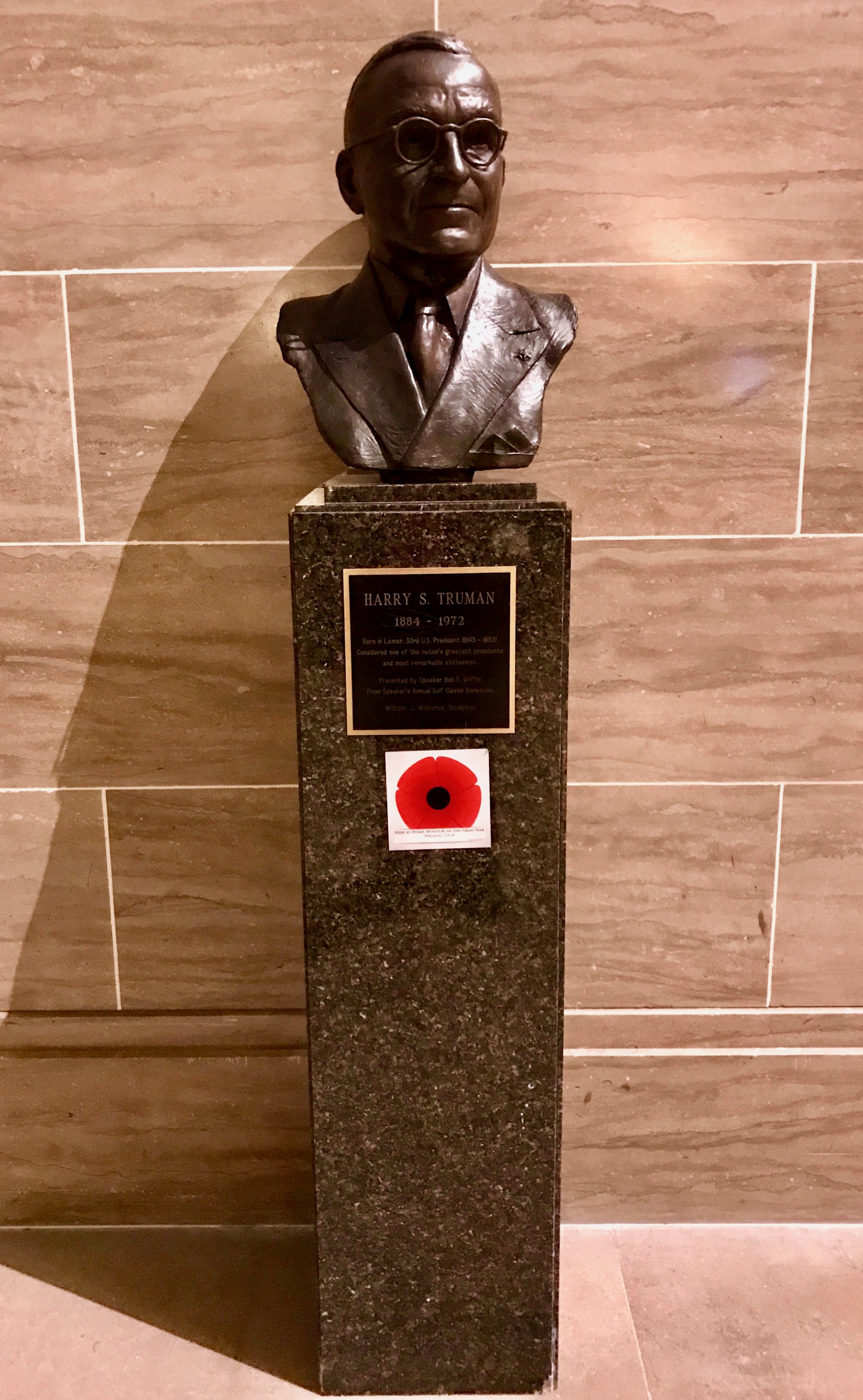
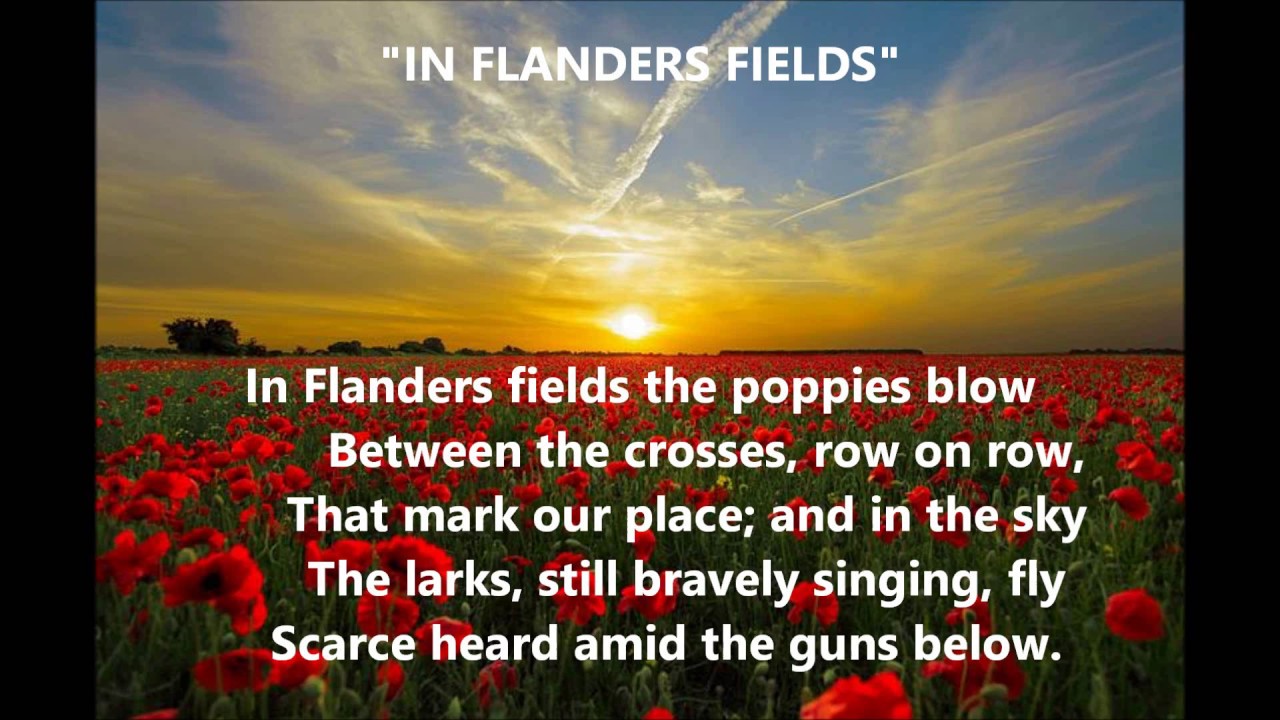
I am including this photo of his bust on the pedestal so that you can see the poppy on it. Truman served in WW I, which he only managed to get into because he secretly memorized the eye chart to compensate for his poor vision. My visit to the capitol was in 2018, which was the 100th anniversary of the end of WW I. The poppy is the symbol of remembrance. I believe it gained popularity because of the poem “In Flanders Fields” by John McCrae.
And now, I really will move along. Thank you for bearing with me through this long series of posts about the Missouri State Capitol.