Another weekend rolled around and I found myself in Maryland, somewhere northeast of Baltimore. I found a chain hotel at an interchange and settled in there for a few days of rest and relaxation.
Of course, you know how I relax. After a week of driving in circles, I jump in the car and drive somewhere. This time, I headed to Havre de Grace.

Havre de Grace is an old town – or, should that be Ye Olde Towne? According to my Preferred Source, General Lafayette visited the small hamlet known as Harmer’s Town several times during the Revolutionary War. He is reputed to have said that it area reminded him of the European seaport of Le Havre, which was originally named Le Havre-de-Grâce. Inspired by Lafayette’s comments, there residents incorporated the town as Havre de Grace in 1785. Washington stayed overnight in the town in 1789 on the journey to New York City for his first inauguration in 1789.
Fun fact: During the First Congress in 1789, Havre de Grace missed by only one vote being named the capital of the United States. I wonder how the votes fell in the voting? It seems like there were a number of cities that lost out on the honor by only one vote, although I can’t name them at the moment.
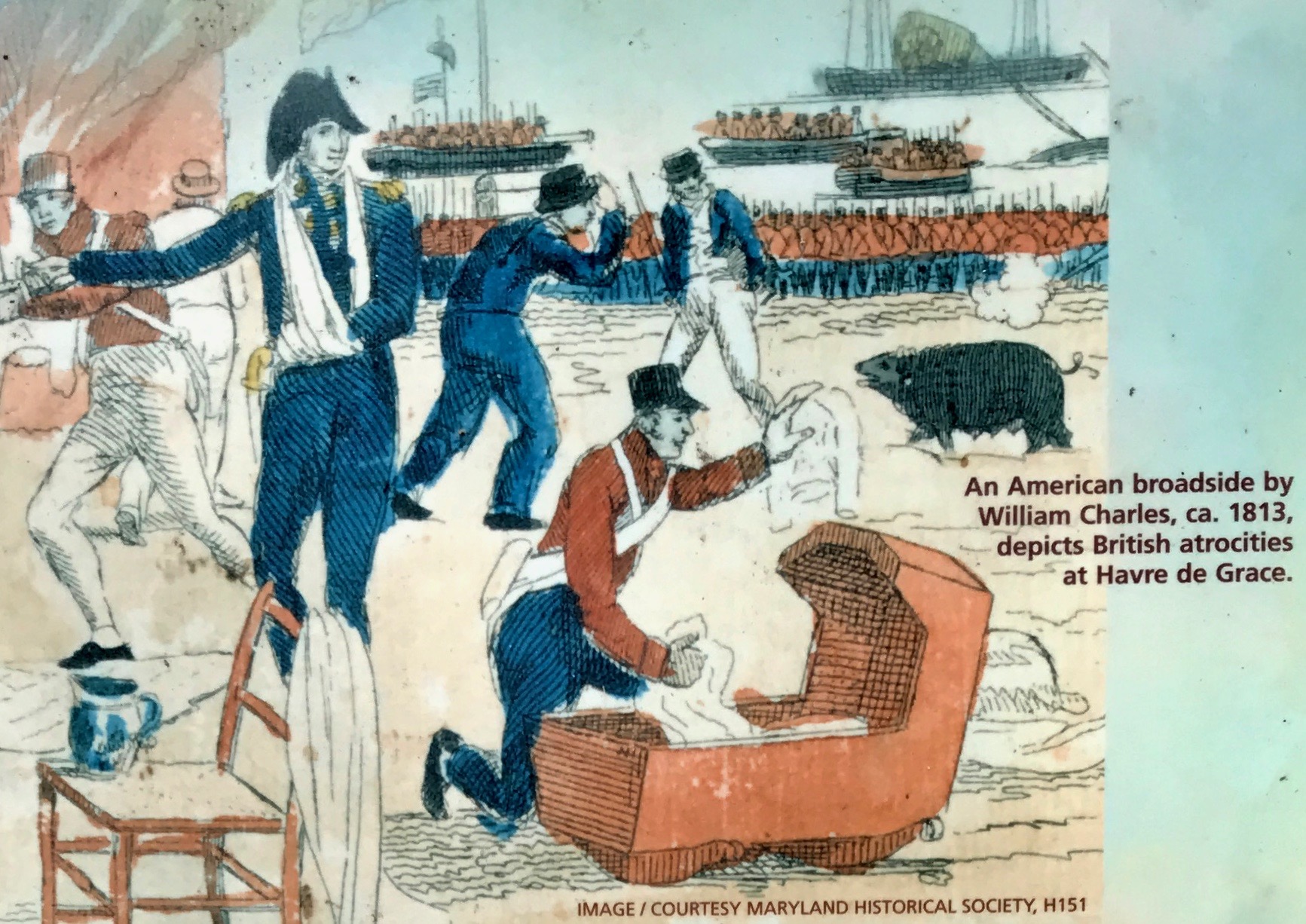
The bit of history that surprised me about Havre de Grace was the attack by the British during the War of 1812.
Rear Admiral George Cockburn burned and plundered the city. According to an interpretive sign I saw along the way, first person accounts of the devastation at Havre de Grace fueled newspaper reports of “wanton barbarity among civilized people.” Cockburn, portrayed as a villainous “violator of all laws, human [and] divine,” struck terror as he made an example of Havre de Grace for other towns.
The American Lieutenant John O’Neill single-handedly manned a cannon to help defend the town. O’Neill was wounded and captured by the British, although he was soon released.
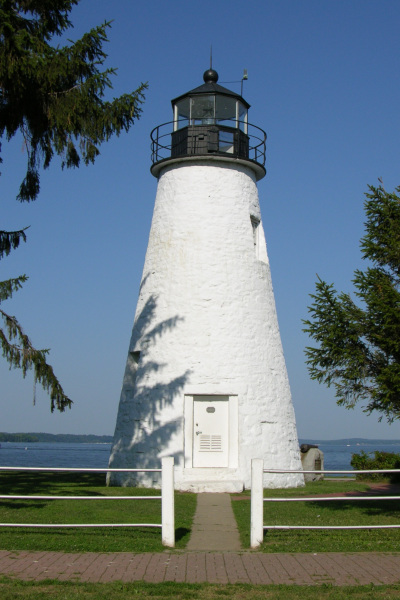
In gratitude for his bravery, Havre de Grace made O’Neill and his descendants hereditary keepers of the Concord Light House, which overlooks the point where the Susquehanna River flows into the Chesapeake Bay.
Kind of makes me wish I had dug a little deeper when I visited the tourist information office. I might have seen some information about the lighthouse. I definitely would have gone to visit it. According to my Preferred Source, it was built in 1827 by John Donahoo, a prolific lighthouse builder who is responsible for many lighthouses in Maryland.
What I did notice was a walking tour, called the Lafayette Trail.
The helpful man in the tourism office gave me a map and I set out to see what I could see. My first stop was number eighteen.
Saint John’s Episcopal Church
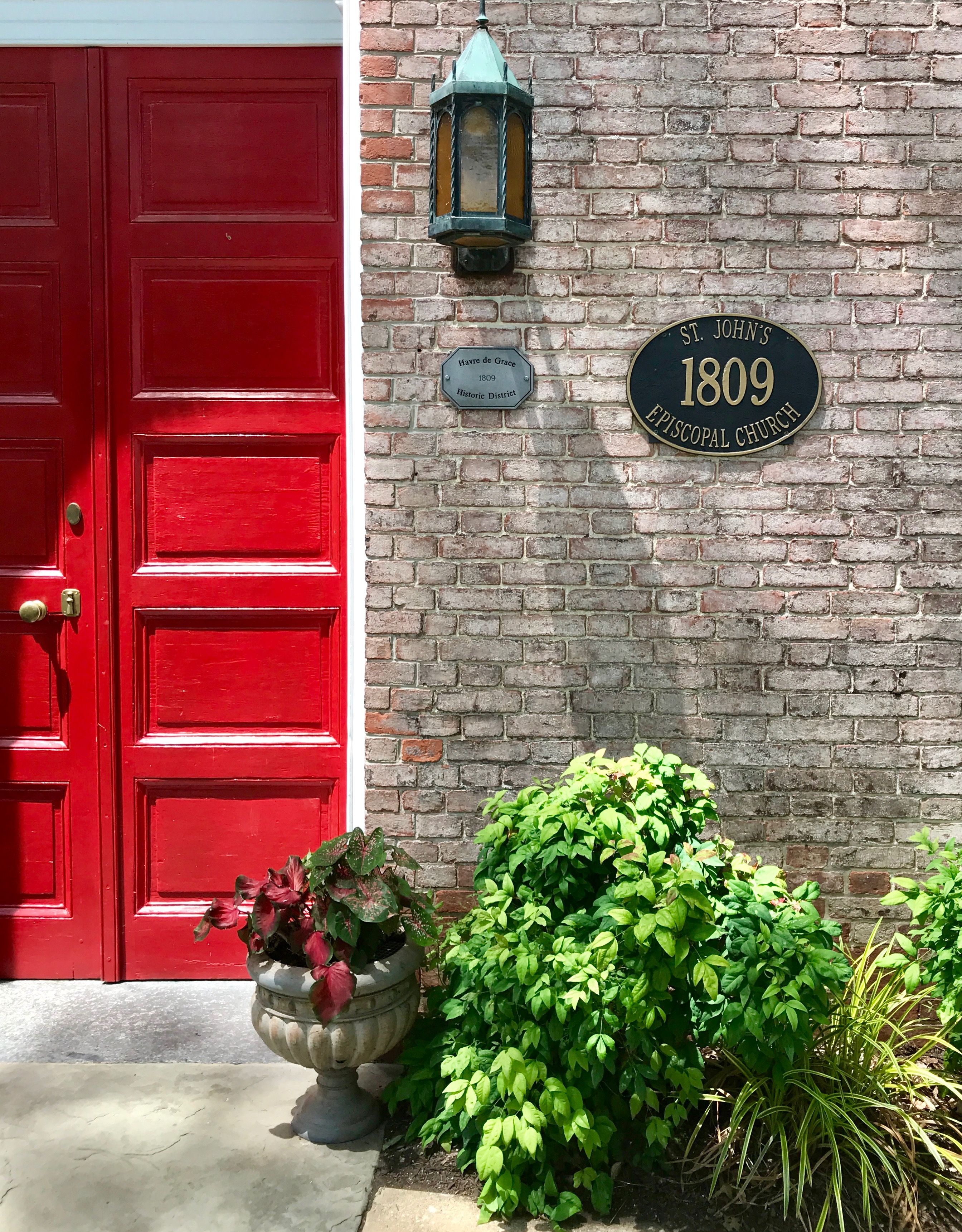
St. John’s is Havre de Grace’s oldest church. Financing for the church was through a lottery commissioned in 1802. It was built in 1809, and the church was damaged by the British during the War of 1812. It was gutted by fire in 1832, and changes to the original rectangular building were made in the early 1860s.
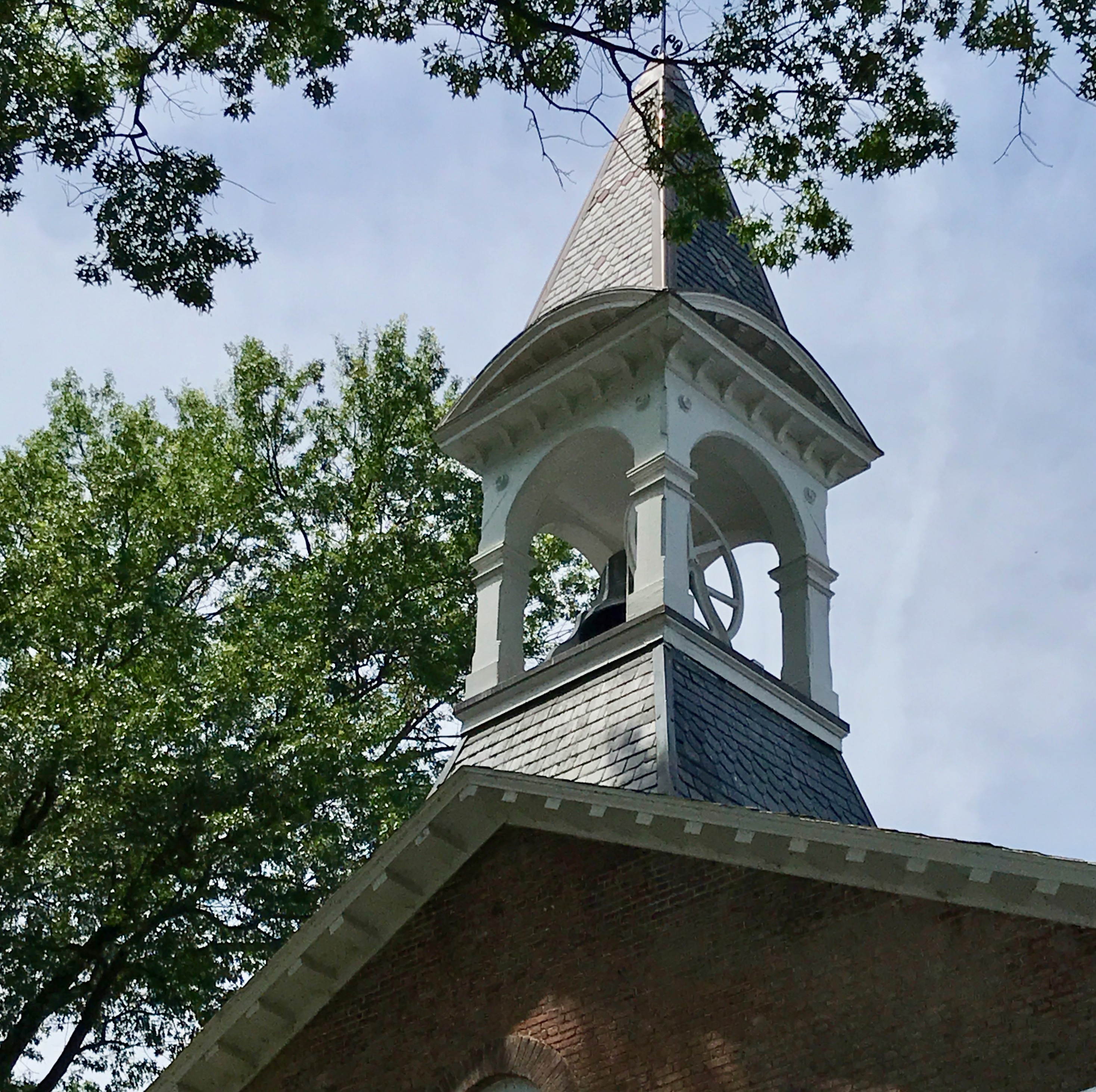
A slate roof and belfry were added in the 1880s.
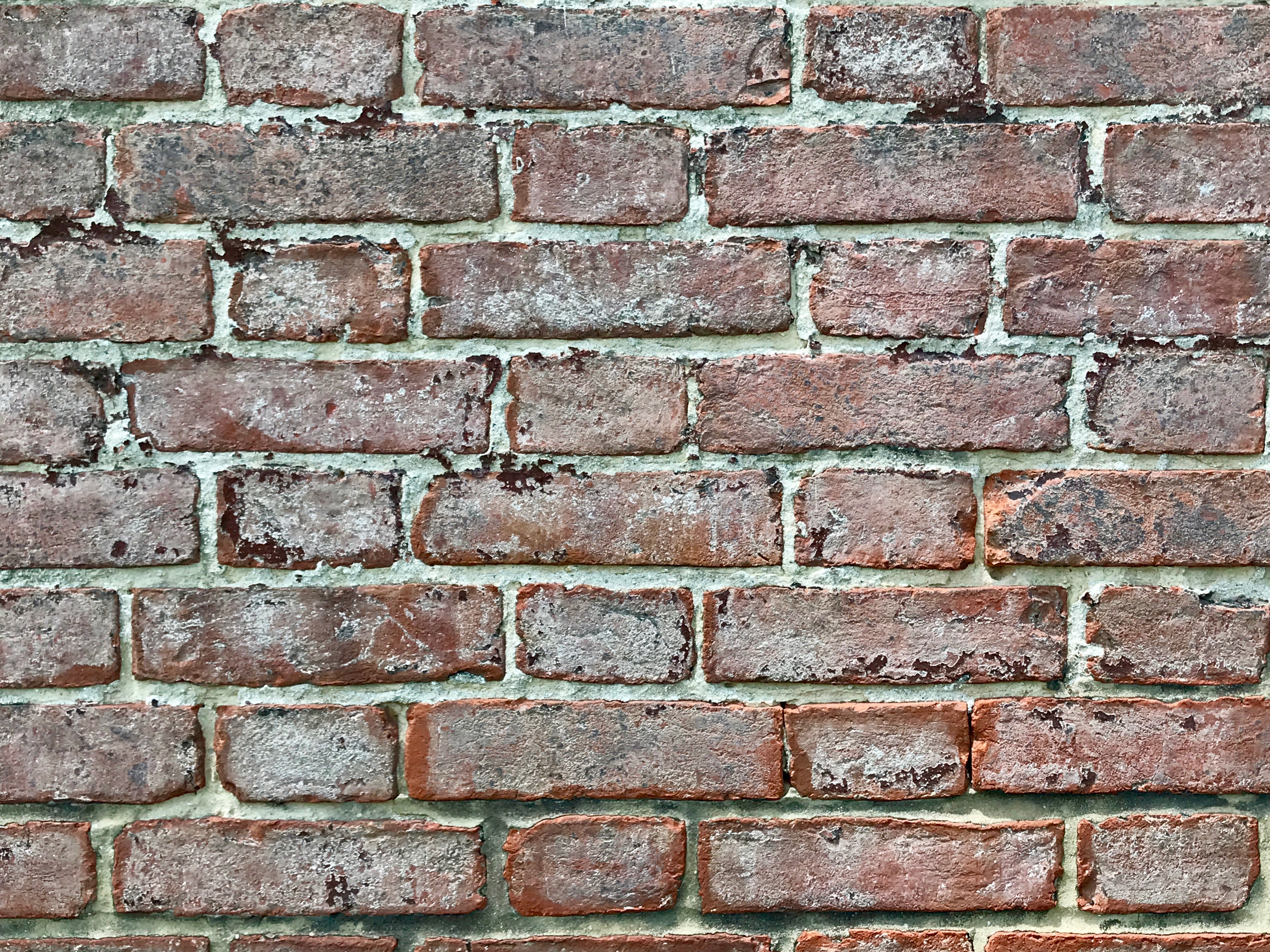
Notice the Flemish bond brick walls.
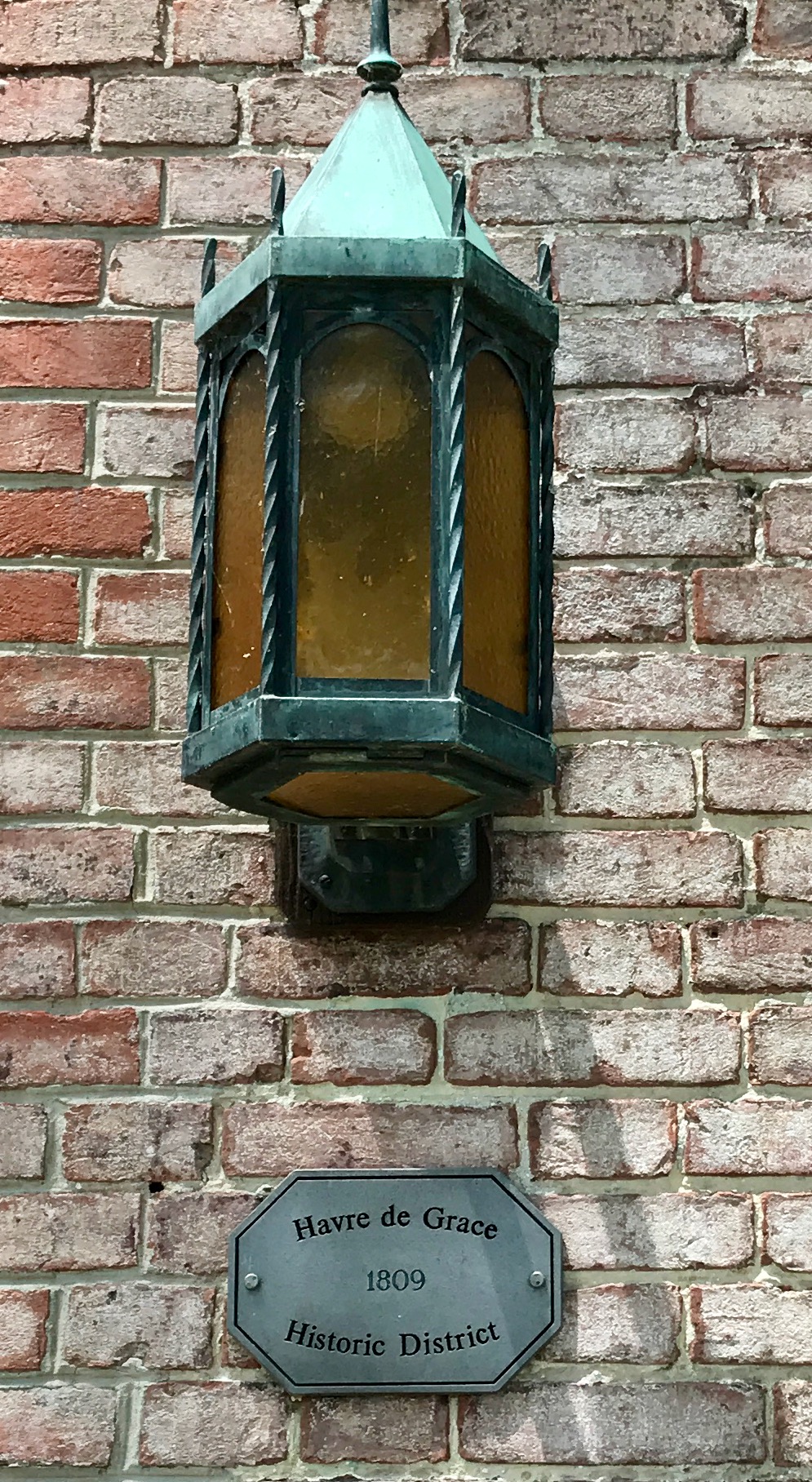
After admiring the exterior, I headed off in search of my next stop. Coming up: number nineteen.
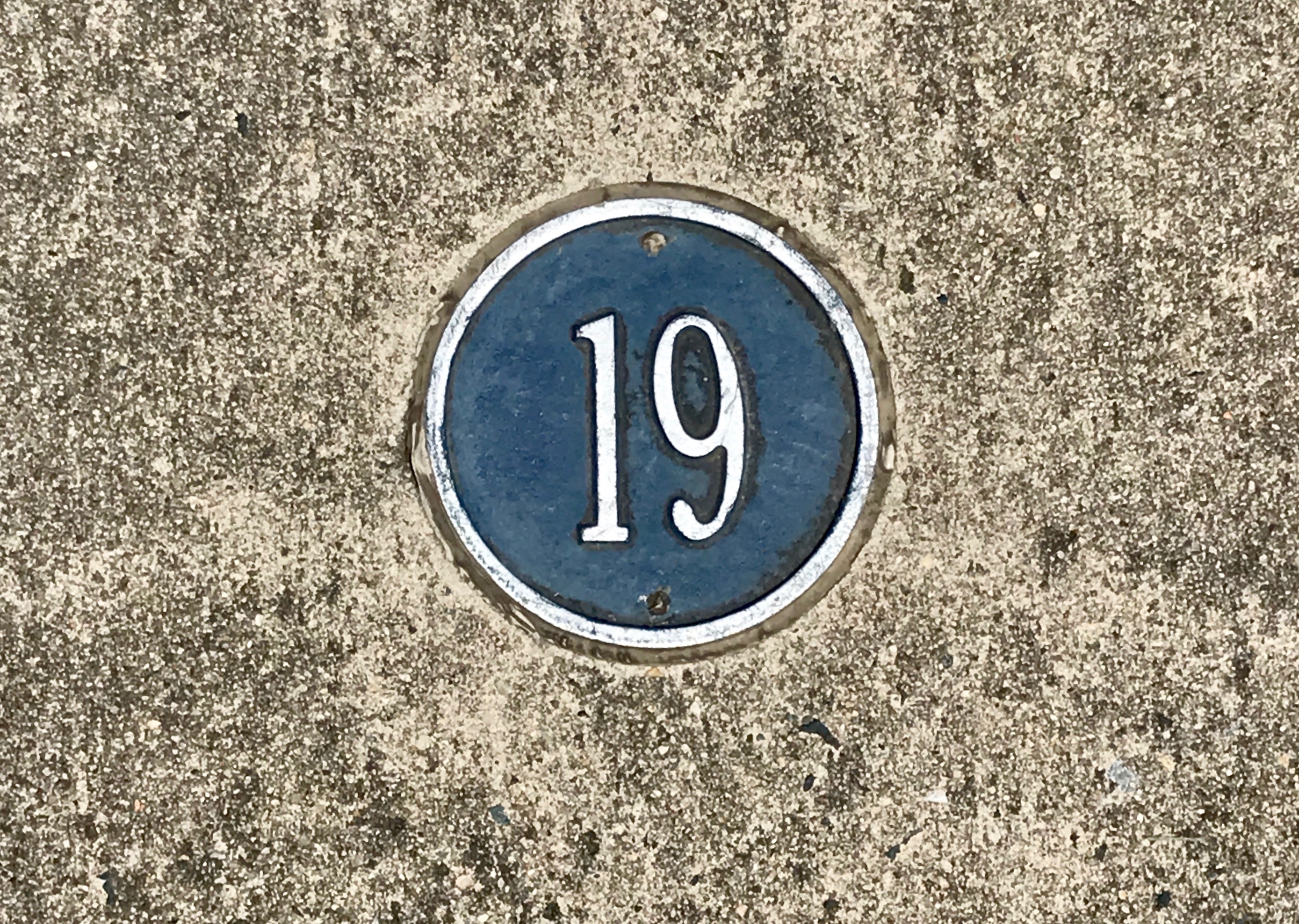
This quietly elegant house is Carver-Craig House, built in 1855.
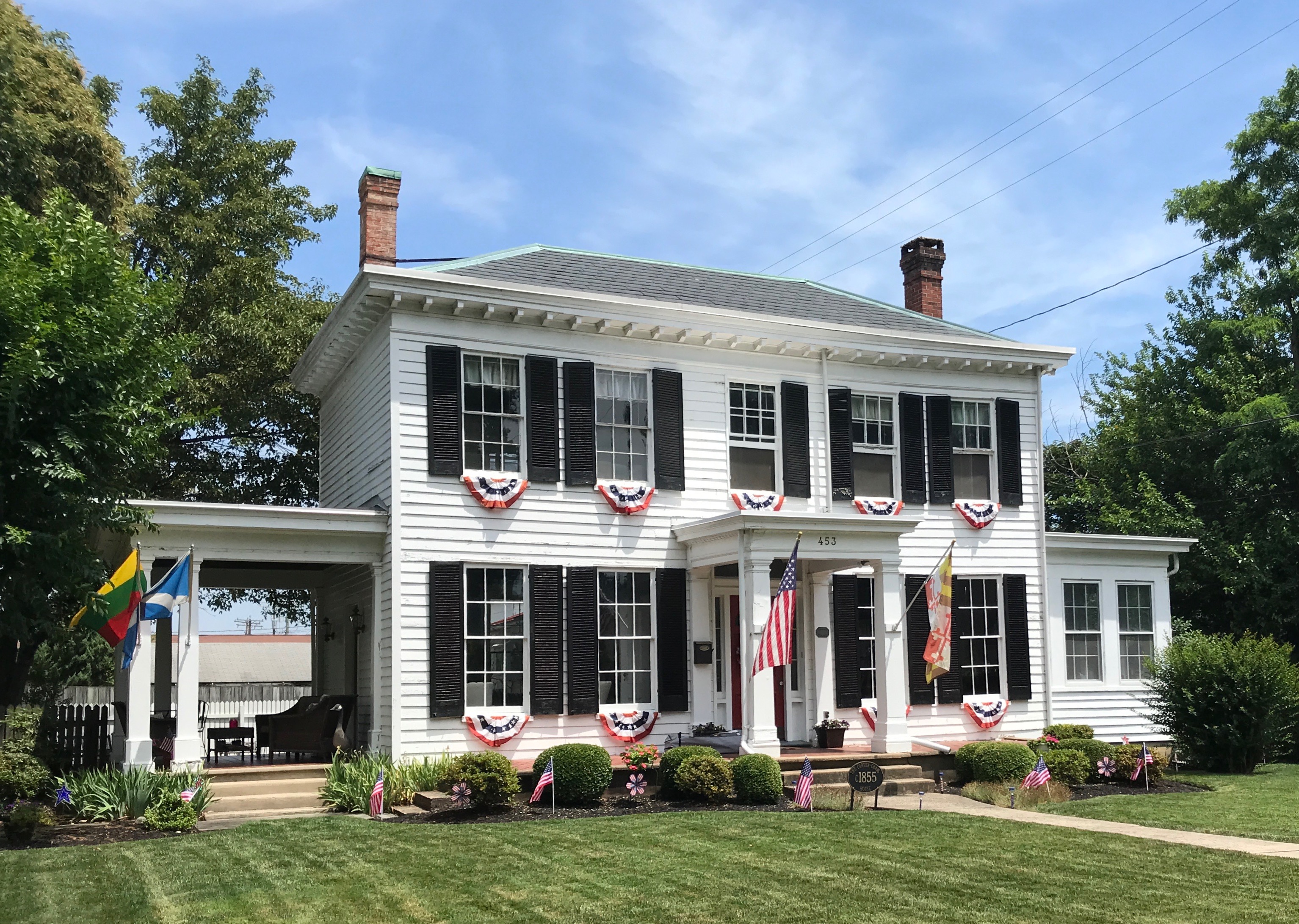
It is a combination of Greek revival and Italianate styles. It has a slate-covered hip roof with overhanding eaves and a bracketed cornice. A one-bay porch supported by square pillars protects the front entrance. The open porch on the west side and the enclosed porch on the east were added later.
Just in case you were curious, The windows are six feet tall with six-over-six lights. I wonder how much Windex they go through in a year?
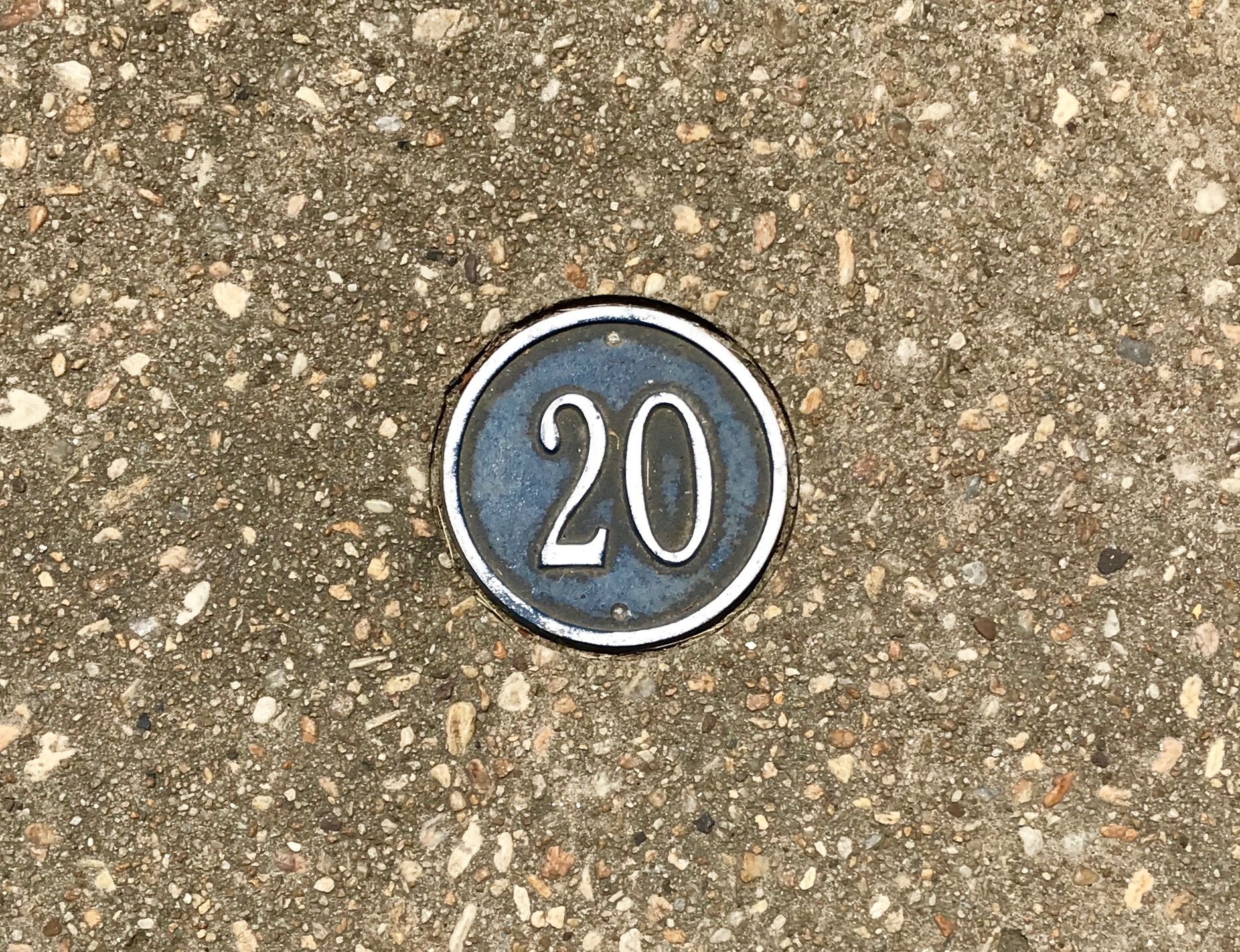
On to stop number twenty.
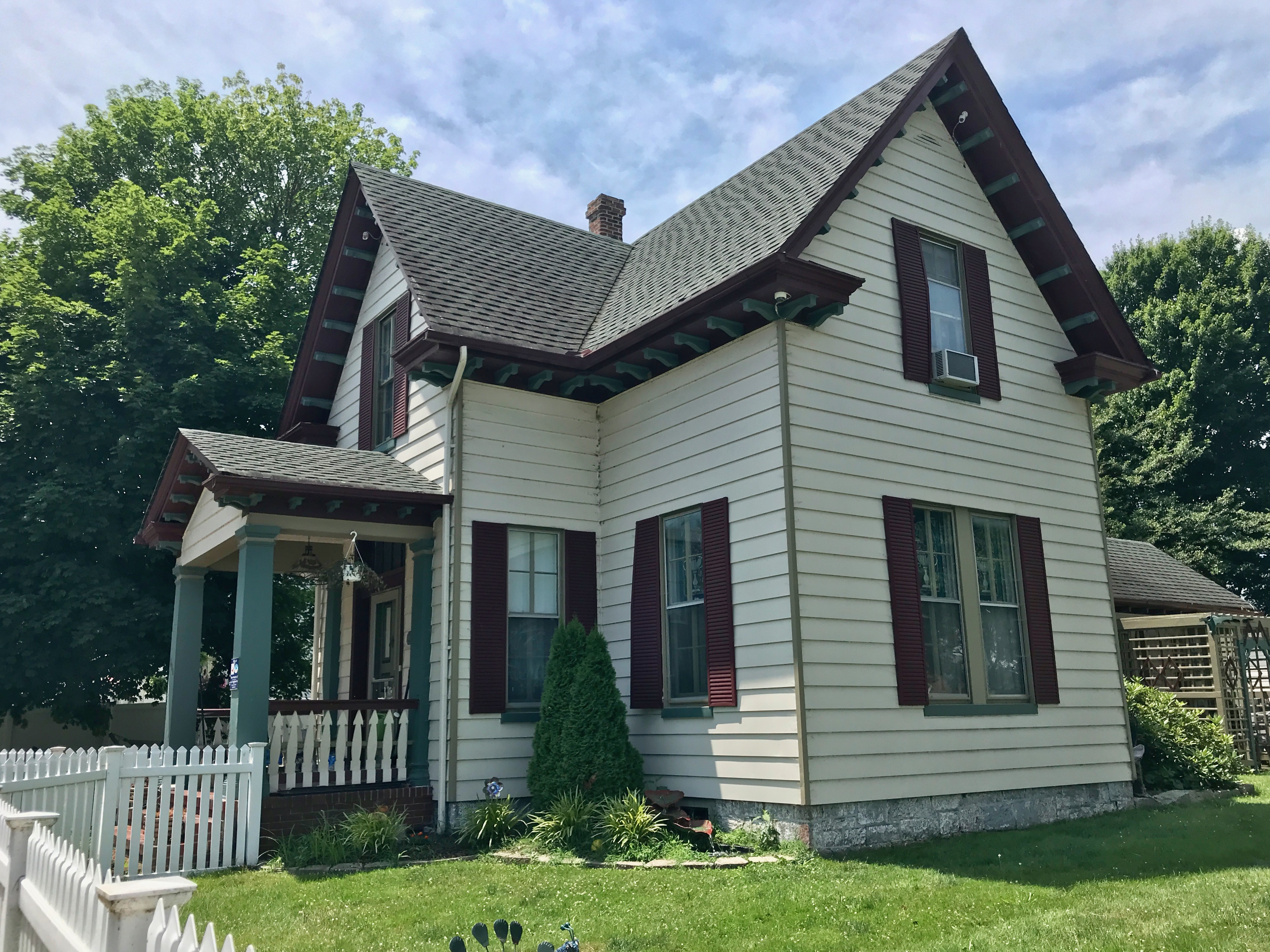
This is the Maslin House. It was built in 1860, and Maslin family members have lived in this home since its construction. Dick Maslin, the great-grandfather of the current owner, was a Chesapeake Bay boat pilot. Another Maslin ancestor was a lock house tender who resided the Lock House.
The facade of this frame cottage is unusual because it is built in the shape of a Greek cross. The four-over-four double-hung windows are original, in service for over 150 years.
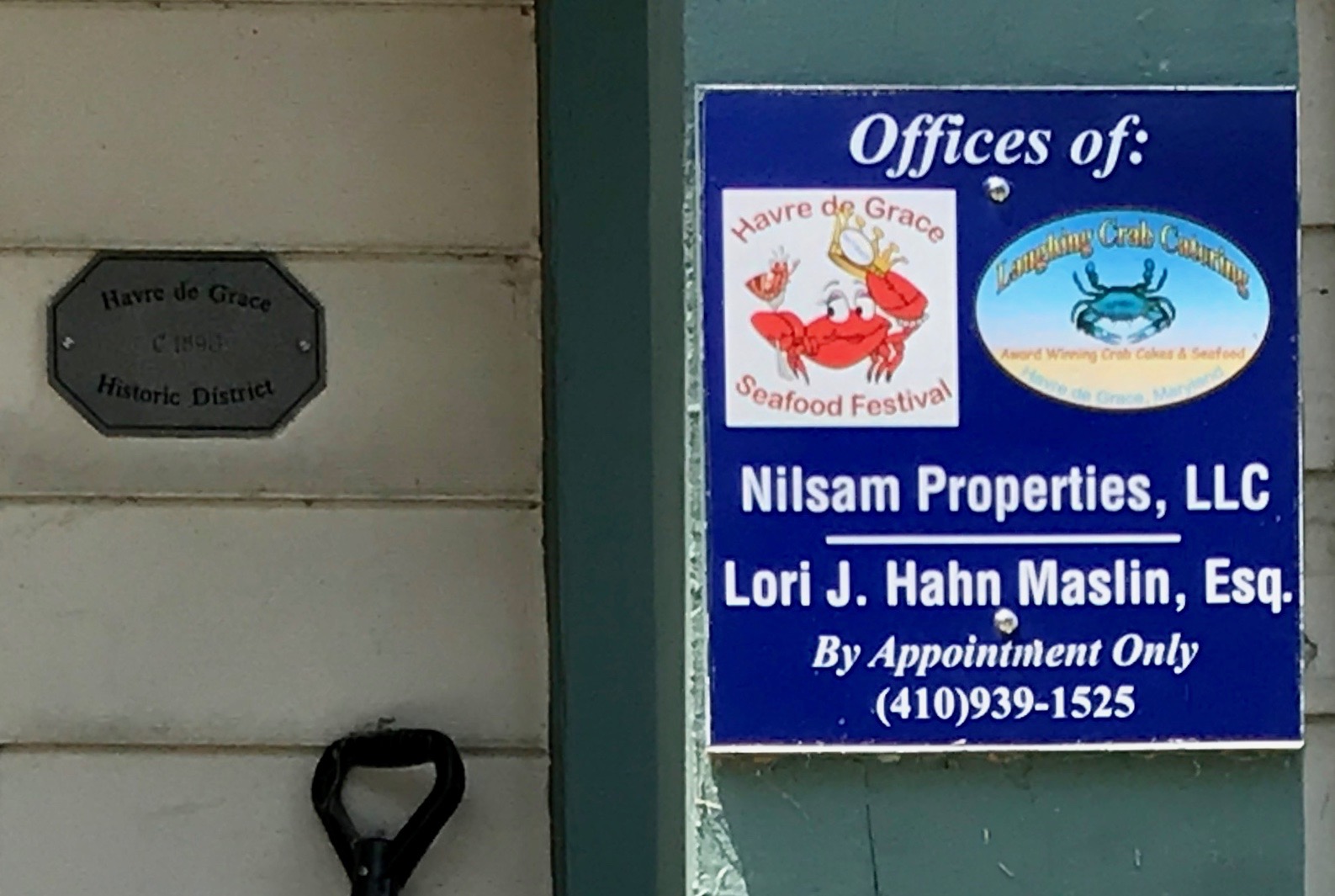
I spotted this sign on the house.
This car was parked in front of it.
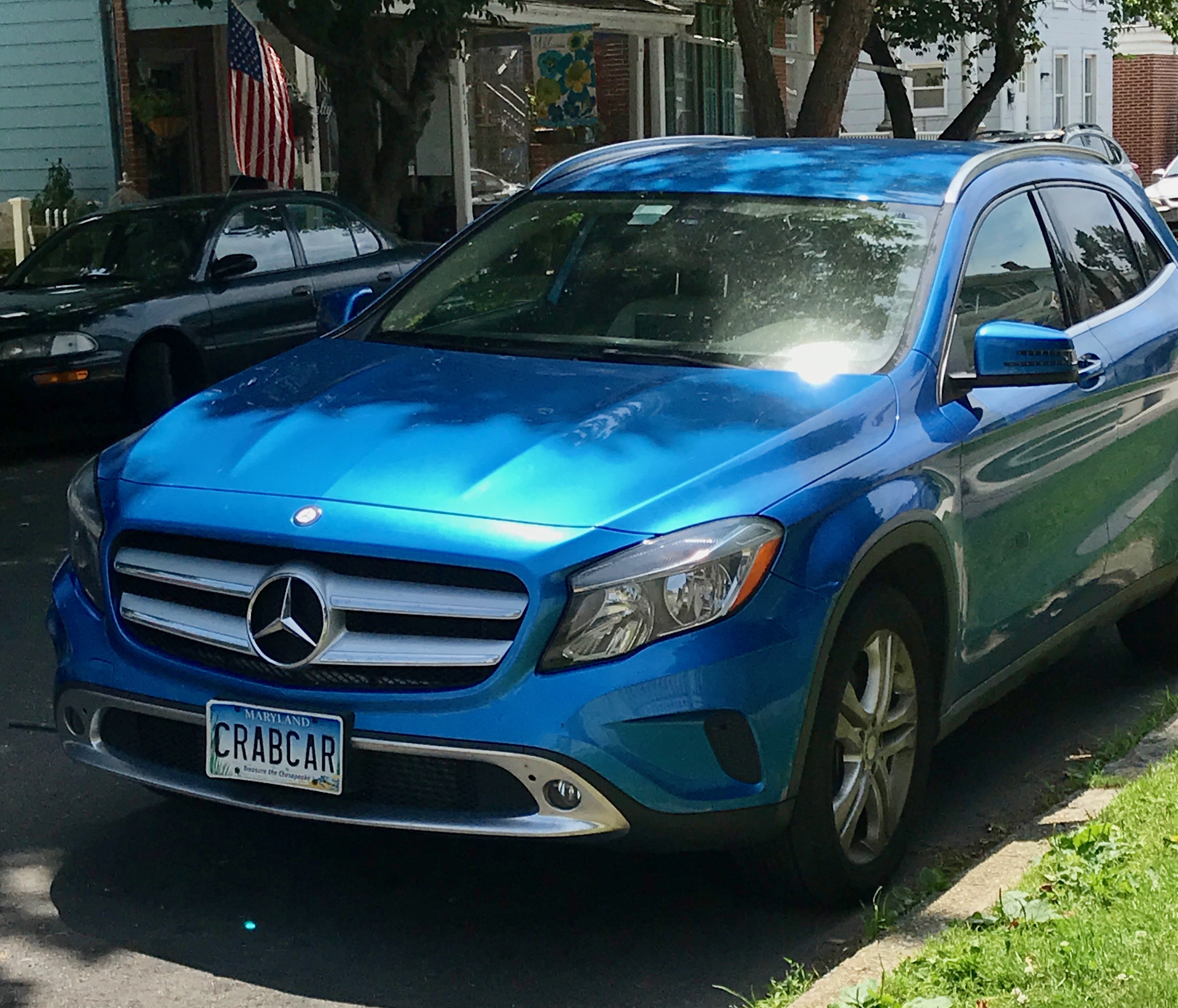
I particularly enjoyed the license plate. “CRAB CAR”
By this time, my enthusiasm for this walking tour was flagging. It was hot and sunny. Sitting here, in cold, dreary Michigan, it seems odd to be complaining about a hot day – but there you have it. I’m sure it’ll be warm again here before you know it. (Knock on wood.)

But, after all, it was summer! It was supposed to be hot. I grabbed something to drink at one of the little shops and headed back to the car. I figured I’d drive to the farthest point on Lafayette Trail and check that out.
(Just in case you might be entertaining the idea that I actually remembered all that information about the buildings, I managed to find a copy of the walking tour on line. No memory cells were harmed in the writing of this post. At least not to this point.)
I set off in the direction of the Lock House, which was the farthest point on the trail, but got distracted by this view of the bridges.
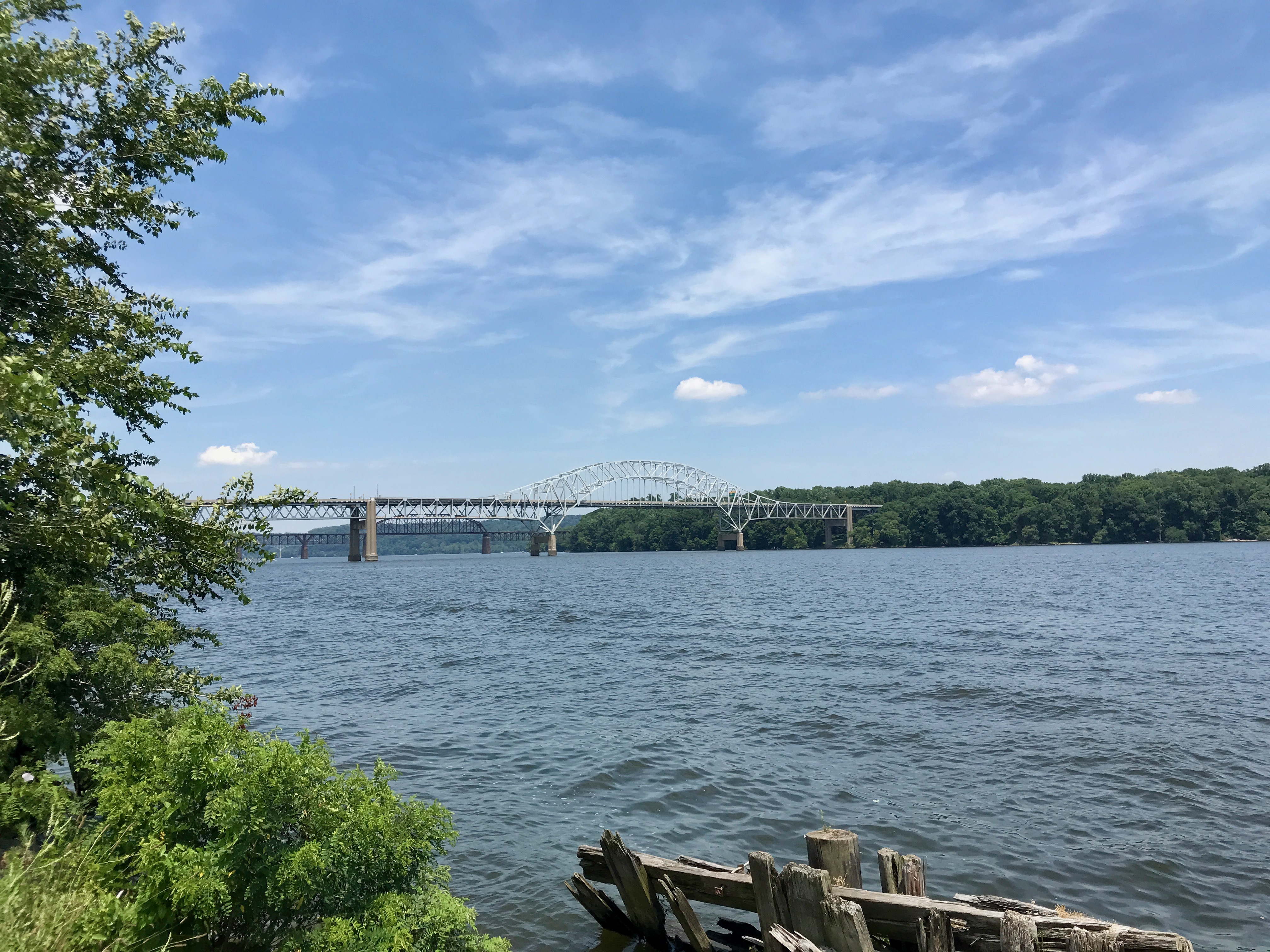
Luckily, there was a nice parking area to stop and look at them.
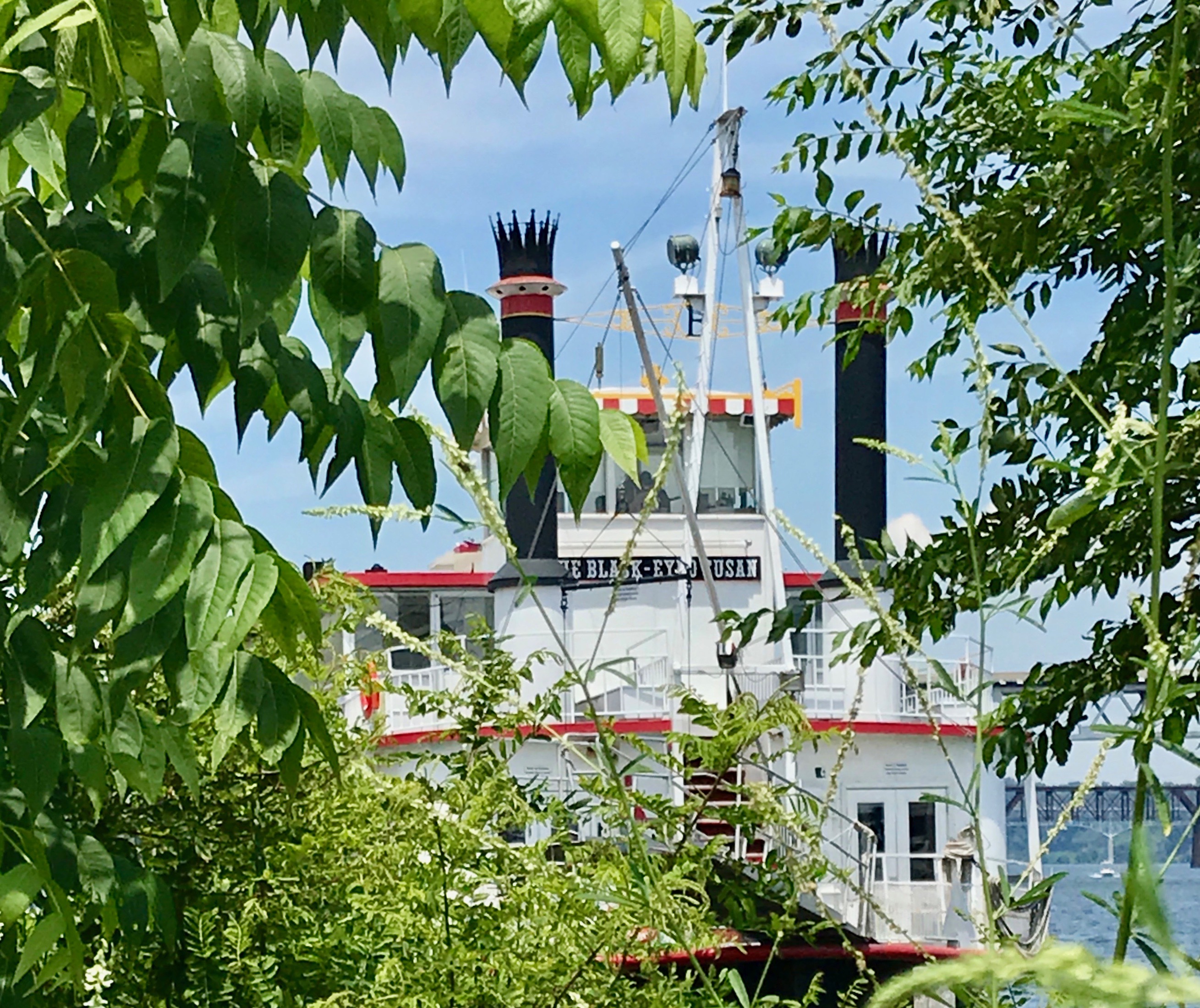
While looking through the branches, I saw this riverboat, named The Black-Eyed Susan. For those of you not familiar with the name, it is a common name for the flower, Rudbeckia hirta.

I continued along and eventually reached the Lock House.
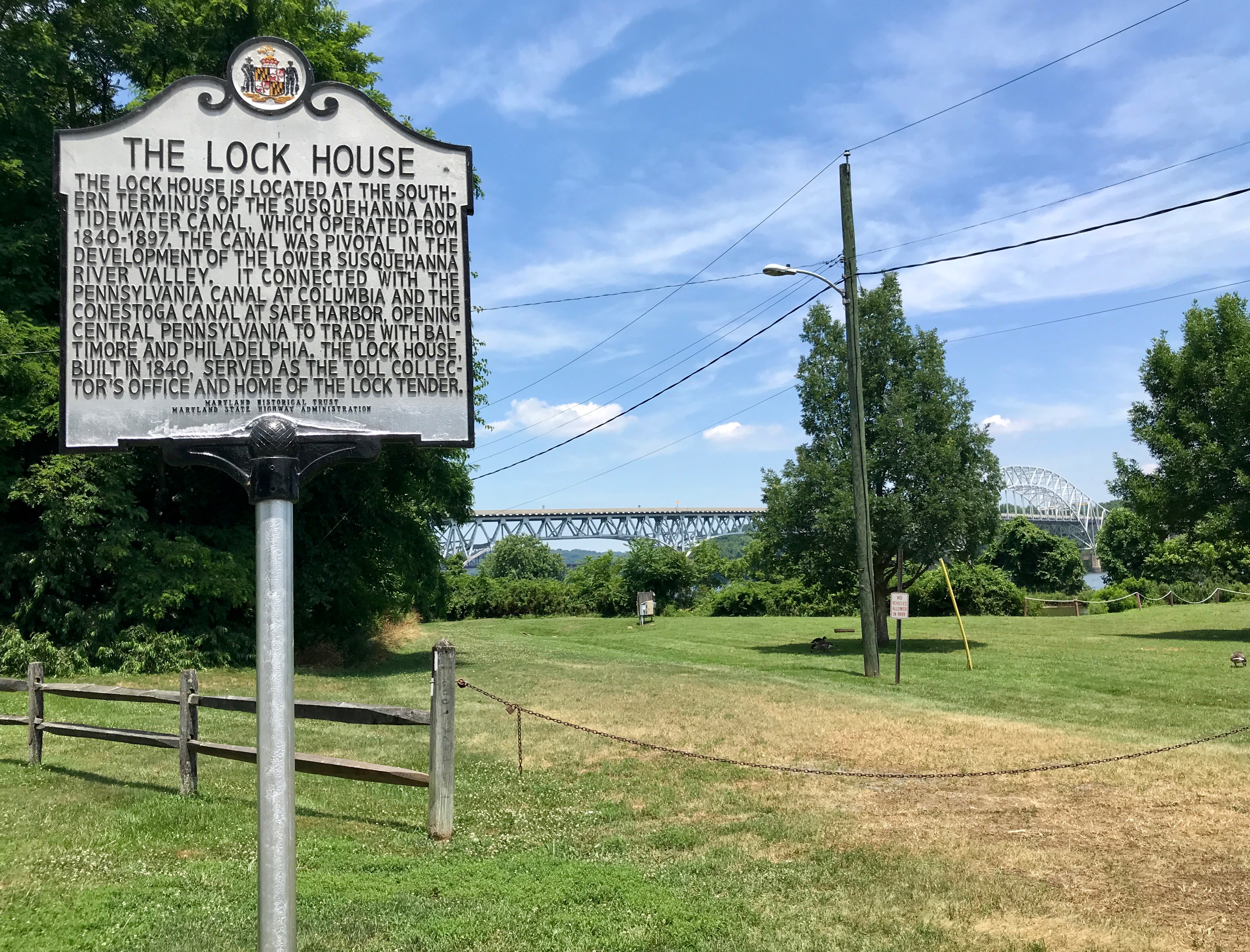
Hmm. There’s a sign. I wonder where the Lock House is? Well, it wouldn’t be the first time there was a sign for something that wasn’t there. But, I looked around and found a driveway that lead to The Lock House Museum.
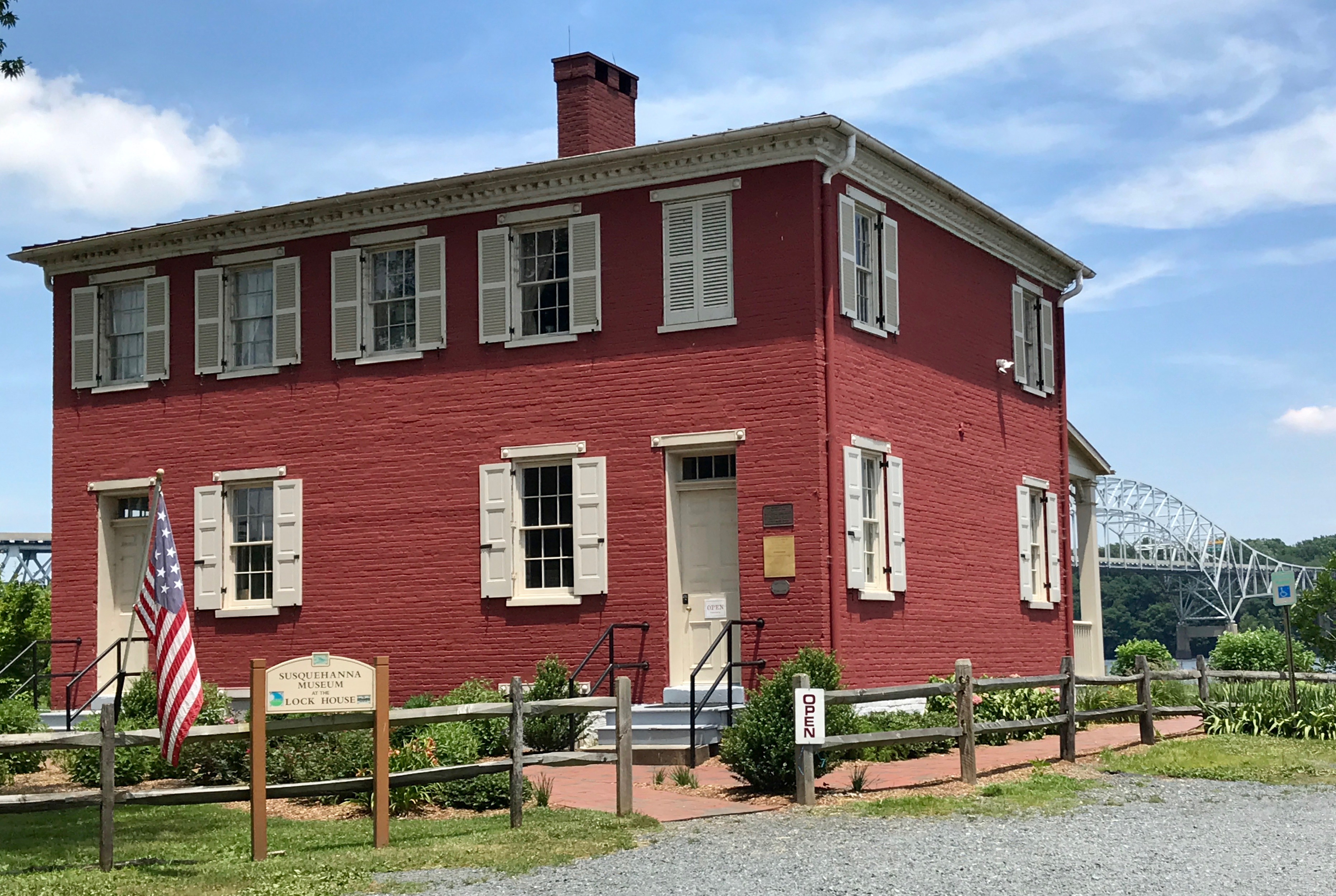
And it was OPEN!
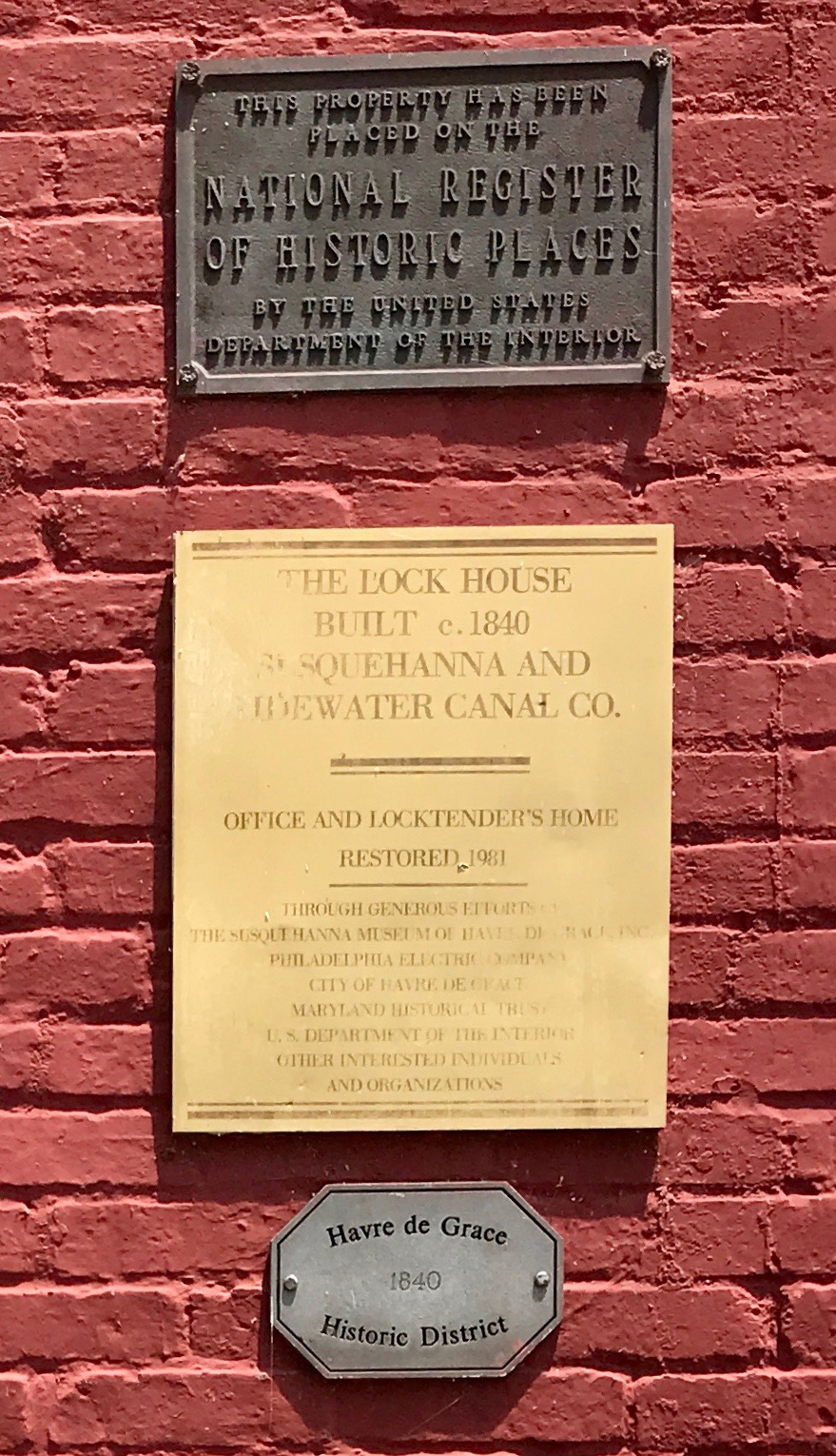
I walked up to the building and paused a moment to look at the signs that were by the door. I went inside and was met by Bill, who was a most able guide. He really had a passion for the canal, the lock and the Lock House.
The Lock House was built in 1840 and is situated on the western bank of the Susquehanna River, by the outlet lock for the Susquehanna and Tidewater Canal. The canal connected Wrightsville, Pennsylvania, 45 miles upstream, with the markets on the coast. Although the Susquehanna connected the two places, north of Havre de Grace it was too shallow and had too many boulders to navigate. I thought they might have dredged a channel along the shore, but Bill told me they dug a canal alongside the river. He took me into another room to demonstrate how the lock worked.
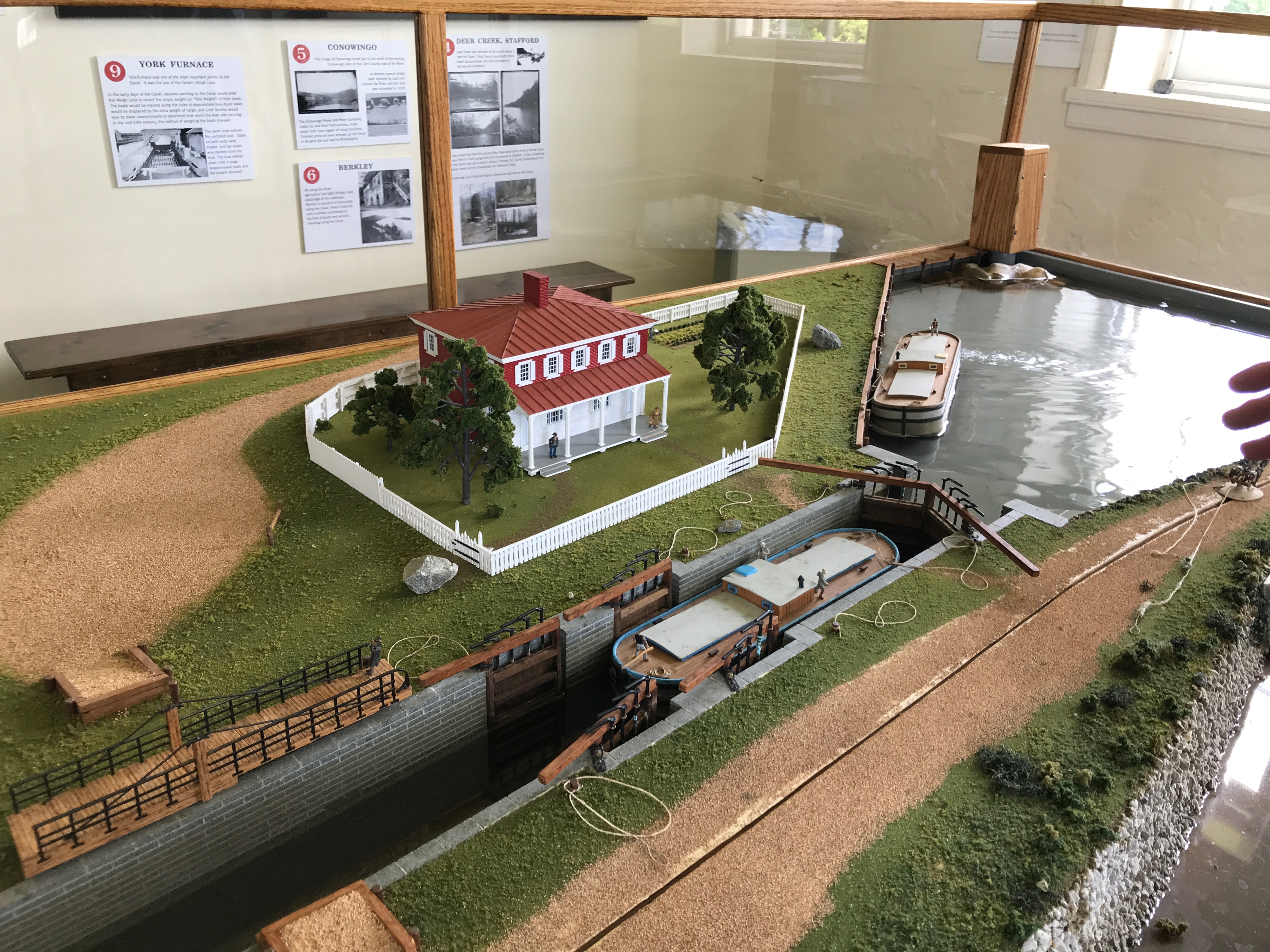
There were holding areas for boats waiting to go through the lock. There was only one lock, so they had to take turns coming and going.
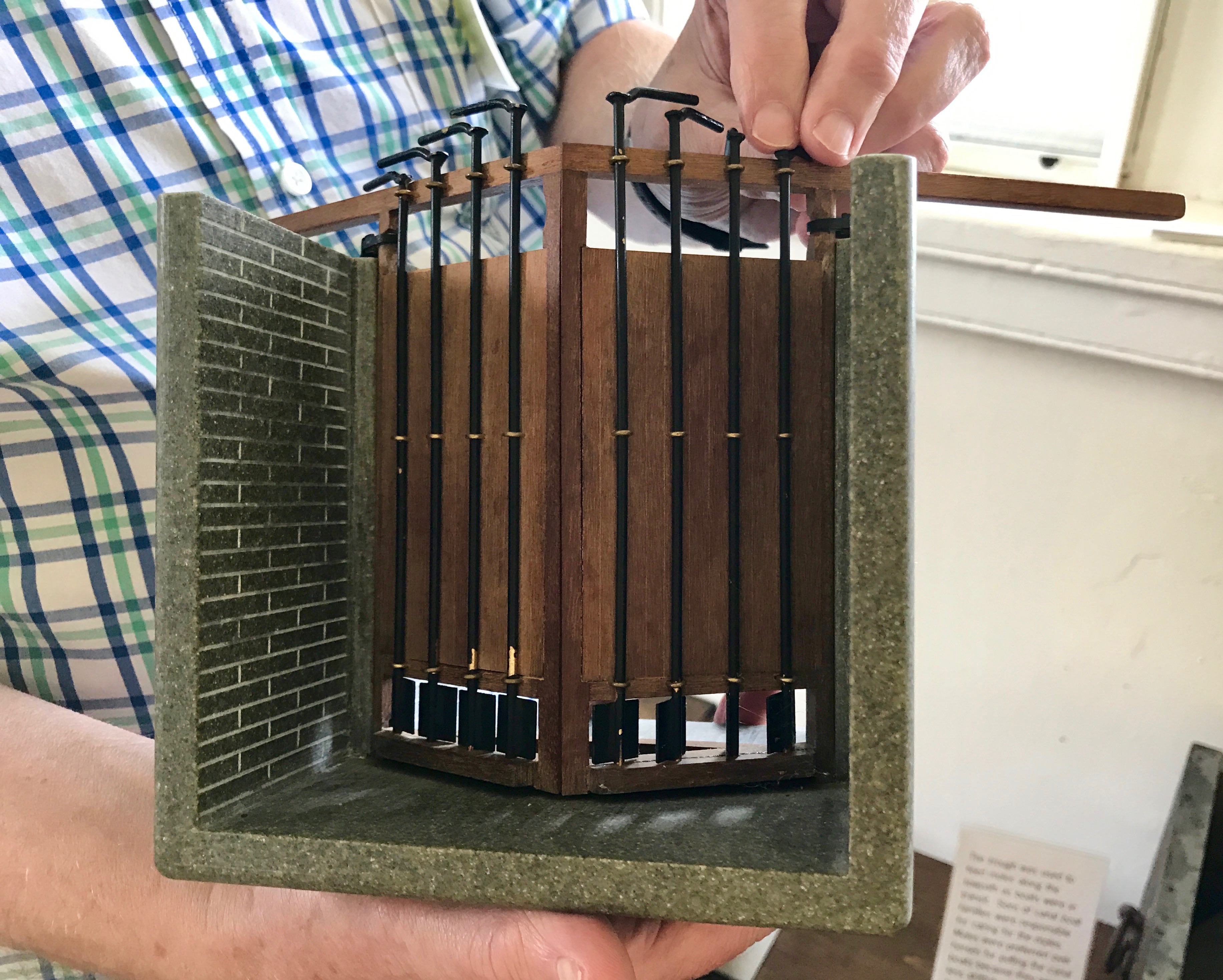
I was fascinated with this model of the gates. I always wondered how they managed to let the water out to lower the boats. There are little doors at the bottom of the gates that are opened with the handles on the tops. I wonder if people had to walk out on the top of the gates to operate them or did they use long poles or some other means to move the levers? I was just so amazed at the model that I didn’t ask enough questions.
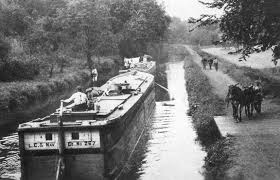
I tried to take a photo of the photos of the canal boats in the museum, but they were framed under glass. Try as I might, I couldn’t find an angle without glare. I am including this photo to illustrate what the boats looked like.
The boats on this canal were freighters and they carried primarily coal. They were typically 60 to 70 feet long and 15 to 16 feet wide. Each boat could carry up to 150 tons of raw materials and they were pulled by mules.
The mules were often stabled on the boats, as the narrow Susquehanna Valley provided few pastures. The mules lived forward and the canal boat captain and his family lived in small quarters in the rear of the boat.
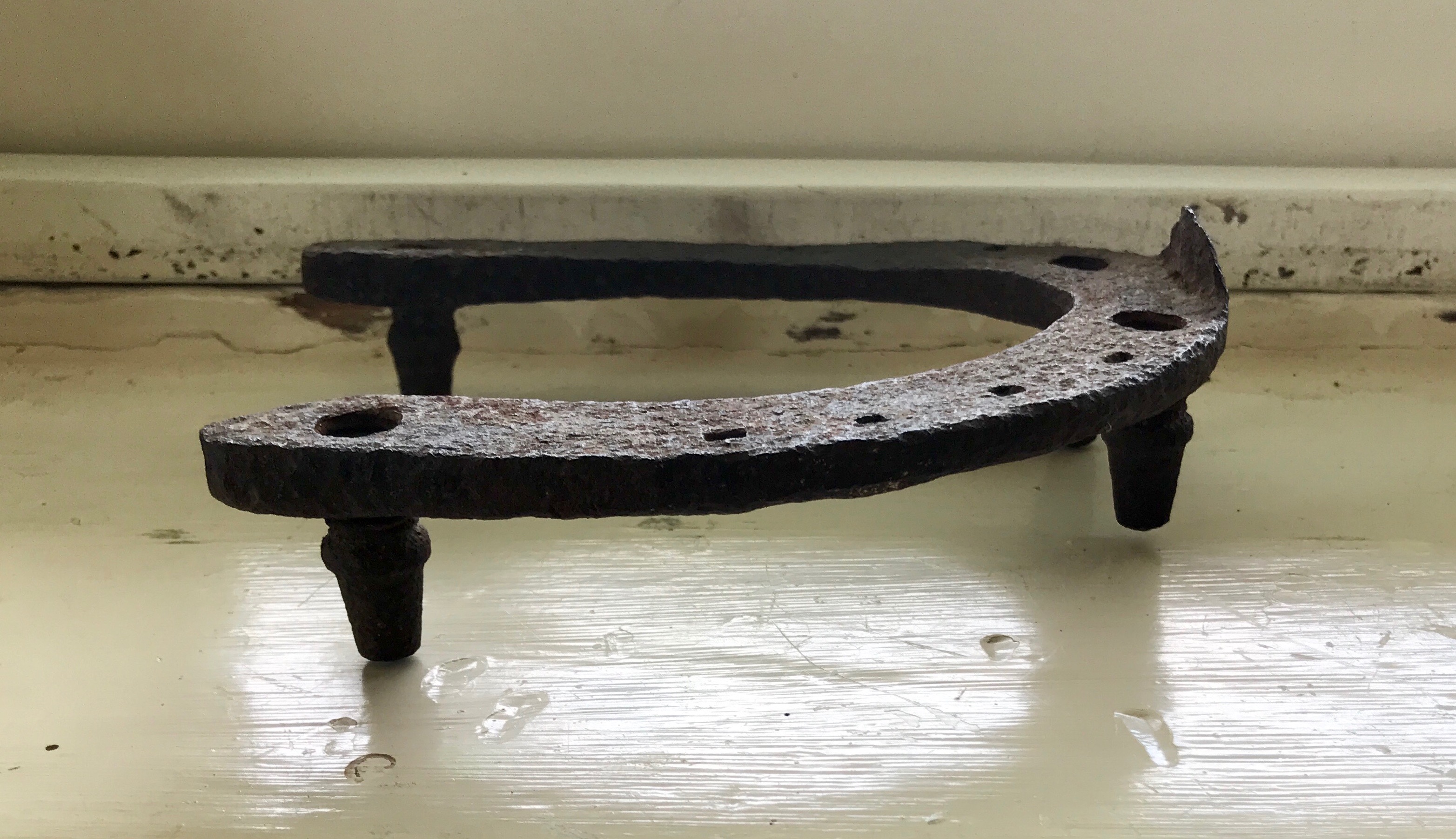
Good shoes are important for doing good work.
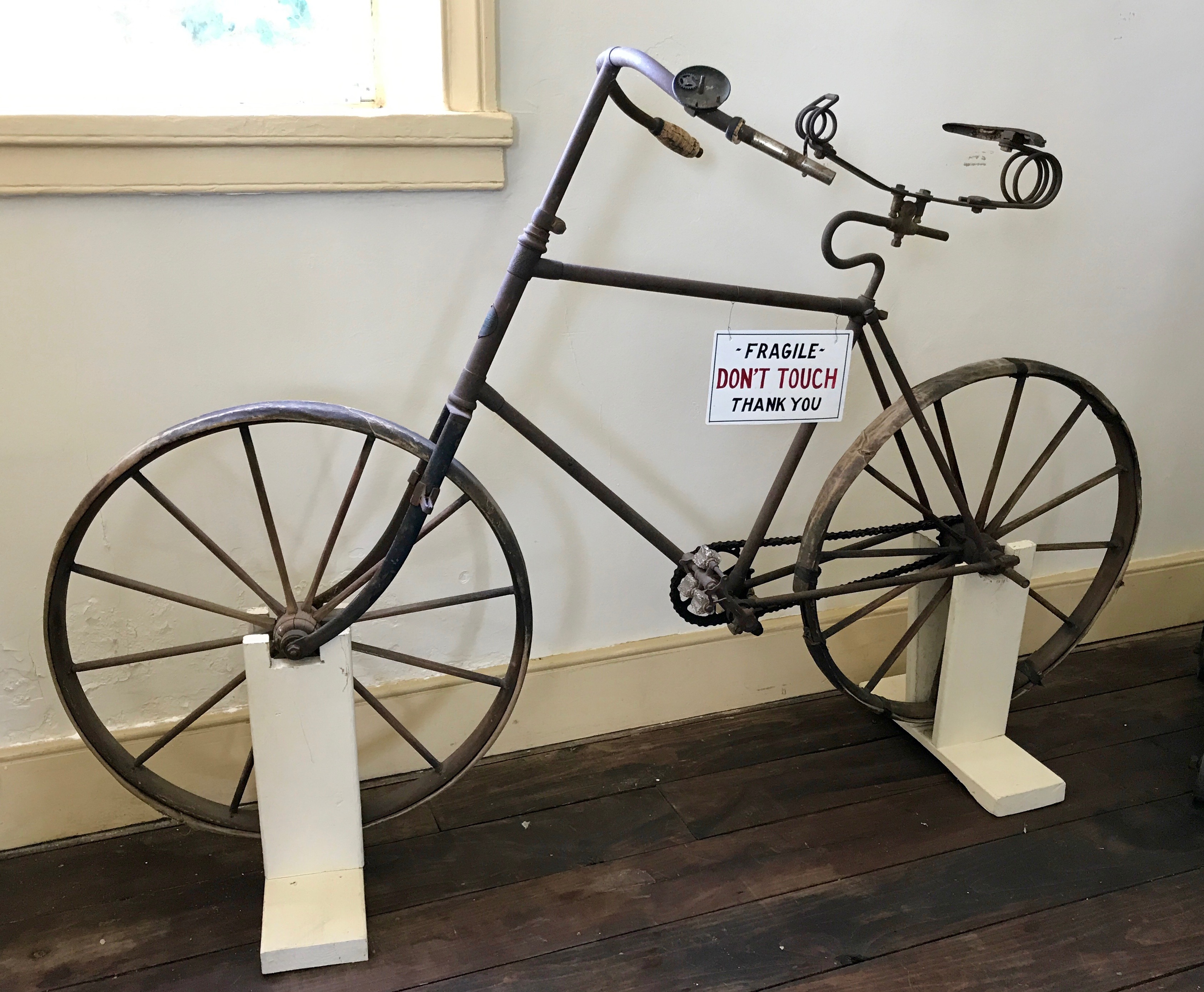
There were a number of items in the museum that were included to show what life was like for the lock tenders.
This bicycle is said to have been owned by Carville Maslin’s son and is reputed to have been riden to Baltimore from Havre de Grace. Patented in in 1866, this model had inflatable tires and wooden wheels. That sounds pretty modern, but the only braking power came from the feet being pressed on the ground or on the font wheel. According to the informational sign, the bicycle cost $100 at a time when the Lock Tender made less than $1000 per year.
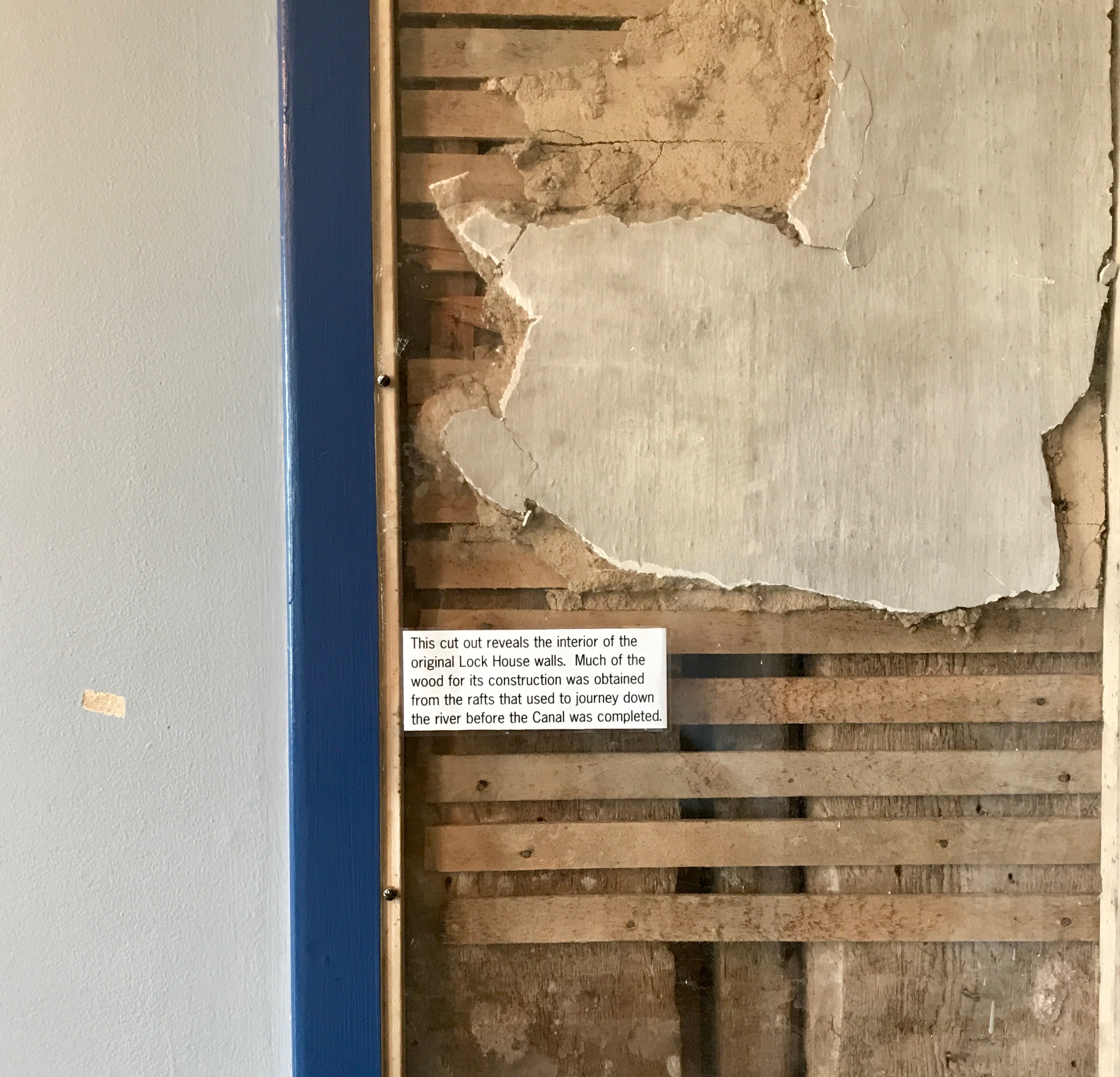
When the Lock House was restored in 1981, they left this “truth window” so you could see the construction of the original building. After more than 140 years and close to 100 years after the canal ceased operation, I imagine it was due for restoration.
We continued upstairs for a few more exhibits.
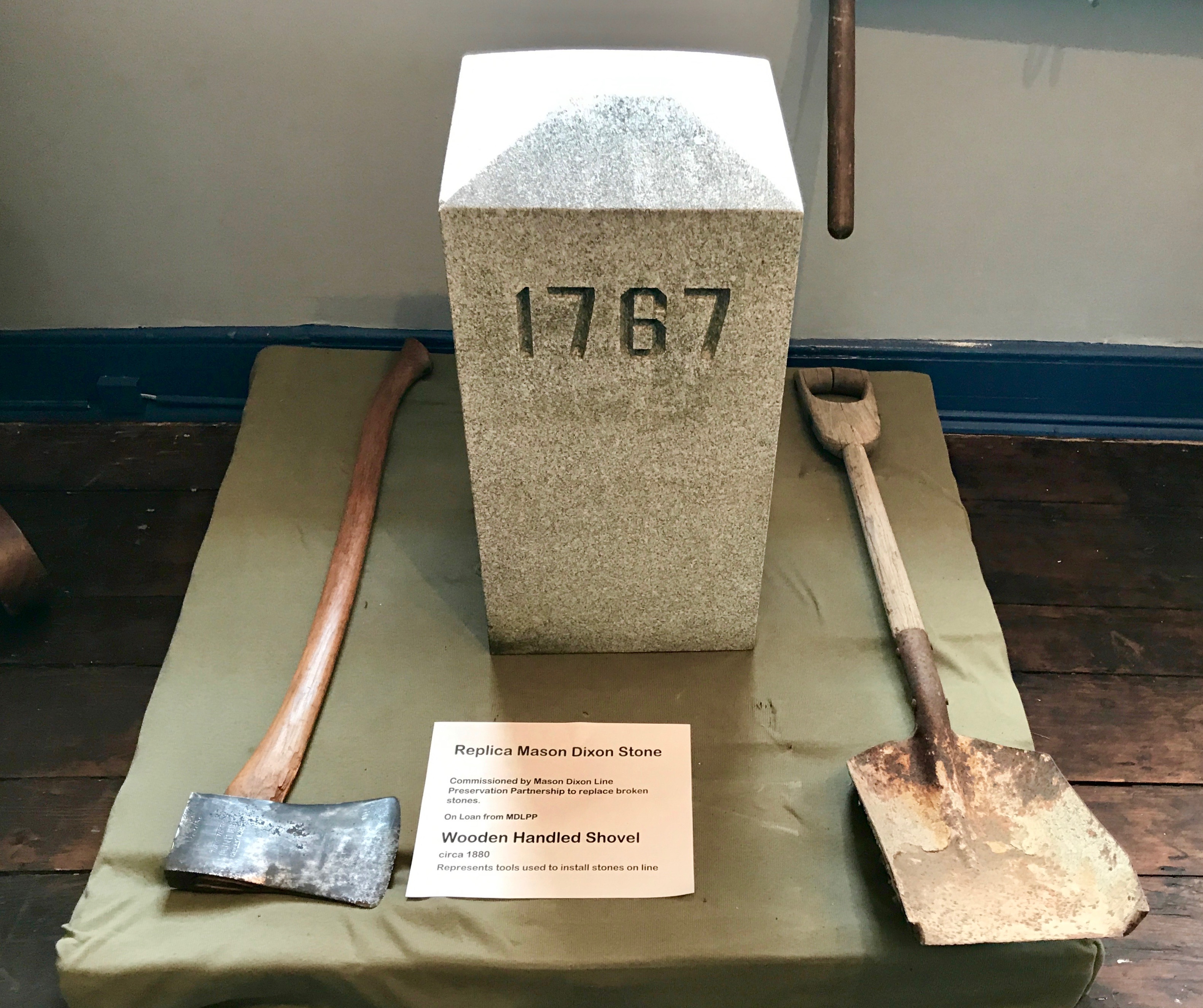
This is a replica of one of the stones placed along the Mason Dixon Line. The line was established to resolve a border dispute involving Maryland, Pennsylvania and Delaware.
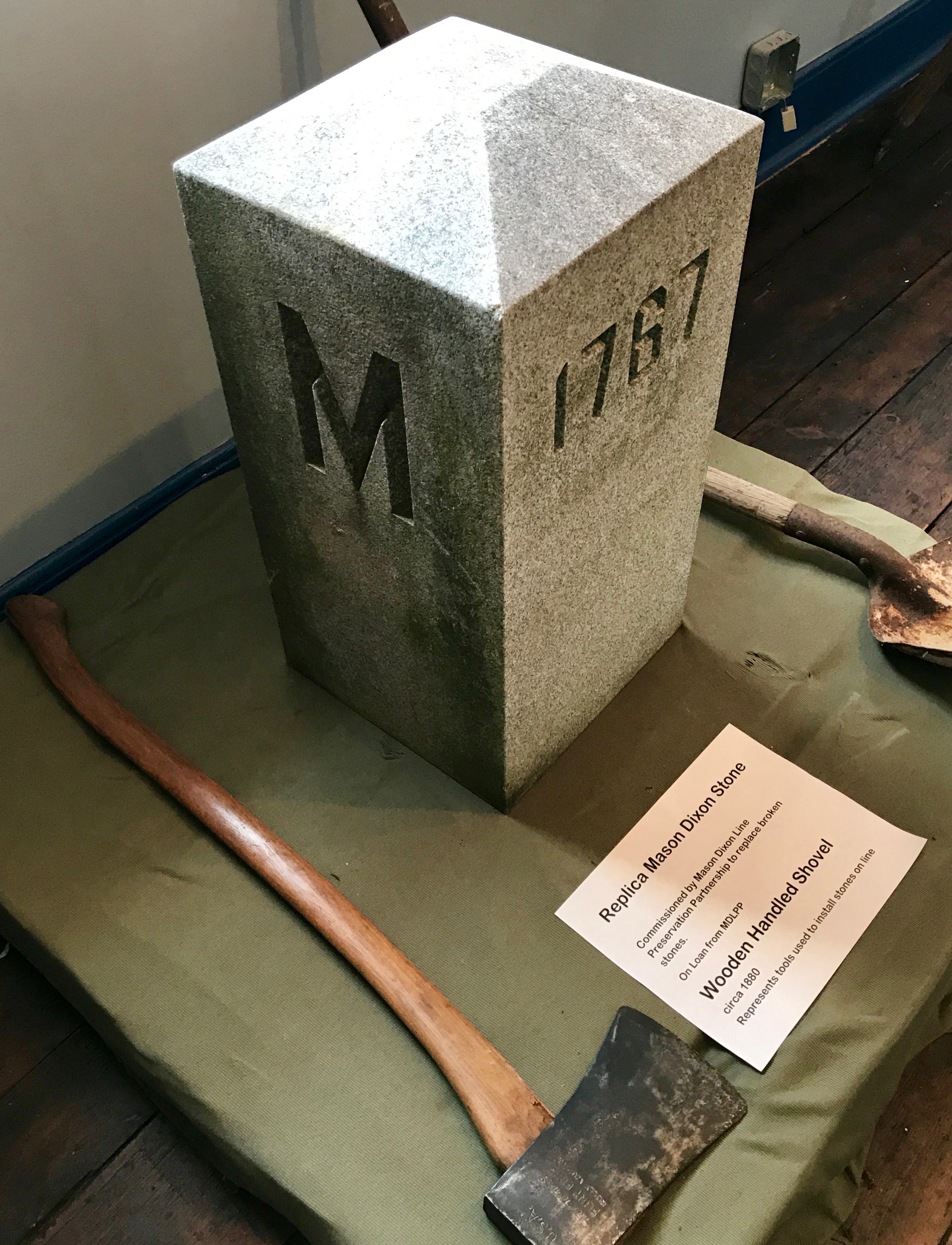
This side is Maryland.
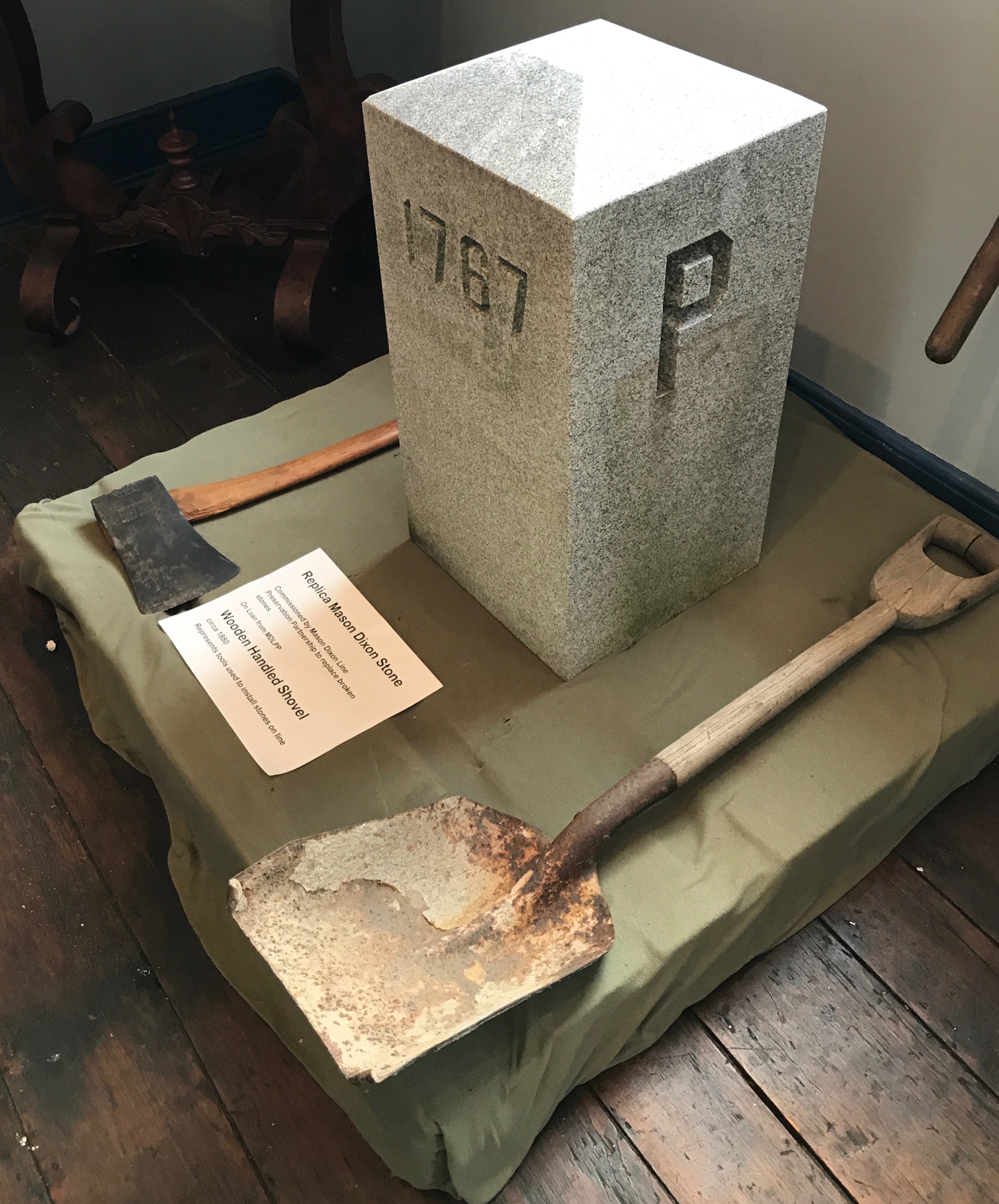
This side is Pennsylvania.
The work was directed by Charles Mason and Jeremiah Dixon, and they surveyed the line between 1763 and 1767. My tour guide, Bill, had an ancestor that worked on the project as a laborer. Bill said that the bosses – presumably Mason or Dixon or one of their underlings – would come by and indicate the direction the axmen were to go, and the workers would commence felling trees. They had to clear a “visto” 8 – 9 yards wide. Every now and then, the bosses would come by to course correct, and then they might have to recut the line a little further one way or the other.
I was amazed to meet a descendant of one of the people who helped create one of the more evocative and provocative borders in America’s history. When I shook his hand, it was like I was holding hands with history.
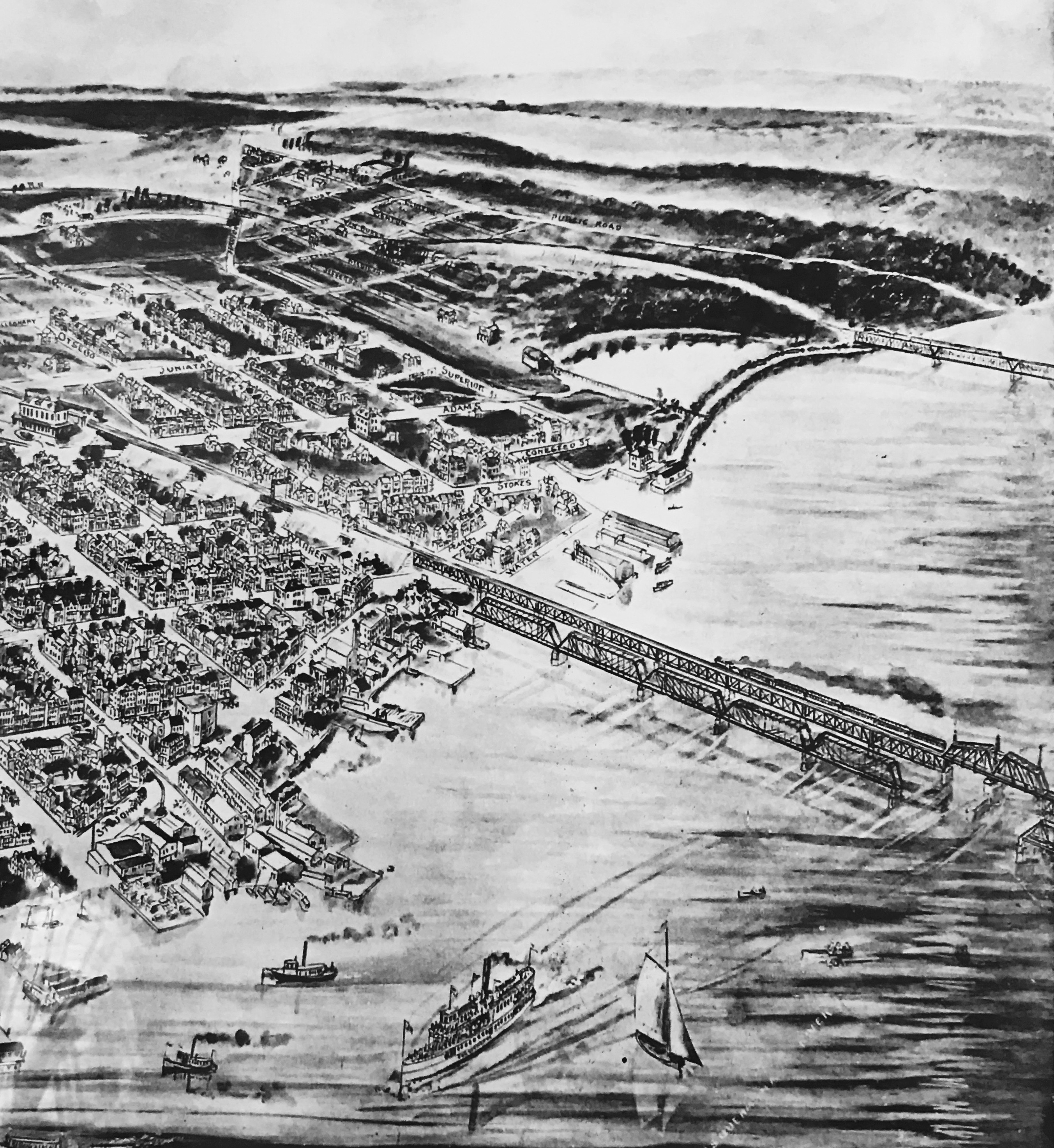
This “birds eye view” of Havre de Grace was made in 1909. Look at all the modes of transportation! You can still see the Lock House and the final lock of the canal, even though it ceased operation in 1894.
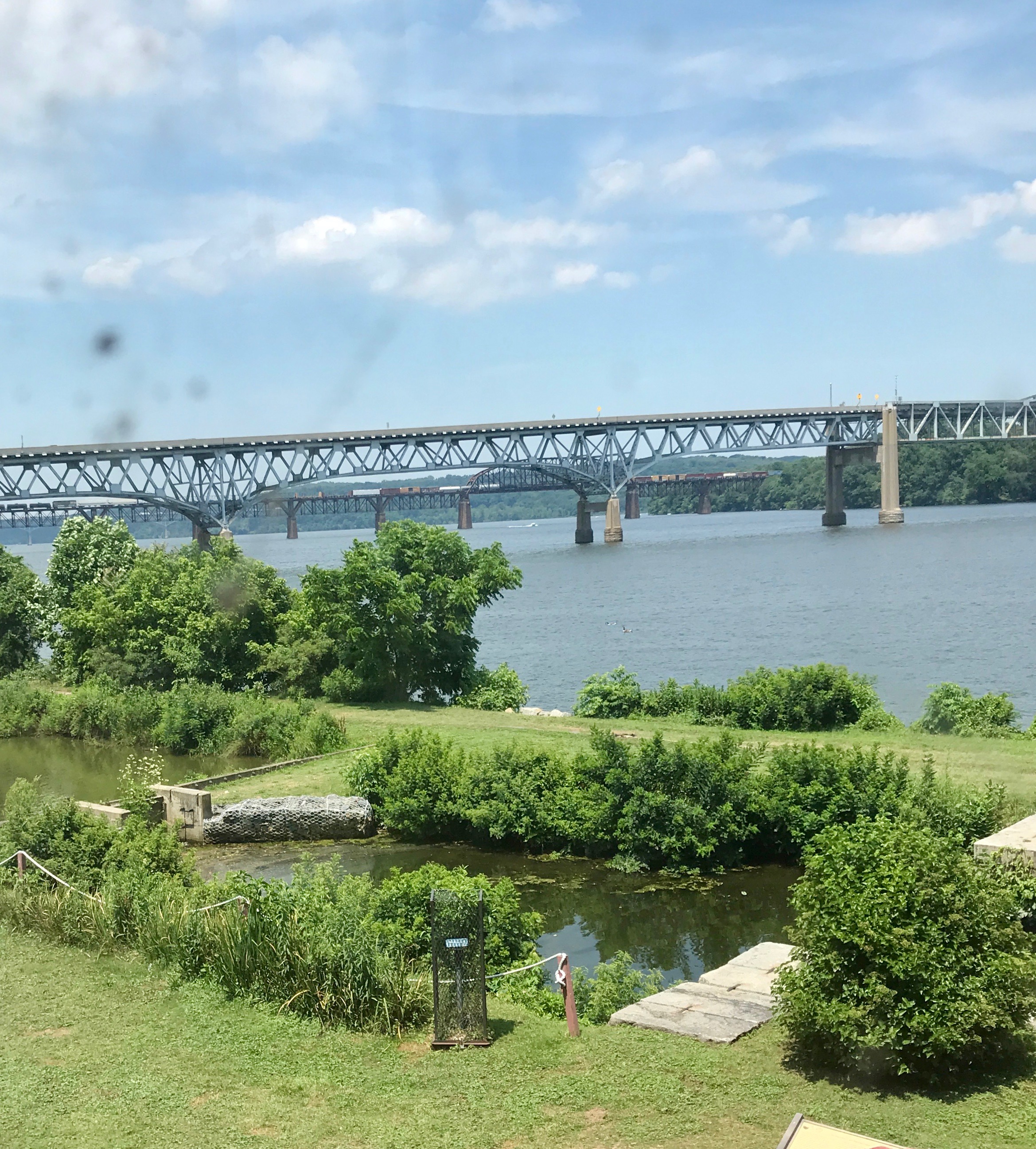
I took a look out of the upstairs window and decided it was time to go see the lock itself. I thanked Bill and headed outside.
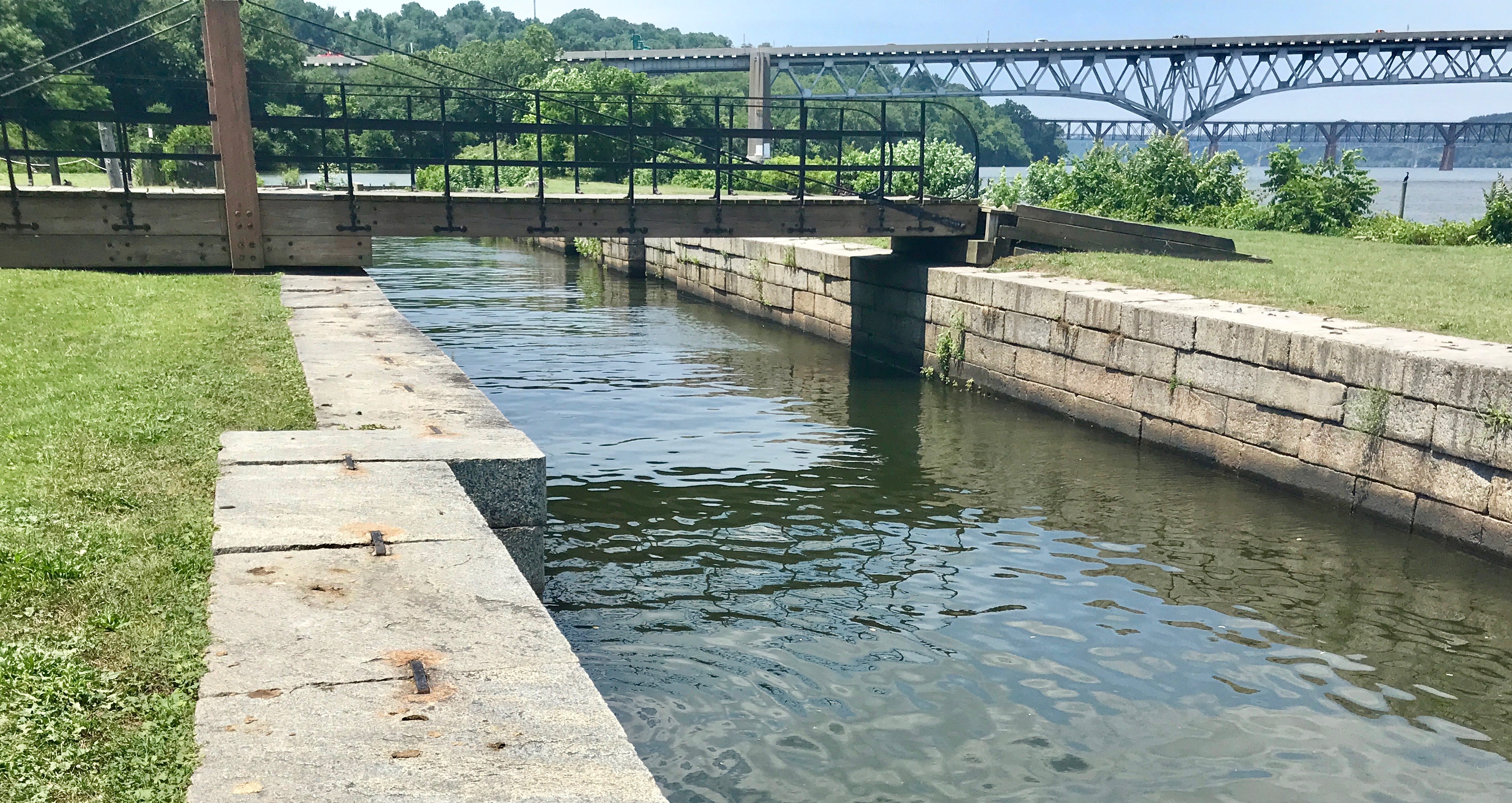
In the late 1980s, the lock was de-silted and the remnants of the original gates were removed. The granite walls were stabilized and straightened.
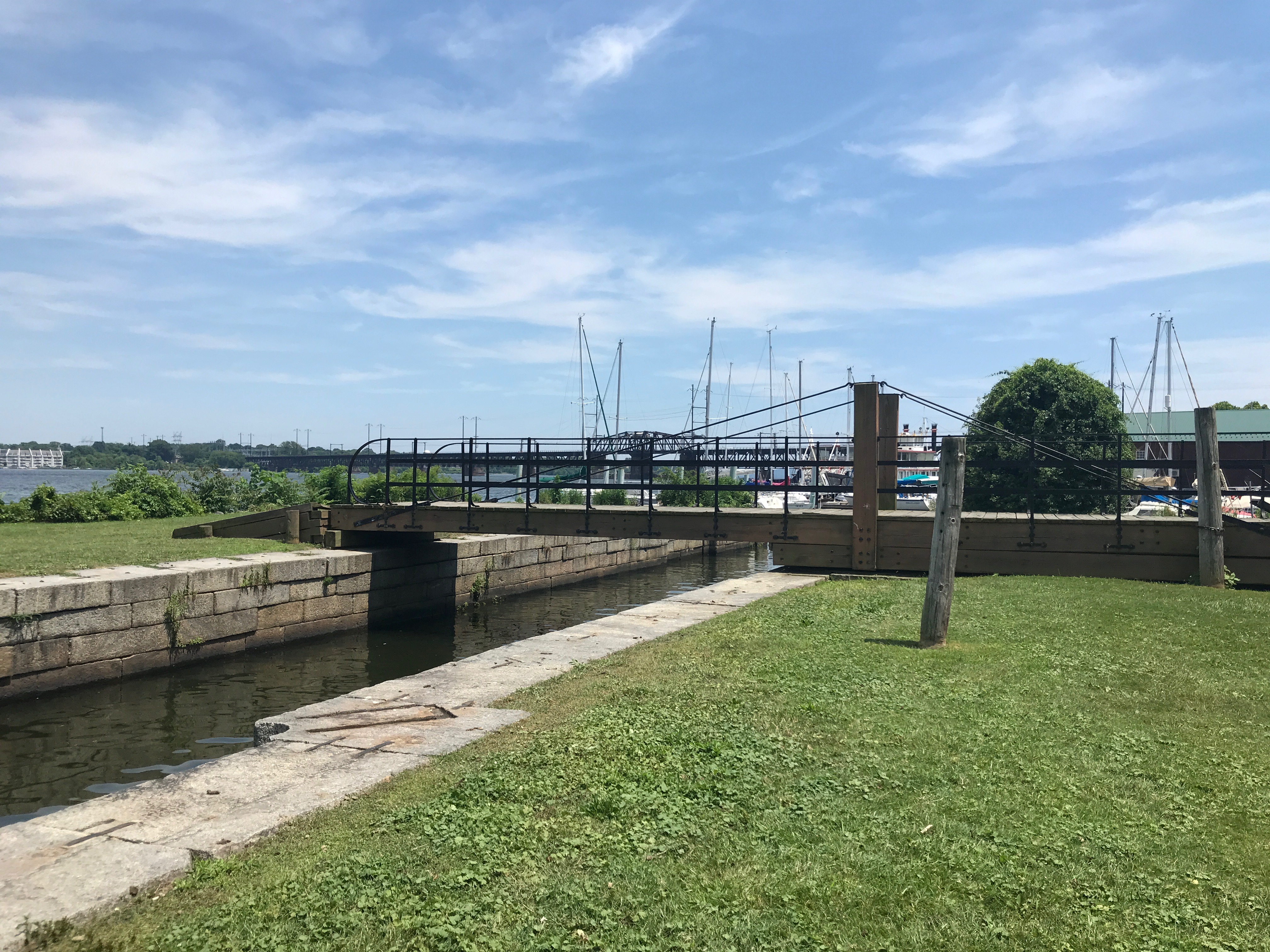
The bridge across the canal could pivot. This made it possible for people, wagons and mules to cross to the towpath and wharves on the riverside.
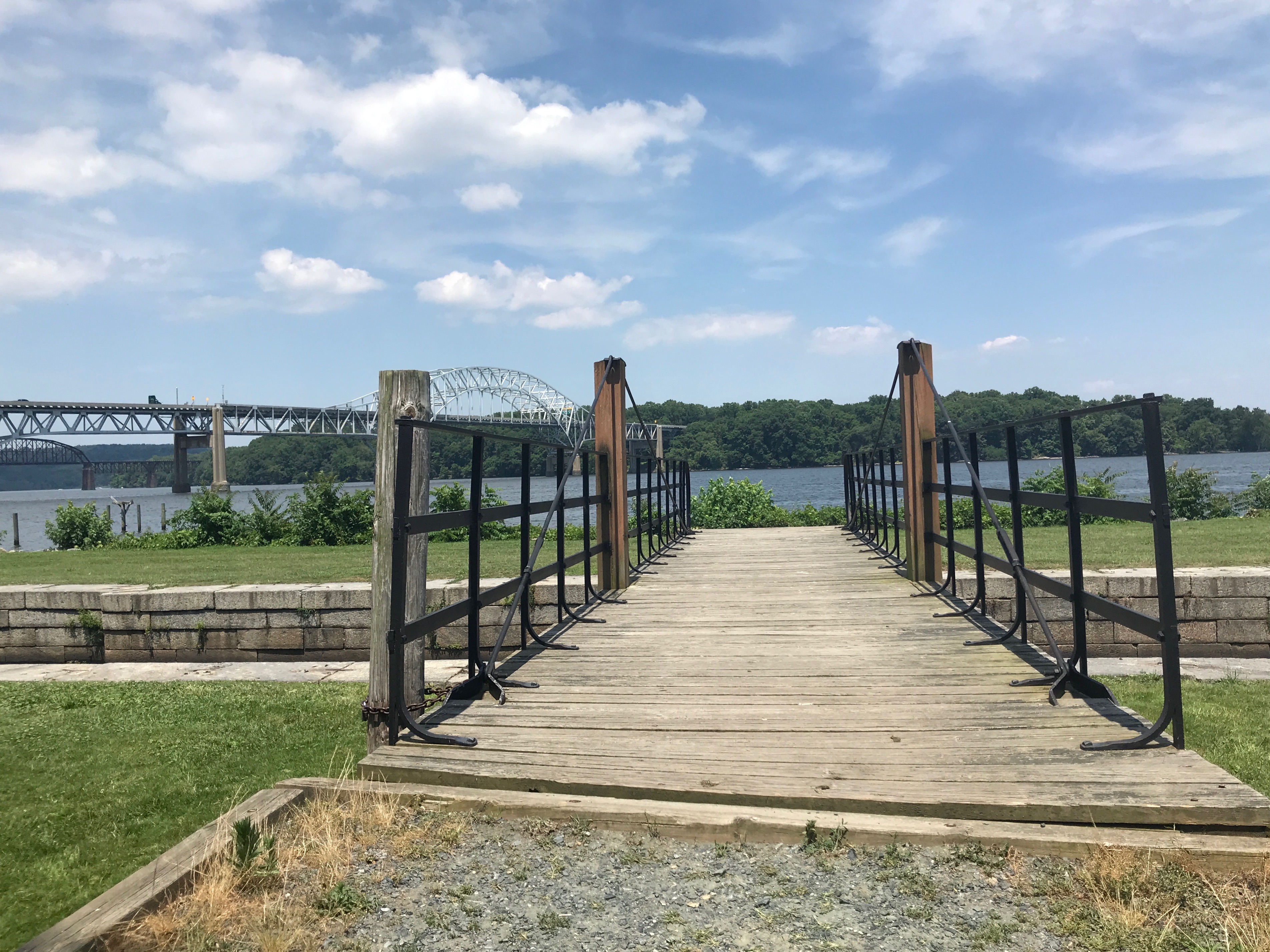
When the bridge wasn’t being used, it was swung away so that the boats could pass through the locks.
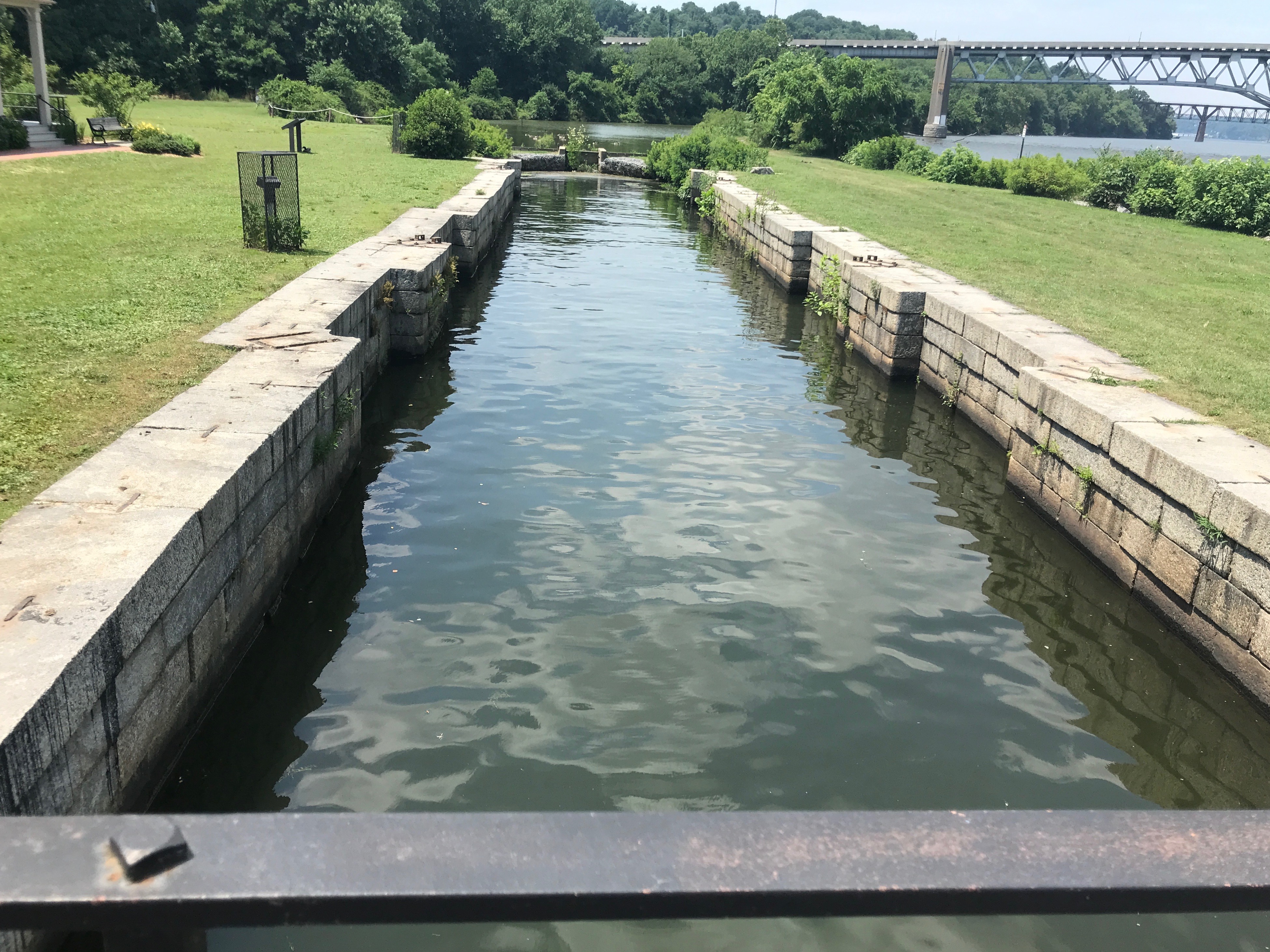
It’s amazing to look down the canal lock toward the automobile bridge and the rail bridge. Transportation is so interesting.
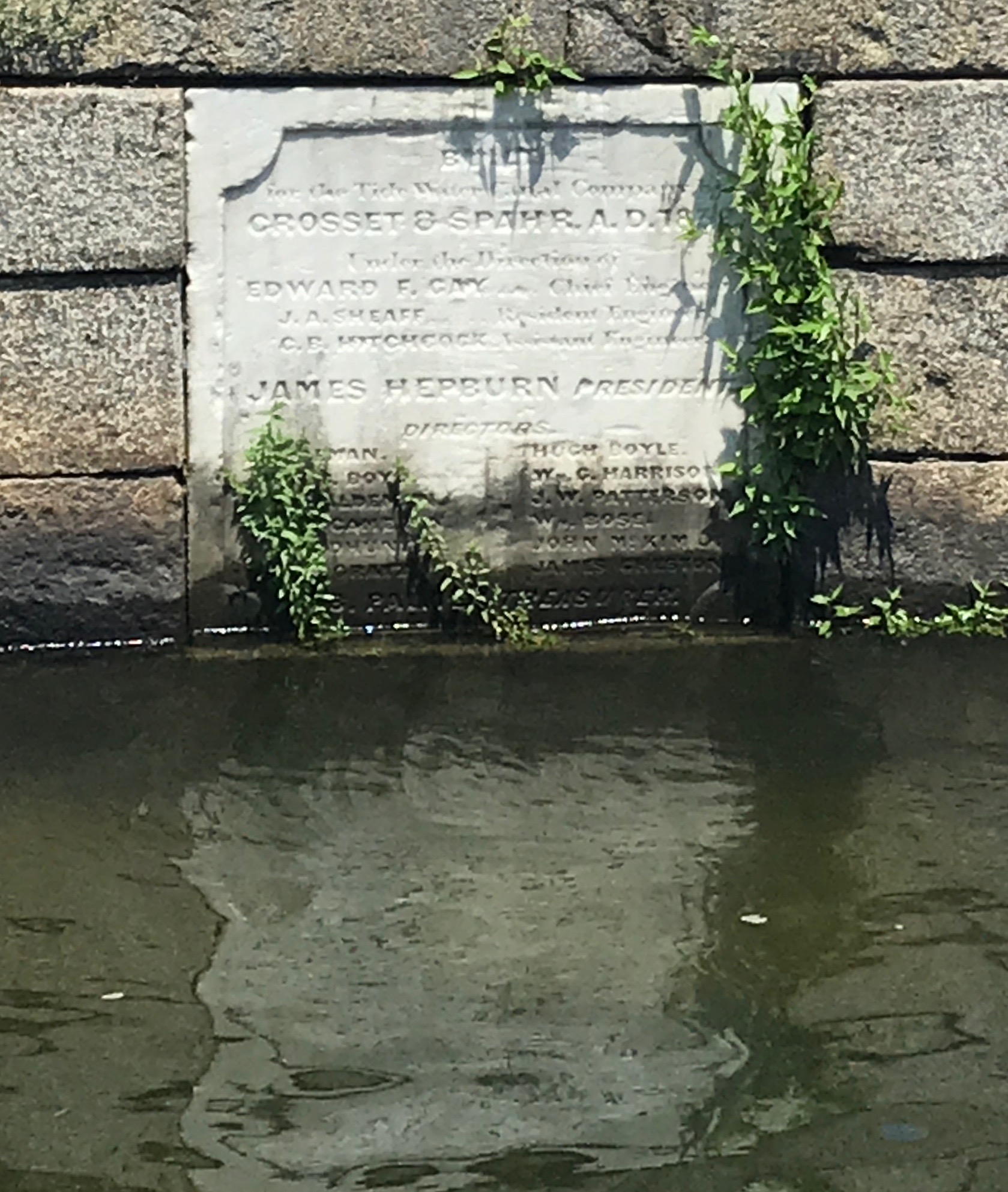
People have the need to put their names on things. 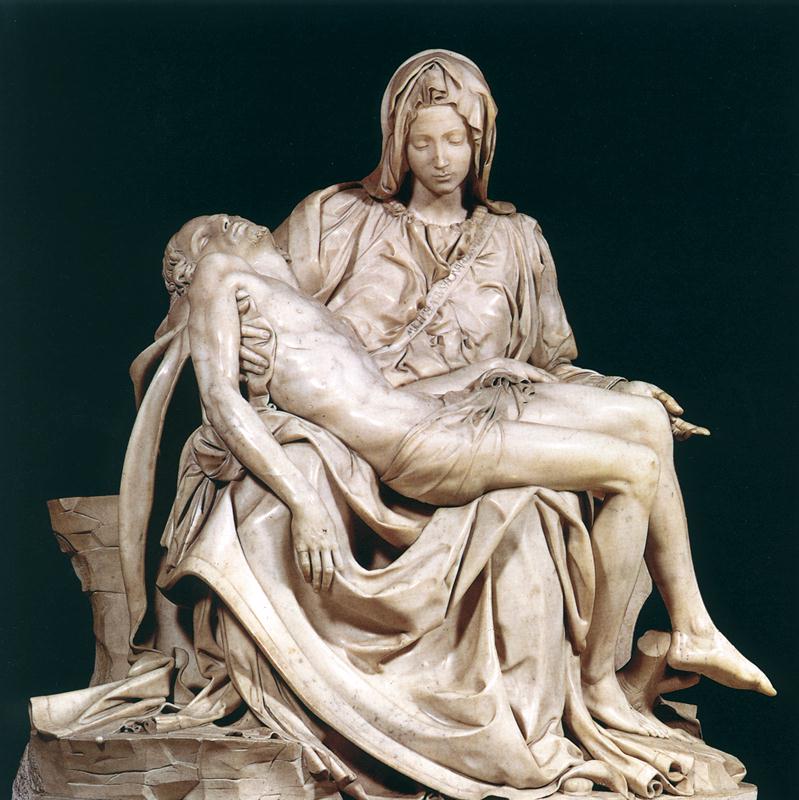
Which reminds me of Michelangelo’s Pieta. The story is that after he had finished the Pieta, he overheard some men from Milan saying that it was the work of another sculptor. Well, he wasn’t having any of that! He thought it was one of the best statues ever carved and he wanted credit for it. So that night he went into the church with his hammer and chisels and candles and carved his name in big letters on the Virgin.
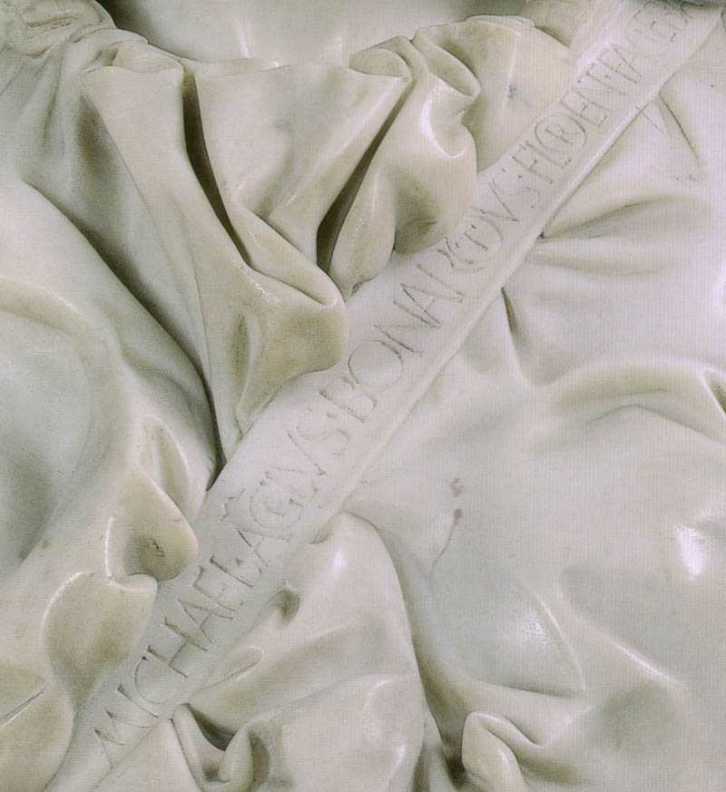
It reads: Michaelangelus Bonarotus Florent(inus) Facieba. (Michaelangelo Buonarroti made this.)
Once again, thank you, Sister Jeanne!
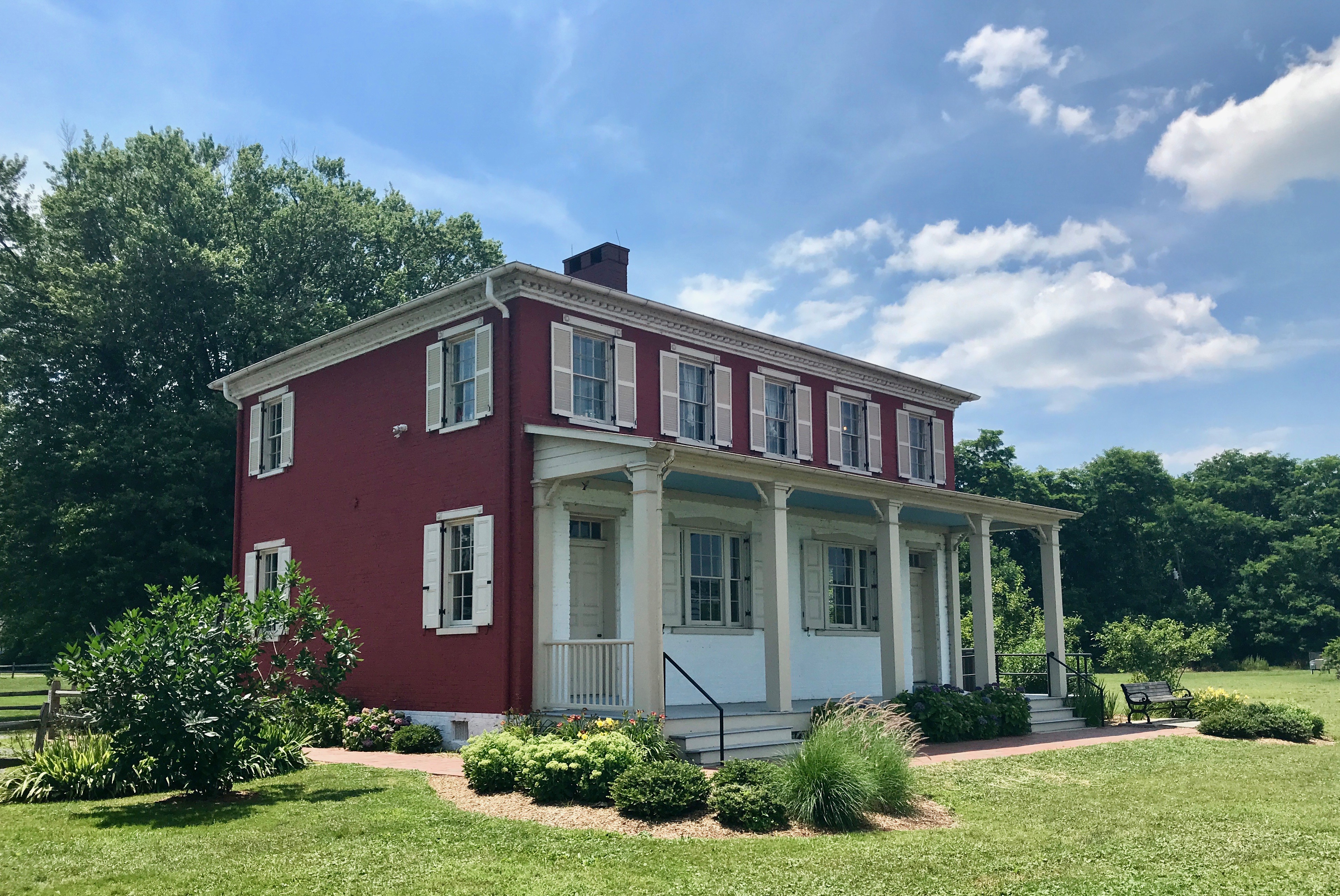
I turned to head back to the car. What a lovely front porch! I think this must have been a very pleasant place to live in the summer.
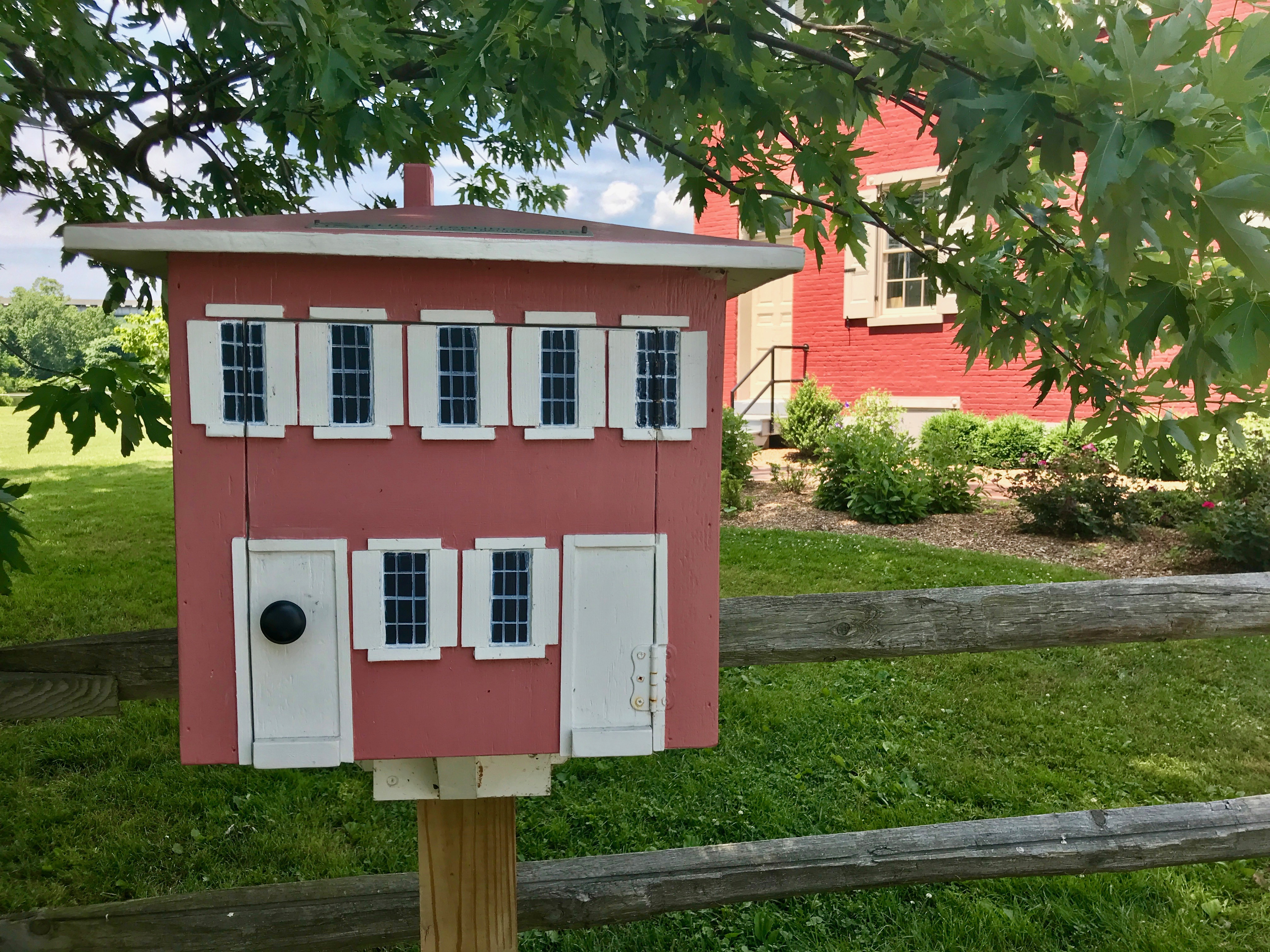
Walking back to the parking area, I noticed this LittleFreeLibrary.
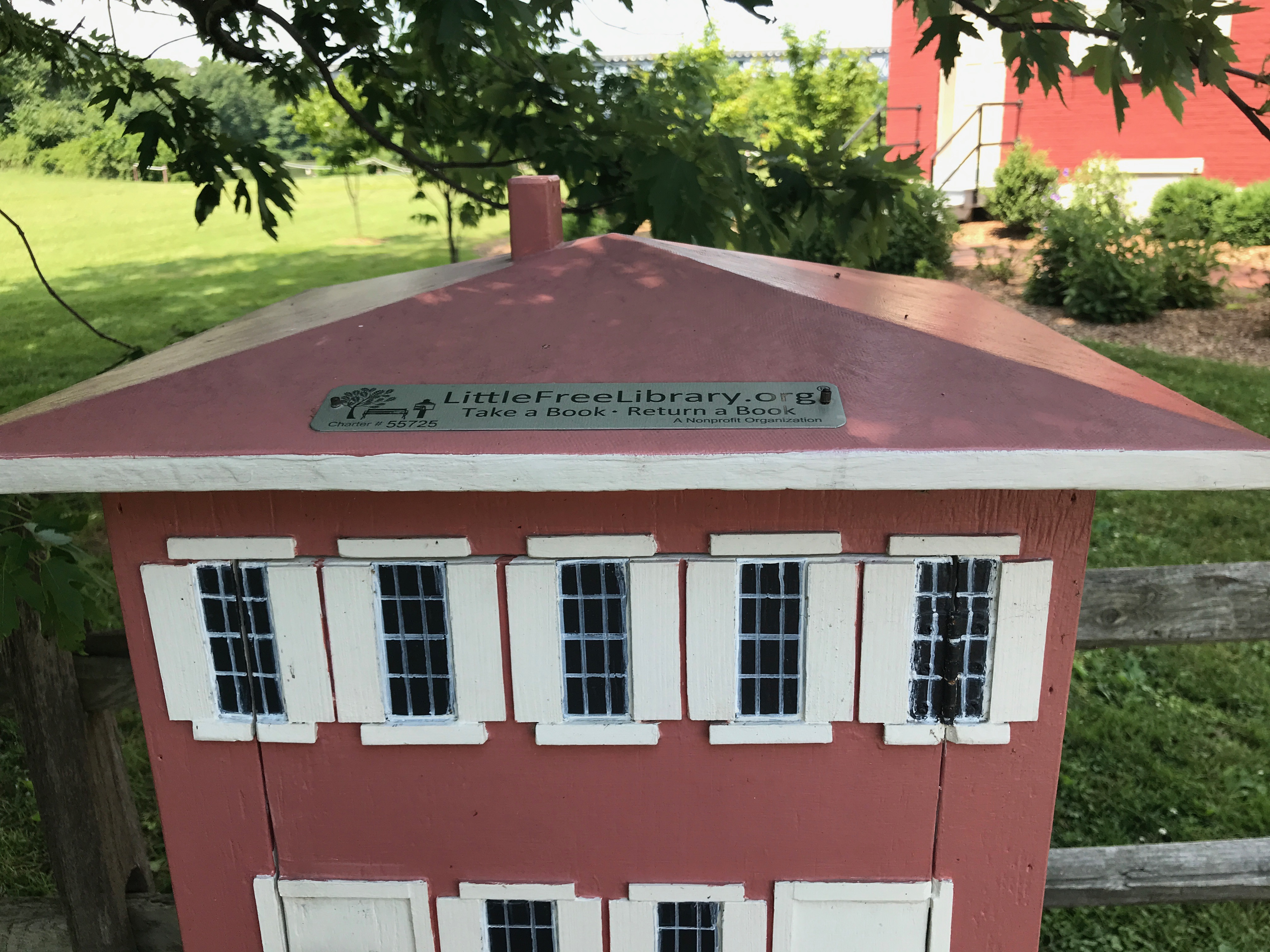
I love how they made it look like the Lock House!
I bid adieu to Havre de Grace and headed across the bridge to Chesapeake City. I heard there was a canal museum there.
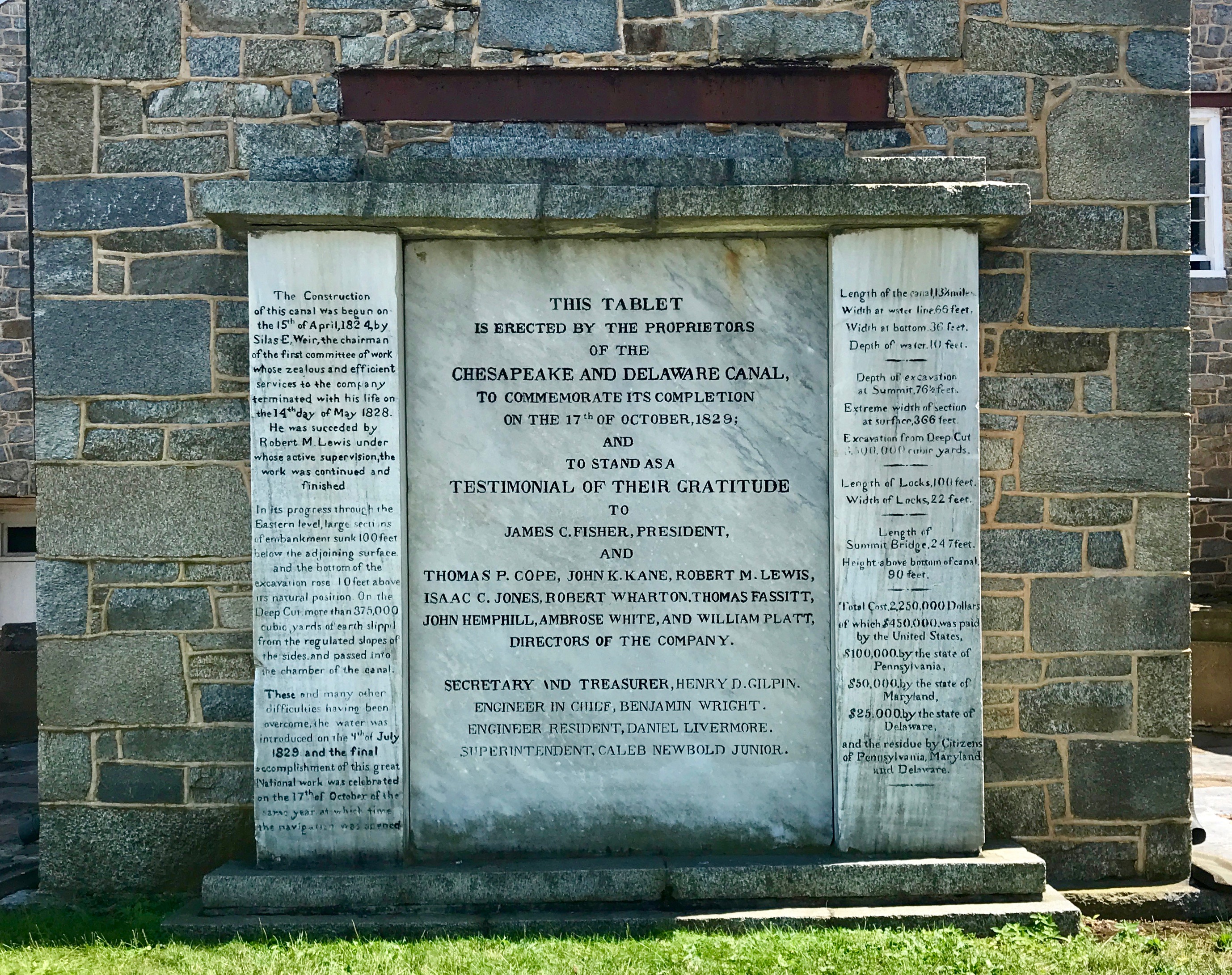
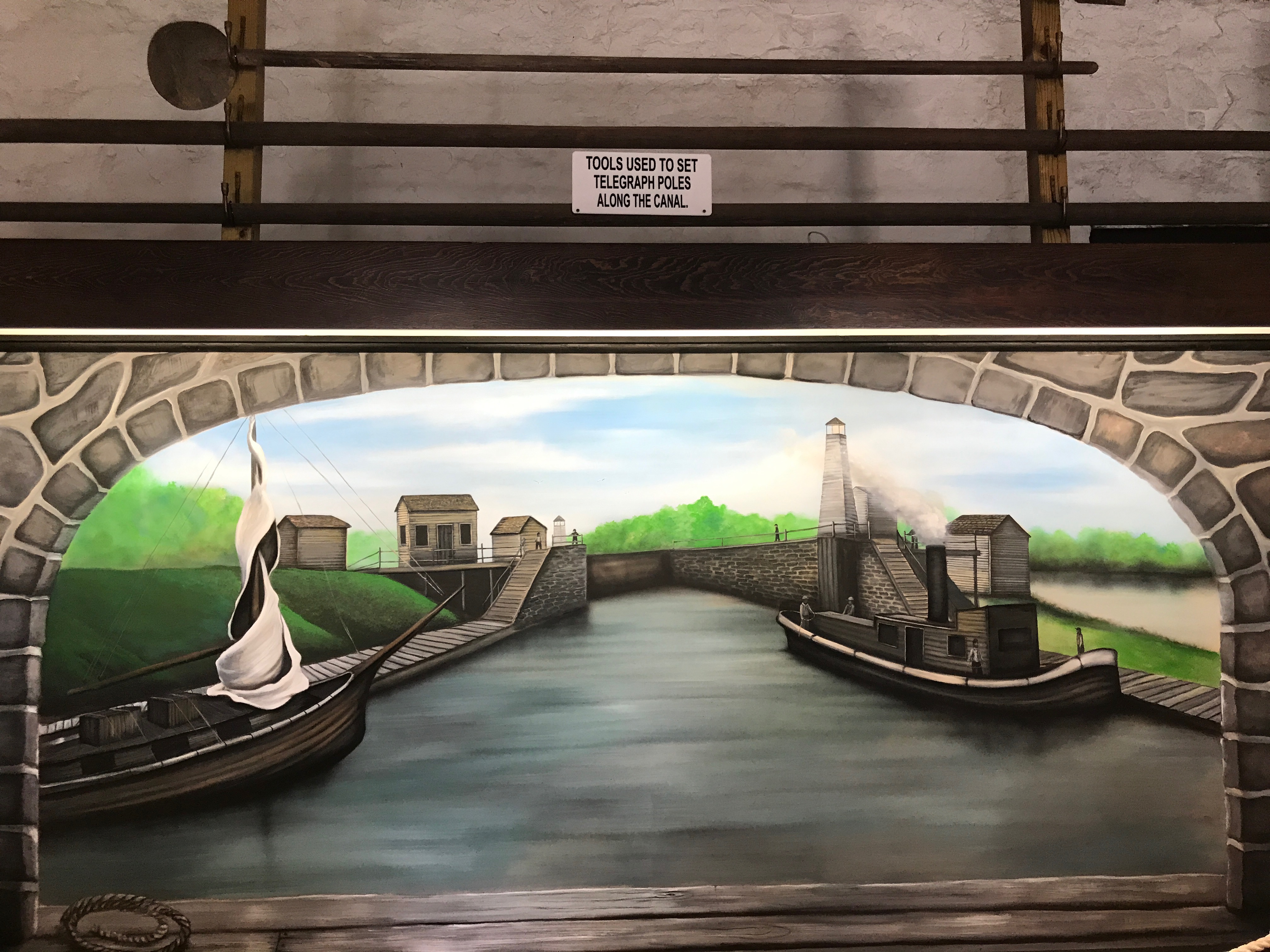
There was! It is the C & D Canal Museum run by the Army Corps of Engineers. My goodness, there were a lot of canals back in the day! This one is different in that the water was lifted to a higher level by steam operated waterwheels.
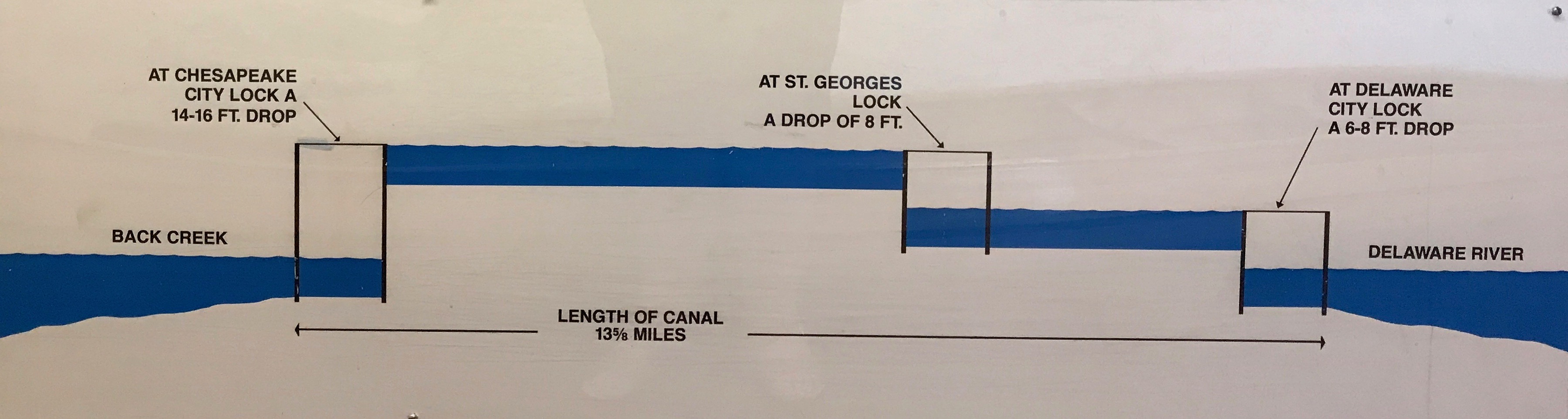
You see, in this canal, they had to go over something, so you couldn’t rely on natural water flow to do the trick.
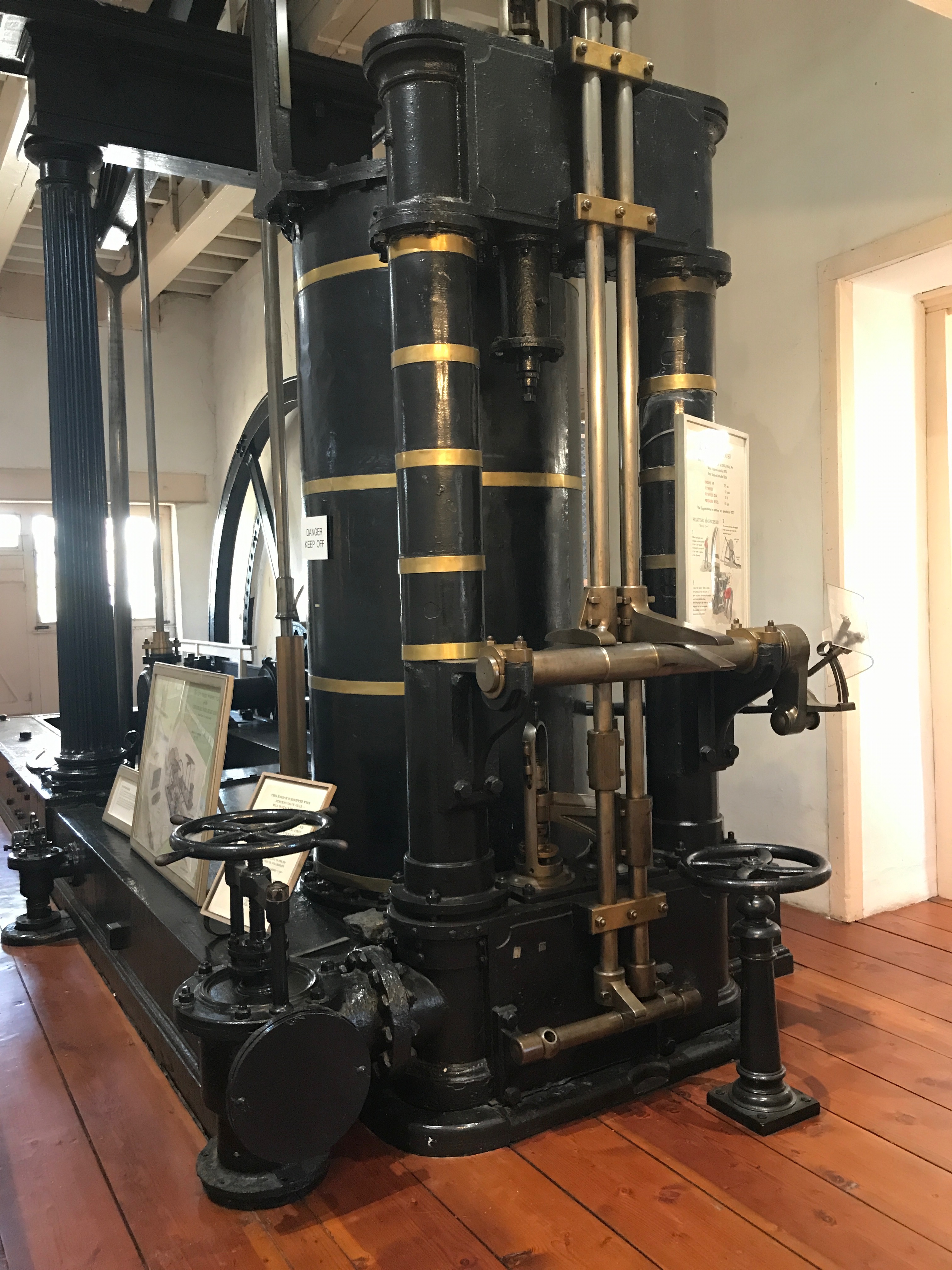
The machinery on display was impressive.
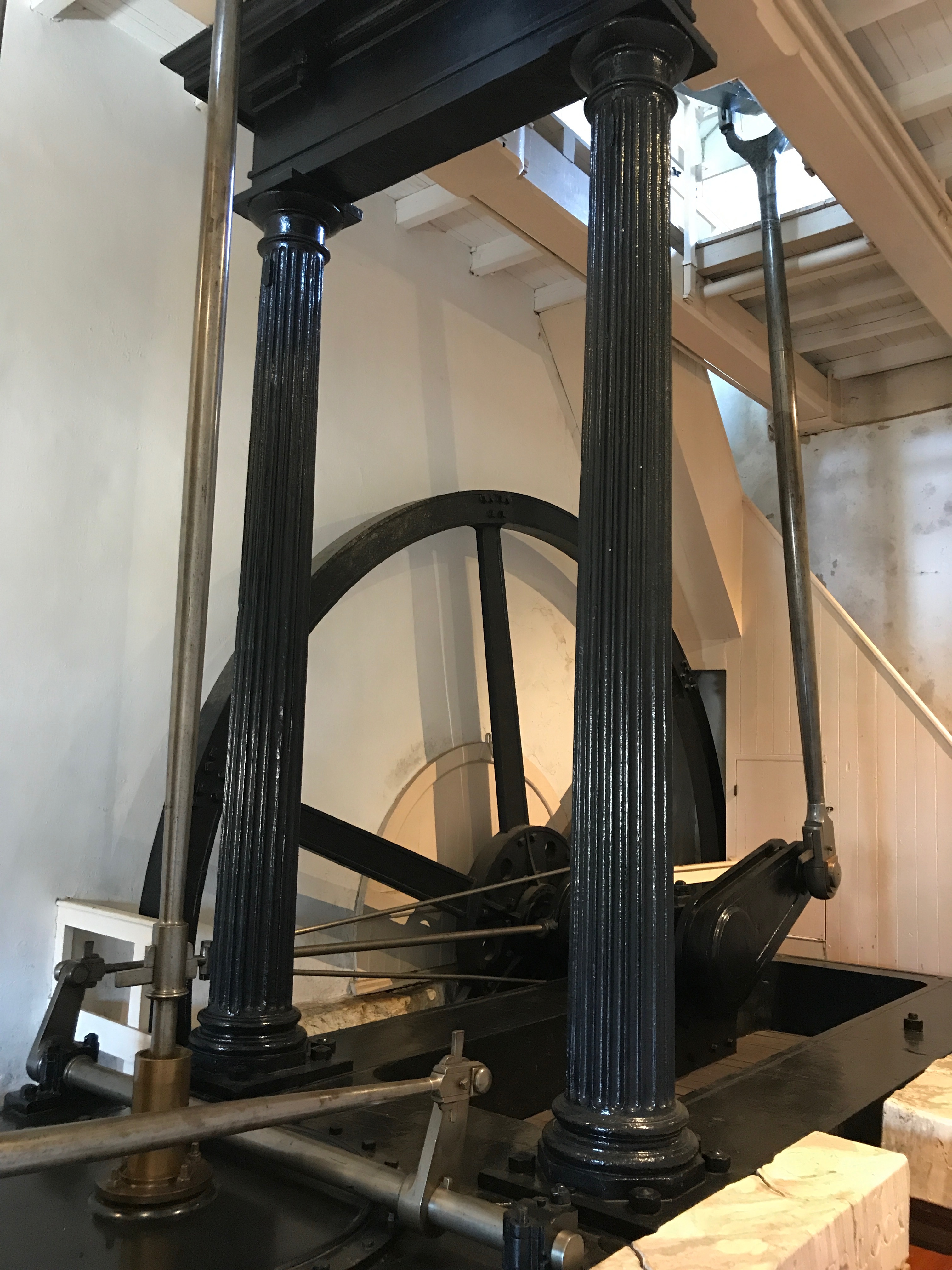
Notice the esthetic details. Can you imagine that manufacturers went to the effort to make their work so attractive? Maybe fluted cast iron columns are stronger than plain columns. Hmm…something to look into some other time.
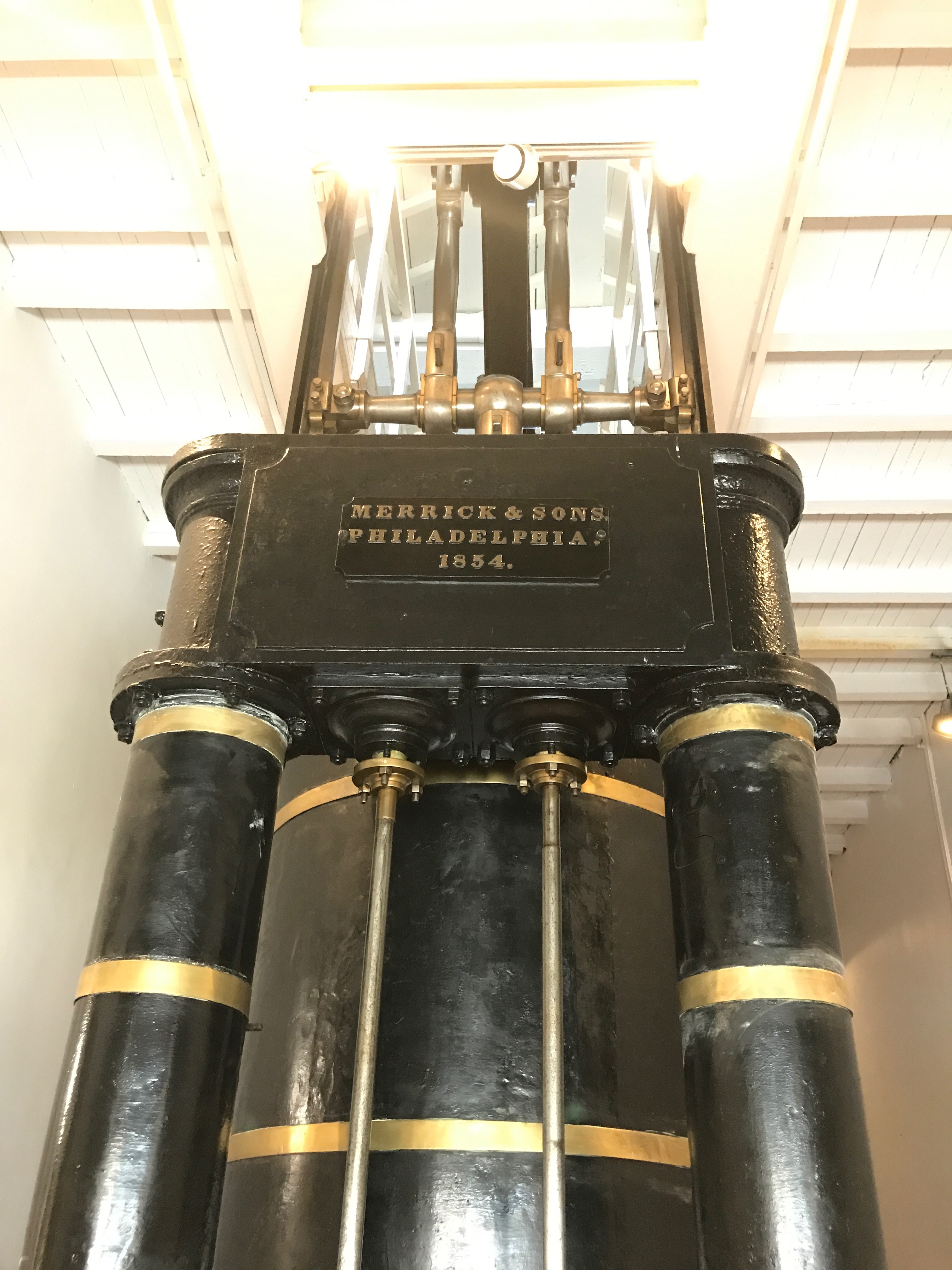
In any event, no wonder they wanted to put their names on their products in such a prominent position.
The Chesapeake and Delaware Canal – the C & D Canal – was first conceived in the mid 1600s by Augustine Herman. He was a mapmaker and he observed that the two great bodies of water – the Delaware River and Chesapeake Bay – were separated only by a narrow strip of land. Herman proposed that a waterway be built to connect the two. Unfortunately, this was an idea whose time had not yet come.
More than a century passed before anyone acted on the idea. In 1764, a survey of possible war routes across the Delmarva Peninsula was made. Again, no action was taken. In 1788, regional business leaders raised the idea again. The canal would reduce the trip from Philadelphia to Baltimore by nearly 300 miles.
Digging the canal was begun in 1802, but the project was halted two years later because of a lack of funds. The canal company was reorganized in 1822, and new surveys determined that more than $2 million in capital was needed to resume construction. Pennsylvania purchased $100,000 in stock, Maryland kicked in $50,000, and Delaware threw in $25,000. The federal government invested $450,000, with the remainder subscribed by the public.
Canal construction resumed in 1824, and within several years some 2,600 men were digging and hauling dirt from the ditch.
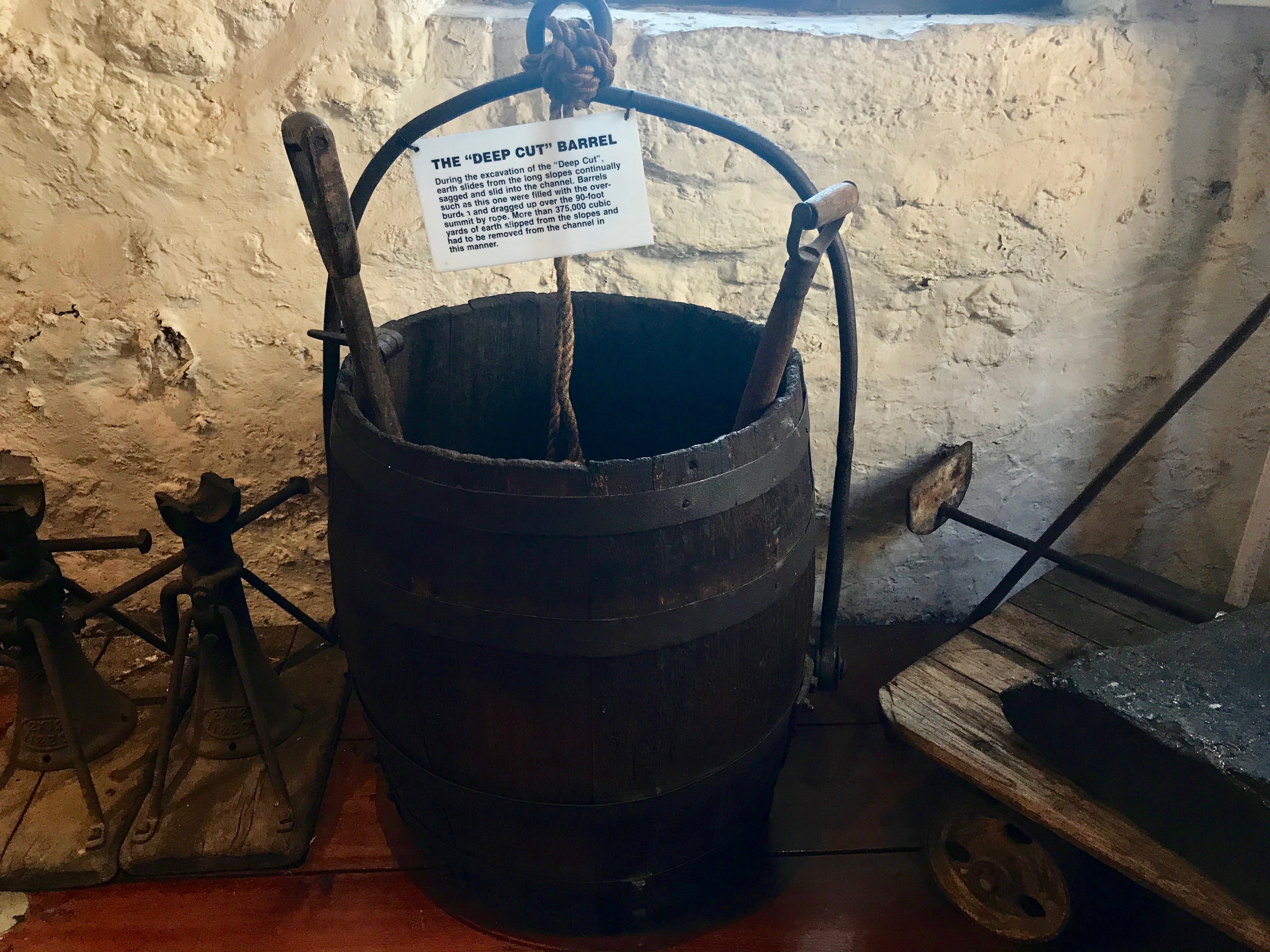
I have included a close up of the sign on the barrel.
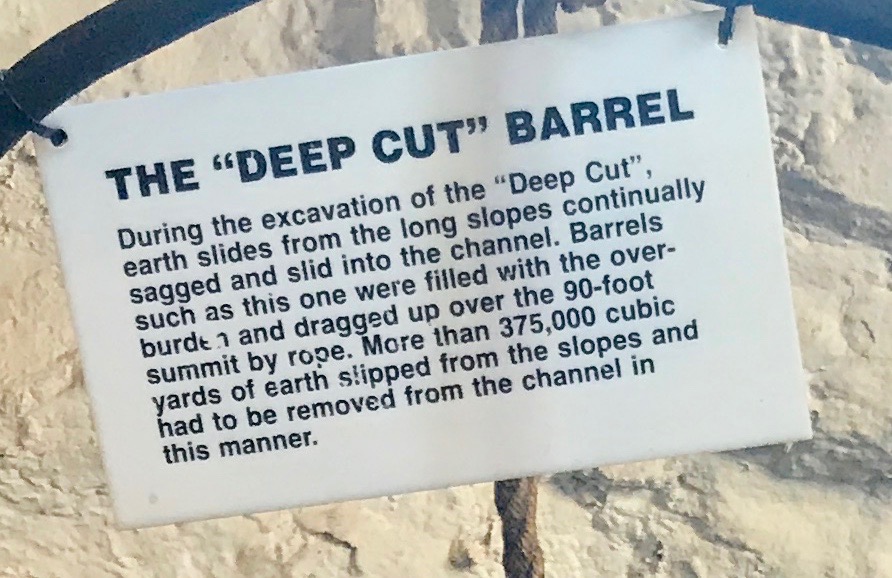
In addition to the slides, the swampy marshlands along the canal’s planned route was an impediment to progress. Laborers told with pick, shovel and barrel at the immense construction task for the princely sum of 75¢ a day.
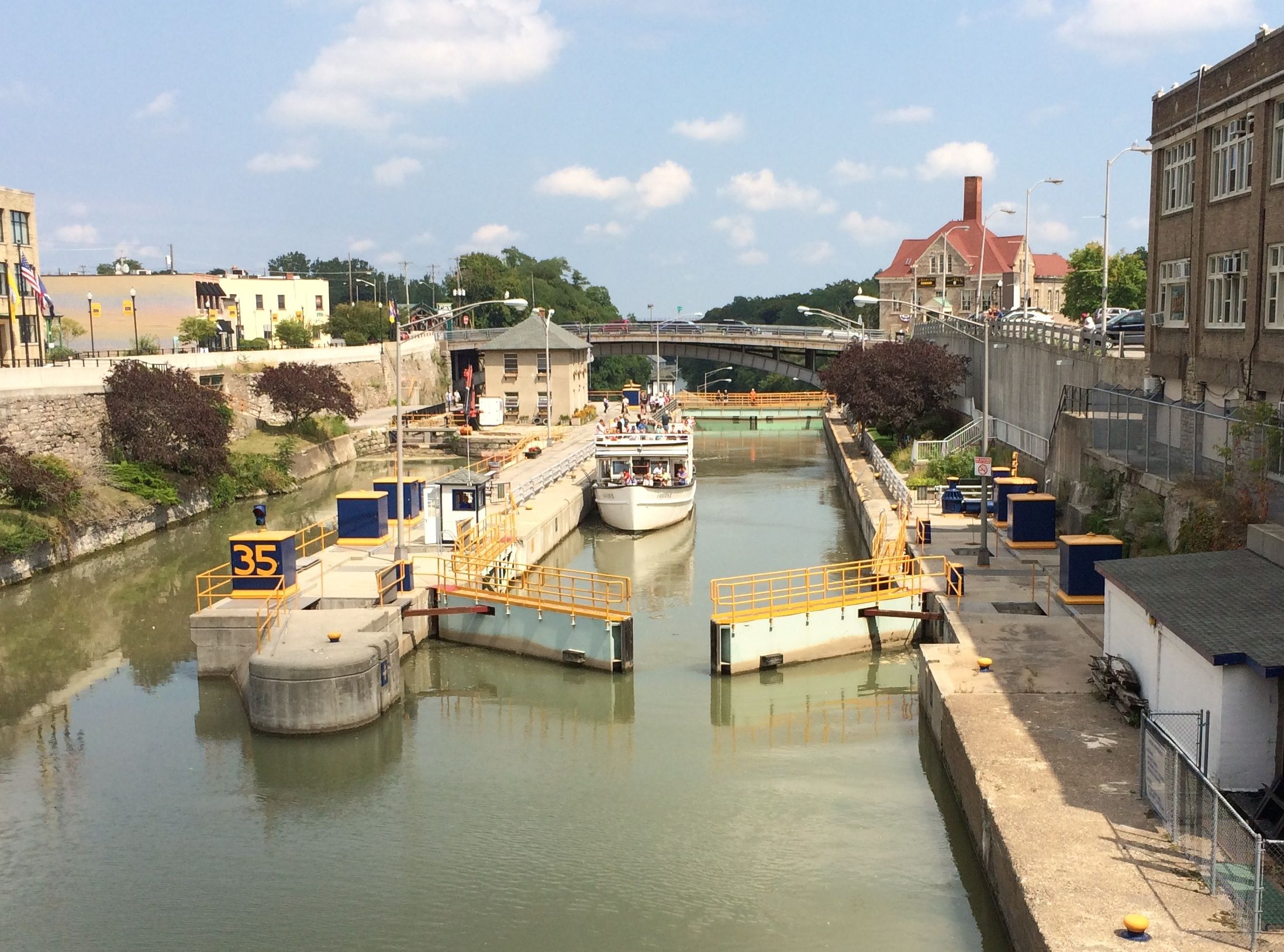
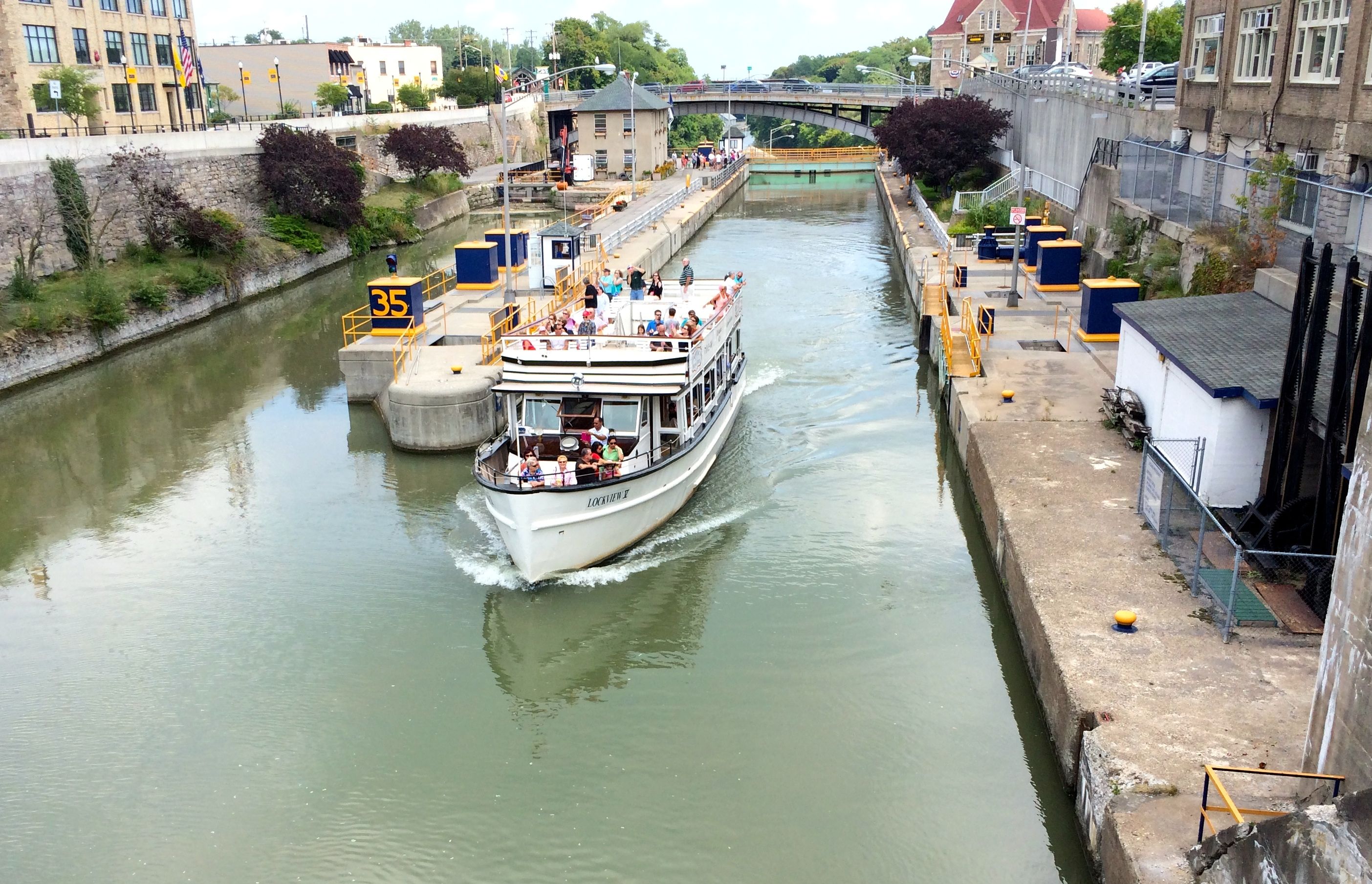
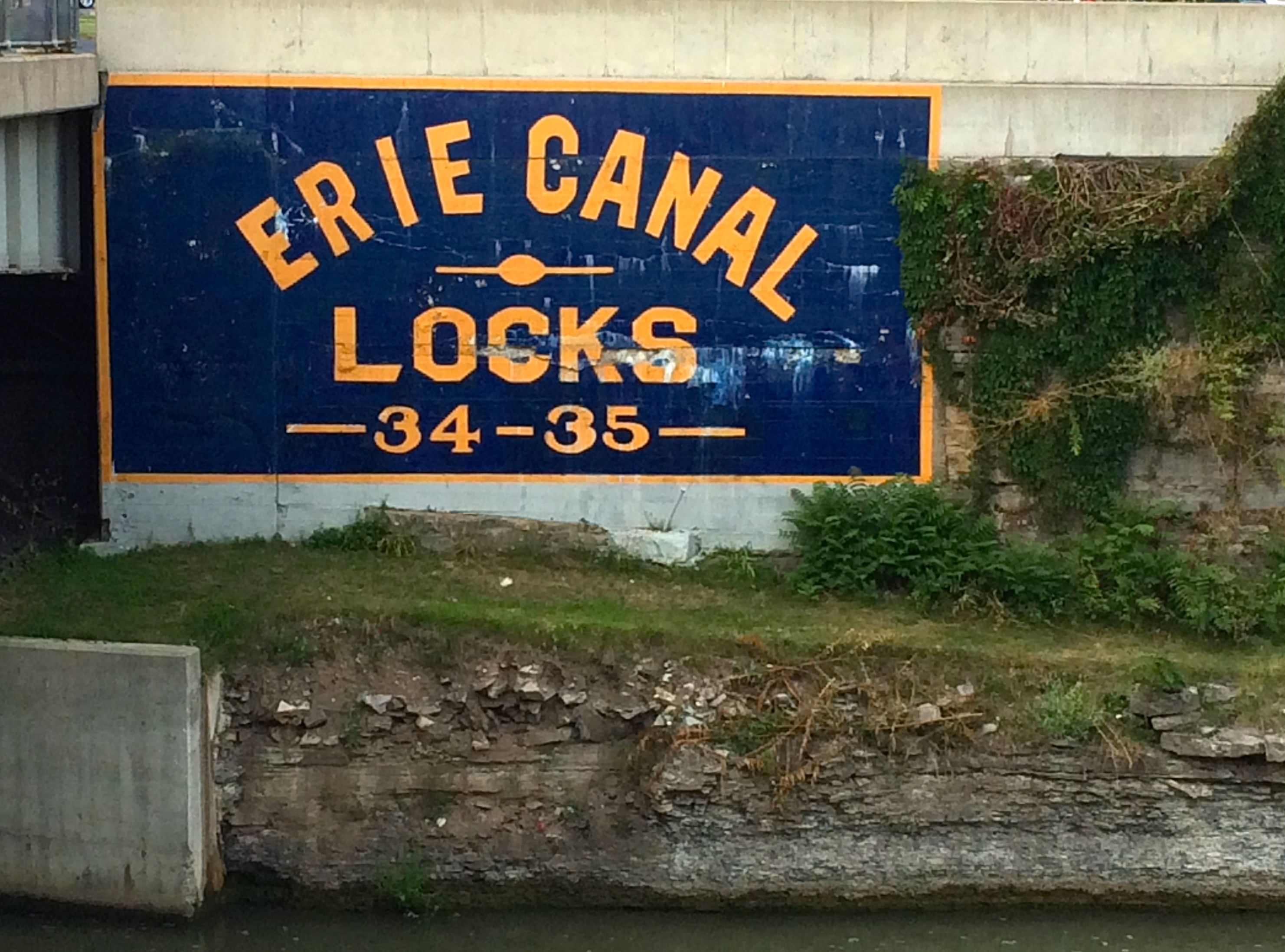
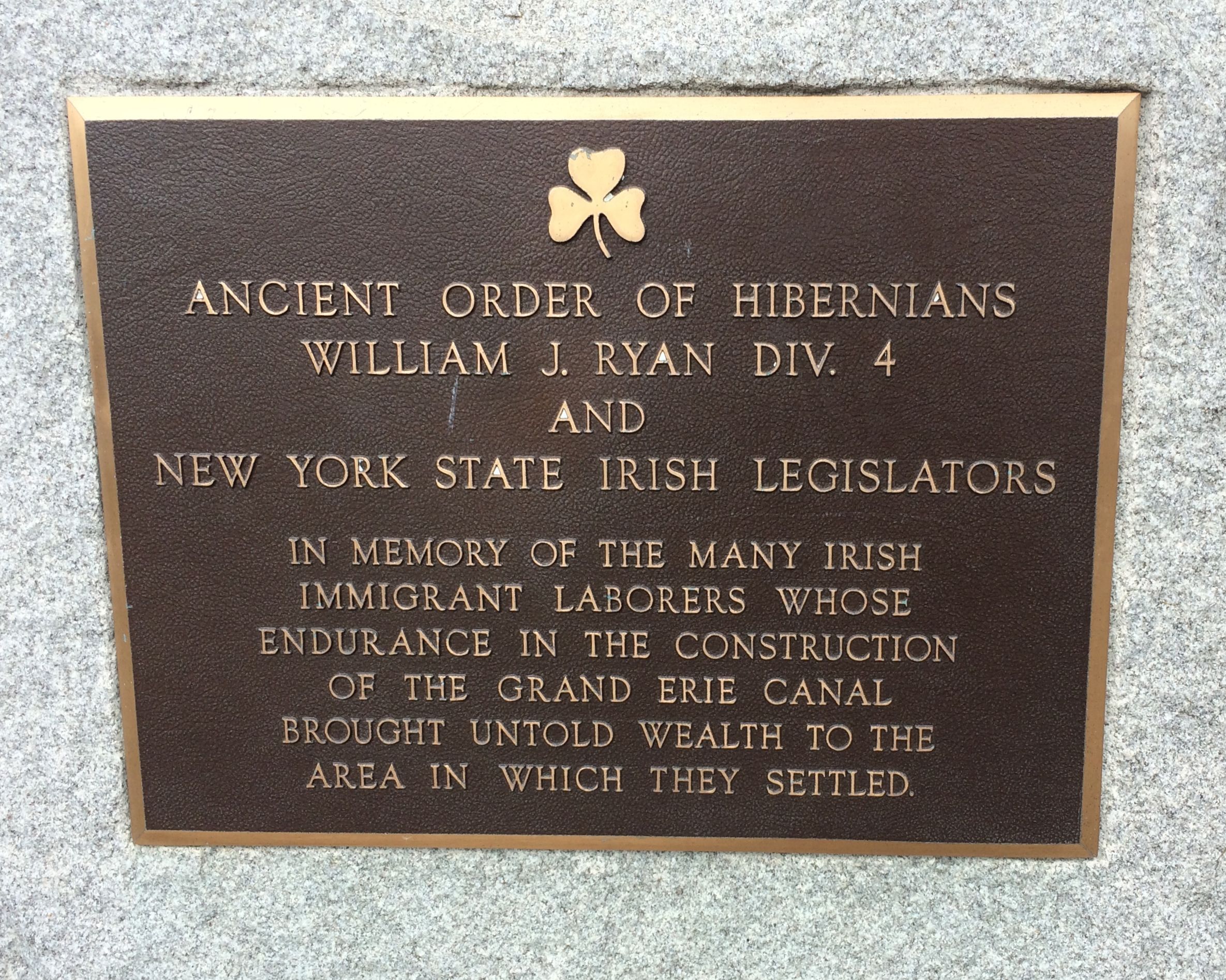
The canal was finally open for business in 1829, and its construction cost of $3.5 million made it one of the most expensive canal projects of its time. Of course, the Erie Canal, which opened in 1825, cost $7 million. But, it you want to look at cost per mile, the 363 mile-long Erie Canal cost about $19,300 per mile. The 14 mile-long C&D cost $250,000 per mile.
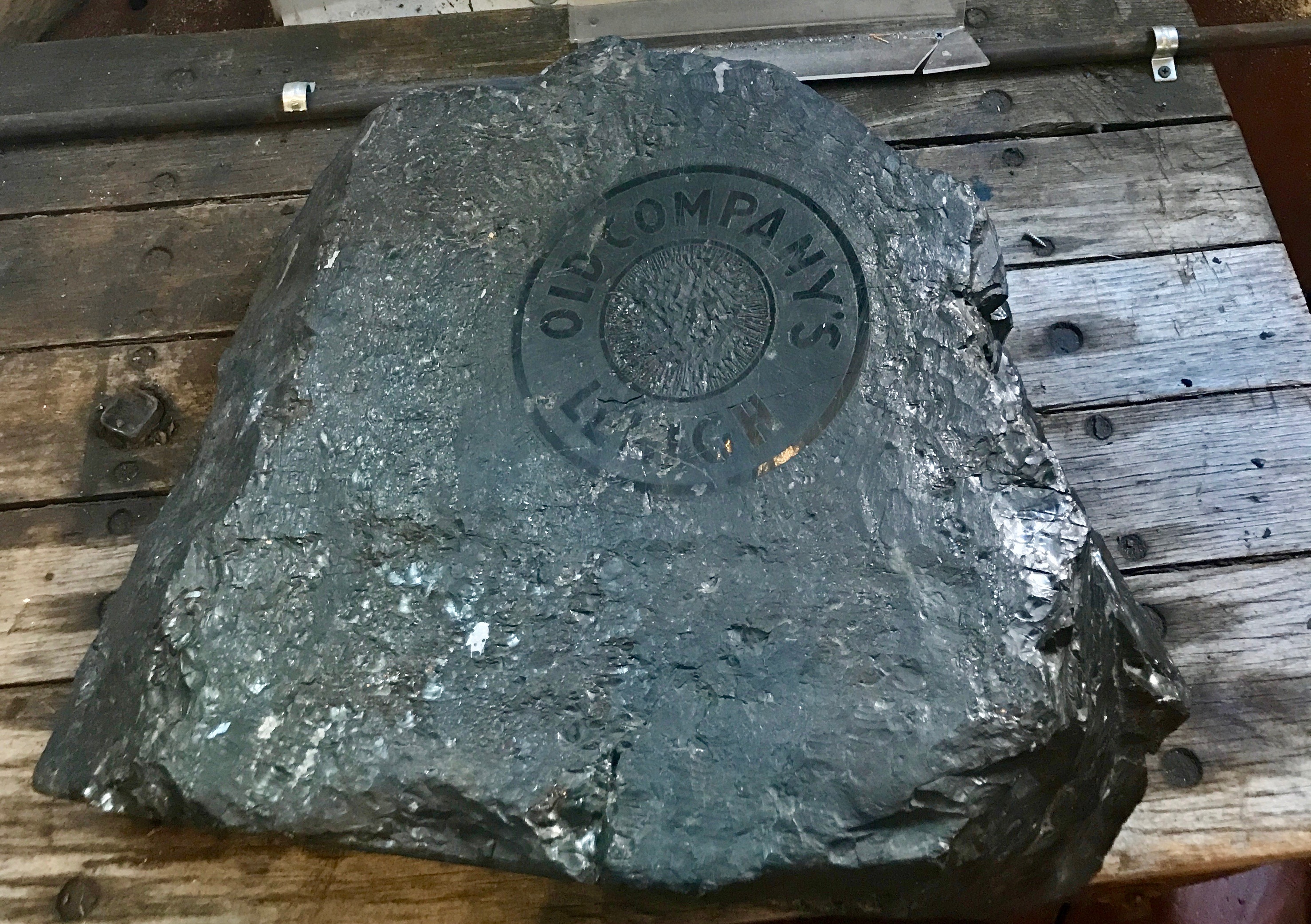
This canal is still in operation. At the beginning, the focus was on moving products. Coal was branded with the seal of the company it belonged to. If I understood the label with the display correctly, Old Companies was the local supplier of coal for the boilers that pumped the water in the canal. The mine was in Lehigh, Pennsylvania, and they had an office in Chesapeake City.
By this time, I was reaching the end of my tolerance for tourism for the day. I headed out in search of sustenance.
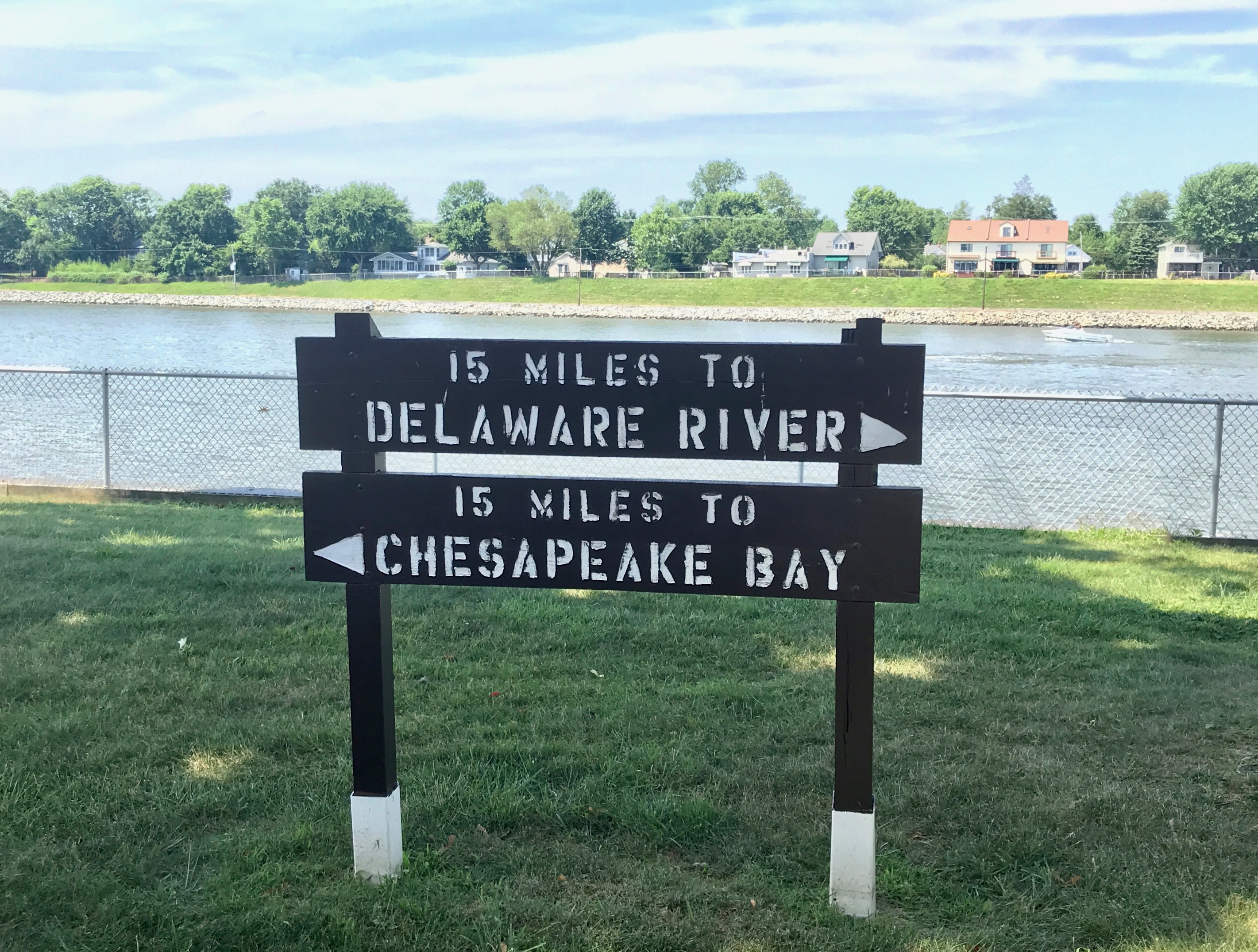
Hmm…which way should I go? To the nearest restaurant, of course! I found one sitting on the water’s edge.
Bless the waitress who took me seriously when I told her I was really thirsty.
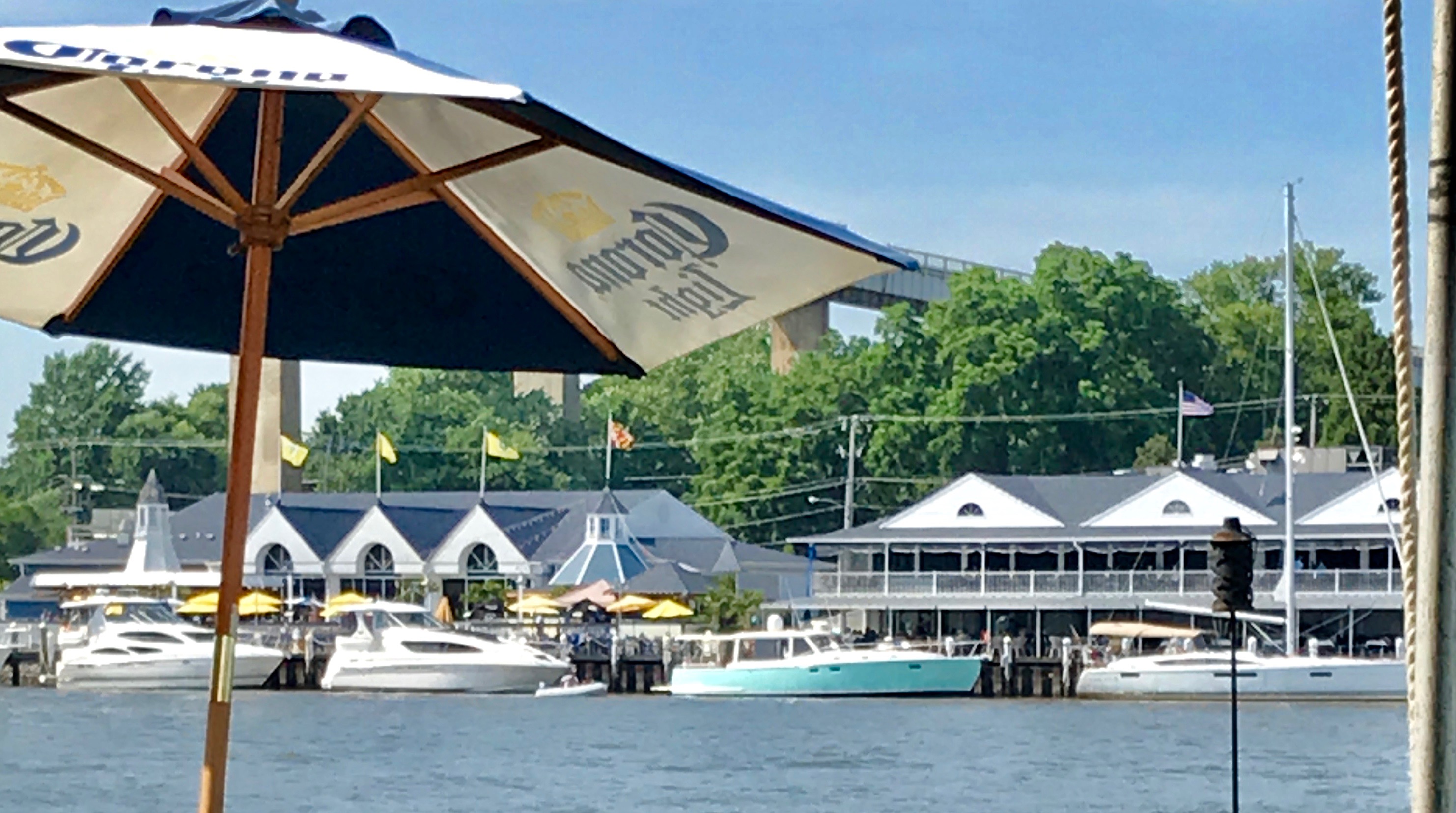
What’s that I smell? Oh, yeah…money!
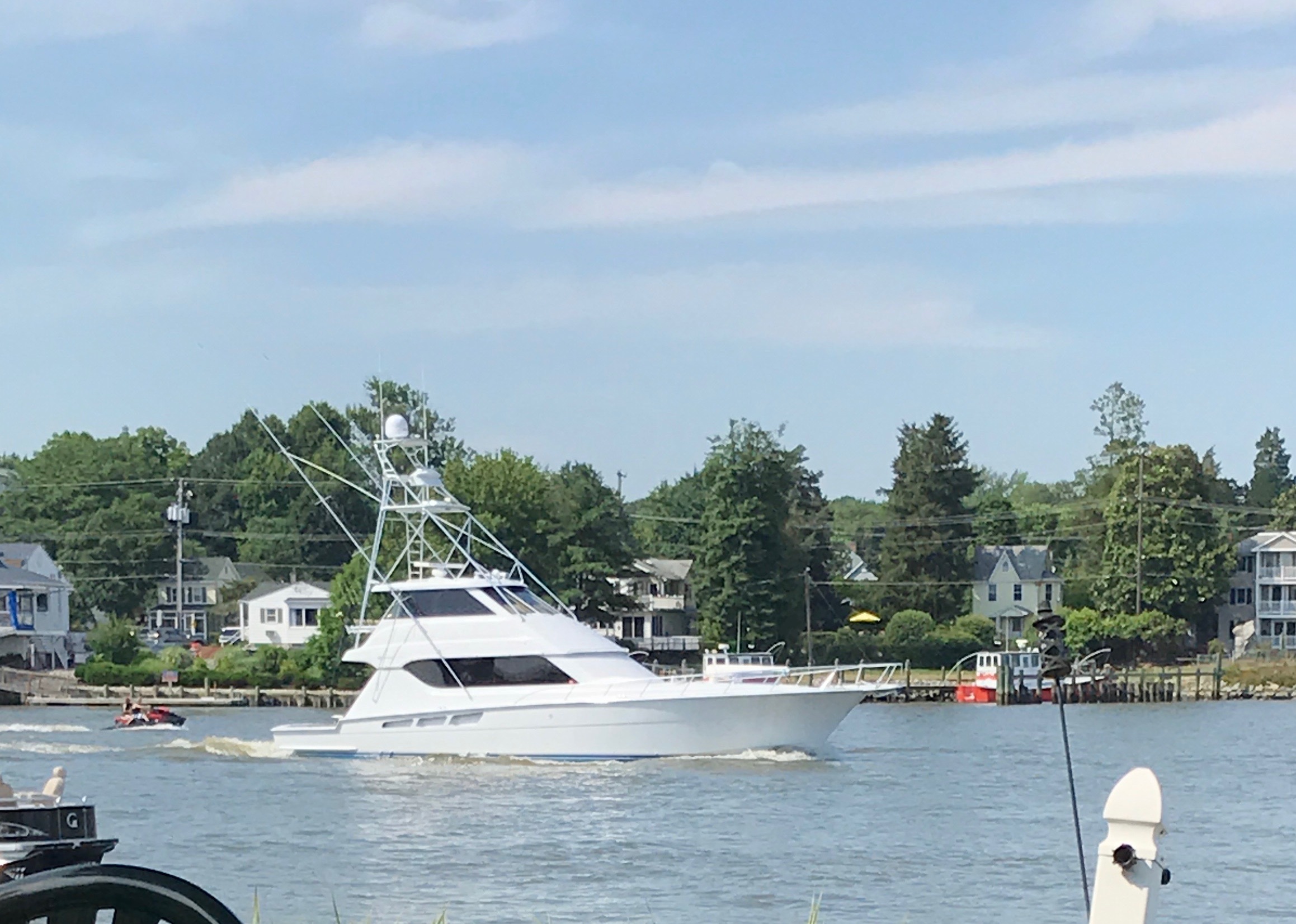
There were some might fine boats in the canal.
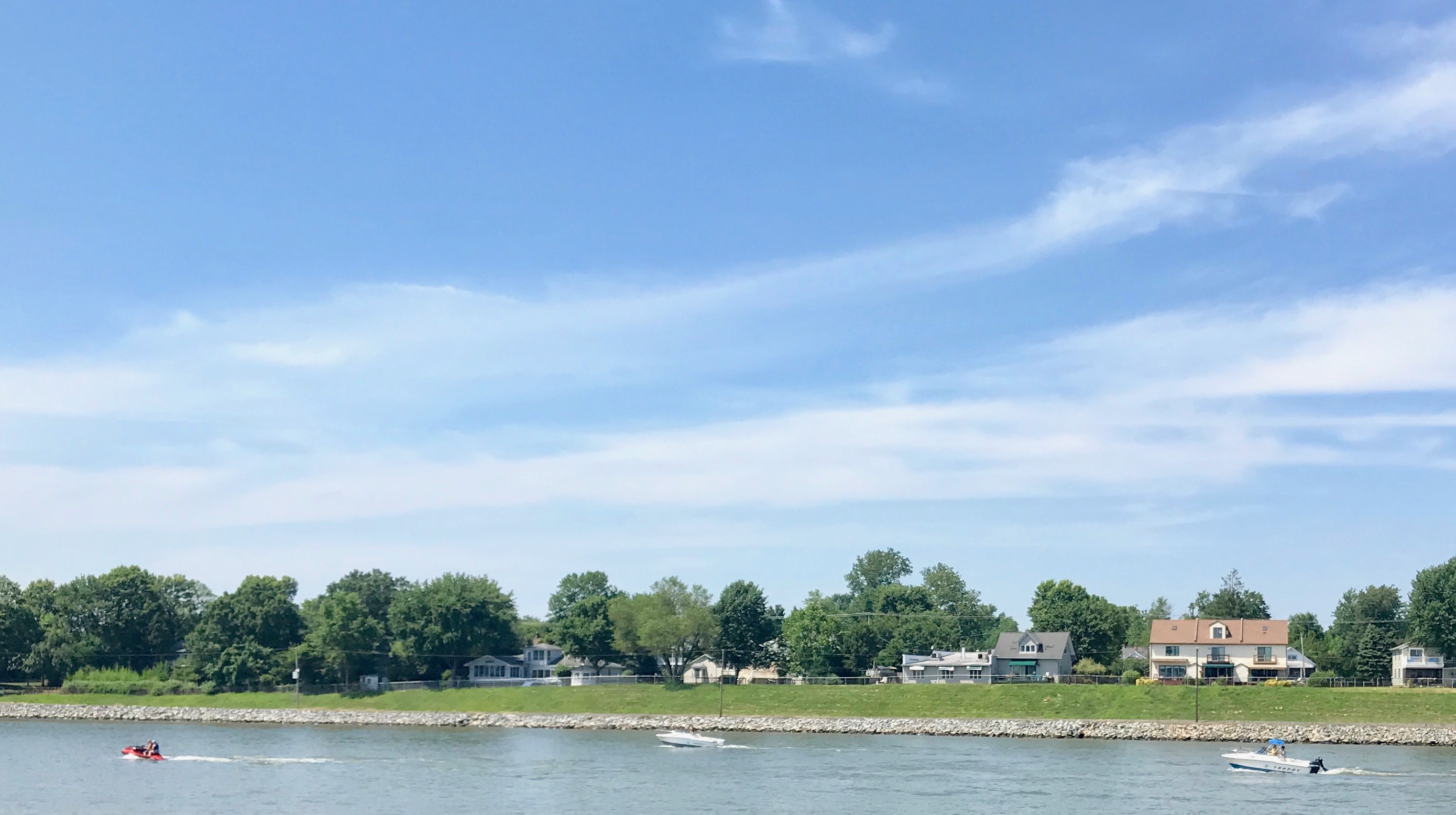
There were also smaller vessels.
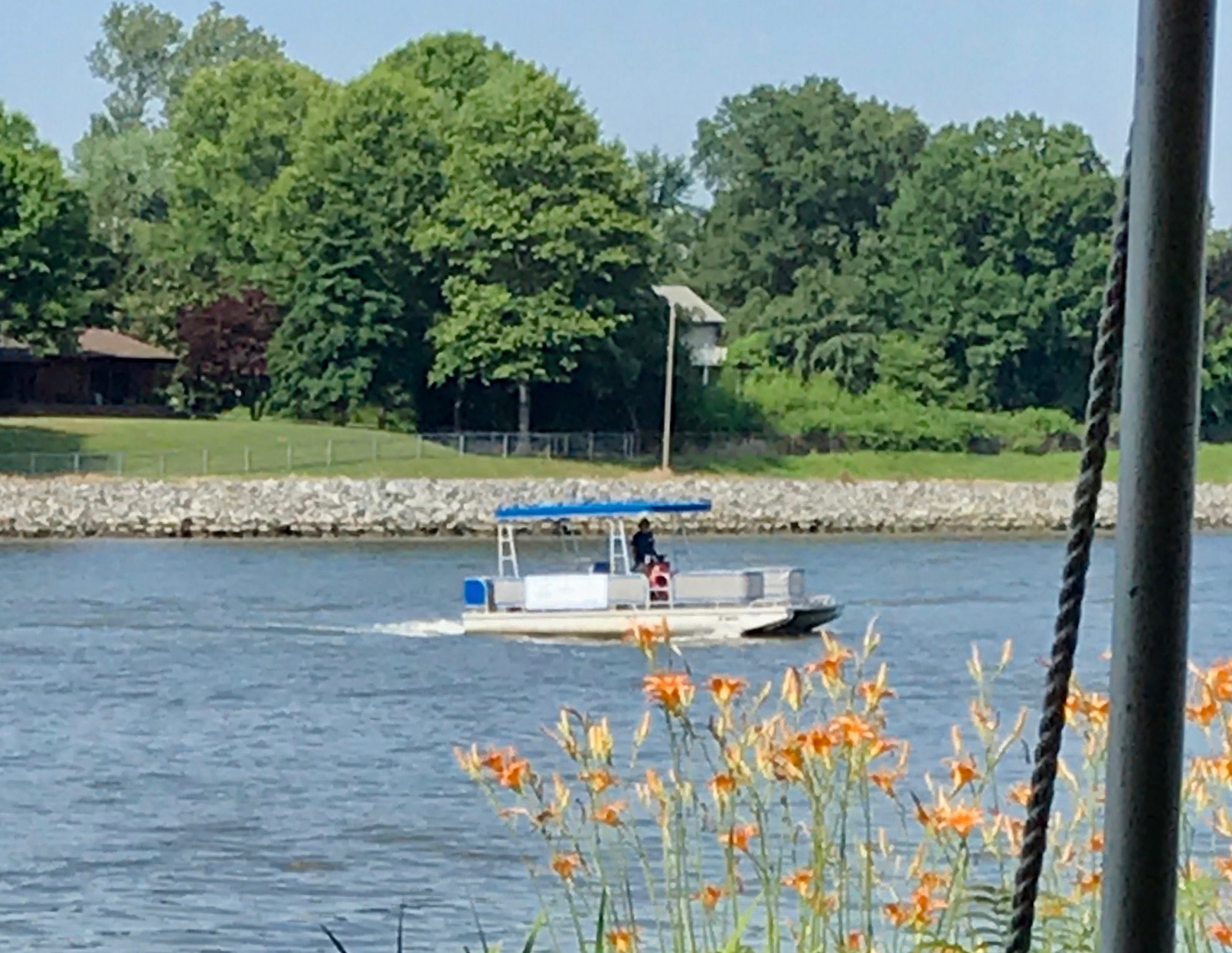
You don’t need to be a millionaire to enjoy the water!
You know how sometimes when you are tired, hungry, and thirsty and you just can’t decide what to eat? Well, I solved that problem by going with two appetizers.
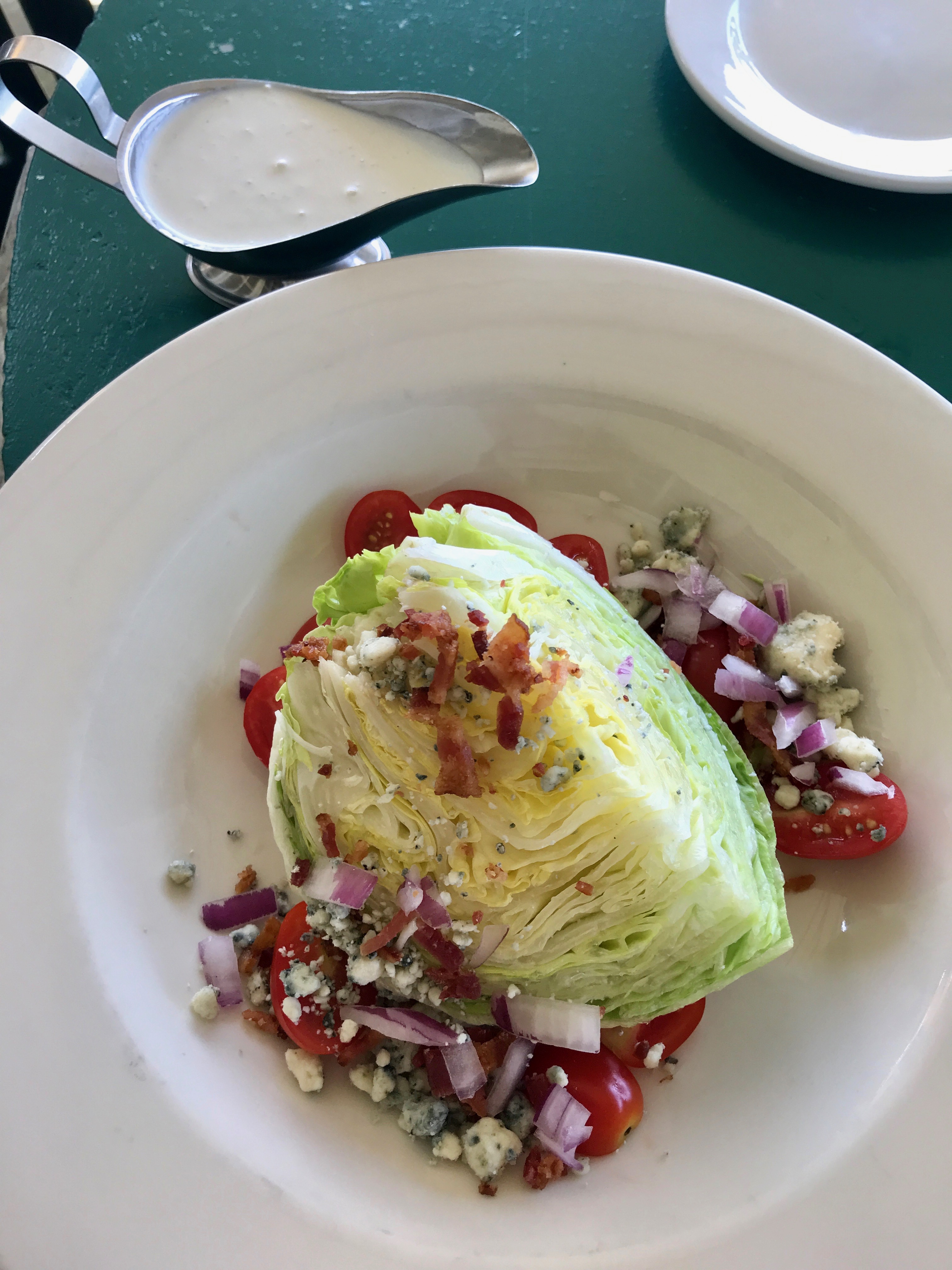
I started off with a refreshing wedge salad.
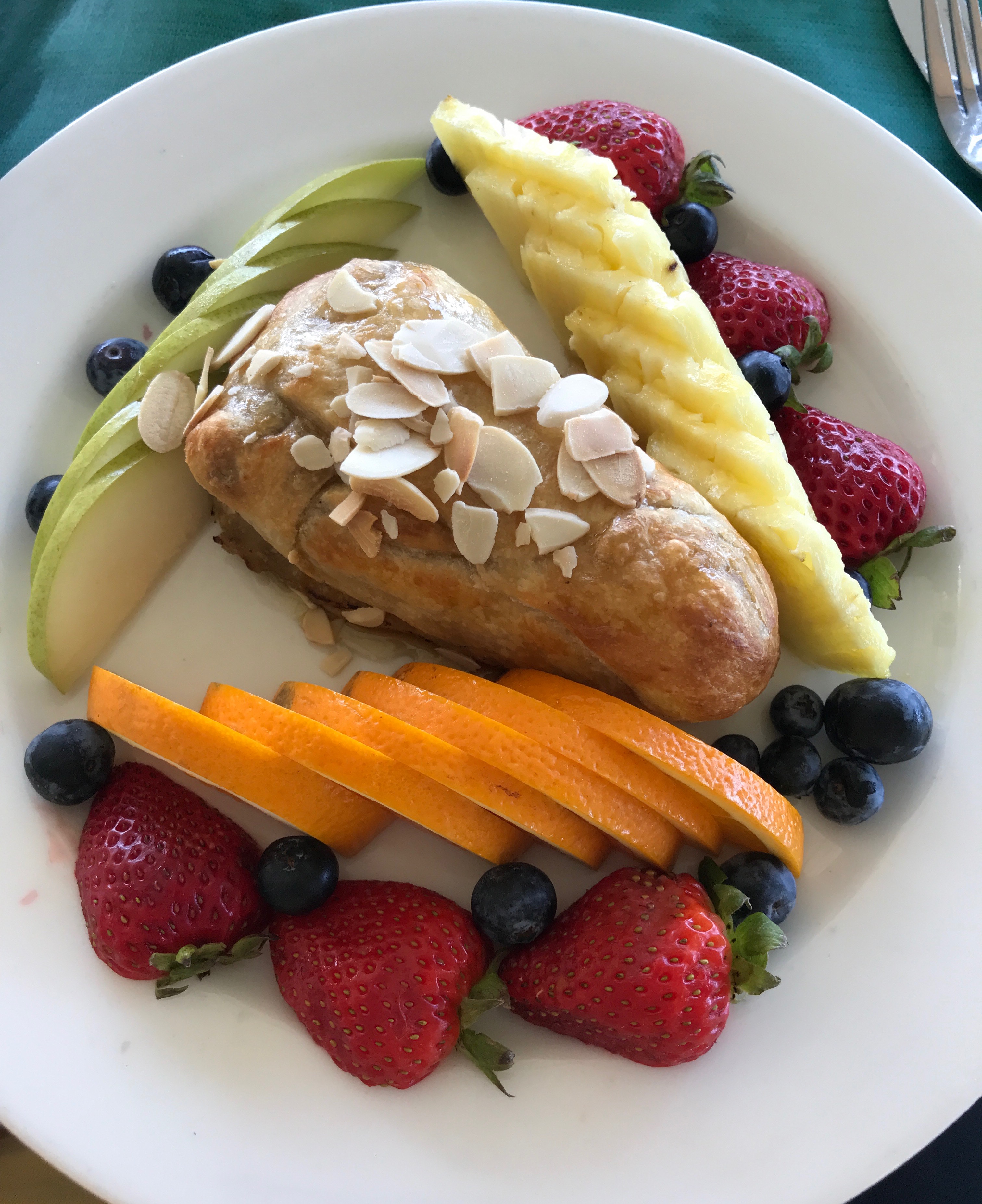
The baked brie rounded out the meal perfectly.
Sufficiently nourished, I headed back to whatever hotel I had holed up in for the weekend.
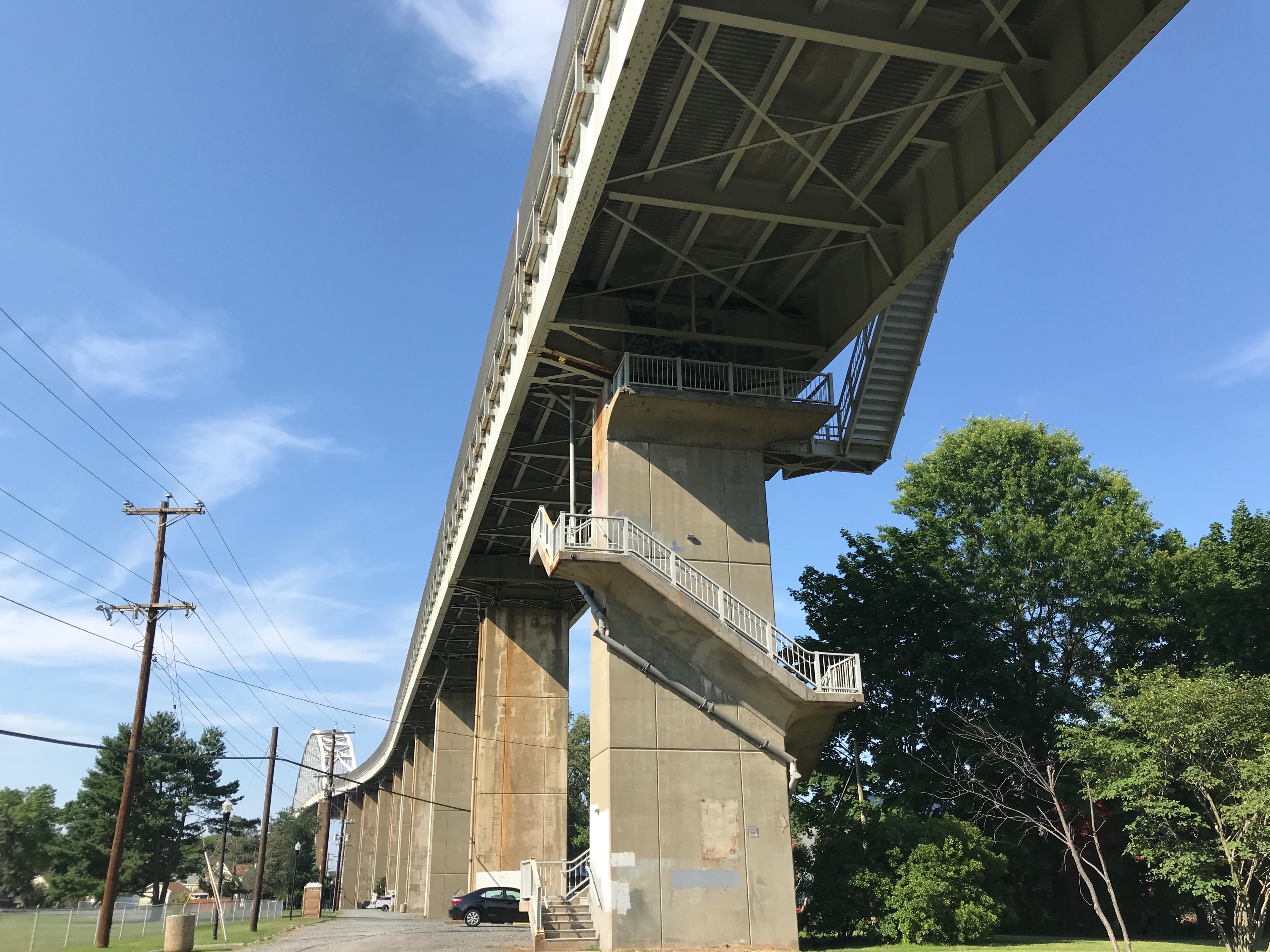
En route to the bridge, I spied these stairs. Amazing! And, no, I didn’t climb them. I wonder if the local residents use them.
After my big adventure, I spent the rest of the weekend holed up. I rested, relaxed, handled laundry and took care of business so I’d be ready to roll on Monday.
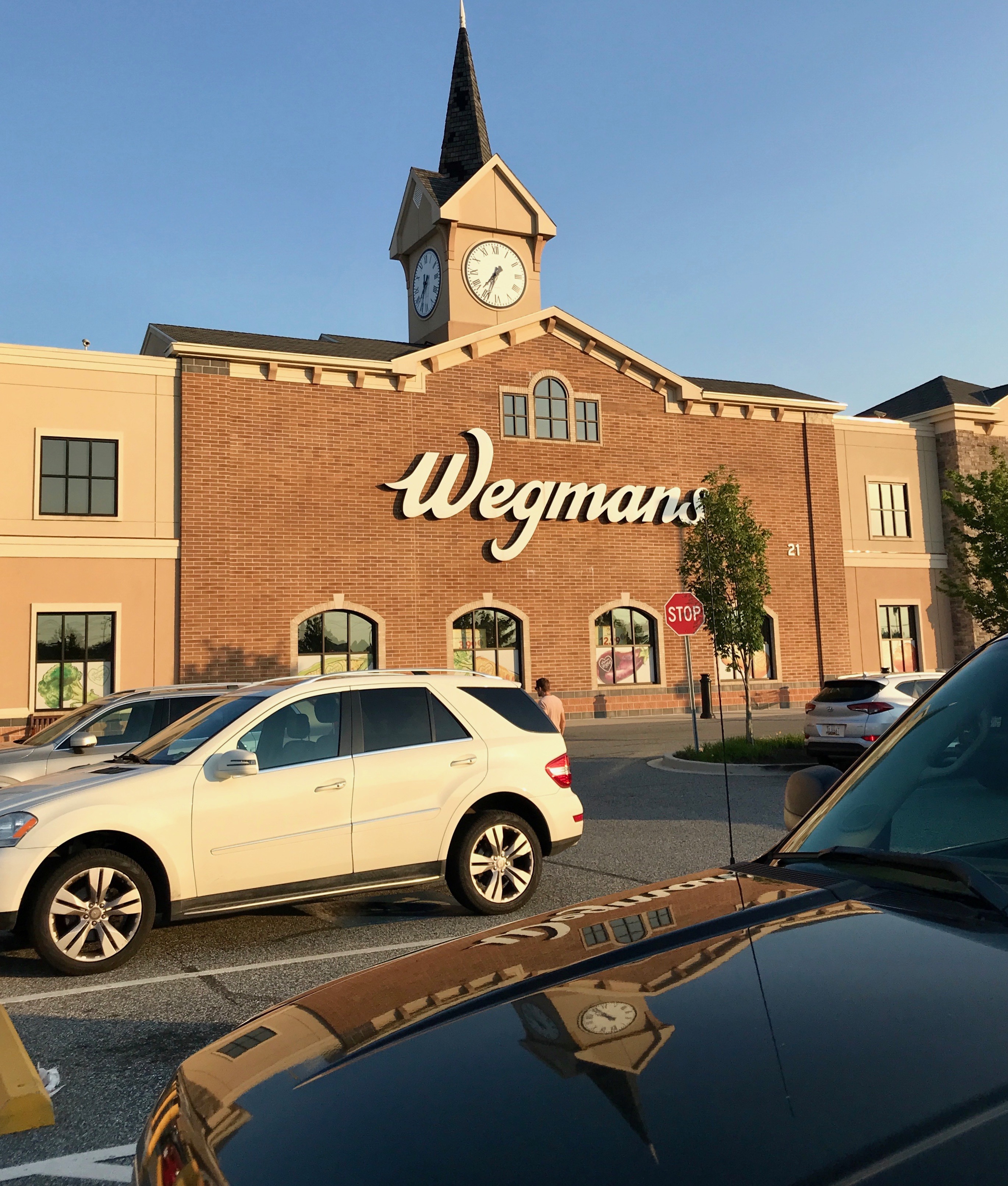
I even found a Wegmans! What a great grocery store!