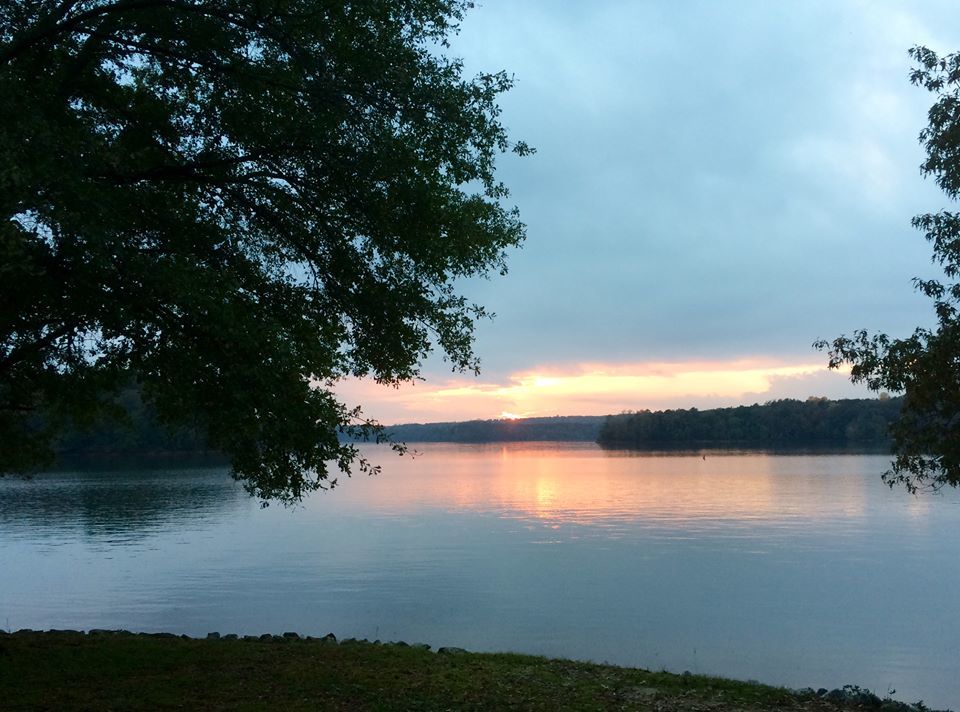
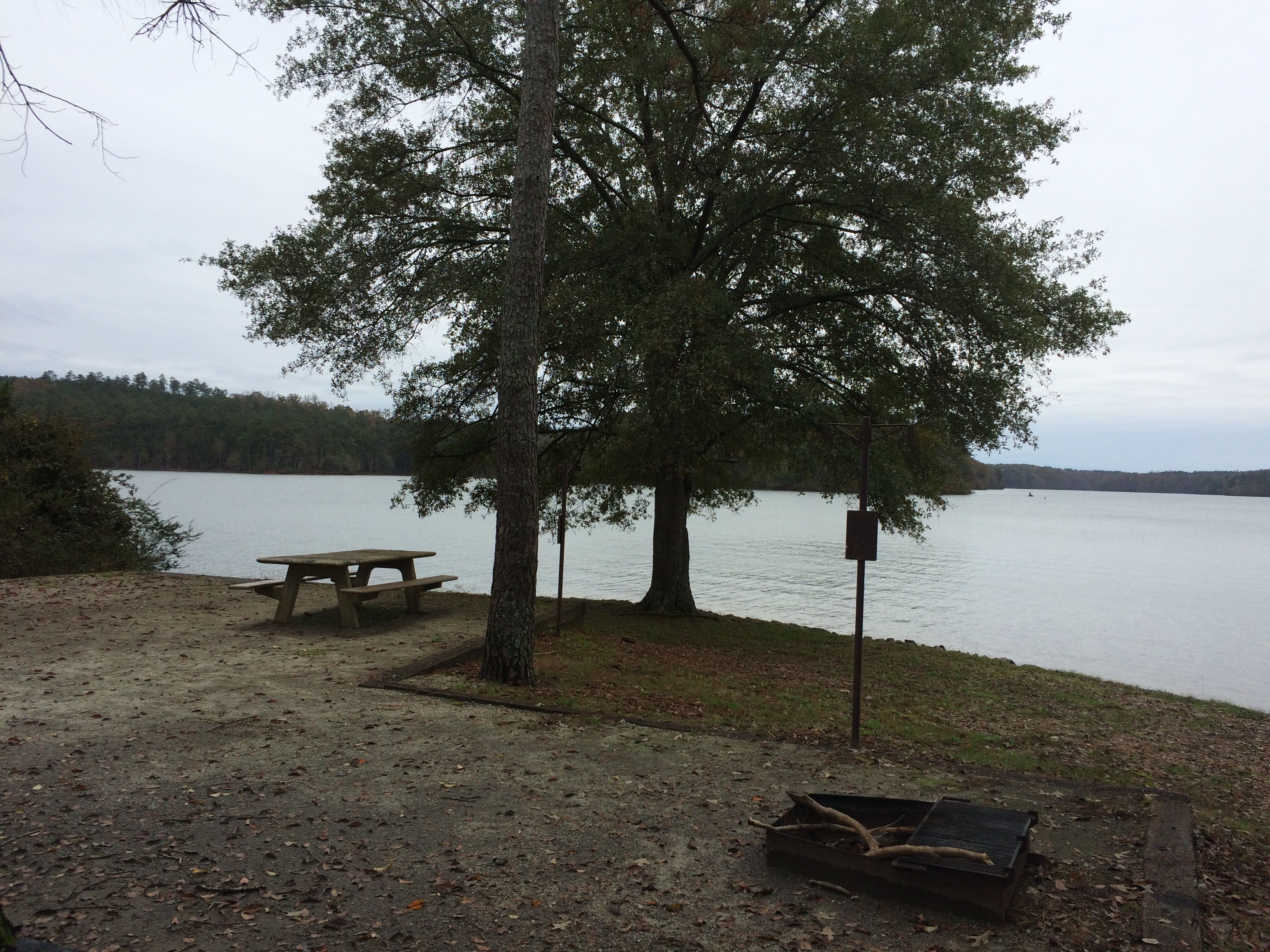
I pulled into my campsite near Clemson, South Carolina, just as the sun was going down. You have to love a pull-though site by the water. This is at Twin Lakes Campground on Hartwell Lake. It’s an Army Corps of Engineers facility., and I’ve never seen a COE campground that wasn’t top notch.
That was the most sun I saw during the two days I was there. At least I got a nice sunset.
It was a football weekend at Clemson, and the campground was full of fans. Orange decorations and tiger paws decorated most of the campsites. I felt like such an outsider!
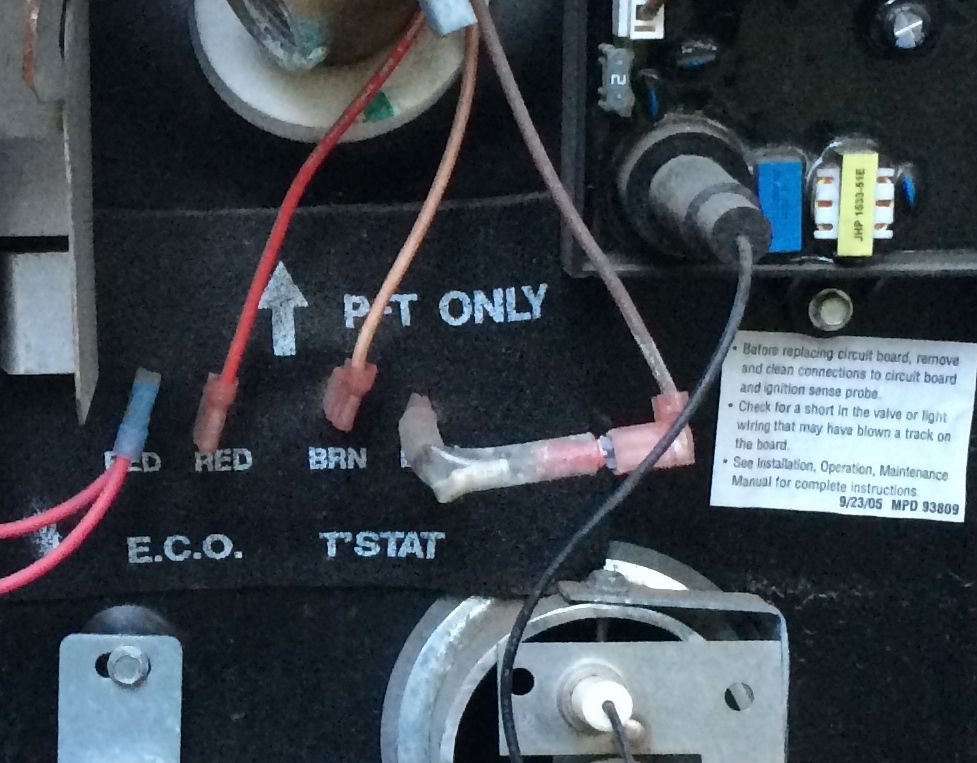
I spent a good chunk of time texting with a Facebook friend from an RV group. He was trying to talk me through fixing my water heater that stopped functioning back in Newport News.
We tested and tried and examined.
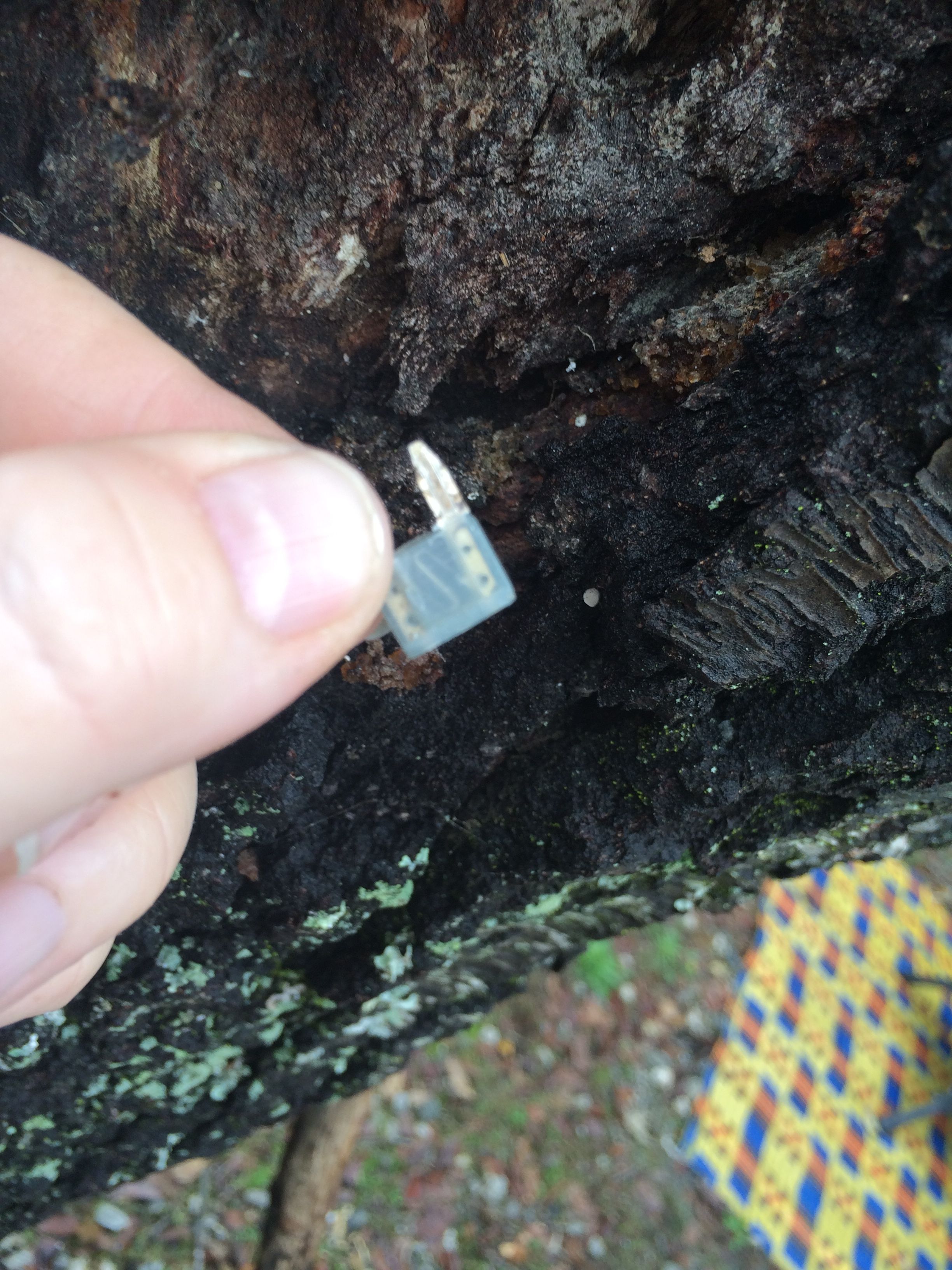
Here’s a fuse. You learn something new everyday.
I appreciated his help, but we didn’t get it running.
What a nice spot! Water, electricity, a view and only $26 a night. I wonder if I paid a little extra, they would turn on the sun?
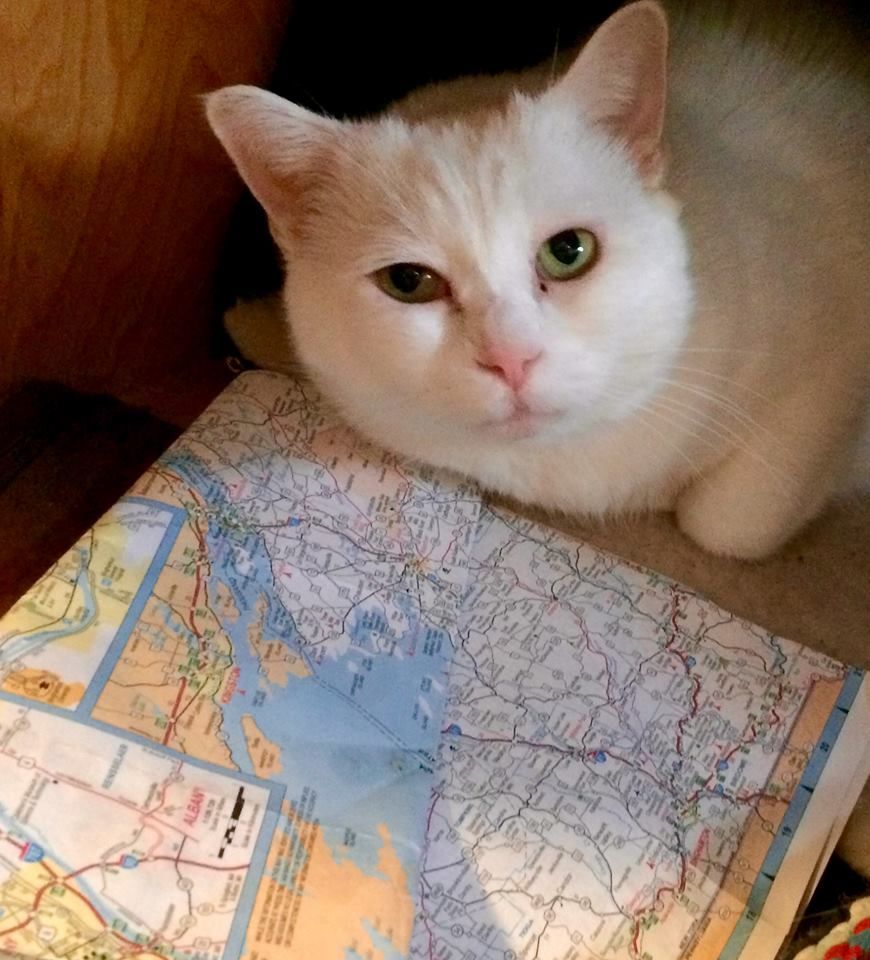
Cora is pouring over the maps and plotting out our route. Next stop: Georgia!
After I dropped Michelle and Mariel at home in Fayetteville, I spent the night at my favorite free place.
A free spot for the night and then a hot breakfast in the morning. And, no, I didn’t take the photo. It was STILL raining!
I got to Charlotte and found my home for my time there. The Elmore RV Park is a unique experience. It is located behind a used car lot and the residents are a mixture of permanent, long stay and short term folks. As it is in an older park, it has older, mature trees. I love trees! The site I was given was kind of awkward to get into. As I stood there puzzling about how to approach the task, a neighbor offered to do it for me. I readily accepted. I love it when the I get parked with no passes!
My main major reason for visiting Charlotte, other than the fact that I had never been there, was to visit a friend and former student. My former students are the closest I’ll ever come to having kids.
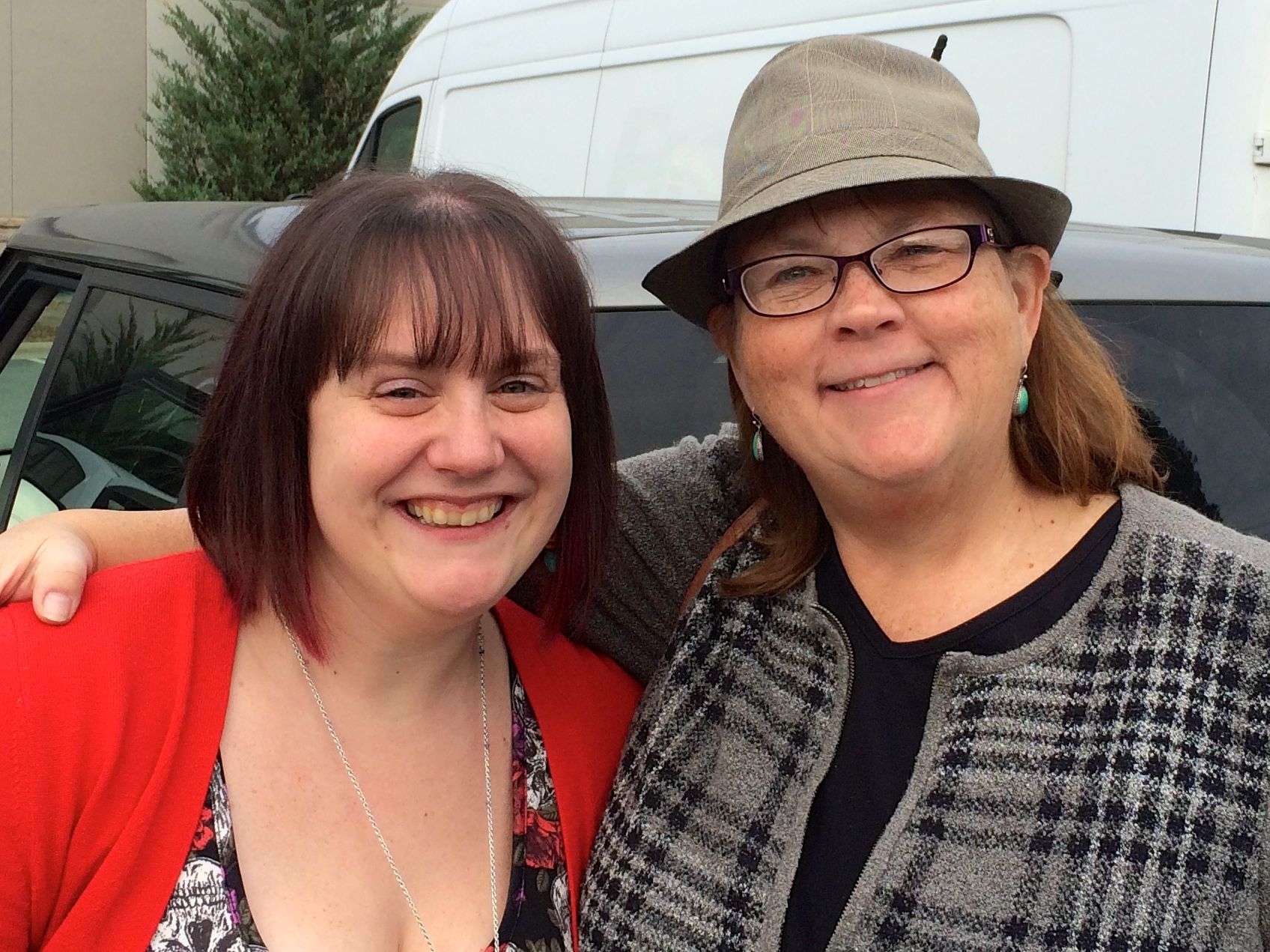
Melissa and Me
It’s so good to see them all grown up and getting on in life. Married, even!
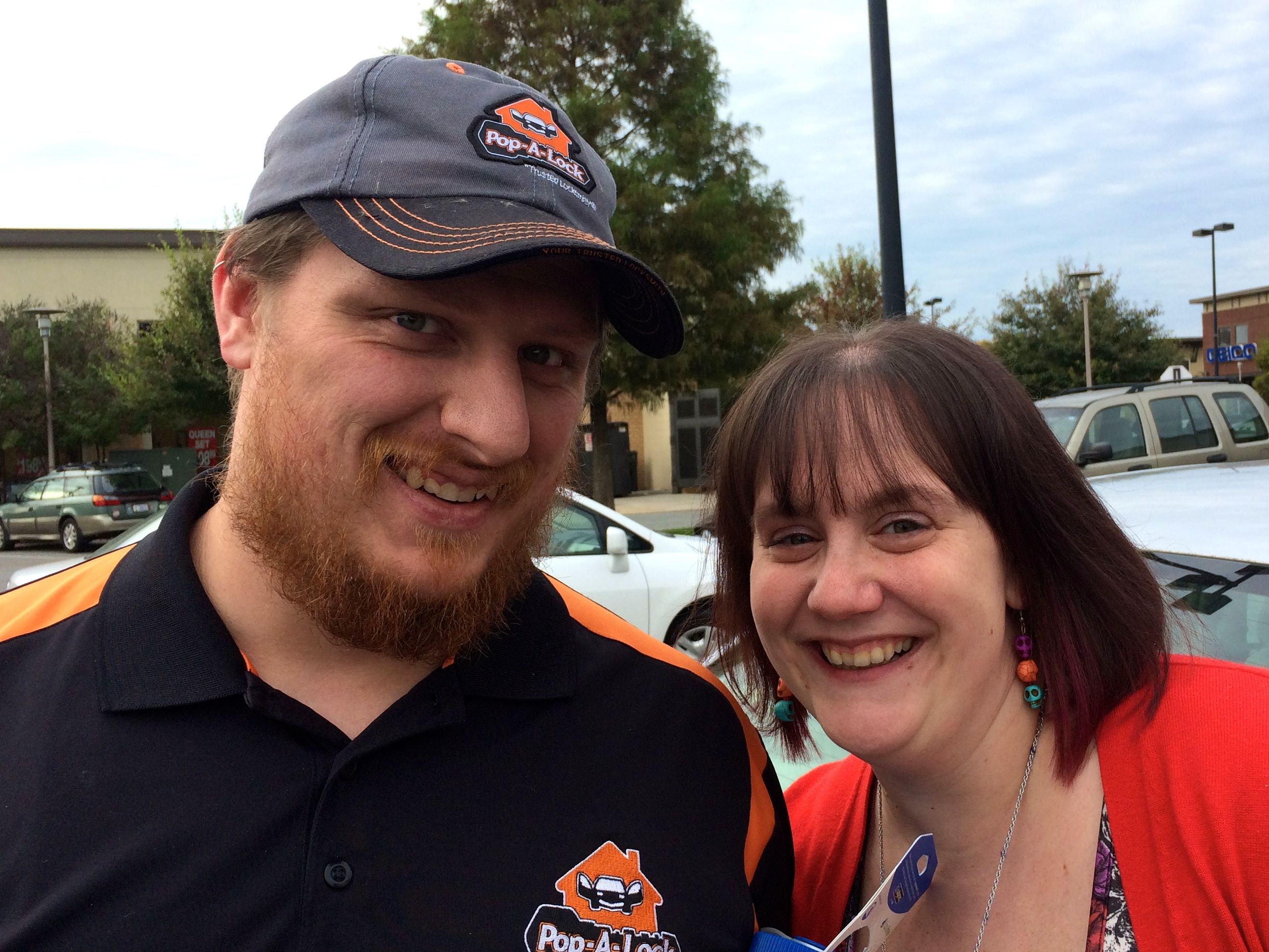
Andrew and Melissa
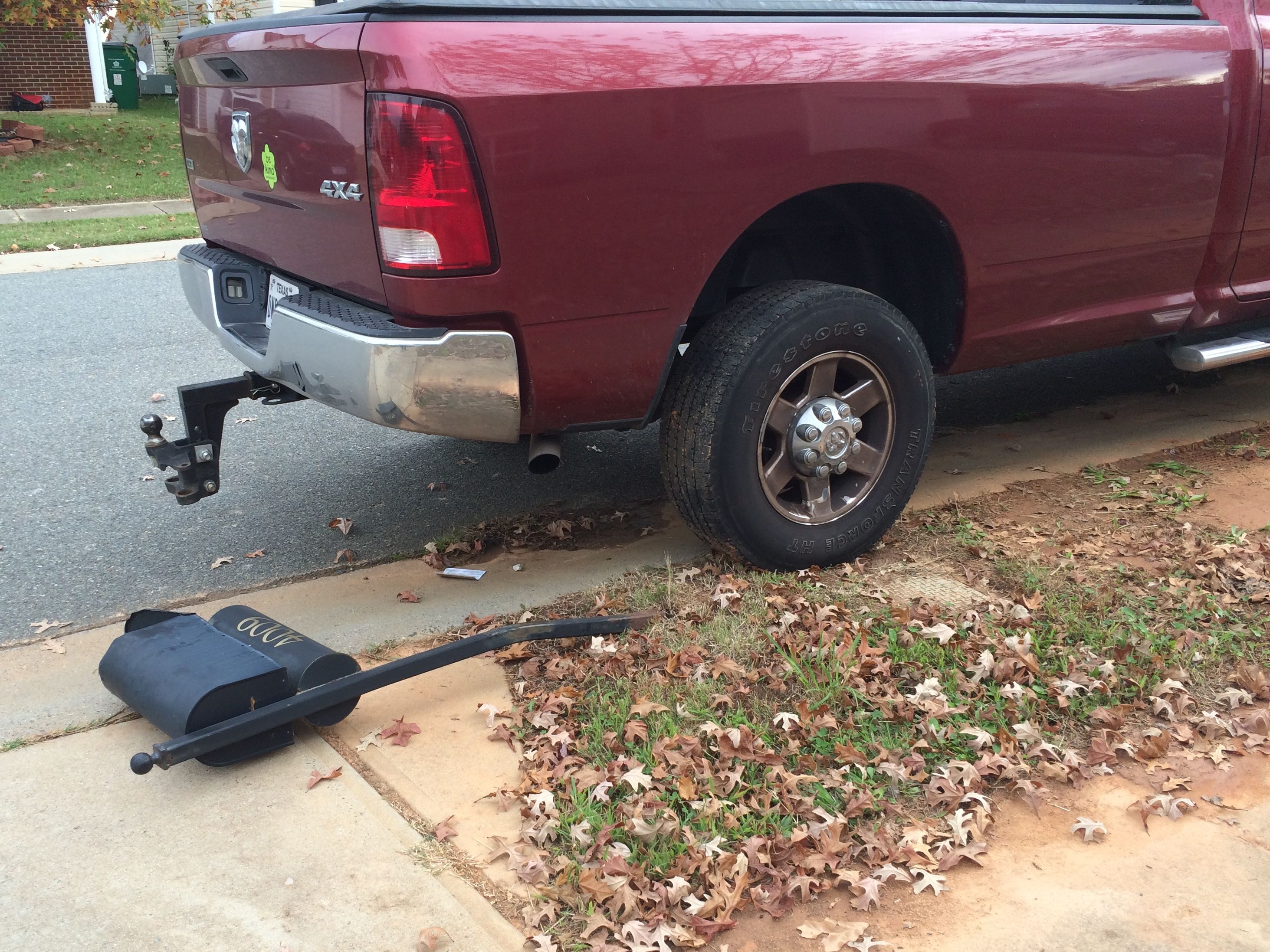
I really enjoyed our visit. And, Melissa didn’t seem at all upset about what I did to her mailbox.
She said that they had just gotten permission from the HOA to replace it. She even sent me a photo of the new mailbox. It did look a lot sturdier and much more classy!
The rainy weather continued during much of my visit. But, I had excellent television reception and wifi was included in the park fee. After all the driving I had done, it felt good just to hang out.
I stopped in to a craft brewery just a little ways from the trailer park for dinner one night in the NoDa neighborhood. NoDa stands for North Davidson. It’s a gritty up-and-coming arts district.
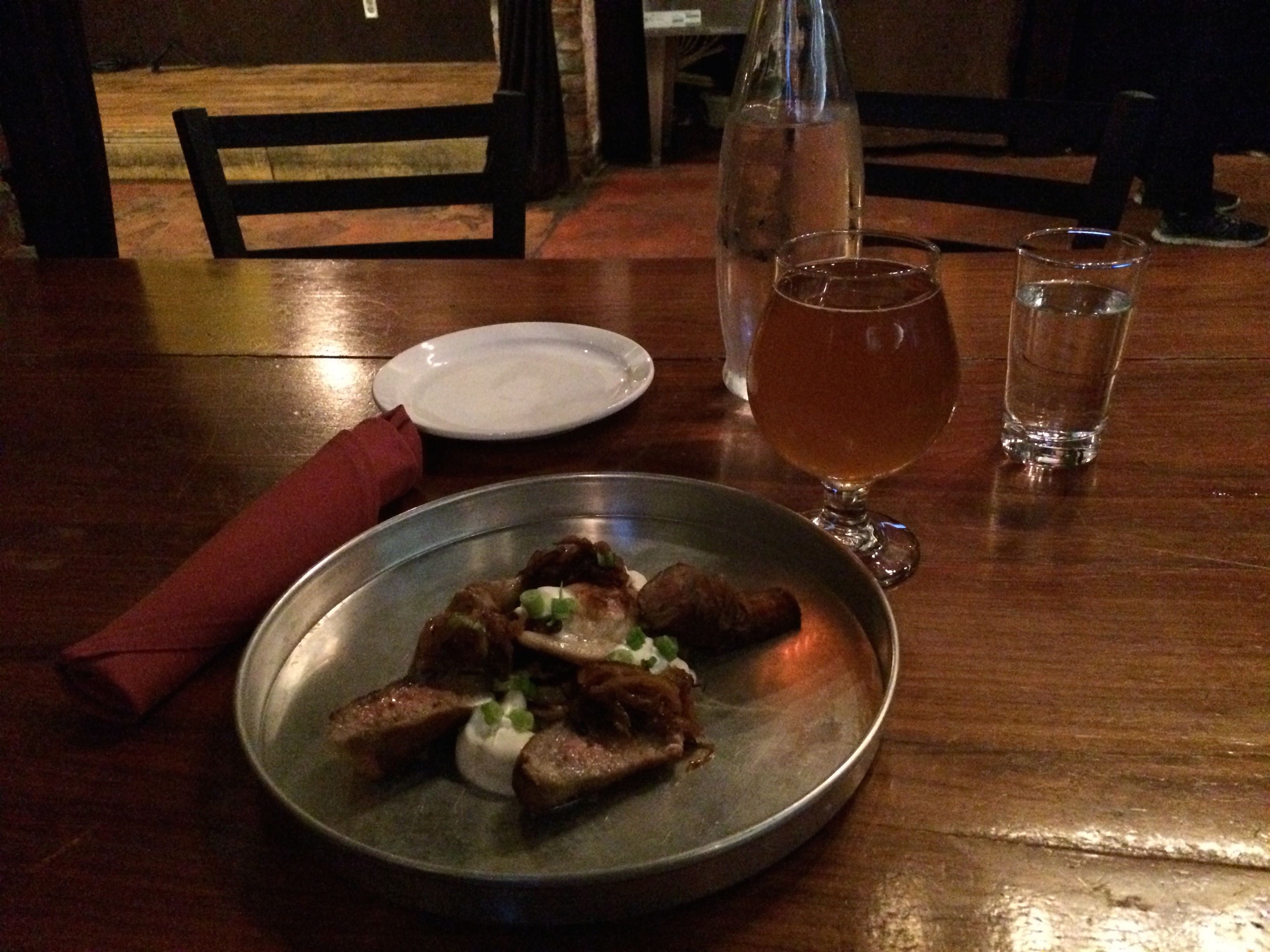
I had house made smoked sausage and potato pierogi with caramelized onions and beer mustard.
I also indulged in blundus biere, which was a Belgian blonde ale. According to the description, it has a complex flavor with notes of bread, clove and orange, with a soft and fluffy sweetness.
Who writes this stuff?
But, it was good. Almost as good a Bud Light.
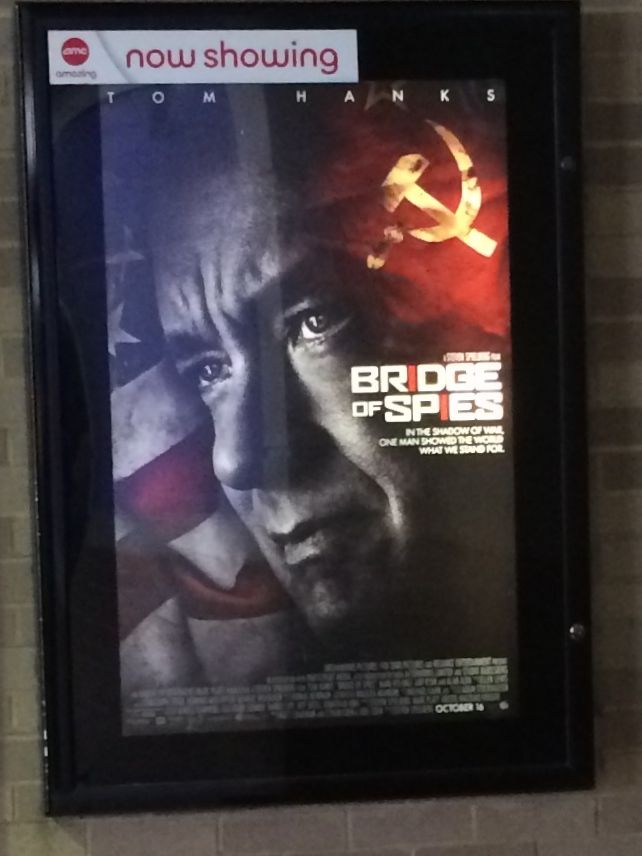
I also took myself to a movie. Bridge of Spies with Tom Hanks. If anyone asks, I highly recommend it.
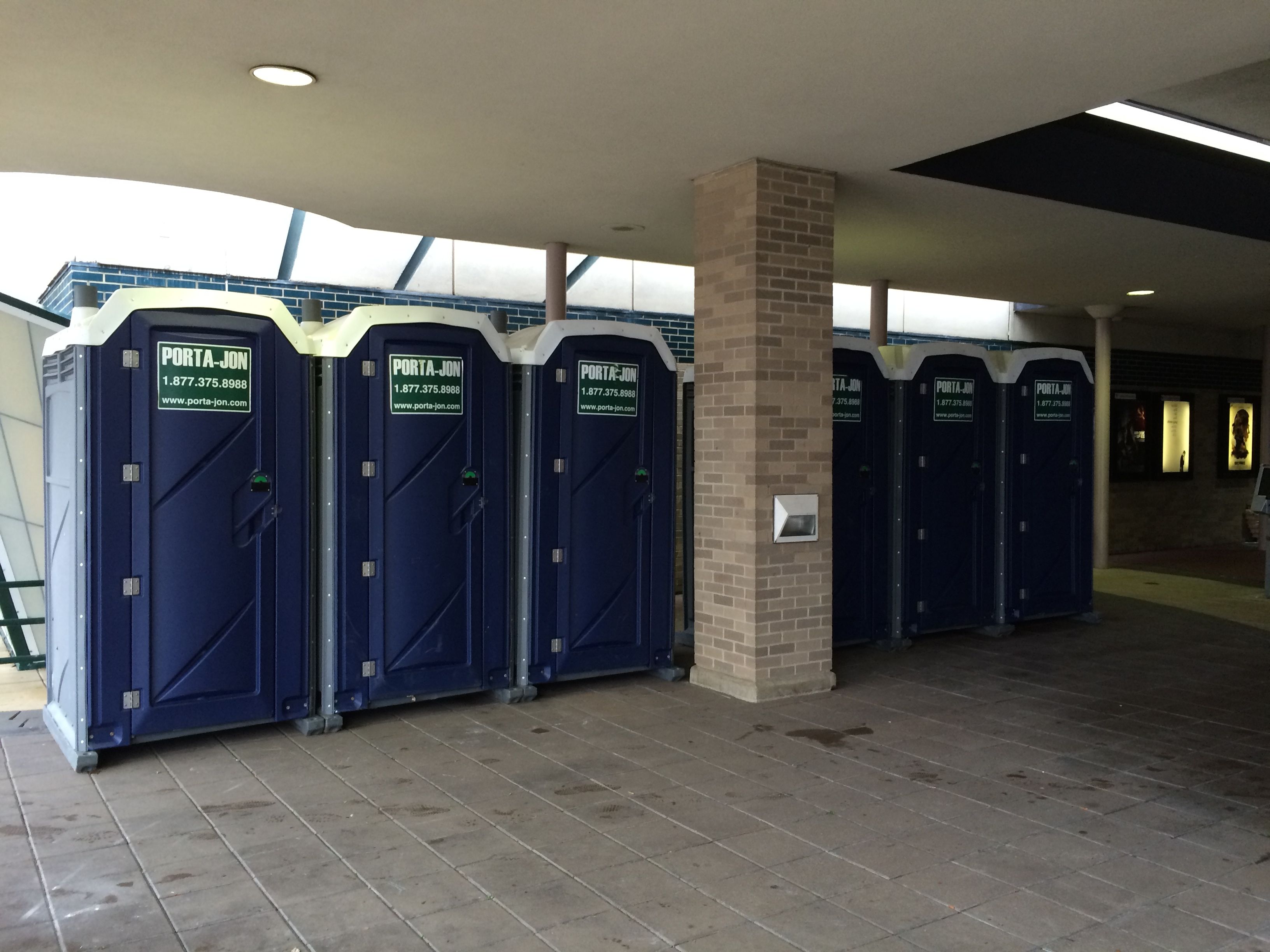
I must admit that I was a little put off by the array of port-o-potties stationed just outside the entrance.
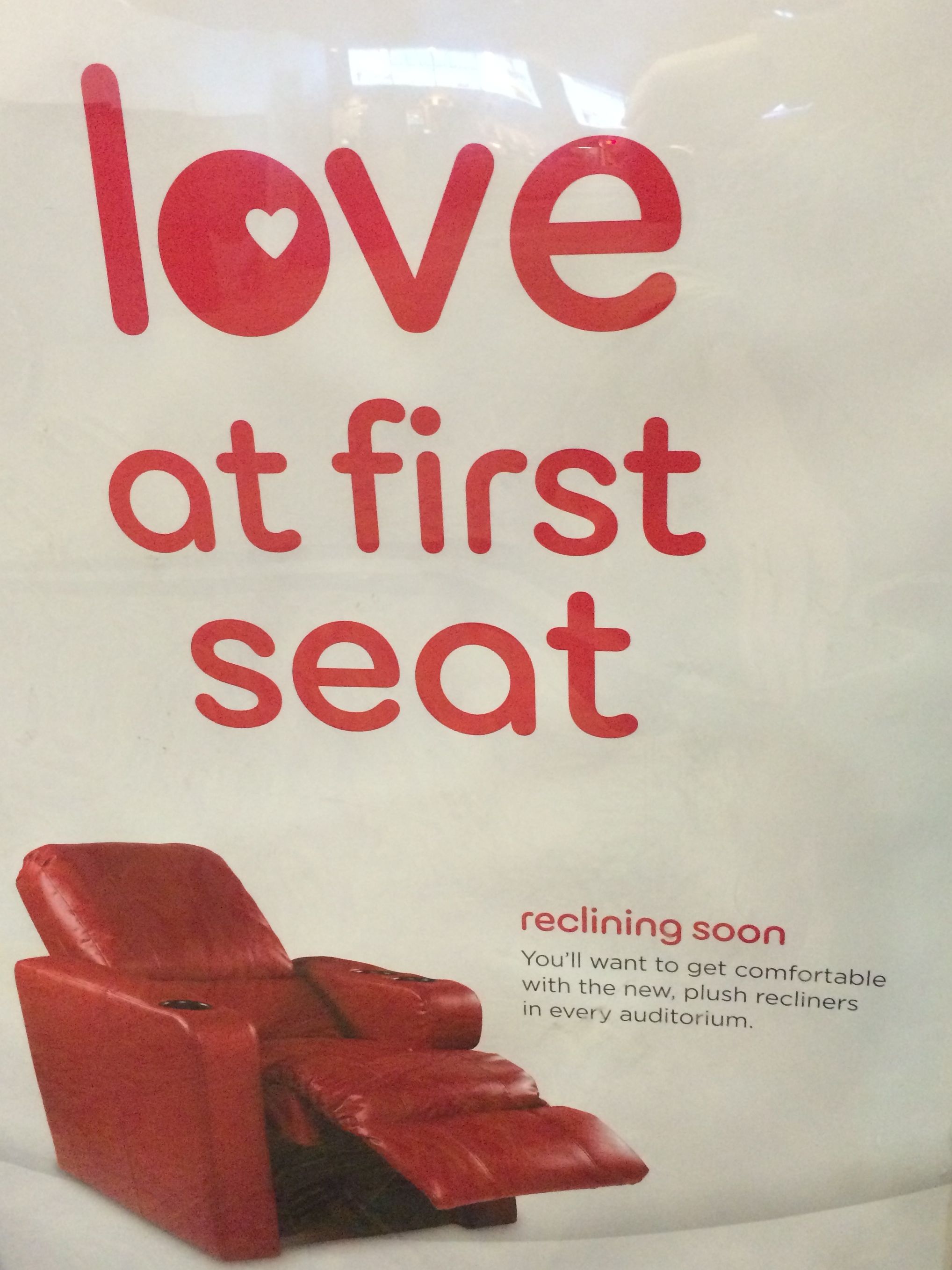
I guess the theater was undergoing some renovations. The theater I was in was great, though. It even had reclining seats!
The weather was very wet. I originally had only planned to stay three days, but the forecast was so dismal, I decided to extend my stay a couple of days. It turned out that a week was the same cost as five days, so I stayed for the week.
With the miserable weather, I wasn’t too eager to do anything. I did pry myself out of the RV park to go visit the President James K. Polk State Historic Site. Although he made his political mark in Tennessee, he was born in Mecklenburg County, just outside Charlotte. This park is part of the land that his family owned when he lived there.
As you might well imagine, the log cabin and outbuildings that were there when he was born in 1795 had long since ceased to exist. However, soon after his death in 1849, a visitor to the farm recorded the the buildings that were there. At least, that is what the guide said. She told us that they moved buildings that were representative of what would have been there.
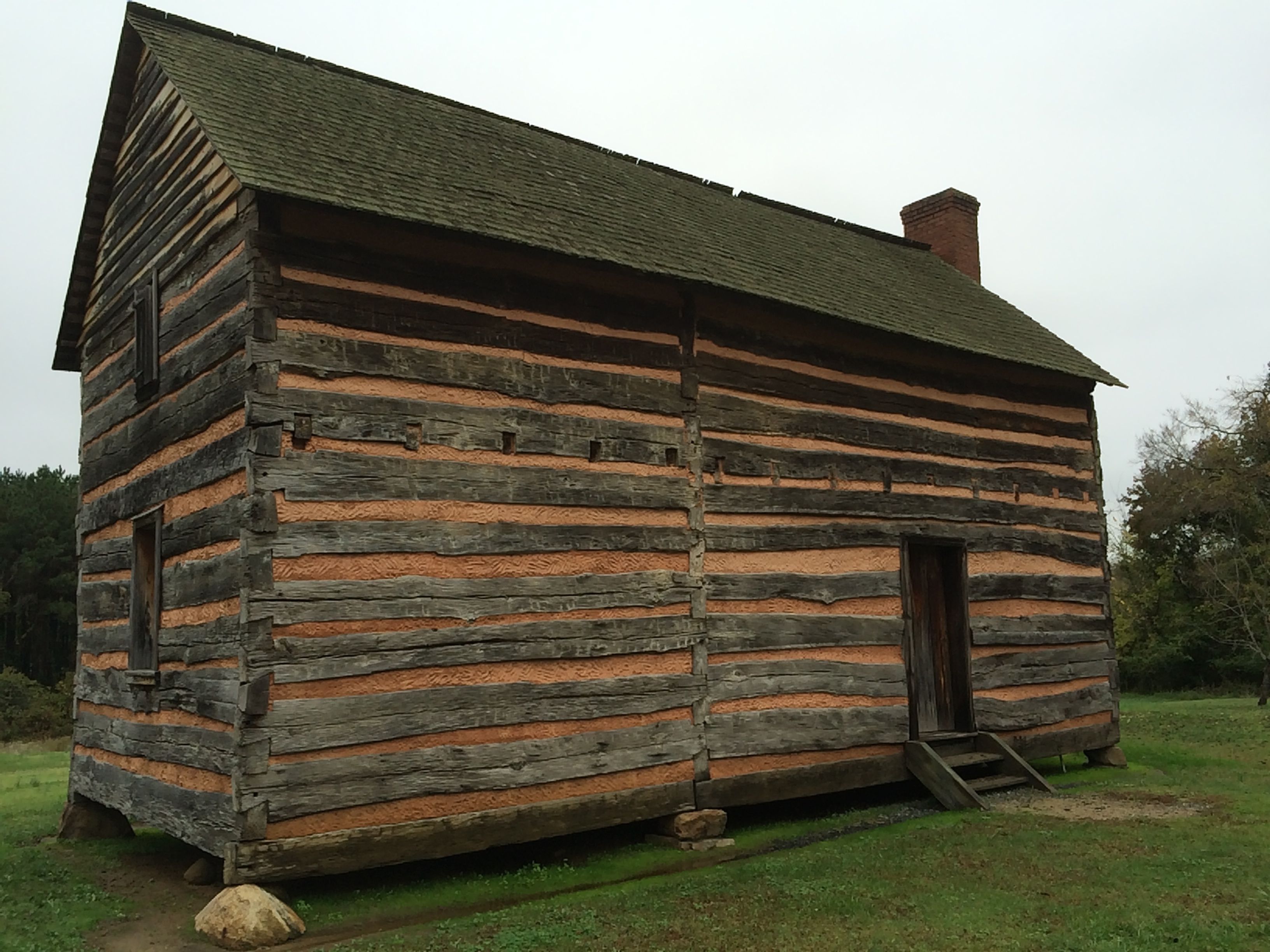
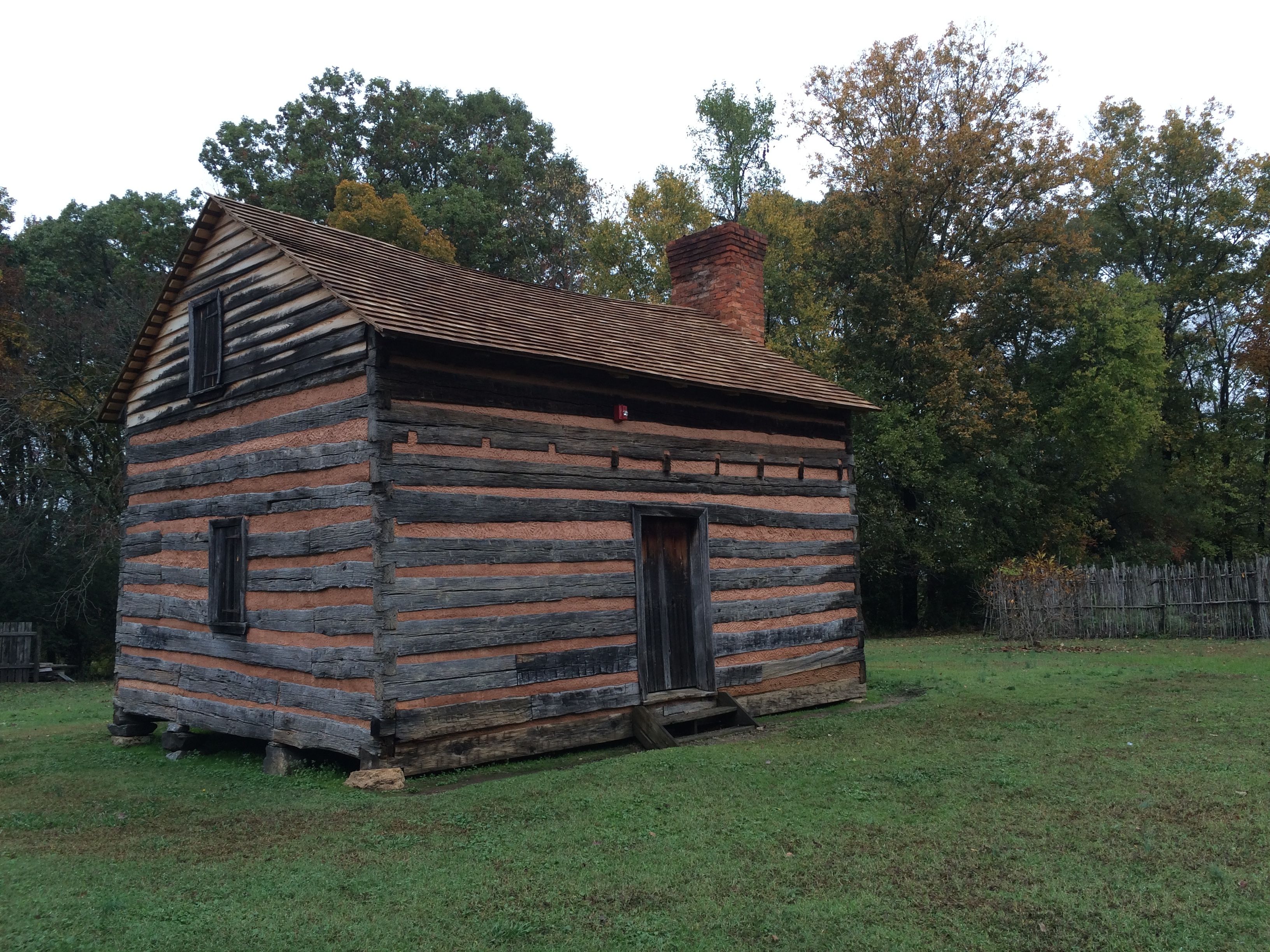
This is what the Polk’s would have lived in. The part of the house on the right was the main room. To the left was the girls’ room. The boys slept in the loft upstairs.
This is the kitchen. Since fires were so devastating, kitchens were frequently in separate buildings. Slaves lived in the loft.
I asked the guide if the building were in the same locations as the original. She told me that this was part of the farm, but the buildings were originally by the creek across the road.
At the end of the tour, she invited us to stroll over to look at the family graveyard. I examined it. The plaque by the graveyard said that these graves were moved here when they put in a road somewhere. It wasn’t clear to me whose graves these were.
Well, that seems kind of logical. I visited a birthplace that wasn’t to see buildings that didn’t have any direct relationship to Polk and a graveyard with the remains of random folks.
By then end of my week at Elmore RV Park, the rain had finally eased up a bit. I hitched up and pulled out of town. Next stop, South Carolina!
The day after I had that idyllic day at the beach, I was sitting in my trailer back at the campground working on where I would go next. My next stop was going to be Fayetteville to visit my sister-in-law, Michelle, and my niece, Mariel. I was toying with the idea of trying to book a few more days right where I was. The campground was lovely and I could easily see myself hauling out my swim suit and taking a dip or two.
I called Michelle, to see if Michelle had any plans that I needed to work around. It turned out that she had just gotten the word that her father, who was already in Hospice, was failing. After having lost my own father a little more than two years ago, I wanted to help. It seemed like what she needed right then was to be able to get back up to Buffalo.
Naturally, I offered to take her. I told her that it would take me about half and hour to get hitched up and on the road and then I’d be there about two hours after I started driving.
By the time I got there, her father had passed. It wasn’t unexpected, but I had hoped that I could get her back for one last visit. We loaded up the trailer and headed north.
We spent the night in transit in a Cracker Barrel parking lot. I love the hospitality that they extend to those of us en route.
Incidentally, this photo wasn’t taken during this trip. I never saw any blue sky.
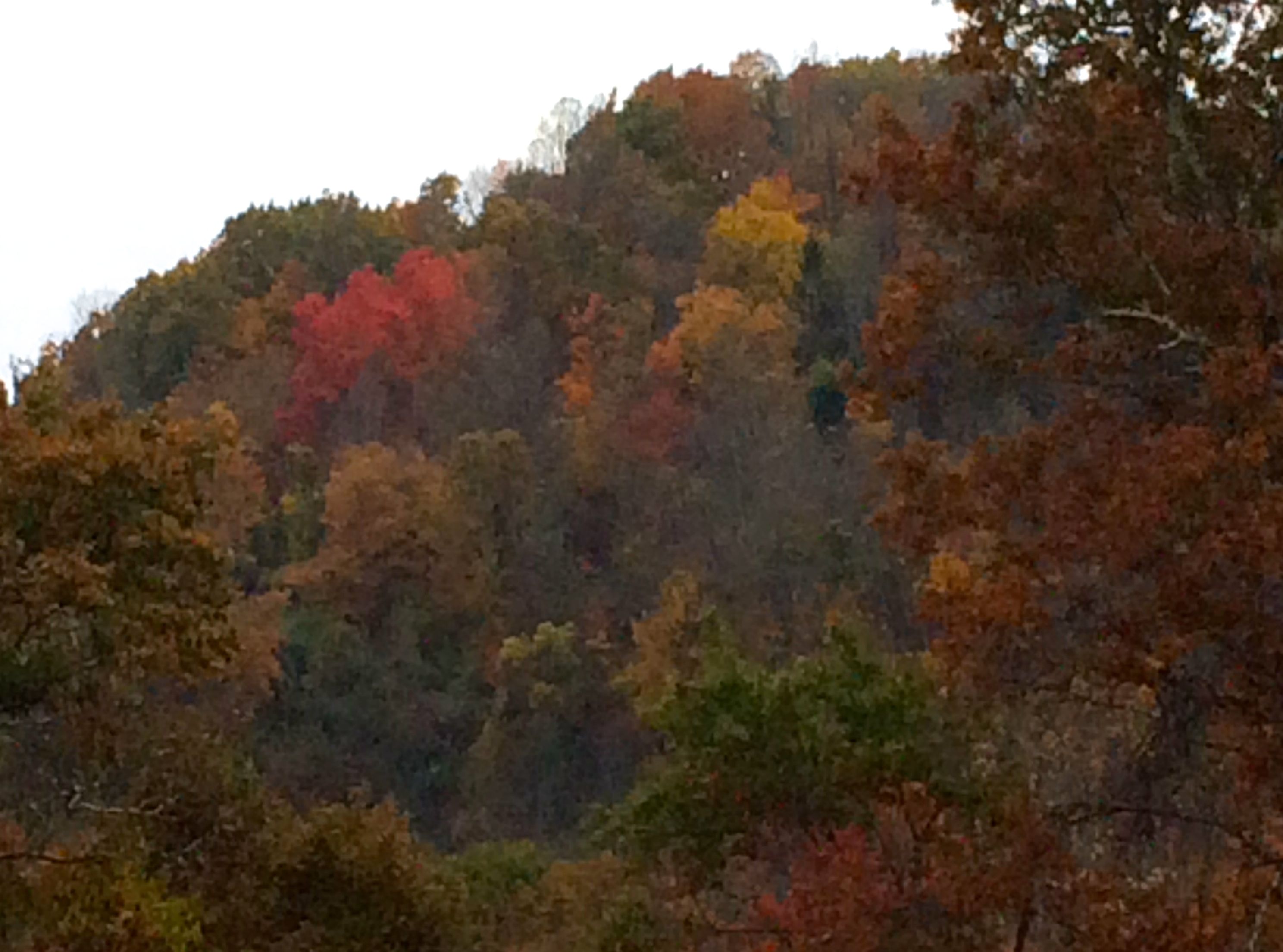
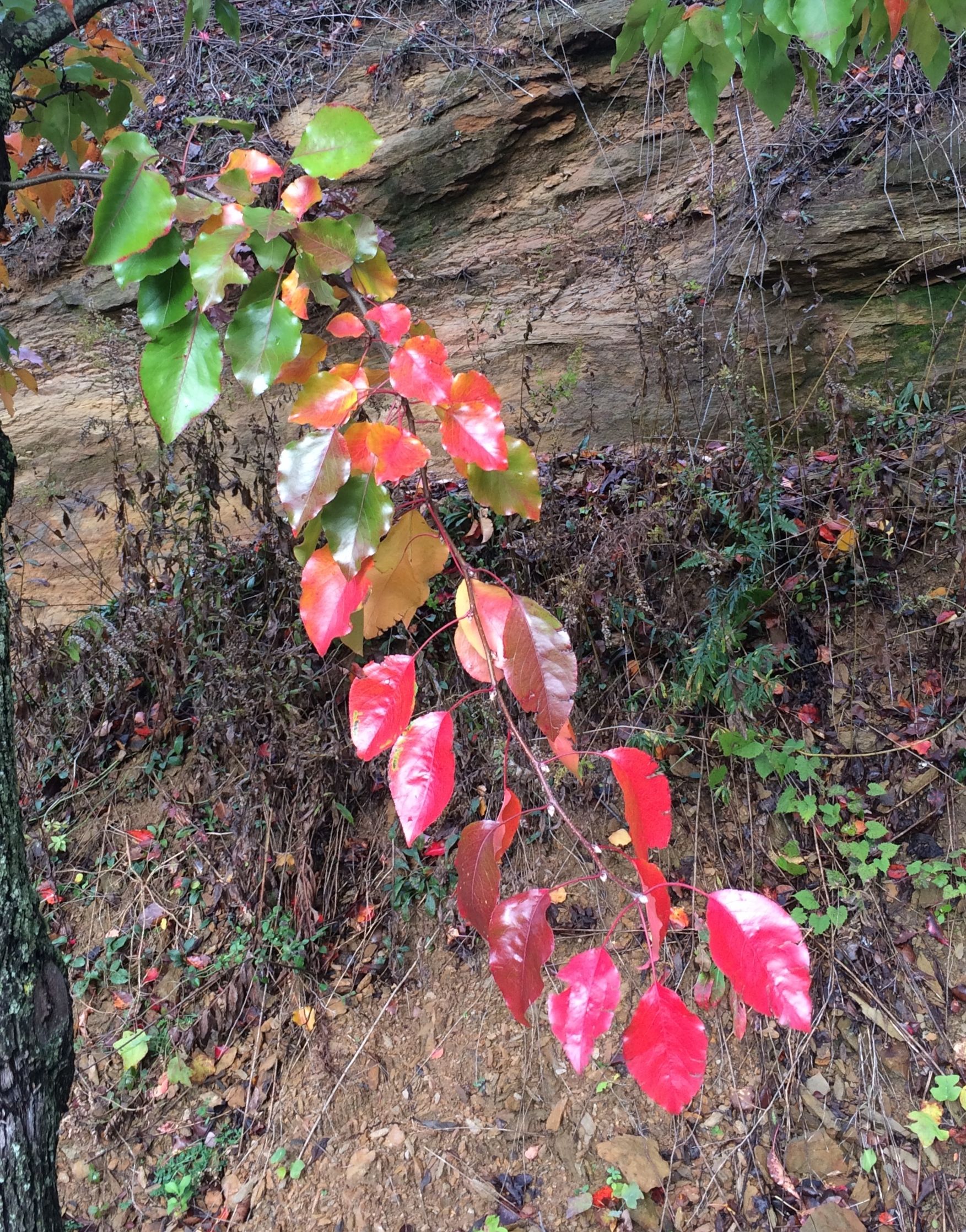
The weather was appropriately gloomy for such a trip. There was still color visible through the rain. I can only imagine what the hillsides and mountains would have looked like with sun.
I delivered Michelle and Mariel to her mother’s house. My brother, Craig, was there, as he has a job back in the Buffalo area. Michelle and Mariel are in Fayetteville until they get the house sold.
I spent the night in my trailer in front of the house. The next day, I went to my sister, Amy’s, house and camped in her driveway for the duration.
She made me a tasty snack. We didn’t have much time to spend together while I was there. It was a short stay.
The whole visit centered on the funeral. The visitation, the funeral, the cemetery.
The funeral luncheon.
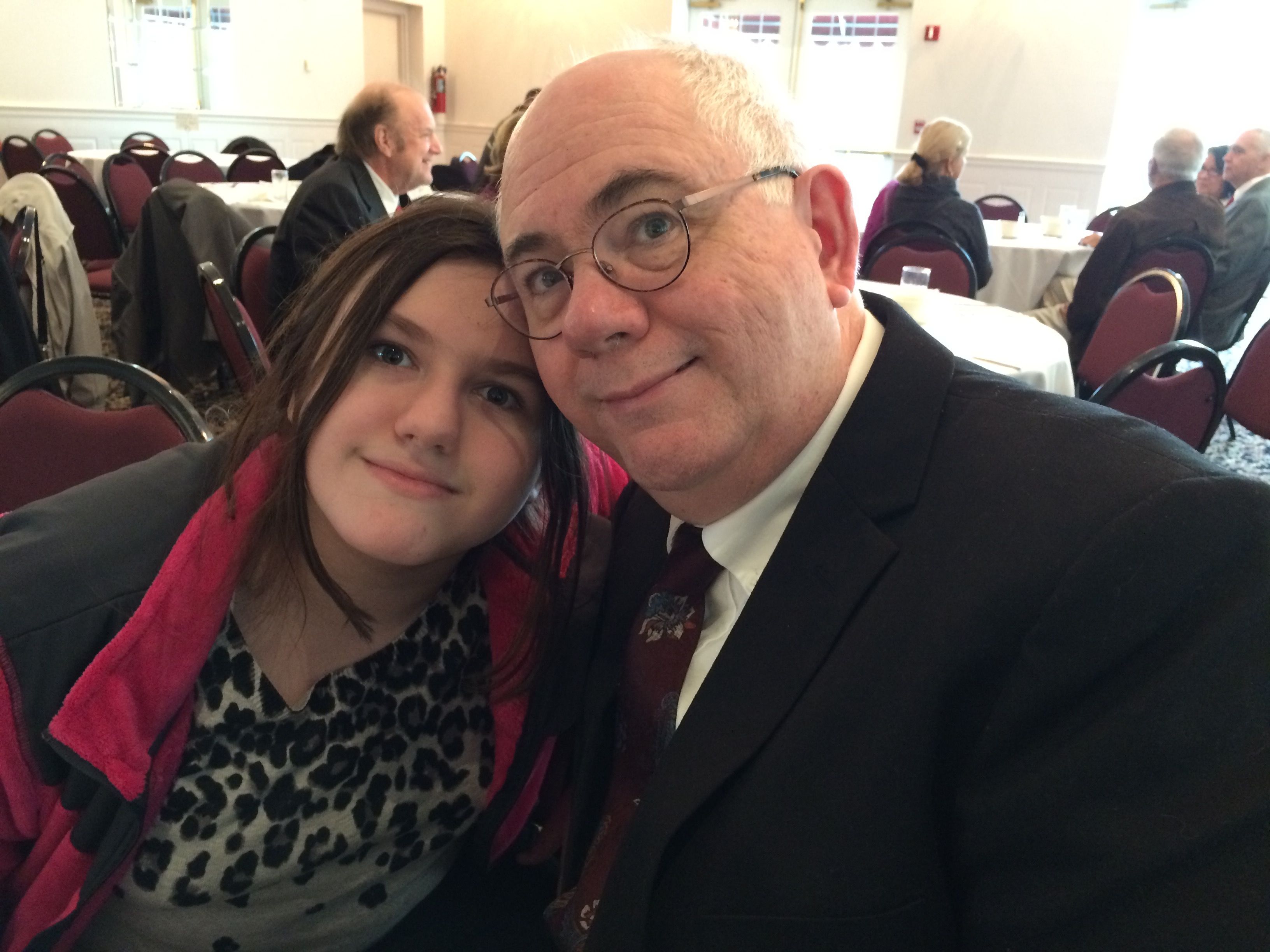
Mariel and Craig
And then, we turned around and headed south. Michelle’s mother sprung for a night in a hotel, so we stopped in Beckley, West Virginia. I should have gone out and slept in my trailer, so that I could put the West Virginia sticker on the map. But, I couldn’t resist the temptation of a real bed and a shower.
Red leaves in Beckley, WV
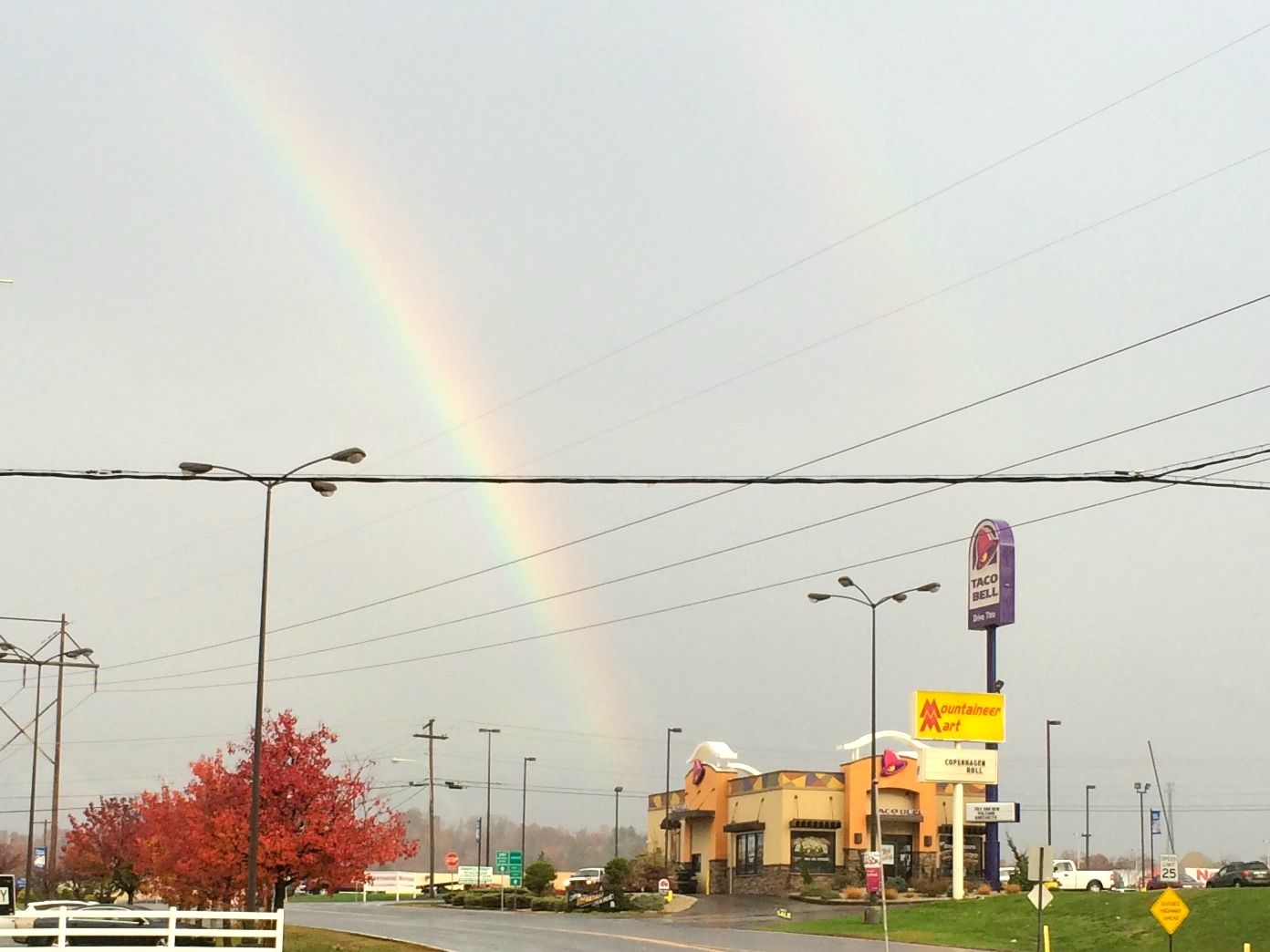
While we were on the road, the sun came out for a bit.
Who knew that Taco Bell was the pot of gold at the end of the rainbow?
I rolled down dry roads in the sunshine toward Cedar Point, North Carolina and pulled into my campsite. It was lovely!
Flo at the Cedar Point Campground
It was a U.S. Forest Service campground. Nice level sites and electricity for $22 per night, and the reservations are through recreation.gov, so there isn’t even an additional fee for making the reservation!
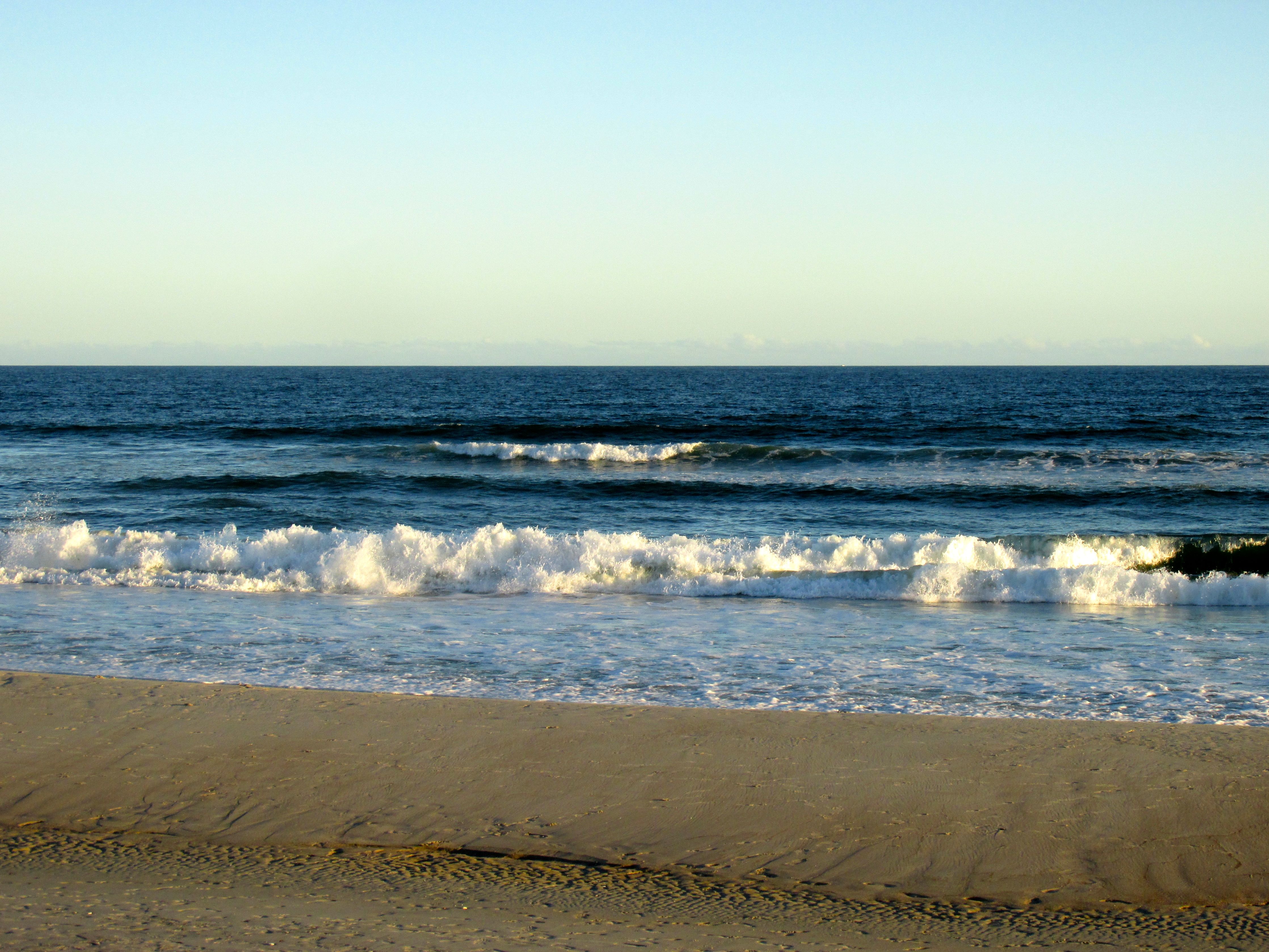
The best part of the campground, though is the location, location, location! It is so close to the shore, as in Atlantic Ocean.
Beautiful!
And, since it was after the “season”, parking at the beach on Emerald Island was free.
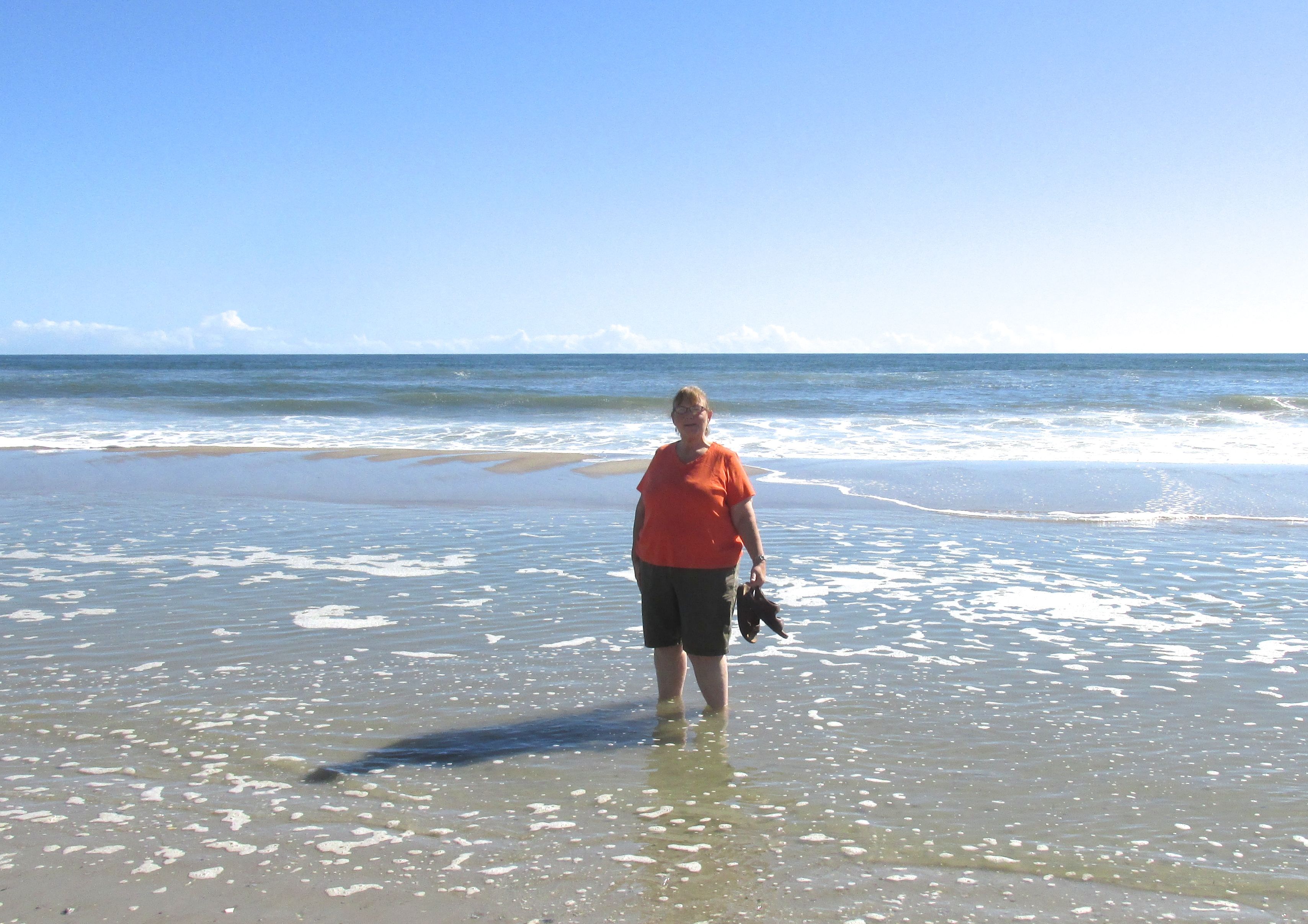
Here I am! From sea to shining sea! Just six months earlier, I was on the Pacific.
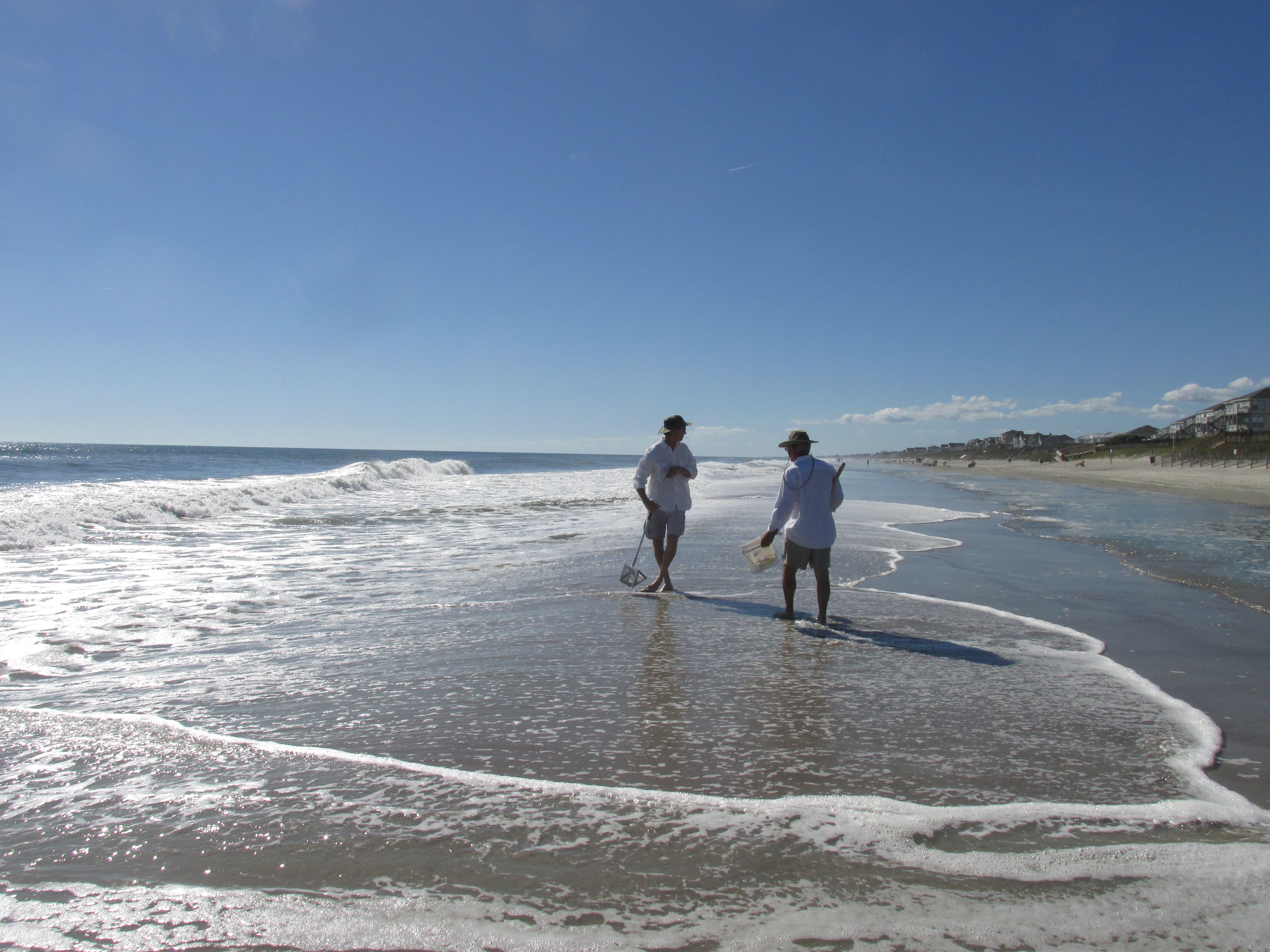
I was enjoying walking in the surf and just looking around, soaking in the sun. I saw these guys that were poking at something in the sand right at the waterline.
I walked up to them and asked them what they were doing. They told me that they were hunting for sand fleas.
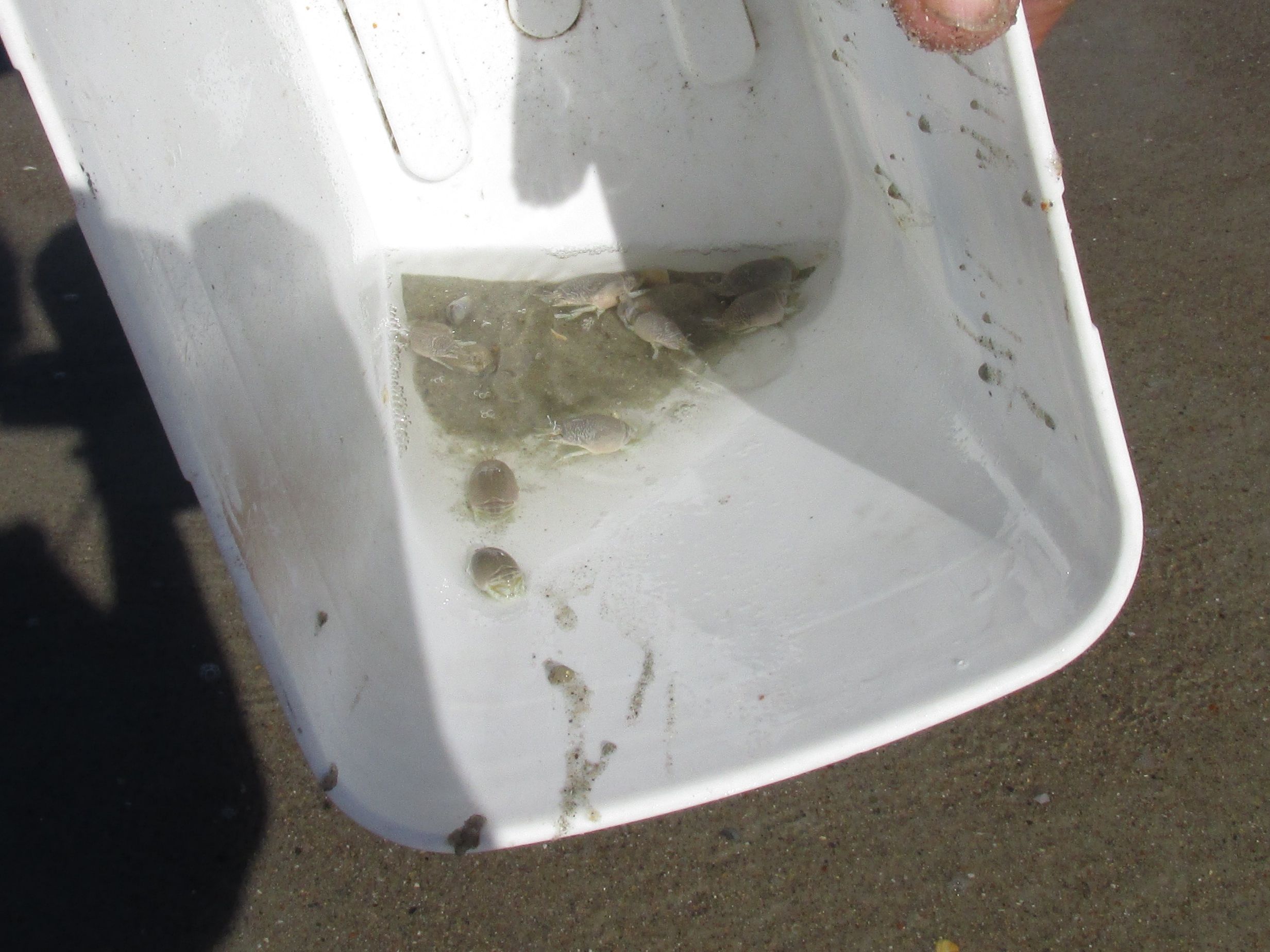
Sand Fleas
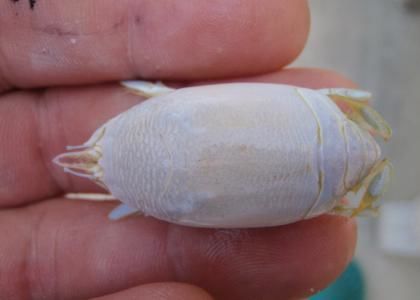
He showed me his collection of sand fleas. They were going to use them for bait. I always thought that sand fleas were insects, but they are really crustaceans.
Sand Flea
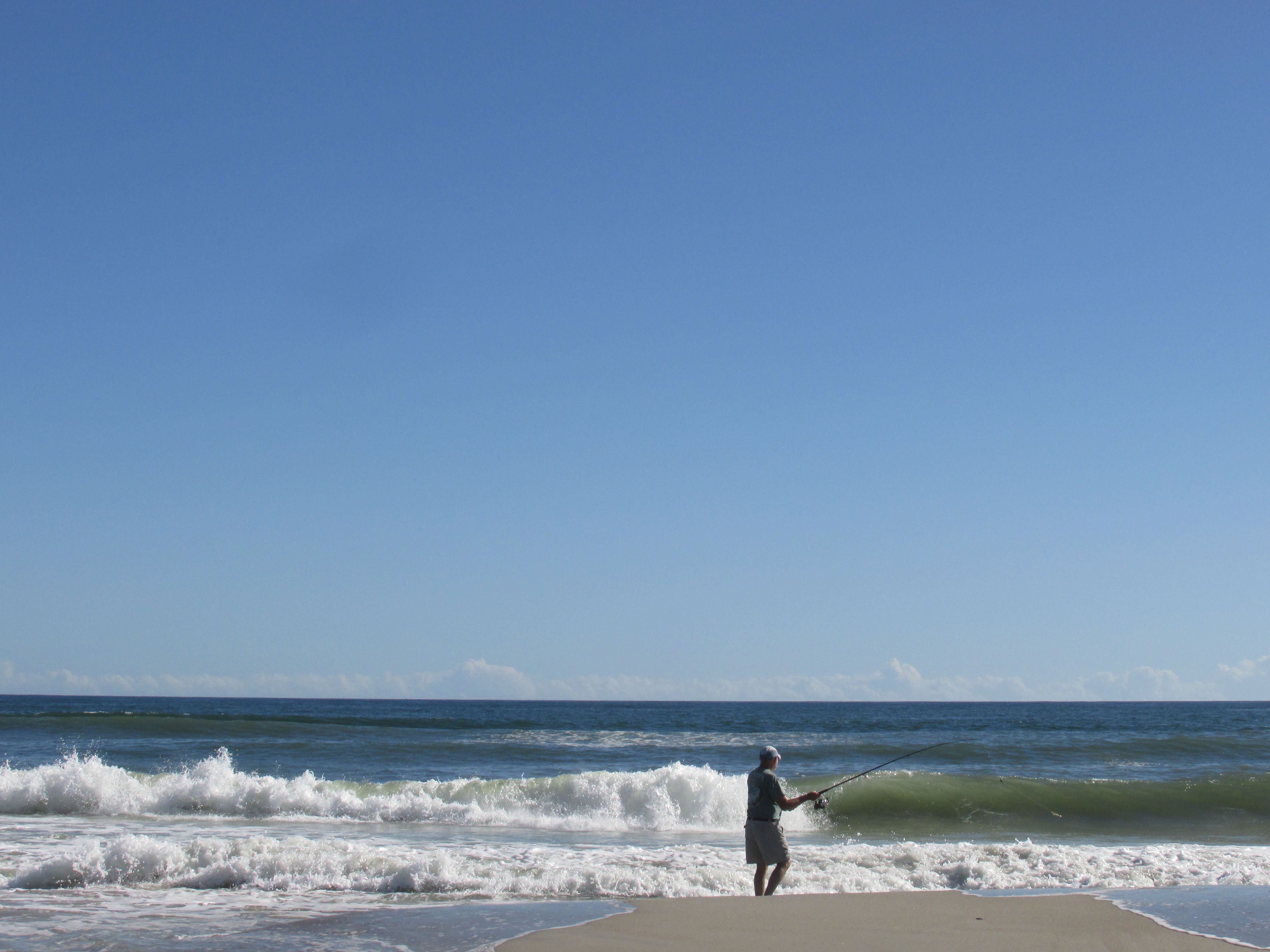
There were a lot of people fishing. Well, there were a lot of people with fishing poles. I saw a guy walking up with his poles and coolers and such, and I asked him about fishing. I had never seen fishing done in the surf before. He told me that he was getting ready to fish.
Surf Fishing
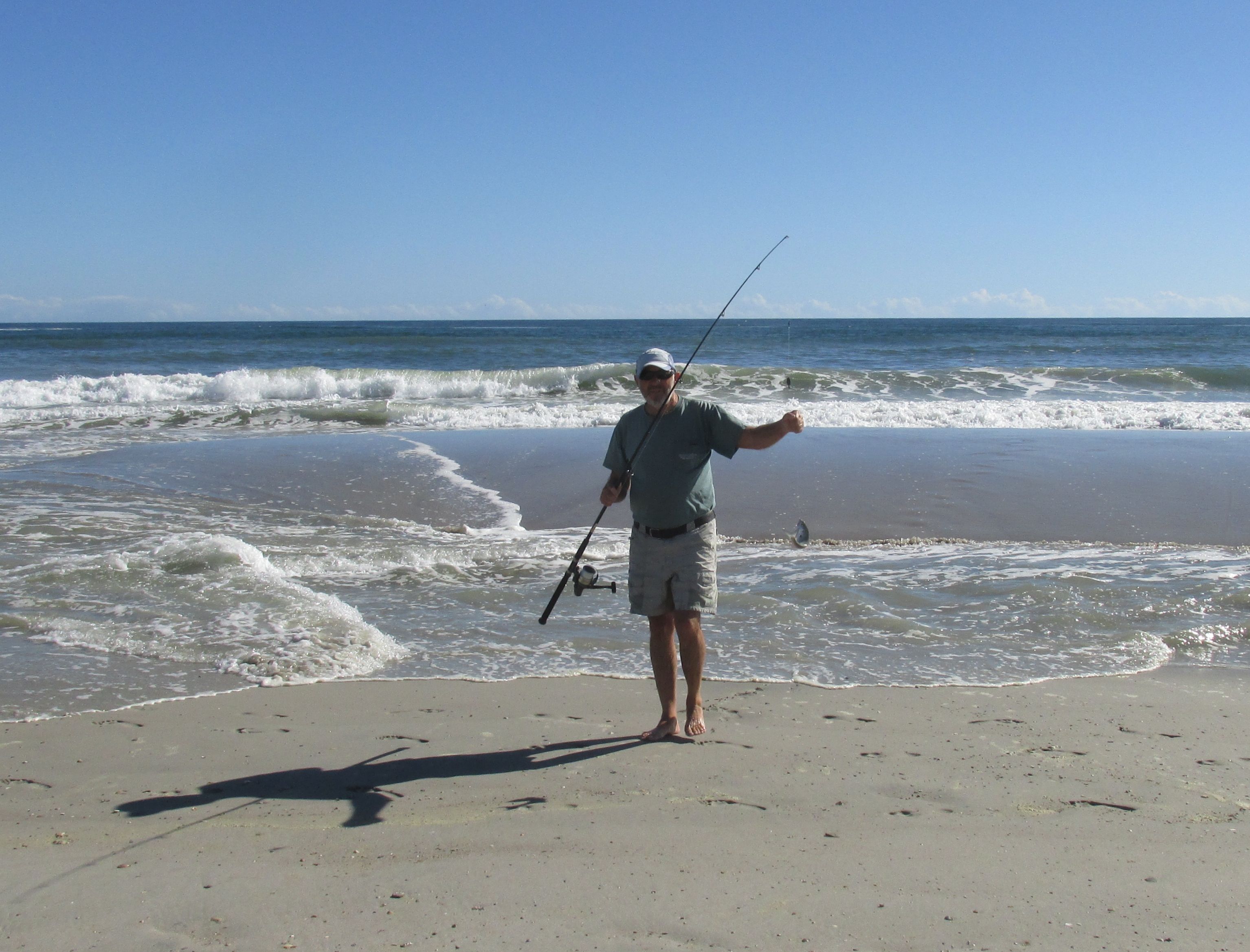
Just a few minutes later, he had already caught one.
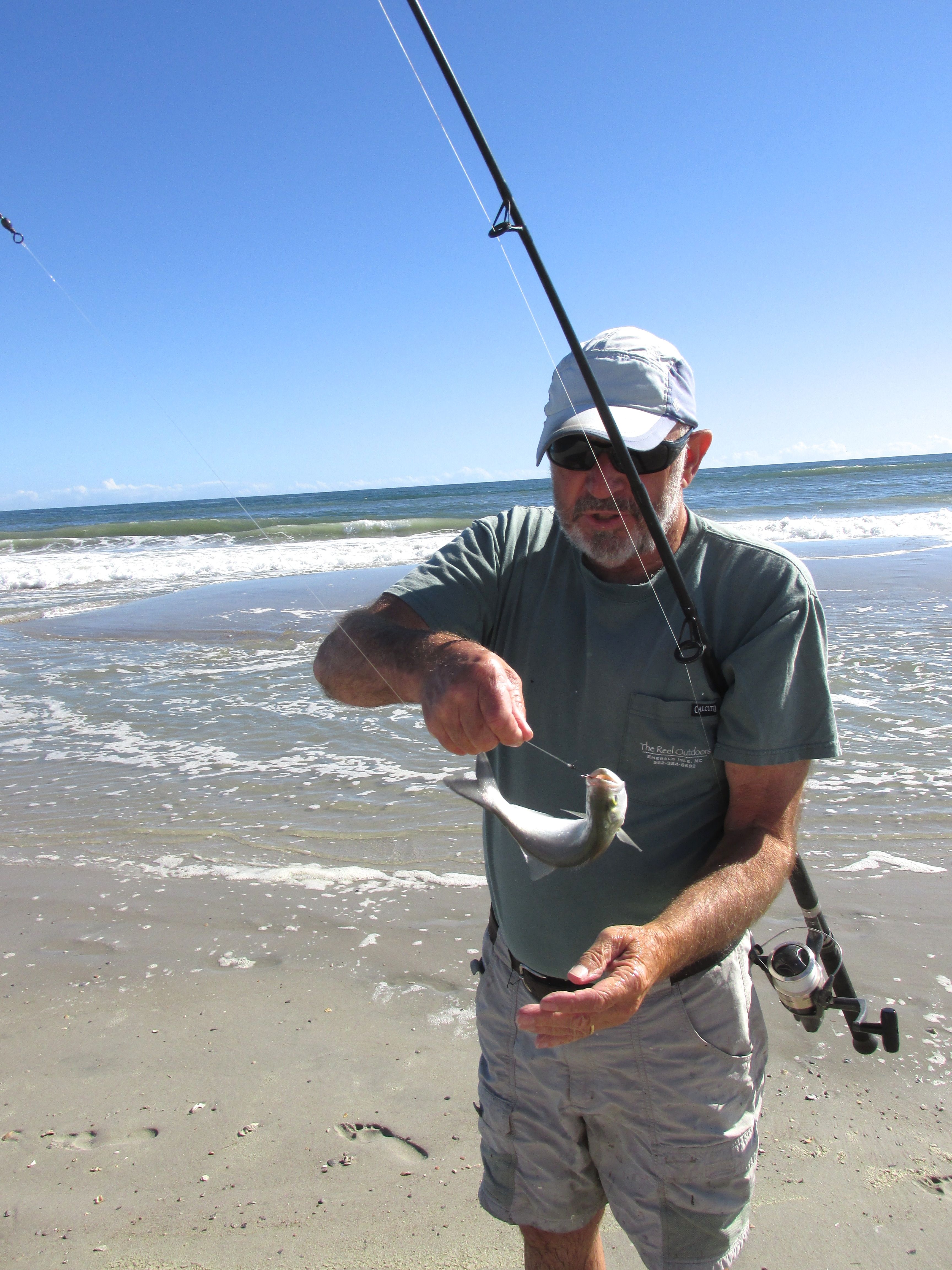
He proudly brought it over to show it to me.
He worked the hook out of its mouth and then took it back to the ocean.
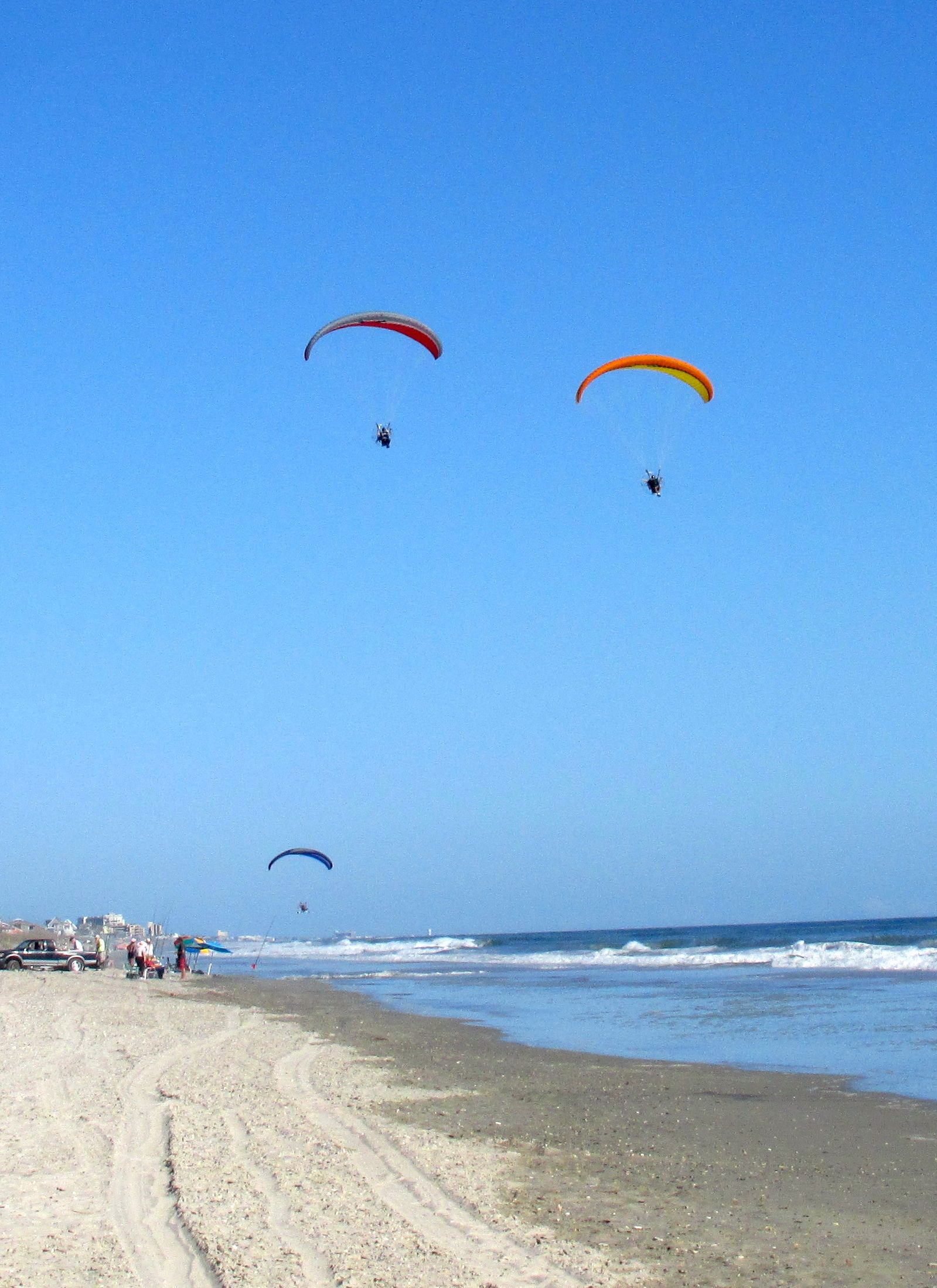
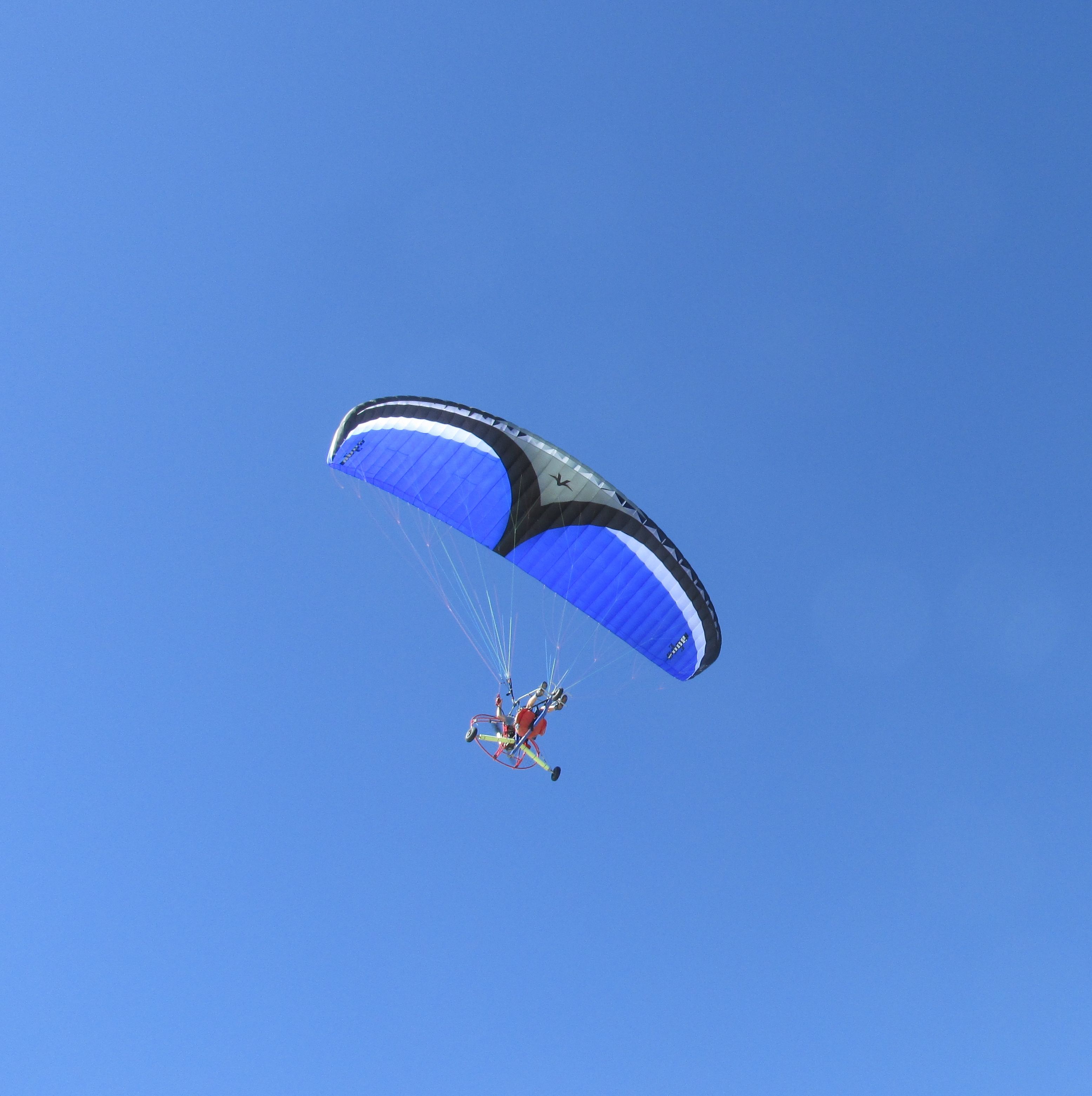
While he was fishing, some flying contraptions came up the beach.
They were propelled by some sort of a motor. I had done parasailing behind a boat in Puerto Vallarta many years ago. (MANY years ago!) This looked like fun.
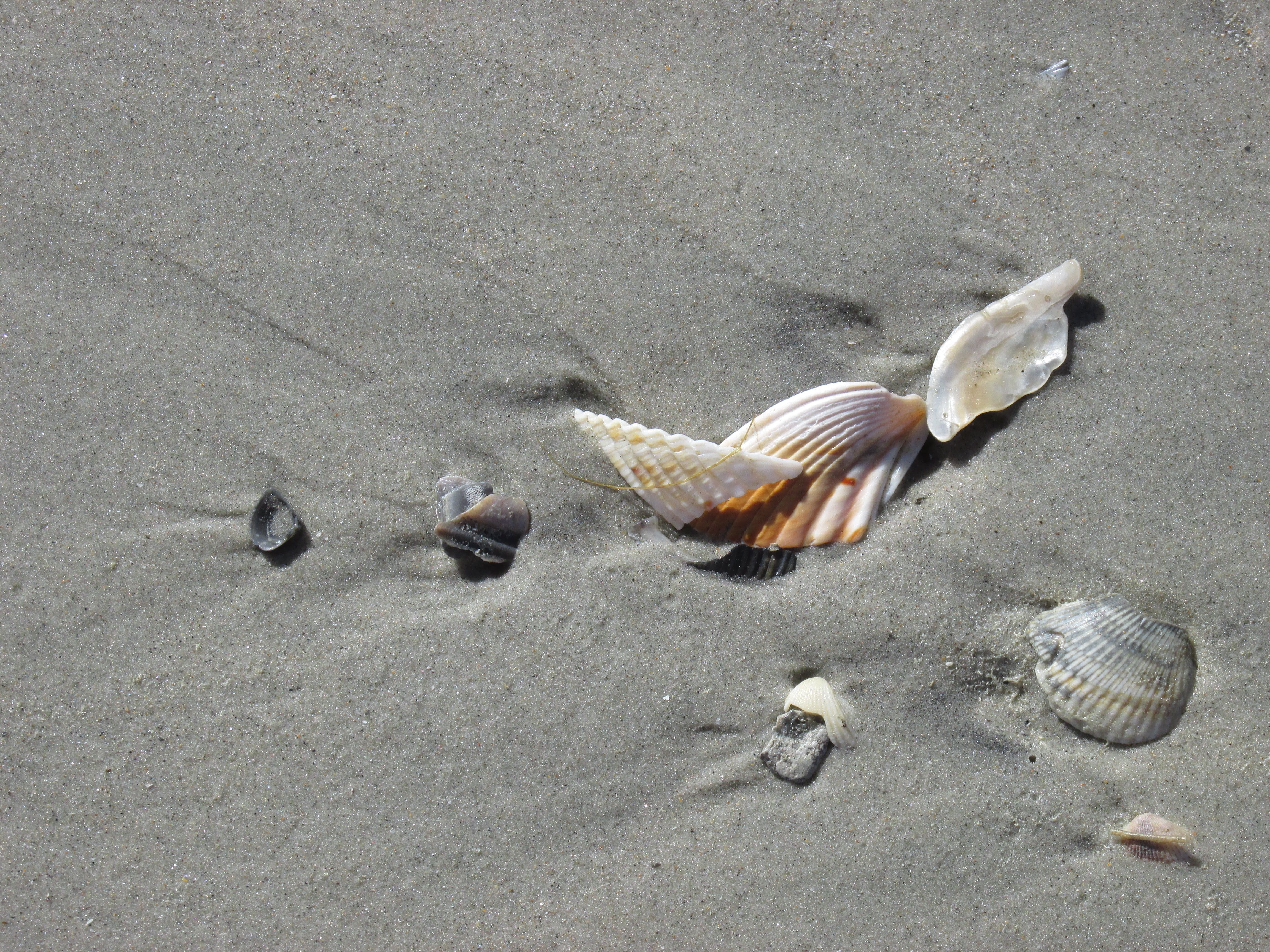
I splashed around in the surf and collected some shells.
Shells
I love collecting shells and pebbles. Such color and variety!
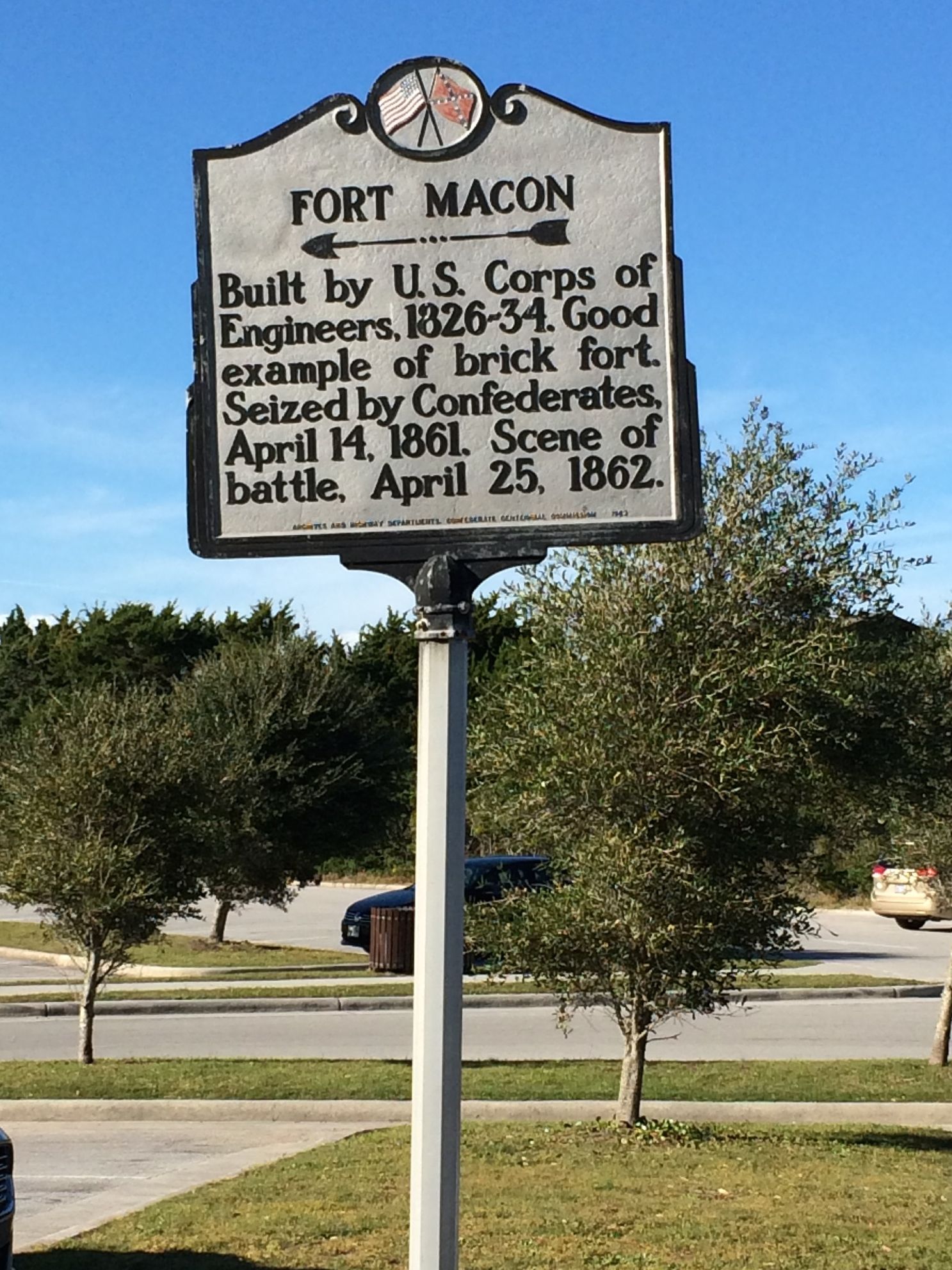
My HISTORY Here app told me that Fort Macon was at the end of the island, so I thought I’d drive down and see what there was to see.
The War of 1812 drove home how exposed the country was to attacks from the ocean, and the country began to work on beefing up fortifications along the shore. It took them a few years to get it done.
I’m not sure what it was used for, but in April of 1861, only one person was on duty as a caretaker. The Confederates marched in and took over as soon as word about the victory at Fort Sumter came through.
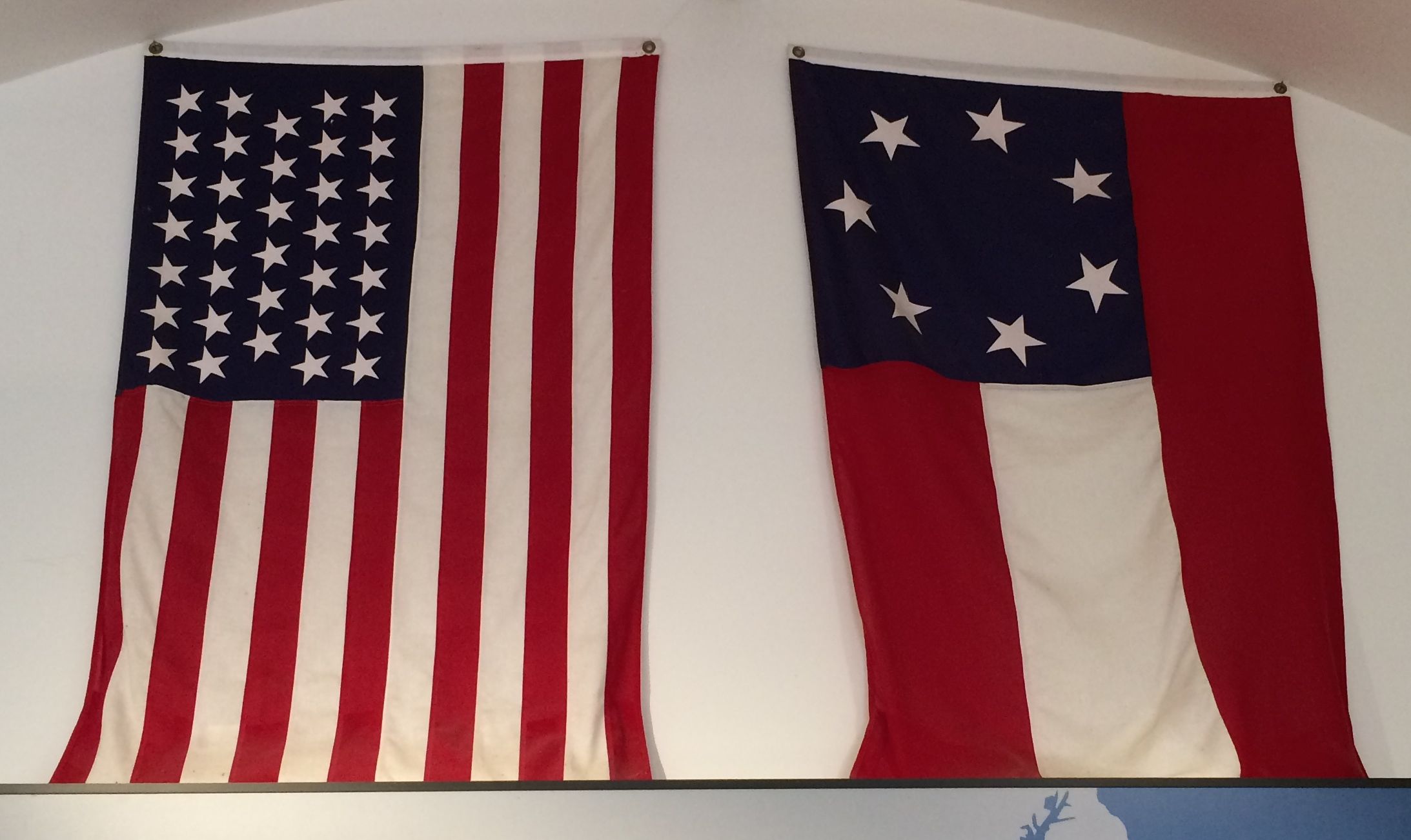
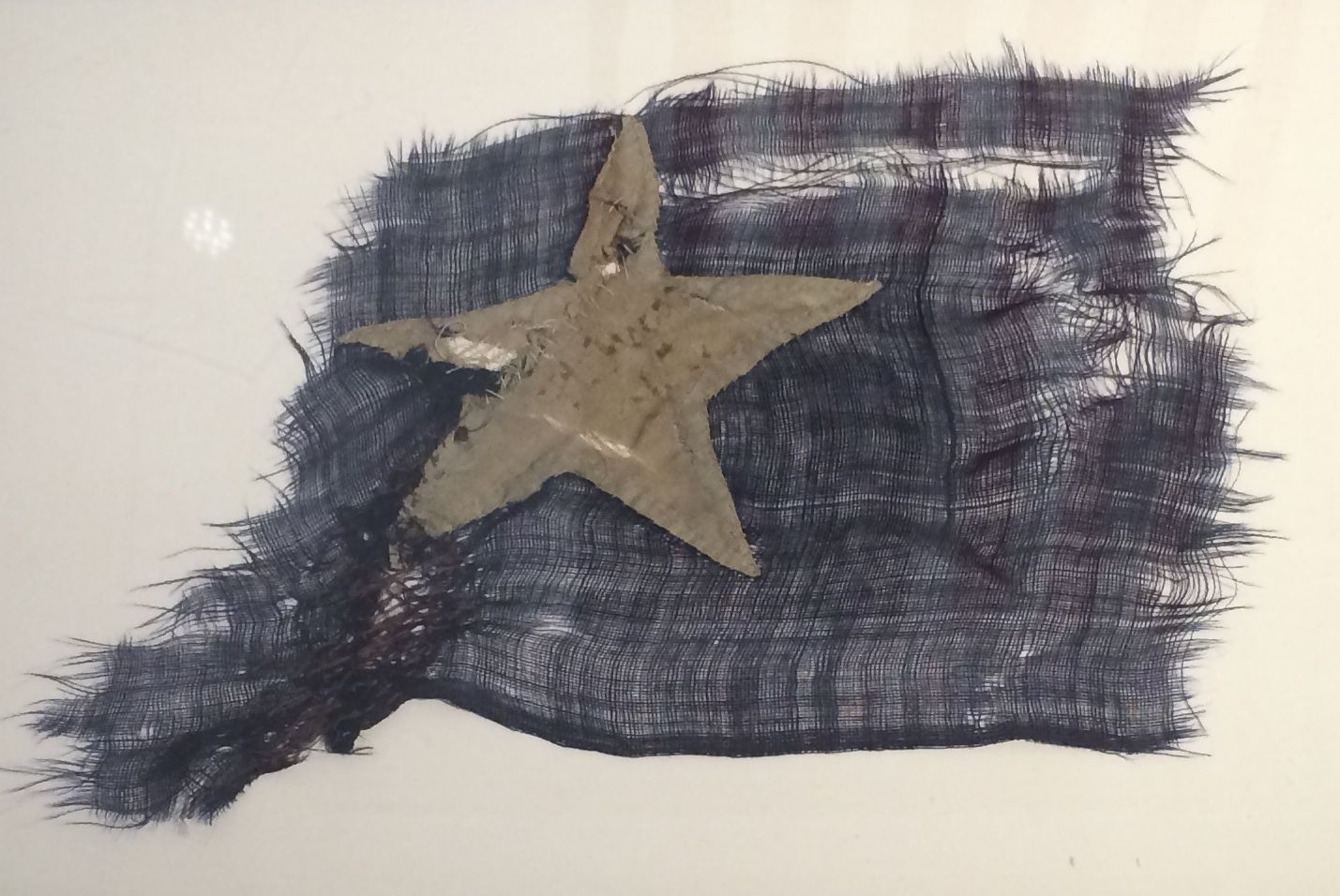
They lowered the American flag and used the cloth to create a new flag.
In the displays inside, there was a fragment of the flag they created.
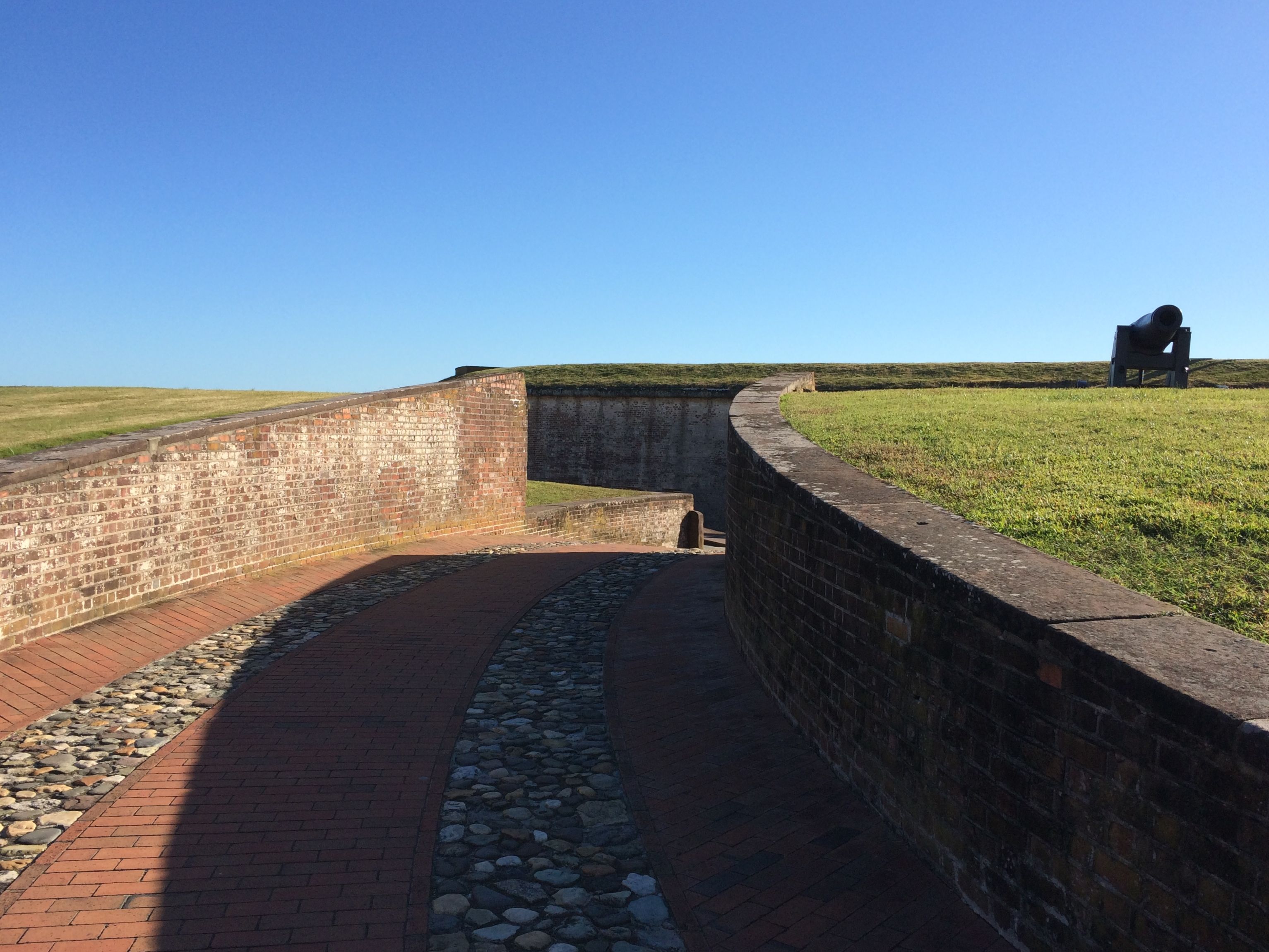
The fort was in fantastic condition, and was not all gussied up as a tourist destination.
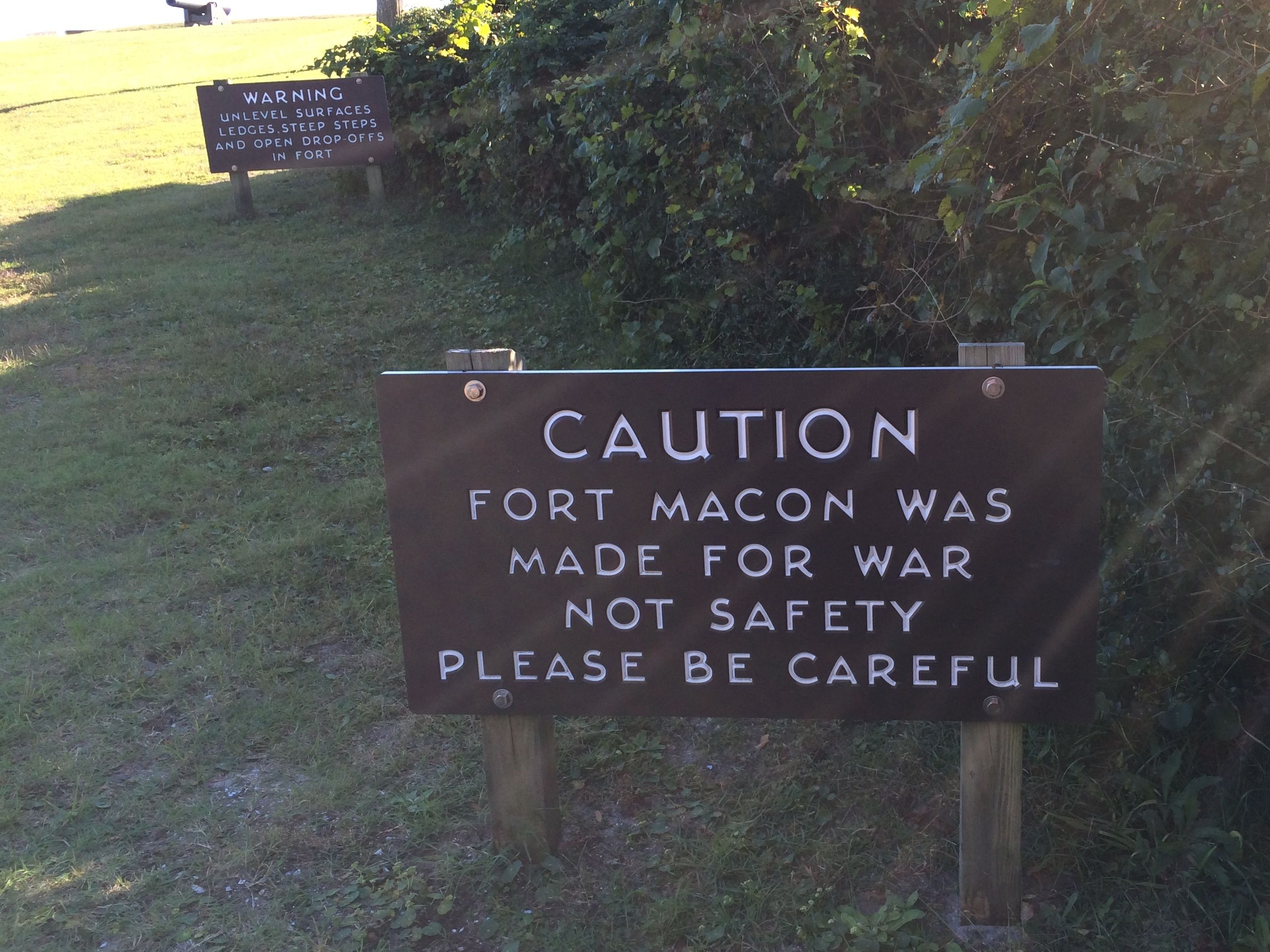
I particularly liked this sign. A little further down the path, and I found out what they meant.
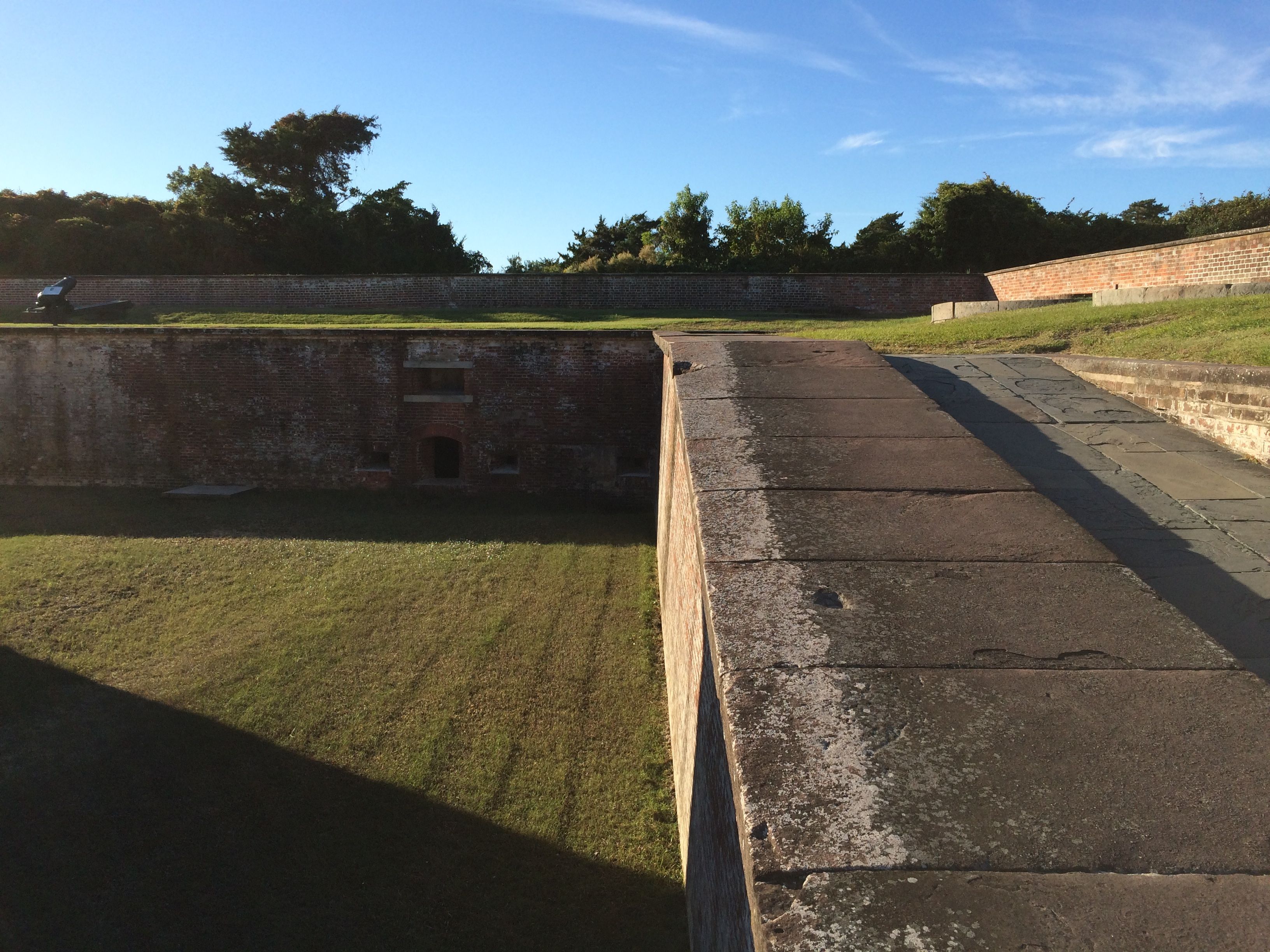
These walls are straight up and down and there are no railings!
No railings at all. I wonder if they get many field trips from schools?
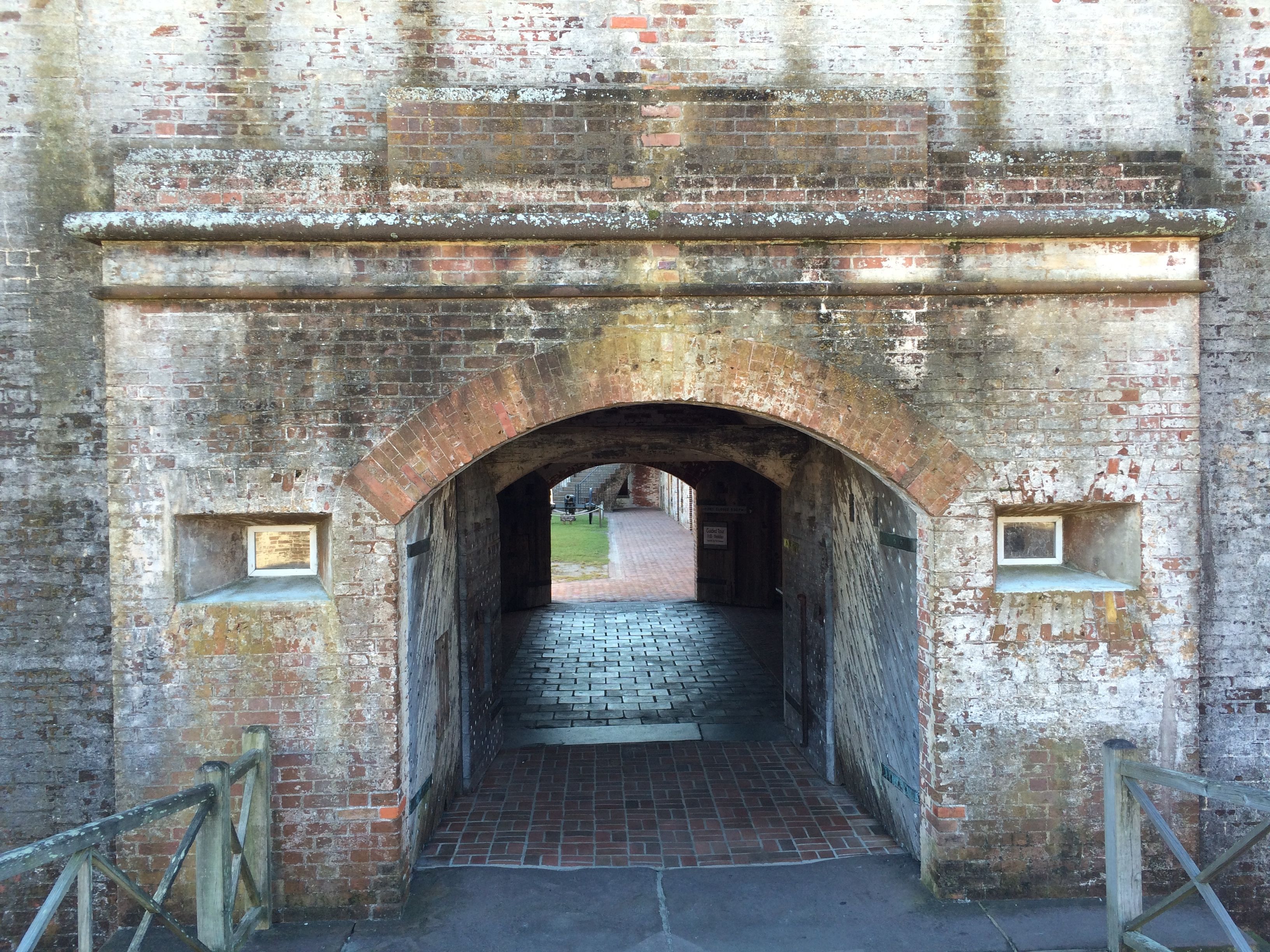
Entrance
The walls of this five-sided fort were almost five feet thick.
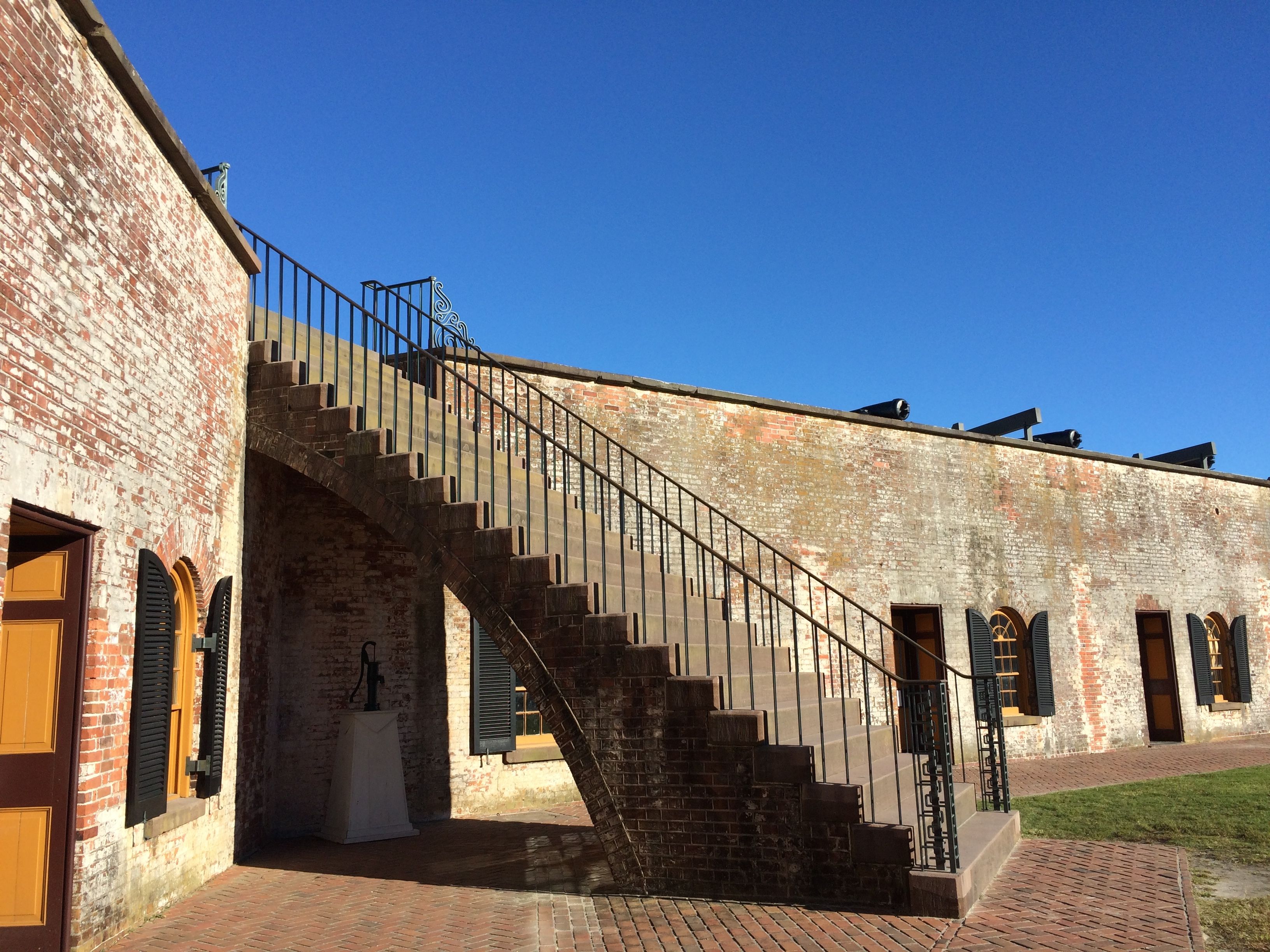
This is inside the fort. The stairs go up to the top where there are cannons, with the business ends pointing out.
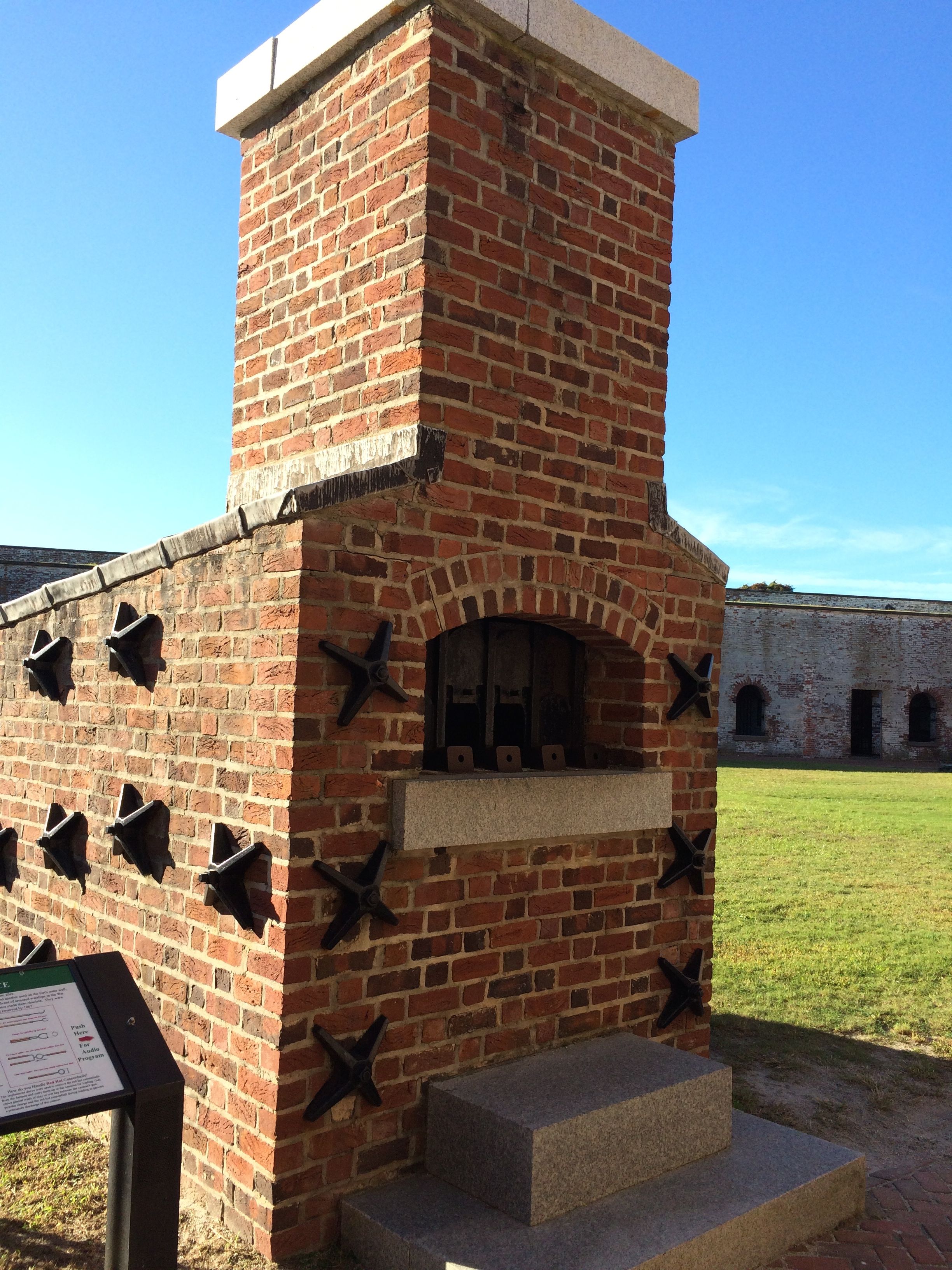
Hot Shot Furnace
One thing that made the cannons even more effective is the hot shot furnace. They would heat the cannon balls up and then fire them. This was especially effective when used against wooden ships. The hot munitions would set the ships on fire.
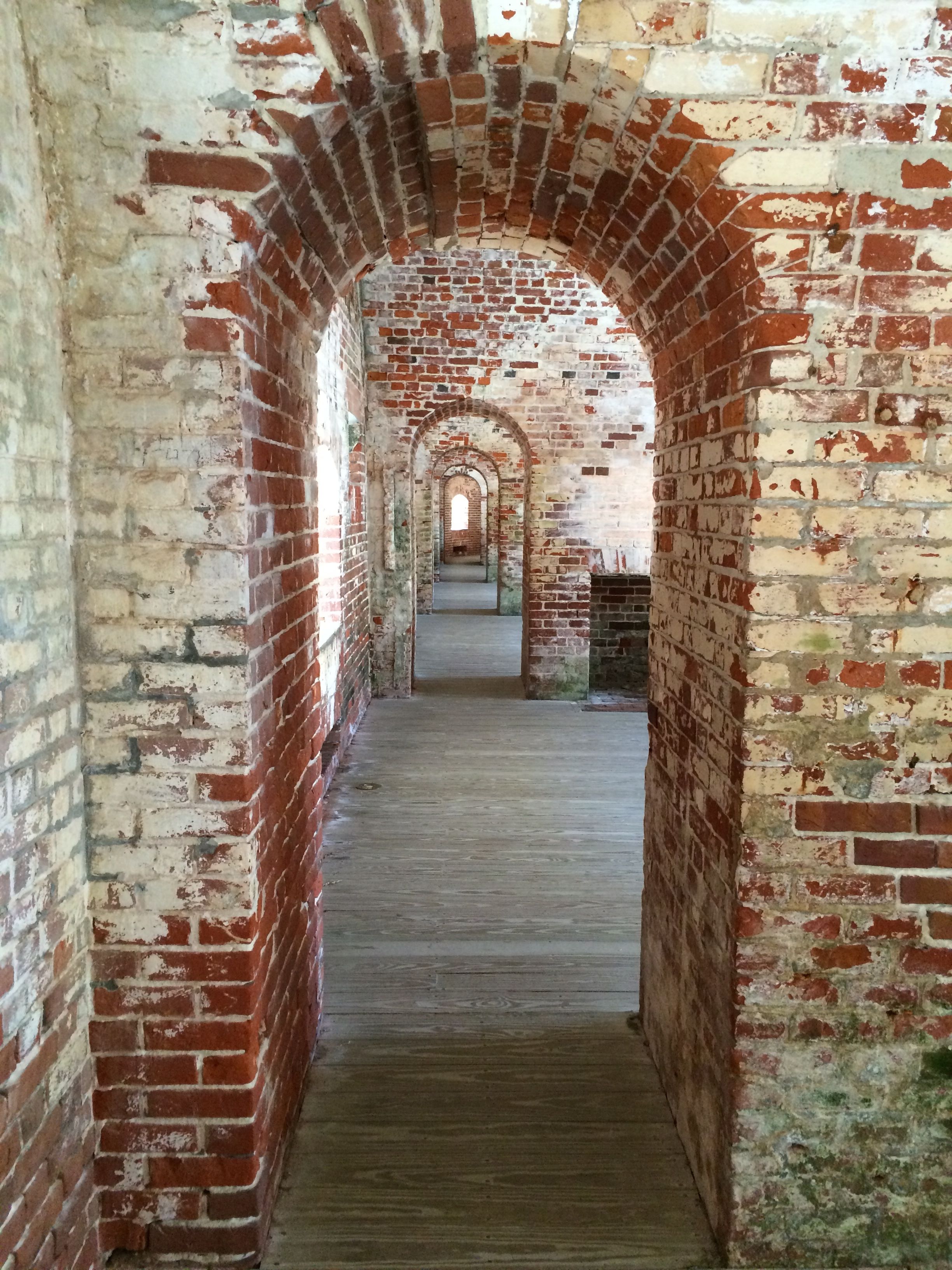
The narrow archways enable soldiers to move between the rooms, which are properly called casements. You can see how thick the walls are.
In April 1862, the Union Army retook the fort. It sustained an eleven-hour bombardment and was hit 560 times. The Confederates surrendered when the fort was too heavily damaged to be able to to defend. The key to the Union’s success was the use of rifled cannons, which helped the shells’ accuracy.
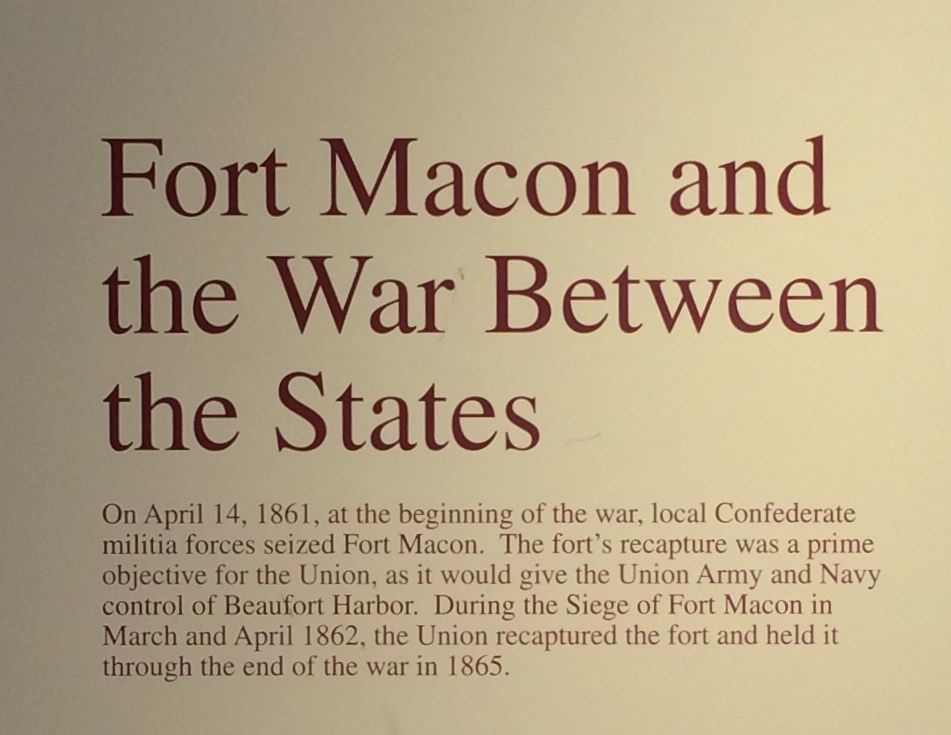
This sign in the museum caught my eye.
I had heard that people south of the Mason/Dixon line referred to the Civil War as the War Between the States. I had never seen it used before.
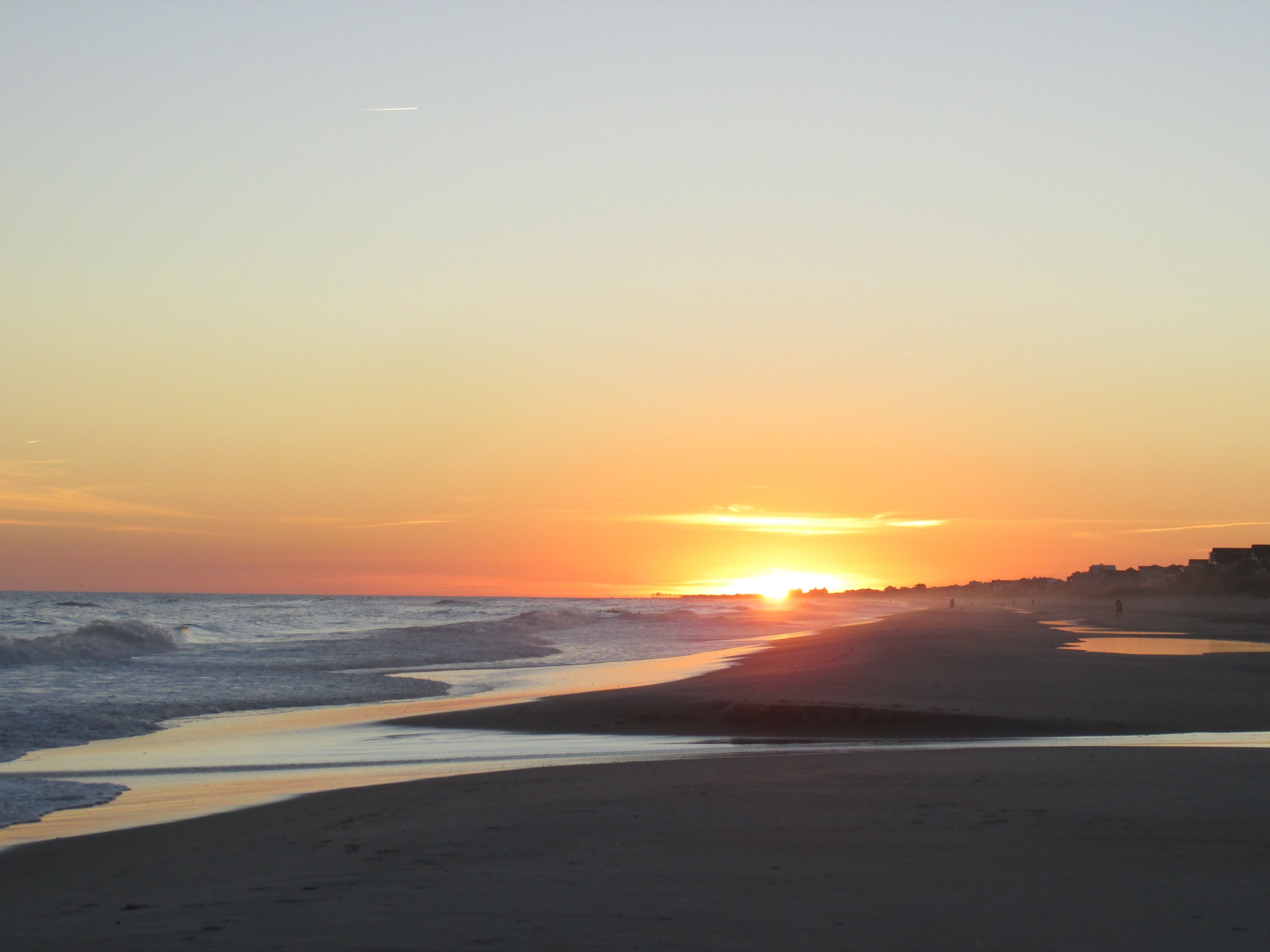
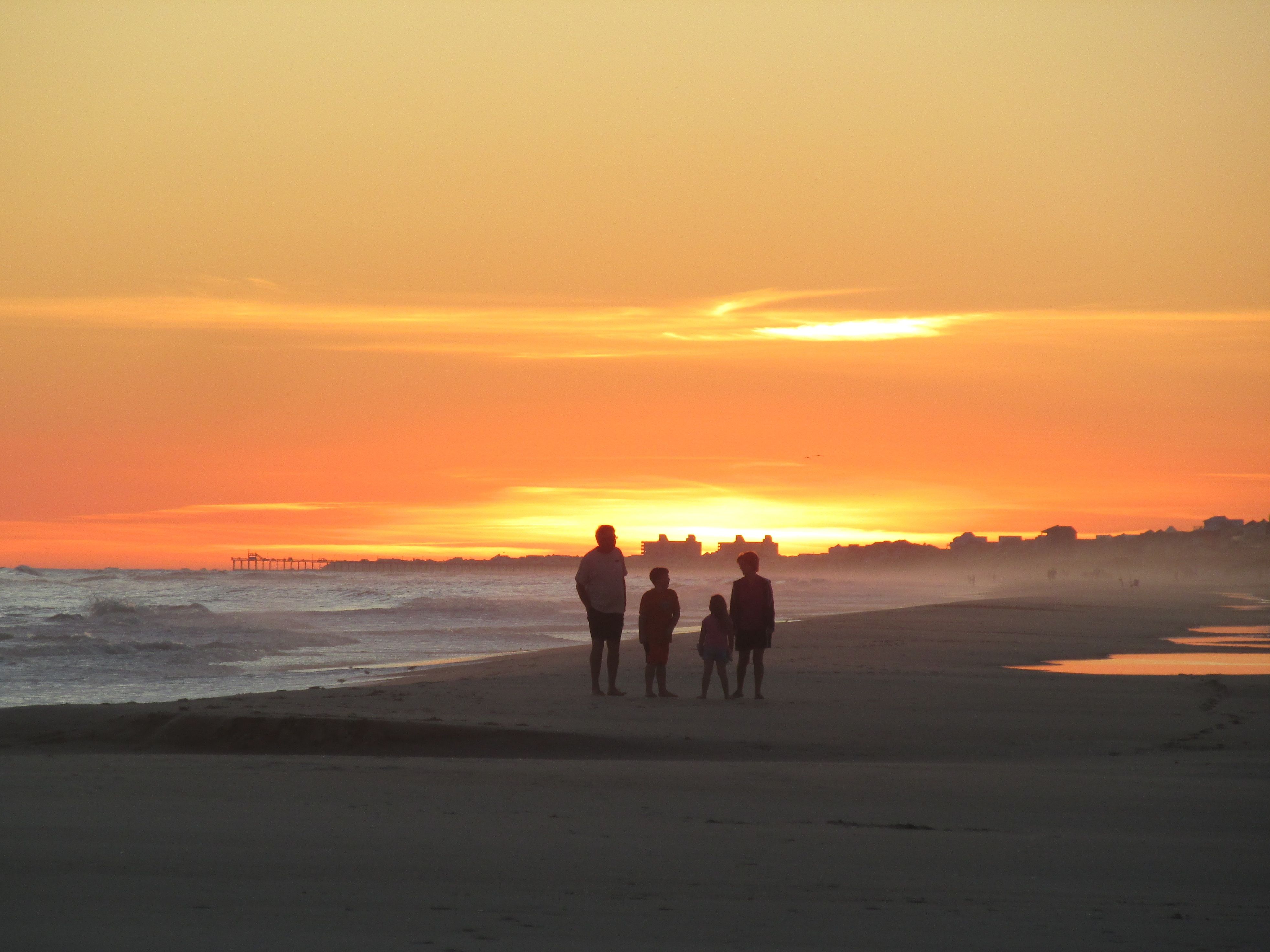
I headed back to the beach. I had to see the sun set!
How wonderful!
And the great thing is that it rises again in the morning.
Or so I’ve been told. I’m willing to take it on faith. No need for me to get out and check!
Okay, I have always wanted to go to Colonial Williamsburg. I have also always wanted to go to Disney World. In my mind, they were both kind of theme parks with different themes – and all kind of make-believe.
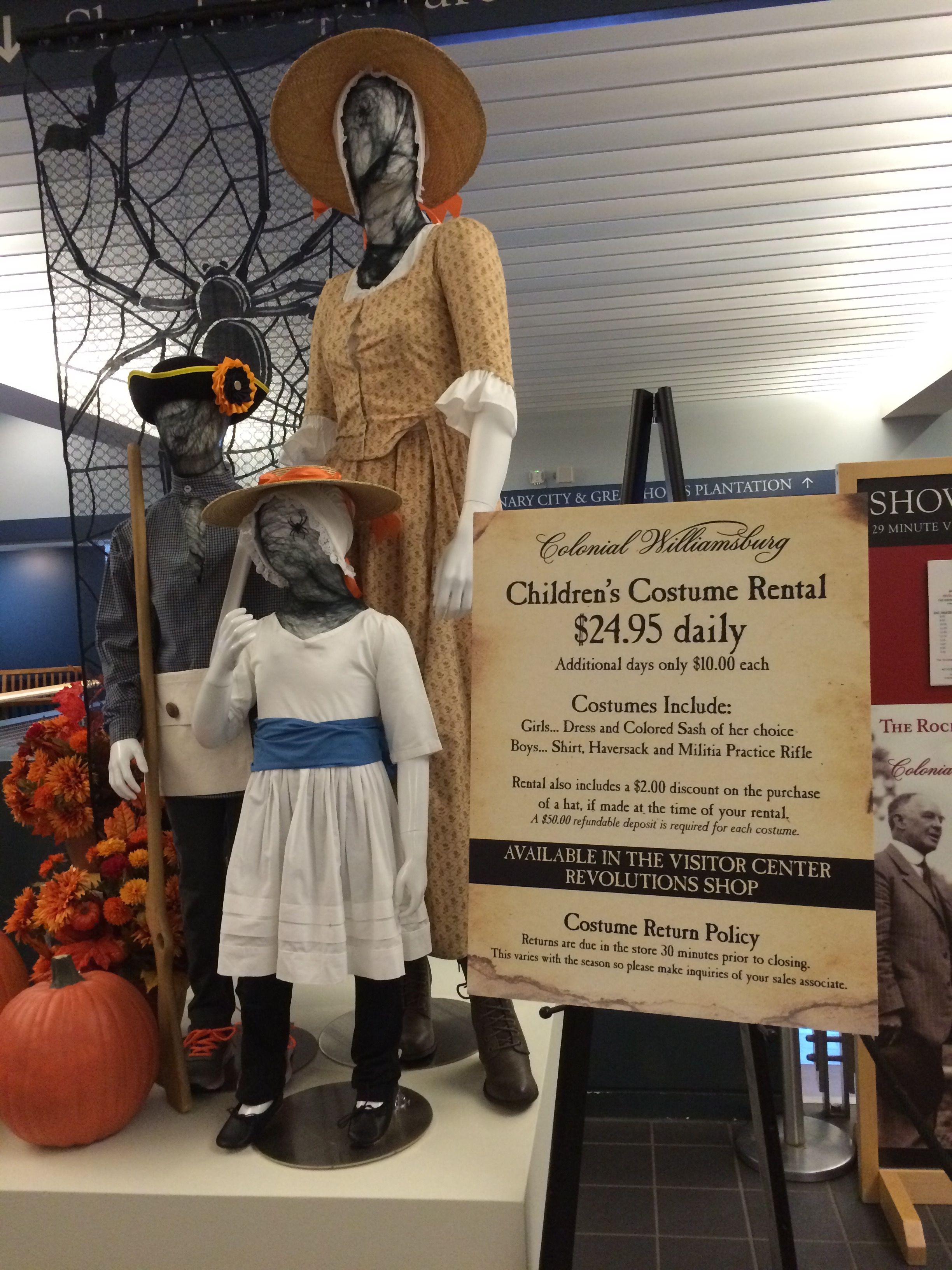
I have got to say that the sign advertising costume rentals in the entrance building didn’t give me a good feeling. But, when they gave me a special deal, I could hardly resist.
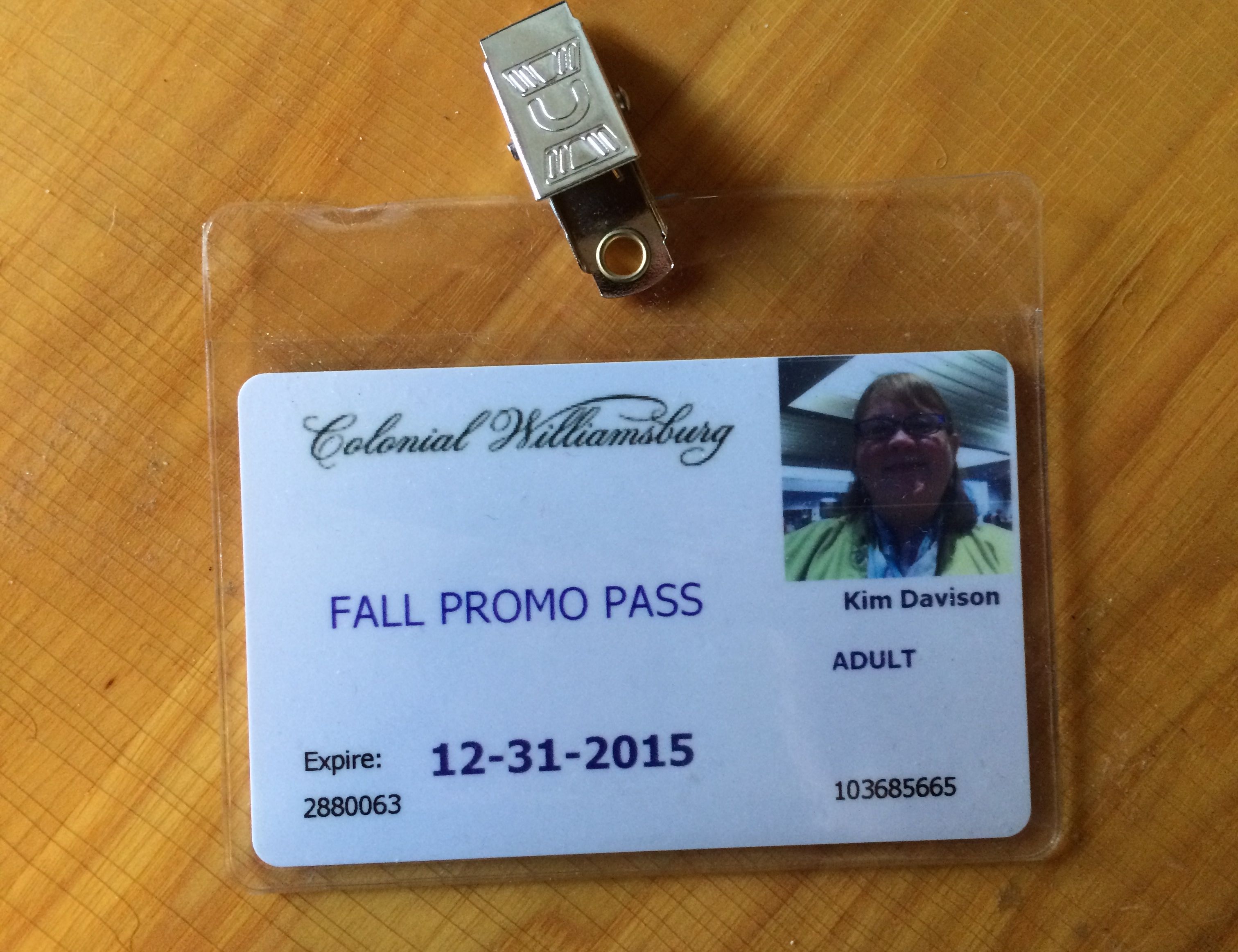
My Pass
Unlimited visits until the end of the year!
It doesn’t matter that I will only be in the area for a few days – a bargain is a bargain!
I handed over my credit card and posed for my ID picture. I clipped on my badge and headed for the bus over to the village.
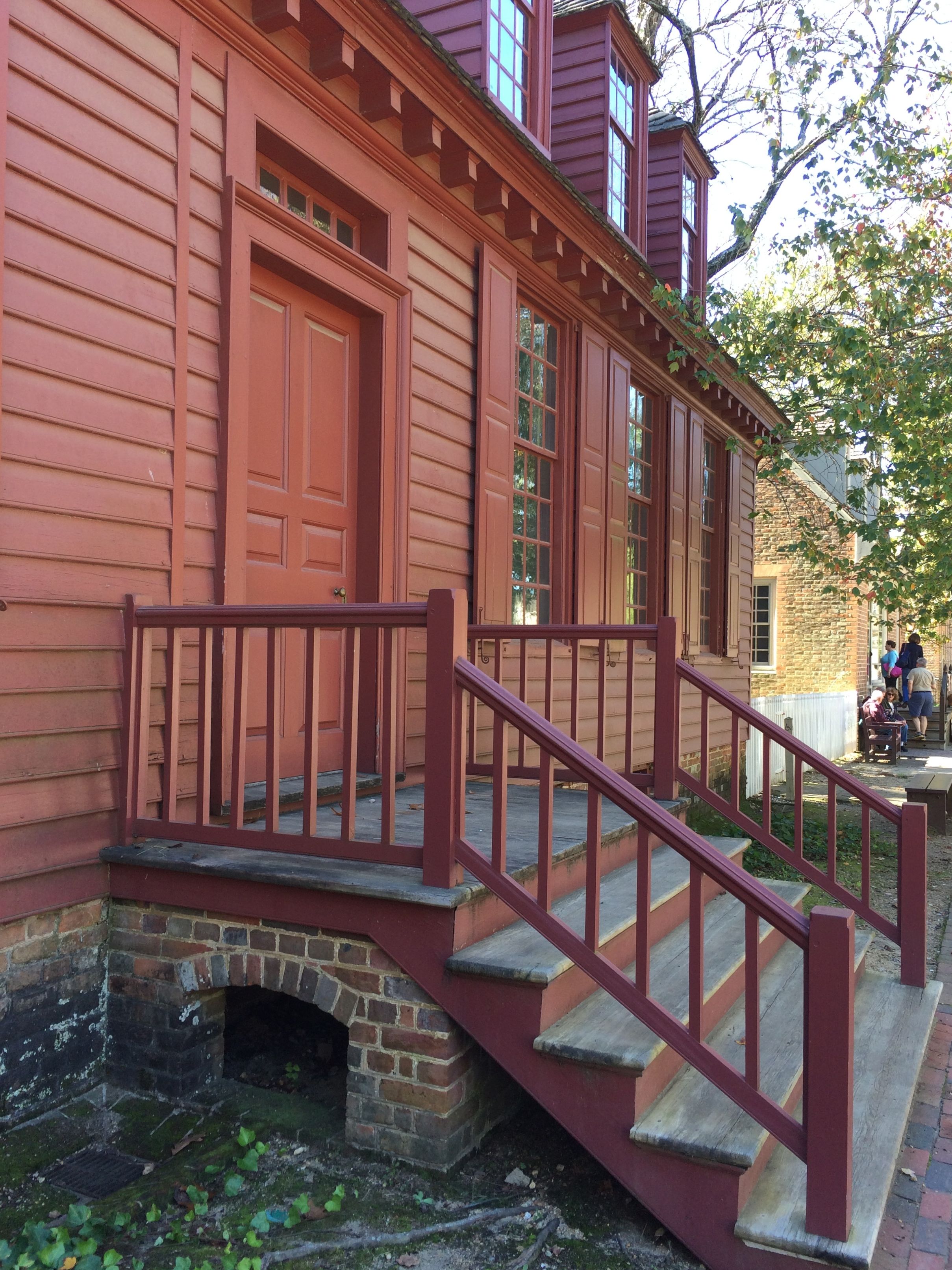
My first stop was Wetherburn’s Tavern.
Wetherburn’s Tavern
While while waiting for the next tour to start, I chatted with the guide about how they know what they know. I was starting to be convinced that this was fairly serious historical work, and not just some rich guy’s indulgence. The rich guy in question was John D. Rockefeller. Apparently he was second choice. Henry Ford was their preferred backer, but he didn’t care for the conditions placed upon him.
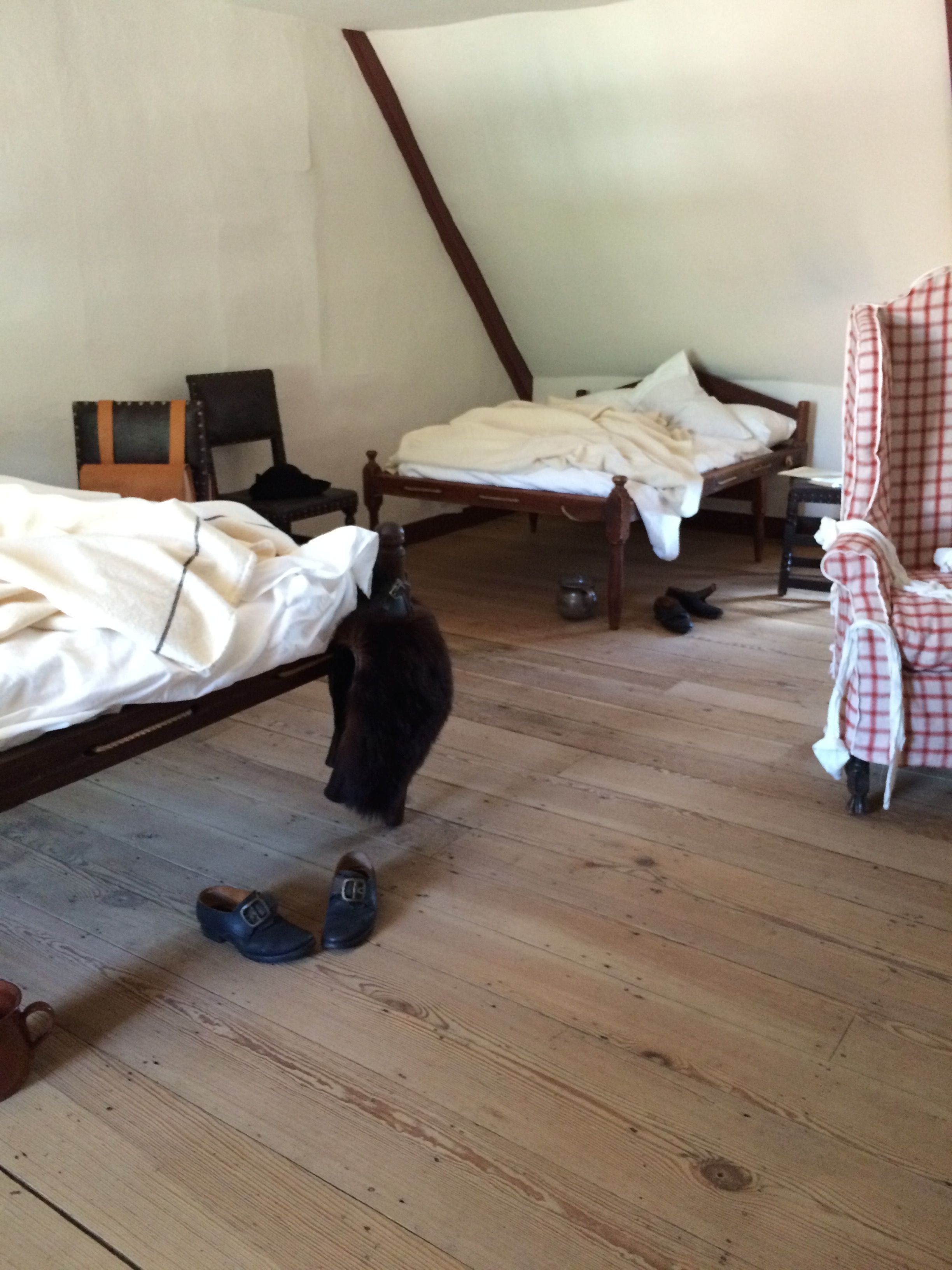
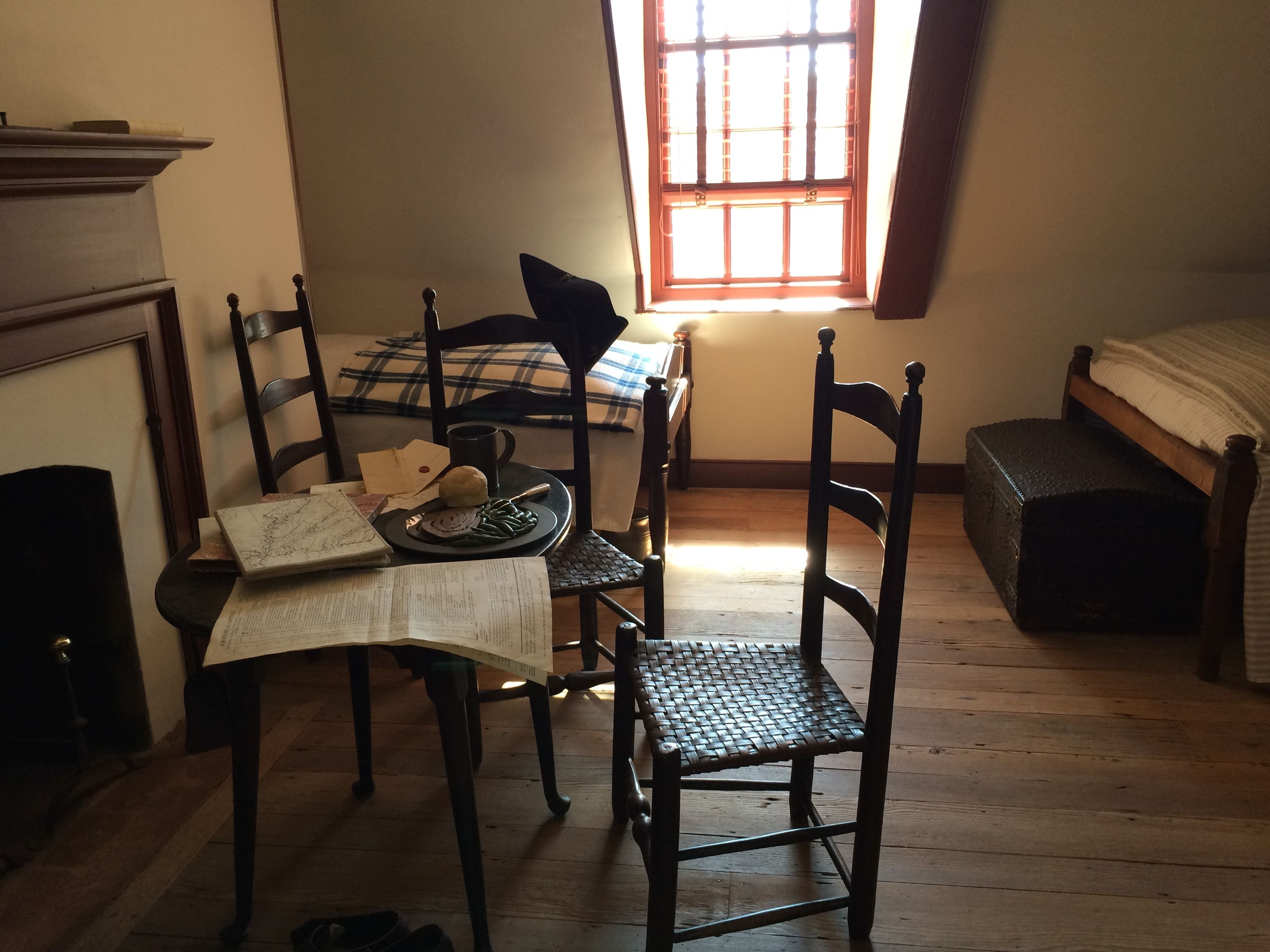
Cheap Room
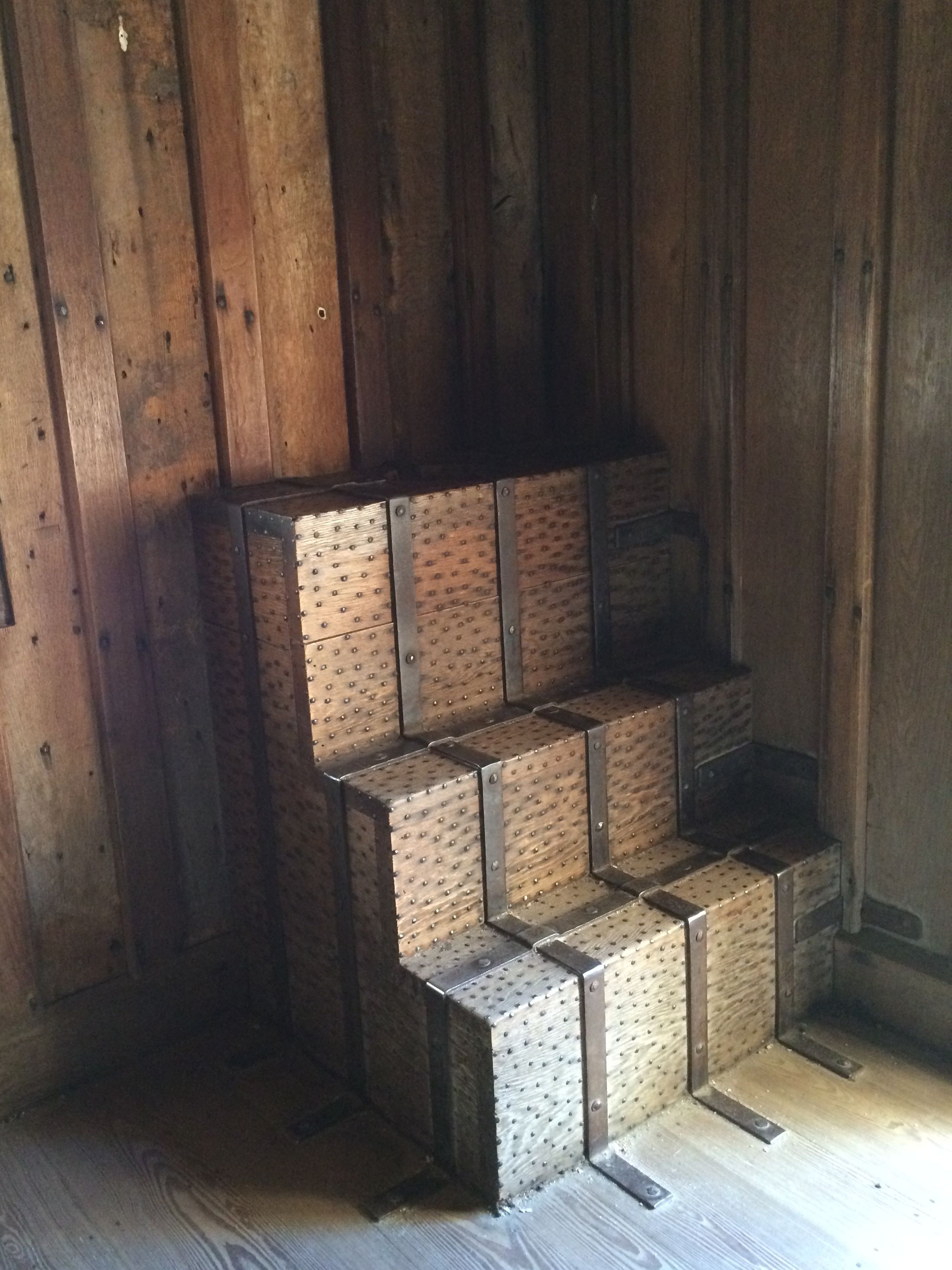
Wetherburn had two levels of accommodations. The first was more like a youth hostel, where you money just bought you a place to sleep, not necessarily in a bed, either. You also had no control over who would be sharing the bed with you. If they ran out of spots in beds, they had additional accommodations.
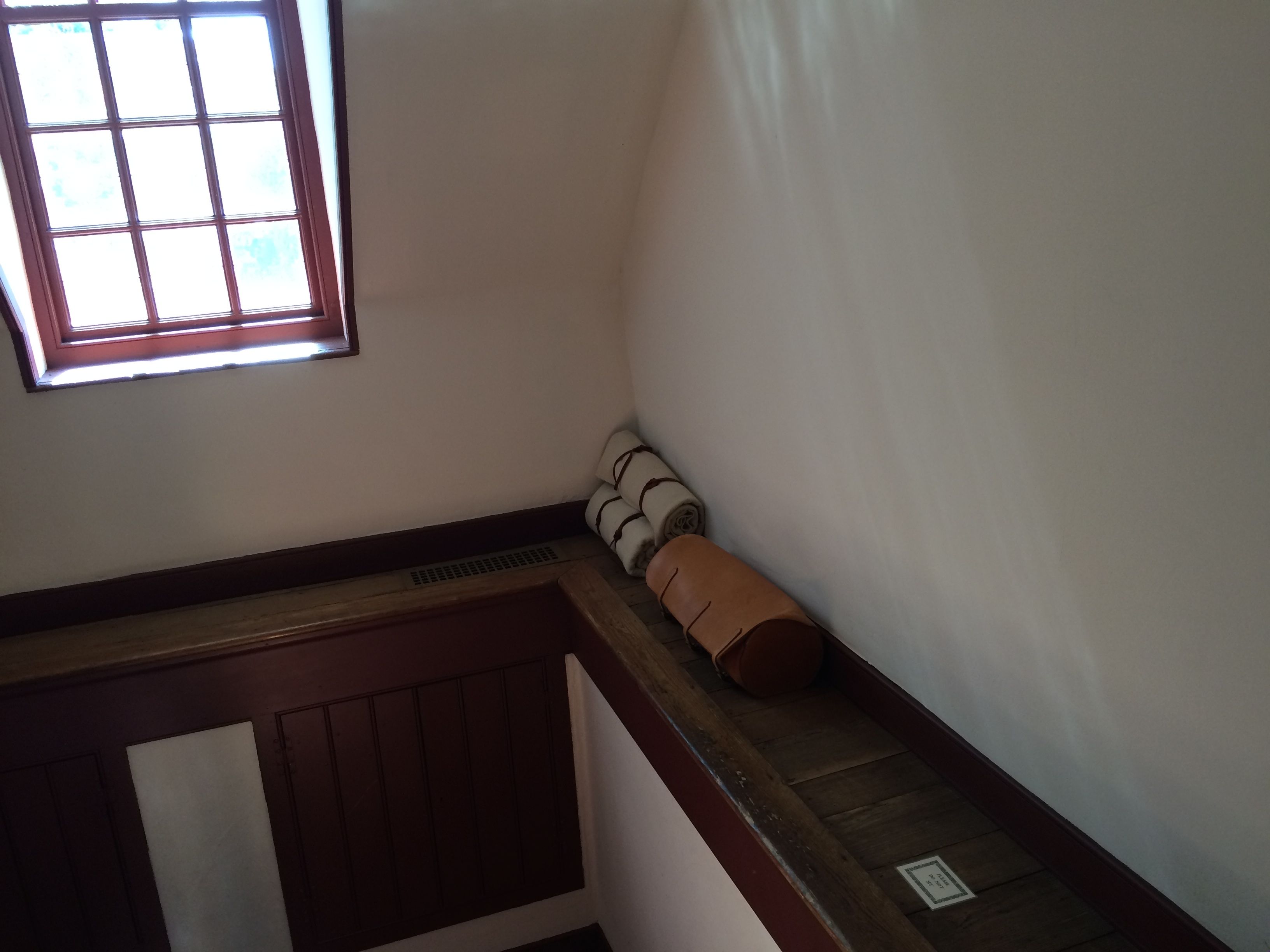
Bedrolls for late-comers
They kept bedrolls on ledge in the staircase, for people who came after the beds were full. They guide mentioned that some people brought their own bedroll “for sanitary purposes”. Better the bugs you know, I guess.
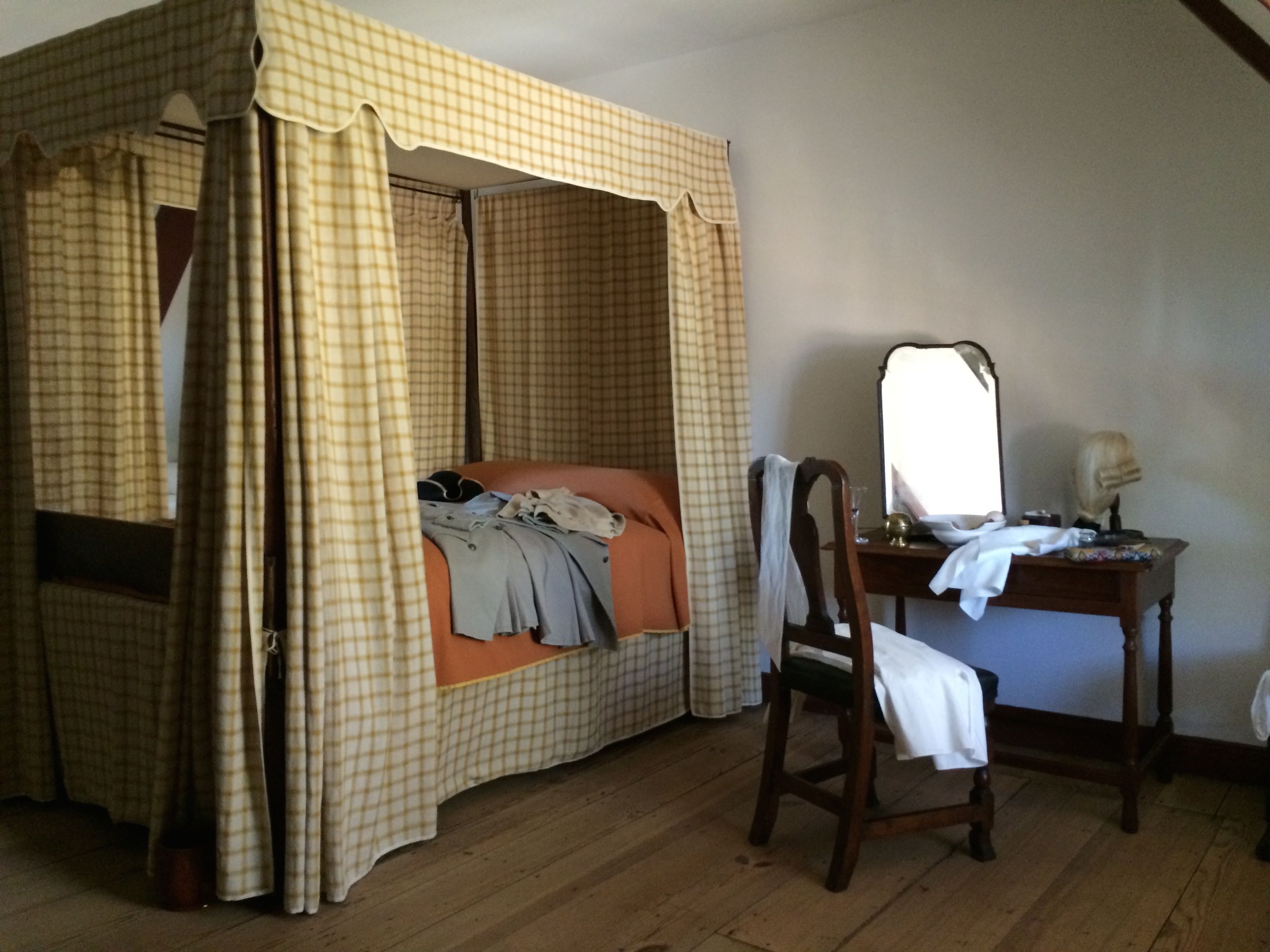
He also had rooms for people who could afford to pay more.
Beds for the well-to-doDining area in the better room
People who booked private rooms could arrange for the food of their choice to be prepared and served to them in their room. The rest had to eat in the dining room.
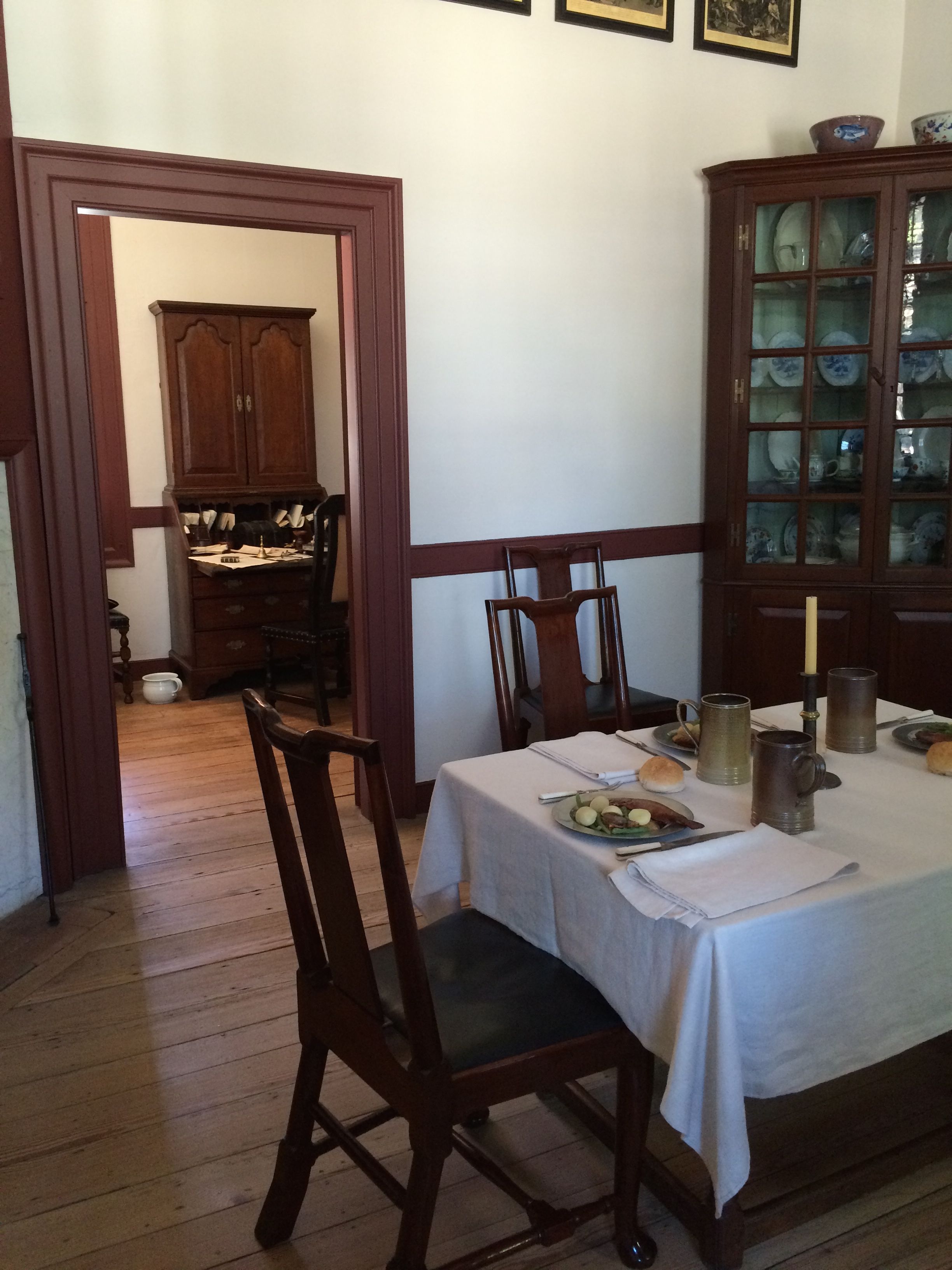
Dining Room
There was a set menu that was served each day. The cook didn’t offer choices beyond “take it or leave it.”
Kitchen
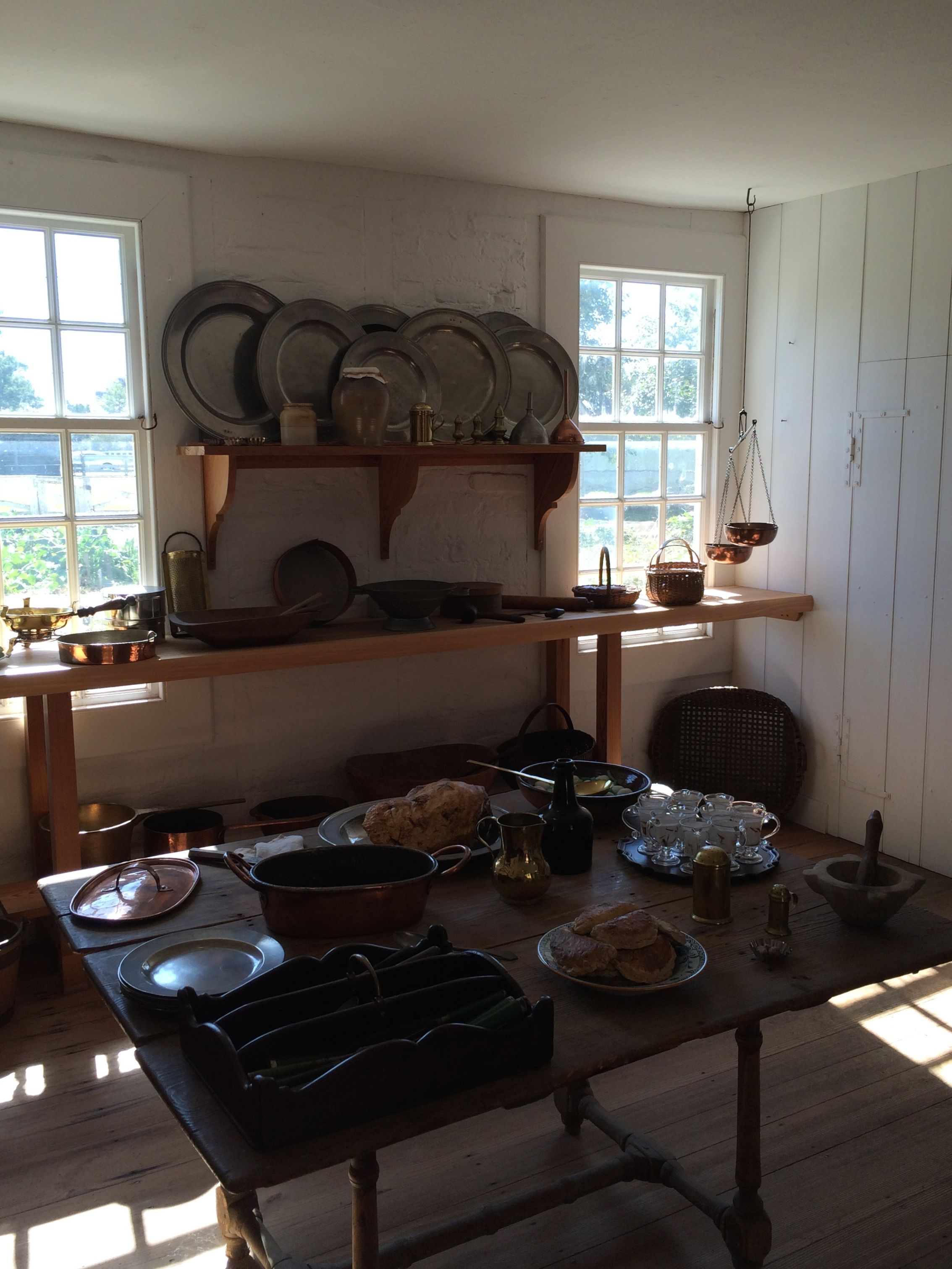
The meals were prepared in the kitchen, which was in a separate building behind the tavern. This kitchen is a recreation, built using archeological information.
As the town and Mr. Wetherburn grew more prosperous, he added on a room that was used for dances, parties and lectures.
Grand Room
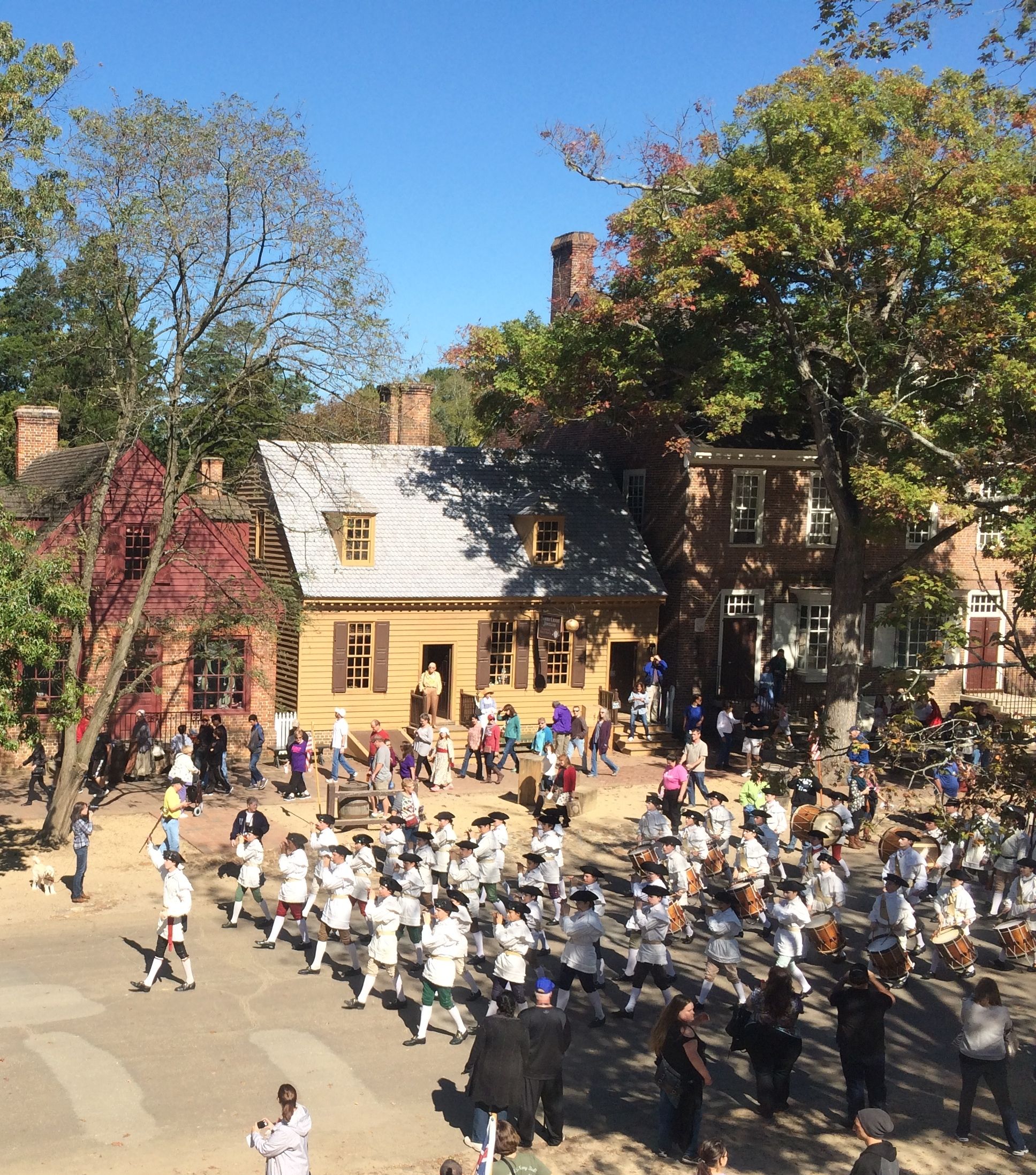
While we were upstairs in the sleeping area, a fife and drum parade went by.
Fife and Drum Parade
The guide told us that this is a prestigious job to have and there is a lot of interest in the community. I asked if lessons were offered in the schools in town. She said that they didn’t teach it in school; all these musicians learn on their own from private teachers. They certainly moved out with precision!
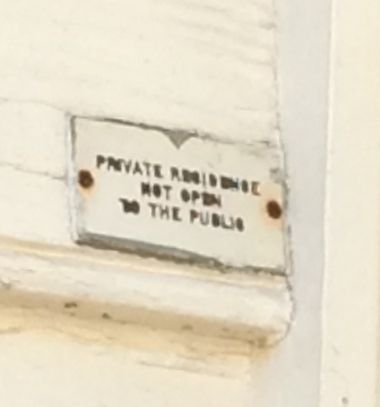
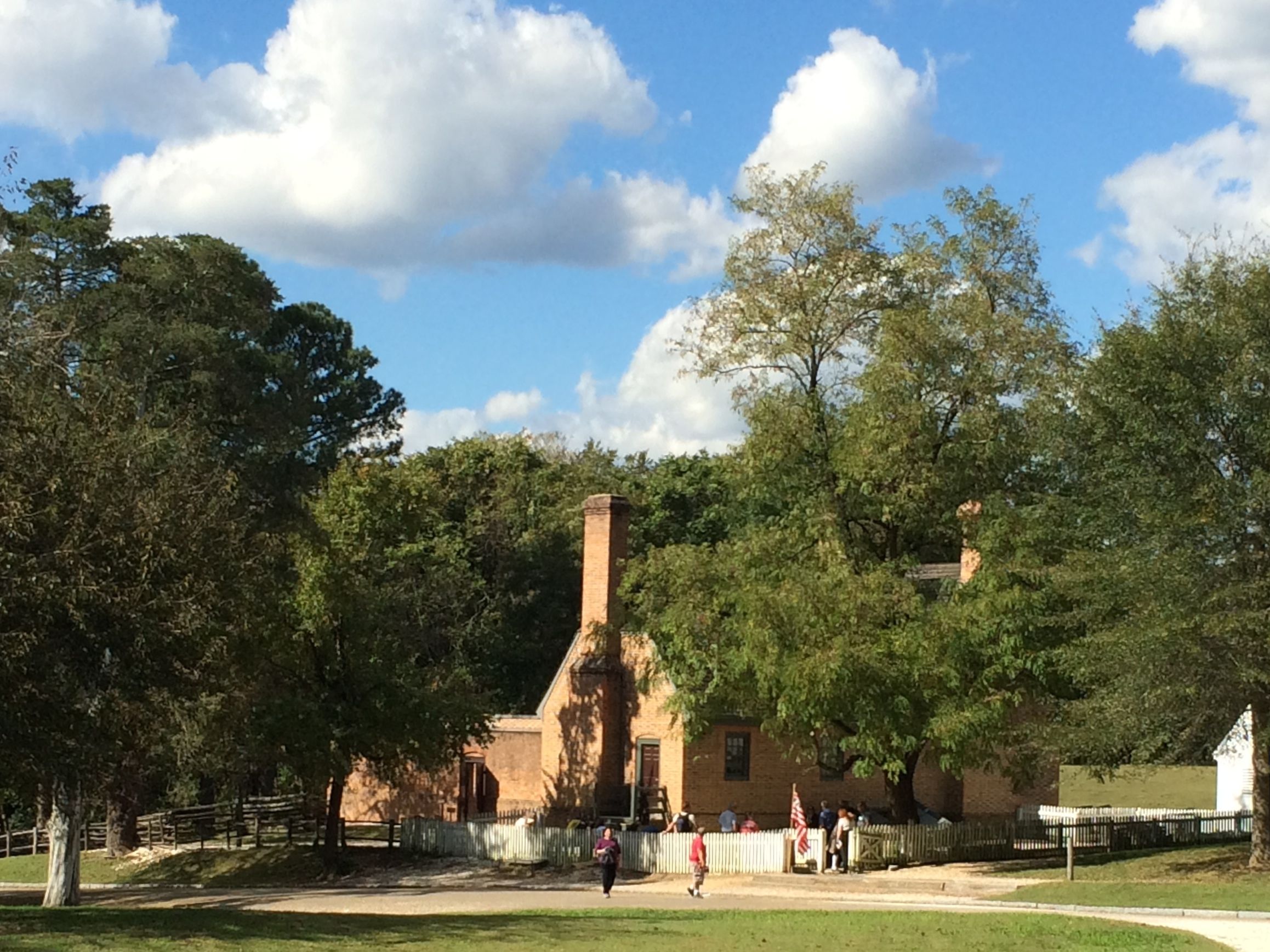
After my tour of Wetherbern’s Tavern, I moseyed down the street. I was curious about the rest of the buildings that were not open to visitors. It turns out that people actually live in the houses!
They had these discrete little plaques by the doors and they kept their shutters closed. I wonder what it would be like to live with all these people walking around your house?
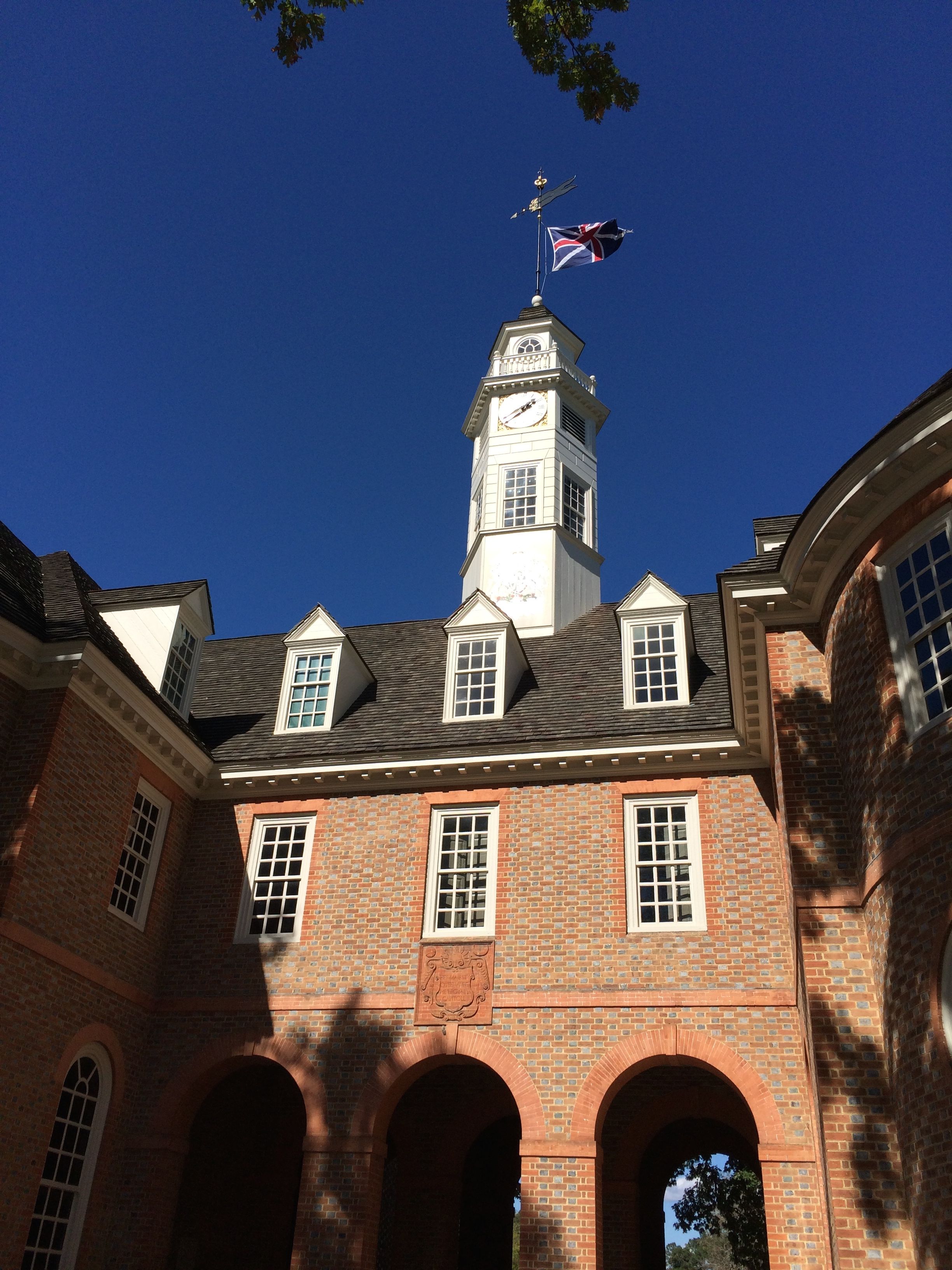
My next stop was the Capitol.
Capitol
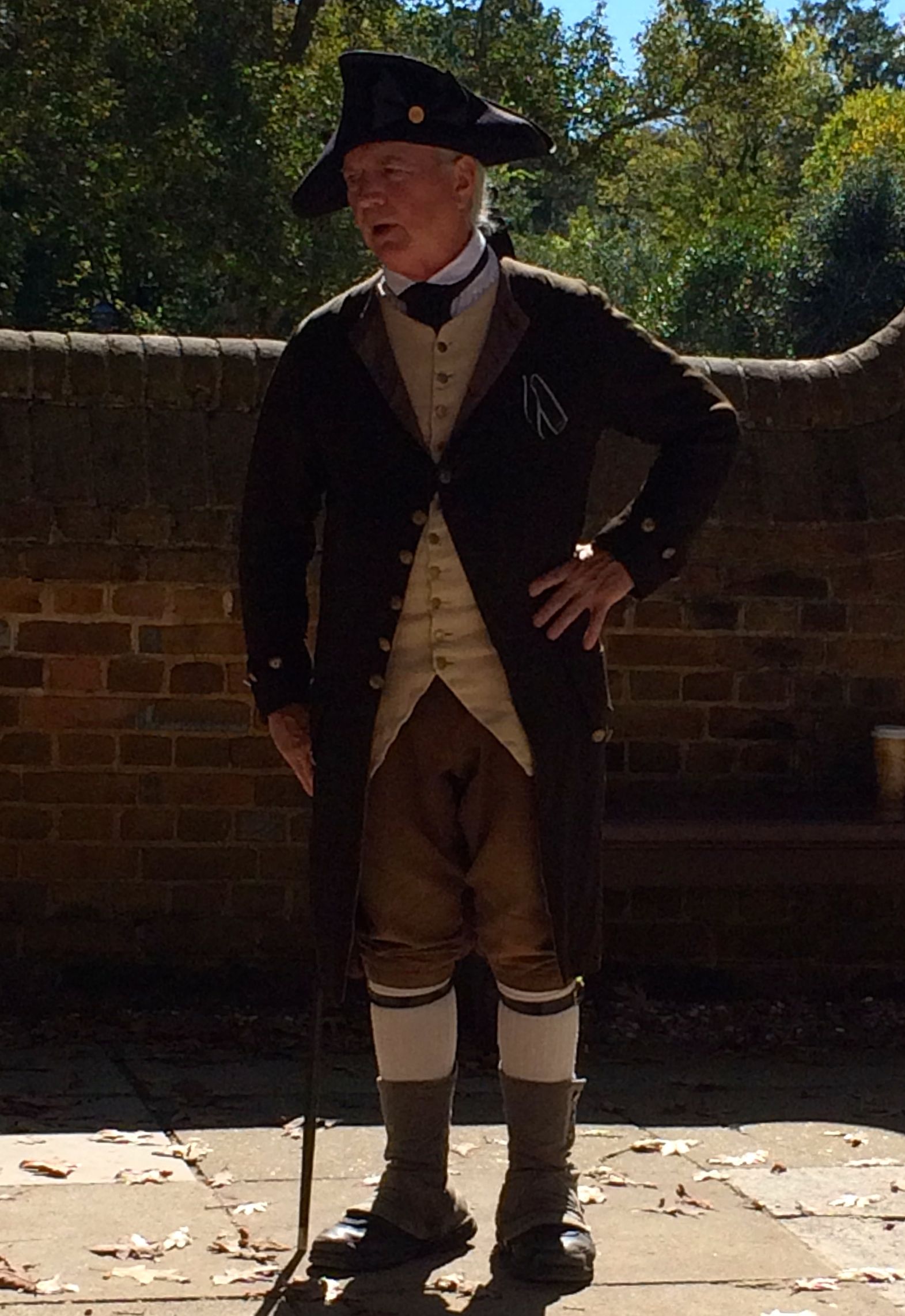
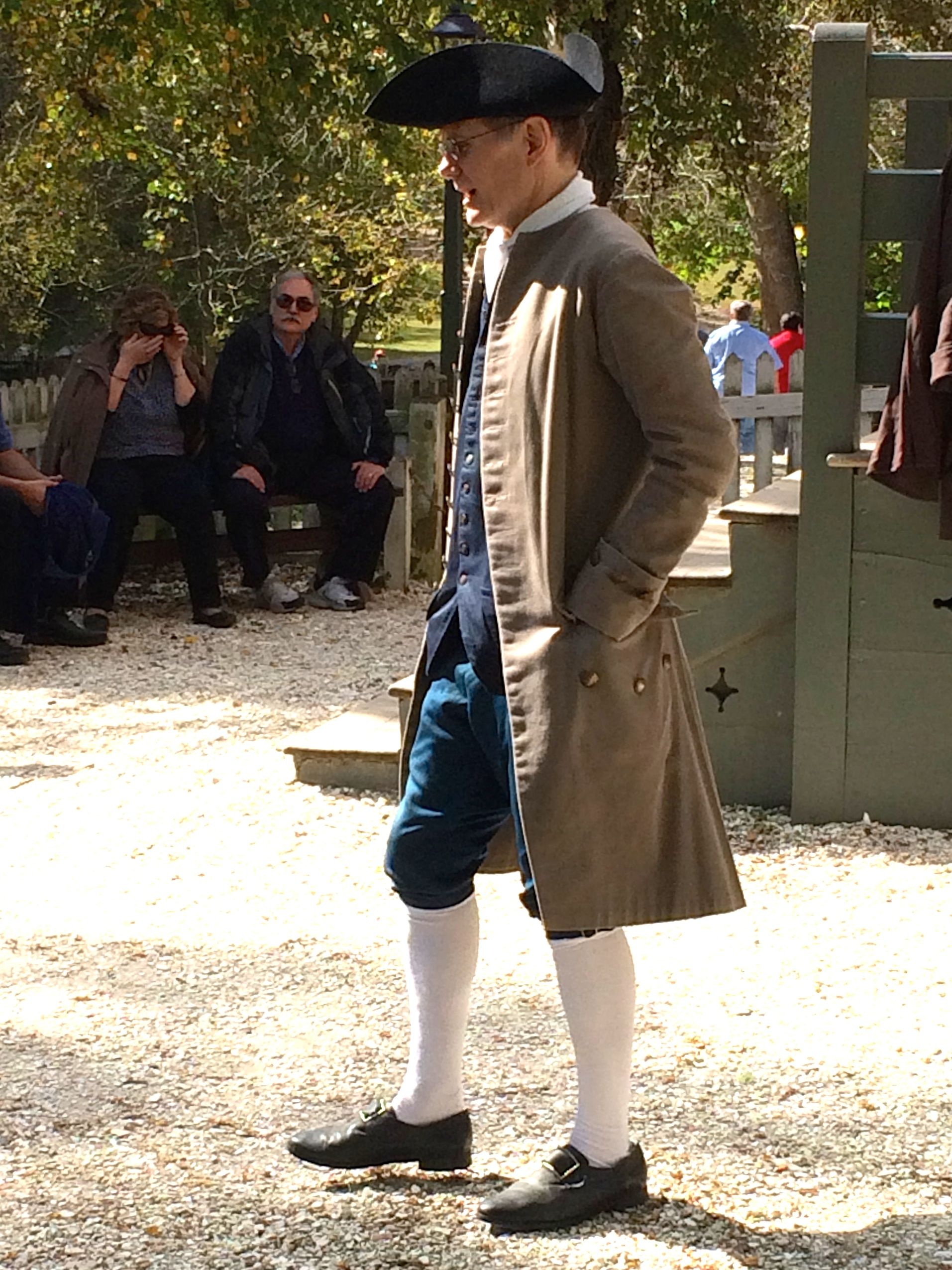
While waiting for my tour to begin, we were regaled by a costumed greeter.
Greeter
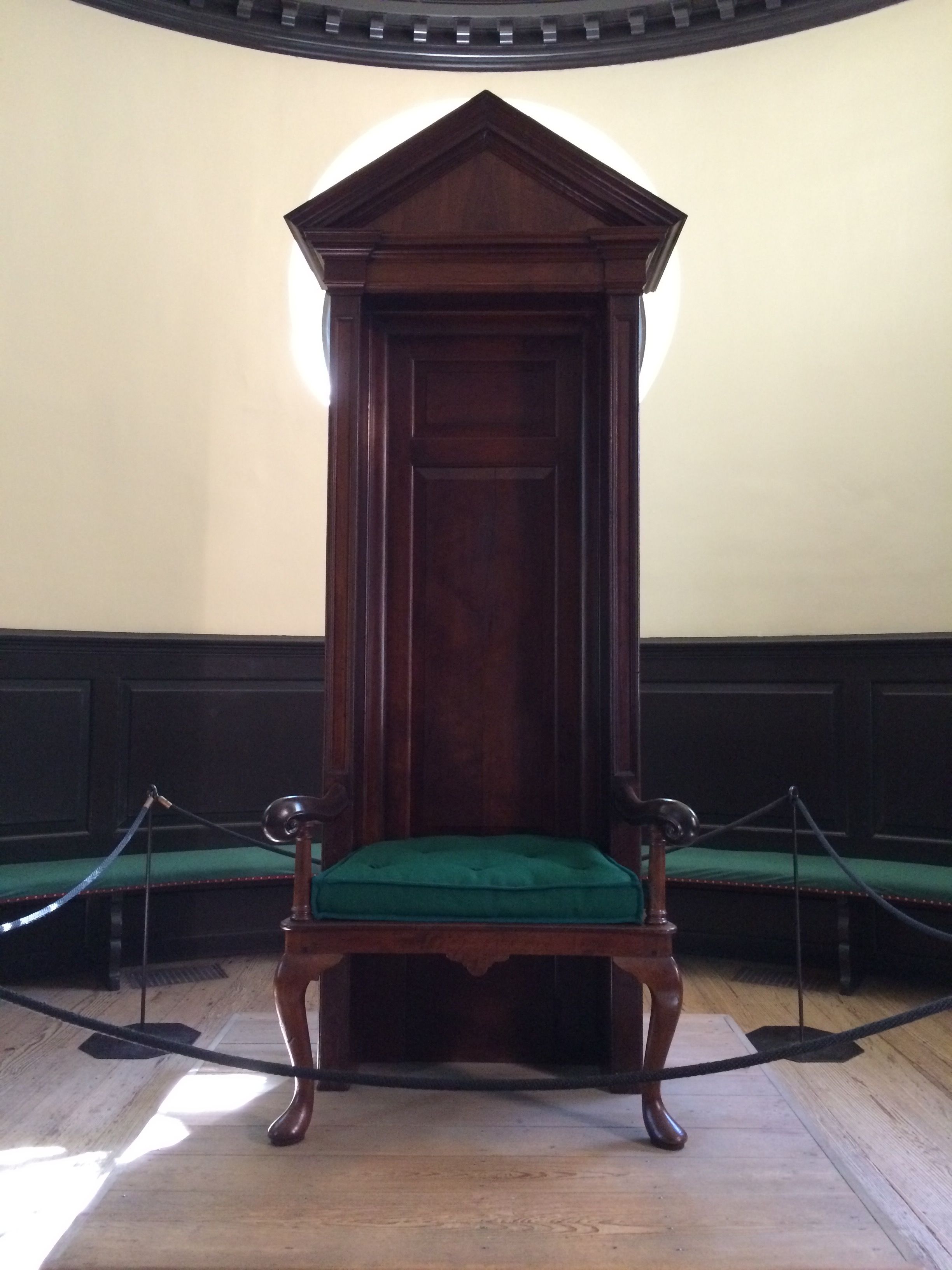
The Capitol was a complete reconstruction. Nothing was left of the original building. There was one item that was authentic, though.
Original Speaker’s Chair from the House of Burgesses
This is one item that has surely played a significant roll in the foundation of America.
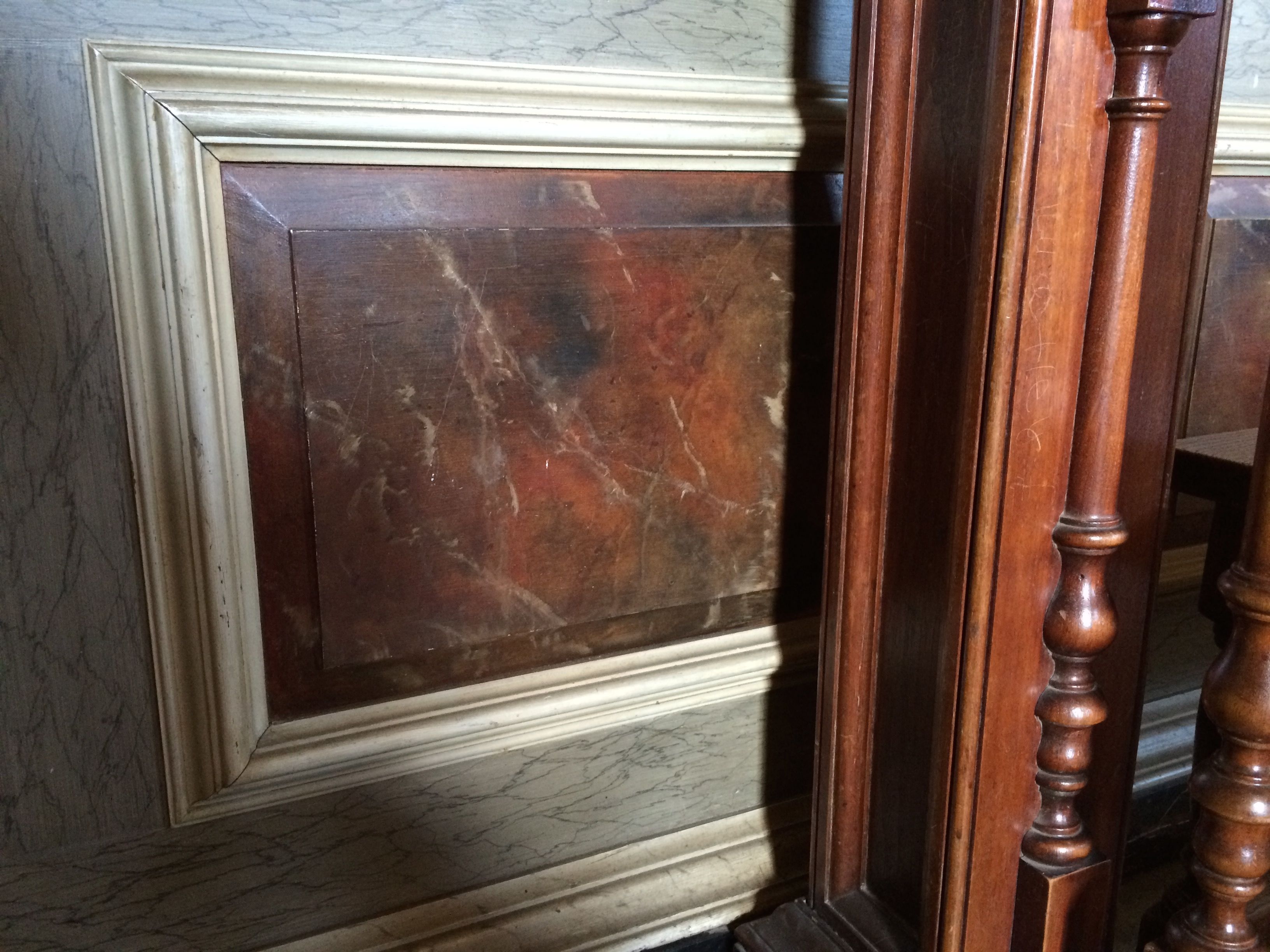
Faux finish
Yep, it’s not marble. But, it sure does give the impression of it, doesn’t it?
Round window
The building was constructed using the Flemish bond. This is when they alternate the headers (short sides) and stretchers (long sides). This building ups the ante by alternating the colors of the bricks as well.
My next stop was the jail.
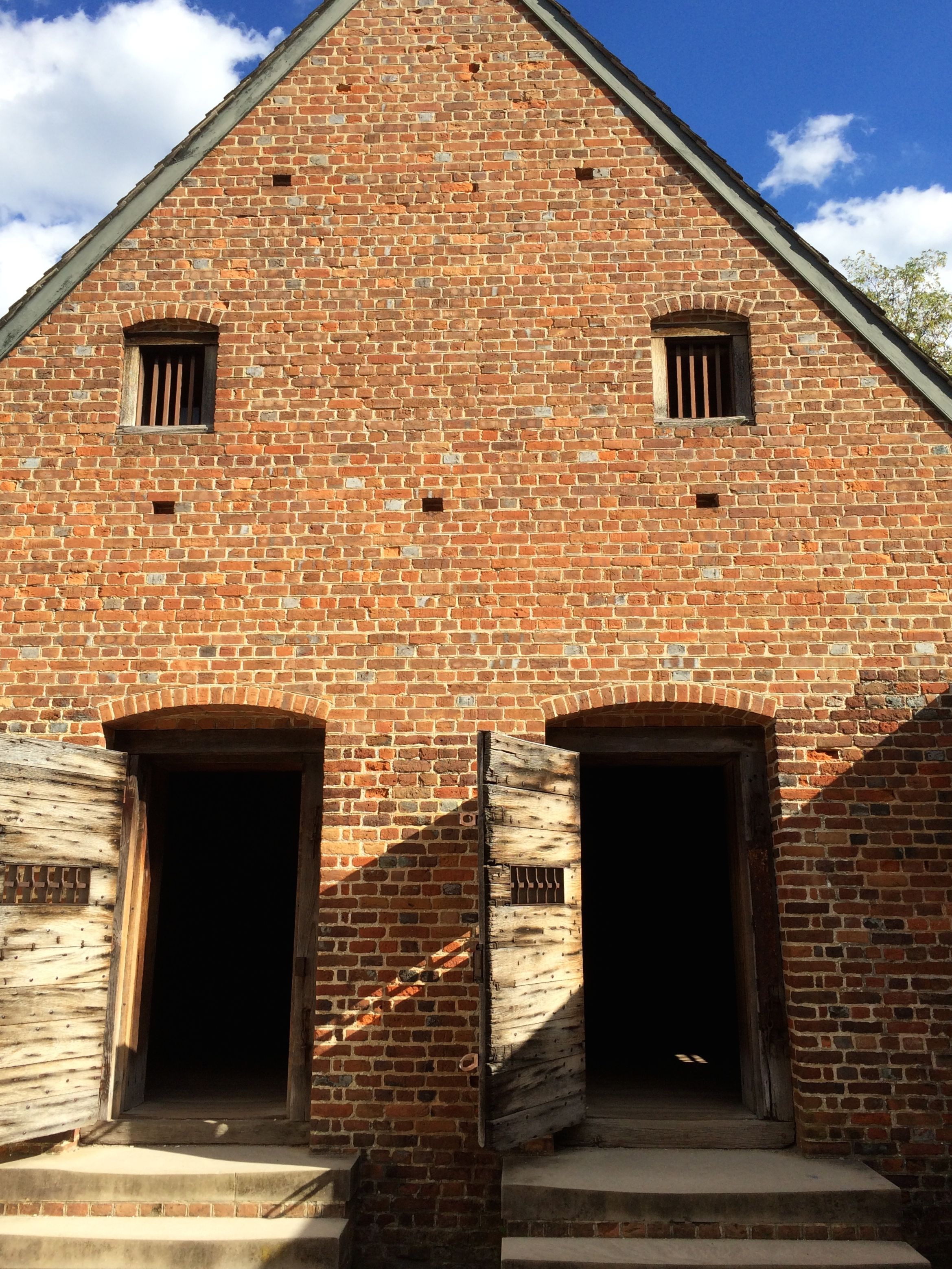
Pubic Gaol
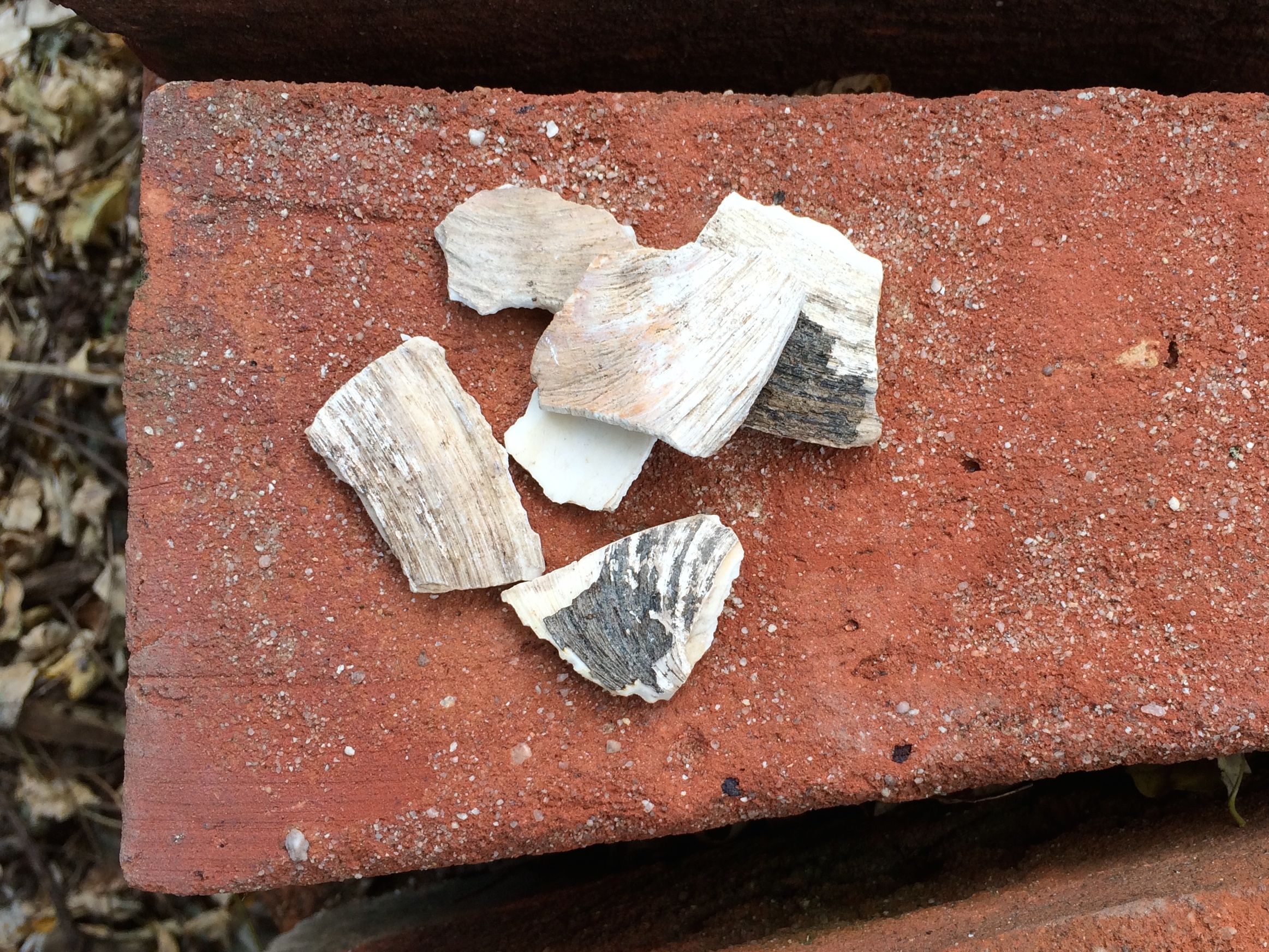
I walked down the path and I noticed that I was walking on crushed oyster shells. I had heard that they were used on roadways, and there they were. I picked up a few just to take a picture.
Oyster Shells
While we were waiting for the tour to start, we were greeted by another costumed character.
GreeterOriginal Cells
We first toured the main building. It was kind of crowded there, so I kind of held back and slipped in with a different group when I got to the part of the jail with the original cells.
It turns out that these cells held Blackbeard’s crew that was captured and held for trial in 1719. Fourteen of the sixteen crew members that were tried were hung. One made his way back and then earned his keep telling his stories in bars in London. The stories found their way into various books of the time.
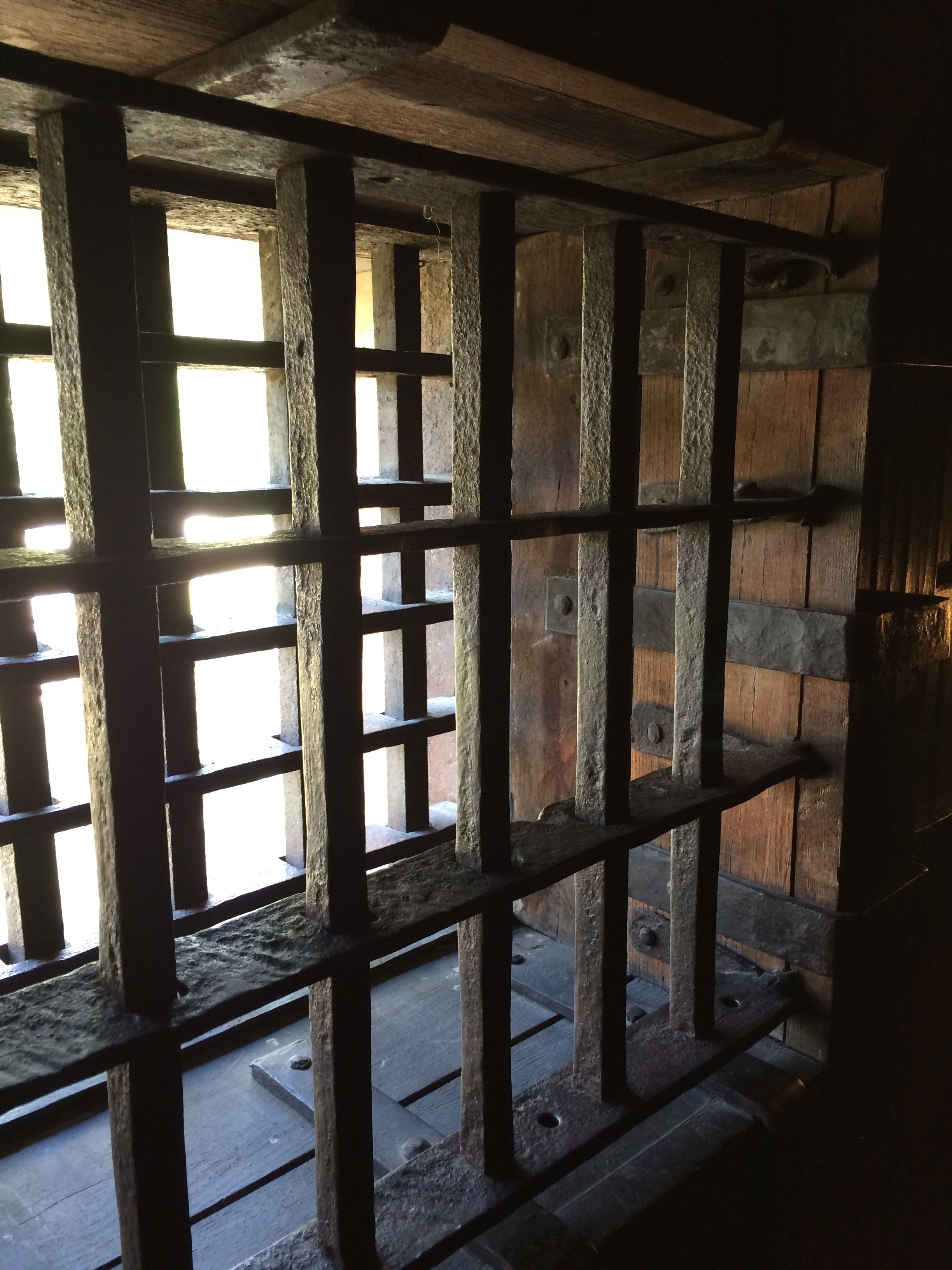
Double-barred Window
This was a secure facility.
Public Gaol toilet
It even had a toilet in the cell. And it was securely attached. I don’t think there would be any escape through that.
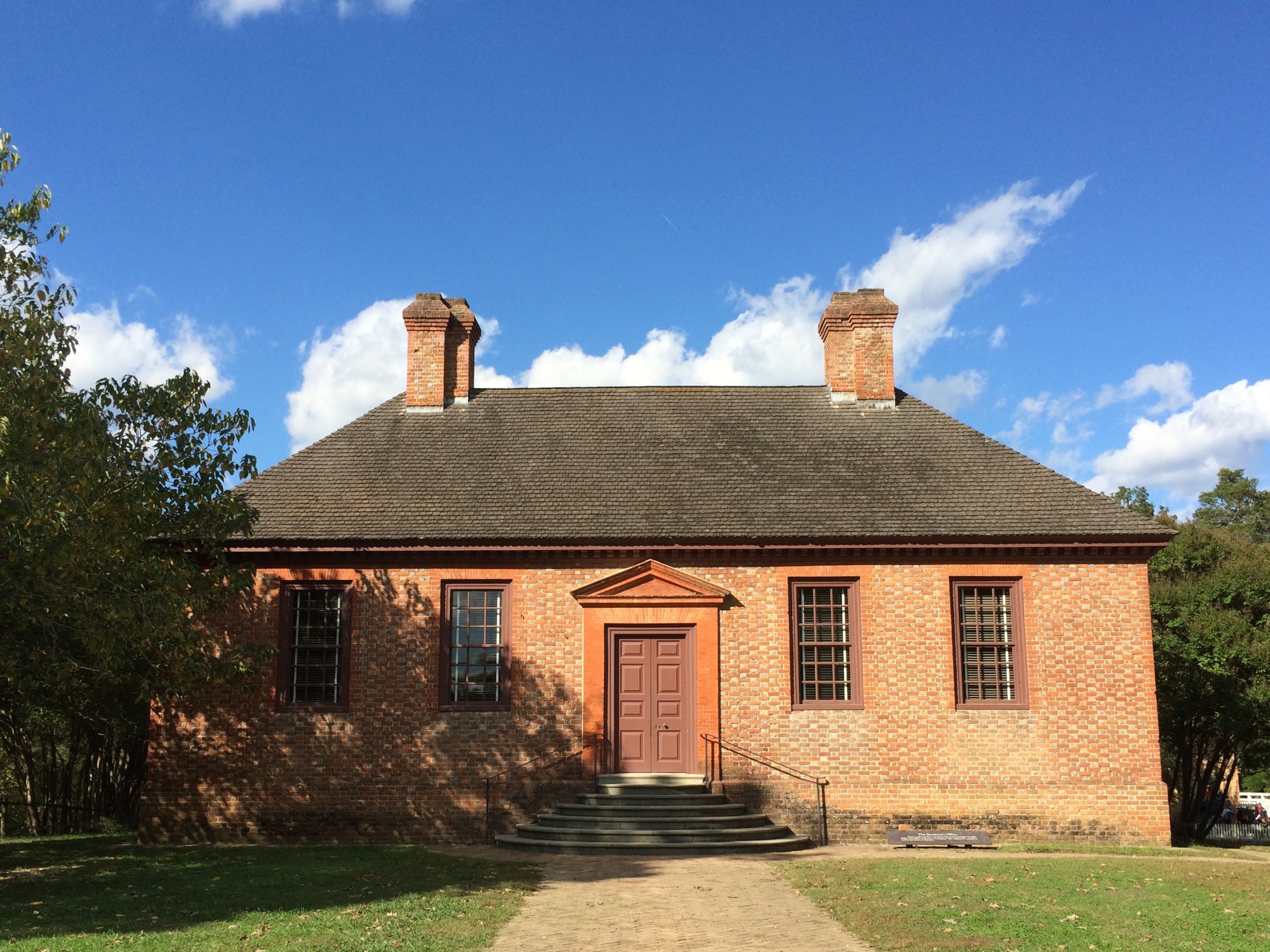
Secretary’s Office
This building was built to protect the papers of the Virginia colony after a fire destroyed the first capitol in 1747. This building was designed to be fireproof. It also held an office for the Secretary of the colony.
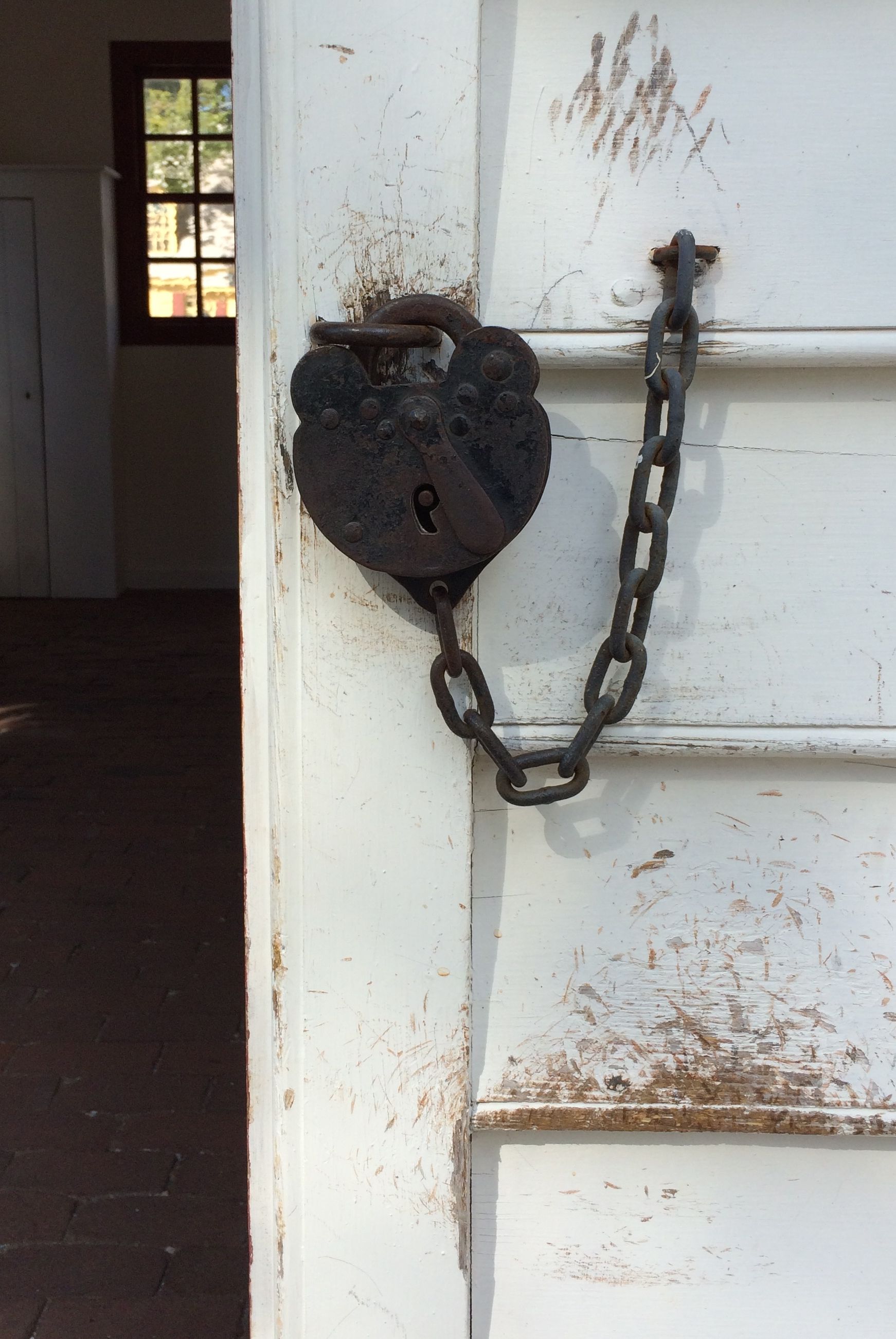
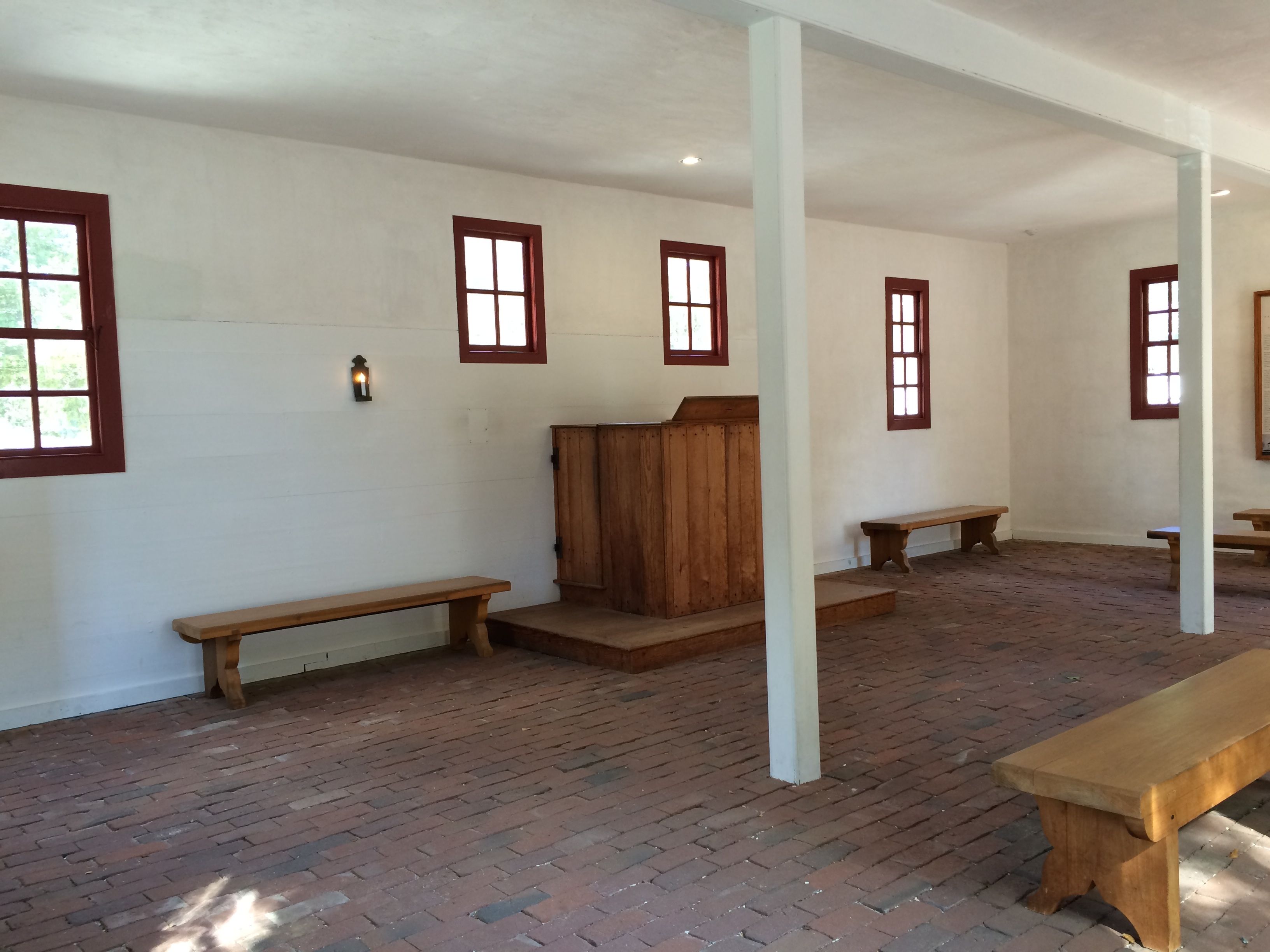
Presbyterian Meeting HouseLock on the Meeting House doorPresbyterian Meeting House Interior
The Presbyterian Meeting House had a minimalist feel about it.
Outside the Raleigh Tavern
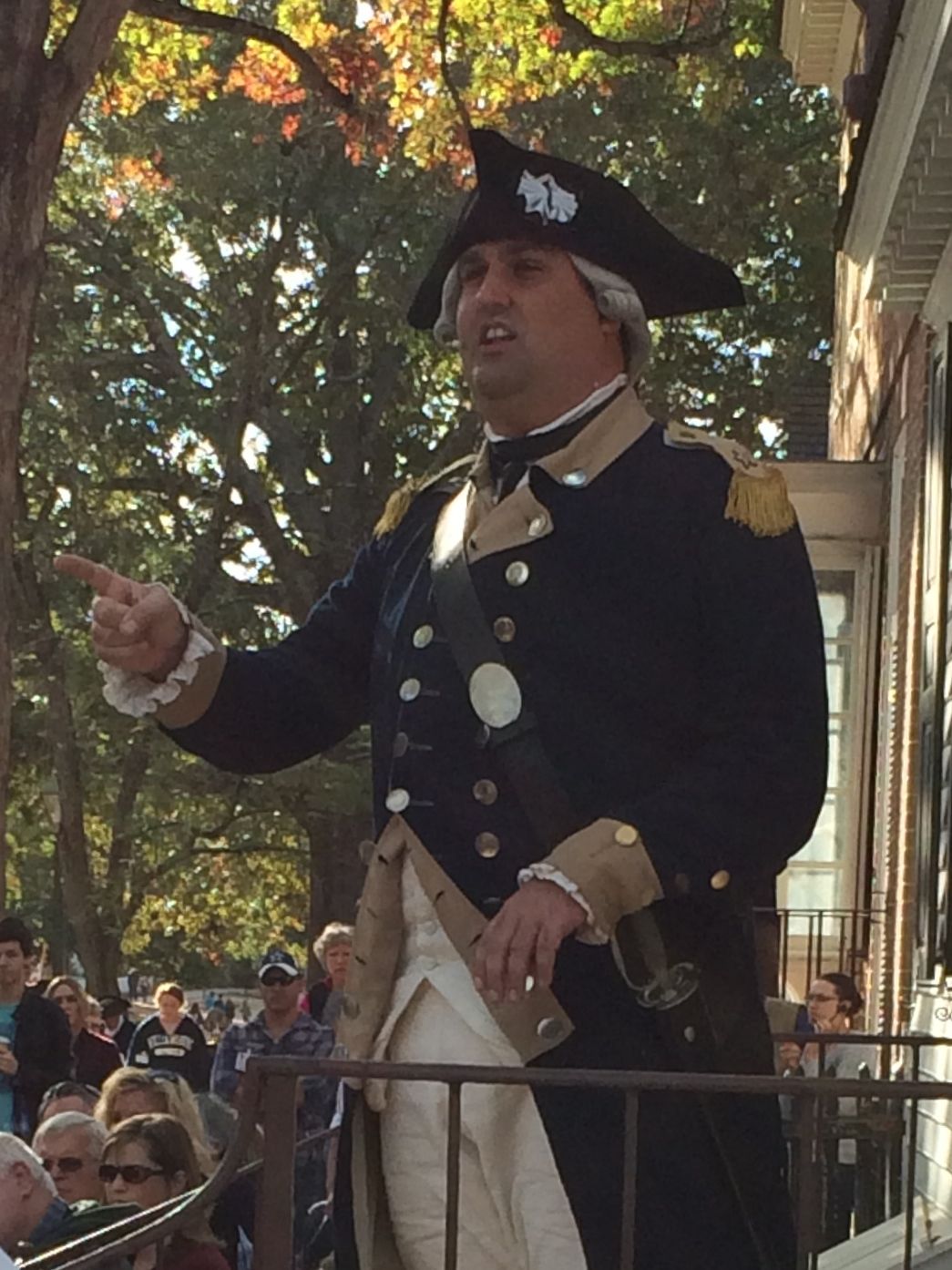
I happened upon some street theater, with speeches and dramatic readings.
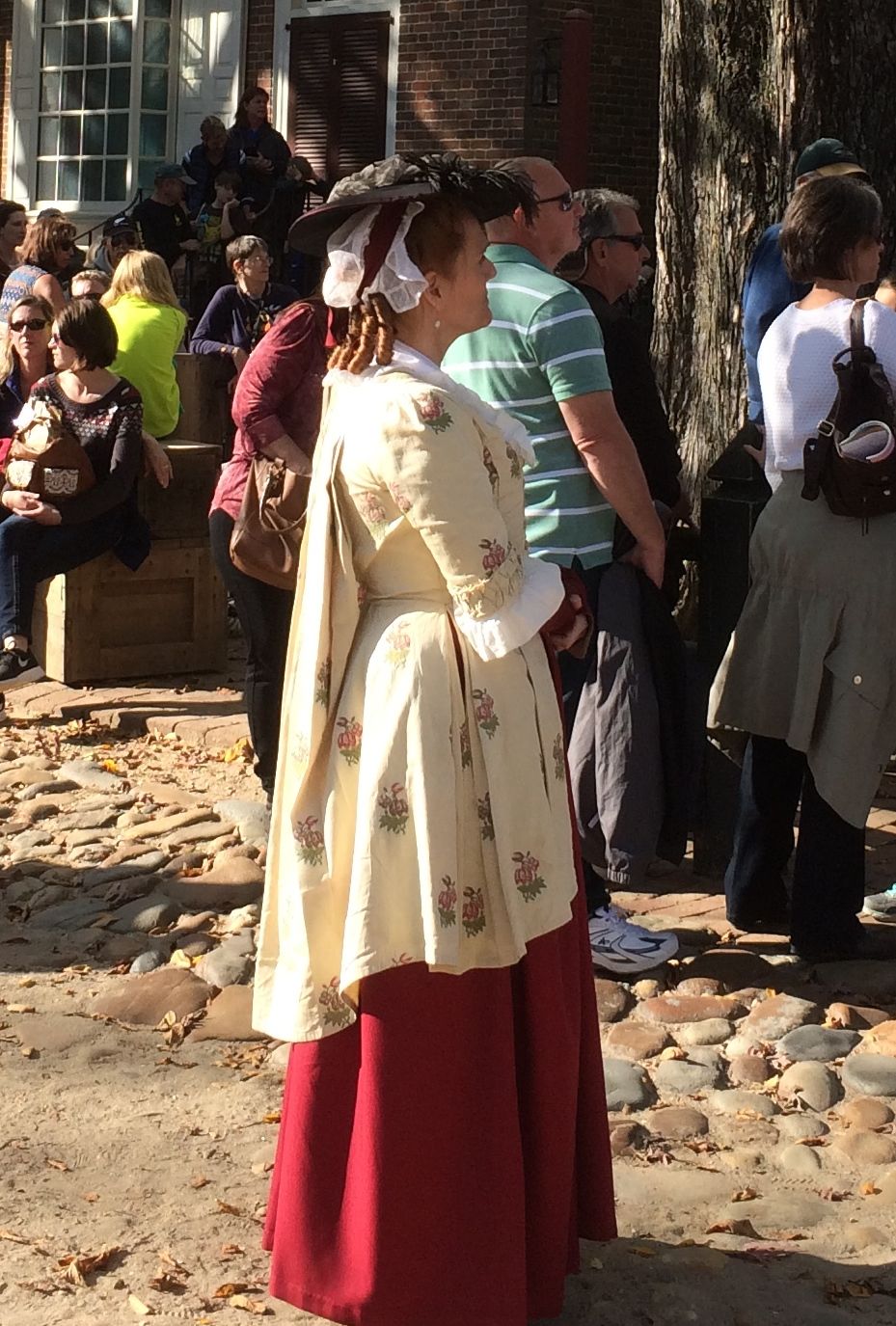
Even the audience was filled with actors
This actor apparently was a loyalist, as she kept clucking her tongue and making disparaging comments the the tourists around here about the men making speeches on the steps.
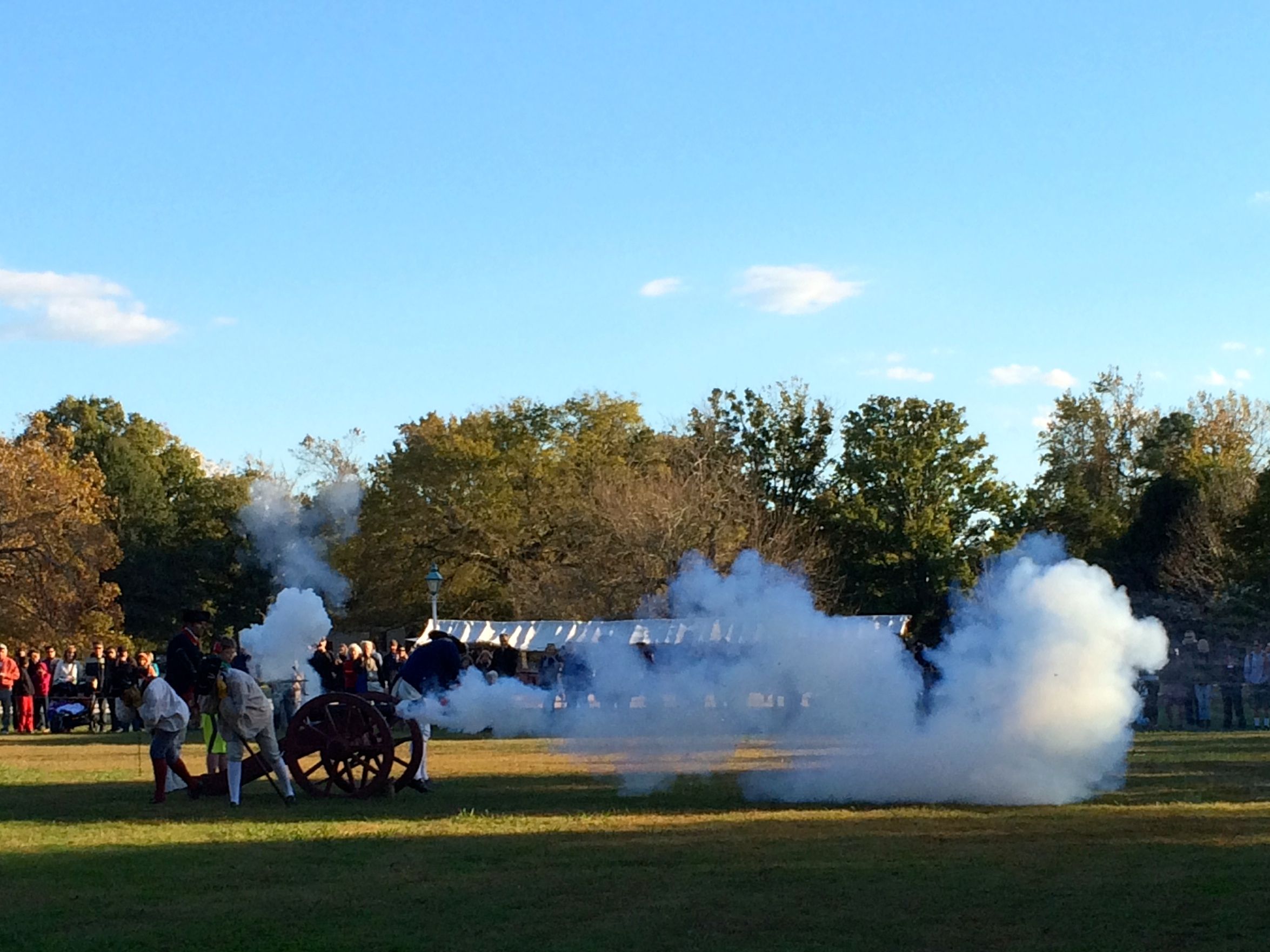
Cannon Salute
Later on, there was the cannon salute. The sun was sinking lower.
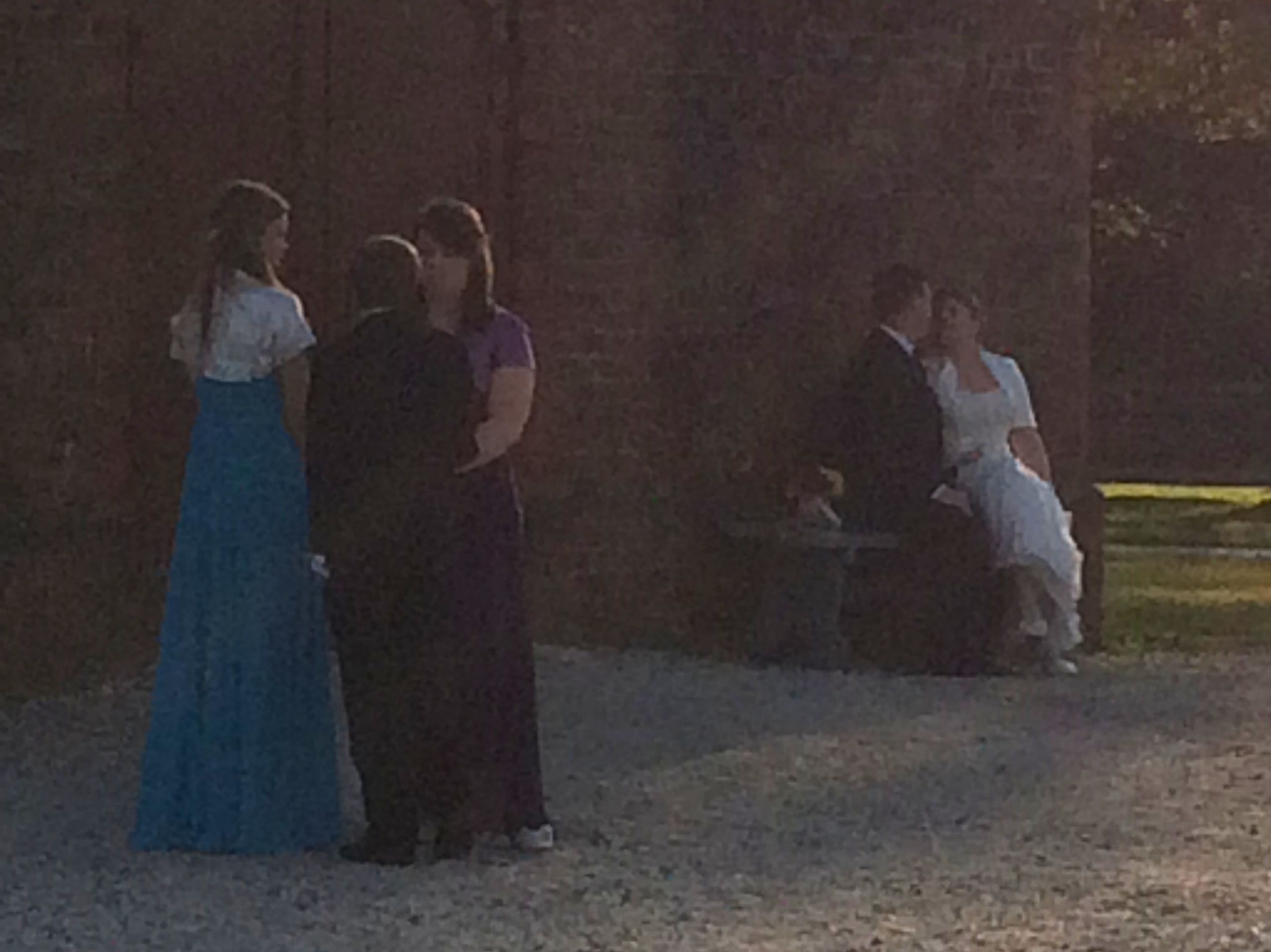
Wedding Photo
Once again, I came across wedding photos being taken. It’s a little happier place than the Manassas Battlefield.
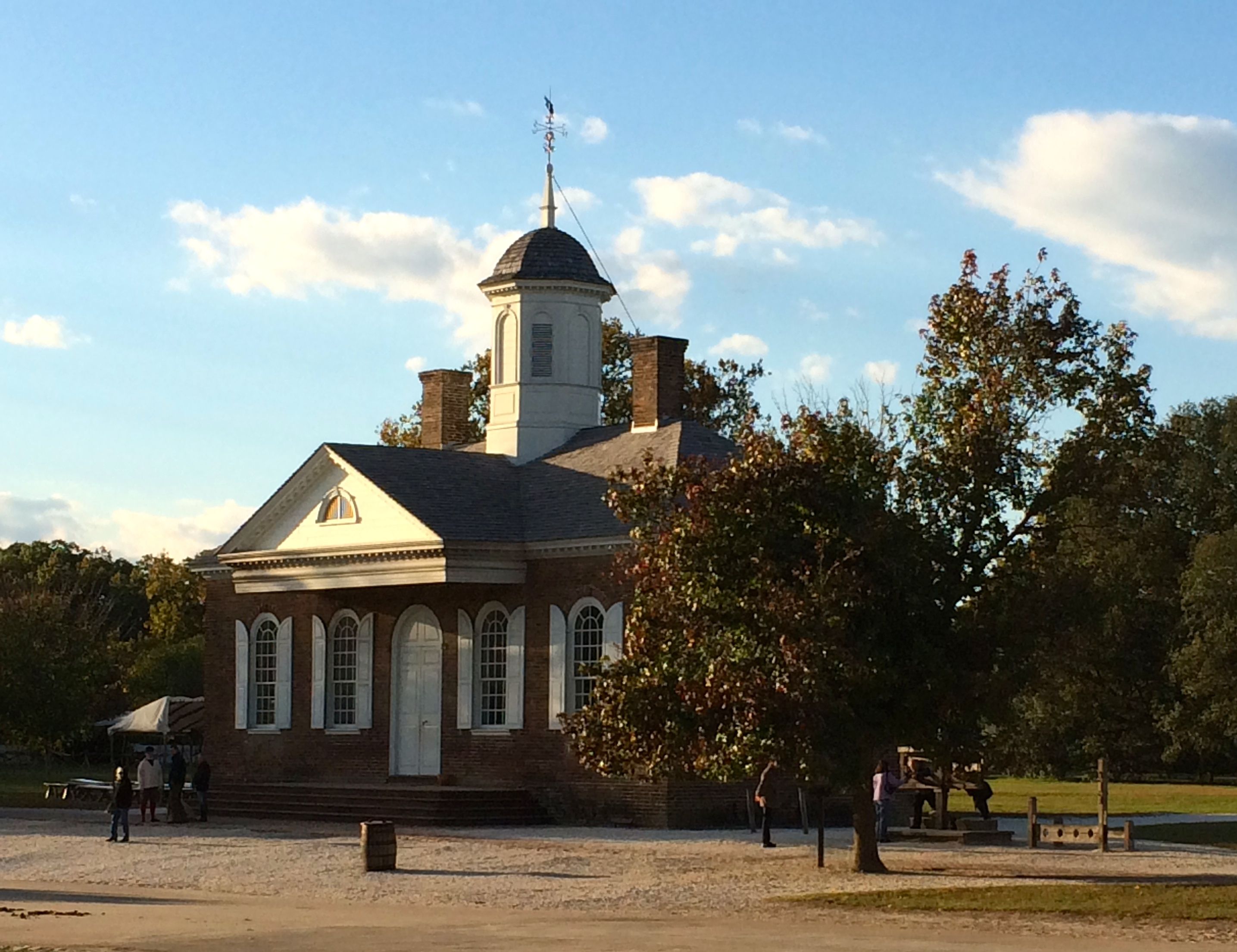
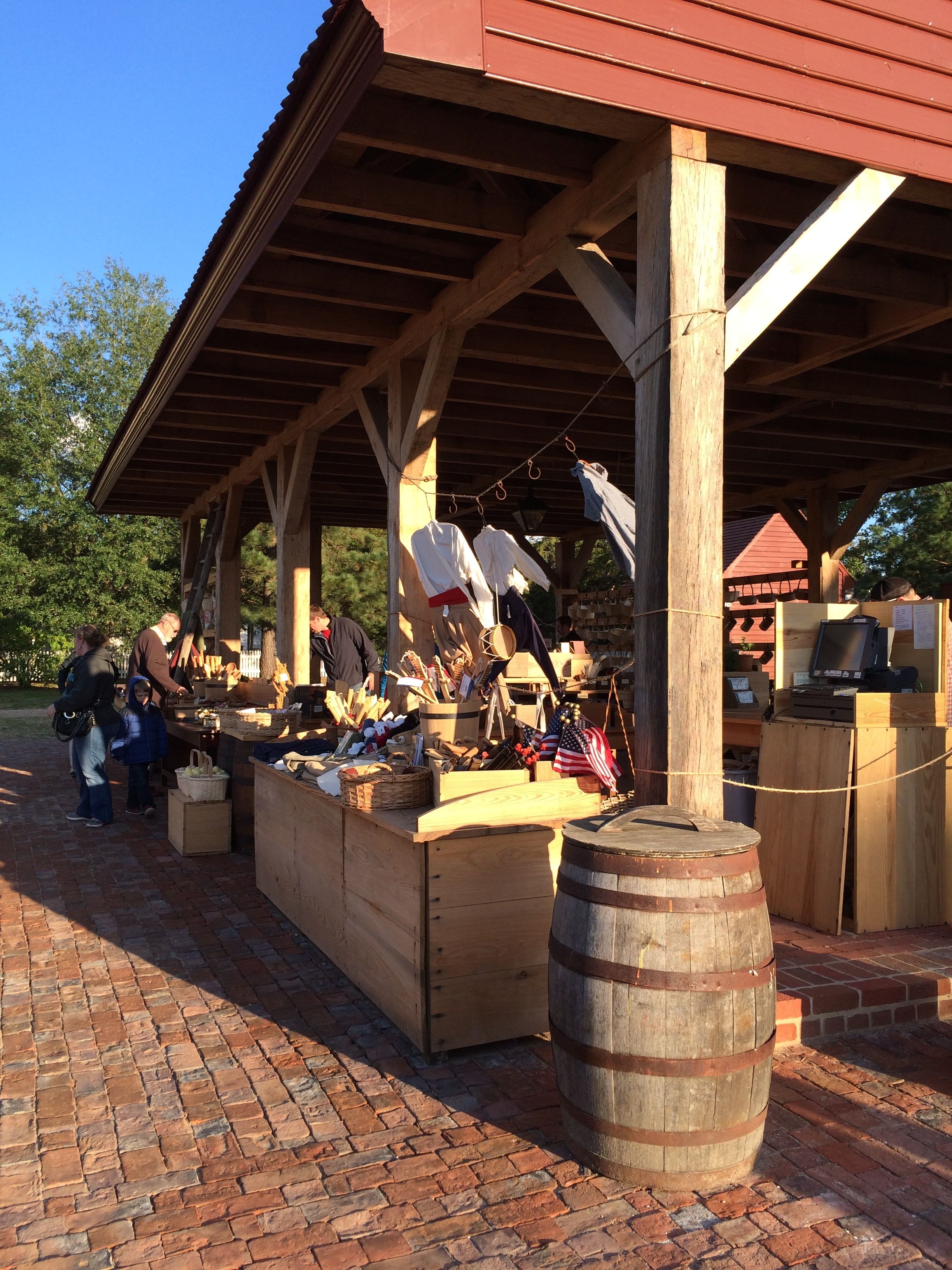
CourthouseMarket House
I was lucky enough to find some other visitors to dine with at Chowning’s Tavern. There was a bit of a wait, but it was a great dinner.
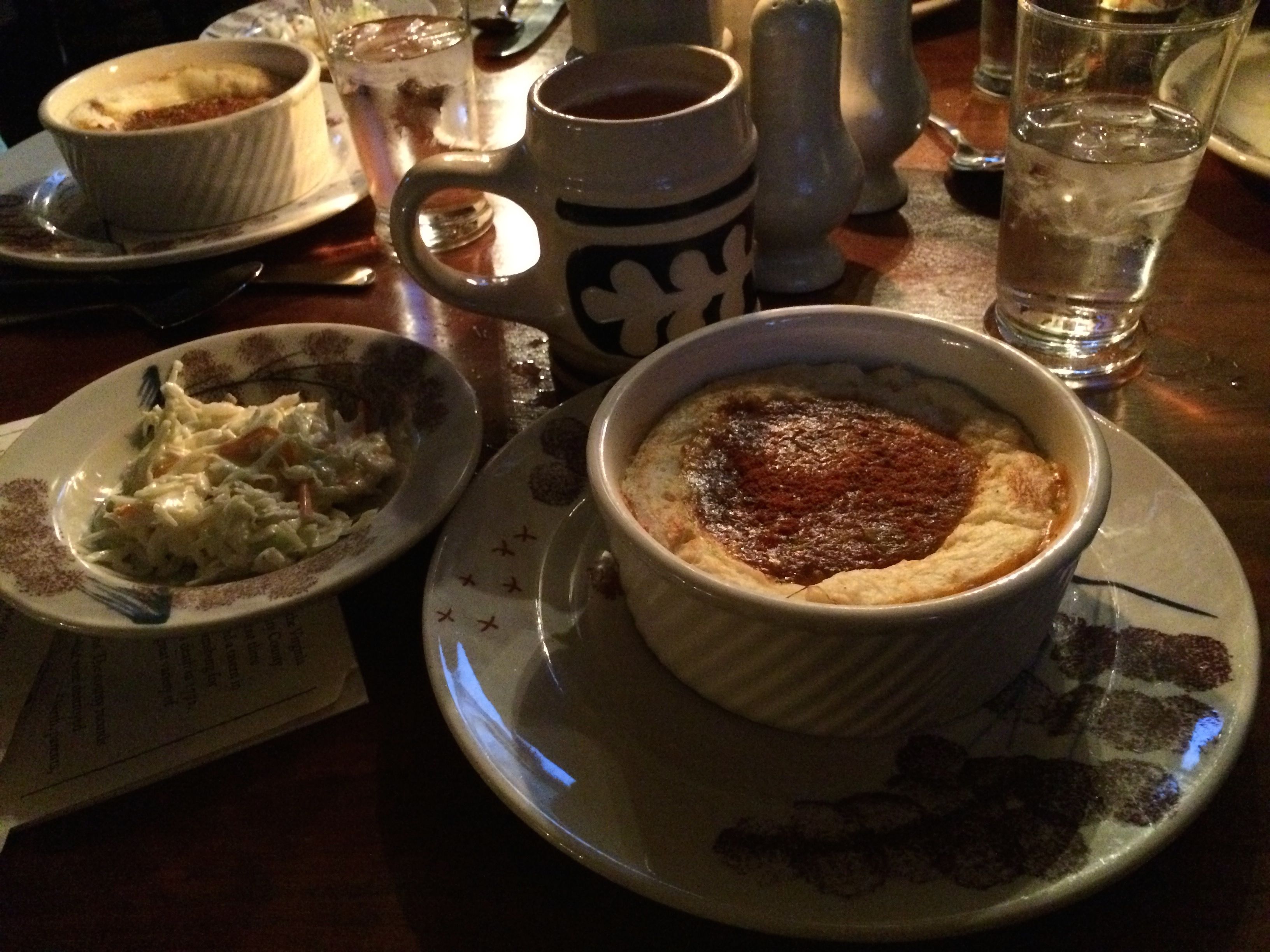
Shepherd’s Pie
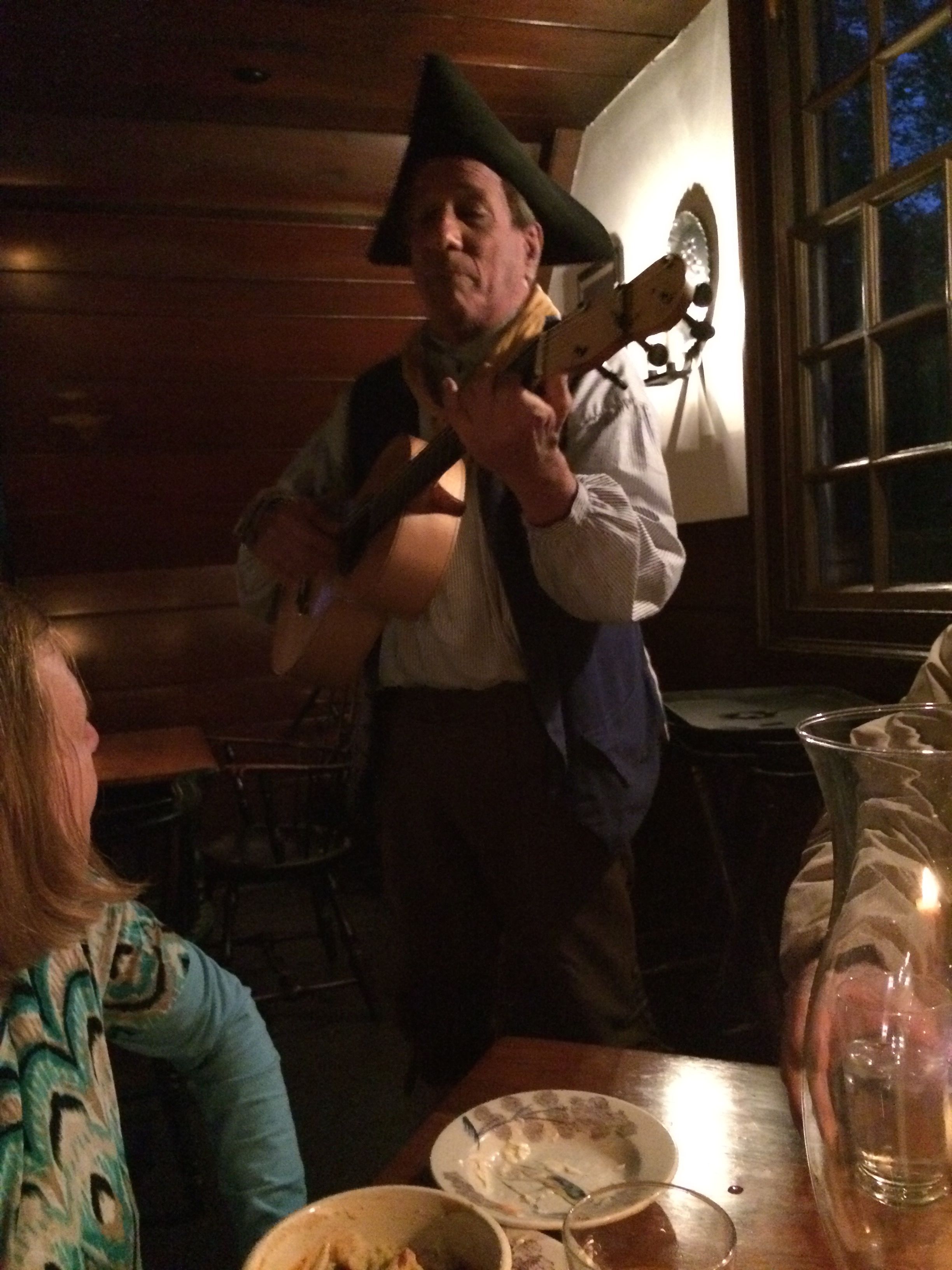
We were even serenaded by a strolling troubadour.
Chowining’s Tavern Singer
And with that, it was time to head back to the campground in Newport News.
But, hey! I have a pass that’s good until the end of the year. I could always go back.
I drove over to Yorktown with no preconceived ideas about what I would find. I knew that it was where Cornwallis surrendered to Washington; it was the last battle in the Revolutionary War. What I didn’t realize was just how much drama was involved in getting to this point.
I entered the National Park Service museum building, happy to be using my America the Beautiful pass once again. The helpful ranger gave me the brochure and directed me to the small museum and told me that a ranger would be giving a talk in a few minutes.
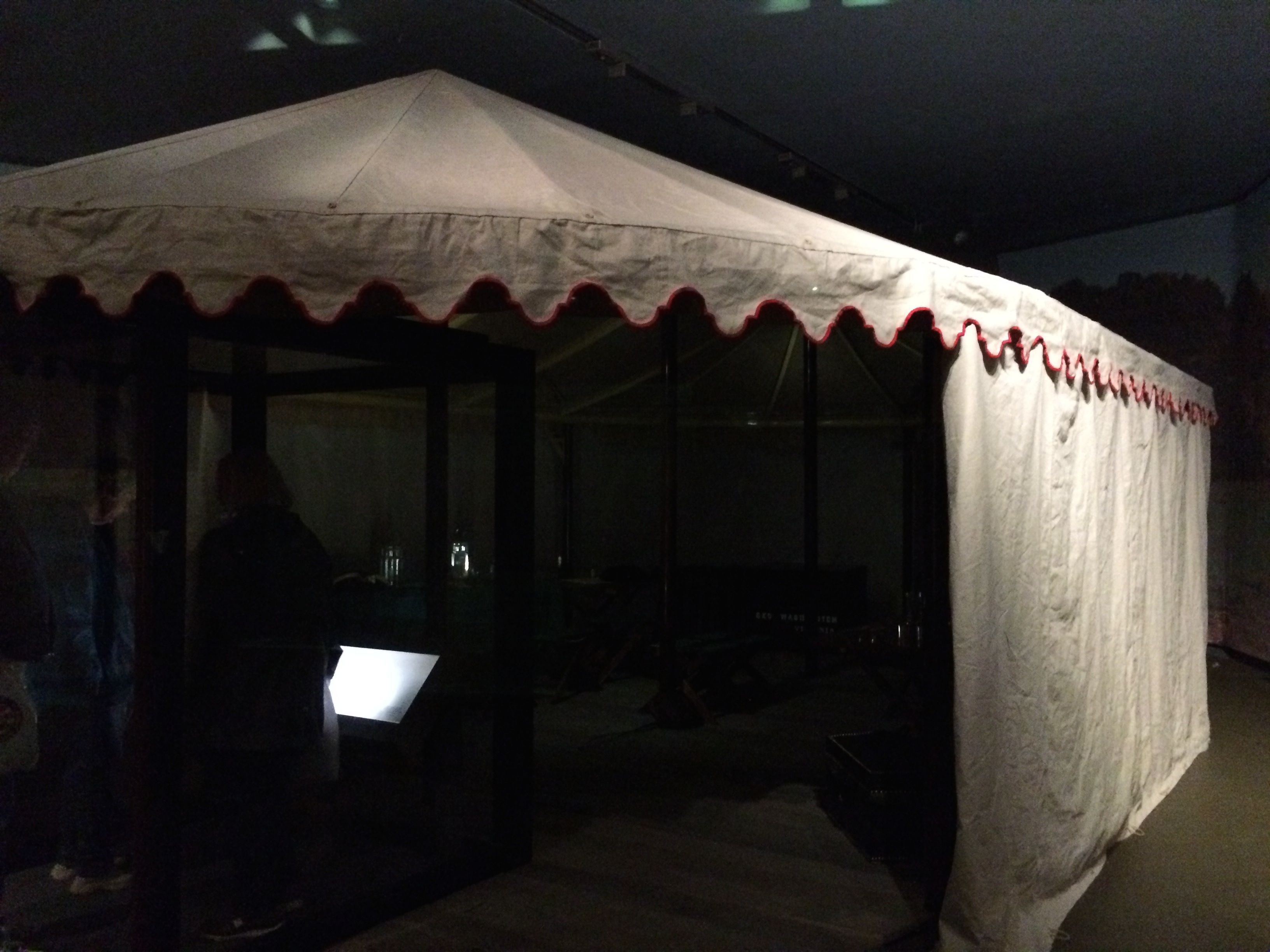
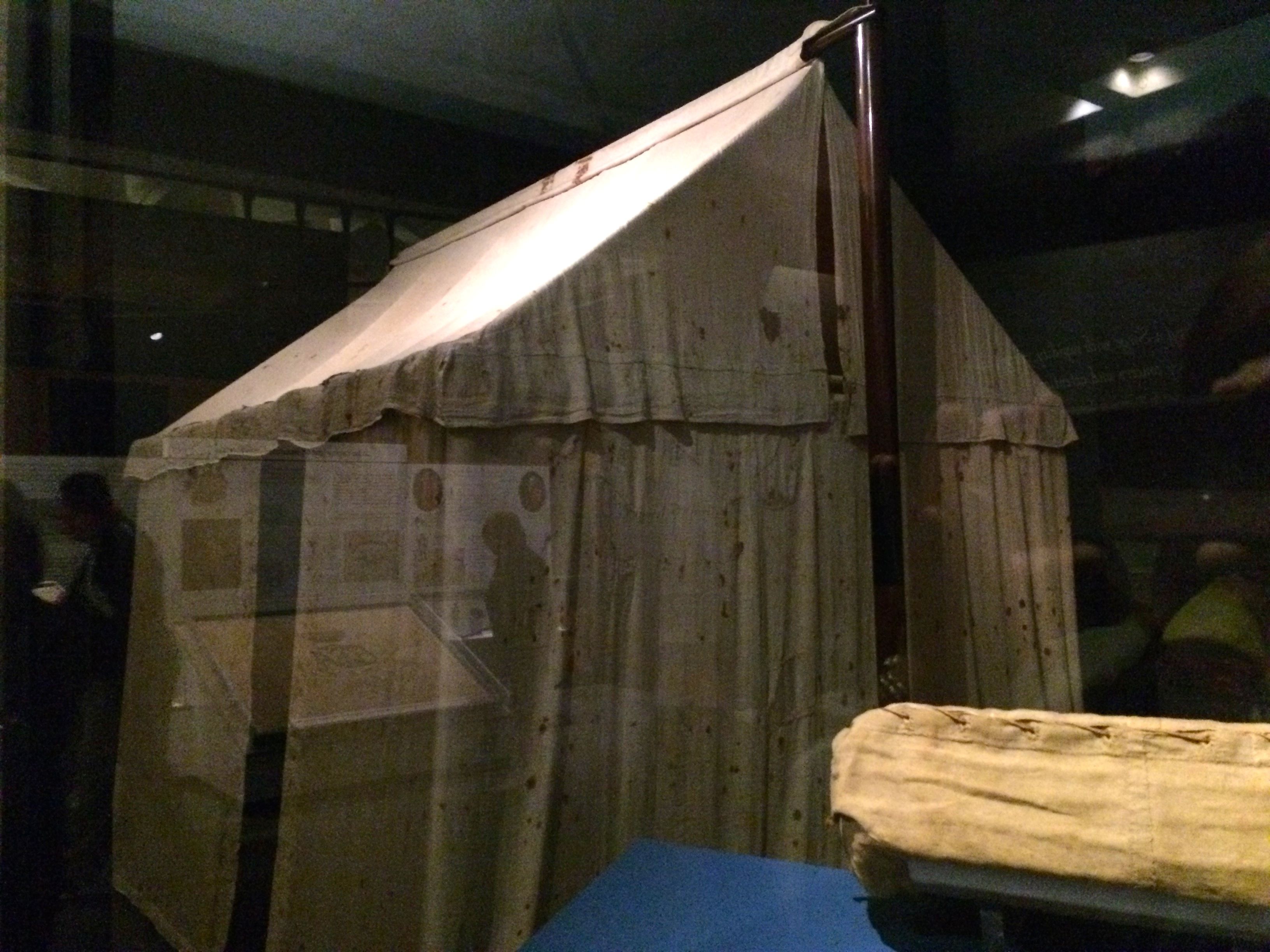
First I toured the museum. Can you believe it? They have Washington’s tent! It was kept in the family and they have all the documentation, so they can prove its provenance. (Thank you Antiques Roadshow for the vocabulary word.)
Washington’s Dining MarqueeWashington’s tent
It was kind of hard to take pictures of these artifacts. They were behind glass and kept under low light.
They also had a cannon called “The Lafayette”. The story is that Lafayette recognized this cannon when he came back to the United States in 1824. He recognized it by the ding in the barrel.
I am SO GLAD that I opted to listen to the ranger. She really made the place come alive! A strong storm was just about to sweep into the area, so she did her talk indoors. It was powerful in an empty room. I wonder what the talk would have been like on the battlefield.
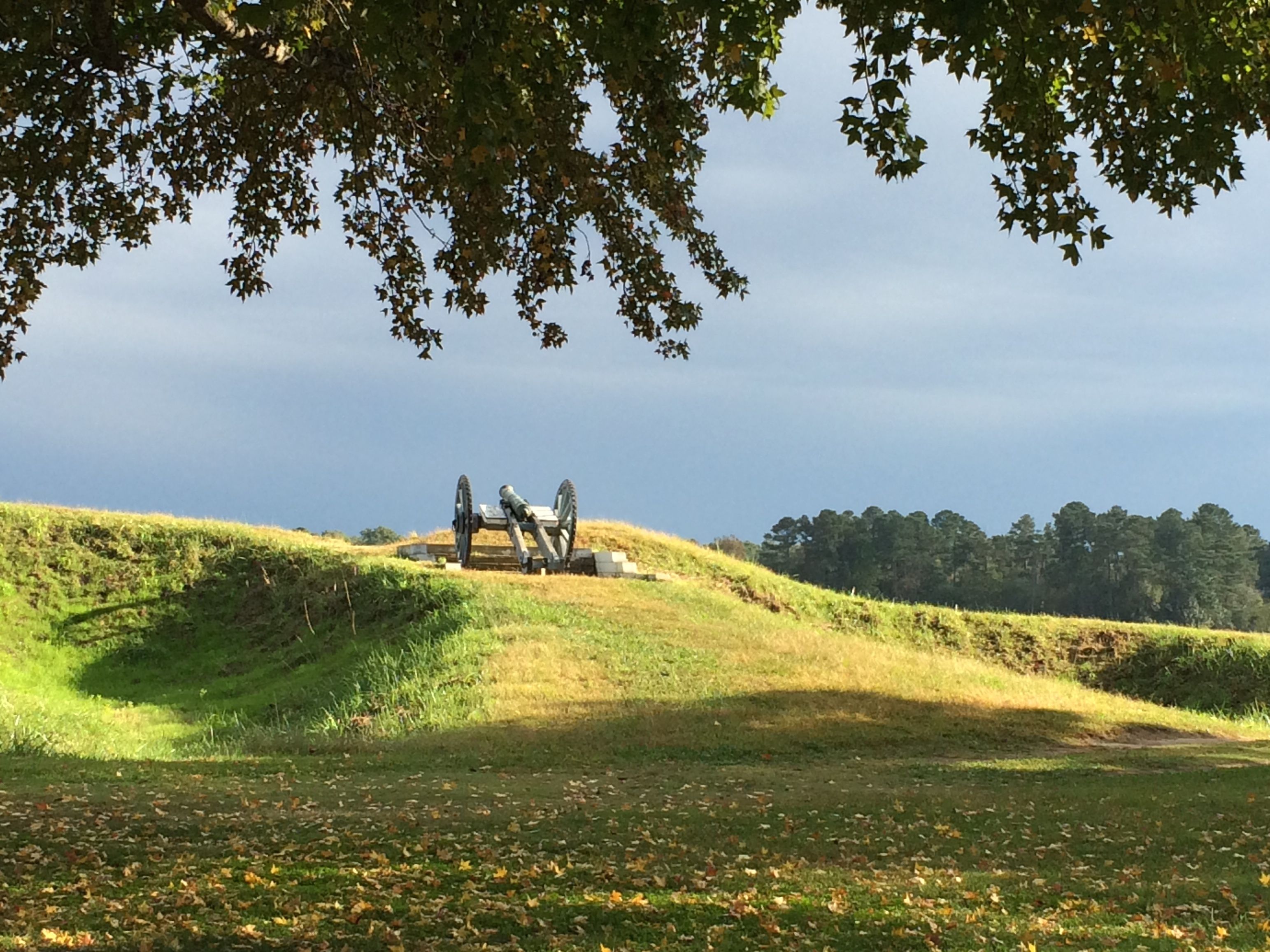
One thing that she told us was that the earthworks outside the visitor center were the actual earthworks from the battle. They weren’t recreations, although They were added to by the Confederates during the Civil War and the Works Progress Administration (WPA) tidied things up a bit during the Depression, but the real, original earthworks from the battle are still out there.
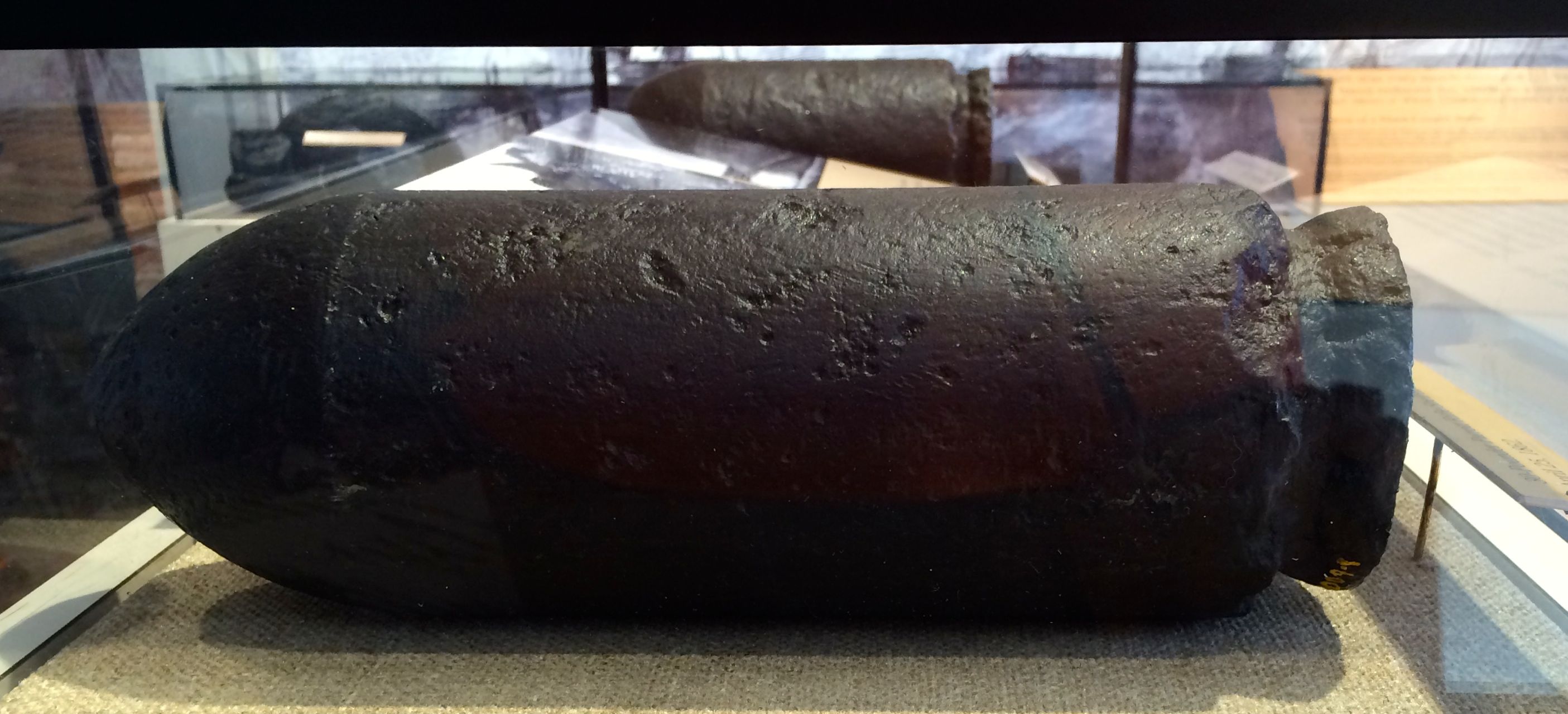
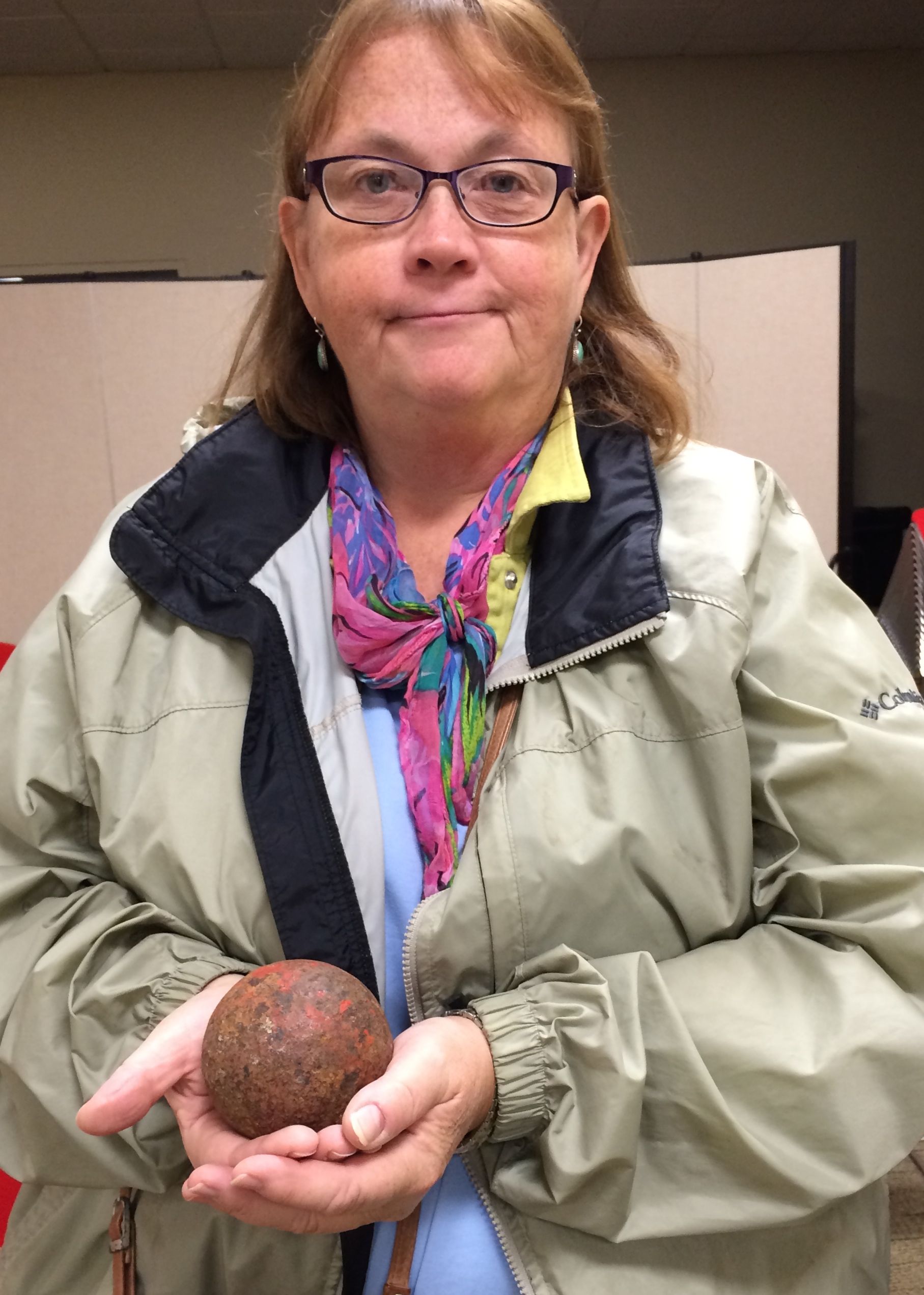
Talk about real! This is a real cannonball that was fired in the battle.
The ranger really drove home how close the Revolution came to failing. Washington was just barely holding on up near New York City. He got the word that the French were going to be able to help out down in Virginia, and he managed to sneak most of the Continental Army away before the British knew they were gone.
While the Army was slogging southward, Washington and Count de Rochambeau took a slightly different route and stopped off at Mount Vernon. This was the first time Washington had been back at his beloved home since the beginning of the war.
Lafayette was already In Virginia, with orders from Washington to prevent a land escape by Cornwallis from Yorktown. In the meanwhile, a large French fleet under the direction of Count de Grasse prevented British reinforcements from arriving and kept Cornwallis bottled up in Yorktown.
The combined armies of Washington and Rochambeau managed to cover the 200 miles from New York City to the head of Chesapeake Bay in 15 days. The French fleet transported the men down to Virginia where they joined up with Lafayette and encircled Yorktown.
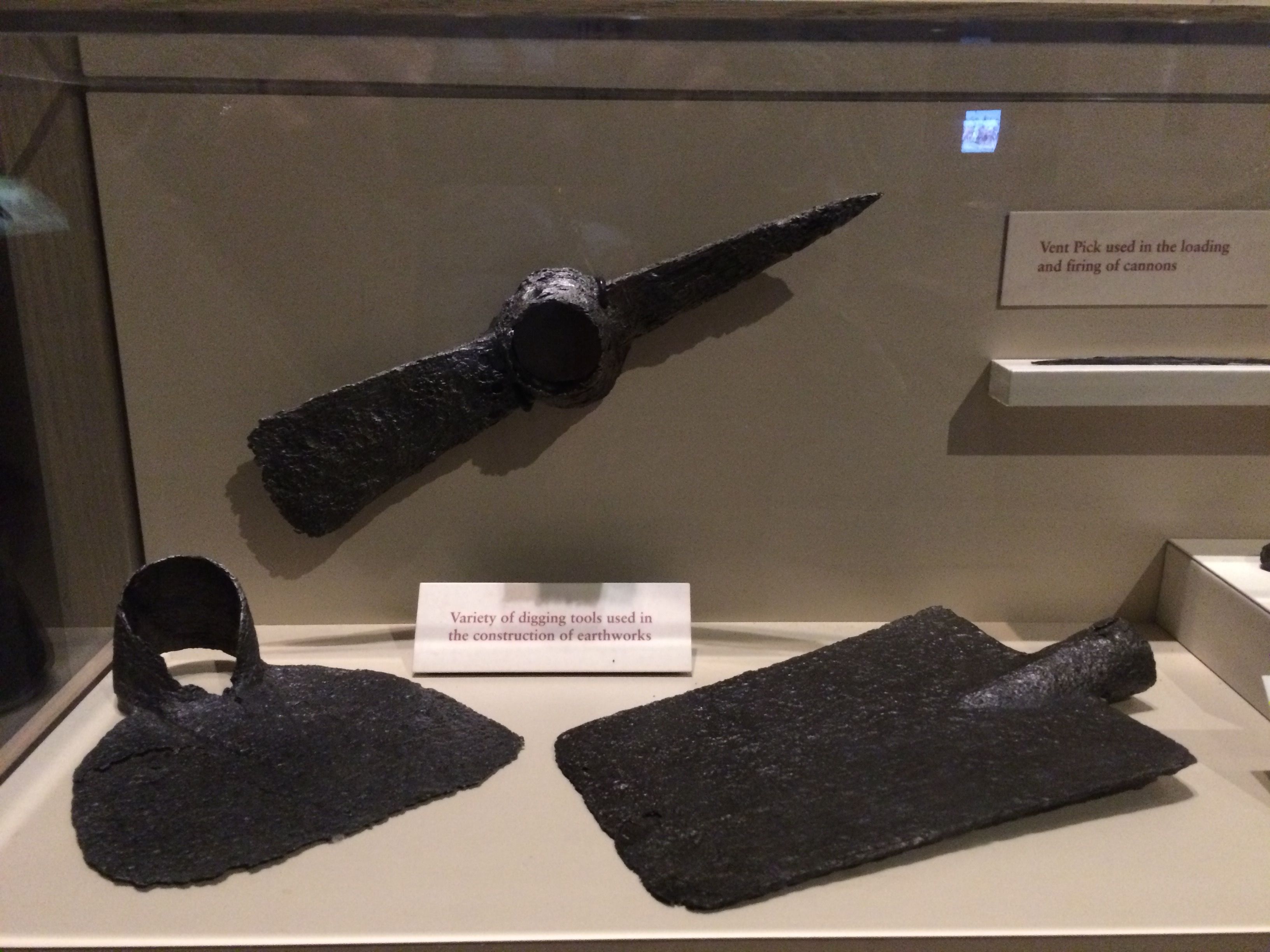
Tools used in digging the earthworks
The amazing thing was that the armies met up and dug the earthworks without being detected. According to the ranger, it was raining fiercely. It softened the soil and muffled the sounds of the digging. These tools contributed mightily to the success of the operation.
The French had brought in the cannons and they started raining lead down on the British.
The British fought back as best they could, but their reinforcements never arrived. Cornwallis sent out a drummer and a messenger bearing a white flag asking for a parlay.
Cornwallis wasn’t able to escape and he wasn’t able to fight, but he didn’t want to agree to the terms of surrender – which were the same terms of surrender that he extended to the Continentals when the British defeated them at Charleston, South Carolina.
The surrendering soldiers had to march out with their colors furled, surrender their arms and then leave for detention. The officers got to keep their side arms and then leave for Britain or a British-occupied American port. They also had to play a mournful song, “The World Turned Upside Down.” According to the ranger, the terms were almost a deal-breaker for Cornwallis. In fact, they disturbed him so greatly that he was “sick” on the day of surrender and refused to attend the ceremony.
After the engaging talk, I headed for the exit. The storm had blown over and the sky was clear. I decided to take the driving tour around the battlefield and town. Somehow, I managed to miss the direction signs and turned a corner. The battlefield and the earthworks were right next turn the town!
In fact, down by the shore of the river, below the bluff, was a place where the British tried to take shelter during the shelling.
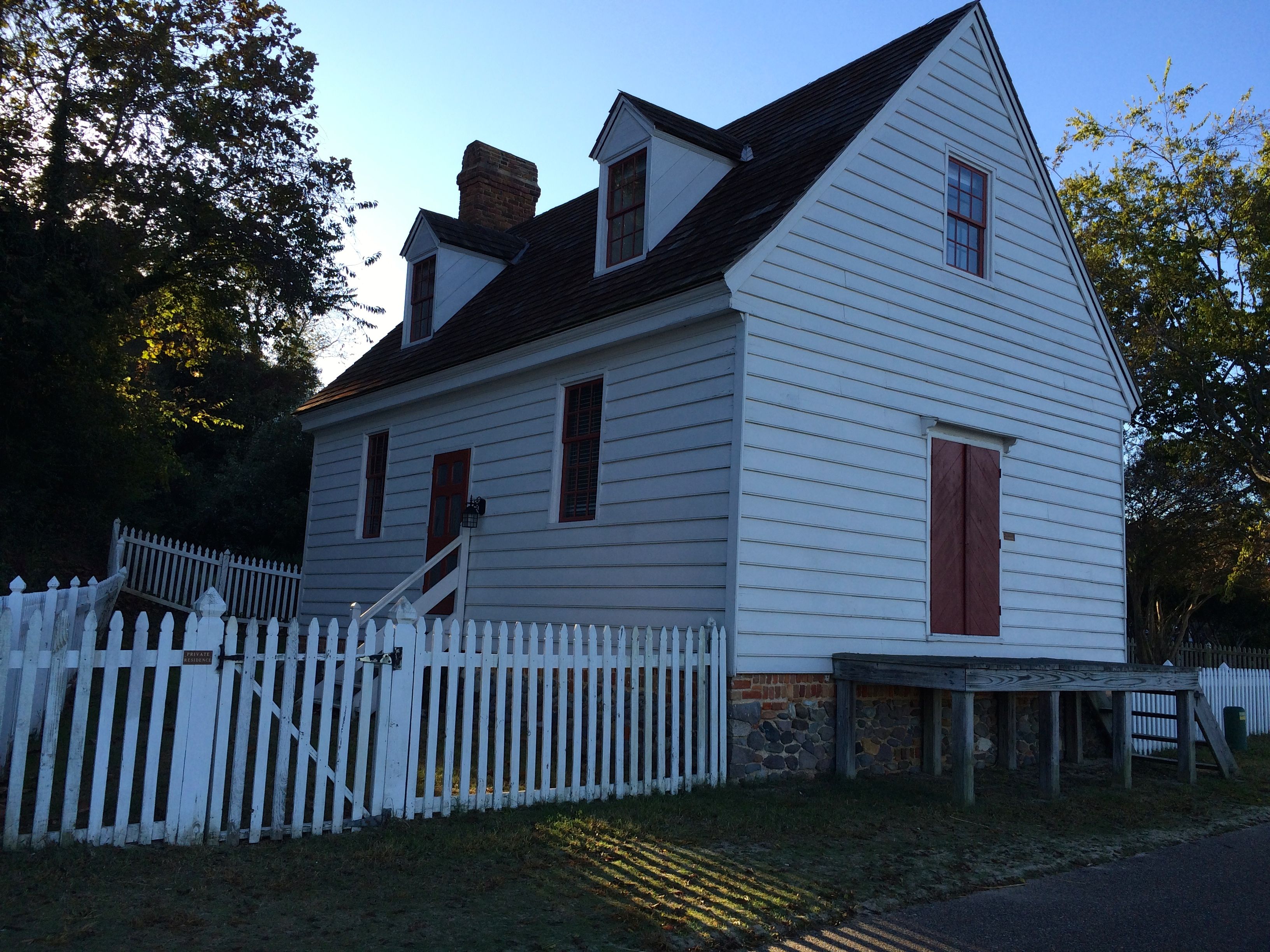
This is a reconstructed house of the sort that was in the part of the town called “under the hill”.
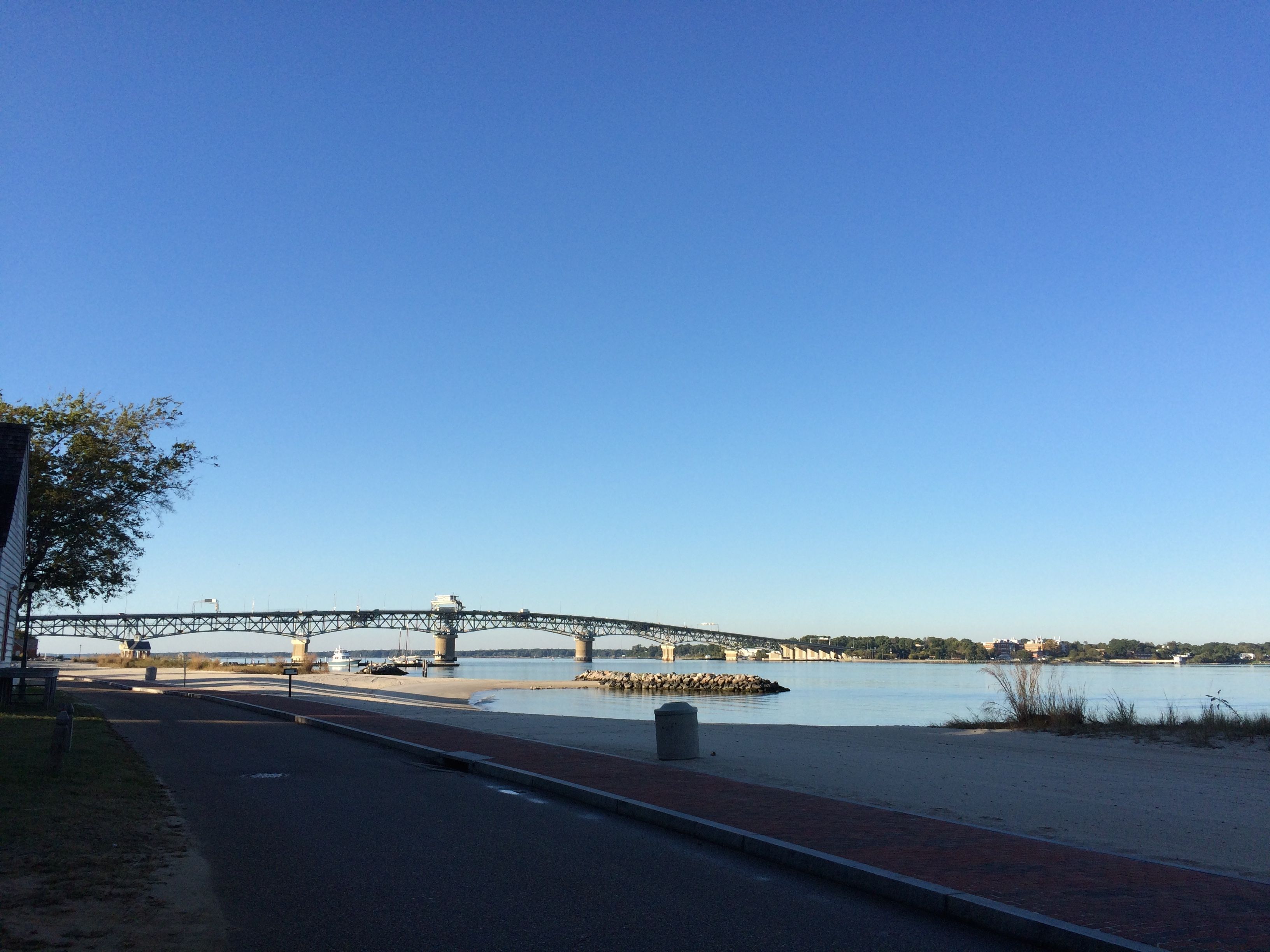
Here is the view today. I imagine that is was not as tranquil in 1781. Oddly enough, I was making my visit right at the time of the year when the battle was taking place, a mere 234 years ago.
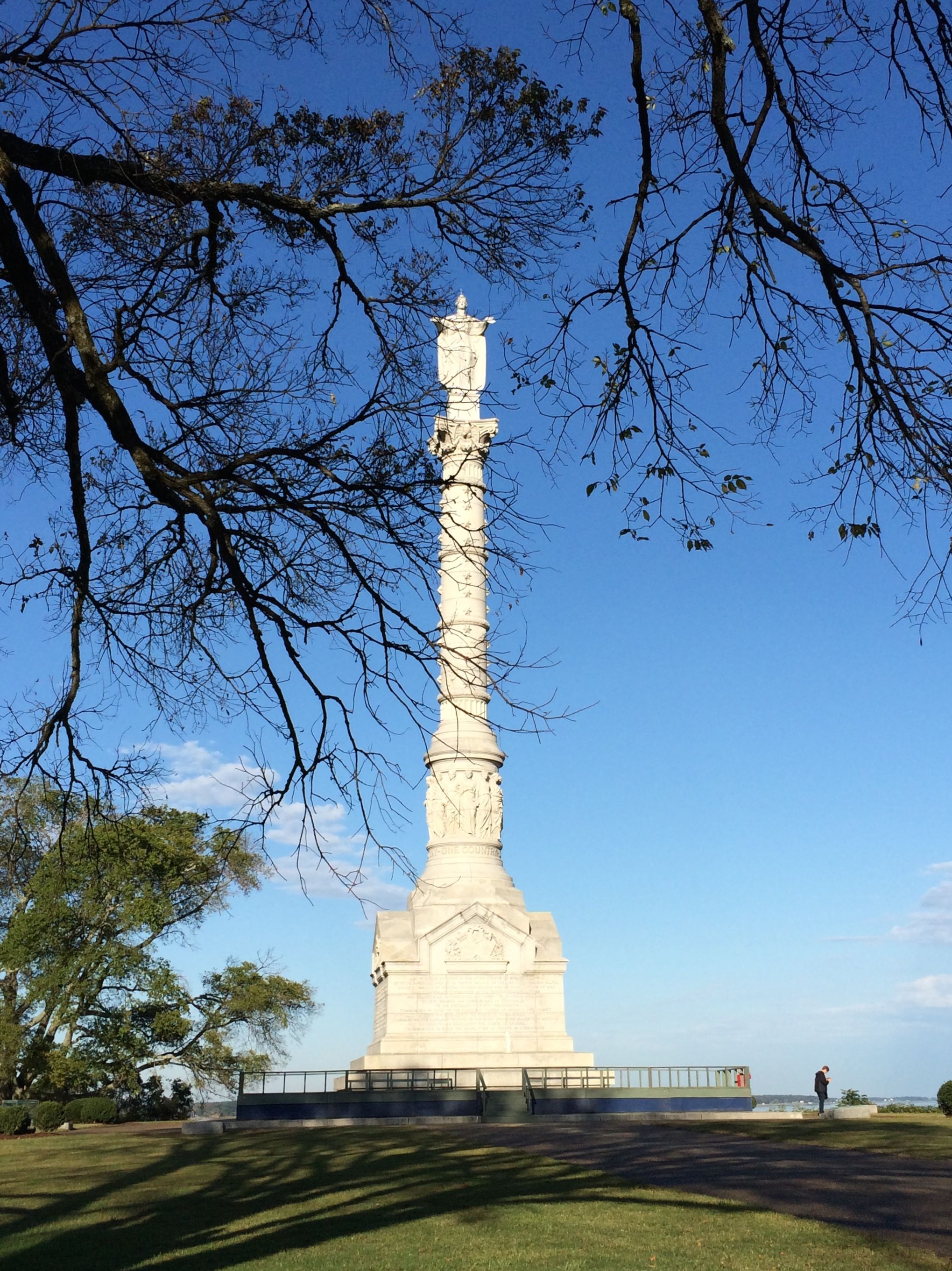
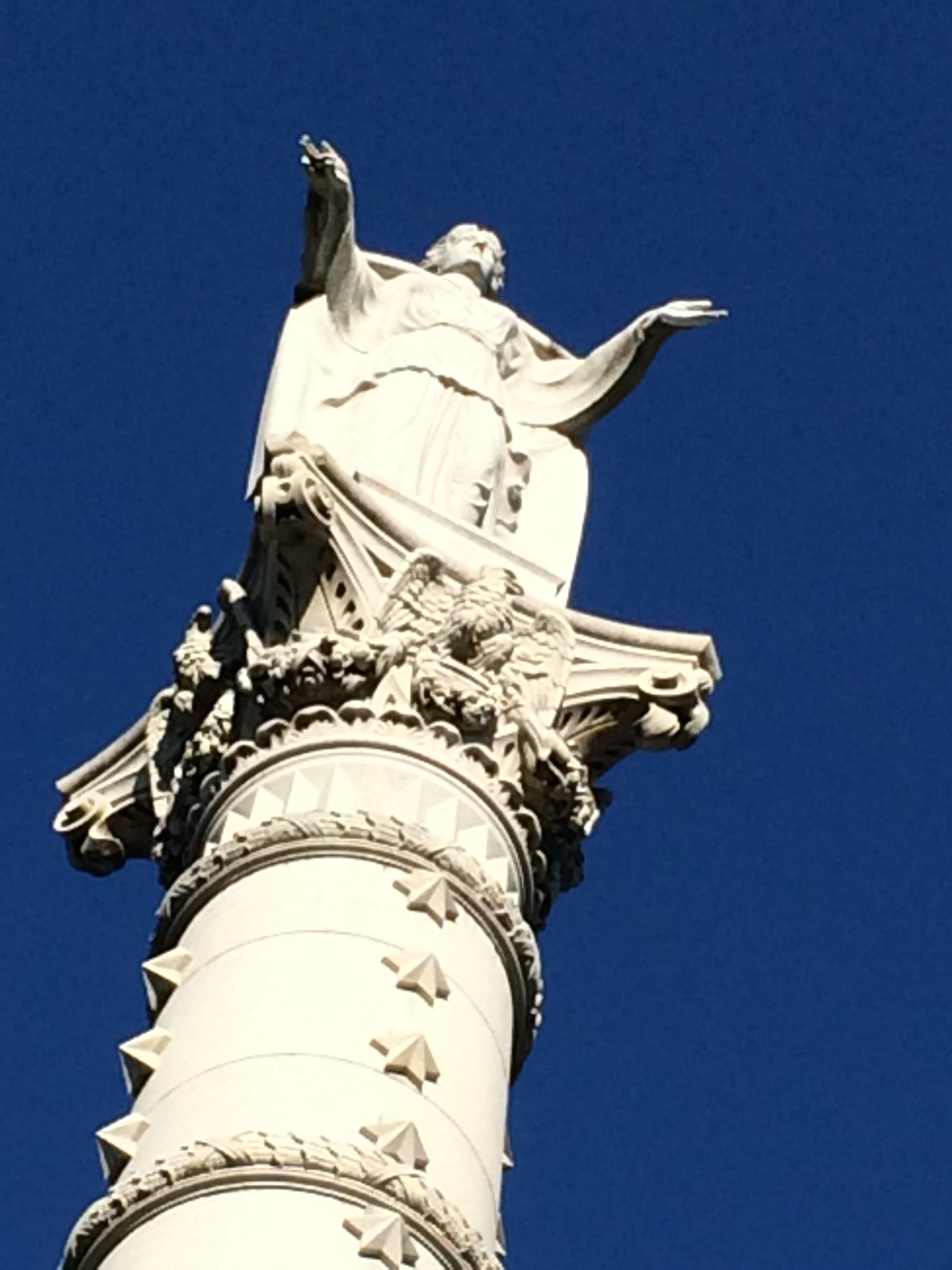
Yorktown Victory Monument
I was impressed that there was a plaque written in French and English. We owe so much to the French – and I didn’t realize just how much until the ranger’s talk.
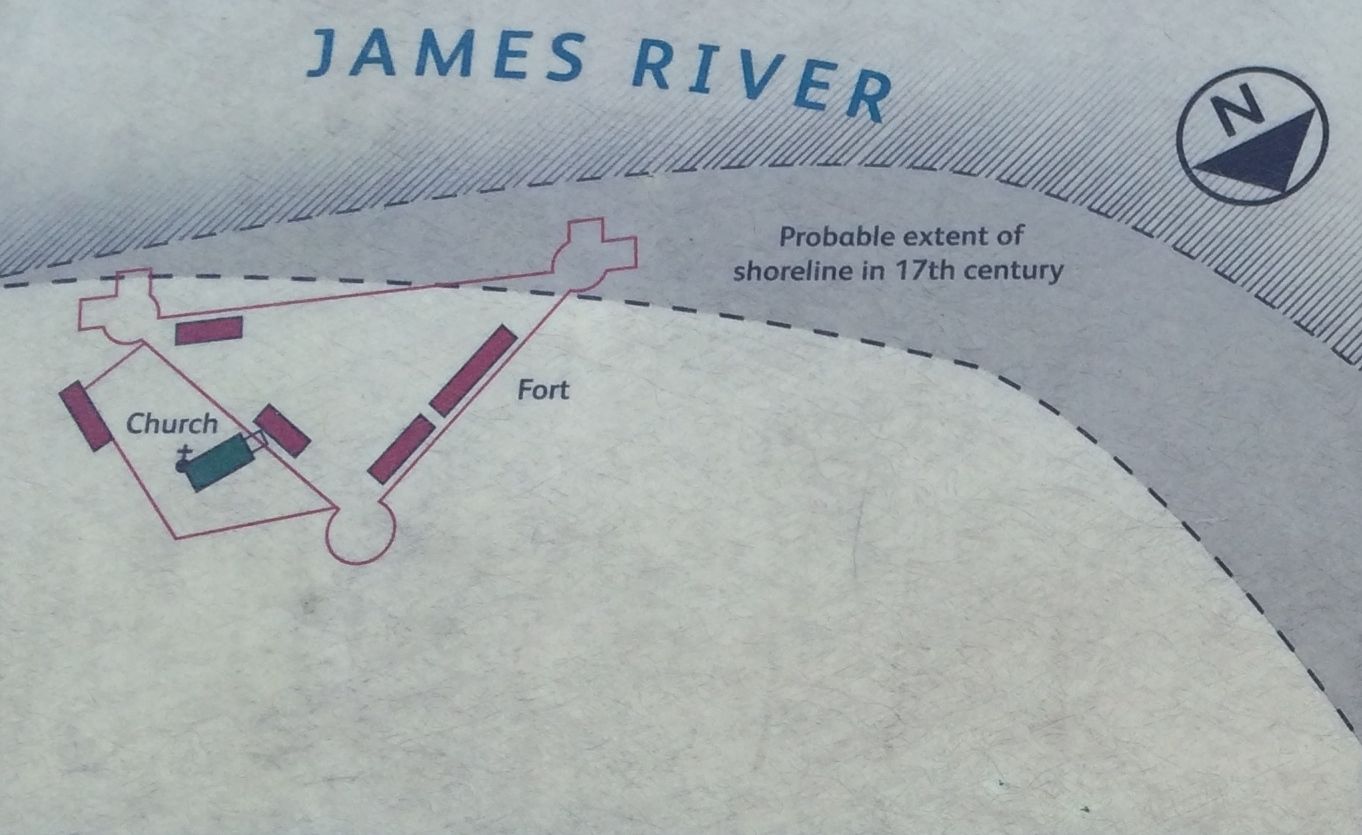
In 1607, the first permanent English settlement was established. It was called James Fort, and is considered to be where the English Empire began, according to William Kelso, who is and archeologist and director of Preservation Virginia Jamestown Rediscovery project.
I started off my visit with a trip thought the museum, which helped to set the stage for what was to come. Quite frankly, what I had known about Jamestown had slipped my mind.
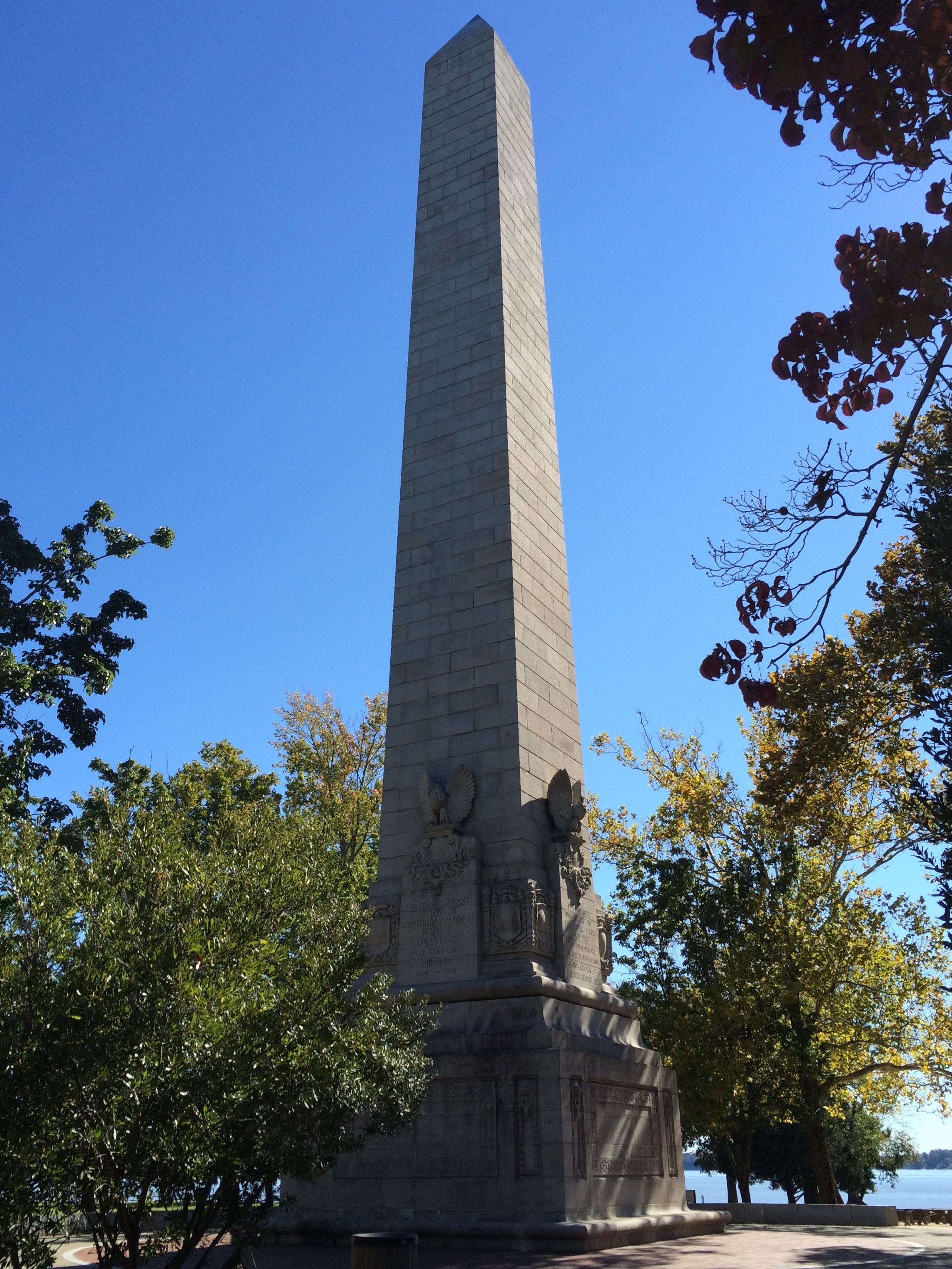
The first thing I came across was a monument to Jamestown’s 300th anniversary.
300th Anniversary Obelisk
Interestingly enough, this monument is already over 100 years old. You know you are in an old part of the country when the memorial monuments could have their own memorials!
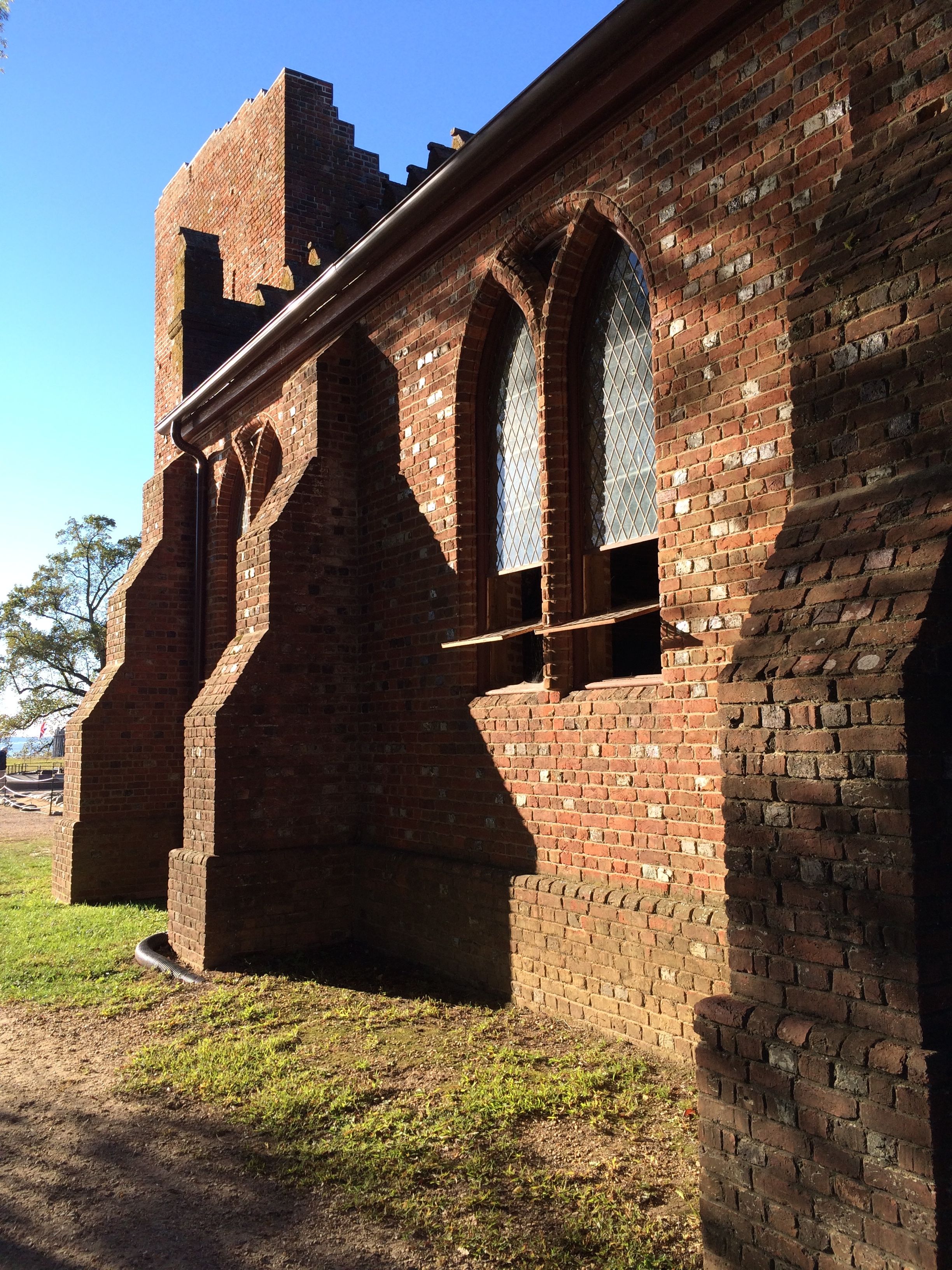
Memorial Church
This church was also erected to commemorate the 300th anniversary.
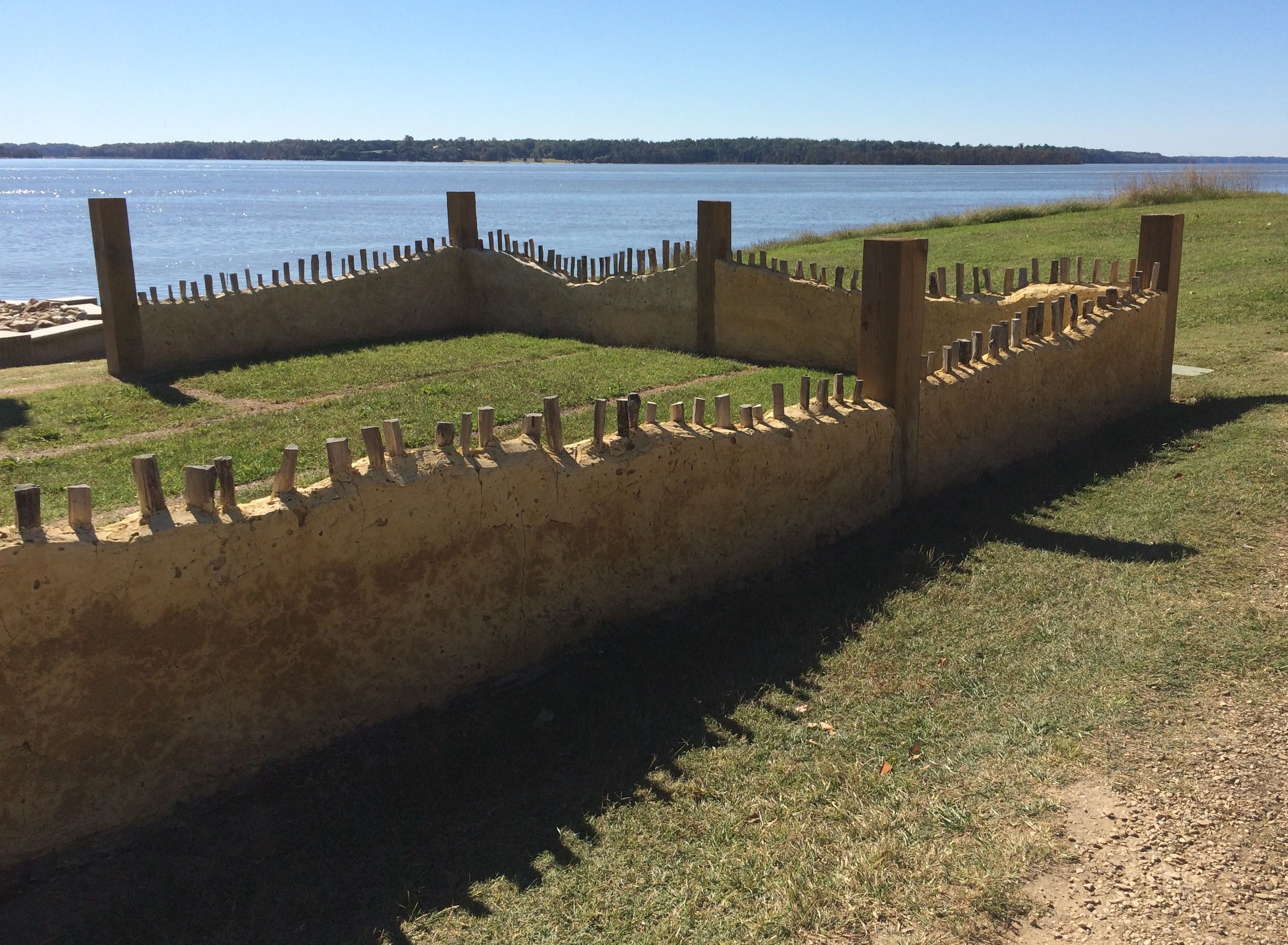
Church Outline
The real church is no longer standing. This is the outline of the building that the archeologists have found. There was nothing left above ground.
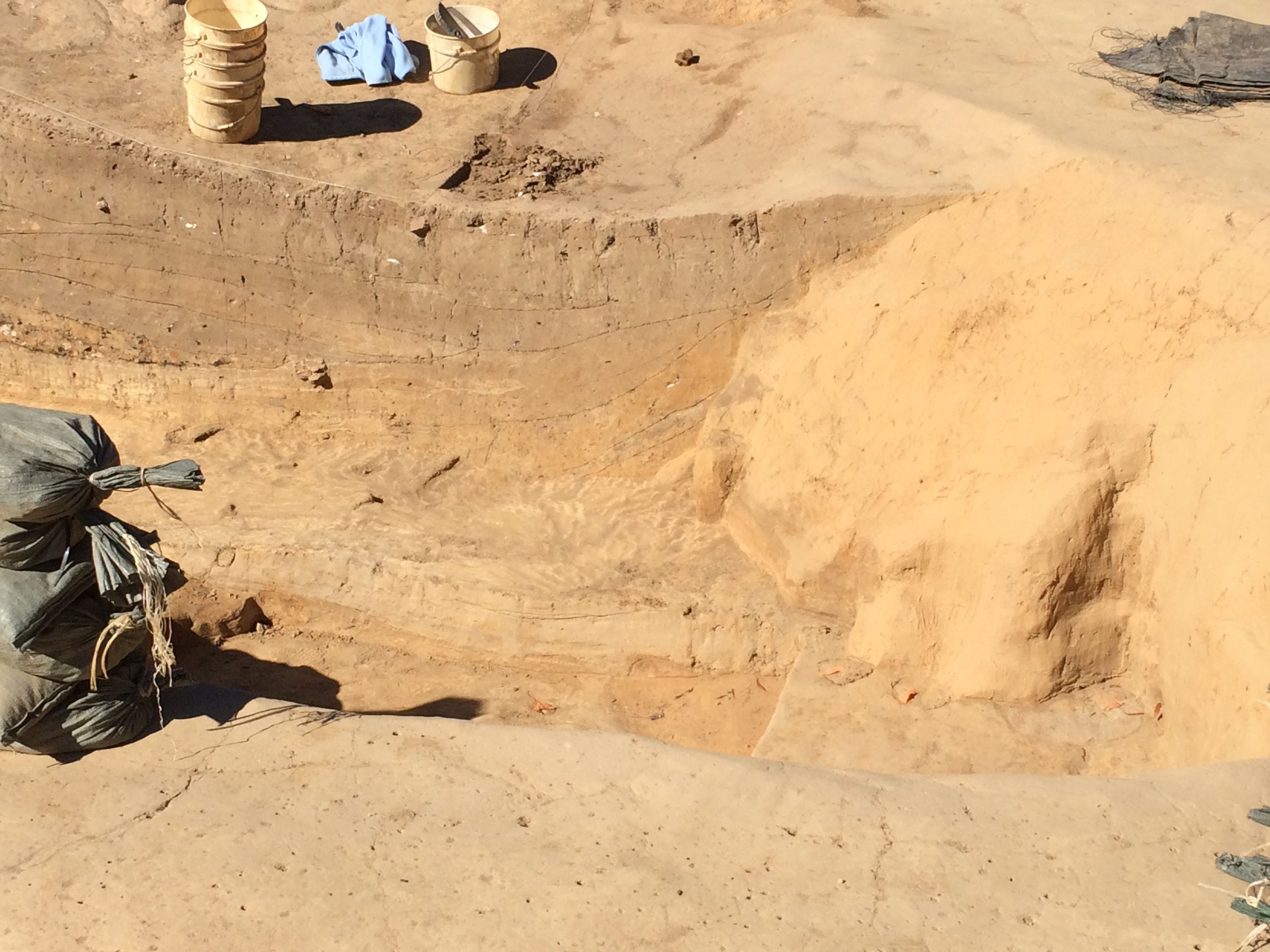
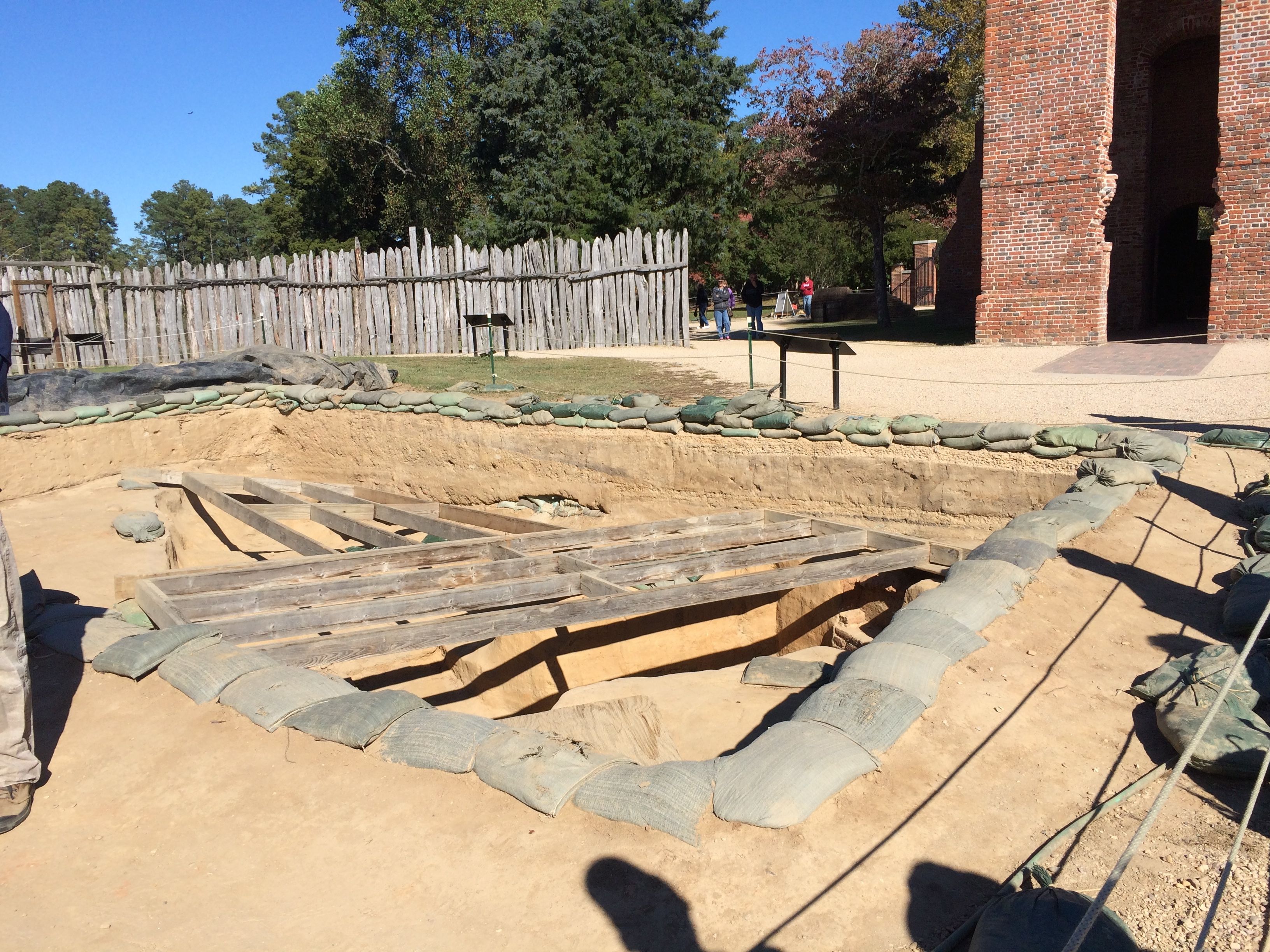
This is an active archeology site. They do a lot to make the history come alive, but when you get right down to it, archeology of this type isn’t alway a lot to look at.
Excavation Site
There were a couple of active excavation sites that I saw while I was there. This one had an archeologist working. I came upon her when she was explaining what she had just found.
Brass Pin
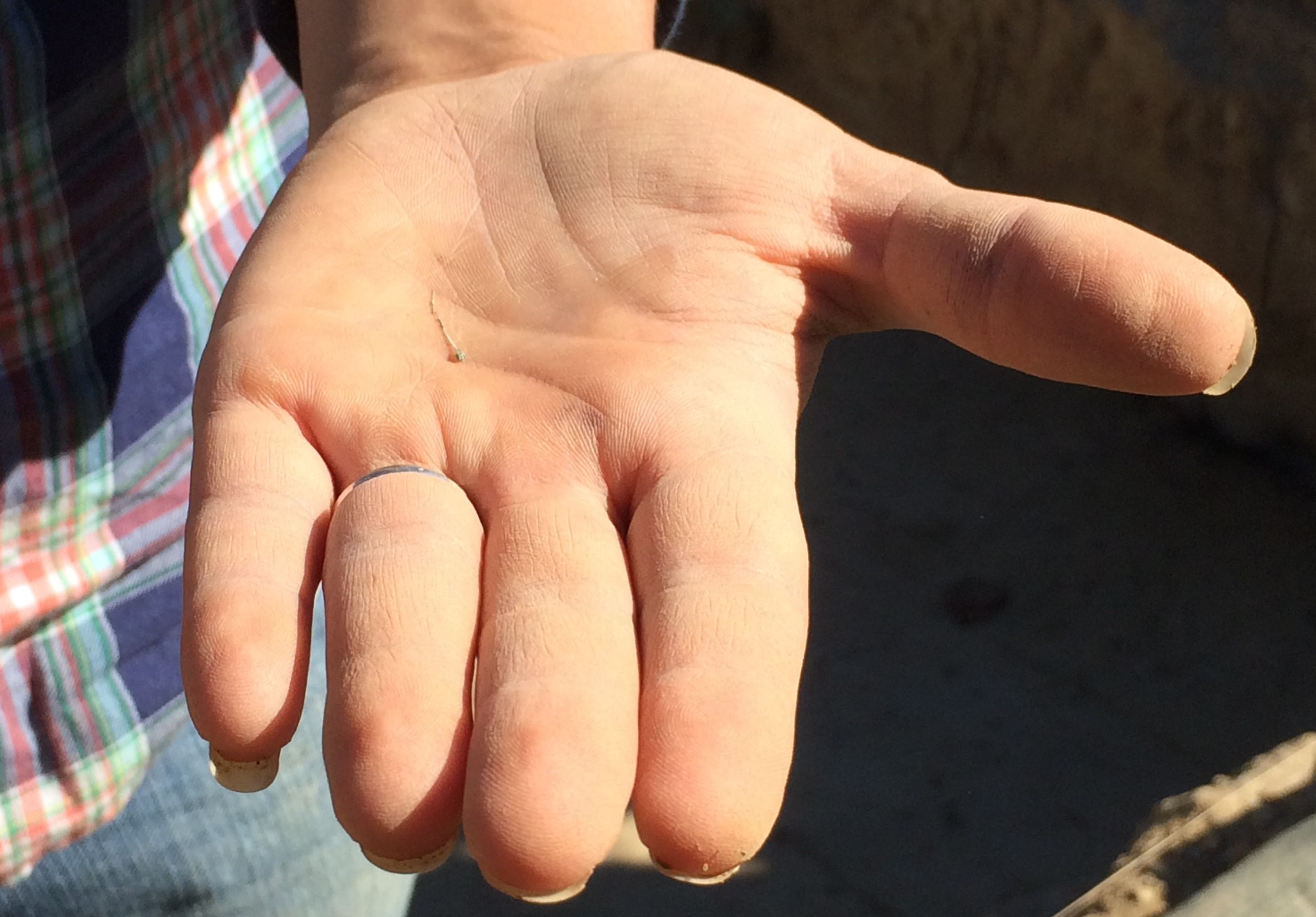
She had just discovered a brass pin. This actually counted as two artifacts, as it was broken into two pieces.
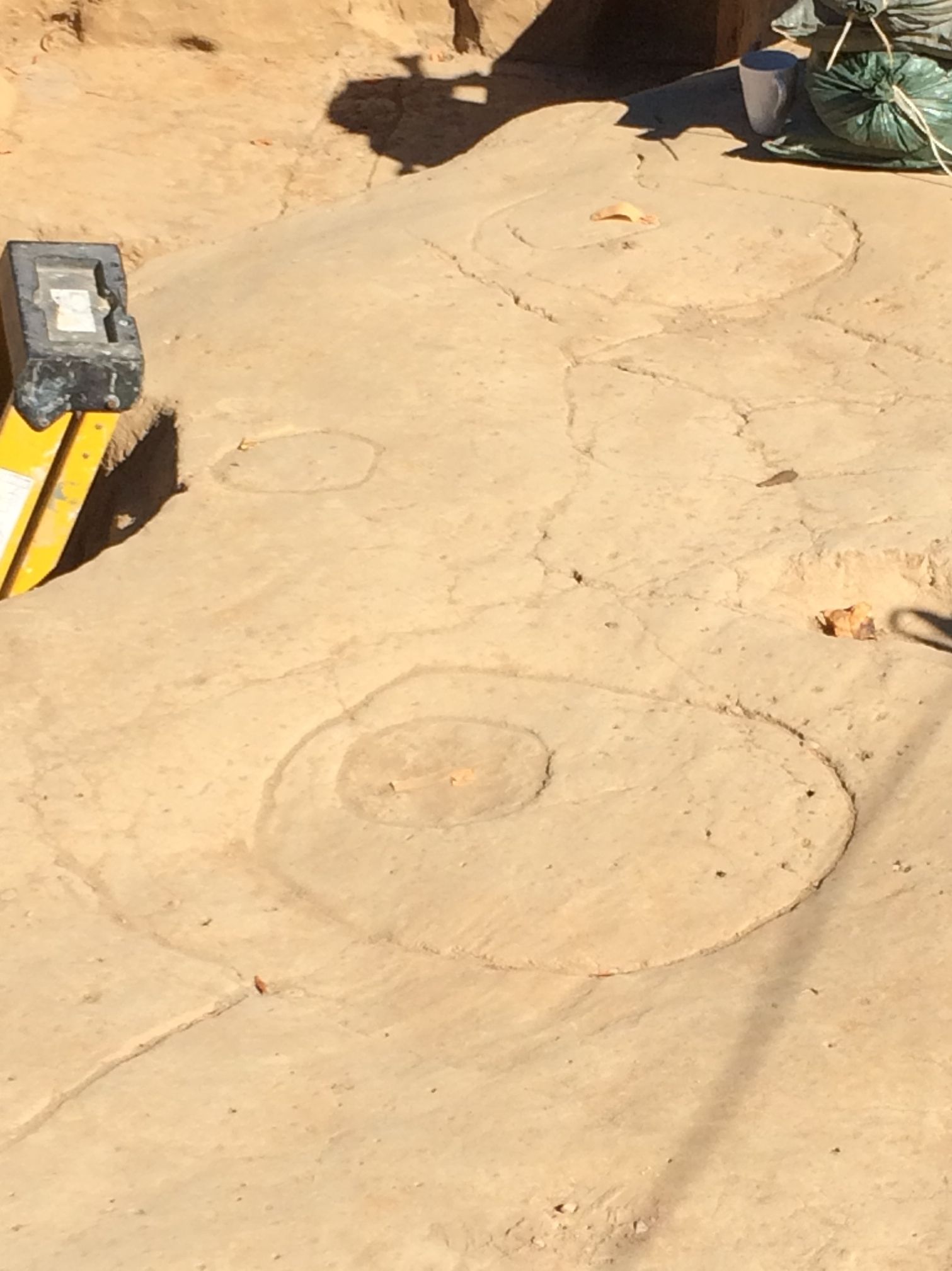
She also explained how they could identify the posts used to hold up the buildings.
The larger circles were the holes the dug to put the posts in. The smaller circles were the remnants of the posts.
I roamed around, trying to find more information about Jamestown – anything that might jog my memory.
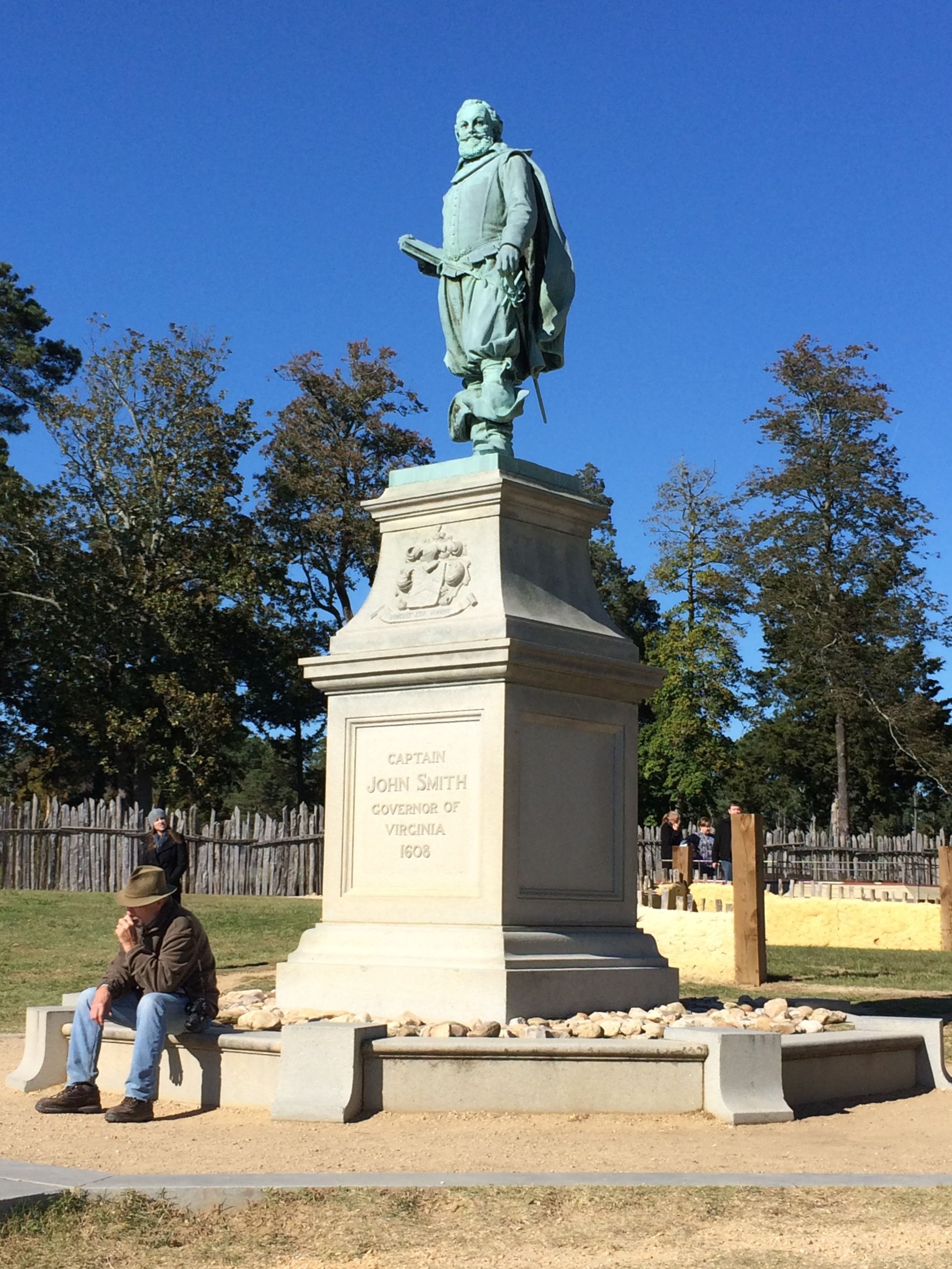
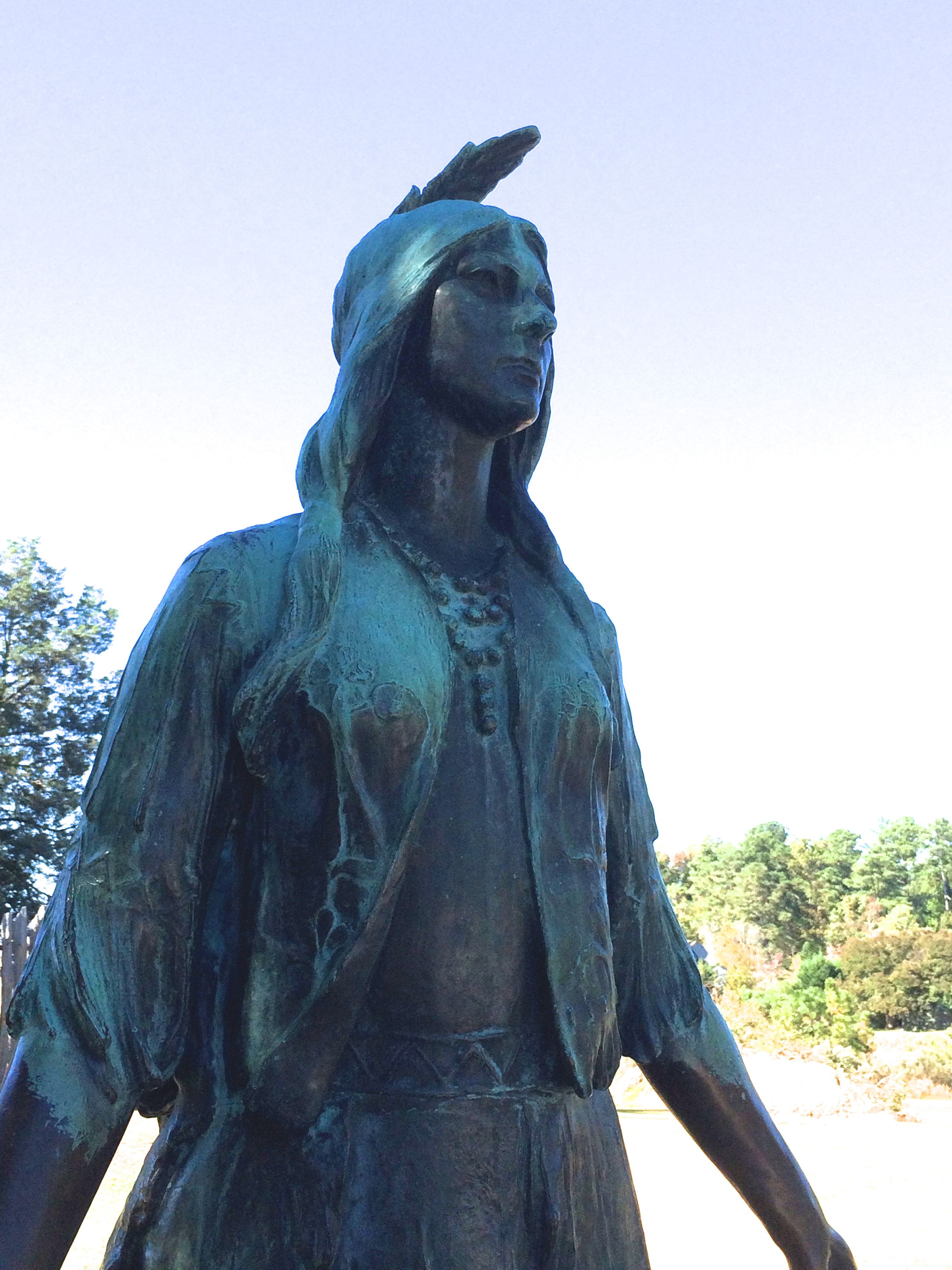
Oh, yeah, and Pocahontas. There is that story that Smith told about Pocahontas saving his life when her father was going to kill him. Most historians say that this story is not true.
Pocahontas did end up converting to Christianity while she was in captivity and she took the name Rebecca. She ended up marrying tobacco planter John Rolfe. In 1616, she went to England with her husband and her son, Thomas. Unfortunately, she died while she was in England and she is buried there. The site of her grave is thought to be underneath the chancel of the parish church of Saint George’s in Gravesend, on the south bank of the Thames river near London. The exact location of her grave isn’t known, though, because the church was destroyed in a fire in 1727.
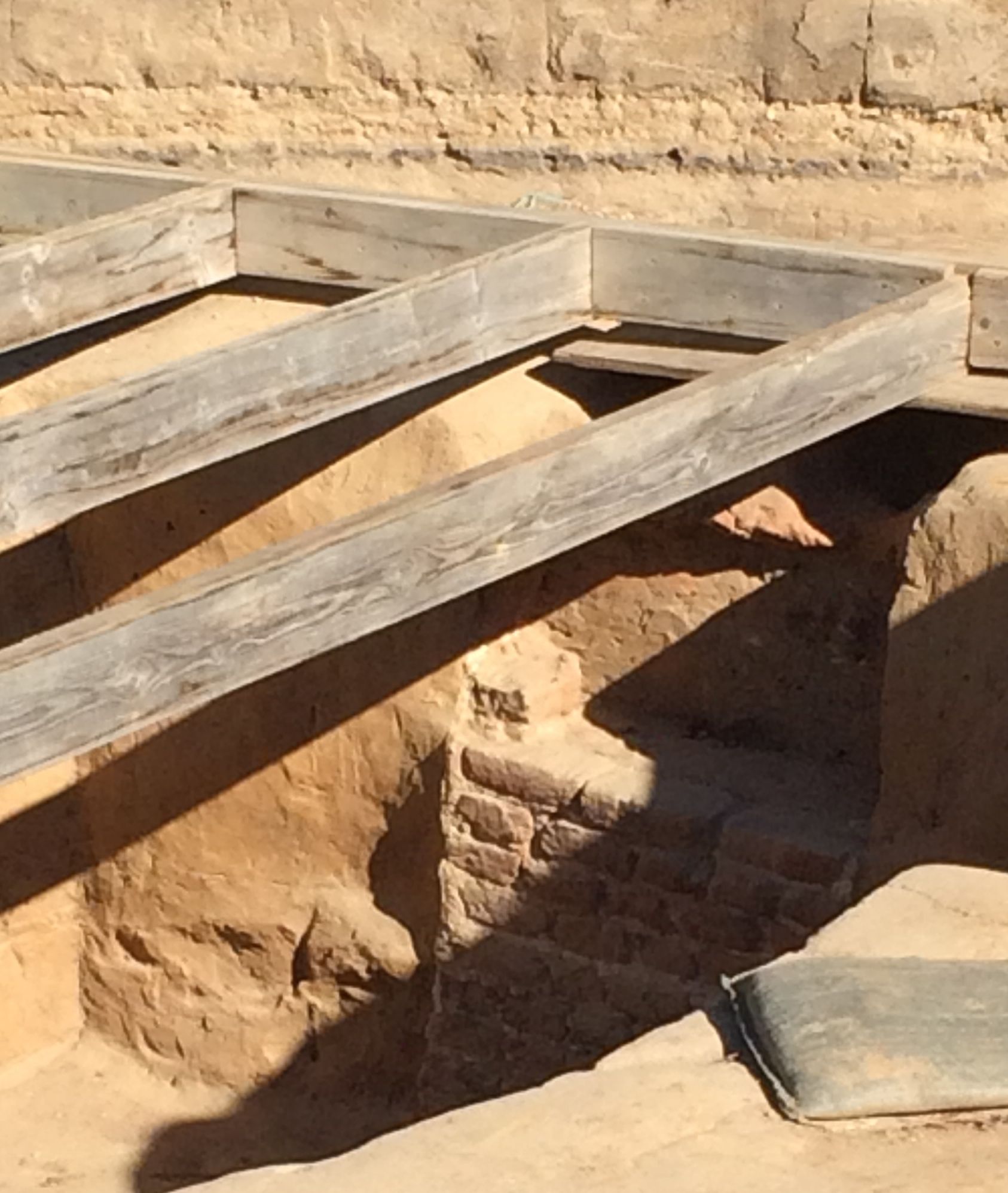
I happened upon another dig with a talk in progress. This time, the talk was being given by one of the archeologists involved with the study of cannibalism during the starving time during the winter of 1609-1610.
From what I understood, a skull with evidence of butchering was found tucked back behind the bricks of the oven in the cellar being excavated here.
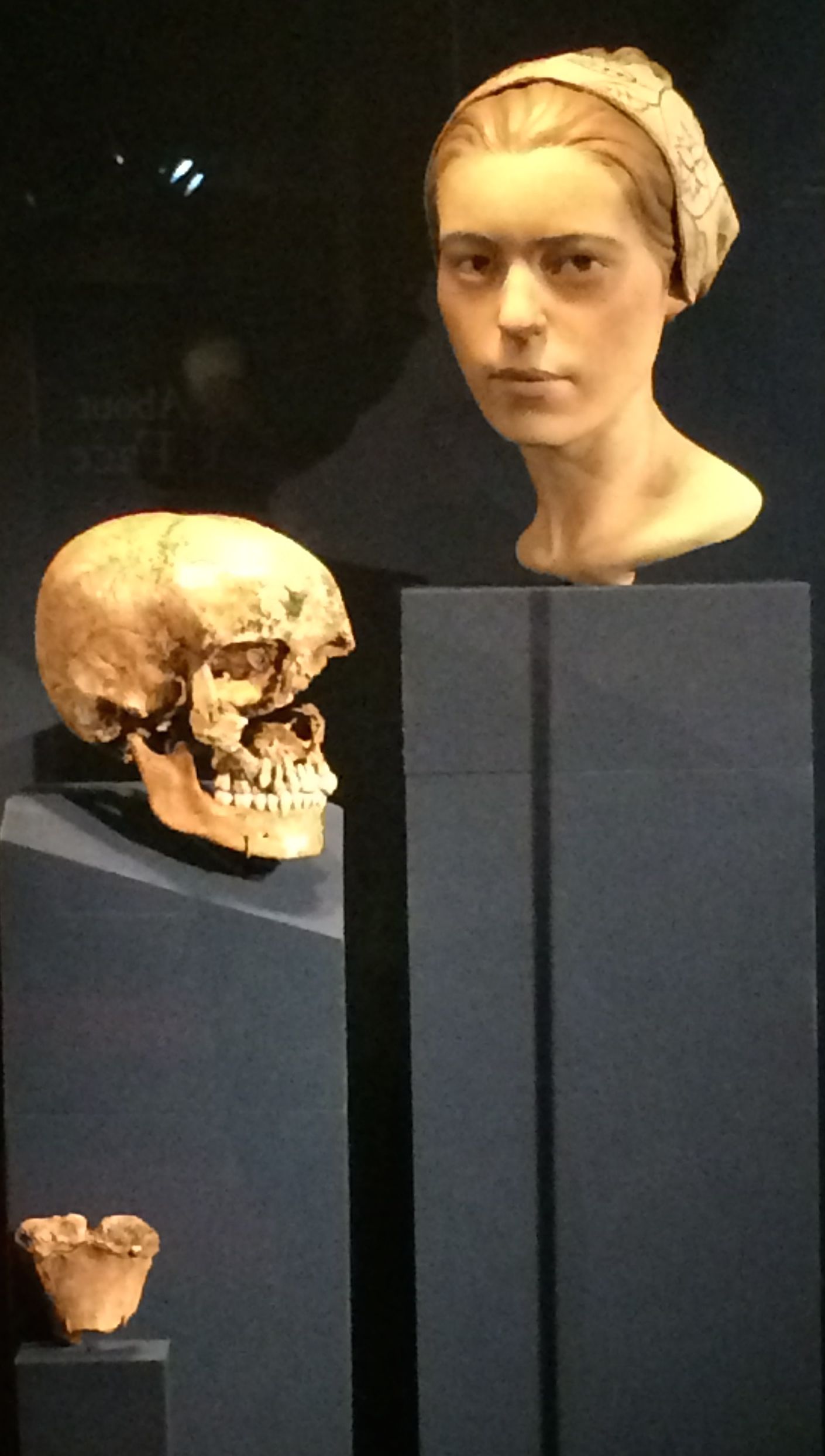
They did forensics on the skull and determined that the cut marks were made postmortem. They did a facial reconstruction and inside the Voorhees Archaearium Archeology Museum, they have a display of the skull and the reconstruction.
They named her Jane, but they have no idea who she really is.
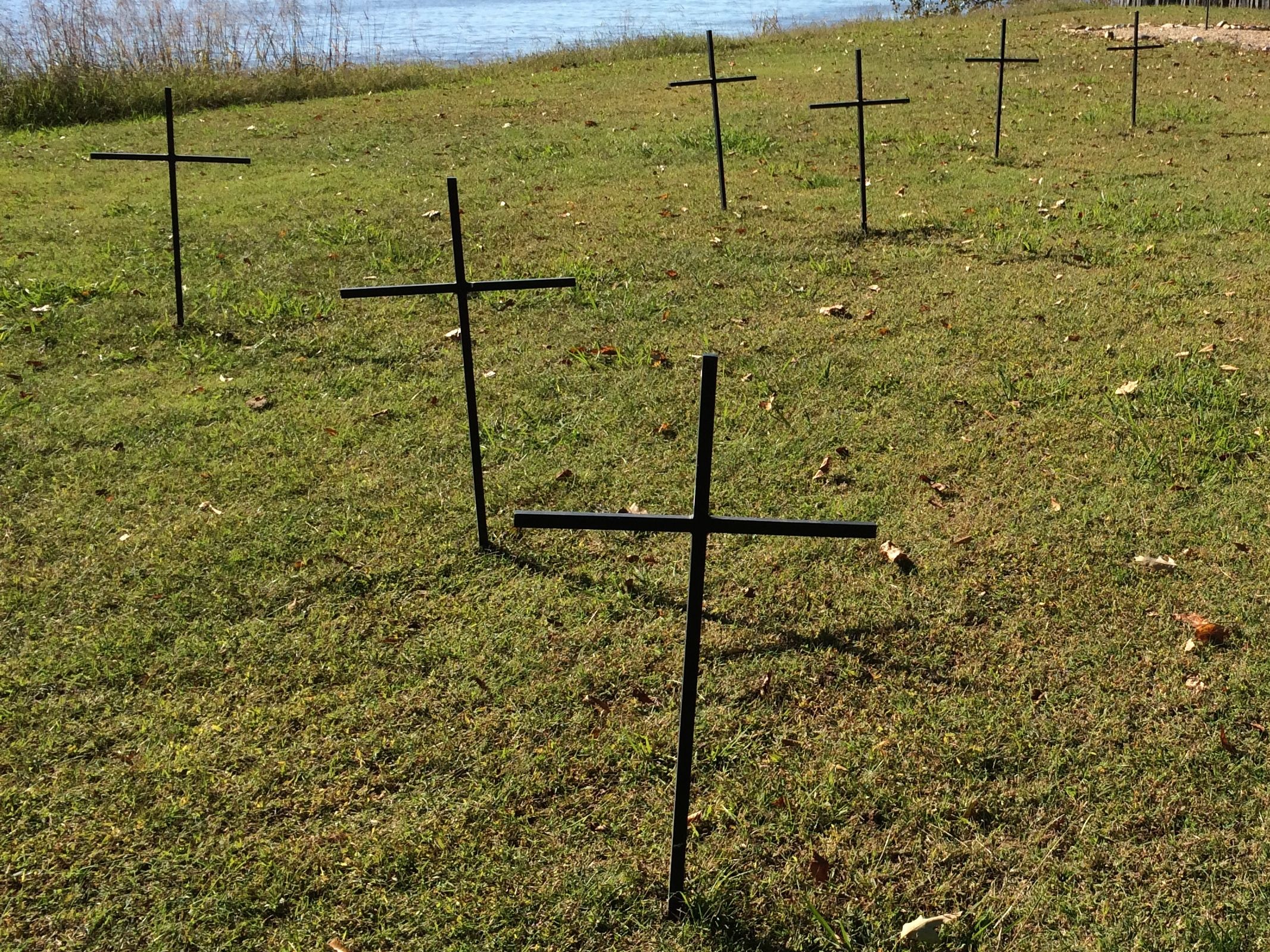
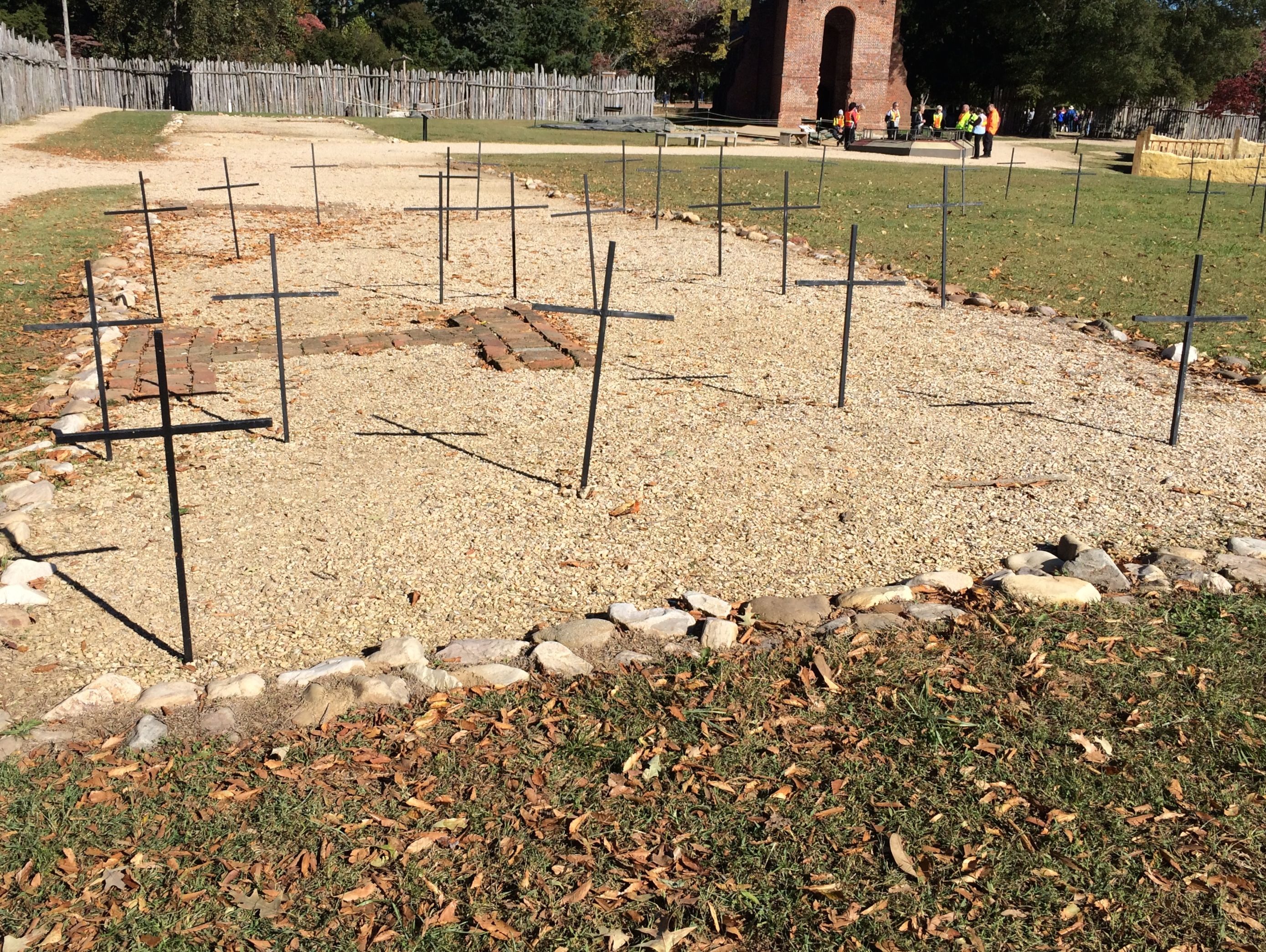
The archeologist – and I really wish I had gotten his name – said that he had these crosses made to mark the graves inside the fort when Queen Elizabeth came for the 400th anniversary. The graves had been marked with wooden crosses, which he said gave the grave an “Old West” feel, which wasn’t in keeping with the era. He said that they had some old wrought iron fence, so he had a welder use the fence to make these crosses.
Archeologists have discovered 30 grave shafts located beneath this building, known as Councillors’ Row. The graves predate the 1611 building, so they believe that these graves were from the summer of 1607, when only 38 of the 104 original settlers survived.
Site of the First Landing
This spot is close to the site of the first landing. Erosion has worn away the actual site. There is a marker nearby that commemorates the landing – I just didn’t make a random guess.
Army Corps of Engineers Survey Marker
All sorts of disciplines contribute to keeping track of the land and how it changes over time. They have seawalls up now to inhibit further erosion.
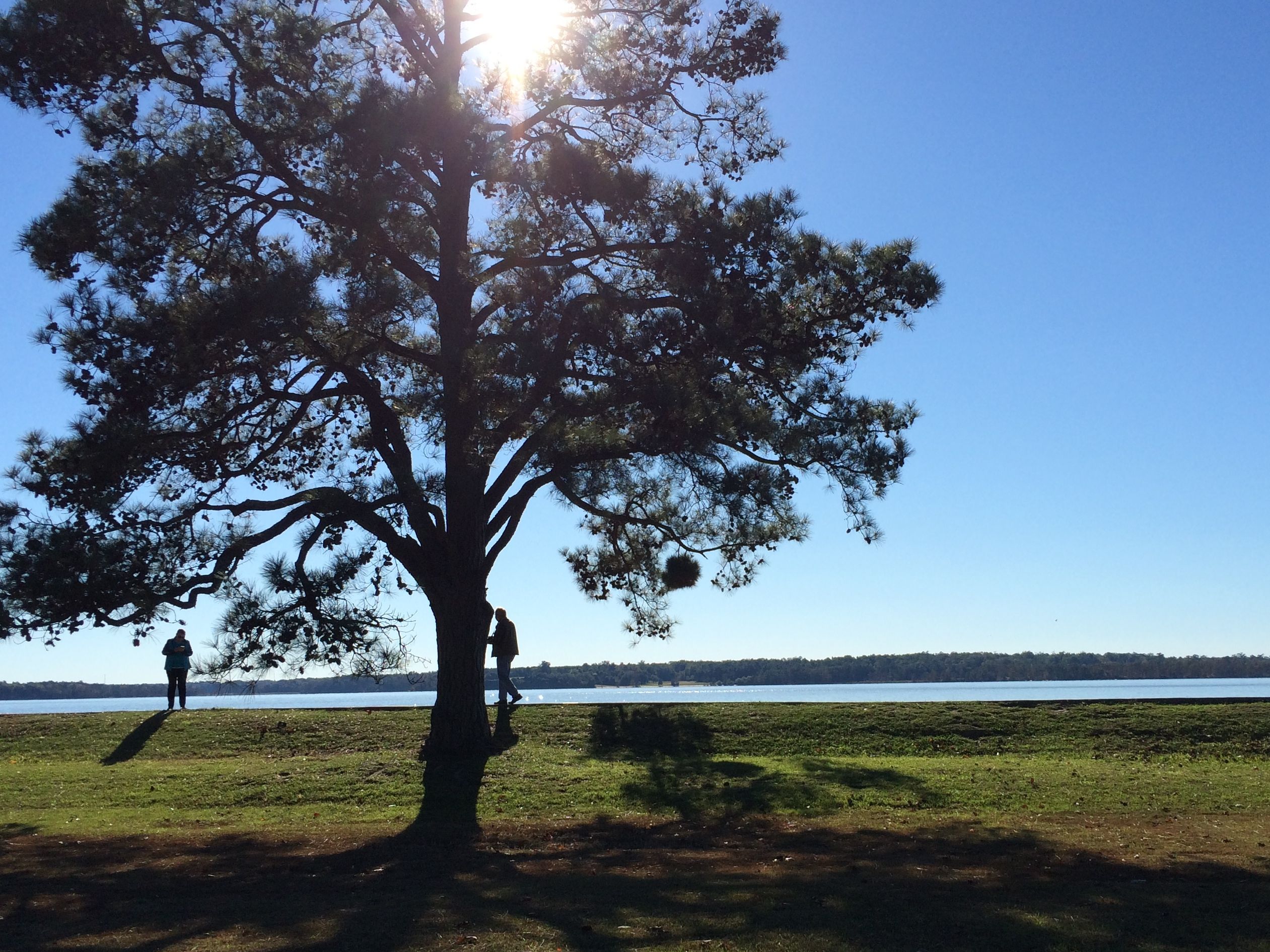
Water is such a predominant feature here. I enjoyed watching the ferries cross the James River while I was there.
Ferries passing in the James River1611 Well
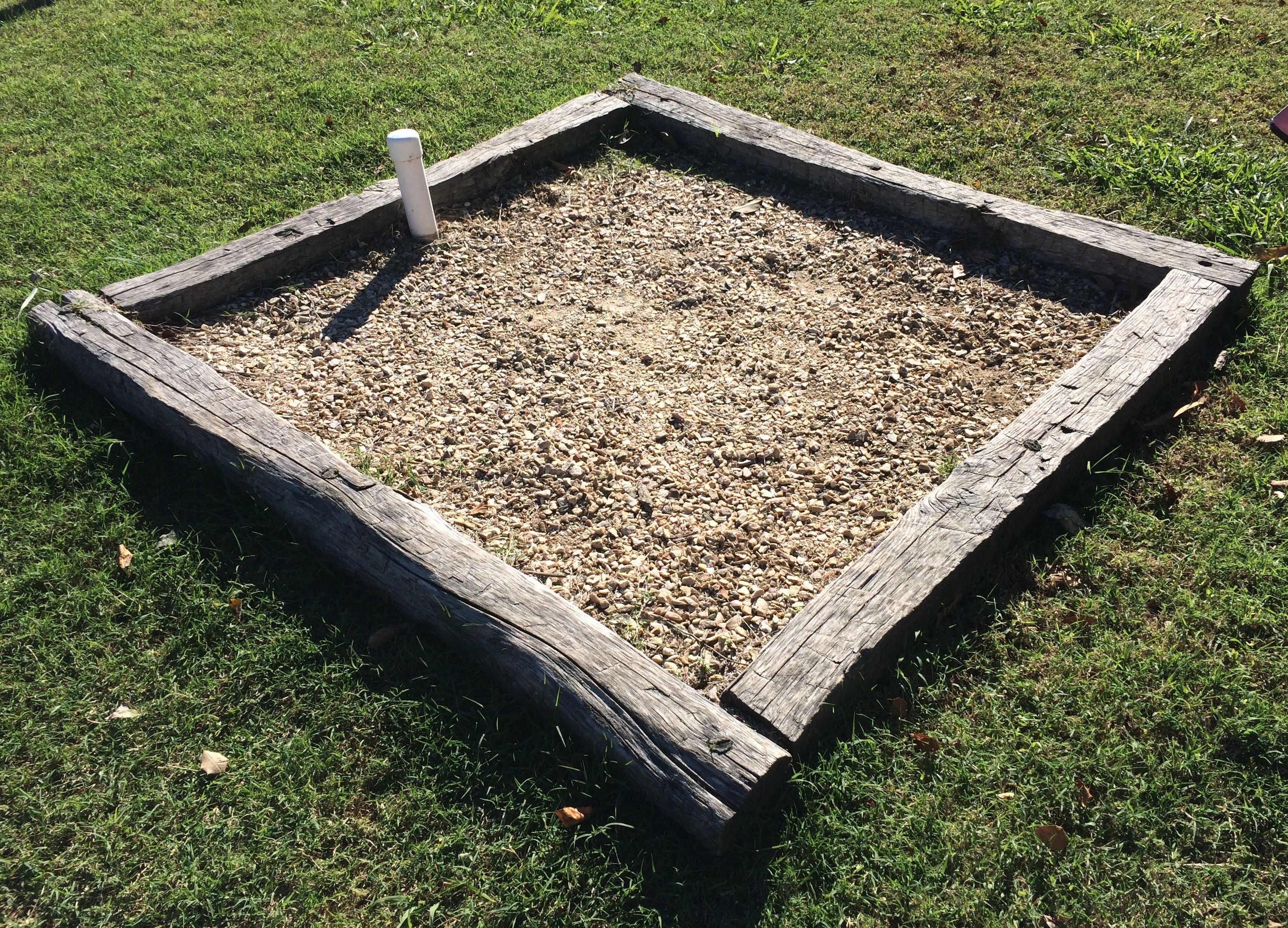
As any person with a casual interest in archeology can tell you, wells are a great source of artifacts, along with midden piles and outhouses. They excavated this well that was dug in 1611 an they uncovered a good number of artifacts. They filled it back in, but inserted a pipe so that they can monitor the water and gases underground.
I continued walking along the paths and came to a remnant from another era.
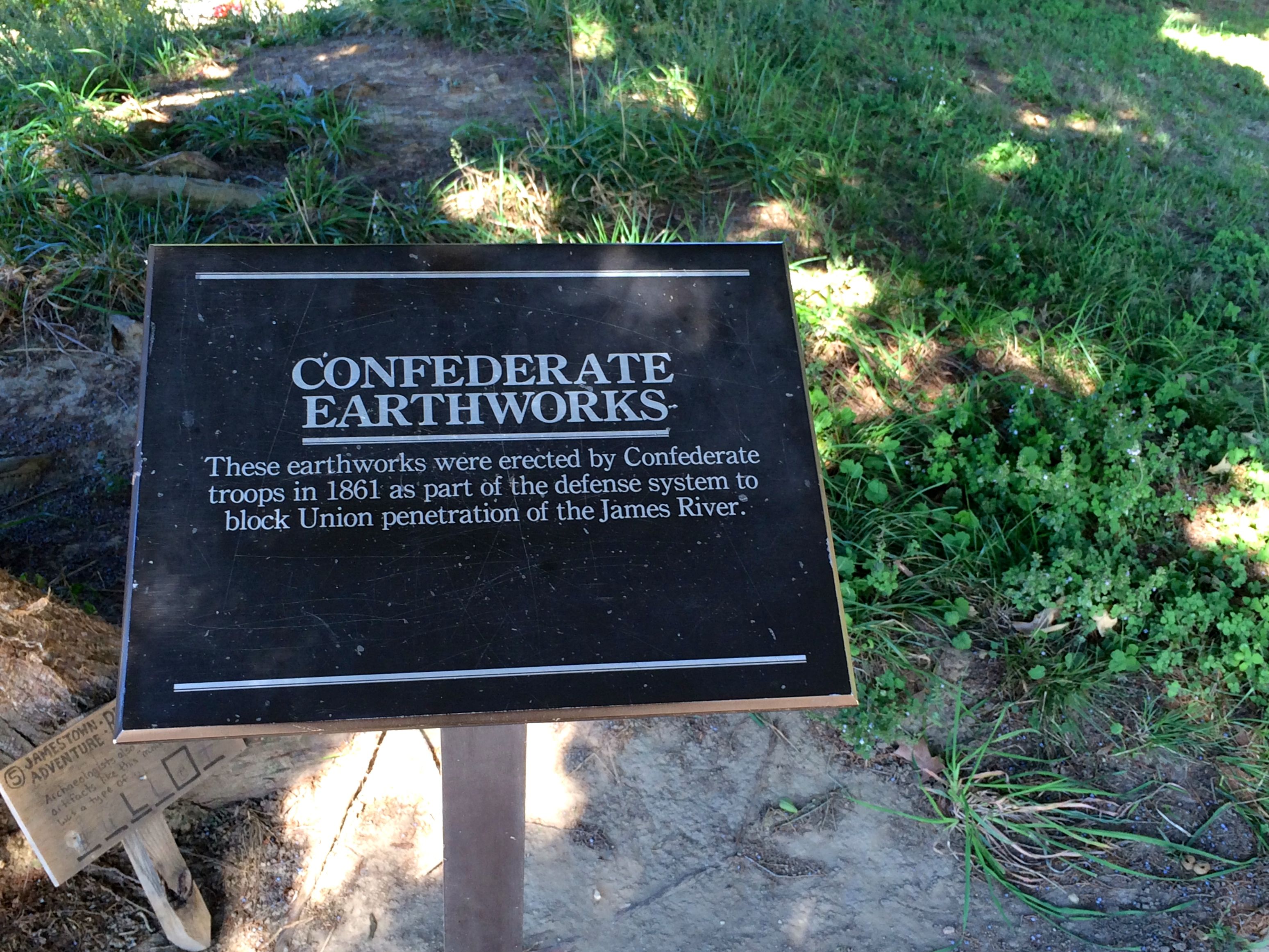
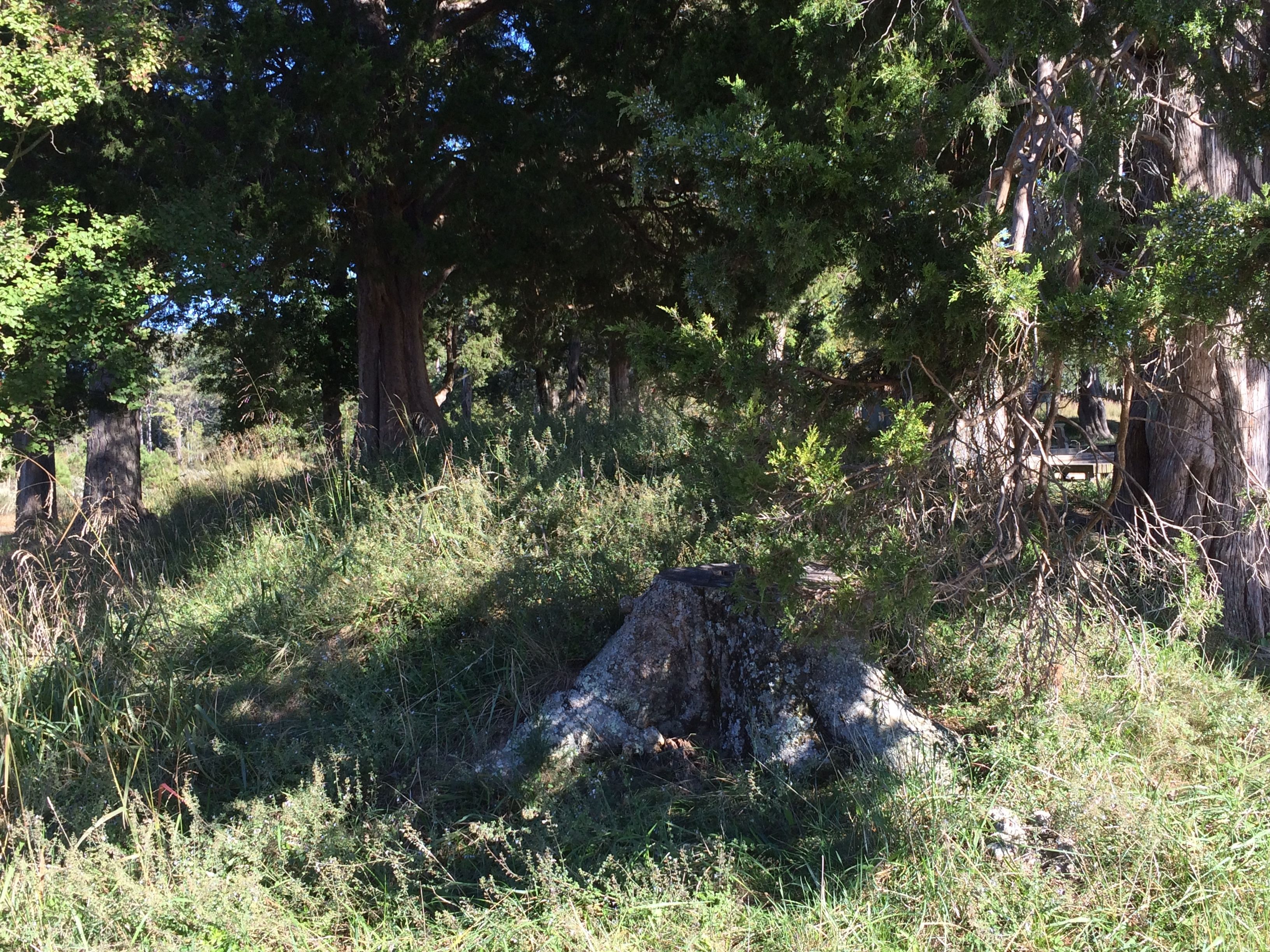
Confederate EarthworksConfederate Earthworks
Archeology is piecing bits of information together to create understanding. This doesn’t look like much, but this was part of a Confederate fort that had a gun platform and three large powder magazines.
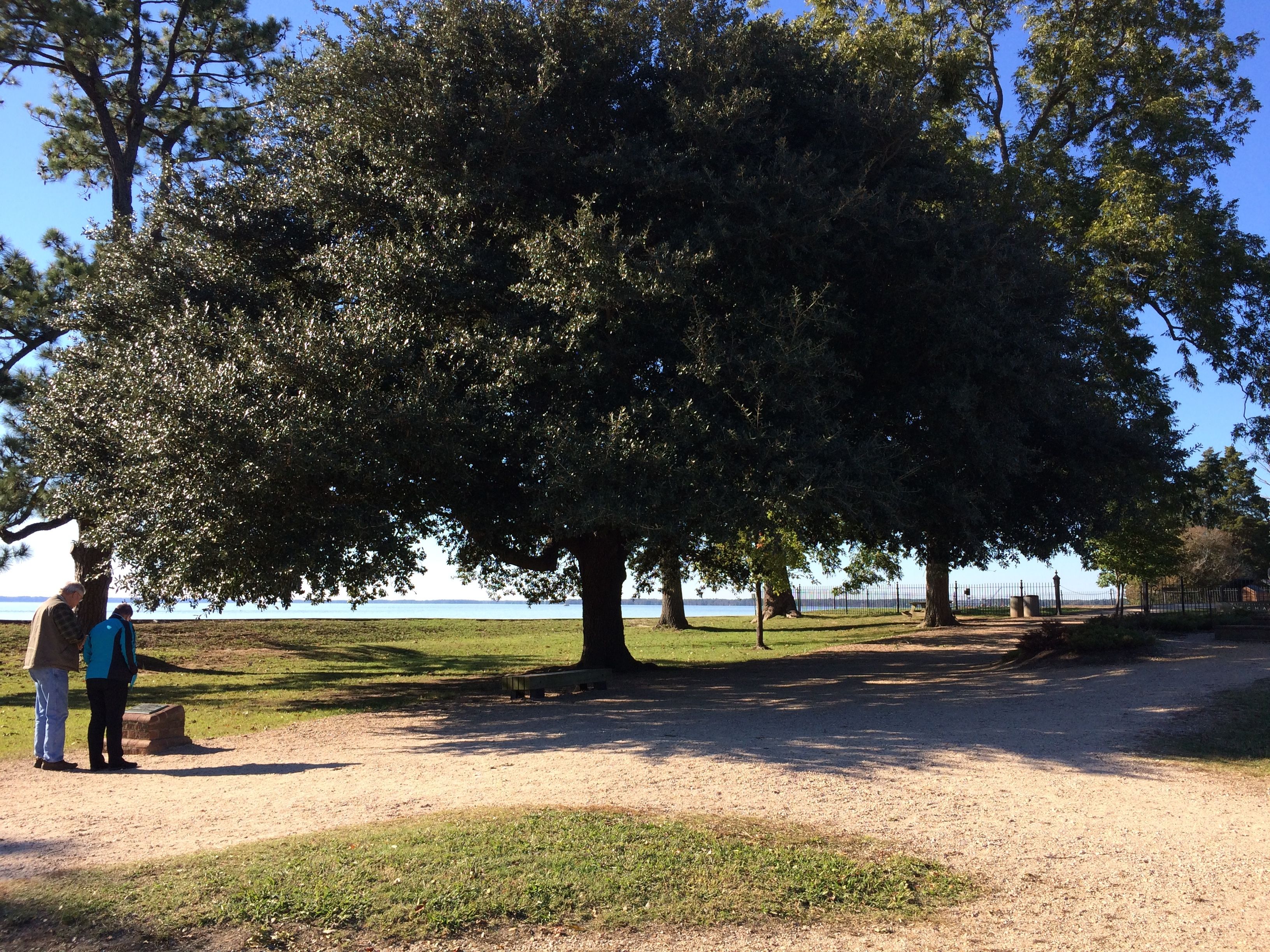
Live Oak to honor the Magna Carta
The people in the photo are looking at a plaque that says that this live oak was dedicated on June 15, 1965 to commemorate the 750th anniversary of the sealing of the Magna Carta.
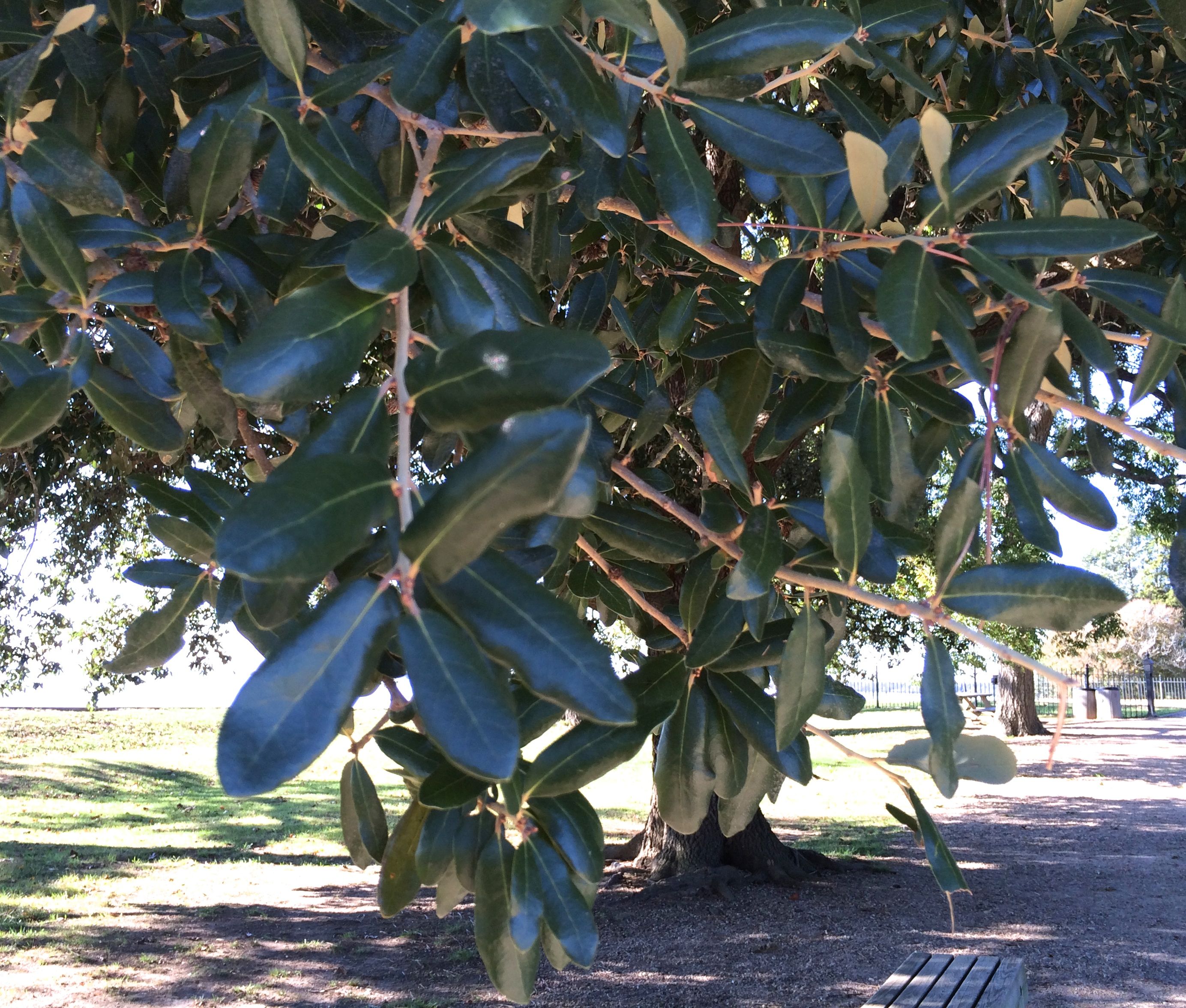
Now, I have always been confused about what a live oak was. Is a live oak the opposite of a dead oak? I found out that a live oak is an evergreen oak. the leaves stay green when deciduous trees drop their leaves.
Live Oak Leaves
A little further along the path, I came to the Archaearium, which is built over the foundations of the House of Burgesses. The Burgesses met there until 1698, when the statehouse burned down for the fourth time.
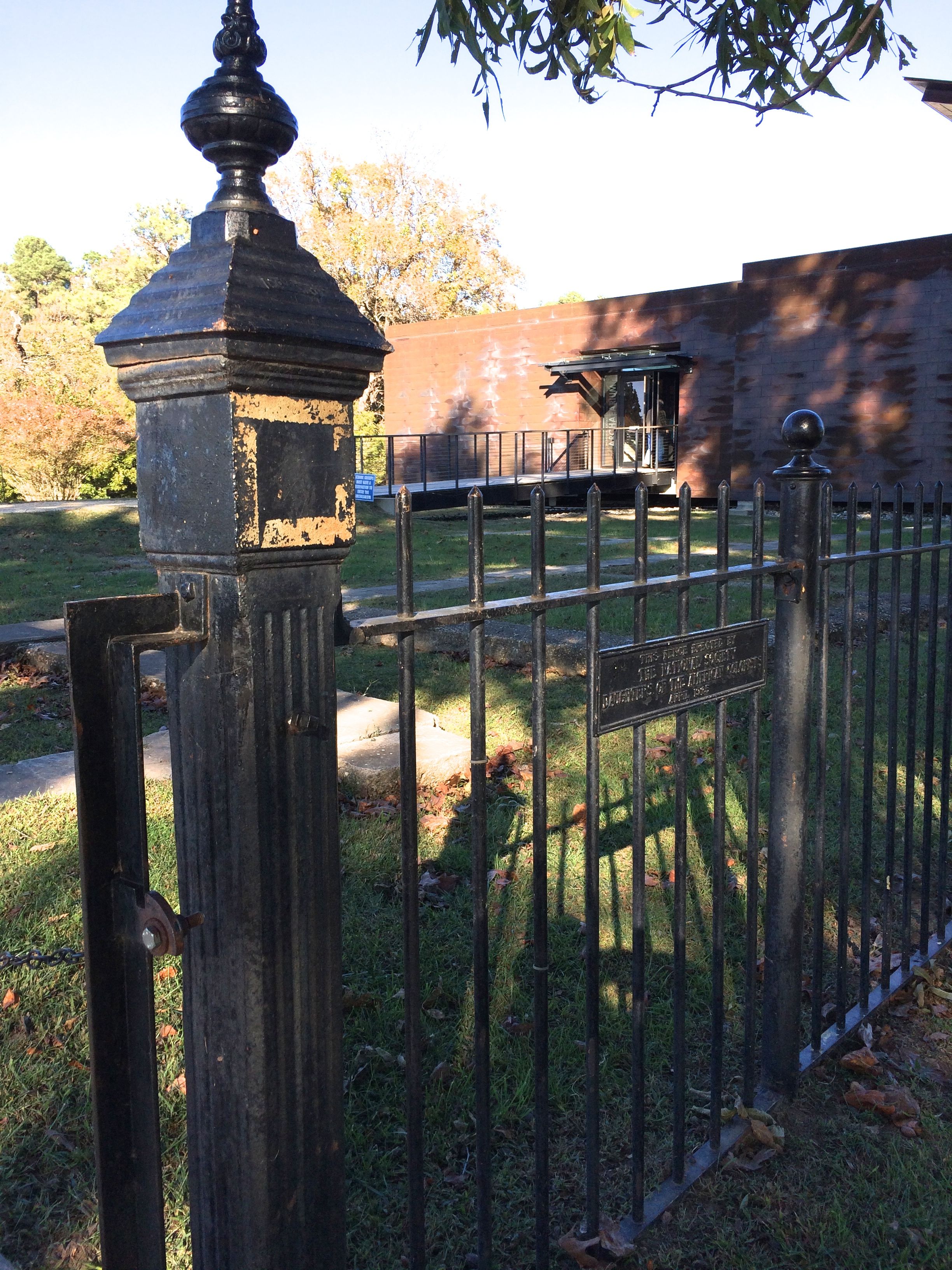
Fence Around the Statehouse Foundations and the Archaerarium
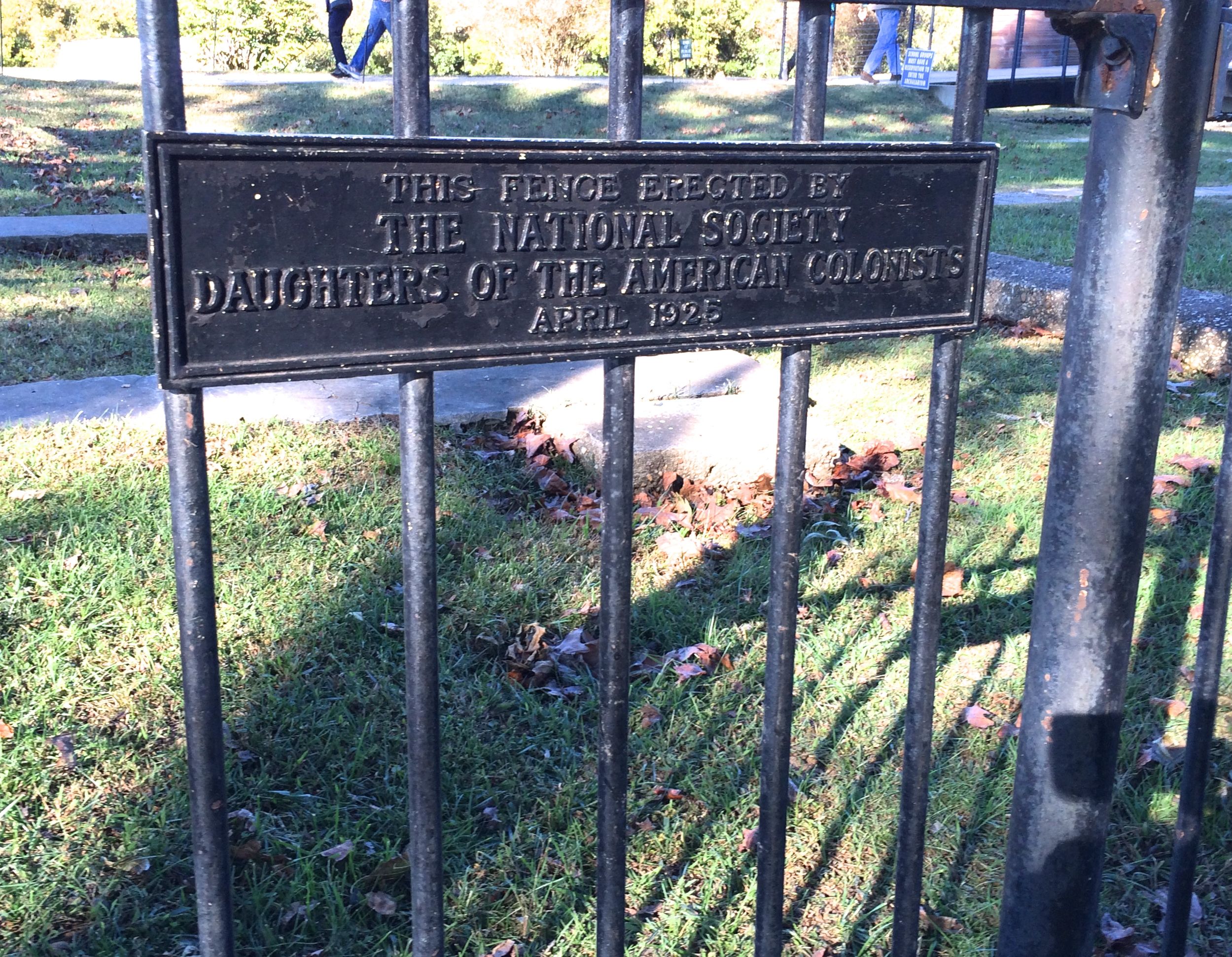
Everyone wants to have their contributions recognized.
Fence contributed by the Daughters of American Colonists April 1925
Although the foundations aren’t much to look at, they are still a part of the history of how we got to where we are.
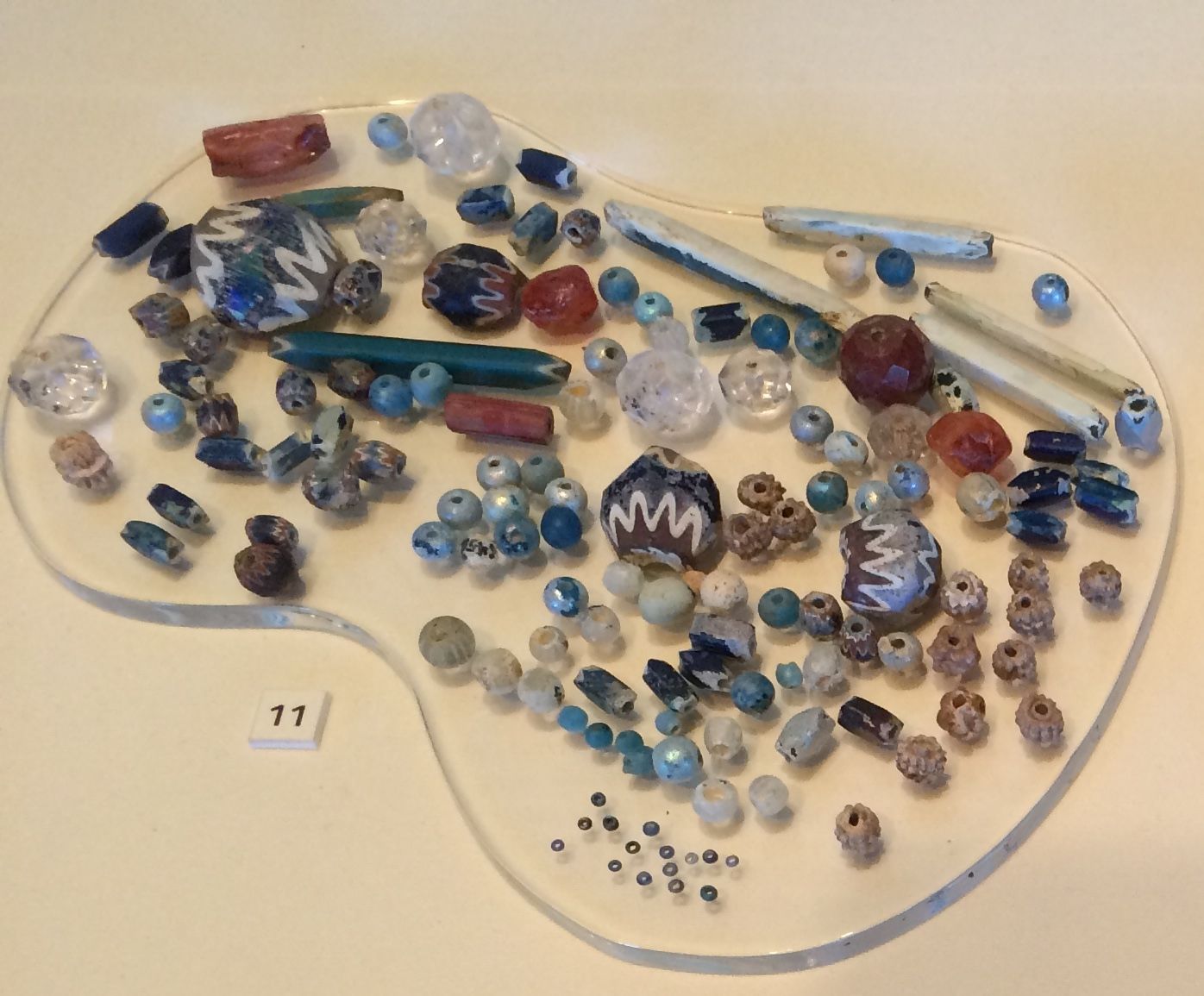
There were signs up inside the Archaearium prohibiting photography. I did my best, but I just couldn’t help myself. I had to take a few. The first one I snapped was the skull and reconstruction of Jane. Then, I just had to get a shot of some beads that were brought in as trade goods.
Beads
The last one I got a shot of was a caltrop.
Caltrop
A caltrop looks a lot like a jack, doesn’t it? It has the same effect on the feet of attacking enemies. OW!
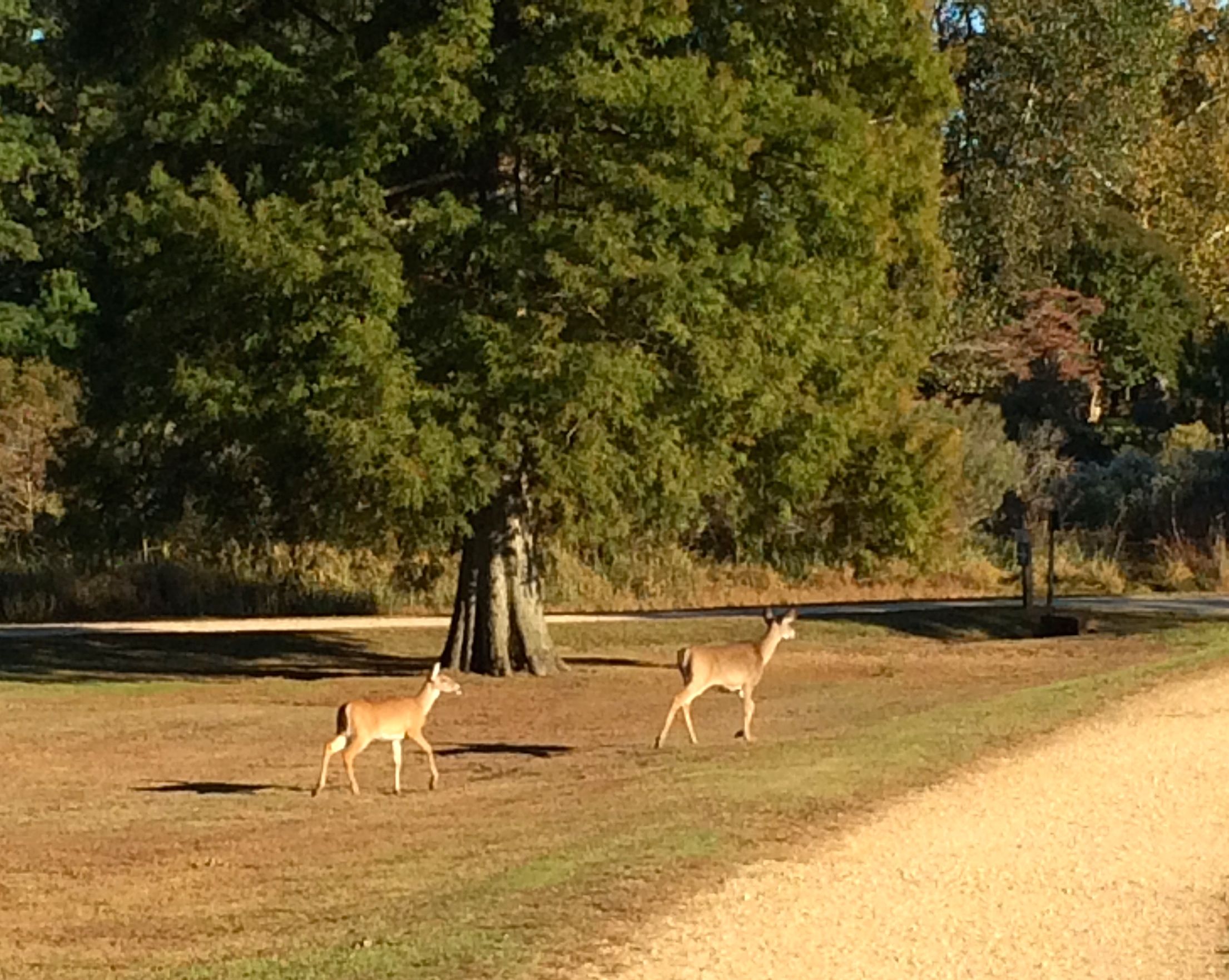
Deer
With that, it was time to head back to the campground. The deer went bounding ahead to show me the way.
Well, I suppose that’s not strictly true, but there sure is a whole lot of old on the Virginia Peninsula.
I got set up at the Newport News City Park. There was water and electricity at the site, good phone reception – which means I also had internet access – and lots of TV signals that I could catch with my antenna. Let the good times roll!
As soon as I got set up, I decided to head over to Virginia Beach. I wanted my “sea to shining sea” moment.
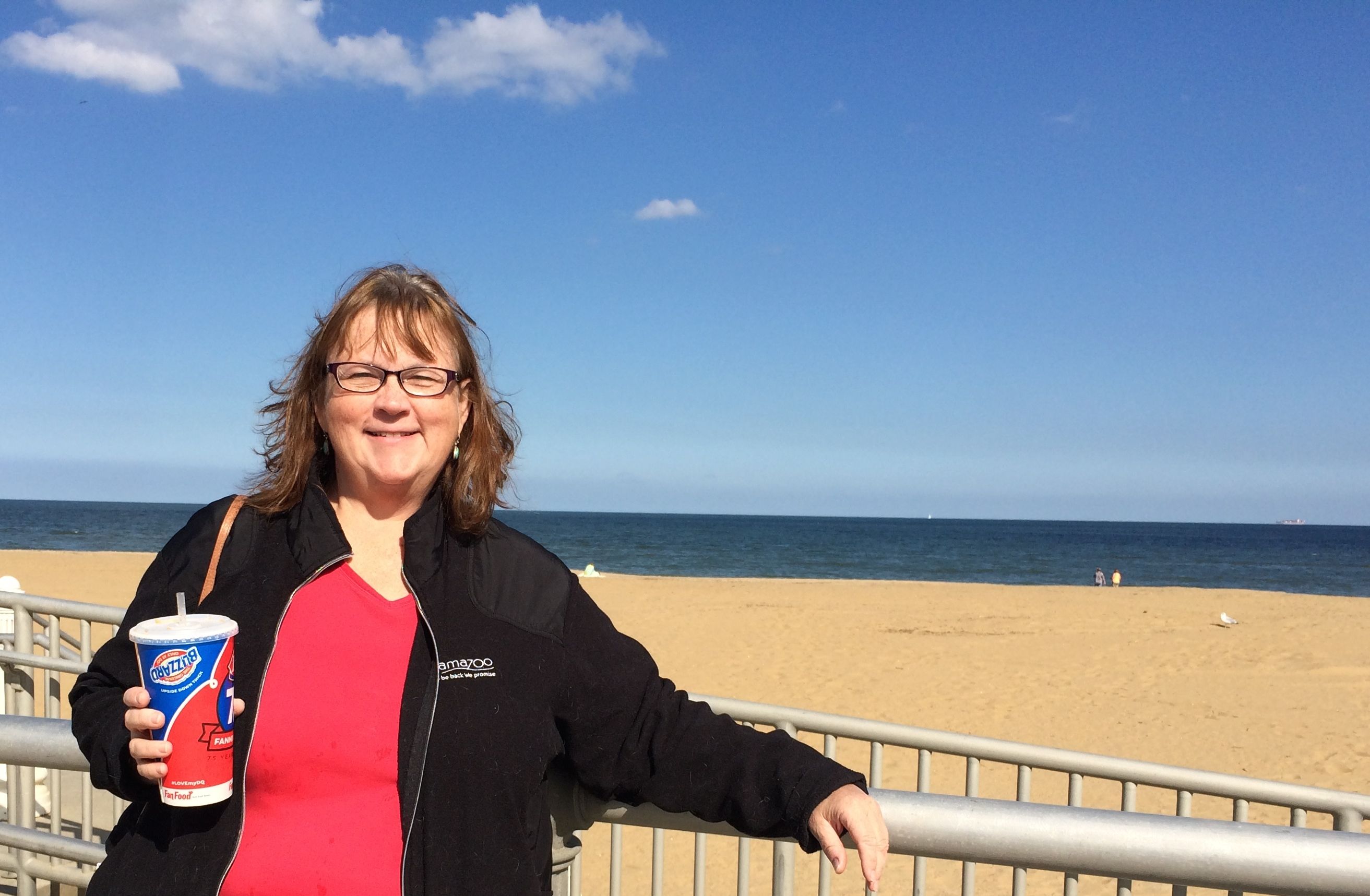
On the Boardwalk
Just six months earlier, I was on the Pacific.
I actually thought that it would be warm enough to go into the water. It was 70º, after all. But, I was rather chilly. Heck, even the hamburger I bought at the Dairy Queen was cold!
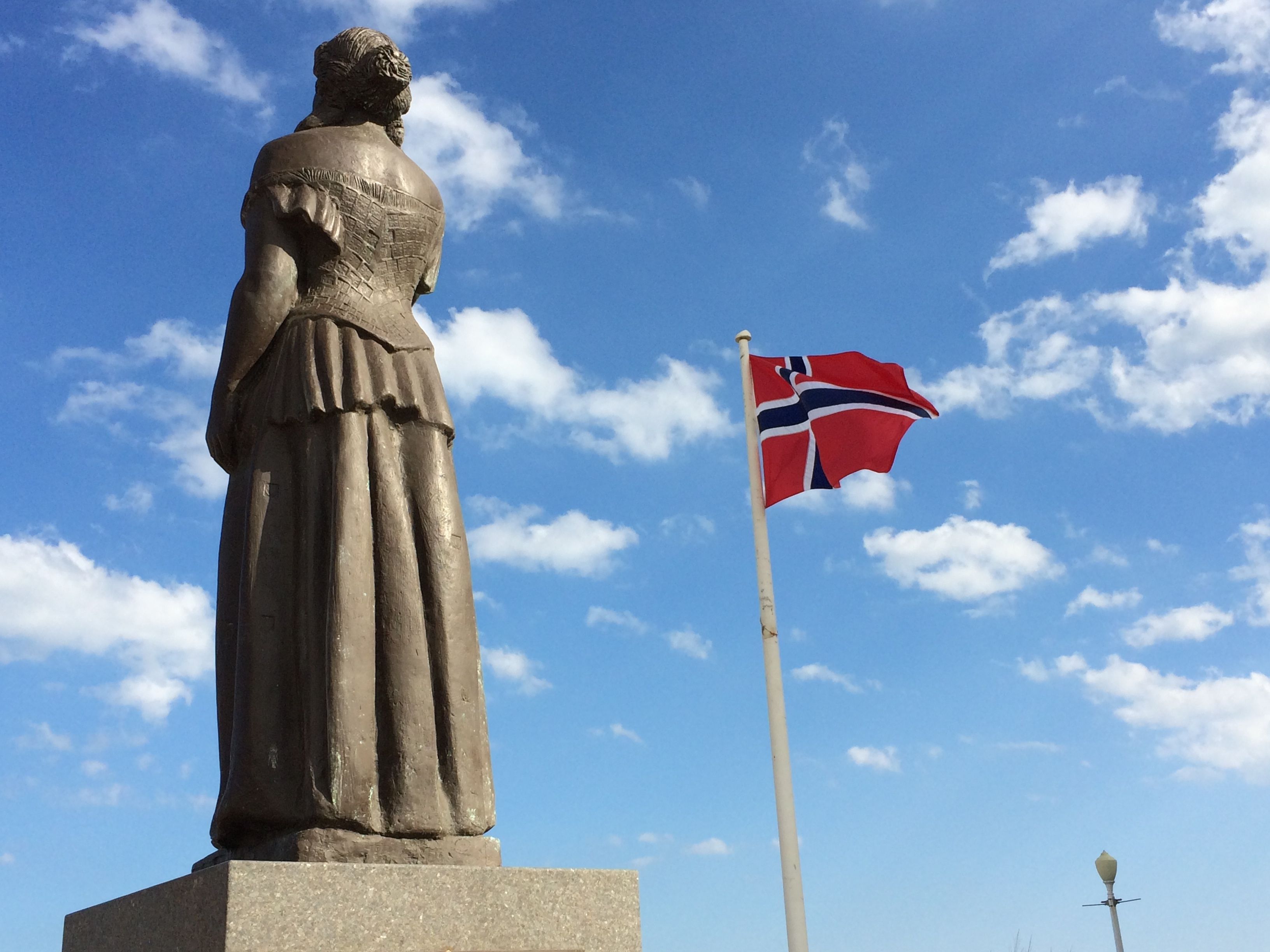
The Norwegian Lady Statue seemed like an appropriate addition to the chilly breezes coming off the water.
Norwegian Lady Statue
The Norwegian Lady Statue is there to commemorate the aid given to the crew of The Dictator, a Norwegian sailing ship that grounded off the shore in 1891. Eight of the seventeen people on board were saved. Captain Jørgensen washed ashore later, alive, but semi-conscious. Unfortunately, his wife and four-year-old son were among the people who died as the ship broke apart in the surf.
The figurehead of the ship eventually washed ashore and was placed in a vertical position facing the ocean as a memorial to those who perished in the shipwreck. It remained there until 1953 when it was damaged in Hurricane Barbara. It was taken down and stored in a city-owned building for safe keeping. Somehow, the figurehead disappeared.
Interest in Moss, Norway and Virginia Beach grew, and there was a drive in both cities to replace the memorial. Norwegian sculptor Ørnulf Bast was commissioned to create two nine-foot bronze statues – one for each city. They were unveiled in 1962. Moss and Virginia Beach are now sister cities.
Driving around a beach city on a chilly day after tourist season is over is kind of …pointless?
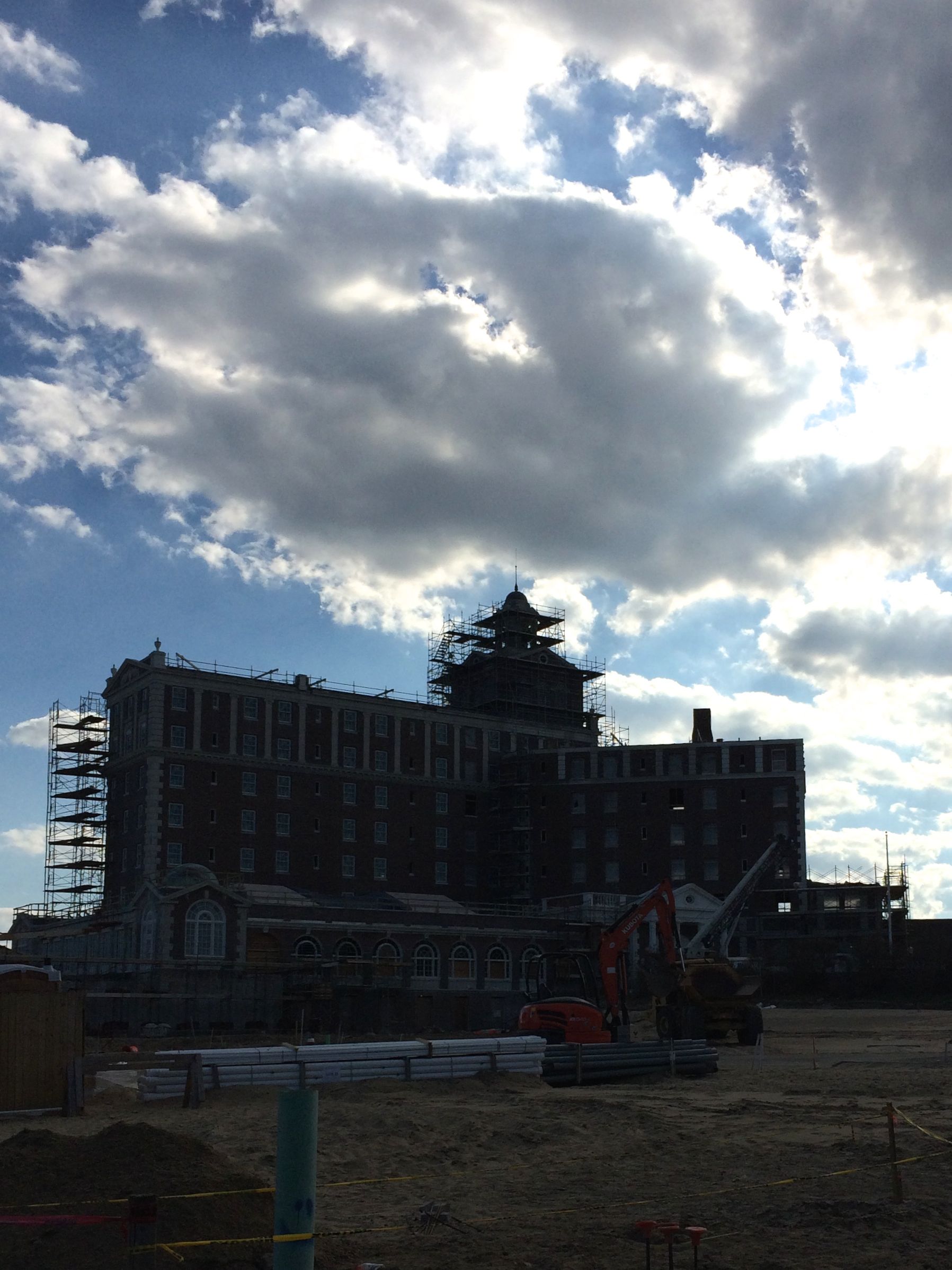
Another sight I made a point of seeing was The Cavalier. It was a hotel built in 1927 that was known as the world’s largest hirer of big bands, such as Benny Goodman, Cab Calloway, Lawrence Welk and Glen Miller. In 1929, Coors Brewery founder Adolph Coors mysteriously plunged to his death from this sixth floor room. It also served as a U.S. Navy radar training school in WWII. The sailors stayed in the stables and they drained the pool for use as a classroom.
The Cavalier
It was under reconstruction, and will reopen in 2016.
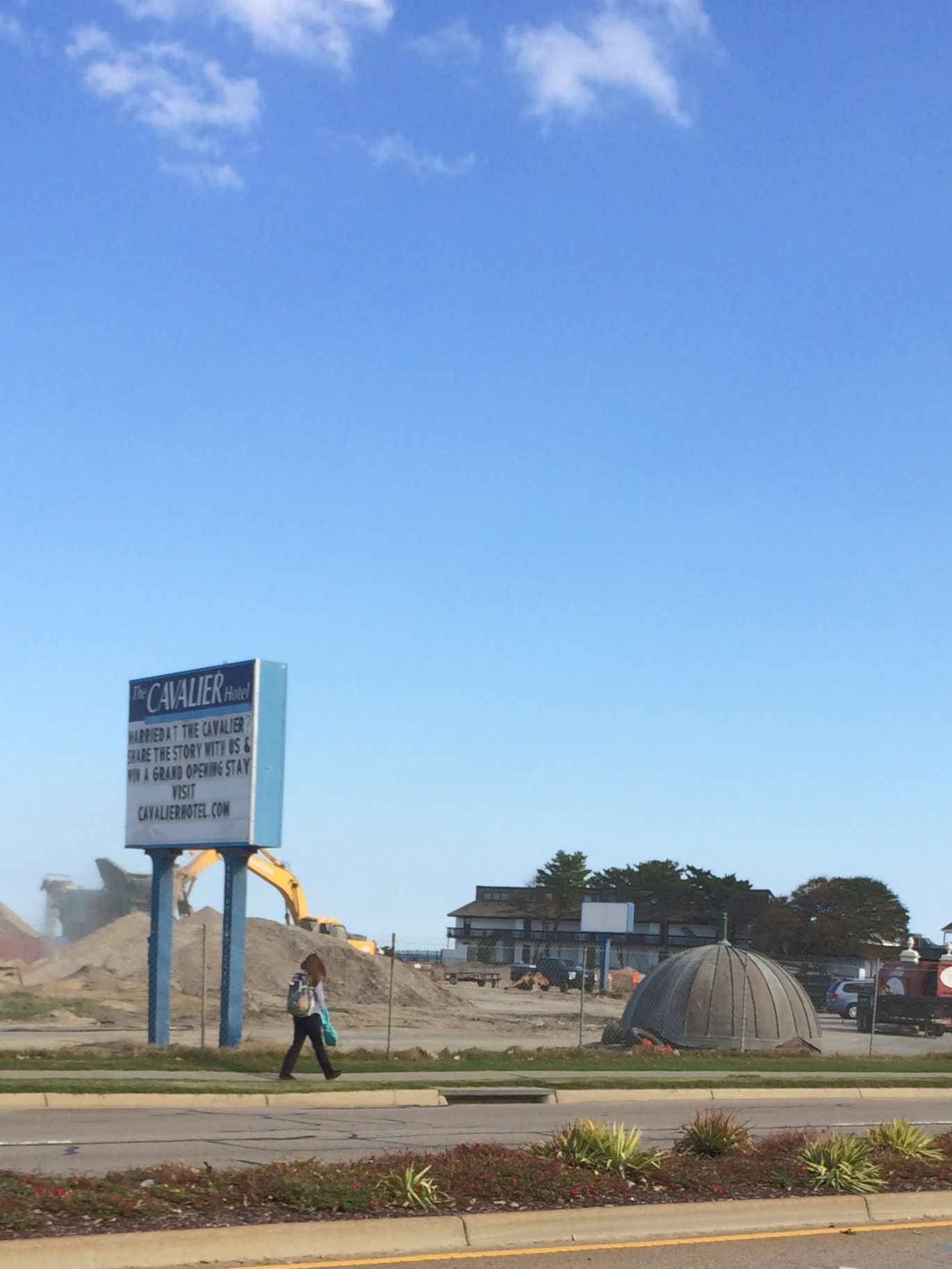
The Cavalier dome
One of the domes was sitting in a lot across the street.
I love my HISTORY Here app, but it doesn’t necessarily tell you if something is “tourist friendly.”
One of the items that I saw on the listing for the area was Drydock Number One. It is part of the Norfolk Naval Shipyard. You should have seen the confused expressions of the guards at the gate when I showed up and told them that I wanted to see Drydock Number One. The politely informed me that the public wasn’t admitted. I had to hand him my drivers’ license, which they kept until I turned around and was on my way out.
Why would I want to see a dry dock, you ask? Well, I’ve never seen one, have you? Also, it was completed in 1834, although it was opened while it was still under construction. It serviced the USS Delaware in 1833. During the Civil War, the remains of the USS Merrimack were transformed into the ironclad CSS Virginia, a Confederate warship. It was built from Massachusetts granite at a cost of $974,365.65.
According to HISTORY Here, it is still in use today. I make that out to be $5.444.63 a year. I’d say we’ve gotten our money’s worth.
This is the view from Ash Lawn-Highland, James Monroe’s home near Charlottesville, Virginia.
James Monroe was the last of the Founding Fathers to be president, holding office March 4, 1817 – March 4, 1825. He purchased Highland in 1793. He and his good friend, Jefferson, were neighbors.
Now, Ash Lawn-Highland is no Monticello, and that is probably just as well. Whereas Jefferson’s estate needed to be liquidated to pay off debts after his death, Monroe sold his plantation and moved to New York after he left the White House. The guide indicated that he didn’t leave debt behind at his passing on July 4, 1831. When I was researching for this post, it seems that he was plagued with financial difficulties at the end of his life. I guess everything is relative. In any event, this property wasn’t sold off to satisfy his debts.
You may have heard of presidents dying on July 4. There are three of them. Thomas Jefferson and John Adams also died on July 4, 1831, five years before Monroe. However, July 4th isn’t all bad for presidents. Calvin Coolidge was born on that date in 1872.
But back to Monroe.
I entered through the gift shop, paid my fee and was told to meet the guide at the front door. The clerk gave me a map and invited me to explore until the tour started.
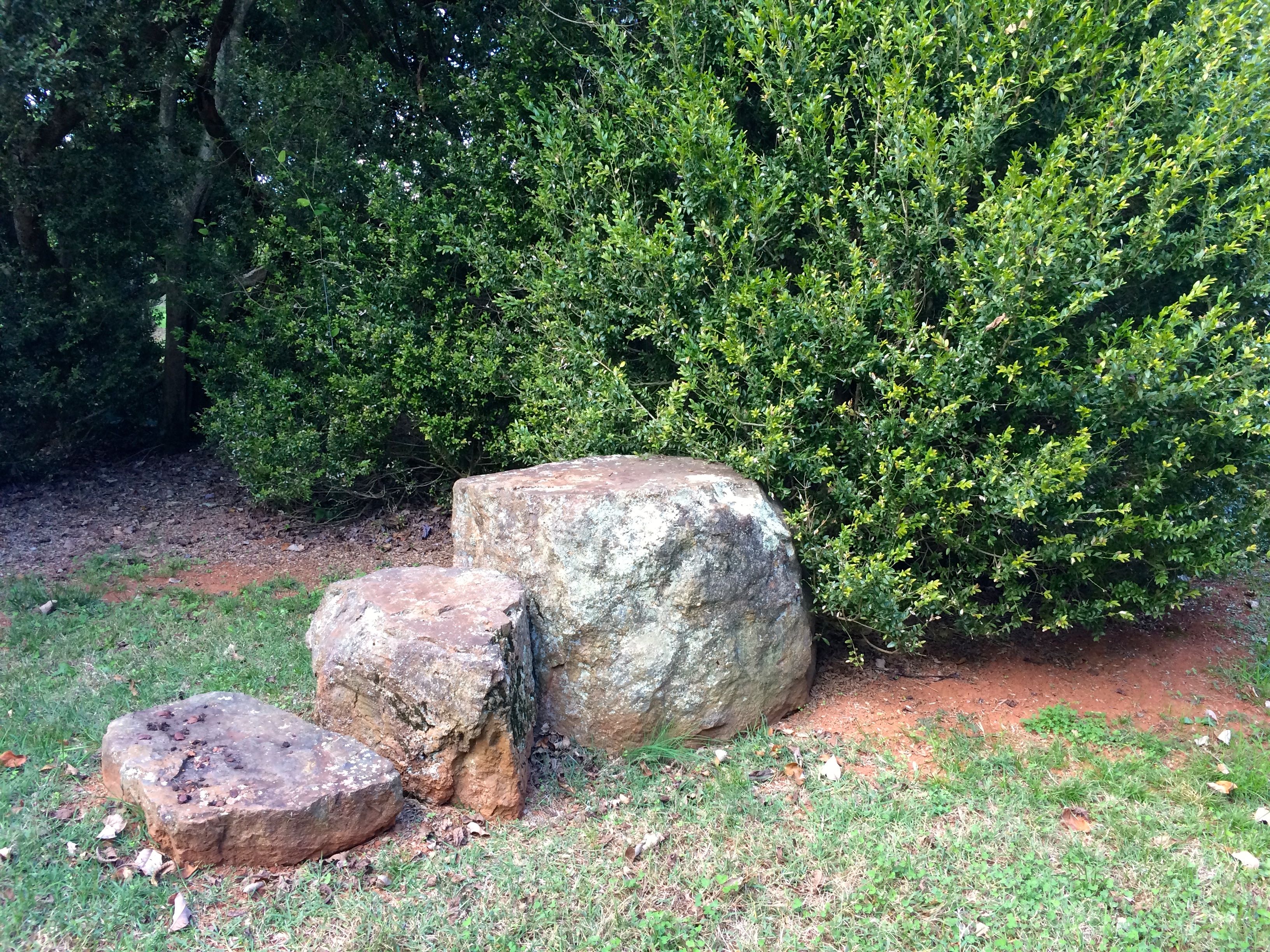
Mounting Stones
The map guided me to these mounting stones. They were not addressed by the guide and there wasn’t an interpretive sign. I don’t know if they were used by Monroe, but they might have been. He was 6 feet tall, so I imagine he could have mounted a horse easily enough. Maybe they were there for someone else. And maybe they are just a random collection of stones from some other use.
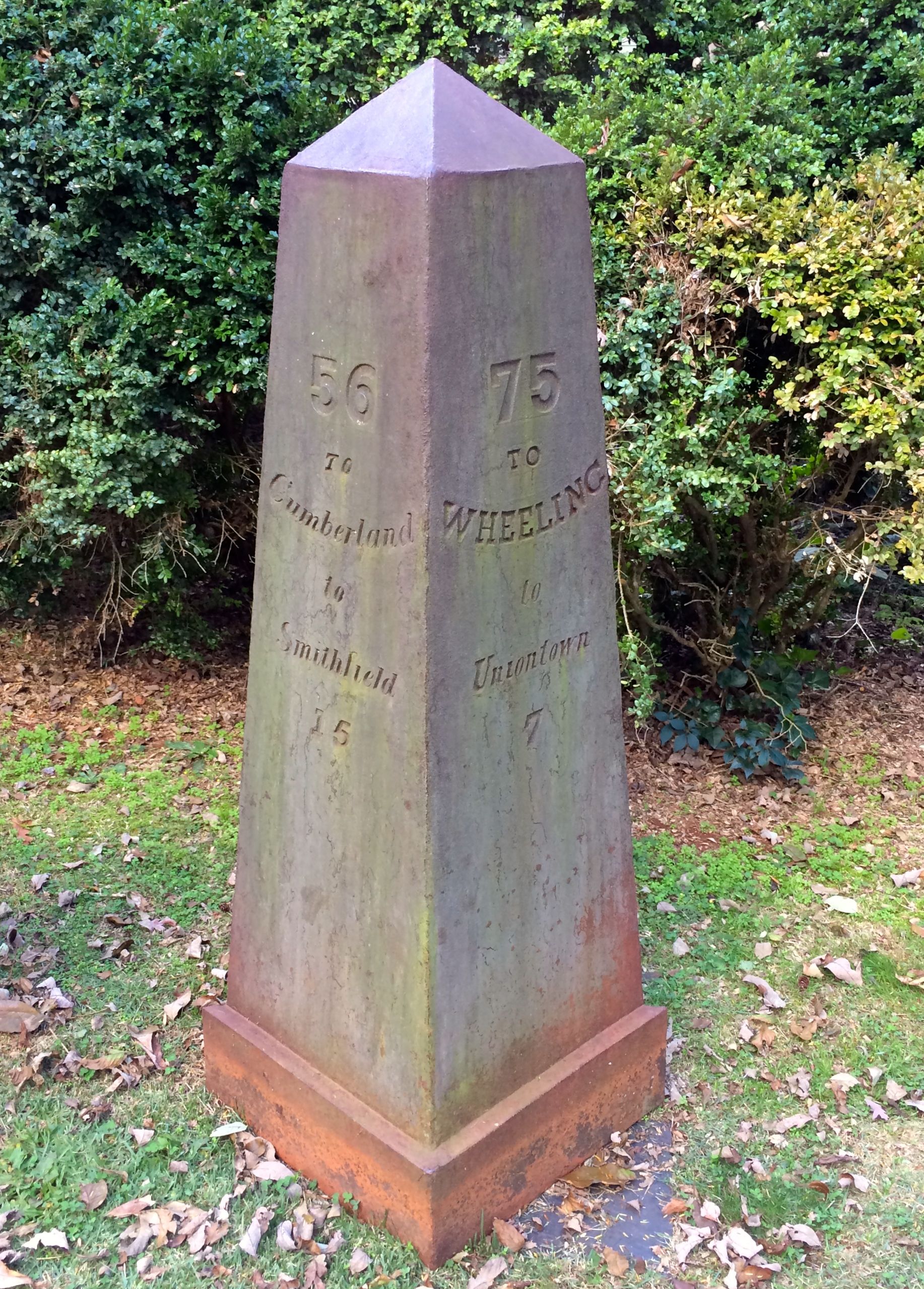
Mileage
This mileage marker casting was from Highway 40 was from the first federally-supported interstate roadway, which was created during James Monroe’s Presidency. It is from a section of the road in Pennsylvania, and was given to Jay Winston Johns, who began Ash Lawn-Highland’s restoration in 1931.
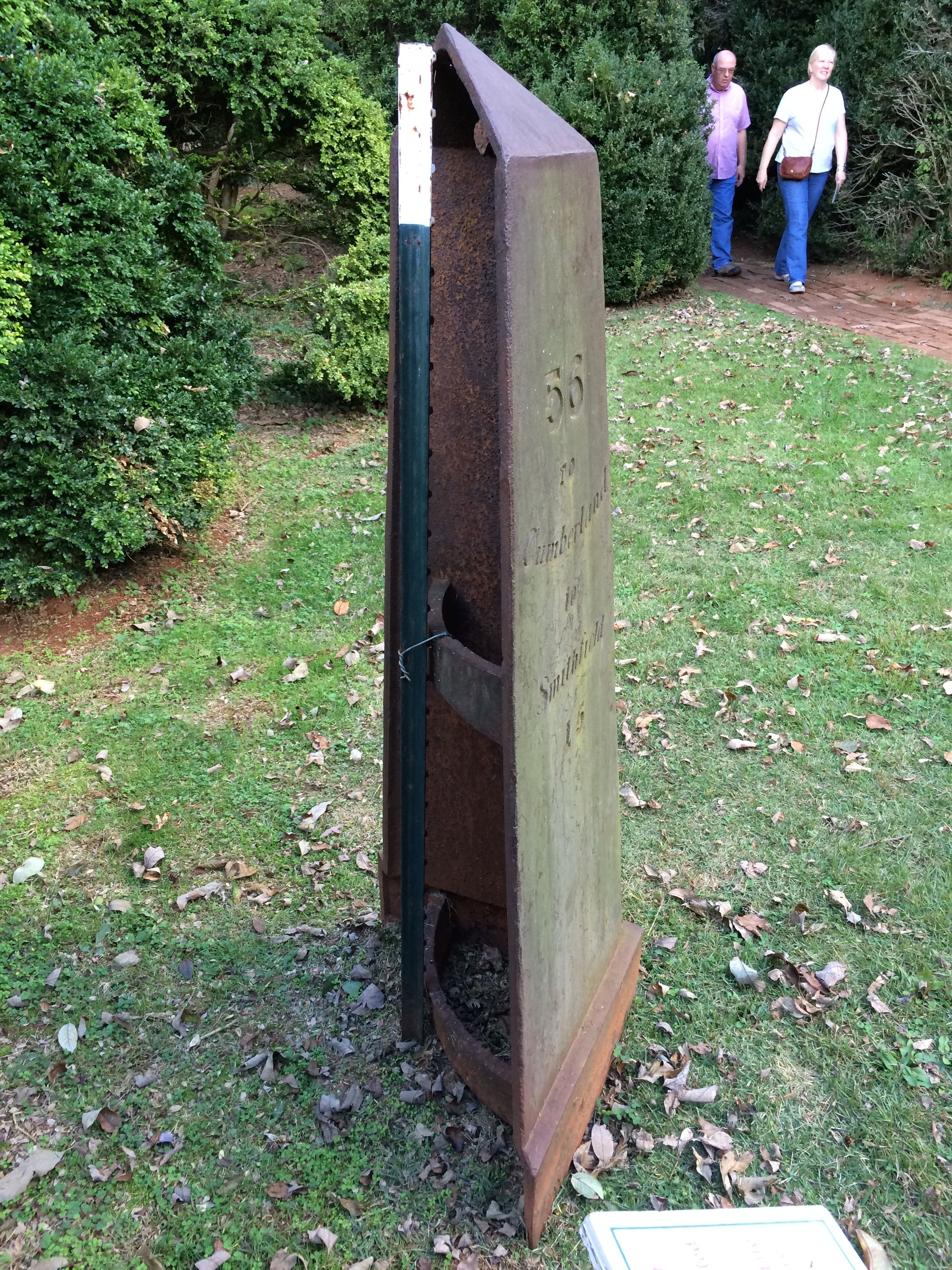
Mileage Marker – backside
I had taken a course at Fallingwater in Pennsylvania that focused on the highway. I had seen these markers then, so I knew to look at the backside. I guess I should be glad that they didn’t waste money casting both sides.
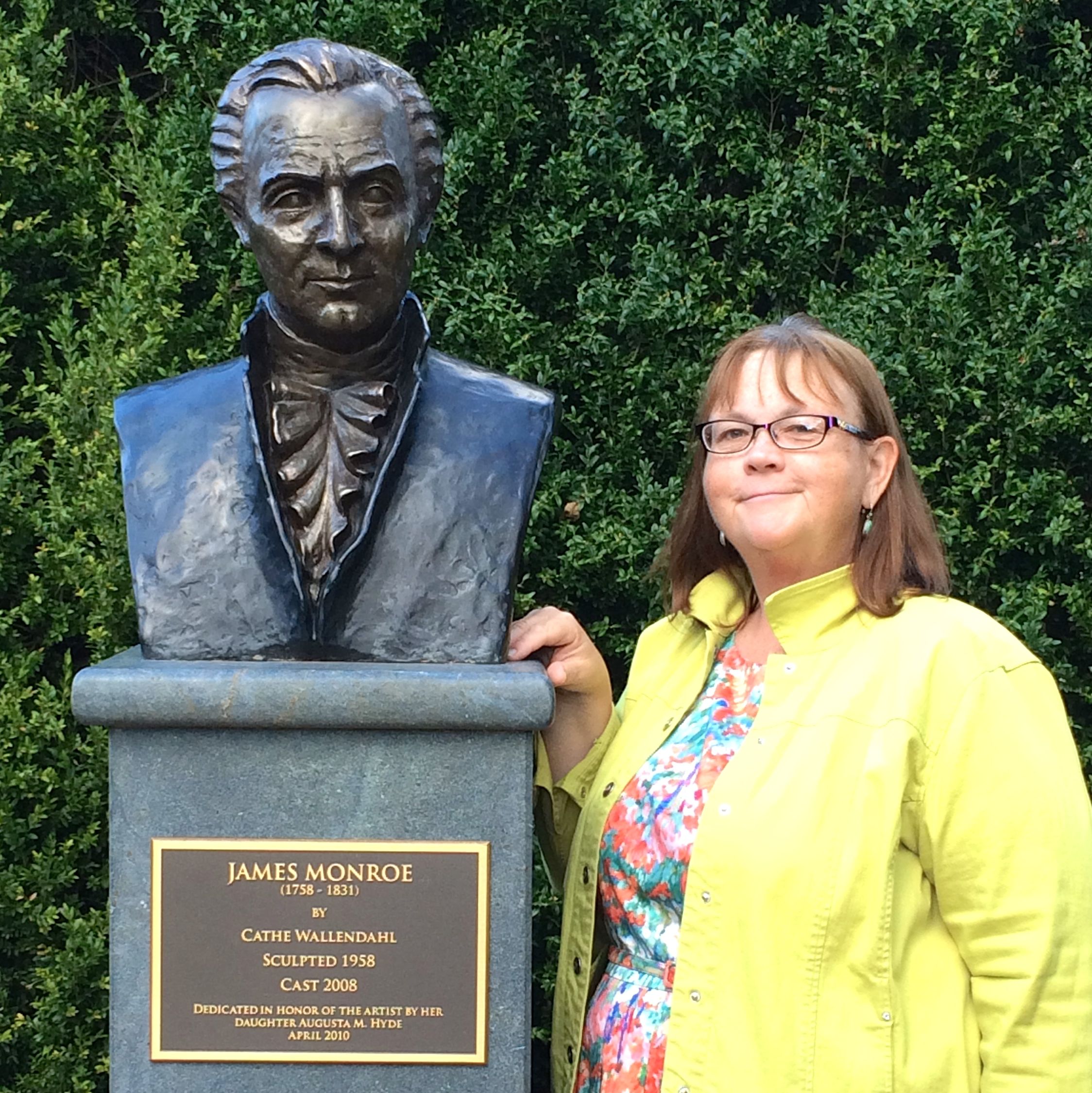
Those people coming along the path in the picture above helped me out with a photo op with a statue of James Monroe.
Monroe and Me
And then it was time to meet at the front door for the tour.
Ash Lawn Museum entrance
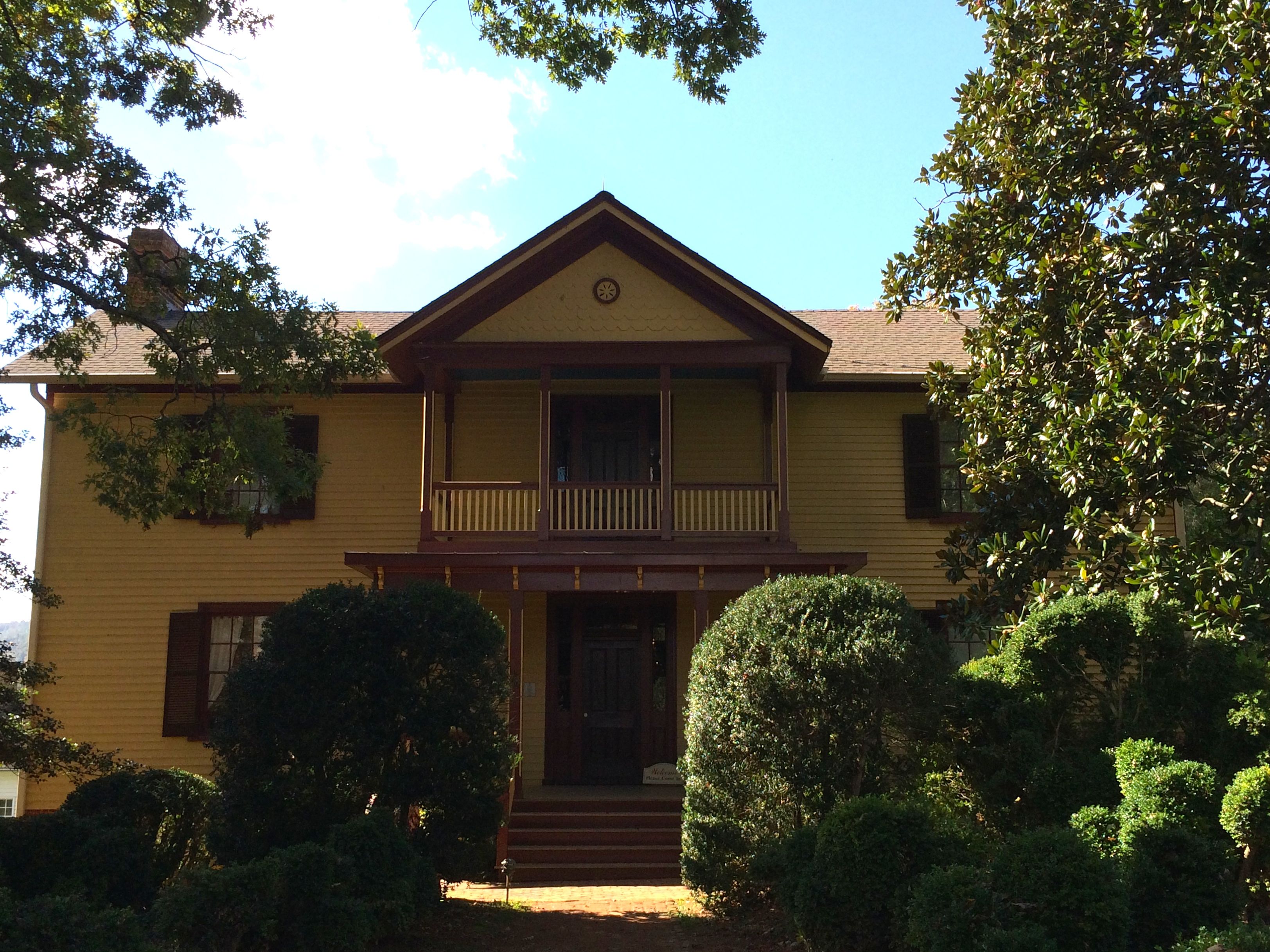
The first thing I found out was that this wasn’t the entrance to Monroe’s home. This was a portion that was built on after Monroe sold the house.
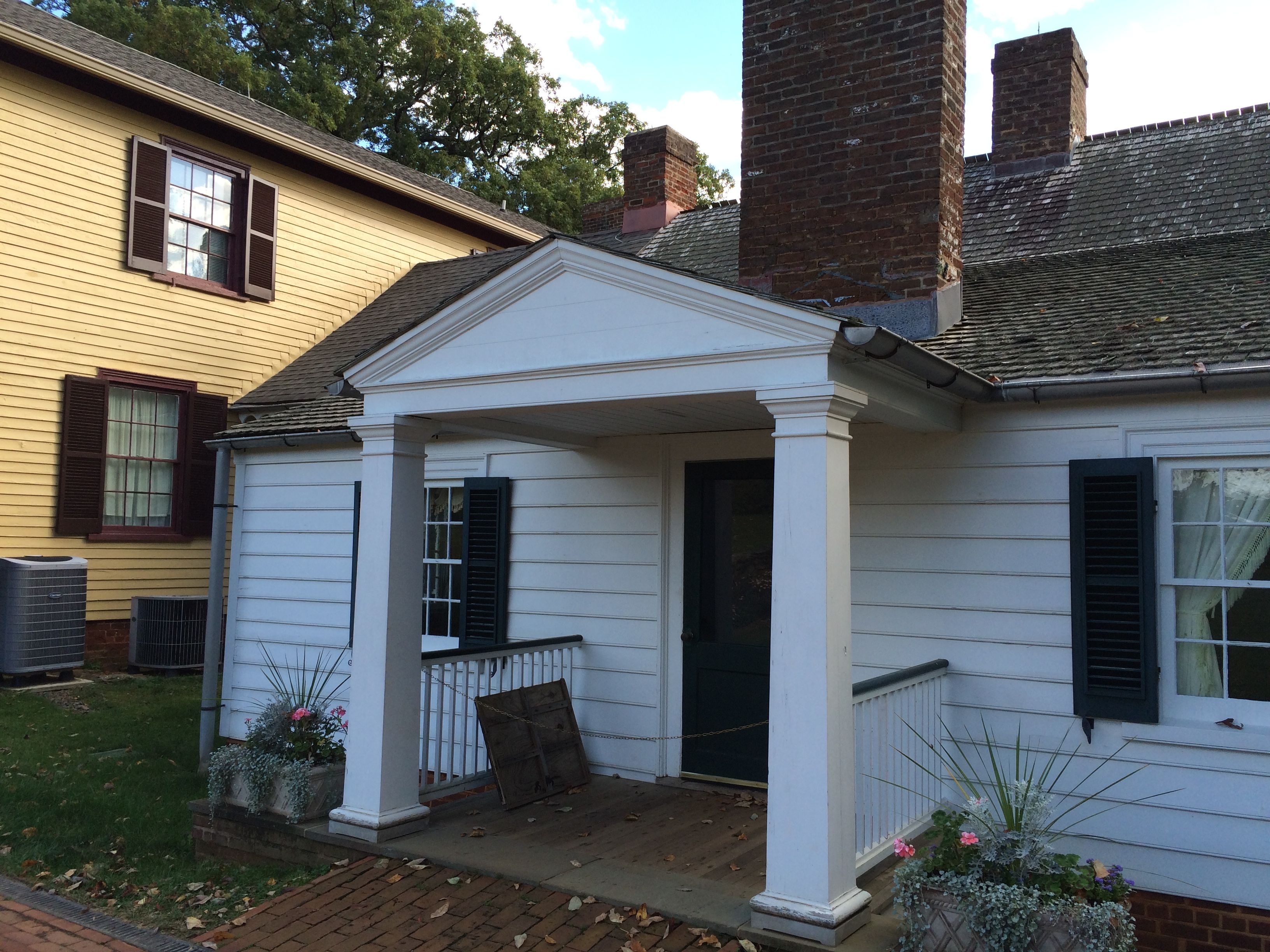
The entrance to Monroe’s house
The white part is what is left from Monroe’s home after part of it burned in a fire. Fire was a big danger in those days. Living on the top of a mountain also didn’t help, as we all know that water runs downhill.
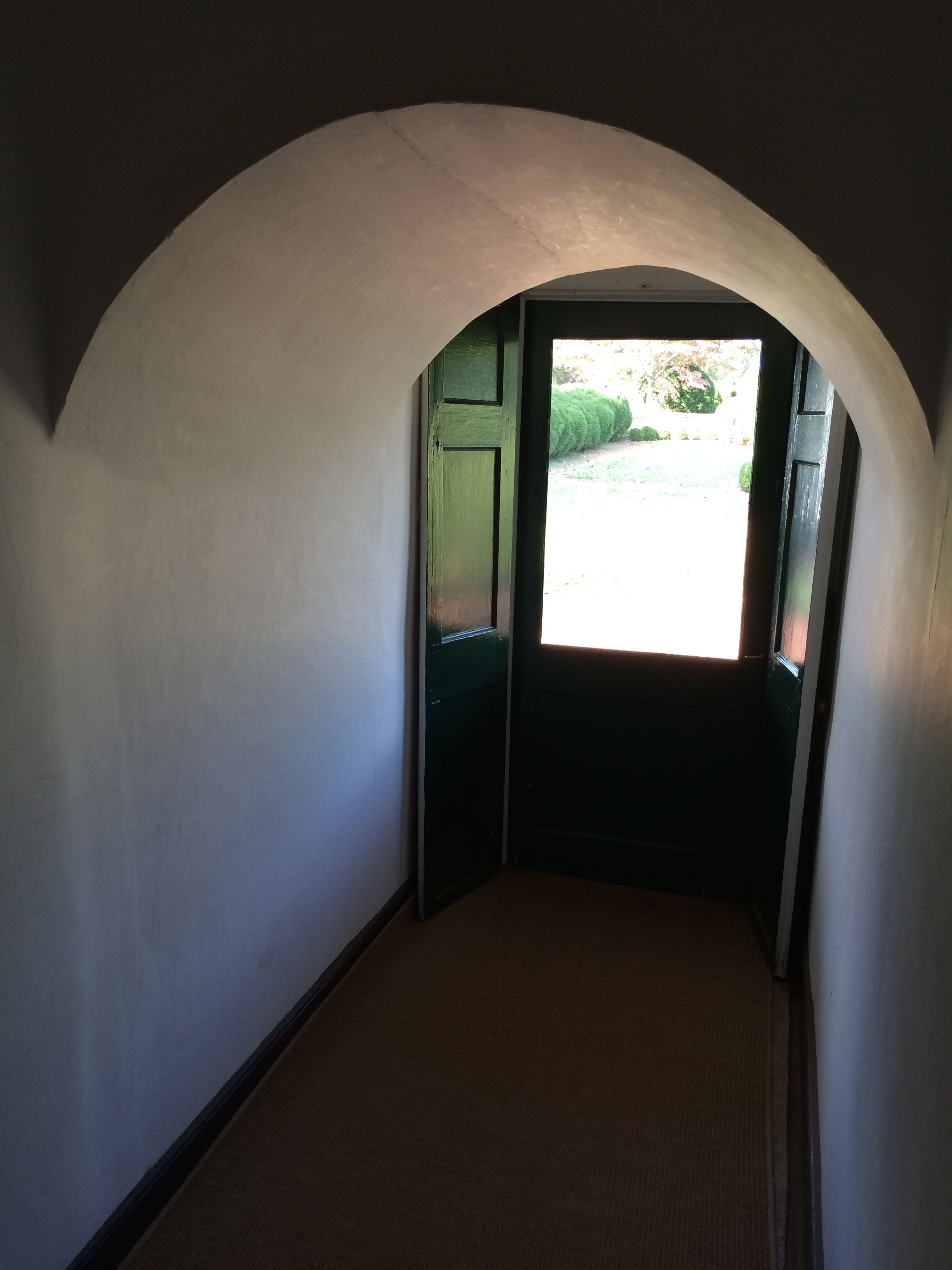
Monroe was a thrifty soul, and I do appreciate that. Houses were taxed based on the number of chimneys and windows they had. This tunnel is through the the chimney. There are fireplaces on either side and they share the same flue.
Tunnel between the fireplaces
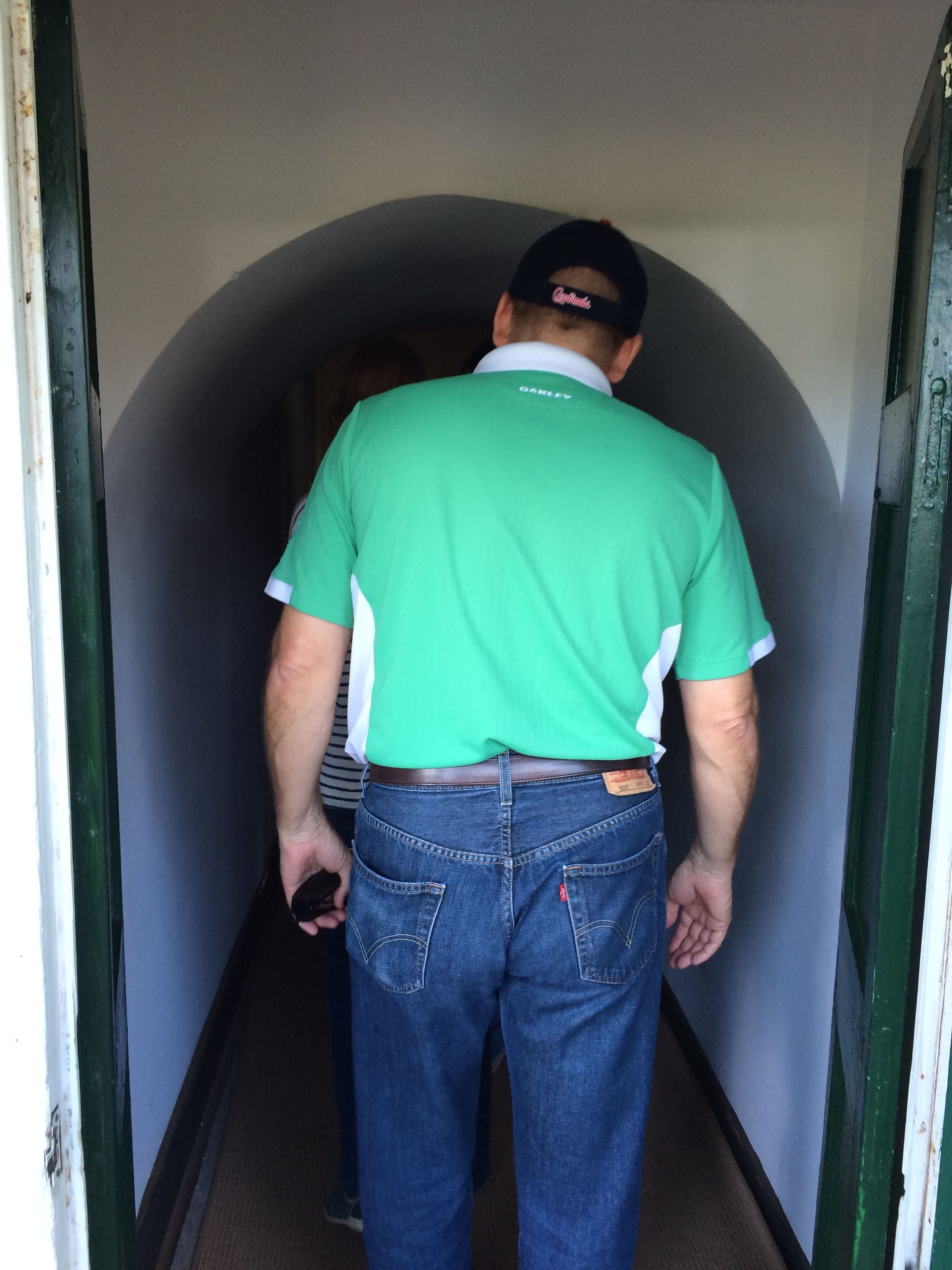
The tunnel wasn’t particularly high.
Watch your headOriginal construction
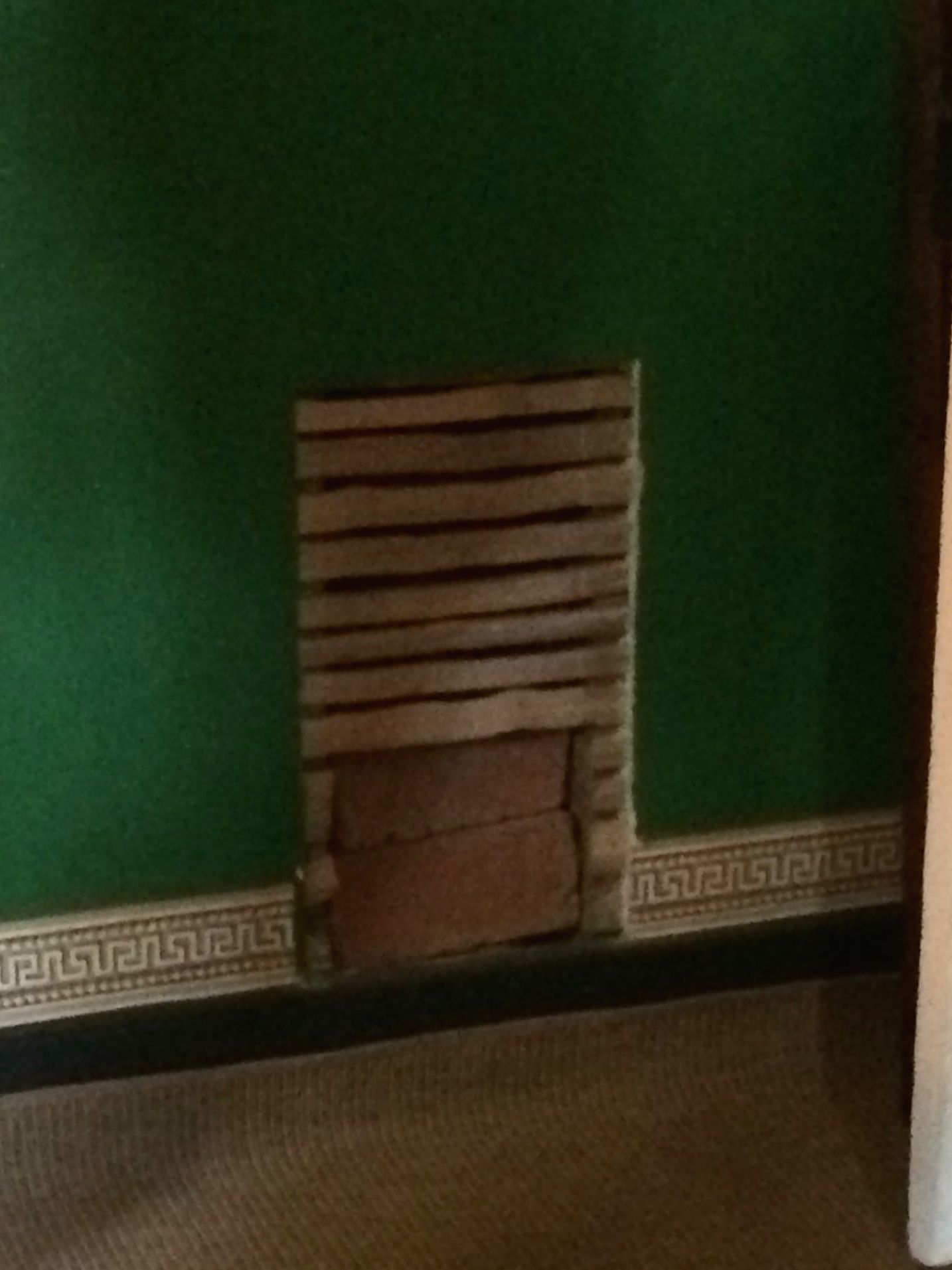
Our first stop was the study. They had a section of the plaster removed, and we could see one method they used for fire suppression. They would stack bricks between the studs. They weren’t mortared in; just stacked.
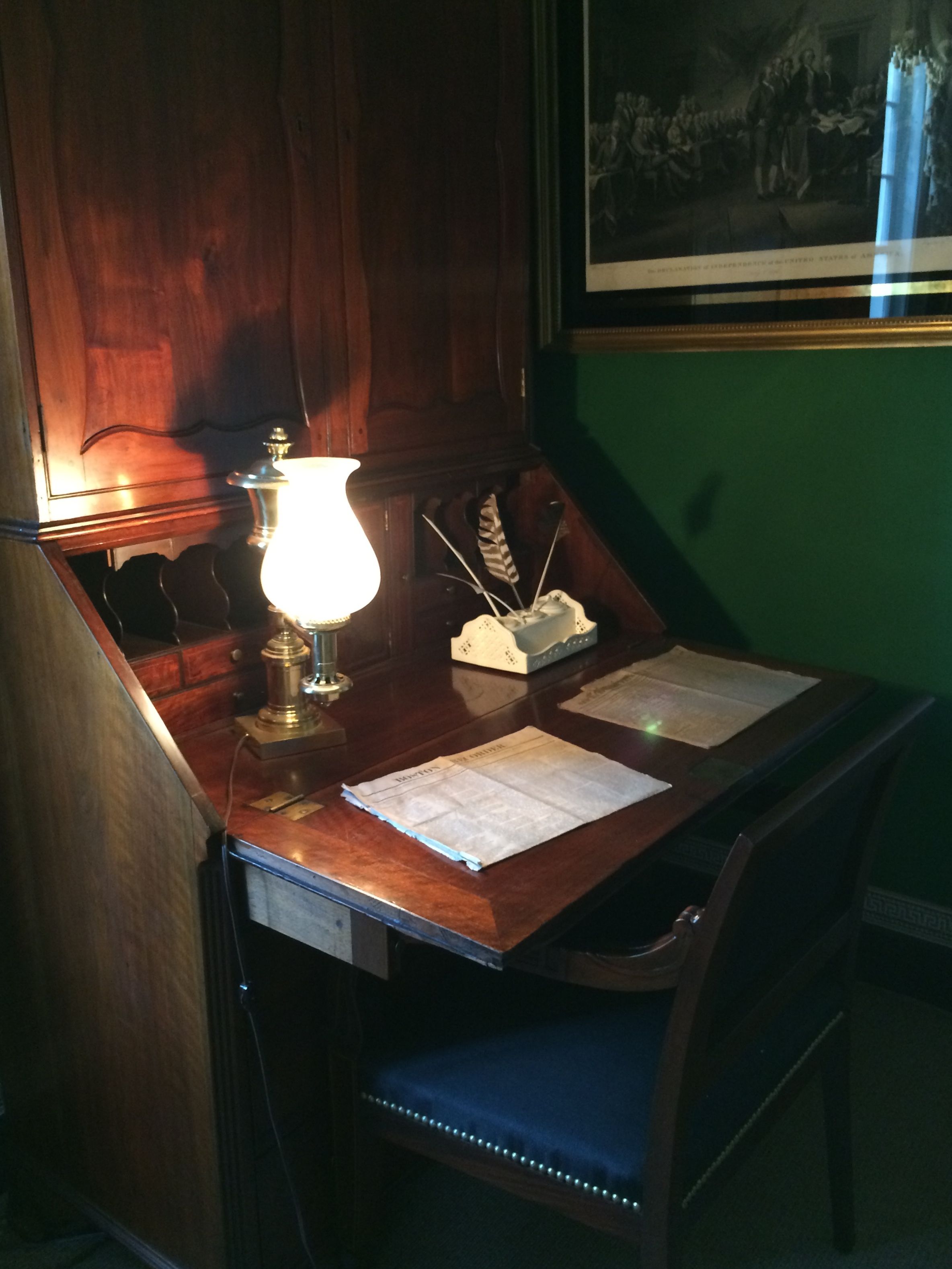
Monroe’s Desk
This is Monroe’s own desk; one that he used during his time in the White House.
Our next stop was their bedroom.
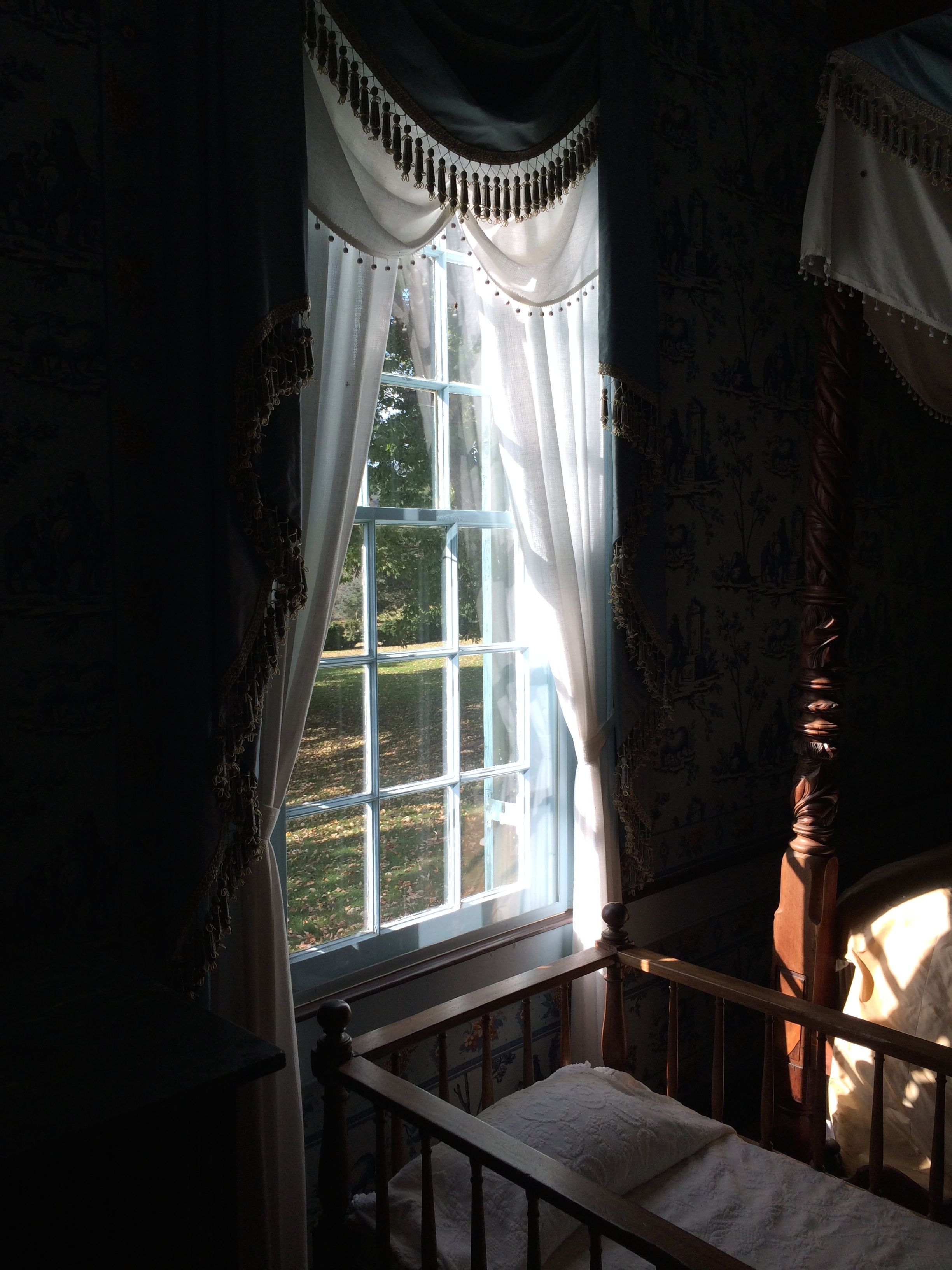
Window with the last original pane of glass
If you look at the middle pane of glass, four panes up from the bottom, you are looking through glass that Monroe looked through. According to the guide, it is the last original pane of glass in the house.
In front of the window is a Monroe family heirloom, the crib that generations of Monroe babies slept in – or didn’t. You know how babies are. The guide pointed out the signs of wear on it. It received some heavy use.
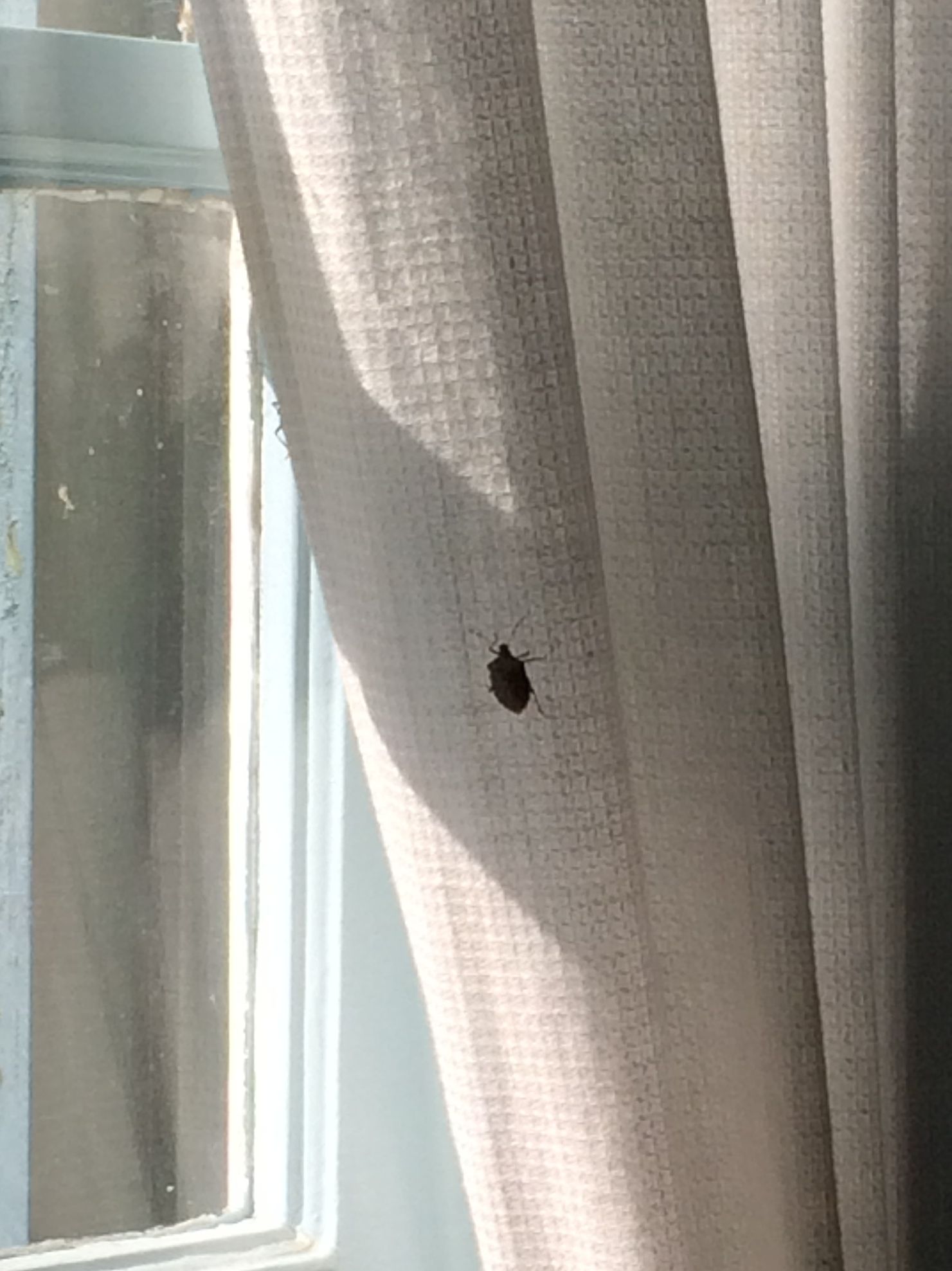
Stink Bug on the Curtain
As a northerner, I had heard about stink bugs, but I wasn’t sure what they were. I learned that THISis a stink bug. Everyone tells me they are really malodorous. If that is the case, I am lucky that I haven’t smelled one yet.
After that photo, the guide told me that they didn’t allow photos. Oops. Had she mentioned that at the outset, I wouldn’t have been shooting. But, I did as she requested and put my phone away.
We went through a few more rooms, but I have no photos to share. They were small and homey and the tour was rather short. We exited through the yellow portion of the house that is now used as a museum. I took a glance at the cabinets in the house, but I didn’t see anything that caught my attention.
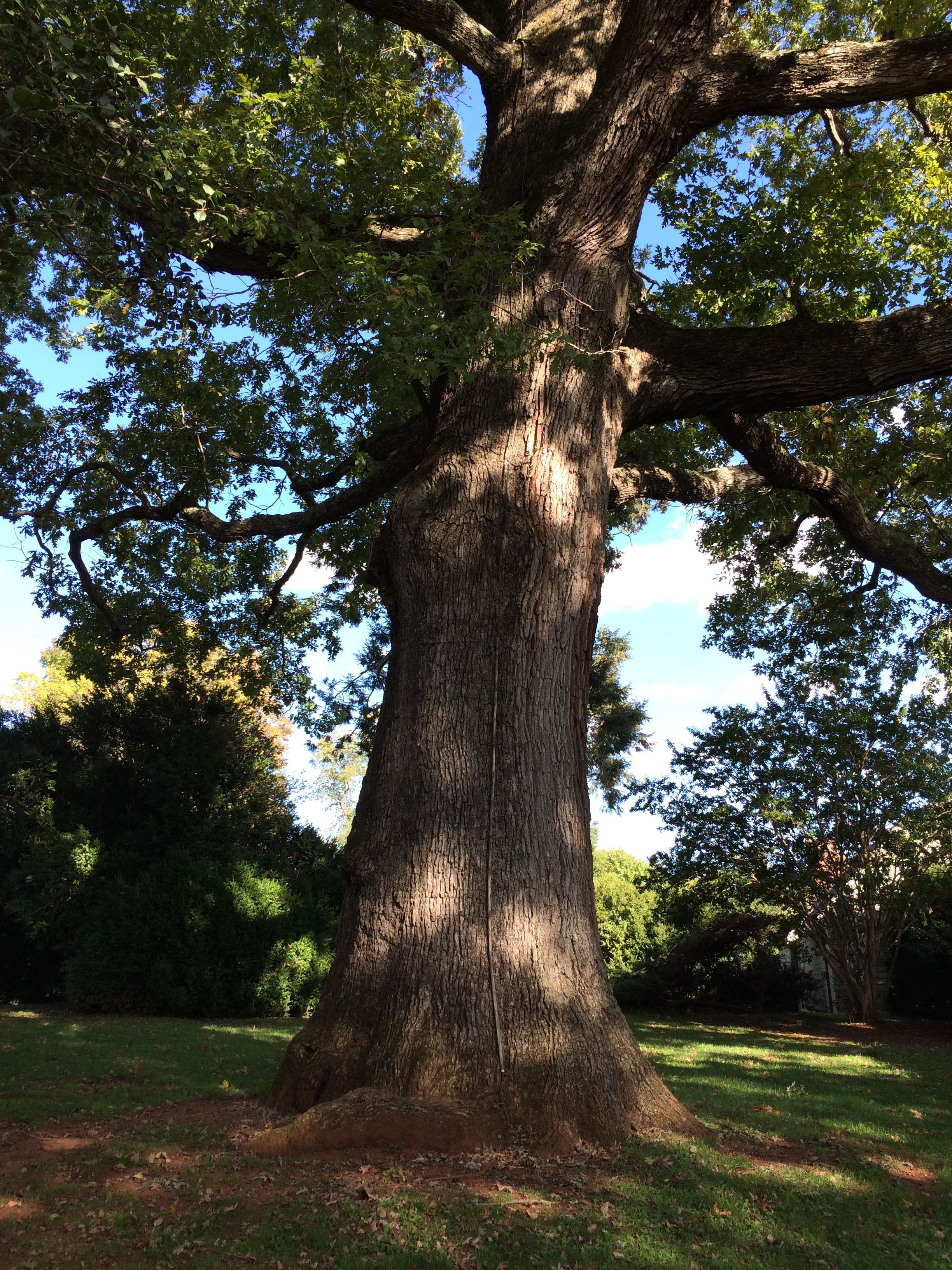
Right outside the front door was a large white oak.
The guide said that the tree was growing when Monroe owned the land. I thought the lightning rod running the length of the tree was interesting. A tree this old is worth taking care of.
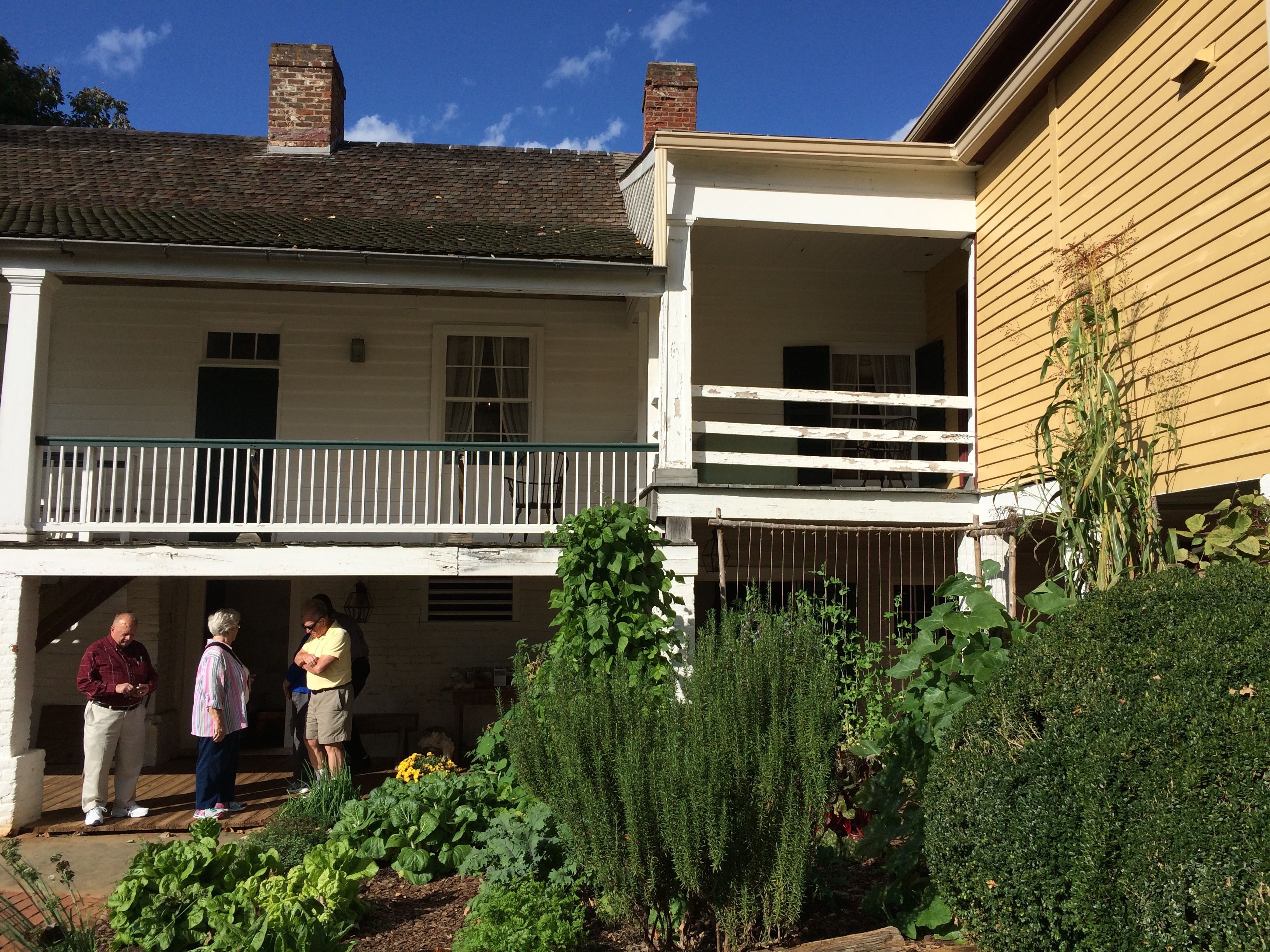
From this side of the house, you can see all the additions. The part on the left is the part that dates back to Monroe’s time.
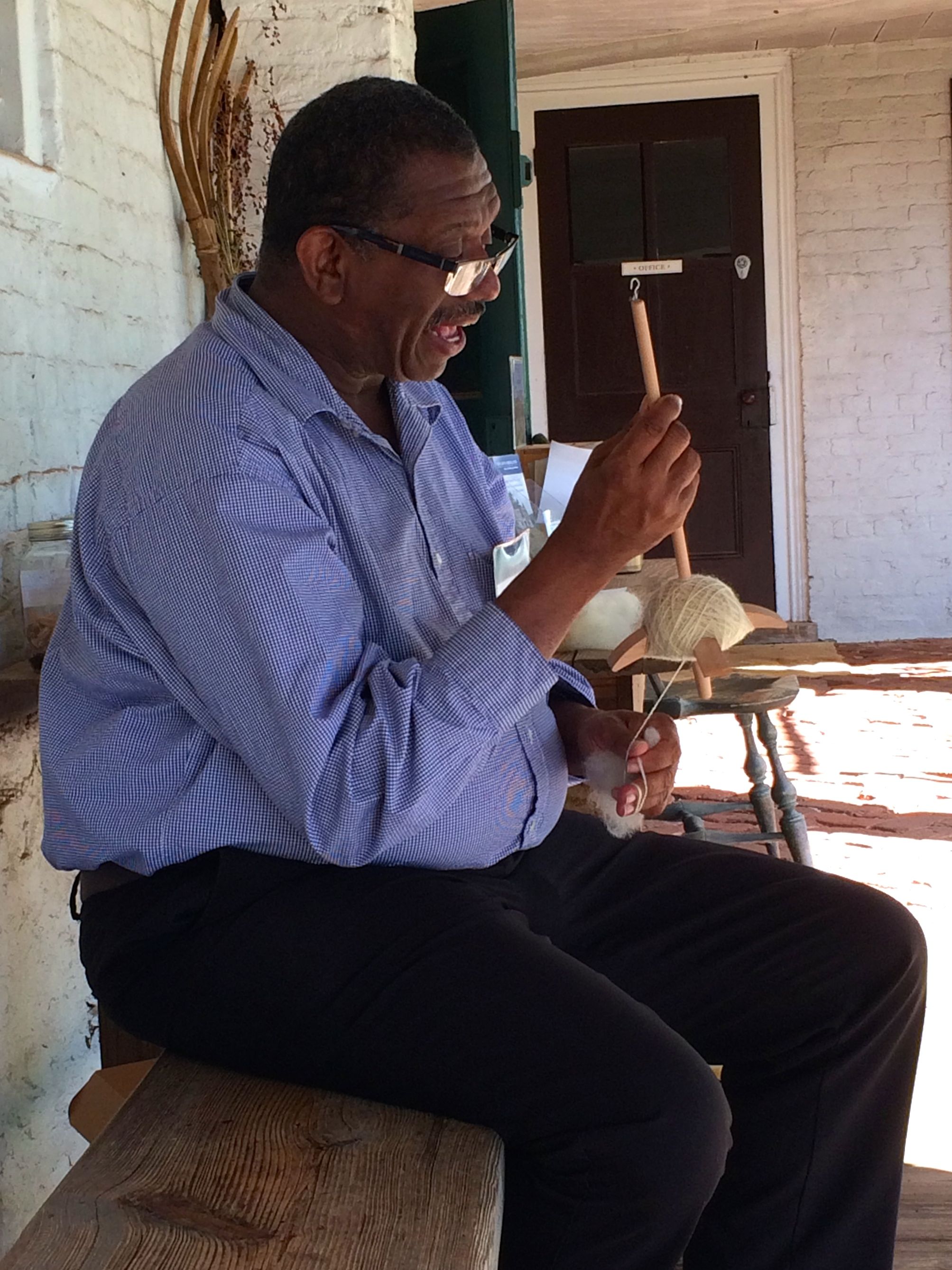
One of the docents was spinning wool from the sheep raised on the farm. Monroe raised merino sheep. He became acquainted with when he served as a diplomat in Europe and imported them to his plantation. The docent and I had an interesting discussion about spinning and how to ply the yarn.
There were a few other recreated buildings on the property, but I still had to get to UVA, so I bid adieu to Ash Lawn-Highland and headed back to Charlottesville.
My first impression of the University of Virginia is that it is ENORMOUS! I stopped at a visitor information and got a map and directions to visitor parking. If I hadn’t I think I would have just skipped it. Not only is it a vary large campus, but it is on hills.
After I parked, I tried to orient myself. I ended up crossing the street and going into the college of education. I took the elevator up to the level that had a bridge crossing the road. After I crossed the road, I still had some climbing to do. Finally, though, I ended up at the The Lawn.
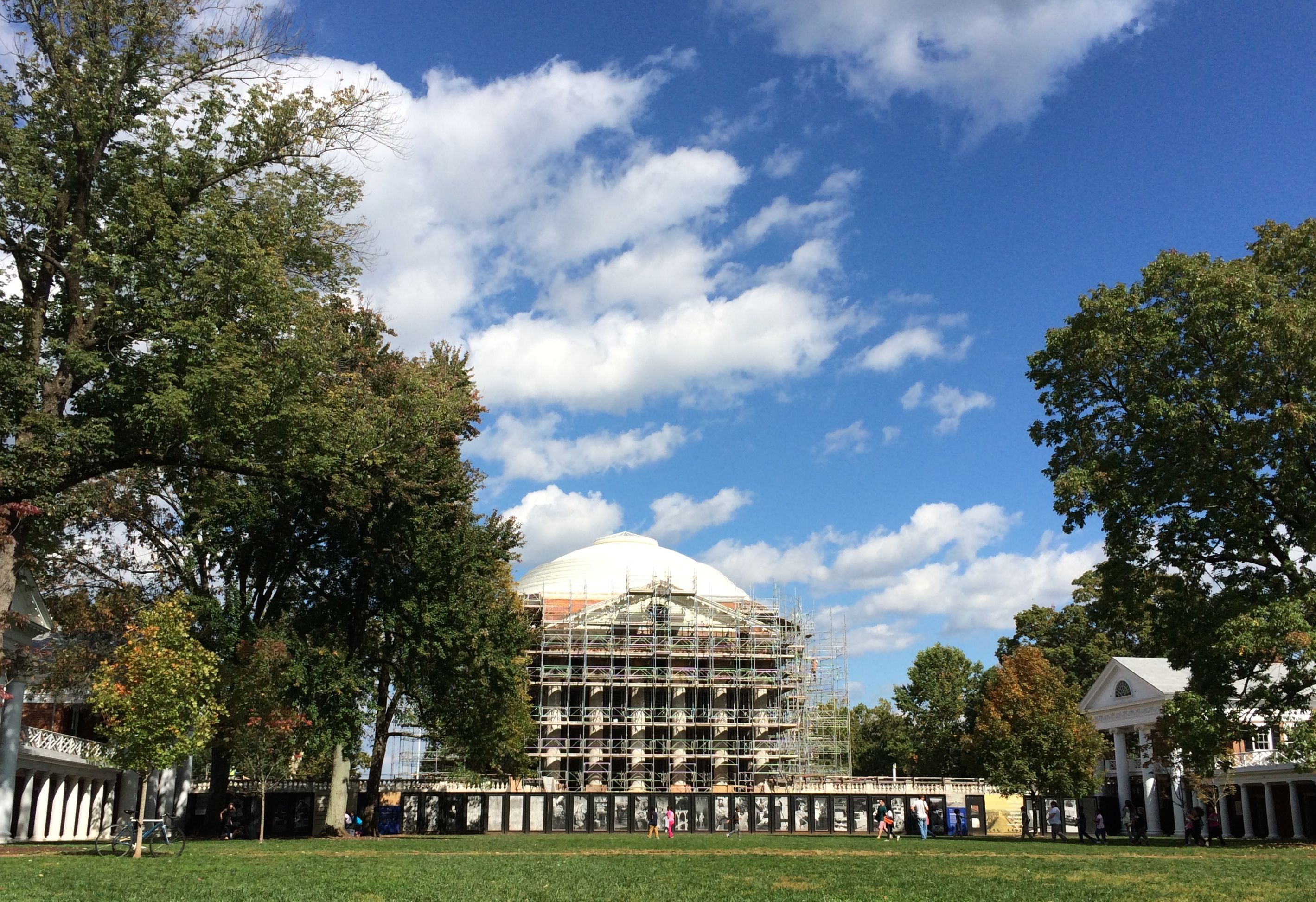
The Rotunda was under renovation. It is an old building – nearly 200 years old. Jefferson designed it as a library and put it at the heart of the university. The guide at Monticello pointed out that having a library at the center of a university rather than a church or a chapel was a radical idea.
The original structure was heavily damaged by fire in 1895. It was re-envisioned by Stanford White of the New York architectural firm of McKim, Mead & White. It was also modified in 1938. It was again renovated and much of Jefferson’s original design was restored in time for the nation’s bicentennial in 1976.
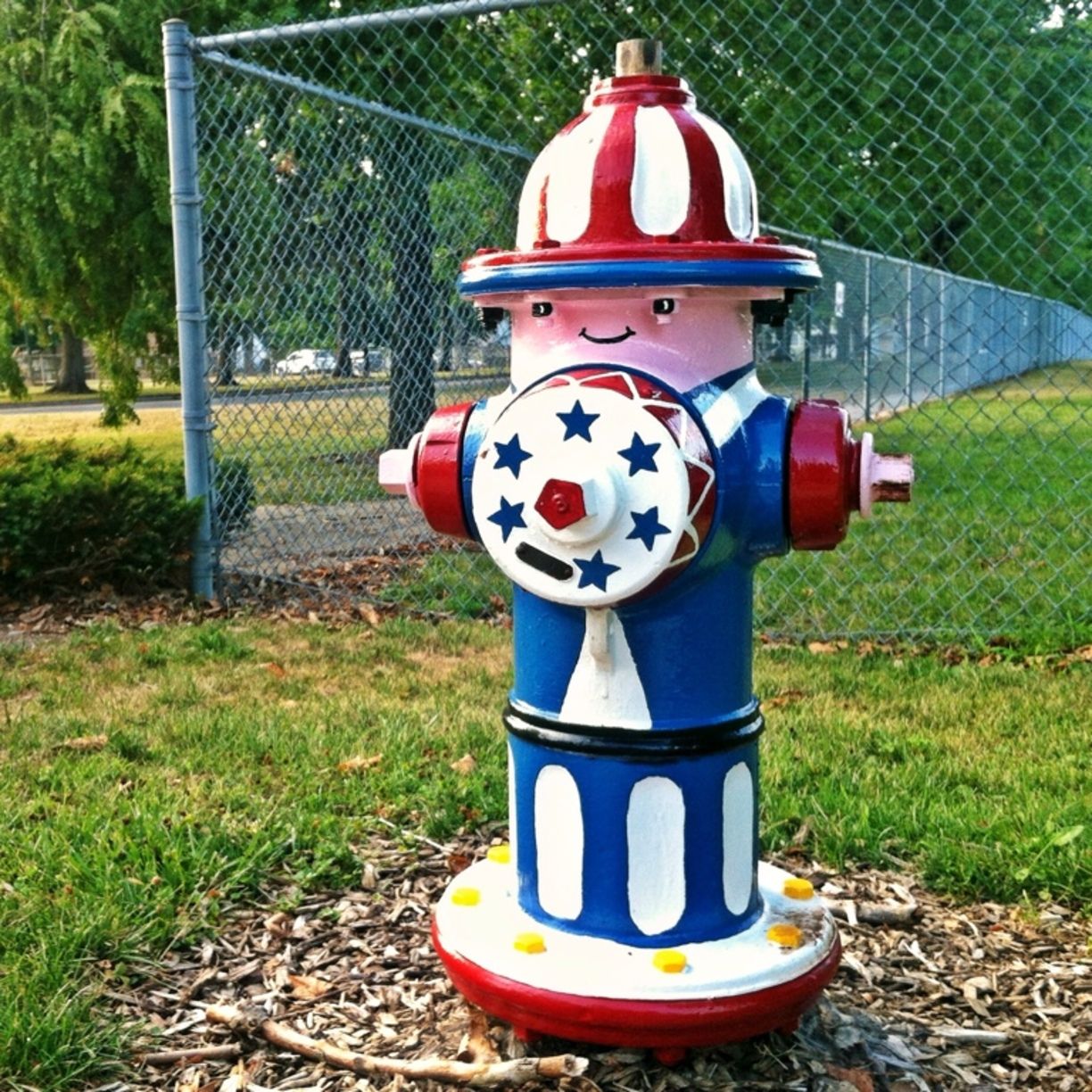
Better than a Bicentennial fire hydrant, I say.
Bicentennial fire hydrant
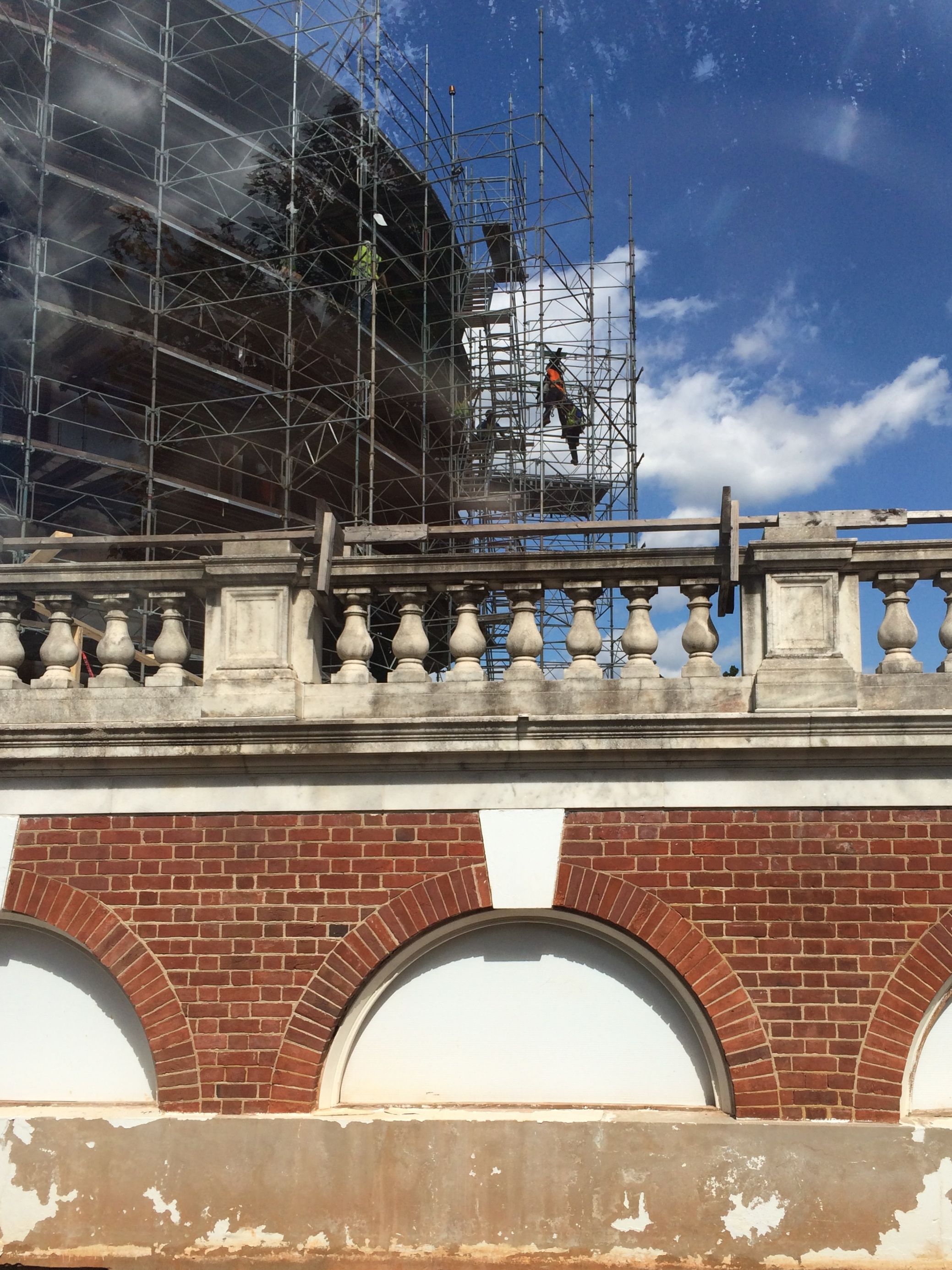
They are really working hard on bringing back the glory to the is World Heritage Site.
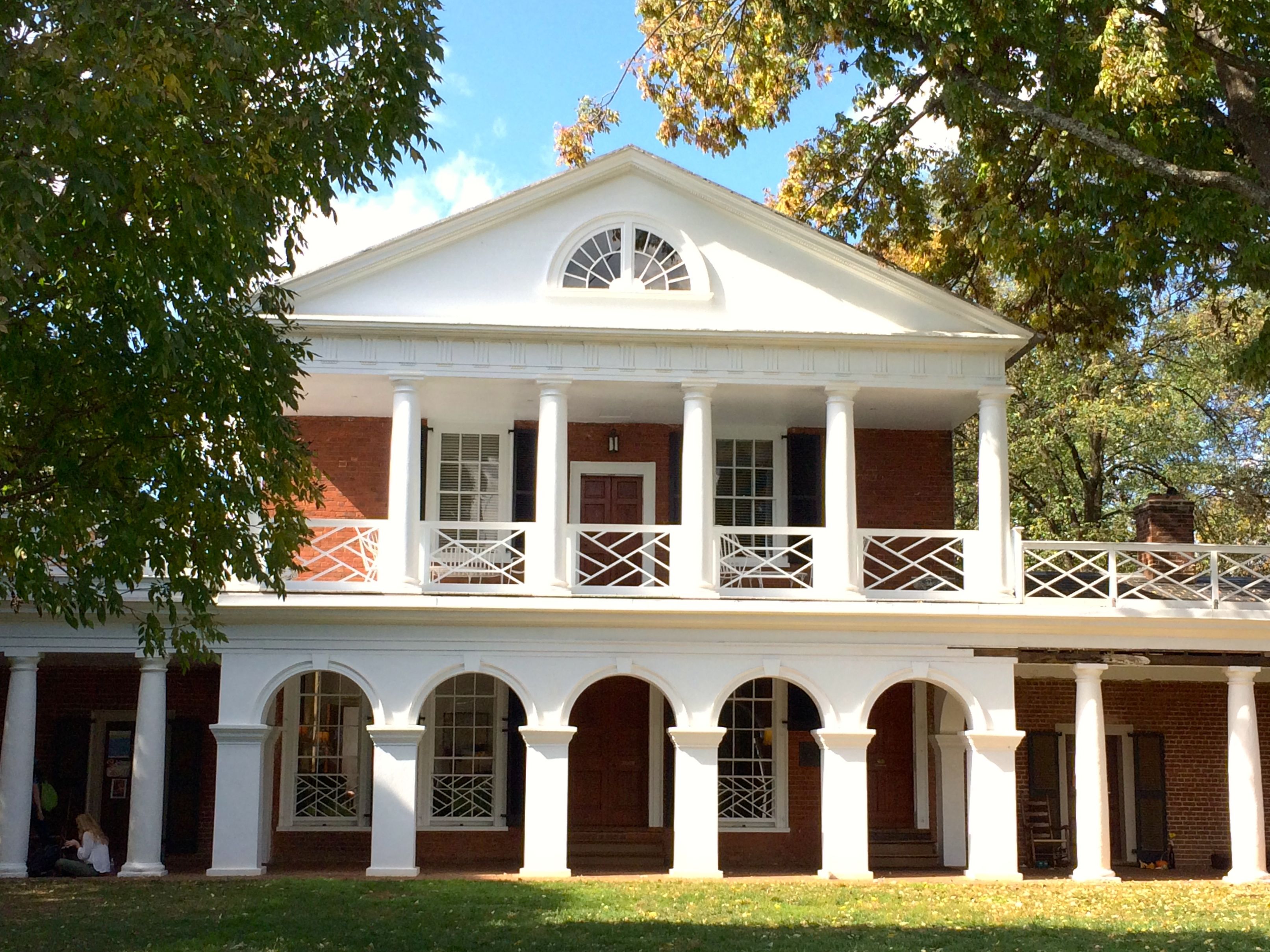
Work on the domeThe Colonnade Club – AKA “Pavilion VII”
The Colonnade Club is the oldest building on the Lawn. President James Monroe laid the cornerstone in 1817, with former presidents James Madison and Thomas Jefferson also attending the ceremony. Jefferson designed the pavilion and this was the first structure in his “academic village.” Today it serves as a faculty club with reception facilities and overnight guest rooms.
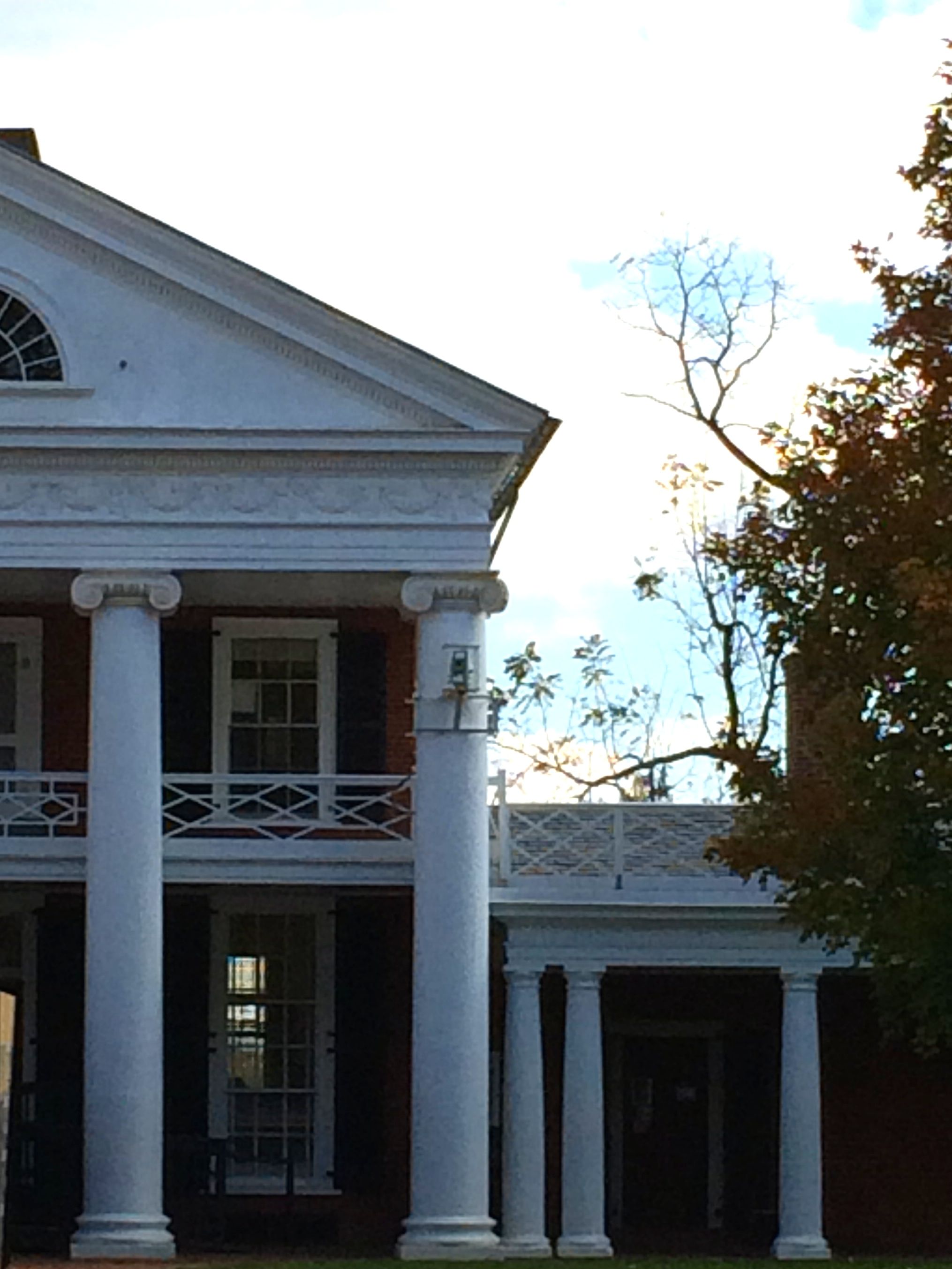
The columns on this building have Doric capitals.
This building, on the other hand, has Ionic capitals on the two story portion of the building. You can compare and contrast them with the Doric capitals on the one story portion.
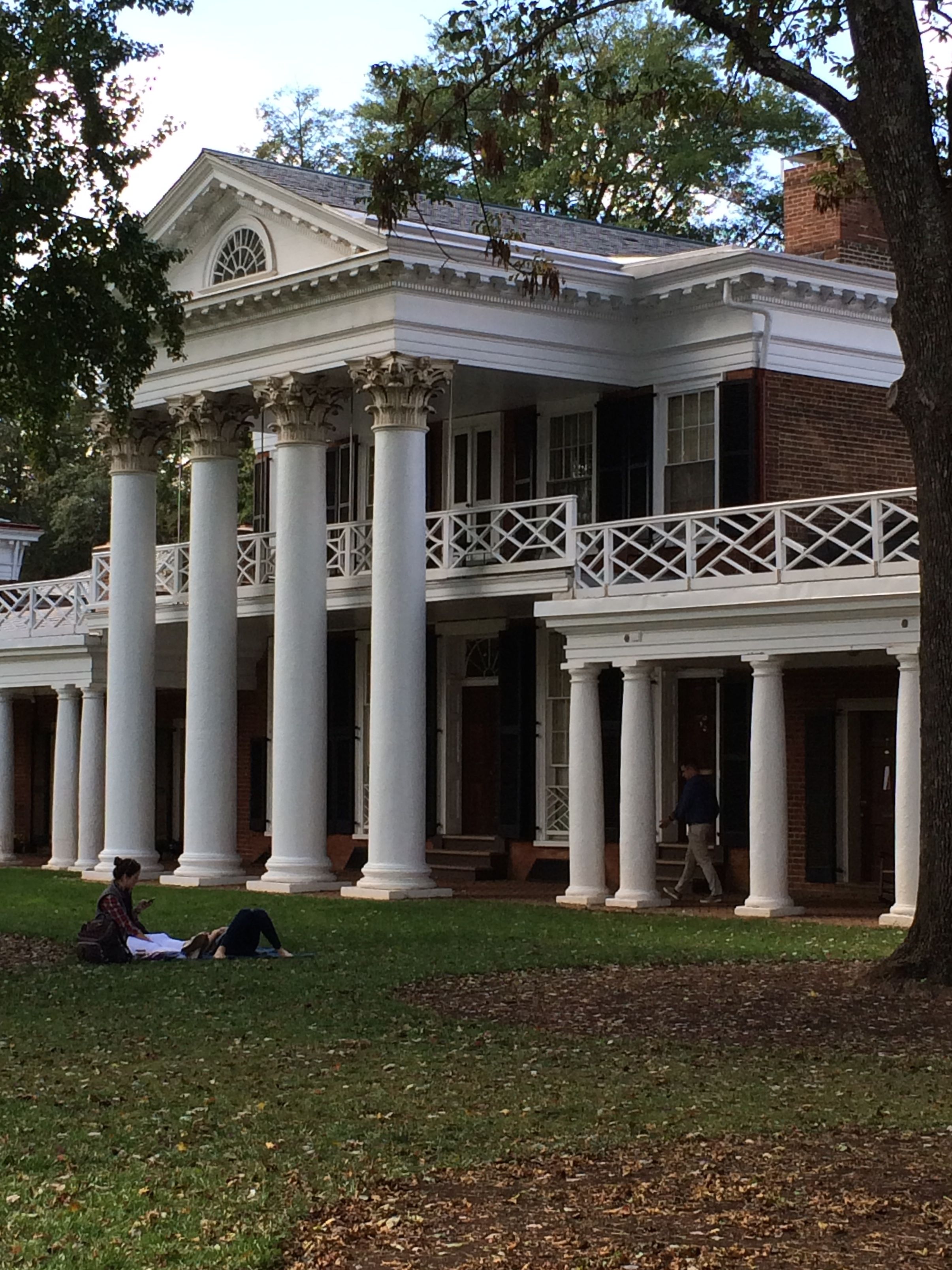
Corinthian Columns
Now, throw in the Corinthian Columns on this two story building. It is almost as it Jefferson was creating a three-dimensional architecture lesson.
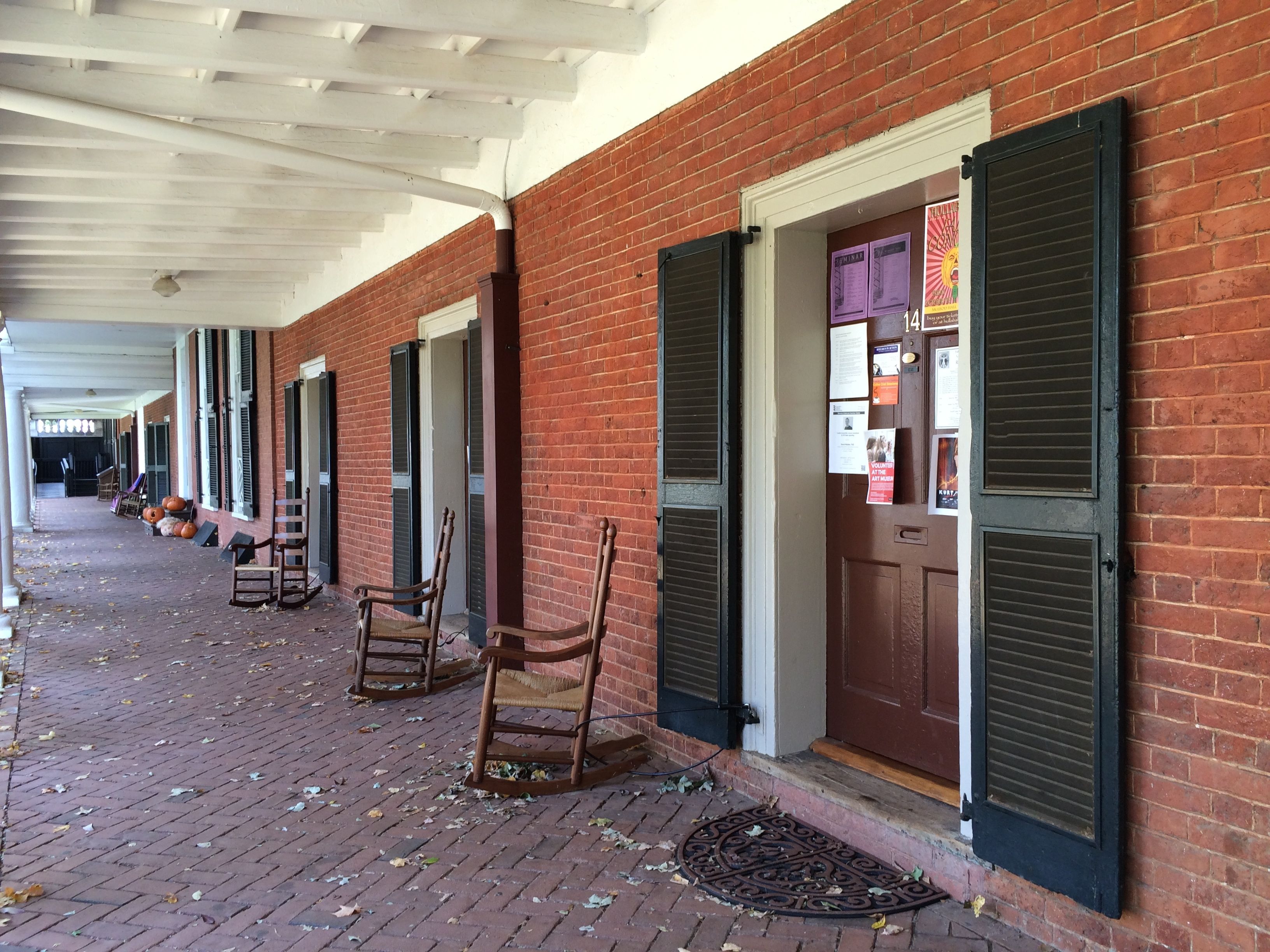
The two-story portions of the building lining the Lawn seem to be dedicated to offices. The one-story portions are students’ dorm rooms! Can you imagine living with this beautiful porch right outside your door? They even have rocking chairs there – although they are locked to the building.
Can’t trust those students.
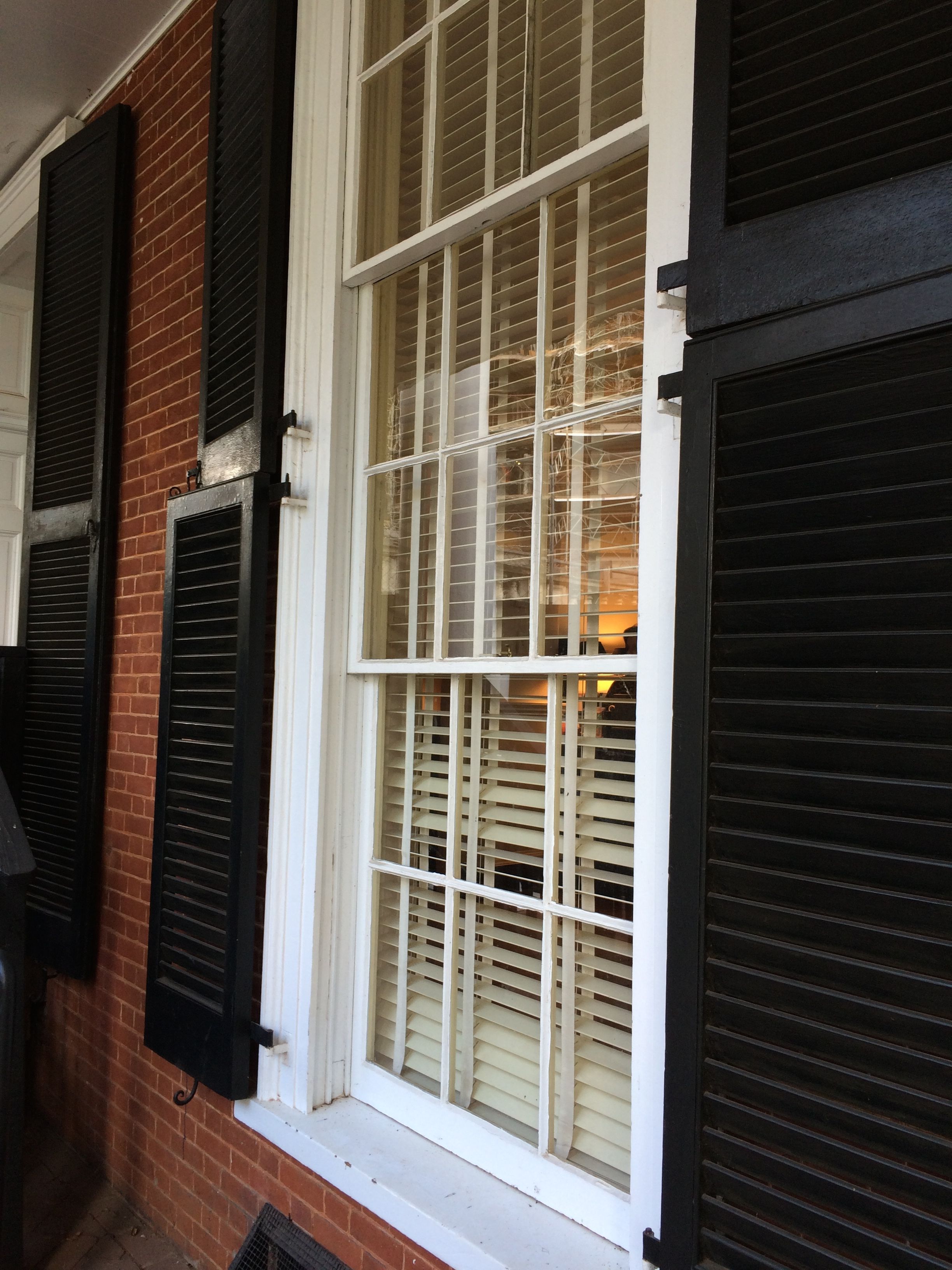
Triple hung windows
I was fascinated by the triple hung windows. I noticed some of them at Monticello, too.
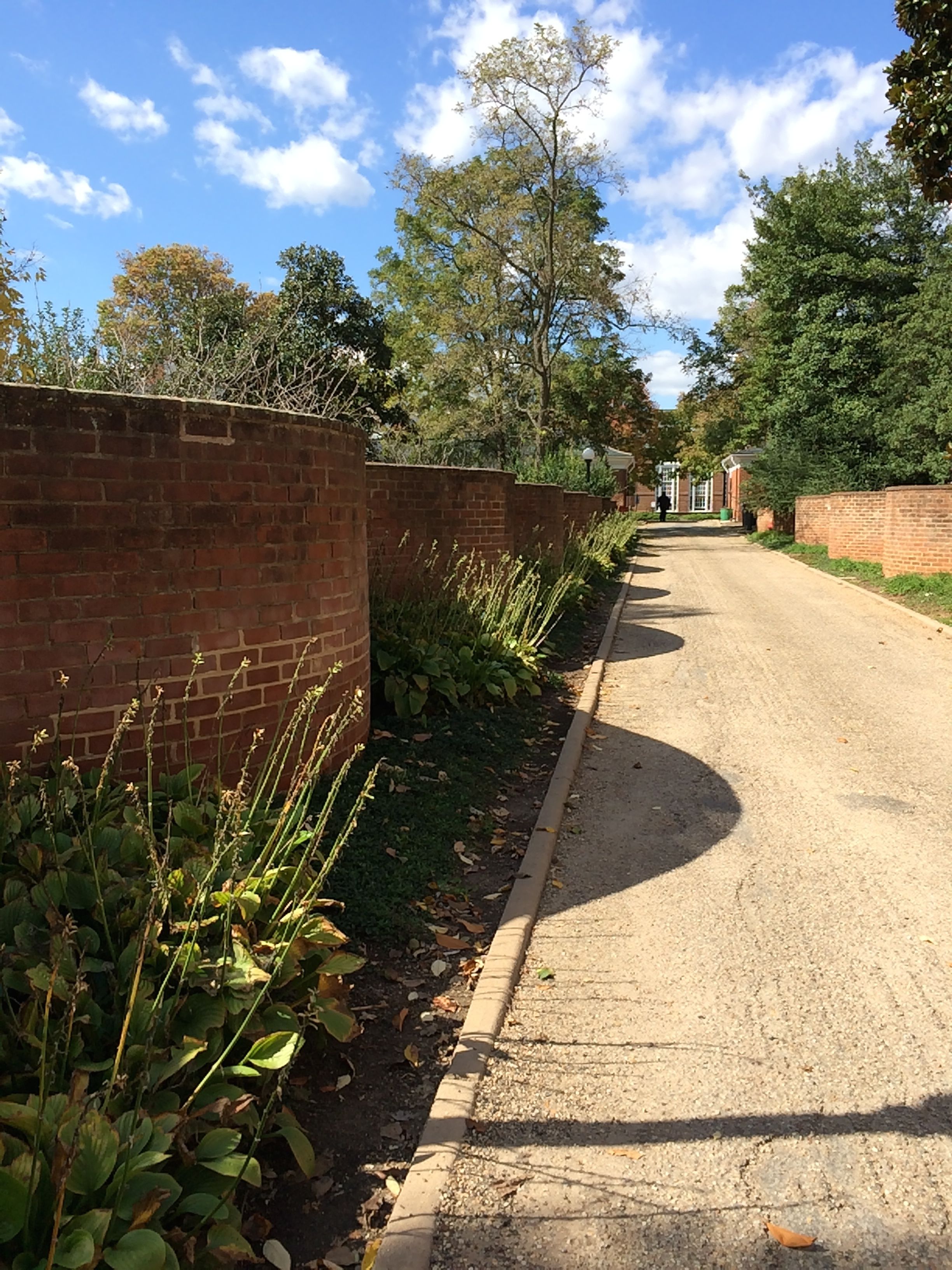
This serpentine wall was designed by Jefferson to provide garden space between the building of the Lawn and the Range. In something I read while I was there, I got the impression that the gardens were intended for the people providing services to the students. I’m not sure what that meant, but the gardens are still here, although the walls have been rebuilt.
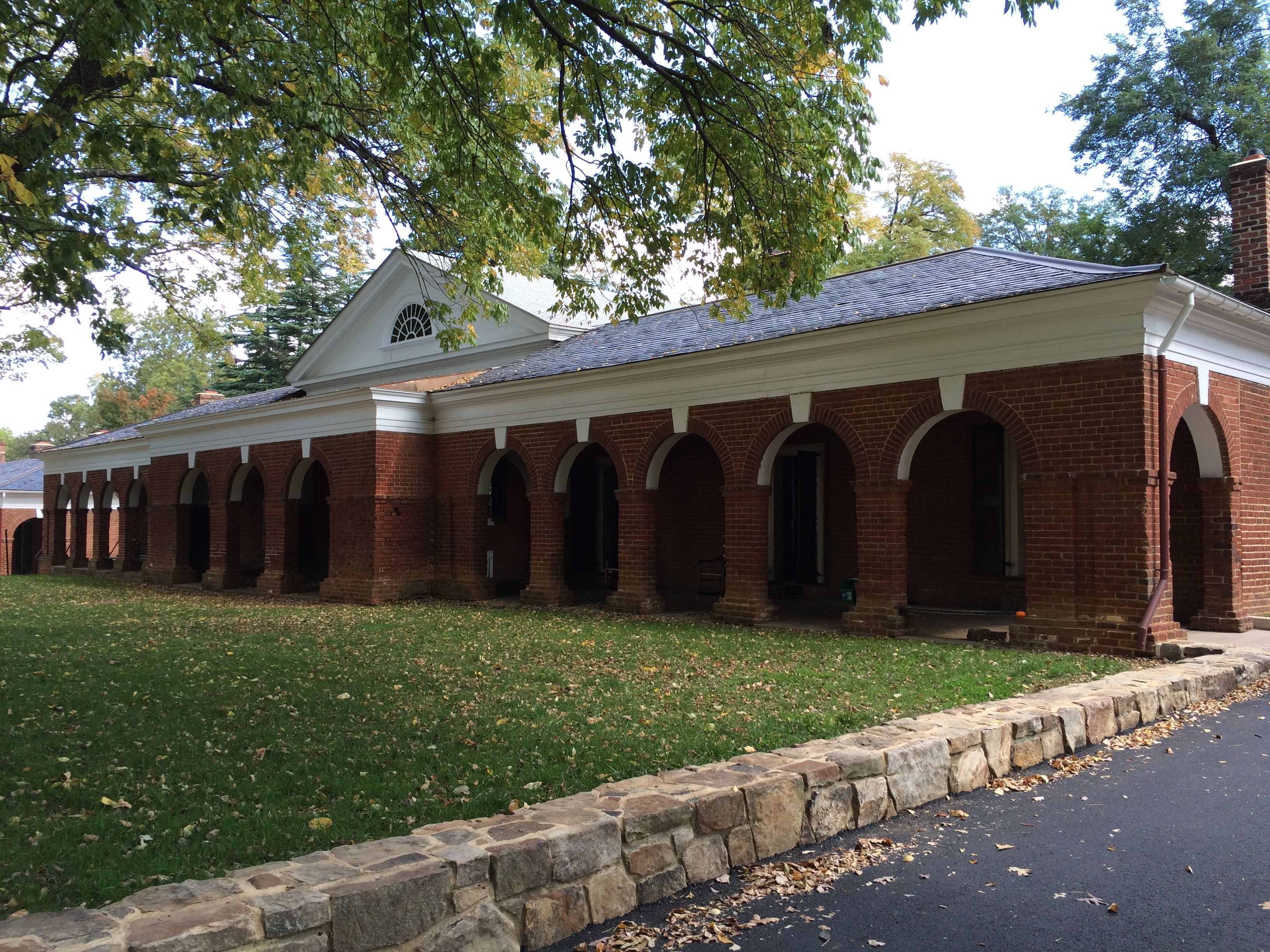
There is an East Range and a West Range on either side of the Lawn. These are also residences for students. Two of these rooms were lodgings for famous people.
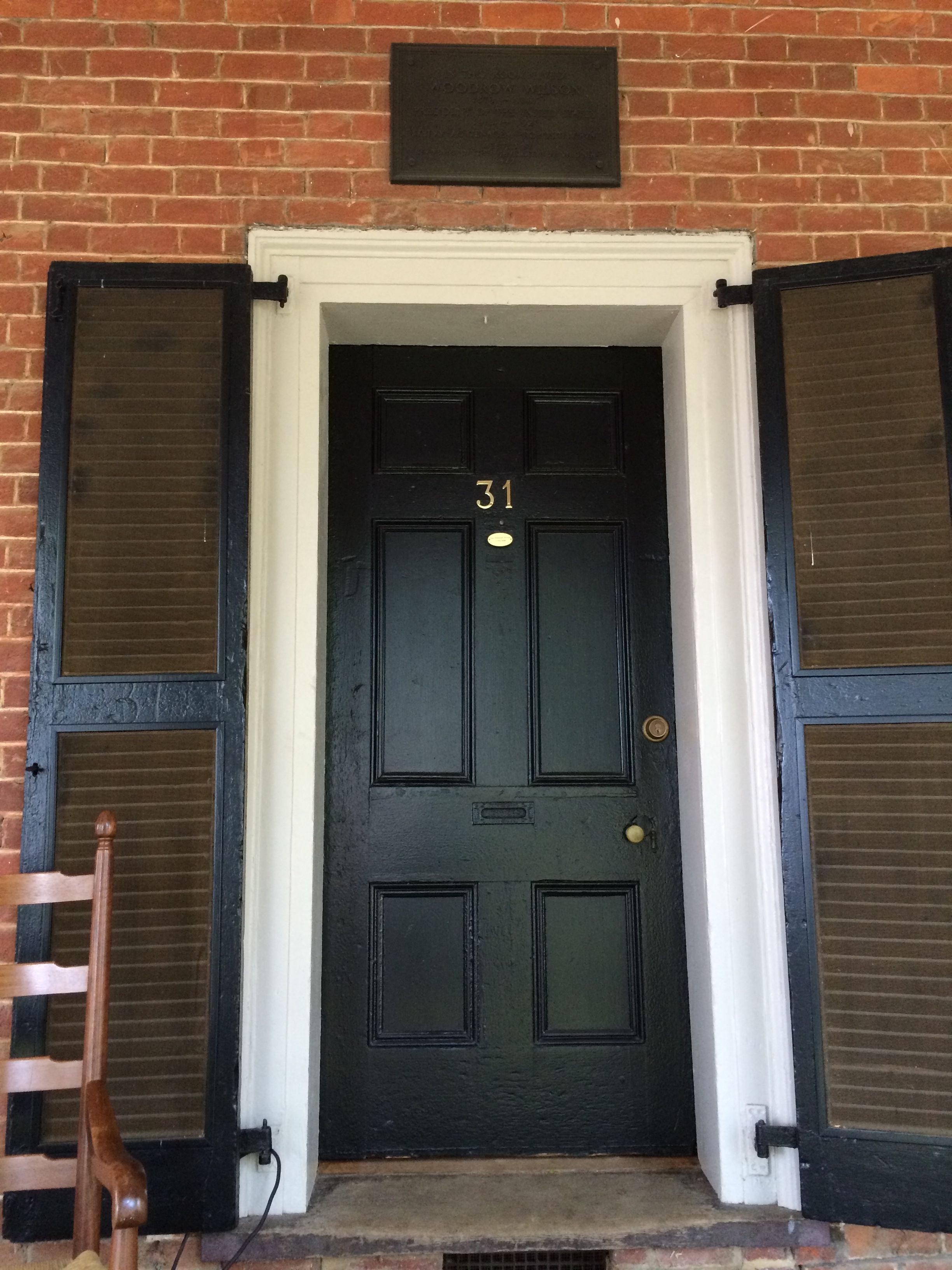
West RangeWoodrow Wilson’s room
This was Woodrow Wilson’s room. He stayed here 1879 – 1881. He was a local boy, hailing from Staunton, Virginia, just about 40 miles away. Of course, commuting was out of the question back then.
Someone is living in this room now. The name is on the shiny brass plaque. Unfortunately, the brass is so shiny that I can’t read the name of the current occupant.
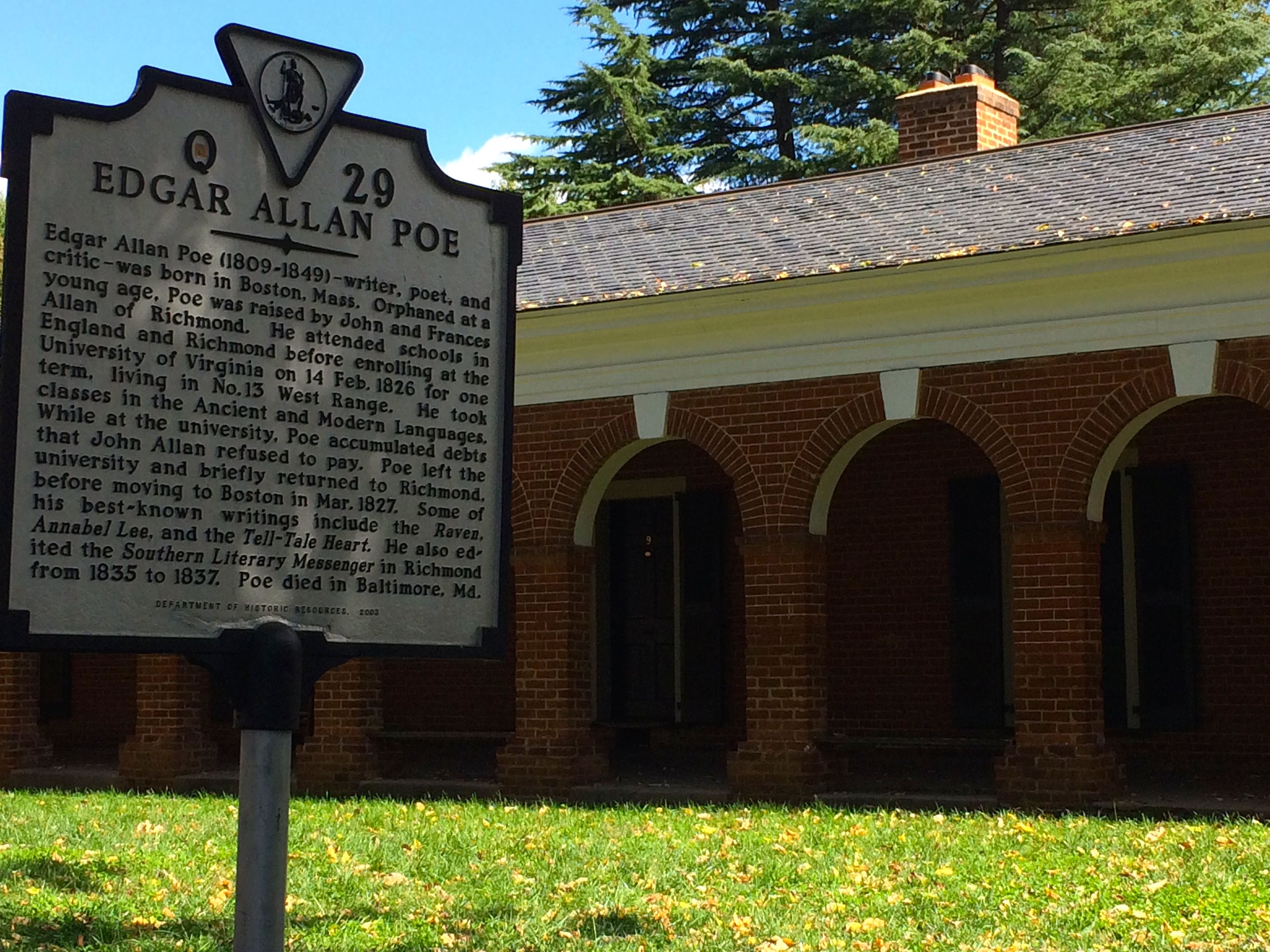
Edgar Allan Poe’s Room
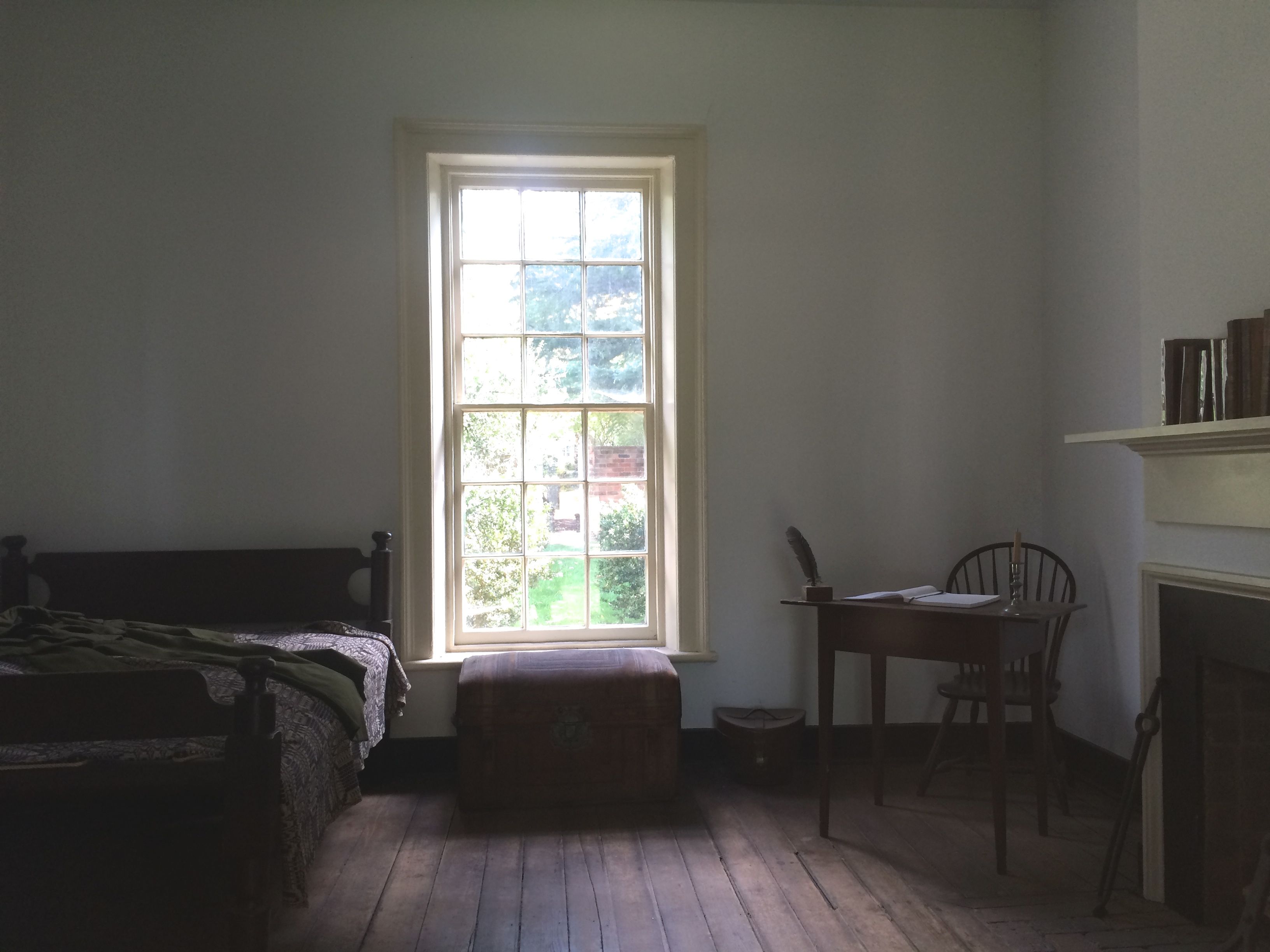
Just down the Range a bit, is the room that Edgar Allan Poe occupied for one term. The University is proud of his attendance and has a glass door on the room with furnishing in the style that Poe would have had.
Marker fo Edgar Allan Poe’s Room
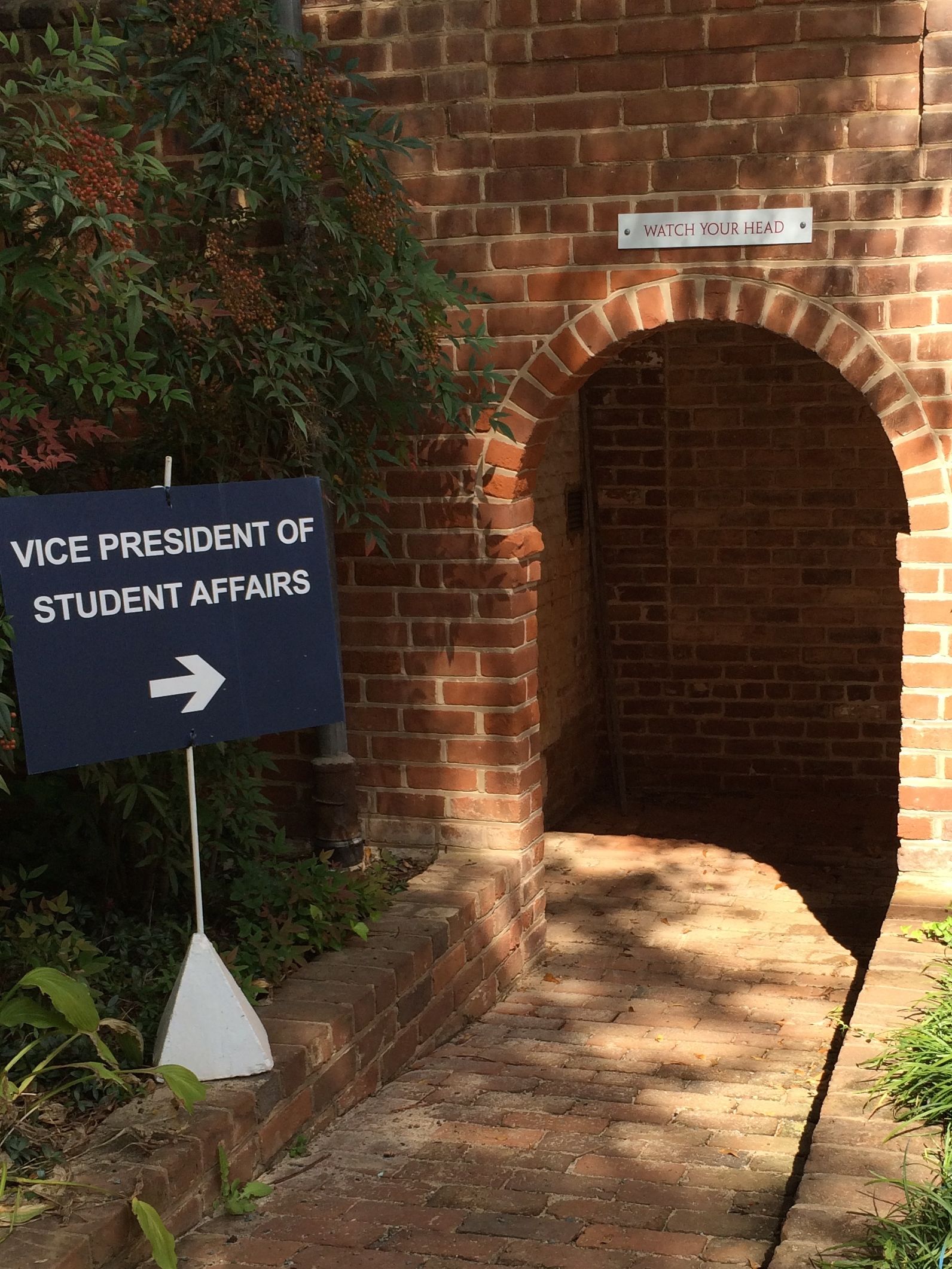
After that, I made my way back to the car. I have to admit that I thought this short arch was a nice bookend to the day’s tourism.
Watch your head
It kind of reminds me of the tunnel-like entrance to Monroe’s house.
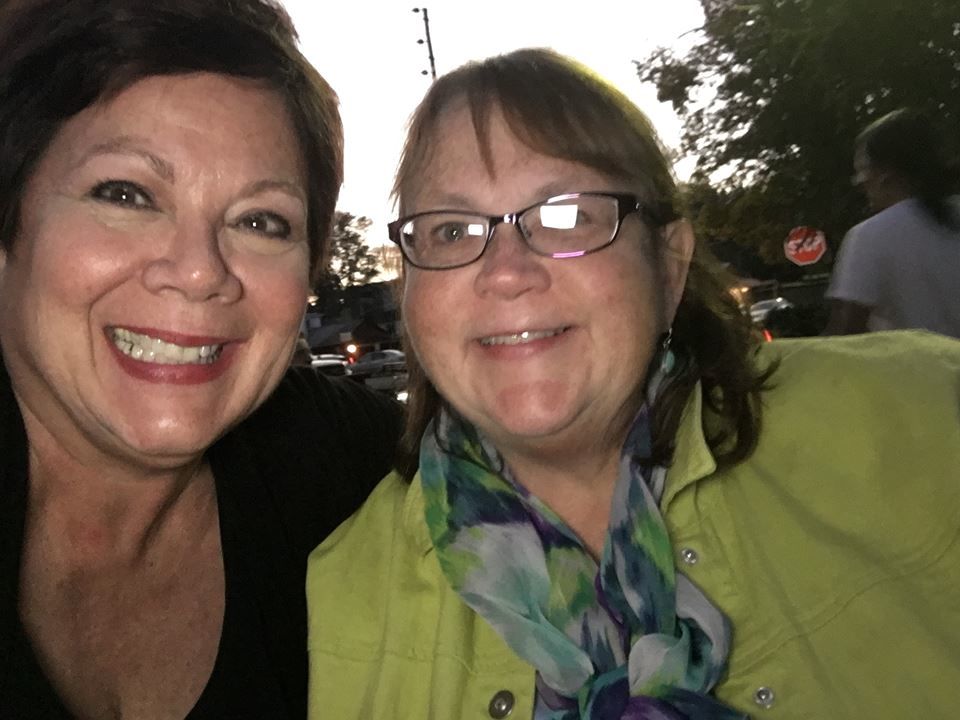
After that, I got to meet up with a Facebook friend for dinner.
Mickey and me
Some people knock Facebook, but I have met lots of wonderful folks there. Mickey is one of them. We had a great time over tapas and sangria and getting to know each other in real time.
And that was all for Charlottesville. Next stop: Newport News, Virginia.
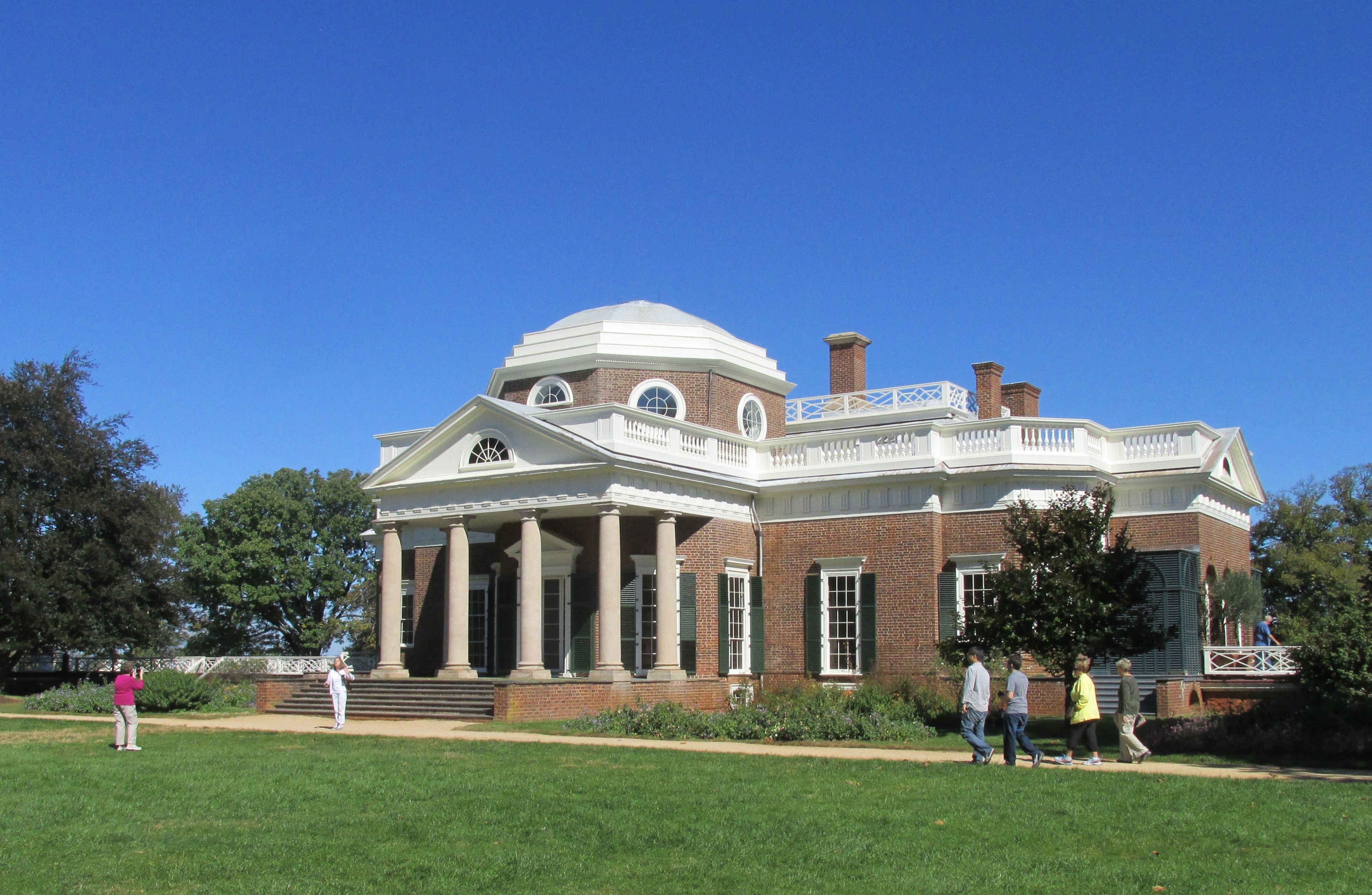
Who can visit Virginia without stopping in at Monticello?
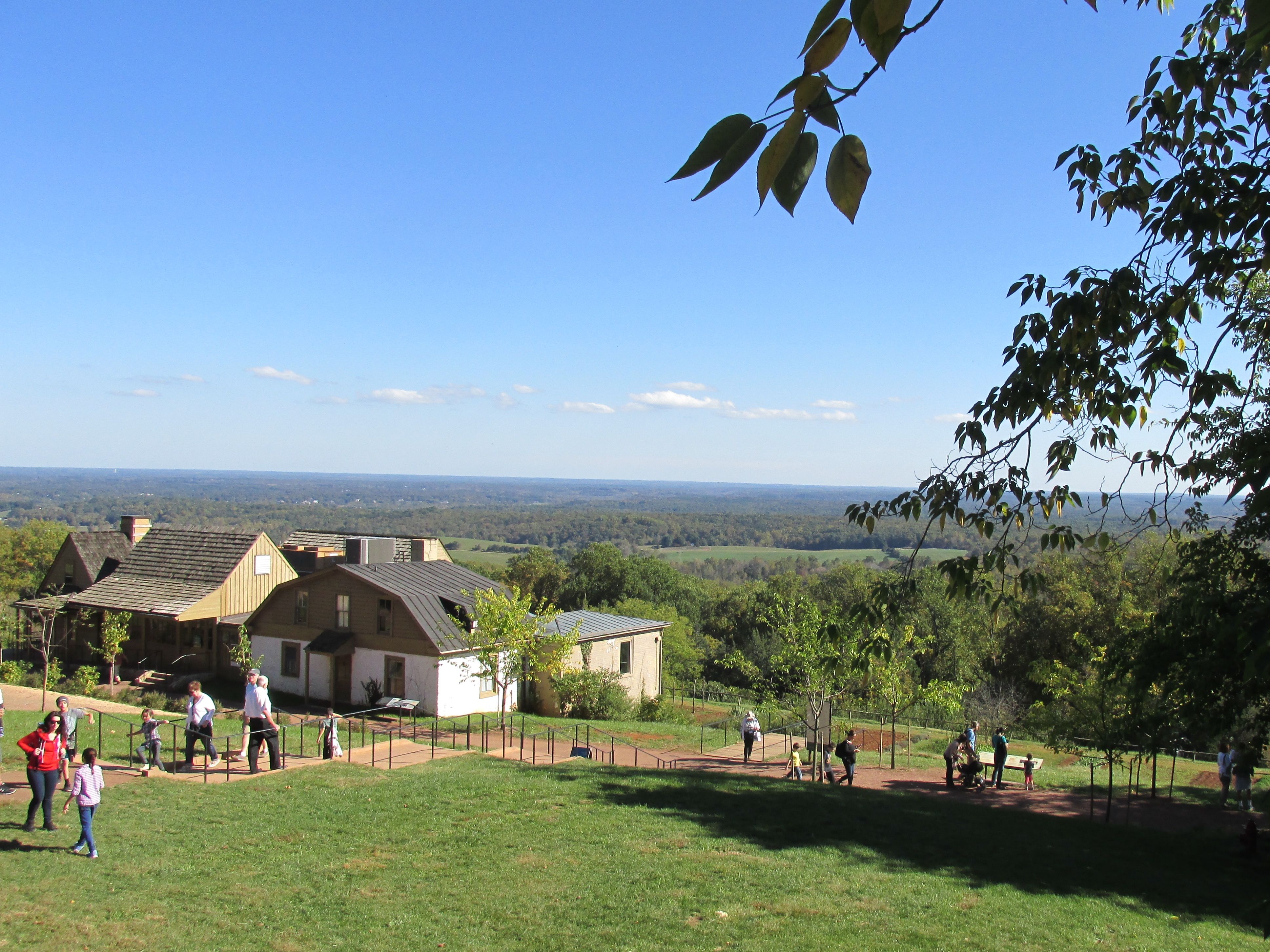
Well, actually, you don’t just “stop in” at Monticello. It is at the top of a mountain. But, what a view!
When you visit, you park down the mountain a ways and they run you up with a shuttle bus. Jefferson thought of so many things when designing his estate, but he didn’t anticipate automobiles and the need for parking.
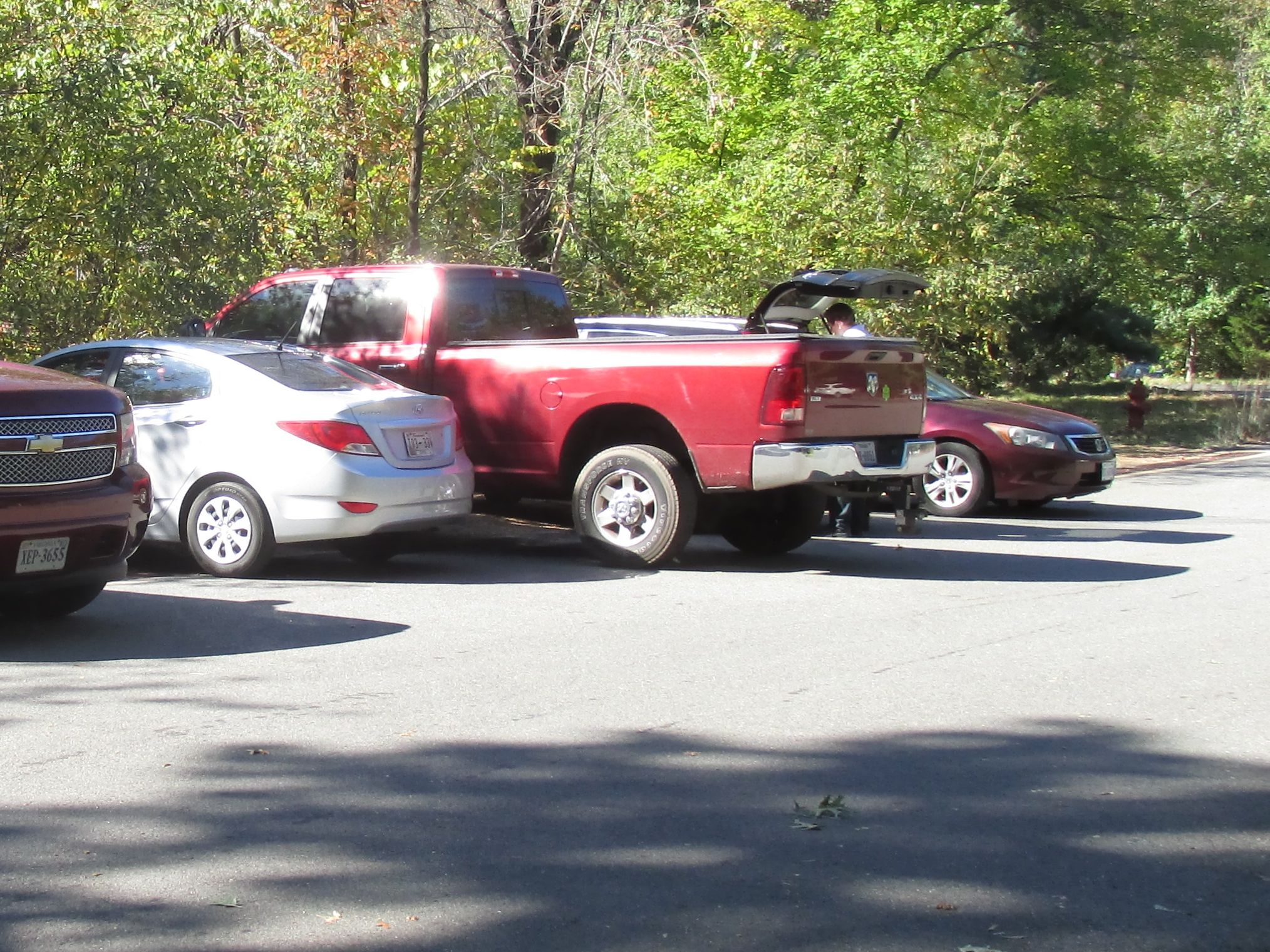
Who’s got a big truck?
Oh, my! Bart sure does take up space!
Actually, given the hordes of history hounds visiting, I am glad I was able to find a spot I could get parked in with a minimum of jockeying.
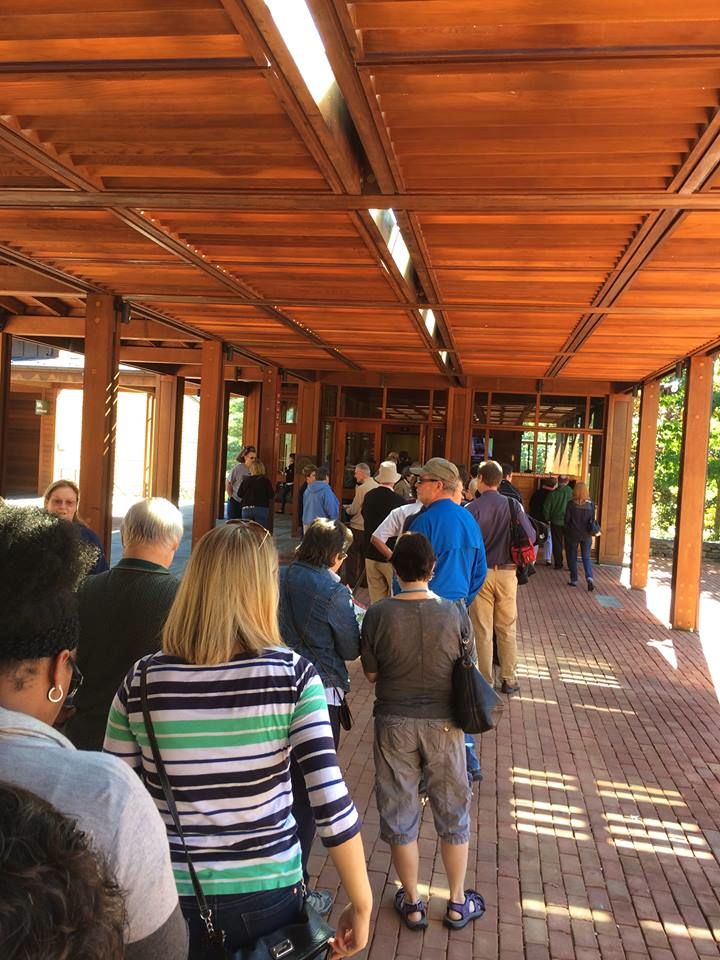
I think the problem with the line had to do with the the self-service kiosk being off-line. After I stood there for a bit, I noticed that volunteers were looking for people who had purchased their tickets on line. I raised my hand and a kind lady directed me to an office that normally handles group sales. After a short wait, I got my ticket and was on my way to the shuttle.
I had opted for the in-depth historic tour, and that didn’t start until 3:30. That gave me a few hours to stroll the grounds and see what I could see.
There is a lot to see. I made a quick stroll about to see the general layout. There is the central part of the house, where the family and visitors lived, and two wings, which he called dependencies. At the end of each dependency is a small brick building.
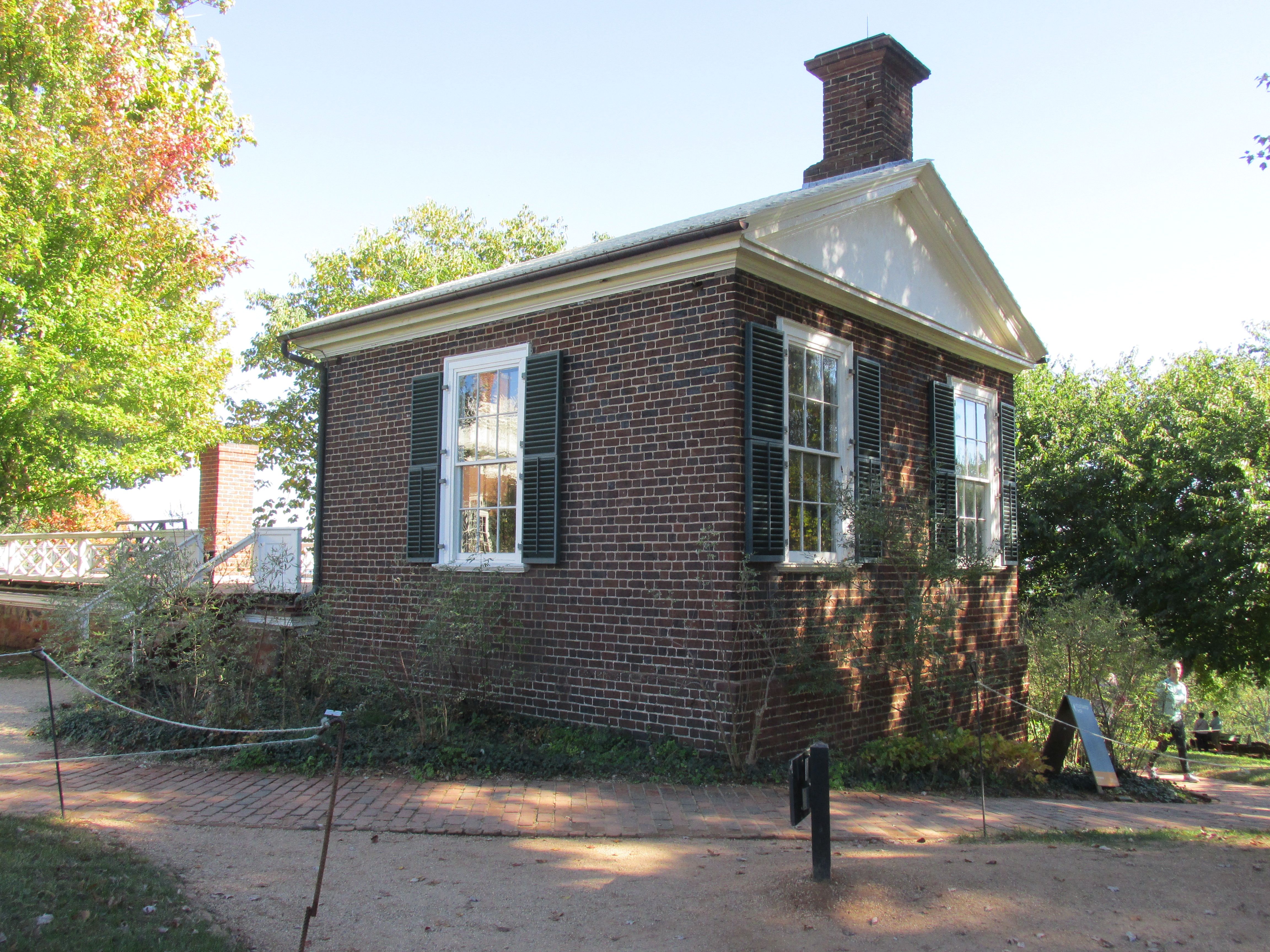
Outchamber
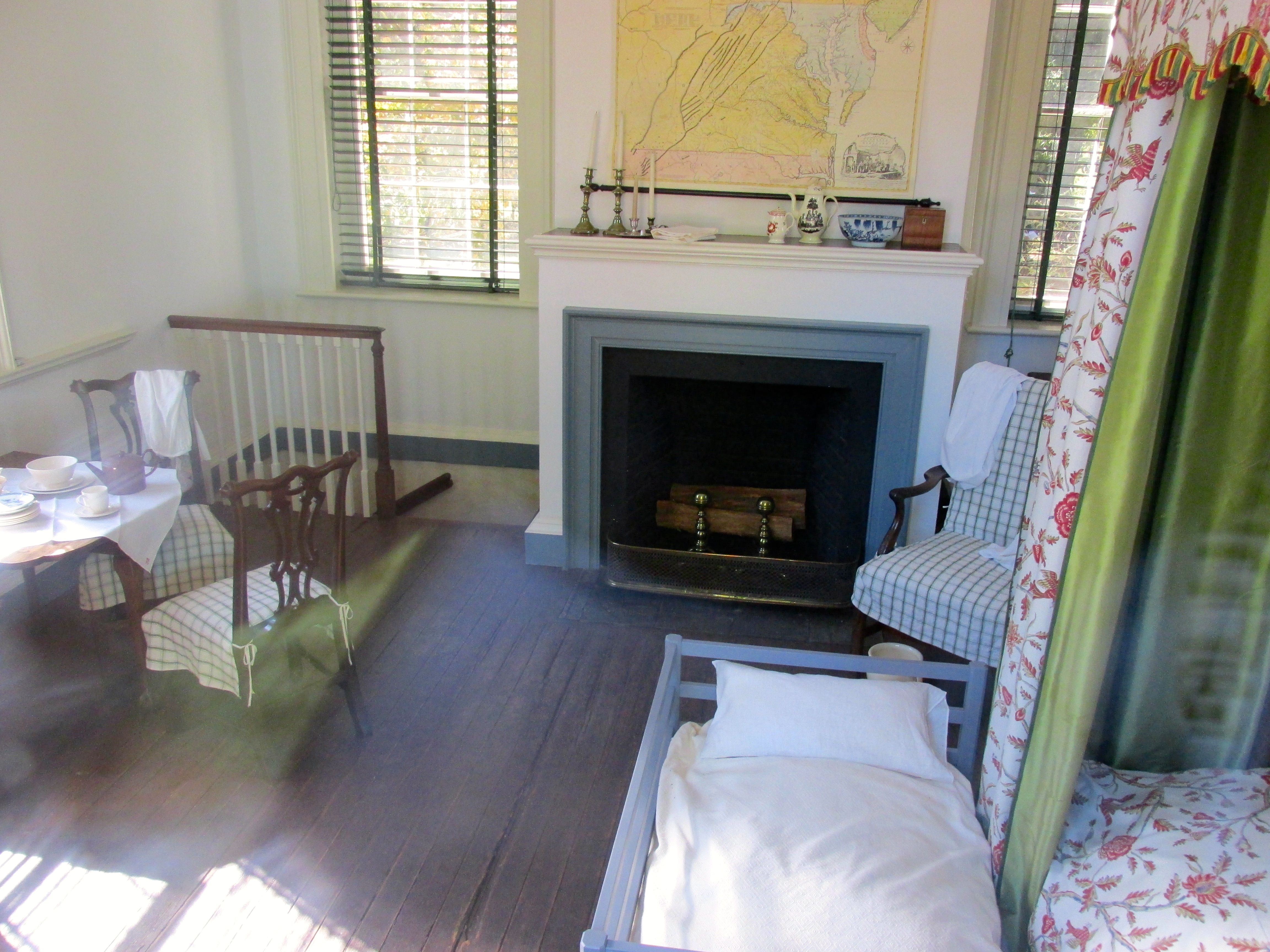
This was Thomas Jefferson’s first dwelling. He built this small, one-roomed house with the kitchen in he cellar. He brought his wife, Martha, to this house in 1772.
Outchamber interior
Thomas and Martha were married until her death in 1782. I’m not quite sure how long they lived in this “starter house” – but long enough to have a baby. Martha Washington Jefferson was born here.
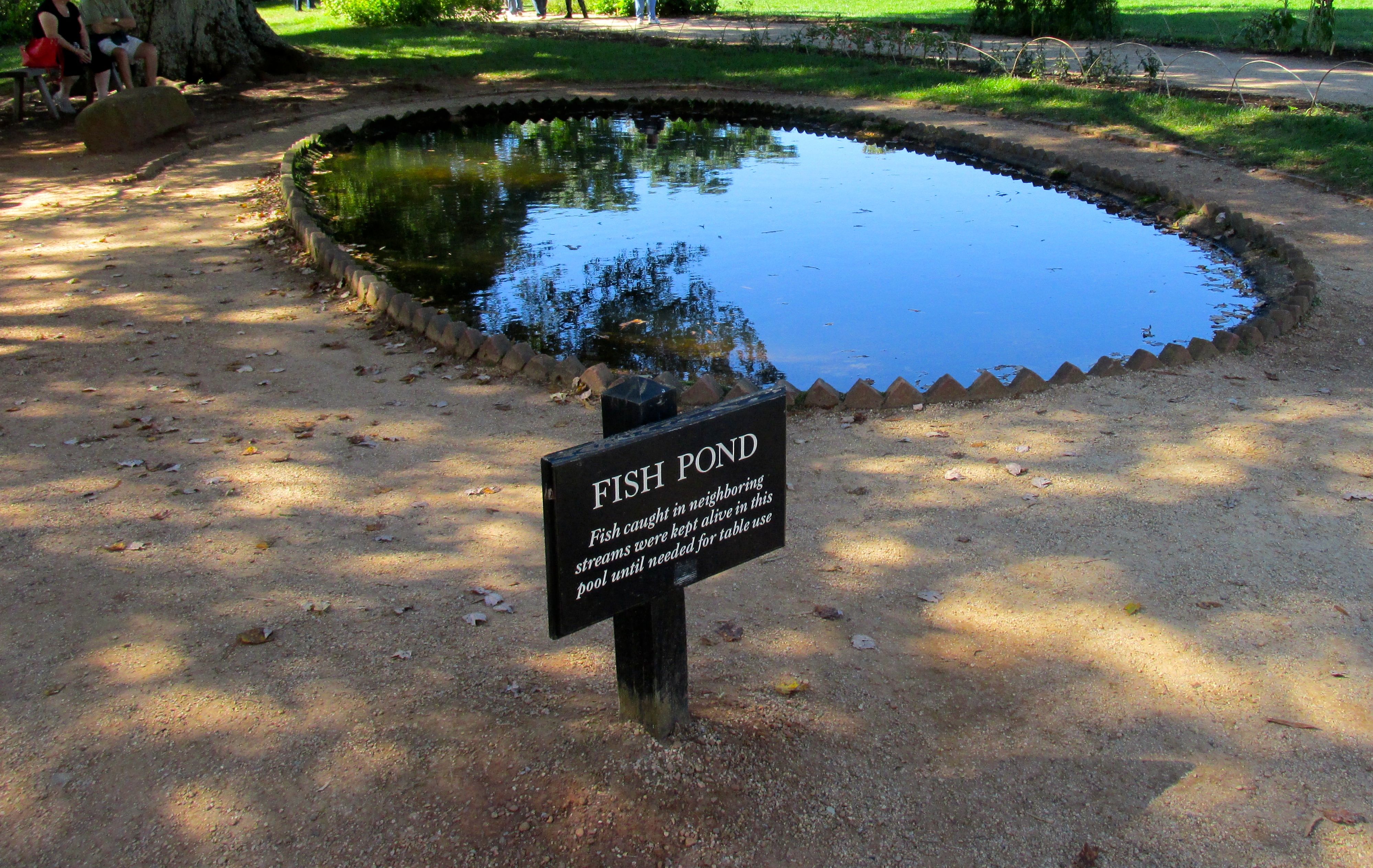
Just outside the door of the outchamber was a fish pond. Fish caught live in nearby streams were kept here until they were needed for meals.
On the other side of the outchamber was Mulberry Row, a lane on the property named for a pair of mulberry trees planted along side it.
Mulberry Row was the industrial heart of Jefferson’s agricultural enterprises. A variety of shops and dwellings lined the row. There are no existing structures from that time, but archeology is on-going and reconstructions based on what is discovered in the ground and in contemporary records are being made.
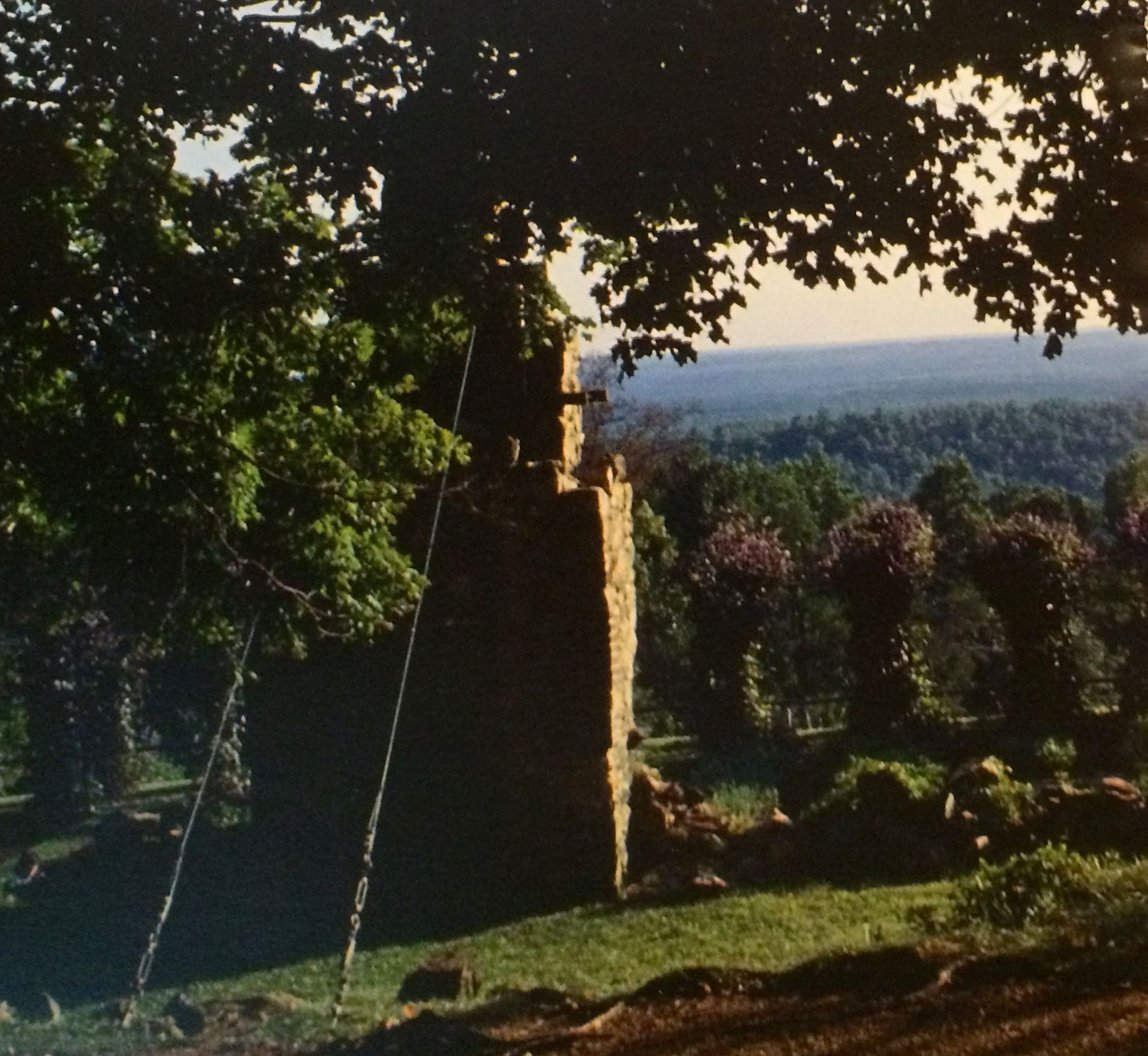
Joinery Chimney
The was a chimney still standing, and archeologists were working on the dig when I was there. I can’t believe that I don’t have photos of the dig! I know I took them, but I guess my phone ate some of my photos. I am including a shot I obtained from another source.
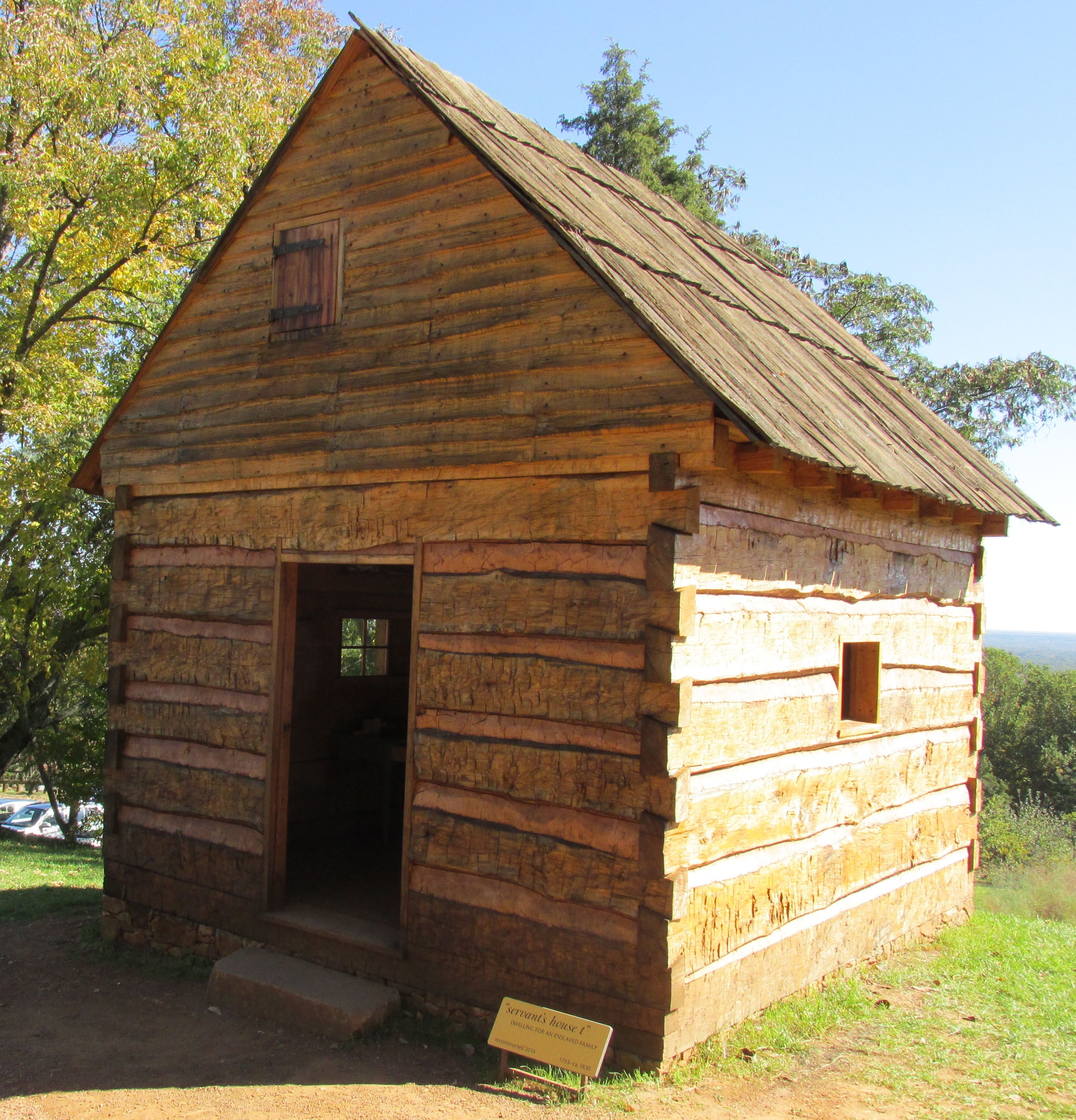
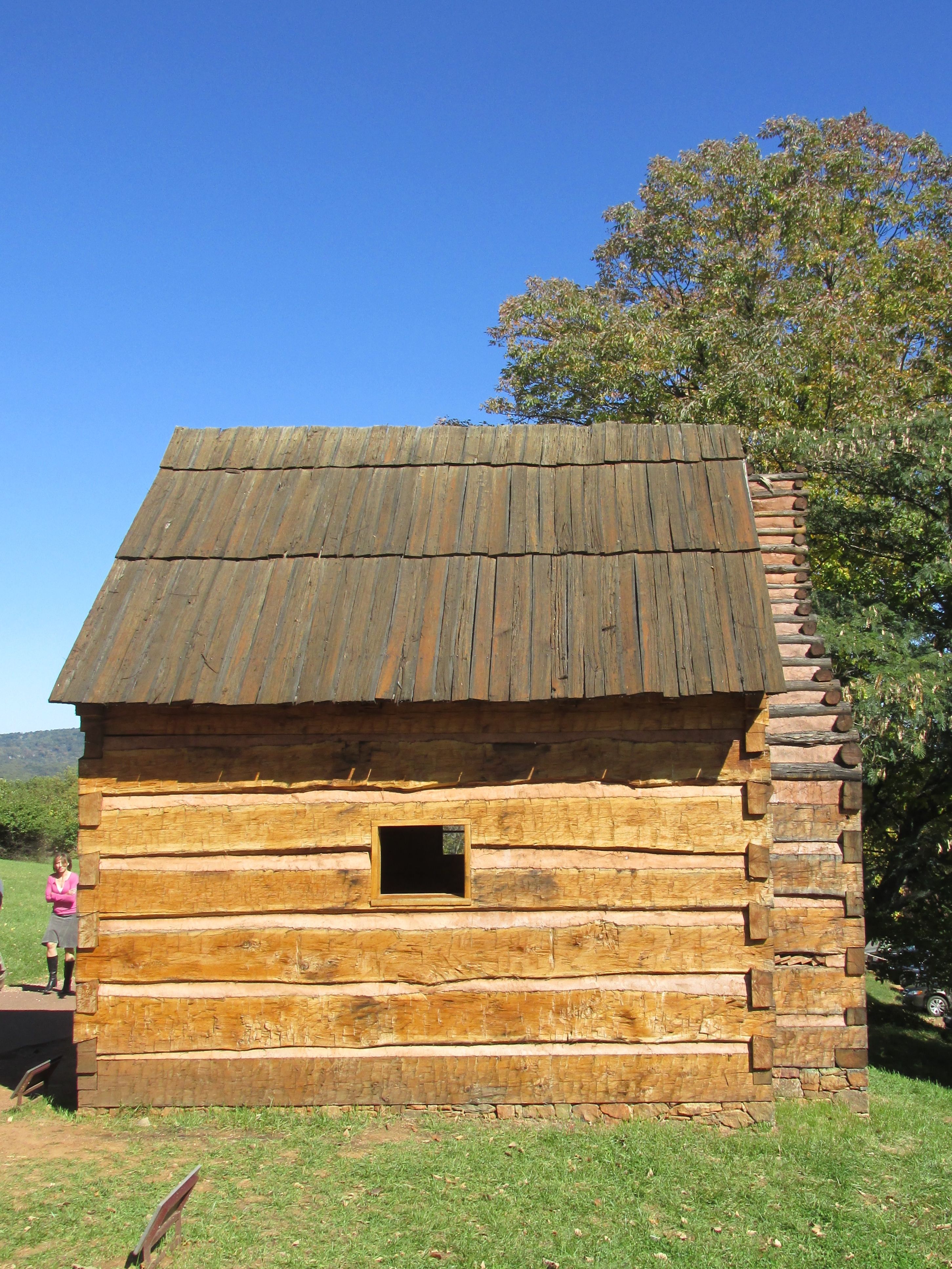
Hemmings Cabin
This cabin is labeled as “Servant’s house t” on Jefferson’s plans. Based on archeological and historical research, this cabin may have housed John Hemmings and his wife Priscilla.
View with chimney
John was the head joiner, which is a woodworker, and Priscilla was nurse to Jefferson’s grandchildren. John and Priscilla had close relationships with the Jefferson family, and they had additional opportunities to earn money and purchase goods that were beyond the means of most of the enslaved workers at Monticello.
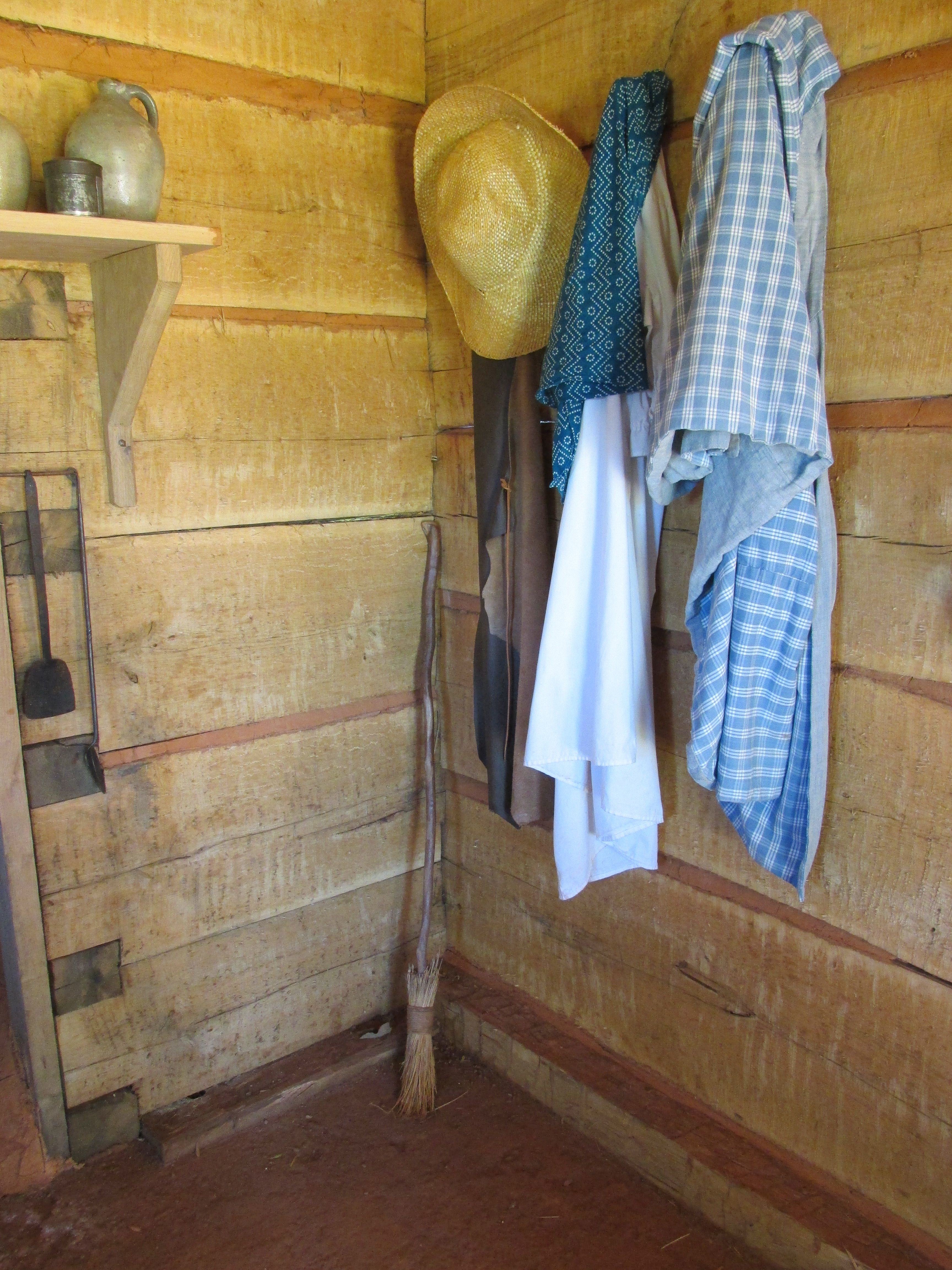
Inside Hemmings cabin
John helped build this and two other single-family log houses in 1793. Other family members – Critta, Peter, and Sally Hemings – at times lived next door. And yes, there are two different spellings of Hemmings. “Hemings” is not a misspelling.
However, much of the working part of the estate is still waiting for study and perhaps restoration.
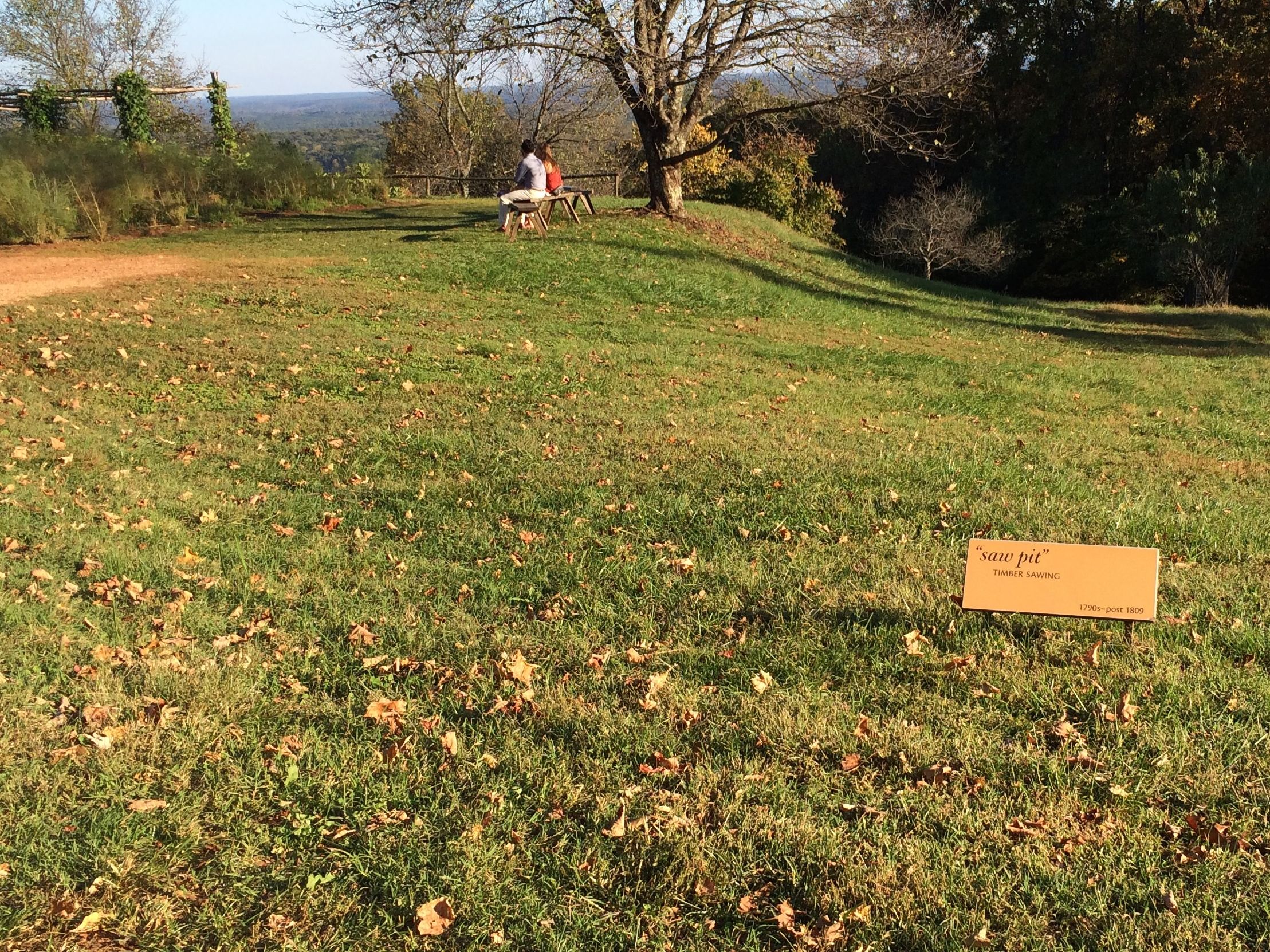
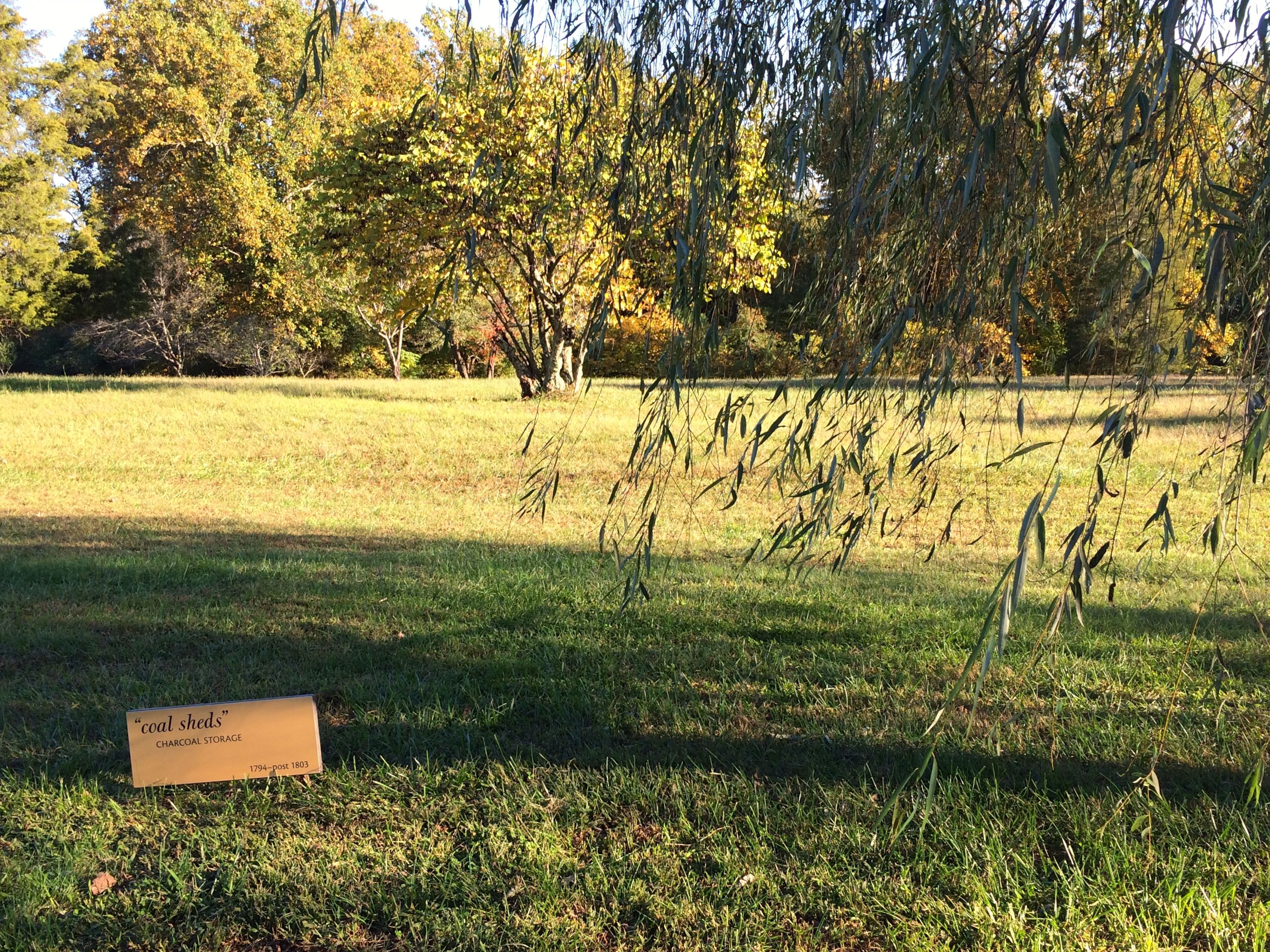
Saw pitCoal sheds
Near the coal shed was the part of the land used for making charcoal. Charcoal was important, as it was needed for one of the money-making products of the estate.
They made nails. A small item, but an extremely important product in an area enjoying growth. Jefferson calculated that, on average, 666 bushels of charcoal would be needed to make 172,480 nails in the nailery. Jefferson kept records of almost everything.
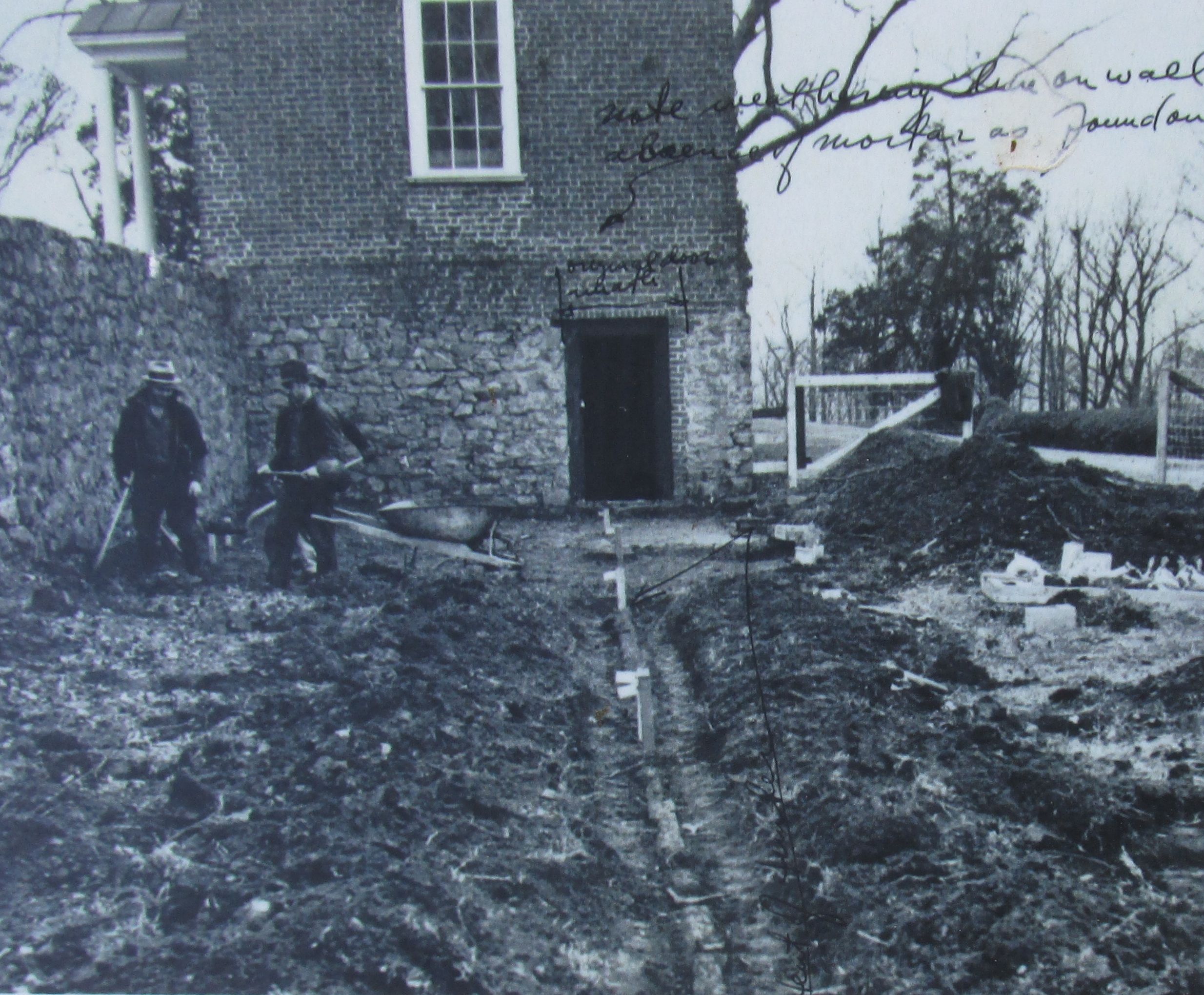
This is a photo I took from a display in the north dependency, which is on the other side from the outchamber that Jefferson used as his first home at Monticello. Since the north and south dependencies are very similar, I imagine that their archeology might be similar, as well.
The 1938 restoration project began with an archeological investigation to find physical evidence of the Jefferson-era building, which was constructed 1802-1809. The archeologist, Mr. Grigg, discovered a deteriorated sill that may have supported the outer wall of the original dependency.
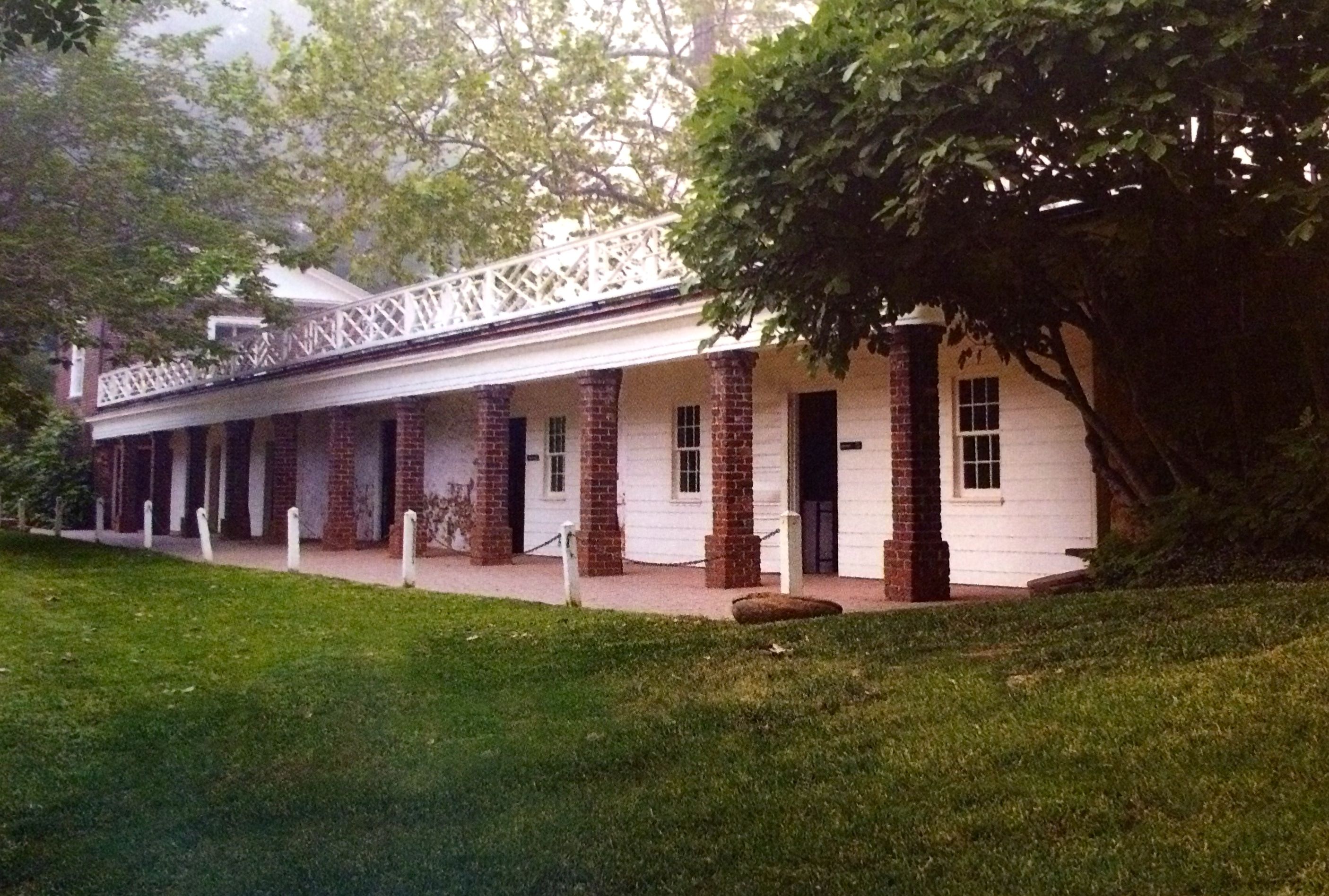
The north dependency contained carriage and stable bays, and is currently being restored to reflect the original construction as well as providing areas for education and meeting the needs of visitors. The room behind the door in the photo is currently home to a small gift and snack shop.
The South Dependency
The south Dependency is on the other side, and is anchored by the Outchamber at the end. It was where the kitchens and domestic preparation areas were.
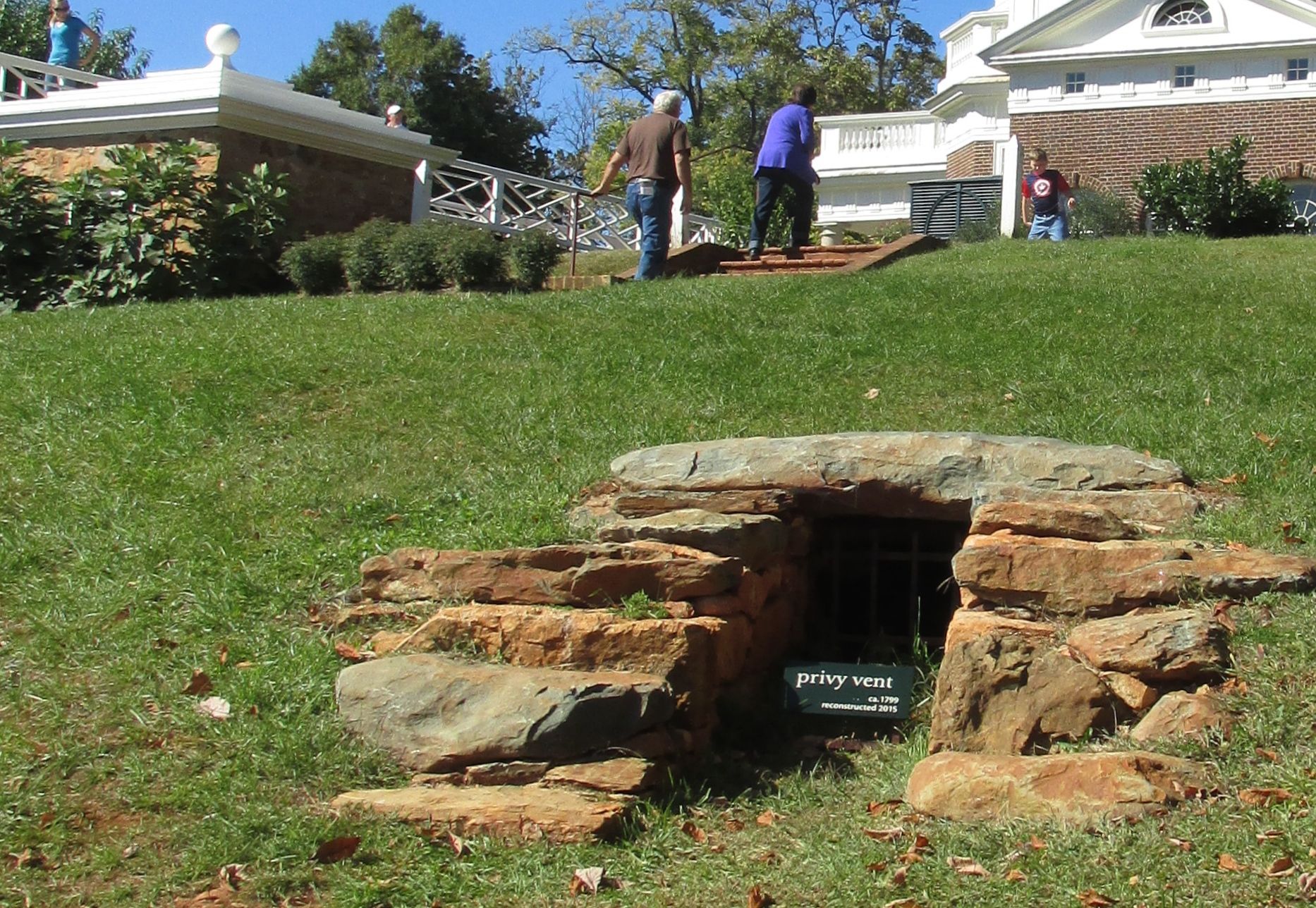
Archeology and restoration is ongoing. For instance, this privy vent was restored just this year. Since I was not allowed to take pictures inside Monticello, I guess this will be as close as I get to a presidential bathroom shot for Jefferson.
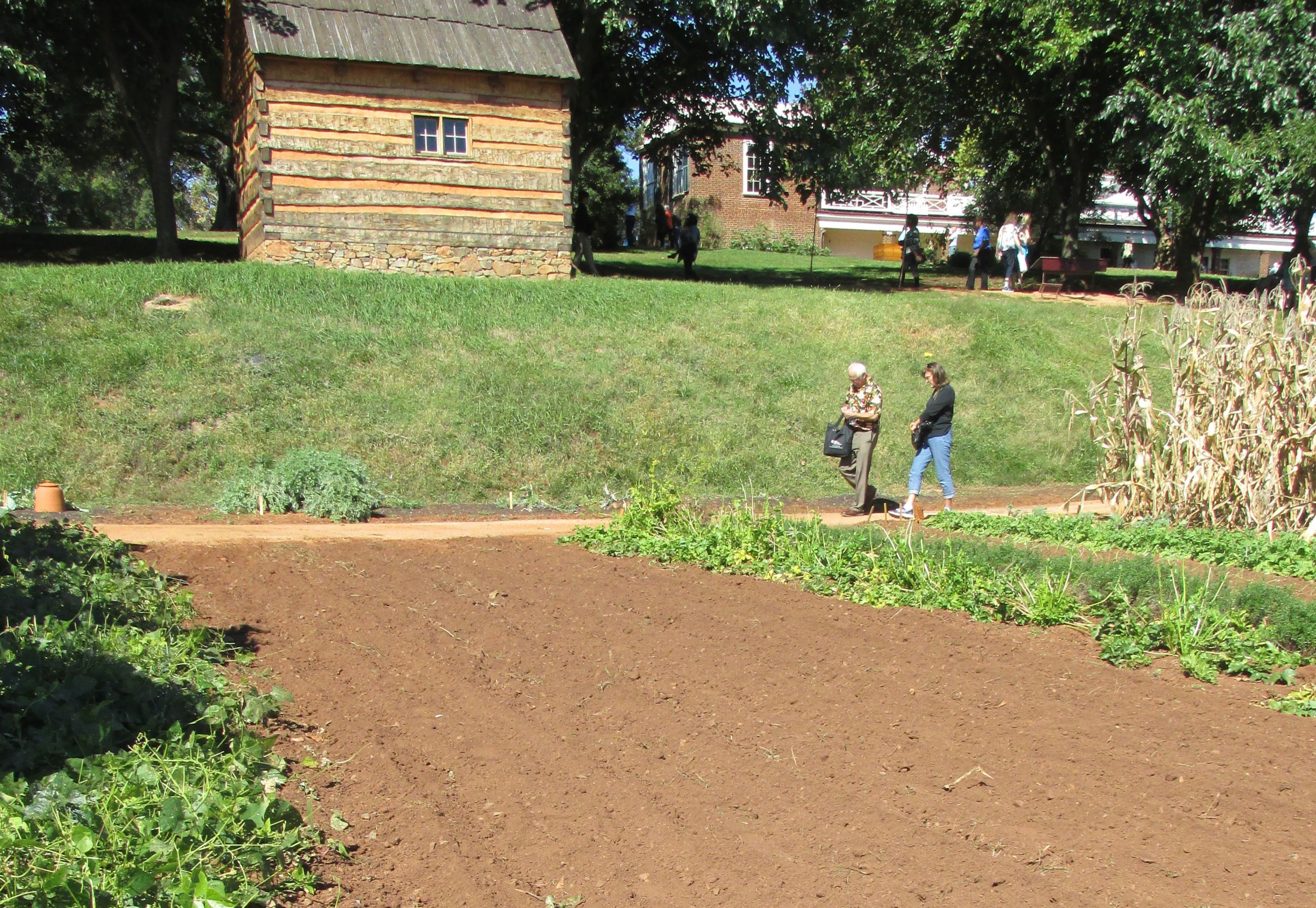
It was still a while until my tour started, so I explored the garden. I managed to join a tour for a bit.
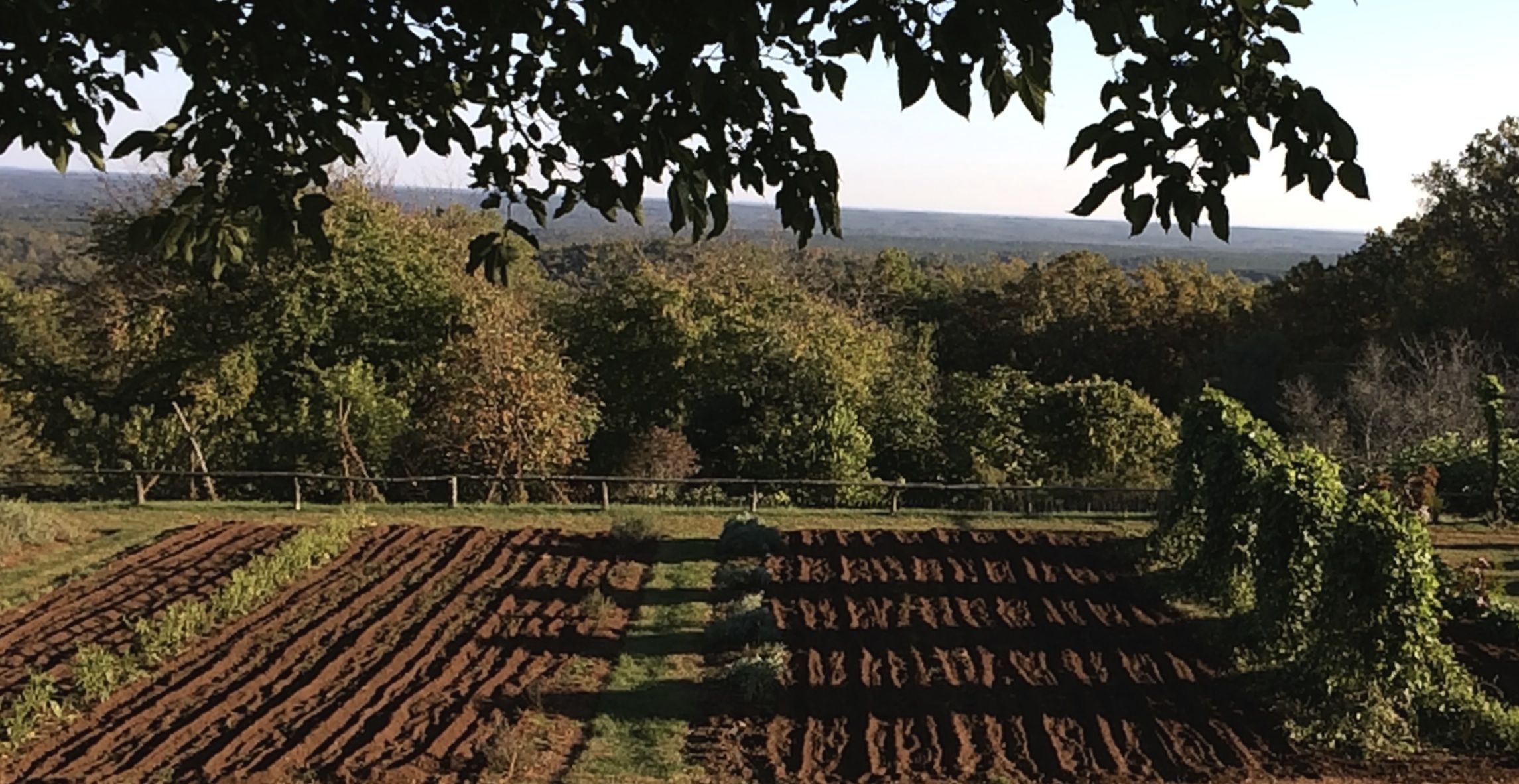
The garden is on a terrace. The land on top of a mountain is not know for being level. If I remember correctly, the hill and the buildings along Mulberry Row sheltered the garden and extended the growing season. Or, maybe I made that up.
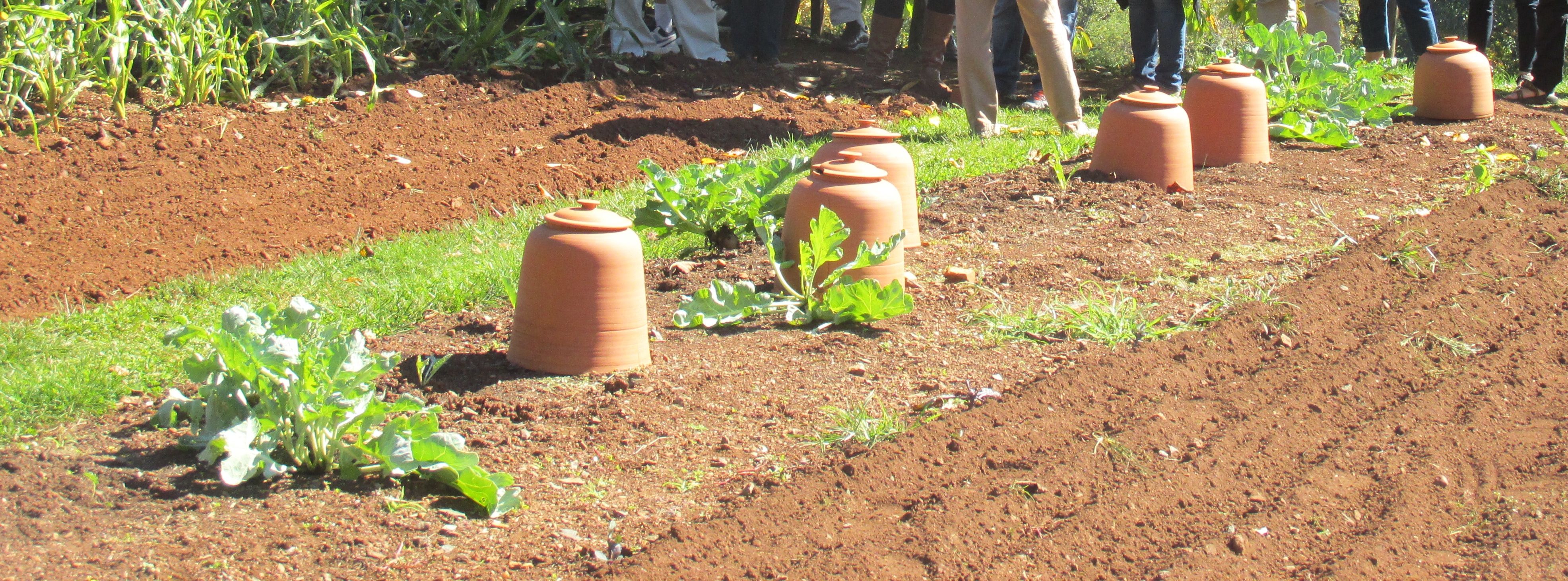
Anyway, I am fairly confident that these clay pots in the garden are cloches being used to keep the sea kale tender. I could relate to that. As a third grade teacher in Kalamazoo, AKA “Celery City”, I knew that the celery was covered to keep it pale and tender. In my day, Kalamazoo was covered in Social Studies in third grade, but that was five years ago. I wonder what they’re studying these days?
Texas Bird Pepper
The guide said that this pepper was particularly hot. I was perfectly happy to take her word for it. I spoke with a gardener who was busily trying to prop up plants that had been trampled by deer. It seems that deer are the largest recipients of the produce of the garden, although they say that they use the produce in the restaurants in the visitor center.
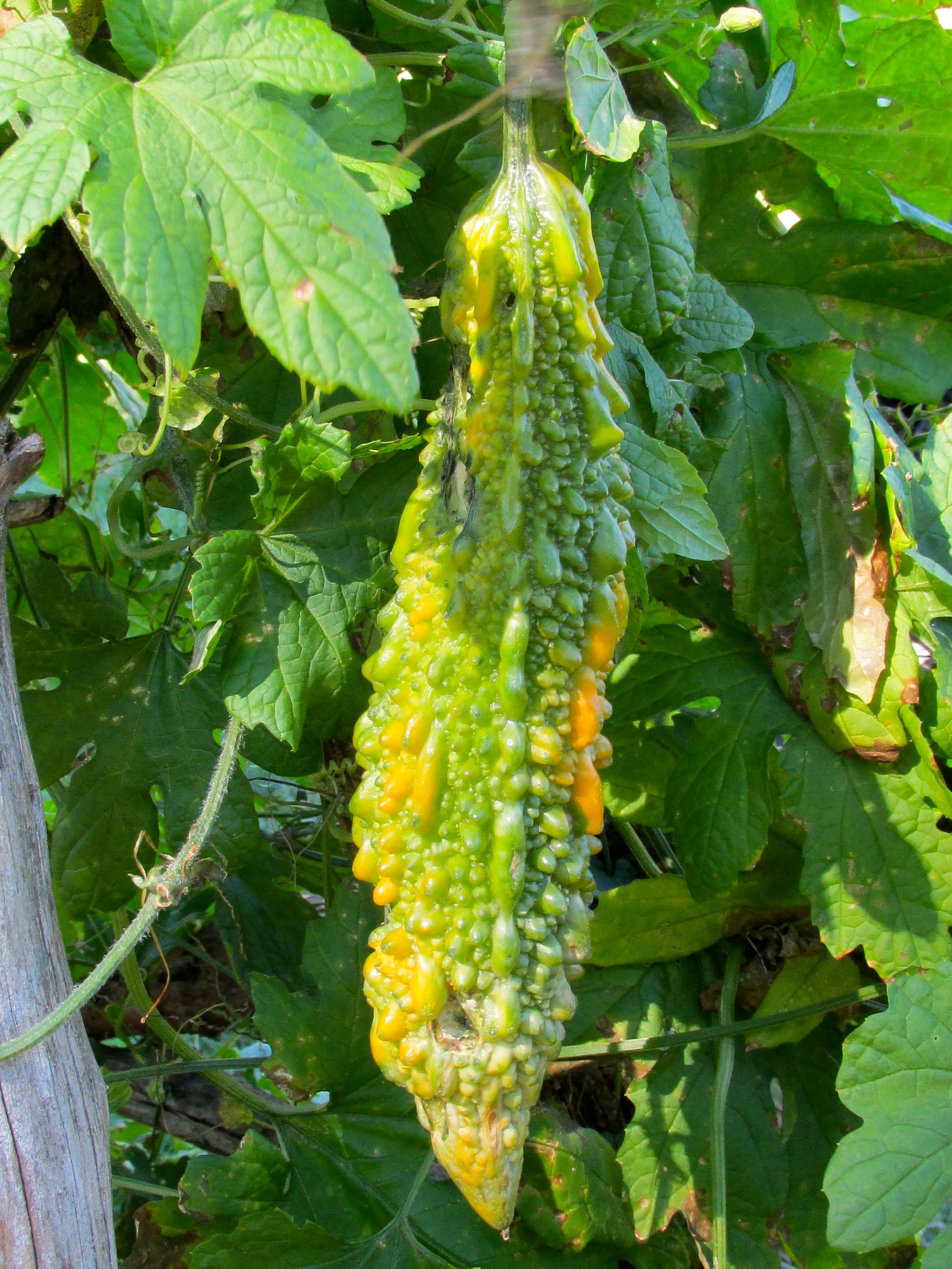
Balsam plum
I wonder how this plant would be prepared?
Shadows lengthening in the gardenVineyard
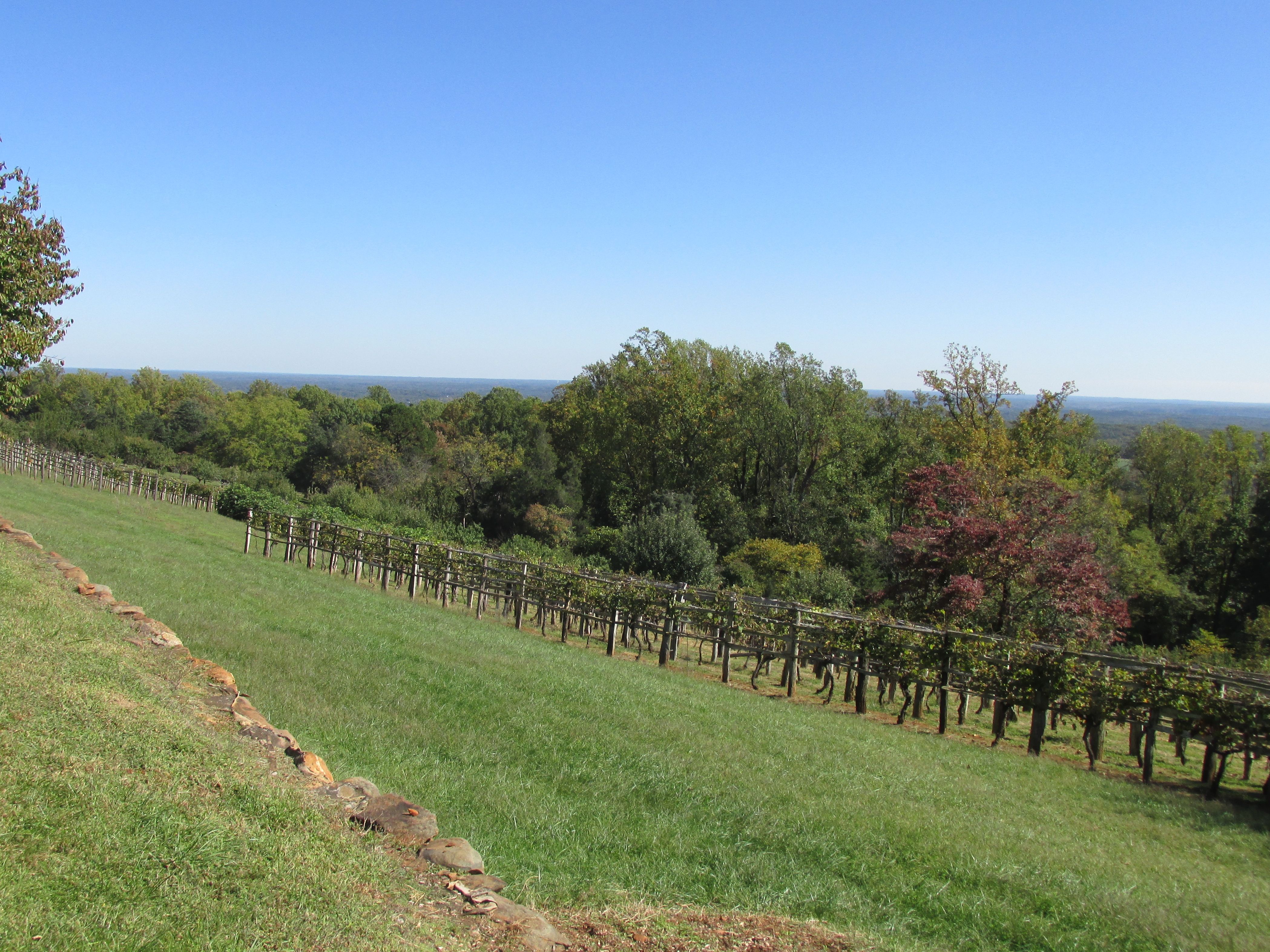
Jefferson was always looking for possible cash crops. He wanted to bring wine making to the New World, and experimented with many varieties. Again, you can make out the stone retaining wall. It helped to moderate the temperatures by absorbing the sun’s heat during the day and radiating it back during the night.
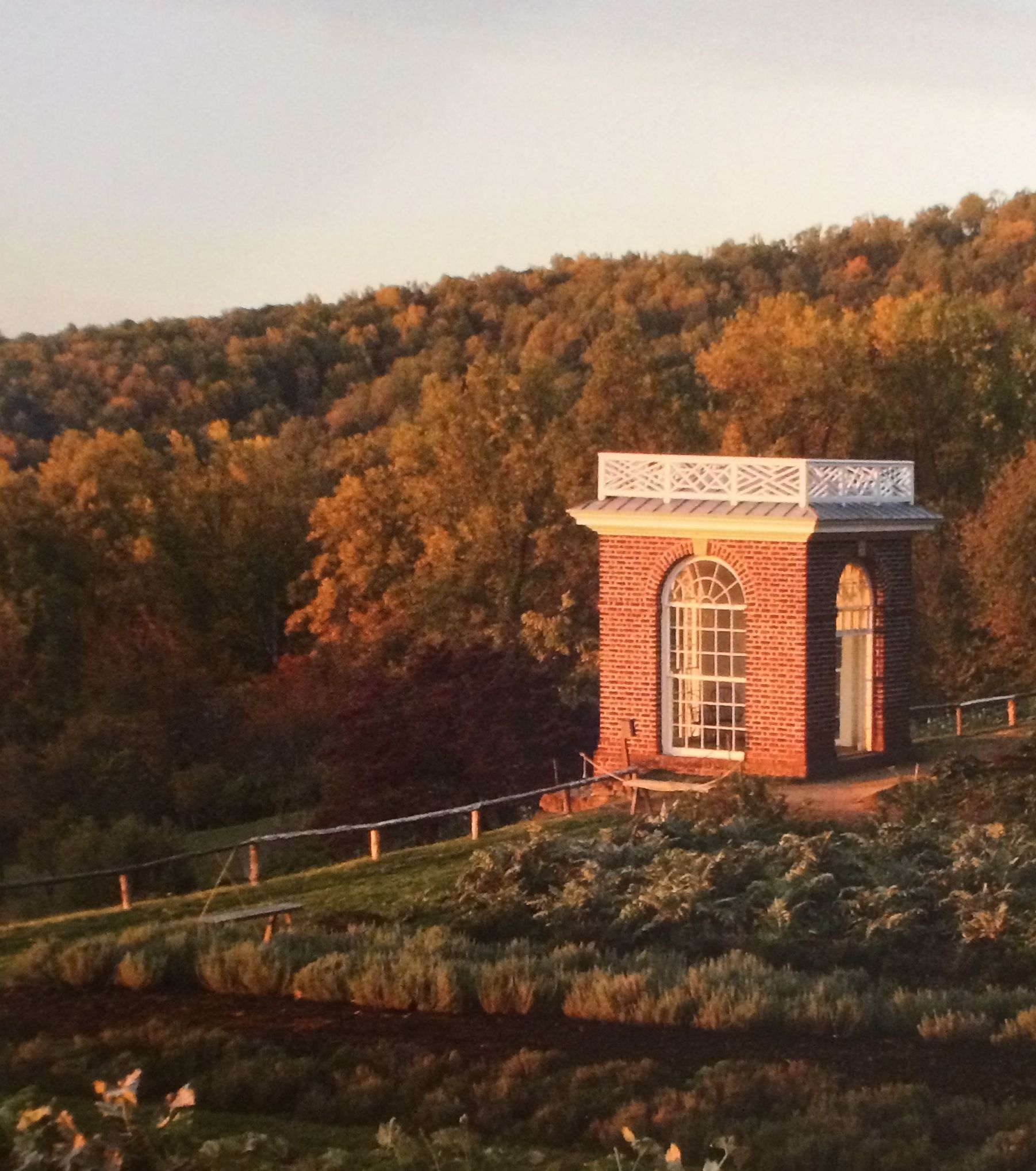
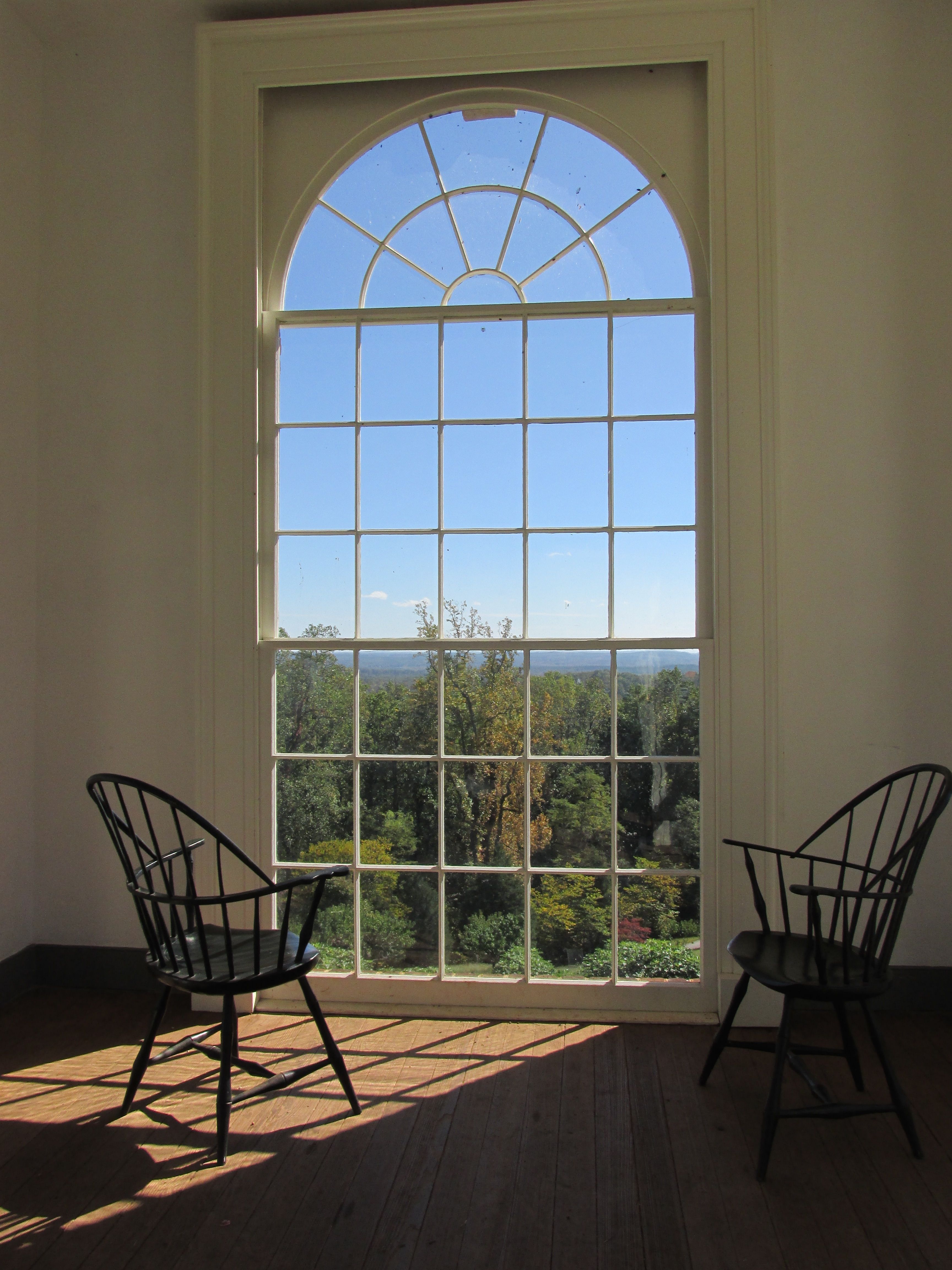
Jefferson enjoyed his garden and agricultural ventures so much that he had a small room built on the wall above the vineyard. He called it is “Observatory” and he could look out over his fields. This structure has been rebuilt.
The Observatory in the Garden
And, finally, it was time for the tour!
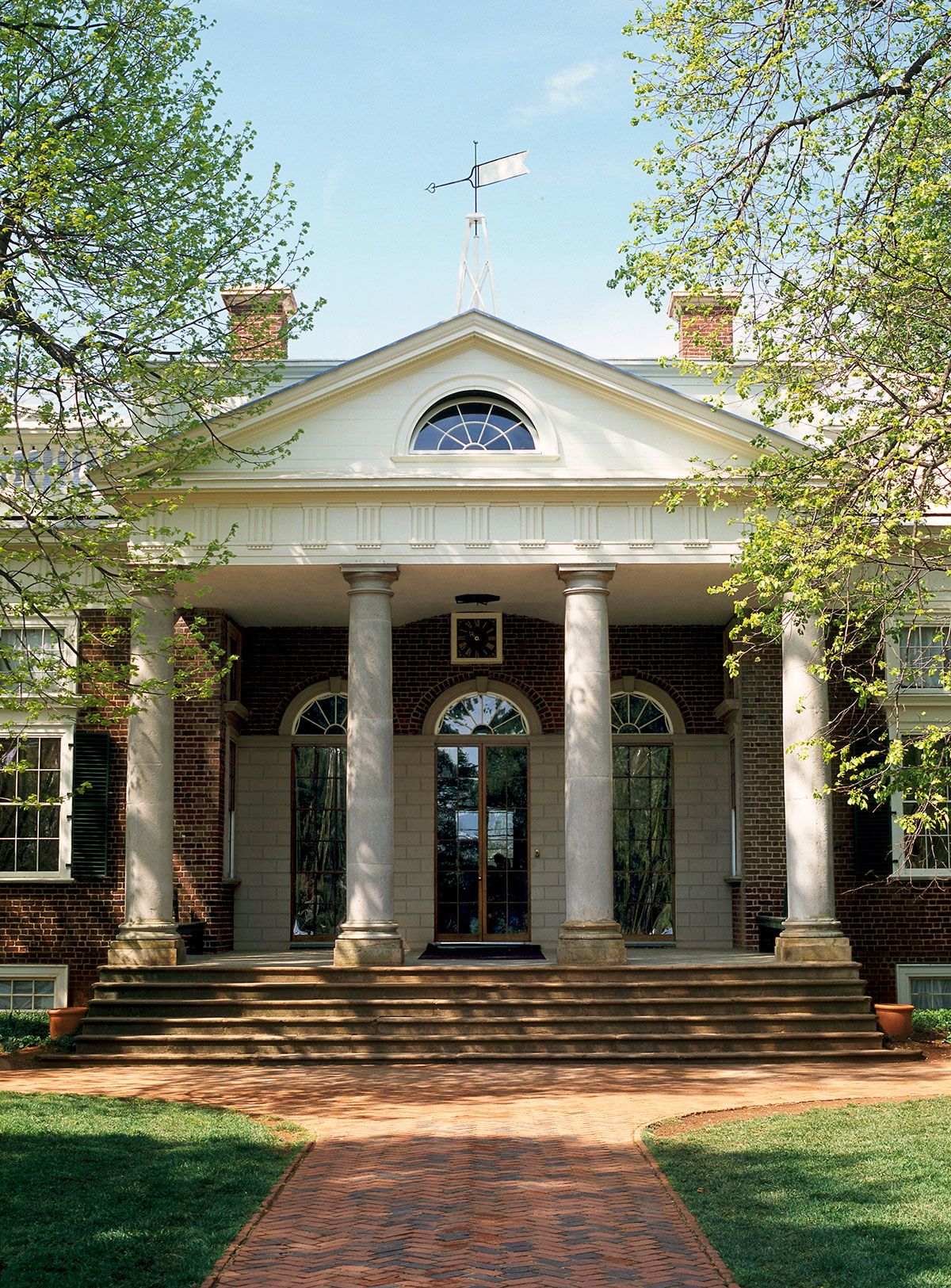
Now, I had to go to the web to find a shot of the entrance. I kept waiting for a chance to get a photo without the hordes of history hounds, but they just kept coming and coming.
And, since no photography was allowed on the tour, the following photos are taken from a booklet I bought in the gift shop.
I doubt if I would have been able to have taken a decent photo anywhere inside Monticello. It was so crowded!
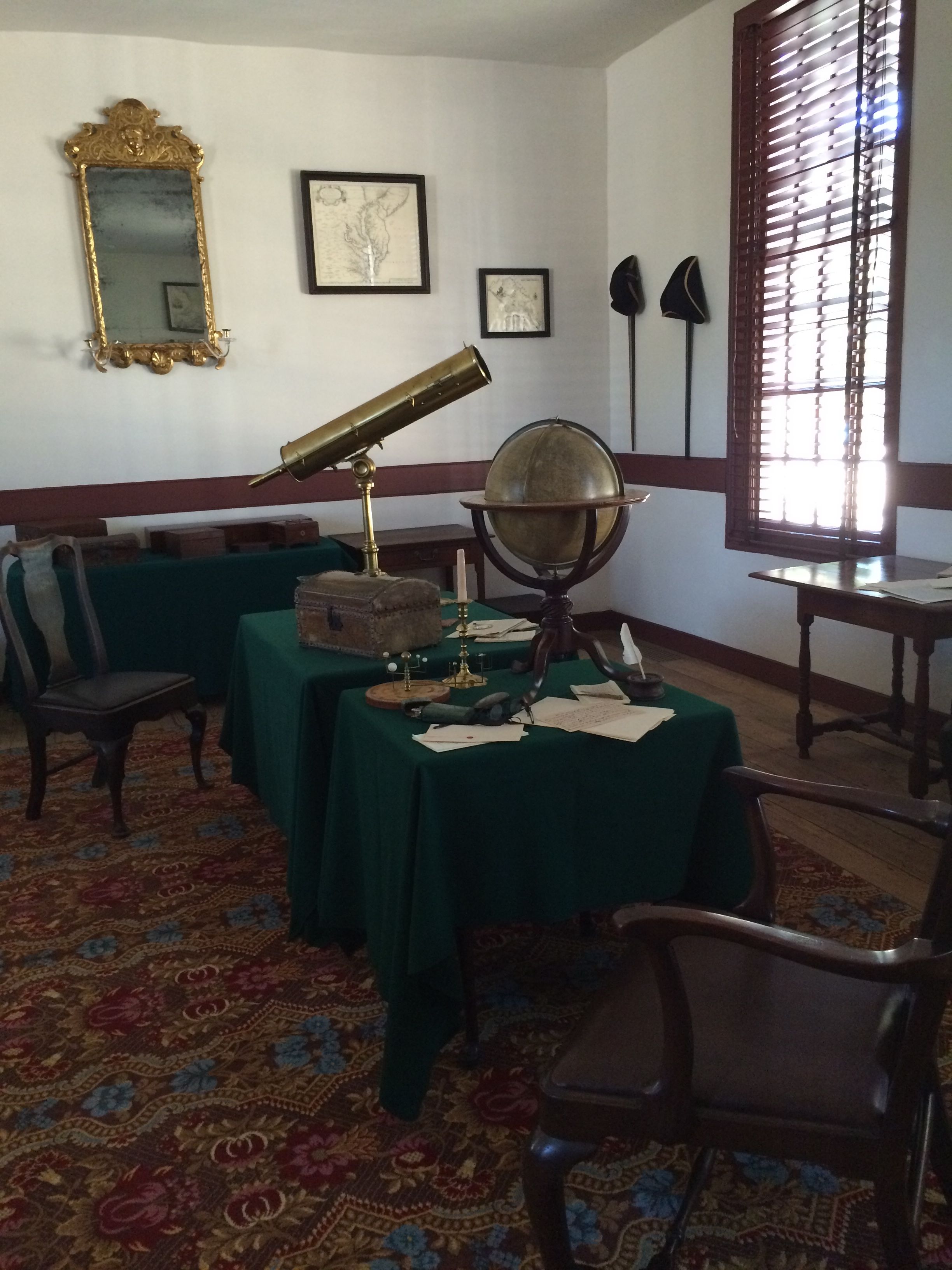
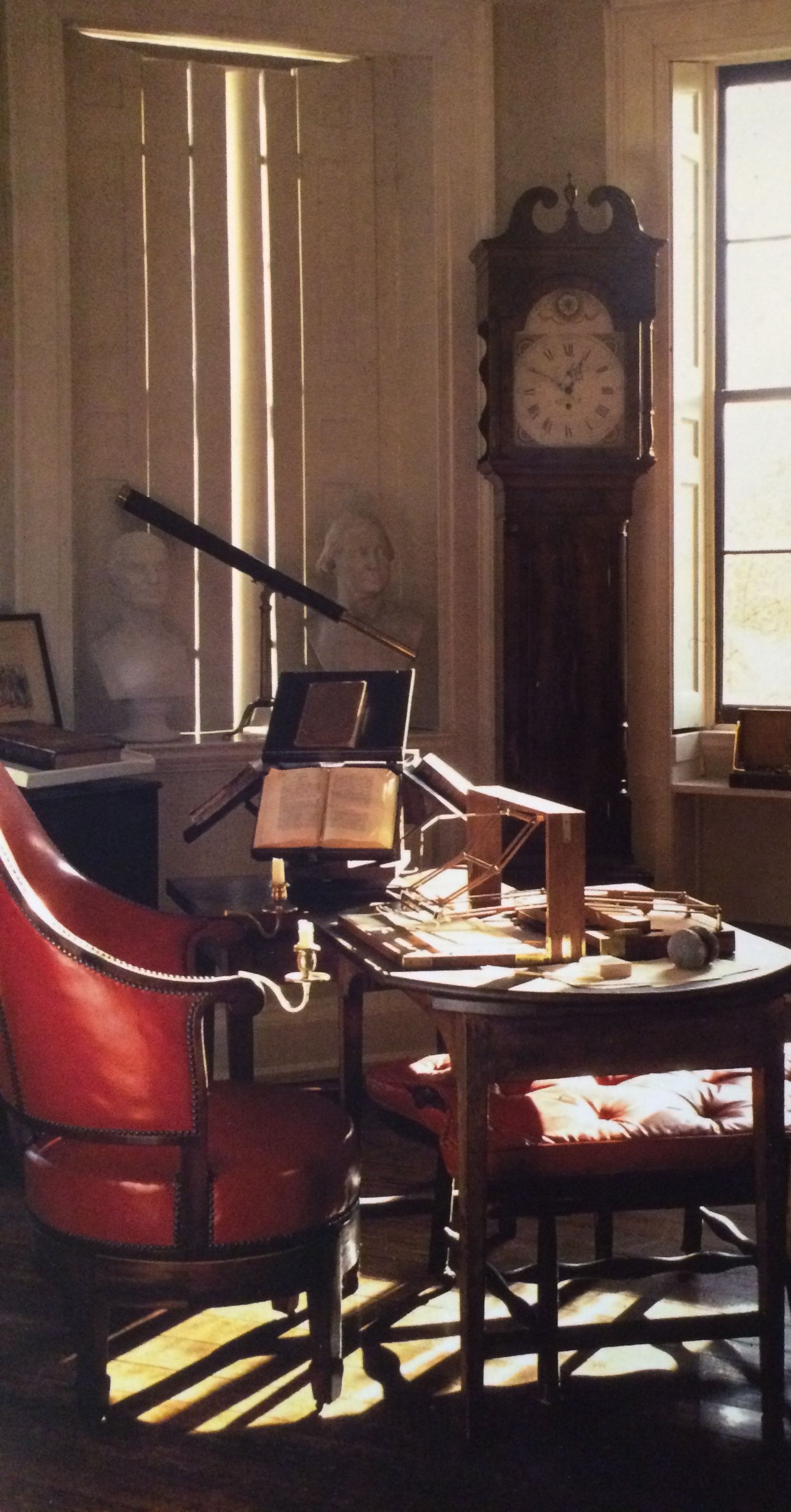
This is the part of Jefferson’s suite that they called his “cabinet”. When they told us that we’d be seeing his cabinet, I envisioned a piece of furniture. It is actually an office.
Jefferson’s cabinet
On the table, you can see his polygraph. This was a machine that copied what he wrote. The guide told us that he kept copies of all his correspondence. I asked her what did the copying, and she told me quills and ink. I can’t imagine how that worked. I find it difficult to write with quill and ink.
He was really interested in gadgets. If you look in the corner, in front of the telescope, you see his revolving bookstand. That way, he could keep a number of books in play at the same time.
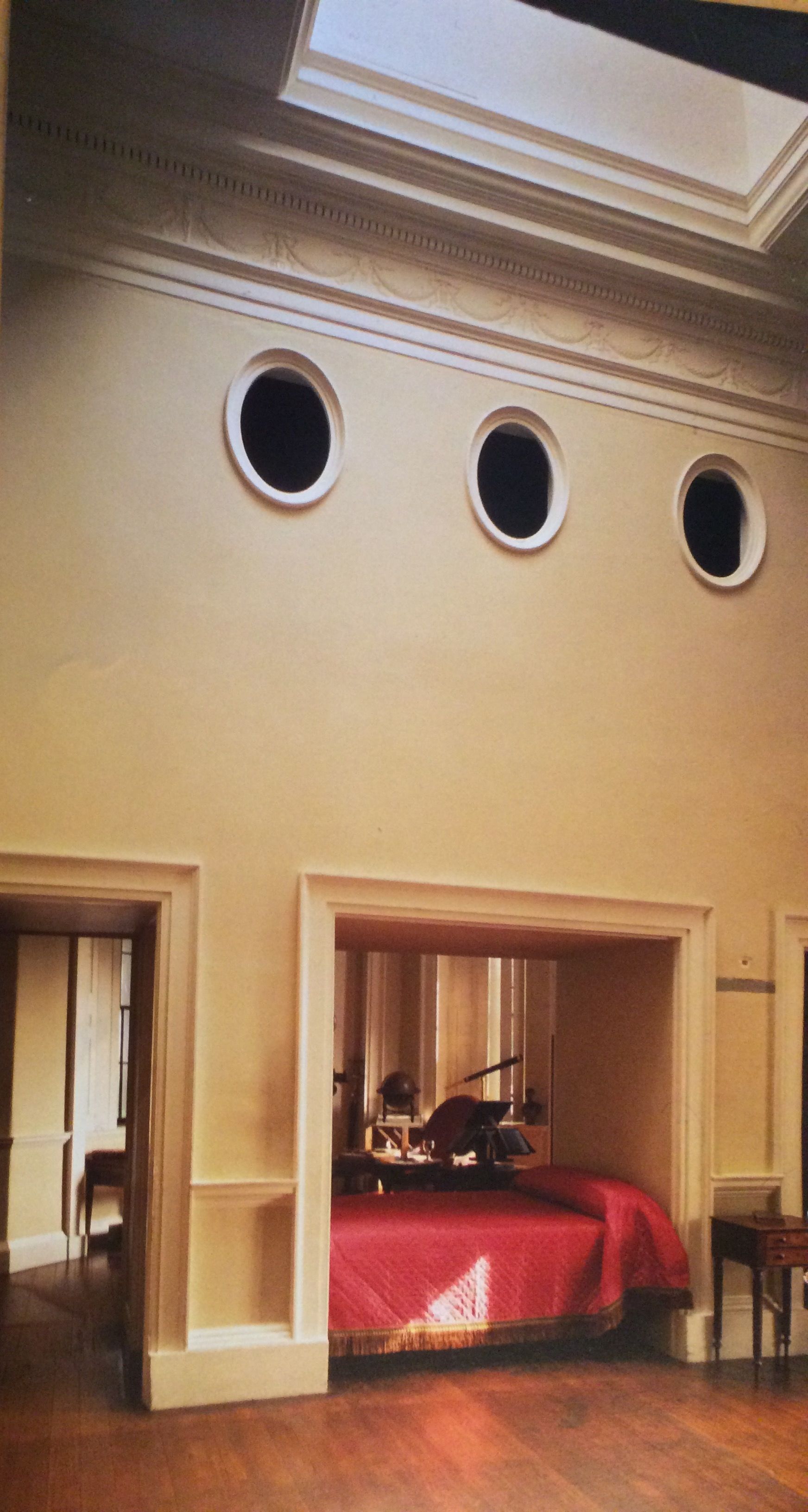
Jefferson’s bed alcove
His bed was located in an alcove between his cabinet and the portion of his suite that had the fireplace. There really were not a lot of fireplaces in house of that size. There were eight fireplaces and two openings for stoves on the main floor.
Jefferson was really interested in allowing light to stream through the house. There were lots of windows and skylights. There weren’t any storm windows and the house was on top of a mountain. It must have been a chilly place to live. Our guide pointed out a painting of Jefferson where he was wearing lots of layers.
Those oval windows in the wall above his bed were there to let light into his closet for clothing he wasn’t wearing at the moment. The windows were necessary for ventilation as well as light. It wouldn’t have been a good idea to take open flames into a clothes closet.
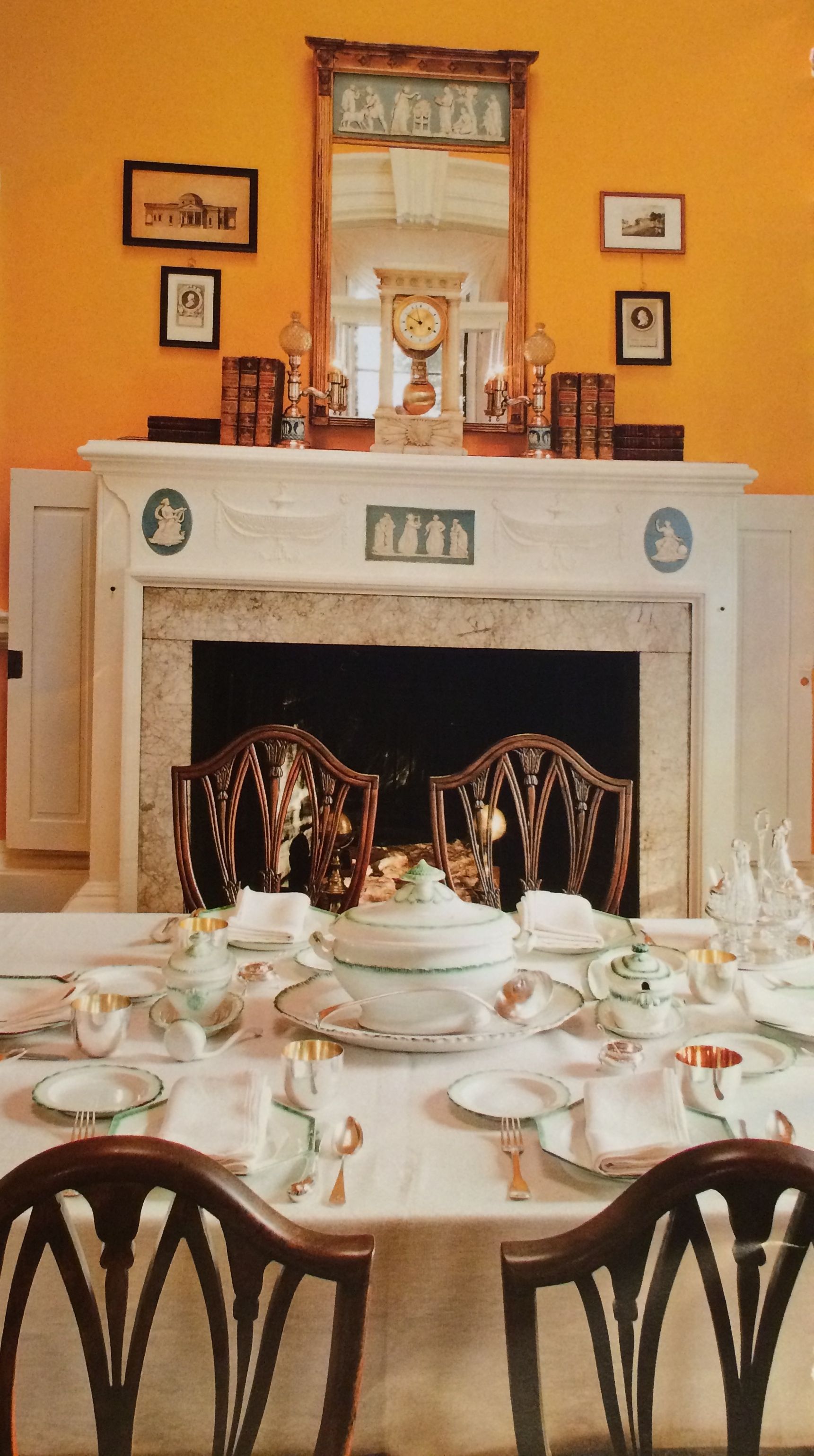
Wouldn’t it have been wonderful to have dined with Jefferson in this room?
Dining Room
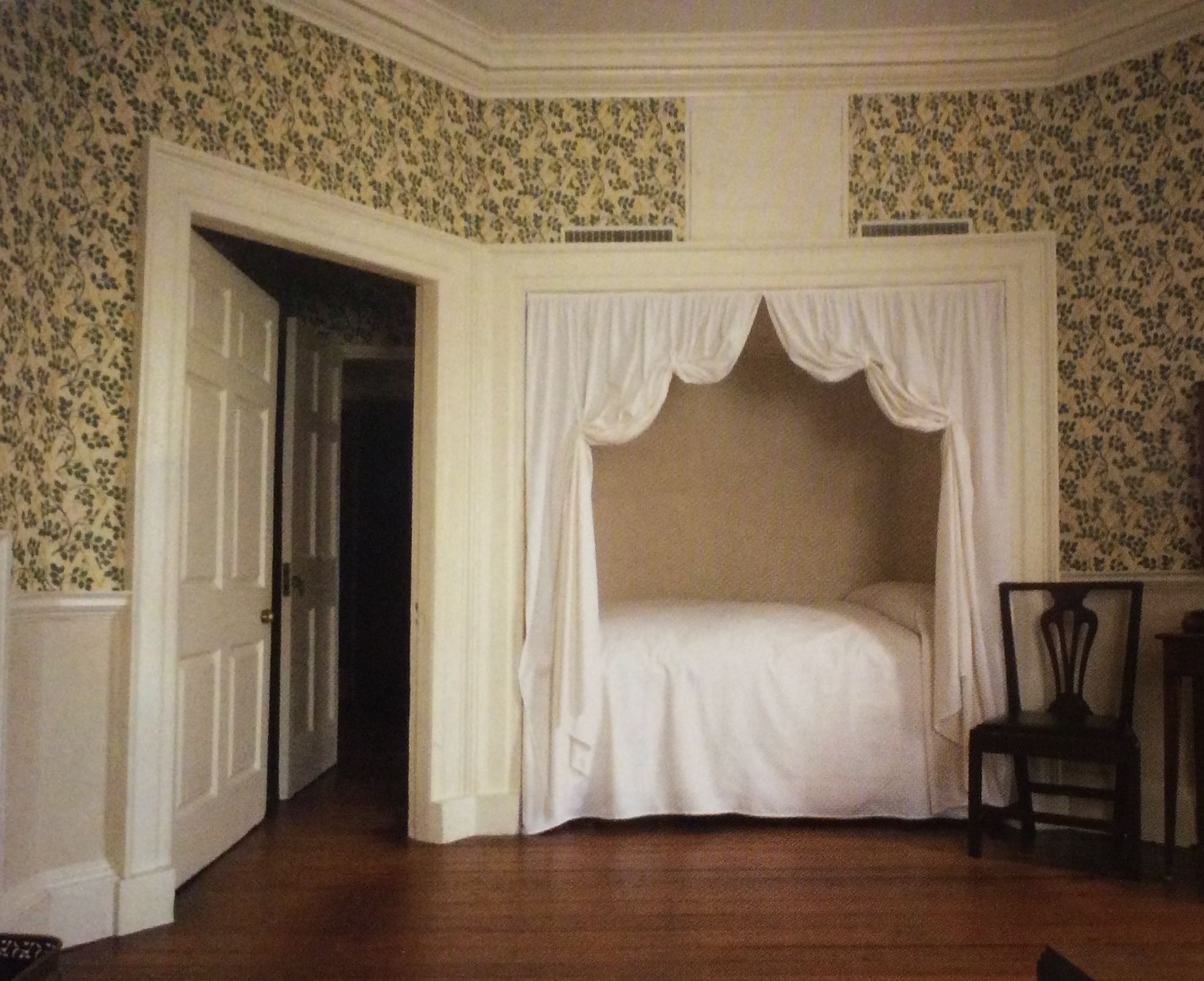
When guests would come to stay, they really came to STAY. This room was set aside for James Madison, who was Jefferson’s Secretary of State, and his wife, Dolley. Of course, I do imagine other people used it when they weren’t there.
Mr. Madison’s Room
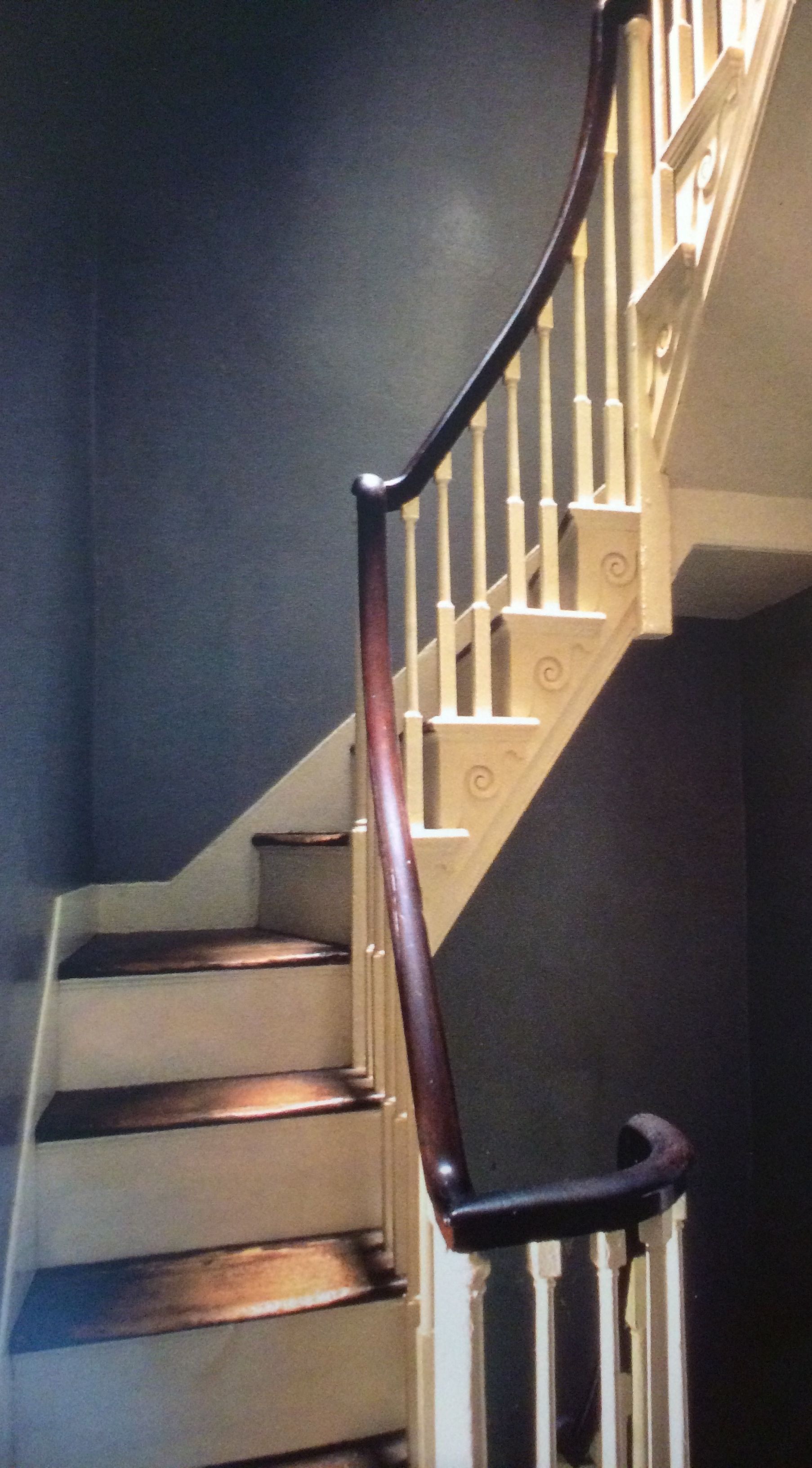
When we signed up for the tour, they warned us that there would be stairs. Lots of stairs. Steep stairs. Narrow stairs.
The steep winding stairs
They did not disappoint.
One of the highlights of the tour was the Dome Room, which Jefferson sometimes called the “Sky-room.”
The round skylight in the center is called an oculus. These days, it is filled with hand-blown glass. When Jefferson lived here, it was covered with wood. He hadn’t gotten around to glazing it.
One other amazing thing the guide told us is that there is only one recorded instance of Jefferson ascending those stairs. And, in spite of the fact that the dome is one of the most notable features of the building, this room was rarely used. Records suggest that it was used as a bedroom by a grandson, a playroom for the children and for storage. Two of the granddaughters used a closet off the Dome Room as their private hideaway. They carved out a little private space for themselves.
Their little hideaway as behind the semicircular window you see here.
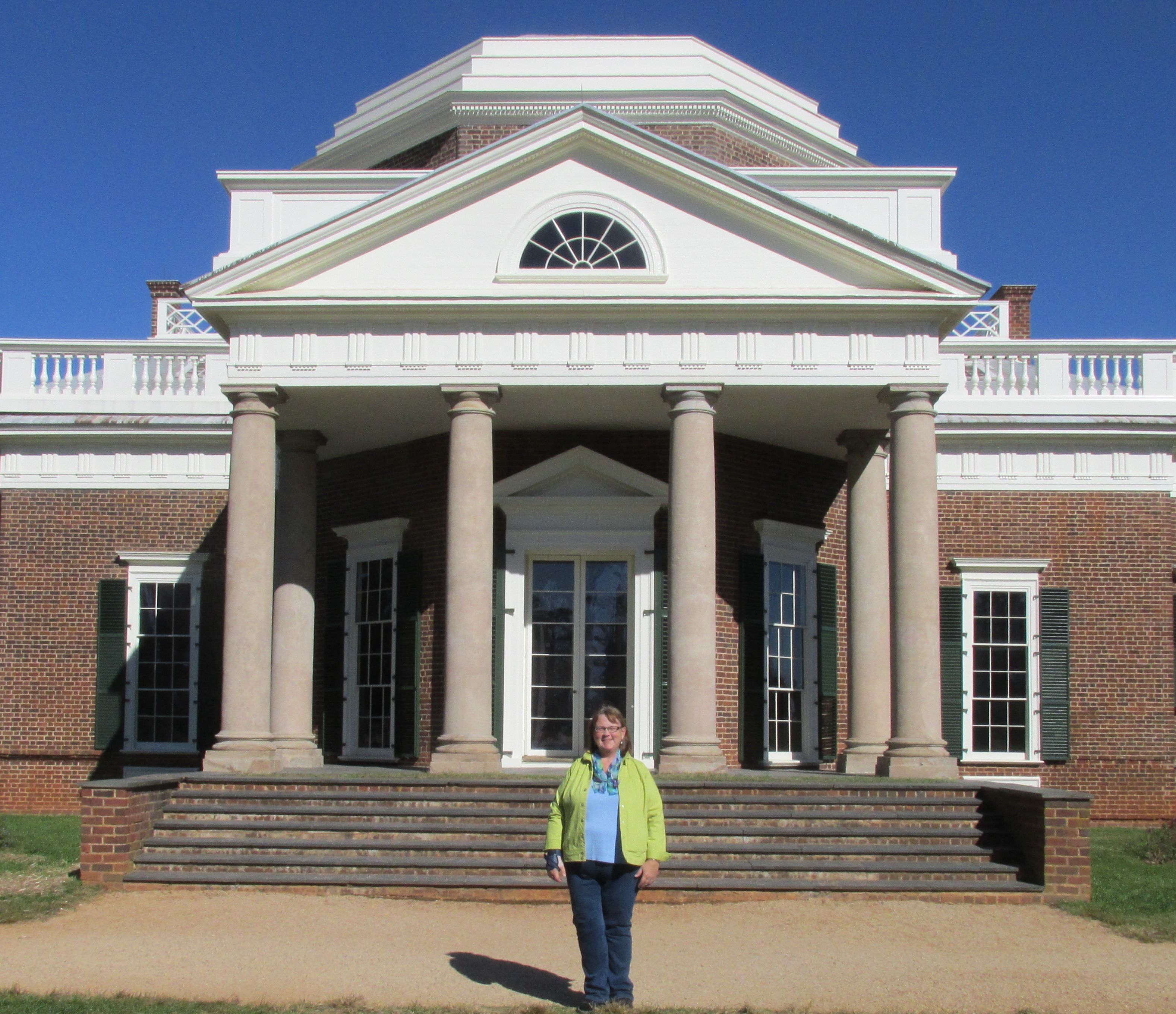
The Money ShotThe real money shot
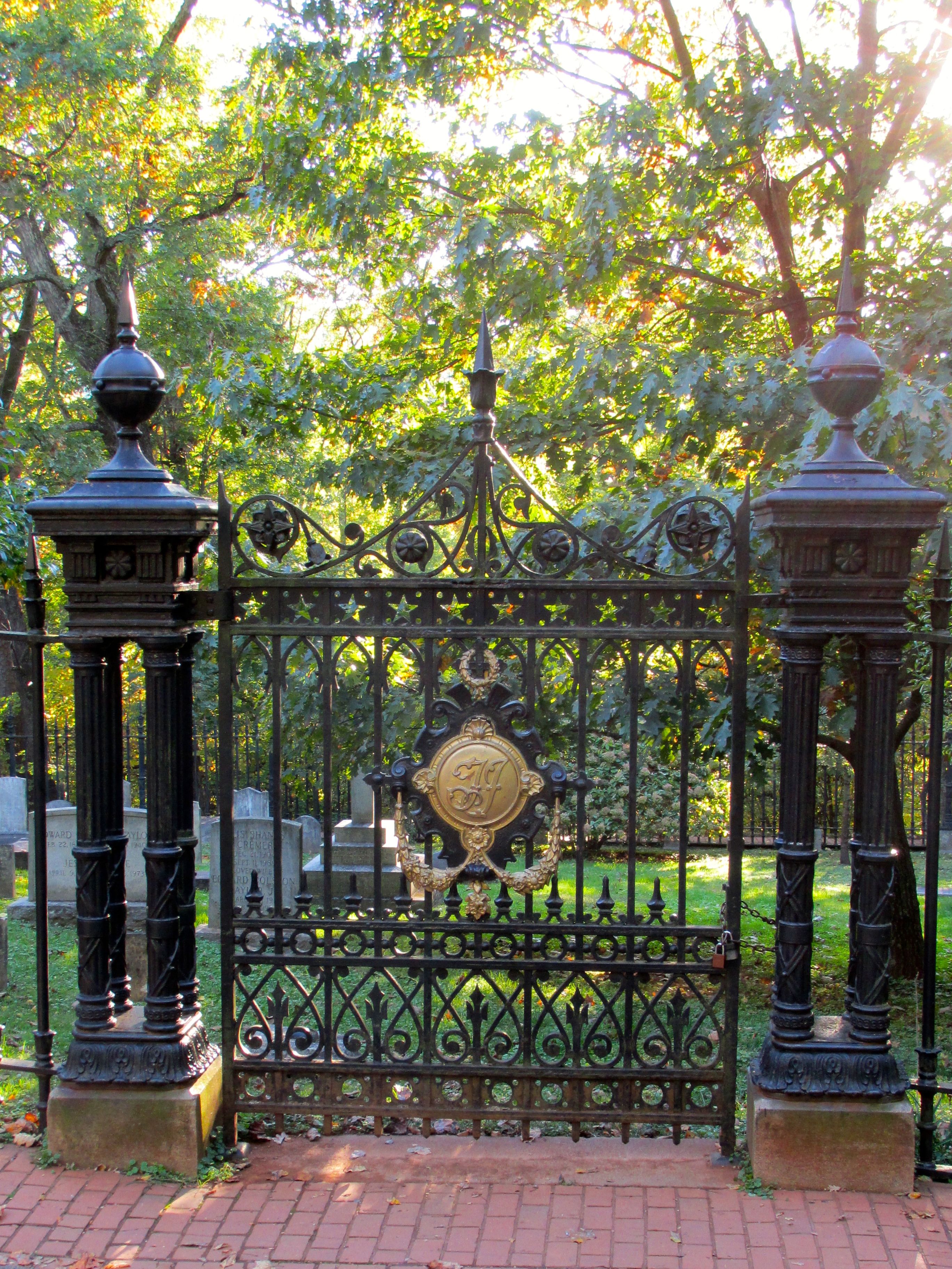
After that, I wanted to visit Jefferson’s grave before heading home. I followed the signs and came upon the graveyard that still belongs to the Jefferson’s descendants and is still active.
They decide who is to be buried there. Descendants from Jefferson’s union with Sally Hemings have not been allowed so far.
Gates to the graveyardJefferson’s grave
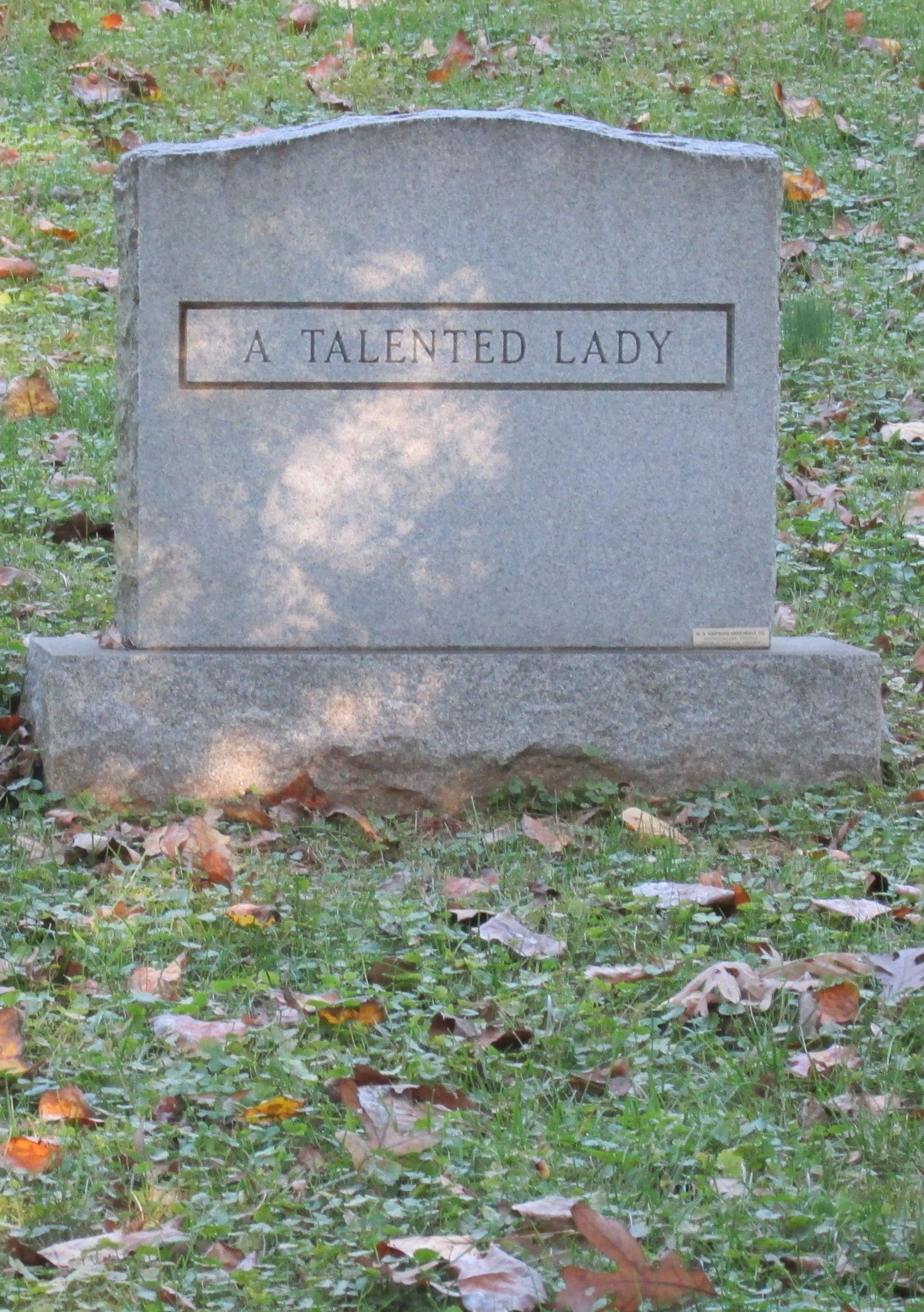
While Jefferson’s grave was inspiring, this one was my favorite. The name of the person is on the other side, but I like her description.
I decided to enjoy the beautiful fall day and walk back to the visitor center rather than wait for the shuttle bus.
Path to the visitor center
Note to self: sandals and gravel paths do not go well together.
Luckily, there were benches along the way where I could stop and empty out the stones.
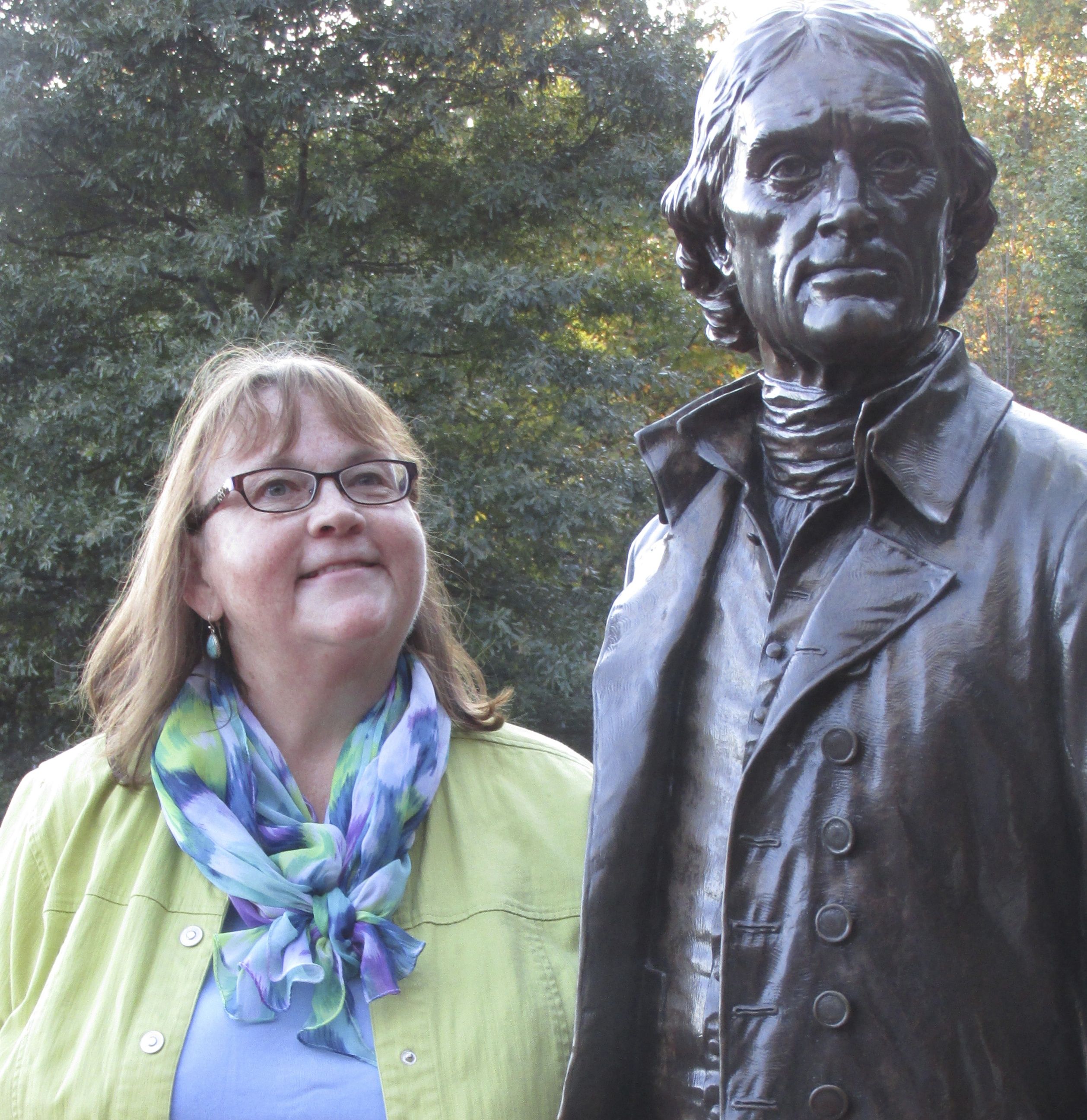
Me and Thomas Jefferson
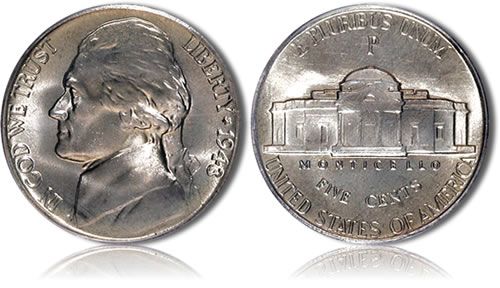
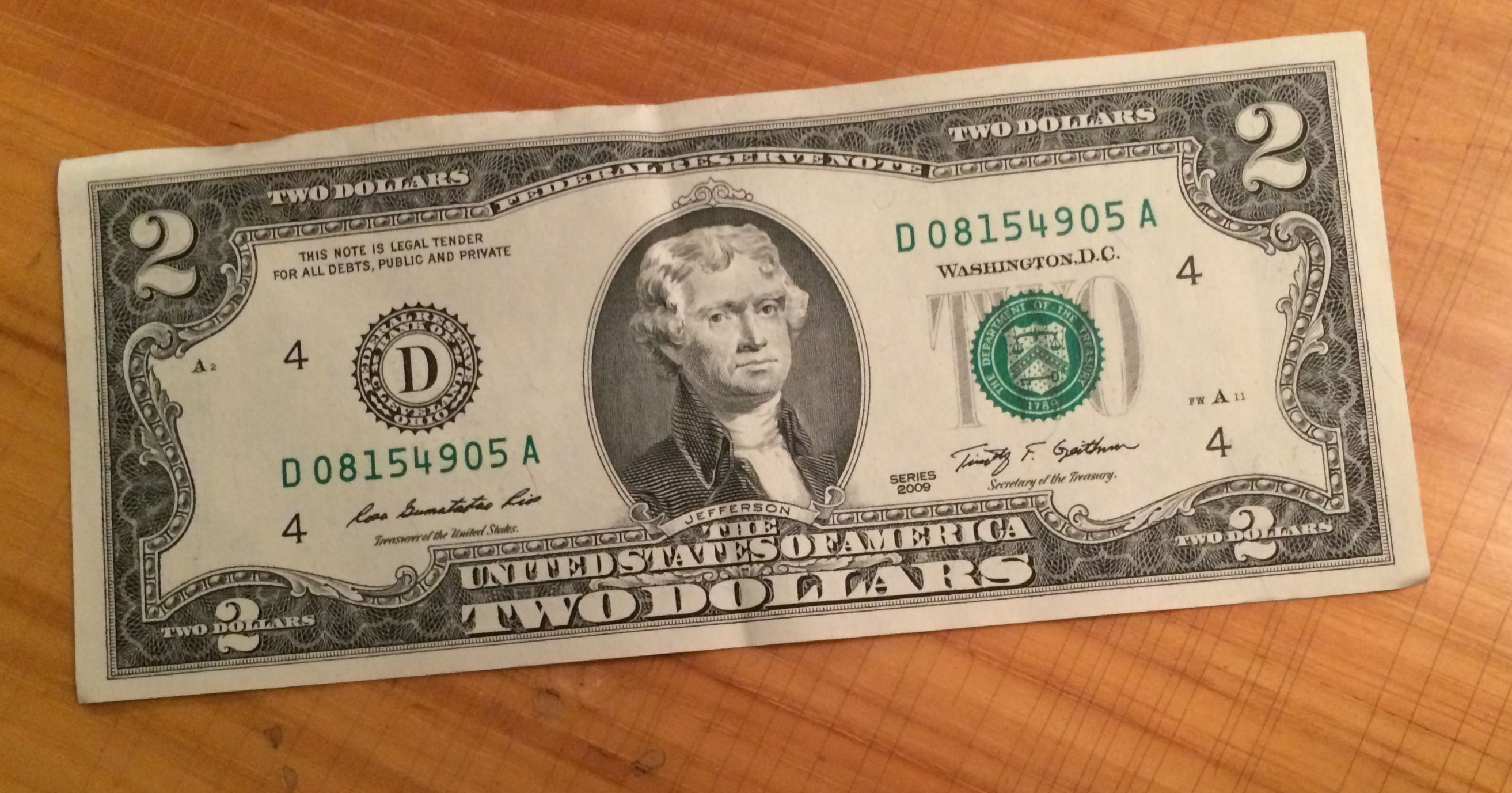
I stopped in to the gift shop and picked up that booklet I took the interior photos. Fittingly, this is the bill I received in change.
I had one more stop before I left. I needed to visit the graveyard for the enslaved workers.