NOMA and Preservation Hall

I was fortunate to be invited to spend the day with Lisa, who is Deputy Director for Curatorial Affairs/Curator of Asian Art at the New Orleans Museum of Art.

She had work to do at home in the morning and I had to take Cora the Travel Cat to the vet. I wanted to have her chin looked at and her ears checked. It turns out that she has feline acne, and I need to wipe her chin down with a Stridex Pad every other day. Luckily, the treatment she received in Manassas last year did the trick for her ear infection. I got back to the campground and Lisa came over to pick me up.

After we skimmed across Lake Pontchartrain on the Causeway and wiggled our way over to the museum, my first stop was the cafe.
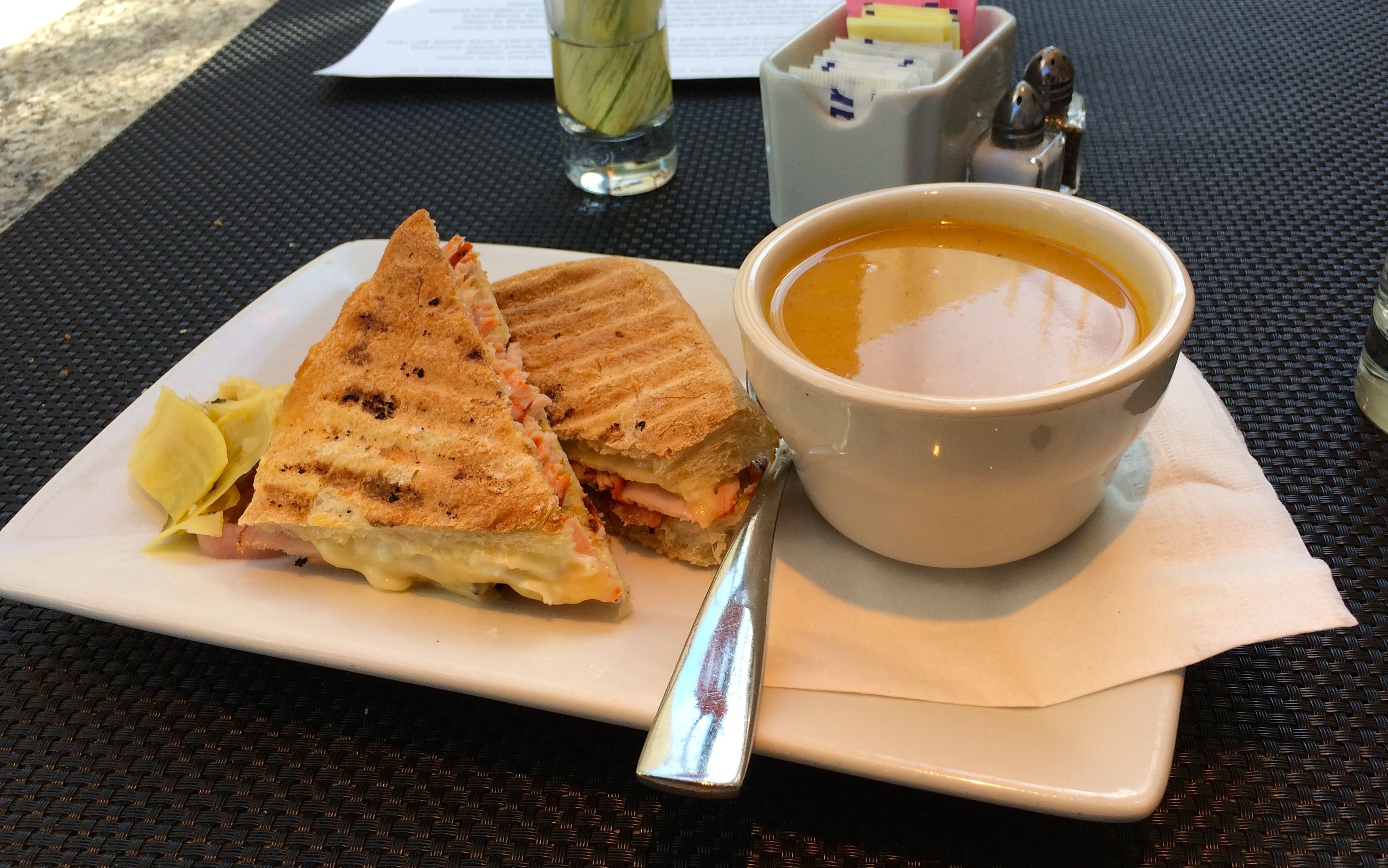
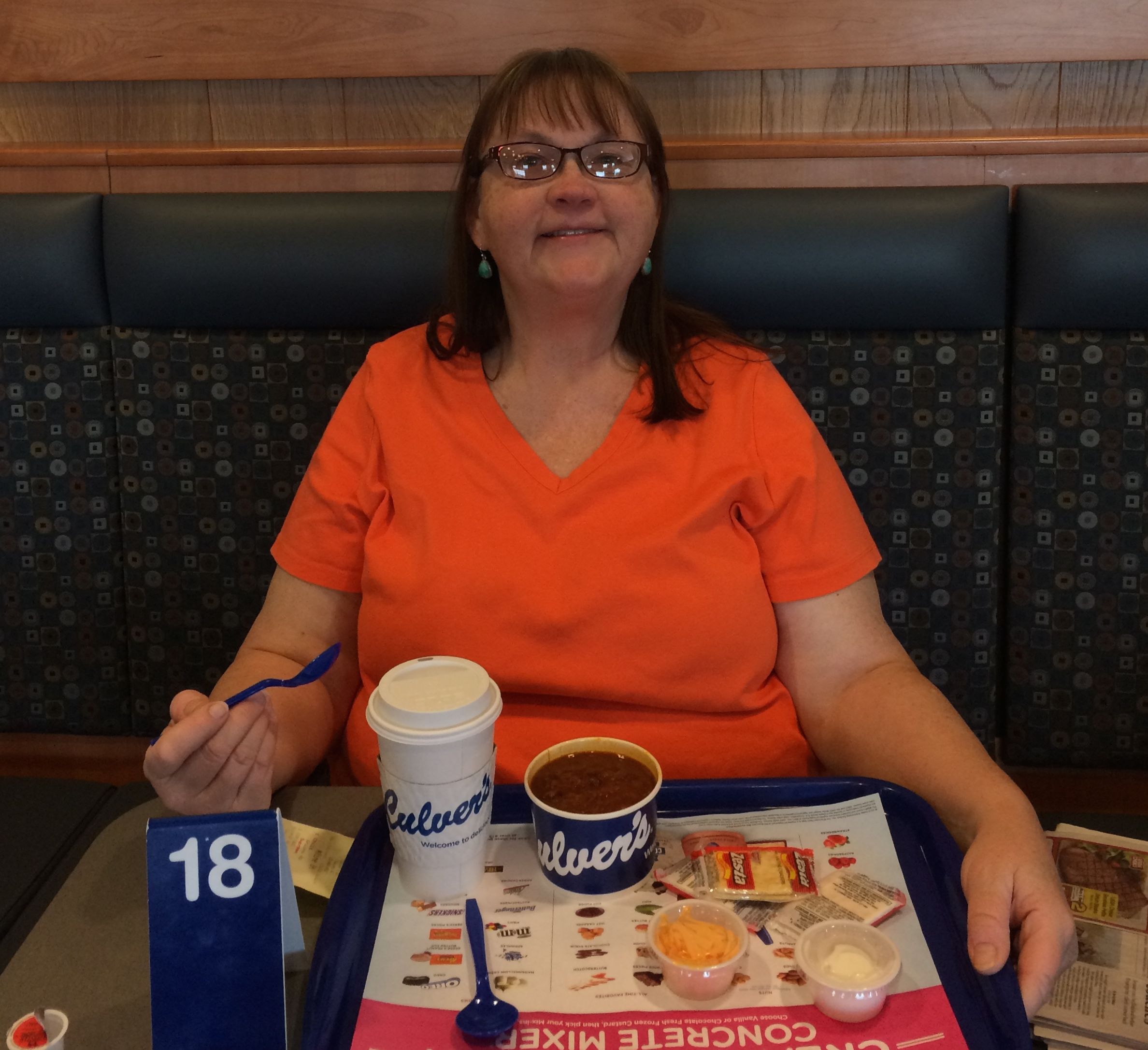
Turkey Bacon Panini with Butternut Squash Soup

It was a delicious treat and fueled me up for the three floors of art that awaited me.

I took the elevator to the top floor, because that is how I like to view museums, unless their is a reason to do it another way.
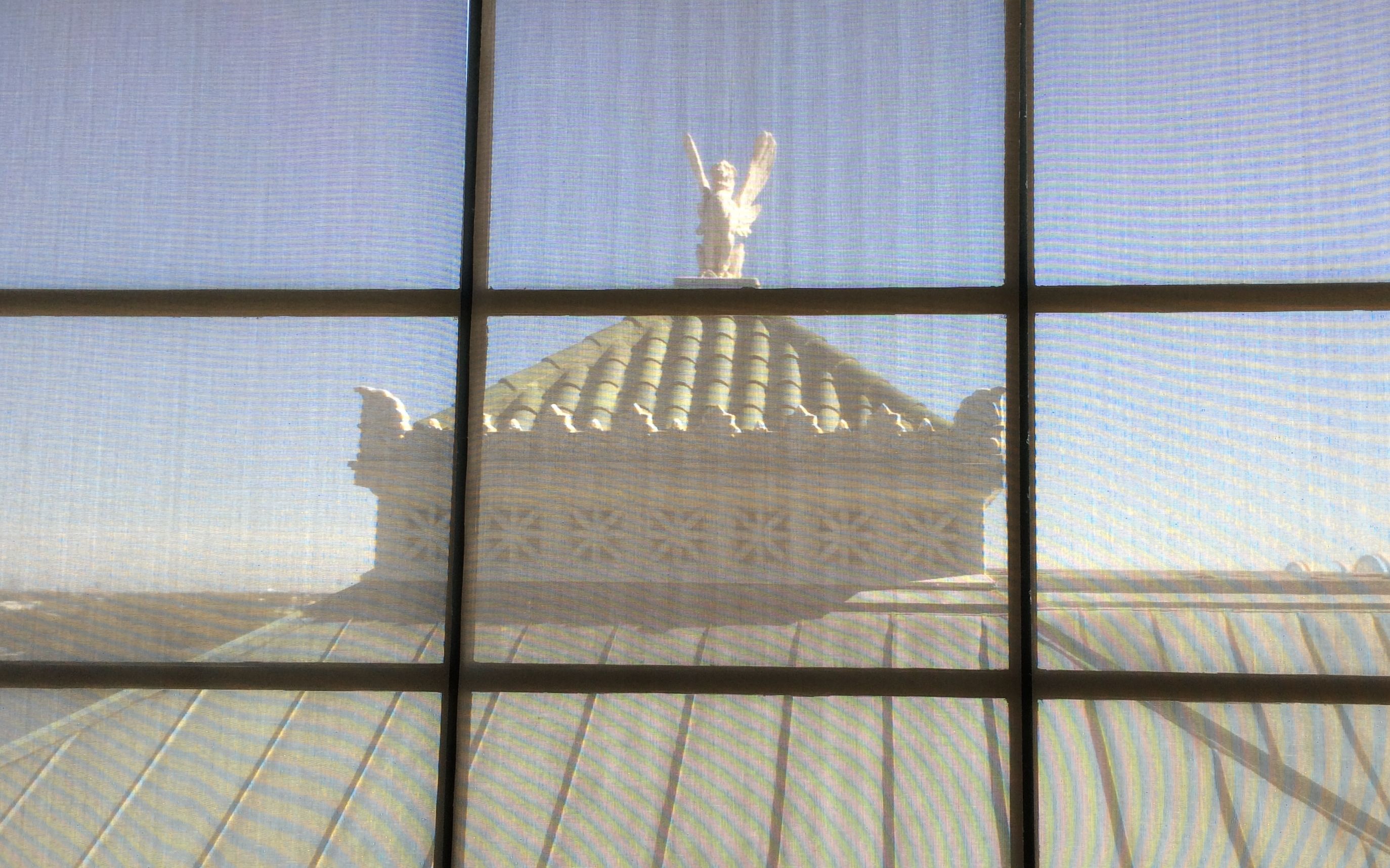
Noma roof with angel

On the top floor was Asian, African and Indigenous American Art – some of my favorite kinds of art.
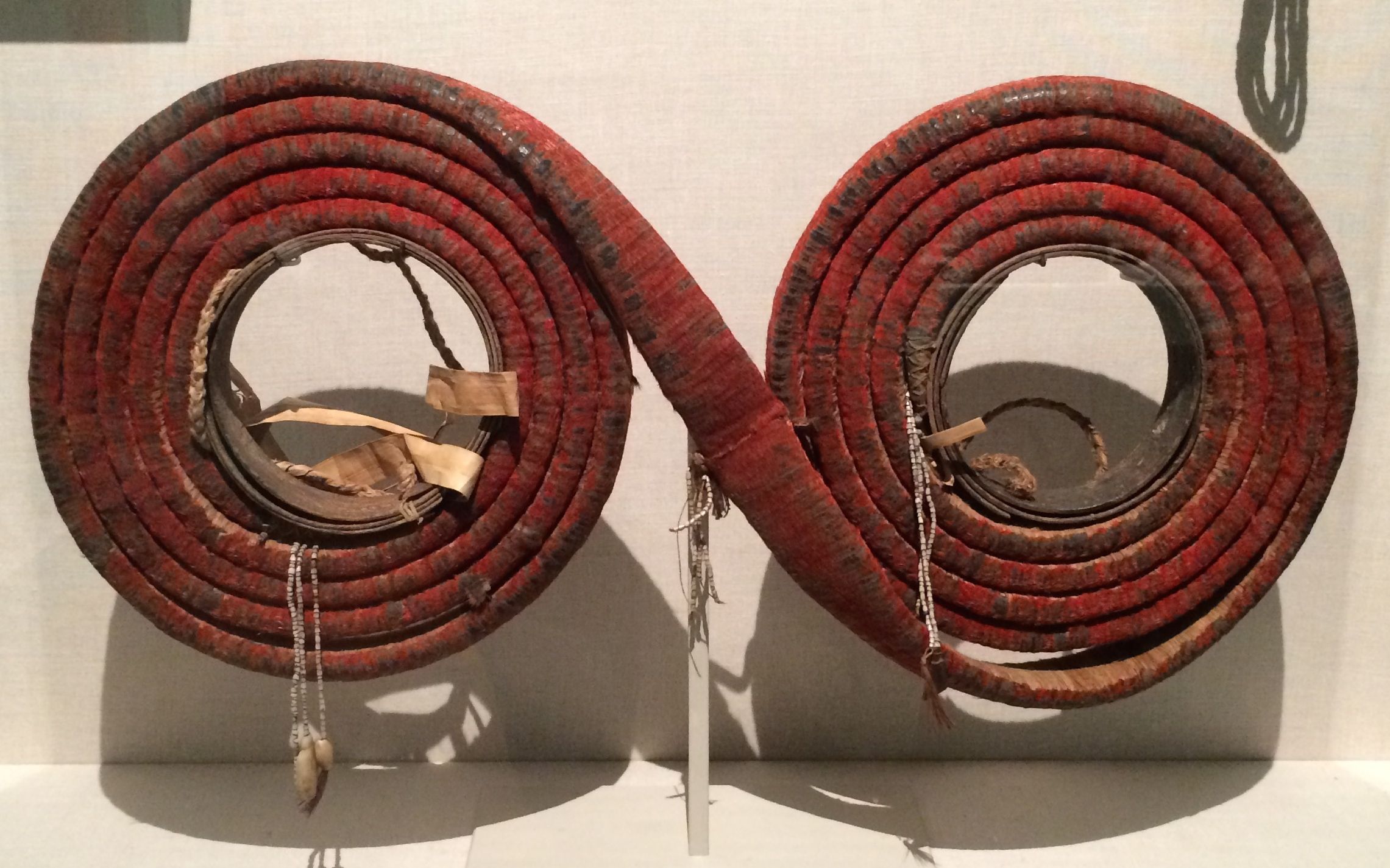
Money for Pacific Islands
Money from Pacific Islands

How would you like to have to carry this money around in your wallet?

Baskets by the Chitimacha peoples from Louisiana

These baskets bear a great resemblance to some of the baskets I bought in Guatemala. I love the similarities that arise when the same kinds of materials are put in the hands of different people.
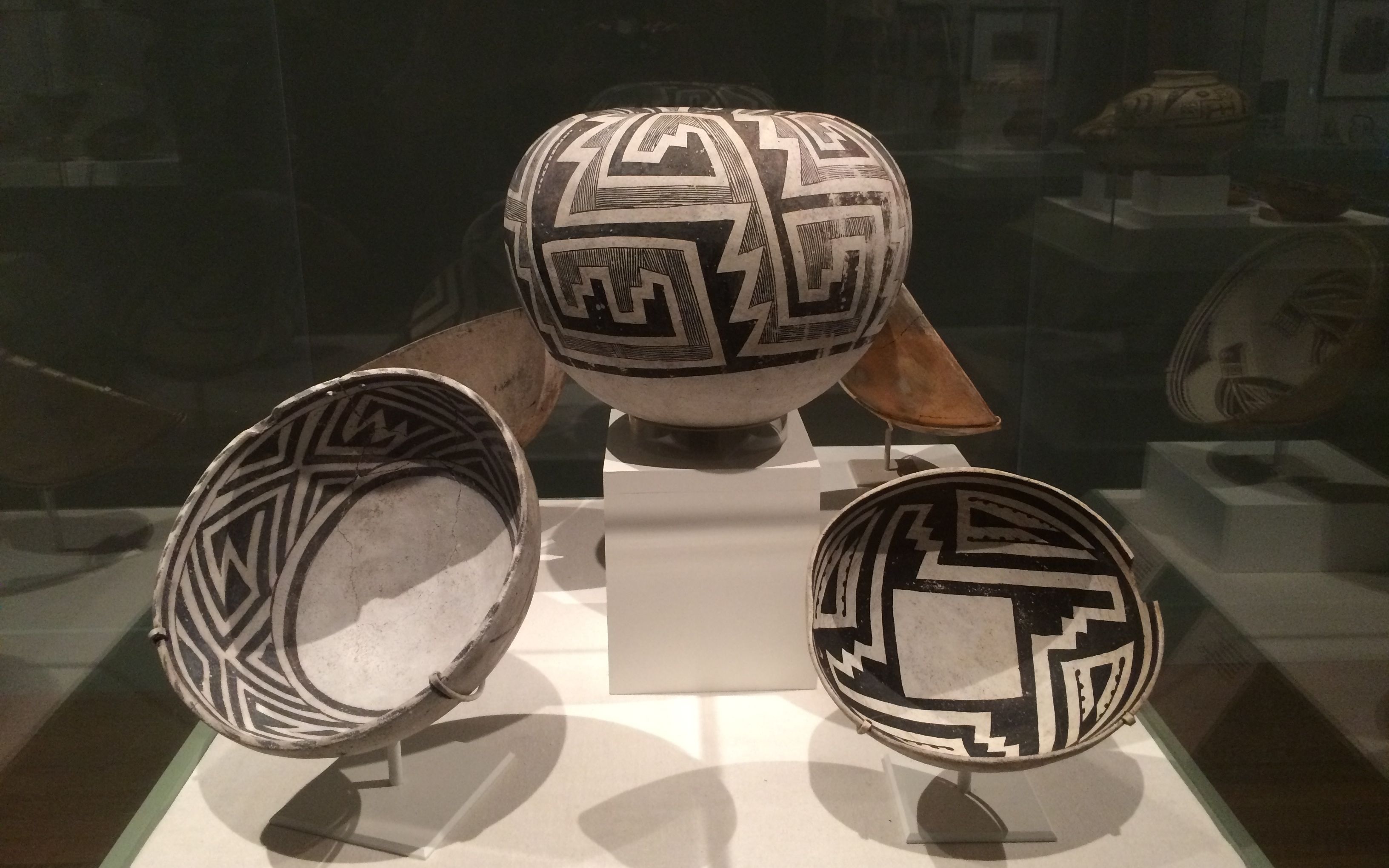
Anasazi Pots
Anasazi Pots

These pots reminded me of the wonderful time I spent in the southwest last spring. I can’t wait to return this year.

There was a display of a local artist from the early days of the colony. Pierre Joseph Landry was born in France in 1770. He came to Louisiana with his widowed mother and her father in 1785 in order to escape the coming revolution in France.
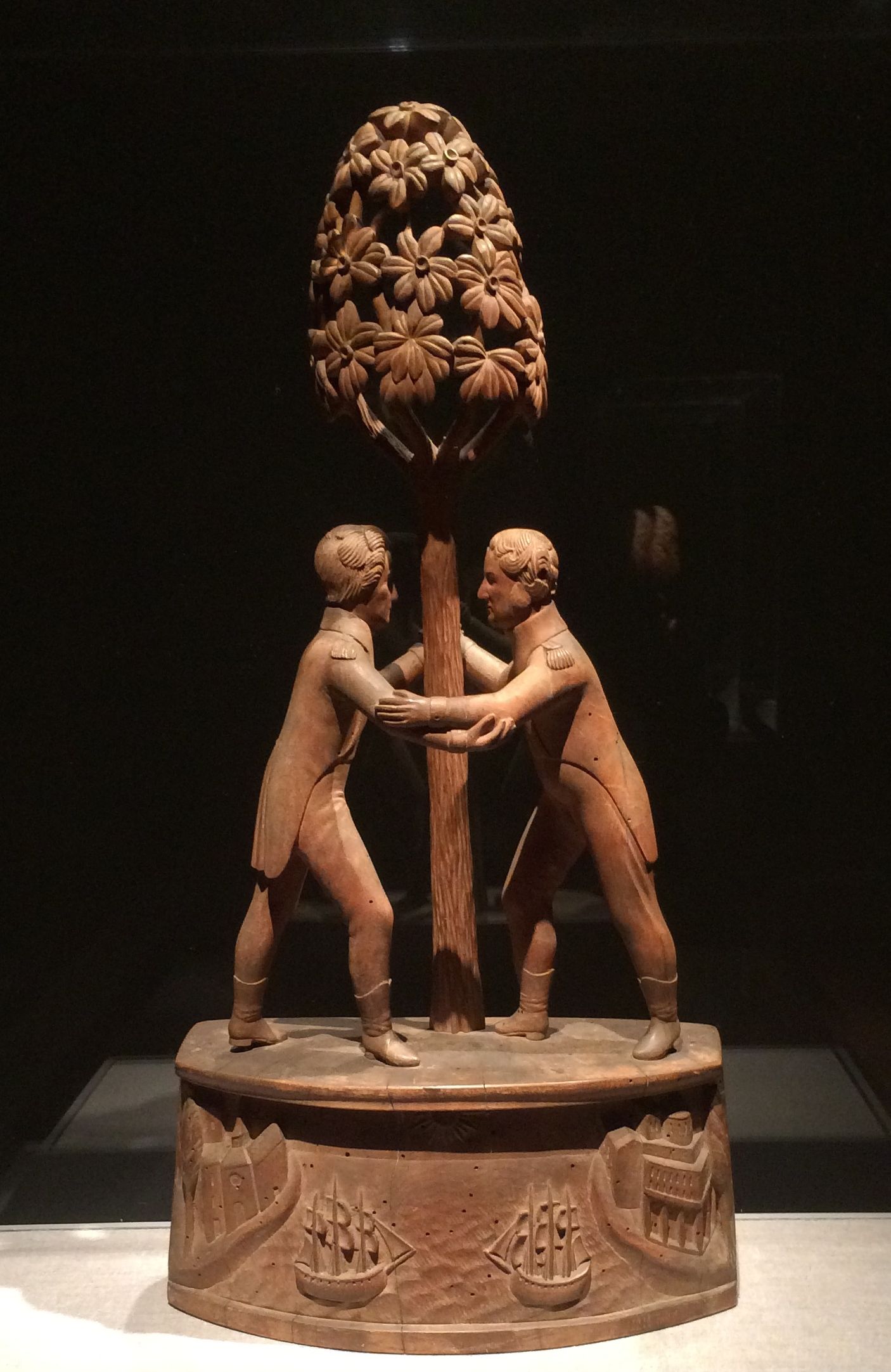
Carving 3

He received a land grant on the west bank of the Mississippi, and after fighting with General Andrew Jackson in the Battle of New Orleans, he returned Iberville Parrish to develop his land. His plantation was known as Home Plantation and he prospered as a sugar planter and refiner.
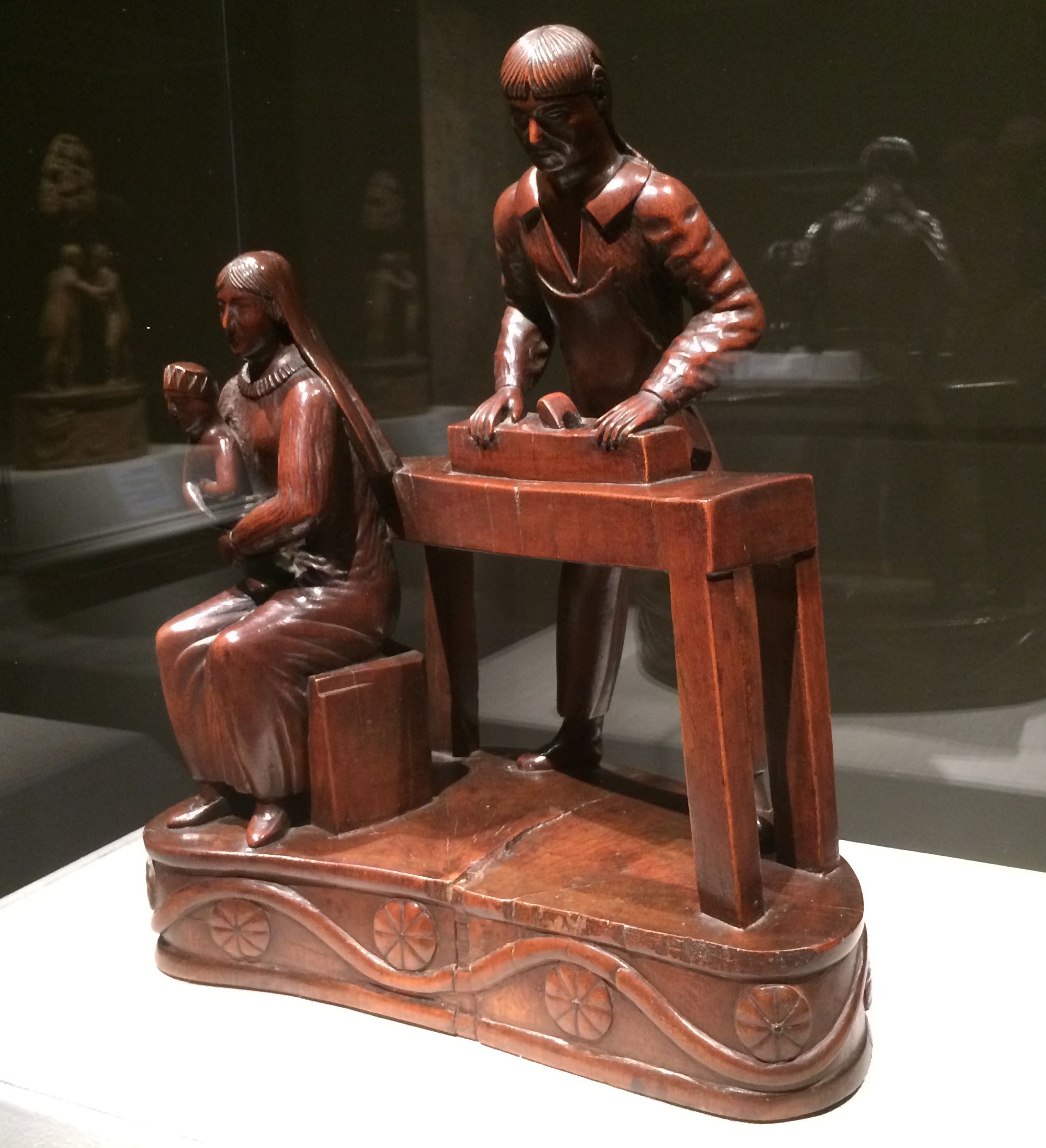
Carving 2

In the 1820’s Landry contracted a disease known as “white swelling”, which was tuberculosis of the knee. He was confined to a wheelchair and began passing the time making carvings. He used a common penknife and used local woods, such as magnolia, beech and elm.
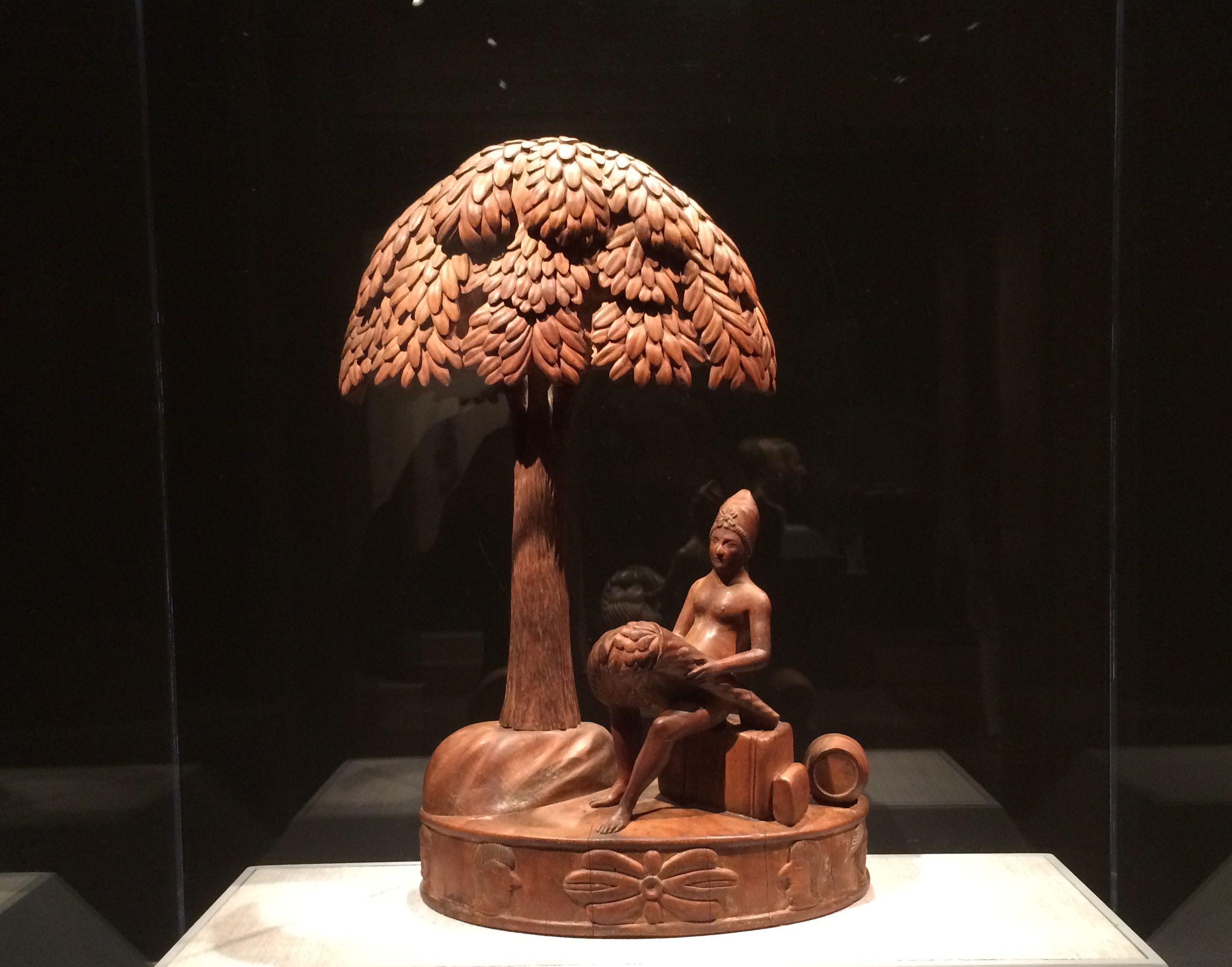
Carving 1

He was a remarkable self-taught artist. While his output of artwork is small in number, it was sufficient to establish him as one of the self-taught artistic geniuses of early nineteenth-century America.

And, my thanks to the staff of NOMA for the excellent descriptive and informational signs with the exhibits.

I enjoyed being introduced to some new contemporary artists, as well as early American ones. These works of art were created by Tim Youd.
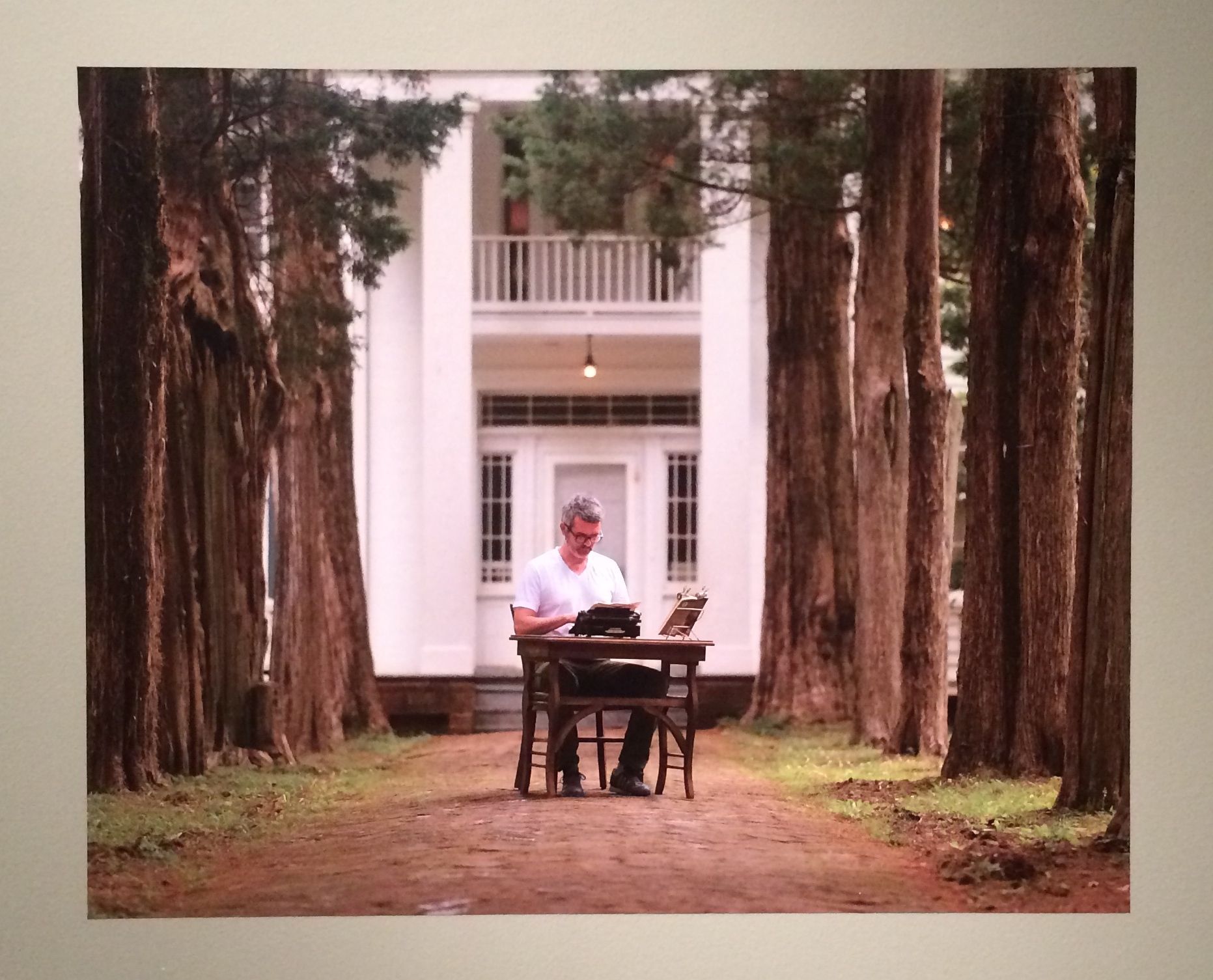
Tim Youd in action
Tim Youd in action

He did a combination performance art and visual presentation.  His display was called 100 Novels. He is retyping novels that are set in Louisiana using the the original make and model of typewriter used by the book’s author. He retypes each novel in its entirety on a single sheet over a backing sheet.
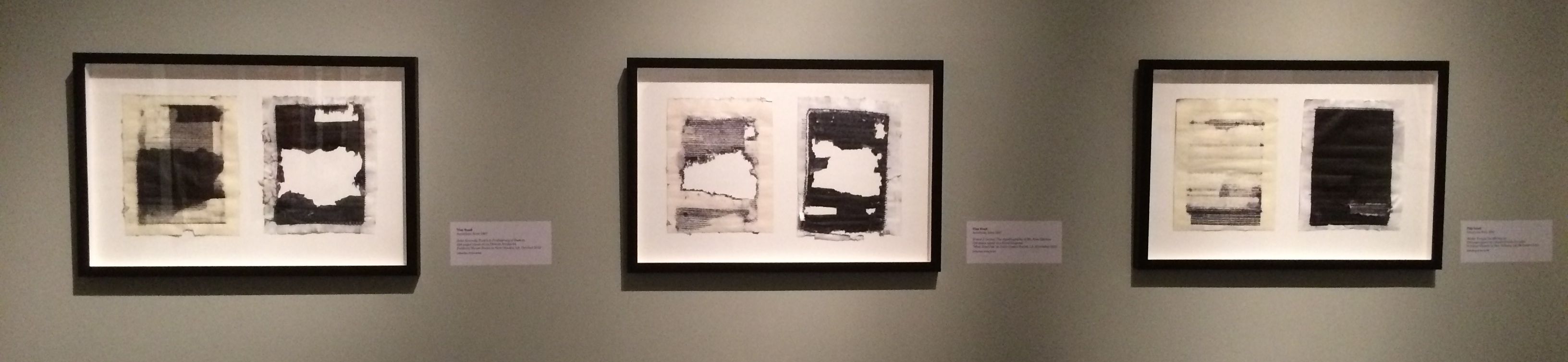
Noma Tim Youd pages 1

These are some of his works. The page he typed on is on the right side of the frame and the backing sheet is on the left.
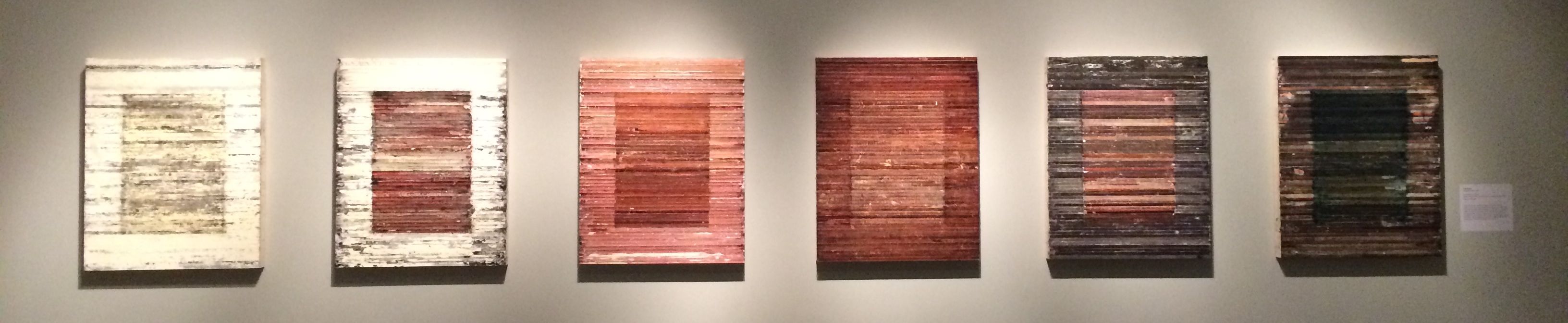
Noma Tim Loud 1

These works are made from the ribbons of the typewriters.

Raise your hand if you remember typewriters. Raise the other hand if you remember ribbons. Wiggle your fingers if you have ever typed on a typewriter with a ribbon.

Okay, back to NOMA.
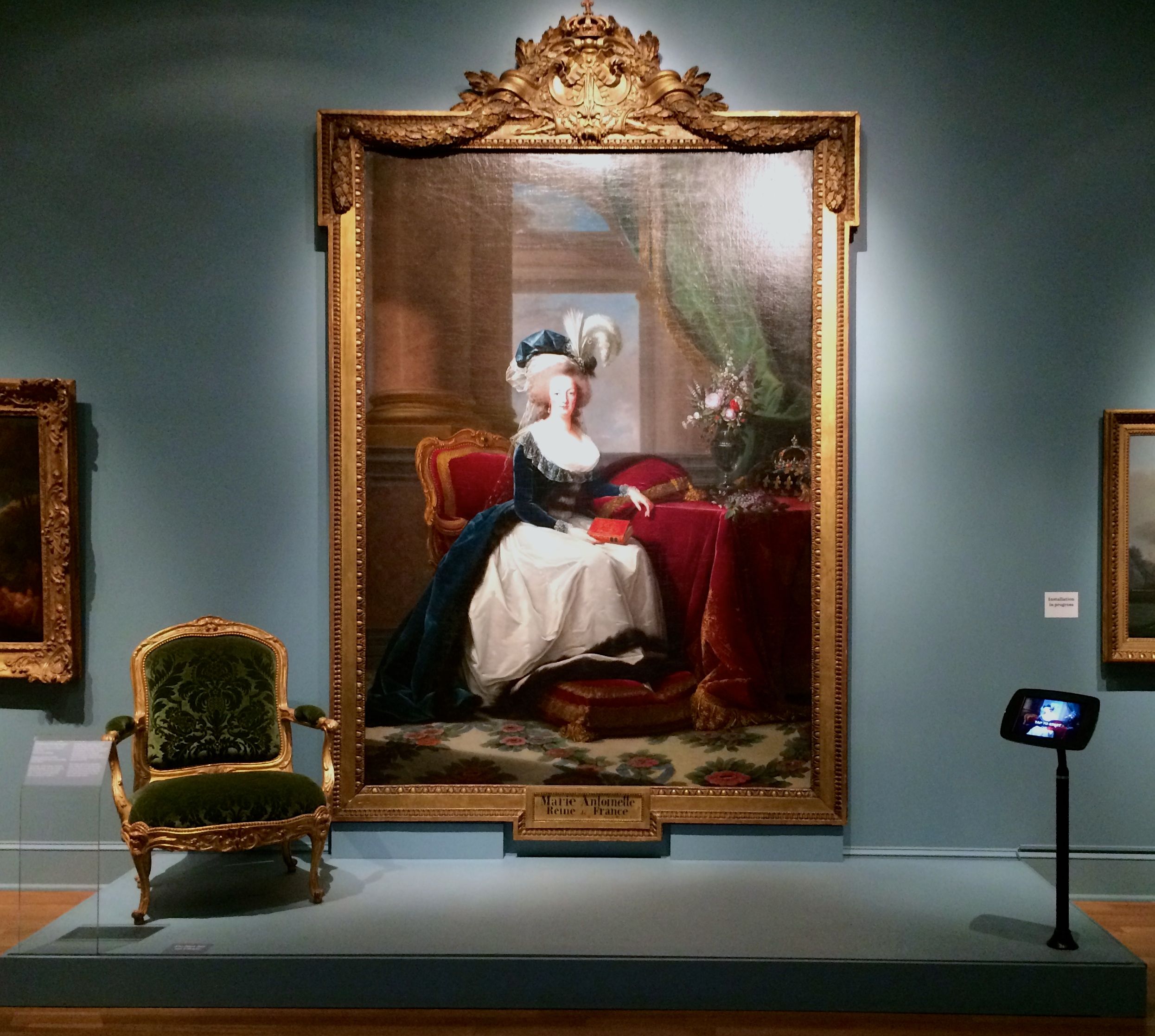
Noma Marie Antoinet portrait

Another prize in their collection is this portrait of Marie Antoinette. I really enjoyed the context in which it was displayed. On the left is a chair that was made back then. On the right is an interactive computer that allows you to get information about the various features of the painting.

I particularly appreciated the fact that the text was not mounted on the wall next to the painting. I could read the information on the digital display at the right and look at the painting to see how the parts related to each other. I didn’t have to walk up to the plaque, read the text and then back away to see the painting.

I know, it’s probably a small thing, but I appreciated it.

Another thing I appreciated was the fact that the painter was female! Elisabeth Vigeé-LeBrun (1755–1842) was earning enough from her portrait painting by the age of 15 to support herself, her widowed mother and her younger brother. Her father, Louis Vigeé, taught her to paint before he died in 1767. This painting was done around 1788.

All the details crammed into Marie Antoinette’s portrait related well to Will Ryman’s work, “America.”
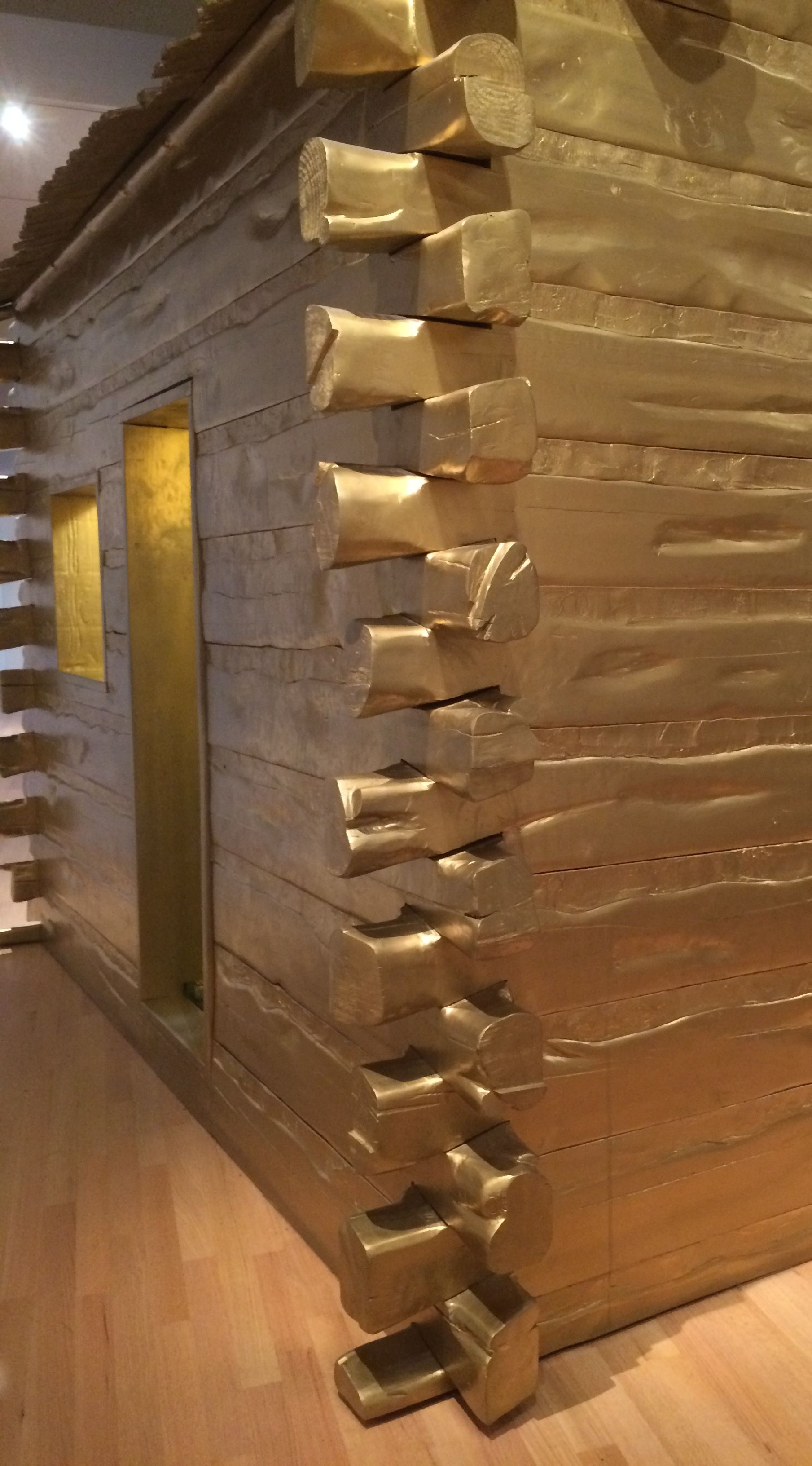
Noma Will Ryman Ameria 2013

It resembled the cabin that is enshrined in Hodgenville, Kentucky as Lincoln’s birthplace.

When I visited Abraham Lincoln’s birthplace in 2014, I found out that the log cabin inside the shrine couldn’t possibly be the one Lincoln was born in. Dendrochronology proved that the logs came from someone else’s cabin. But, it was already in the shrine by the time they figured it out, so it might as well stay, I guess.

Ryman’s “America” is packed with items that help tell the country’s story – bullets, arrowheads, cotton bolls, chains, sparkplugs, iPhones, lumps of coal, and shackles of the enslaved.
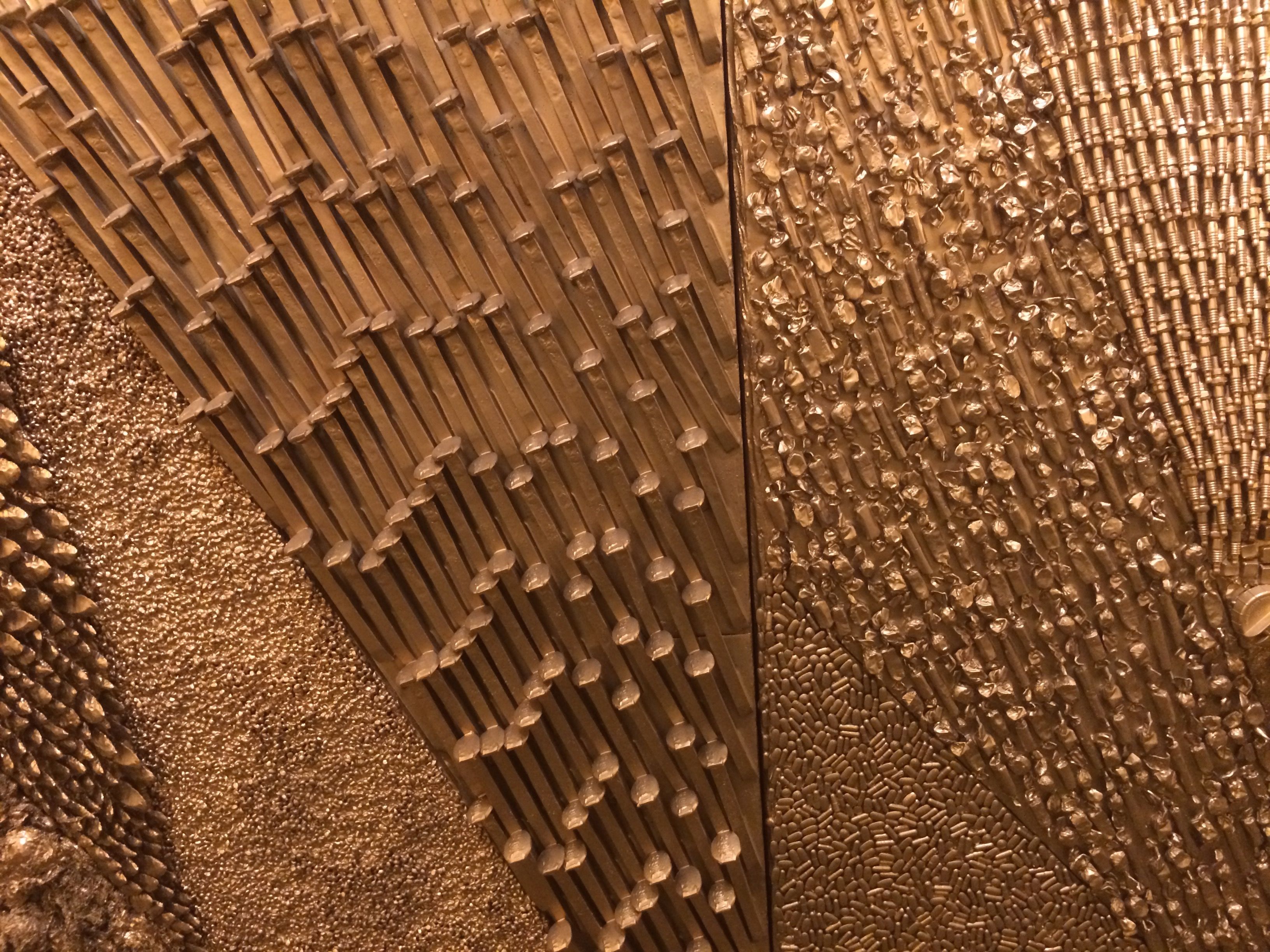
Noma Will Ryman America 2013 2

The inside is rendered in gold and black.
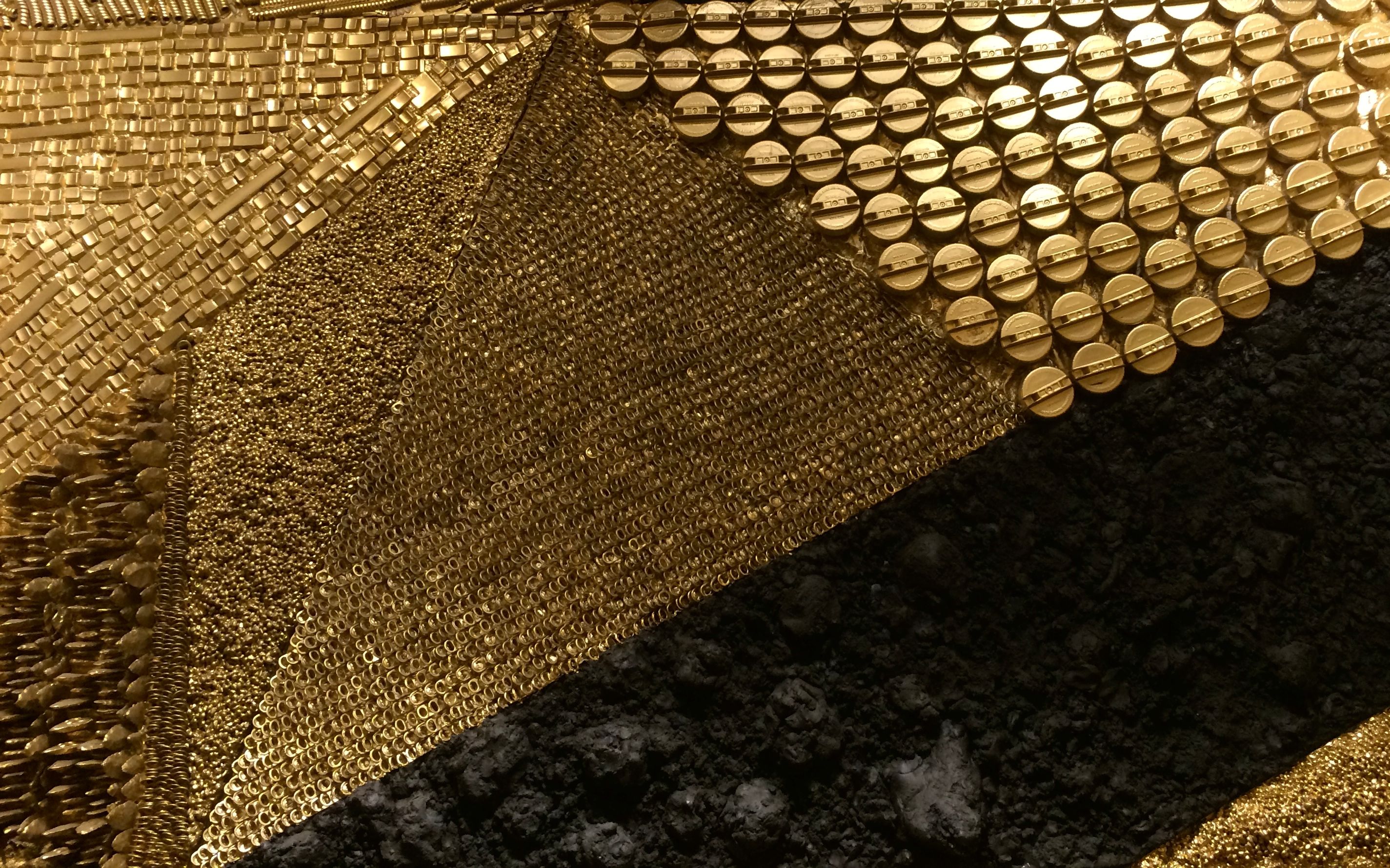
Noma Will Ryman American 2013 3

This sculpture reminded me of the work of my favorite artist, Louise Nevelson.

Jasper Johns was well-represented, too. Of course, they had some of his flag-based work.
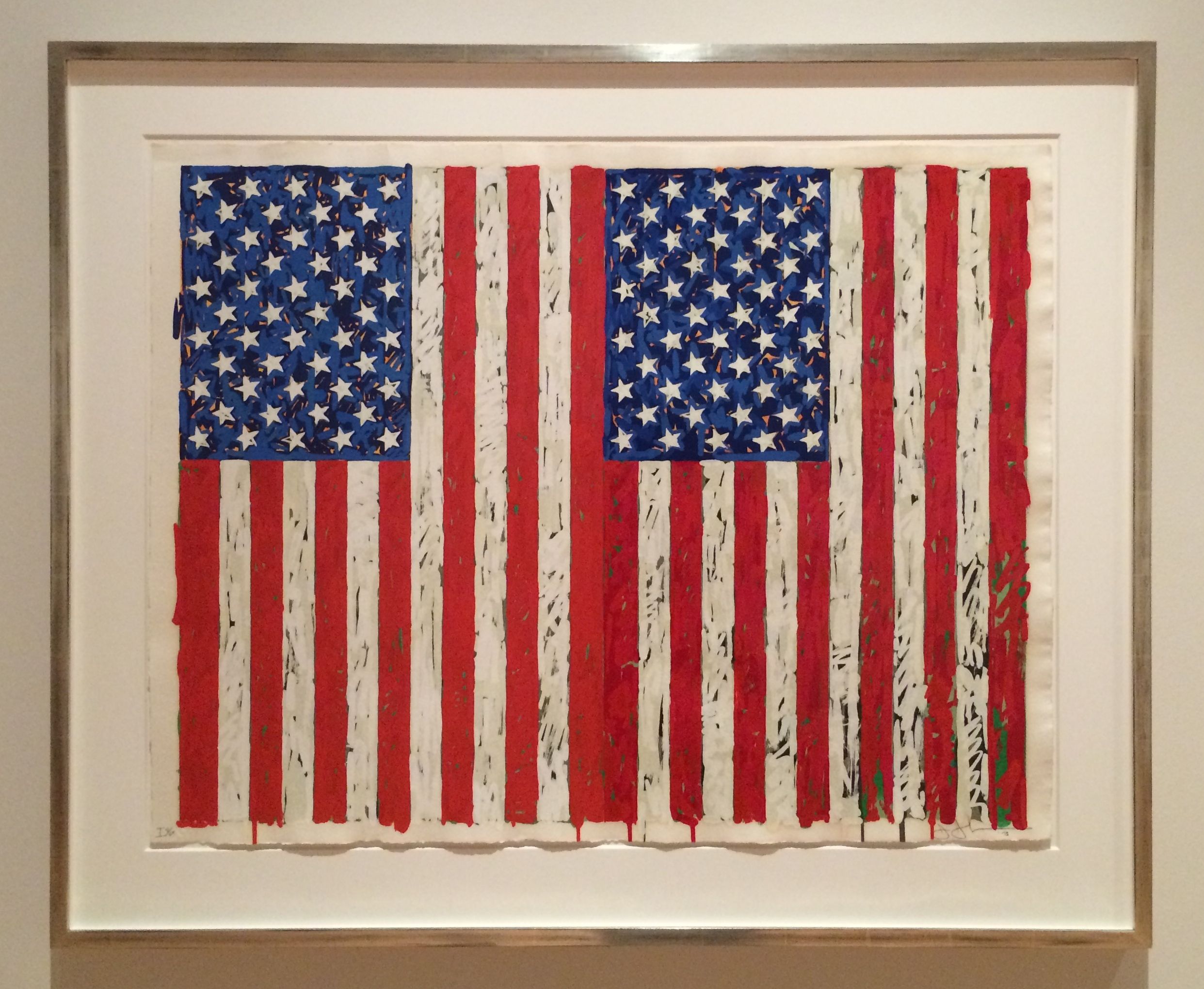
Jasper Johns Flags 1
Flags 1

One theme of his that I hadn’t seen before this is Usuyki, which is Japanese for “light snow”.
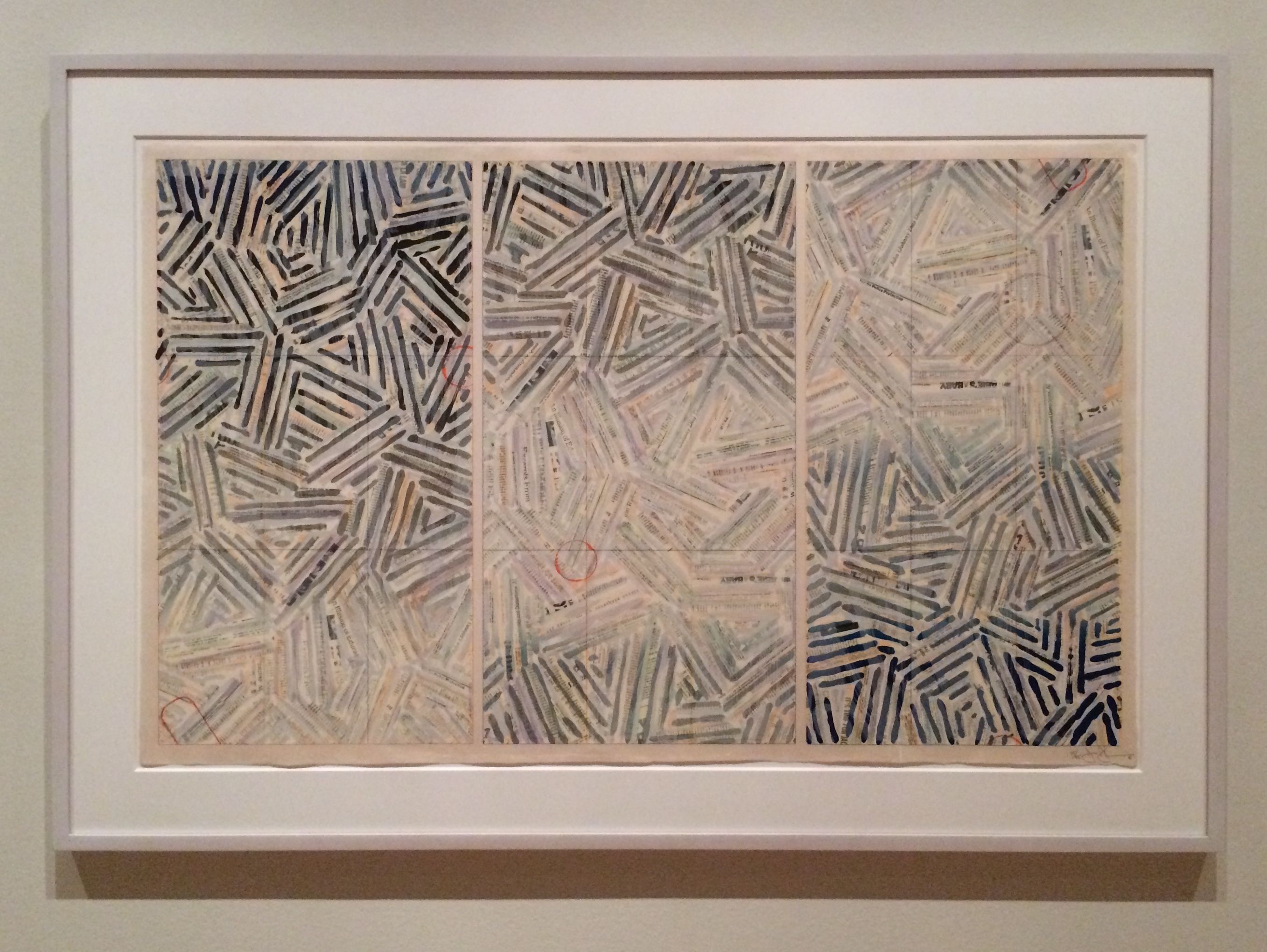
Usuyki
Usuyki

I am delighted when I find new-to-me works of art from my favorite artists.
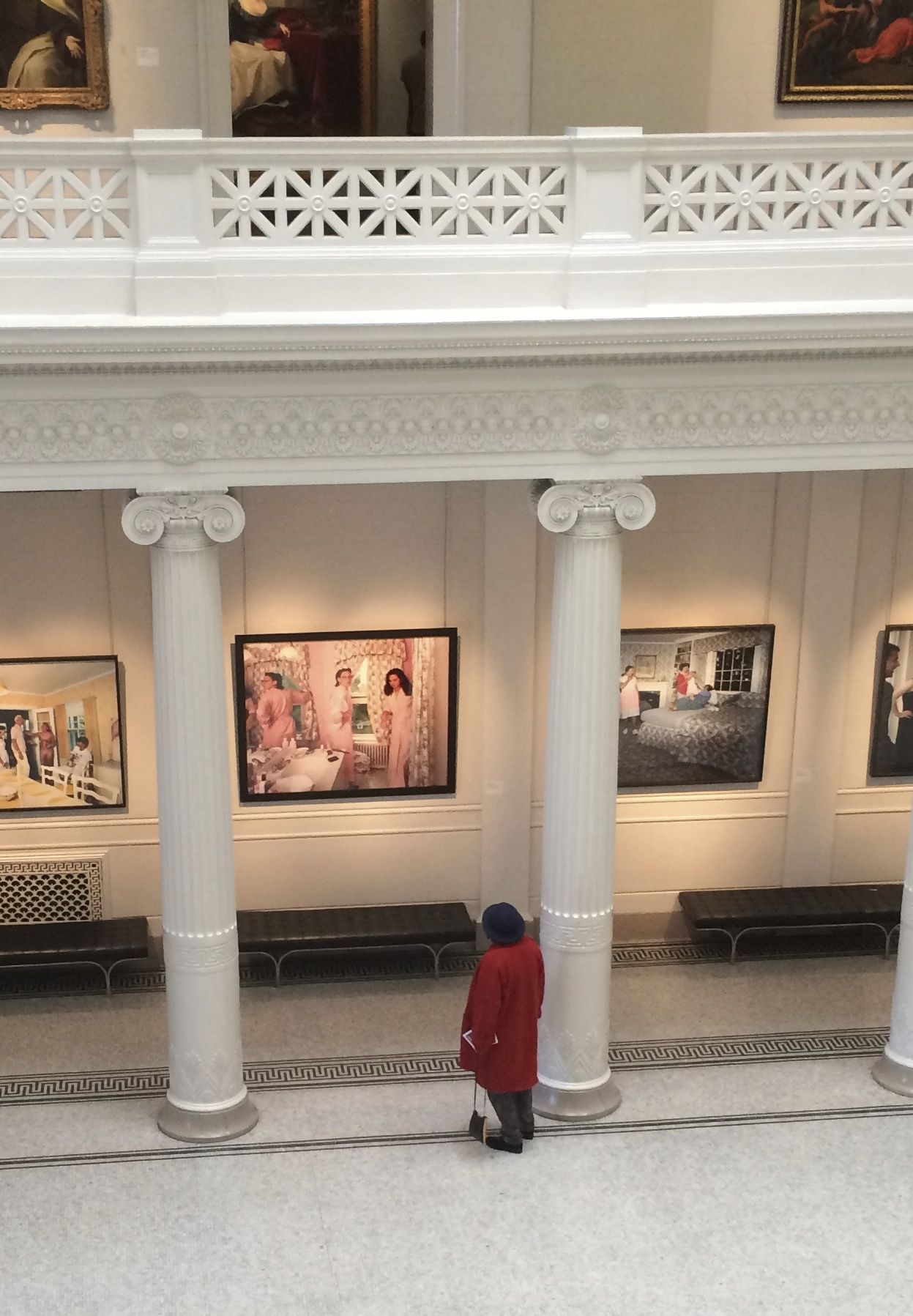
Noma woman in red

The building, itself, was delightful. I love a good, old-fashioned art museum.
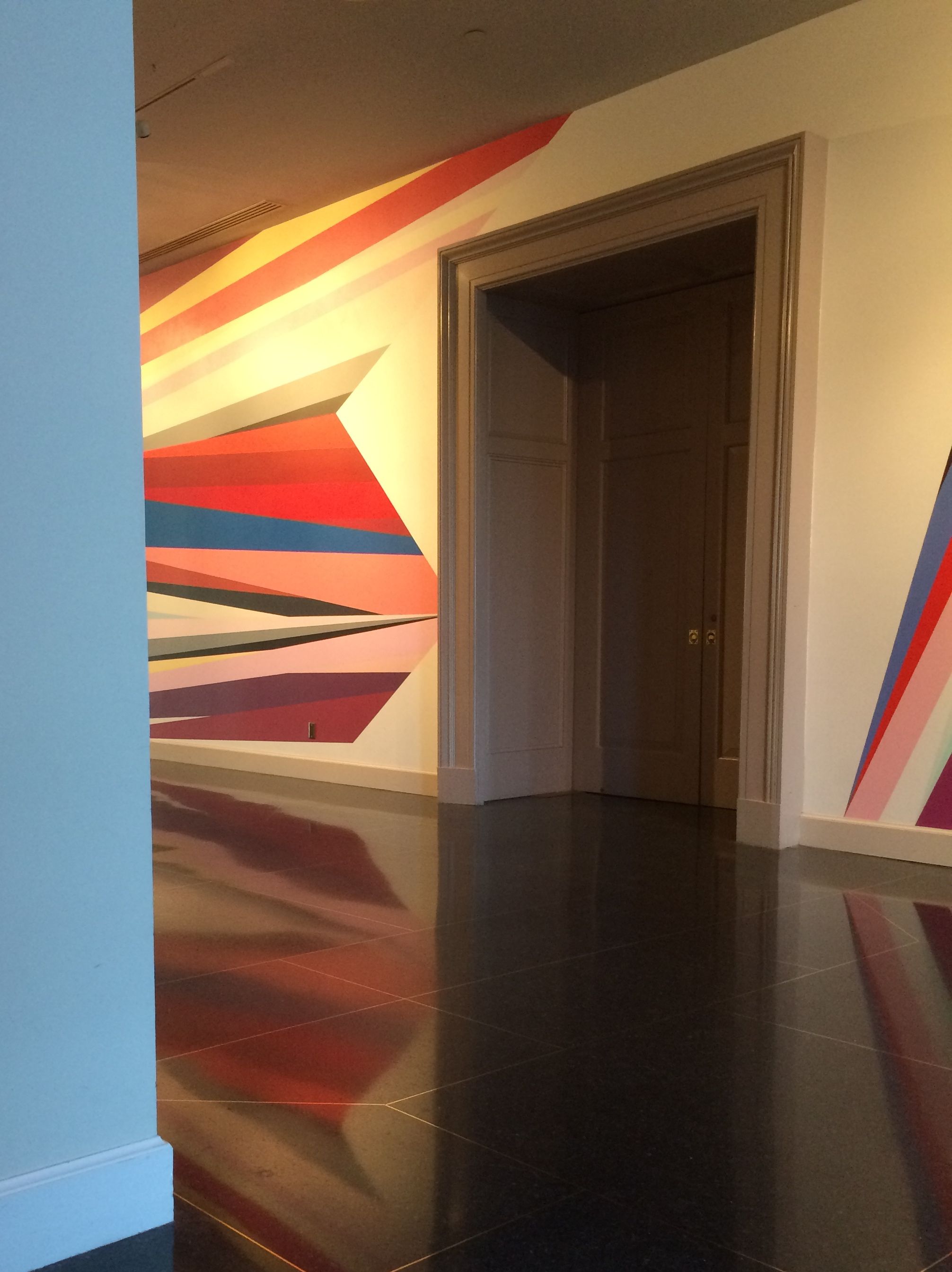
Noma Hall

Of course, it also had its modern touches.

I think that I have made my case that I thoroughly enjoyed my time at New Orleans Museum of Art, so I won’t go on any longer. (And, believe me, I could!)

There were two more stops to make.

The first stop was at Newman School, for a reception celebrating a collaboration between the school and NOMA.
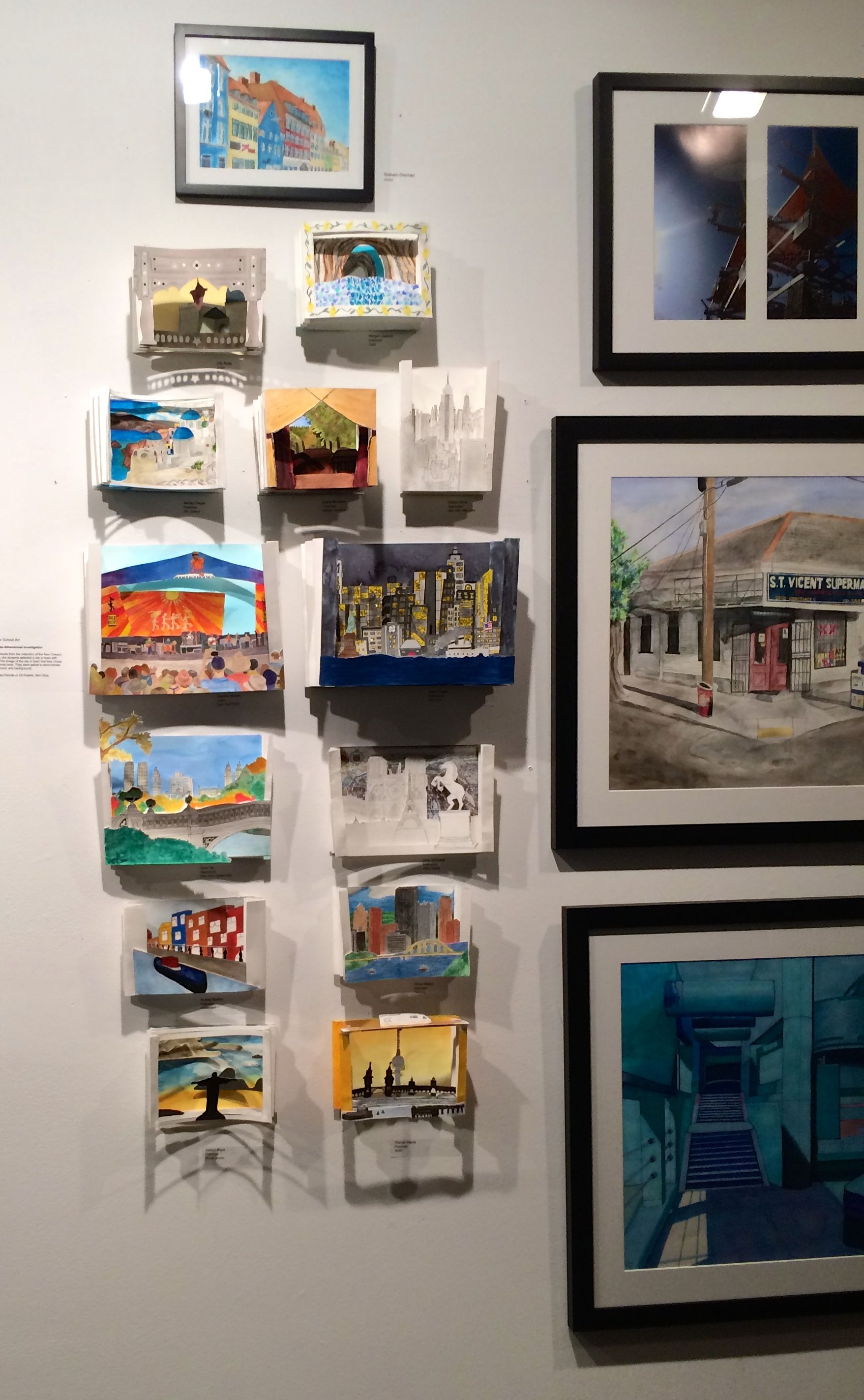
Noma Newmann 1

This was of particular interest to me, as my last teaching assignment was at Woods Lake School Magnet Center of the Arts, and we were lucky to be able to integrate the arts into our curriculum.
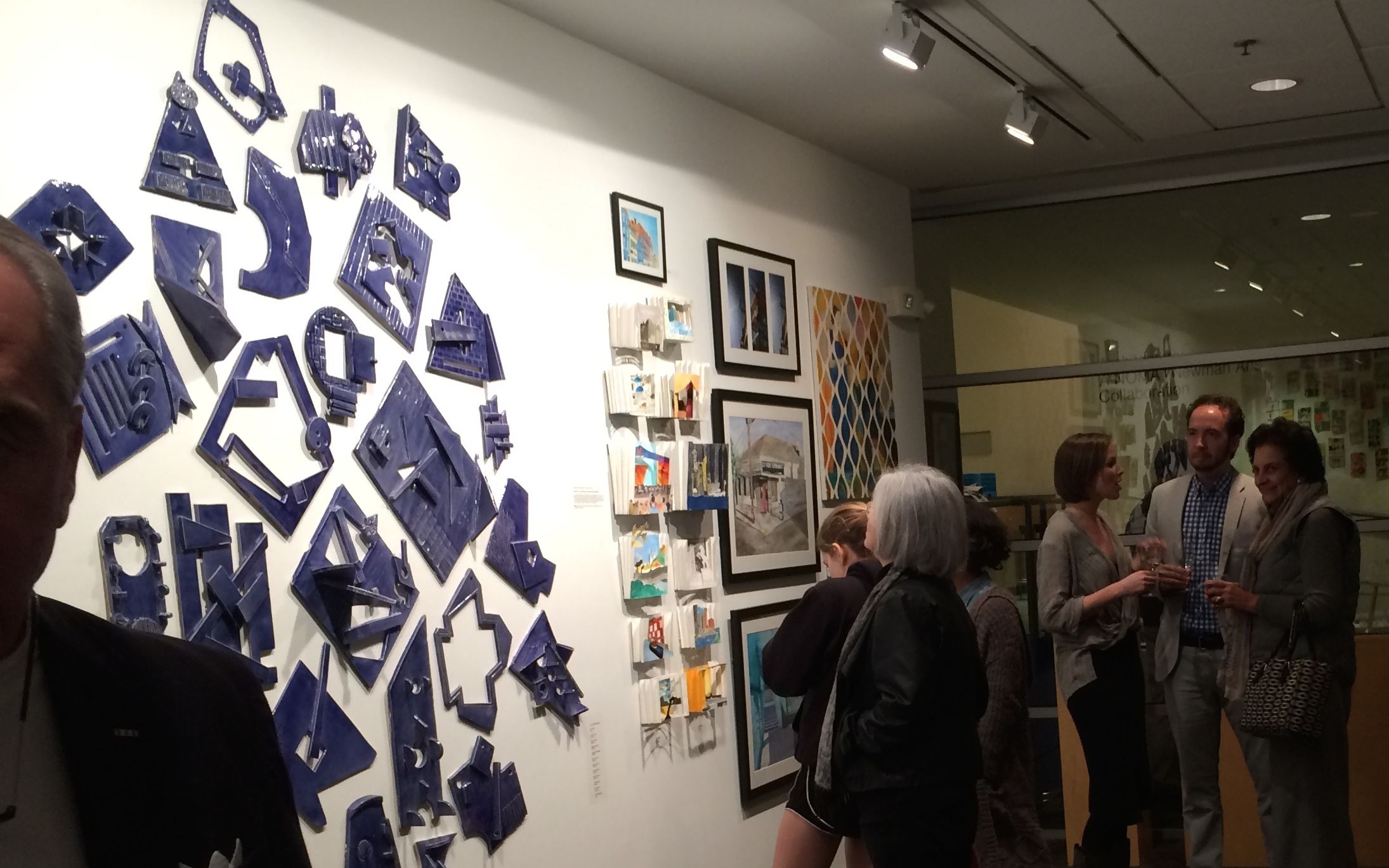
Noma Newmann 3

Their work looked really good. Our work looked good, too, back in the day.
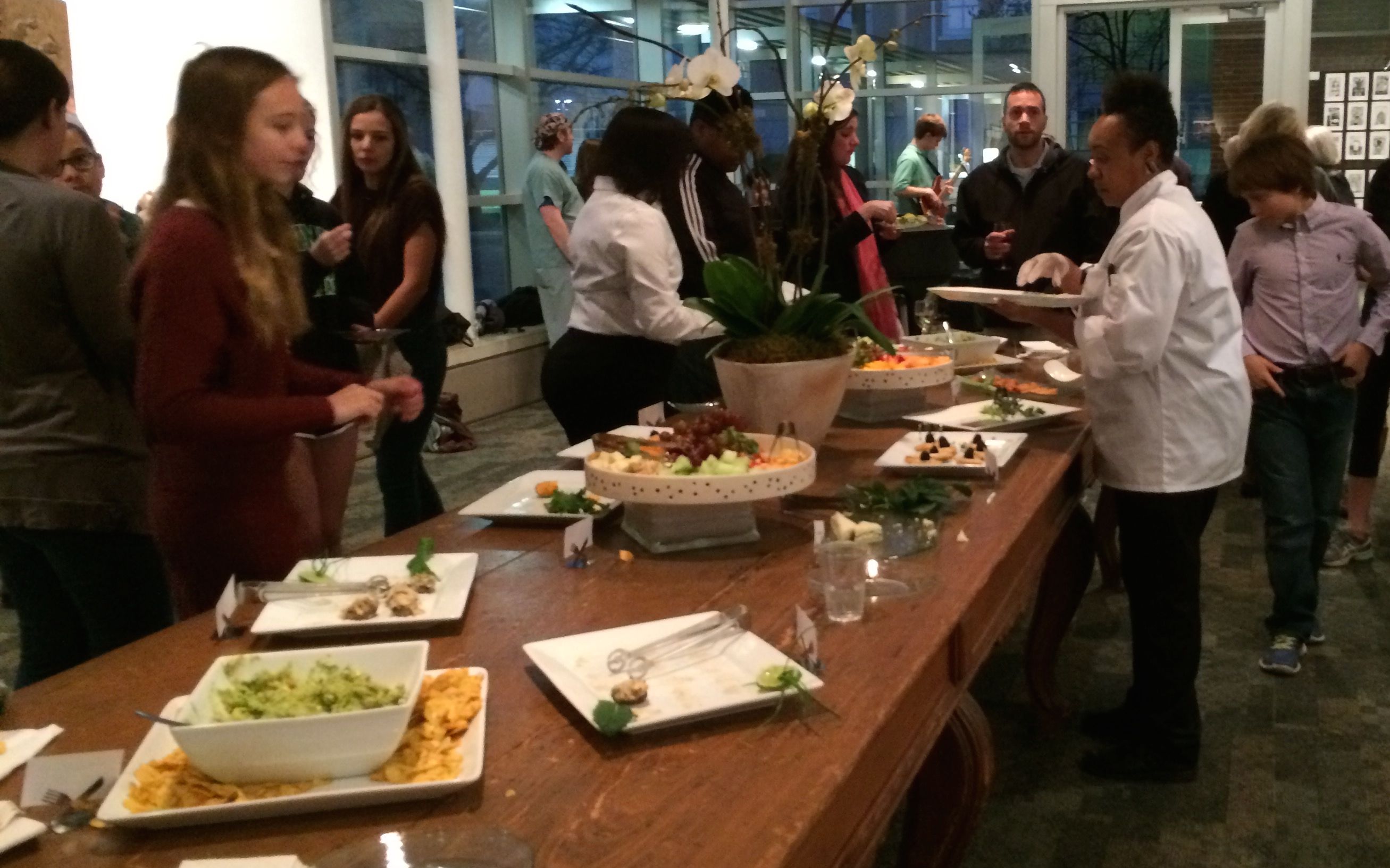
Noma Newmann 2

But, I have to say, they definitely had better refreshments. And wine!

The last stop of the night was Preservation Hall in the French Quarter, where we attended a party in the back.
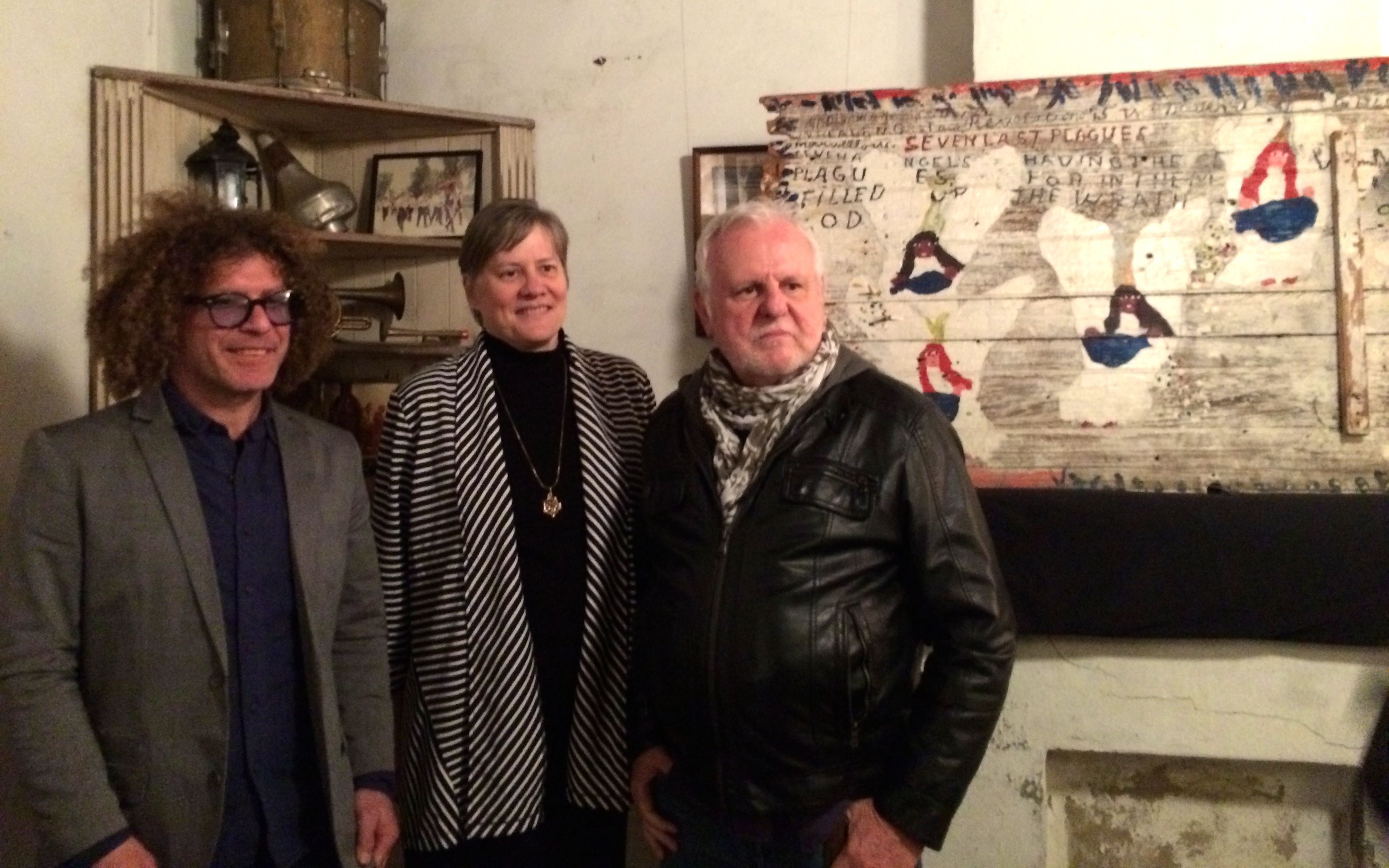
Noma Preservation Hall dedication

The man on the left of Lisa is Ben Jaffee, and he is the son of one of the founders of Preservation Hall. The man on the right of Lisa is William Fagaly, the curator of African Art. They are there to accept the work of art on the mantle, which is by Sister Gertrude Morgan. Her work contained religious topics and she painted as she felt directed to by God.

After the dedication, Lisa and I squeezed into the Hall to catch a bit of the performance. I was amazed at how small and beat-up the space was. It might have been 20 x 20. I was trying to estimate the space and the number of people in the audience.
Preservation Hall napkin

If this was a typical crowd, I have to say that traditional jazz is alive and well.

But, we couldn’t stay for the whole set. Lisa needed to get home. She had a work day in the morning.

I love retirement!

What a great day! Thanks Lisa, and thanks, Diane, for having such a wonderful and hospitable family.
New Orleans!

One of my father’s stories from his time in the service was about taking the train from basic training  near Washington DC to the west coast to get to his post in Alaska. He woke up while he was crossing Lake Pontchartrain and couldn’t figure out where he was. There was water on each side of the train and it went on and on.

His birthday fell while I was staying at Fontainebleau State Park, and I decided to celebrate his birthday by driving across the causeway to New Orleans. Last year, I went to one of his favorite restaurant chains for dinner.

Dad's birthday celebration 2015 Tucson, Arizona
Dad’s birthday celebration 2015 Tucson, Arizona

This year, I decided to celebrate by driving across Lake Pontchartrain on the Causeway from Mandeville into the New Orleans.

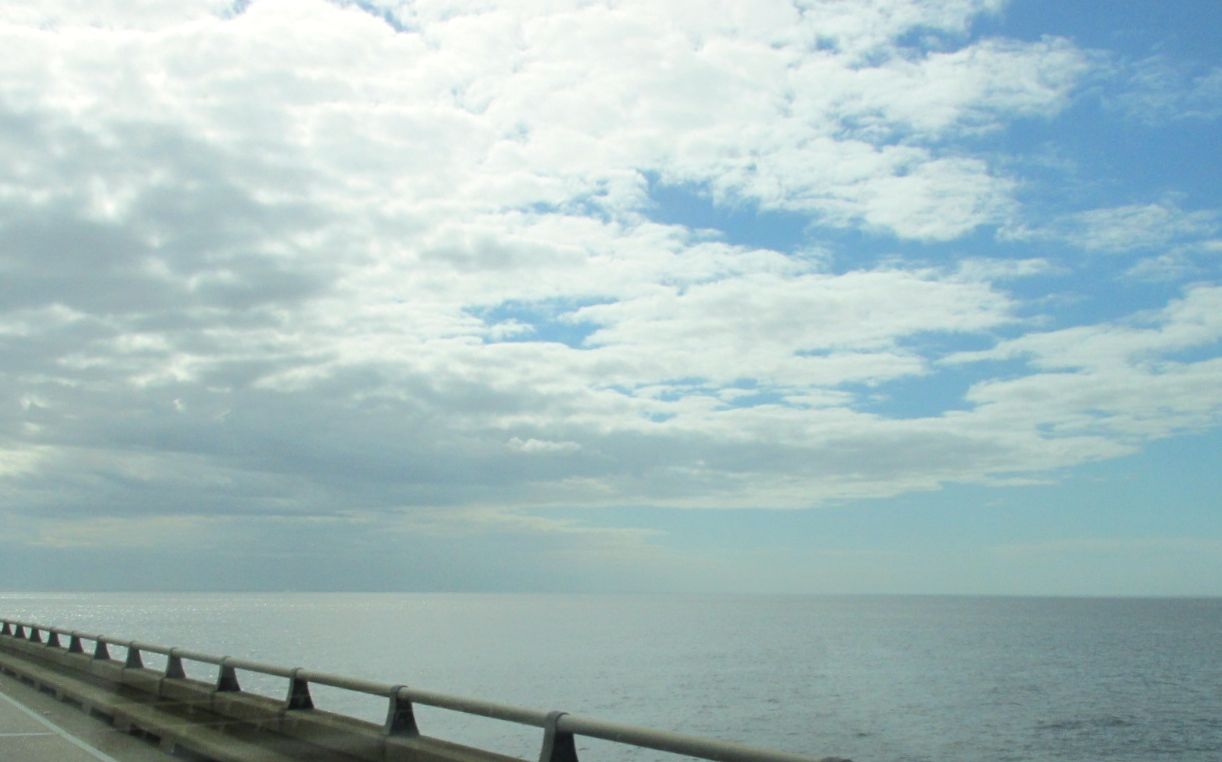
causeway 1

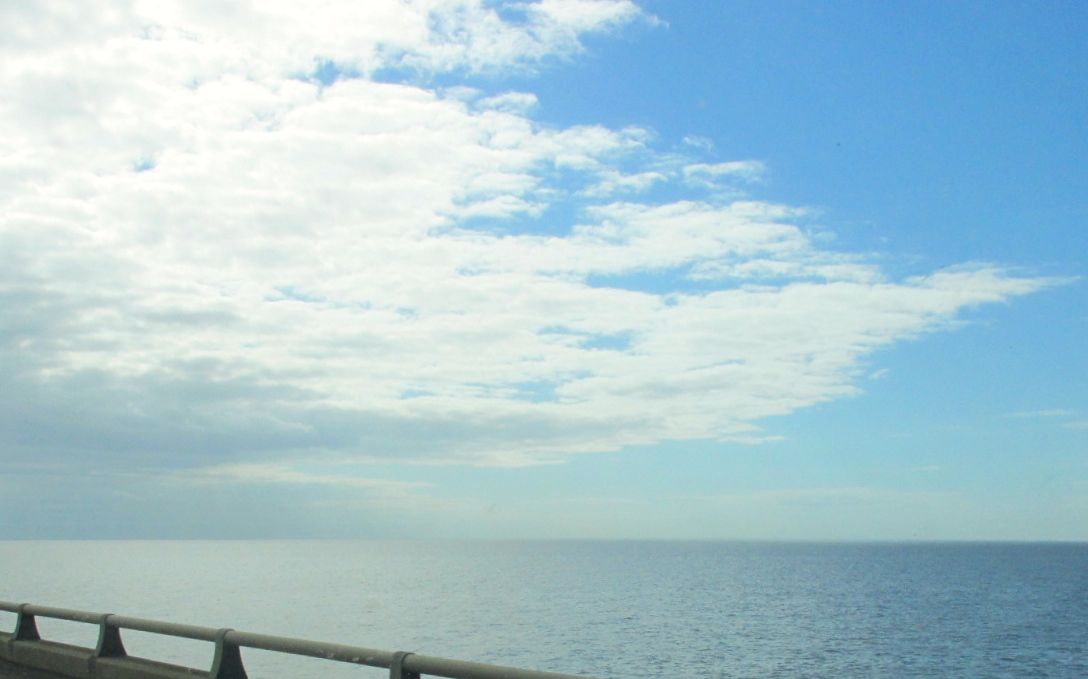
The Causeway is about 24 miles long and skims along about 15 feet above Lake Pontchartrain.

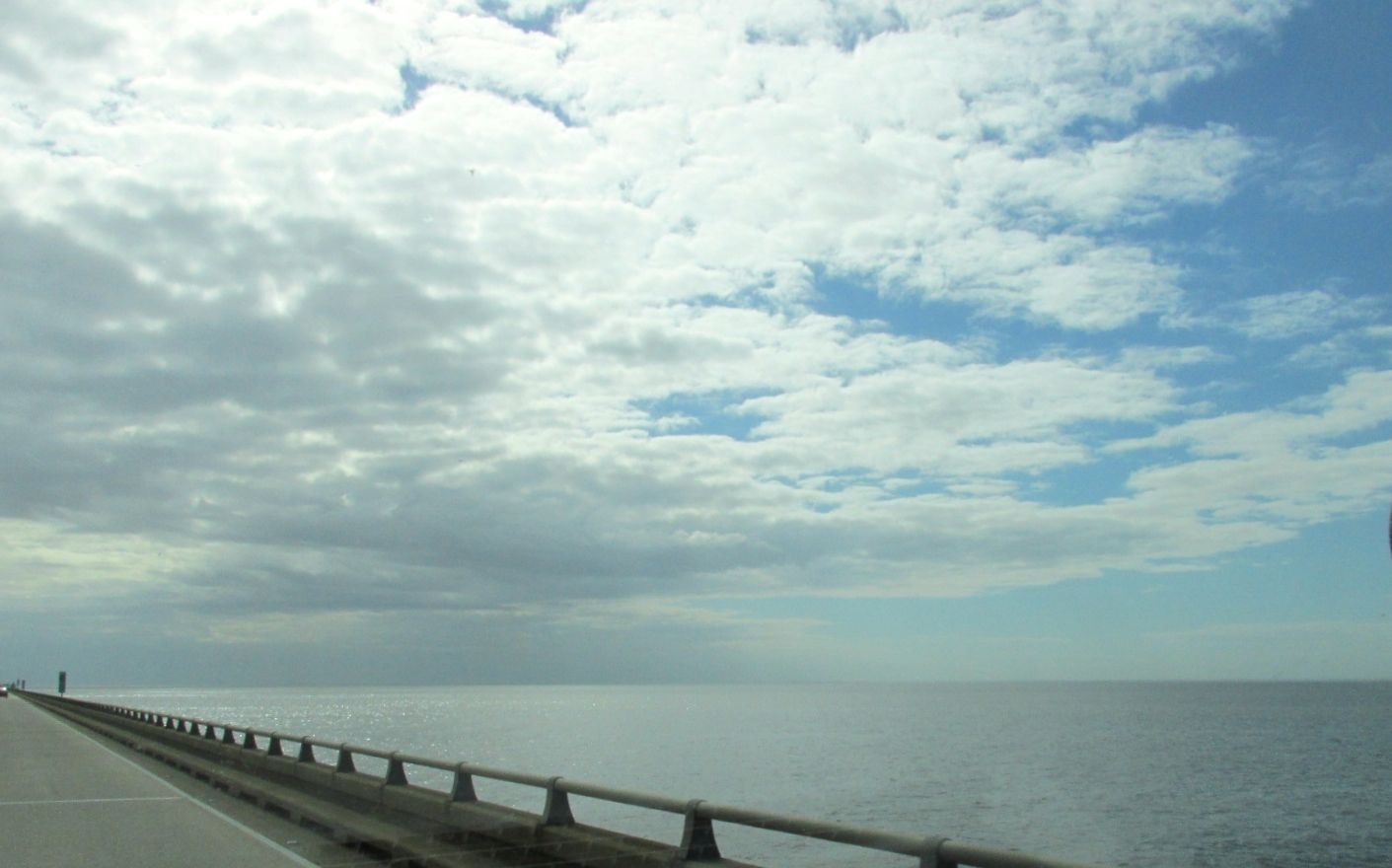
causeway 2

It cost $3 to cross from the north side, in Mandeville, and no toll is collected on the return trip.

Causeway

The speed limit is 65 mph. Do you know how hard it is to take pictures while zooming along on a two-lane bridge 15 feet over the water? Well, at least it’s a straight road.

The bridge my father crossed back when he was in the service wasn’t as long as this one. It crossed from Slidell to New Orleans. At almost 6 miles long, it is the longest rail bridge over water in the world. At least, I think that is the bridge he crossed. When I was talking with a guy who was trying to sell me a tour, he said that the rail bridge collapsed. So, without digging deeper, I don’t really know.

I didn’t really know where I was going. I kind of worked my way toward the Tourist Information Office my all-powerful phone told me about.

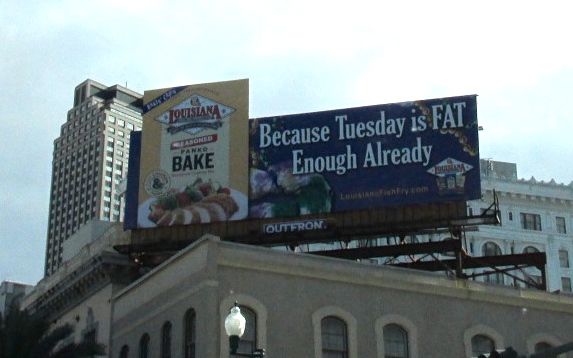
Because Tuesday is already fat enough.

Luckily, I was stopped at an intersection, so I could take a photo of this billboard. It gave me a chuckle.

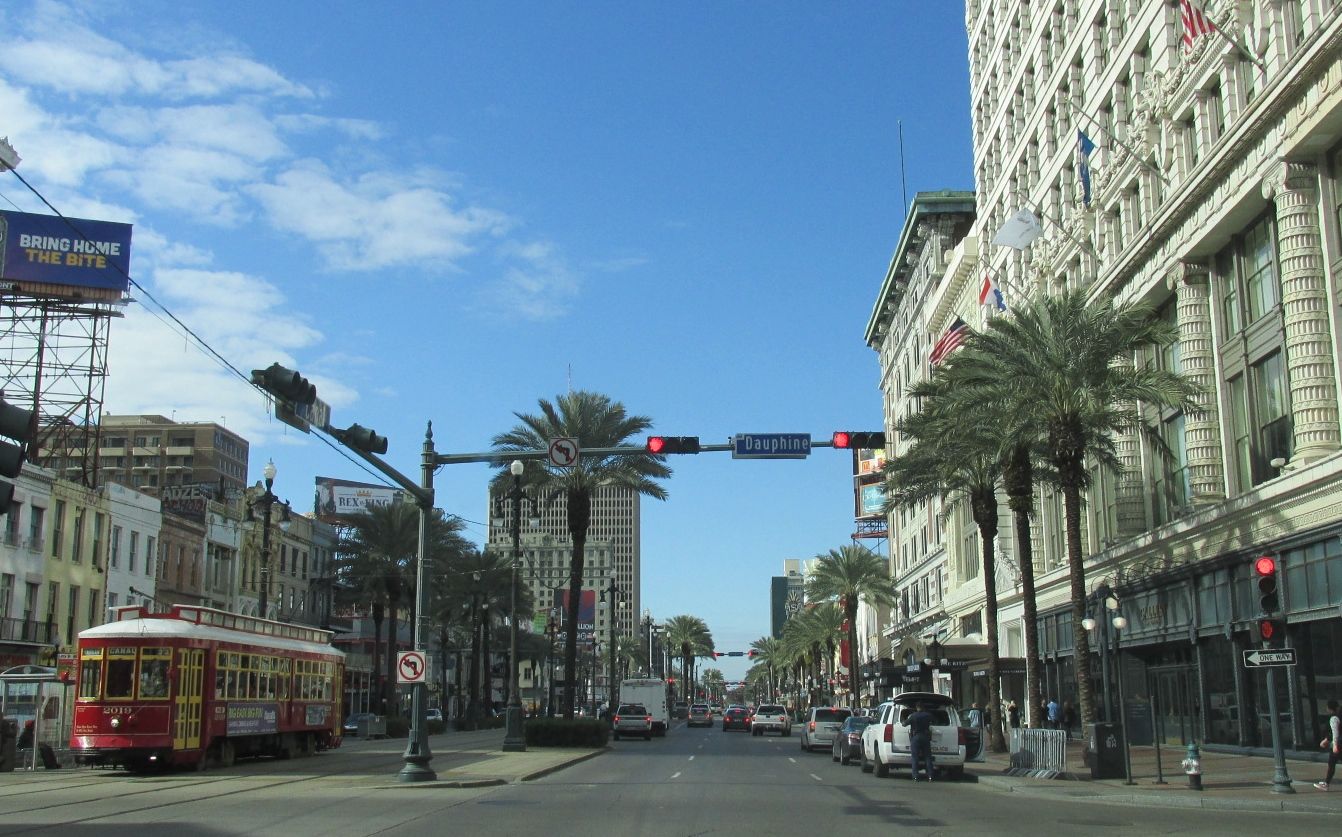
Streeetcar
Streetcar

I saw a streetcar – but I don’t think it was named Desire.

superdome

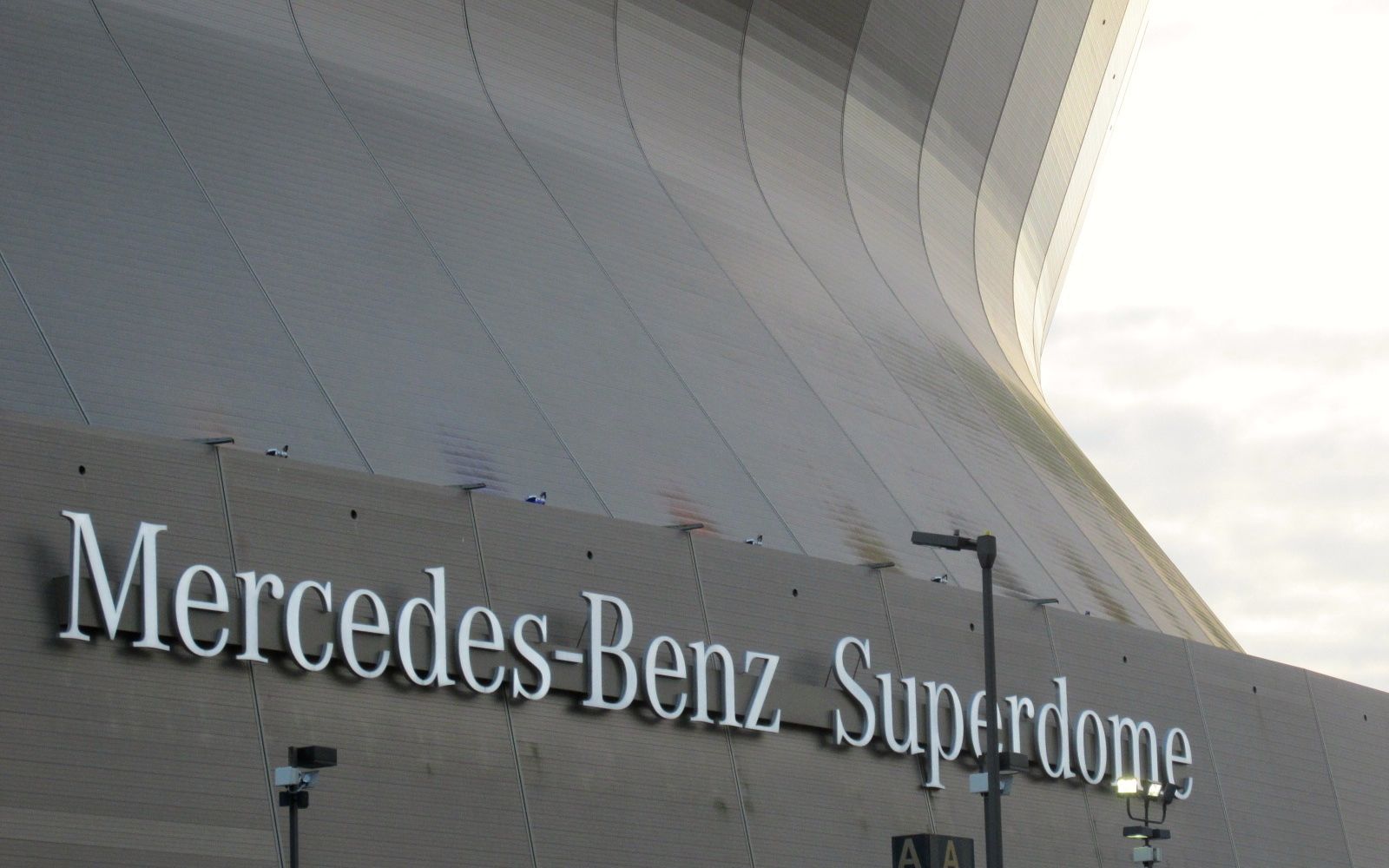
And the Superdome. It was right downtown! After living in Buffalo with Rich Stadium (now the Ralph Wilson Stadium) way out in Orchard Park, I assumed all stadiums were way out of town.

I finally got to the address that was listed as the Tourist Information Office, but there was no information to be had. There might have been a Tourist Information Office there at one time, but no longer.

So, I did the next best thing. I put “Cafe du Monde” into the search engine and got directions. I knew that was one place I wanted to go while I was in New Orleans. I found it!

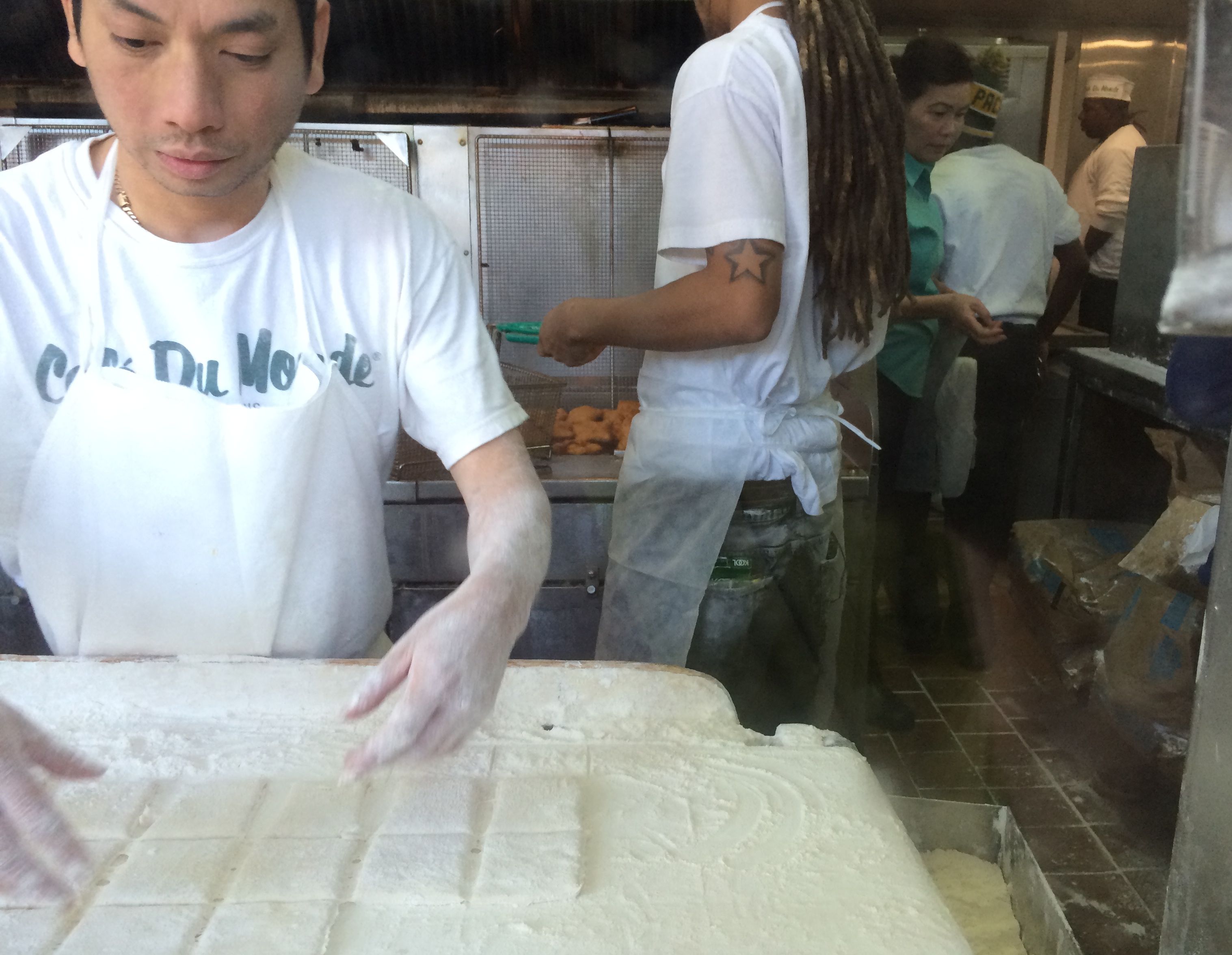
Time to make the beignets

One on-line source said to to go around to the back and watch them make the beignets. And there they were, cranking them out.

After watching the production for a few minutes, I went inside to sample their wares.

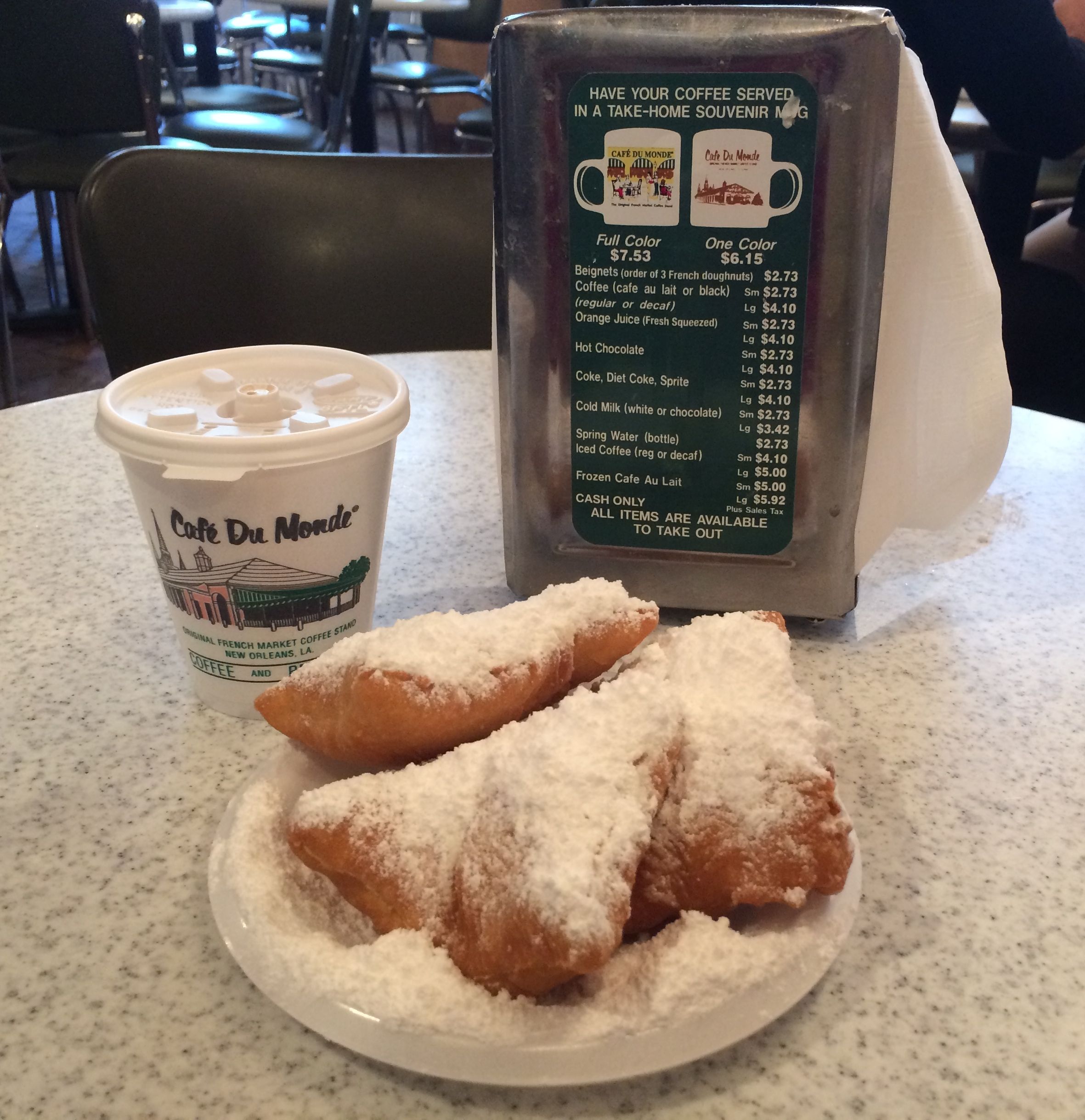
beignets and cafe au lait

With their limited menu, it didn’t take long to order and my beignets and cafe au lait were on my table before I knew it. They sure weren’t stingy with the powdered sugar!

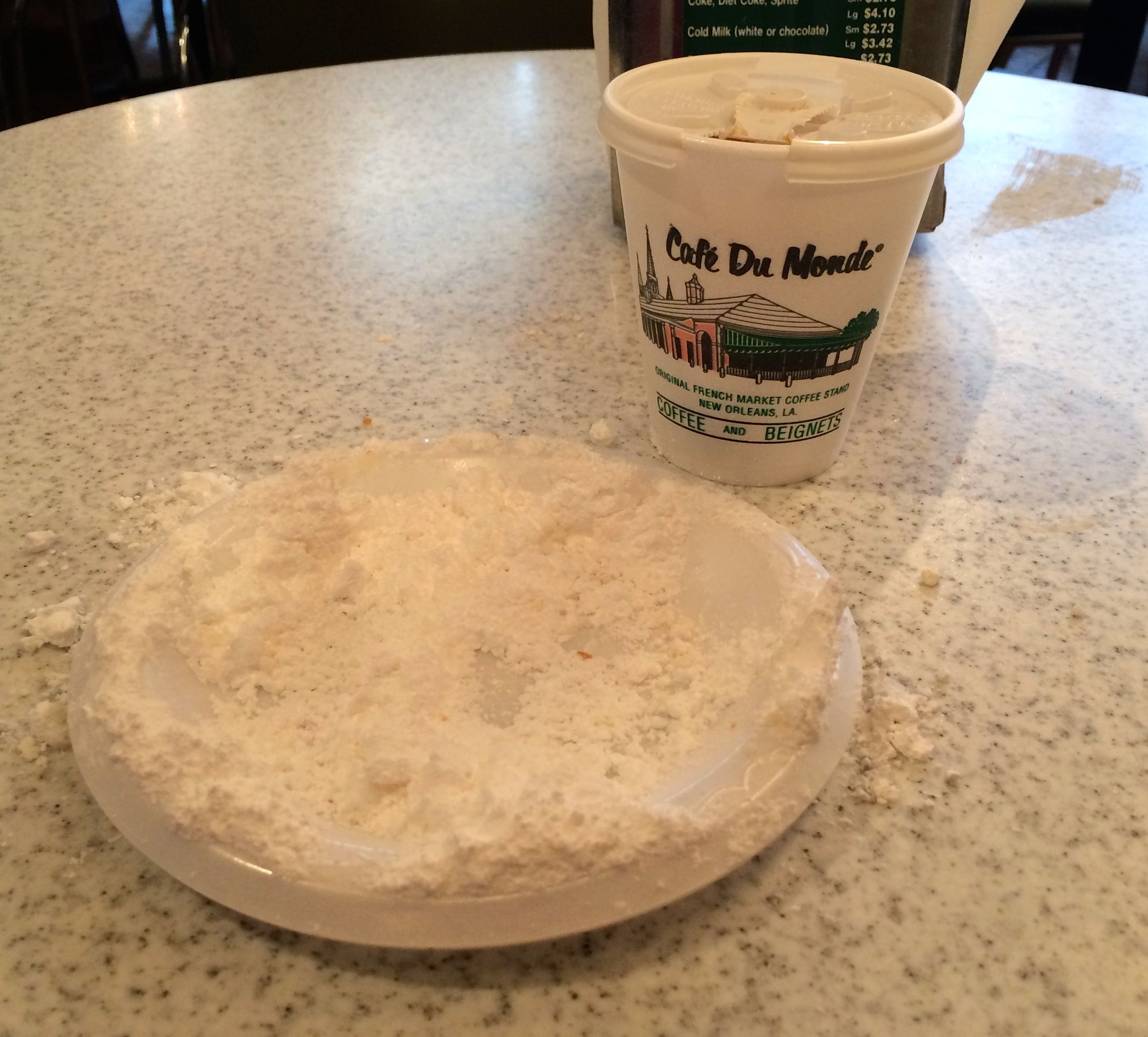
leftover powdered sugar

This is what was left over after I finished with the beignets.

Even though I ate as carefully as I could, when I left and got ready to cross the street, a fellow tourist smiled at me and said in a heavy drawl, “Either you been eatin’ beignets or you been doin’ cocaine.” I brushed off my face and he grinned and said, “I had ’em, too.”

I walked down Decatur Street. My wonderful phone told me that the Jean Lafitte French Quarter Visitor Center was just a few blocks down, so that is where I headed. I passed the usual assortment of businesses that seek to part tourists from their money.

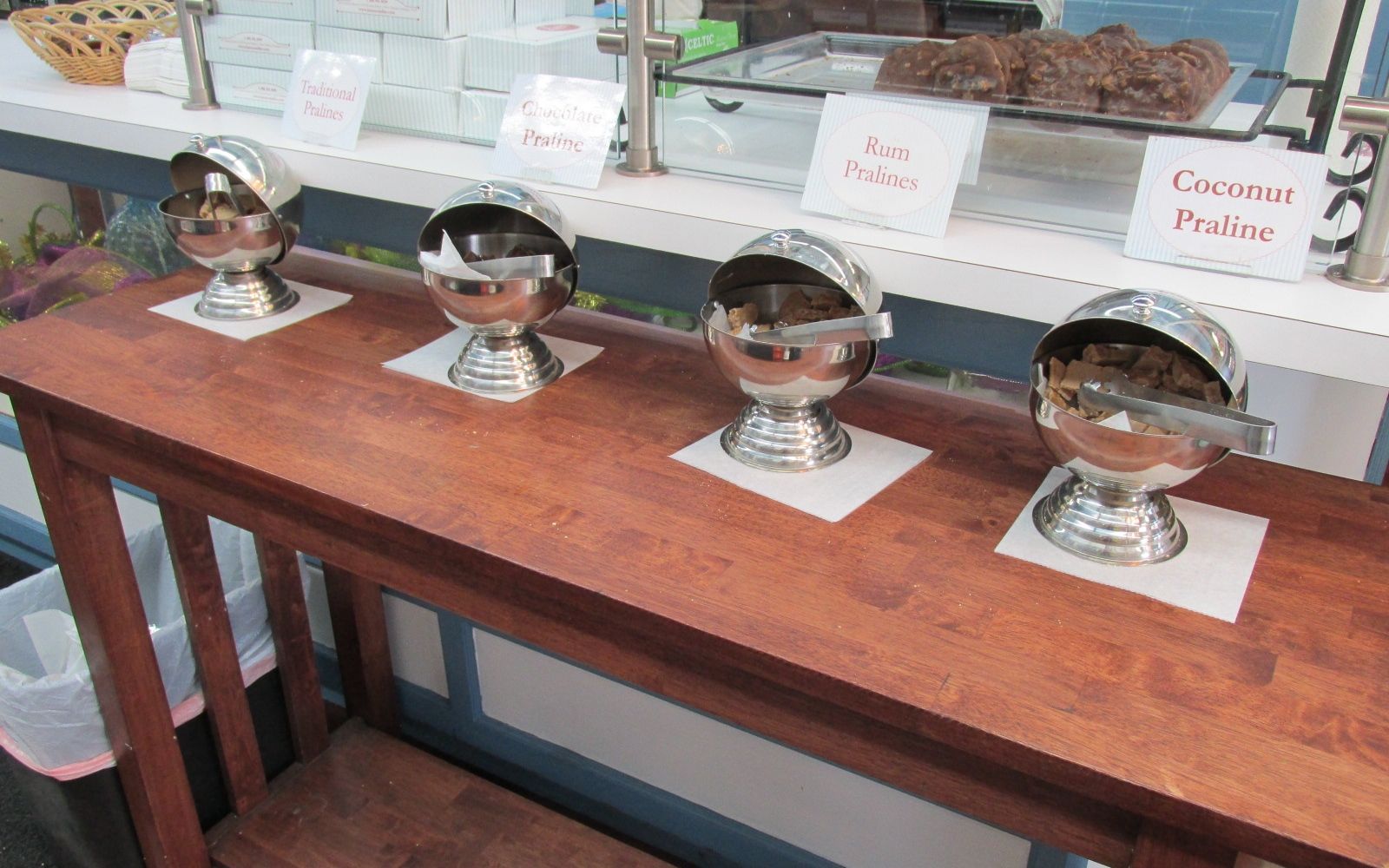
Pralines
Pralines

I had to go in to sample the pralines. And, I made a discovery – the chocolate pralines tasted just like the fudge my mother made growing up. I could never figure out why what was being sold as “fudge” didn’t seem like Mom’s fudge. Now I know – she was really making pralines.

I got down to the visitor center and it was CLOSED. Dang! I was batting zero on tourism centers. So, I just decided to roam about for a while.

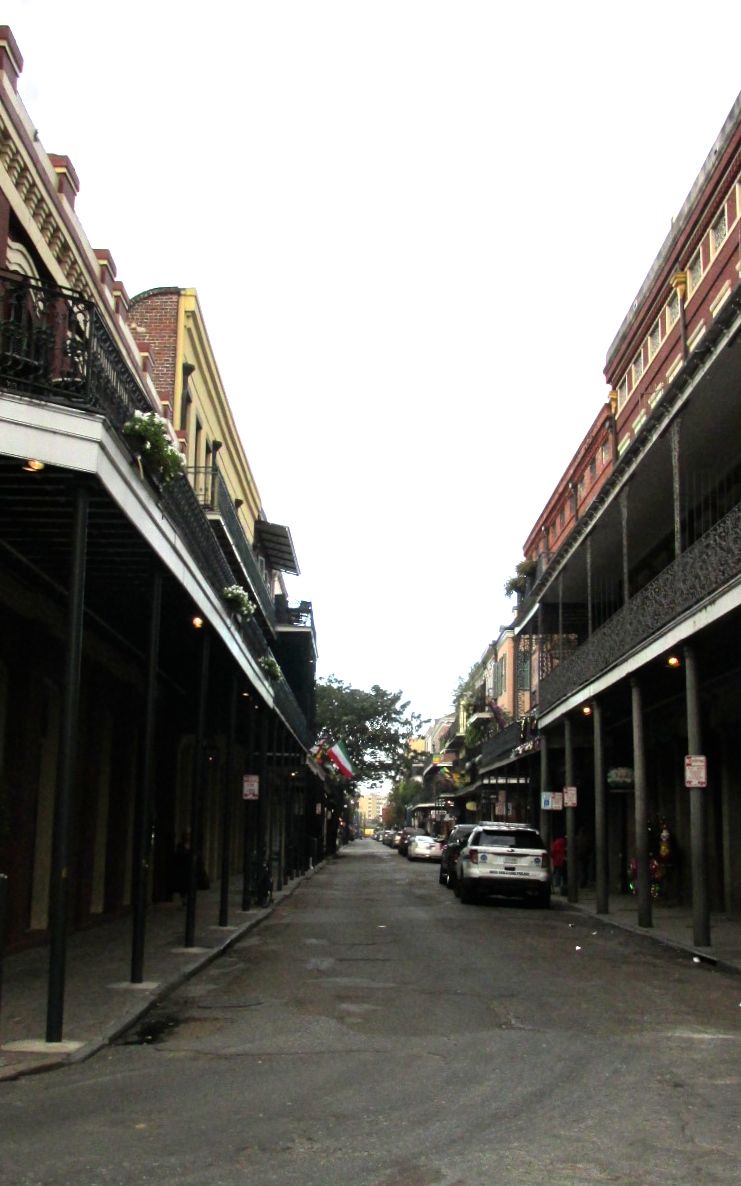
street scene 2

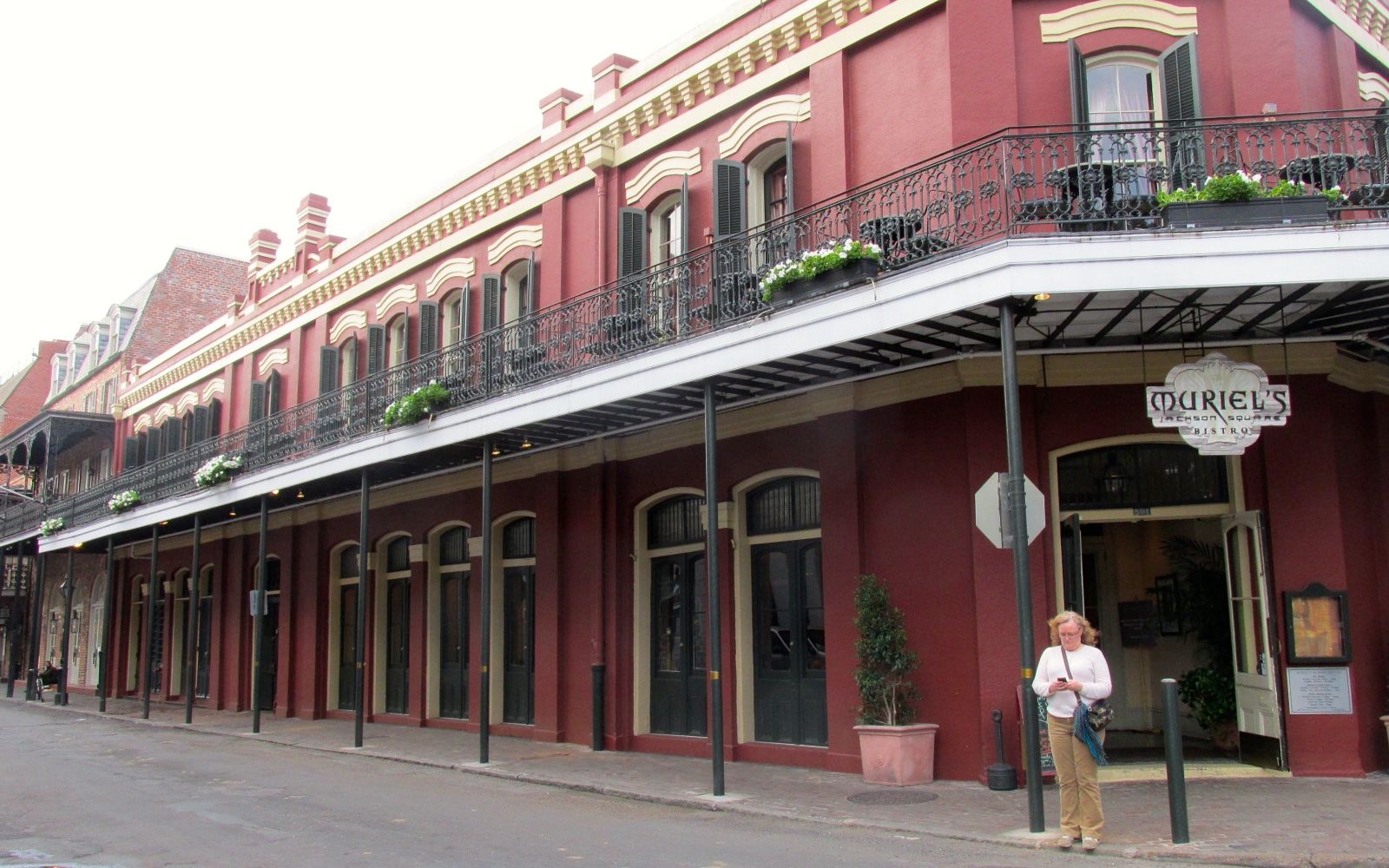
I admired the wrought iron balconies.

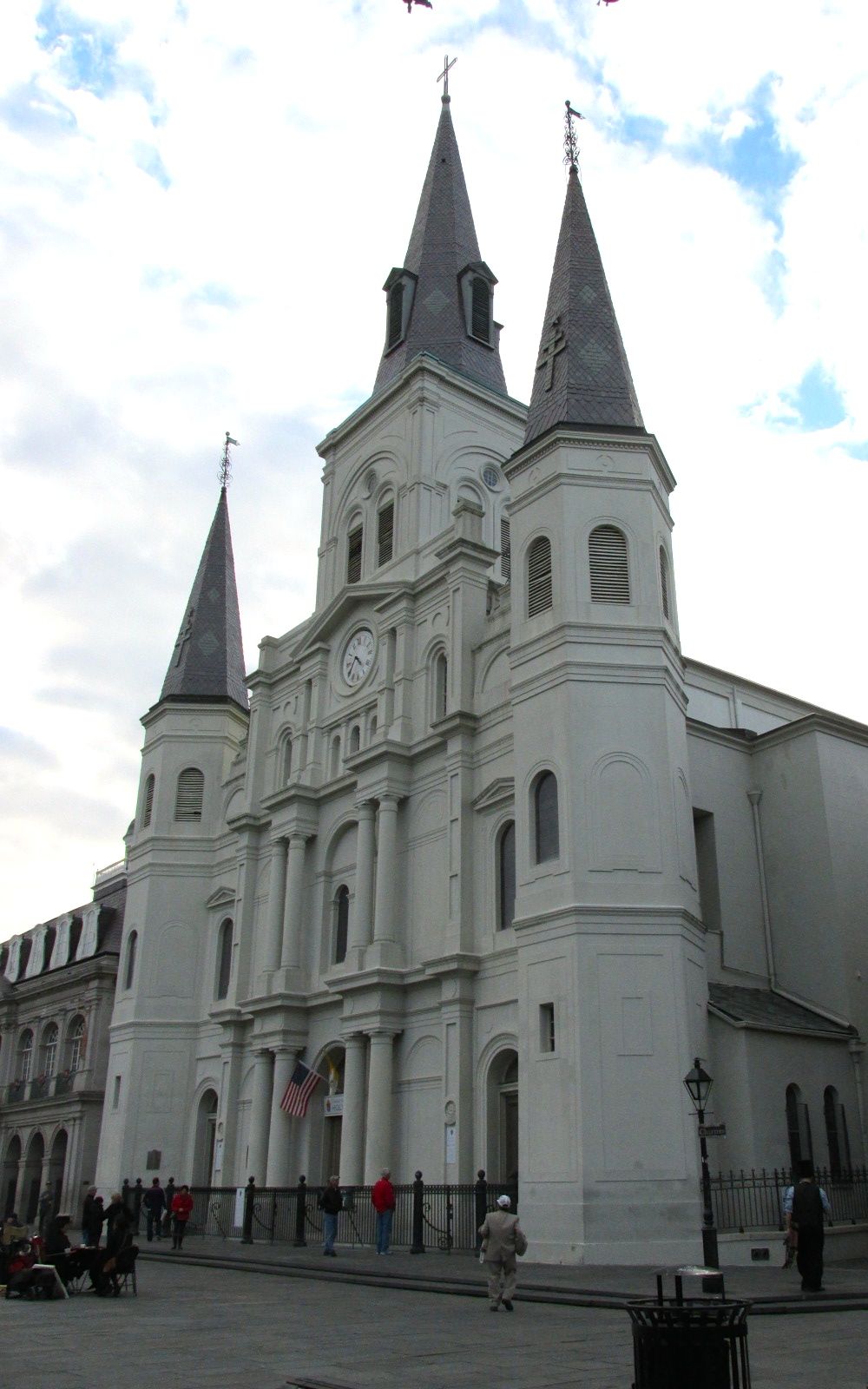
cathedral

The St. Louis Cathedral was on the other side of Jackson Square from Cafe du Monde. I got over there just past the time when they let visitors in. I was really batting zero!

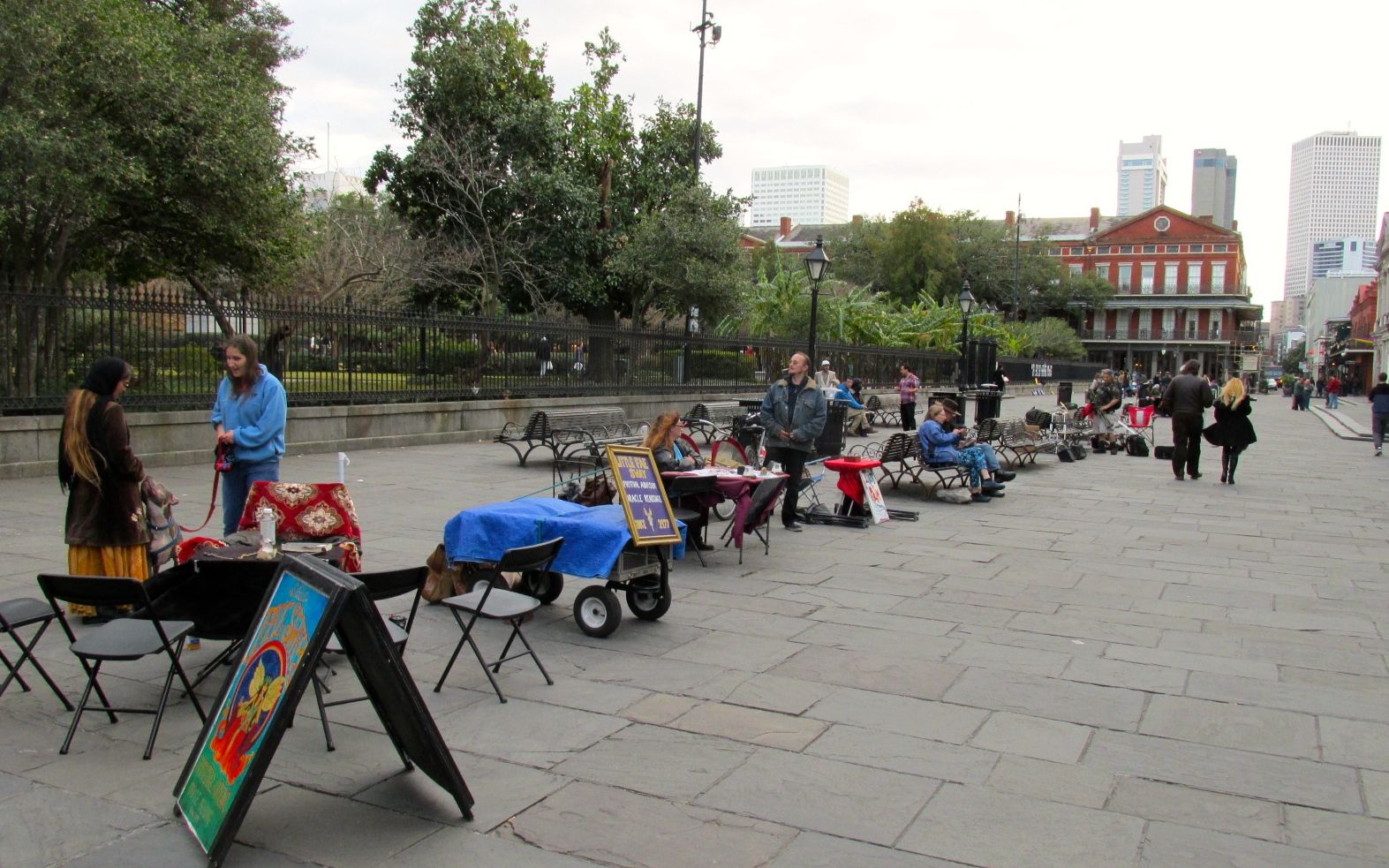
mediums at large

Perhaps I should have consulted the fortune tellers that were stationed in the plaza in front of the cathedral.

street scene

It was starting to get cool, so I decided to head back to the campground. I headed toward the levee, which is where I had parked.

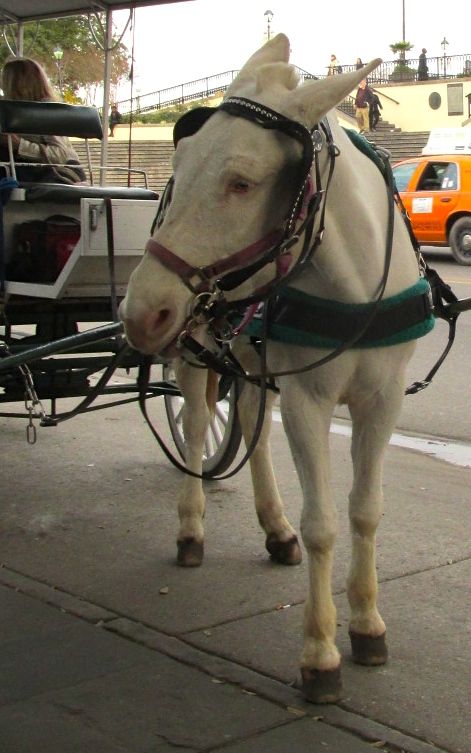
Working horse

I passed a string of carriages awaiting passengers. This one looked like he wanted to take a bite out of one.

I could really tell that New Orleans was on low ground. I had to ascend to the levee to get to the river’s edge.

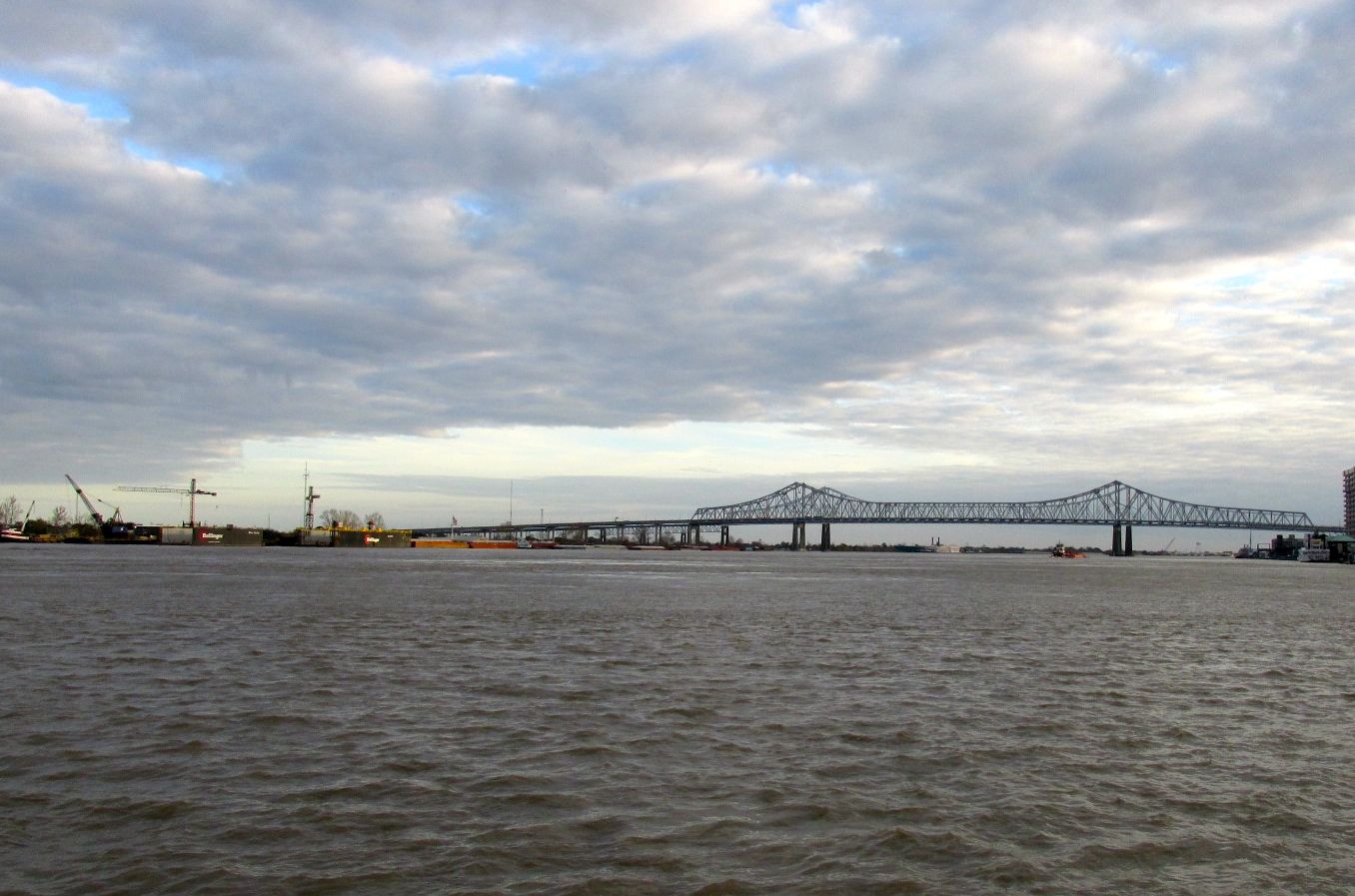
Missisippi River and bridge

The view to the right.

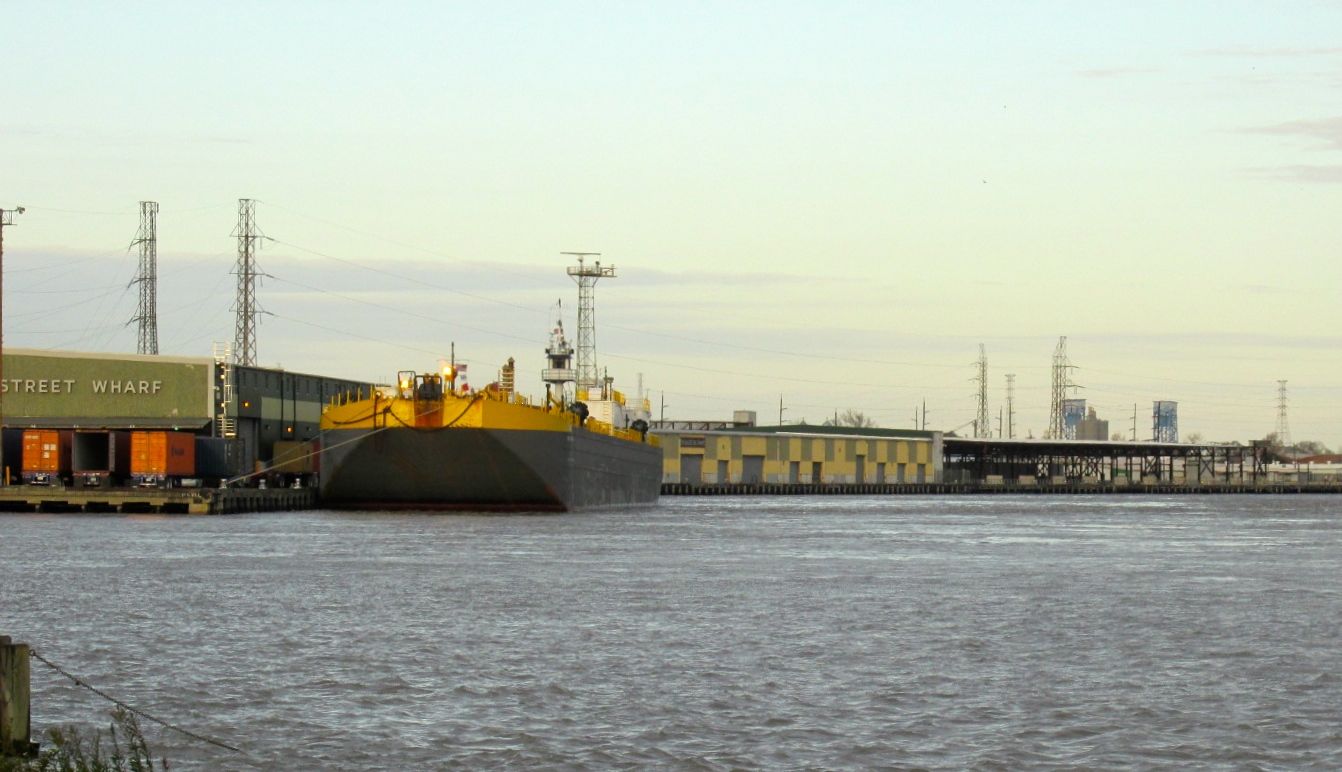
shipping on the big muddy

The view to the left. I imagine this is where they import all the “throwables” for the Mardi Gras parades.

And then it was time to head back, but I knew that I would return.


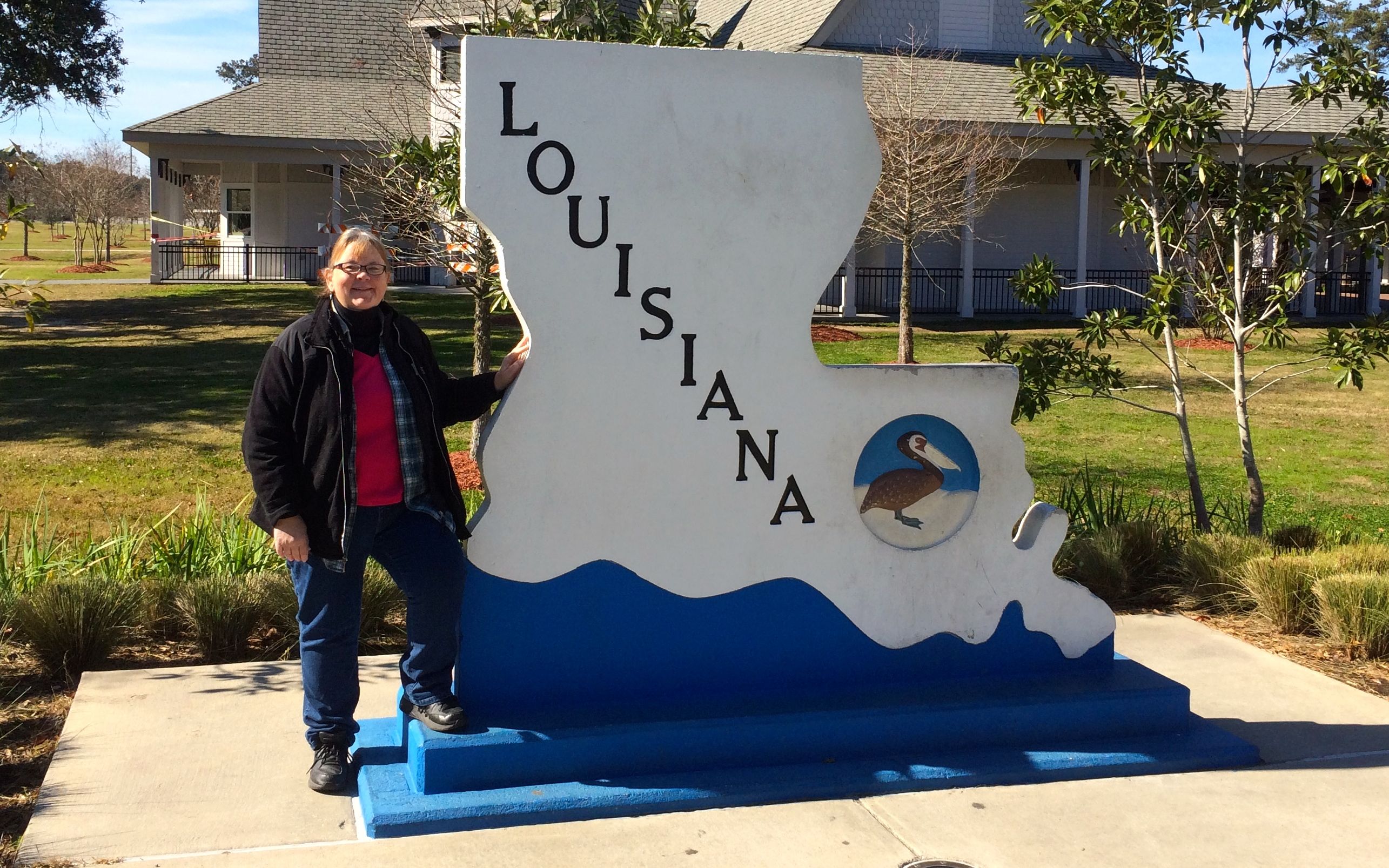
Hello, Louisiana!

After a short stay in Mississippi, it was time to head west.

Louisiana welcome stop

It was nice to see the sunshine, even if it wasn’t as warm as I would have liked.

I made it to my destination, Fontainebleau State Park, in Mandeville, on the north shore of Lake Pontchartrain. I checked in and the ranger gave me my paperwork and map and told me to turn right at the big dead tree.

Big Dead Tree
Big Dead Tree

She wasn’t kidding. It was an enormous dead tree!

The weather was variable during my visit. Some days, the skies were crystal clear. Other days the skies reminded me of good ol’ Buffalo.

my campsite

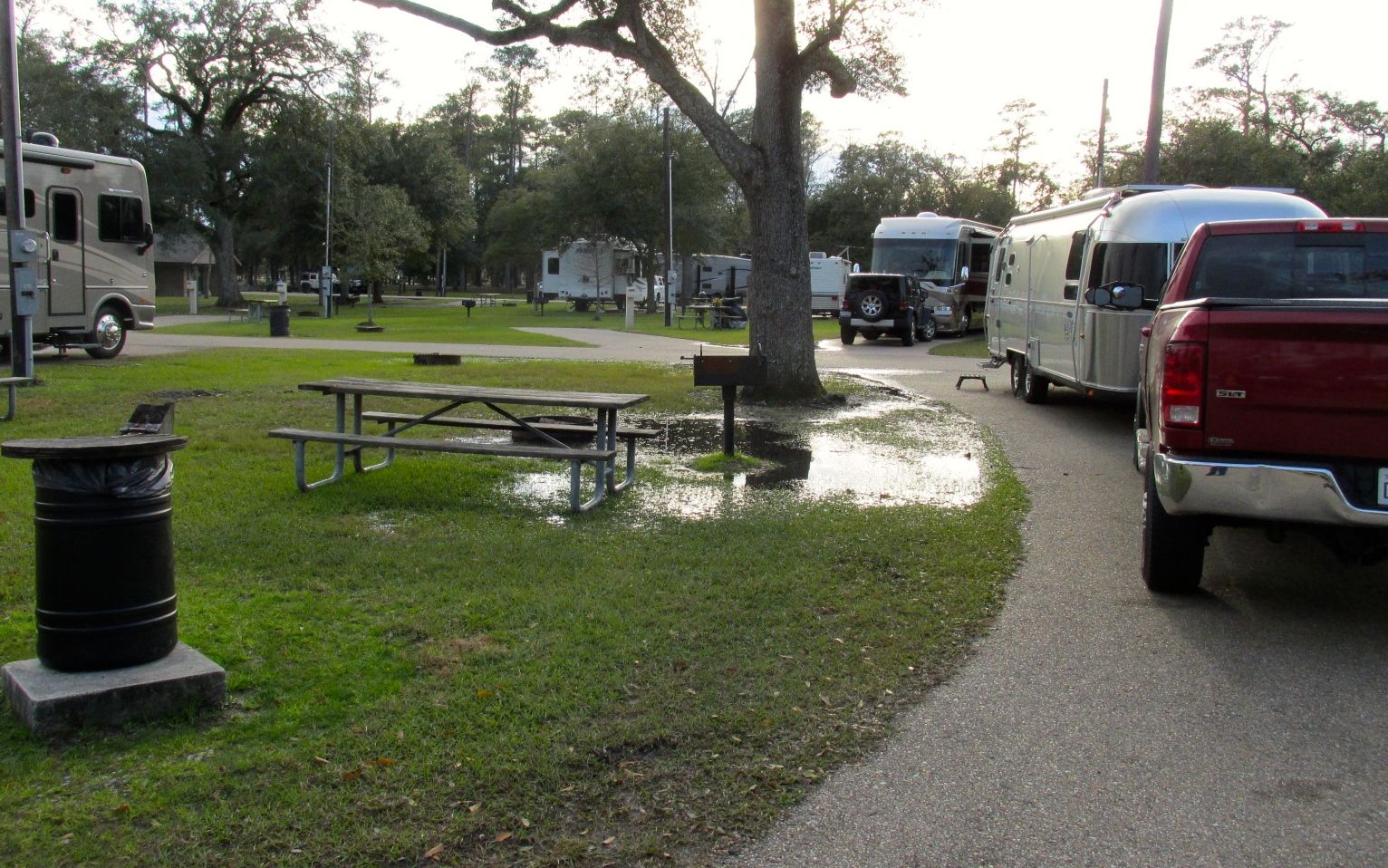
While it was overcast for much of the time I was in the area, it only rained torrentially once. The park never quite drained, however.

In spite of the soggy landscape, the park was quite nice. In addition to a pull-through site, with water and electricity at the site, I had my own trash can AND there was free wifi!

deer

There was abundant wildlife – especially deer. I drove past several small herds of them when I was coming and going.

Fontainebleau State Park is on the site of the plantation of Bernard de Marigny. He was born in New Orleans in 1785 and he was the third generation of his family to be born in colonial Louisiana. He was quite a playboy and gambler, and ended up selling off lots from the family plantation just outside the French Quarter – or “Vieux Carré ” as it is sometimes called. The lots were very popular, and he found that the smaller he made the lots, the more there were to sell.

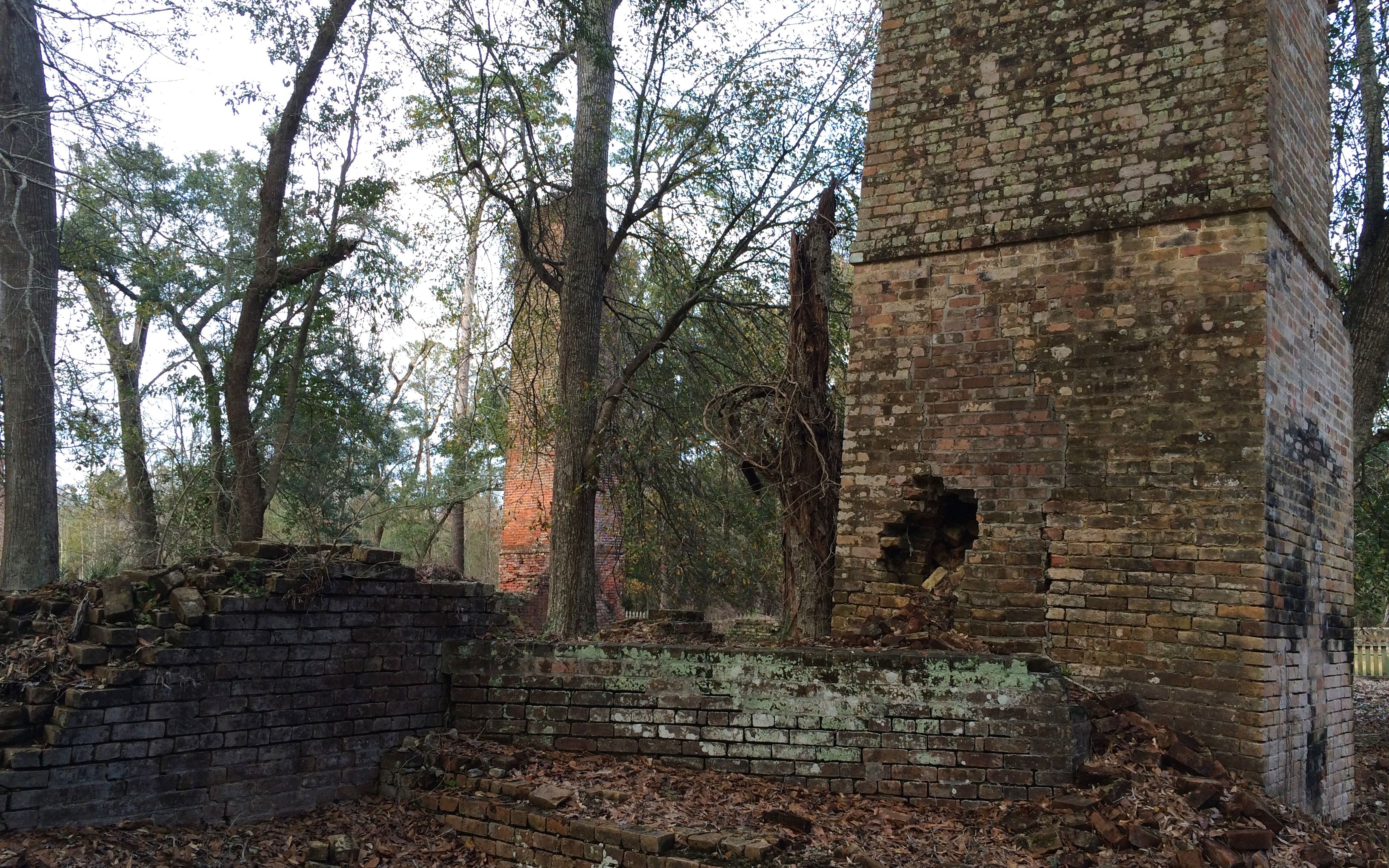
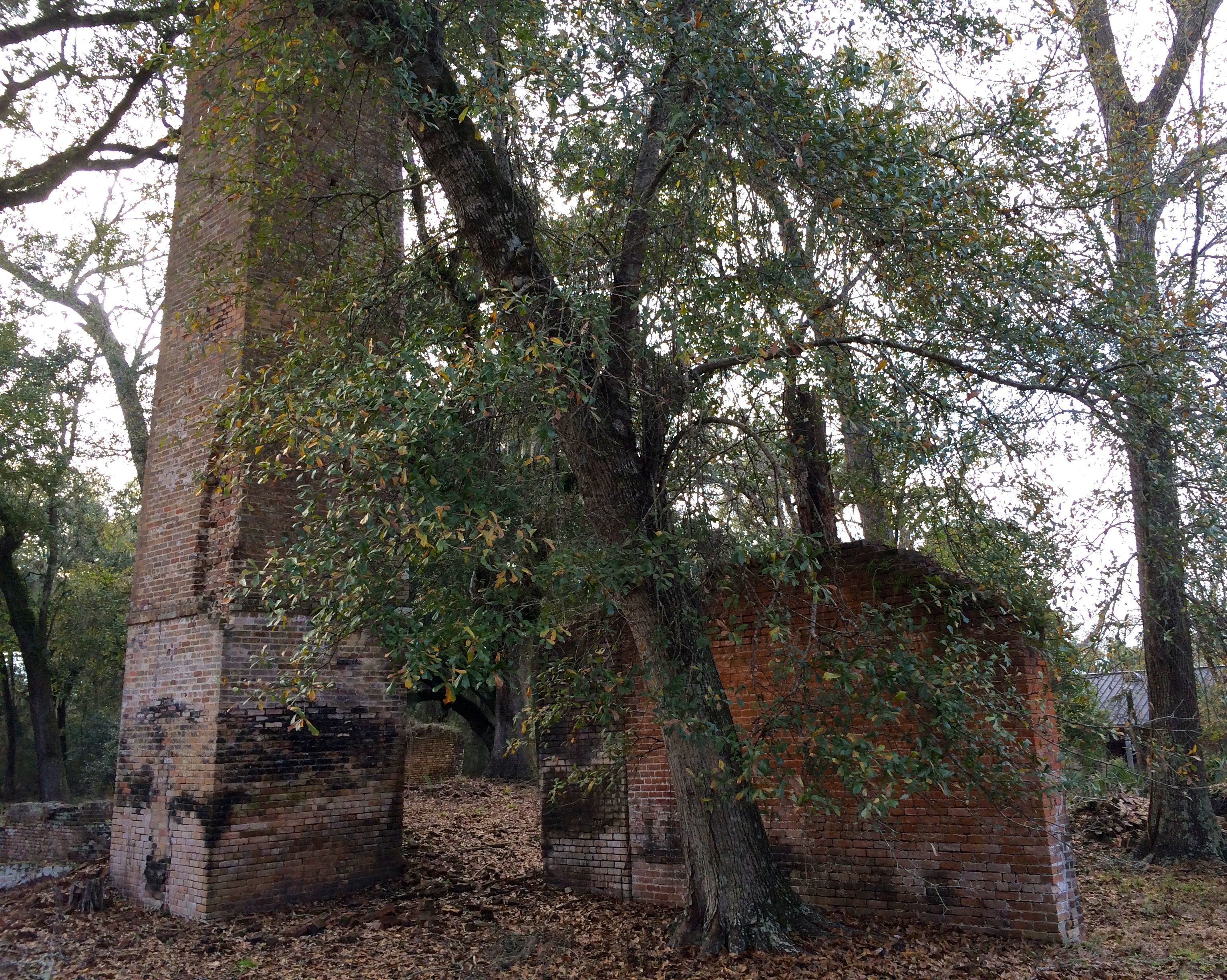
There isn’t much left of Bernard’s plantation, but I did take a stroll around the remnants of the sugar mill.

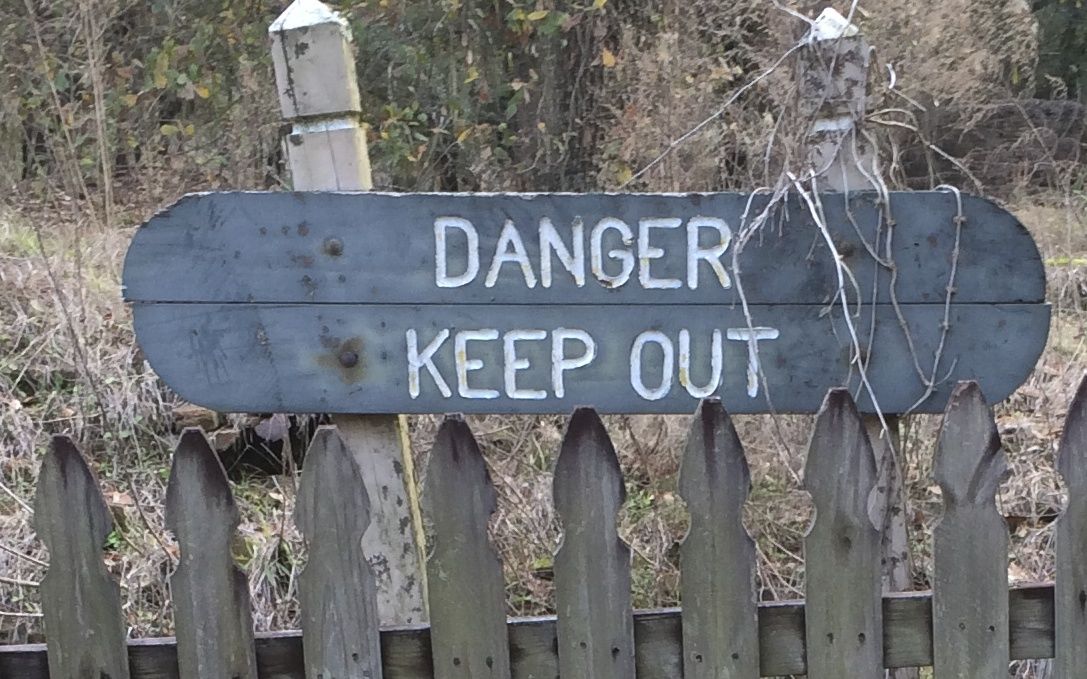
Danger Keep Out close up

The sign does convey a message.

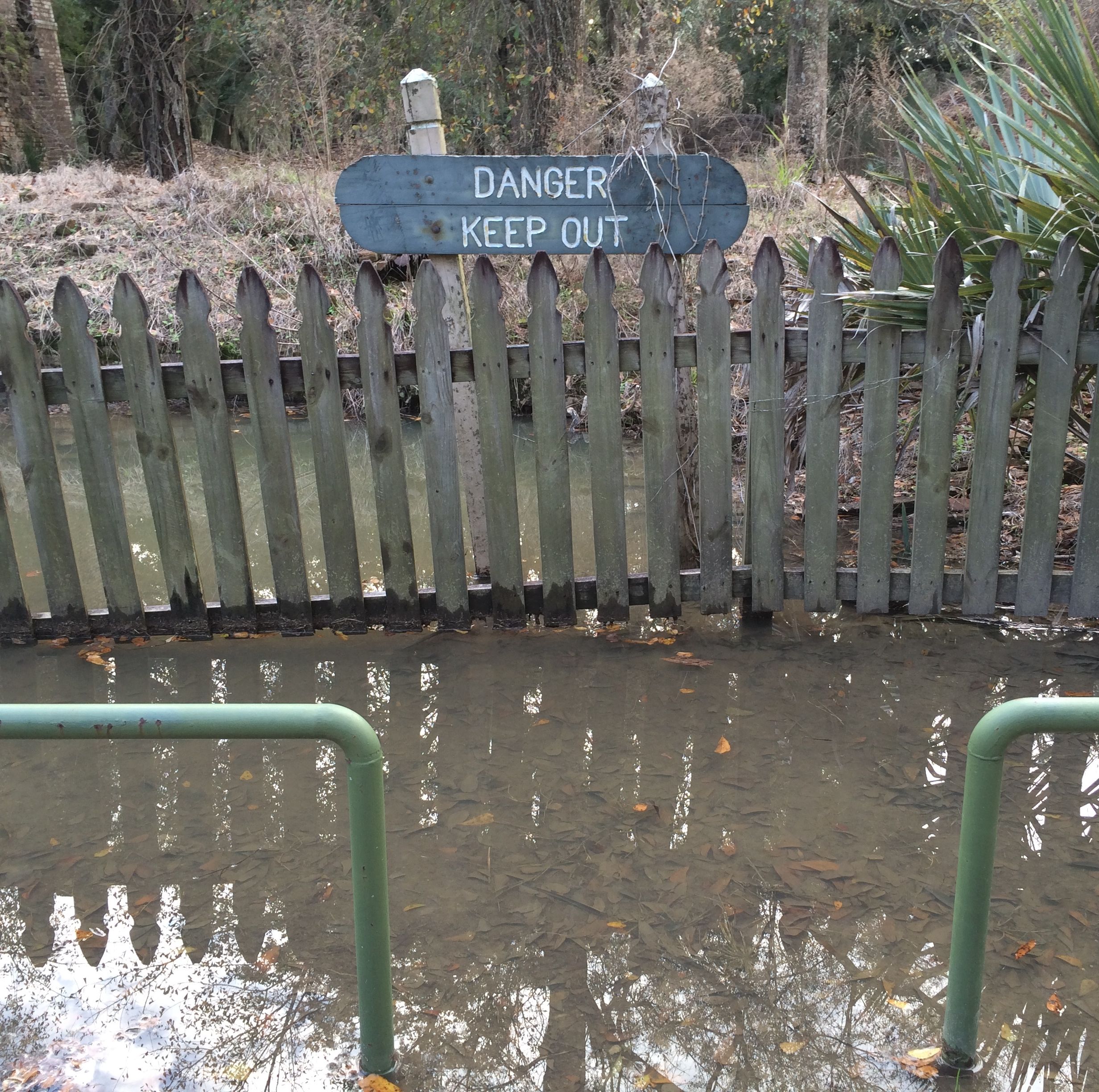
Danger Keep Out full Screen

The two fences and the puddles are even more effective.

sugar mill 3

sugar mill 1

It is amazing that there are any structures left standing. It was built in 1829 and was in operation until 1852. I do enjoy touring ruins.

Another thing that de Marigny is known for is bringing craps to this side of the Atlantic. He picked up the dice game called Hazard while he was in England and, in a simpler form, became known in the local dialect as “Crapaud.”

What a well-rounded fellow!

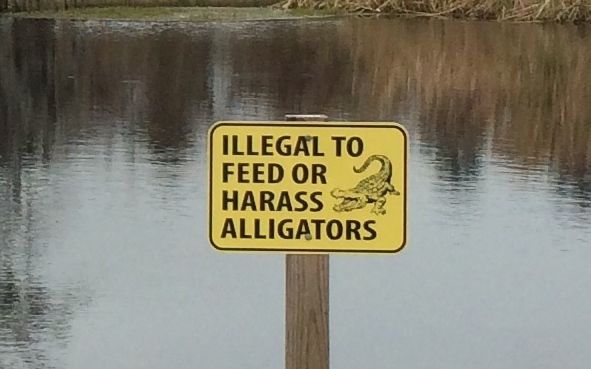
Illegal to feed or harrass the Alligators

I walked around the park and encountered this warning sign. I didn’t see any alligators, but I saw some interesting pond scum.

pond scum

As the water blew across the surface of the water, the scum swirled and slid across the pond in interesting designs.

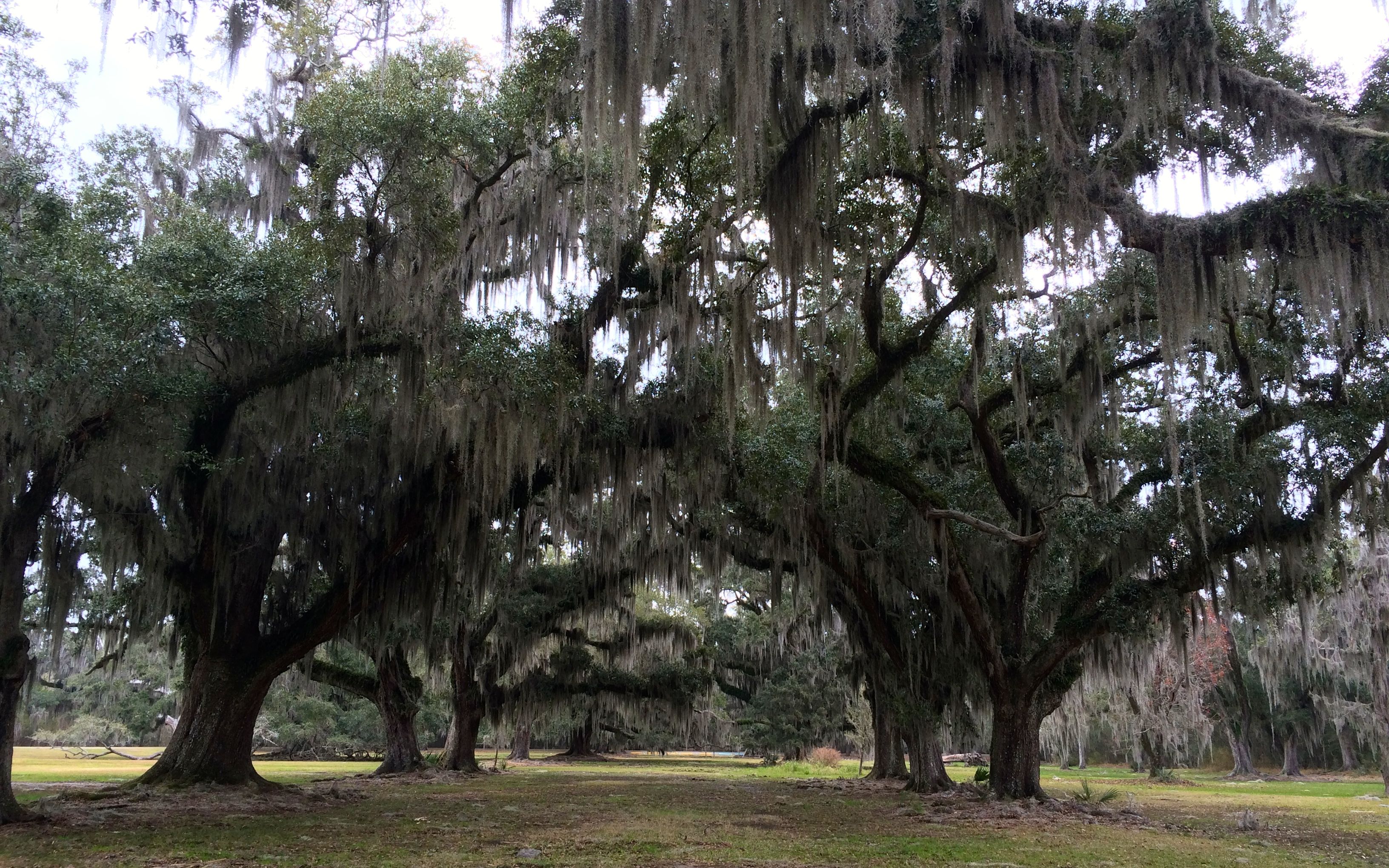
Spanish moss on live oaks

This is a pleasant park, and I’d be happy to stay there again.


In Which I Make Some New Airstream Friends

I hadn’t planned to stay at the Davis Bayou Campground of the Gulf Islands National Seashore, but it was fairly close to Gulfport, Mississippi and the RV Center that was holding the window for me.

I pulled in to the campground and got situated in my site just before the storm hit. Wow! What a storm! We were under a tornado watch most of the night. It was pouring and thundering and the wind was howling. Luckily, it never got any worse than that. I did figure out which way I would have to go to get to the concrete block bath house, if they sounded an alarm.

I have to admit that I missed the insulating property of the window. The plastic that my friends at JD Sanders in Florida had put on held up to the weather, but the cold came seeping through.

The next morning, the storm had passed. I got hitched up easily, but the jack wouldn’t retract completely, and it was hung up on the wood that I put under it. It gave me trouble when I was in Arkansas in June 2014. They had to do a bit of work on it at that time, and I kind of had the feeling that the jack would need to be replaced at some time.

Well, this was the time.

I put the truck in gear and pulled it off the wood. It was almost completely retracted, so it didn’t take too much effort. I was pretty sure that there would be someone at the shop who could help me with it.

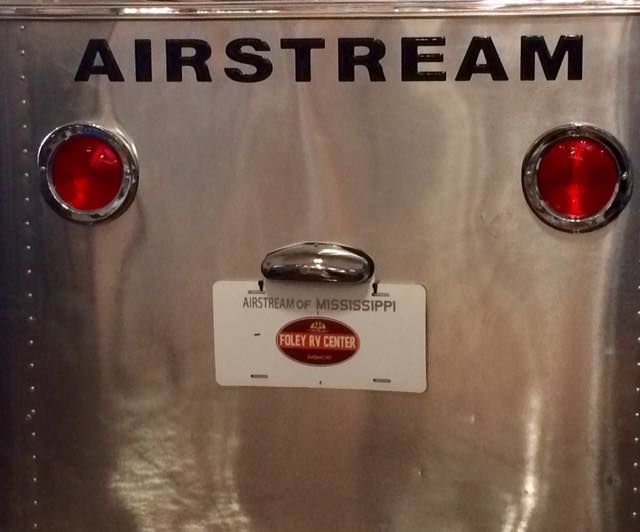
I got to Foley RV Center and Airstream of Mississippi, about 25 miles away, and they were ready for me. The woman who had taken my order last Friday saw the plastic over the window and got my paperwork out right away. I told her about the jack issue, and they just happened to have the exact jack I needed.

Foley Airstream

After a couple hours, several cups of their coffee and their guest wifi, I was ready to roll again.

Back at the campground, I met my neighbors, who were also full time Airstreamers. After several attempts to get it backed in, Jim offered to do it for me. I never refuse an offer like that.

He got Flo backed in and encouraged me to use my chocks, which I had kind of stopped using, and showed me how to remove that enormous hitch from the back of my truck. I was thrilled to get some good advice on such things. There should be an Airstream bootcamp.

I went into the trailer and finished making the chili I had started back in Florida. Since I use dried beans and cook them in the crock pot, I start a day or two before  I intend to actually put the whole thing together. I was enjoying a bowl of it when Deb, Jim’s wife came over to invite me to a happy hour with two other Airstreamers in the campground.

That was a lot of fun – and they convince me to join the Wally Byam Caravan Club International, which is the Airstream club. Wally Byam was founder of Airstream in the 1930s and lead it until his death in 1962. He used to lead caravans of Airstreamers to exotic locales. I think the lower 48 will suffice for me, but you never know.

I enjoyed the evening and making new Airstream friends. They recommended many cool things in the area that I might want to do before I head to Louisiana. What great folks!

But, I swear, if it’s not one thing, it’s another.  I pulled out of the campground and I got a brake warning light. I also got a “trailer brake not attached warning”. I got out and looked. The trailer hook up seems okay and I was still stopping. So, I figured I’d head out to the main drag. There was a listing for a repair shop about 2 miles away.

About a mile after I started, I pull over to let a car pass, and the driver gestured at the truck. Uh-oh. The international “check it out” sign.

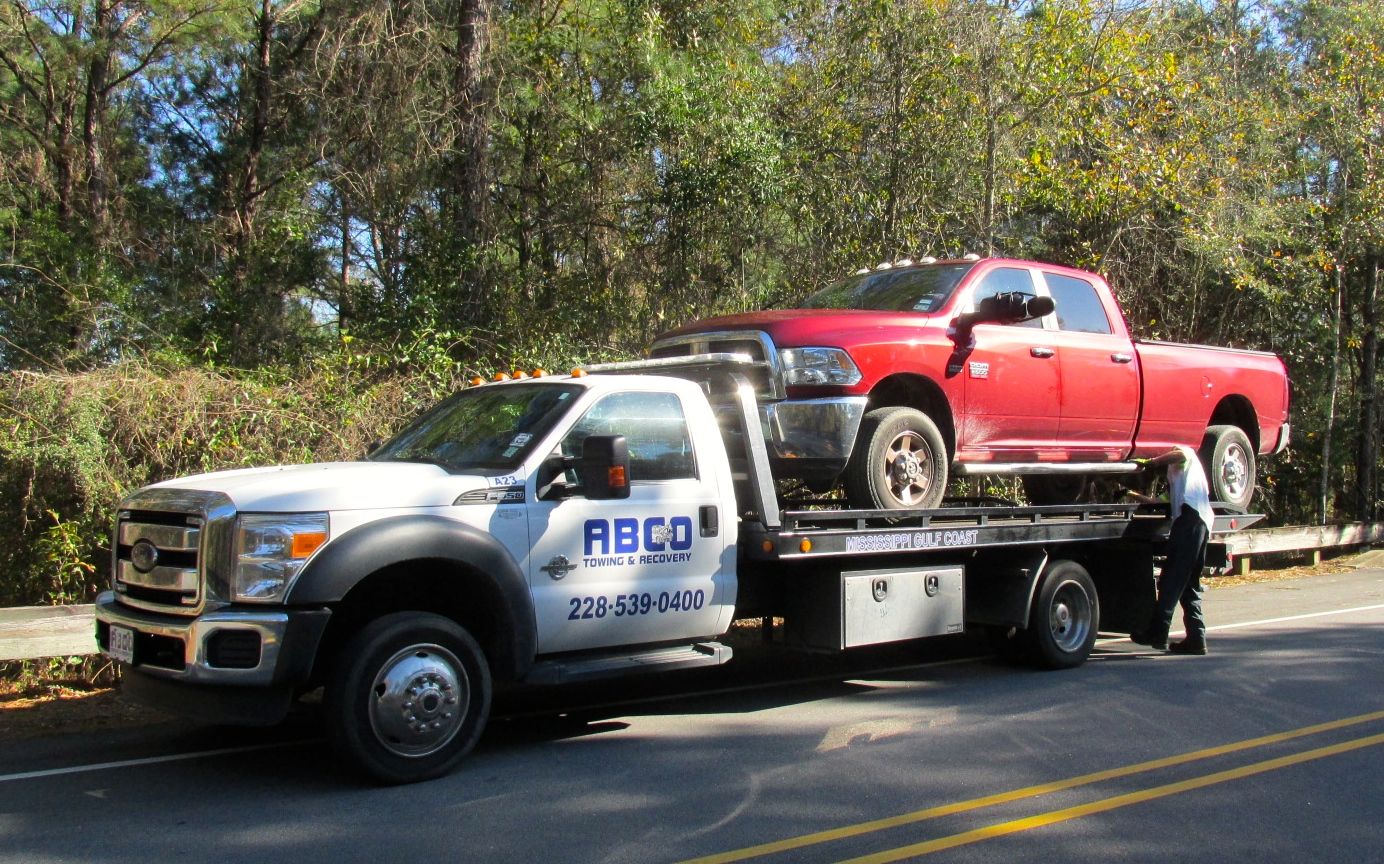
I pulled off the road a little farther, and at least one of the brakes was smoking. That is not a good sign. I called AAA and they sent a wrecker. I found a brake shop that was open until 6:00. I figured that if they couldn’t do it that day, I’d have to rent a car or call a cab.

If the repair shop couldn’t get the job done that day, the campground would have to figure out where to put the occupants who were going to arrive on Sunday. I wouldn’t be able to move the trailer without the truck. I kept my fingers crossed that everything would work out, but I was sure I would not be the first person who wasn’t able to leave their site due to a problem.

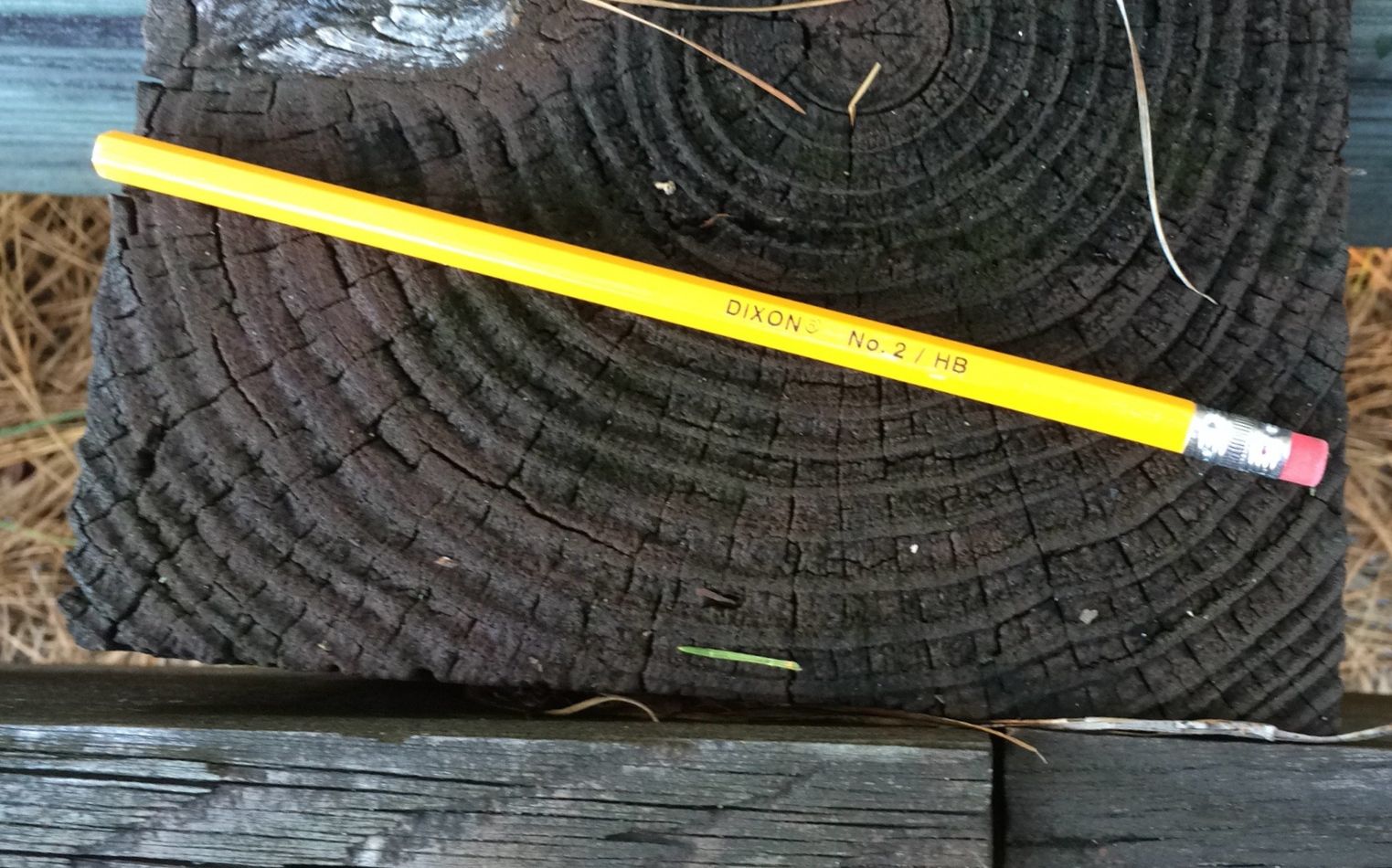
While I waited, I got out to stretch my legs. I found a brand new pencil just lying there in the road!

pencil

There are treasures everywhere!

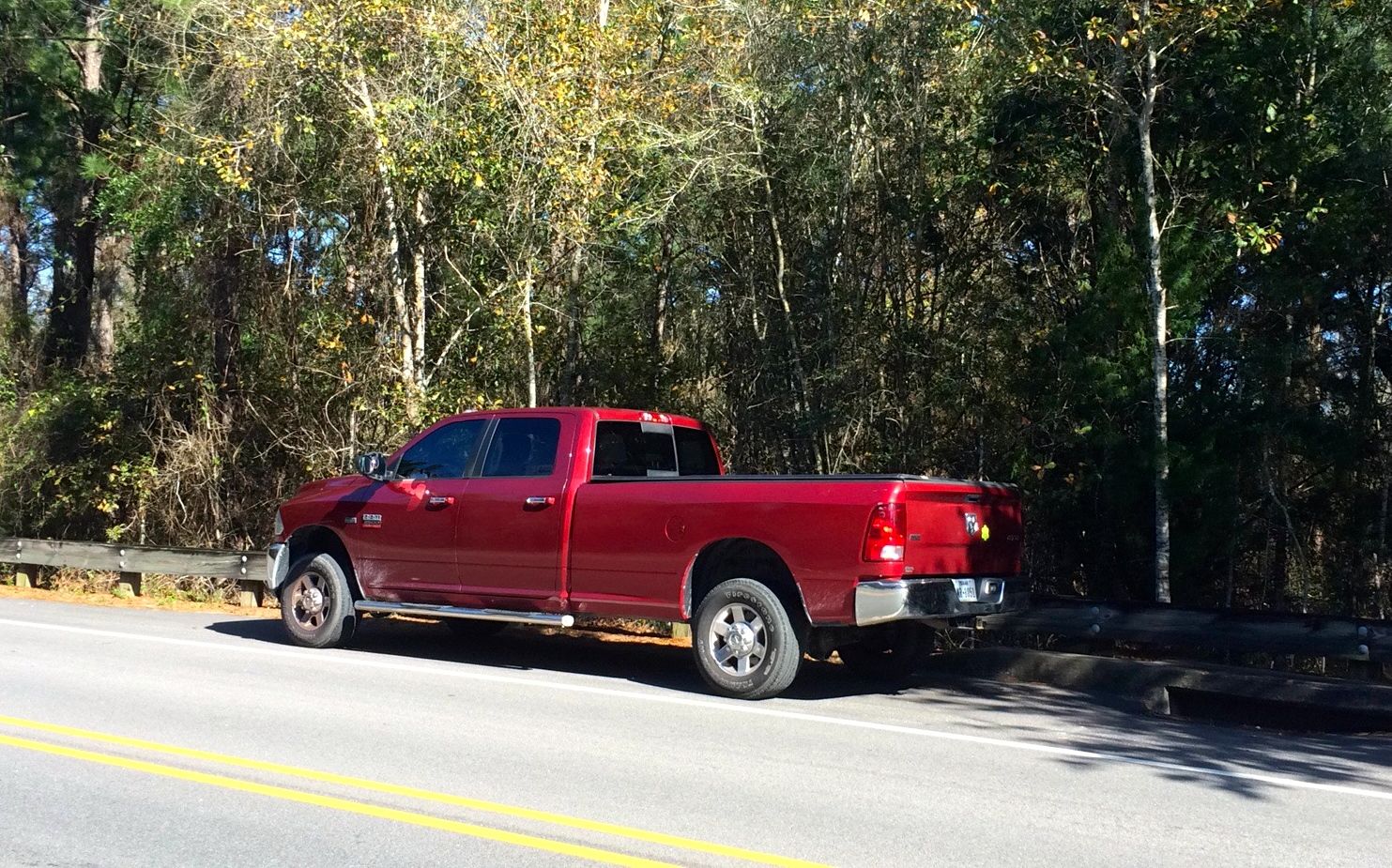
Bart before the tow truck

Poor Bart! He looked so sad sitting there by the side of the road.

Before too long, Jacob rolled up with his wrecker.

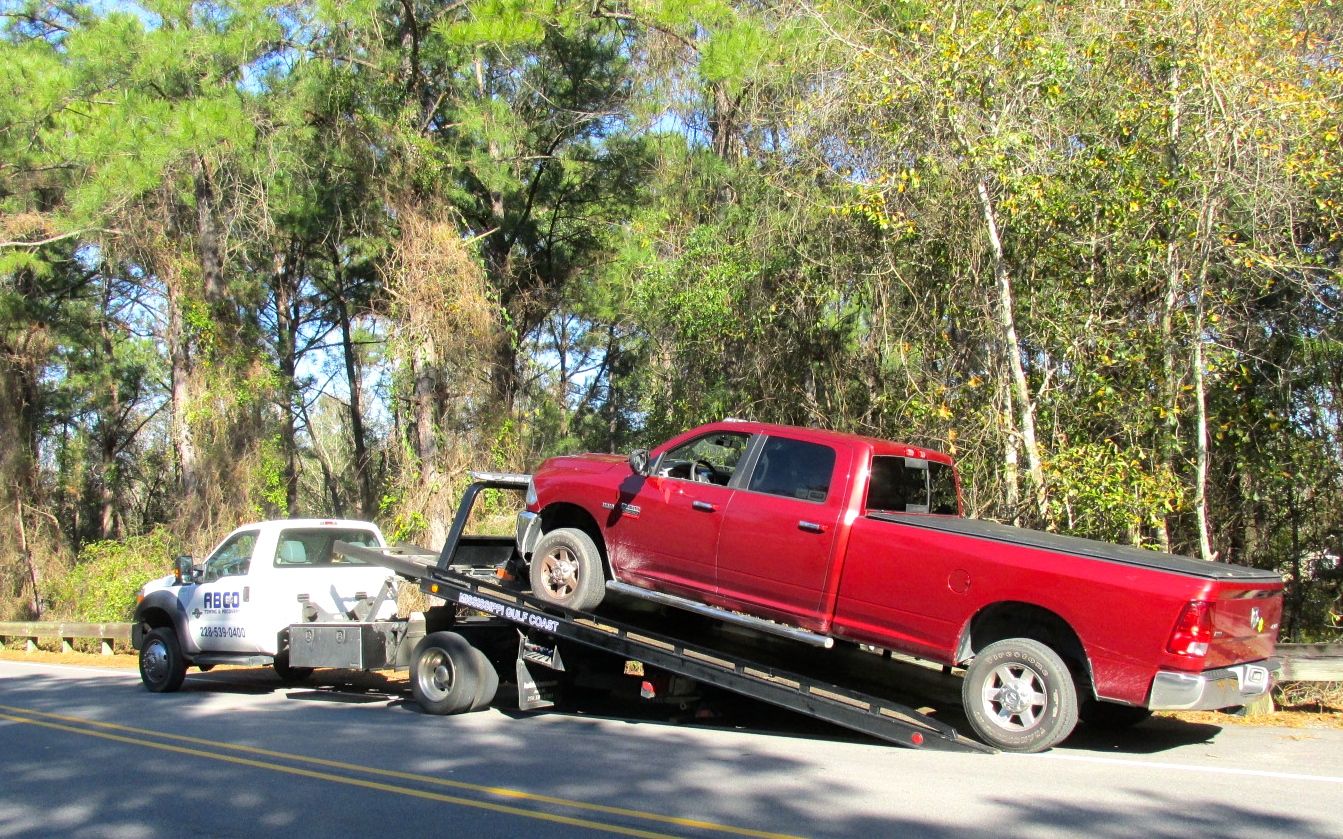
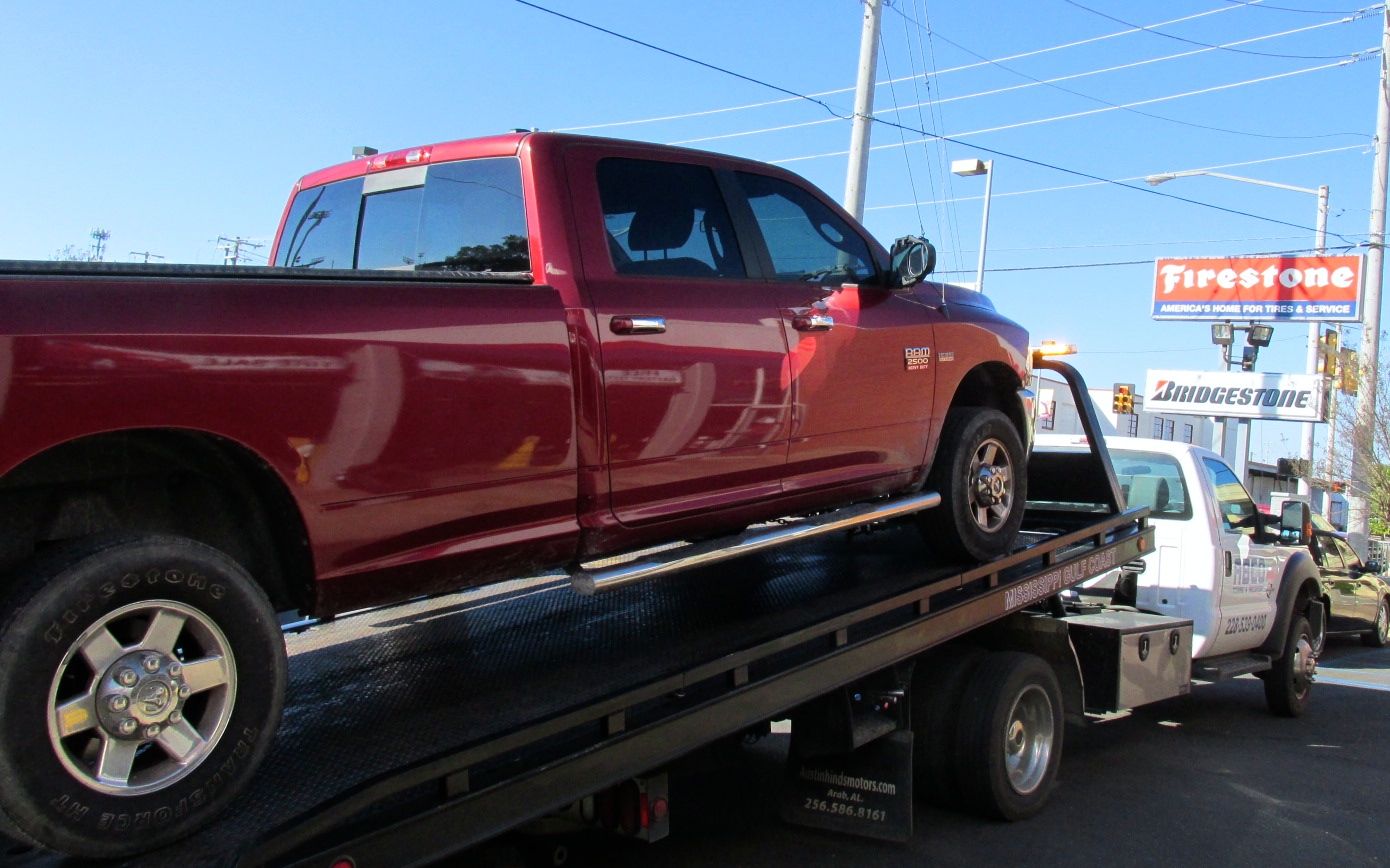
Loading Bart

He tipped the back of the truck bed down and drove Bart up. He fastened him down and then we were ready to roll.

Ready to roll

I chatted with Jacob and his girlfriend, who was riding along with him. They were pleasant and I enjoyed being able to really look out the window. This “eyes on the road and hands on the wheel” stuff does impede sightseeing.

Jacob asked me if I had put my emergency brake on. Uh, no, I hadn’t. Then I figured it out! Jim might have done it when he was done backing Flo into the camp site.

That left me feeling kind of foolish in a couple of ways.

I had forgotten that I even had a parking brake – so of course I didn’t check it when the light came on.

I got myself into this situation by being too willing to have someone back my trailer in. I have got to get my backing in mojo fine-tuned.

But by the time we got to the Firestone dealer, I was feeling hopeful that maybe – just maybe – I didn’t need any work done.

Bart at the shop

They checked everything out, and my brakes were fine! What a relief!

Just so I could get a feel for how much I would have to spend when it was time to replace the tires, I had the guy at the desk get me a price. It’s probably going to run me more than $1000 when the time comes. Oh, well. It’s the cost of doing business, and good tires are a non-negotiable item.

By the time I got Bart back, I checked my HISTORY Here app to see what I might be able to get do with the rest of the day.

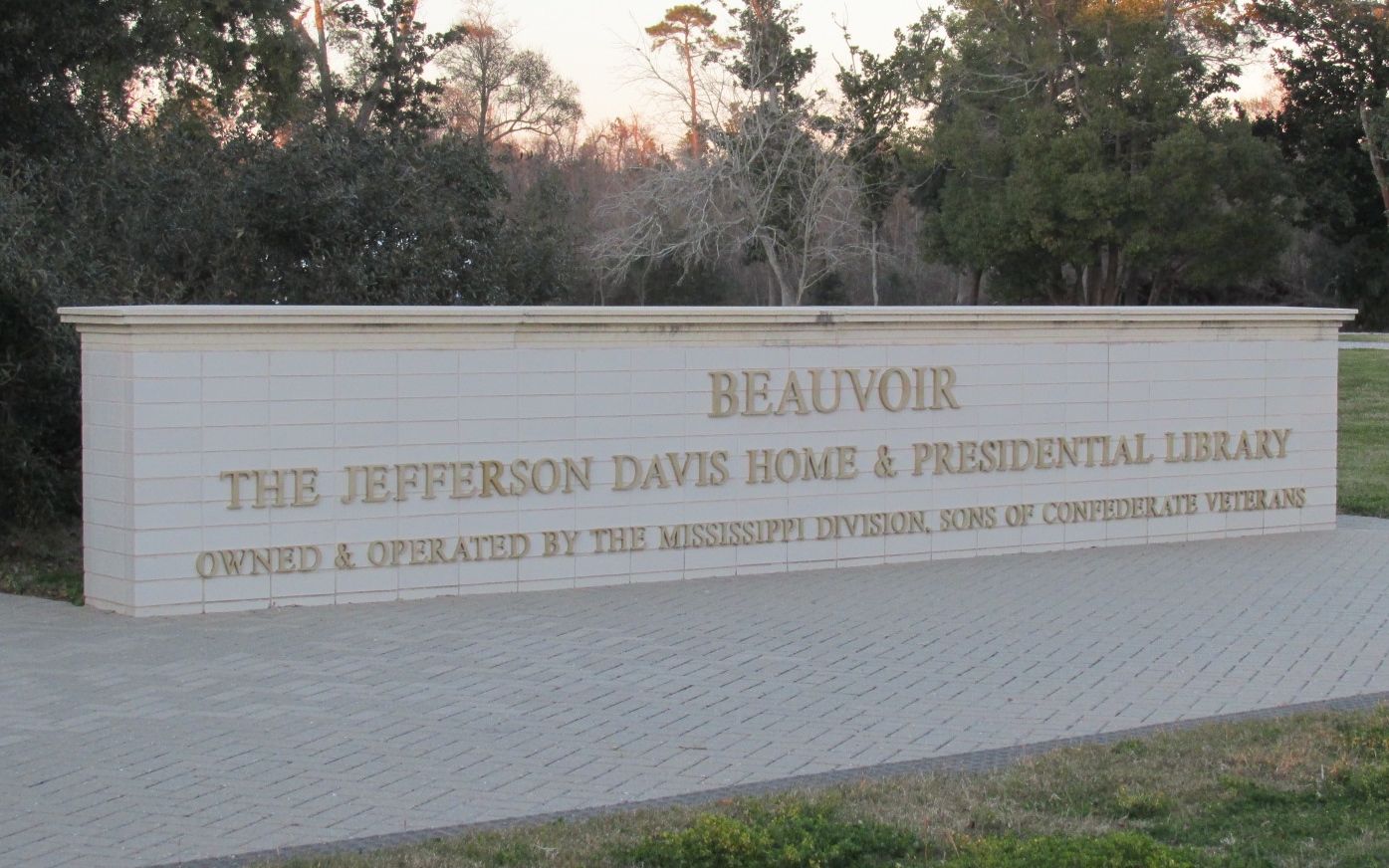
So, my app sent me to Beauvoir, Jefferson Davis’ last home.

Beauvoir sign

In 1877, Davis was looking for a quiet place on the Mississippi Gulf Coast to write his books and papers. He called on the owner of Beauvoir, Mrs. Dorsey, who was a family friend. She invited him to stay in one of the two pavilions in front of the main house. He agreed, but only if she would accept $50 a month for room and board.

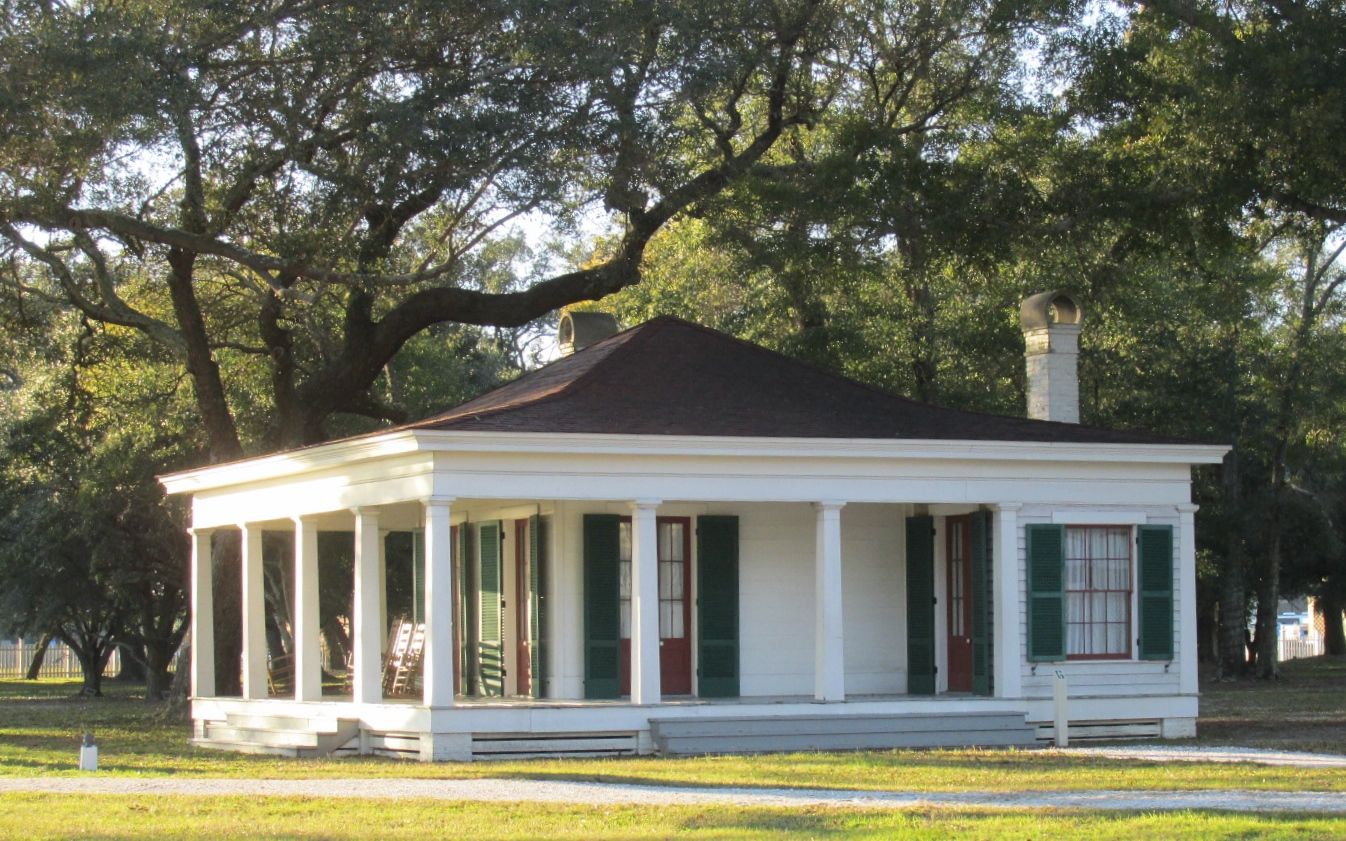
One of the two pavilions

After two years, Davis decided that he wanted to buy Beauvoir, and he and Mrs. Dorsey agreed on a selling price of $5,500, to be paid in three installments. Mrs. Dorsey died after one payment was made. At that time, Davis discovered that he was her sole heir and he eventually inherited the house along with other property.

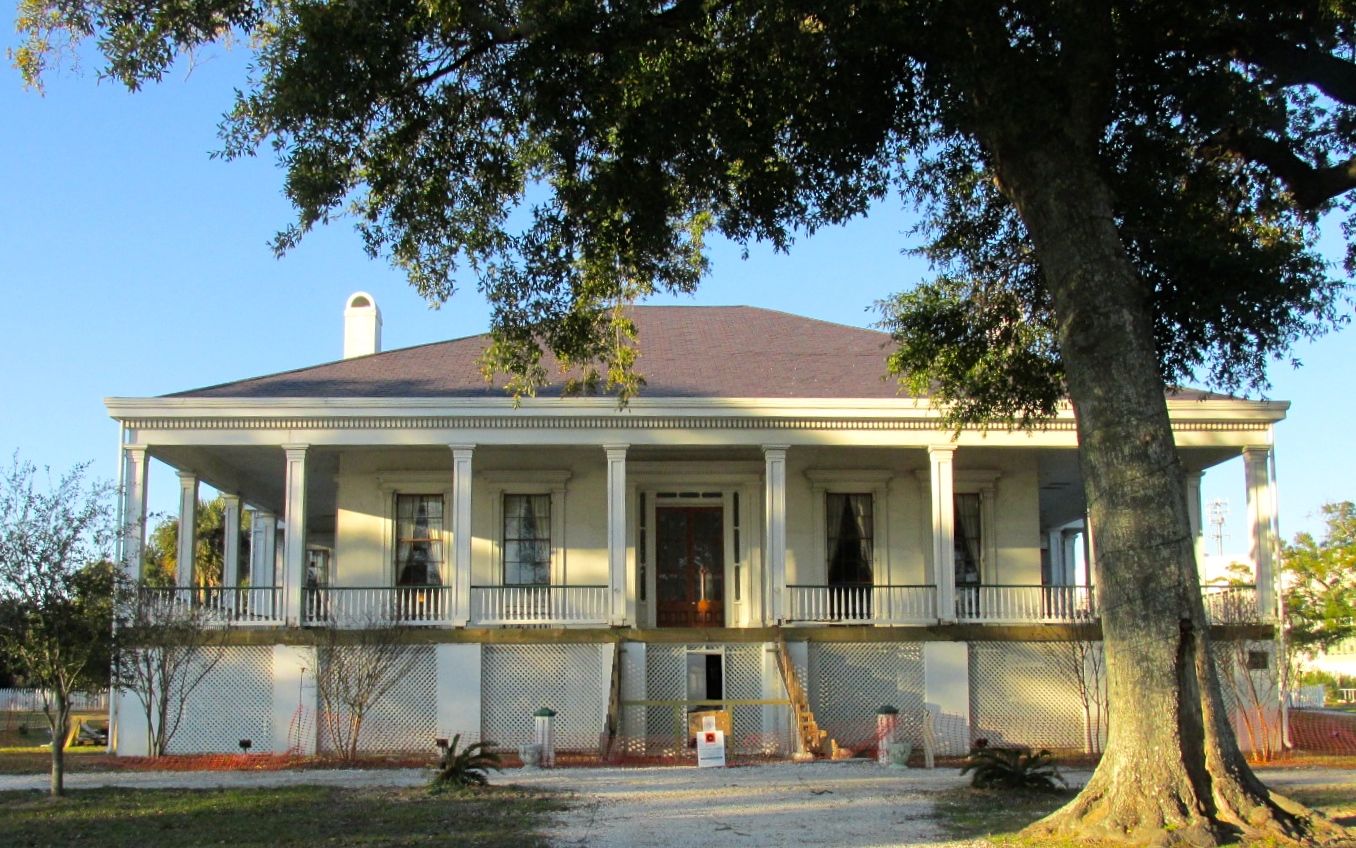
beauvoir front

The house was originally built around 1850 by James Brown, a wealthy plantation owner from Madison county. It was intended to be his summer house for his wife and his 13 children.

The porch and front steps are currently being rebuilt for the second time since Hurricane Catrina. The informative guide told me that they failed to use pressure treated wood when they rebuilt them the first time and they rotted out.

Rear Entrance
Rear Entrance

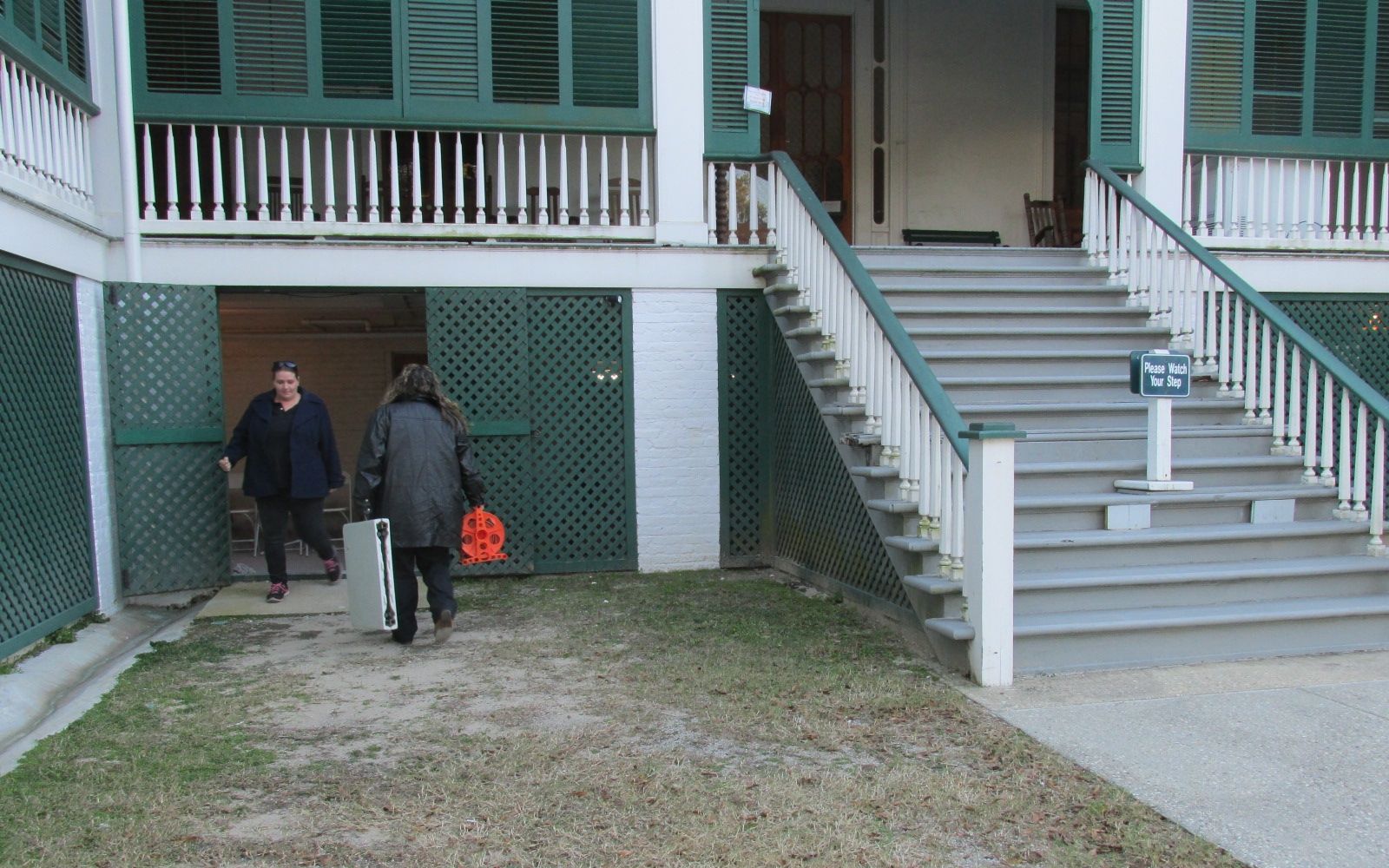
Luckily, the rear entrance was still useable.

Interestingly enough, the women you see on the left side of the photo are carrying equipment in for an evening fundraiser. They will be measuring paranormal activity. They kept loading in equipment while I waited for my tour to start.

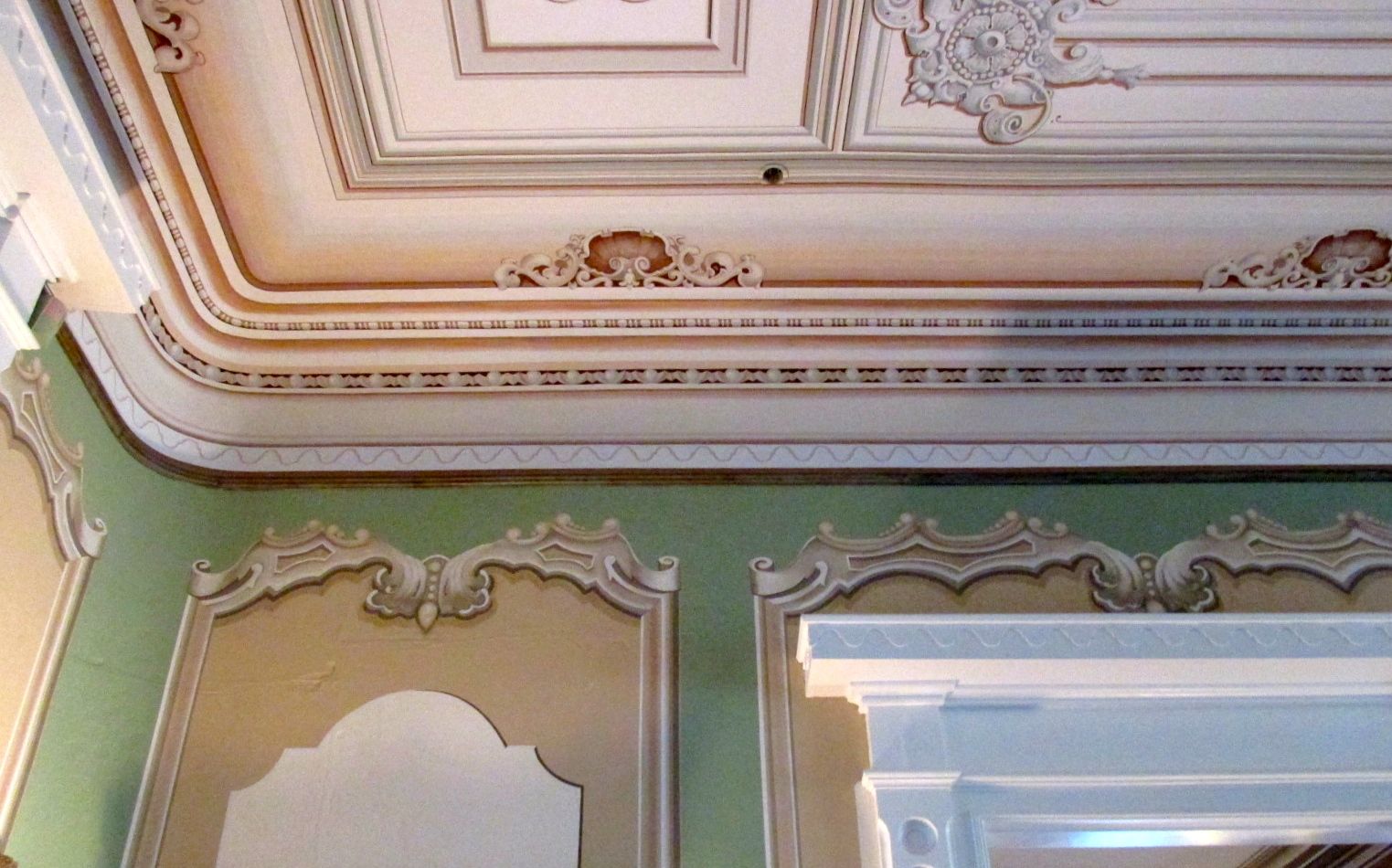
Beauvoir 120 colors of paint

The guide in period garb was knowledgeable, informative and enthusiastic, and I was the only person on the last tour of the day. The first thing he pointed out was the wall treatment in the main reception hall that ran from the front door to the back door. There were 120 distinct colors of paint used in the house!

beauvoir paint close up

This is a close up of the wall. The guide told me that all of this was painted free-hand. No straight edges or masking methods were used. Of course, all of this is restored artwork, based on archeological evidence.

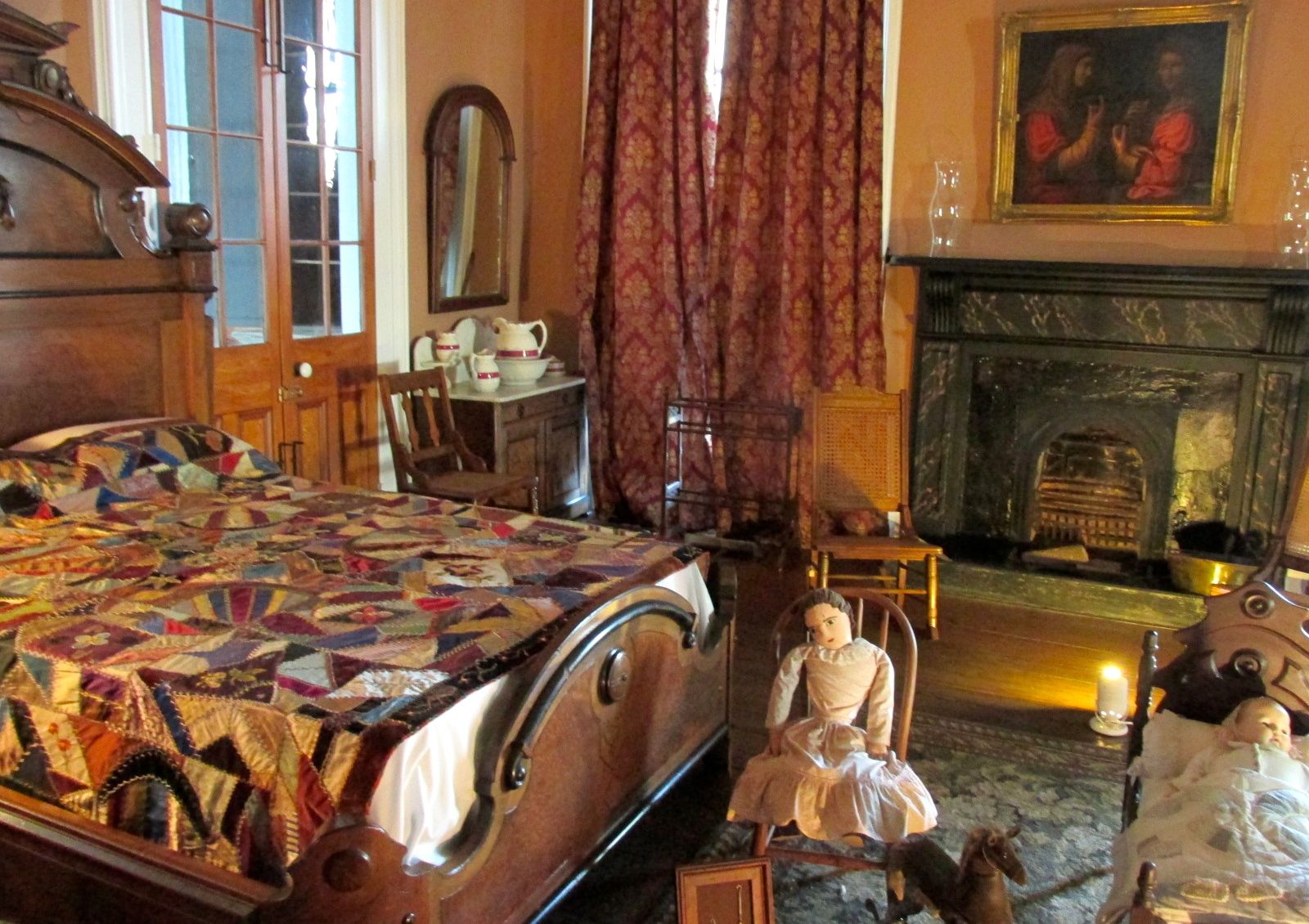
older girl's bedroom

This set of furniture was a wedding gift to one of the daughters. Unfortunately, I couldn’t keep all of the information straight.

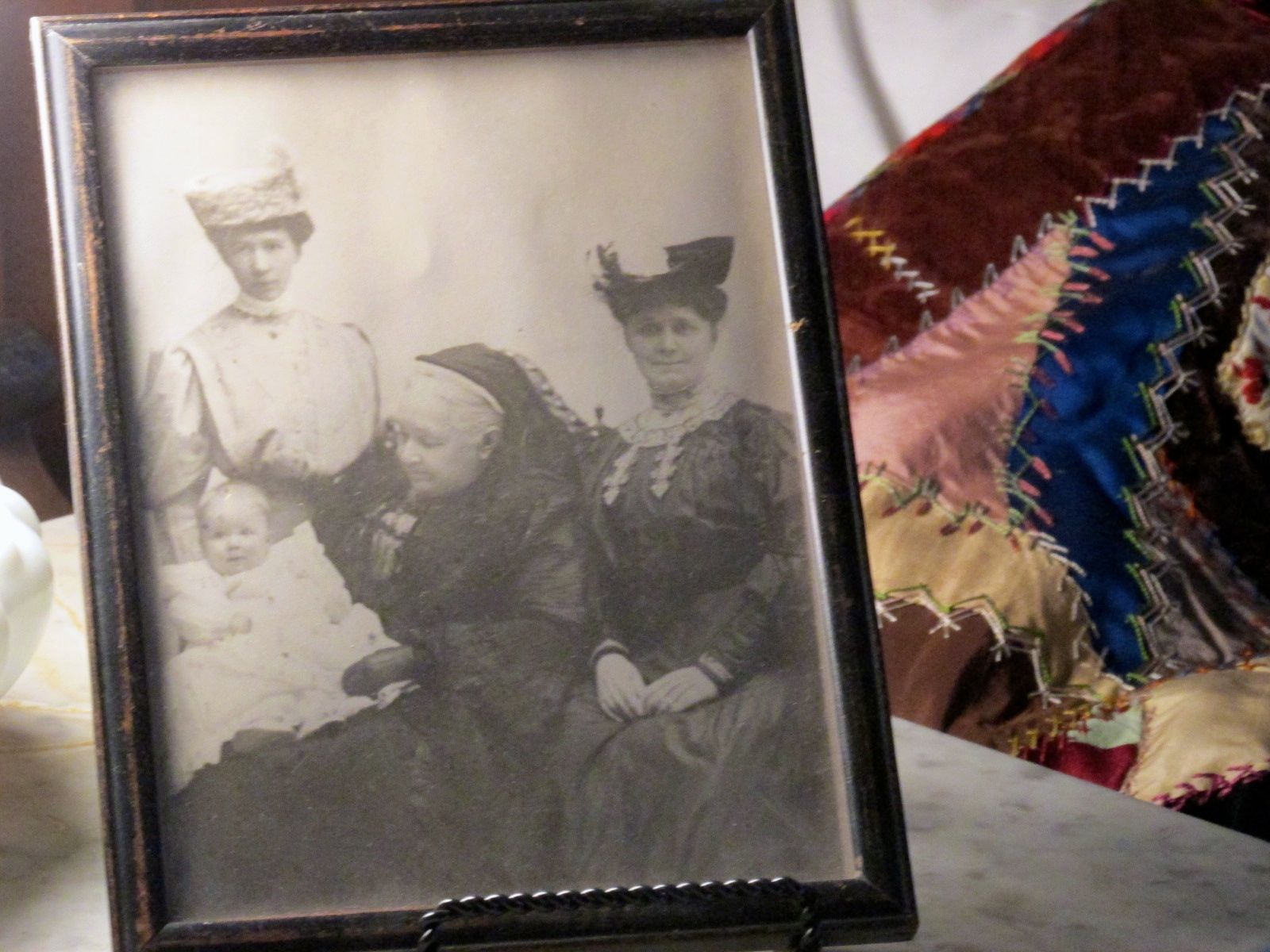
Four generations
Four generations

On the nightstand, is a picture of four generations. The oldest woman is Varina Davis, Jefferson Davis’ widow. The baby is her namesake.

Varina Davis was Jefferson Davis’ second wife. He and his first wife contracted either yellow fever or malaria. Although he recovered, she died after about six months of marriage.

When they married, he was 37 and she was 19. Due to the difference in their ages, she outlived him by a number of years. He passed on in 1889; she lived until 1906.

I am always surprised when I see how close we are to the past.

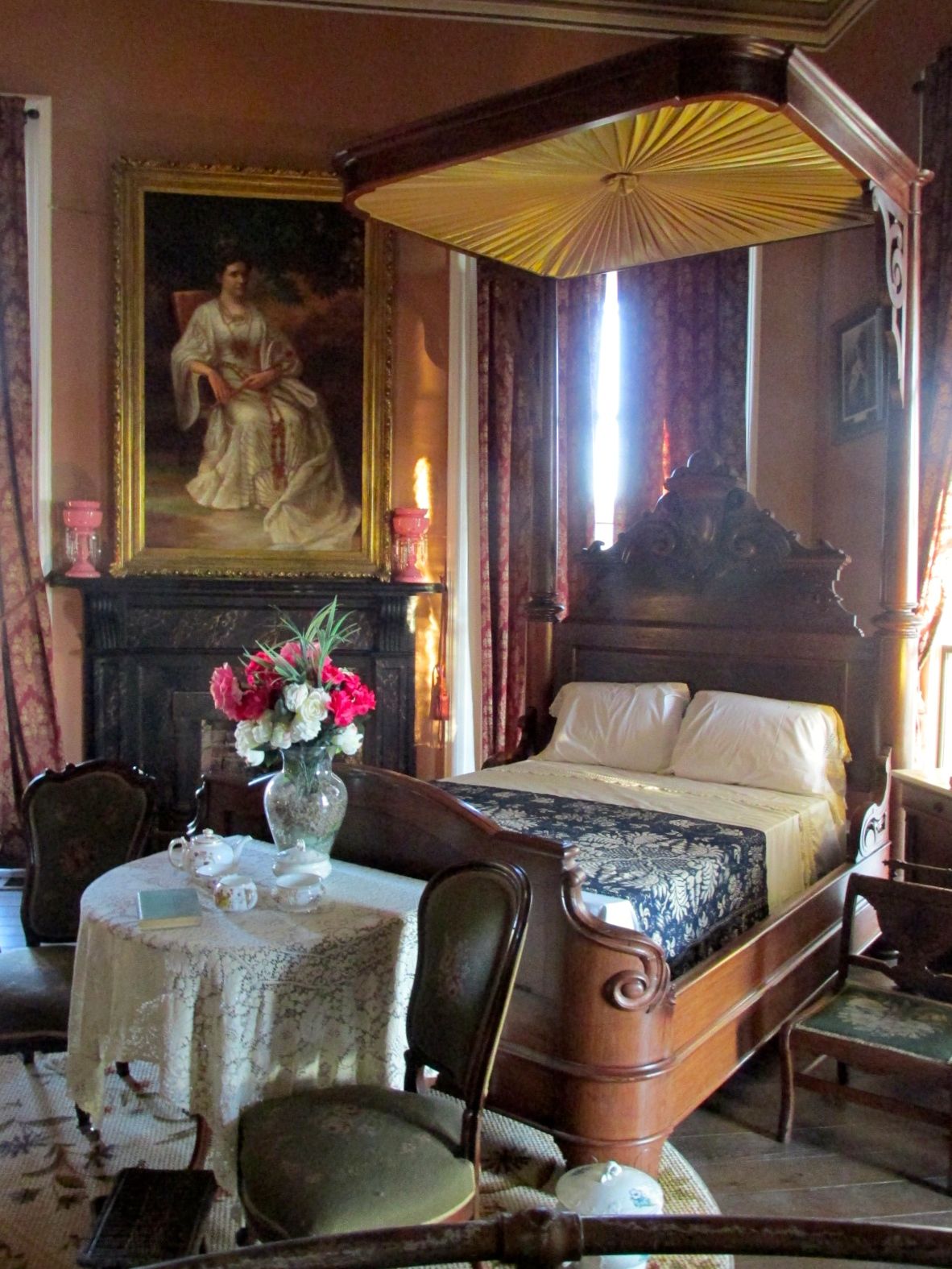
Front bedroom

This bedroom was another daughter’s room. That is her portrait above the fireplace. It was painted when she was the Mardi Gras queen for a krewe.

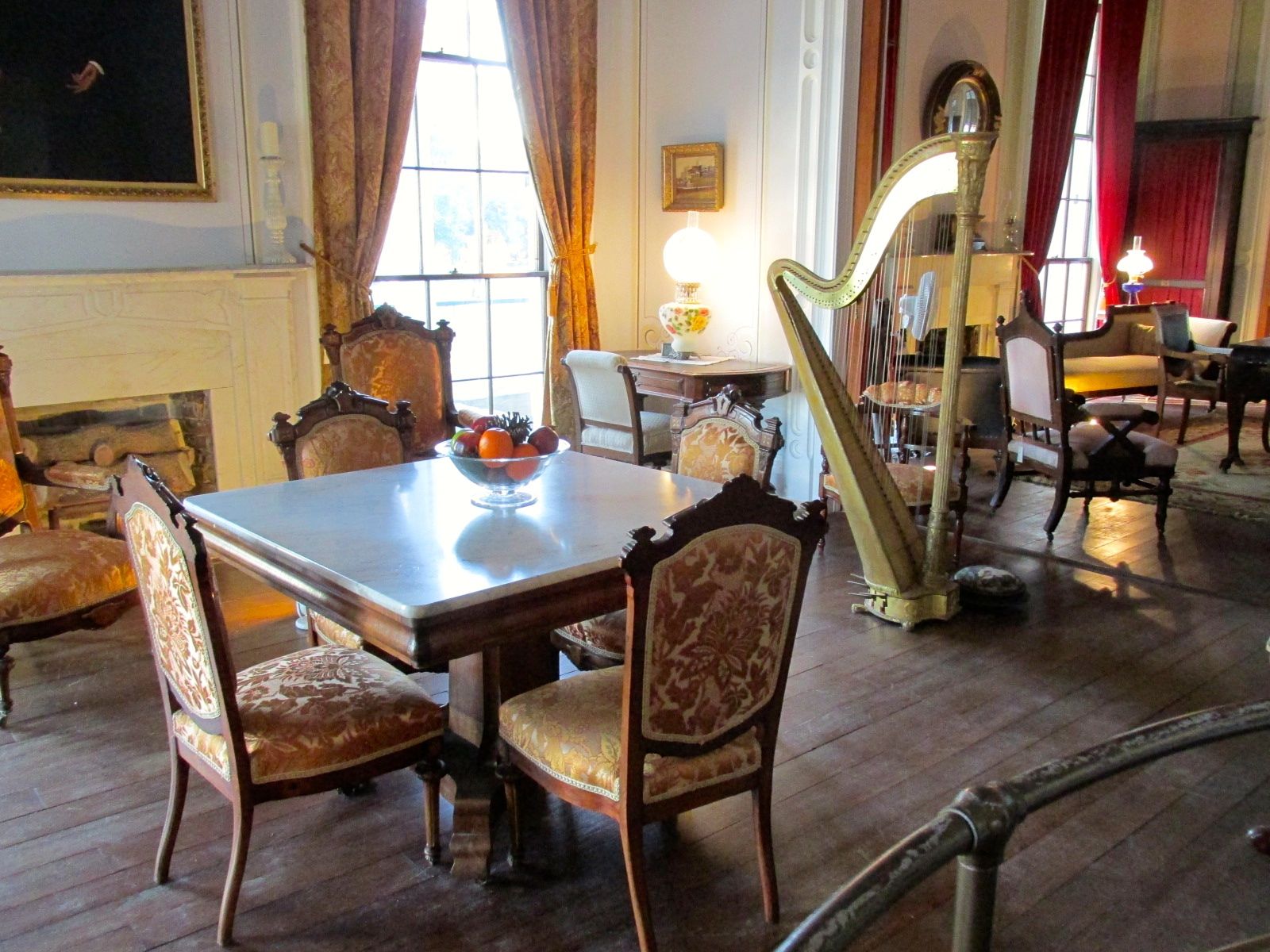
Parlor

This is the parlor. There is a massive piano to the right of the door, that is like the one that was in the house. The guide said that the daughters were musical. I asked if one of them played the harp. He said that they didn’t, but that the harp was left to him by Mrs. Dorsey.

Jefferson Davis at 80

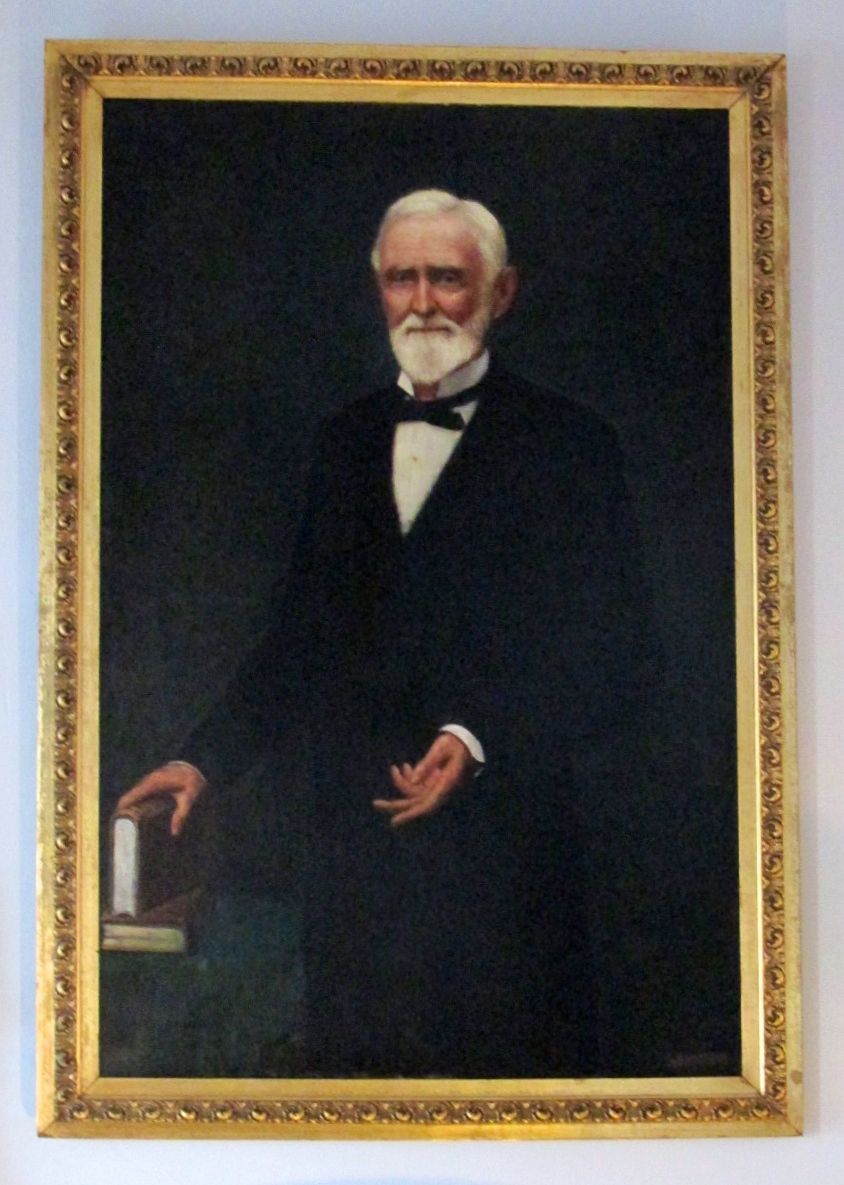
A portrait of Jefferson Davis hangs over the fireplace. It shows him at age 80, shortly before his passing in 1889.

It came with the house

The harp wasn’t the only thing that came with the house. This sideboard dates back to the first owner, James Brown. The guide told me that it was so heavy that the only time it left the building was for restoration after Hurricane Katrina.

Bookcases in drawing room after lib of congress

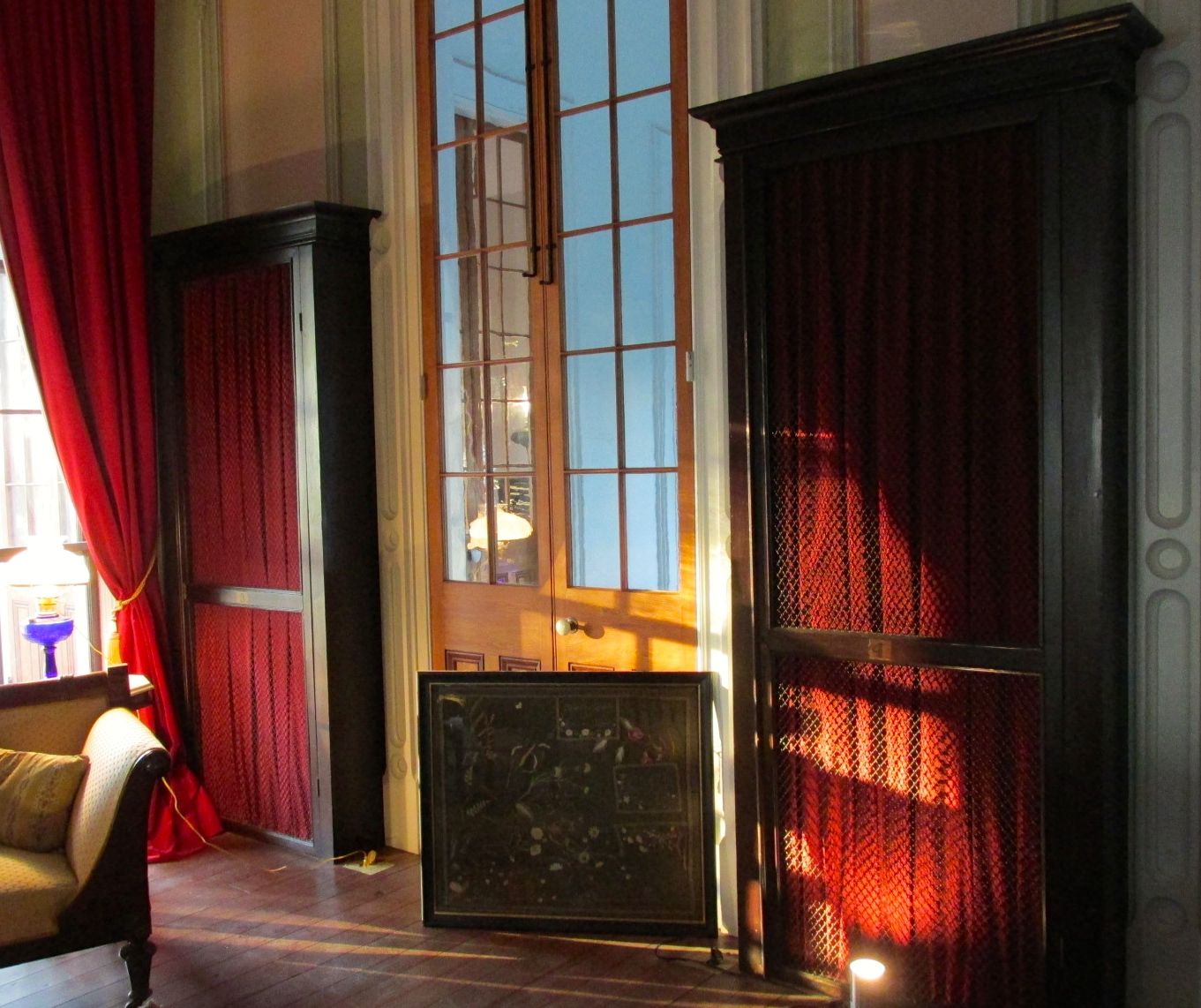
Davis had the book cases in the drawing room built to resemble the ones in the Library of Congress. He served in the House of Representatives and the Senate as well as Secretary of War for Franklin Pierce.

Partner desk

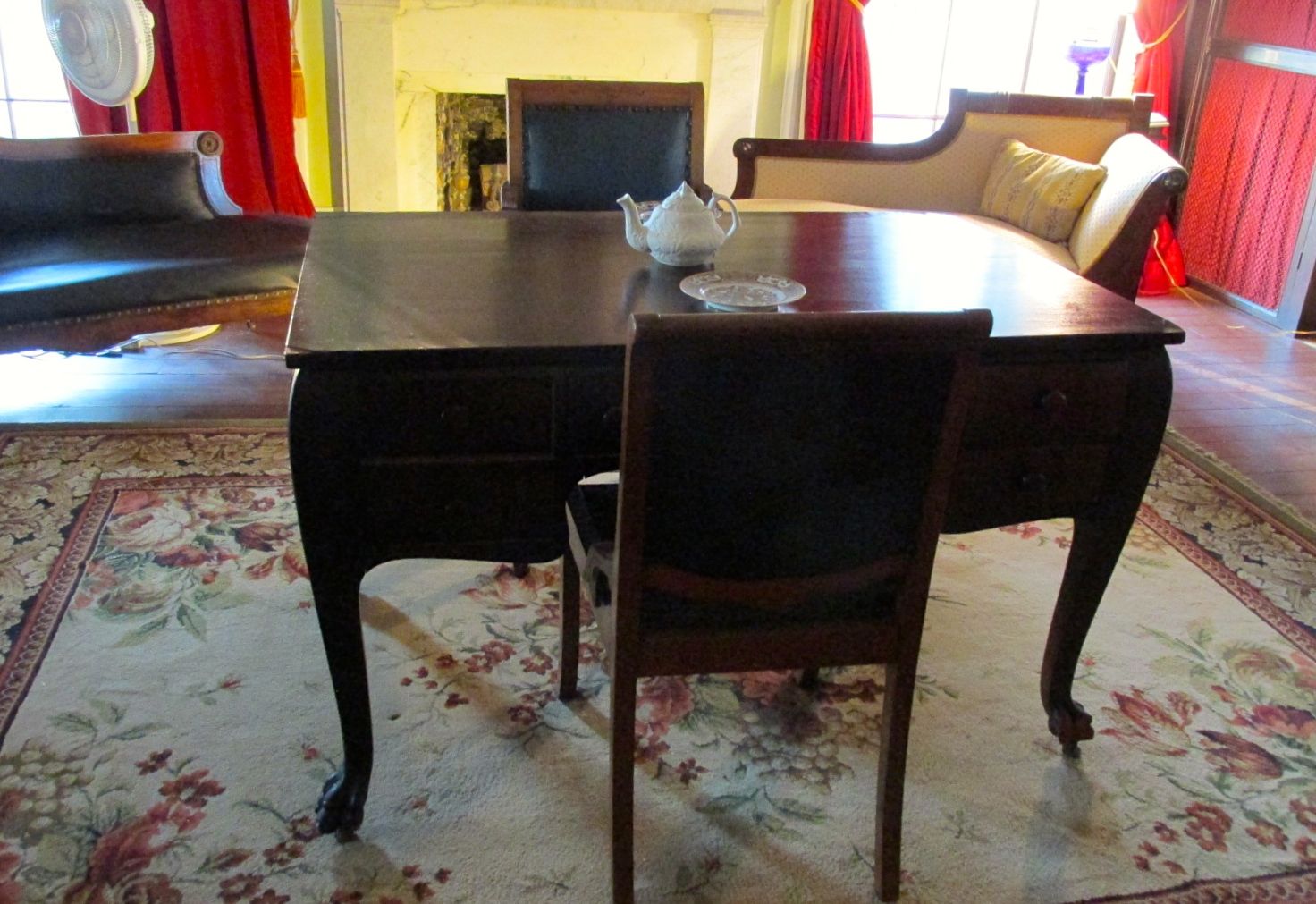
This partner desk was also in the drawing room. The guide told me that when Mr. and Mrs. Davis were eating alone, they often at at this desk rather than use the dining room.

Cupboard

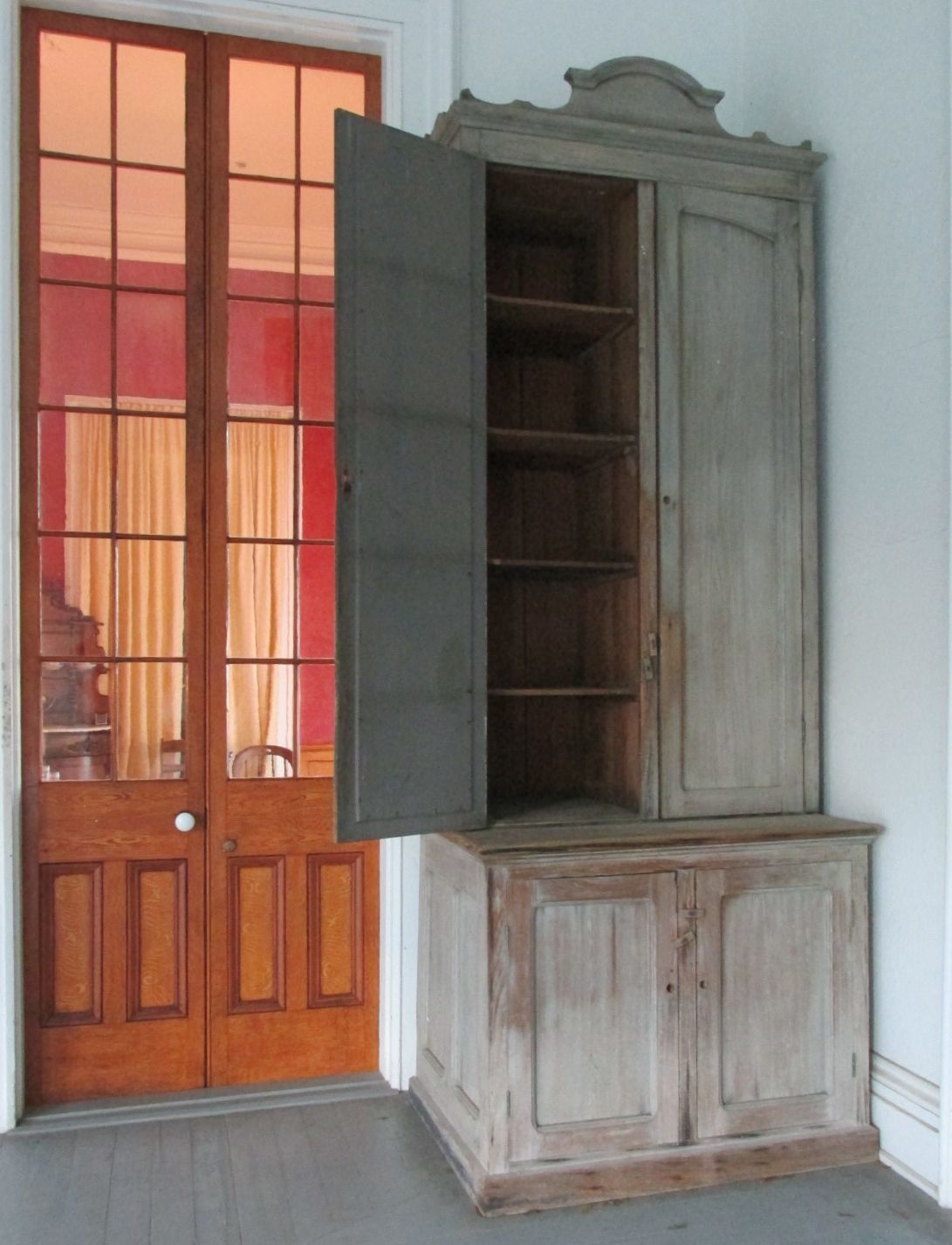
On the back porch, there are two cupboards that were made for the Davis family in 1879. They are made of cypress and you can see the water mark left behind by Hurricane Catrina. The water was 18 inches deep inside the house. Since the house is elevated 8 feet off the ground, it drove home how much water came ashore.

It will be interesting to learn more about the hurricane when I get to New Orleans.

Photo shoot

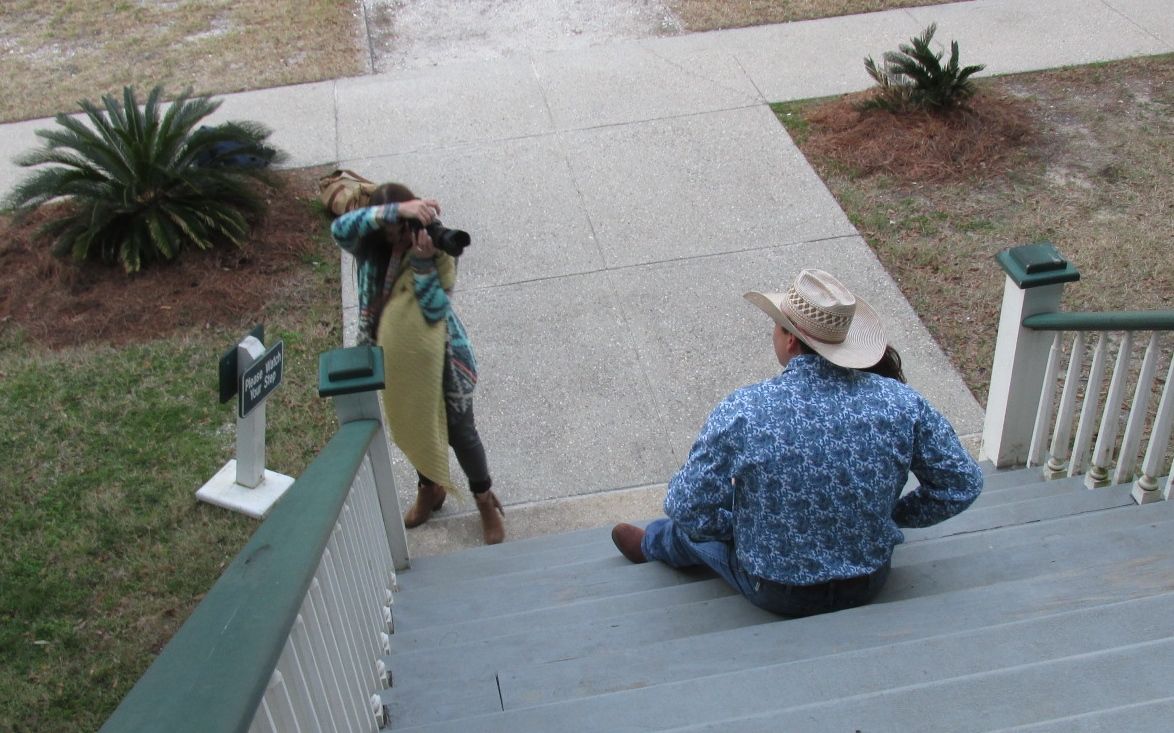
When my tour was over, I came across another photo shoot! I sure do stumble across a number of them in historical sites.

Clearly, I will have to plan a repeat visit to Biloxi. But, since it is on I-10, I am sure I’ll be passing through again next year.

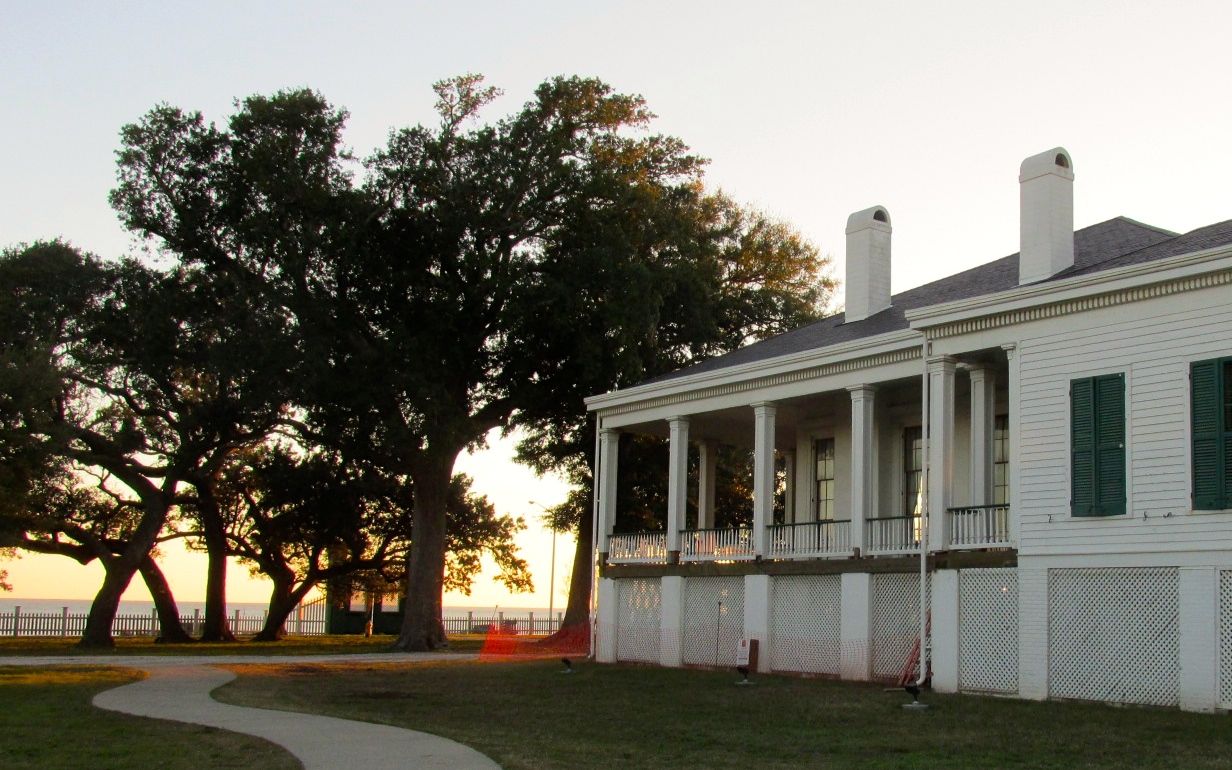
Beauvoir side

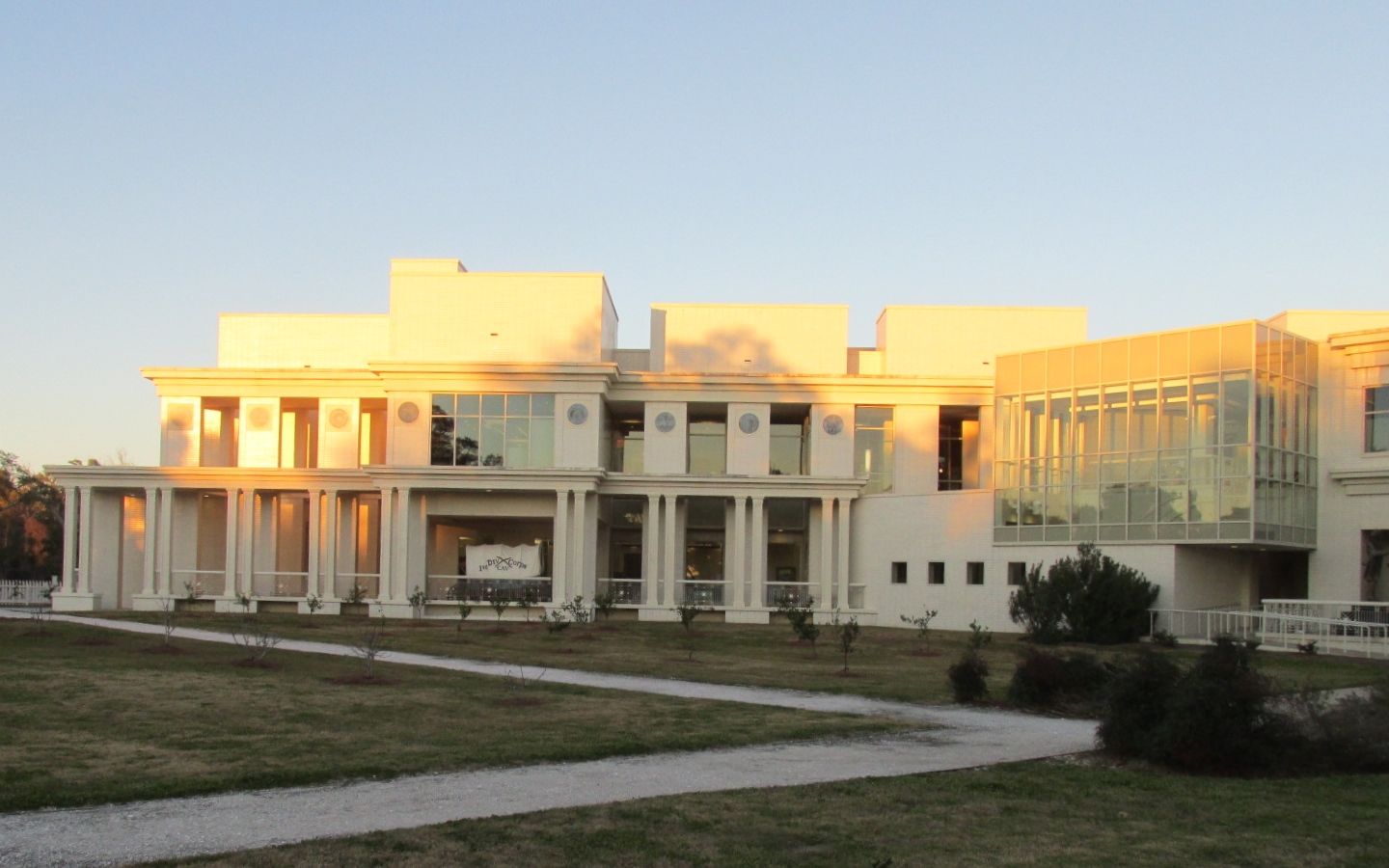
I headed back to the parking area, and paused to take a look at the Library and museum.

Jeff Davis library

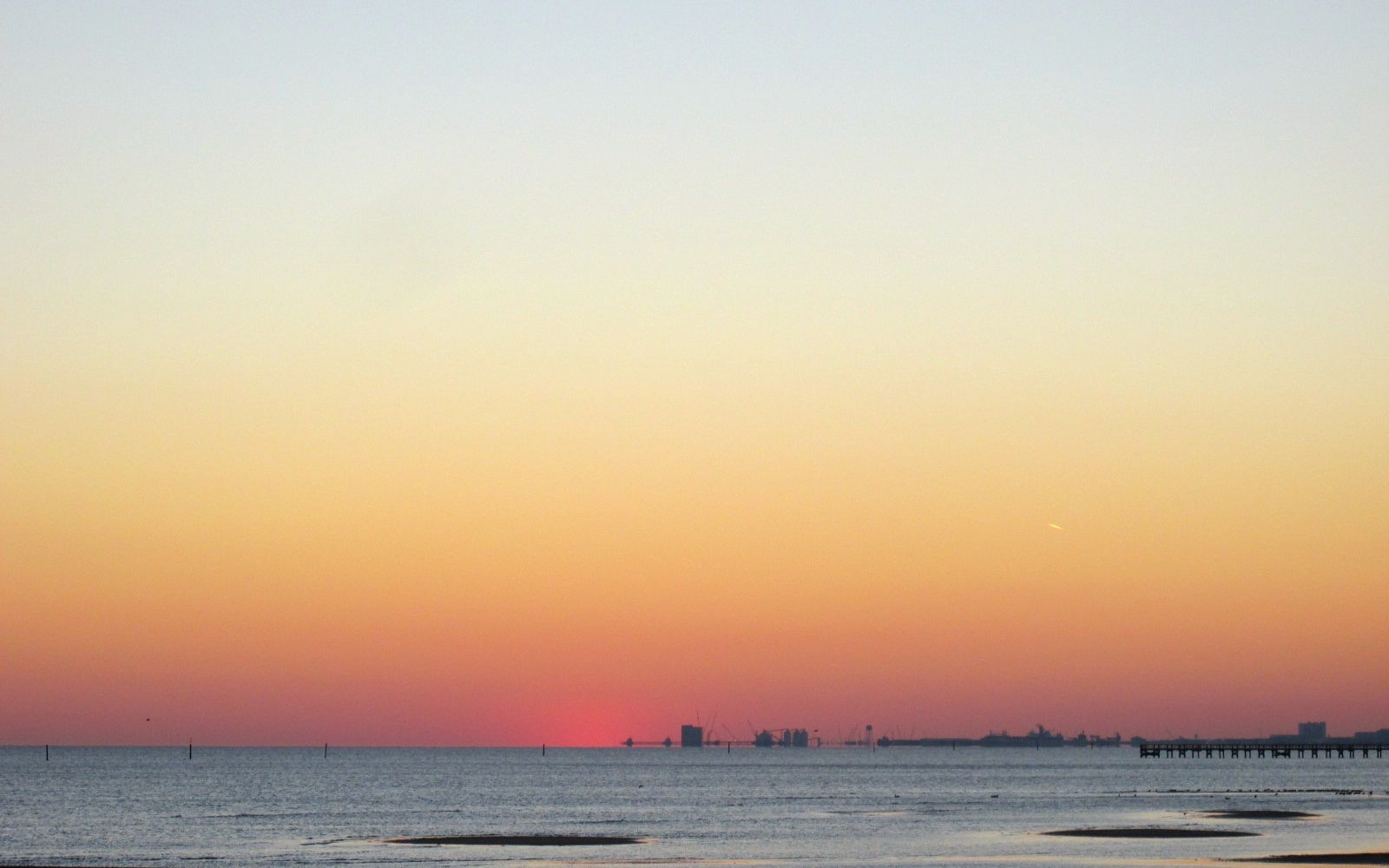
The sun was sinking in the west, and I wanted to get a photo. The air was cold and clear.

sunset

The day had started out kind of rough, but it ended nicely.
As I was heading east, I was smacked in the eye by a full moon rising over the trees. It was beautiful! I wish I had a good camera that could have captured the magical silver disk. The air was so clear, I bet I could have seen the flag that Armstrong and Aldrin planted in 1969.

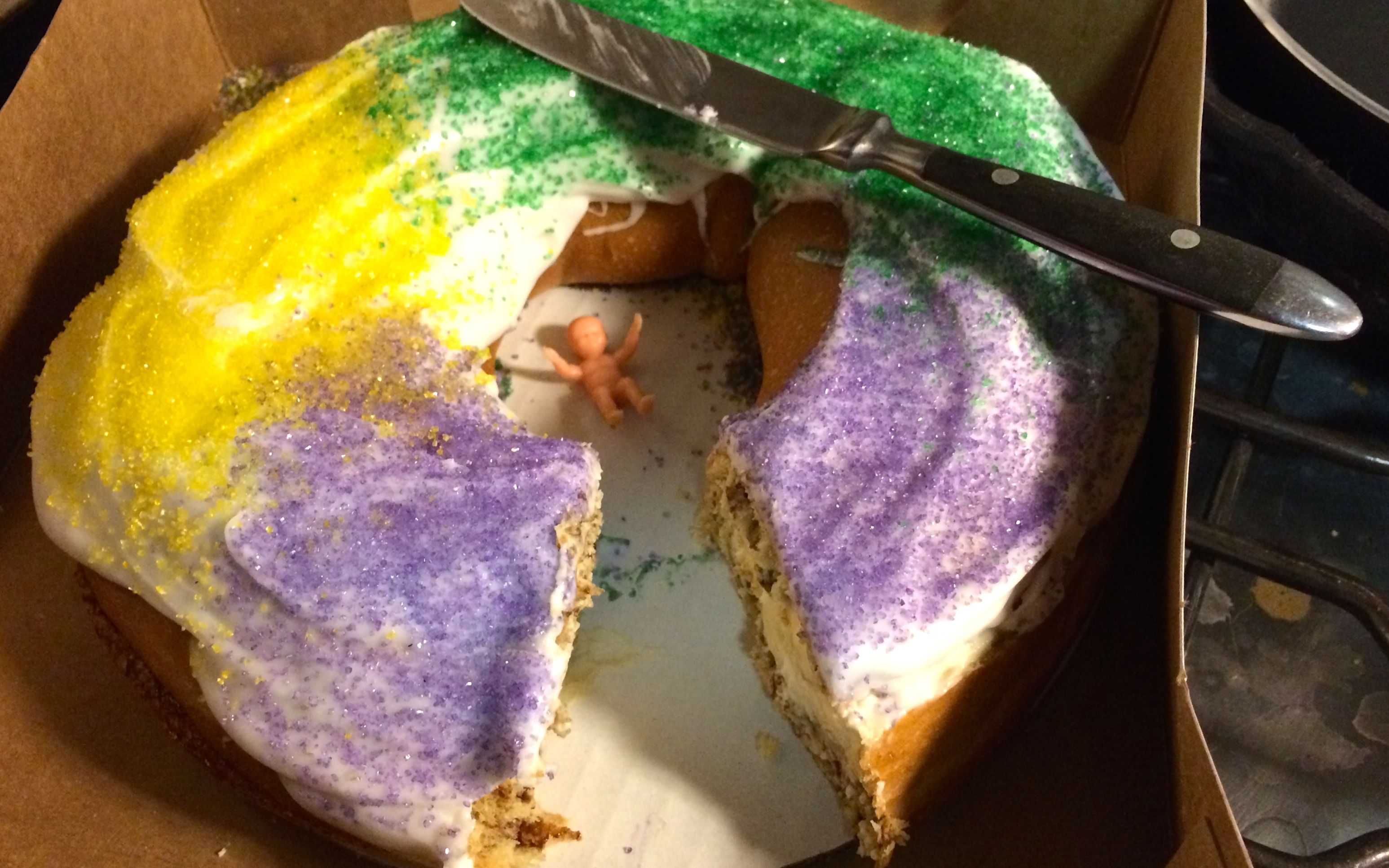
I stopped for a loaf of bread before I turned in to the park. In the grocery store, there was a display of King Cakes. I decided to buy one and see what all the fuss is about.

King Cake

I think I’m in love!


St. Andrews State Park, Panama City

When I first started looking at Airstreams, I was perplexed about why it mattered if the bedroom was in the front or the back. Flo has the bedroom in the front, closer to the hitch. I was told it was because people liked to be able to back into a site and then have a beautiful view while looking out the big window over the dinette.

“Yeah, right,” I thought.

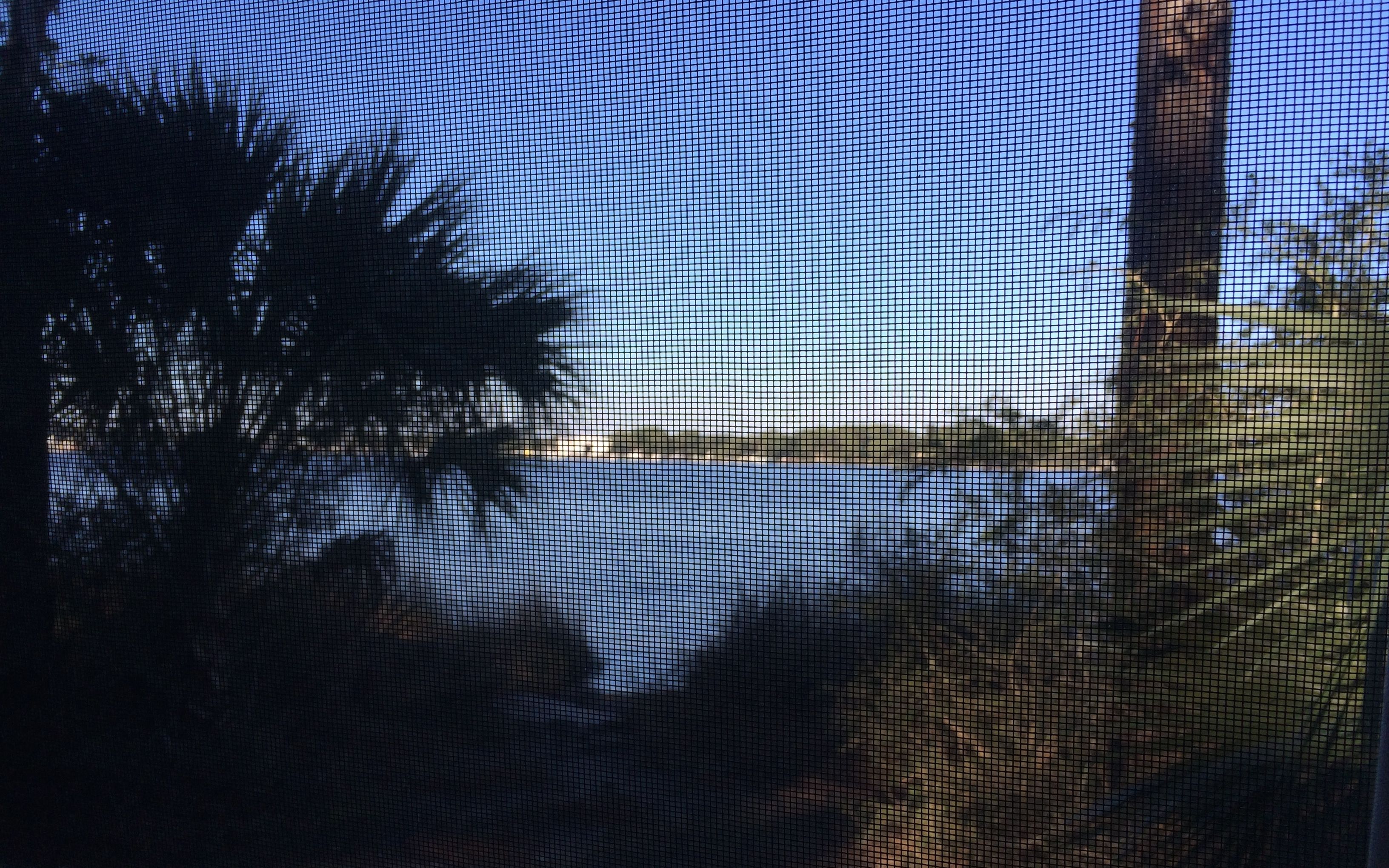
Well, it finally happened! When I backed into my site at St. Andrews State Park, the view out my window was incredible!

View out my window

You can tell I’m looking out the window because you can see the distortion caused by the screen.

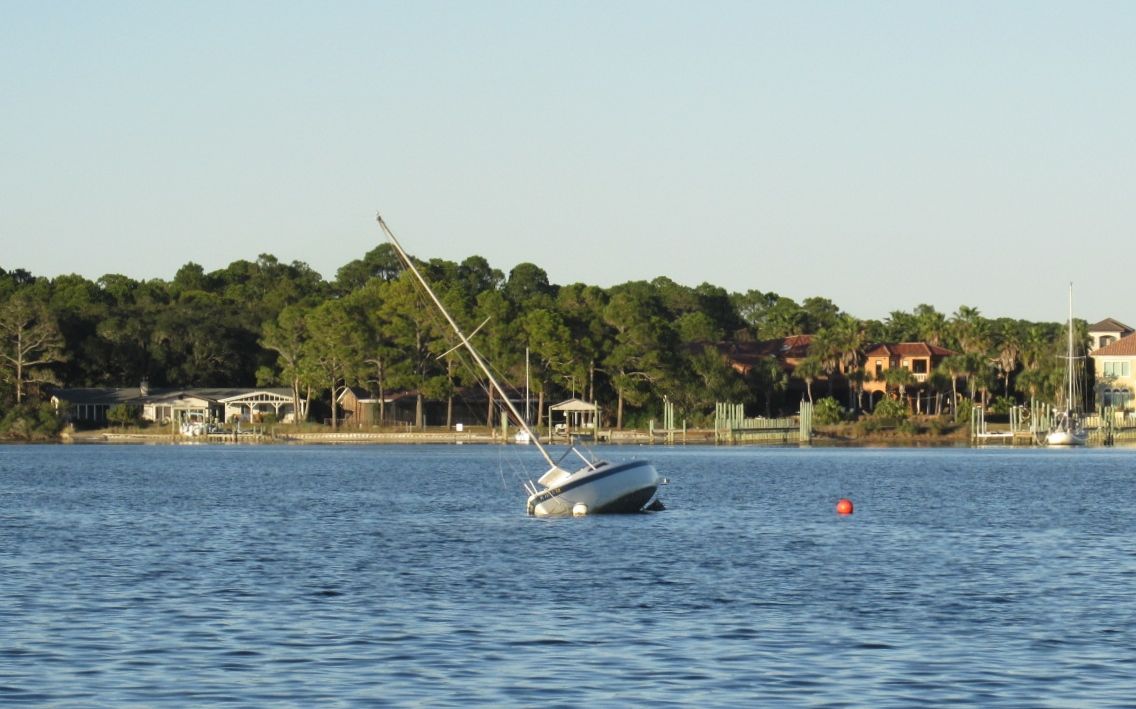
Of course, your view is affected by what you choose to focus on. I could focus on this swamped sailboat.

Listing Boat

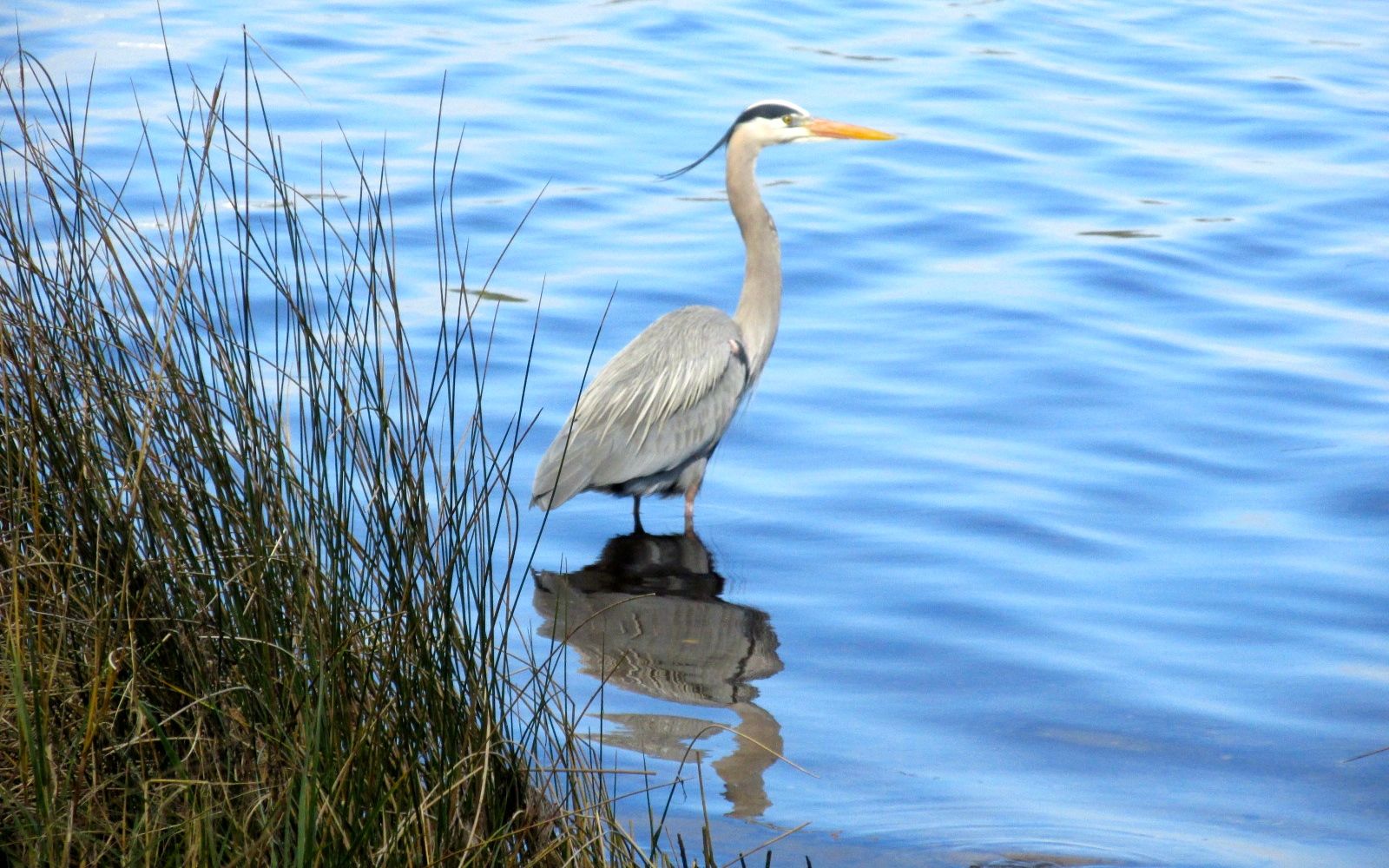
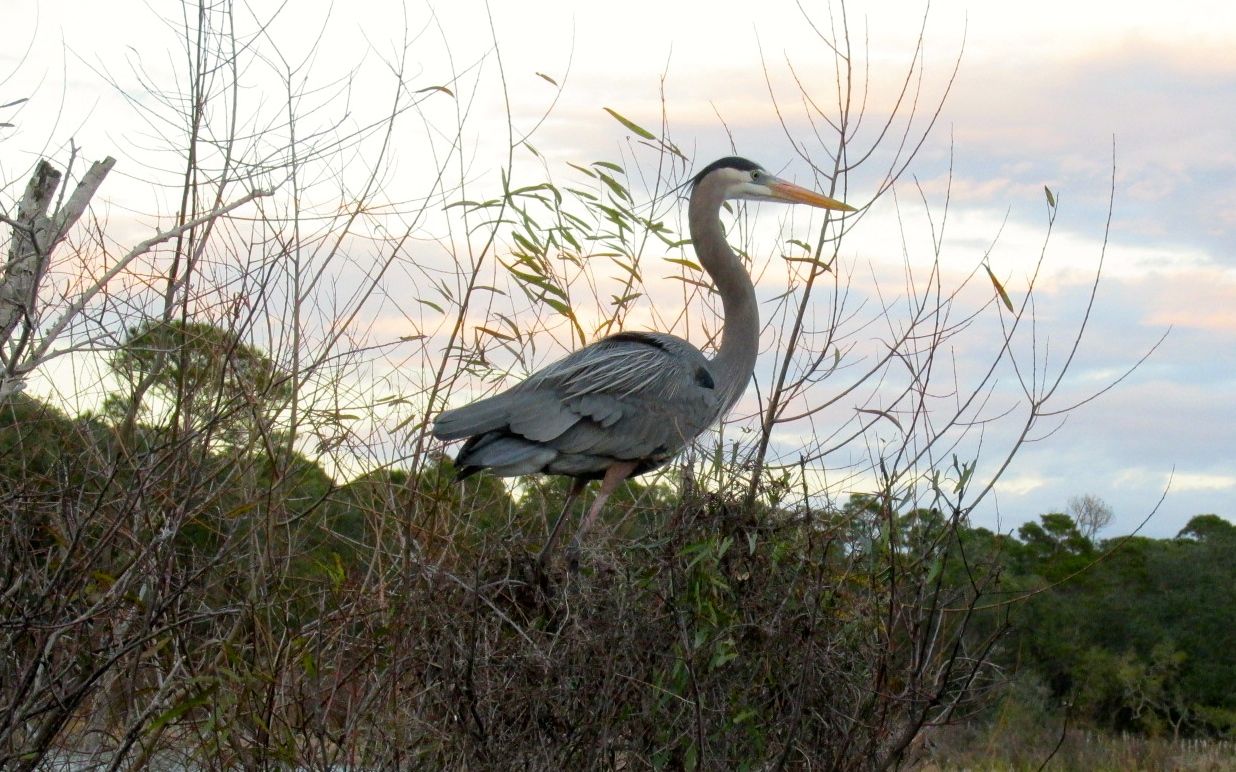
Or, I could focus on this great blue heron.

bird outside my trailer

Both of those were shot standing near the back of my trailer.

The cold temperatures continued, as did the sunshine. But, this park seemed to be beach-centric, and the cold weather made me feel like taking care of necessary chores – laundry, housework and so on.

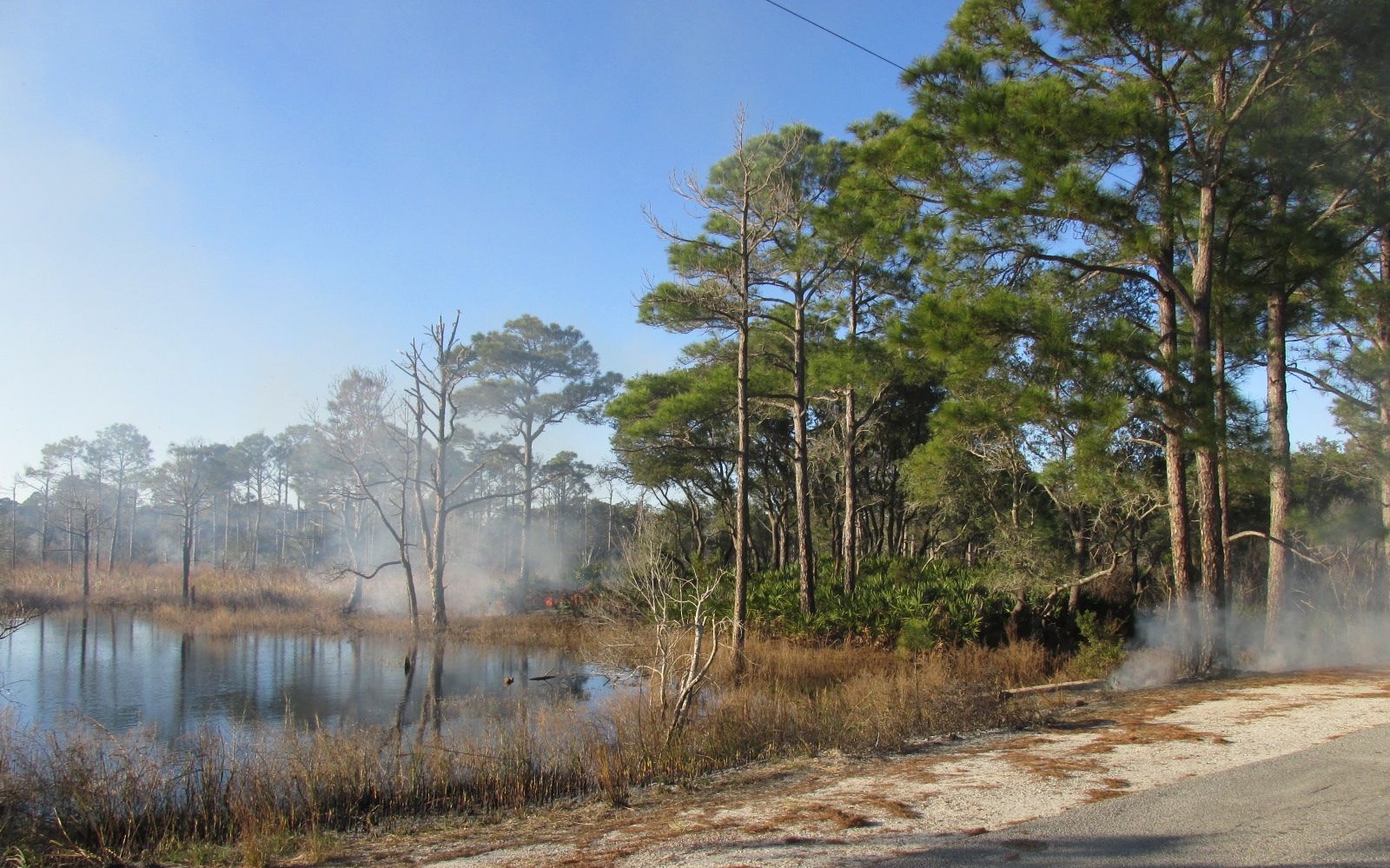
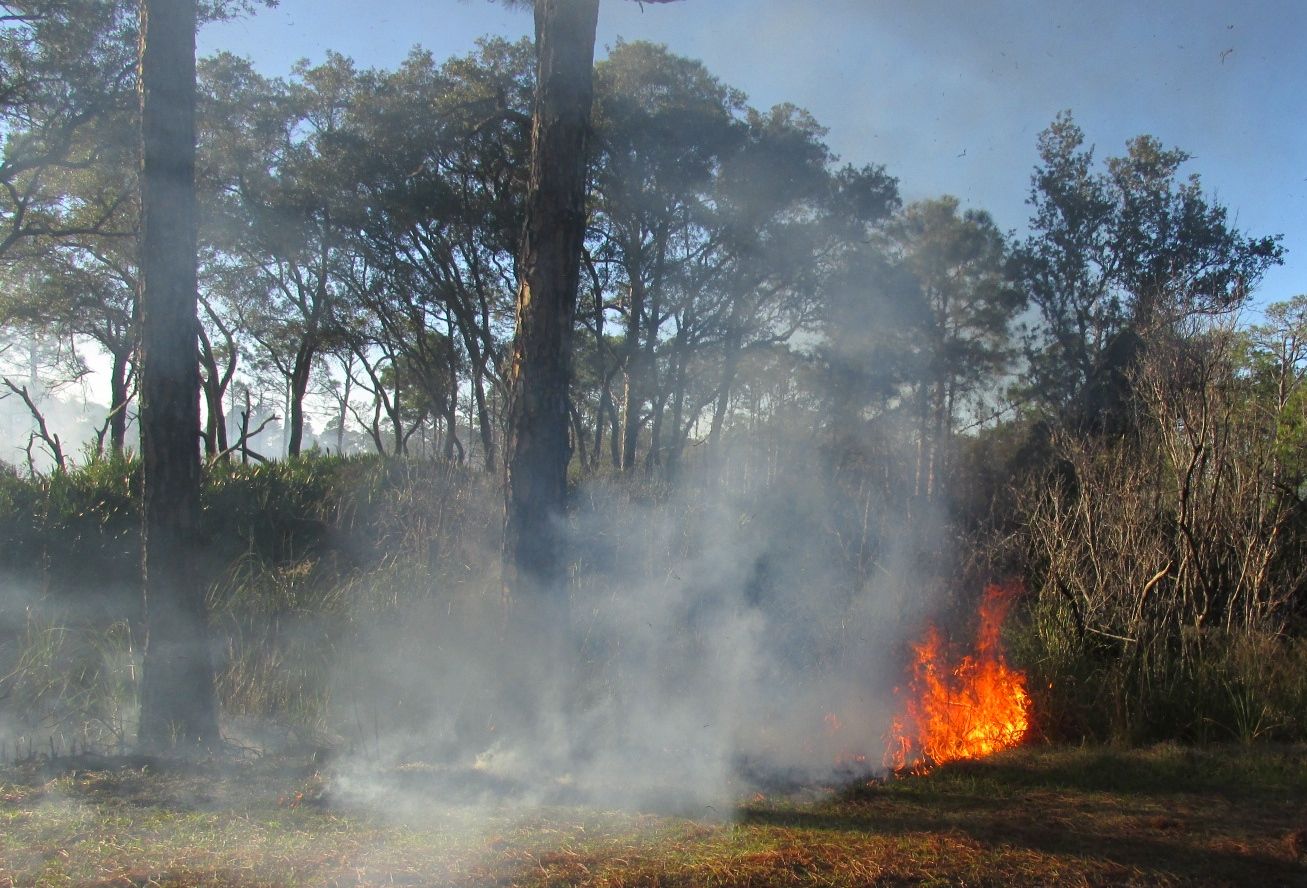
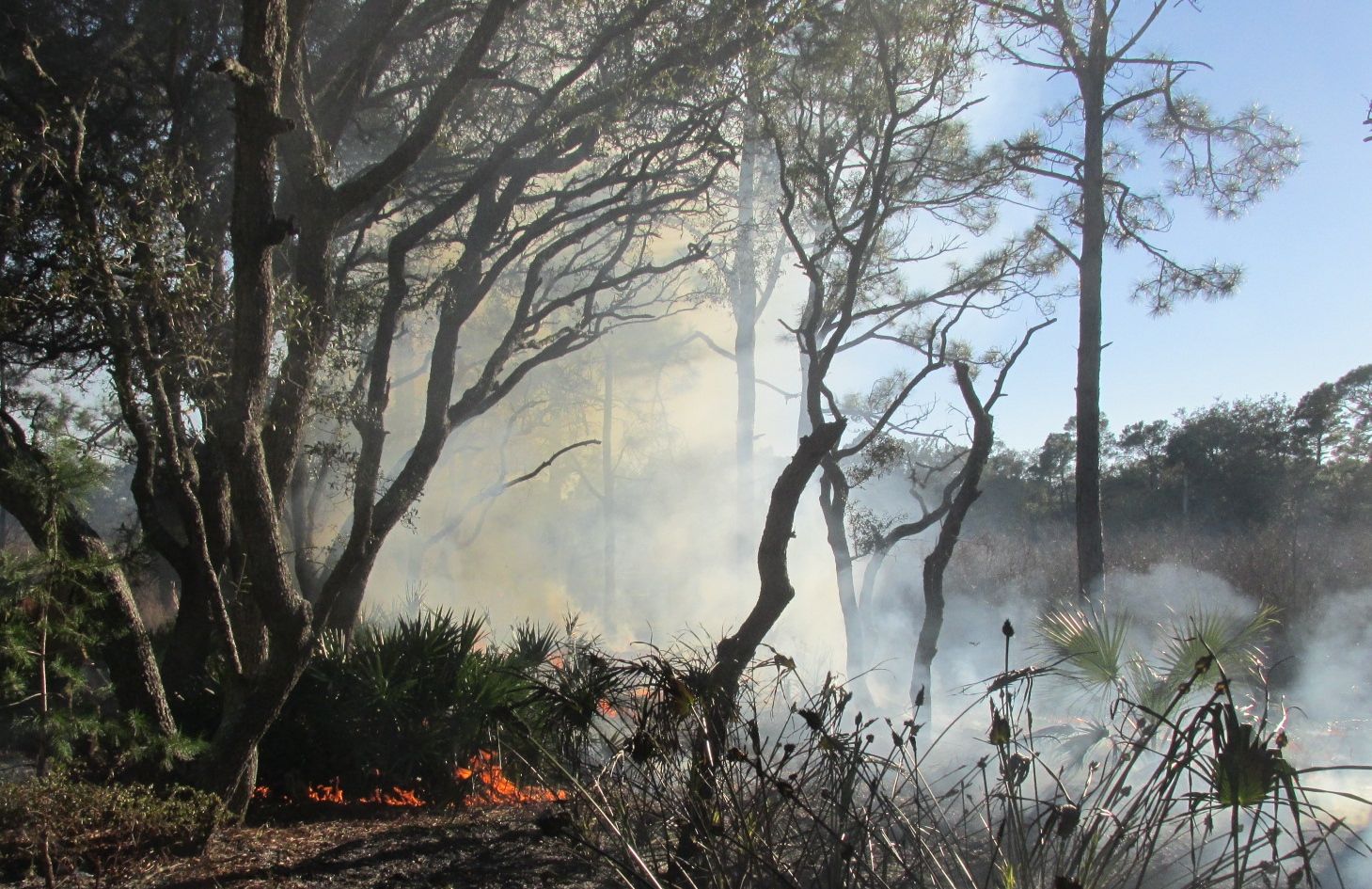
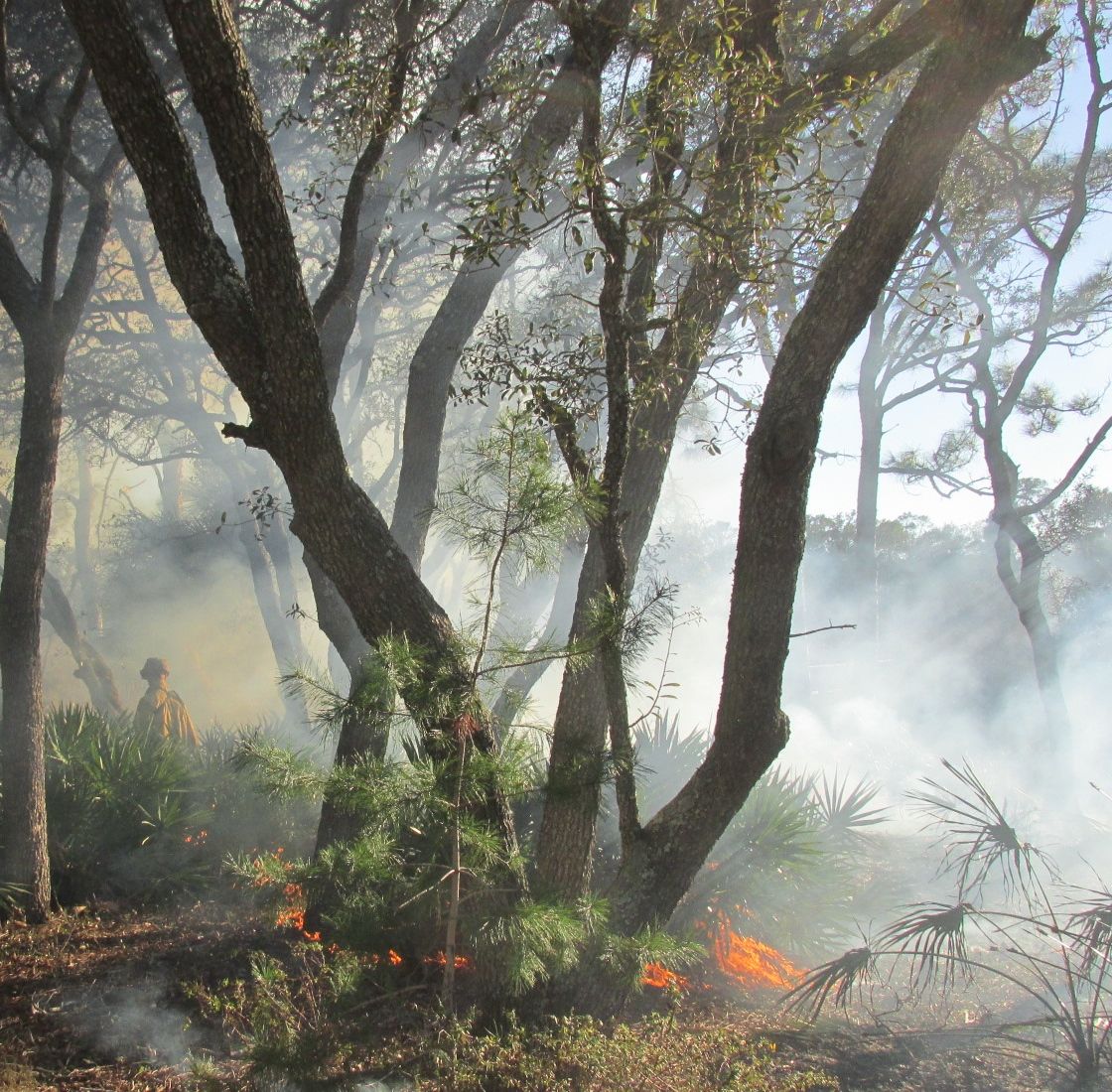
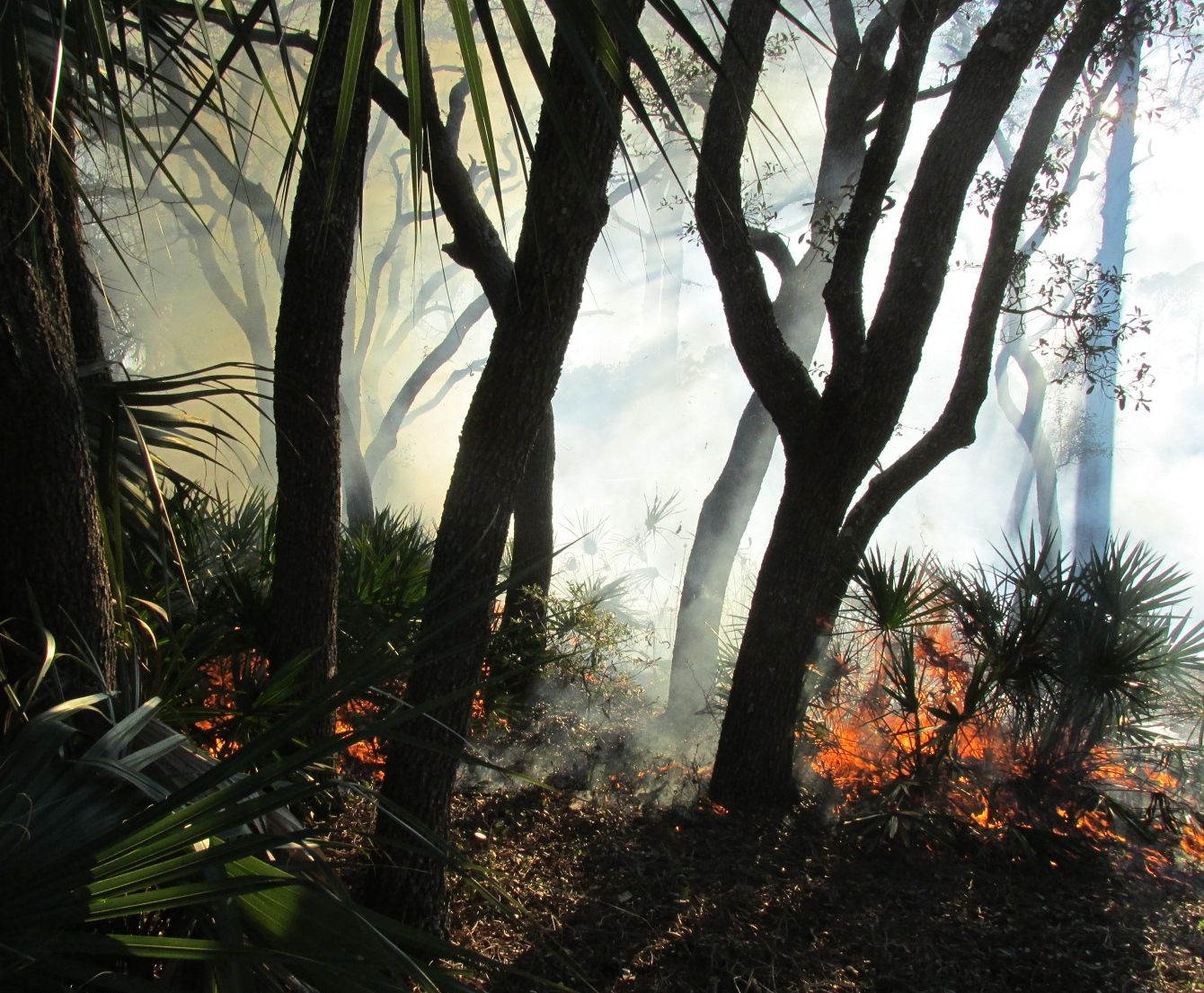
On my way back to the park from the laundromat, I came across something interesting. Well, interesting to me. They were doing a controlled burn! After seeing the results of controlled burns in Ochlockonee River State Park, it was interesting to see one in progress.

Controlled Burn 5

Controlled Burn 1

Controlled Burn 2

Controlled Burn 3

Controlled Burn 4

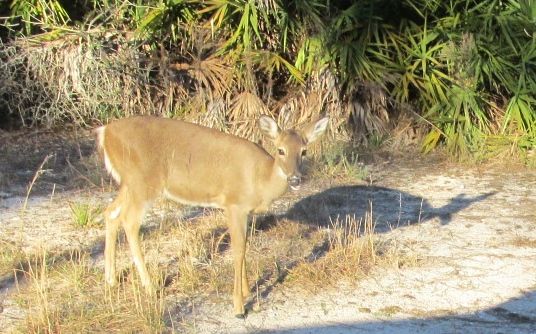
While all this burning and smoke was taking place, right across the road, deer were browsing.

deer

The following day, it was time for some housework. Yes, even I do housework from time to time.

As the day wore on, I decided to see if I could catch a sunset. Some clouds had rolled in, and I thought they might make for some interesting colors.

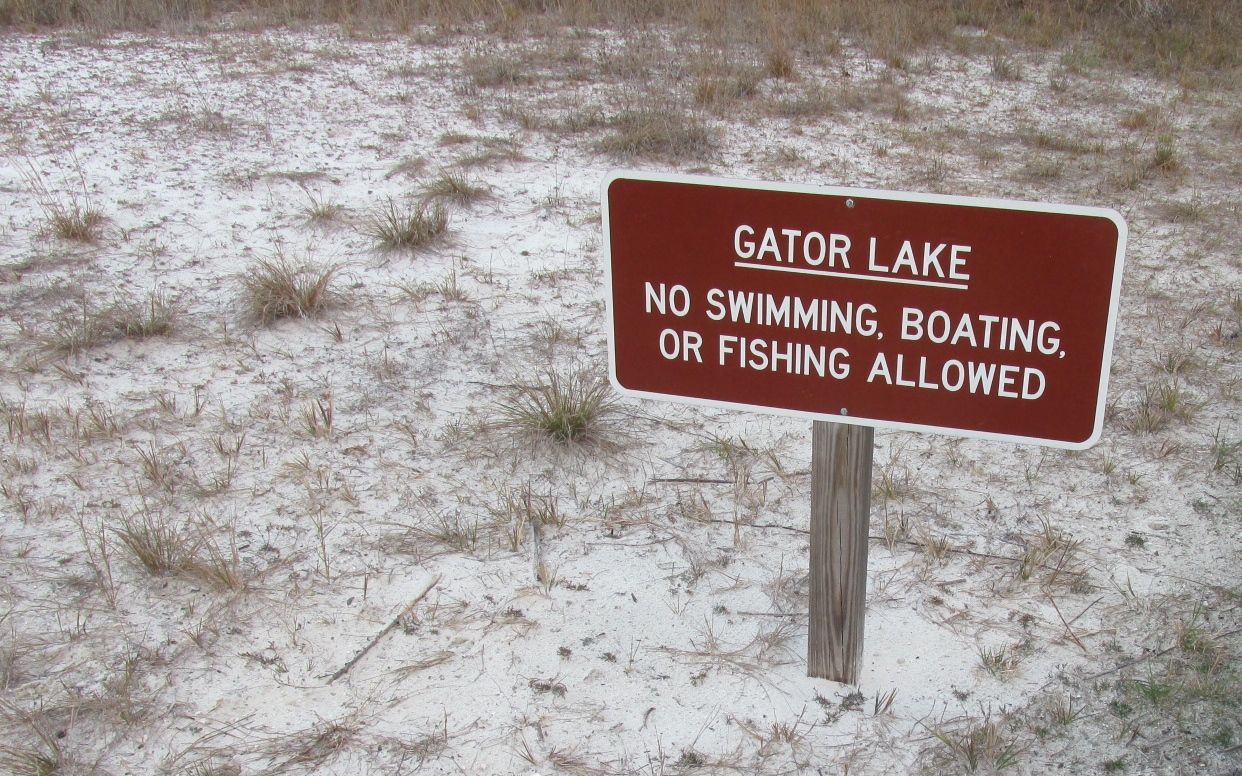
On the way, I passed Gator Lake.

Gator Lake sign

Gator Lake. No swimming, boating or fishing allowed. Hmm. I wonder if there are alligators in the lake? Might I finally see an alligator?

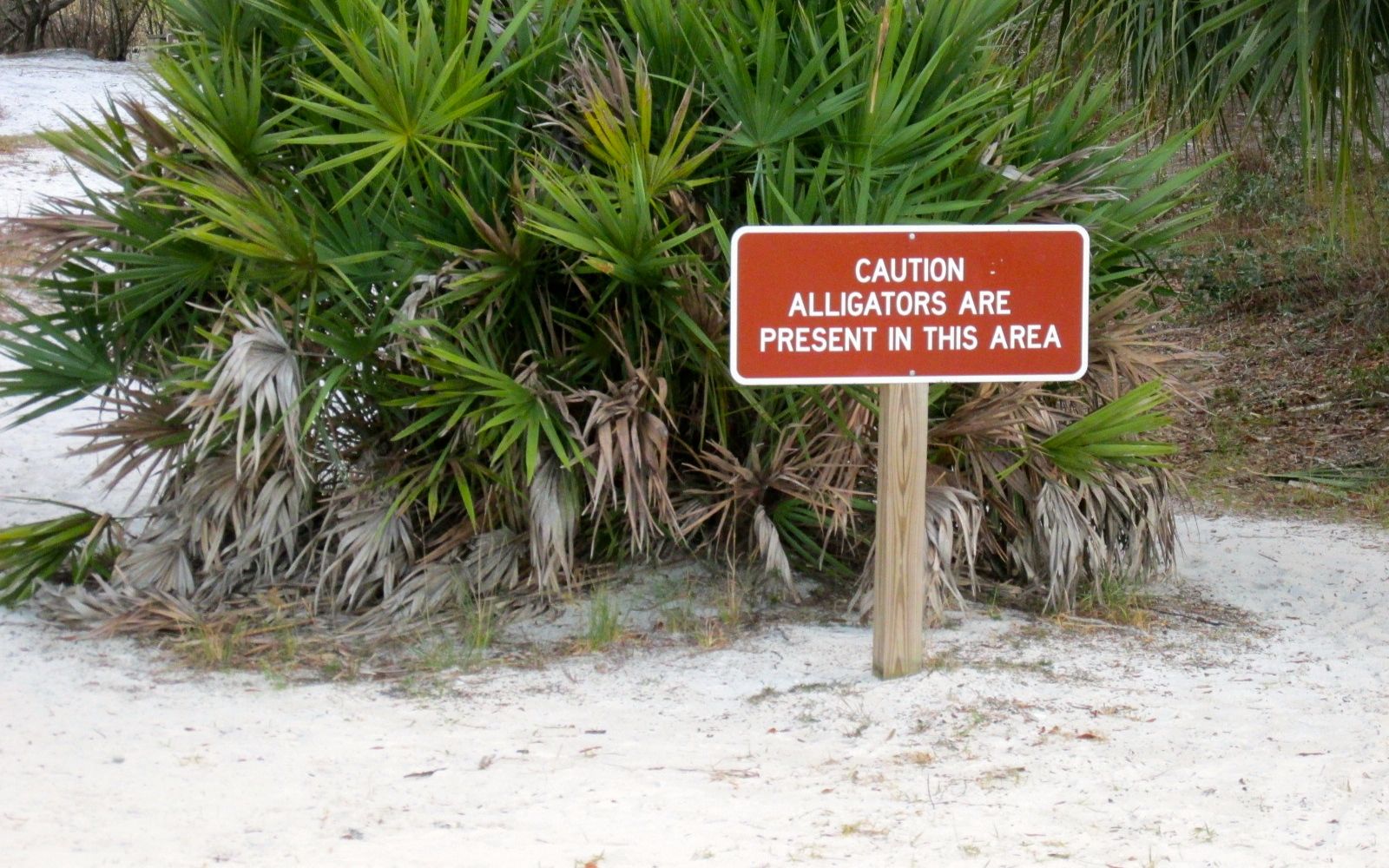
Caution Alligators present

Maybe!

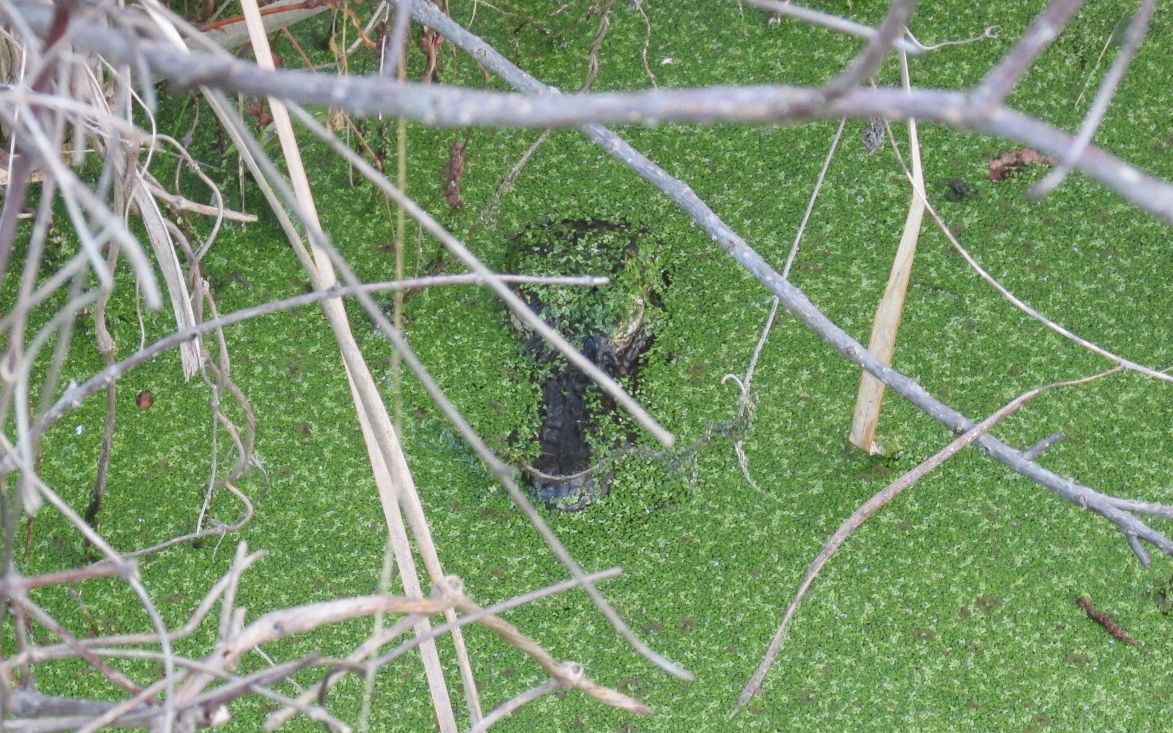
A real live alligator

Yes! I saw an alligator!

In talking with a photographer who lives in the area, he says that this fellow is 4 and a half feet long, and he showed me some shots he had taken of him when he wasn’t hiding.

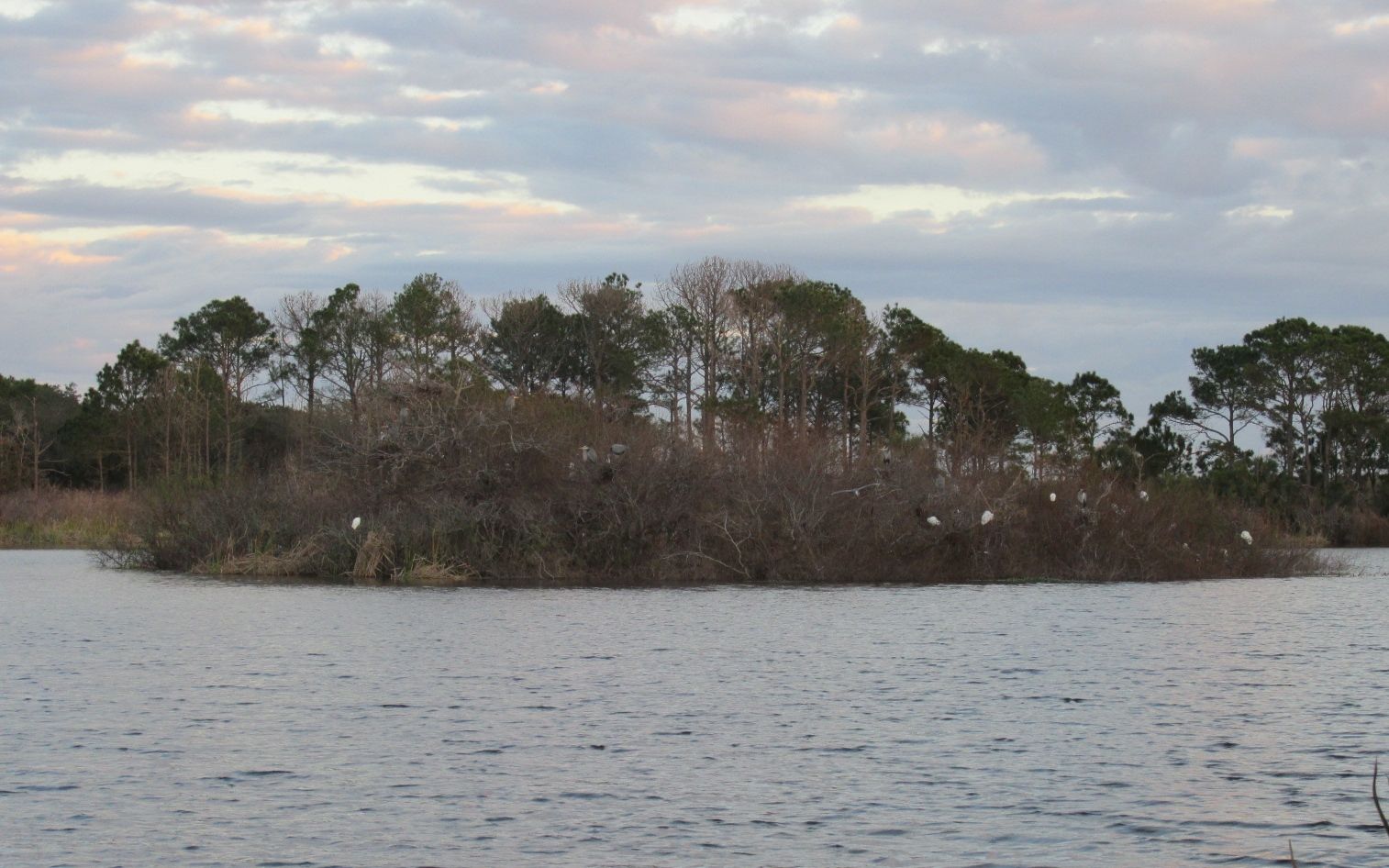
There were also birds. Great blue herons and egrets were perched on an island in the middle of the lake.

Bird Island in Alligator Lake

There was a great blue heron who was flying back and forth from the shore where we were standing. He was collecting sticks for building a nest on the island.

Stick colecting blue heron

The sun as getting close to the horizon, so I bid my new photographer friend adieu and headed for the beach.

On the boardwalk, I met a couple from Minnesota who were traveling in their A-liner popup. We chatted a bit about traveling and where we had been, and then the woman asked me if I was from Michigan. I looked down to see if I had my Discover Kalamazoo jacket on. I hadn’t put it on. I told her that I was and I asked her how she knew and she told me that she knew because I didn’t have an accent.

Go figure!

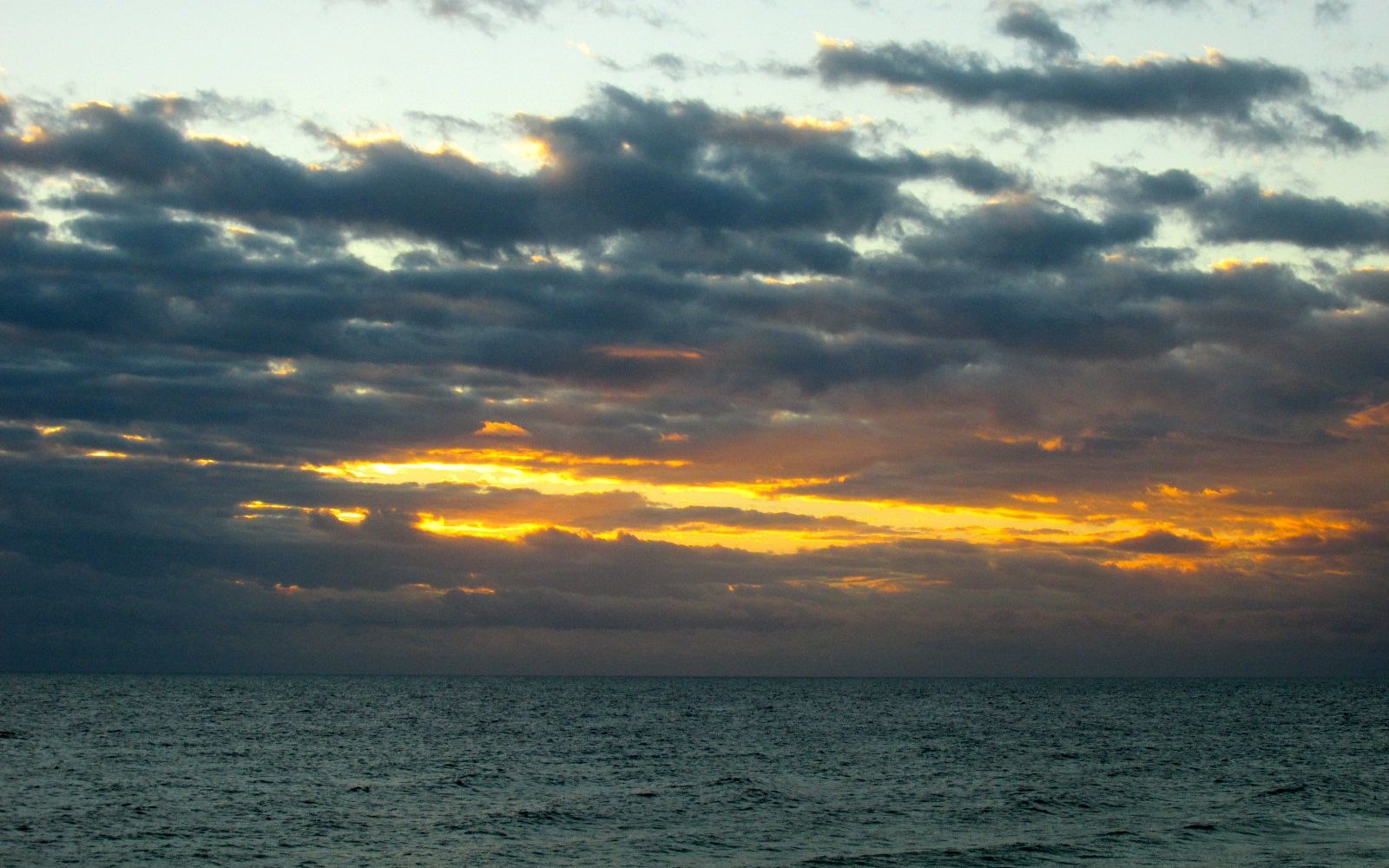
The sun went down.

Sunset to the west

Off to the east, though, the sky is clearing. Maybe the day tomorrow will be good.

Clearing in the east

February Funds

The good news: I spent less this month! $185.48 less.

I drove 1,885 miles, visited three states, stayed in seven state parks, one Army Corps of Engineers park and two privately owned campgrounds. My nightly campground average was $18.91, which is $11.75 less per night than last month.

Let’s hear it for less!

Here’s the breakdown of where my money went in February.
  • Other purchases                        $ 937.48
  • Campgrounds                               548.50
  • Gas                                                  308.50
  • Groceries                                       272.41
  • Tourism and Entertainment     126.64
  • Truck                                              116.32
  • Restaurants                                     71.56
  • Trailer                                              69.96
  • Laundry                                           12.00
  • Food and Drink on-the-go              9.27
  • Tolls and Parking                             8.00

                                                                              TOTAL      $2.479.64

If you care to compare with last month’s expenses, you will notice a big jump in the category “Other Expenses”. That is due to a few big expenses. I filed my income tax with H&R Block. They charged me $480.75 for their services. While I appreciate having someone else do it for me, now that my income is less variable, I might just try file my own next year.
The other big expense was applying for a passport. Sometimes you just have to take care of things like that. That cost $136.25. I also had my cell phone bill come due. $178.29. I have Verizon with 20 GB of data, unlimited talk and text.

I had to have my oil changed this month, which was $102.32, including replacing the air filter.

I also walked across the border to get my teeth cleaned while I was in southern New Mexico. That was $40, including the antibiotics I have to take when I have dental work done. I kind of wonder if that was the usual price…but it was cheaper than my co-pay when my regular dentist takes care of me. And now I have clean teeth.

Do you suppose going to Mexico for dental work and lunch should be classified under tourism?

Dental tourism

Apparently it’s a thing. (I was in the desert, though.)

What’s up for the coming month? Well, my water pump on Flo the Airstream needs to be fixed. Since I purchased an extended warrantee when I bought the trailer, that should run $100. A big bite is going to be the truck tires. I am looking at them and they look to me to be running on borrowed time. I expect to spend in the neighborhood of $1000 for the new rubber.

money bag

That’s the way the money goes…