Just a Little More around Wall.

My HISTORY Here! app told me of an interesting site near the exit of Badlands National Park.

The Prairie Homestead was billed as a “rare intact sod home”. It was build in 1906 by pioneers Mr and Mrs. Ed Brown during the last wave of western expansion.
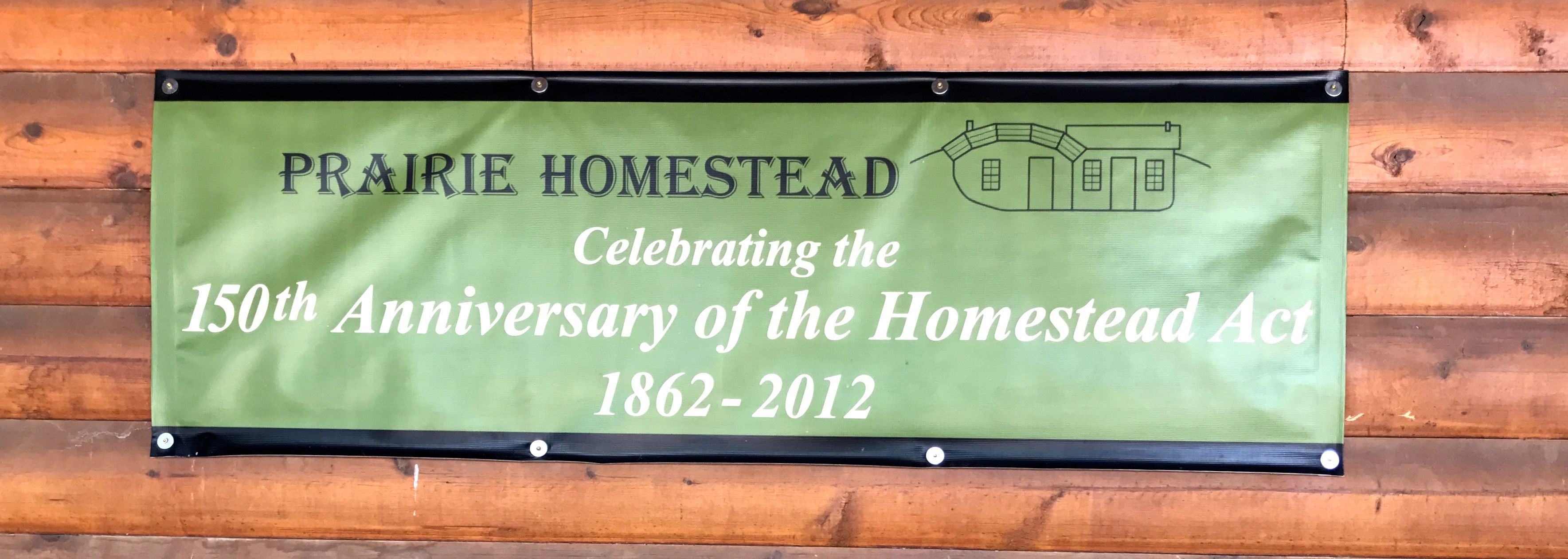
There was a sign on the visitor center that celebrated the Homestead Act of 1862. Signed into law in May 1862, the Homestead Act opened up settlement in the western United States, allowing any American, including freed slaves, to put in a claim for up to 160 free acres of federal land. By the end of the Civil War, 15,000 homestead claims had been established, and more followed in the postwar years.

There is a Homestead National Monument of America in Beatrice, Nebraska. I guess I’ll have to put that on my “next time” list. If you are interested in the effects of the Homestead Act of 1862, you might want to put it on your list, too.

According to the app, South Dakota was one of the last areas of the United States to be homesteaded. Dugouts and sod homes like this one were once common on the prairie.

I had first become acquainted with “soddies” in the Little House on the Prairie books, and I had long wanted to see a real one.
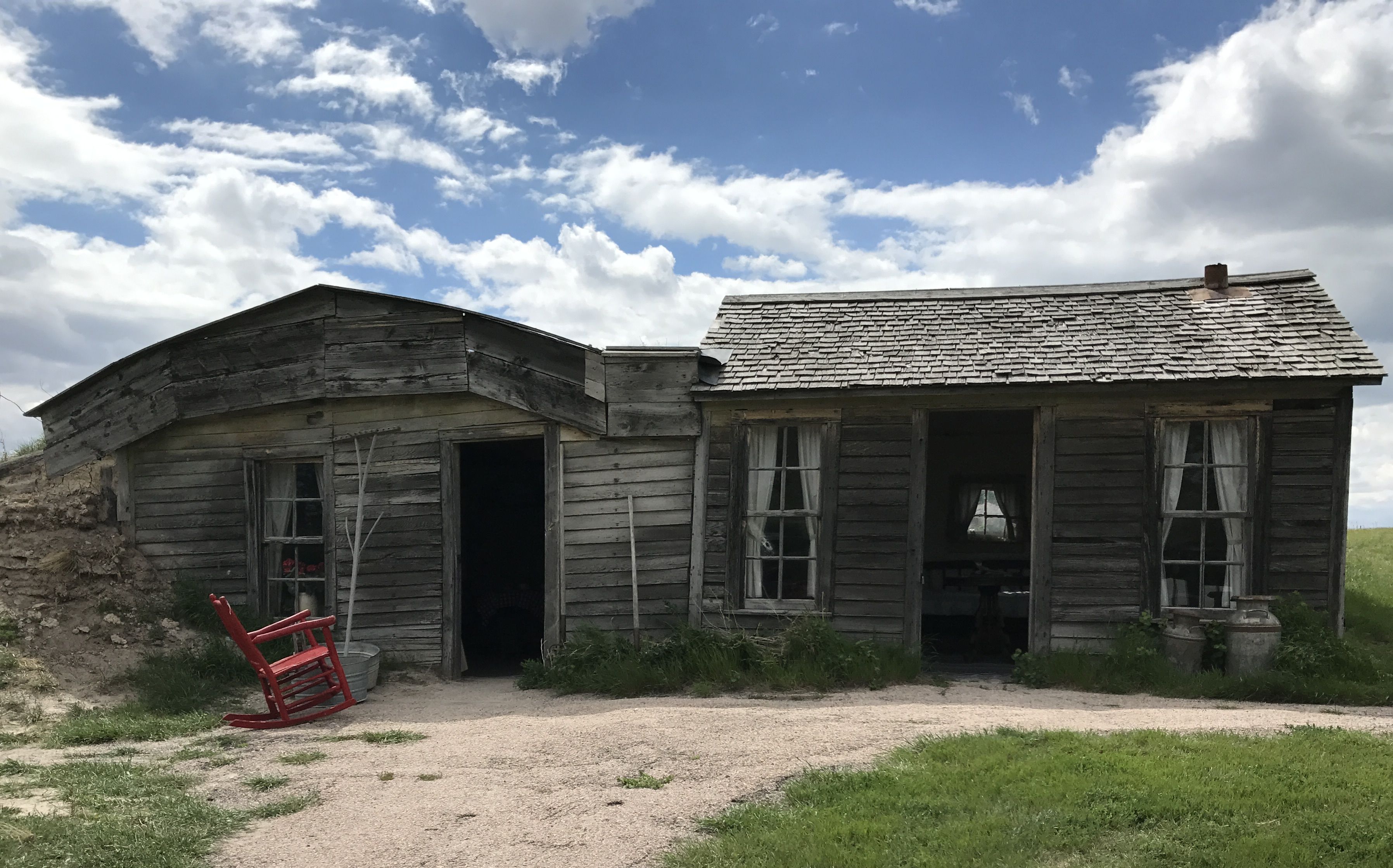
This was about as real as you could get. My word, these must have been hearty souls to try to make a go of it in these conditions. Or maybe they were desperate. In any event, life wasn’t easy.
This was one of the interior walls.
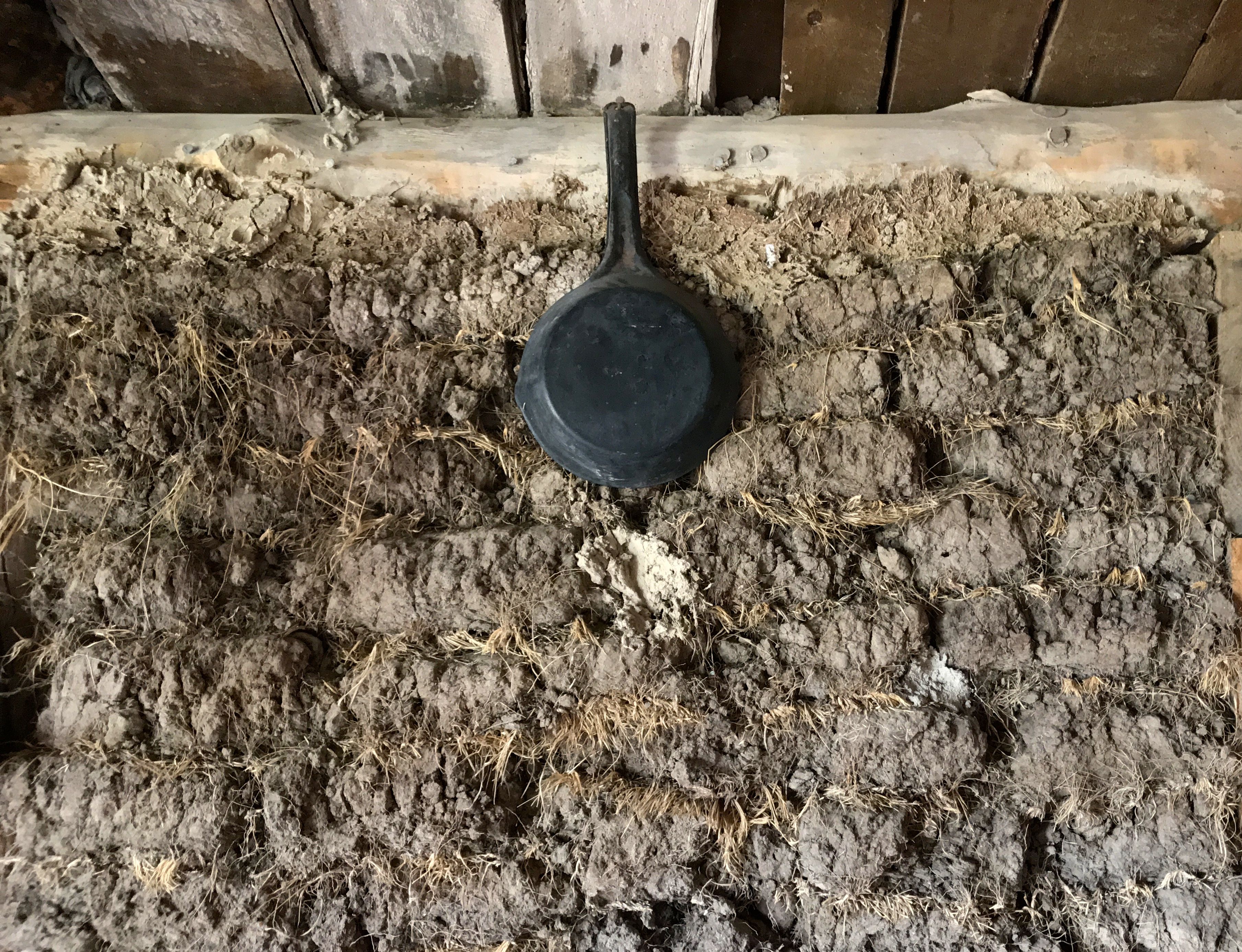
I remember reading somewhere that some sod houses had plaster on the inside and eventually were covered in clapboard and painted. I’ll bet the R value of the sod made the houses economical to heat.
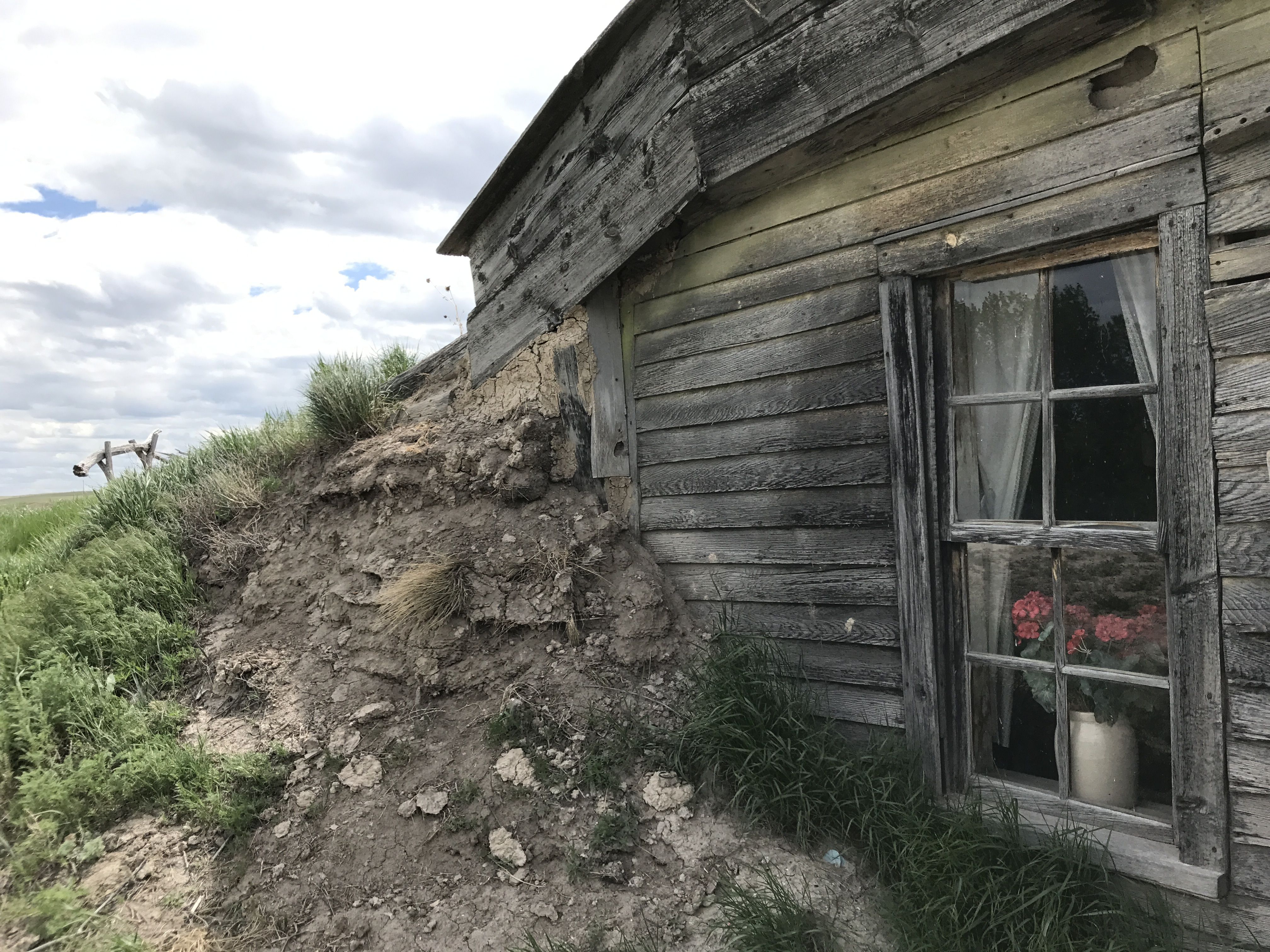
They built right into the hillside and added on as more materials became available. Bear in mind that this is 1906. Young folks might think that was a long time ago, but when I was a kid, I still would find pennies from that era in my change.
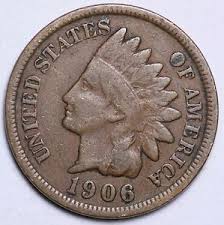
This was before the advent of the Lincoln penny, which was issued in 1909, the centennial of his birth.
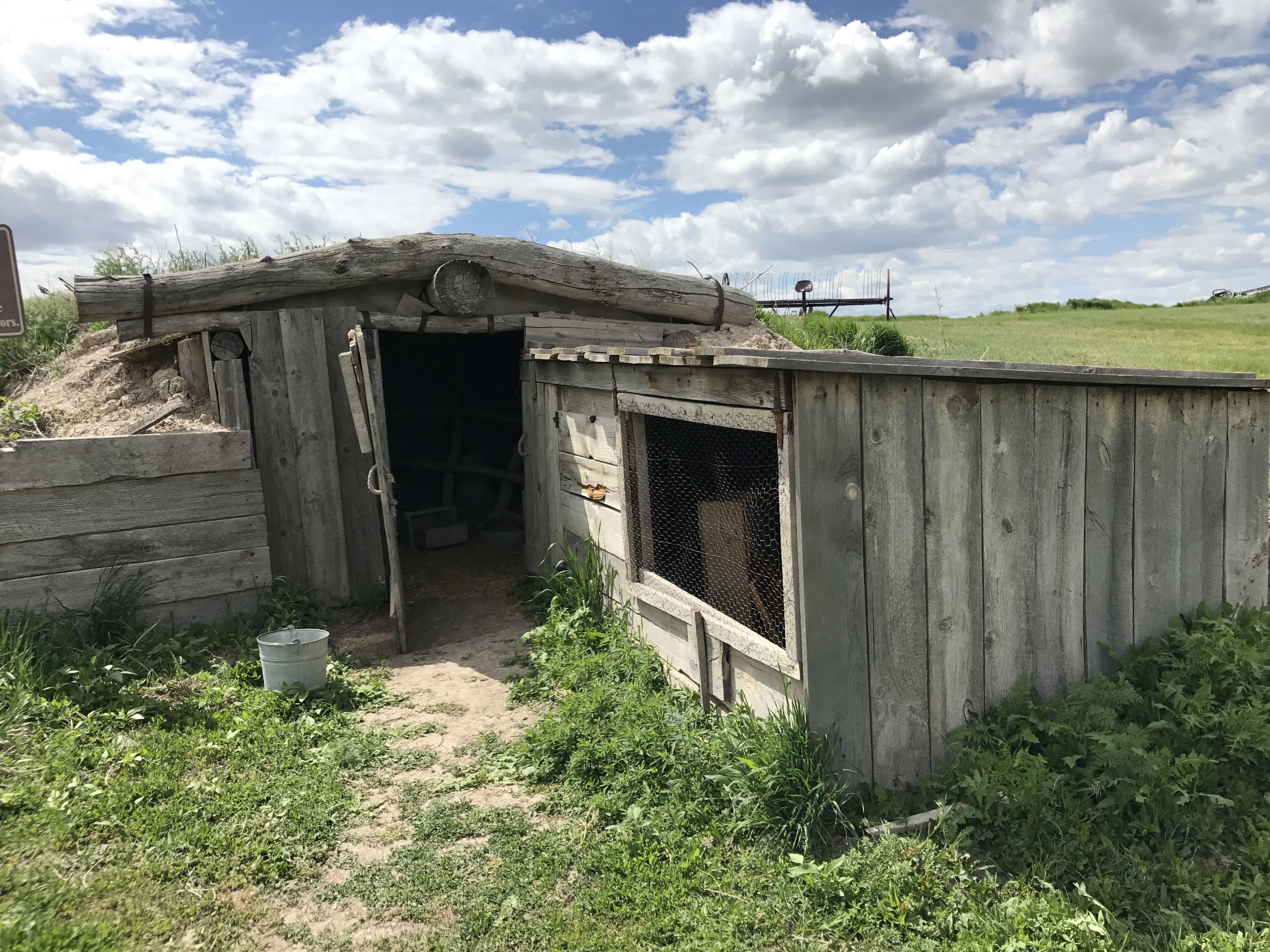
The outbuildings were built the same way. This is a chicken coop.
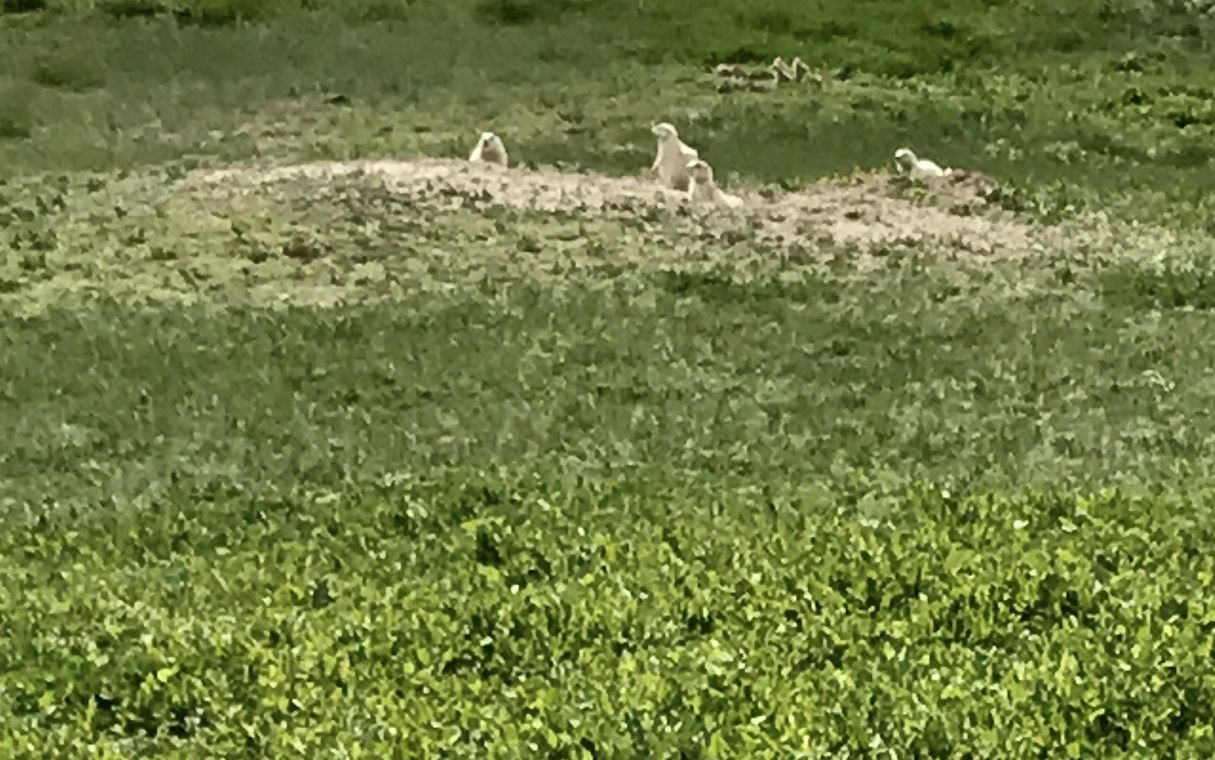
I did manage to snap a somewhat decent photo of these white prairie dogs.
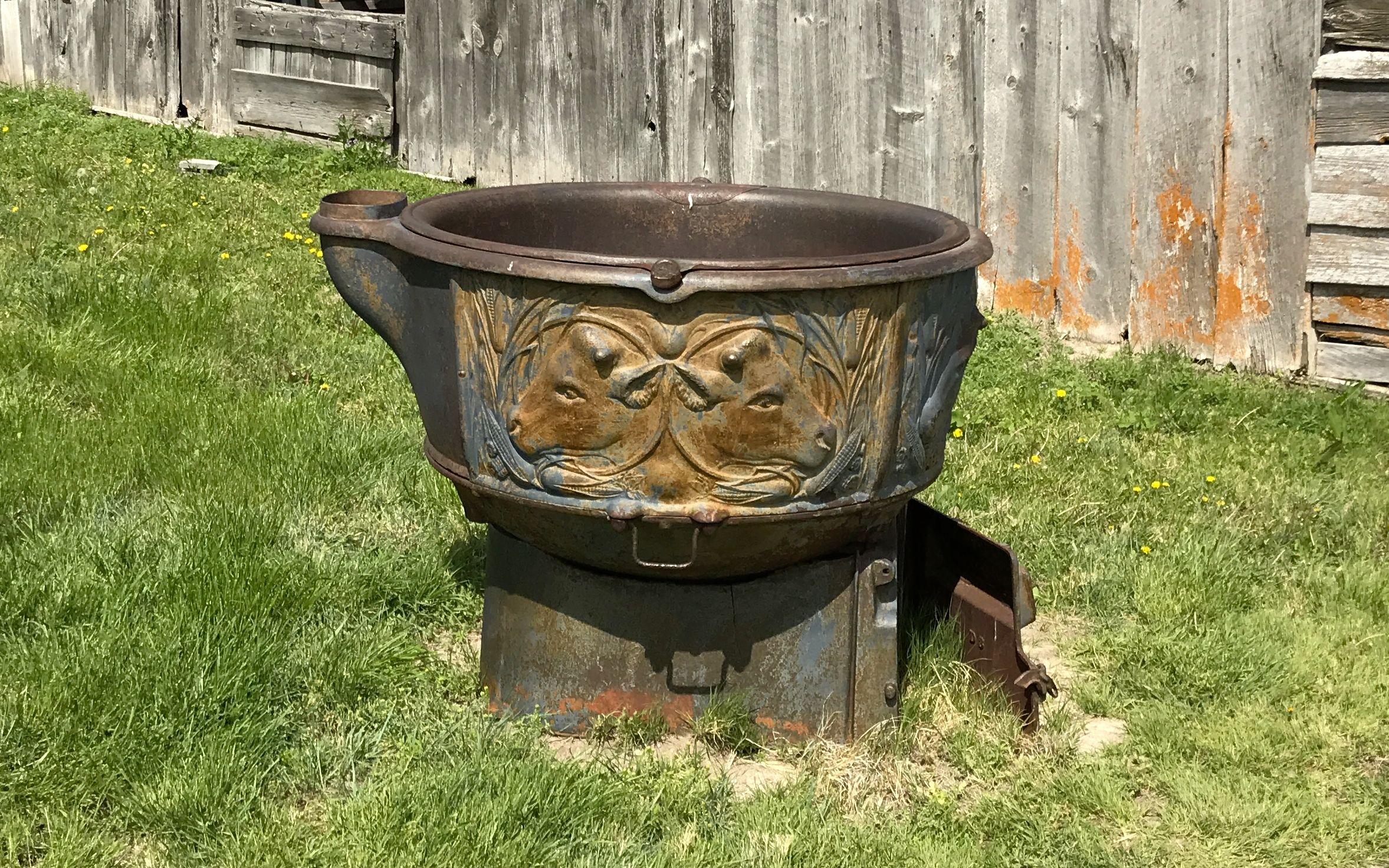
They had the usual assortment of old tools and artifacts scattered about. The sign my this piece of equipment said that it was an “agricultural boiler”. It was typically shared by neighbors to render hogs, scald chickens or wash heavy bedding. It is rather elegantly decorated for such a utilitarian item.
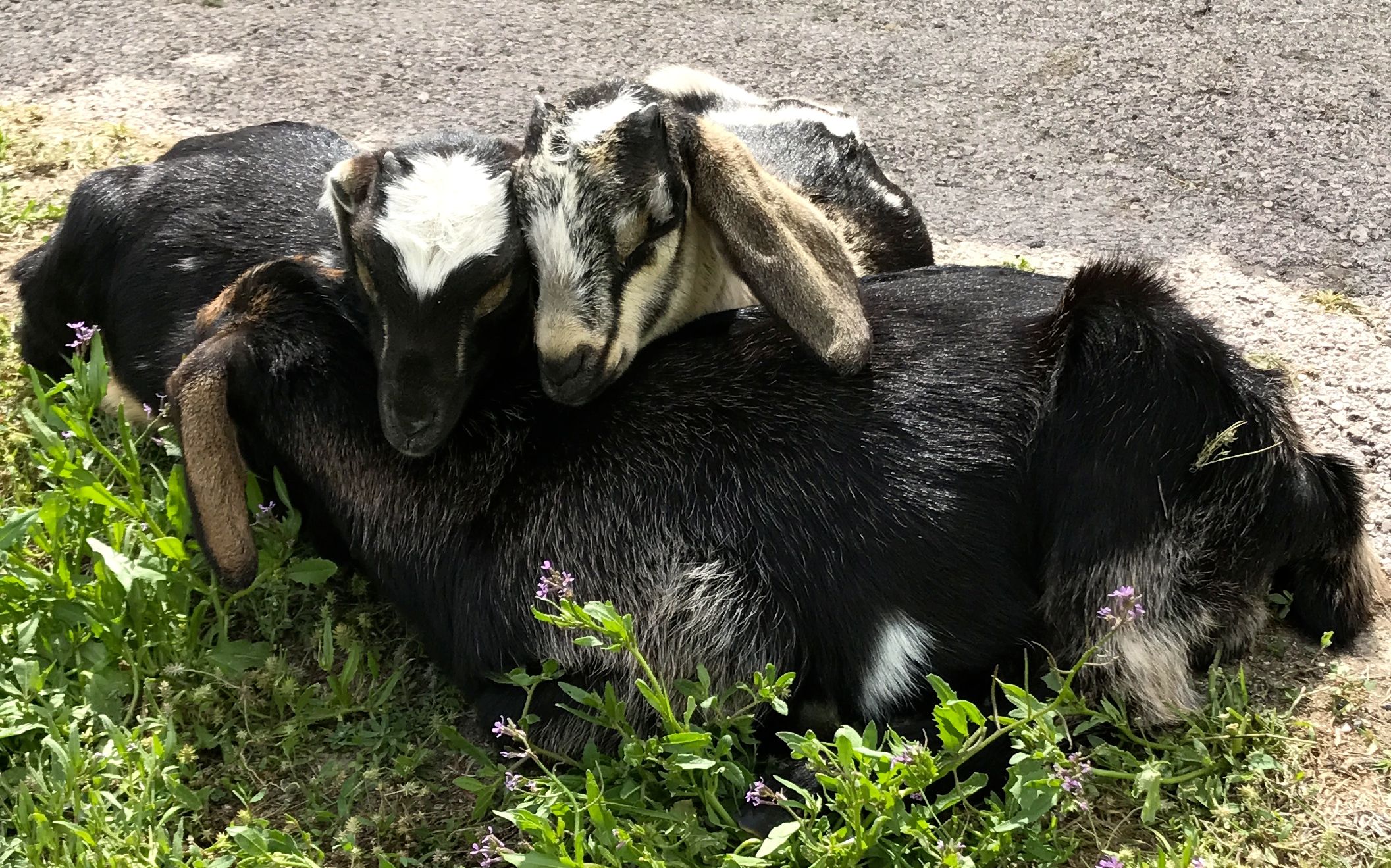
They had a few goats there, but they seemed to be taking a break from their goating duties.

I headed out for my next stop, the Minuteman Missile National Historic Site.

It boggles my mind that from the time Mr. and Mrs. Ed Brown built their sod house in 1906, we experienced World War I, World War II, the Korean Conflict and were deep into a cold war with the Soviet Union by the time I was born in 1955.
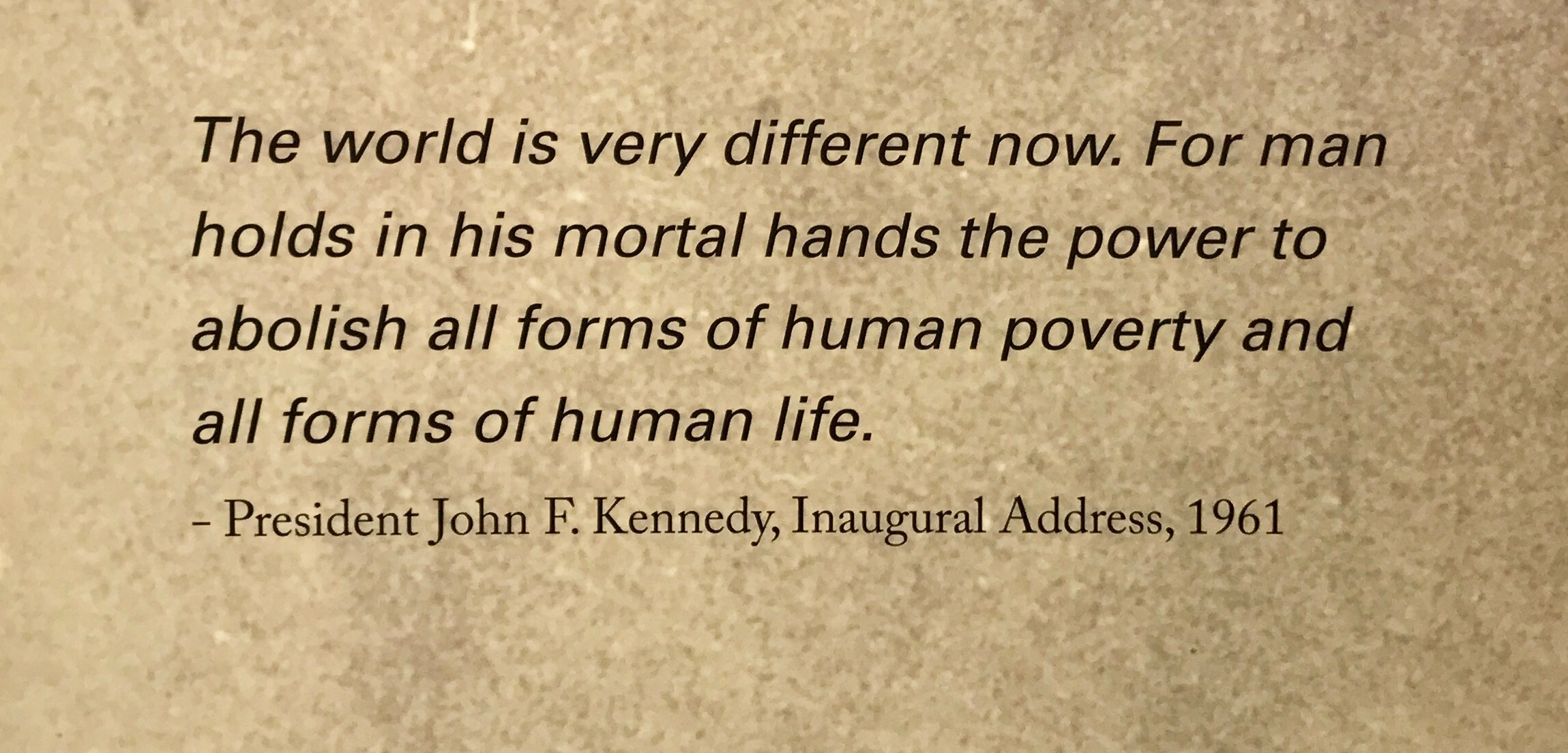
It was a fearful time to grow up. I remember going into the basement of the school to practice what we would do in case of an attack during the Cuban Missile Crisis. It was quite a scary time.

Of course, as long as there is a buck to be made, someone will try to come up with a way to make it.
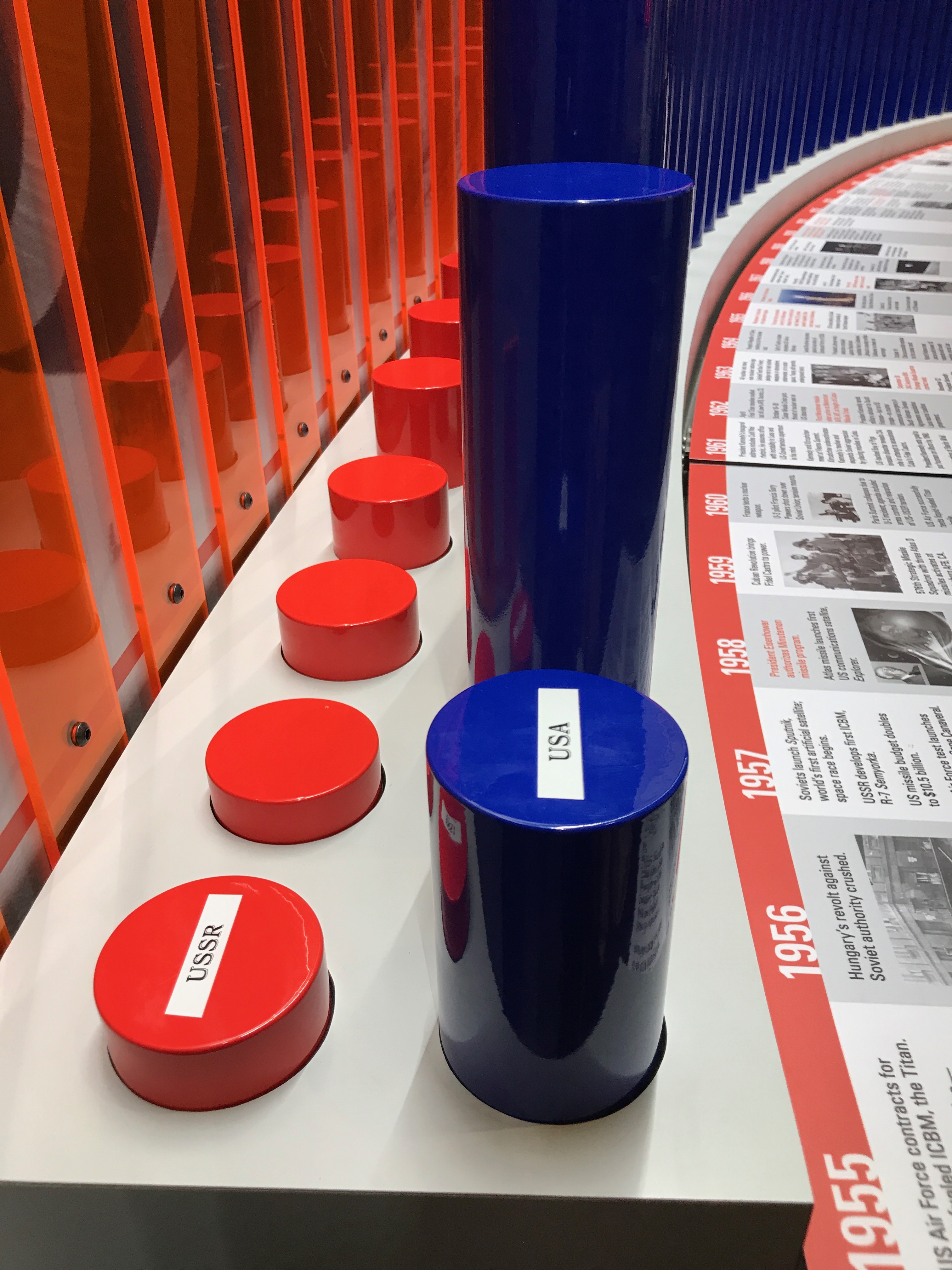
I always appreciate an interesting representation of data. Would you look at the relative sizes of the missile stockpile between the USA and the USSR. Think of all the human poverty that could have been abolished with the money that went into creating this arsenal.
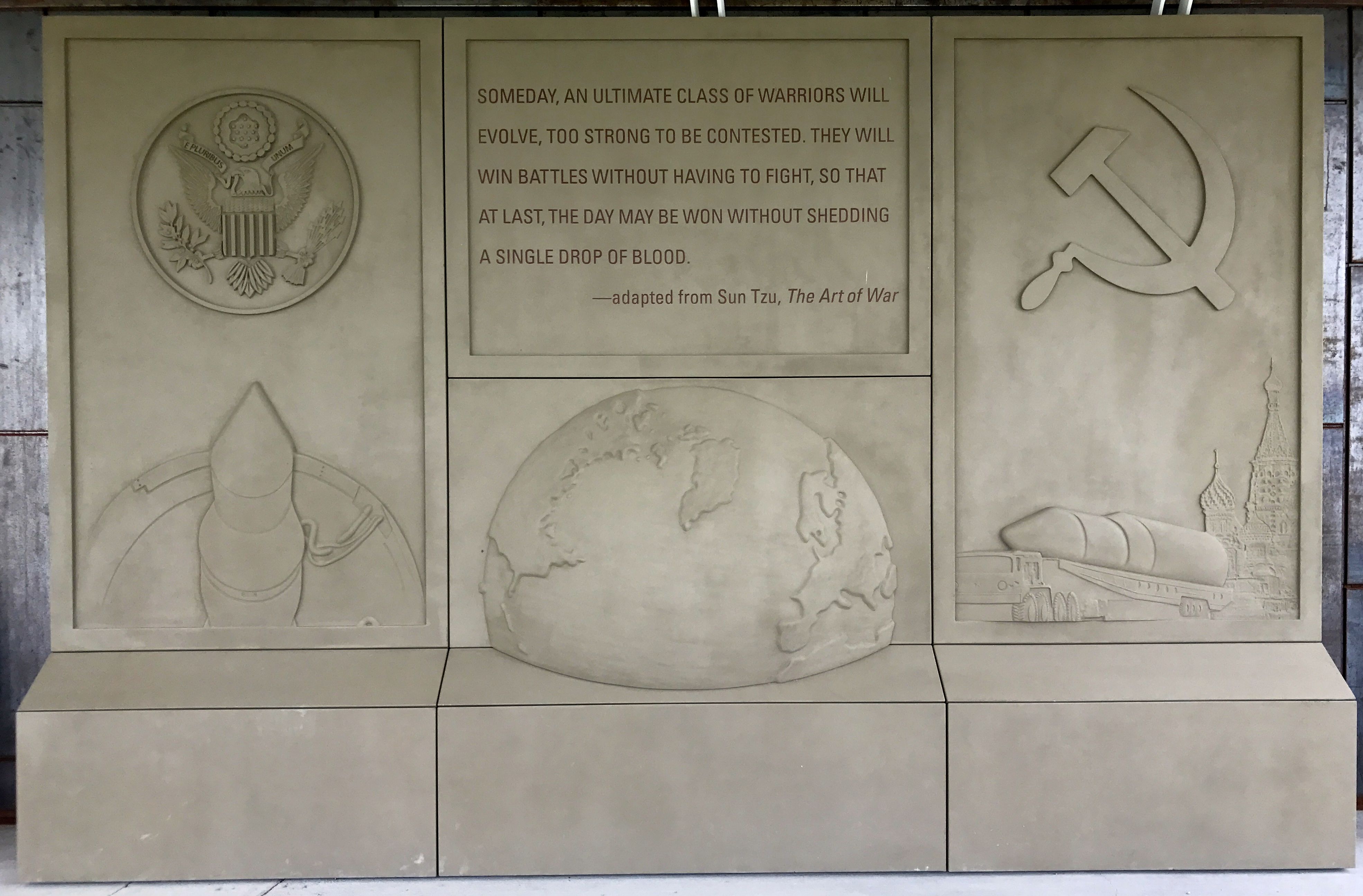
I am not sure how to take this plaque that is displayed at the entrance to the museum. Are they saying that the nuclear arms race was a good thing because it enabled us to “fight” without spilling a drop of blood?

There were a number of displays, and if you are interesting in this period, you would find them interesting. They weren’t easily accessible for photography.

There is also a missile silo you can visit – Delta-01. (I borrowed this photo from the Minuteman Missile National Historic Site.)
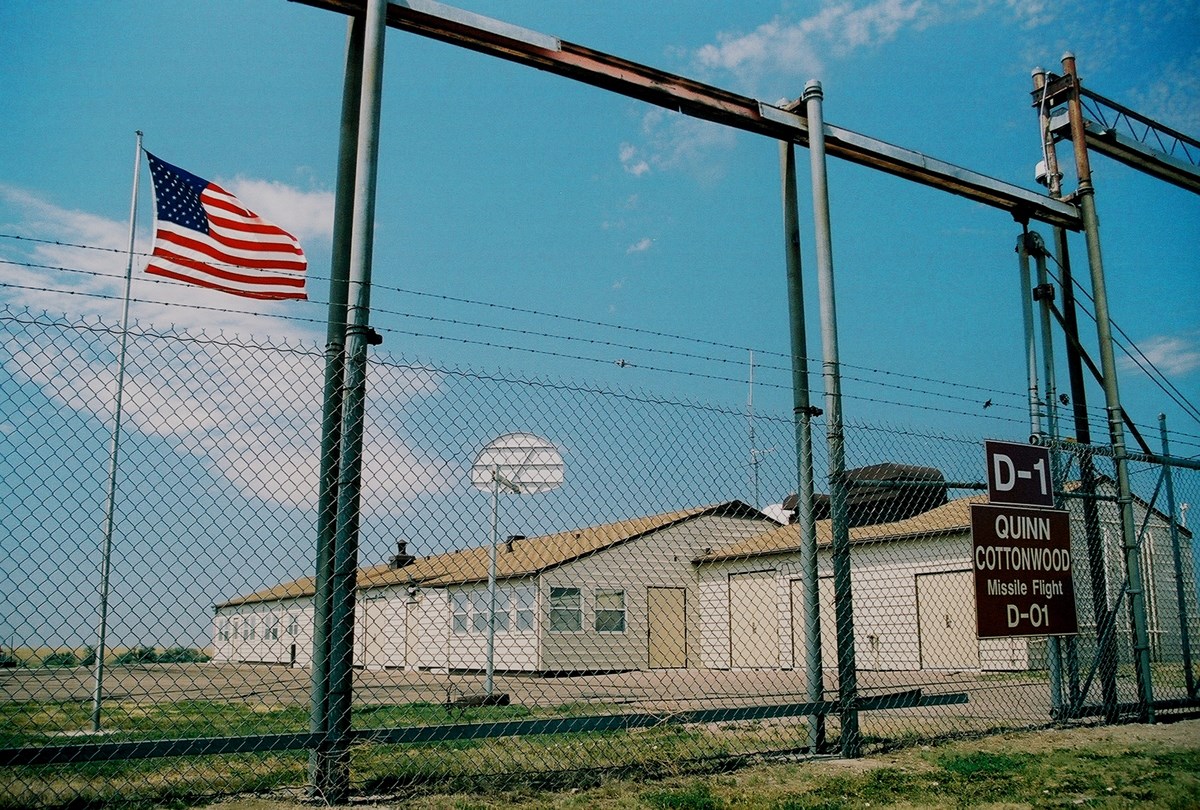
I didn’t try to book a tour. They warn you that you have to be able to climb up two 15-foot ladders in case of a power failure. I didn’t like the idea of that, so I decided to pass on the opportunity.

I did spot a sign for the Delta-09 site, and decided to see what I could see.
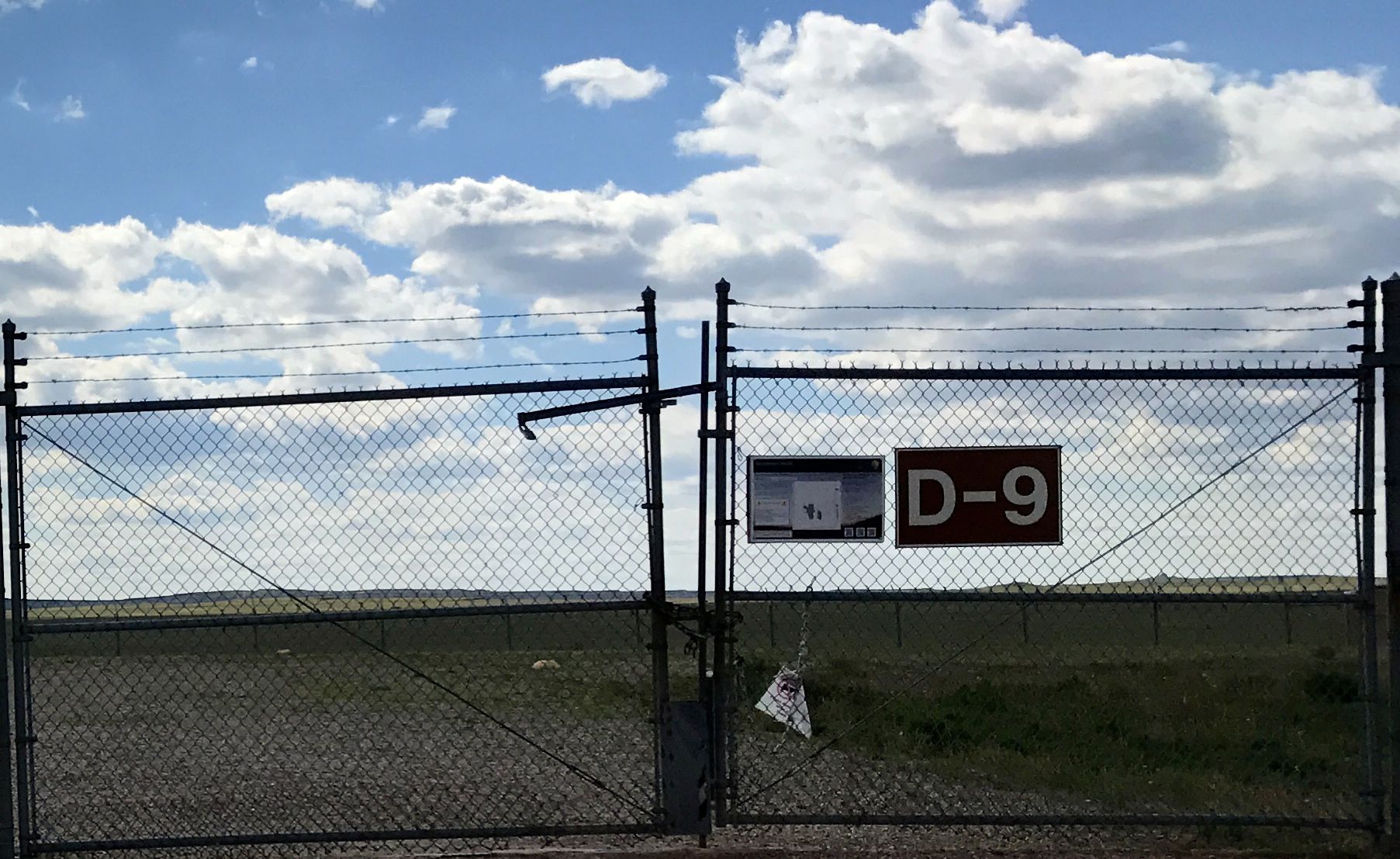
According to their website, from 1963 until the early 1990s, the missile silo at Delta-09 contained a fully operational Minuteman Missile, bearing a 1.2 megaton nuclear warhead. The Delta-09 missile silo was one of 150 spread across western South Dakota. In total there were 1,000 Minuteman’s deployed from the 1960’s into the early 1990’s.
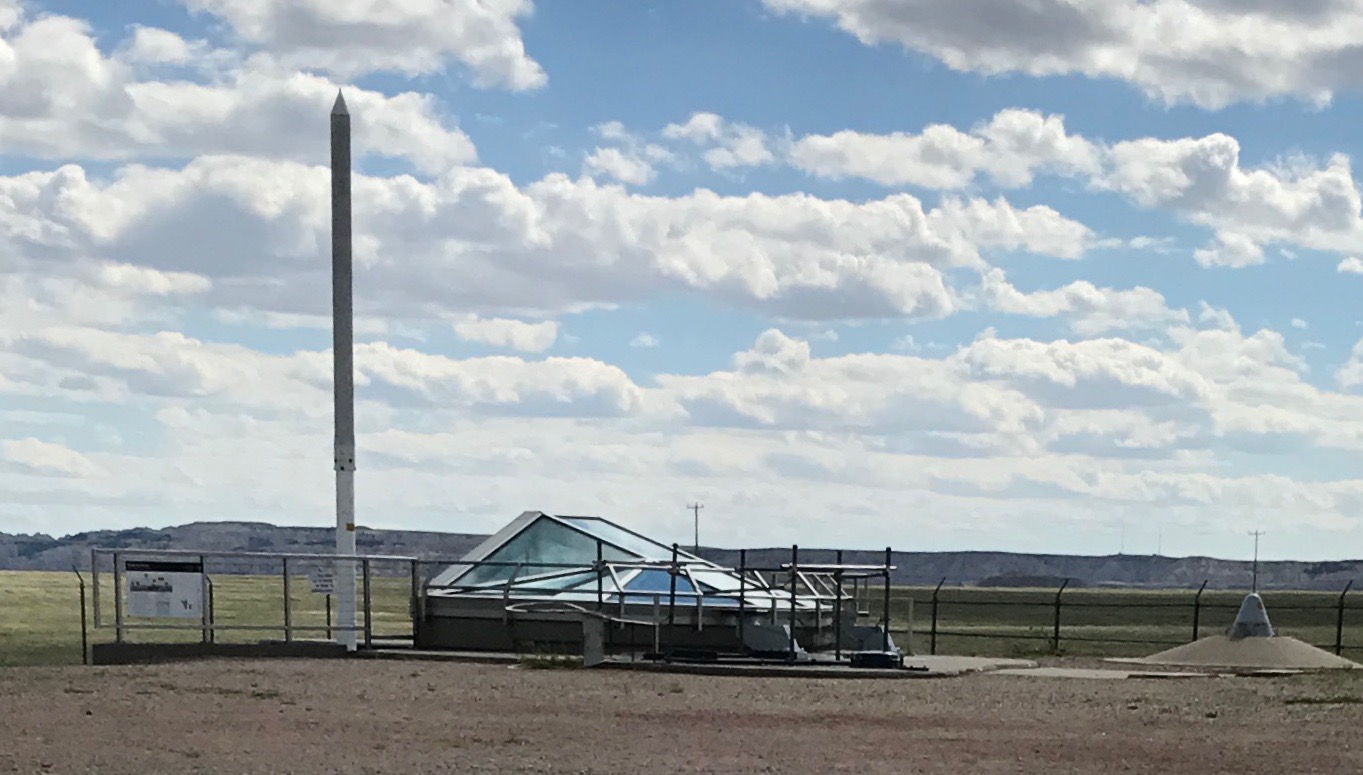
There wasn’t a lot to see. But, still, it was quite a significant place. I am glad that it is now a historical site.

By then, I had just about exhausted the things to do in and around Wall and it was time to move on.

Next stop: Mitchell, South Dakota and the World’s Only Corn Palace!
Custer State Park and Wind Cave

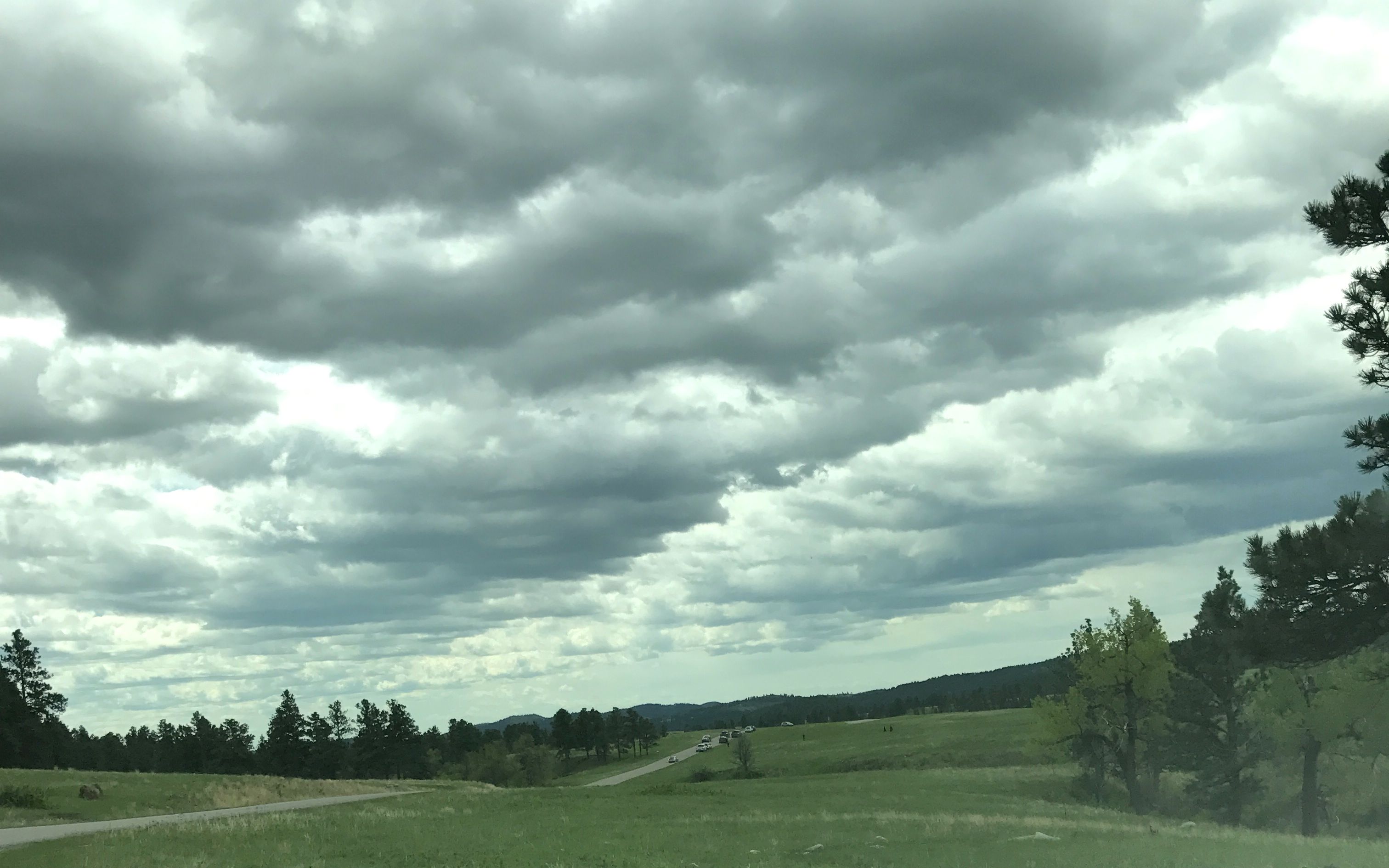
The next day dawned gloomy and overcast, but I headed out to explore Custer State Park and Wind Cave National Park.

People had raved about Custer State Park – mostly about the experience of camping there and the wildlife that you could see. What really captivated me was that they were having a free admission day. As a former teacher and a retiree, free is one of my favorite words.

In spite of it being a rather bleak day, but I set out to see what I could see.

Driving along, looking at the prairie and the rather sparse trees seemed to be the thing to do. My eyes were peeled for buffalo, though.

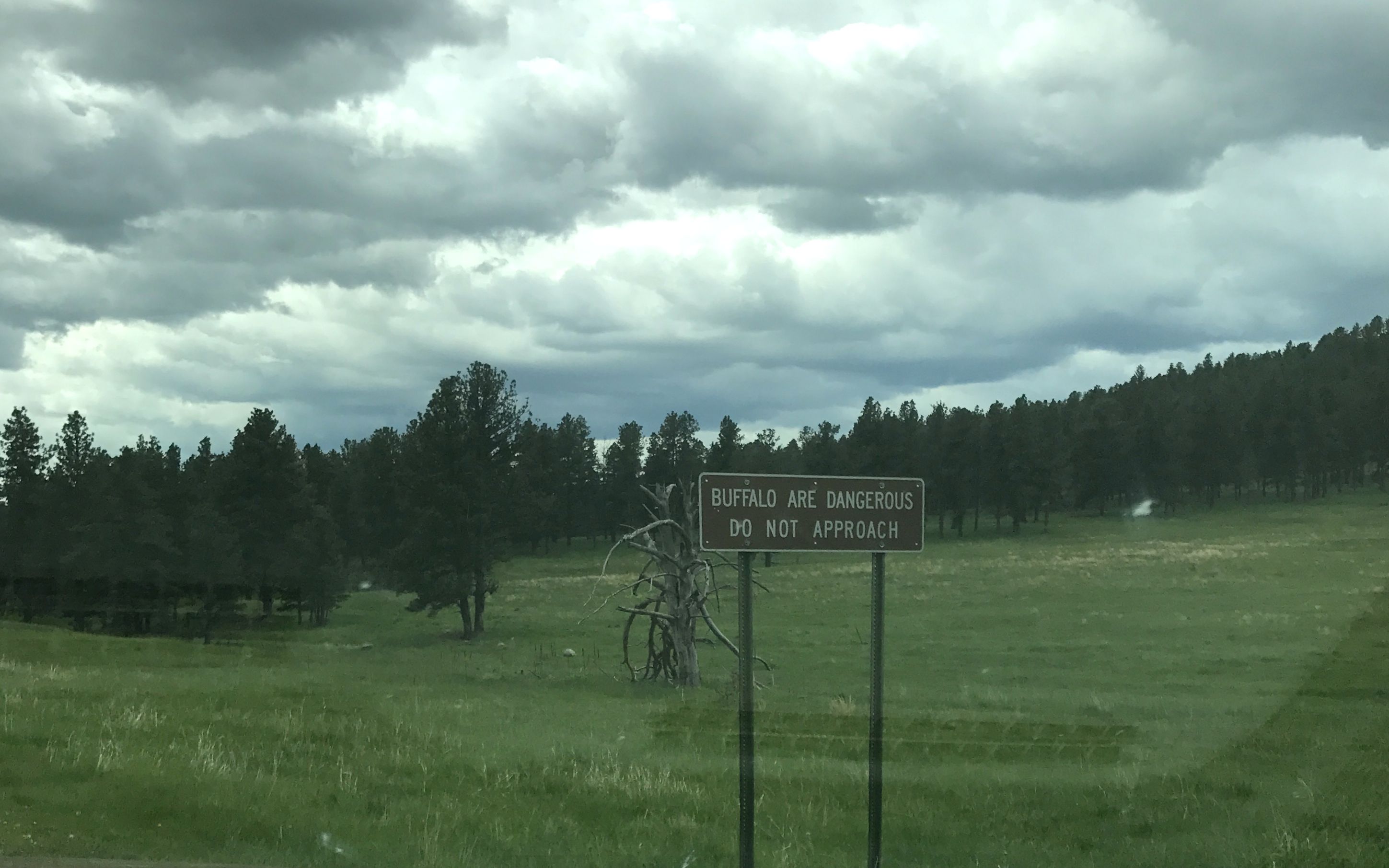
I thought this was an appropriate warning.

And why should you stay away from buffalo? Well, they stand nearly six feet tall at the shoulder and weigh nearly a ton.

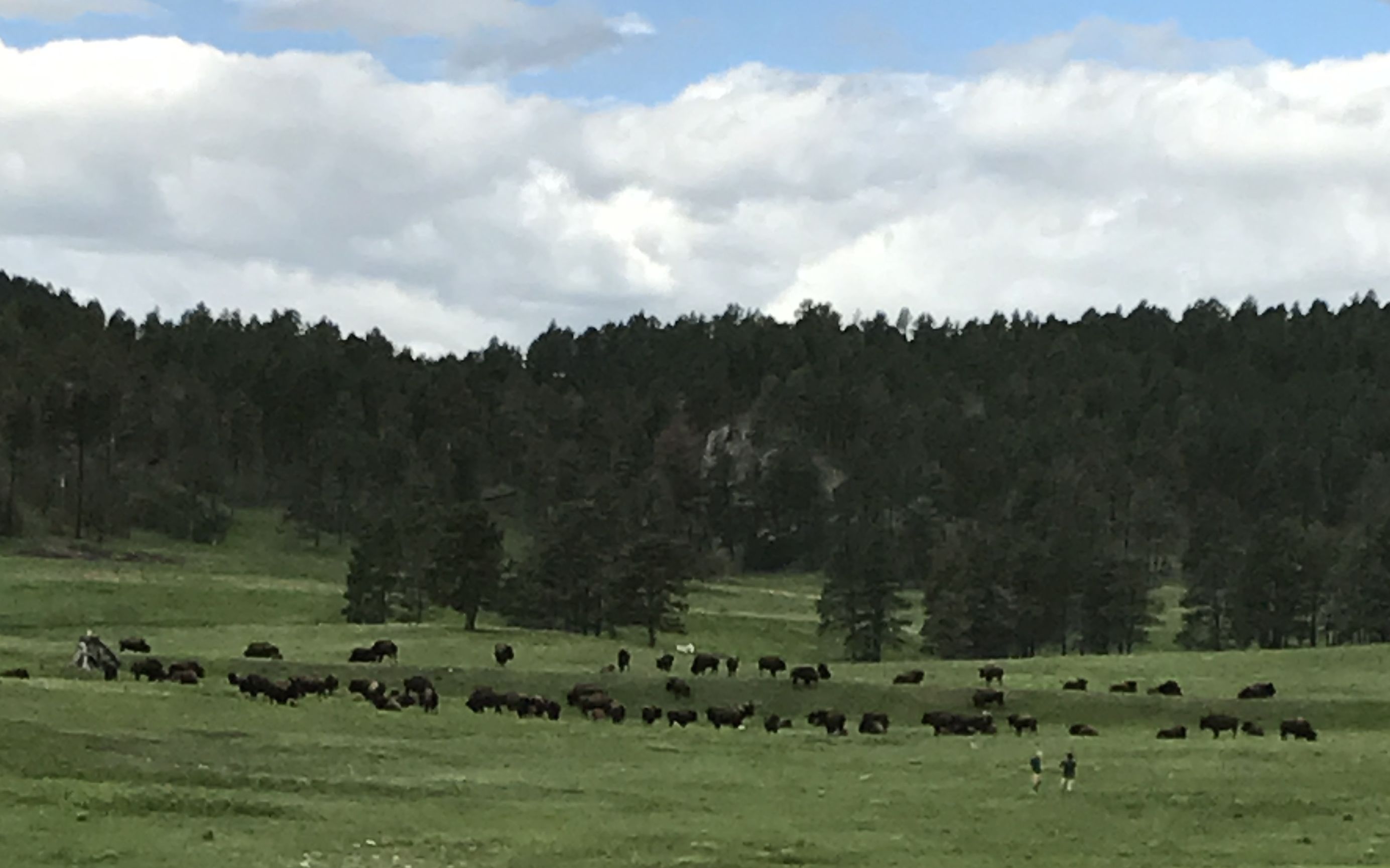
I finally came upon a herd of buffalo. If you look in the lower right quadrant of the photo, you might notice that there are two fellows who didn’t heed the warning on the sign. When the ranger came up he used his bullhorn to tell them to come away from the herd. They did head back to their cars, but I think they avoided the ranger.

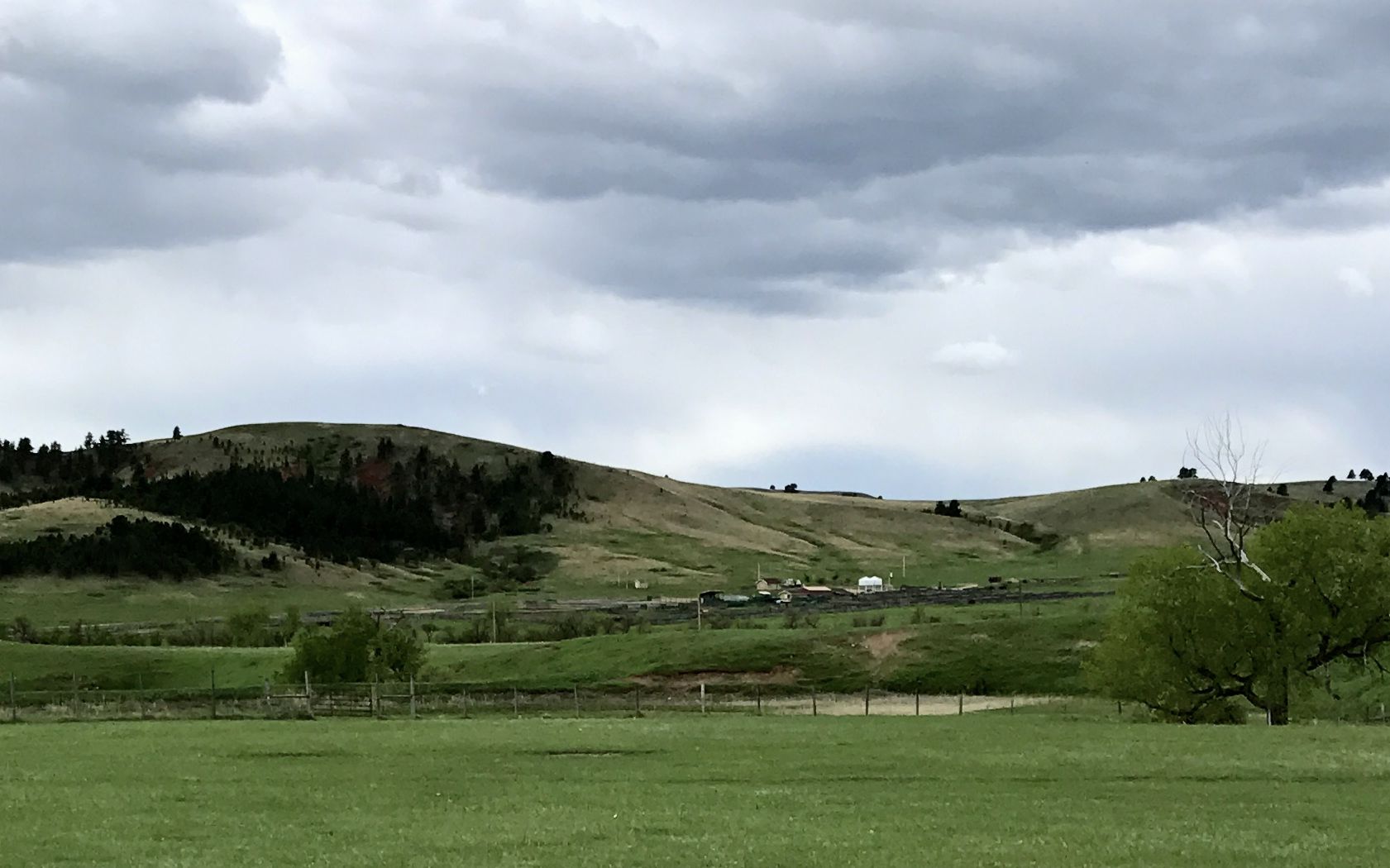
These are the corrals that are used mainly in the fall when the annual buffalo roundup and auction are held.

The park herd averages about 1,450 animals after the calves are born. During the round up in October, the herd is bright into the corrals, calves are branded and females are vaccinated. Approximately 500 animals are sorted out for sale and then tested to make sure that they meet state livestock regulations.

The buffalo that will remain in the park are released. Those that are going to be sold remain in the corrals until the auction on the third Saturday of November. Buyers come from all over the United States and Canada to take part in the sale. They buy the buffalo for breeding stock or for slaughter.

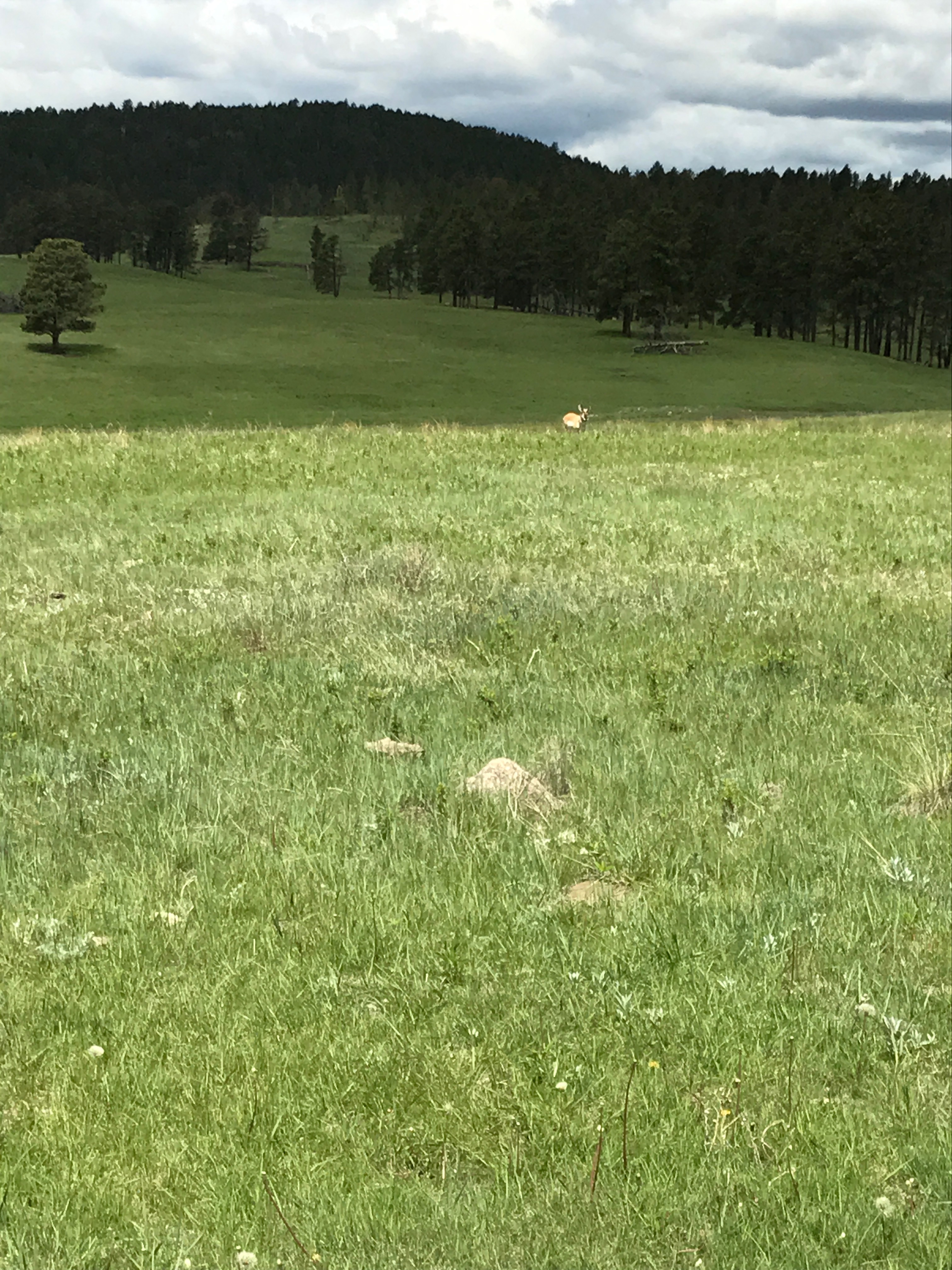
Quite frankly, the animals in Custer State Park are quite savvy and they keep their distance from the road.

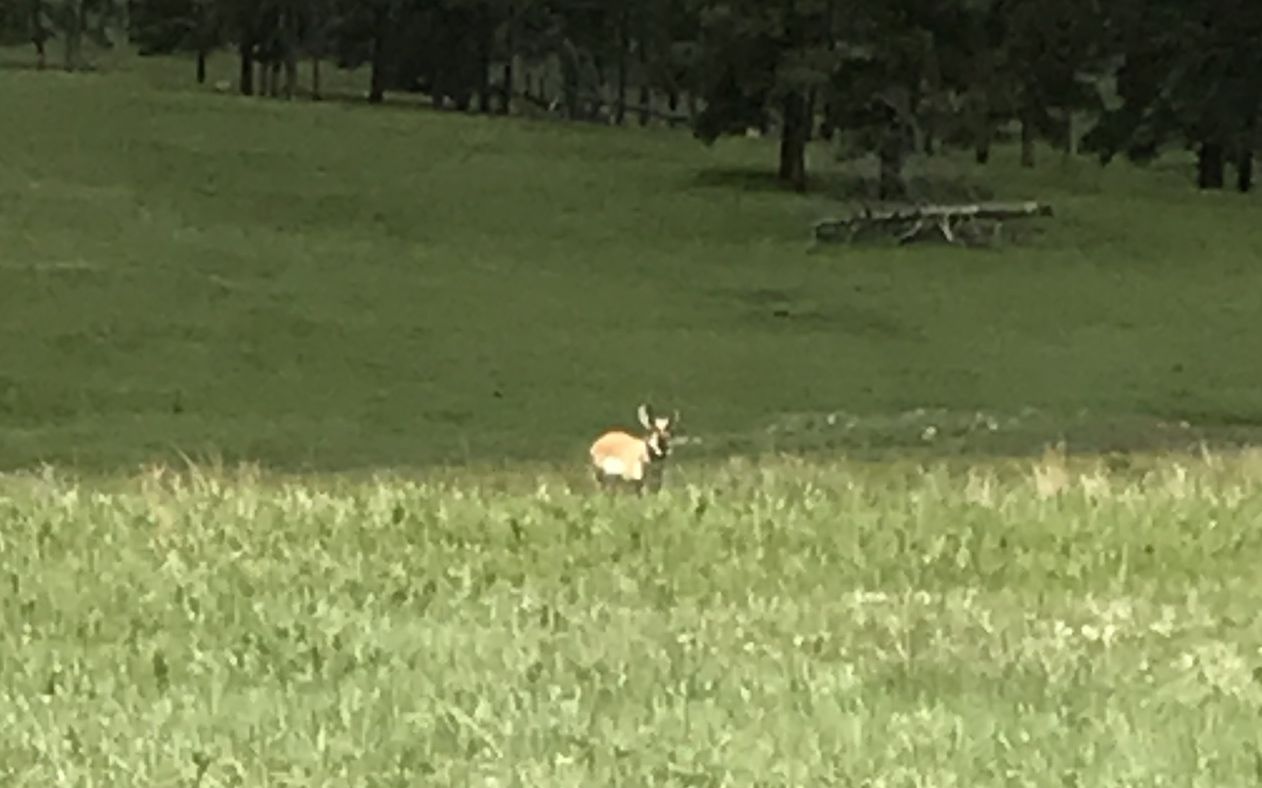
You can tell this animal – perhaps an antelope – stayed far back because I had to enlarge the photo to the point of distortion to be able to make it out.

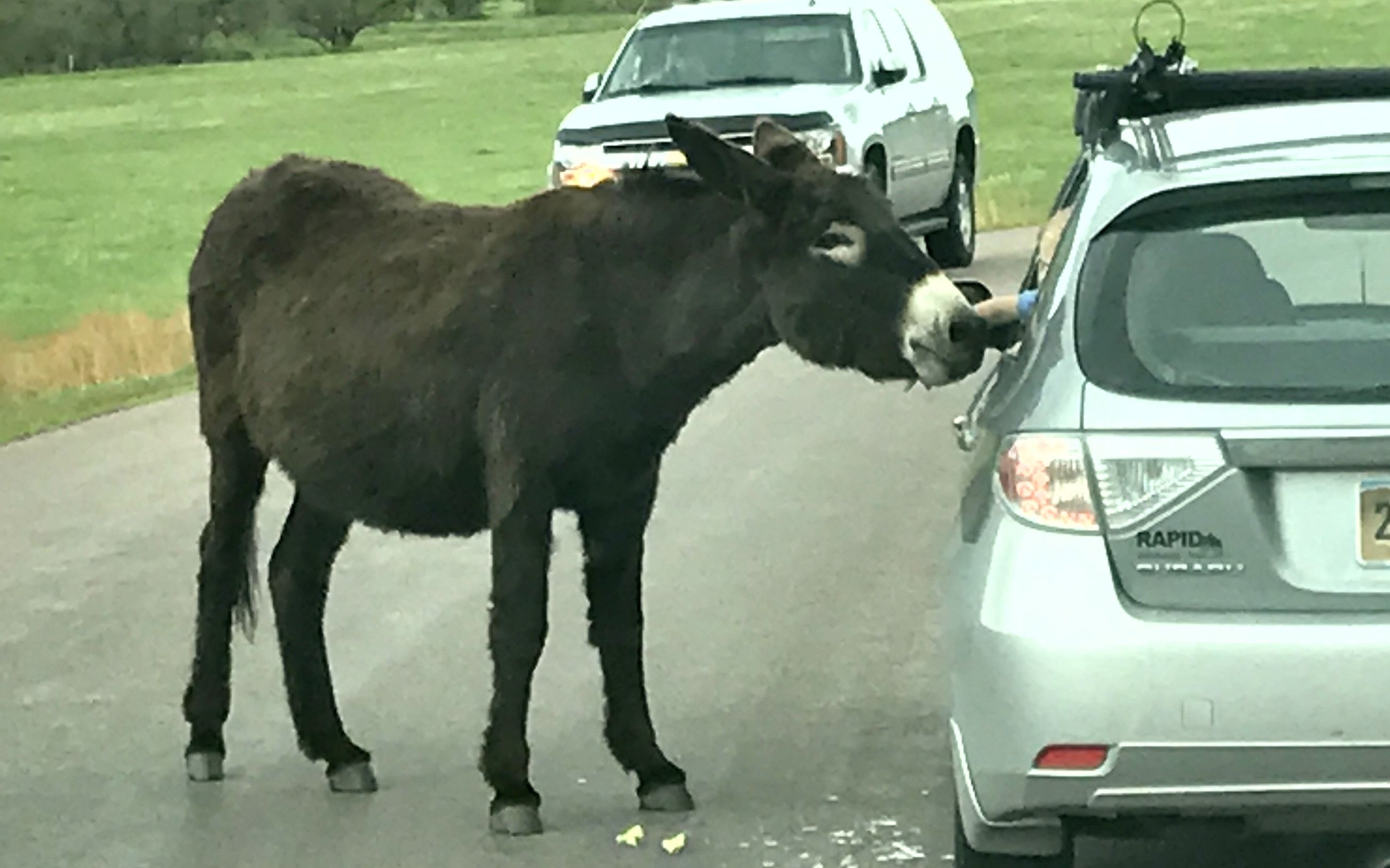
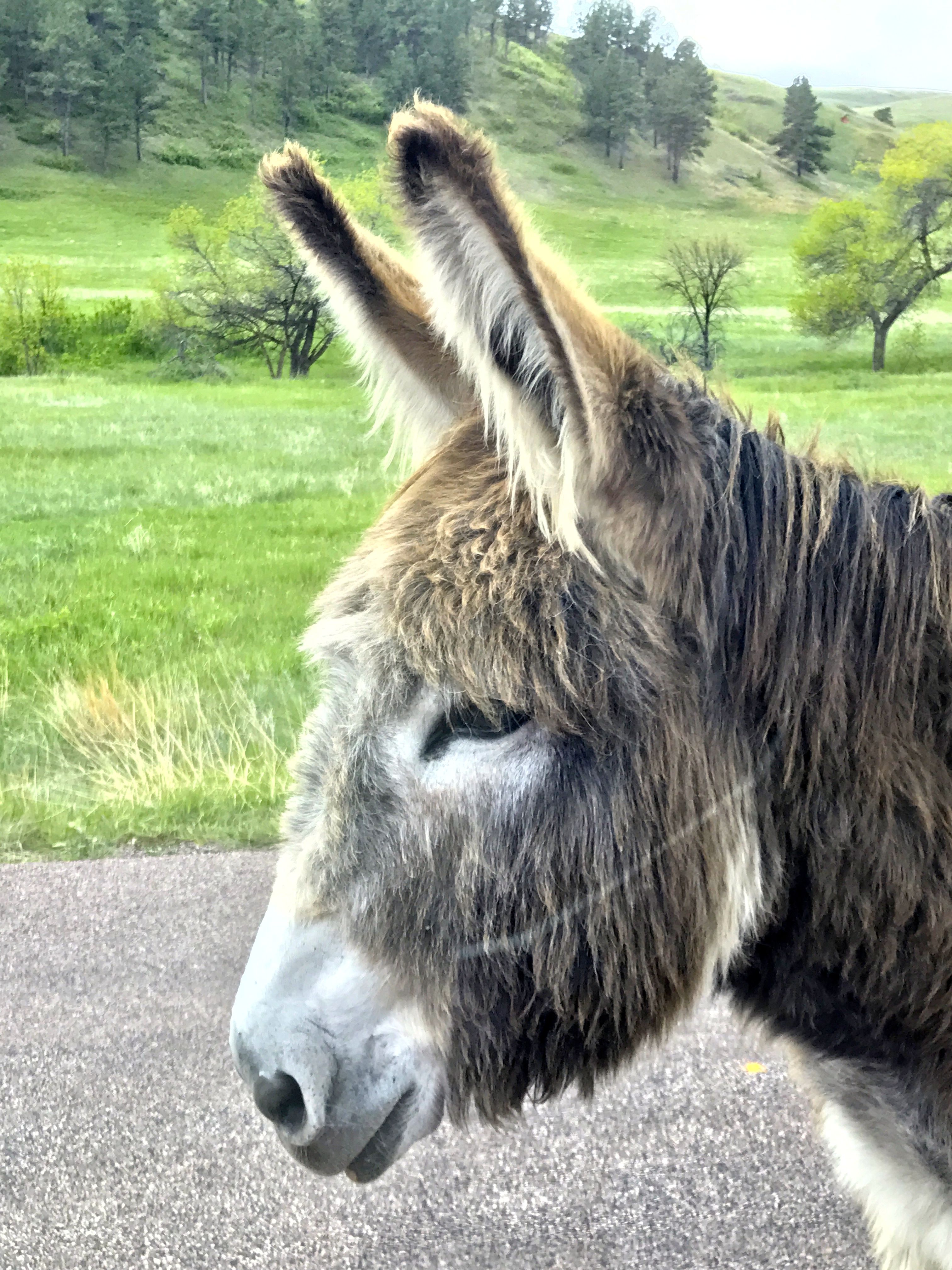
One breed of animal that doesn’t keep its distance is the wild burro.

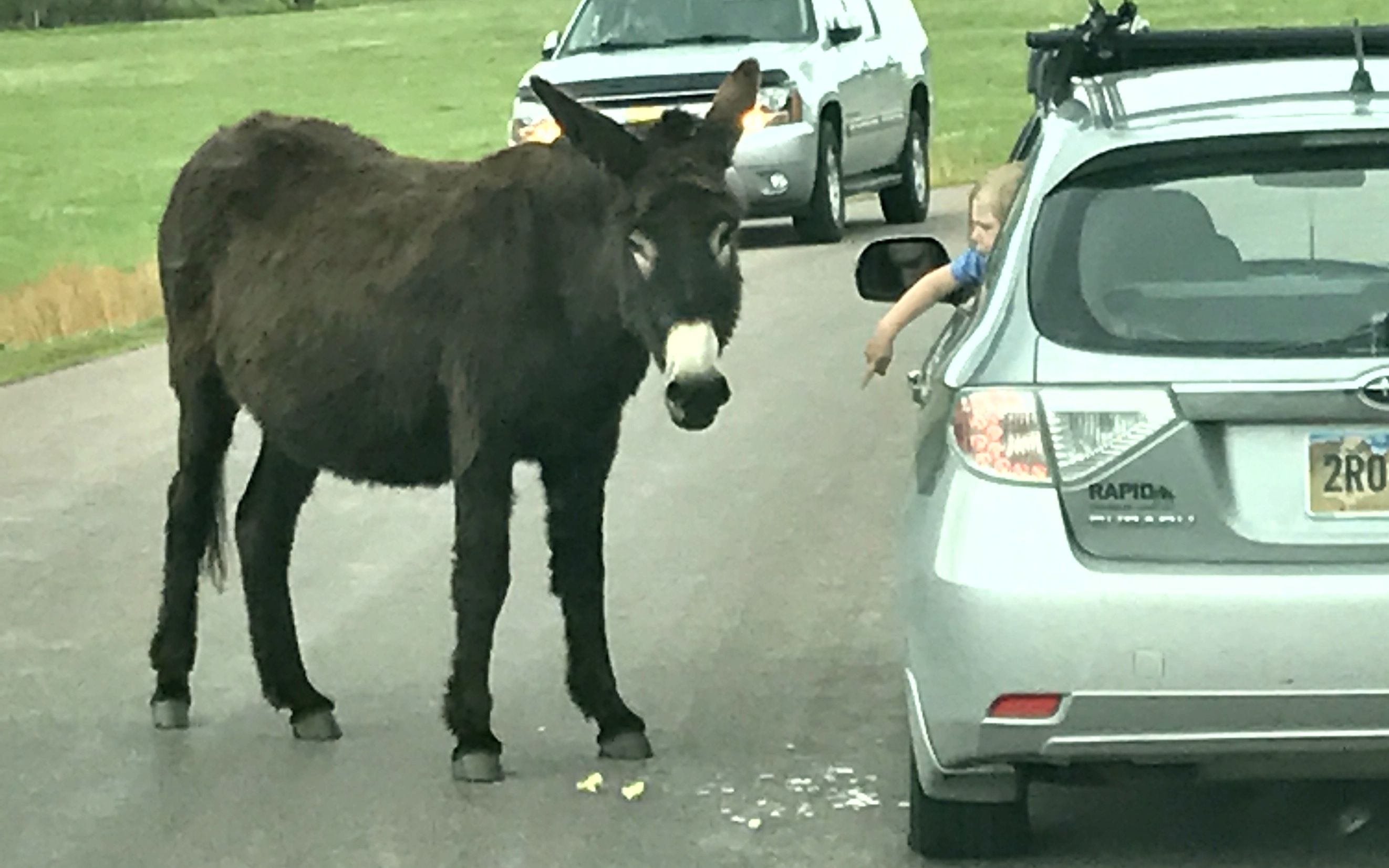
They come right up to the cars and take whatever is offered. In fact, they stick their muzzles right into the cars.

I watched in fascination as the car in front of me fed the burros bread. I couldn’t believe that they let their daughter stick her hands out of the car and touch the burro. They do have teeth, after all.

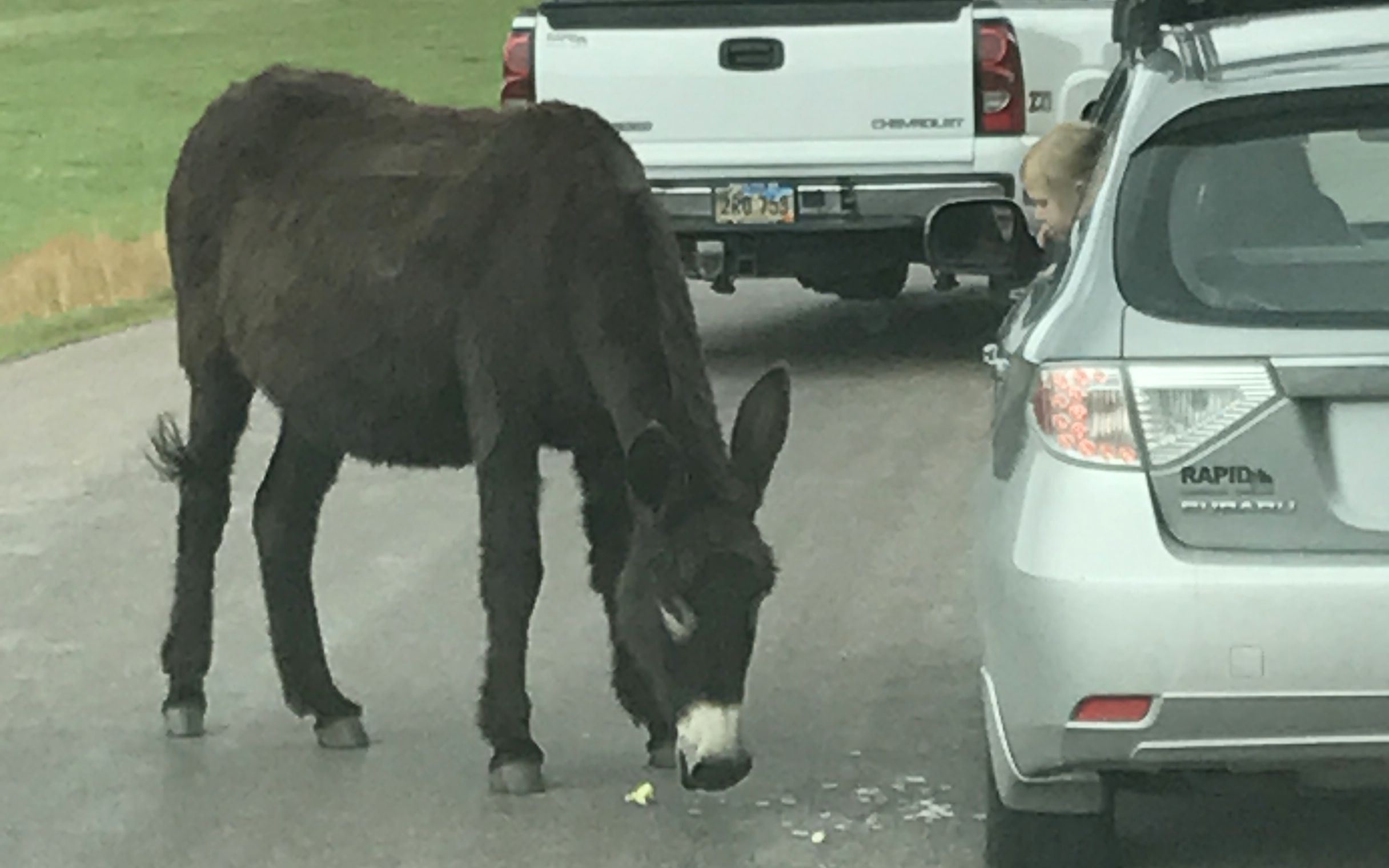
The burro had eaten all the bread they had and then the girl told it to eat the bread that had dropped on the road.

Then the girl watched as the it ate all the bread that had fallen on the road.

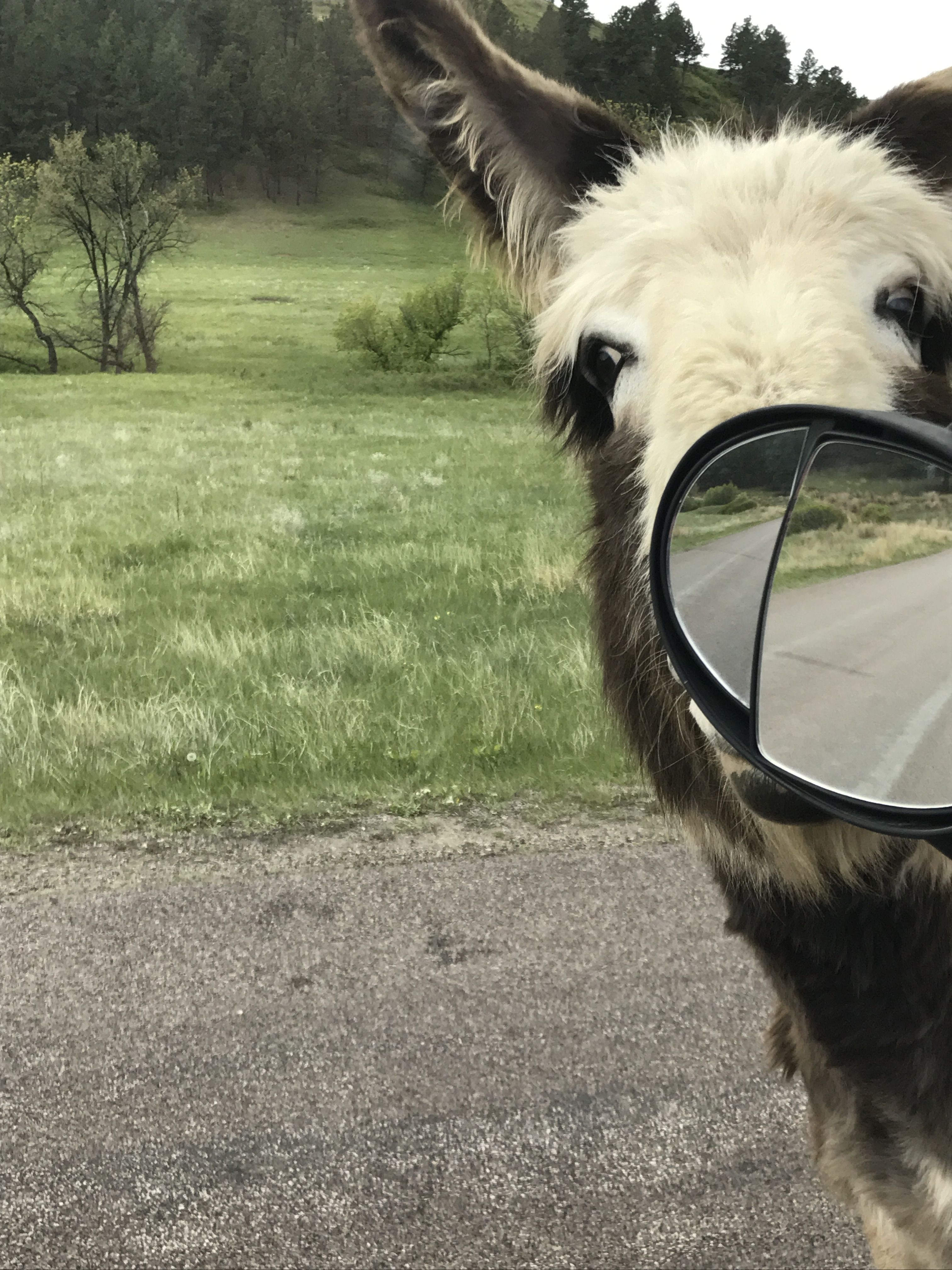
The burros came to visit me, too.

He was hoping for a handout.

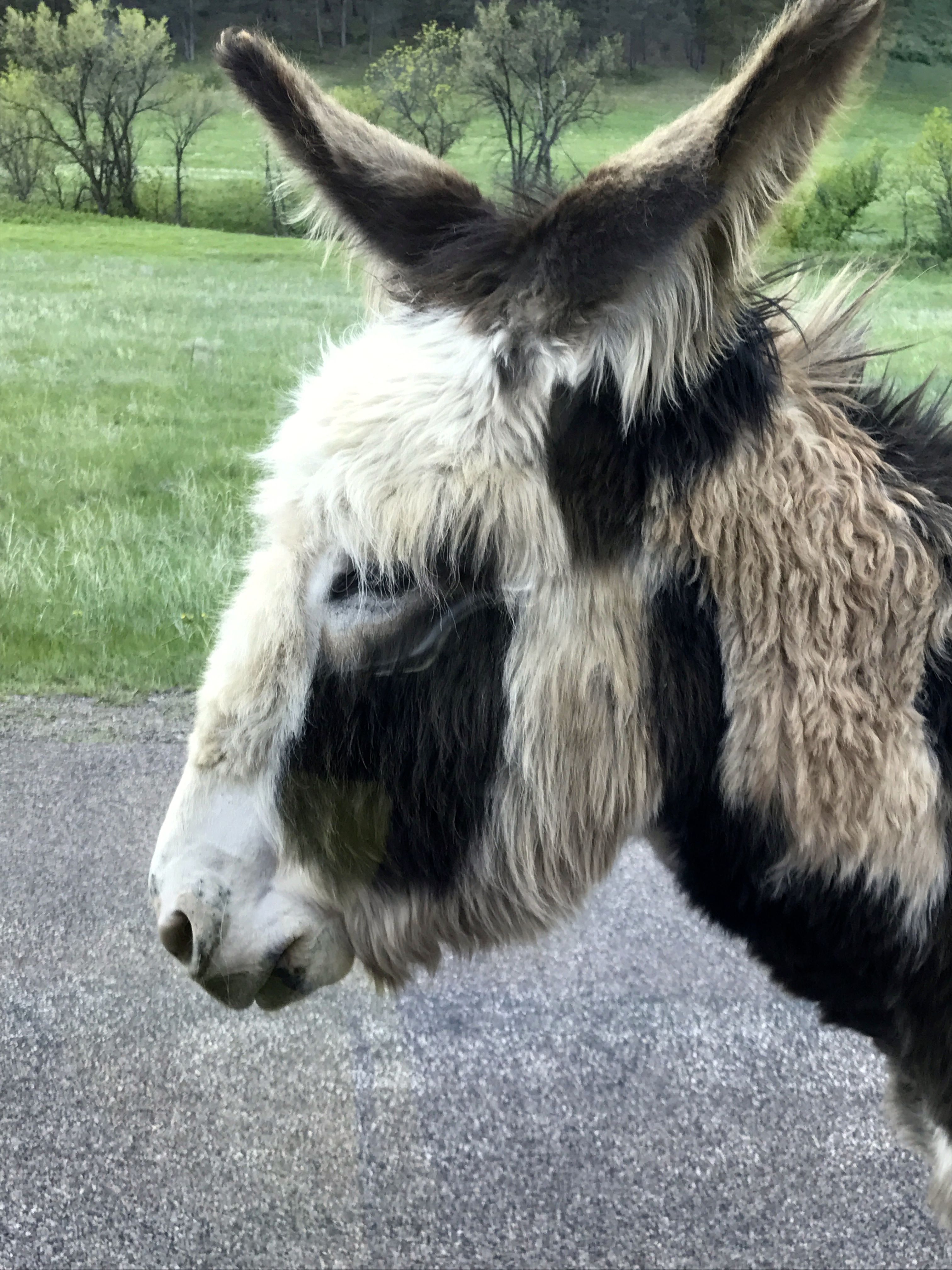
When none was forthcoming, he moved on.

The one behind him didn’t even stop. He just gave me a side eye as he passed by.

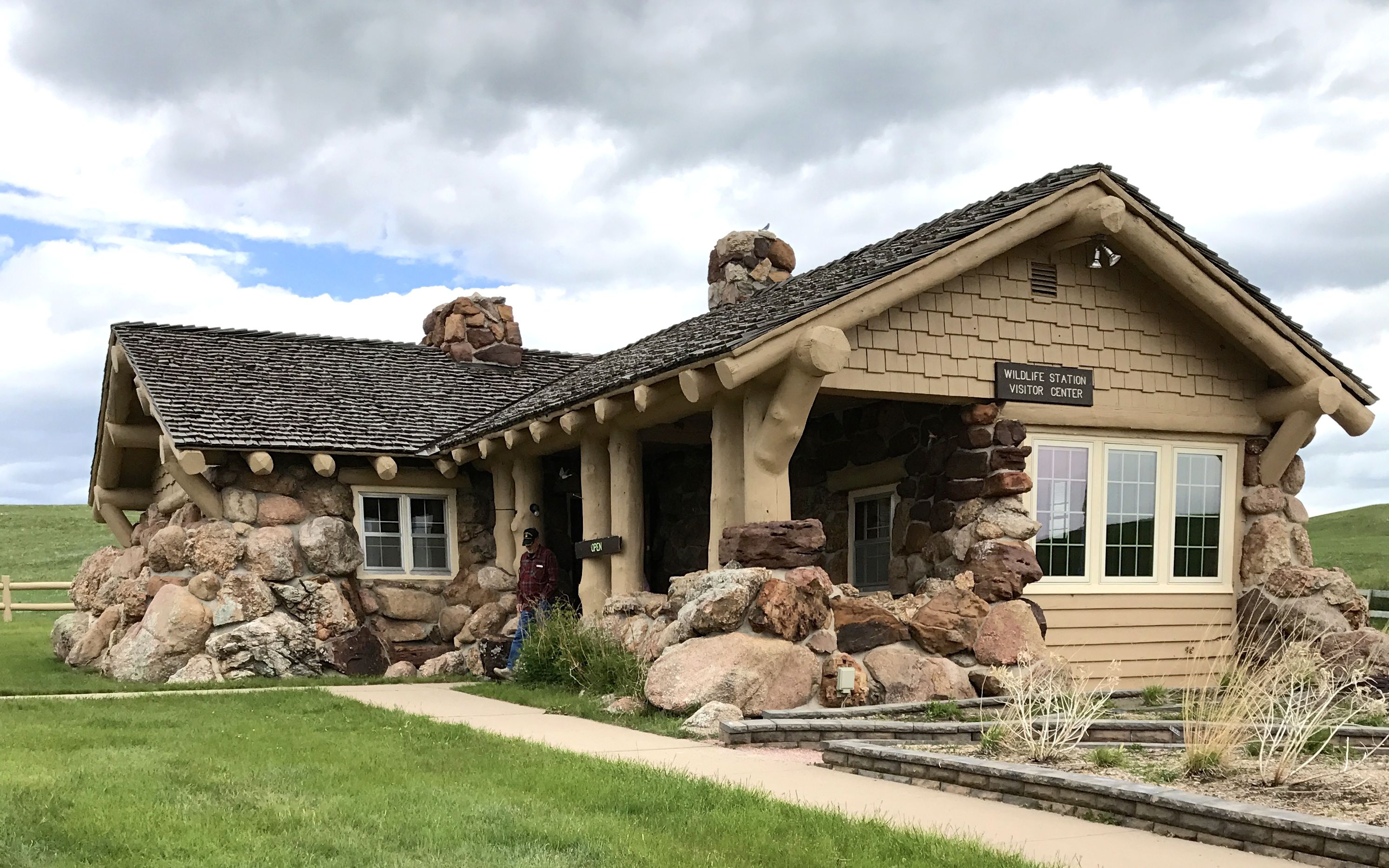
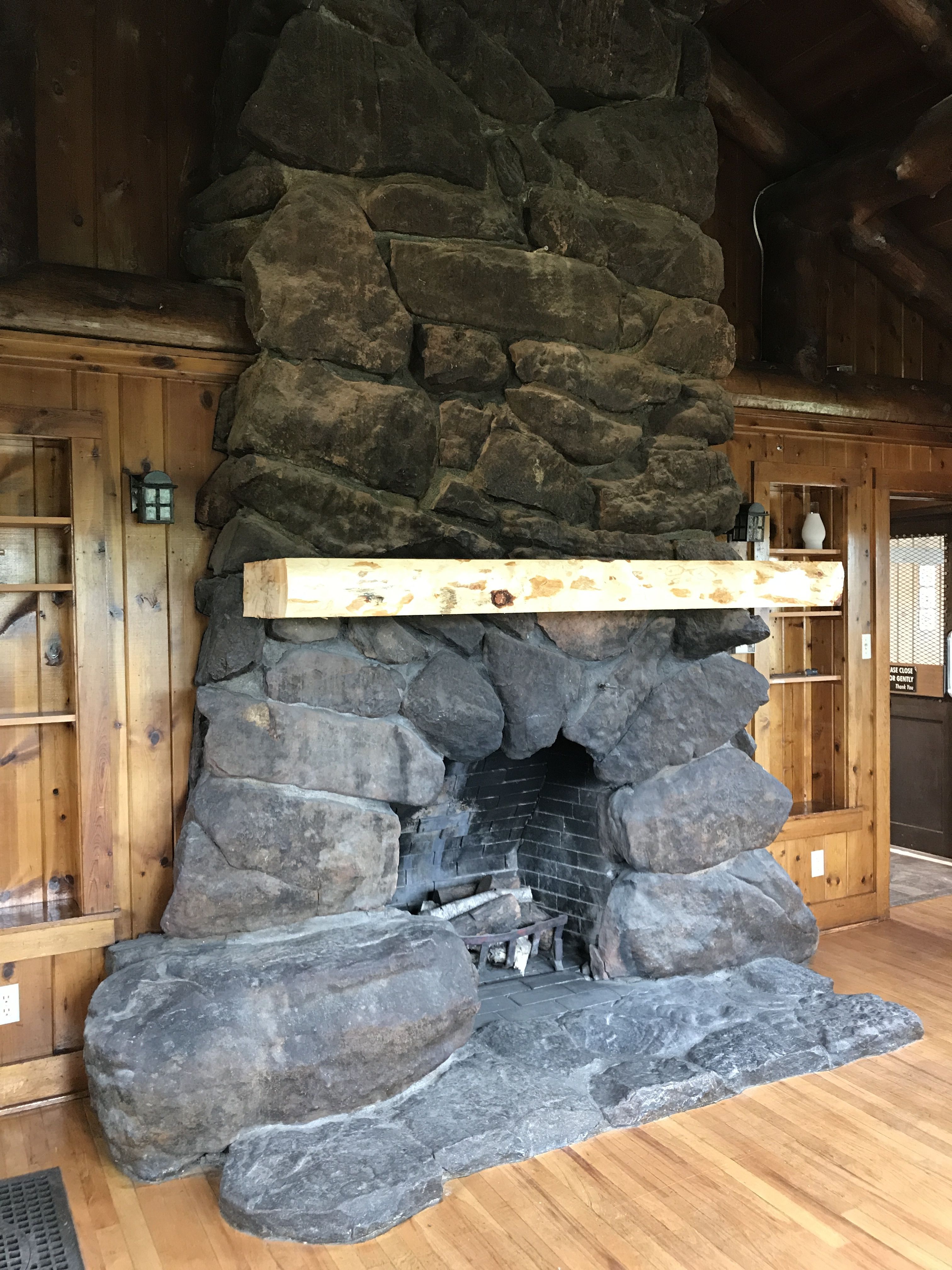
After a bit more driving, I came across this building. It’s labeled “Wildlife Station Visitor Center.” It was built by the Civilian Conservation Corps – the CCC – during the Great Depression. They used materials that were available locally.

This fireplace is quite something, with its irregular boulders. If I remember correctly, this building had just undergone some renovation. A building like this is worth taking care of.

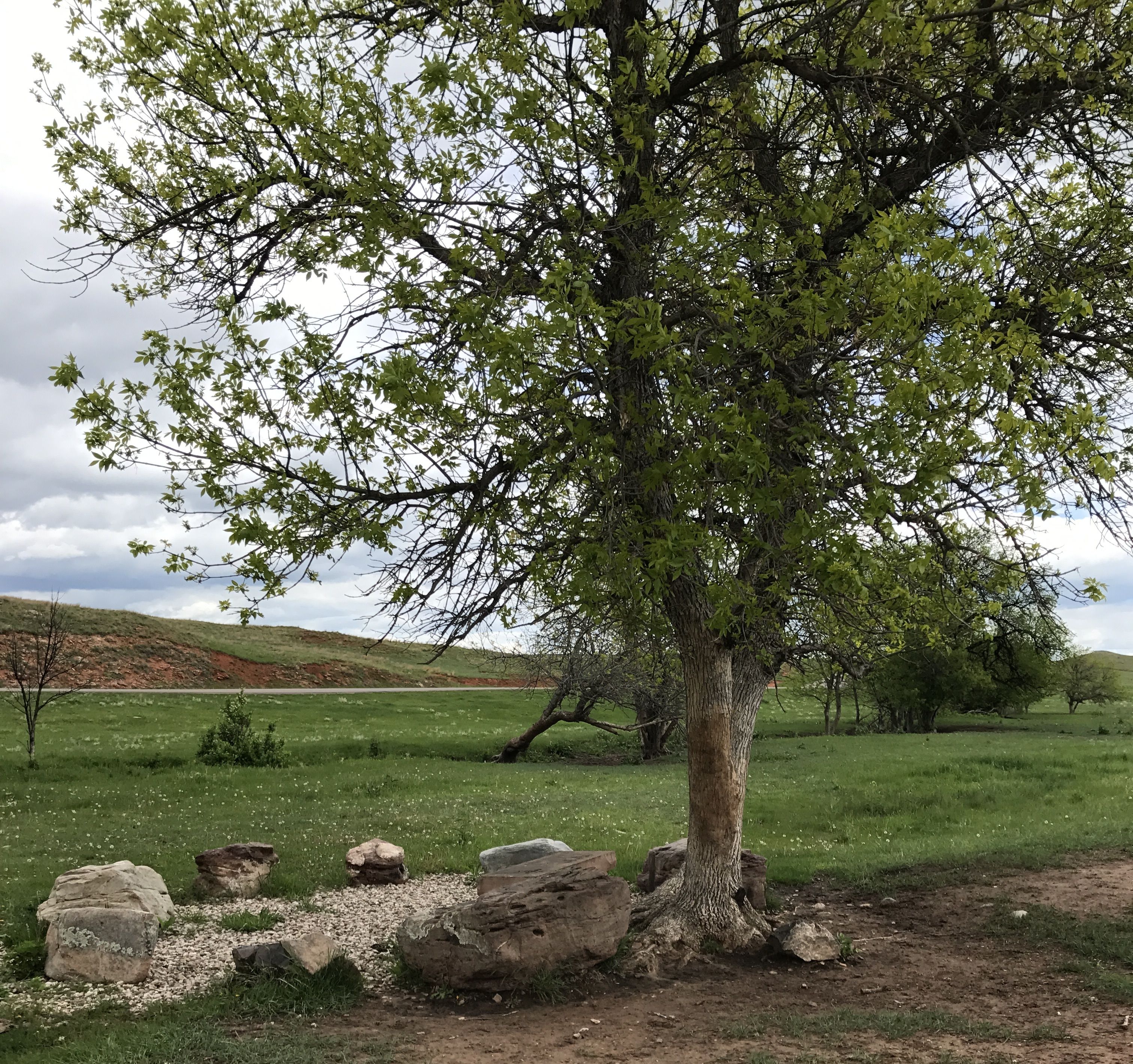
There was an interesting parking area that was dedication to the rutting season, which takes place between July and mid-September. I was too early in the year to watch the buffalo bulls fighting over breeding rights. Remember that my visit took place in May.

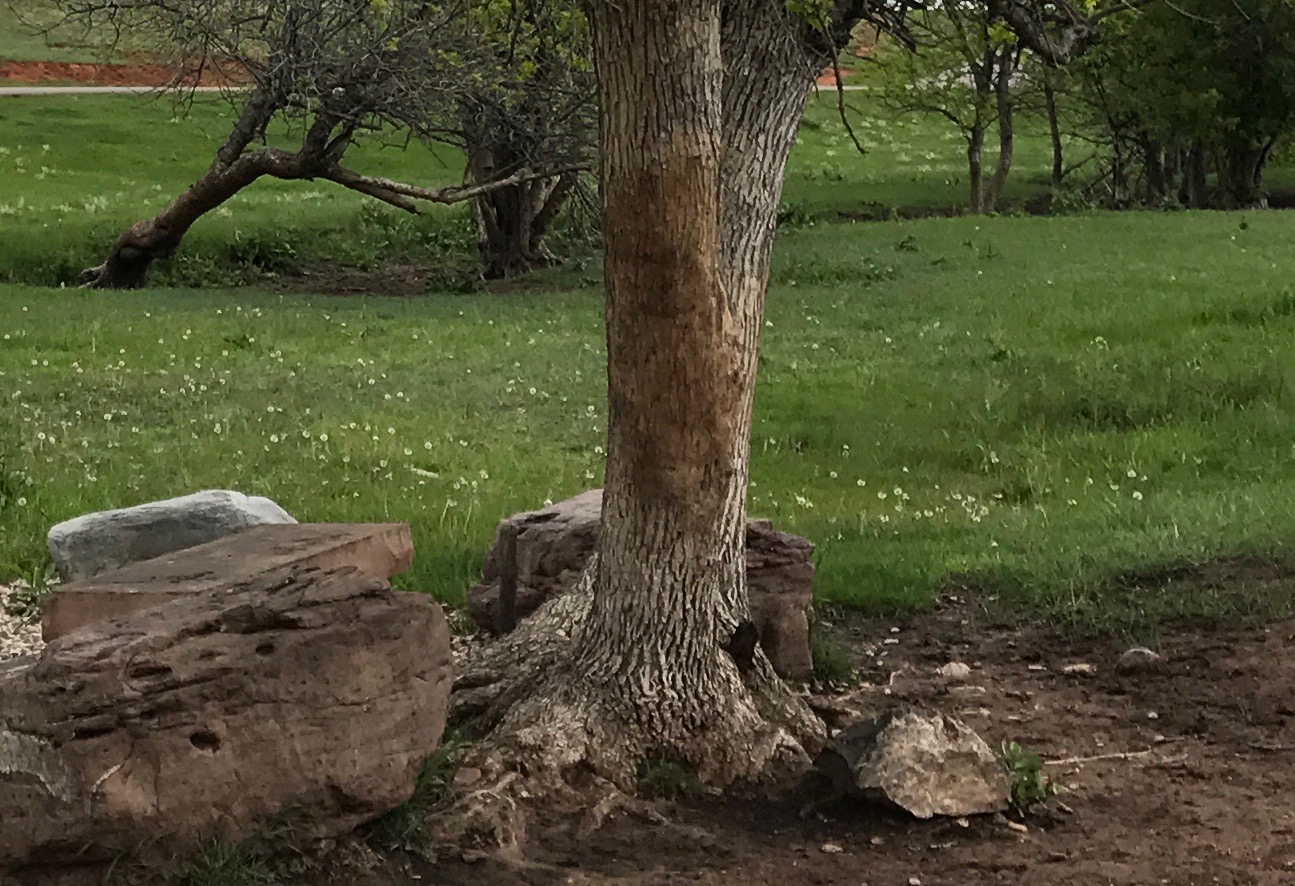
According to the information there, the bulls show dominance by making loud bellows or butting heads together. They display aggression by rubbing their horns against trees. Their hair sticks to the peeled bark and sap. In some cases the trees die from the damage. This tree looks healthy, but you can see where the bulls have rubbed against it.

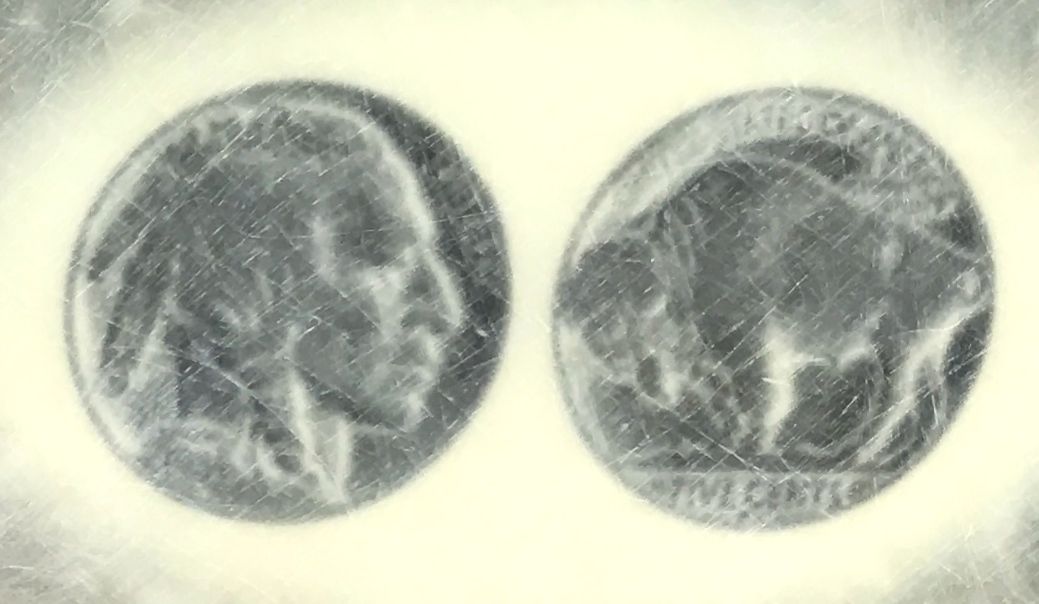
There was also some information about the buffalo on the nickel.

For many years between 1913 and 1938, the United States coined the buffalo nickel. The designer, James Earle Fraser, who was born in Minnesota, stated, “I found no motif within the boundaries of the United States so distinctive as the American Buffalo.”

Ironically, Fraser used a buffalo from the Bronx Zoo as his model.

I have a warm spot in my heart for these nickels. When I was a little girl, my father would take us out on little adventures. (When you are young, everything is an adventure.) One place we would stop is a little store that we would call a convenience store these days – or maybe a party store. Well, several times when we stopped there, Dad found these nickels in the parking lot and he gave them to me.

For my father’s 80th birthday, I bought him a 1928 buffalo nickel, which was the year he was born. I told him the story, and he was quite touched.

Back to our regularly scheduled tourism.

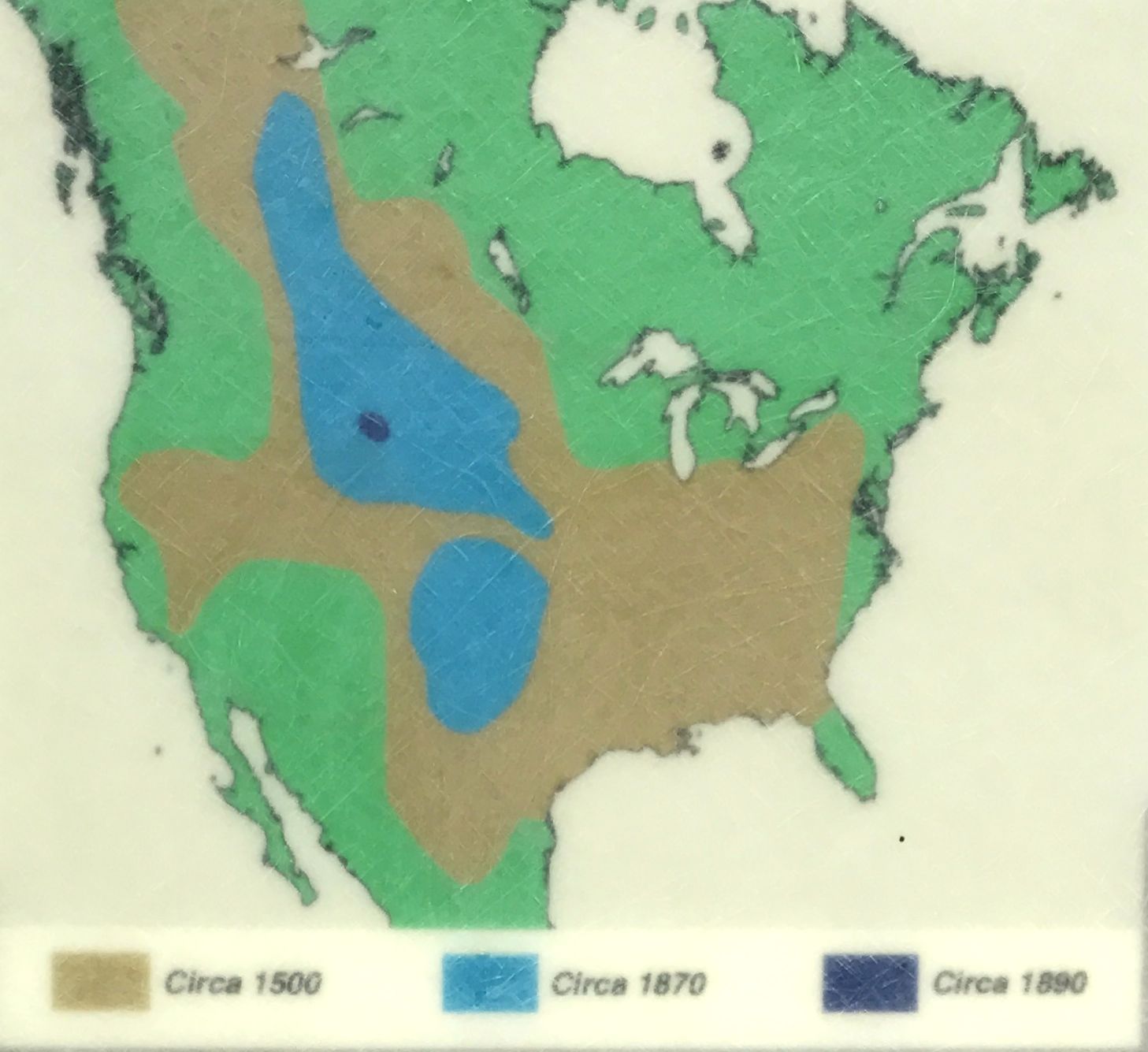
This map documents the shrinking range of the buffalo. The areas in bright green had none, so don’t worry about the fact that bright green isn’t represented in the key.

Amazing what we can do when we set our minds to it. (But not “amazing” in a good way.)

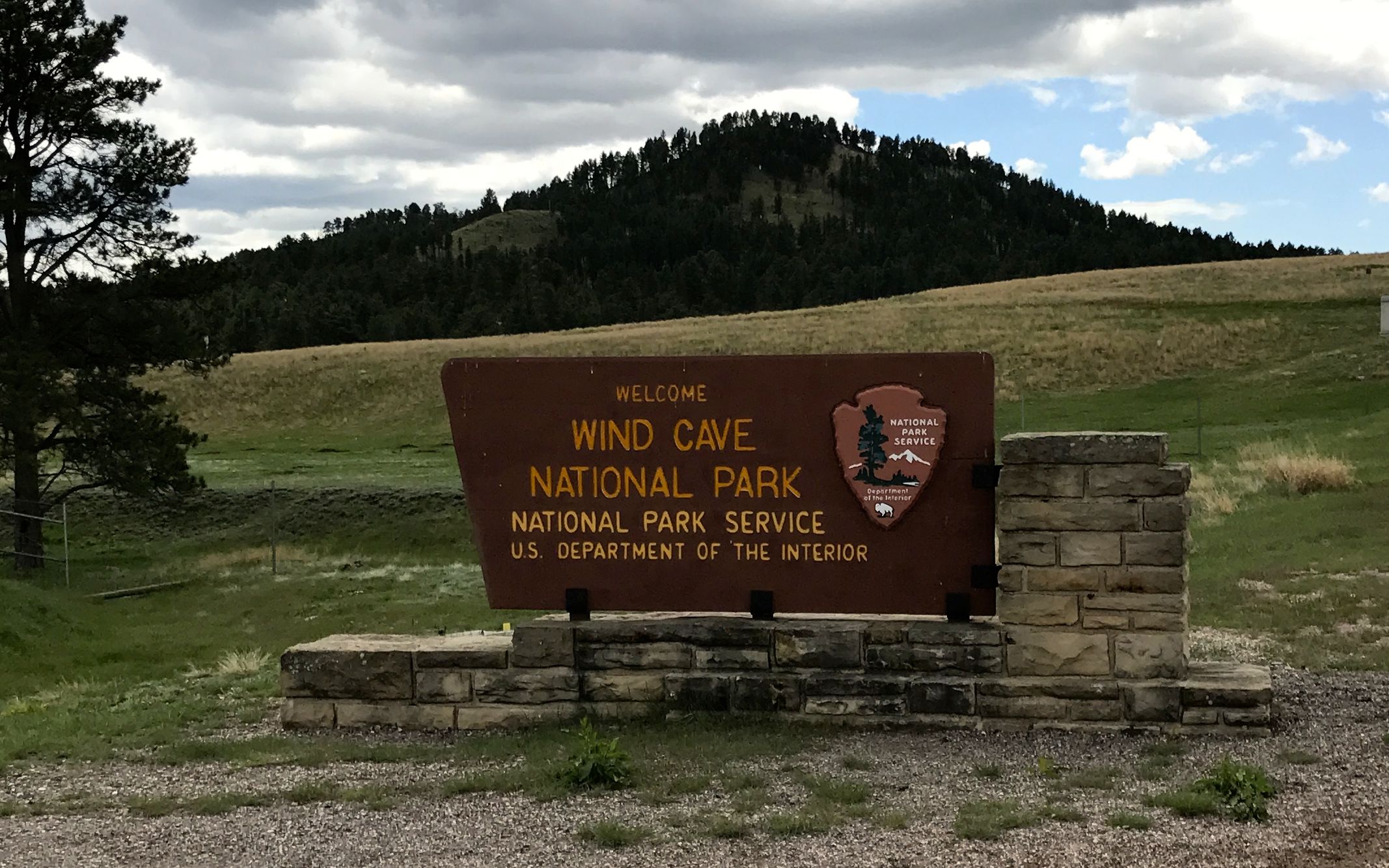
With that, I headed to Wind Cave National Park.

Oddly enough, the buffalo were up close and easy to see in that park. 

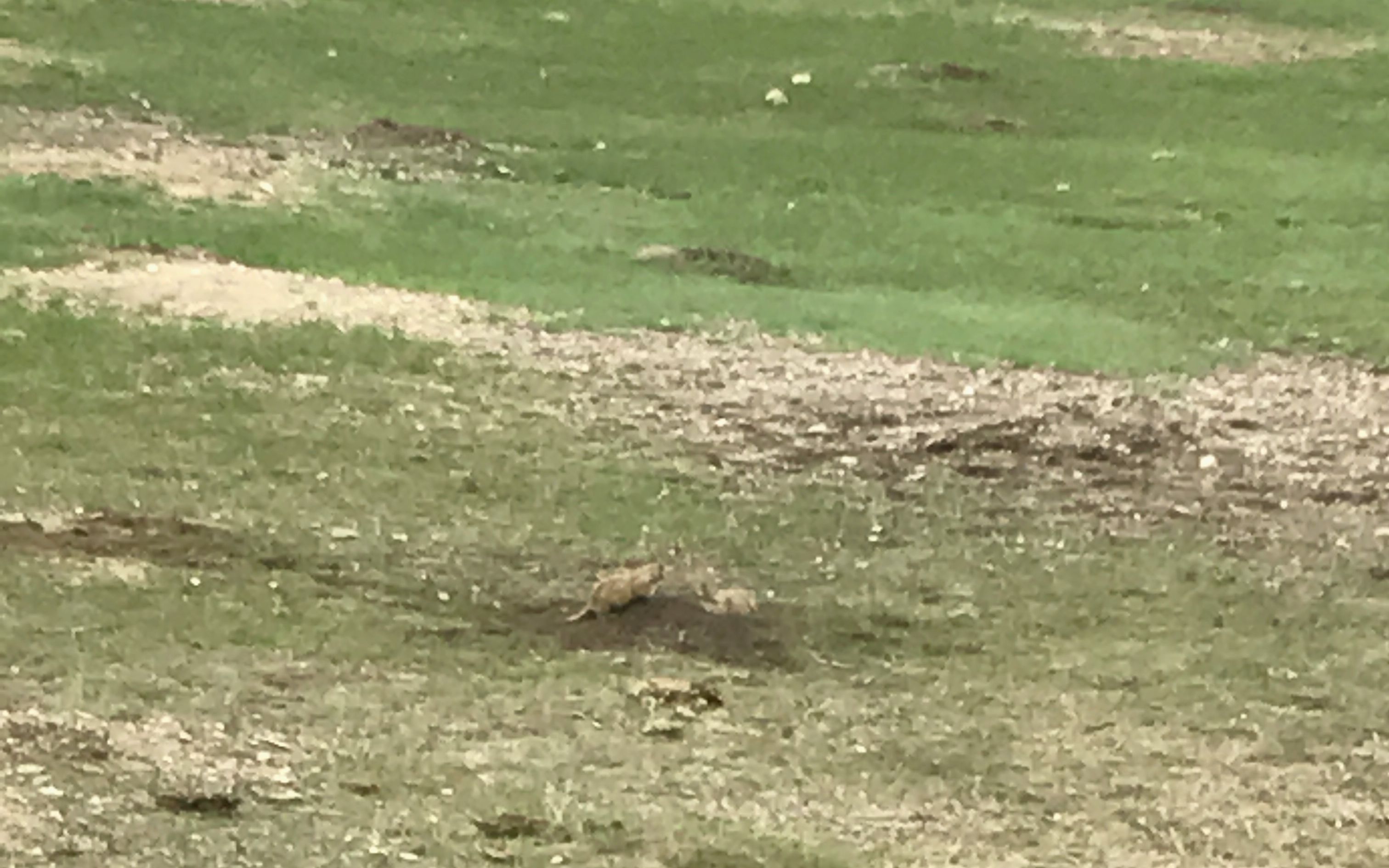
So were the prairie dog towns. If you look a little below the center of the photo, you can see a couple of them. They are fun to watch, but kind of hard to photograph with an iPhone.

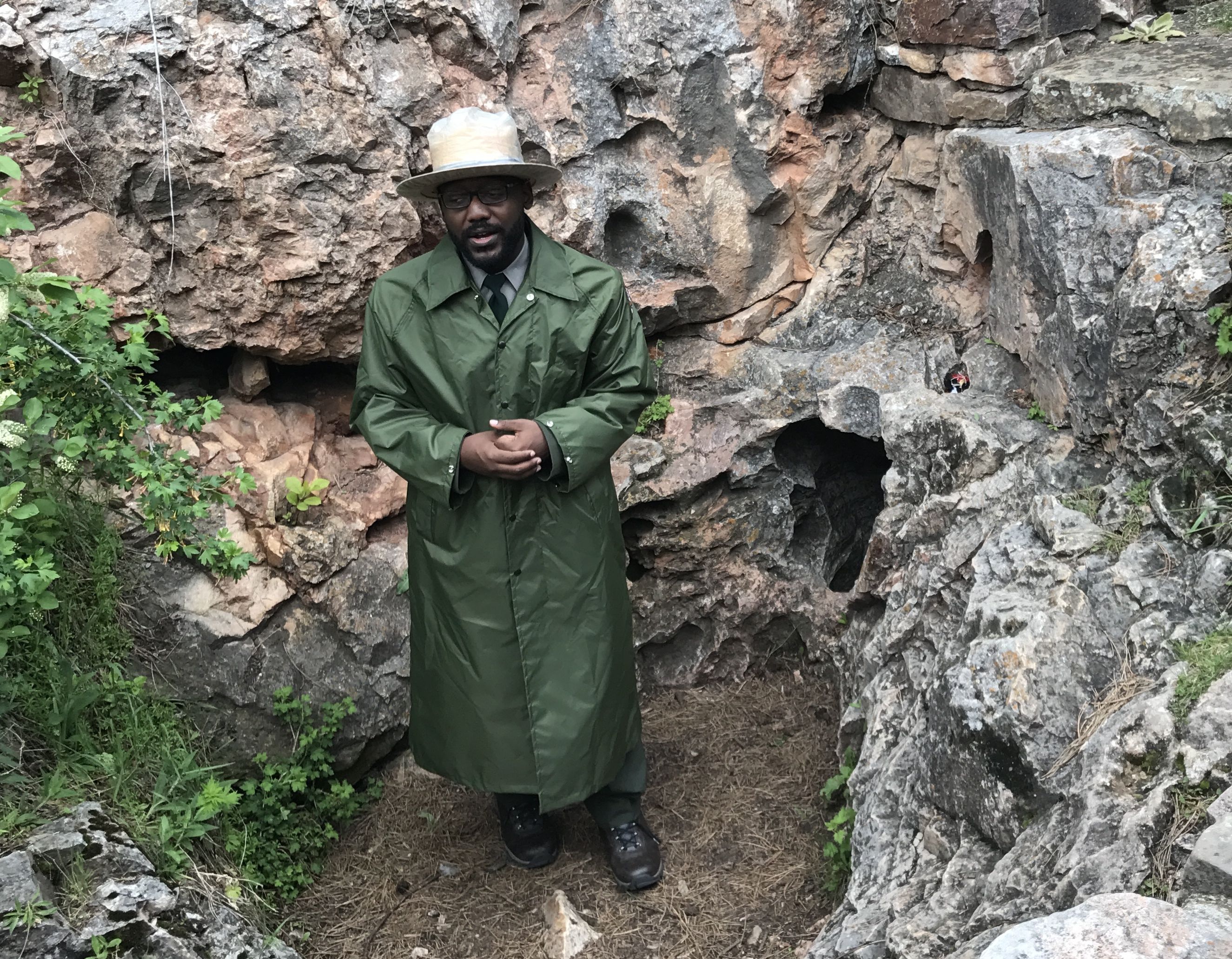
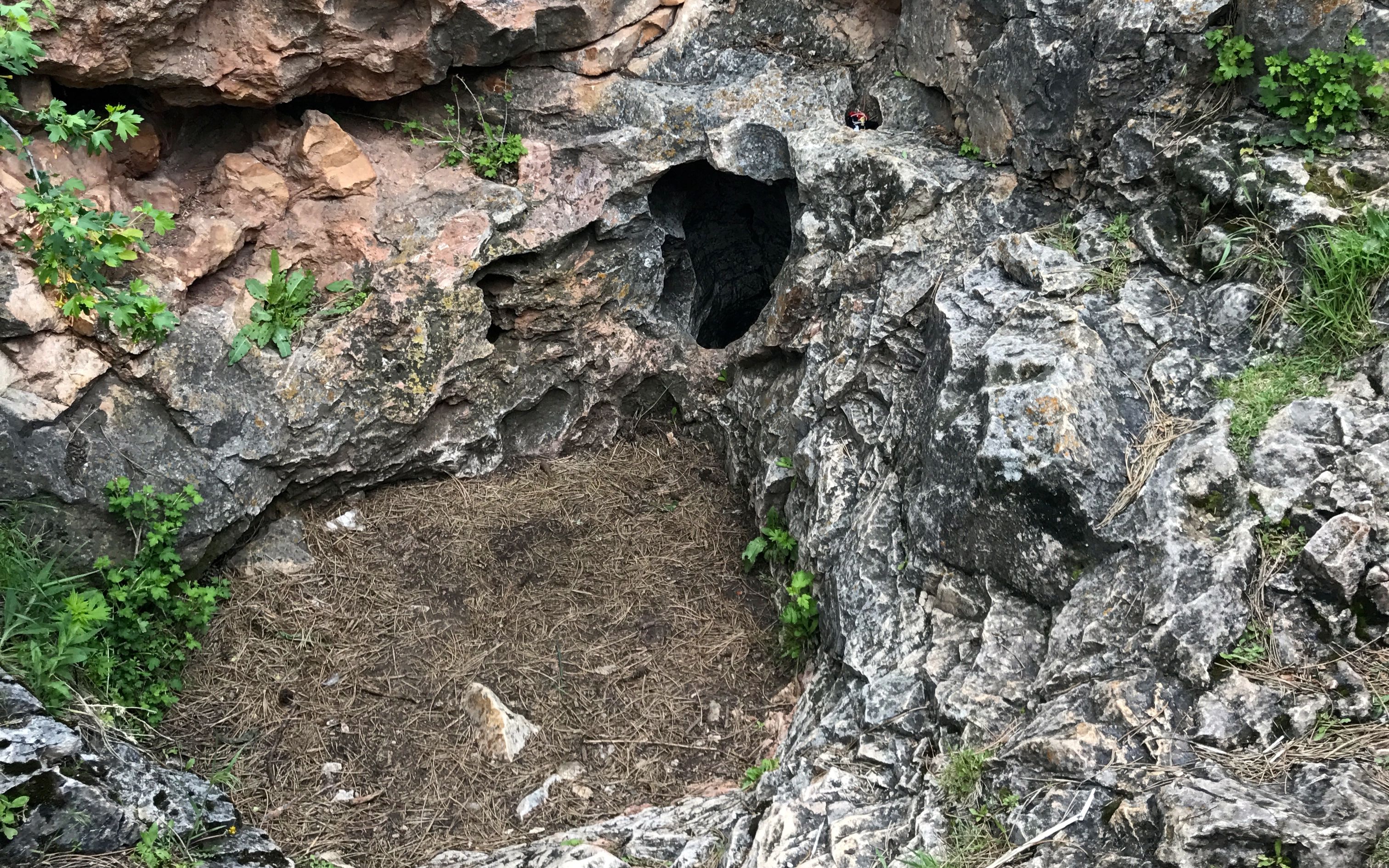
I signed up for the tour and Ranger Justin lead us over to the original entrance to the cave.

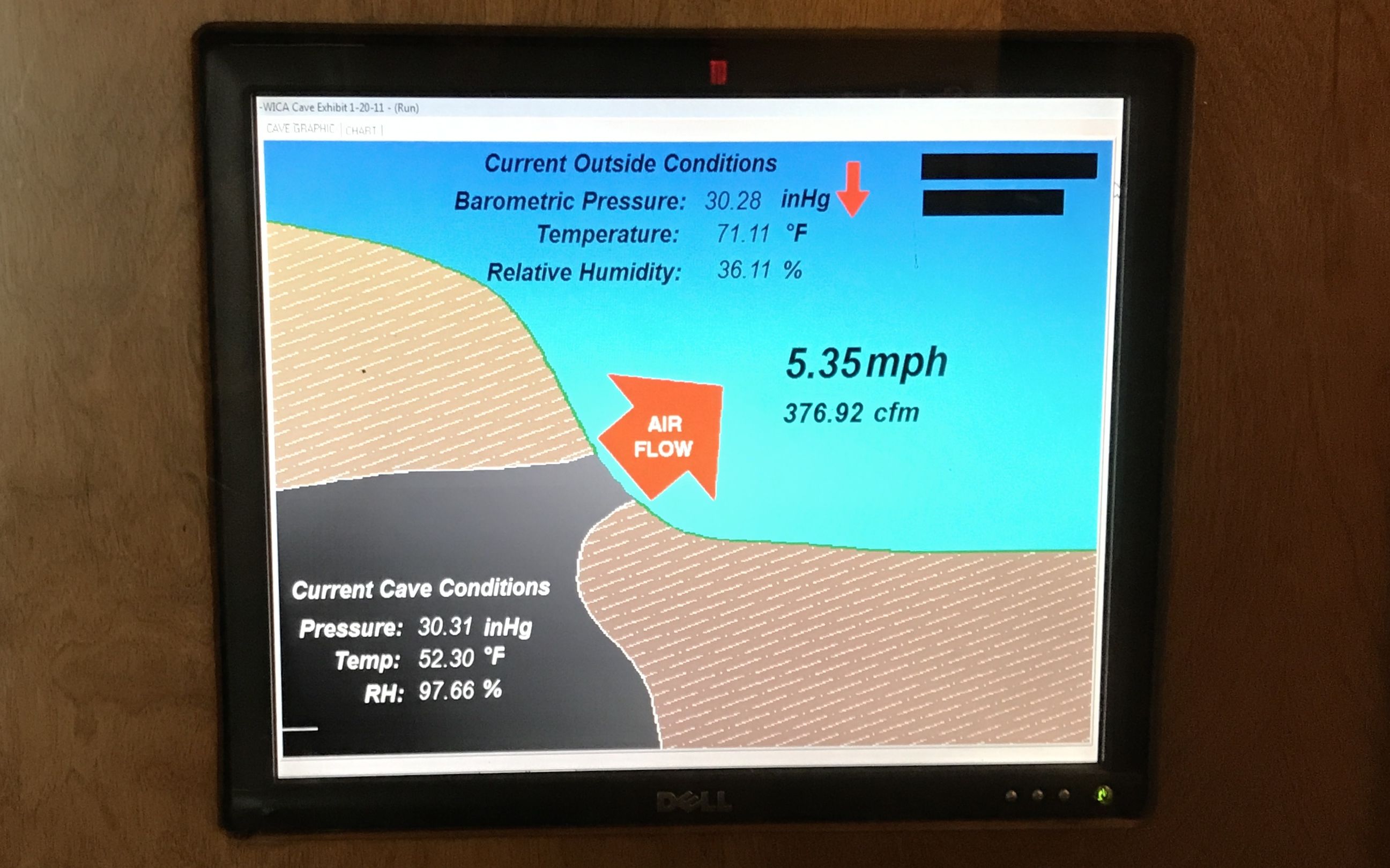
One of the interesting features of the caves found in this park is that they are said to “breathe.” When the air pressure is higher outside the cave that inside, air flows into the cave, raising the cave’s air pressure to match the outside pressure. When the air pressure inside the cave is higher than the outside press, the air flows out of the cave.

Justin demonstrated this by holding a light piece of cloth in front of the opening and I could see it moving as the cave exhaled.

After the tour of the cave, I took a picture of this display in the museum area. So the air was flowing out at about 5.35 mph.

I am surely glad that they made another entrance to the cave. I wouldn’t not want to try to enter it that way.

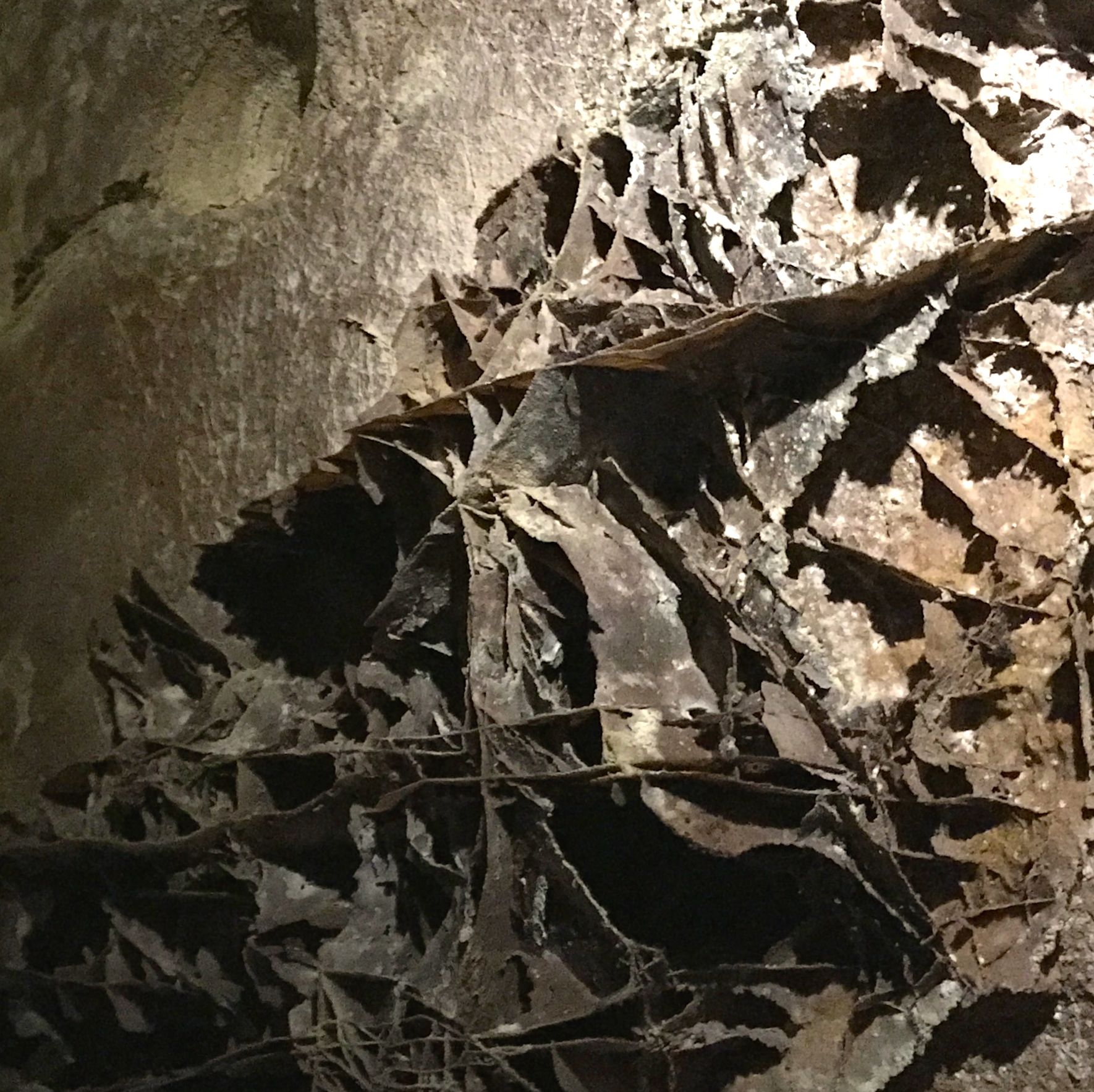
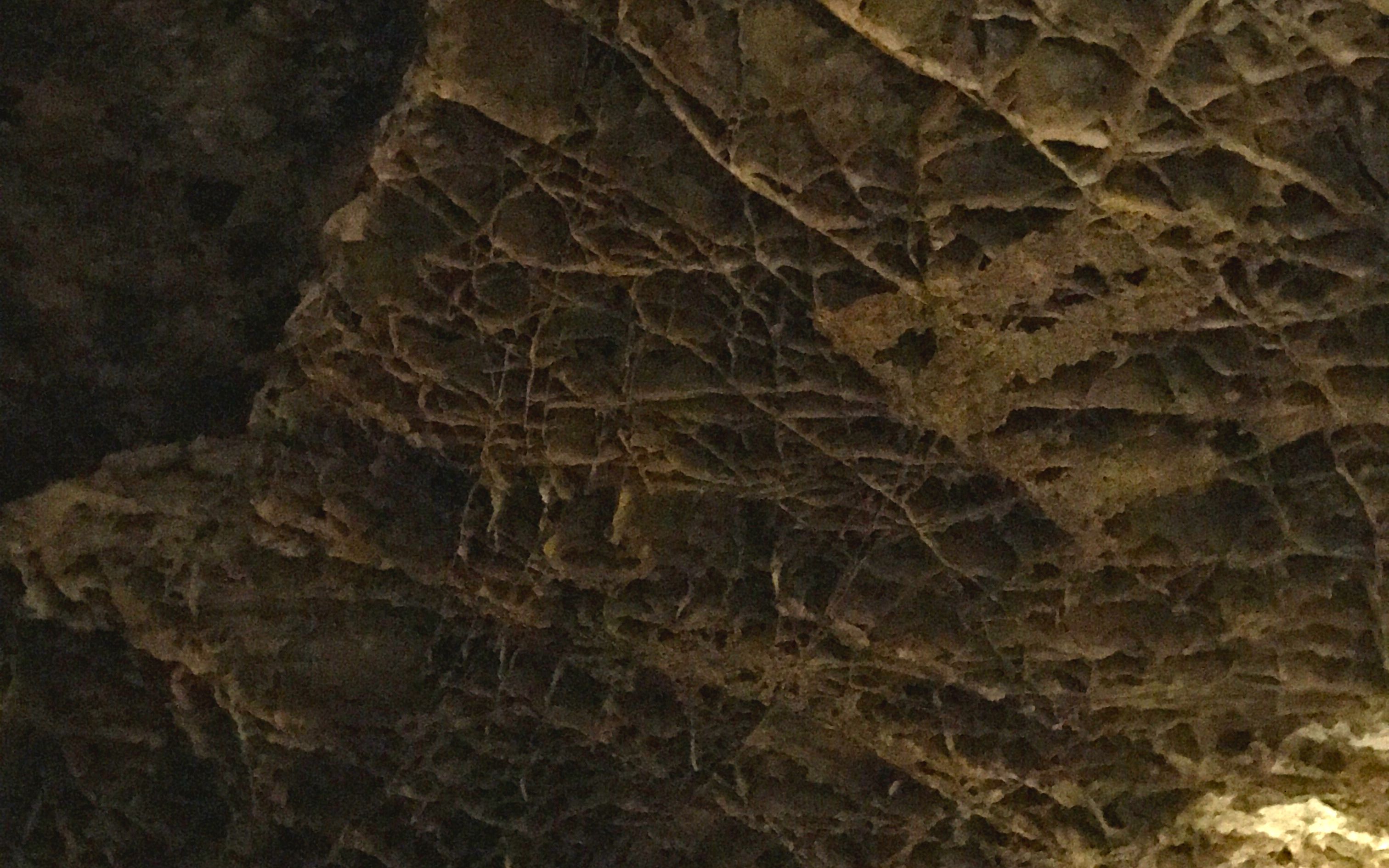
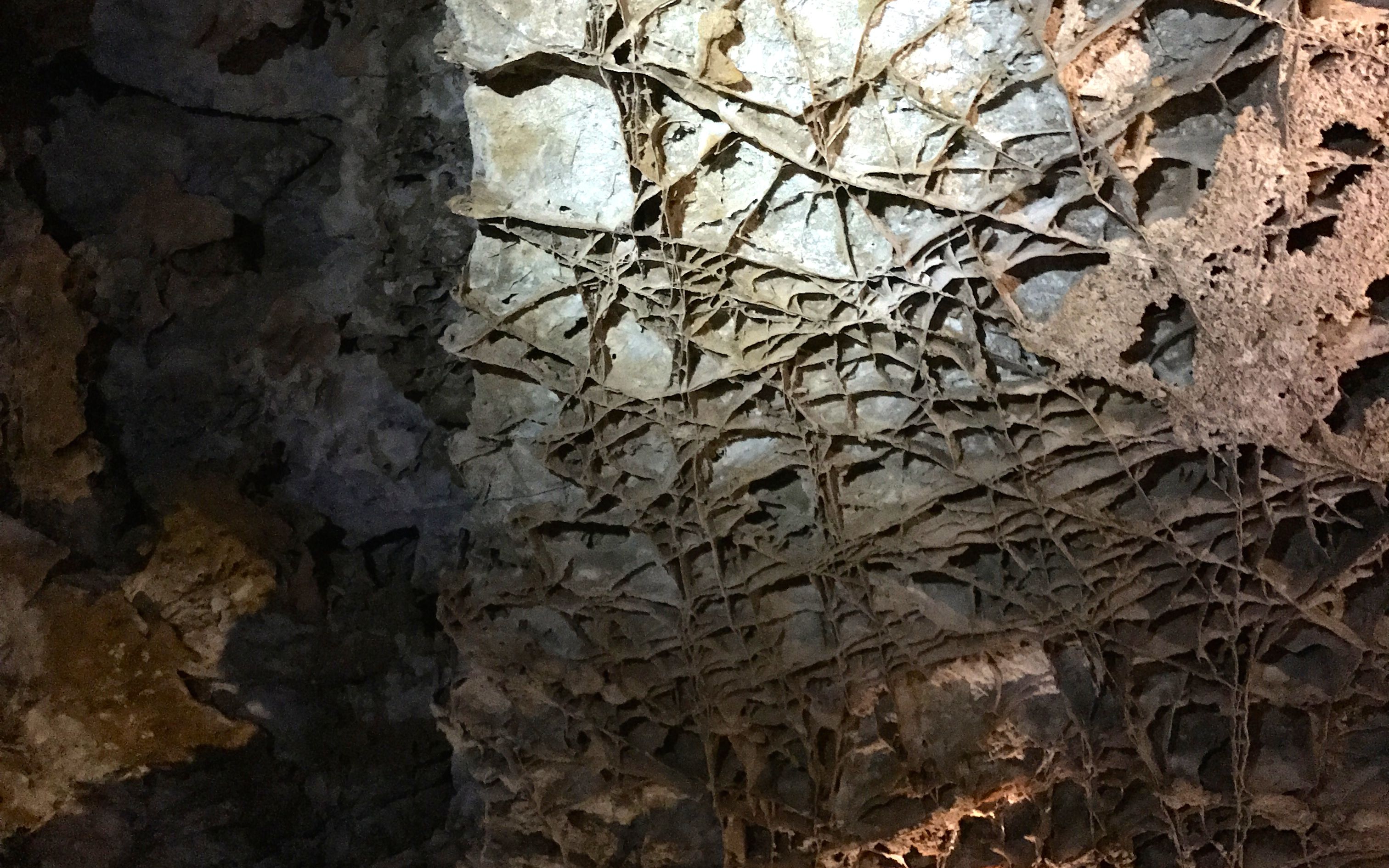
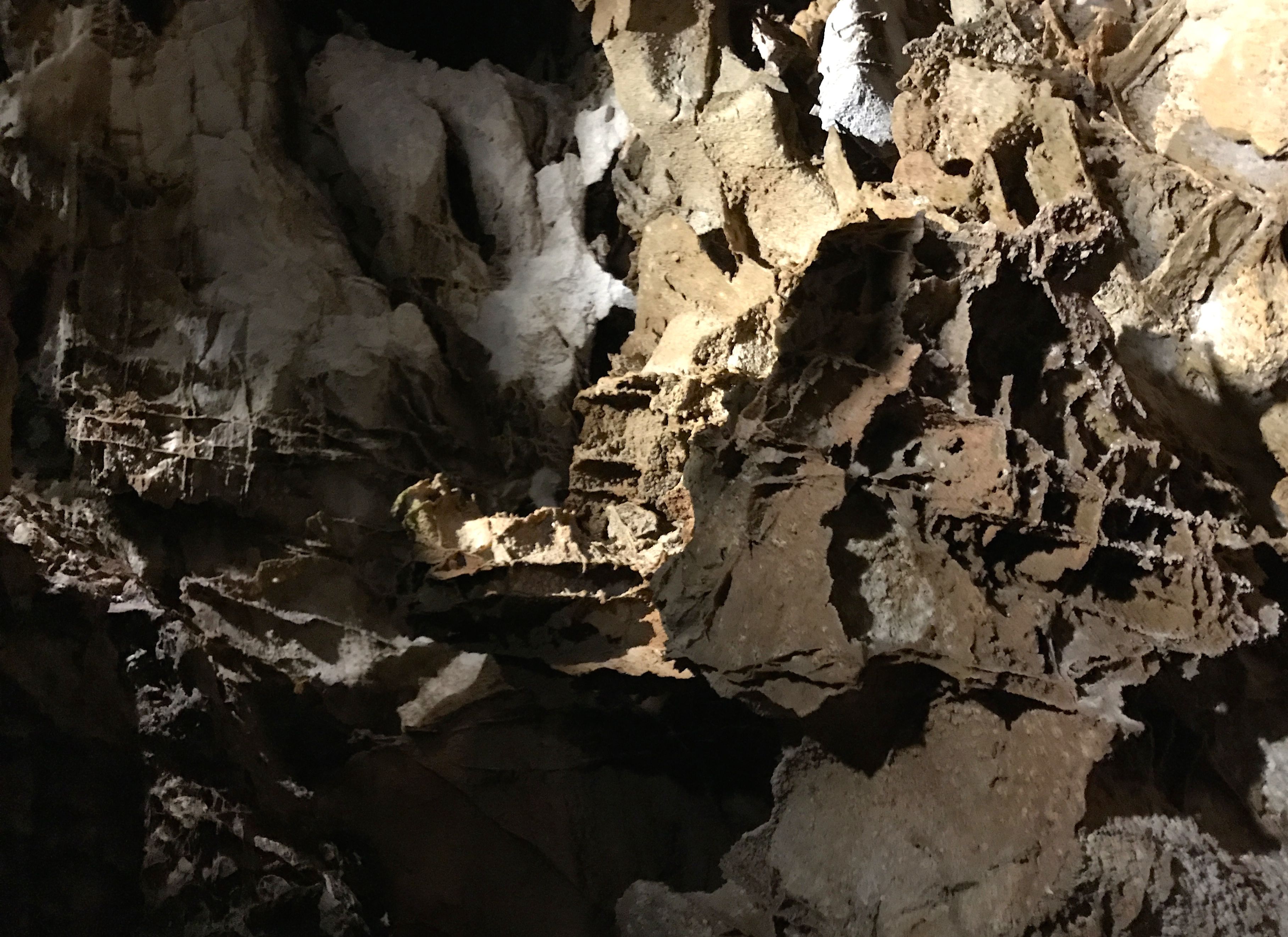
Wind Cave is famous for a formation known as “Boxwork.” In fact, if you want to see box work, this is the place to be, as approximately 95% of the world’s discovered boxwork formations are found in Wind Cave.

If I remember Ranger Justin’s information correctly, a softer rock formed and then cracked.

Calcite deposits formed in the cracks.

Eventually that softer rocks eroded away. I could be wrong, but that is what I remember.

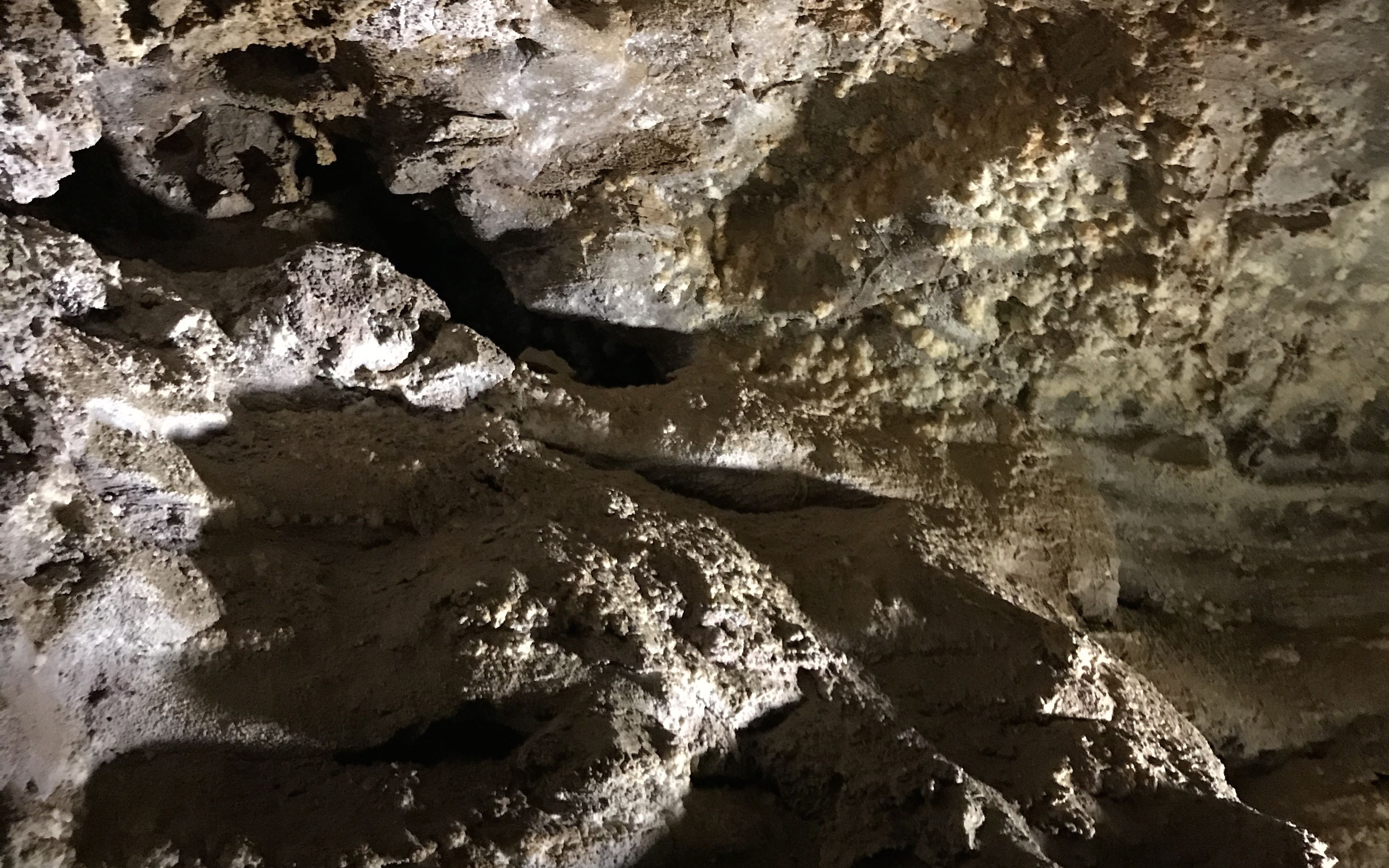
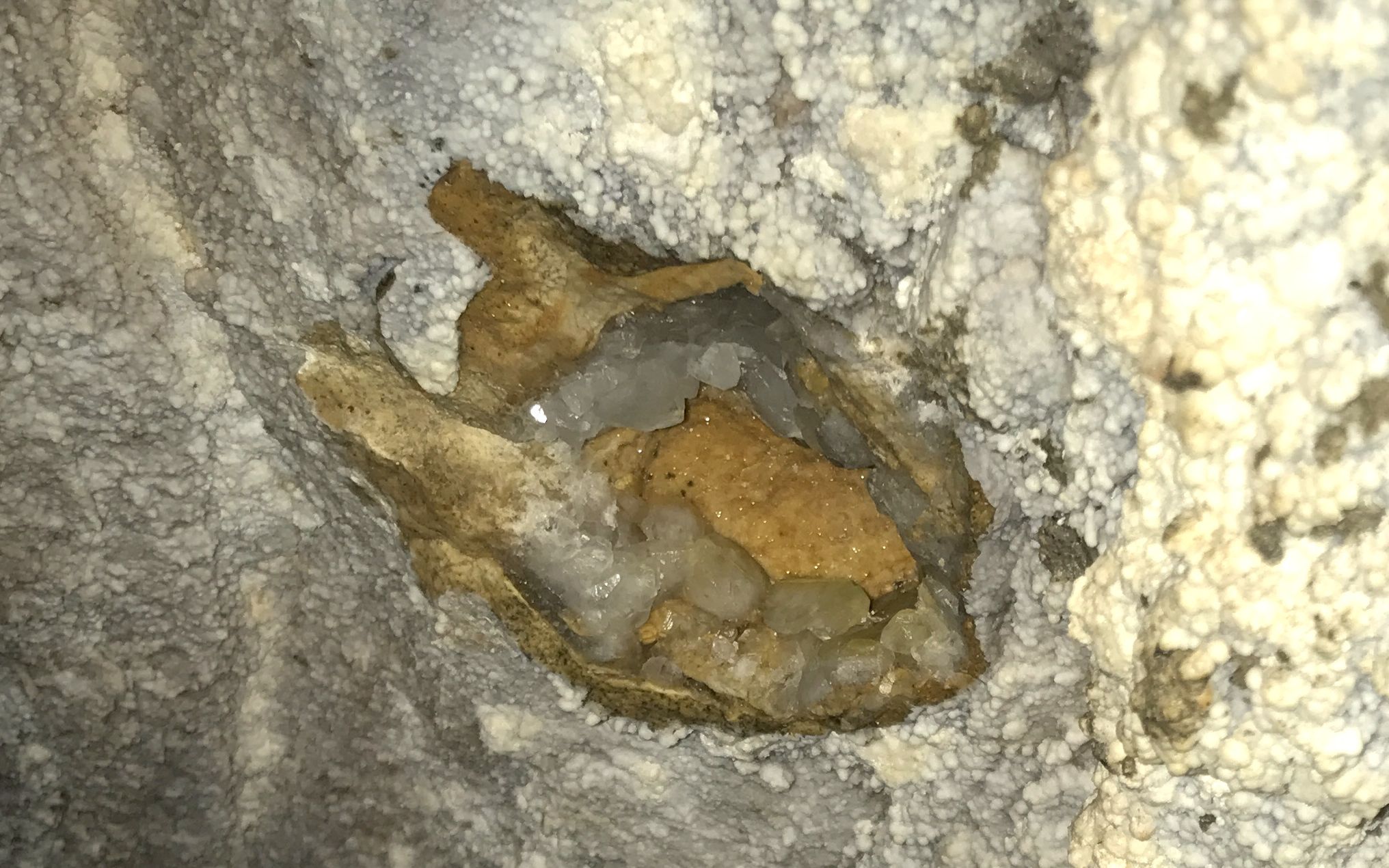
There are also other formations, such as this one that is called popcorn.

These crystals imbedded in the popcorn caught my eye.

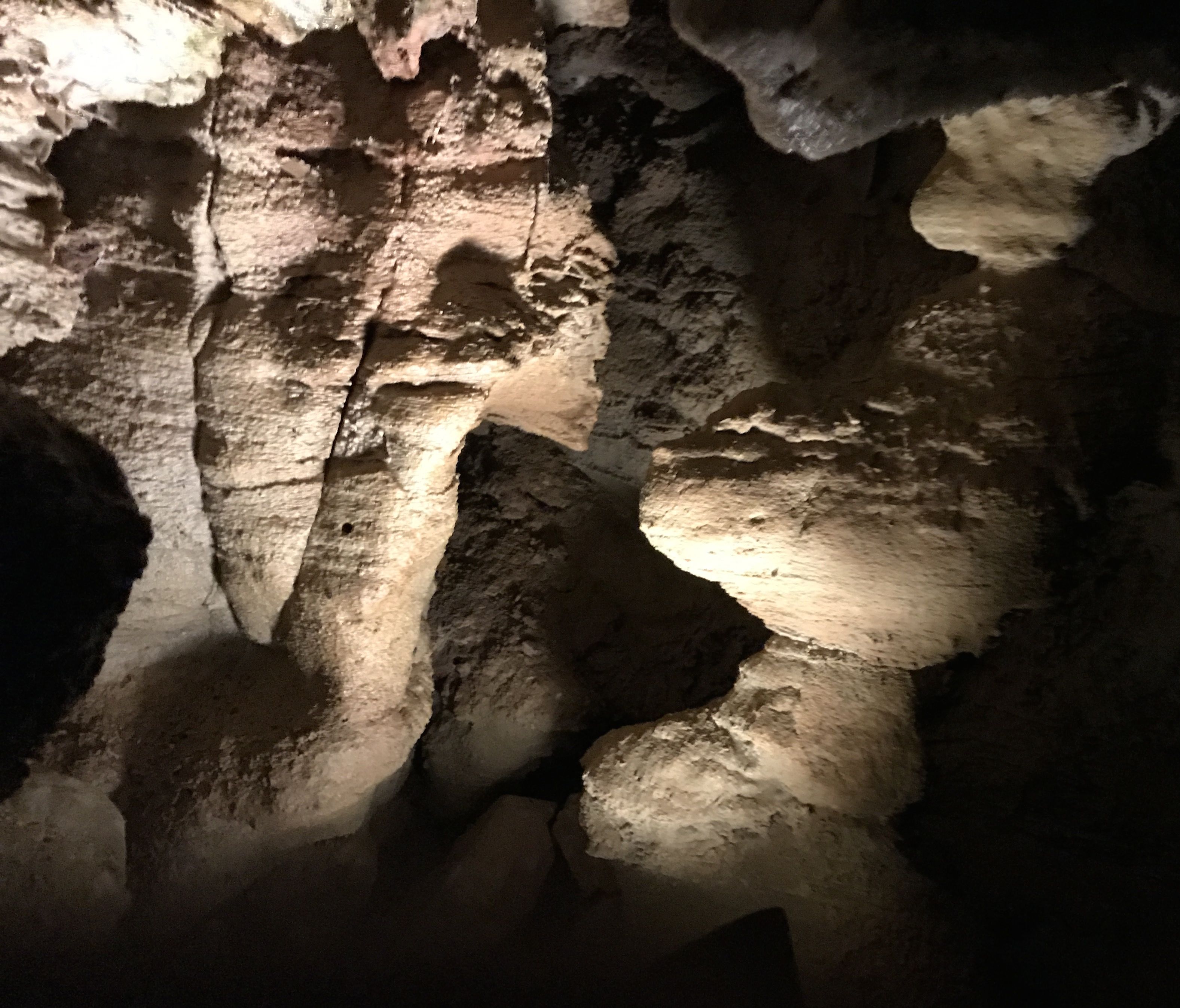
These rounded rocks were interesting, too. There didn’t seem to be the typical stalactite and stalagmite formations that are found in other caves.

The walls seemed other-worldly.

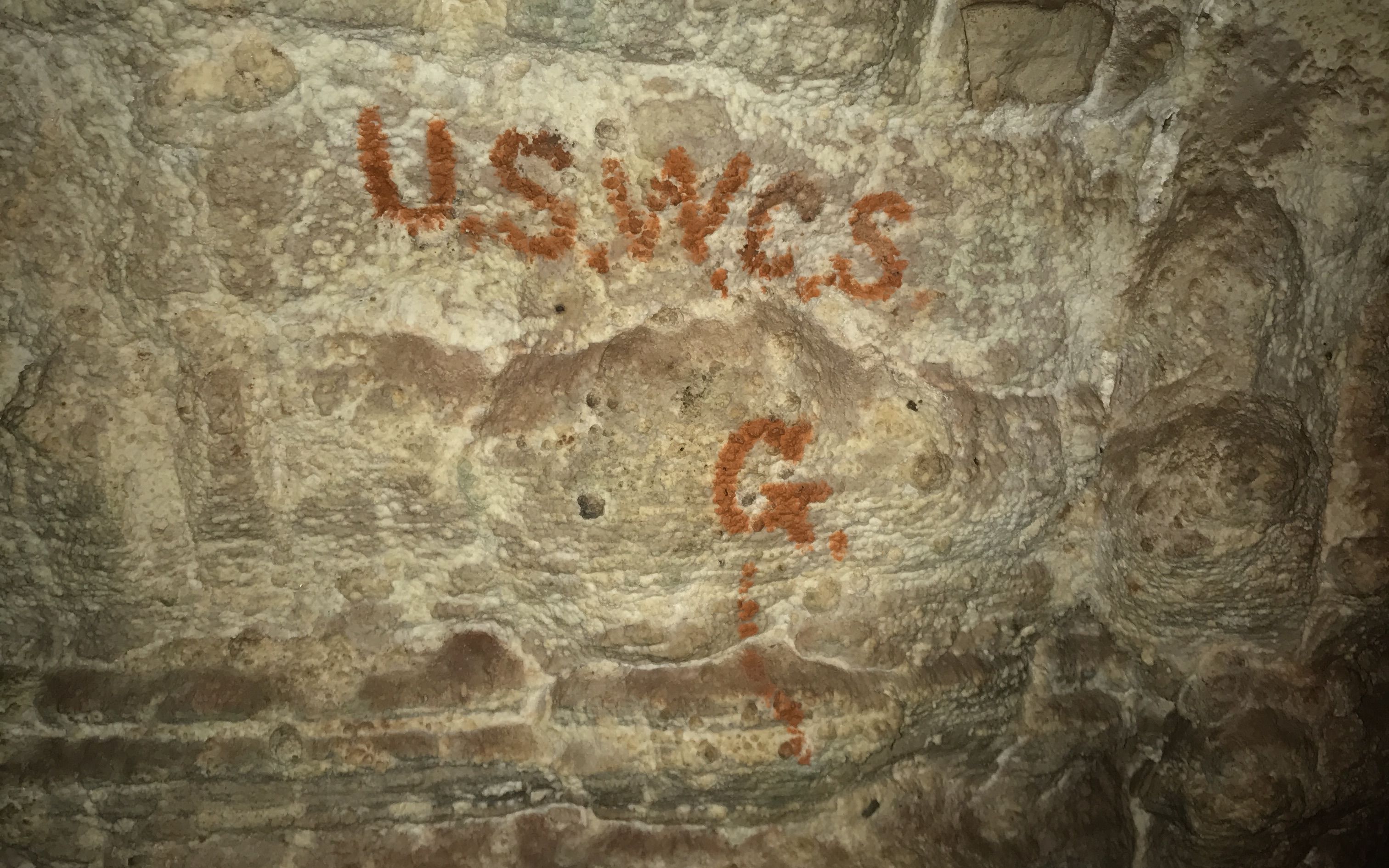
The cave is extensively surveyed, and this is the first marker the surveyors left, if I remember correctly.

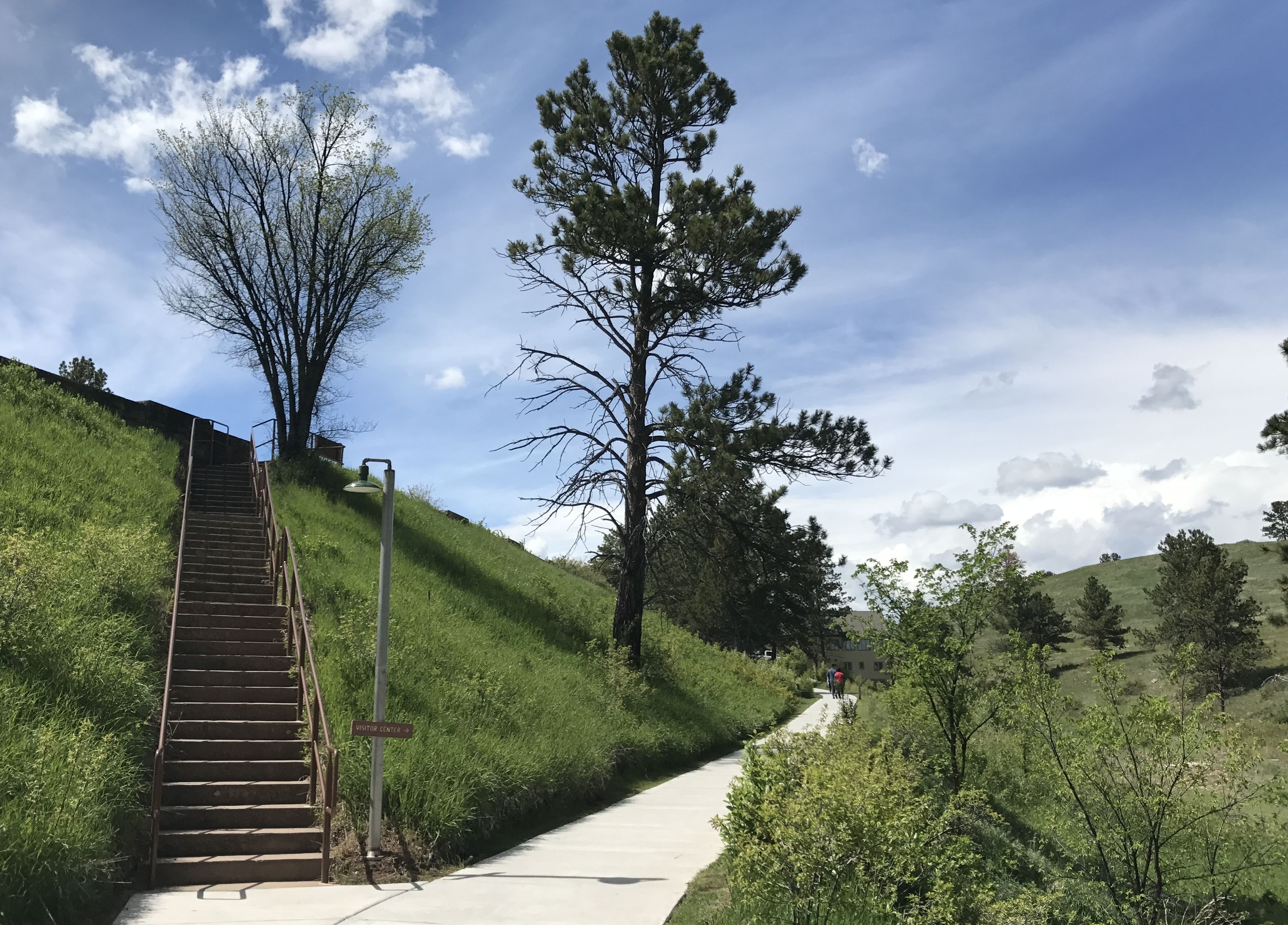
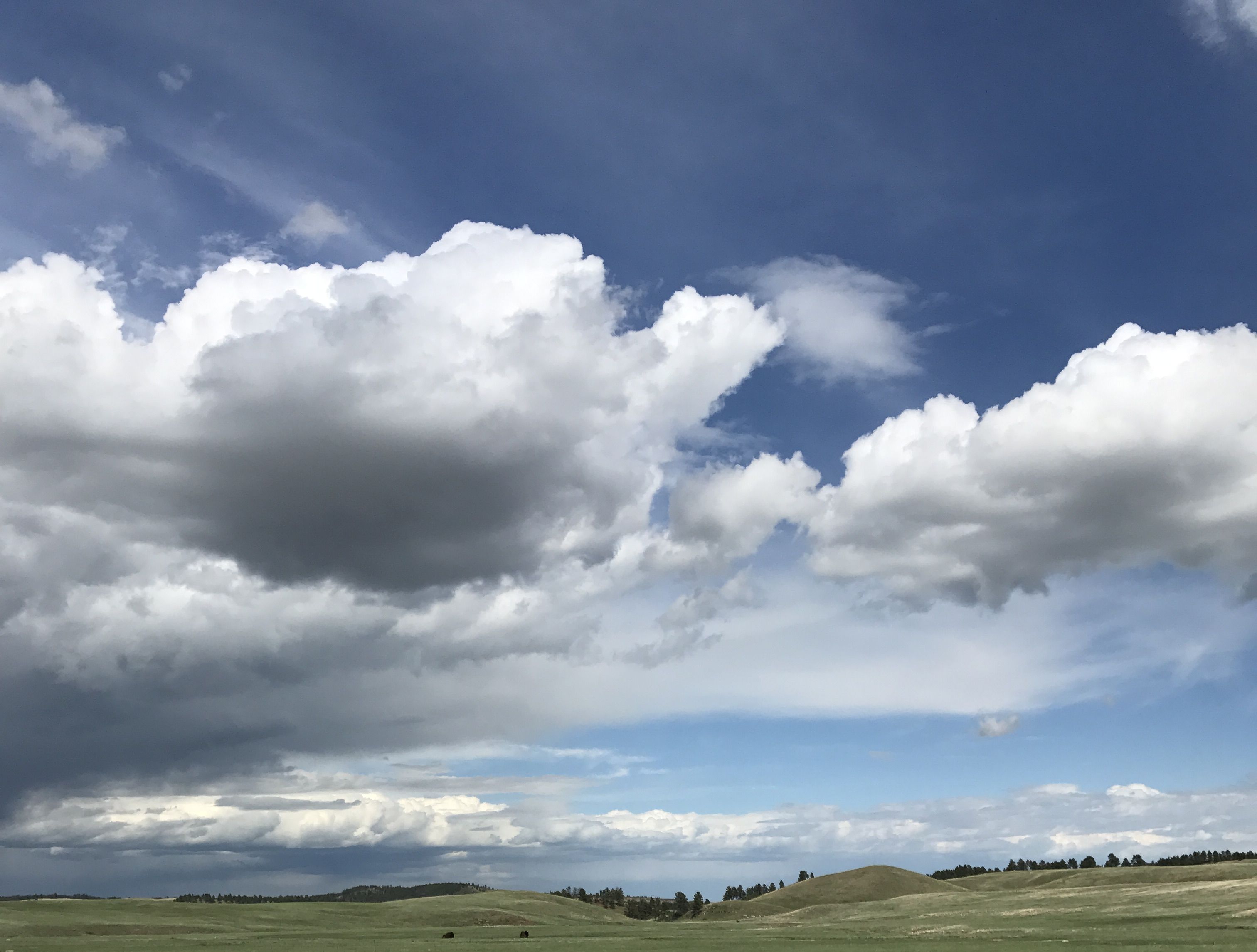
At the end of the tour, I was glad that the clouds had cleared and that there was some blue sky to be seen and that the clouds had cleared. I had a choice of paths to the headquarters and the parking area.

I am not a fan of stairs. I took the ramp up to Bart and headed back to Flo and Cora.

It turned out to be a lovely day after all.