Another day, I decided to drive over and explore Olympia, the state capital.
Am I the only one who has difficulty remembering the difference between capital and capitol? Or Capitol? Most likely not, but if you are now scratching your head, clicking on this link with take you to an explanation.
I consulted my HISTORY Here app and made my way over to Olympia. I found parking and stopped in at the Visitor Information Center.
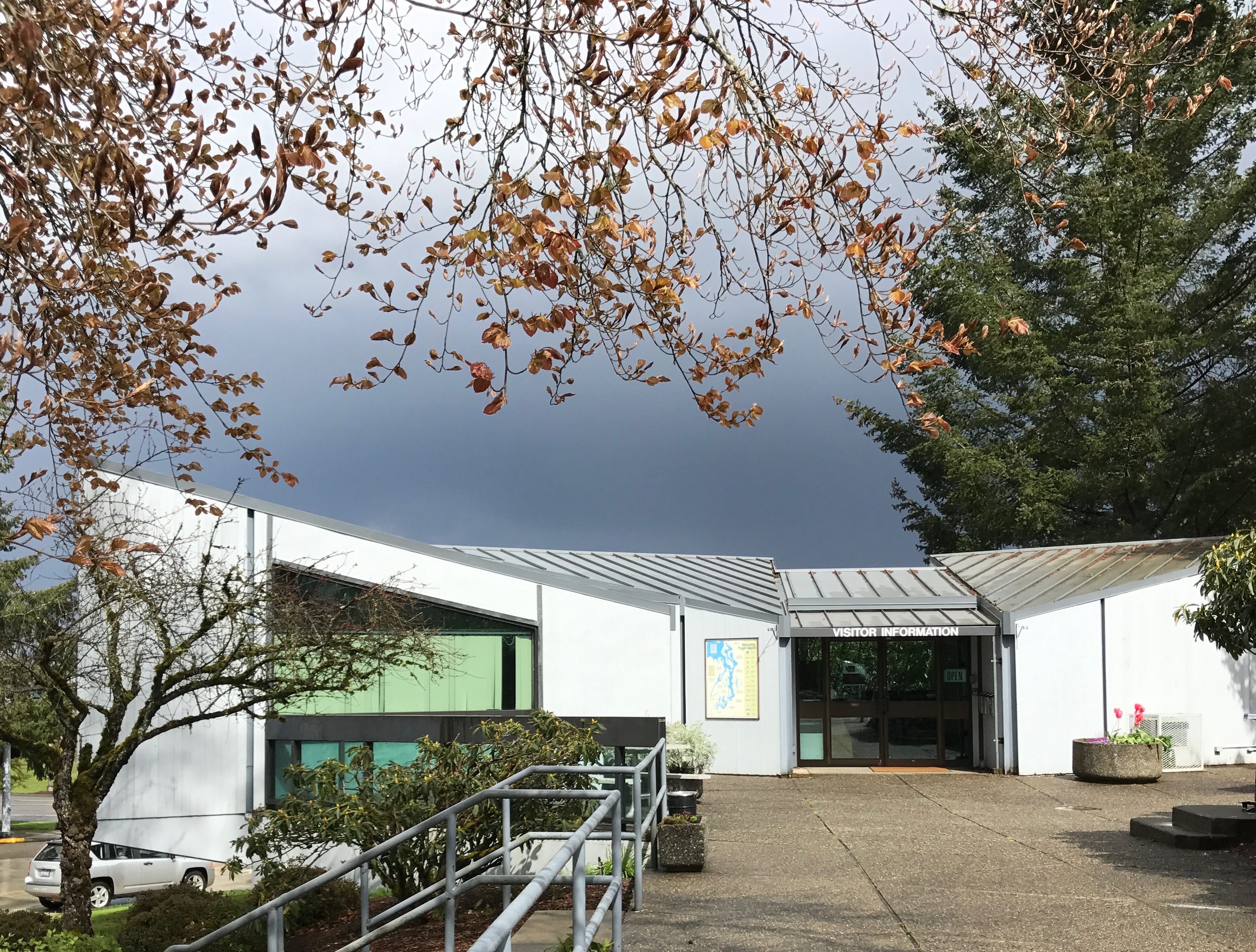
The helpful folks inside told me where to go and how to get on a tour. I headed over.
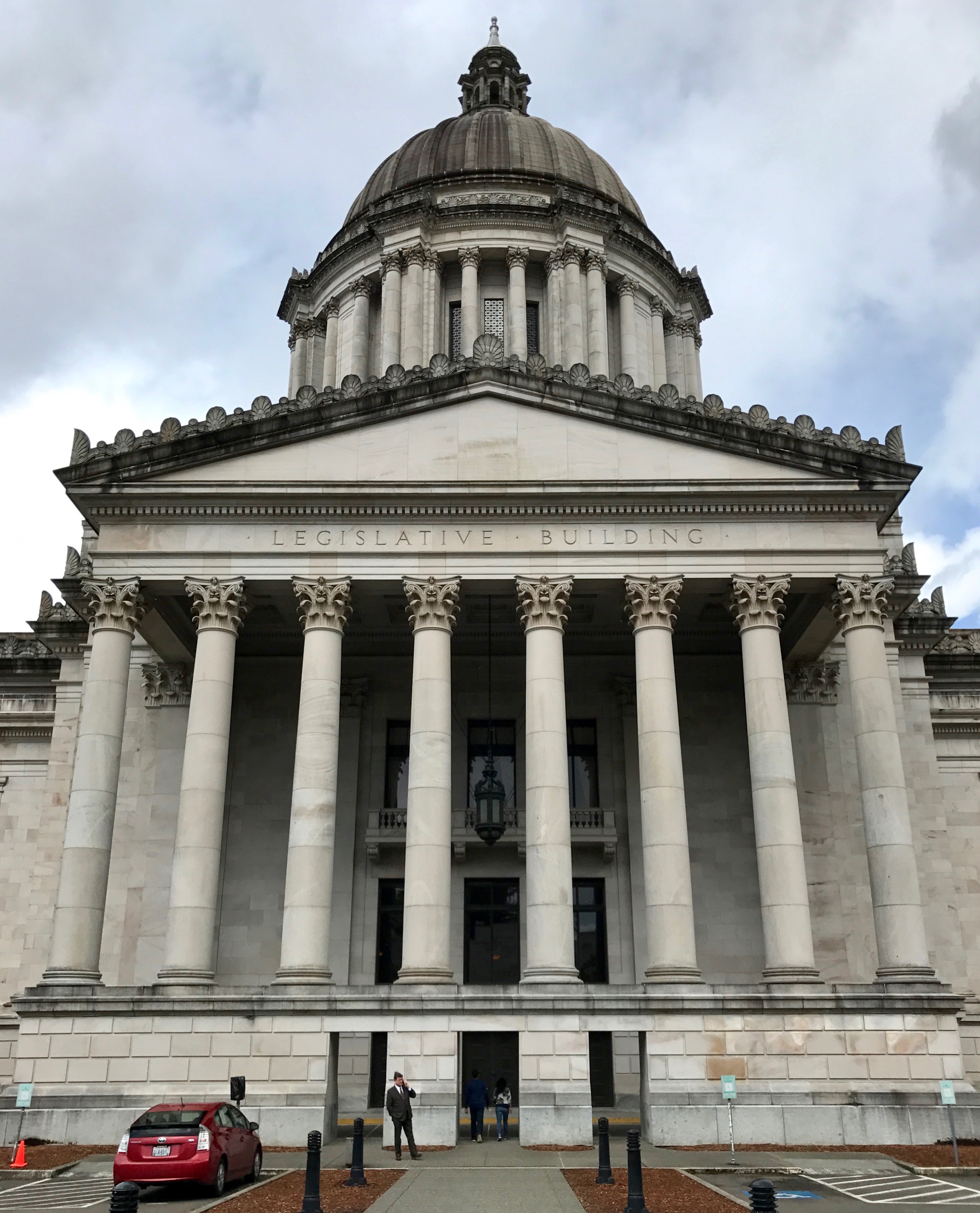
I checked in and found I’d have a short wait until my tour started, so I spent a few minutes looking around. There are always things to see.
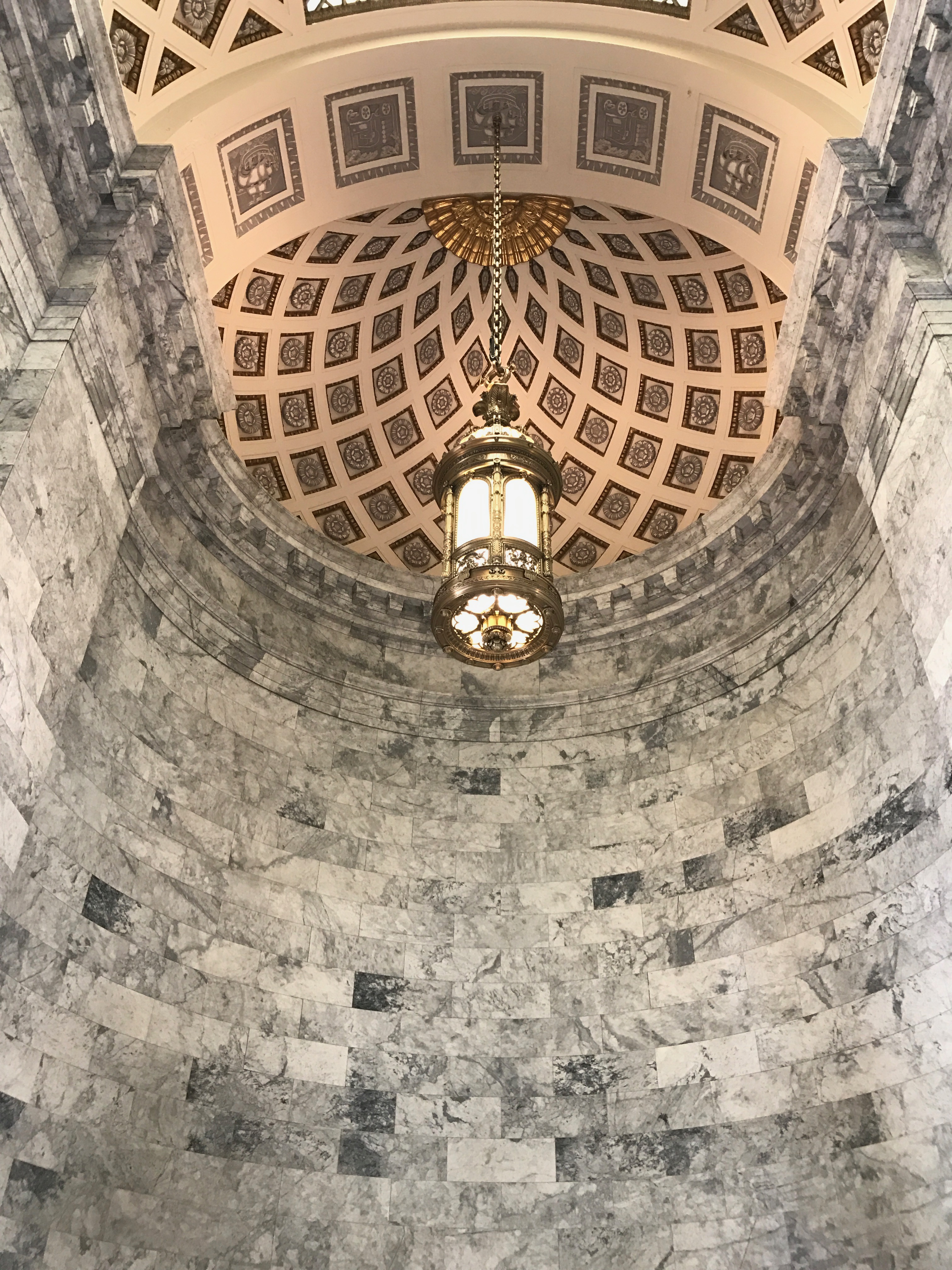
For instance, this is one end of the vestibule where I was waiting. How grand!
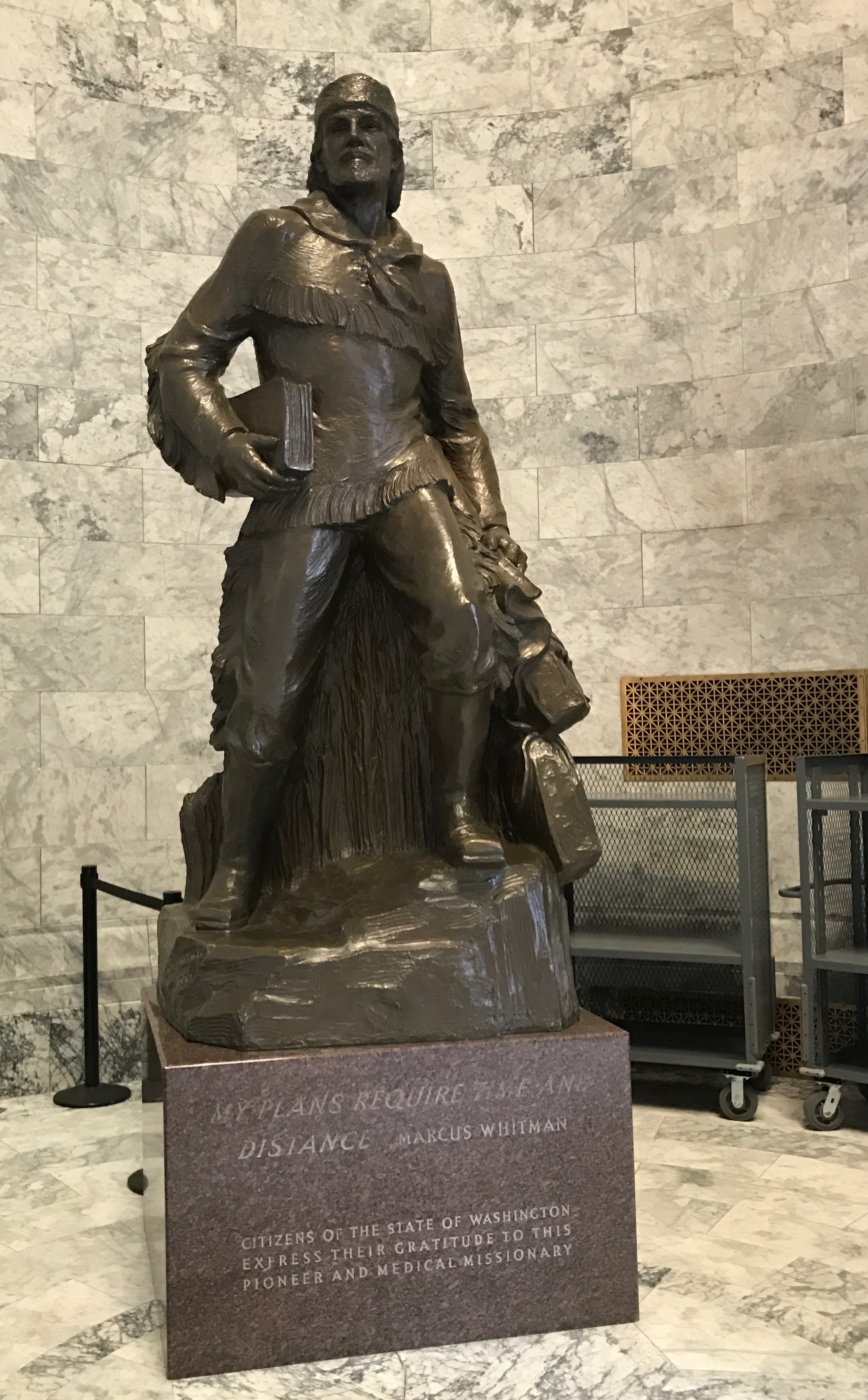
There was this statue of Marcus Whitman, who was a medical missionary from New York State. He had wanted to be a minister, but didn’t have the funds for the necessary education. Instead, He apprenticed himself to a doctor for two years. My, how times have changed in the world of higher education.
In 1843, Whitman lead the first large party of wagon trains along the Oregon Trail, which helped establish it as a viable route for the settlers who used the trail in the following decade. He established a settlement near the location of modern day Walla Walla.
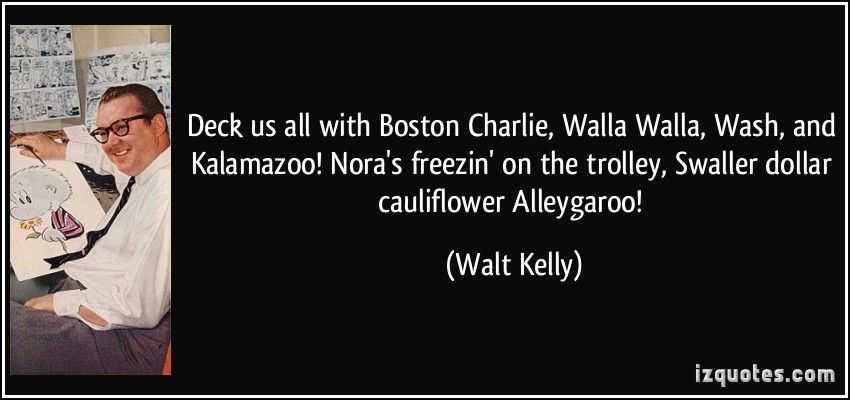
I can’t hear the name, Walla Walla without thinking of Walt Kelly’s Pogo comic strip. Dad used to sing this to us. I never quite understood it, but I remembered it. And now I live in Kalamazoo!
But, I digress.
Whitman’s adventure did not have a happy conclusion. The Cayuse, that he and his wife had hoped to convert, resented the encroachment of European Americans and the infectious diseases that they brought with them. A severe measles epidemic in 1847 resulted in high death rates, as the Native Americans had a lack of immunity to the diseases that came with the settlers. The Whitmans cared for the settlers and the Cayuse, but the Cayuse were hit particularly hard. Half of them died, including nearly all of their children. The Cayuse blamed the Whitmans for the deaths among their people.
According to my ultimate source, the Cayuse tradition held medicine men personally responsible for the patient’s recovery. Chief Tiloukaikt and the Cayuse killed the Whitmans in their home on November 29, 1847, along with twelve other white settlers in the community. They held another 53 women and children captive for a month before releasing them.
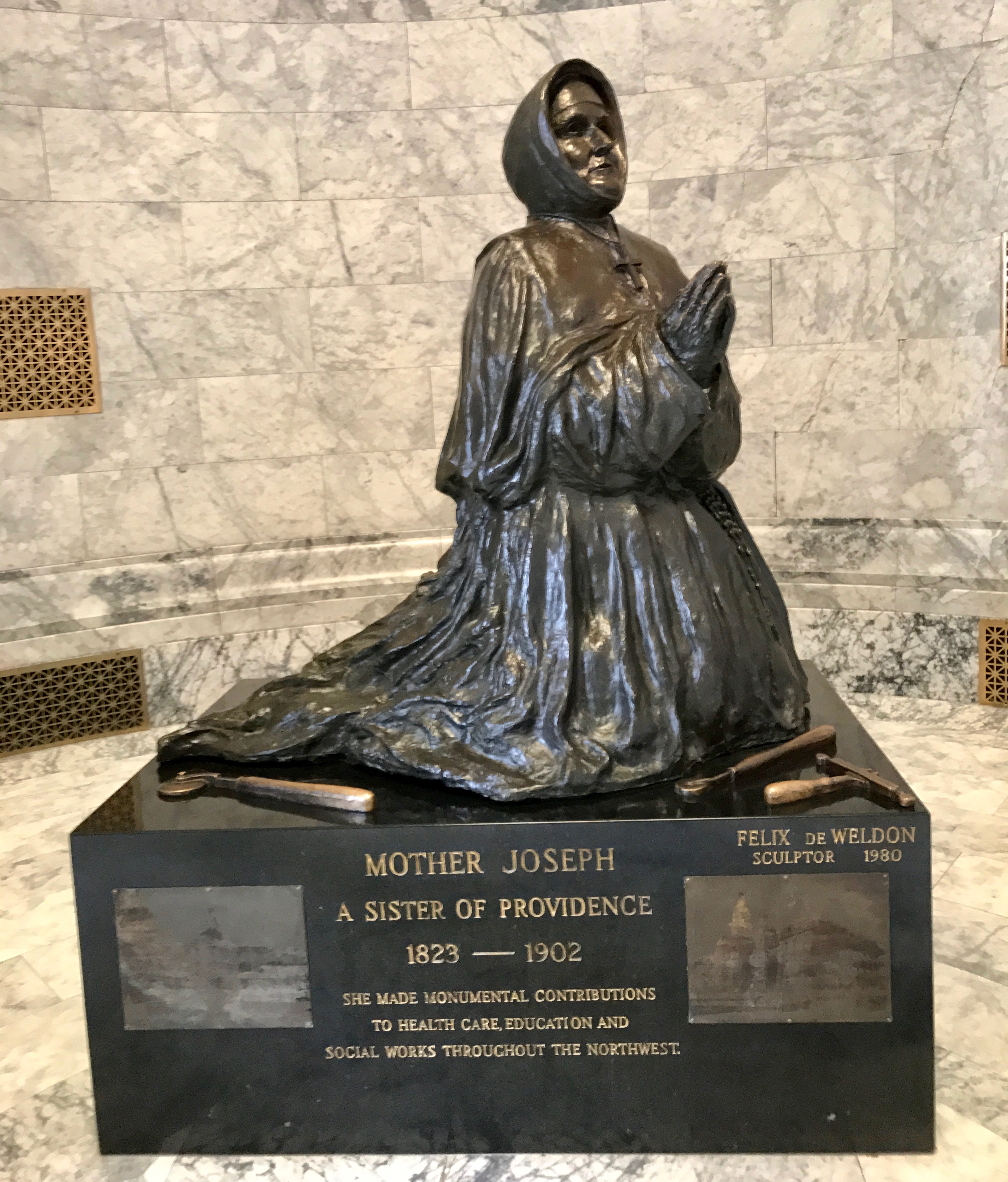
If you want to read about an impressive woman, click on this link to learn more about Mother Joseph.
Known as “the Builder,” Mother Joseph designed and/or supervised construction of 29 schools and hospitals, one of which was Seattle’s first hospital. She is recognized as one of the first architects in Washington Territory.
She was born Esther Pariseau in a farmhouse near Saint Elzear, Quebec. She was the third of 12 children and learned carpentry skills from her father. At age 20, she entered the convent of the Sisters of Charity of Providence in Montreal, and took the name Joseph in honor of her father. At least, that is what the source says. I don’t wonder if she took the name Joseph in honor of Saint Joseph, who was a carpenter.
She arrived in Washington in 1856 and set to work, feeding the poor, caring for the sick and orphaned, and teaching. As their space need increased, Mother Joseph designed new buildings and supervised their construction.
After a life of hard work and dedication, she passed away in 1902. In 1910, when the order once again needed more space they had to hire an architect for the first time. That was a talented woman!
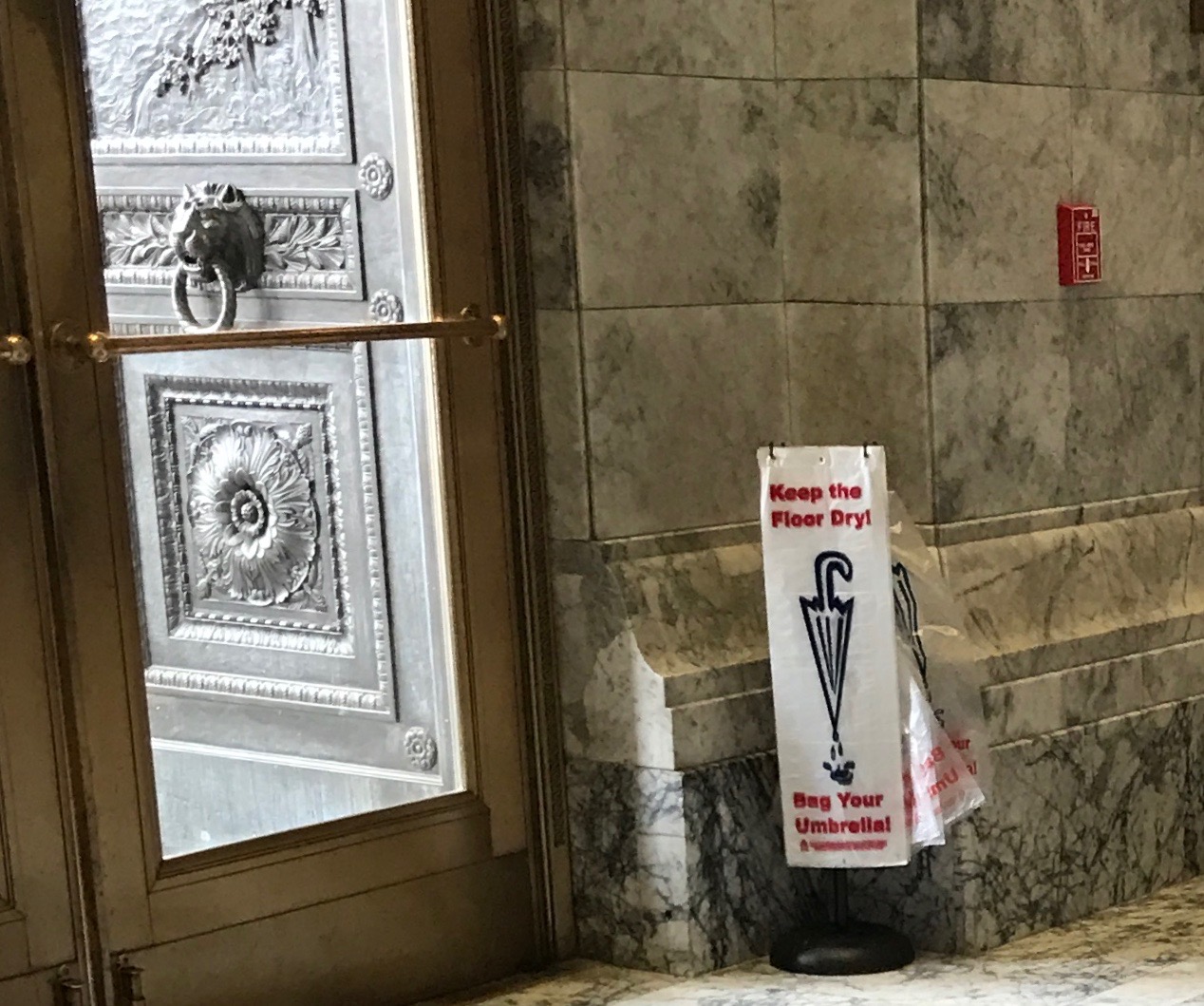
I headed outside to examine the bronze doors. Notice the umbrella bags hanging by the entrance. I am sure they are made use of in the rainy Pacific Northwest climate.
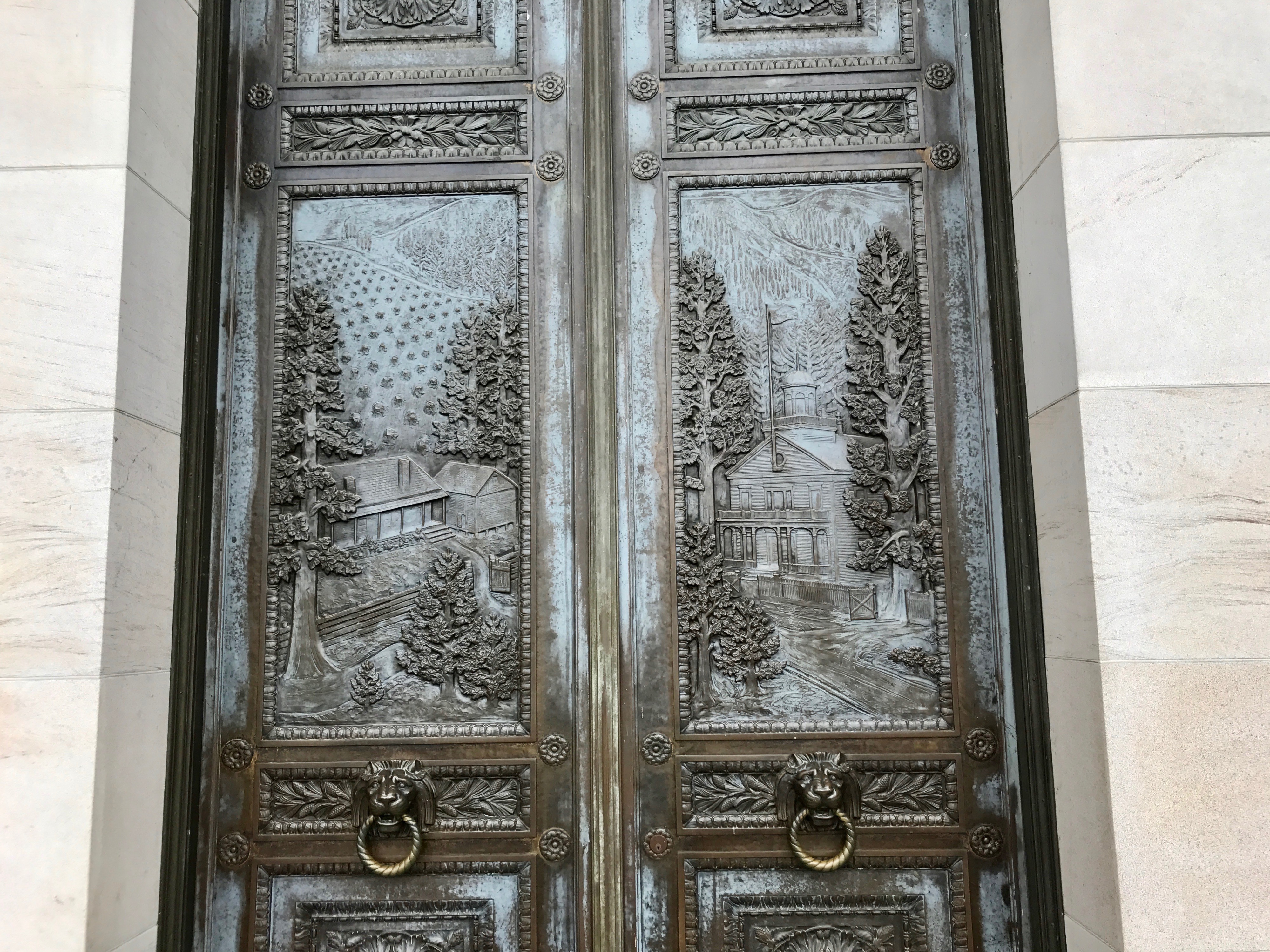
These were some elaborate doors!
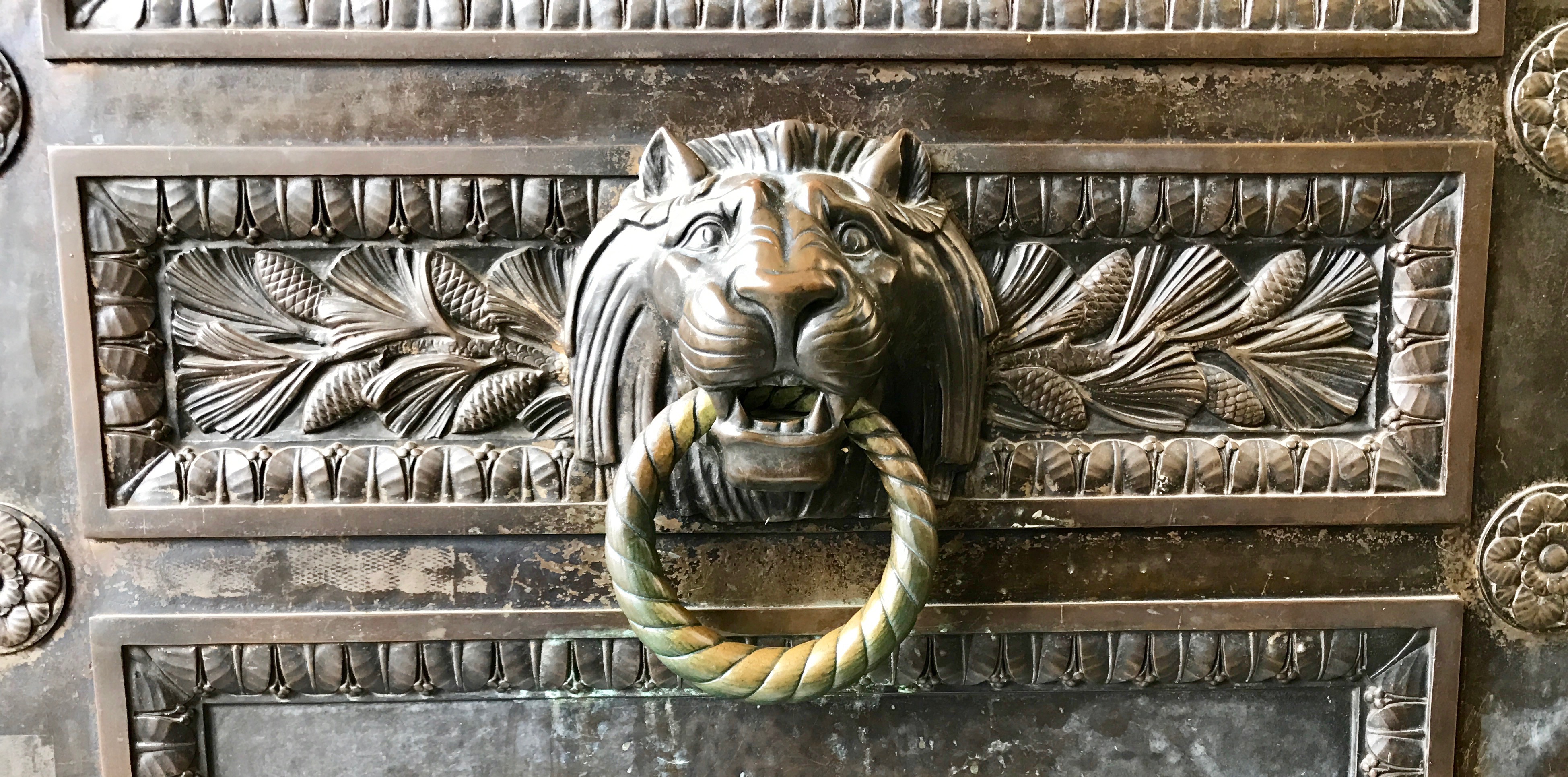
Even the door pulls were works of art.
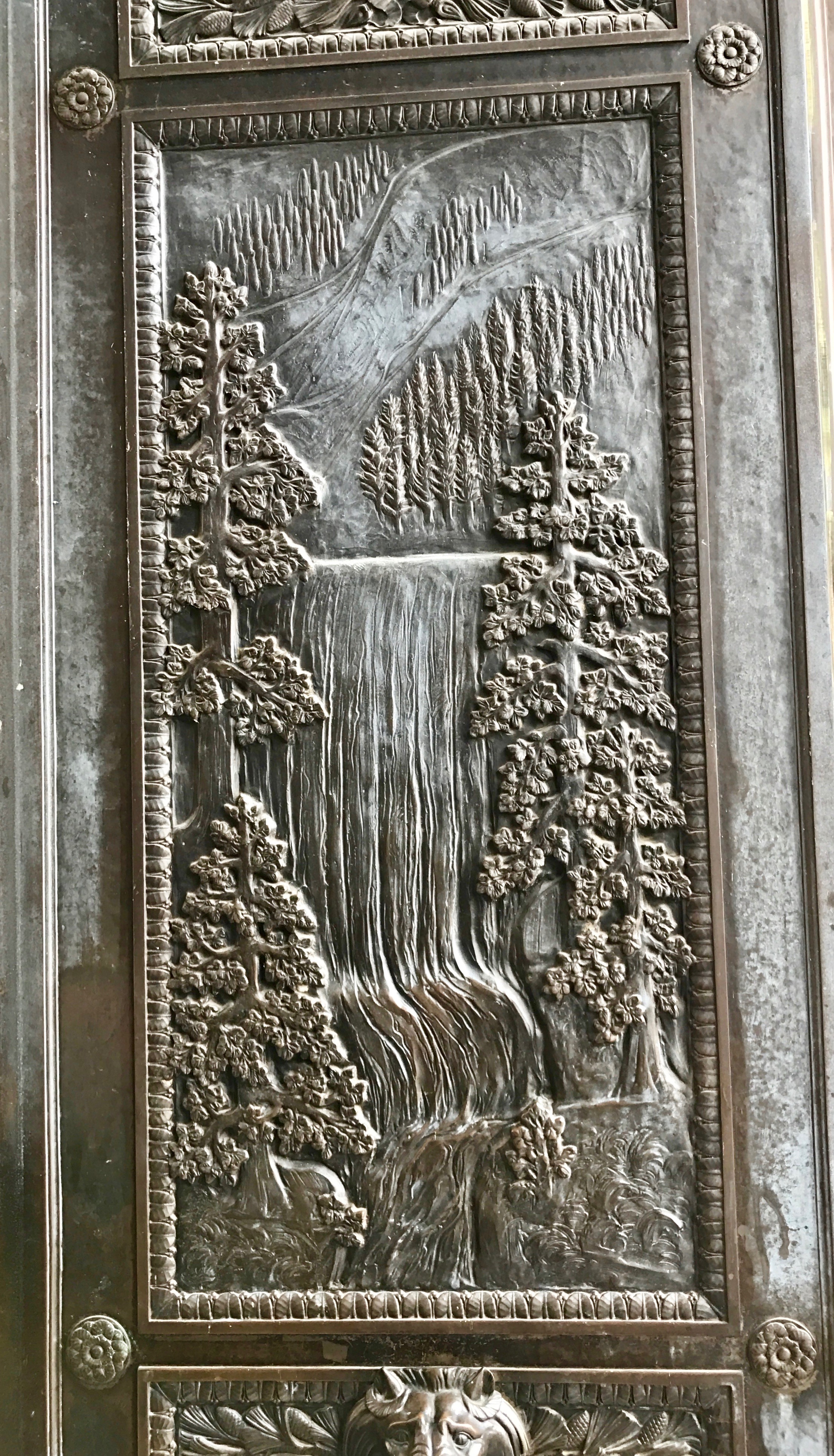
The panels highlighted Washington’s geography. Mountains, waterfalls, trees…
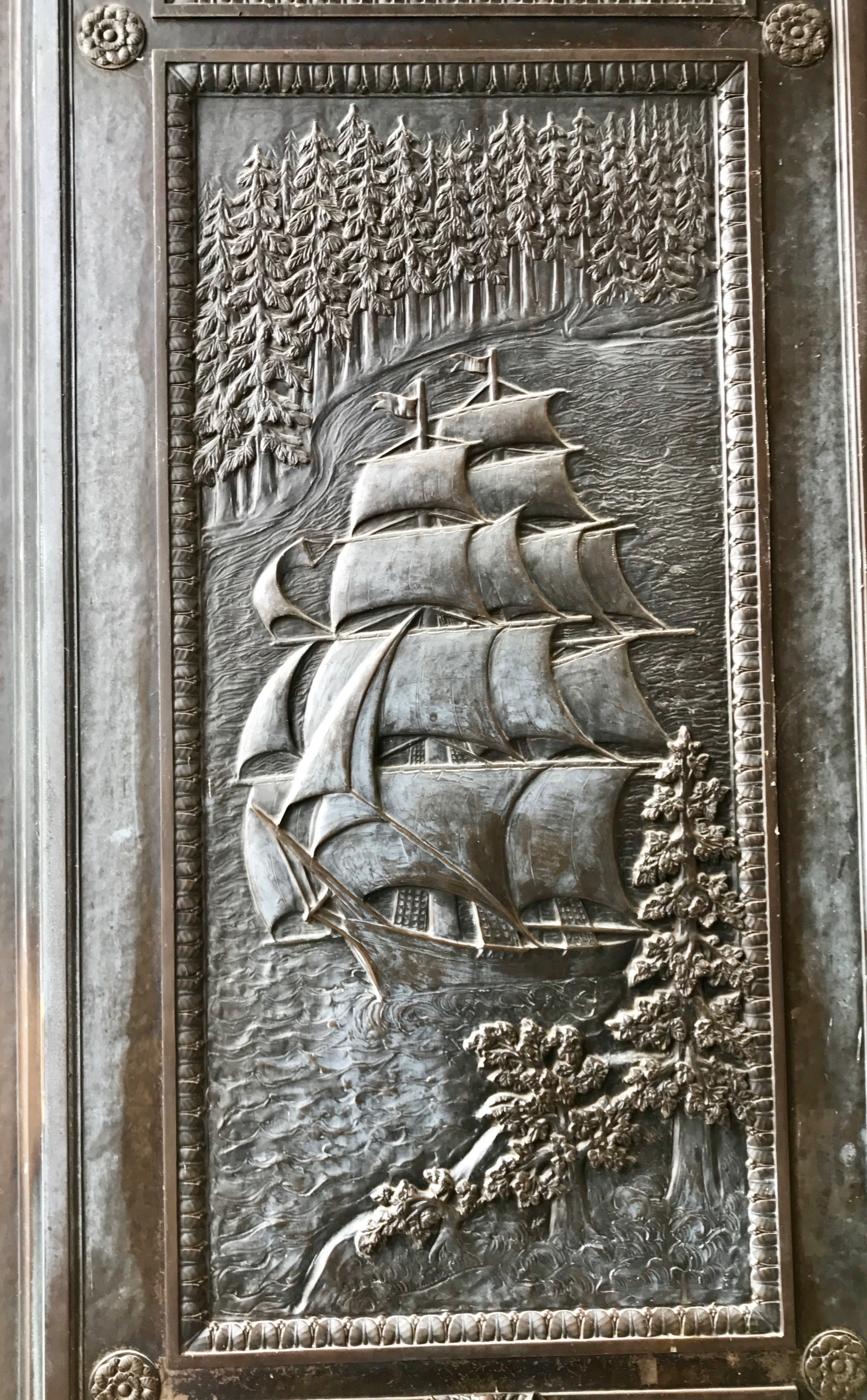
…the rugged coastline that made transportation possible.
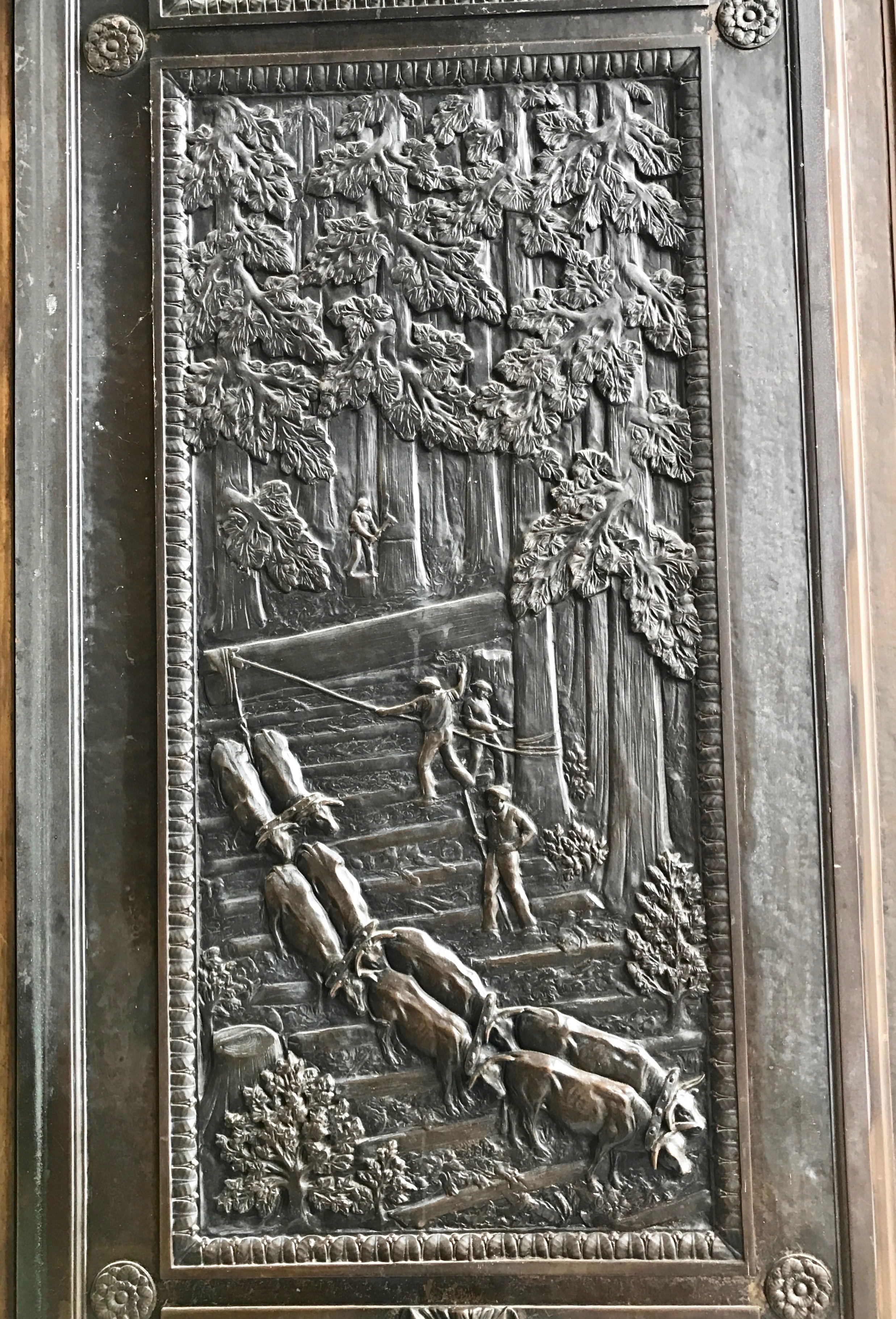
The lumber industry…
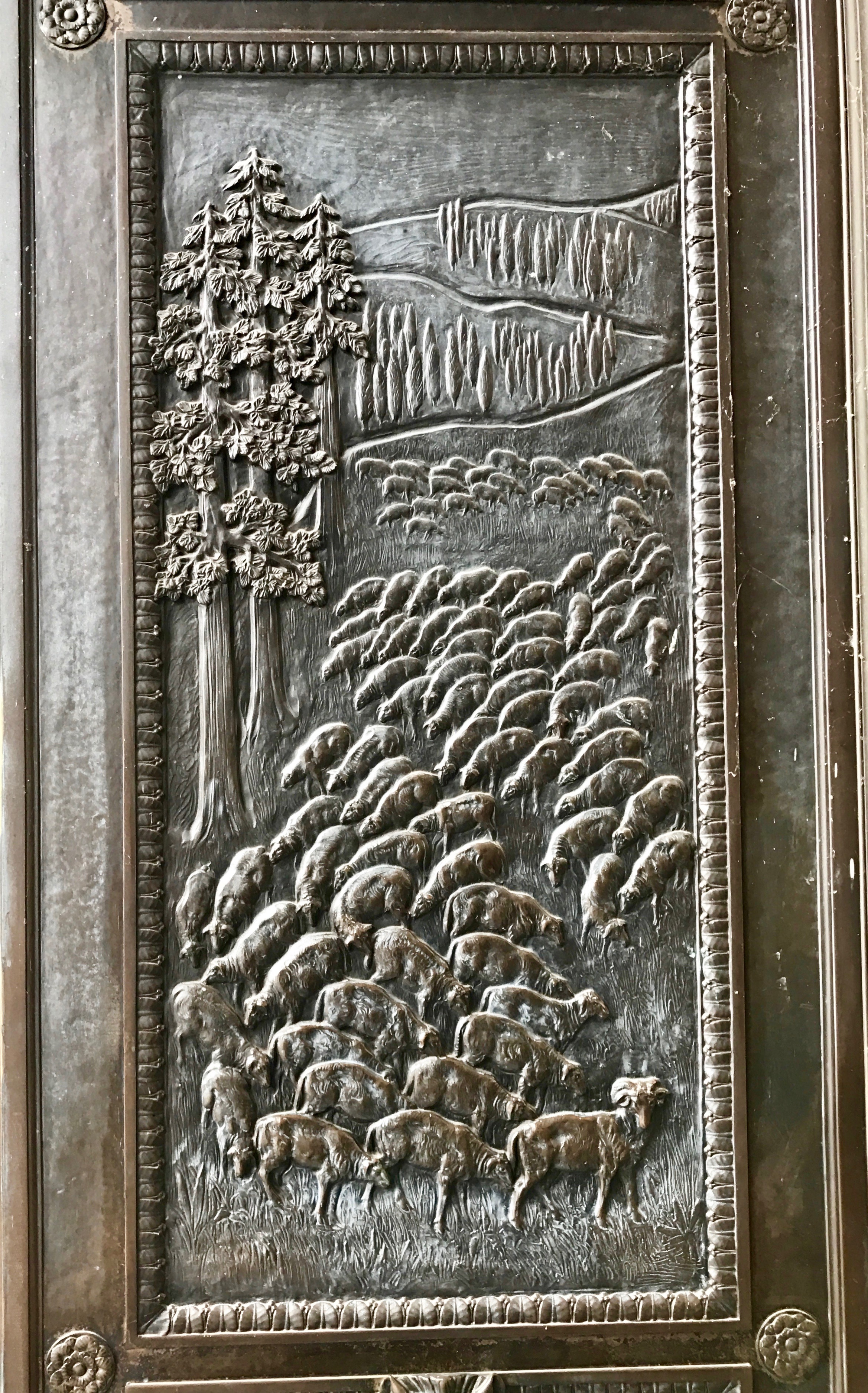
ranching.
I imagine that a historian could have told the story of Washington with these panels.
I kept my eye on my watch. I didn’t want to miss the tour, so I headed back inside.

I wonder how the people of Washington saw the future unfolding when they sealed up this time capsule in 1976? More than 40 years on, it would be interesting to see how accurate they were.
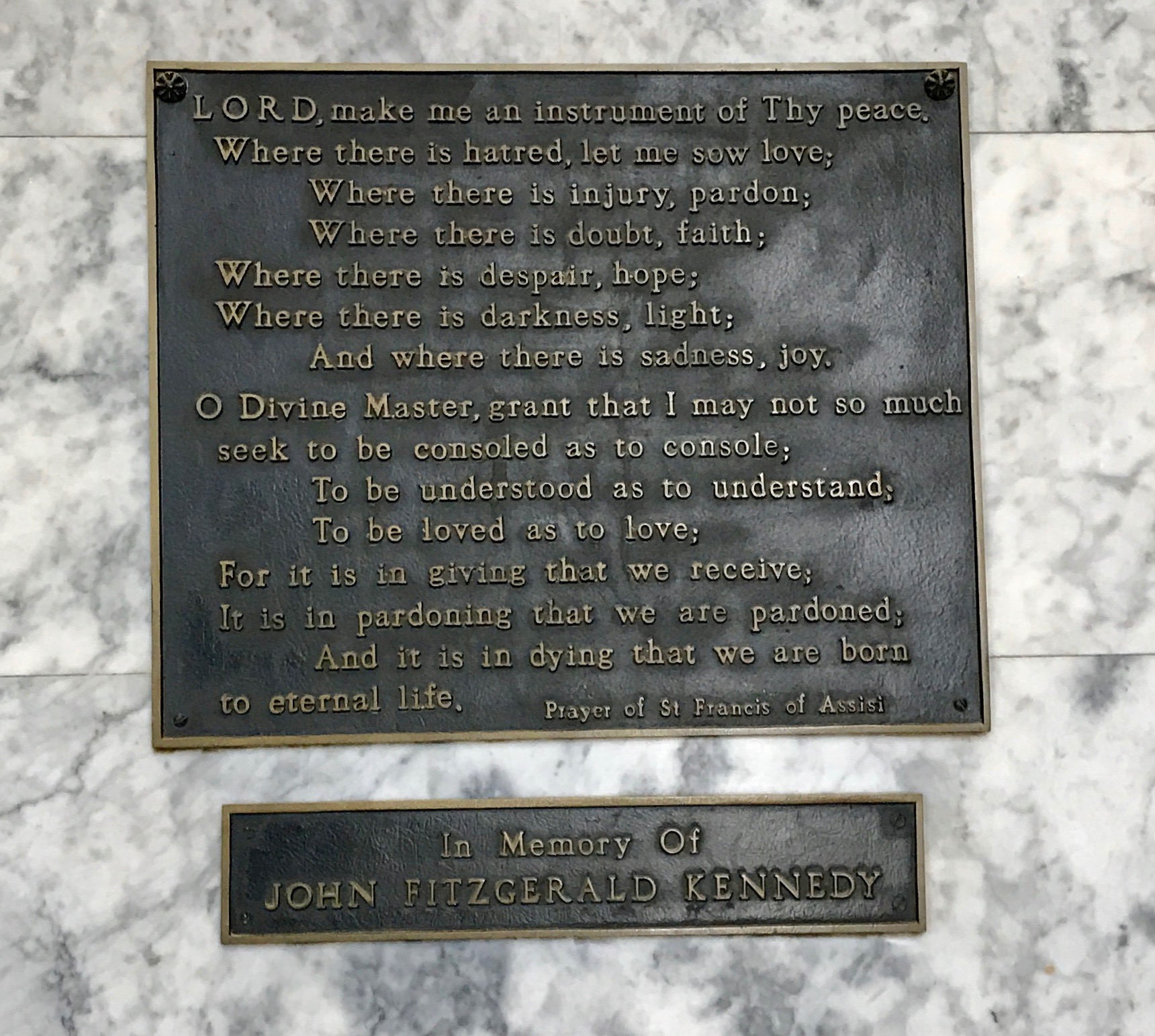
I thought this was a lovely memorial to President Kennedy.
And, with that, it was time to start our tour.
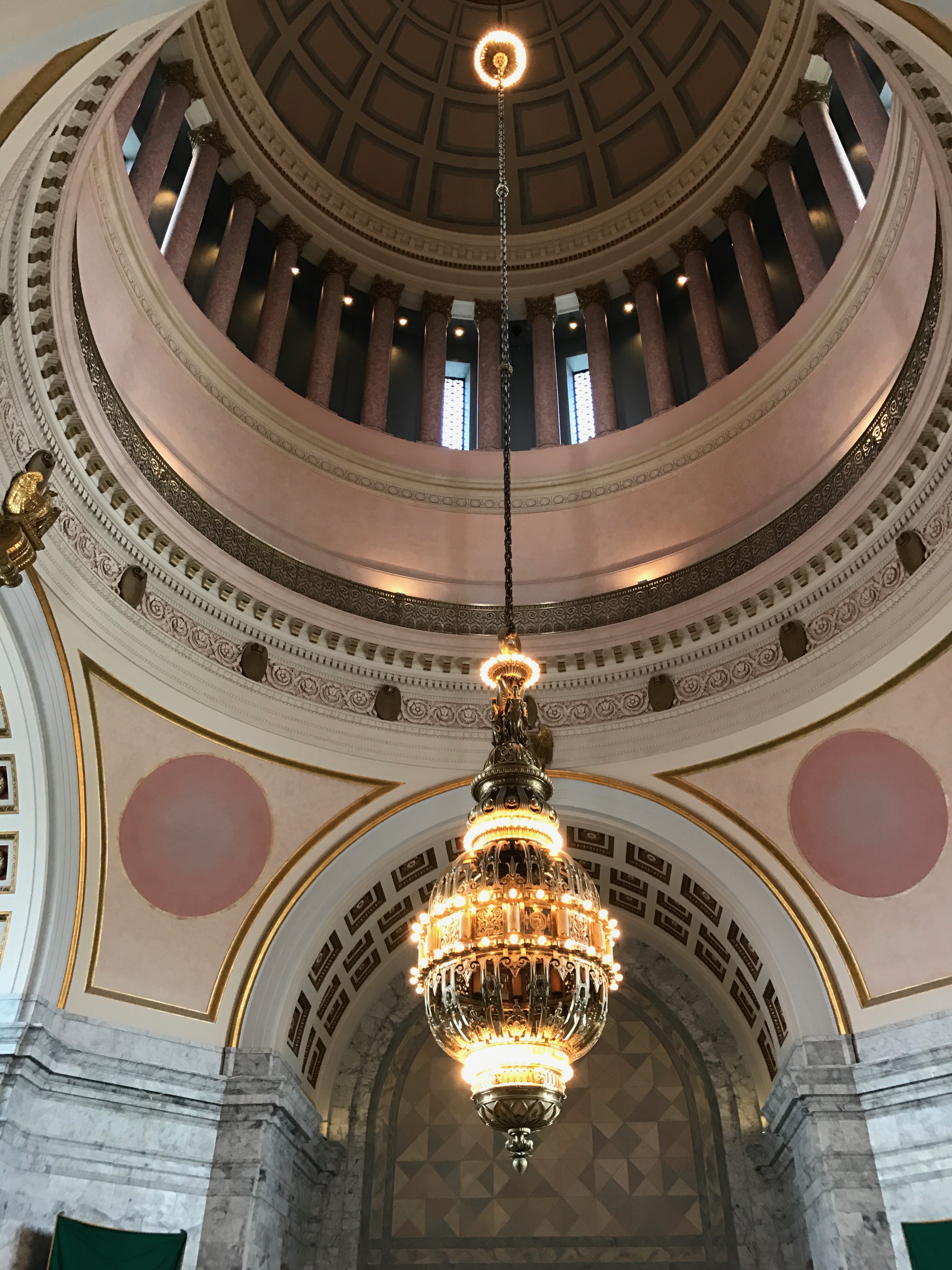
Our guide lead us into the rotunda. The building, designed by Wilder and White, was finished in 1928. Their design called for the dome to be fixed to the supporting structures by gravity. That’s right, they thought it was a good idea to just set a 29,000 ton dome on top of the building and trust that it would be so heavy that it wouldn’t move.
It did withstand several quakes. The cupola was so badly damaged by one in 1949 that it had to be completely replaced. A 6.5 magnitude earthquake in 1965 severely damaged the dome’s brick buttresses. A major aftershock could have caused them to collapse entirely. The Nisqually earthquake of 2001 caused the dome to shift, along with the sandstone columns supporting it. According to my ultimate source, the columns moved as much as three inches.
Three inches! Yikes!
Renovations completed in 2004 fixed the dome permanently to the rest of the building. I’m no architect, but that seems to make sense. I wonder what Mother Joseph would think?
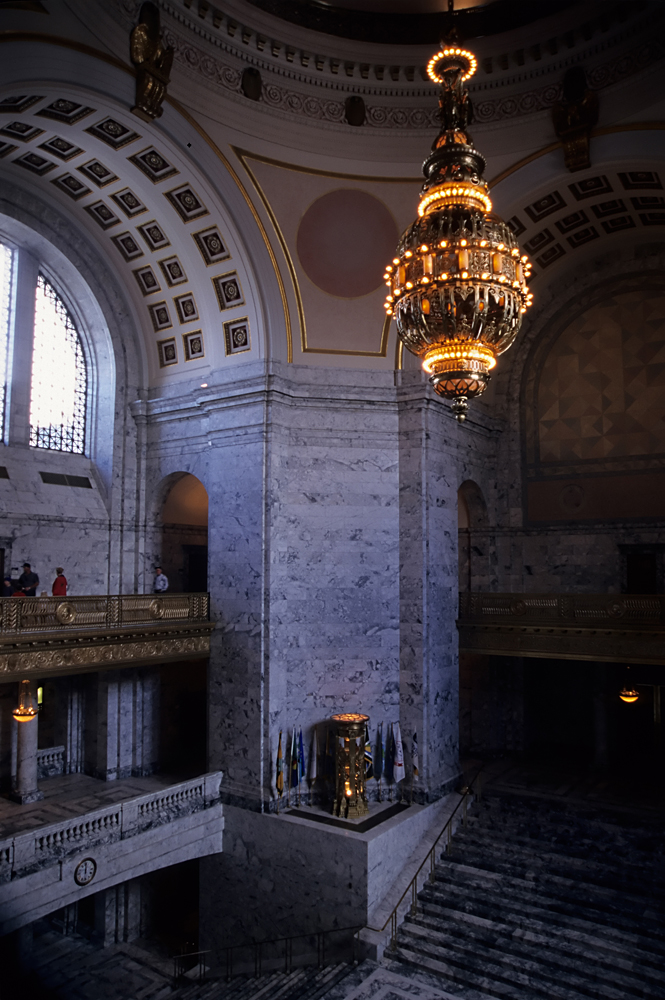
Louis Comfort Tiffany had a major role is lighting the rotunda. The lamps and Roman fire pots are the largest collection of Tiffany bronze in the world and they were his last large commission before his death in 1933.
The chandelier is amazing! They say it could fit a full-sized Volkswagen Beetle “if put in sideways.” I’m not sure what that means, exactly, but I can kind of see if with its front bumper facing the floor.
It weighs 10,000 pounds and measures 25 feet tall. They say it features life-sized faces, human figures and 202 lights. It is suspended 50 feet above the floor by a 101 foot chain. That must be some chain!
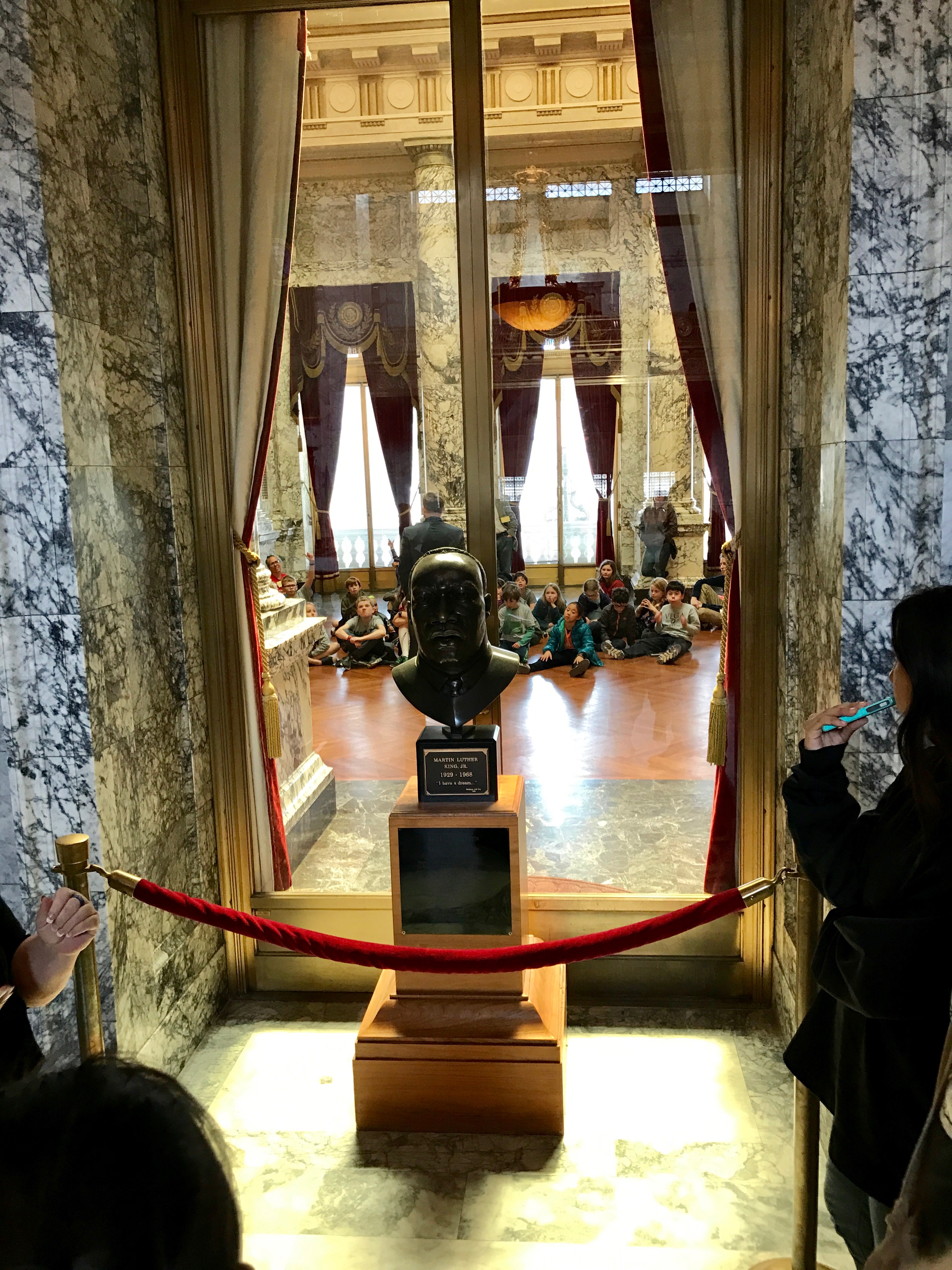
Our guide lead us up the stairs and continued sharing information about the building. Right behind the bust of Martin Luther King Jr, you can see a school tour.

We went over and looked back into the rotunda. In addition to a better view of Tiffany’s Roman fire pots, you can see another school tour.
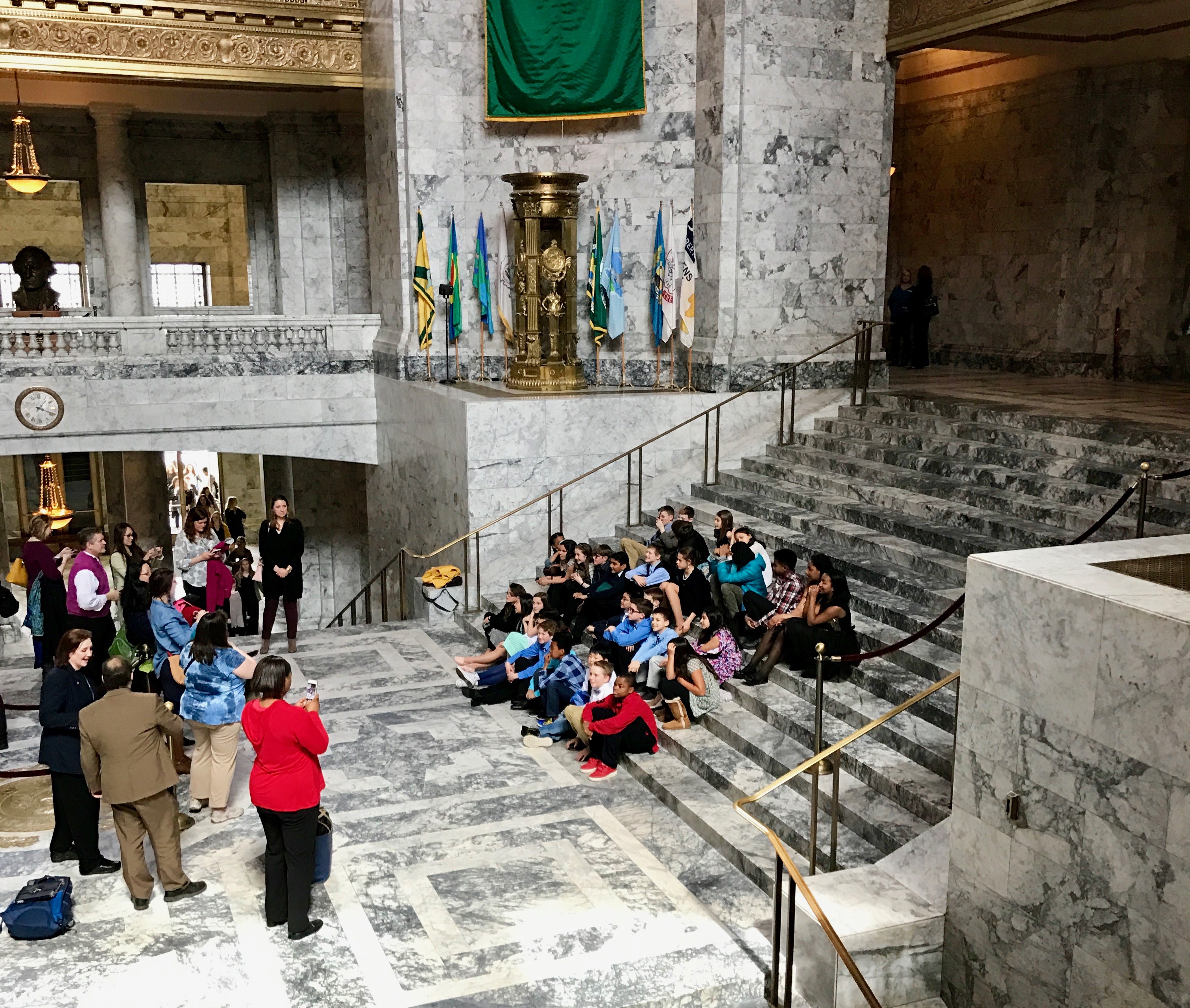
And another one over there. All I can say is that it must have been field trip season. Keep your eyes peeled for more tour groups.
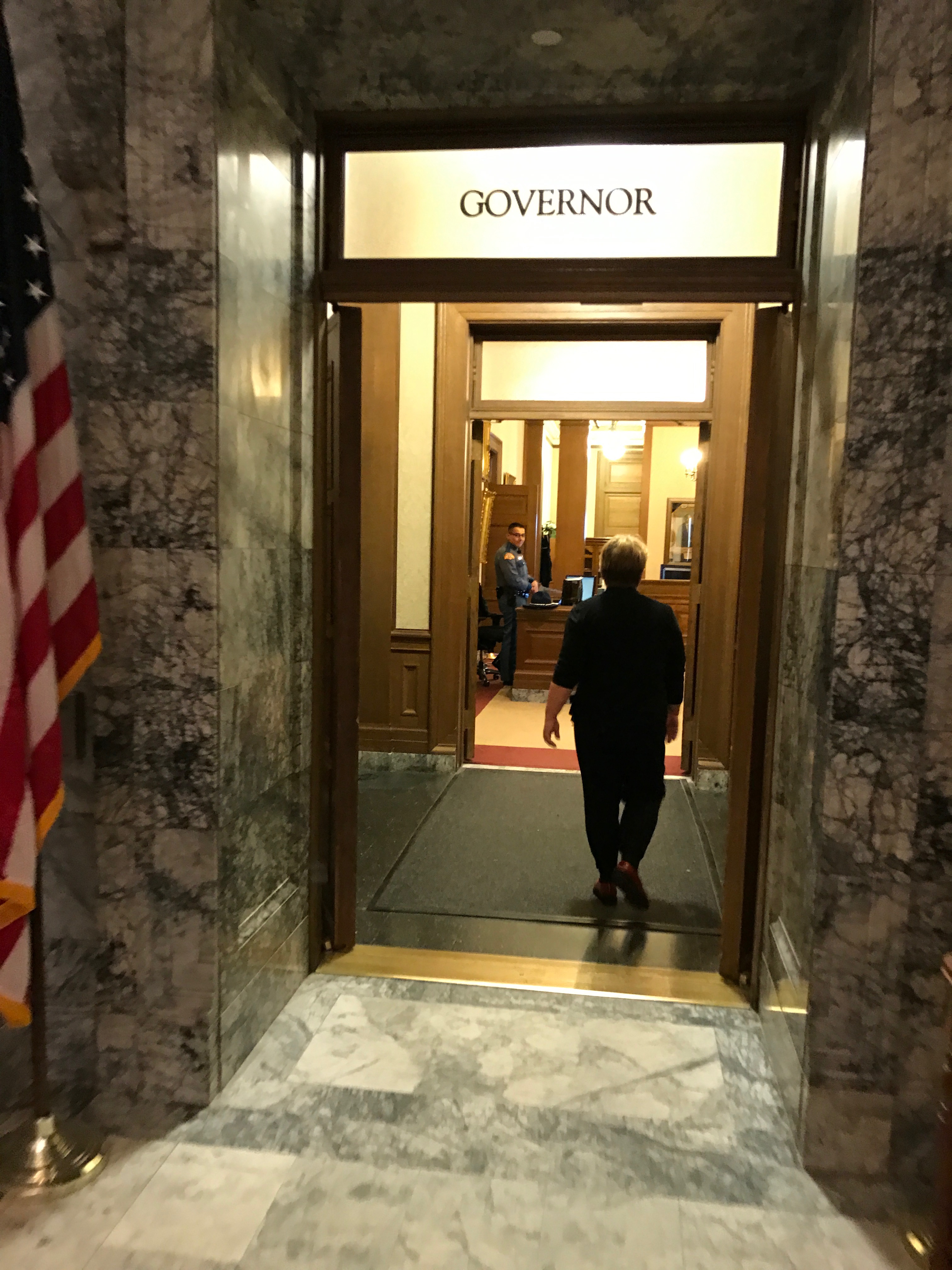
We walked down the hall to the Governor Jay Inslee’s office. We walked in and looked around the reception area.
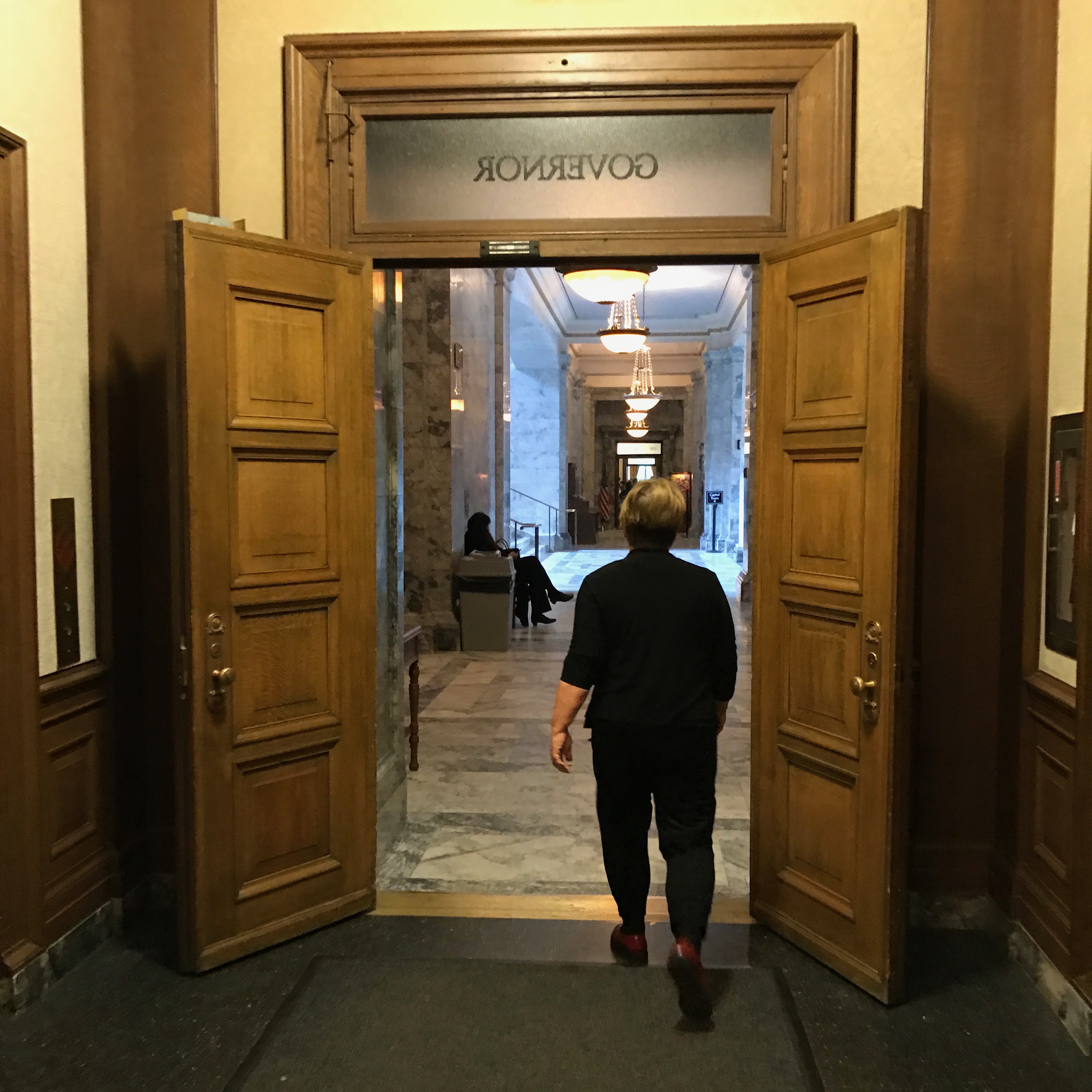
And then we walked out.
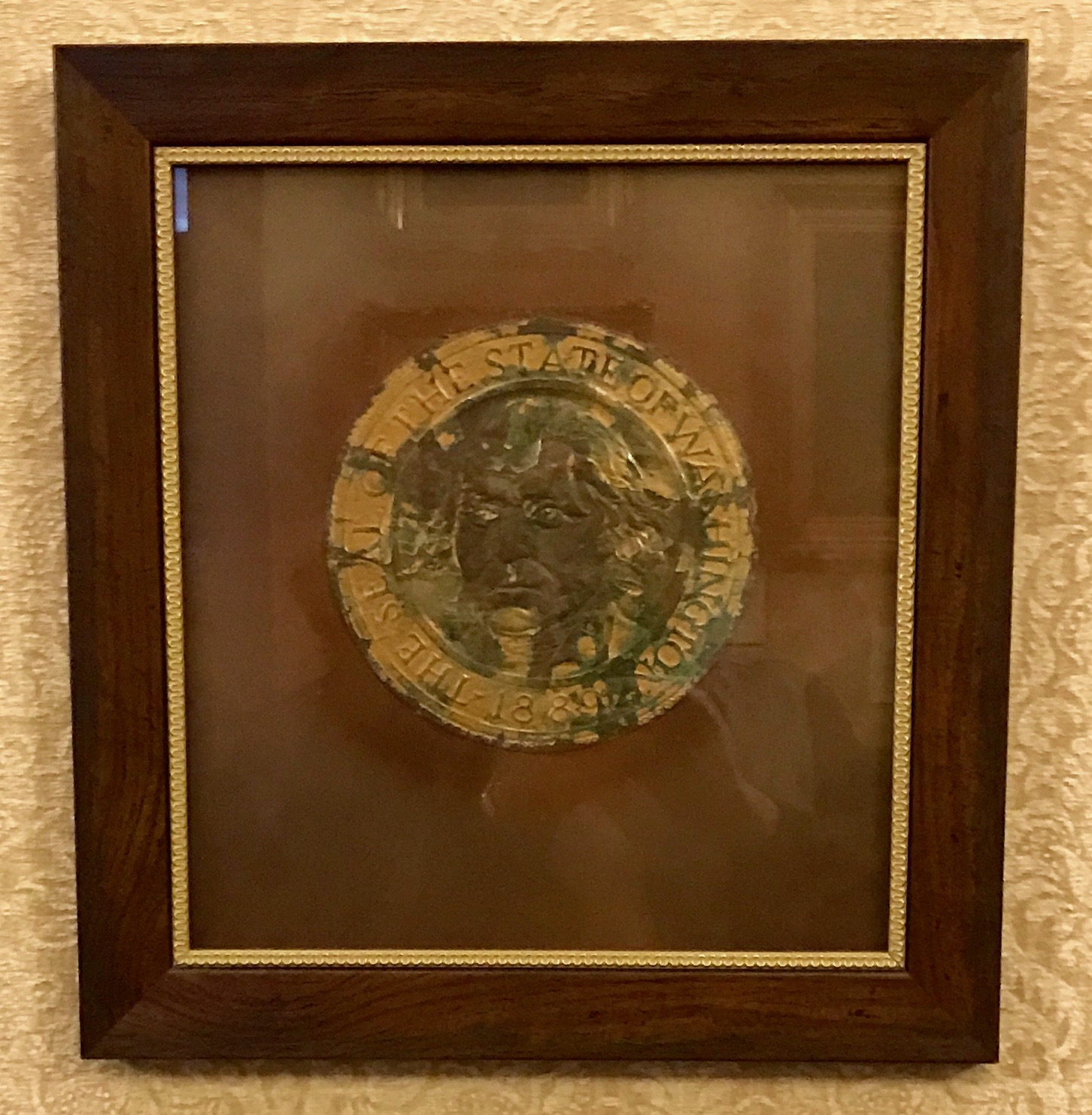
In the midst of all the marble from Alaska, Belgium, France, Germany and Italy and all the elegant Tiffany bronzes, there was this scrap of leather in a frame just outside the Governor’s office.
I’m always curious when things don’t seem like they belong together. So, I read the sign next to it. It turns out that this is the leather embossed state seal from the Governor’s executive chair, which was made in 1927. The Governor’s executive chair has been re-upholstered twice. The first time, the original seal was carefully cut from the original leather and sewn on to the new leather. In 1999, the seal was removed due to deteriorating conditions and preserved in the this frame.
So, now you know.
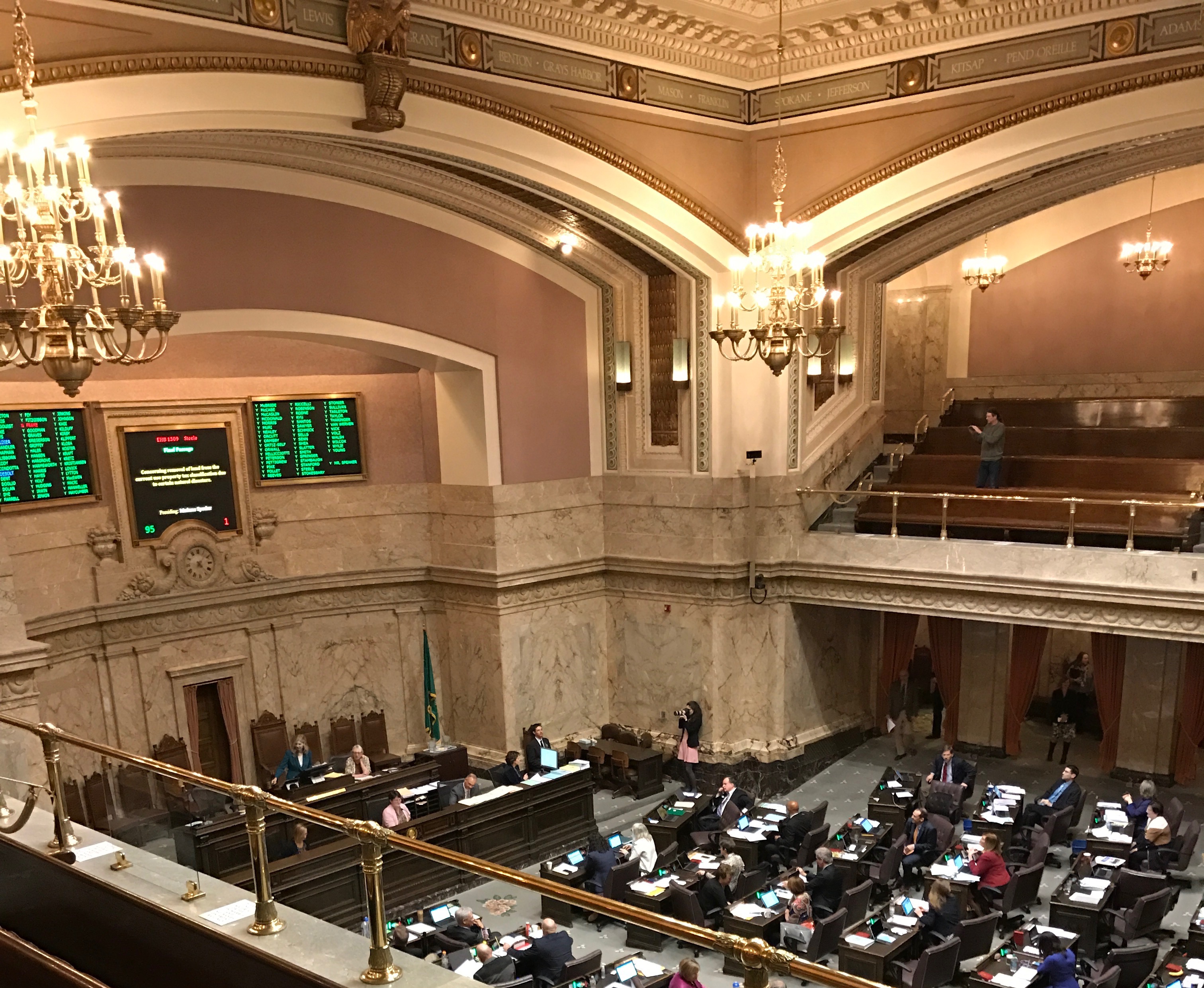
Now, I am not sure what is going on here. As I remember, the legislature had adjourned. I’m tempted to say this was another tour, but the people sitting down there don’t look like school children.
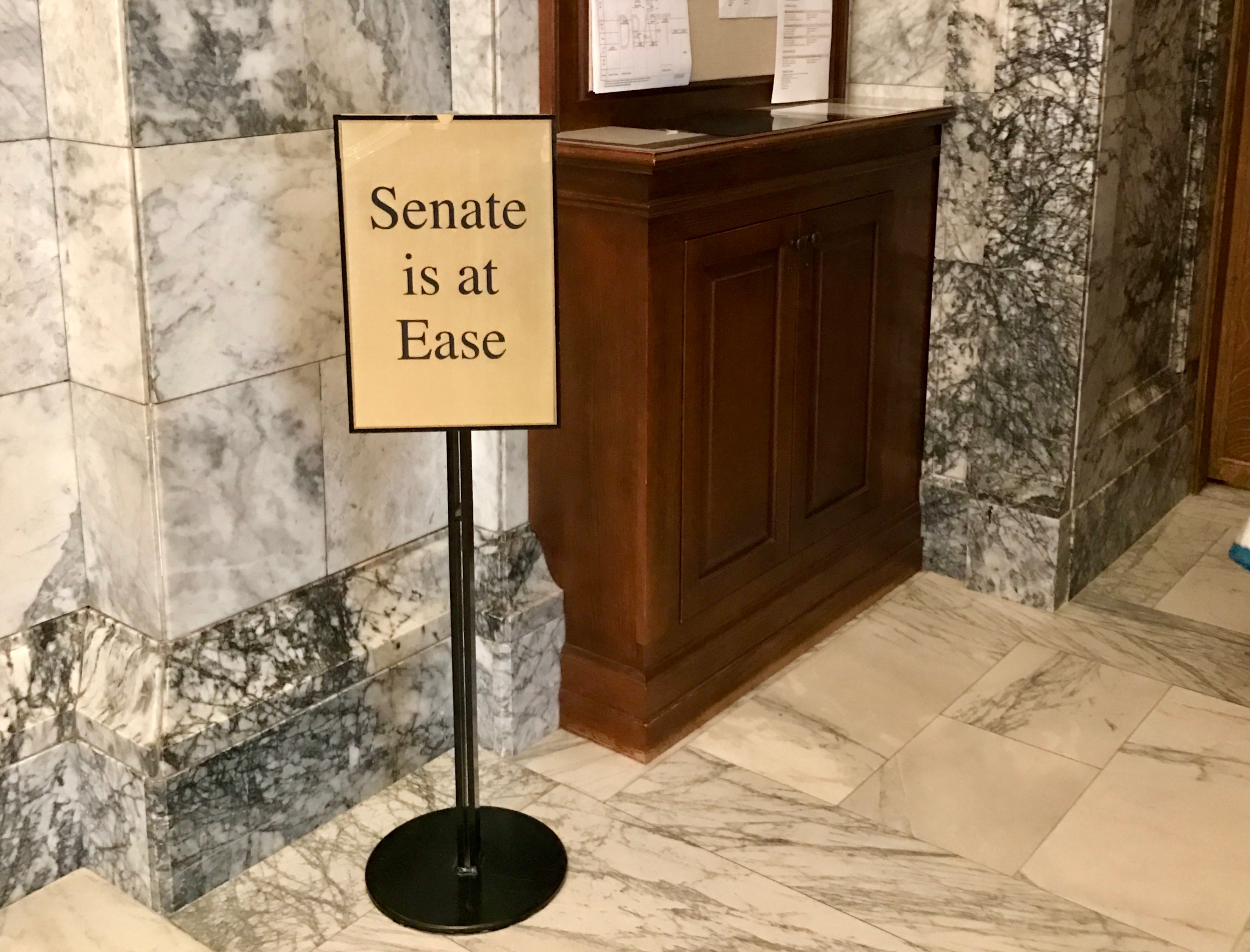
We left the lower house and went over to the Senate.
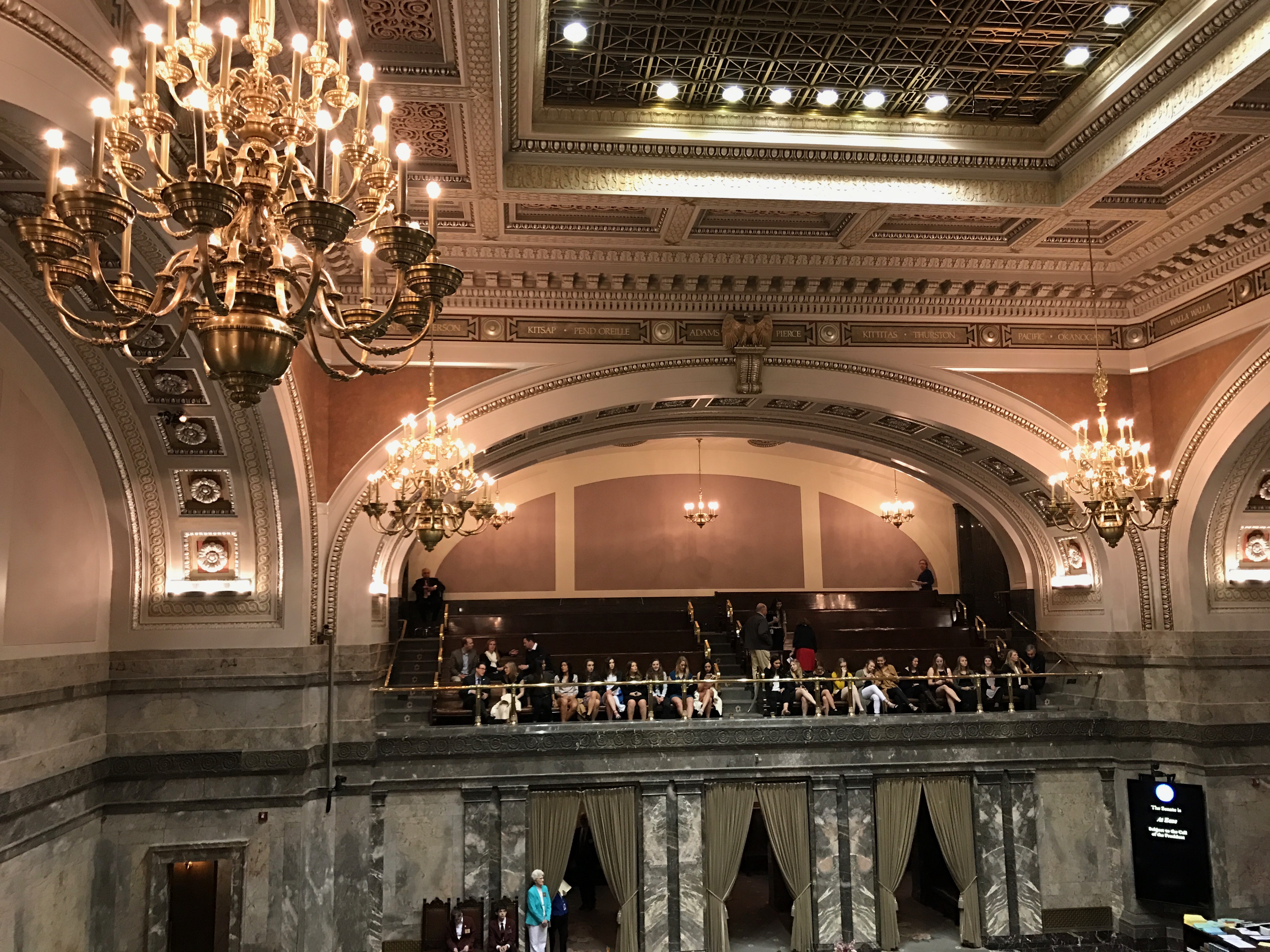
Do you see the tour? After we looked around the Senate for a bit, we headed back to the ballroom. I spied this mail chute on the way.

I always enjoy looking around and spying things I find interesting. Now, I am sure the vast majority of people are not fascinated by mail chutes, but I think they are interesting. In an era before email, they must have speeded up communication.
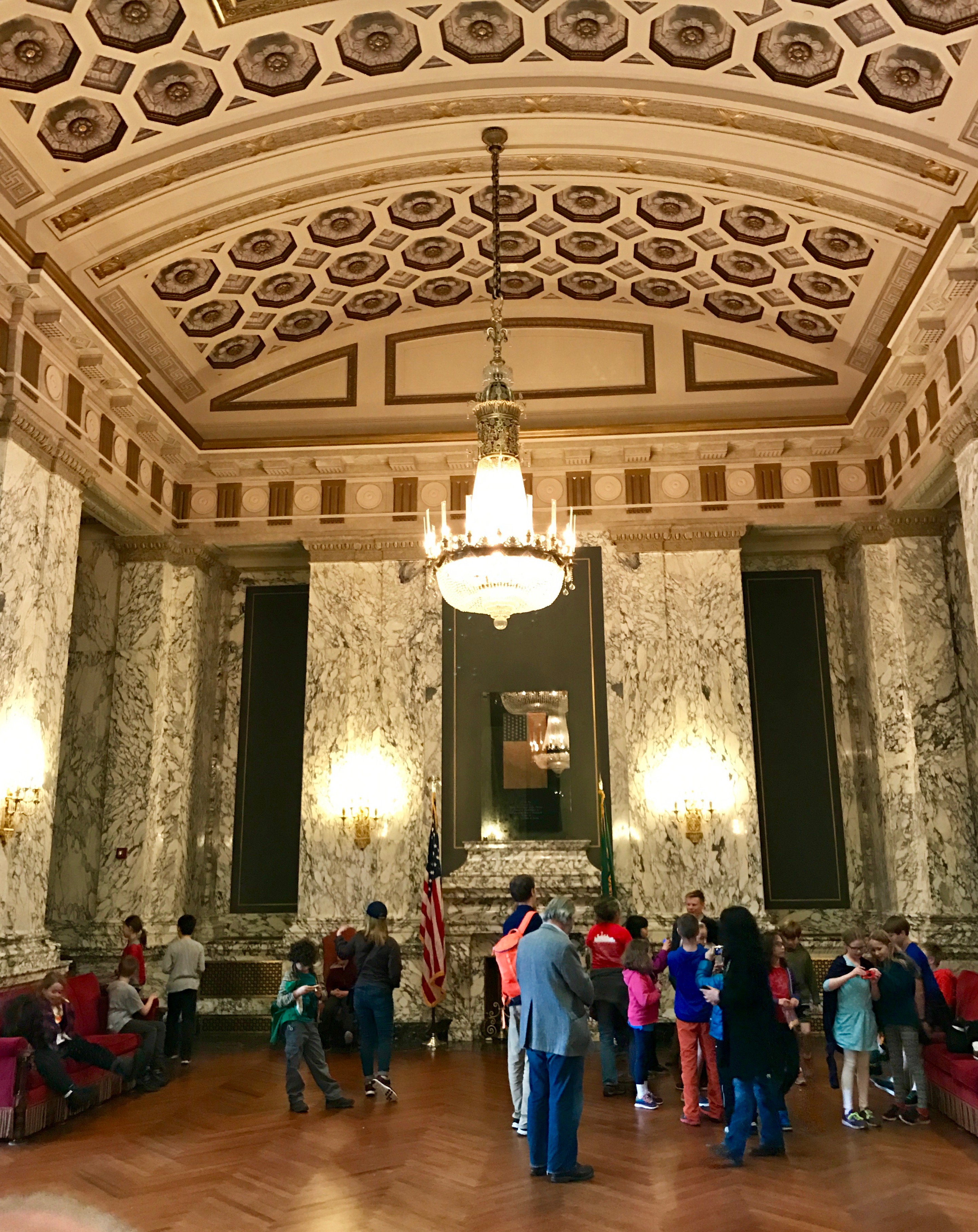
Oh, look! Another tour!
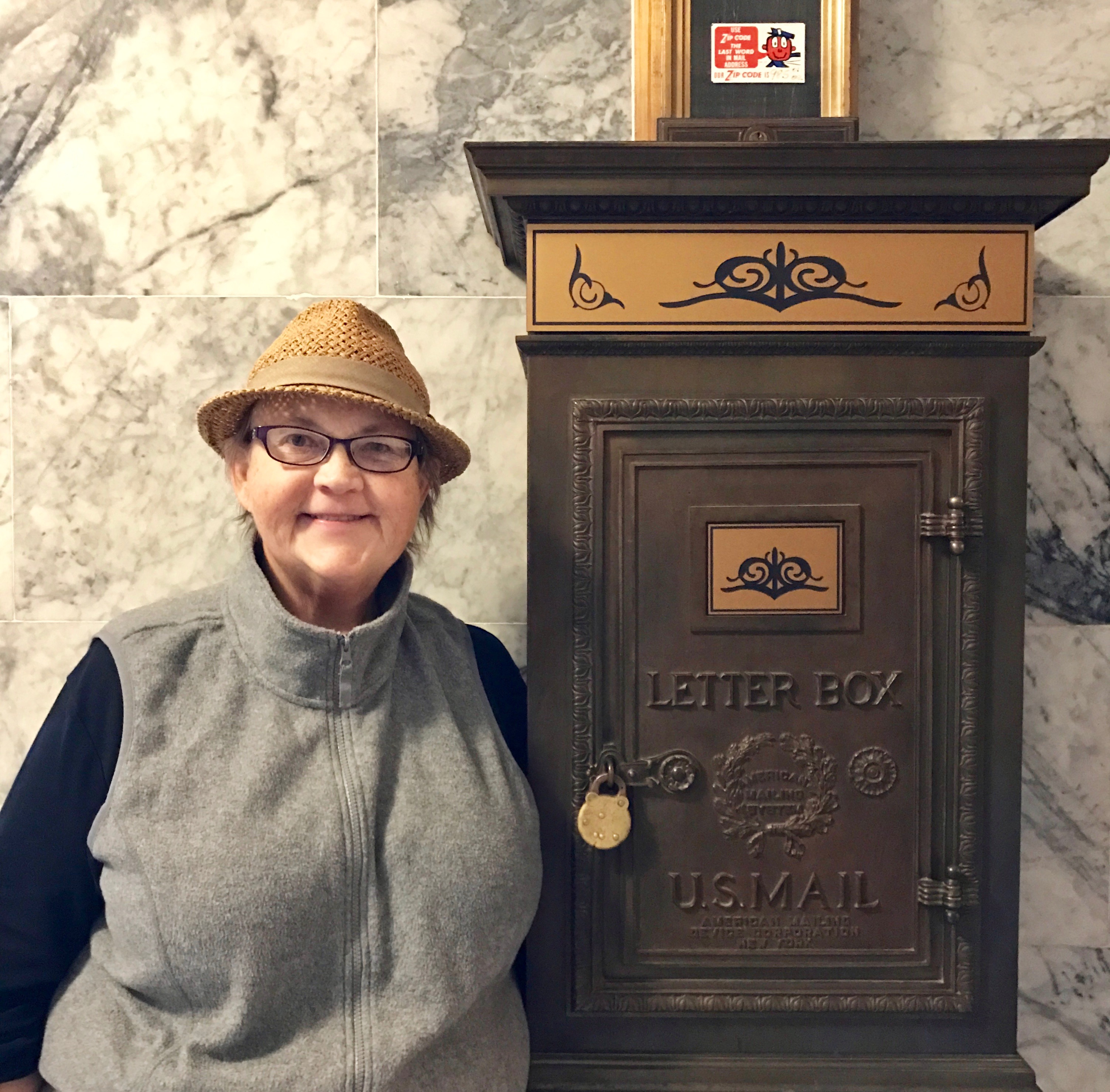
One of the members of my tour noticed me taking a photo of this mail box, and she offered to take a photo of me with it. Who am I to turn down a kind offer like that?
And that was pretty much the end of the tour. Now I was free to explore a bit before I left. I love just poking around.
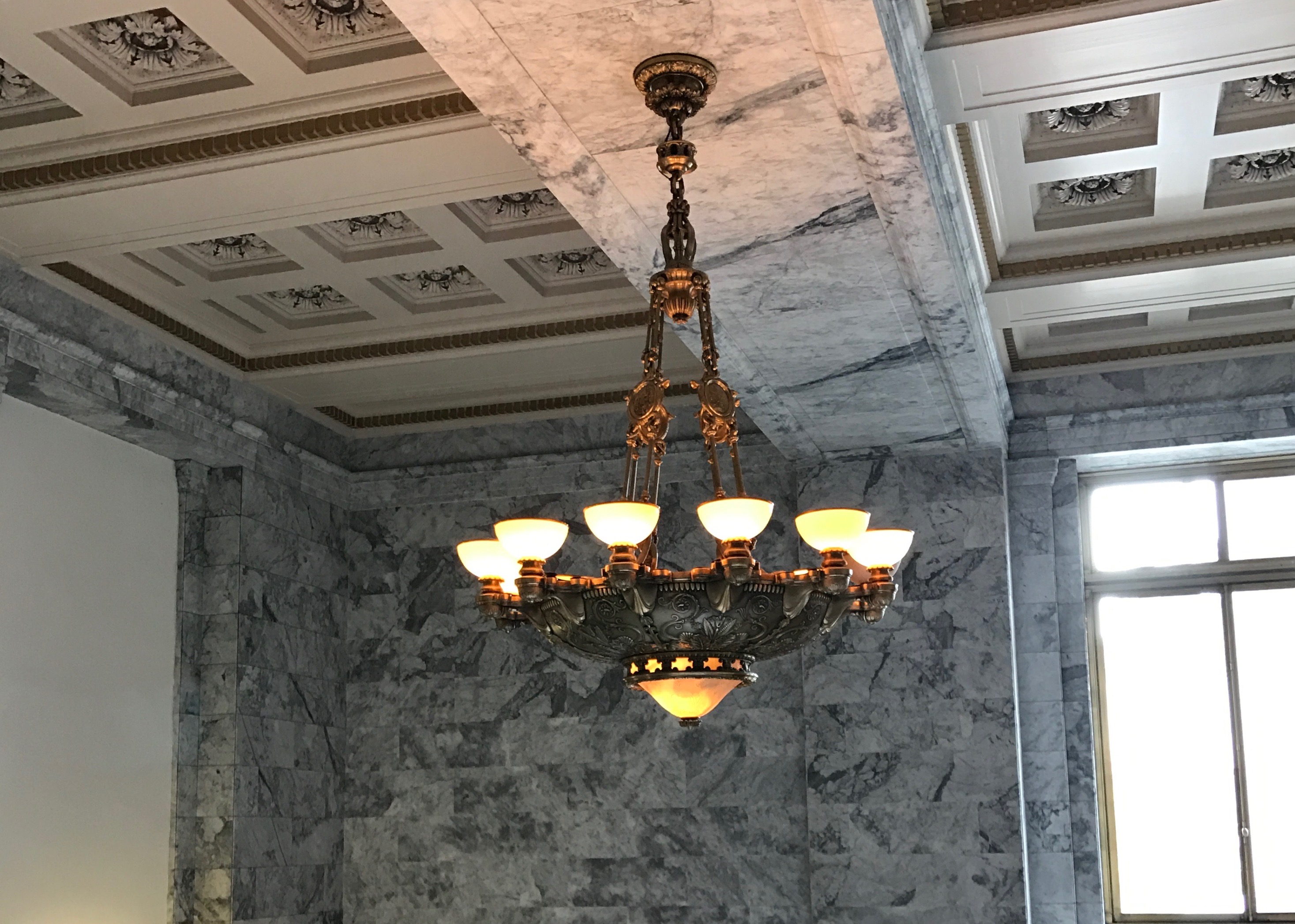
Here is one of the Tiffany chandeliers. This one is hanging in a lobby.
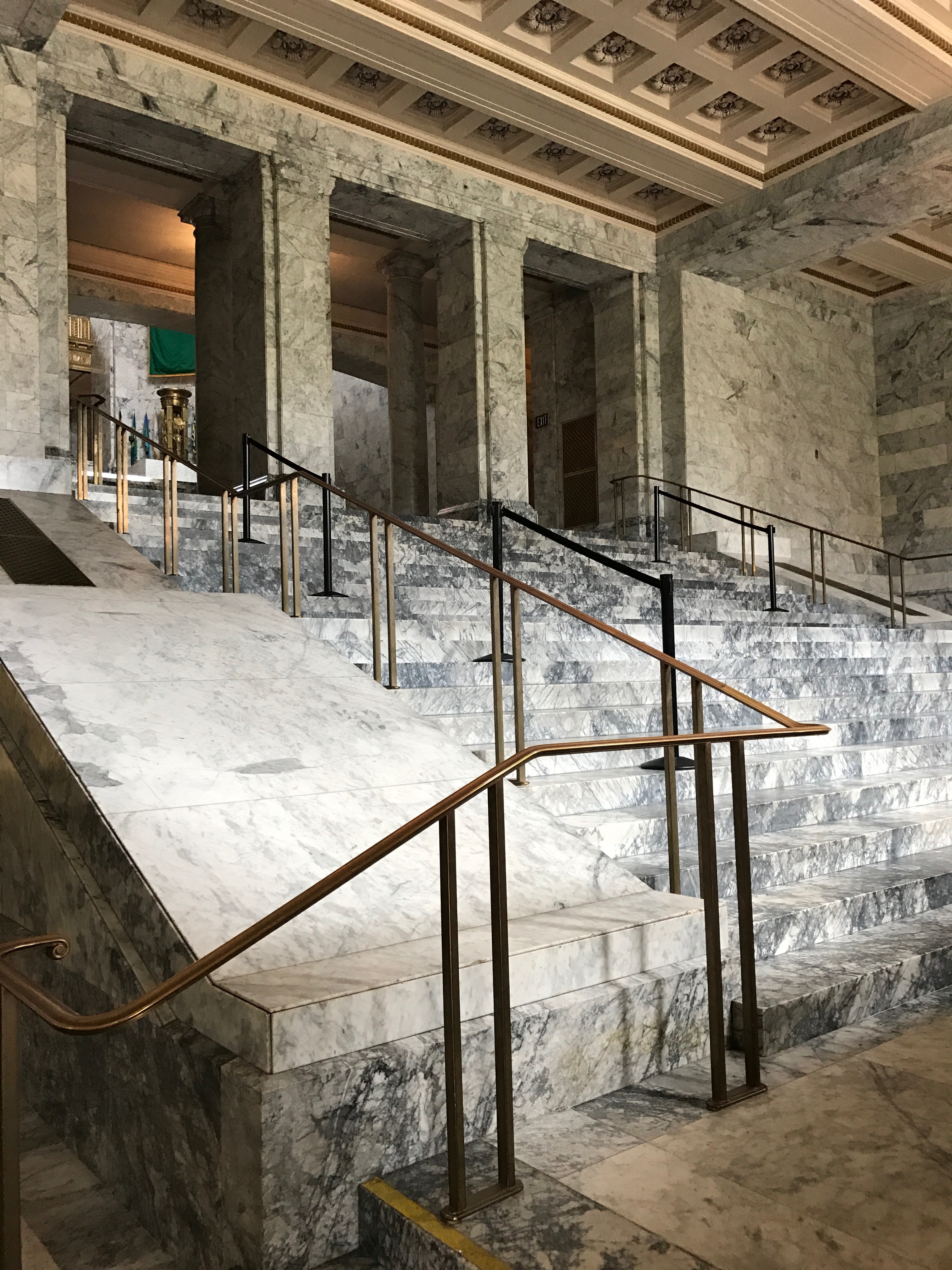
Washington was the 42nd state admitted to the union, and the guide said that there were 42 steps here. I took her word for it. I was in search of the gift shop.
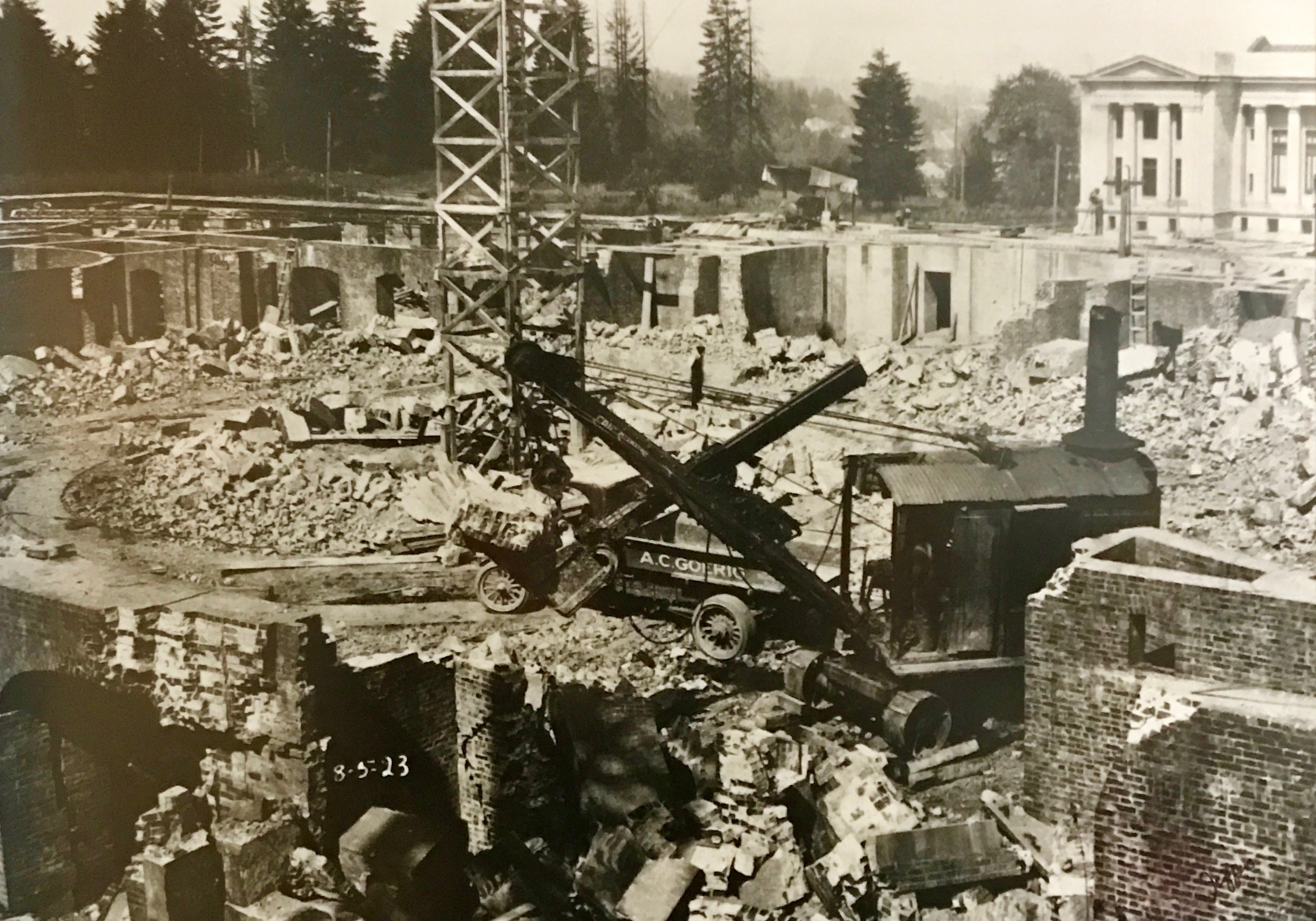
As I walked down the hall, I came across these marvelous historical shots of the construction of the Legislative Building. I love this old steam shovel! It reminded me of Mike Mulligan and his Steam Shovel.
For any of you not into kiddie lit, click here for some information about this important piece of literature. (Seriously, it is interesting – to me, at least.)
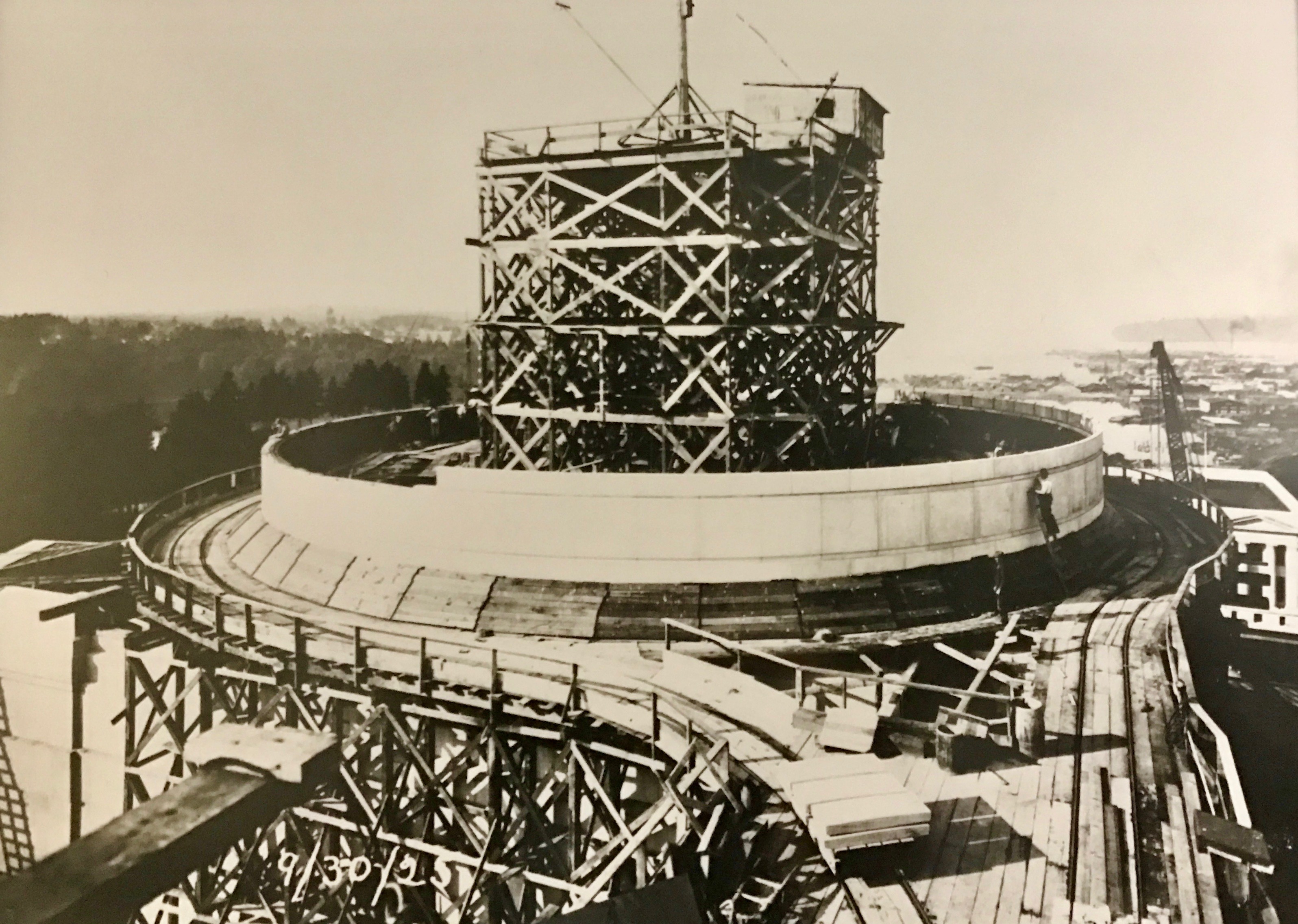
Here they are, working on that 29,000 ton dome. What I neglected to mention earlier is that the dome is 287 feet high, which makes it the tallest self-supporting masonry dome in the United States and the fifth tables in the world, surpassed only by St. Peter’s Basilica in Rome, St. Paul’s Cathedral in London, Global Vipassana Pagoda in Mumbai, and Santa Maria del Fiore in Florence. (I’ve been to three of the four of these.)
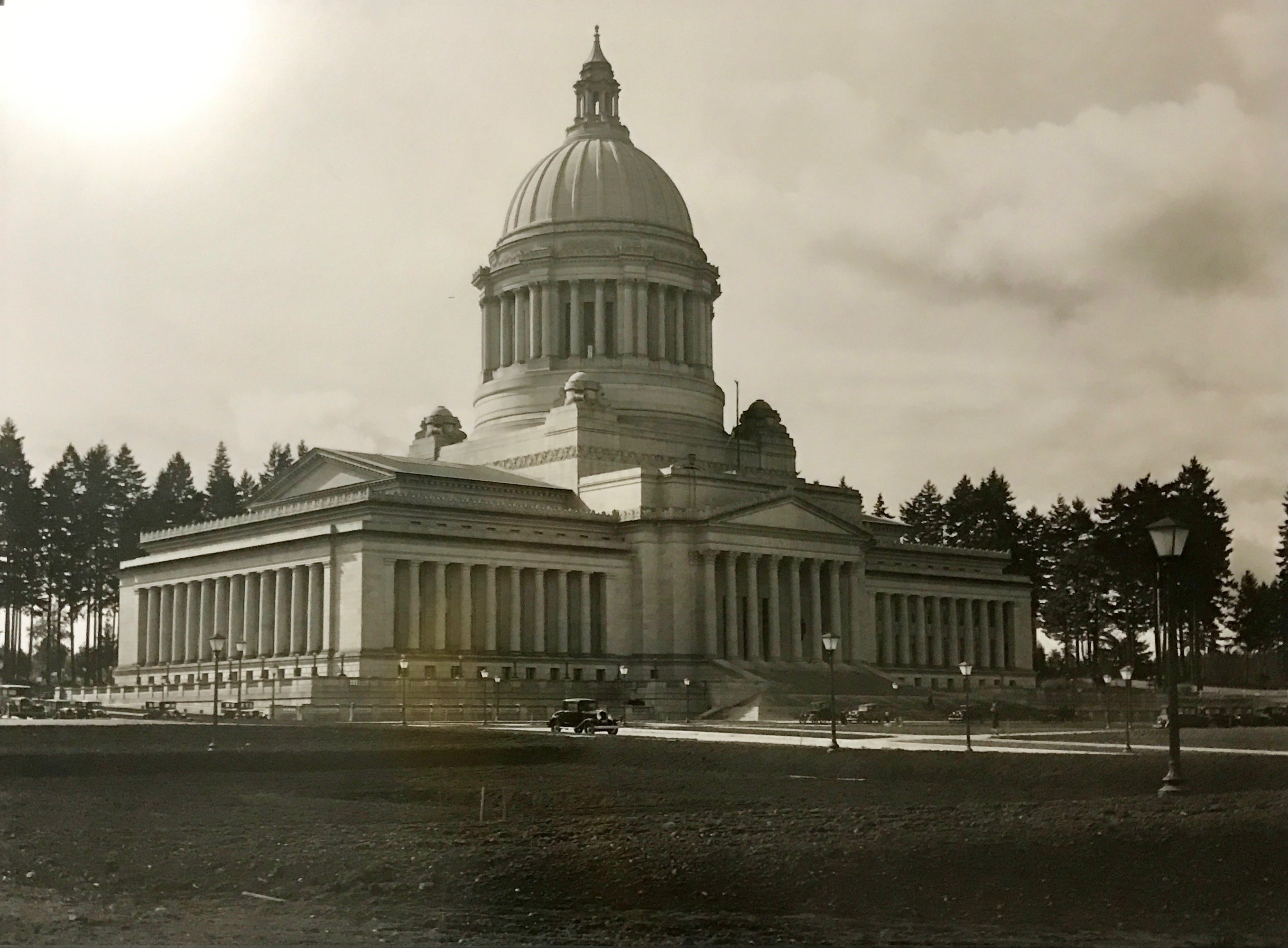
Finally, it was completed. The Olmsted Brothers had a hand in planning the landscaping. Apparently, that part of the plan hadn’t been attended to when this photo was taken.
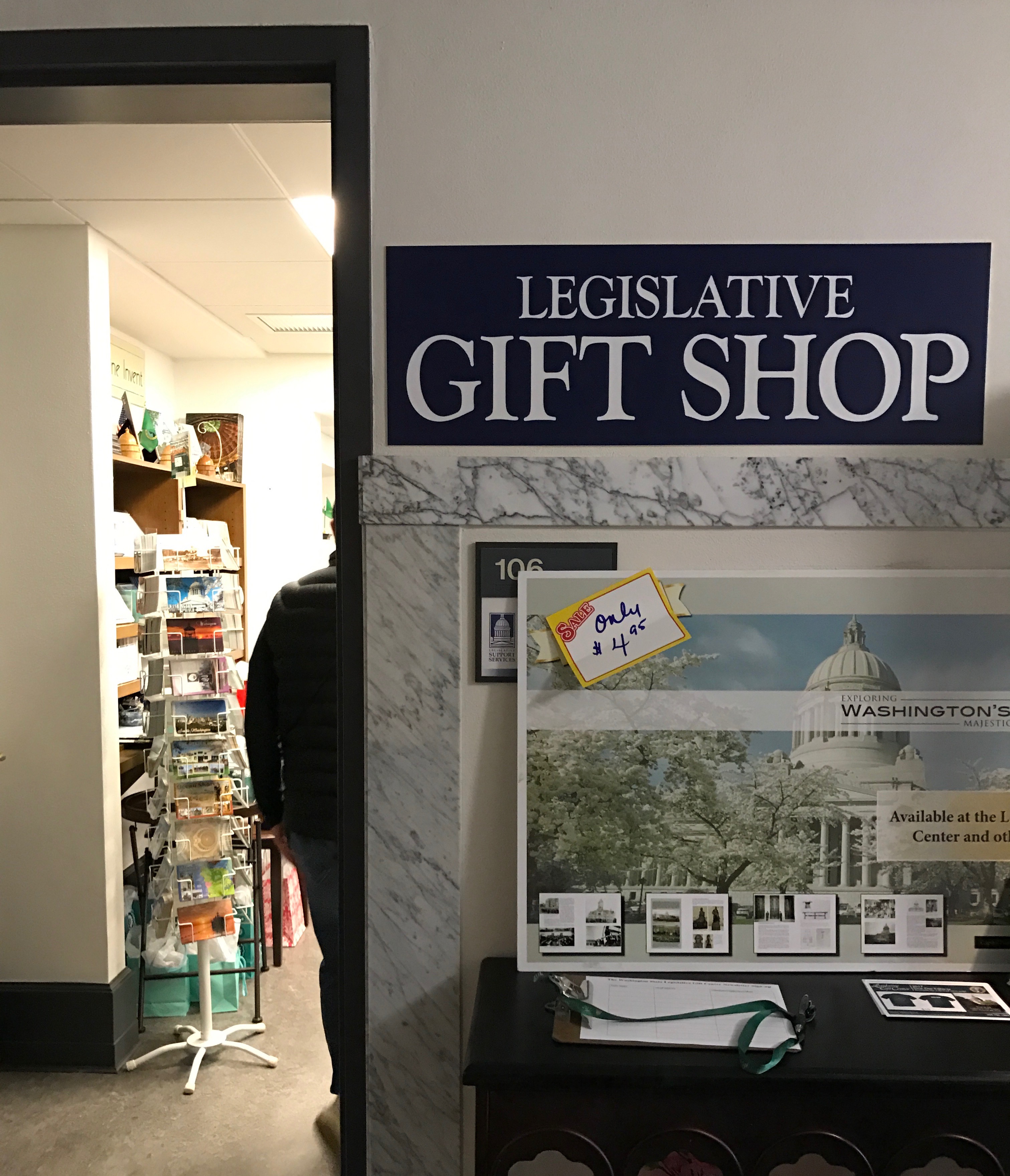
Finally! The Legislative Gift Shop!
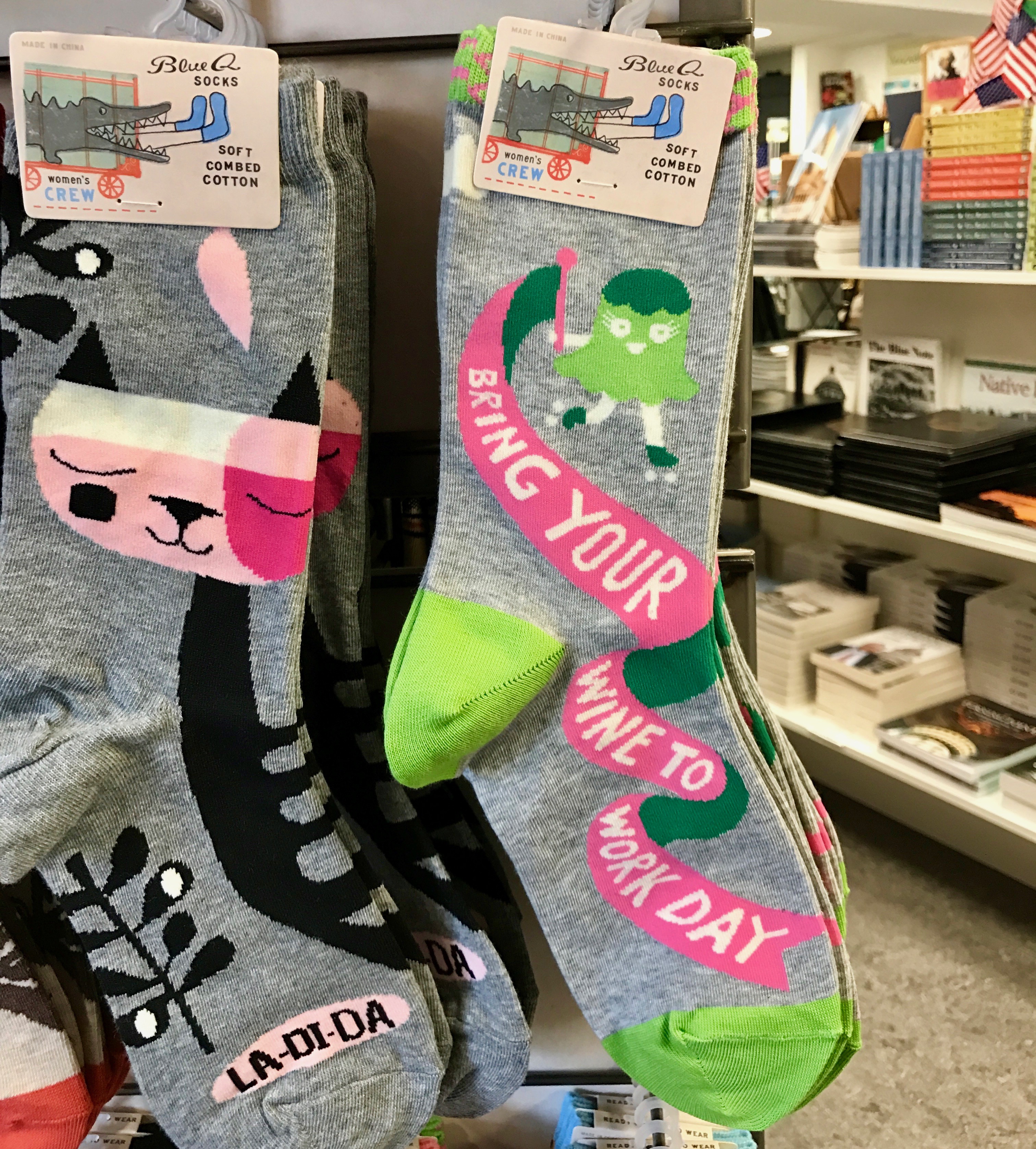
They had the usual assortment of postcards and things related to the state and the state government, but I have to admit that I was a bit perplexed by the “Bring your wine to work day” socks.
I did pick up a T shirt commemorating the end of the legislative season.
I learned a Latin legal expression I had never heard before – sine die, which is pronounced “see-nay dee-ay” according to one dictionary I consulted. My ultimate source has this to say about it:
“It can be used in reference to United States legislatures whose terms or mandates are coming to an end, and it is anticipated that this particular body will not meet again in its present session, form, or membership.[3] A legislative body adjourned in this way may be called back into special session, a reason why sine die adjournment rather than dissolution may be preferred in some cases.”
After that, it was time for some light refreshment.
I always appreciate a side of activism with my lunch.
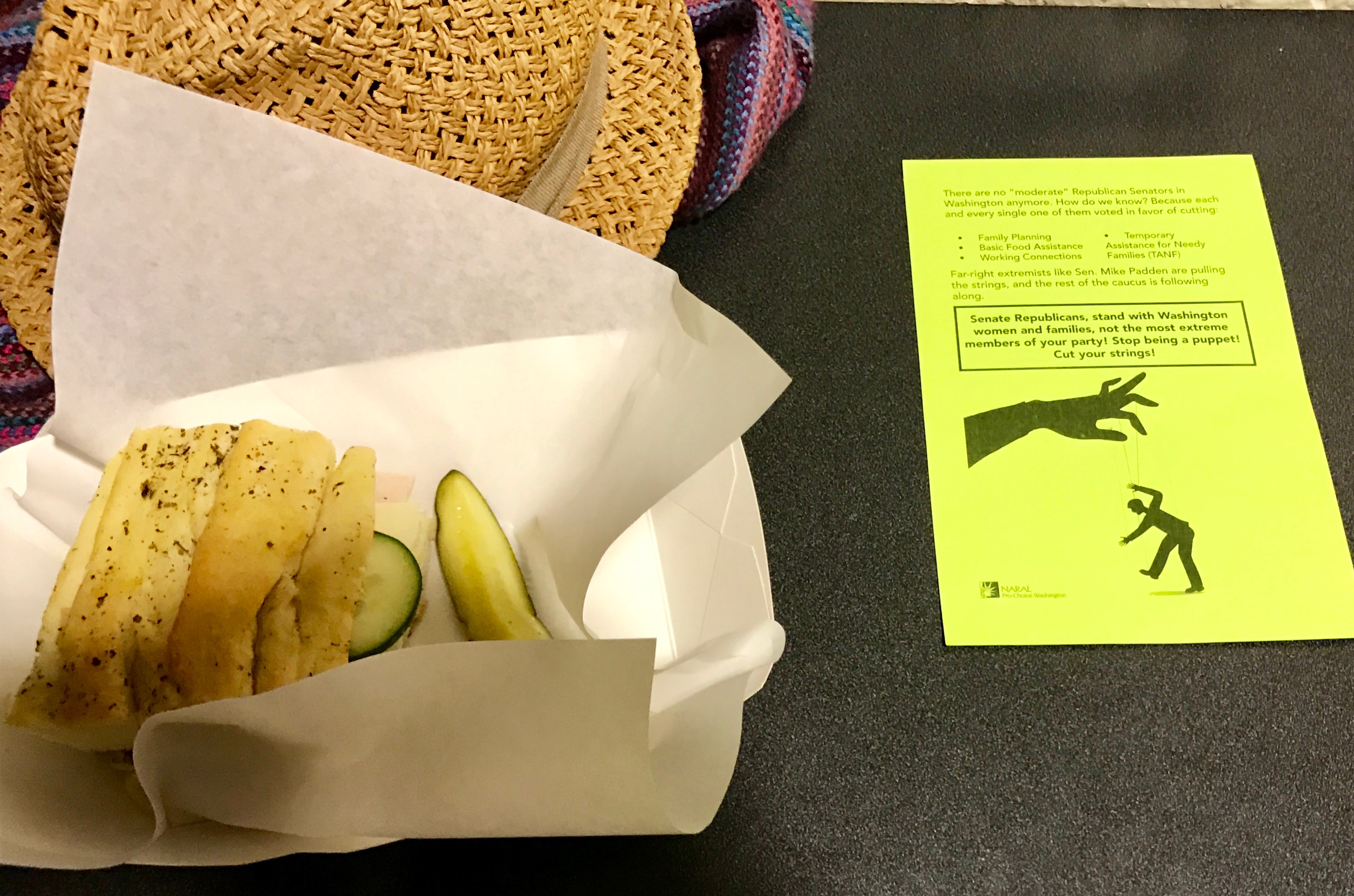
This flyer, that was left on my table, asked Senate Republicans to stand with Washington women and families, not the most extreme members of their party. Stop being a puppet! Cut your strings!
I wonder if that worked?
Thus refreshed, I headed back to my truck.
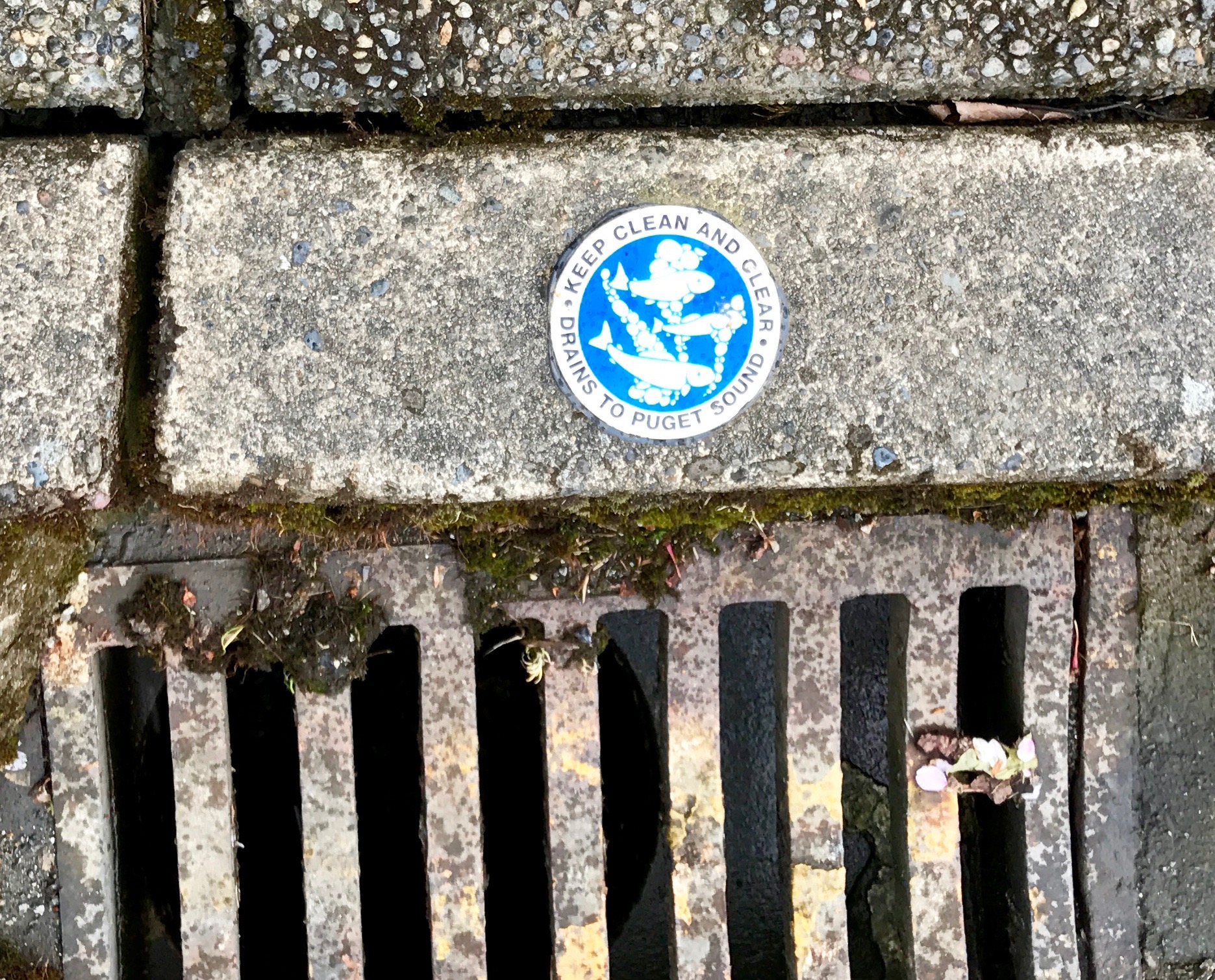
Oh, right! Even though I haven’t really seen it yet, I was close to the Puget Sound.
I headed over to the Farmers Market.
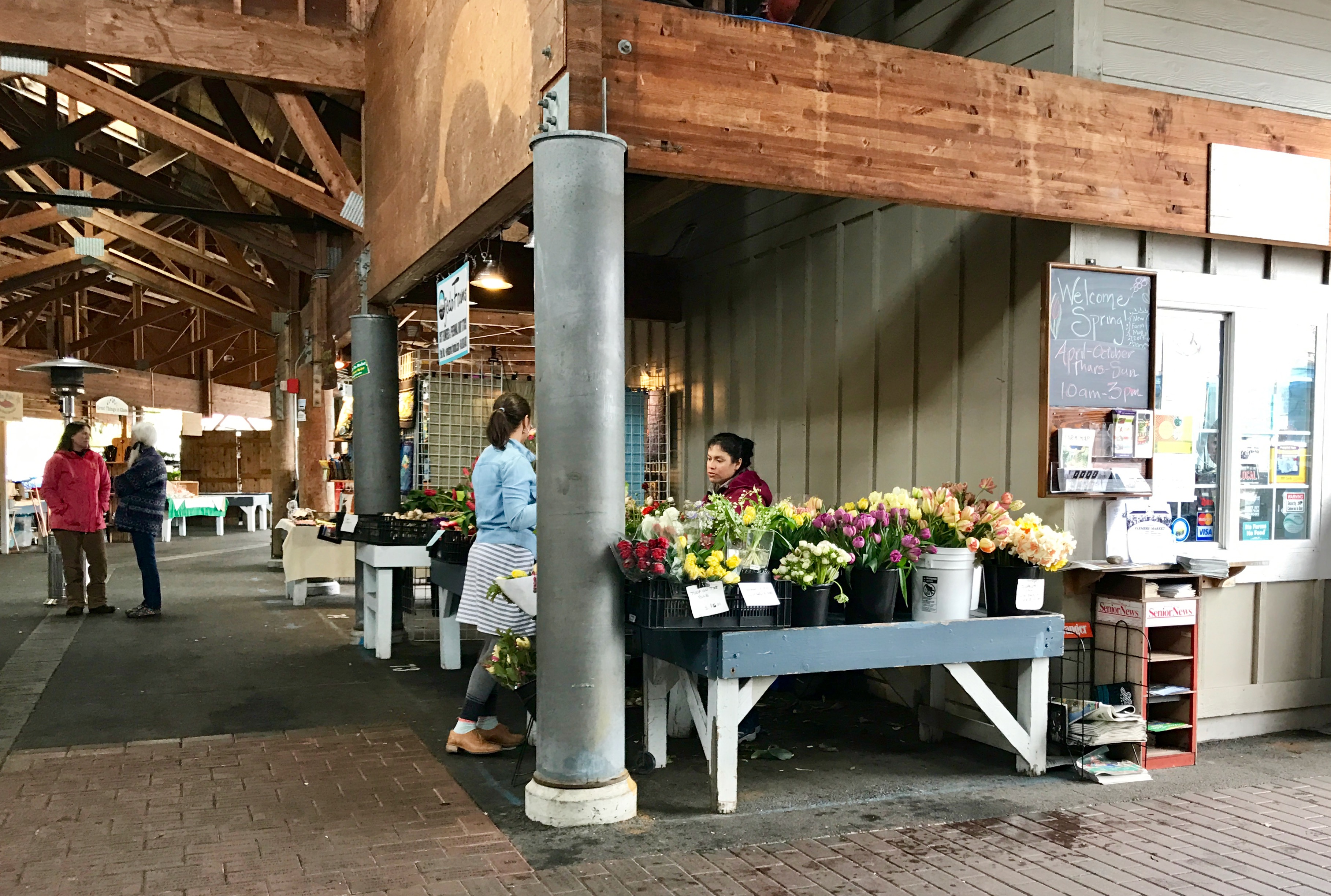
Not all of the stalls were in operation, but it was nice to see the fresh flowers for sale.
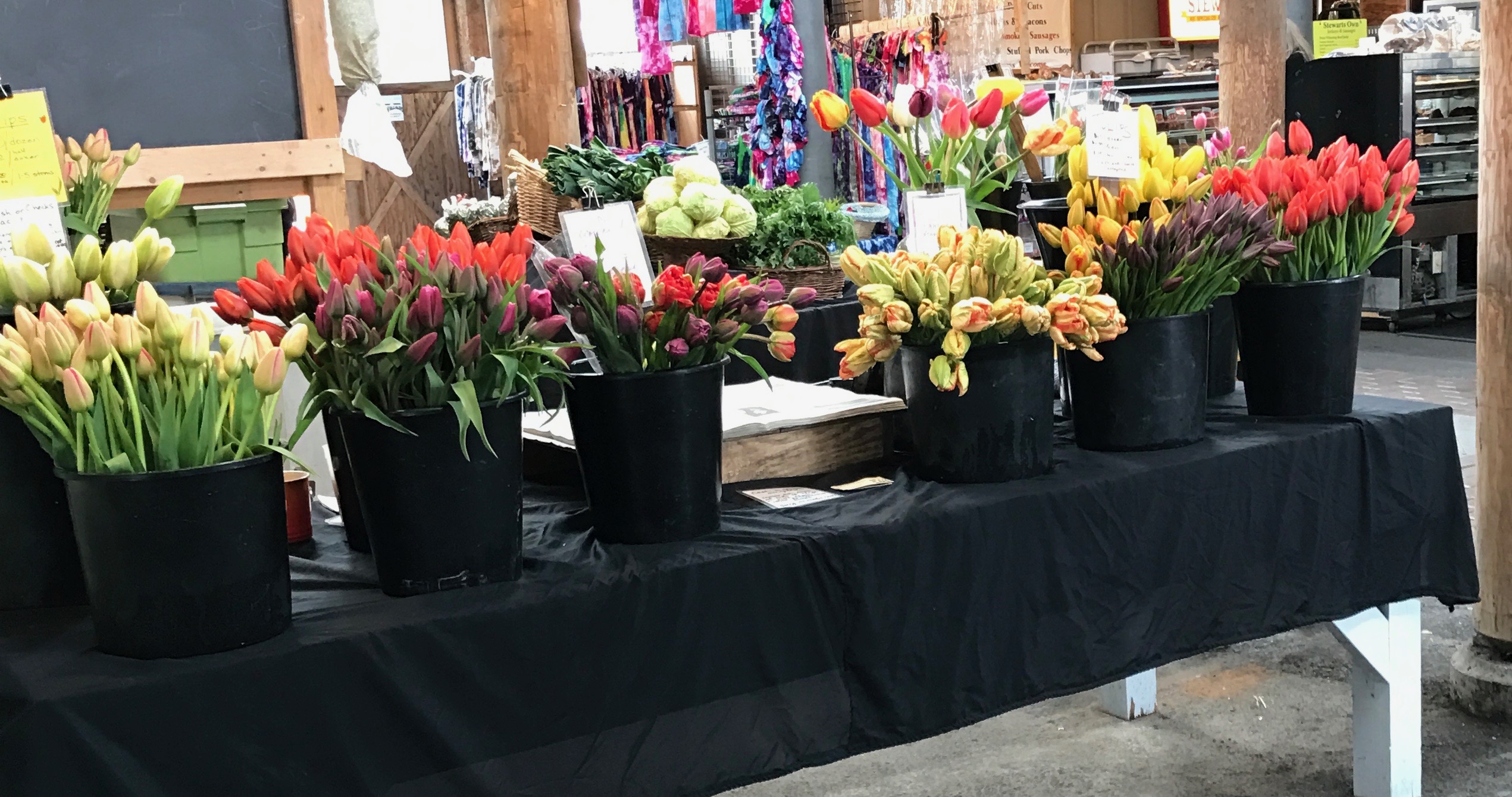
Fresh flowers and meat.
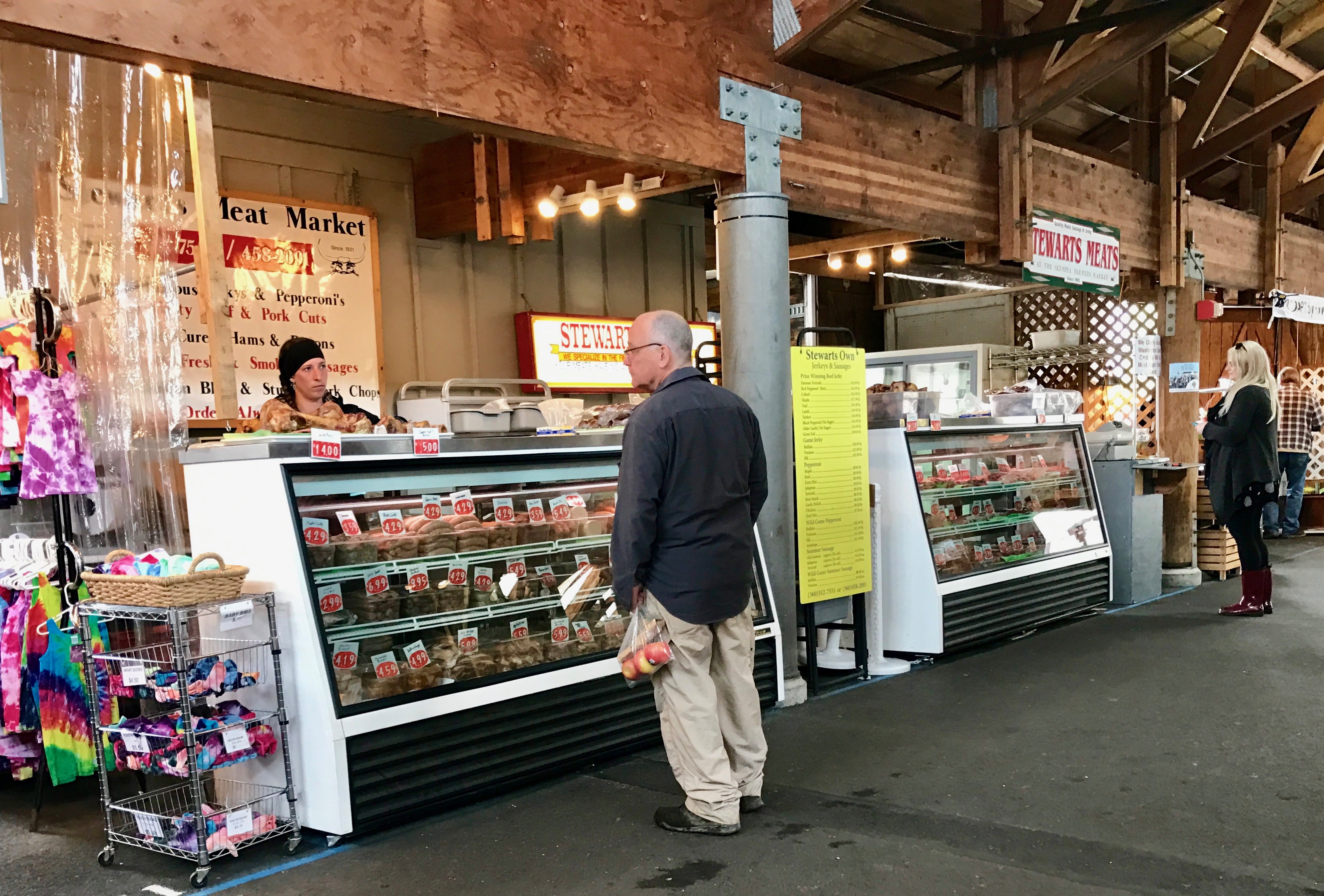
I love it when I see farmers’ markets that actually sell things that are produced locally, as opposed to the ones that have been converted to rows and rows of souvenir shops.
I headed back to the truck.
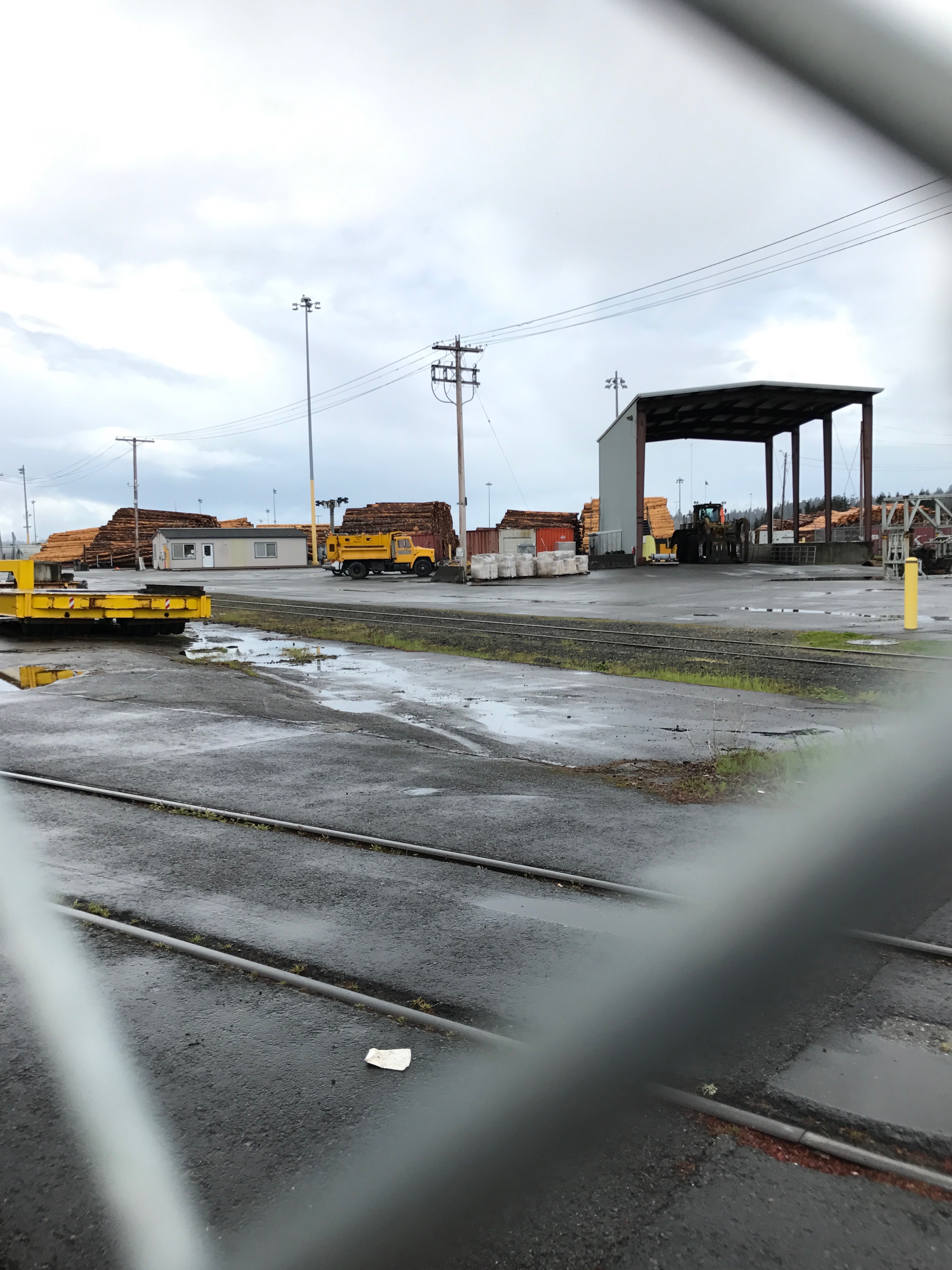
Speaking of things that are actually produced, look at all the lumber that is being prepared to be shipped.
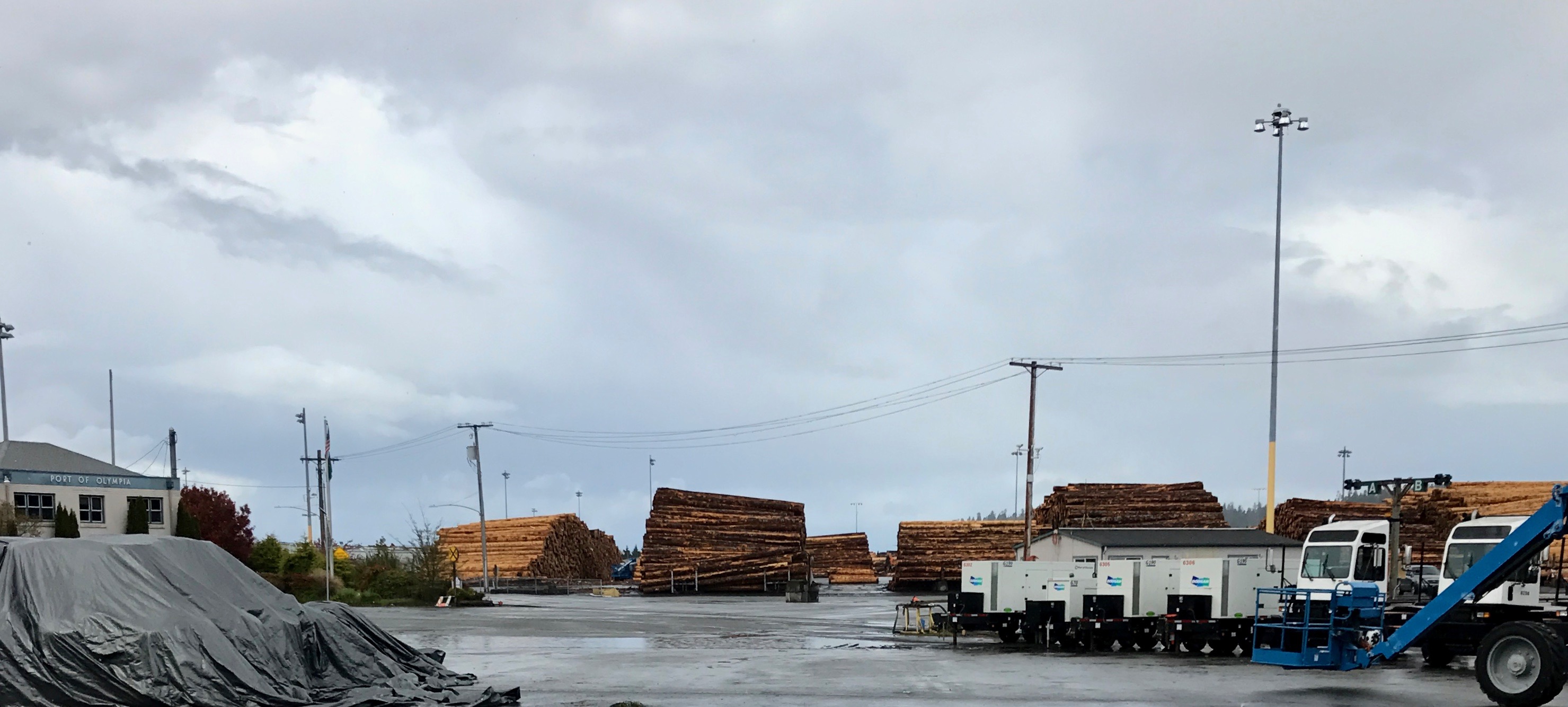
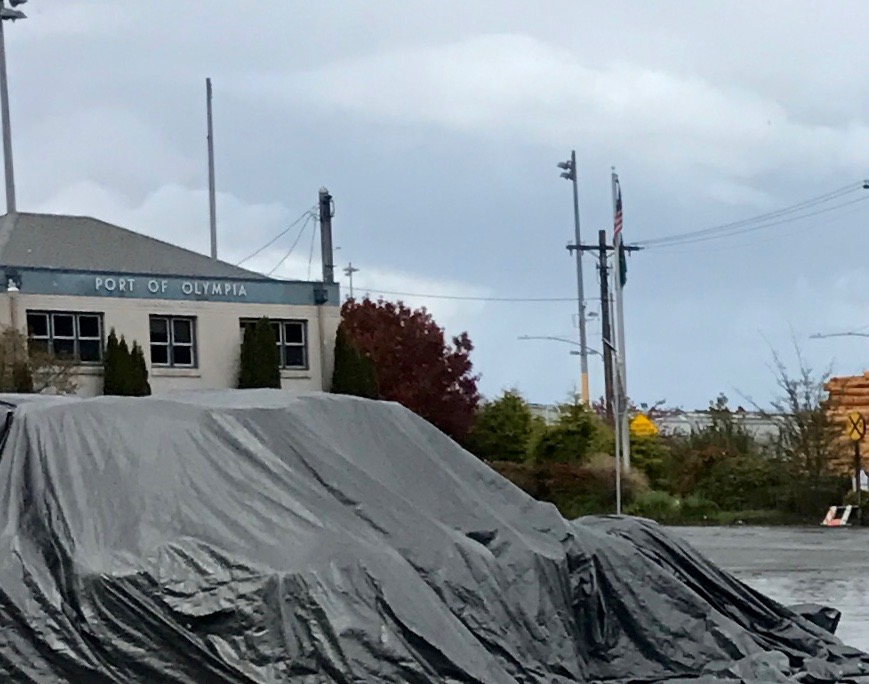
This is the Port of Olympia.
And it was time for me to head back to my harbor.
The Washington Land Yacht Harbor, where my sweet Cora was waiting for me.