Boise is the capital of Idaho, so naturally I set out to see the capitol.

They weren’t offering tours while I was there, but they didn’t seem to mind that I just wandered around and looked at things.
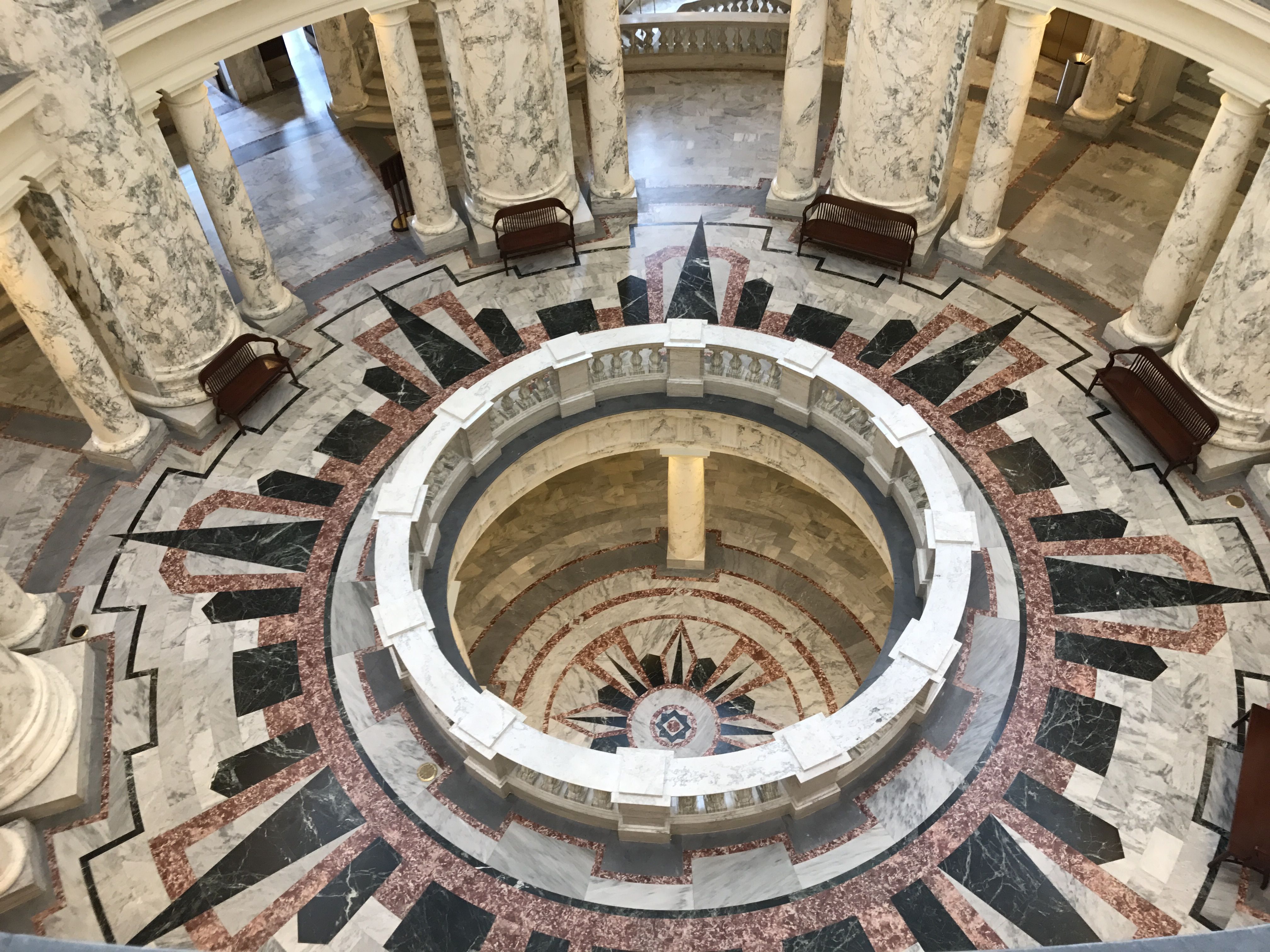
Following some advice I heard about touring museums, I decided to go to the top and work my way down. This is the view from the fourth floor.

This is the gallery that runs around the rotunda on the fourth floor.
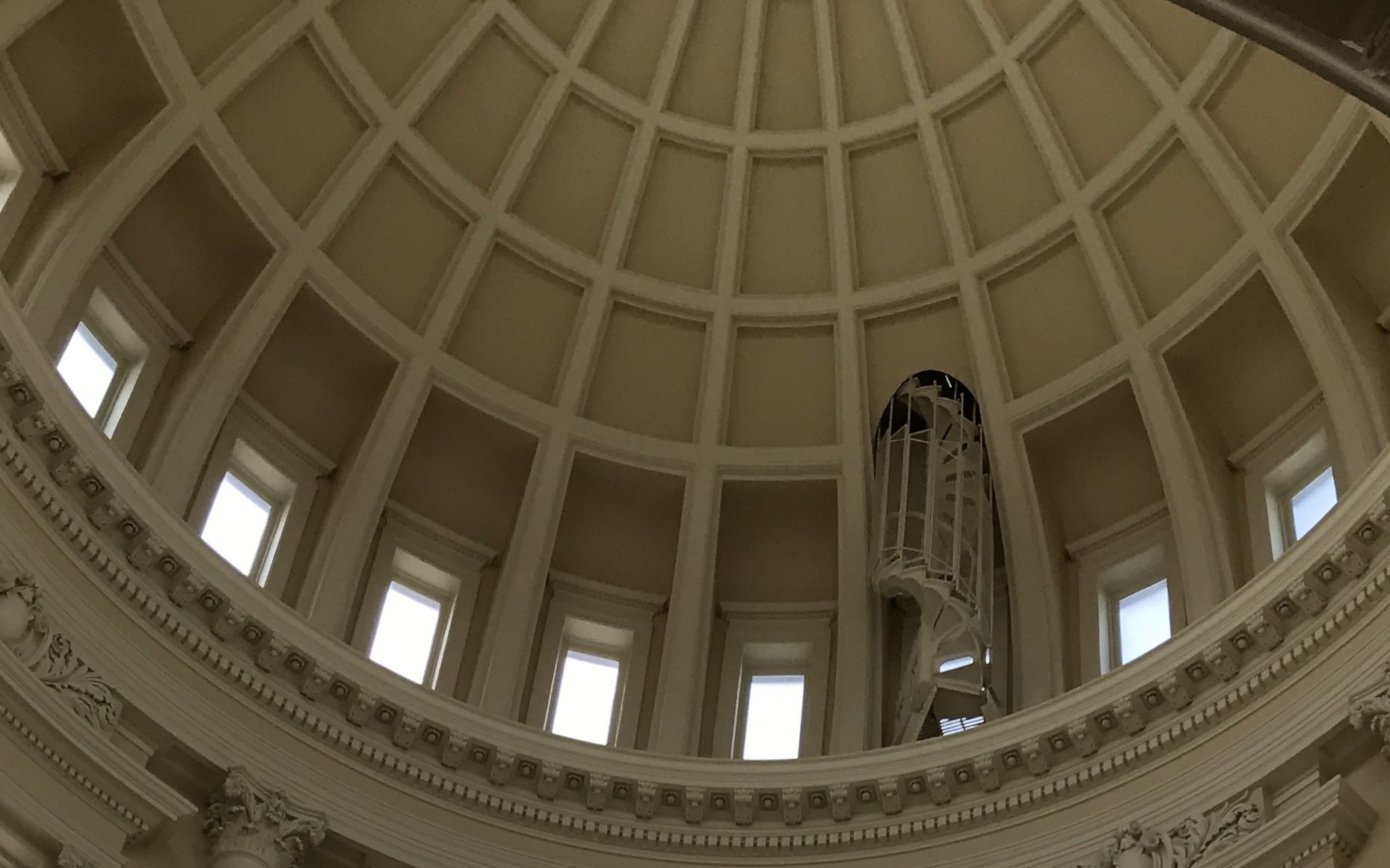
If there had been a tour, I imagine that I would have heard more about this circular stair up into the dome. It kind of makes me think of Brunelleschi’s dome in the Cattedrale di Santa Maria del Fiore in Florence. Or was that Saint Peter’s in Rome? Or maybe both! I have been blessed with so many travel opportunities.
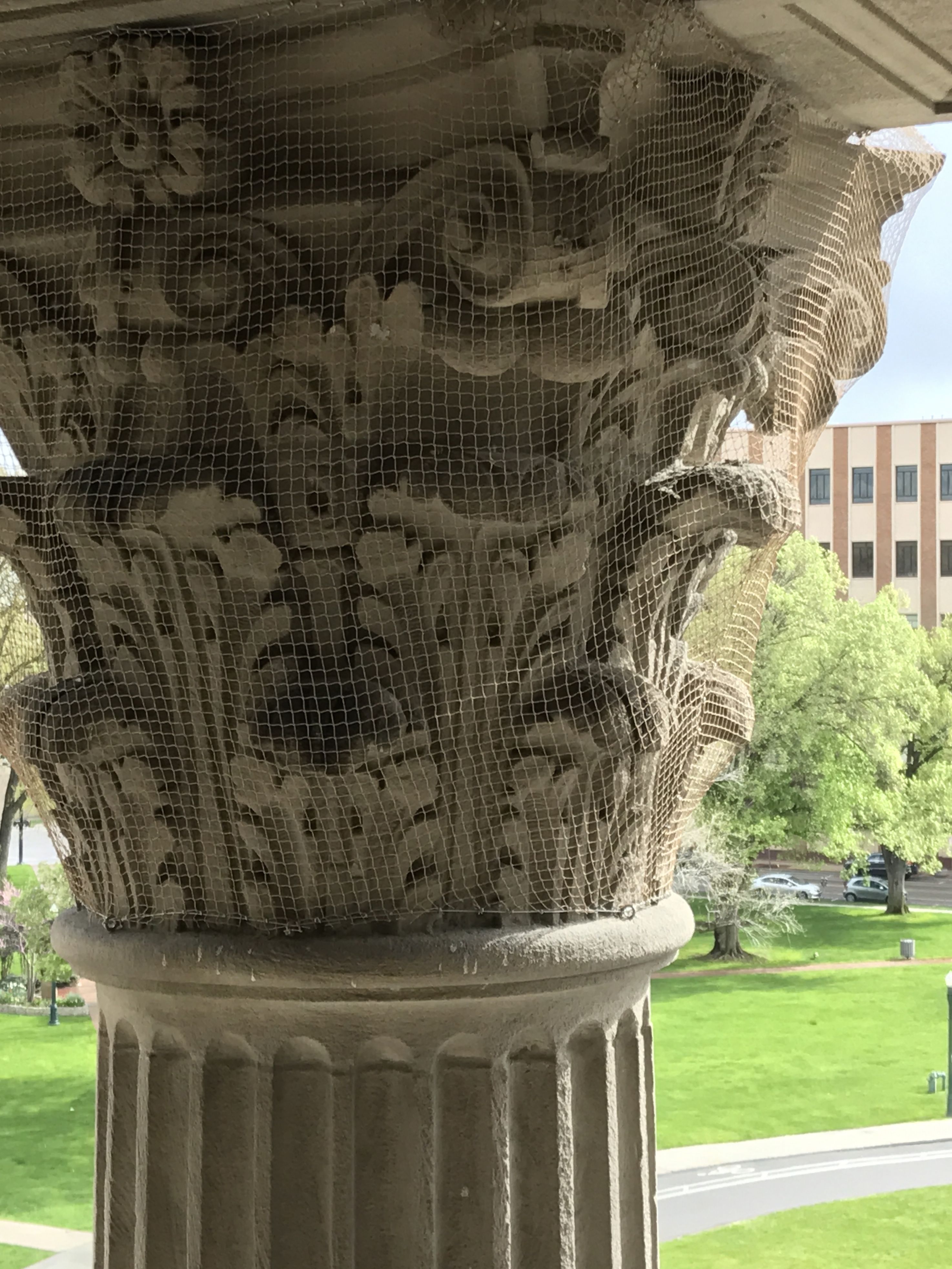
I found a window to look out of, and I spied this ingenious treatment of the Corinthian capital. That’s one way to keep the birds off them. I didn’t even notice the netting from the ground level.
There was a display about the historic trees that had been on the Capitol grounds until the Capitol Renovation Project in 2007.
In 1891, a year after he signed Idaho into the union as the 43rd state, President Benjamin Harrison planted a Water Oak on the grounds. Twelve years later, in 1903, Theodore Roosevelt planted a Rock Sugar Maple. In 1911, William H. Taft planted an Ohio Buckeye.
An American Elm and an Ash, the first notable trees planted on the grounds, were planted in 1887. Apparently these folks were people of vision, as 1887 was three years before statehood.
Representative Max Black didn’t want to see the timber from these trees disposed of and he organized the Historic Trees Project. Wood from these historic trees was used to create works of art by woodworkers, woodcrafters, and artists from around the state in order to preserve a part of the Capitol building’s history.
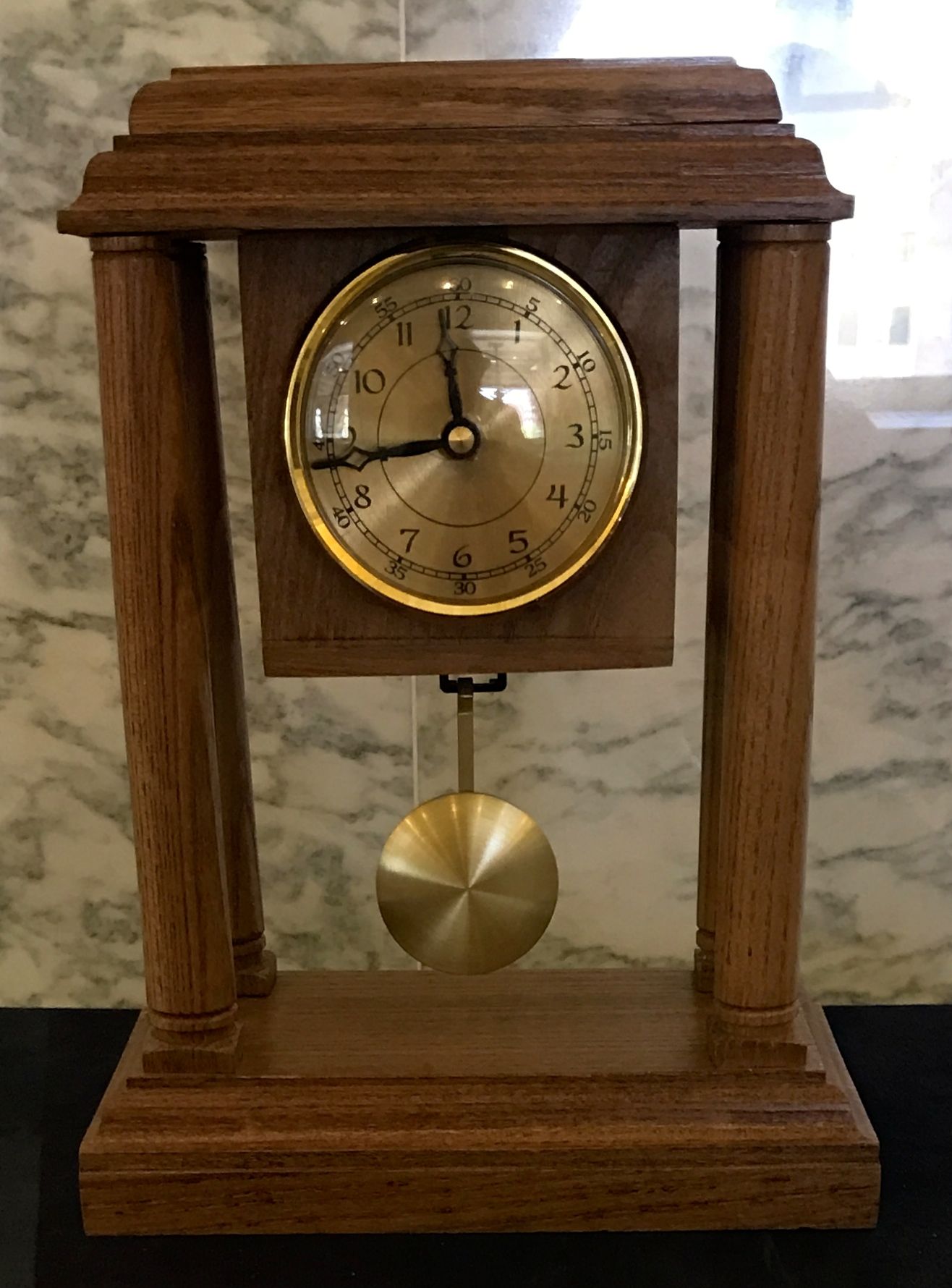
Some of the items were functional, like this pendulum clock fashioned out of American Elm by Jack Benson.

Kevin Schroeder made this Windsor Comb Back Writing Chair out of Maple, Red Oak, Sycamore, Ash and Elm. I like the drawers he built into the chair. The tag on the chair said that it was a replica, but I think it is pretty incredible.

This fiddle was made from the President Harrison Tree. In case you’ve already forgotten, President Harrison planted a Water Oak. Frank E. Daniels was the luthier who made the fiddle.
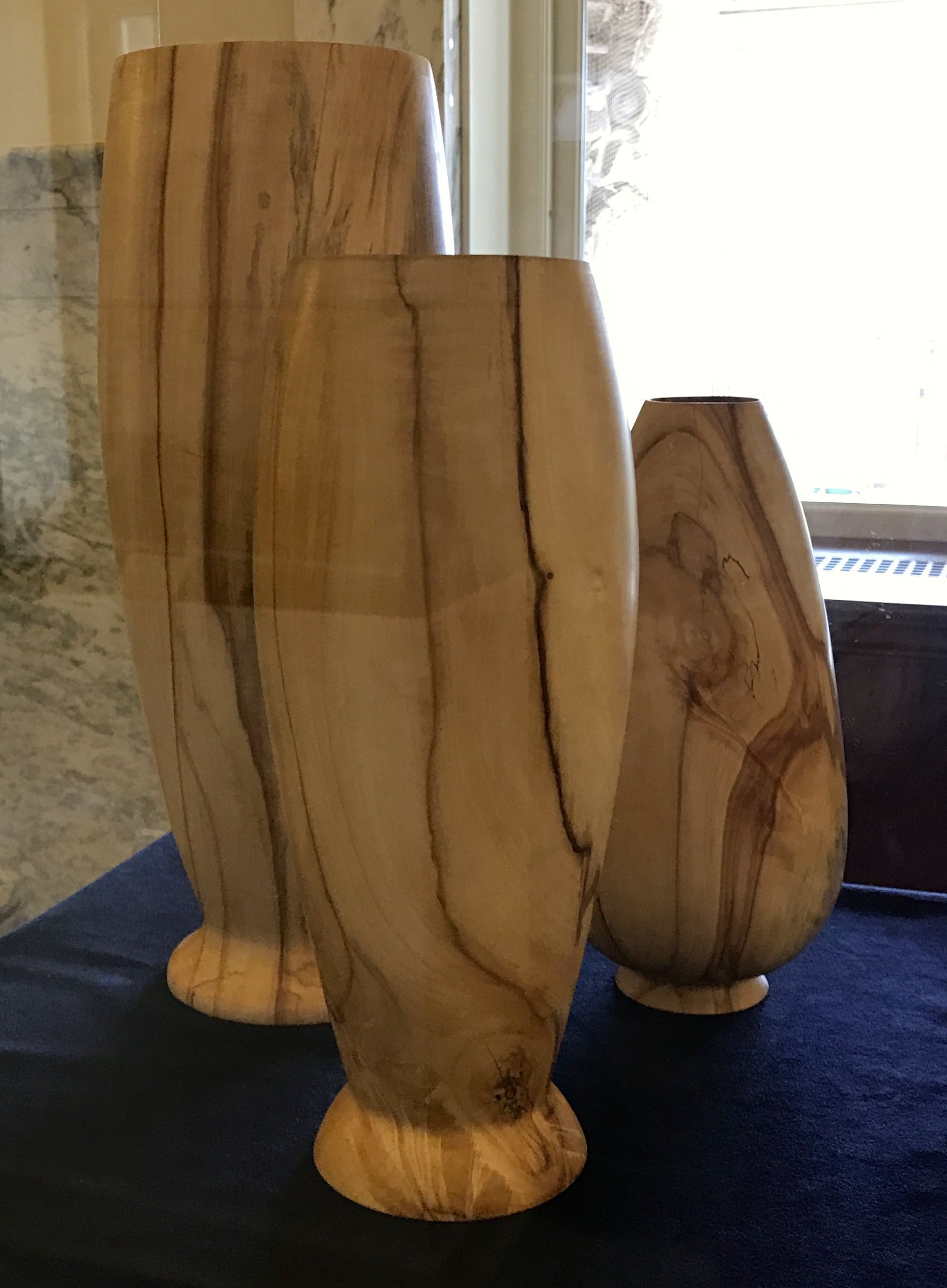
Burt Alcantara turned these vases out of American Elm.
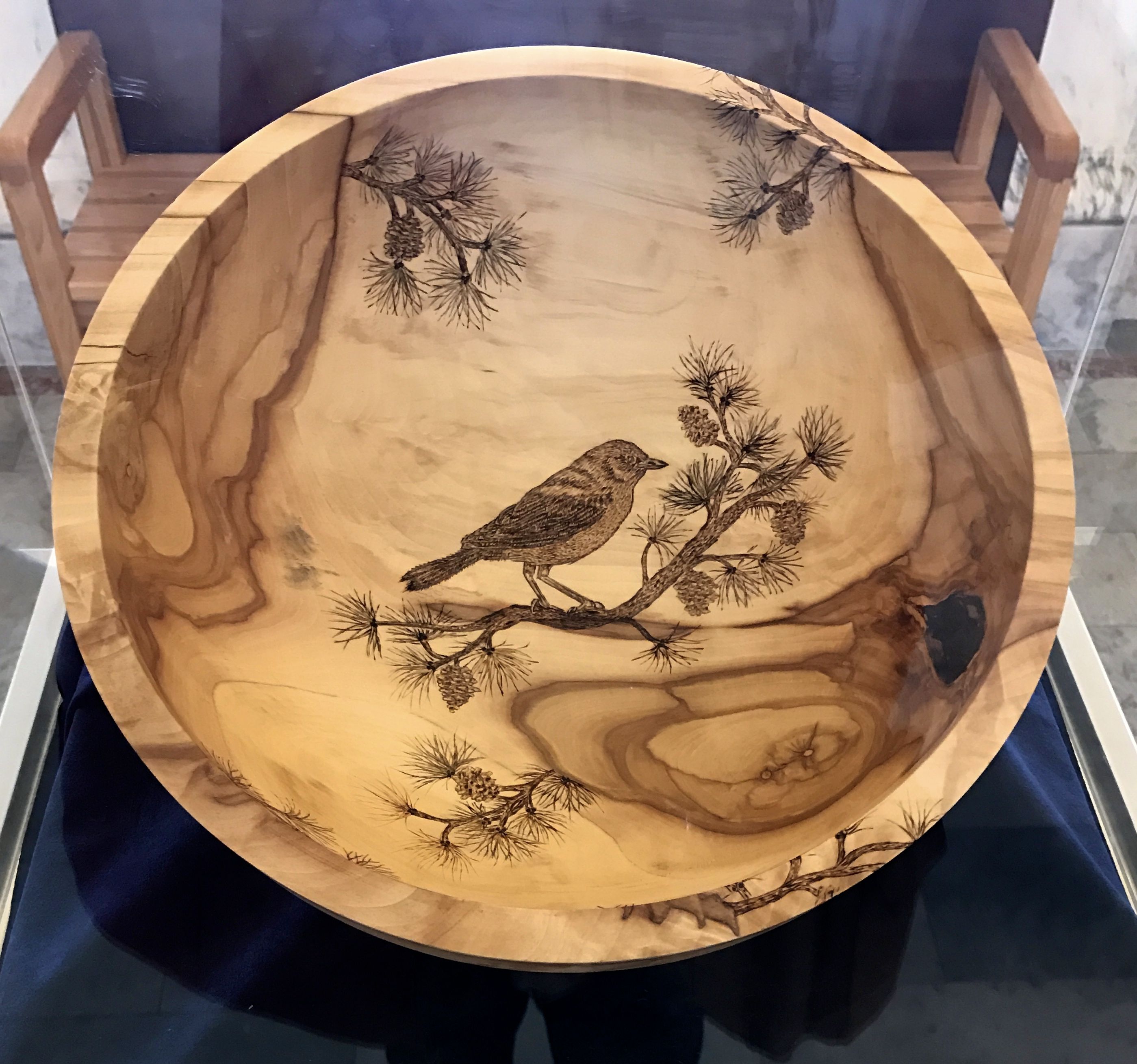
This bowl was a joint effort. Stephen H. Young turned the bowl out of Ohio Buckeye and the pyrography was done by Sharon Becker.
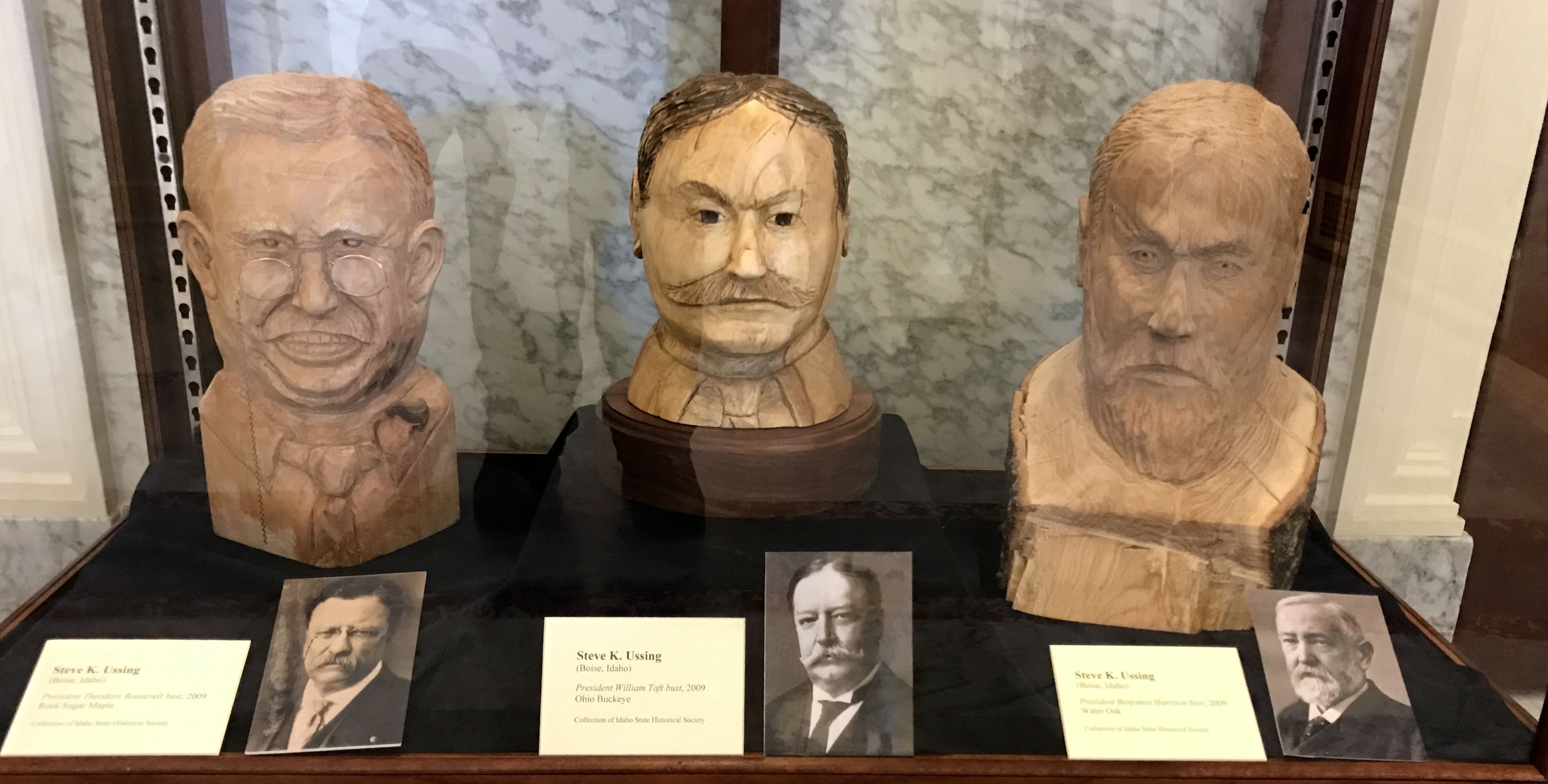
A series of presidential busts was there,
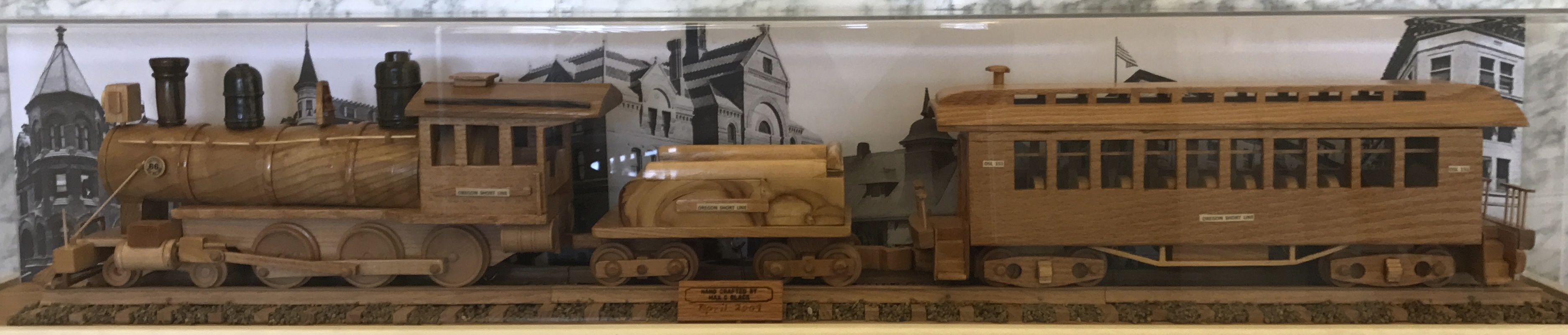
along with a model of a train.
Incidentally, the train was made by Representative Max Black, who thought up the project.
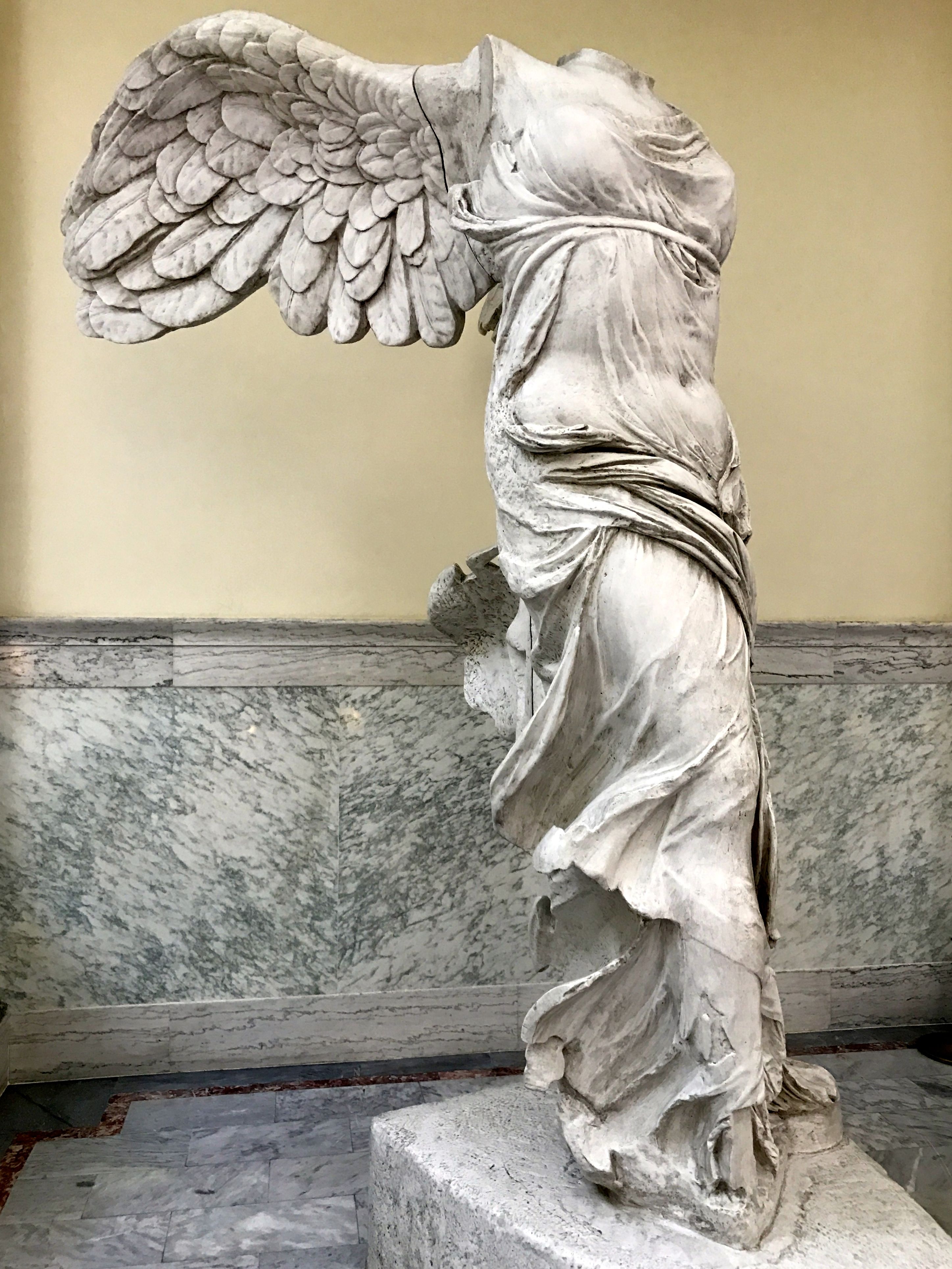
This copy of the Winged Victory – or Nike of Samothrace – was outside the gallery dedicated to the wooden art pieces. I thought it kind of odd, but it has an interesting story.
This hollow form plaster cast is a replica of the statue that is on display in the Louvre. The statue was part of a gift given to Idaho by the city of Paris as a though you to the United States for its aid in liberating France from Nazi Germany in World War II.
According to the sign by the statue, all the states received a train box car full of gifts from France. They called it the Merci Train. Winged Victory arrived on February 22, 1949.
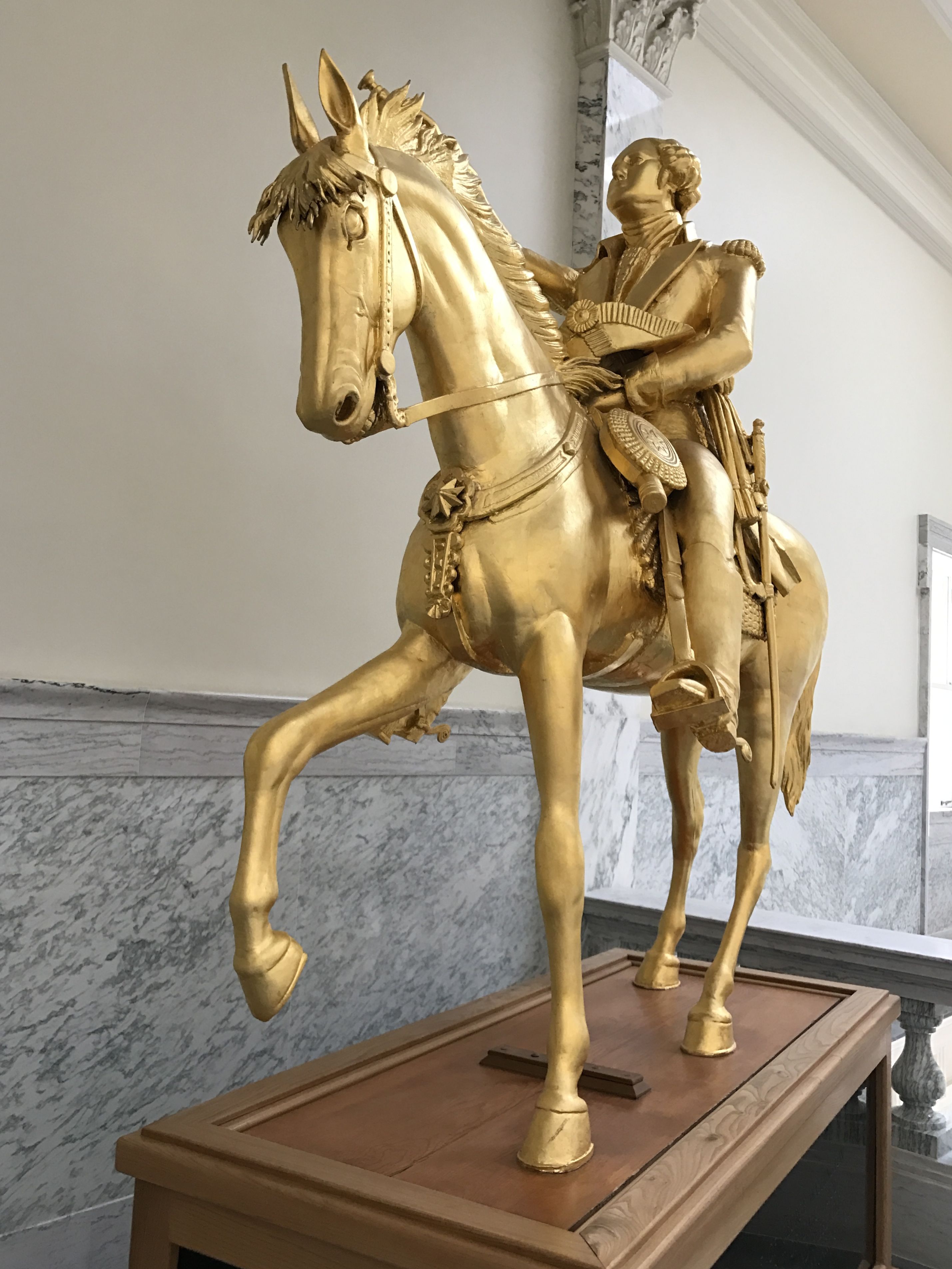
This statue of George Washington was carved by Charles L. Ostner for the Idaho territory and dedicated to its pioneers. He made it in 1869 and he carved it of yellow pine at night by torchlight. It took him four years to complete it and he used and the information next to it said that he used a postage stamp of George Washington as a model for the head.
I was wondering if there were postage stamps back in 1869. I knew that in the beginning, people would mail their letters without postage. The recipient was responsible for paying to collect their mail. But, after consulting my preferred source (Wikipedia) I found out that George Washington and Benjamin Franklin were the first stamps, and they were issued in 1847.

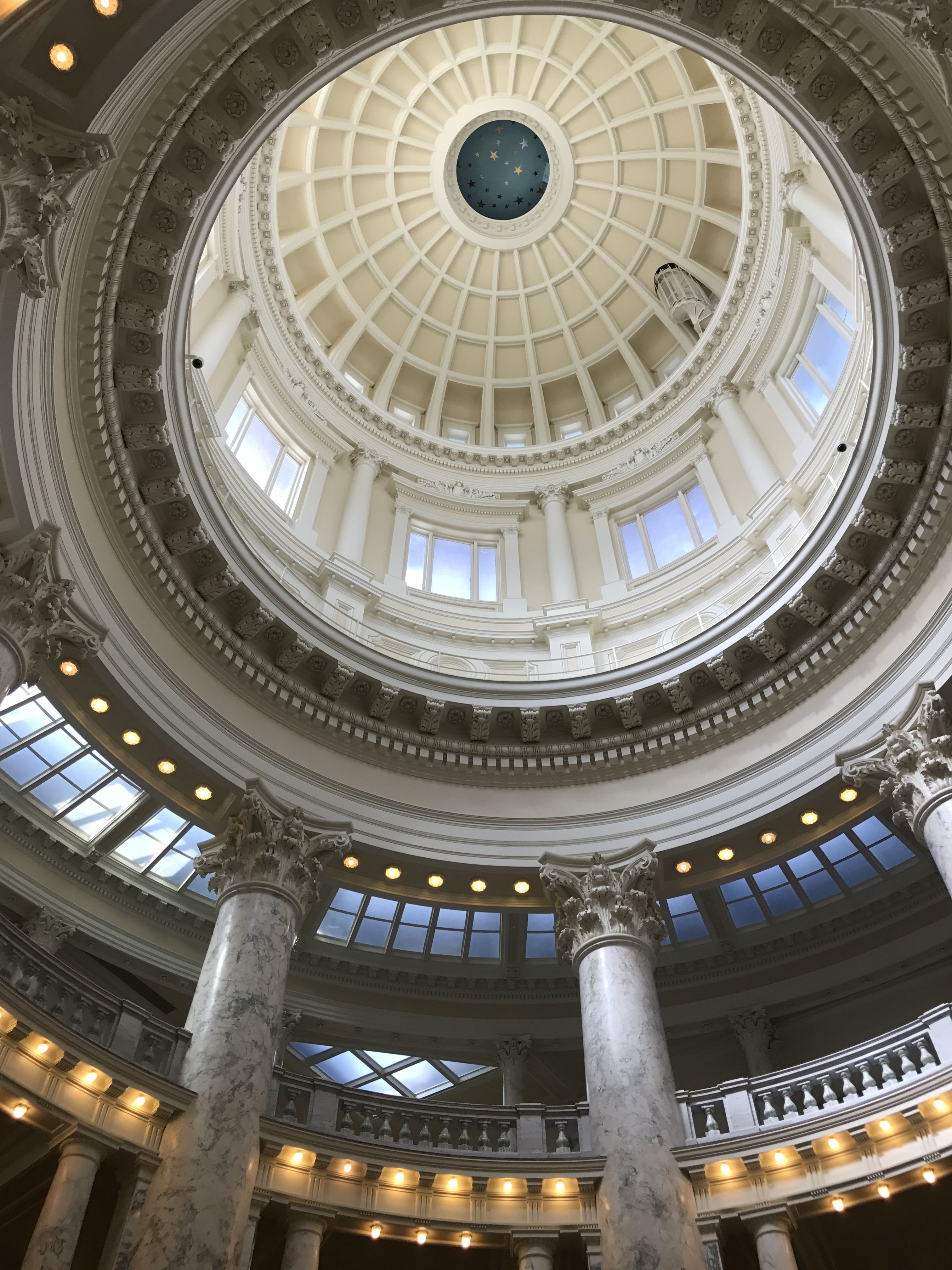
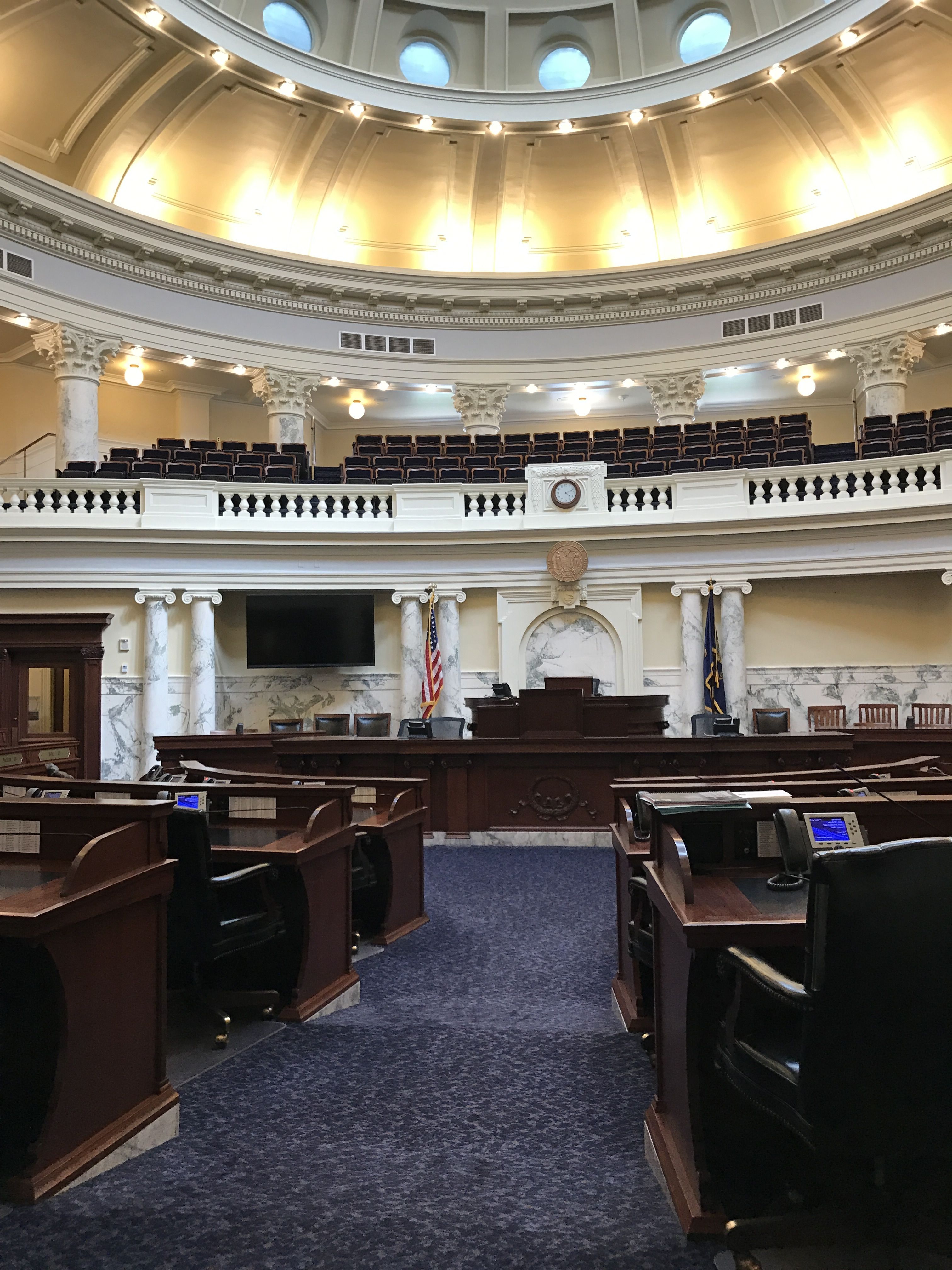
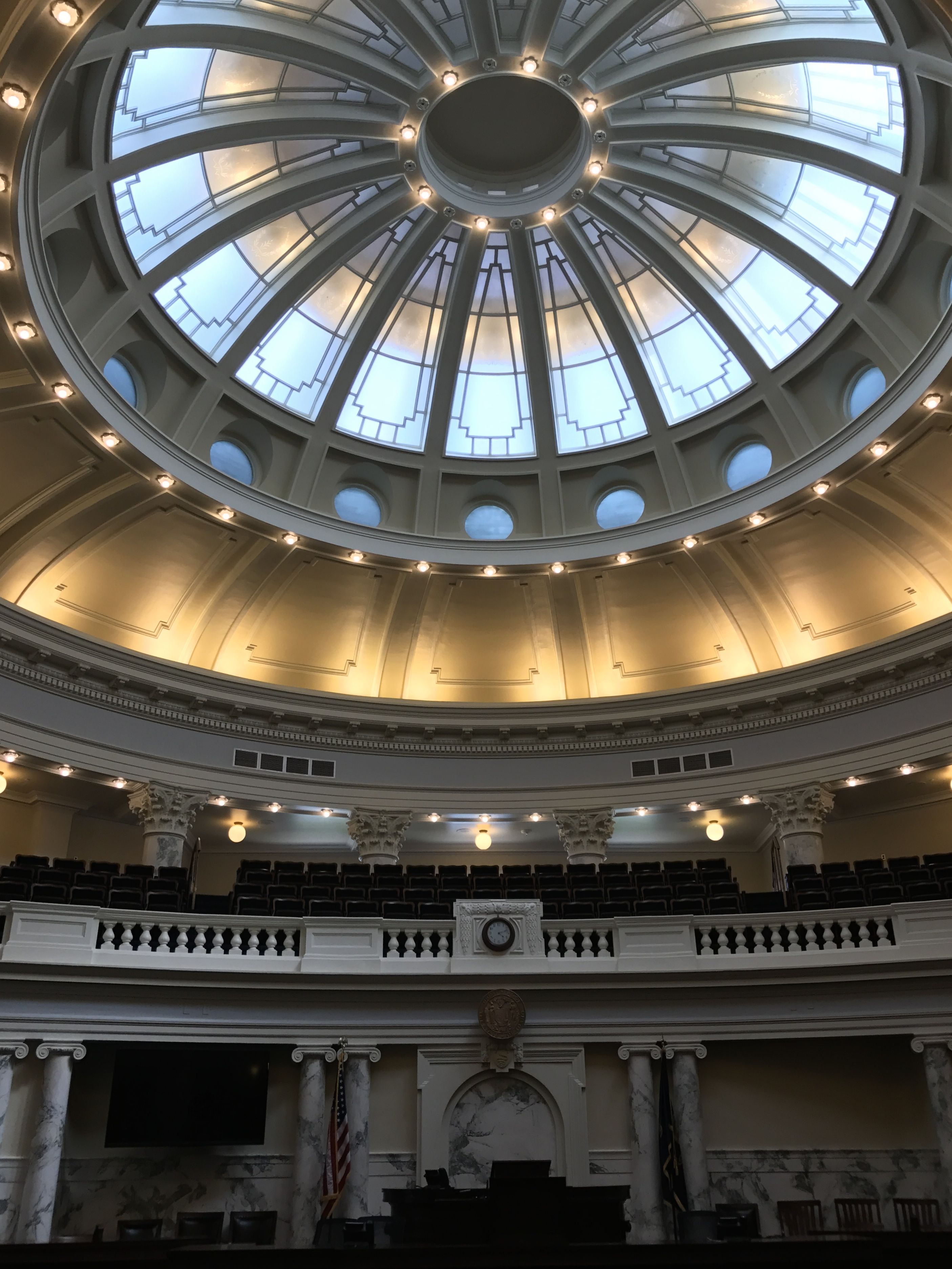
I worked my way down in the building. The rotunda is quite spectacular.
On the main floor, I came across the Office of the Governor.
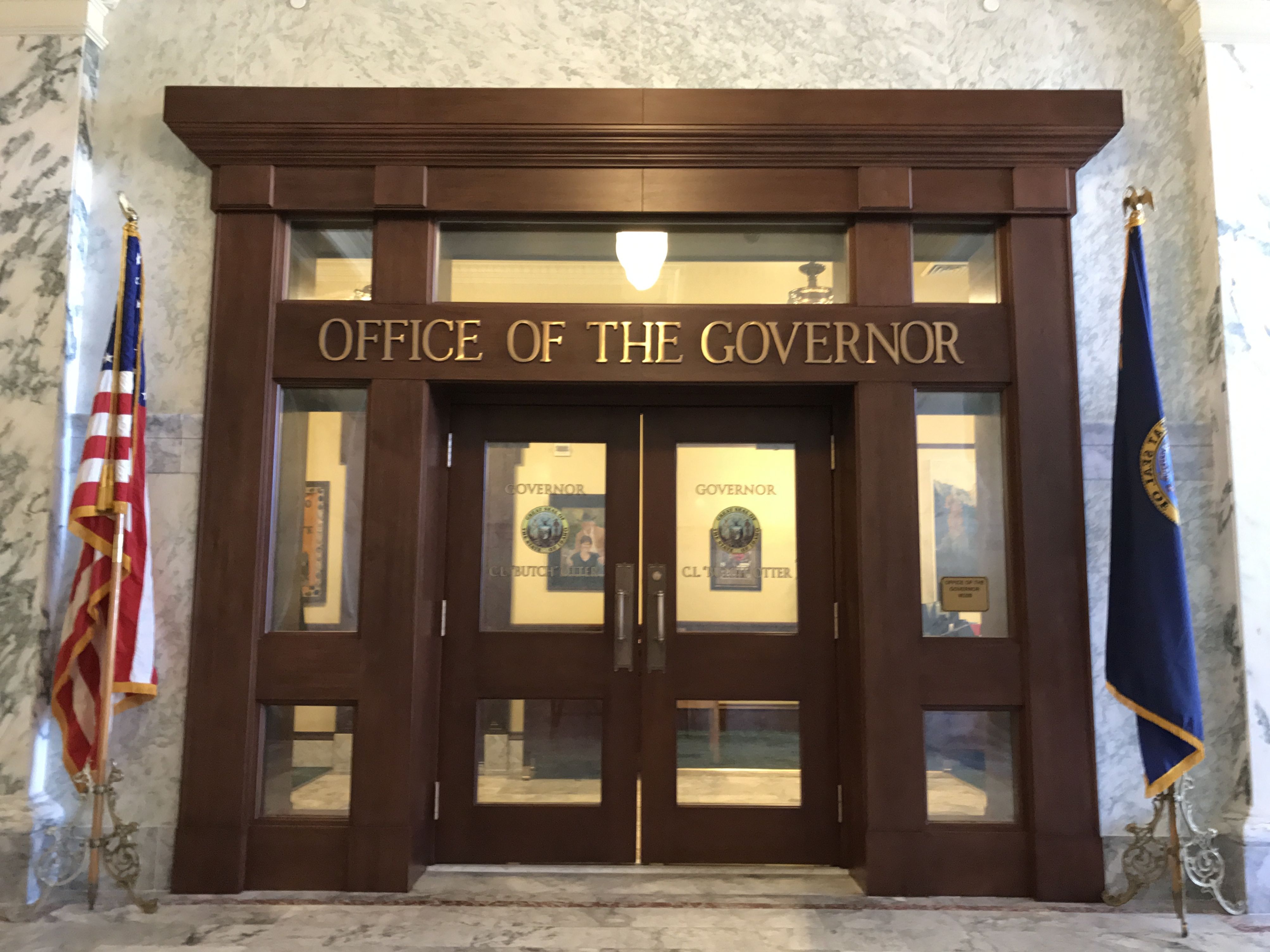
That is not in the least unexpected. I was surprised, however, by this sign in the hall.
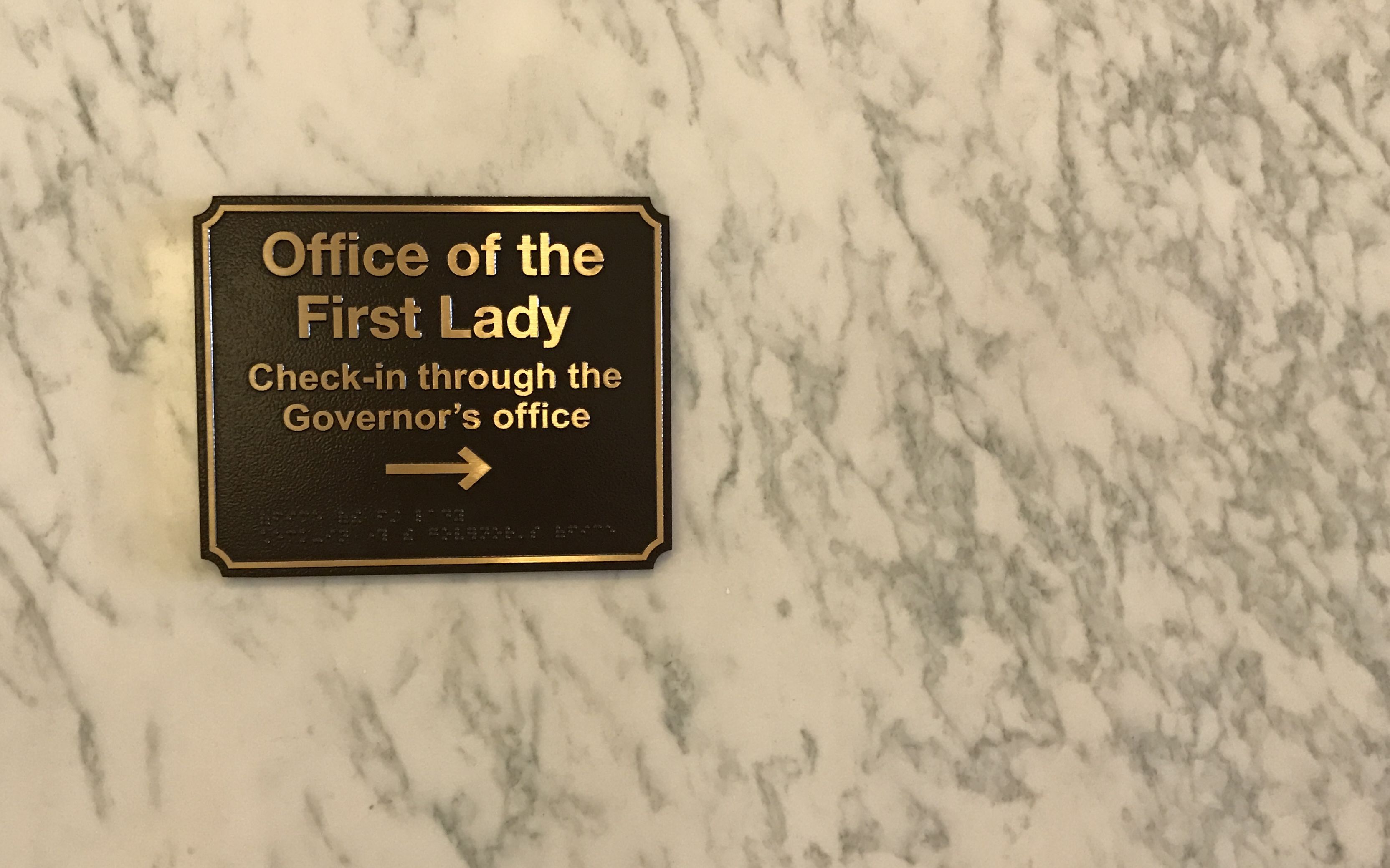
I’d never see a First Lady’s office in any of the Capitols I’d visited so far.
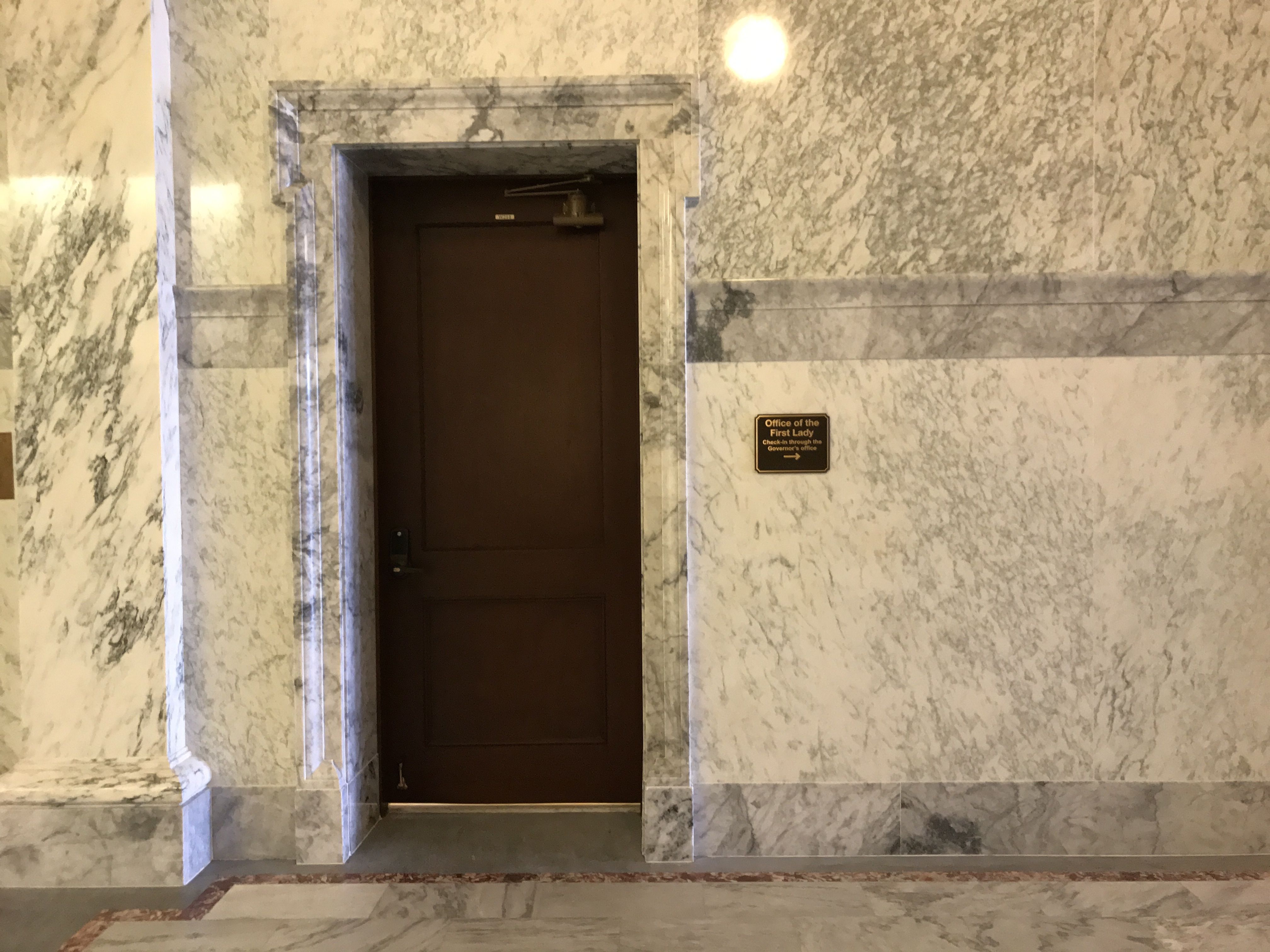
It’s kind of a small office, but then again, the First Lady isn’t an elected position.
I found it amazing that they just let me roam the building all by myself. Of course, I am sure they must have had cameras rolling the whole time.
First stop was the House of Representatives, if my notes are accurate.

I liked the seating chart.
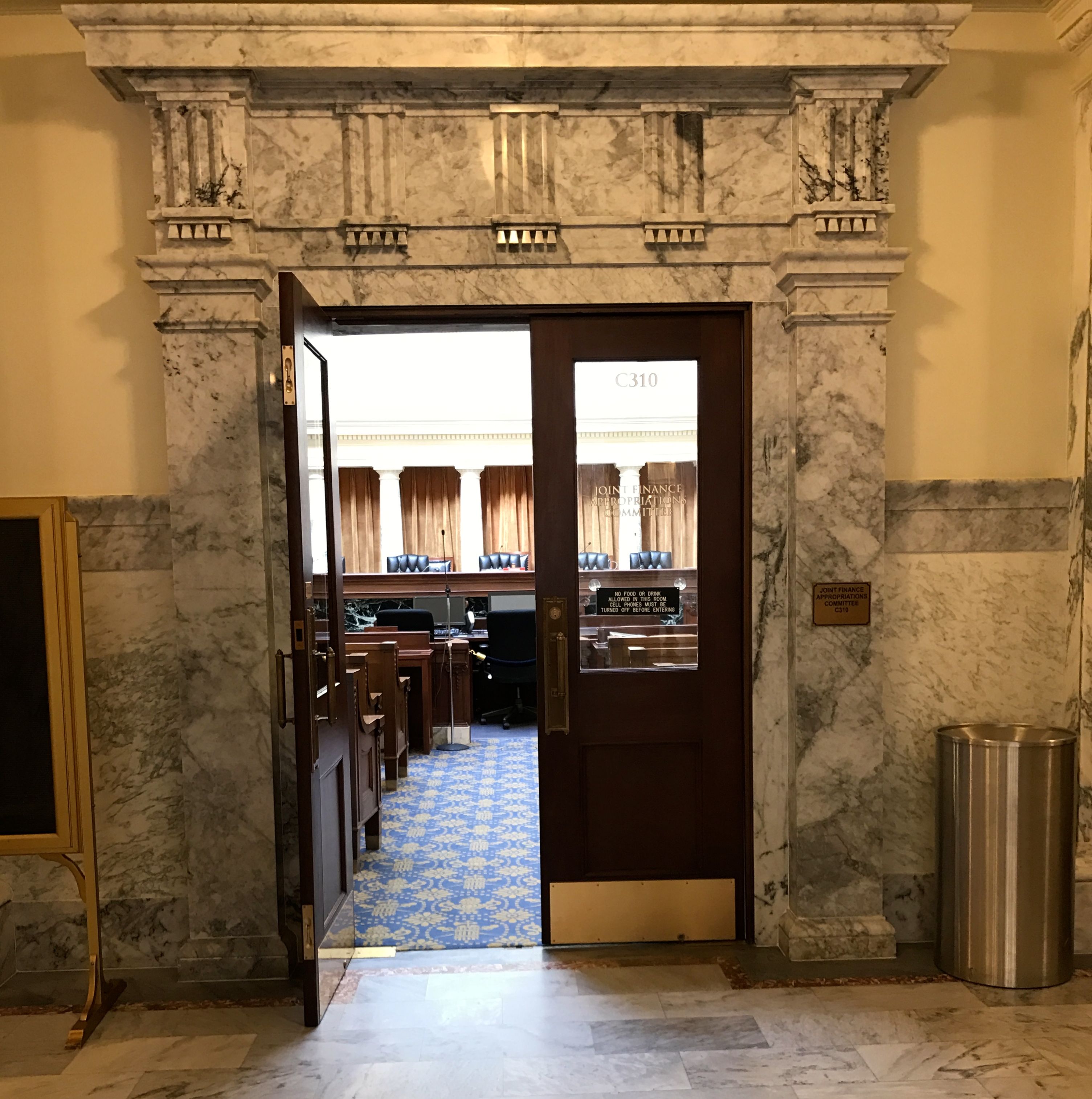
I strolled on and came to the Joint Finance Appropriations Committee room.

I wonder if the Finance Committee appropriated the funds for this rather grand room?
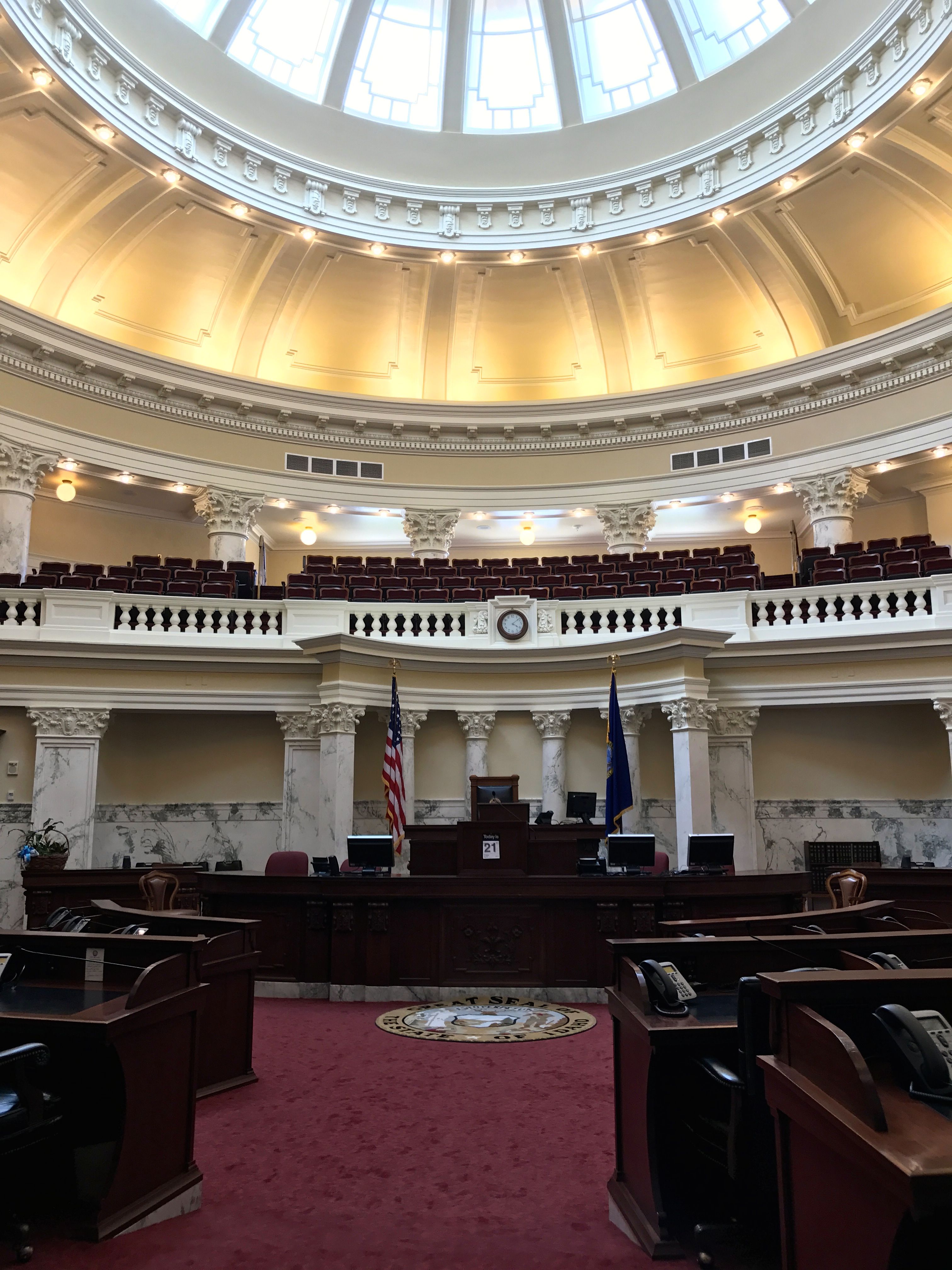
Next stop, the Senate.
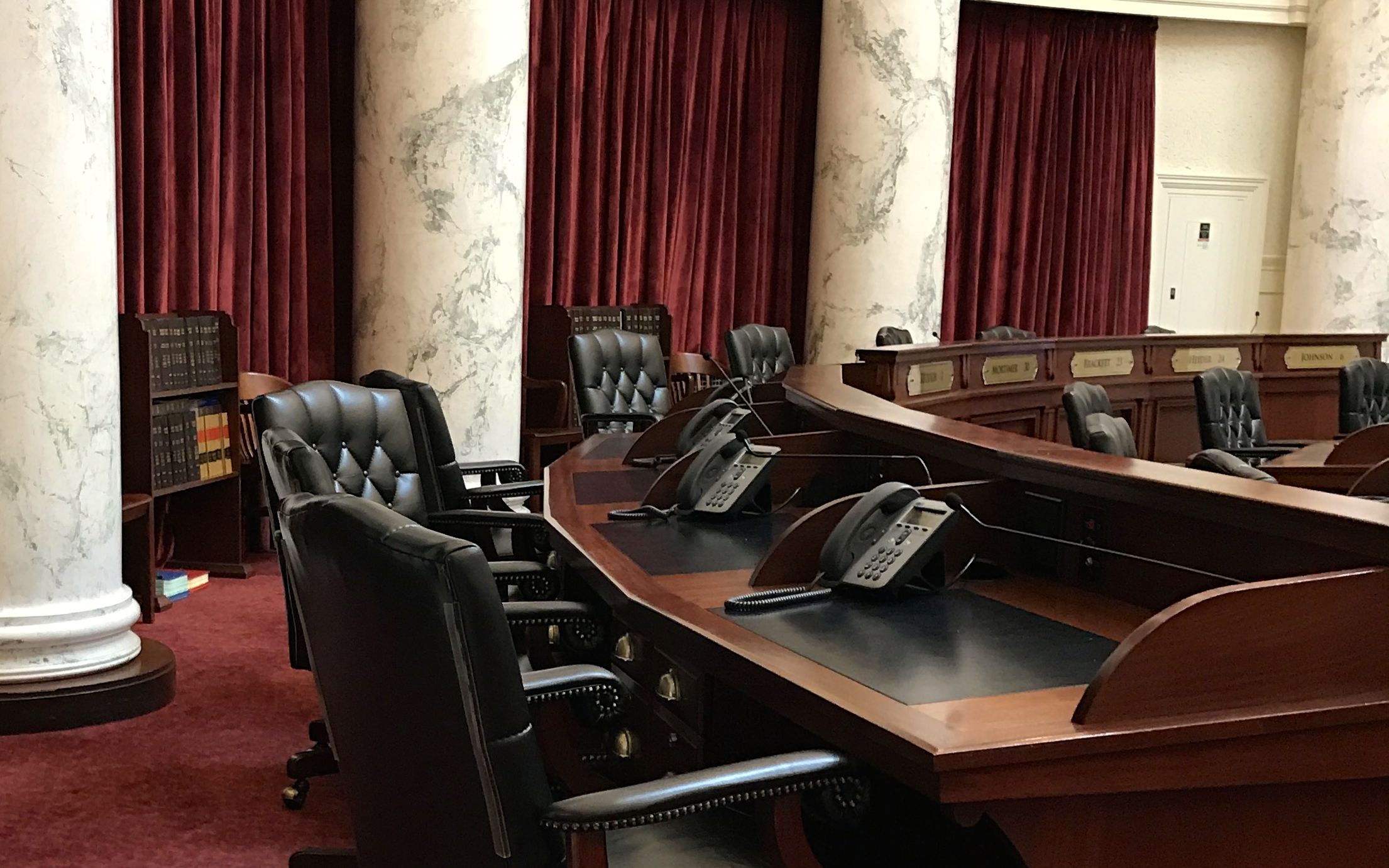
Those look like comfortable chairs. I like the books on hand for their use during legislation. I didn’t look, but I imagine that they are Idaho law books.
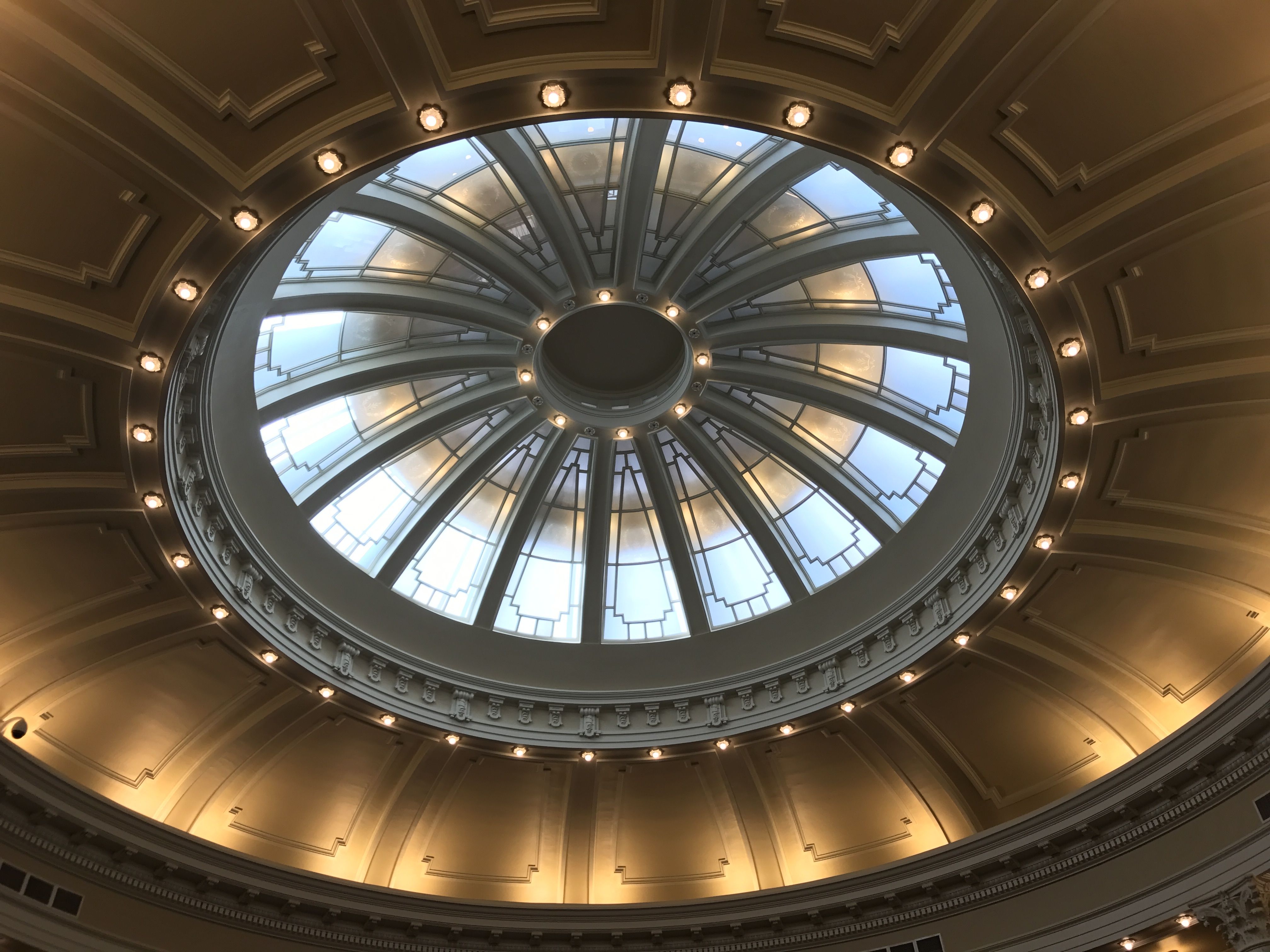
The Senate chamber had a lovely dome as well.
I kept working my way down, and came to a display in the lower level. I imagine that they had these things for the school tours, but you know me…they never let me advance past third grade.

They had rows of cards you could flip up to find the answers to questions.
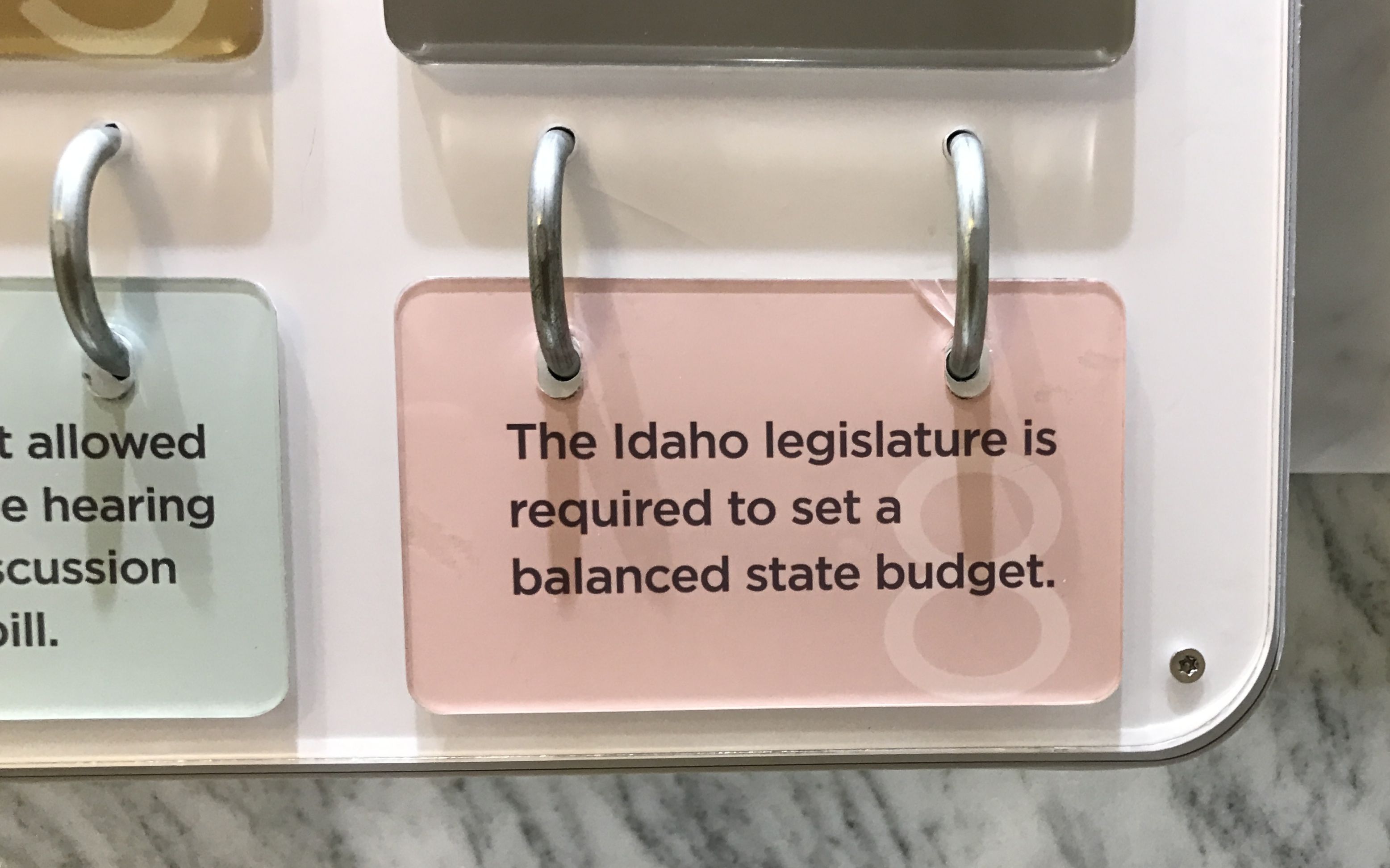
What do you think the answer is?
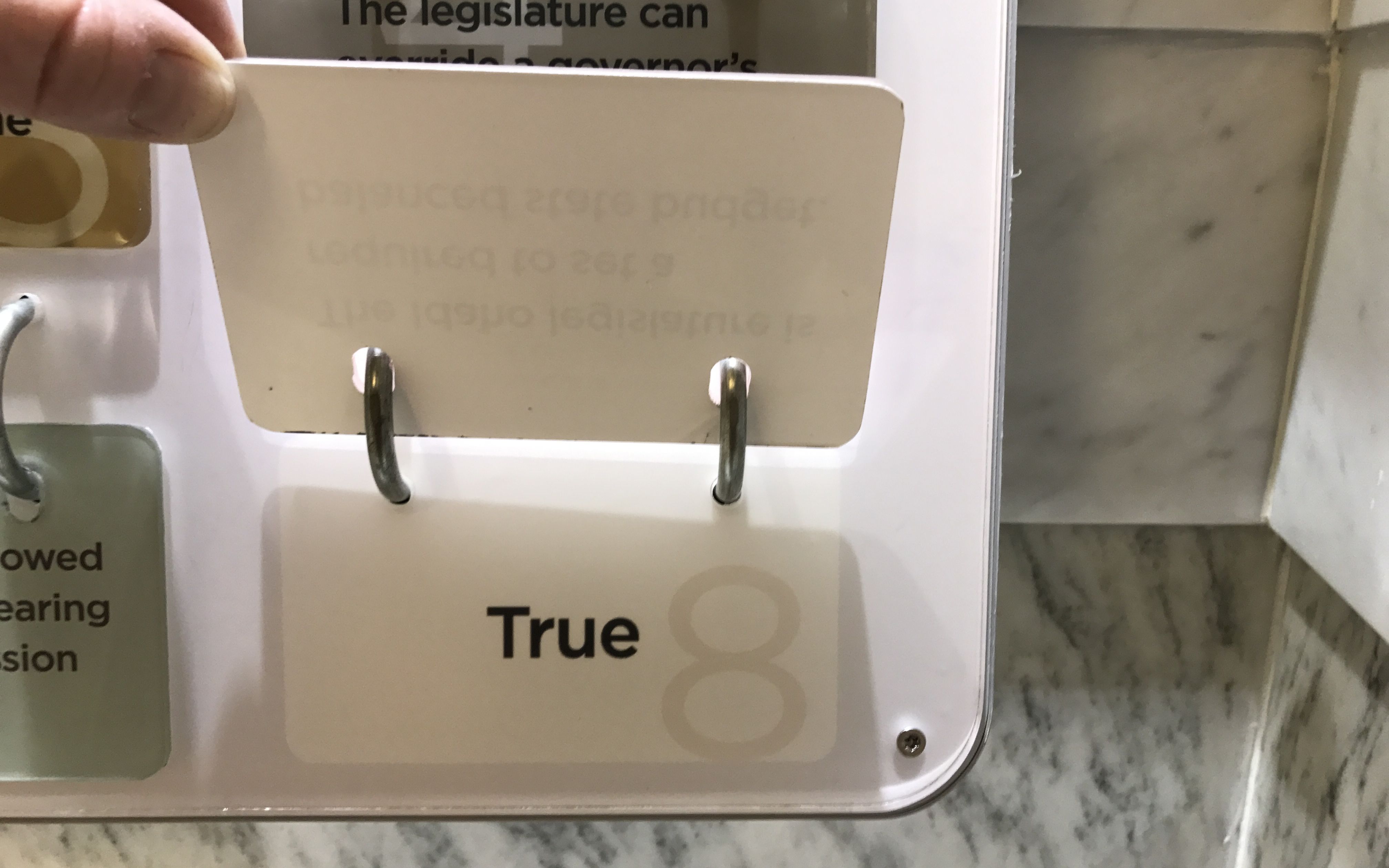
And, with that, it was time to head out.
Judging by the cloud cover, I must have taken this photo when I went in.
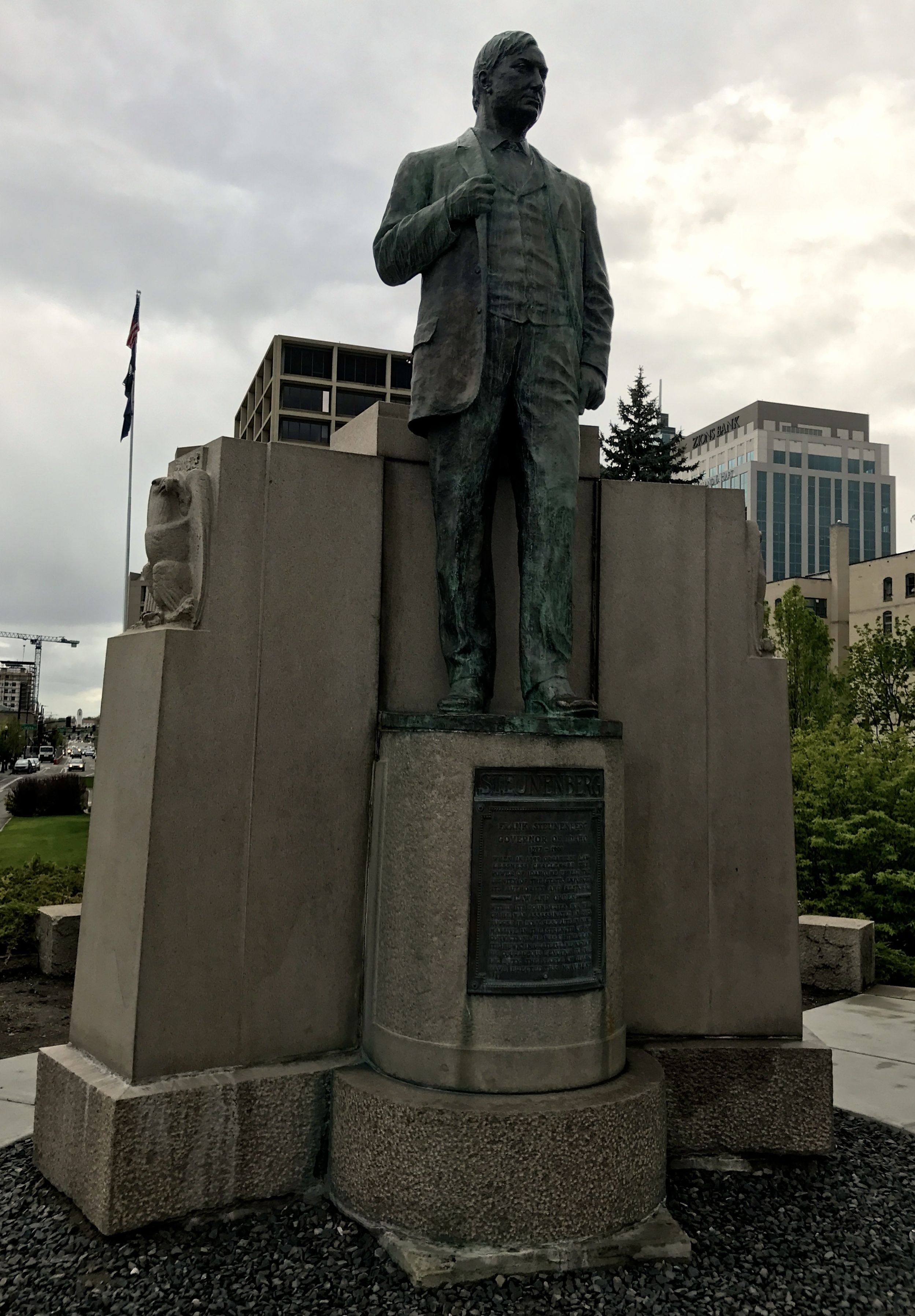
It’s a statue of Frank Steunenberg, the first governor of Idaho.
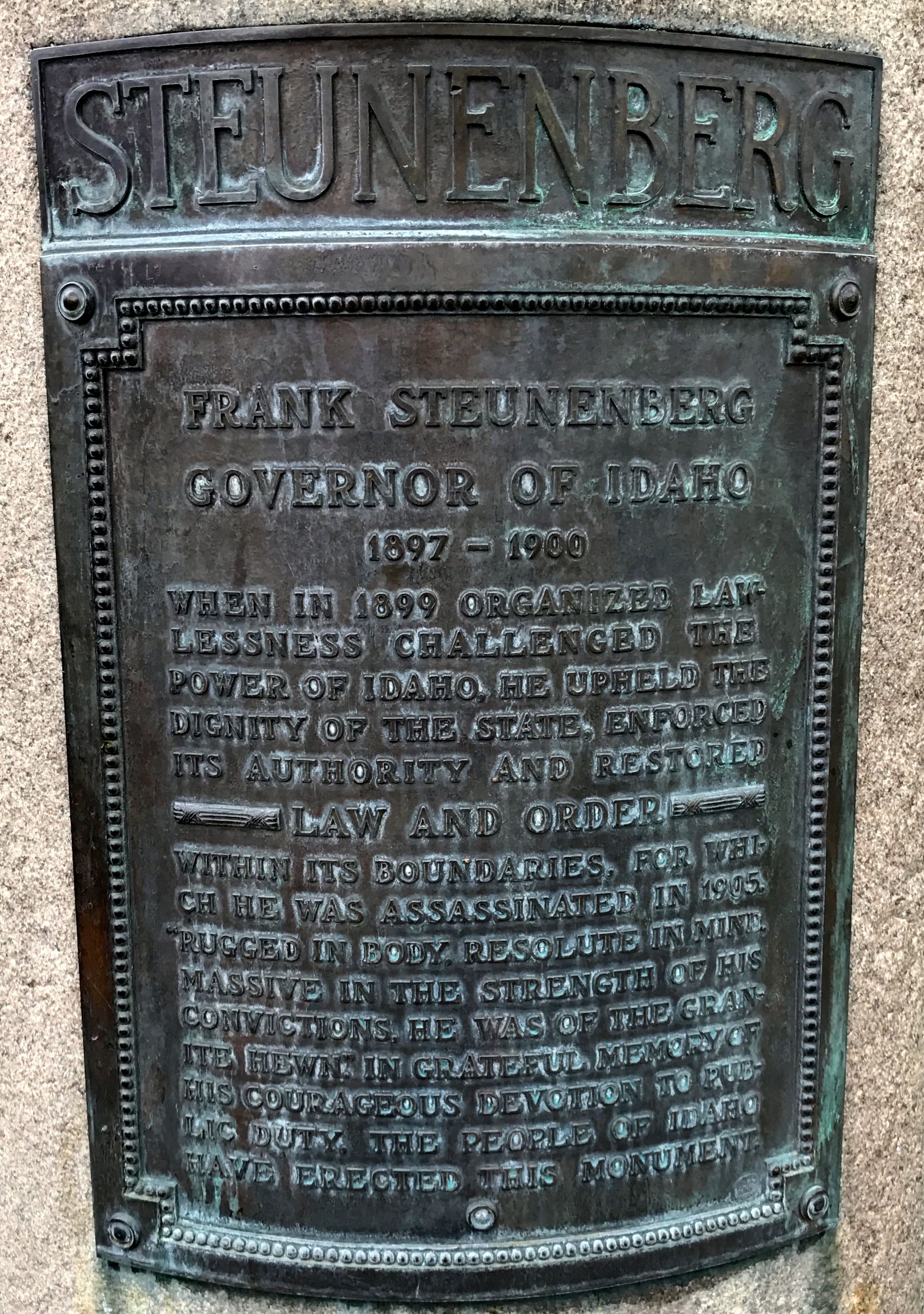
In case the text is too difficult for you to read, it says:
Frank Steunenberg
Governor of Idaho
1897 – 1900
When in 1899 organized lawlessness challenged the power of Idaho, he upheld the dignity of the state, enforced its authority and restored LAW AND ORDER within its boundaries, for which he was assassinated in 1905.
“Rugged in body, resolute in mind, massive in the strength of his convictions, he was of the granite hewn.”
In grateful memory of his courageous devotion to public duty, the people of Idaho have erected this monument
The quotation on the inscription is taken from the eulogy at his funeral given by U.S. Senator William Borah, who was the attorney for the prosecution at the trial of Harry Orchard , whose real name was Albert Horsley.

I always enjoy looking for information about when things were memorialized. This commission responsible for the statue was organized in 1907, and it was dedicated in 1927. W.A. Coughanour was the president – of the commission, I imagine.
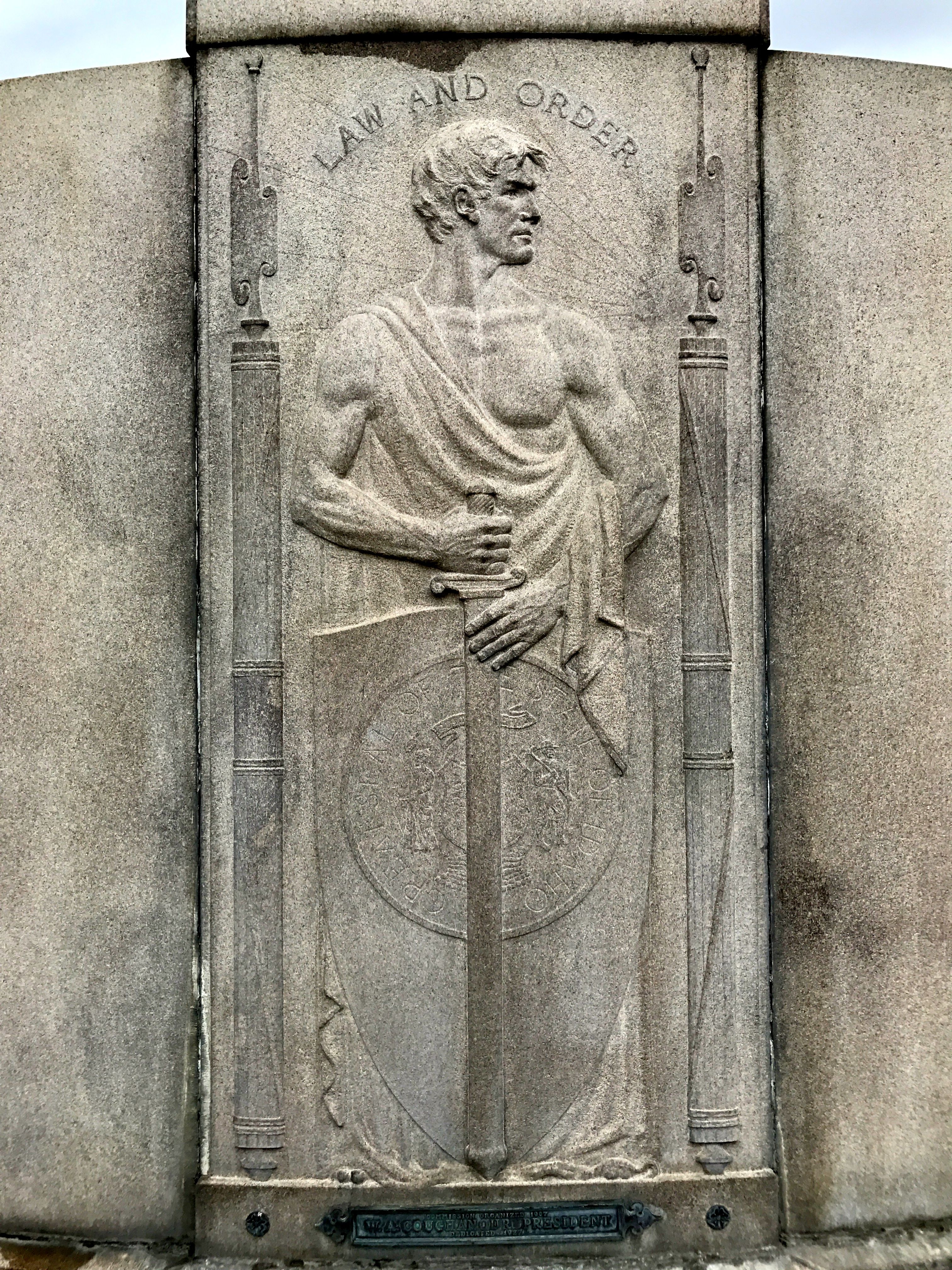
Backsides can be informative.
I walked around a bit. Mmm! Potatoes!
I didn’t associate Monarch Butterflies with Idaho, but they do get around.
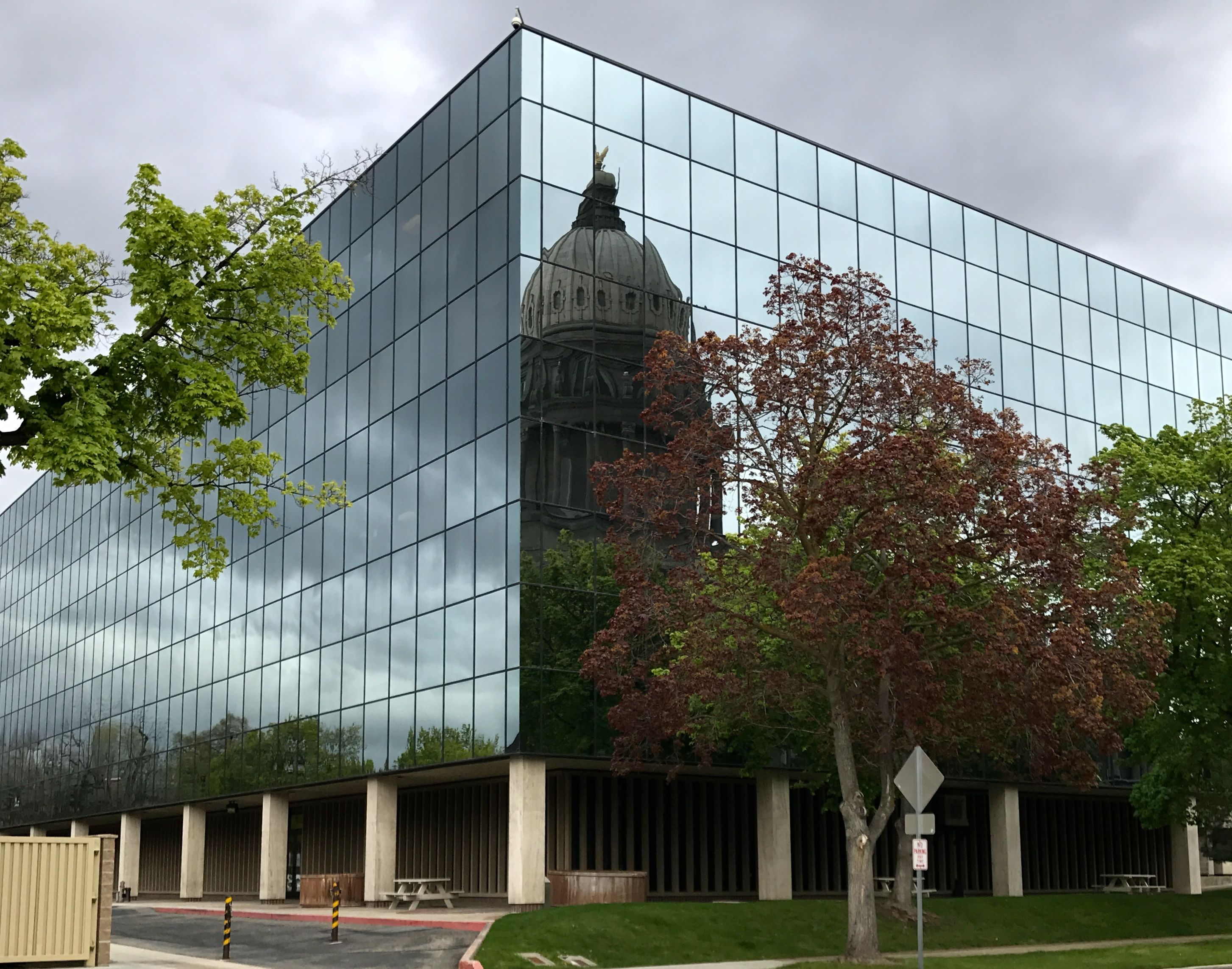
This piece of modern architecture does reflect the capitol well.
And with that, it was time for other adventures.
I can’t wait to visit Idaho- we were only in the northern part of the state and have yet to visit Boise, sun valley etc. Hope to work it in next spring…
I hope you can get it in. I’m sure you’ll love it!
Beautiful building. It’s amazing that they let you wander around on your own. The U.S. Capitol was like that in the 1980s when I lived in the D.C. area. No more.
I love the wooden objects made from the trees, especially the writing chair and the train.
I was surprised about that, too. I encountered a couple of state capitols where they didn’t seem to regard tourists handing about as a problem.
Enjoyed this. Having moved to Boise a few months ago, we’re hungry for information on everything! Thanks.
I hope you enjoy your time in Boise. It seemed like a nice place.