I headed out fairly early. I wanted to spend the night in Medicine Hat, Alberta. Who wouldn’t want to visit Medicine Hat? Isn’t that a cool name? It would be a four or five hour drive, but I left early enough to stop off in Drumheller.

Can you guess the attraction in Drumheller?
Dinosaurs!
Actually, there were two things that have been essential to Drumheller’s modern history – dinosaurs and coal. The first recorded observation of the coal seam in the area dates back to 1793. This valuable resource inspired Samuel Drumheller to buy land here in 1910. He sold it to the railway developers and the community of Drumheller was born. The abundant fossil fuels and the railway network established Drumheller region in the post-World War One period as one of Canada’s most significant coal producers.
“But, what about the dinosaurs?” I hear you saying.
In 1884, geologist Joseph B. Tyrell found the fearsome skull of an Albertosaurus. This discovery paved the way for the Great Canadian Dinosaur Rush. From 1910 to 1917, fossil hunters flocked here and established the region’s reputation as a rich source of dinosaur bones.
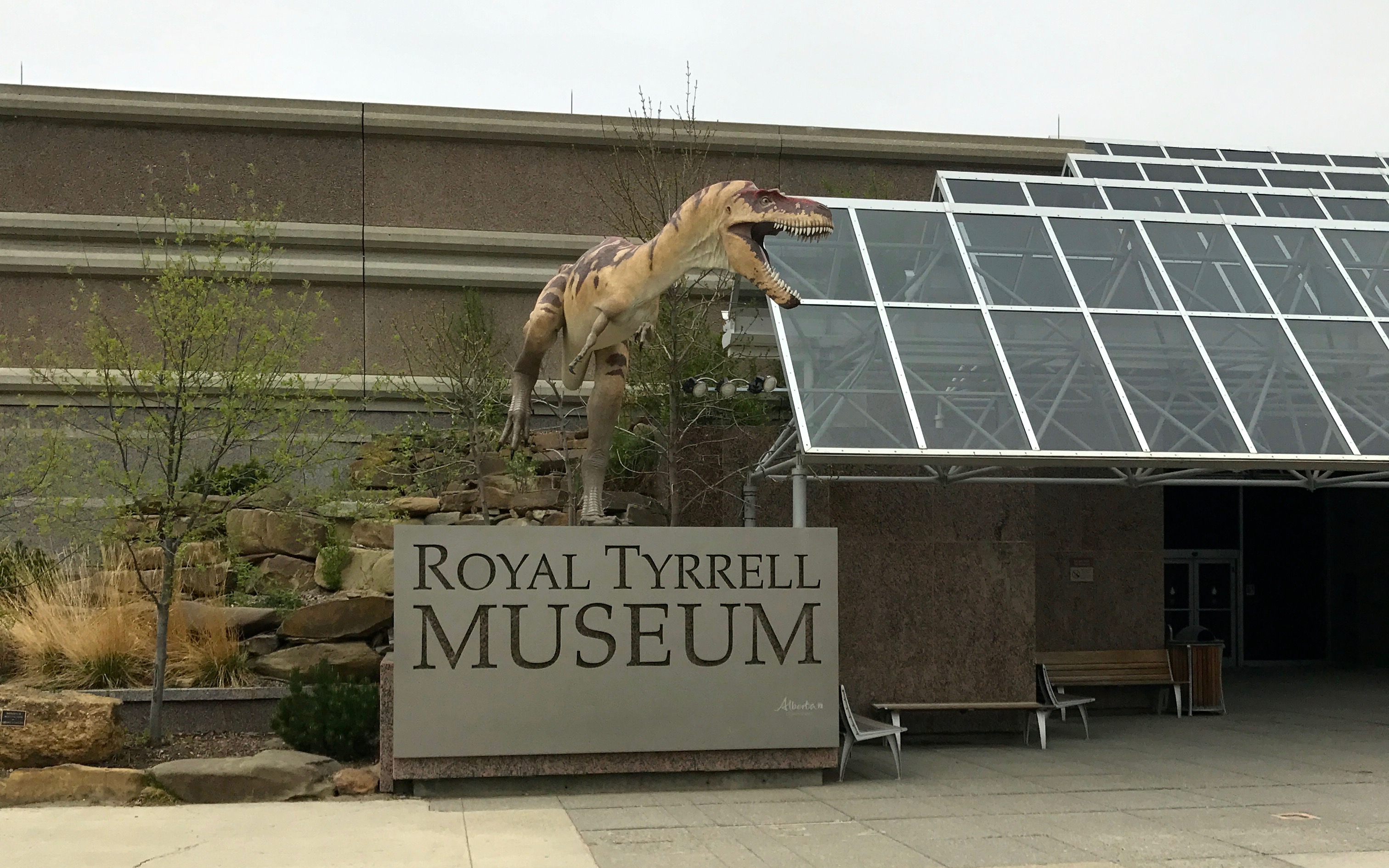 This abundance of fossils makes Drumheller a natural home for the Royal Tyrell Museum of Paleontology. It’s one of the world’s leading facilities for the research and presentation of prehistoric life. I paid my entrance fee and went inside.
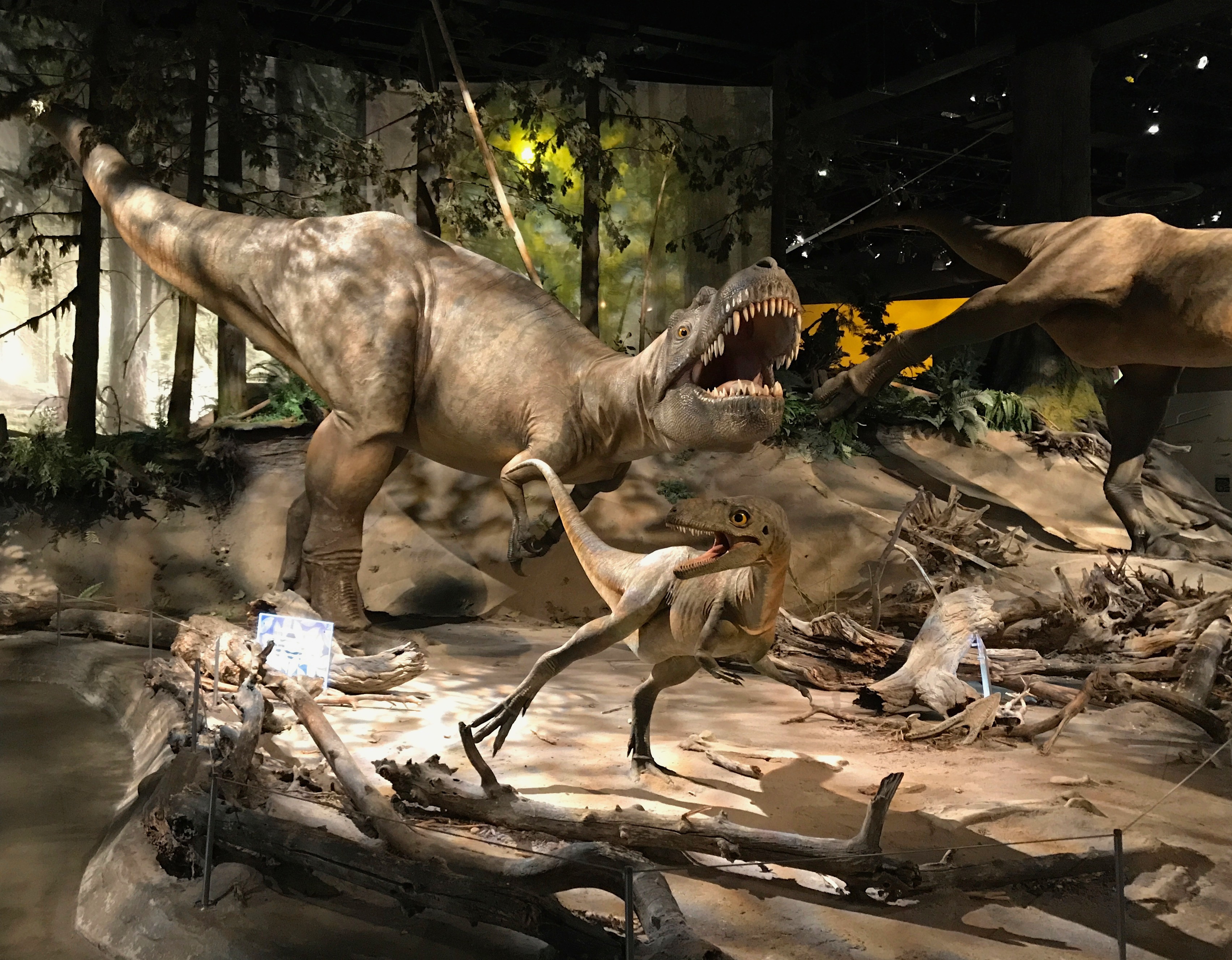
There were dinosaurs galore! There were marvelous models of prehistoric life as the scientists believe it looked. These were visually stunning, but I am more drawn to the real thing, like this mass-death assemblage of 25 fossil gars (Atractosteus) that died 63 million years ago.
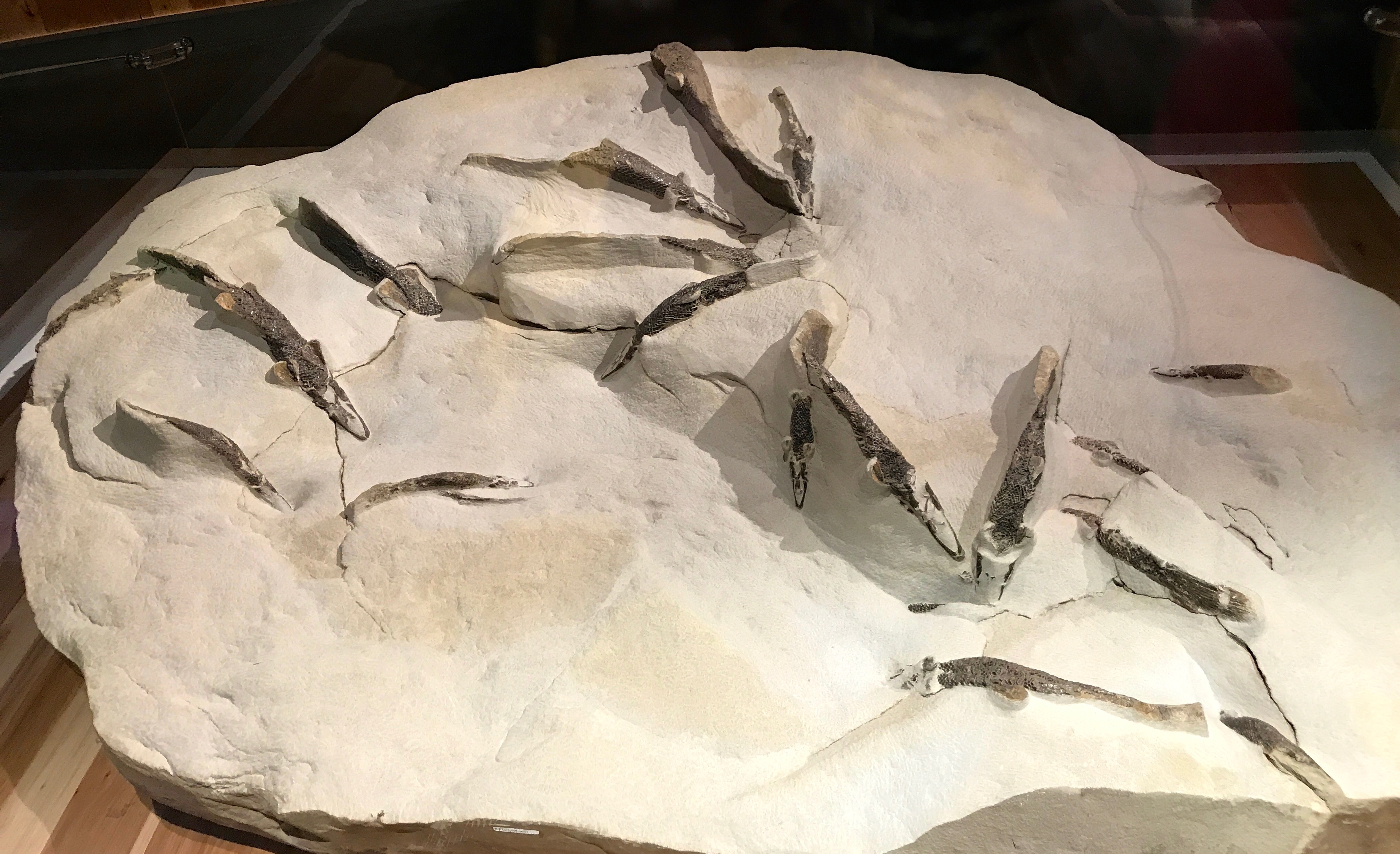
Apparently, it’s not unusual to find death assemblage of gars, but skeletons are usually found on their sides. This group is unusual because each fish is preserved fully articulated in a three-dimensional belly-up death pose, which indicates a rapid burial after they died.
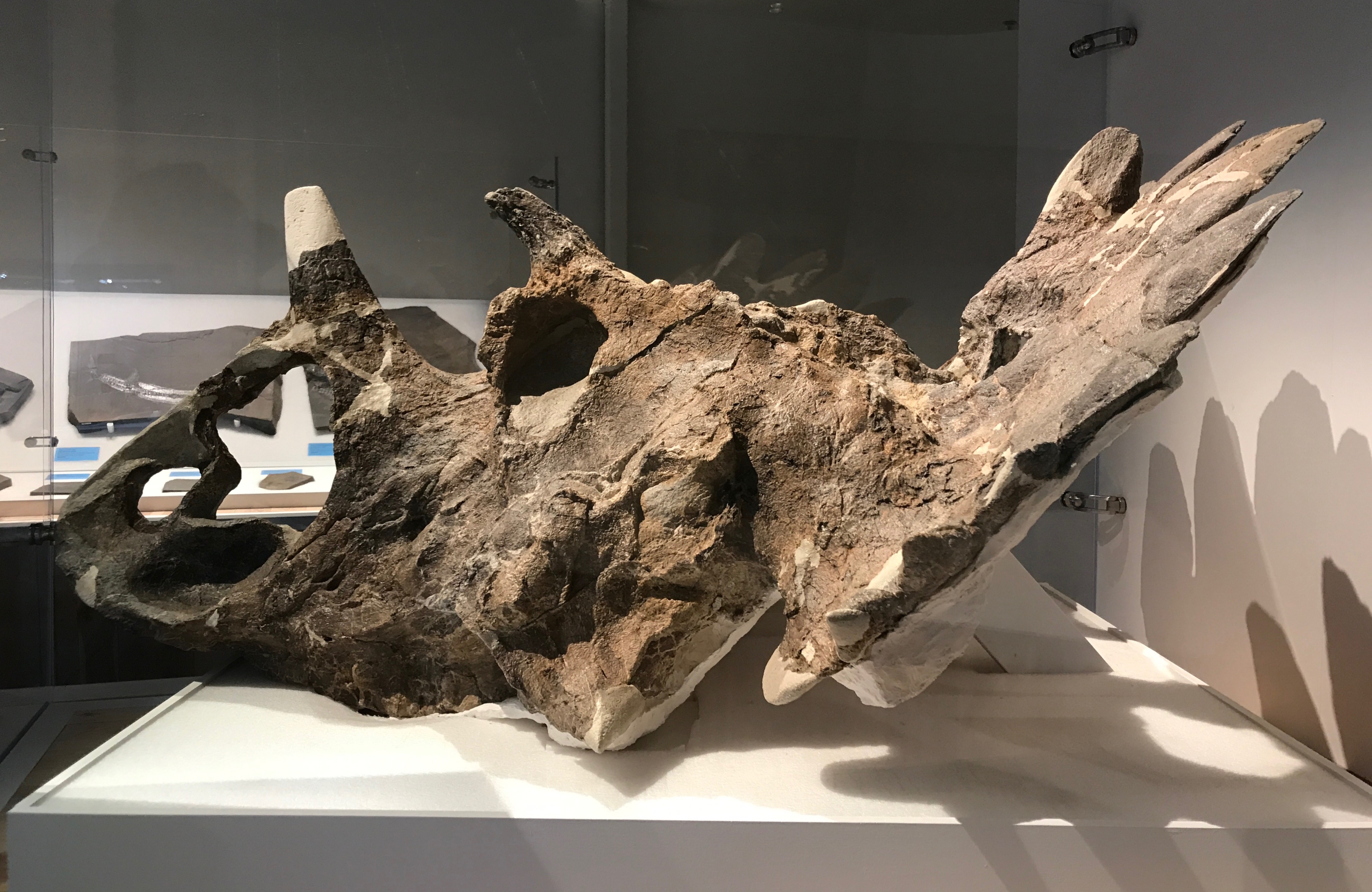
This fossil is regaliceratops peterhewsi. It was discovered by geologist Peter Hews in 1995, who happened to see the tip of the dinosaur’s snout poking out from the riverbank of the Oldman River.
This specimen is nicknamed after the comic book character “Hellboy”, due to the difficulty collecting it, the hard rock in which it was encased, which made preparation difficult, and the small stubs of horns over the eyes.
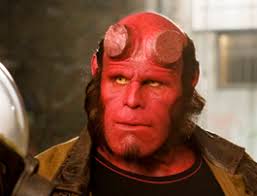
Just in case your education in comic book characters stopped with Archie and Jughead, this is Hellboy.
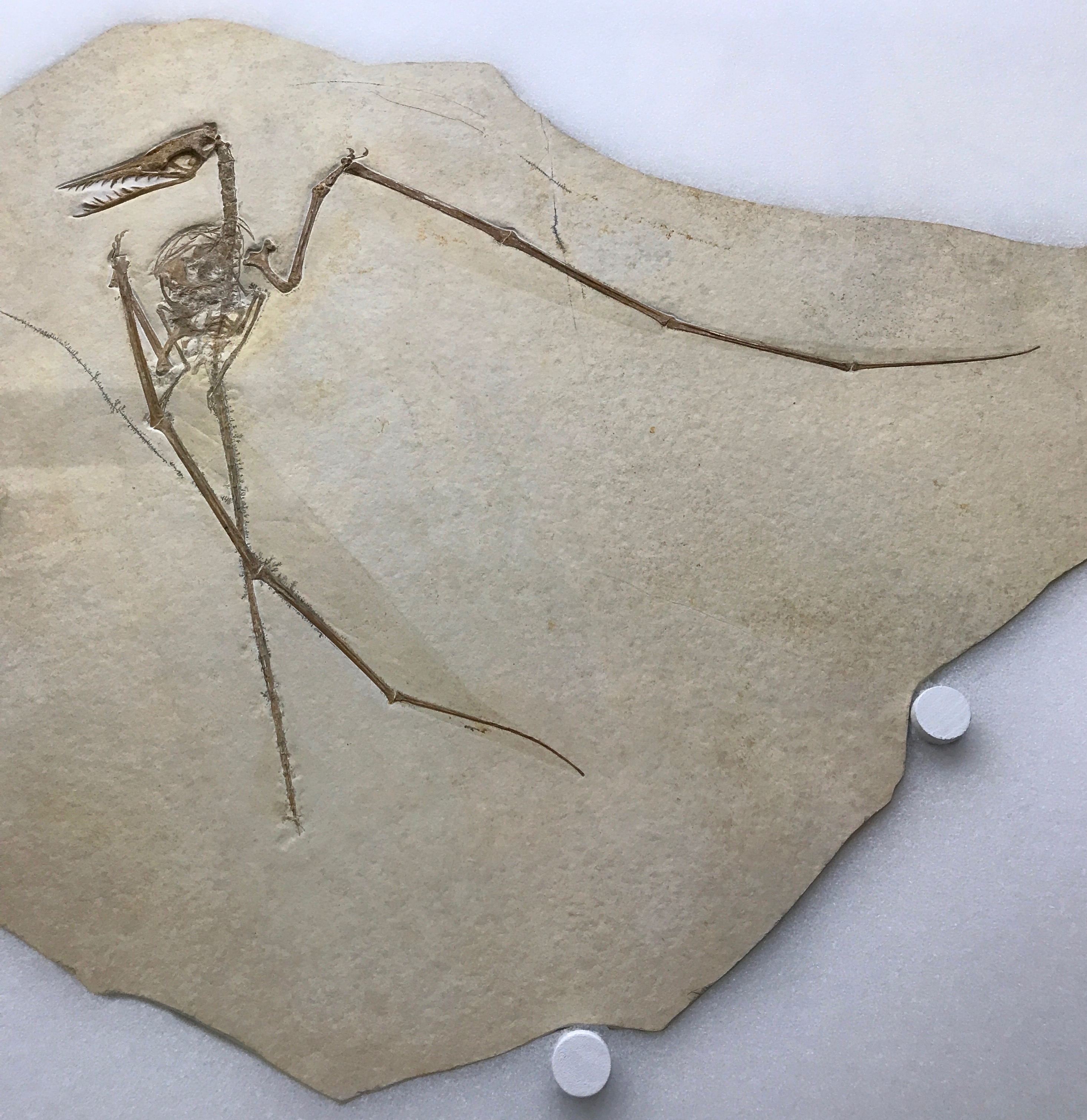
This Rhamphorhynchus muensteri is interesting. In my notes, I wrote down that this was a flying dinosaur.
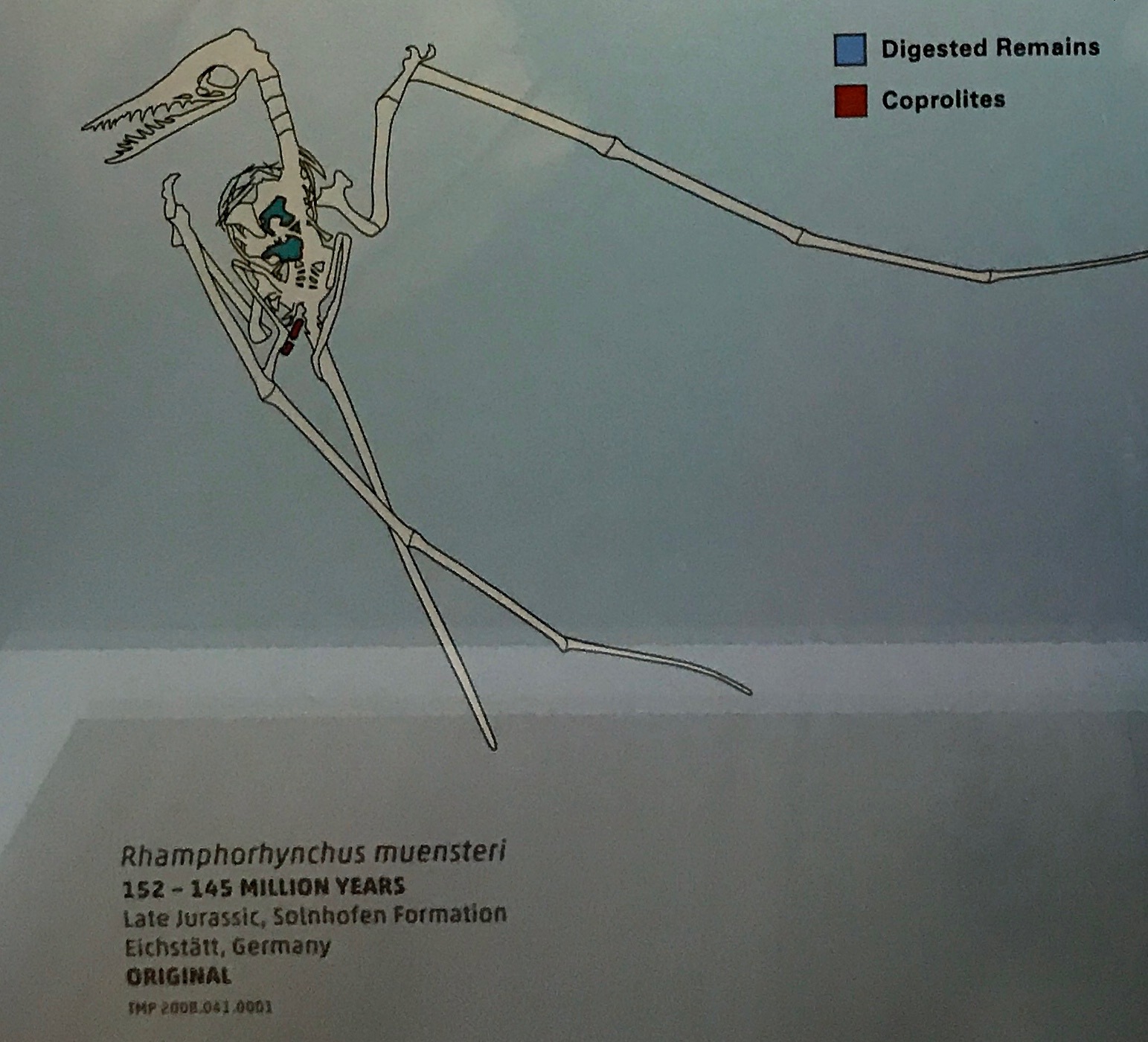
What I found really interesting was the diagram next to the fossil. It showed that it had digested food and coprolites in it when it died. “Coprolites?” you ask. Coprolites are fossilized feces.
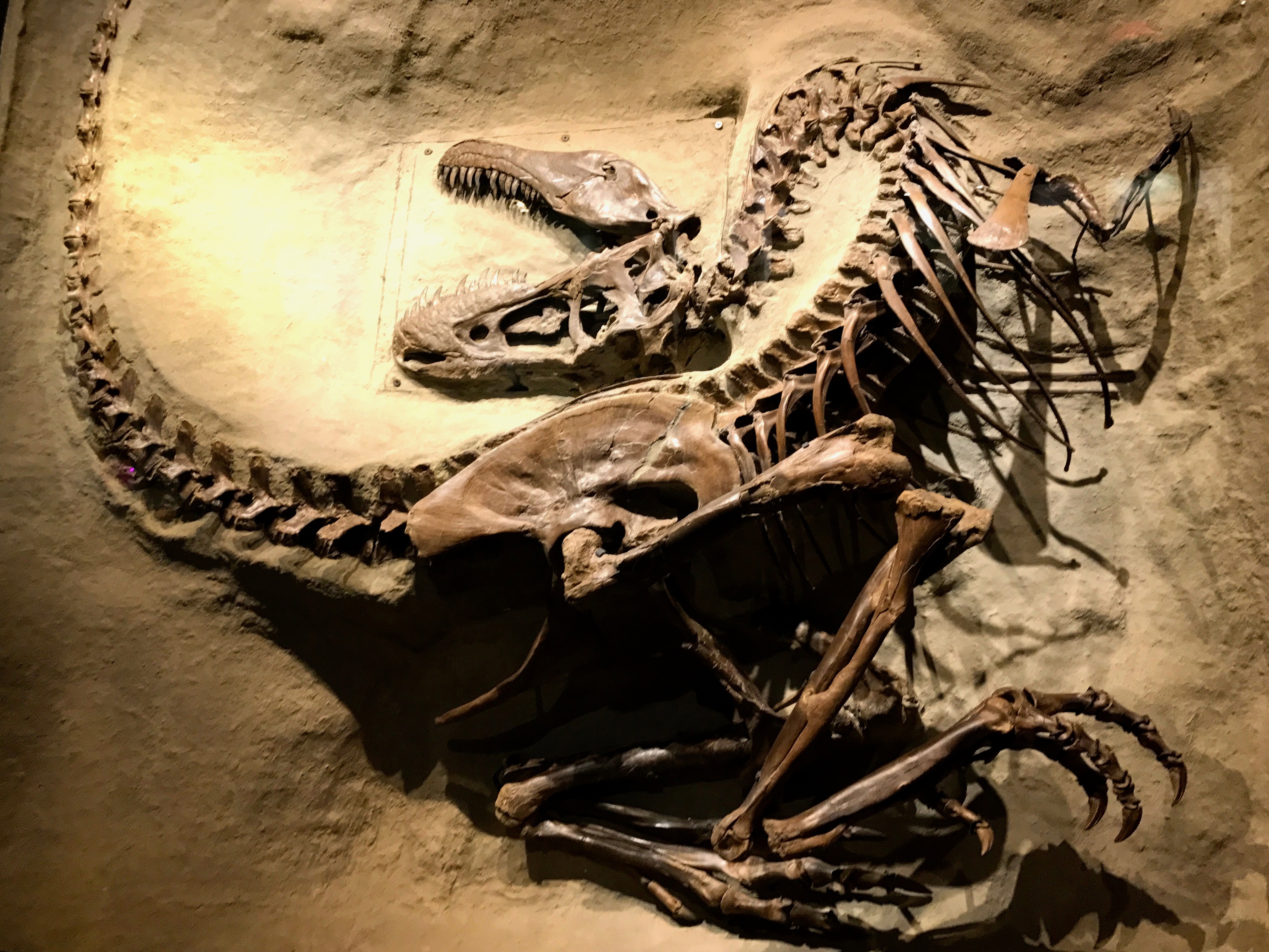 I am amazed that this fossilized Gorgosaurus is articulated, which means that the bones are arranged as they were in life. The completeness of this juvenile dinosaur skeleton, and the river sands it was found in, suggest that it was buried immediately after the animal died, which allowed the skeleton to be preserved so beautifully.
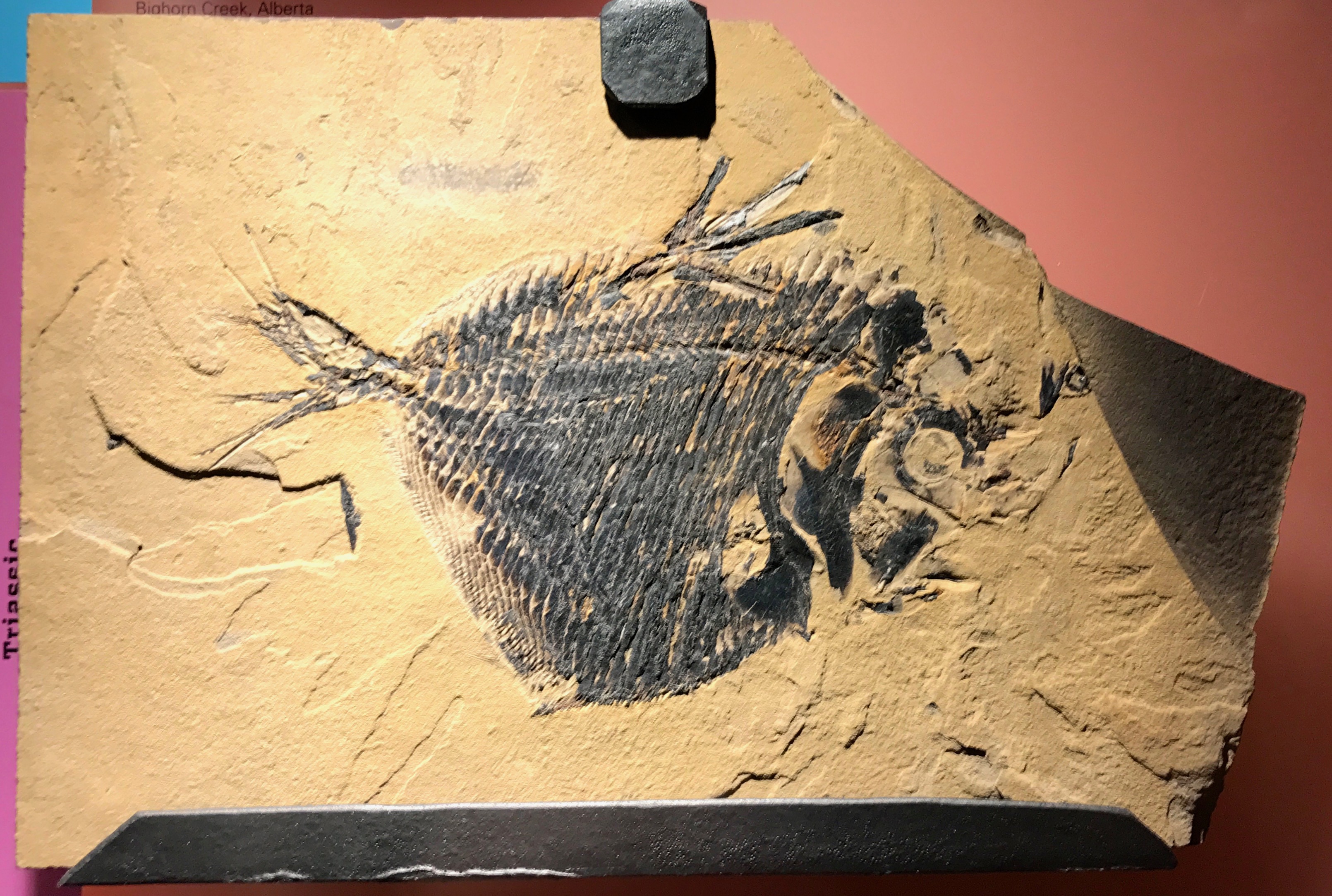
While I am not a big fan of fish – unless it is battered, deep fried and served with lots of ketchup – I do rather like this fossil.
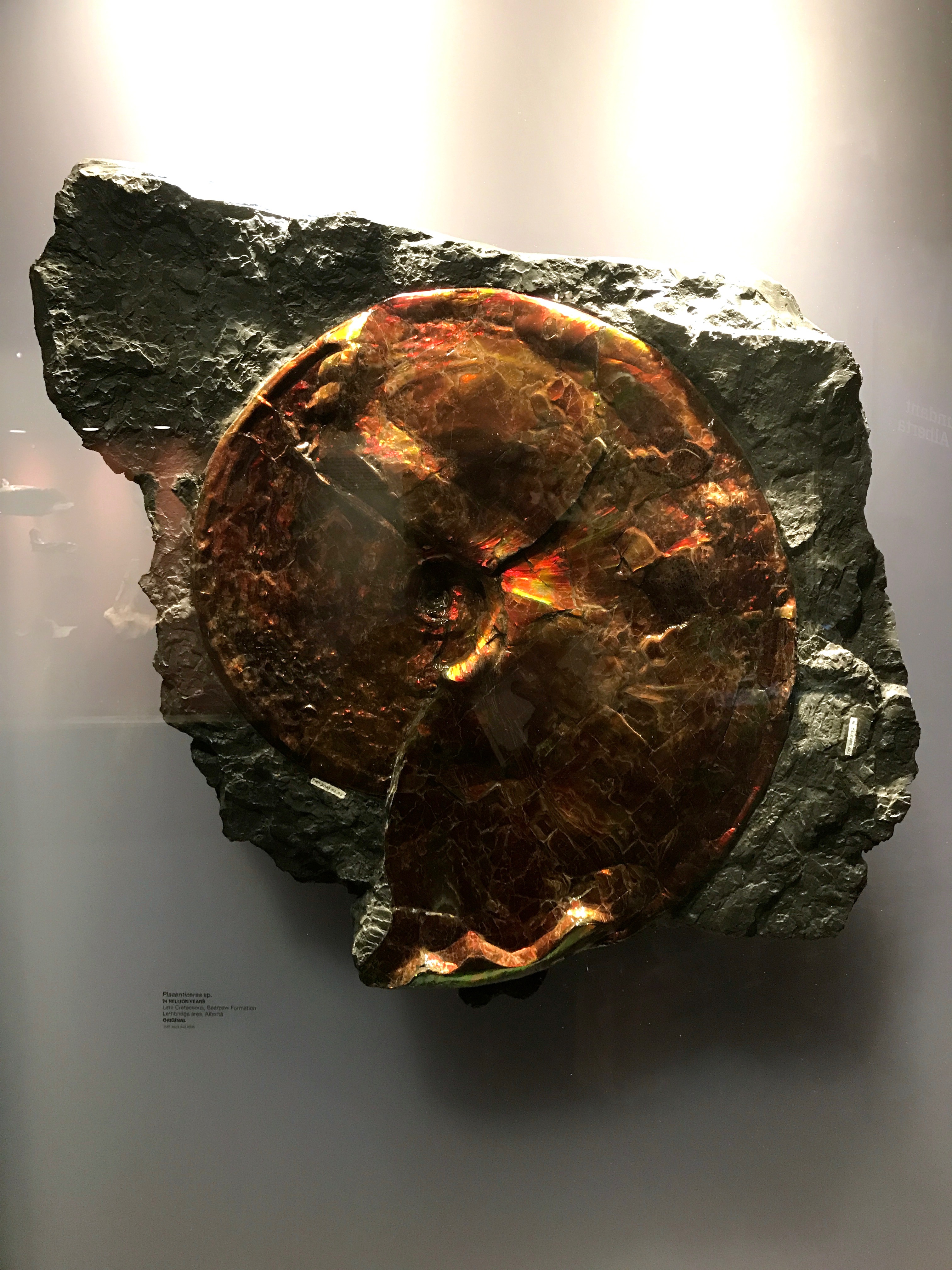
Another ammonite!
While they look like the living Nautilus species, they are more closely related to the family that octopuses, squid and cuttlefish come from. In checking what I remember, I found out that the name “ammonite” was inspired by the spiral shape of their fossilized shells, which somewhat resemble tightly coiled rams’ horns. Pliny the Elder – who died in 79 AD near Pompeii – called fossils of these animals ammonis cornua – horns of Ammon – because the Egyptian god Ammon was typically depicted wearing ram’s horns.
If you want to know more, you can check out my preferred source.
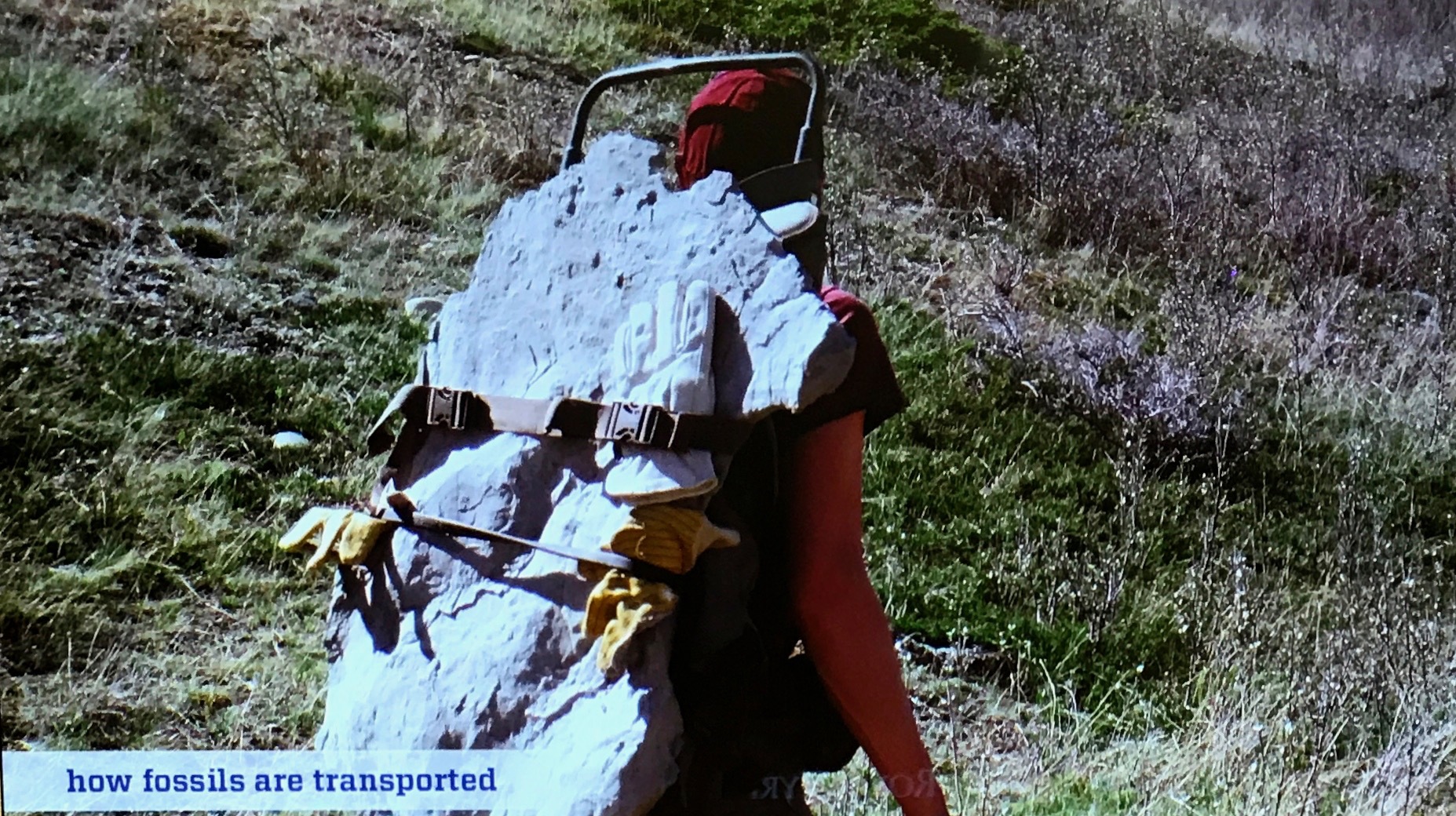
I guess if you want to be a good fossil hunter, you’d best be fit and strong – or know people who are. Can you imagine encasing a fossil in plaster and then packing it out?
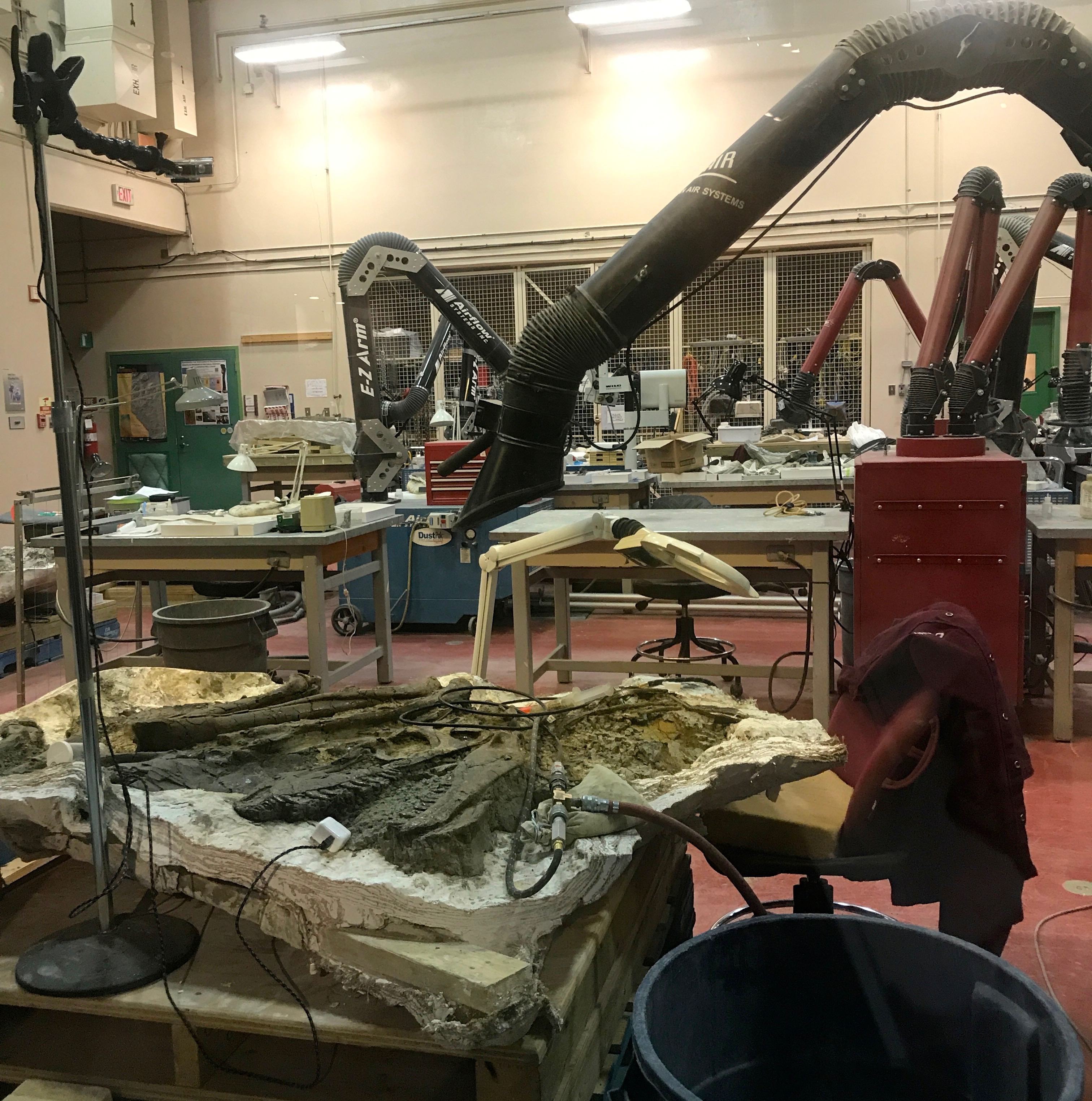
Once the fossil is back at the lab, the work can begin. They have these big windows into the lab so we can watch the paleontologists at work.
It must have been their day off.
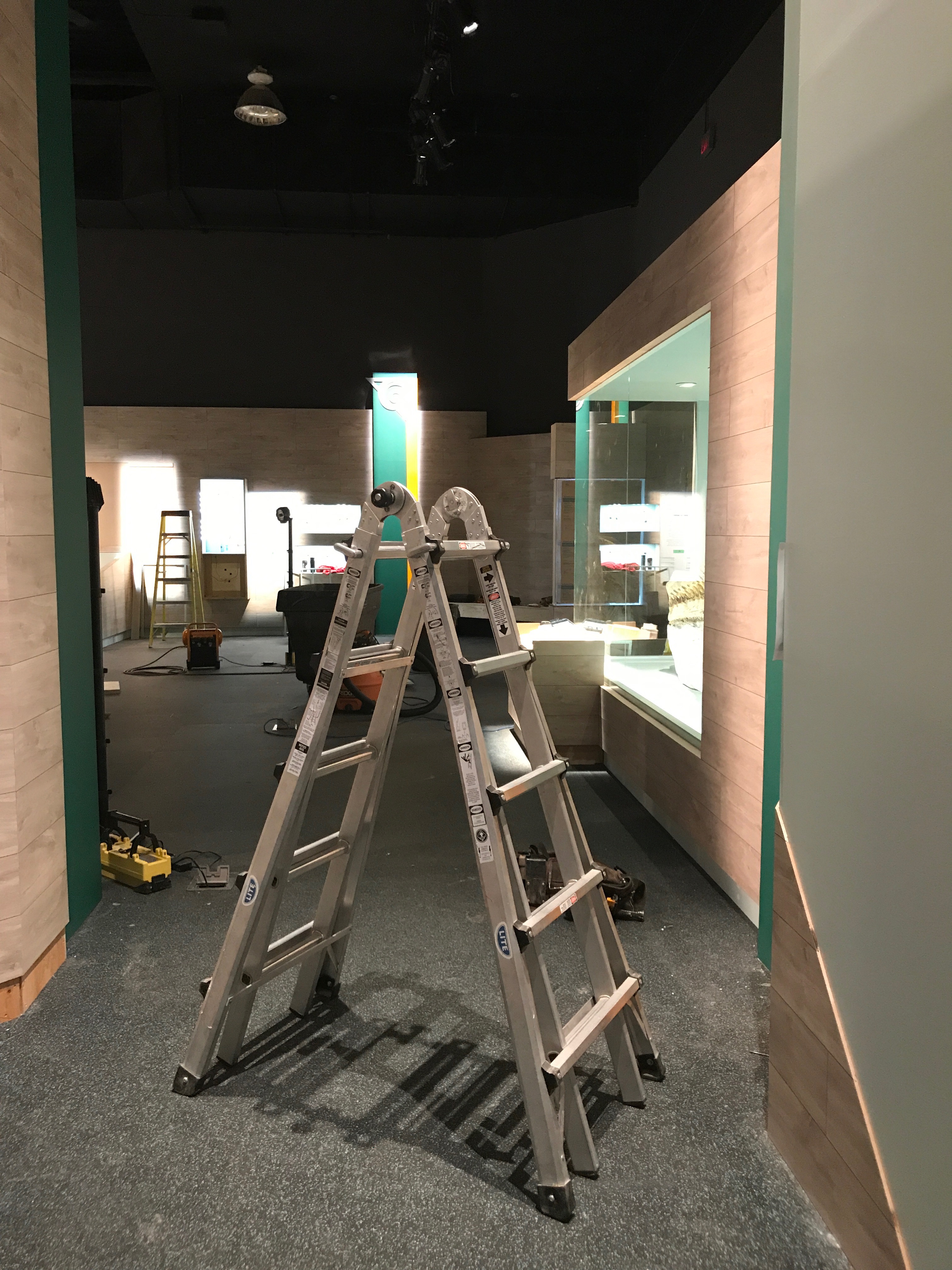
The workers putting together this new exhibit must have taken the day off, too.
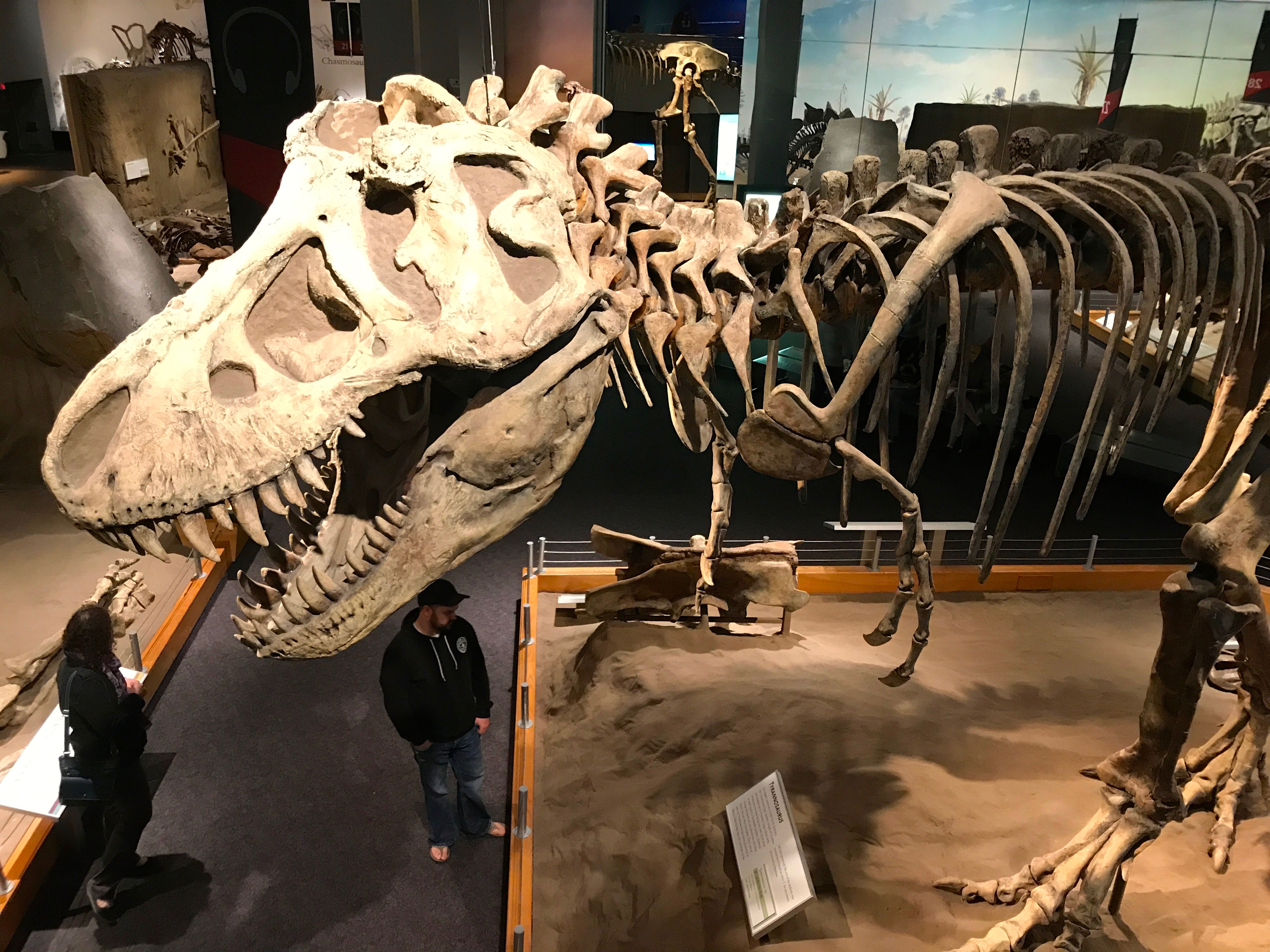
There were fossils galore. I won’t share all the photos I took of them. (You’re welcome.)
Every year, the museum holds a Palaeo Arts Contest for students K-12. (Incidentally, “palaeo” is Canadian English for “paleo”.) Students combine artistic skill with imagination and scientific research. This year, the students were asked for their interpretation of a duck-billed dinosaur, Lambeosaurus.
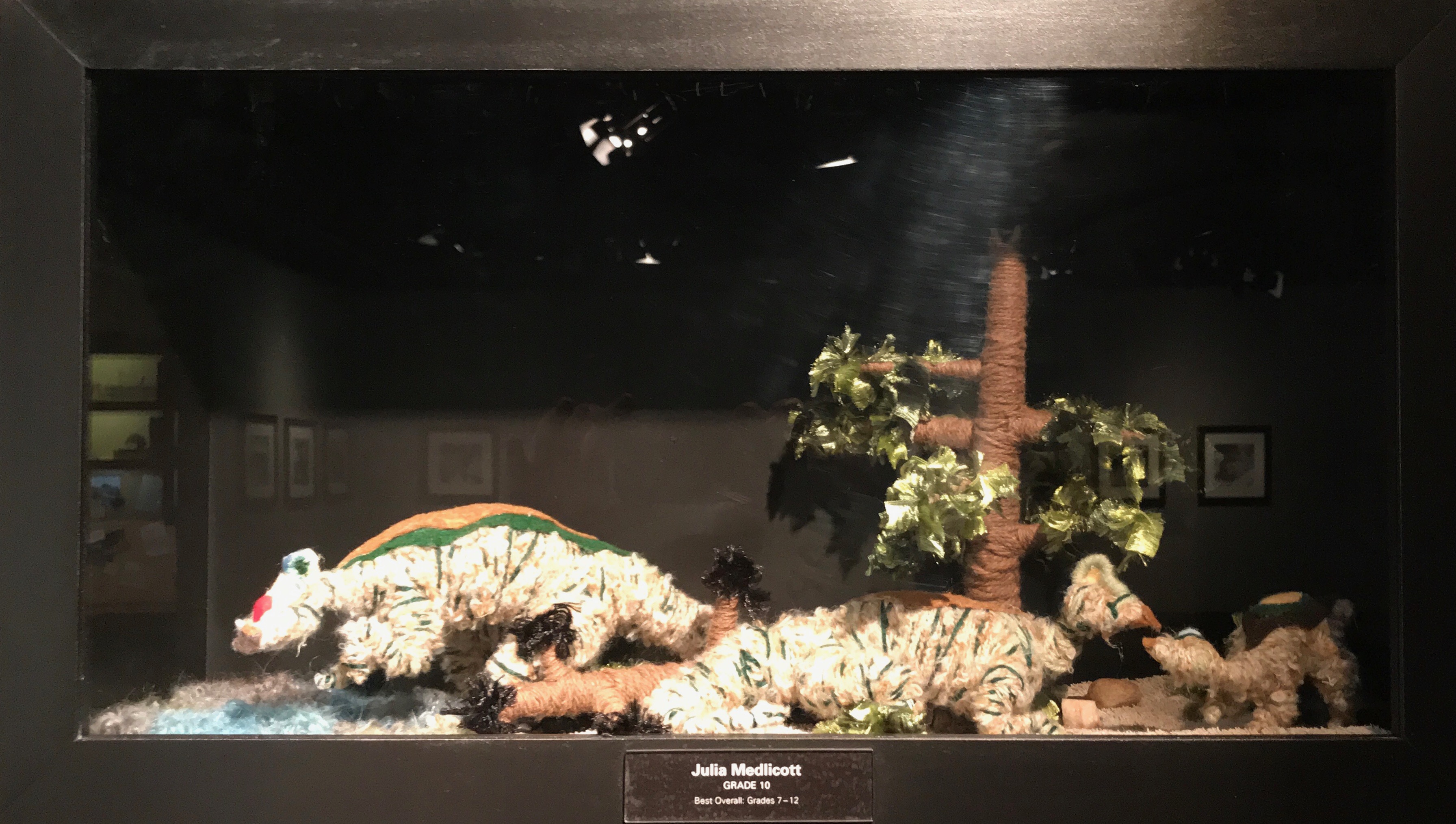
Julia Medlicott made this work of art.
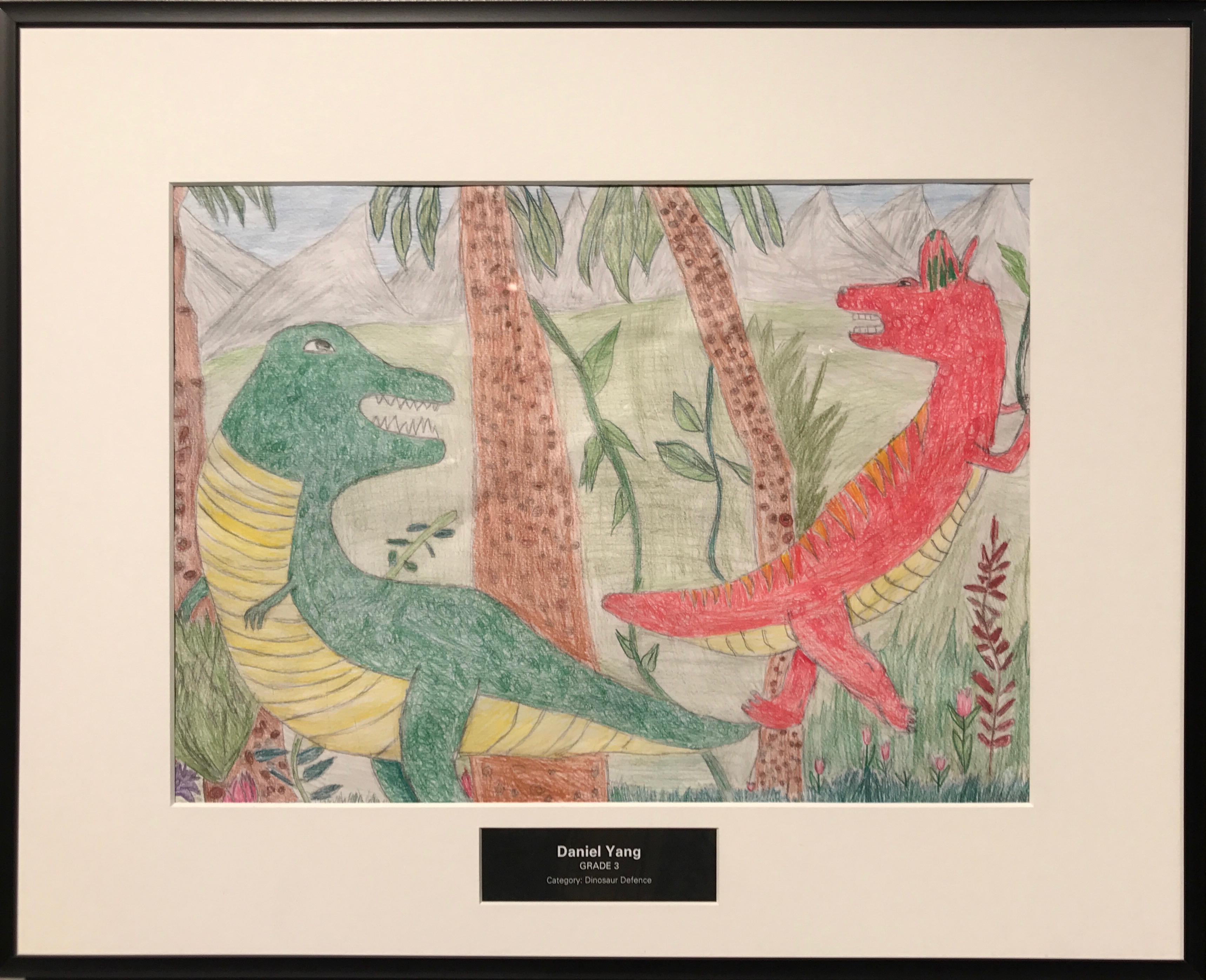
This was done by Daniel Yang.
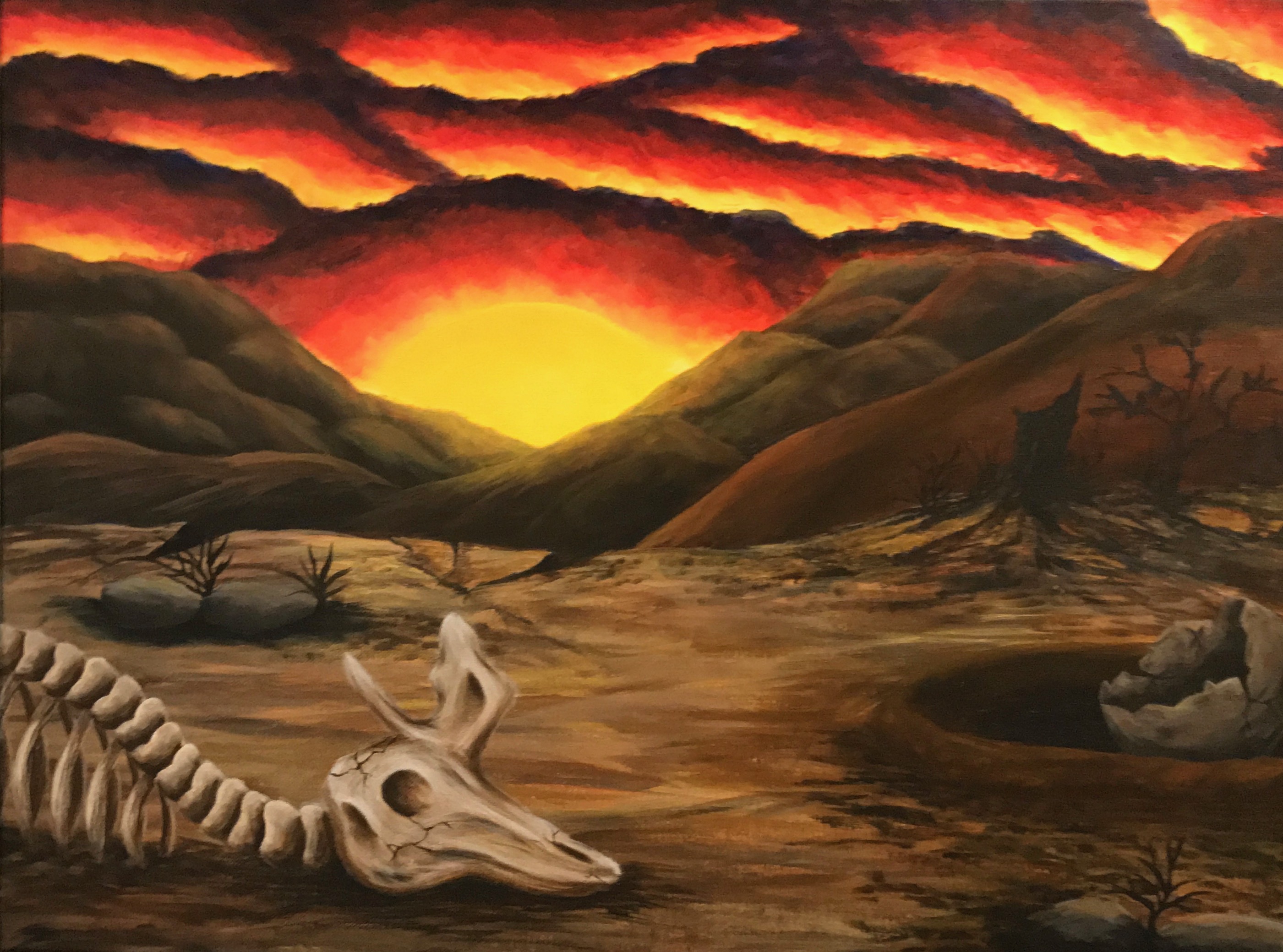
I feel bad that I didn’t get this artist’s name, but it is quite a work of art.
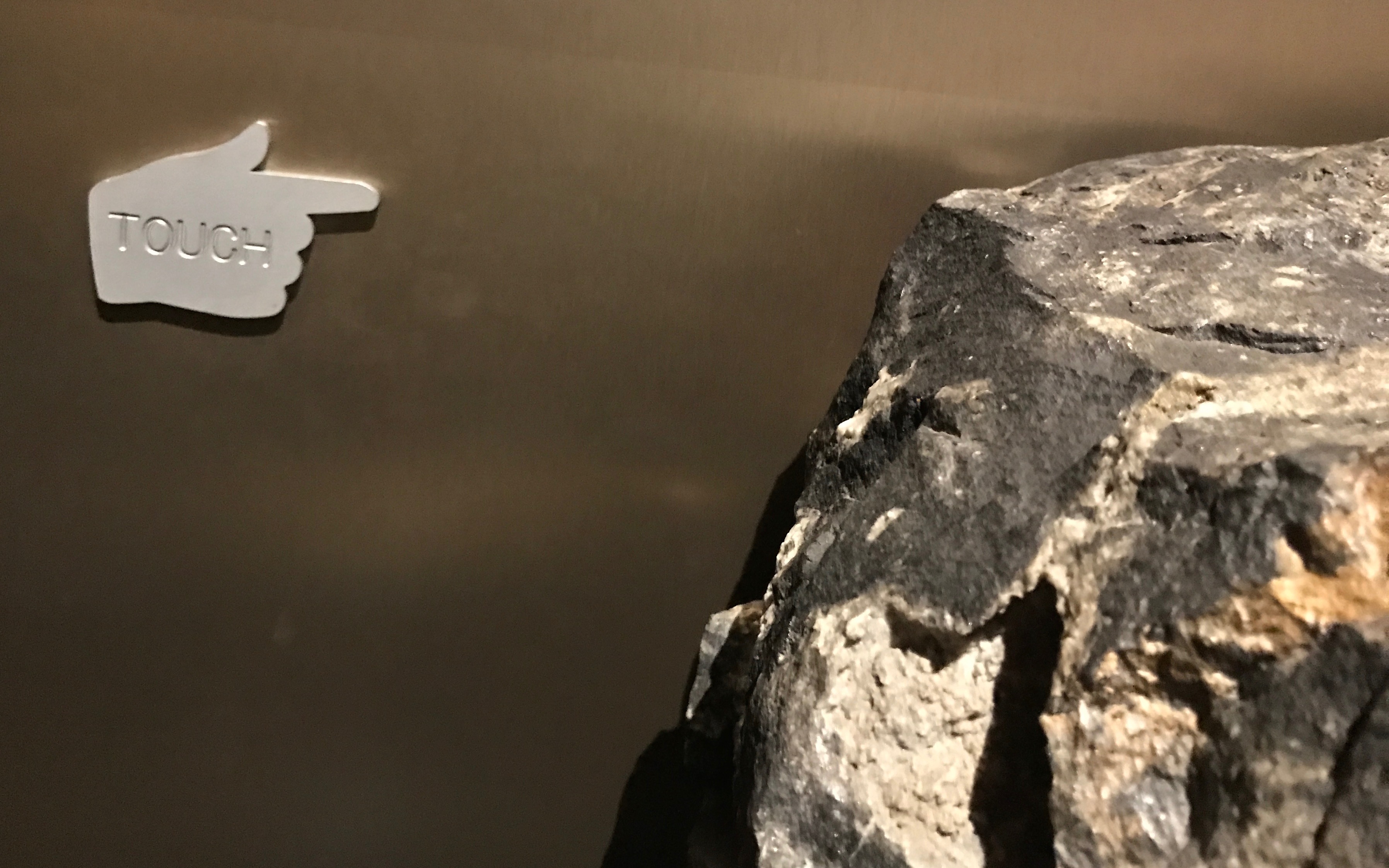
I always love it when a museum invites visitors to touch things.
This rock was labeled “Billion-Dollar Rock.” The first major oil discovery in Alberta occurred in Devonian-aged rocks deep underground near Leduc in 1947. The liquified remains of billions of ancient marine organisms were trapped in porous rocks like this one, after being buried by many layers of sediments throughout millions of years.
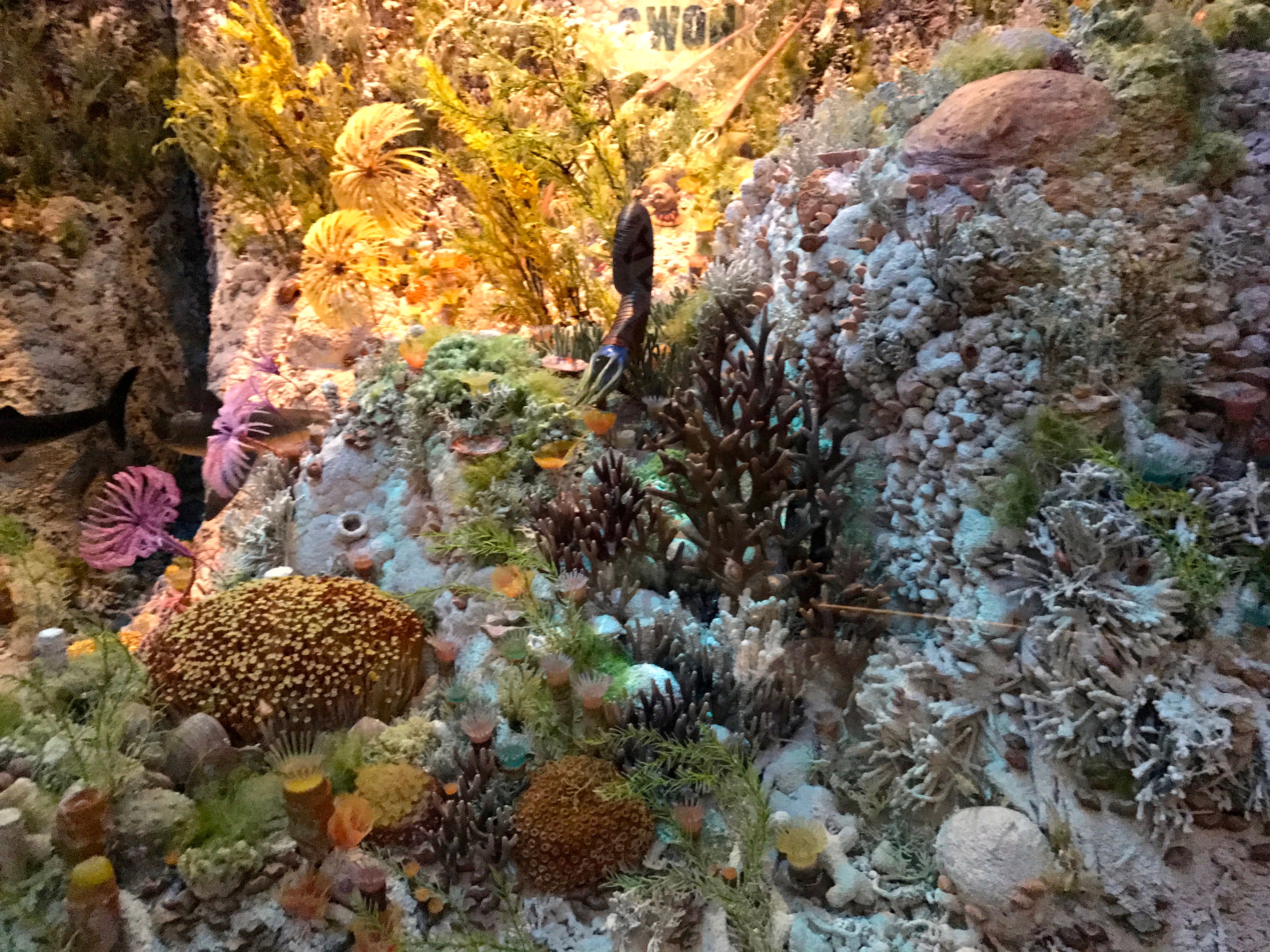
This is a model of the large reefs that were buried by the multitudinous layers of sediment and are now 2,500 metres – or more than 8,000 feet – below the Alberta plains. If I understand correctly, they became the petroleum that is fueling the Alberta economy.
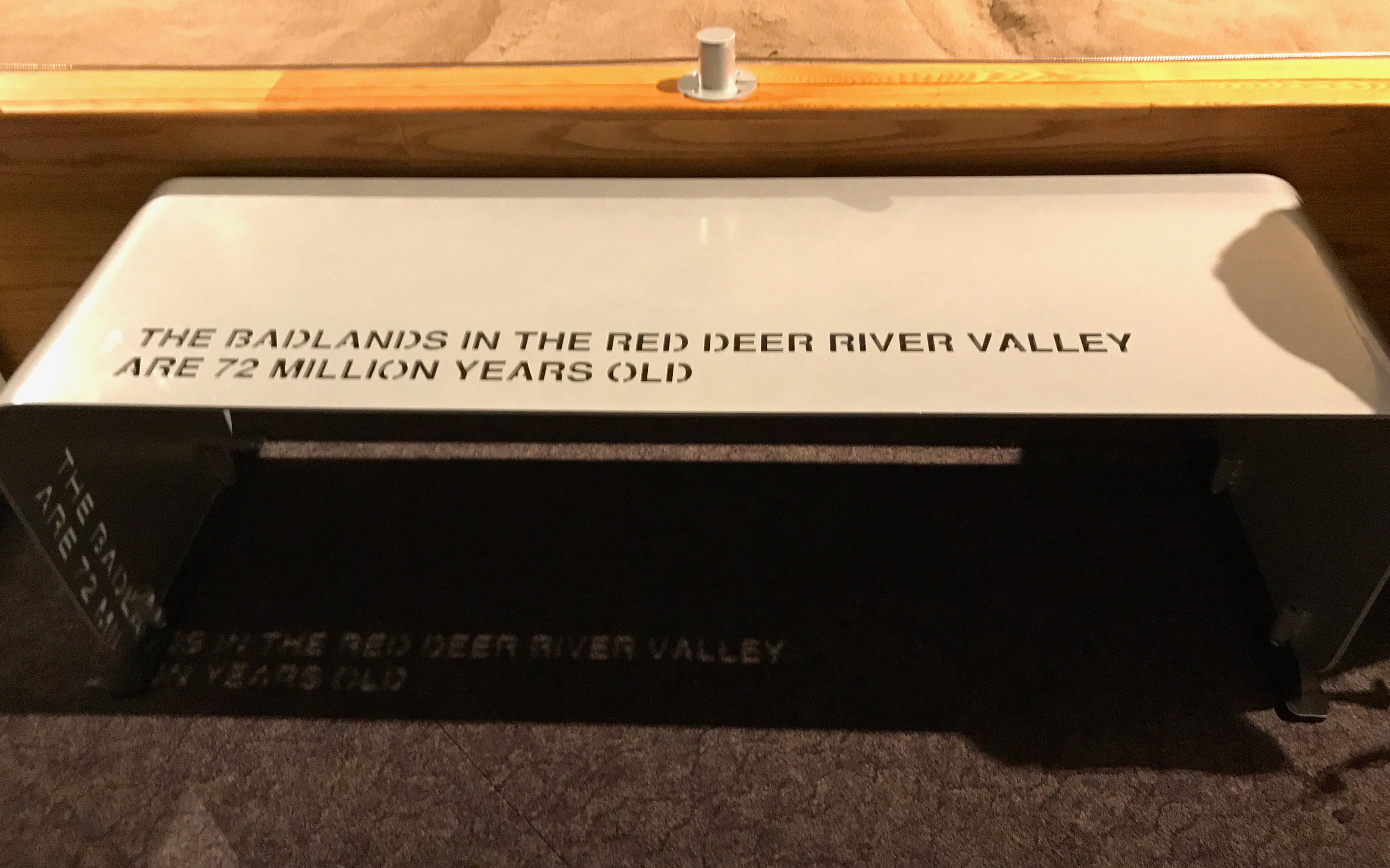
I also love it when people figure out innovative was to share information.
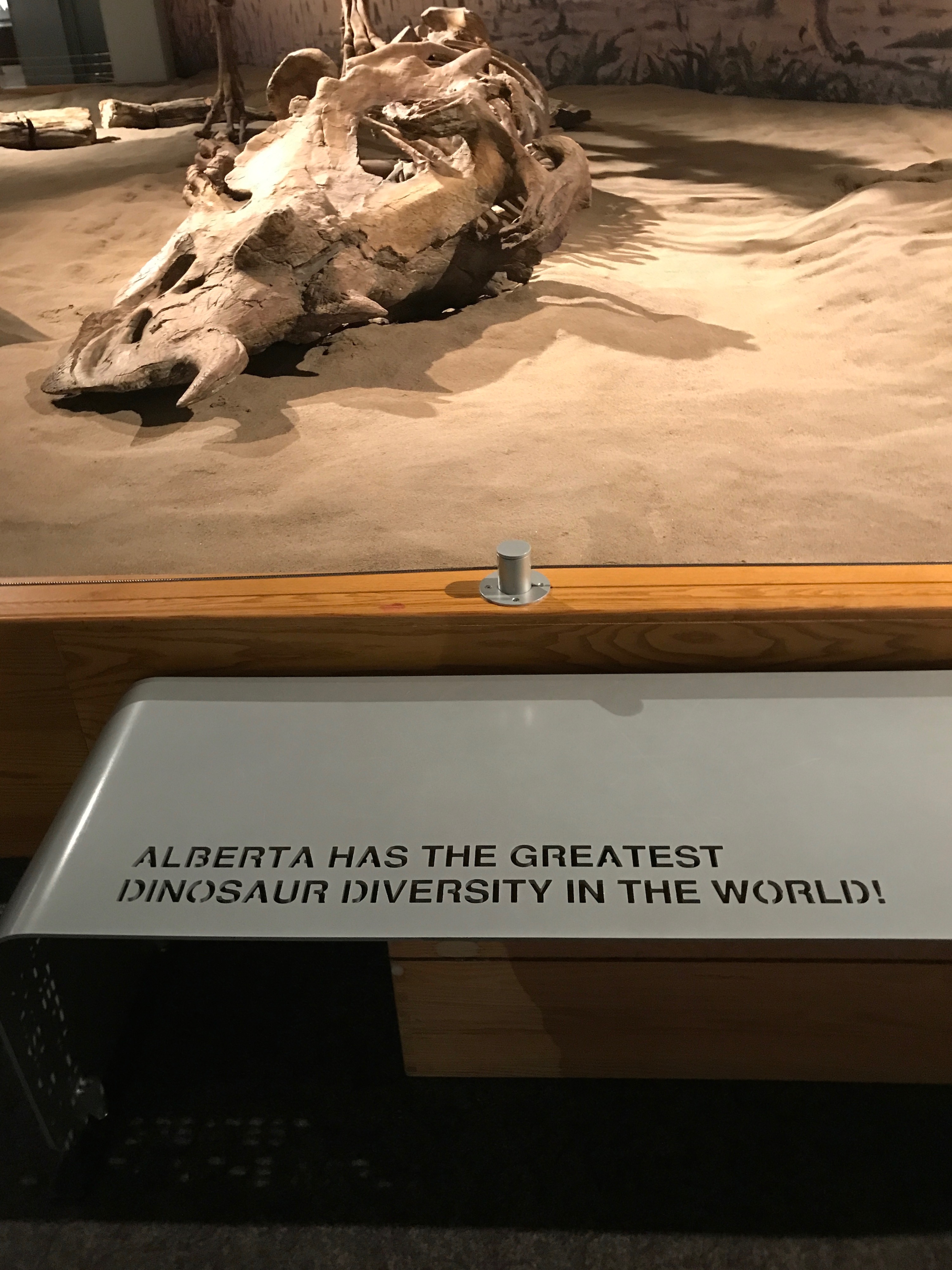
I don’t believe I’ve ever seen benches with the information cut through the metal.
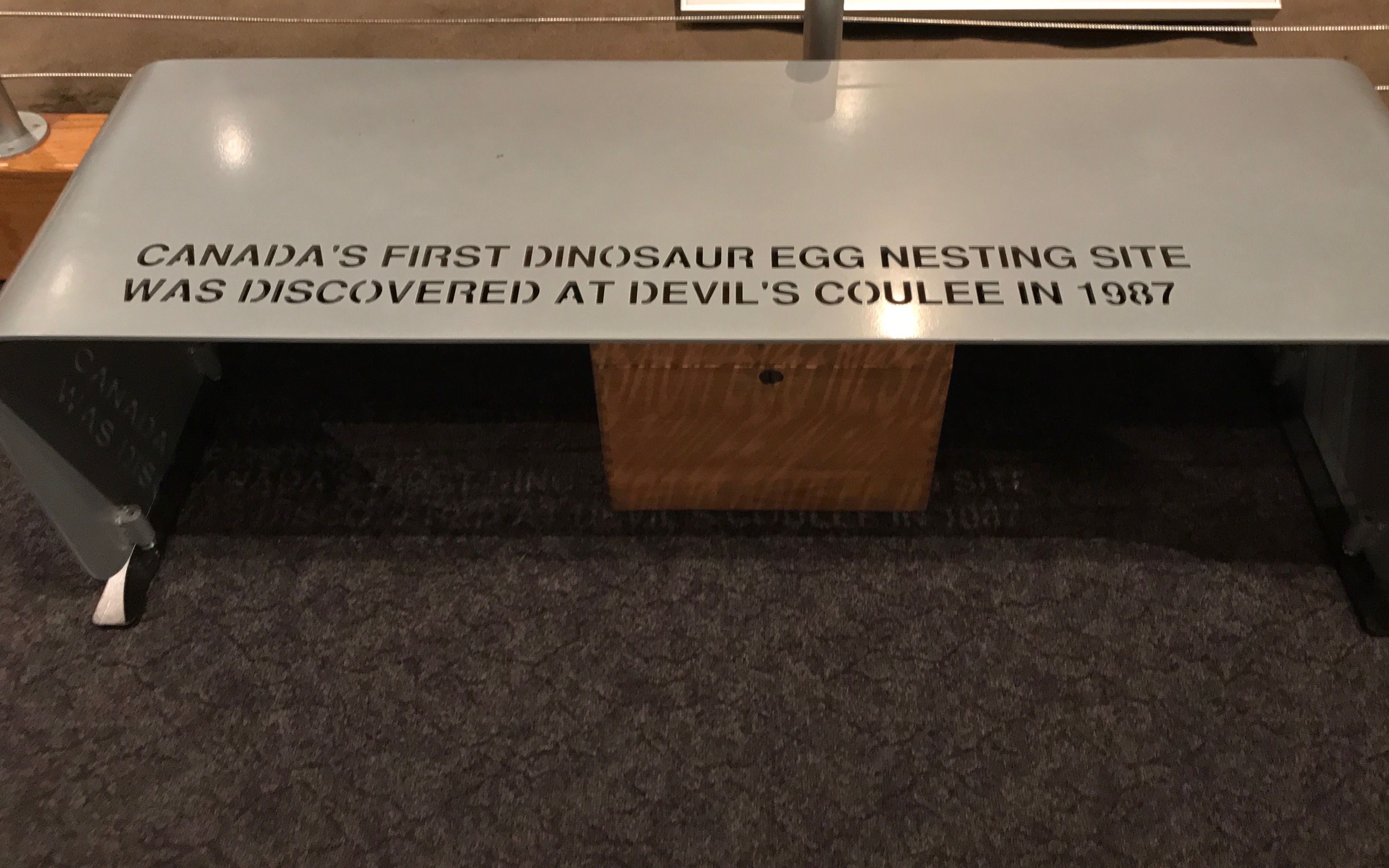
Just when you are thinking, “I can’t look at one more fossil!” you see these benches. It’s kind of like a palate cleanser between courses at a fancy meal.
After walking around and around, you start to wonder where you are in the museum.
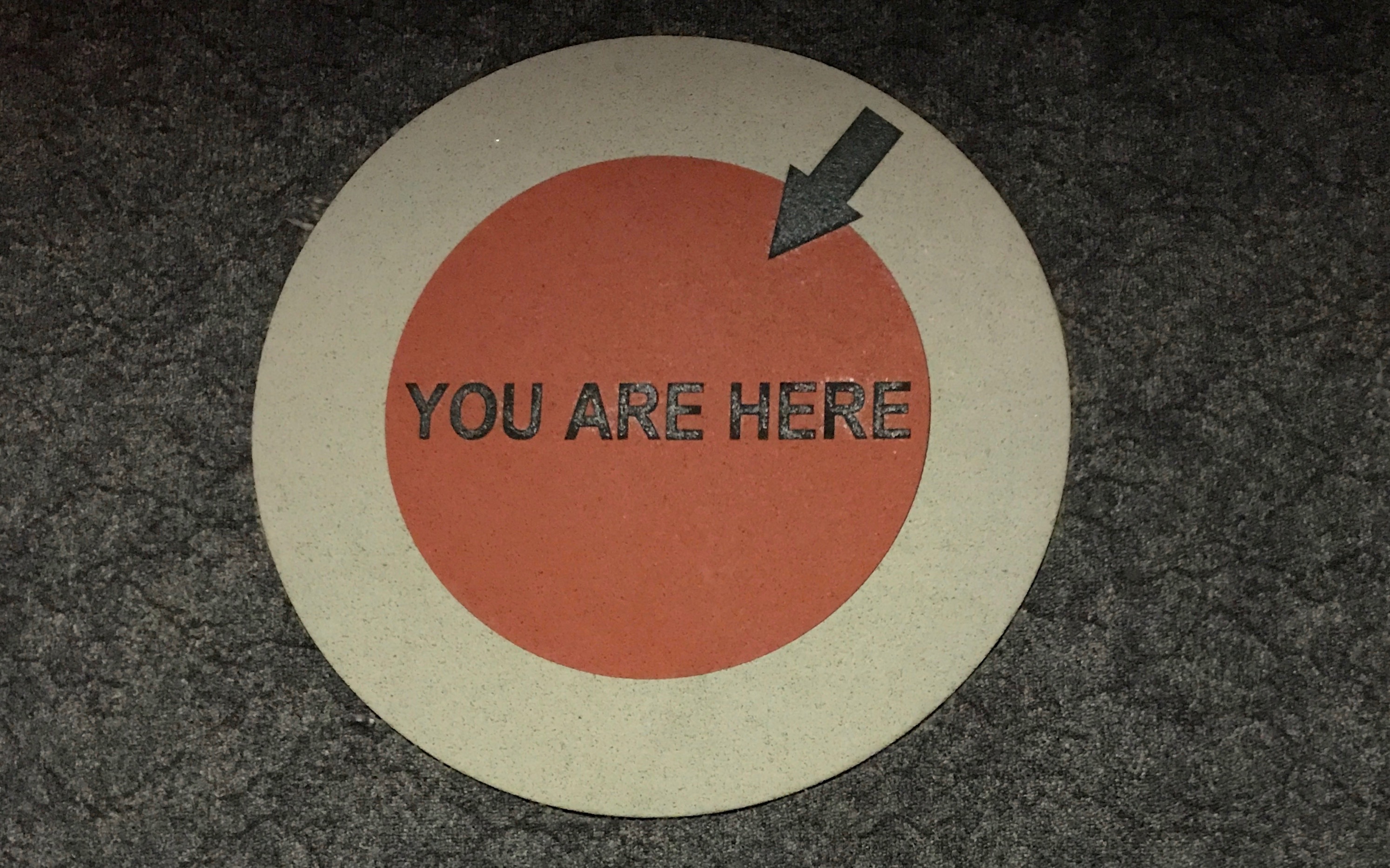
Good thing they have a sign that lets you know.
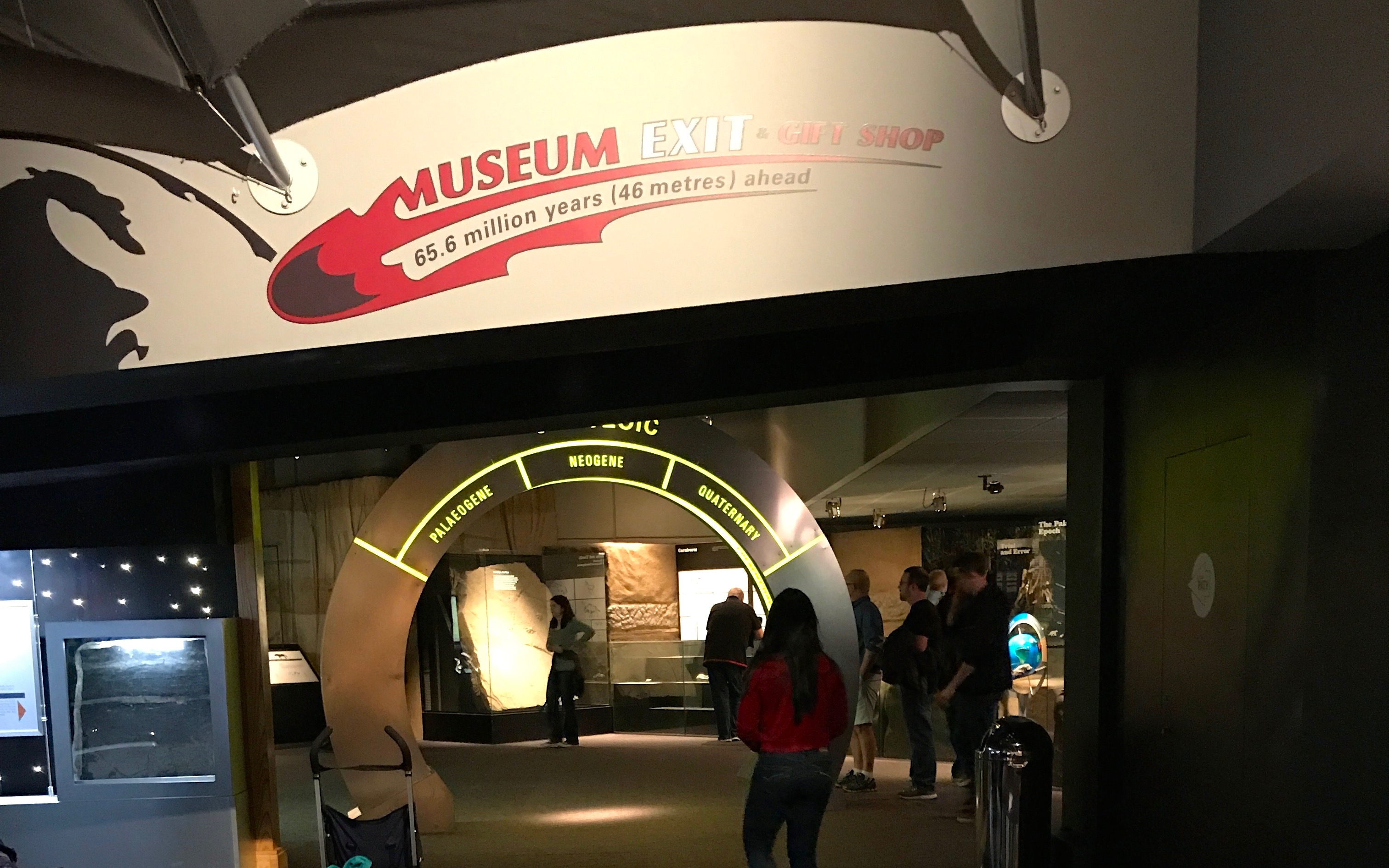
As usual, you exit through the gift shop.
Next stop: Medicine Hat.