As I was saying, there are two sides to Zion: the drive-through side and the shuttle bus side. Today it was time for the shuttle bus side. My plan was to do the Riverside Walk.
I parked at the first lot I saw in Springdale, the town just outside the park. The bus came along just after I got out of the truck, and I was at Zion in no time at all. I walked through the gate, brandished my America the Beautiful pass (along with my drivers license, so they would know it was me) and headed to the park shuttle.
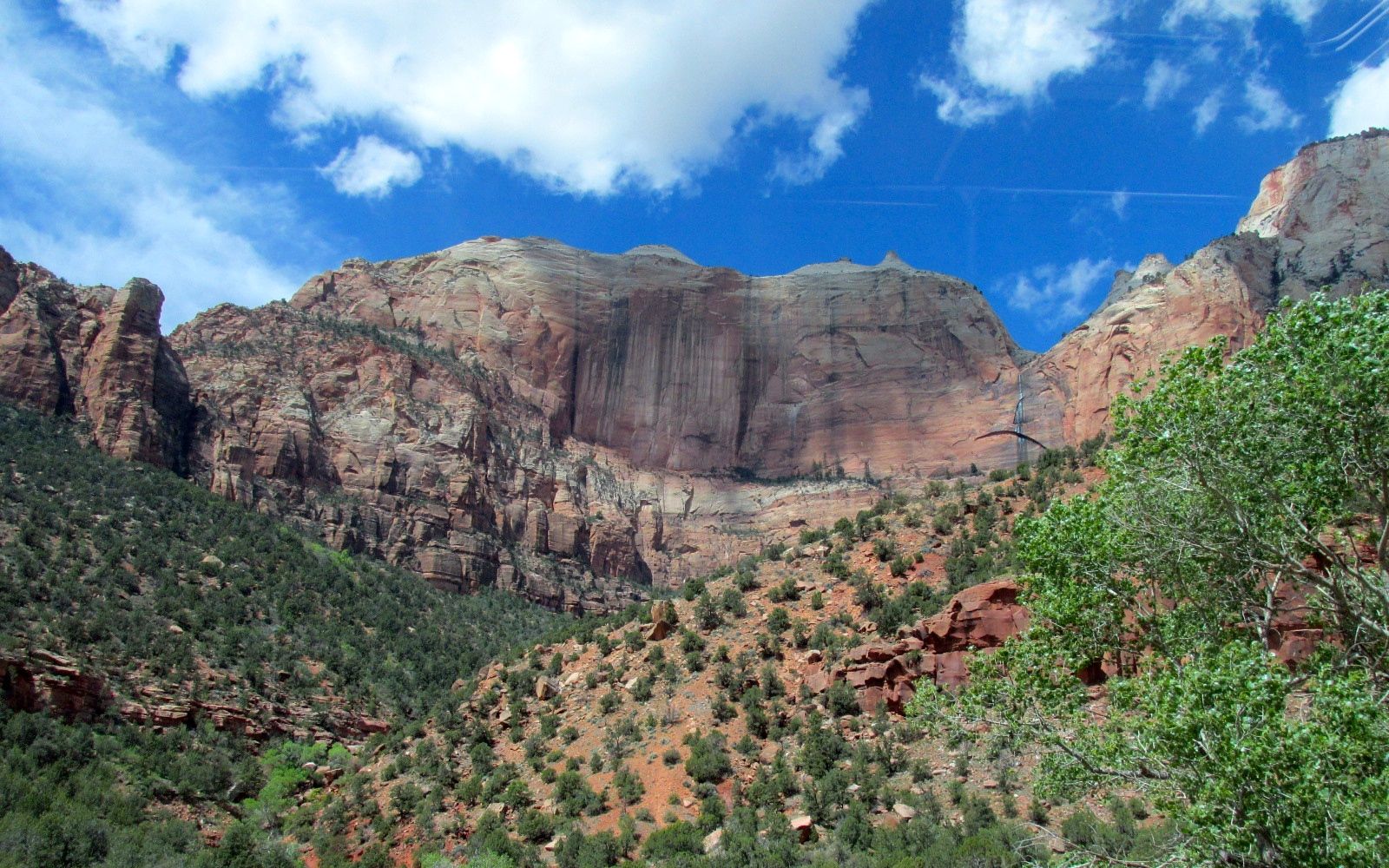
The views along the way were spectacular.
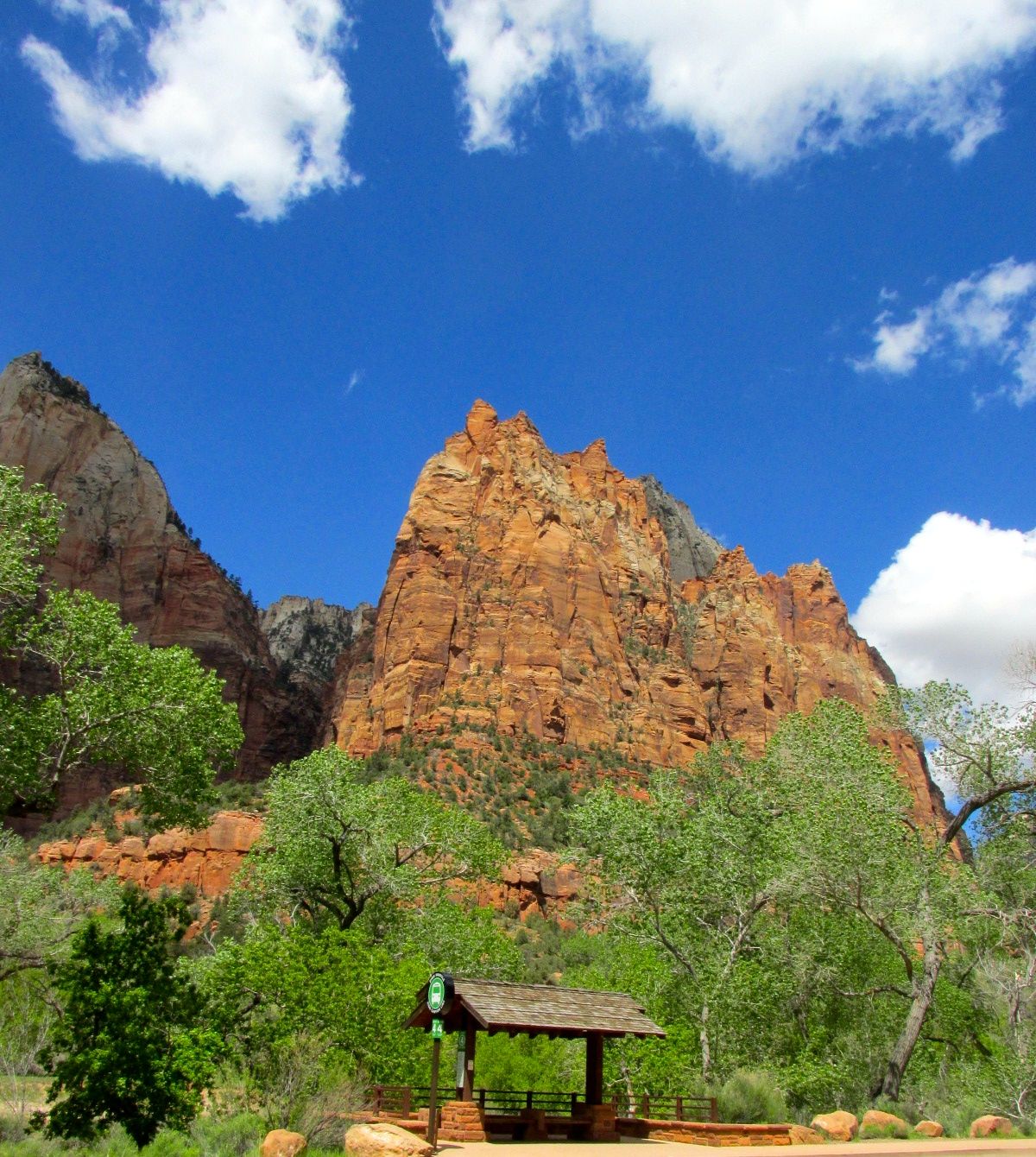
After a short ride, I arrived at the last stop, Temple of Sinawava. According to my research – and the recording that played on the ride up – Sinawava is the Paiute’s coyote spirit or god. The Temple of Sinawava is an amphitheater. Judging by what I have seen here as well as in other places, an amphitheater is a canyon that has widened out to a bowl shape.
I took advantage of the restrooms – on of the first things I learned on my full time travel is that one should never pass up the opportunity to use the restroom. Then I headed over to the trail.
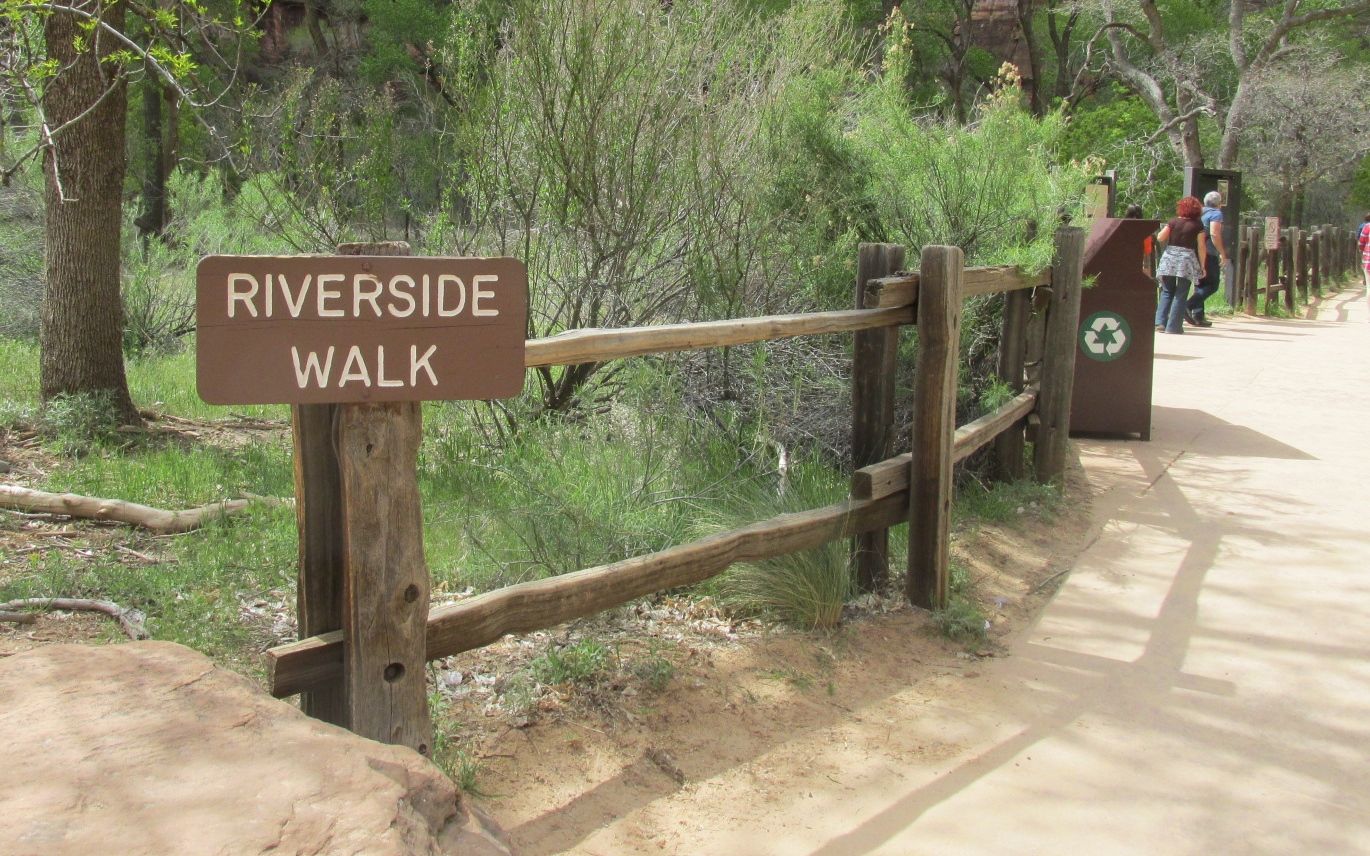
Unfortunately, I would have to satisfy myself with the Riverside Walk, and skip hiking through the icy cold water of the North Fork of the Virgin River. The Narrows was closed.
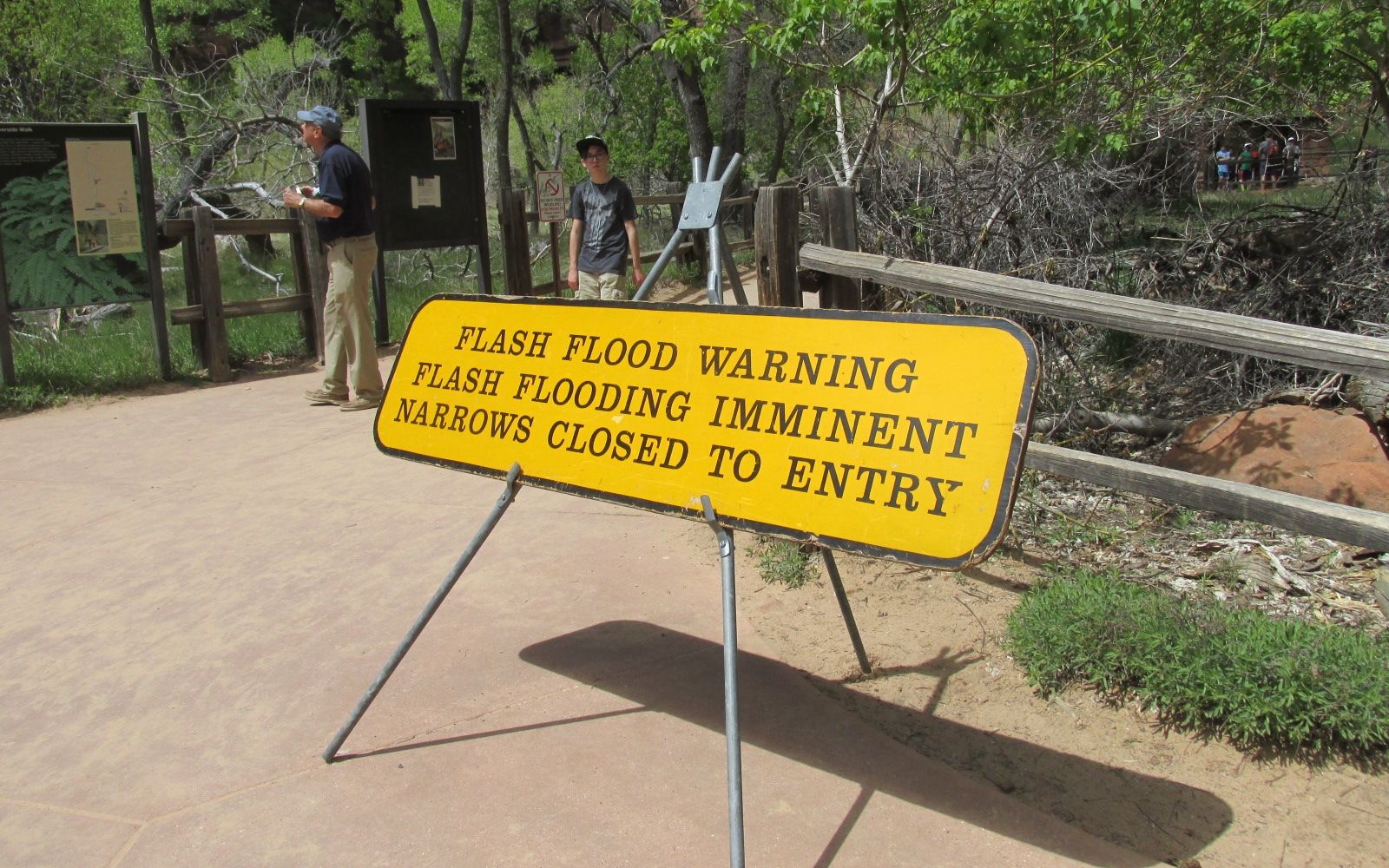
The water was rushing along at a good pace. Closing the Narrows seemed wise. At some points, the river takes up the whole canyon, so you are basically wading or swimming as you go. At the narrowest points, according to the literature, the canyon is 20-30 feet wide. That would be a fearsome place to get caught during a flash flood!
There are a number of different habitats along the river. I was surprised to find a swamp.
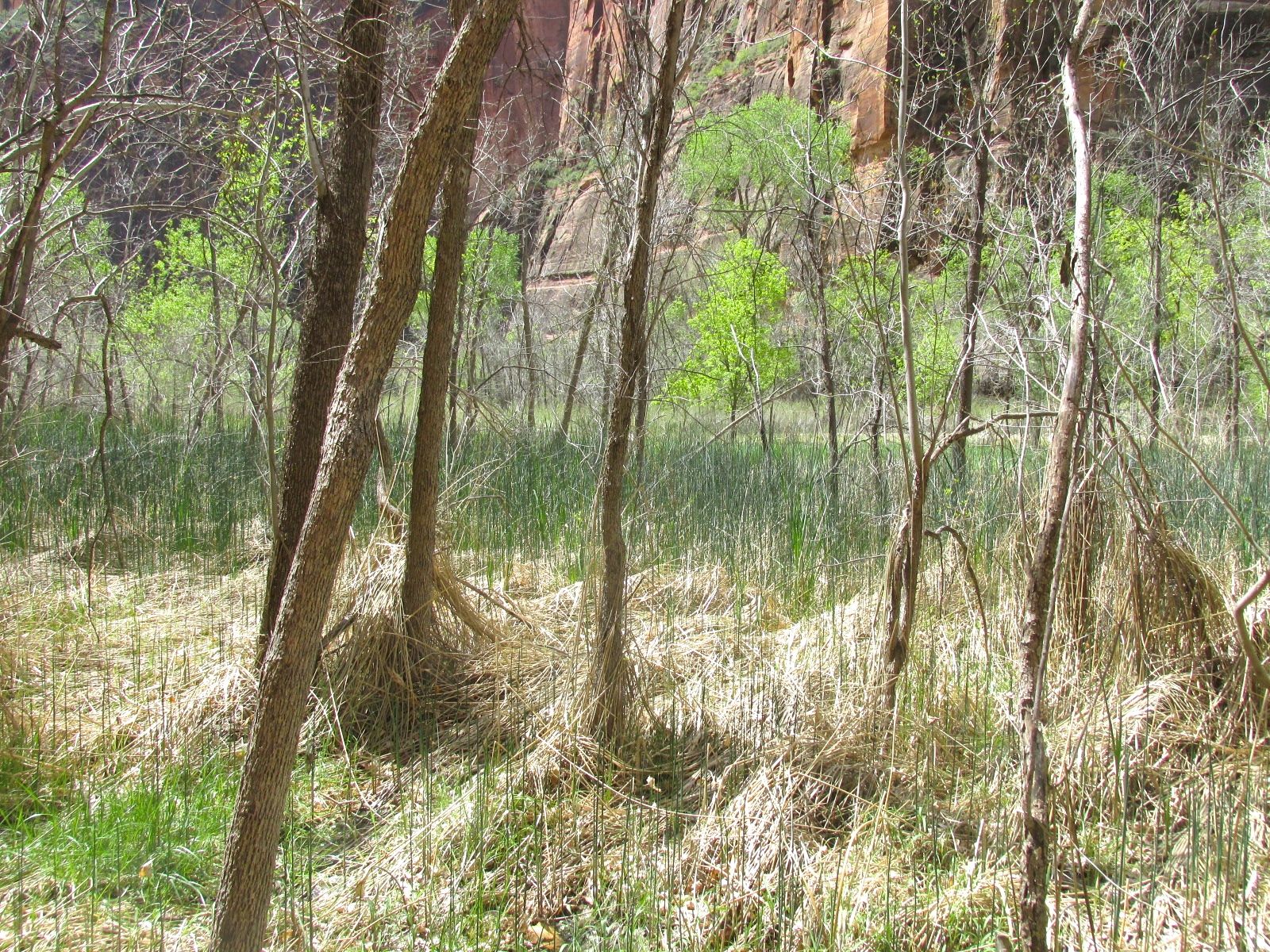
The information I read spoke of “hanging gardens”.
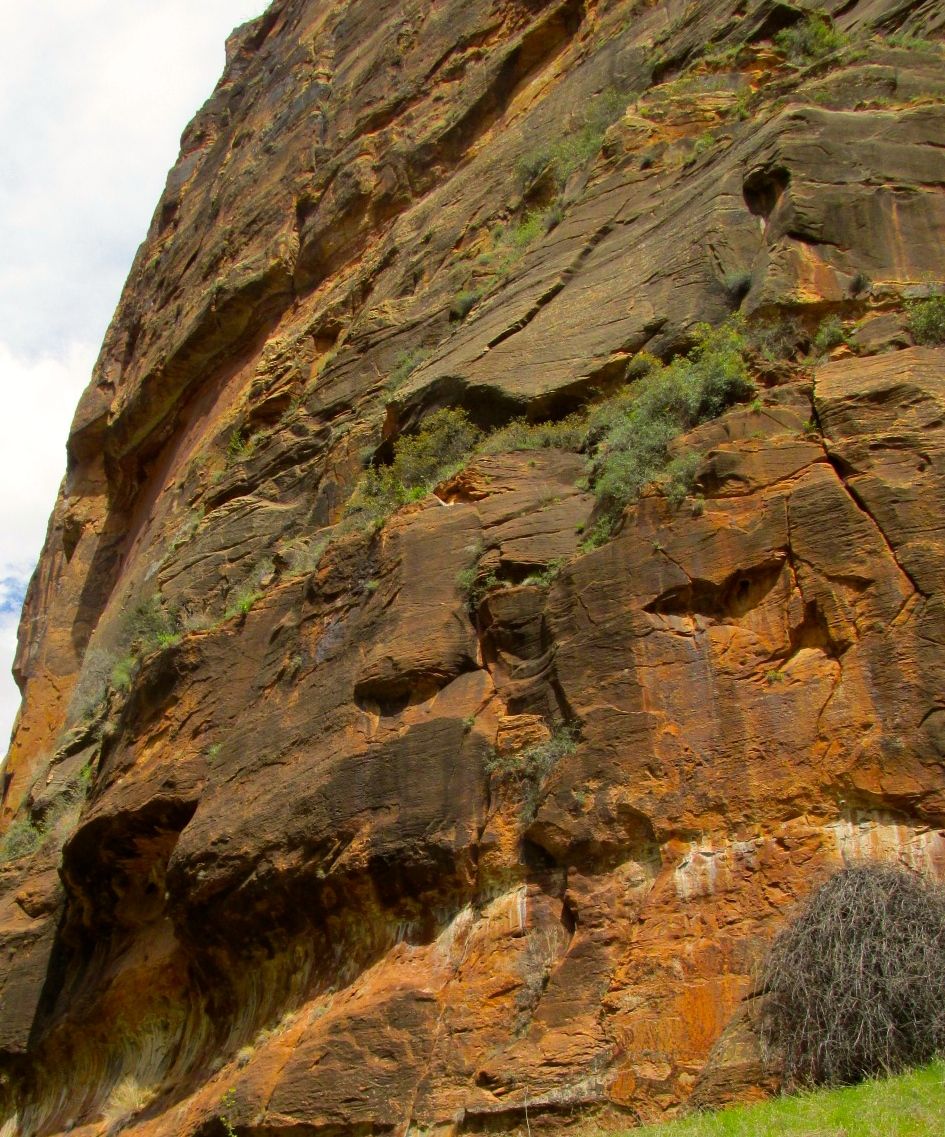
I think these must be some of them, however I would probably just call them “plants growing in cracks in the rocks.”
Speaking of cracks in the rocks, I guess there is always danger of falling rocks when you are dealing with a cliff.

Look out below!

It looks like those rocks came from up there.
I did some research, and the mighty elk is Utah’s state animal. However, after my hike, I think that they should consider transferring that honor to the squirrel.
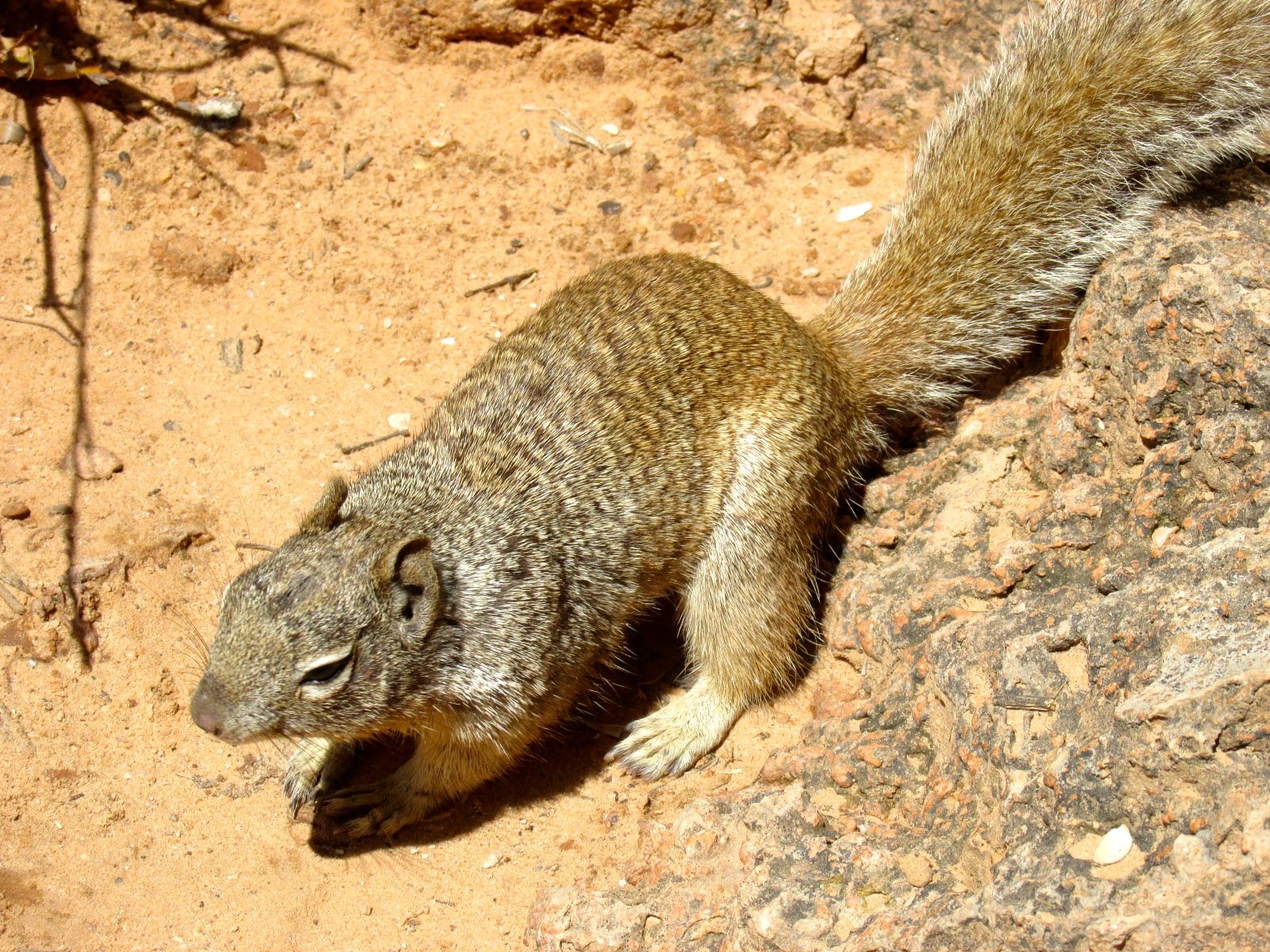
In spite of hefty fines for feeding the wildlife, the squirrels must have had enough success with begging that they have no fear of people. All along the trail, people stopped to take pictures of them. They were quite engaging.
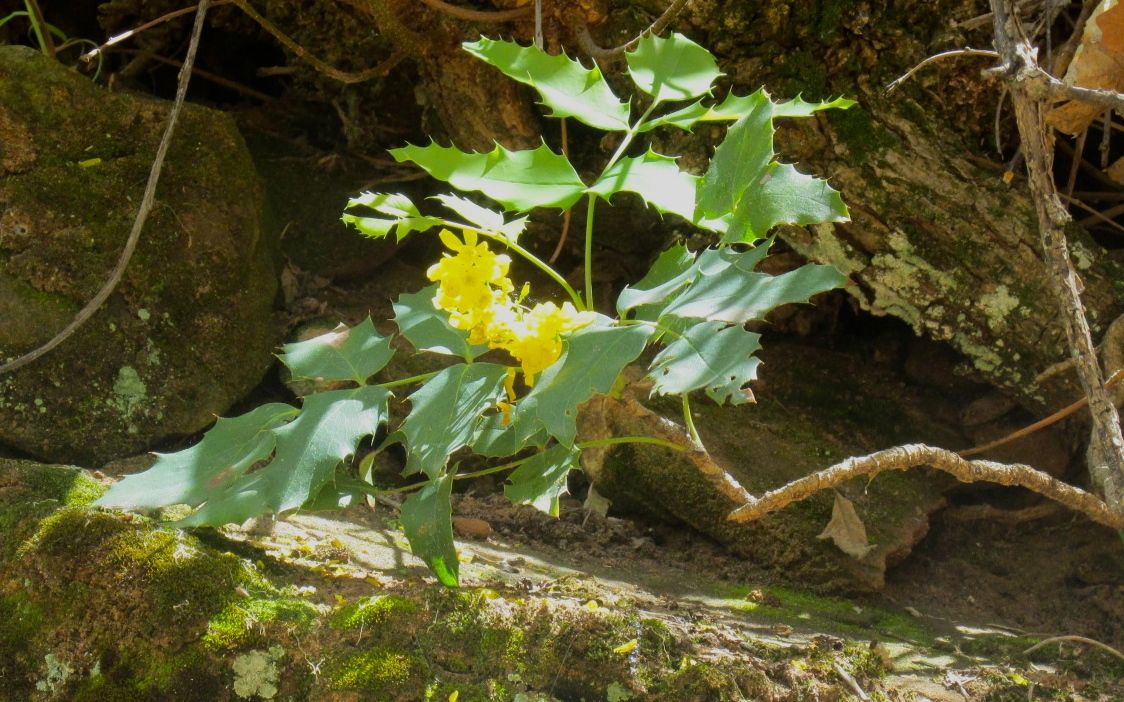
There is so much to look at. I enjoyed the various plants. It’s springtime, and many of them are in bloom.
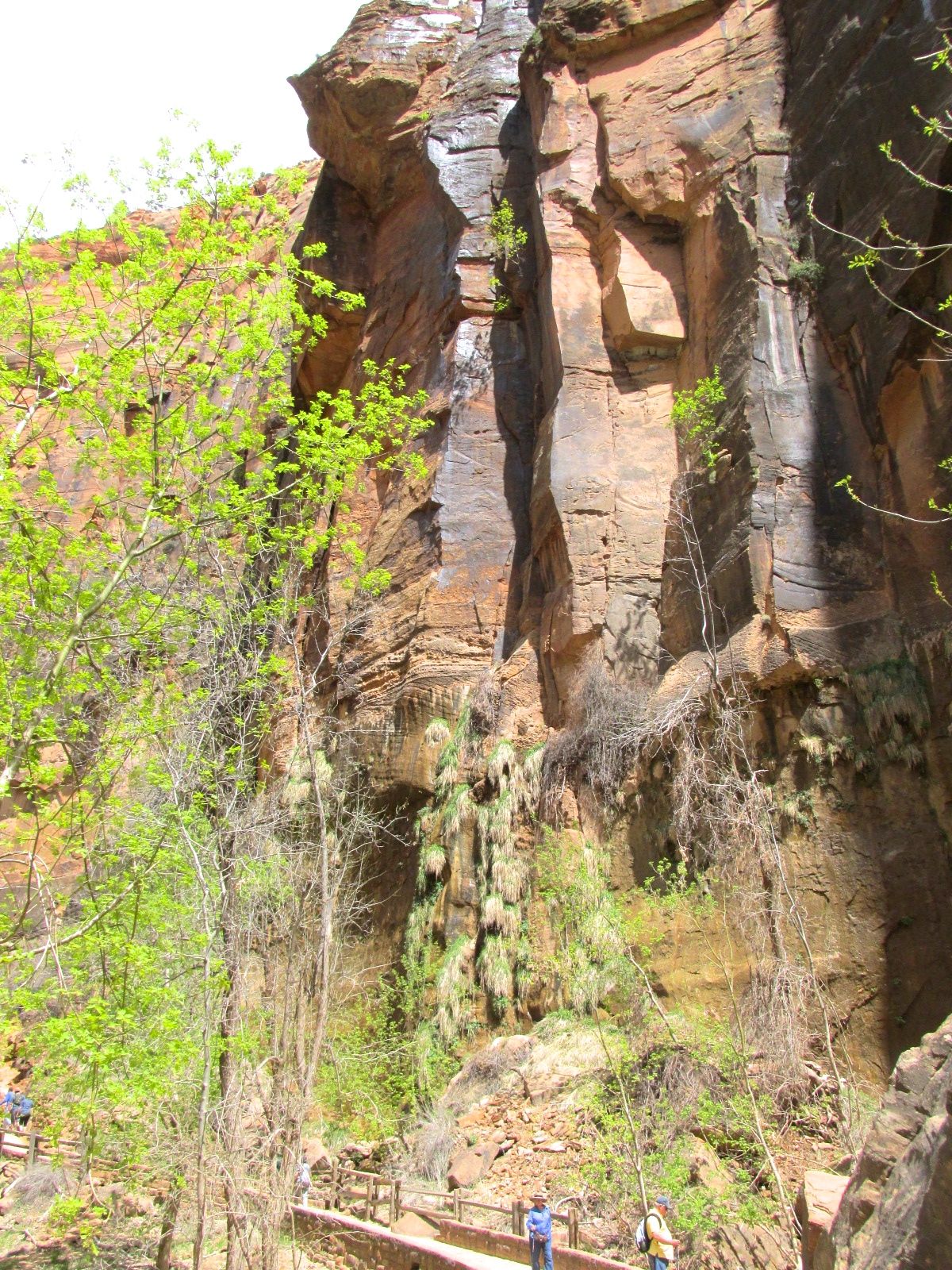
As I continued down the Walk, I noticed that the sides of the canyon seemed to be getting taller and more vertical.
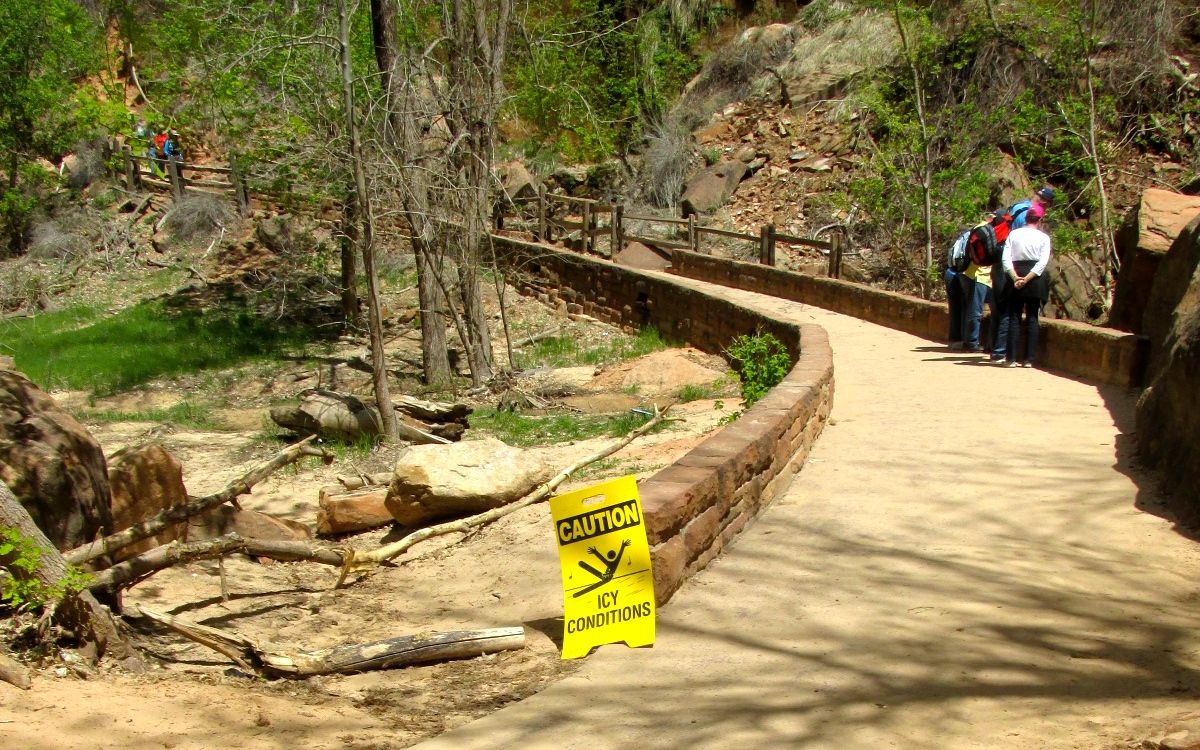
Of course, “Safety first” is the motto – but I don’t thing there was much chance of icy conditions on the day I visited. It was very pleasant. Nonetheless, I did keep an eye out for the ice.
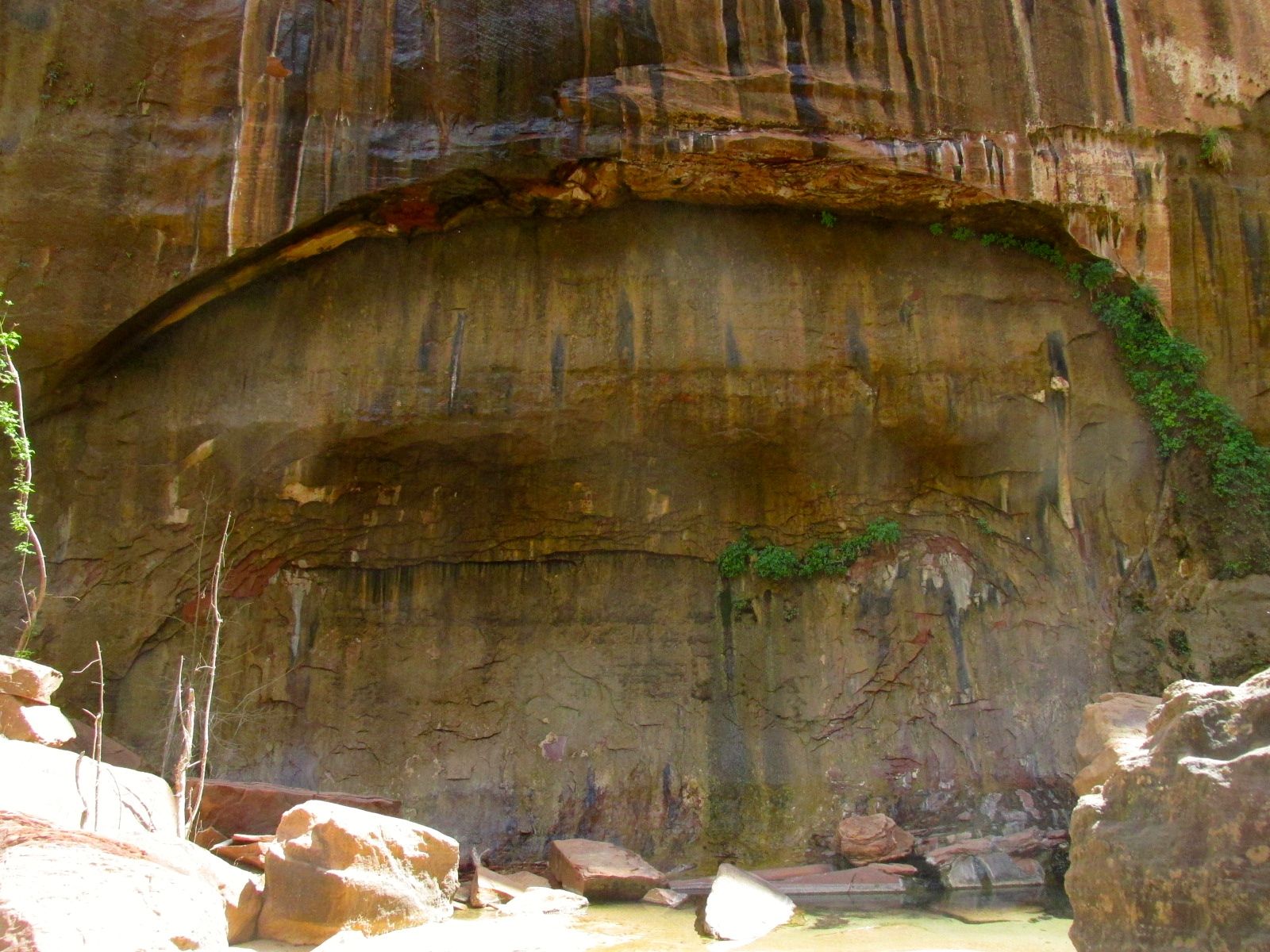
Ice is an important player in shaping the rocks. Here we have what Matthew told me was a blind arch. You can see the arch shape forming in the side of the canyon as the rocks break away due to the freeze/thaw cycle. If this happened in a narrow enough rock, you would eventually get an arch that went all the way through. In this case, I think what would happen is that the narrow canyon would widen into an amphitheater. I’m not a geologist, but I have my opinions!
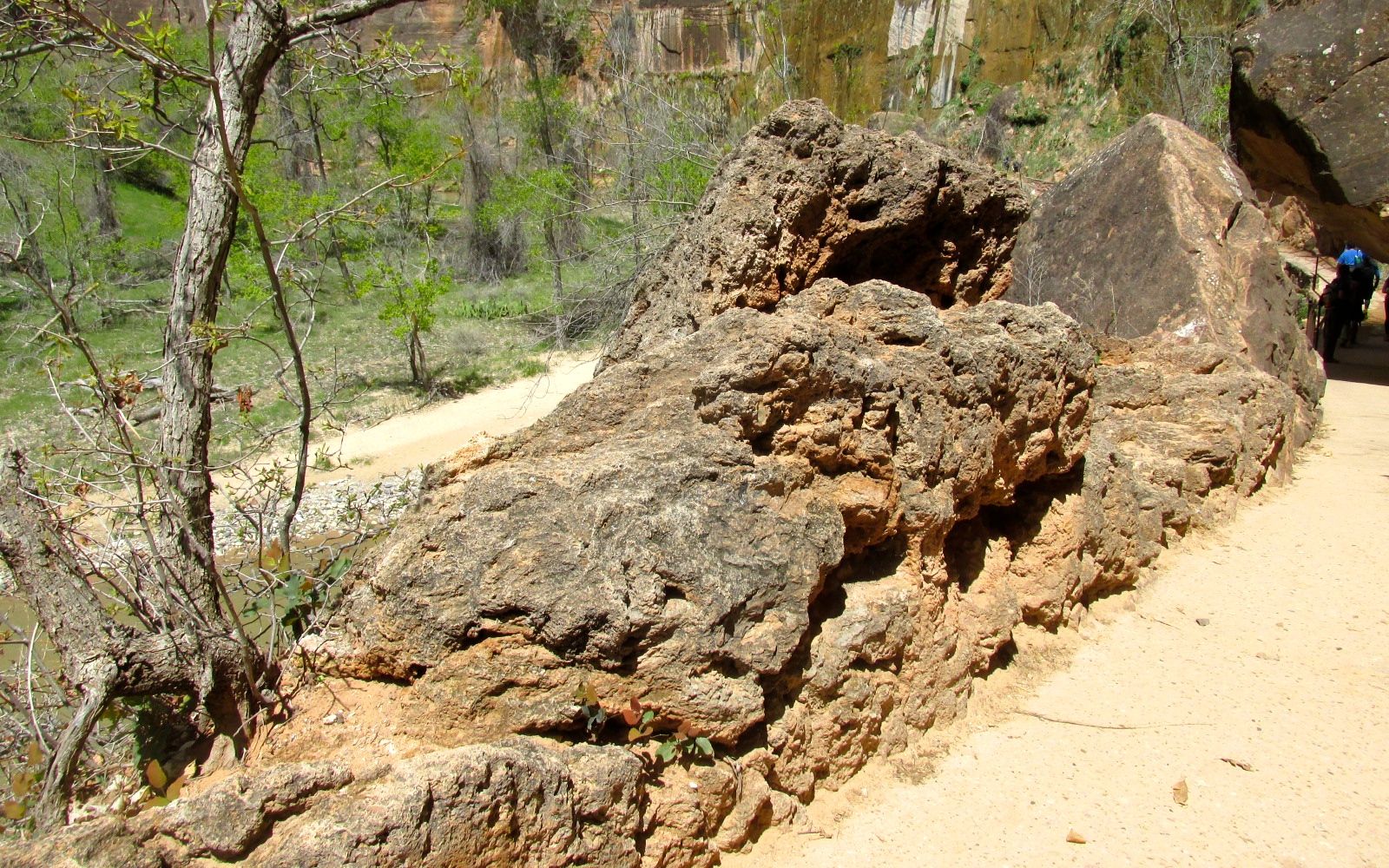
In my strictly non-professional opinion, I thought that these rocks looked almost volcanic. If so, I wonder how they got there?
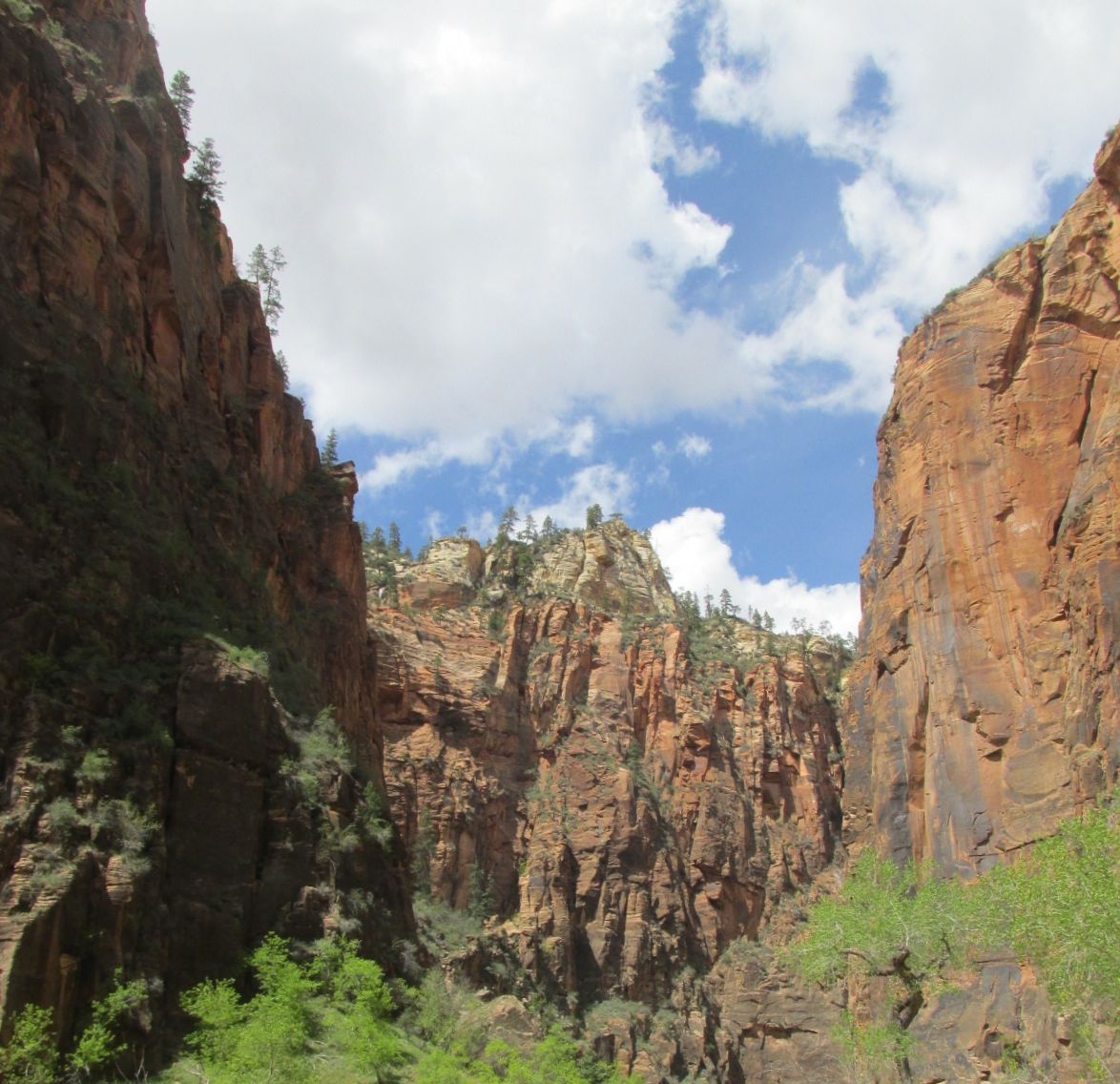
The canyon got narrower and narrower the closer I got to the end of the Riverside Walk.
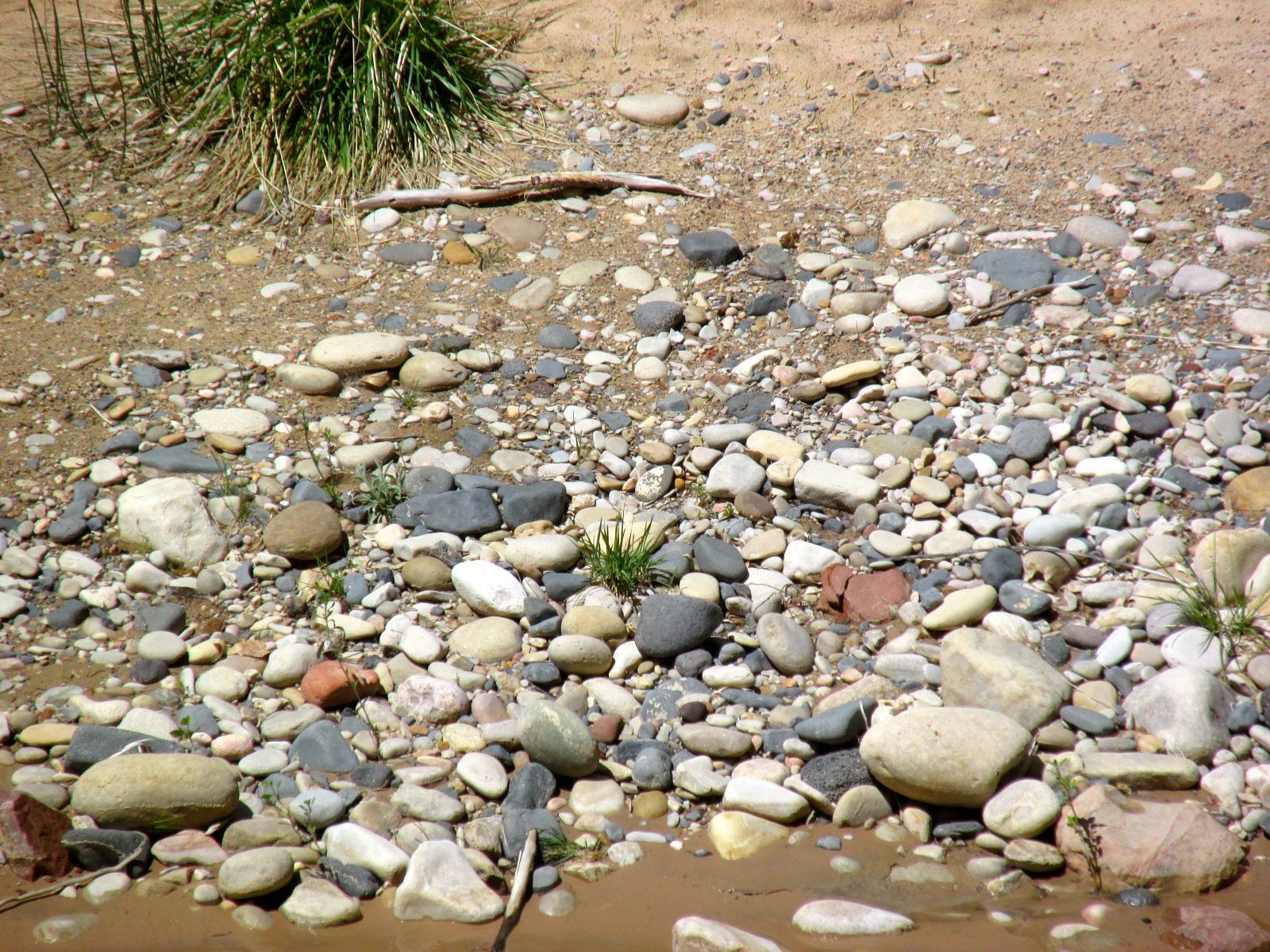
Looking down into the river, I saw the cobbles that gouged out the canyon when carried by the force of the water.
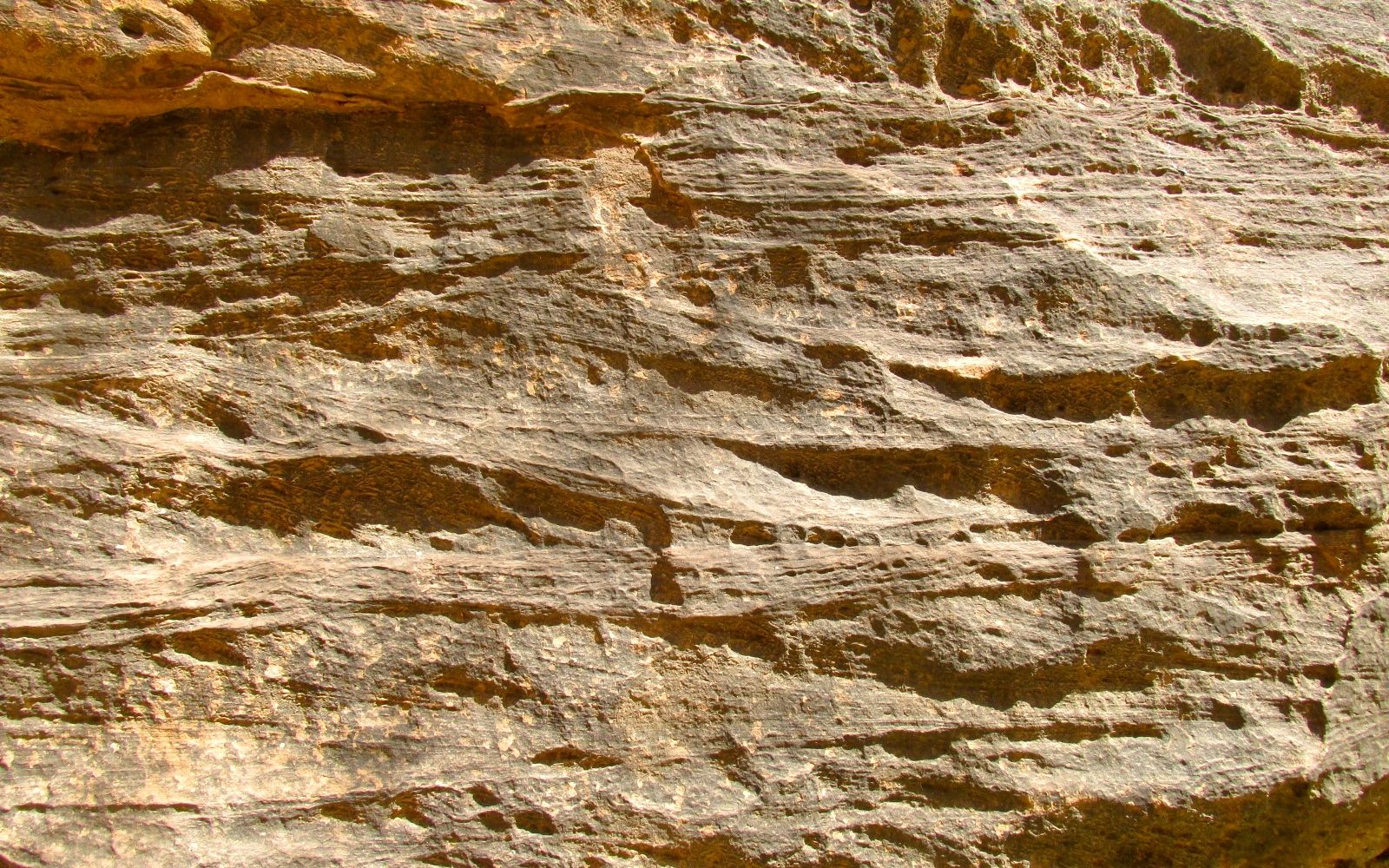
They say that you can hear the cobbles grinding against the rocks when the current is strong enough. That would be something I’d love to hear.
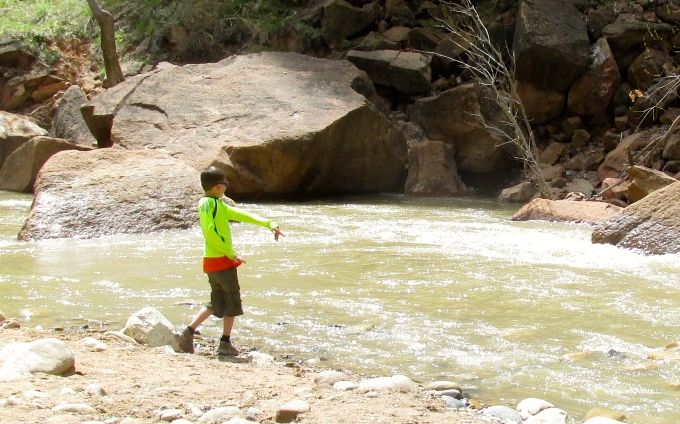
I came across this youngster throwing rocks in the river. He looked like he was having such a good time. It was fun watching him. And I really appreciated his parents for giving him the time and space to have this experience. I didn’t see any signs prohibiting that activity. Maybe I missed them. Or maybe they count on people to use their common sense.
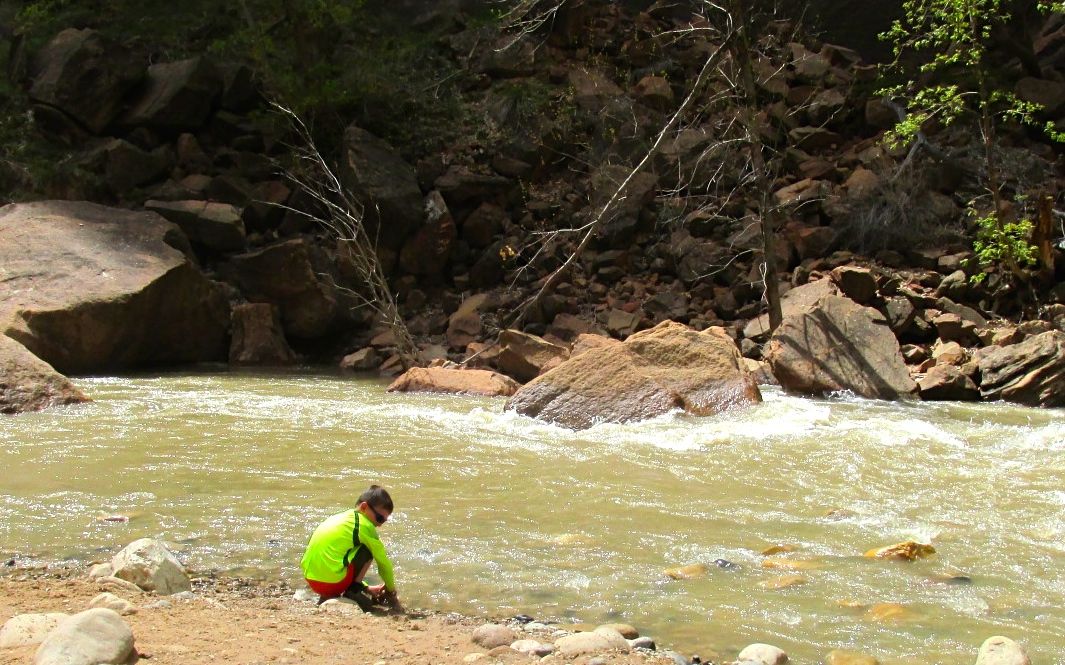
I enjoyed watching him pick out the rocks he’d throw. His parents told him that he could throw one more. He picked up a largish one and dumped in the water with a big splash. Then he rejoined his parents and the continued on the walk.
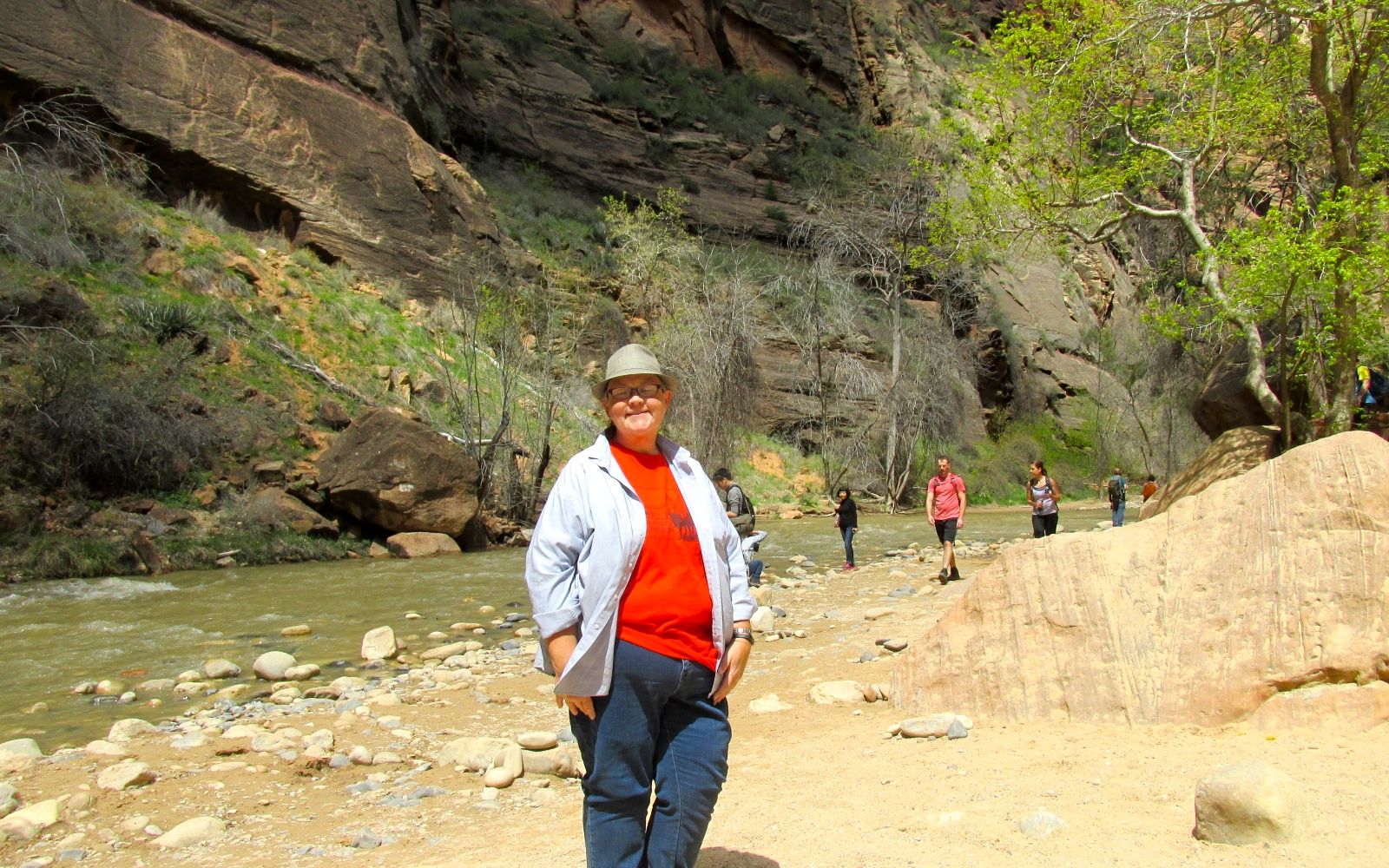
And here I am, at the end of the walk and the beginning of the Narrows. Too bad the water levels were so high. I am sure I would have done that trail, too. (NOT.)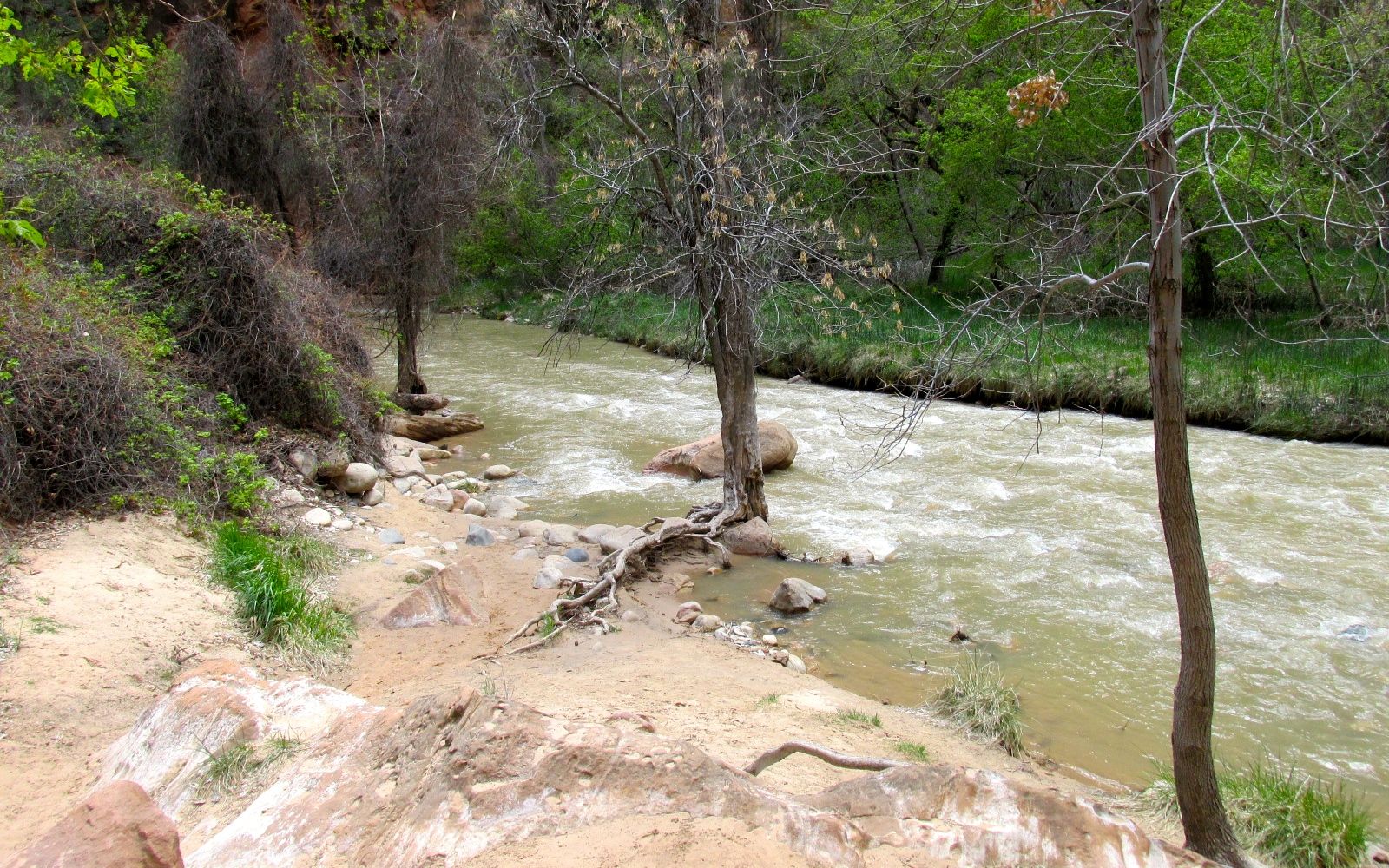
And so it was back along the river.
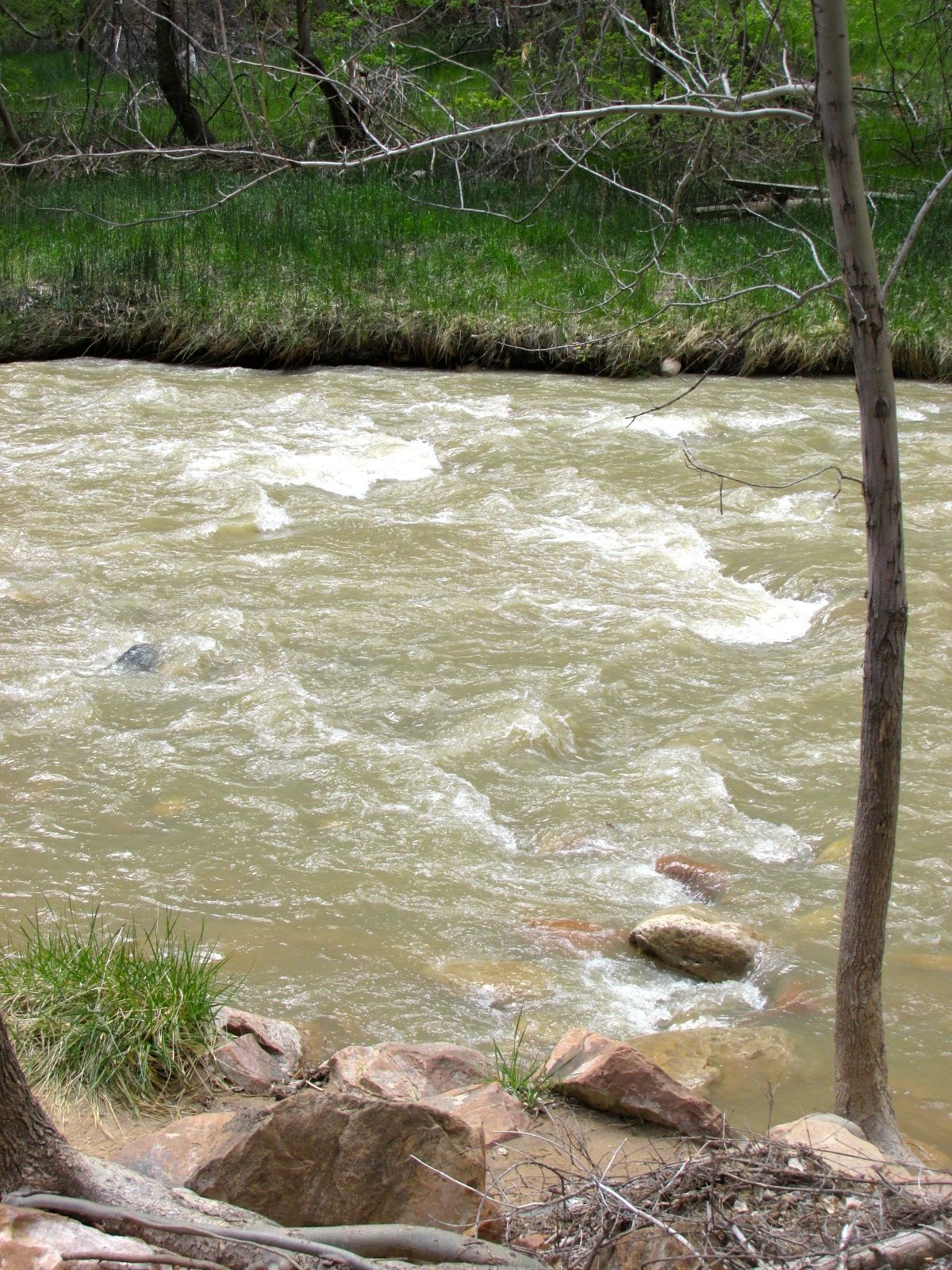
Watching the power of the water.
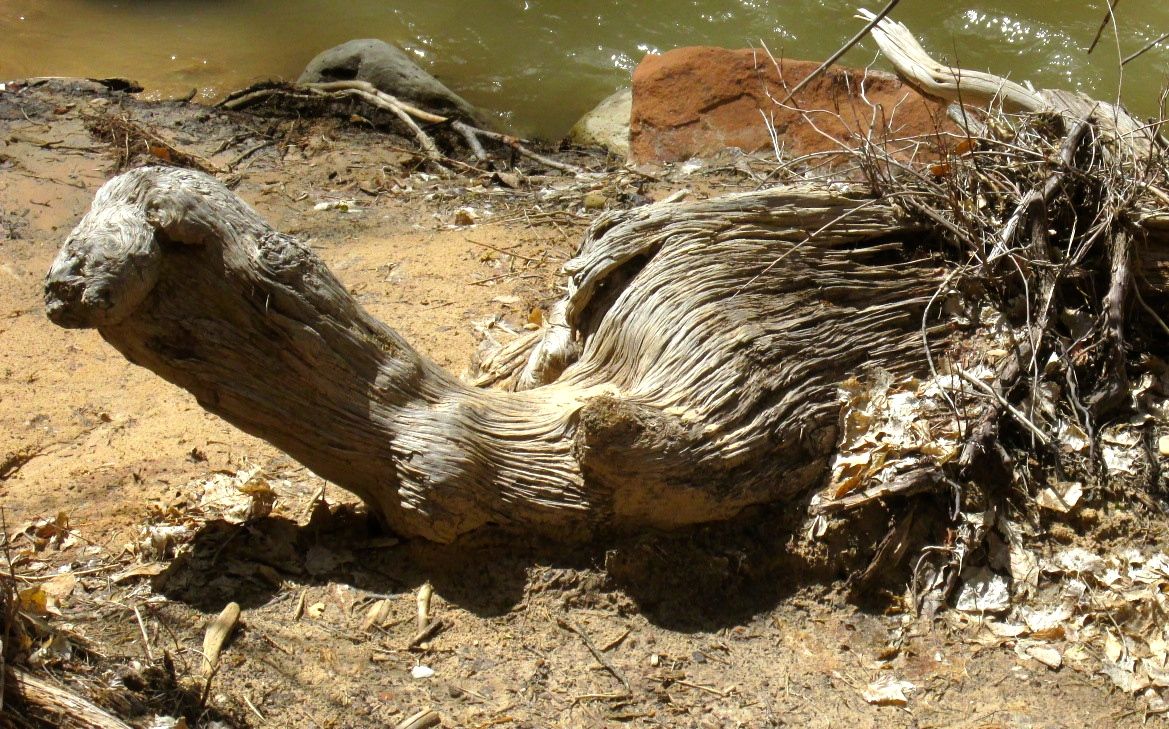
Looking at the driftwood that had been carried in the floods – how long ago?
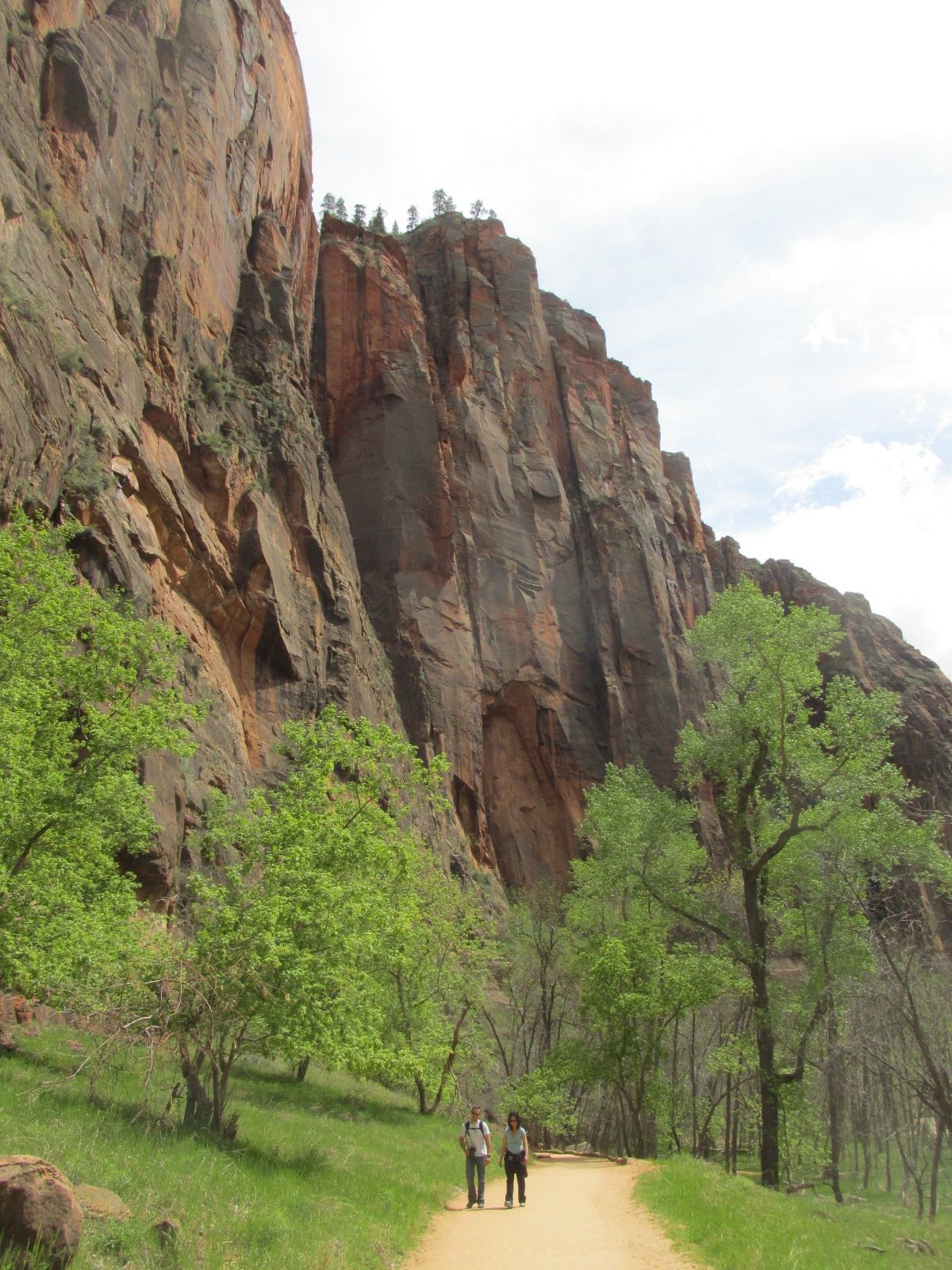
Back to the Temple of Sinawava, where I’d catch the shuttle back to the park entrance.
One more visit to the restroom, though. They encourage drinking lots of water and they even provide stations for refilling your water bottle. The Zion Spring Water tasted good!
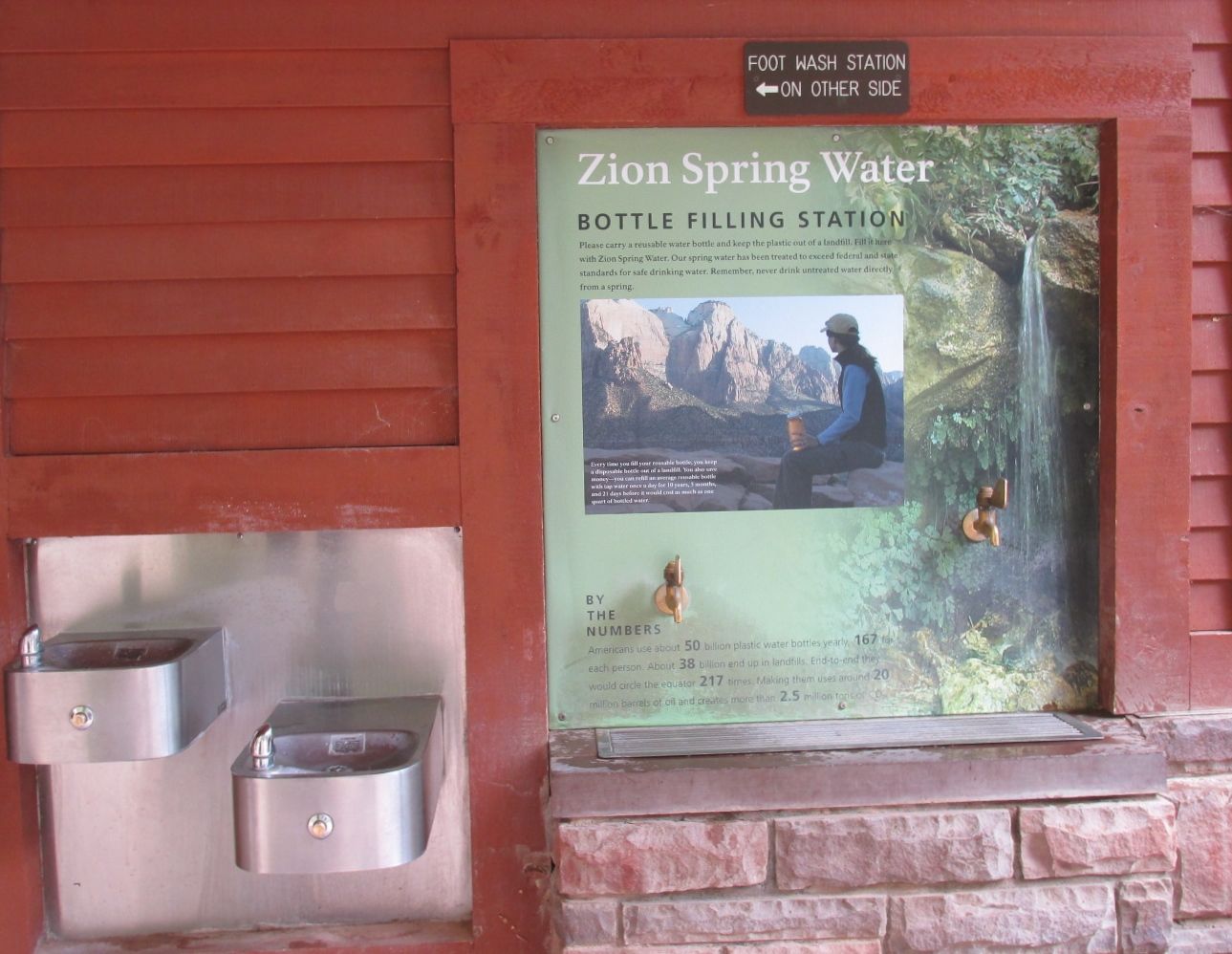
I just had to follow the arrow to see what the Foot Wash Station looked like. I had seen “fuss bads” in Germany the summer I worked in a Girl Scout camp over there in 1976. (Forty years ago?!)

And this is what it was. Not that I needed to wash my feet after my rather leisurely stroll along the North Fork of the Virgin River. But I was ready to head back to camp.
Nice pictorial! Wonder, and you will get an explanation – yes, there can be volcanic rocks in Zion: https://www.nps.gov/zion/learn/nature/upload/Geology07.pdf
Thanks, Julie! I’ll be sure to check out that link!