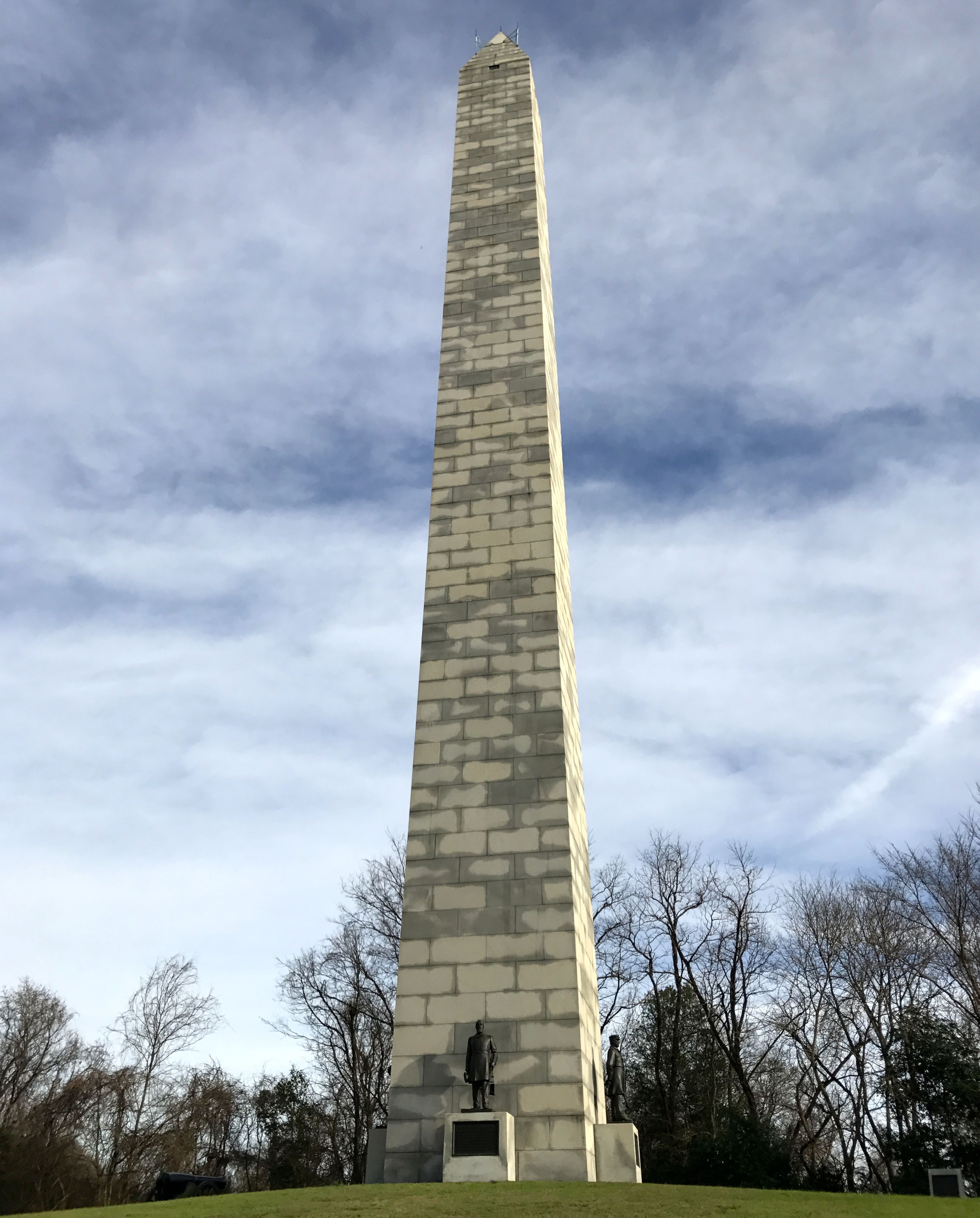
So, I left the Navy Memorial and continued along the road through the park.
I spied what looked like a circus tent, which piqued my curiosity. It turns out that it was the remains of the U.S.S. Cairo, the ironclad gunboat that was sunk by the Confederates in December of 1862.

The Cairo had the dubious distinction of being the first ship in history to be sunk by an electronically detonated torpedo. Within twelve minutes, the ironclad sank into 36 feet of water, but all the crew members survived.

The damage where the torpedoes struck was still apparent when they managed to raise the wreck in 1965. They had hoped to raise it intact, but they ended up having to cut it into three segments. Its remains were loaded on barges and taken to Ingalls Shipyard on the Gulf Coast in Pascagula, Mississippi where it was preserved.
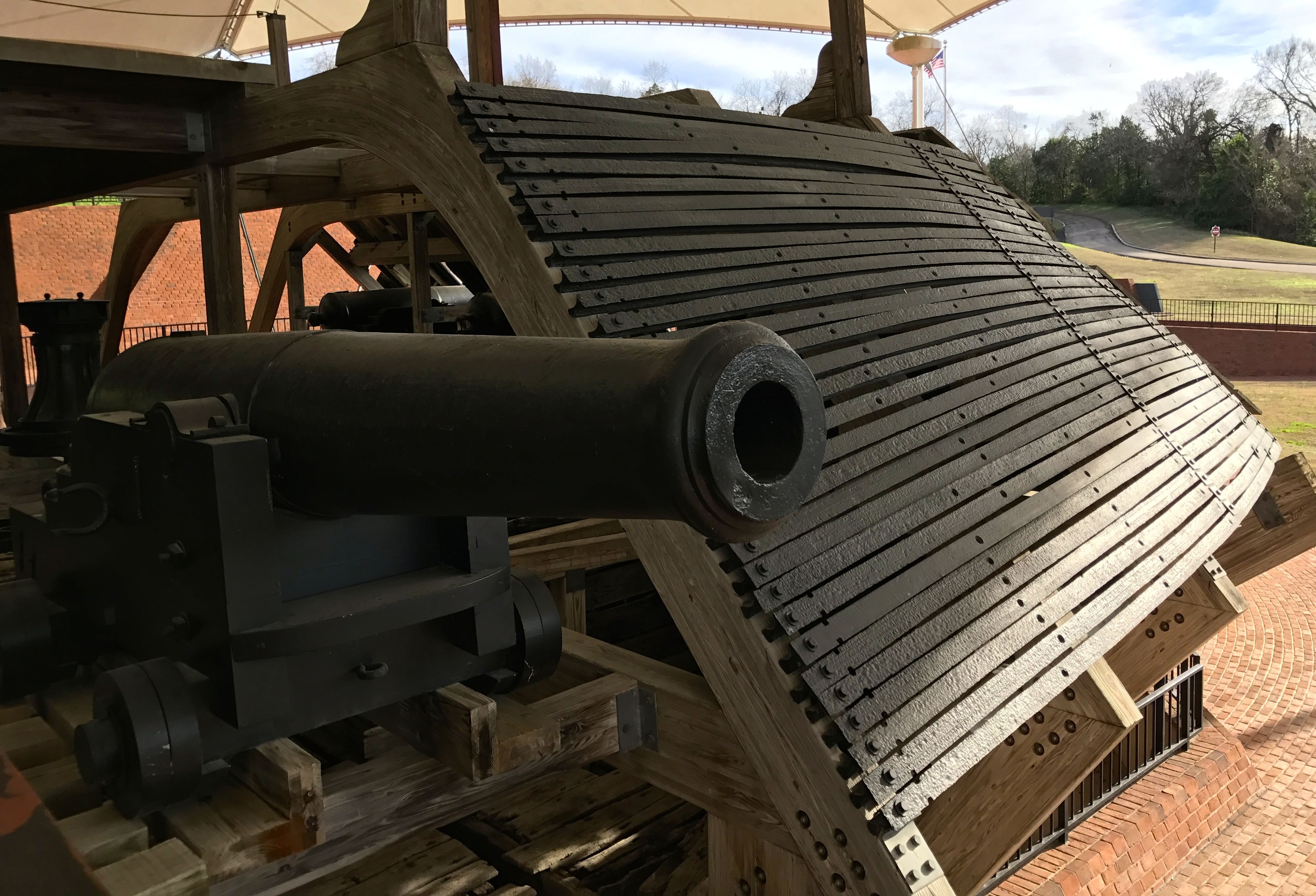
In Pascagula, the armor was removed, cleaned and stored.

I can’t imagine that this wood is original, but I suppose parts of it are.
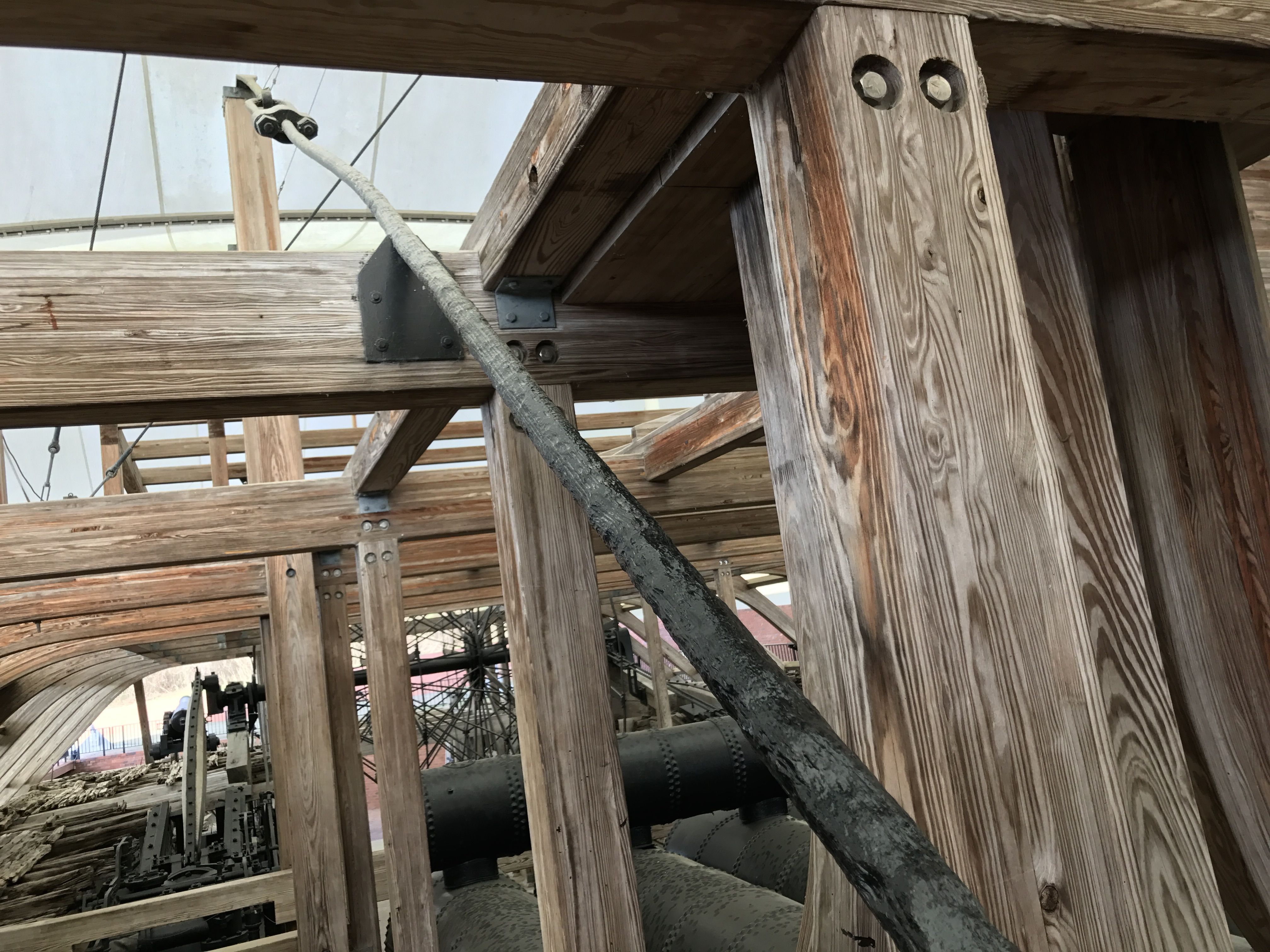
This iron piece that goes up and over is called a hog chain, and it served to stabilize the structure. The hog chain is part of the original ship.
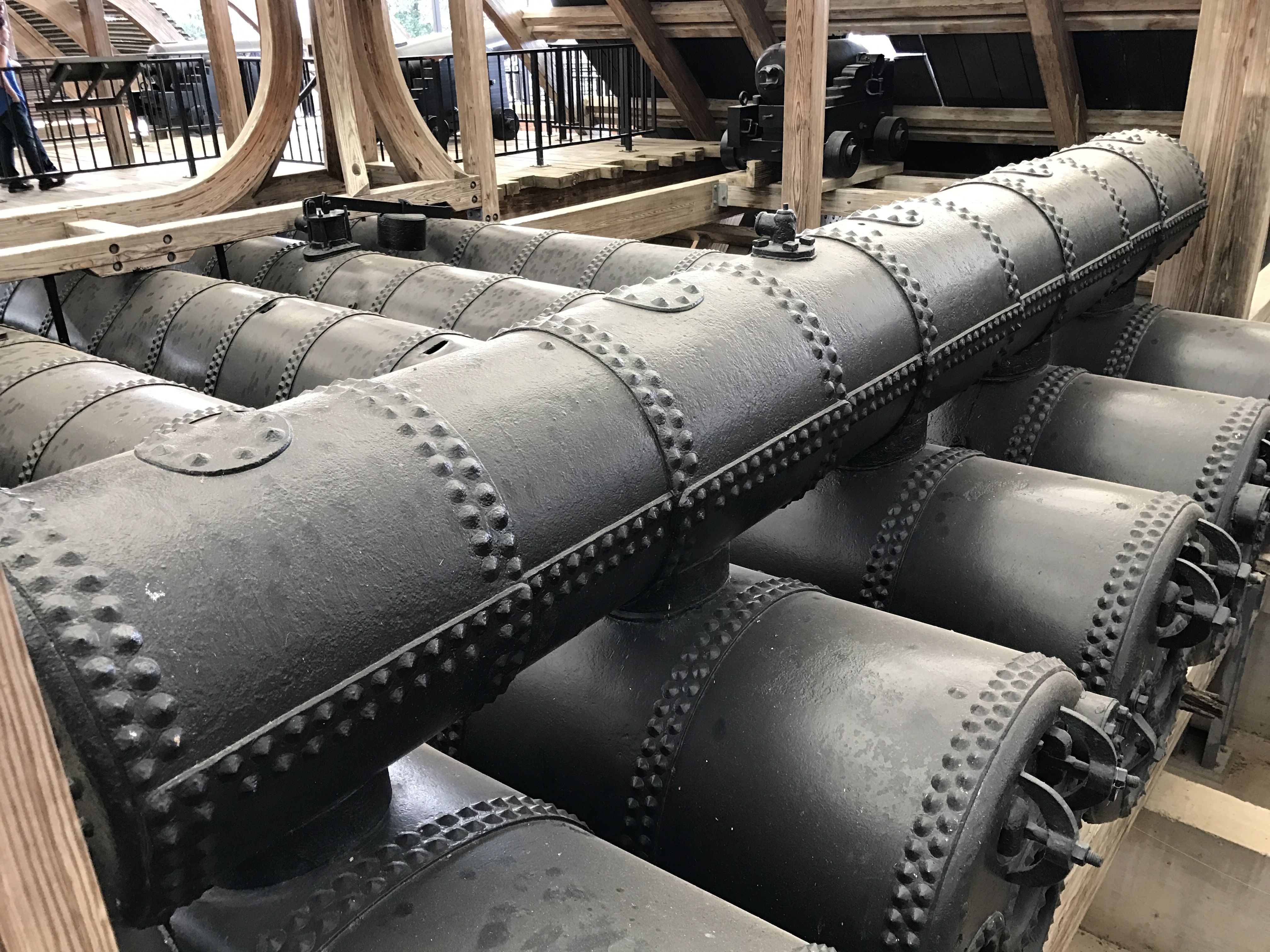
The boilers cleaned up pretty well, I think.
There were walkways around the Cairo, and you could really examine what was left.
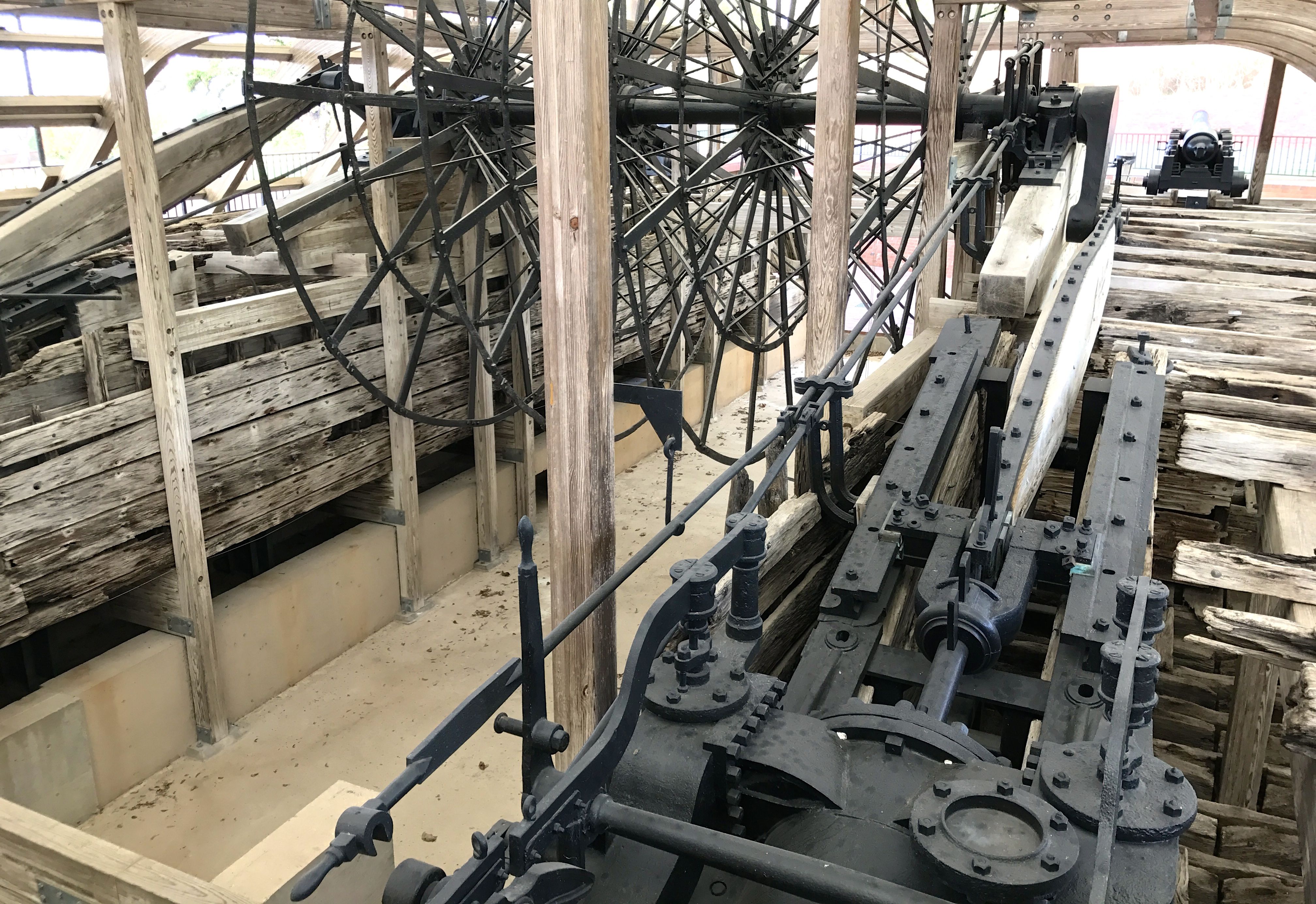
I was surprised at how well the metal stood up to a century in the water.
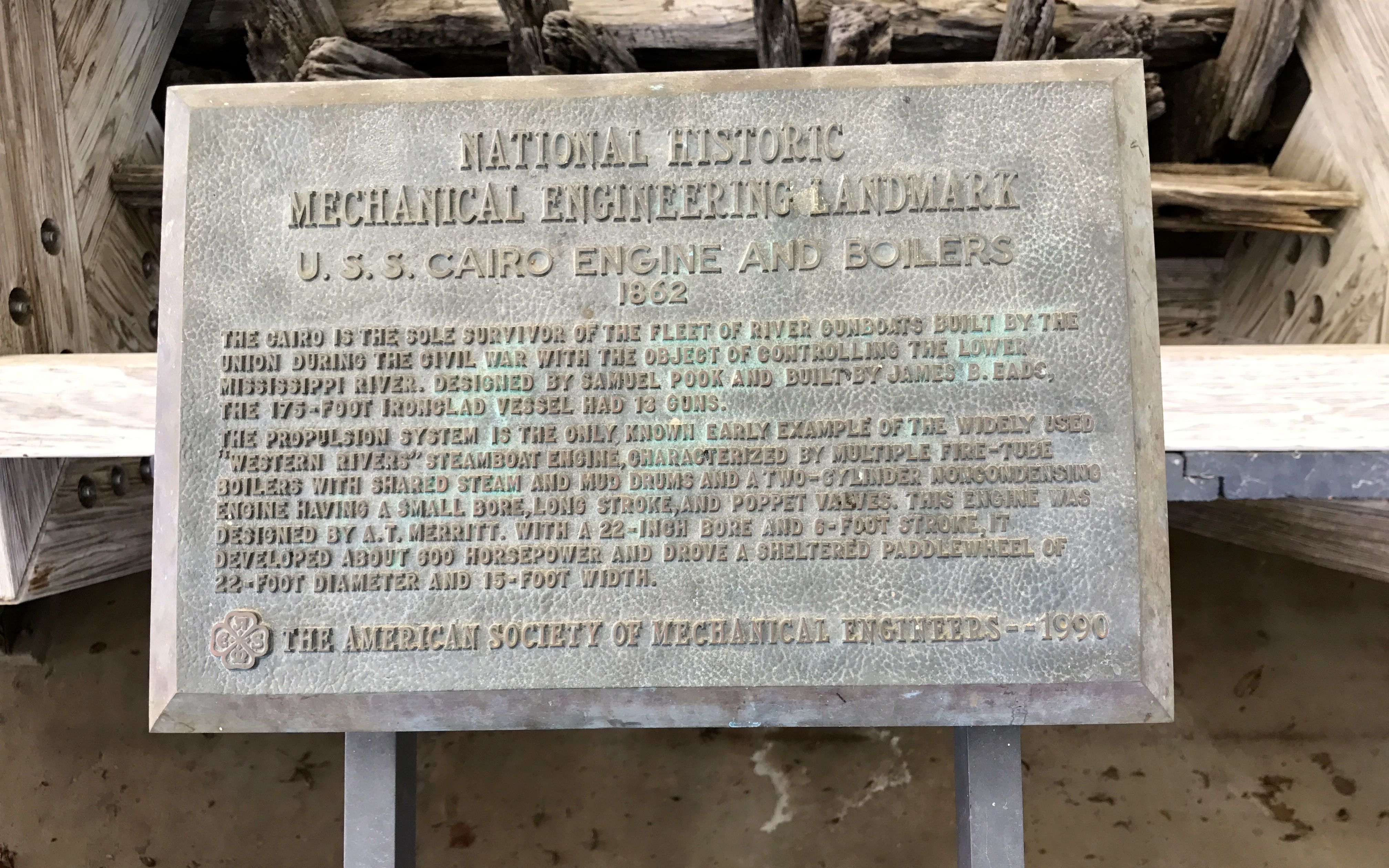
The American Society of Mechanical Engineers was also impressed with the design.
The fact that they were able to find, raise and restore as much of the ship as they did is pretty remarkable. Another thing that was remarkable was, that since the ship sank so quickly, all the artifacts were still there when they raised it.
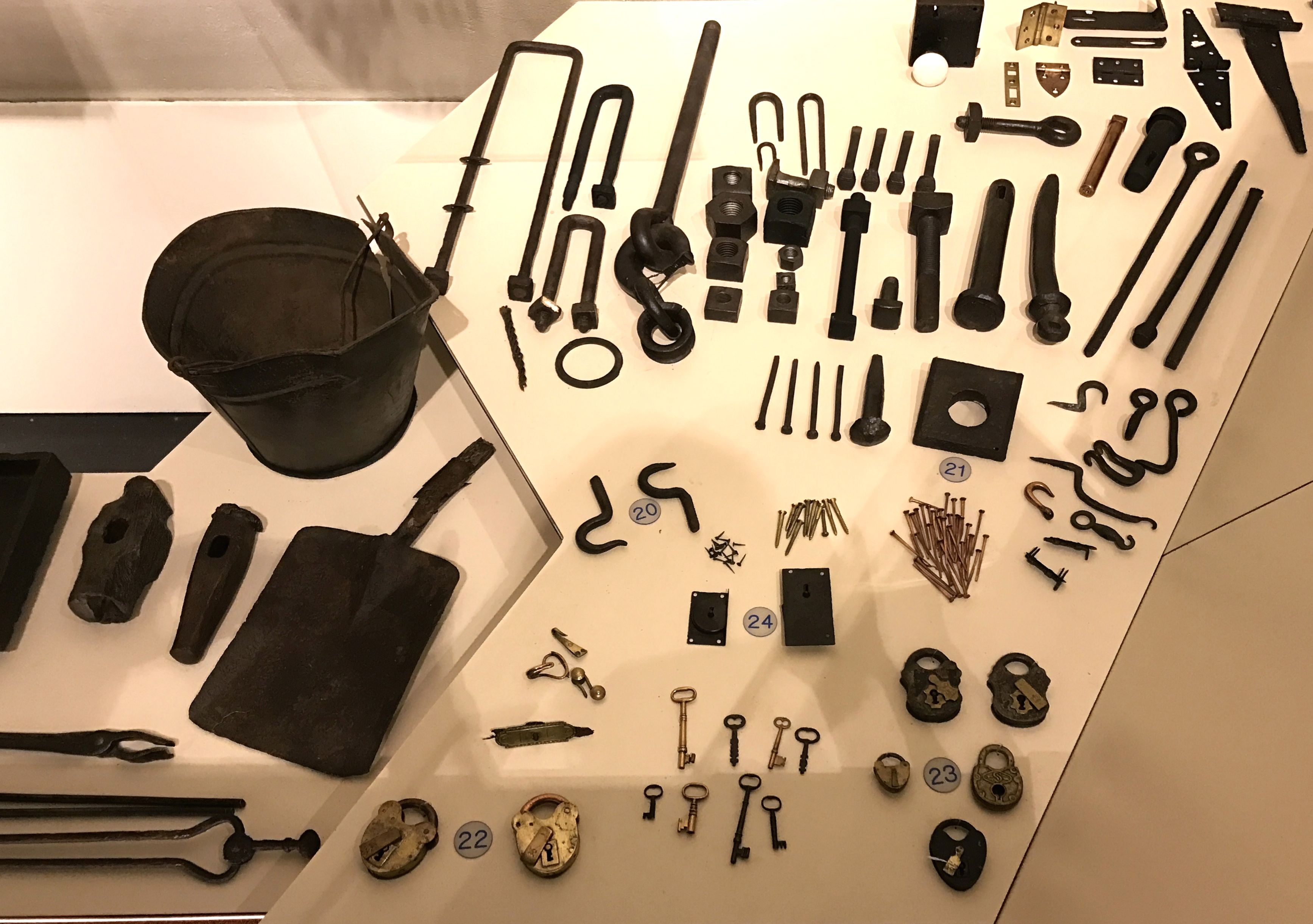
All the bits and pieces of life about the Cairo were there. Tools, locks, keys and fasteners.
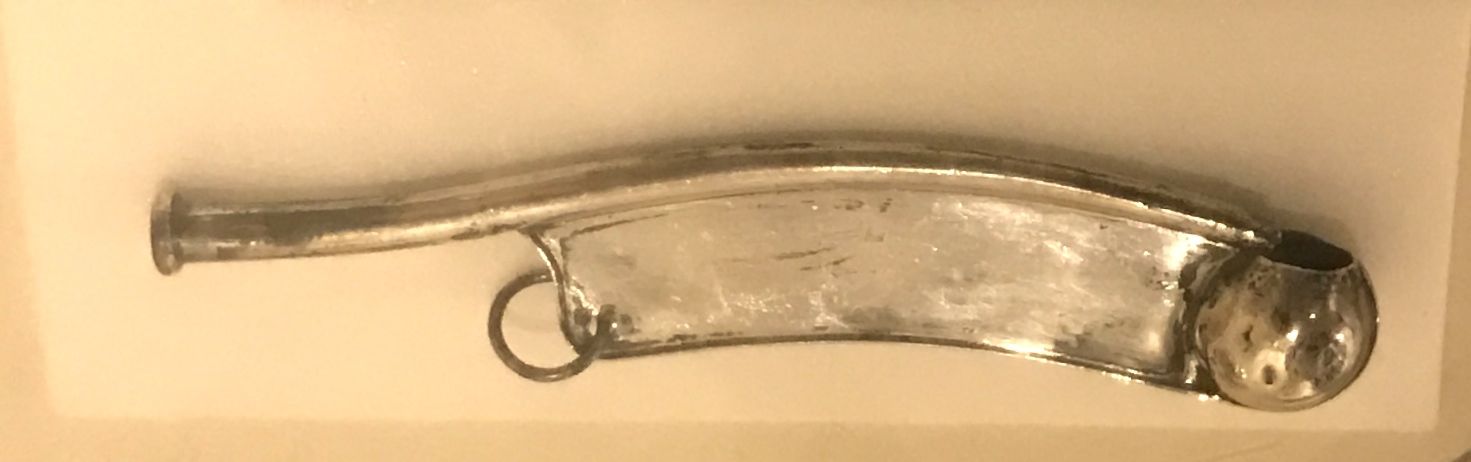
They found the bosun’s whistle.
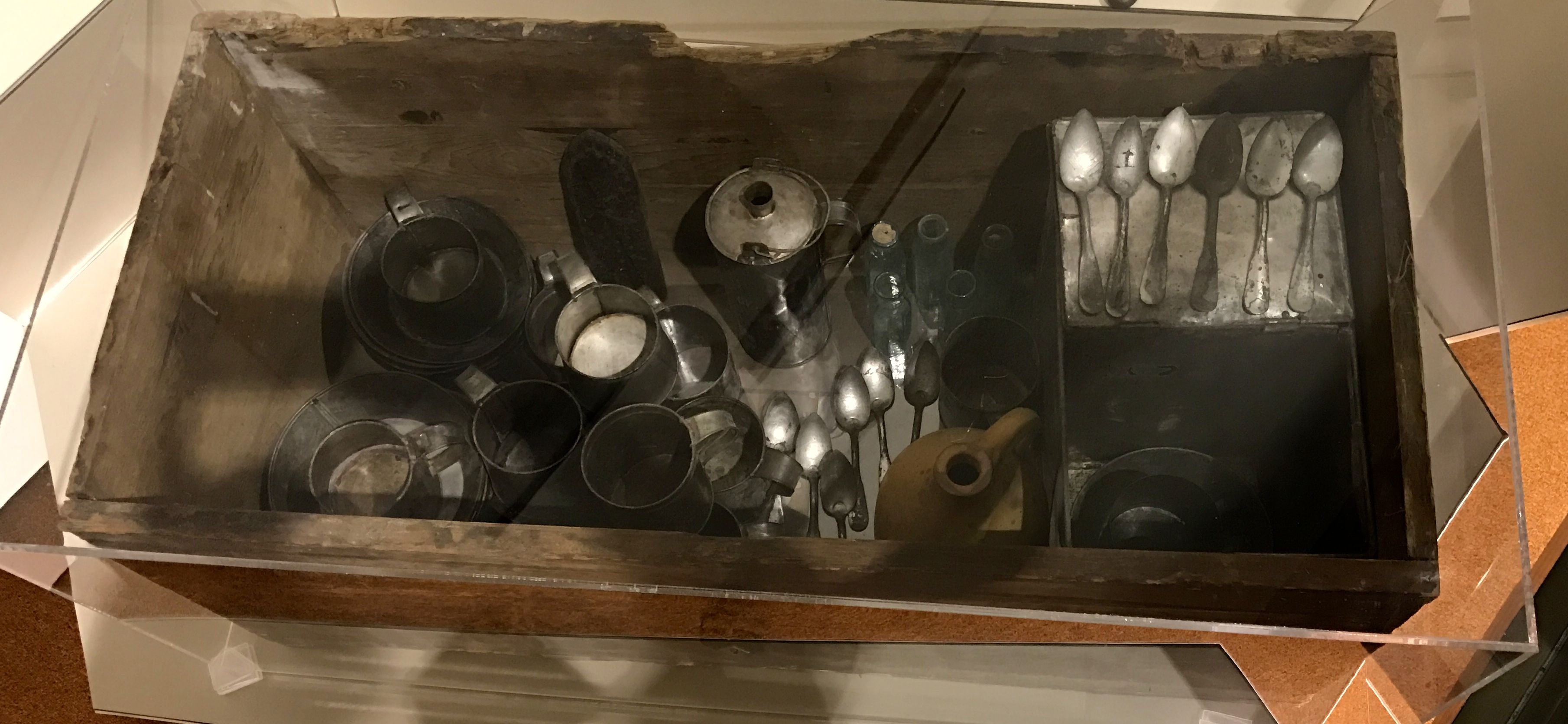
The enlisted men’s mess was stored in a box and taken out for meals. The officers had nicer gear.
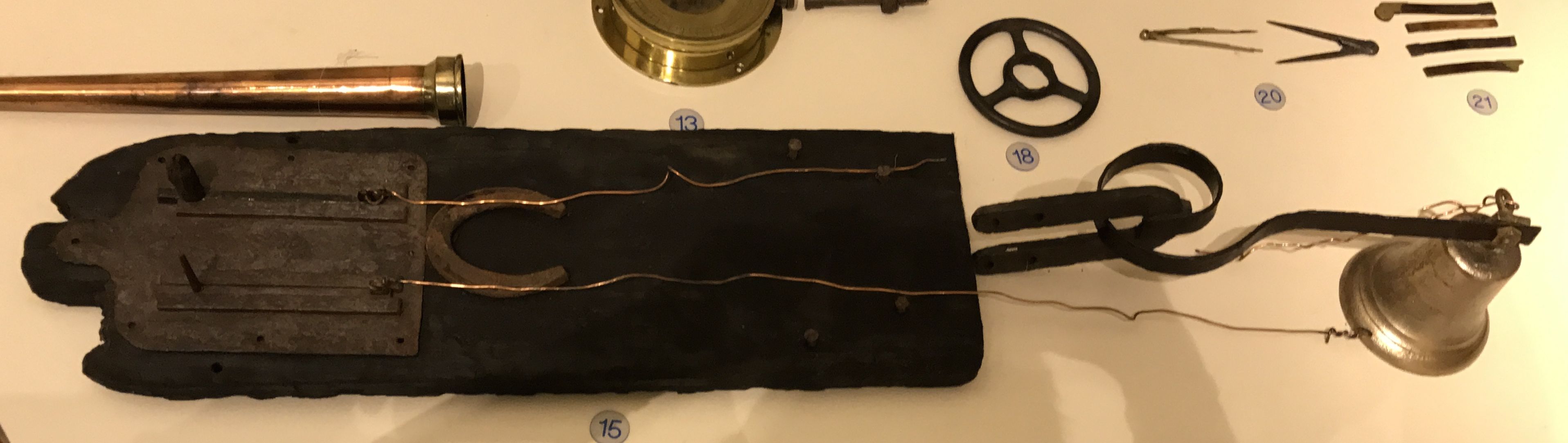
The signal bell to communicate with the engine was found.
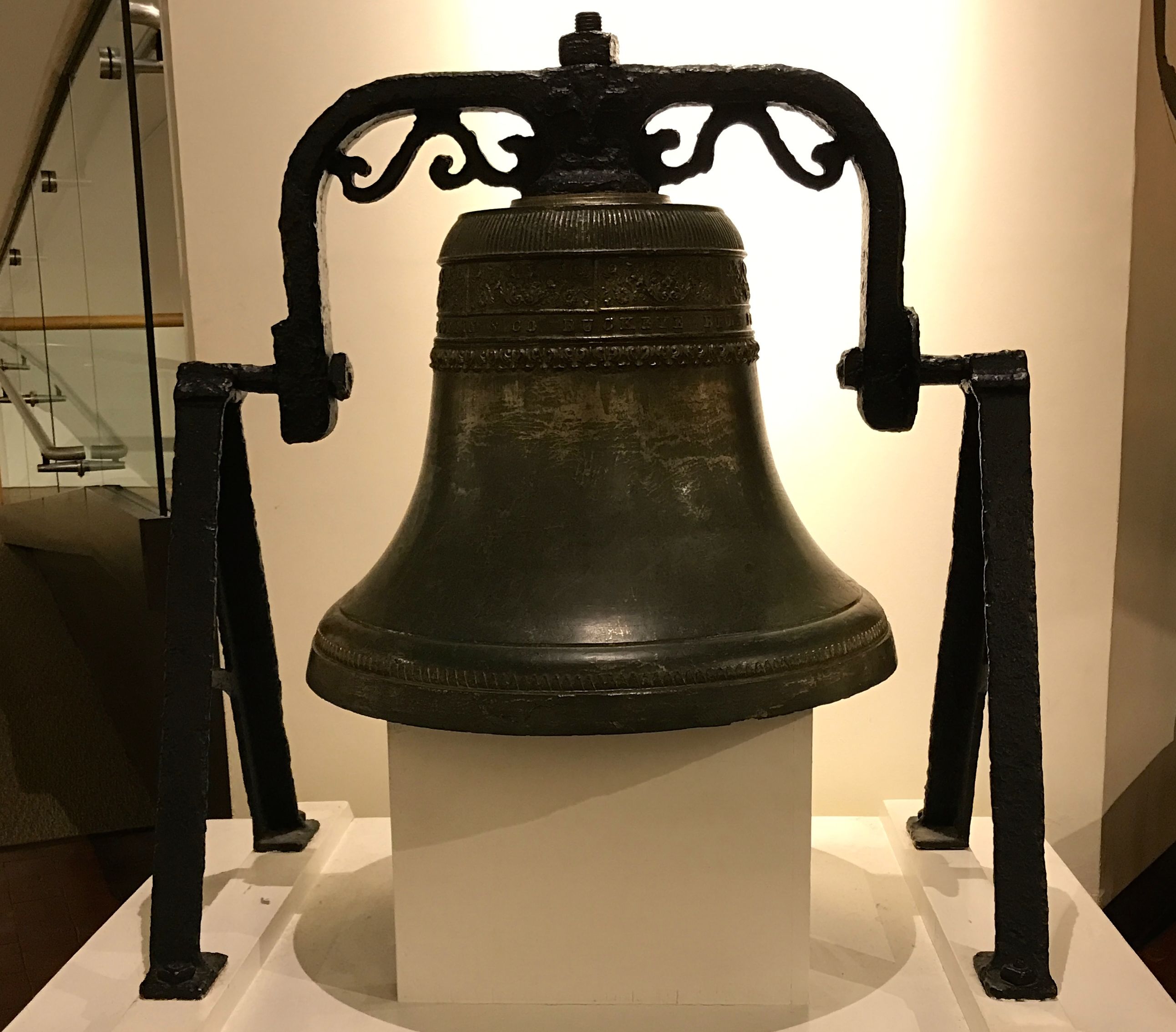
They found the ship’s bell, too.
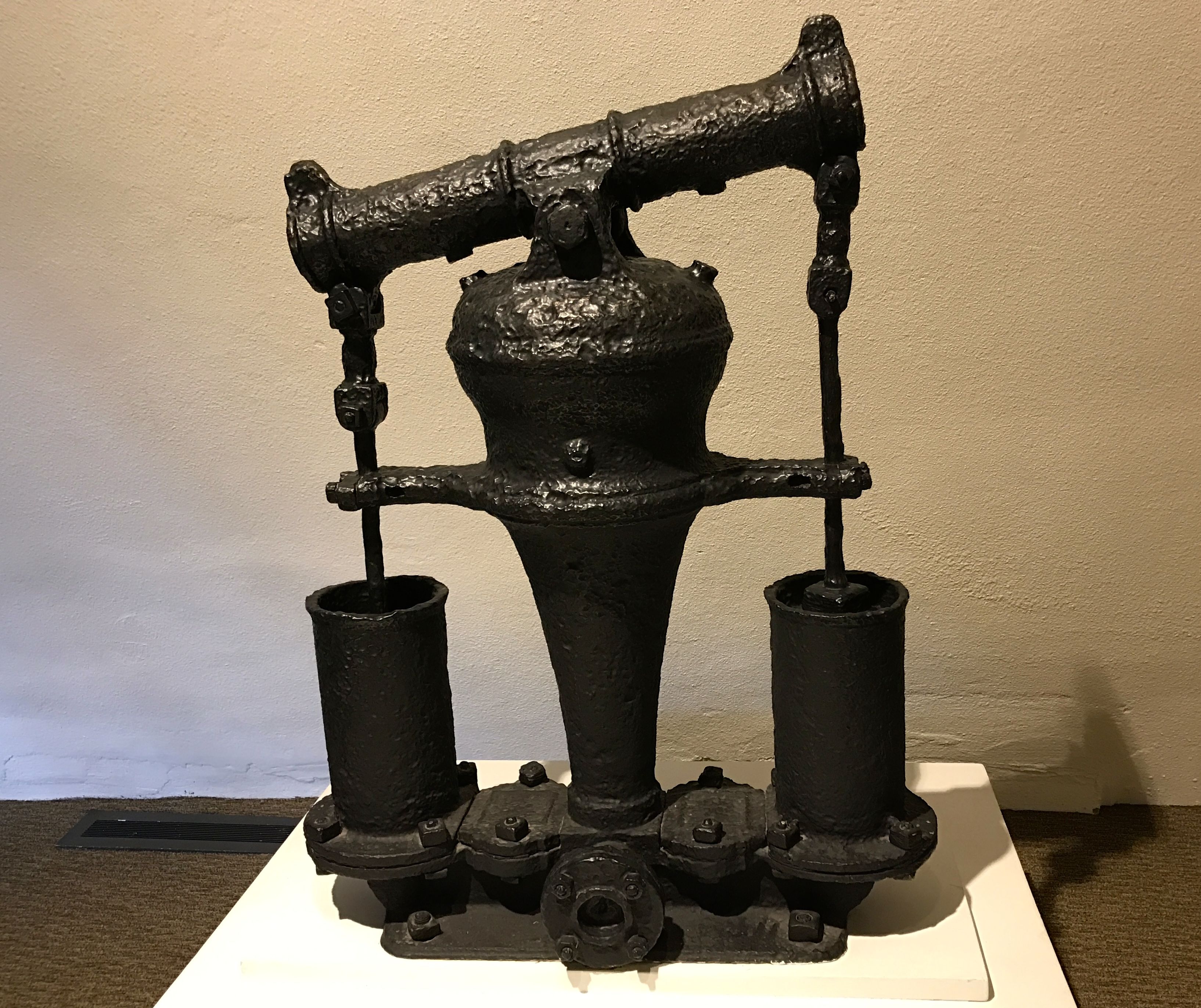
They found the pump and
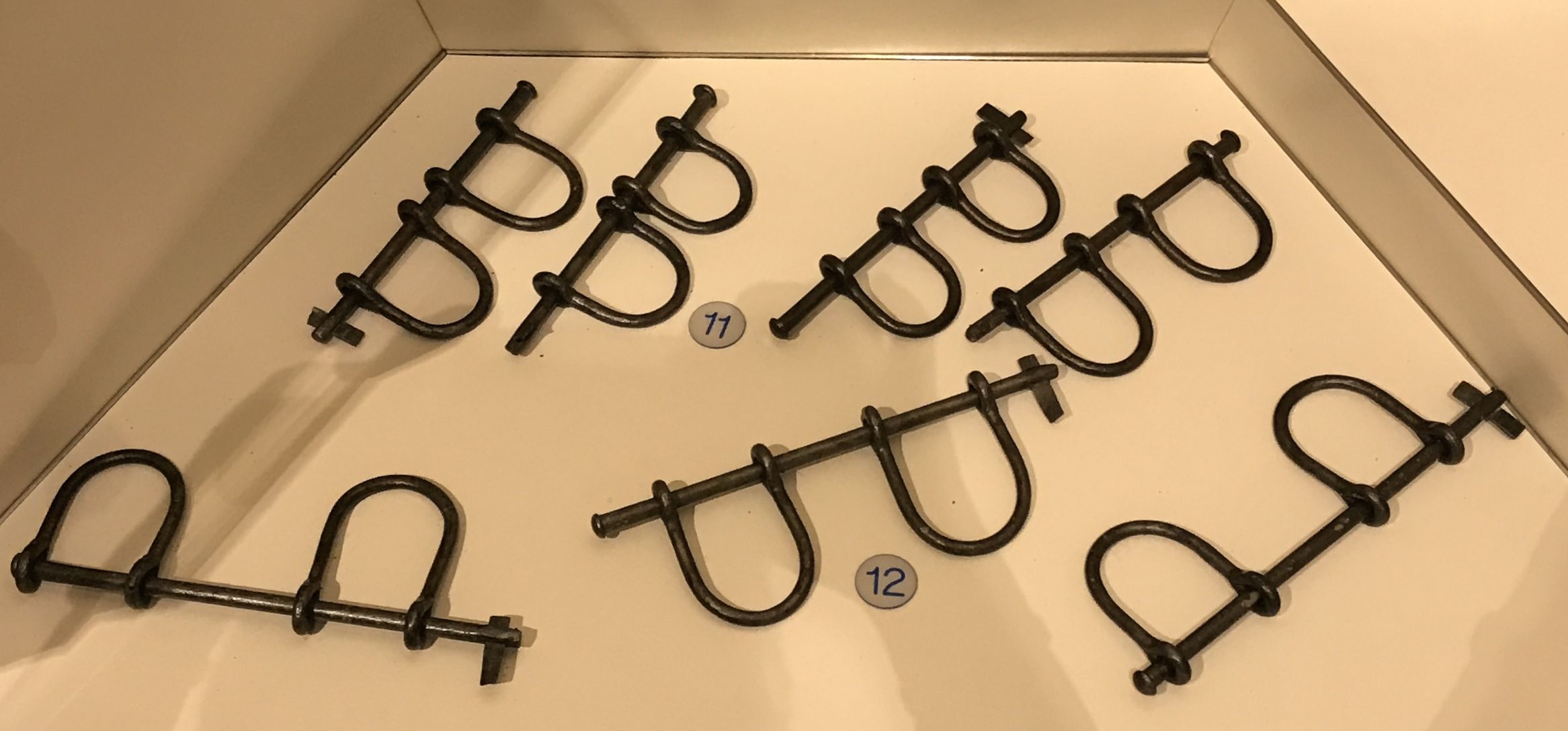
handcuffs and shackles, just in case they were needed.
Really, it was an amazing museum. If you get to Vicksburg, I’d really recommend it. My time was growing short, so I snapped a few photos and left.
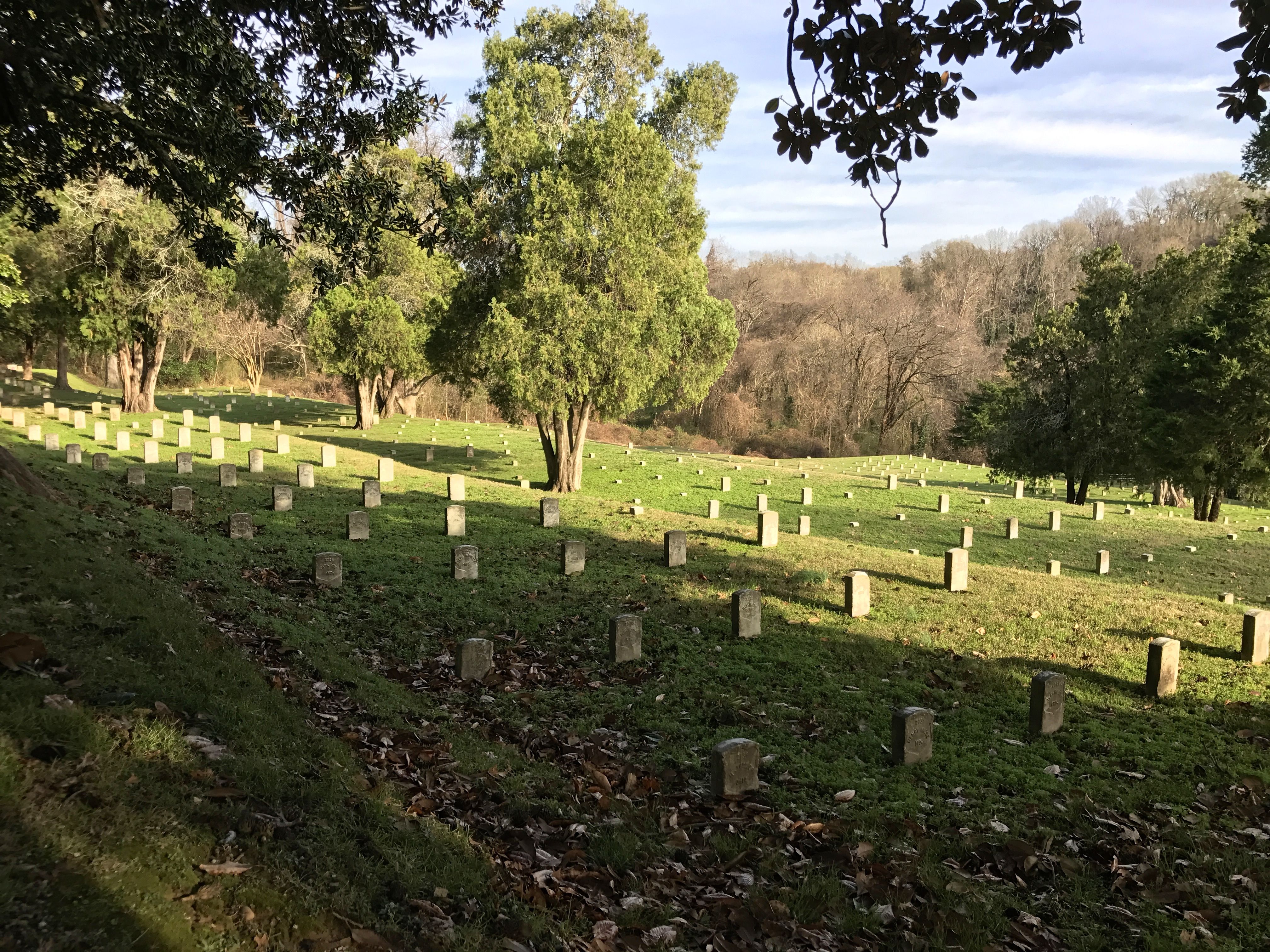
The Vicksburg National Cemetery was right outside the Cairo Museum. I took a drive through and appreciated the calm of the 116 rolling acres. 17,000 Union soldiers are buried here, and 75% of those interred are unknown. The cemetery has been closed to burials since May 1961, except for people who made arrangements before that date.
I picked my way through Vicksburg. I wanted to get down to the river, that played such a big part in its history.
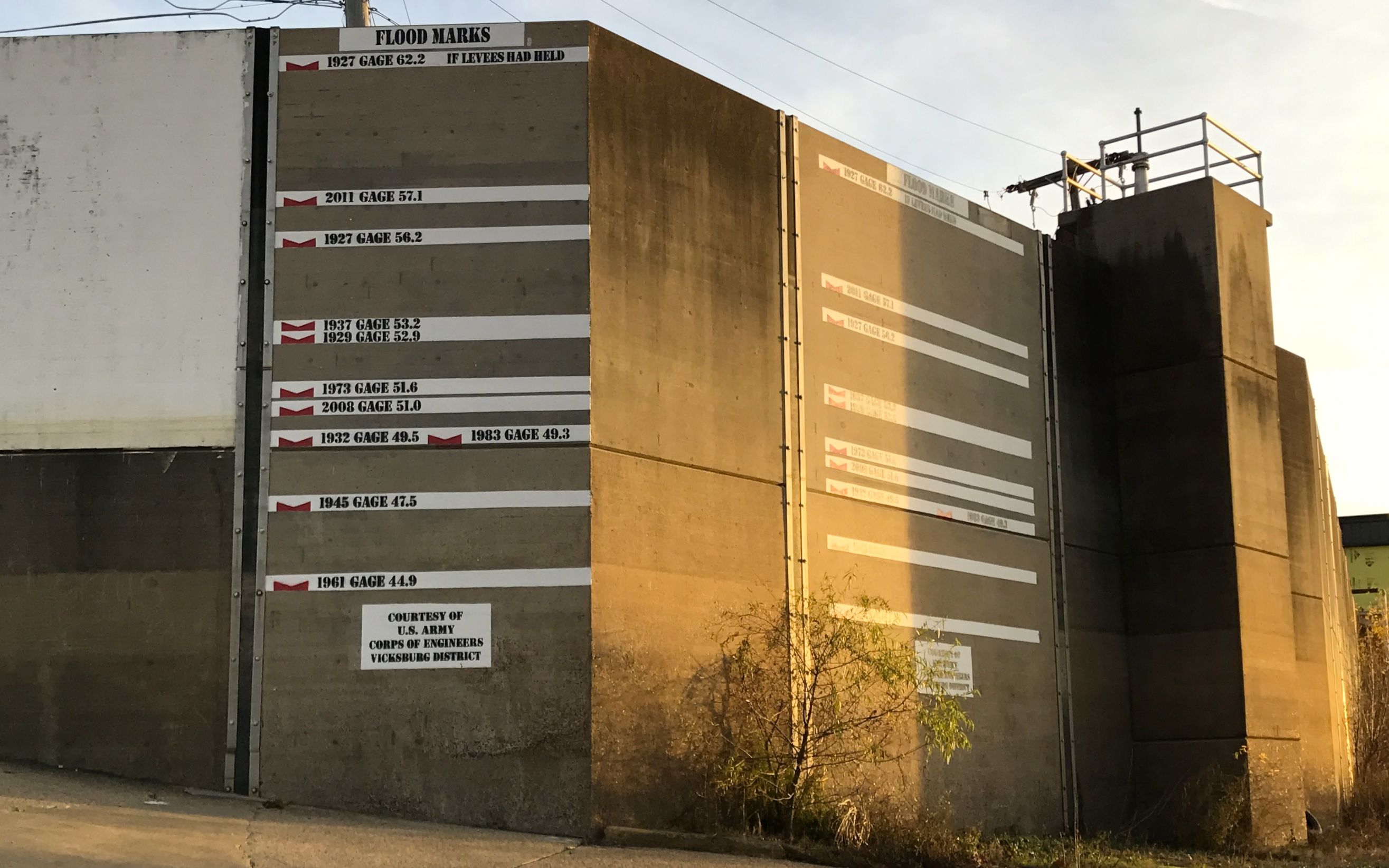
I got down to an odd spot where they recorded the levels of flooding. It kind of reminded me of pencil marks on a door jam that recorded children’s growth – except a little different.
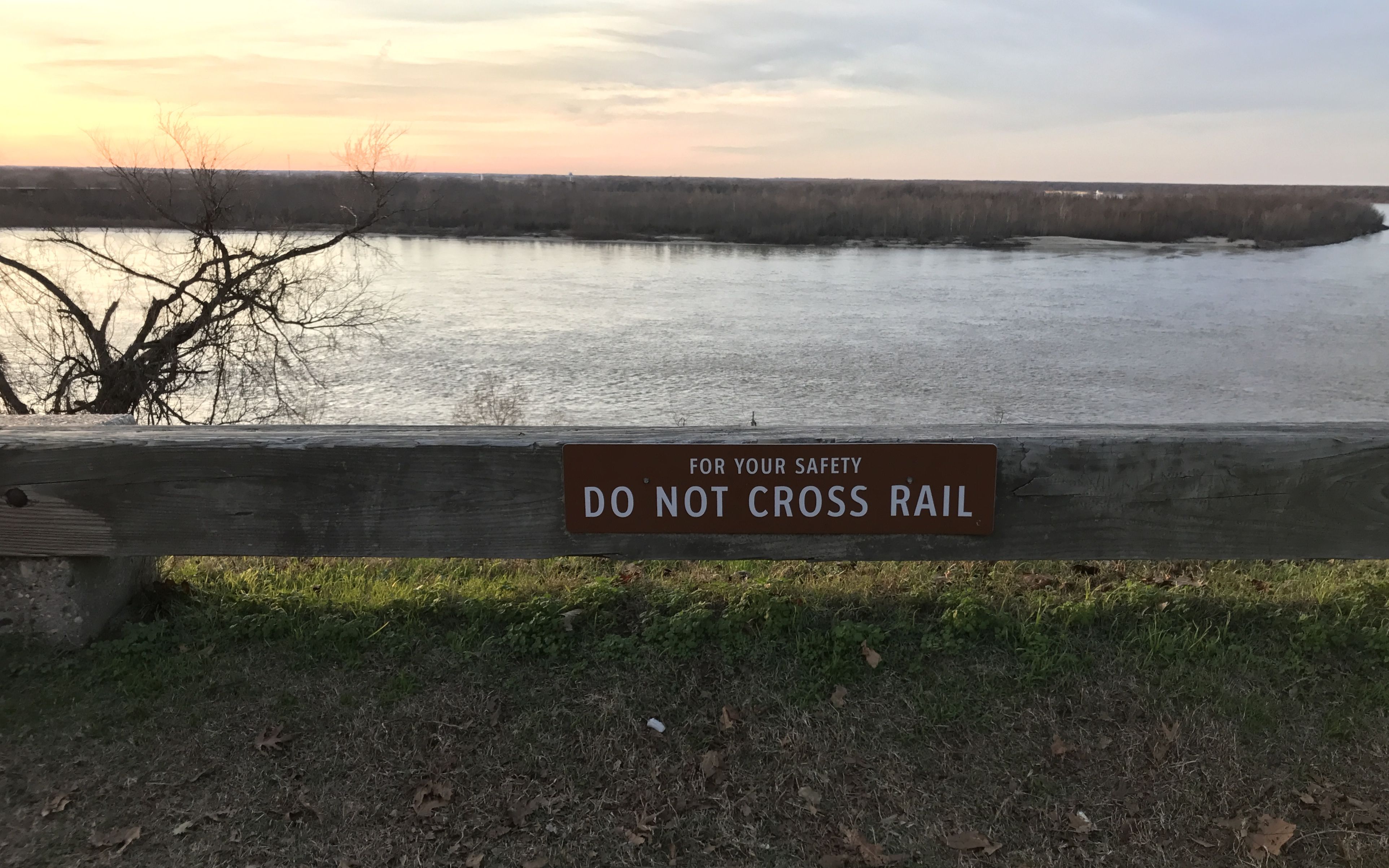
I am all about safety.
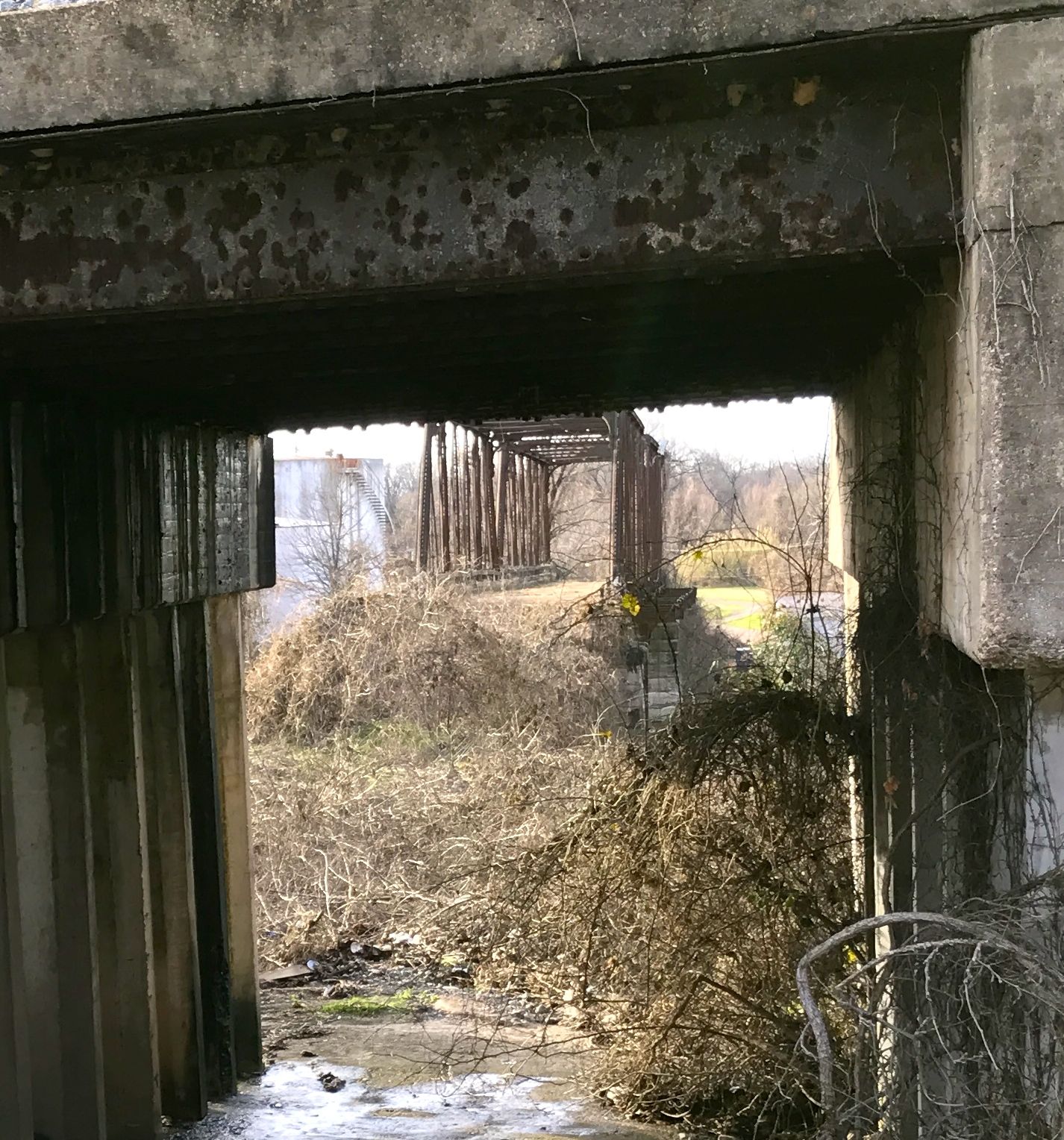
I found a sign that indicated that there was a scenic route. I don’t know if I got off the route at some point. This was interesting, although it wasn’t exactly scenic.
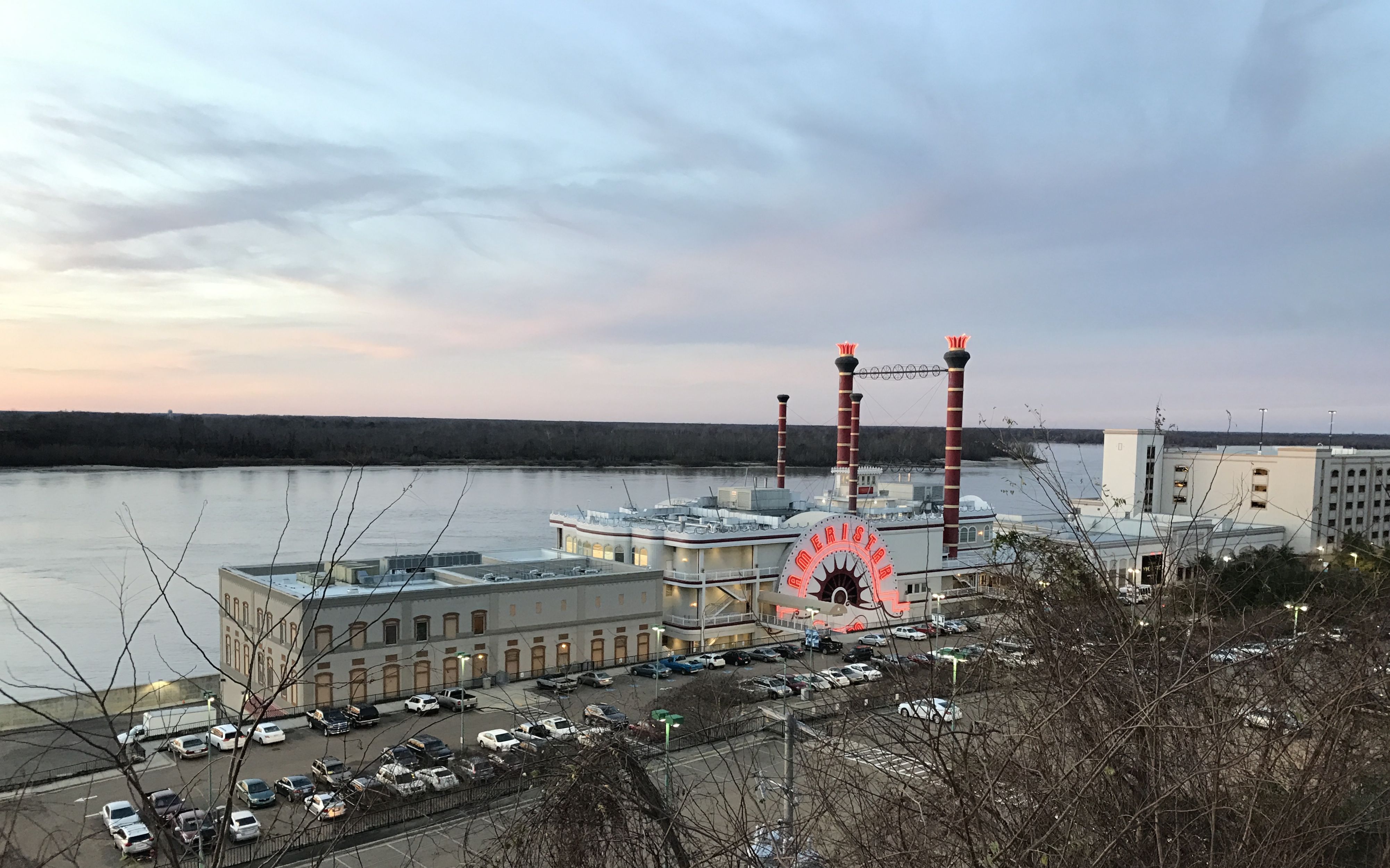
I passed a “riverboat” casino. I am pretty sure it was just a building designed to look like a riverboat.
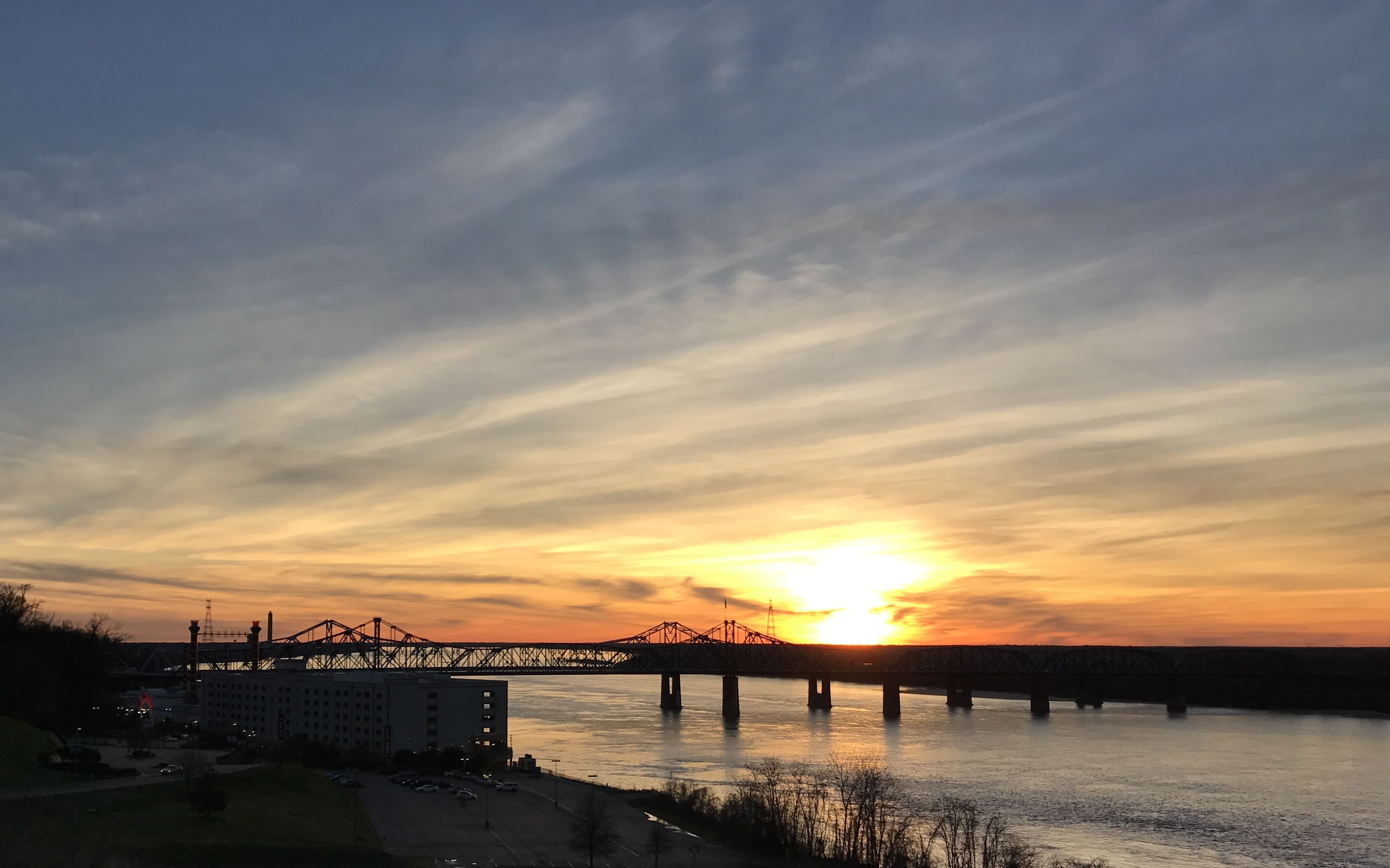
And with the sun setting in the west, it was time to head back to the campground. In the morning, I would be on the road again.
Next stop, Texas!
Wow Cairo on the Mississippi River! I’m inspired to visit next time we head that way.
I think it’s worth a visit. In fact, there was a museum about the river and how they control it that was somewhere nearby. I wish I had time to check it out.