St. Paul’s Cathedral

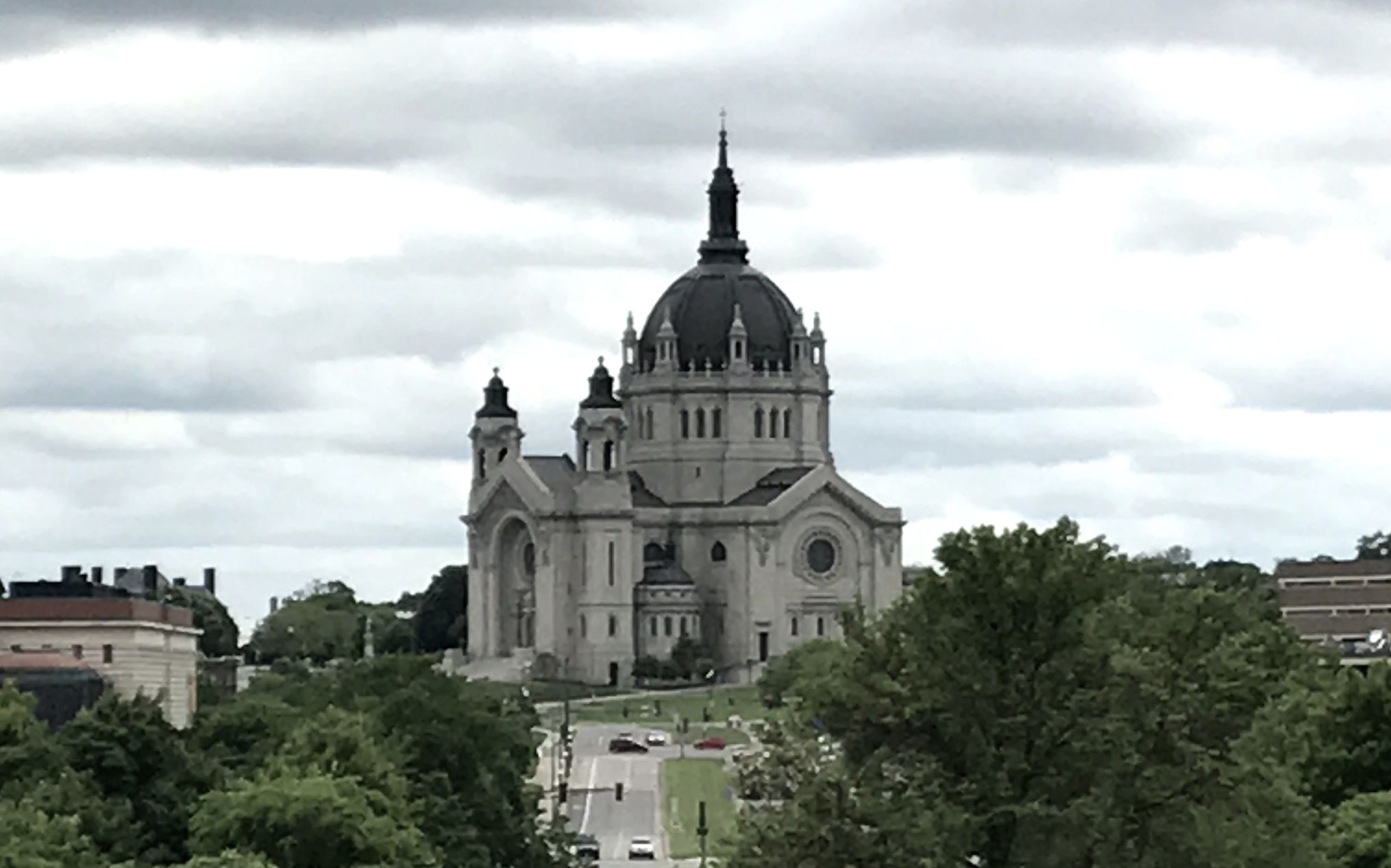
I headed over to what I presumed was the cathedral. It turns out the this diocese has two cathedrals. This one, which is the Cathedral of Saint Paul, and the Basilica of St. Mary in Minneapolis.

The copper-clad dome 76 feet in diameter and 186 feet high. It is the third largest completed church in the United States, as well as the fourth tallest, at least according to my preferred source. I guess my preferred source wasn’t considering mega-churches.

It was, however, the tallest building in St. Paul from when it opened in 1915 until 1931, when the First National Bank Building opened.
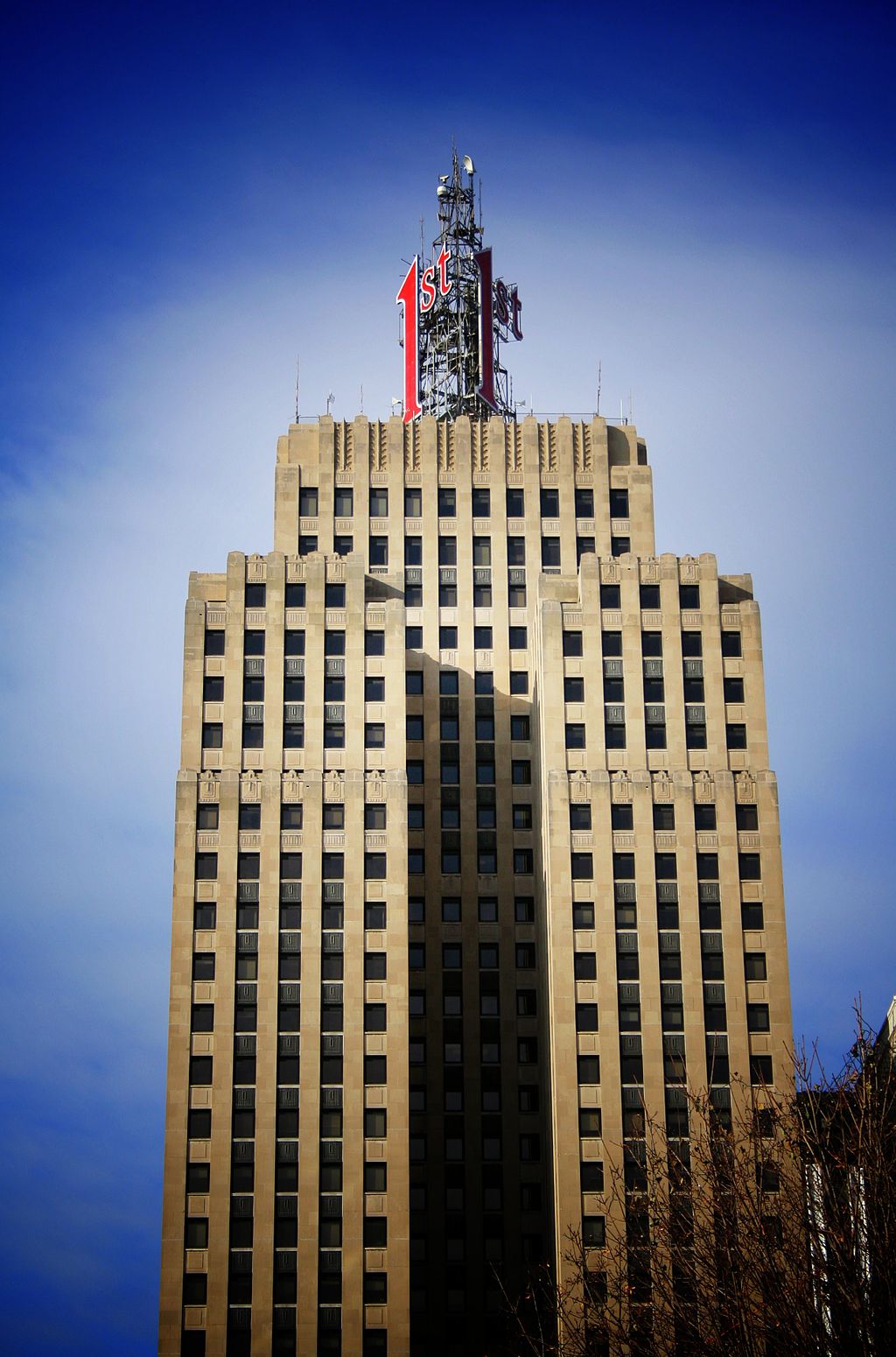
By Michael Hicks from Saint Paul, MN, USA – img_3137-lomoUploaded by xnatedawgx, CC BY 2.0, https://commons.wikimedia.org/w/index.php?curid=10402511

The Beaux-Arts era was definitely over when they designed this building. I include this picture of the First National Bank Building merely for reference. I was curious about the building that unseated the Cathedral as the Tallest Building in Saint Paul list and I had to look.

There was a parking lot nearby, and there was plenty of room for Bart on this weekday afternoon.
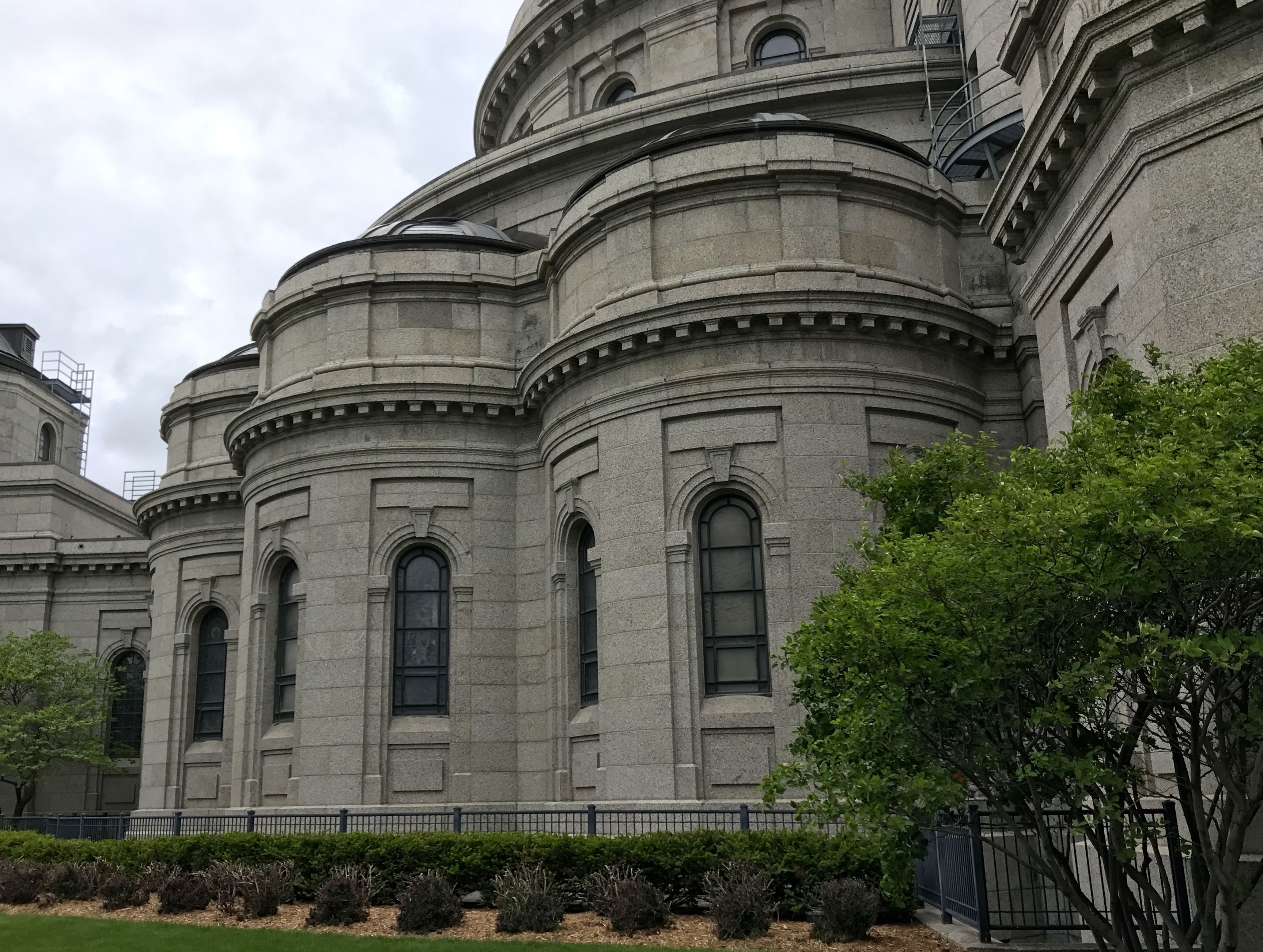
I walked past what I presumed were chapels off the apse.
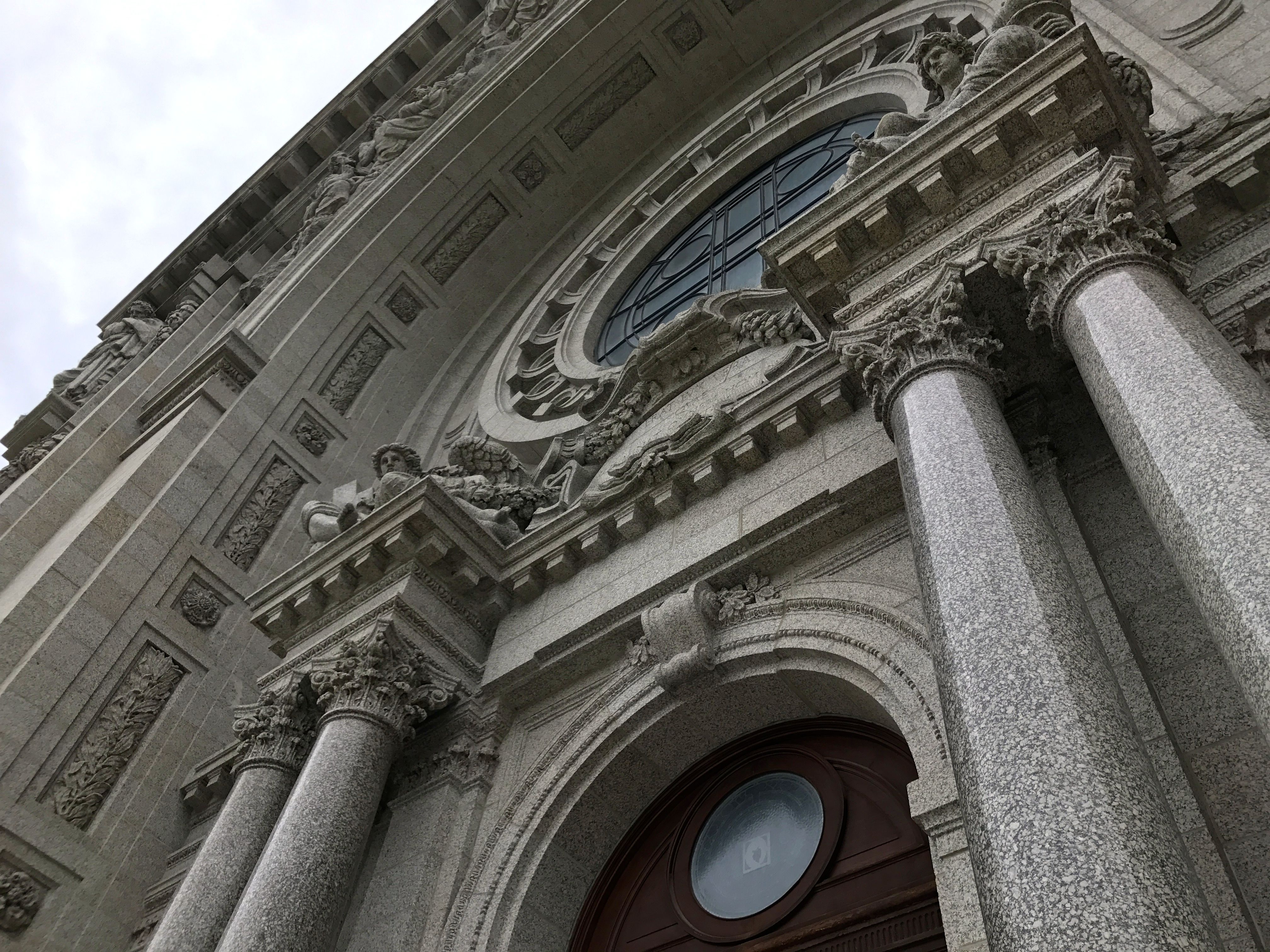
I entered through the front doors into the Cathedral, which became the National Shrine of the Apostle Paul in 2009.
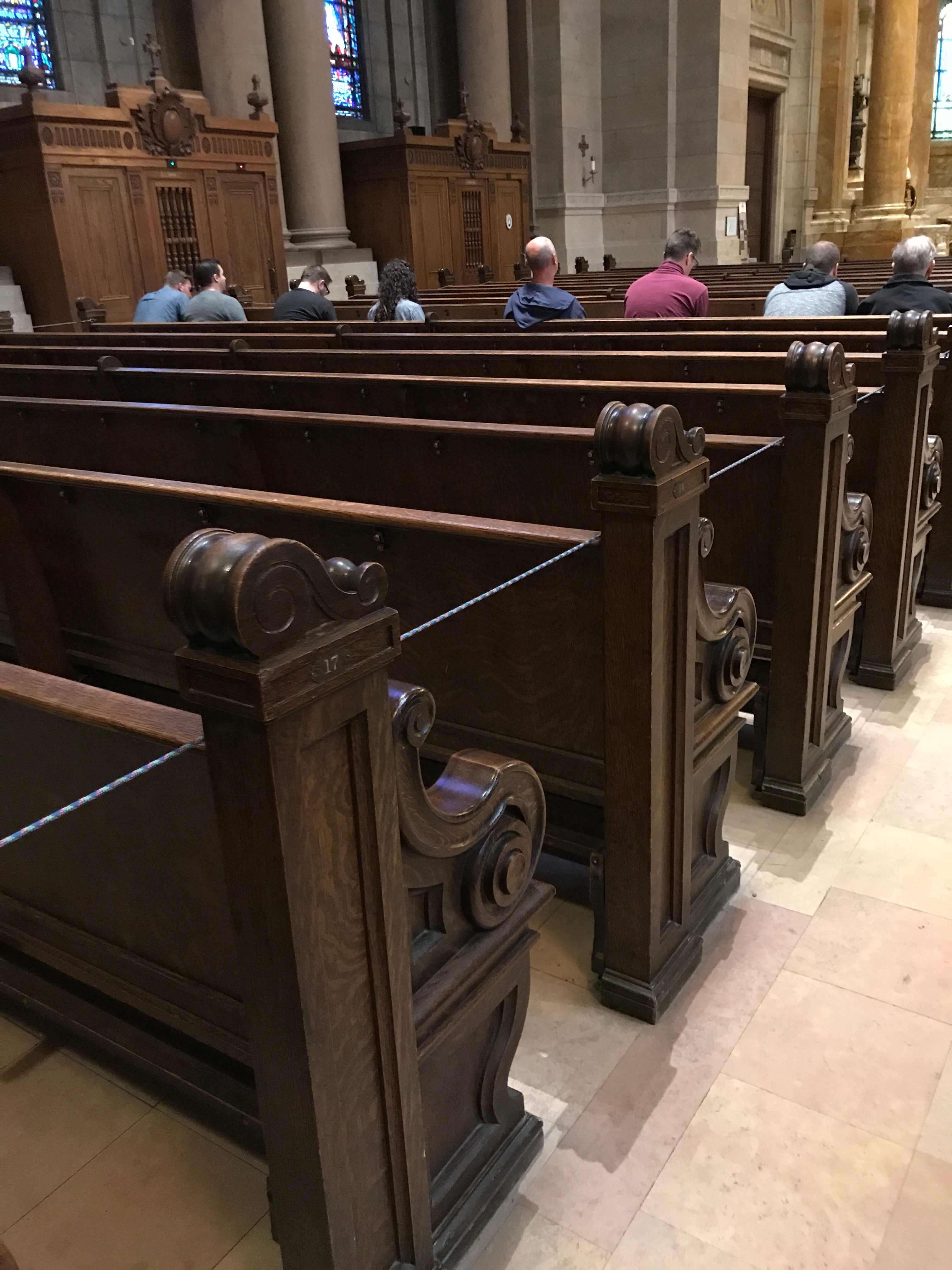
It looked like people were waiting to go to confession, which is one of the seven sacraments of the Catholic church. I tried to be as unobtrusive as possible as I took in the beauty of the building.
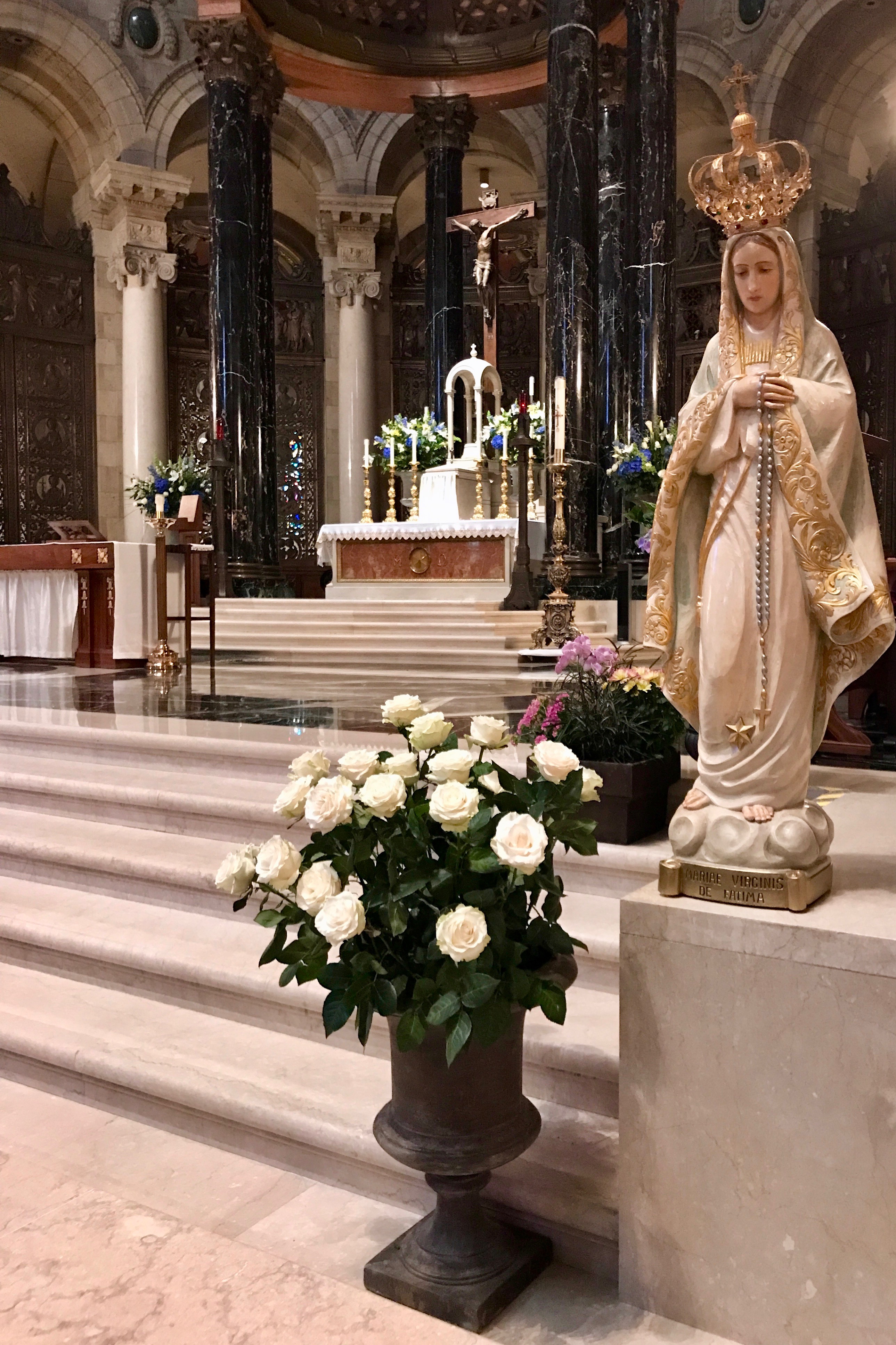
I came up on this statue of Mary. She is wearing a crown in this statue as recognition of one of her epithets, “Queen of Heaven.” (I love it when I learn a new word – or at least a new use of the word.
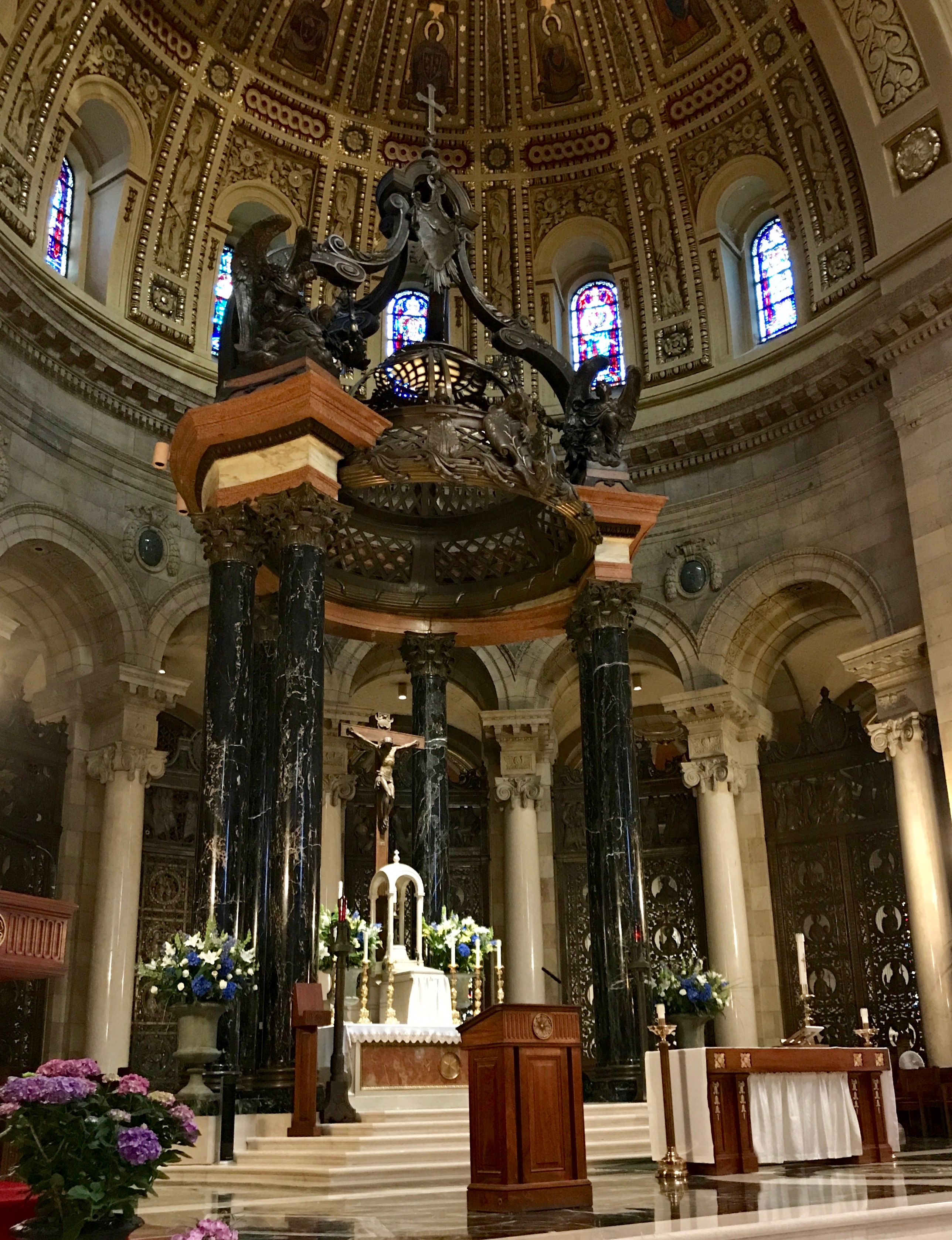
The life of St. Paul is commemorated in the baldachin over the altar. In case you didn’t know, a baldachin is a structure over high altars in cathedrals. Its more proper name is a ciborium, when it is architectural rather than a cloth canopy. I guess they like the idea of recalling the “good old days” when they actually used cloth canopies. Could it be that it is related to the chuppah that they use in Jewish wedding ceremonies?

Again, thanks to Sister Jeanne for all the art history lessons. Sure, I looked things up just to verify that I was remembering correctly, but my last art history course was in 1977. Wow! 41 years ago!
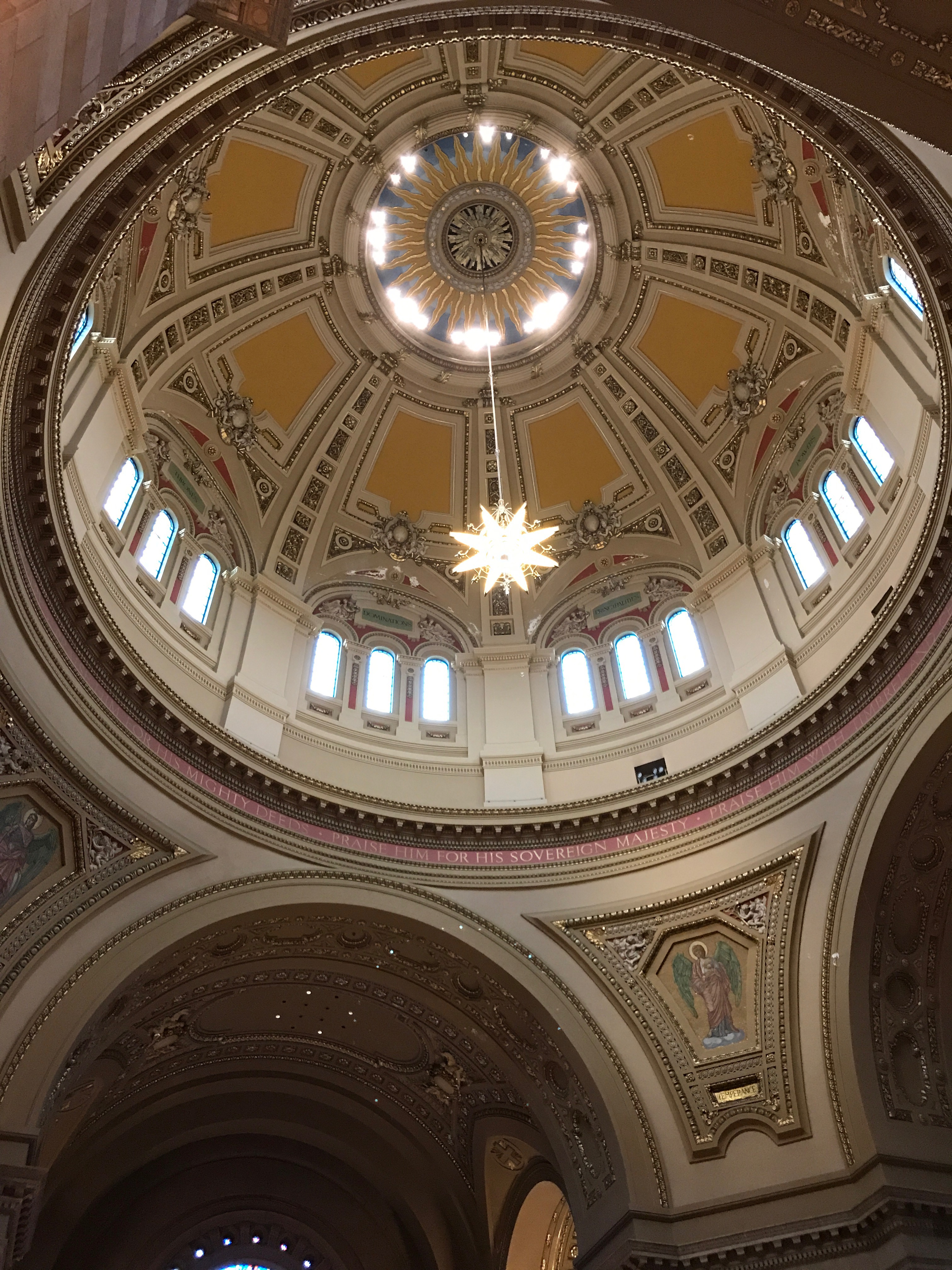
The dome of the cathedral is over the crossing, in front of the altar.. According to my preferred source, warm-colored paint and gold leaf were added during a major renovation of the dome in the 1950s.
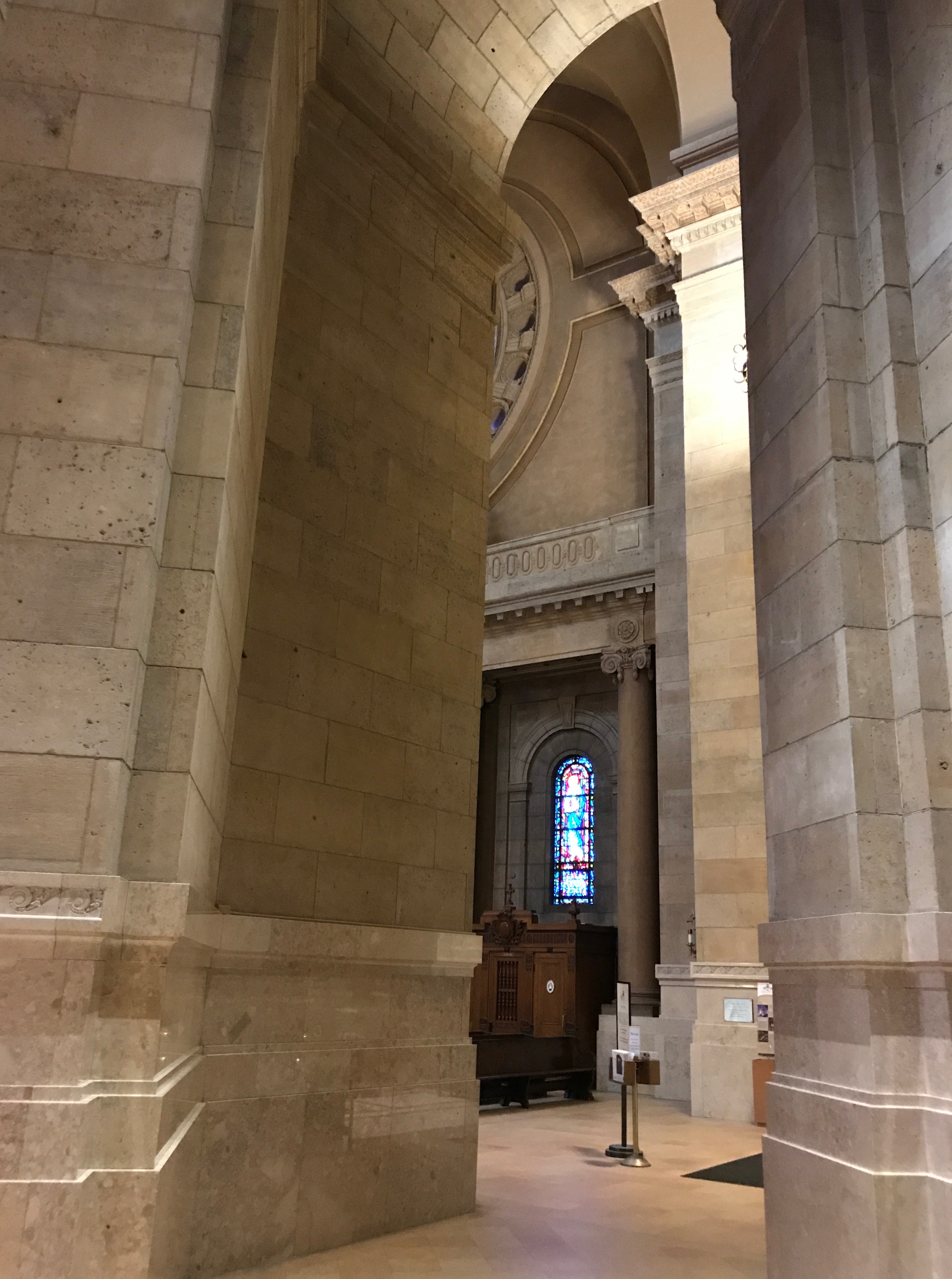
The windows were rather magnificent. The light conditions made it hard to get good photos, but they were quite lovely. If you like stained glass windows, it would be worth a trip.
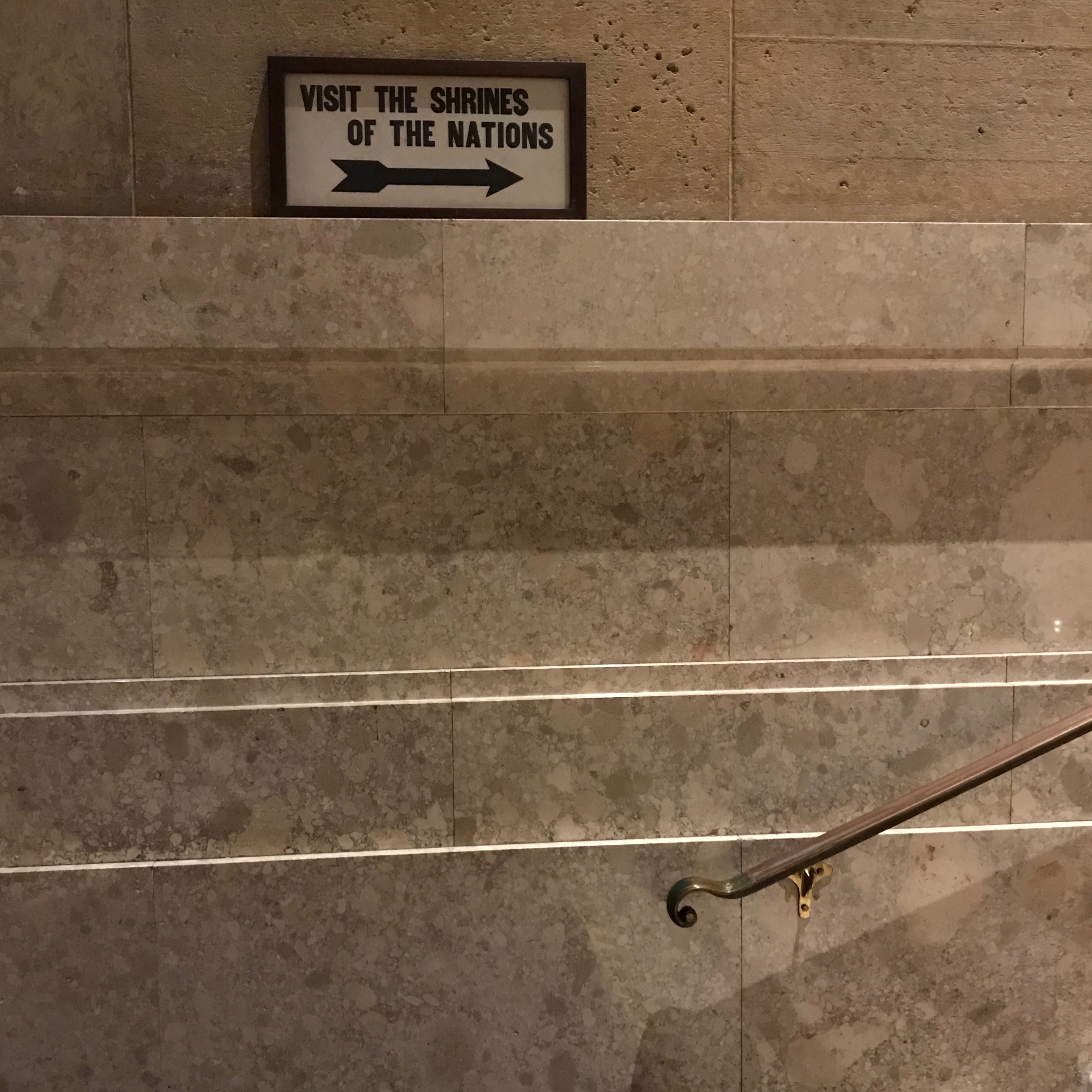
There was this small sign directing us to the Shrines of the Nations. I have no photos of these chapels, but the cathedral has six chapels dedicated to the parton saints of European ethnic groups that settled the area around the city: St. Anthony for the Italians, St. John the Baptist for the French Canadians, St. Patrick for the Irish, St. Boniface for the Germans, and Saints Cyril and Methods for the Slavs. There are also chapels dedicated to the Sacred Heart, to Mary, the Mother of Jesus,  to St. Joseph, to St. Peter as well as St. Therese of  Lisieux for the missionaries.
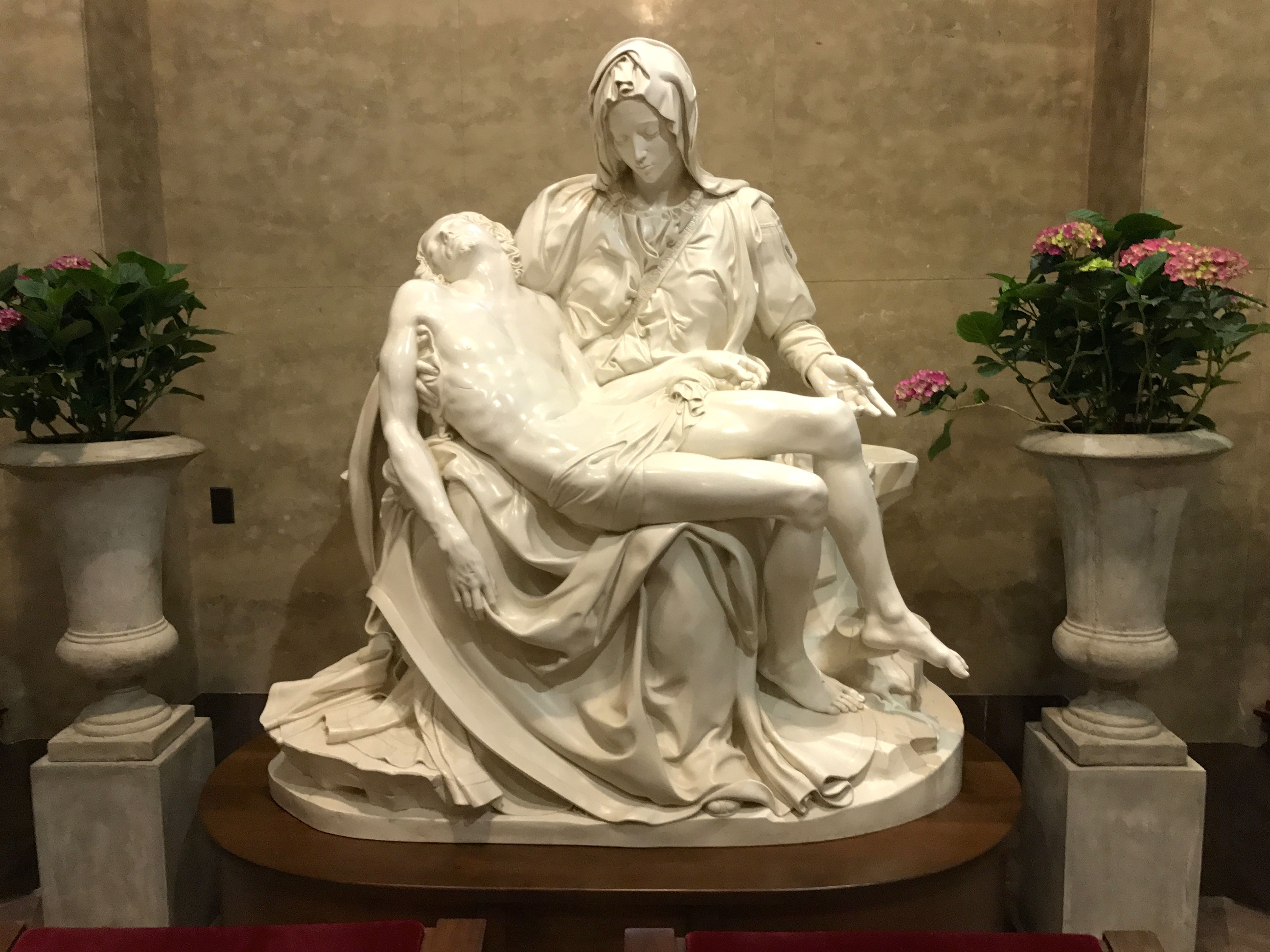
I spent a few minutes admiring the cathedral’s copy of Michelangelo’s PietàThe original is in St. Peter’s Basilica in Vatican City. I remember the first time I saw it back in 1976. I stood there with my mouth hanging open for the longest time. It was breath taking. This one was nice, but it was much smaller than the original, which was 68.5 in × 76.8 in.
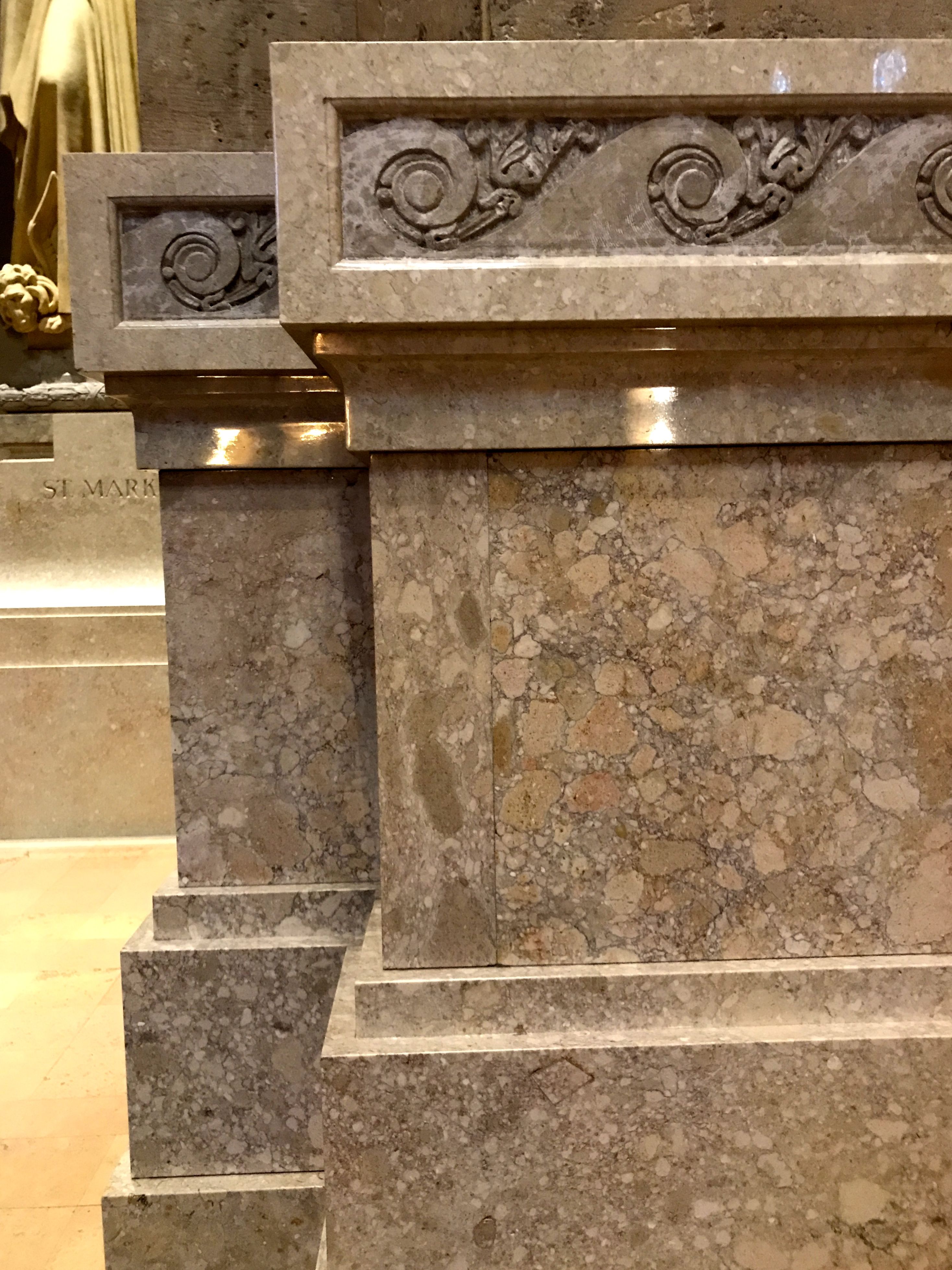
There were lovely details to be found.
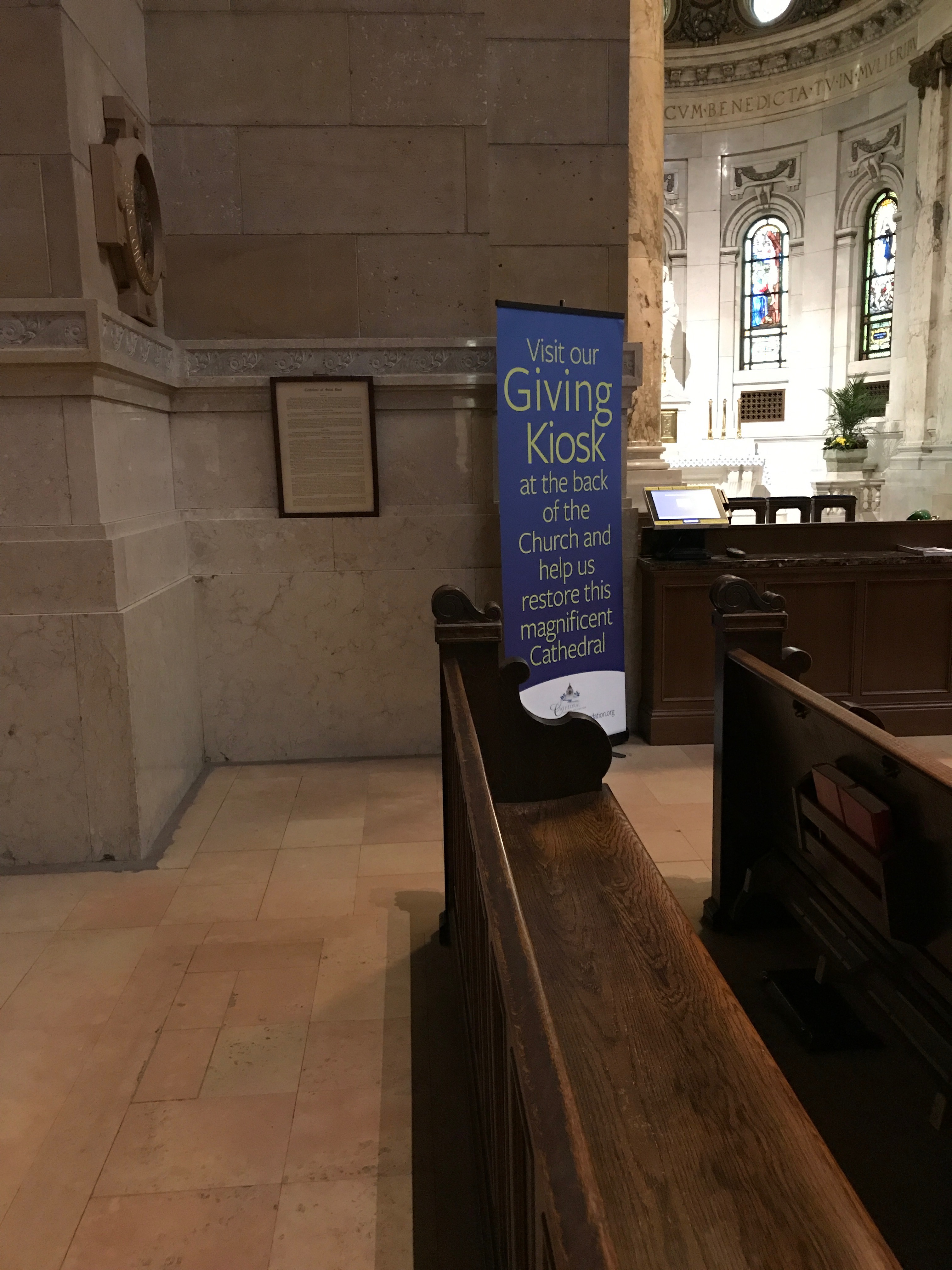
As I walked around, I noticed this banner that directed people to their Giving Kiosk.
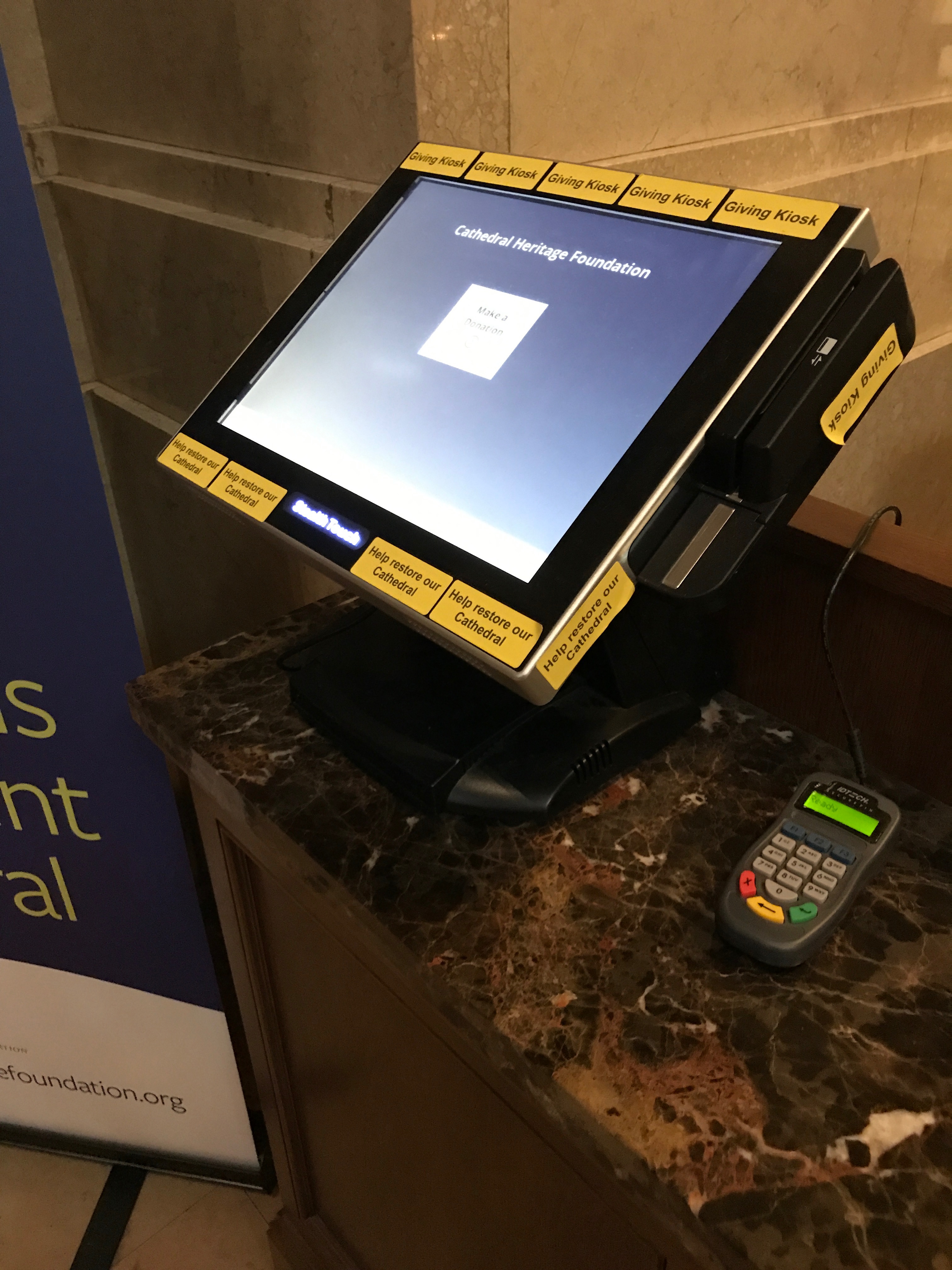
They make giving easy. I know I do most of my transactions electronically these days.

I was about to leave when I noticed a sign that directed us to the lower level for more information. There was even an elevator! How could I turn that down?
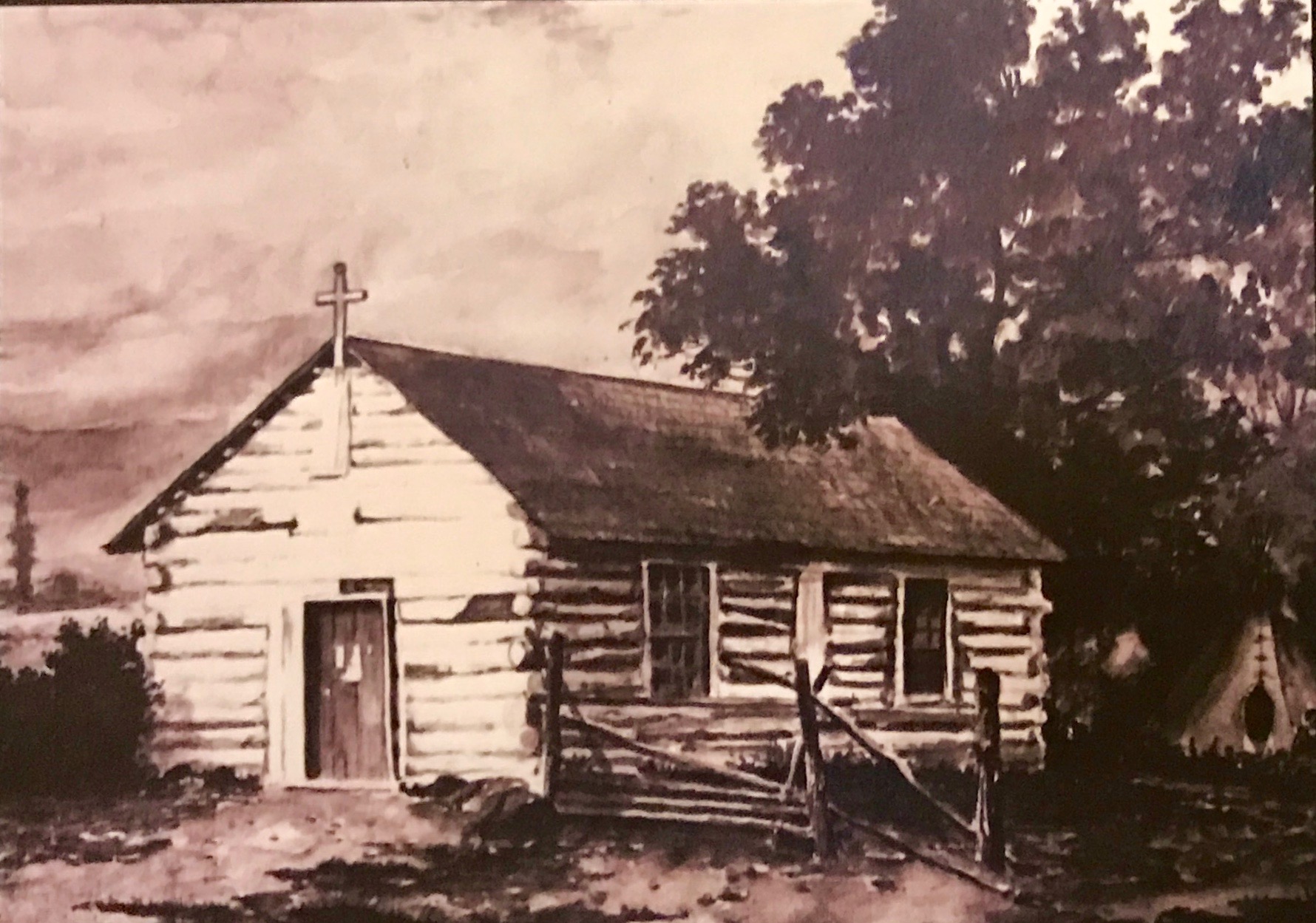
There was a drawing of the first church in what became the Diocese of St. Paul. It was built in 1841 and became the cathedral when Joseph Crétin was appointed as bishop of the newly established diocese in 1851. While this bears little resemblance to what we think of as a cathedral these days, a cathedral is the principal church of a diocese that contains the bishop’s seat, which is called a cathedra.
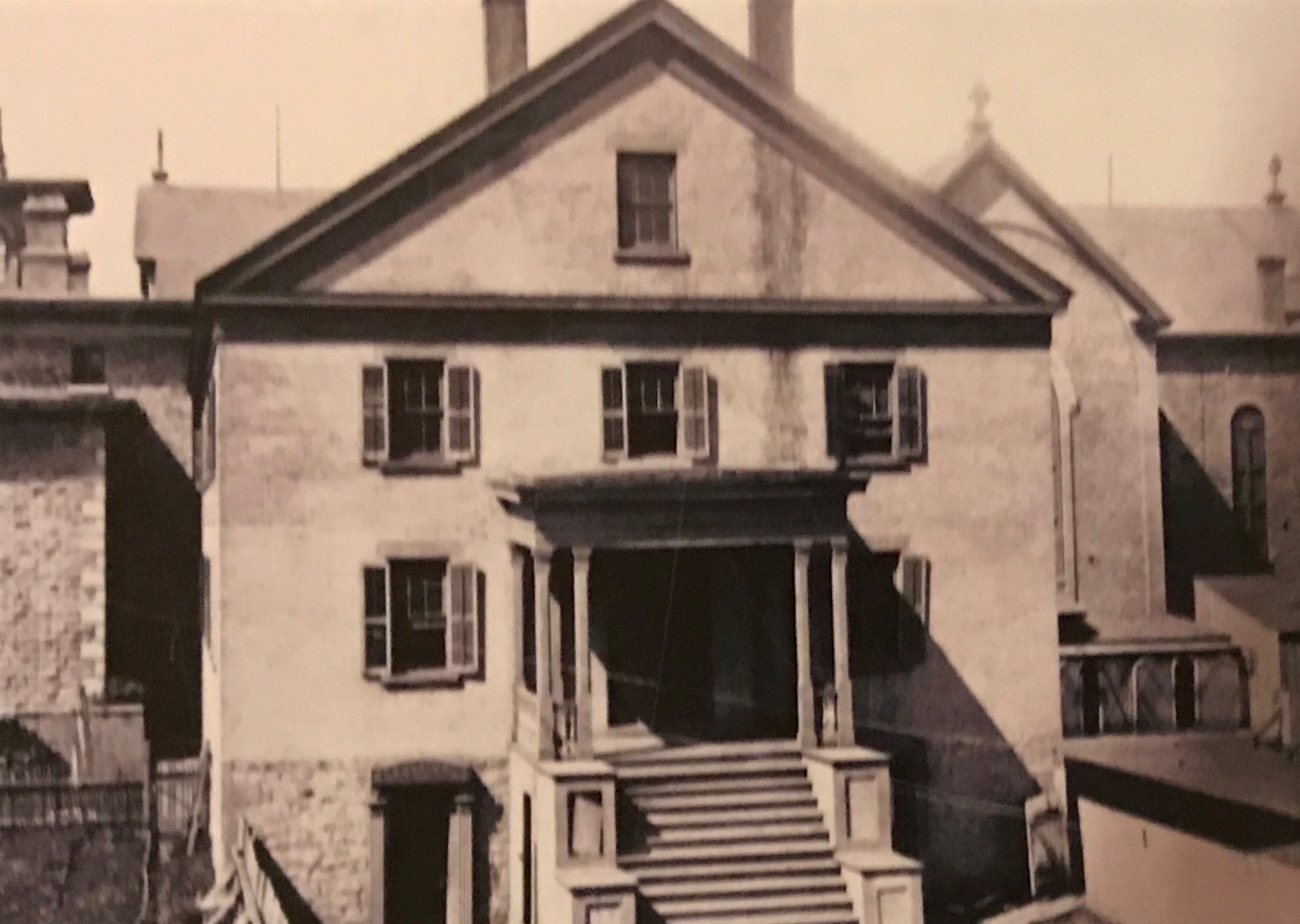
Bishop Crétin started immediately to build a larger church to serve the fast-growing population of St. Paul. The school was on the first floor, the church was on the second and the offices and living quarters for the bishop and his staff on the third floor.
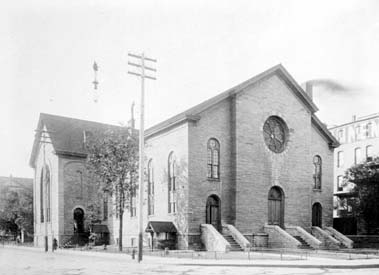
The second building was still too small for the needs of the diocese, so the bishop began plans for a third cathedral.  It was started in 1853 and completed in 1858. Its construction was delayed by the Panic of 1857 and Bishop Crétin’s death.

Incidentally, the Panic of 1857 was the first worldwide economic crisis and it started in Britain. In the United States, it was caused by the declining international economy and the over-expansion of the domestic economy.  It was a fairly short-lived financial downturn. However, a proper recovery from the downturn didn’t happen until the Civil War in 1861. The banks didn’t recover until after the Civil War.

The Panic of 1857 is significant regarding the third cathedral for two reasons. The first reason is that it delayed its construction. The second reason that the cathedral had practically no ornamentation in an effort to cut costs.

I would be remiss in my report if I didn’t include the last thing I saw in the display.

There was also a nifty model of the fourth cathedral made of Legos.

And with that it was about time for me to head out.
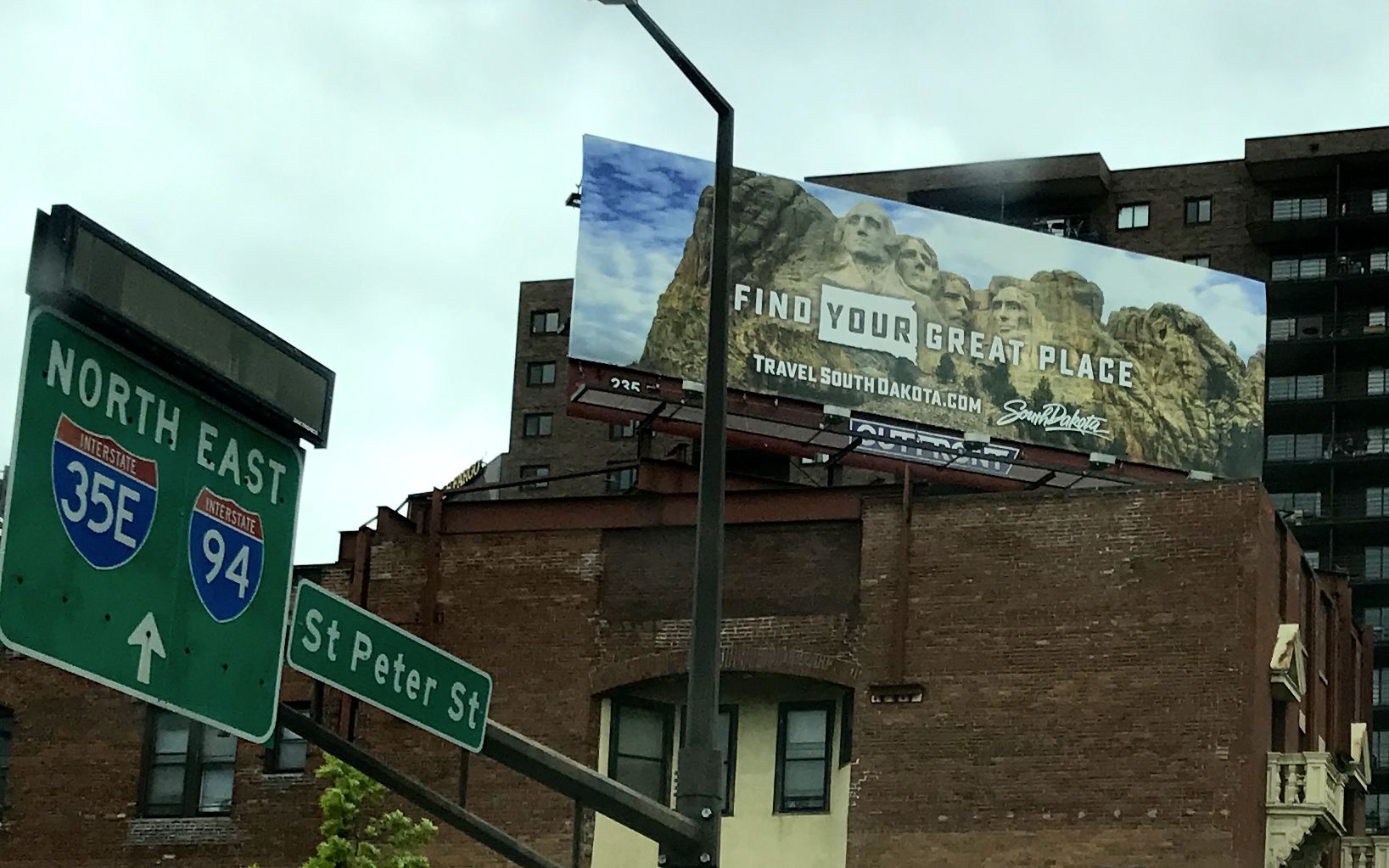
I drove around a bit. While stopped at an intersection, I spied this billboard for South Dakota. Too late! I’ve already done that state.
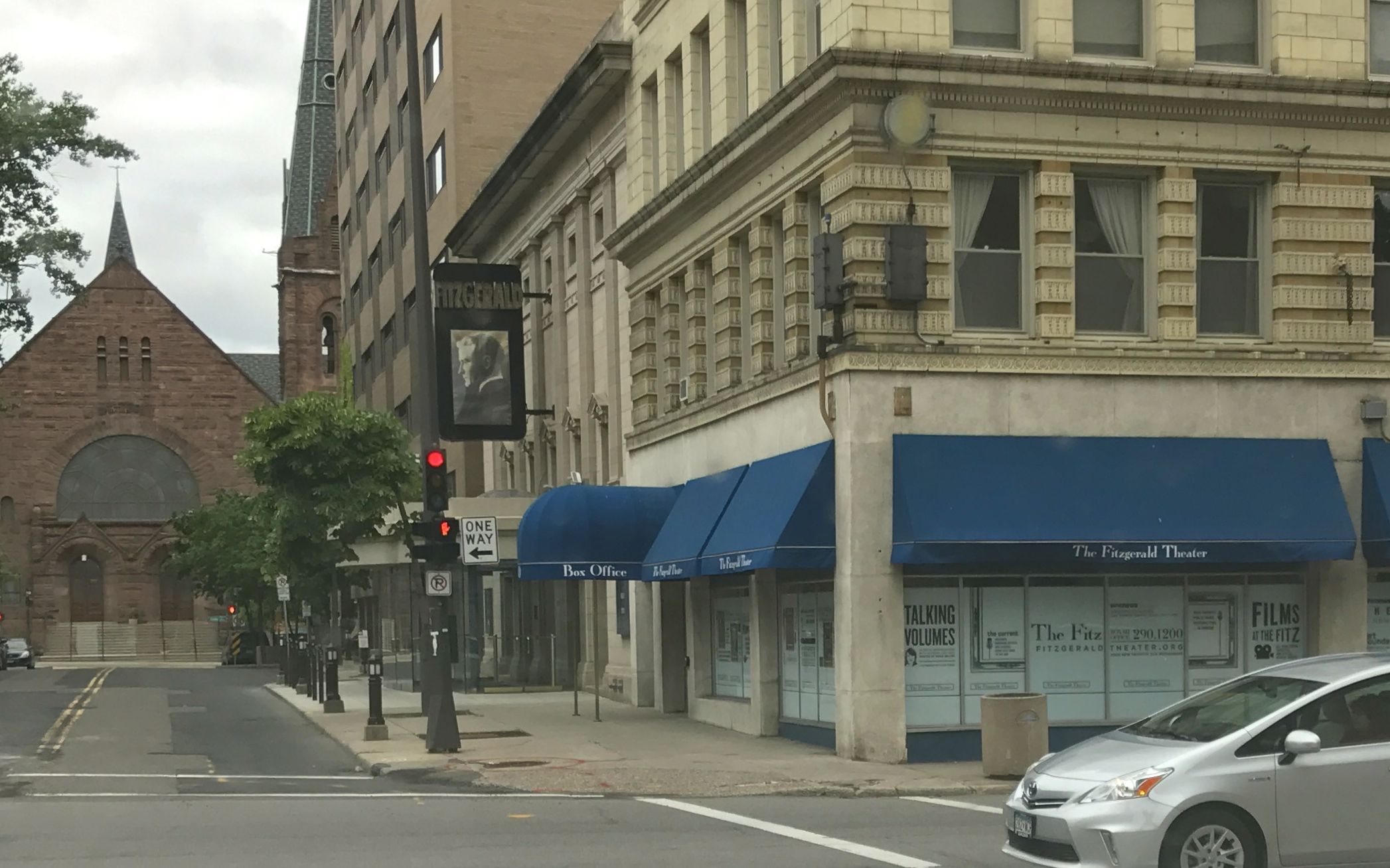
I was rather thrilled to see the Fitzgerald Theater. That was the home theater for  A Prairie Home Companion hosted by Garrison Keillor from 1974 until 2016.

With that I was ready for dinner. I headed out to Mall of America.

Really, malls aren’t my thing, and ENORMOUS malls are even less appealing, but I figured it was one of those “while I’m in the area” places. Besides, I was hungry, and I figured that they had to have restaurants.
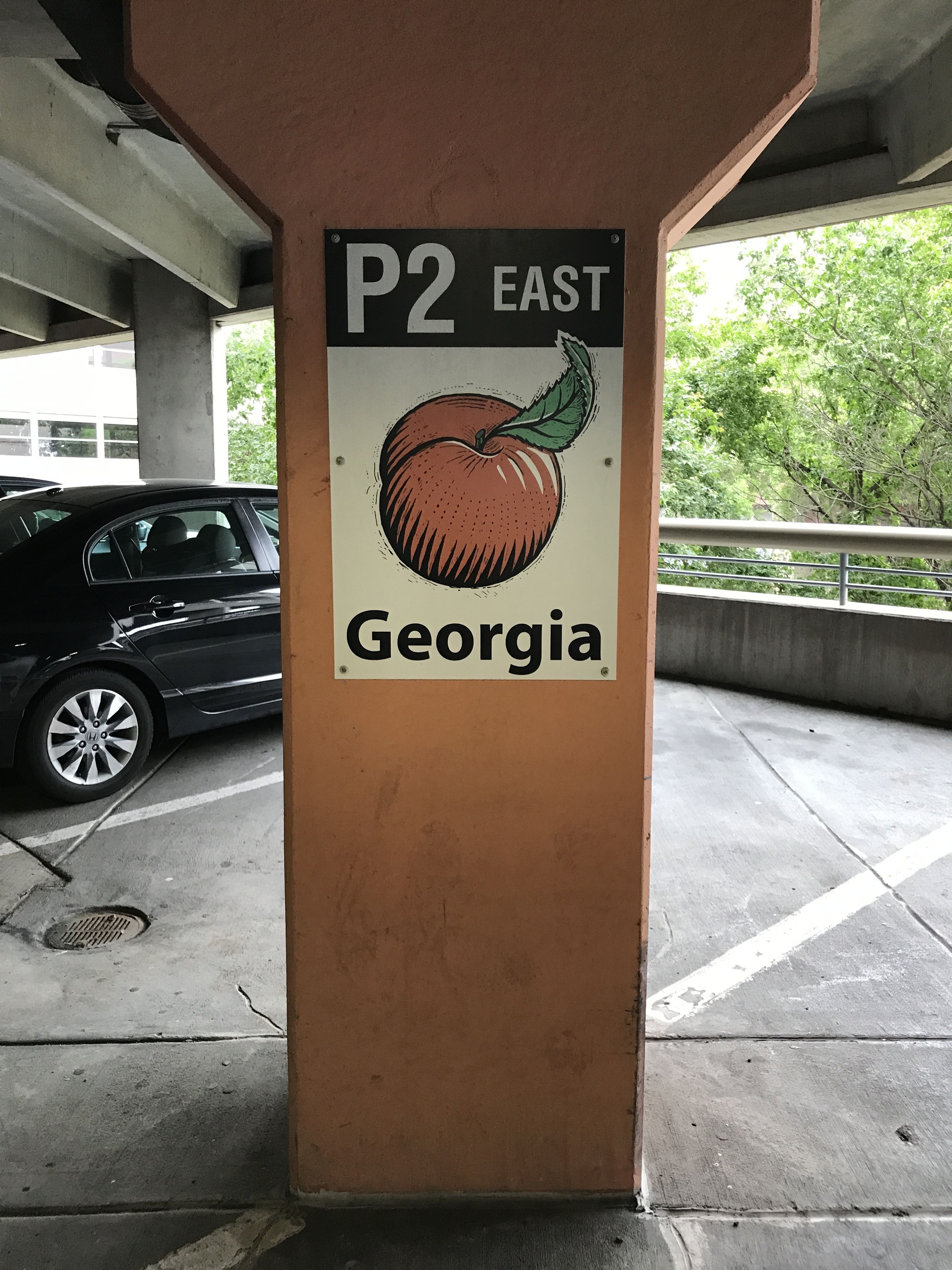
I parked and took this picture to help me find my car again. This is one place I didn’t want to have to wander around aimlessly when it was time to leave.

I wandered around for a bit, just looking at what there was to see. In addition to the usual assortment of stores, there was an amusement park.
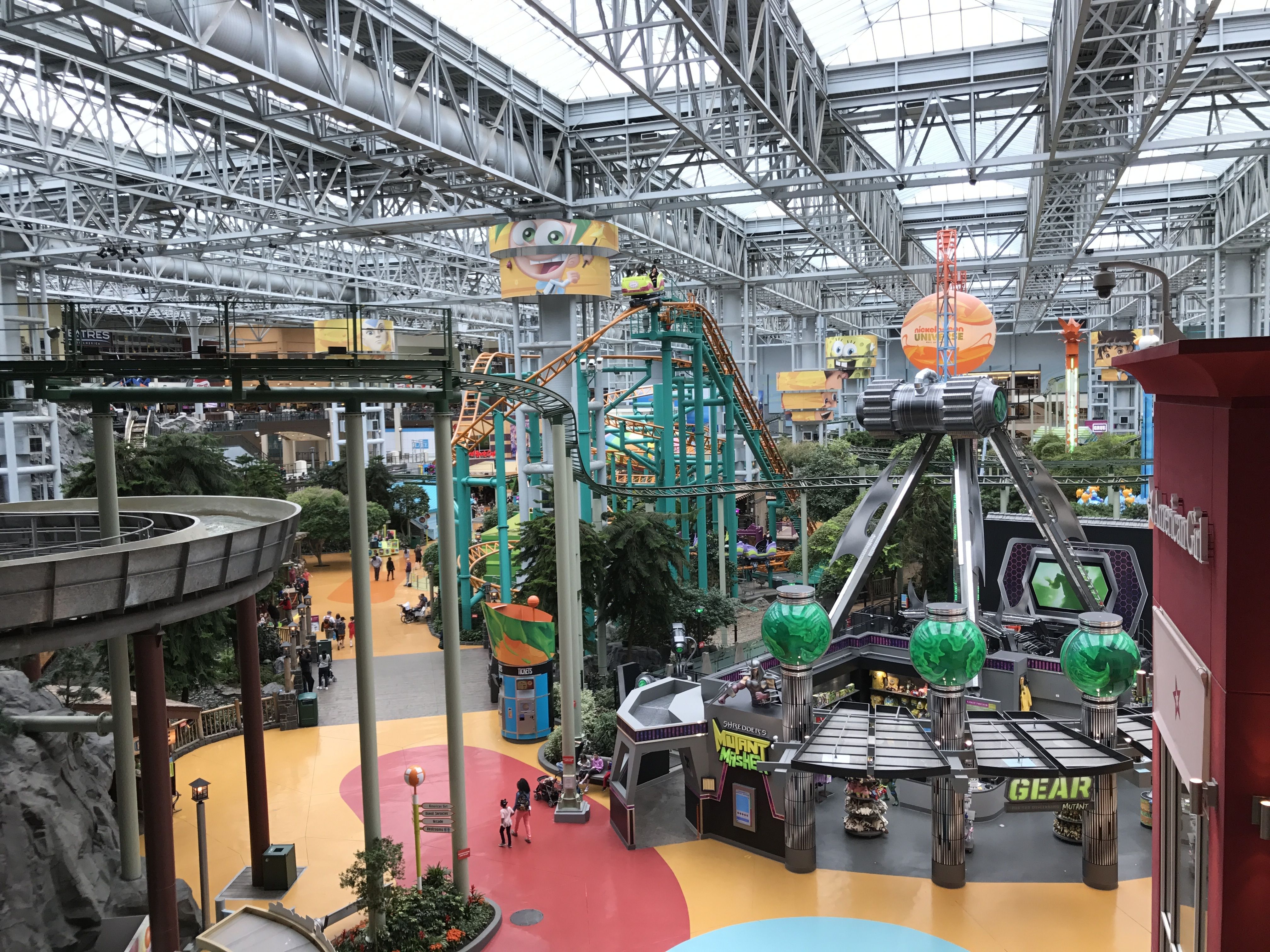
I stood and looked for a while, but I didn’t find anything tempting enough to make me get any closer. Besides, I was getting hungry.
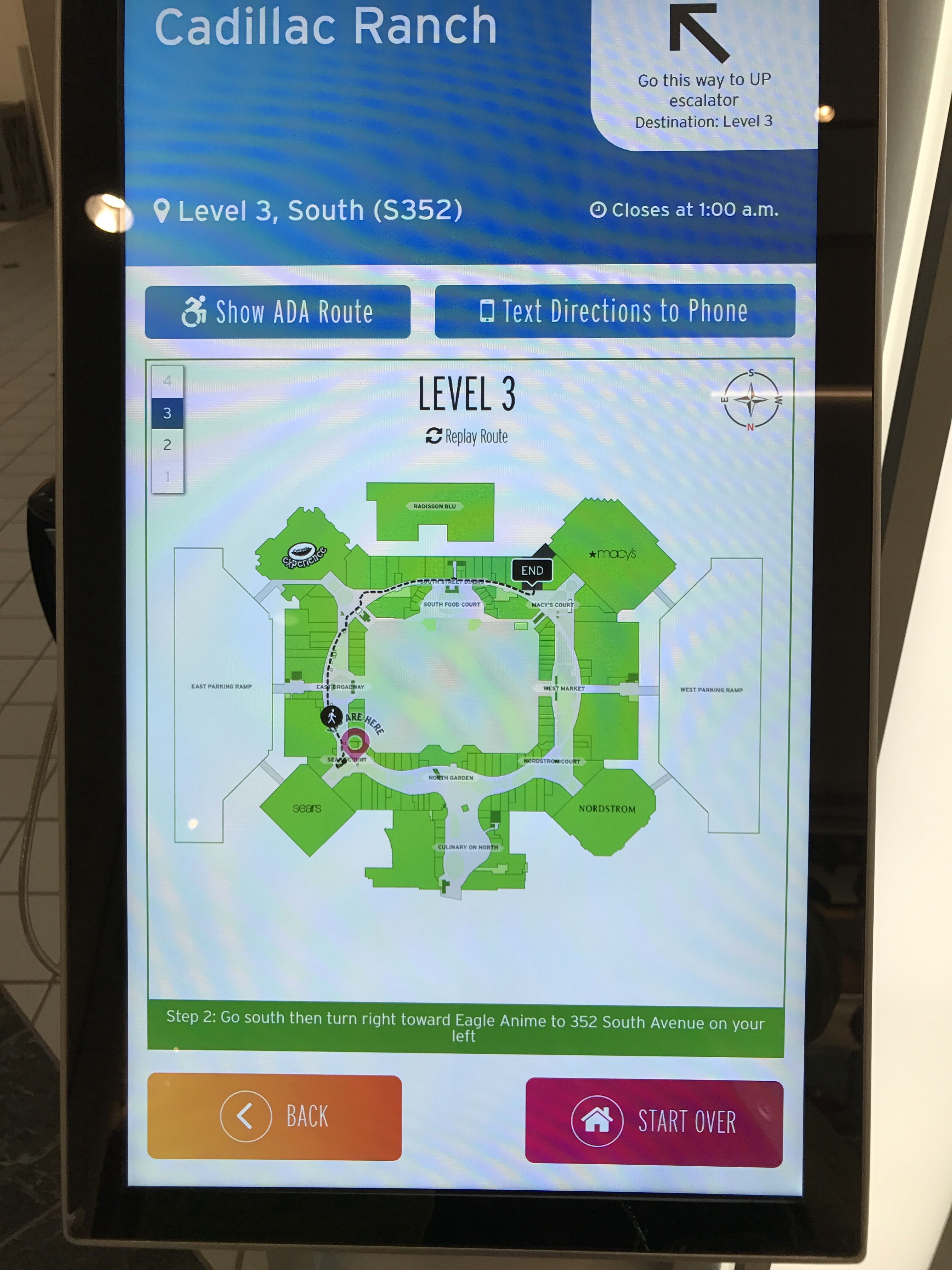
I found a kiosk that I could use to select a restaurant and then help me plan how to get there.

I chose Cadillac Ranch, not because I knew anything about the food, but because I had visited Cadillac Ranch when I visited Amarillo, Texas.

I had asked people what I should eat while I was in the area. They recommended a Juicy Lucy.
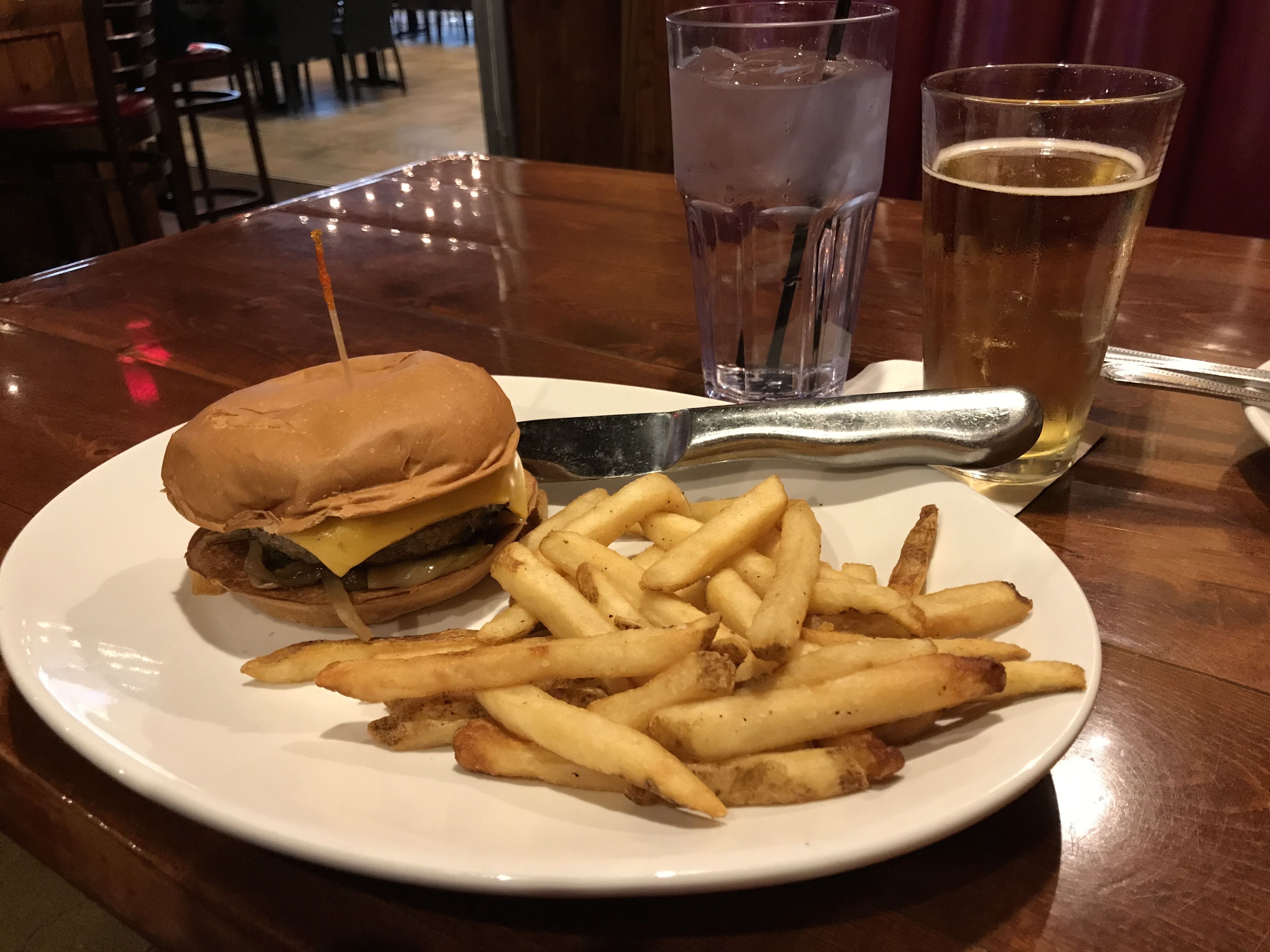
It was quite the burger.
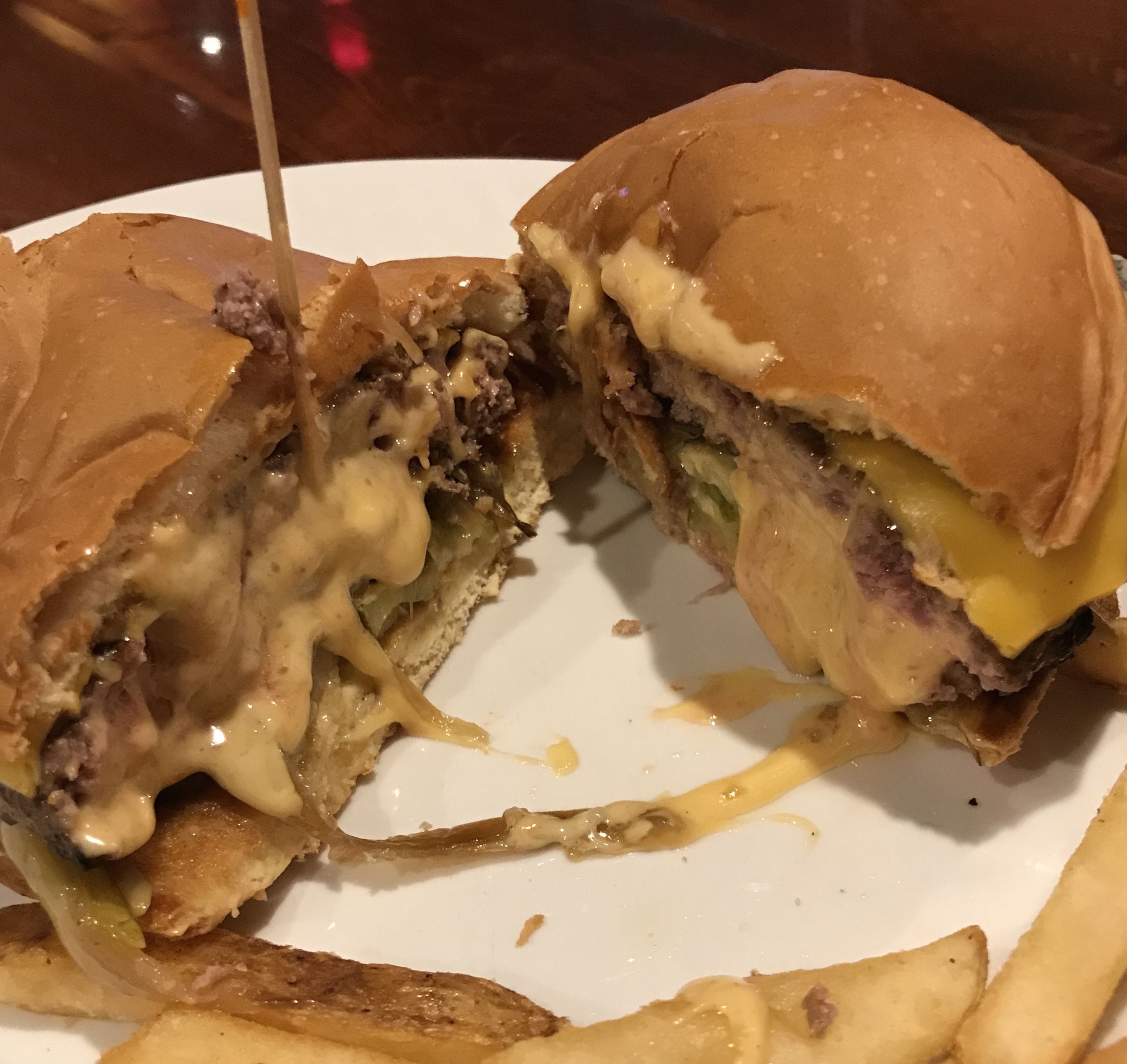
Actually, it was kind of like a double cheeseburger with the cheese on the inside. I managed to eat my dinner. Sufficiently nourished, I head back to find Bart on the P2 floor of Georgia.
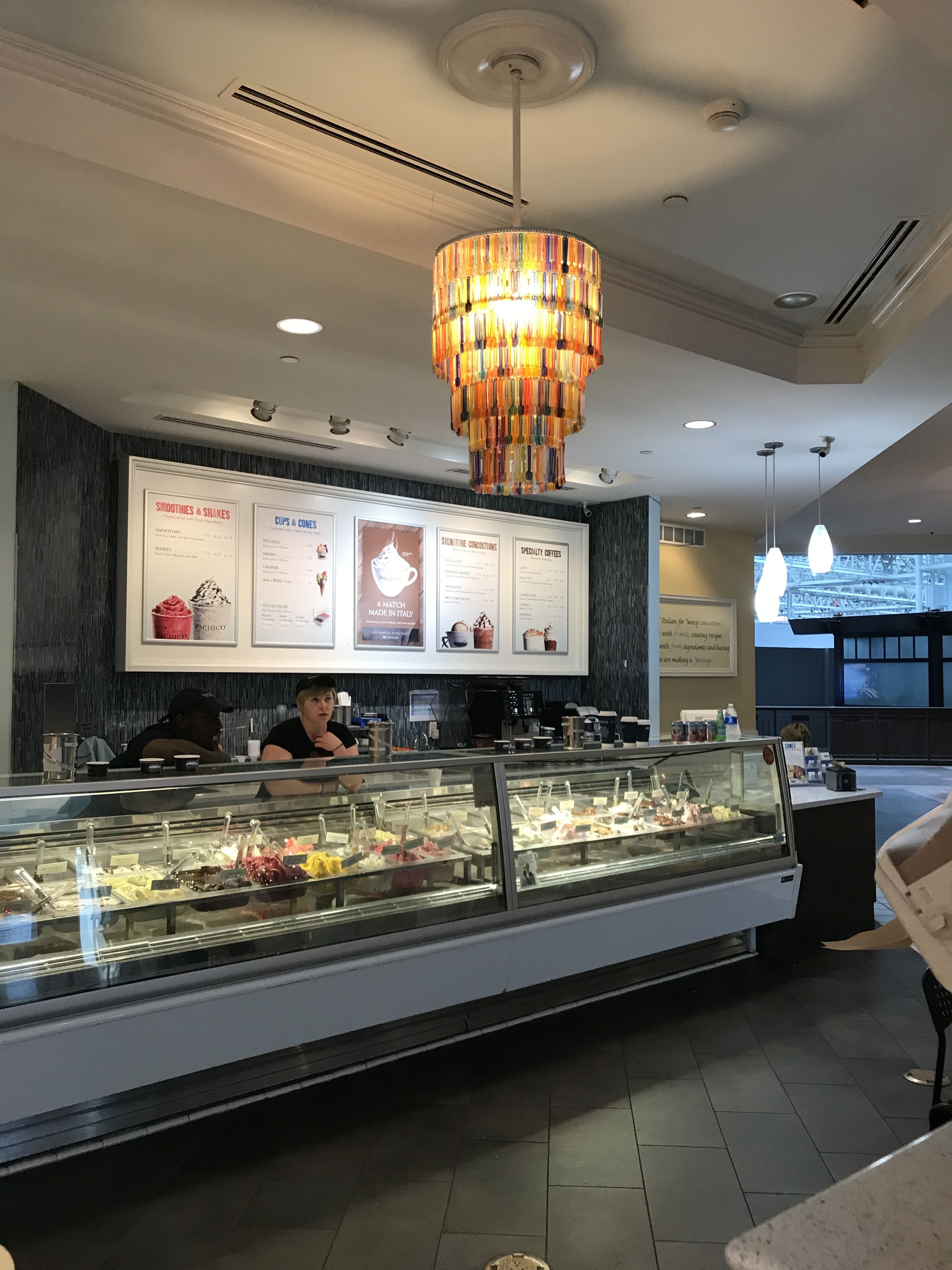
On the way out, I spied this gelato shop.
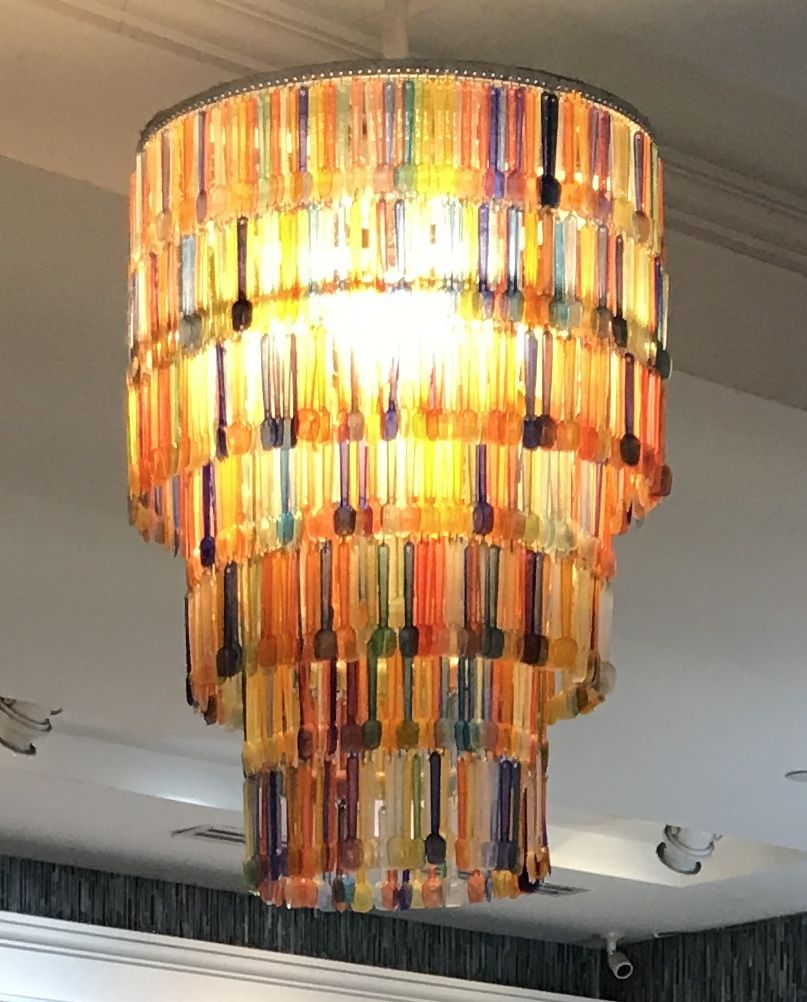
Actually, what caught my attention was the chandelier made of gelato spoons.

And with that, I called it a night.


Back to Texas – Stinnett, Alibates Quarries, Cadillac Ranch

I set out from my campsite at Tetilla Peak fairly early. Not break-of-dawn-early, but definitely before noon. That’s pretty early for me. My plan was to stop at San Jon, New Mexico for the night. I had a lead on a free city park there. The next day, I’d continue on to a Lake Meredith National Recreation Area, where there were also some free campgrounds.

But, when I got to San Jon exit on I-40, I wasn’t ready to stop. It was early and I felt fresh, so I decided to head for Lake Meredith. The government website that I consulted showed some really lovely campsites with lake views, but I couldn’t locate them on a map. I checked with another of my sources, and I got directions for one of them and had my phone guide me there.

The sun was nearing the horizon when I found the campground. It was there. It was free. Unfortunately, it was at the bottom of a canyon and the dirt roads were already puddled. There was no cell reception, no one else was camped there AND rain was in the forecast. I decided that it wouldn’t do. So, I got myself turned around and headed back out of the canyon. Once I had a cell signal, I found another campground and headed that way. Twilight was fading fast.

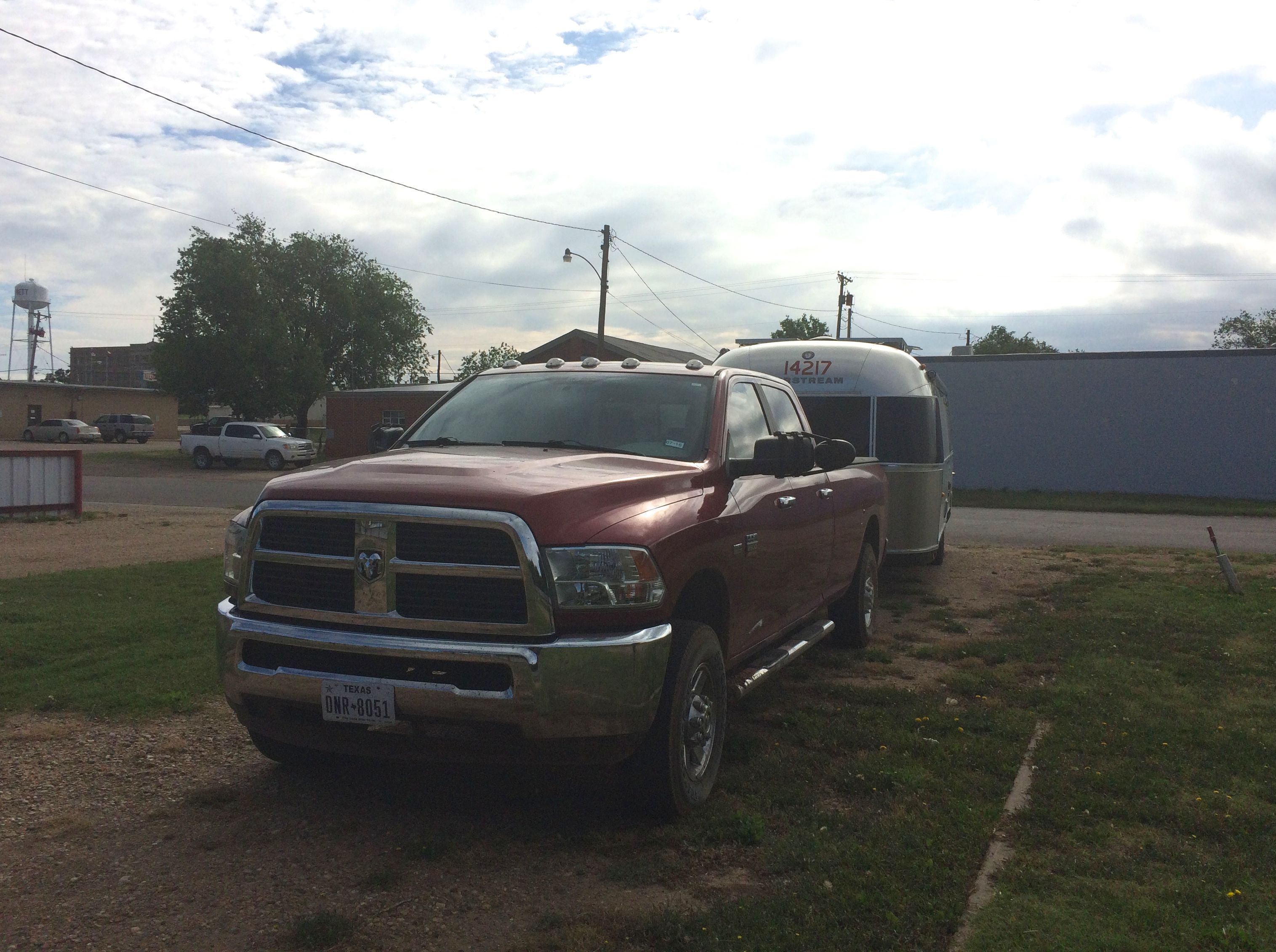
I found the park and got settled in. Luckily it was in a town that had streetlights, so I was able to maneuver. But, after being on the road for at least eight hours, I wasn’t about to back in. I just headed in and stopped.

at the park

No one else was there and it was nice and quiet. It was so quiet that I slept in really late. Then I decided that I might as well just spend the day there and rest up from the drive.

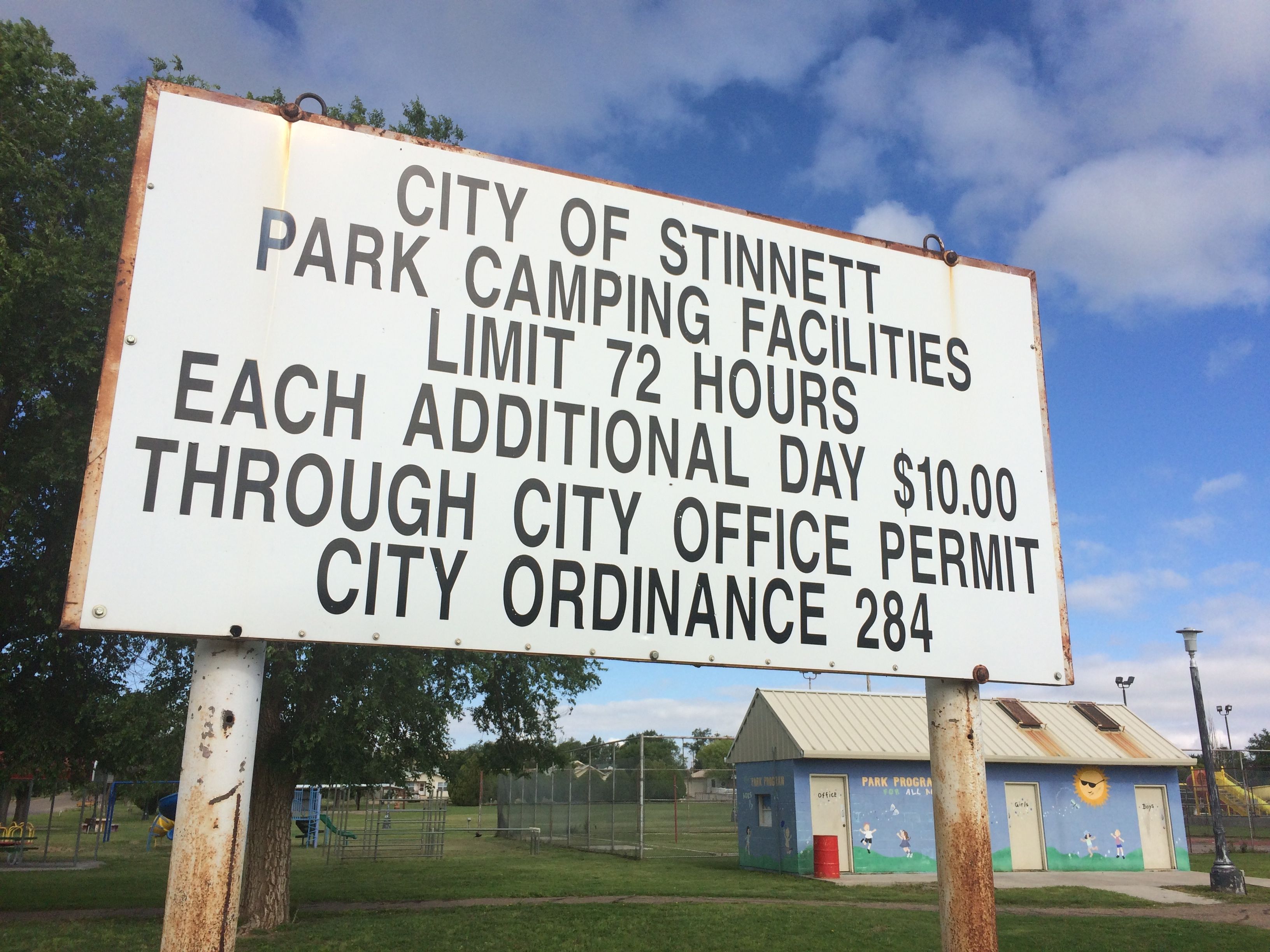
Free camping sign

The good people of Stinnett were wonderfully hospitable. They allow people to camp there for three days for free. They even have water and electricity hookups, which I didn’t bother with. I think they have a waste tank dump, too. I had just dumped at Tetilla Peak, so I was all set in that department.

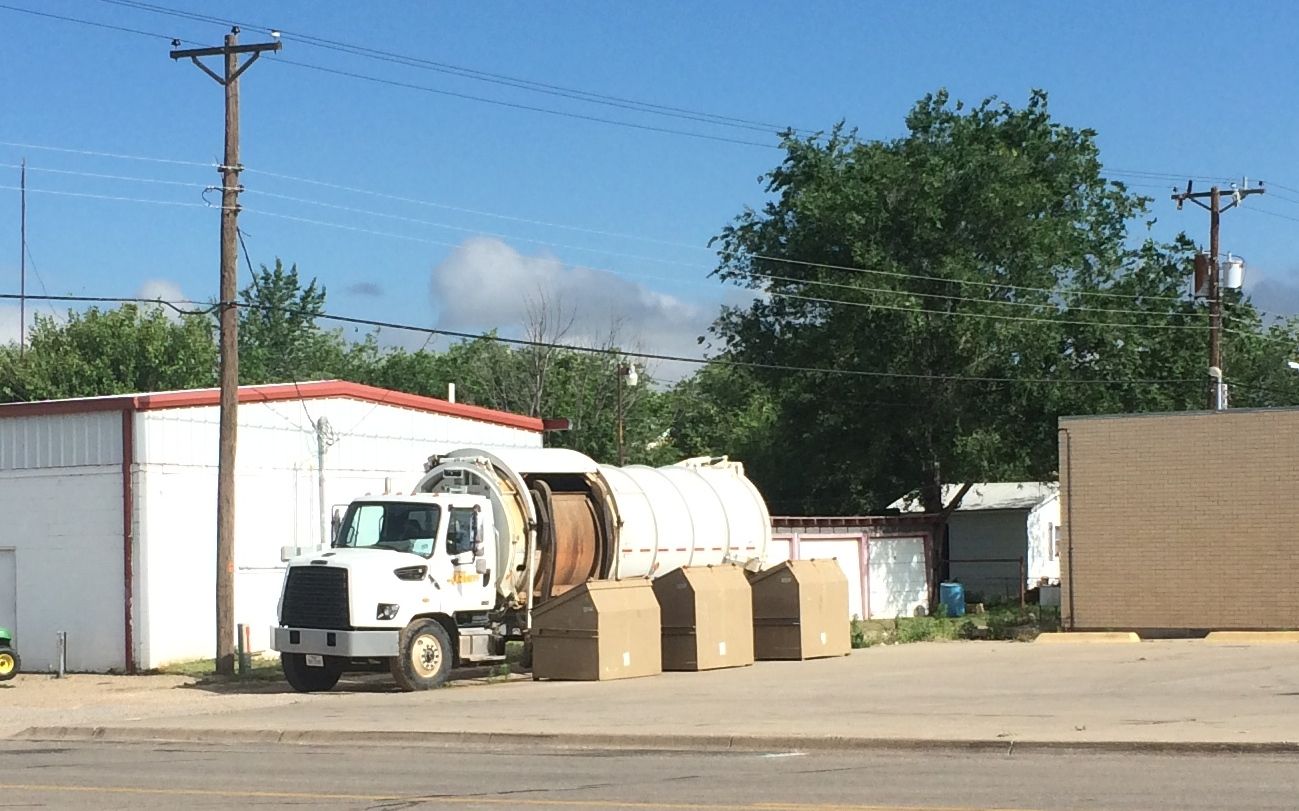
After a day of rest, I checked my connections and got backed out. They didn’t have much in town that I saw, but they did have two gas stations. I picked the one that was easier to pull into and filled up. While I was waiting for the person with the long, long trailer hauling a fork lift to finish up, I got to see an interesting garbage truck.

cylindrical trash truck

It was cylindrical!

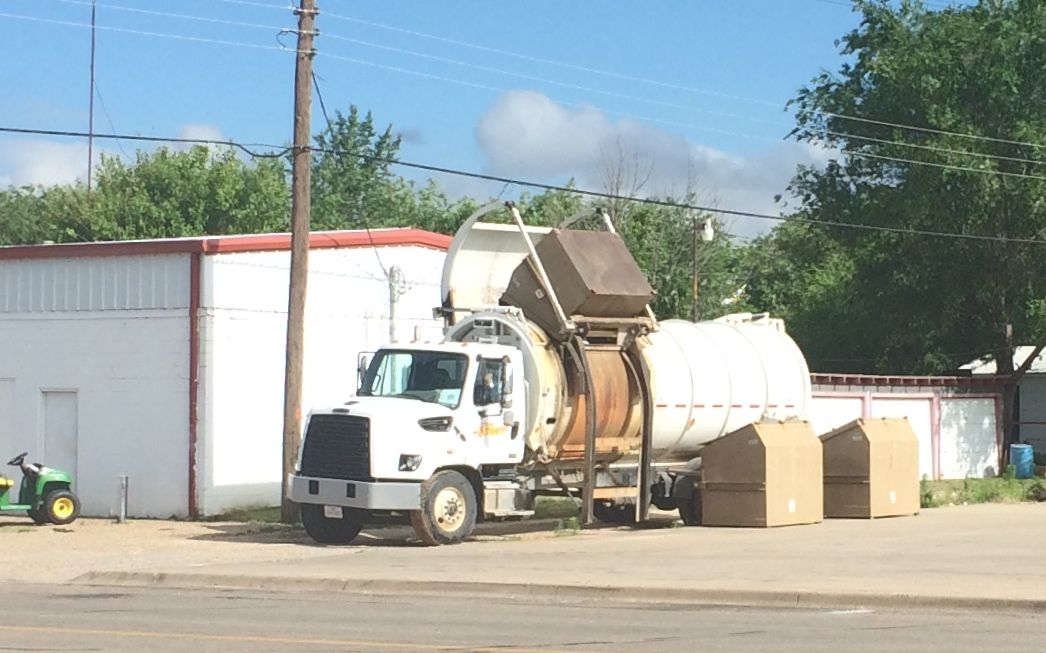
cylindrical trash truck dumping

Up and in! It seems that this is how they handle trash – at least in this part of Texas. They have those dumpsters sitting out by the road in front of houses and businesses, rather than the “Herby Curbies” we had in Kalamazoo. Interesting. Or, maybe I am just easily amused.

I had two touristic activities on my schedule for the day. The first was Alibates Flint Quarries National Monument.

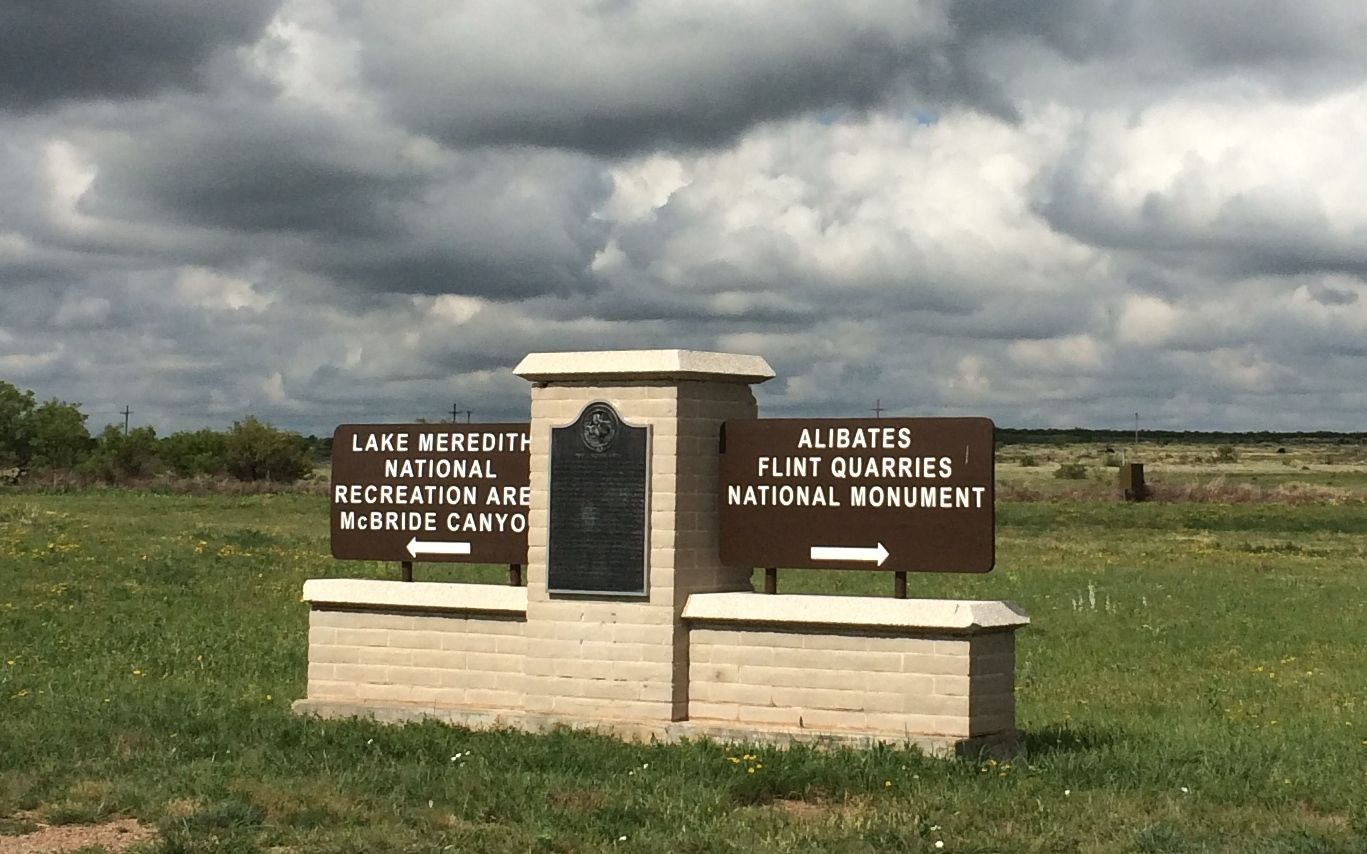
signs pointing to quarriy an campground

Incidentally, McBride Canyon was where I had tried to camp the day before. I took the road to the right and headed to the quarries.

I have always been attracted to “industrial” sites. To the Antelope Creek people, who called this place home from 1100 A.D. to 1500 A.D., this was an industrial site, at least in a sense. They quarried the Alibates flint into blanks that they used for trade.

Alibates flint is actually an “agatized dolomite”. Dolomite is a calcium-based rock, and I have heard it referred to as limestone. In checking my facts for this post, I am not sure that dolomite is limestone, but it does share some of the same properties. For instance, it does dissolve in rain water. One of the theories about where the flint came from is that silica rich ash from volcanic eruptions in what is now Yellowstone County in Wyoming settled on top of the older dolomite. As rainwater percolated through the ash, the silica was dissolved into the rainwater and soaked in to the dolomite. The calcium carbonate in the dolomite washed out, leaving the silica dioxide behind.

To my way of thinking, this sounds a lot like how petrified wood was formed. However, a know-it-all named George, who was on the tour with me, told me that I was all wrong. But, he didn’t know how to pronounce “Canyon de Chelly”, which he proceeded to lecture me on, even though I told him that I had just been there and took the tour. Mansplaining. Gotta love it.

Anyway, I arrived too late for the morning tour, but I got to watch a wonderful flint knapping demonstration.

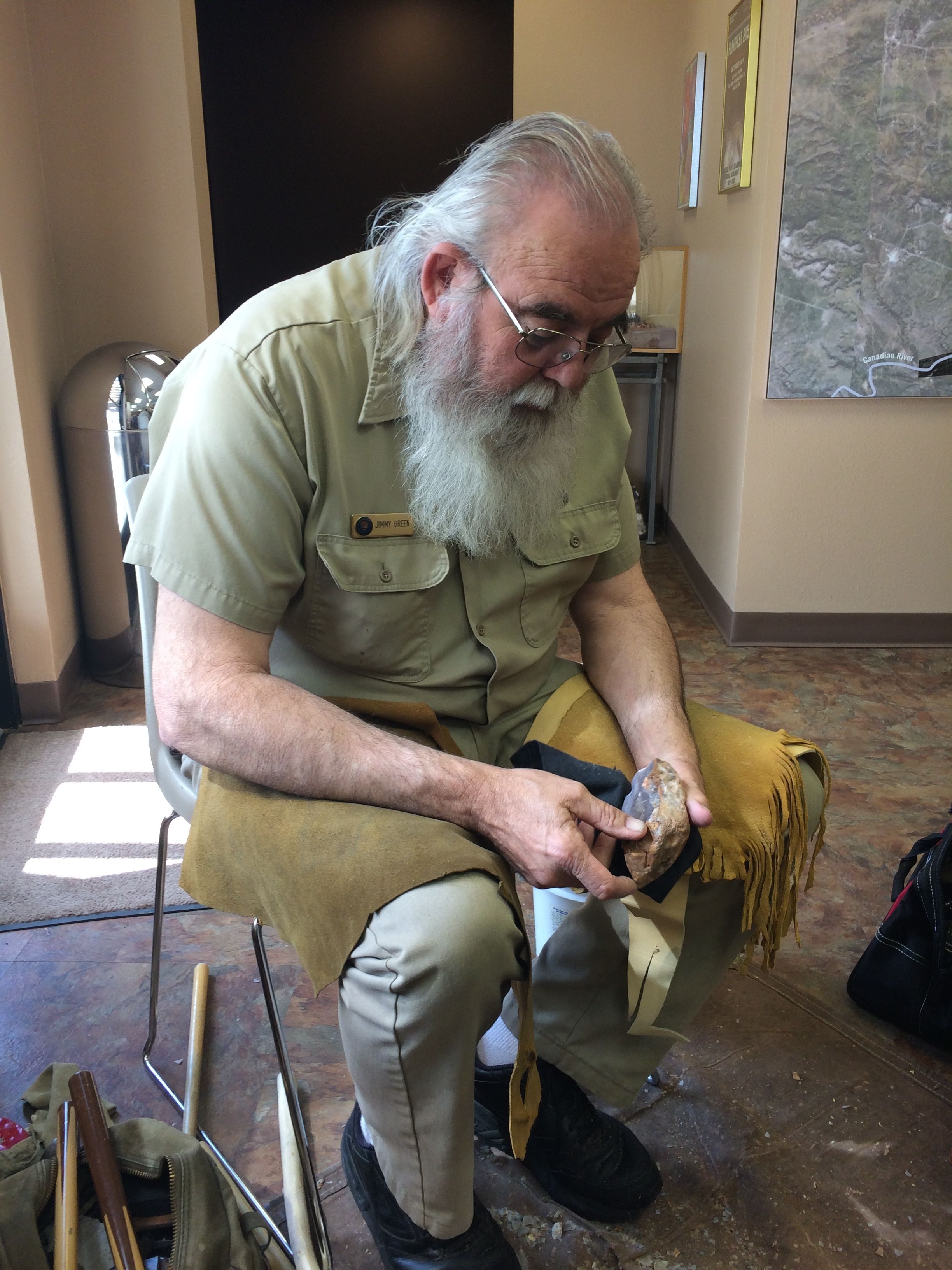
Jimmy Green knapping

Jimmy Green, a volunteer, was knapping a nice piece of flint when he invited me to have a seat in one of the rockers and watch him work. He talked about his process and how he visualizes the shape he is going to make.

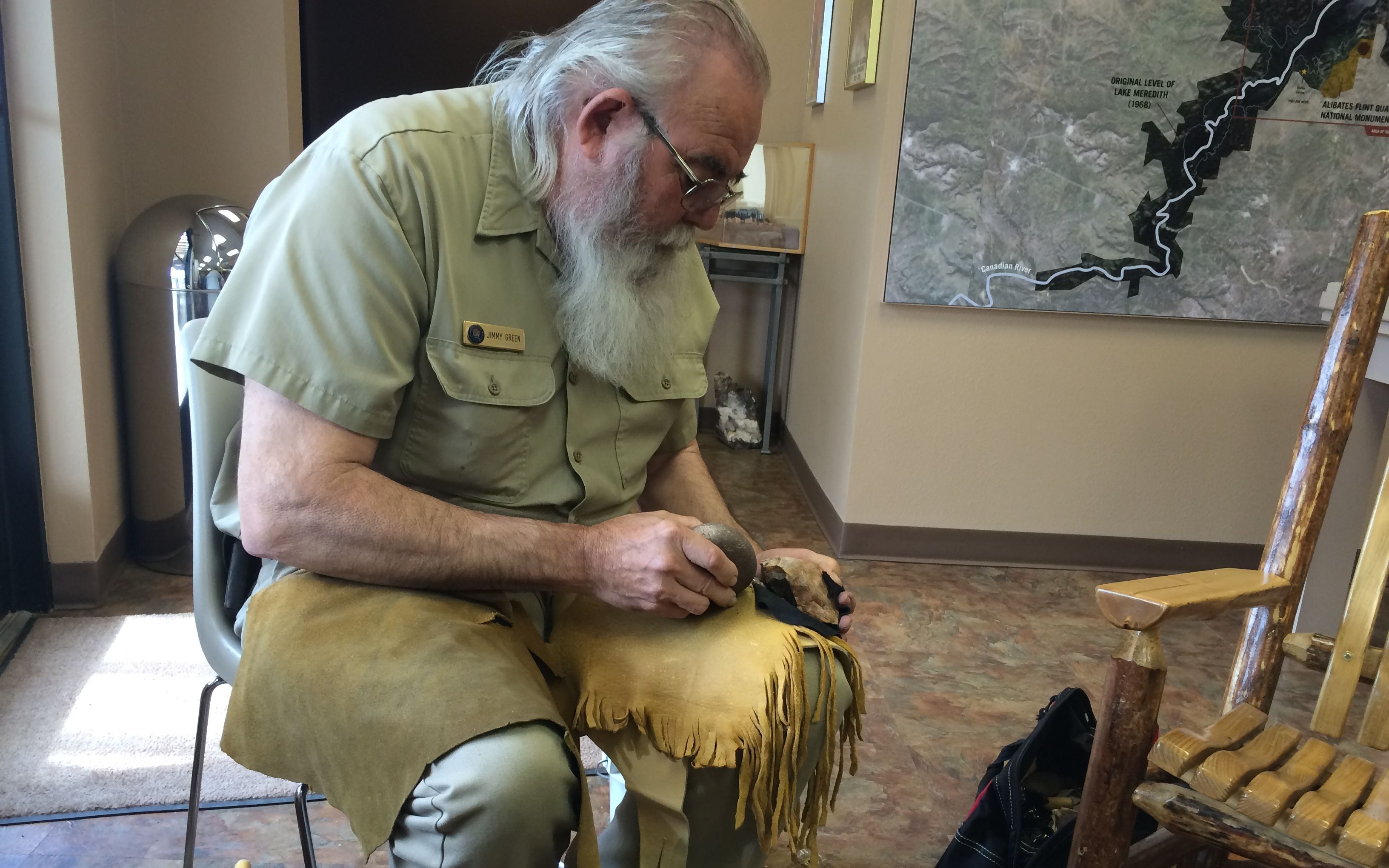
Jimmy green 2

He used a cobble as a hammer. He said that his hammer was missing, so he just went outside and picked up one to use. I love that casual approach to working. The tools don’t matter as much as the knowledge of the worker.

Jimmy using copper tools

He talked about making his tools. He made this copper-tipped tool himself by work-hardening the copper and then hammering it into the shape that he wanted. The wooden stick is looped through one of his belt loops to steady it, and then he hits the tool with a small copper hammer to get the flakes to split off.

finished arrowhead

At the end of the demonstration, he gifted me the arrowhead he made! I can’t wait to turn it into a necklace. I have to make sure that I figure out a way to dull the sharp edges, though. Flint can have an edge that is finer than steel or glass, according to the information in the exhibit in the museum. In fact, on the 10 point Mohs scale, flint is a 7.5. The softest mineral on the scale is talc at 1. The hardest is diamond at 10. Flint is between quartz at 7 and topaz at 8.

I was kind of excited to see the display on the Mohs scale, because we used to teach it in science a long time ago – before they “improved” the curriculum.

Jimmy said it was time for his lunch, so I thanked him for the great demonstration and toured the small museum and watched the video. I check to make sure that they were going to have an afternoon tour – they were – and then I went out to Flo and had a spot of lunch myself.

At the appointed time, I met the ranger and the only other member of the tour. Bob the ranger drove us up to the top of the mesa to begin our tour. Well, it wasn’t really the top of the mesa, as there was a steep trail with stairs cut into the side of the cliff. I think I read somewhere that it is like climbing a 10 story building.

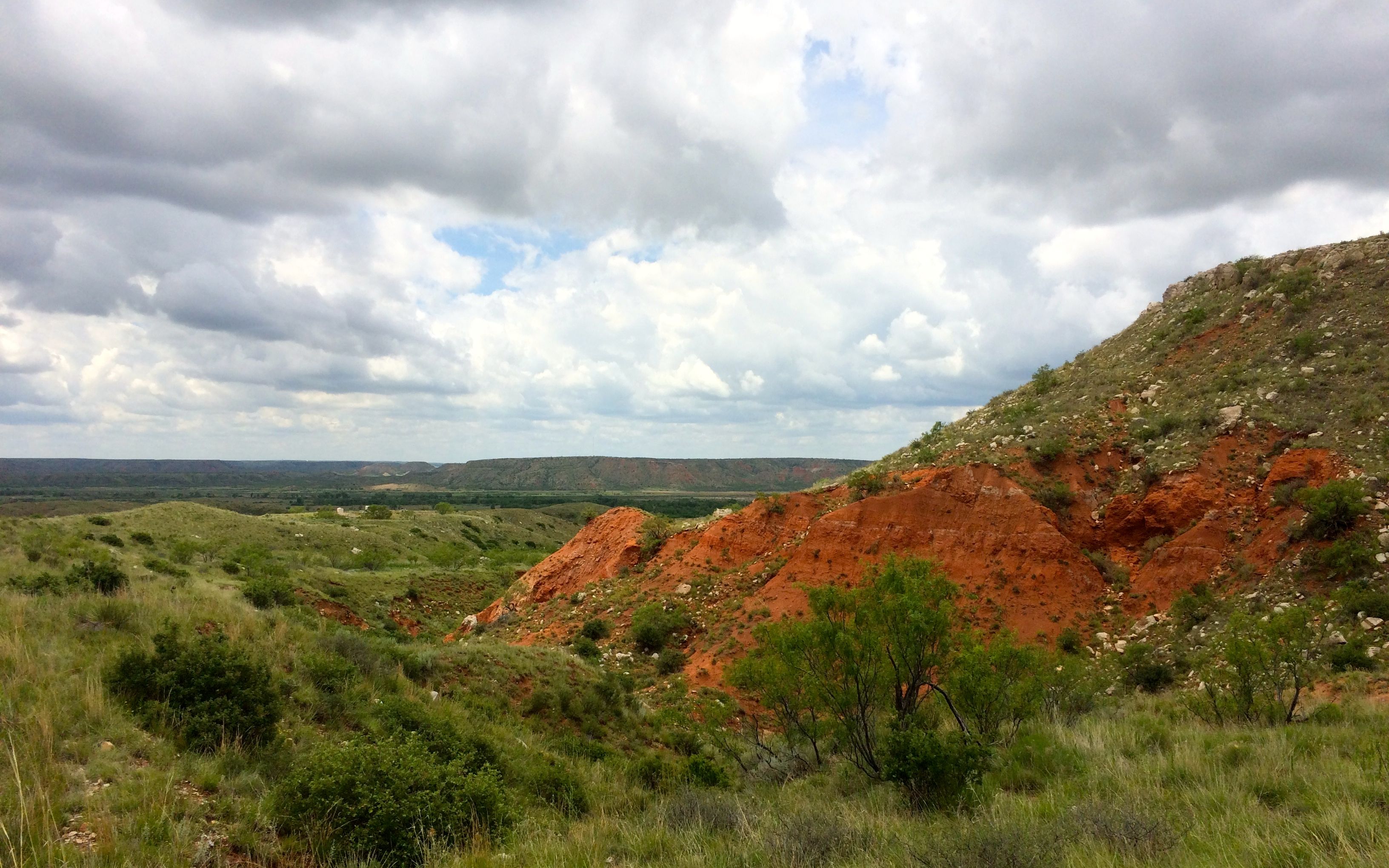
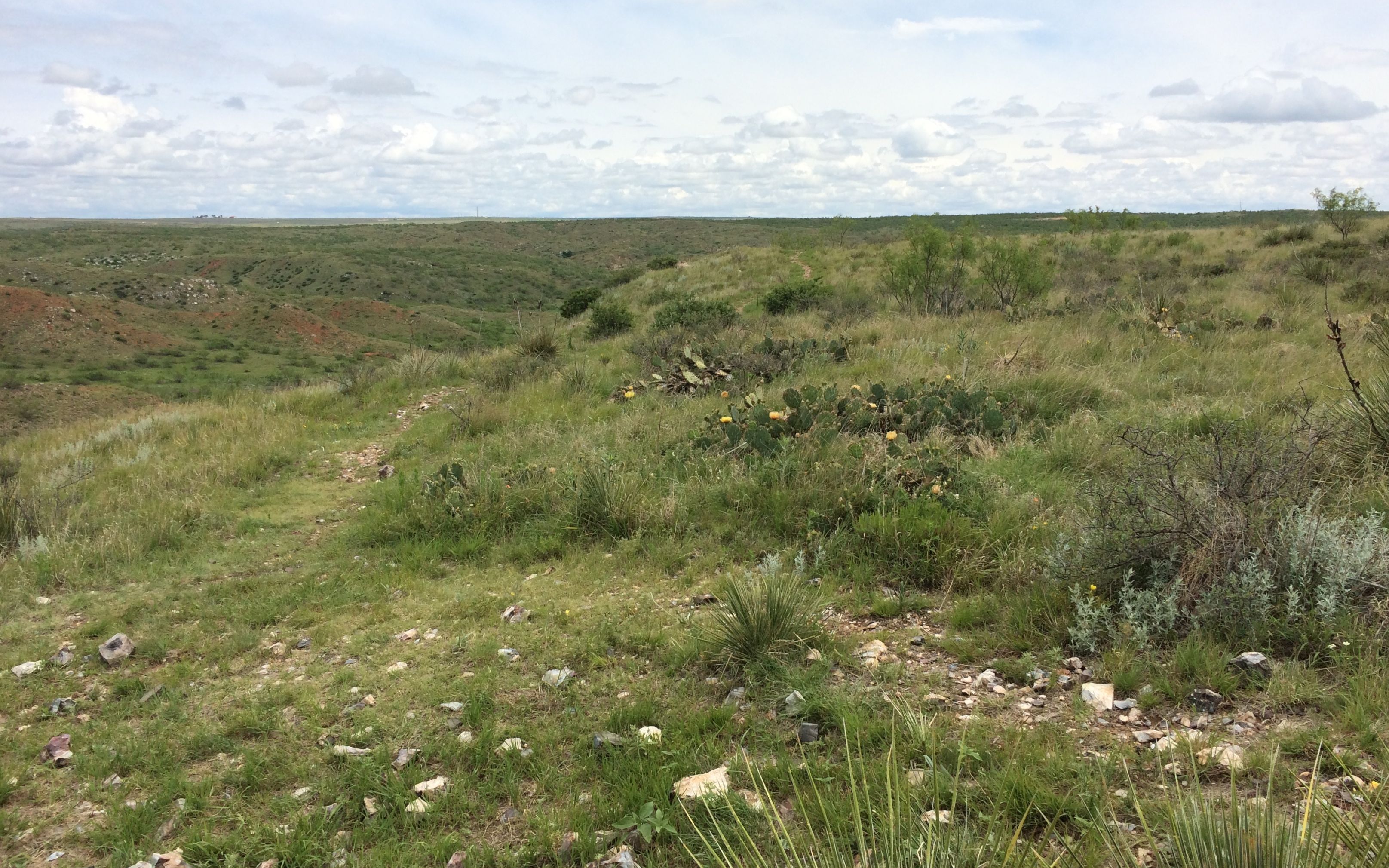
Red soil in an arroyo

I paused to take a shot looking at the red soil showing on the other side of the small canyon we were ascending.

Flint group 1

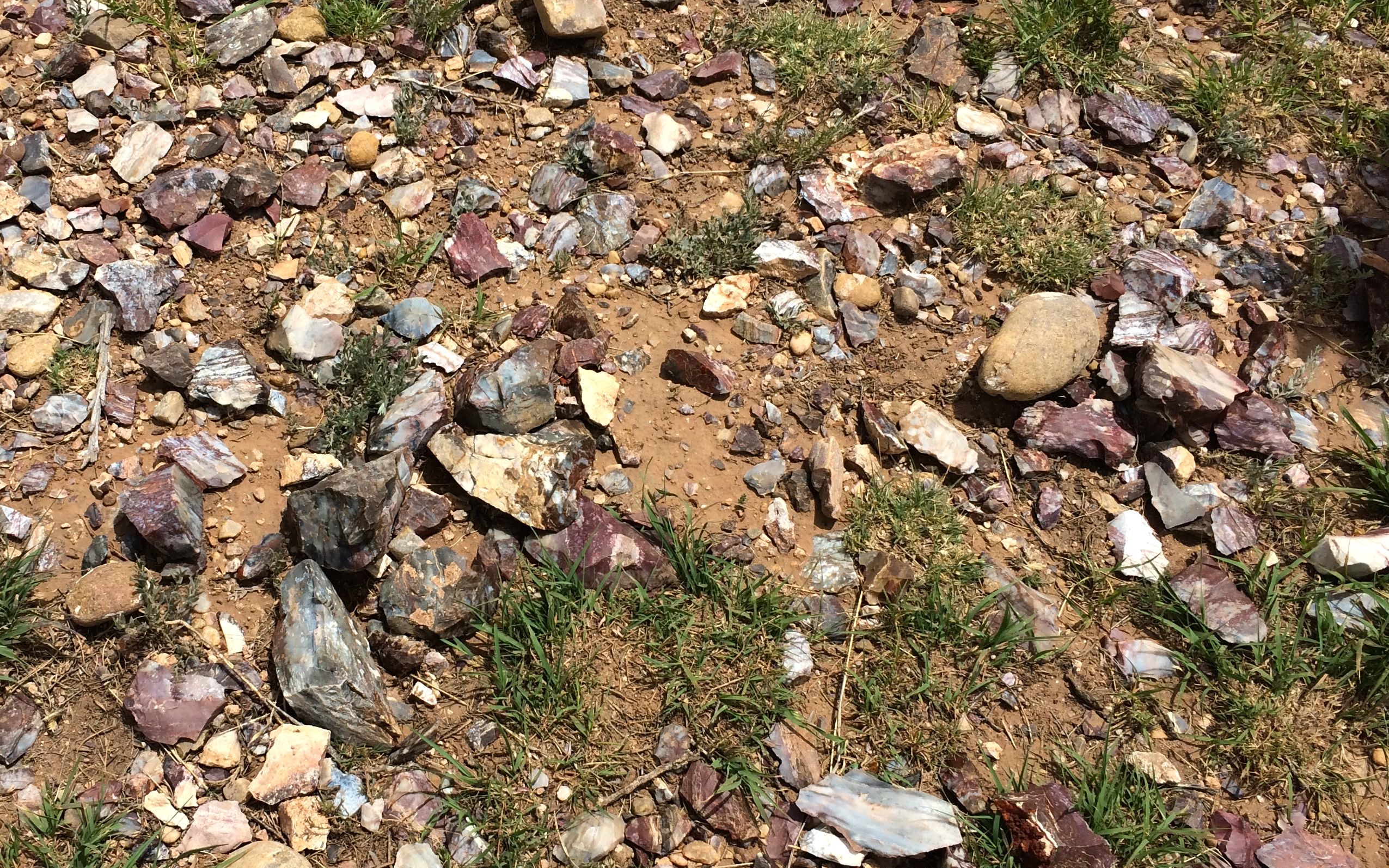
The ranger told us we could pick up the flint – we just couldn’t take any with us. The Alibates flint is very colorful. The colors come from the trace mineral elements that were in the silica. The reds, oranges and yellow are caused by iron. Blues and deep greens are usually caused by manganese.

flint boulder

No wonder the flint was so highly prized! It was really beautiful. The boulders that lie on the surface are not useful for tools. The freeze/thaw cycle has created micro fractures that make them unsuitable for knapping.

We continued on the trail until we came to the top of the mesa, where the quarries were.

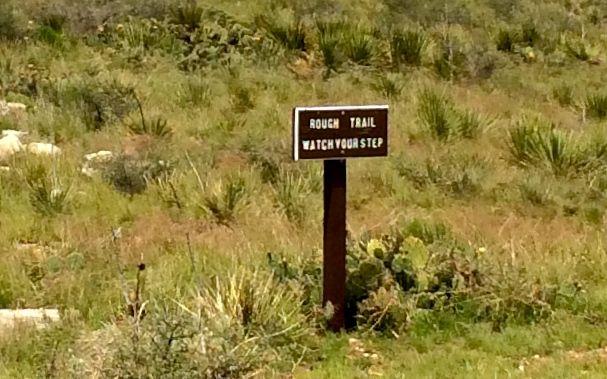
Rough trail sign

Rough trail…NOW they tell us!

quarries

According to the ranger, there are hundreds of quarries here. They aren’t much to look at right now, but when there was a fire a few decades back, he told us that  the landscape looked like it was full of World War I foxholes.

cores

We stopped at one quarry that had quite a few “cores” on the surface. Since the people were mining the flint and preparing blanks for trade, they would split off blanks until they couldn’t make anymore and then toss the smaller, leftover cores aside. One sign that this was a quarry for export and not just for their own use is that the smaller chips that are produced by knapping are not present here.

light colored ridge is the site of the village

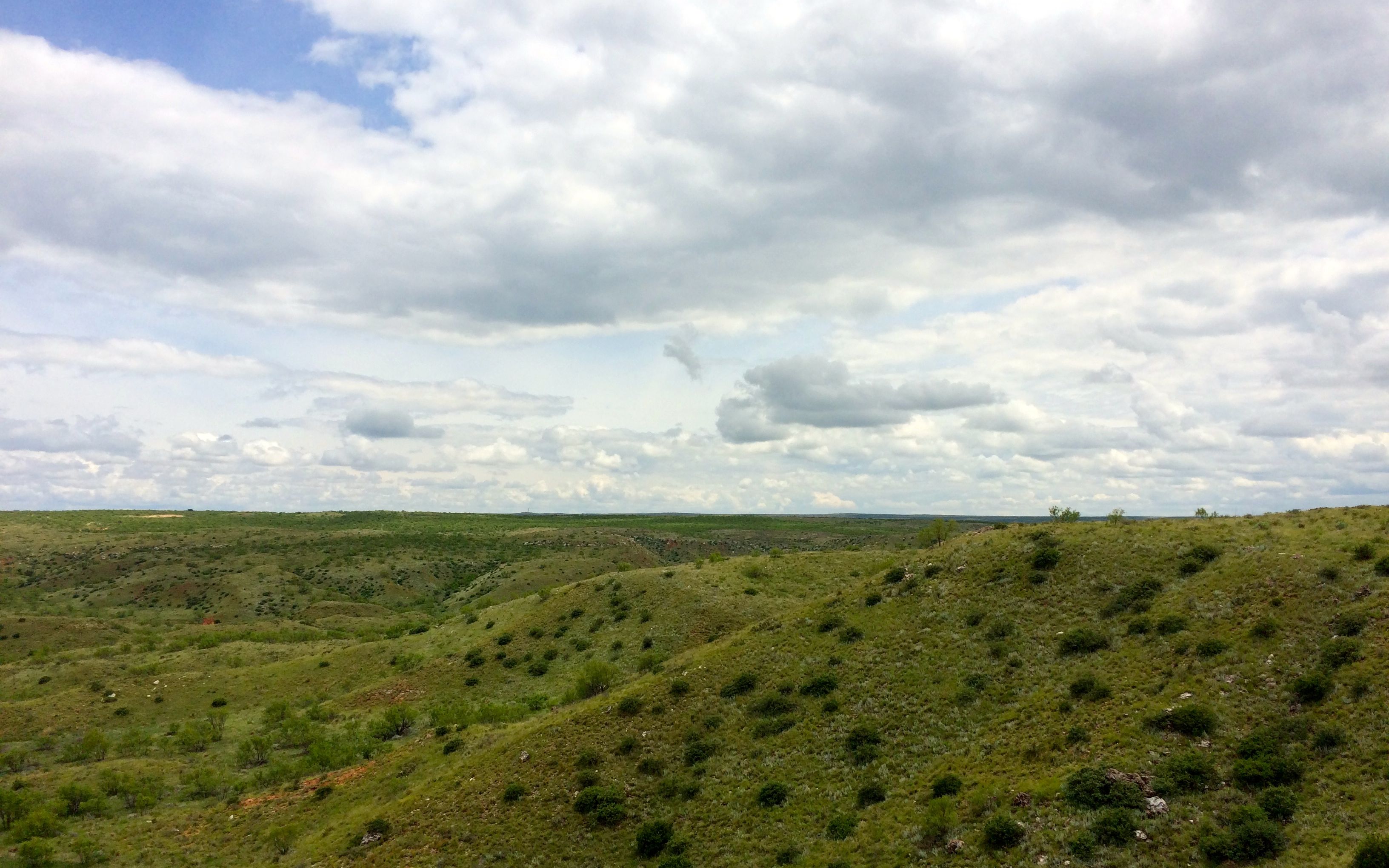
Across the valley, you can see a light colored line. That is the location of the village. The ranger told us that the site is part of the national monument, but accessing it involves crossing private land. He said that they give tours in October, which is Texas Archeology Month. So, I guess if I want to see the Antelope Creek site, I have to come back in October.

The descent to the van went faster that the climb to the top. We got in the van and headed back to the visitor center. I thanked the ranger, bid adieu to know-it-all George and headed to Cadillac Ranch.

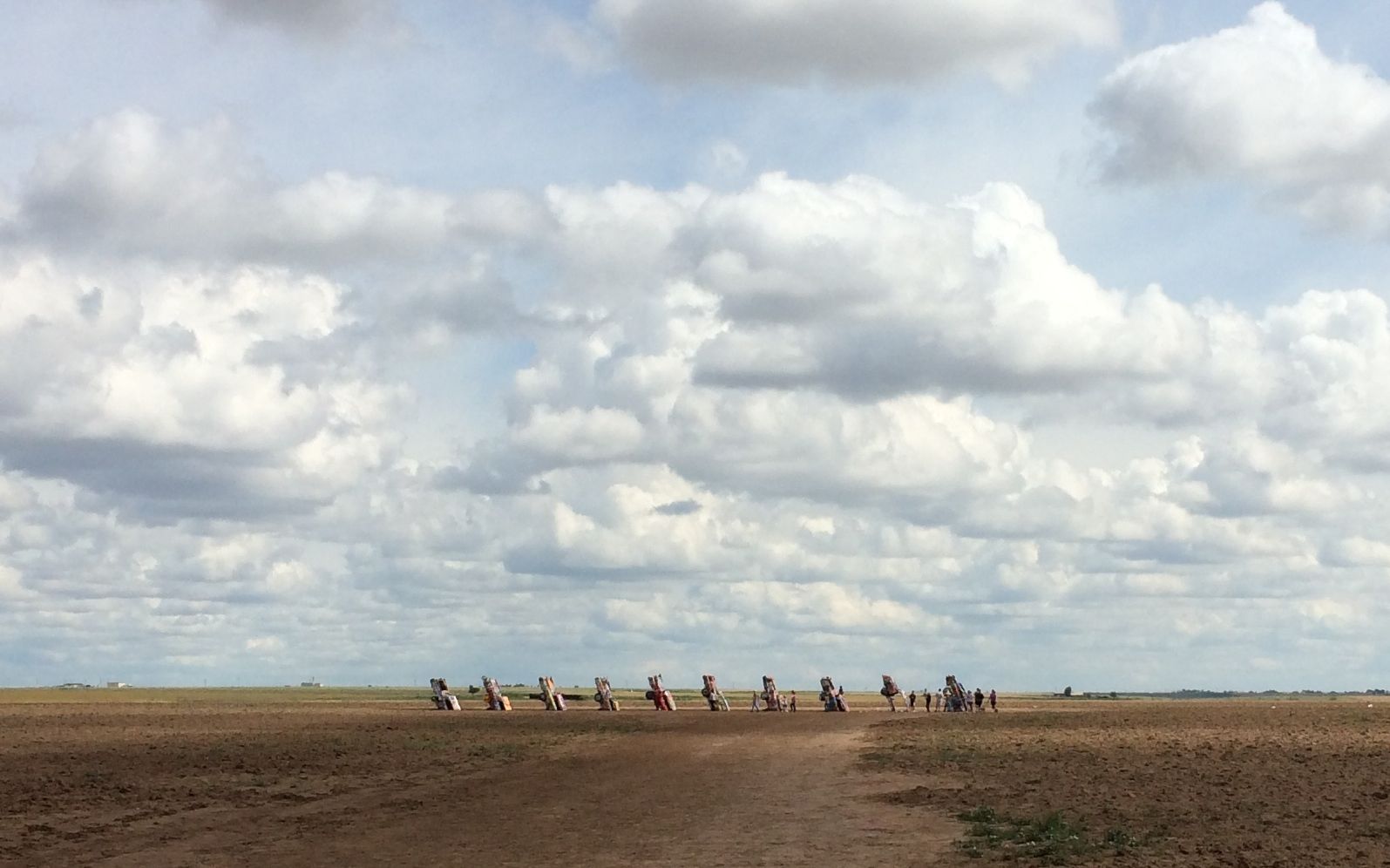
Cadillac ranch from a distance

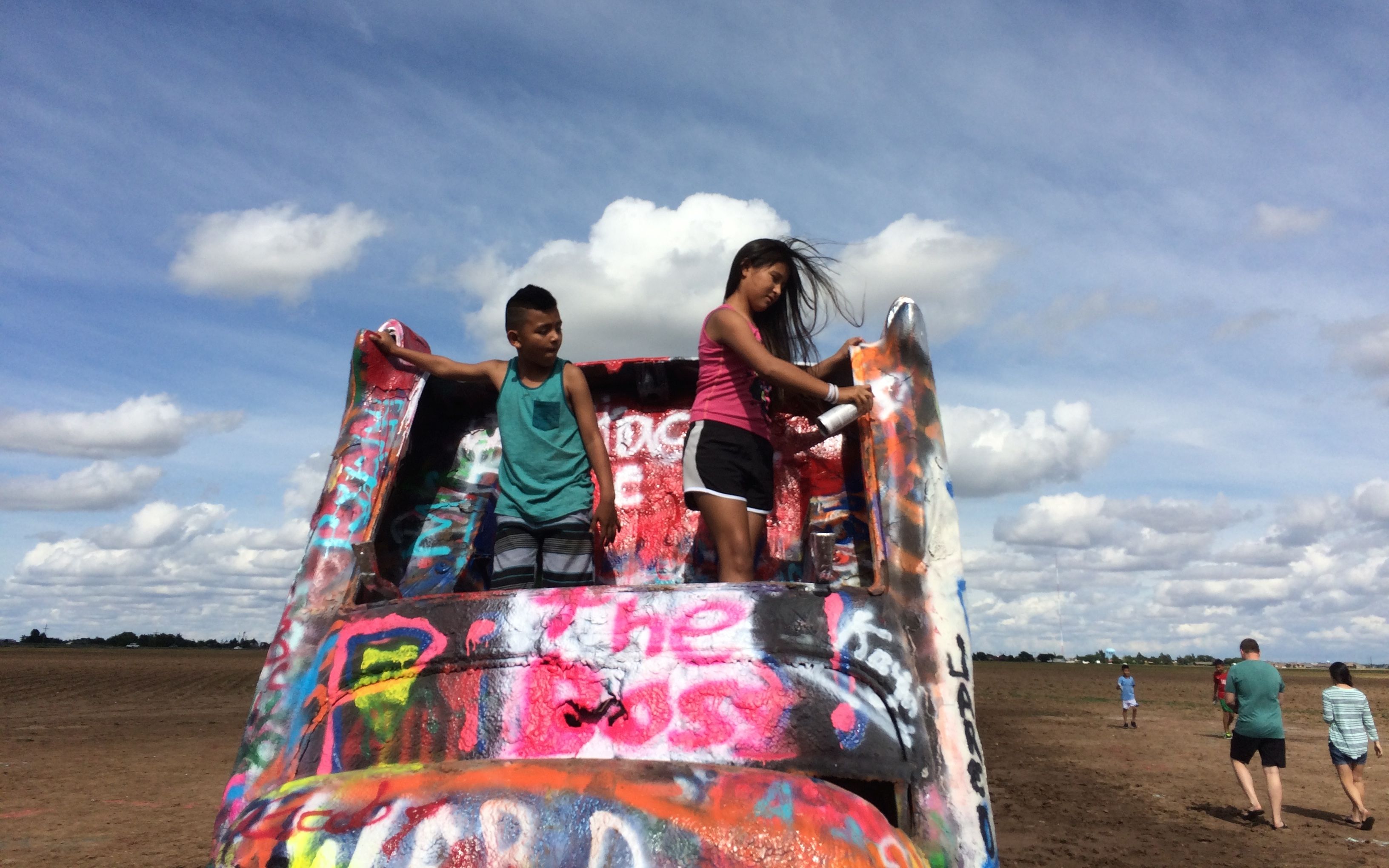
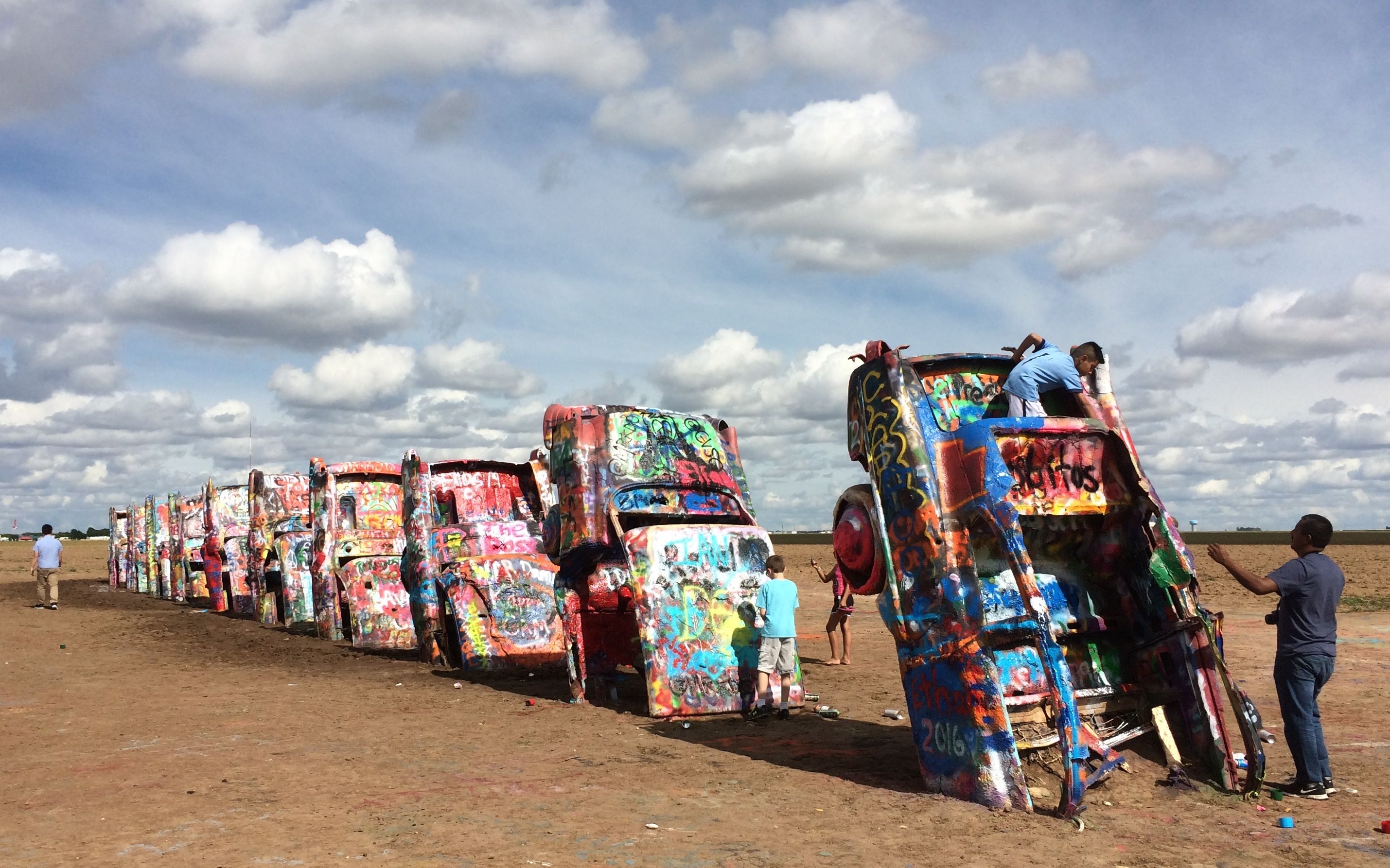
Believe it or not, this is another thing I learned about in Sister Jeanne’s art history classes. It was created in 1974, and was made of older Cadillacs representing the changes in design of the automobile. According to the information I looked up, they were chronicling the birth and death of the tailfin. The are half-buried nose-first in the found at an angle corresponding to that of the Great Pyramid of Giza in Egypt.

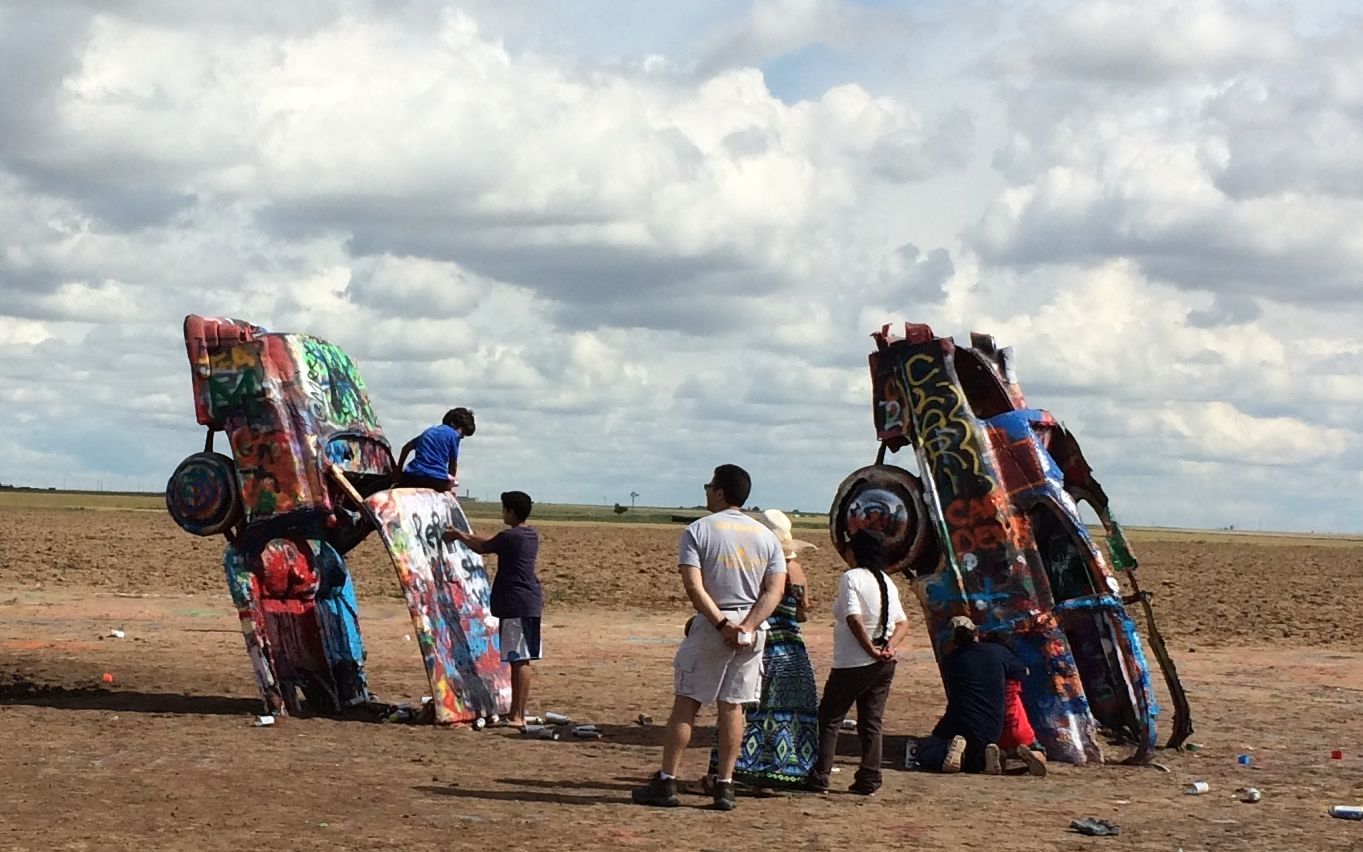
Nowadays, people are encouraged to add their own marks to the installation.

family outing

While I was there, I saw several families with bags of cans of spray paint. What fun!

Cadillac Ranch at an angle

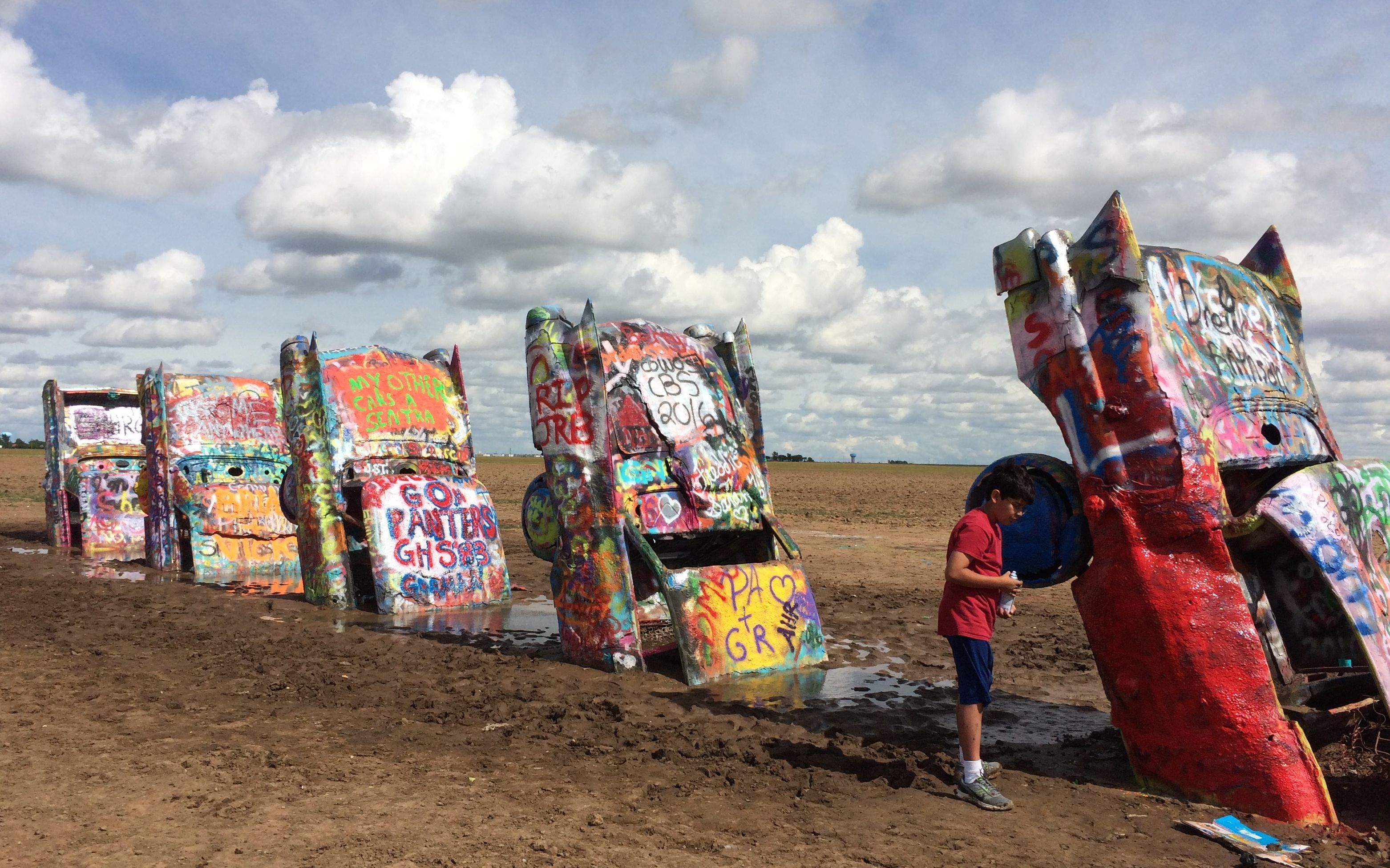
I walked around the cars, looking for a place I could make my mark. The left lend of the installation was muddy and had puddles.

left side with puddles

I finally found a spot where I could get close enough and not sink into the rich Texas farmland.

paint drips

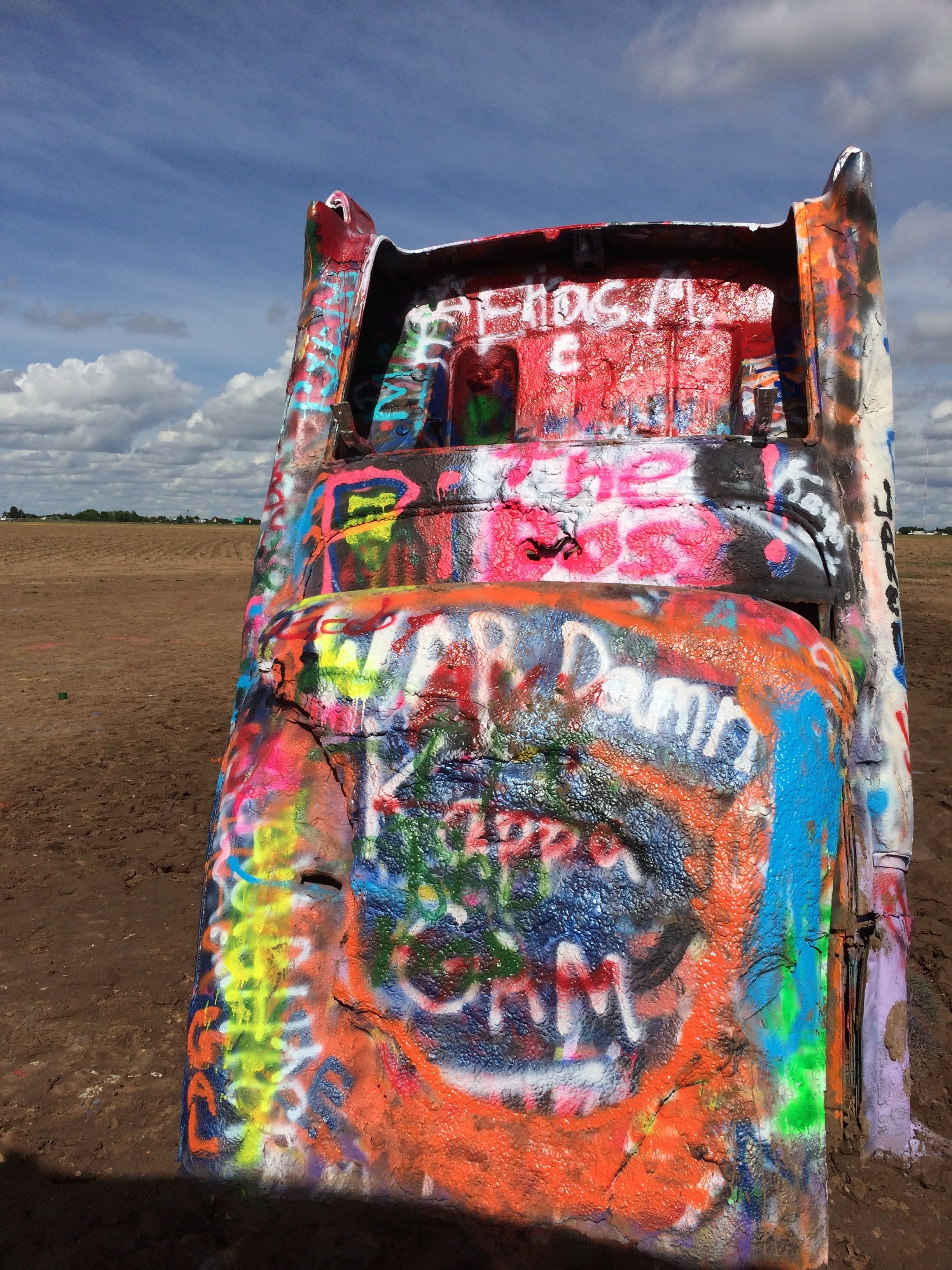
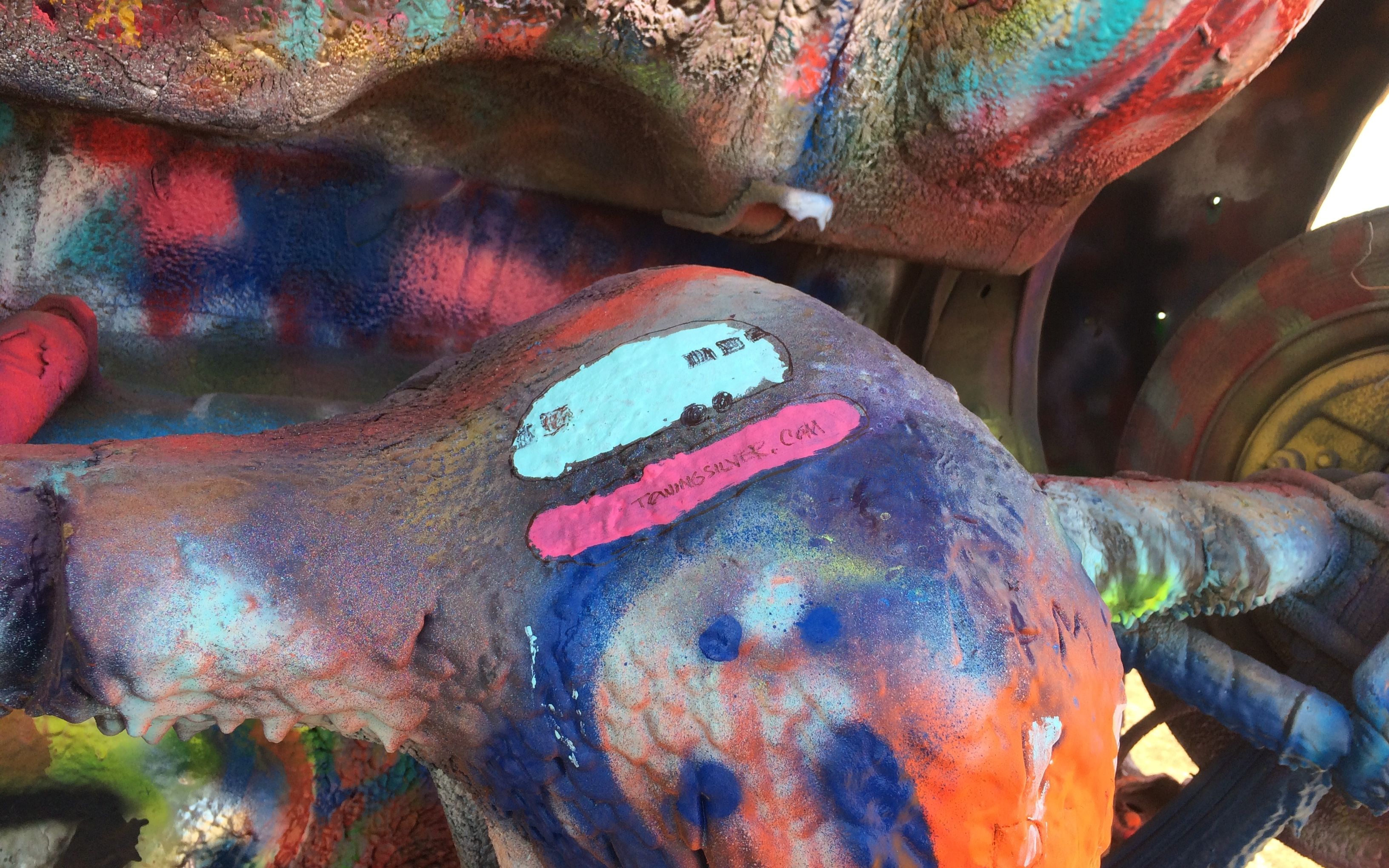
There were layers upon layers of paint on these cars.

car

I didn’t have spray paint but I had some left-over acrylic craft paint in the trailer, so I figured I’d find a place where that would work.

my addition

I painted a portrait of Flo and left my blog address. I have no doubt that it has been painted over by now.

brother and sister

These kids were having so much fun!

father and son

I mean, really, doesn’t it make you want to add your own design?

paint on the ground

If painting the cars wasn’t enough, some people also had to add their marks to the ground.

Parked at Cadillac Ranch

It was a long day – time to get to the campground in Canyon, Texas.