Long time readers of my blog – or those people who know me in real life – know that I am very interested in the work of Frank Lloyd Wright. I grew up with his famous Martin House in Buffalo. I even toured it with a Girl Scout group back when it was in real disrepair. Man, you should see it now! Honestly, if you ever get to Buffalo, you must visit the Martin House.
But, I digress – sort of. Greycliff is another Frank Lloyd Wright house – and another Martin House. It’s their summer place, on the Lake Erie shore, and only about ten miles from Evangola State Park. I decided to take a tour.
It was built between 1926 and 1931, and is one of only five Frank Lloyd Wright designs that were built between 1925 and 1935, and it is the only Wright designed structure built between Taliesin (1914) and Fallingwater (1936) that was built using stone. According to my Preferred Source, Greycliff is considered to be one of Wright’s most important mid-career works in his Organic Style.

While I was waiting, I managed to snap a photo of a drawing of the complex made from a bird’s eye view. The building on the left is known as the Isabelle R. Martin House. The structure to the right is the Foster House. It was originally designed as a garage with quarters for the chauffeur and his family. It was expanded, and eventually the Martins’ daughter, Dorothy and her husband James Foster, and their children spent many happy summers there. It kind of makes me wonder what happened to the chauffeur and his family. There is a small building between the two larger ones. It’s called the Heat Hut, and it housed the furnace.
Incidentally, my first visit to Greycliff was while I was at Daemen College. Sister Jeanne took us on a field trip here. We didn’t go to see the house, though. I imagine it was in really rough shape at that point, as it had been a school run by the Piarist Fathers. As I recall, this school was started by a group of Hungarian priests that had fled the Communists. The order was founded in 1617 by Saint Joseph Calasanctius, who was from Spain.
Okay, stay with me. This bit of information is important to me because my first teaching job was at Calasanctius Preparatory School in Buffalo, New York, founded and run by the Piarist Fathers. Isn’t that a great big circle of coincidences?
They also had a school here. The modifications they made to the original plan are not shown in the drawing. Luckily, they didn’t do anything with the Wright buildings that couldn’t be reversed. They built a classroom annex in front of the garage to the right of the drawing. What we originally came out to see was a sgrafitto work of art that was on the facade.
I mentioned this to the docent giving the tour. She told me what became of the work of art after the classroom building was demolished – but I forget what she said! I wish I took better notes.
I did send a message to Greycliff and received a response from Ryan Gravell, Greycliff Director of Operations. He told me that the sgrafitto was removed from Greycliff in the early 2000s and it was rehouses on the campus of Buffalo State College and became part of their collections.
I have sent and email to Buffalo State, but I haven’t heard back yet. If they respond, I’ll add the information I get.
Incidentally, Buffalo State College is right next door to the famous H.H. Richardson building I wrote about a while back. It was the old Buffalo Psychiatric Hospital but has since been repurposed into an upscale hotel. But, once again, I digress…
I made a second trip to see the house many years ago, just as restorations were getting serious. I was eager to see what they had managed to do in the years since my last visit.
I continued checking out the displays, as the waiting area filled with Wright enthusiasts waiting to take the tour.
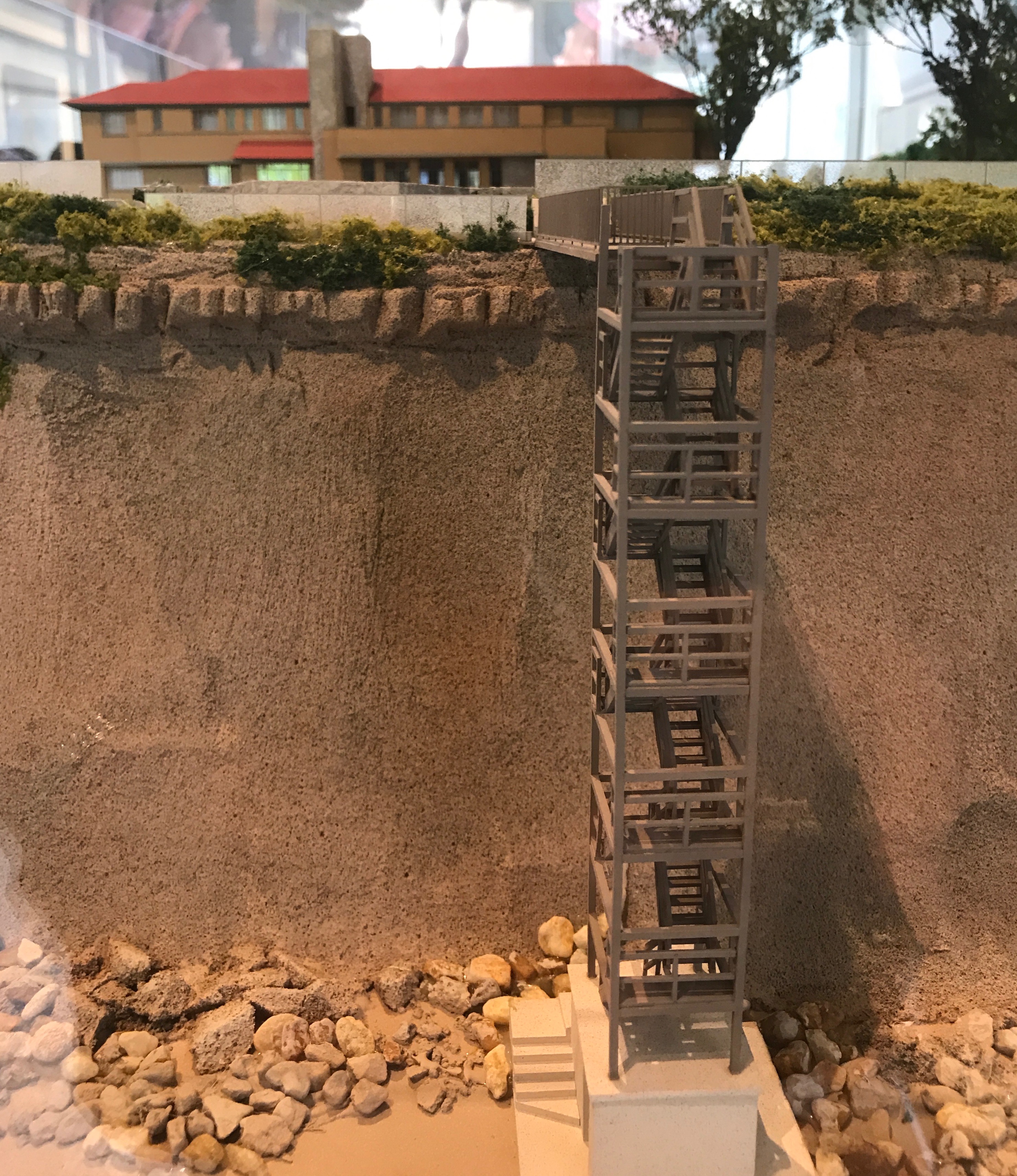
This is a view from an angle I had never seen before – from the lake.
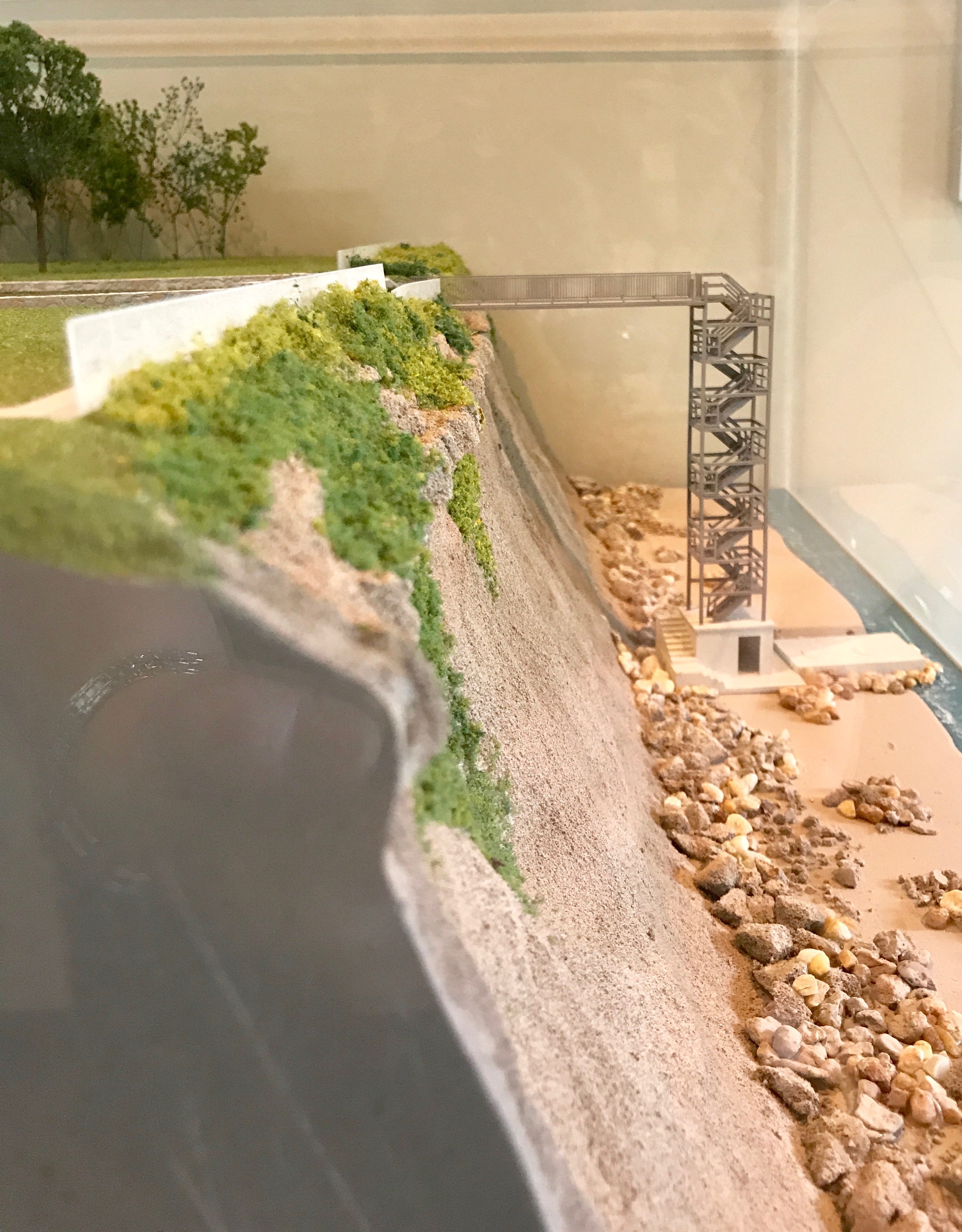
I don’t think I would want to take that walk down to the beach. My hair would be standing straight up just walking from the cliff to the stairs. And then all those stairs! Whoah!
Luckily, I didn’t have to think about that trip too much longer. It was time for the tour to begin.
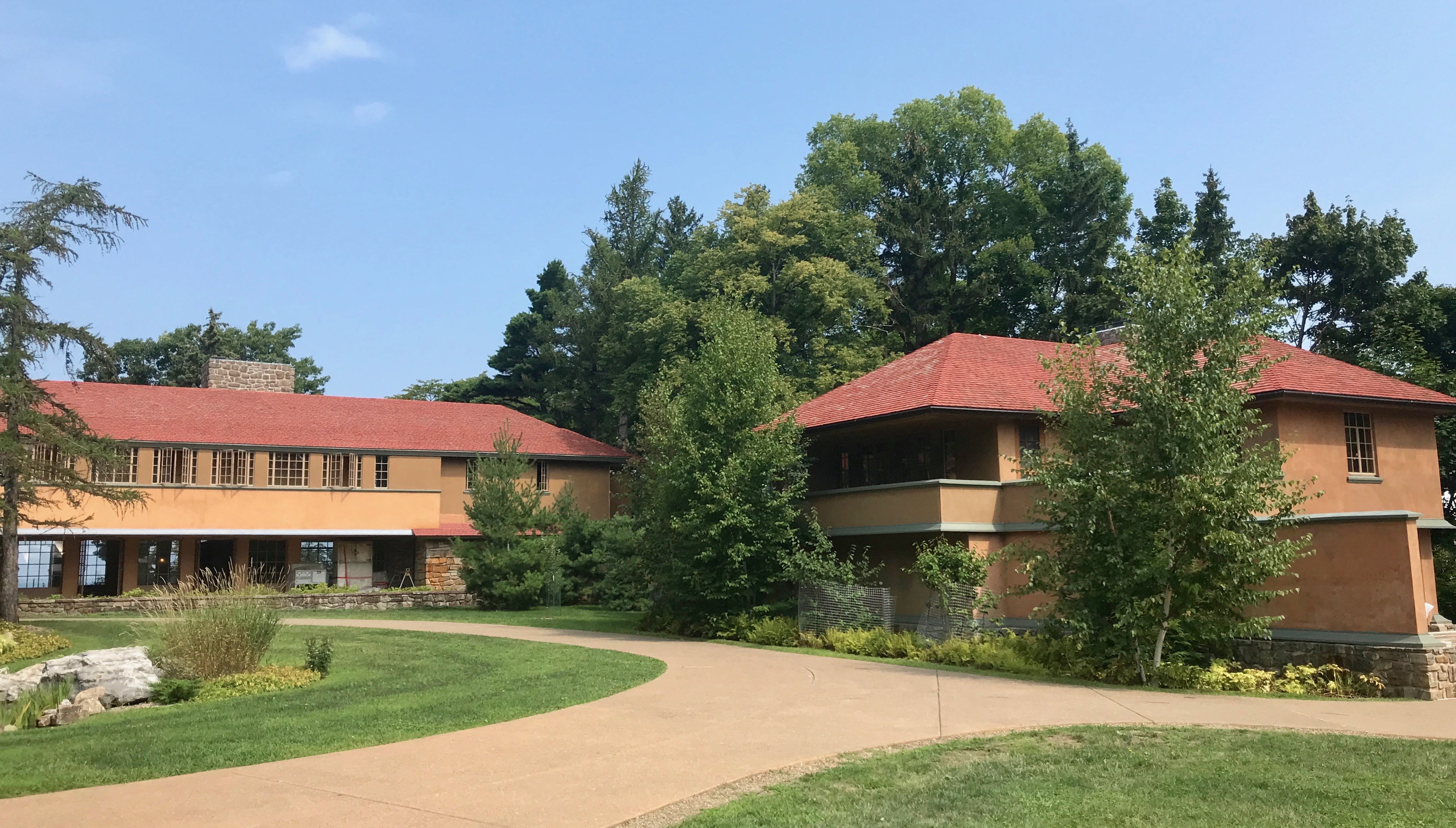
We walked out of the visitor center. The building to the right is the garage, with quarters originally intended for their chauffeur. The building on the left side is the main house.
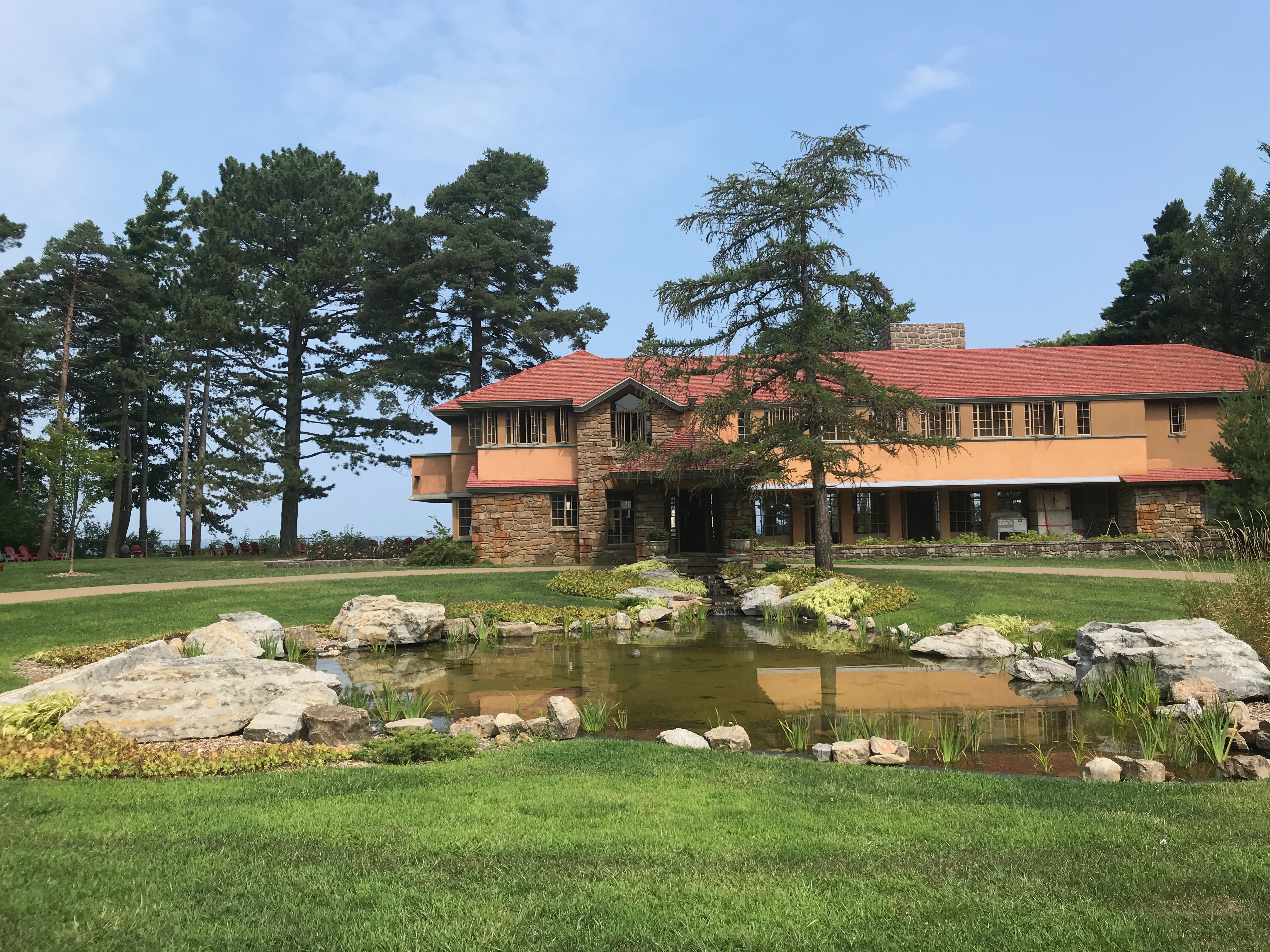
The house is reflected in the pond in front of it.
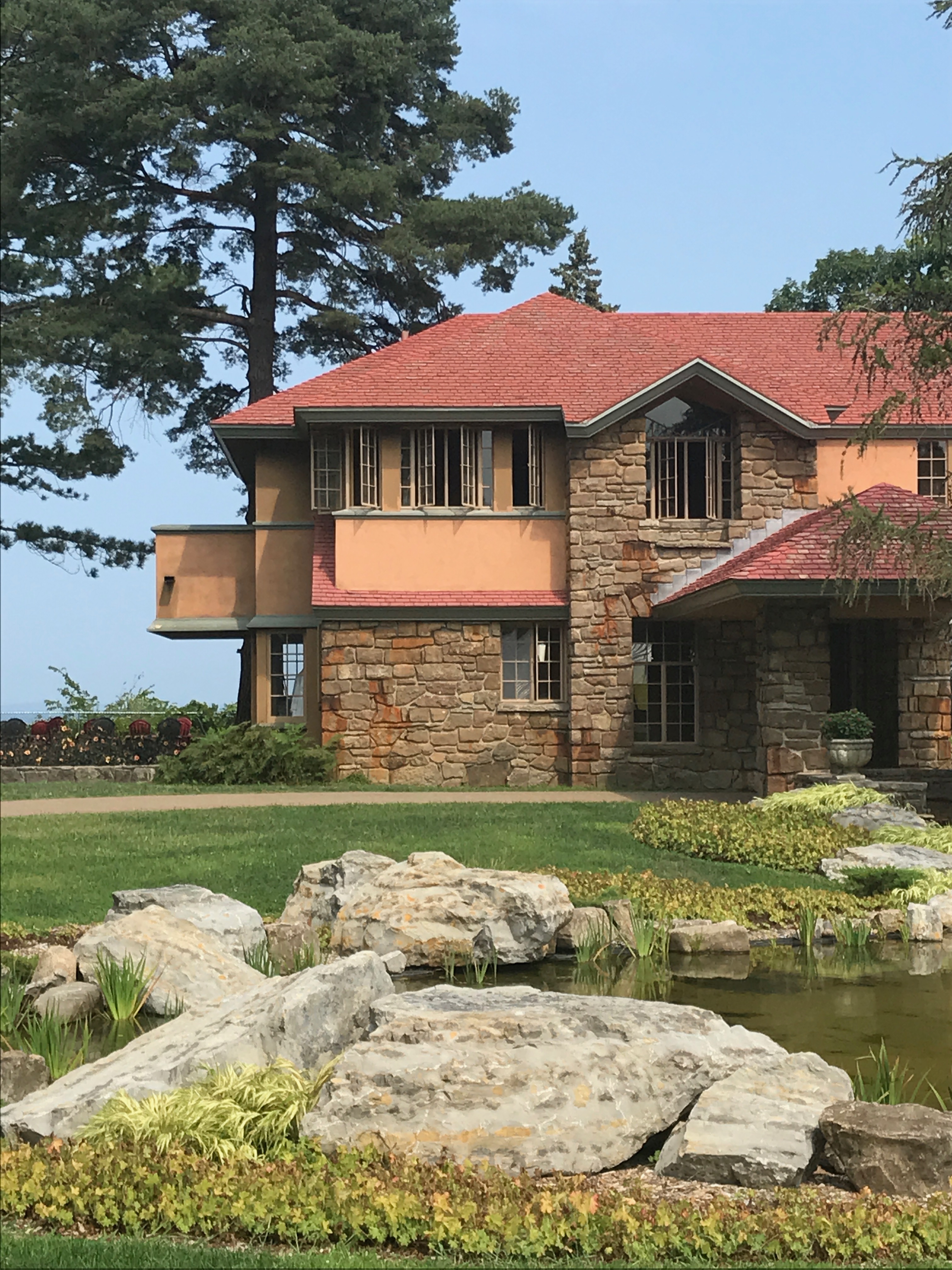
From this view, you can see one of Wright’s famous cantilevered porches.
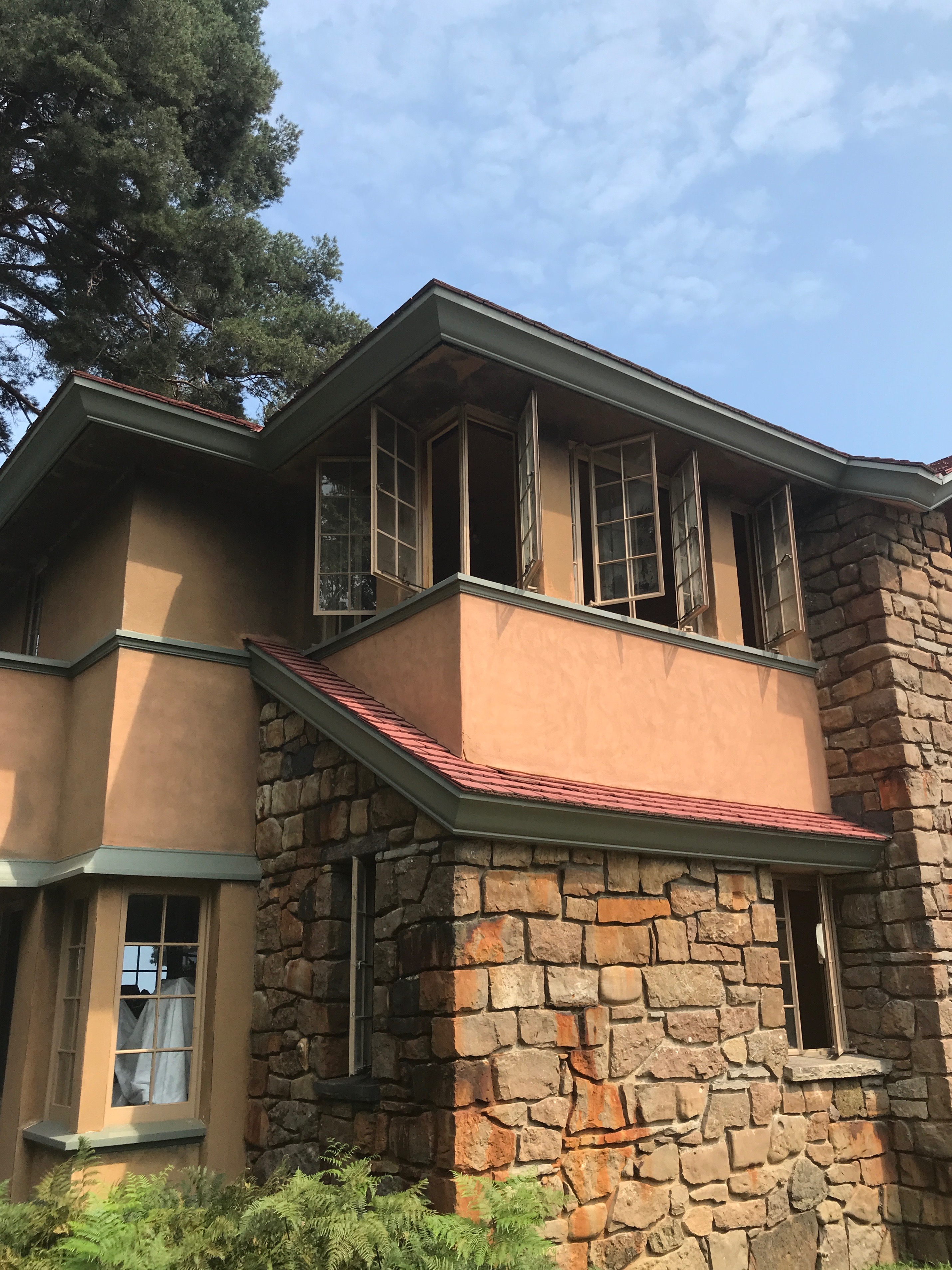
To me, there is nothing more summer-y than having the windows open and cooling the house naturally. The breezes off Lake Erie must have been a welcome respite in the summer.

In the winter, I imagine that those Lake Erie breezes would not be near as salubrious. (Yes, that car is parked by Lake Erie. It was covered in ice during a storm in 2016.)
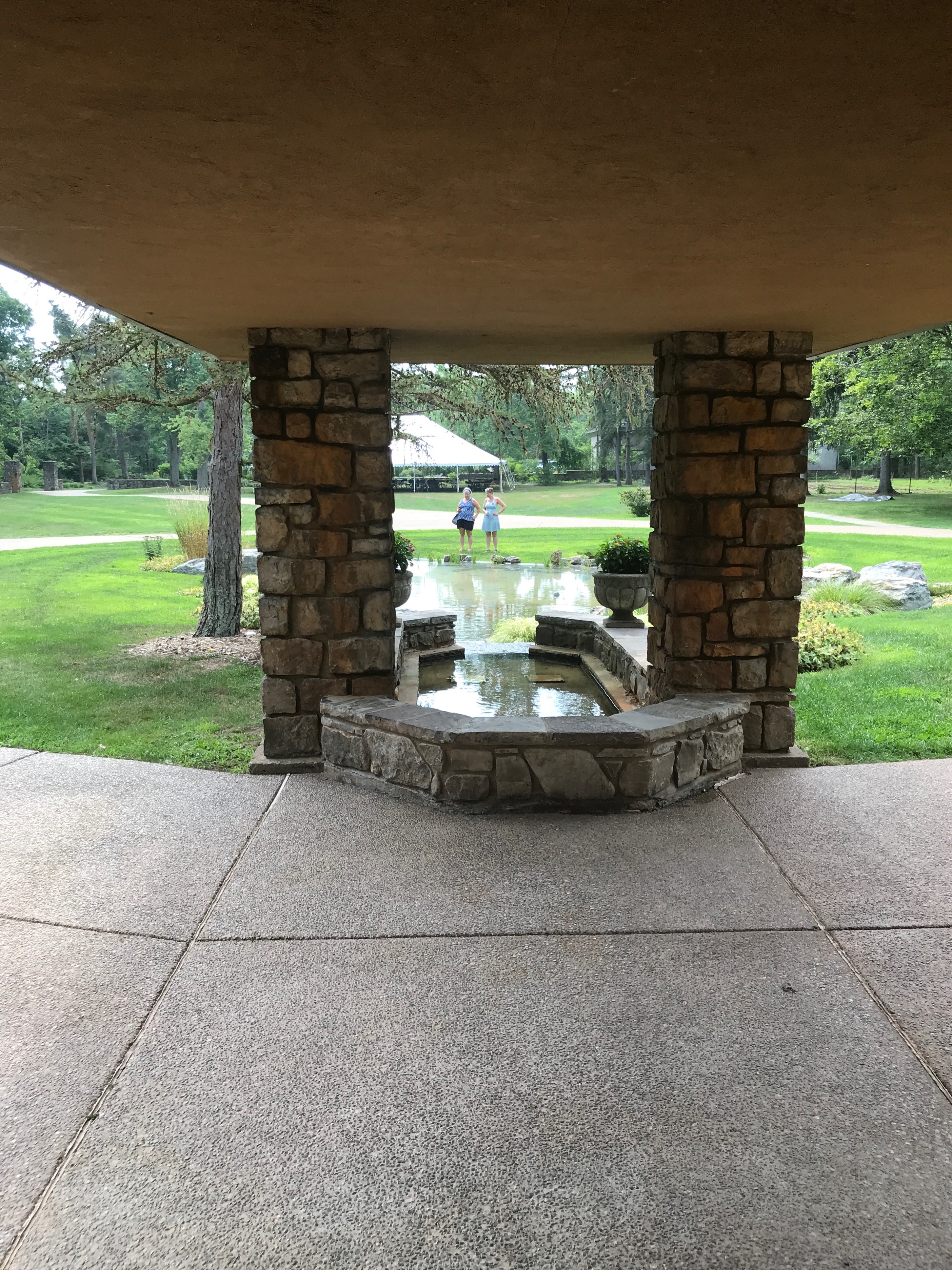
We got up to the entrance and looked back at the pond from under the porte-cochere. That sounds so much more classy than “car port.”
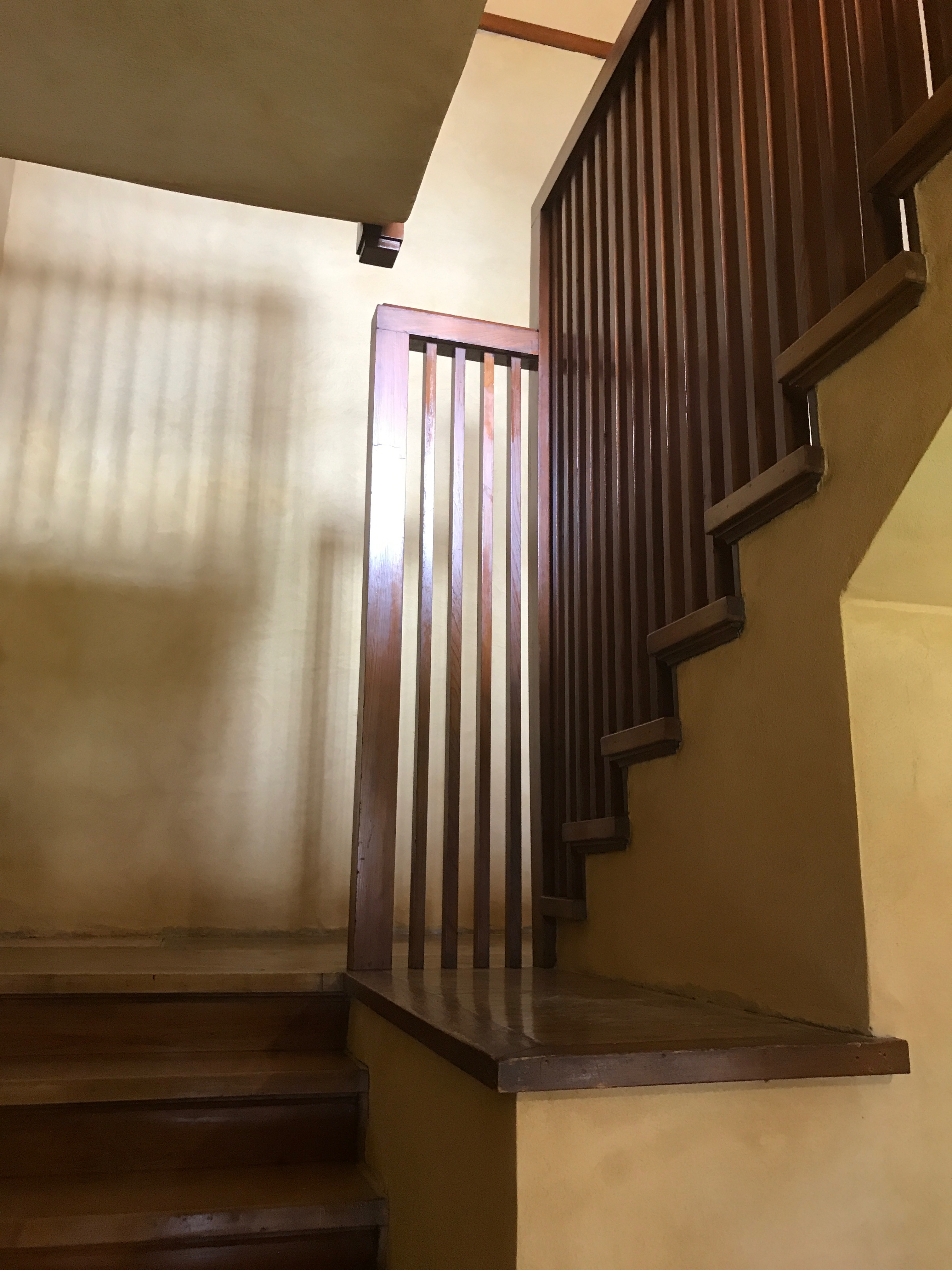
Just inside the door is the stairway to the second floor.
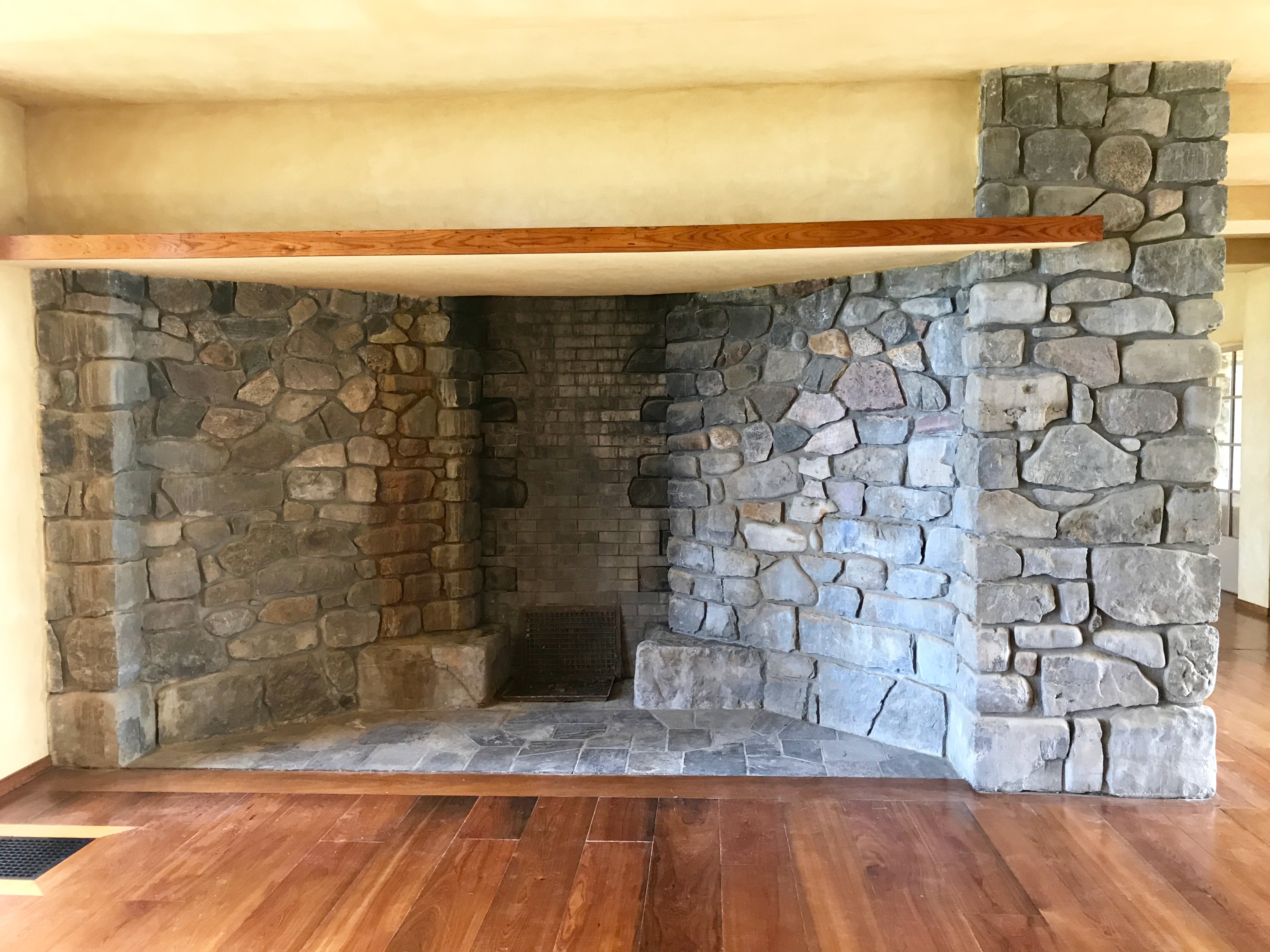
We headed over to the living room. Of course Wright designed a fireplace into the room. He was very big on fireplaces.
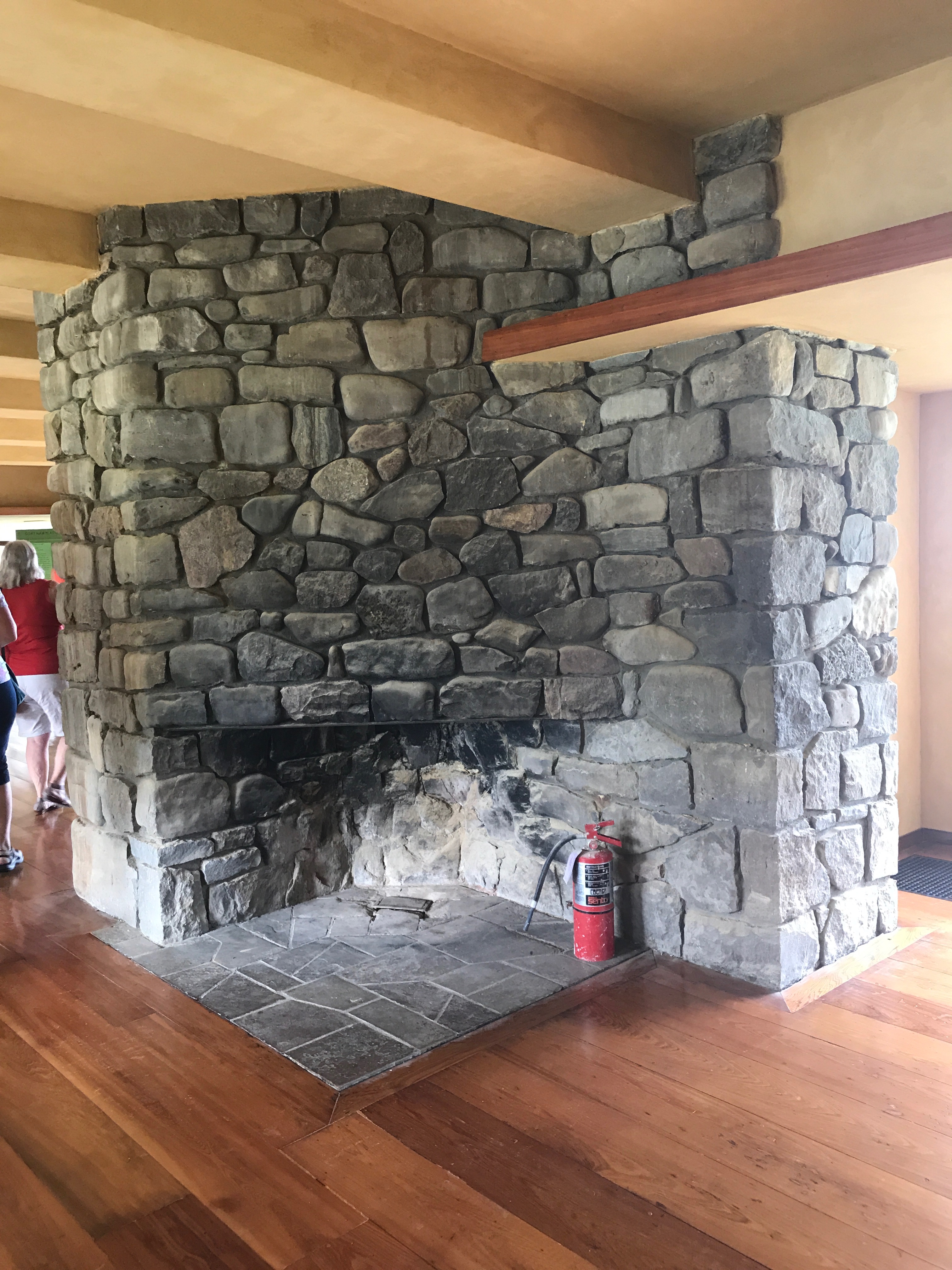
In fact, on the other side of that fireplace is another fireplace. I believe that is area is the dining room. I think the fire extinguisher is a nice touch.
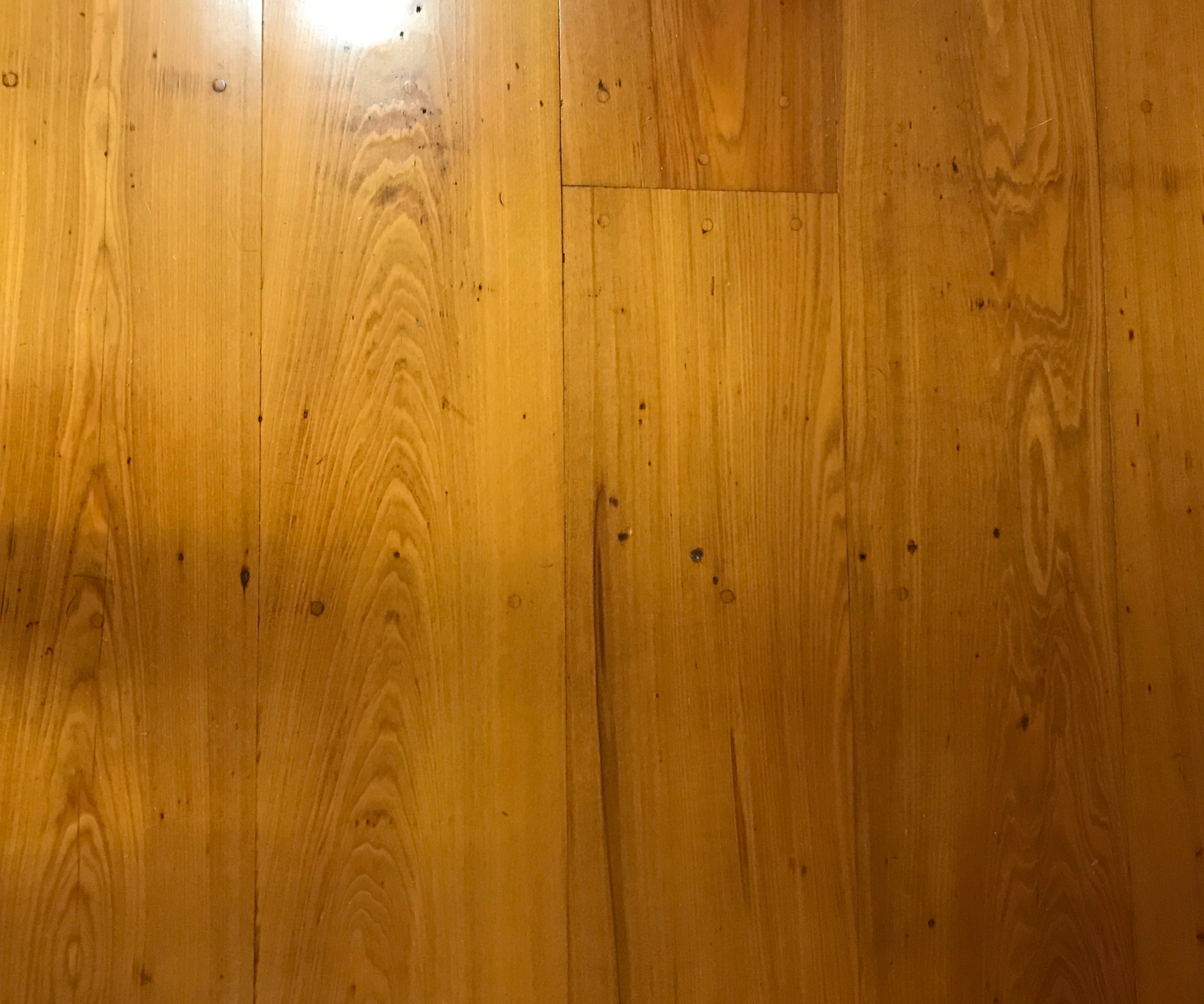
The floors appear to have been freshly refinished and they are gorgeous, wide planks. I believe the floor is pine, but I may be wrong. Unfortunately, this Wright building is not one of the ones that has been written about extensively, although I am sure there is extensive documentation somewhere.
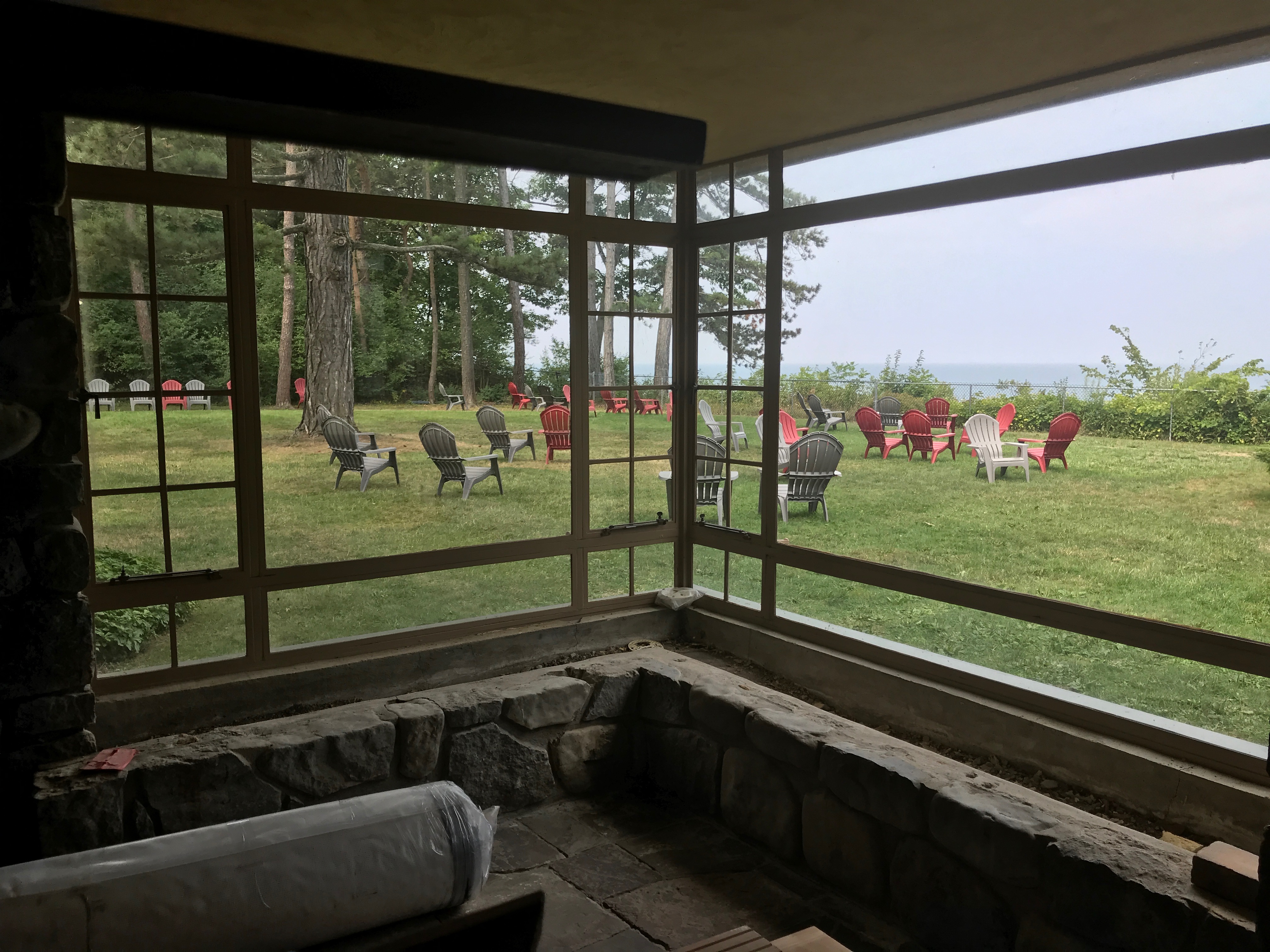
This house was built for the pleasure of Isabelle Martin. She wanted lots of light. After the long, gloomy Buffalo winters, I can completely understand that. Buffalo is the 19th least sunny city in the United States. On Average, there are 155 sunny days per year in Buffalo. The US average is 205 sunny days per year.
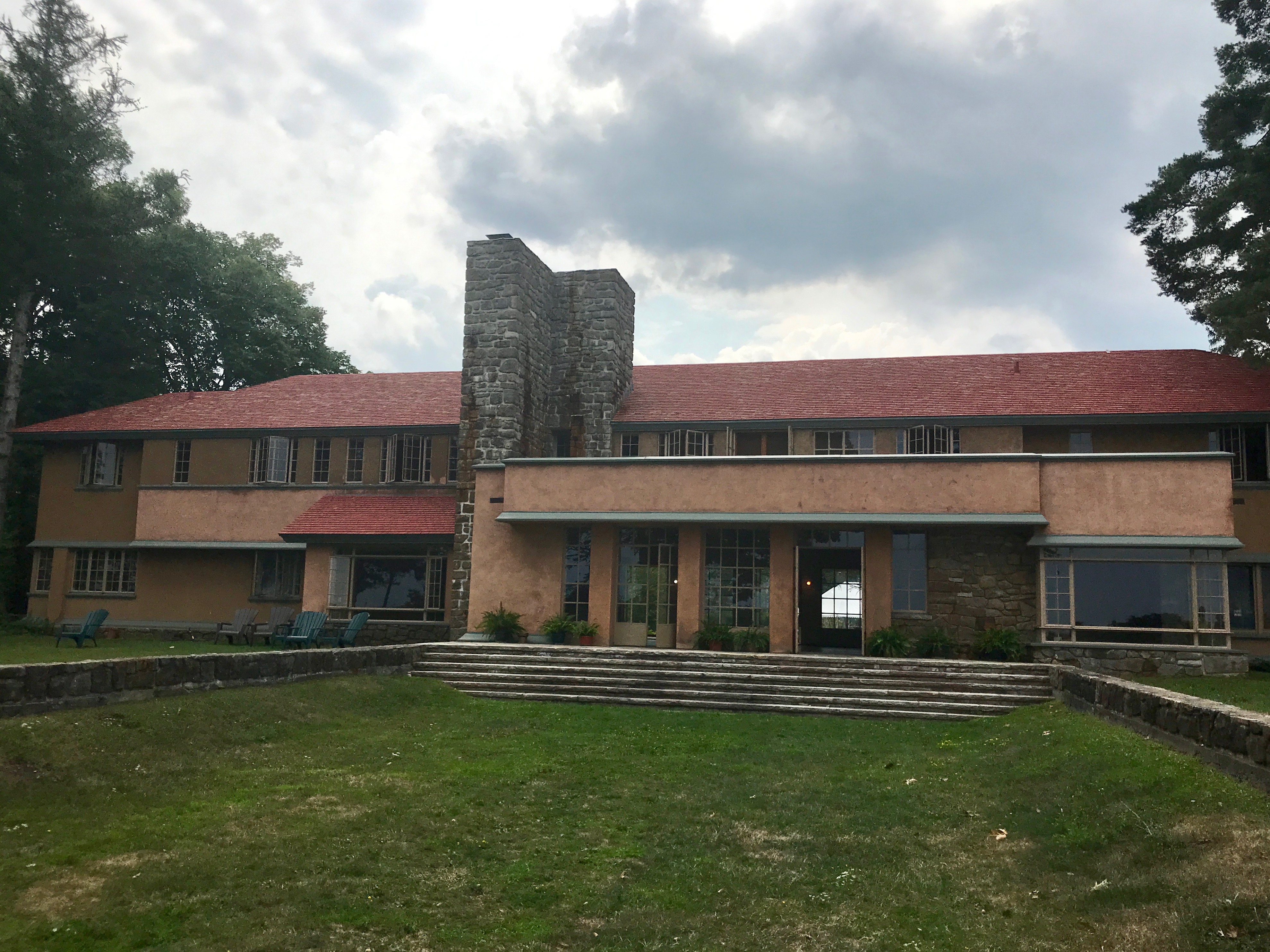
We walked down the stairs off the living room and turned to look back at the house. You can see the light shining through from the other side. This would give Isabelle the light she craved.
Originally, there was supposed to be some sort of water feature that tied the pond at the entrance to the lake. According to my Preferred Source, “…a broad esplanade connects the terrace to the cliff and lake. The esplanade was designed to carry water, pumped from Lake Erie, down its length and over the bluffs, completing the illusion of water flowing through. Deemed financially extravagant this feature was halted after only the esplanade itself was completed.”
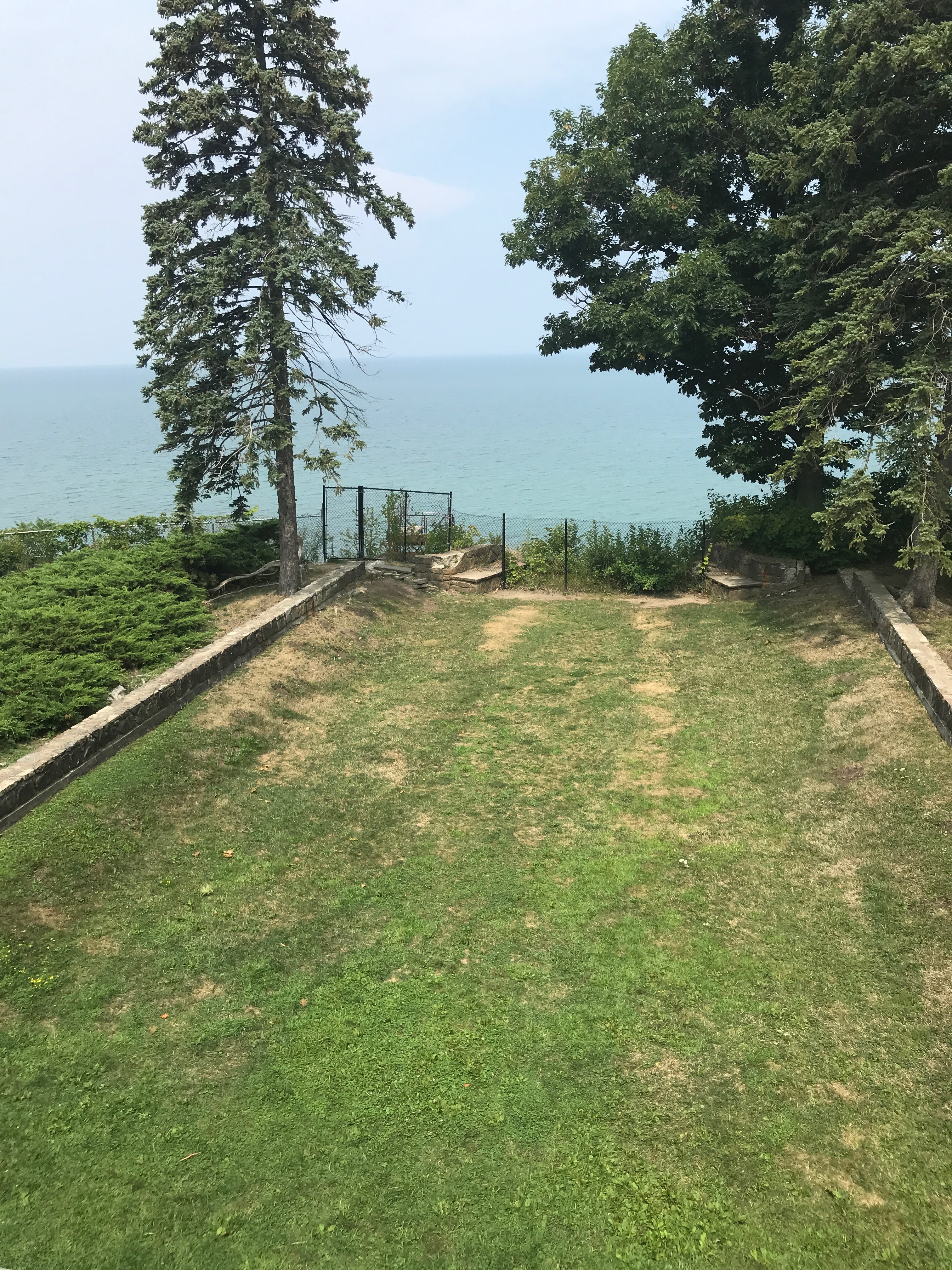
I have to agree that this water feature would have been financially extravagant. I’m not even sure that it would have been feasible. I would be concerned about the effects of the water on the stability of the site. But, what do I know?
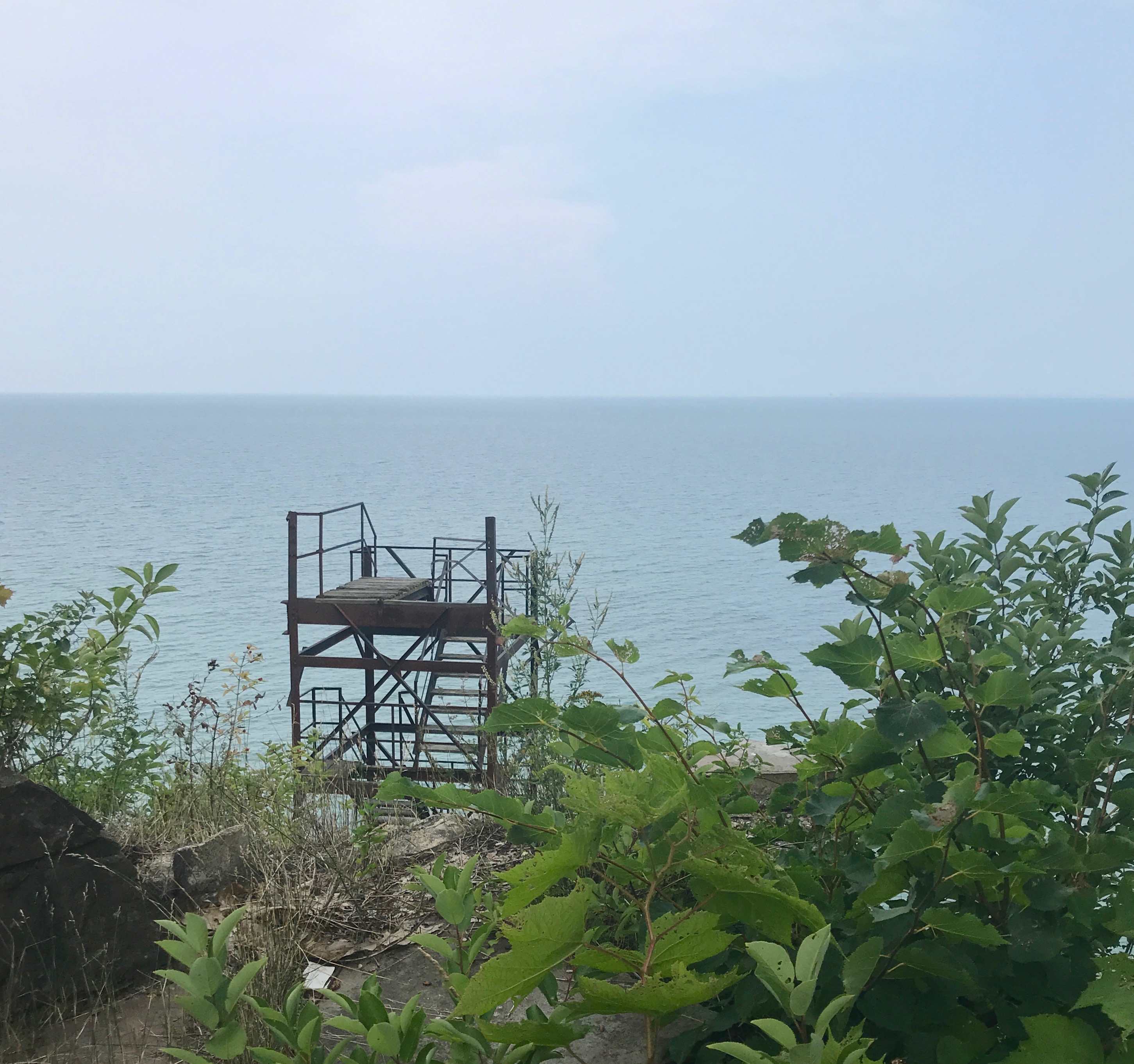
We continued over to the edge of the cliff and we could see the remains of the stairs down to the beach. If I remember correctly, the docent told us that there are plans in the works to renovate the structure. Or, was that tear and them down and rebuild them? Either way, it doesn’t matter to me in a practical sense, as I will not be using them. I do not like heights!
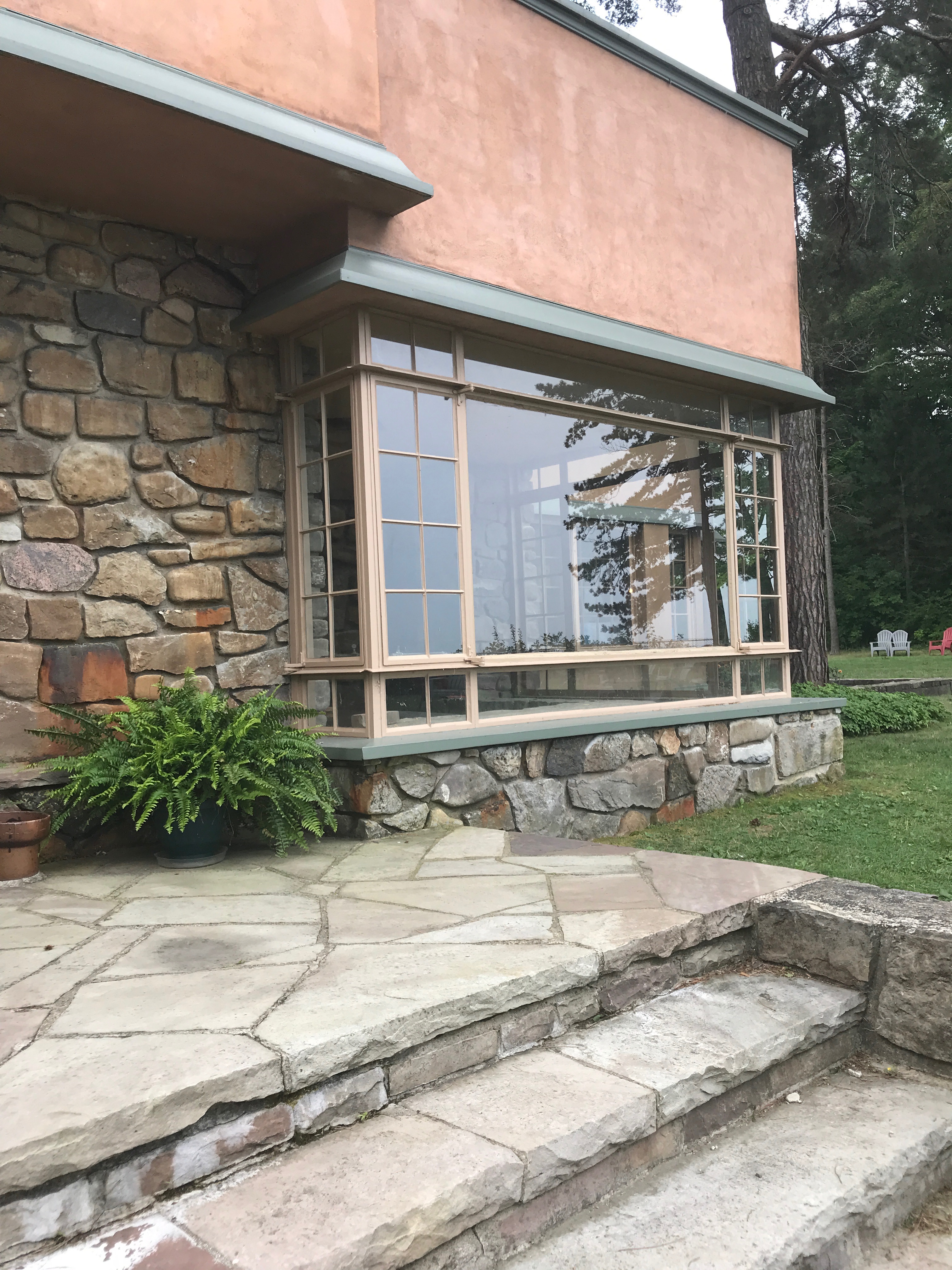
We returned to the house to continue our tour. This is a good view of the stone used in construction. According to my Preferred Source, it is constructed of stone found at the lake’s edge. The only note I managed to record from the docent was that the building was constructed of Tichenor Limestone. While researching this information, I found out that Tichenor Limestone is “richly fossiliferous.” If you would like to know more about what fossils are found in this rock, click on the link above. If I go back, I’m going to see if I can spot any of those fossils.
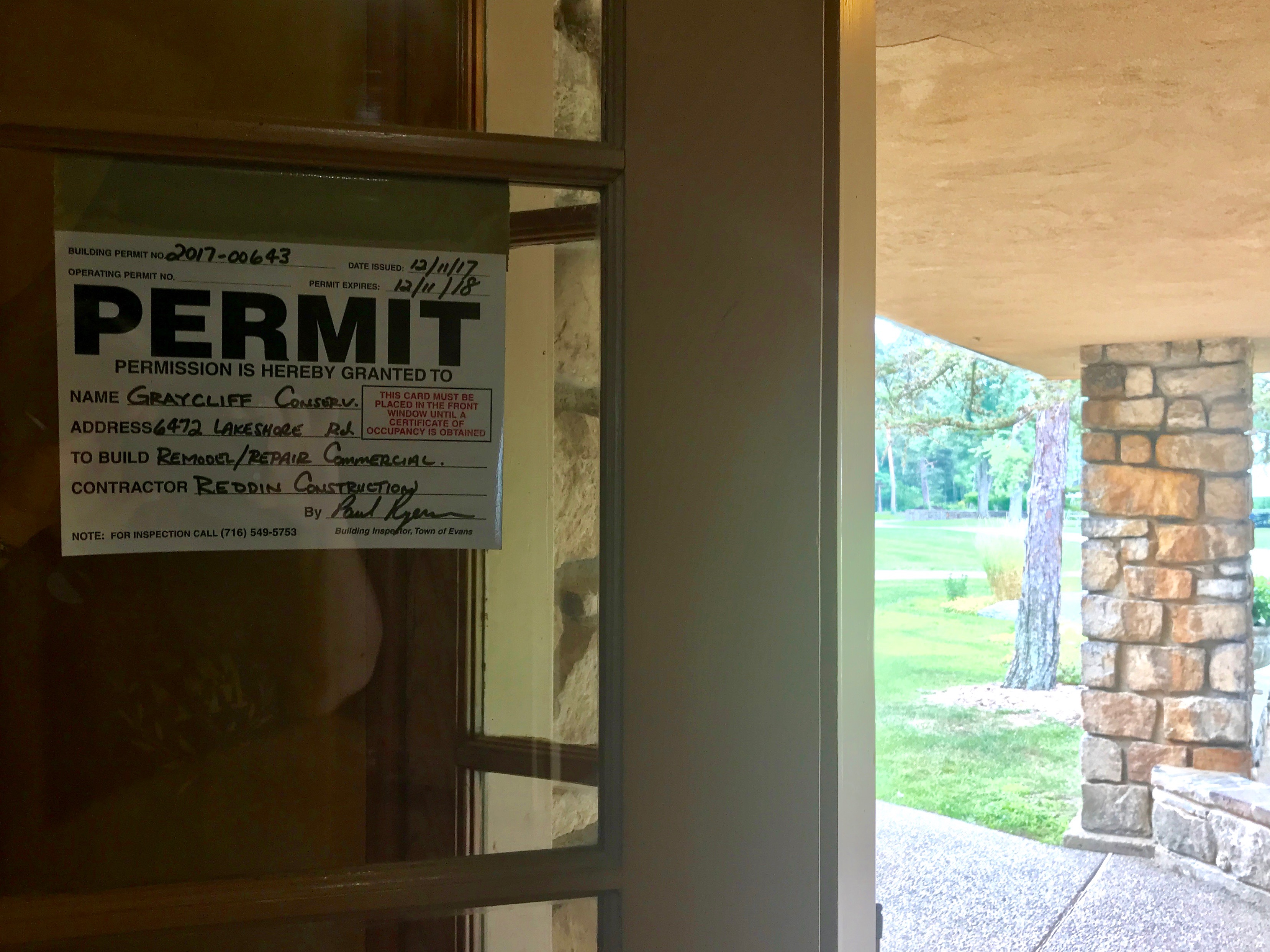
Apparently, there is still work going on.
We took those stairs up to the second floor.
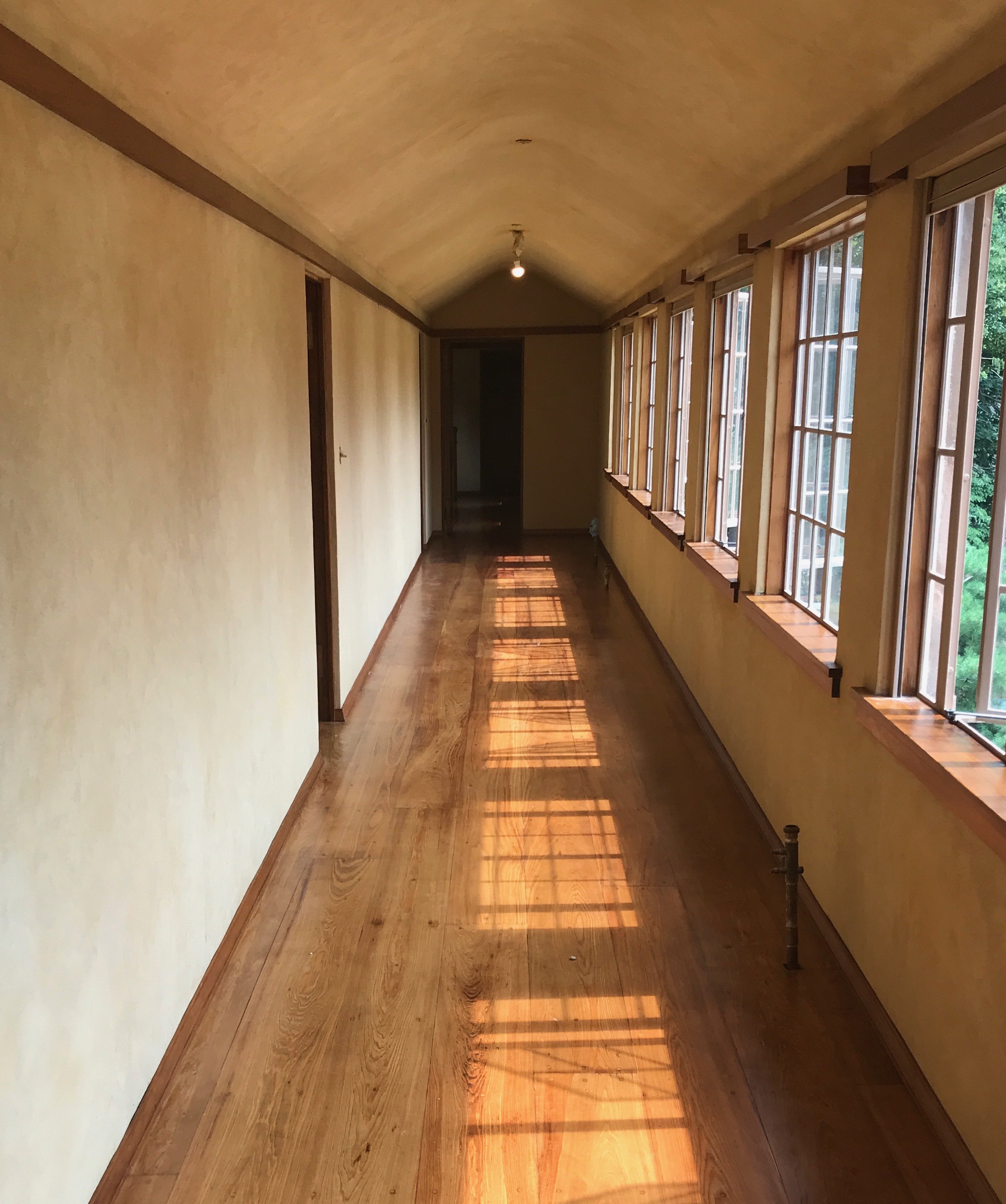
A hallway ran along the east side of the building. The lake was on the west side, and they wanted to save that side for the views. Judging by the pipe coming up from the floor, they probably had a radiators there to heat the hallway. That is just my guess.
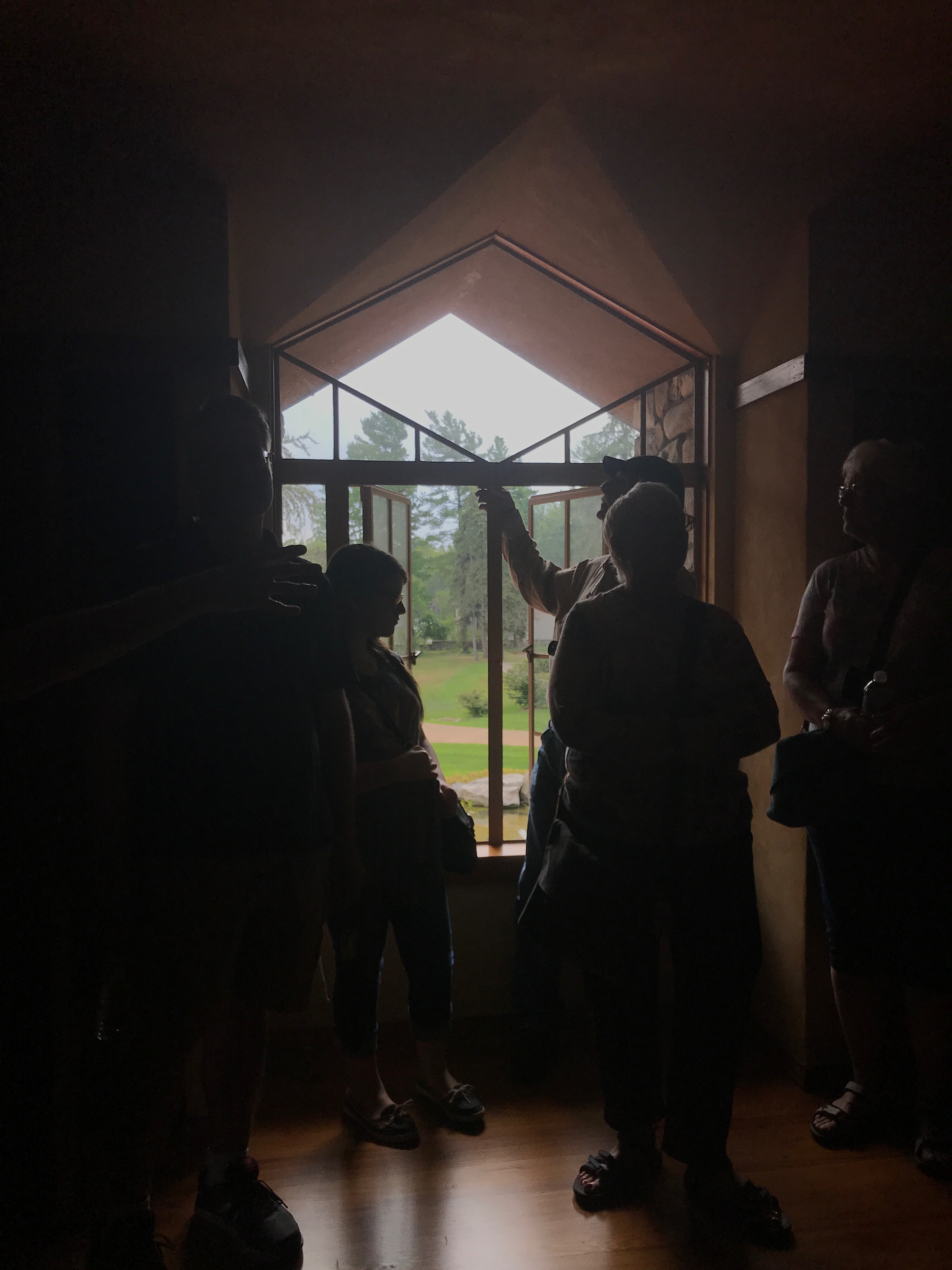
The docent demonstrated the diamond windows.
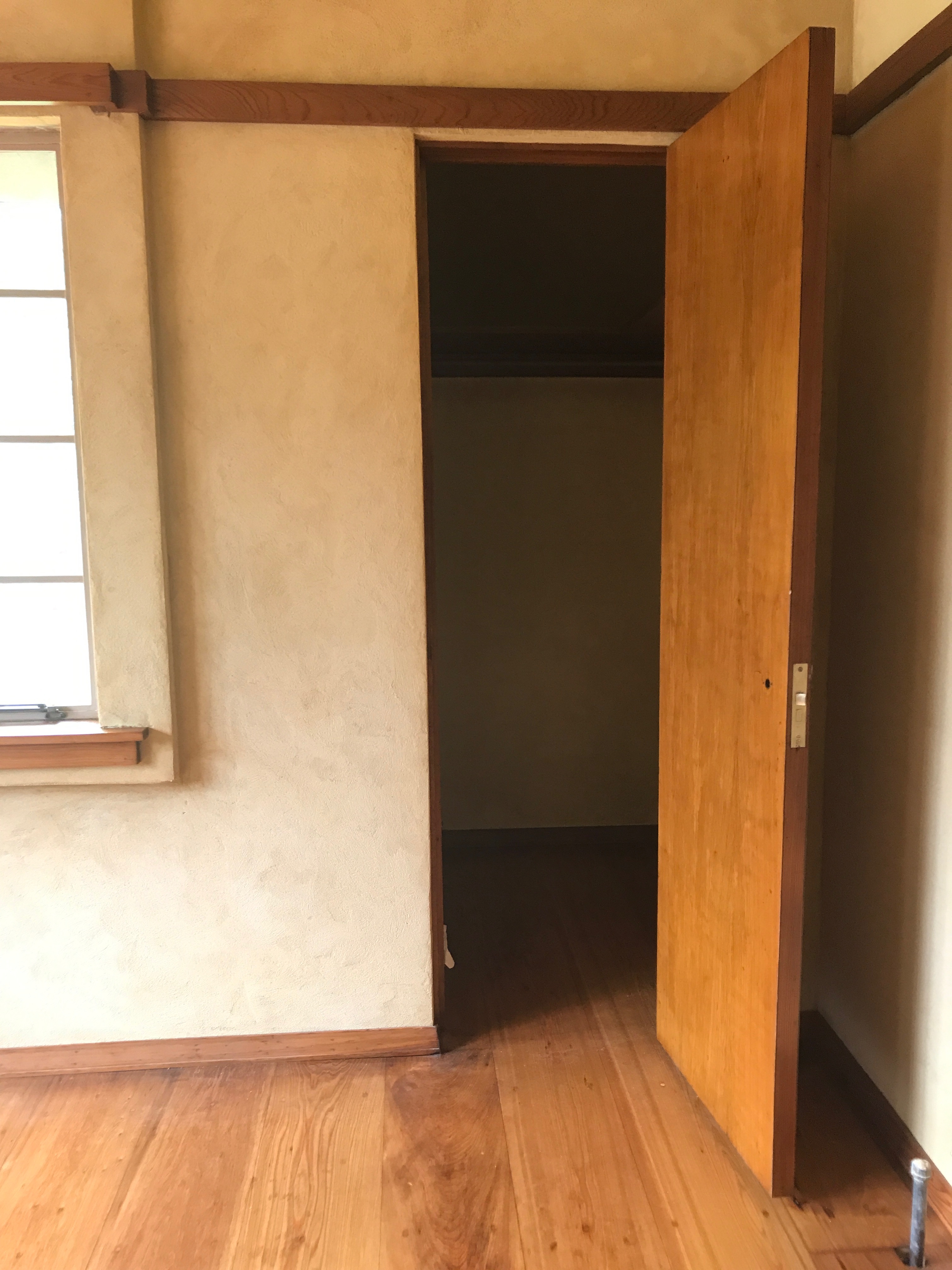
The door was rather interesting. Although the house was designed in 1926, the door reminds me very much of the “mid-century modern” vibe.
Look at how wide the floor planks are! And, there is that pipe coming up through the floor again. It must be for a radiator.
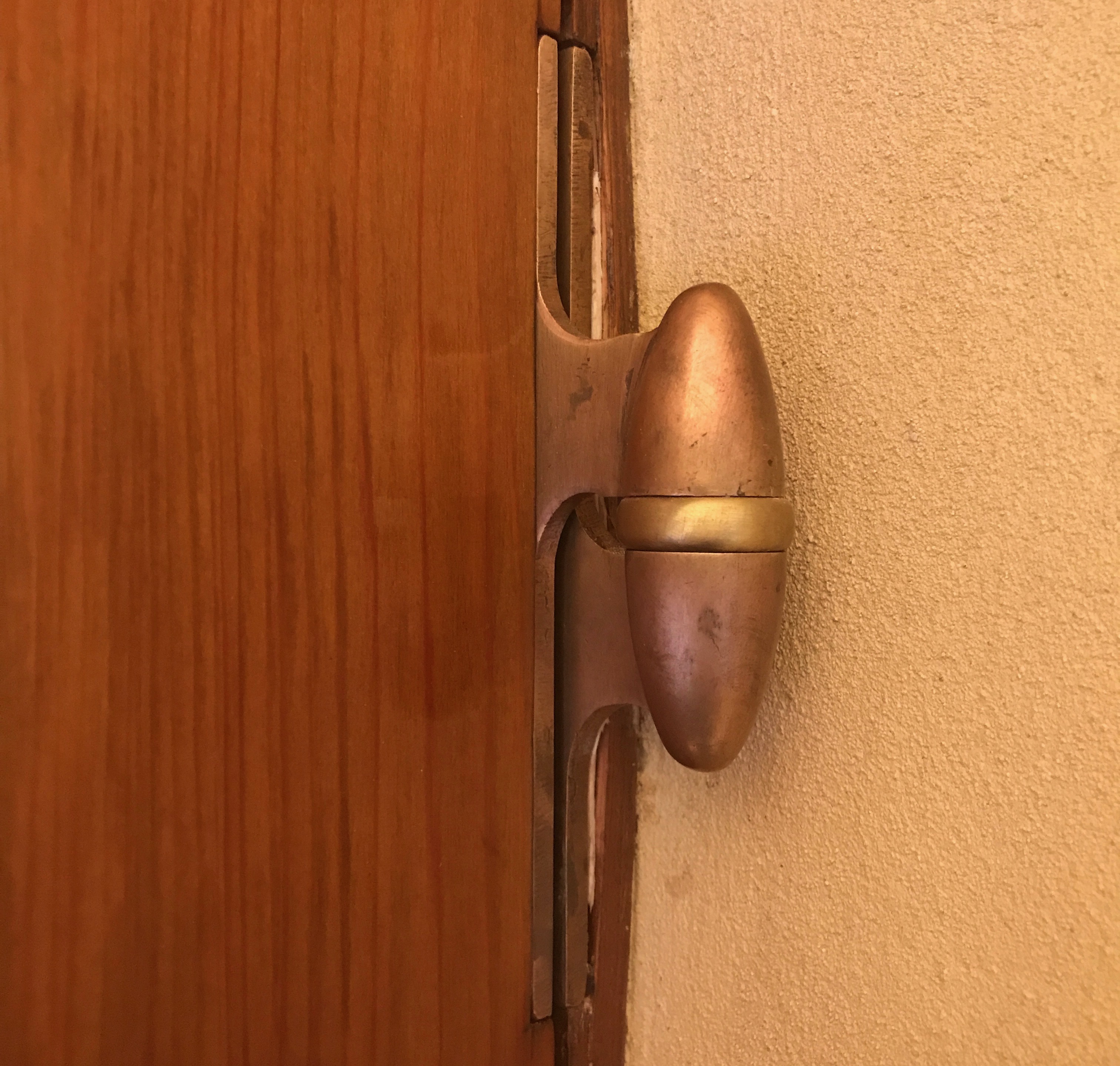
While the door looks a little mid-century modern, the hinge just screams “art deco.”
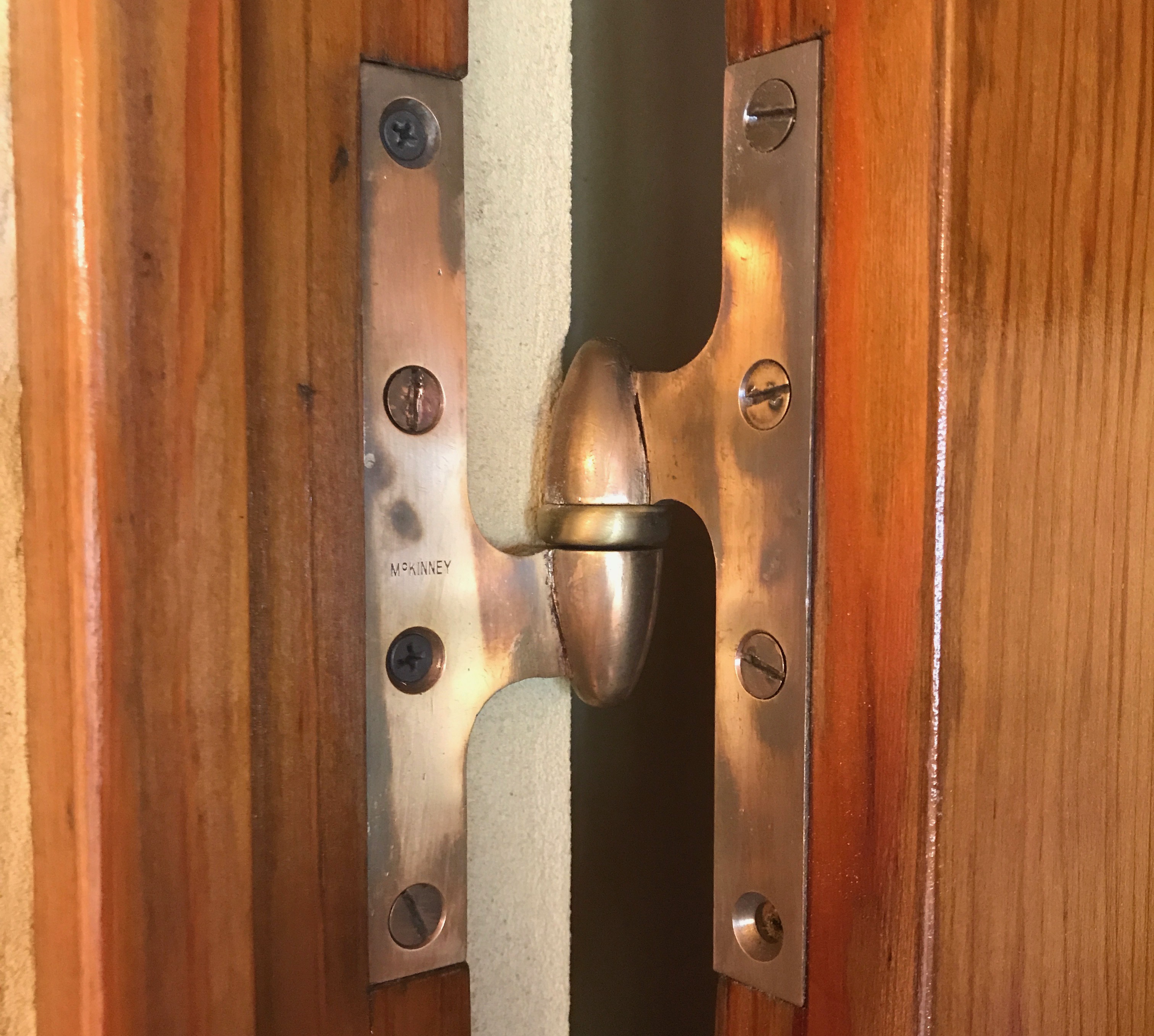
They don’t make hinges like that anymore! (At least not in my price range, they don’t!)
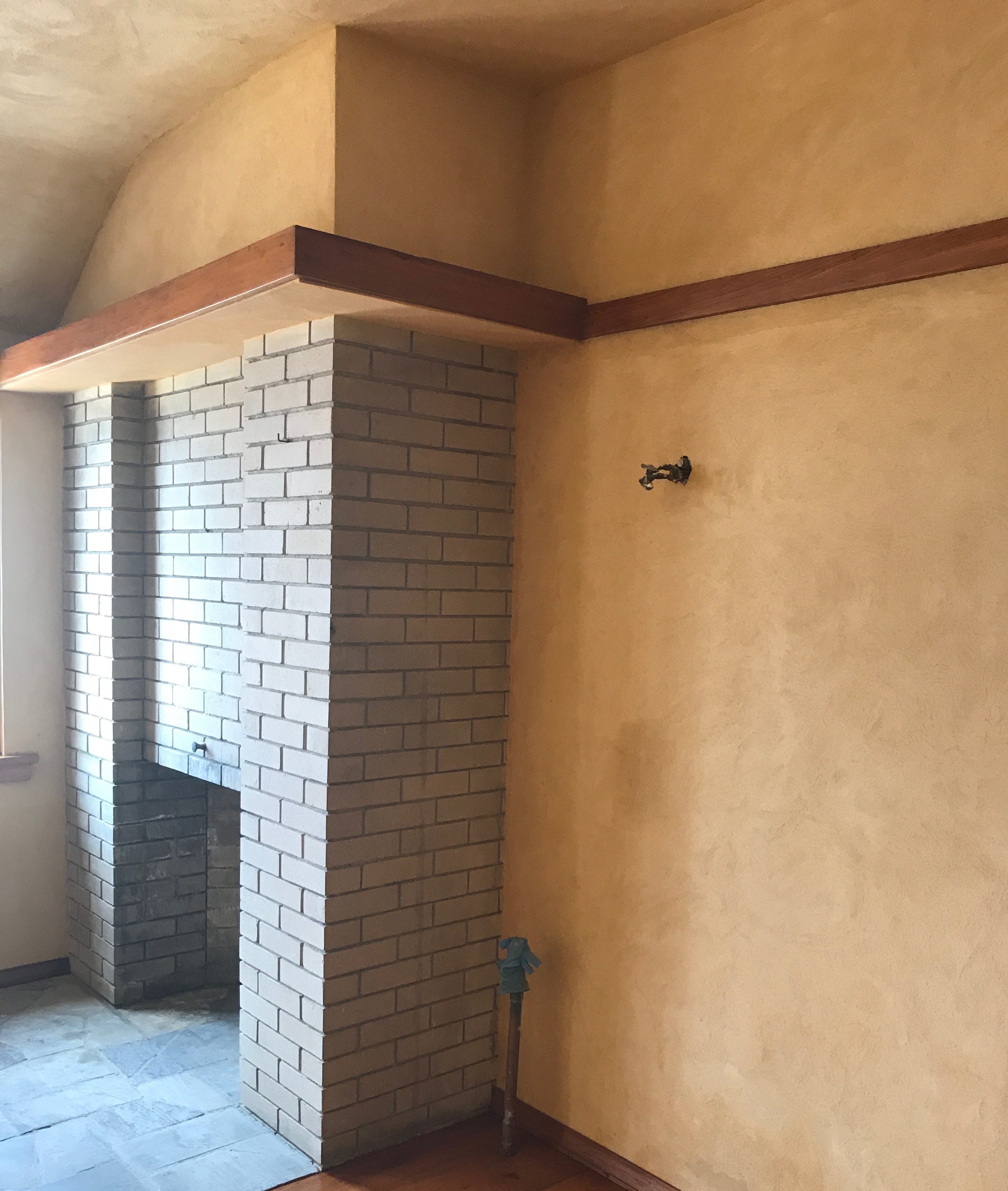
This is a fireplace from a bedroom. There is that pipe coming up through the floor again.
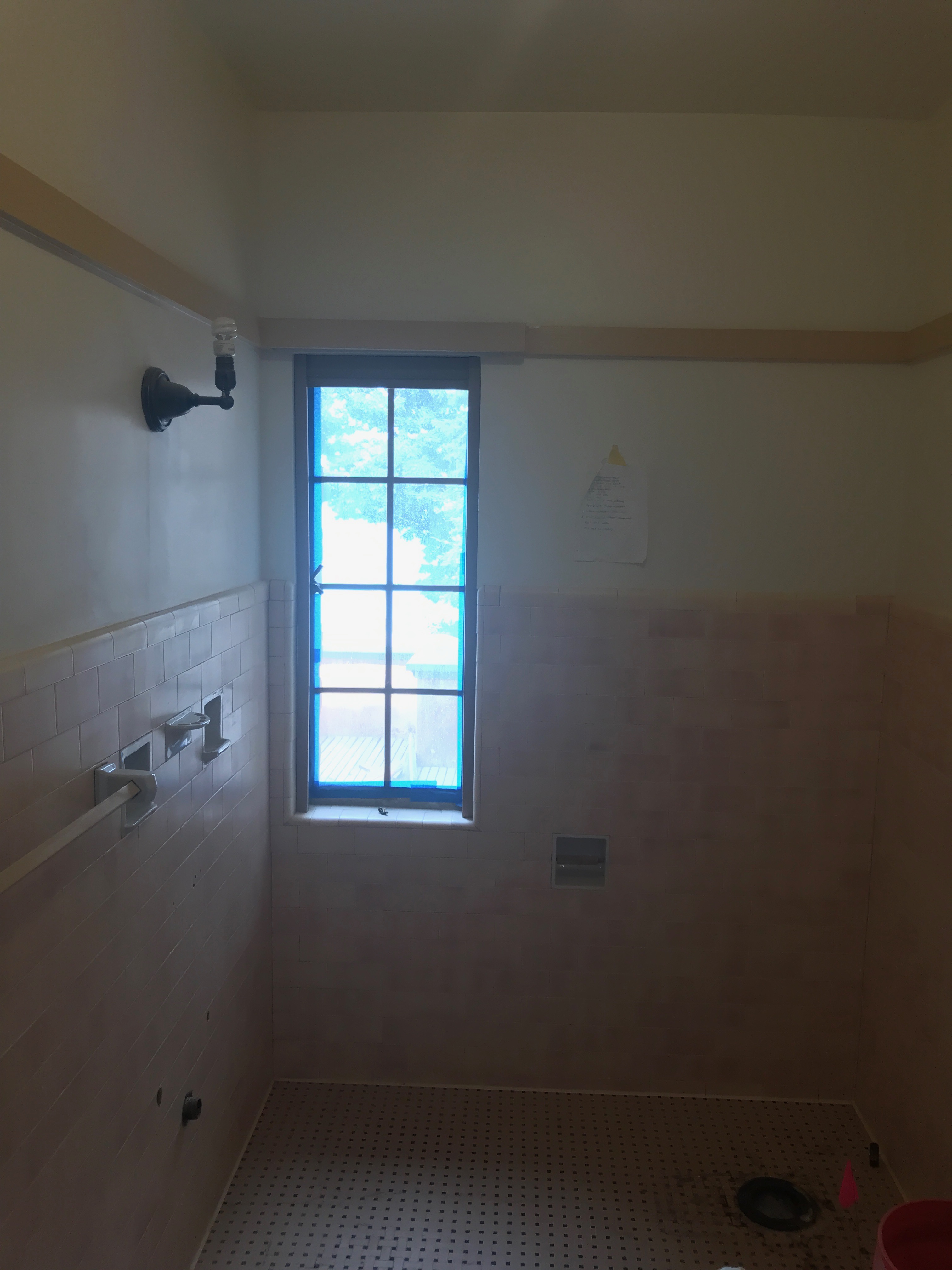
This is a shot of one of the bathrooms. I seem to recall some story about Mrs. Martin doing battle with Frank Lloyd Wright over the placement of the window. He didn’t want to put it in, but she insisted.
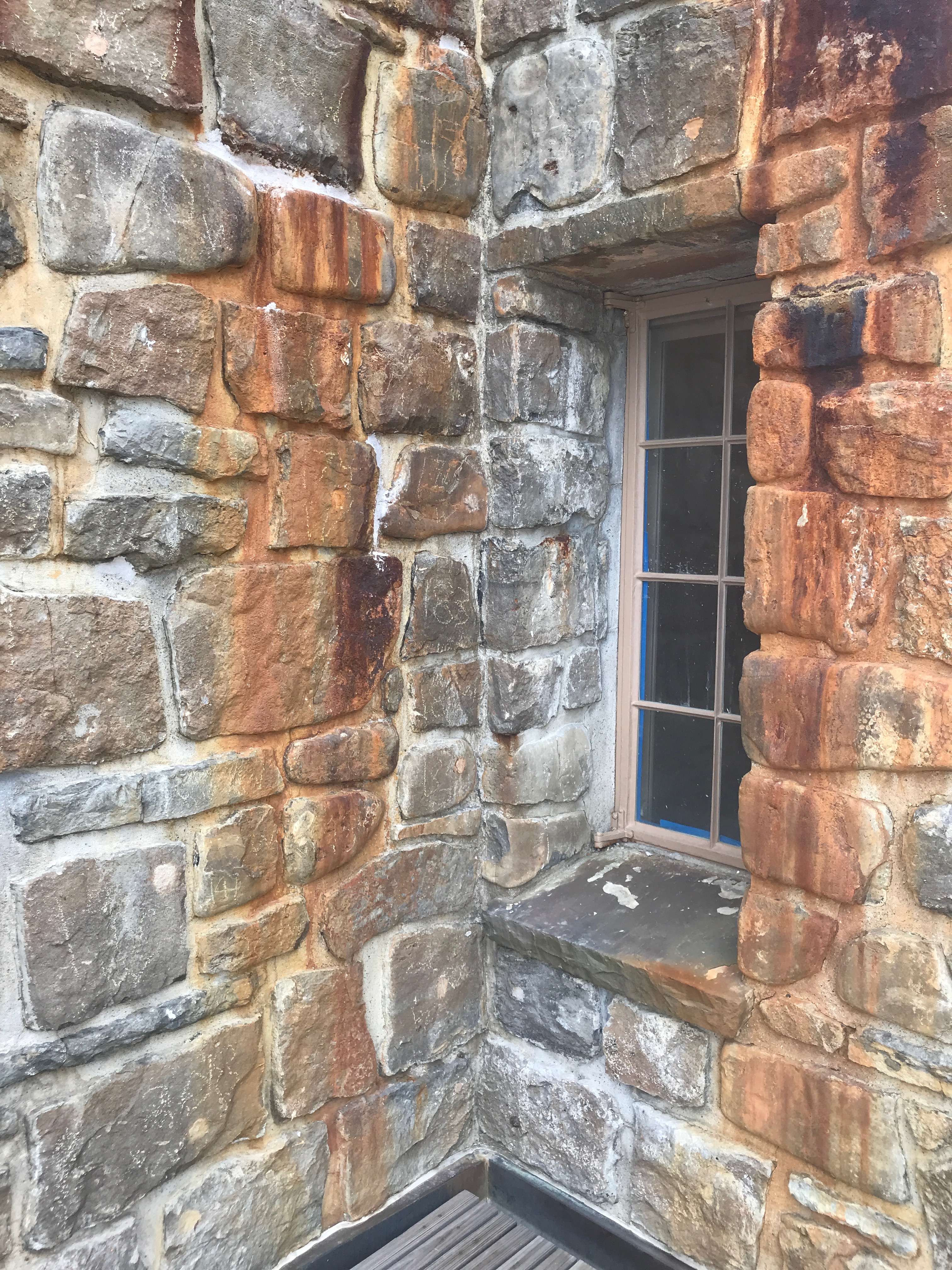
In the end, he relented, but he had to put it in through the stonework.
On the other hand, maybe I am conflating stories.
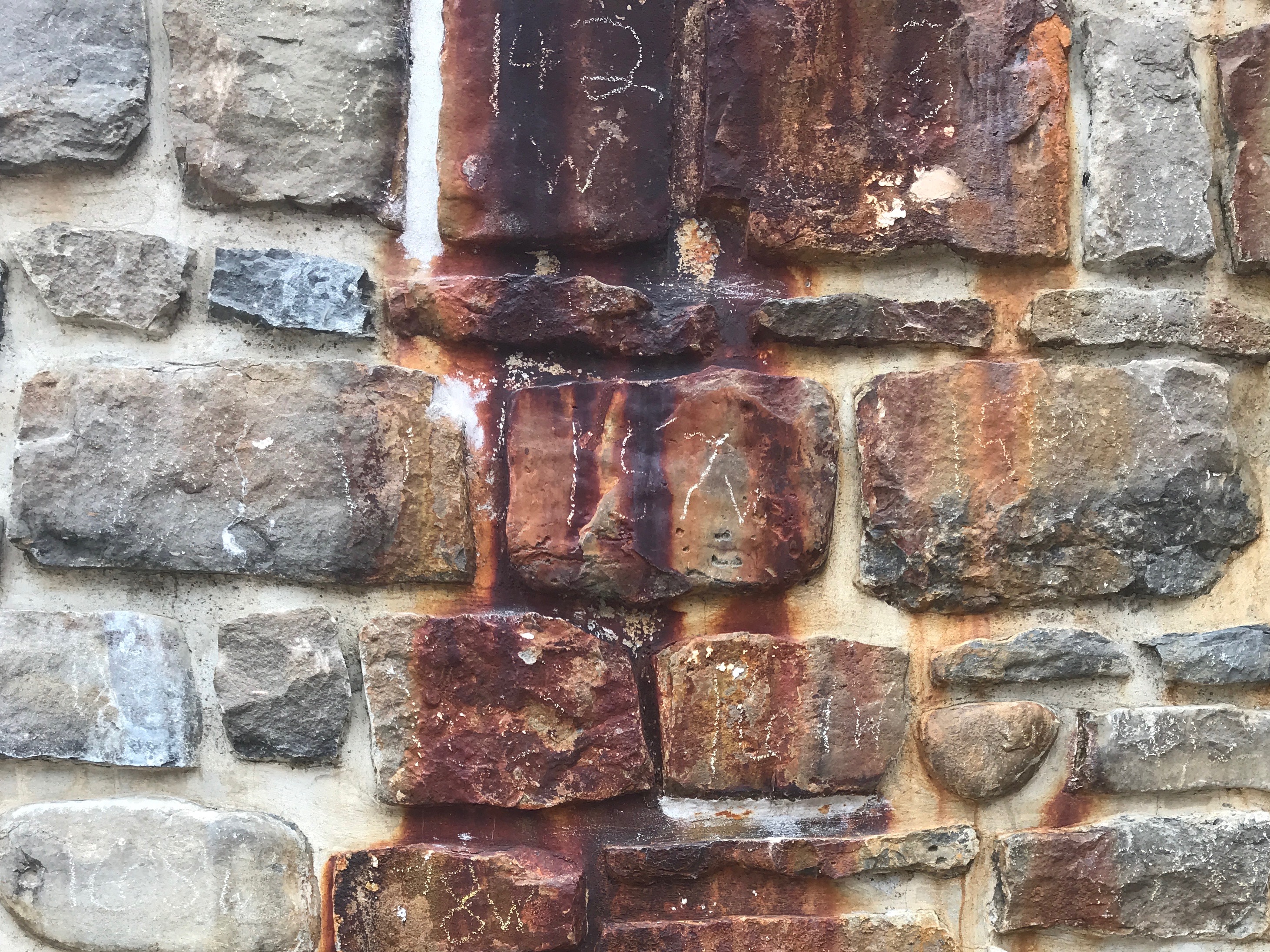
Ah, grafitti! Well, these folks are now part of the historical record. I wonder if any of these marks were made by the boys at the school run by the Piarist Fathers? Heck, the priests themselves might have done it!
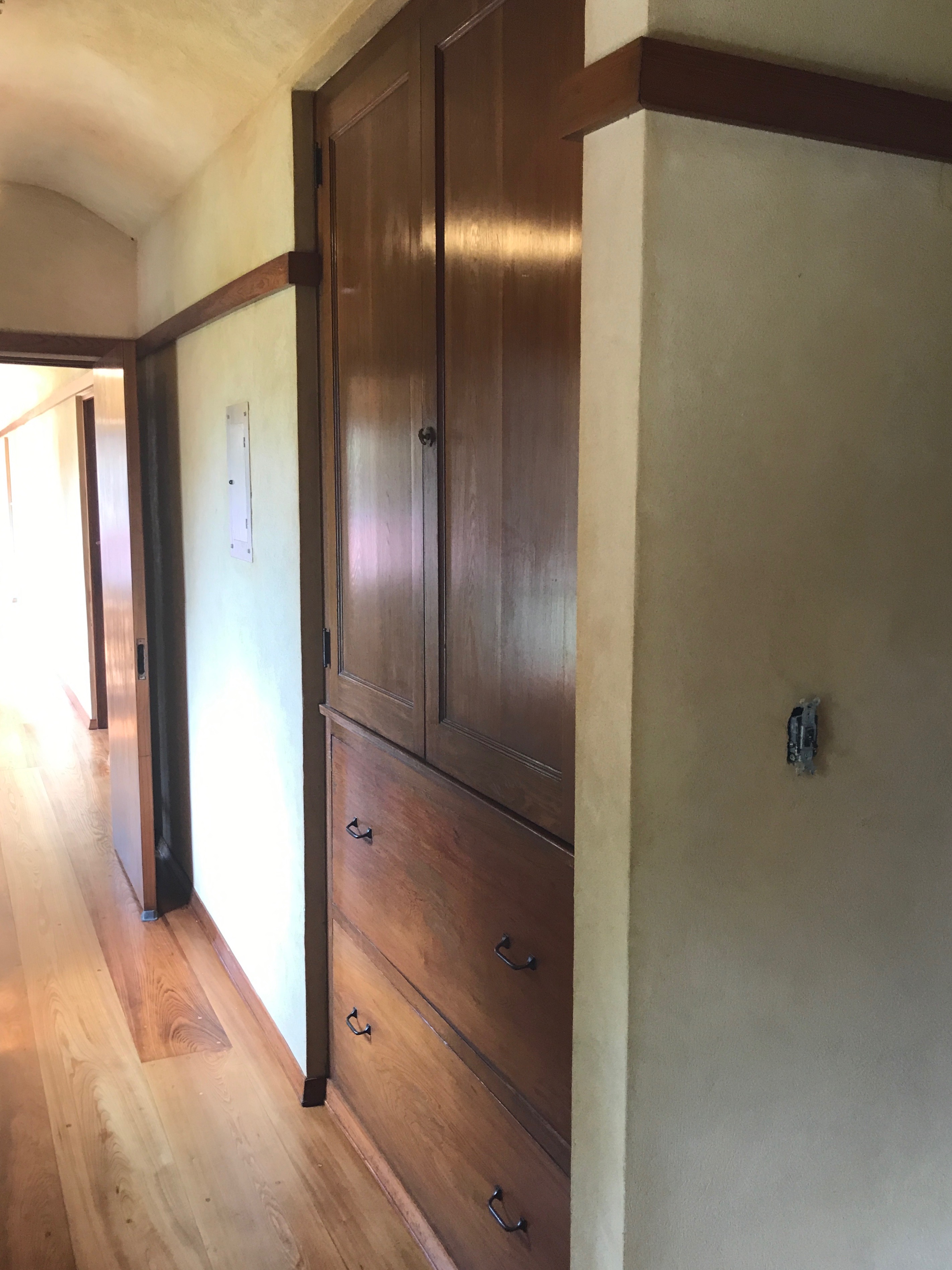
One of the things I’ve heard about Wright and his designs was that he was resistant to including closets and storage. I was glad to see that there was a linen closet built in.
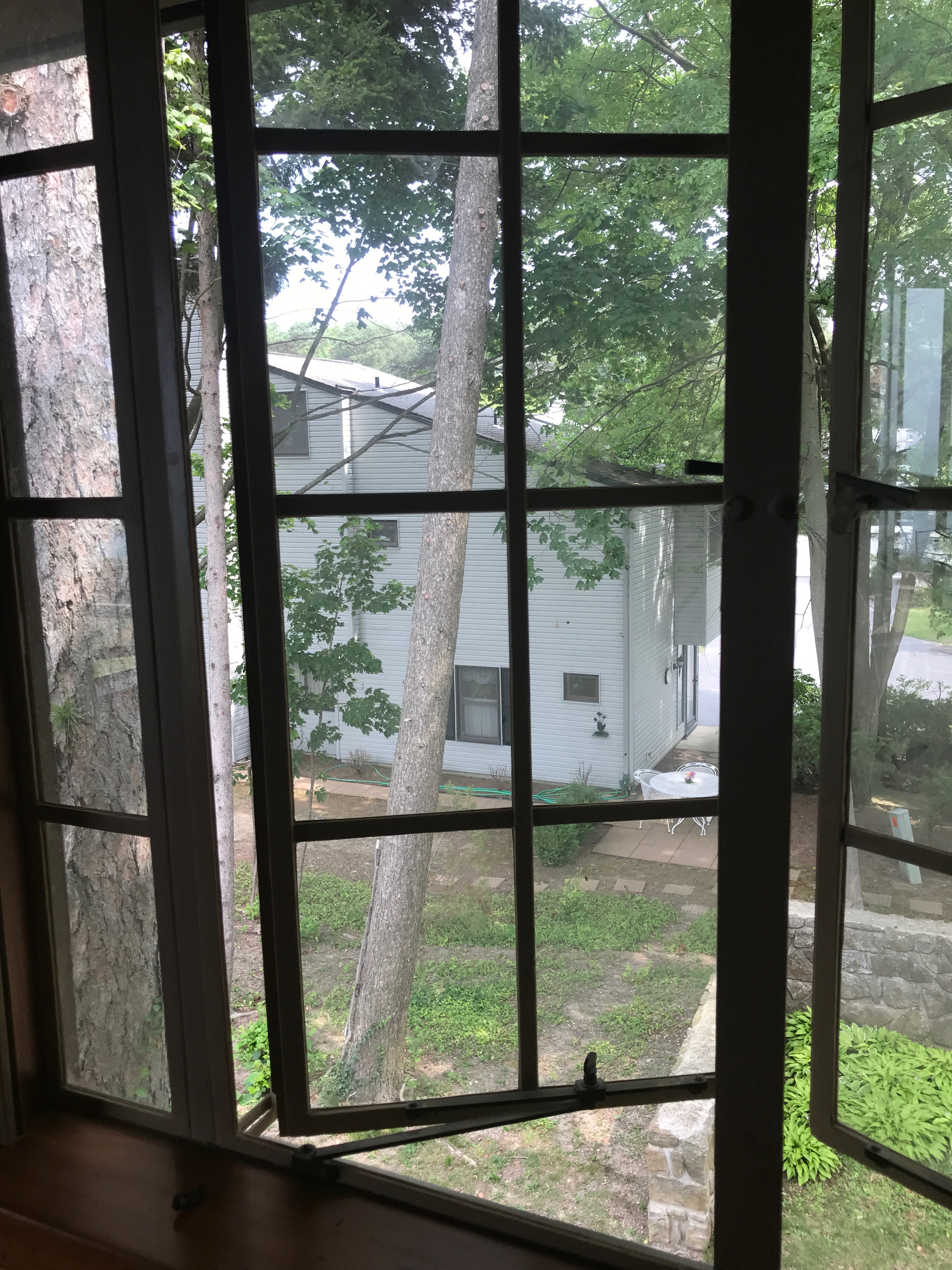
Although the original property was sited on an 8.5 acre estate, apparently tracts of land were sold off over the years. I am sure that Wright would not approve of the neighbors being so close to his design. While the land around the Martin House in Buffalo has been re-acquired and the original designs rebuilt, I can’t imagine that they will ever be able to re-acquire lakefront property. I would love to be proven wrong. According to my Preferred Source, Greycliff had one of the few, if not only, landscape designs in his own hand.
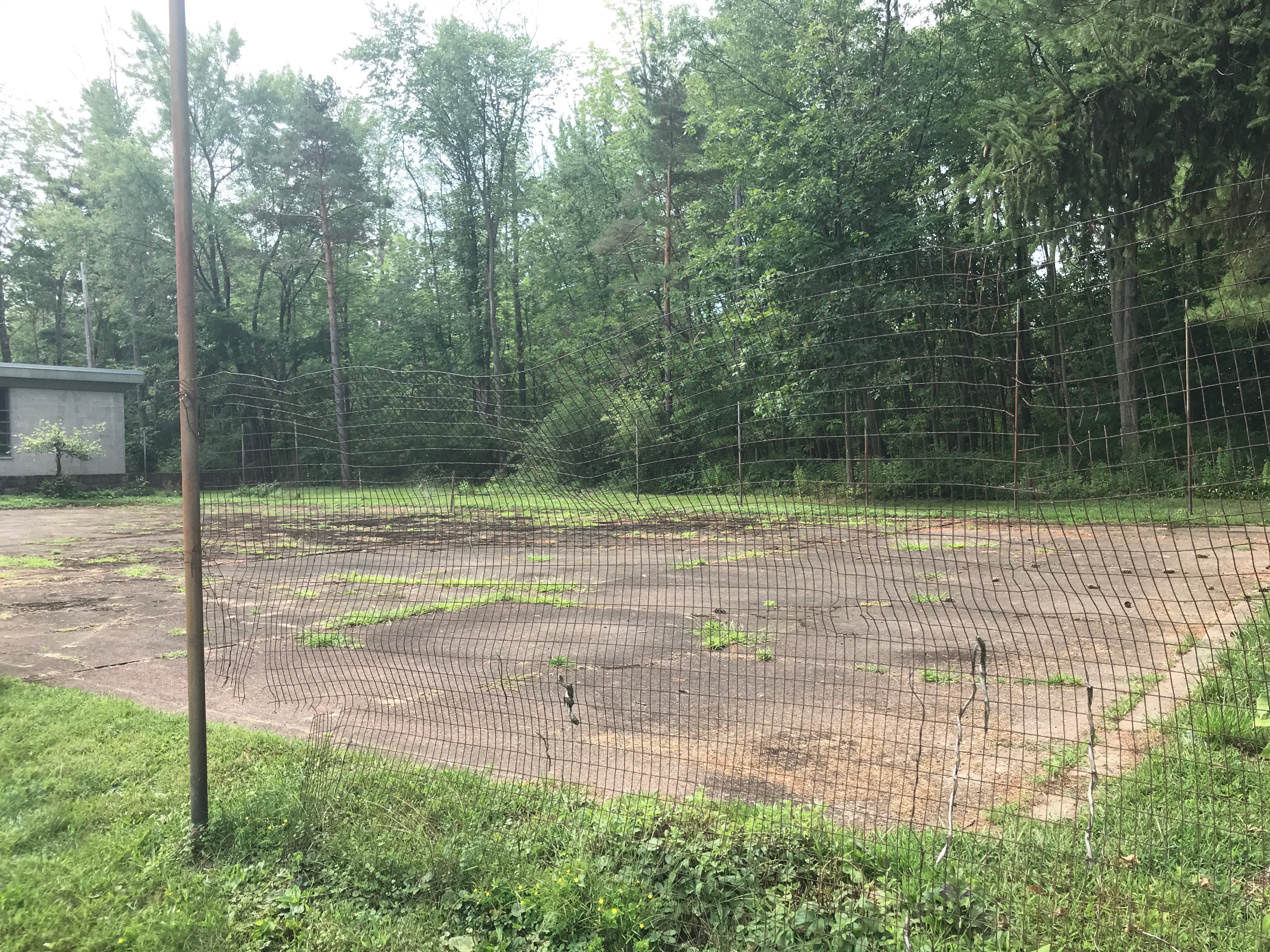
His design even included a tennis court.
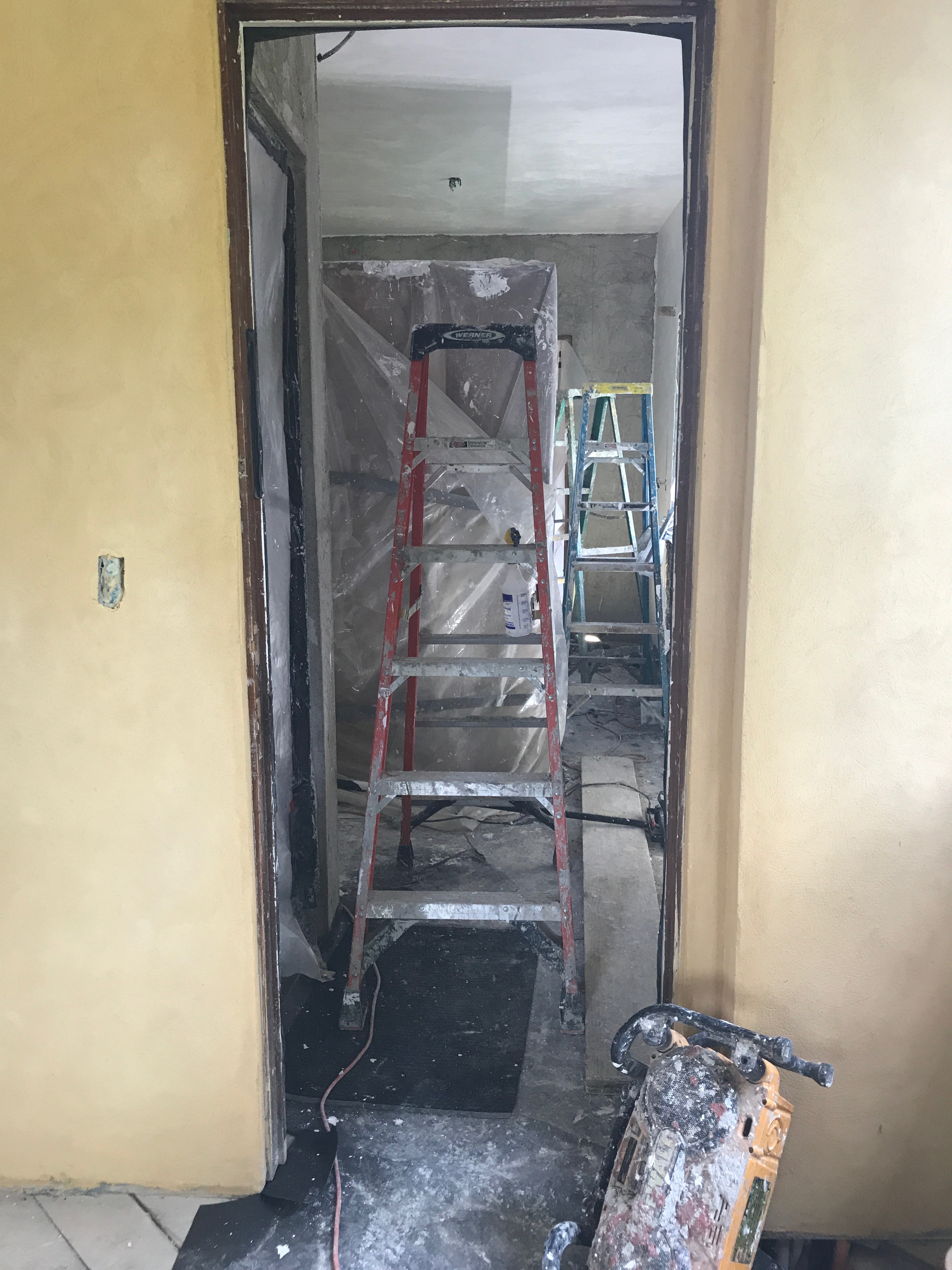
Apparently there is a need for the building permit. Work continues on the house.
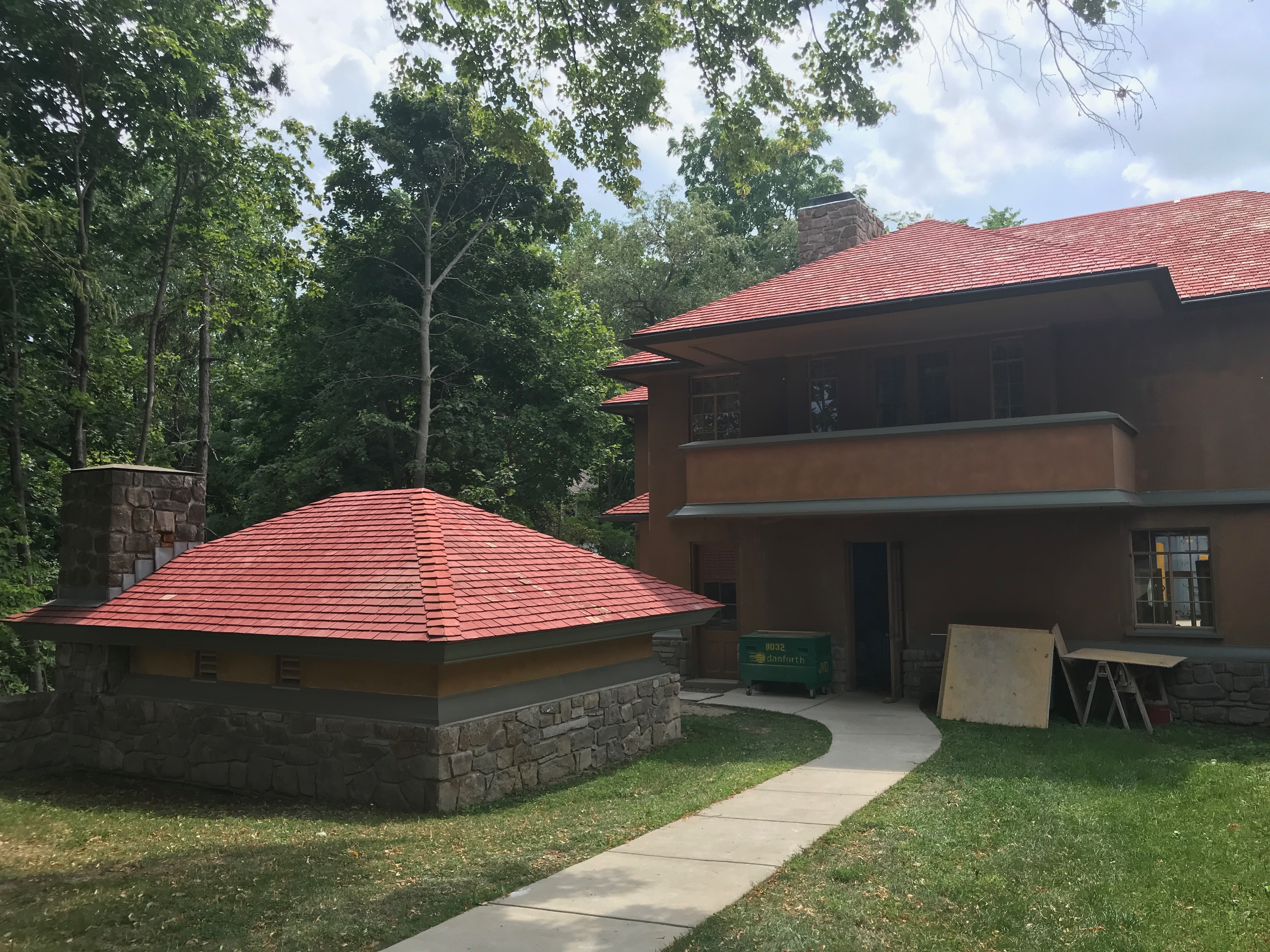
We left the Isabelle R. Martin House by the back door and headed back toward the visitor center. We passed the Heat Hut and walked around the Foster House.
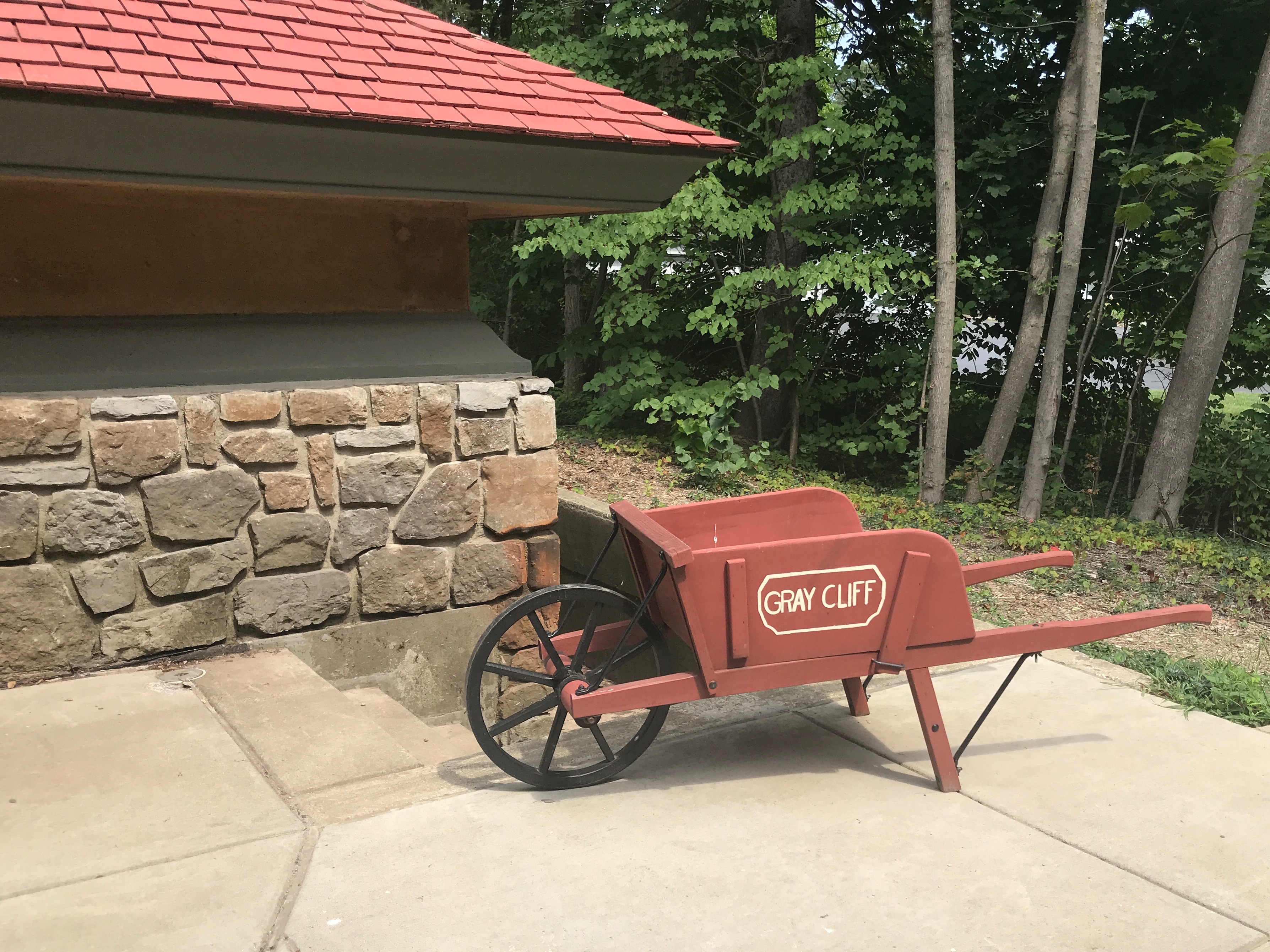
What a cute, decorative wheelbarrow!
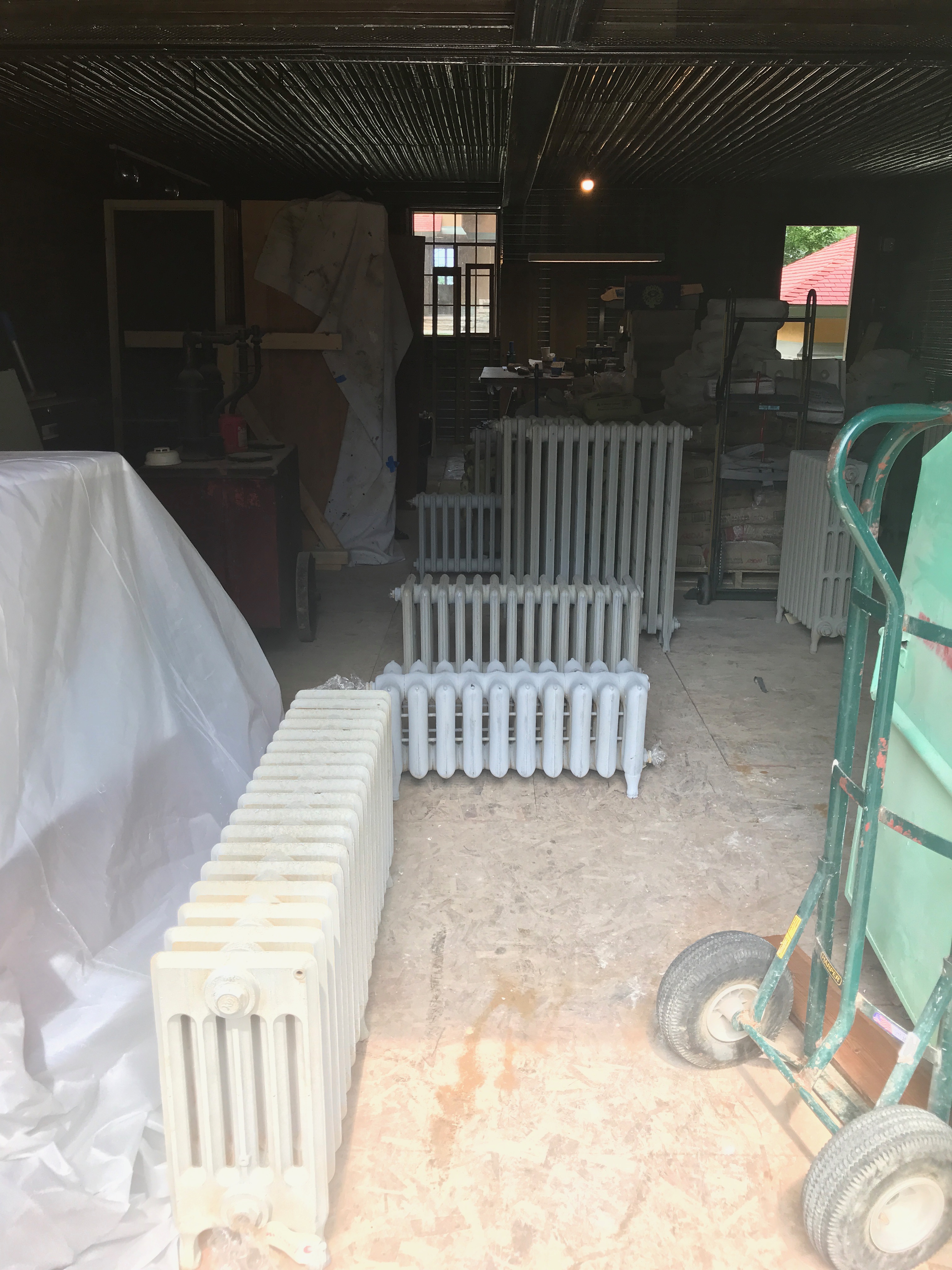
Ah! That’s where all the radiators are! I hope they got them in before the winter weather hit.
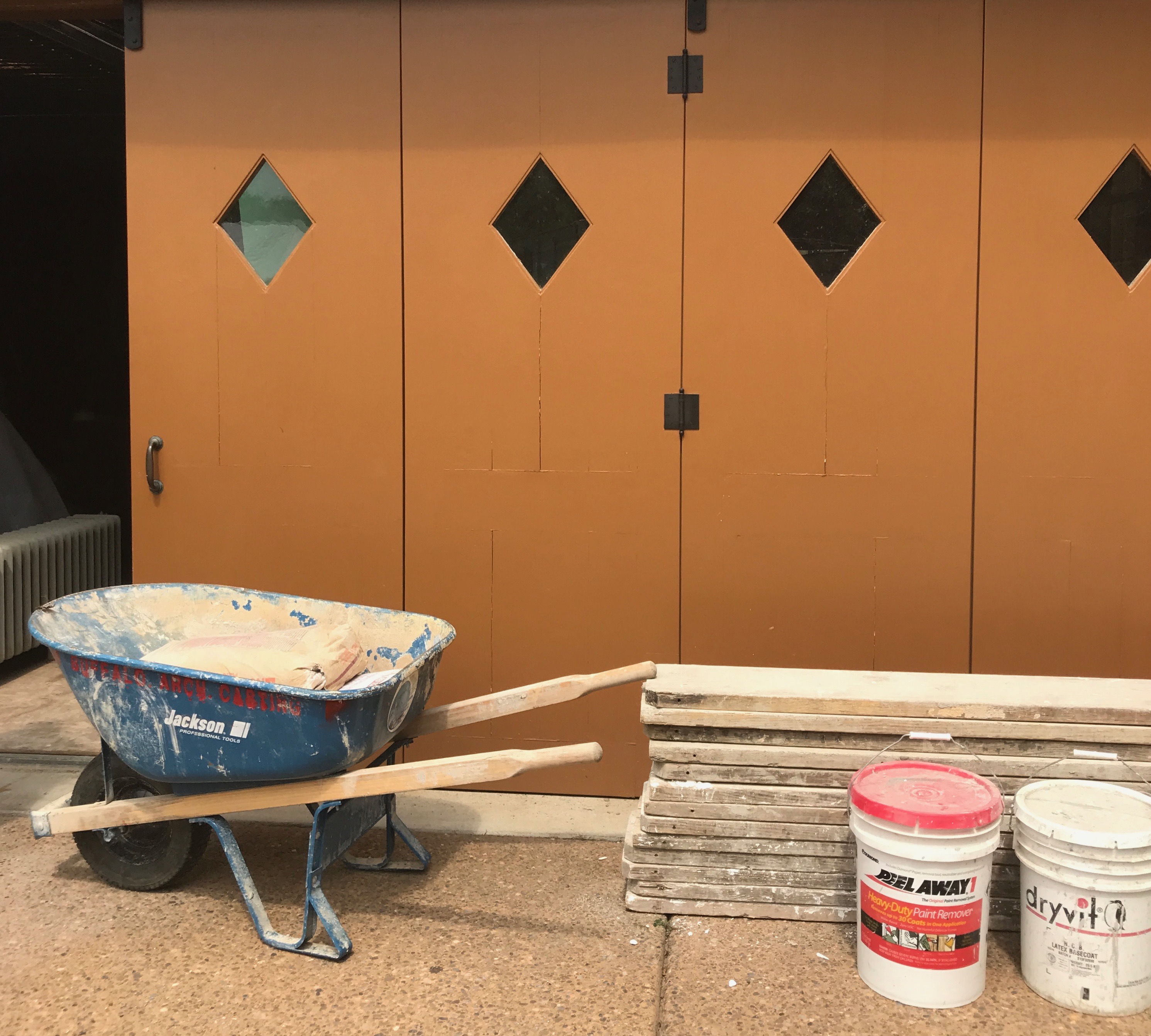
We passed the garage doors with the distinctive diamond shaped windows. Now, here’s a real working wheelbarrow, and it appears that there is real work continuing.
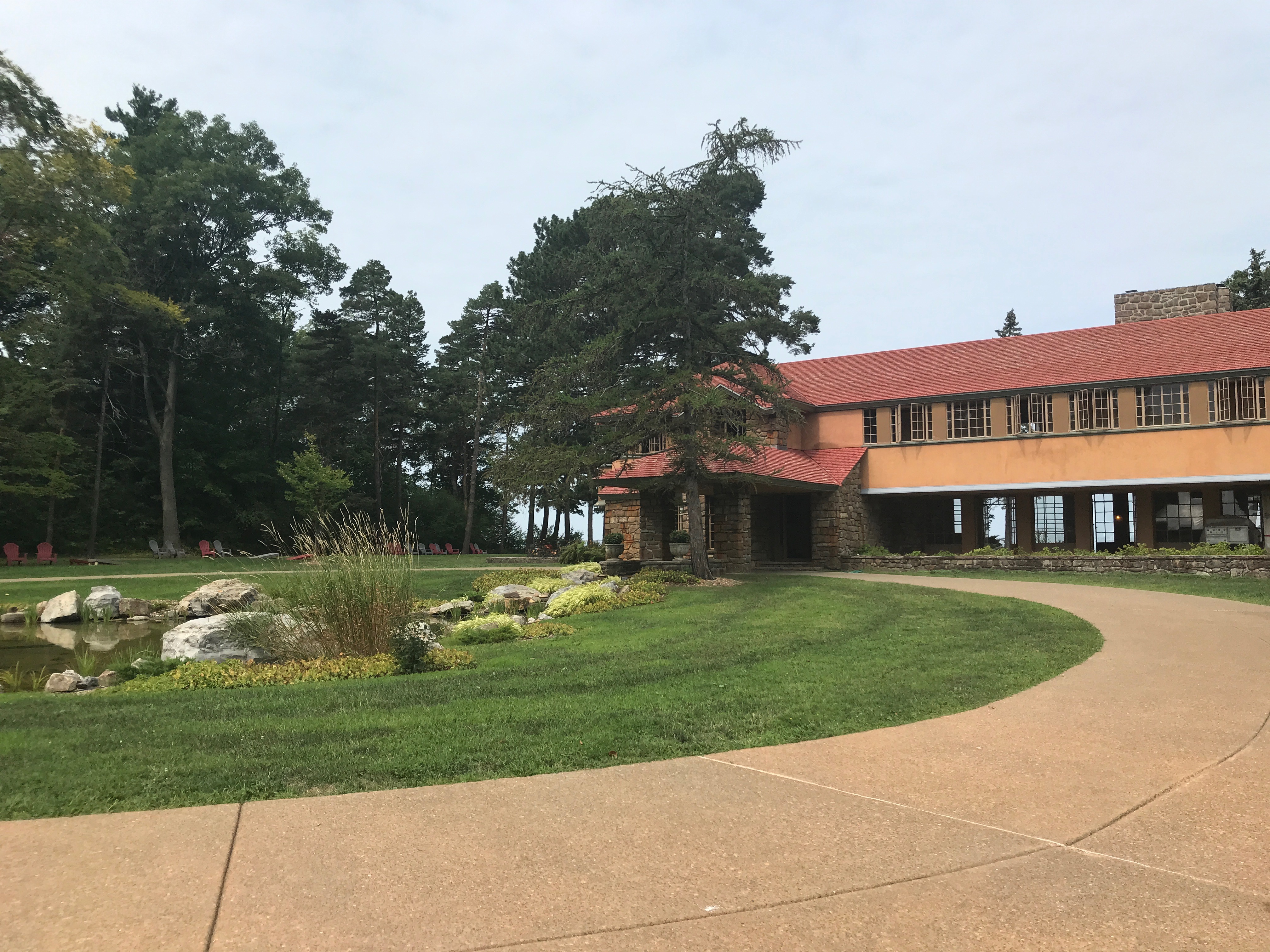
One more look back and then it was time to head out.
Once I was back in my car, I fired up Google Maps to map out the route to my next stop.
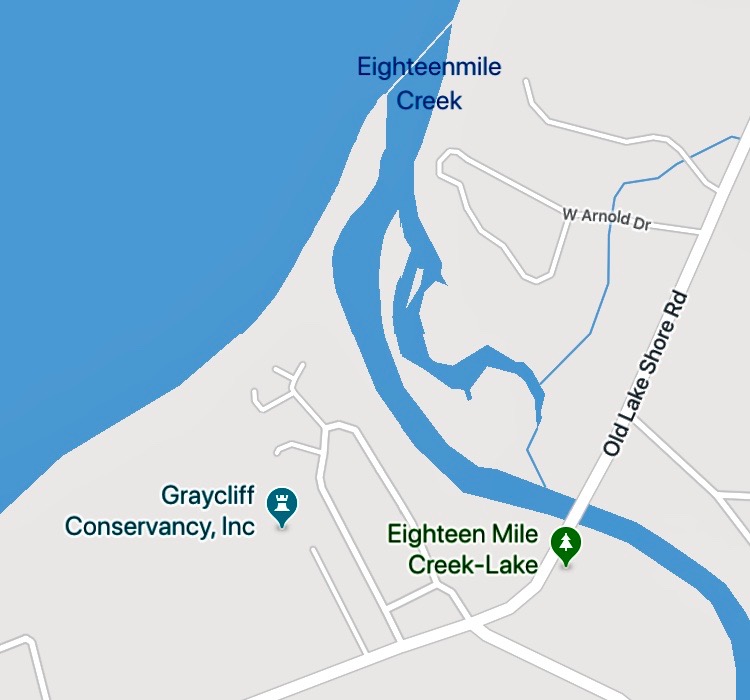
I saw a park on I had never seen before just up the road. I wondered what it was, so I took small detour to check it out. It wasn’t much of a park, but there was access to Eighteen-Mile Creek.
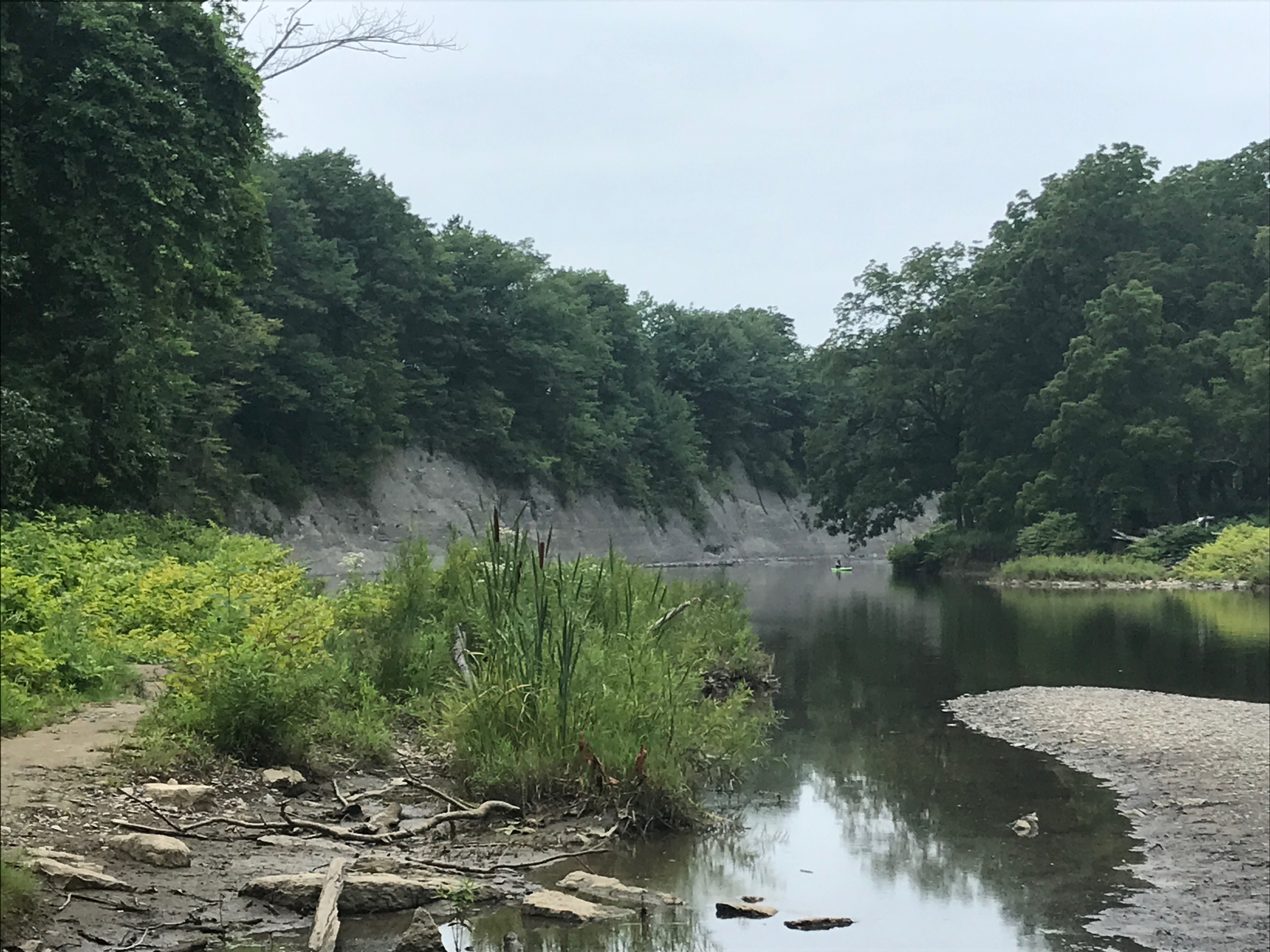
And I got a good view of the real grey cliffs! One of those layers must be Tichenor Limestone.
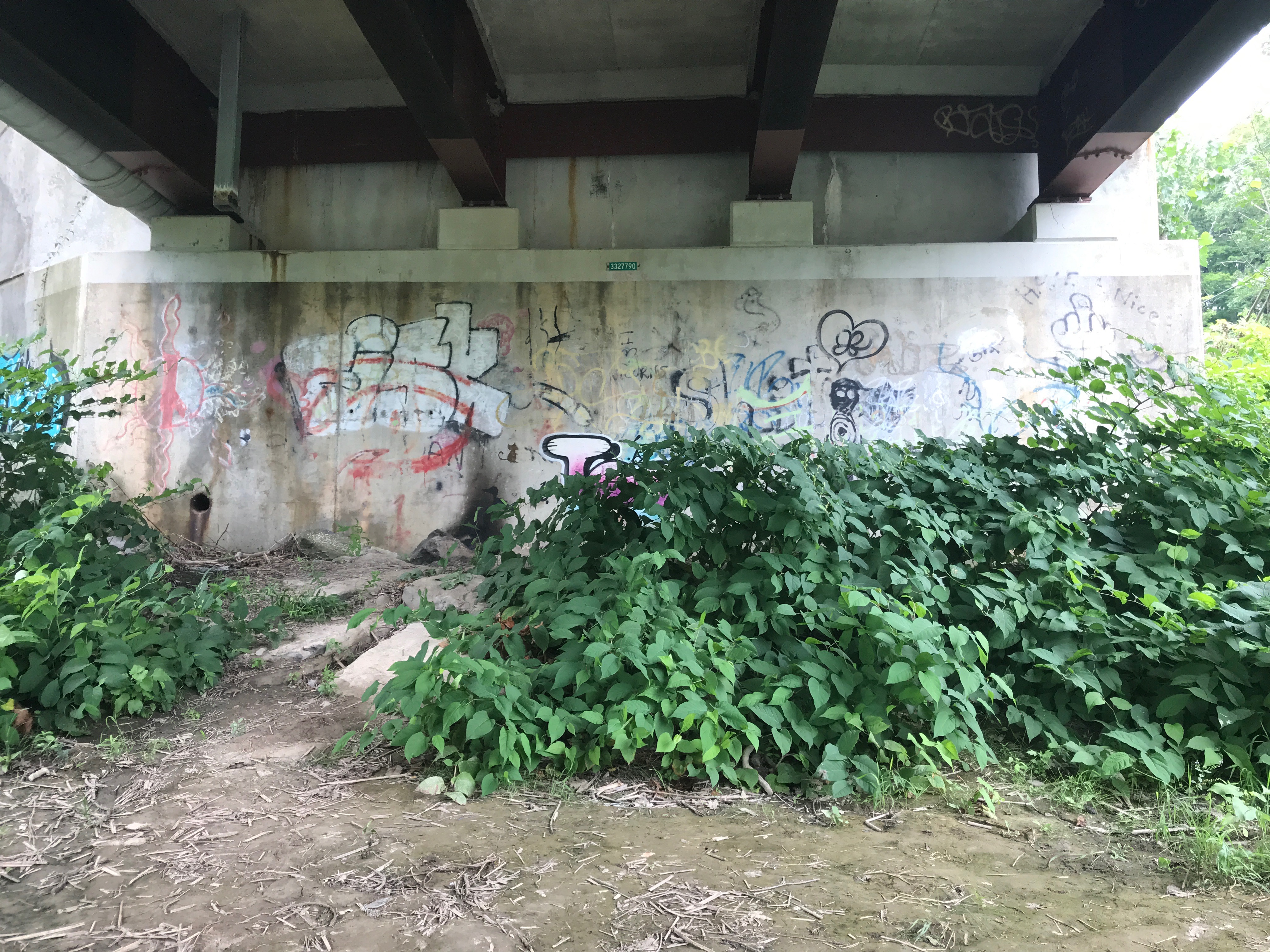
The park seemed like a place for people to hang out and make their mark, although kayakers might have been able to launch here. In the first photo, you can see a kayak going around the bend.

It was a peaceful place. I spent some time enjoying the plants and butterflies and then set off for wherever it was I was planning on going.