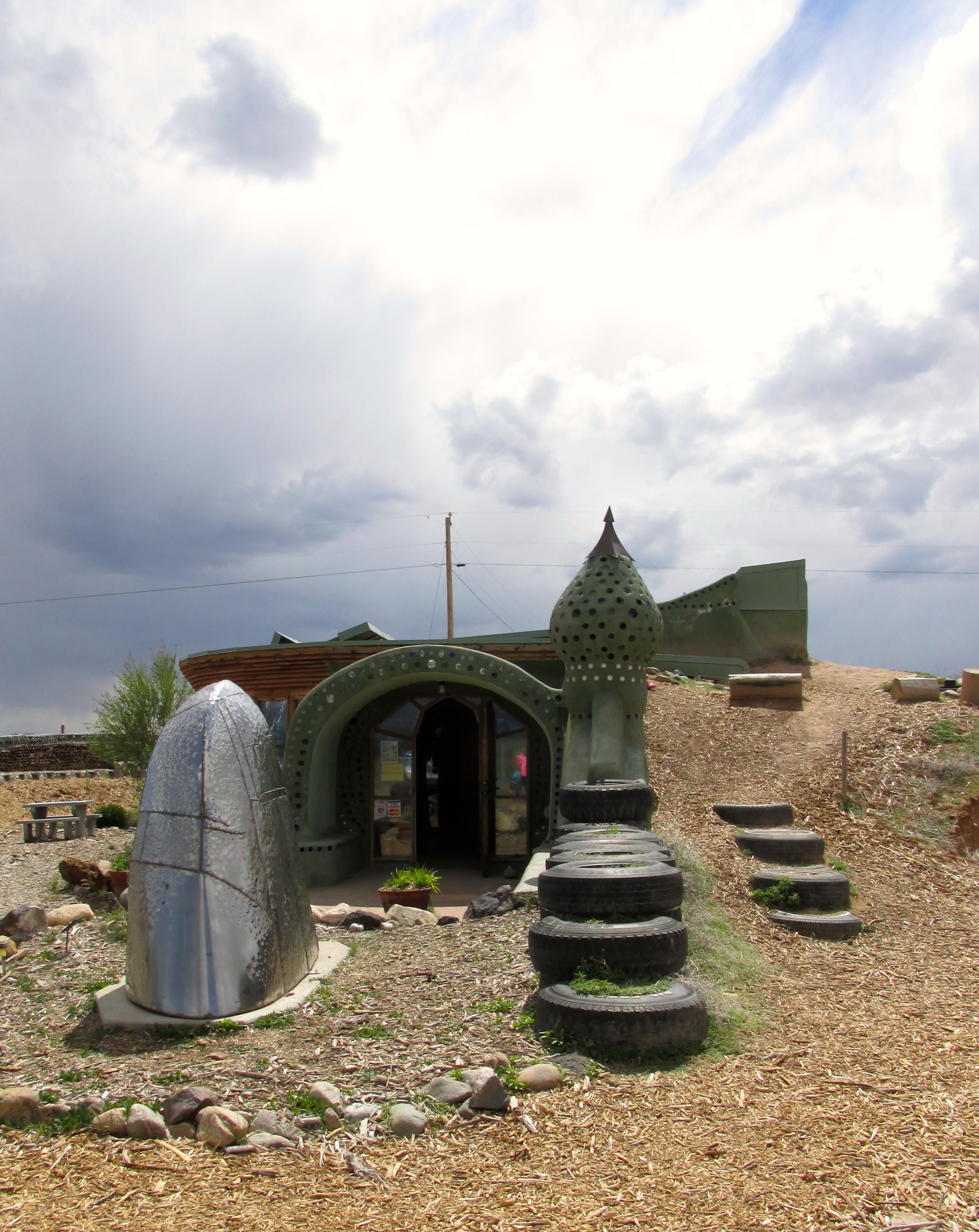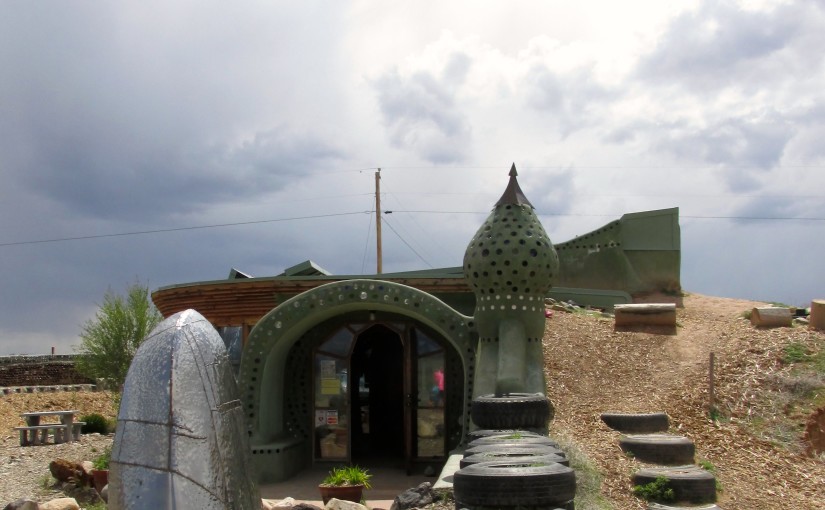
About ten miles outside Taos, near the edge of the Rio Grande gorge, is the headquarters of Earthship Biotecture. It’s an engineering and architecture organization that is dedicated to building self-sustaining dwellings out of recycled materials. You know those oh-so-difficult to dispose of tires? Those are the foundation of their buildings.
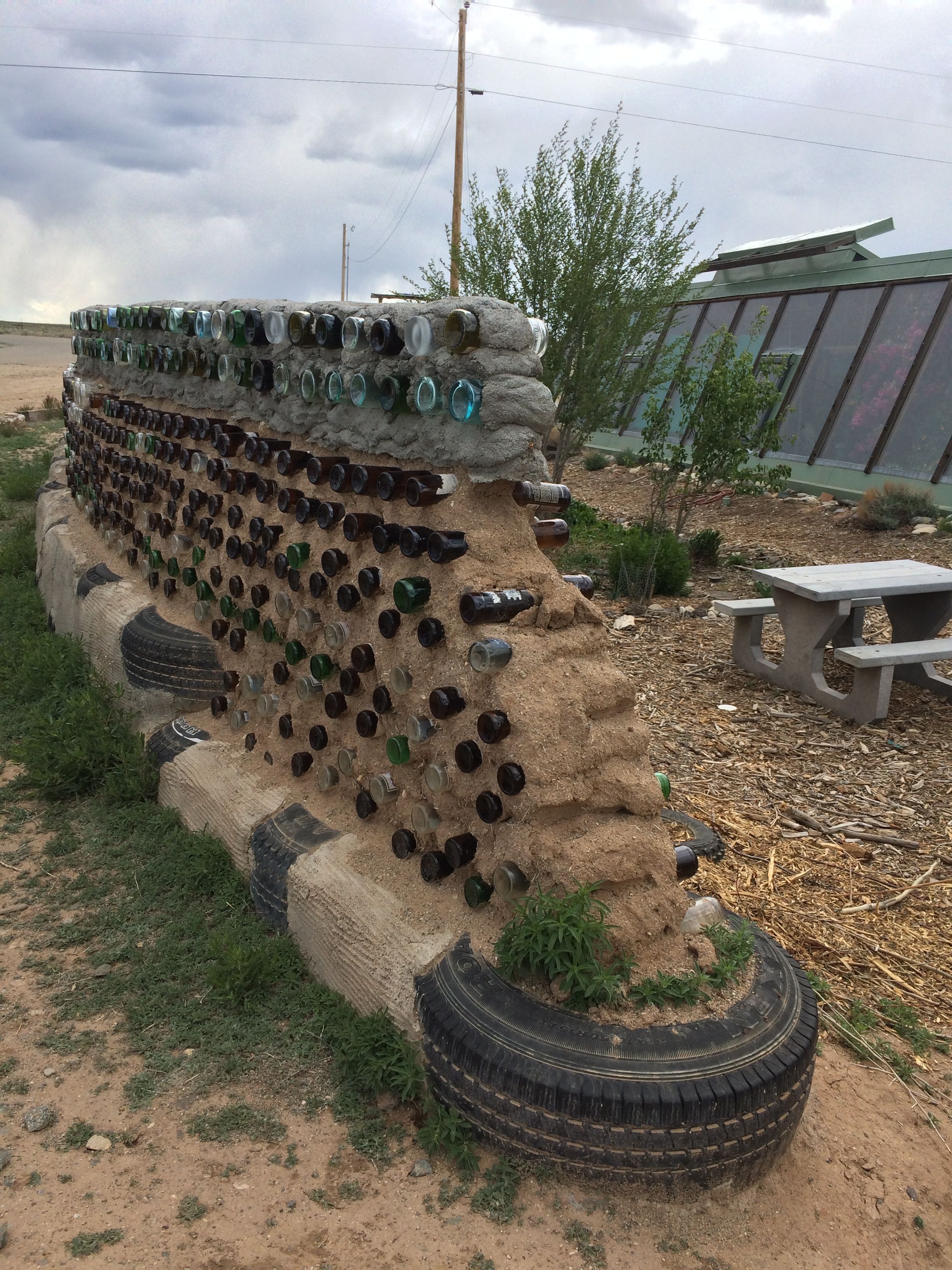
They are packed full of soil and then treated like bricks. They also use bottles and cans in their buildings, but I got the impression that they were not used for load-bearing walls.
They are mortared together with a mud mixture. When the building is complete, it is covered over with the same mud mixture. It seems like this mud is similar to cob or adobe. The exteriors need to have the outer layer refreshed every few years.
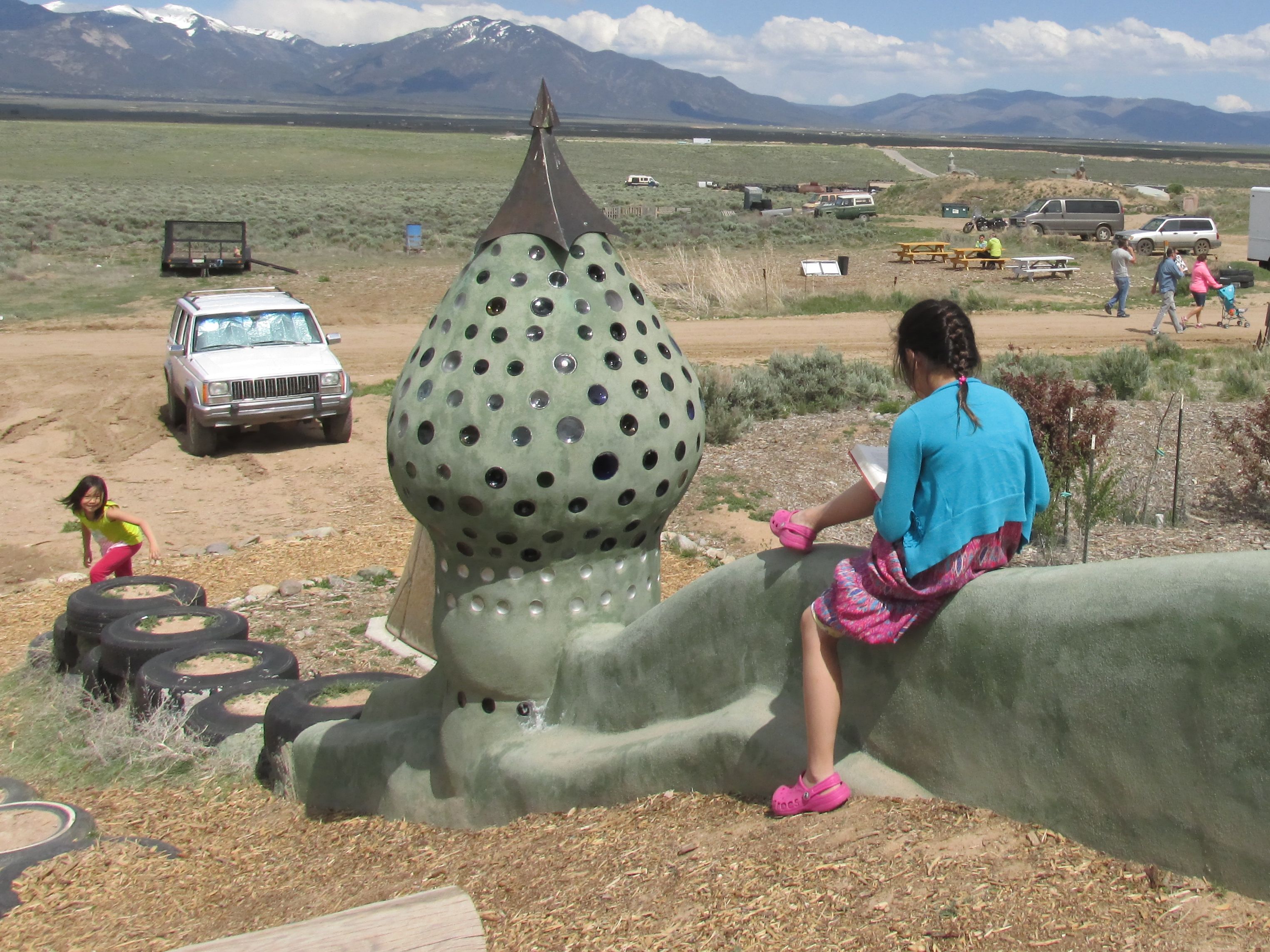
Usually at least half of the building is in built into a hillside or has an extensive amount of earth built up around it for insulation.
The side that faces the sun is largely glass, to take advantage of solar heating. The sun passes through the glass and the heat is stored in the floor and walls of the interior and released throughout the night.
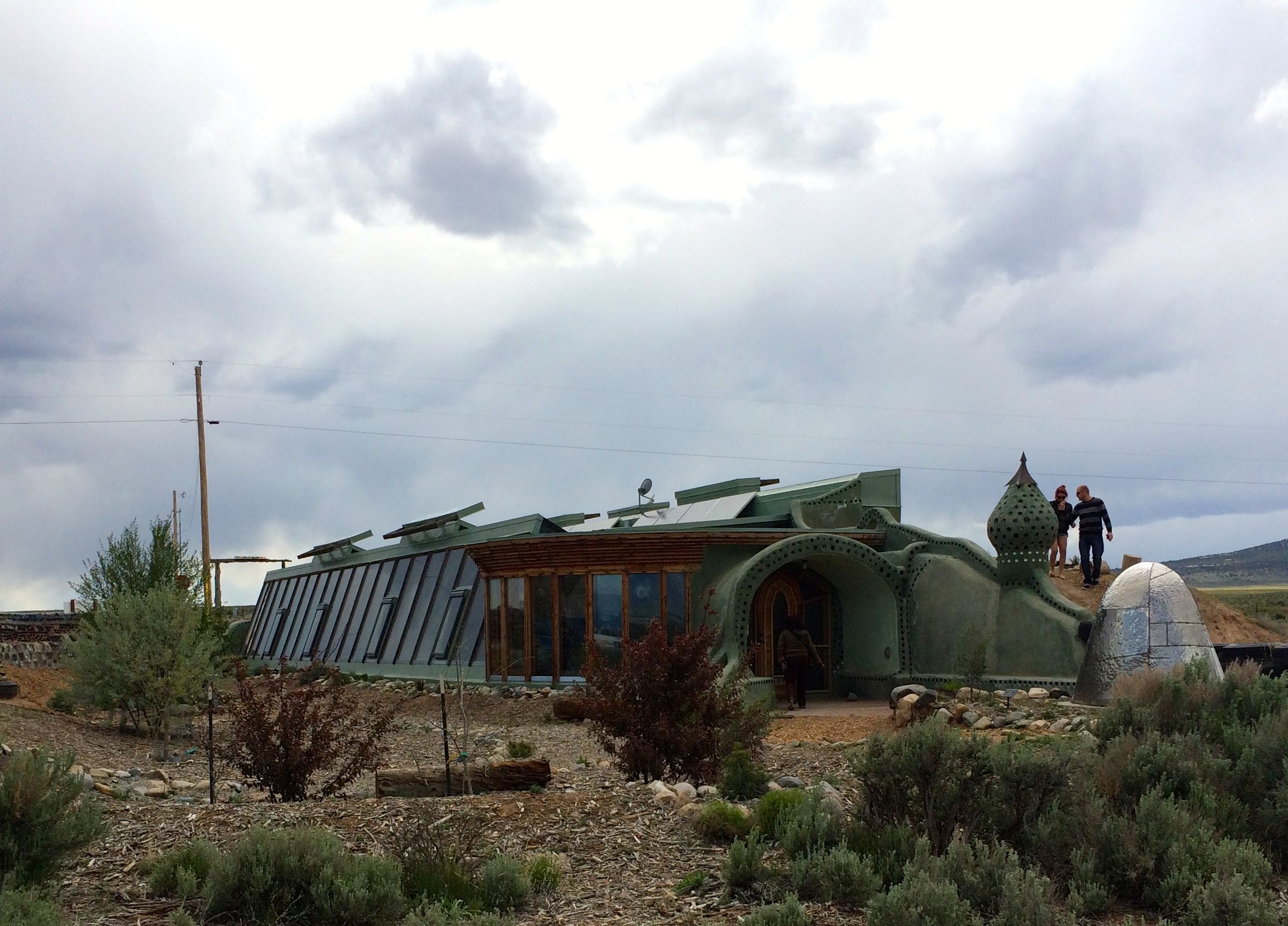
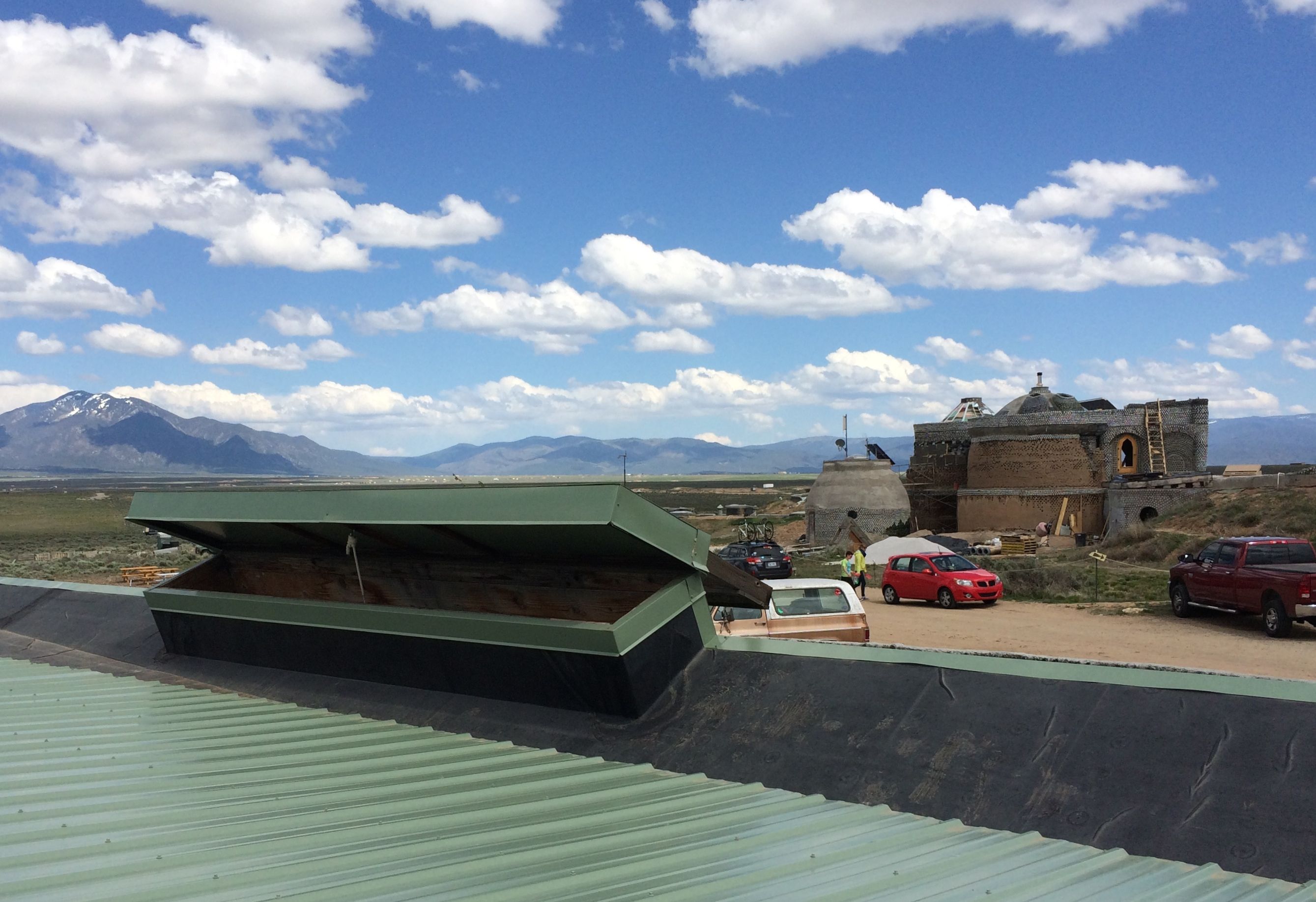
The angles of the glass walls are planned to allow for maximum heating during the winter and less heating during the warmer summer months. There is two-walled system of glass walls to contain and control the heat. The interior temperature of the living areas is controlled, at least in part, by skylights that open and close.
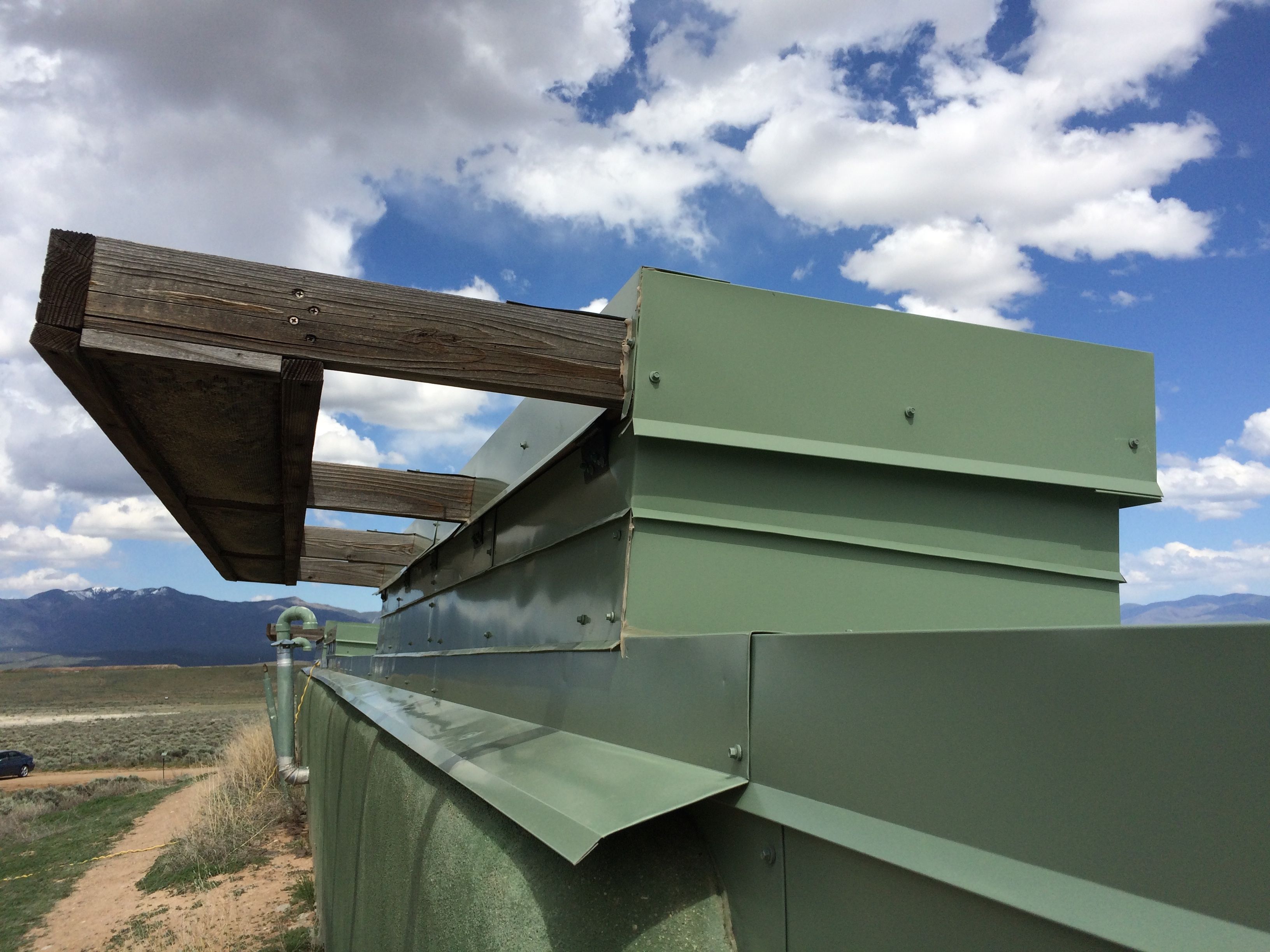
The ballast, which you can see on the left side, keeps the skylight open.
Rain water is collected and stored in cisterns beneath the house.
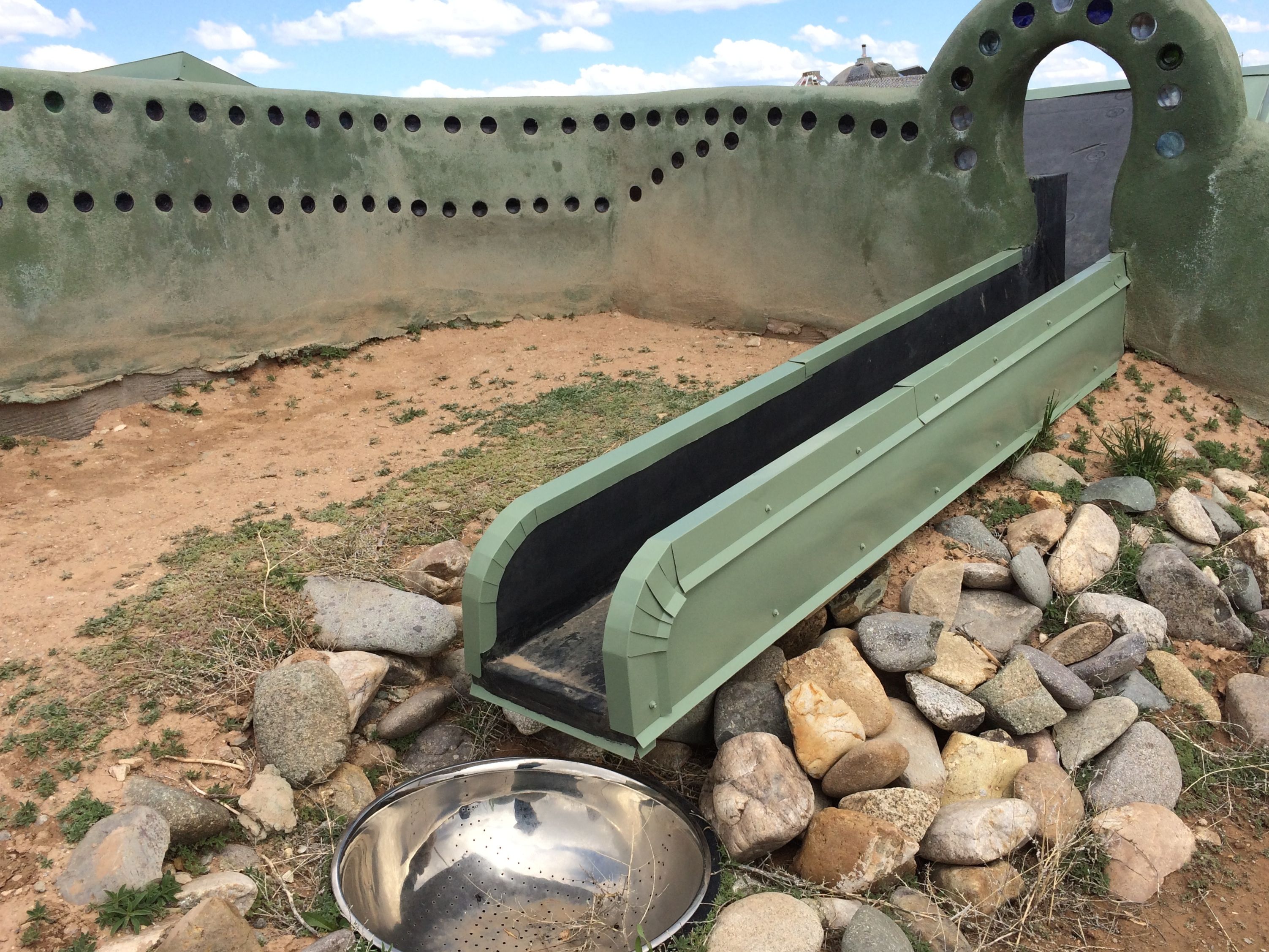
Their are holes in the basin to strain out the larges pieces. There are additional filtering steps. There is also extensive water reuse, and reuse of grey water for plants and sanitation. Plants are an integral part of the design. They are used in water purification and part of the occupants’ food can be grown in the house.
These homes are designed to be completely off-grid, although they can design buildings that do hook up to utility infrastructure. As I understand it, electrical power comes from solar and wind and is stored in batteries. They have solid state inverters to change the DC power of the batteries to the AC power that is used to run appliances.
They had a video and a slide show that displayed the variety of structures they have built since they started in the early 1970’s. Michael Reynolds was the person who started Earthship.
They have quite a community growing around the headquarters, although those are in private areas that are not accessible to visitors. (But they can’t stop us from looking!)
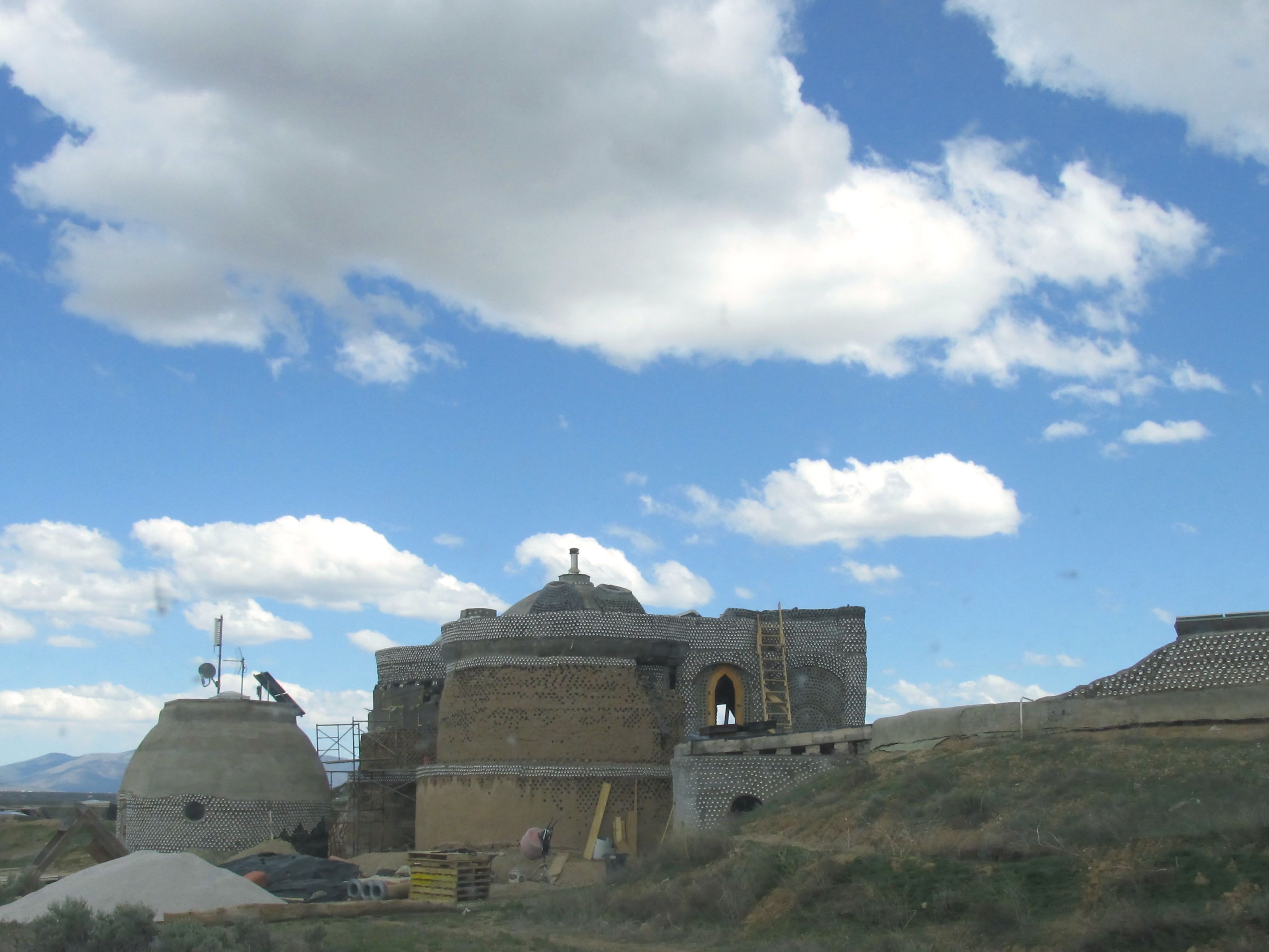
Apparently you can rent a room in an Earthship to stay overnight. If I didn’t already have Flo the Airstream, I might have looked into it. They also have buildings for sale, and they will build one for you that suits whatever region you live in.
It was a wonderful visit, and I have to thank Sister Jeanne my art history professor from Daemen College for introducing me to it. She was a marvel and so cutting edge. She was teaching about this when it was just barely getting started.
If you want more information, look them up online.
www.earthship.com
On the way back to Taos, I stopped at the Rio Grande Gorge Bridge. The weather had changed dramatically from when I left Flo in the morning. In fact, while I was on the bridge, some very wet, sloppy white stuff fell from the sky. Brrr!
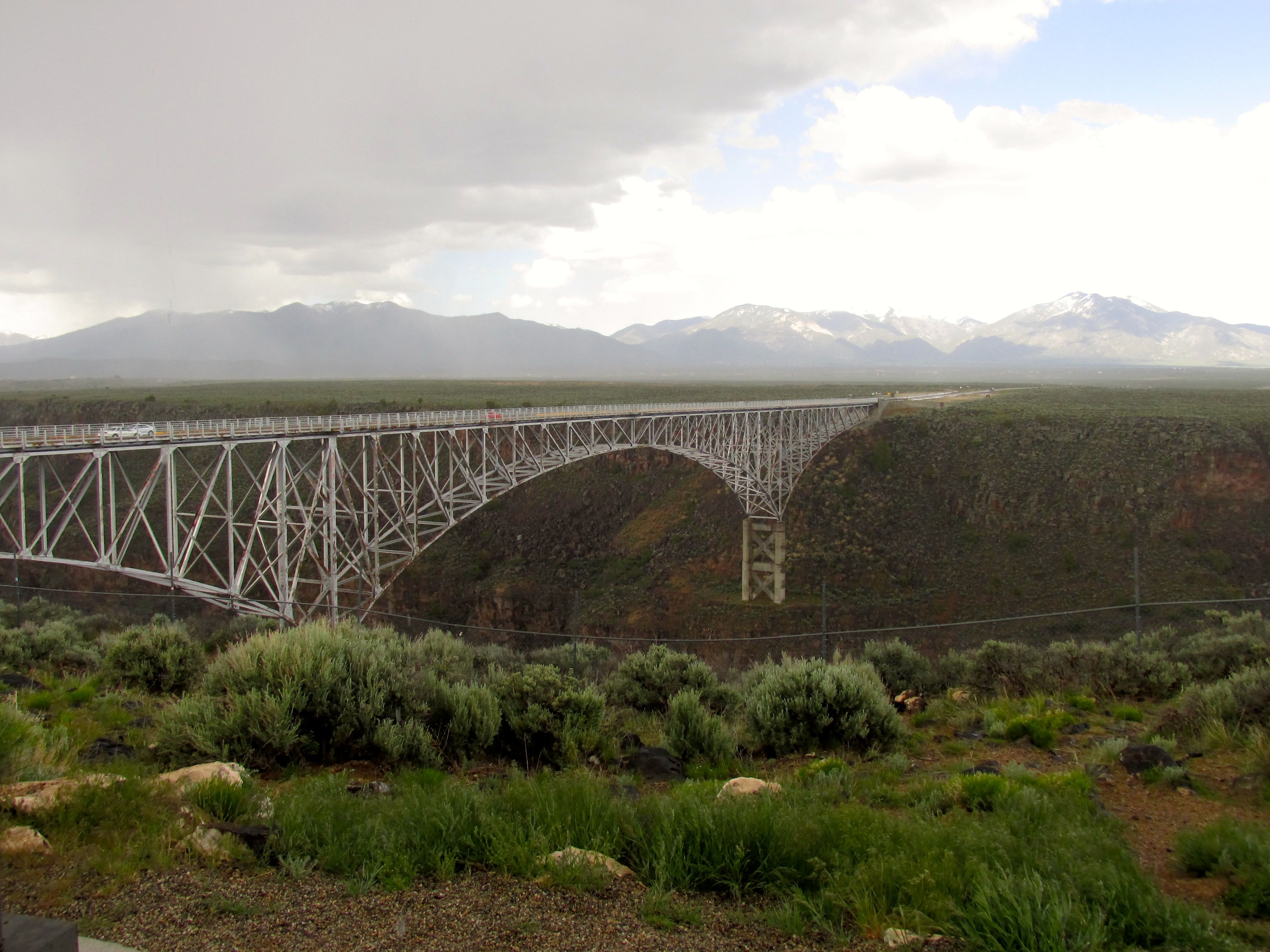
The bridge is about half a mile from edge to edge. Depending upon who you talk to, it’s about 600 feet from the bridge to the river. Some people said 800 feet, some people said 900 feet. One thing isn’t up for debate: it’s a long way down.
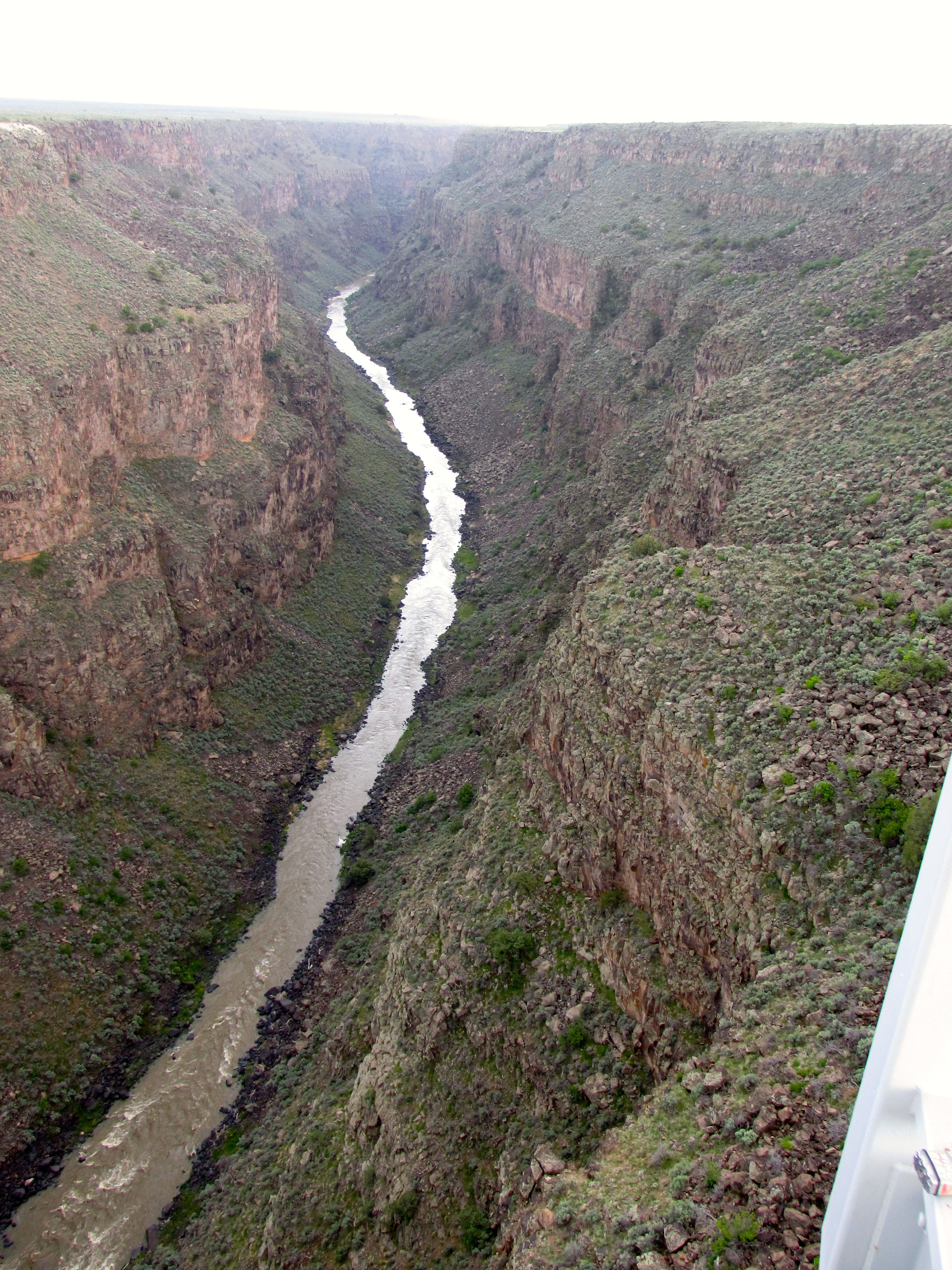
The distance to the bottom kind of gave me pause. And, I guess encouraging people to pause was the idea behind these buttons.
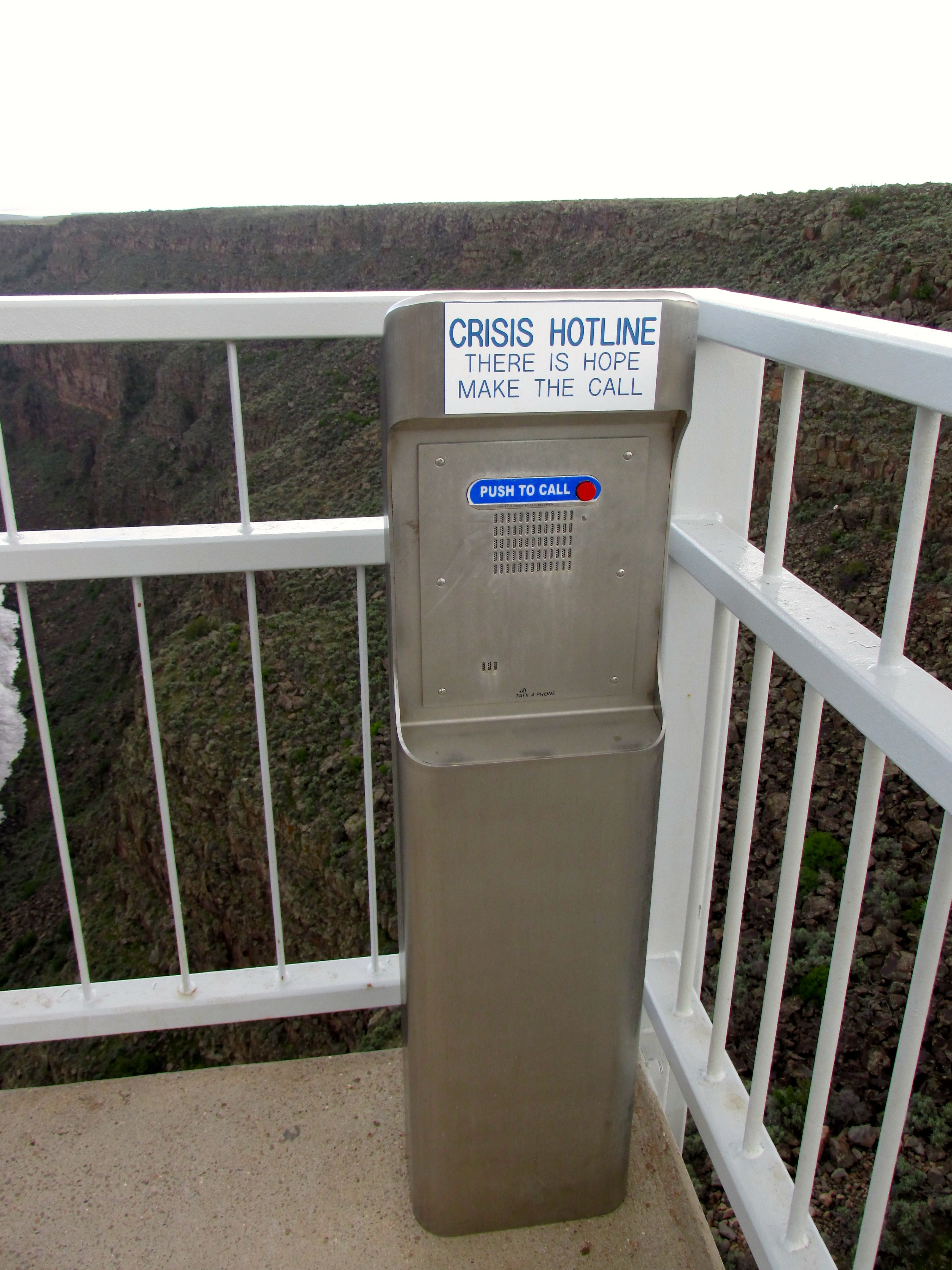
It made me stop and say a prayer for the people who have used the button – and those who didn’t.
The unnamed wet, white precipitation was coming down in earnest, so I decided to high-tail it back to Bart the truck and warm up.
Next entry: Taos Pueblo!