On the Road from Taos to Michigan

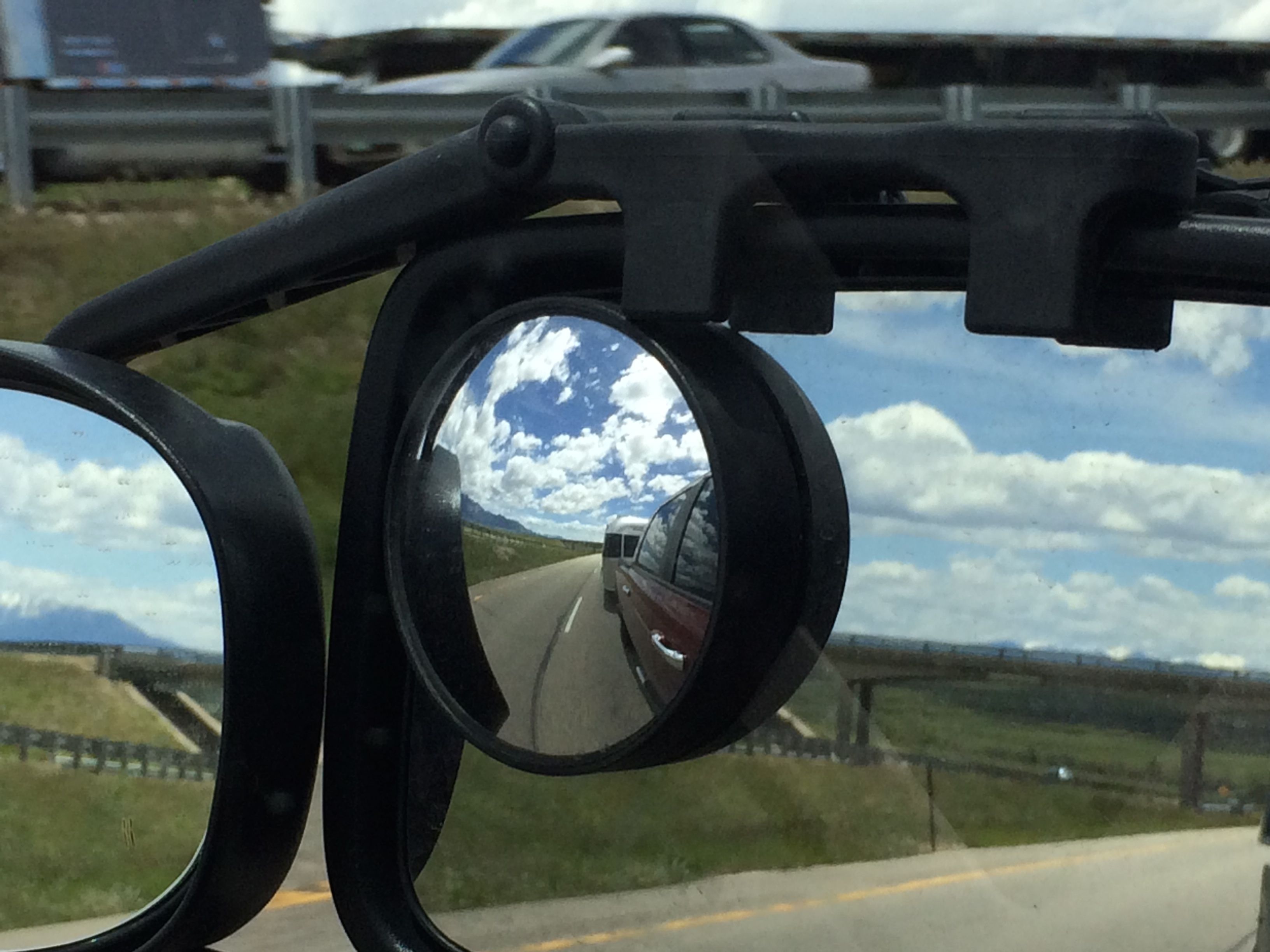
Flo in the mirror

I hitched up Flo and began the long haul from Taos to Kalamazoo. It’s a trip of about 1500 miles, so it took several days.

The first part of the trip was “scenic” which meant that I had both hands on the steering wheel and both eyes on the road. Needless to say, I didn’t see much of the scenery. But the roads were good and the traffic light.

By the time I got to Denver, the traffic was no longer light, but the drivers were incredibly courteous. I had people waving me in and letting me know that they were waiting for me. I wonder if all cities have citizens who are so generous during rush hour?
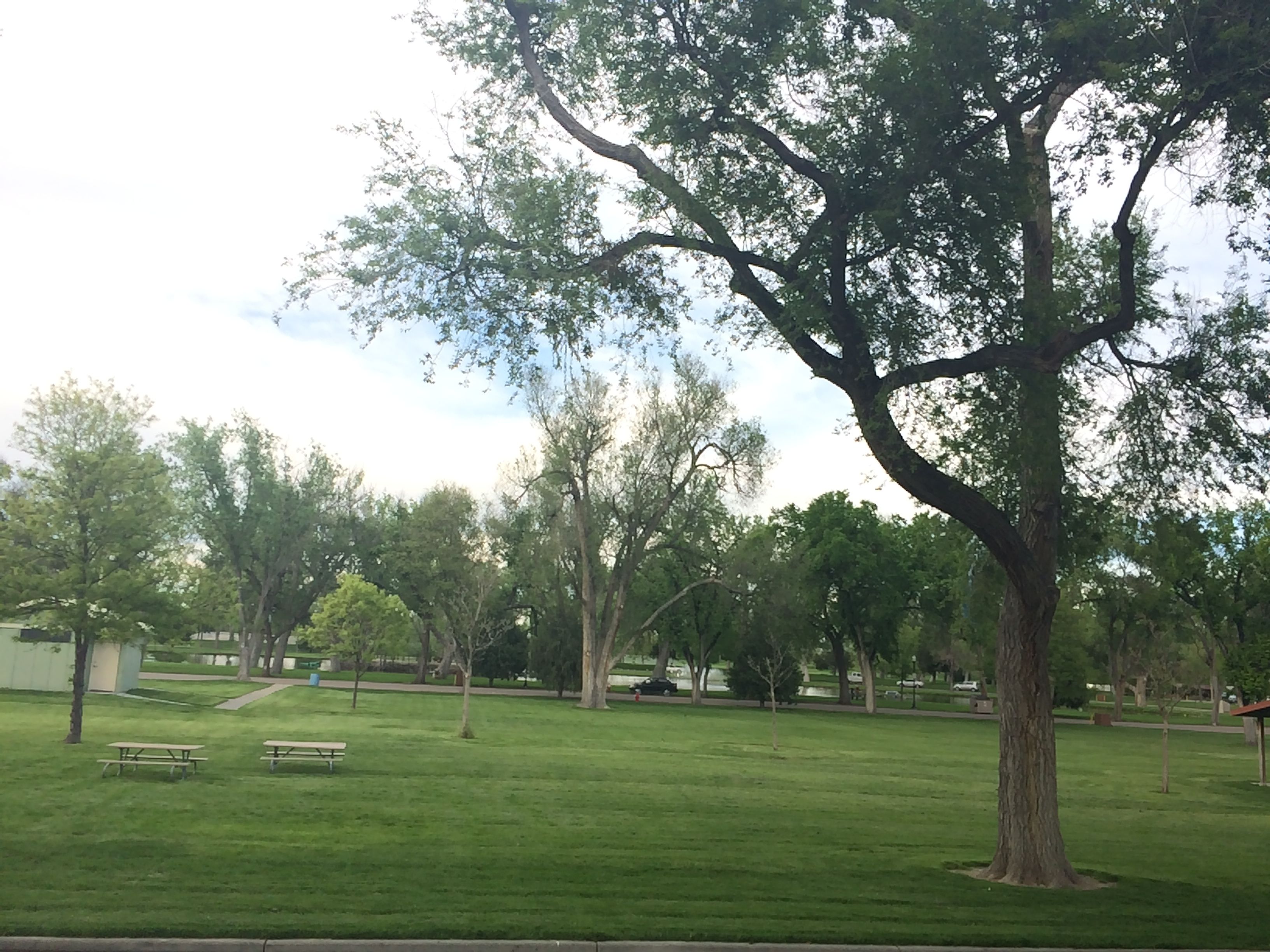
The view from my door at the Fort Morgan campsite

The first night, I stayed at a free – yes FREE – campground provided by the good people of Fort Morgan, Colorado. They set aside one parking lot in a large city park for people to camp in. They have a few 20 amp outlets for people who would like to plug in, and provide information about where to go for a dump station, water and showers. They allow people to stay for up to five nights. I only needed one night, and with my solar power and batteries, I didn’t need the electricity. I was touched by their hospitality.

The next night, I stayed at a municipal park in Utica, Nebraska. It was a small park a couple miles off I-80. I missed taking a photo of the view out my door because a neighbor was mowing his lawn and I wanted to respect his privacy. The next morning, it was raining. This site cost $10 and they had water and electricity and there was a pool in the park, if I had wanted to look into  it. Many of the smaller towns along the interstate in Nebraska have municipal campgrounds. I think this is mighty hospitable of them.
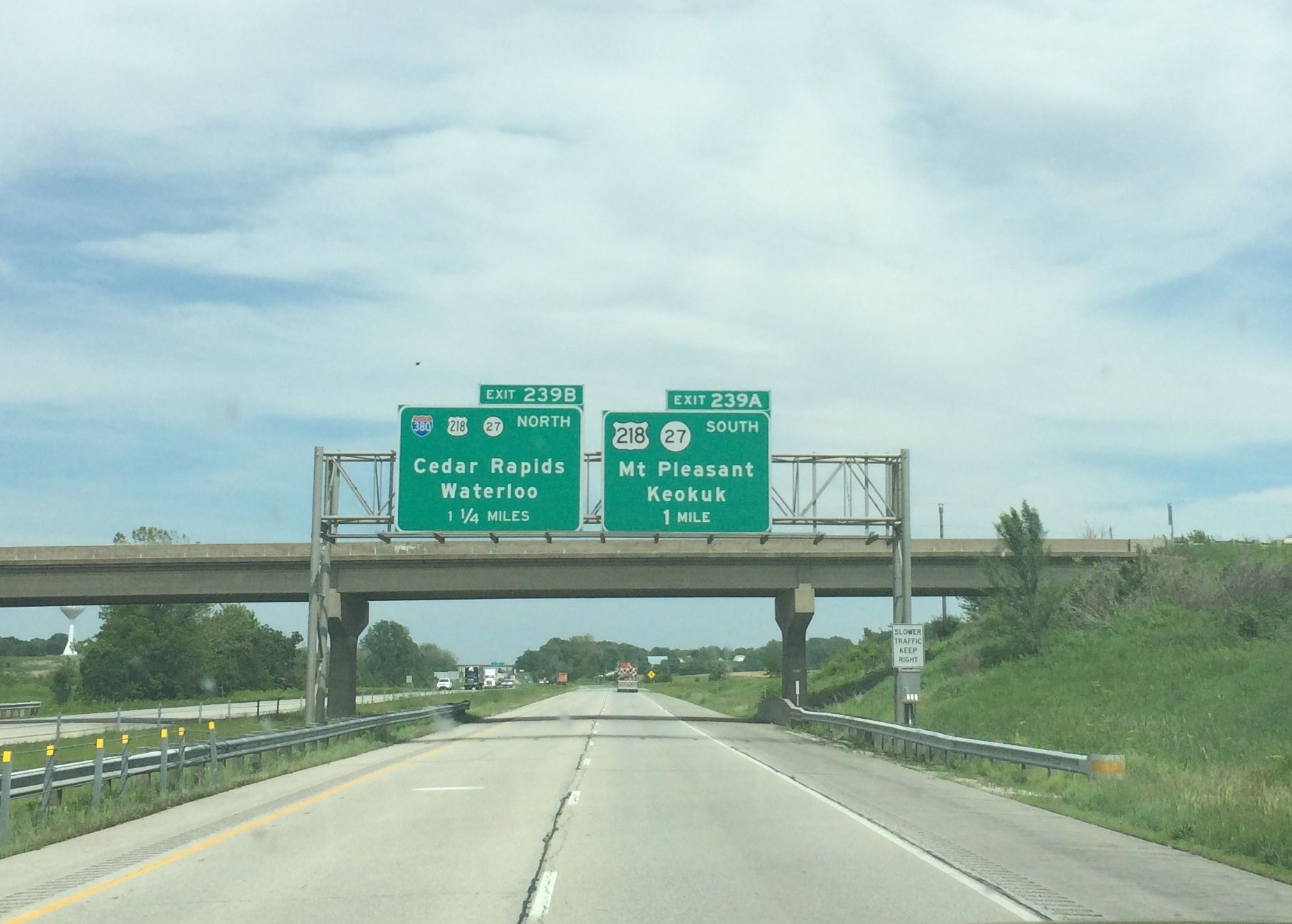
See the rabbits? (Cedar Rapids, Iowa)

I drove across Iowa without spending the night. I loved the rolling hills. It almost seemed like a green ocean voyage.
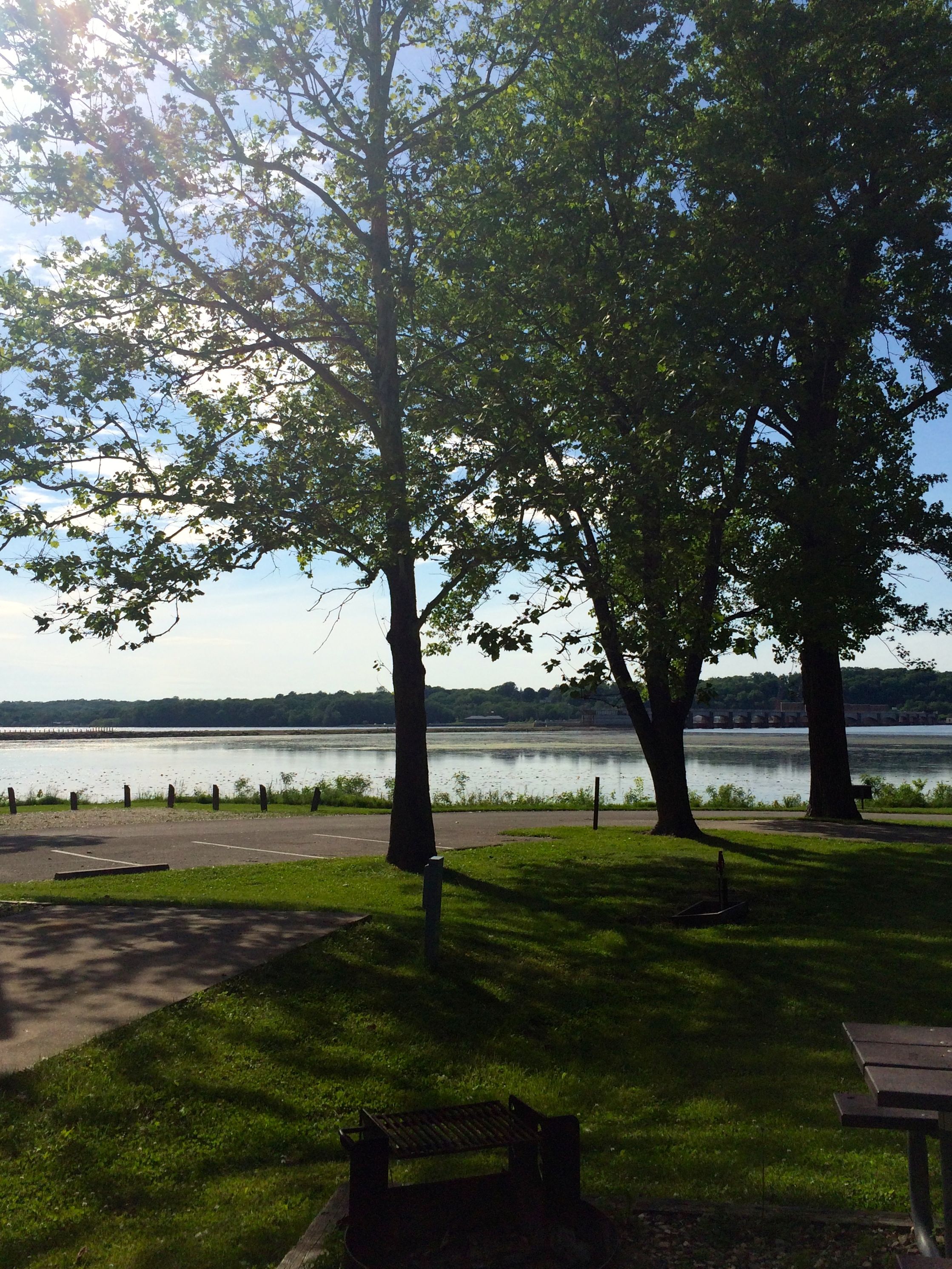
The view from my door at Fisherman's Corner, on the banks of the Mississippi
The view from my door at Fisherman’s Corner, on the banks of the Mississippi

My third night of the trip was spent in Illinois on the banks of the mighty Mississippi at an Army Corp of Engineers facility, Fisherman’s Corner. It had water and electricity and provided a dump station. With my interagency pass, it was only $9 for the night.

I had wonderful luck with the weather on this trip. I kept hearing about the horrendous storms hitting all around, but I managed to settle into a trough between the fronts. My luck finally ran out in Indiana.
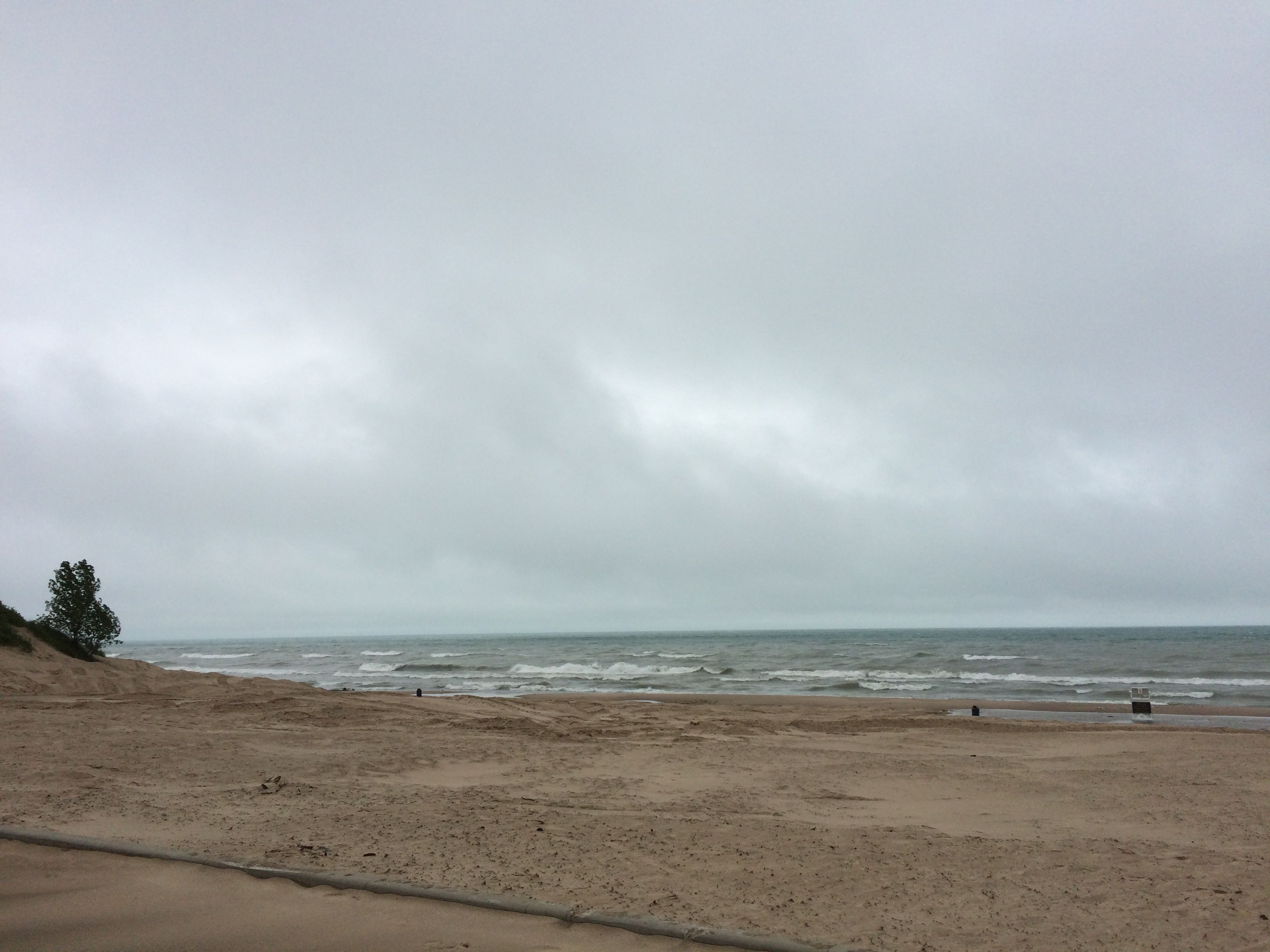
A view of the angry looking Lake Michigan from Indiana Dunes State Park.

I spent two night at Indiana Dunes State Park and the weather was just miserable. I felt so sorry for all the tent campers there. I spent my time in the trailer, cleaning, resting and watching TV.

By the time I got all cleaned up and everything stowed away, it was time for the final hundred mile push down I-94 to Markin Glen County Park in Kalamazoo, and a visit to home and friends. And Doctors.

More about that in my next installment.
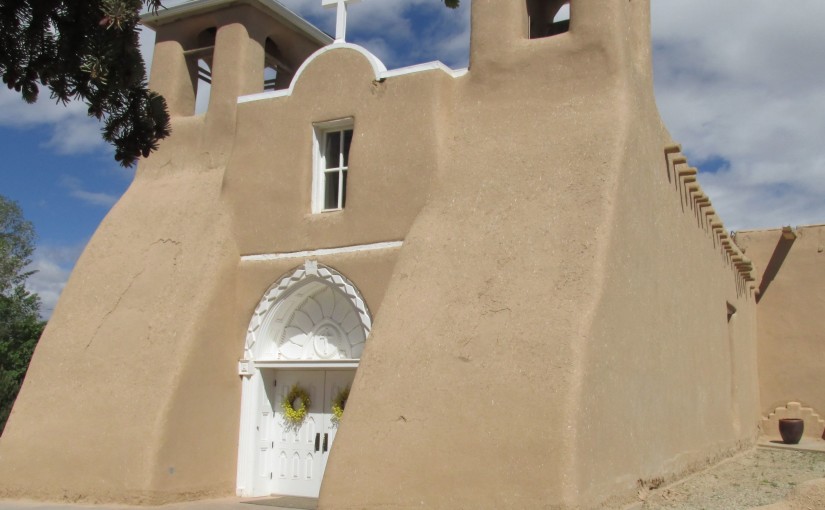


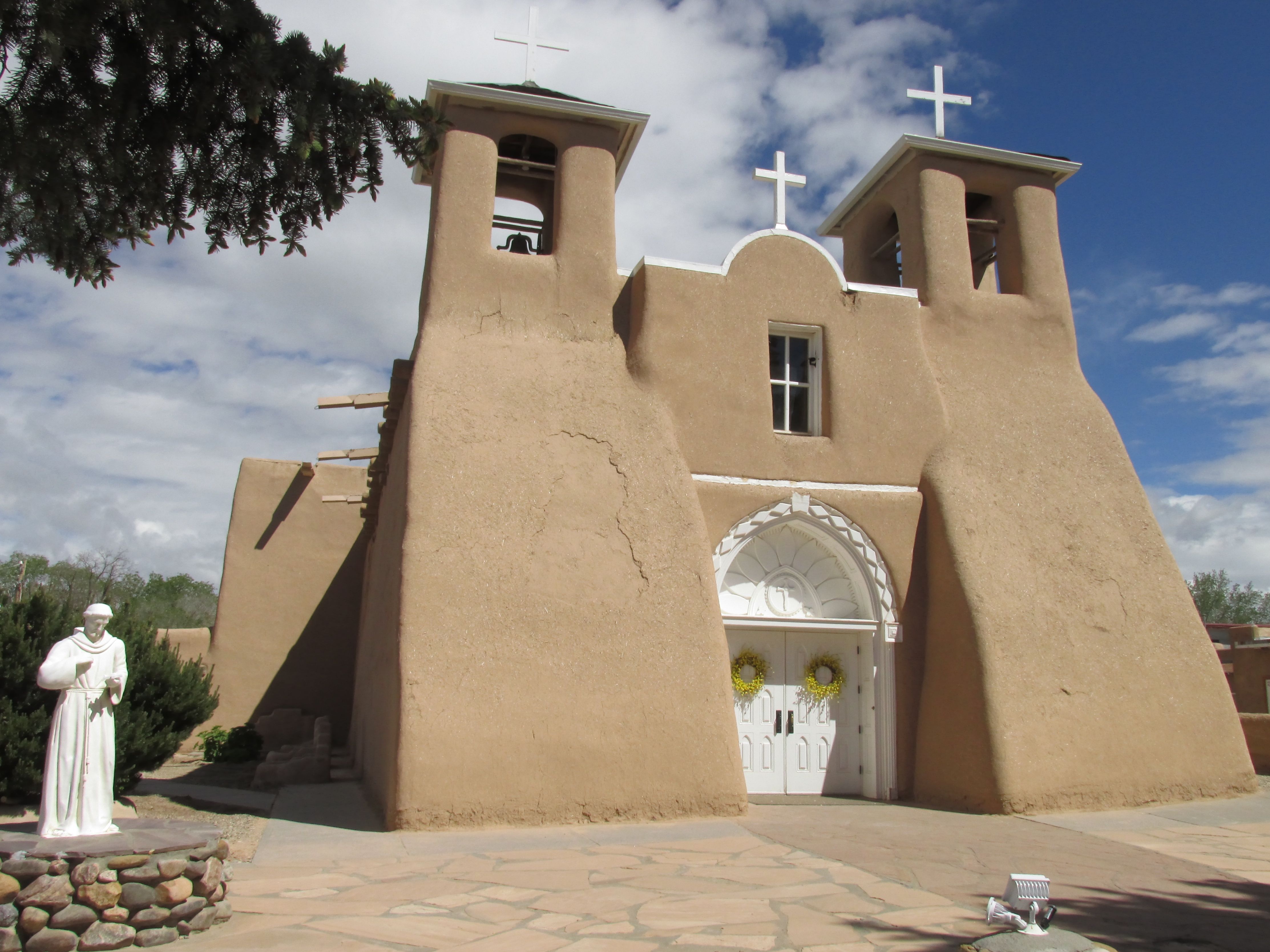
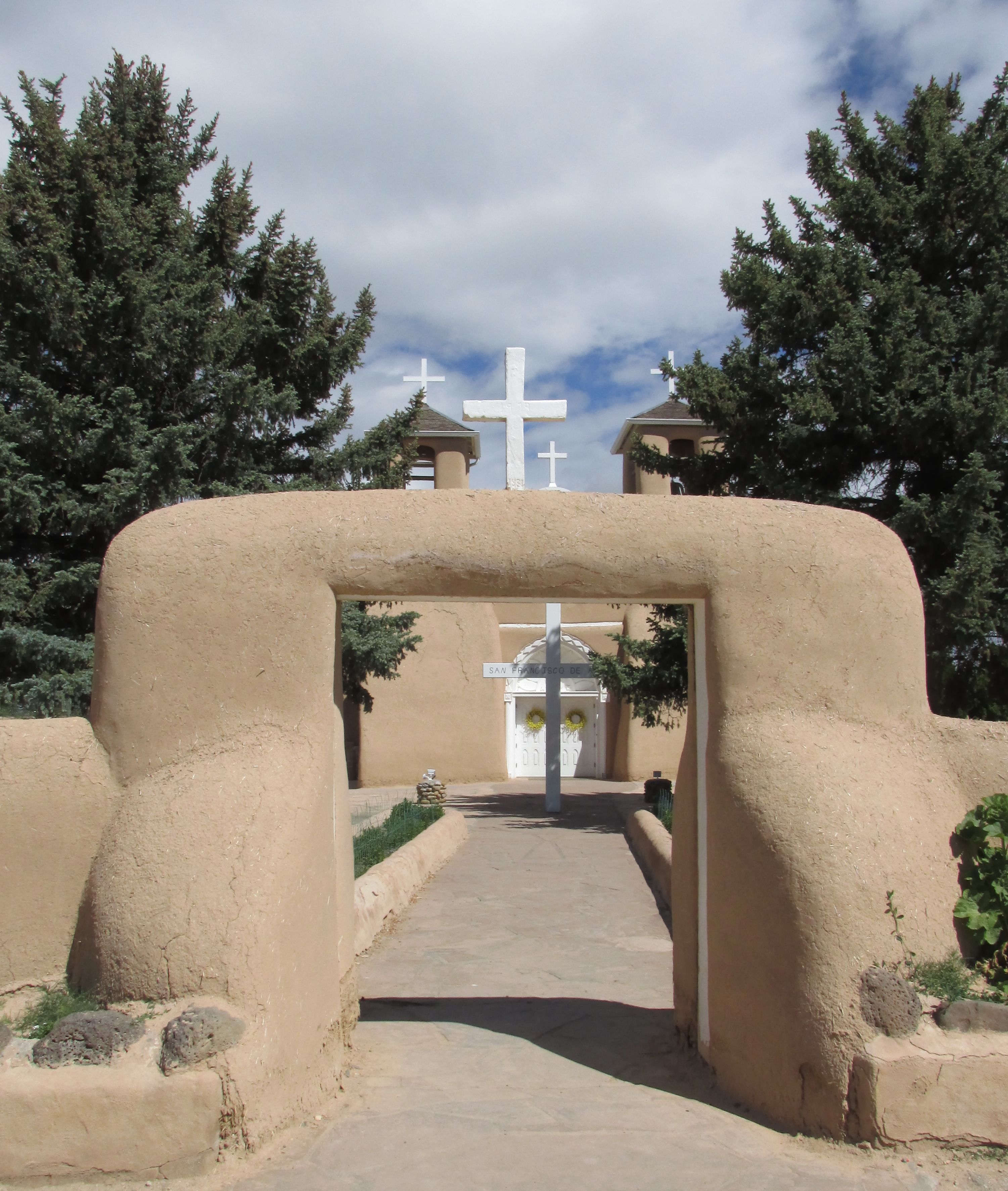
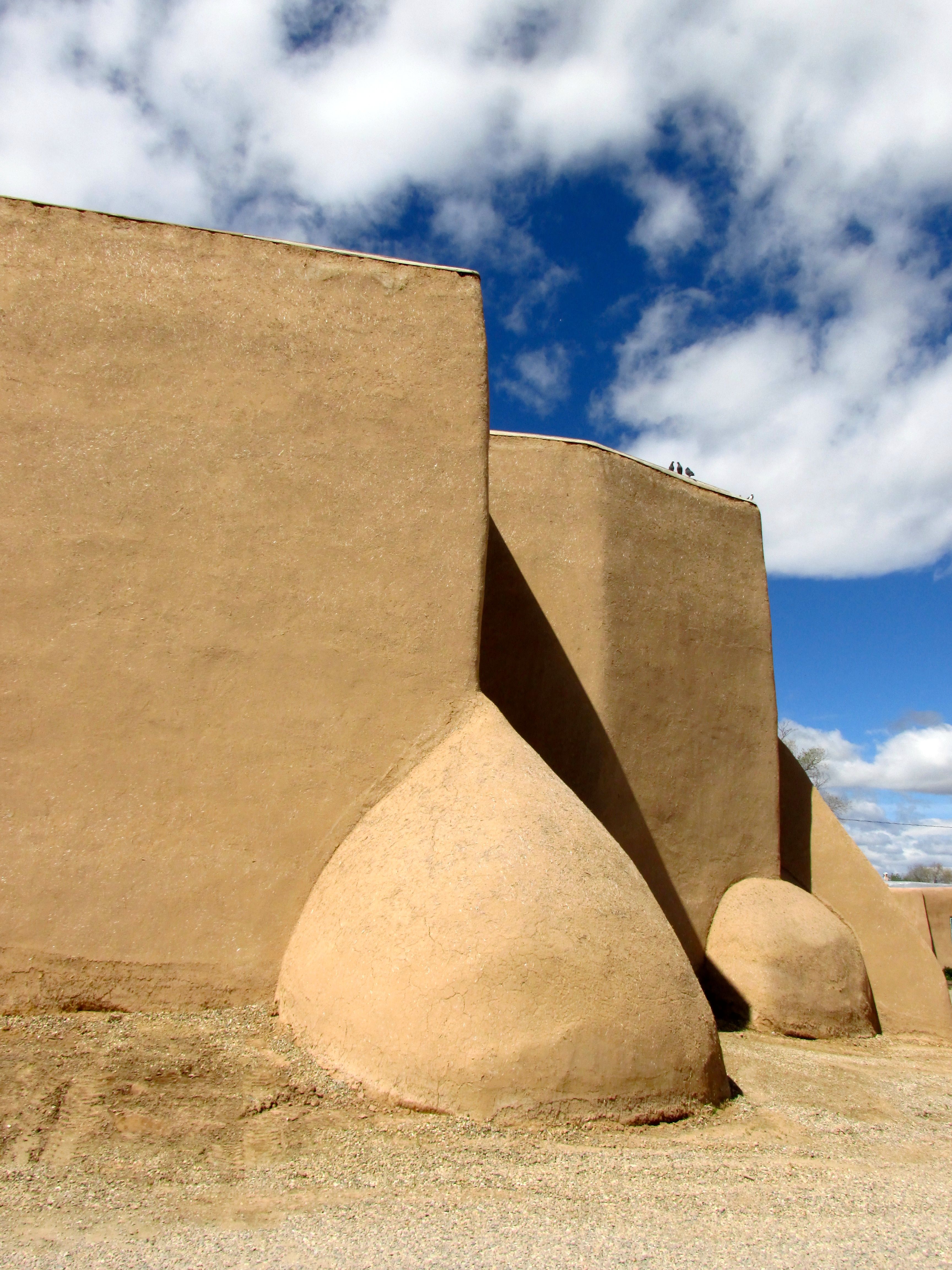
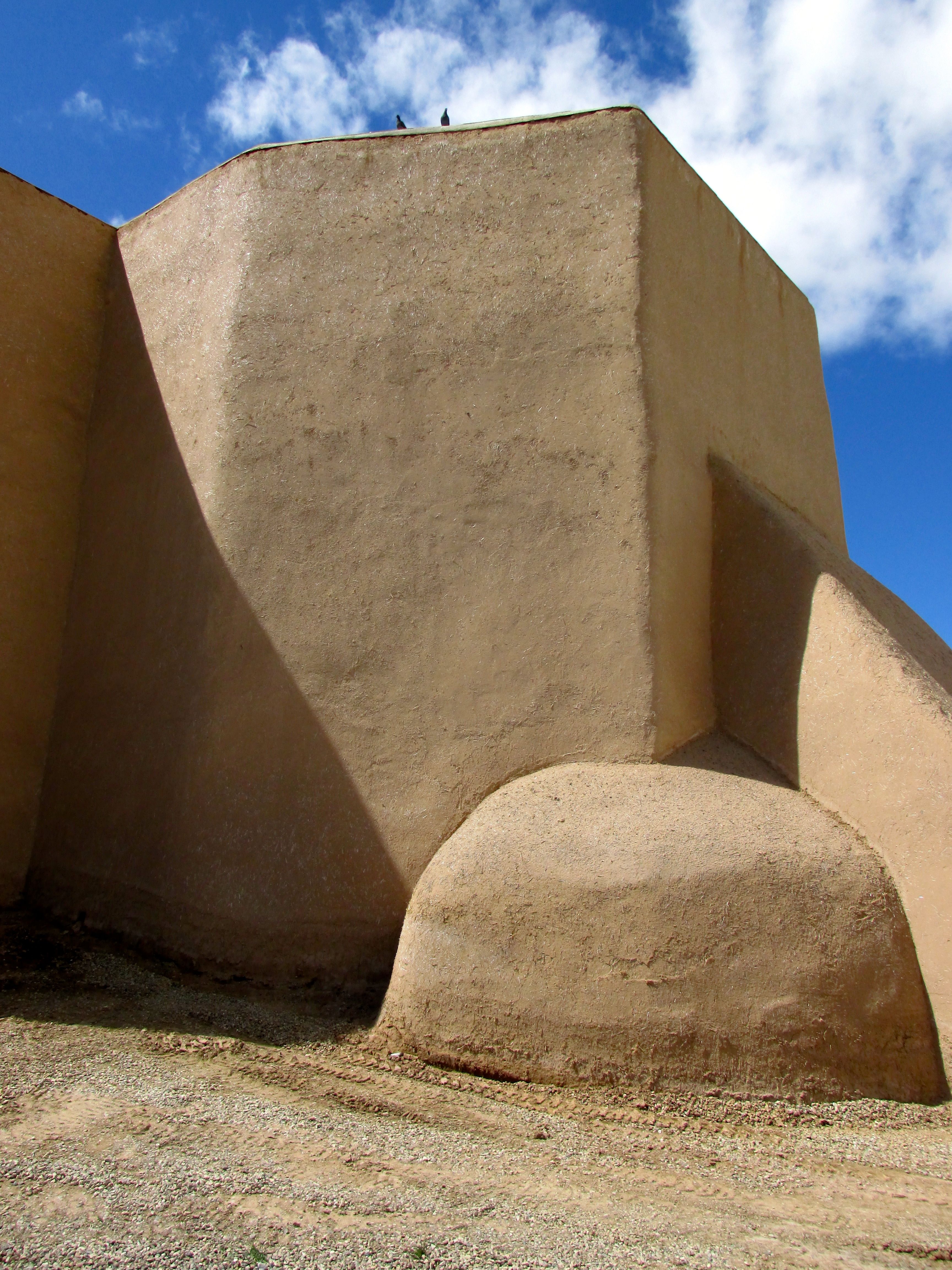
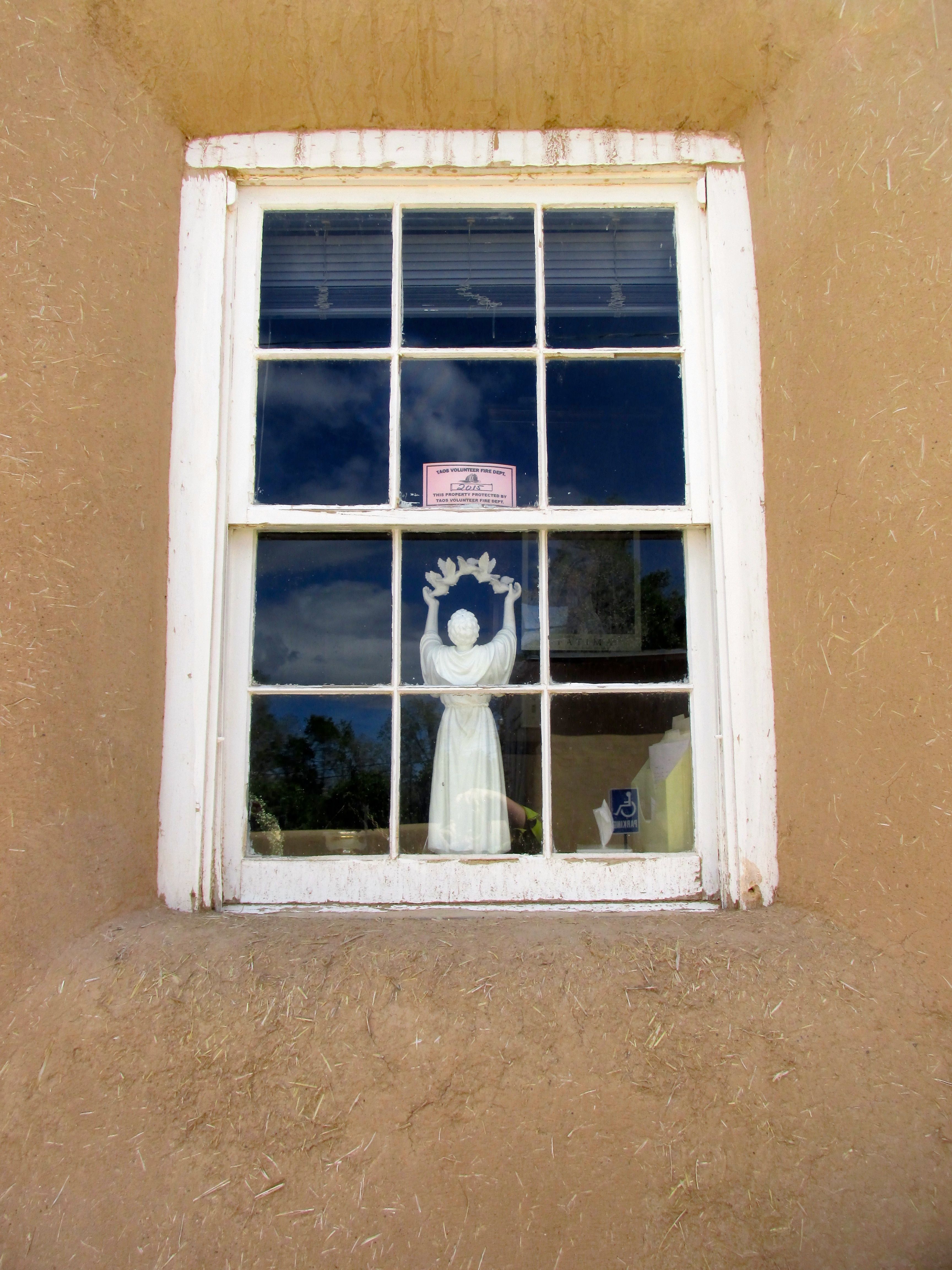
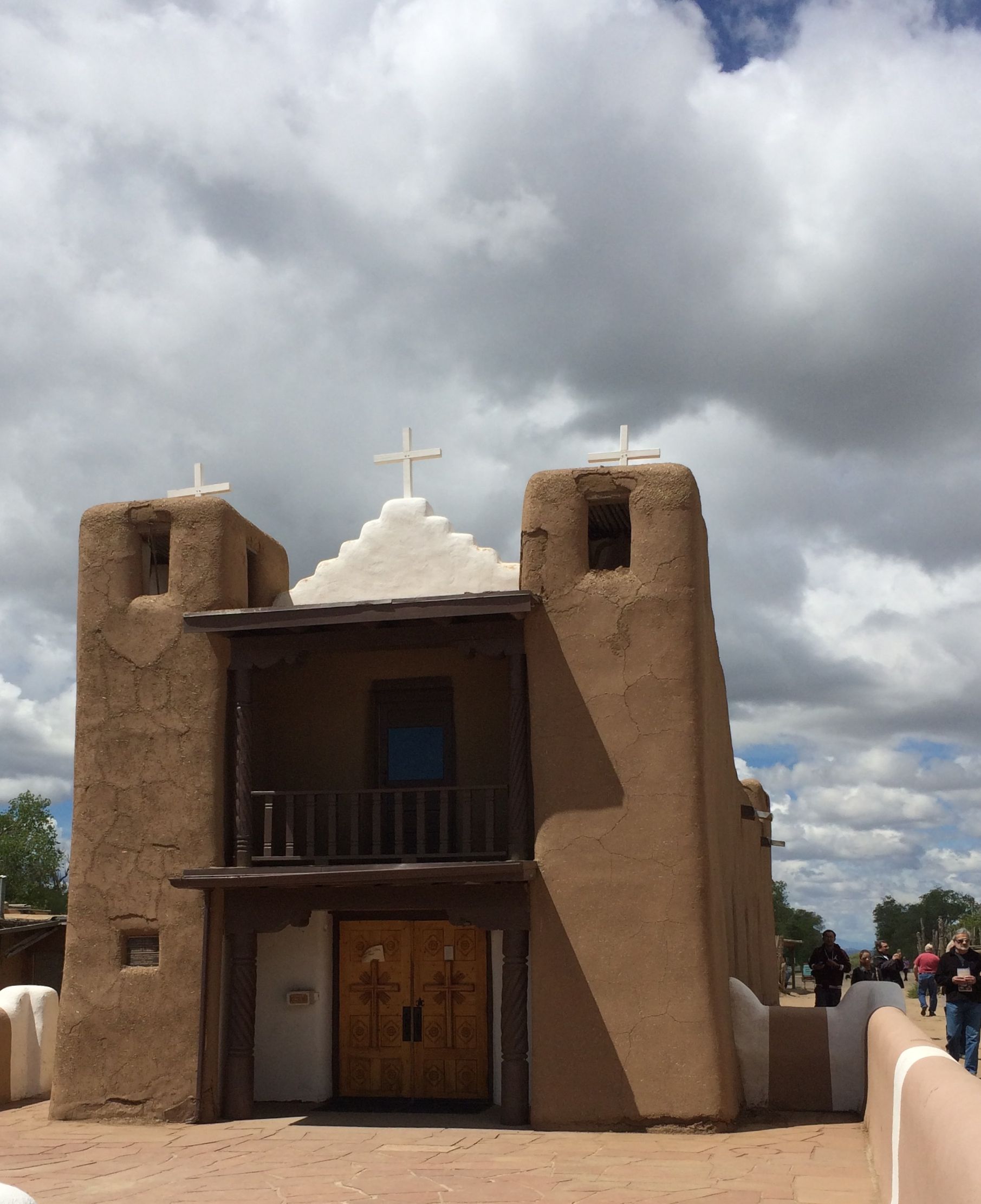
San Francisco de Asis in Ranchos de Taos

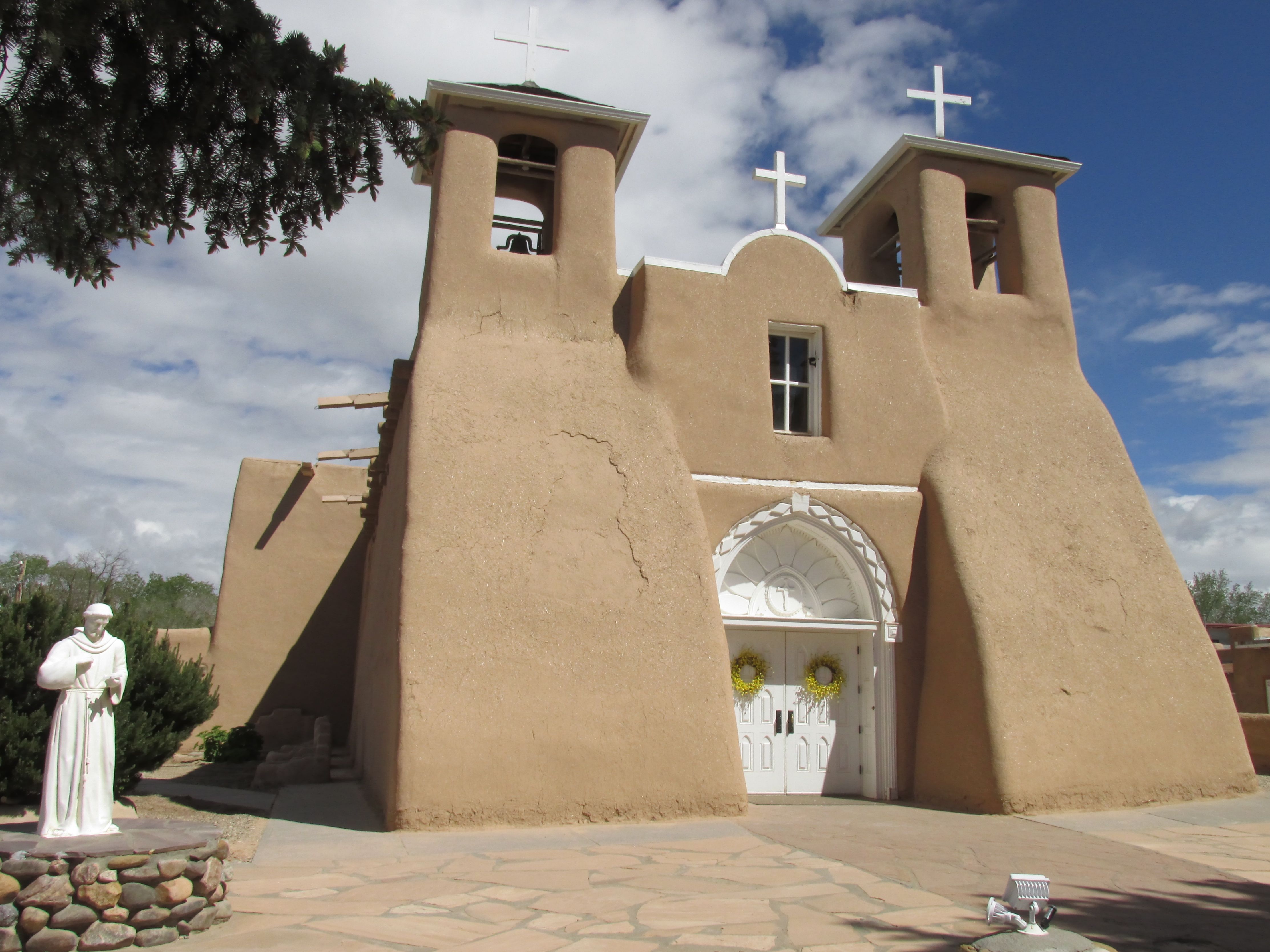
The last stop on the Sister Jeanne Art History Tour of Taos is the church of San Francisco de Asis in Ranchos de Taos, which is just outside Taos on the south side of town.RT 2

As the tourism information specialist told me when I first got to Taos, “This is one of the most photographed and painted churches in the world.” It is the subject of paintings by Georgia O’Keeffe and photos by Ansel Adams among others.

While I was visiting to take photos, there were seven other photographers there, engaged in serious art-making. I had to jockey around to get pictures without them in the frame. Of course, that would have been part of the story, too.

I have no photos of the interior, as they request that we not take them. I did buy a couple of postcards, but I try to avoid copyright infringement. However, you can find more information on Wikipedia, among other sites you can Google.
RT 1

RT 4

RT 5

RT 6

RT 7

RT 9

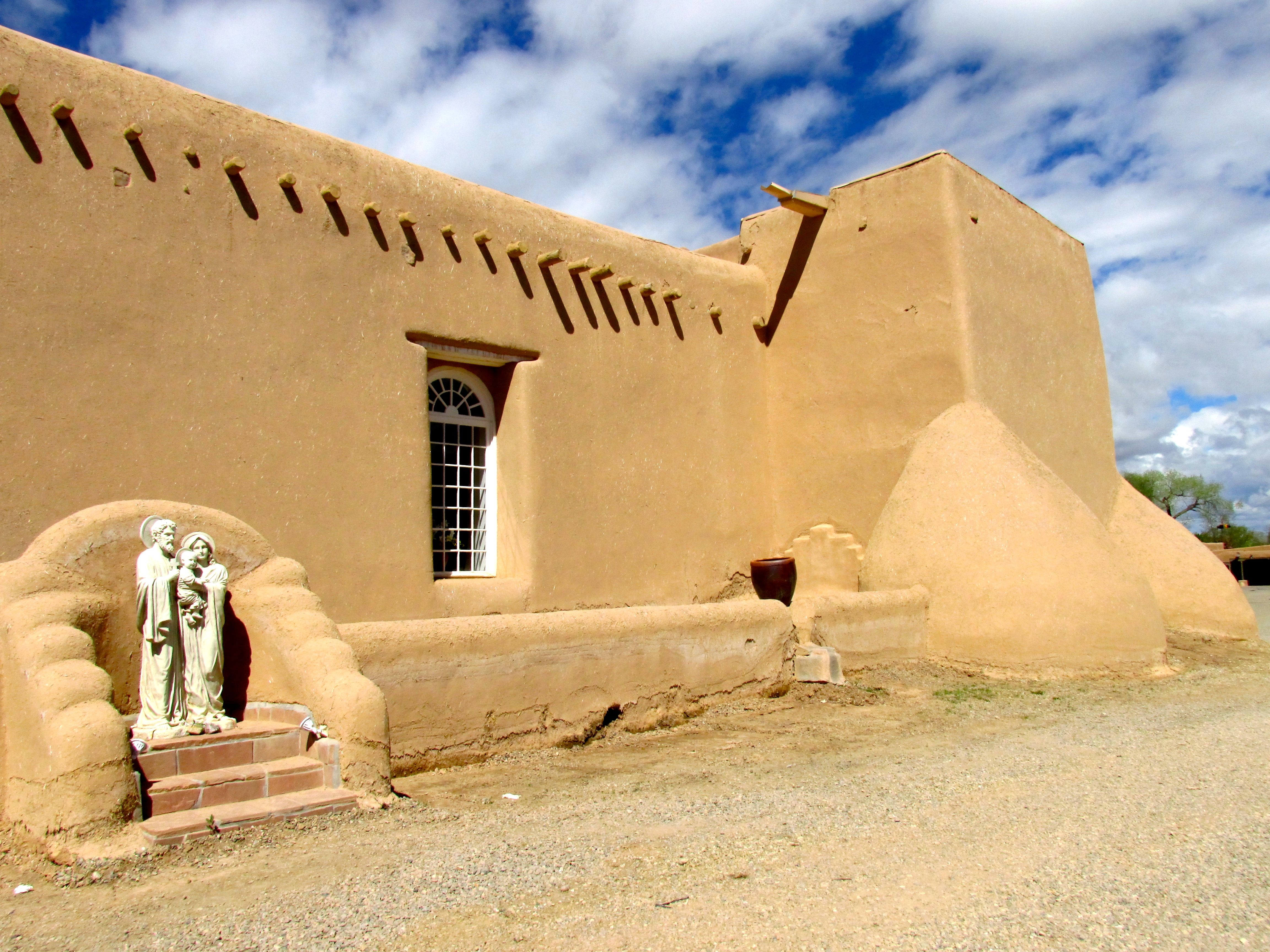
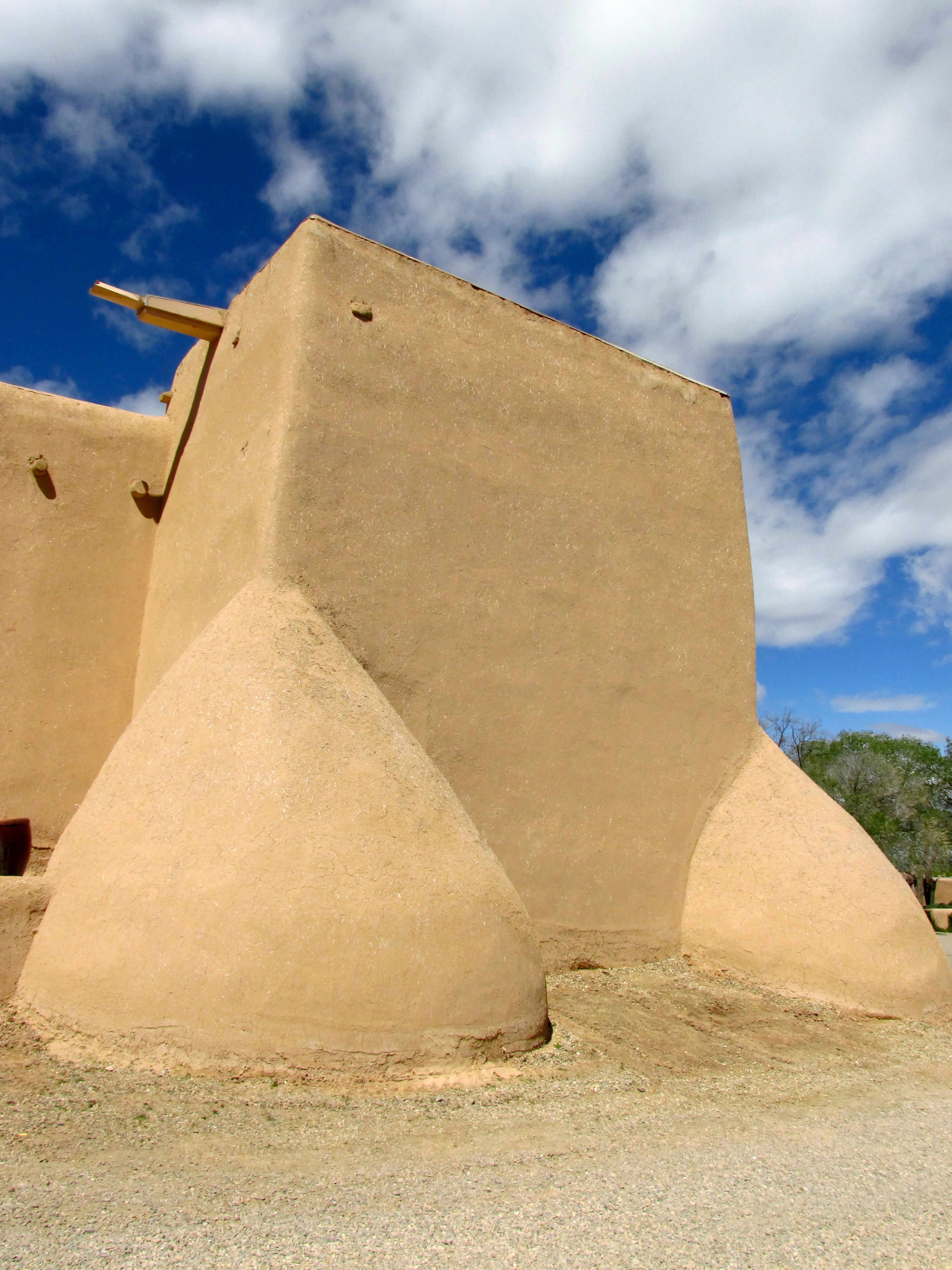
It was built between 1772 and 1816 and requires constant upkeep. I attended mass there on Sunday, and the priest was talking about the work that would be required to replaster the building. They call it “enjarrar”.

RT 8

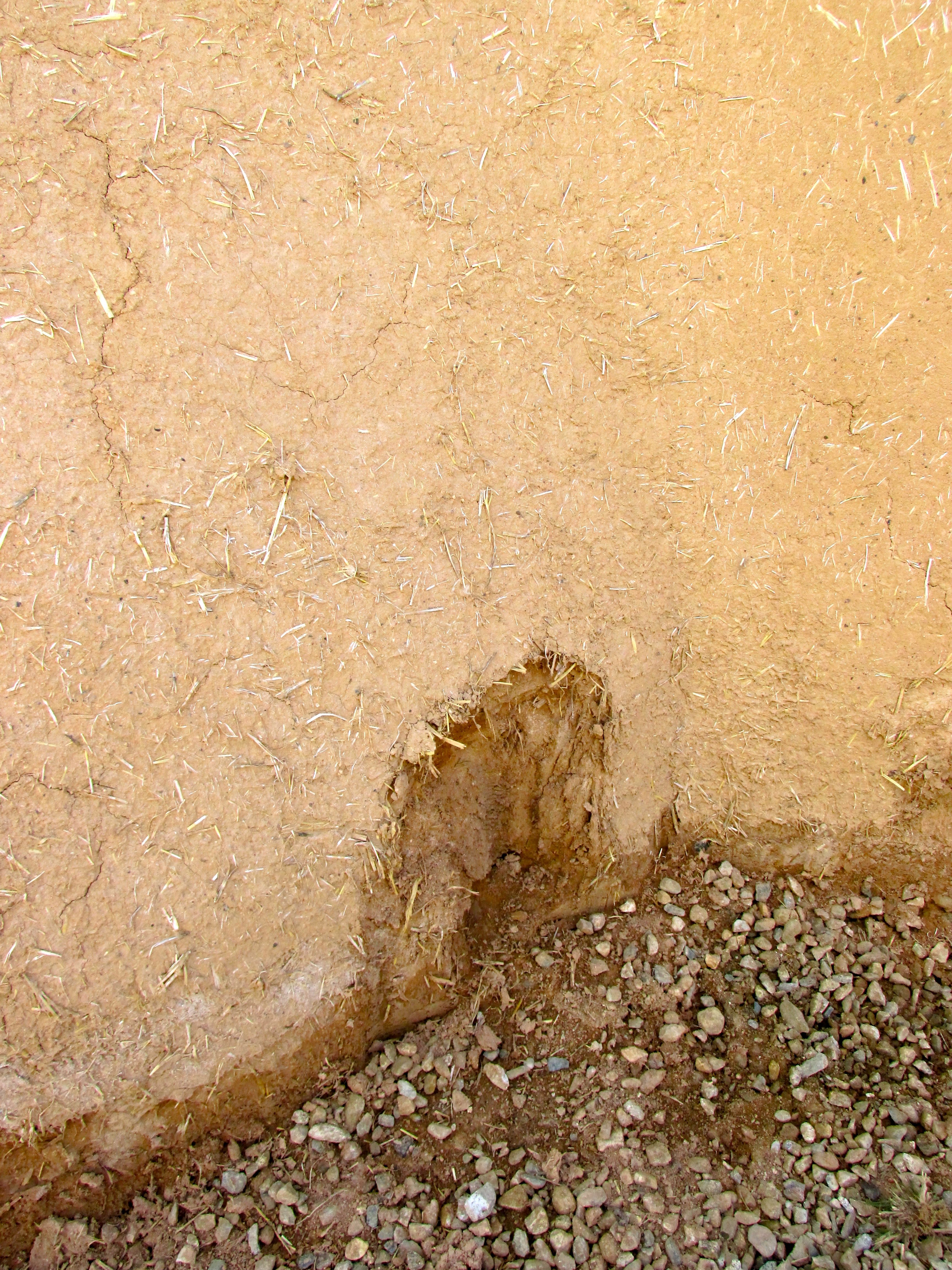
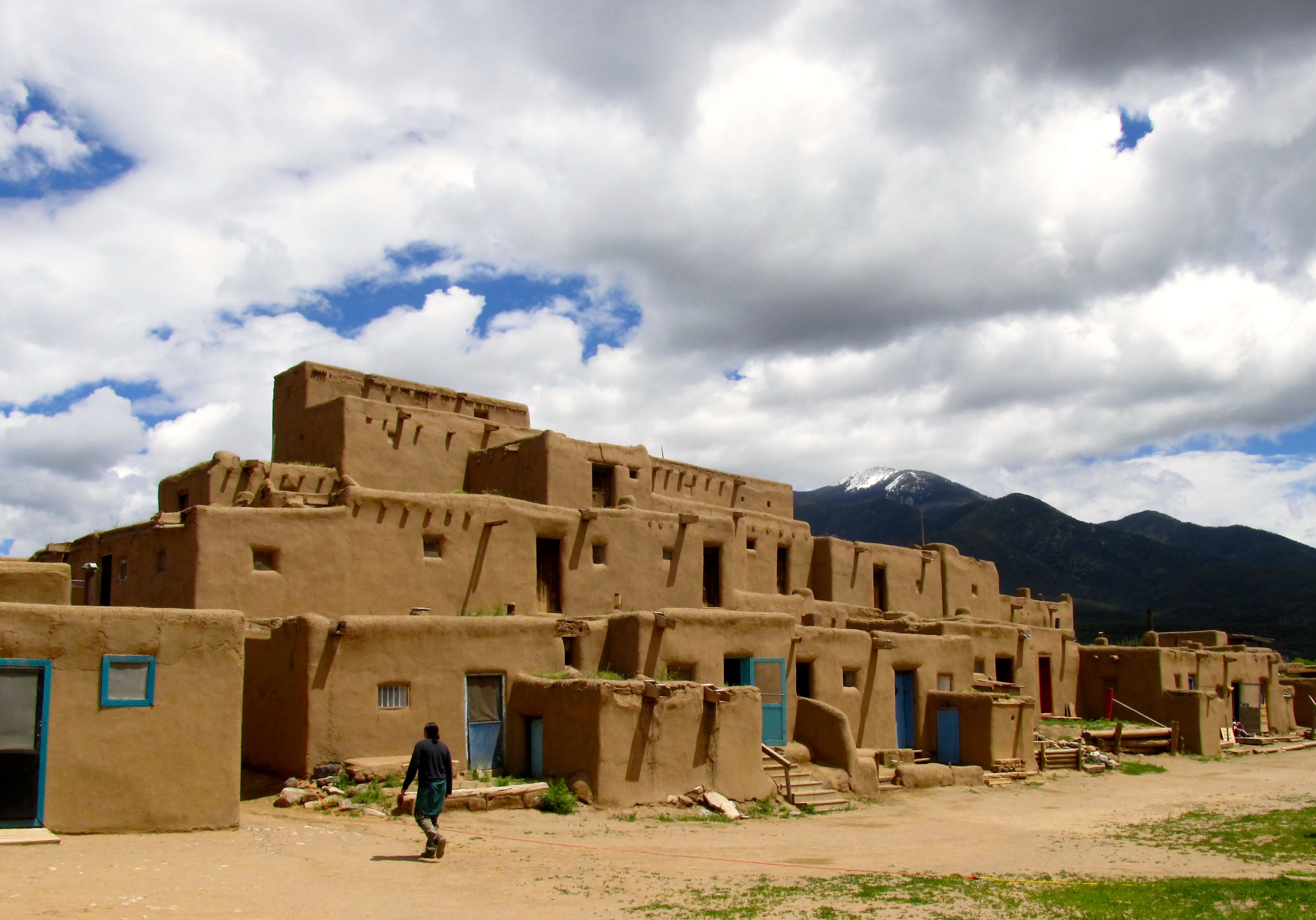
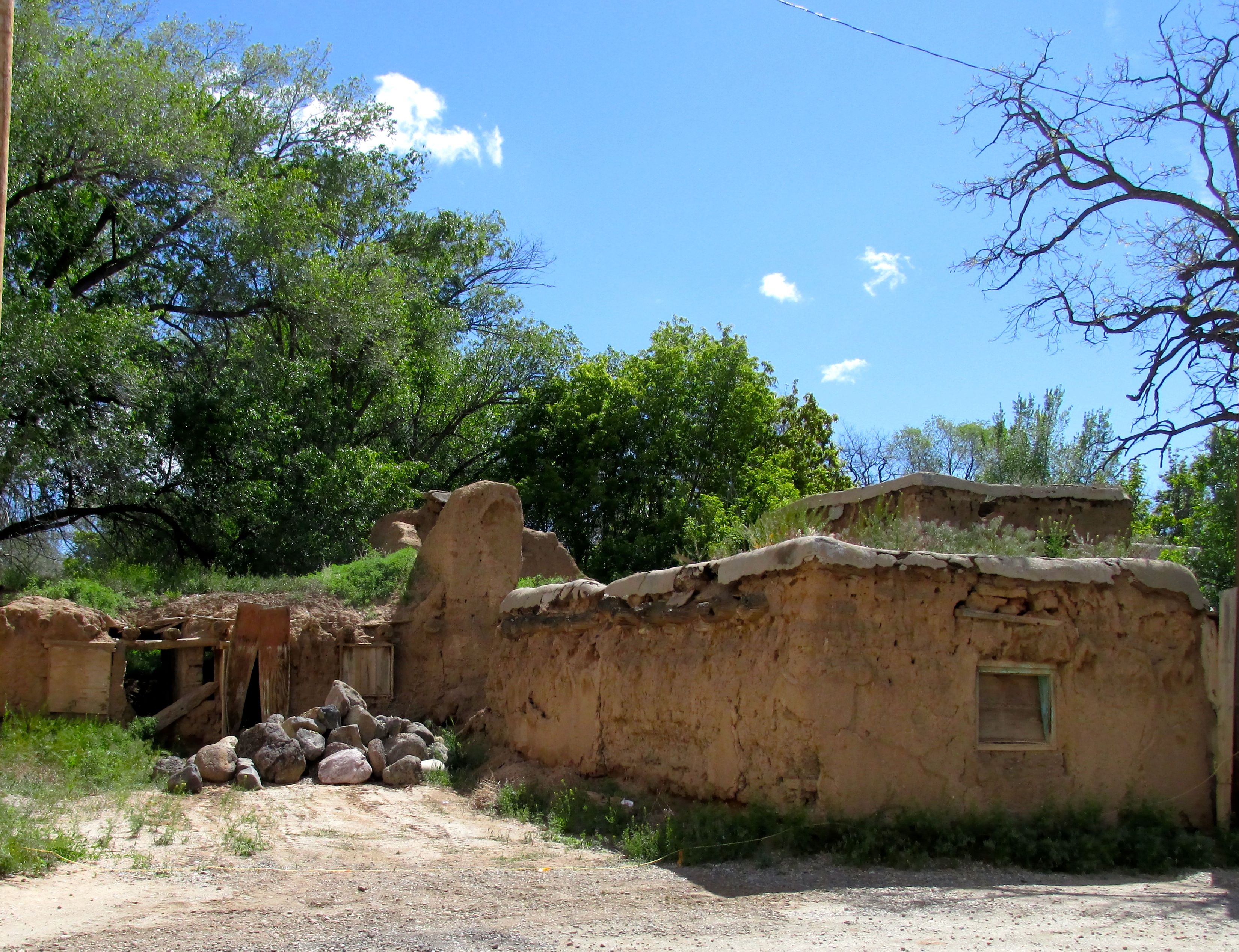
Here you can see a damaged portion of the exterior. You can also see the straw that is used in the mixture. What happens when you take care of an adobe building faithfully? You get the Taos Pueblo.

North building
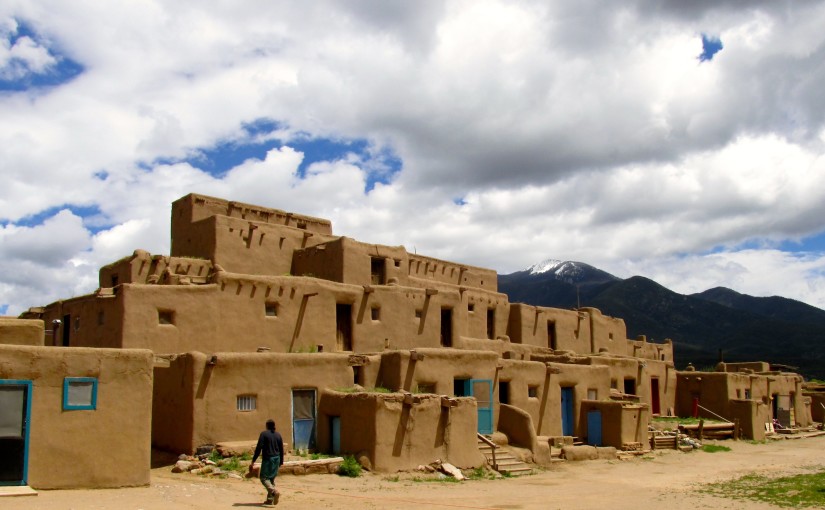
North building of Taos Pueblo

What happens when you don’t maintain the building? They don’t last as long.

RT 10

Taos Pueblo

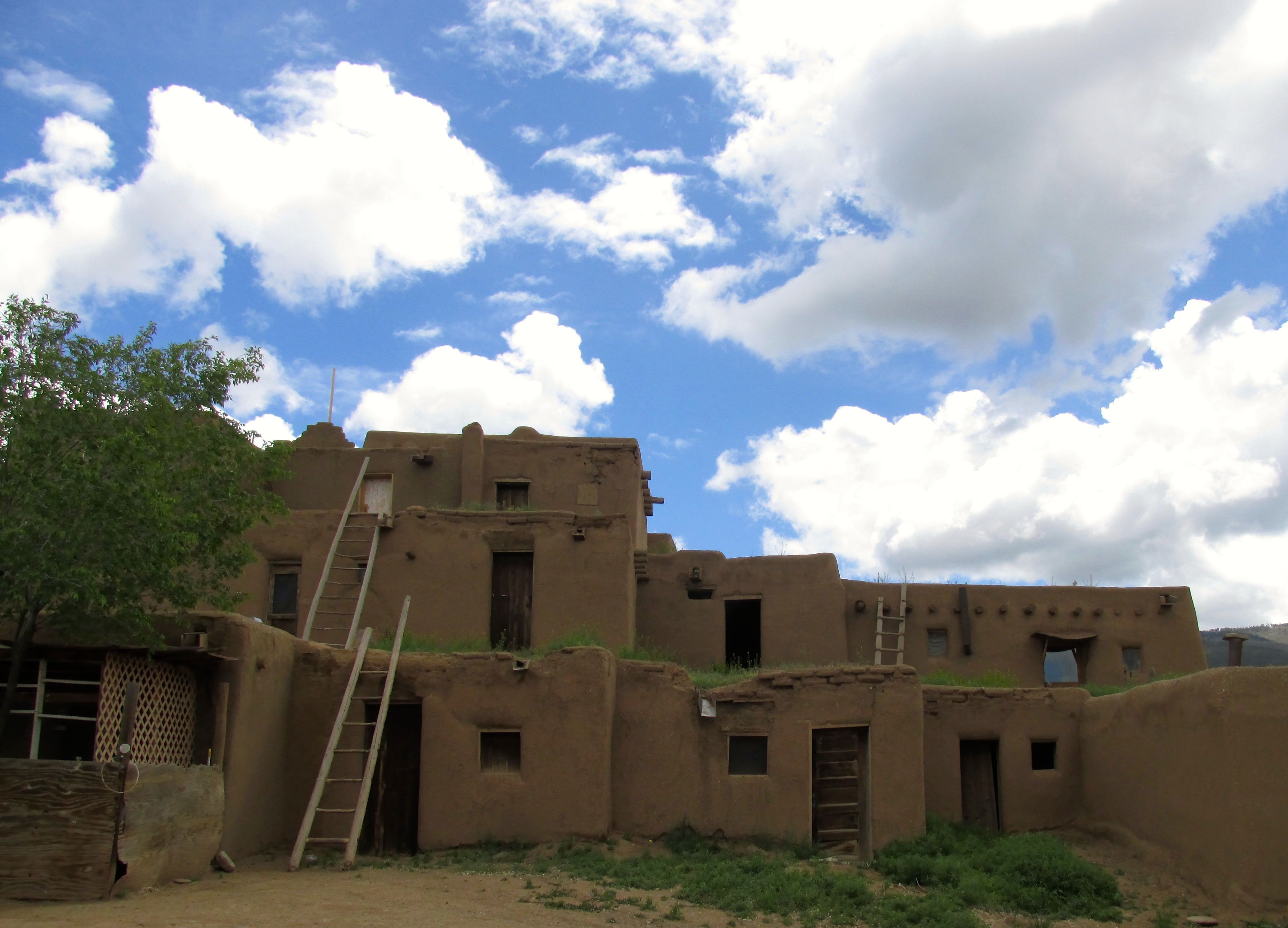
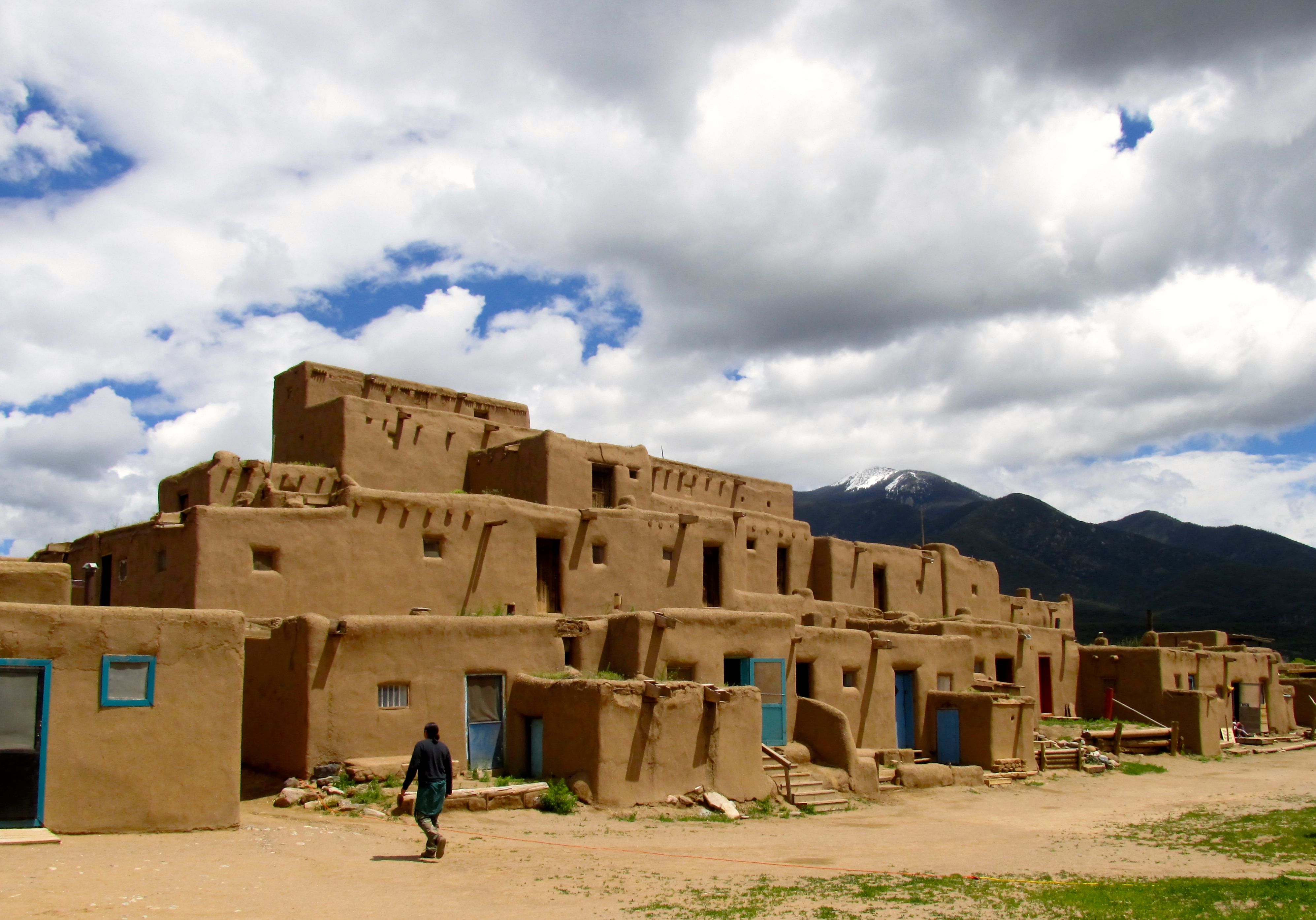
Taos Pueblo is another site that Sister Jeanne, my art history teacher, introduced me to. It is a UNESCO World Heritage Site and a National Historic Landmark that is located about a mile outside of Taos. It’s a community of multi-storied adobe buildings that have been continuously inhabited for over 1000 years.

They tell visitors that the buildings have changed very little over the years. They have added doors and windows. Originally, access was by climbing ladders to the roof and entrance through square holes to descend into the rooms. The buildings within the pueblo do not have electricity, running water or indoor plumbing. Some people do have wood stoves, according to what I was told, but heating is done with small fireplaces.

TP 8

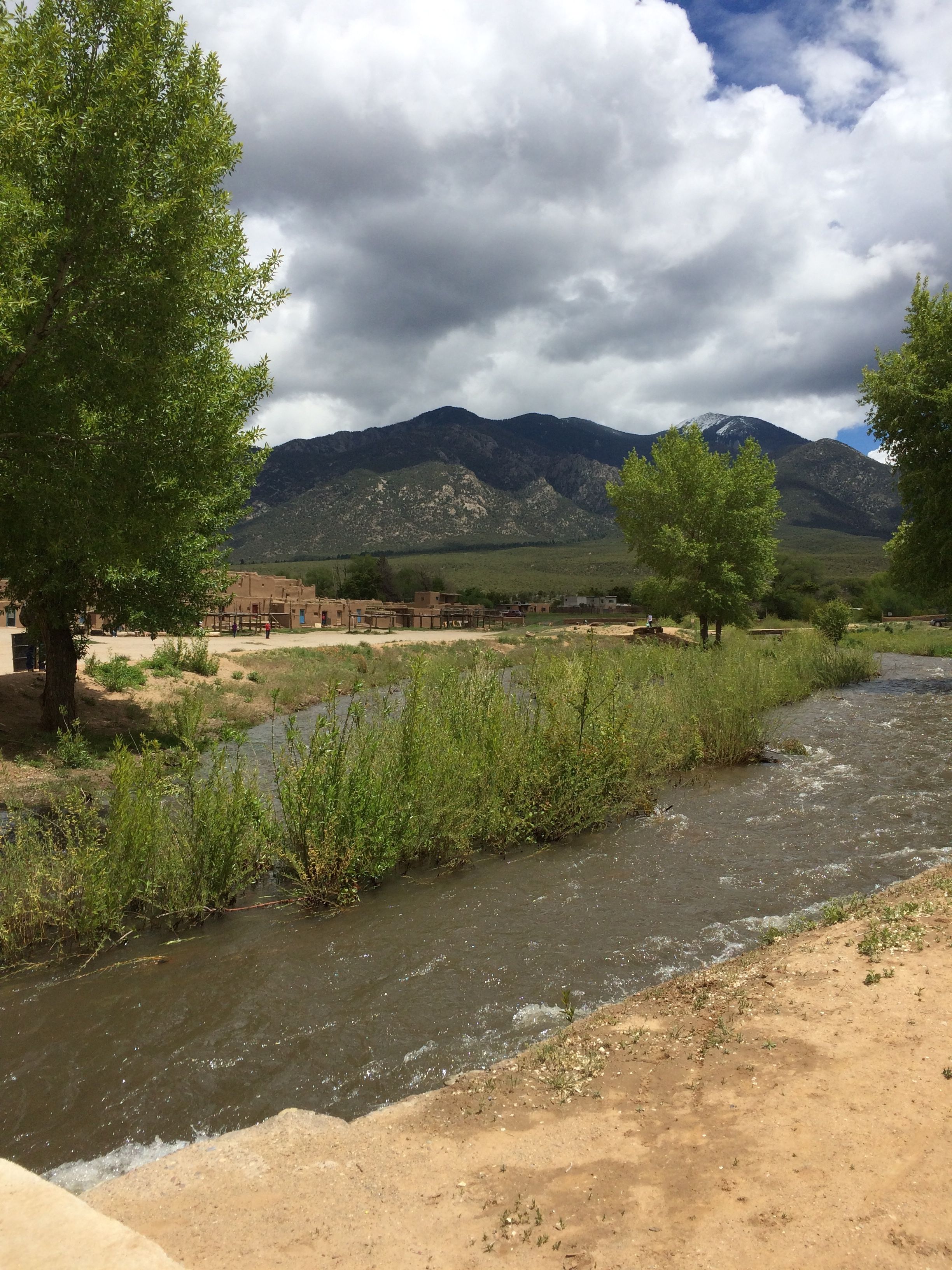
The pueblo is built on the banks of the Red Willow Creek, which is also called Rio Pueblo. The water was very high the day I visited due to all the recent rain.

The north building is the most frequently photographed part of the pueblo.

North building
North building
South Building
South Building

The walls of the buildings are close to a yard thick at the base and get thinner as they go up. The walls of the rooms at the top are around a foot thick. The roofs are supported with cedar beams, a layer of branches, a thick layer of mud and finished with adobe.

Each year, the buildings are refinished with another coat of mud. There is a great deal of similarity between the Earthships and Taos Pueblo in that they both use the materials they have on hand to create sustainable communities.

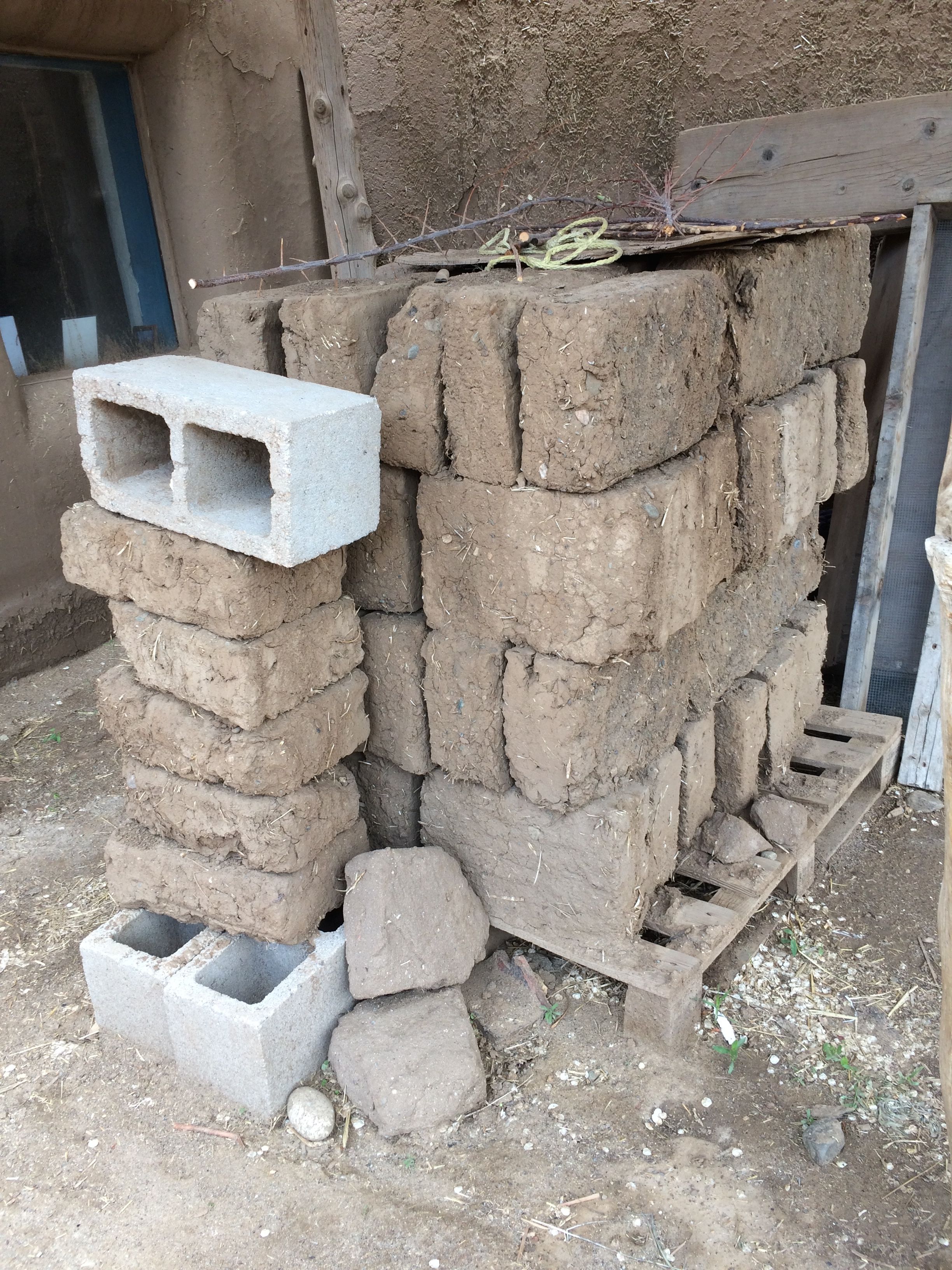
A stack of adobe bricks

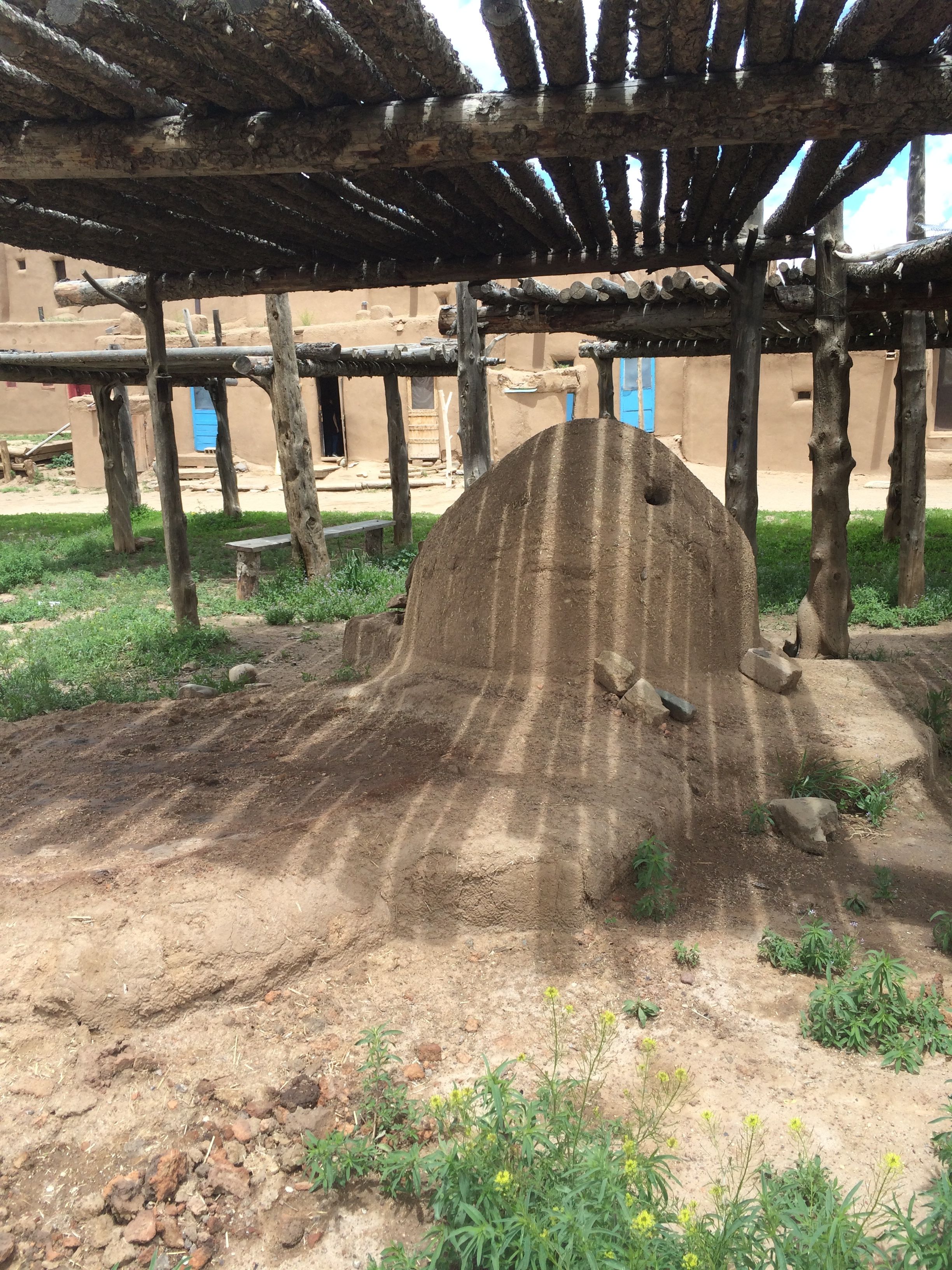
In the center of the plaza are racks that they said are for drying food. They also provide nice shade. There is are ovens located conveniently throughout the pueblo. I like the idea of having one under shade.

Oven under the drying racks
!9th century church
!9th century church

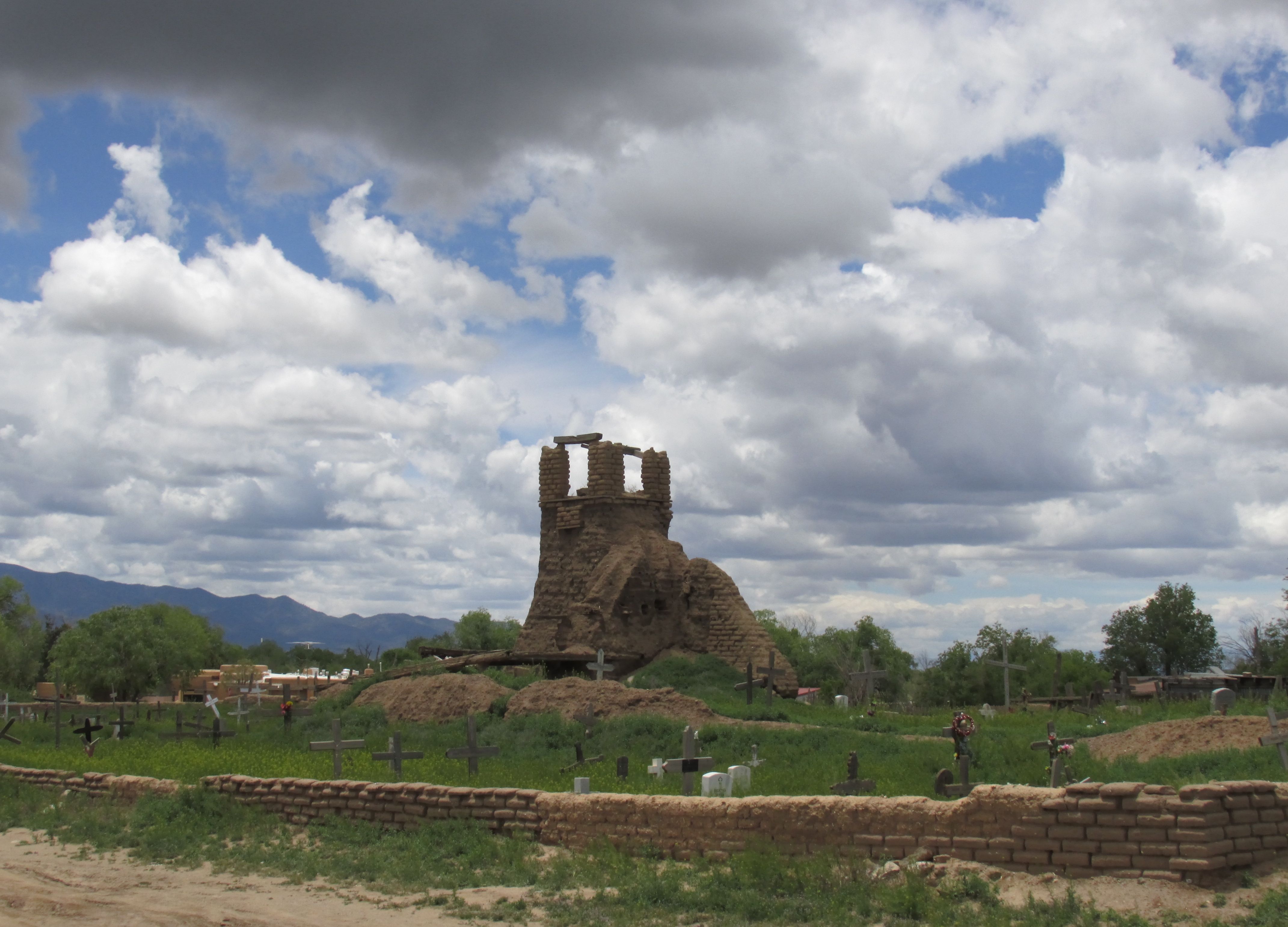
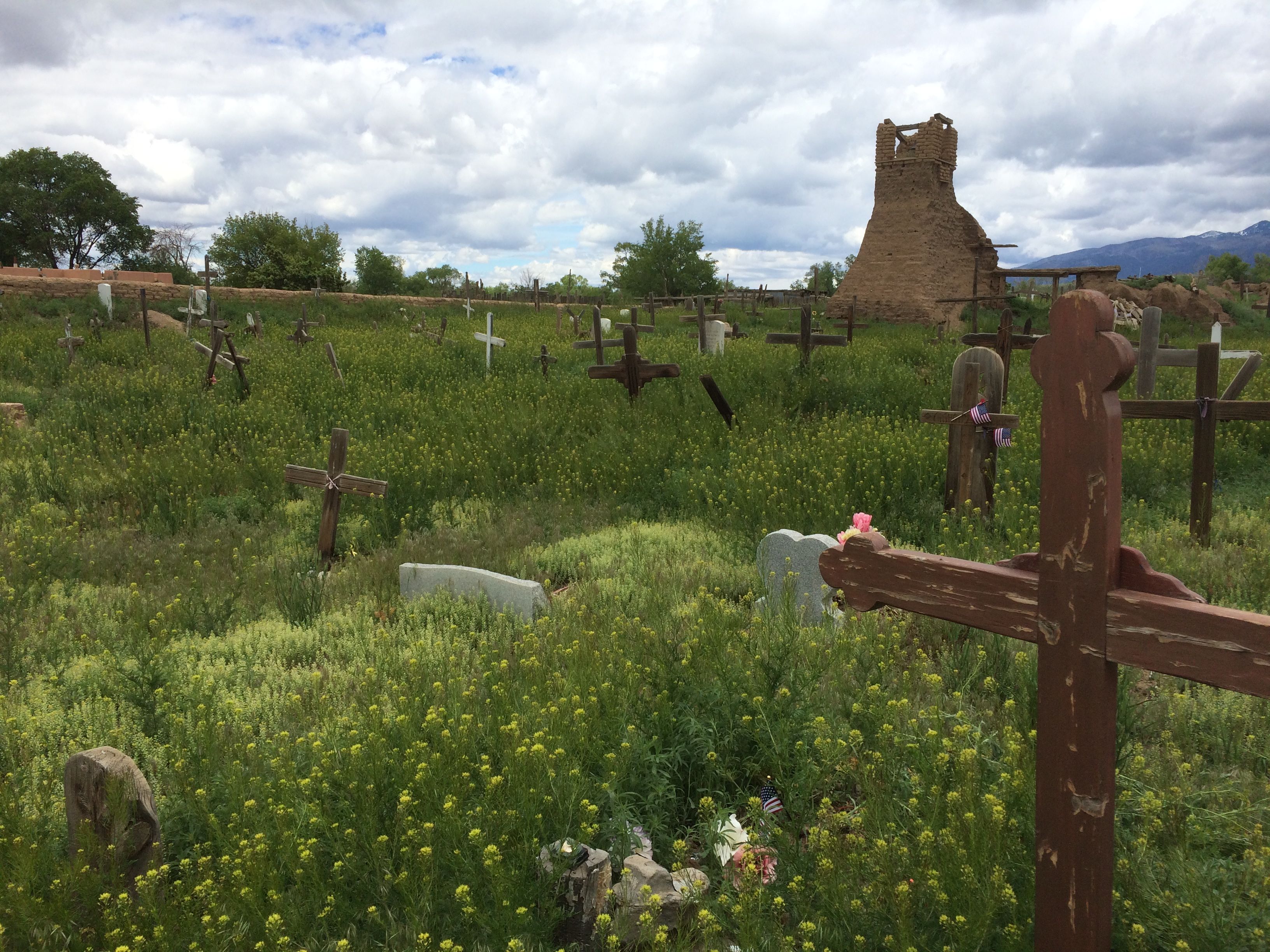
There is a church on the plaza. It it is a replacement for a church that was destroyed by the United States military during the Pueblo Massacre of 1847.

Church destroyed in the Pueblo Massacre of 1847
Graveyard near the ruined church

The warm welcome I received from all the members of the Pueblo made me feel so sad about the treatment they received at the hands of the Spaniards and the United States.

May we all learn to live together in peace and with mutual respect.


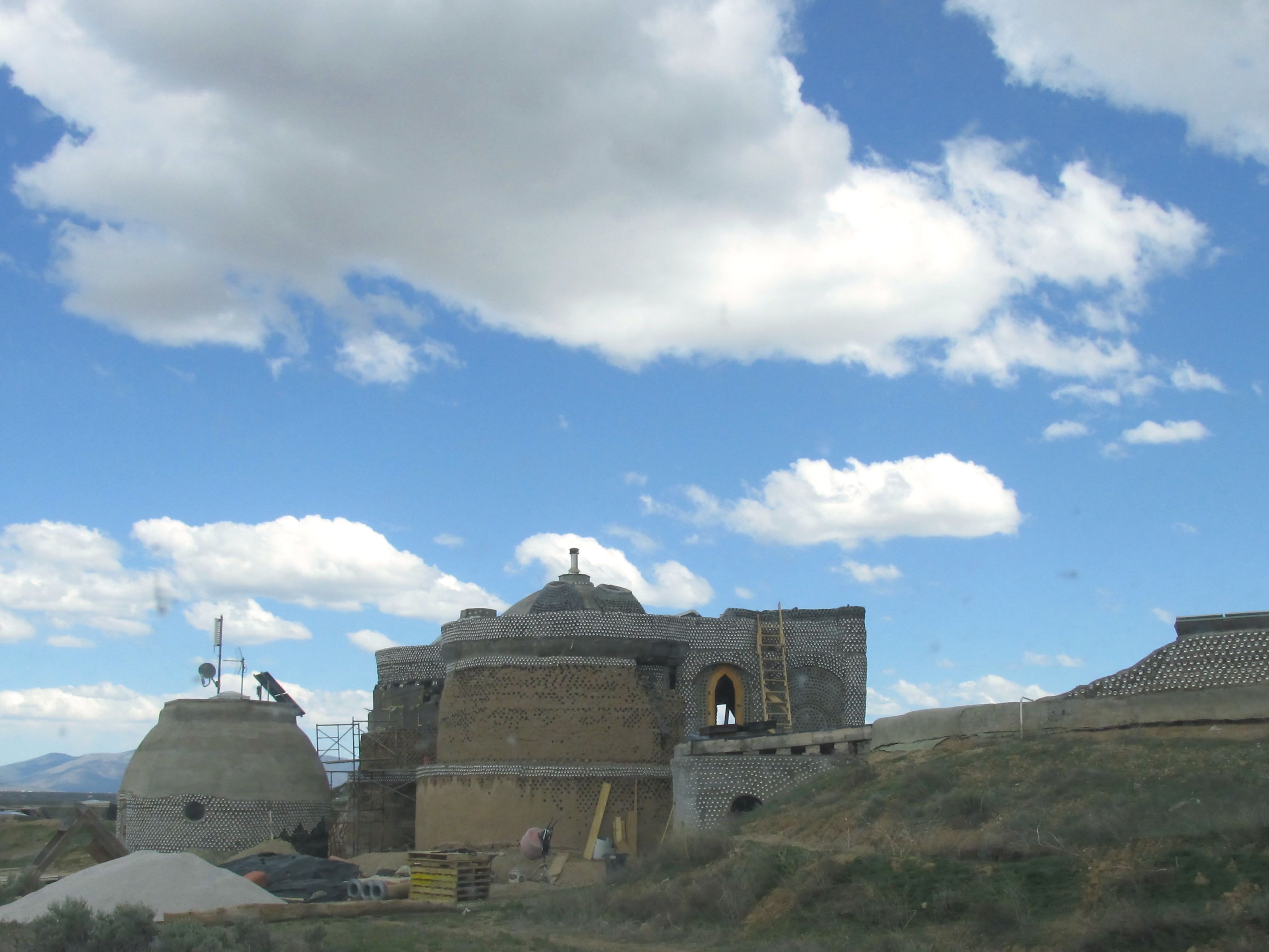
Earthship

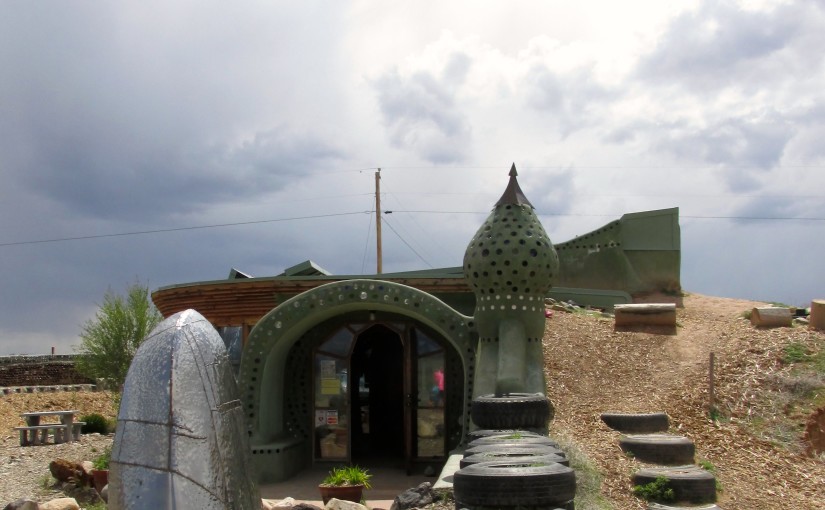
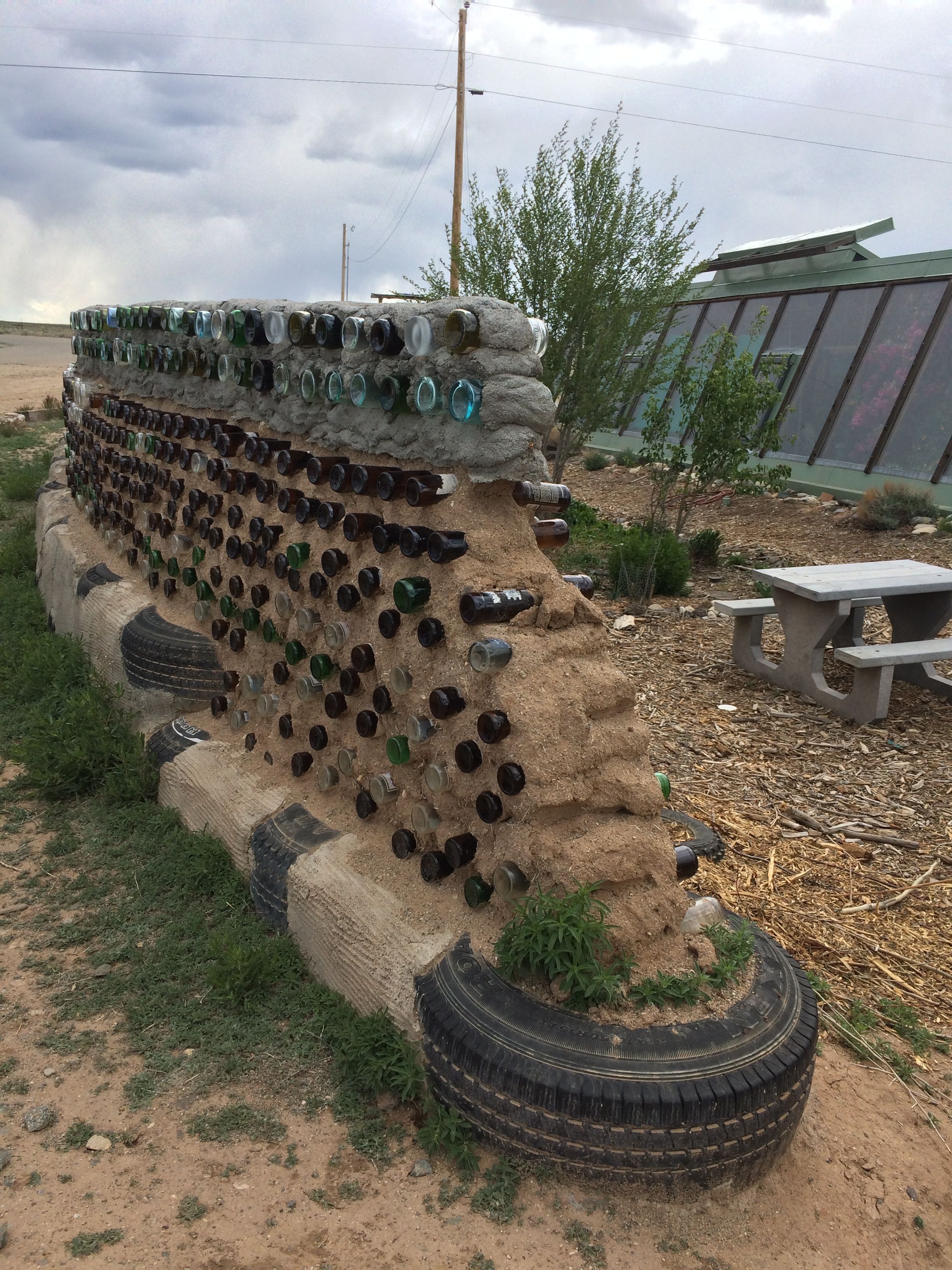
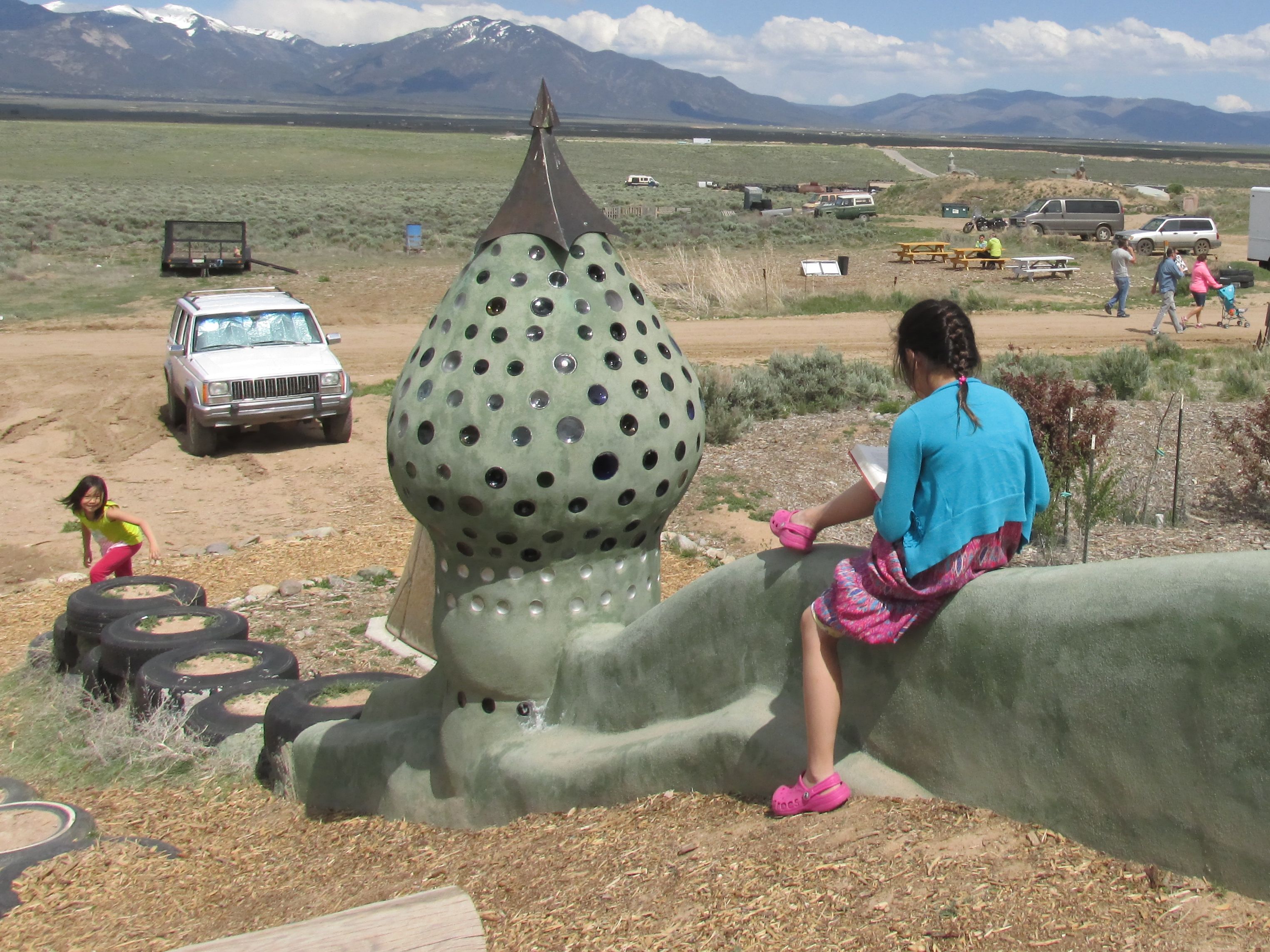
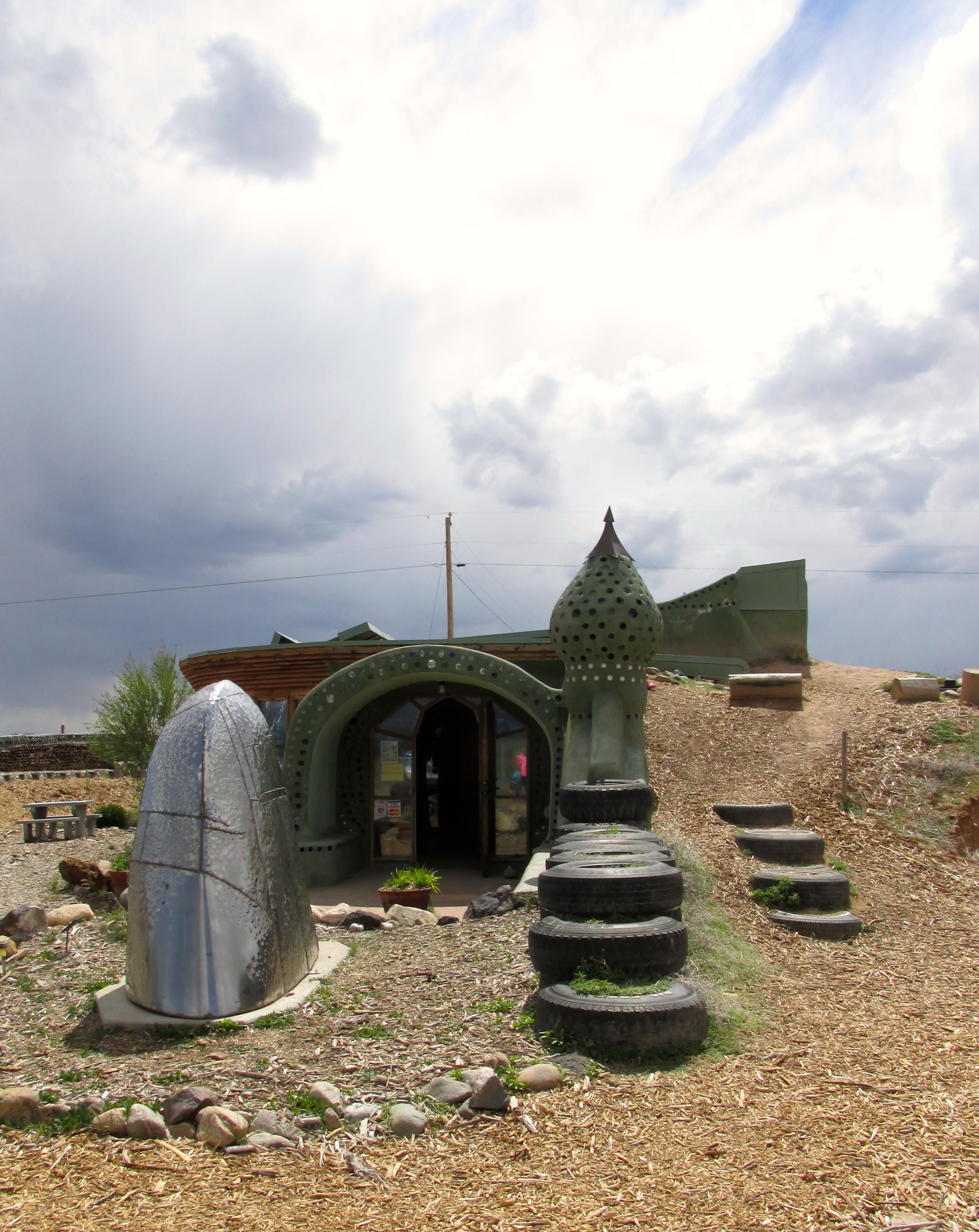
About ten miles outside Taos, near the edge of the Rio Grande gorge, is the headquarters of Earthship Biotecture. It’s an engineering and architecture organization that is dedicated to building self-sustaining dwellings out of recycled materials. You know those oh-so-difficult to dispose of tires? Those are the foundation of their buildings.

They are packed full of soil and then treated like bricks. They also use bottles and cans in their buildings, but I got the impression that they were not used for load-bearing walls.

They are mortared together with a mud mixture. When the building is complete, it is covered over with the same mud mixture. It seems like this mud is similar to cob or adobe.  The exteriors need to have the outer layer refreshed every few years.

T Earthship 1

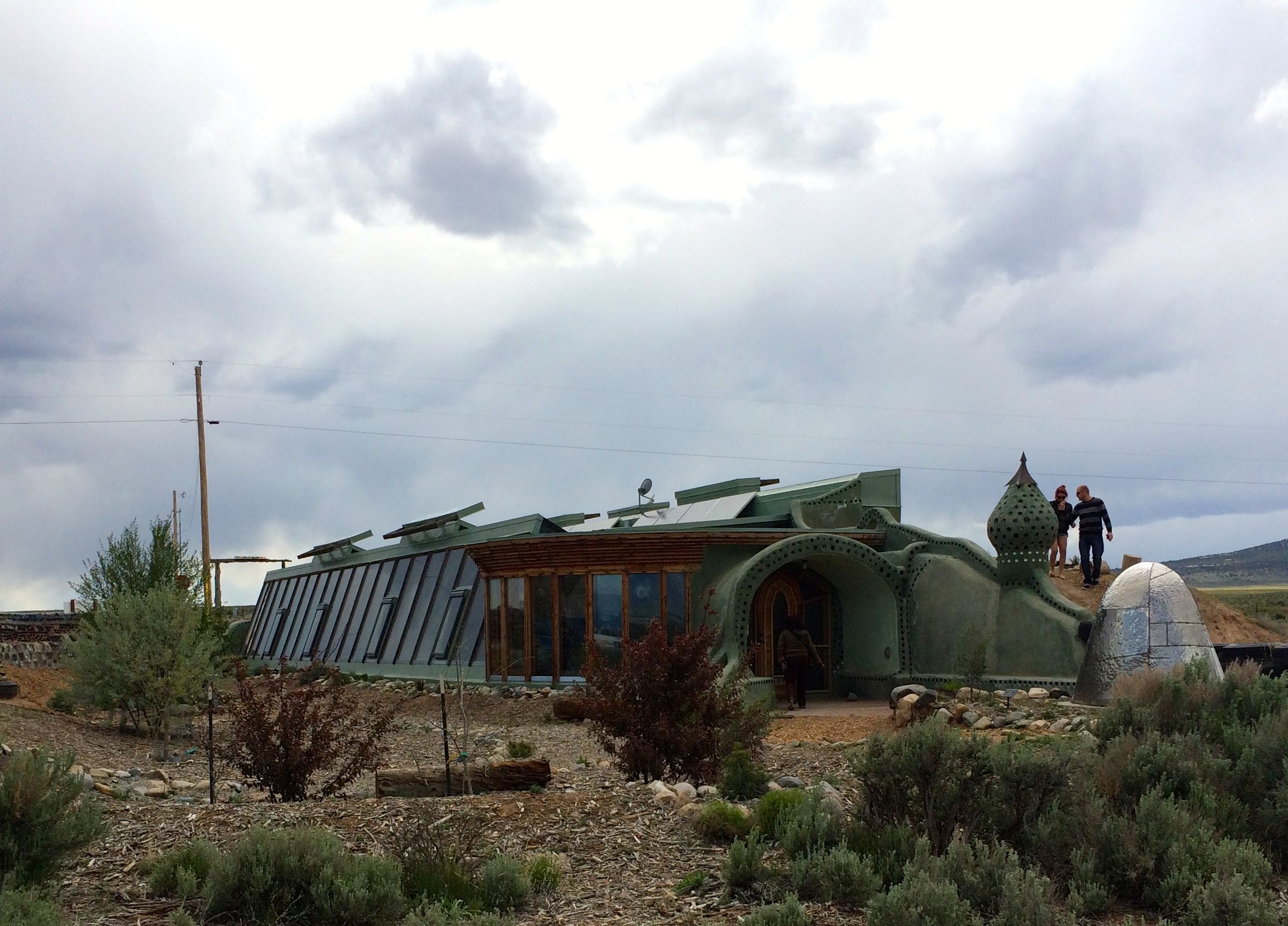
Usually at least half of the building is in built into a hillside or has an extensive amount of earth built up around it for insulation.

T Earthship 7

The side that faces the sun is largely glass, to take advantage of solar heating. The sun passes through the glass and the heat is stored in the floor and walls of the interior and released throughout the night.

T Earthship 2

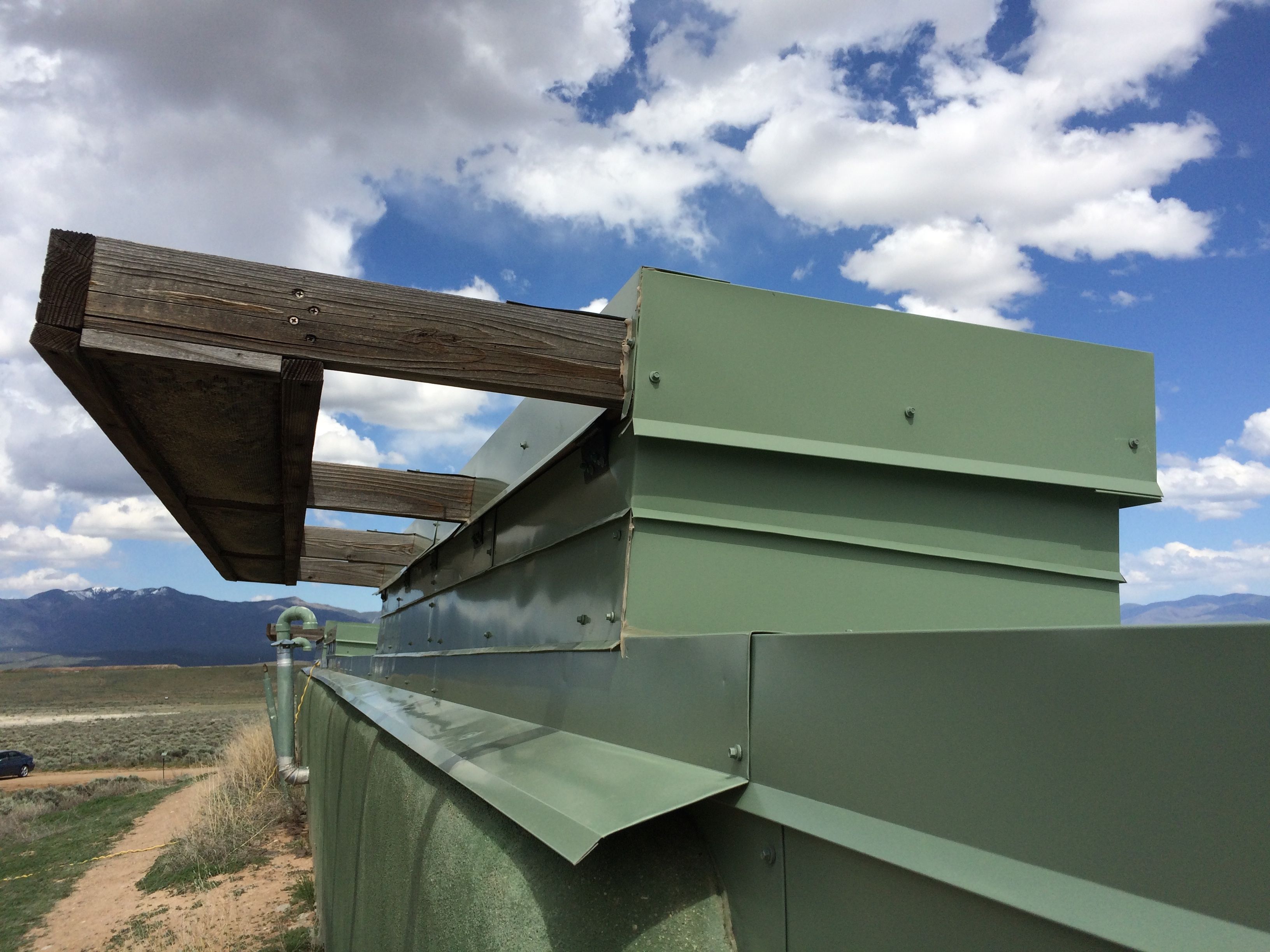
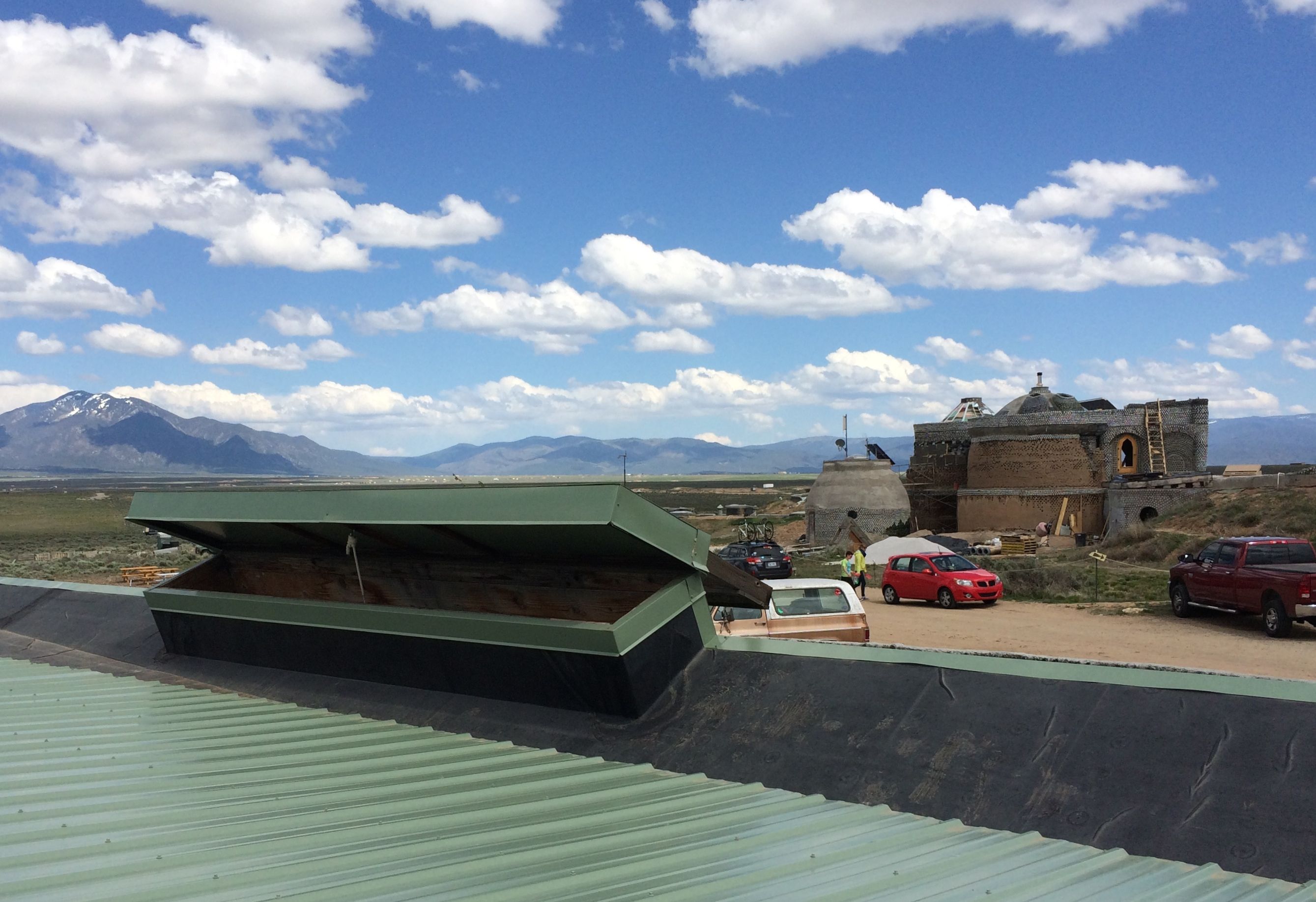
The angles of the glass walls are planned to allow for maximum heating during the winter and less heating during the warmer summer months. There is two-walled system of glass walls to contain and control the heat. The interior temperature of the living areas is controlled, at least in part, by skylights that open and close.

Closed skylight
Closed skylight

The ballast, which you can see on the left side, keeps the skylight open.

Open skylight
Open skylight

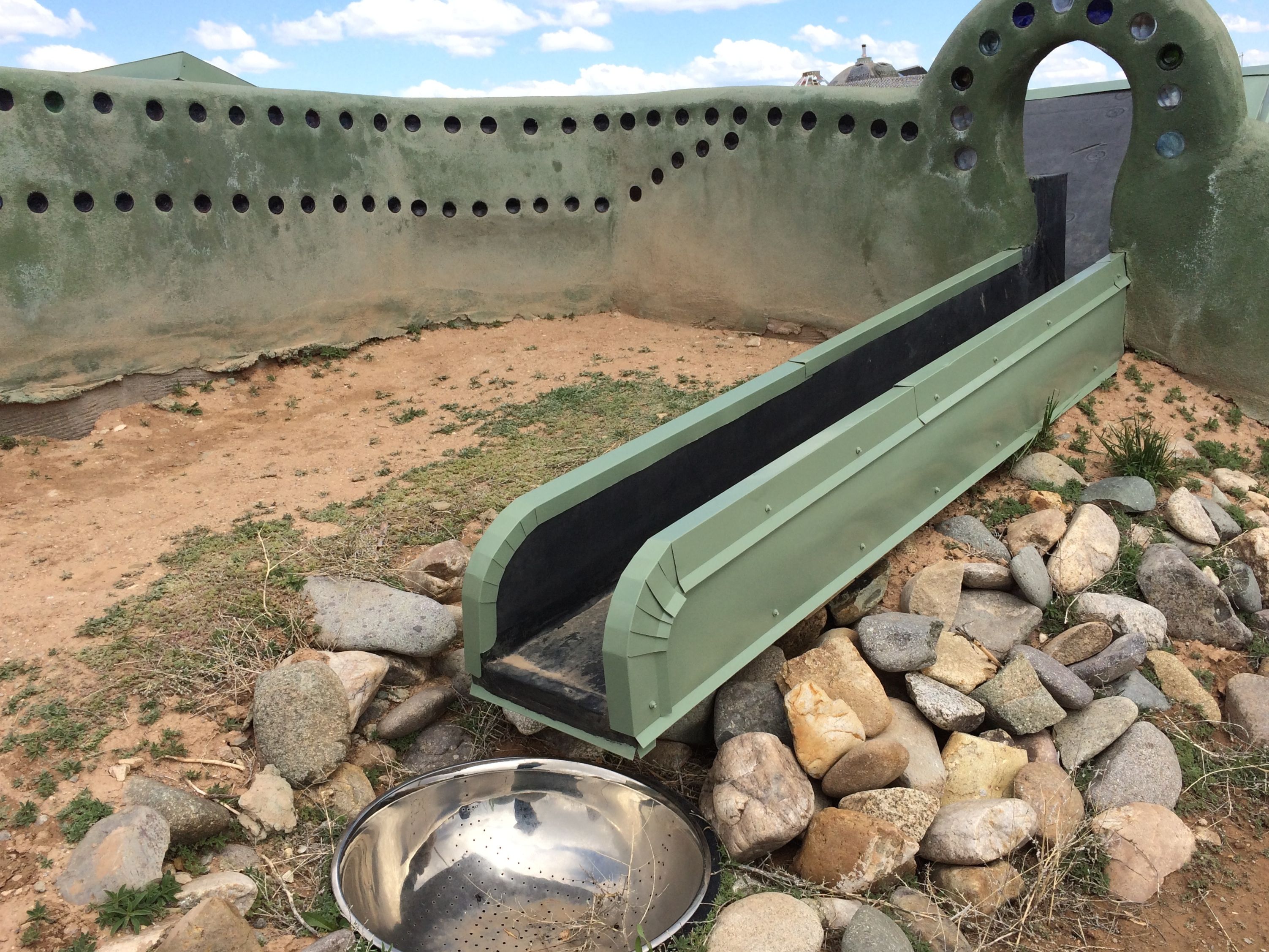
Rain water is collected and stored in cisterns beneath the house.

Collecting rainwater

Their are holes in the basin to strain out the larges pieces. There are additional filtering steps. There is also extensive water reuse, and reuse of grey water for plants and sanitation. Plants are an integral part of the design. They are used in water purification and part of the occupants’ food can be grown in the house.

These homes are designed to be completely off-grid, although they can design buildings that do hook up to utility infrastructure. As I understand it, electrical power comes from solar and wind and is stored in batteries. They have solid state inverters to change the DC power of the batteries to the AC power that is used to run appliances.

They had a video and a slide show that displayed the variety of structures they have built since they started in the early 1970’s. Michael Reynolds was the person who started Earthship.

They have quite a community growing around the headquarters, although those are in private areas that are not accessible to visitors. (But they can’t stop us from looking!)

Building going up!
Building going up!

Apparently you can rent a room in an Earthship to stay overnight. If I didn’t already have Flo the Airstream, I might have looked into it. They also have buildings for sale, and they will build one for you that suits whatever region you live in.

It was a wonderful visit, and I have to thank Sister Jeanne my art history professor from Daemen College for introducing me to it. She was a marvel and so cutting edge. She was teaching about this when it was just barely getting started.

If you want more information, look them up online.

www.earthship.com

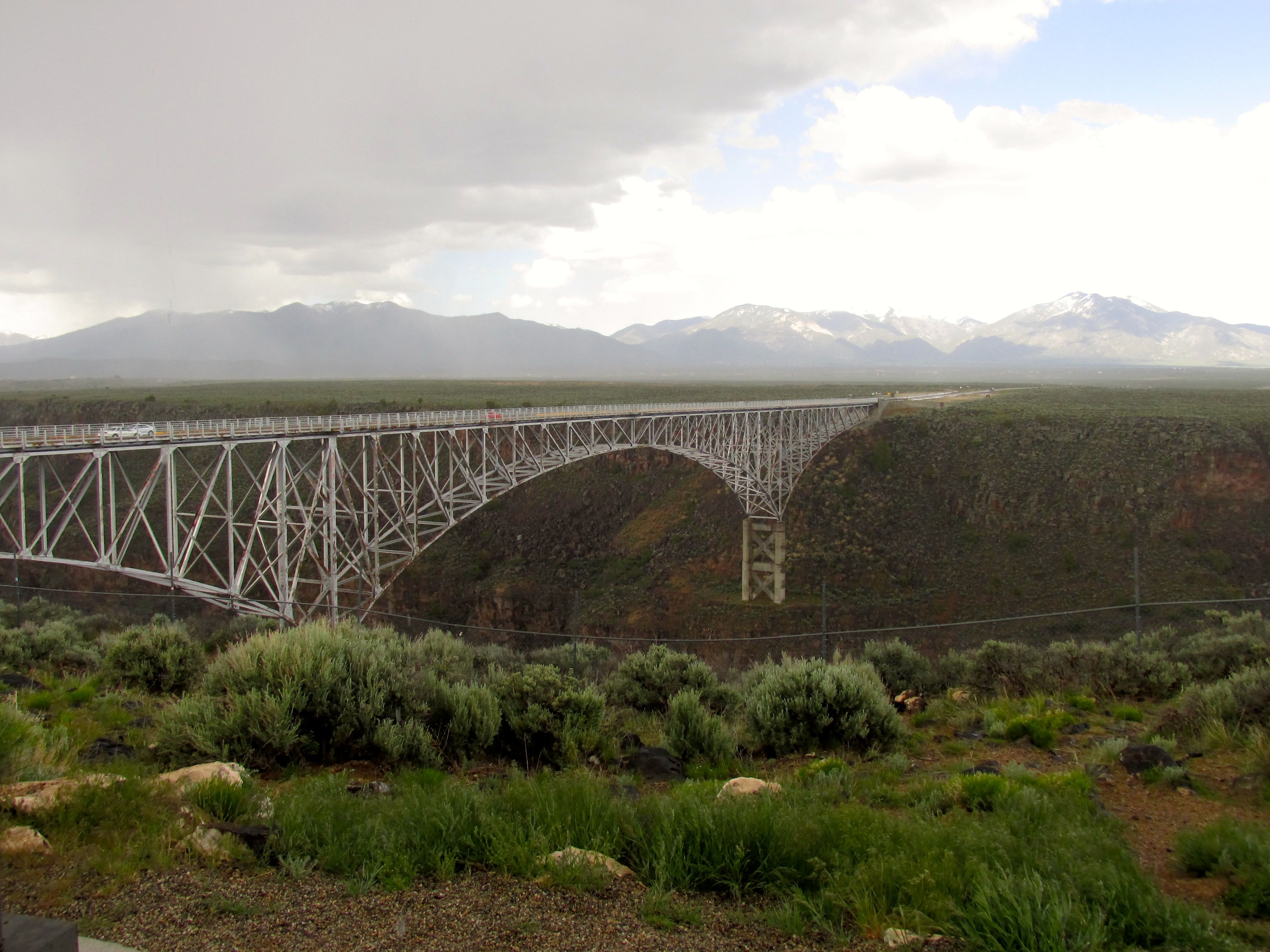
On the way back to Taos, I stopped at the Rio Grande Gorge Bridge. The weather had changed dramatically from when I left Flo in the morning. In fact, while I was on the bridge, some very wet, sloppy white stuff fell from the sky. Brrr!

Rio Grande Gorge Bridge

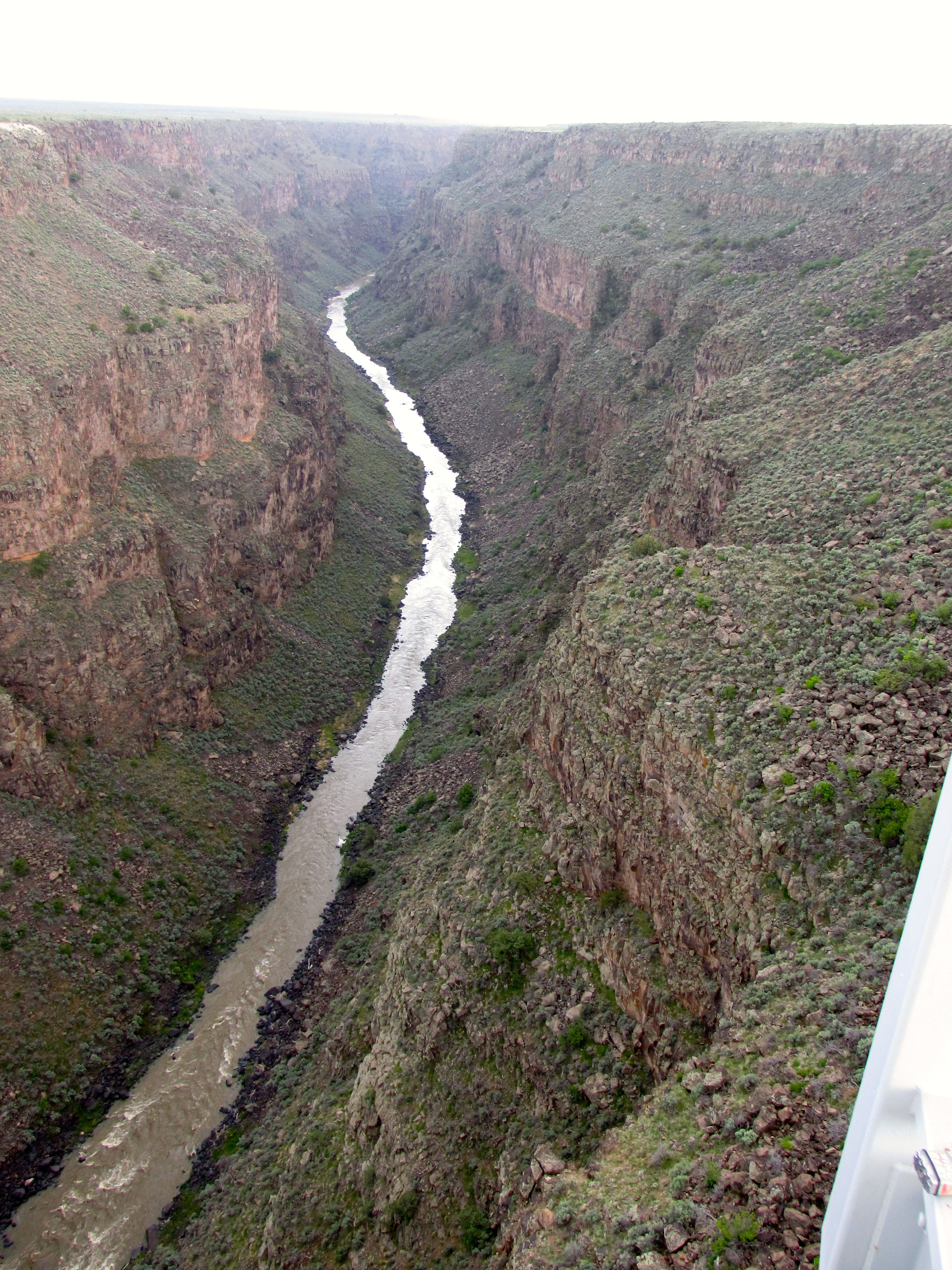
The bridge is about half a mile from edge to edge. Depending upon who you talk to, it’s about 600 feet from the bridge to the river. Some people said 800 feet, some people said 900 feet. One thing isn’t up for debate: it’s a long way down.

My campsite is downriver someplace

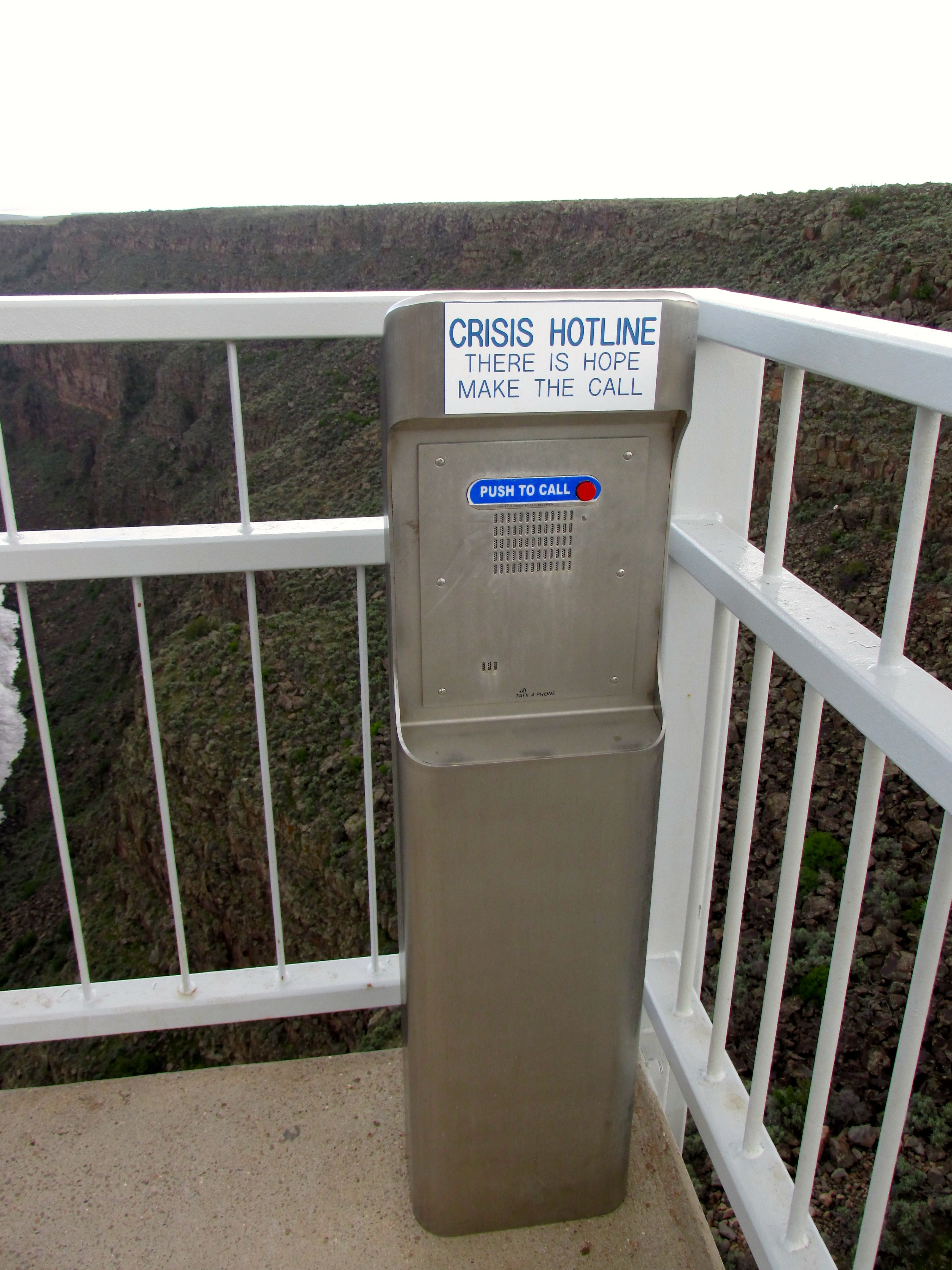
The distance to the bottom kind of gave me pause. And, I guess encouraging people to pause was the idea behind these buttons.

T Bridge button

It made me stop and say a prayer for the people who have used the button – and those who didn’t.

The unnamed wet, white precipitation was coming down in earnest, so I decided to high-tail it back to Bart the truck and warm up.

Next entry: Taos Pueblo!


Taos!

I had been looking forward to visiting Taos for decades! Sister Jeanne, my art history professor at Daemen College, had taught me about several buildings there and I wanted to see them for myself.

St. Francis of Assisi in Rancho de Taos
Taos Pueblo
Taos Pueblo
Earthship
Earthship

In addition to the buildings I knew about, I couldn’t wait to see what else I could fine in this magical place.

One thing I was looking forward to was dining out. In addition to the buildings, I was reading about the good eating available in Taos. I was getting a little tired of eating in. Not only do I have to cook the food, but I have to clean up after myself. Since I live in about 250 square feet, it’s hard to ignore a mess in the kitchen.

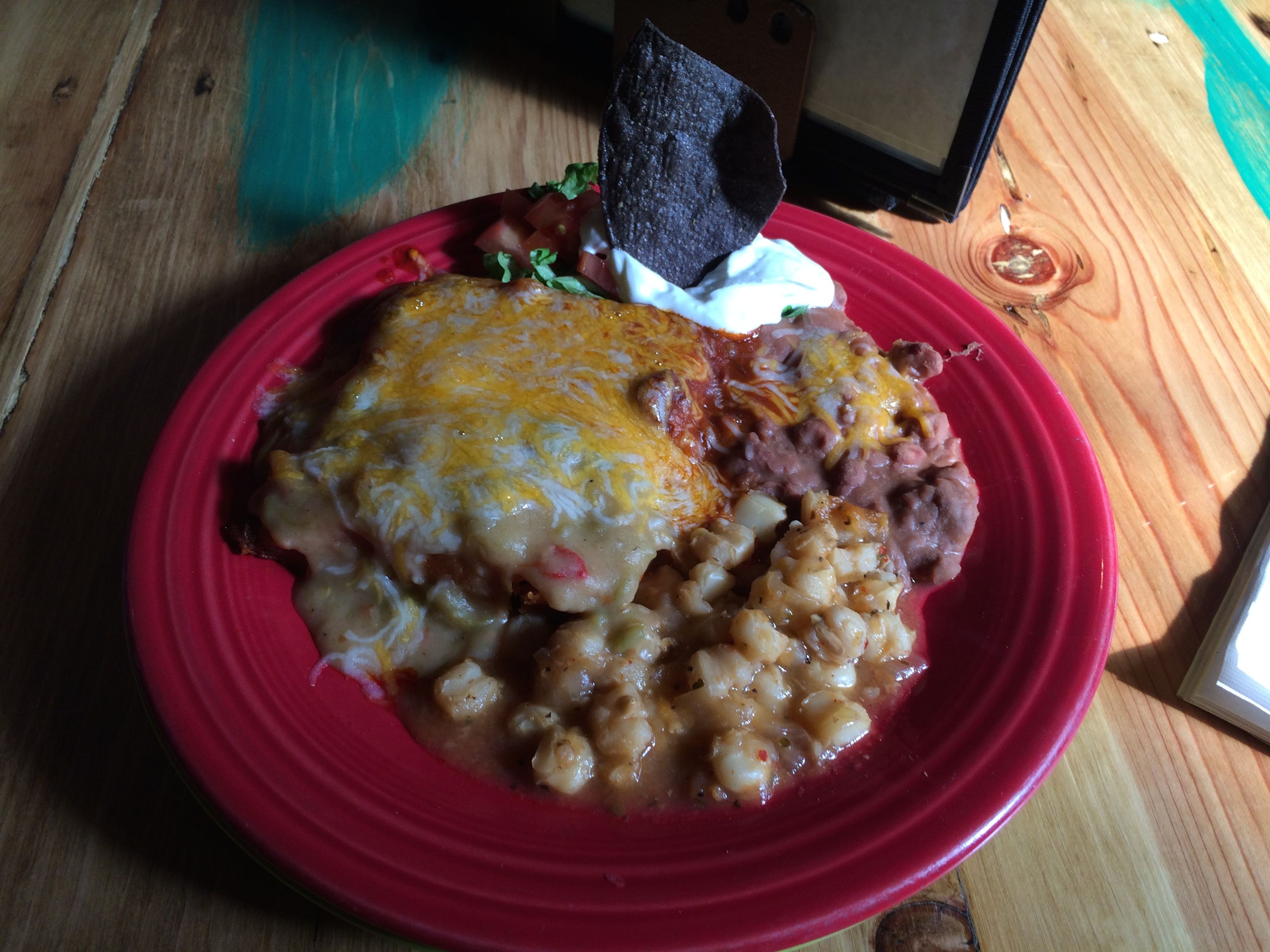
The first day, I ate at The Alley Cantina, the oldest building in town. Well, part of the building is 400 years old. As with any good building, you keep repairing and rebuilding.

Tamales, pozole, and beans

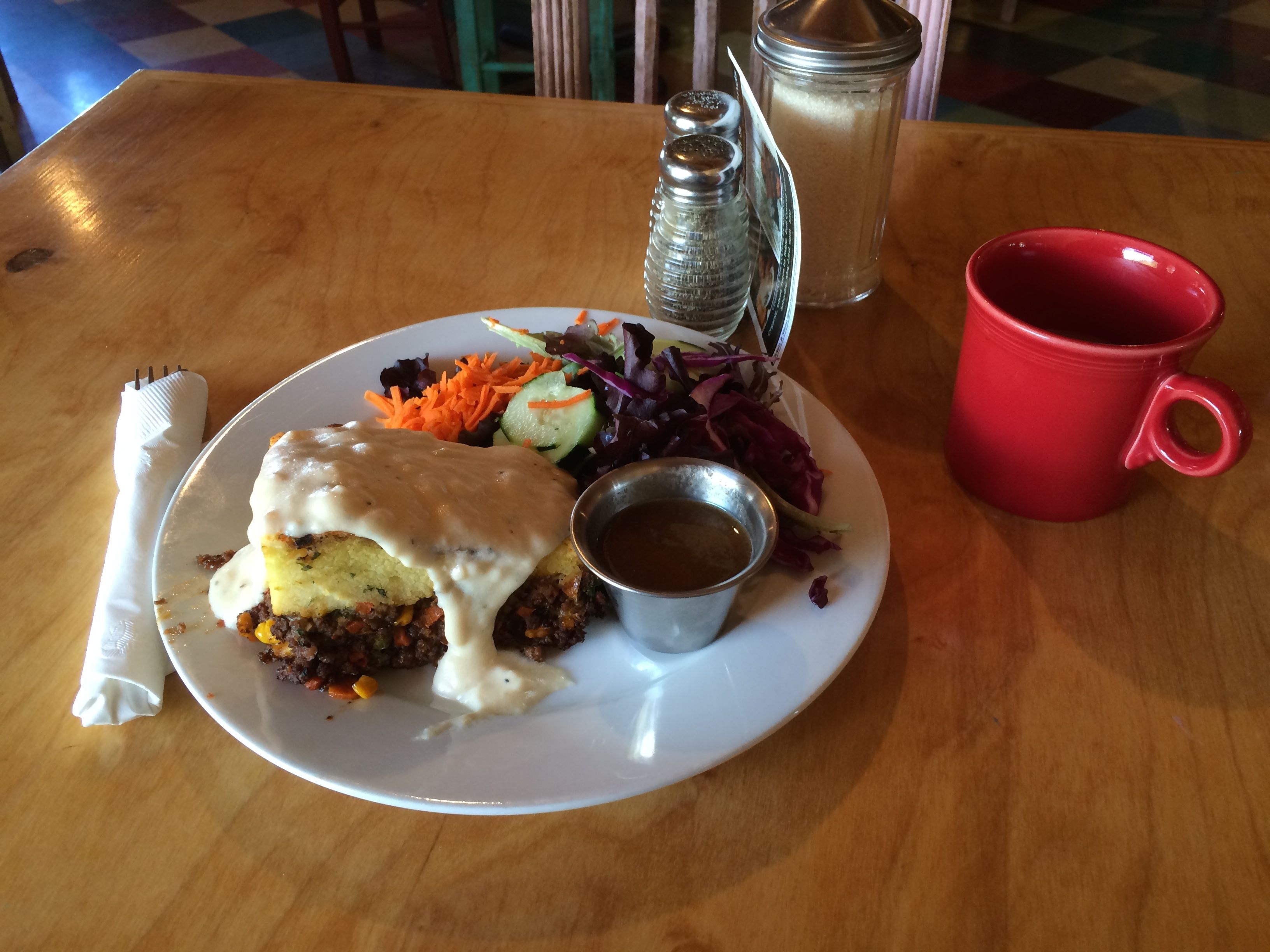
My second day, I ate at The Farmhouse Cafe and Bakery. Everything was locally sourced, grass-fed, non-GMO, pesticide-free and handmade. I felt 75% more hip after that lunch.

Shepherd's Pie
Shepherd’s Pie

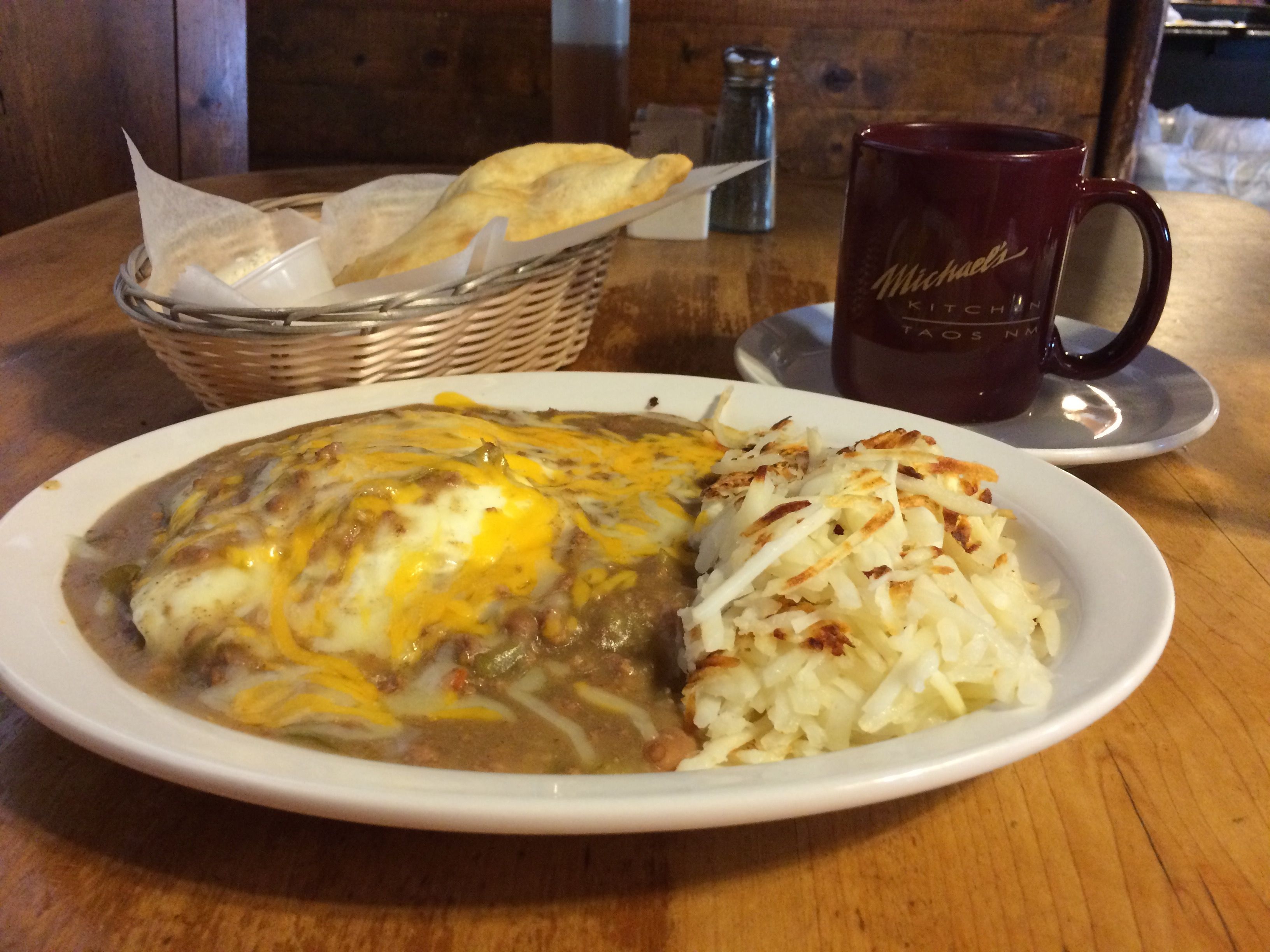
My third day, I ate at Michael’s Kitchen, a place a friend had recommended to me. You know it’s good when you have to wait in line for 20 minutes – and it’s not even a peak meal period.

Huevos Rancheros, Hashbrowns and a Sopapilla

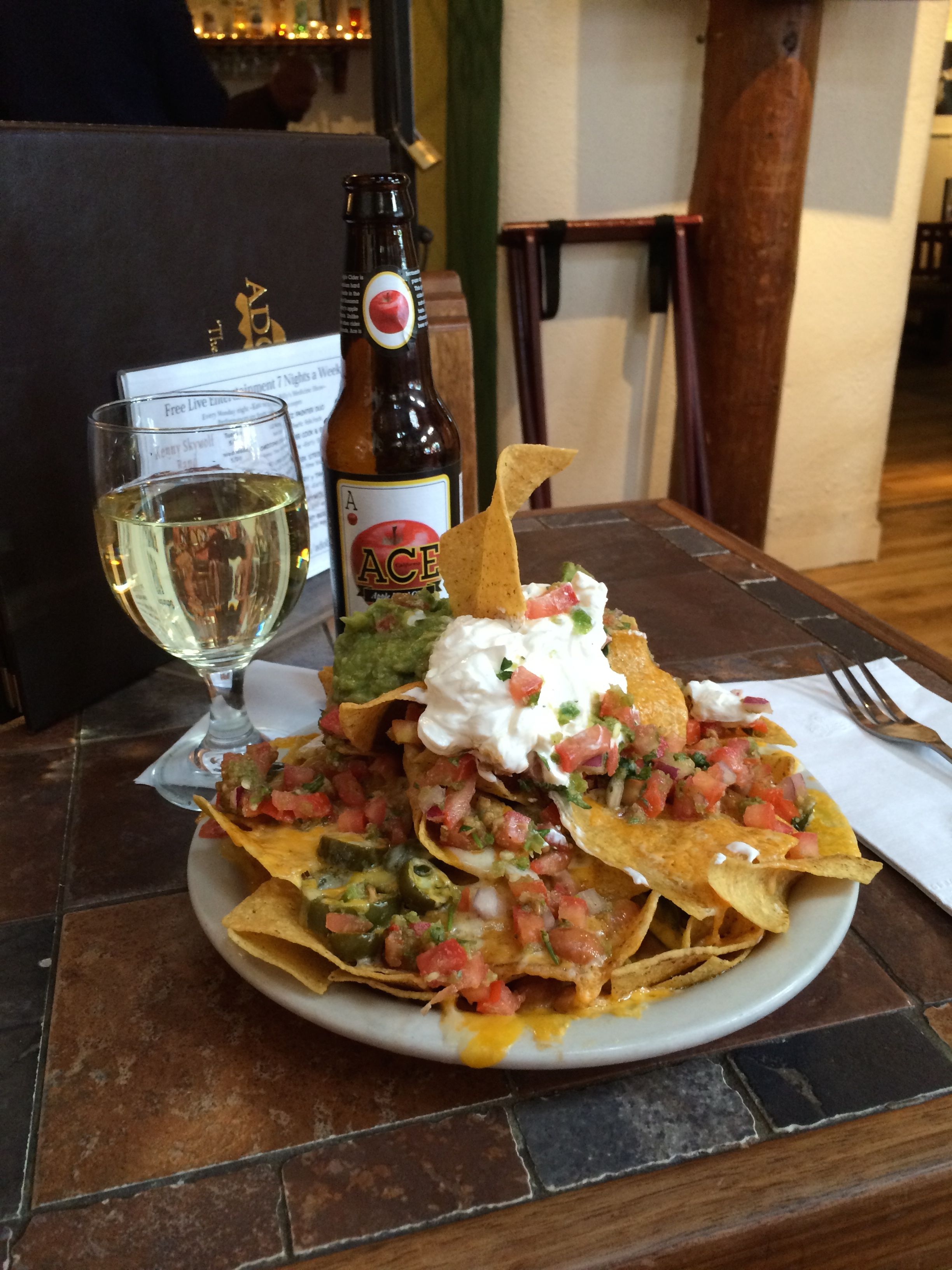
My last dining experience was another recommendation – The Adobe Bar at the Taos Inn. I looked over the menu, and decided upon Nachos. They had small and large. I asked for the small size. The waiter recommended that I get half of a small. I’m so glad he did! I think I managed to finish half of the half order.

Half of a small order of nachos

Now that we have the dining out of the way, I’ll share more about the architectural features – in my next post.