Can I ever get enough Frank Lloyd Wright? Apparently not. And, I am glad my friend, Dina, was also into his buildings, which made for a great visit to Racine.
Actually, not only am I seeing some Wright buildings for the first time, but I am also meeting Dina face-to-face for the first time. We have been Facebook friends, introduced by a mutual friend. It was great to finally meet her!

Our first stop was Wingspread, the home of Herbert F. Johnson. It was built in 1938-1939.
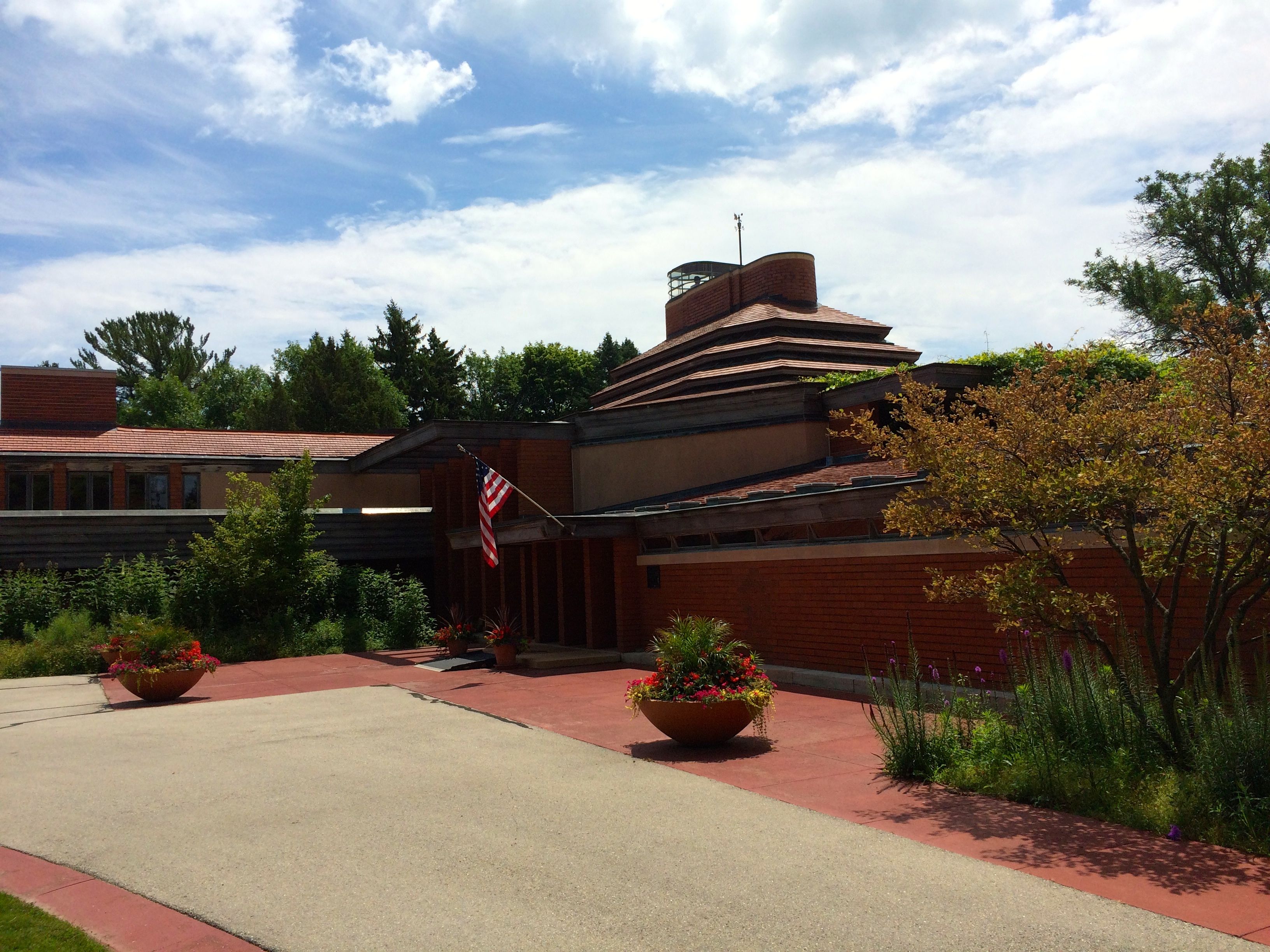
The house has four wings that extend from the central public space.
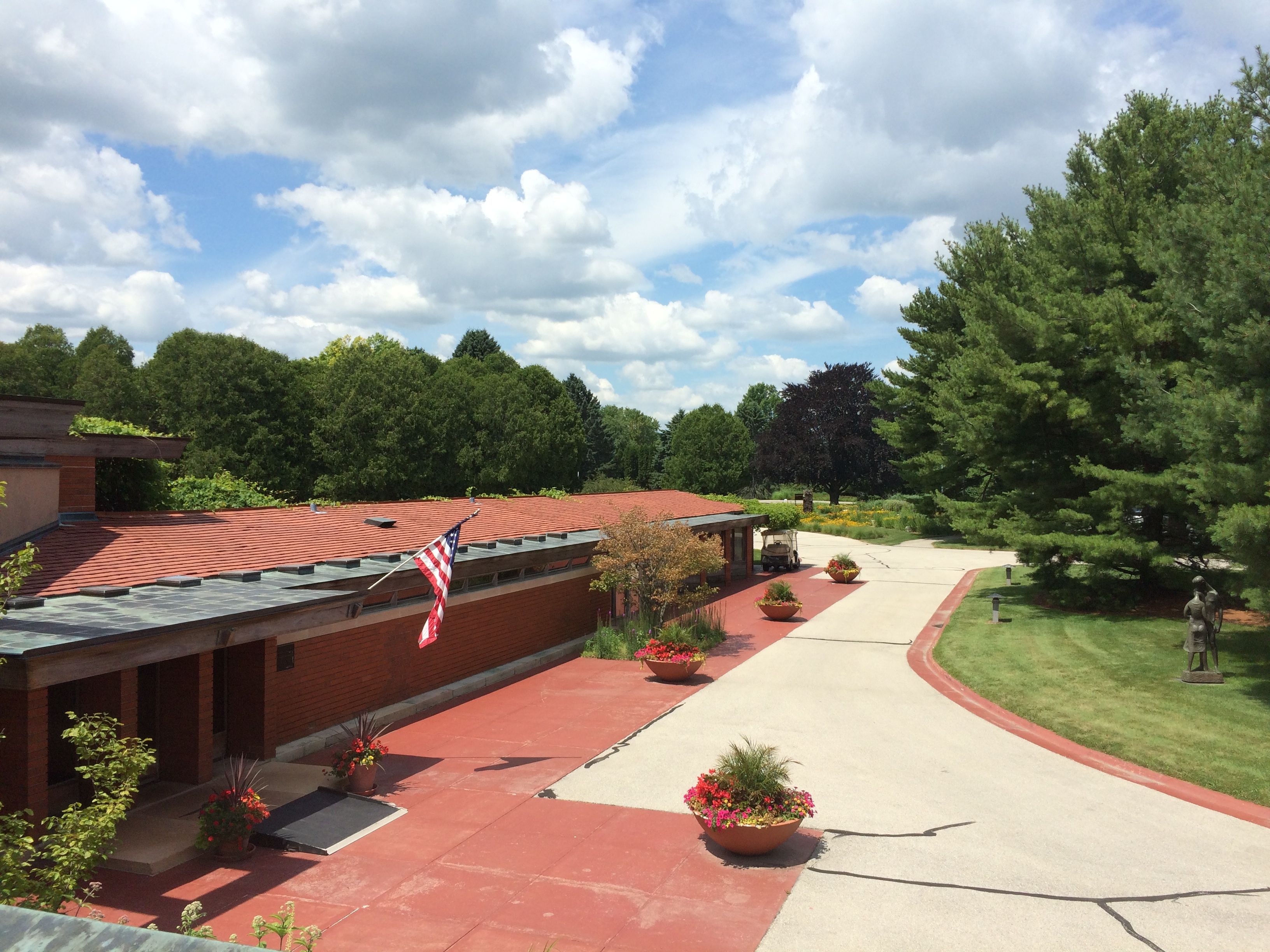
The central space contains the living room, dining room, sitting areas and places for entertaining. It is capped with a roof filled with multiple skylights.
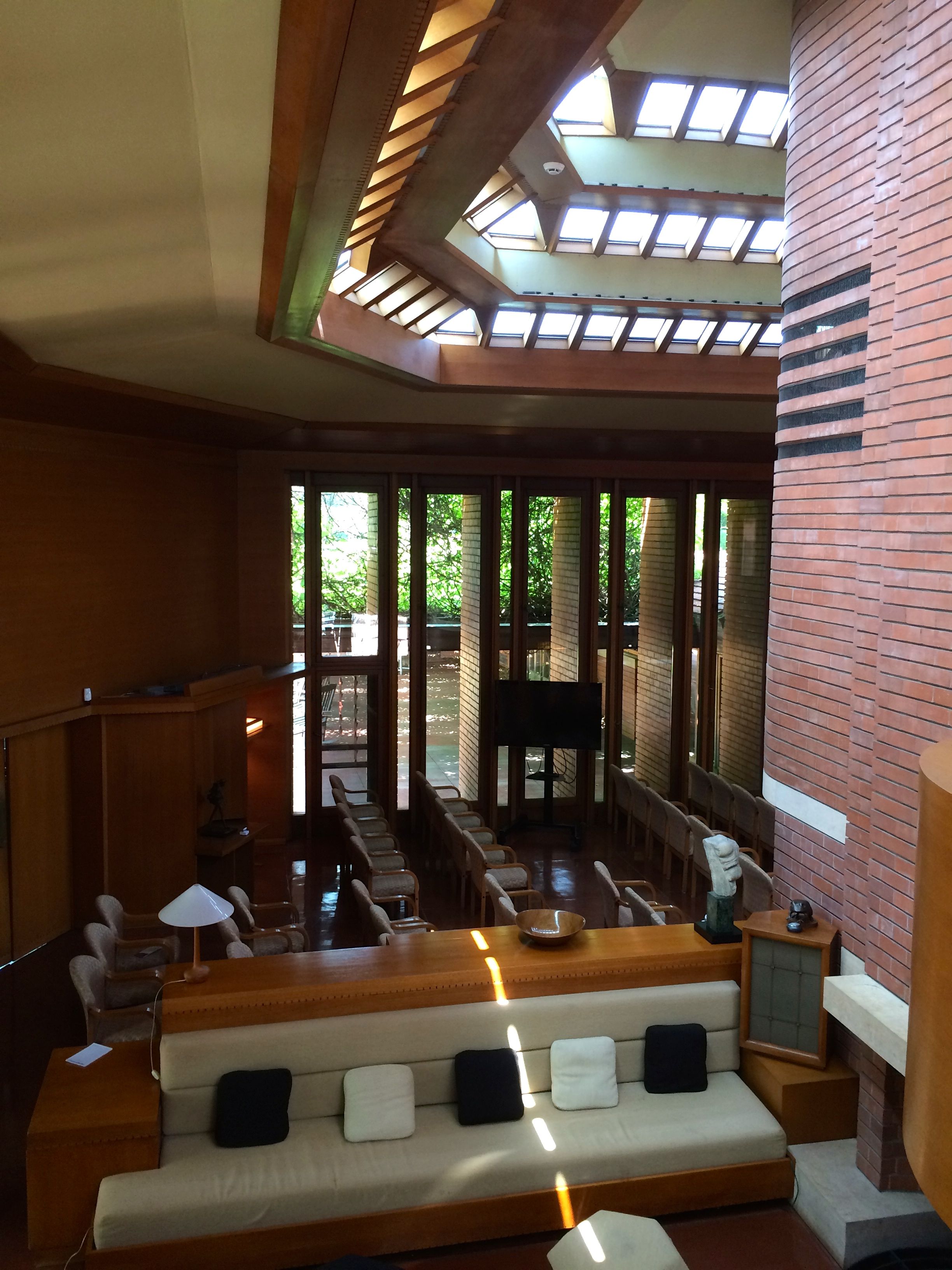
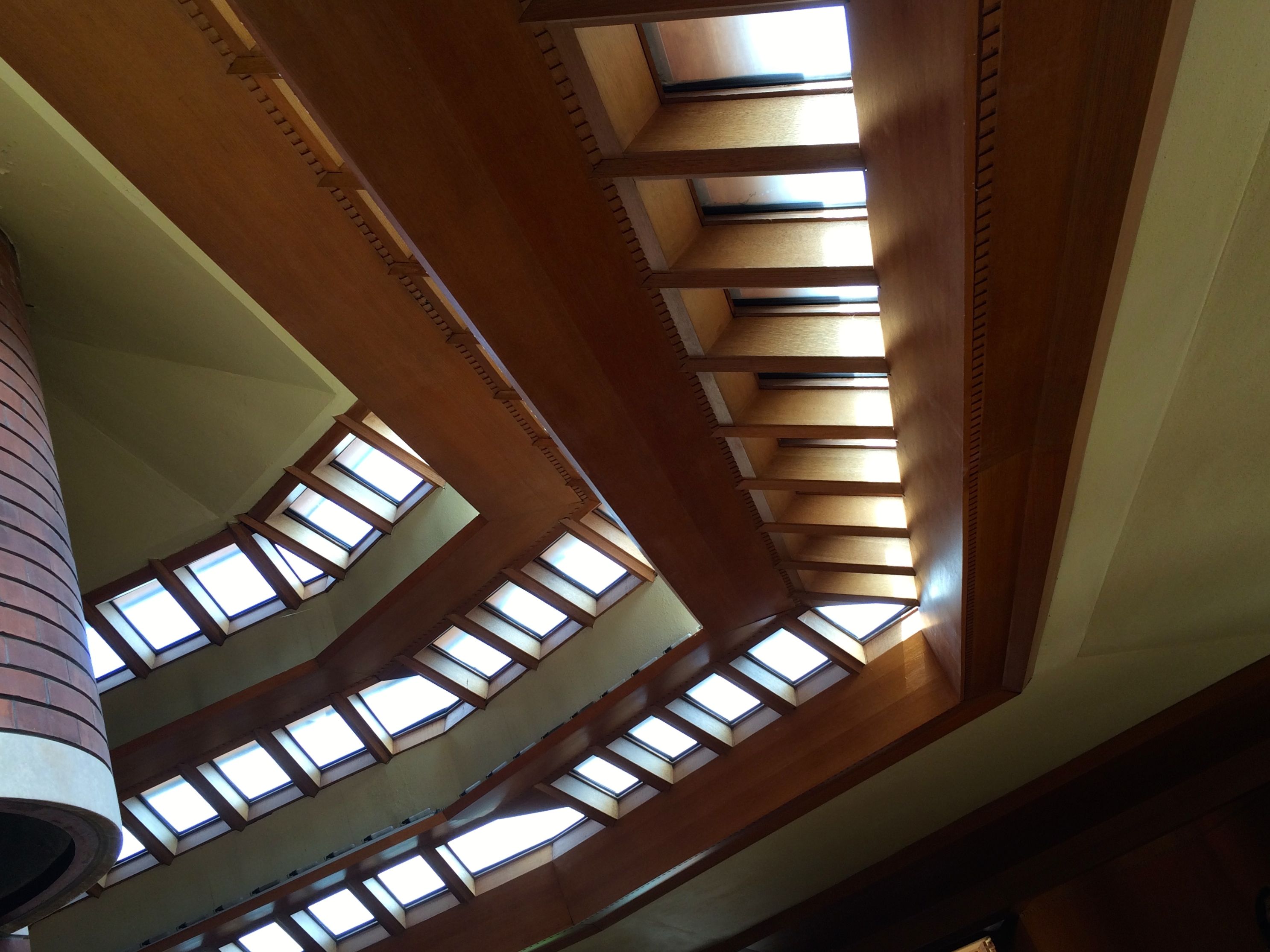 The light that these skylights provide illuminates the spaces beautifully. However, they did leak. Wright’s designs are always inspirational, but not always practical.
Speaking of impractical designs, have you ever heard of a vertical fireplace? In the central chimney, he has four fireplaces on the main floor and that vertical fireplace on the mezzanine.
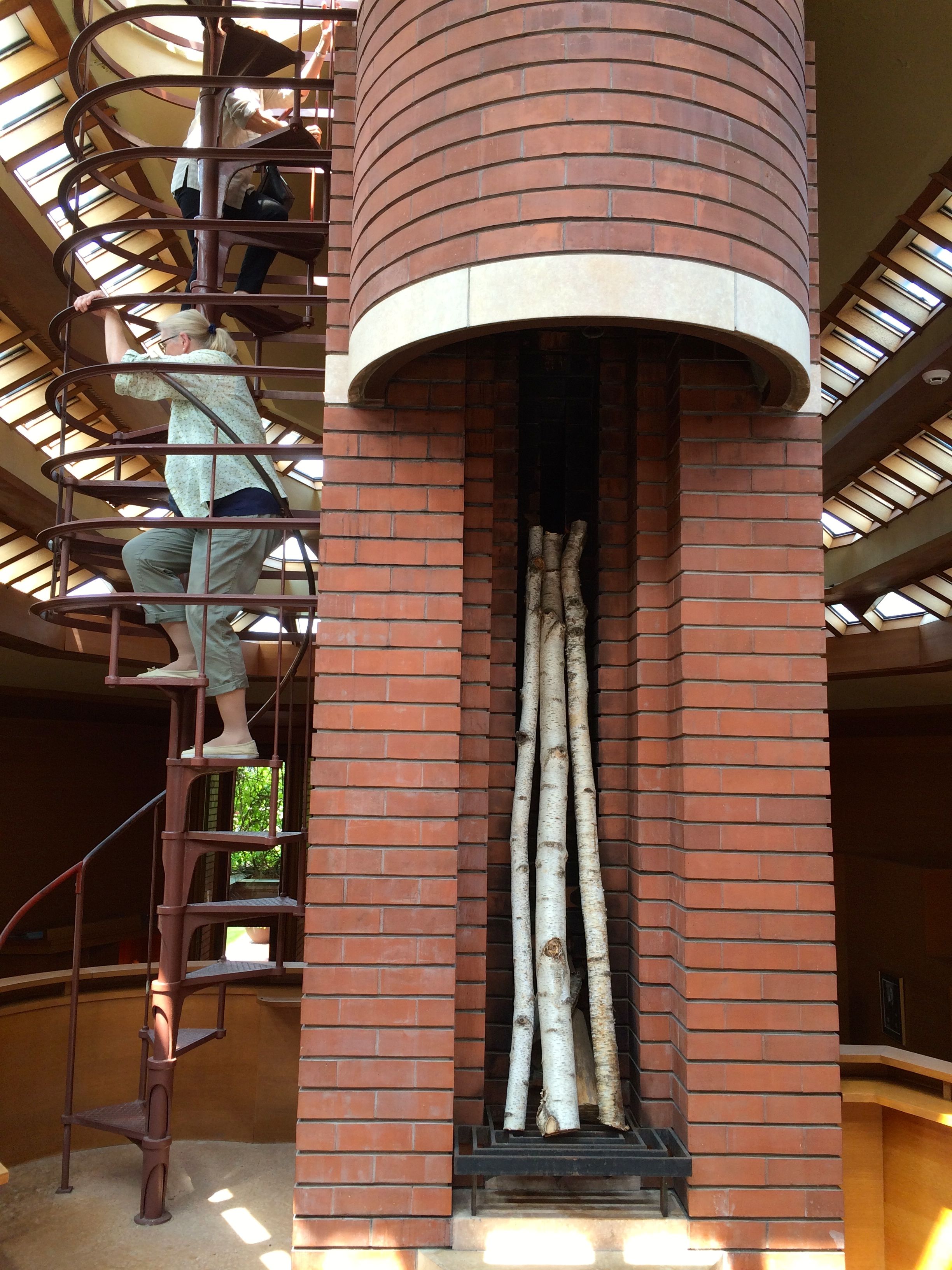
It was designed to be stoked with eight-foot birch logs. The first time it was lit, the logs burned away at the base and then they fell out onto the floor. The Johnsons quickly got the fire extinguished and the logs out of the house. From what I understand, the logs have been purely ornamental since then.
To the left of the fireplace, you see a feature that Wright designed for the boys. They wanted to have an area they could use for a lookout, like the cupola that their grandparents had at their house. At the top of the circular staircase is a room that looks out over the hillside. Sam used to talk with his father via walkie talkies as he would fly by the house.
Another thing that the boys wanted was a swimming pool. Wright didn’t approve of swimming pools, so this was a very deep reflecting pool. The pool was included to get the kids’ friends to make the trek all the way out of town to the new house. To insure that everyone could enjoy the pool, they had “paper” bathing suits that guest could wear in the pool.
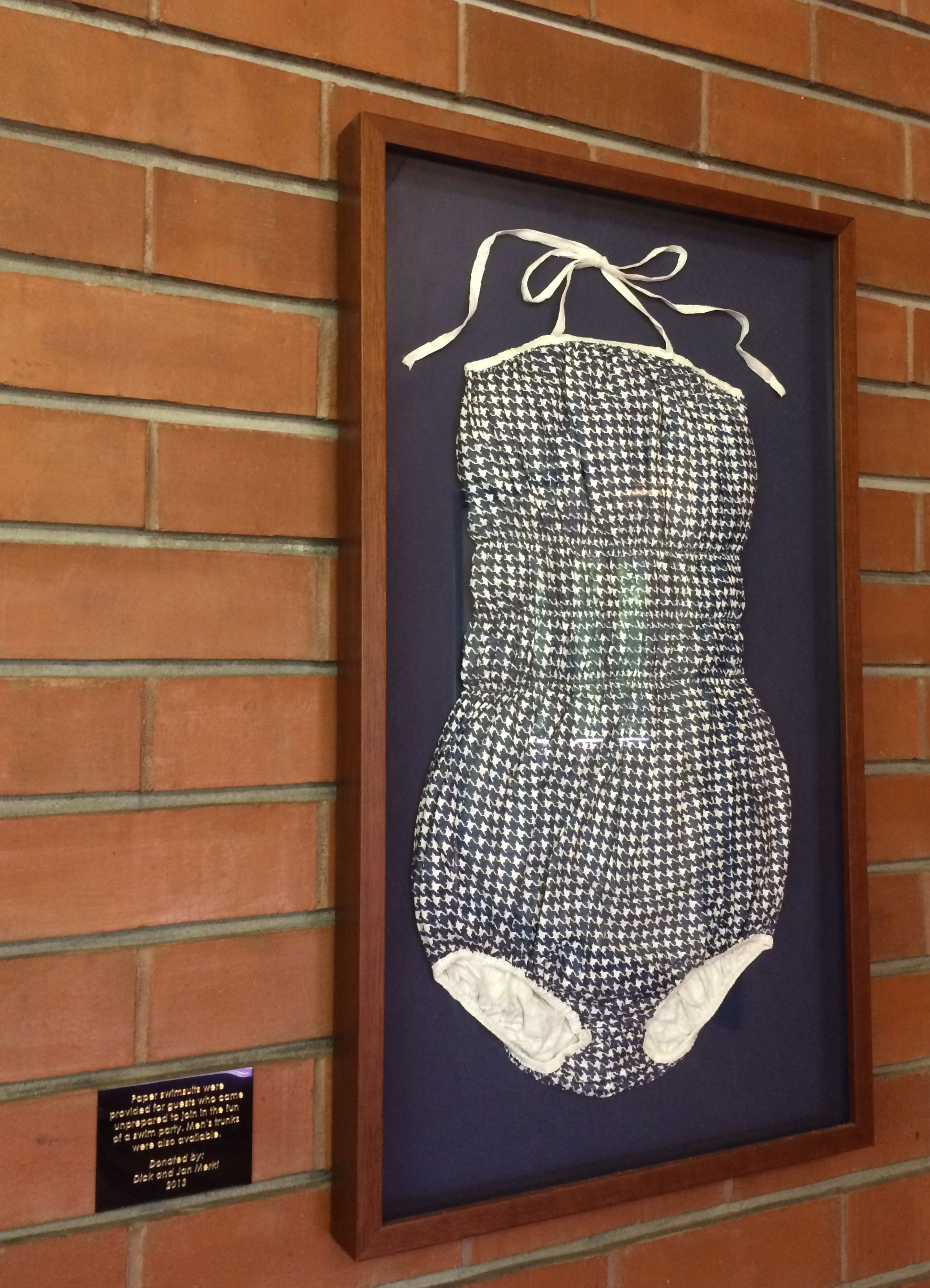
This was hanging in what had been the boys’ playroom. With Wright’s fondness for fireplaces, this room has one, too. It is now used as a meeting room.
Wright didn’t leave the daughter out of the design. He designed her room to have a Juliet balcony at the end of it. It’s a small balcony, but it was all hers.
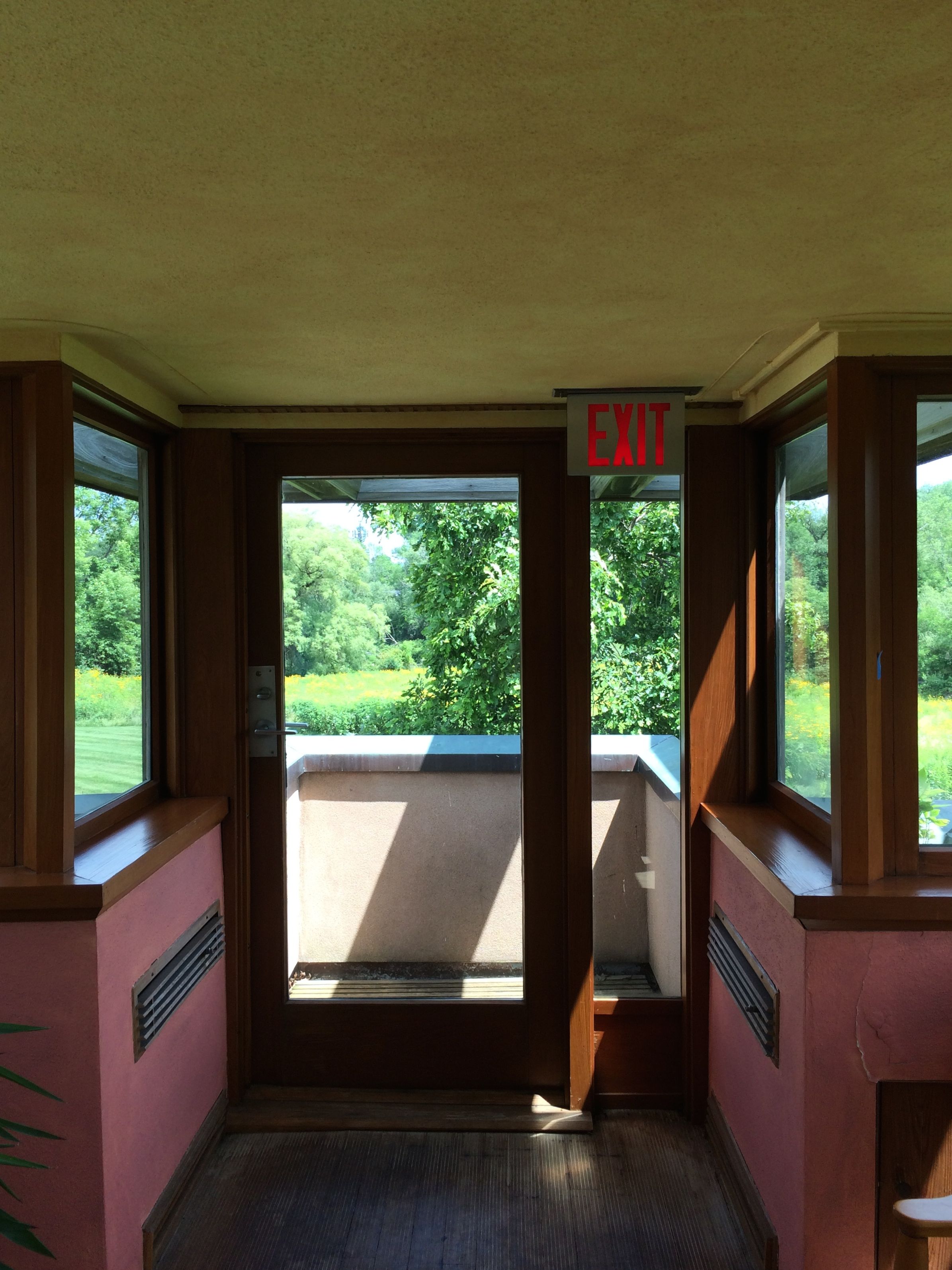
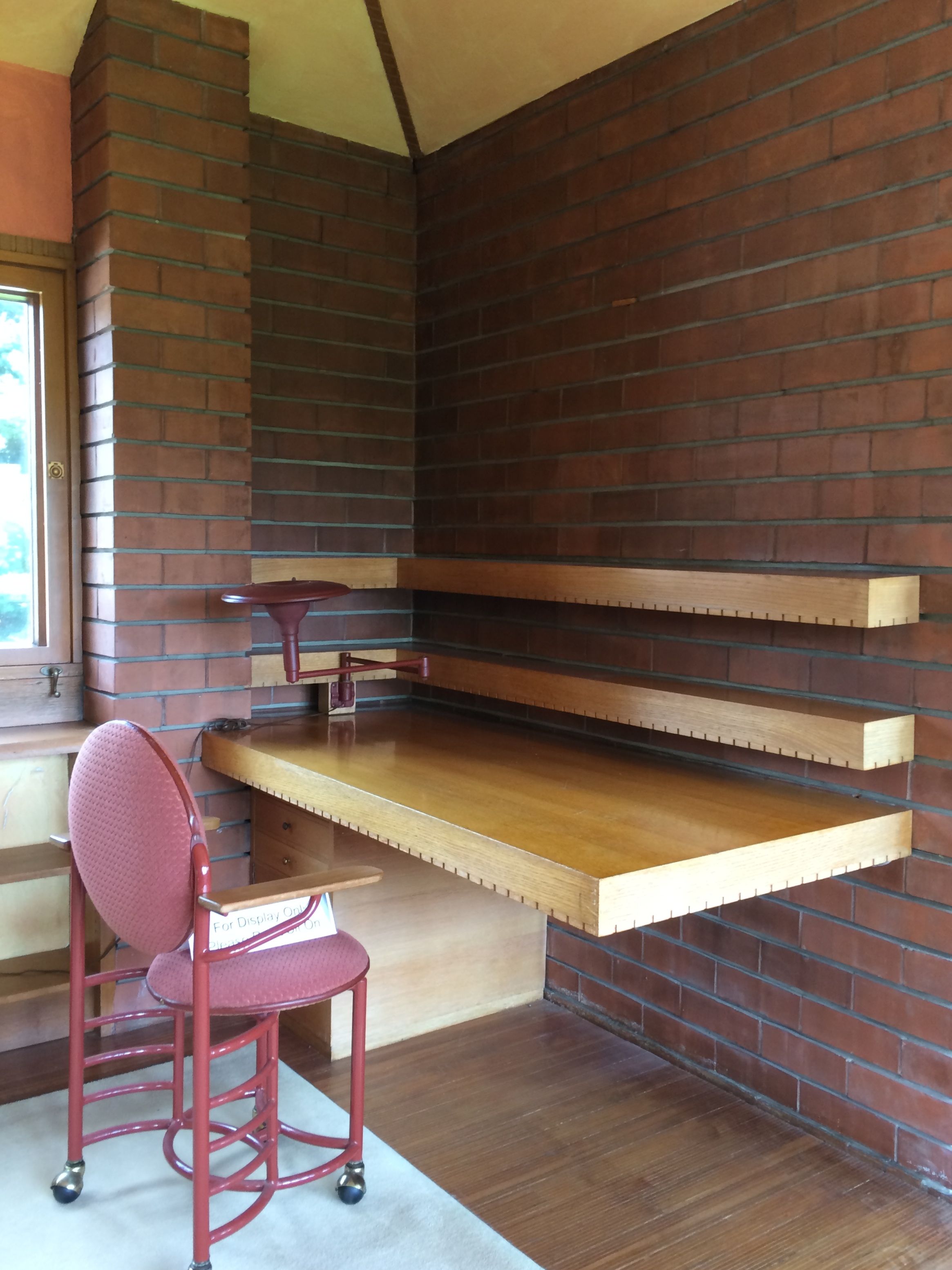
The parents each had their own bedrooms, but shared a sitting room. Of course, it had its own fireplace. Dina told me that Eleanor Roosevelt once took a nap on the couch. She heard that bit of information when she took a previous tour.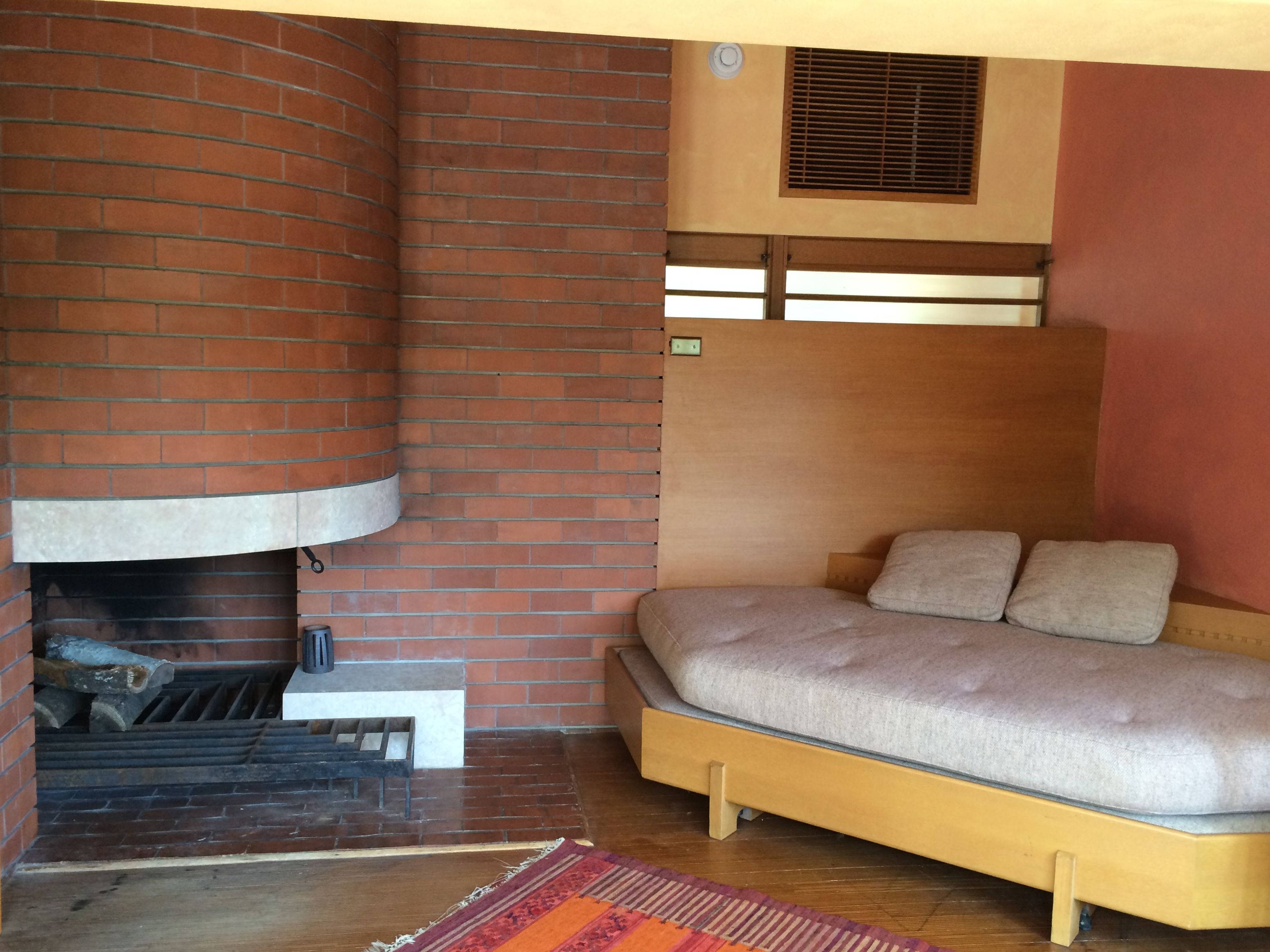
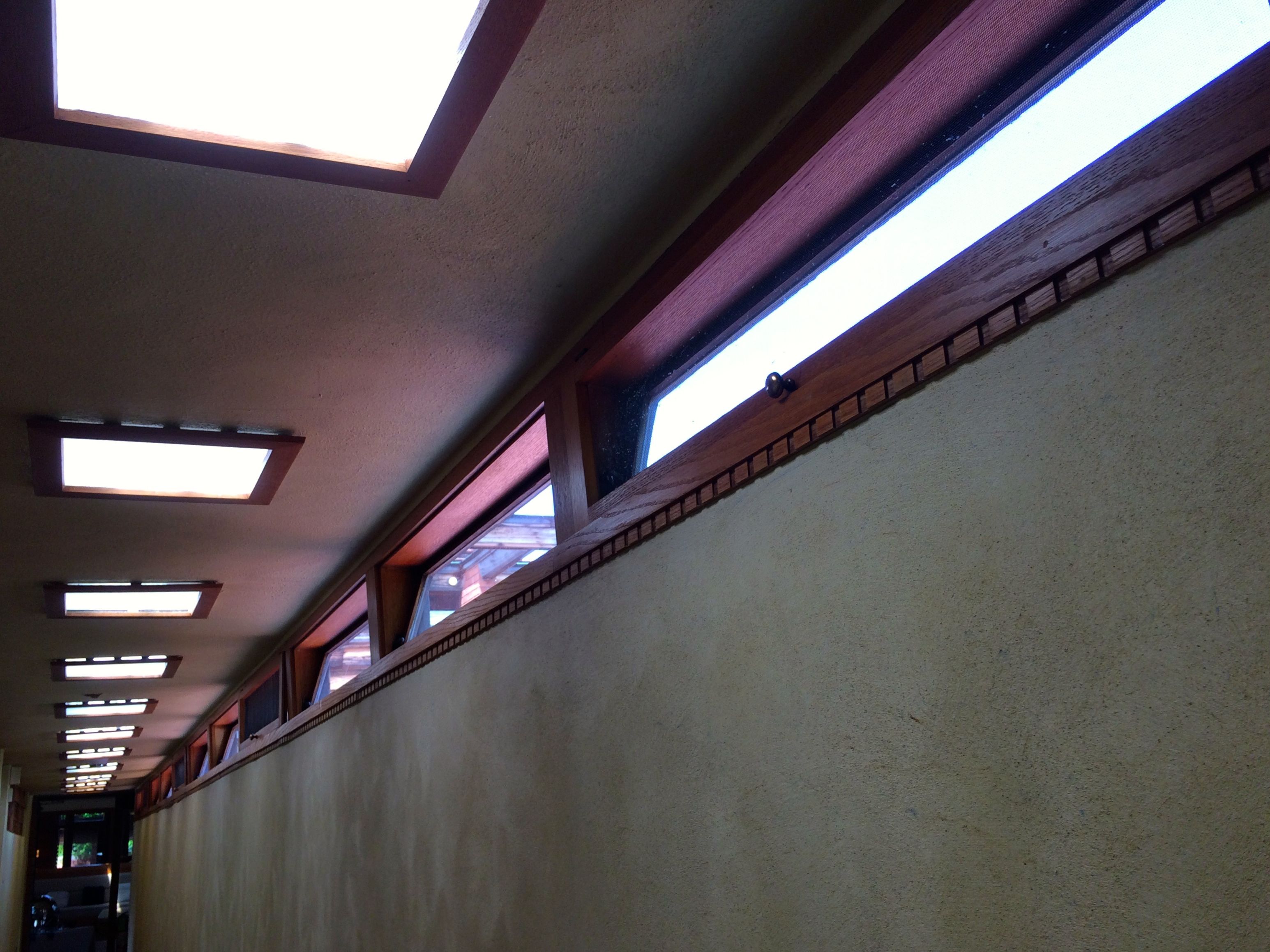
You can see how Wright allowed light to enter the private areas of the building. He didn’t use leaded glass windows that he used in houses he built in cities as there was no traffic out in the country. In the wings, though, he did manage the amount of clear glass that he used to preserve privacy but still illuminate the area.
We weren’t allowed in all the parts of the building, as it is used by the The Johnson Foundation. We could see that they were setting up for meetings and events later in the day.
The Johnson Foundation is an organization dedicated to helping to create change that leads to healthier environments and communities. They use Wingspread to hold their meetings and the offices of the Foundation are on the property as well.
Even though we couldn’t see all parts of the building, it was amazing to be able to take pictures inside.
We weren’t so fortunate with the Johnson Wax building, but it was a splendid building to see.
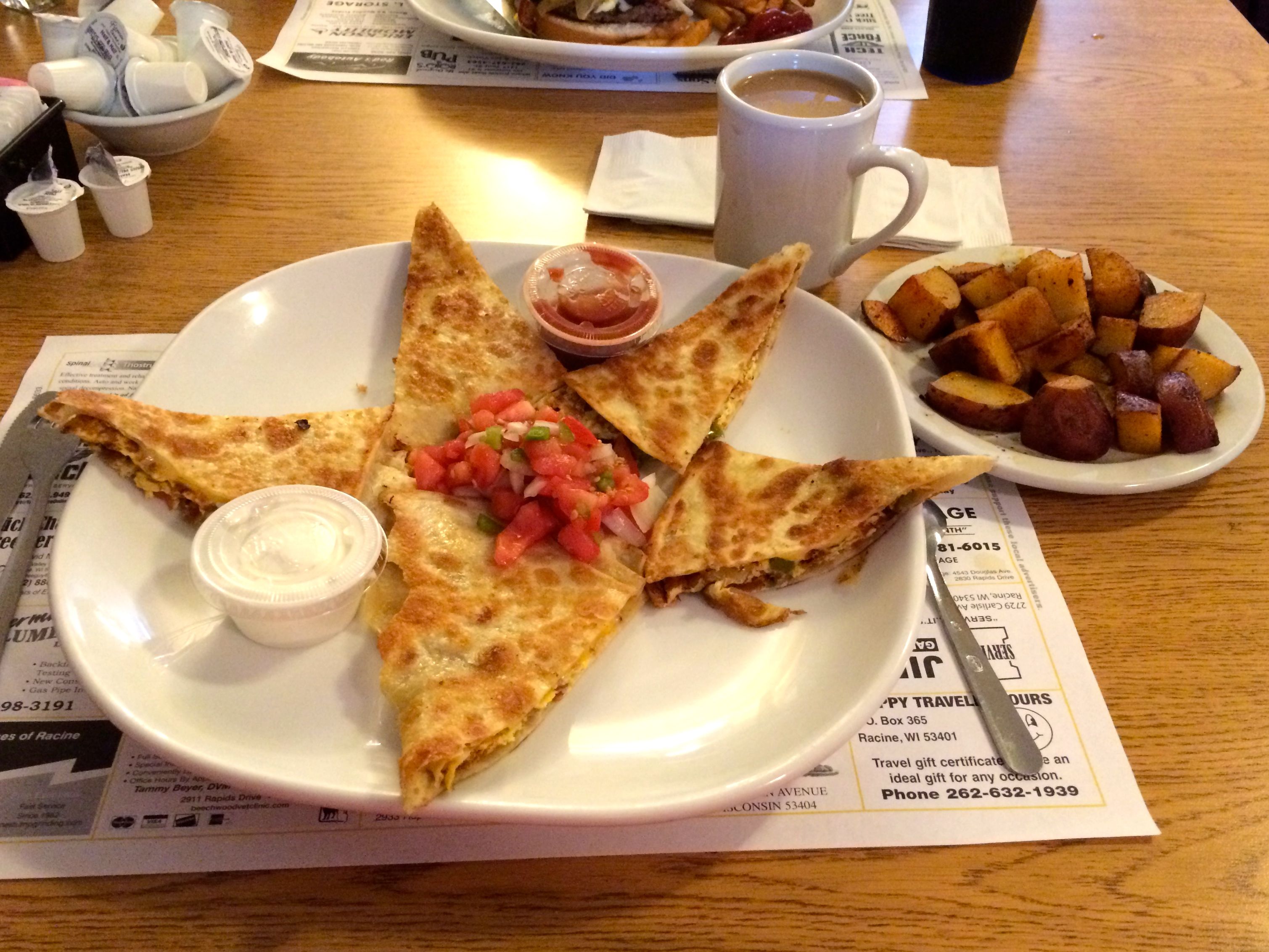
However, before we went to the Johnson Wax building, we stopped off for a bit of lunch at Honey B’s.
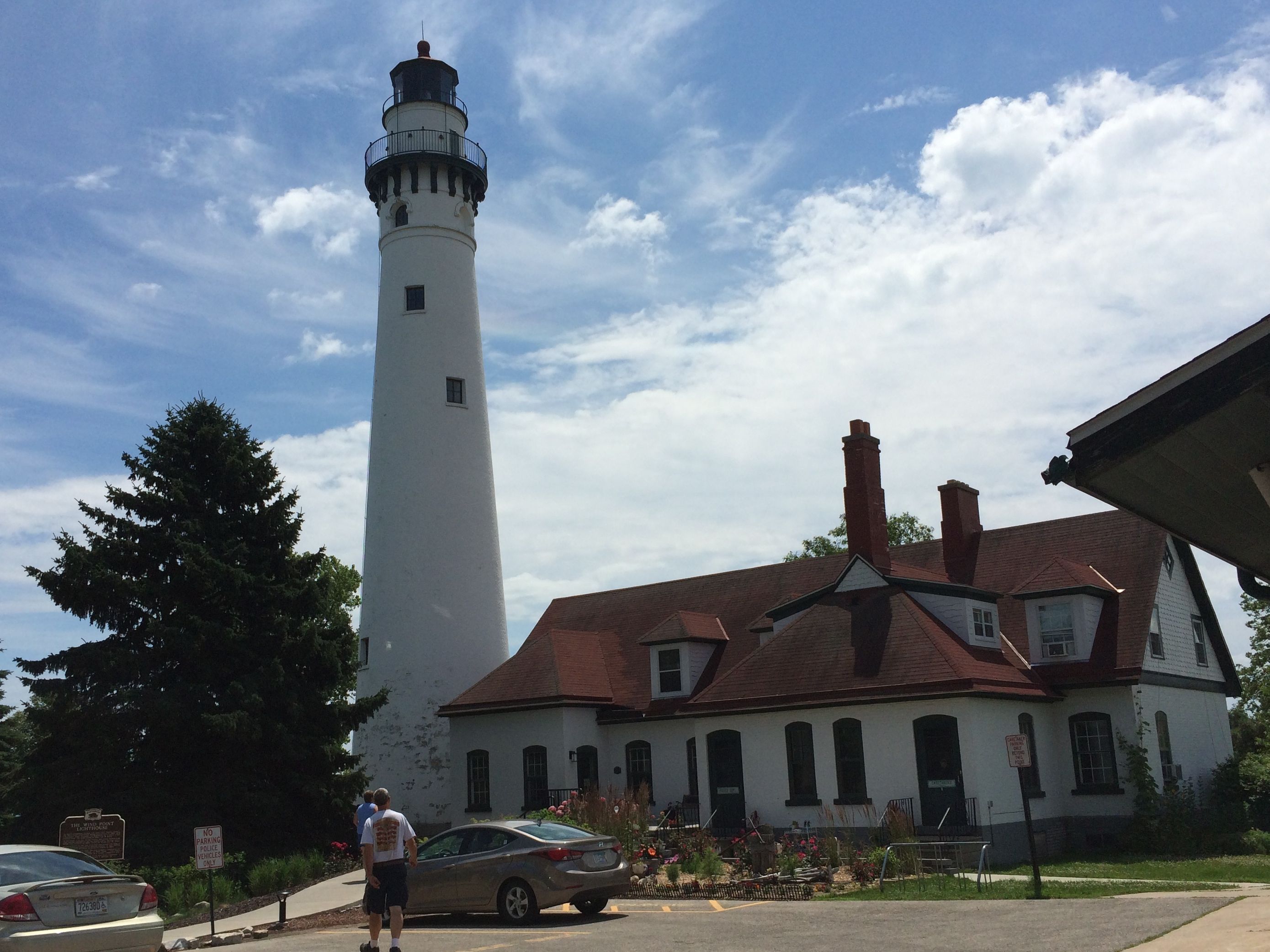
And then we zipped by the lighthouse on Wind Point.
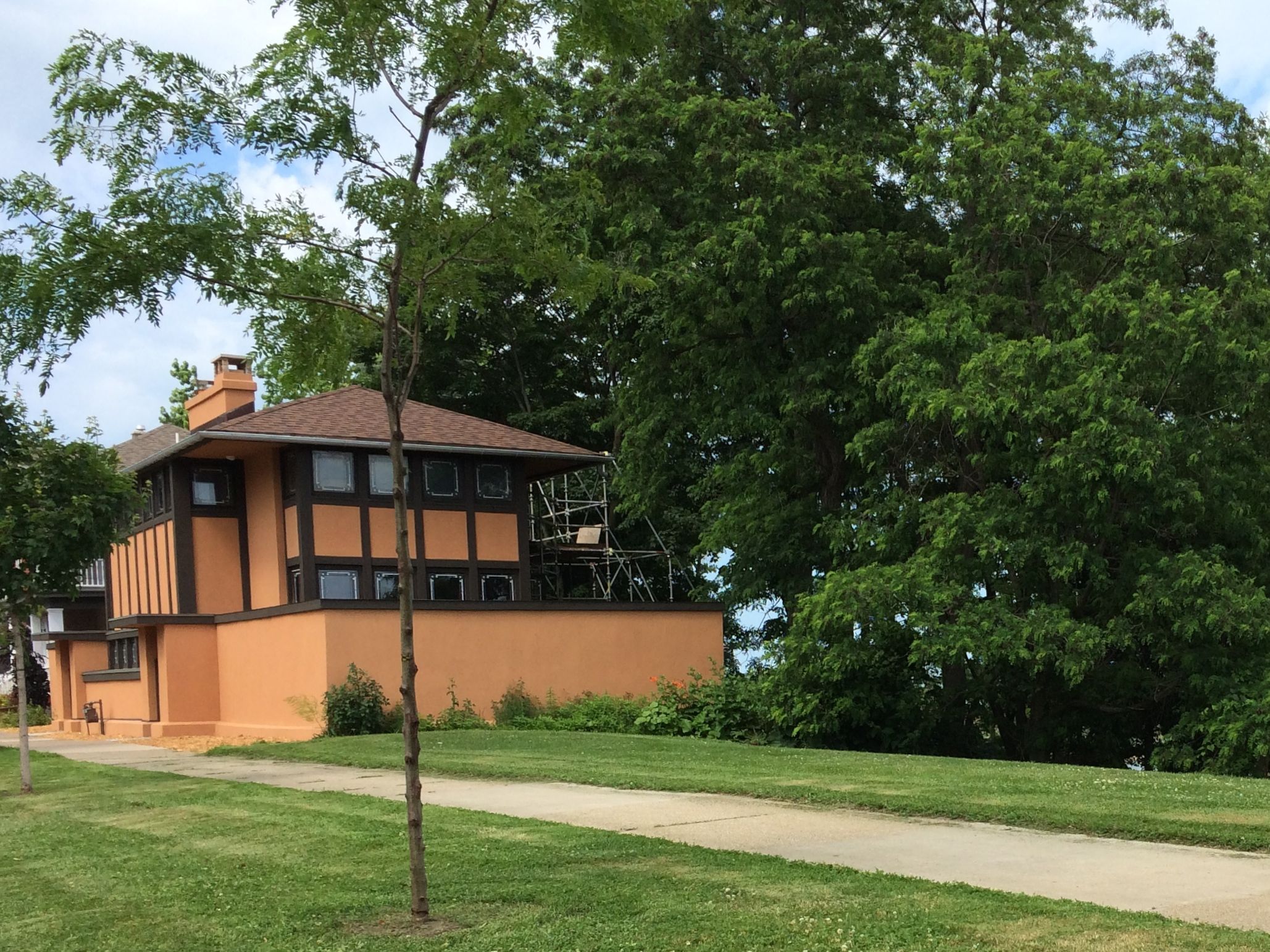
En route to the Johnson Wax compound, we just happened to pass another Wright building: a house on the shore of Lake Michigan.
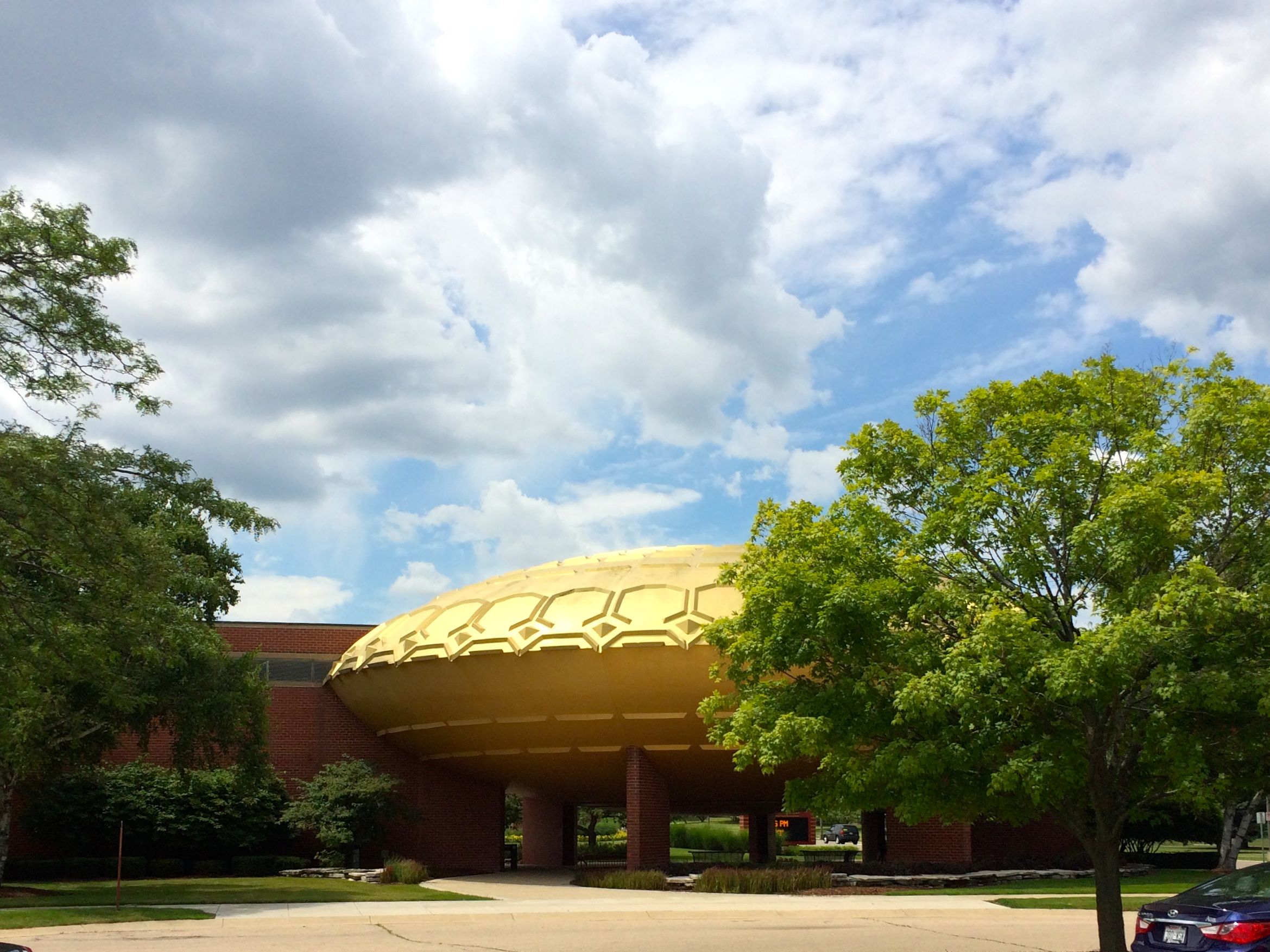
We met our tour guide at the Golden Rondelle, which was the Johnson Pavilion at the 1964 New York World’s Fair.
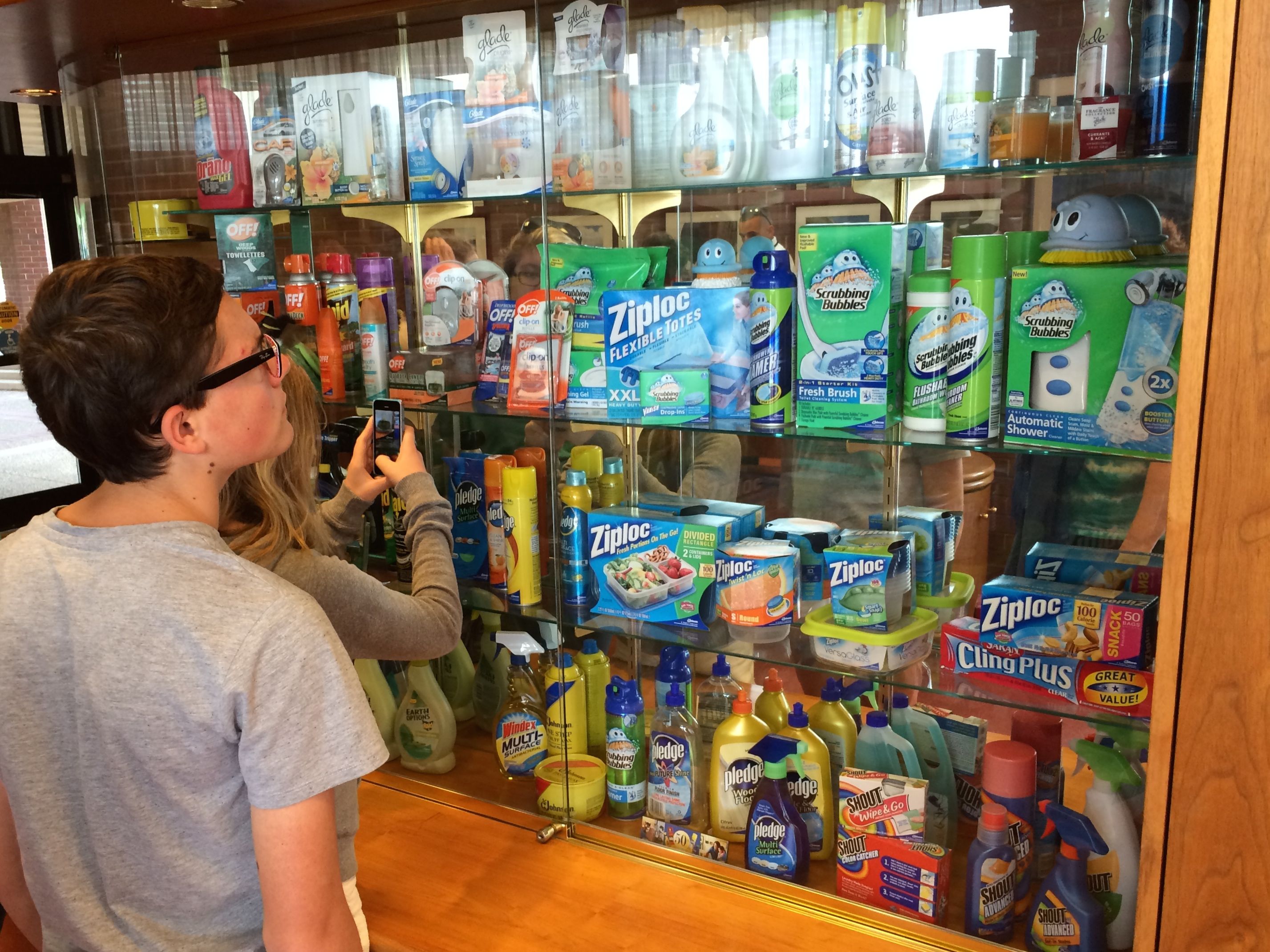
From there, we walked over to the Administration Building, which Wright designed beginning in 1936. It opened in 1939.

The Administration Building is the lower building. The taller building is the Research Tower. It was opened in 1950. The building to the left in the picture is Fortaleza Hall, which opened in 2010.
A dendriform column is one that has the form of a tree. The Administration Building is supported by them, which give a very light and airy feeling to the interior. Unfortunately, I have no interior shots to share. Interior shots are not allowed here.
However, the lovely parking area gives a bit of a feel of the airiness of the interior.
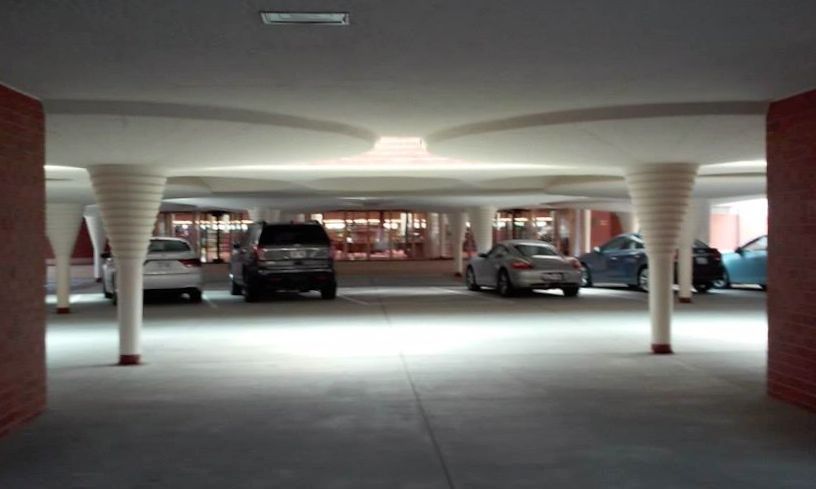
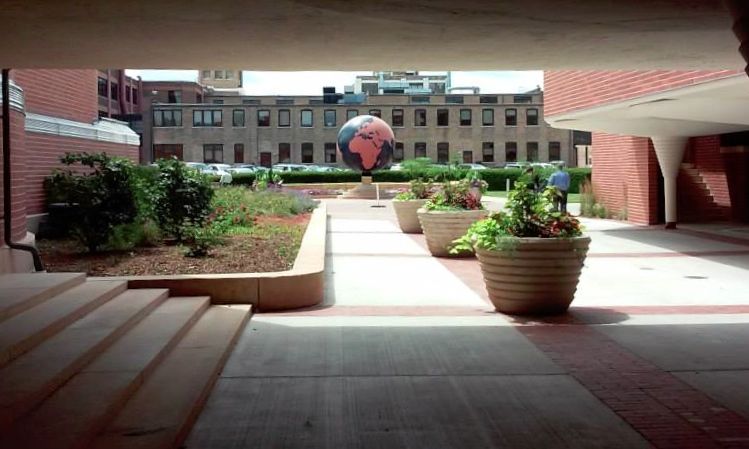
You can get a sense of the compression and release that Wright is known for. It is absolutely glorious passing from the parking area into the Administration Building.

Wright emphasize the horizontal aspects of his design by raking the horizontal mortar and leaving the vertical mortar flush with the bricks.
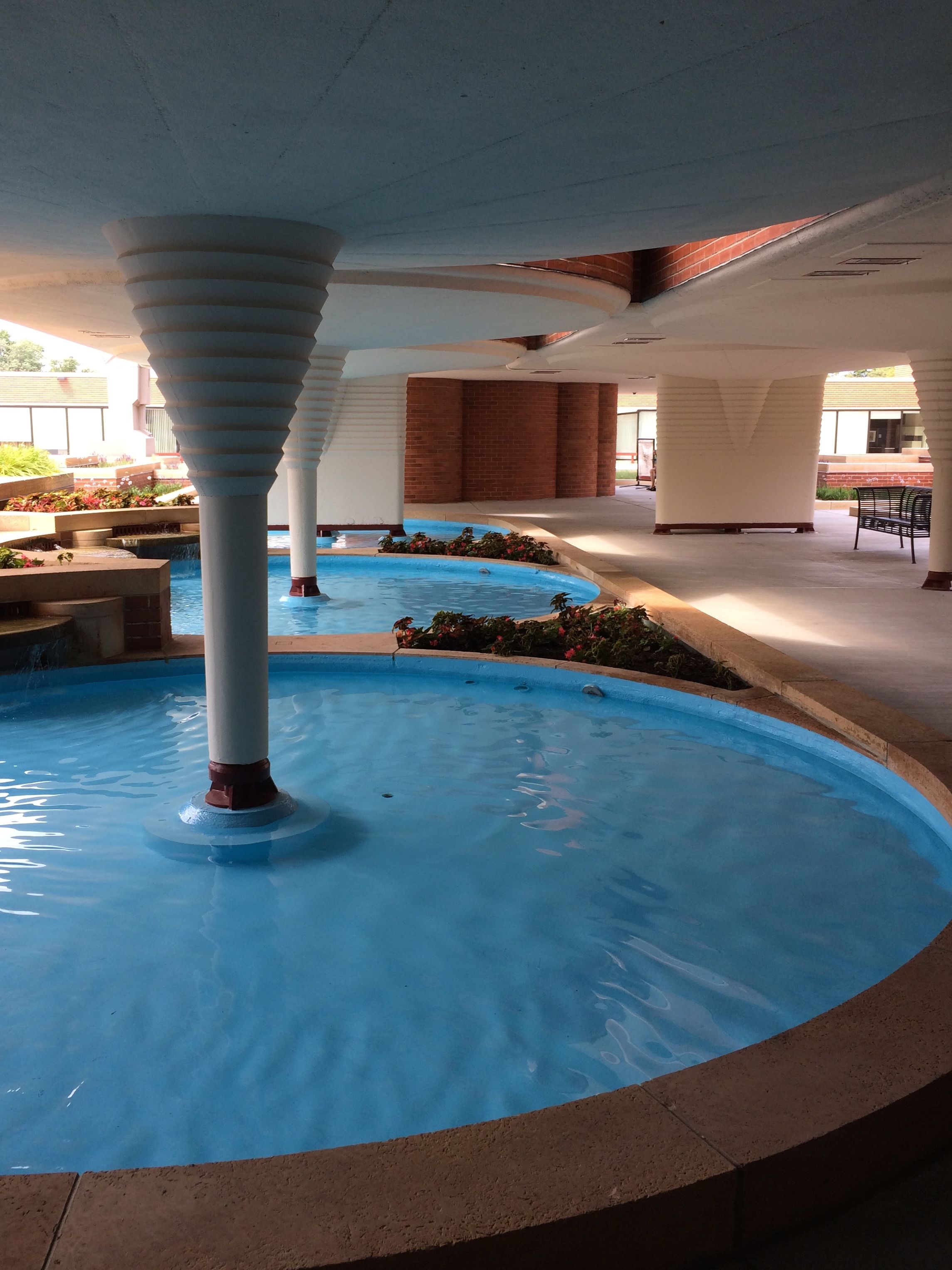
At the end of the covered walkway is the Research Tower. It is a fantastic structure that has round mezzanine-like floors interspersed between the square floors. You could look from the round floor down to the square floor below.
The Research Tower is no longer in use. While it was a marvelous structure, there was only one stairway. Not only was it a circular stairway, but it was only 29 inches wide. I can’t speak to the practicality of the work spaces, as I have no science lab experience. It may have been a good place to work. However, as accustomed as we have become to accessible spaces, it seemed quaint.
I was particularly taken with the restrooms that were snugged into small spaces next to the circular stair case. They even had curved doors that slid into place when the facilities were in use.
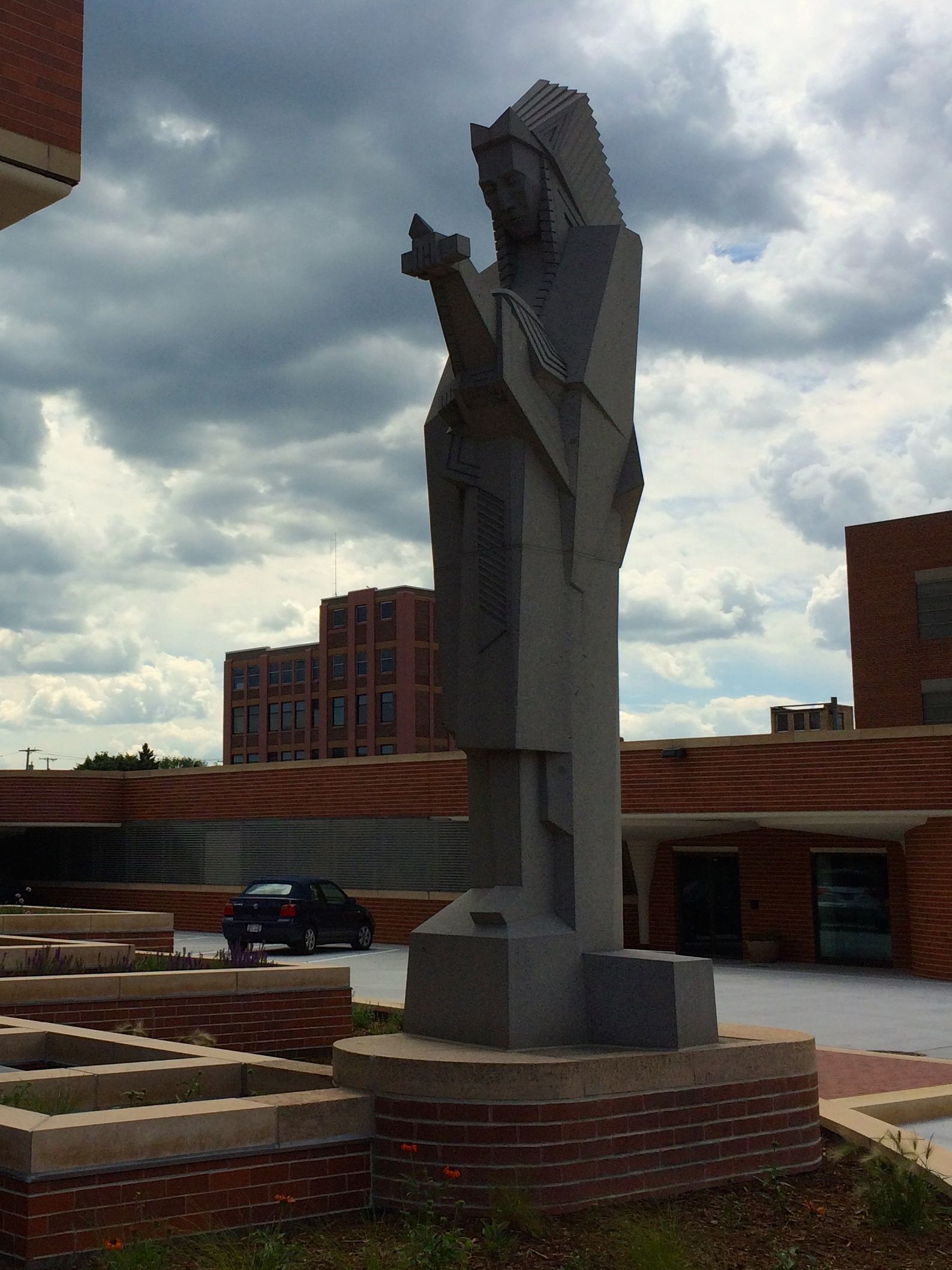
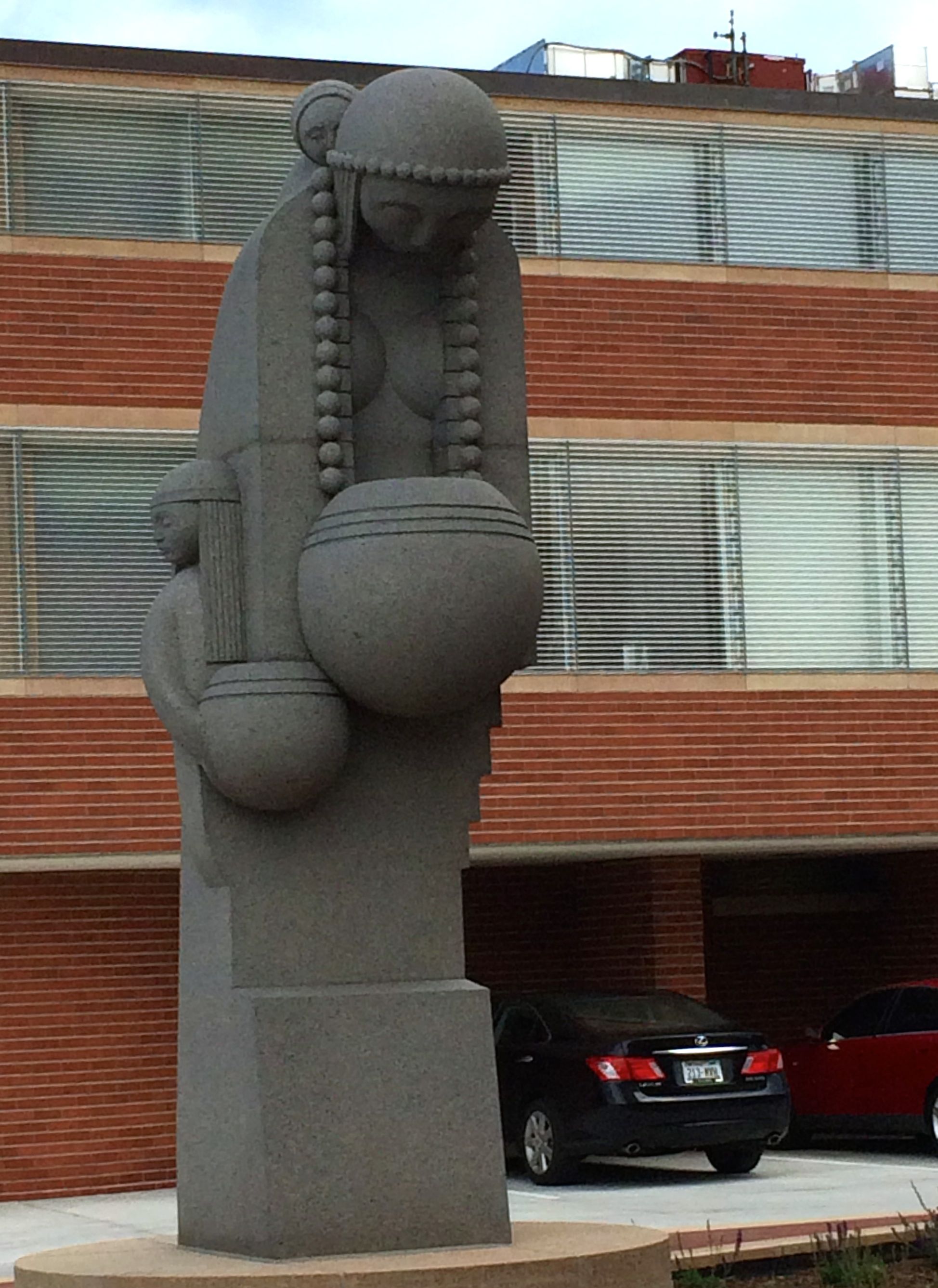
These sculptures, which paid homage to the Winnebago people of the area, were designed by Wright, but not completed until the late 1970’s. They are carved from granite quarried in Cold Spring, Minnesota. Nakomis is nearly 18 feet tall and weighs 40 tons. Nakoma is 12 feet tall and weighs 12 tons.
After our visit to the Research Tower, we went over to Fortaleza Hall. We got to look at a display of Wright’s work taken from the Wasmuth Portfolio, a book of lithographs, which was published in Germany in 1911.
And, of course, exit was through the gift shop.

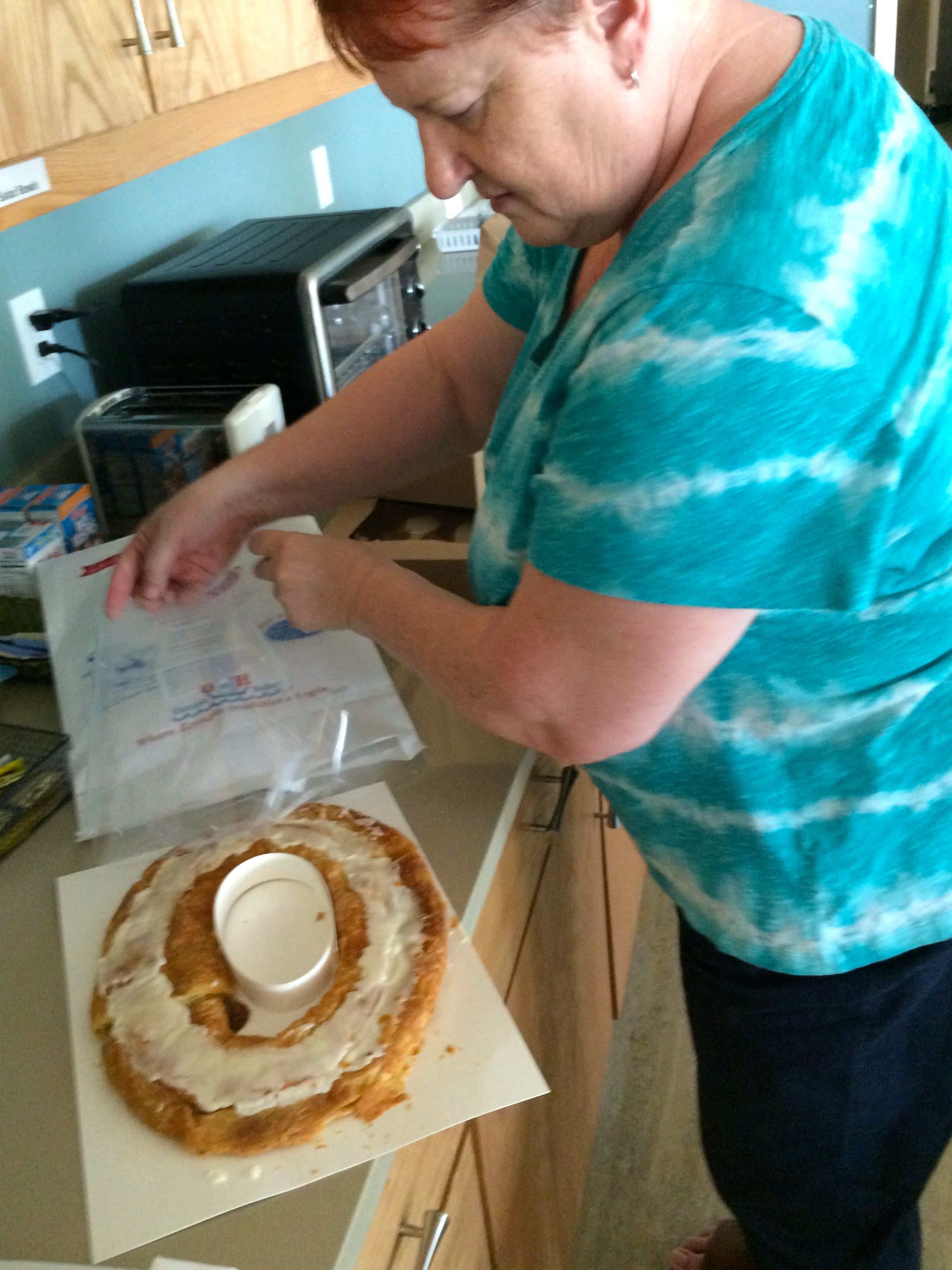
Before Dina and I parted ways, she had to treat me to some wonderful Danish pastry. I am always up for a bit of culture, and I never knew that the Danes had such a strong presence in Wisconsin.

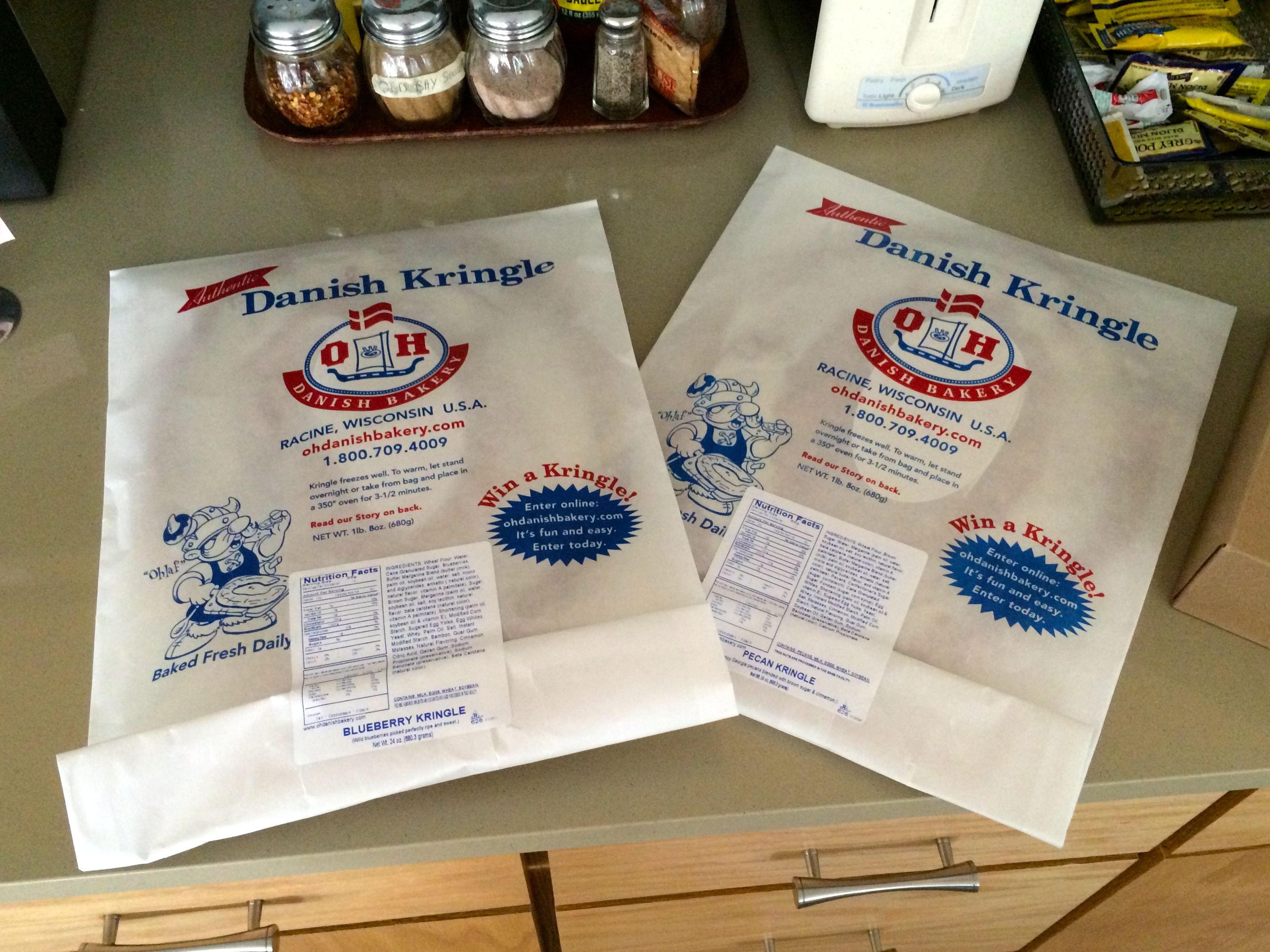
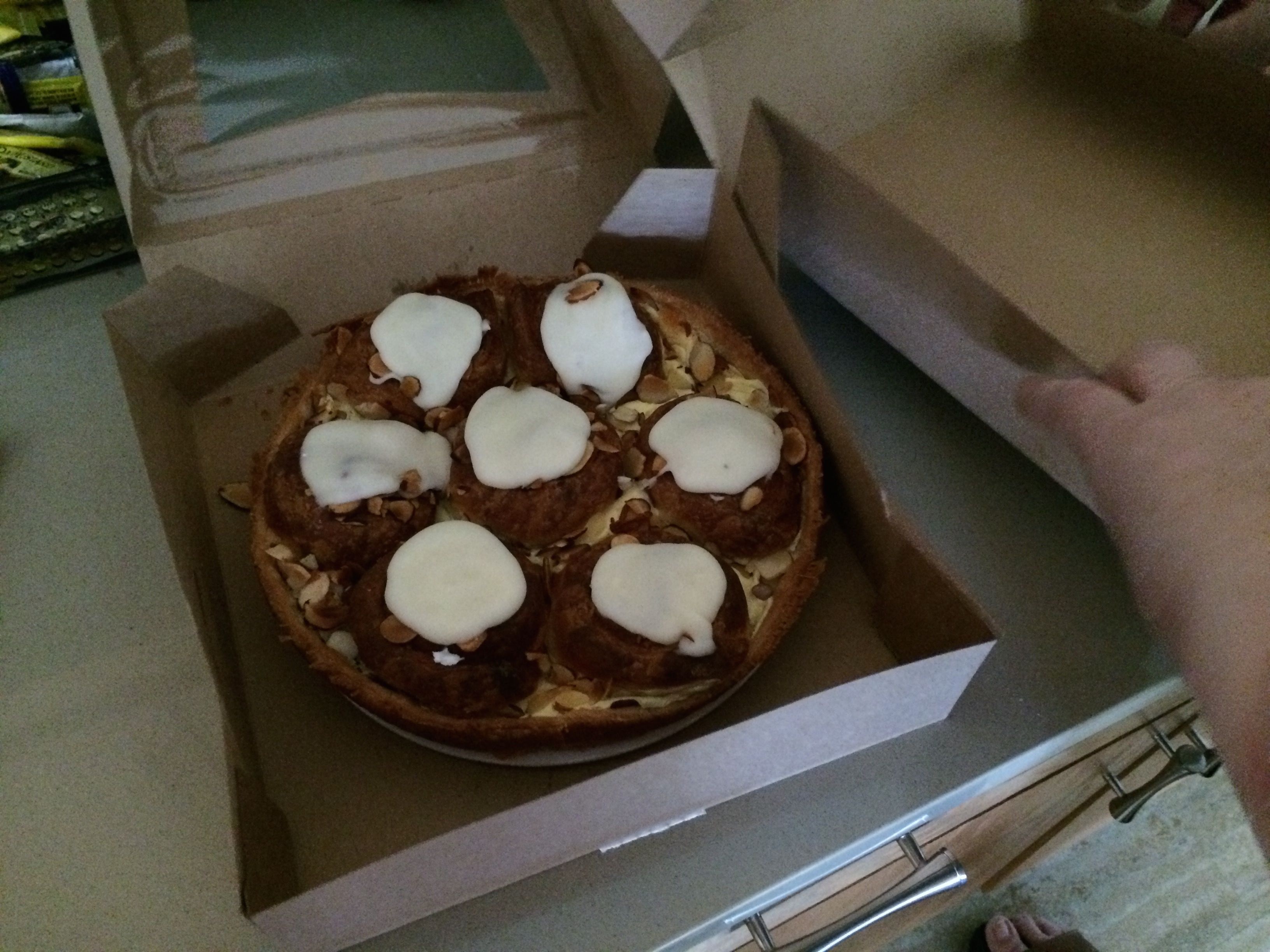
We stopped off at her place of employment to pick up Bart, and she made up a lovely box of treats for me to take on my way.
Next stop, MILWAUKEE!