Any of you who have been following my budget blog posts already know that I don’t send my money lightly when it comes to entertainment and tourism. However, when it comes to Frank Lloyd Wright tours, I don’t skimp. I opted for the $70 Behind the Scenes tour – the most expensive tour they have listed.
I’m not bragging, just letting you know.
Not only was this tour expensive, it was scheduled to start at 9:15 AM and they wanted us to be there 15 – 30 minutes ahead of time. I am not a morning person anymore. Thirty years of getting up to teach has cured me.
Luckily, WestWorld was only a mile or two away from Taliesin West, so it wasn’t too painful to get there on time. I may have been the last member of my tour to check in, but I made it!
Our tour guide was a dynamo! She may have walked with a cane, but the rest of us had to focus to keep up with her.
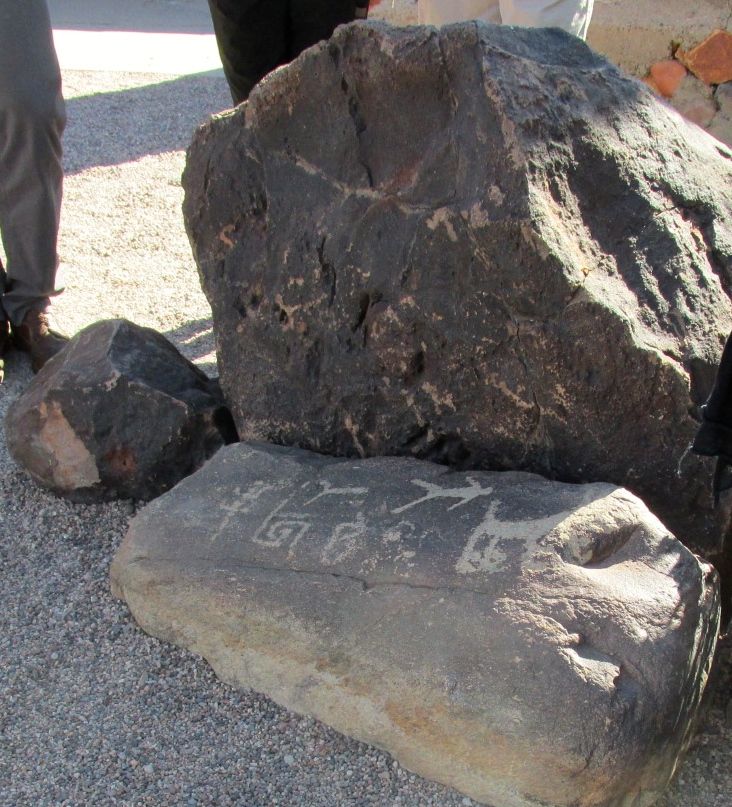
Our first stop was this grouping of petroglyphs that were found on the property. She pointed out one of them that Wright adapted for the Taliesin logo.

It’s pretty easy to pick out the one that inspired Wright’s design. The next stop was the office.
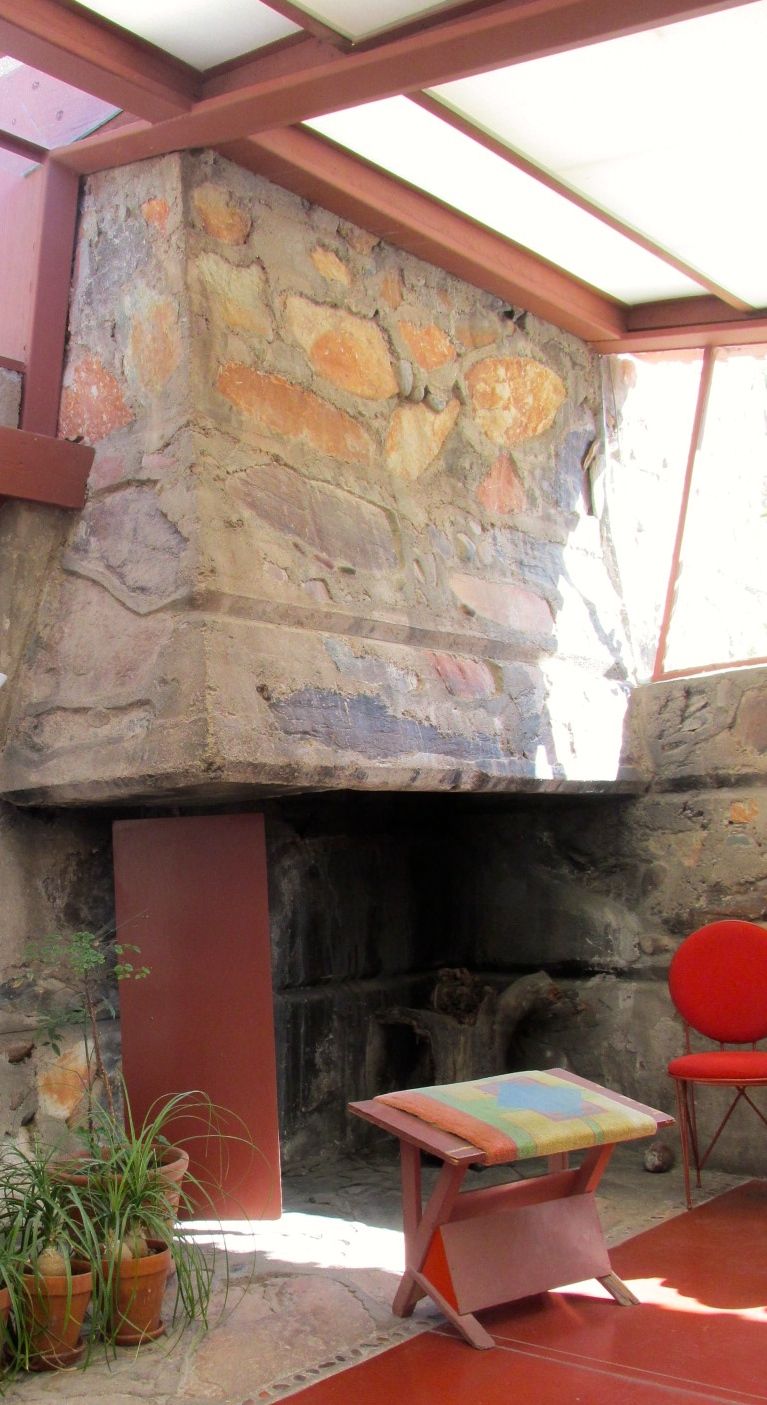
Of course, Wright would design a fireplace into his office. I imagine that it was for warmth as well as for its design qualities. While the desert is warm, there are cool mornings and nights. Also Wright was 70 when he began building Taliesin West in 1937. A little warmth during the cold times would be especially appreciated.
While we were in the office, our guide pointed out Wright’s proposal for a new state capital. He did it pro bono, but it wasn’t accepted.
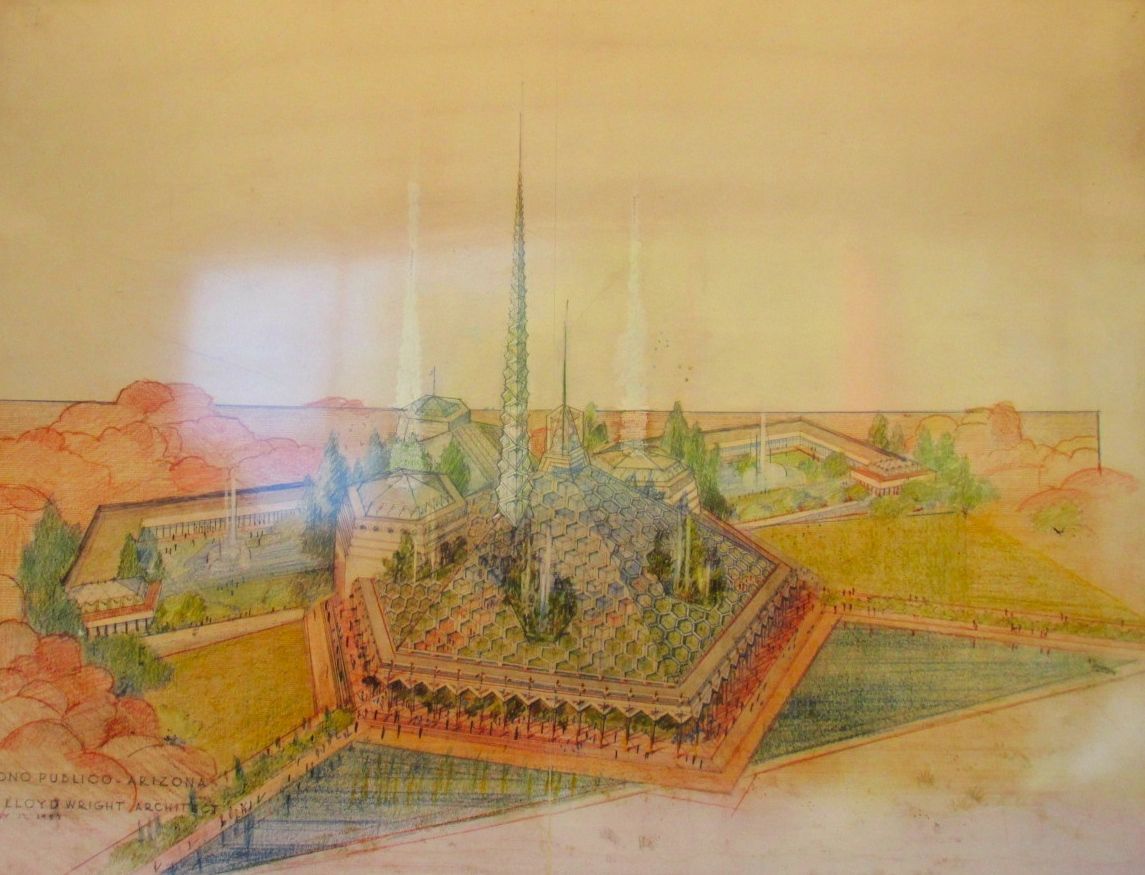
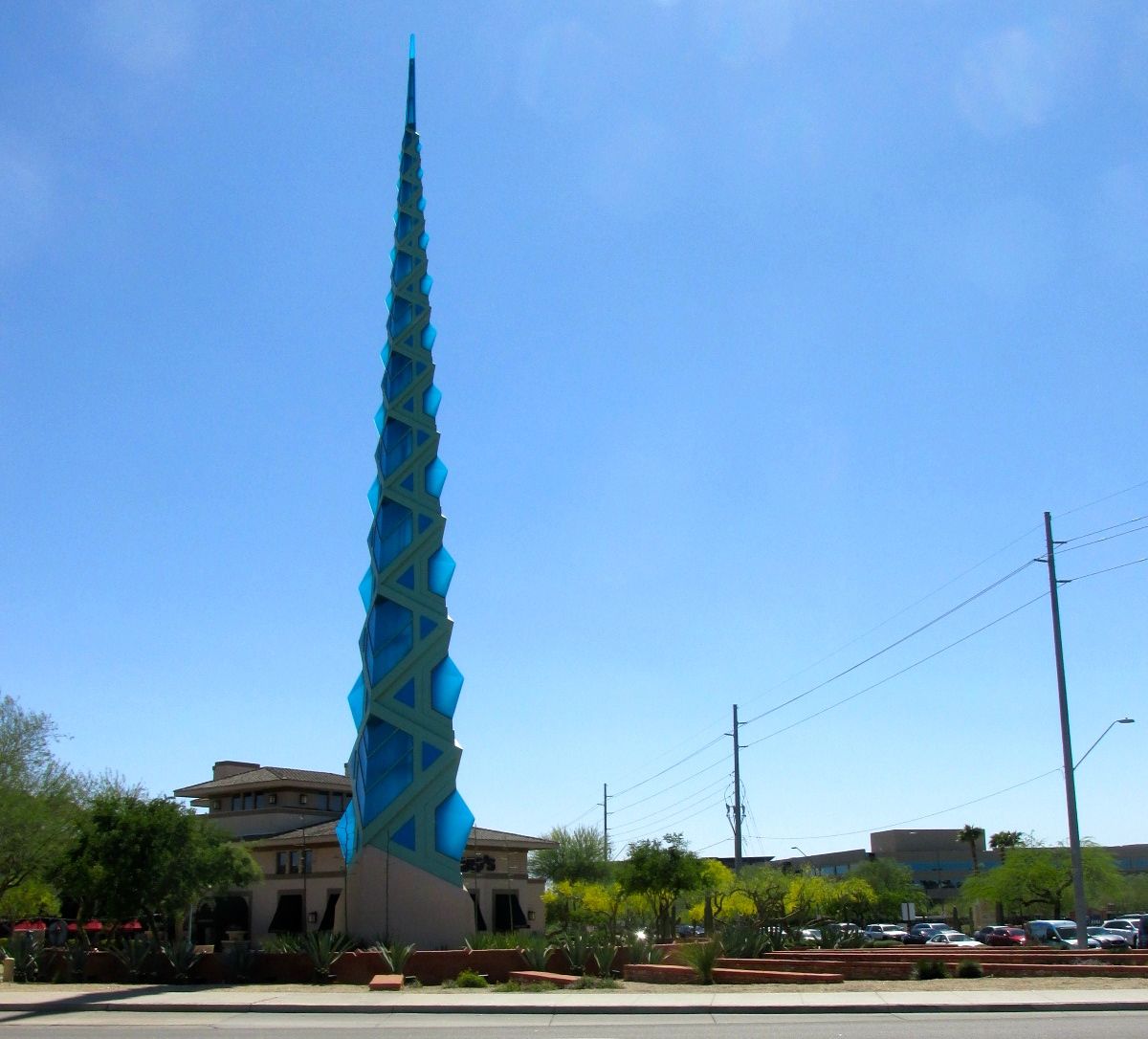
Years after his passing, however, the spire was built on a corner. I spotted it when I was out an about, and I thought it looked a little Wright-esque. I was pleased to find that I was right.
The door to the office was unique.
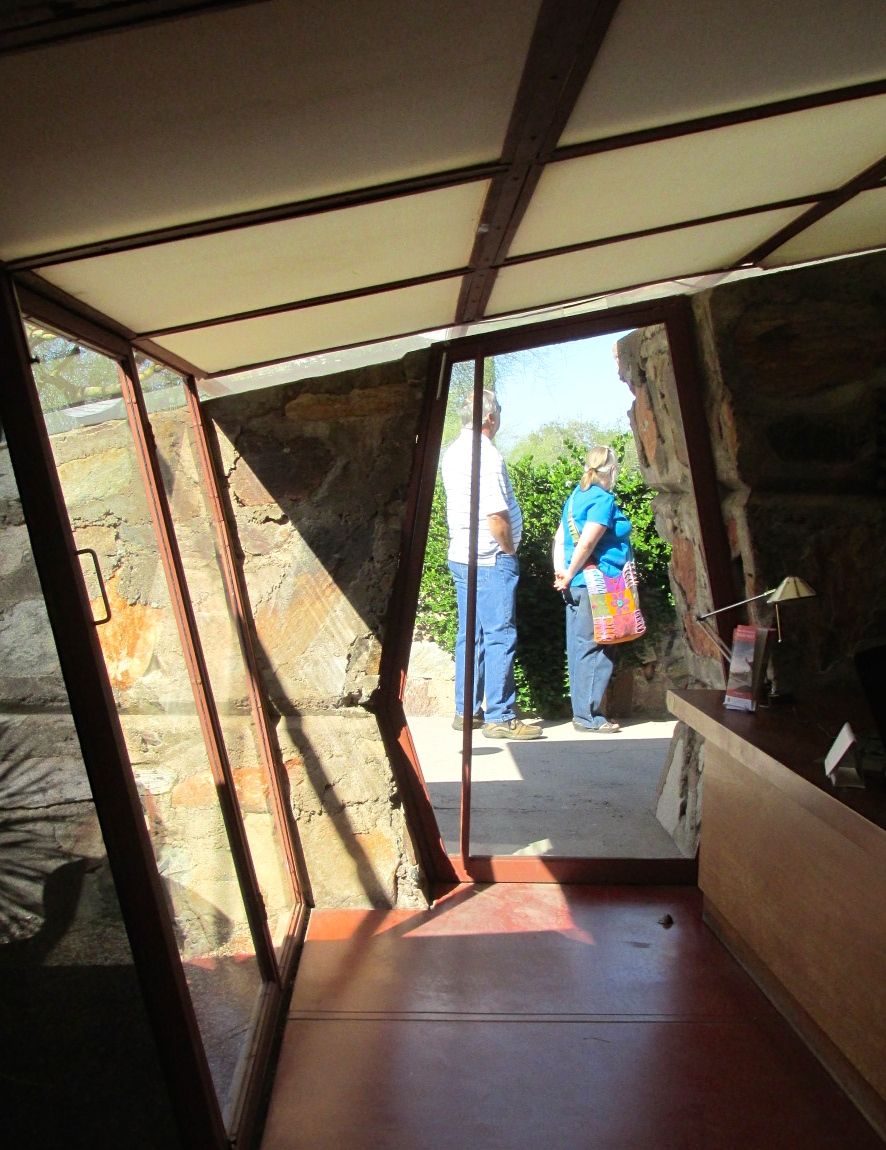
And you will notice the red floors and details. Cherokee red – a color that Wright used in many of his buildings. In fact, we were told that he always had a new car and that he went right out and had it painted Cherokee red. That was a bit of Wright trivia that I had never heard before.
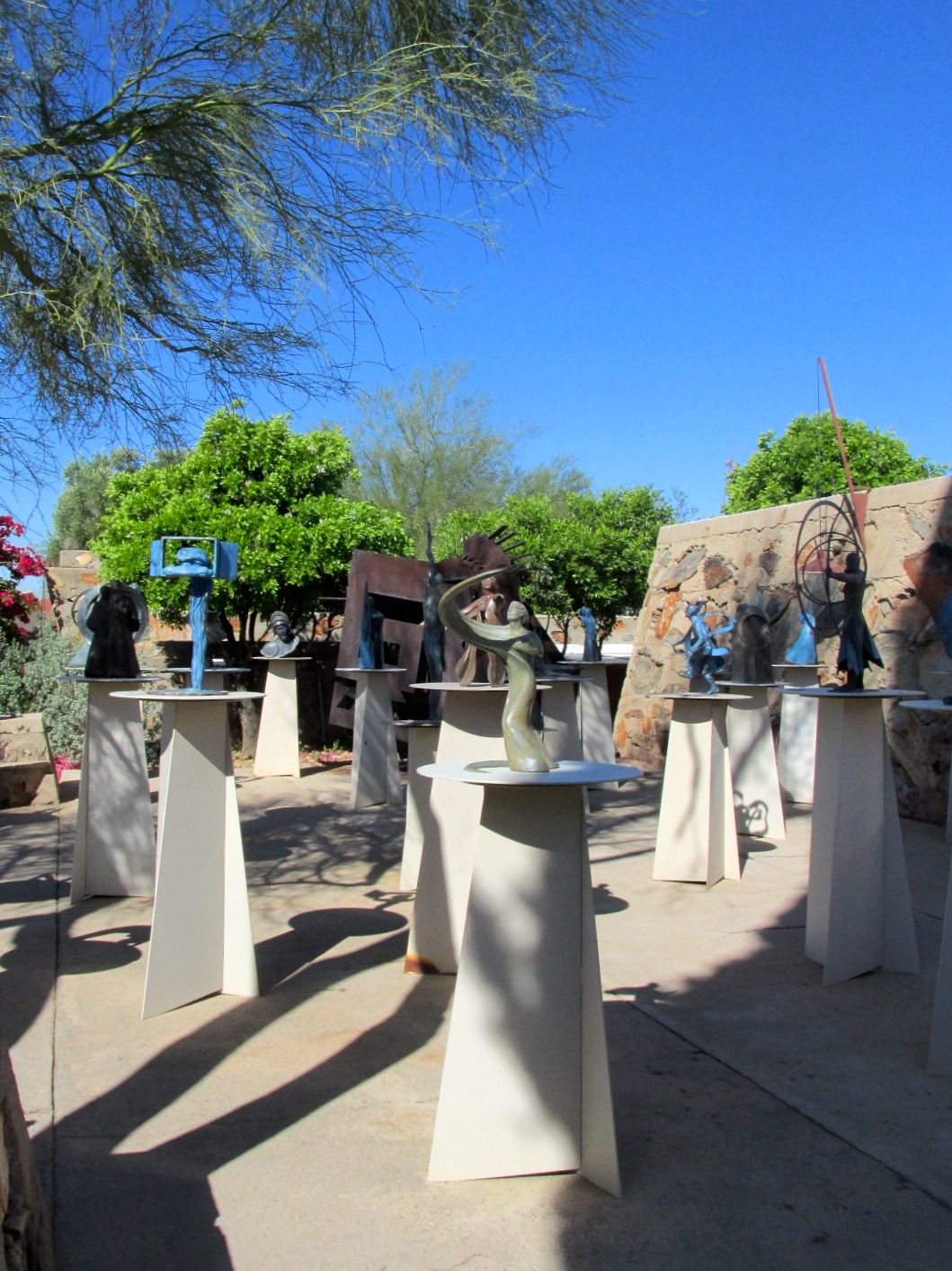
We paused to look at these sculptures in a courtyard outside the music hall. They were all made by Heloise Crista. She had started out as one of Wright’s Fellows, but decided to follow her sculpture interests. If I understand correctly, she still lives here and is continuing to work.
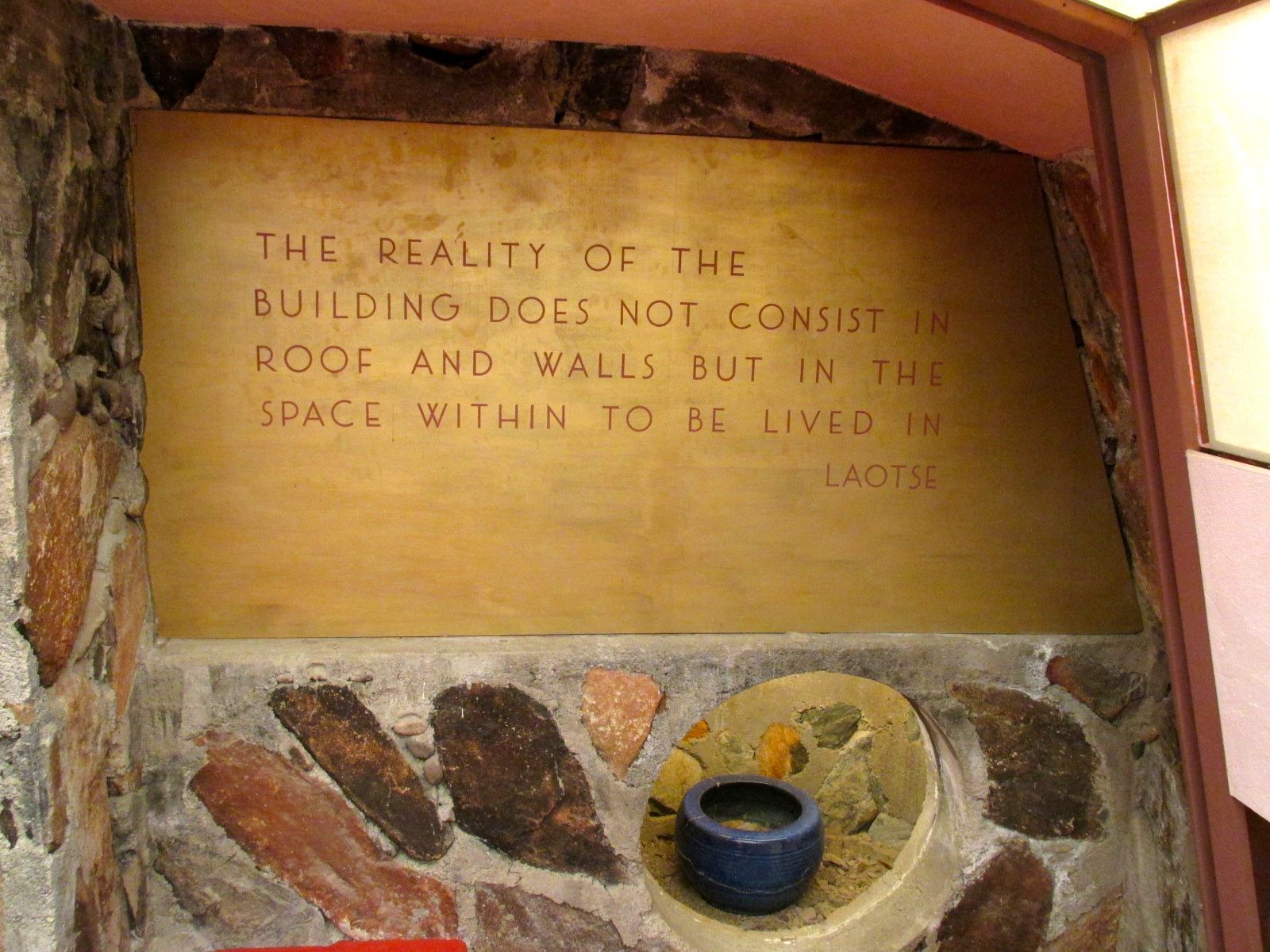
This quote greeted us as we entered the music hall.
At the top of the music hall, there were some models.
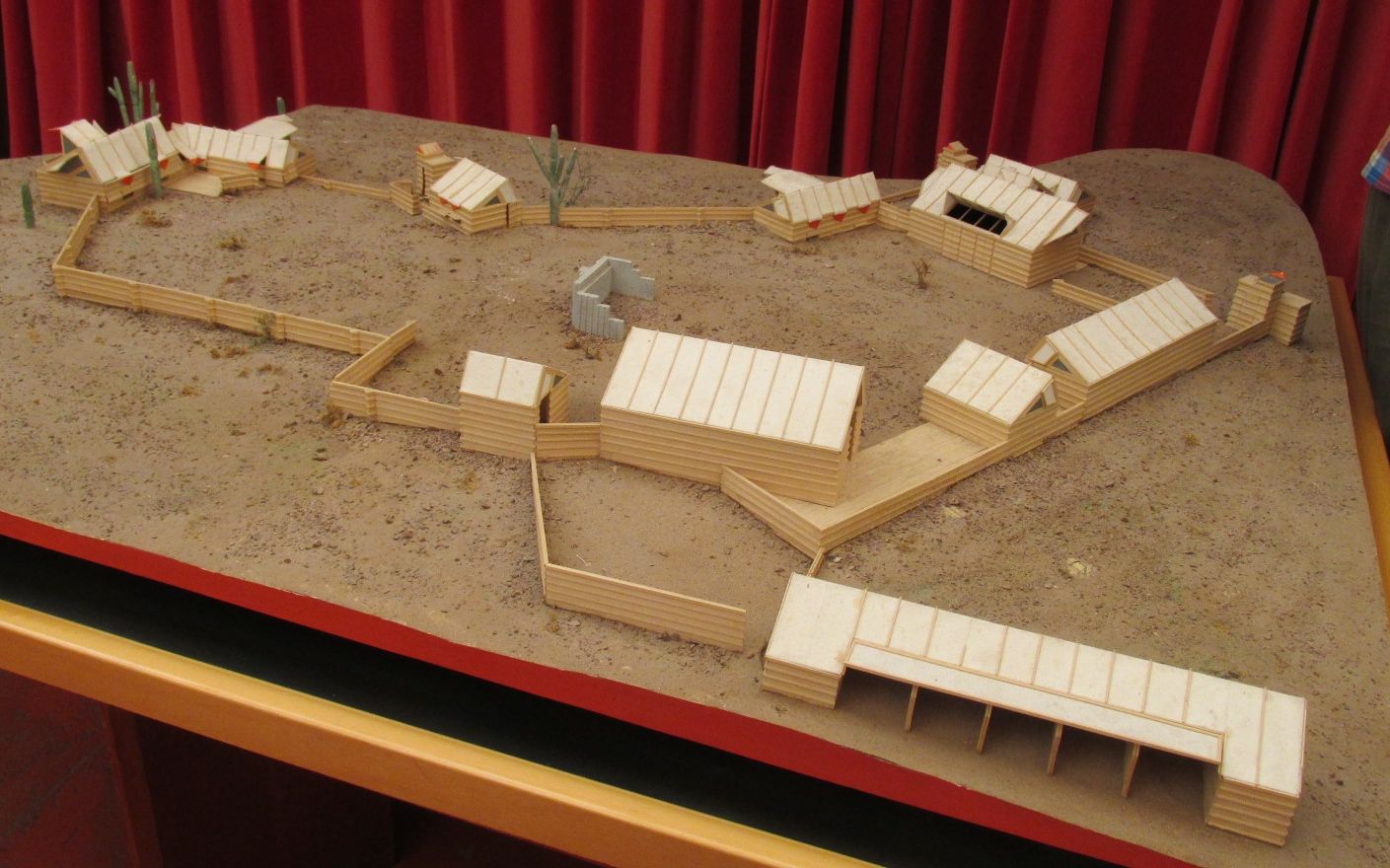
This is a model of Ocotillo, Wright’s first attempt at an Arizona residence. He was going to work on a hotel in near Chandler. Unfortunately, the soil wasn’t suitable for building. They abandoned the site and the building materials were scavenged by the Apaches living in the area.
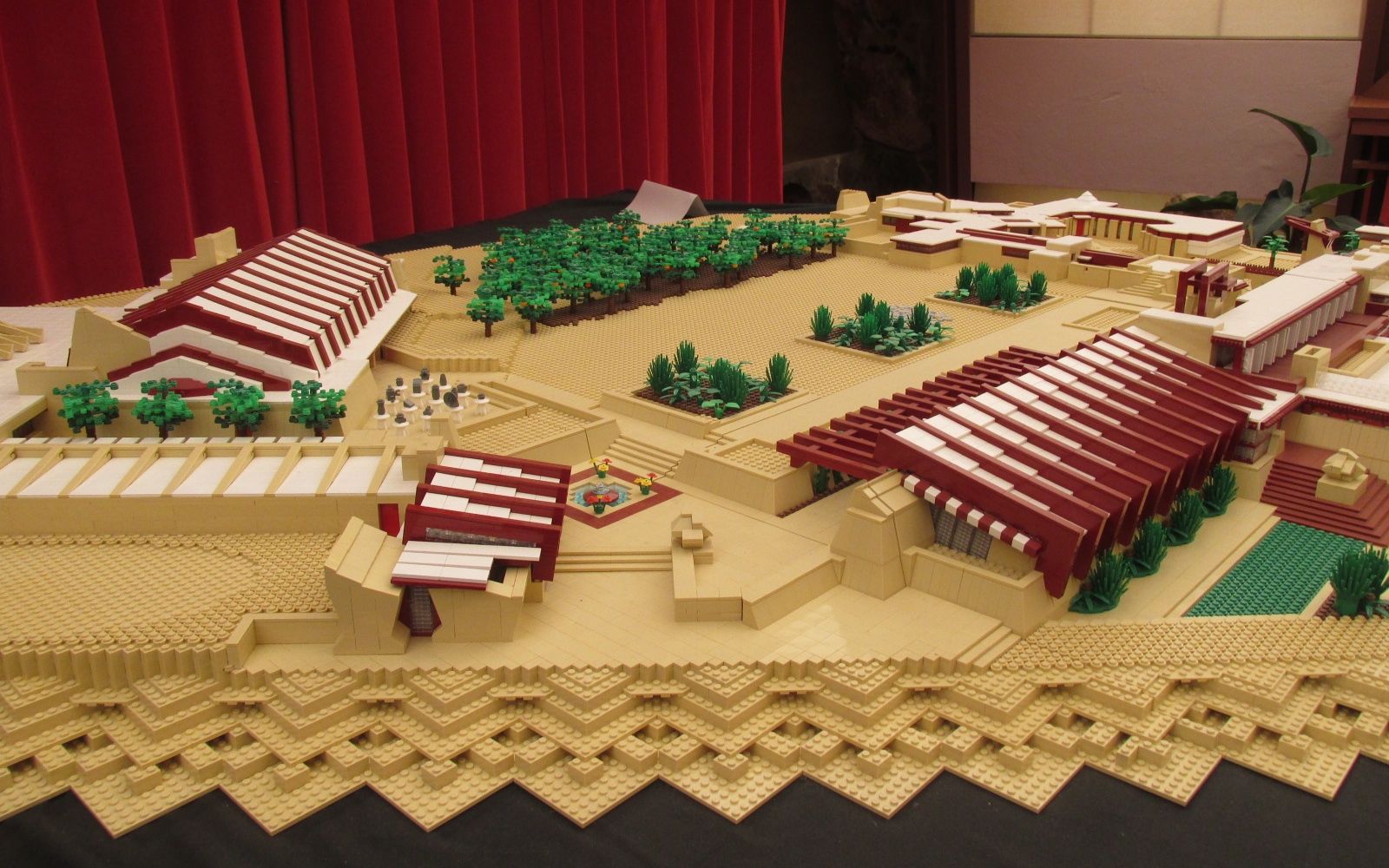
This model of Taliesin West was built out of Legos. When Wright was alive, he had a completely natural desert landscape. According to the guide, he told his wife, Olgivanna Lloyd Wright, who was 30 years his junior, that she could change things after he was gone. The model reflects the orange grove she put in as well as grass and other plantings.
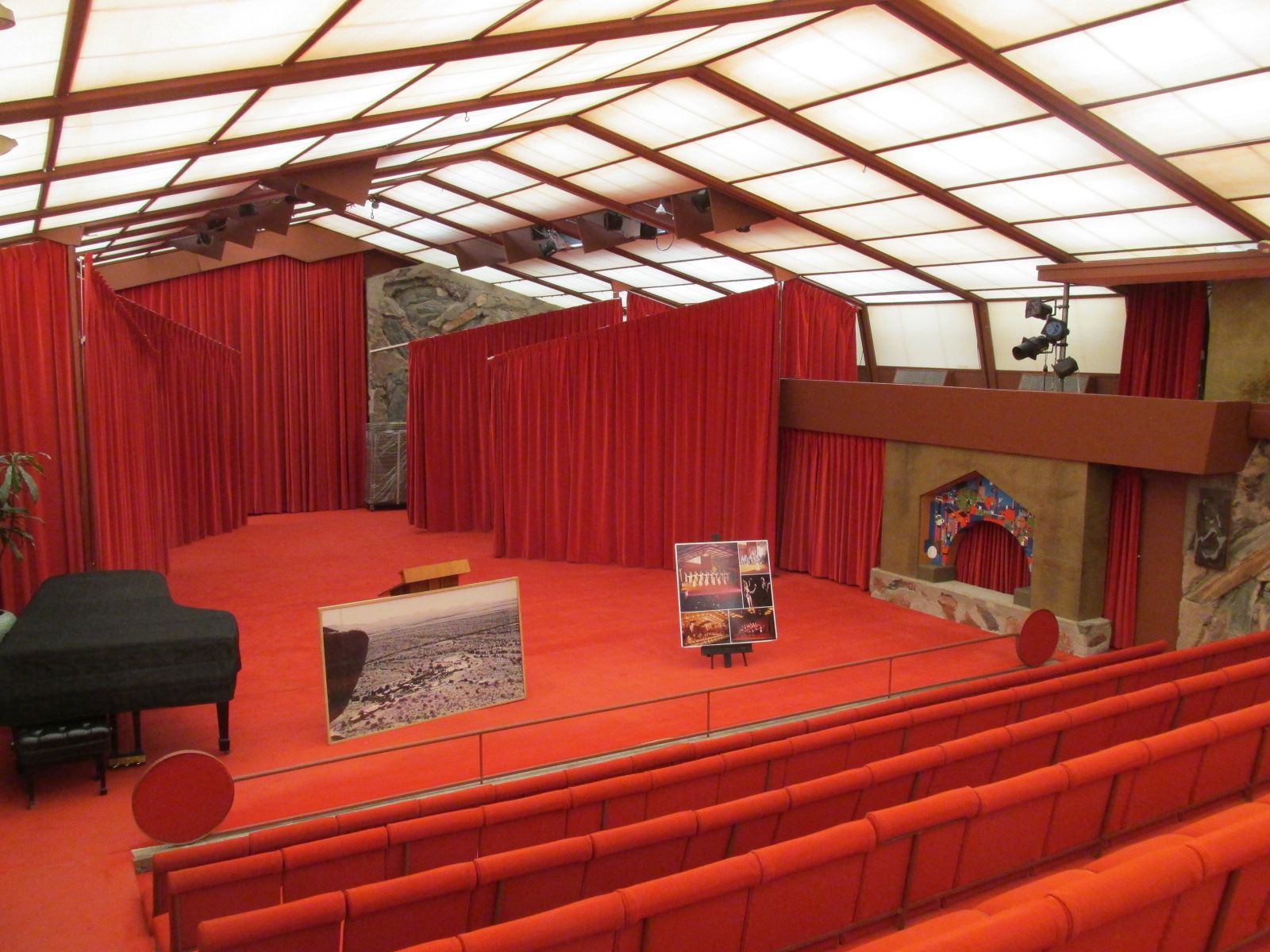
The grand piano is one of Wright’s pianos. He was a music enthusiast and often accepted fellows based on their musical ability.
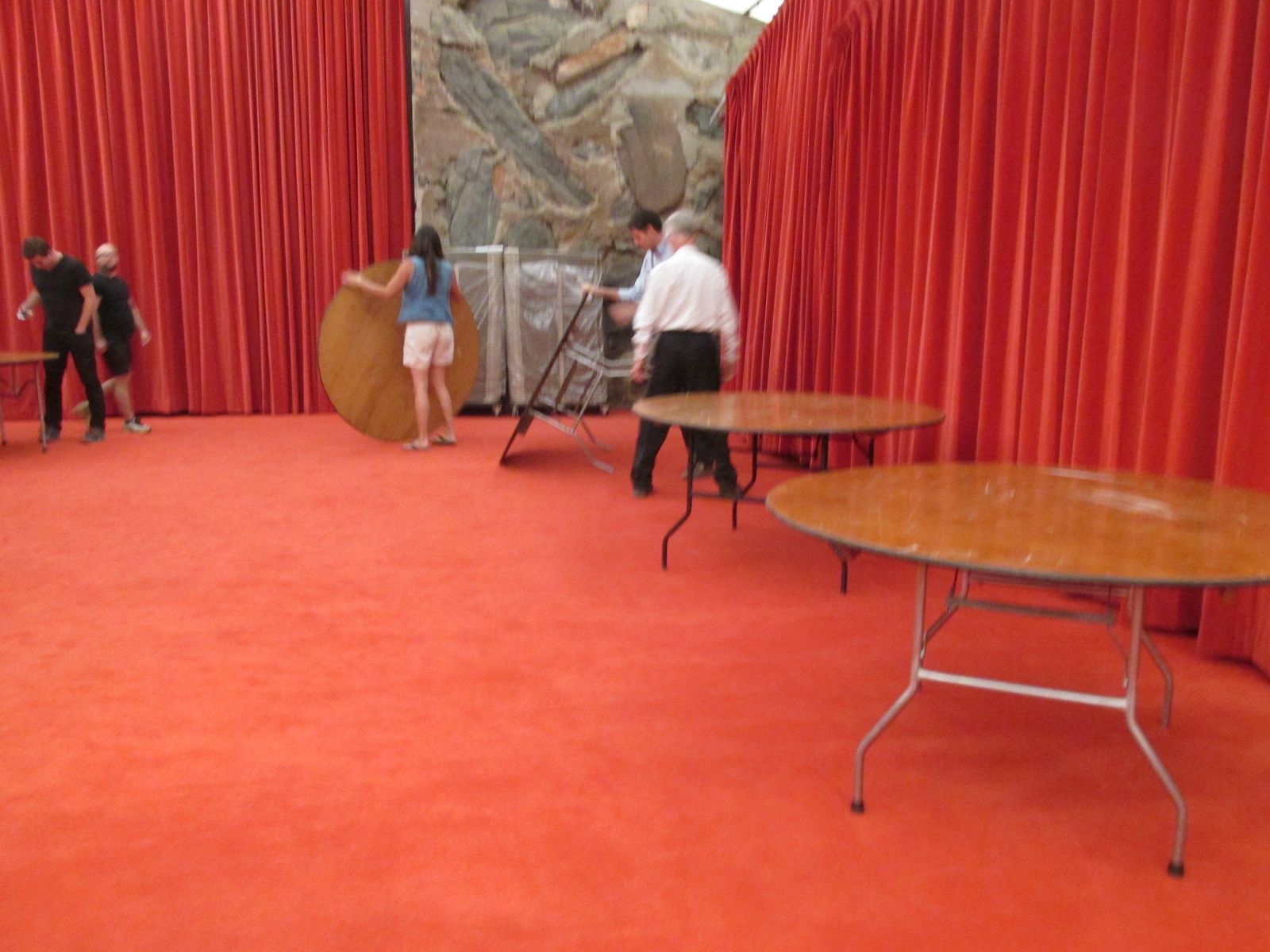
While our guide was talking, people came in and started setting up for a brunch the following day. The guide was not amused. She said that she was scheduled to be in the music hall at that time. They did stop, though, and let her finish her presentation.
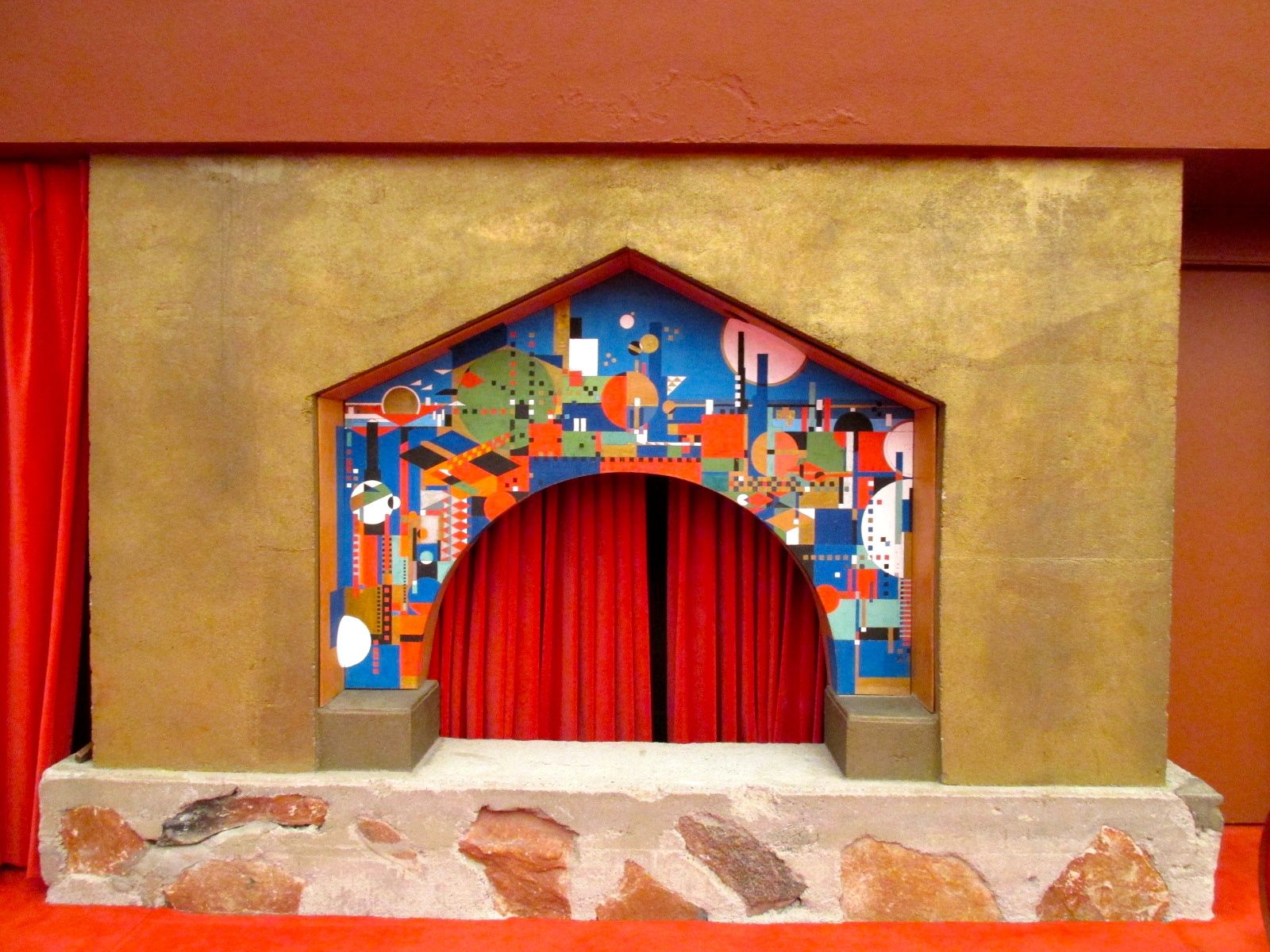
This structure was to the side of the stage. It looks like a fireplace to me, but the curtains would suggest that it is something else.
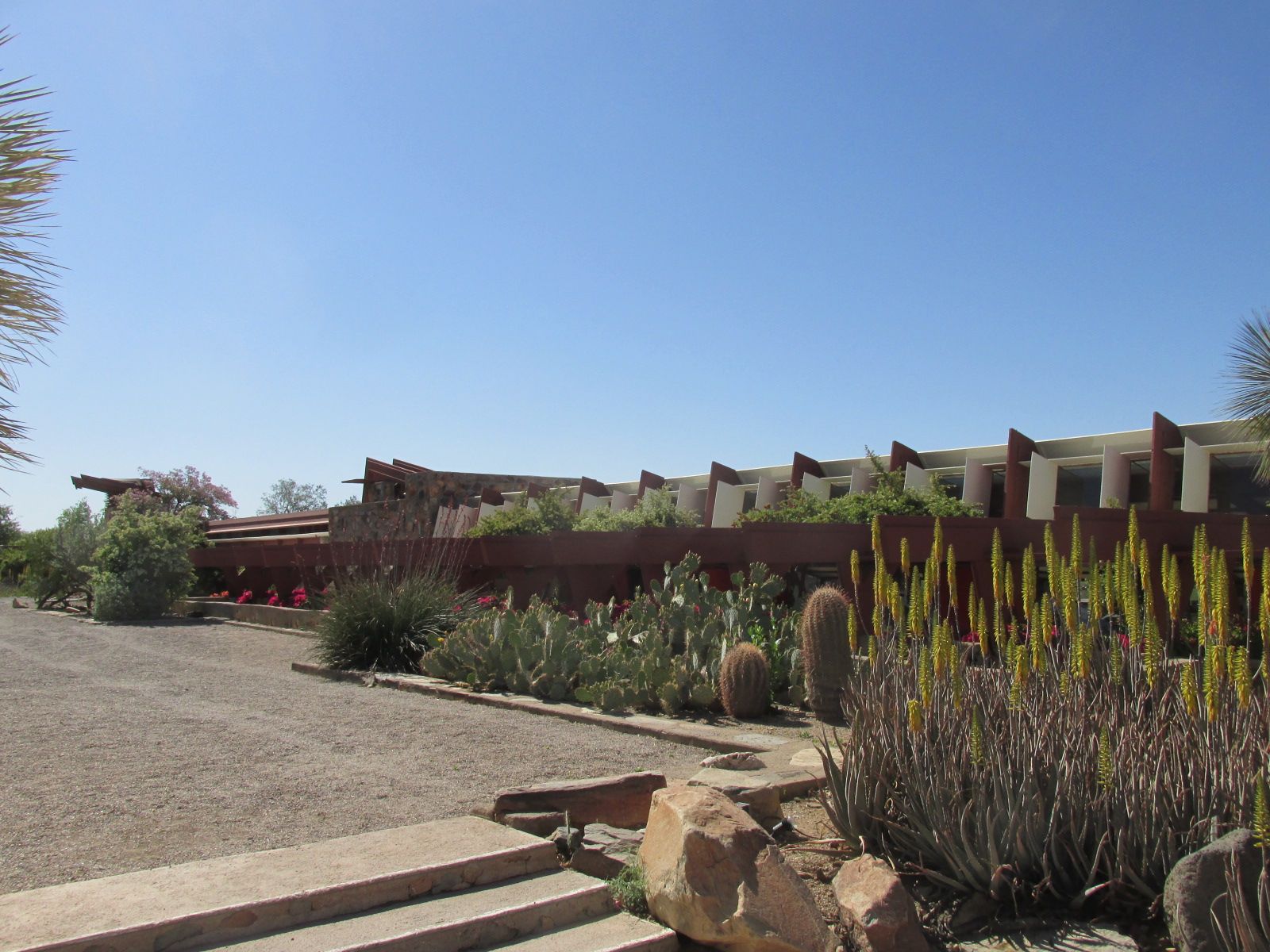
This is the back of the building with the drafting room.
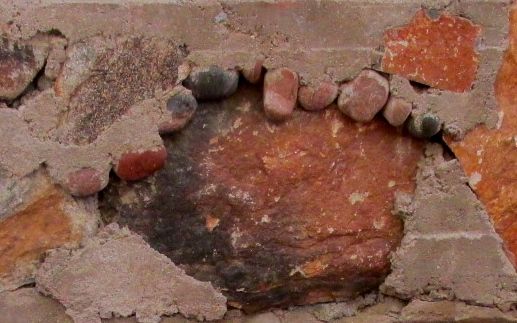
All the building was done by Wright’s Fellows. They took to using round river stones around the larger mountain rocks to keep the cement in place. If it covered the large rocks, they would have to scrape it off. Wright liked the technique and called them “goose eggs.”
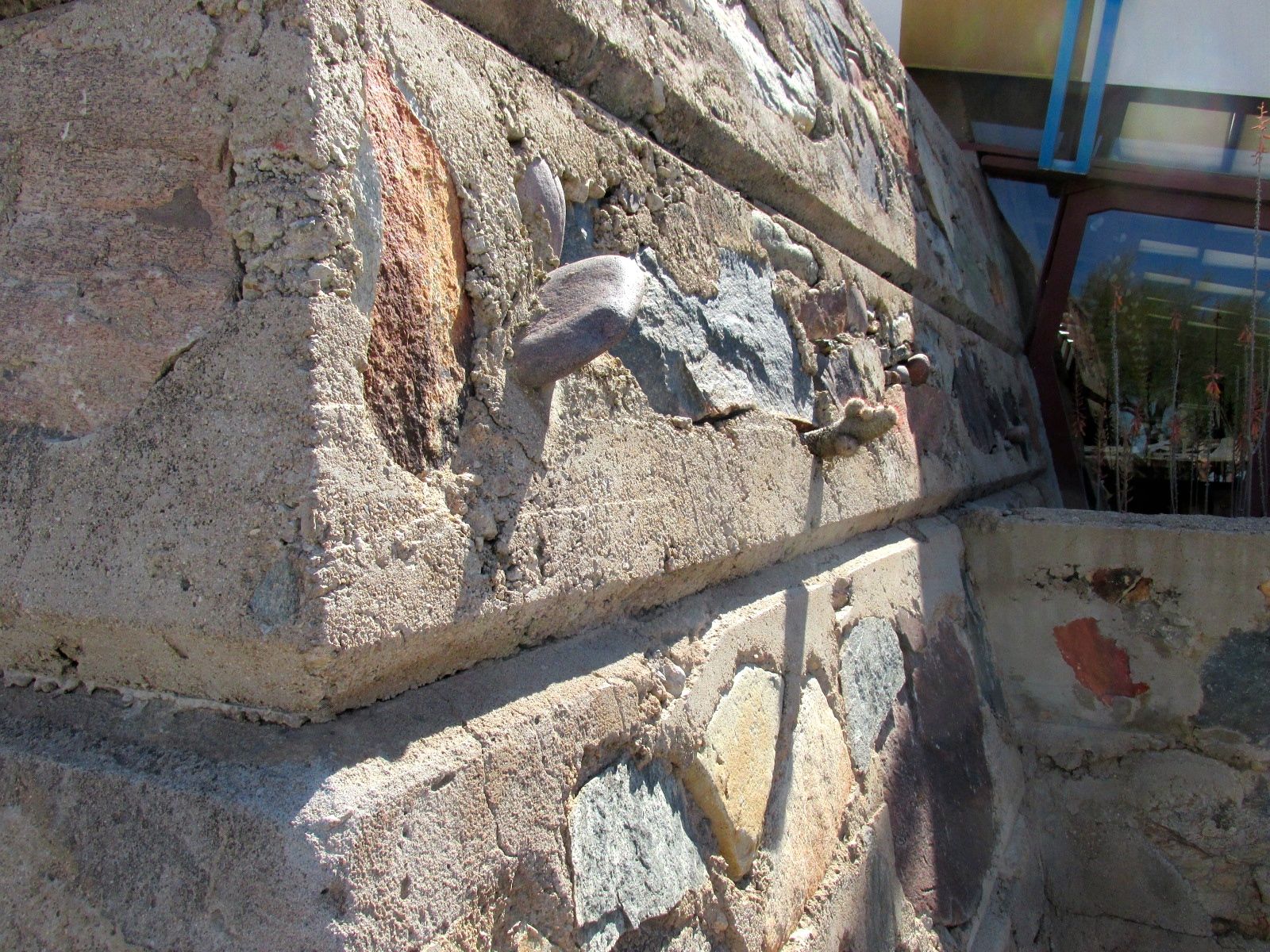
It’s fairly easy to see a rounded stone sticking out of the wall, but if you look a little further down the wall, you can see a cactus growing out of a hole.
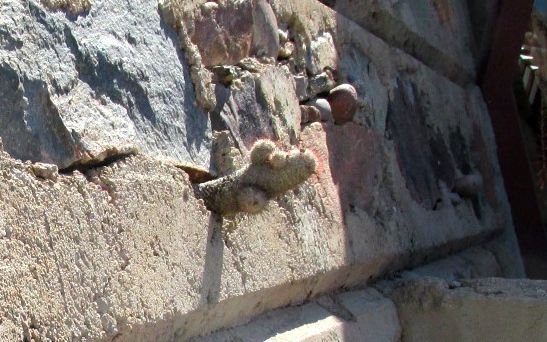
According to the guide, the cactus was planted there by a bird and is just growing there. I wonder how long it has been there and how much longer it will survive?

We came around the corner and were greeted by an unexpected expanse of green. I imagine that all the green was thanks to Olgivanna.
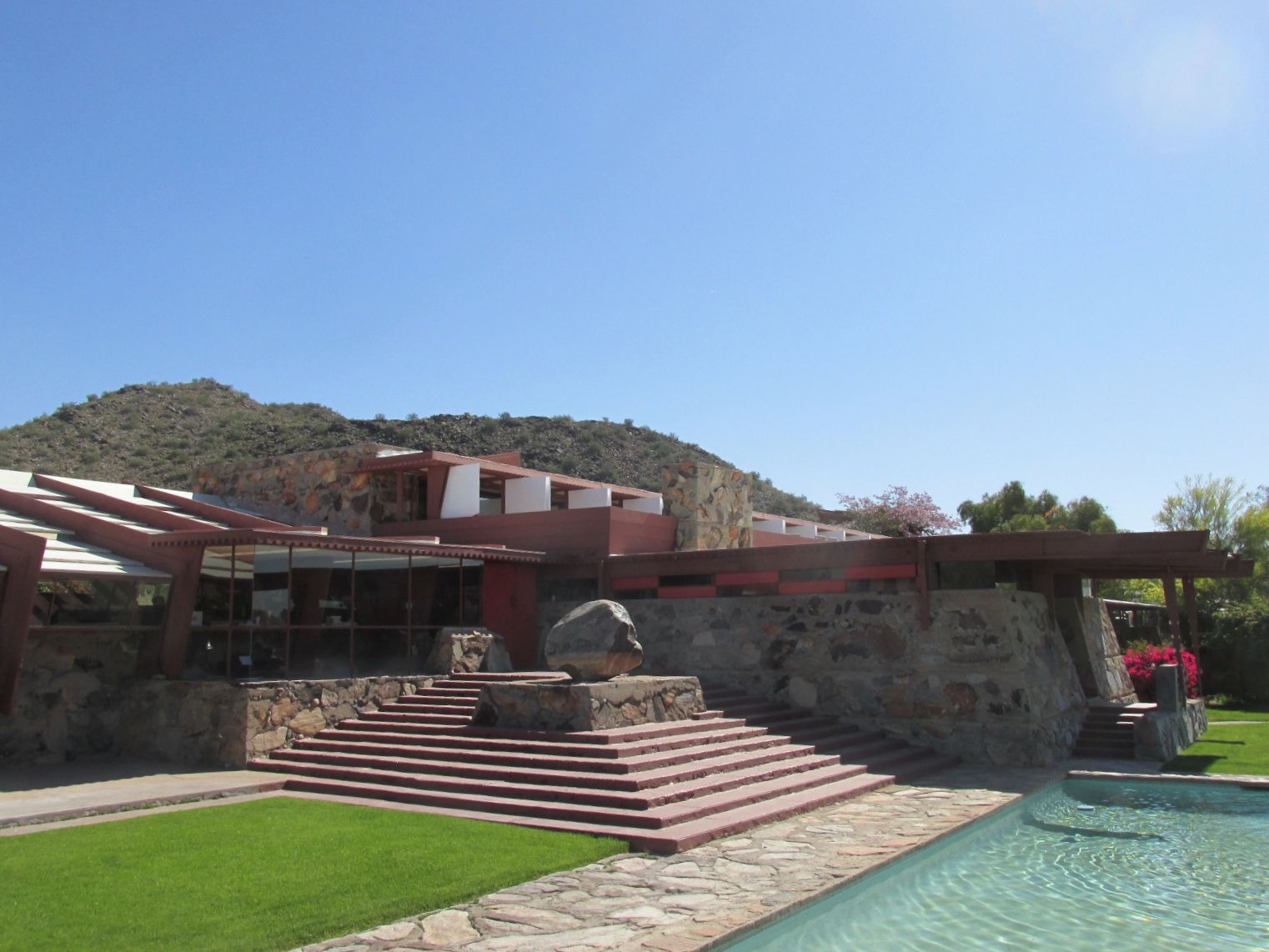
This is the other side of the building with the drafting hall. It was designed to be cooled by the breezes blowing across the shallow pool, up the steps and into the door, which was thrown open to take advantage of the weather.
This view really shows how the buildings nestle into the Arizona landscape. In Wright’s words, “Arizona needs its own architecture… Arizona’s long, low, sweeping lines, uptilting planes. Surface patterned after such abstraction in line and color as find ‘realism’ in the patterns of the rattlesnake, the Gila monster, the chameleon, and the saguaro, cholla or staghorn – or is it the other way around—are inspiration enough.”
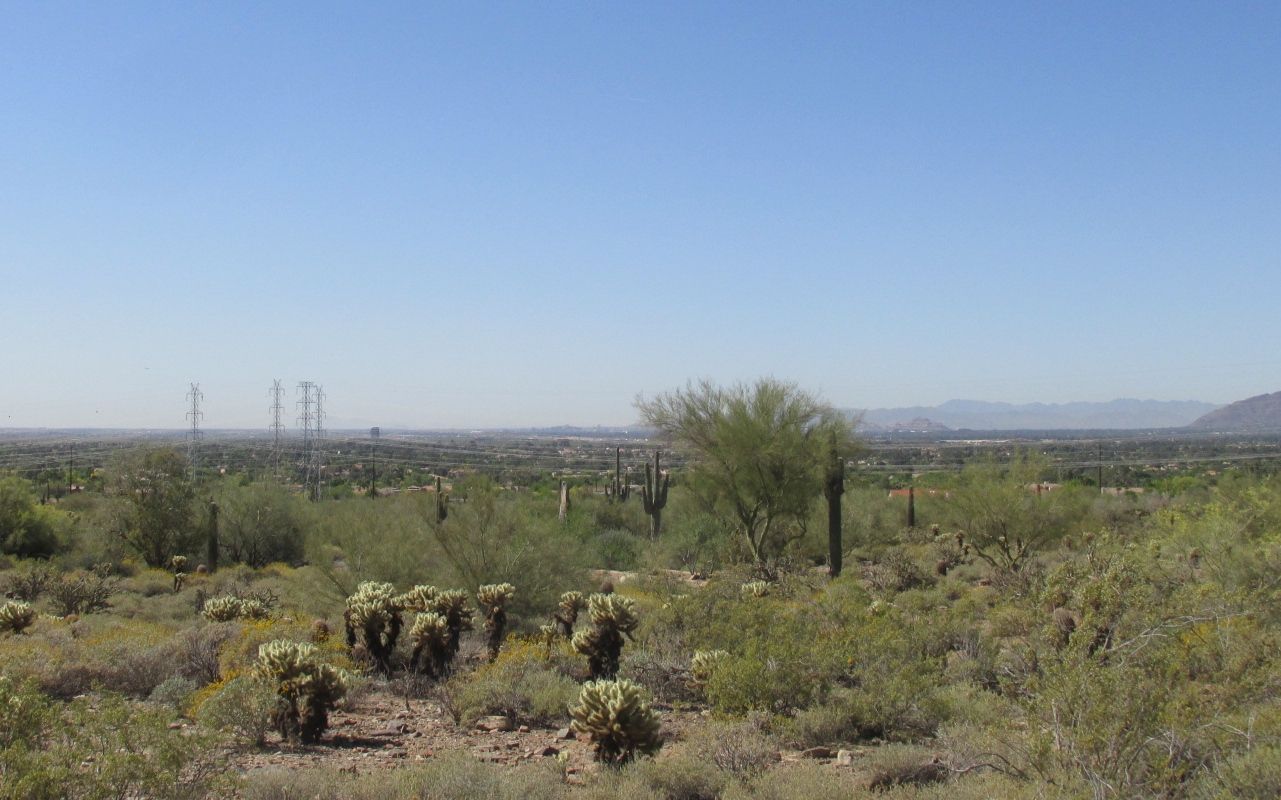
This is the view from this building. Wright was really angry about the electric wires that were strung across his view and through his land, thanks to eminent domain. The dining room used to look out on this vista. After the wires were strung, though, he moved the dining room to the other side of the building.
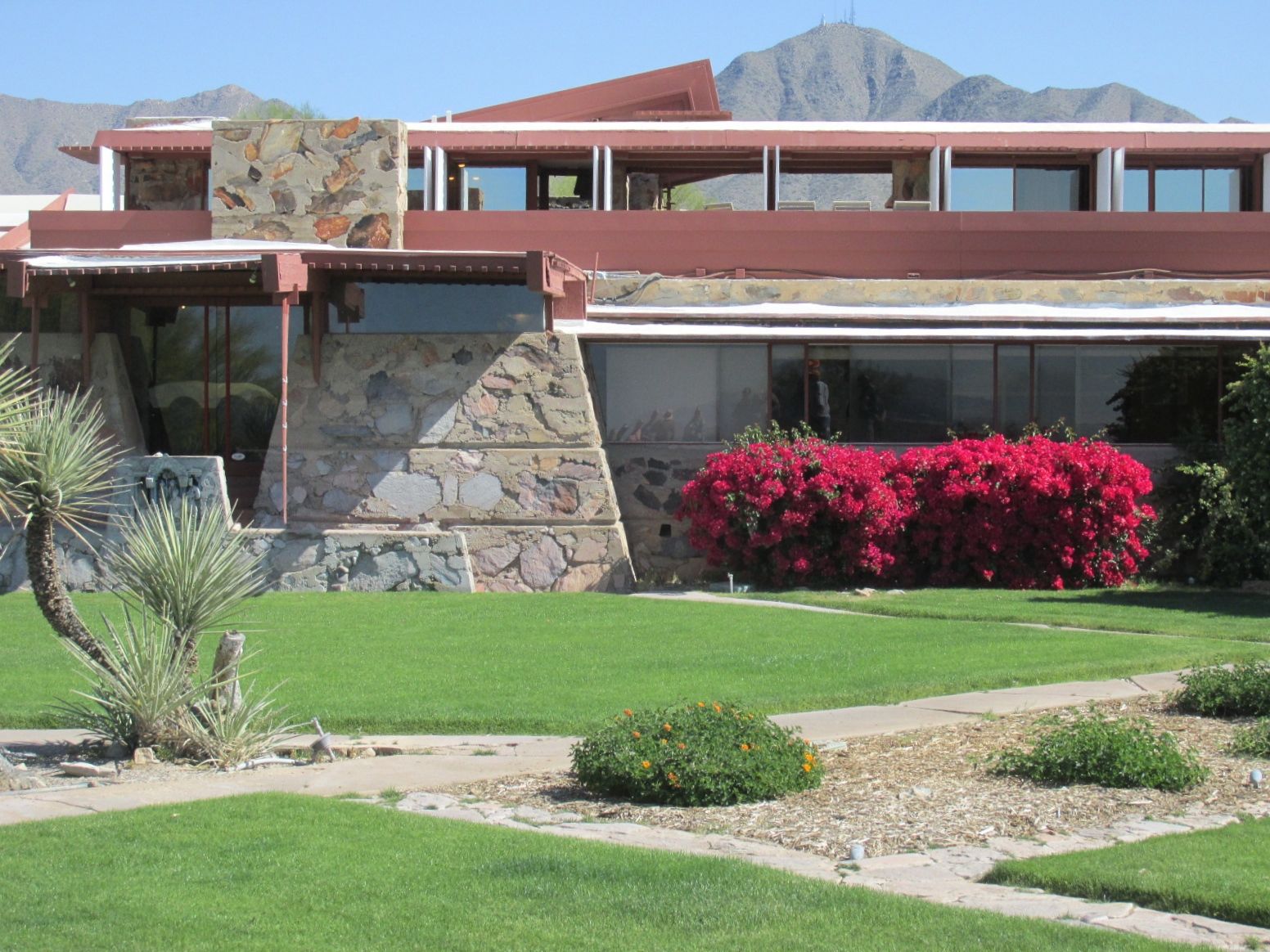
The windows above the bright bougainvilleas are from the original dining room. Now it is used as office space.
As we approached the dining room where we were to have our snack, we passed one of Wright’s Chinese terracottas.
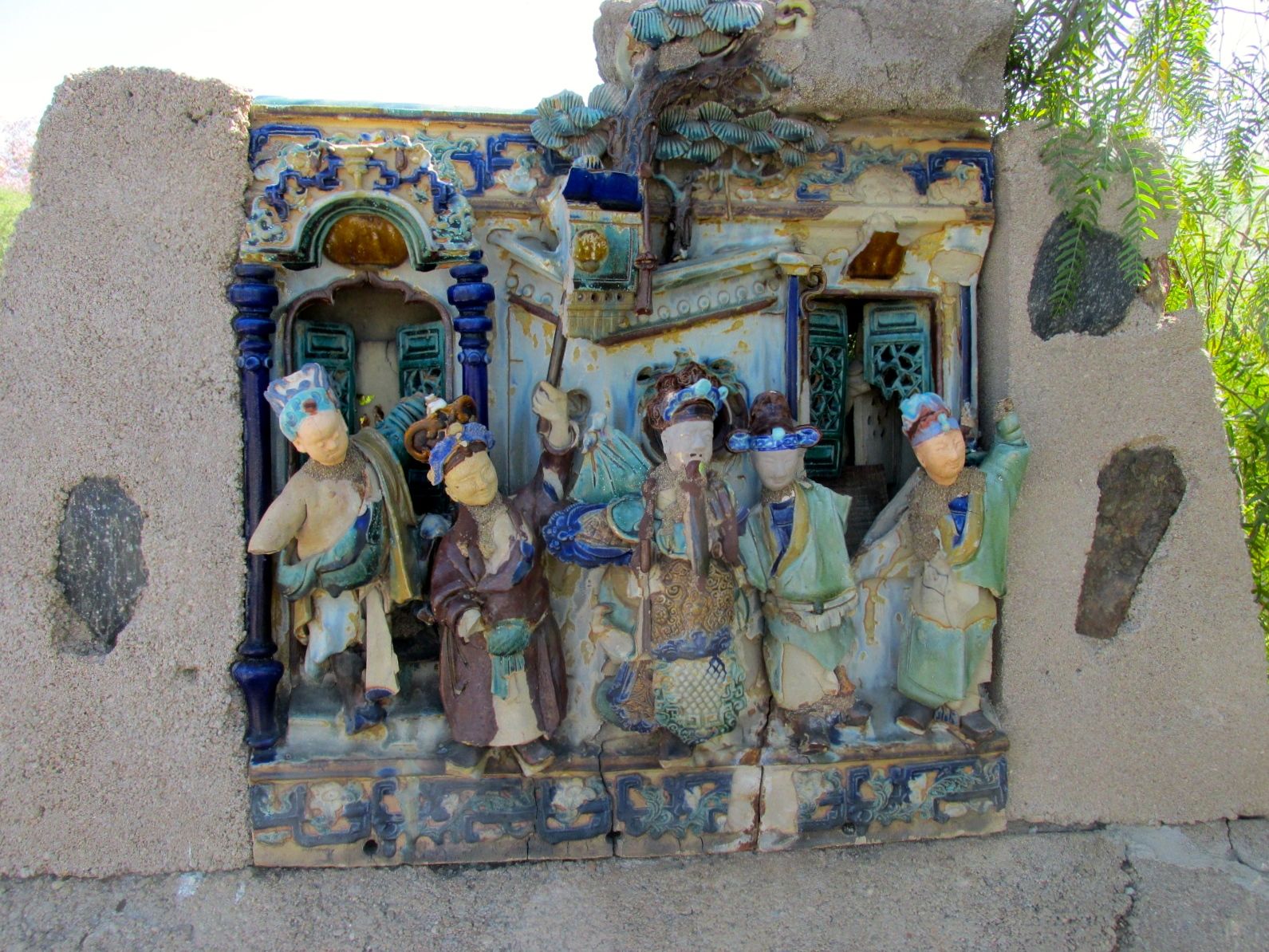
Wright was an art collector and he acquired a dozen of these sculptures. They were broken when he got them, but one of his Fellows managed to repair them. The Fellow returned to continue and tend to the terracottas, but I think he has since passed on. The birds would come and snatch the pieces as they would break off and drop to the ground. You can see where some pieces should be that aren’t anymore.
And this is where I’ll pause for now. Come back for the next installment to see the rest of the tour.