In Which I Make Some New Airstream Friends

I hadn’t planned to stay at the Davis Bayou Campground of the Gulf Islands National Seashore, but it was fairly close to Gulfport, Mississippi and the RV Center that was holding the window for me.

I pulled in to the campground and got situated in my site just before the storm hit. Wow! What a storm! We were under a tornado watch most of the night. It was pouring and thundering and the wind was howling. Luckily, it never got any worse than that. I did figure out which way I would have to go to get to the concrete block bath house, if they sounded an alarm.

I have to admit that I missed the insulating property of the window. The plastic that my friends at JD Sanders in Florida had put on held up to the weather, but the cold came seeping through.

The next morning, the storm had passed. I got hitched up easily, but the jack wouldn’t retract completely, and it was hung up on the wood that I put under it. It gave me trouble when I was in Arkansas in June 2014. They had to do a bit of work on it at that time, and I kind of had the feeling that the jack would need to be replaced at some time.

Well, this was the time.

I put the truck in gear and pulled it off the wood. It was almost completely retracted, so it didn’t take too much effort. I was pretty sure that there would be someone at the shop who could help me with it.

I got to Foley RV Center and Airstream of Mississippi, about 25 miles away, and they were ready for me. The woman who had taken my order last Friday saw the plastic over the window and got my paperwork out right away. I told her about the jack issue, and they just happened to have the exact jack I needed.
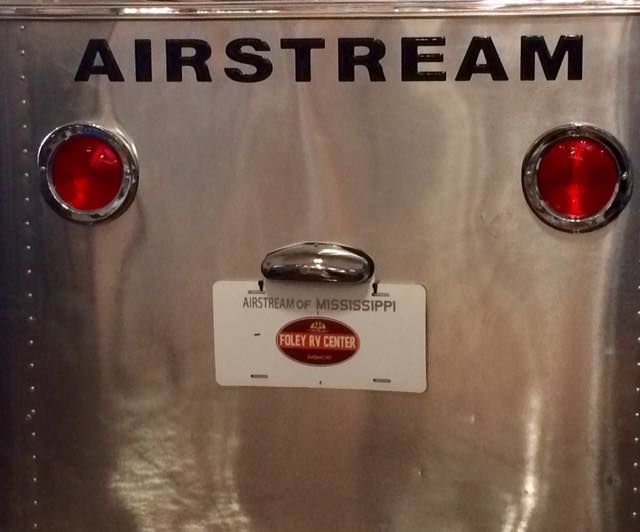
Foley Airstream

After a couple hours, several cups of their coffee and their guest wifi, I was ready to roll again.

Back at the campground, I met my neighbors, who were also full time Airstreamers. After several attempts to get it backed in, Jim offered to do it for me. I never refuse an offer like that.

He got Flo backed in and encouraged me to use my chocks, which I had kind of stopped using, and showed me how to remove that enormous hitch from the back of my truck. I was thrilled to get some good advice on such things. There should be an Airstream bootcamp.

I went into the trailer and finished making the chili I had started back in Florida. Since I use dried beans and cook them in the crock pot, I start a day or two before  I intend to actually put the whole thing together. I was enjoying a bowl of it when Deb, Jim’s wife came over to invite me to a happy hour with two other Airstreamers in the campground.

That was a lot of fun – and they convince me to join the Wally Byam Caravan Club International, which is the Airstream club. Wally Byam was founder of Airstream in the 1930s and lead it until his death in 1962. He used to lead caravans of Airstreamers to exotic locales. I think the lower 48 will suffice for me, but you never know.

I enjoyed the evening and making new Airstream friends. They recommended many cool things in the area that I might want to do before I head to Louisiana. What great folks!

But, I swear, if it’s not one thing, it’s another.  I pulled out of the campground and I got a brake warning light. I also got a “trailer brake not attached warning”. I got out and looked. The trailer hook up seems okay and I was still stopping. So, I figured I’d head out to the main drag. There was a listing for a repair shop about 2 miles away.

About a mile after I started, I pull over to let a car pass, and the driver gestured at the truck. Uh-oh. The international “check it out” sign.

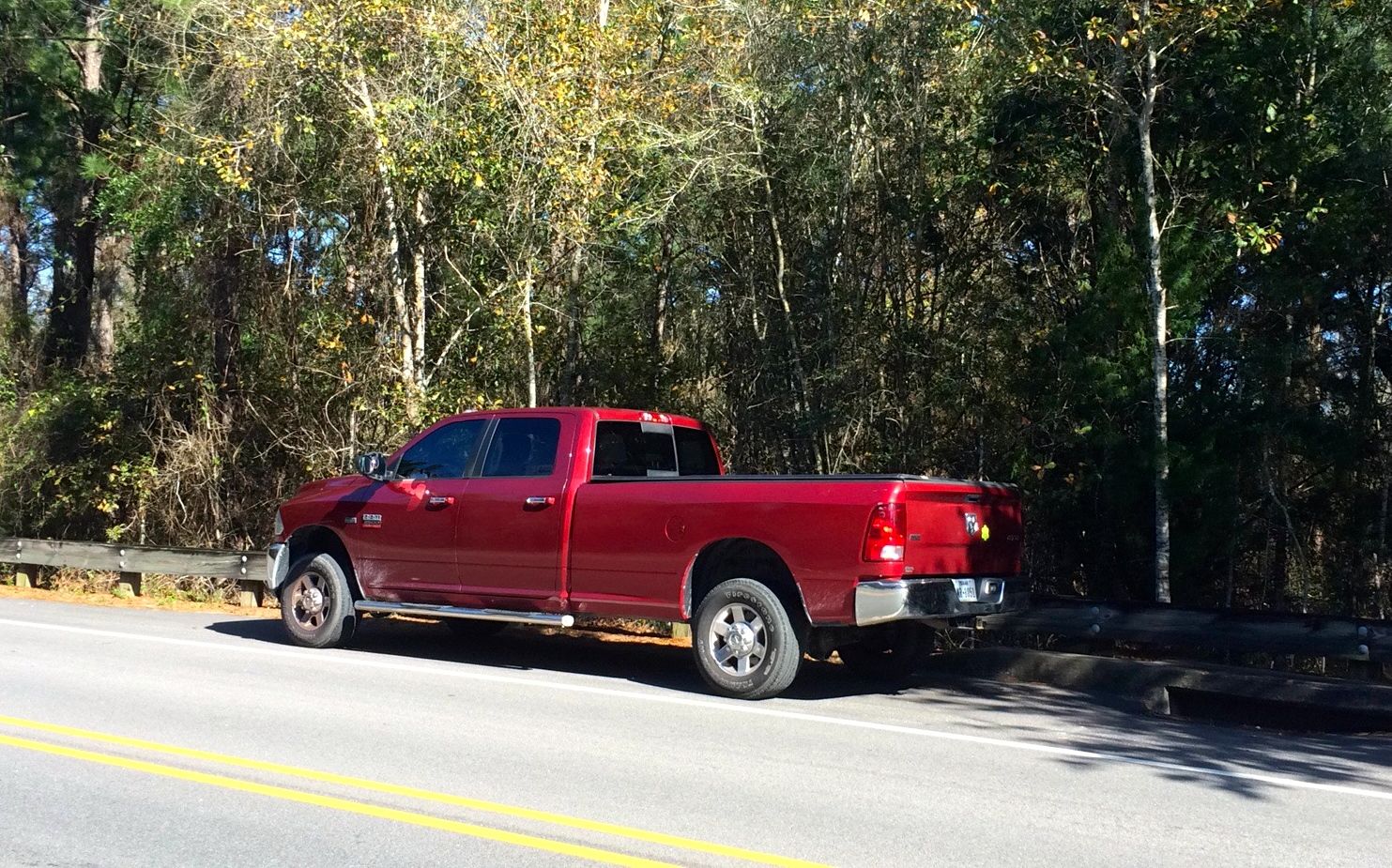
I pulled off the road a little farther, and at least one of the brakes was smoking. That is not a good sign. I called AAA and they sent a wrecker. I found a brake shop that was open until 6:00. I figured that if they couldn’t do it that day, I’d have to rent a car or call a cab.

If the repair shop couldn’t get the job done that day, the campground would have to figure out where to put the occupants who were going to arrive on Sunday. I wouldn’t be able to move the trailer without the truck. I kept my fingers crossed that everything would work out, but I was sure I would not be the first person who wasn’t able to leave their site due to a problem.

While I waited, I got out to stretch my legs. I found a brand new pencil just lying there in the road!
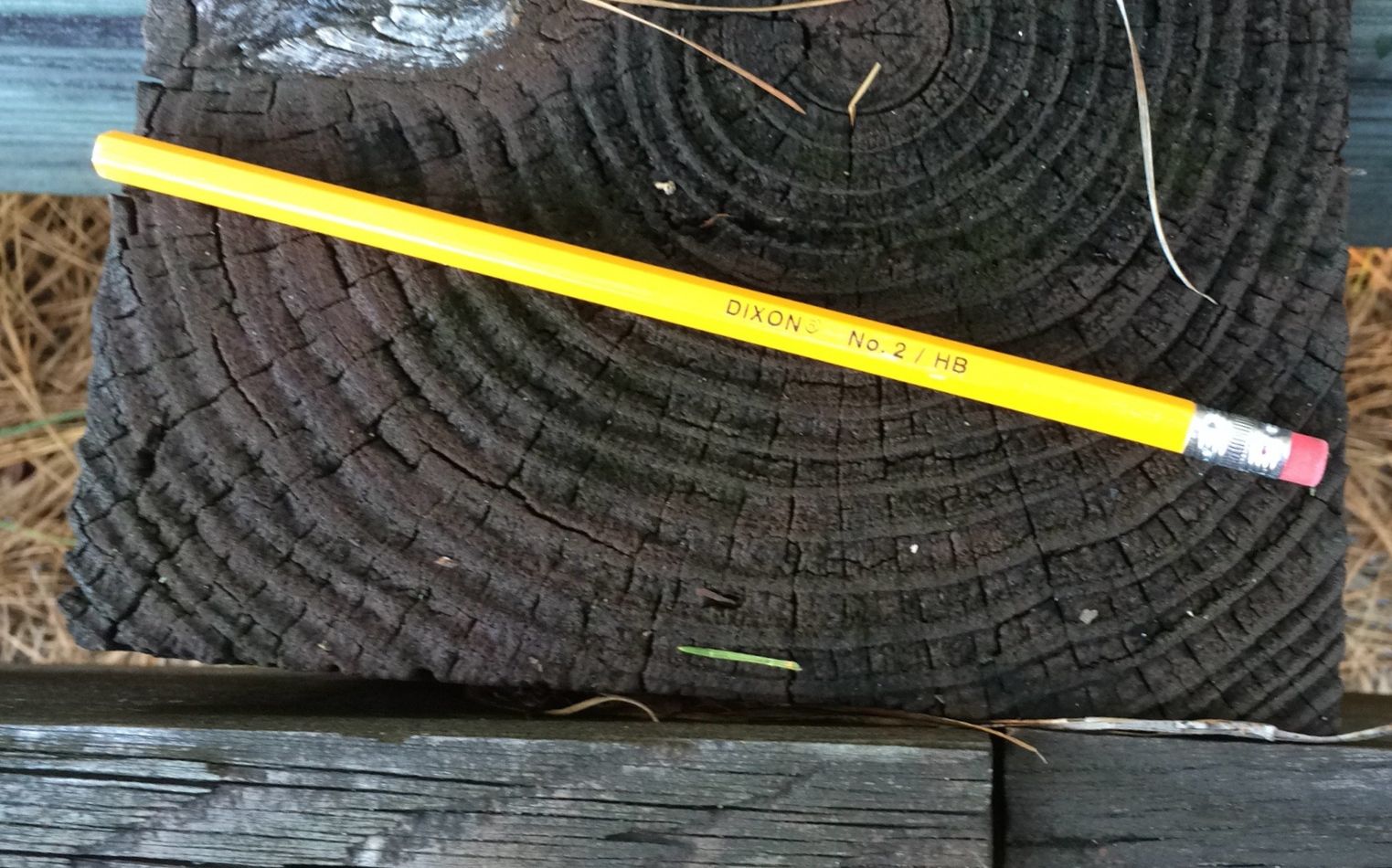
pencil

There are treasures everywhere!

Bart before the tow truck

Poor Bart! He looked so sad sitting there by the side of the road.

Before too long, Jacob rolled up with his wrecker.
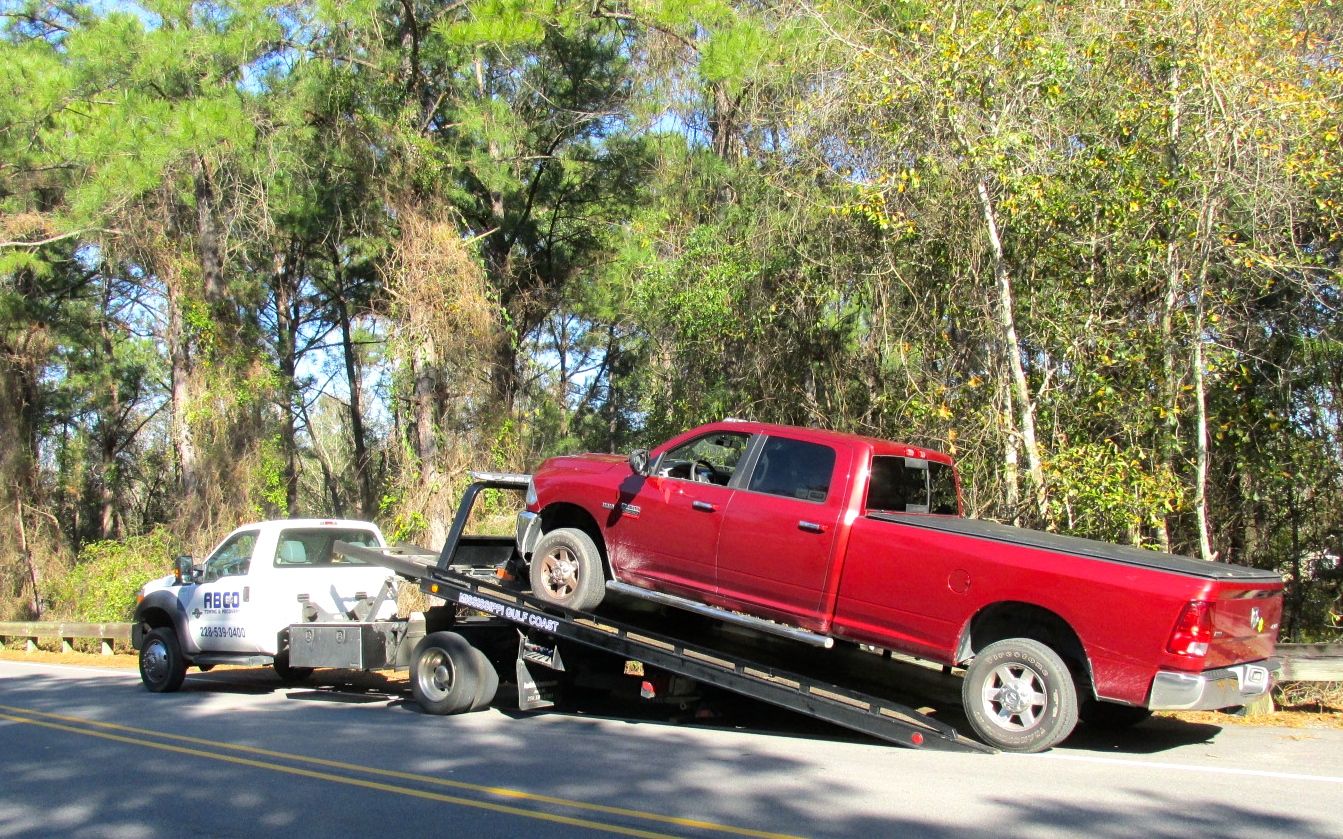
Loading Bart

He tipped the back of the truck bed down and drove Bart up. He fastened him down and then we were ready to roll.
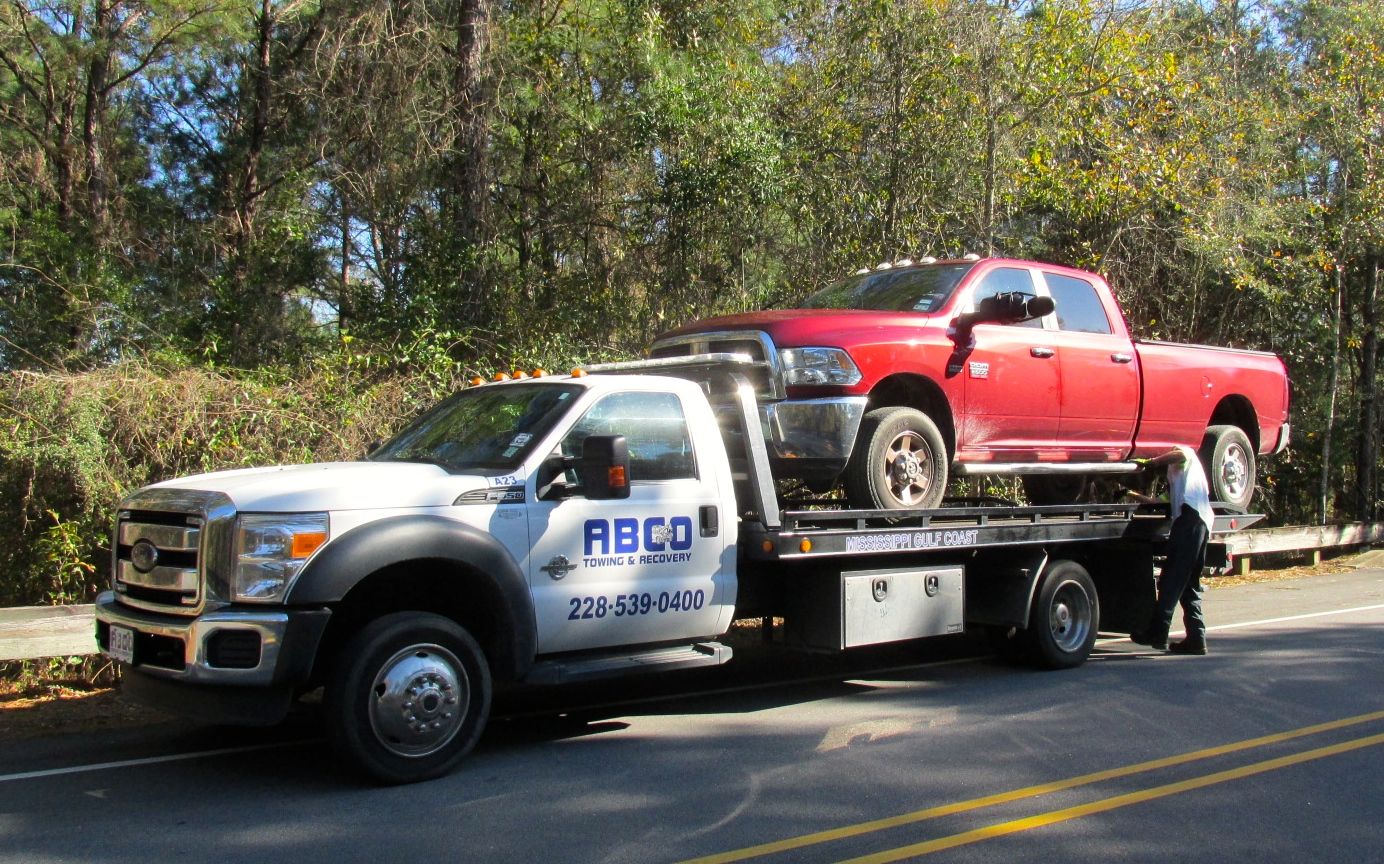
Ready to roll

I chatted with Jacob and his girlfriend, who was riding along with him. They were pleasant and I enjoyed being able to really look out the window. This “eyes on the road and hands on the wheel” stuff does impede sightseeing.

Jacob asked me if I had put my emergency brake on. Uh, no, I hadn’t. Then I figured it out! Jim might have done it when he was done backing Flo into the camp site.

That left me feeling kind of foolish in a couple of ways.

I had forgotten that I even had a parking brake – so of course I didn’t check it when the light came on.

I got myself into this situation by being too willing to have someone back my trailer in. I have got to get my backing in mojo fine-tuned.

But by the time we got to the Firestone dealer, I was feeling hopeful that maybe – just maybe – I didn’t need any work done.
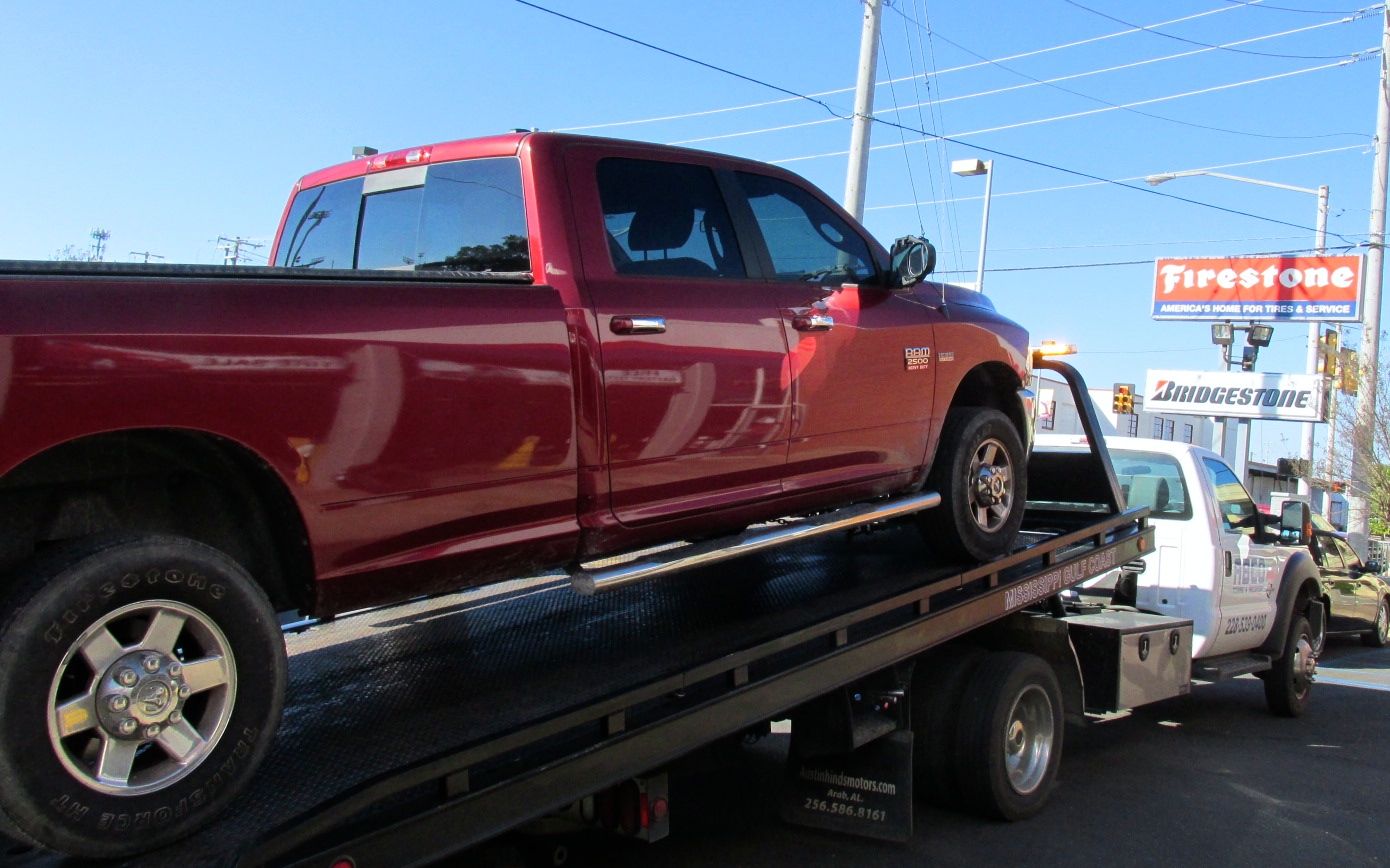
Bart at the shop

They checked everything out, and my brakes were fine! What a relief!

Just so I could get a feel for how much I would have to spend when it was time to replace the tires, I had the guy at the desk get me a price. It’s probably going to run me more than $1000 when the time comes. Oh, well. It’s the cost of doing business, and good tires are a non-negotiable item.

By the time I got Bart back, I checked my HISTORY Here app to see what I might be able to get do with the rest of the day.

So, my app sent me to Beauvoir, Jefferson Davis’ last home.
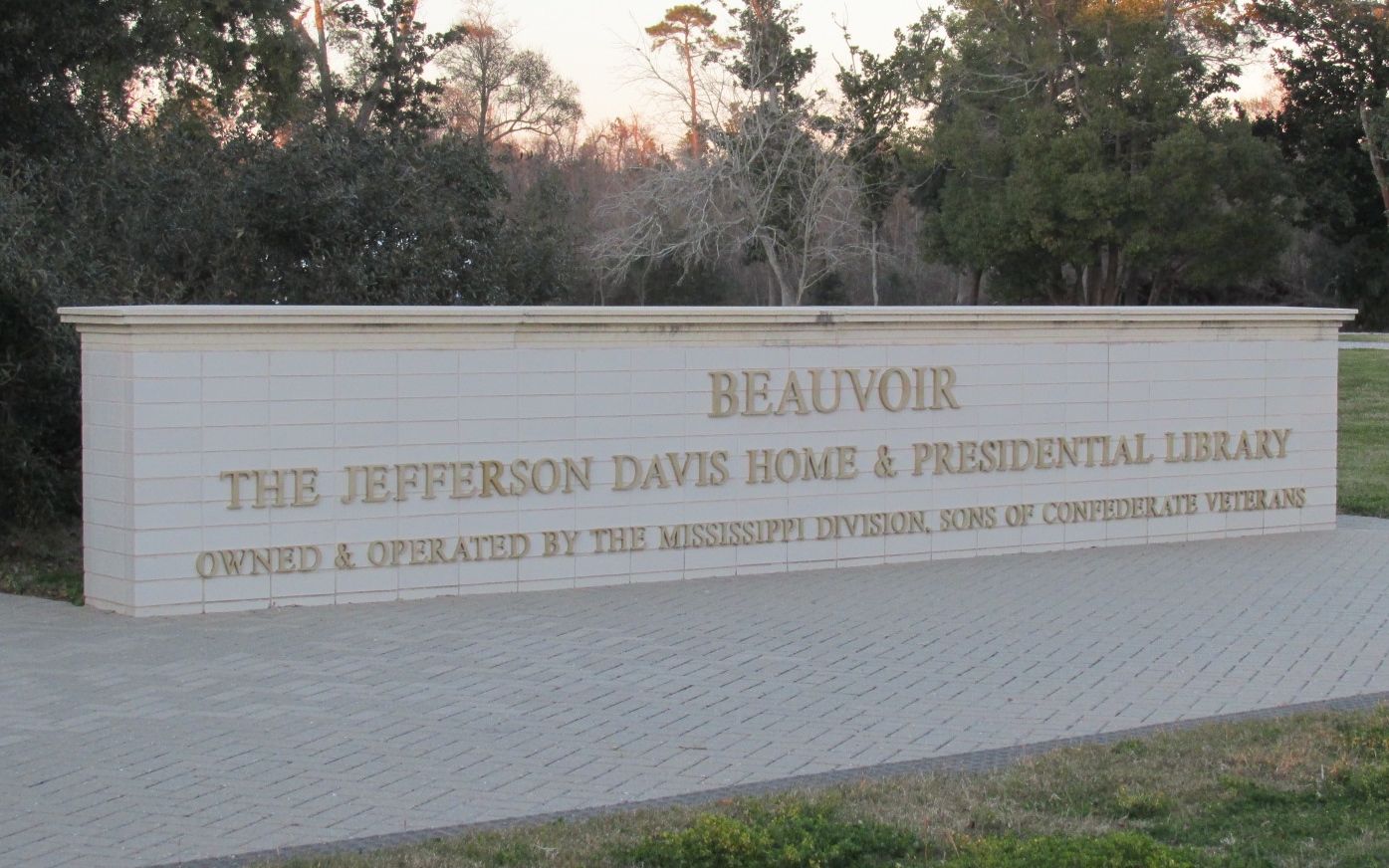
Beauvoir sign

In 1877, Davis was looking for a quiet place on the Mississippi Gulf Coast to write his books and papers. He called on the owner of Beauvoir, Mrs. Dorsey, who was a family friend. She invited him to stay in one of the two pavilions in front of the main house. He agreed, but only if she would accept $50 a month for room and board.
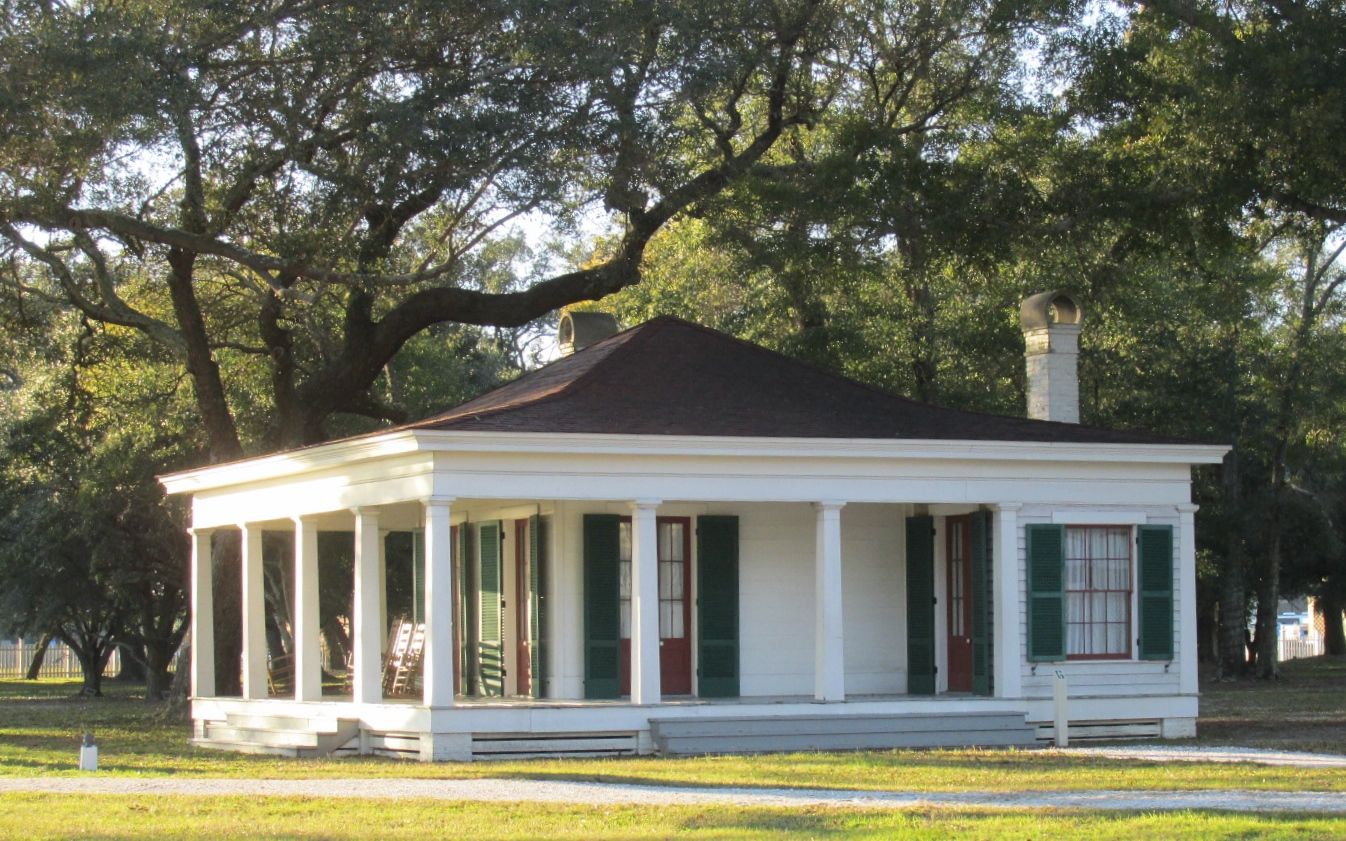
One of the two pavilions

After two years, Davis decided that he wanted to buy Beauvoir, and he and Mrs. Dorsey agreed on a selling price of $5,500, to be paid in three installments. Mrs. Dorsey died after one payment was made. At that time, Davis discovered that he was her sole heir and he eventually inherited the house along with other property.
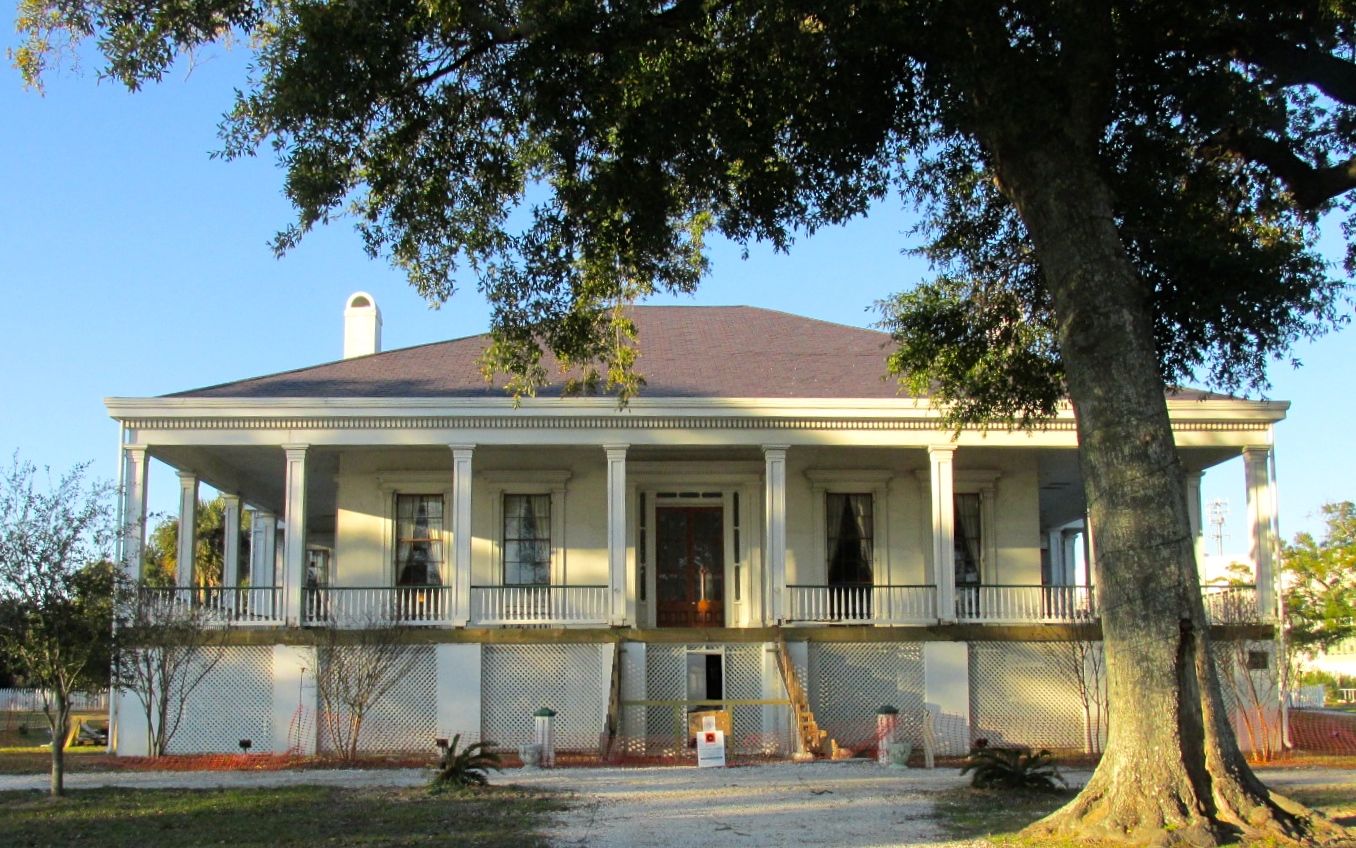
beauvoir front

The house was originally built around 1850 by James Brown, a wealthy plantation owner from Madison county. It was intended to be his summer house for his wife and his 13 children.

The porch and front steps are currently being rebuilt for the second time since Hurricane Catrina. The informative guide told me that they failed to use pressure treated wood when they rebuilt them the first time and they rotted out.
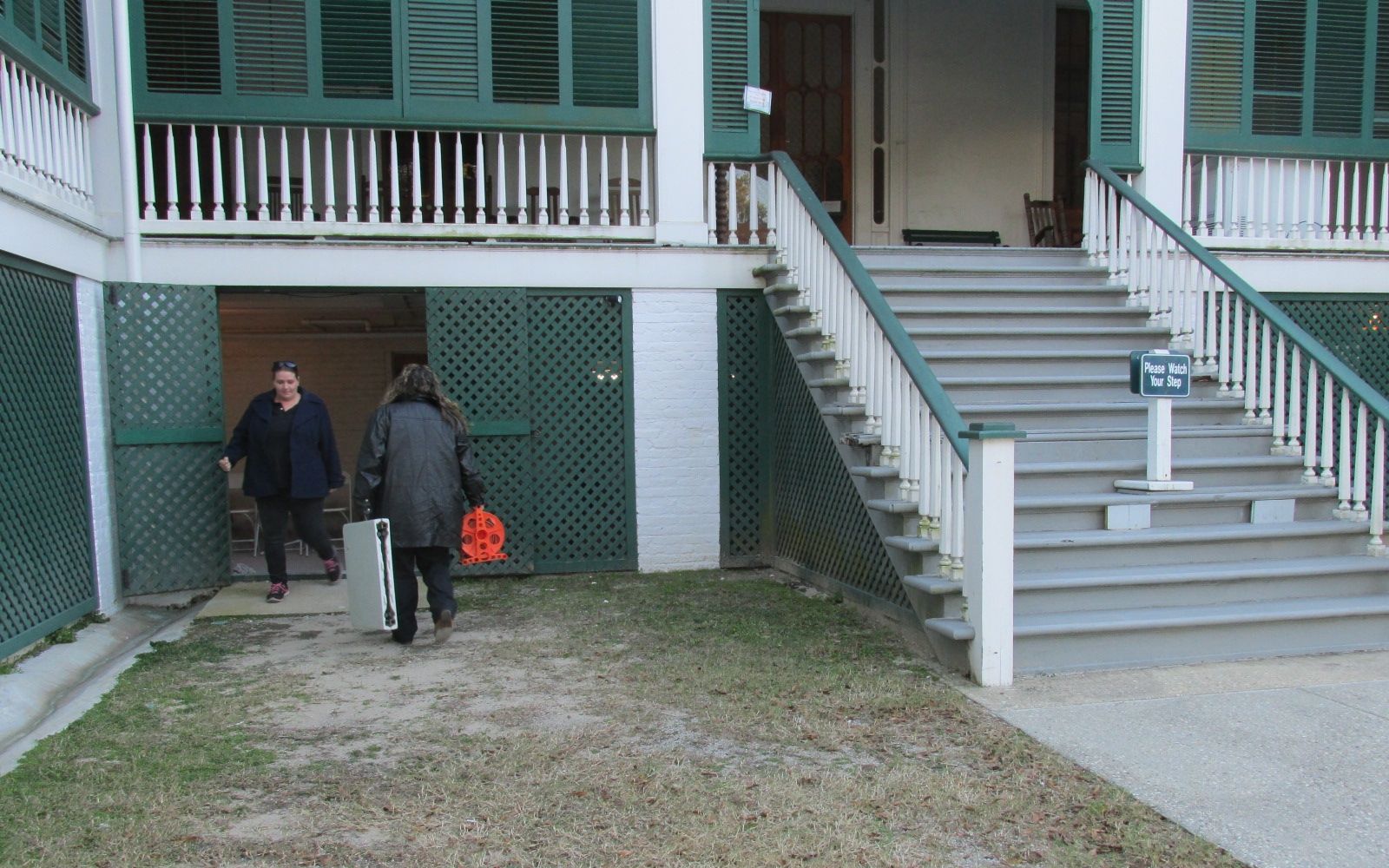
Rear Entrance
Rear Entrance

Luckily, the rear entrance was still useable.

Interestingly enough, the women you see on the left side of the photo are carrying equipment in for an evening fundraiser. They will be measuring paranormal activity. They kept loading in equipment while I waited for my tour to start.
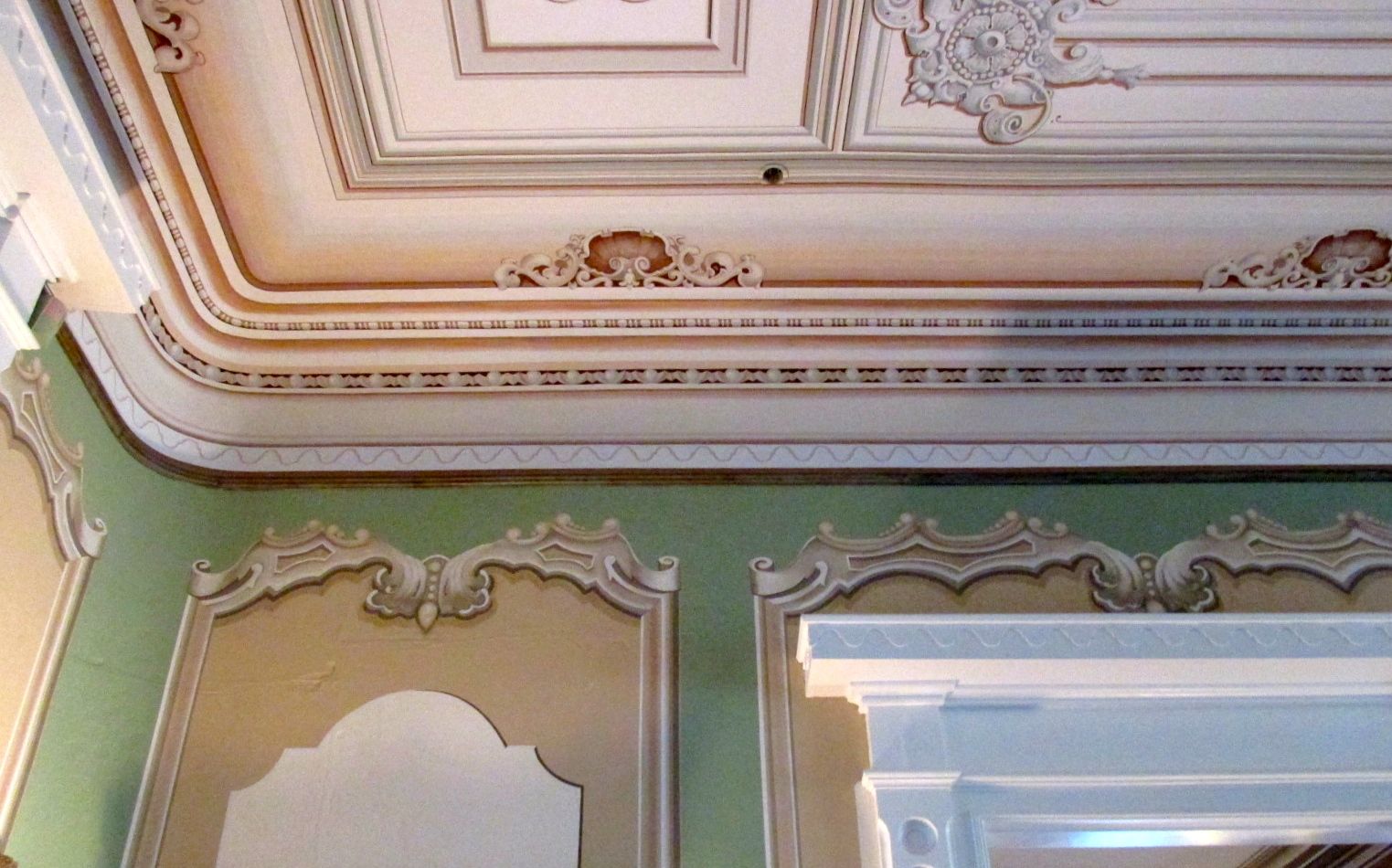
Beauvoir 120 colors of paint

The guide in period garb was knowledgeable, informative and enthusiastic, and I was the only person on the last tour of the day. The first thing he pointed out was the wall treatment in the main reception hall that ran from the front door to the back door. There were 120 distinct colors of paint used in the house!
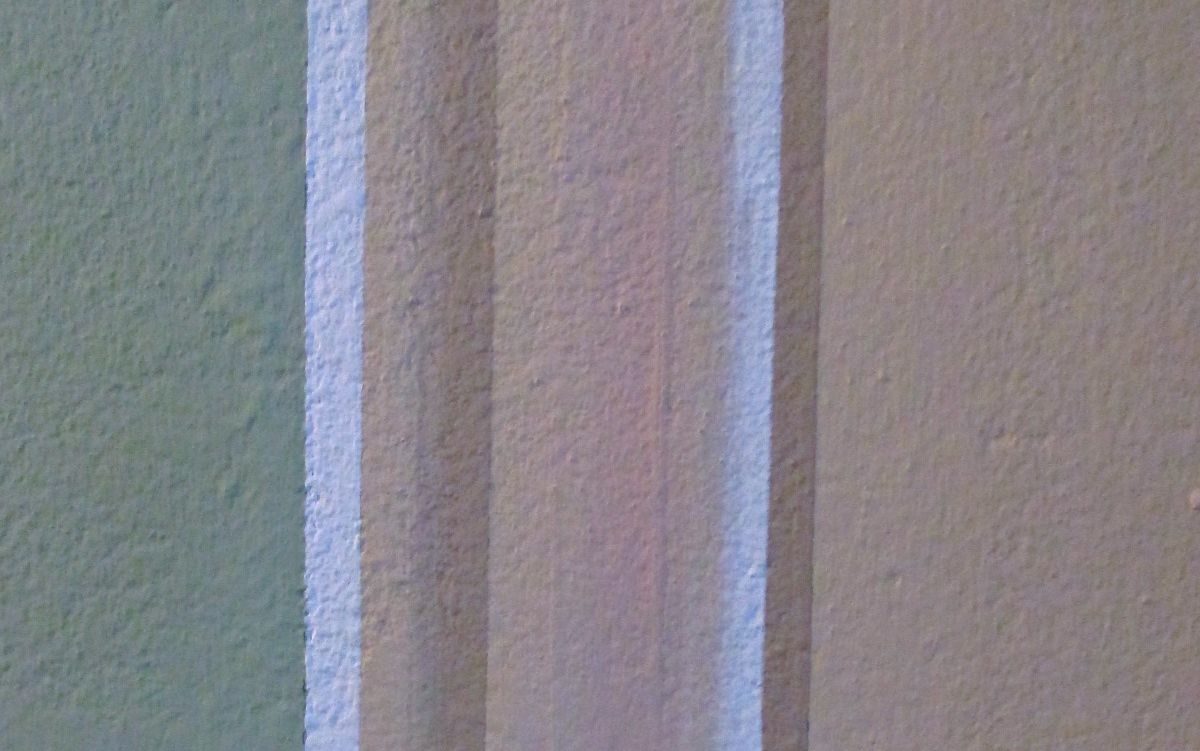
beauvoir paint close up

This is a close up of the wall. The guide told me that all of this was painted free-hand. No straight edges or masking methods were used. Of course, all of this is restored artwork, based on archeological evidence.
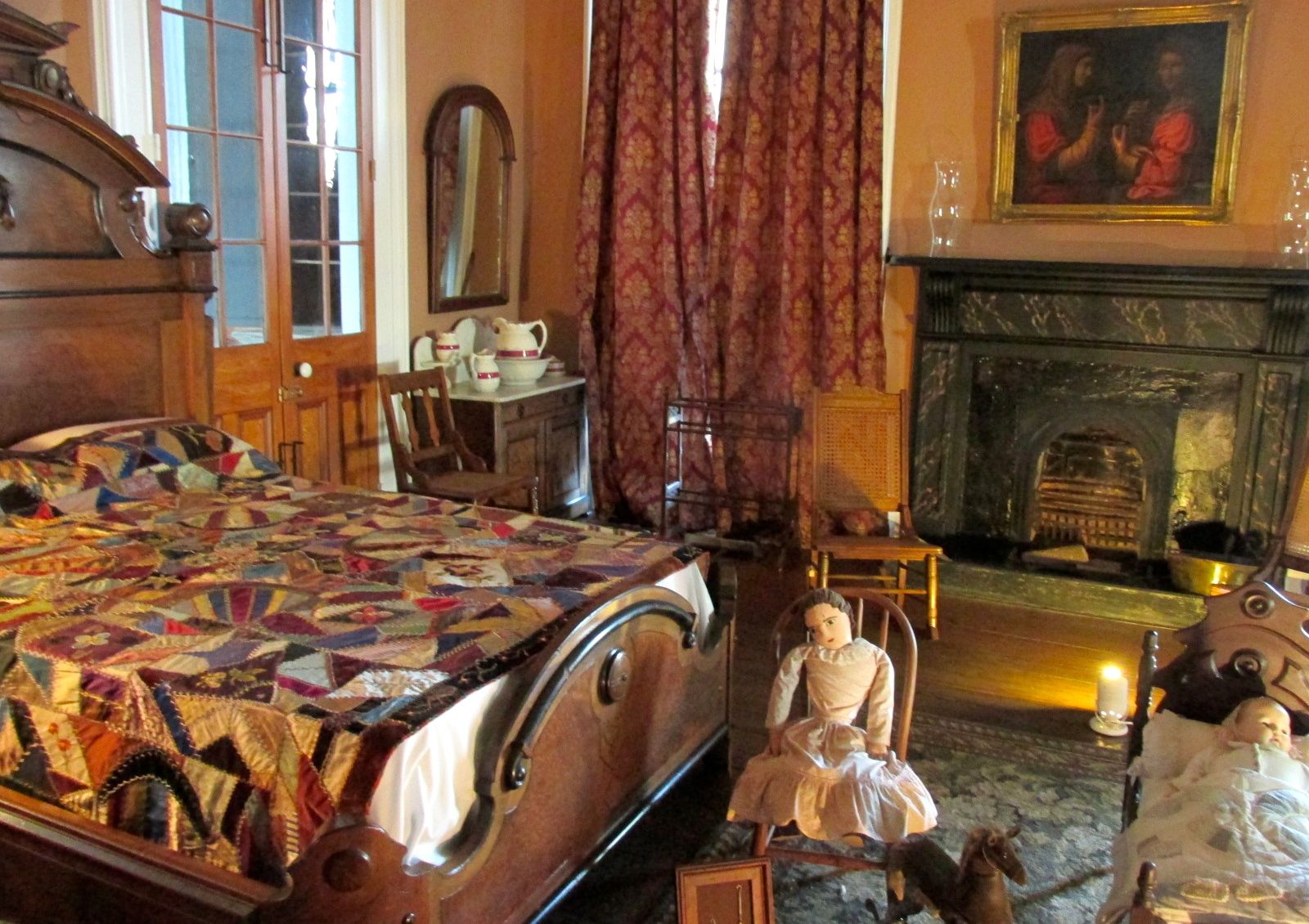
older girl's bedroom

This set of furniture was a wedding gift to one of the daughters. Unfortunately, I couldn’t keep all of the information straight.
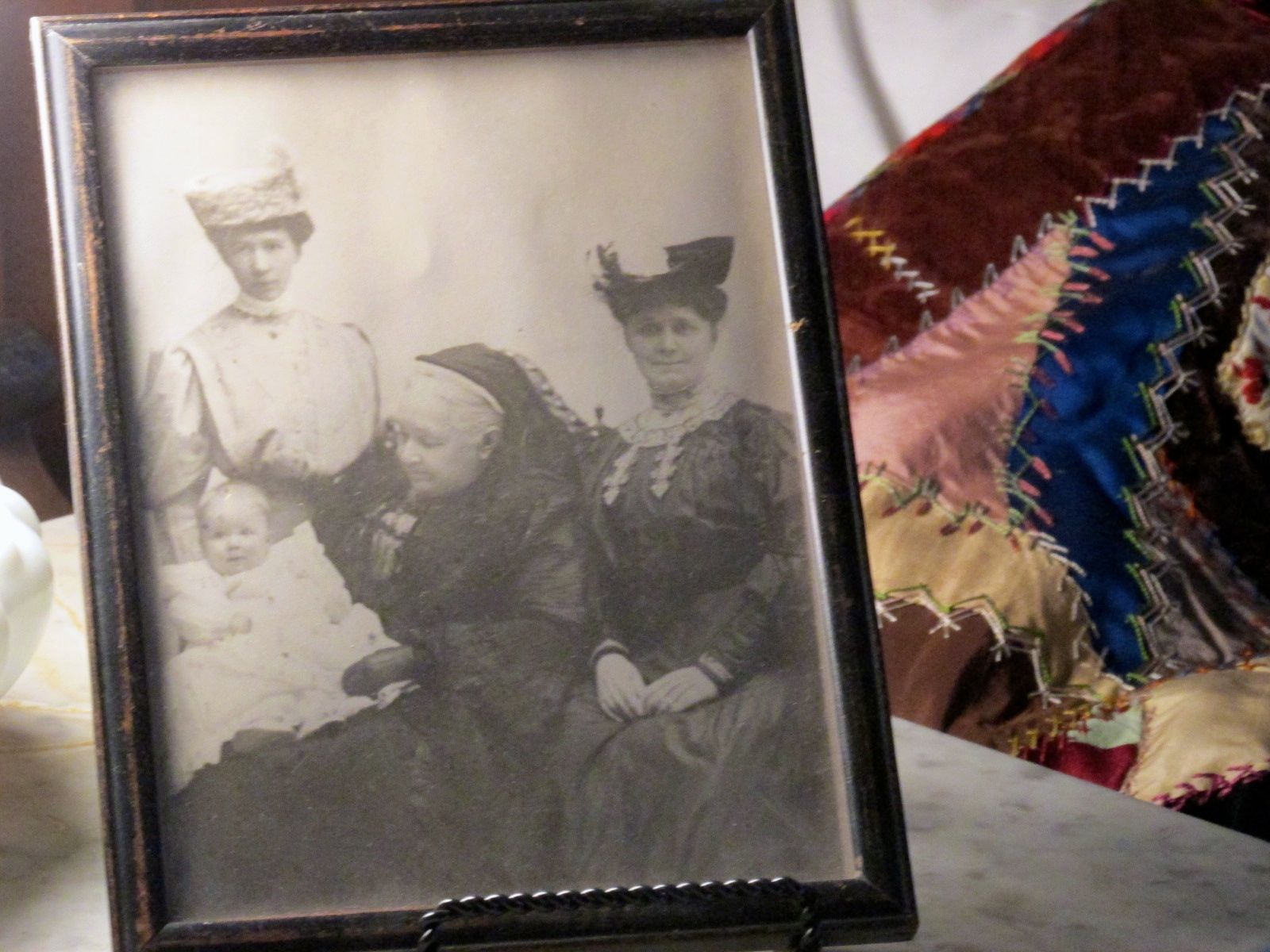
Four generations
Four generations

On the nightstand, is a picture of four generations. The oldest woman is Varina Davis, Jefferson Davis’ widow. The baby is her namesake.

Varina Davis was Jefferson Davis’ second wife. He and his first wife contracted either yellow fever or malaria. Although he recovered, she died after about six months of marriage.

When they married, he was 37 and she was 19. Due to the difference in their ages, she outlived him by a number of years. He passed on in 1889; she lived until 1906.

I am always surprised when I see how close we are to the past.
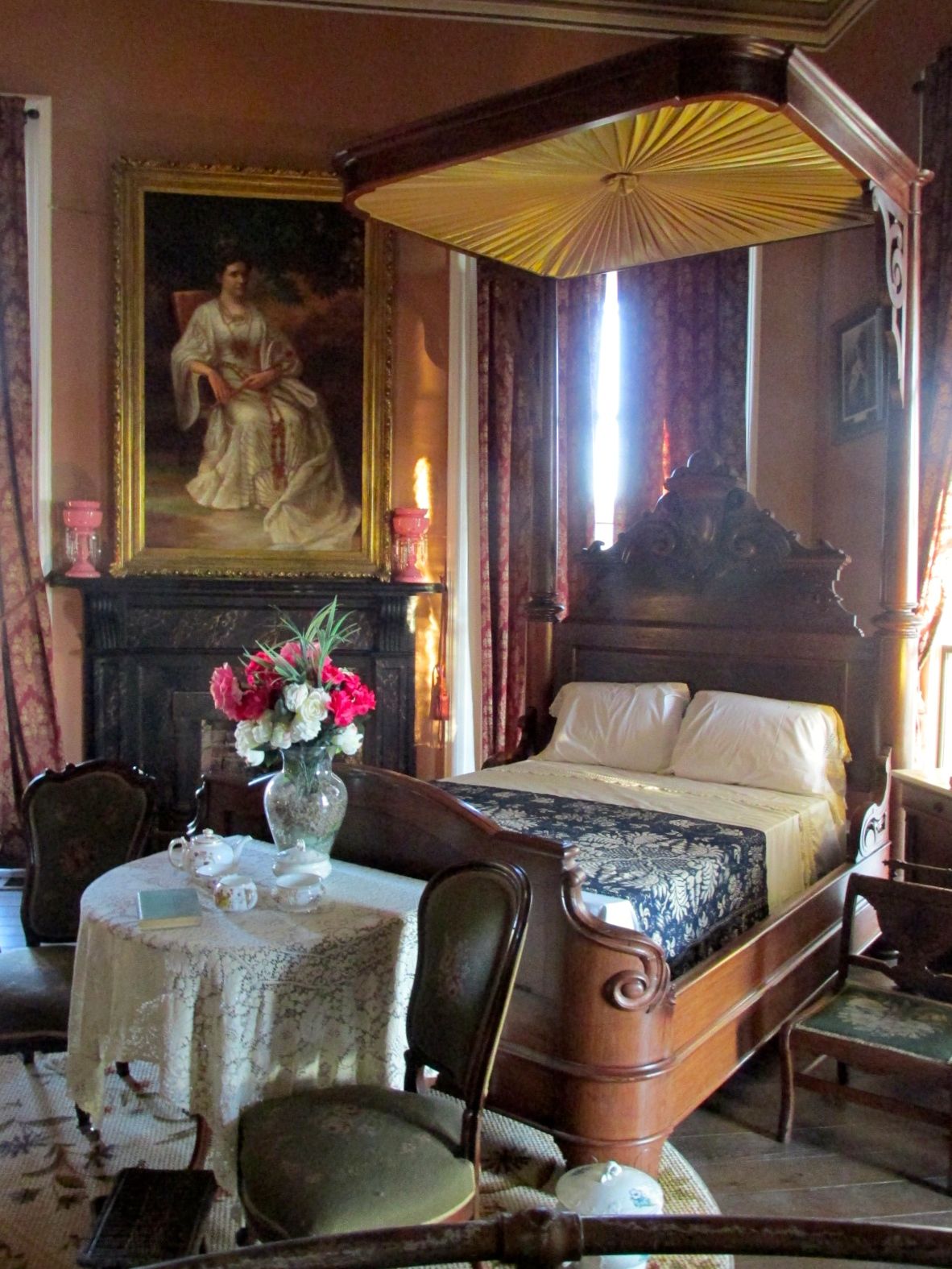
Front bedroom

This bedroom was another daughter’s room. That is her portrait above the fireplace. It was painted when she was the Mardi Gras queen for a krewe.
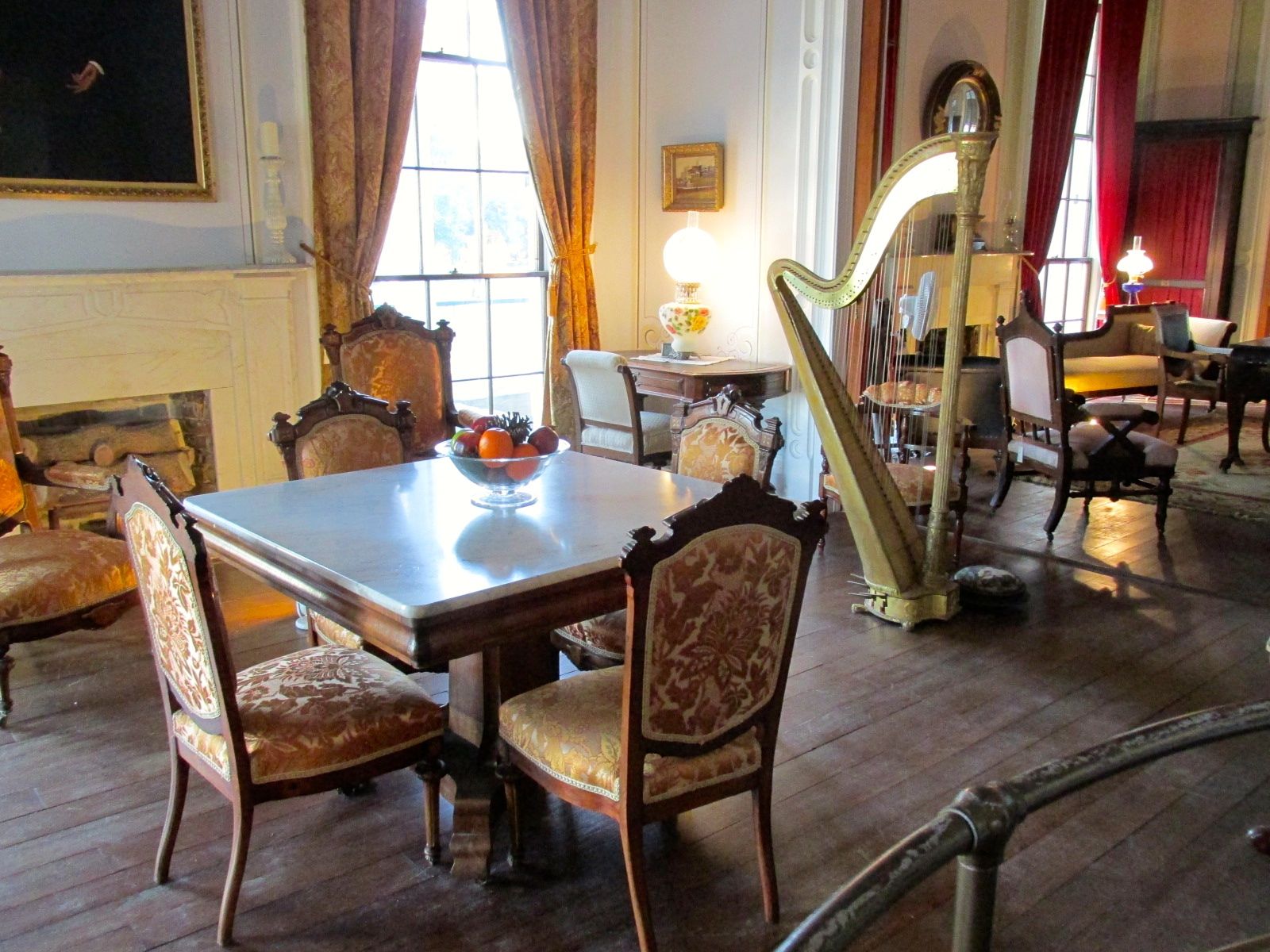
Parlor

This is the parlor. There is a massive piano to the right of the door, that is like the one that was in the house. The guide said that the daughters were musical. I asked if one of them played the harp. He said that they didn’t, but that the harp was left to him by Mrs. Dorsey.
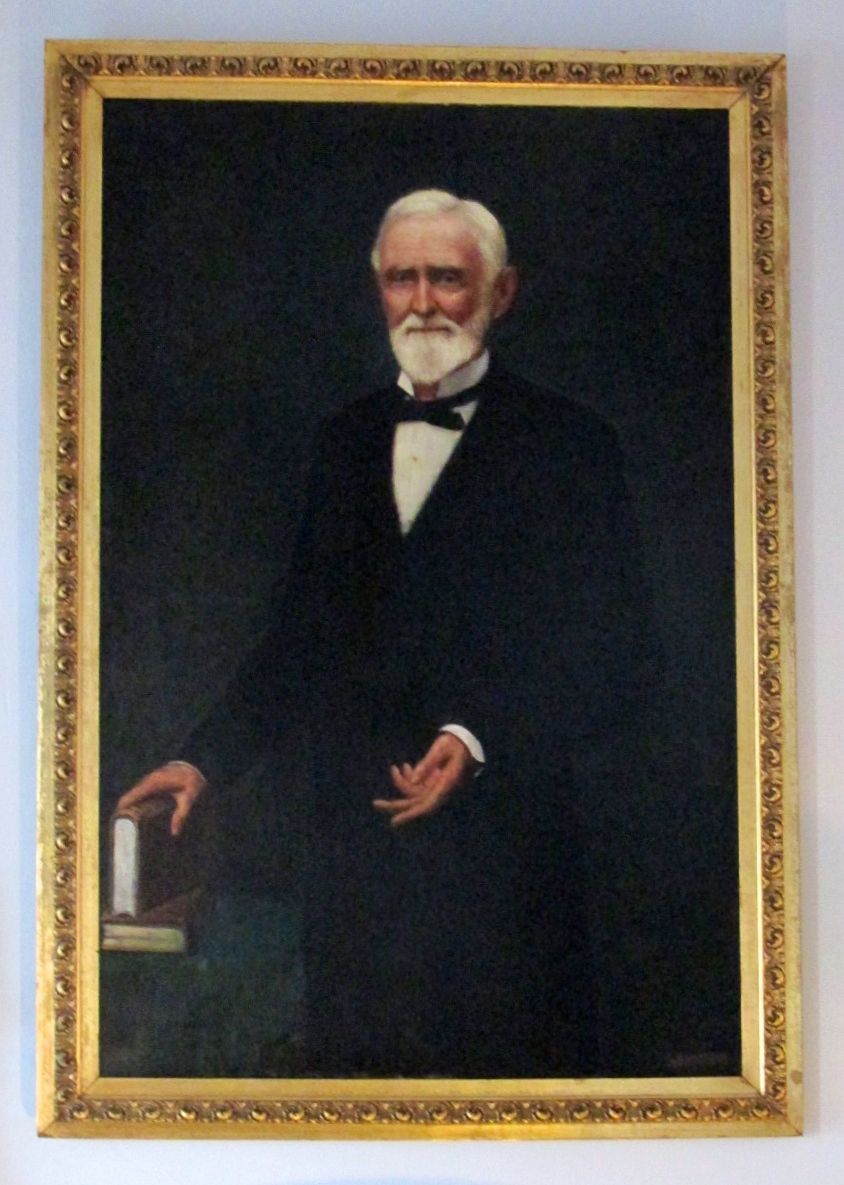
Jefferson Davis at 80

A portrait of Jefferson Davis hangs over the fireplace. It shows him at age 80, shortly before his passing in 1889.

It came with the house

The harp wasn’t the only thing that came with the house. This sideboard dates back to the first owner, James Brown. The guide told me that it was so heavy that the only time it left the building was for restoration after Hurricane Katrina.
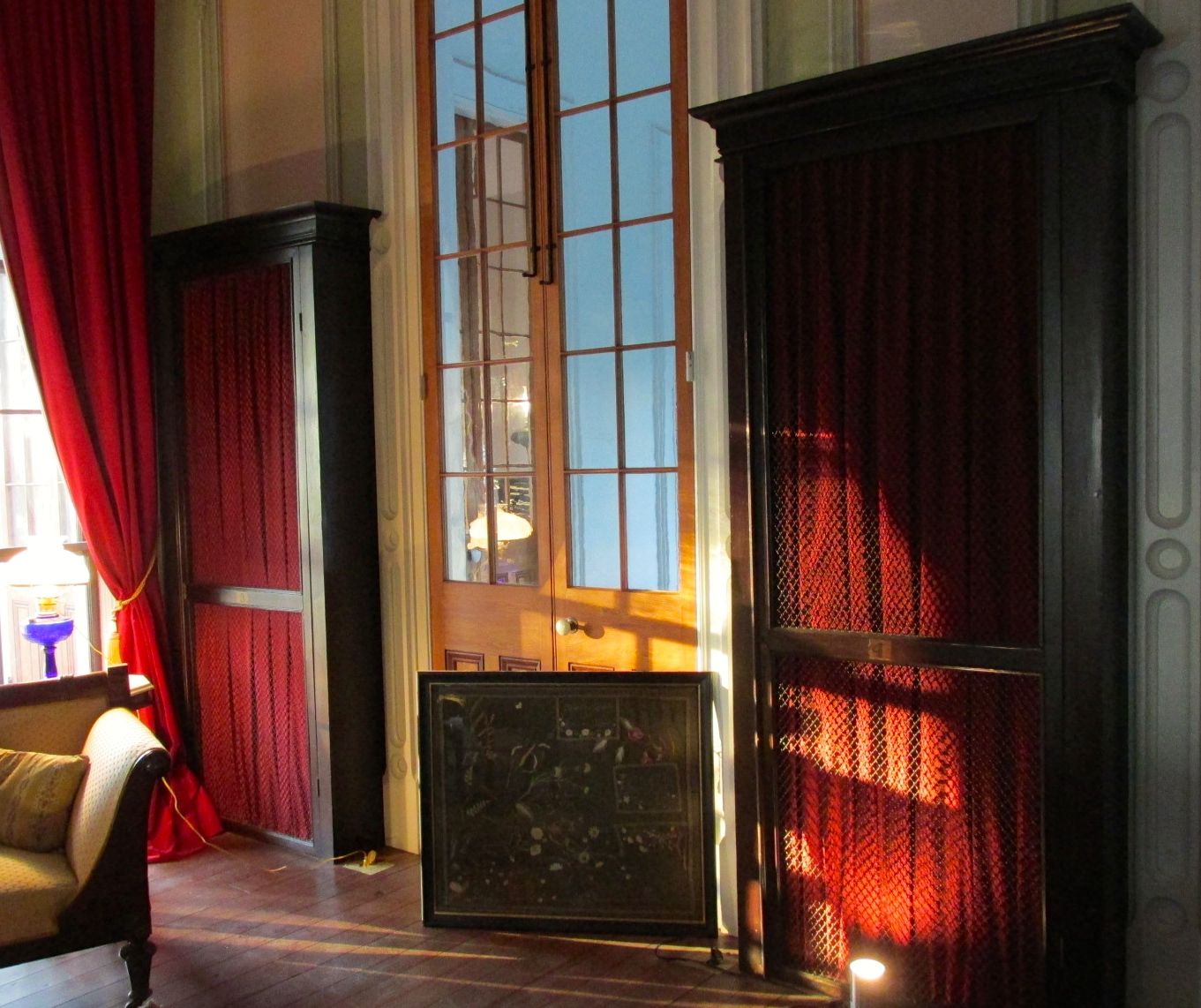
Bookcases in drawing room after lib of congress

Davis had the book cases in the drawing room built to resemble the ones in the Library of Congress. He served in the House of Representatives and the Senate as well as Secretary of War for Franklin Pierce.
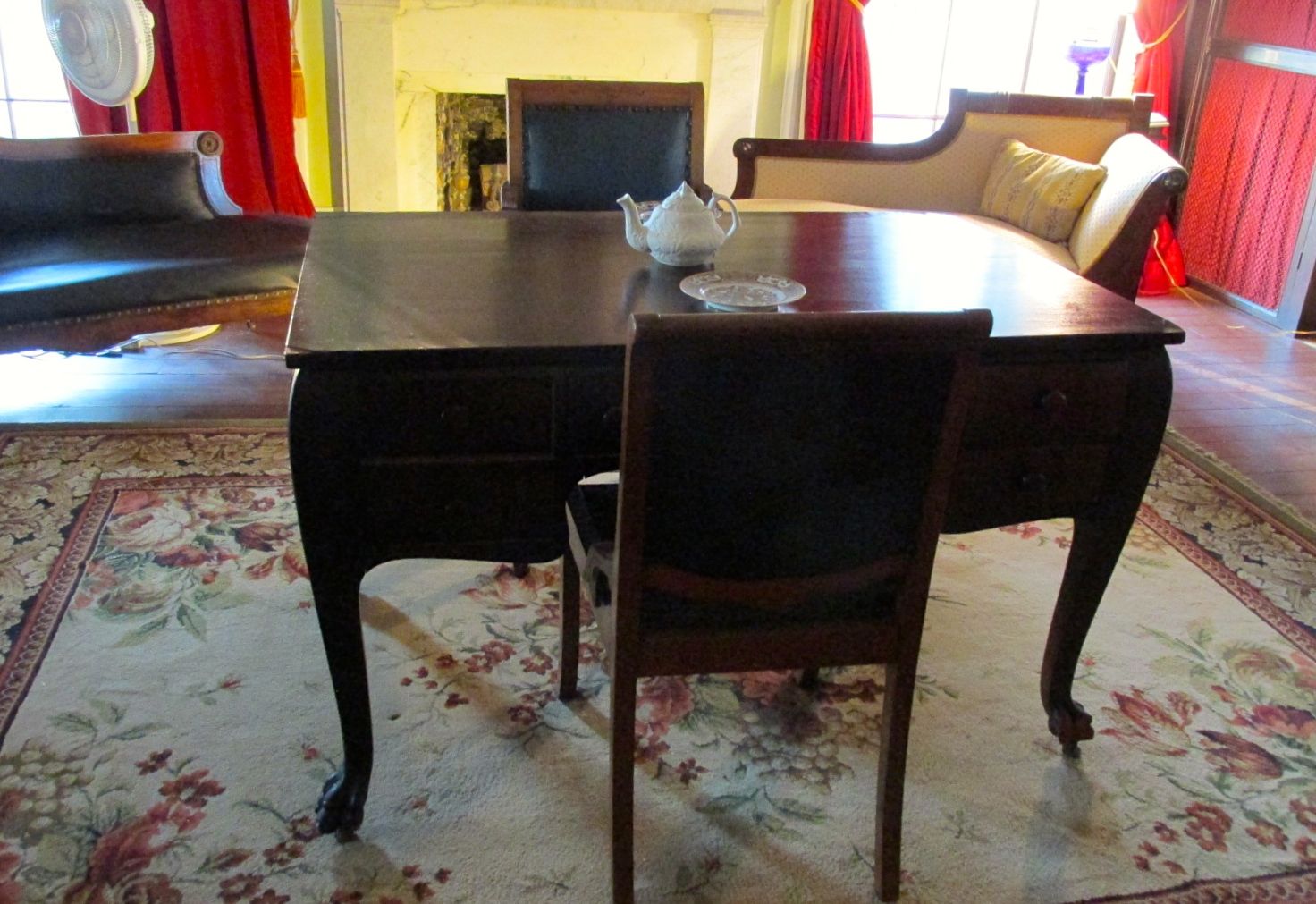
Partner desk

This partner desk was also in the drawing room. The guide told me that when Mr. and Mrs. Davis were eating alone, they often at at this desk rather than use the dining room.
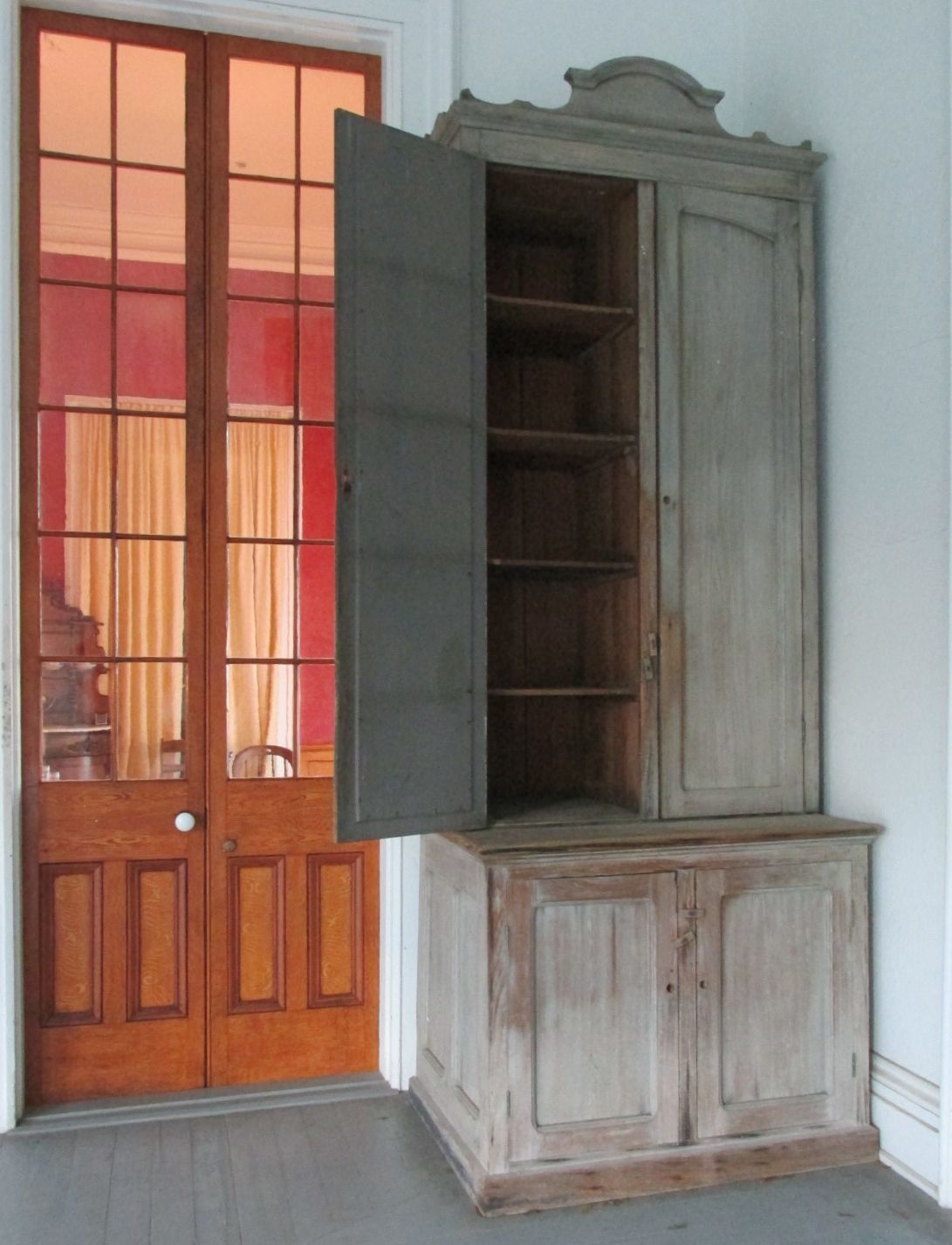
Cupboard

On the back porch, there are two cupboards that were made for the Davis family in 1879. They are made of cypress and you can see the water mark left behind by Hurricane Catrina. The water was 18 inches deep inside the house. Since the house is elevated 8 feet off the ground, it drove home how much water came ashore.

It will be interesting to learn more about the hurricane when I get to New Orleans.
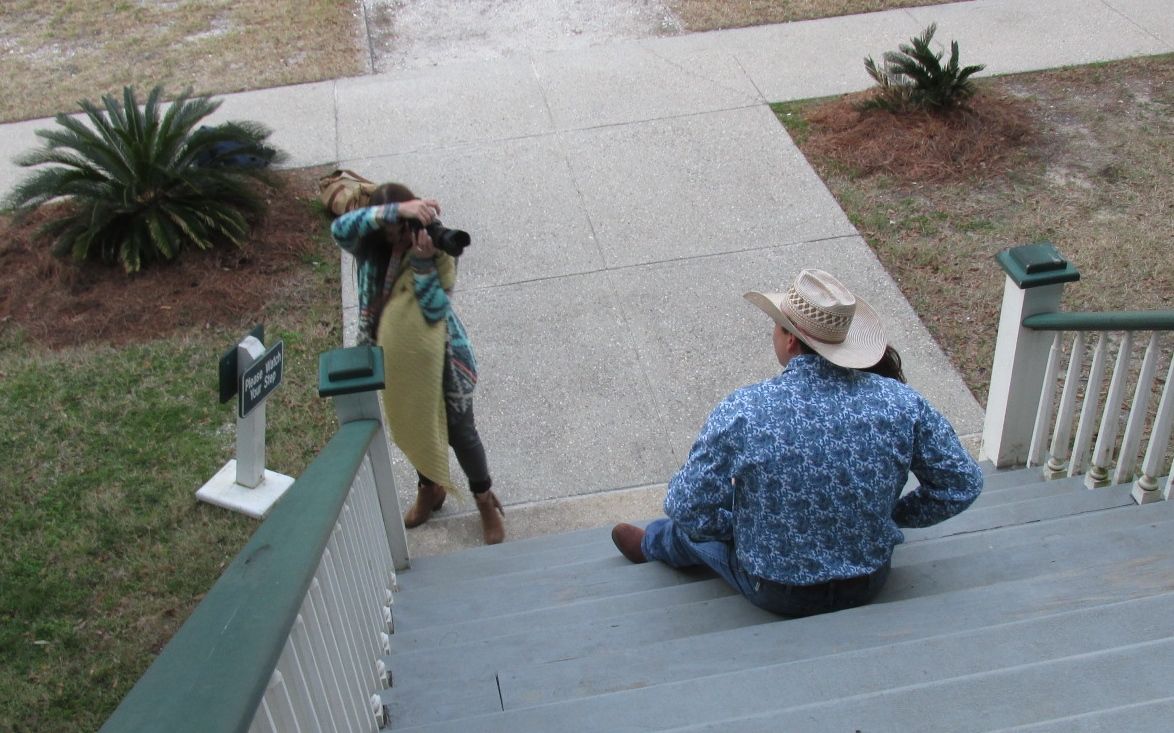
Photo shoot

When my tour was over, I came across another photo shoot! I sure do stumble across a number of them in historical sites.

Clearly, I will have to plan a repeat visit to Biloxi. But, since it is on I-10, I am sure I’ll be passing through again next year.
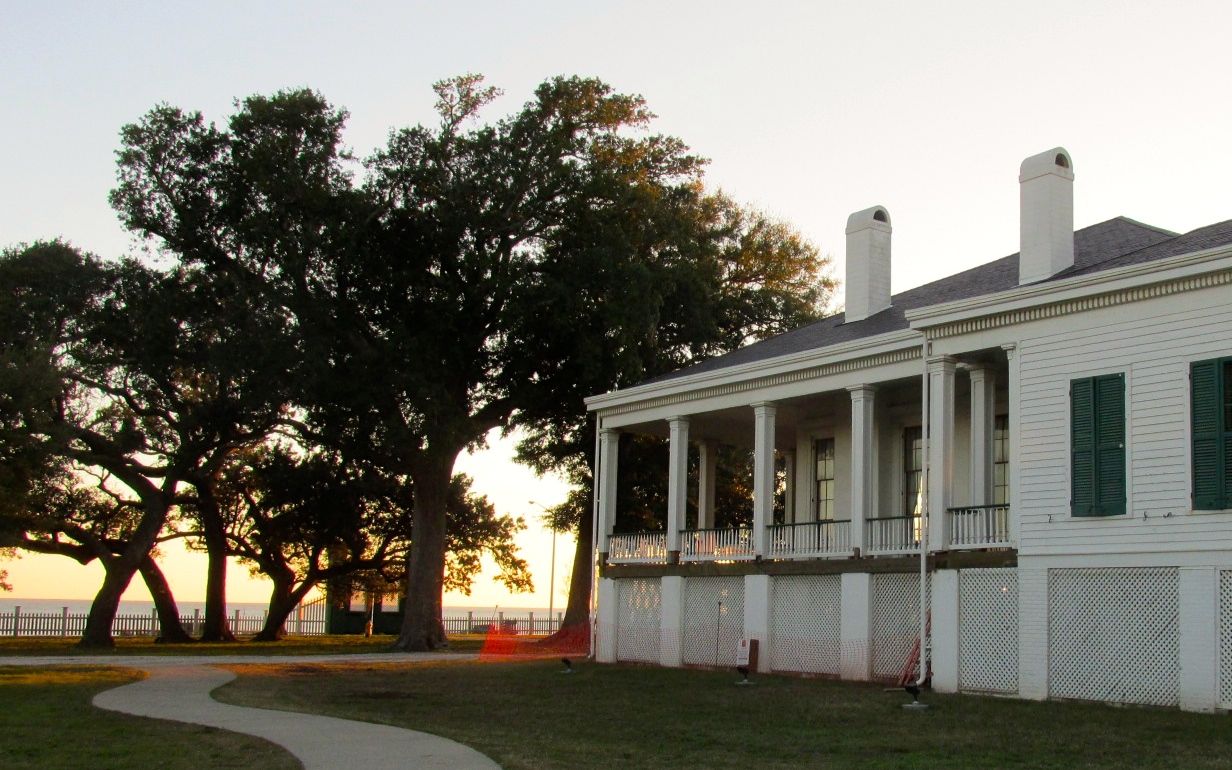
Beauvoir side

I headed back to the parking area, and paused to take a look at the Library and museum.
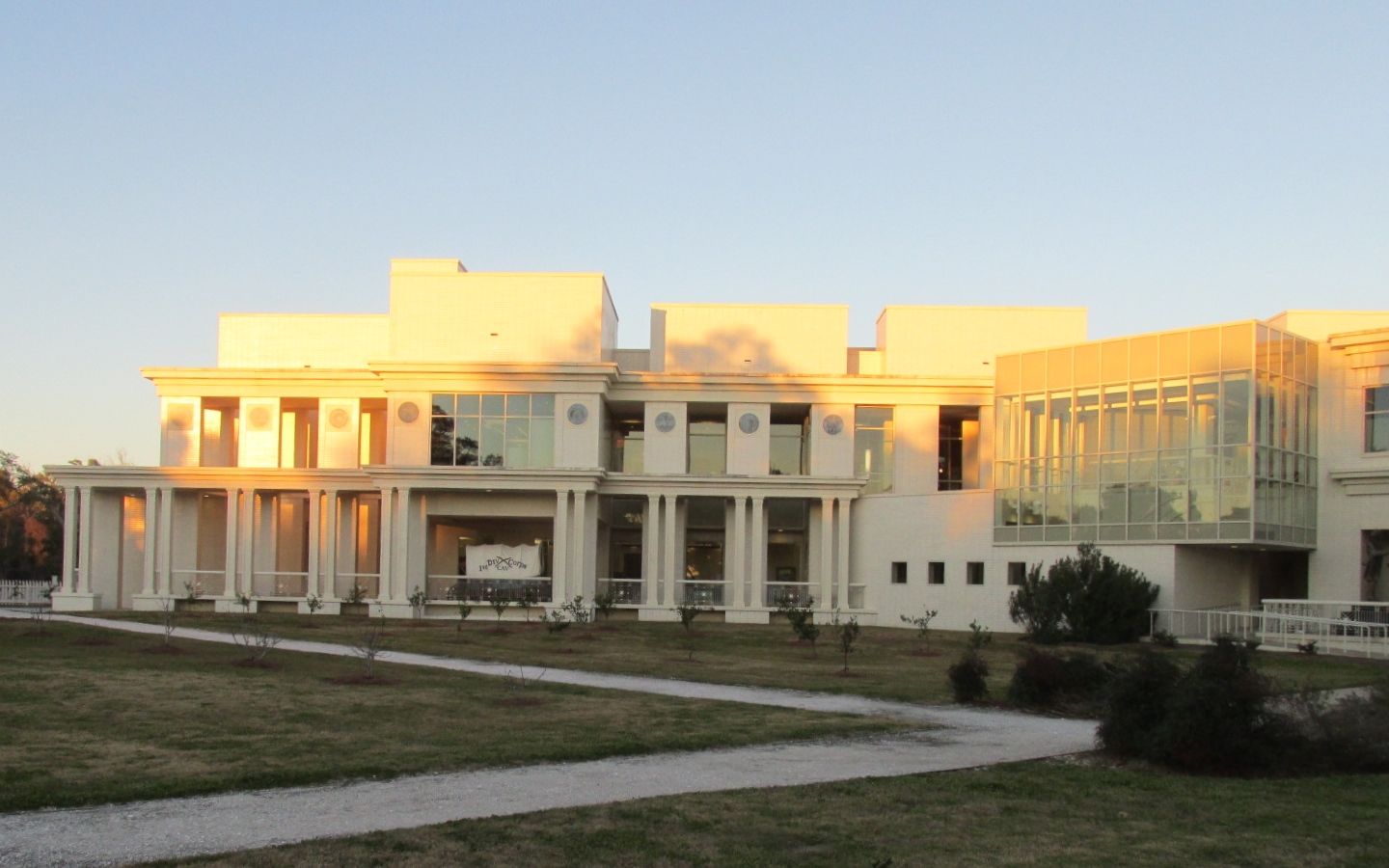
Jeff Davis library

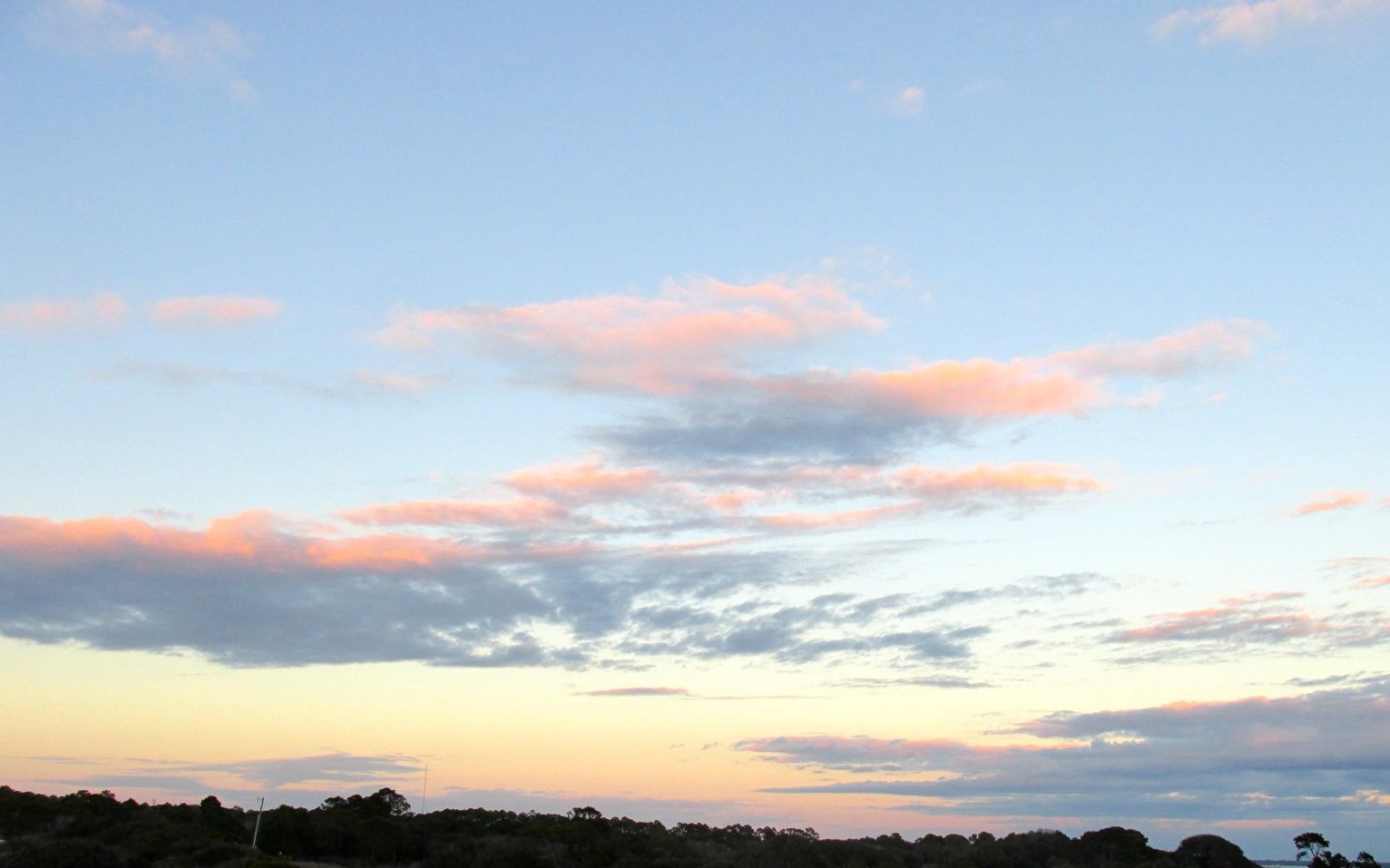
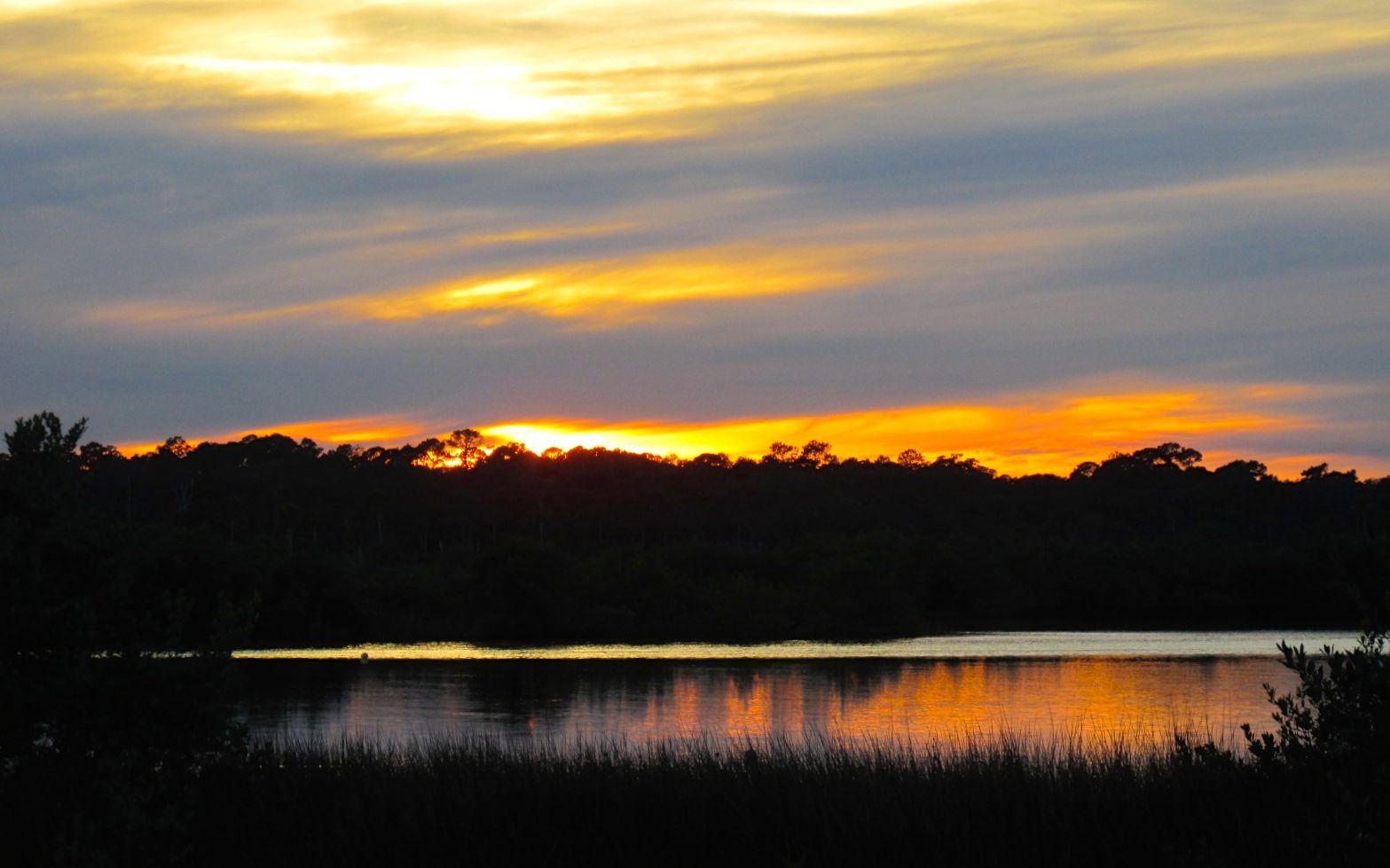
The sun was sinking in the west, and I wanted to get a photo. The air was cold and clear.
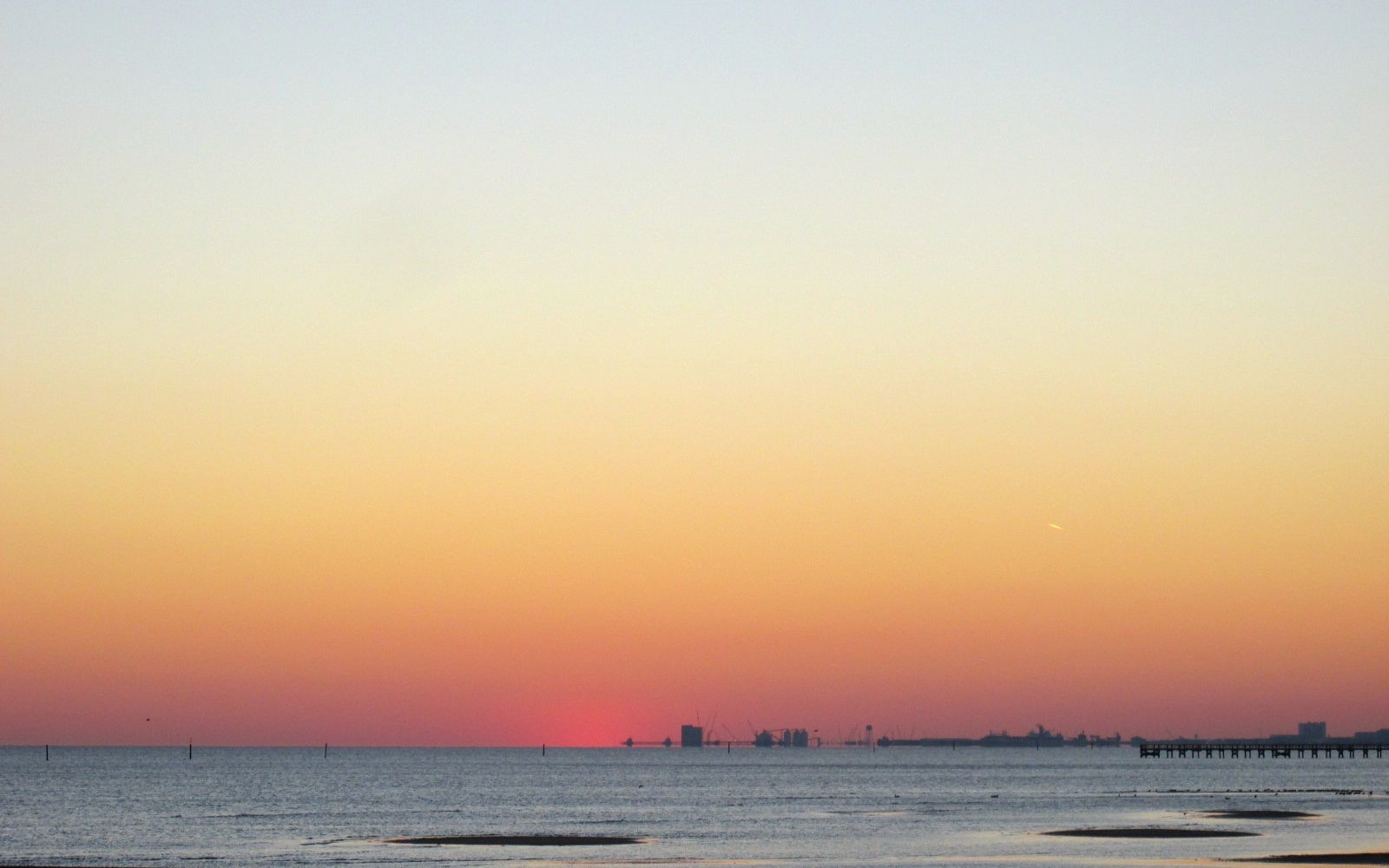
sunset

The day had started out kind of rough, but it ended nicely.

As I was heading east, I was smacked in the eye by a full moon rising over the trees. It was beautiful! I wish I had a good camera that could have captured the magical silver disk. The air was so clear, I bet I could have seen the flag that Armstrong and Aldrin planted in 1969.

I stopped for a loaf of bread before I turned in to the park. In the grocery store, there was a display of King Cakes. I decided to buy one and see what all the fuss is about.
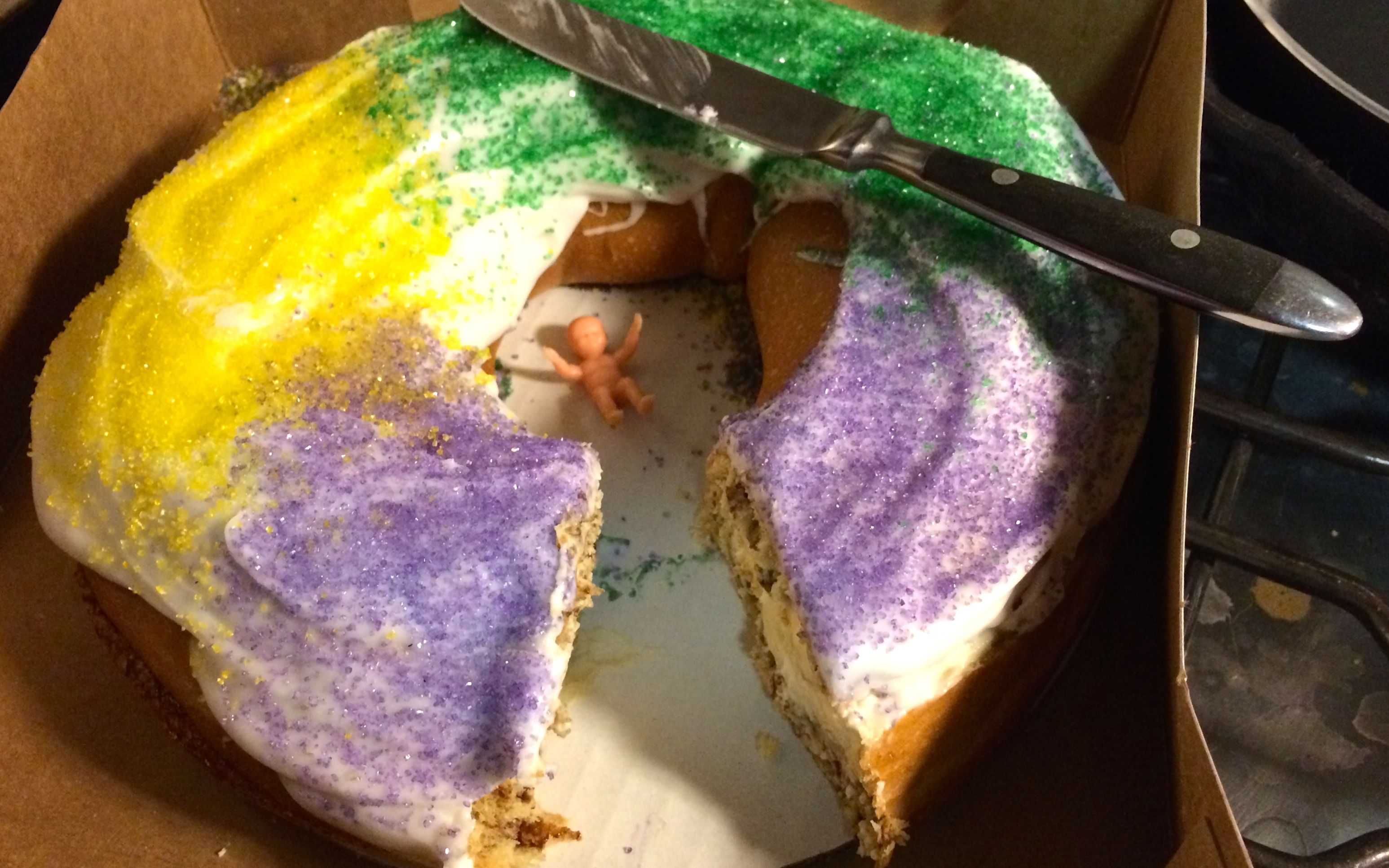
King Cake

I think I’m in love!



St. Andrews State Park, Panama City

When I first started looking at Airstreams, I was perplexed about why it mattered if the bedroom was in the front or the back. Flo has the bedroom in the front, closer to the hitch. I was told it was because people liked to be able to back into a site and then have a beautiful view while looking out the big window over the dinette.

“Yeah, right,” I thought.

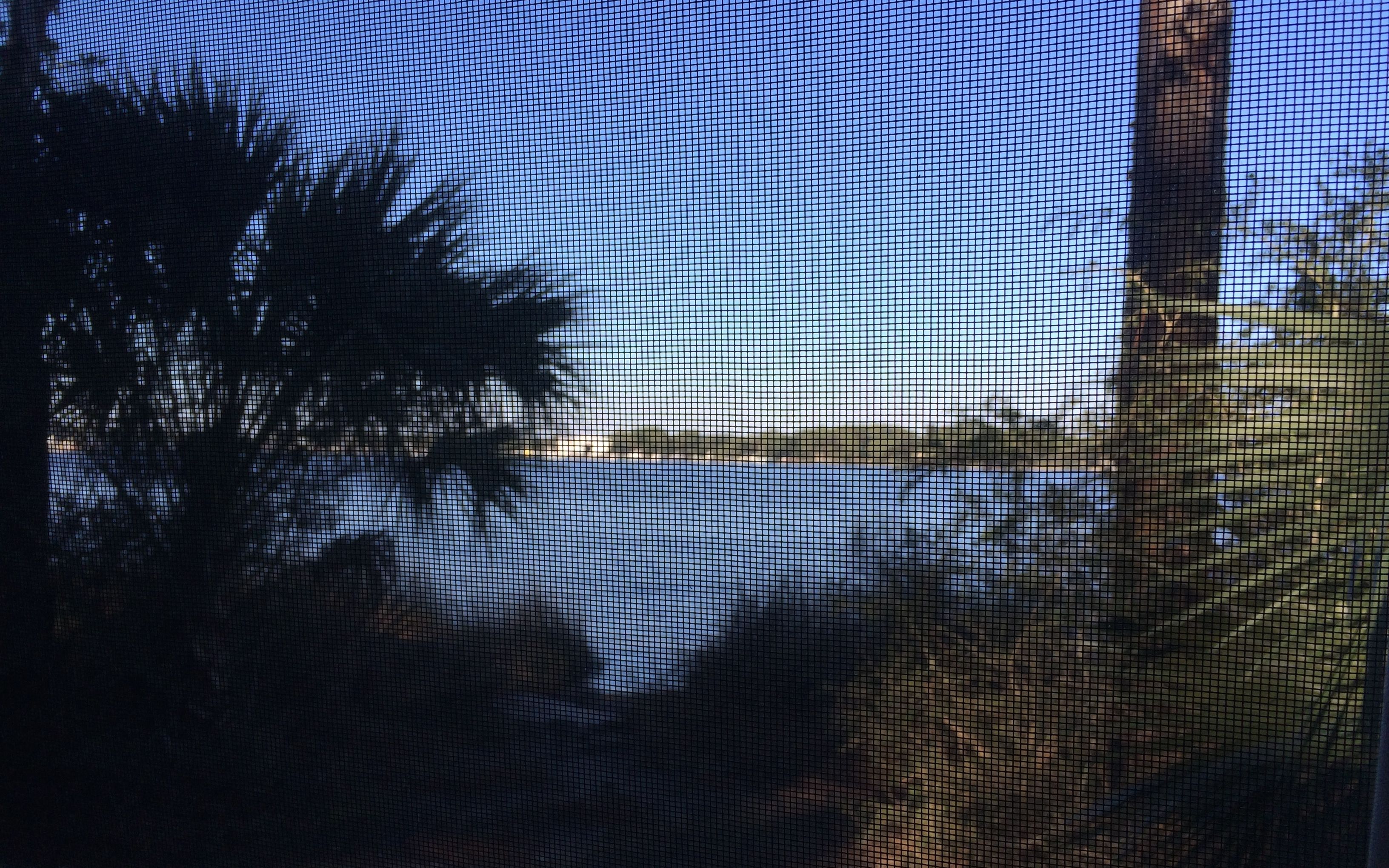
Well, it finally happened! When I backed into my site at St. Andrews State Park, the view out my window was incredible!
View out my window

You can tell I’m looking out the window because you can see the distortion caused by the screen.

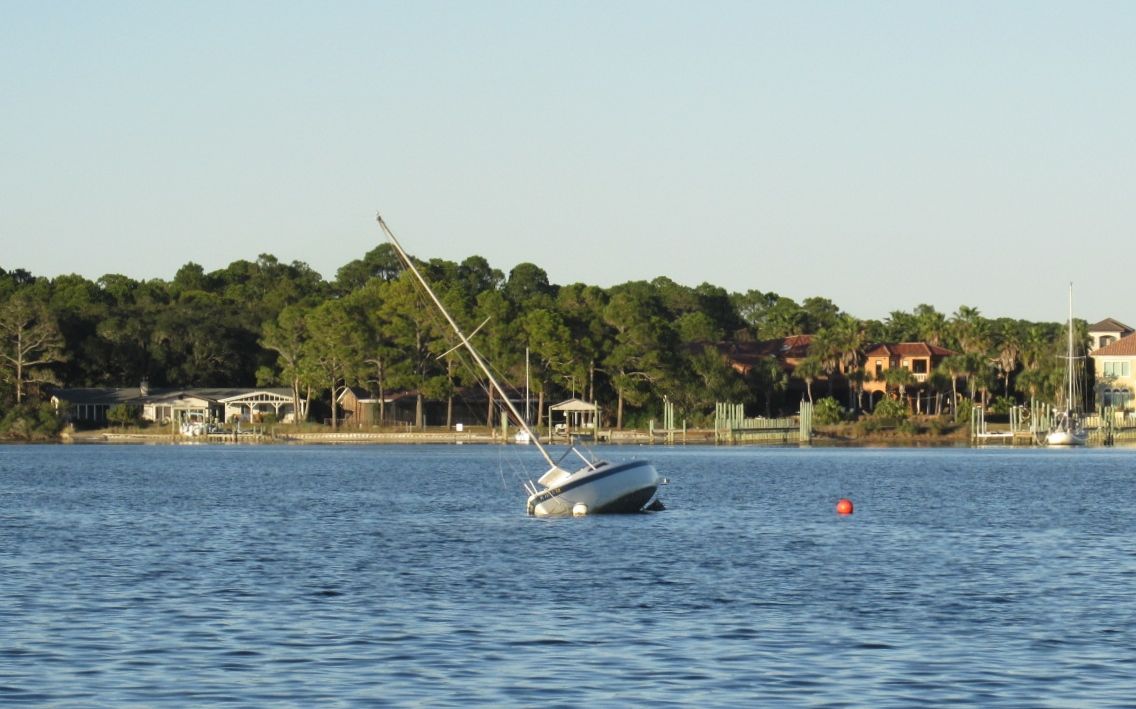
Of course, your view is affected by what you choose to focus on. I could focus on this swamped sailboat.

Listing Boat

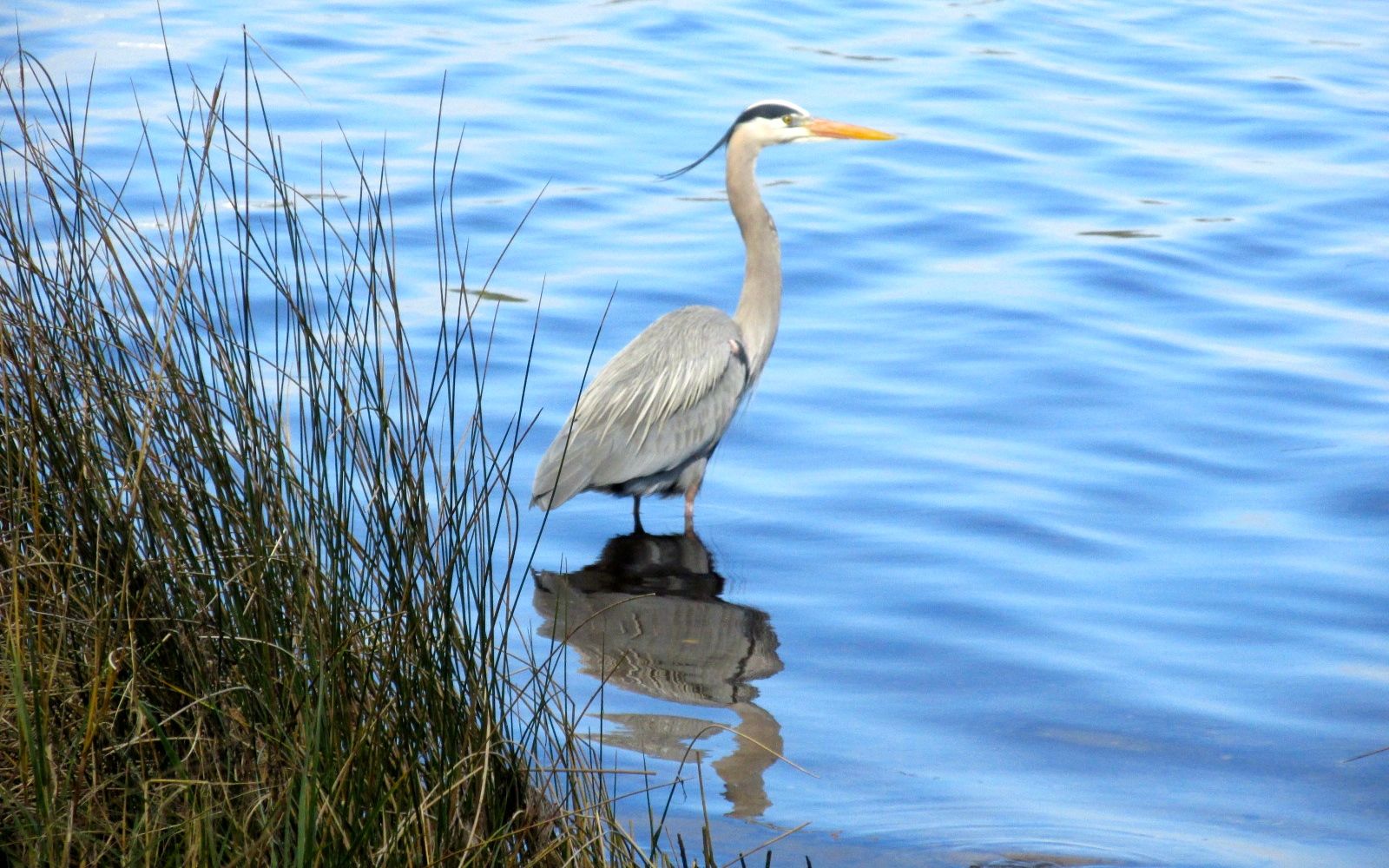
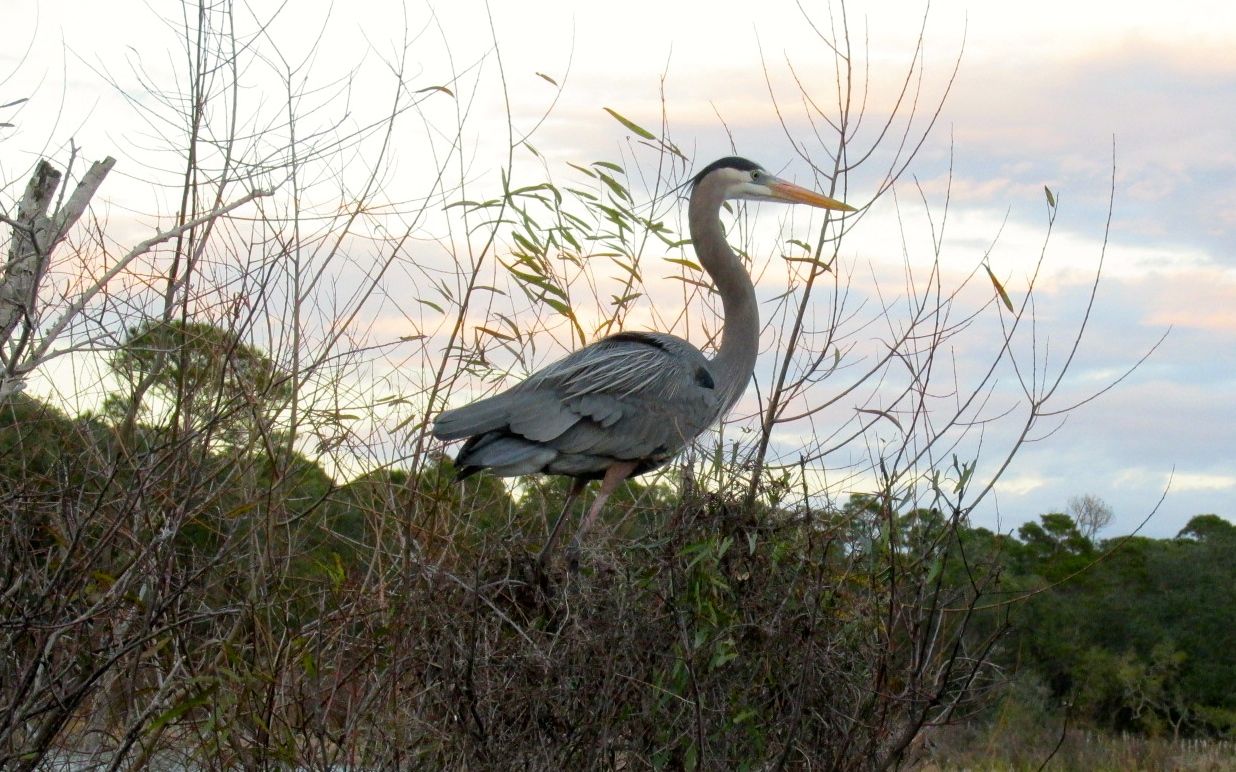
Or, I could focus on this great blue heron.

bird outside my trailer

Both of those were shot standing near the back of my trailer.

The cold temperatures continued, as did the sunshine. But, this park seemed to be beach-centric, and the cold weather made me feel like taking care of necessary chores – laundry, housework and so on.

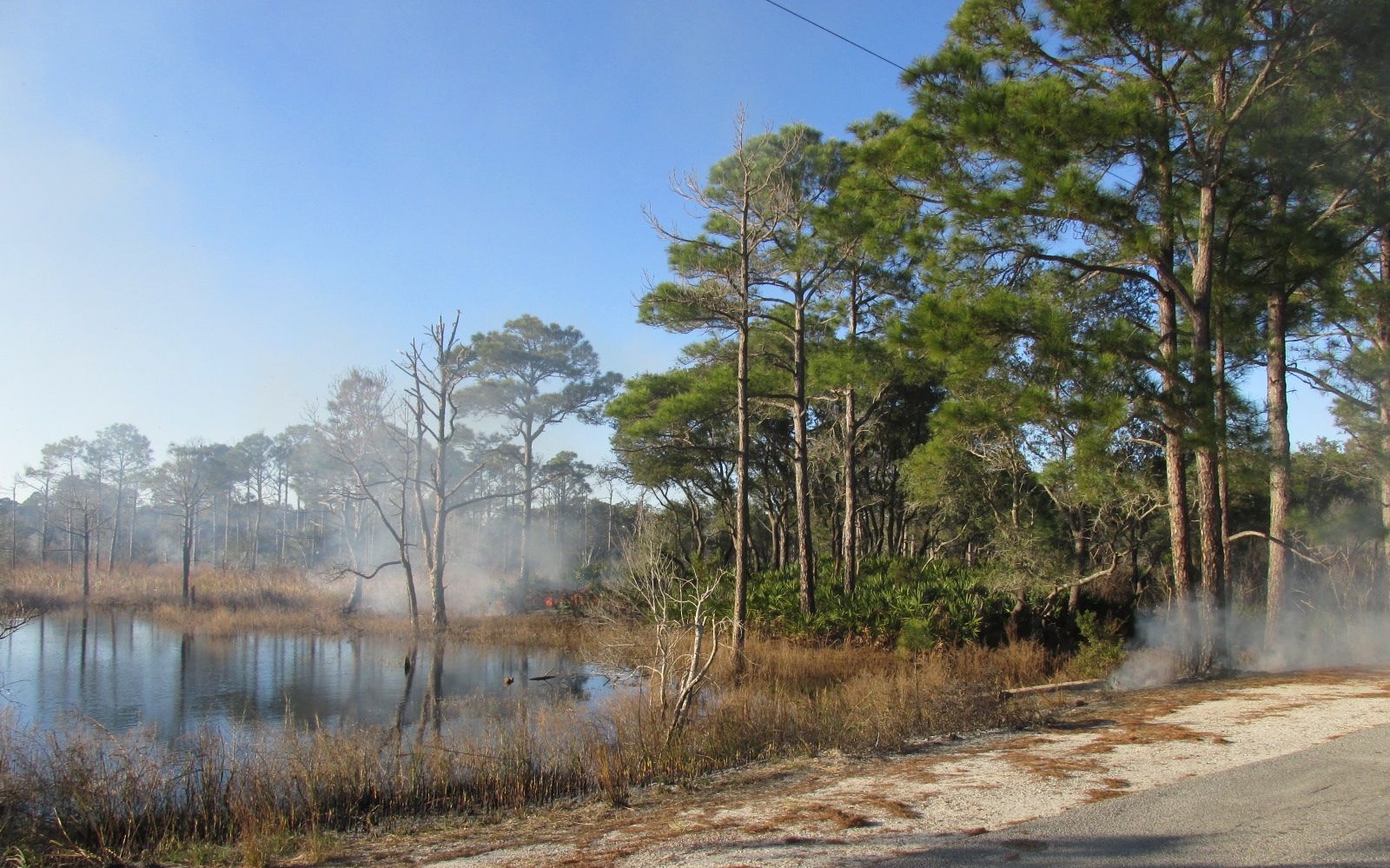
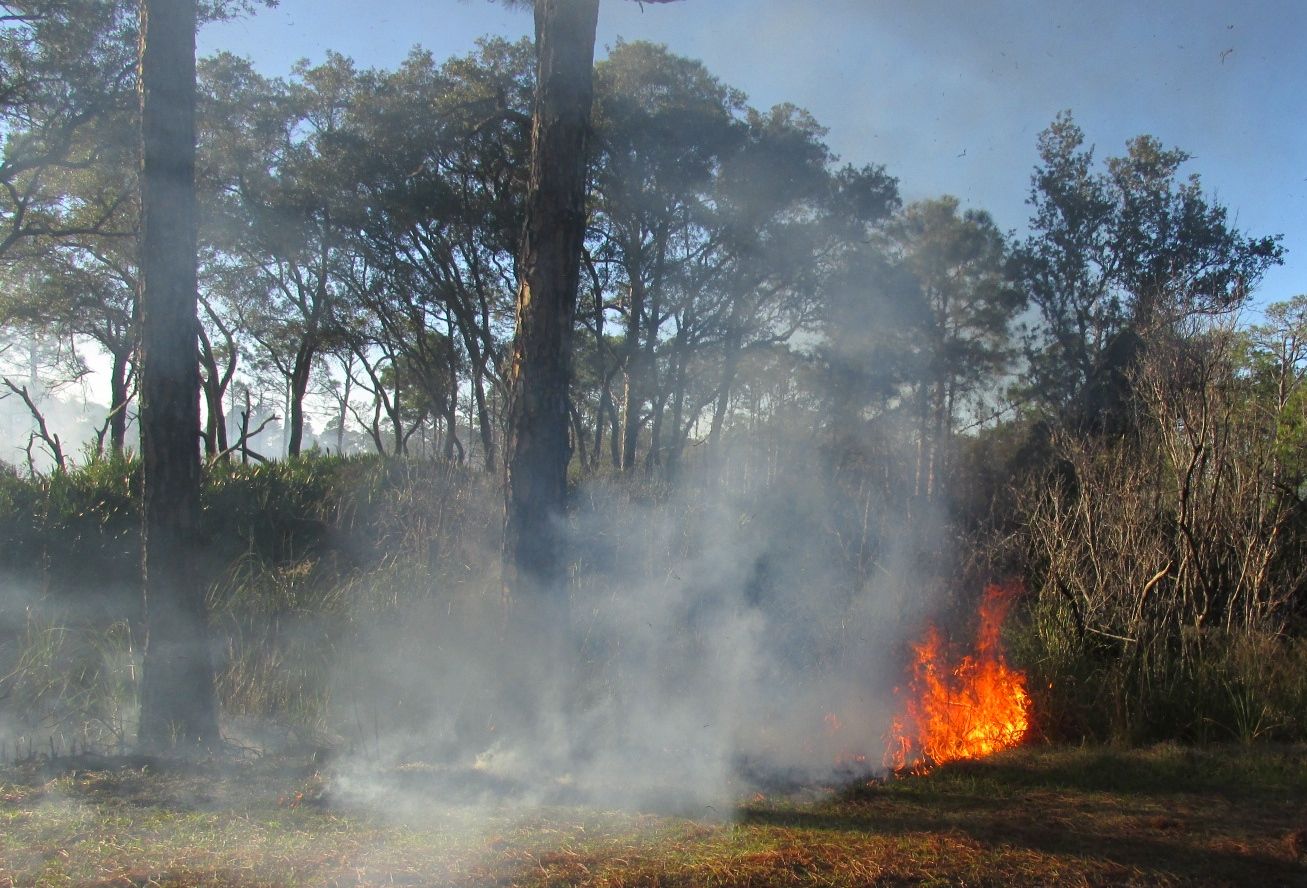
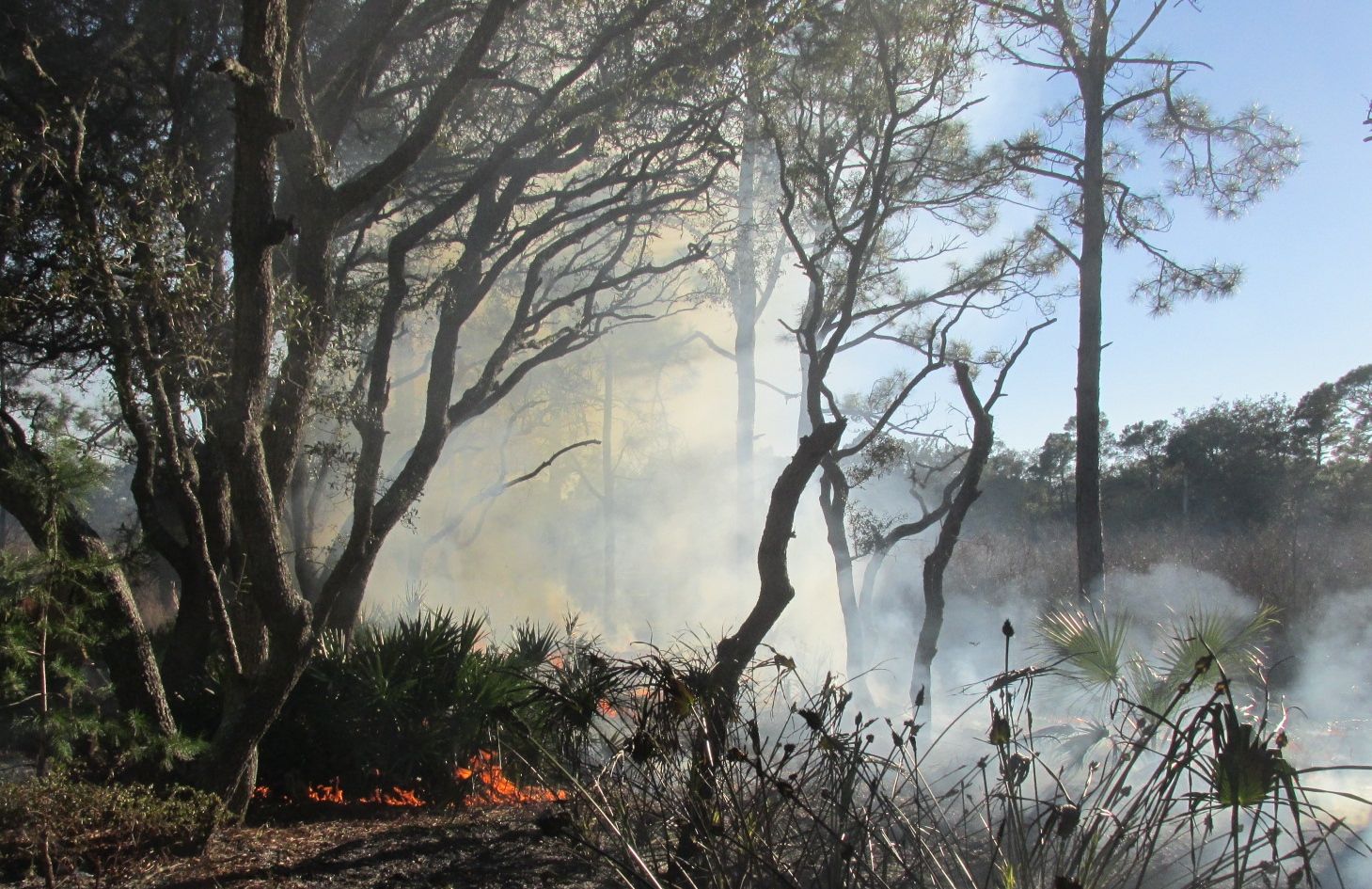
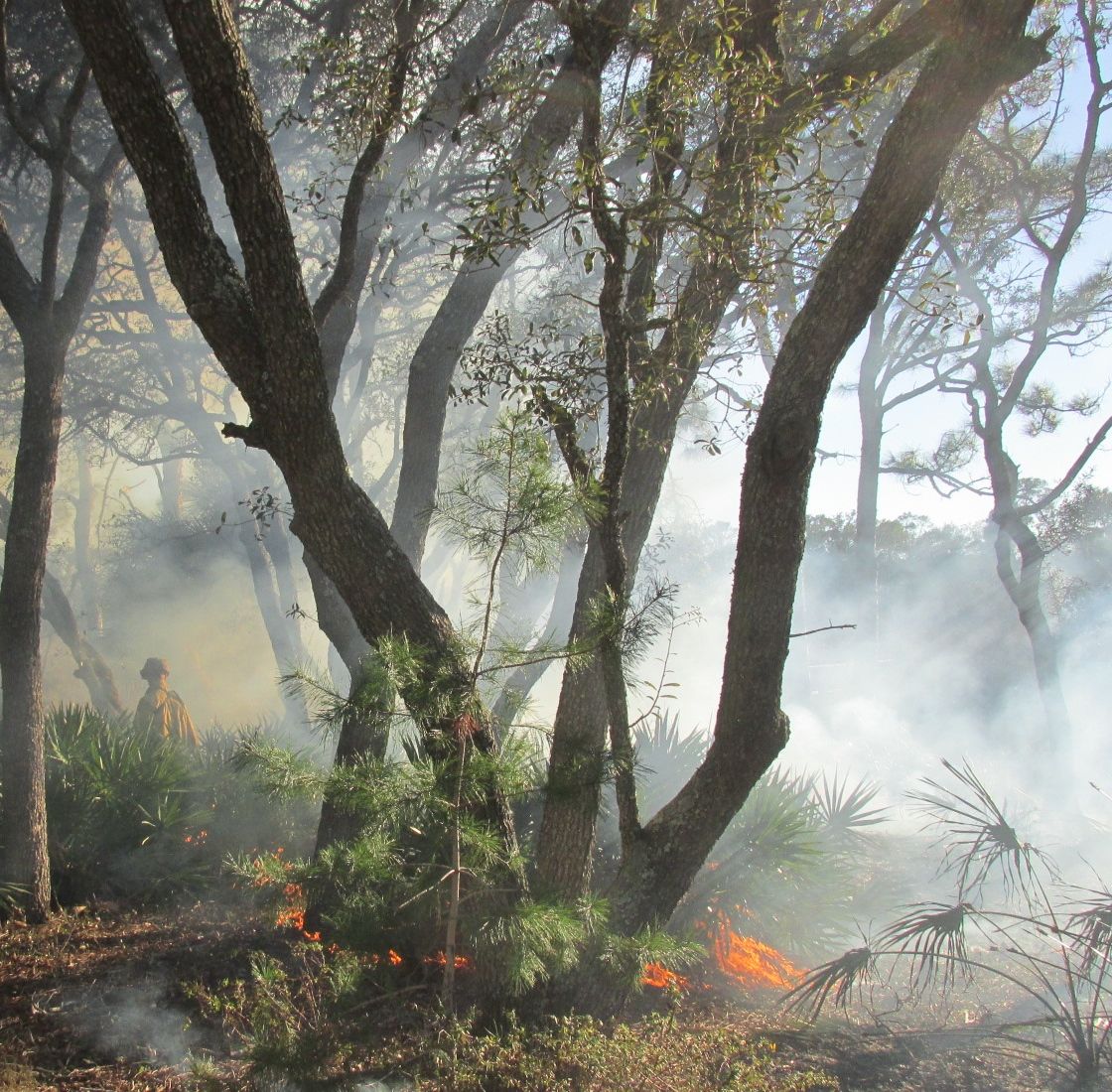
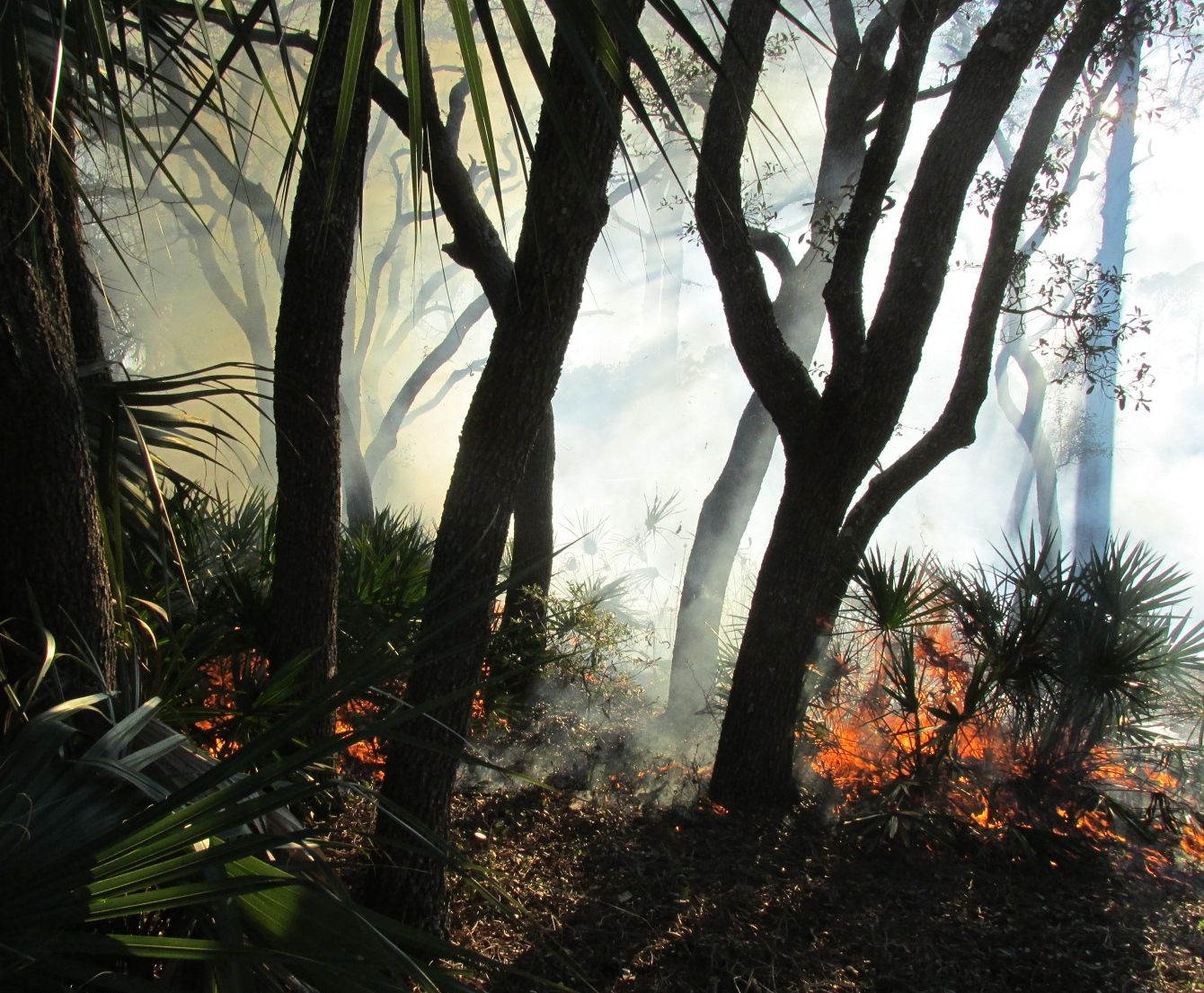
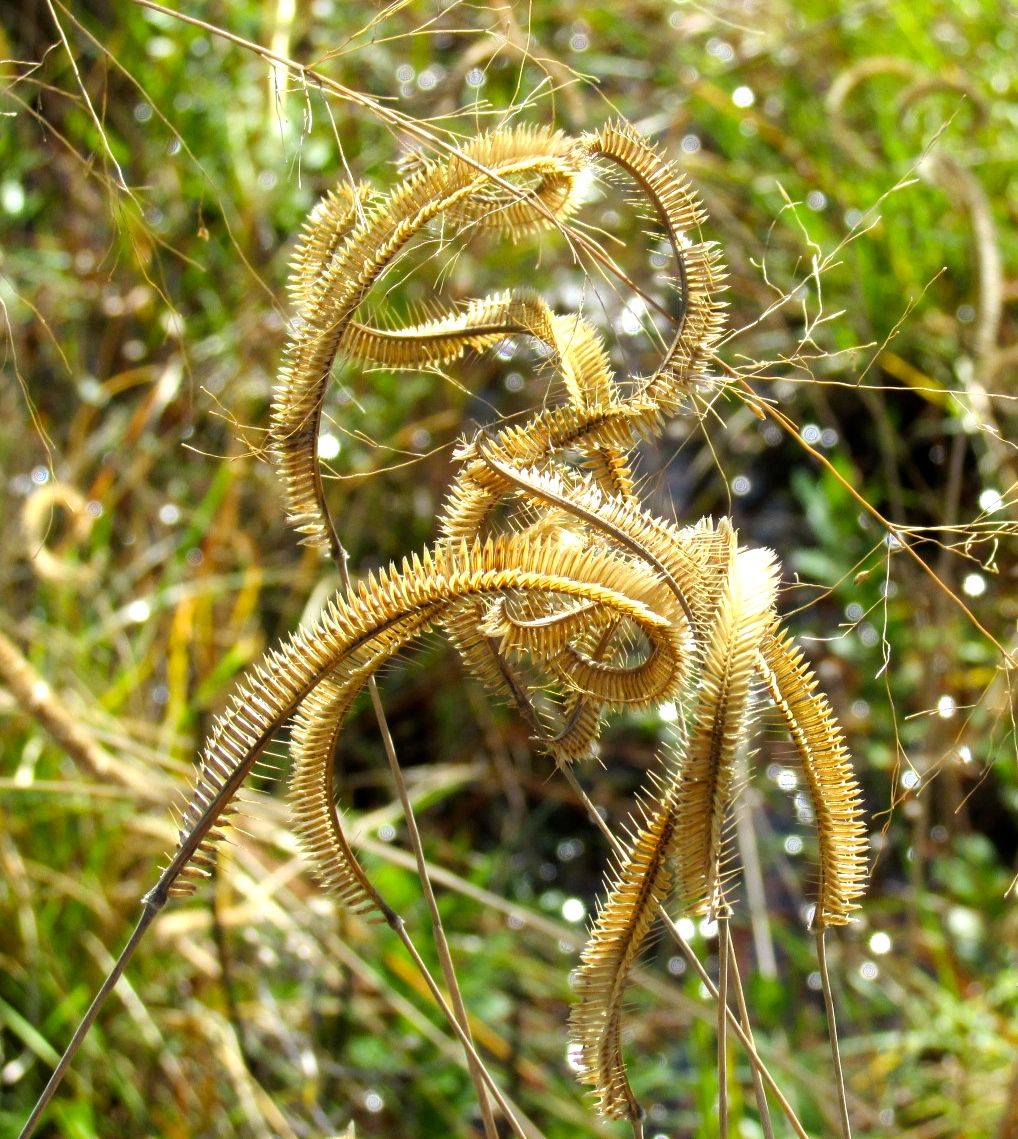
On my way back to the park from the laundromat, I came across something interesting. Well, interesting to me. They were doing a controlled burn! After seeing the results of controlled burns in Ochlockonee River State Park, it was interesting to see one in progress.
Controlled Burn 5

Controlled Burn 1

Controlled Burn 2

Controlled Burn 3

Controlled Burn 4

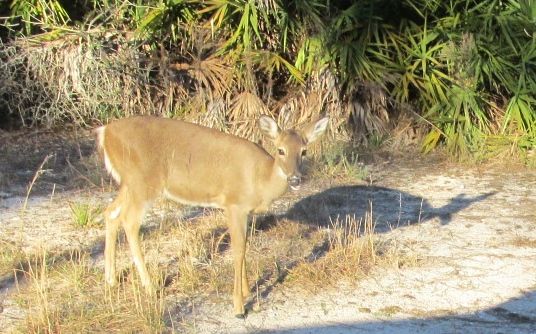
While all this burning and smoke was taking place, right across the road, deer were browsing.

deer

The following day, it was time for some housework. Yes, even I do housework from time to time.

As the day wore on, I decided to see if I could catch a sunset. Some clouds had rolled in, and I thought they might make for some interesting colors.

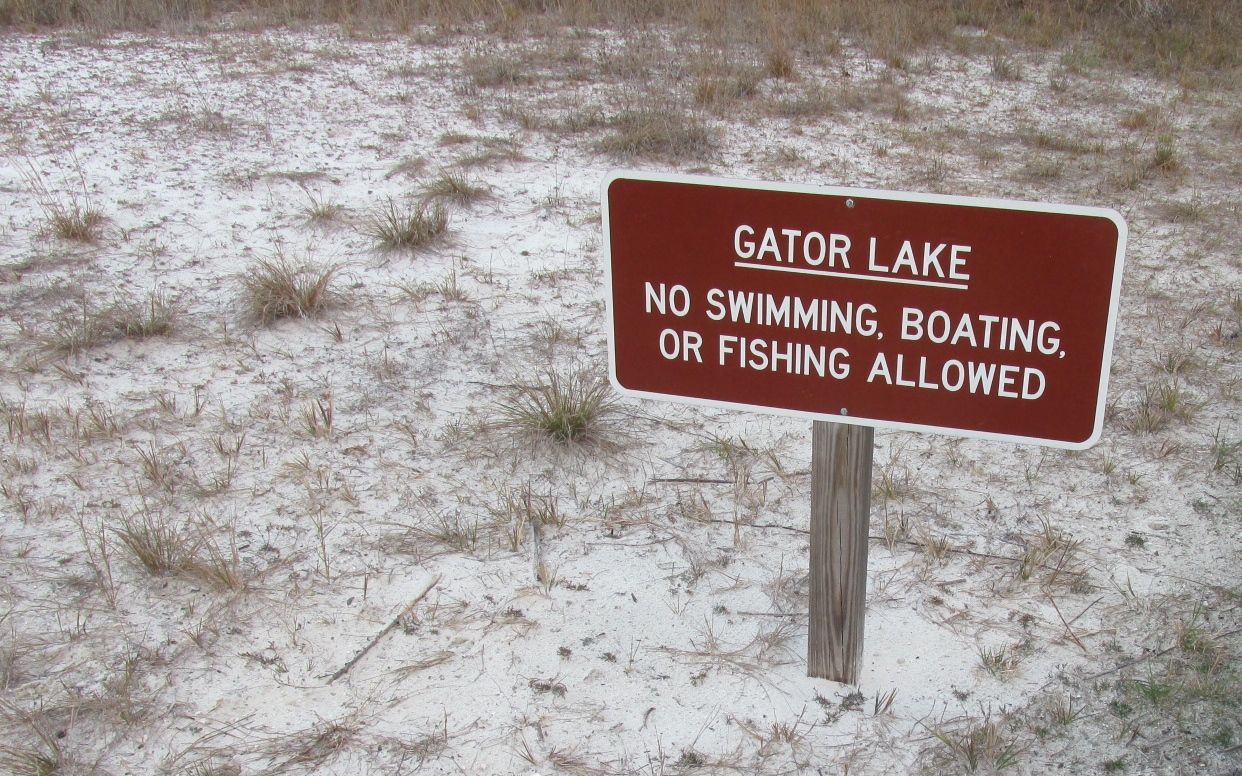
On the way, I passed Gator Lake.

Gator Lake sign

Gator Lake. No swimming, boating or fishing allowed. Hmm. I wonder if there are alligators in the lake? Might I finally see an alligator?

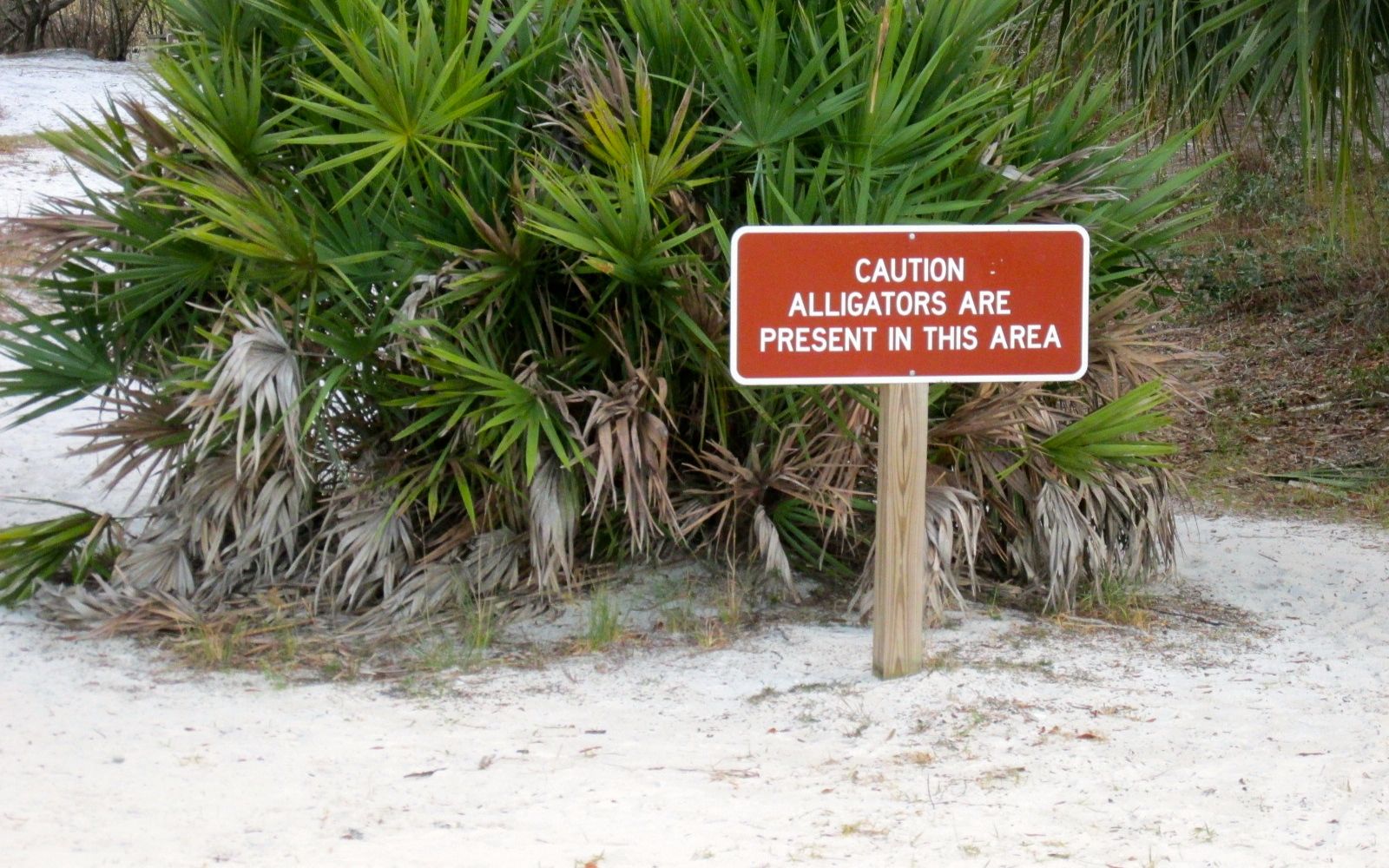
Caution Alligators present

Maybe!

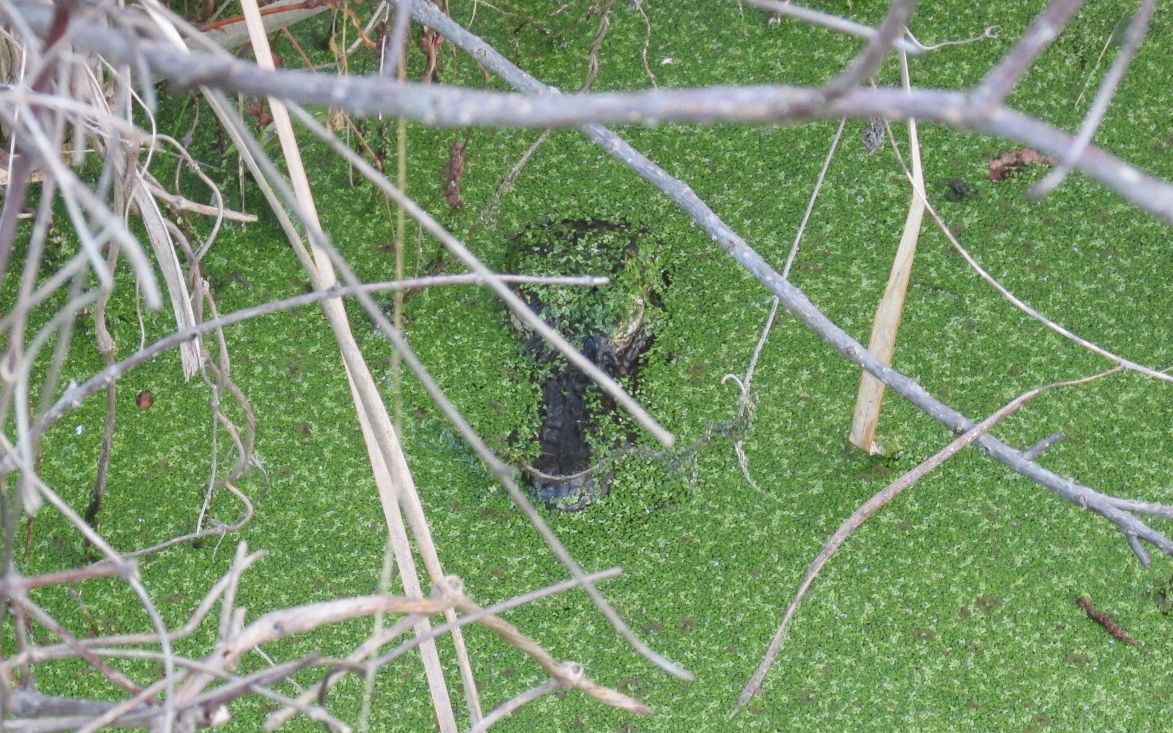
A real live alligator

Yes! I saw an alligator!
In talking with a photographer who lives in the area, he says that this fellow is 4 and a half feet long, and he showed me some shots he had taken of him when he wasn’t hiding.

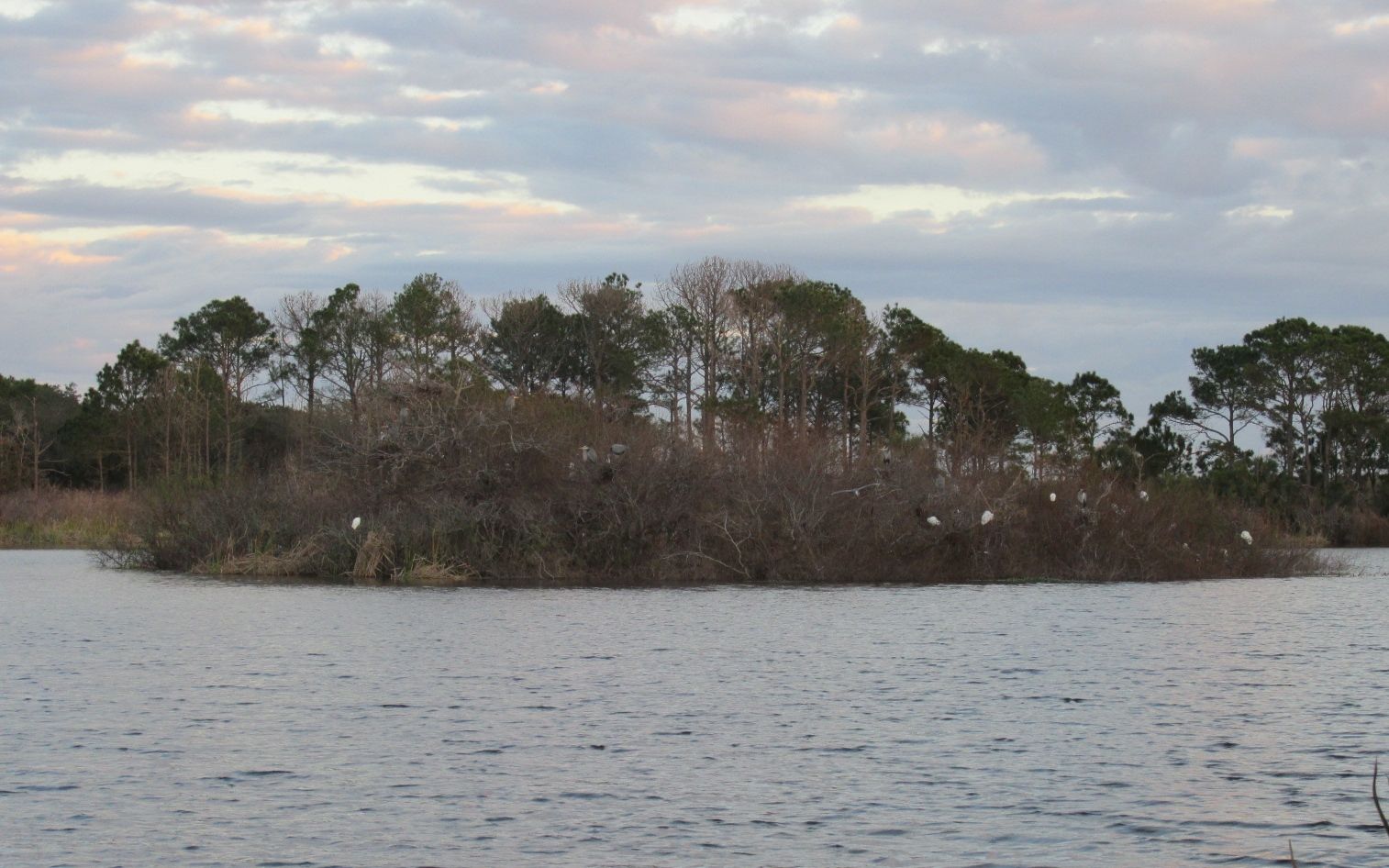
There were also birds. Great blue herons and egrets were perched on an island in the middle of the lake.

Bird Island in Alligator Lake

There was a great blue heron who was flying back and forth from the shore where we were standing. He was collecting sticks for building a nest on the island.

Stick colecting blue heron

The sun as getting close to the horizon, so I bid my new photographer friend adieu and headed for the beach.

On the boardwalk, I met a couple from Minnesota who were traveling in their A-liner popup. We chatted a bit about traveling and where we had been, and then the woman asked me if I was from Michigan. I looked down to see if I had my Discover Kalamazoo jacket on. I hadn’t put it on. I told her that I was and I asked her how she knew and she told me that she knew because I didn’t have an accent.

Go figure!

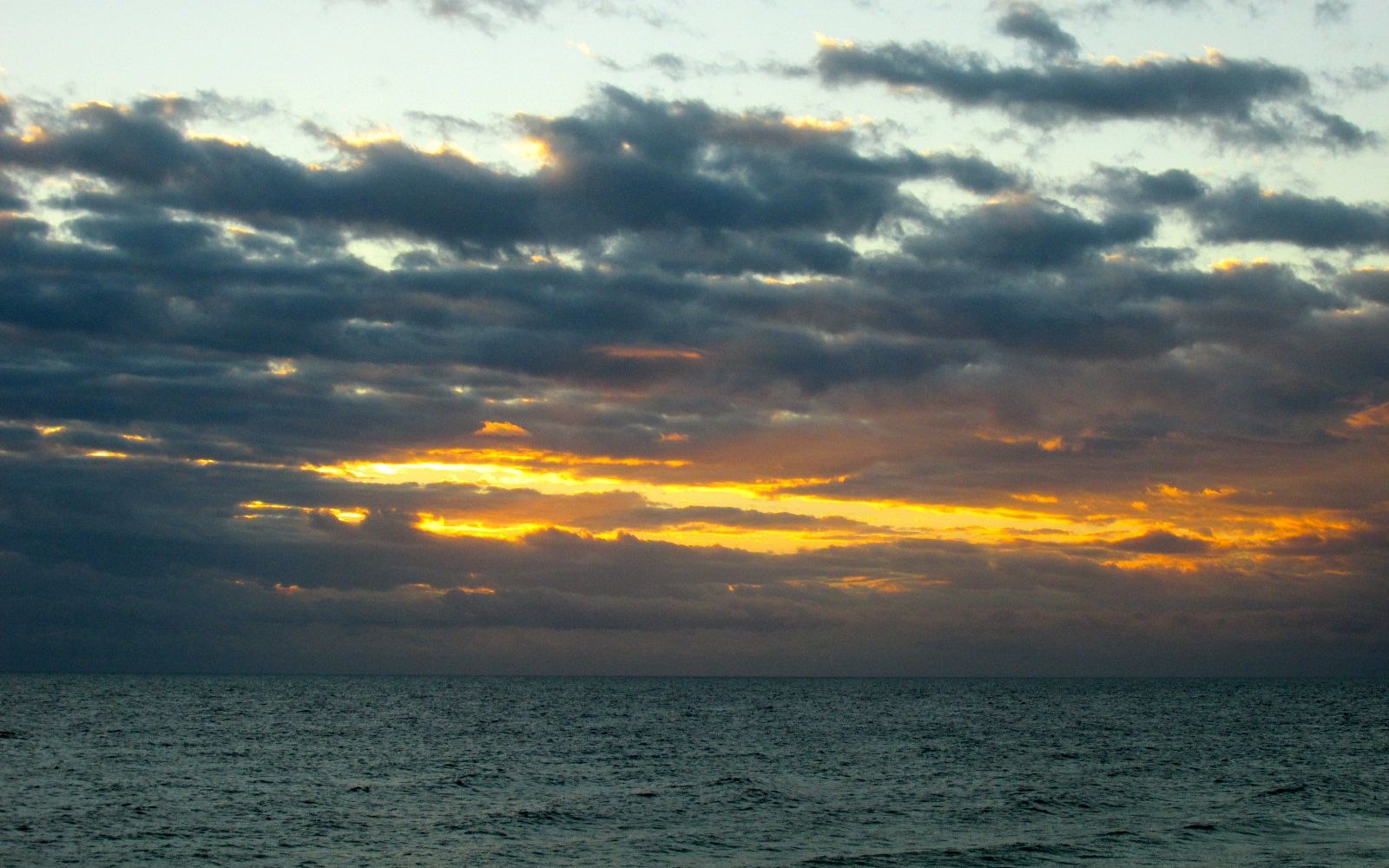
The sun went down.

Sunset to the west

Off to the east, though, the sky is clearing. Maybe the day tomorrow will be good.

Clearing in the east

February Funds

The good news: I spent less this month! $185.48 less.

I drove 1,885 miles, visited three states, stayed in seven state parks, one Army Corps of Engineers park and two privately owned campgrounds. My nightly campground average was $18.91, which is $11.75 less per night than last month.

Let’s hear it for less!

Here’s the breakdown of where my money went in February.

  • Other purchases                        $ 937.48
  • Campgrounds                               548.50
  • Gas                                                  308.50
  • Groceries                                       272.41
  • Tourism and Entertainment     126.64
  • Truck                                              116.32
  • Restaurants                                     71.56
  • Trailer                                              69.96
  • Laundry                                           12.00
  • Food and Drink on-the-go              9.27
  • Tolls and Parking                             8.00

                                                                              TOTAL      $2.479.64

If you care to compare with last month’s expenses, you will notice a big jump in the category “Other Expenses”. That is due to a few big expenses. I filed my income tax with H&R Block. They charged me $480.75 for their services. While I appreciate having someone else do it for me, now that my income is less variable, I might just try file my own next year.

The other big expense was applying for a passport. Sometimes you just have to take care of things like that. That cost $136.25. I also had my cell phone bill come due. $178.29. I have Verizon with 20 GB of data, unlimited talk and text.

I had to have my oil changed this month, which was $102.32, including replacing the air filter.

I also walked across the border to get my teeth cleaned while I was in southern New Mexico. That was $40, including the antibiotics I have to take when I have dental work done. I kind of wonder if that was the usual price…but it was cheaper than my co-pay when my regular dentist takes care of me. And now I have clean teeth.

Do you suppose going to Mexico for dental work and lunch should be classified under tourism?

Dental tourism

Apparently it’s a thing. (I was in the desert, though.)

What’s up for the coming month? Well, my water pump on Flo the Airstream needs to be fixed. Since I purchased an extended warrantee when I bought the trailer, that should run $100. A big bite is going to be the truck tires. I am looking at them and they look to me to be running on borrowed time. I expect to spend in the neighborhood of $1000 for the new rubber.

money bag

That’s the way the money goes…


A Little Excitement on the Way

So, the weather forecast was a bit worrying for the day I needed to move from Gamble Rogers State Park to Ochlockonee State Park. The weather forecasters were predicting lines of severe thunderstorms. I figured that the earlier I left the better it would be. I was looking at a five hour drive.

I got hitched up and ready to go by 9:00. It hadn’t started to rain yet. However, by the time I got to St. Augustine, about 20 miles away, it was raining so hard that I couldn’t see. It was almost as bad as a whiteout. I turned on my flashers and slowed down – way, way down. I think I was going about 30 miles an hour for a miles or so. That was exciting.

It rained off and on for an hour or so. Then it stopped raining and finally they clouds cleared and the sky was a bright blue.

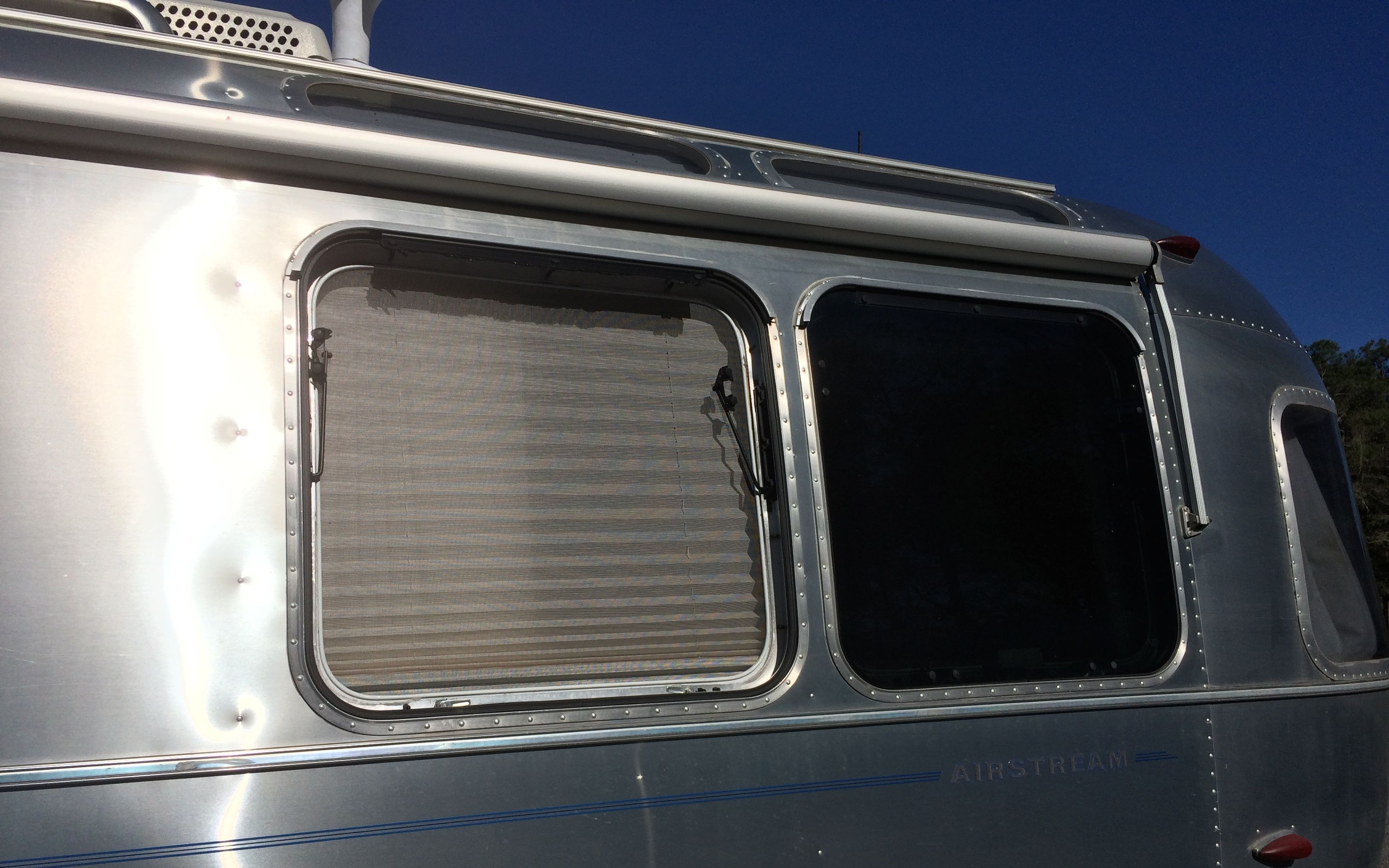
Around 1:00, I stopped to use the bathroom at a rest stop. Then I went back to the trailer to make a sandwich. I sat down to eat it and wondered why the road noise was so loud. Then I noticed that one of the windows was missing!

broken window

I wish I could blame it on someone else, but the fact of the matter is that it is all my fault. It had been so cold and inclement that I couldn’t remember the last time I had opened the windows. I did give a cursory glance and when I saw that the window on the right was latched, I assumed that they were all latched.

You know what happens when you assume. This time I made an ass out of me. Would that be assime?

Well, I spent some time googling Airstream repair shops. It looked like my best bet was about an hour and a half back down the road. I called and left messages on a couple of numbers. I headed back but I didn’t talk to anyone until I was about half an hour away. At that point, I said that I’d prefer to come and have them look at what I needed and then make a plan. After all, I can always change and cancel campground reservations, if it take a while to get parts.

I pulled in to JD Sanders RV Center and they helped me immediately. A wonderful man measured the window and identified the part that was needed. Unfortunately, they didn’t have the part, but he found some RV Centers that would be able to help me. I called, and they had the window. They put my name on the “glass and sash” and they will put it on next week.

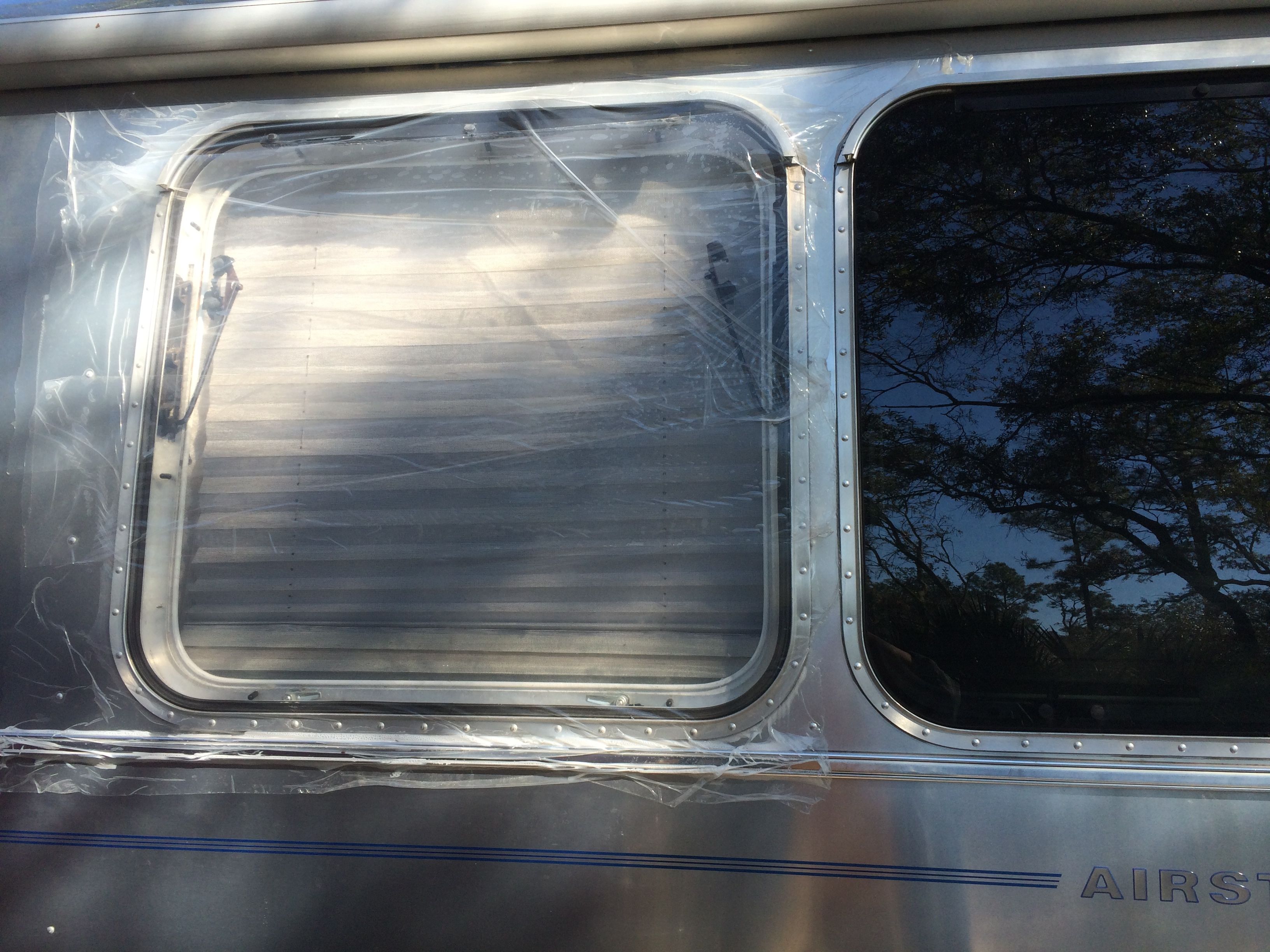
Then, the wonderful man at JD Sanders had some workers cover the window with plastic.

plastic on windoe

I asked them what I owed them for the job, and they just waved it off. The gave me a calendar from the company and wished me safe travels.

There are such good people in the world! Anytime I’ve had a problem, there have always been there to help me.

The next thing I had to do was get gas.

gas gauge

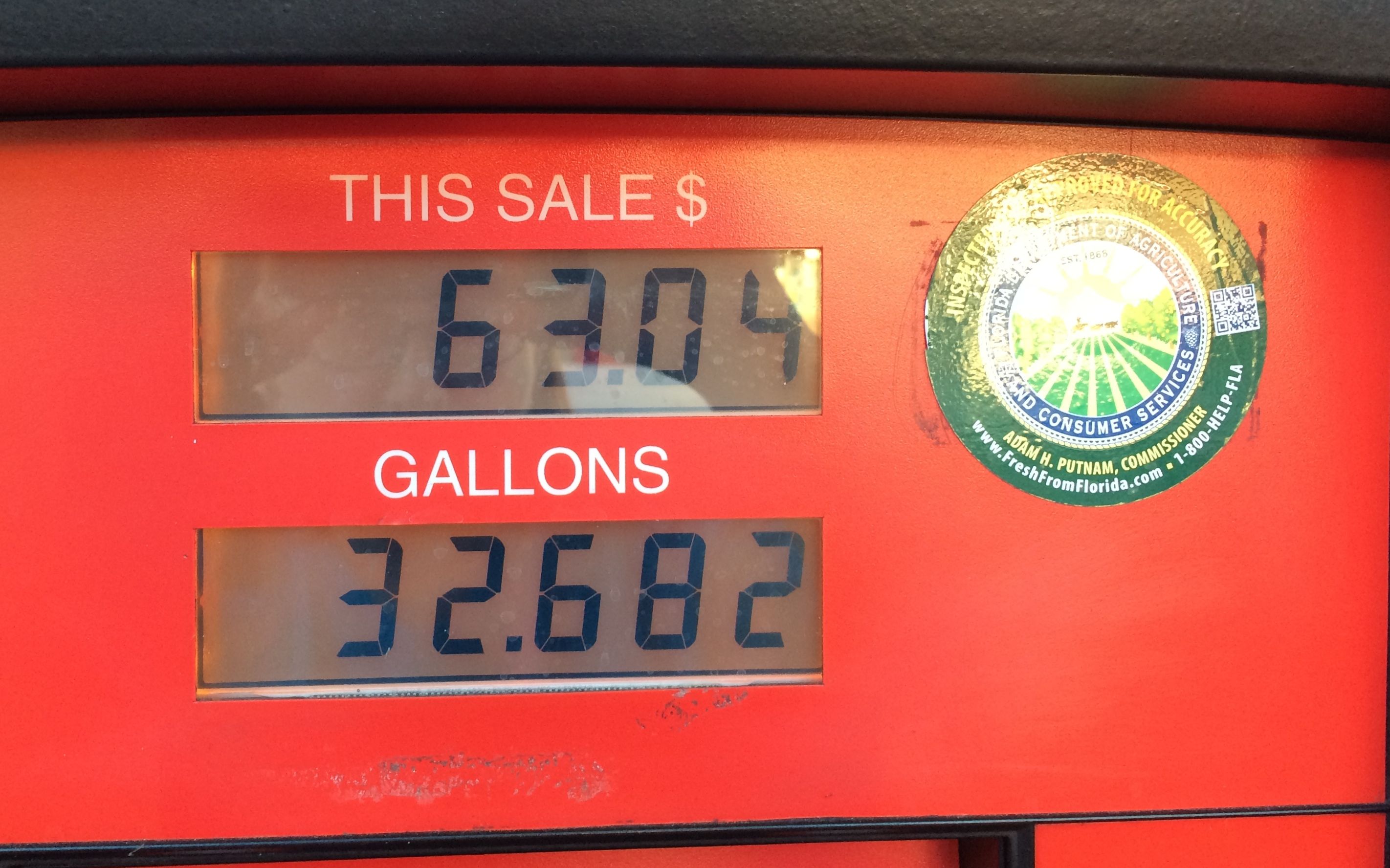
Boy, did I need gas! The gas tank light was on, but the gauge was still a hair above empty. I thought I had a 30 gallon tank. I must have been running on fumes!

By that time, it was too late to make it to Ochlockonee River State Park, so I called to let them know I wouldn’t be arriving until the next day. I told them that if anyone needed a spot for the night, let them have it.

But where to sleep tonight?

Cracker Barrel

Yep! Cracker Barrel. A good place to sleep and a hot breakfast in the morning.

And then on to Ochlockonee River State Park.

Now, how would you pronounce Ochlockonee? I struggled with it, and I asked several people before I finally mastered it. It sounds like “oh CLOCK uh nee” to my ear.

view from campsite

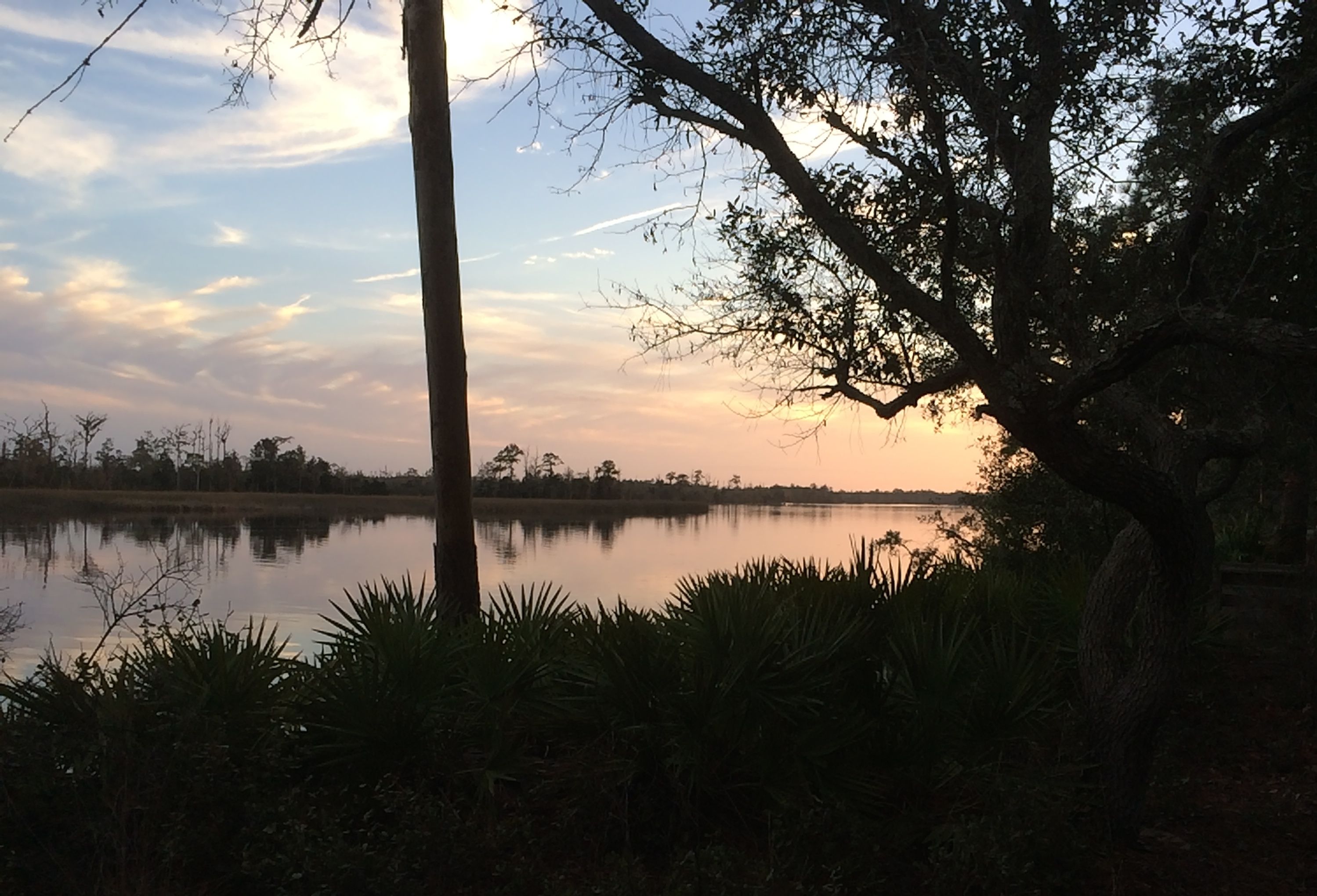
The campsite was beautiful. This is the view from my trailer toward the river. The first night there, I saw a lovely sunset over the river.

Sunset on Ochlocknee River

The next day, I went on a little walk-about.

Oyster shells

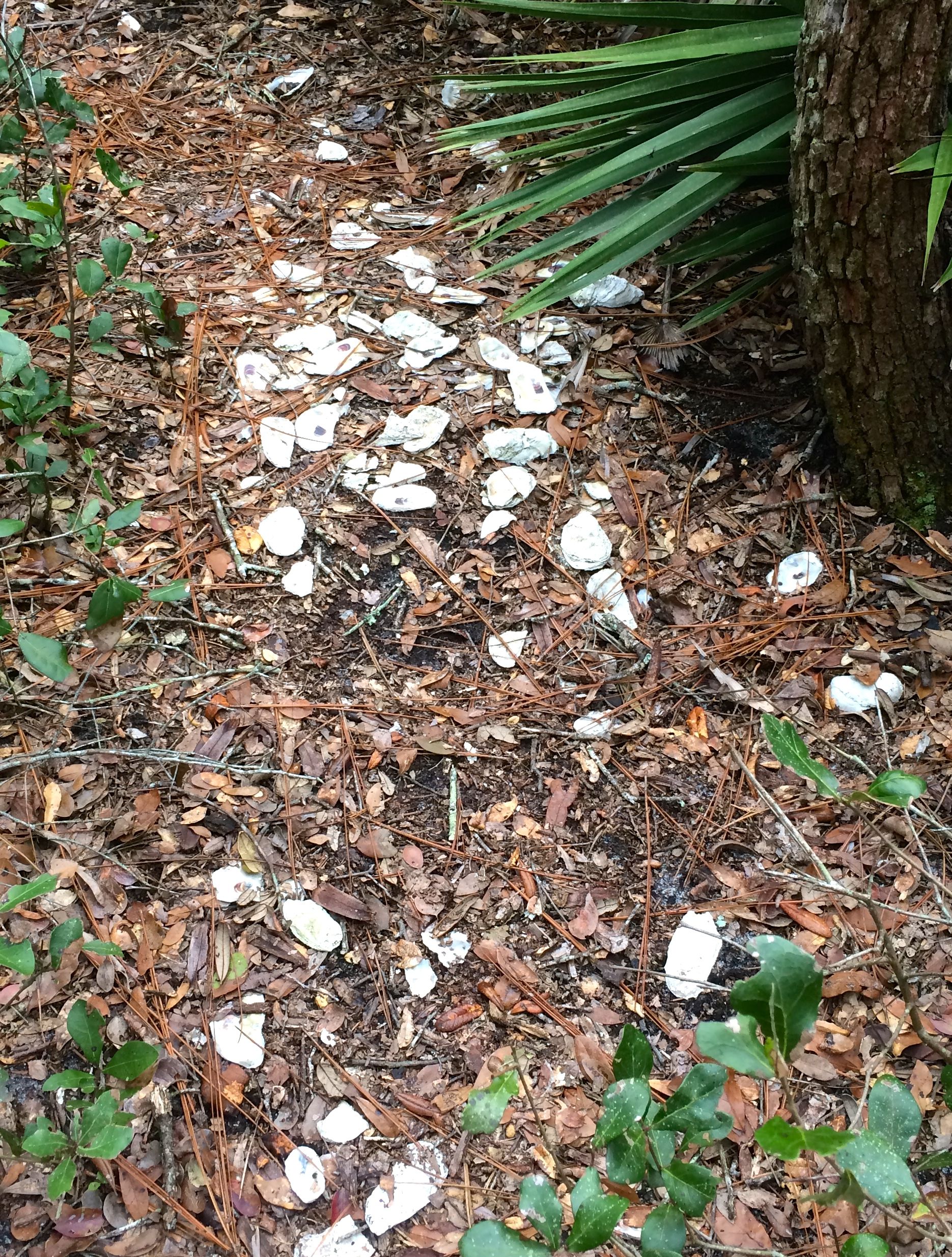
The first interesting thing I saw was this collection of shells off to the side of a path. I wondered what this might be. I figured an animal – or group of animals – must have left them there. I couldn’t imagine any reason for humans to have left them there. I couldn’t imagine where they could have come from, either.

Oyster shell in water

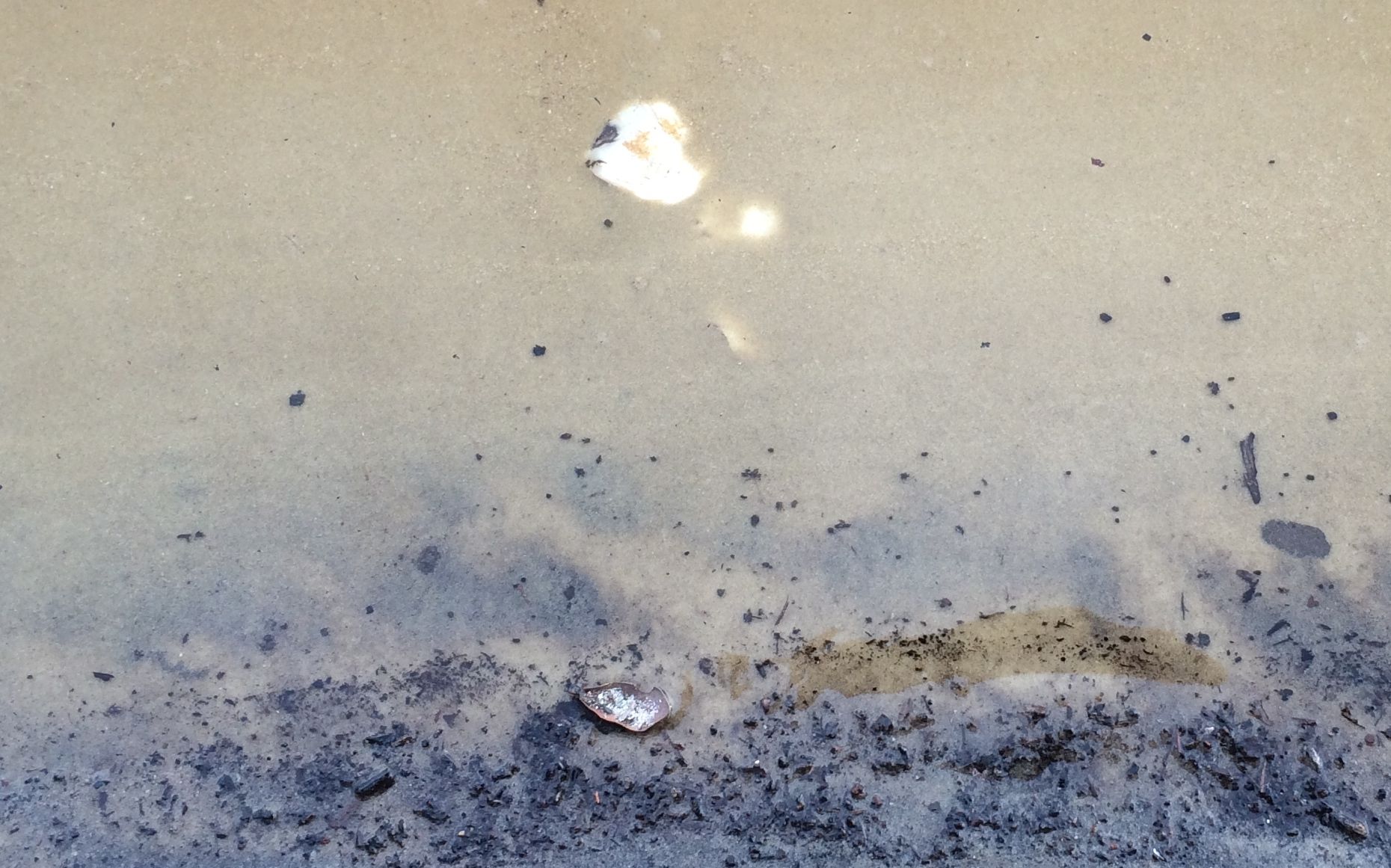
I got down to the edge of the river and I saw some shells in the water. Riddle solved.

Oyster shell on wood

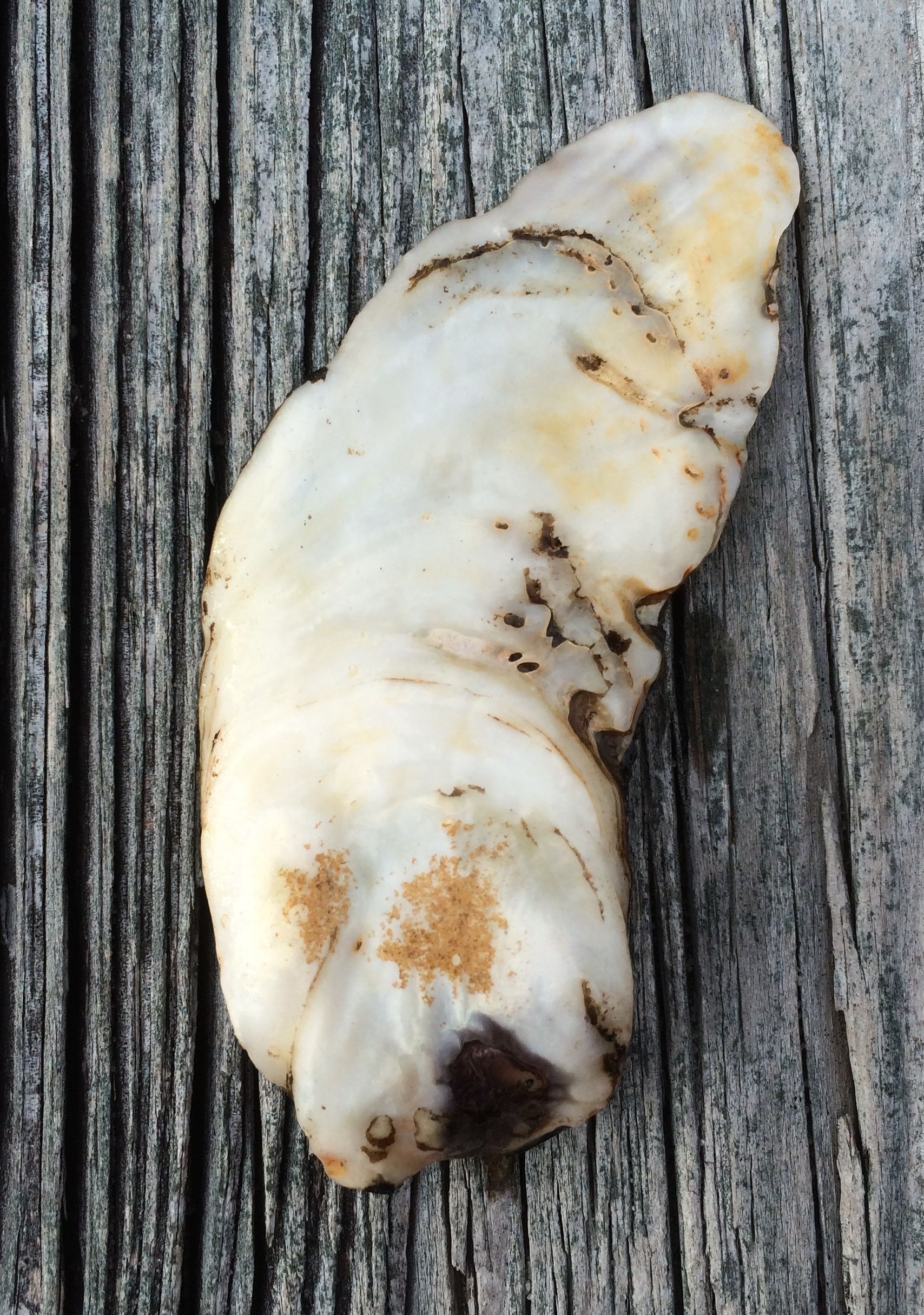
I pulled one of the shells out and took a photo. If you don’t have a photo, then it didn’t happen, right?

shore with rain and high tide mark

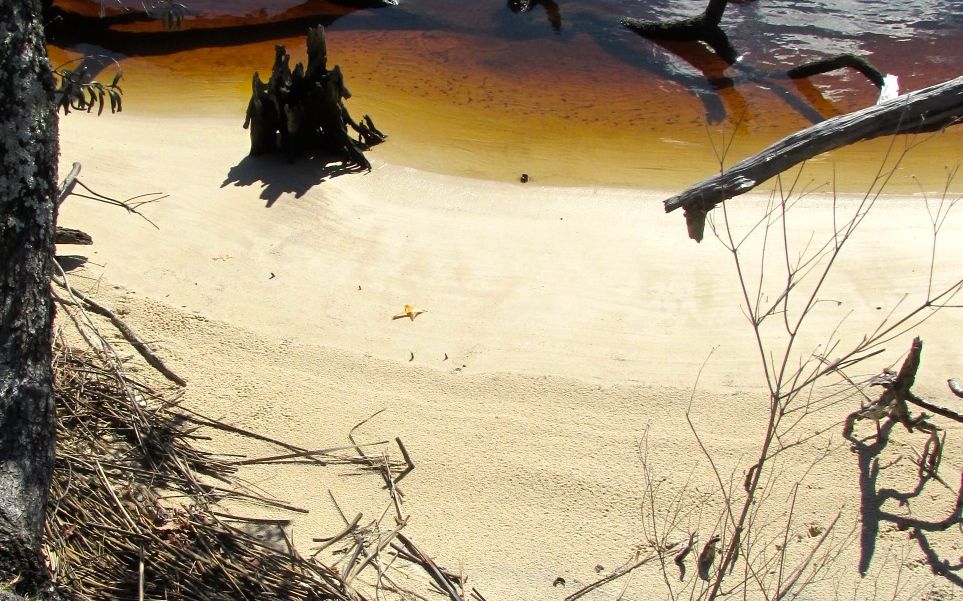
Once again, the brown water. This must be a Florida thing. Also, if you look carefully, you can see the tide line in the sand. It rained fiercely overnight. The rough looking sand is stippled by the rain. Tide must have been high when it was raining, so that the water protected the sand near the river from getting marked.

Pine trees in a line

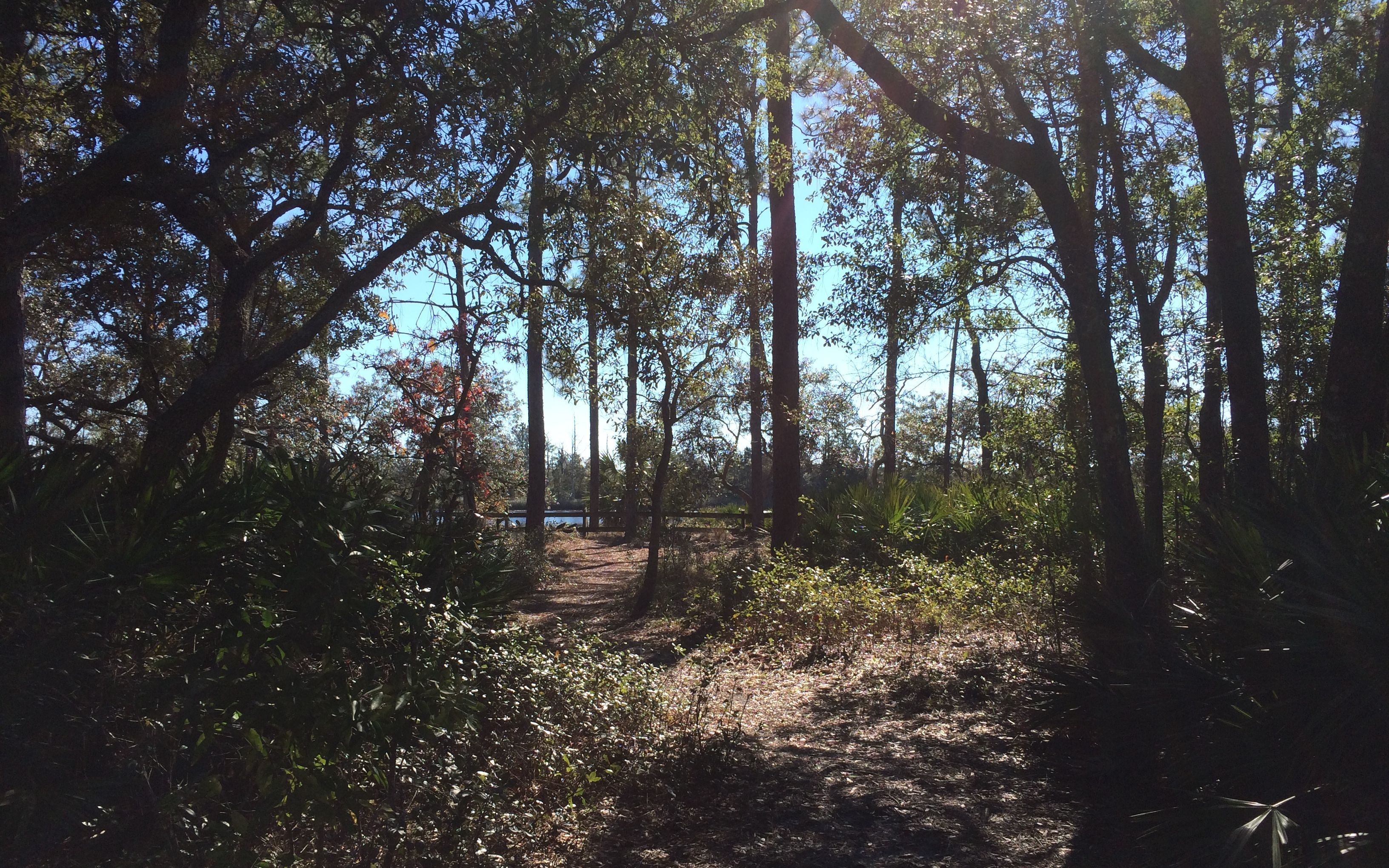
I decided to enjoy the day and take a stroll about the park. They map they gave  me when I checked in showed several paths and roads.

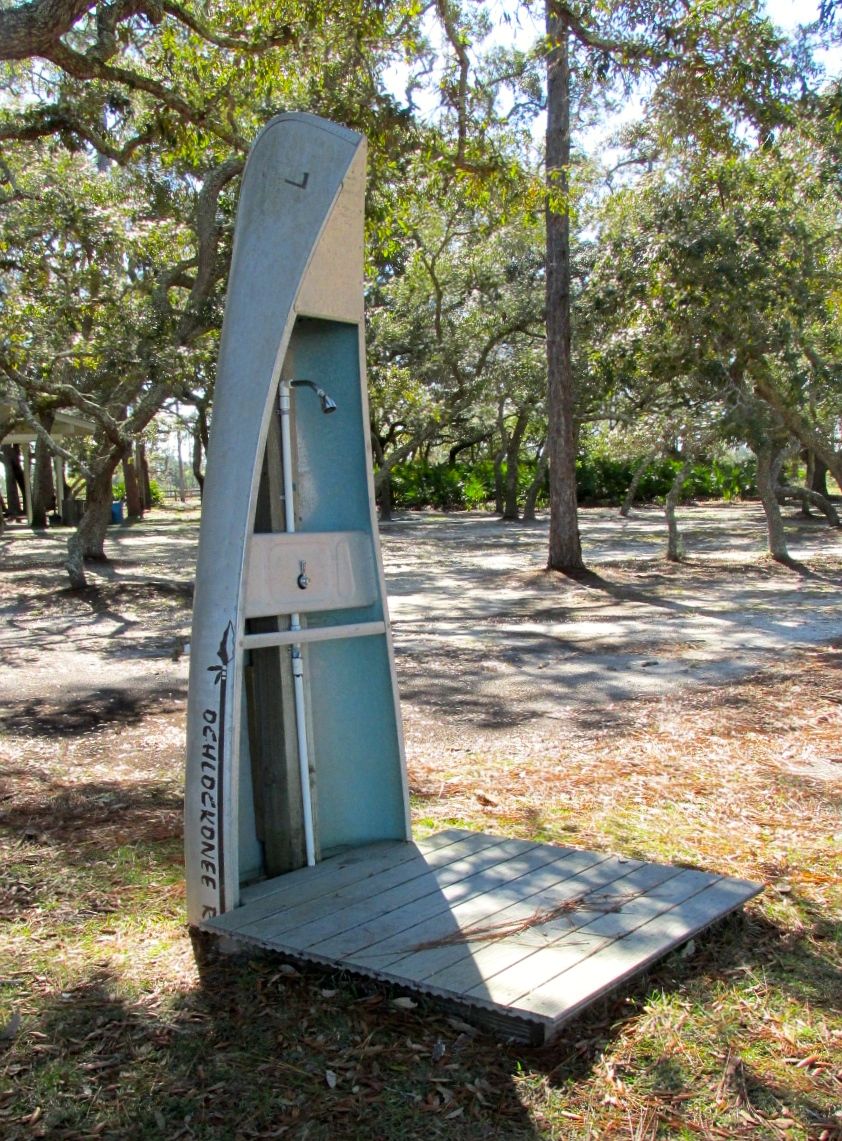
shower in a boat

I thought this was a novel way to have a shower to get the cleaned up after boating or maybe falling in the river. There isn’t any swimming right now, but at these temperatures, I can’t imagine anyone wanting to go swimming.

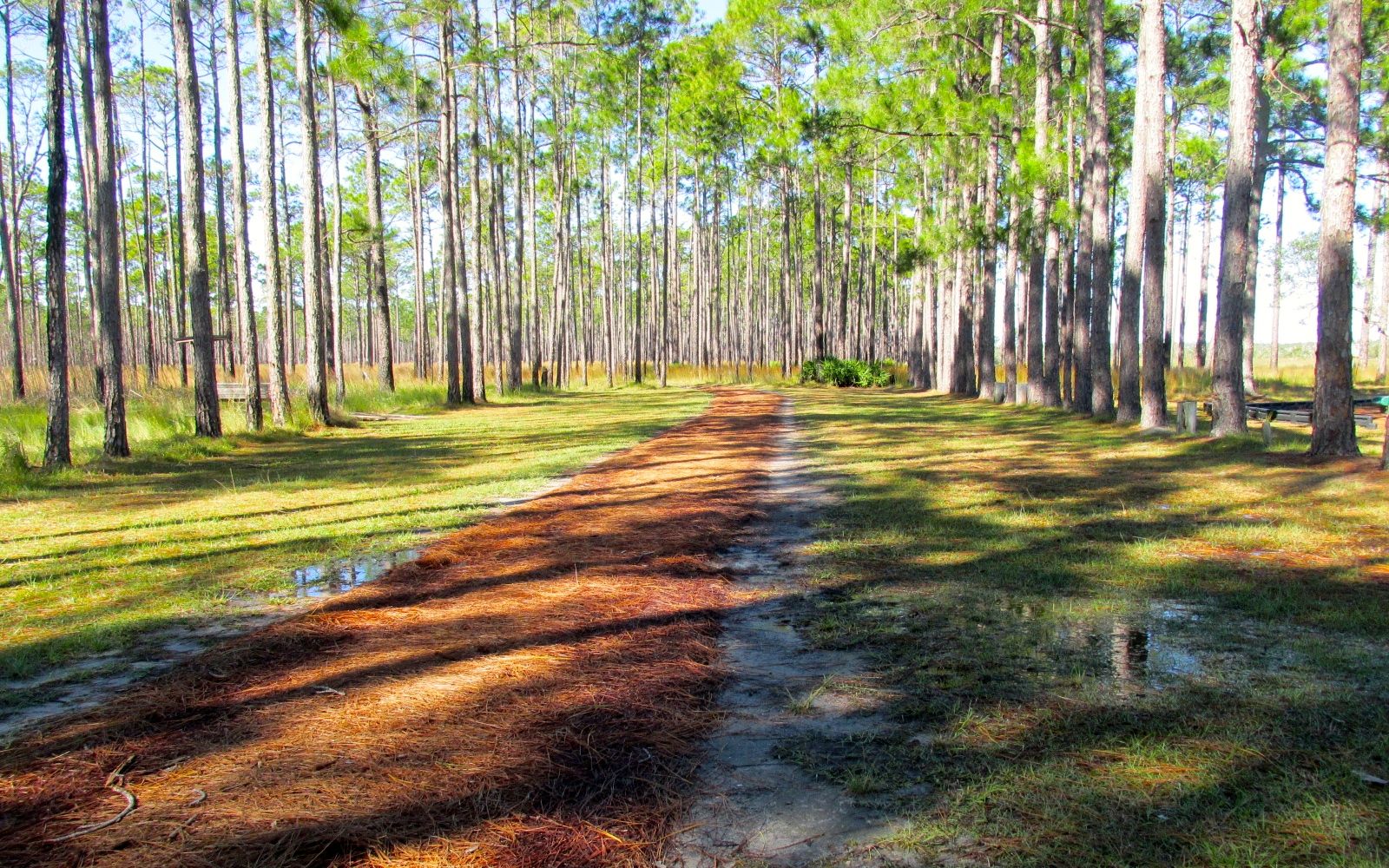
Pine straw road

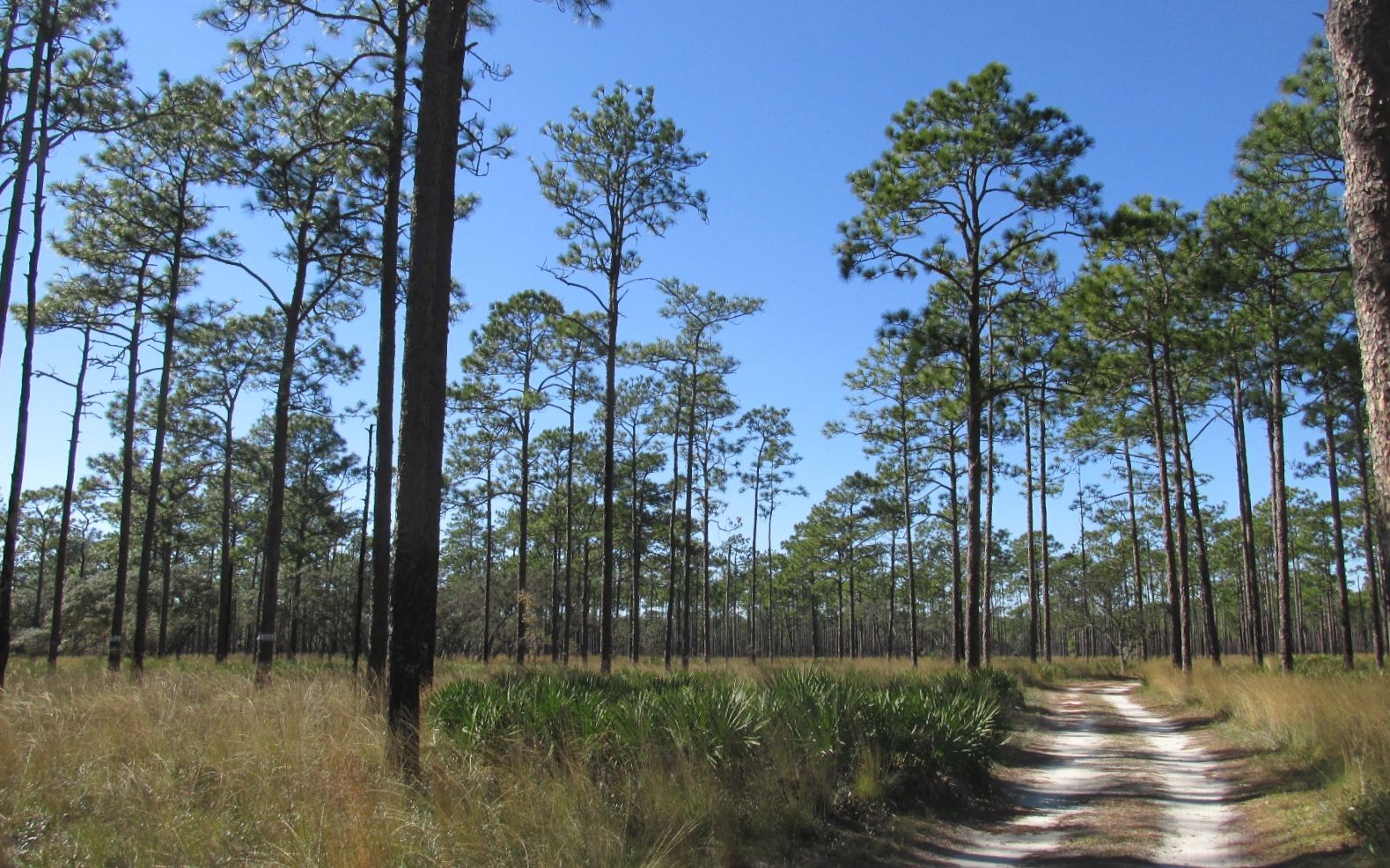
This road topped with pine straw was just calling my name, so I decided to see where it went.

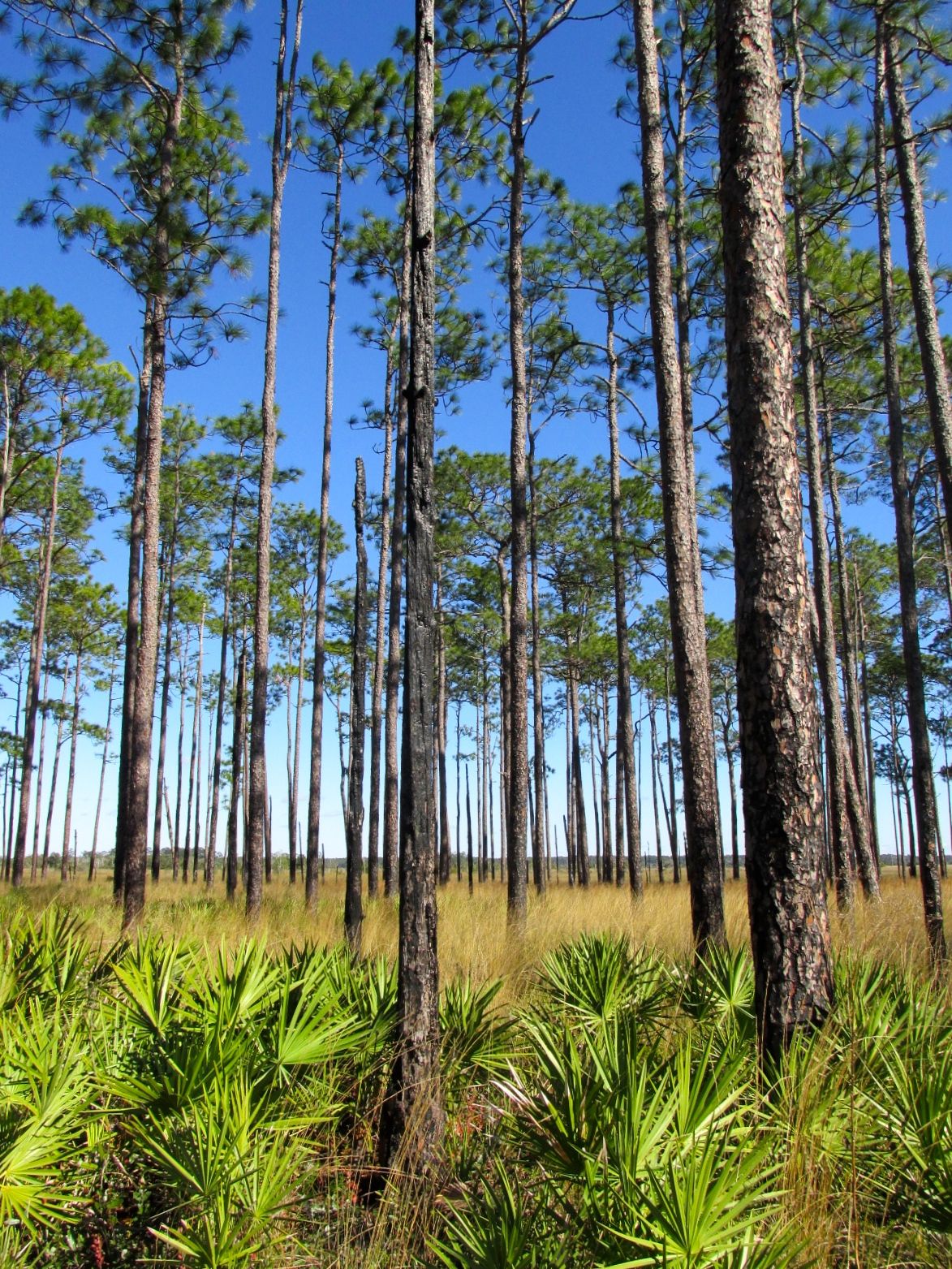
ISaw palmetto, pines and grass

I walked through trees and plants that shifted subtly. More saw palmetto.

Grass and pines

Less saw palmetto.

It was so quiet. I stopped several times to listen. I heard birds. It took me a while to see them; they were so small and fast. I think they might have been some sort of nuthatch. They would light on the trunks of the trees and zip around quickly from tree to tree. I imagine they were looking under the bark for insects. As I stood there, flakes of bark floated down from where they were.

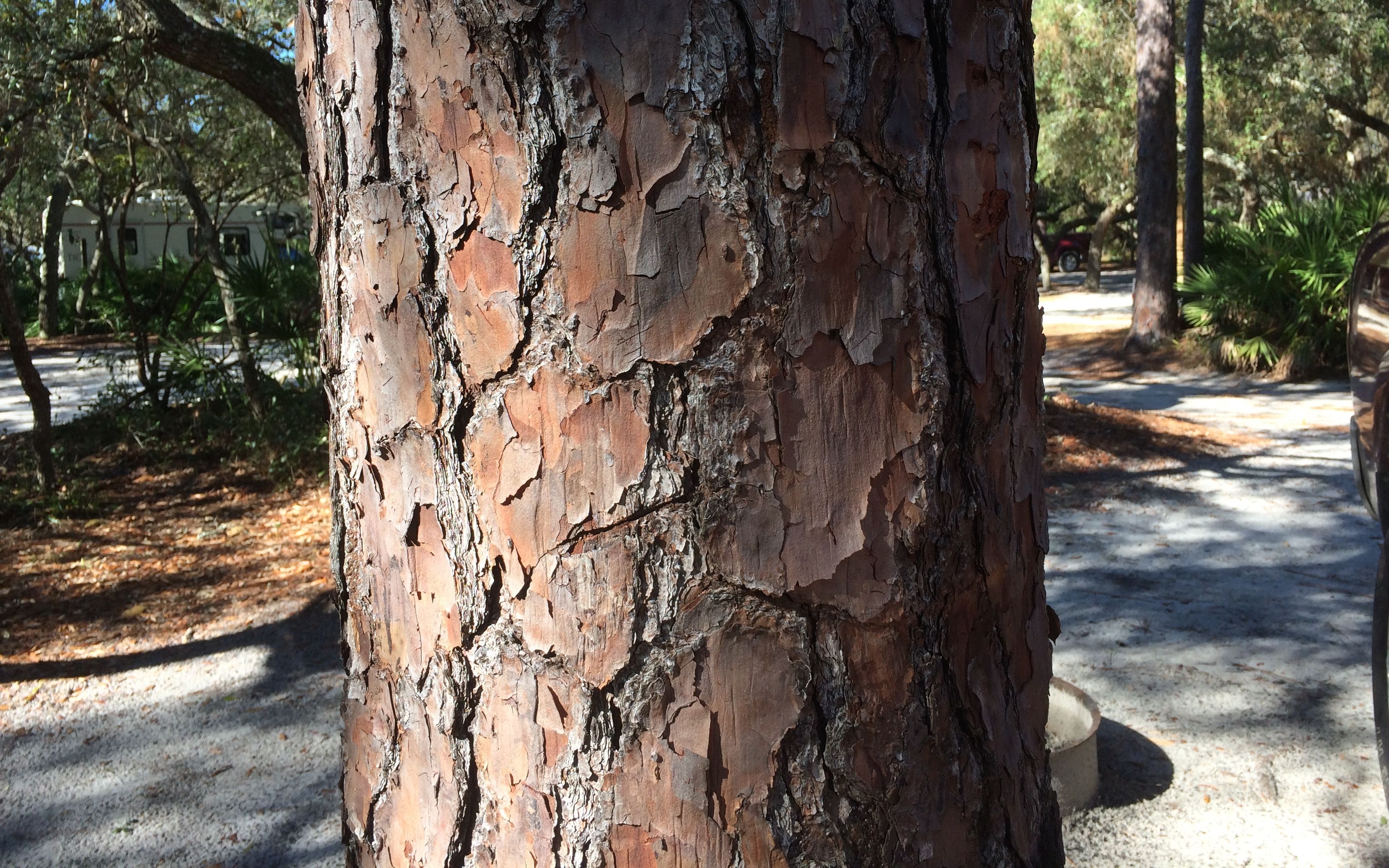
Pine bark

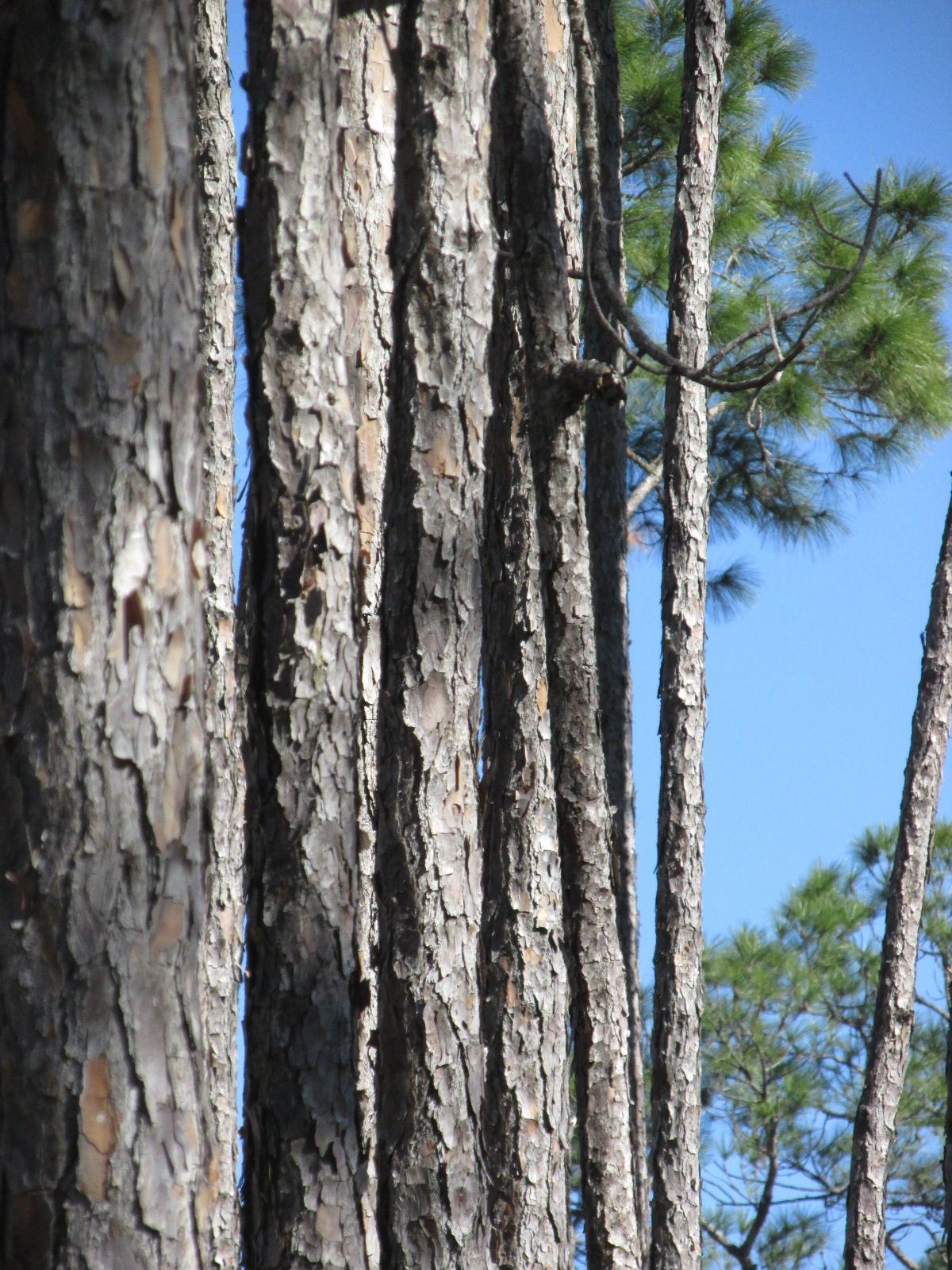
Here is a close up of a pine that I took back at my camp site. You can see how the bark is layered and able to flake off.

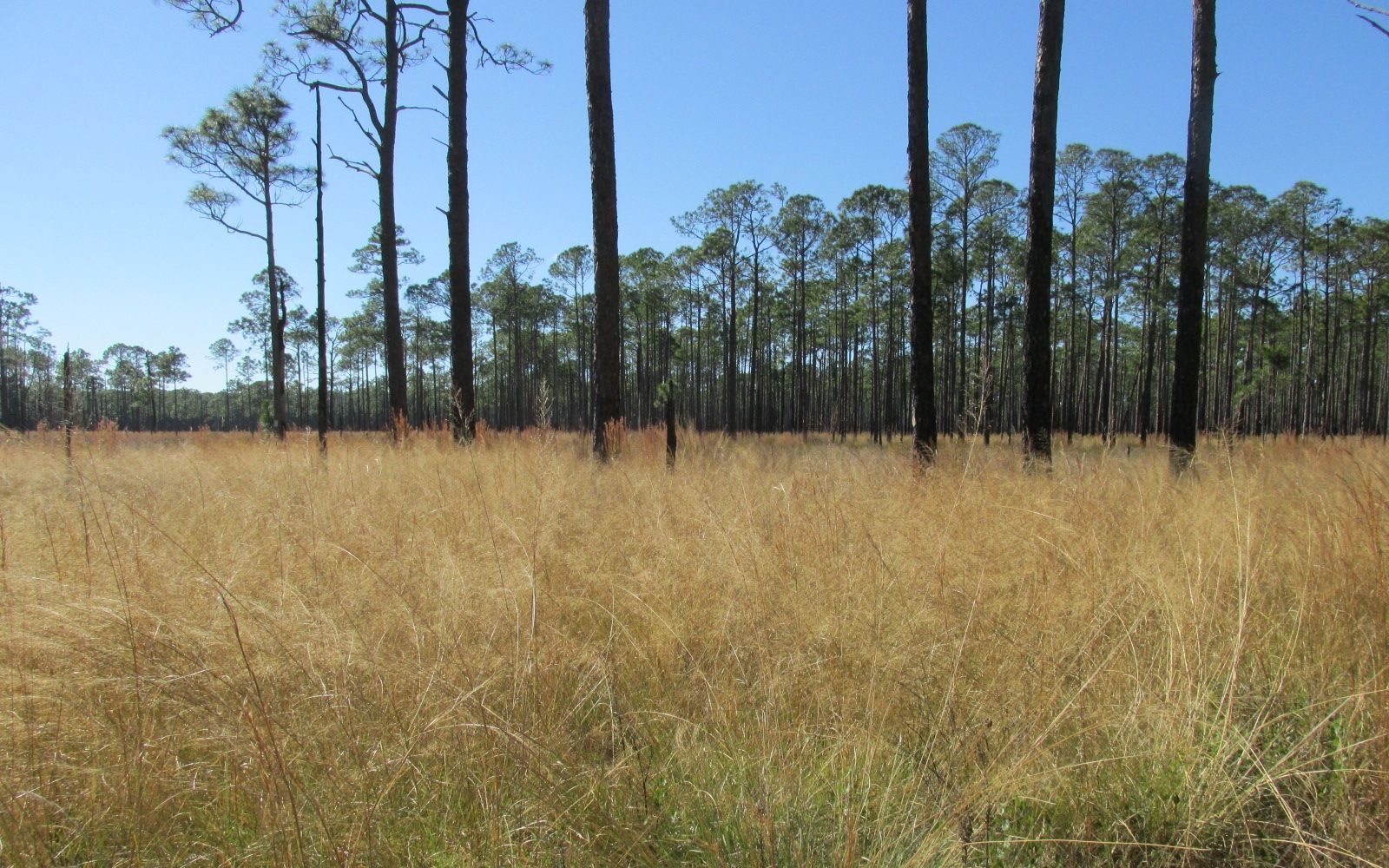
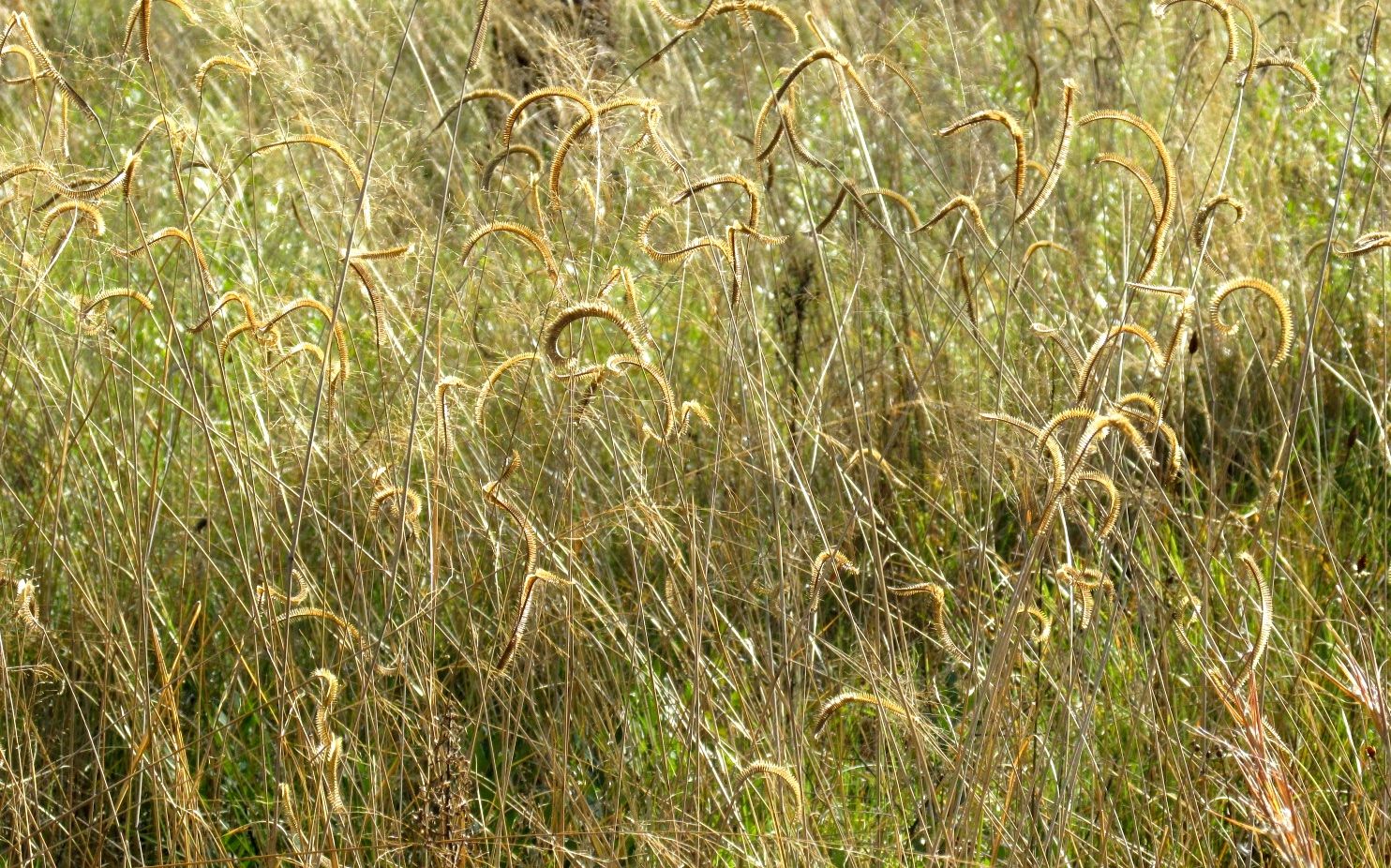
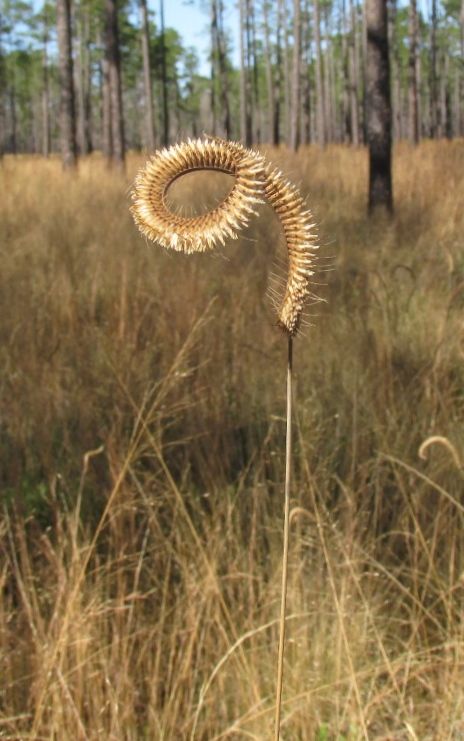
The next marvel I came across was a field of grass with the most amazing seed heads.

grass seeds 2

They looked different depending on how the light was hitting them.

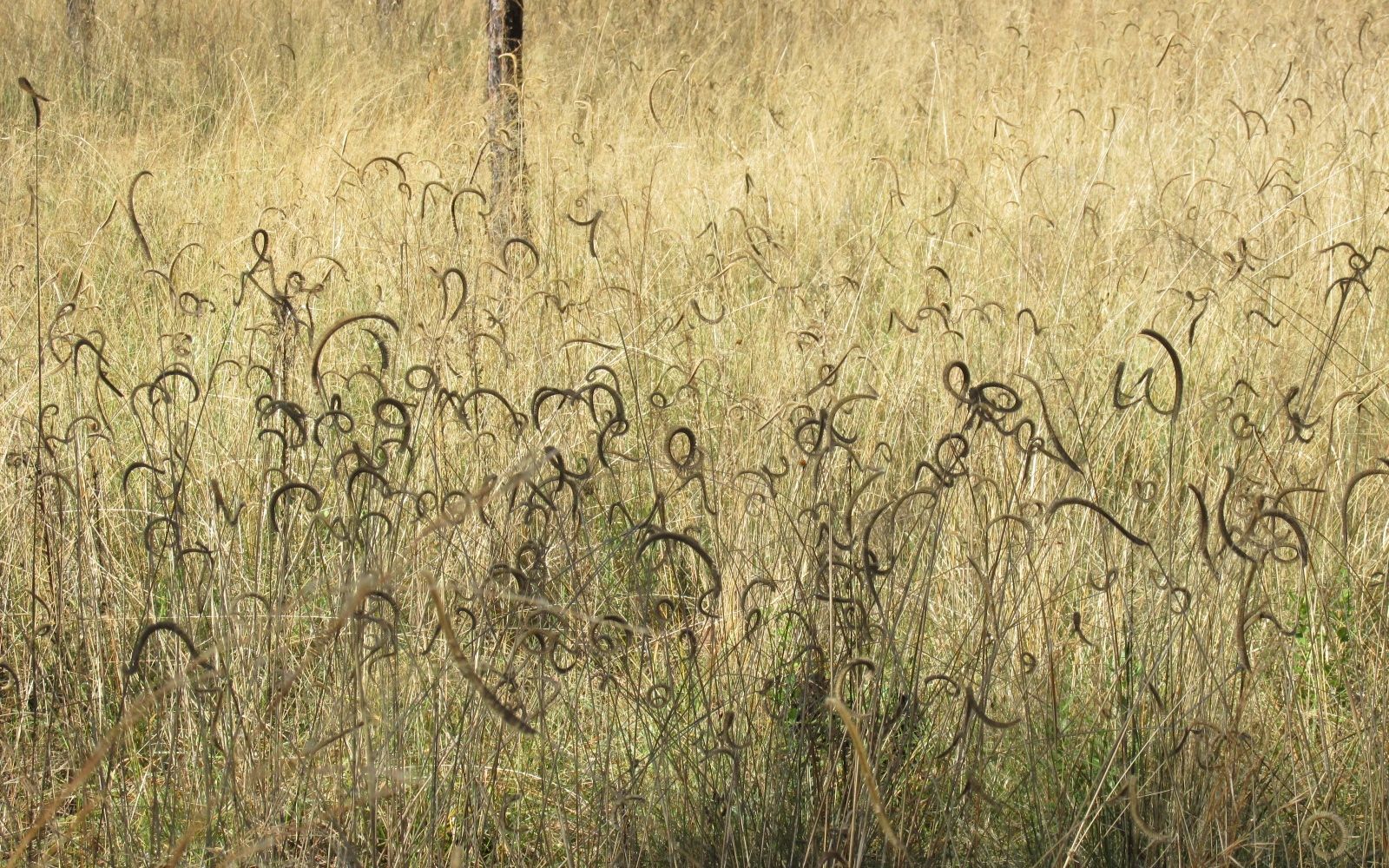
grass seeds 1

And what is behind them.

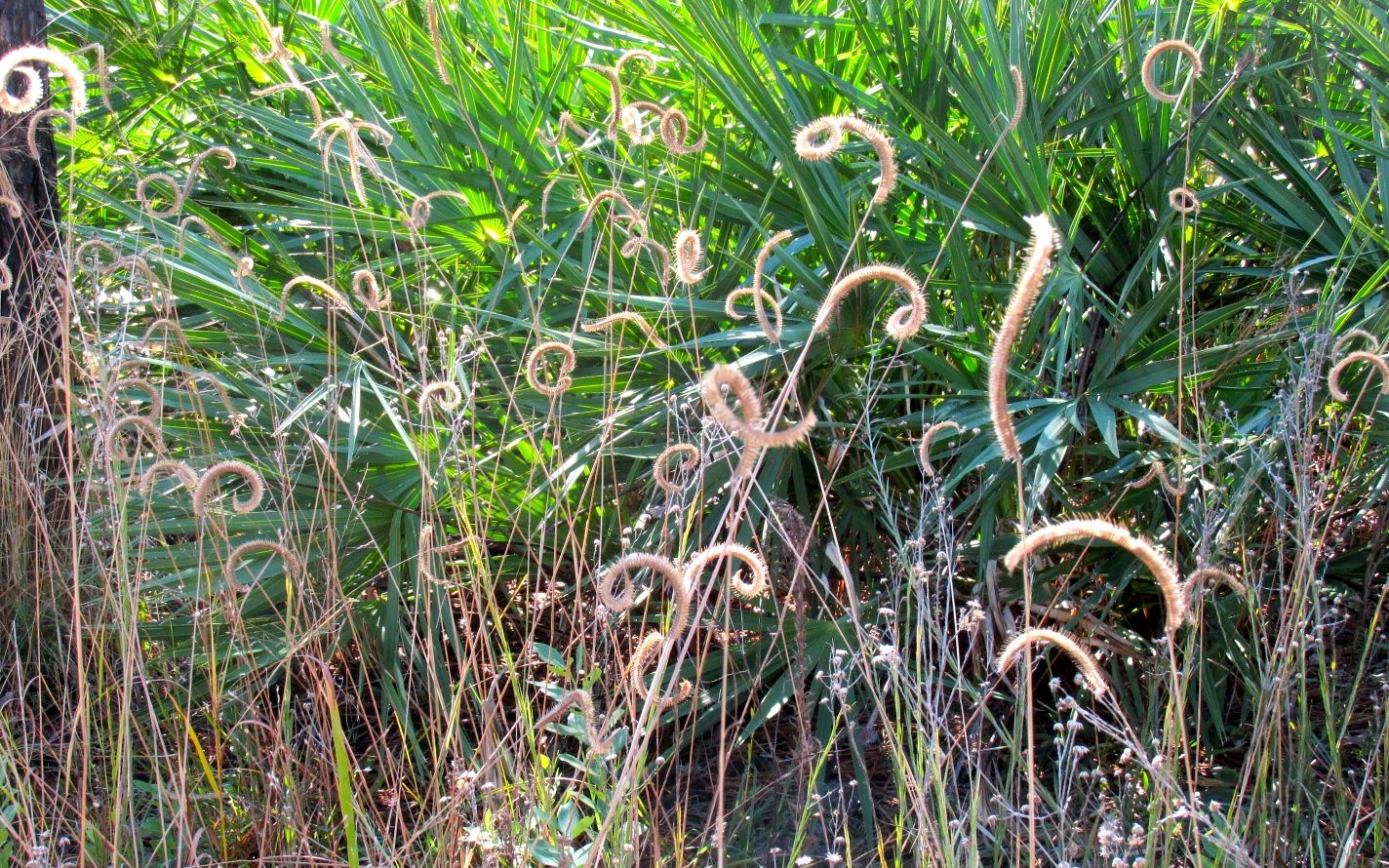
Grass seeds 3

And how close you got to them.

Grass seeds tangled

The seeds were amazing!

grass seed close up

Doesn’t take much to entertain me, does it?

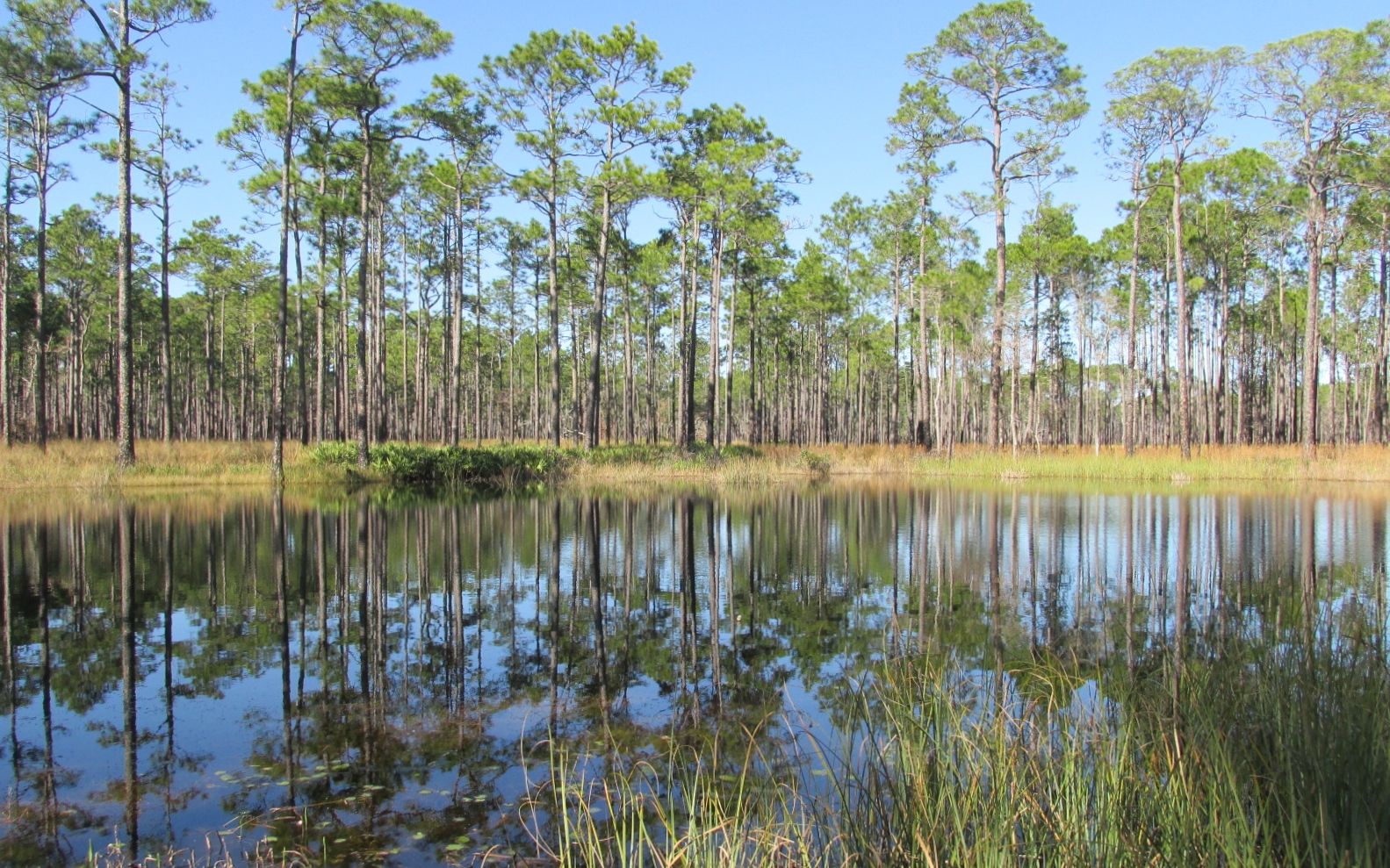
reflection pond

A little further down the road, I came across a body of water labeled as Reflection Pond. I thought it was an apt name. There was a lovely little bench on a dock and I sat and enjoyed the quite and calm.

Sandy two-track

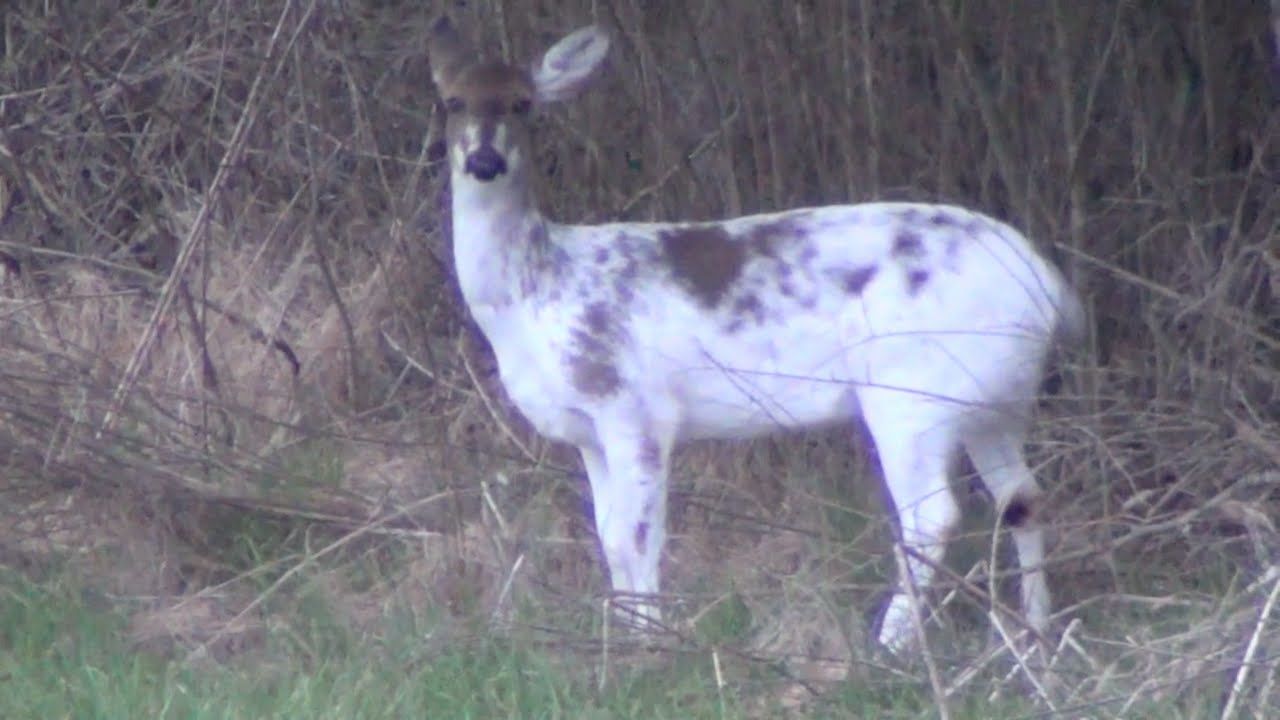
The road continued and I kept my eyes peeled for deer. When I checked in at the campground, they told me that they had rare piebald deer in the park. The picture they gave me on the xerox copy brochure made me think they would look like this.

Piebald deer 2

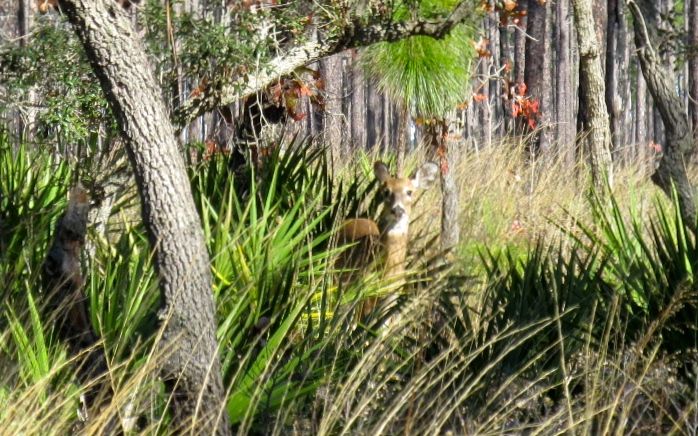
I did find a deer, but I think it was the ordinary brown kind.

Deer - better shot

Nevertheless, it was fun to find one and to actually be able to take a shot, even if it is a little grainy.

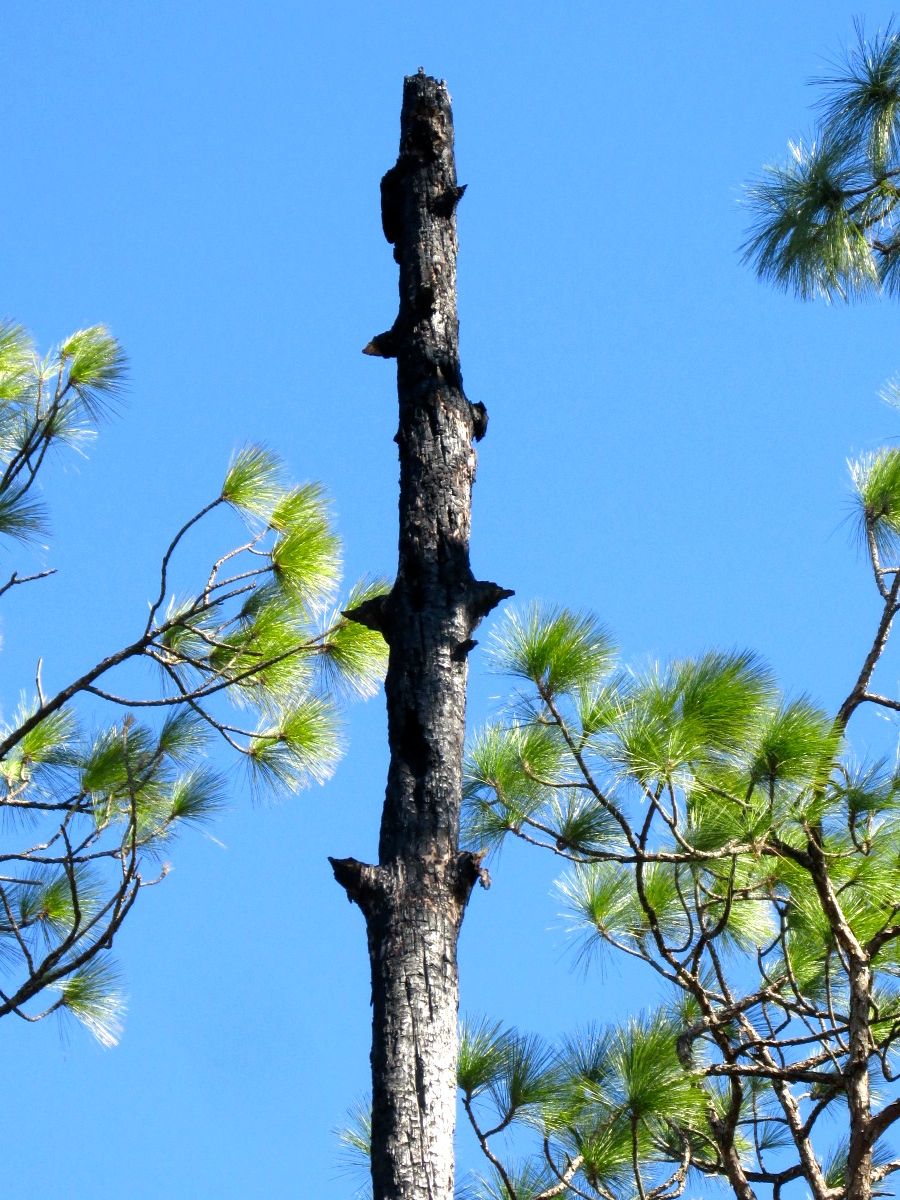
snag after fire

Fire is a part of the life of a forest. You can see charred snags sticking up here and there around the forest.

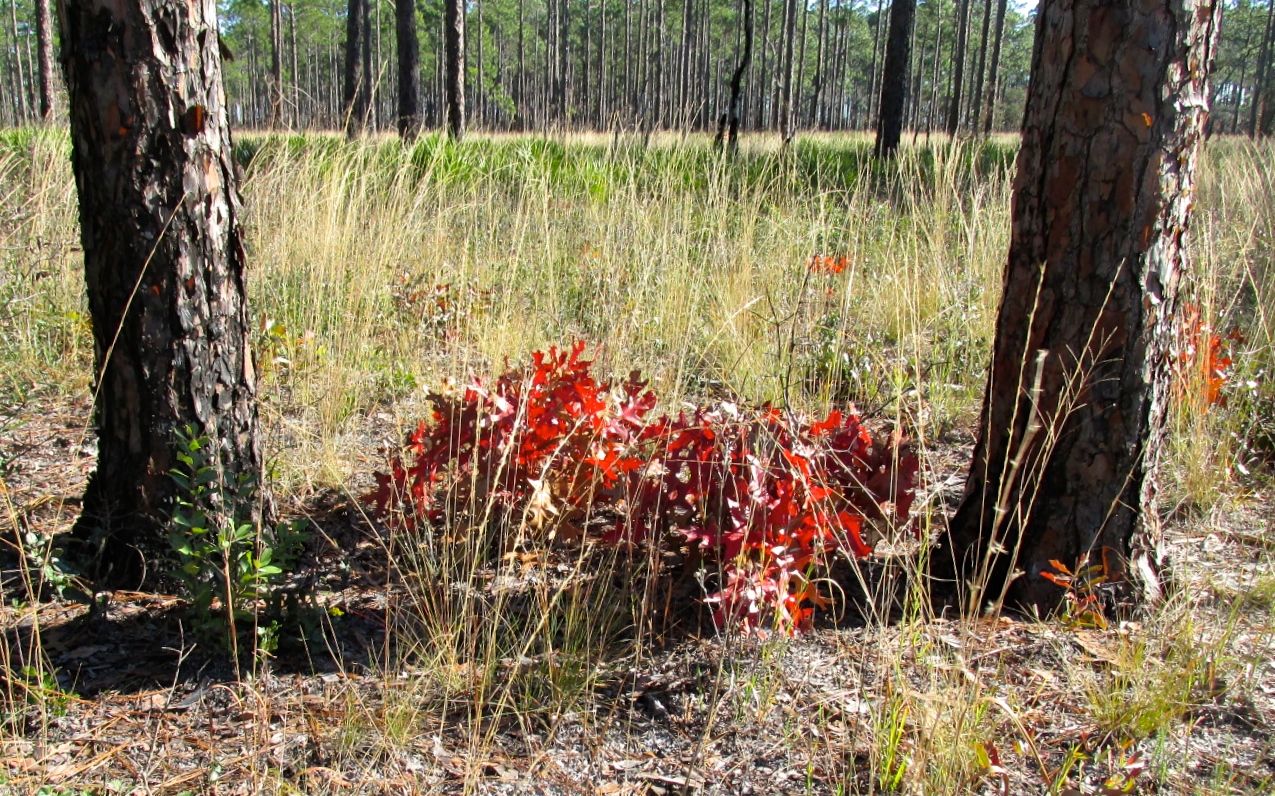
oak between the pines

As one species dies, others take their places. The oak is small and will burn off the next time a fire passes through.

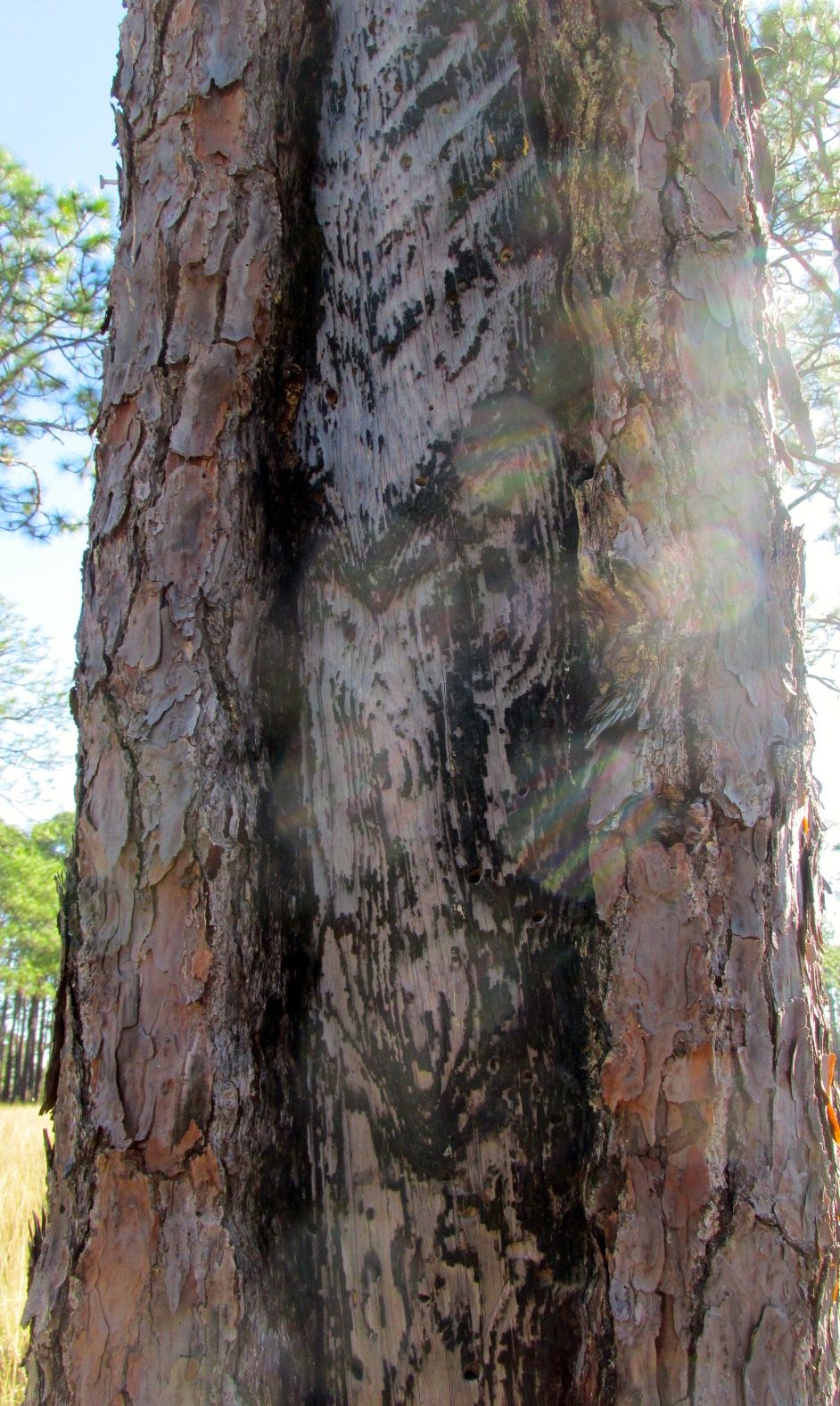
Turpentine tree

This tree was interesting. Right next to it was a display about the turpentine industry and how turpentine was harvested. Even though it was taking place years ago, I assume that this is one of the trees that was used. They would cut vee shaped grooves in the tree and gather the sap.

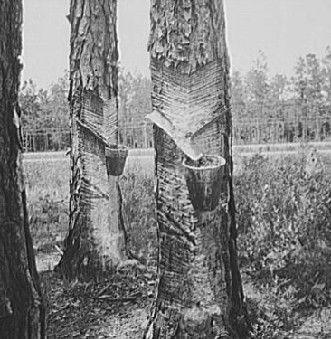
PR_turpentine_trees2_1937_edited

Here is a photo from 1937. The marks made on the trunk were called “cats faces.” They would collect the resin and distill it to create pitch. The pitch was used to caulk holes in wooden boats and to coat rigging to help it last longer. From what I have read, turpentine is a by-product of producing pitch.

I finally got back to my campsite two hours after I left. That was quite a stroll!

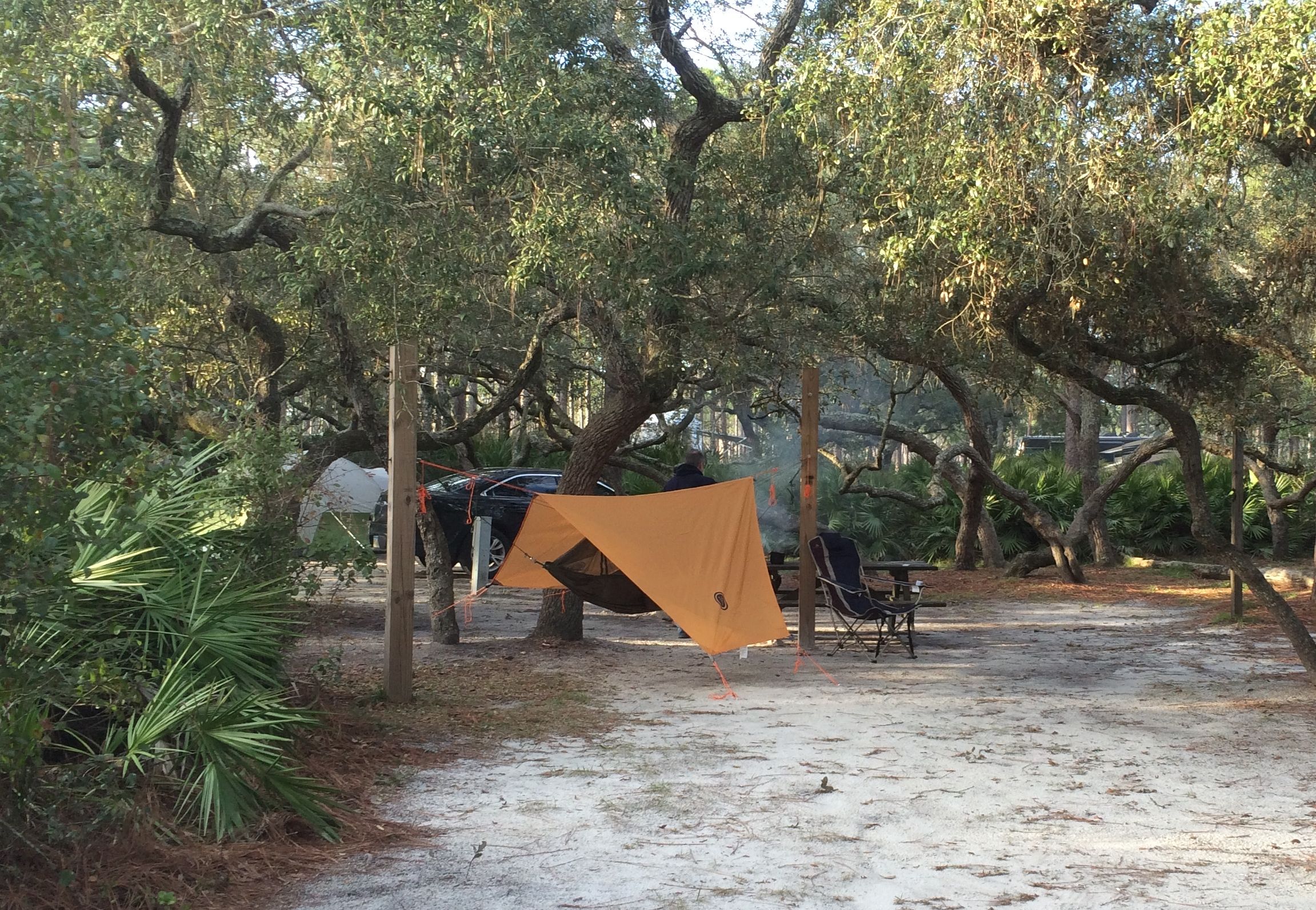
There were all sorts of rigs and campers in the park. Tents, A-line pop ups, vans, fifth-wheels with slides, but this was the first time I saw a hammock camper.

Hammock camper

Florida’s parks have sites that are equipped with poles for hanging hammocks. This park has only one site – and it was right across from my site.

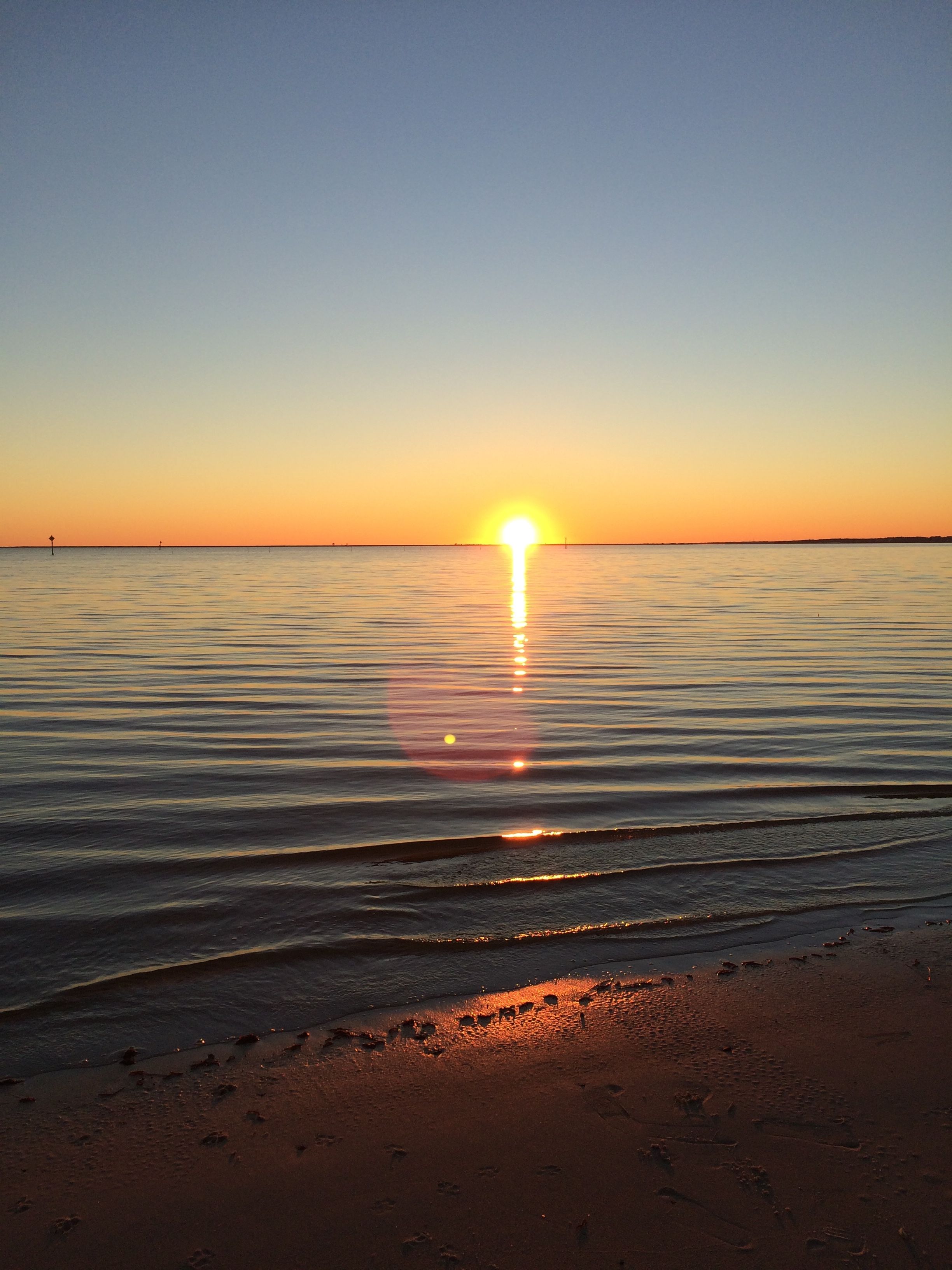
That night, I decided to head over to the Gulf of Mexico to catch the sunset. I found a place to pull off  the road just in time!

IMG_5576

The next day, it was time to move on. Panama City, here I come!

A Little More Flagler Beach

Beach Warning Flags
Beach Warning Flags

I got down to the beach for another stroll. This time, the beach warning flag was finally yellow, which is medium hazard. It was on red, or high hazard, on my other visits. It was still too cold to think about getting in the water. In fact, I have to say that I was definitely thinking about staying OUT of the water.

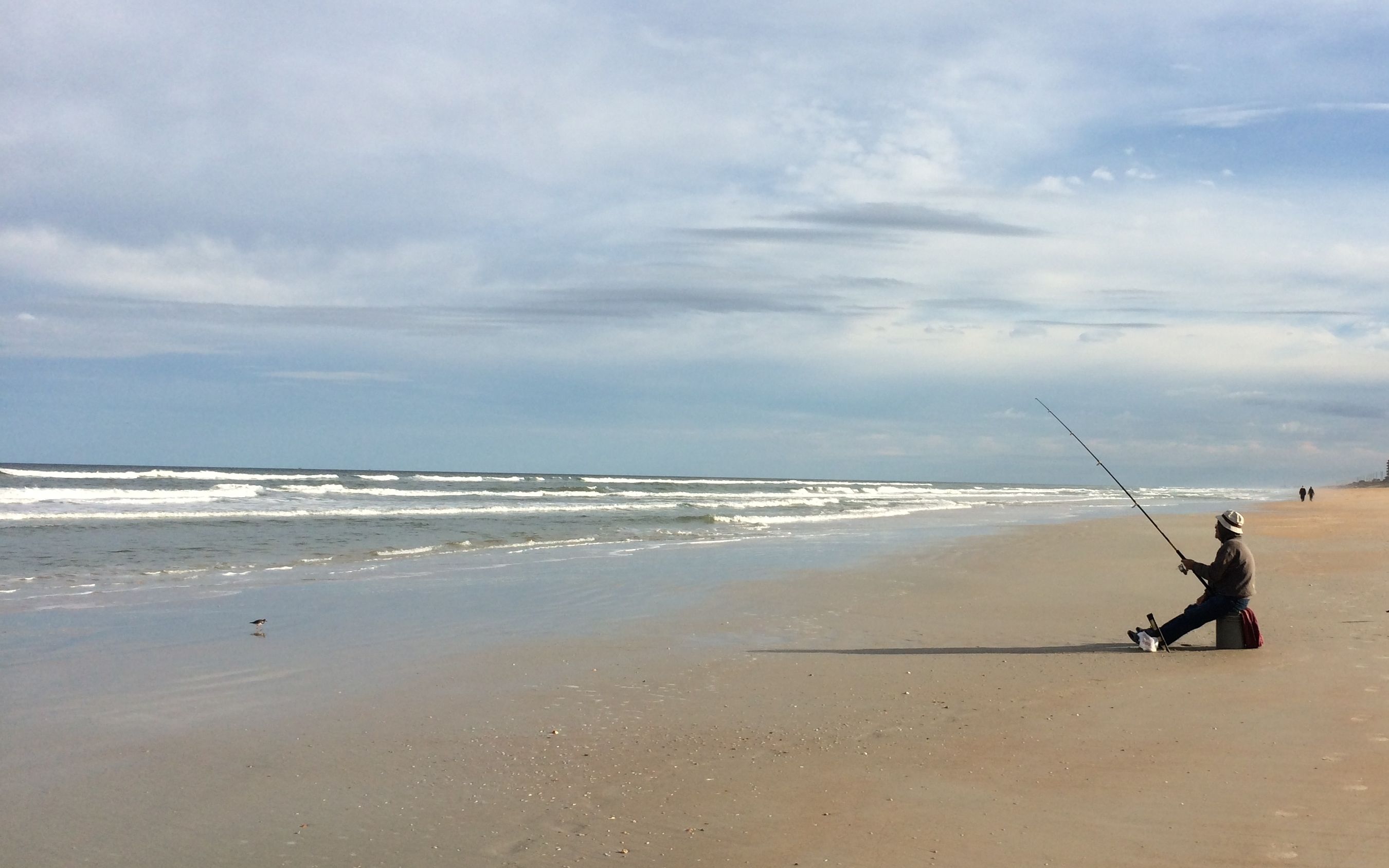
the fish aren't biting

According to the gentleman in the picture, the fish weren’t biting. I’ll bet they were too cold to be interested.

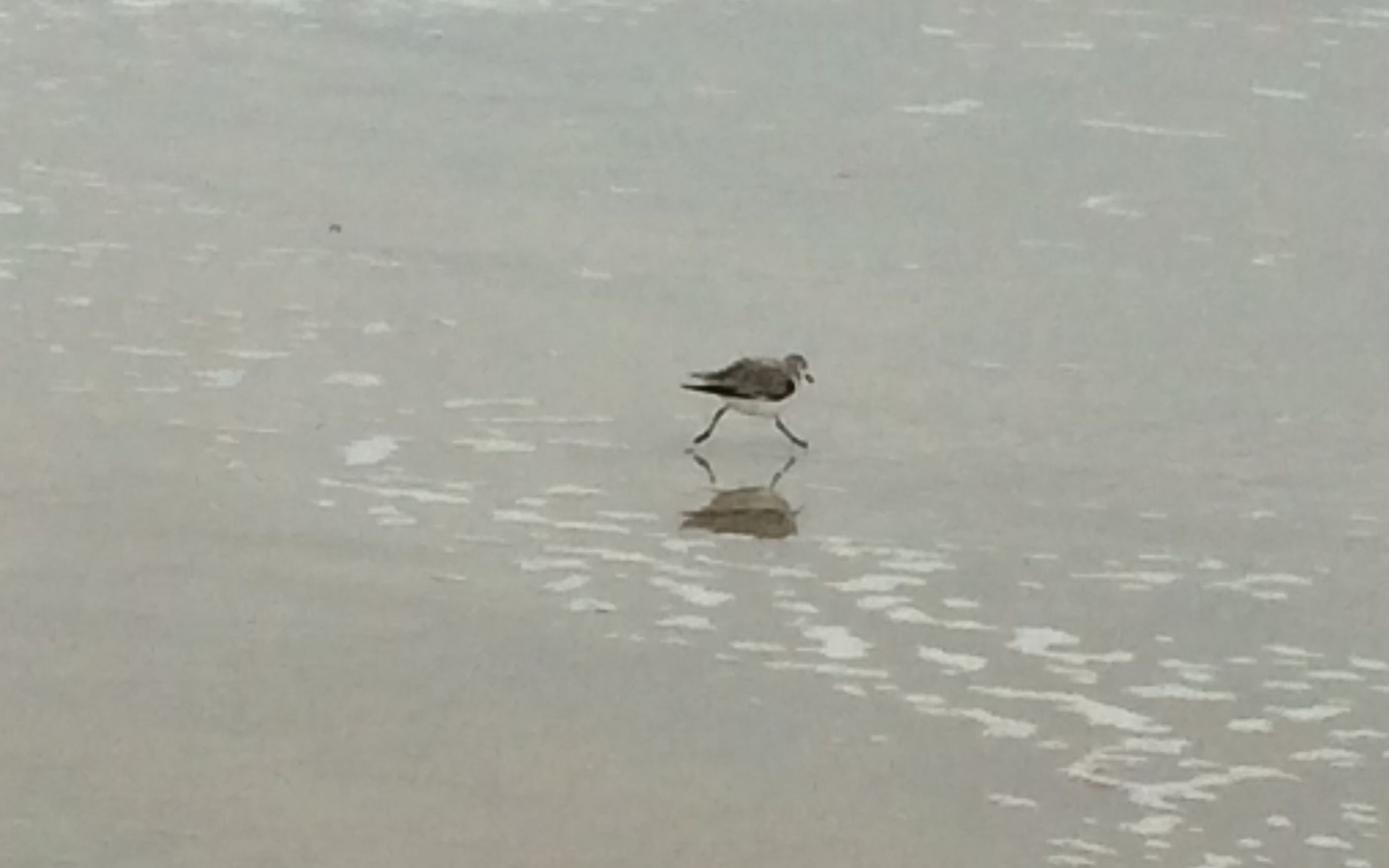
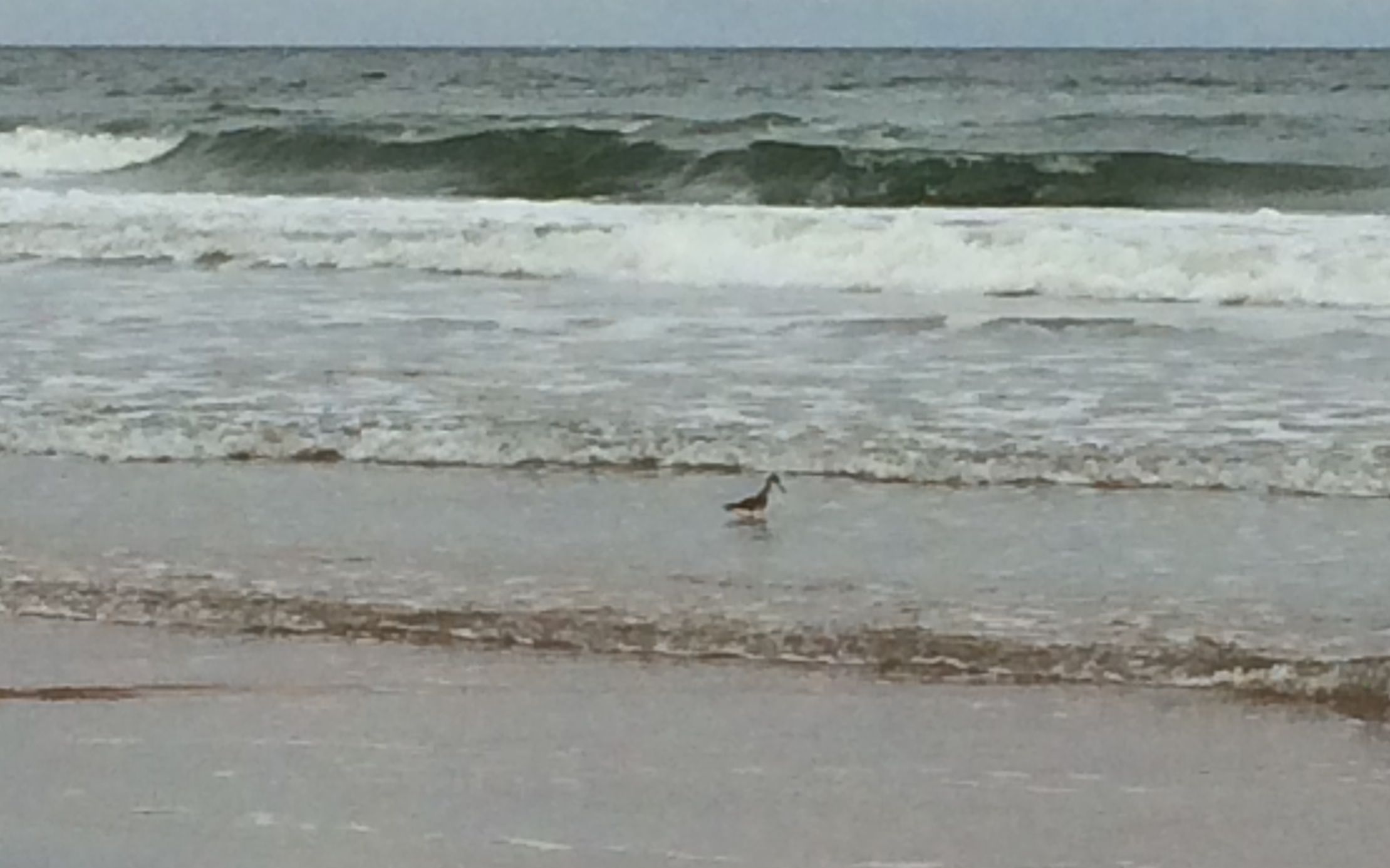
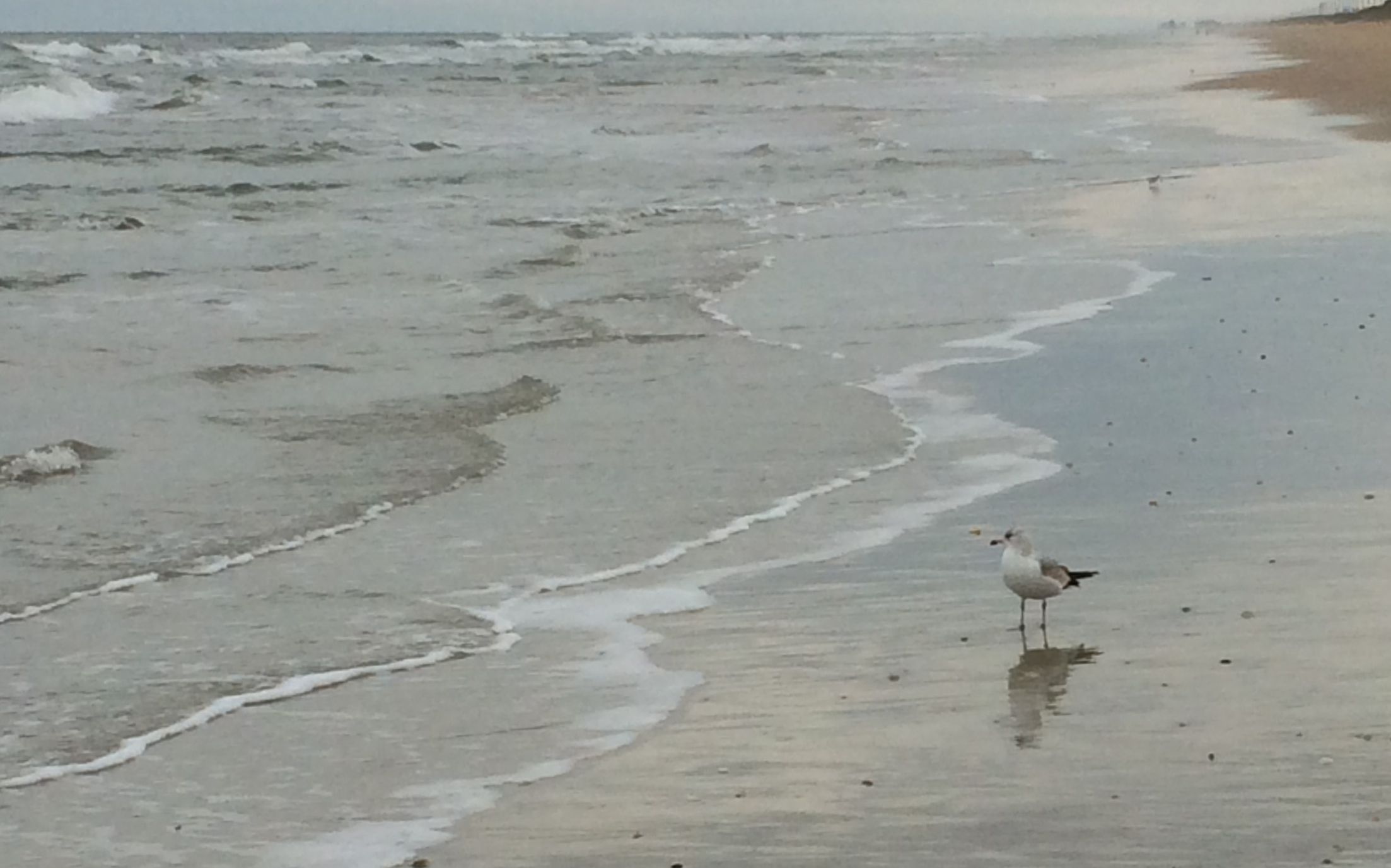
The birds were looking about for their dinners, and I think they were not finding much to eat, either.

Little bird running

This one was looking mostly on shore.

bird in the water

This one was in the surf, but he didn’t seem to be finding much, either.

IMG_5530

This guy was just standing there.

Low tide
Low tide

The tide seemed to approaching its lowest ebb. The water was swirling around the sand ridges just off shore. I also saw all the spots on the beach where the fisherman had been moving down the beach closer to the water as the tide went out.

High Tide Line
High Tide Line

The high tide lines were clearly visible up near the dunes.

different colors of sand

One thing that I found curious was the fact that there are different colors of sand on the same beach. I wish I understood it. I guess I’ll just have to put it on the list of things to find out about at a later date.

Back at the camp site, I got to watch some nice sunsets.

Sky at dusk January 12

The sun is going down.

Sunset January 12

And it’s time to go inside and warm up.


Gamble Rogers State Park

My next stop was just 23 miles south, at Gamble Rogers State Park in Flagler Beach.

The park is named after Gamble Rogers, who was a cherished Floridian folk singer. While camping at Flagler Beach in 1991, a young girl came running up to him to get help for her father, who was struggling in the surf. He grabbed an air mattress and attempted to rescue him. Unfortunately, both men died. In honor of his heroism, Florida renamed the park after him.

It’s a lovely modern park, with paved roads, level gravel pads and easy-to-back-into sites. I made it in one pass! I am always so proud when I can do that. I wish it happened more often.

Monday beach

The sun was bright and they sky was blue. It was a beautiful day for a walk on the beach. It could have been a few degrees warmer, though.

foam on the beach monday

I was rather surprised by the foam on the beach. I wonder what is causing that? And I found the most beautiful shell.

Pink purple shell 2

The weather was chilly. I feel embarrassed saying that the 50s felt chilly. After all, I was born in Buffalo. I spent nearly 30 years in Kalamazoo. My last winter in Kalamazoo, I cleared the driveway of the 12 feet of snow that fell with nothing more than my orange fiberglass shovel. I should be able to handle 50 degrees. But, my father always said that there is no cold like cold in Florida.

And he was right.

I enjoyed time in my trailer with the heater running. After my time at Faver-Dykes, I revealed in watching a little TV.

One day, I fired up my HISTORY Here app to see what might be nearby. I identified two places I thought might be worth visiting.

The first one was in Ormond Beach, just down the shore. The Casements was the winter home of John D. Rockefeller. The name, The Casements, comes from the casement windows used in the house. Just in case you are curious, a casement is a window that is attached to its frame by one or more hinges. Casement windows are hinged at the side. Windows that are hinged at the top, like the windows on Flo, my Airstream, are referred to as awning windows. I’ll bet you’re wondering what the one hinged at the bottom are called. Those are called hoppers.

Casements

They offered a free tour. The price was right and I showed up one minute before the tour was to start.

The guide gave a good fifteen minute tour – and it only took her an hour to do it.

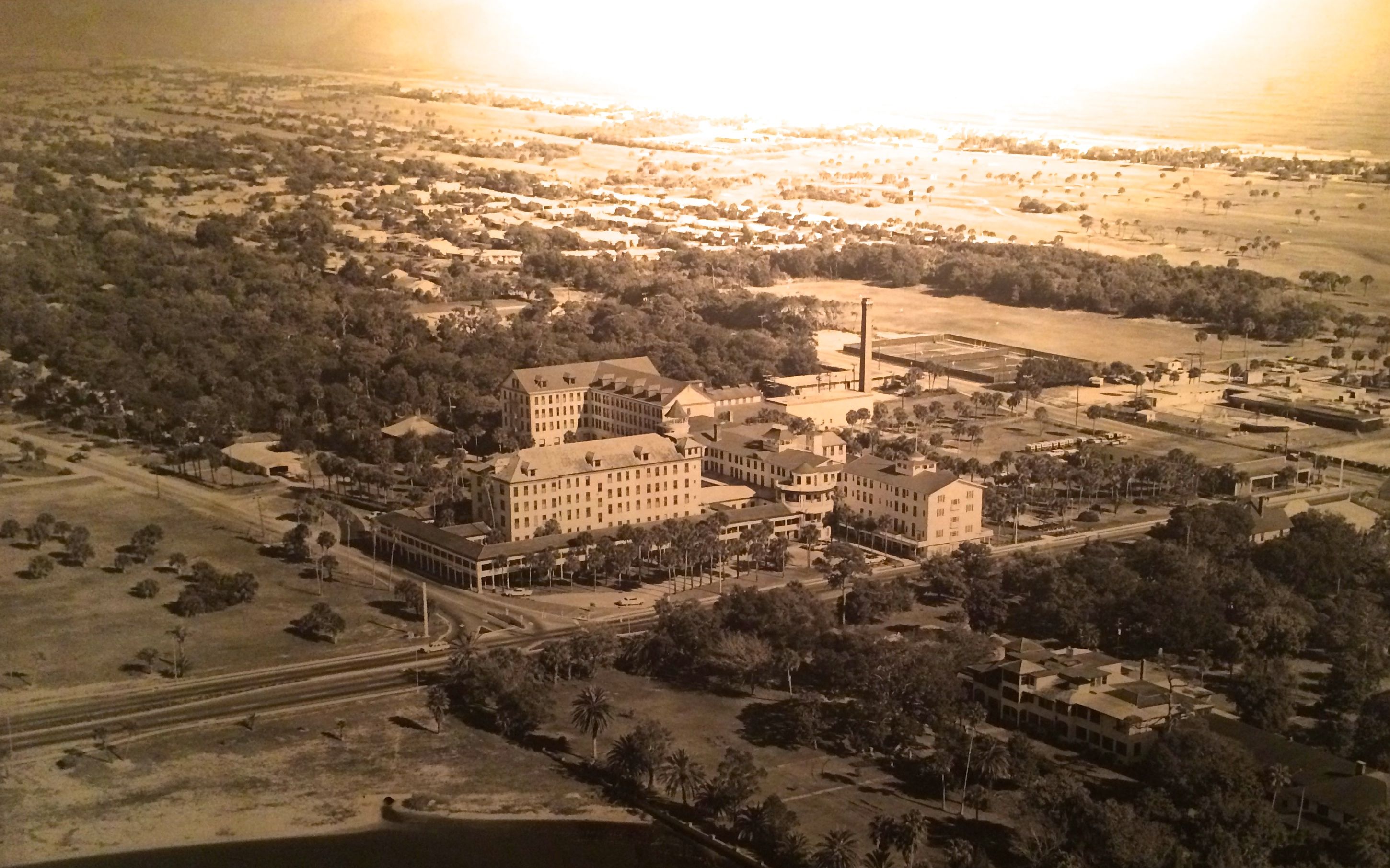
Ormand Beach old photo

The Casements is the building in the lower right corner. The large building in the center of the picture is the Ormond Hotel. When Rockefeller began wintering in Ormond Beach, he first stayed at the hotel. His party took up the whole top floor. The guide told us that Rockefeller was happy with his accommodations there until he found out that the general public was charged considerably less than he was. He made arrangements straight-away to move into his own house.

He wintered in The Casements from 1918 until his death in 1937 at age 97. After his death, the property was sold and served as a girls school for a while. After that,it was a rest home and then it was carved up into apartments. It fell into terrible disrepair. It was on the verge of collapsing into the ground, if the photos on the walls were any indication. The city of Ormond Beach acquired the property in 1979 and renovated it for the use of the city.

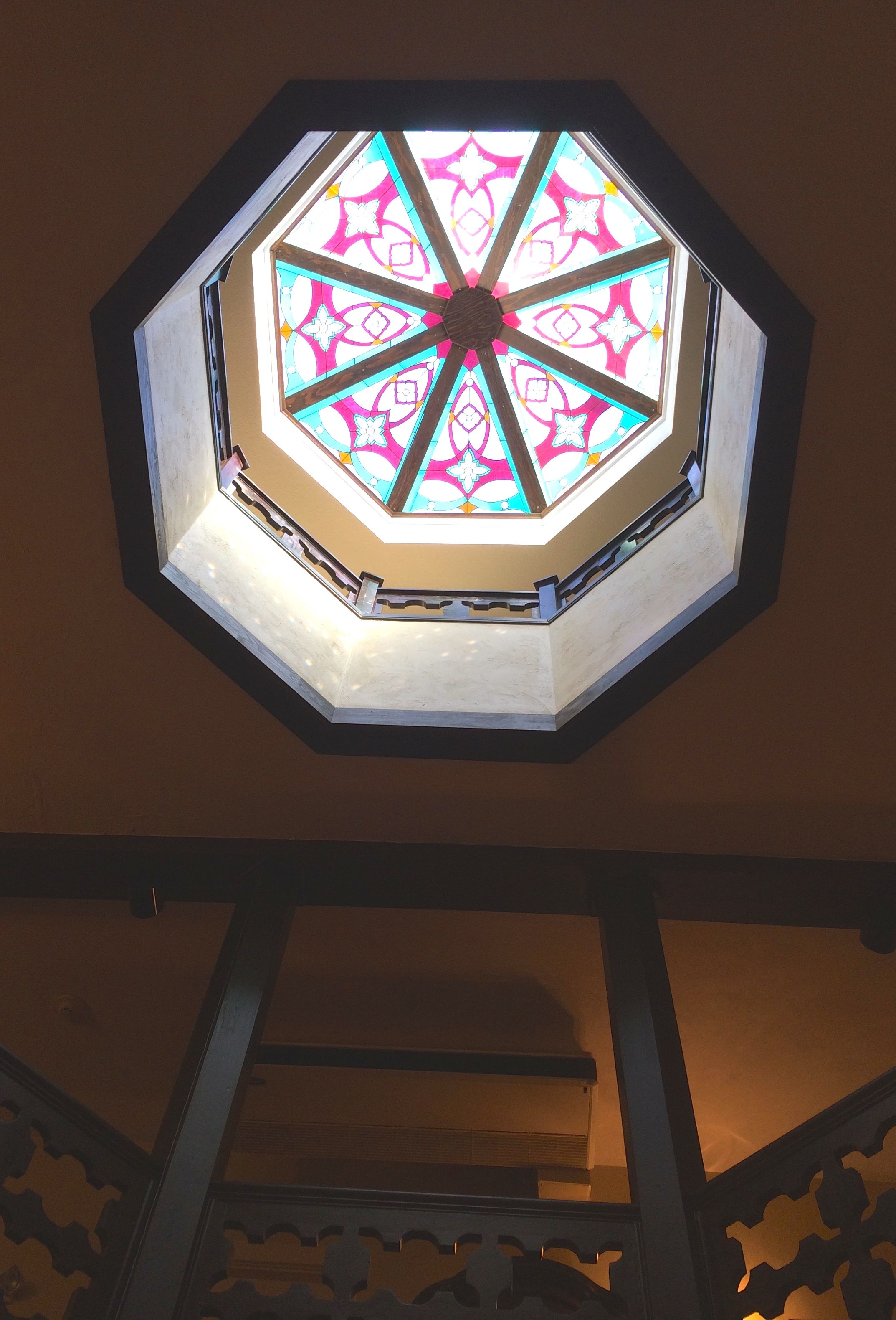
Casements colored glass

This is the window at the top of the living room. Of course, this window is a replacement. The railings around the mezzanine are also replacements.

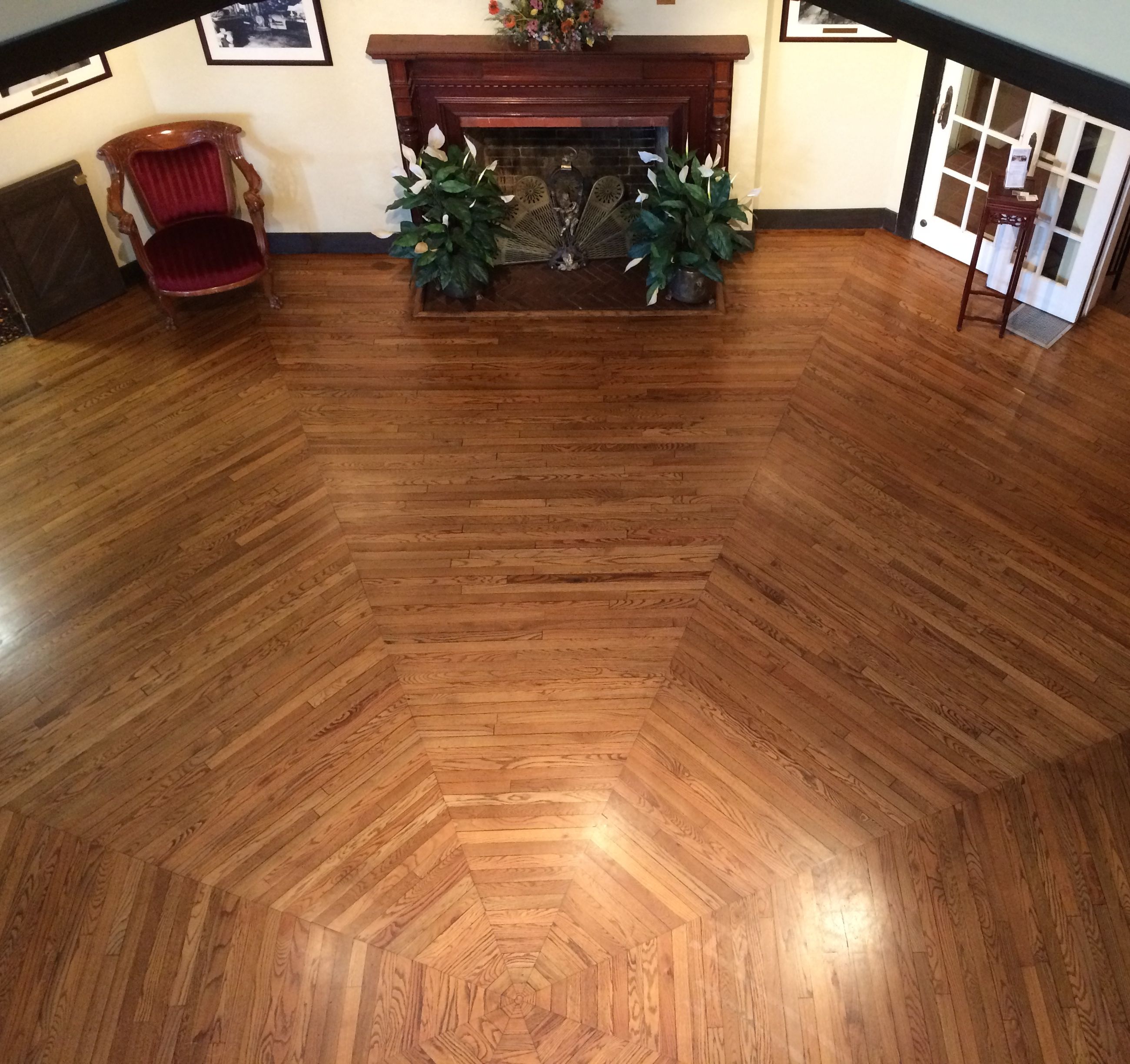
Casements livingroom

The floor has been replaced, too. Oddly enough, the mantle is original. It had been removed and installed in the Ormond Hotel. When the hotel was demolished, someone remembered that it had been here. They returned it to the city for the renovation.

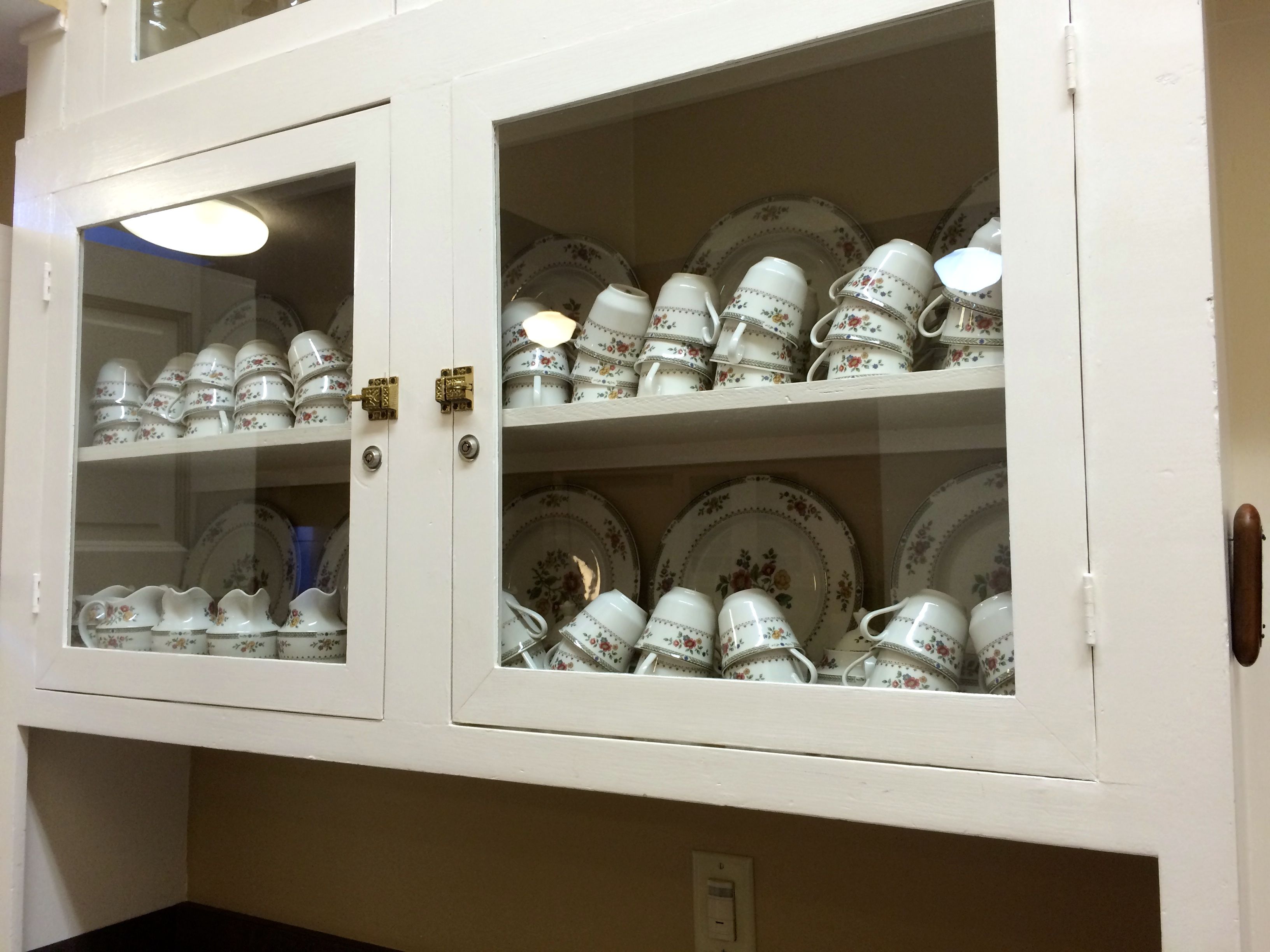
casements original cupboard

The guide pointed out this cupboard in the kitchen. It was the only original cupboard in the room. The dishes, naturally, are not original. They are used at the many festive activities here during the year.

The guide pointed out the last remaining original glass in the house.

Casements original window glass

She also took us into a room that had a couple of pieces of furniture that belonged to the Rockefellers. Photos were not permitted in the room, although she couldn’t say for sure why. She did tell us that John D. Rockefeller’s son, David, is still alive at 100. In honor of his 100th birthday, he gave $10,000 to The Casements. That was a nice gesture.

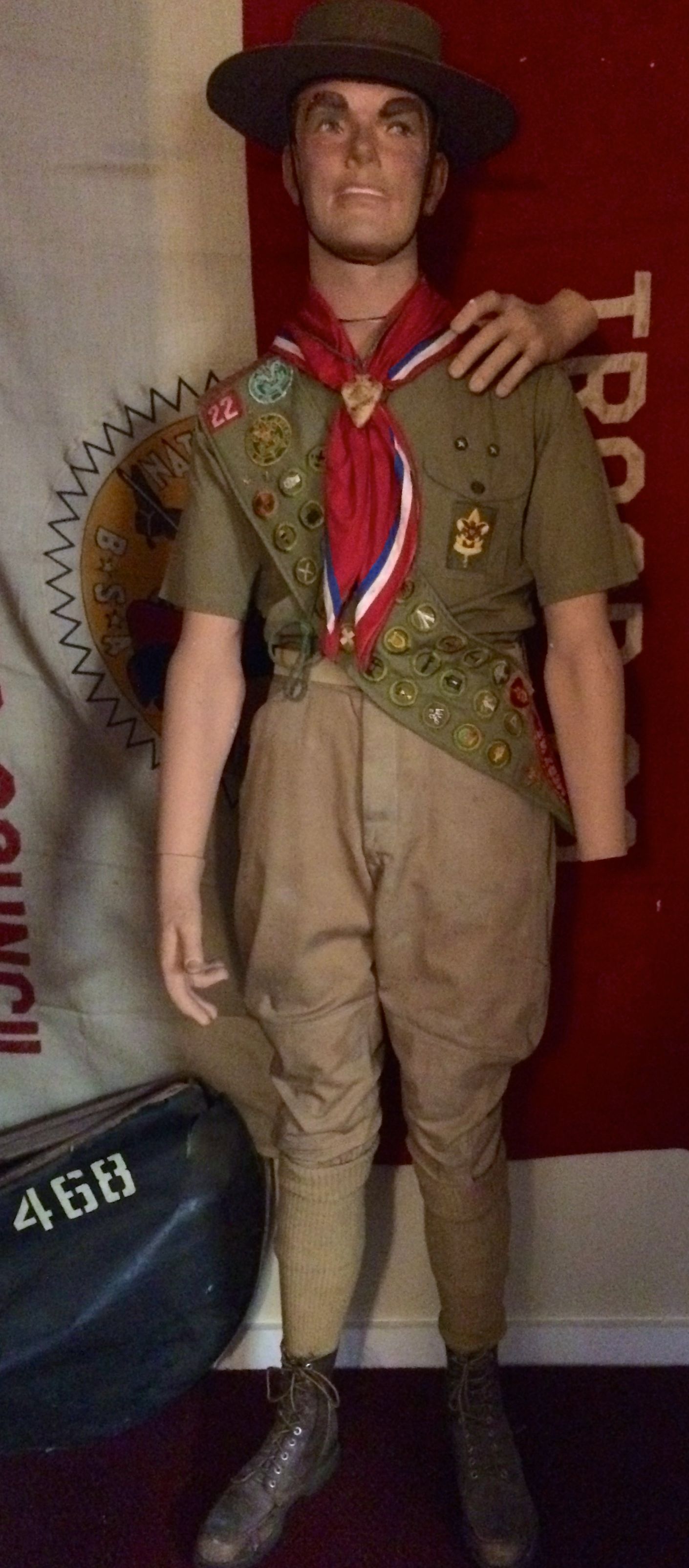
There was also a Boy Scout display on the third floor that was begun as an Eagle Scout project.

Casements boy scout

I was a bit perplexed by the hand on the dummy’s shoulder, until I realized that it was the one that fell off. Someone with a sense of humor had repositioned it.

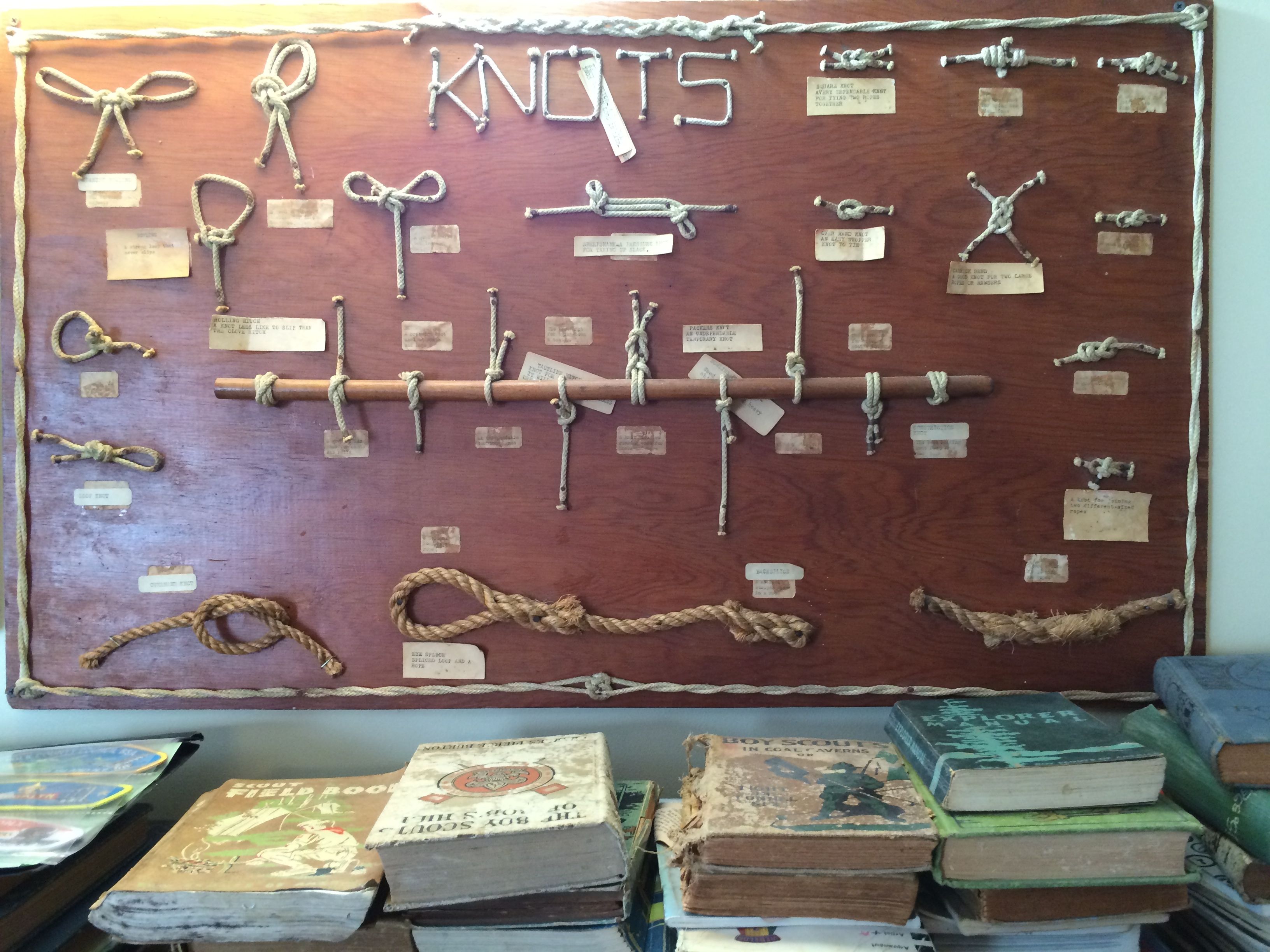
Boy scout knots

What is a Boy Scout museum without knots?

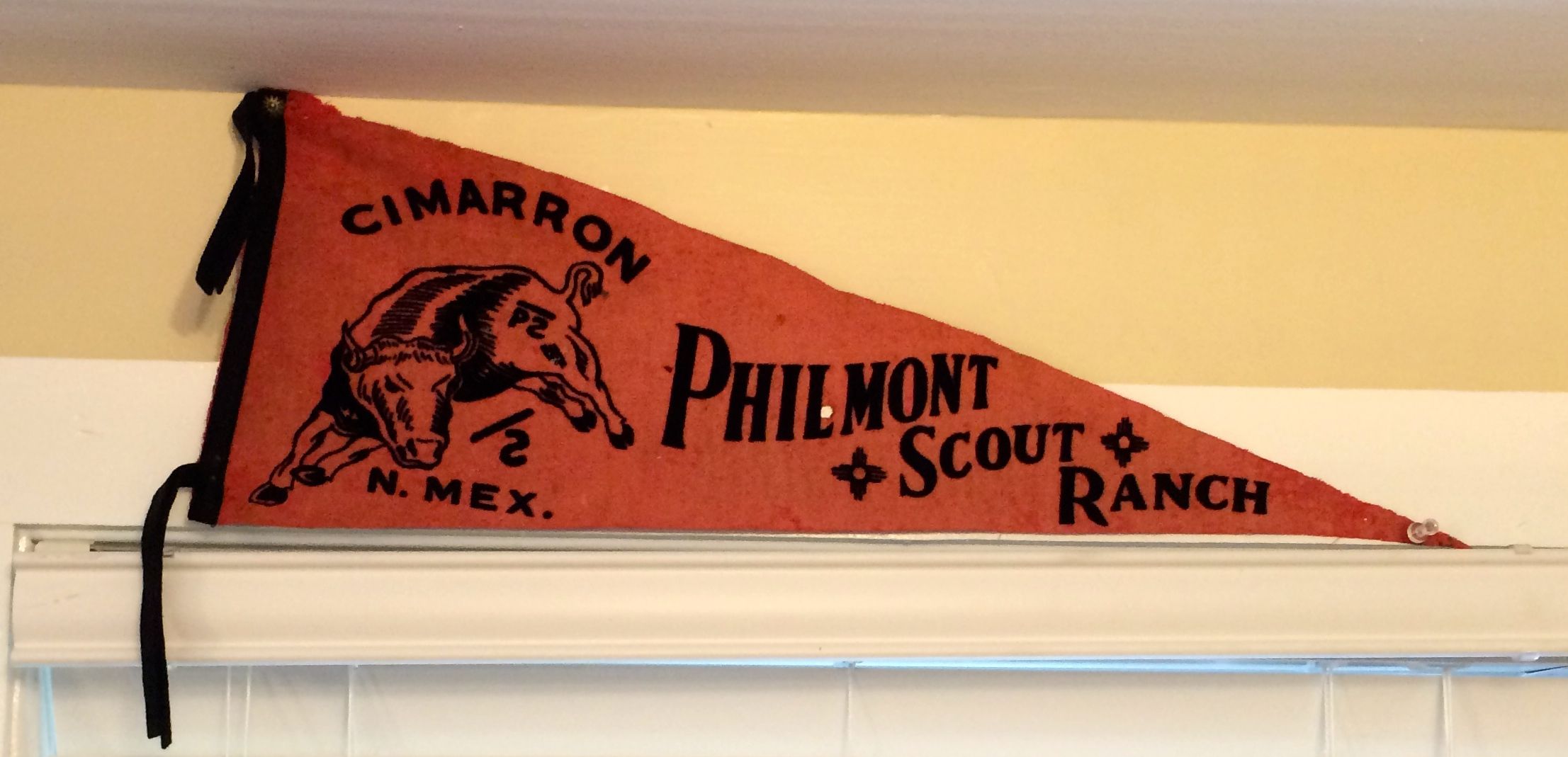
Casement boy scout philmont flag

I was pleased to see this banner from Philmont. I had driven by the ranch when I was in New Mexico last spring.

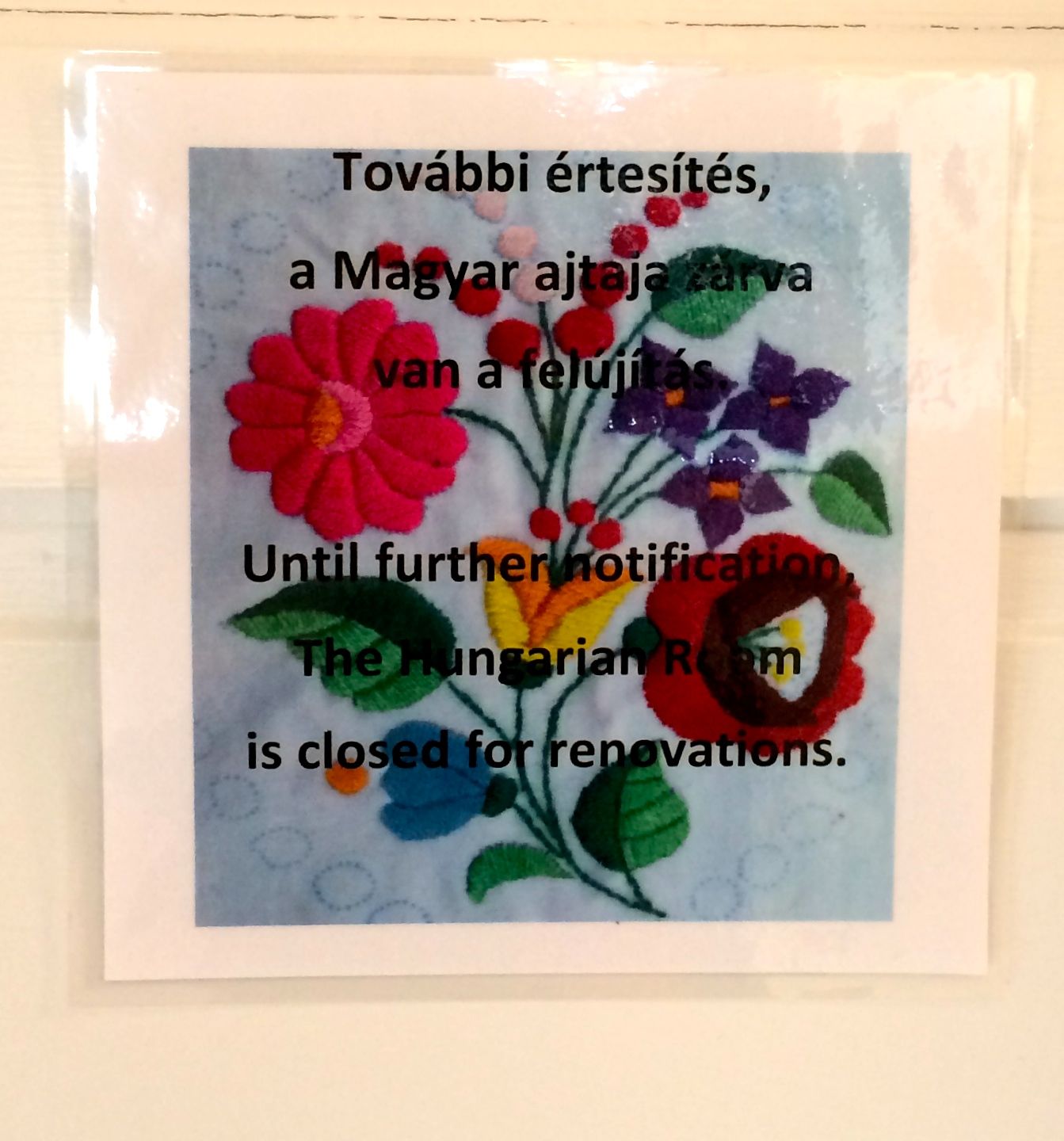
There was another display on the third floor that I had hoped to see. It was a display of Hungarian art. In the brochure about The Casements, it said that the display was facilitated by Cardinal Mindzenty. A good friend of mine attended high school in Dunkirk, NY in a school named in his honor. Alas, the display was closed due to a leak in the roof.

Casements hungarian museum

And then it was time to move along to the next item on my agenda.

I headed further down the road to Daytona Beach to see the home of Mary McLeod Bethune. When I was a youngster, I was really into reading biographies, and I was taken with Mary McLeod Bethune’s life story. It could have been the neat name. It could have been that she was born to former slaves and accomplished great things, including starting a school. I think it might be the story I remember from the biography about how she would have the butcher wrap each piece of meat separately so that they could use the butcher paper for learning to write.

I am always drawn to people who are thrifty, can get things accomplished and figure out ways to use what other people see as trash.

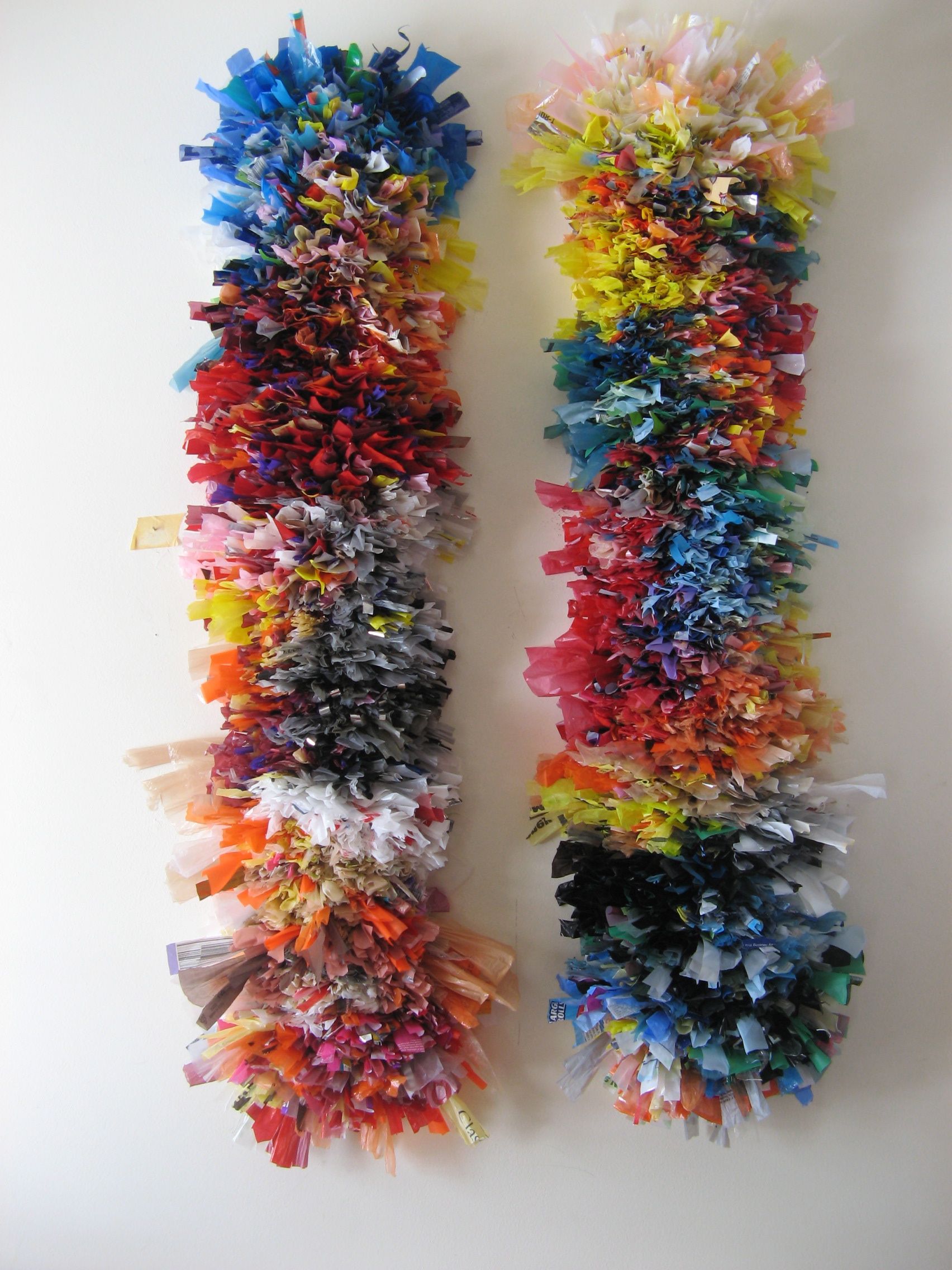
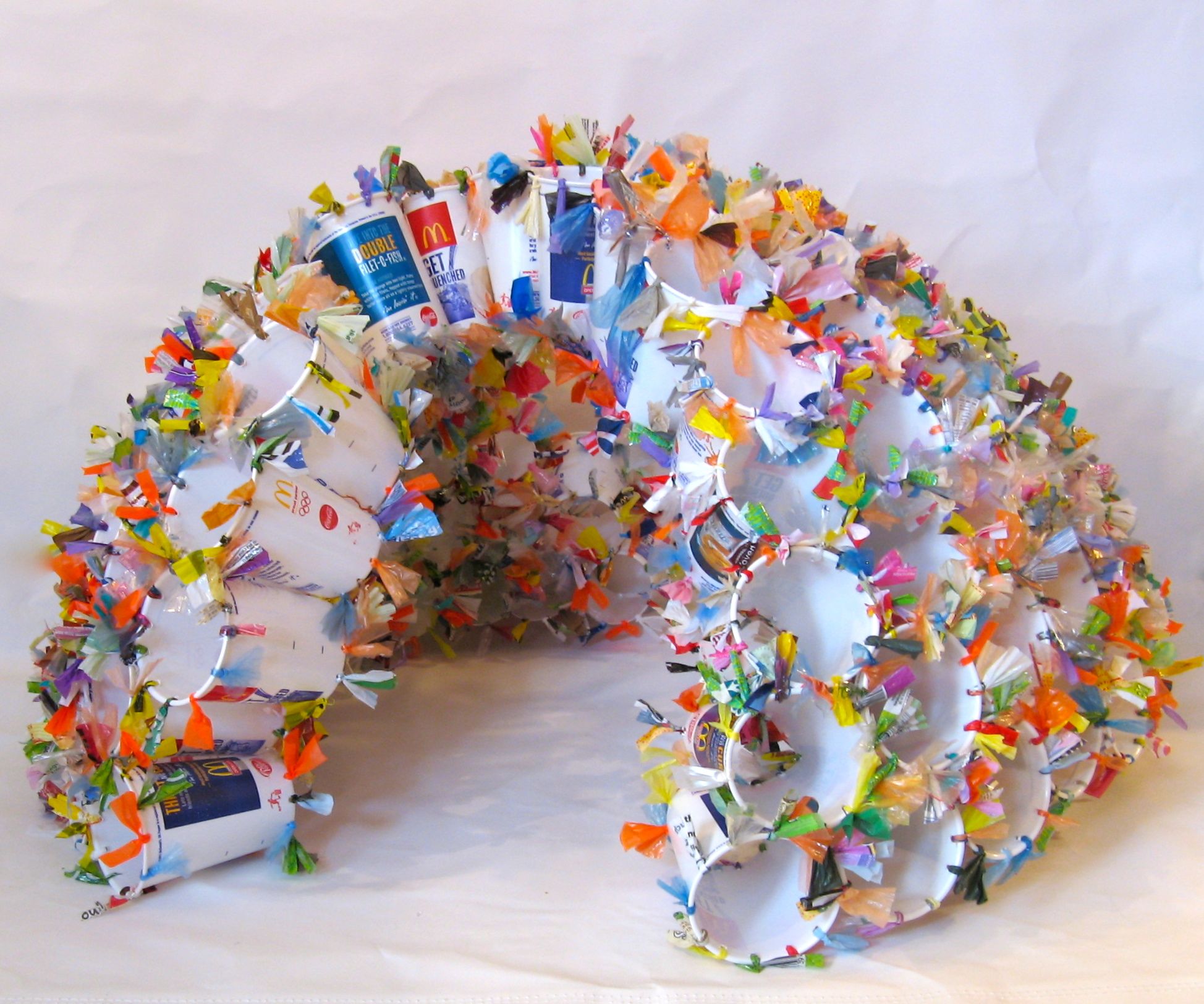
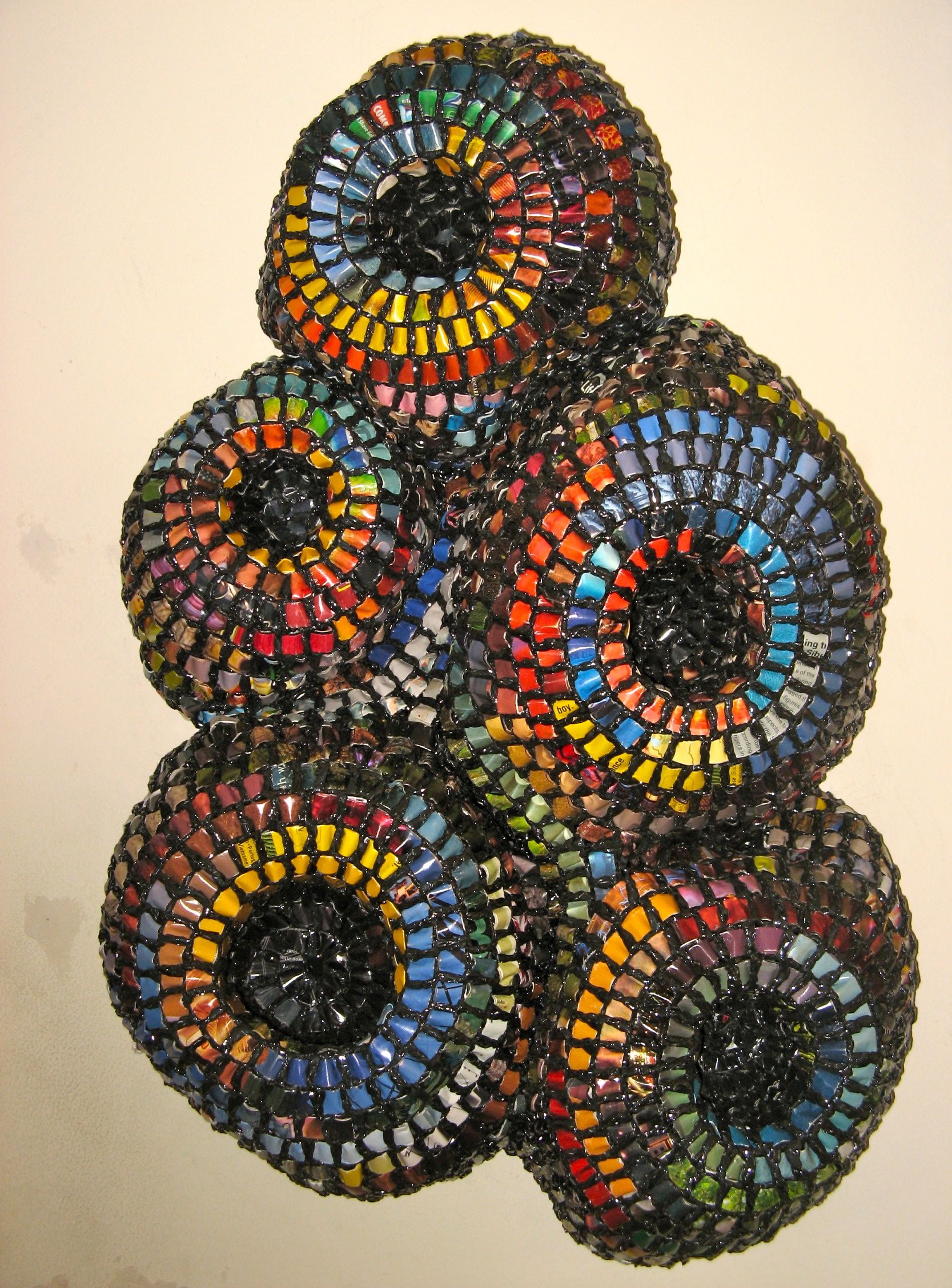
Just check out some of my art work.

Lines in the Sand
Lines in the Sand
Sphere of Influence
Sphere of Influence
Distant Galaxies
Distant Galaxies

Enough about me. Let’s get back to Mary McLeod Bethune and her house.

Born in 1875, she was one of 17 children born to former slaves. Everyone worked in the cotton fields. She was the only person in her family that was able to attend school.

She had wanted to be a missionary in Africa, but decided to come to Daytona Beach in 1904 to start a school for the daughters of black workers. In the 1920s, her school, Daytona Normal and Industrial Institute for Negro Girls, merged with the Cookman Institute for Men. She remained at the head of the combined of the school, which became Bethune-Cookman College, until 1942. She was 67 when she left that leadership position and moved to Washington DC to work on various causes, including NAACP. She took up residence at its new National Council of Negro Women headquarters in a Washington, D.C. townhouse and returned to Daytona Beach in her retirement. She died in 1955.

Anyway, I wanted to see her home, which is on the grounds of Bethune-Cookman College. According to some information I tracked down, they give tours of the house. I got to the university and found a place to park. It was a lovely campus, and the students passing from one side of the campus to the other to the other smiled and greeted me. I got to the house…

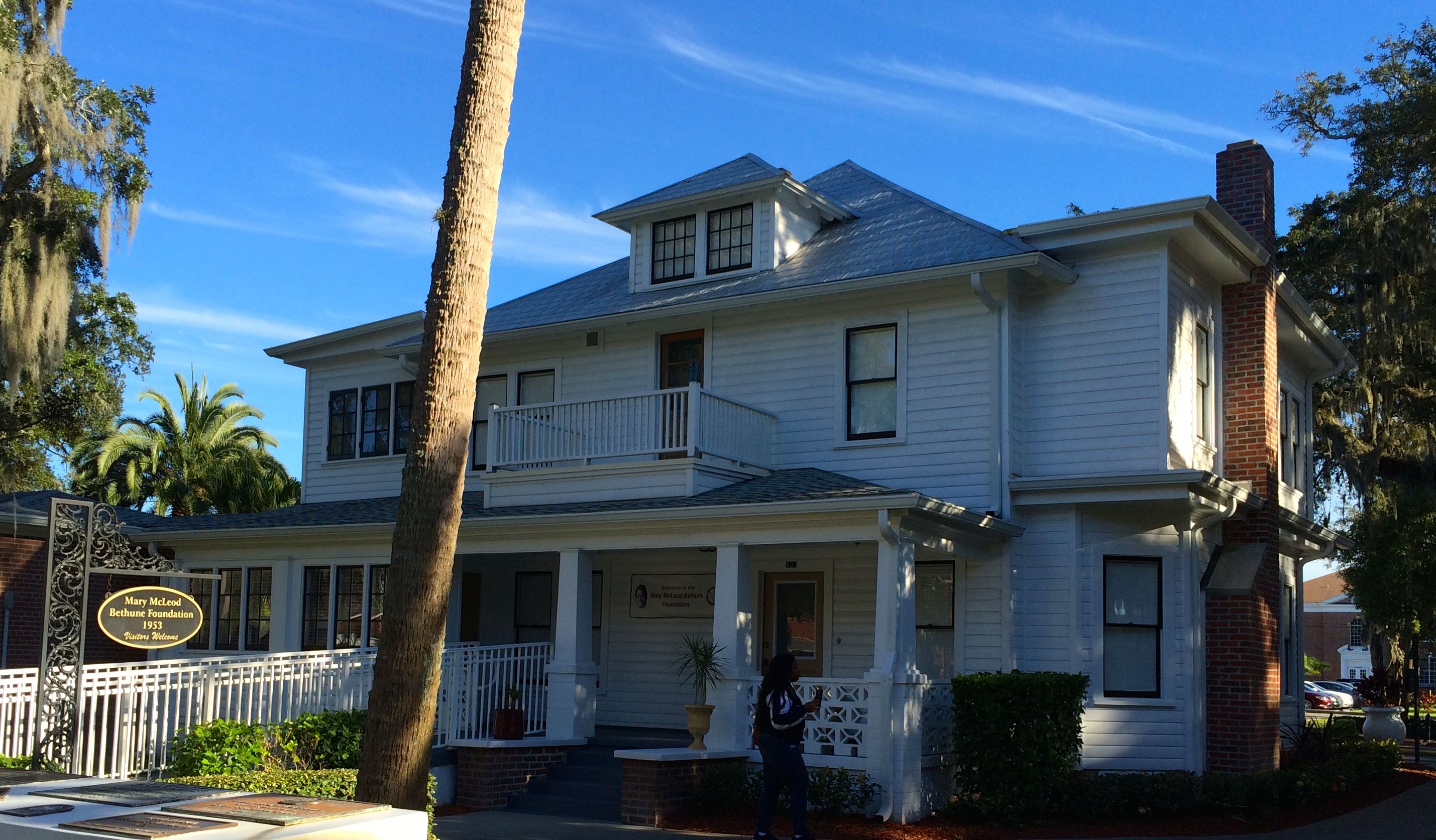
Mary McLeod Betune house

And found that it had closed at 3:00. Rats!

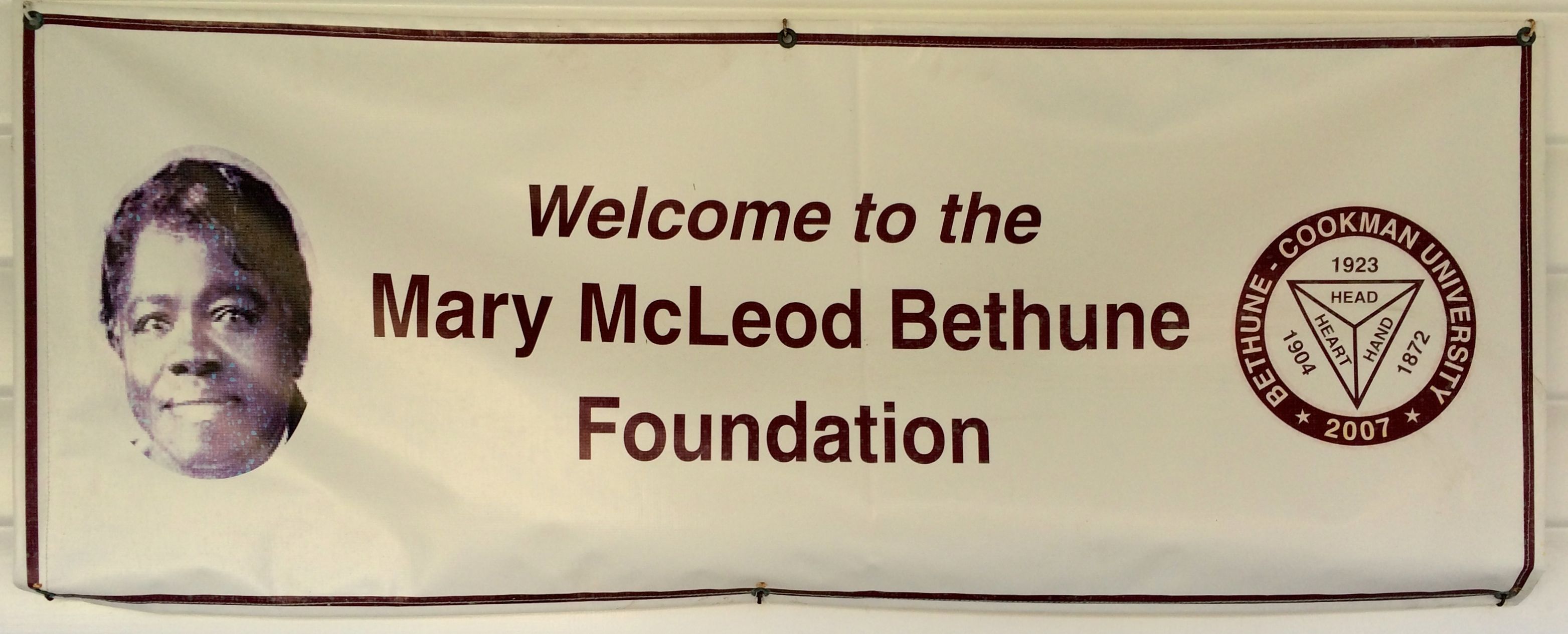
Mary McLeod Bethune foundations sign

Oh well. At least I had seen it.

On the way back, I saw some signs that said “Ramp to beach”.  I wondered if it really was possible to drive on the beach. I made a U-turn and entered the ramp. It turns out that there was a $10 fee to enter. I really wasn’t interested in spending any time on the beach. It was way too chilly and I didn’t know how far I could drive. So, I explained to the guy in the toll booth that I didn’t really want to enter – I had made a mistake. He said that I could turn around, and so I did.

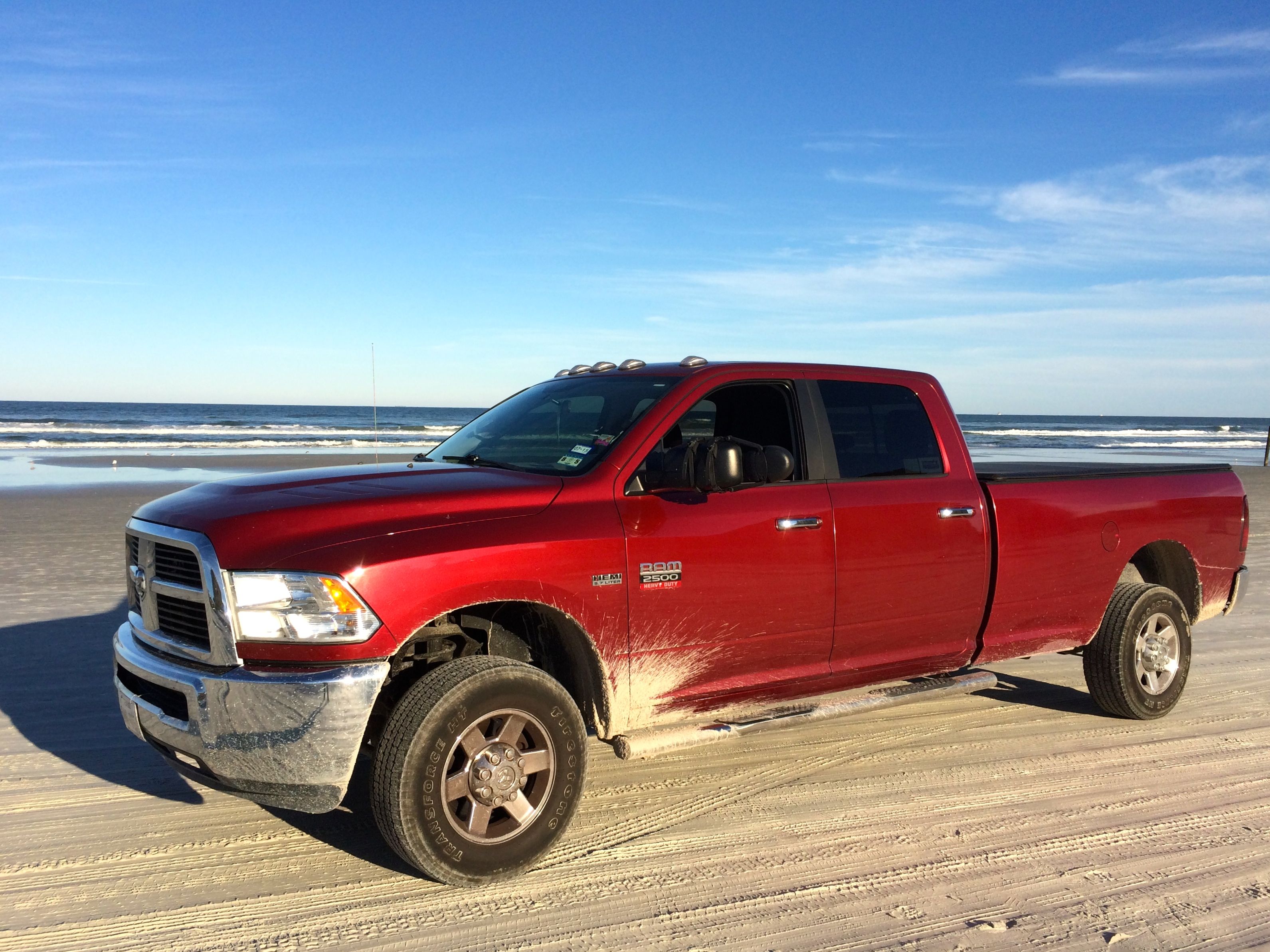
Bart on Daytona Beach

But not before I got a glamour shot of Bart on the beach.

I stopped to get some gas on the way back, and had to go into the convenience store to get the receipt. The clerk asked me if I wanted a Powerball ticket. You remember? The $1.5 BILLION jackpot? Well, why not buy one and be a part of the excitement. I took one. And I WON!

Lottery ticket

I won $4. Hey, I doubled my money! It was my first ever attempt to play the lottery and I won.

I decided to quite while I was ahead.


Ever See a Tourist Trap?

I have one last post about my time in St. Augustine and my stay at Faver-Dykes State Park.

I have to say that this state park was the least developed state park I’ve seen in Florida.

Faver-dykes road

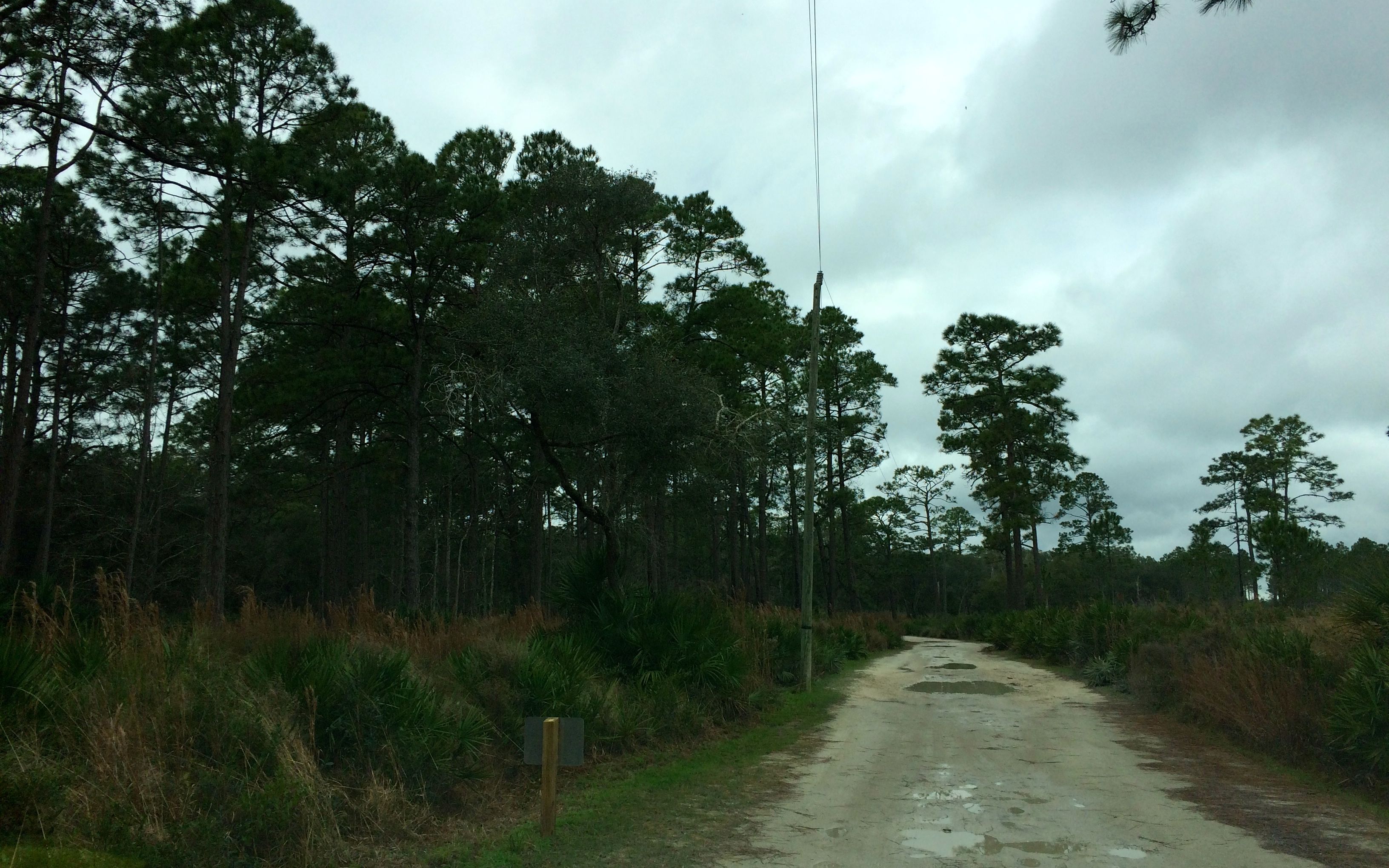
The roads were not paved. They were rutted and puddled and made of sand.

The campsites were also sand. When I went to back into my site, I had a dickens of a time getting traction, even with four-wheel-drive. I kept churning up the sand. I finally managed to get it shoved into the site although I was kind of on the wrong side of the site. However my power cord reached the pedestal, so I called it good enough.

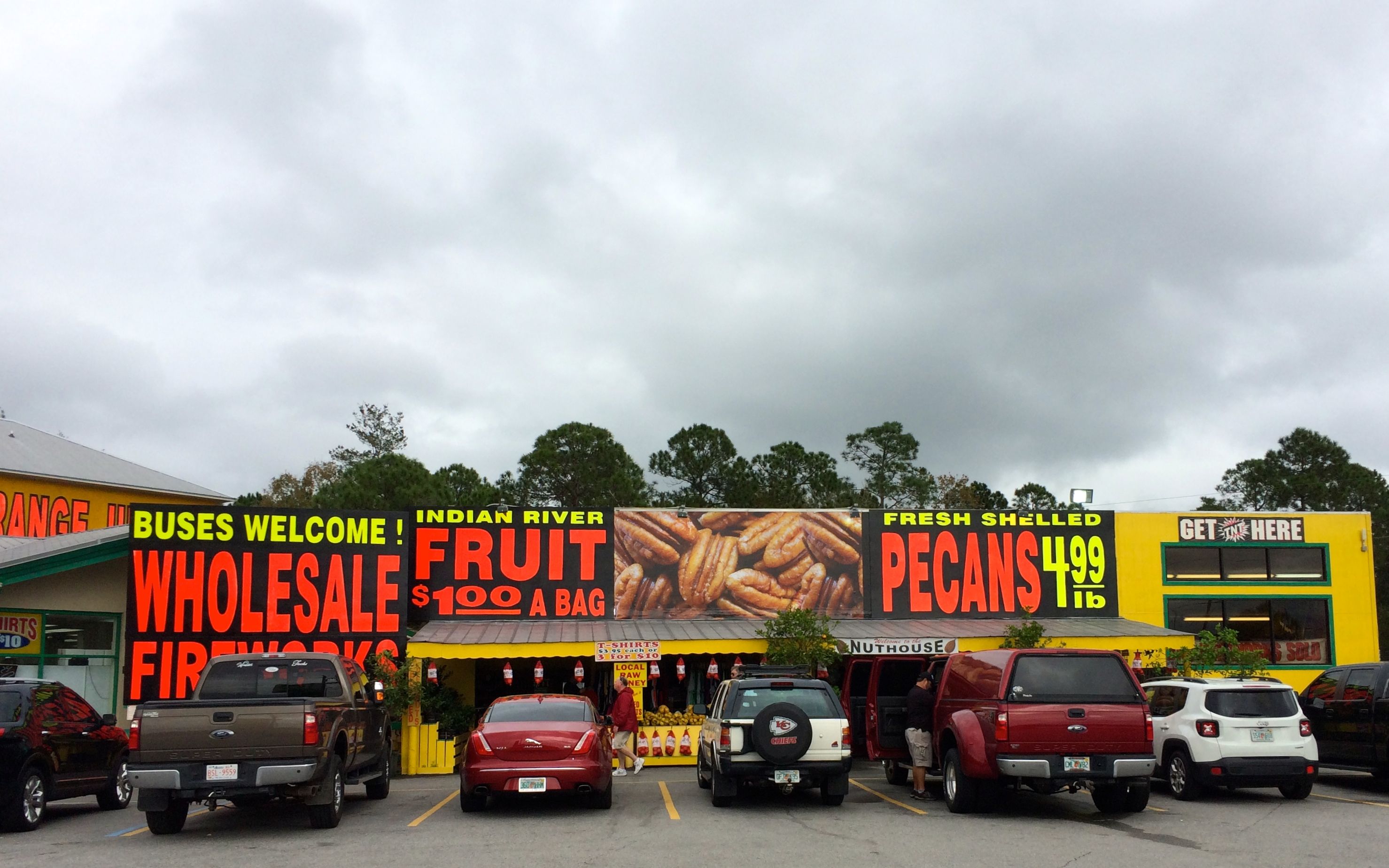
When I left the park everyday, after bumping over a couple miles of ruts and potholes and splashing through puddles, I would pass a set of what can only be called Tourist Traps.

Tourist trap

There are three of these where Faver-Dykes Road hits U.S. 1.

The sold fruit and nuts and juice and pecan logs and gen-u-ine souvenirs.

And gas for forty cents more per gallon than a few miles down the road in St. Augustine.

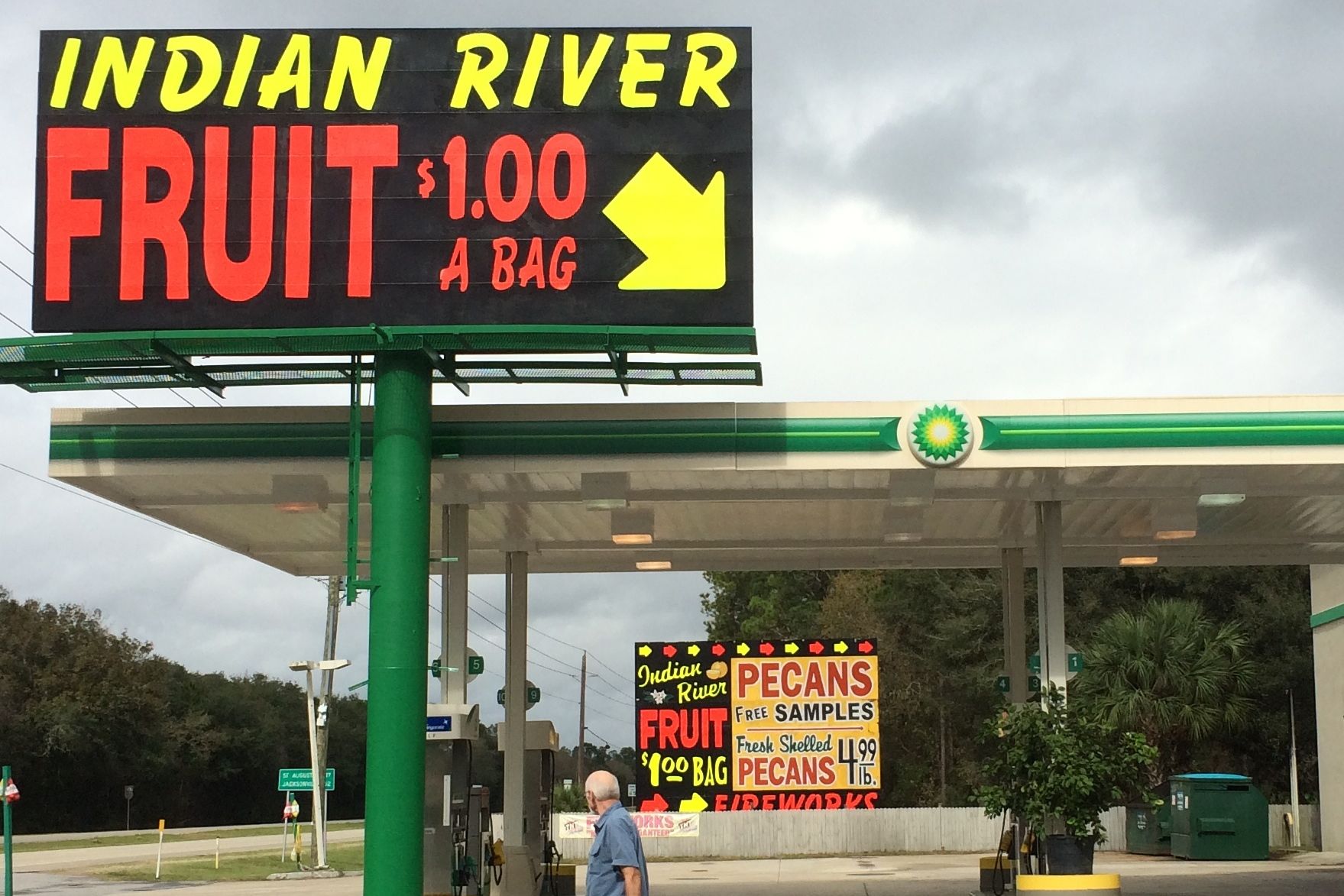
Tourist trap sign

This was the real come-on. Indian River Fruit at $1.00 a bag.

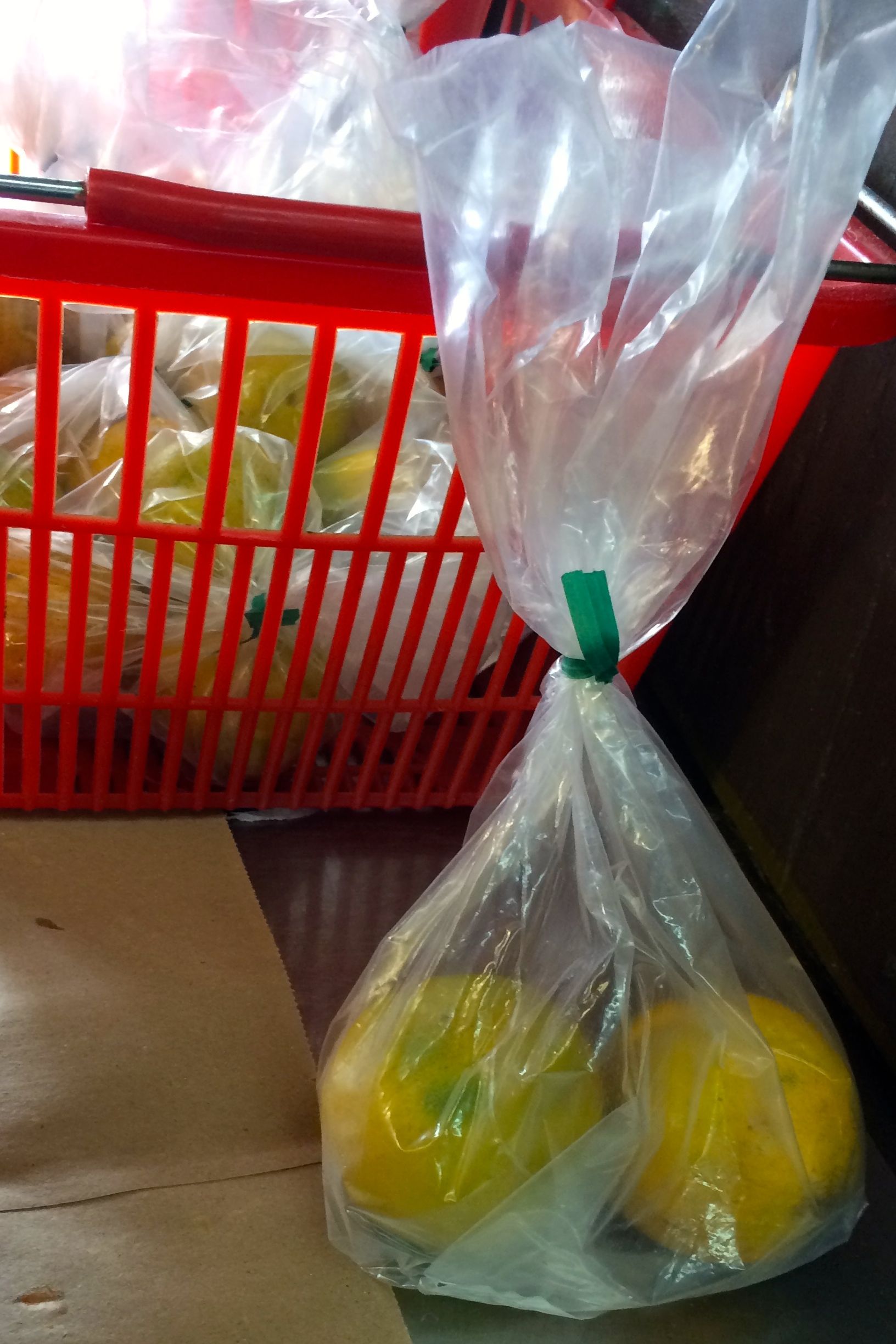
$1 bag of fruit

This was the bag of fruit they were selling for $1.

They did give samples, though. I had a few slices of the different fruits they were offering and I asked for a sample of the peach cider they were selling. It was pretty good. I picked up the bottle and looked at it. I wanted to see what was in it. Oddly enough, it was made in Georgia. Hmmm…not exactly a good souvenir from Florida.

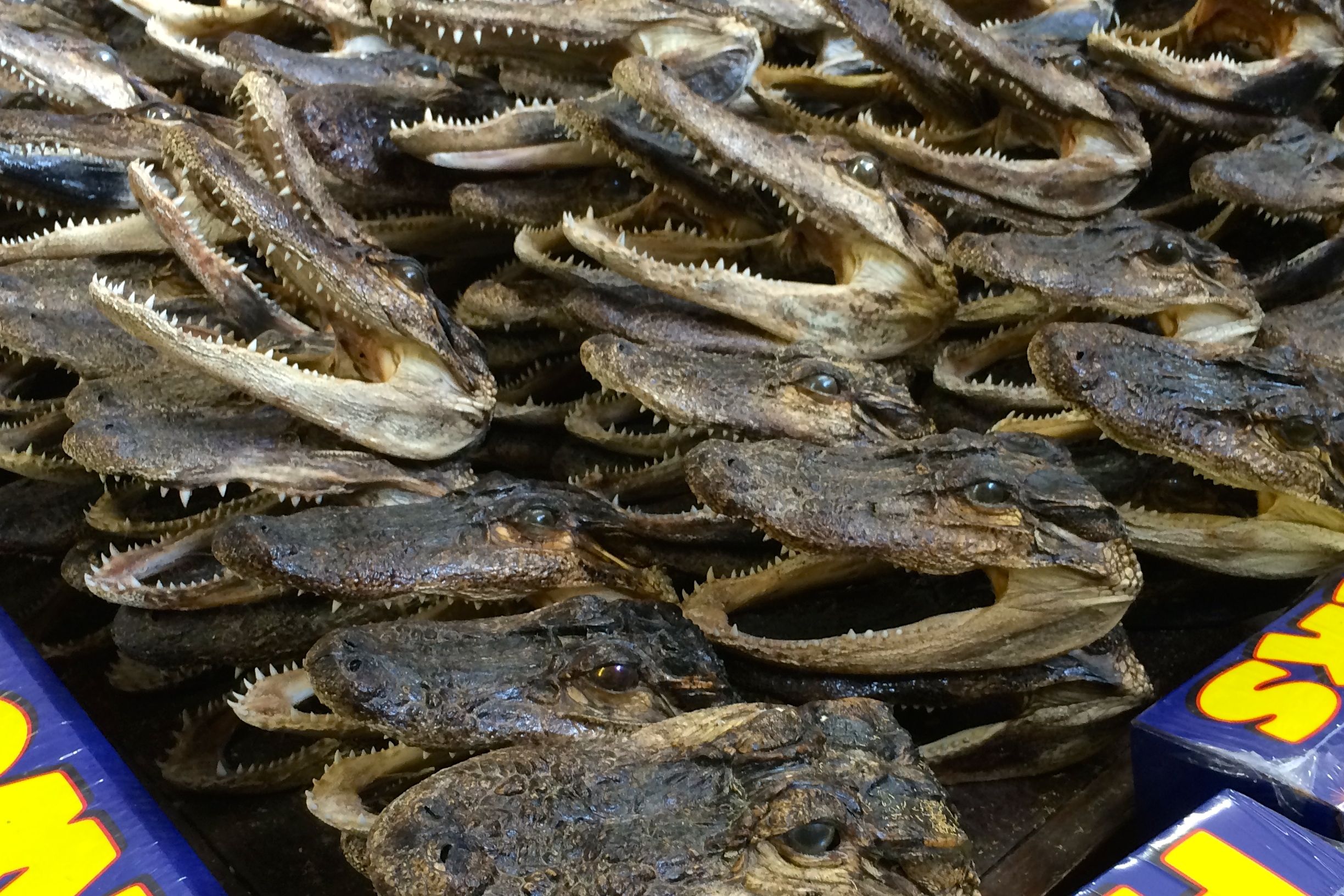
Alligator heads

Ah! Much better! An alligator head – the ideal Florida souvenir.

I didn’t buy the alligator.

Fort Matanzas

Saturday dawned and there was sun!

Saturday blue sky

Blue sky! It might be a great day for a little more sight seeing.

I set off for Fort Matanzas. I got there and found out that in order to get to the fort, you had to take a ferry ride across the Matanzas River. I stopped in at the office and got a ticket for the FREE ferry and stamped my National Park Service Passport. I had about half an hour until the ferry boarding, so I decided to take a stroll on the nature trail.

I picked up a self-guided brochure and set off on the trail.

Ft Matanzas Yaupon holly

One of the plants it pointed out was yaupon holly. The red berries were bright dots of color in the brush. There was also the ubiquitous saw palmetto. In fact, it is so ever present that I didn’t even bother to take a picture of it.

Ft Matanzas resurrection fern on live oak

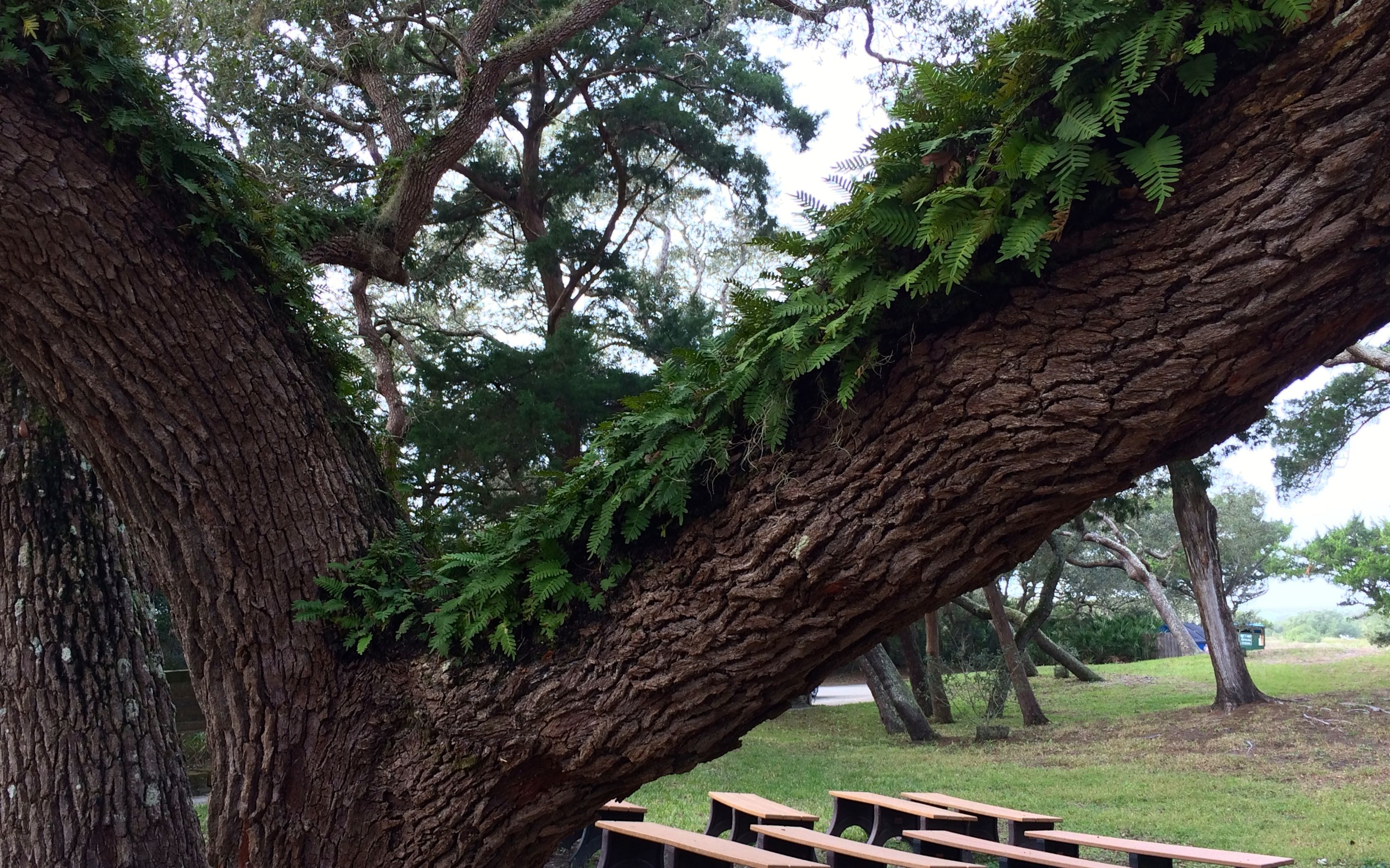
They also gave information about the resurrection fern. It grows on the live oak. During times of drought, it turns brown and withers. When there is rain, they come back to life. I guess the rain is good for the resurrection ferns.

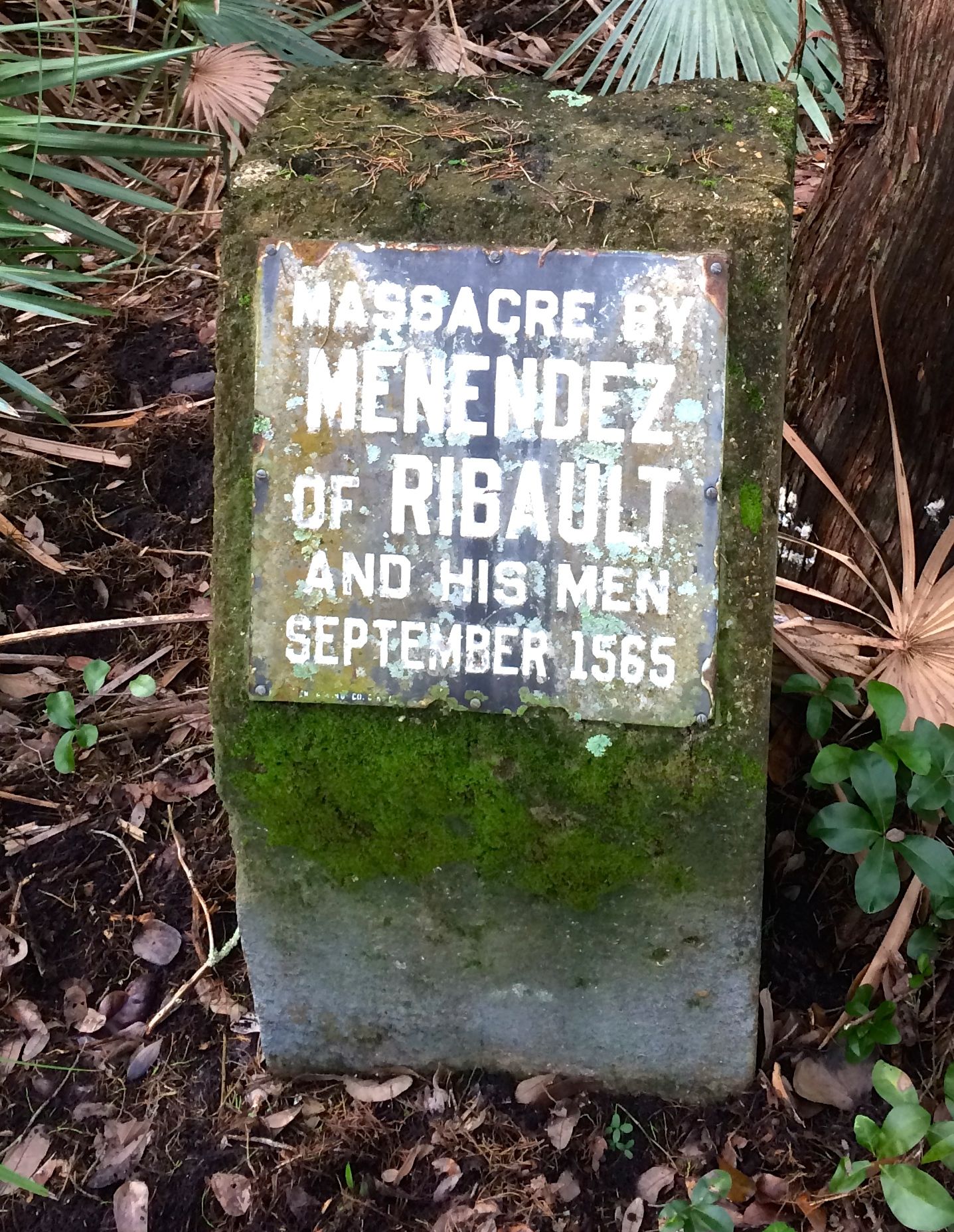
Ft Matanzas massacre memorial

There was also a memorial of the massacre of the French by the Spanish. The French, lead by Ribault, surrendered to Menendez. They thought that they would be safe. Unfortunately, that wasn’t a good career move on Ribault’s part. The exact location of the massacre is unknown, but it was somewhere in the vicinity.

Incidentally, the massacre is the basis for the name of this body of water.  Matanzas is Spanish for massacre.

After I finished my walk on the nature trail, I headed over to the dock to get ready for the ferry ride.

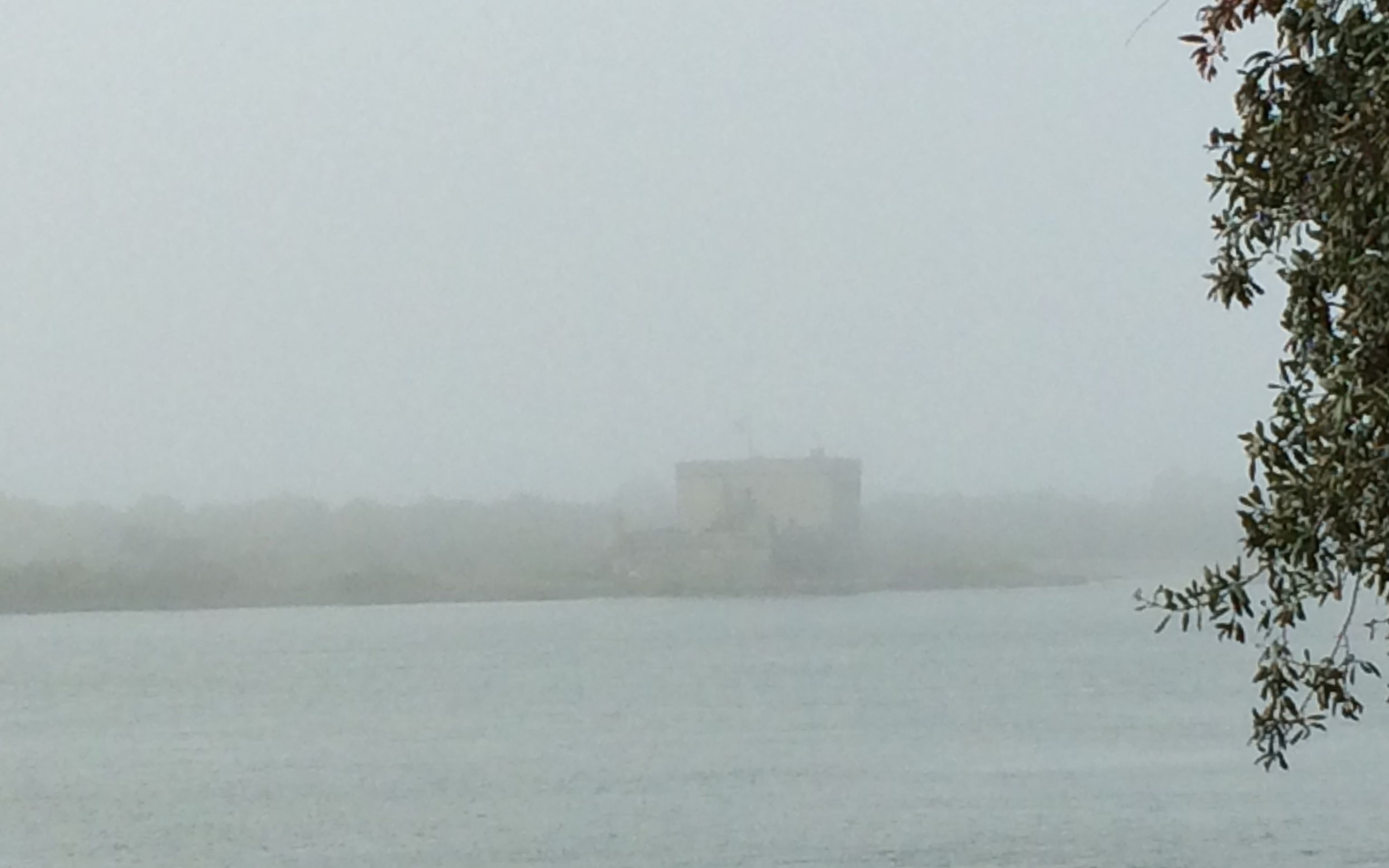
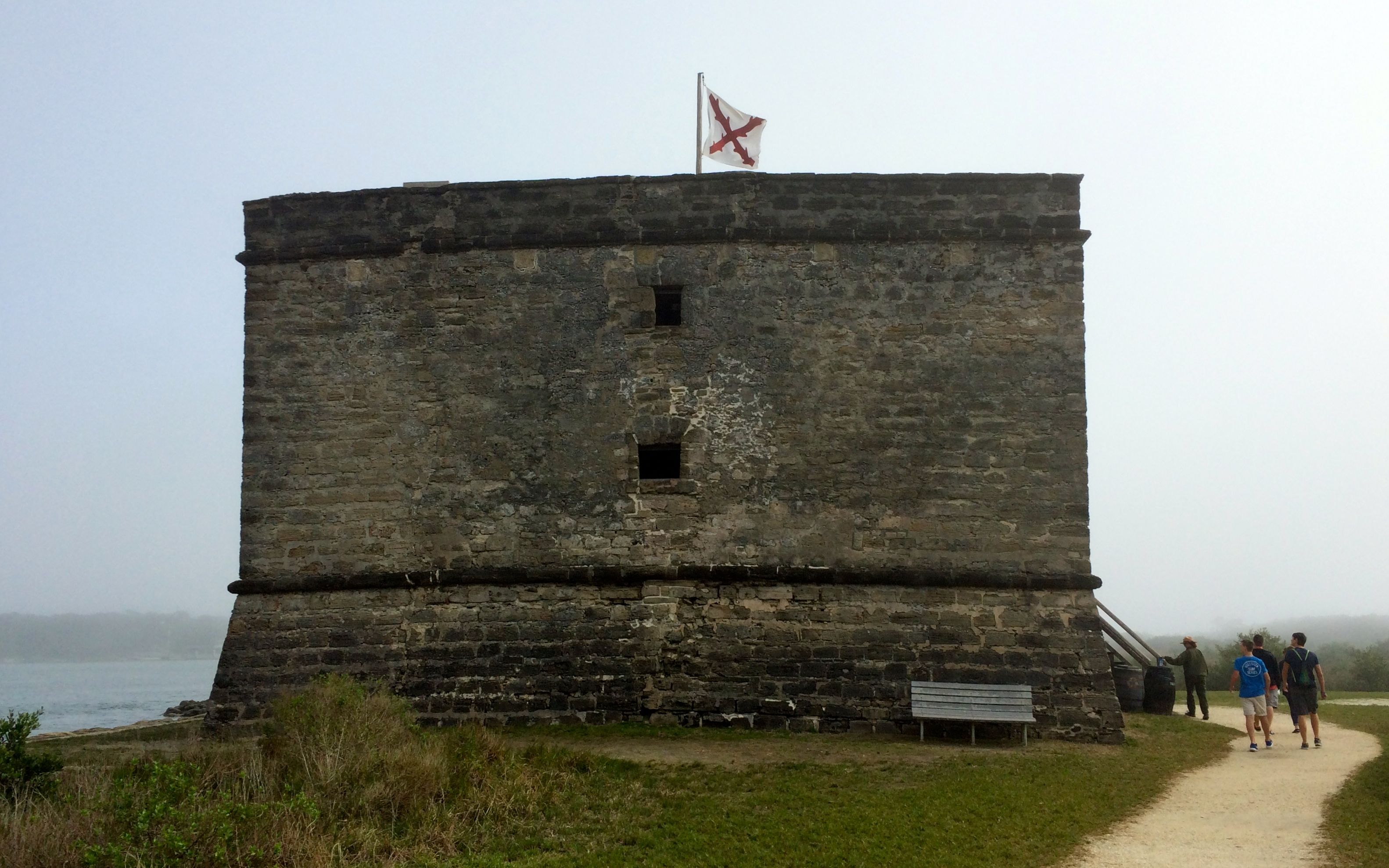
Ft Matanzas in fog

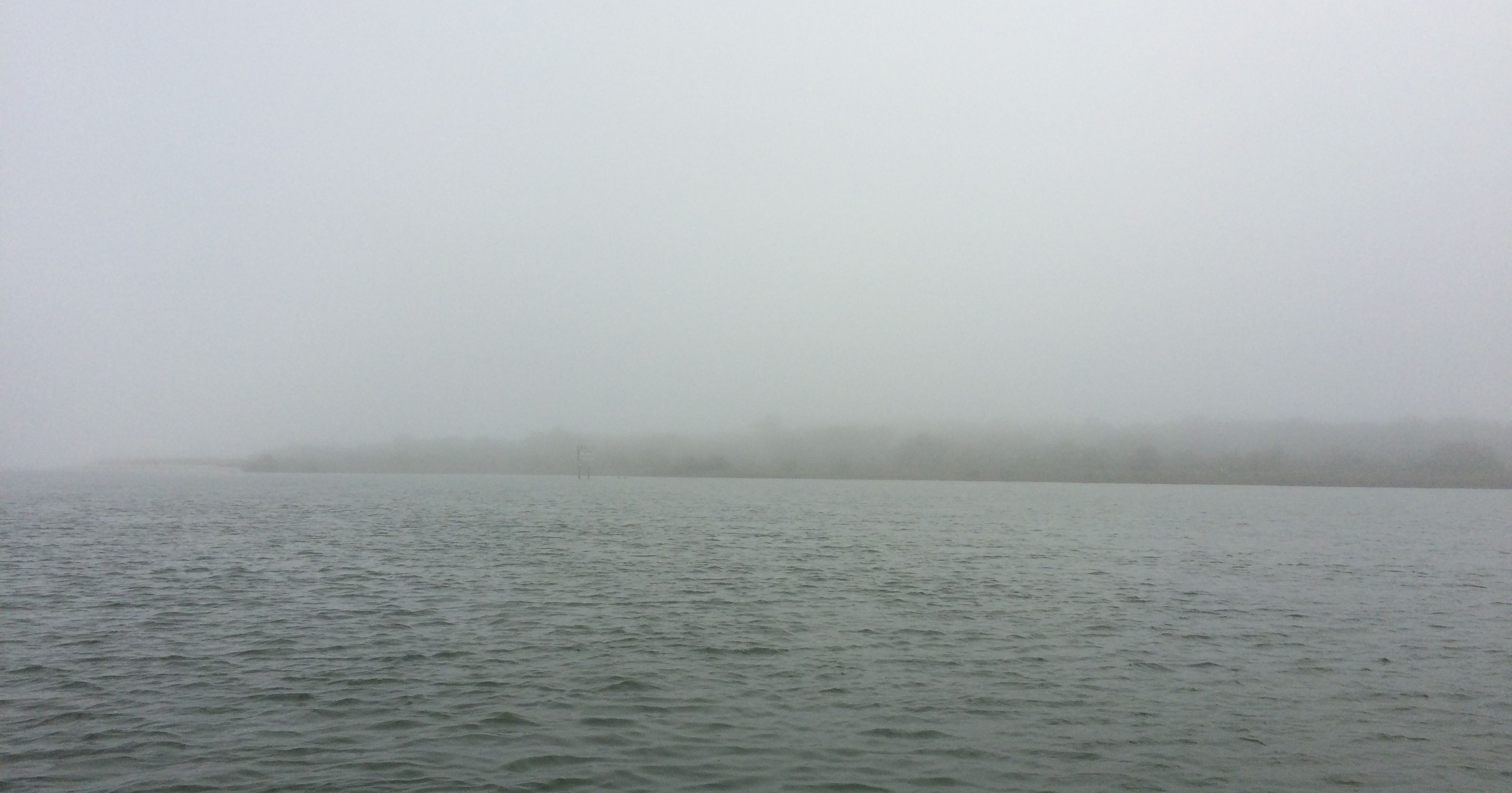
And the fog was starting to roll in. That’s the fort across the water.

Ft Matanzas backside

We landed and the ranger told us to stick to the trails and the mown grass. The fort was on an island that was named for some of its inhabitants – Rattlesnake Island.

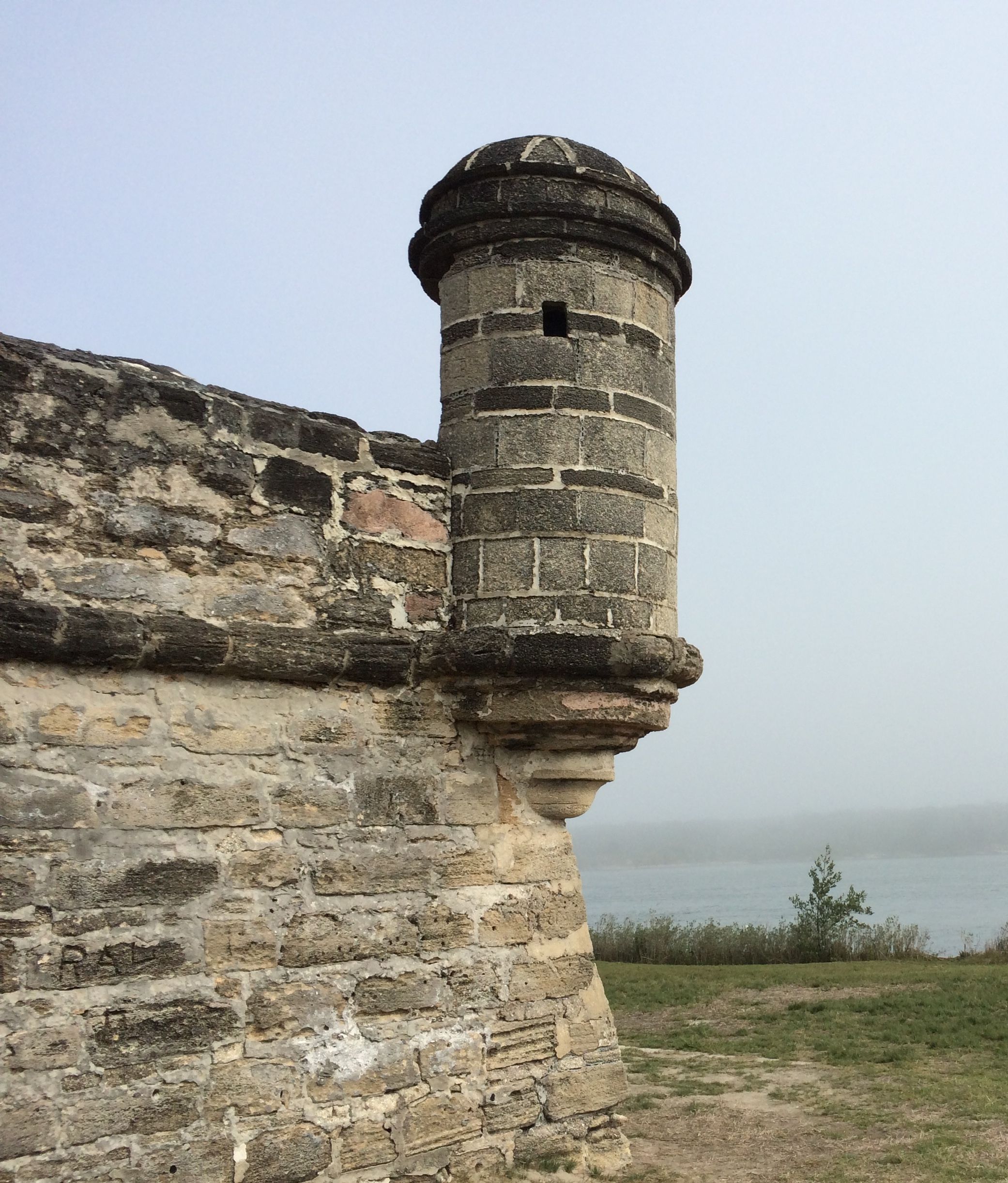
Sentry Box
Sentry Box

This is a smaller fort that was built in 1742 to prevent access to St. Augustine via the Matanzas Inlet. There was the square base that served as the platform for the cannons. There was also a cistern in it, as there is no fresh water on the island.

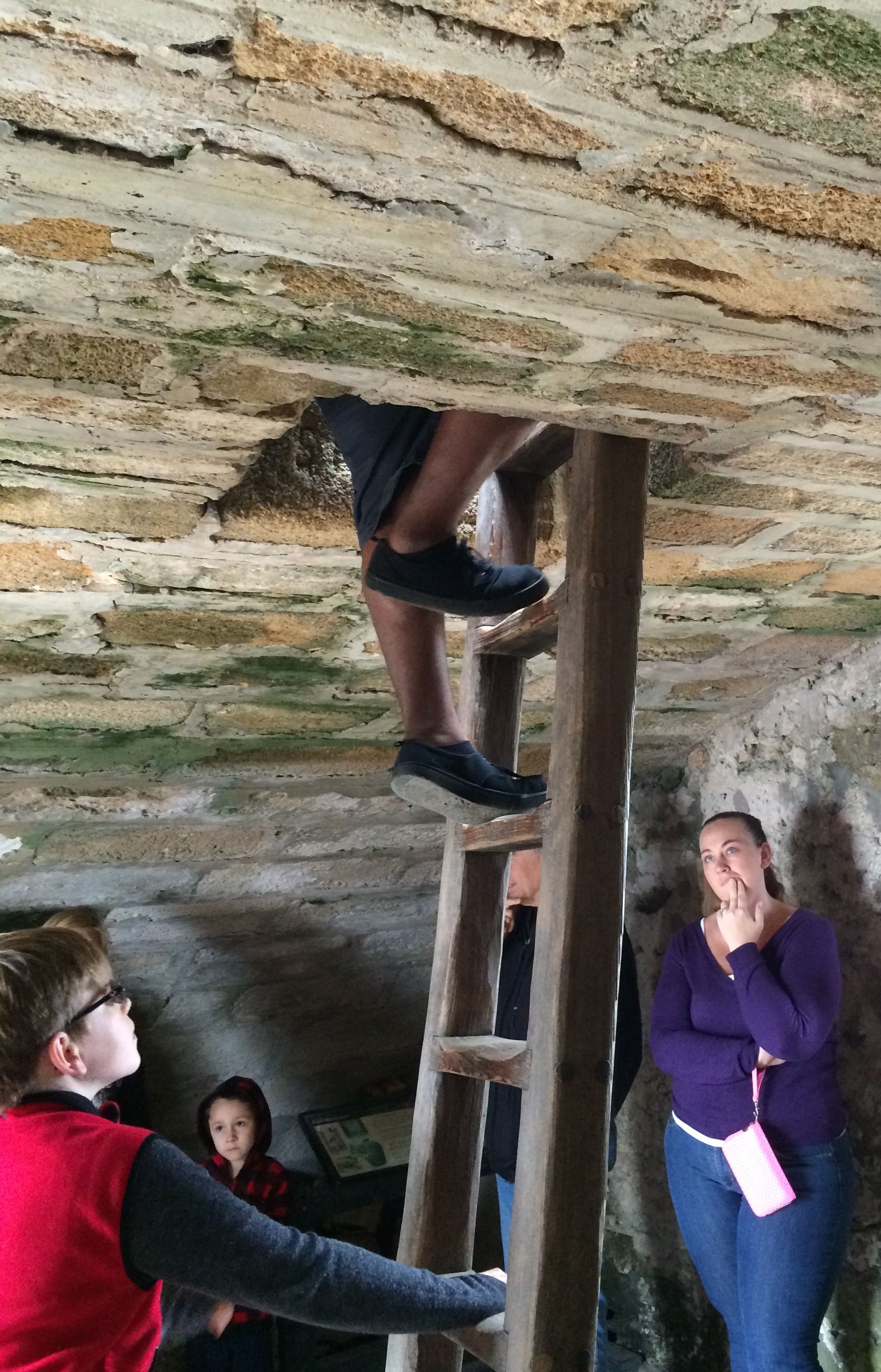
There was a rectangular tower that had two rooms and an observation deck. The regular soldiers occupied the lower room, and the officer had the upper room.

Ladder to the observation deck

The entrance to the observation deck was through the officer’s room. So much for private quarters.

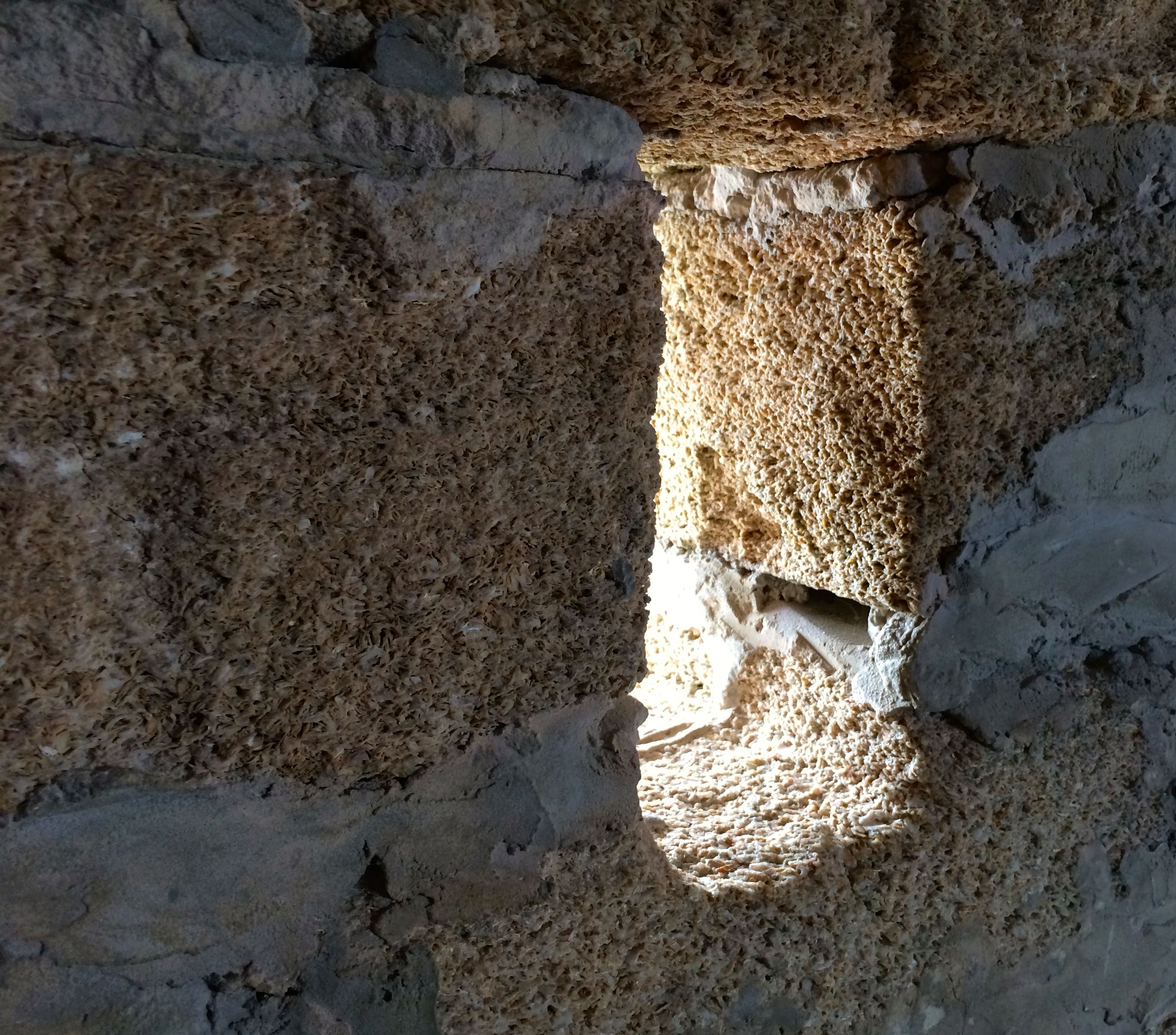
Ft Matanzas slit window

If you have been reading my posts, I am sure you can identify the building material.

Coquina, right?

Right.

Ft Matanzas fog

The fog was really rolling in by the time we left. In fact, my glasses kept misting over.

On the way back , the ranger answered my question about the speed of the water. She said that people sometimes call this body of water a river, but it is really a tidal estuary.

https://www.facebook.com/kalamazookim/videos/10153359762701989/

The water rushing by is the tide going out.

The ranger also told me that I could see the remains of the Old Spanish Coquina Quarry on Anastasia Island, so I decided to take that route back to the campground.

Old Spanish Quarries sign

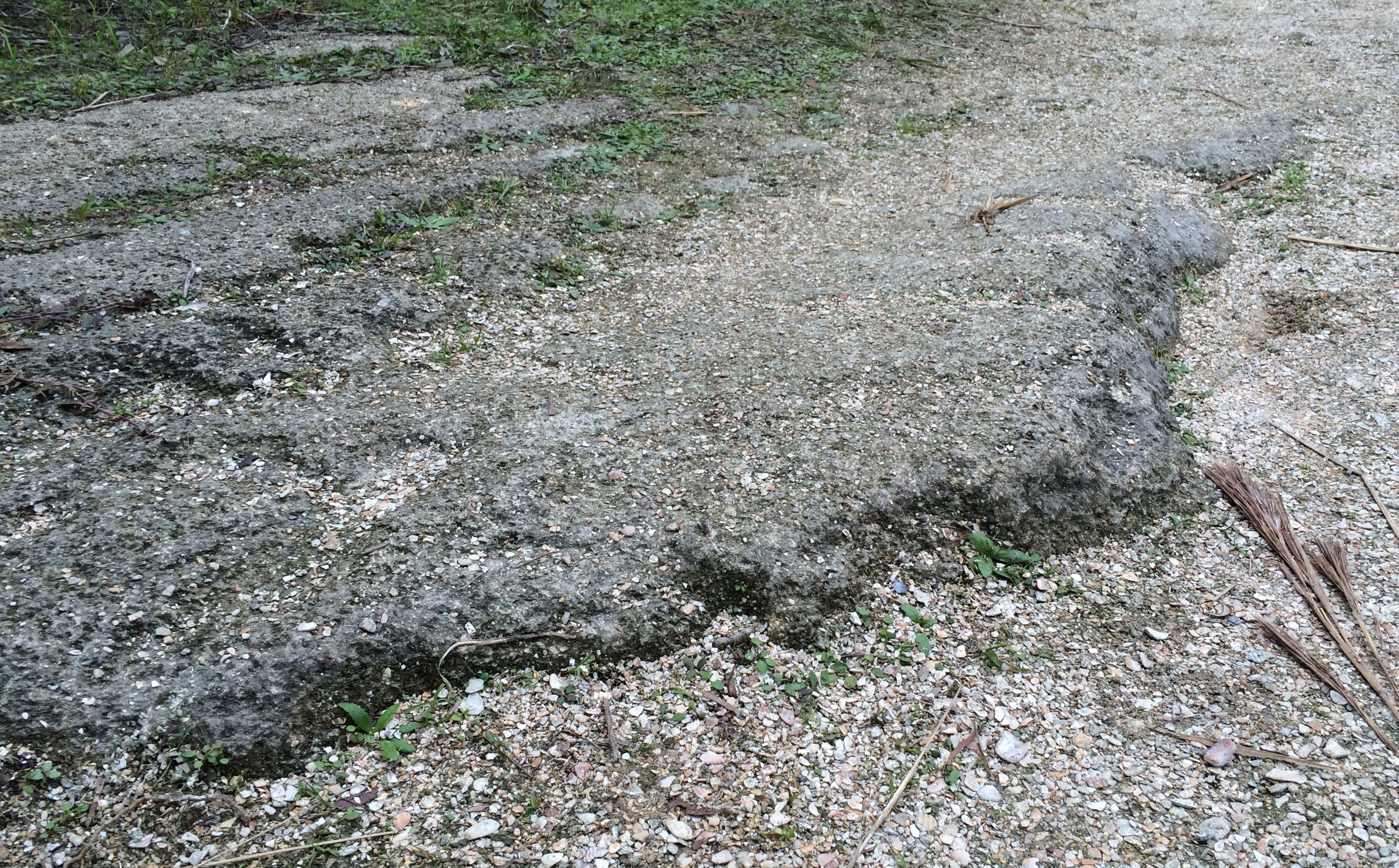
The quarry had been abandoned for many years, and it was kind of difficult to see where it had been. I did see some coquina that must have been left behind.

Coquina Quarry stones

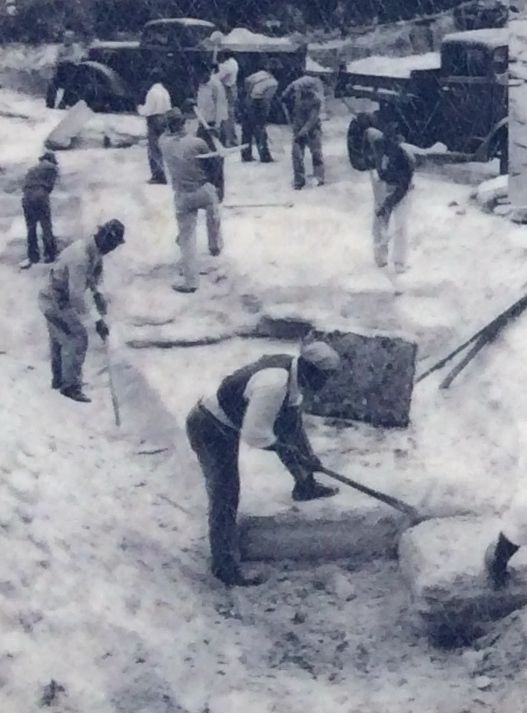
There was an interpretive sign with photos of men quarrying coquina in the early 20th century.

Work in the quarry

It was a rather gloomy day, and it was about time for dinner. So, I decided to get a little something before I returned to the campground.

Sonny's Barbeque Satuday night

I stopped at Sonny’s BBQ. It is a southern barbecue chain, so I figured I should try it while I was in the “sunny” south.

Between the leftovers from Columbia and the leftovers from Sonny’s, I had food for a few more meals.


St Augustine, Part Two

So, as I was saying…

I walked down the pedestrian streets, admiring/marveling/being perplexed by the things they had for sale. I spotted at least three shops that specialized in things for men. I didn’t go in – after all, I wouldn’t be able to pass the physical.

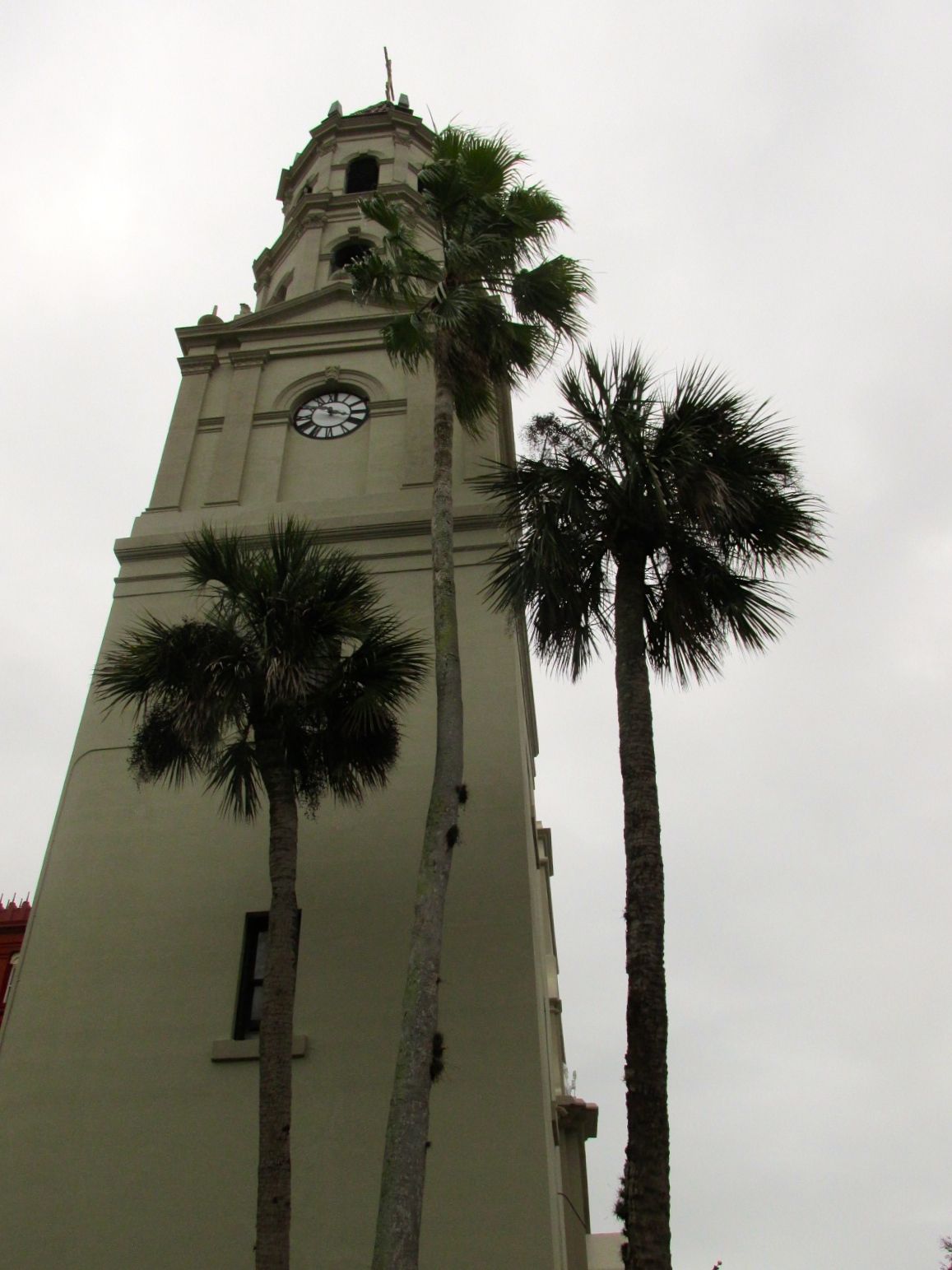
I got to the cathedral.

Cathedral tower

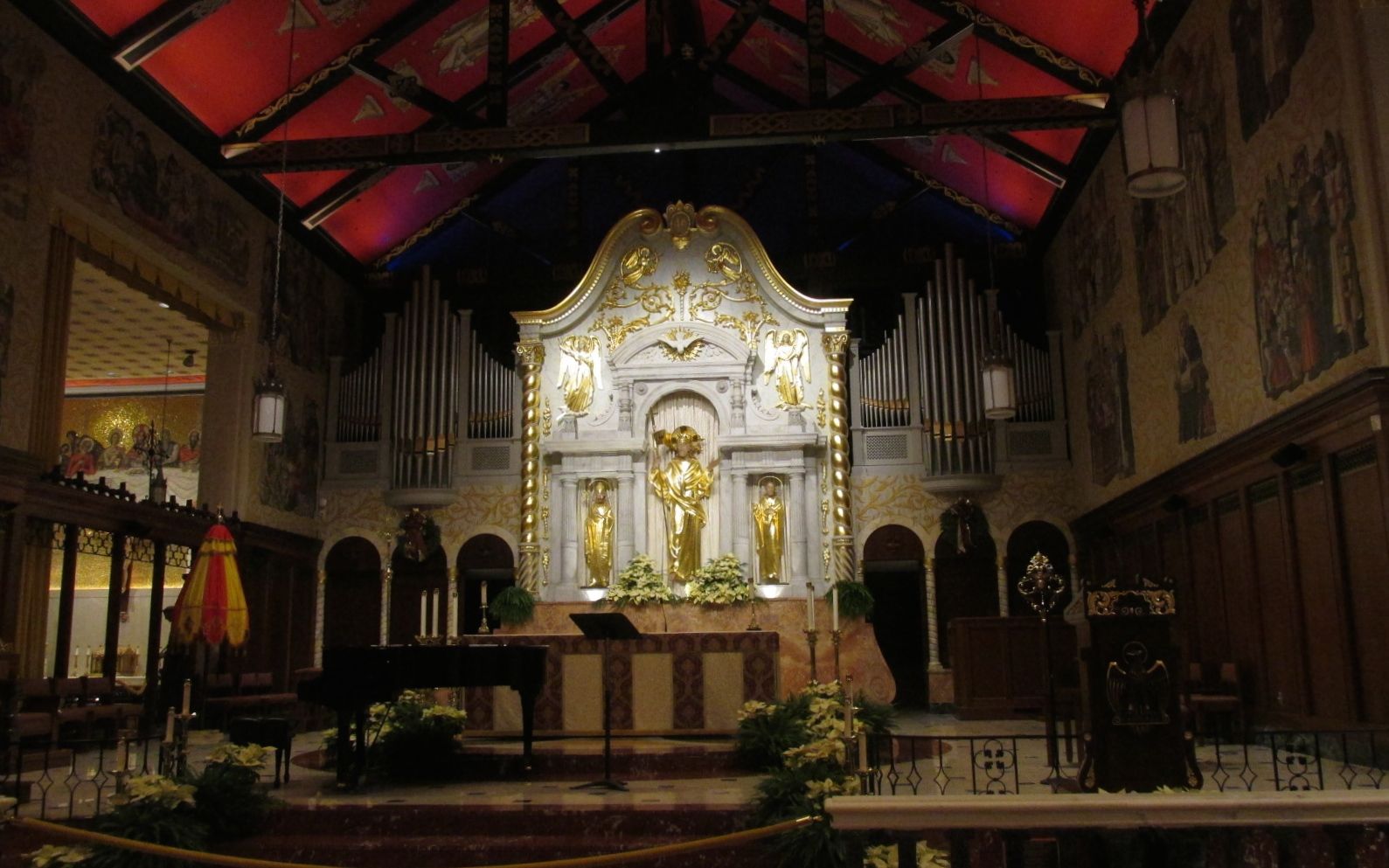
I entered the cathedral and was surprised at the interior. I had rather expected to see something more “European” – like the interior of Notre Dame, if you can envision it. This was smaller and more contemporary than I was expecting.

Cathedral altar

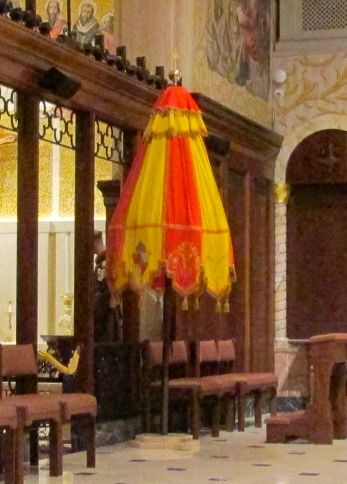
As I approached the altar, I noticed the red and yellow umbraculum on the left side of the sanctuary.

Cathedral umbrella thing

Could this be a basilica, like the Basilica of St. Josaphat that I saw in Milwaukee last summer?

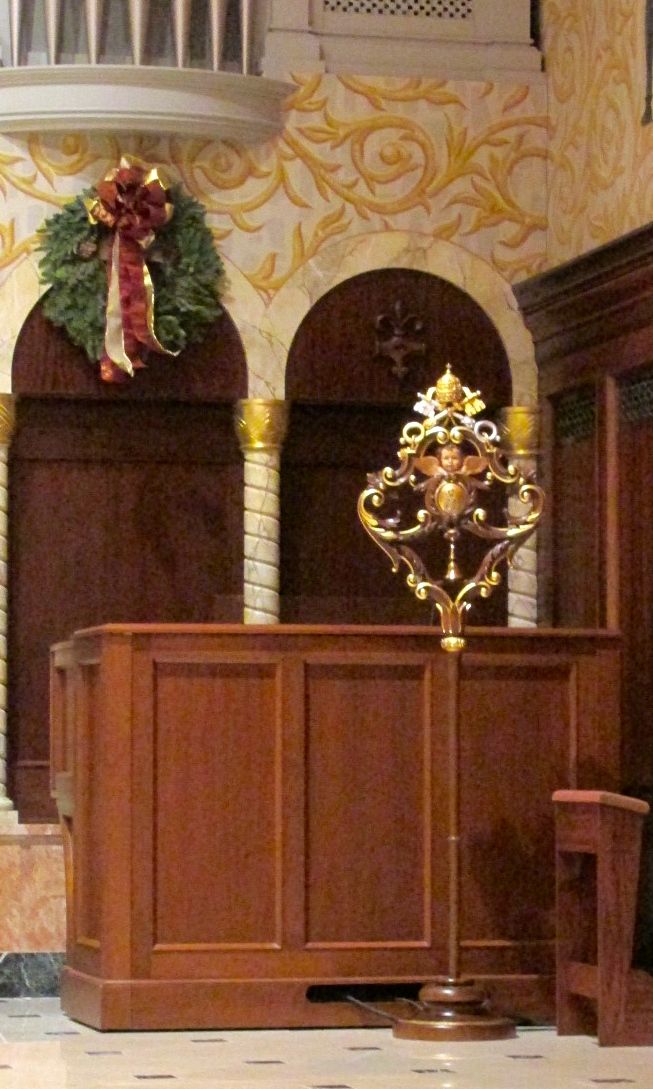
I got closer, and I saw the tintinnabulum on the right side.

Cathedral tintinabulum

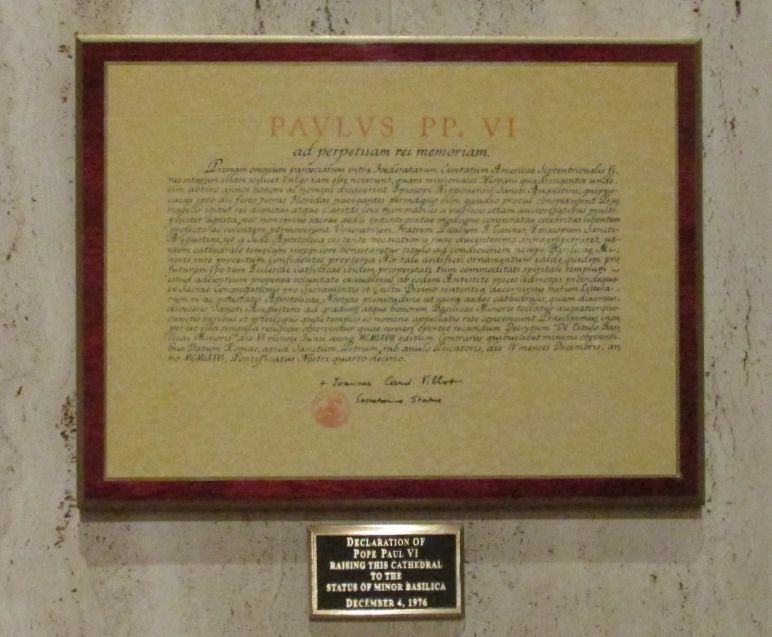
Then, on the wall outside the sanctuary, I saw it – the papal declaration that this is a minor basilica! I felt so smart that I knew what I was looking at.

CAthedral basilica declaration

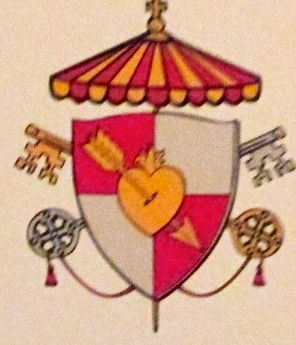
The only thing missing was the seal with the papal keys. I kept looking and I found that, too.

CAthedral shield

I never get phone calls, so I never worry about turning my phone off when I enter places where you shouldn’t receive calls. Unfortunately, my phone rang, while I was inside. It wasn’t a long call, but it caused me to leave before I took too many photos.

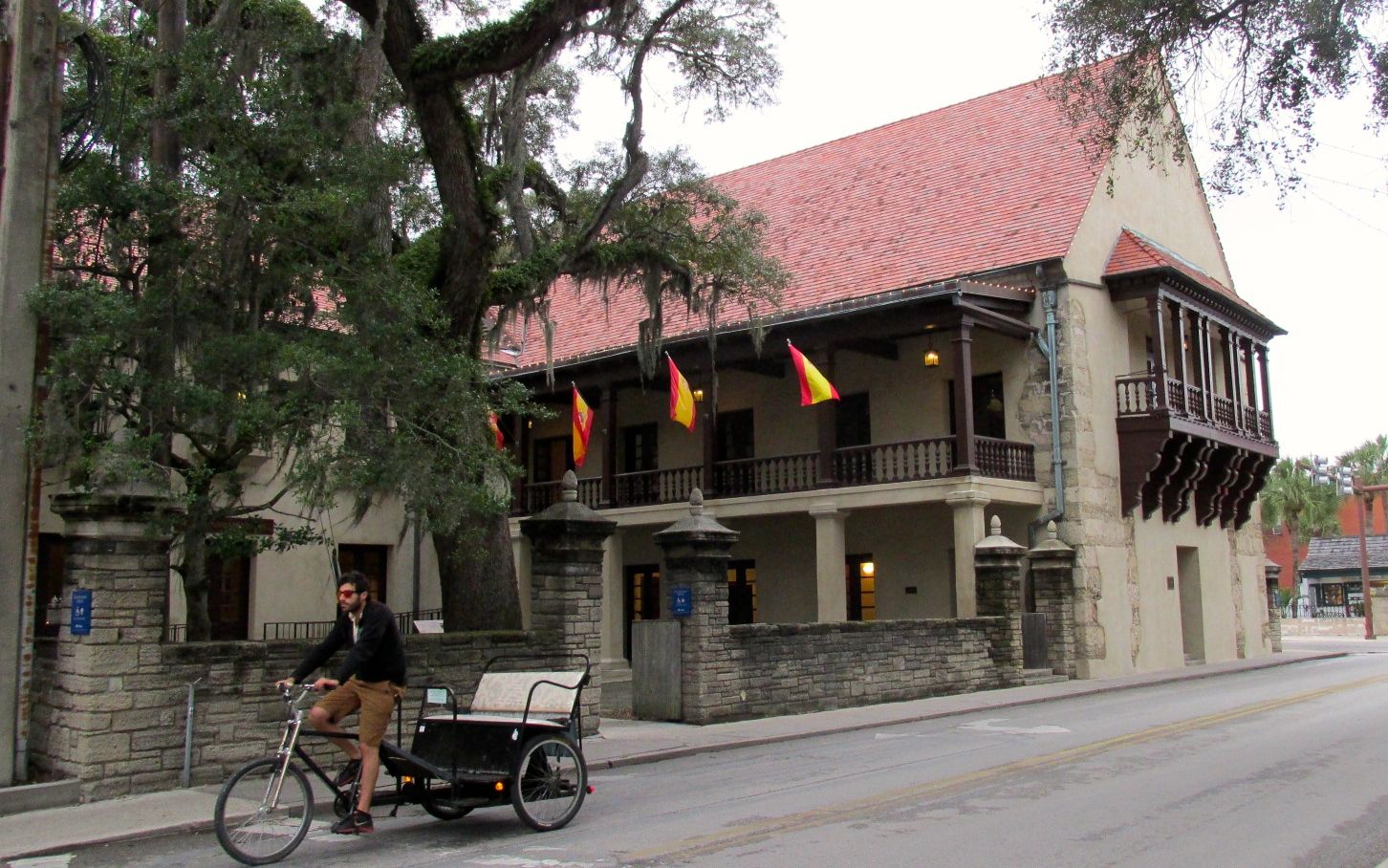
Once outside, I saw the Government House, and I went over to investigate.

Government house

The building, constructed of coquina in 1710, served as the governor’s residence for the Spanish until 1763, when the British moved in. They were there until the Spanish moved back in 1784. The building was not used after 1812. When Florid joined the Union in 1821, the building was in ruins. Only the outer walls remained. It was redesigned by Robert Mills, an architect who also designed the Washington Memorial.

The building was used for various government functions, including a military hospital during the Civil War, a court house and a customs house. In 1937 it was redesigned and rebuilt as a project of the Works Progress Administration and was used as a post office. in 1964, it was given to the state of Florida. Nowadays, it is dedicated to historic preservation.

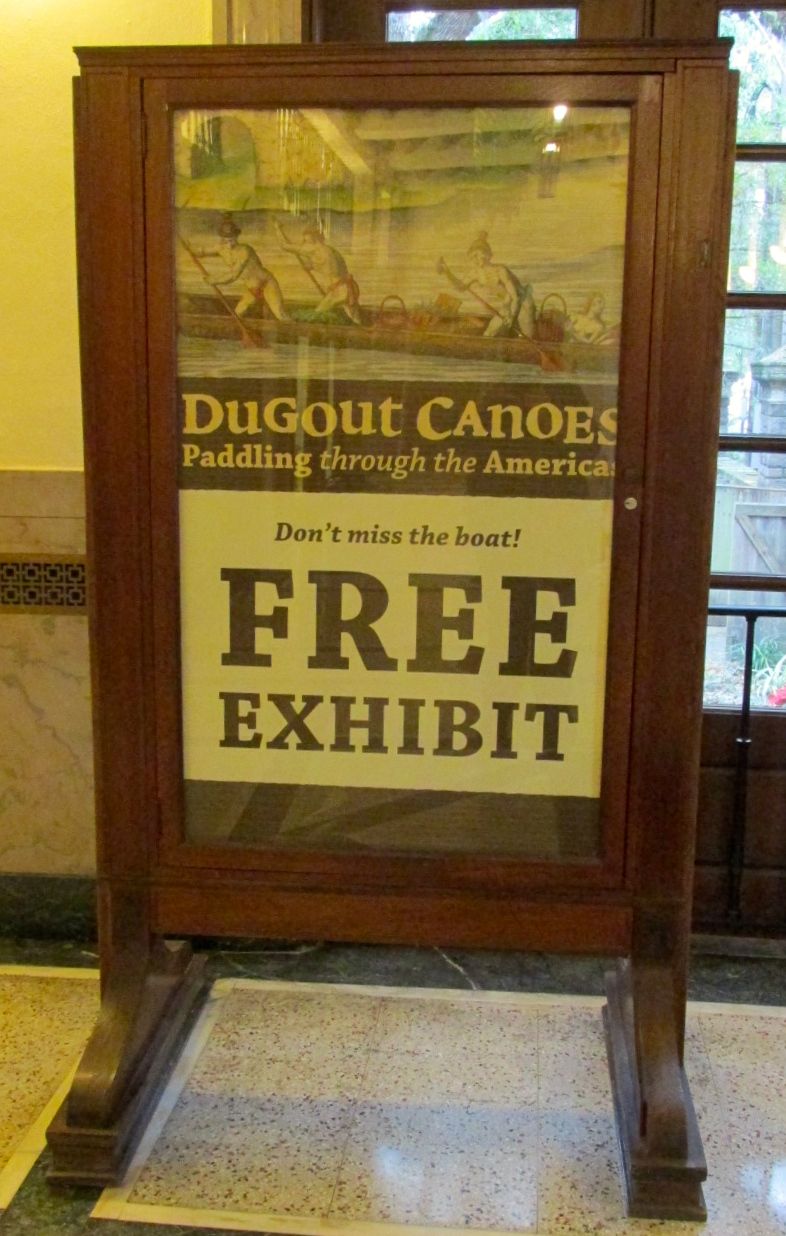
There was a banner proclaiming a display of dugout canoes. It sounded interesting, so I went in.

Dugout canoe FREE sign

It turns out that this was a FREE exhibit. Have I mentioned before that I like free things?

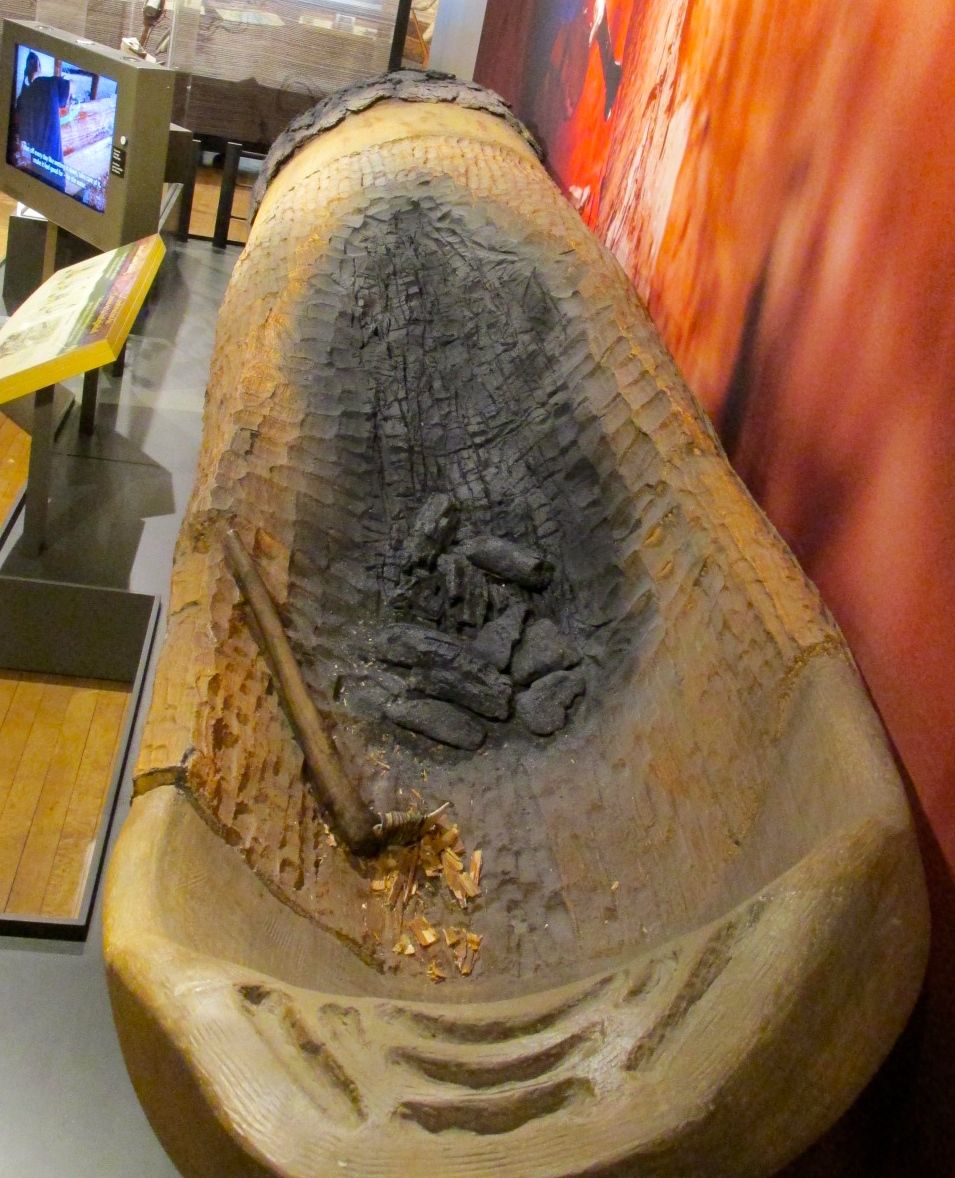
The basis of the exhibit was the discovery of dugout canoes in a lake during a drought. I wasn’t able to take a good picture of the authentic canoes due to the plexiglass preservation cases. There were also displays of canoes from other cultures, and it was interesting to compare and contrast the vessels.

Dugout in progress

They did have a model of the steps involved in making a dugout canoe. What a lot of work it was!

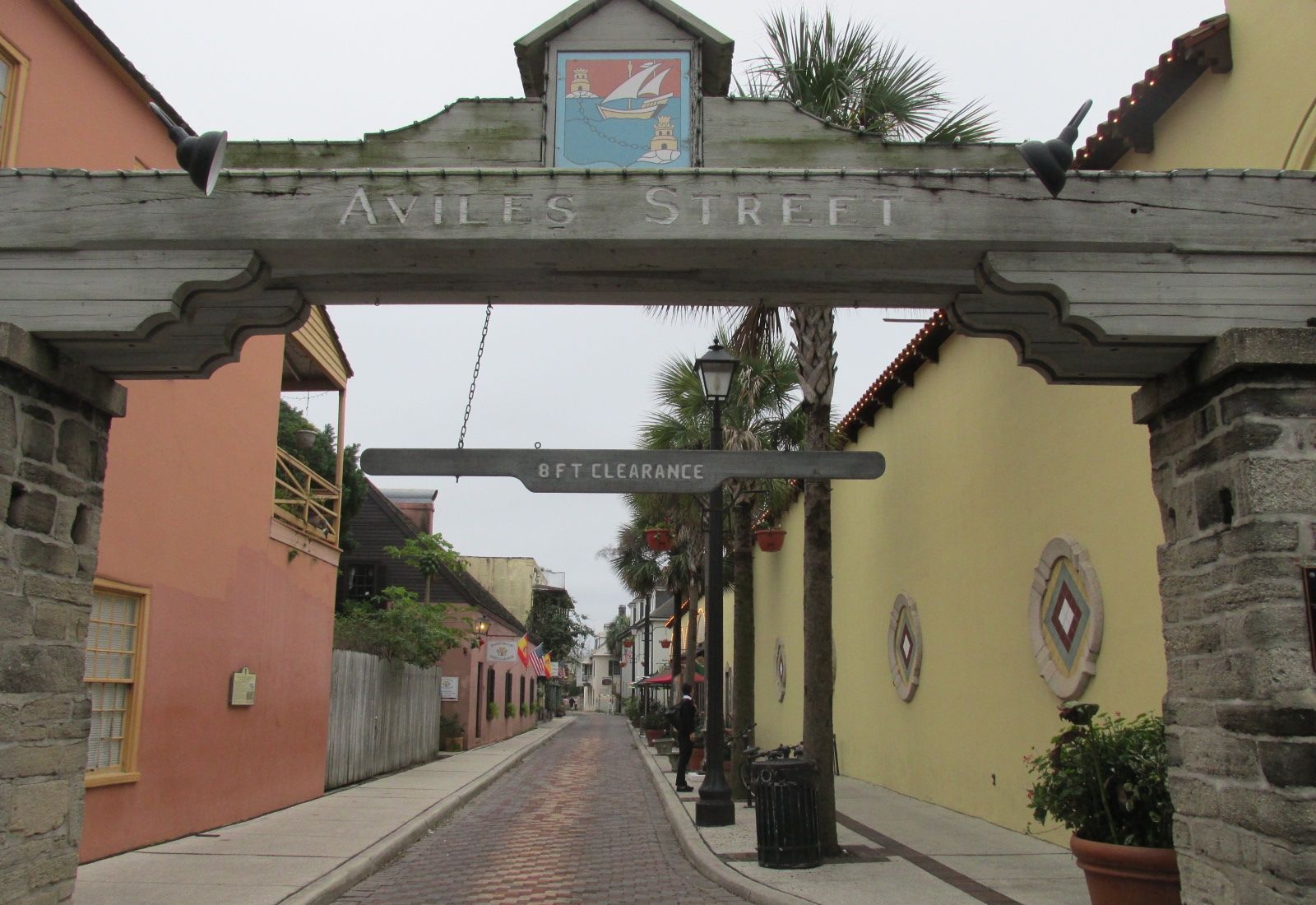
I continued my walk across the square and ended up at the oldest public street in the country.

Aviles Street sign

Talk about an narrow street! Most driveways are wider.

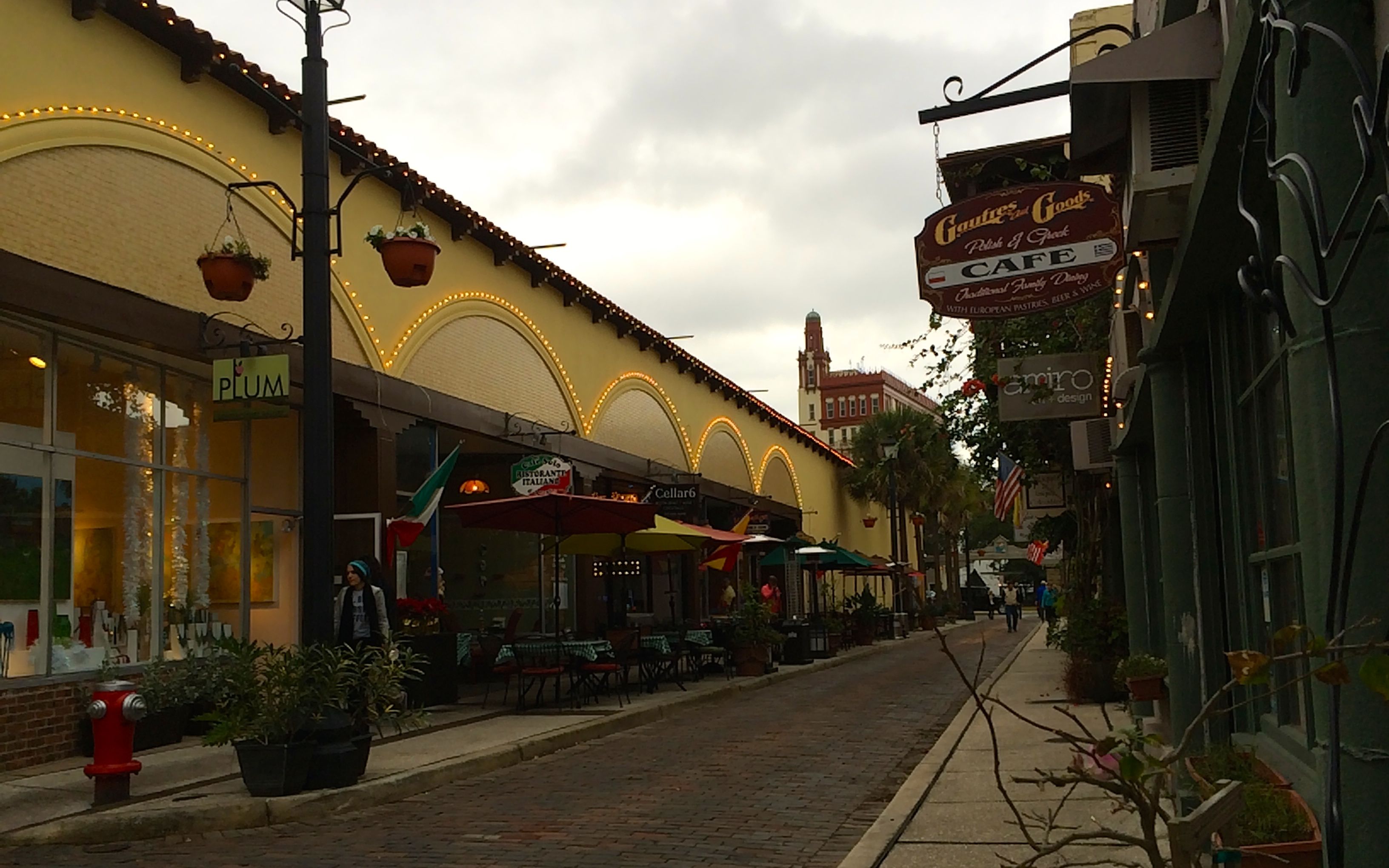
Aviles street

The street may be narrow, but it’s wide enough for restaurants and stores selling more stuff. At this point, I felt that I had traveled far enough. I was ready to head back toward the garage. I planned to find some dinner along the way.

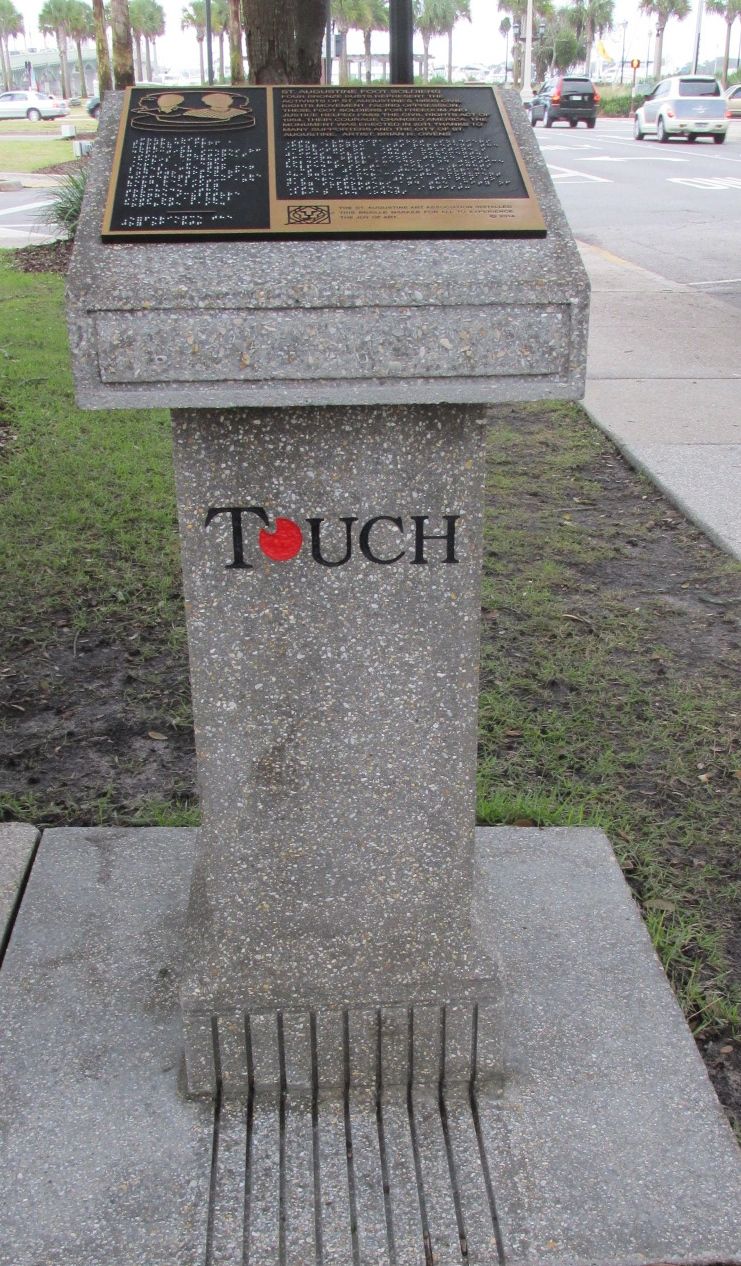
Back at the plaza, I saw this sign. I wondered why it said “Touch” on the pedestal.

St Augustine footsoldiers sign

I love to touch things.

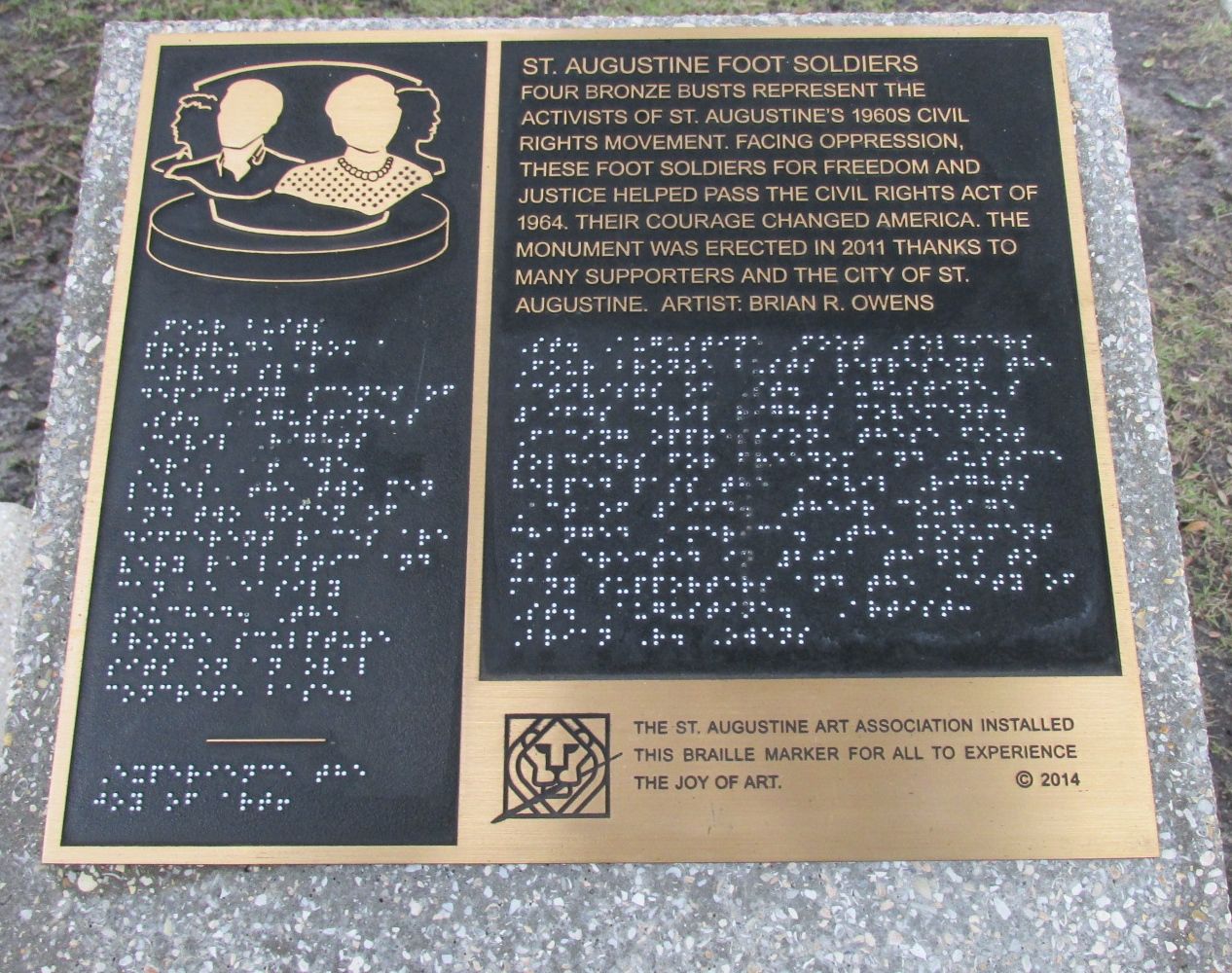
St Augustin Footsoldiers plaque

St. Augustine Foot Soldiers. This was a piece of art that is accessible to blind people! I love it!

St Augustine Footsoldiers statue

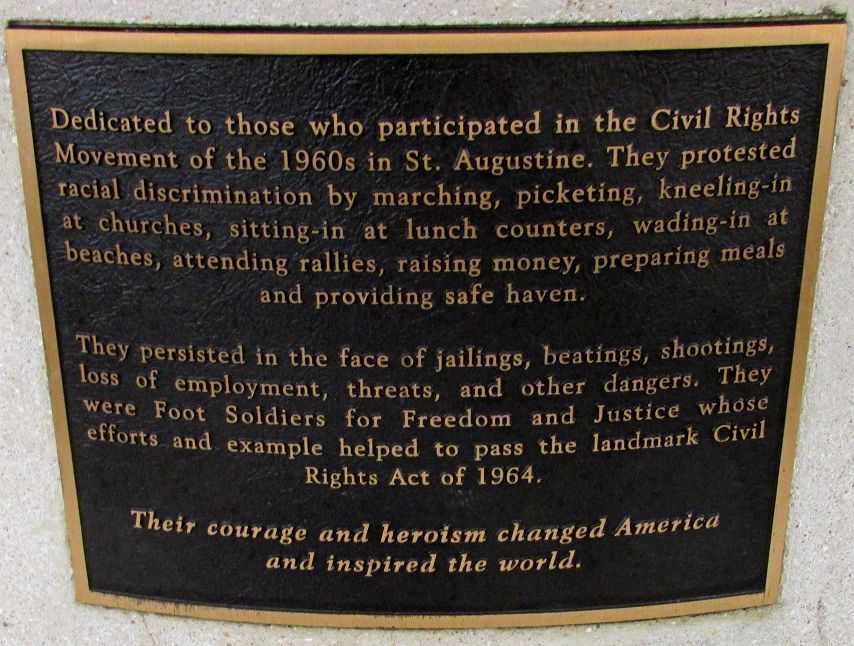
The sculptures are even at a level were people can touch the faces. The work of art is dedicated to those who participated in the Civil Right Movement of the 1960s in St. Augustine. Oh, I’ll just let you read the plaque that is attached to the base of the sculpture.

St Augustine Footsoldiers plaque on statue

Not only is the sculpture inclusive – blind people can study it as well as the sighted – but it includes the variety of people who were involved in the Movement in the 1960s. We have to remember that we must work together to create the life we desire.

By this time, I was really ready for some dinner. I treated myself to a nice dinner at Columbia.

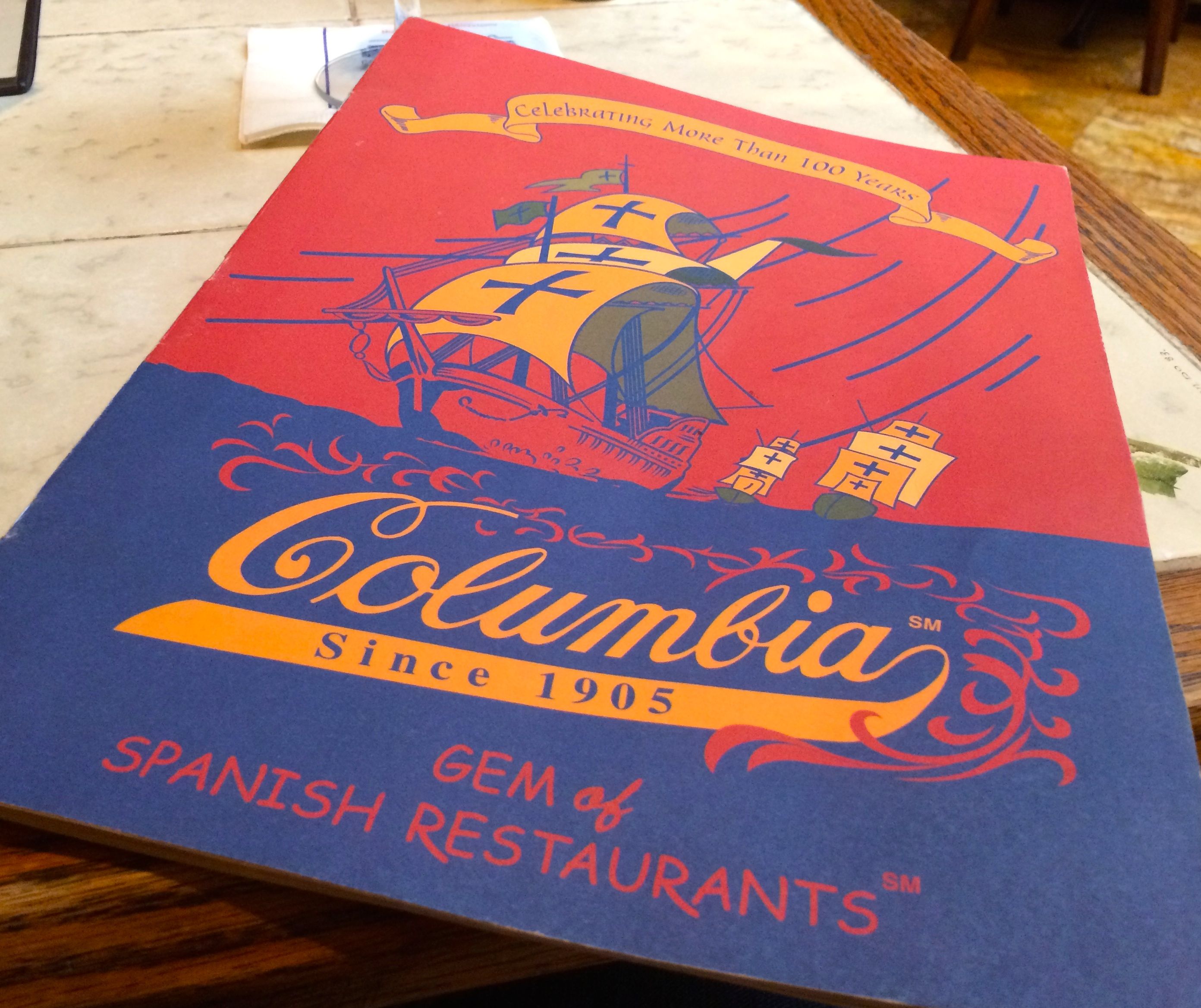
Columbia Menu

Apparently, it is a chain of restaurants that got its beginning in 1905 in the Ybor City area of Tampa. The restaurant has remained in the family for more than 110 years. This one opened in St. Augustine in 1985 and there are seven restaurants in the group.

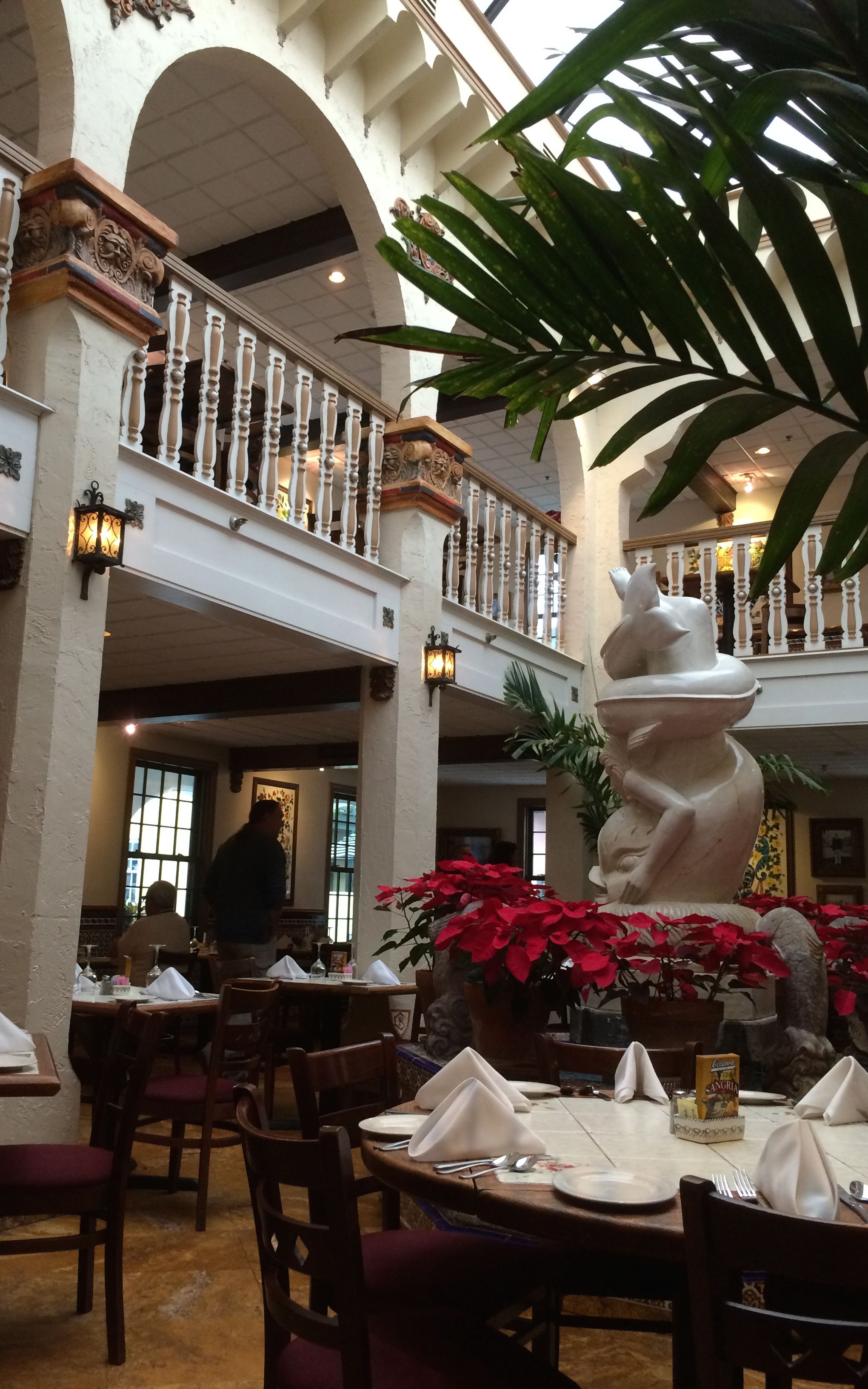
I entered, was greeted and shown to my seat. I had a lovely view of a courtyard.

Columbia courtyard

I do enjoy a nice restaurant! My server, June, took my beverage order and brought me bread.

Columbia Bread and Sangria

Bread, butter and sangria! AHHHH!

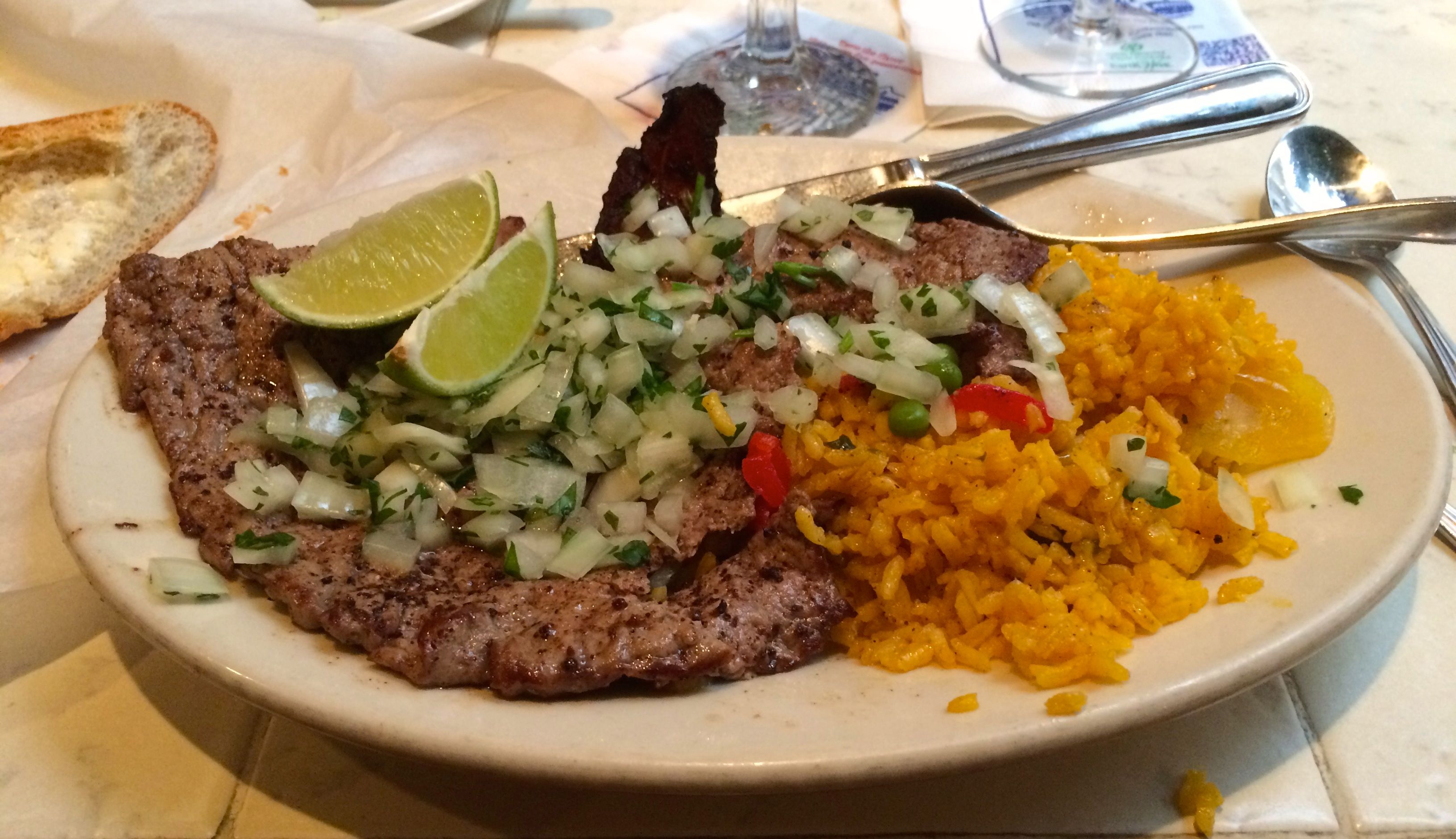
I selected the palomillo, which is a thin cut of sirloin topped with mojo crudo, which is a sauce made of chopped onion, parsley and lime juice. it is served with platanos and a choice of french fries or rice. I wasn’t sure if I should pick french fries or rice, so I asked June whether to pick the potatoes or rice. She recommend the rice.


Columbia Palomillo

The rice was a great choice. The whole plate was marvelous!

And so were the leftovers the next day.

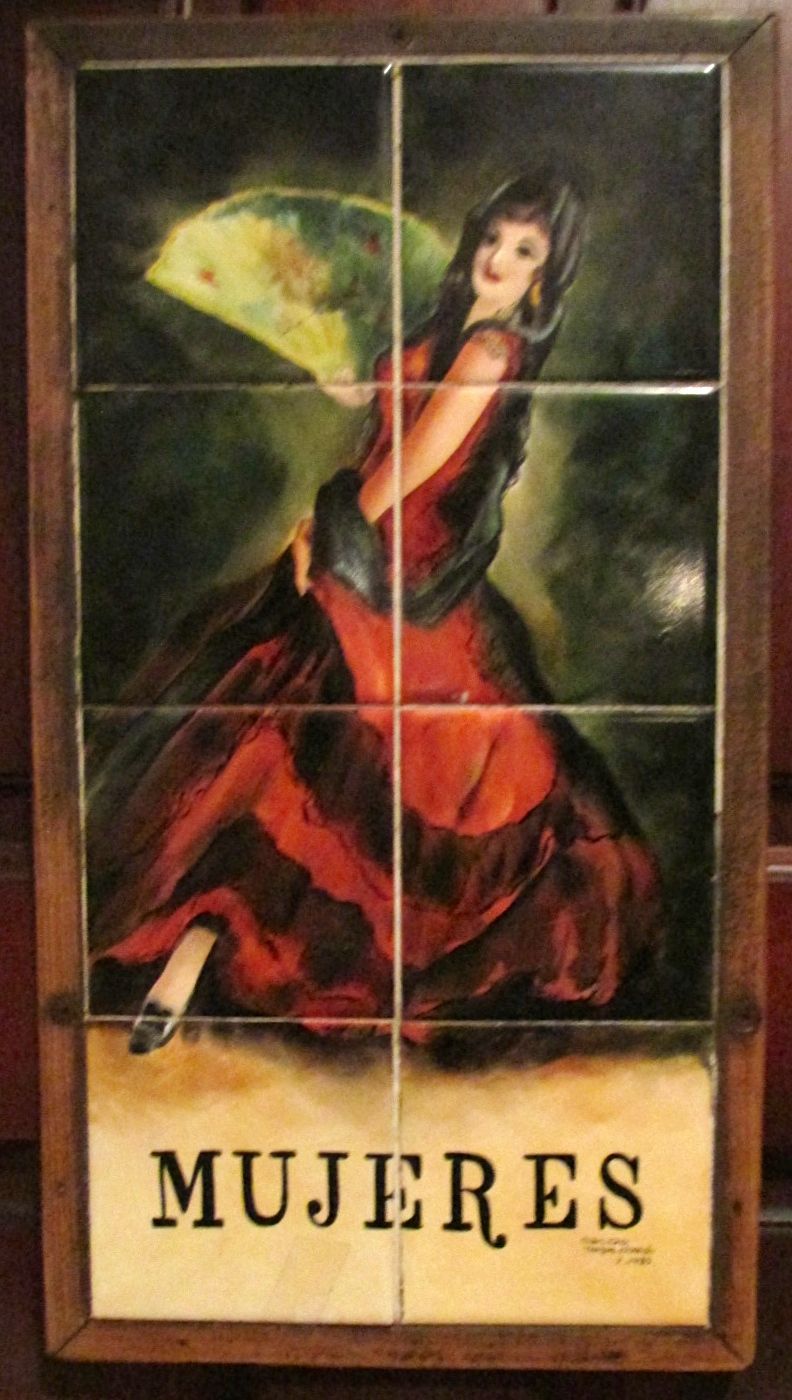
Columbia restroom

One more stop before I left.

At that point, I was ready to head to the garage. I managed to see one more item of touristic and professional interest.

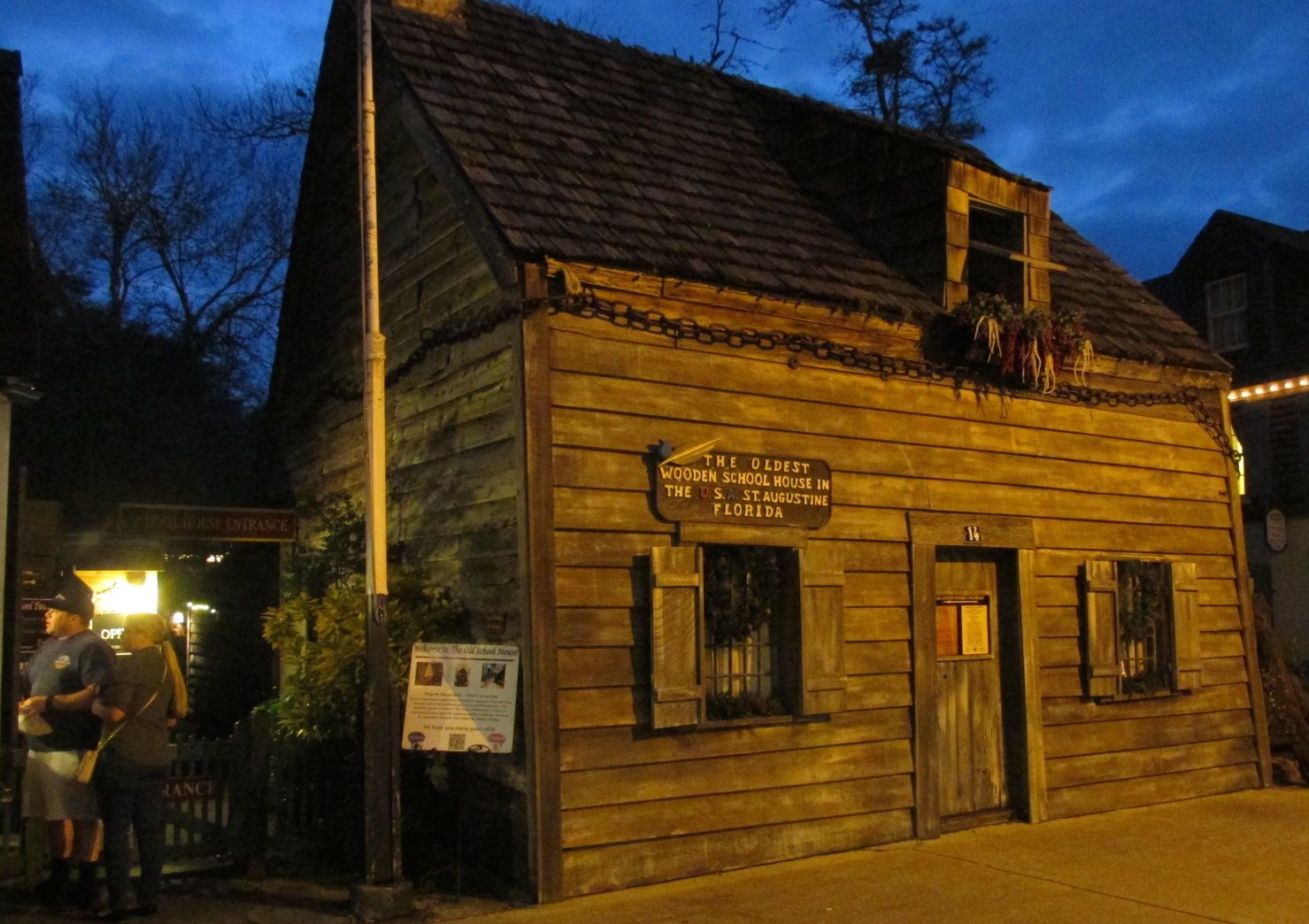
Oldest wooden school house

This is the Oldest Wooden Schoolhouse in the United States. The first time the structure appeared on the tax rolls was 1719, but it probably existed before then. It was built as a homestead and was constructed entirely by hand out of cypress. According to the information I read, even the “nails” are made of cypress, as the building is held together by pegs. The schoolmaster and his family lived upstairs. The room on the main floor was the classroom.

For all the years I taught, I never had to live above my classroom.

The sun was down and it was time to head back to the campground.

St. Augustine, Florida

Rain, rain, go away…

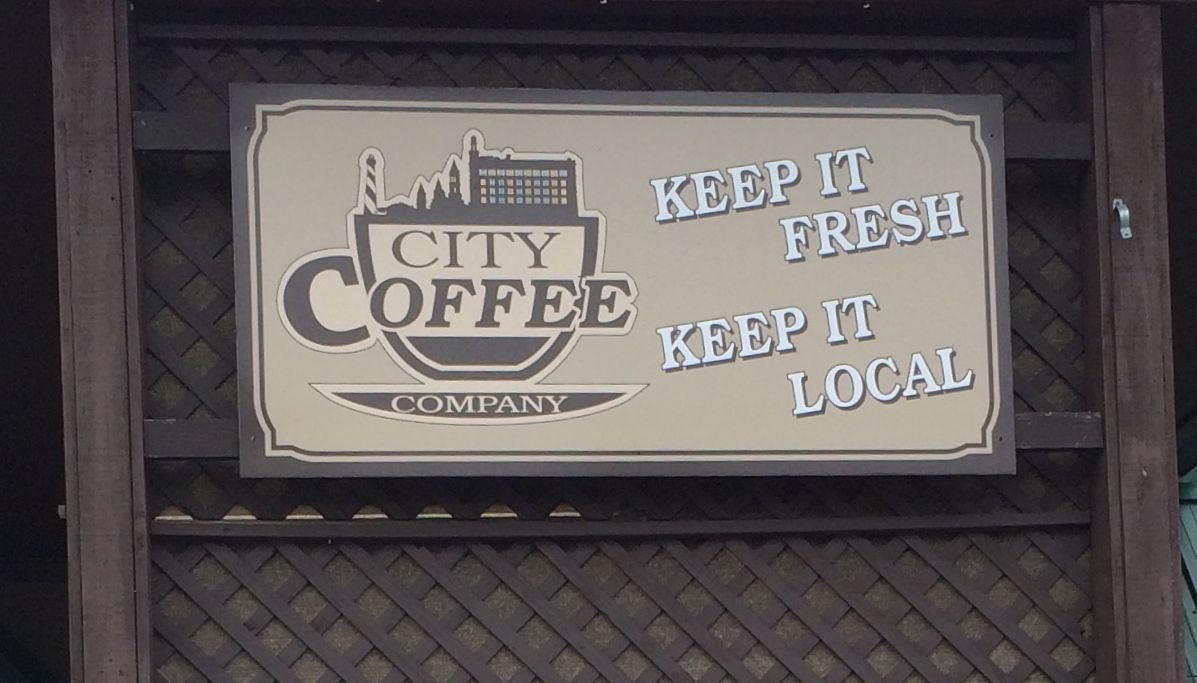
I arrived at Faver-Dykes State Park and got settled in. When it wasn’t raining, it was drizzling. When it wasn’t drizzling, it was overcast. In spite of the fact that the park wasn’t too far from “civilization” I couldn’t get a phone signal or pick up a TV signal. In fact, even my radio reception was spotty. So, I ended up spending the first couple of days encamped at City Coffee Company, just down U.S. 1 in St. Augustine.

City Coffee Company sign

I got caught up on some blog posts, thanks to their free wifi.

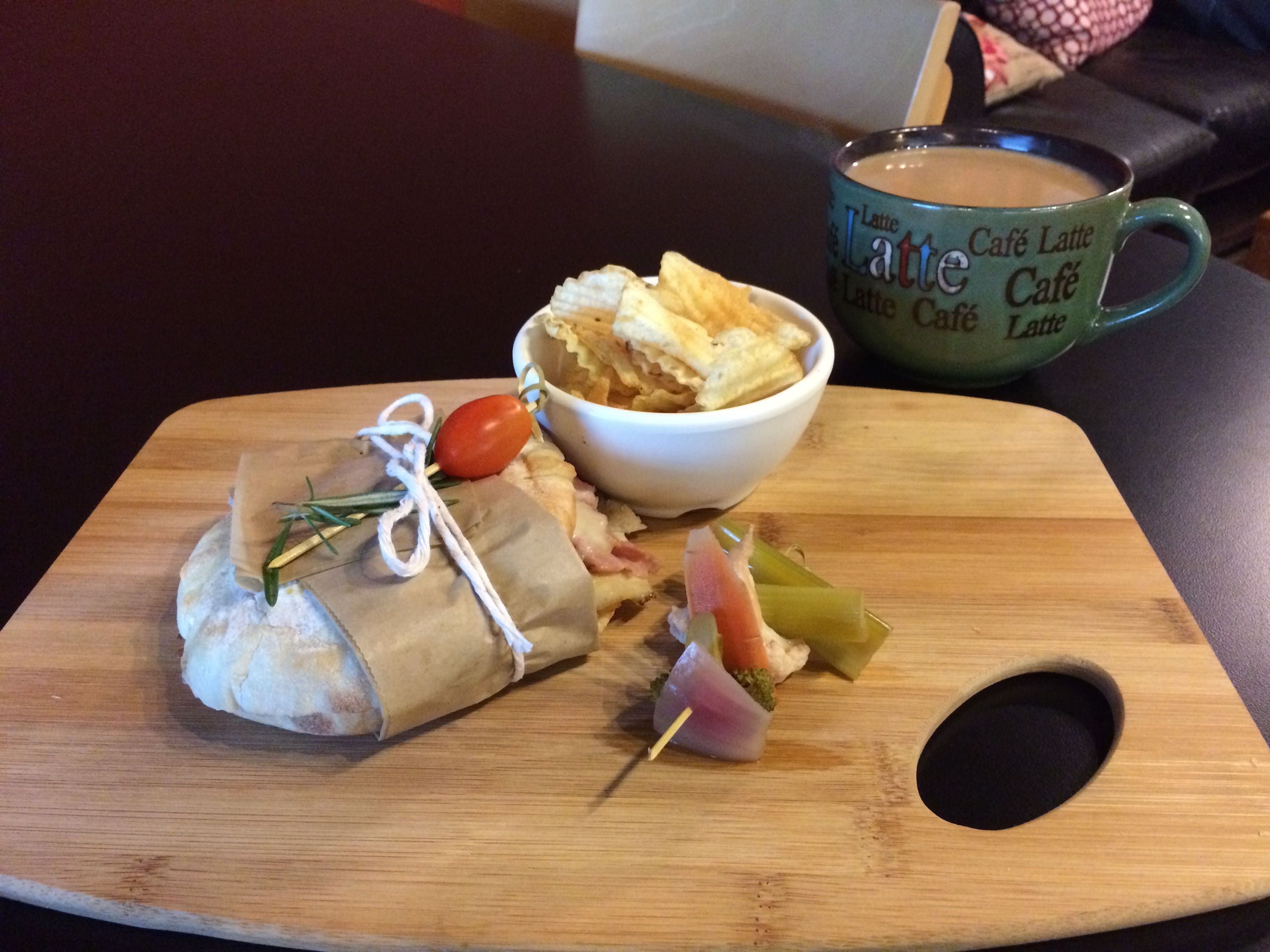
Cuban sandwich

I finally got to try a Cuban sandwich. The presentation was beautiful, and the mug they gave me for the coffee was as big as a bathtub! I got to refill it, as needed.

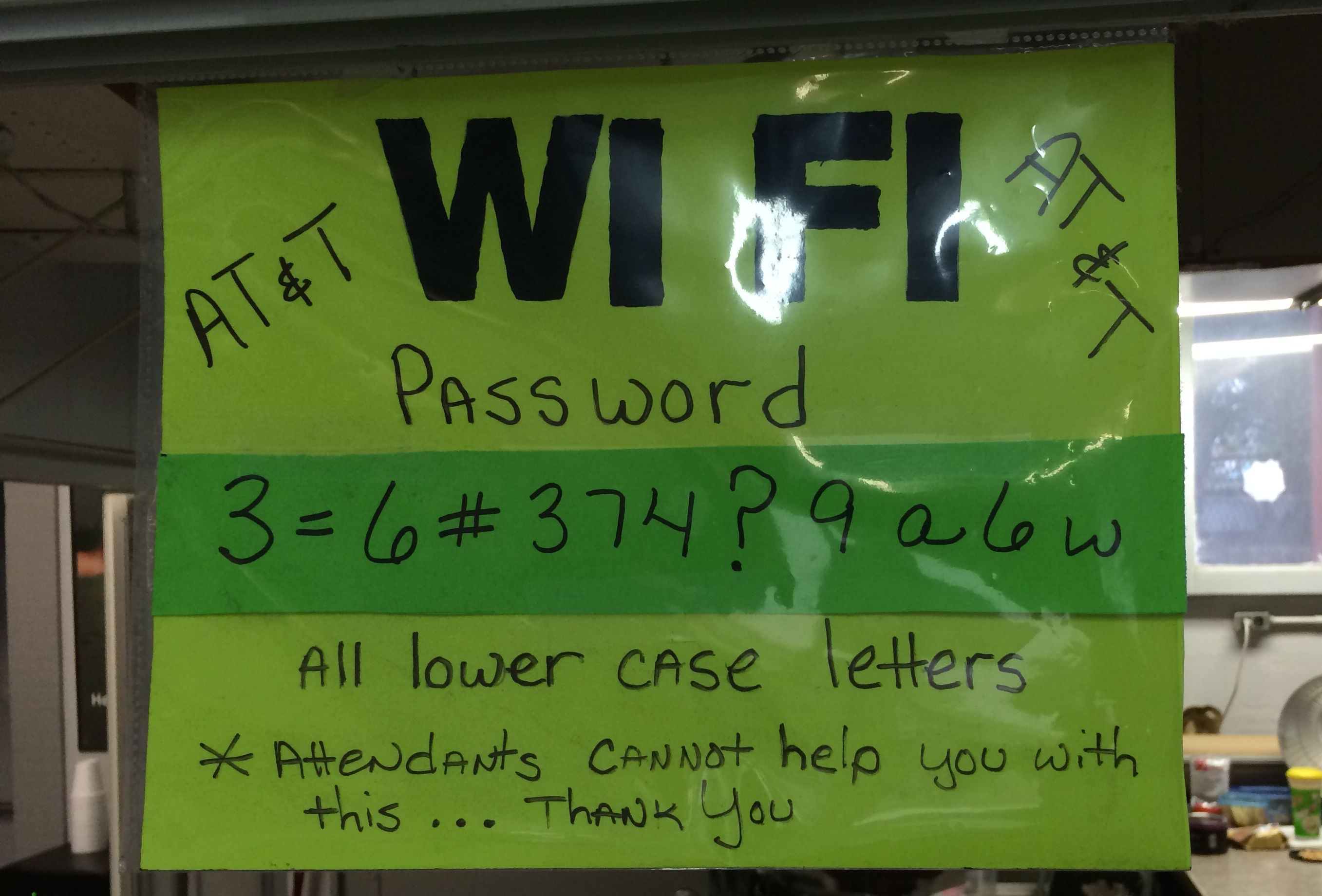
I took advantage of the gloomy weather to get some laundry done. The laundromat had free wifi, too, but could the password have been any more complicated?

Laundry Room wifi sign

And, notice the welcoming message at the bottom of the sign. At least they said thank you.

The weather finally became a little less dense by my third day, so I decided that I would do my touristic duty and visit St. Augustine.

I parked in the garage. $12 for the whole day, and the garage was very well located, so I figured that it was worth it. My first stop was the tourist information office right across from the garage.

The information specialist was great. She gave me a map and indicated the best places to go. She even pointed out the attractions that were free! She was so polished and professional that I just knew she had to be a Certified Tourism Ambassador and I asked her if she was. She looked surprised and replied that she was. I told her that she did such a good job that I knew she had to be. I had been a CTA when I worked for Discover Kalamazoo. It turns out that she was from Mattawan – just a few exits down I-94 from Kalamazoo. What a small world!

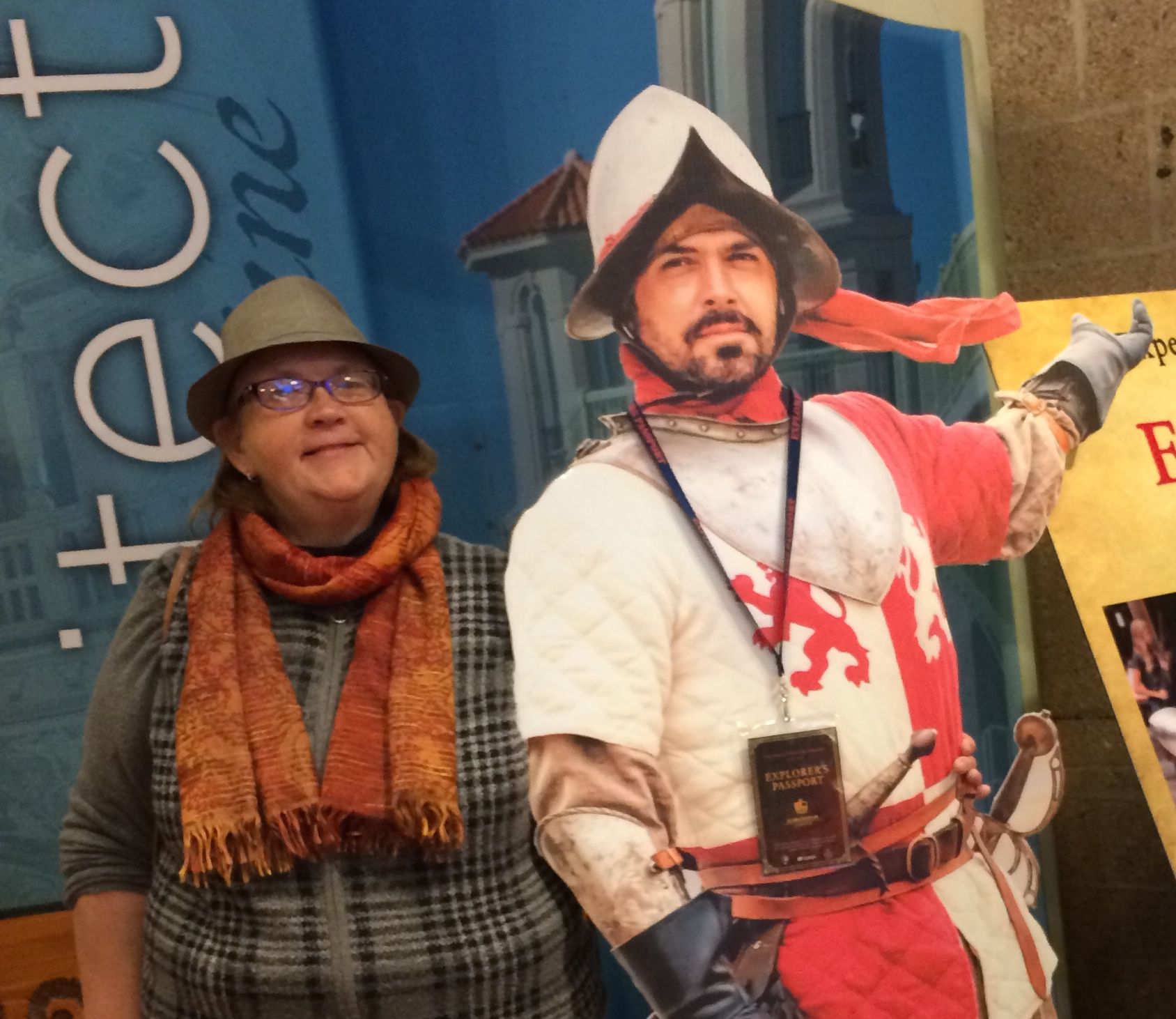
Conquistador and me
Conquistador and me

The information specialist took a photo of me with the conquistador and then I set off to explore the city.

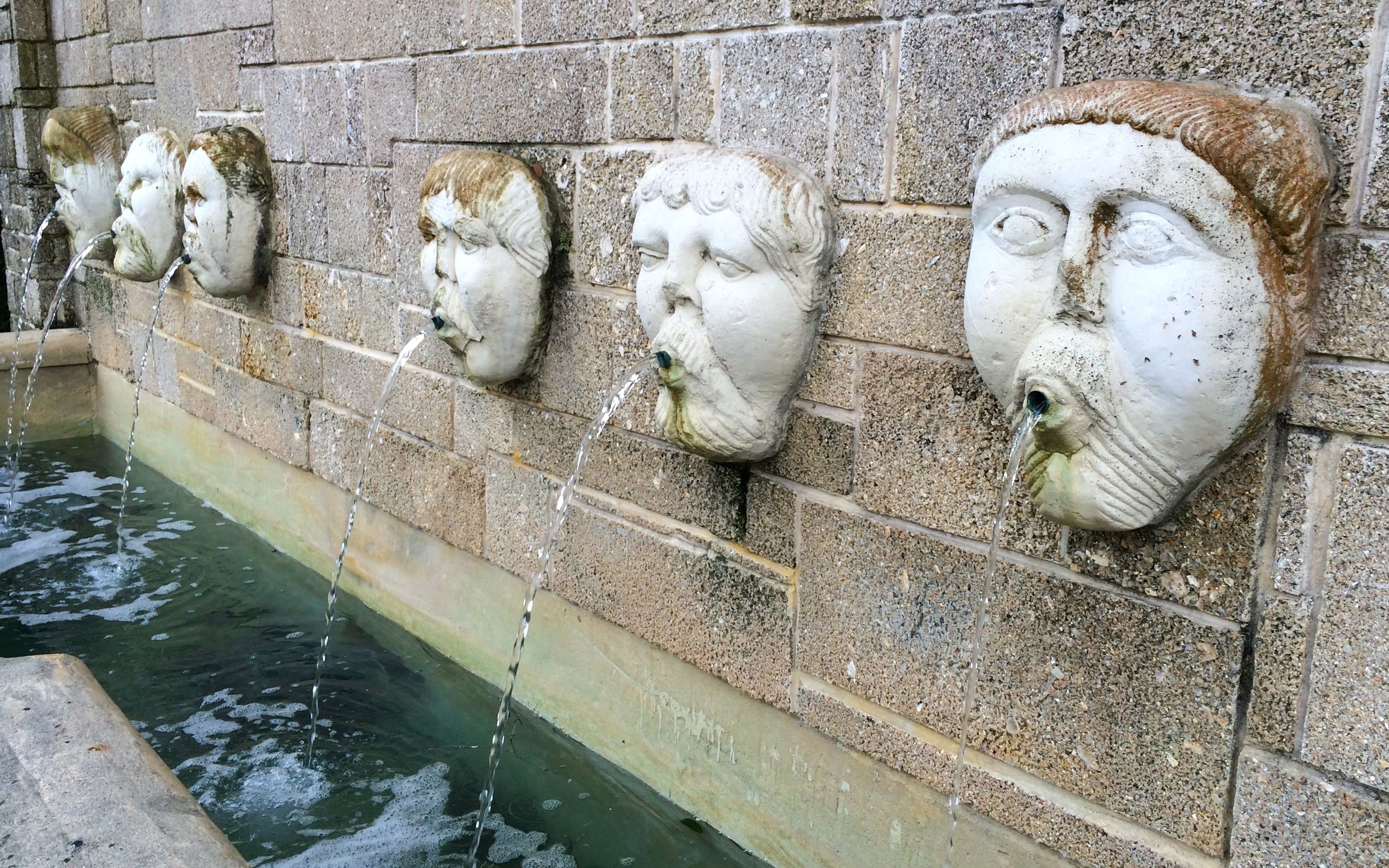
Canas de Avila fountain

This set of masks is a gift to the City of St. Augustine from its sister city, Aviles, Spain, which is the birthplace of Pedro Menendez. Menendez is credited as having founded St. Augustine in 1565.

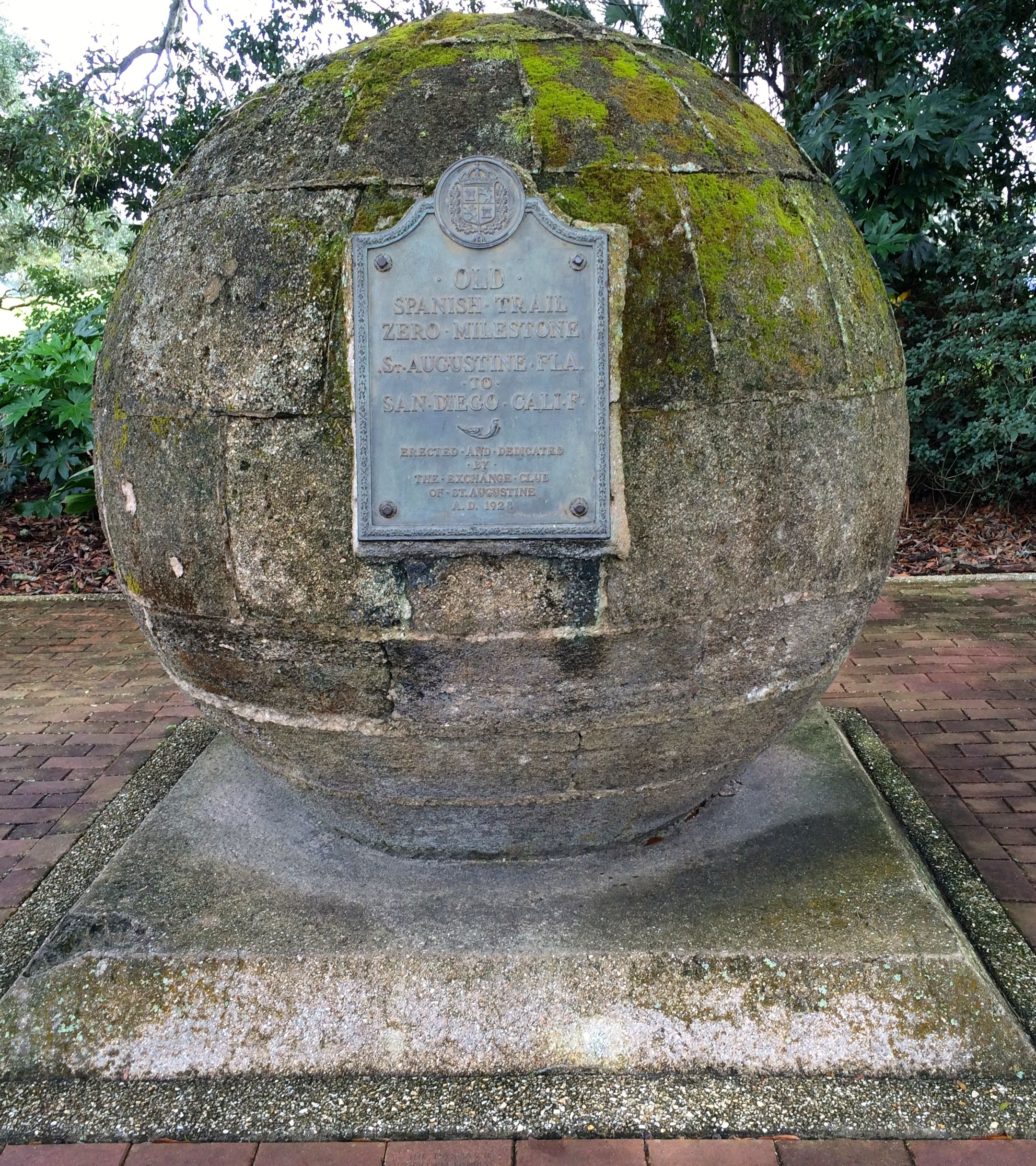
Old Spanish Trail Mile Marker Zero

Begun in 1915, the Old Spanish Trail was an early attempt at a transcontinental road right at the beginning of the automobile era.

Old Spanish Trail Map

And mile zero was right there in St. Augustine.

After admiring those two unexpected finds, I headed over to the Castillo de San Marcos. This is a National Park, so I got to use my American the Beautiful pass, and I got to add more stamps to my National Park Passport.

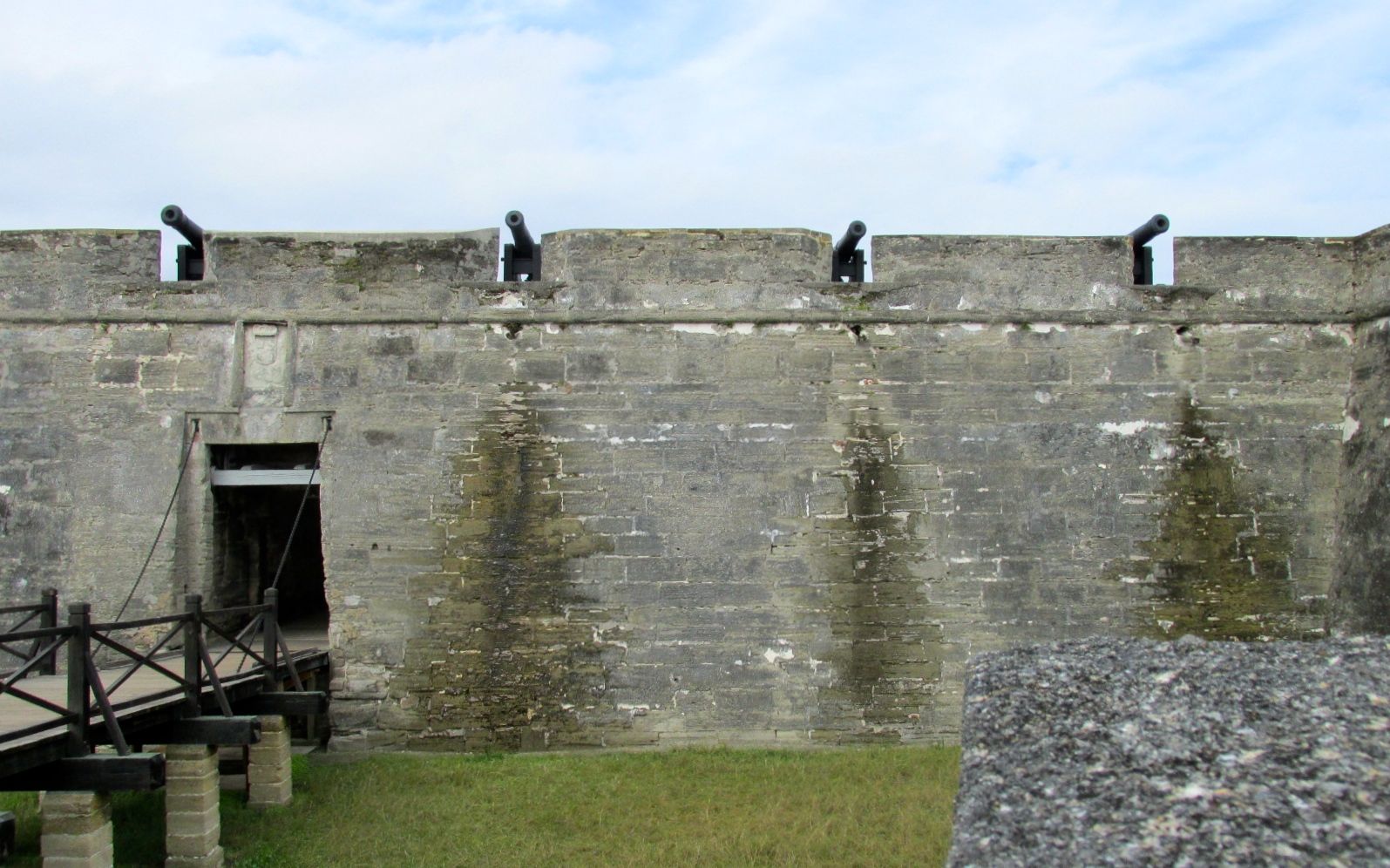
Fort 1

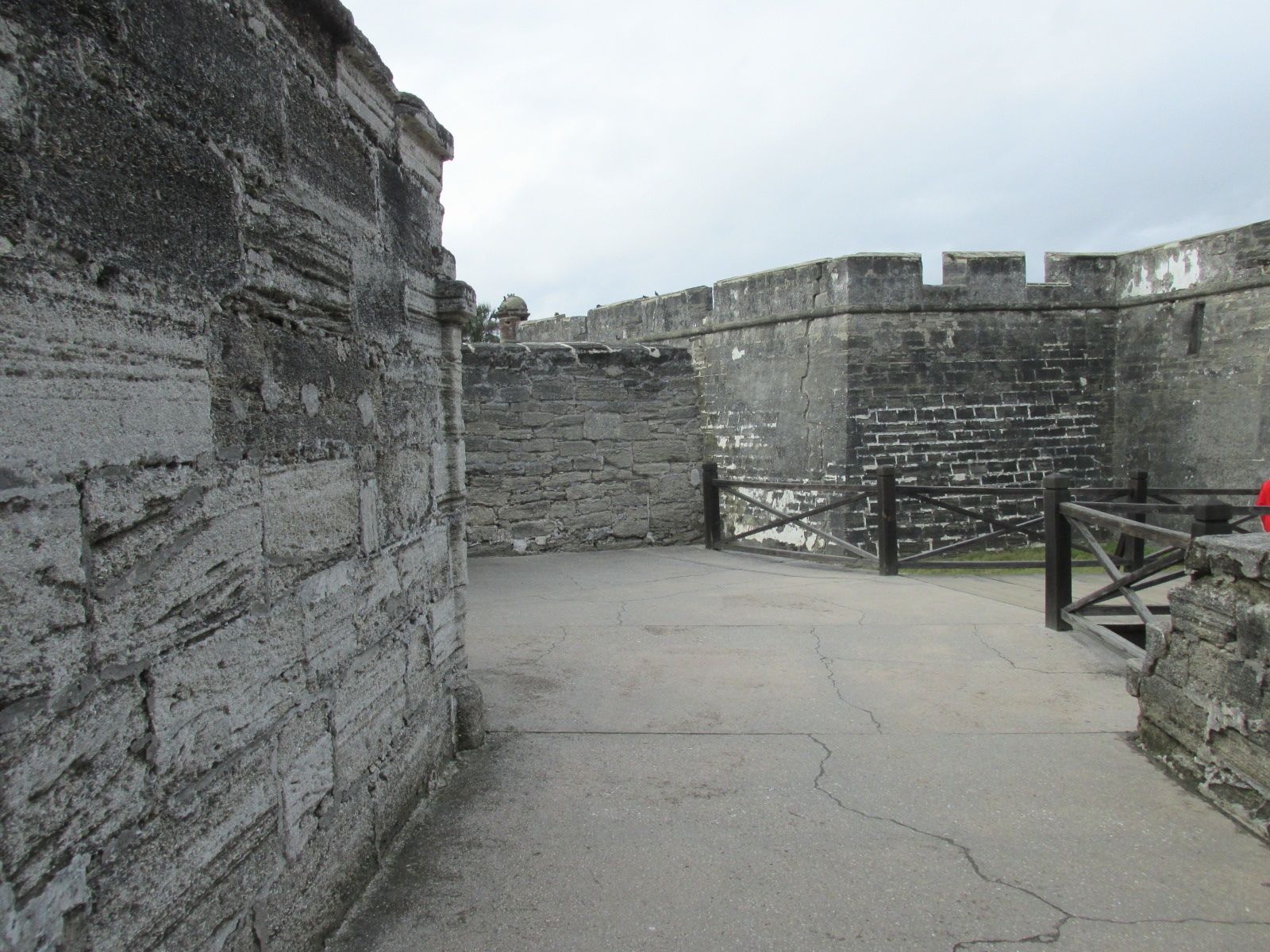
I wended my way in. It would be tricky to enter this fort if you were not a welcome guest.

Entrance
Entrance

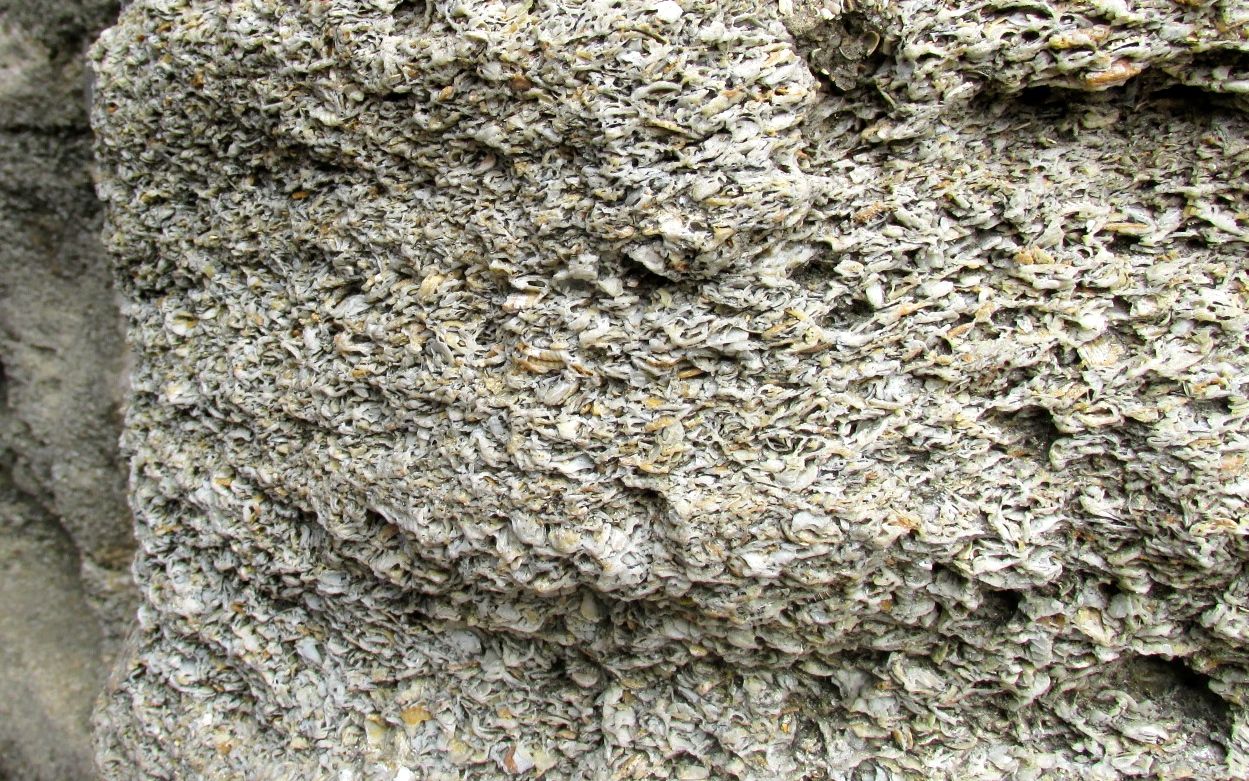
The fort is made of coquina, which is a type of limestone formed from shells that is found on the east side of Florida, from Palm Beach to just south of Jacksonville. They had to use what they could find locally, and coquina filled the bill. They also made lime by heating oyster shells, which they used in mortar and for covering the walls of the fort. Coquina is a porous material, and plastering it made it more durable.,

Coquina blockclose up
Coquina block close up You can make out the layers of shells if you look hard.
Fort store room
Fort store room

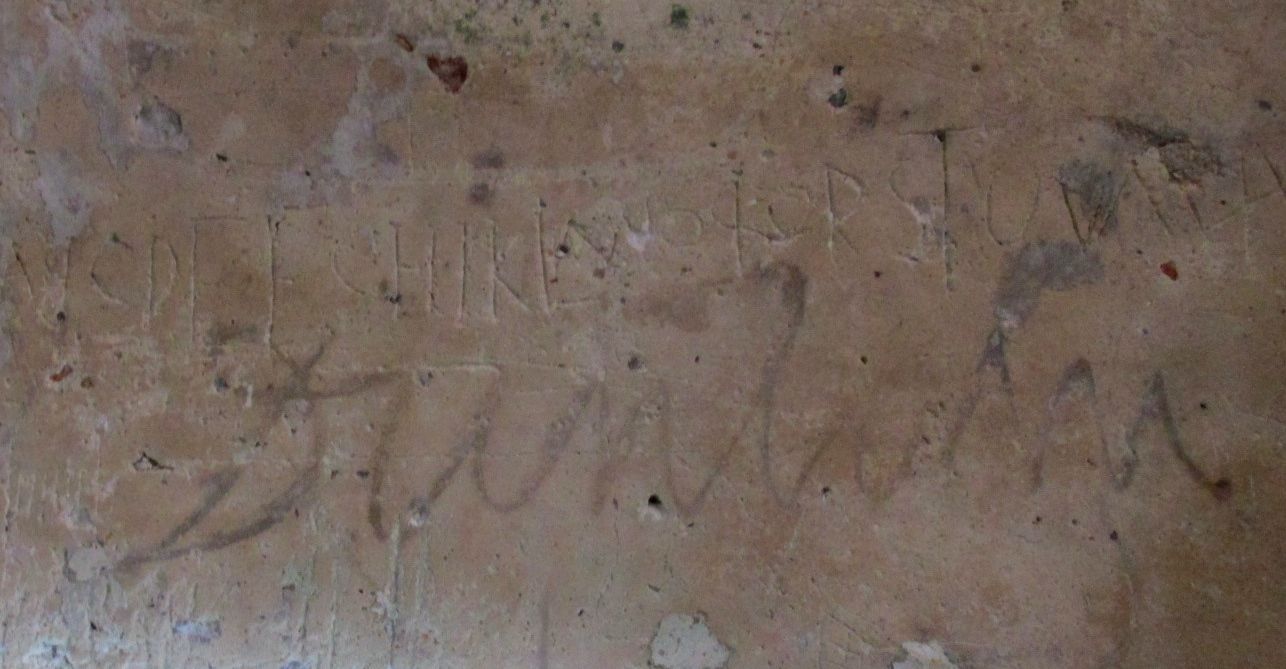
In one of the rooms, they had graffiti that was left behind by bored soldiers. The scratches were hard to photograph, especially since they were  protected with reflective plexiglass. This one, however, grabbed my attention. It was burned into the plaster of the room, and “Dunham” is the last name of my mother’s sister, so it has a relationship to my family, by marriage.

Fort Dunham graffitti

You can kind of make out some of the incised graffiti in the photo.

I continued my tour and was seated in a “theater” watching a video when the call went out that there would be a cannon firing demonstration. I made my way up to the part of the fort where the cannons were.

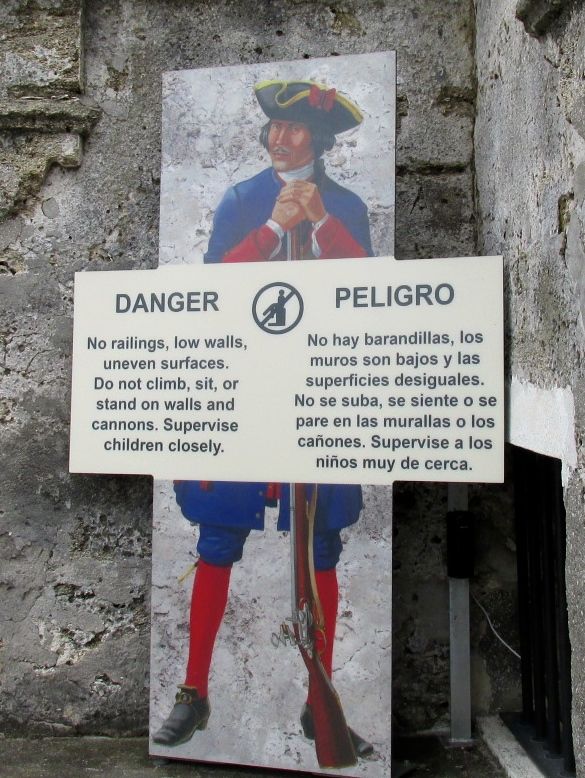
Fort warning sign

I appreciated the warning. It was a long drop from the top of the wall to the ground.

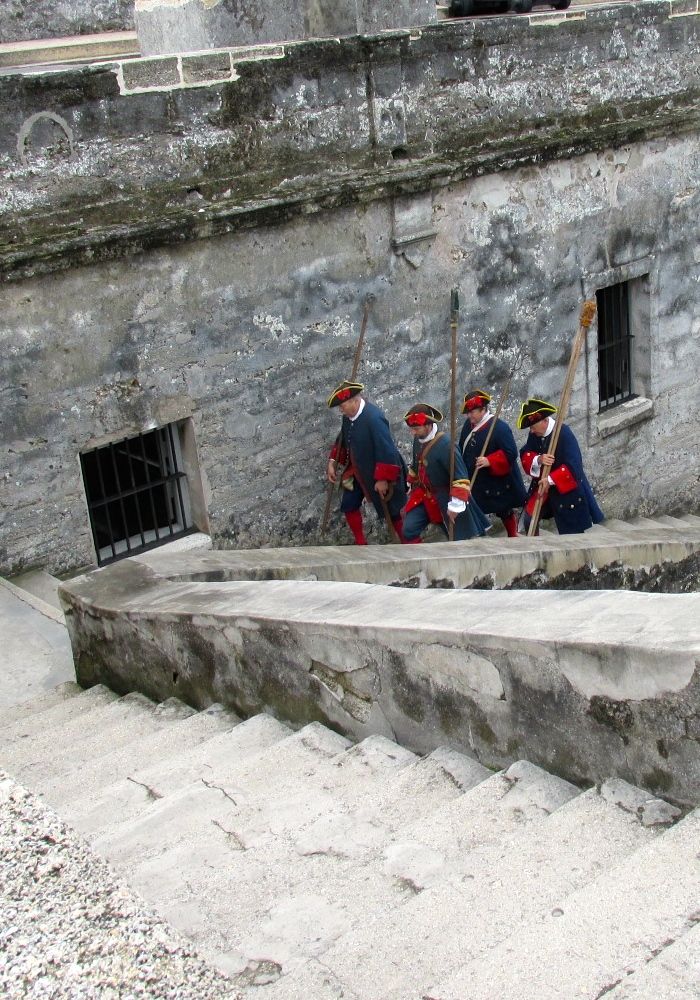
Fort artillery crew

The artillery crew marched up the stairs and took their places.

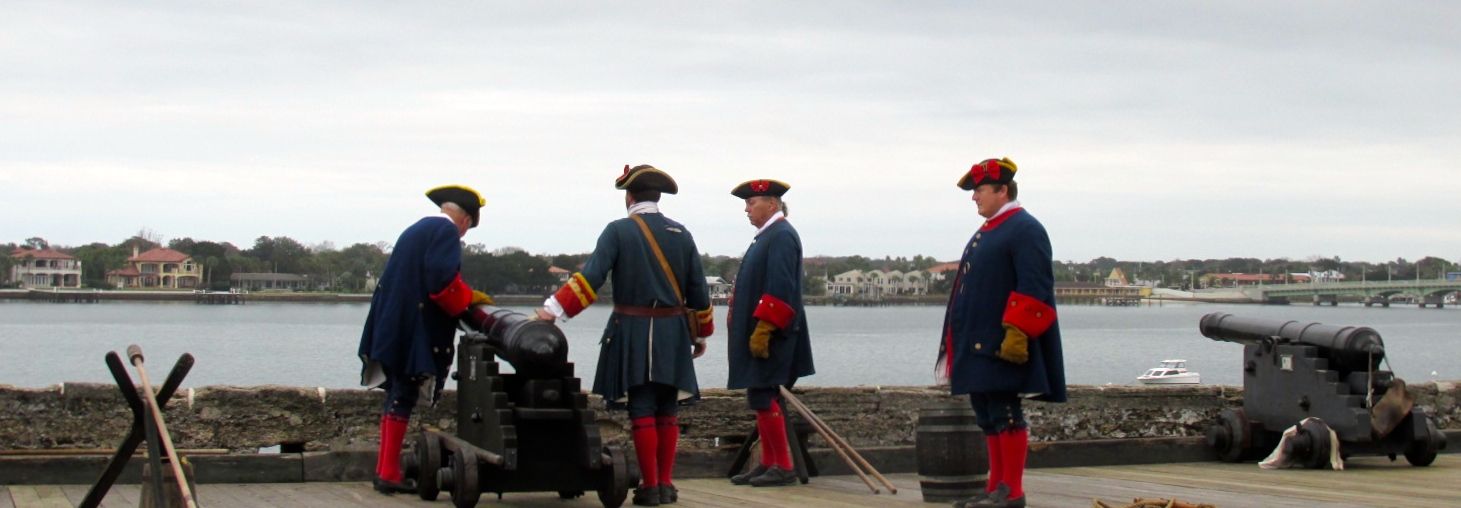
Fort getting ready to fire

The leader explained what they were doing and he told us that we would need to cover our ears when they fired the cannon. He gave the instructions in Spanish and when it was time to fire, he switched to English and said, “Cover your ears! Fuego!”

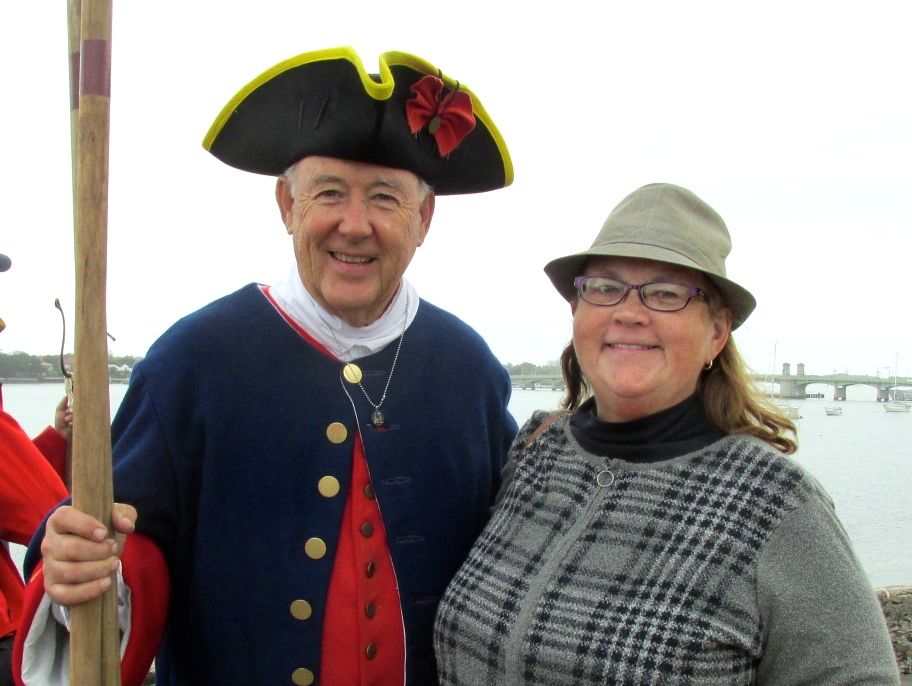
Fort me and Ricardo

After the demonstration, they encouraged us to talk to the artillery crew and take pictures. Here I am with my new friend, Ricardo.

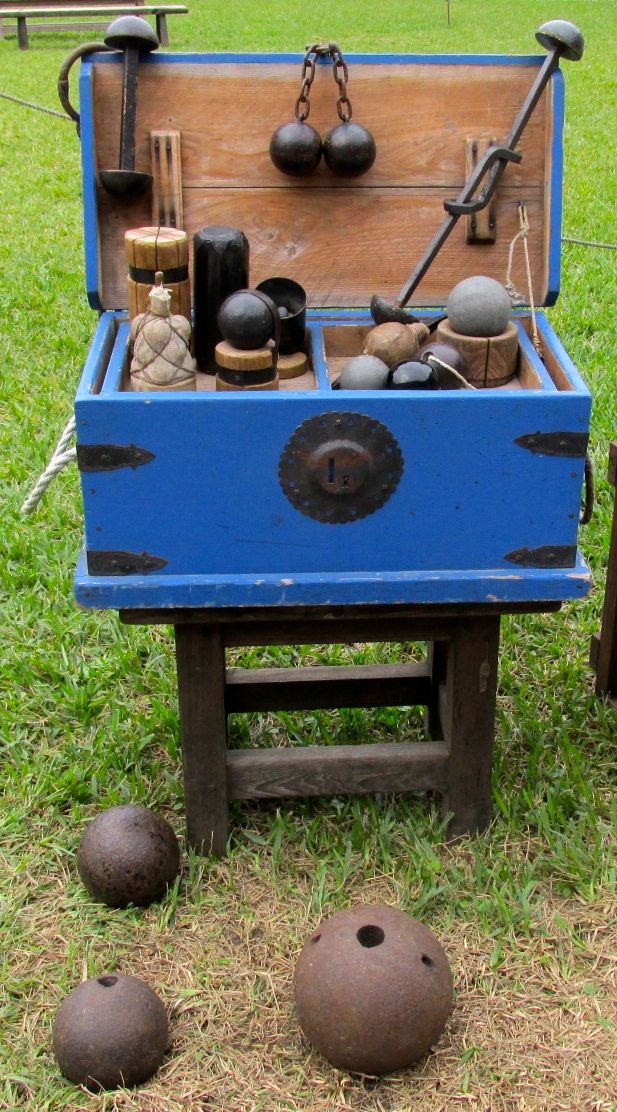
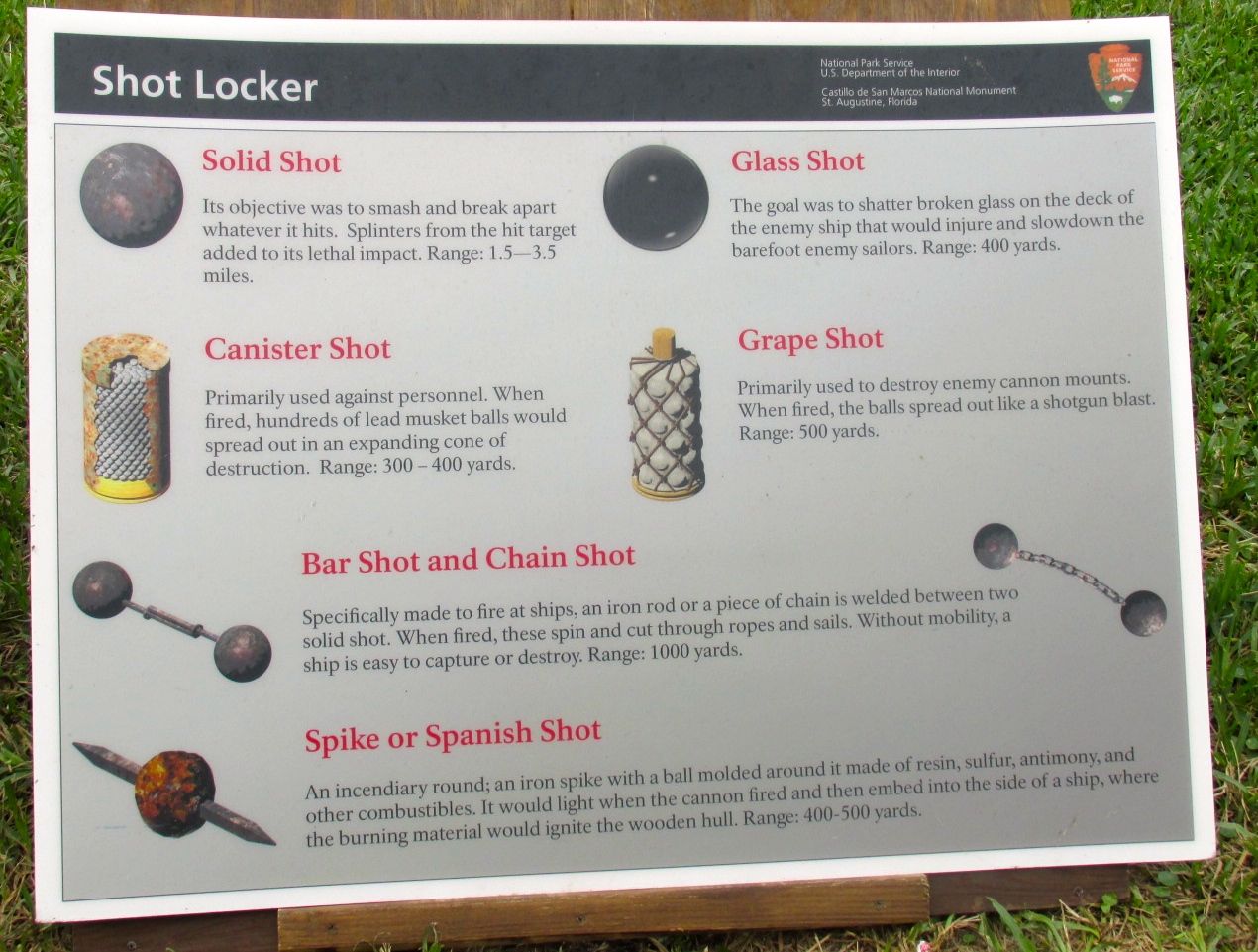
Fort shot locker

There was quite a display of the various munitions used in the cannons. They certainly had a variety of ways to hurt, maim and kill people.

Fort shot locker sign

I continued my way around the top of the fort.

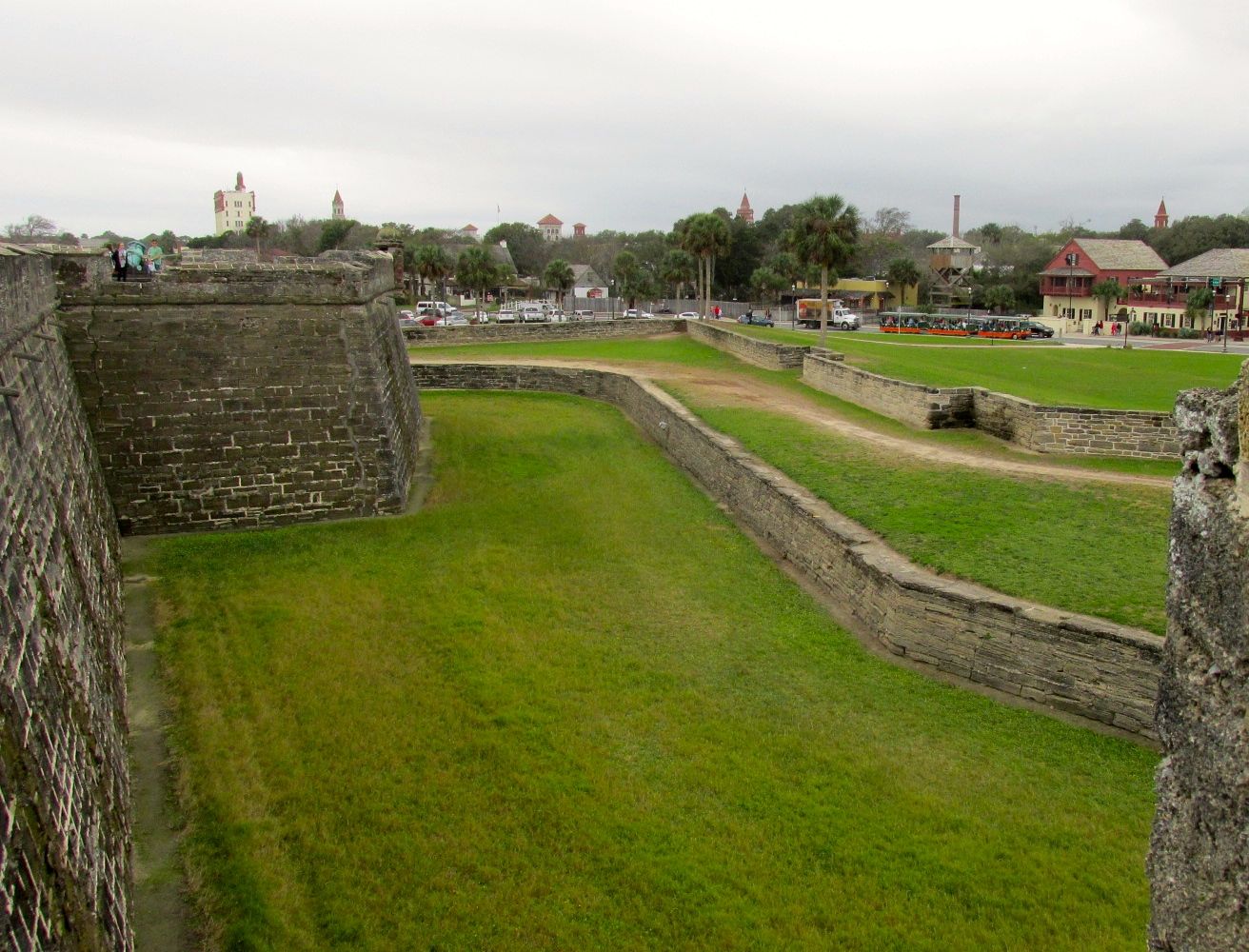
Fort moat

The moat was kept dry most of the time and animals grazed there. During times of siege, if I understand correctly, it was flooded with seawater to further protect the fort.

Or, maybe it was the other way around.

When the town was under siege, all the towns people and soldiers took refuge inside the fort during Queen Anne’s War in 1702, English ships blockaded the harbor and 500 soldiers and Indian allies took the town. 200 Spanish solids and 1300 civilians crowded into the fort for 50 days.

English reinforcements arrived on Christmas day, but Spanish ships from Havana arrived the day after. The English burned the town and retreated to Charleston.

It must have been crowded.

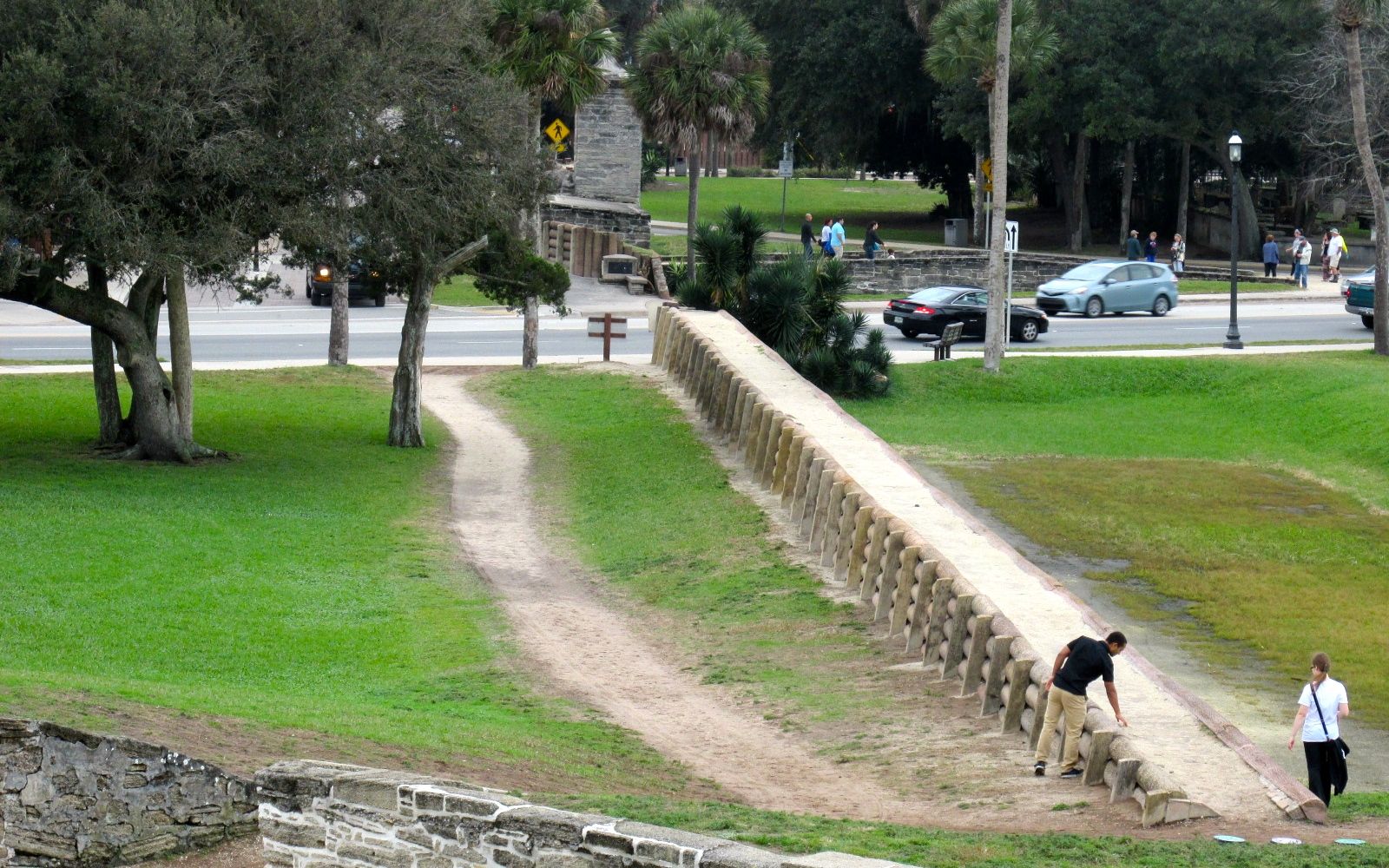
Fort rebuilt line of defense

St. Augustine had a wall around it, and this is a recreation of the log wall. If you trace the wall away from the fort and cross the street, you can see the city gate.

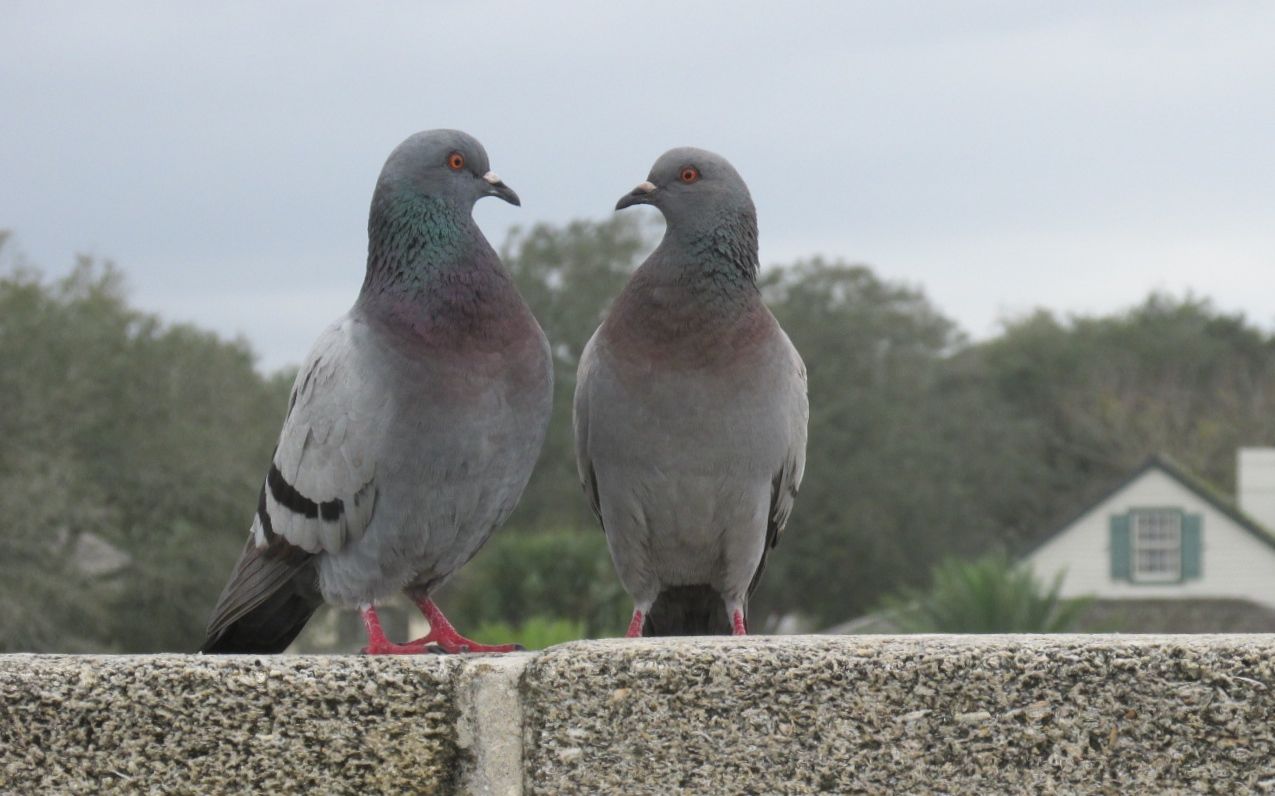
Fort pidgeons

While people were told to stay off the walls, the pigeons apparently felt that they ruled the roost.

It has been a few months since I have shared privy pictures. Time for another one.

Fort the necessary room

Apparently, this was a self-flushing latrine at one time. According to the sign, there was a bench with holes in it along the wall. The holes emptied into a tunnel that was washed out by the tide.

And then it was time to go explore the oldest European city in the United States.

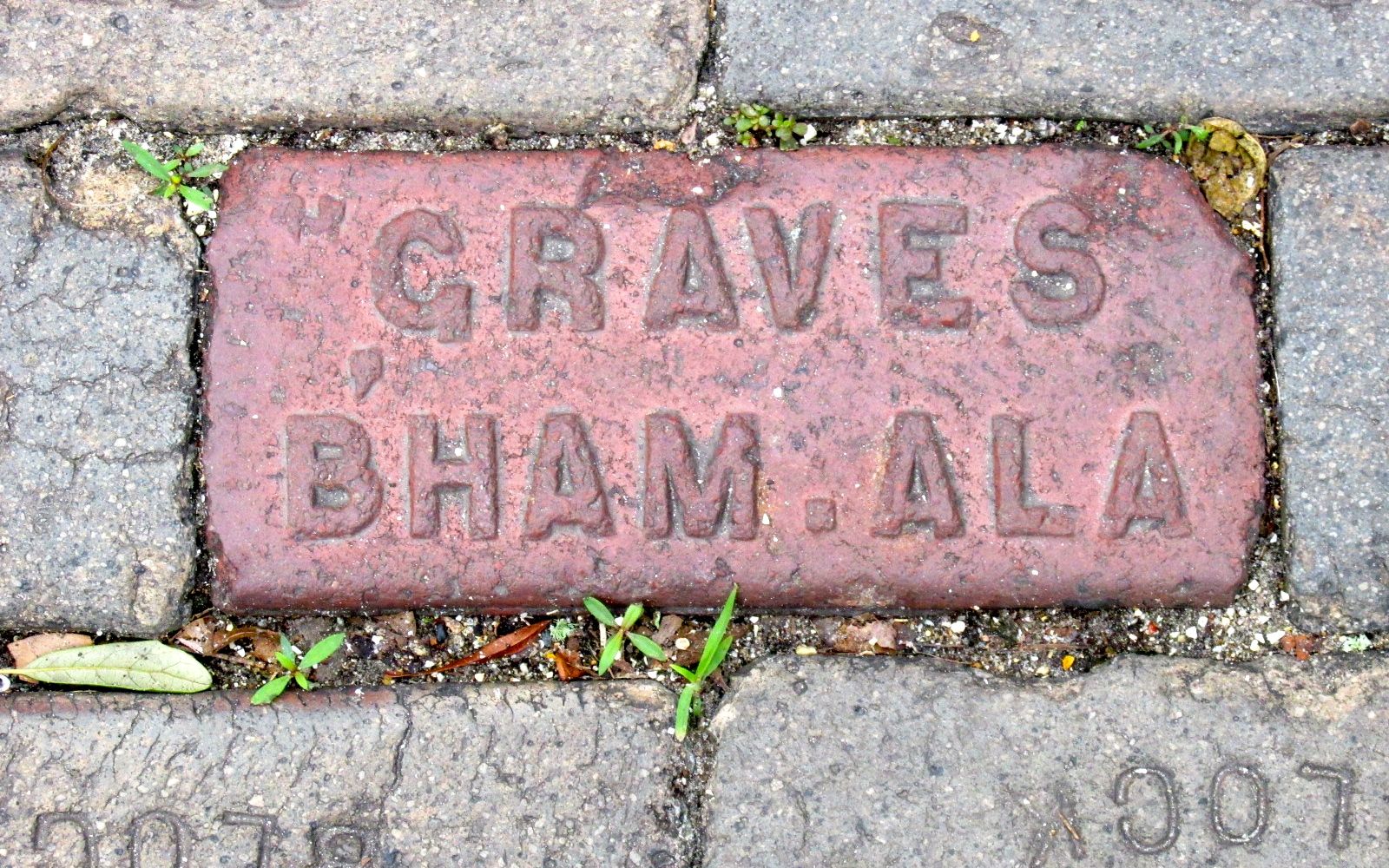
Brick in the road

I am amazed by the manufacturer’s names molded into the bricks. There were many of the same ones I saw at the Tampa Bay History Center, but this was one I hadn’t seen before.

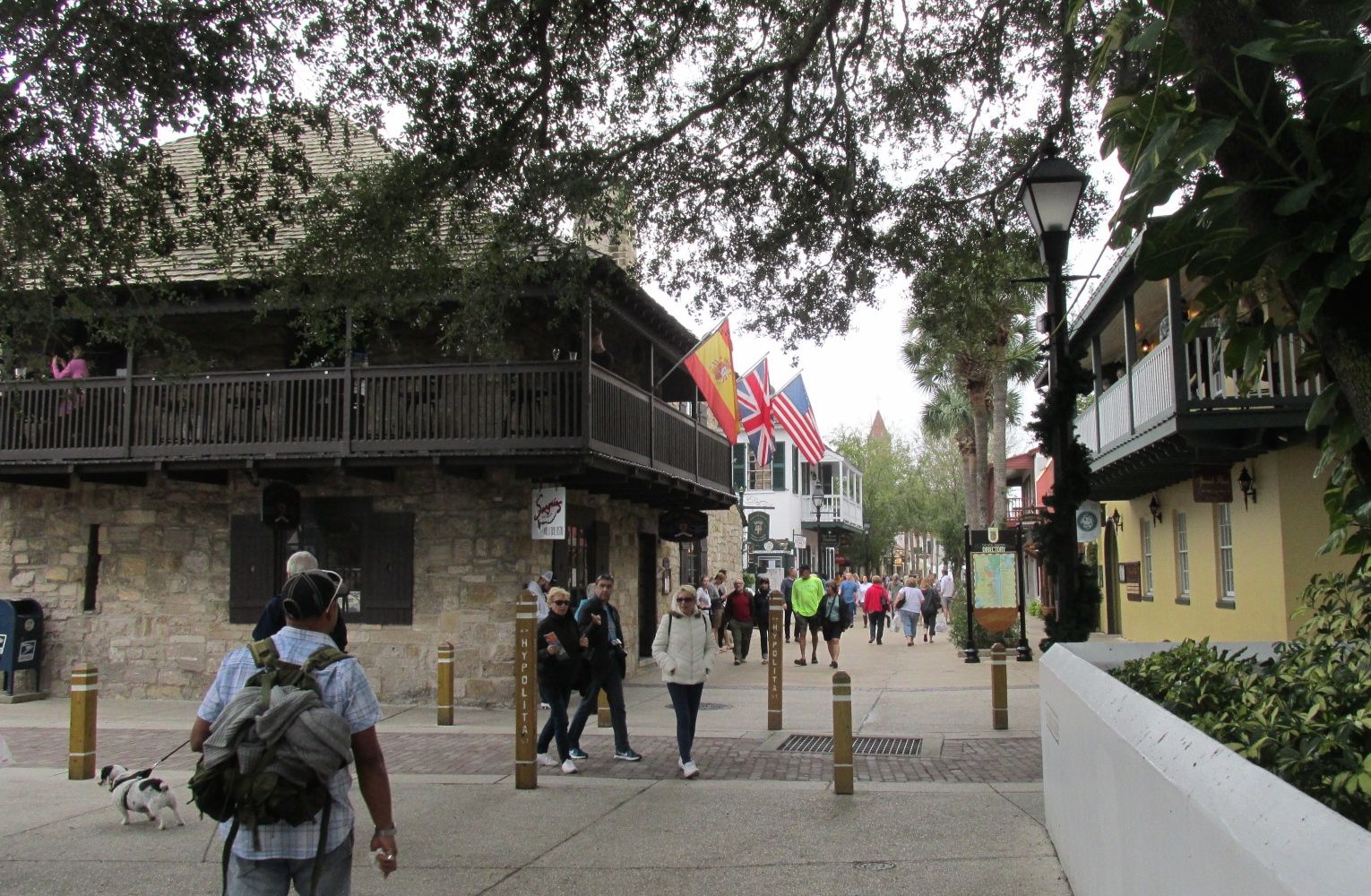
Pedestrial street

The folks who originally laid out the streets didn’t plan on the automobile. That’s just as well. Now they are pedestrian streets and they are filled with shops that sell things to visitors.

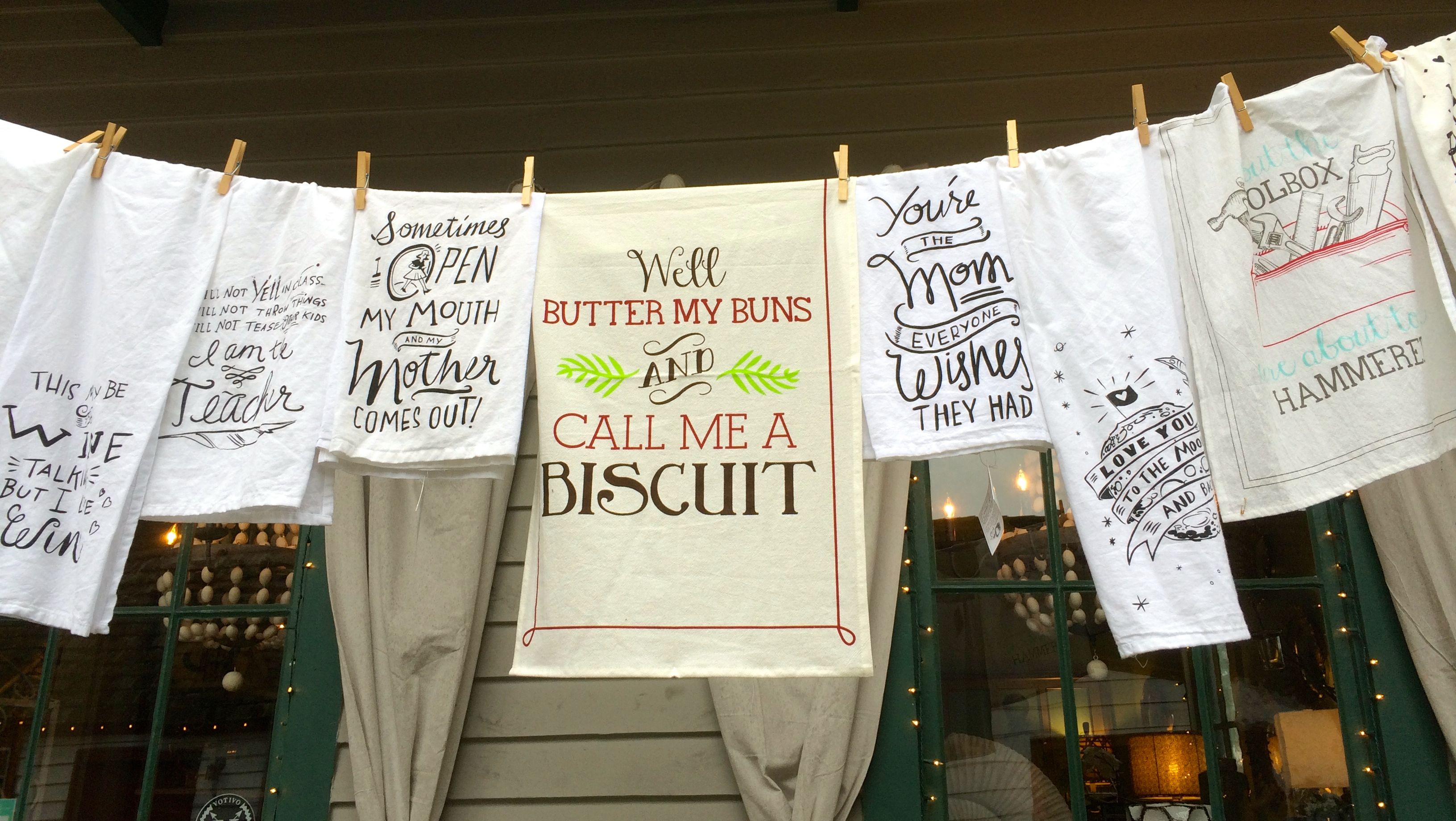
Tea towels

I was rather taken with this collection of tea towels on display outside one store. I suppose I could have bought a tea towel.  I do have enough room in the trailer for a tea towel – but I don’t really need any more of them. So, my money stayed in my wallet and the towels stayed at the store.

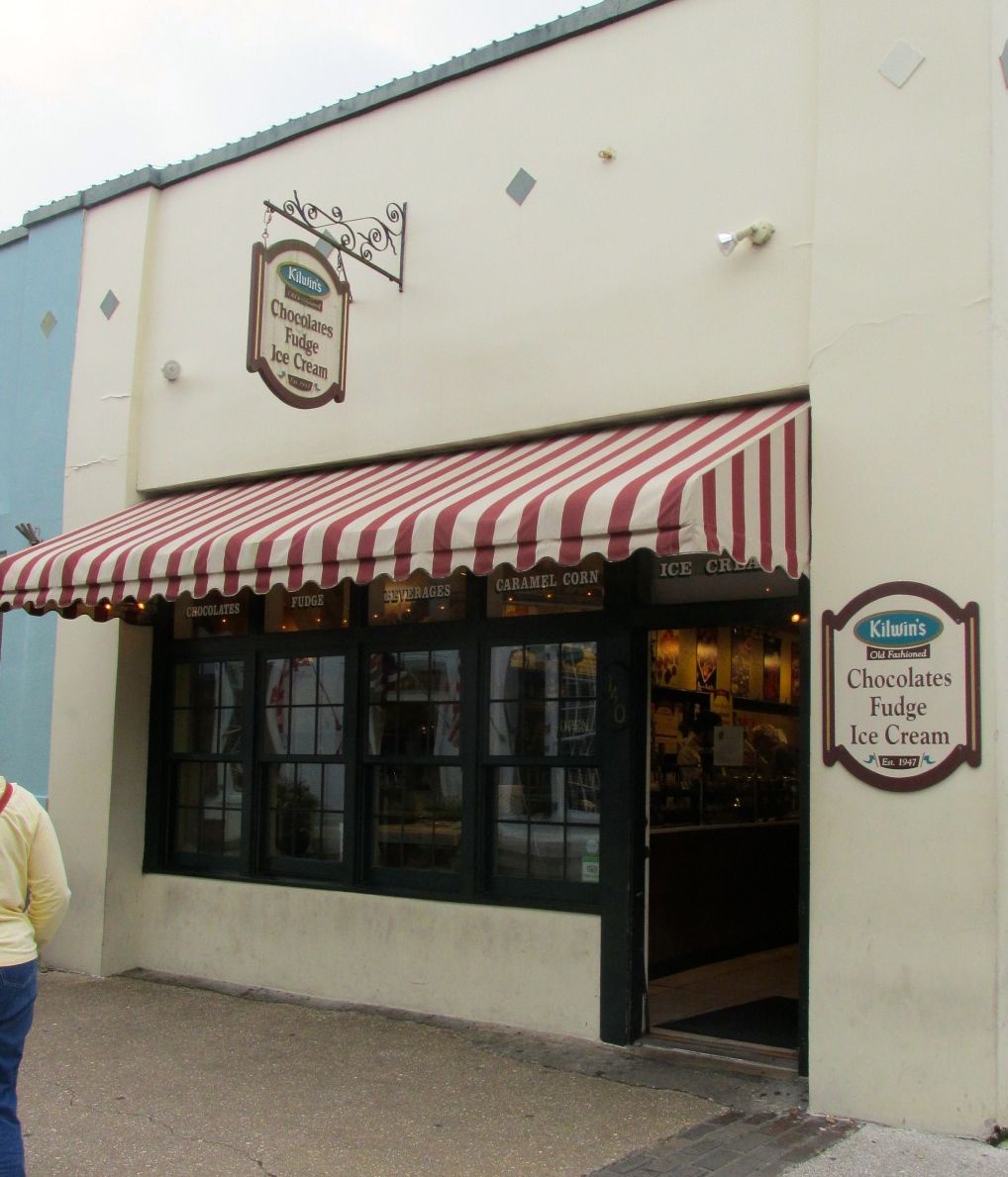
Kilwins sign

A pedestrian mall + tourists = Kilwin’s Fudge.

It’s always nice to see a little piece of home when I travel.

This is a good point to stop for now. More on my visit to St. Augustine in my next post.