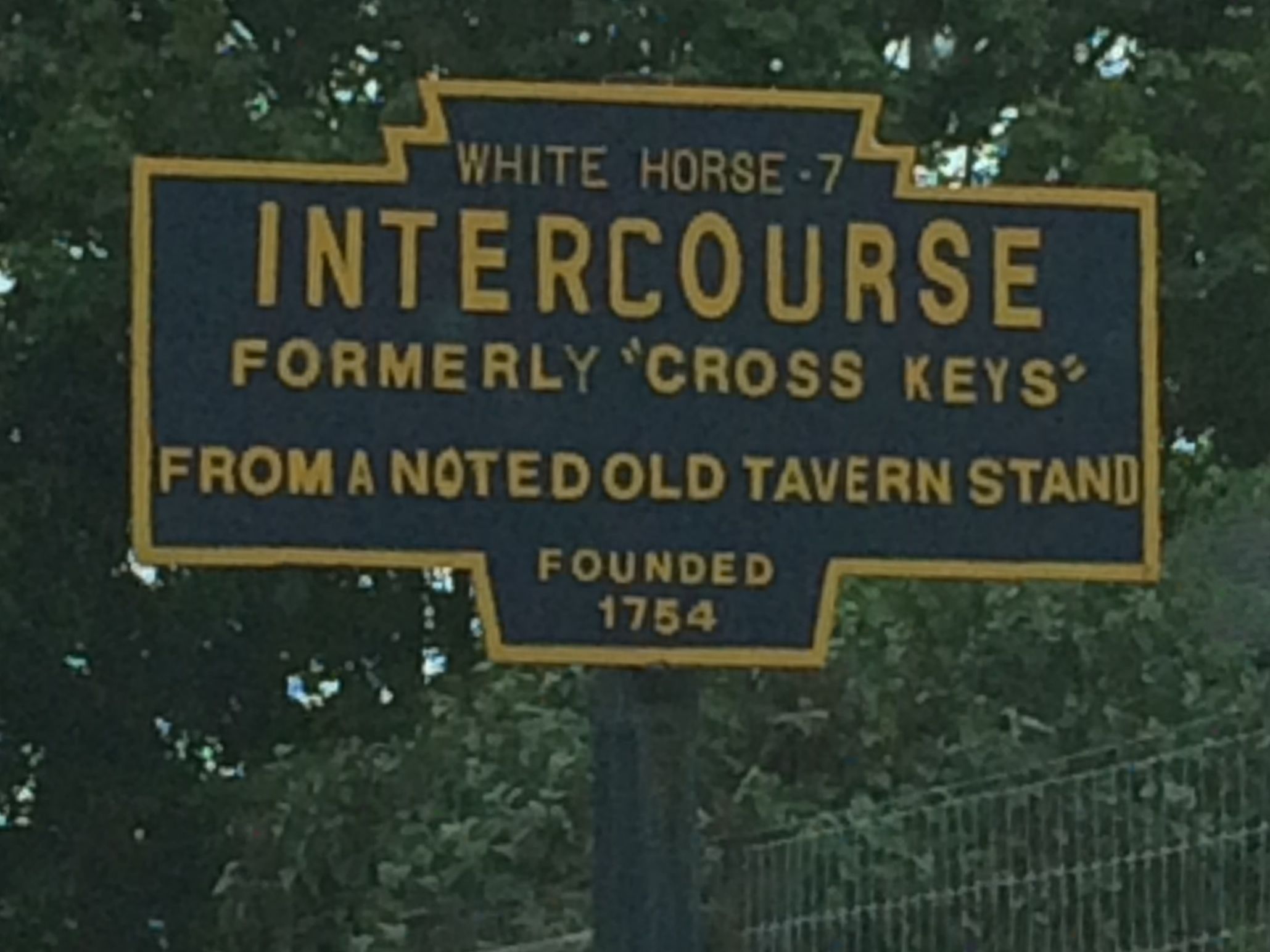
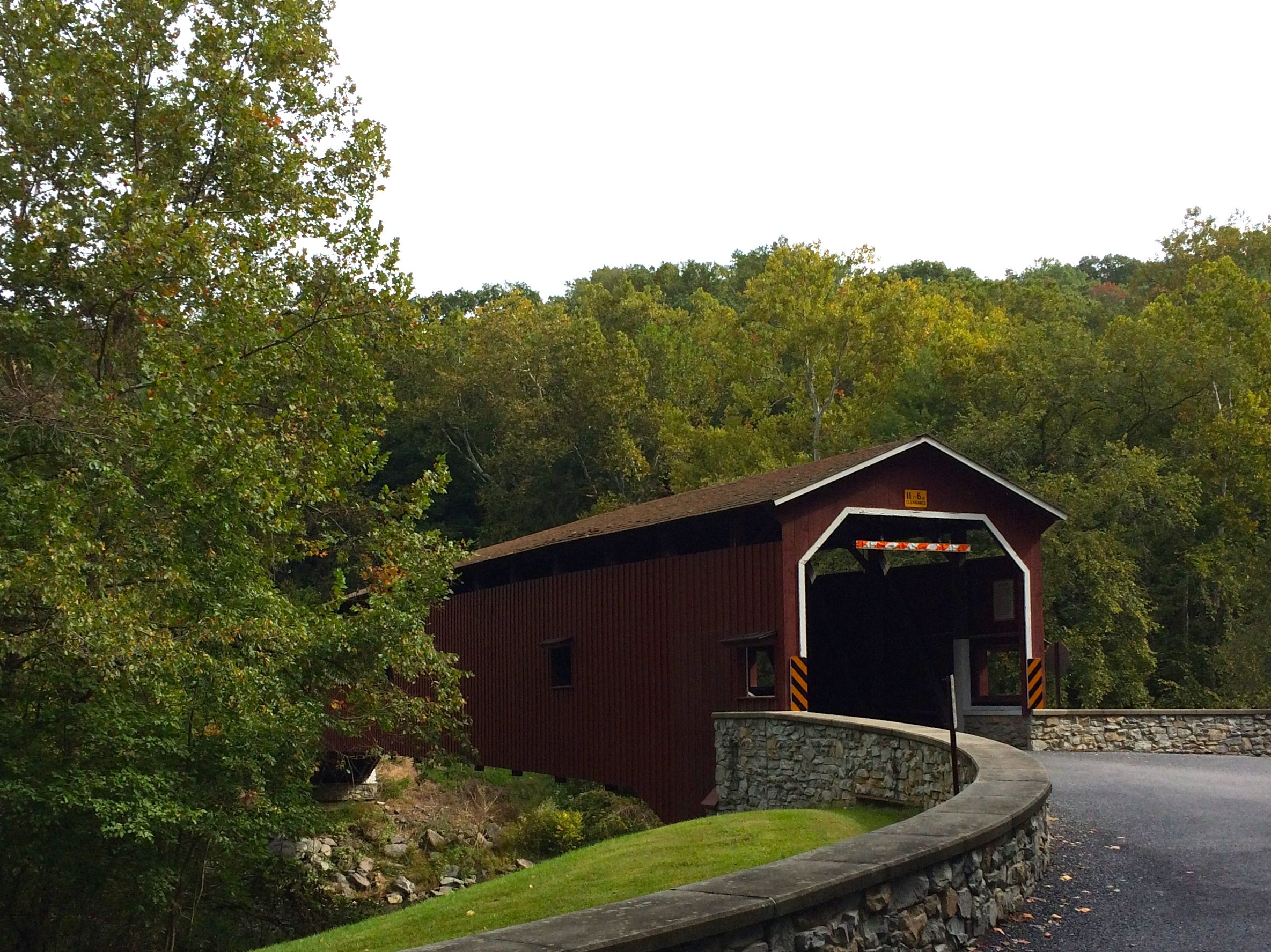
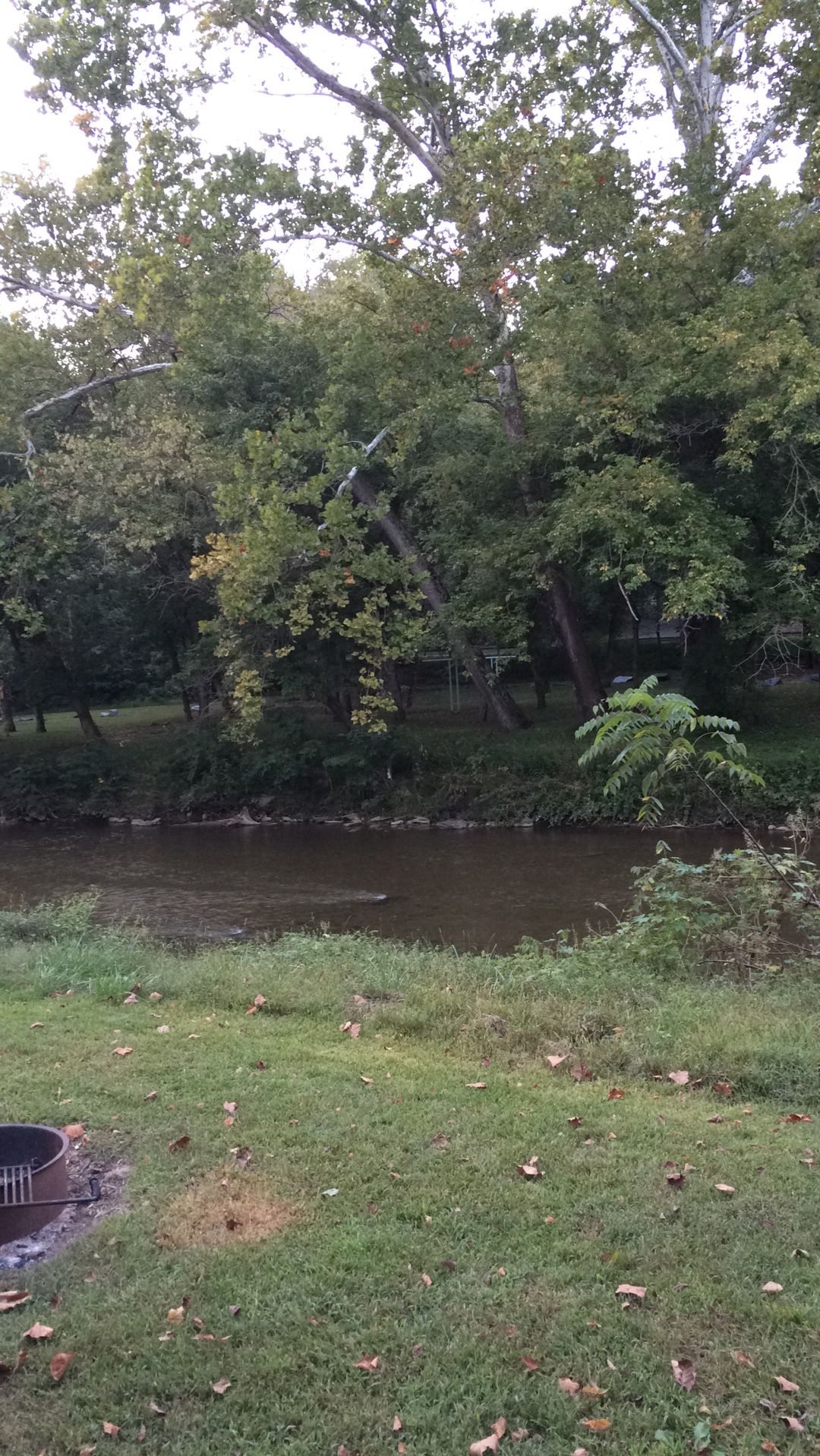
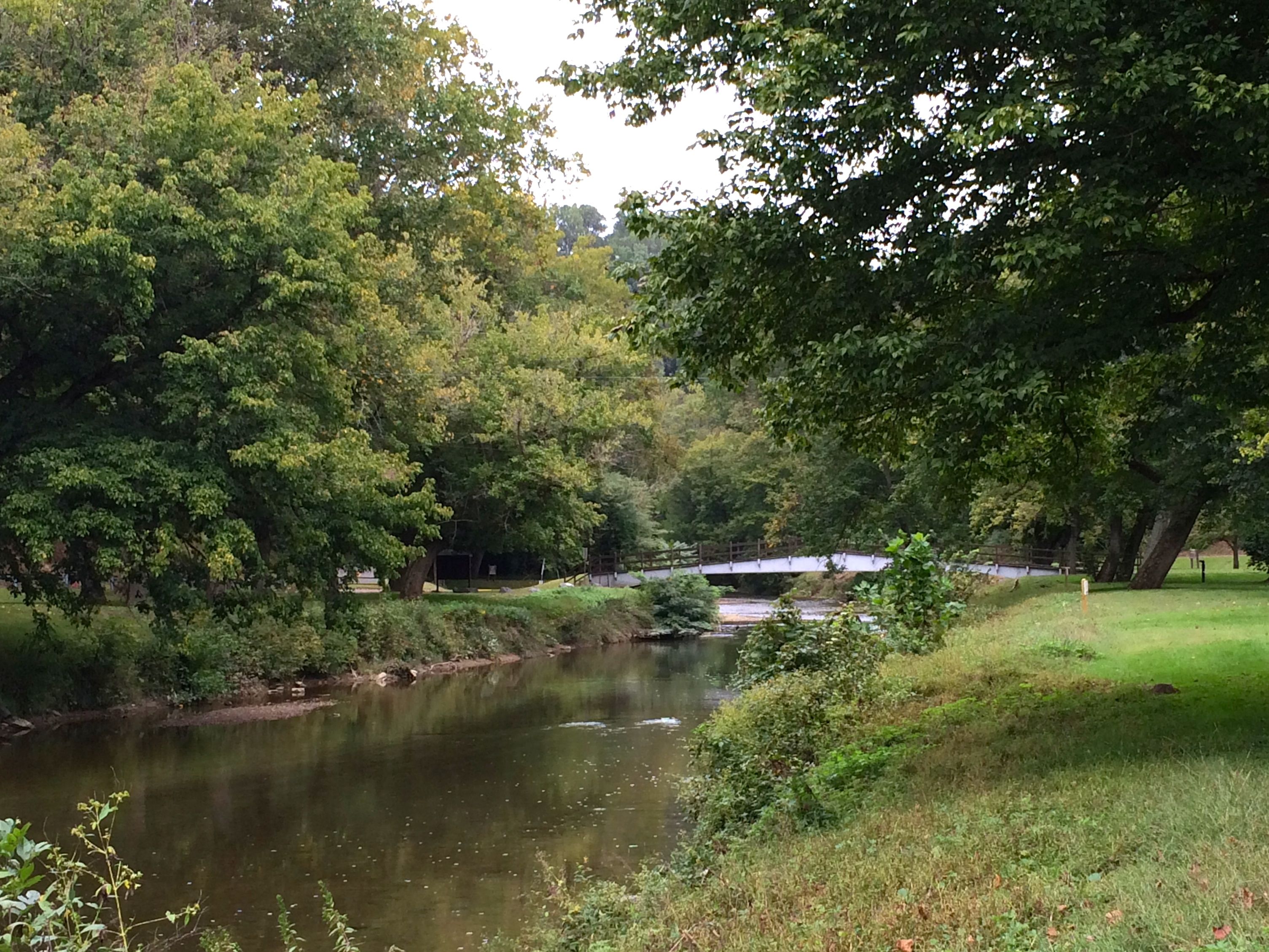
It seems that there are strings connecting all people and all places. This last connection didn’t even occur to me until I was returning to the campground for the last time.
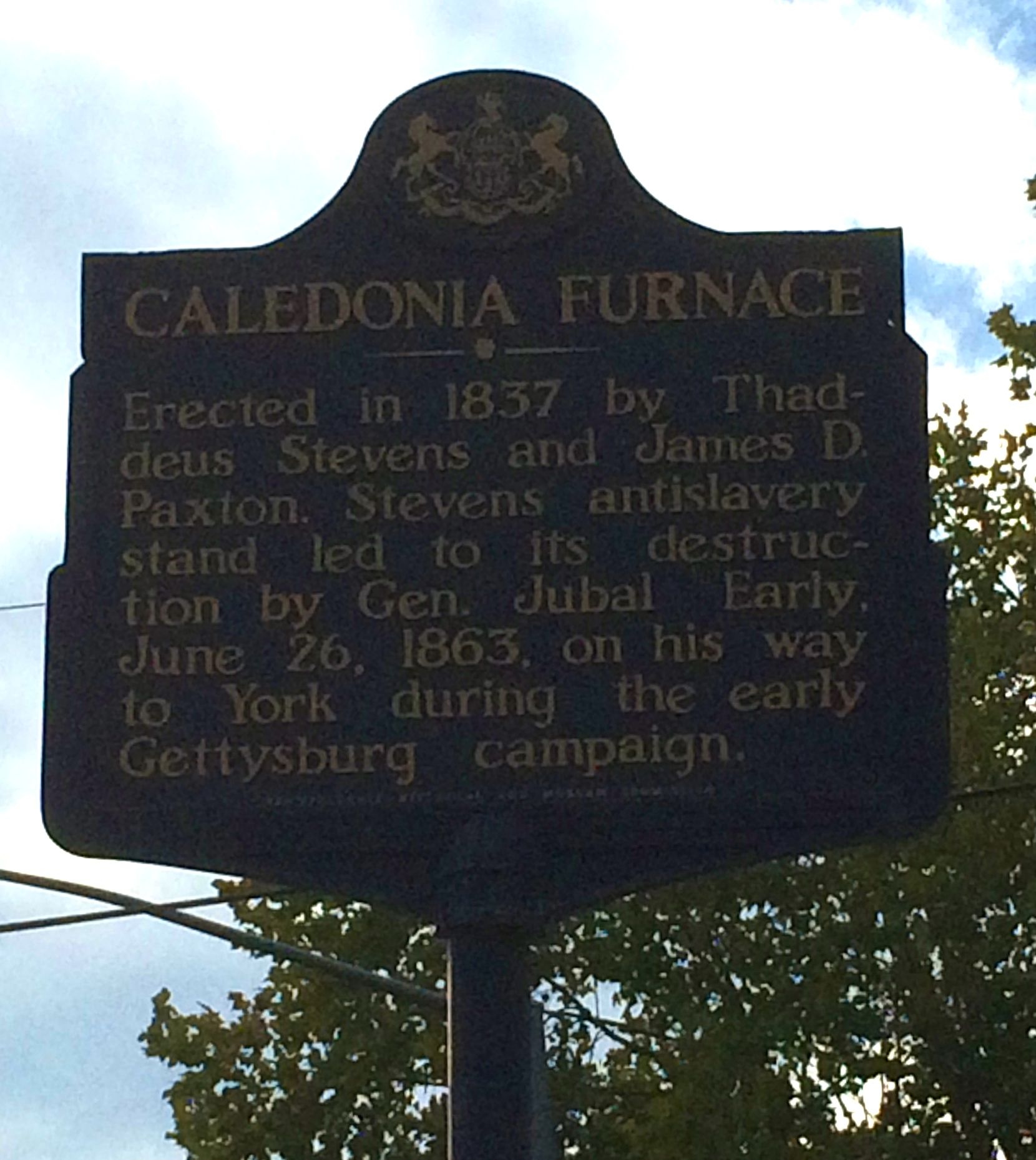
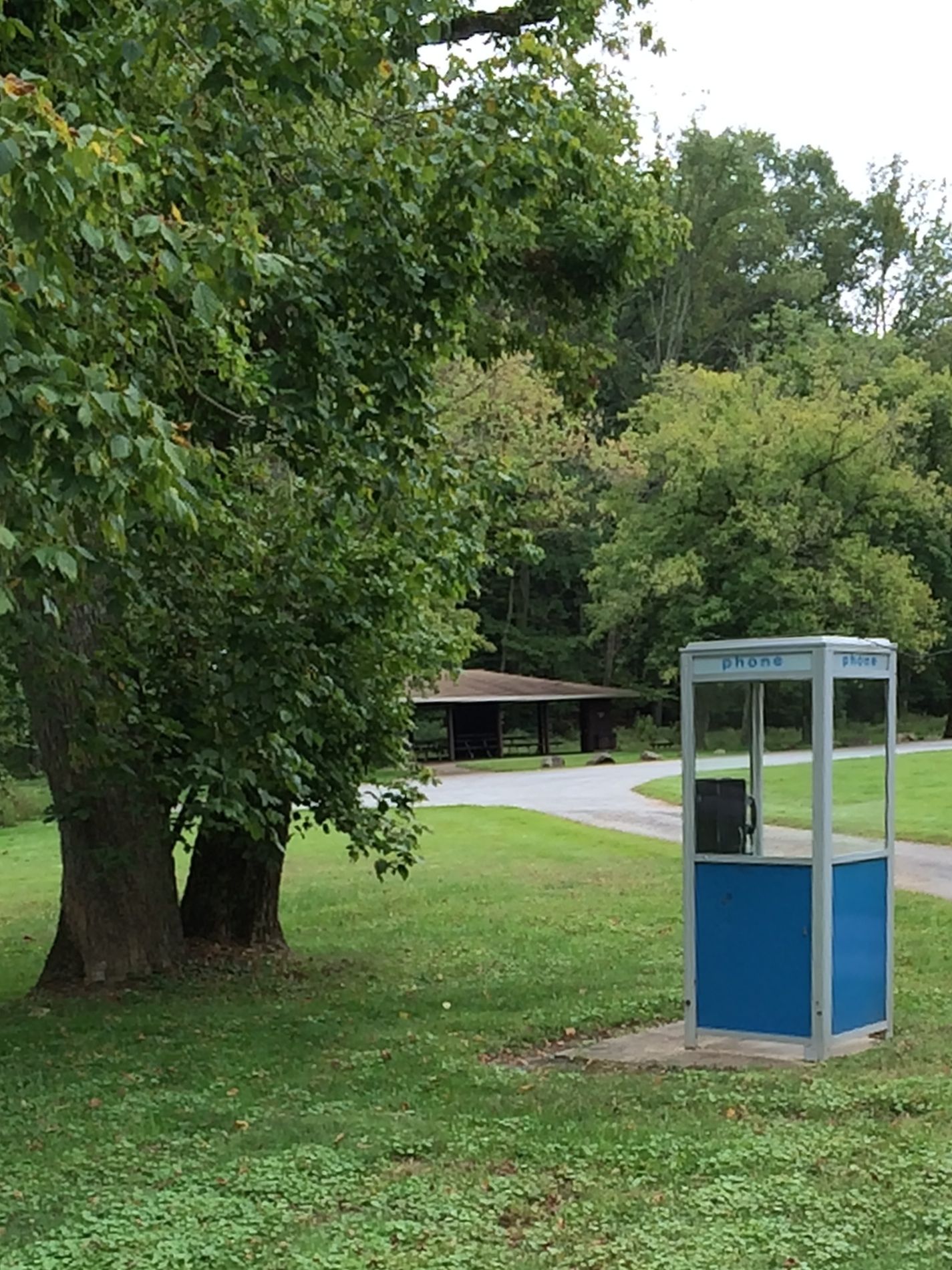
I stayed at Caledonia State Park, about 15 miles outside of Gettysburg. As I turned off the main road, I decided to stop to read the Historical Marker by the road.
Thaddeus Stevens?! I had been seeing markers with his name on them since Lancaster. The name rung a bell. I remembered that he was in Congress during the Civil War, but I couldn’t quite fit the pieces together.
In this particular place, it turns out that he had an iron forge and blacksmith shop that was destroyed by General Jubal Early abut a week before the start of the battle at Gettysburg.
The Confederate Army had a standing order not to destroy the property of private citizens. General Early took it upon himself to make an exception for Congressman Stevens, who wanted to deprive them of their property – their slaves.
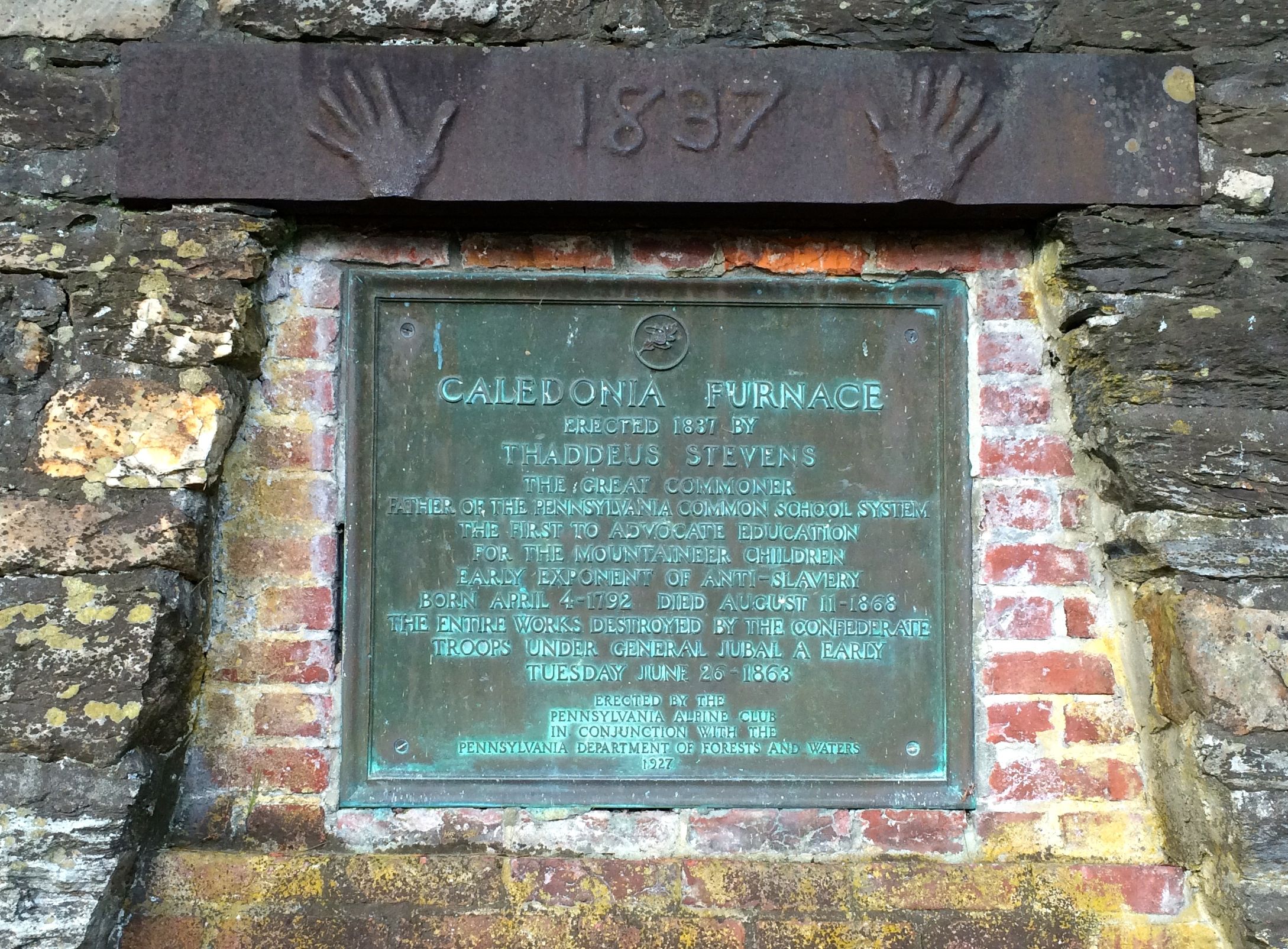
Workers from the Civilian Conservation Corps rebuilt a scaled down model of the forge in the 1930’s.
A close-up of the plaque
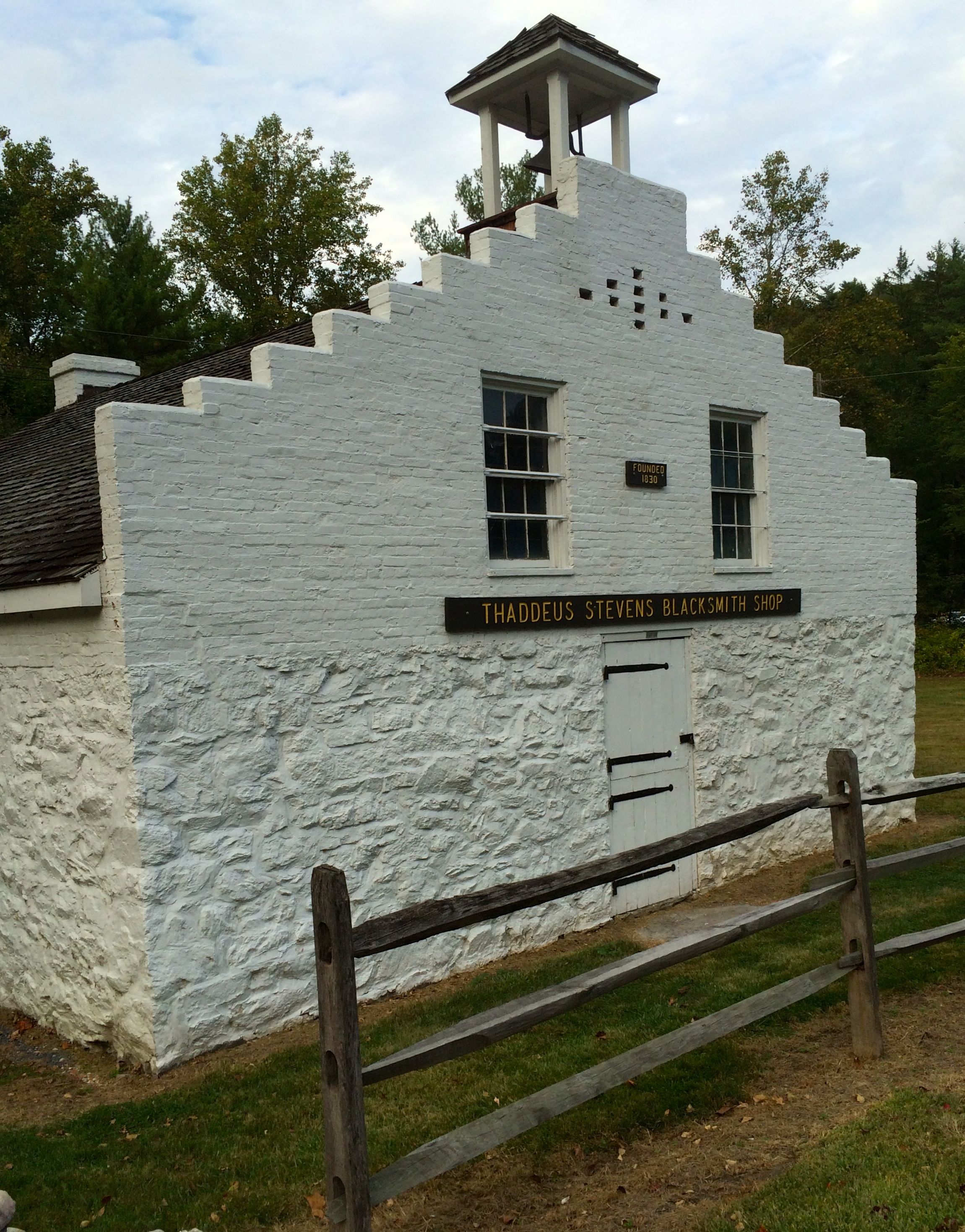
He also had a blacksmith shop across the street from the forge.
Caledonia Black Smith Shop
According to the interpretive signs, the stone walls survived the destruction in 1863. I assume that they meant the parts a the bottom, as opposed to the brickwork at the top.
The blacksmith shop was rebuilt and was in use as such until 1895, twenty years after the iron furnace was closed.
If I remember correctly, the blacksmith shop was used for other purposes after it closed, including as a trolley station, a swimming pool gatehouse and a museum.
According to the interpretive signage, Thaddeus Steven is “perhaps the most famous unknown person in American history.” He was a businessman, lawyer, congressman and the father of the 14th Amendment.
Thanks to Donald Trump, the 14th Amendment has been in the news lately, as he appears to think that its repeal would improve things in our country.
Just in case you need a cheat sheet when it comes to the Amendments, this is the 14th in a nutshell:
“All persons born or naturalized in the United States, and subject to the jurisdiction thereof, as citizens of the United States and of the State wherein they reside. No State shall make or enforce any law which shall abridge the privileges or immunities of citizens of the United States; nor shall any State deprive any person of life, liberty, or property, without due process of law; nor deny to any person within its jurisdiction the equal protection of the laws.”
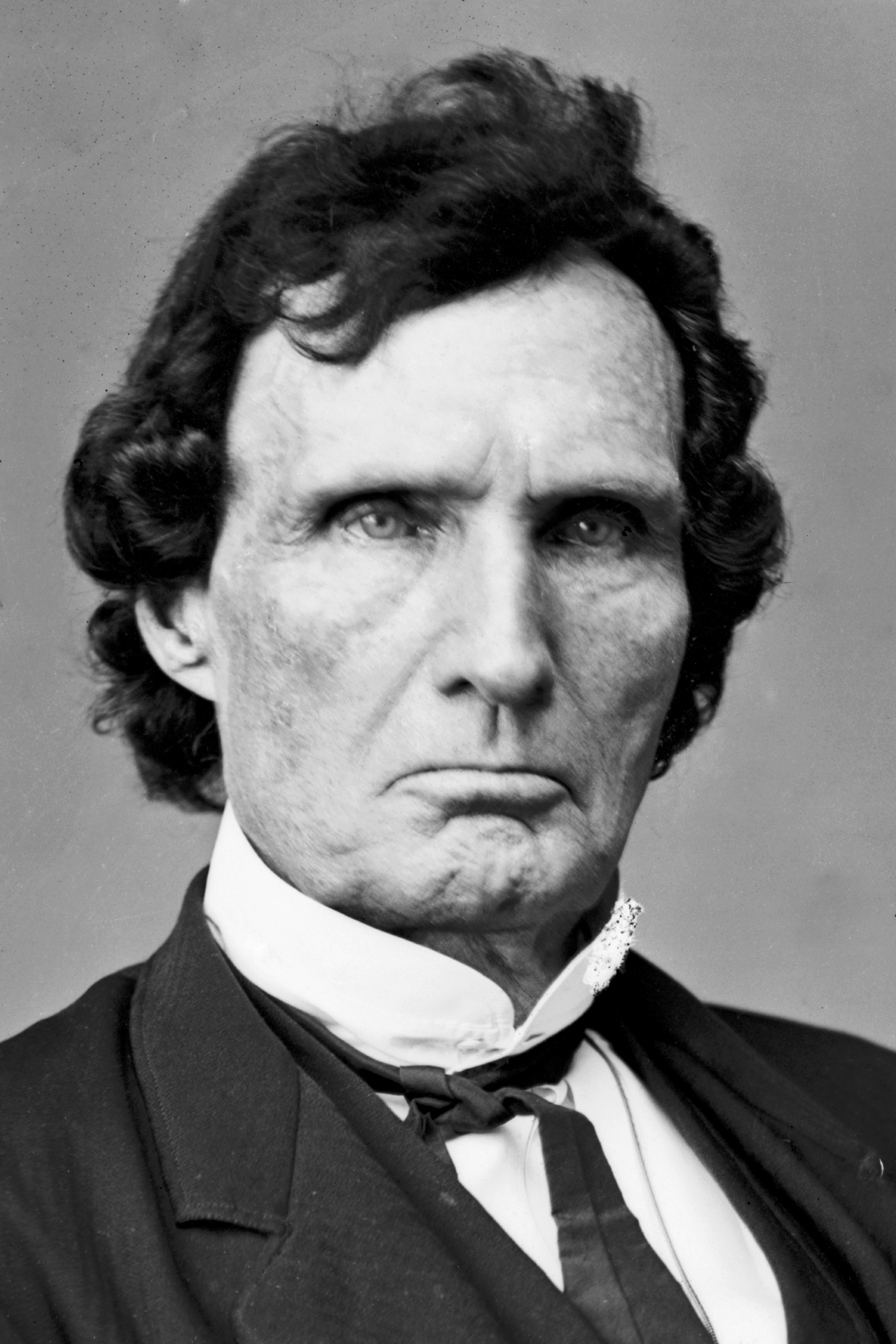
Thaddeus Stevens April 4, 1792 – August 11, 1868
It makes me wish I had paid more attention to the historical markers I saw earlier.
I suppose I could stop right there. Or I could go on and tell more about his life, which was rather amazing. But, maybe you might want to Google him and see what others say about him.
Find out how a fatherless young man with a club foot manages to become a lawyer, move from Vermont and do great things for his adopted state of Pennsylvania and make lasting contributions to the country as a whole.
I will take a moment to talk about the Caledonia State Park. This was a place we went on a family vacation in 1966. Dad borrowed his brother’s trailer and off we went.
I remember this park because there was a sign for a playhouse. I was excited by this, because when we moved from the first house I remember, we had to leave behind the playhouse Dad had built for us. I was disappointed to find out that this playhouse was a theater. And, the playhouse is still here.
I also remember it because we had a campsite that was up against a steep slope, and my little brother, Scott, was really into building campfires.
It’s amazing the little details you can remember nearly 50 years later.
Did you know York Peppermint Patties came from York, Pennsylvania? I didn’t!
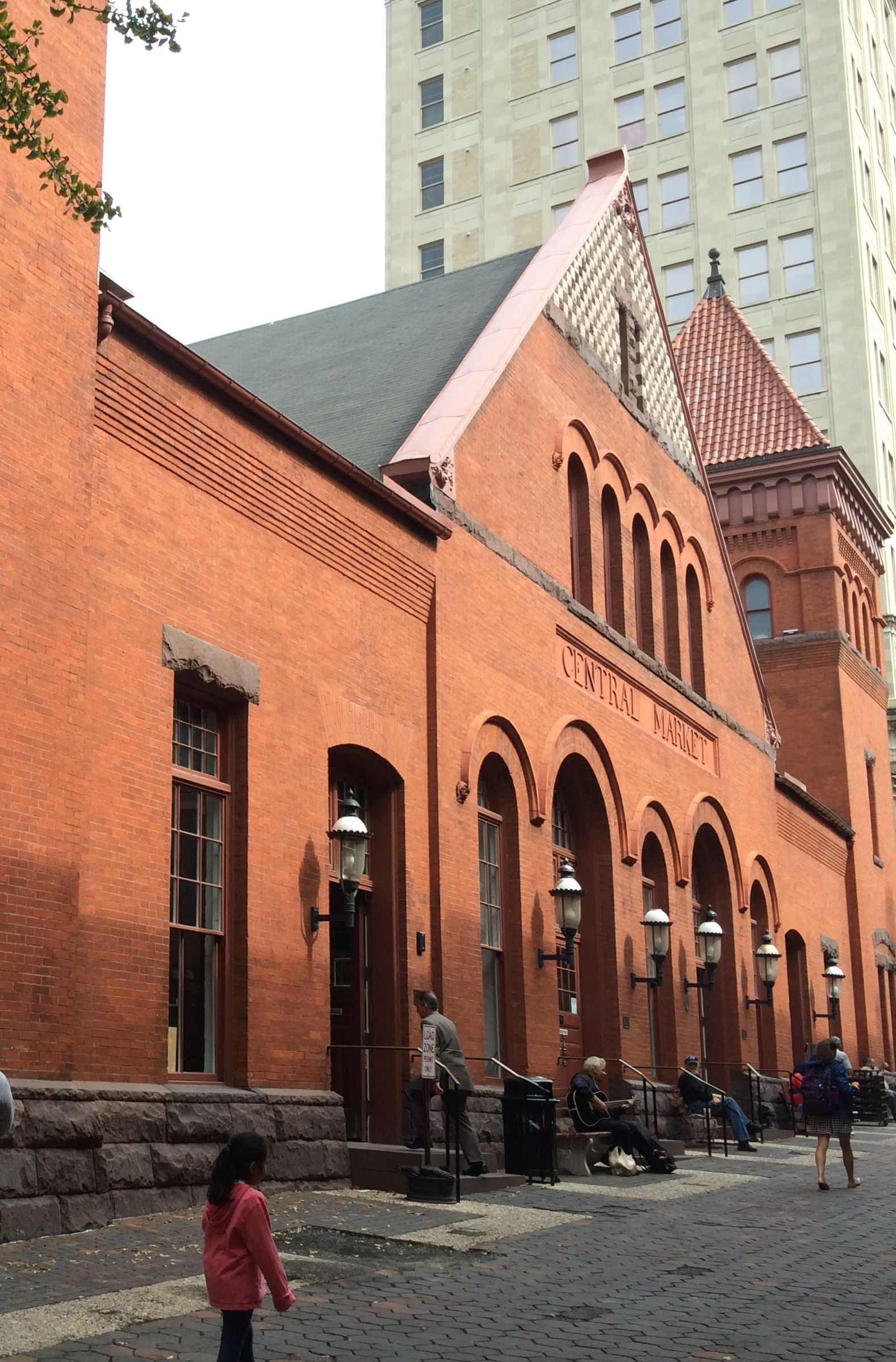
Andrea from Lancaster and I made plans to meet at the Lancaster Central Market for lunch.
York Central Market
I stopped in to the Tourism Office at the market when I arrived, and I found out about the Peppermint Patties. I also found out that they are now made in Mexico.
I tried to get the woman at the information desk to give me an idea of what to do on a day in York. I hate to say that she seemed baffled by the question, but I guess York isn’t the tourism mecca that Lancaster is. She gave me a brochure and suggested that I might like to take a tour of a company in the county.
I thanked her, got a free mug full of swag for signing up for a newsletter and set out to wait for Andrea.
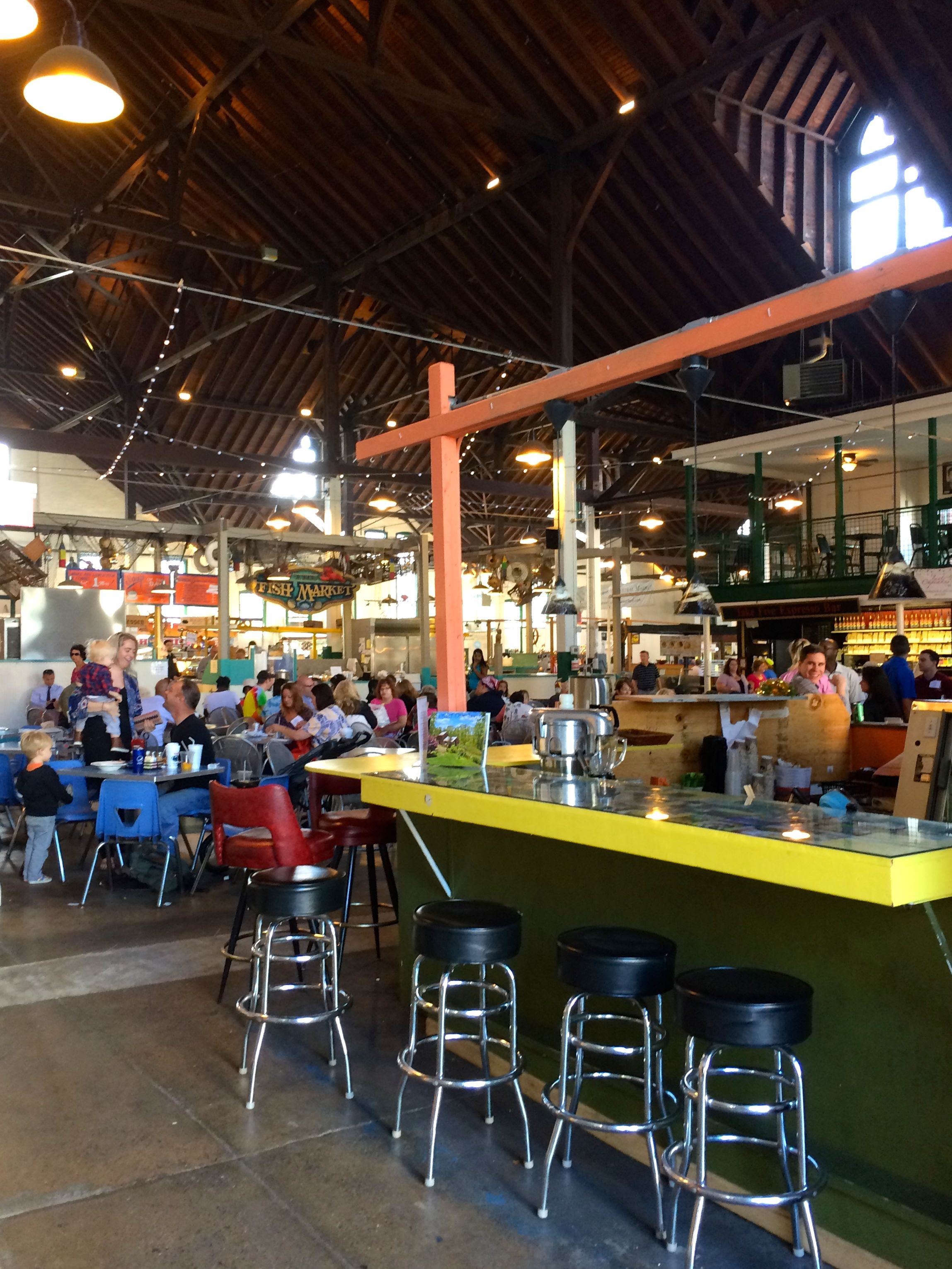
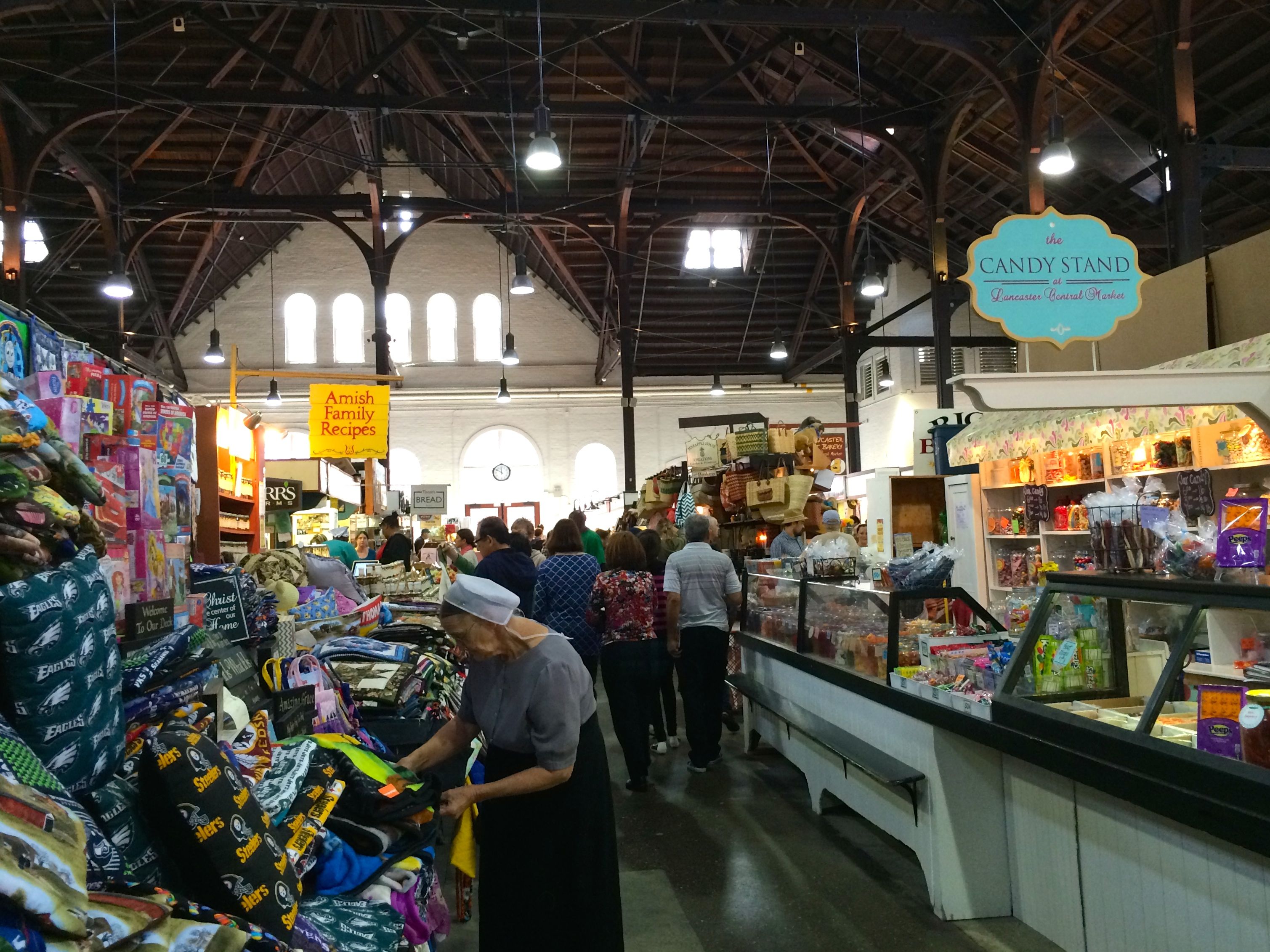
The York Central Market is more of a food court these days than the Market in Lancaster.
Inside the Central Market
While I was waiting, I picked out a tour that I fought would be interesting and I called to see if they were giving tours today. I was in luck. Bluett Brothers Violins had a tour at 3:00 that afternoon.
Andrea got through the traffic and we finally made got together. We had a wonderful lunch of African food and chatted away like old friends. All too soon, though, our time together came to an end. I hope I make it back that way again sometime.
I had a little time to kill, so I decided to look around.
At the back door of a restaurant
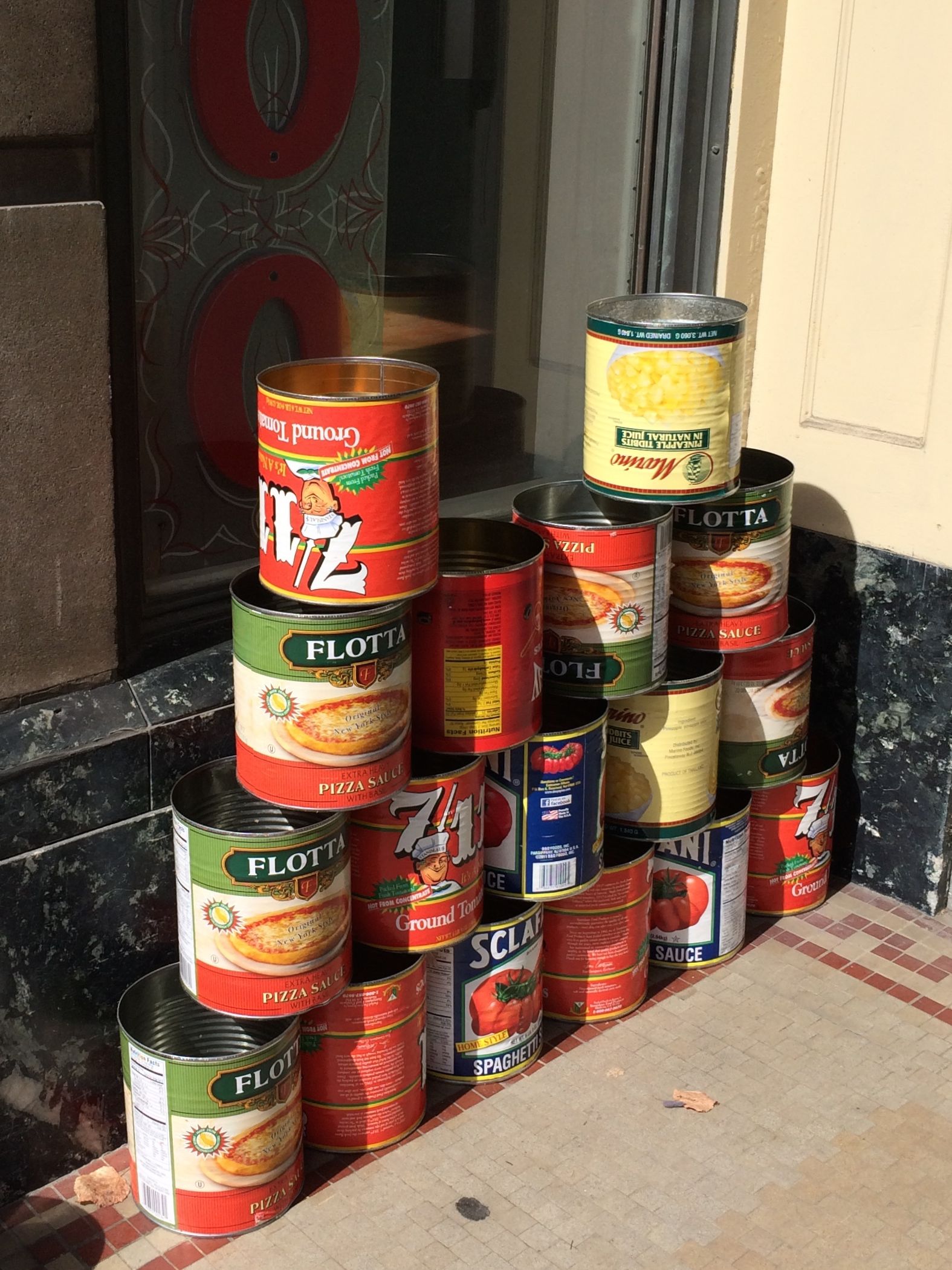
I imagine that these came from an Italian restaurant.
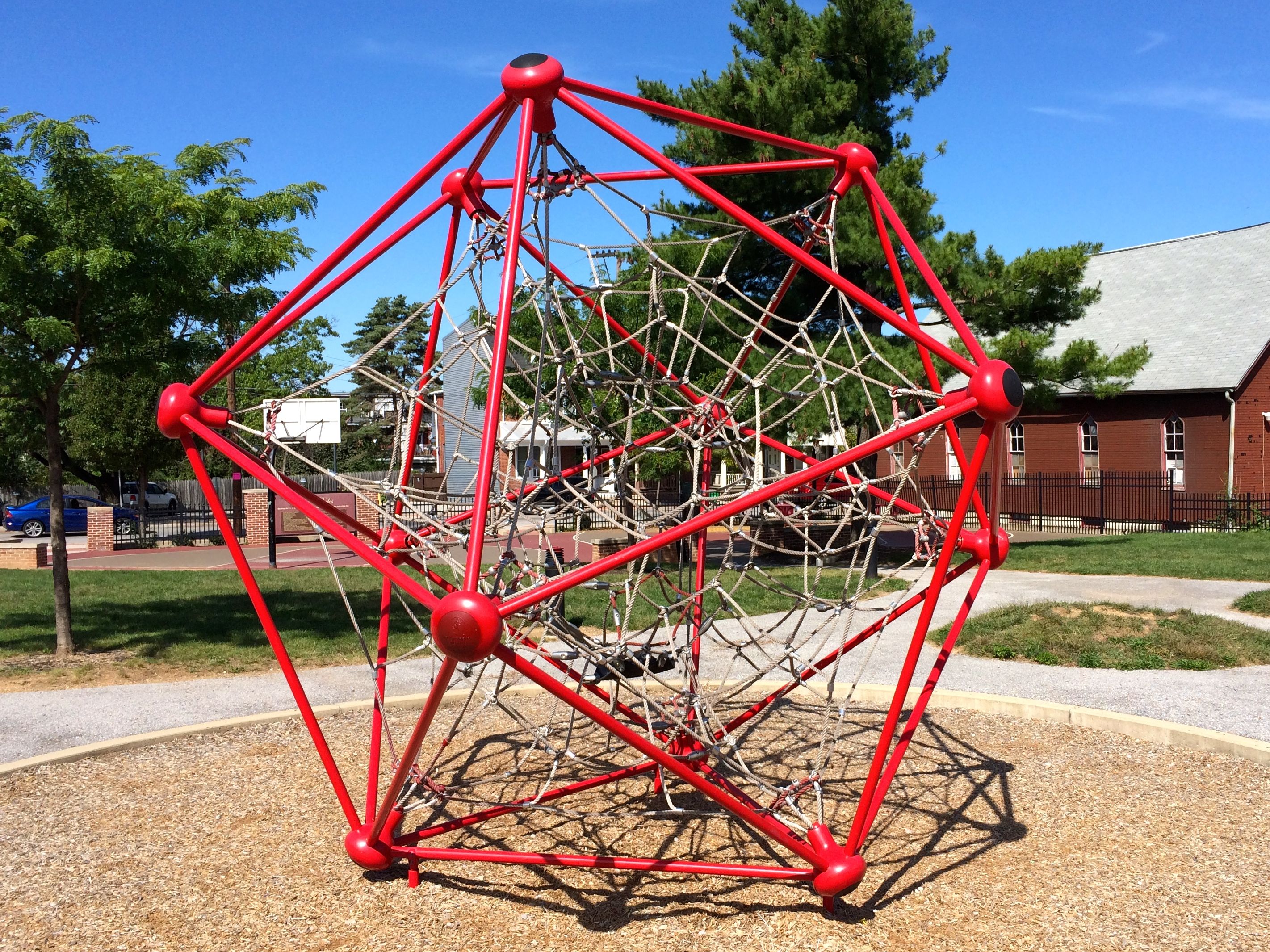
A 17-sided climbing structure
And dig that cool web inside!
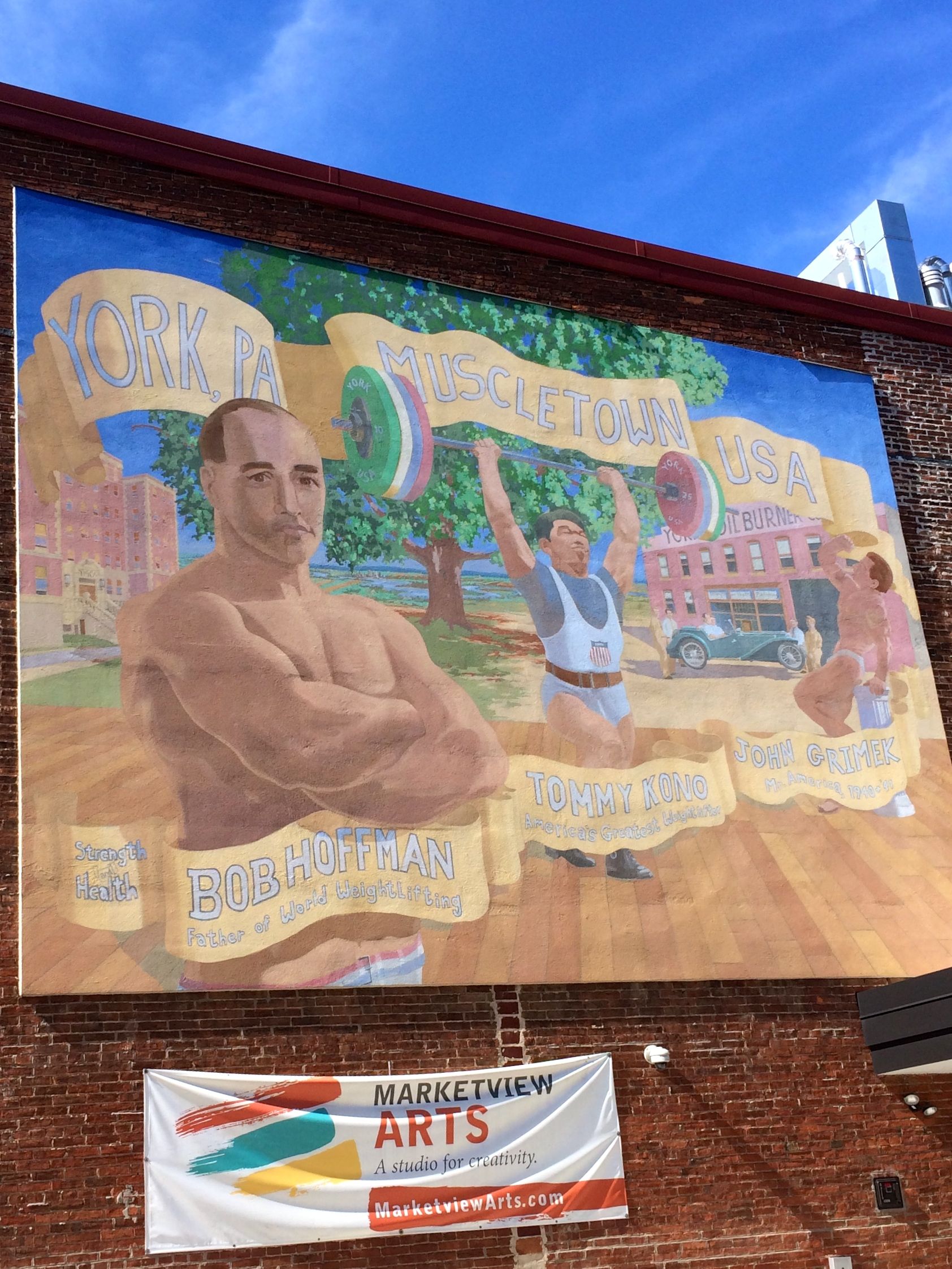
Muscletown USA mural
Who knew that York was Muscletown USA? Bob Hoffman founded York Barbell Corporation in 1932. He is hailed as the father or weightlifting and helped to popularize the bodybuilding movement.
The time for the tour rolled around and I showed up at the company.
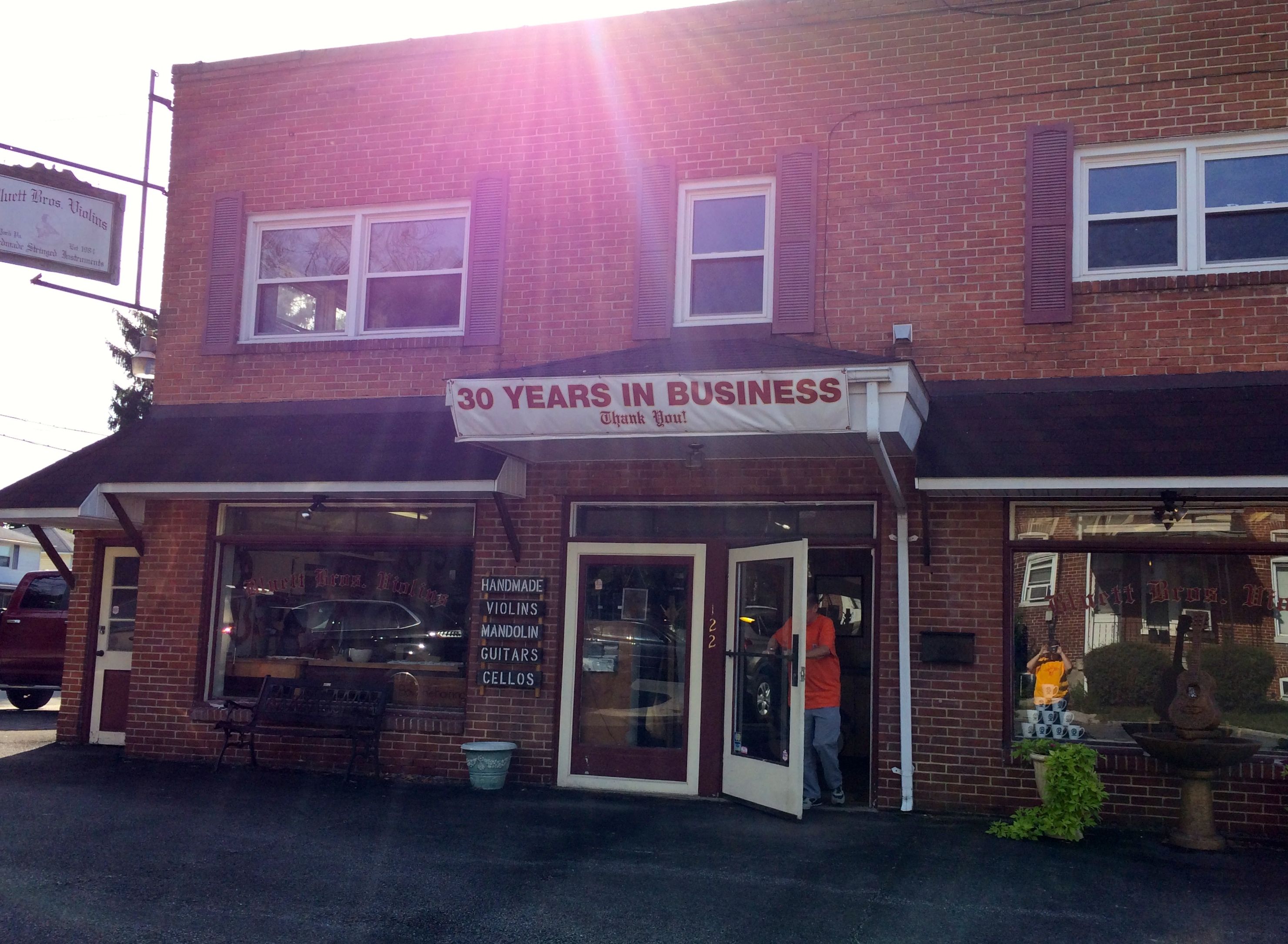
Bluett Brothers Violins
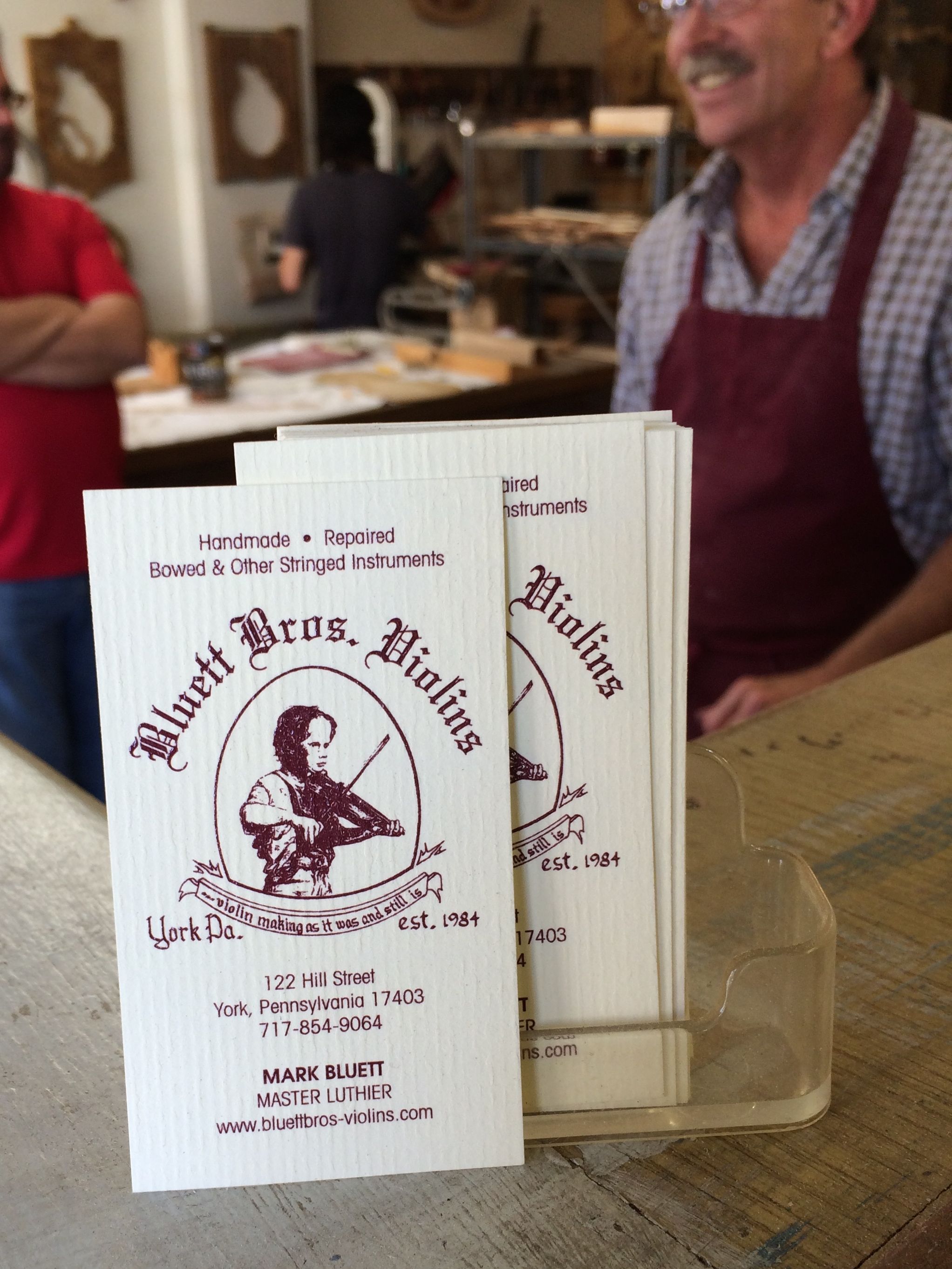
Mark Bluett, Master Luthier, met me at the door with a big smile.
He began the tour by telling us that he worked on any sort of stringed instrument. In addition to building new instruments, he also repaired them.
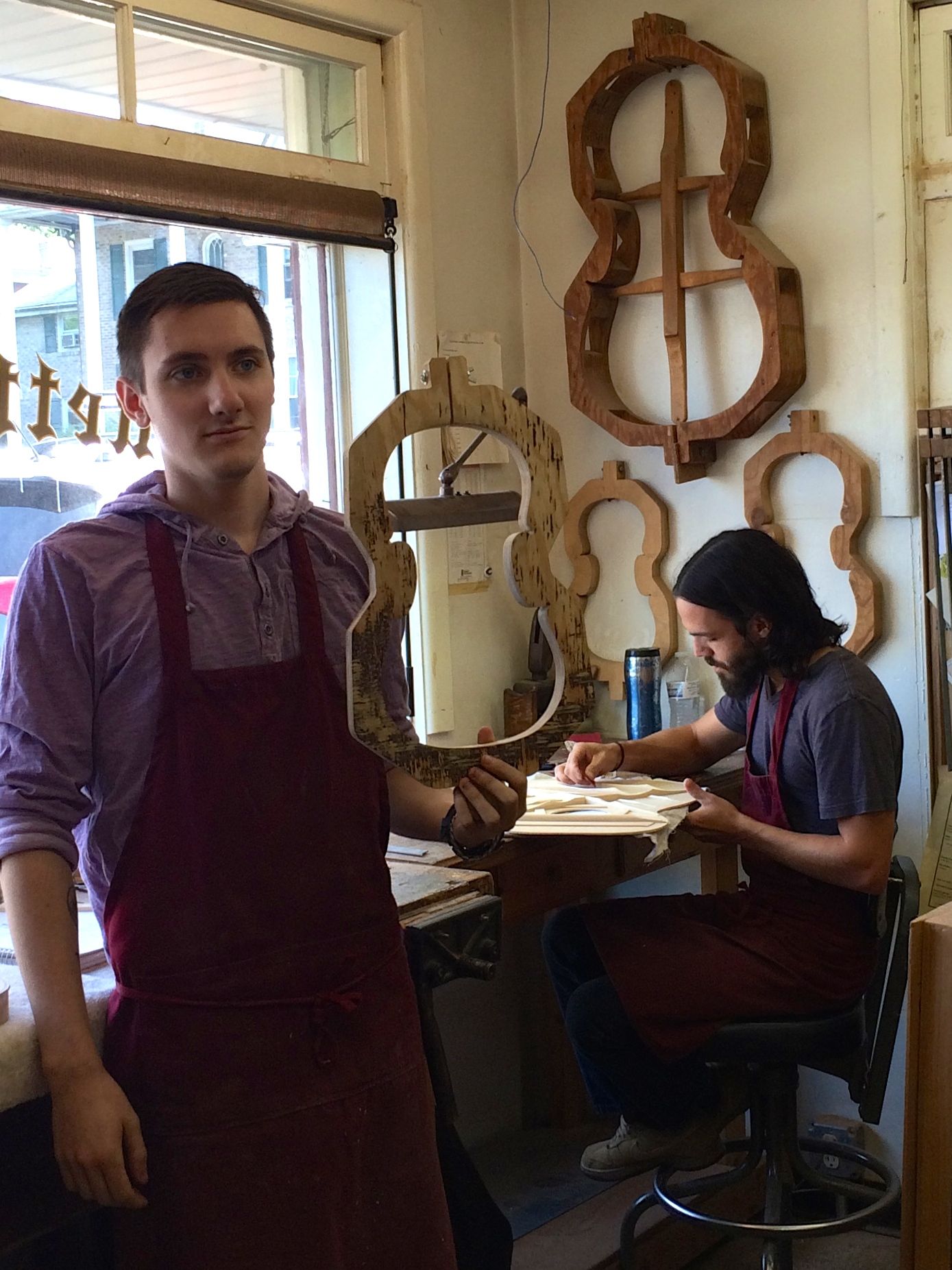
Apprentices with frames
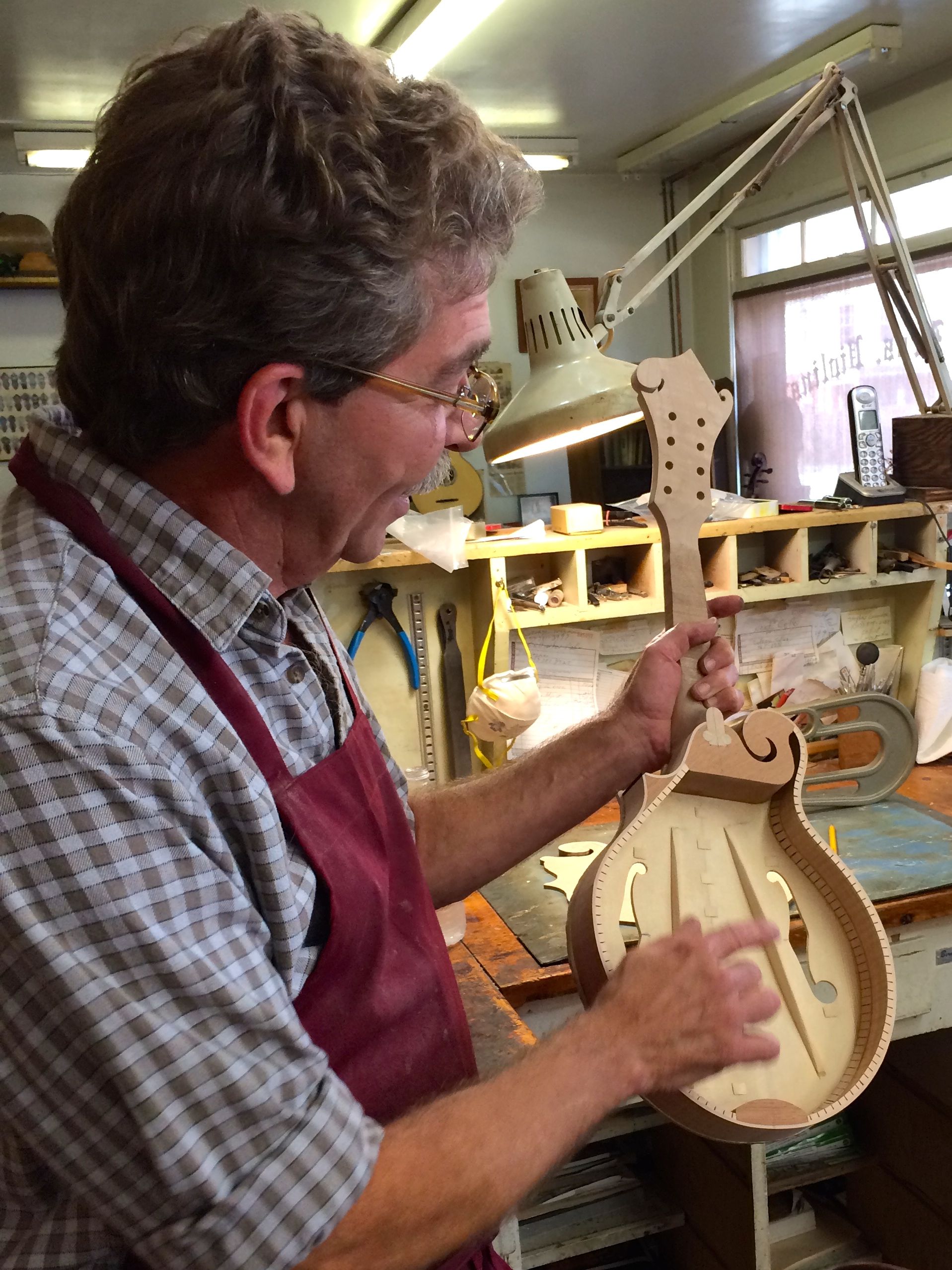
He has two full-time apprentices and a couple part time ones that pay to learn. The one part time apprentice there was working on building his own mandolin.
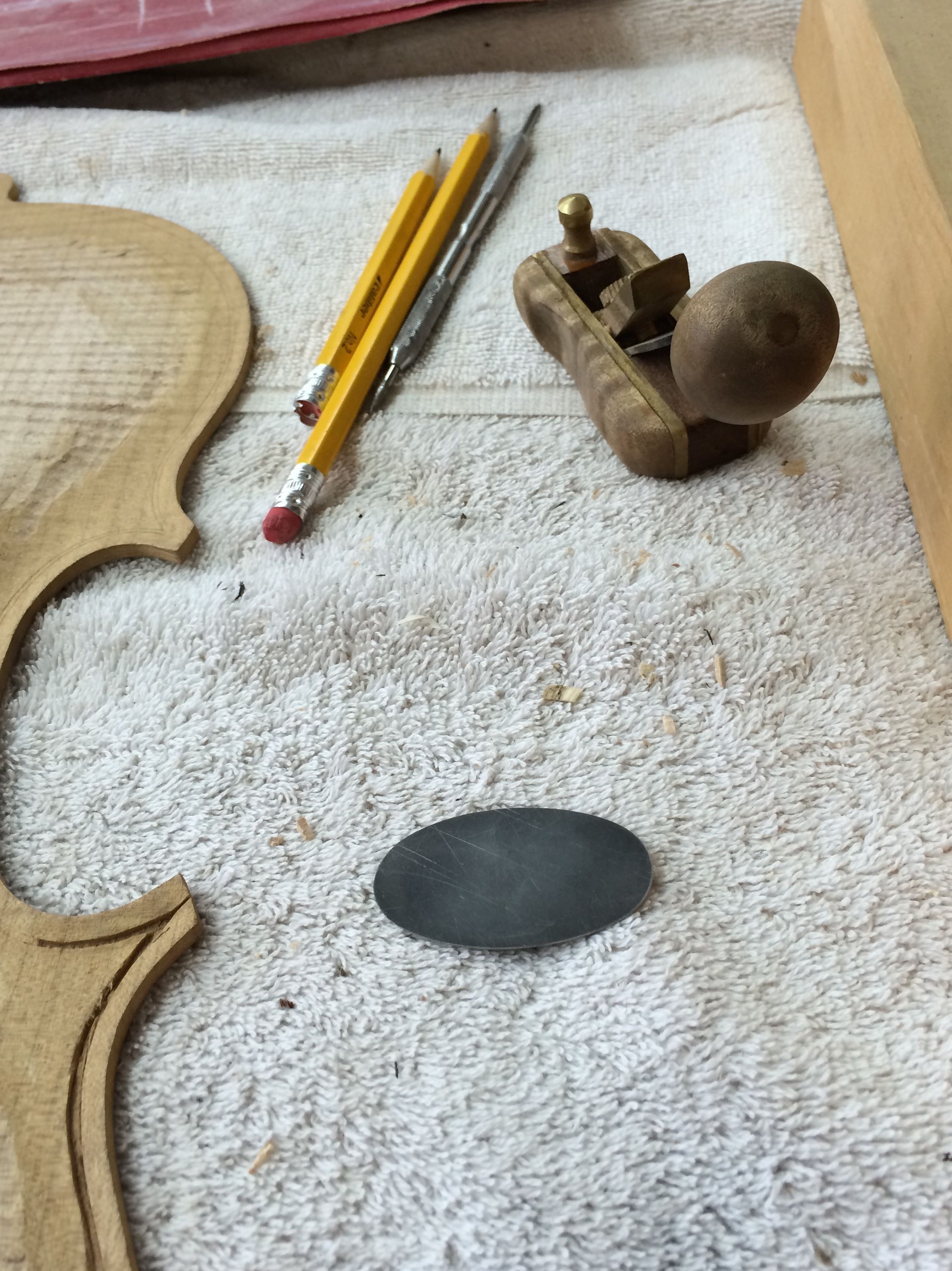
Violin with plane and scraper
Mark told us that he has a supply of wood drying that he bought in 1967. He says that he has enough stored to make more than four times the violins he can make in his lifetime.
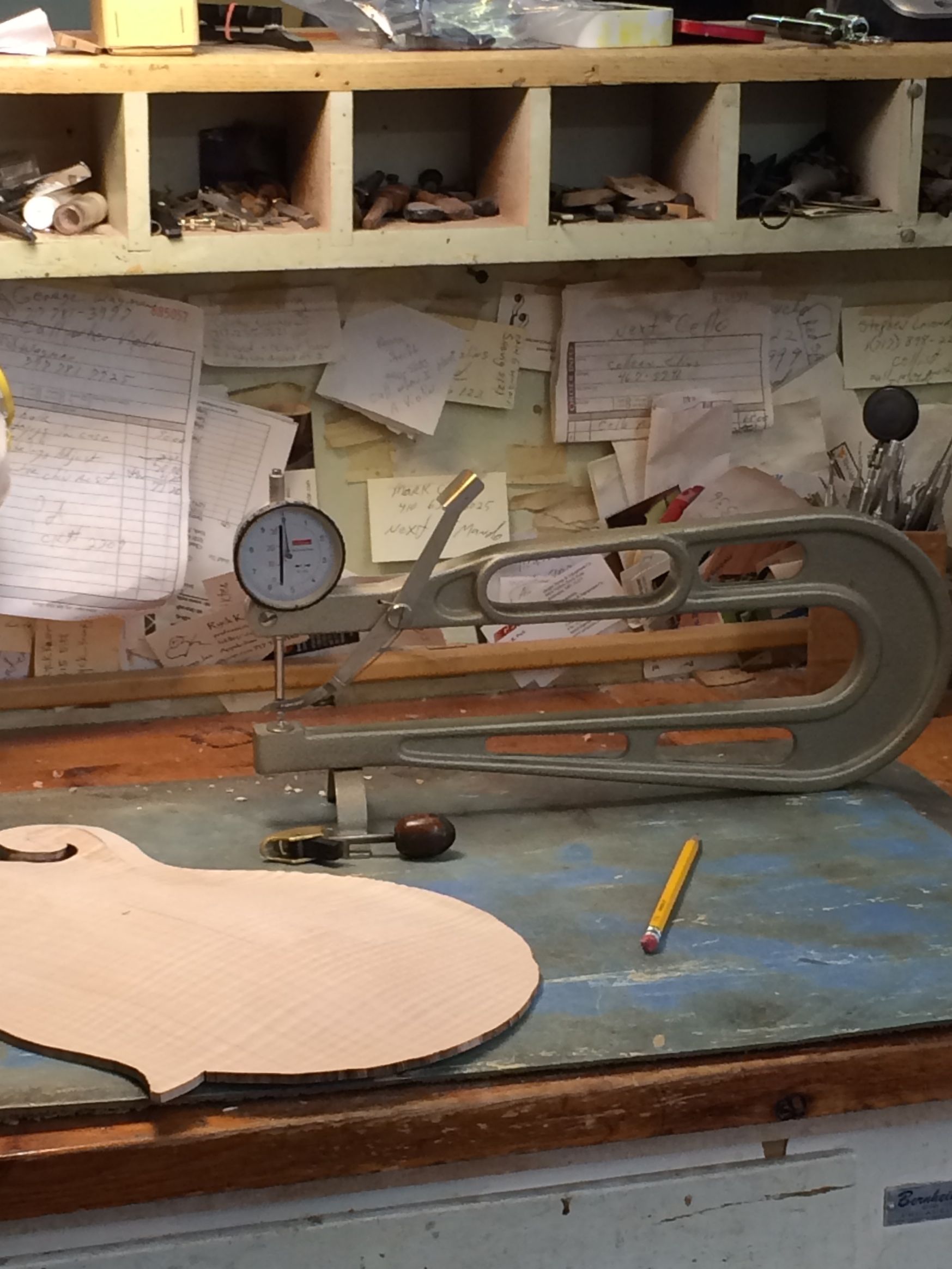
Mandolin back and caliper to measure thickness
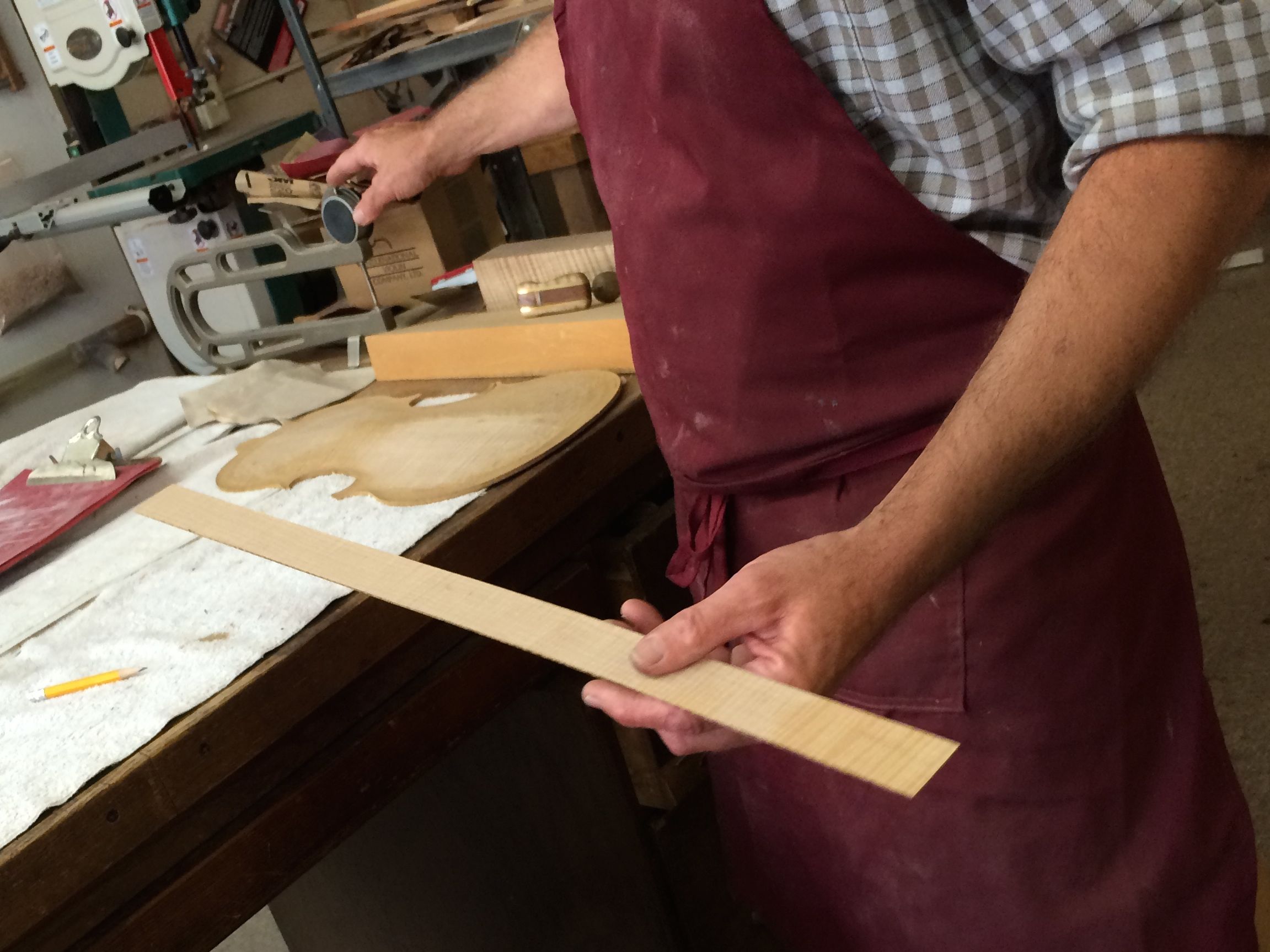
Maple is on the back of the violins, violas and cellos and they are scraped to five different thicknesses.
The wood on the sides and tops is spruce.
SidesInside bracing
Mandolins have a lot more pressure on them than violins. There is 137 pounds of pressure on a mandolin as opposed to 67 pounds on a violin.
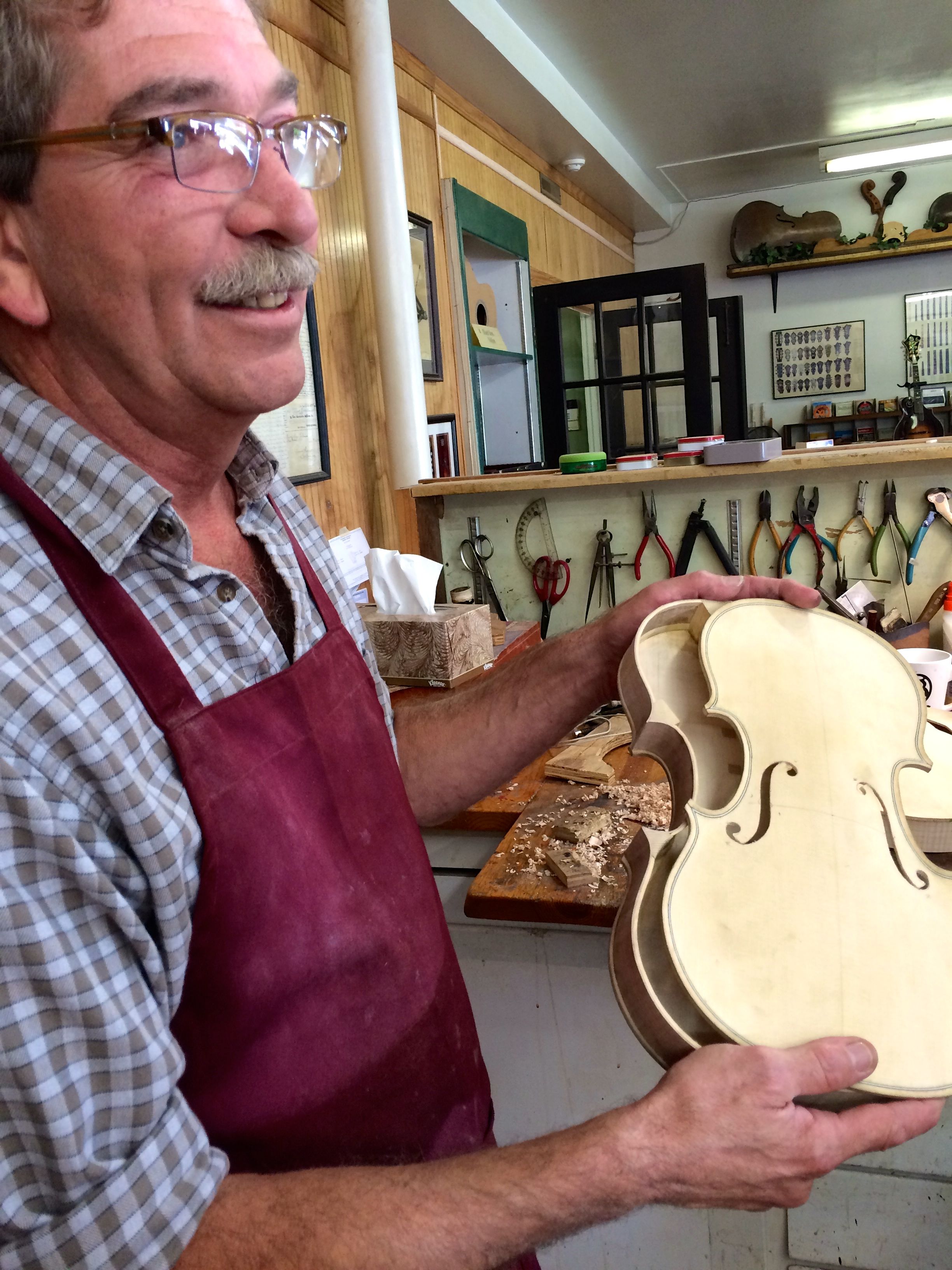
Violin top and back
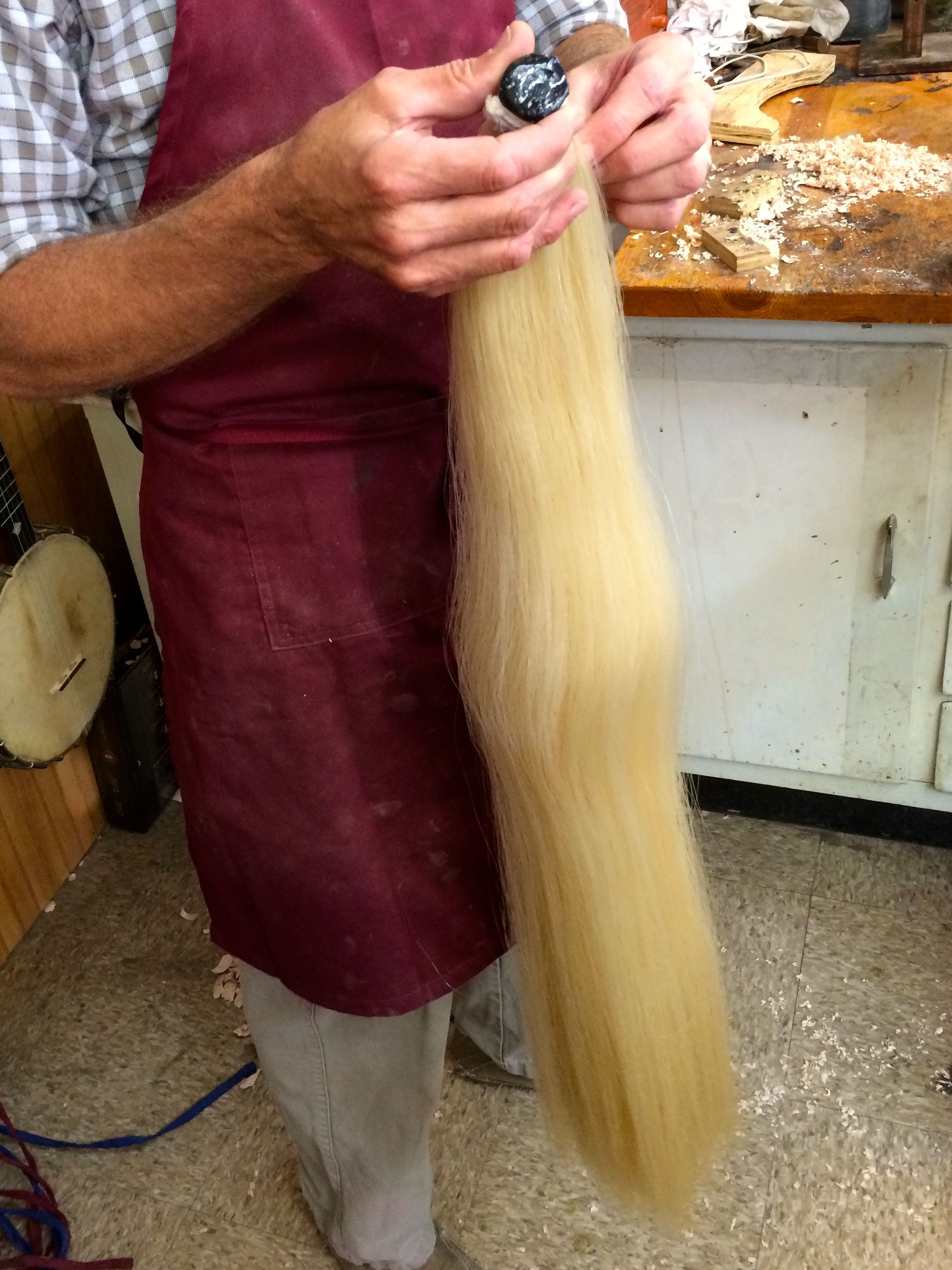
He used to make bows, but found them boring. Now he will repair them, and keeps a stock of horse hair on hand for when he needs it.
Siberian horse hair
The horse hair he uses comes from Siberia. It is from a line of horses that have been specially bred for the last 300 years for making violin bows.
Repair is a large part of his business, too.
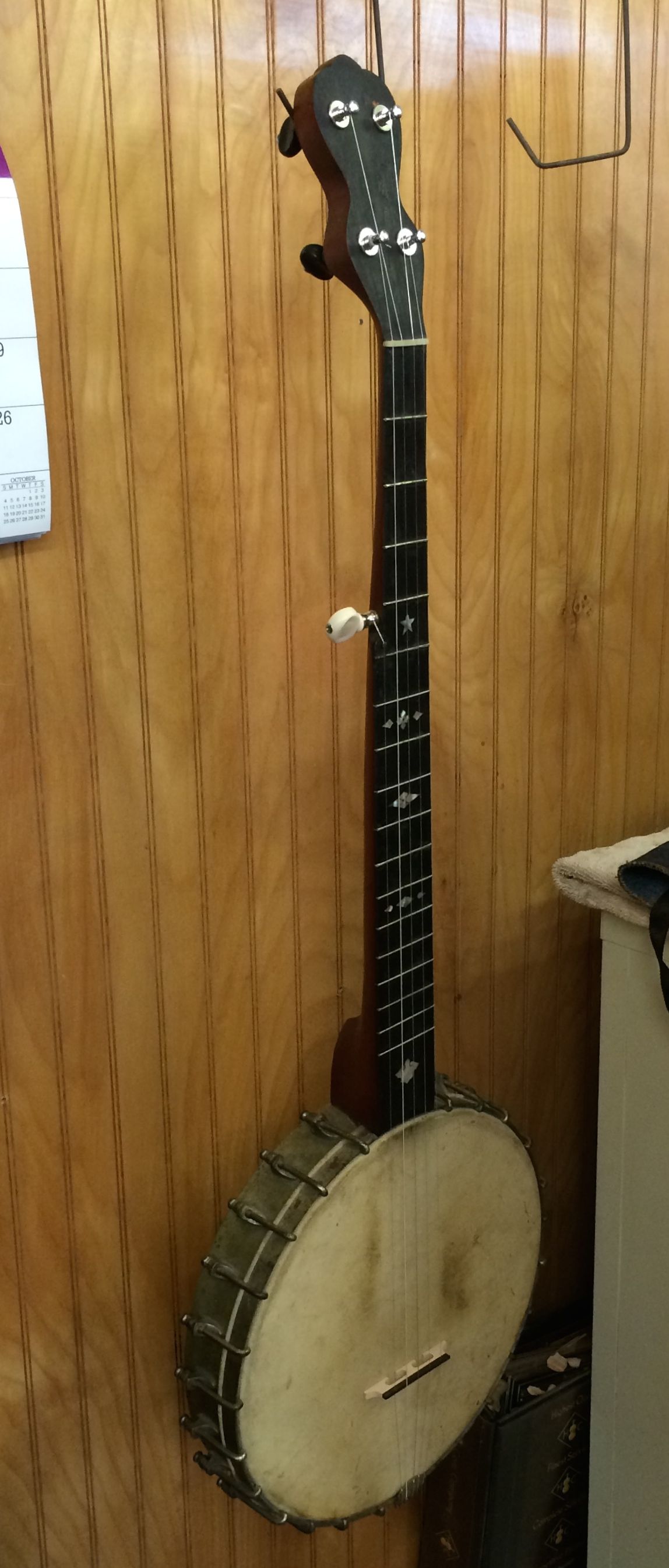
Family heirloom banjoBowl back mandolin from 1889
He told us that each one of those ridges is a separate gore and that there is a band of rosewood between each gore. What incredibly detailed work!
He finished off the tour by showing us some of his recent instruments.
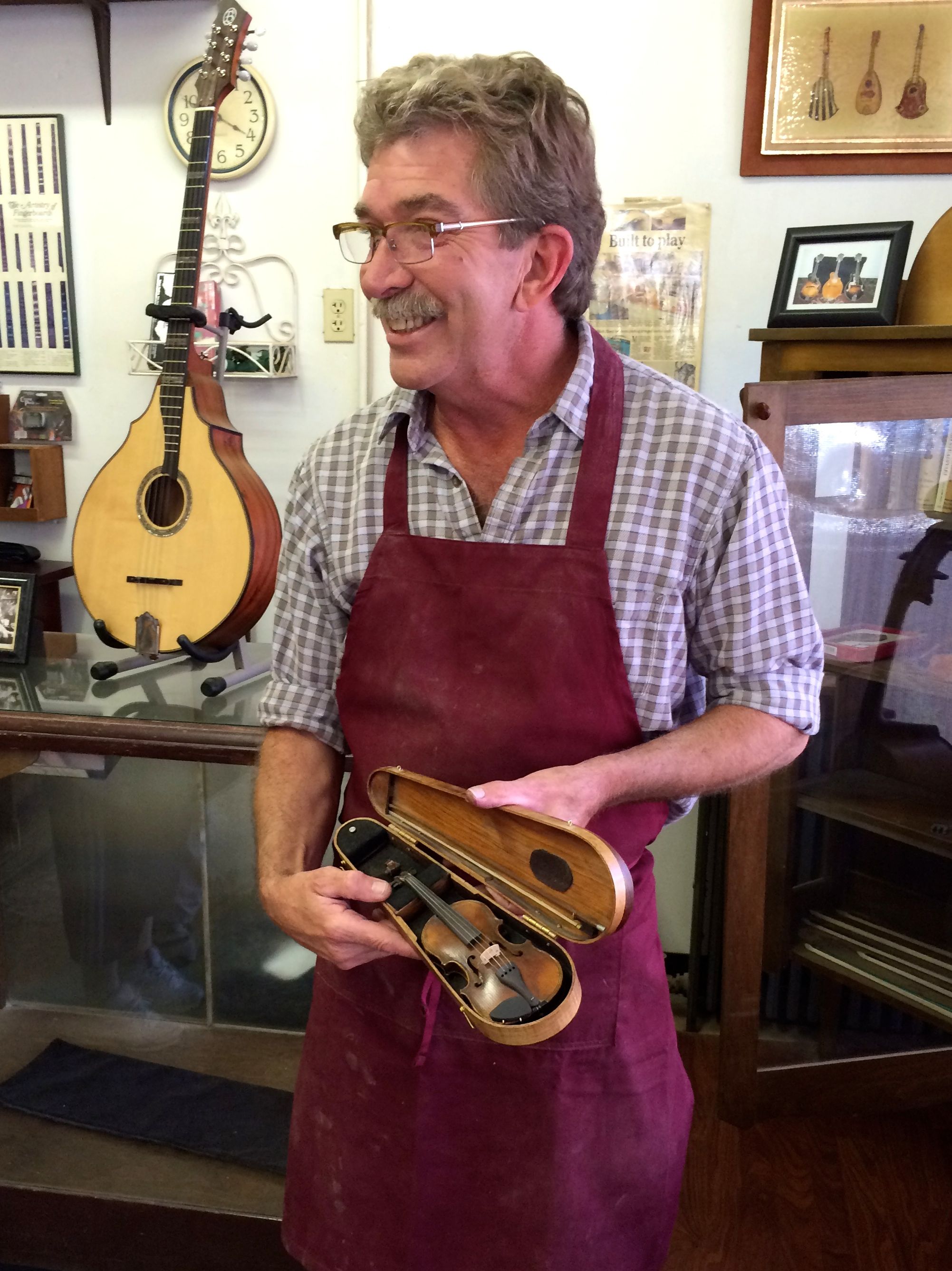
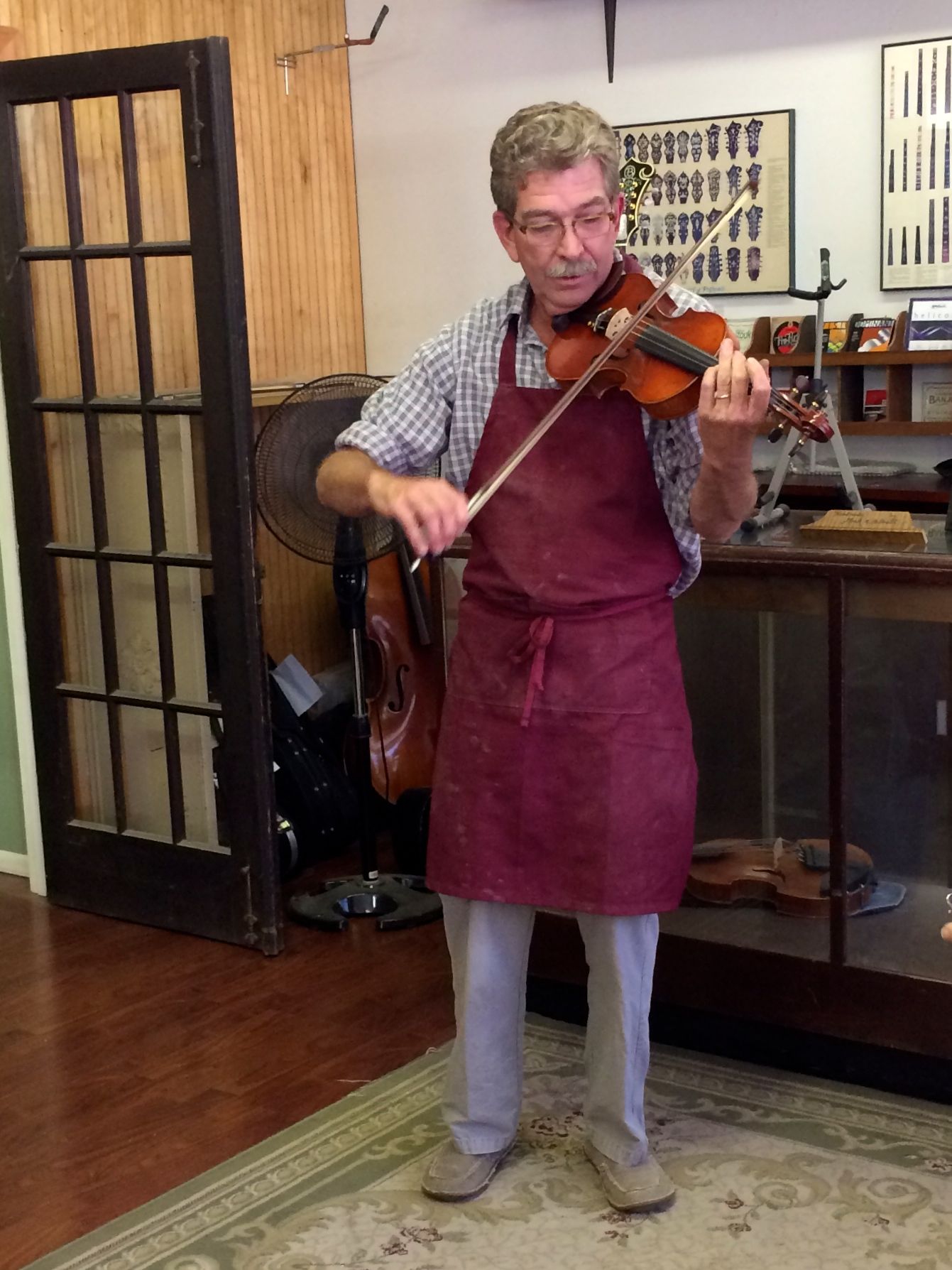
Bass mandolinMiniature violinViolin demo
He told us that this is built on a scale of one one centimeter to one inch. It’s playable, if your fingers are small enough.
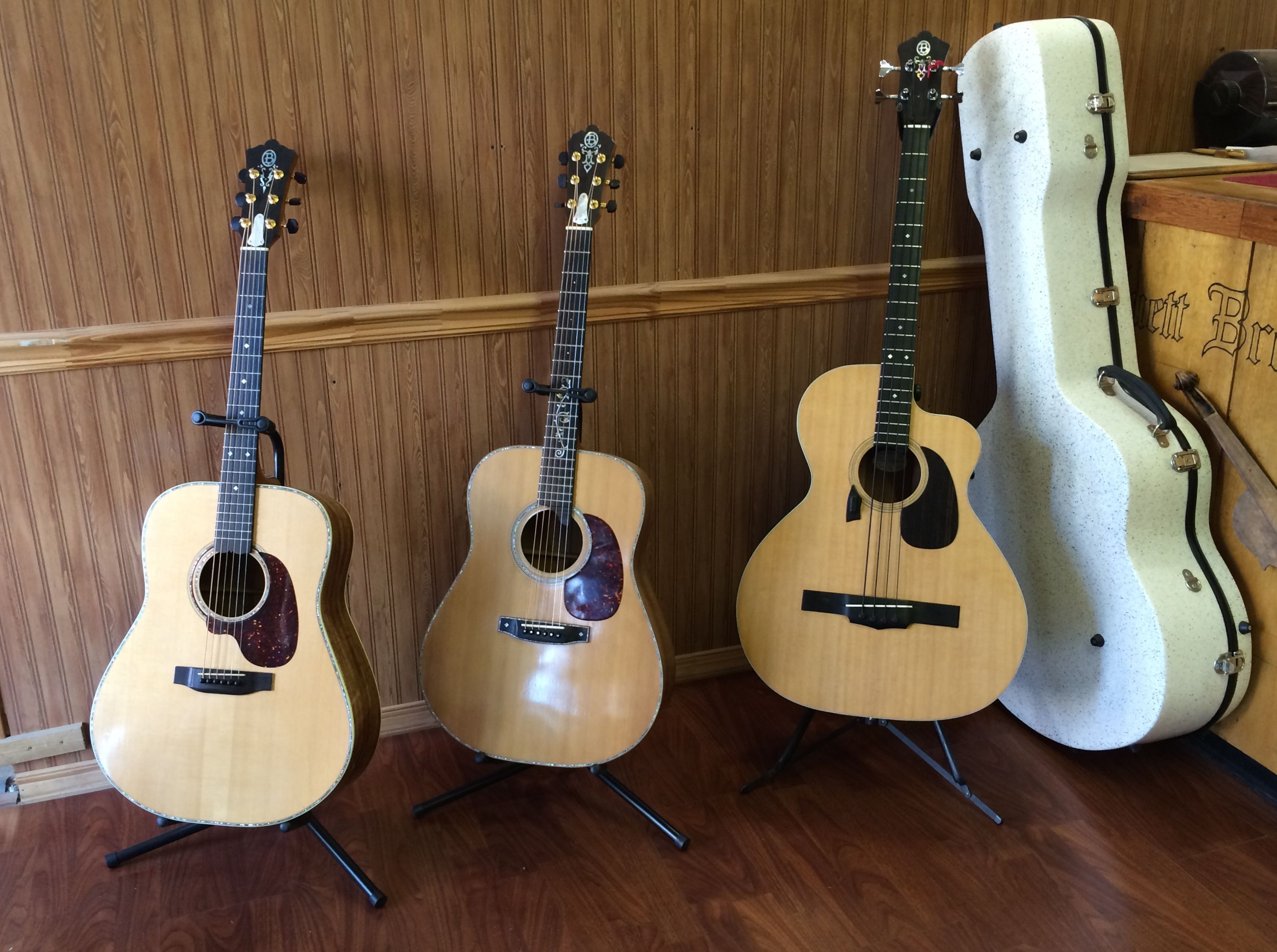
Three guitars and a $1200 case
If the case is worth $1200, I can’t imagine what the instruments are worth.
Of course, I had to visit the Central Market of Lancaster! It is the oldest farmers’ market in the country and is held in a 120 year old brick building.
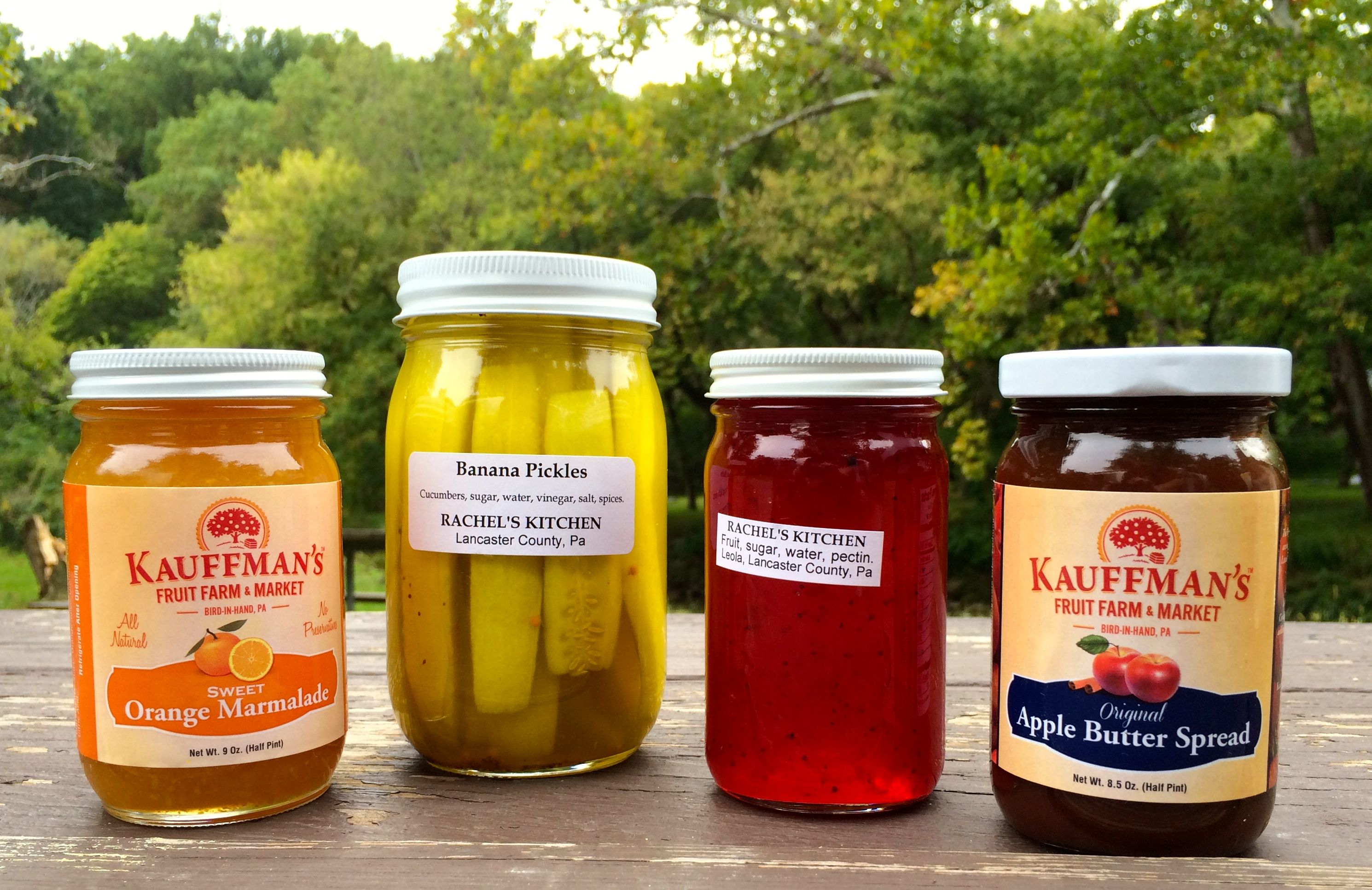
There were loads of products available and I must admit that I did buy a few things.
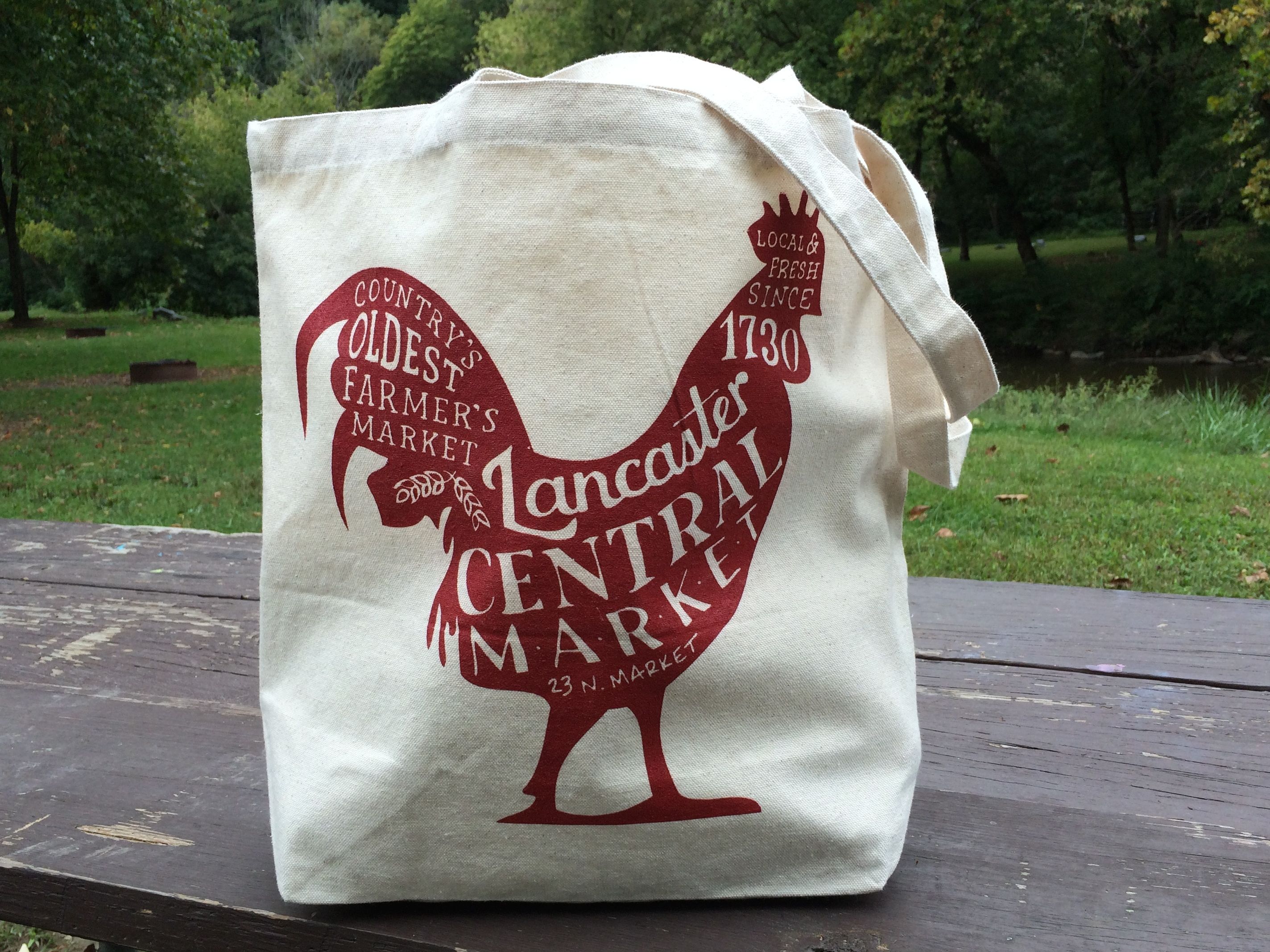
I also bought a bag to replace the one I left behind at Barb’s house.
I wanted to look up the Lancaster Creative Reuse Center, which I had been following since it opened, and I found it!
Back when I was first considering retirement, I though I might try to get something like this going in Kalamazoo.
I didn’t, although, I probably had this much crammed in my house and in my closet at school. I could have opened up something without taking a single donation.
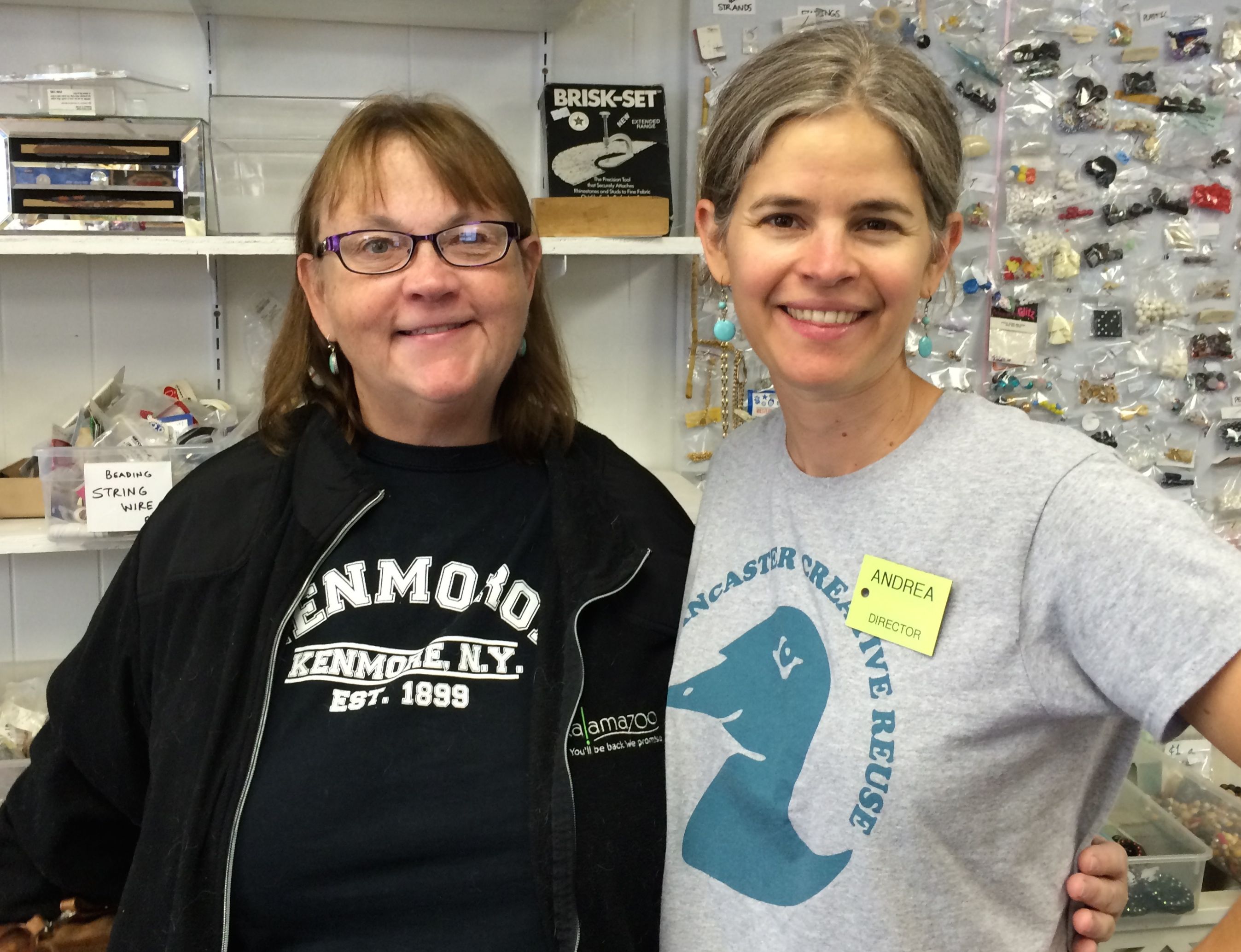
Lancaster Creative Reuse turned out really well, though. I was so happy that the founder, Andrea, was in the shop the day I visited. She gave me a lot of advice about starting a creative reuse center.
We made plans to meet another day for lunch.
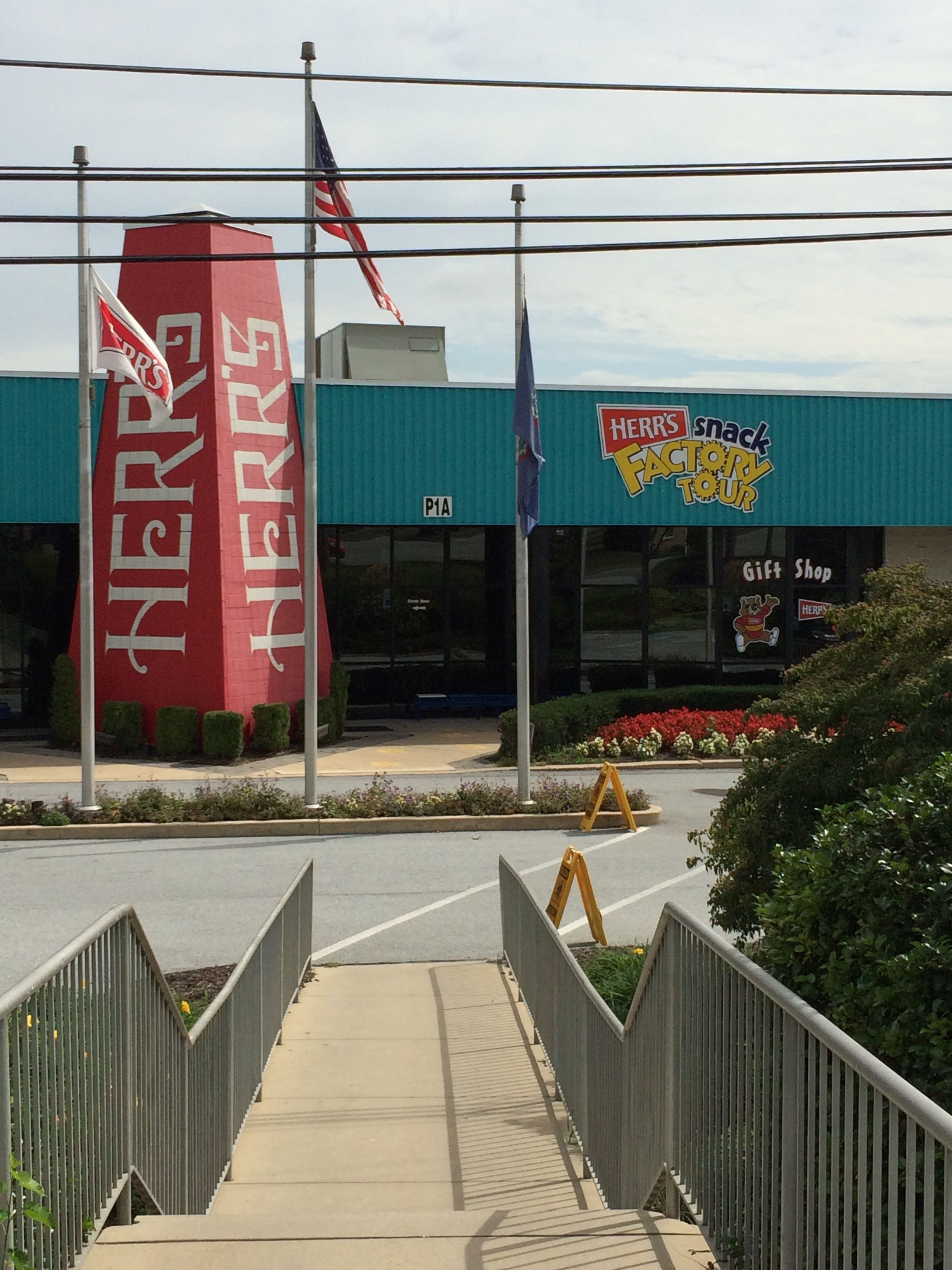
I also made a trip to see Herr’s Snack and take a tour of the factory. They do seem to like their chips and pretzels in this section of the state. There are any number of snack factories to tour.
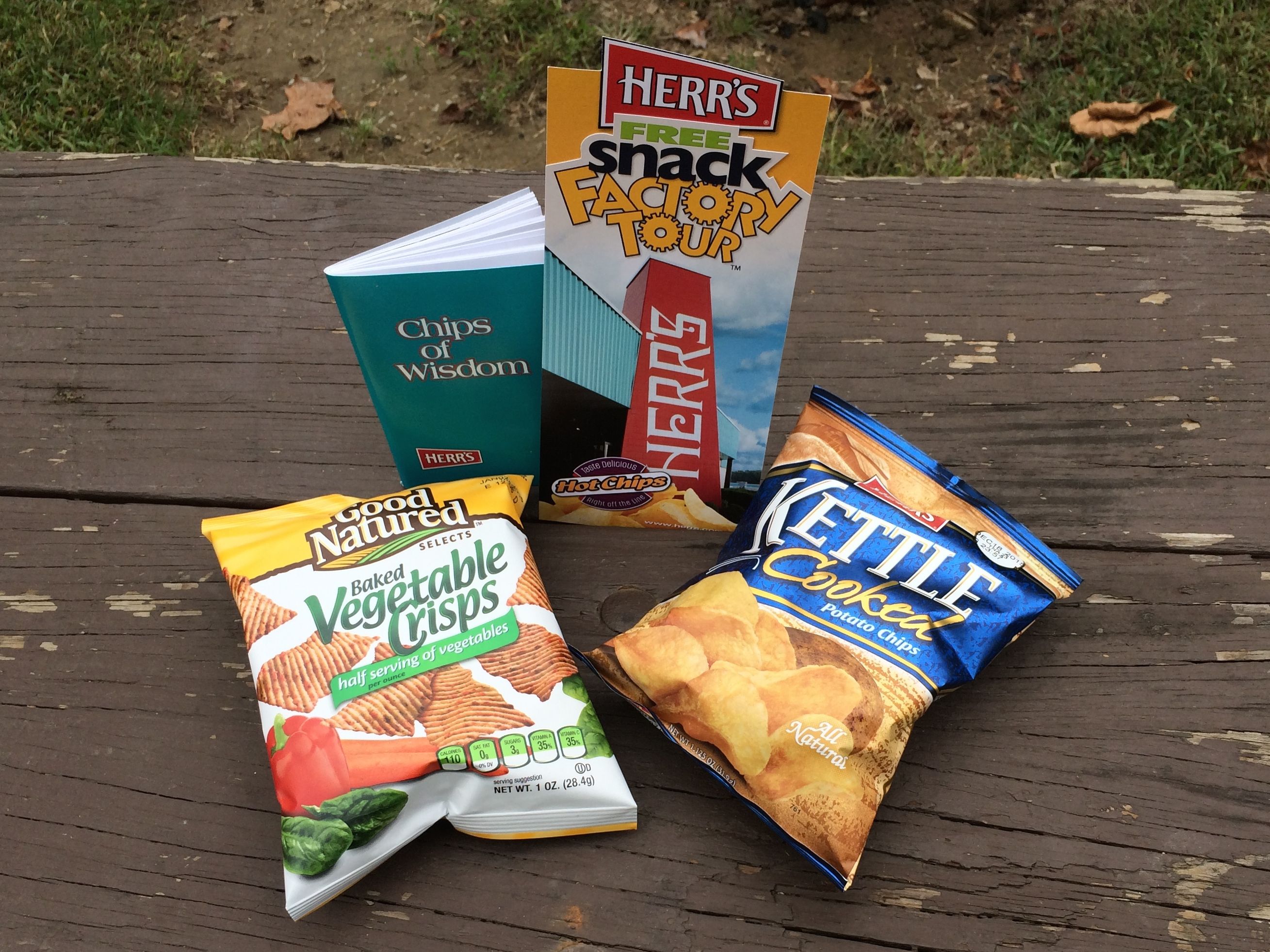
Most of the lines were down for maintenance, but it was still an interesting tour. And, they gave us samples to take with us.
And a little book of sayings based on the book of Proverbs.
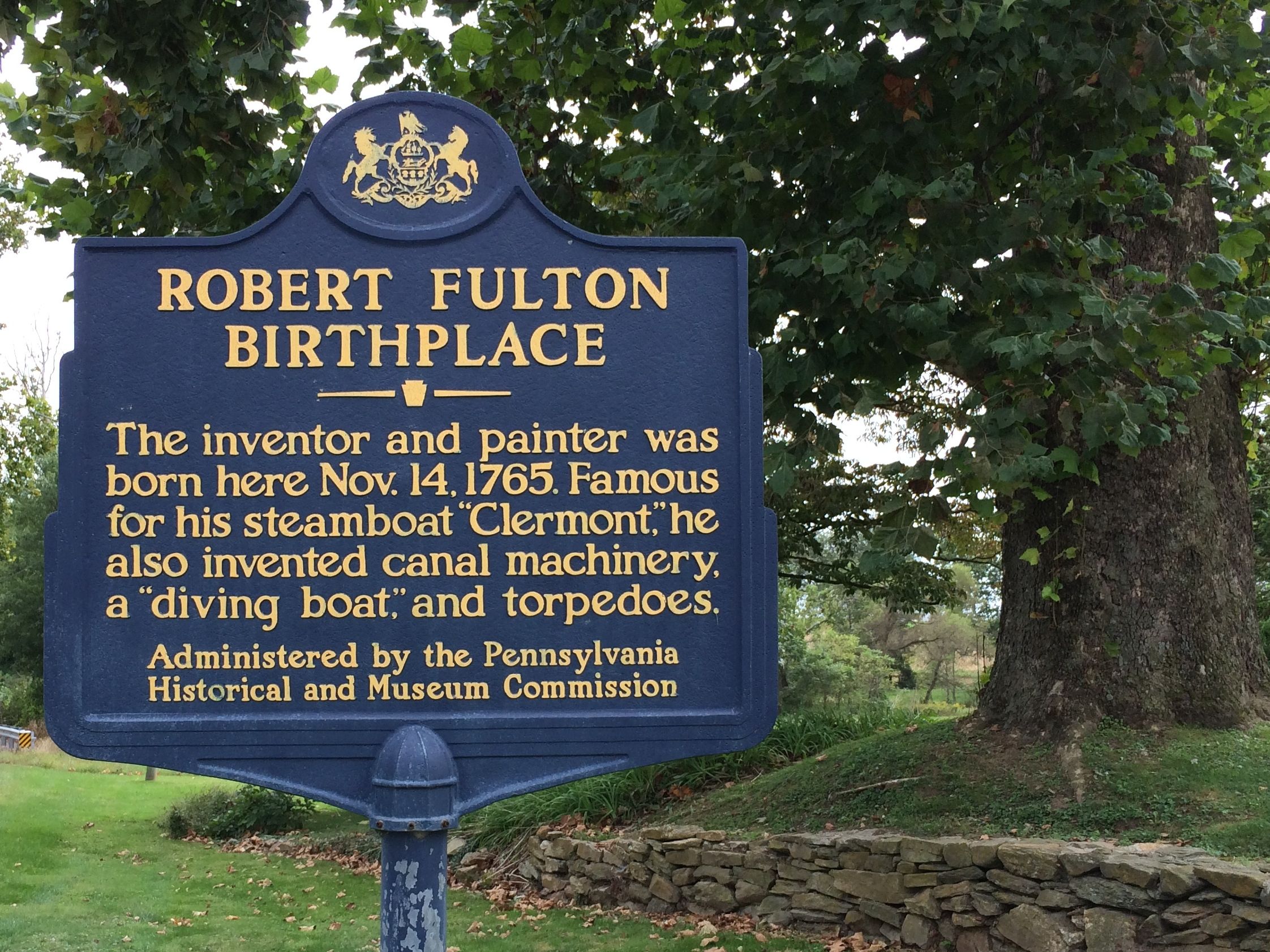
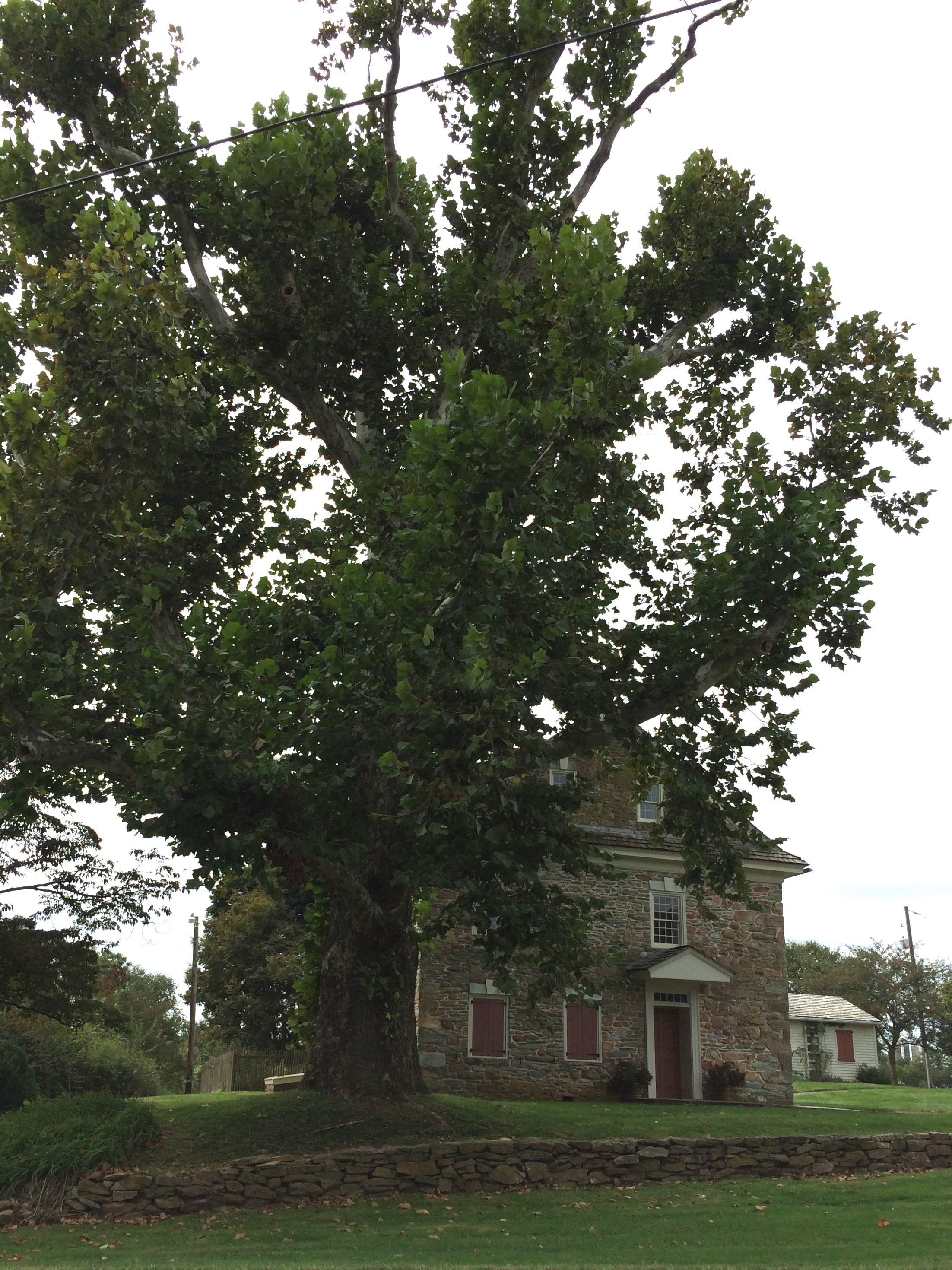
Heading back to Lancaster, I got a ping from the HISTORY Here app that I was near Robert Fulton’s birthplace. Detour!
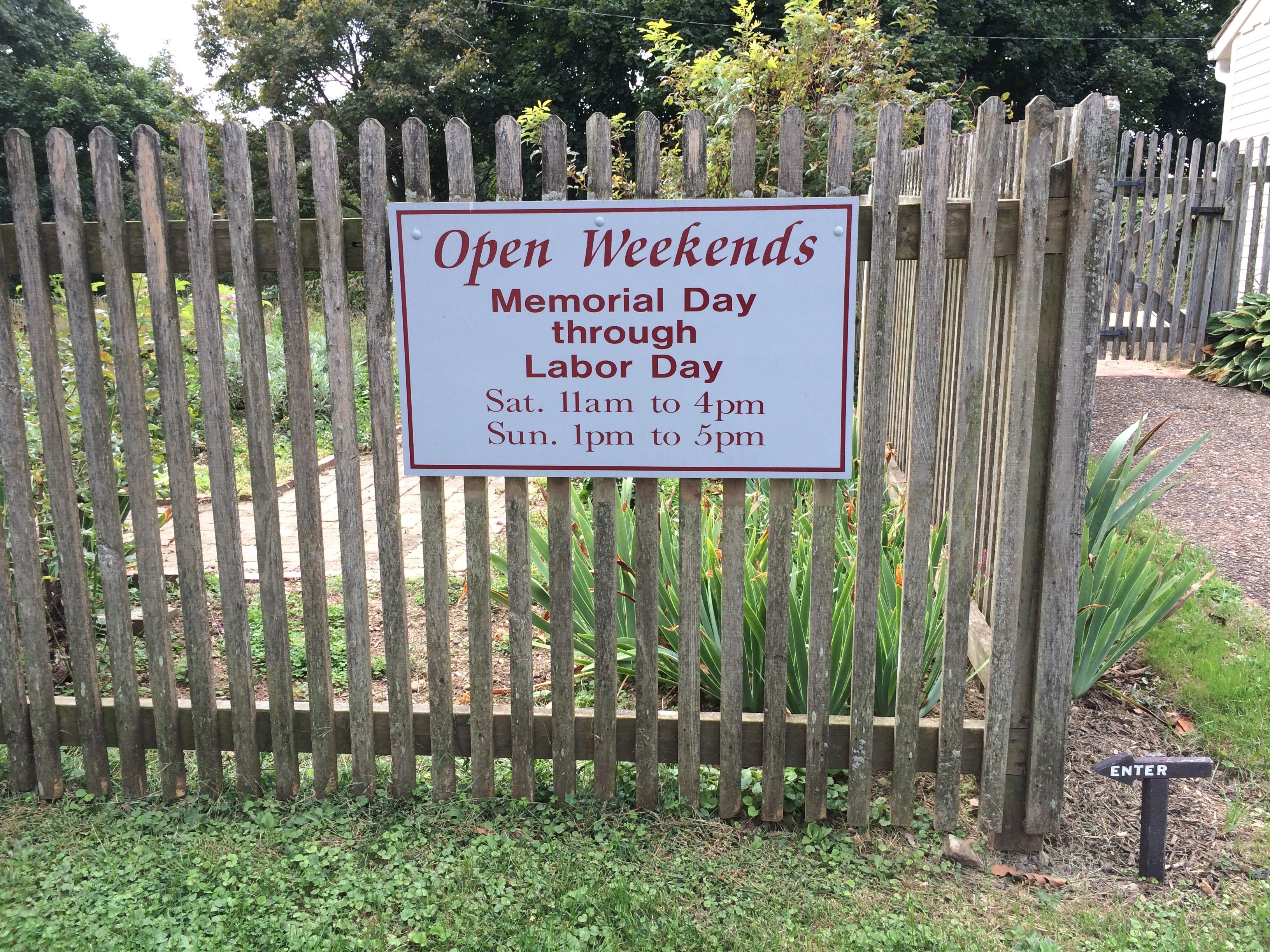
Unfortunately, I missed the tours.
Wrong day. Wrong month.
What would a trip to Lancaster be without eating in the Amish area?
I decided to head to Kling House. I liked these little crackers and pepper spread they brought with the menu. I had an interesting view out the window while waiting for my lunch.
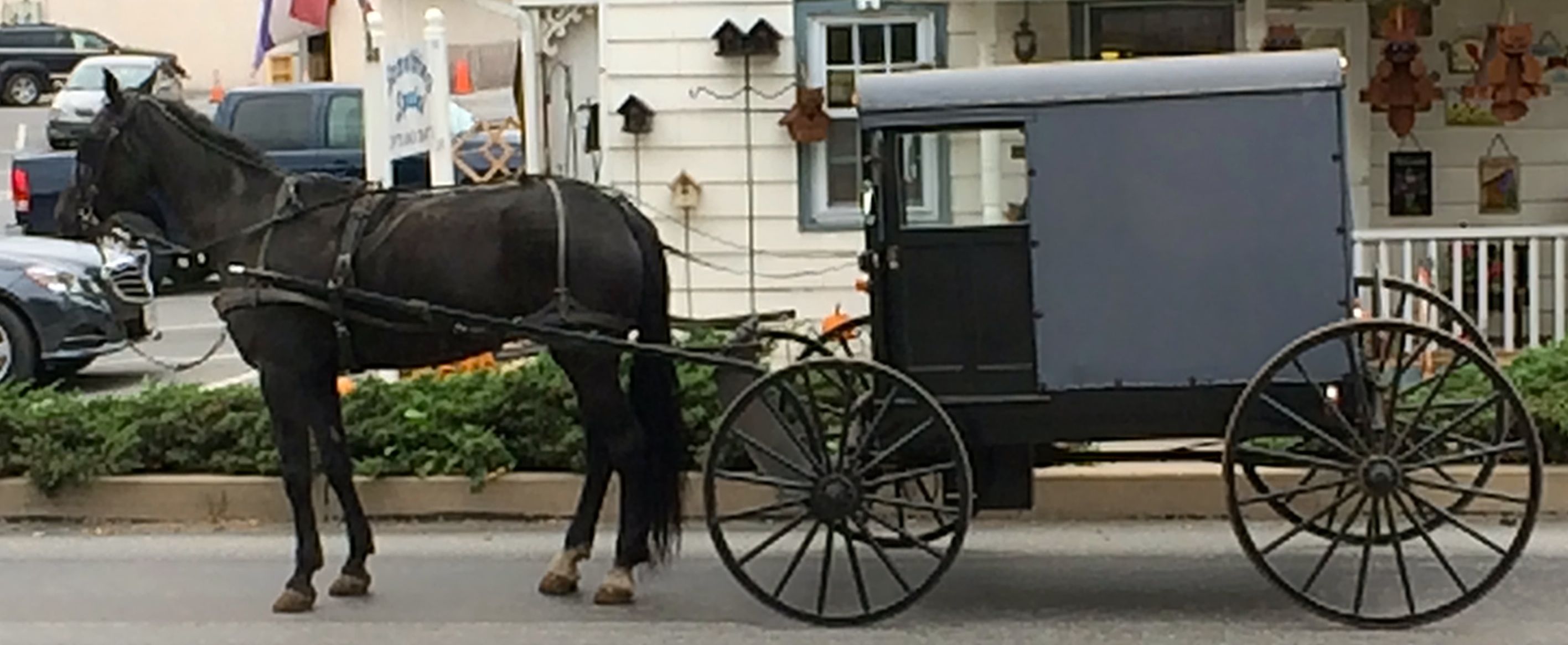
When I first saw it, I would have sworn it was the tallest horse I’d ever seen.
All right, there you have it. My work here is done.
I made an easy trip from Cumbola to Lancaster. The interesting part was the last ten miles from Lancaster to Pequea Creek Campground.
Once again, the roads were roller-coaster worthy. The scenery was beautiful and I was very thankful that the traffic was light.
Lori, the camp manager, sent me explicit driving directions. She told me that the sign on the road would tell me to turn, but that I shouldn’t. The bridge wouldn’t hold the weight of my trailer.
It was confusing, but I got there. And this is the bridge that I couldn’t cross with my trailer.
A covered bridge! Imagine that!
I got settled in to my campsite, right on the Pequea Creek.
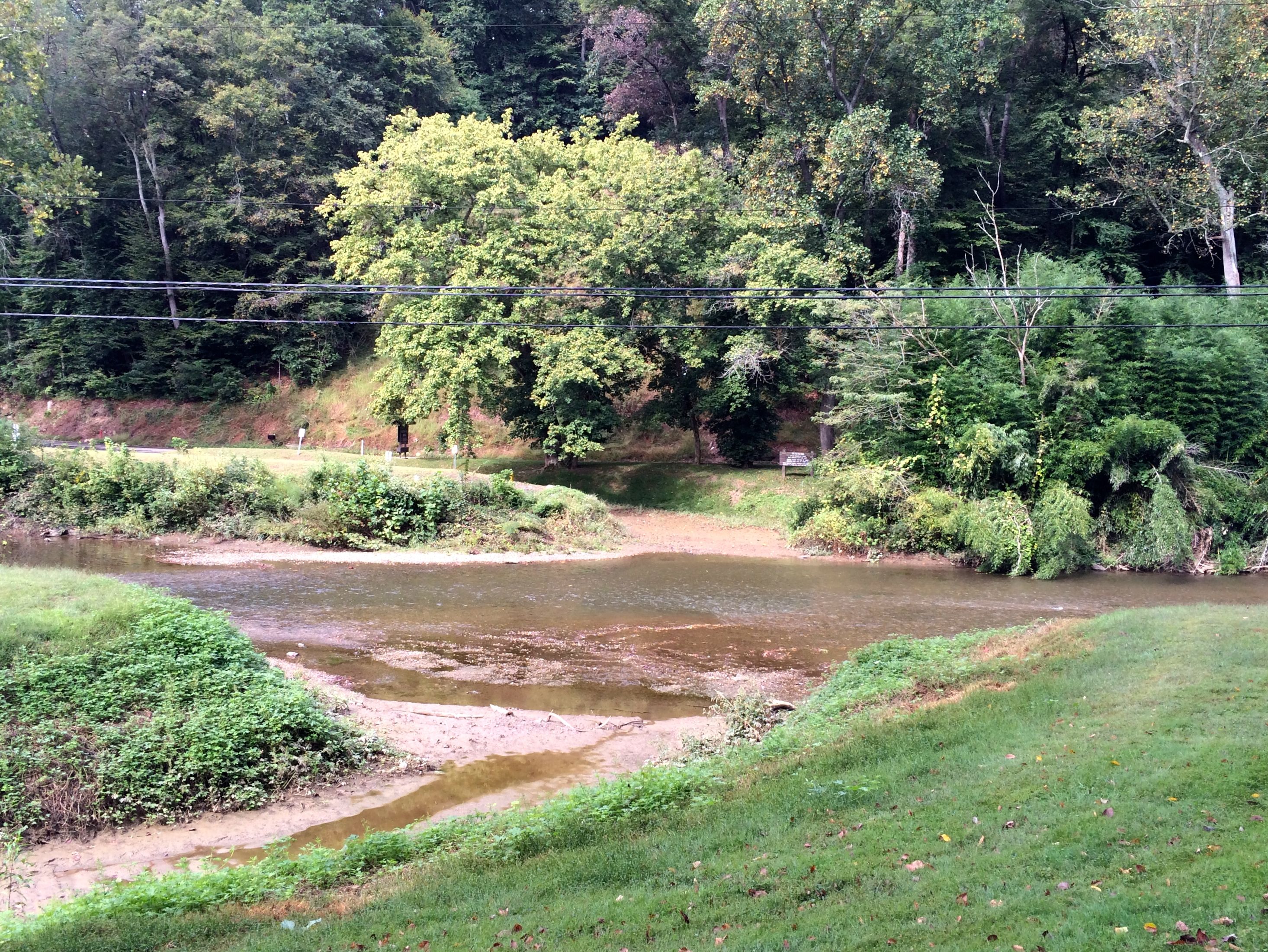
It was a happy little creek. There were signs prohibiting swimming, but there wasn’t enough water to get properly wet. There was also a foot bridge, if you felt like walking from the picnicking side to the camping side.
AND a place to ford the creek, although they had a barrier up to prevent unauthorized fording.
Here’s the ford. Where’s the Chevy?
Superman would have felt right at home here.
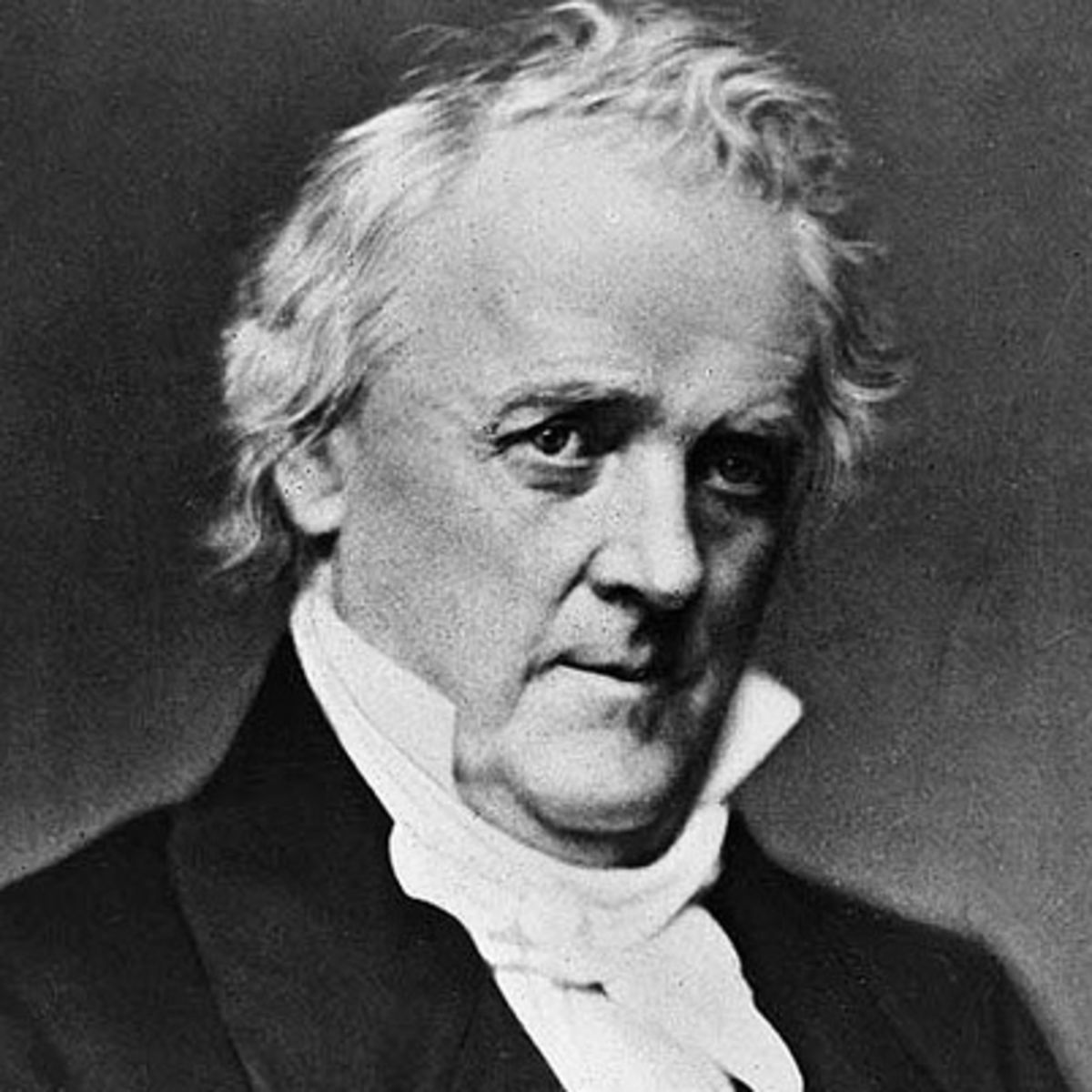
After setting up, I consulted my HISTORY Here app and set out to learn more about James Buchanan, our 15th president.
James Buchanan 4/23/1791 – 6/1/1868
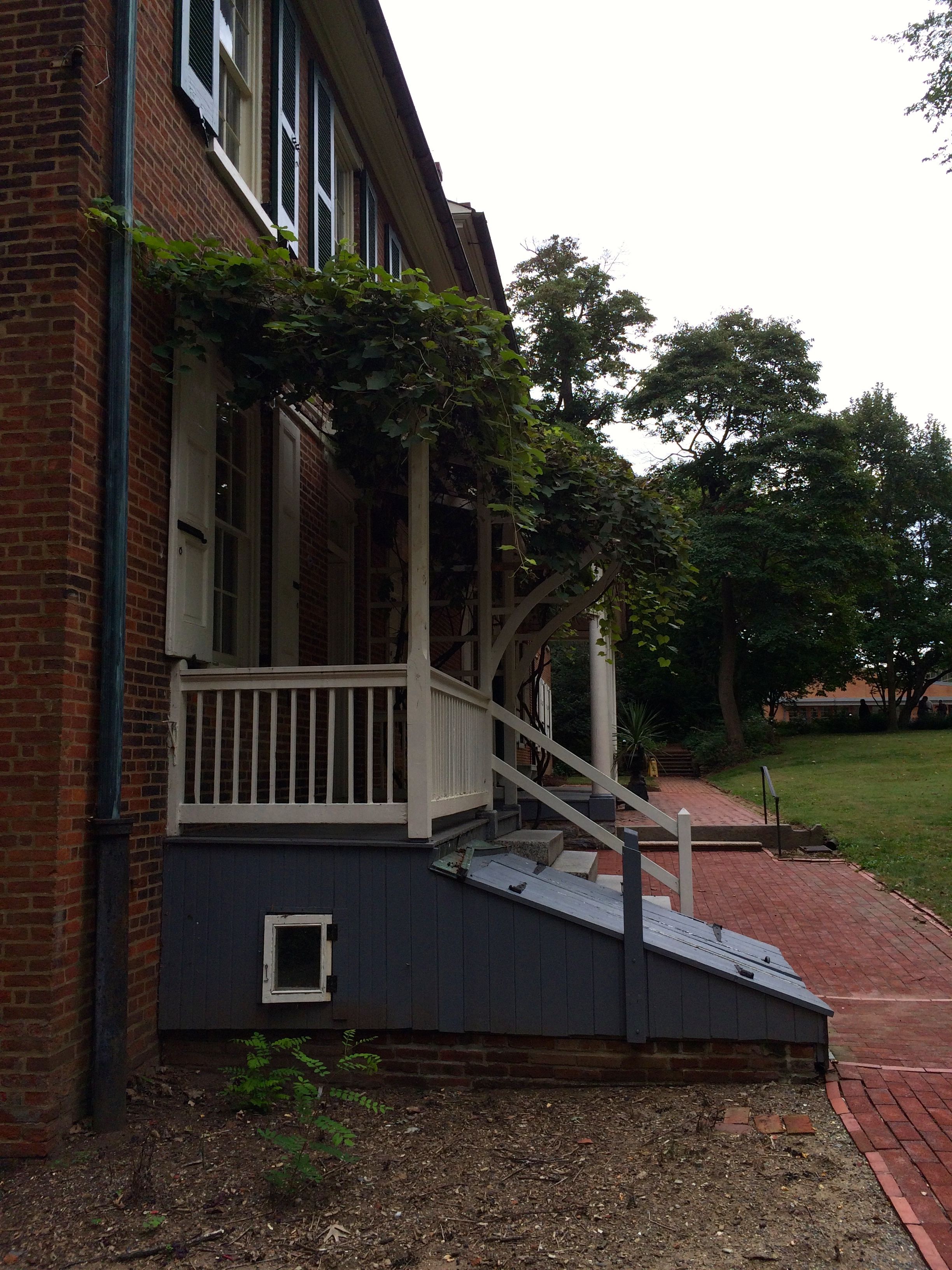
His home, Wheatland, is in Lancaster. It was built in 1828 for Williams Jenkins, and Buchanan bought it in 1848. He lived there with his niece and nephew, Harriet Lane and Buck Henry.
I arrived at the welcome center and watched a short video while I waited for the tour to start.
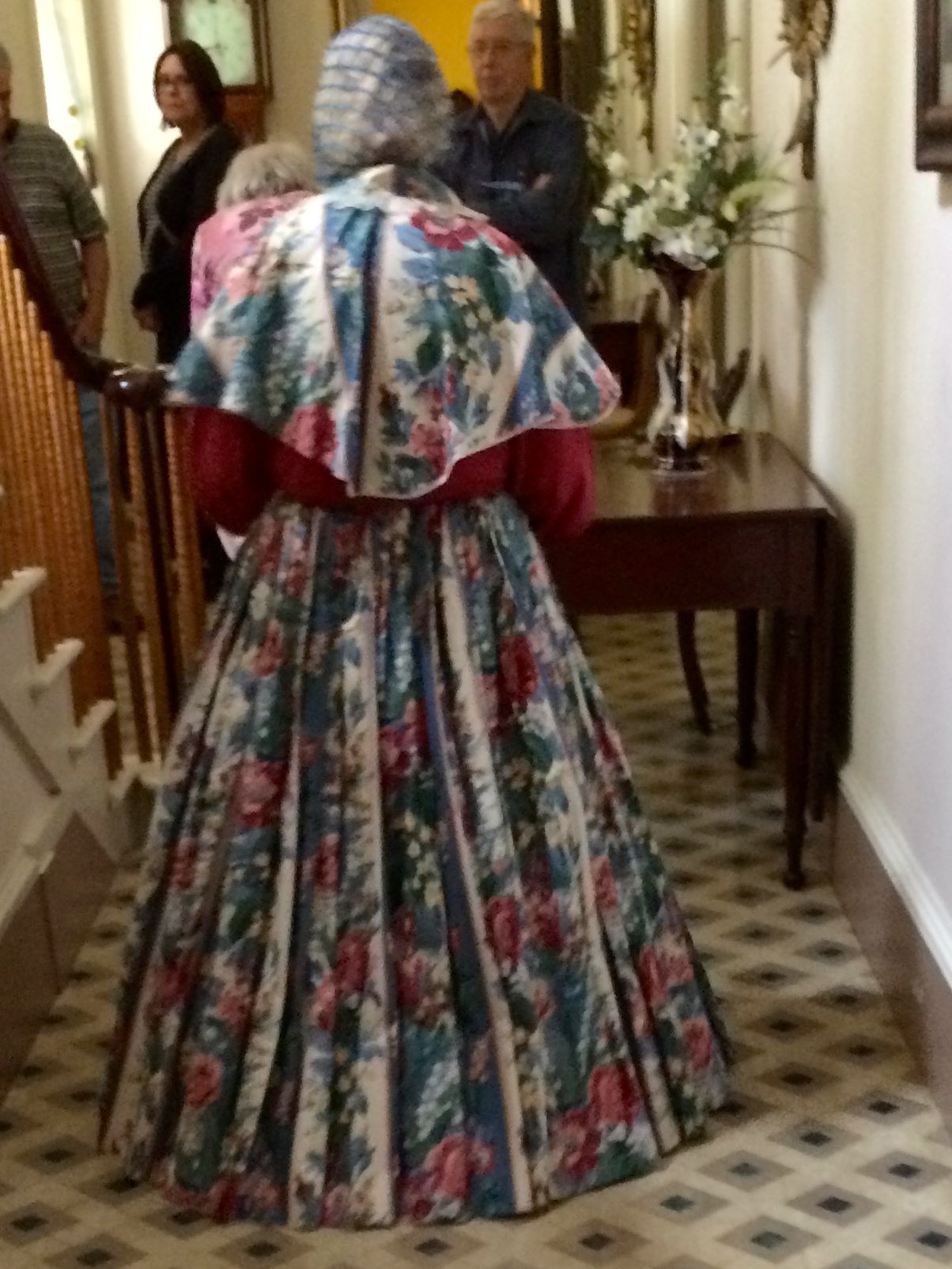
I was in a group of about 12 history buffs and we were greeted at the rear of the house by our guide dressed in period garb.
She was full of interesting facts and anecdotes, and I will share a few of them here.
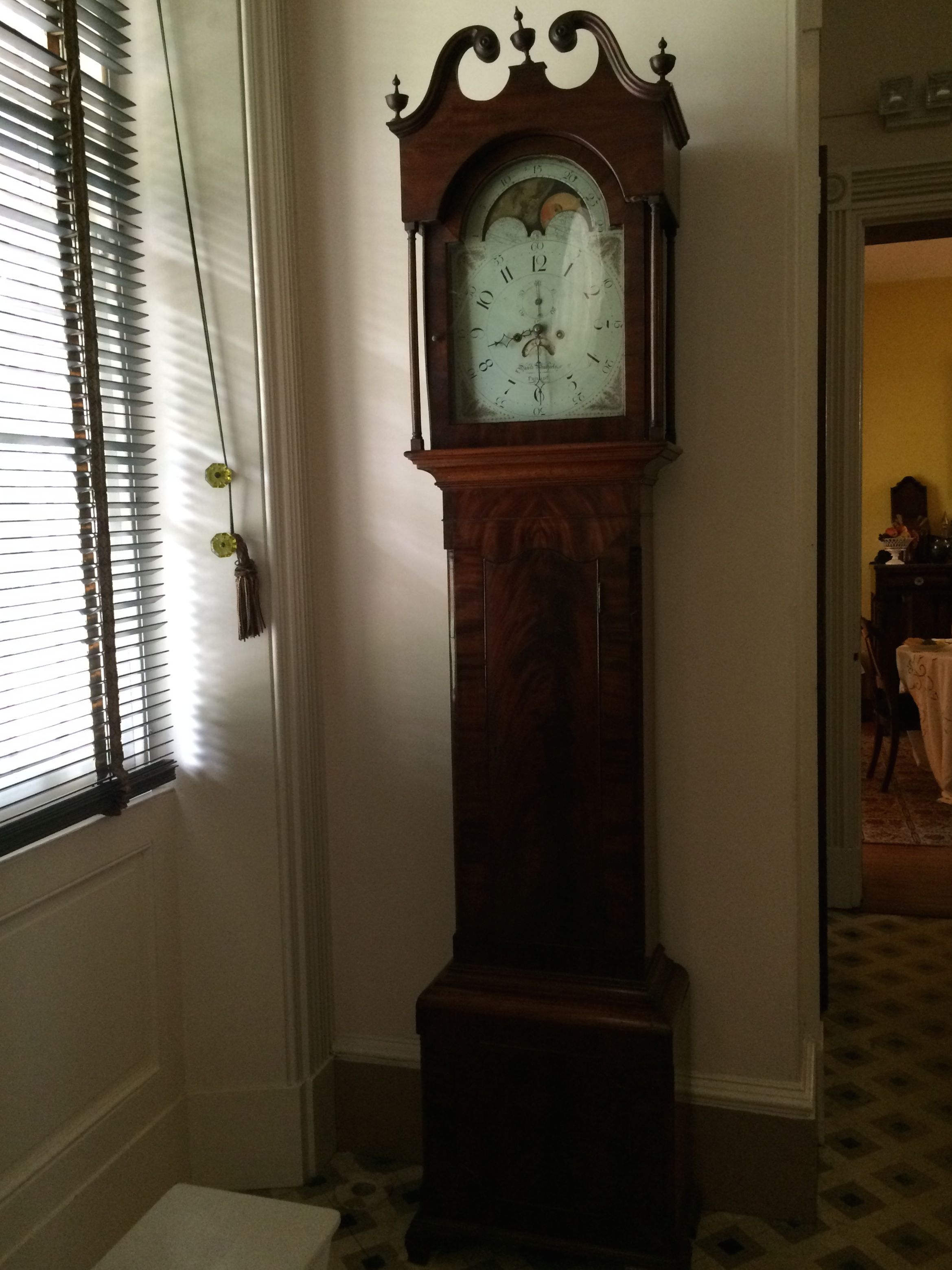
This was Buchanan’s clock, and the venetian blinds were in the house way back when. They have been restrung and re-taped over the years, but the wooden slats are original. Imagine that! Do you suppose your vinyl mini-blinds will last 187 years?
I wish I had a better picture of the floor. But, if you look carefully, you can see the pattern. The guide told us that the floor was covered with a material that was similar to linoleum. It was in good shape, but they had laid a protective covering over it and hired an artist to recreate the pattern.
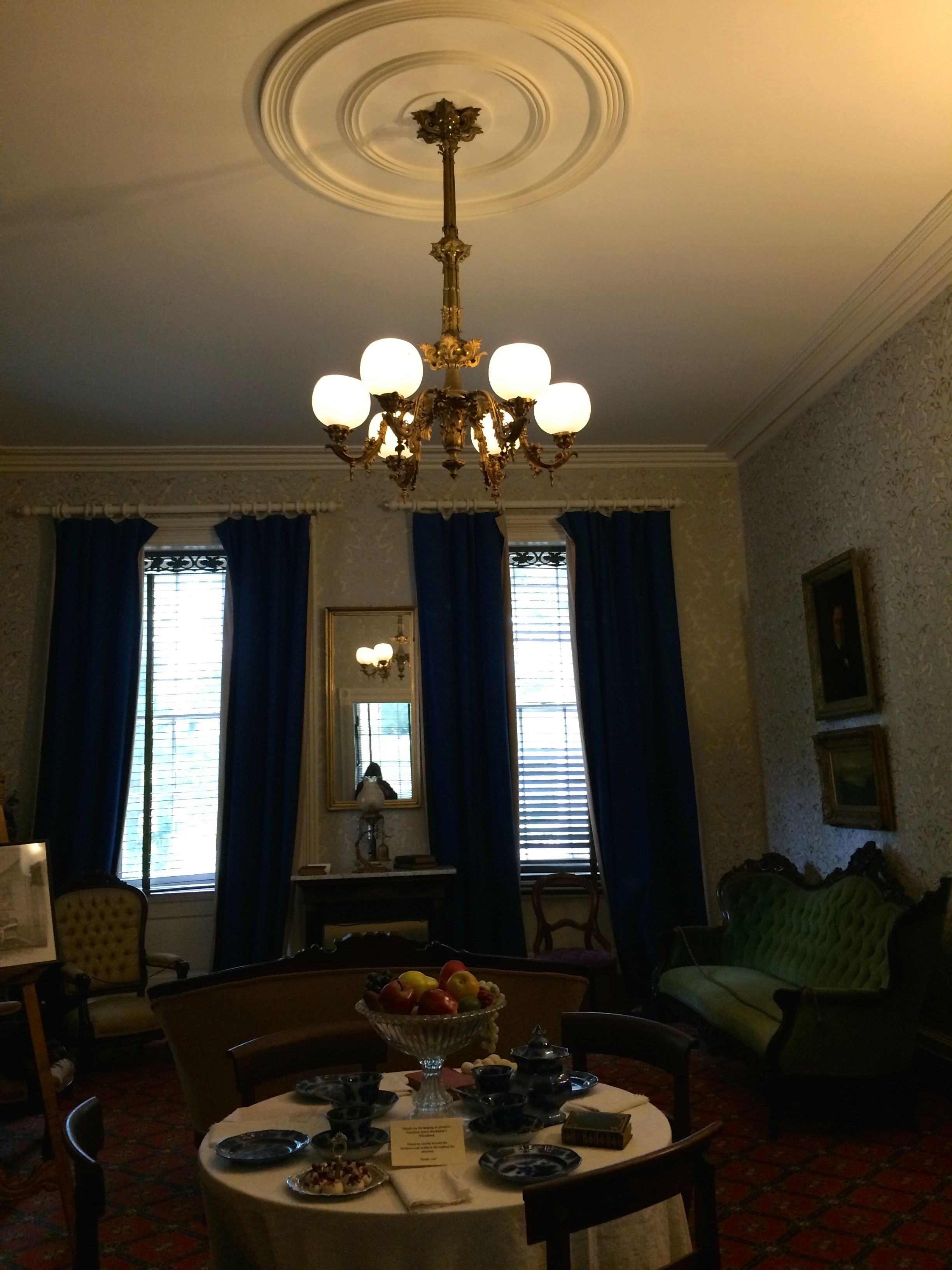
Dining room
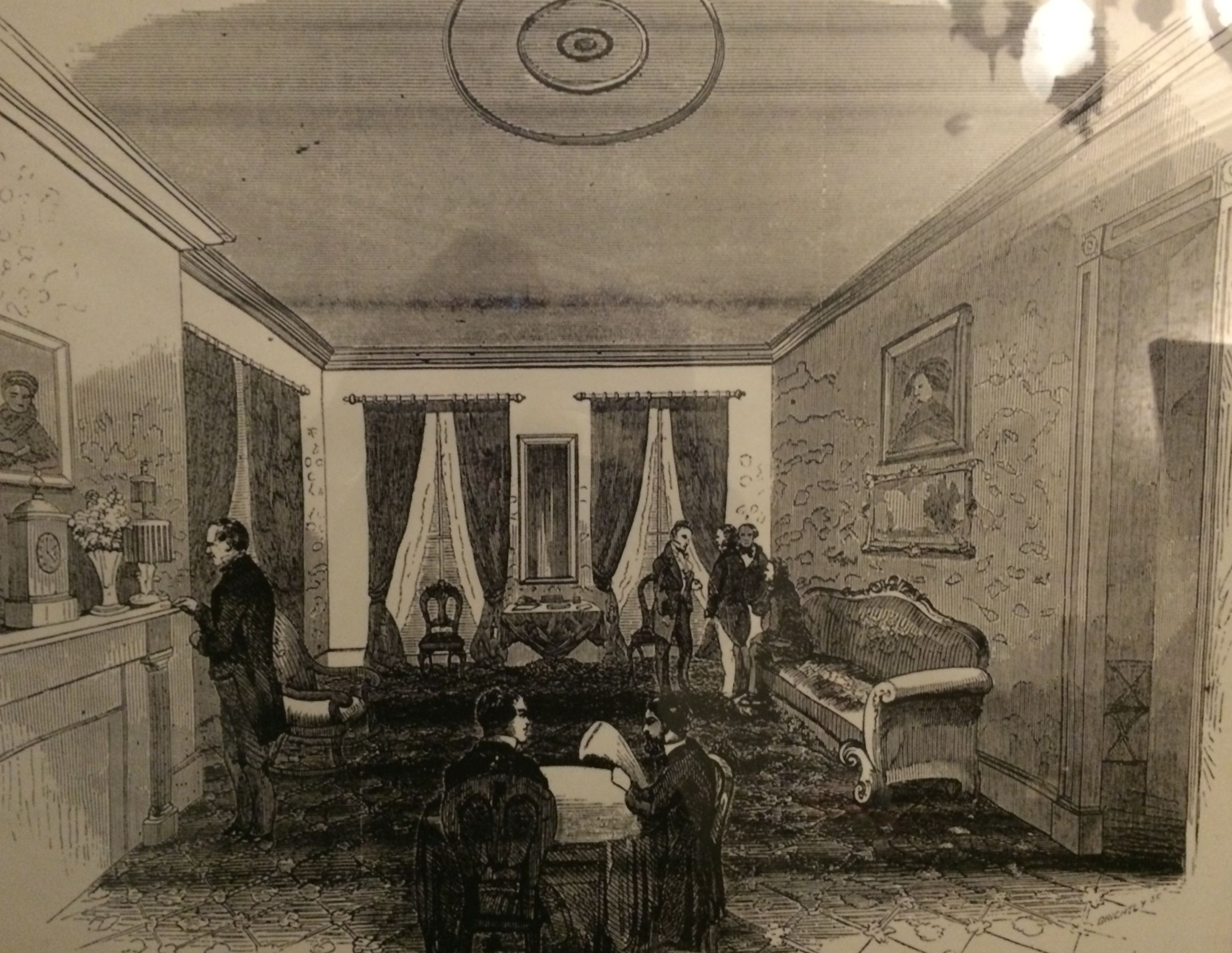
The dining room was set up as if to receive company. The room has been modernized, but I find it surprising that the plaster design in the middle of the room existed even before they had a chandelier there.
Period illustration of the dining room
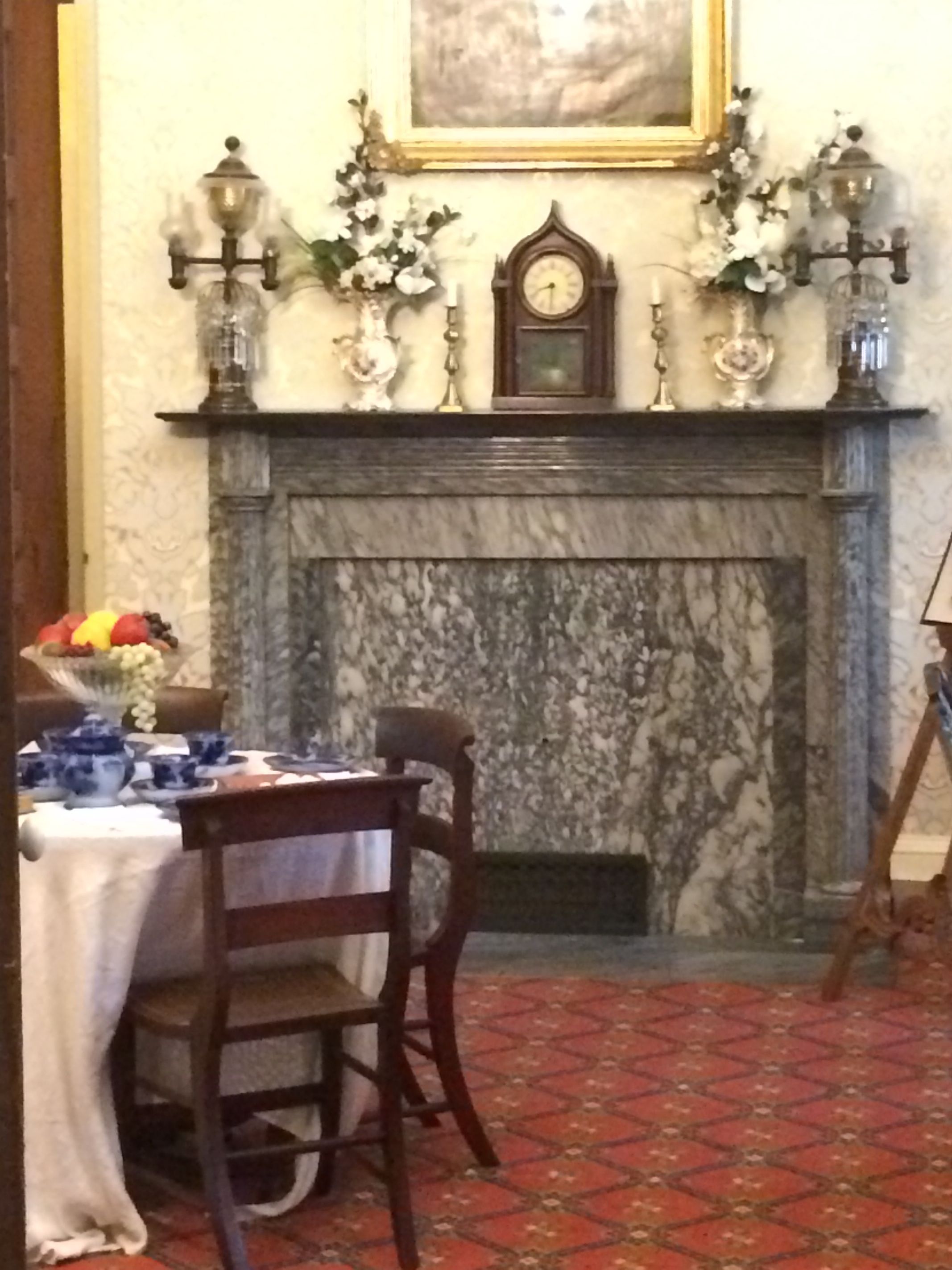
Buchanan did some modernizing when he moved in. He closed off some of the fireplaces and added a coal furnace in the cellar.
Modernized fireplaceWhite House desk
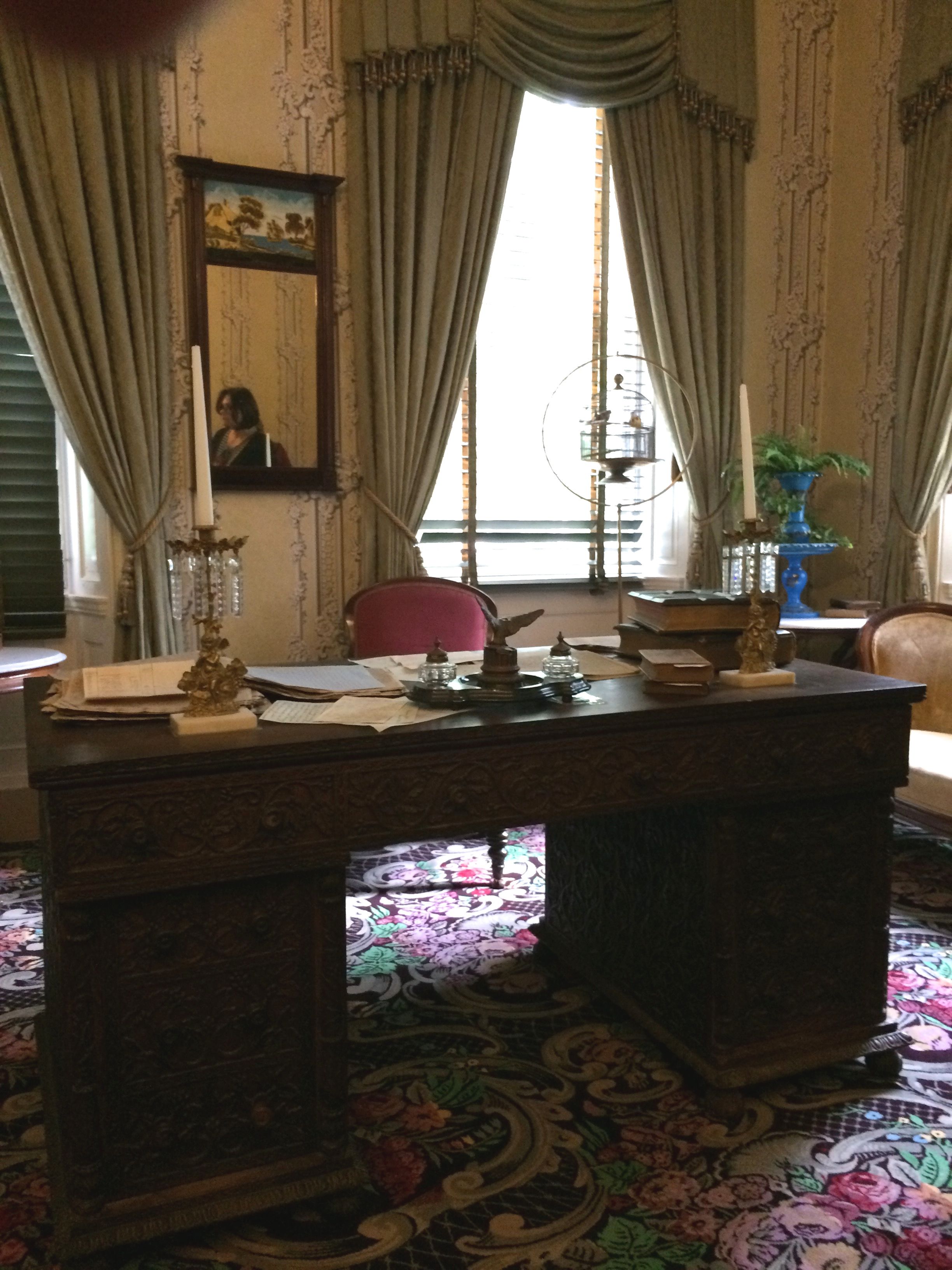
This desk was the one he used when he was in the White House.
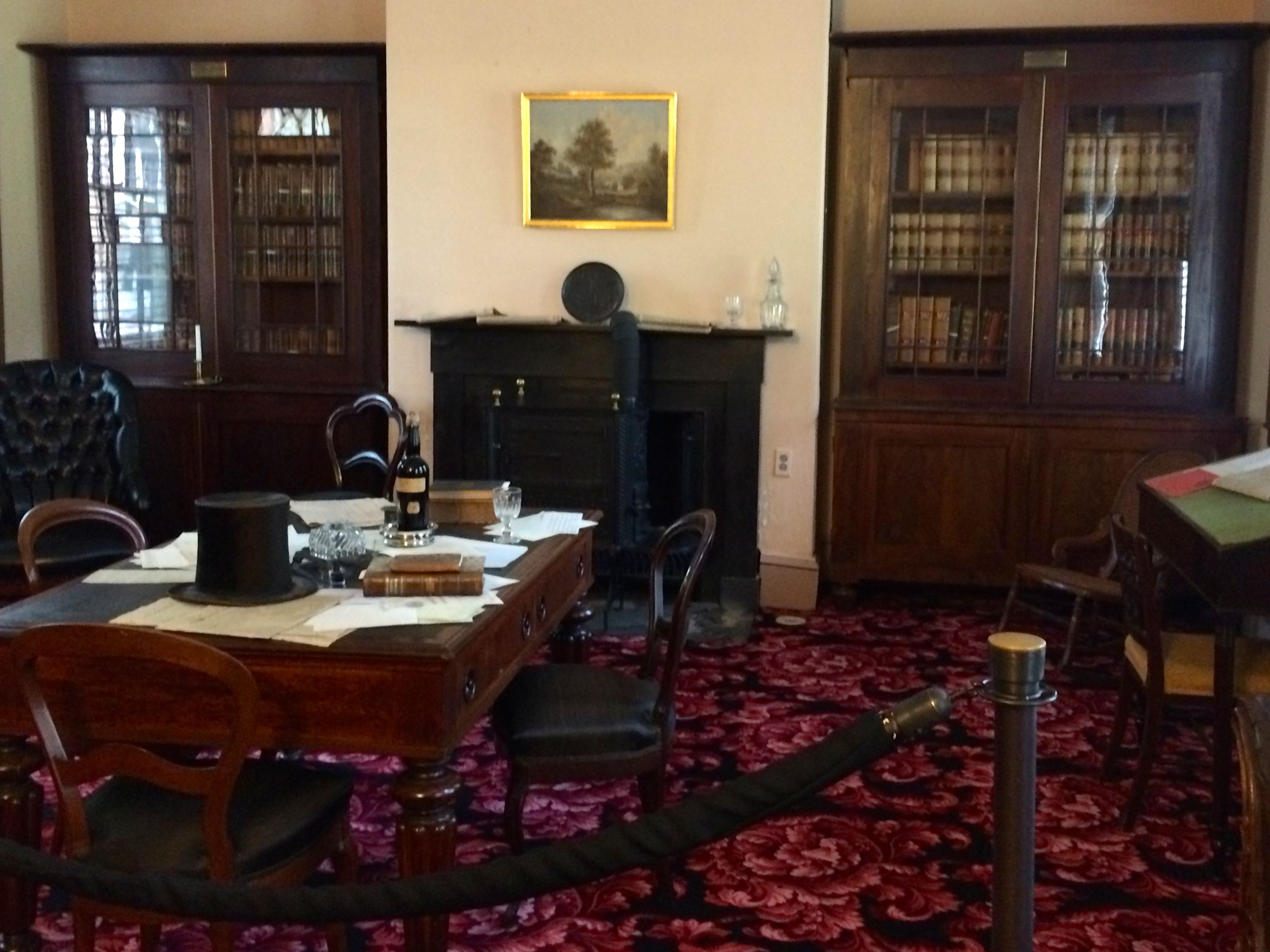
He had a separate study for receiving business callers.
Table in the study
The items on the table are things that belonged to Buchanan, including his last bottle of wine. Those are his law books in the cases, as well.
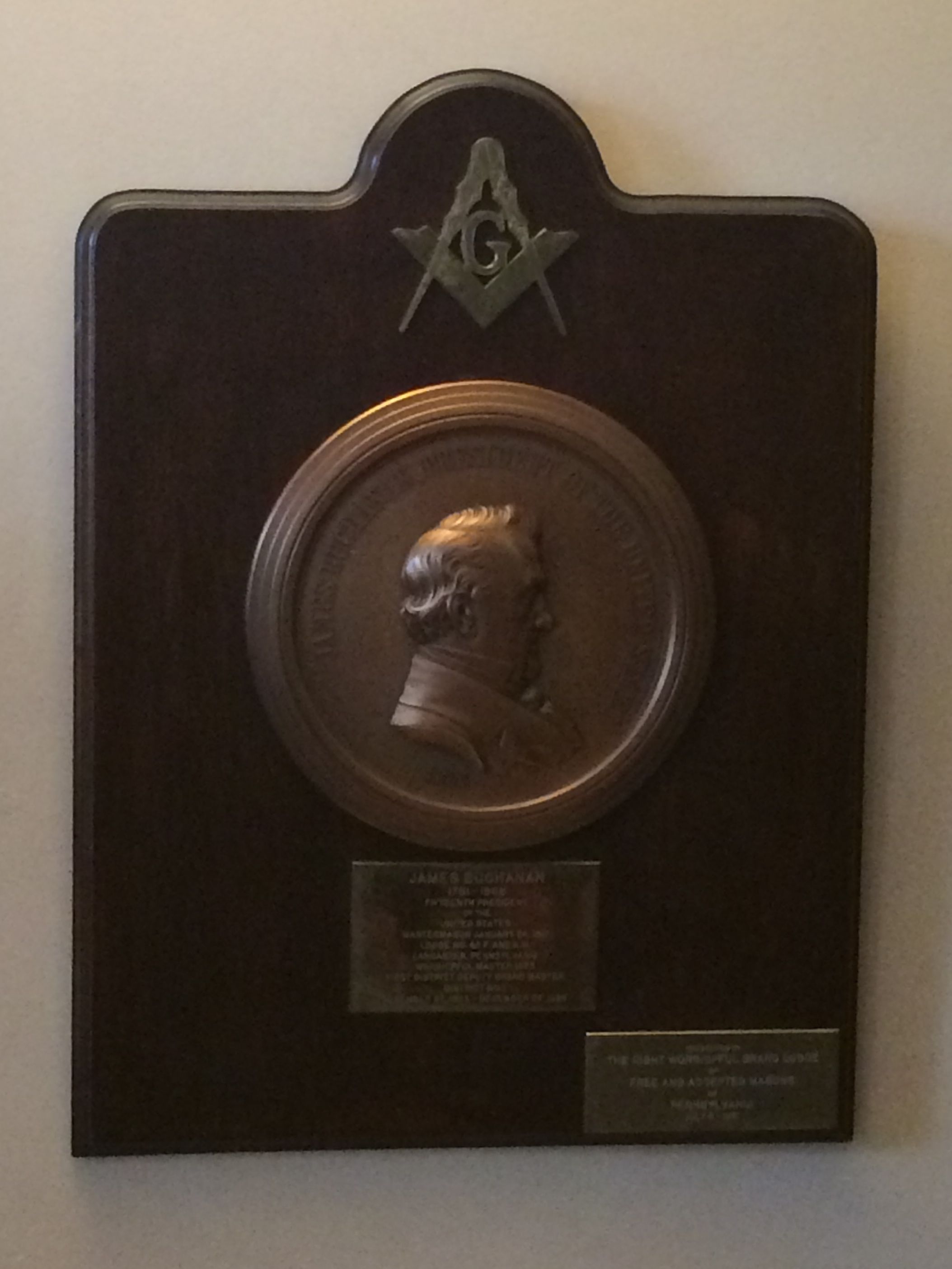
Buchanan was a Mason.
I mention this because our guide told us an interesting story. After the Confederates and taken York, and the battle of Gettysburg was in the offing, he sent his family to Philadelphia for safety, and the Masons showed up to guard him. She told us that they also participated in burning the bridge over the Susquehanna at Wrightsville, which kept the confederates from crossing over and moving one toward Philadelphia.
Faux wood treatment on plaster
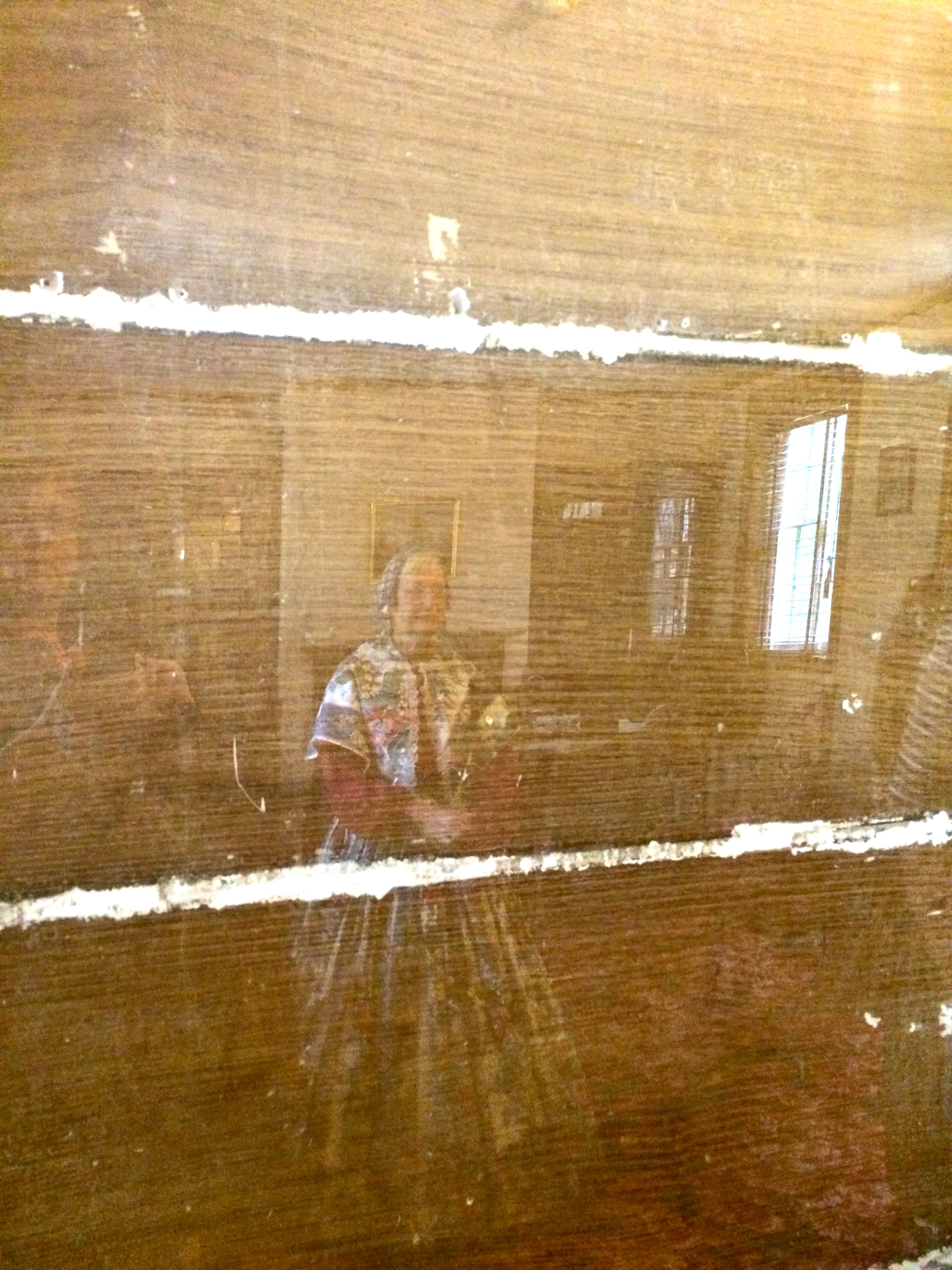
Our guide pointed out a portion of the wall that was behind glass. They had removed a bookcase that had been on the wall, but wasn’t there when Buchanan had the house. They left it as an example of finishes used at the time. I am including it, partly for the ghostly image of the guide reflected in the glass.
Here is a glimpse of the guide and a better look at the floor covering.
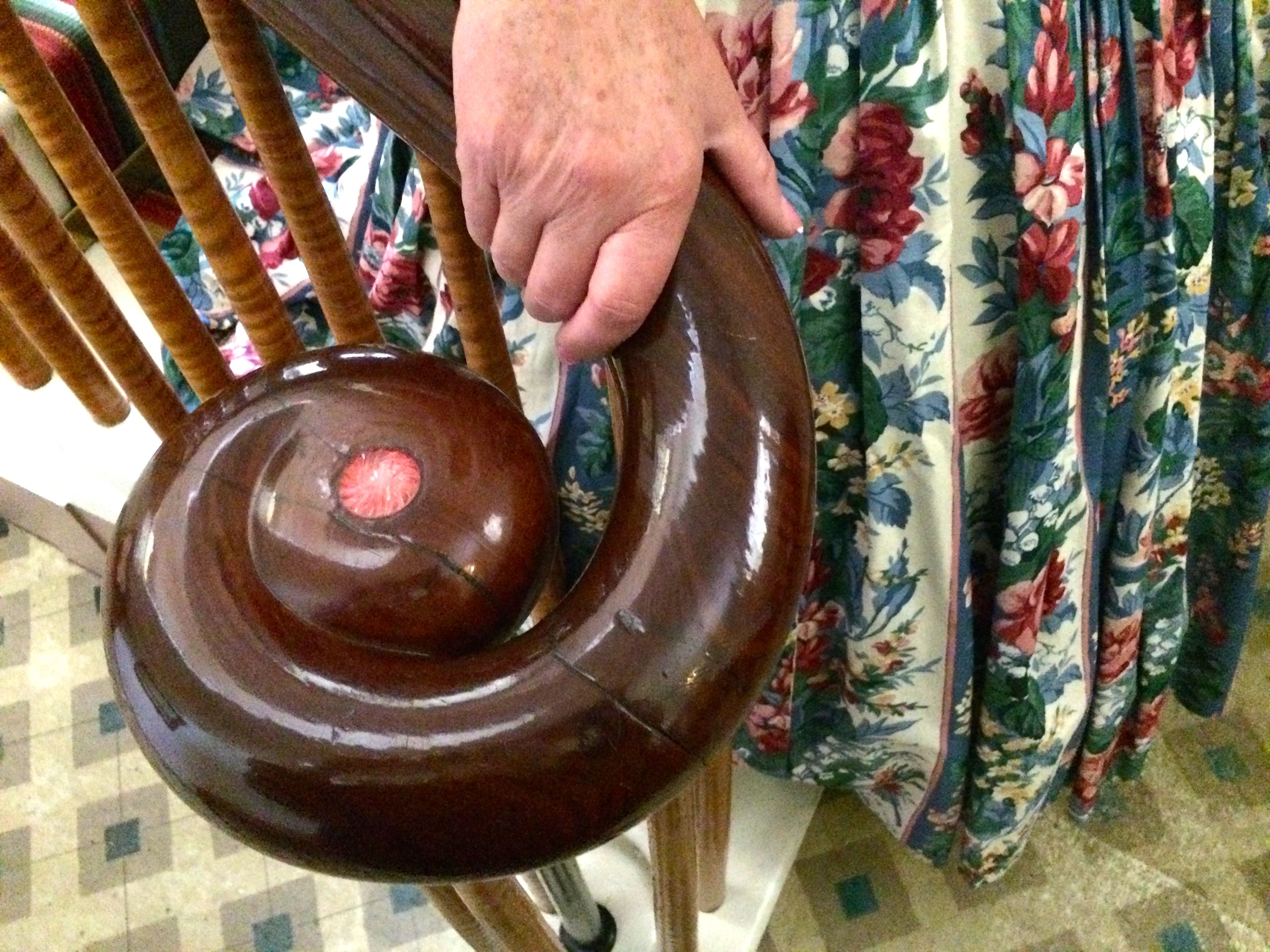
Peace Stone
The guide pointed out the pink “Peace Stone” imbedded in the newel post. It indicated that the owners had paid off the mortgage and had “peace of mind.”
Buchanan paid $6,750 for the property. In 2014 dollars, that would have been $182,075. However, I have a feeling that the house in the neighborhood would be worth considerably more than that.
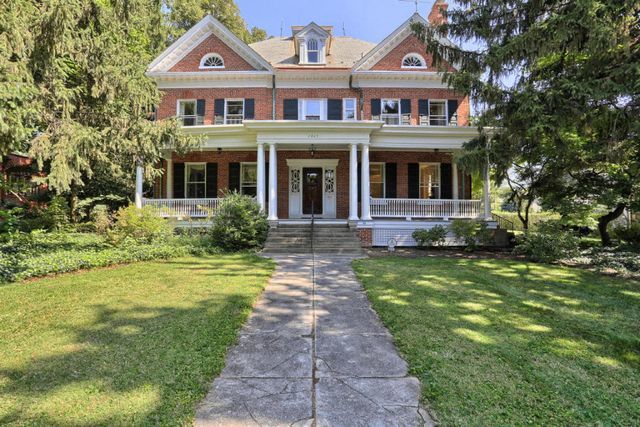
For instance, this house is next door:
$628,690
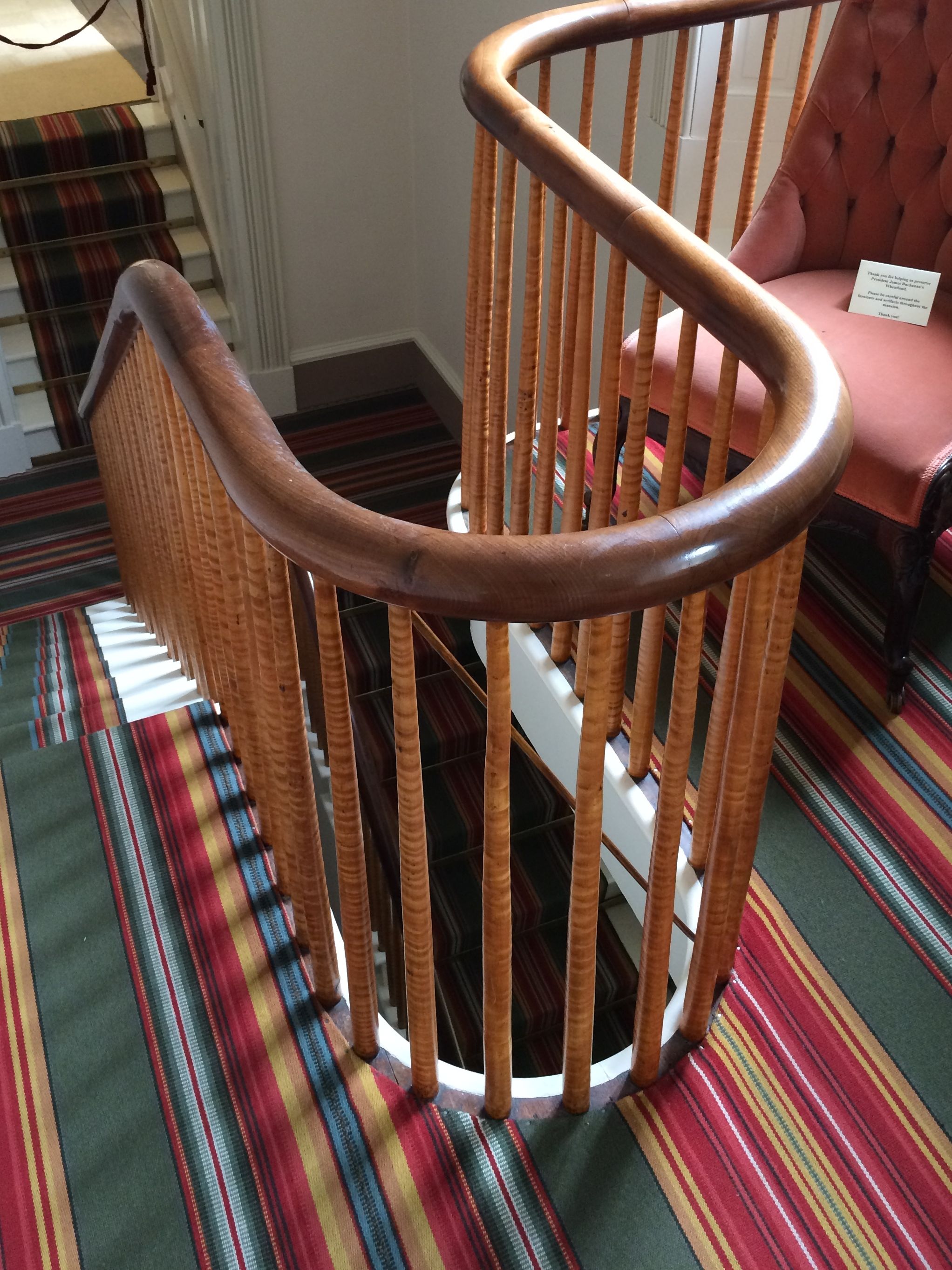
The original bannister, made of rosewood mahogany and tiger eye maple.
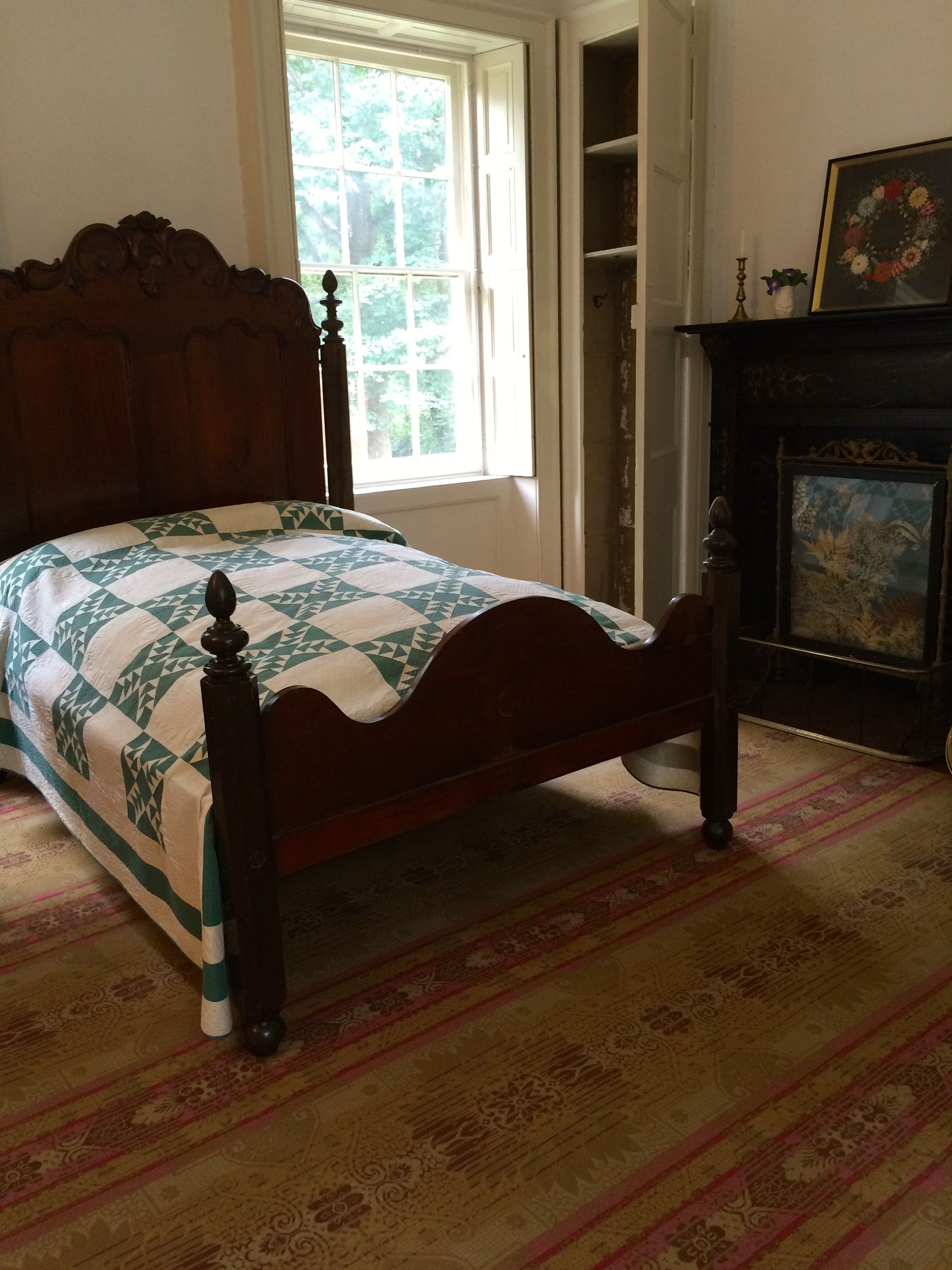
The bedrooms were upstairs. The first one we visited belonged to his niece, Harriet Lane. Since Buchanan was unmarried, Harriet served as the First Lady. In fact, the term “First Lady” was invented for her. Previous women in her position had been referred to as Mrs. Whomever. Since she was not married to the president, the press figured she needed a more dignified title than Miss Lane. I mean, what is less dignified than being an unmarried woman?
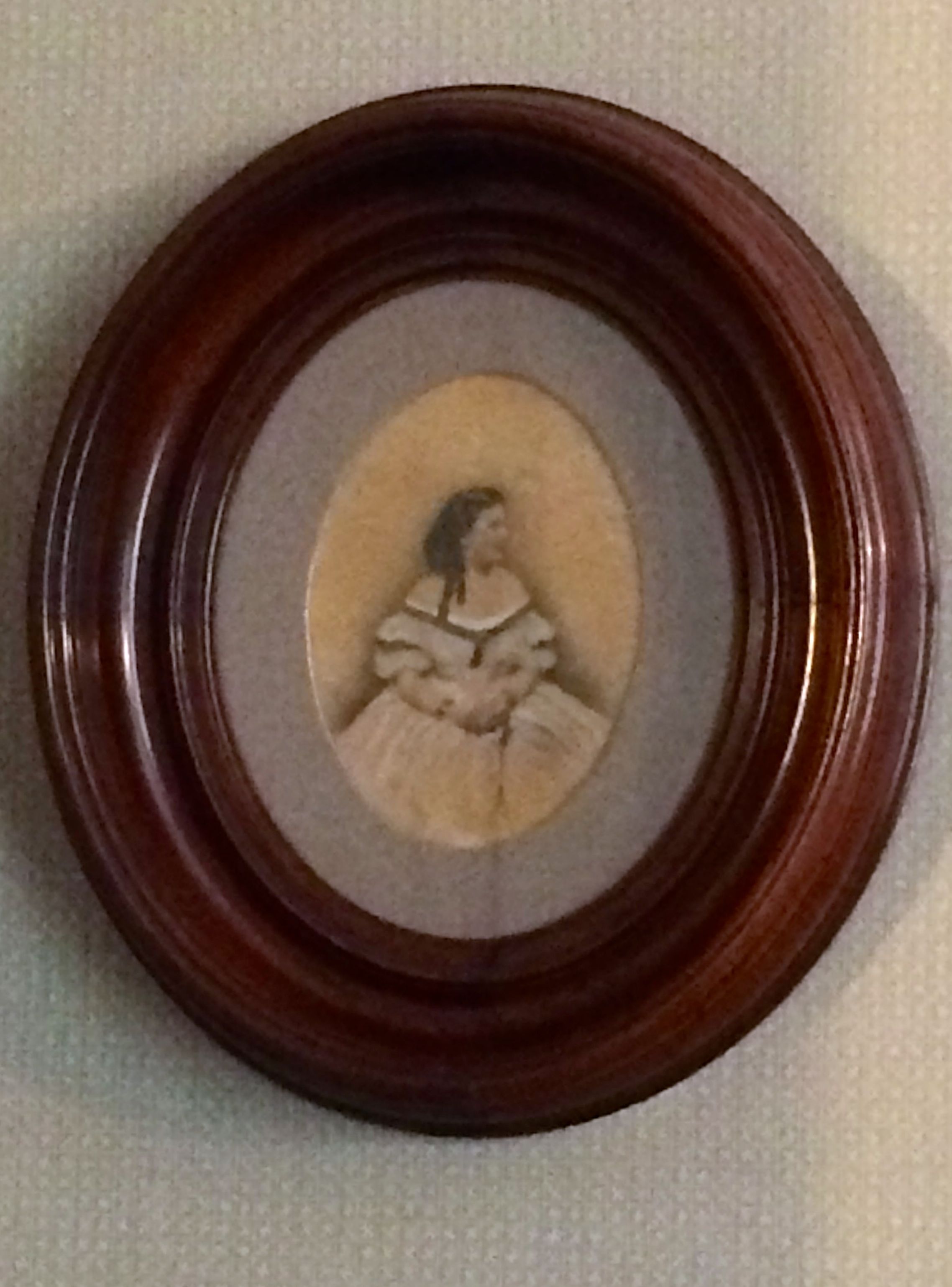
Harriet Lane, the first First Lady
Our guide told us that this portrait was most likely made of her in the dress she wore to the inauguration.
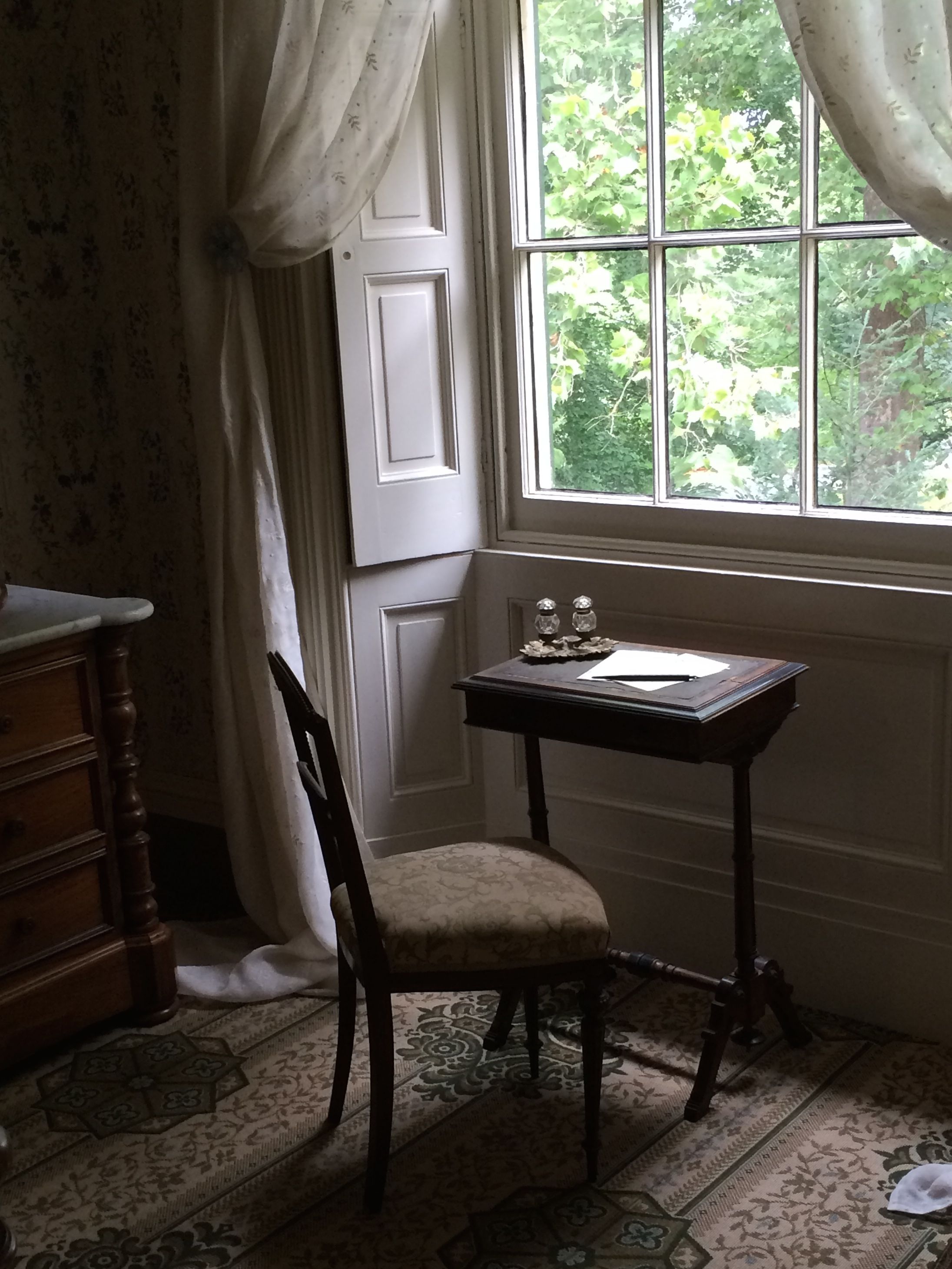
She had a lovely little writing desk in her bedroom.
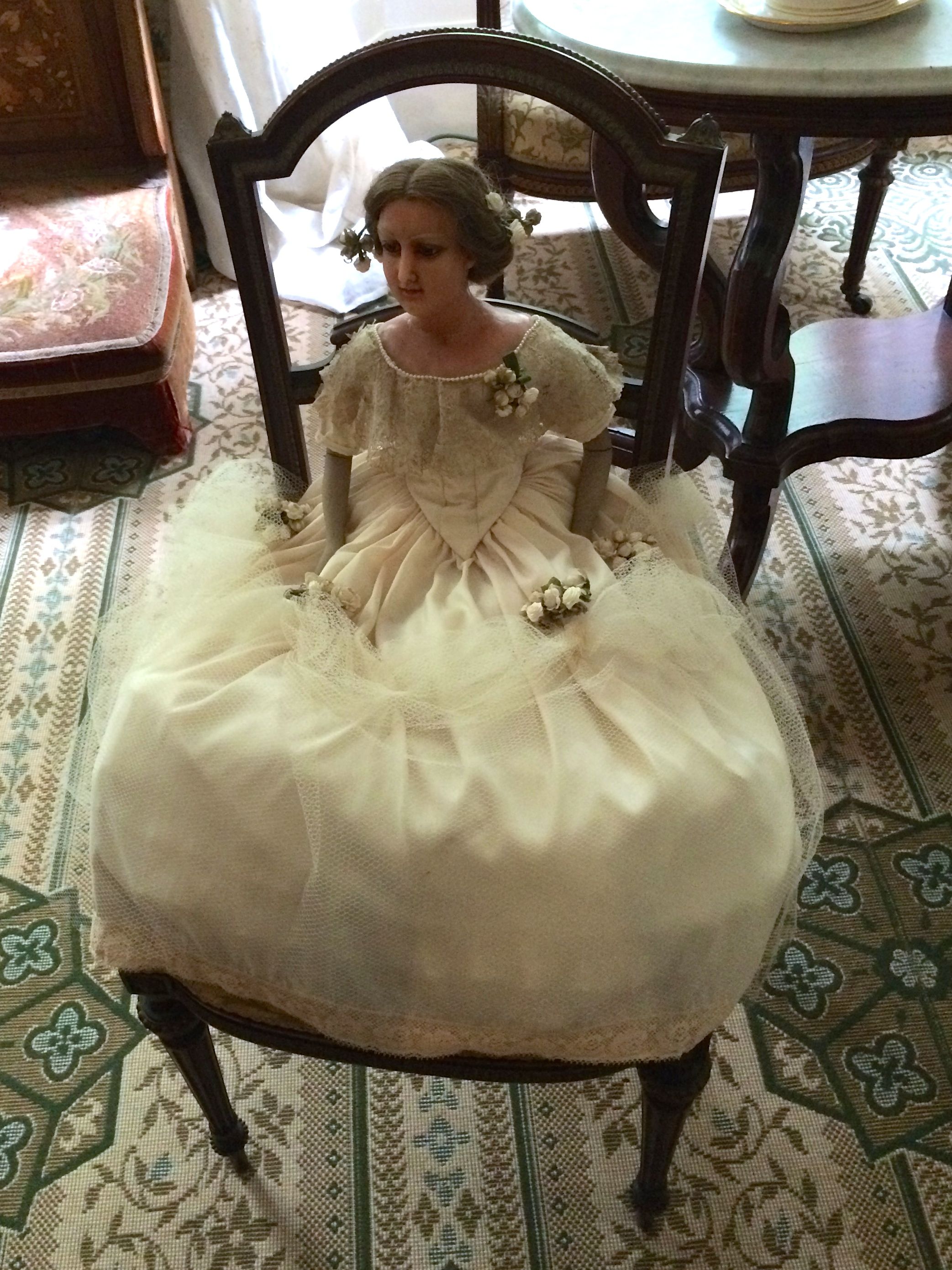
I’m not sure of the significance of the doll, but I thought the picture was nice.
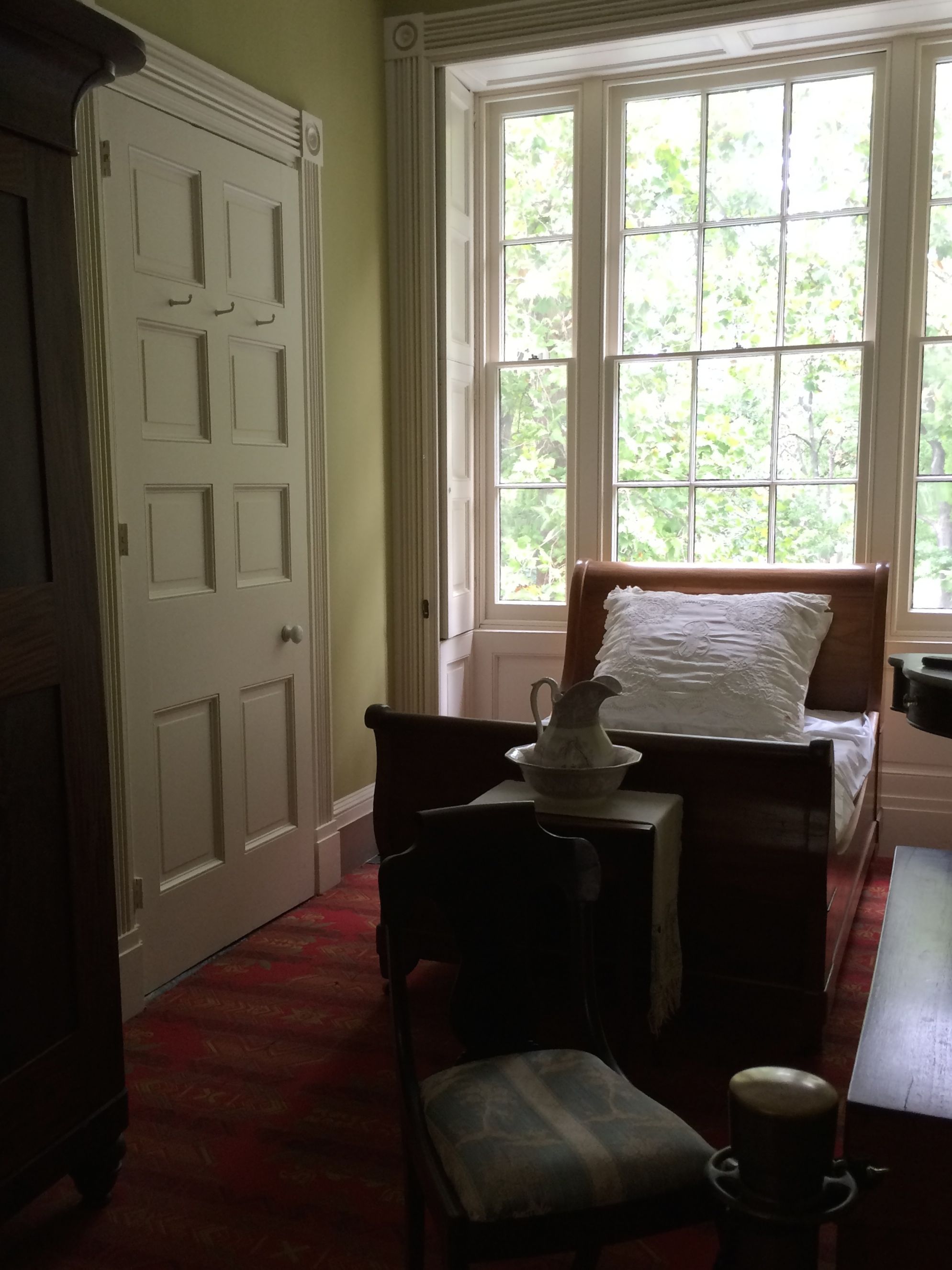
Next door Buck Henry’s room. It was part of Buchanan’s bedroom suite, and was occupied by the secretary. I believe another of Buchanan’s nephews took over the secretarial duties after Buck moved on to other opportunities.
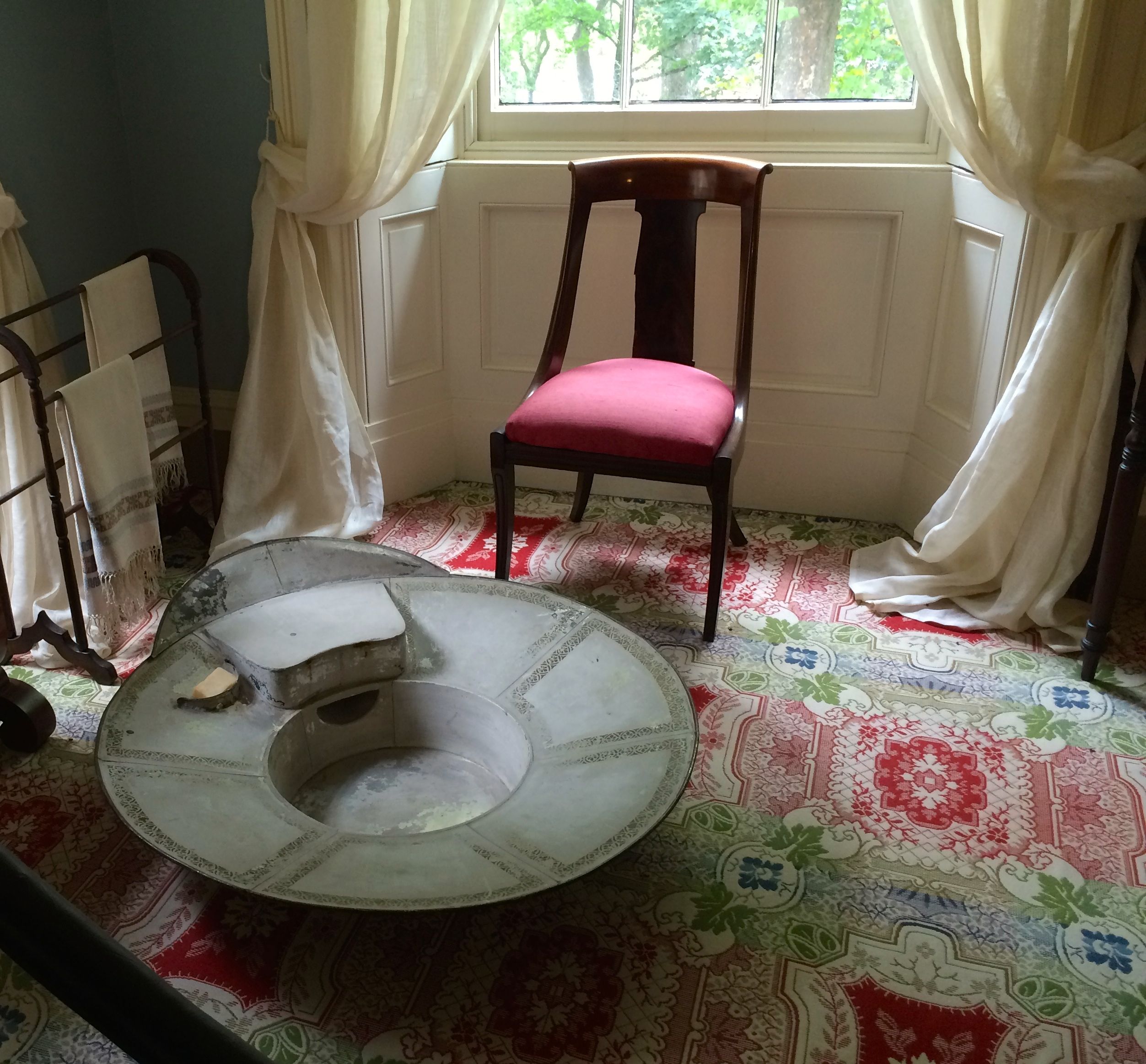
Buchanan’s footbath
Back in the day, bathing was done in the bedrooms. The guide told us that this footbath also functioned as a shower, with water being poured over the head. The windows had interior shutters that could block off only the lower windows when bathing was taking place. They could also close off whole windows, when desired.
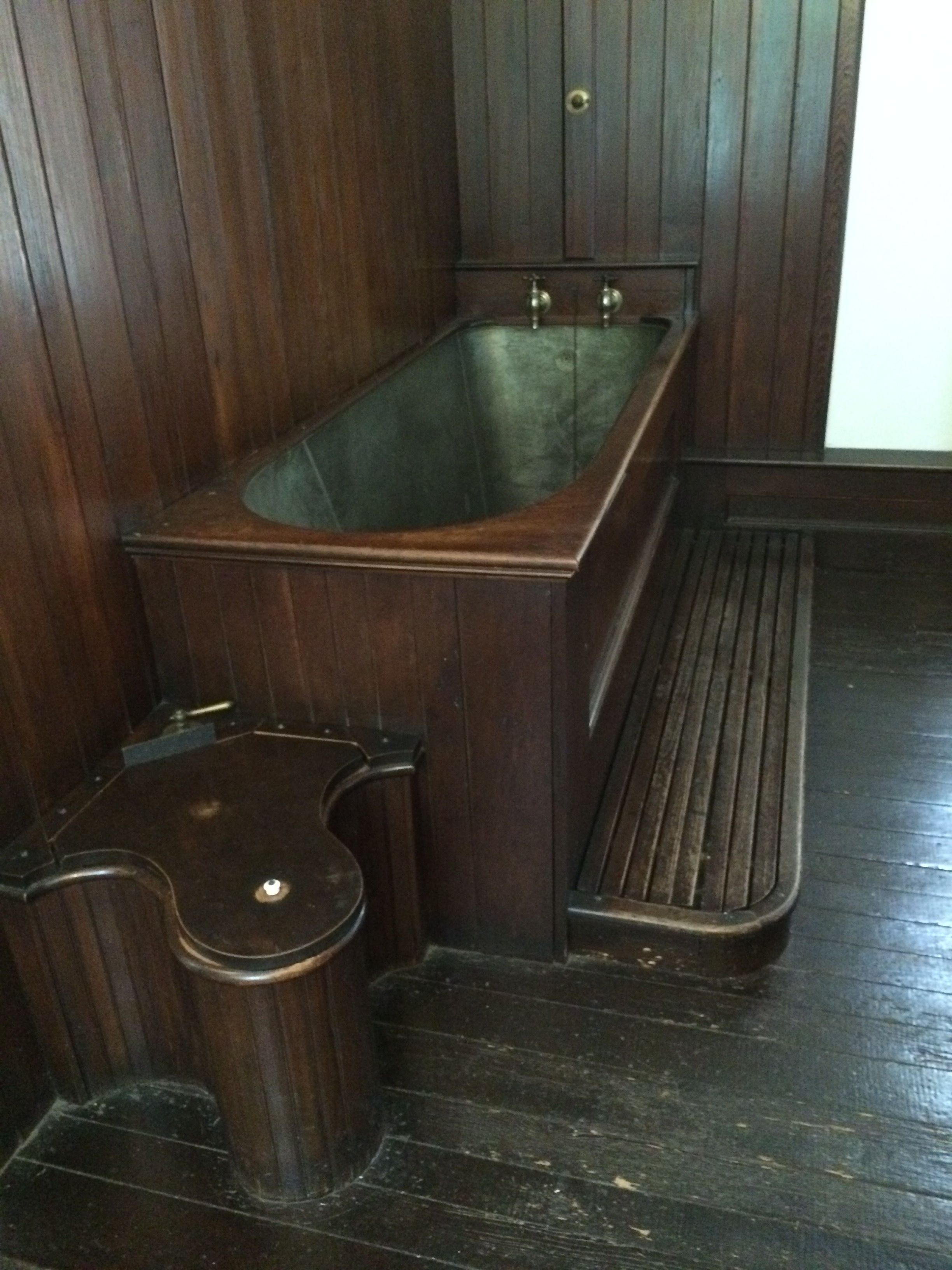
This bathroom was added after Buchanan’s time. Not only did it have a tub, but that little appliance at the end of it is a bidet. The guide did not mention when “flushies”were installed.
But, the emptying of chamberpots would be taken care of by the hired help. Buchanan had one trusted employee, who was with him for 30 years, Miss Hetty Parker. She warranted her own bedroom!
The rest of the staff slept up in the attic. We didn’t see that part of the house, but they all had to enter and leave their quarters through a door in her bedroom. That’s one way to manage employees.
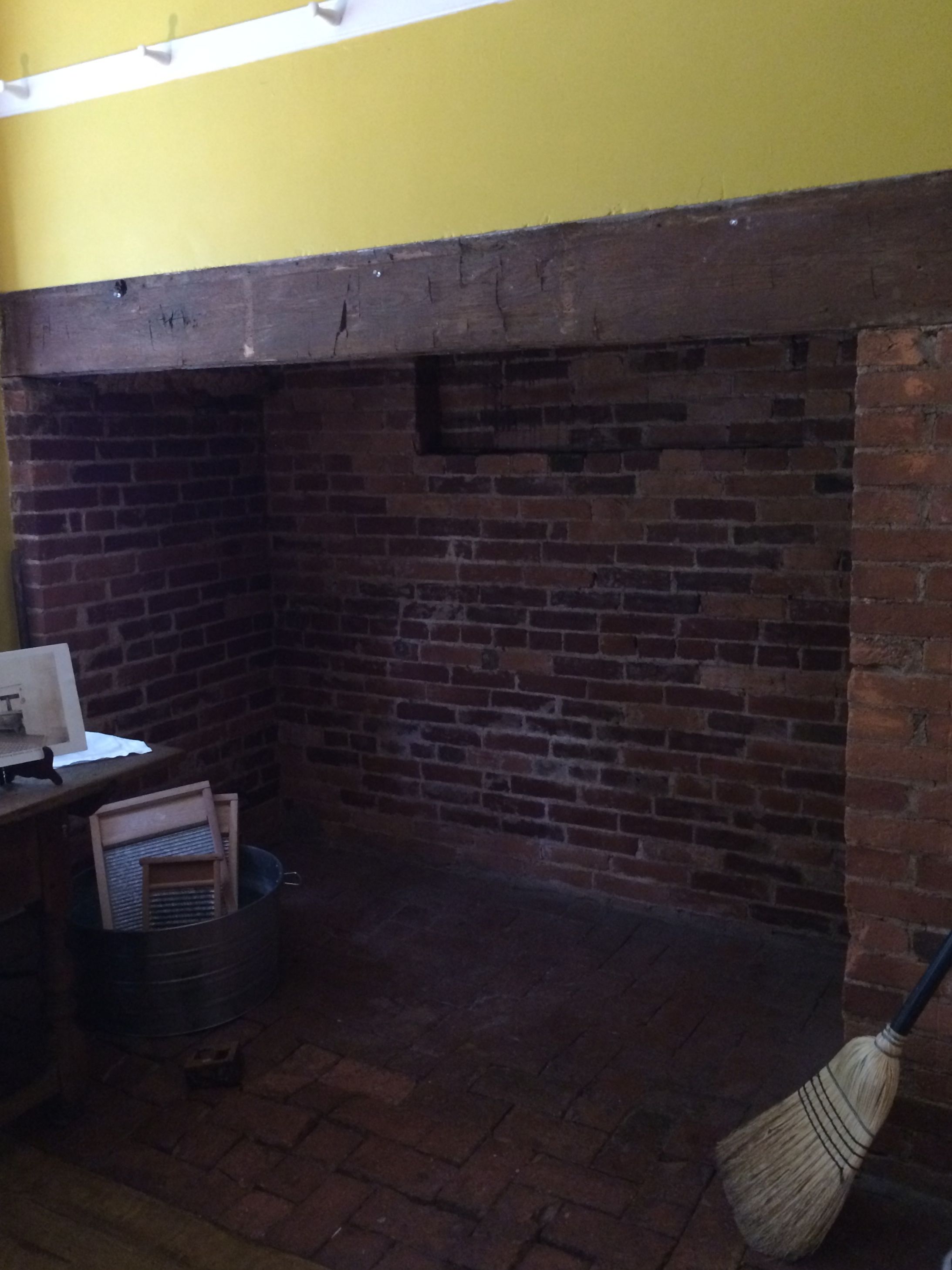
Fireplace in the warming kitchen
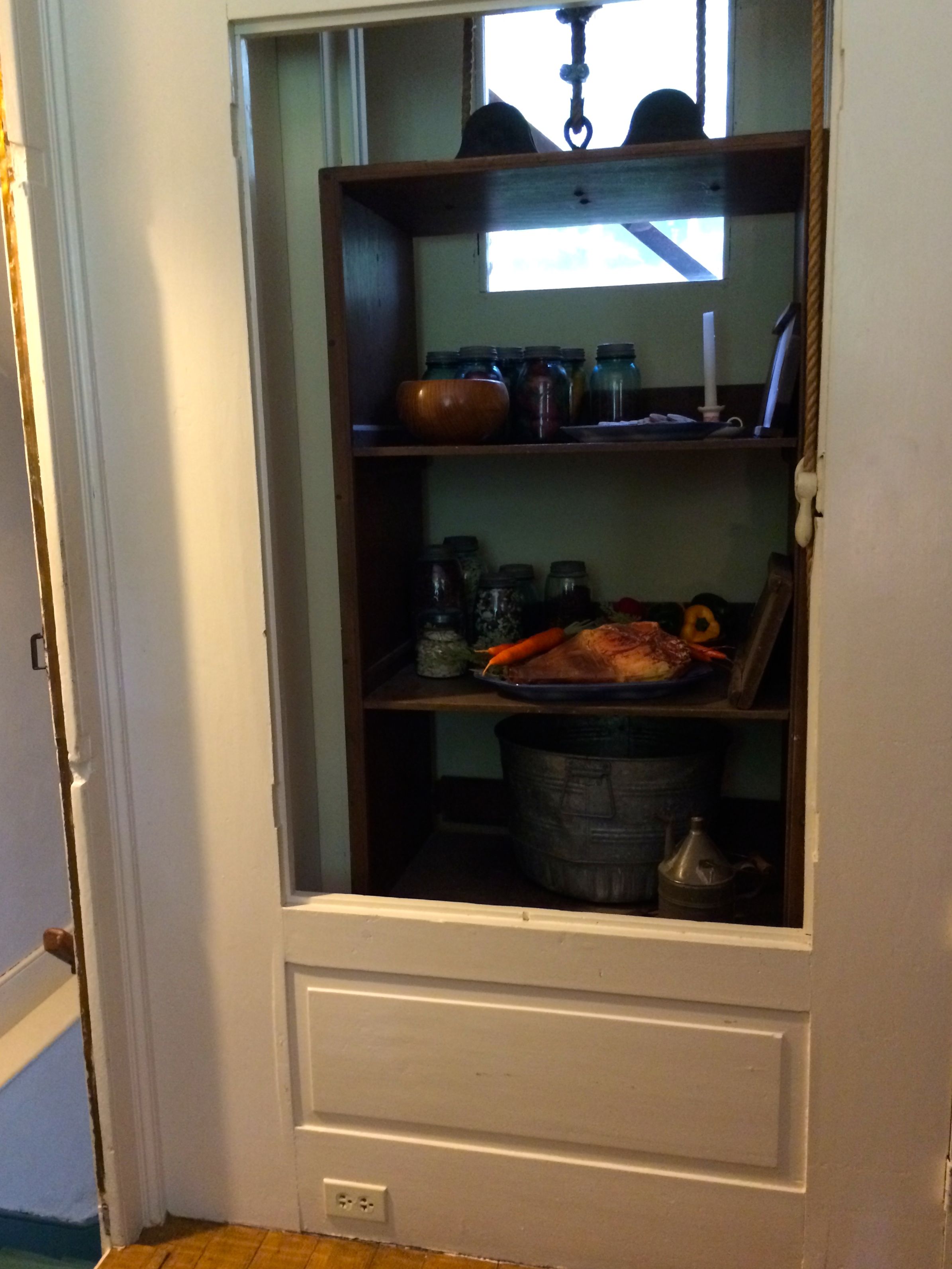
This room was the last stop on our tour, the warming kitchen. The food was prepared in the regular kitchen in the cellar and then brought to the main level with a dumb waiter.
No, not the least intelligent worker – a dumb waiter is a small elevator for raising and lowering food and supplies between floors. But, you all knew that, right?
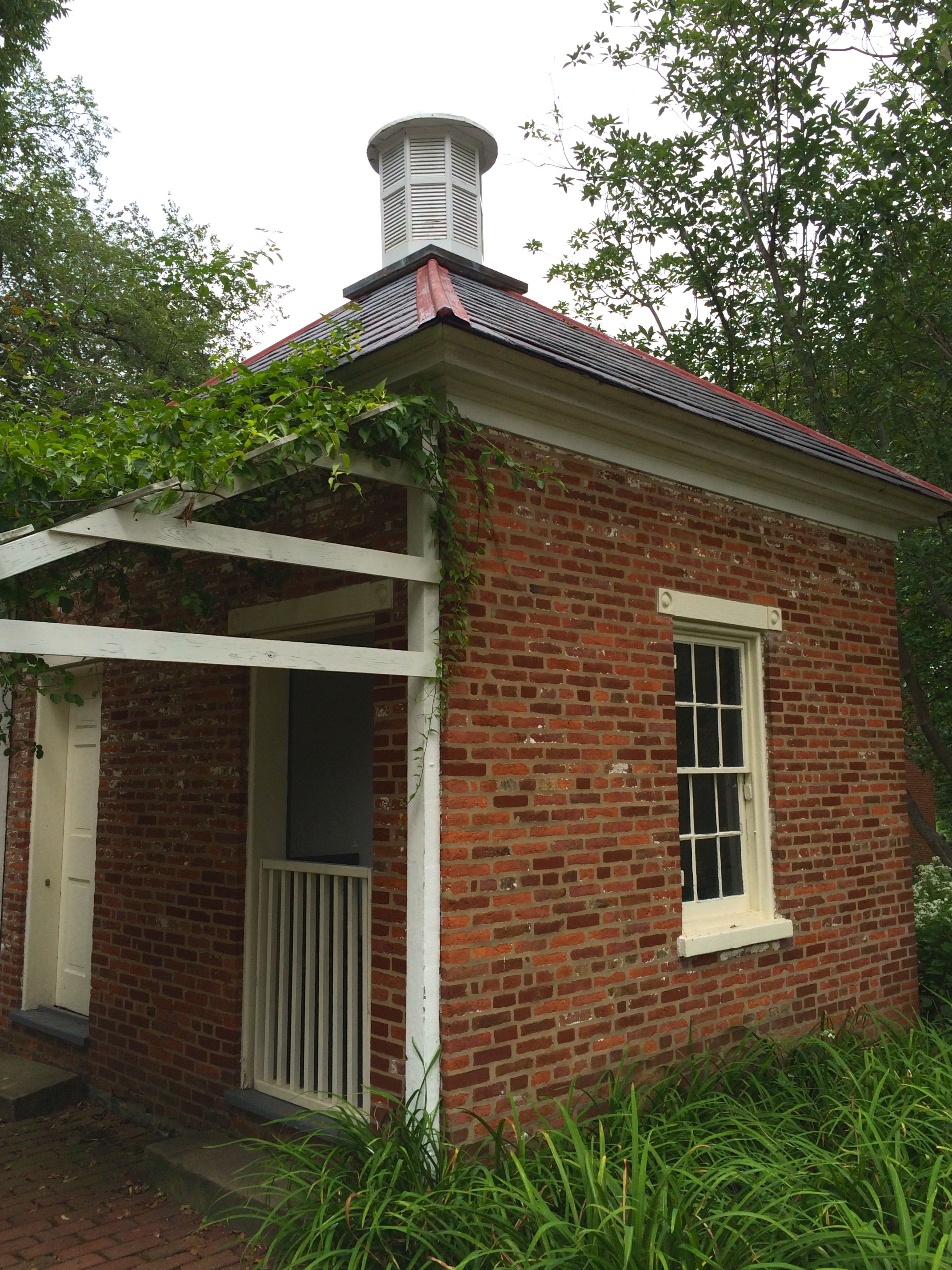
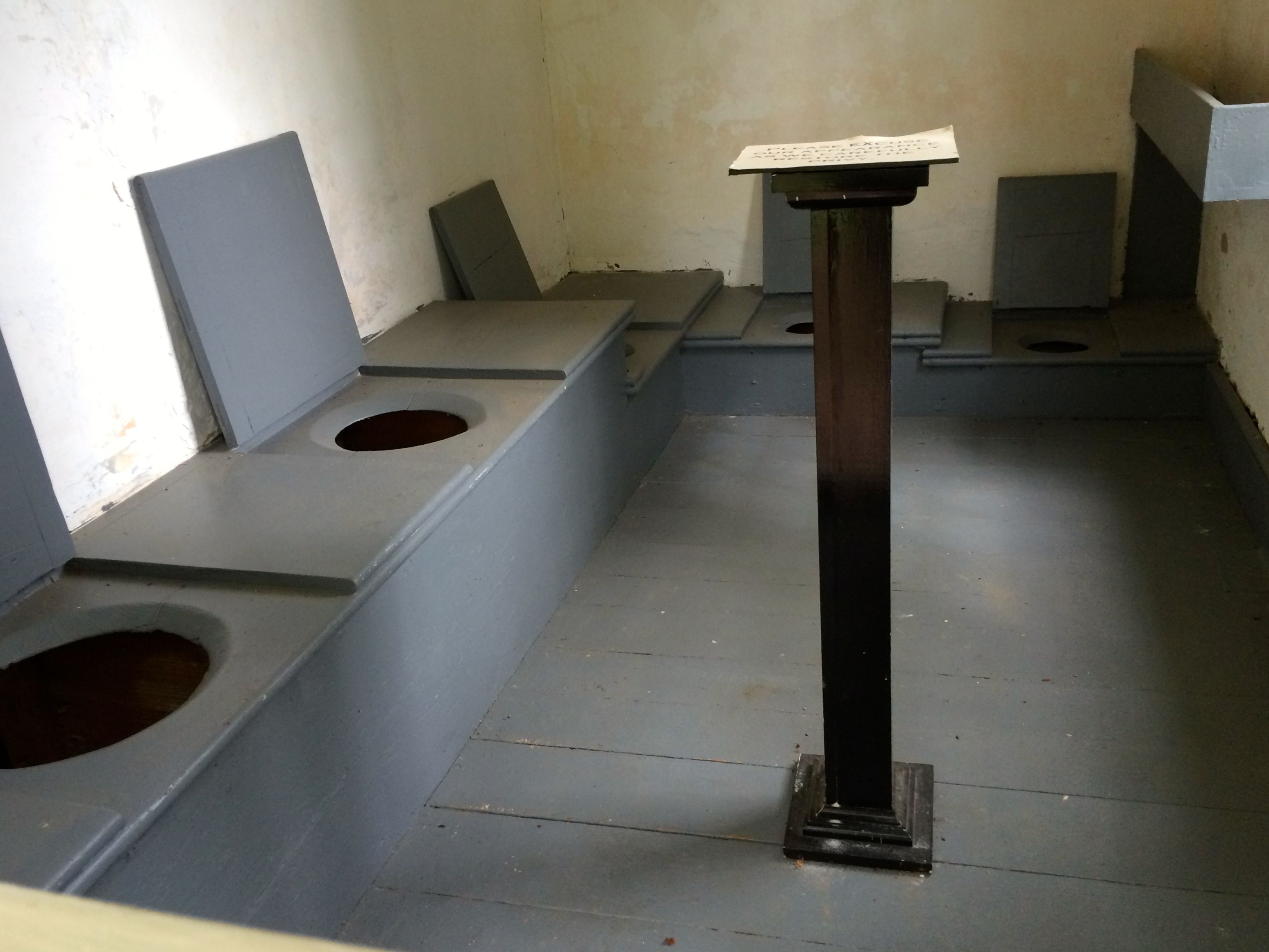
Have you ever seen a brick sh%$ house? You’ve heard the expression, right? Mom always used to say, “Built like a brick sh%$ house.”
Here is one of them!
At first, I was taken aback by the lack of privacy partitions. Then I noticed the variety of seating options, and I have to admit I was impressed.
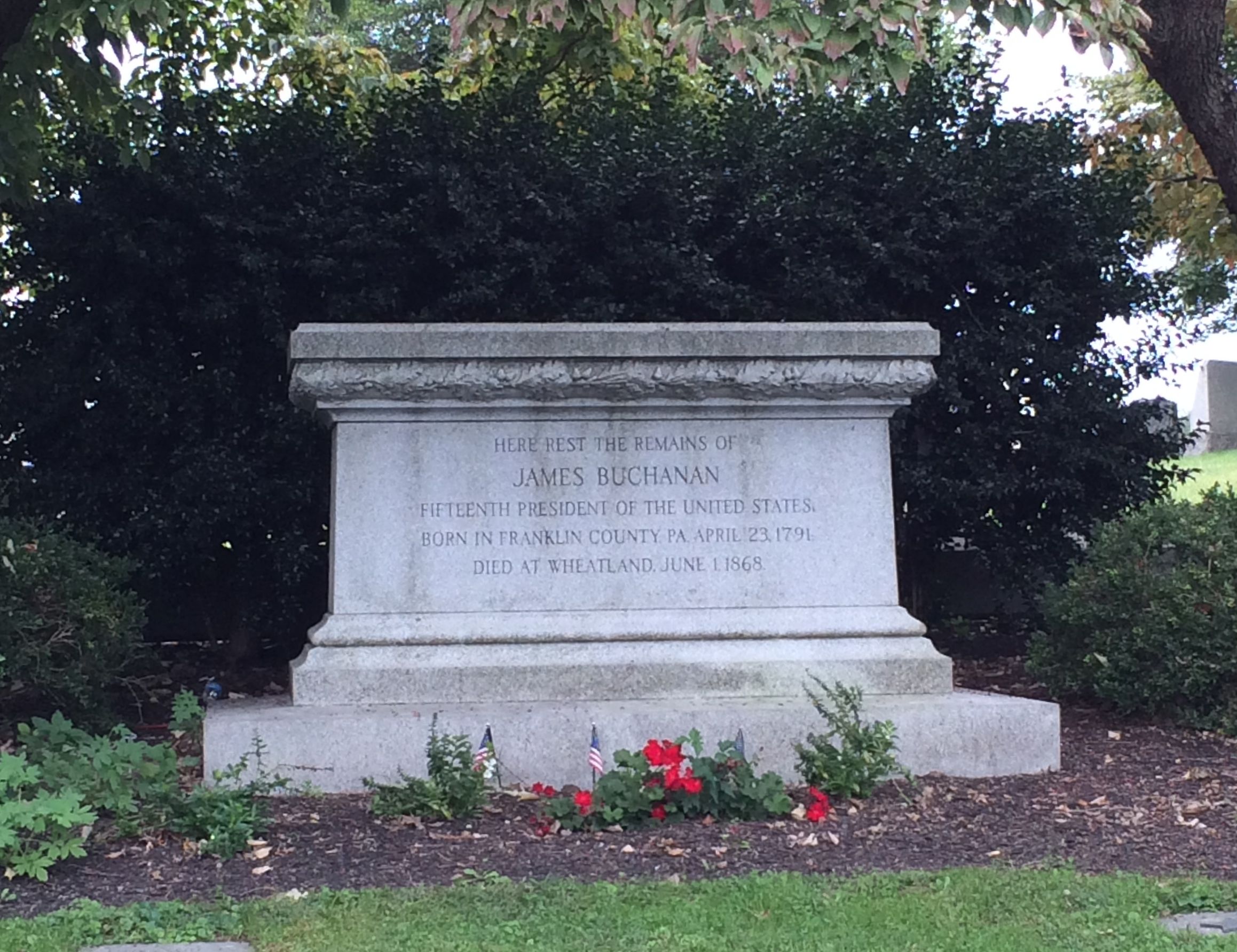
After Wheatland, I made one final stop on the Buchanan trail.
We got up bright and early and headed out for the Hegins Valley Arts and Crafts Faire. We were greeted by Faire queens who wore sashes. The welcomed us and gave us guides to the faire and pens so we could mark down the vendors we wanted to be sure not to miss. Barb, Jeanine and Sissy come every year and they have their favorites they always look for.
But, first, breakfast!
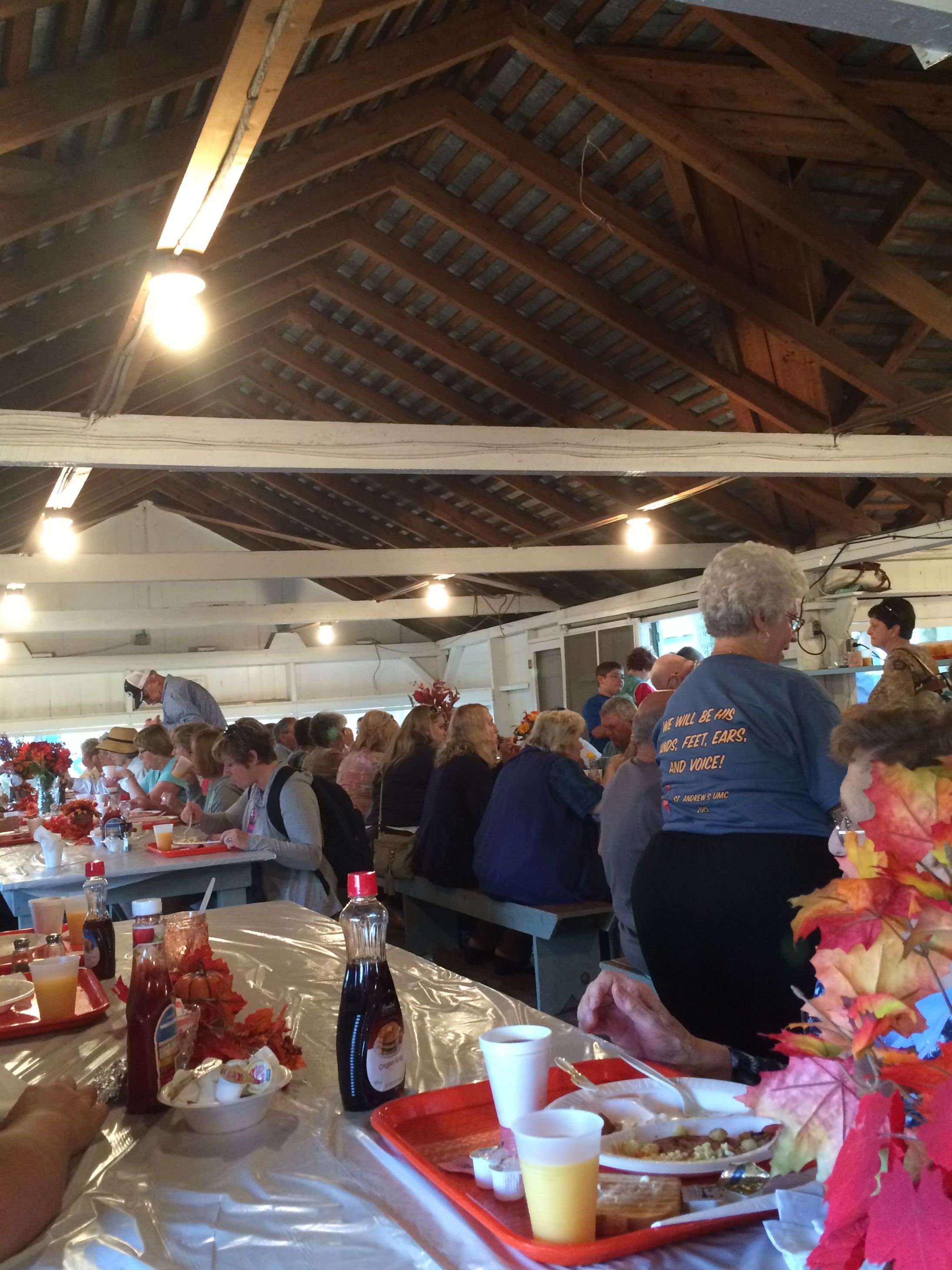
The church ladies do breakfast
Eggs, bacon, ham, pancakes, toast, juice and coffee.
Provisioned thusly, we were more suited to napping than shopping, but we set out to see what there was to see. My friends were towing a shopping basket on wheels, so I knew they were planning on shopping. I didn’t need anything, so I was planning on keeping my wallet shut and my hands in my pockets.
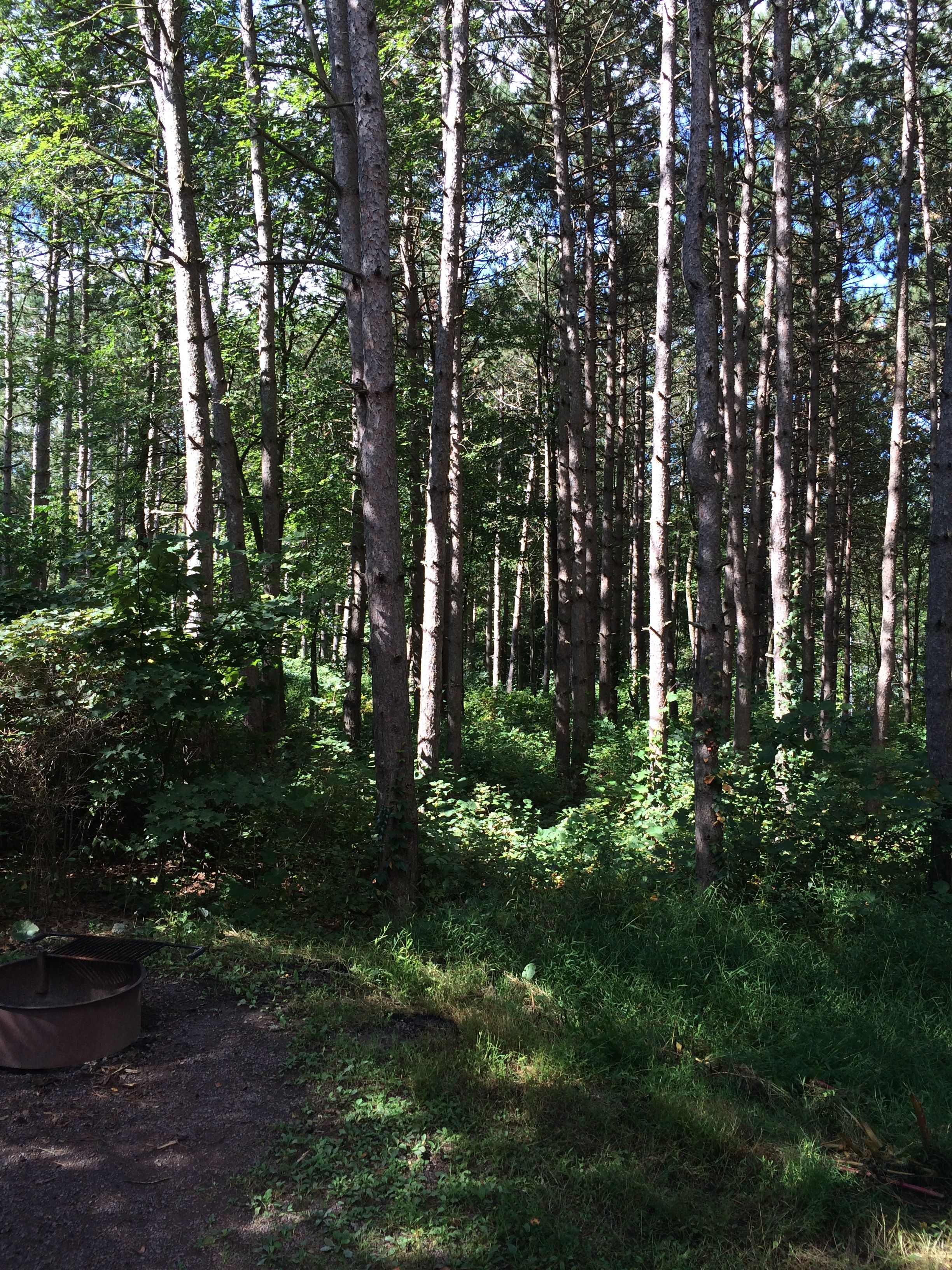
It was a beautiful site for a craft fair! There were tents and tables arranged in rows in a beautiful grove of trees.
In addition to the usual crafts, there were baked goods and fruits and vegetables.
Broom maker
My favorite booth at the faire was the broom maker. I could have watched him for an hour! I was tempted to buy one of his brooms, but I didn’t.
Three reasons:
I already have a broom.
Those good brooms need to be hung up. I didn’t want to try to figure that out.
I am cheap. (Well, cheapish.)
But, it was fun to watch him work and see the tools and materials he uses.
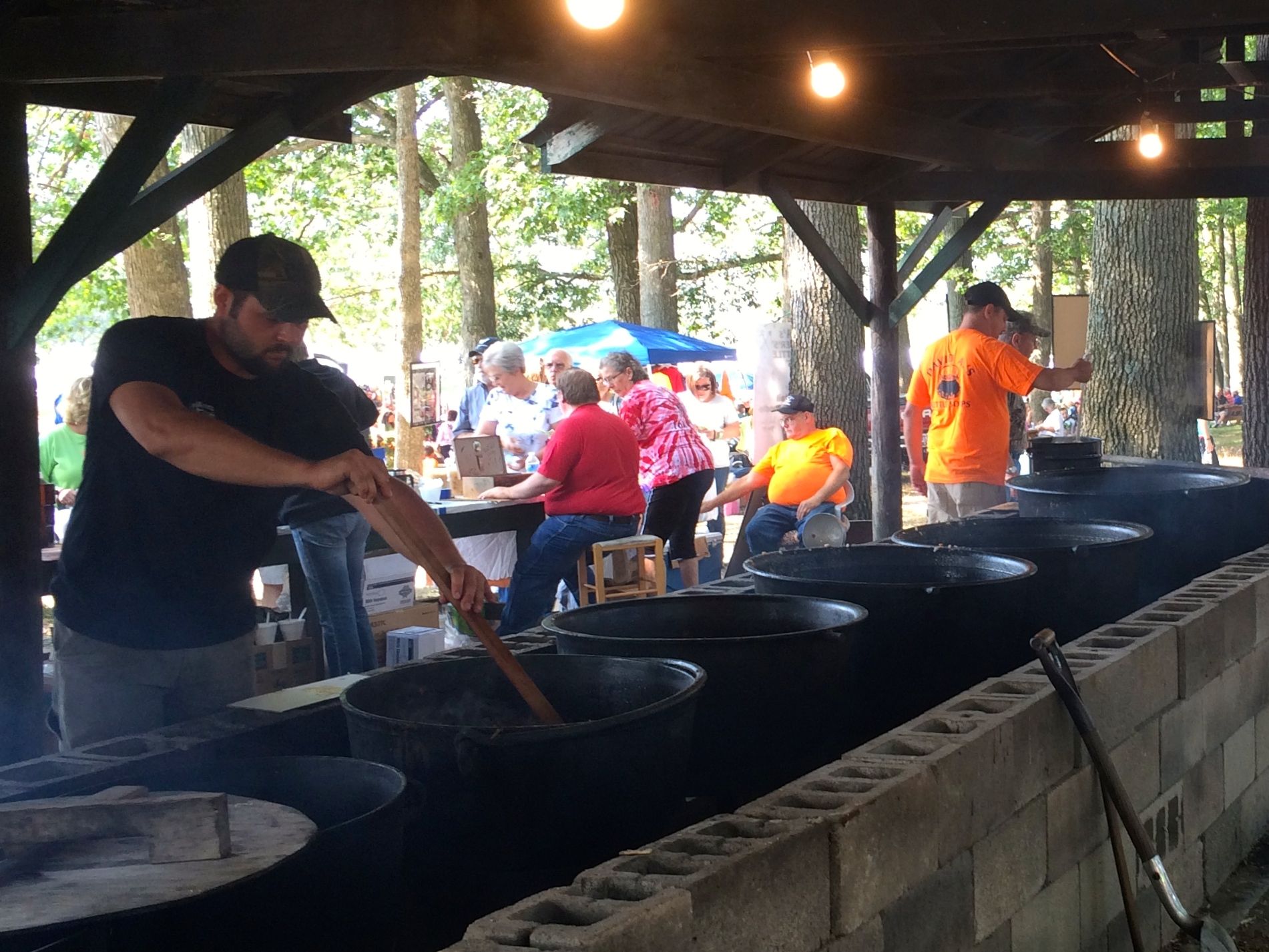
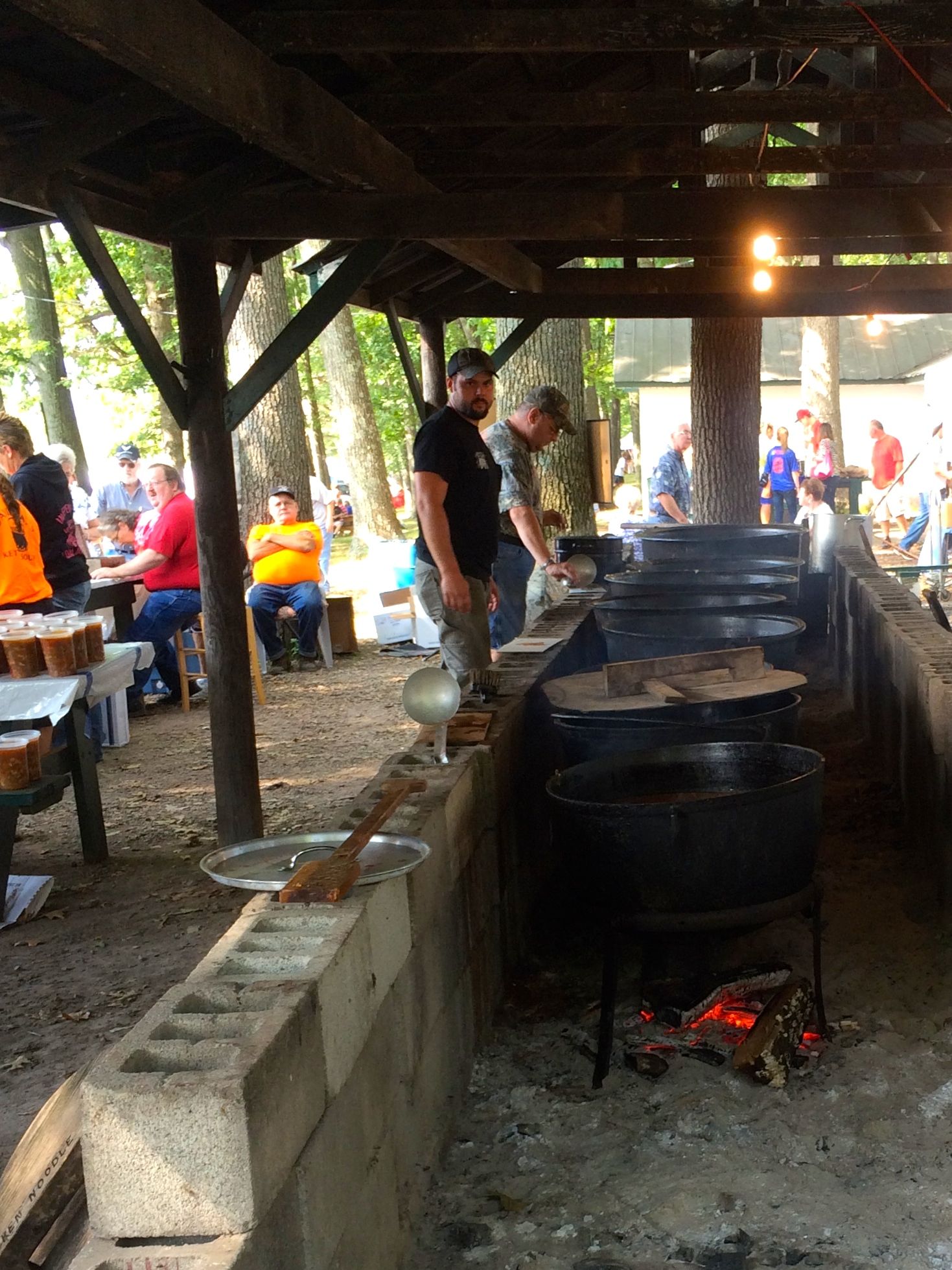
Another stand that fascinated me was the soup stand. I’d never been to a fair where soup was a big seller. Maybe it’s a regional thing.
Strong men stand and stir steaming cauldrons of soup. Come to think of it, I could watch that for a while, too.
The amazing thing was that the soup was cooked over wood fires!
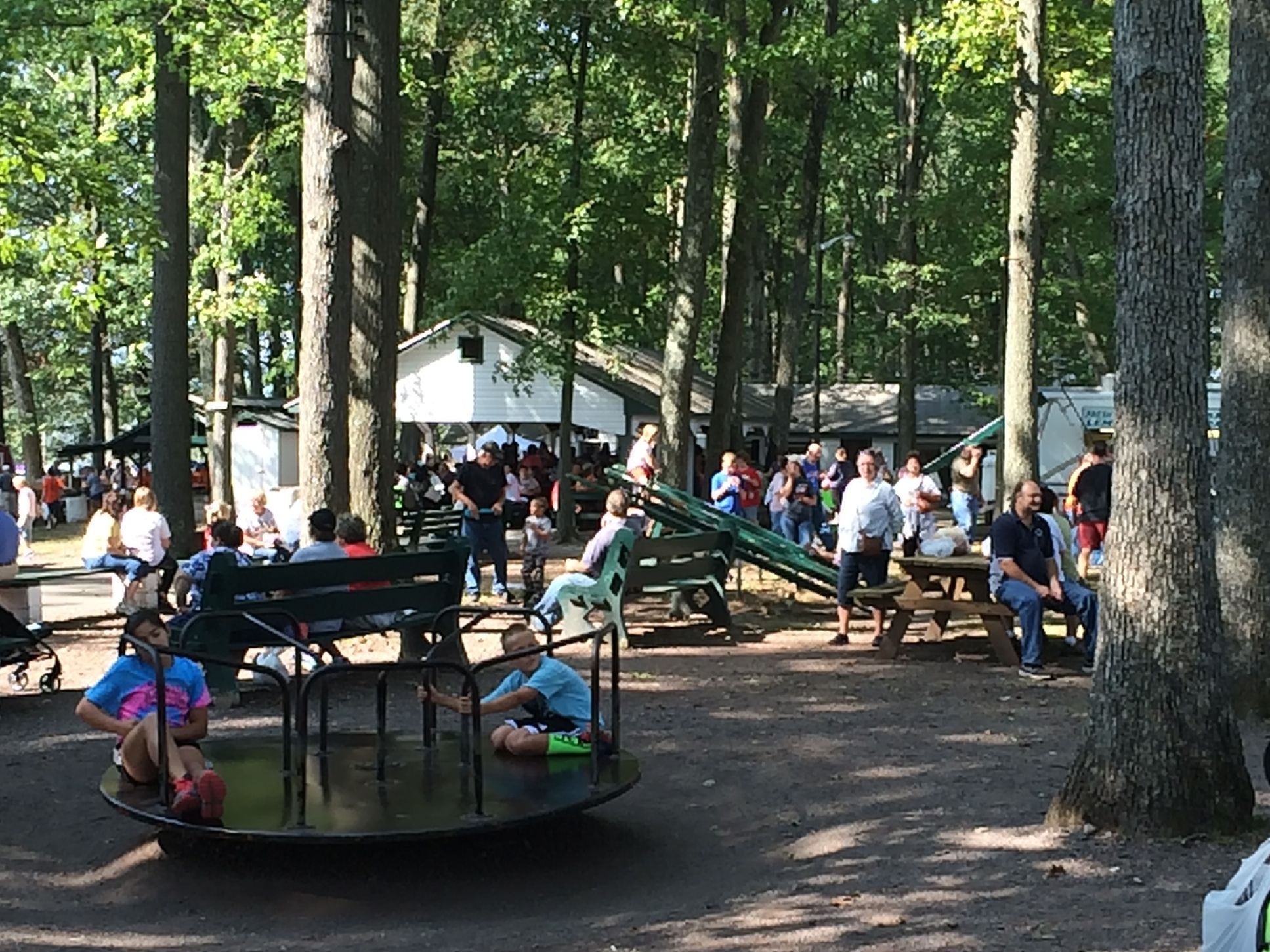
Speaking of the old-fashioned way of doing things, they have a playground with the kind of equipment I remember from my childhood.
Fun! And I guess they must not be litigious in that part of Pennsylvania. When I first saw the toys, I mentally gasped. Too many years of teaching, I guess. I still look for the hazards in areas with children. I’m glad I’m not responsible for them anymore – at least not in a way that I could be sued myself.
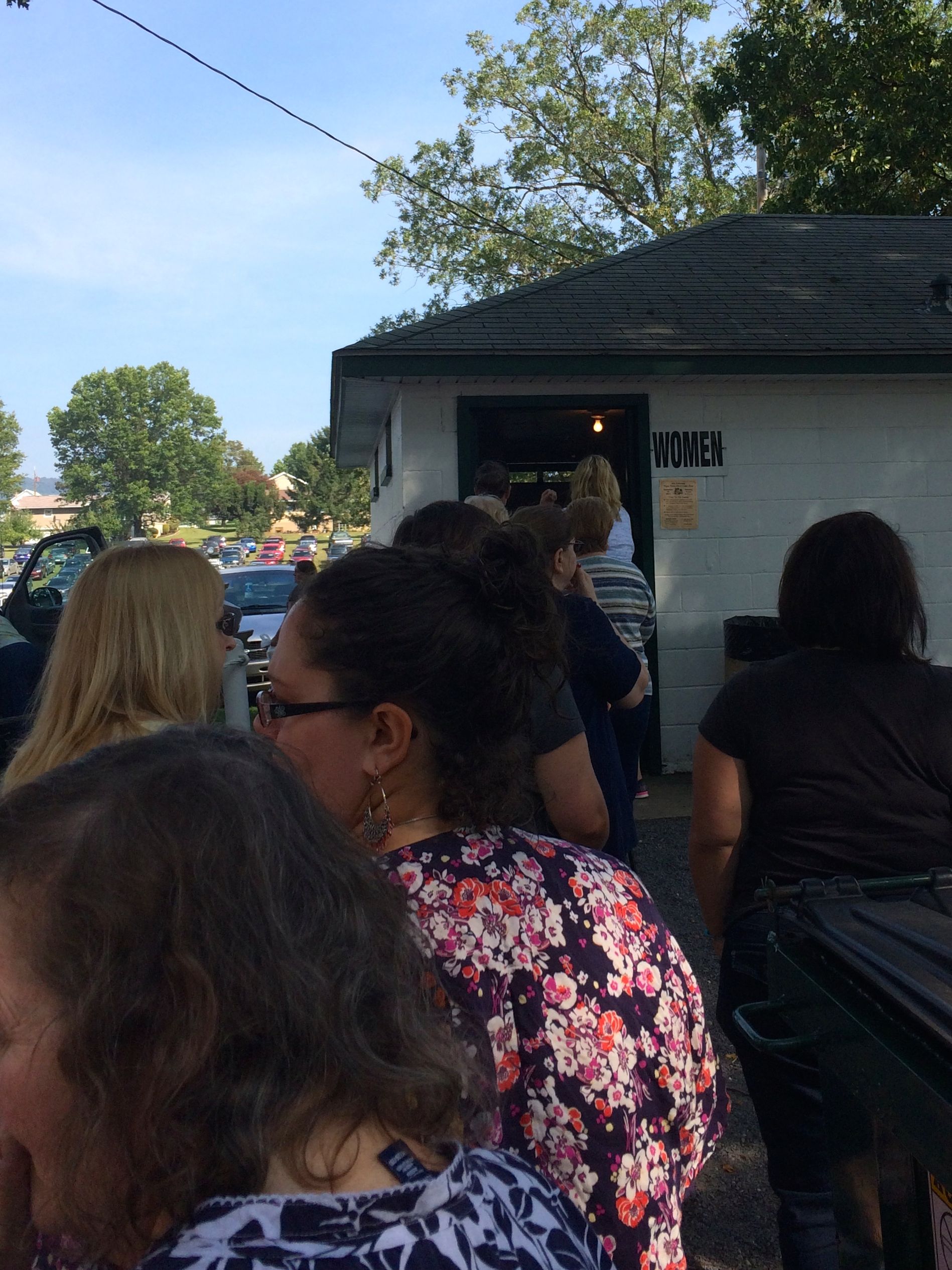
How about some potty parity?
When we had seen and bought all that we had come for, it was time for one last stop.
That afternoon, we ate in a restaurant that is a favorite of Barb, Sissy and Jeanine. And, I liked it too.
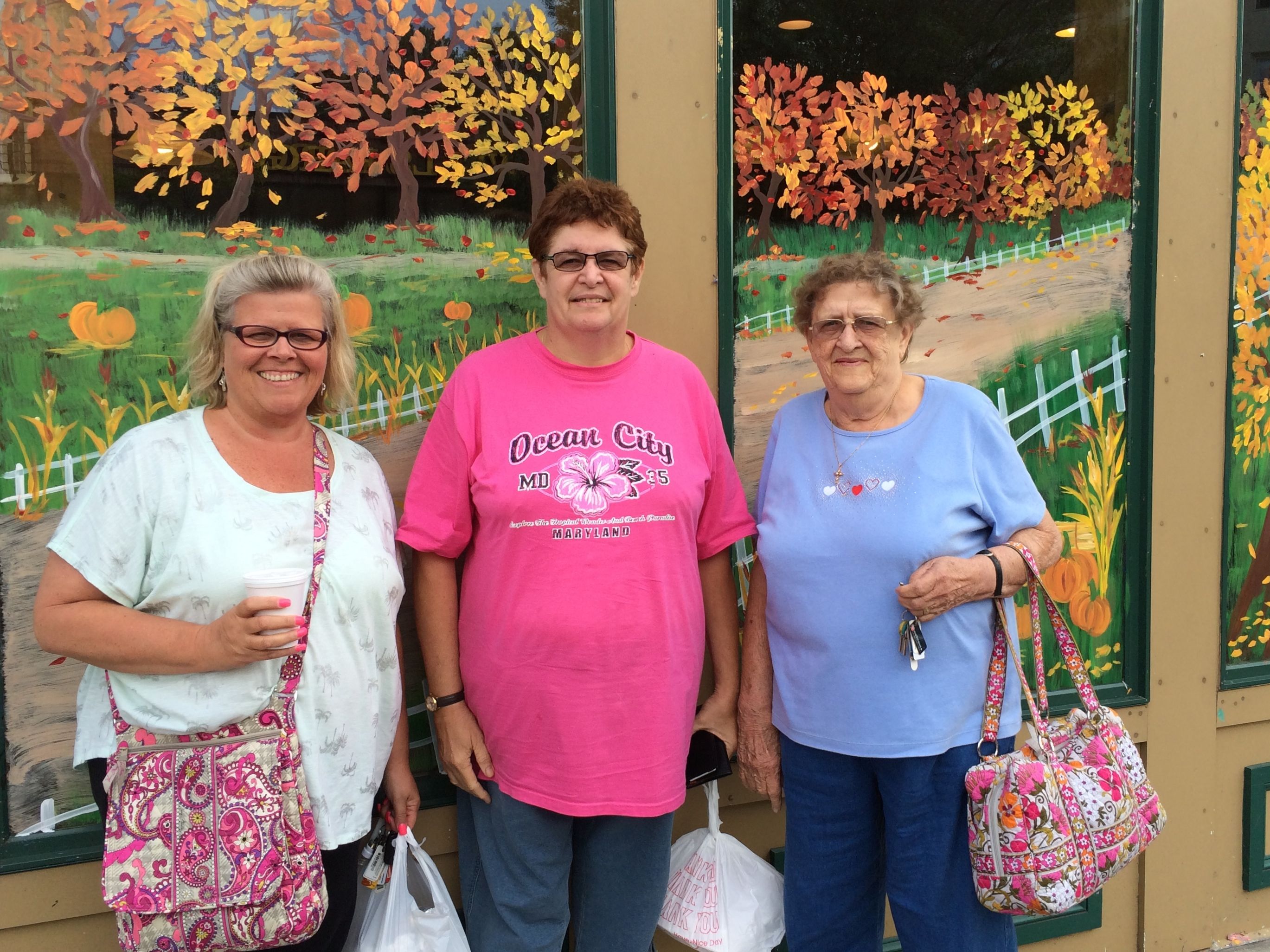
Jeanine, Barb and Sissy
The portions were huge! Look at the bags in their hands with the leftover containers. Jeanine went back to New Jersey and we went home.
The next day, it was time to hitch up and head out.
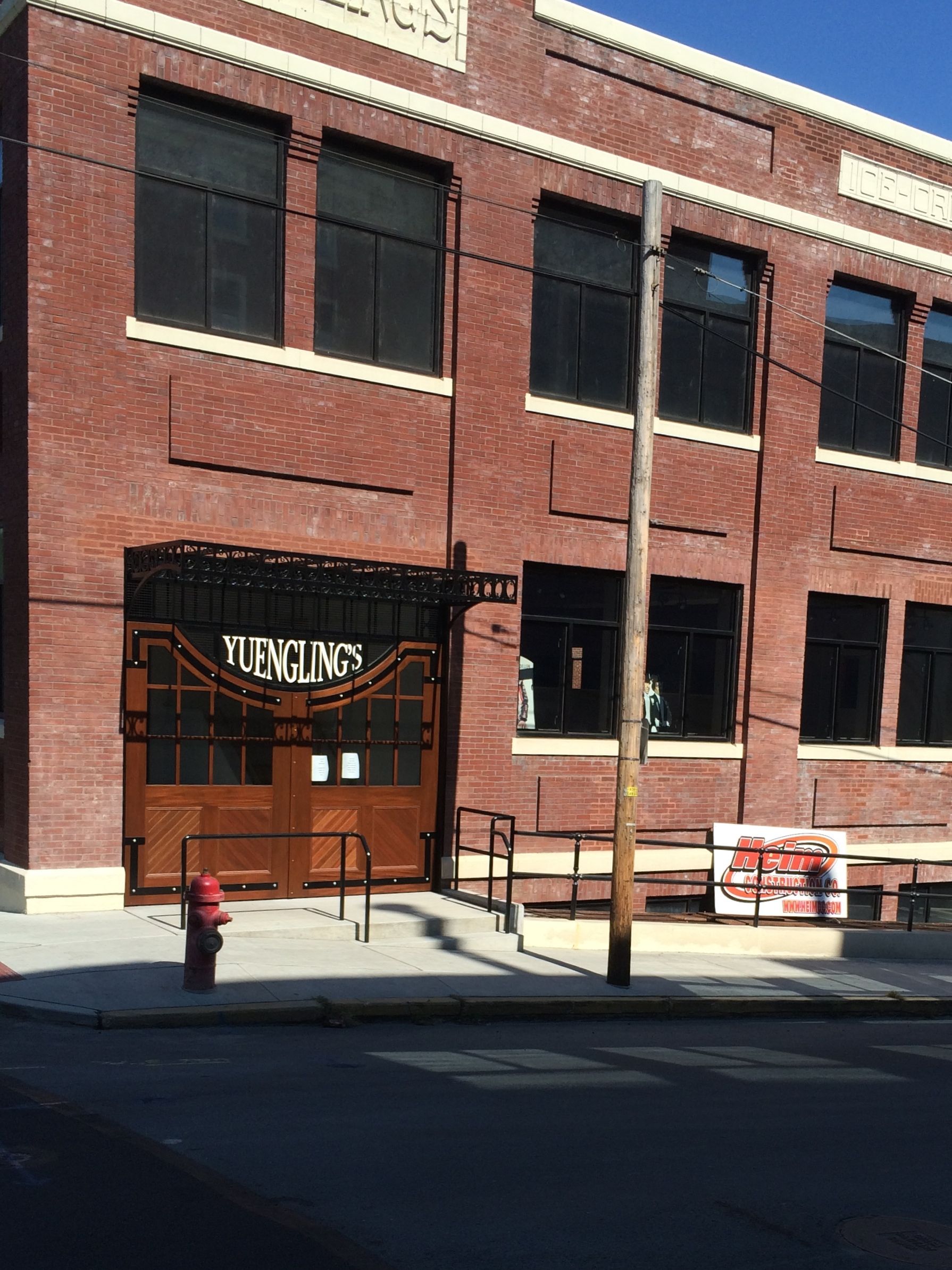
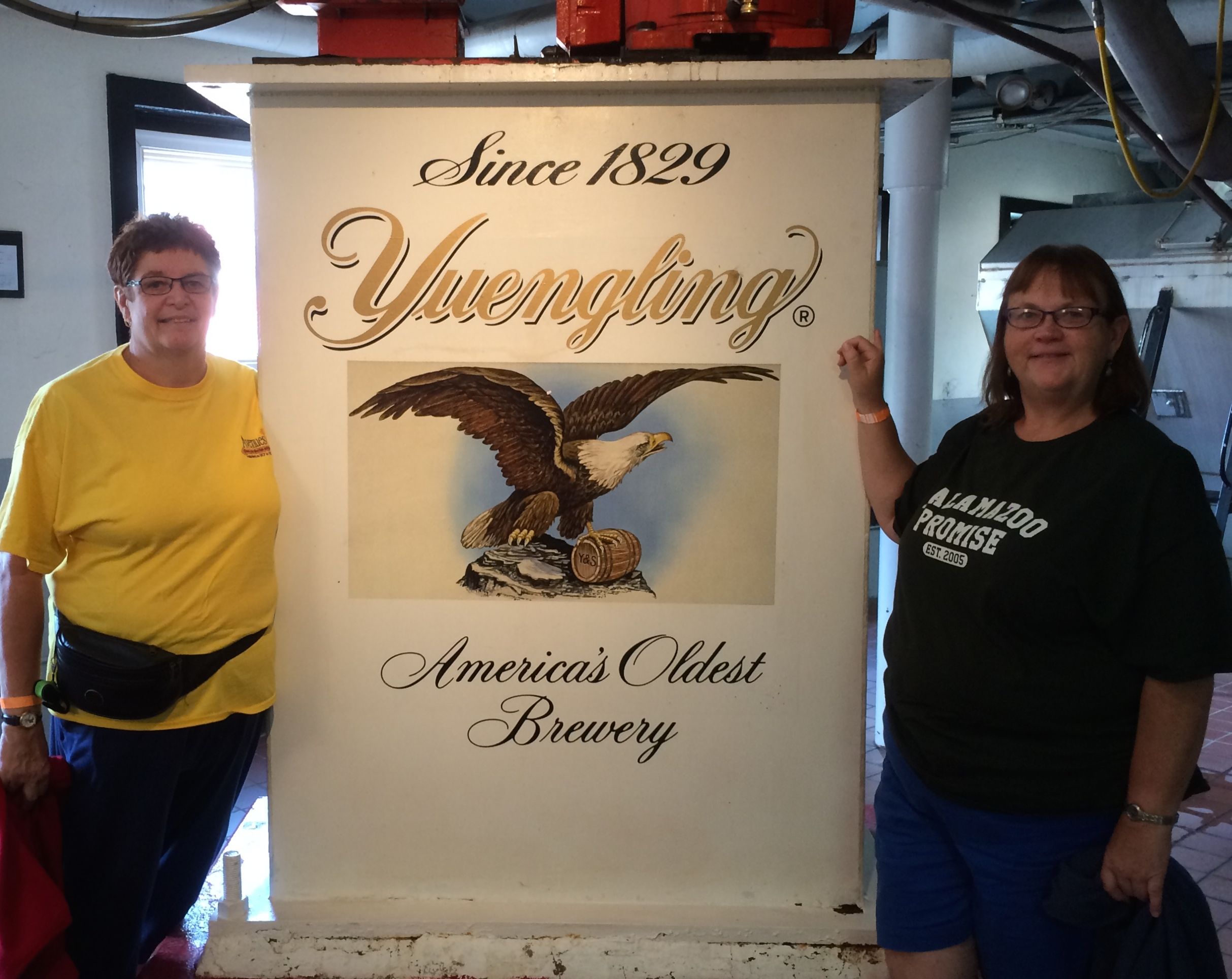
The oldest brewery in America, and one of the best factory tours I’ve ever taken – and I’ve taken a few.
The brewery was founded in 1829 in Pottsville, Pennsylvania, and has been a family business ever since. In fact, the current owner, Dick Yuengling, met us at the door as we were coming in.
Enter through the gift shop
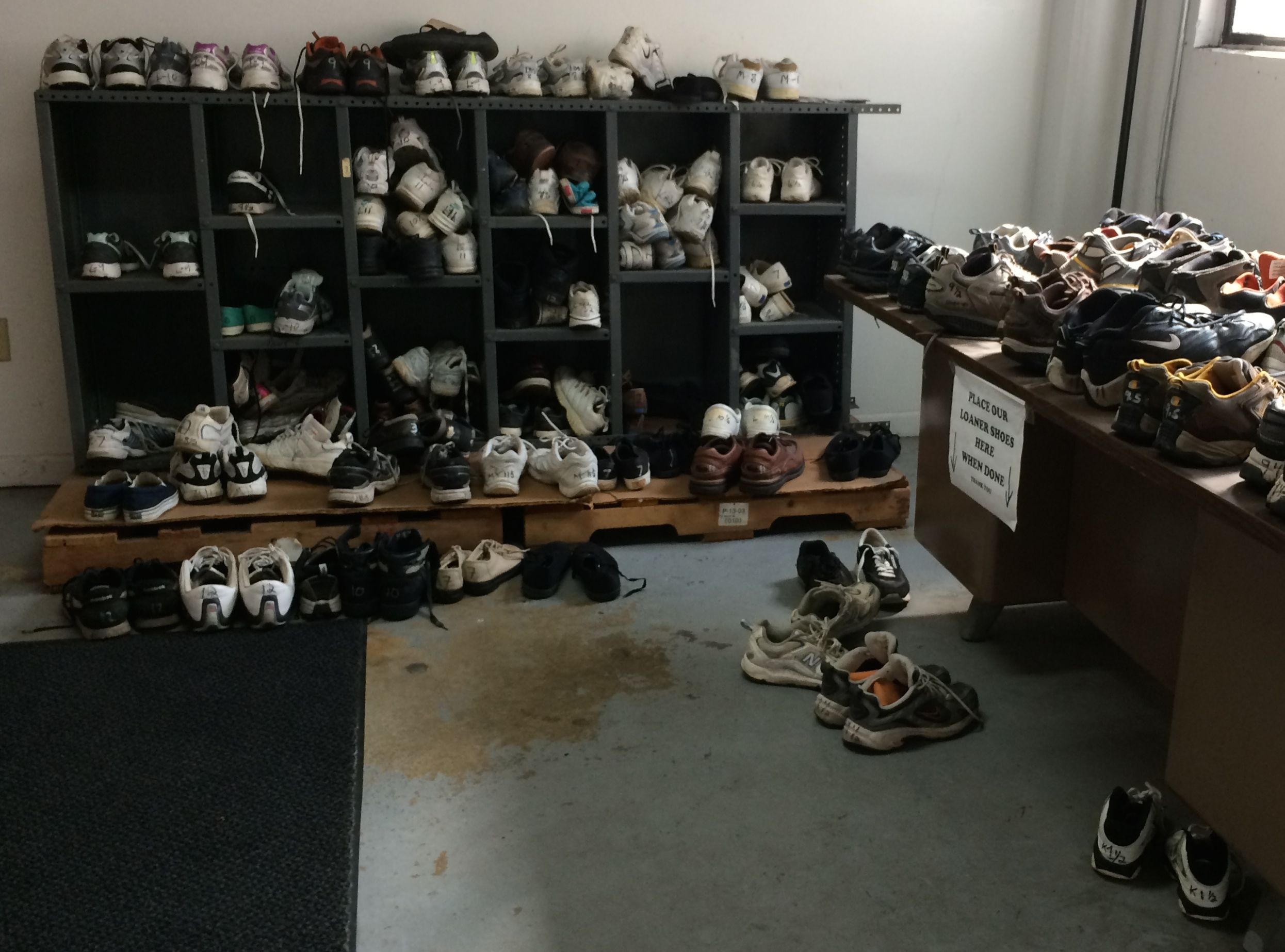
As with any factory tour, you have to wear closed toed shoes. However, if you came in sandals, they have shoes for you to borrow. I’m glad I wore my sneakers.
Loaner shoes
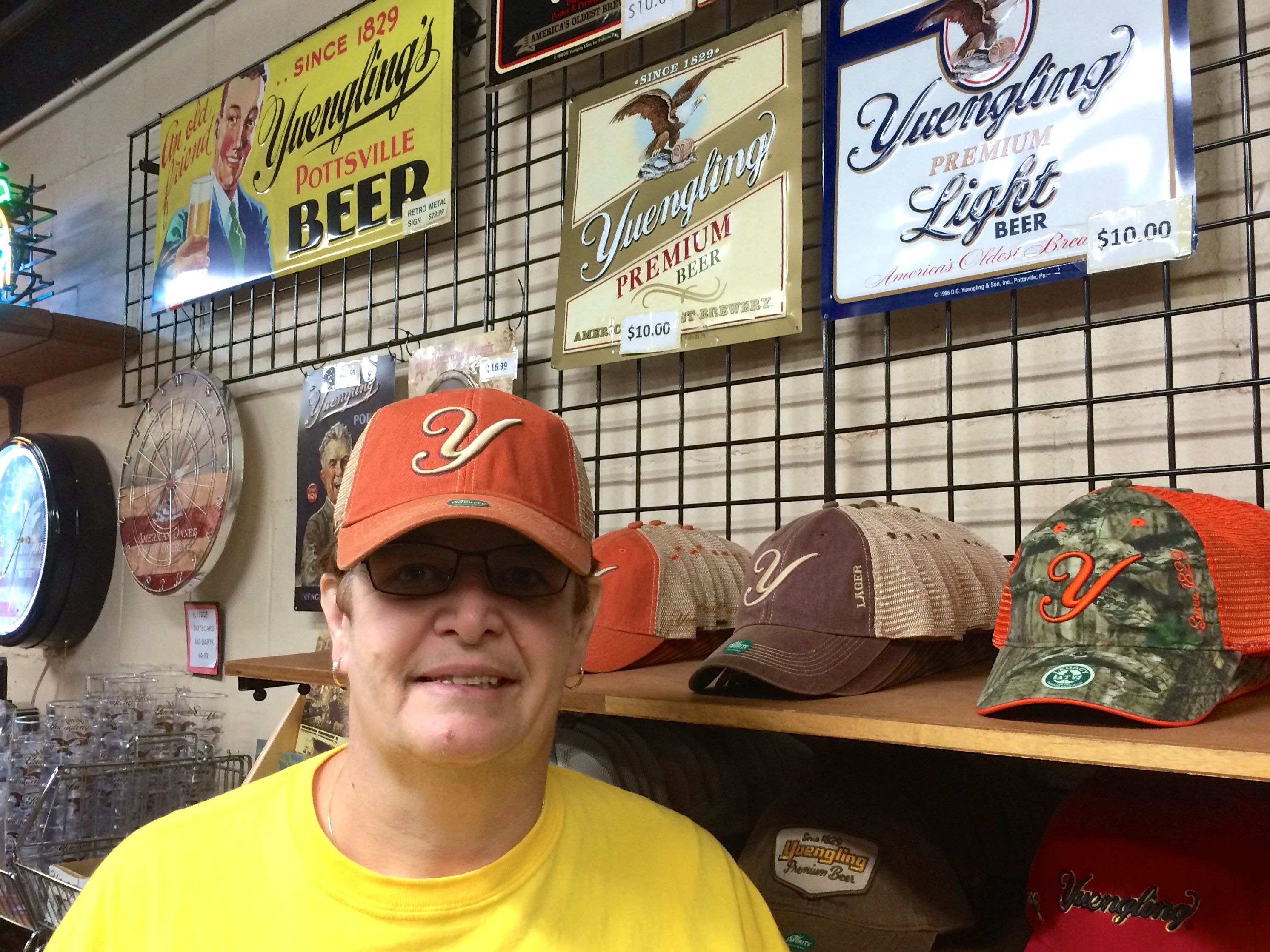
While we waited for our FREE tour to state, we looked at the souvenirs.
Y in a Y hat
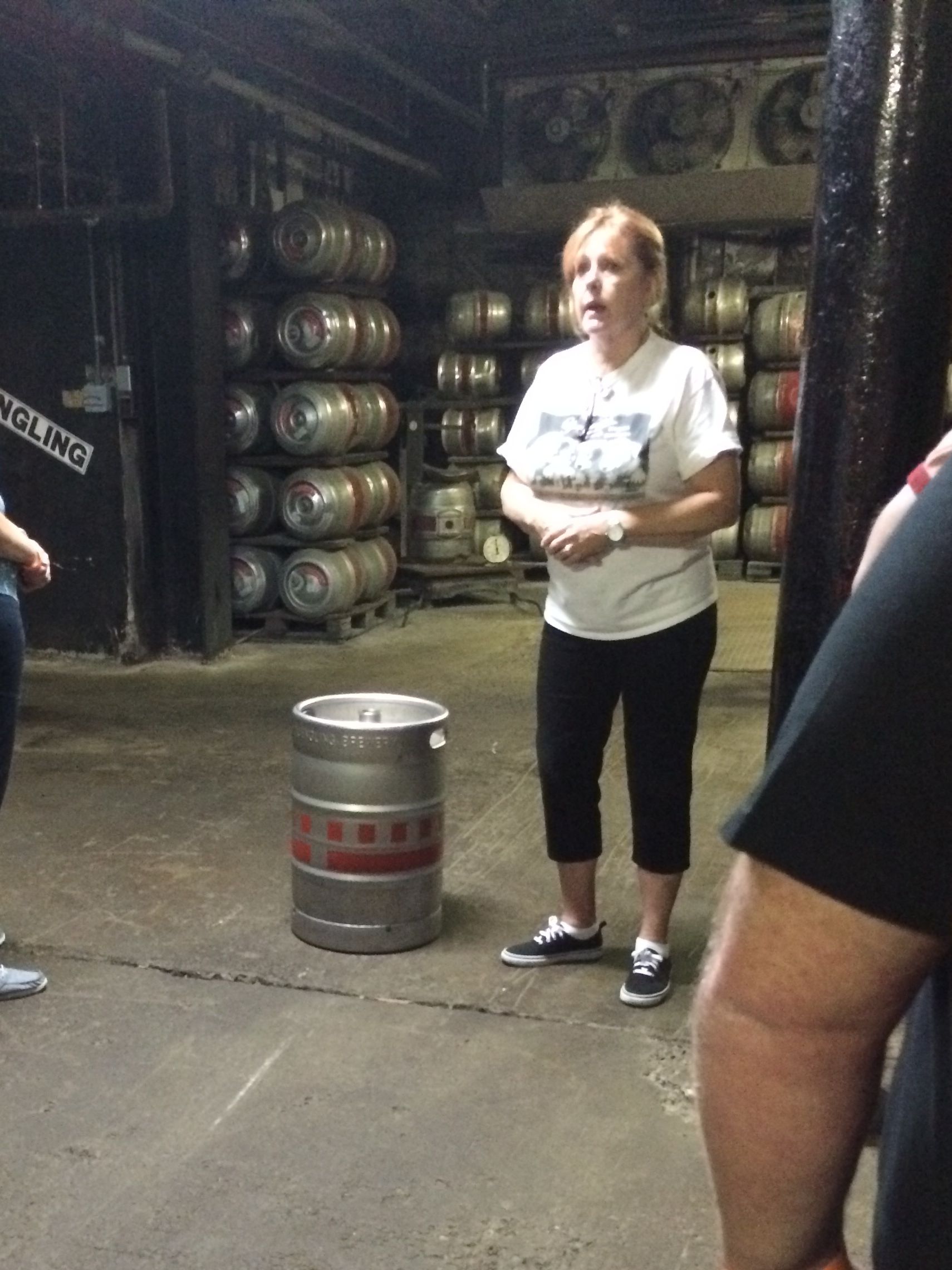
We met our tour guide, Sharon, and she took us to the first stop on our tour, the rack room.
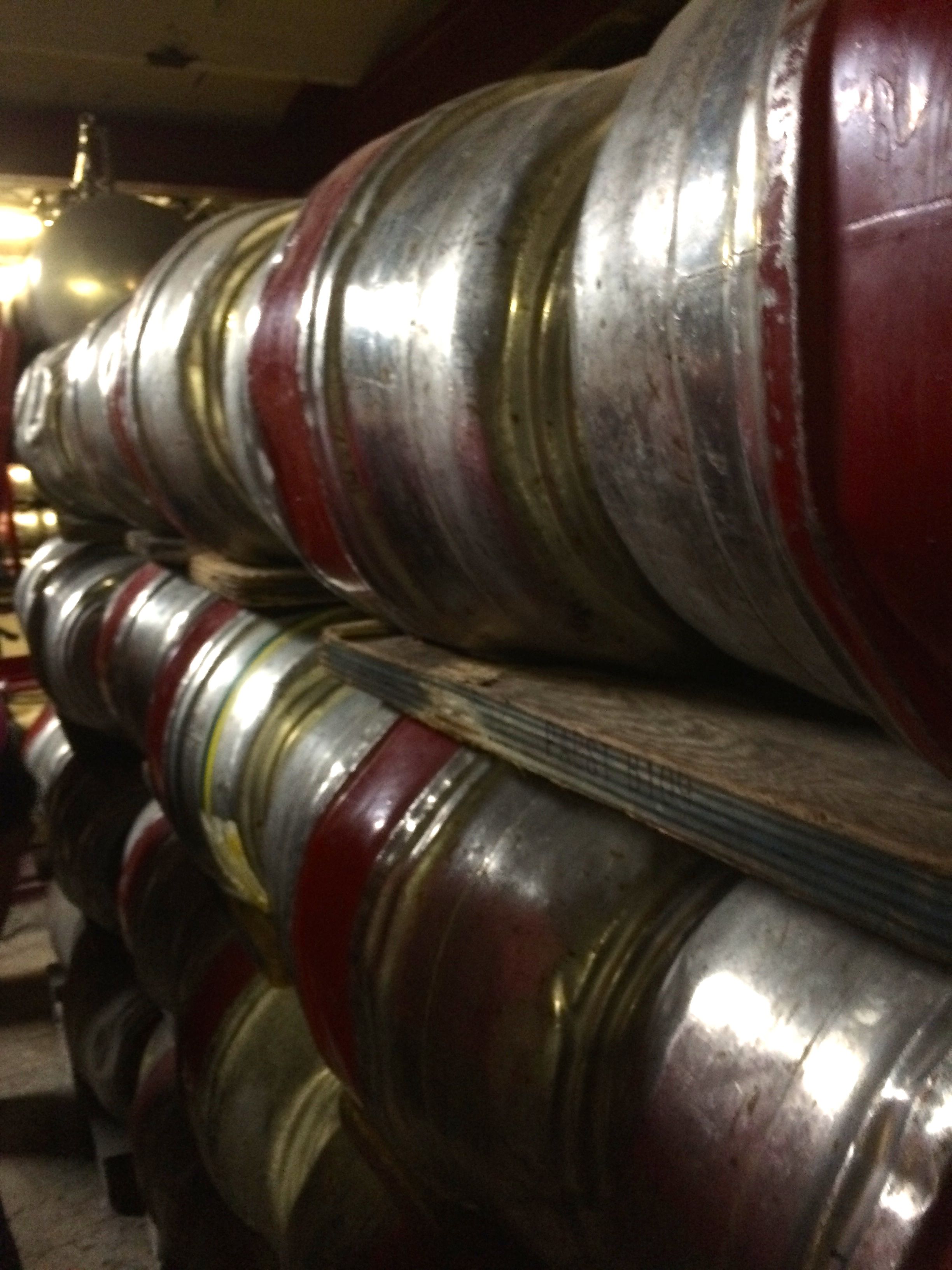
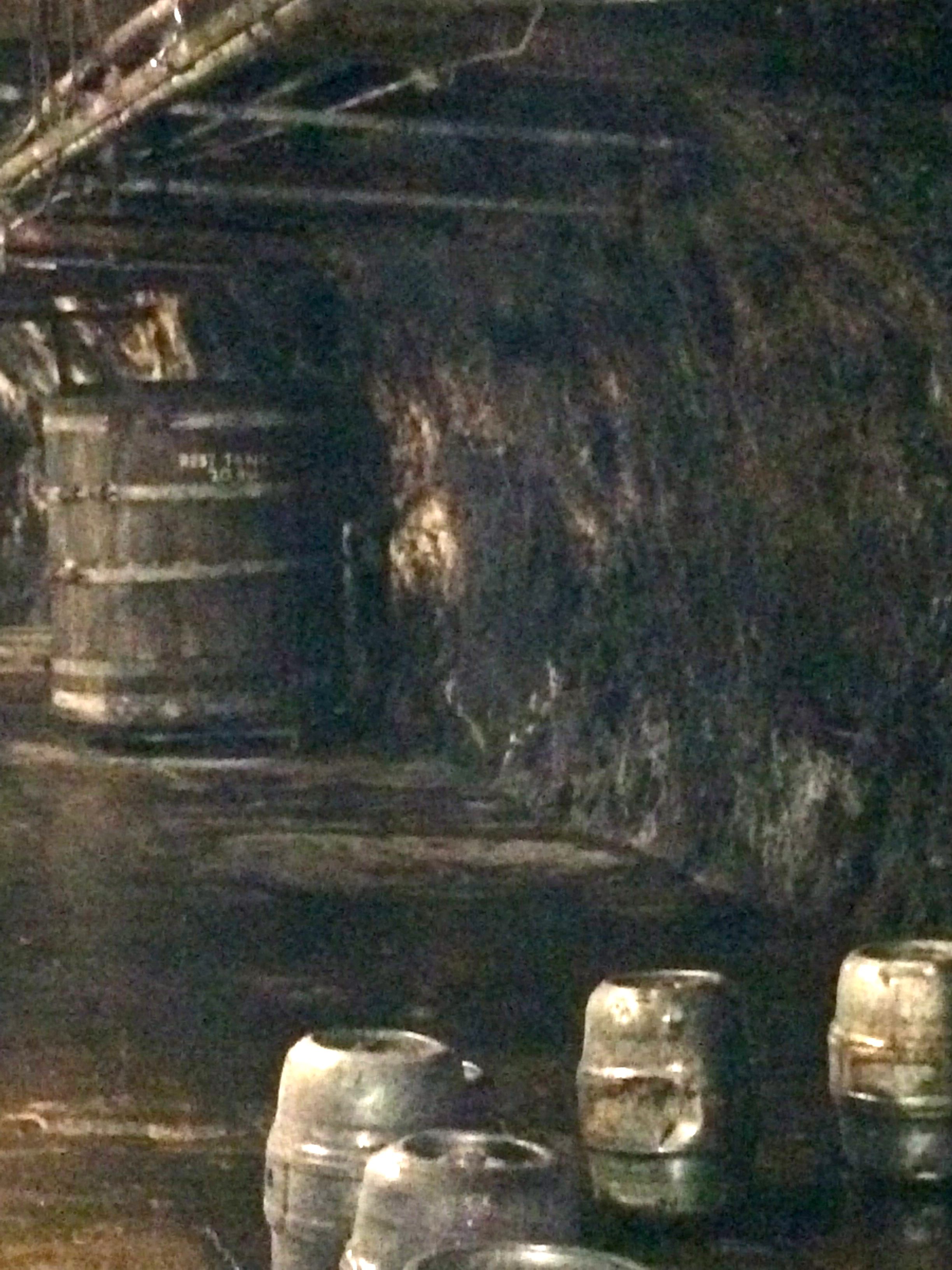
Racking room with old-style kegs
Back in the day, there was a team of four guys who used to fill the kegs. They would take turns bringing the empty kegs, positioning them, filling them, hammering in the bungs and then hoisting them on to the racks where they would sit until they were shipped out.
It sounds like they worked like a well-oiled machine, until real well-oiled machines took over.
Sharon, the tour guide, with a modern kegOld wooden vat in the cave
The cave was hand hewn and provided natural refrigeration. It was in the 50s down there. As Sharon said, “This was the original man cave.”
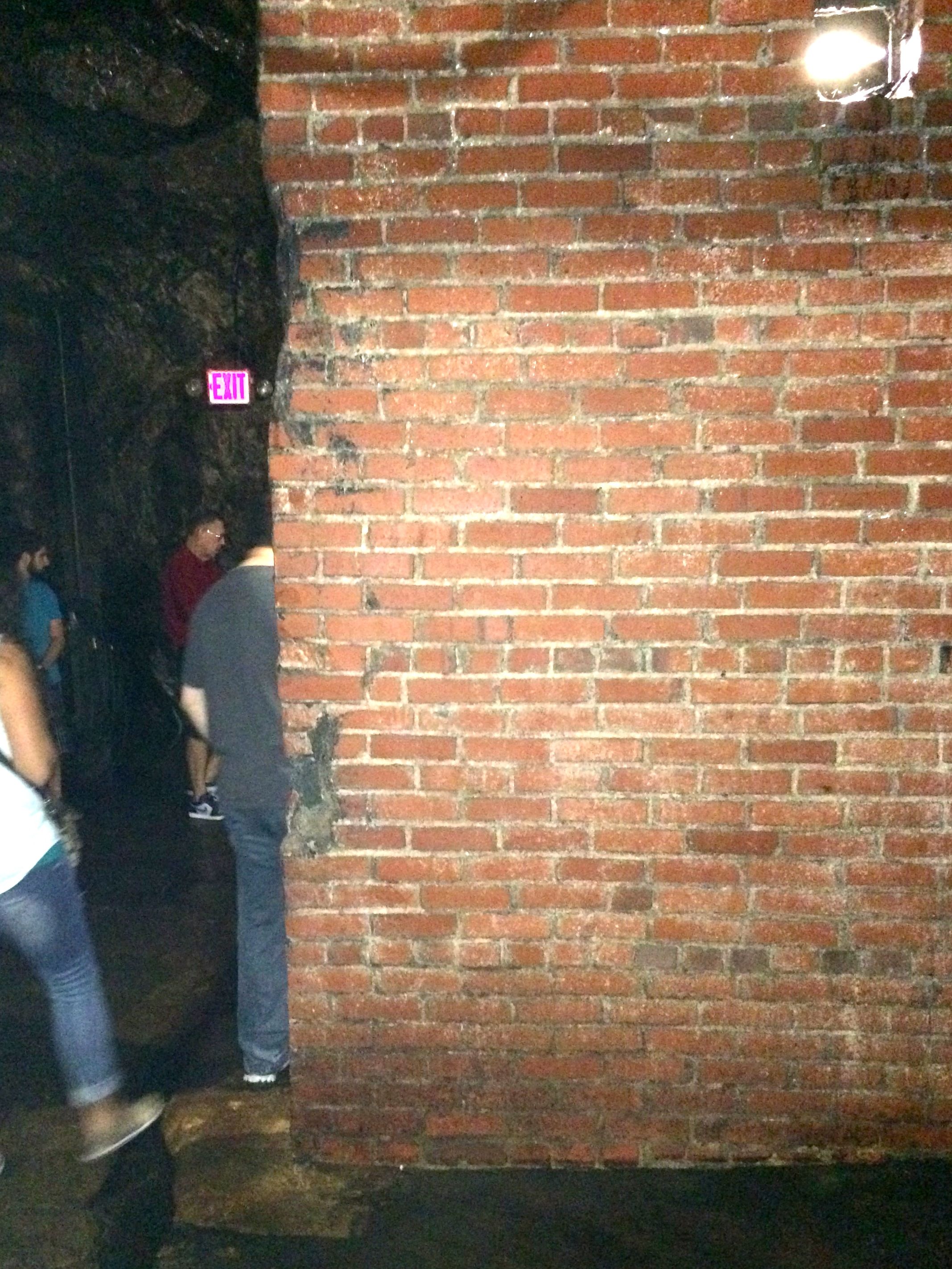
1920 brick wall
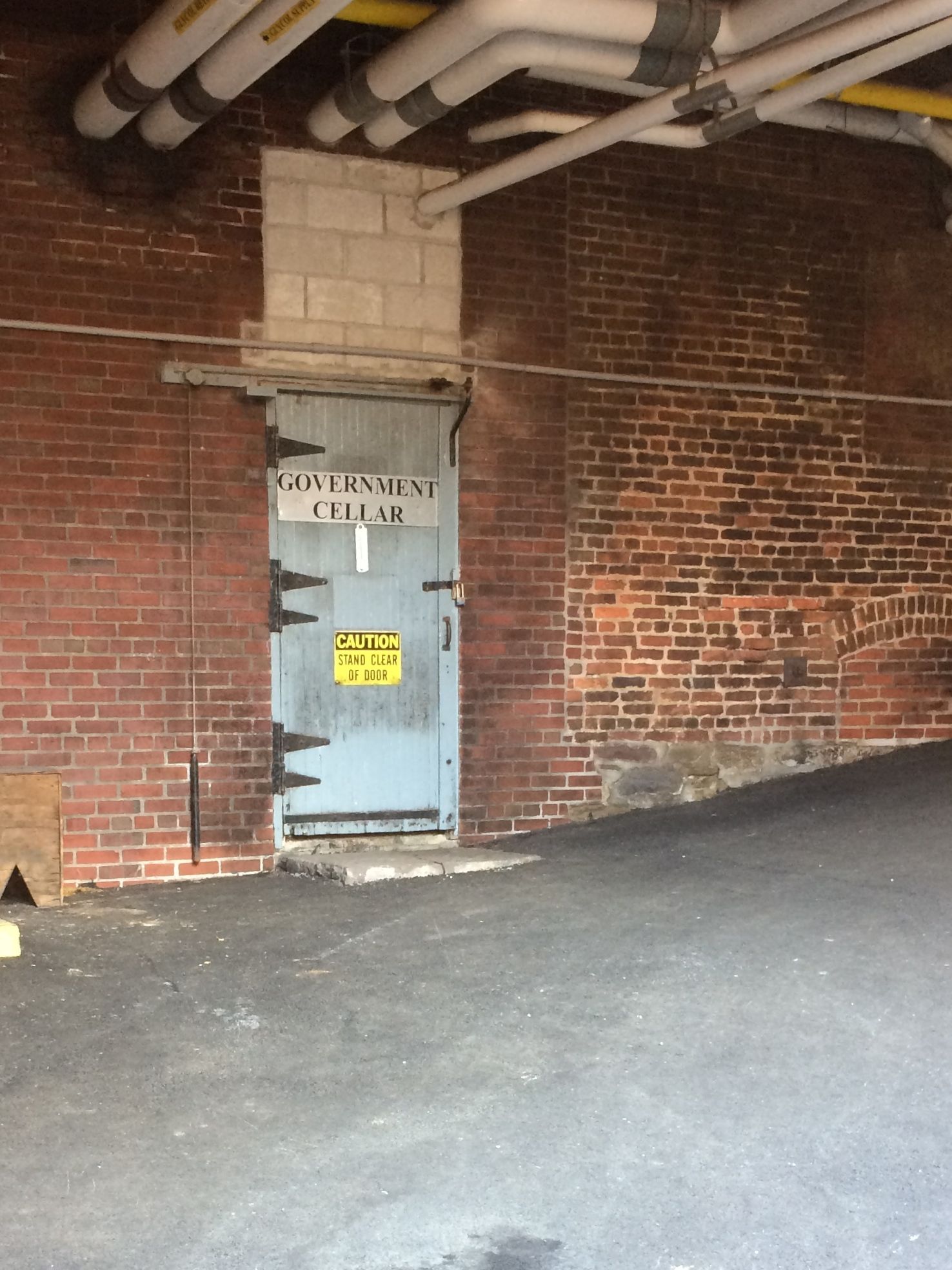
Almost a century of brewing came to a screeching halt in 1920, with the beginning of prohibition. The federal government sent worked to brick up the cellar, and part of the wall remains.
The Yuenglings are a thrifty lot, as hands-on business owners are. They reused the wood from the old vats to make display cabinets in the gift shop.
What to do during prohibition? Well, they did make some beer. Interestingly, pregnant women and nursing mothers could still get beer, and beer was available by prescription through a pharmacist. I think pretzels were still available over the counter.
They also started another business. They made ice cream.
Yuengling Ice Cream plant
It was in business from 1920 – 1985. Recently, though, it was reintroduced. Sharon didn’t touch much on the ice cream. For her, it was all about the beer.
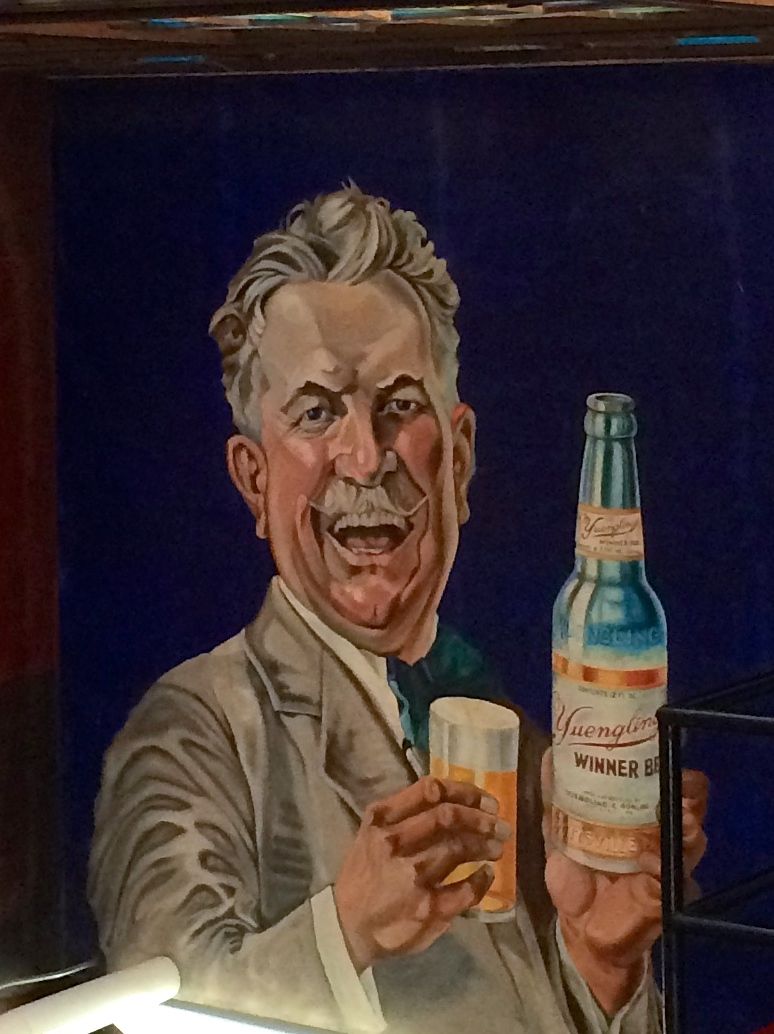
Winner!
This painting was the day prohibition ended.
Meter room for taxing purposes
On the way to the brewing room, we passed the cellar where all the beer is measured and taxed. The taxes are applied before it is sold, so they have to be careful not to spill any.
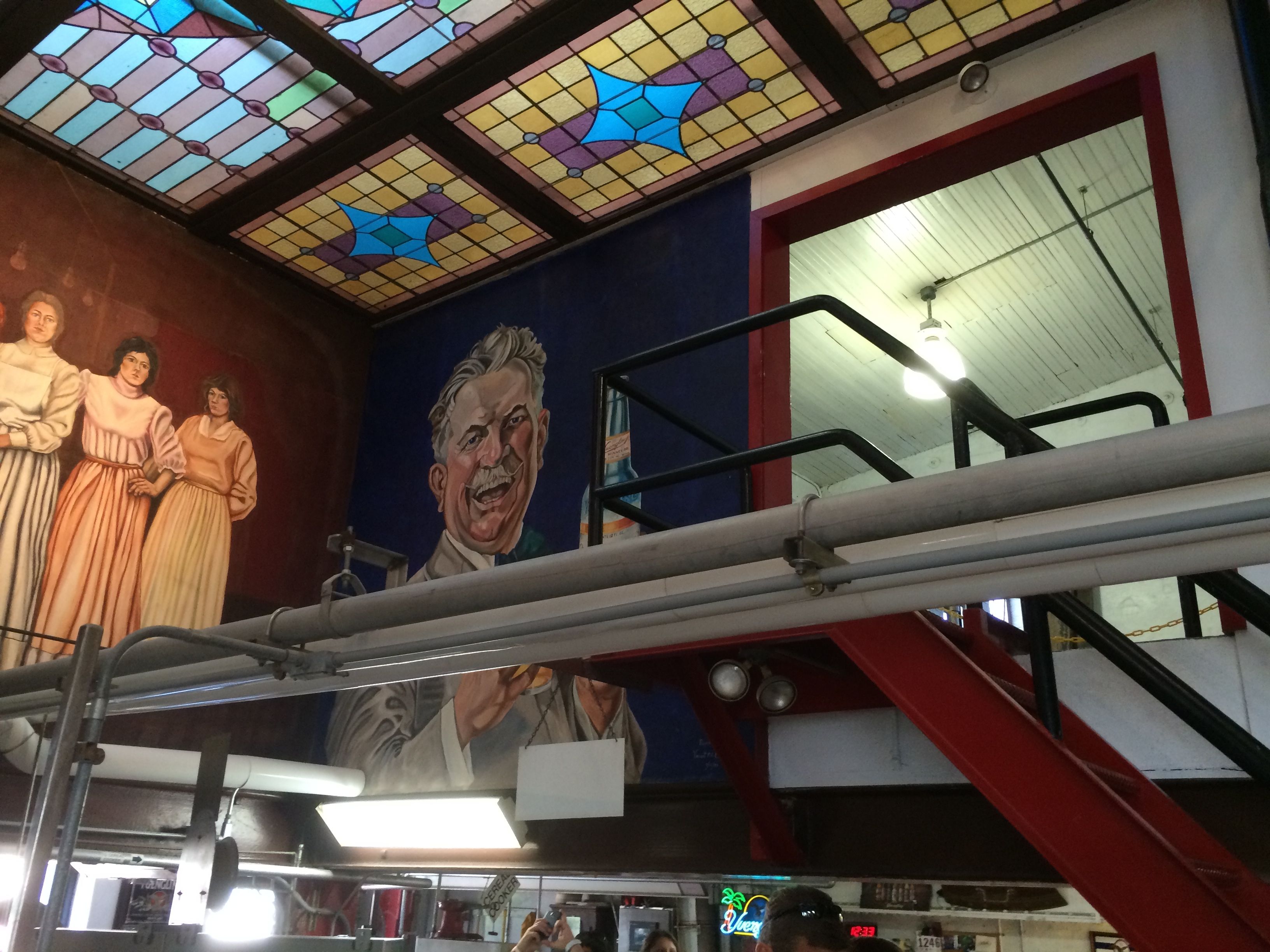
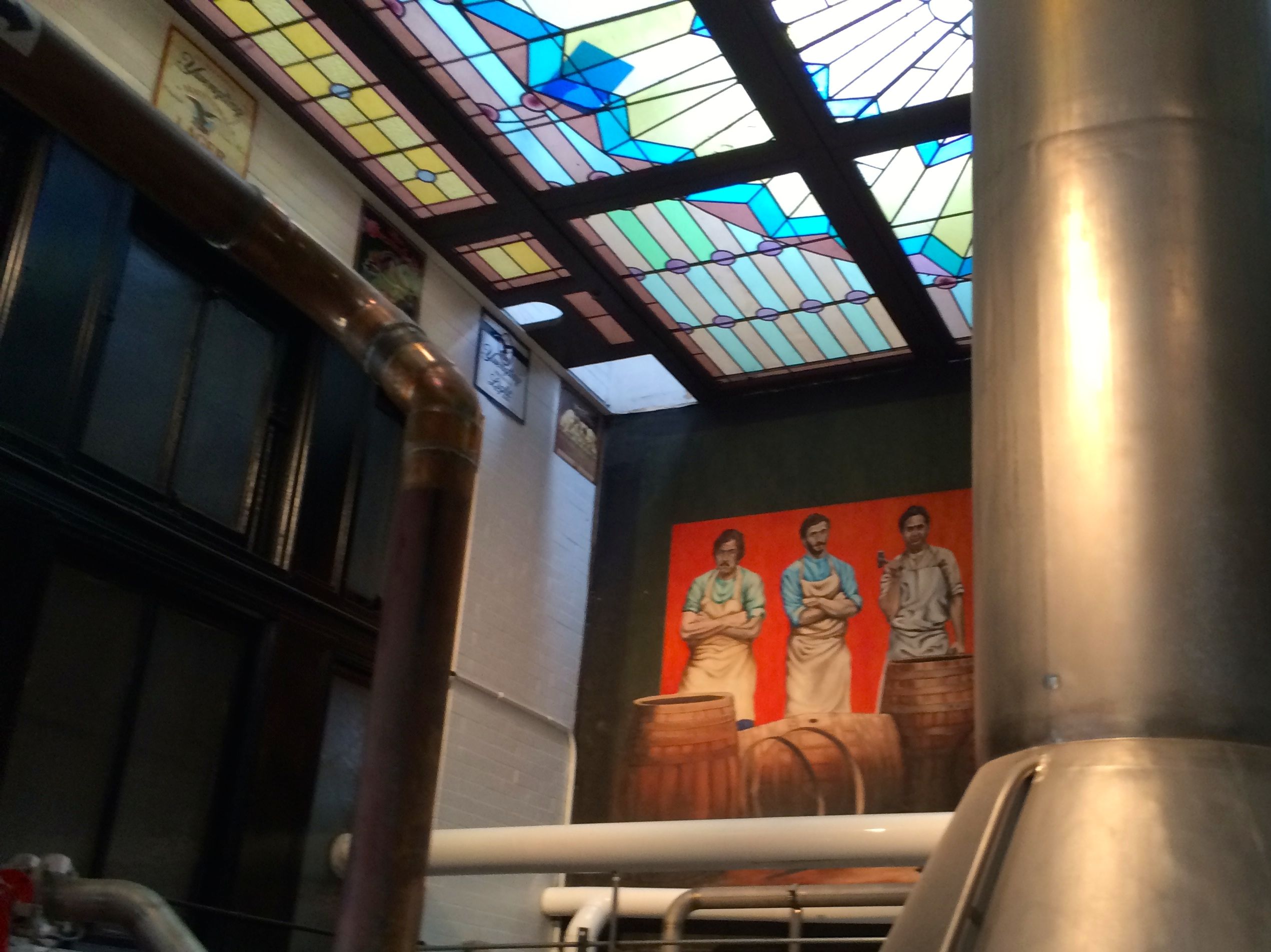
Stained glass ceiling
They have a stained glass ceiling over the brewing kettles. It’s there to keep the sun coming in from the skylight from hurting the workers’ eyes. It was made in 1881.
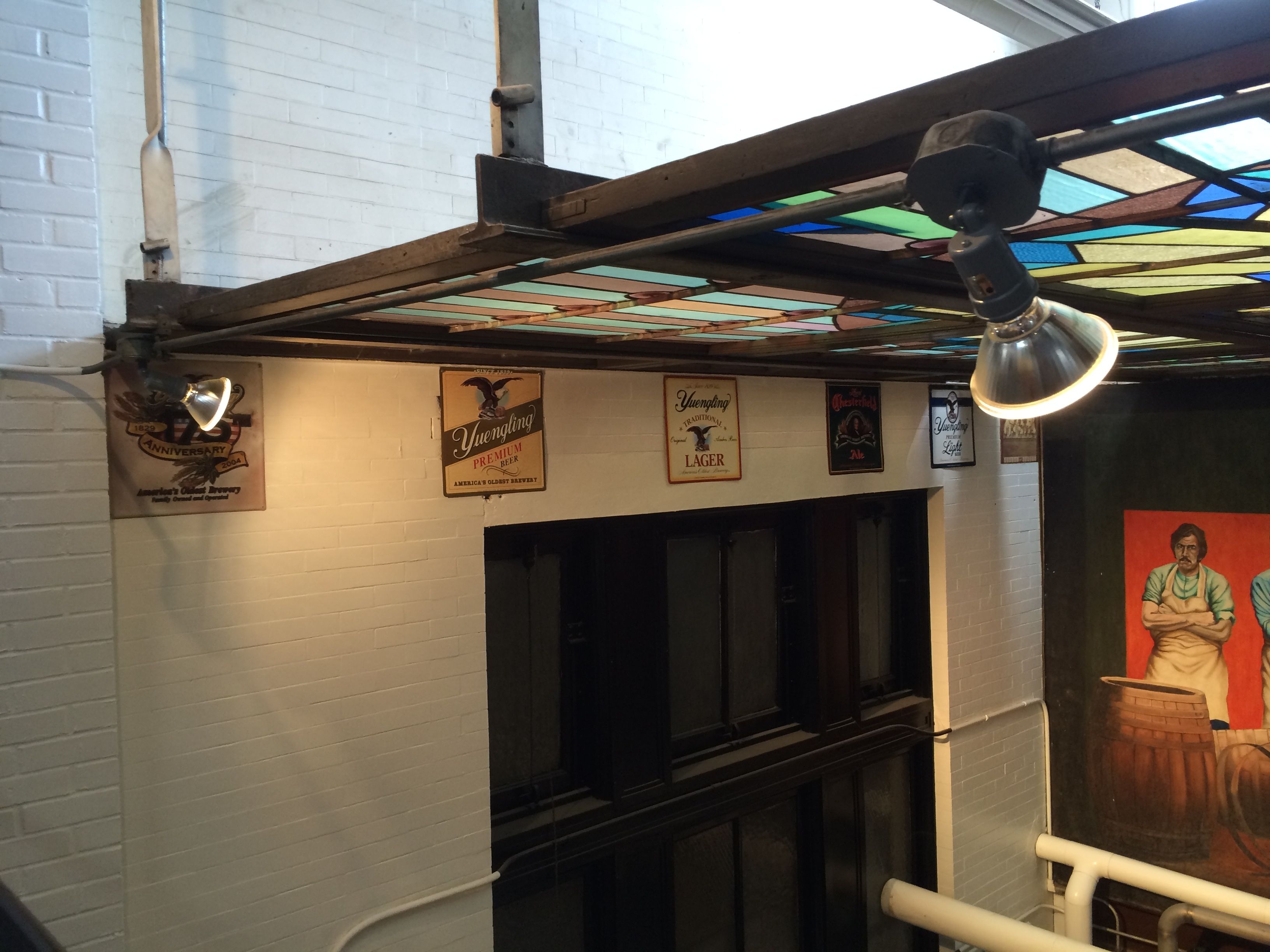
Stained glass window suspended under the skylight
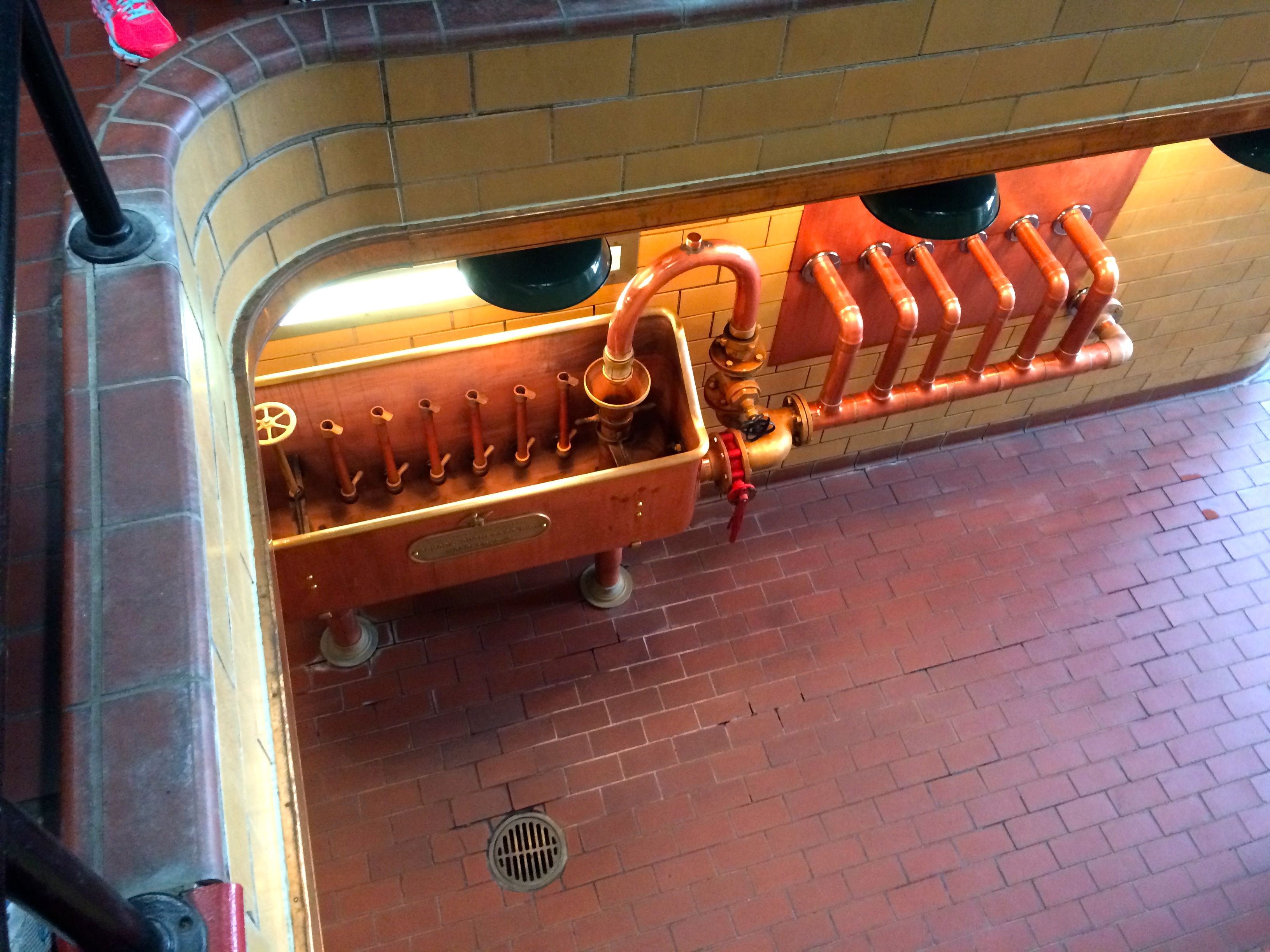
In the old days, all the kettles and tubs and such were made from copper. It was a point of pride to keep the copper bright and shiny.
Copper remnants from the old days
Can you imagine how bright a whole room full of copper would look at high noon on a sunny day?
They weren’t brewing the day we visited, but we could still get the idea of how all the ingredients came together.
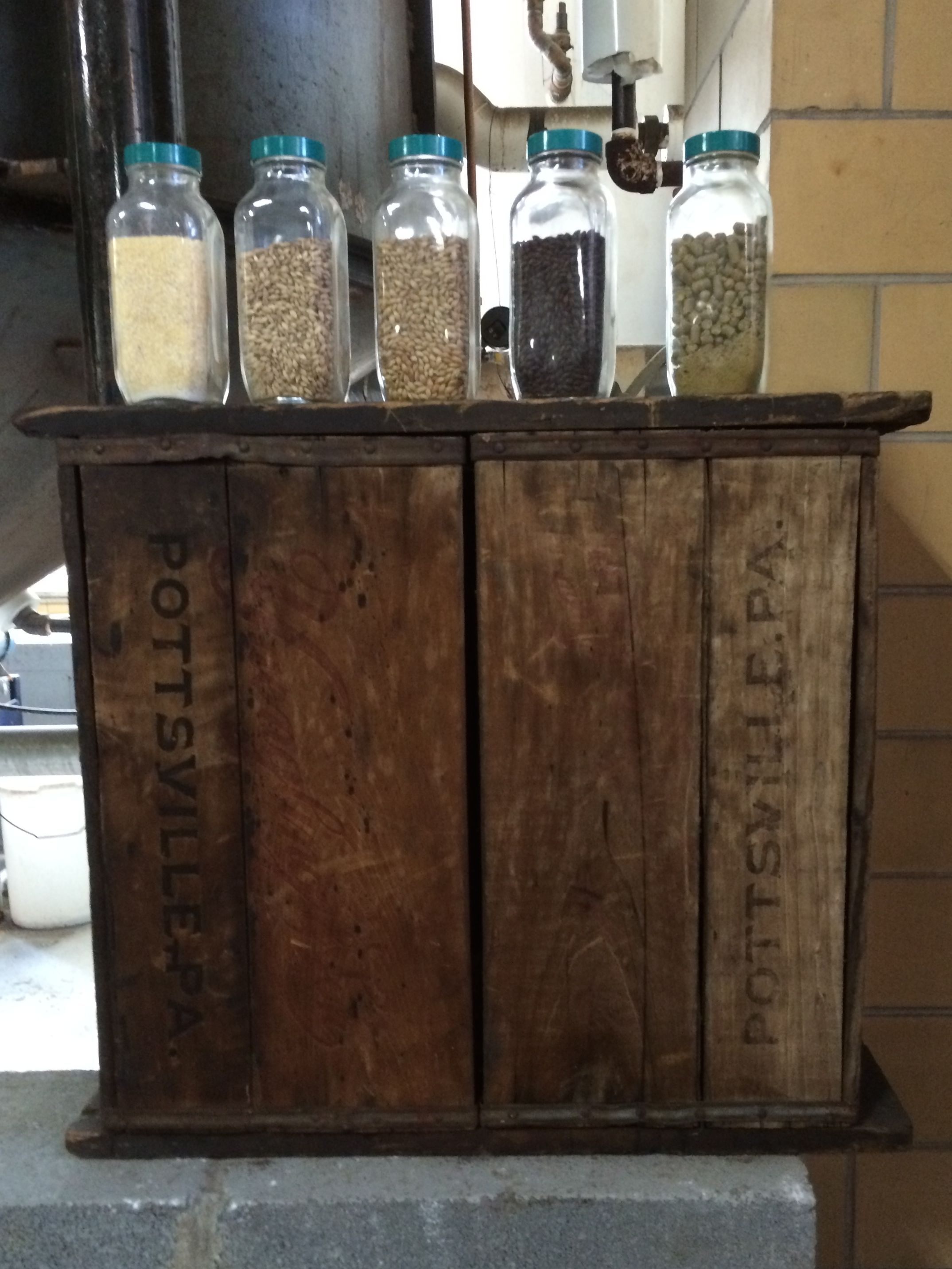
Ingredients
Corn grits, malted barley of different flavors and hops. Their hops come from Washington State.
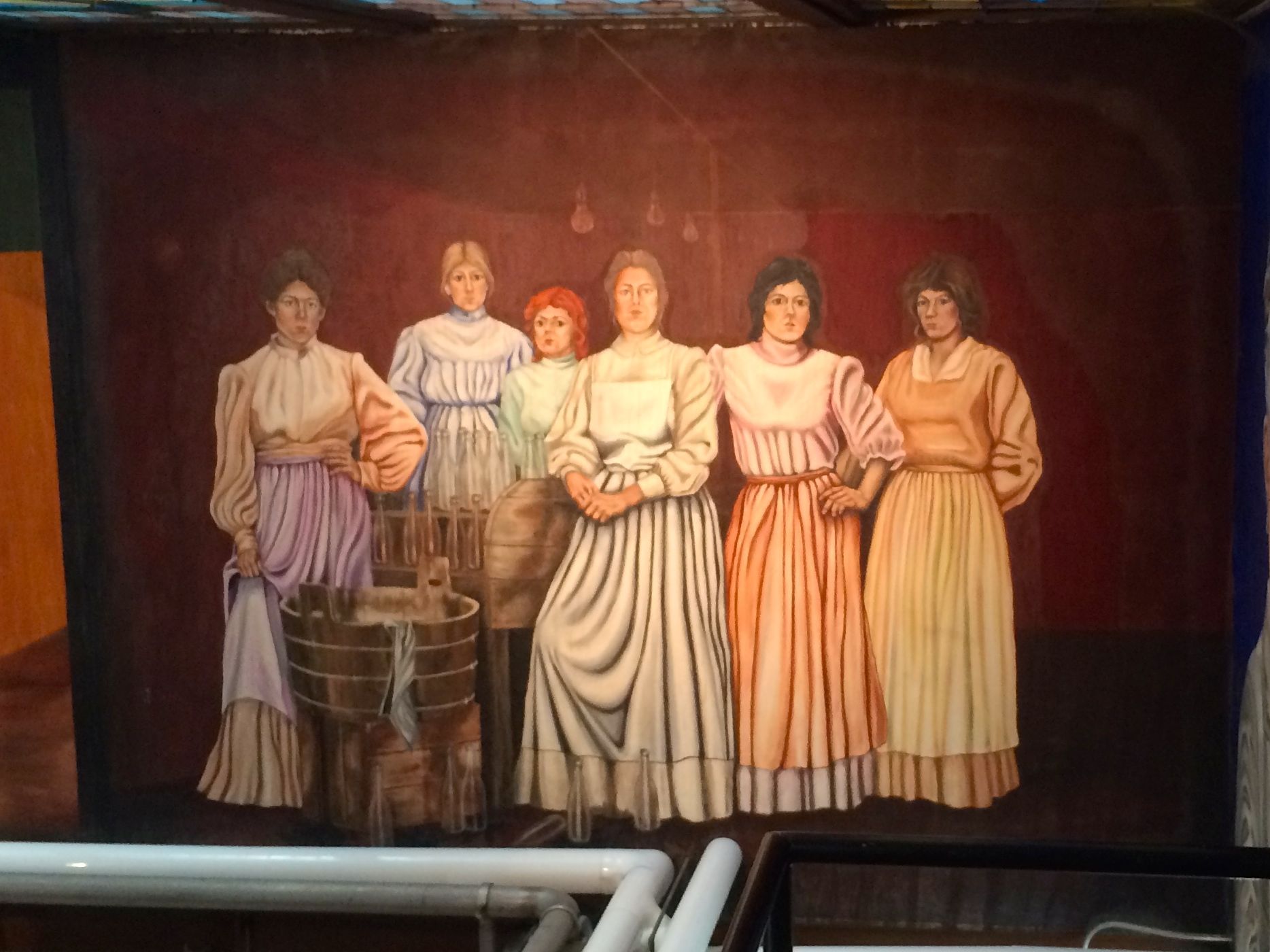
Murals of the coopers
The bottle washers didn’t look too happy. Sharon told us that it was a particularly hot and unpleasant job. Now a-days, machines take care of the dirty work.
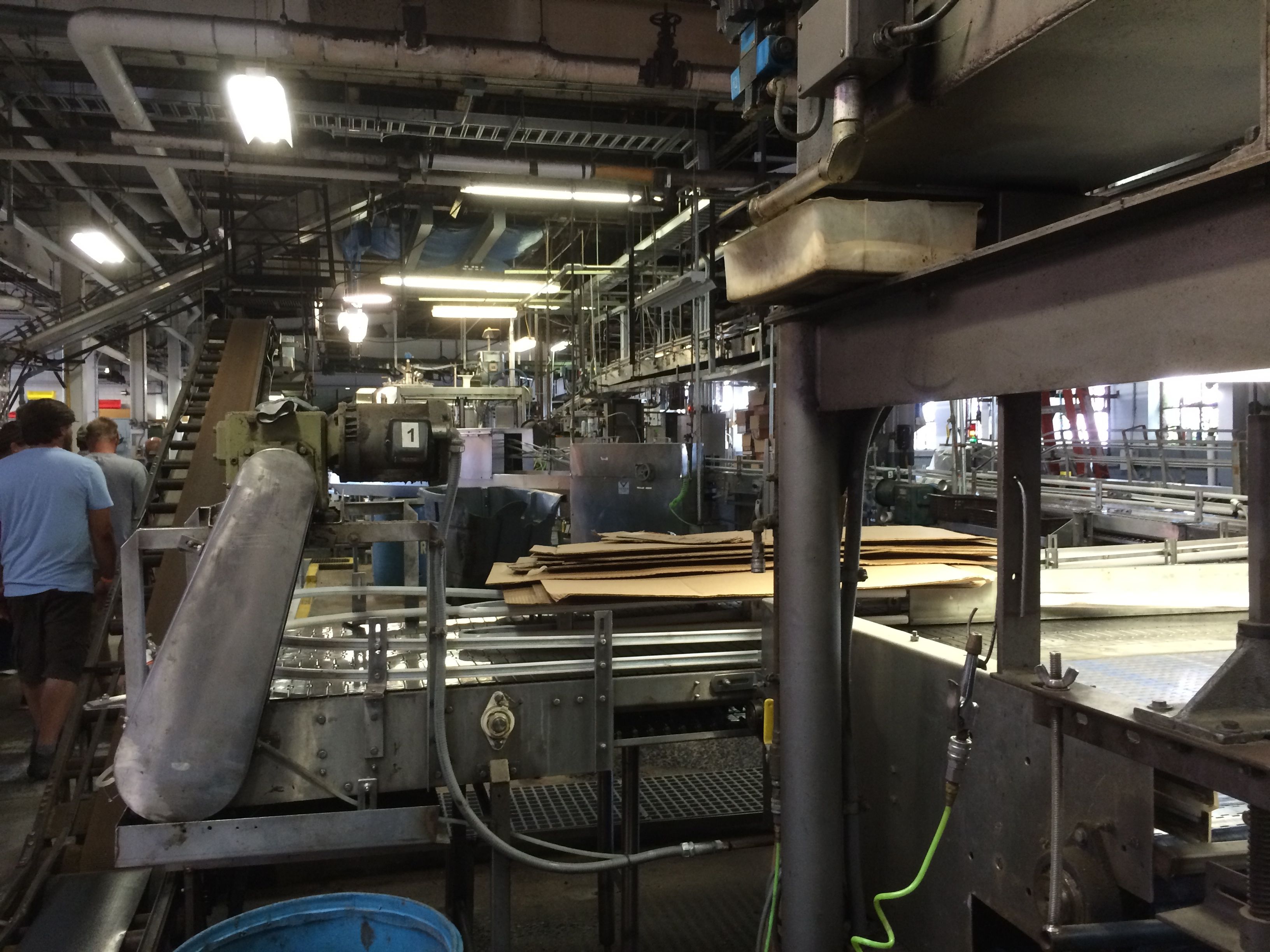
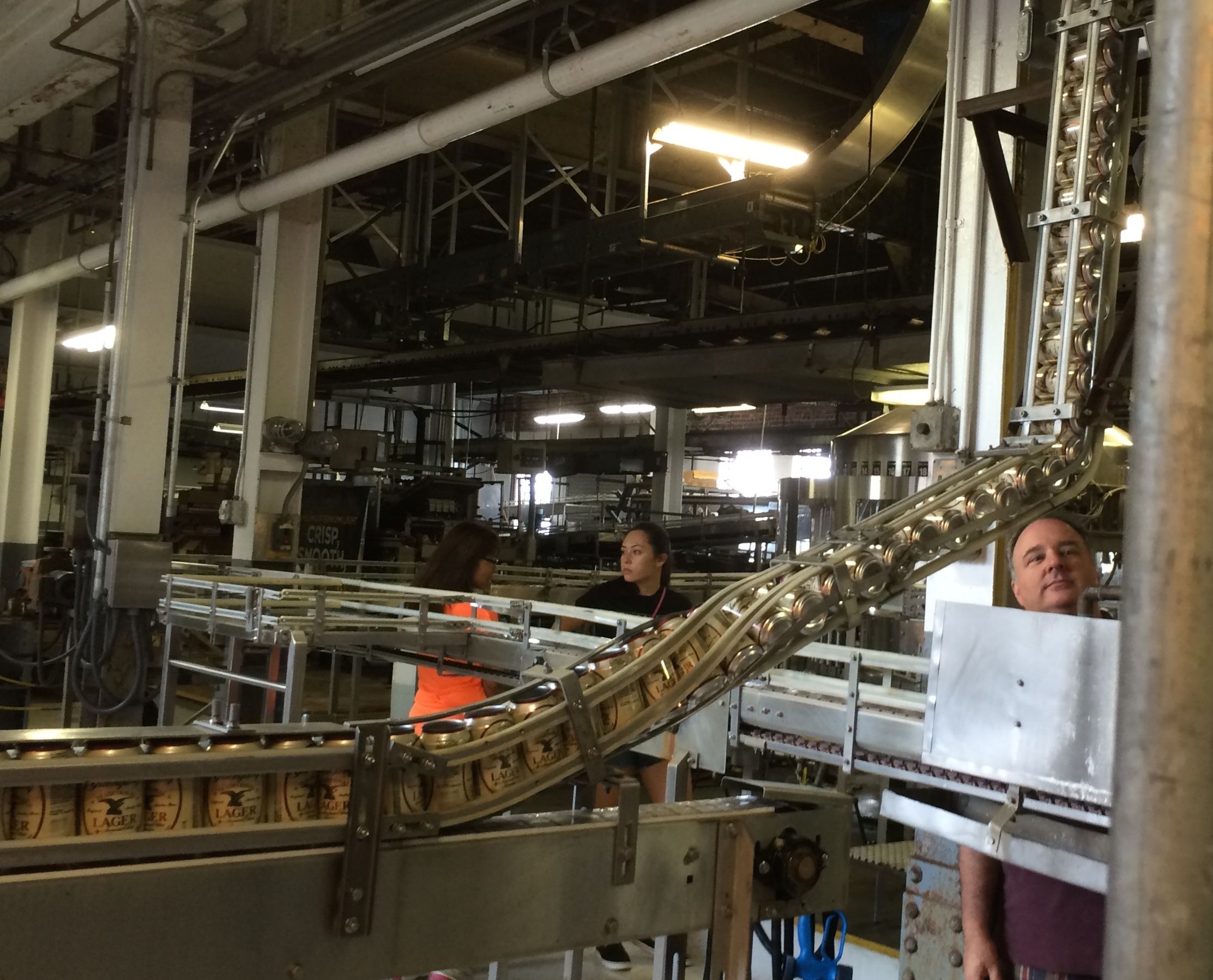
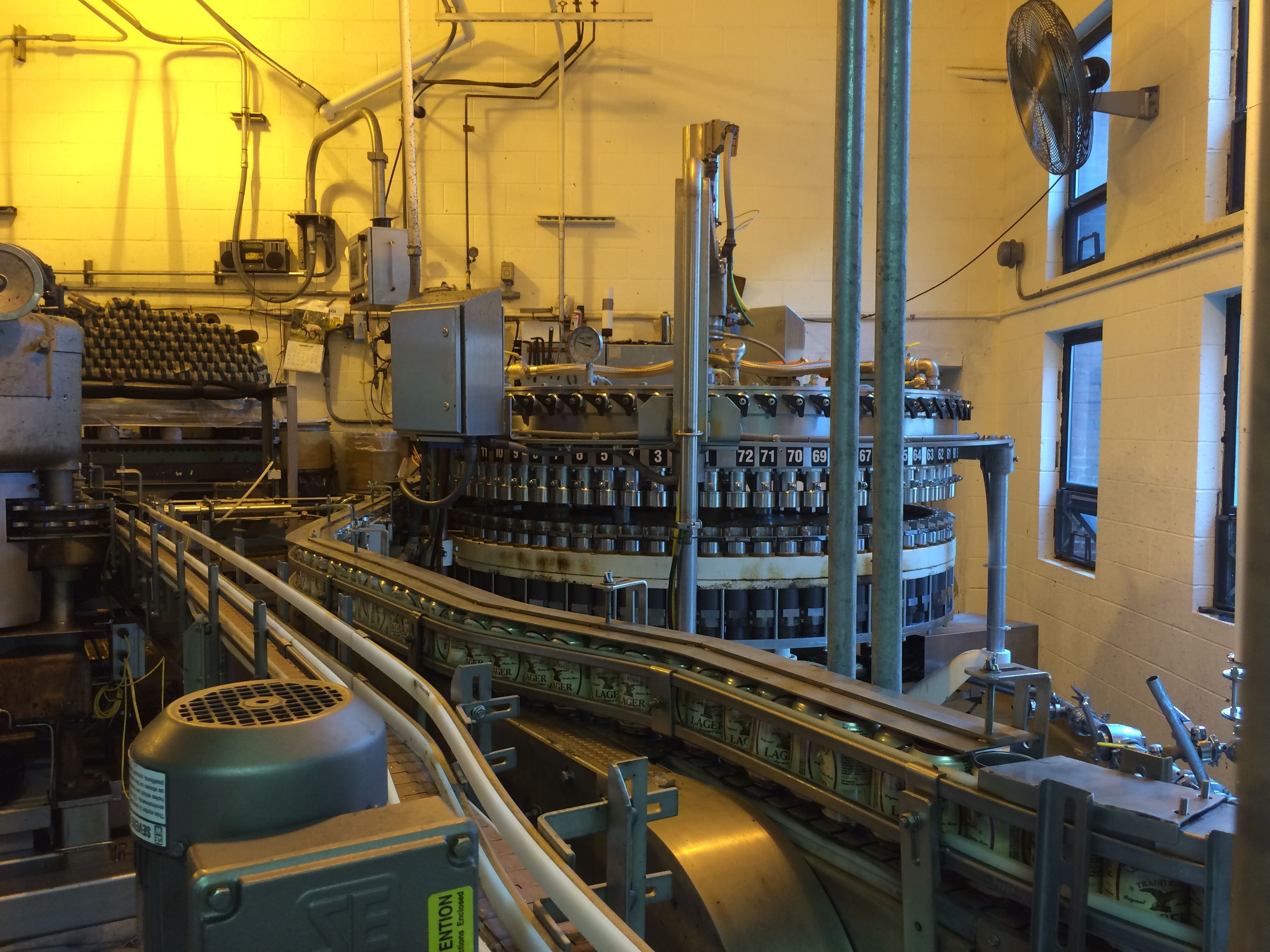
Speaking of machines, on to the bottling plant. The bottling plant wasn’t running either, but you could kind of get the idea of how things worked.
And that was pretty much the end of the tour. Oh, except for the pub!
Sharon poured two samples for each of us. I tried the Black and Tan for my first cup and the Traditional for the second. I liked them both.
While we were waiting in like, we examined what hops look like before they are processed into the pellets they use in their brewing.
And here were are, on our way out.
Still upright.
Oh, and if you are curious about the future of the company, Dick Yuengling has his daughters lined up to take the reins.
What a treat to visit friends! The friend in question is another college chum named Y. Well, her last name starts with Y – Yenelavage. First name, Barb.
I got to Cumbola and found her house. She had a spot saved for me in a lot a few doors down.
Reserved for Kim, Bart, Flo and Cora.
She had dinner waiting for me. I think she said the were called “No Time to Spare Ribs”.
Hot food on a plate! My favorite!
We visited and made our touristic plans. The next day, were were off to Berks County Heritage Center, which was an interesting facility on the Union Canal.
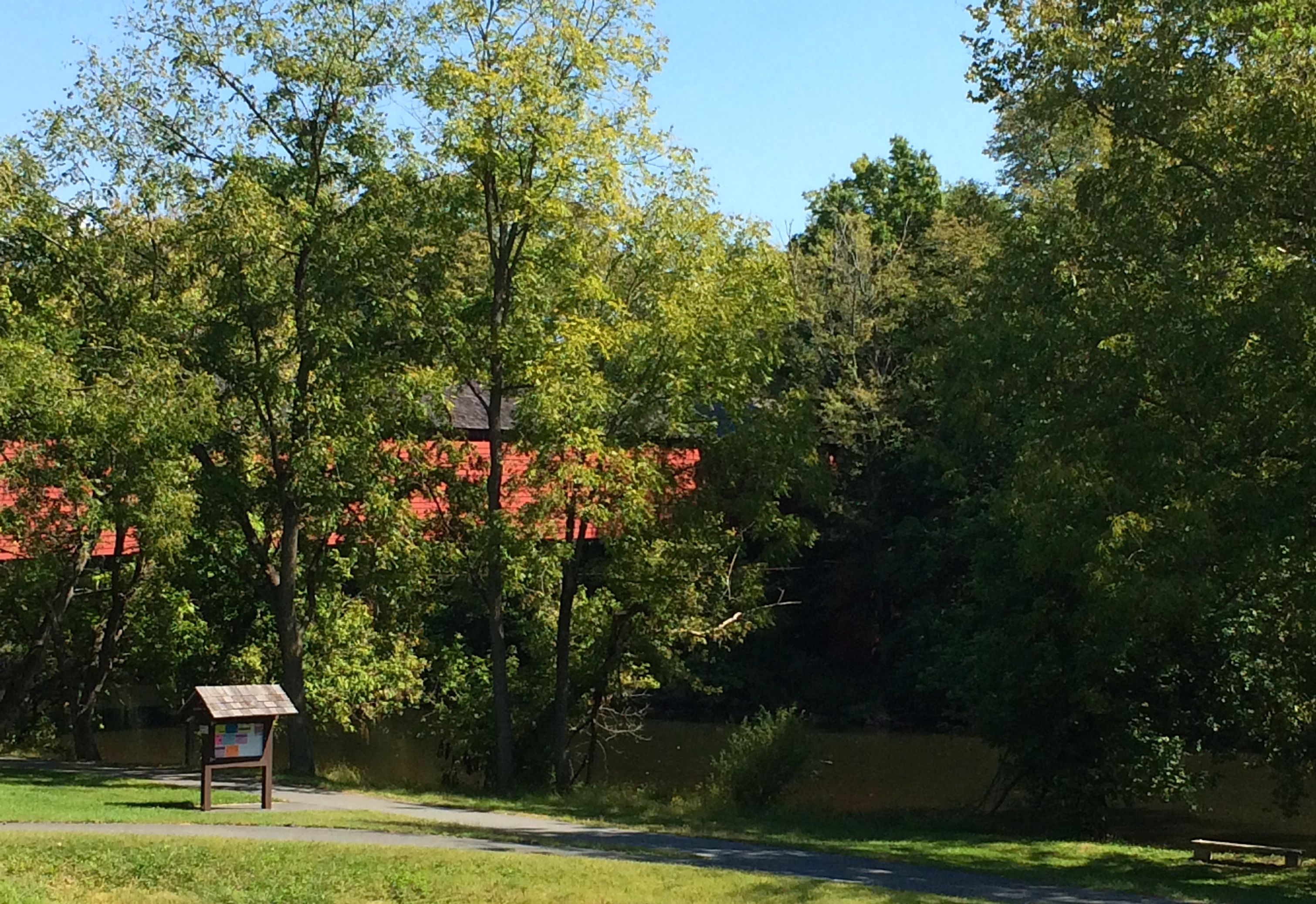
Red Covered Bridge over the Union Canal
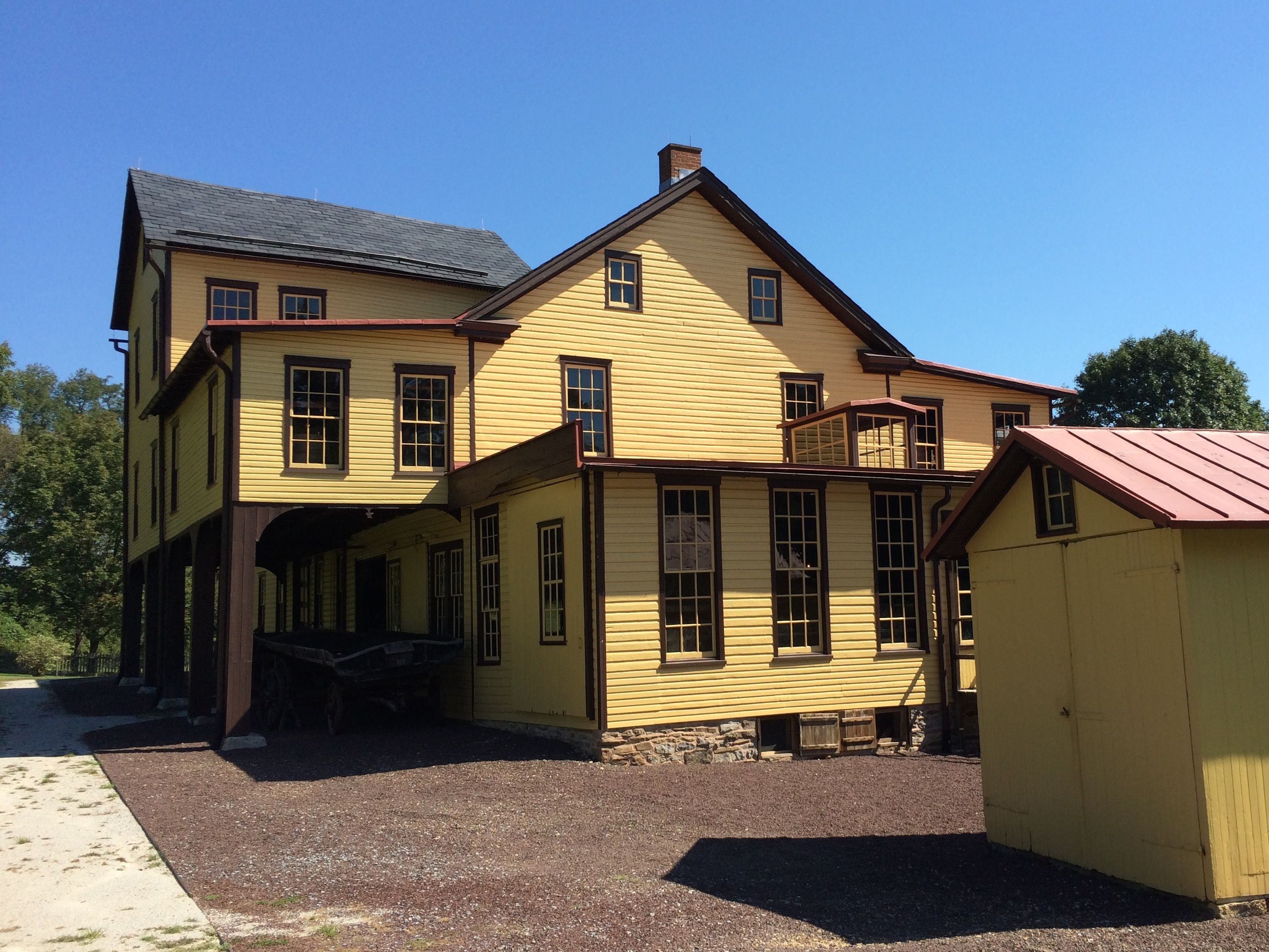
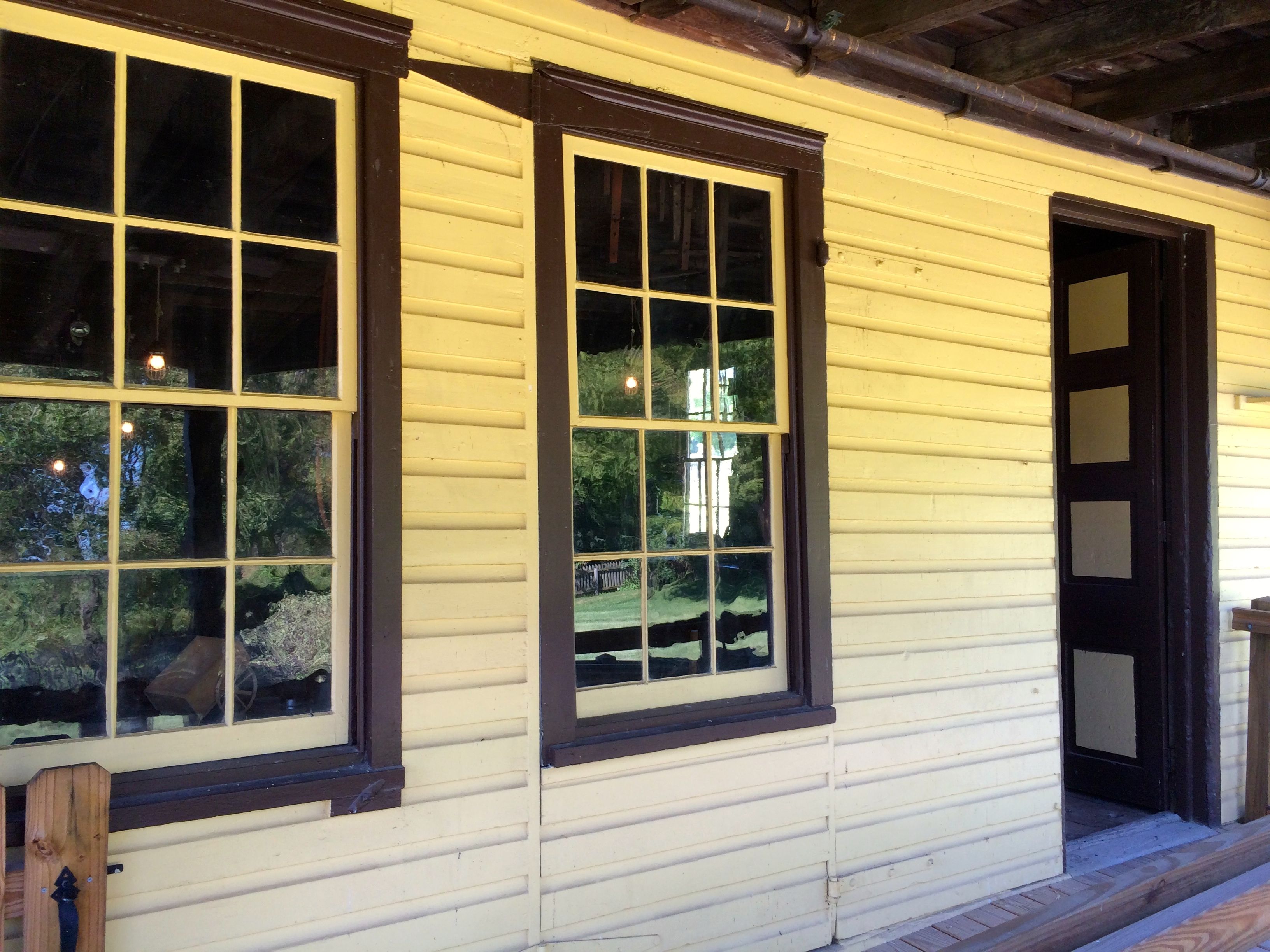
After the introductory video, our guide took us over to the Gruber Wagon Works, which had been moved over in four pieces and reassembled. The Army Corps of Engineers planned to build a dam to control flooding and it would flood the site of the company.
Gruber Wagon Works
The Gruber Wagon Works was a family business that was started in 1882 by Franklin Gruber. It stayed in the family until it closed in the early twentieth century. It just closed – no one was interested in continuing the business. All the tools and records were left behind. When the Berks County Heritage Center took possession, everything was documented and archived. After it was put back together, all the items were returned to where they had been left.
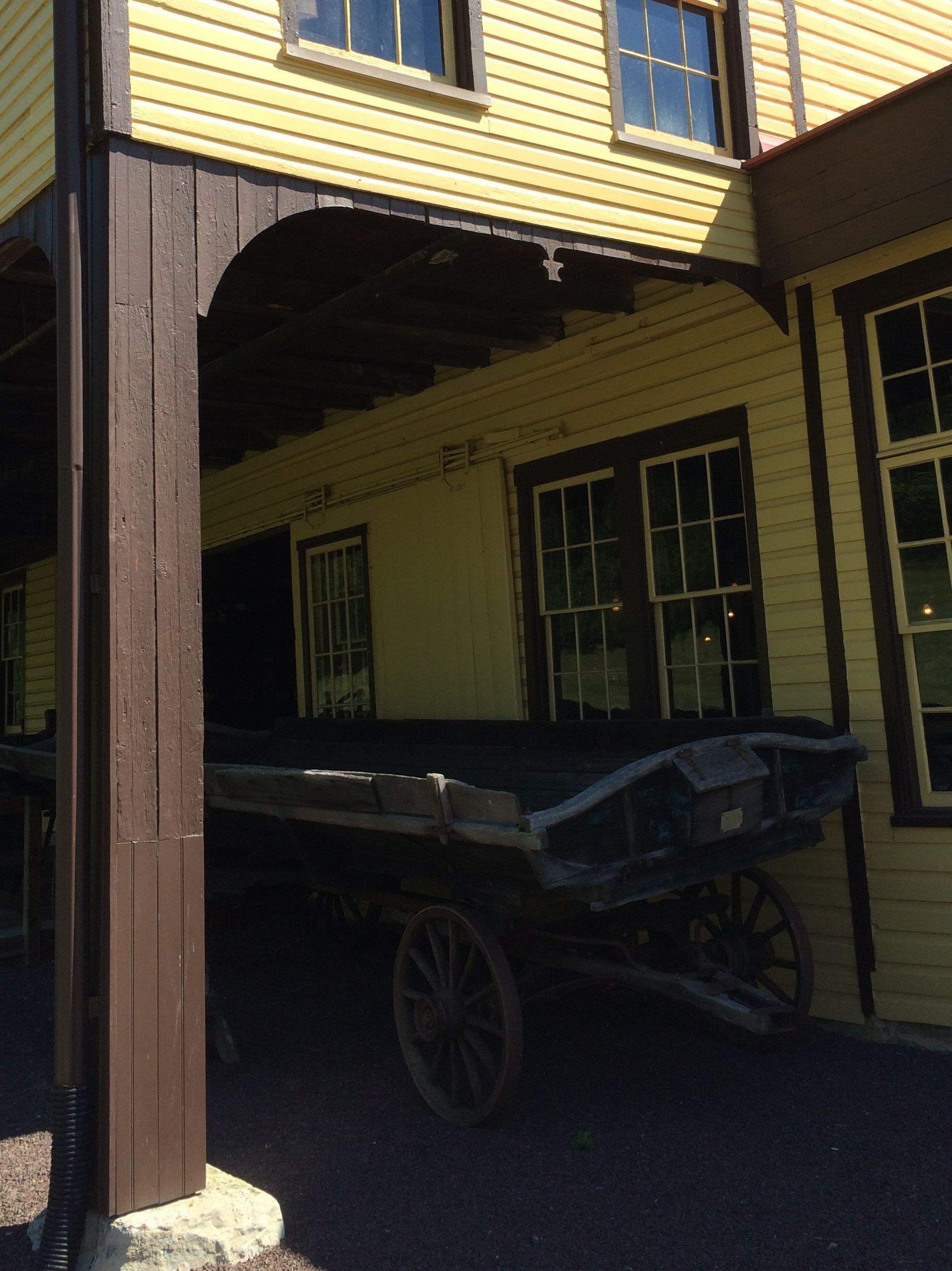
Wheelbarrows and a Sleigh
Gruber made wheelbarrows, wagons, and hay flats. This sleigh was in the building when they took it over, although there is no record of them having made sleighs. Maybe they were just making a repair.
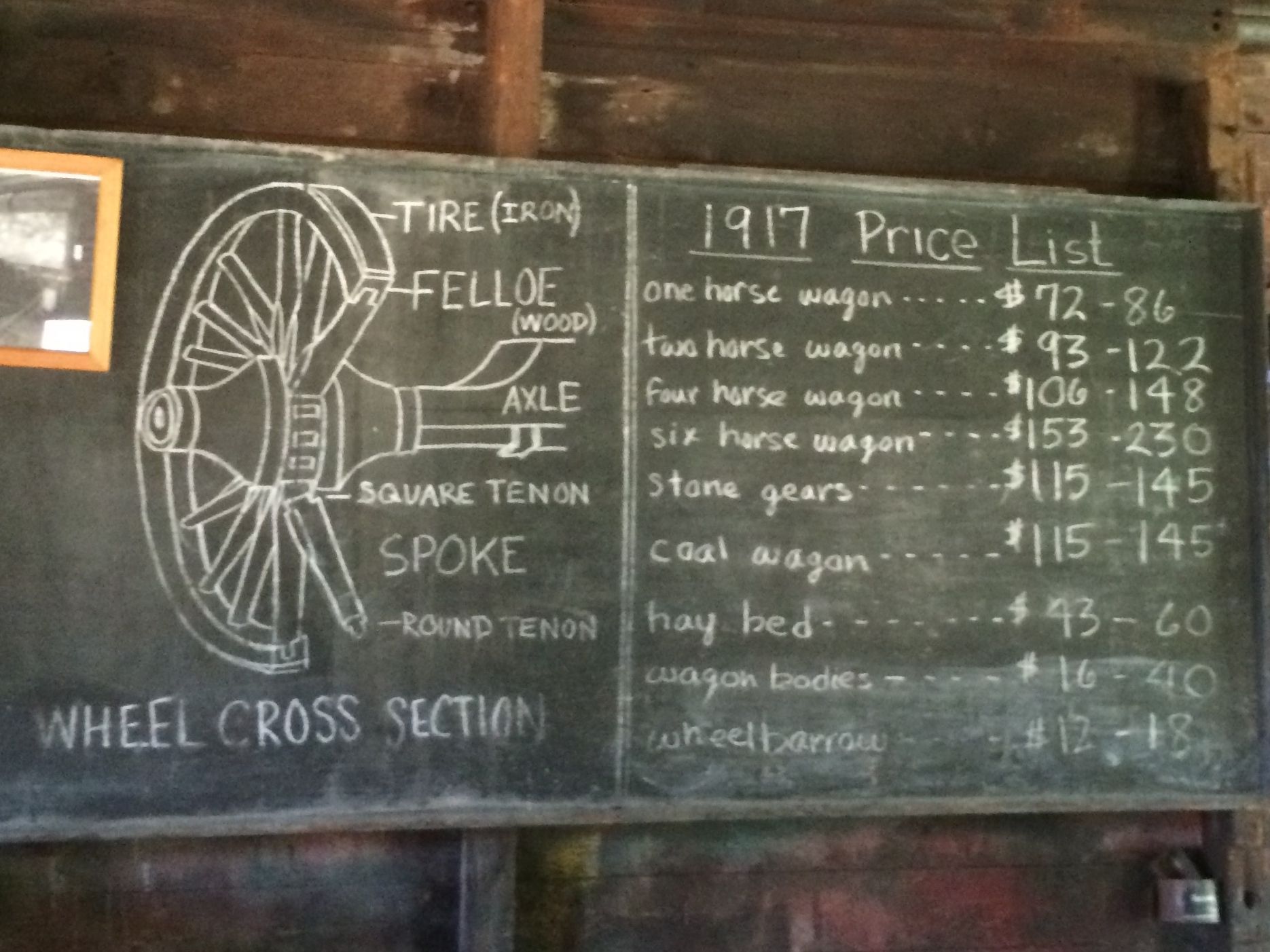
I like the price list they had up on the chalkboard. I am sure it was a modern posting, up to use with school groups that tour the site.
There were tools all over the building. It was a busy place. Many of the tools were built and repaired by the workers.
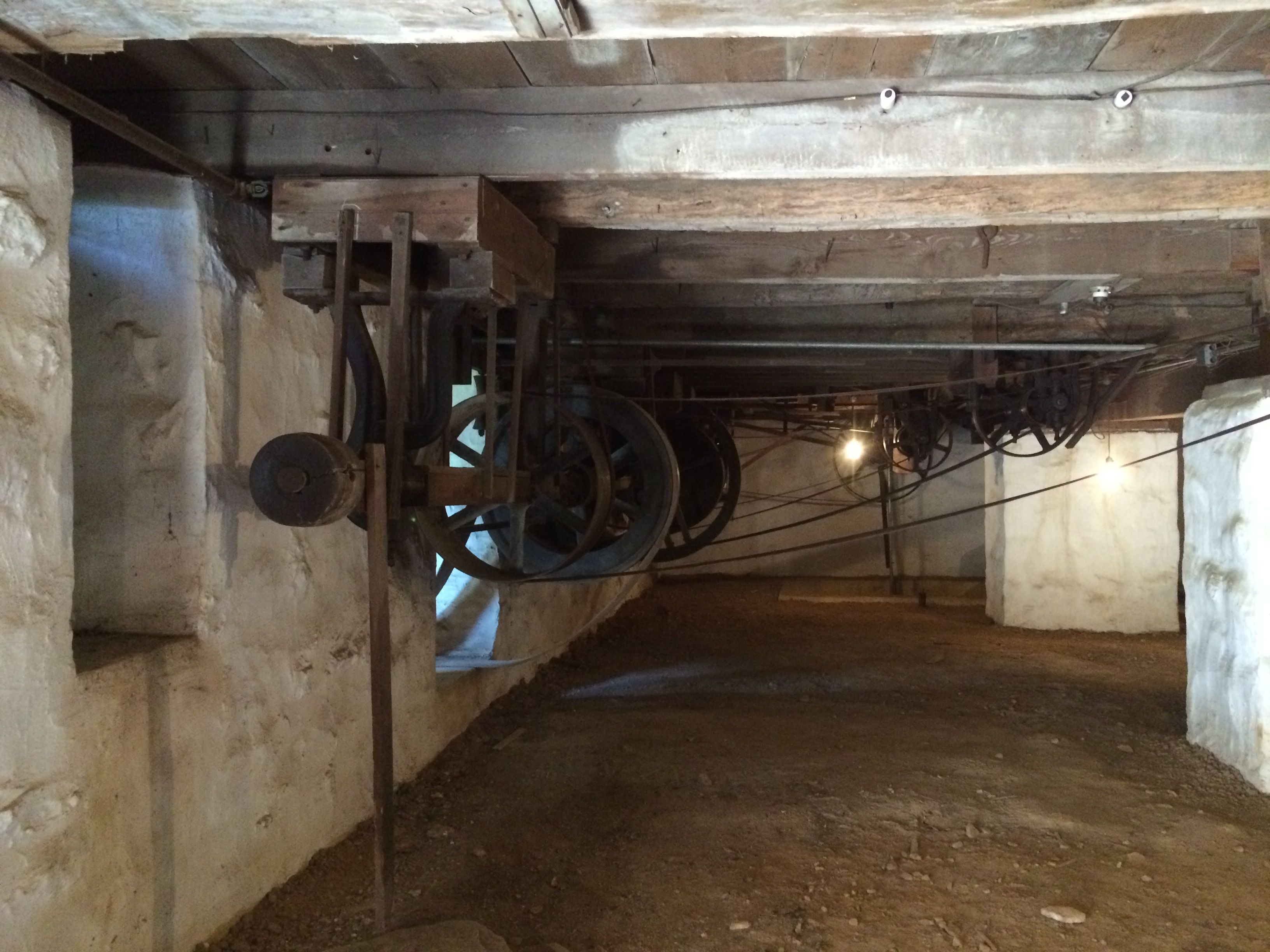
Drive belts to run the machines
When the factory opened, the machines were powered by a water turbine that ran the belts.
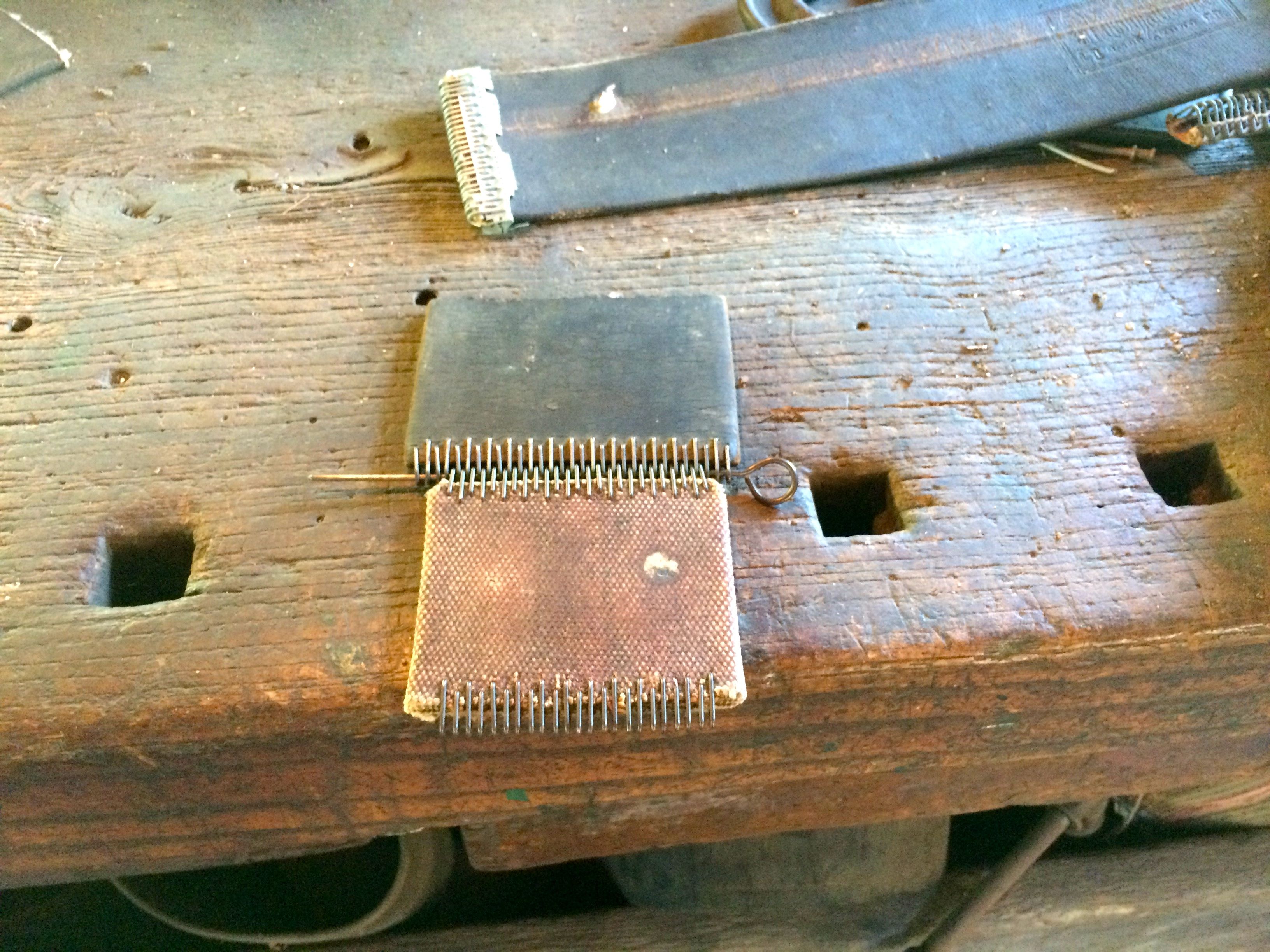
Mending the drive belts
When the drive belts would break or become worn, they would be mended in the shop. They had a tool that would put the metal loops in the ends. Then a pin, much like on a hinge, would connect the pieces.
Eventually, other power sources were added. They added an engine that provided the power for the belts and it still runs. They fire it up twice a year to keep everything lubricated and in good working order.
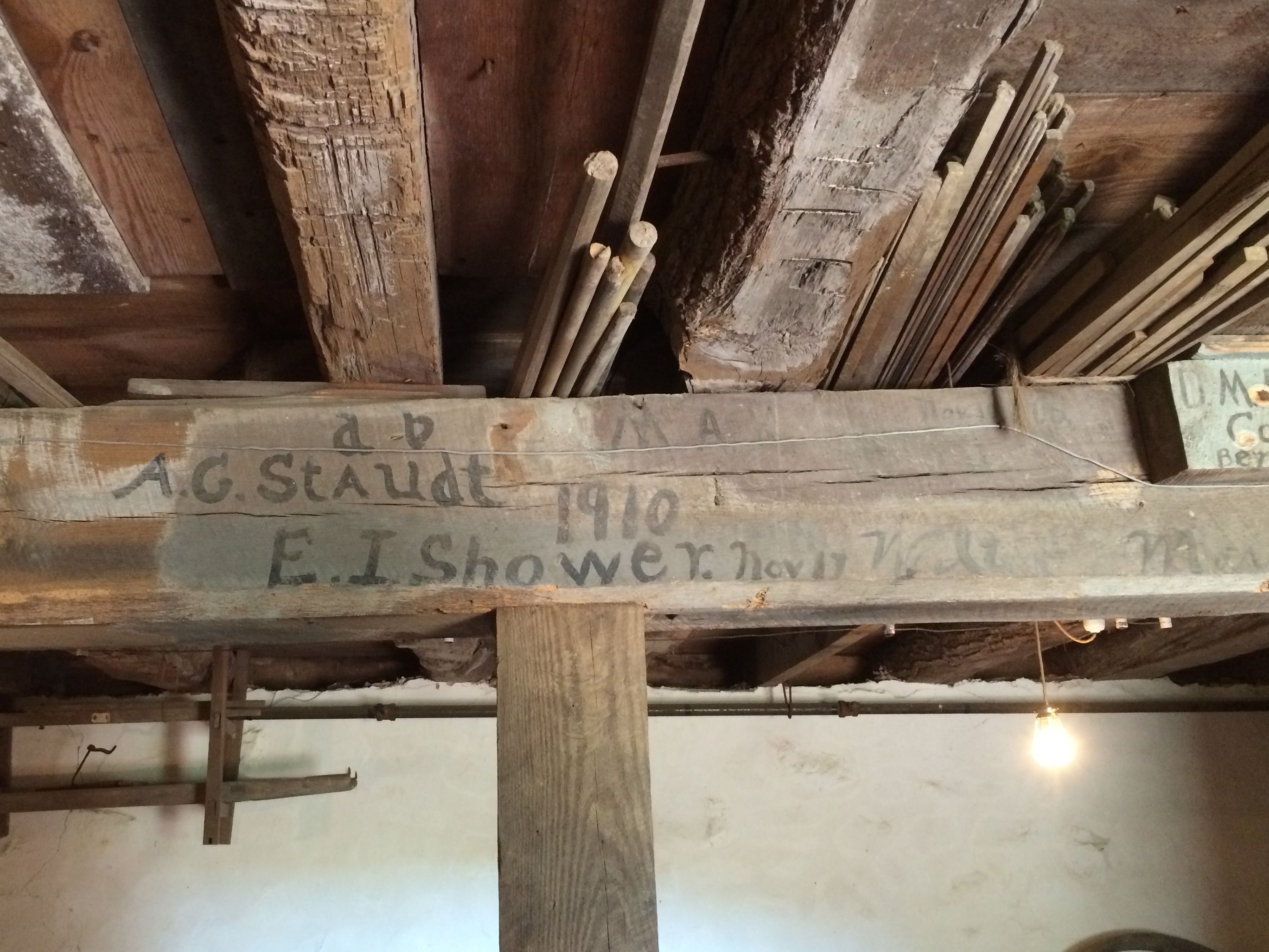
E.I. Shower – electrician
Electricity was added in 1910 by E.I. Shower, who signed his work. It was the old rod-and-tube wiring.
Rod-and-tube wiringTool for making hubsHinged wall to get wagons into the building
If you look carefully, you can see the hinges they used to customize this wall. It reminded me of the wall my father put in our garage. He could pull cars through the garage and into the back yard when he had more cars than room. He used to buy cars, fix them up and sell them. Well, he could sell them if we didn’t get our hands on them first!
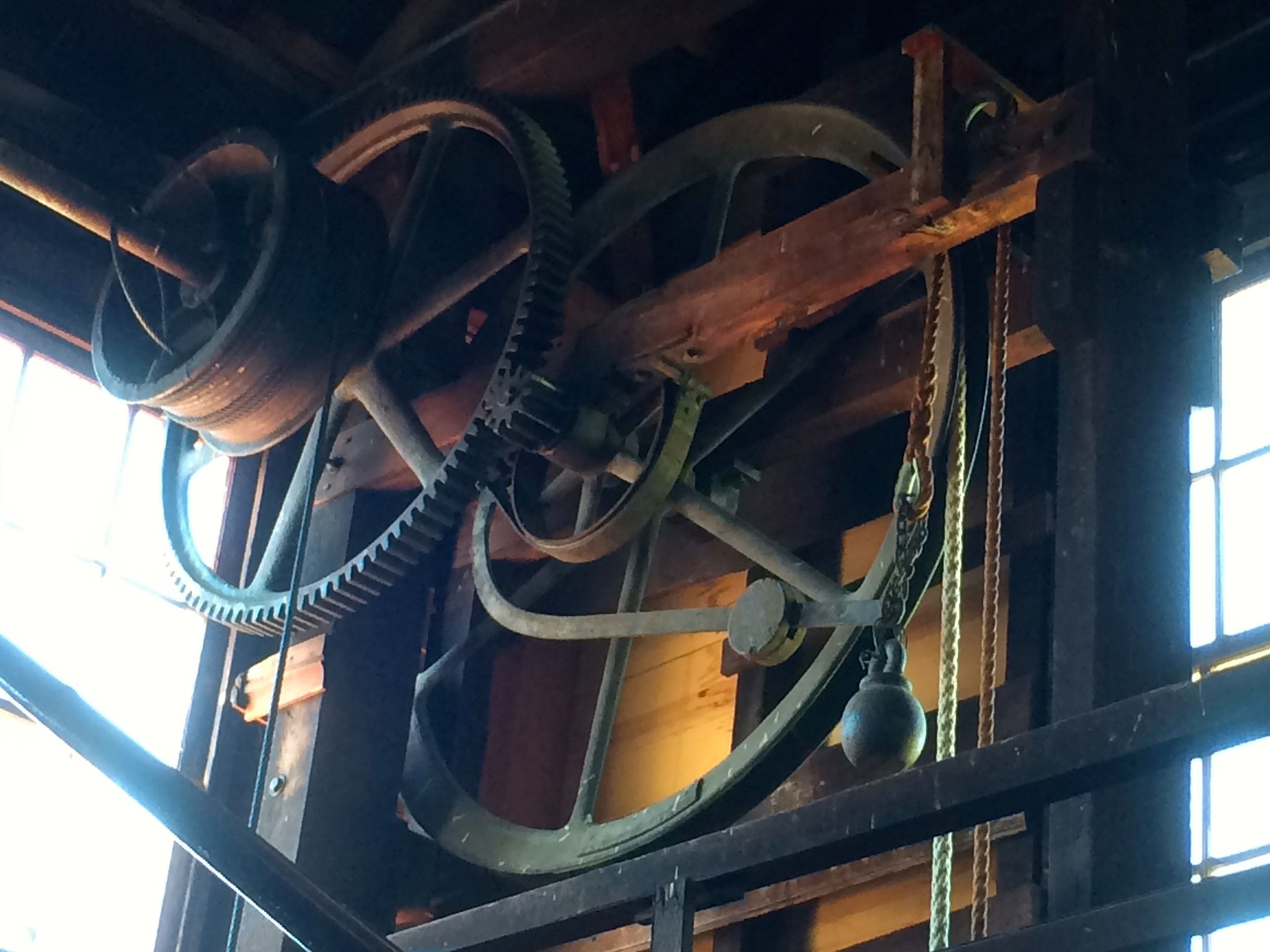
Mechanism for lifting the wagons to the second floor
There was more than one way to get the wagons into the building, though. They also had an elevator that they could use to lift them to the second floor for painting.
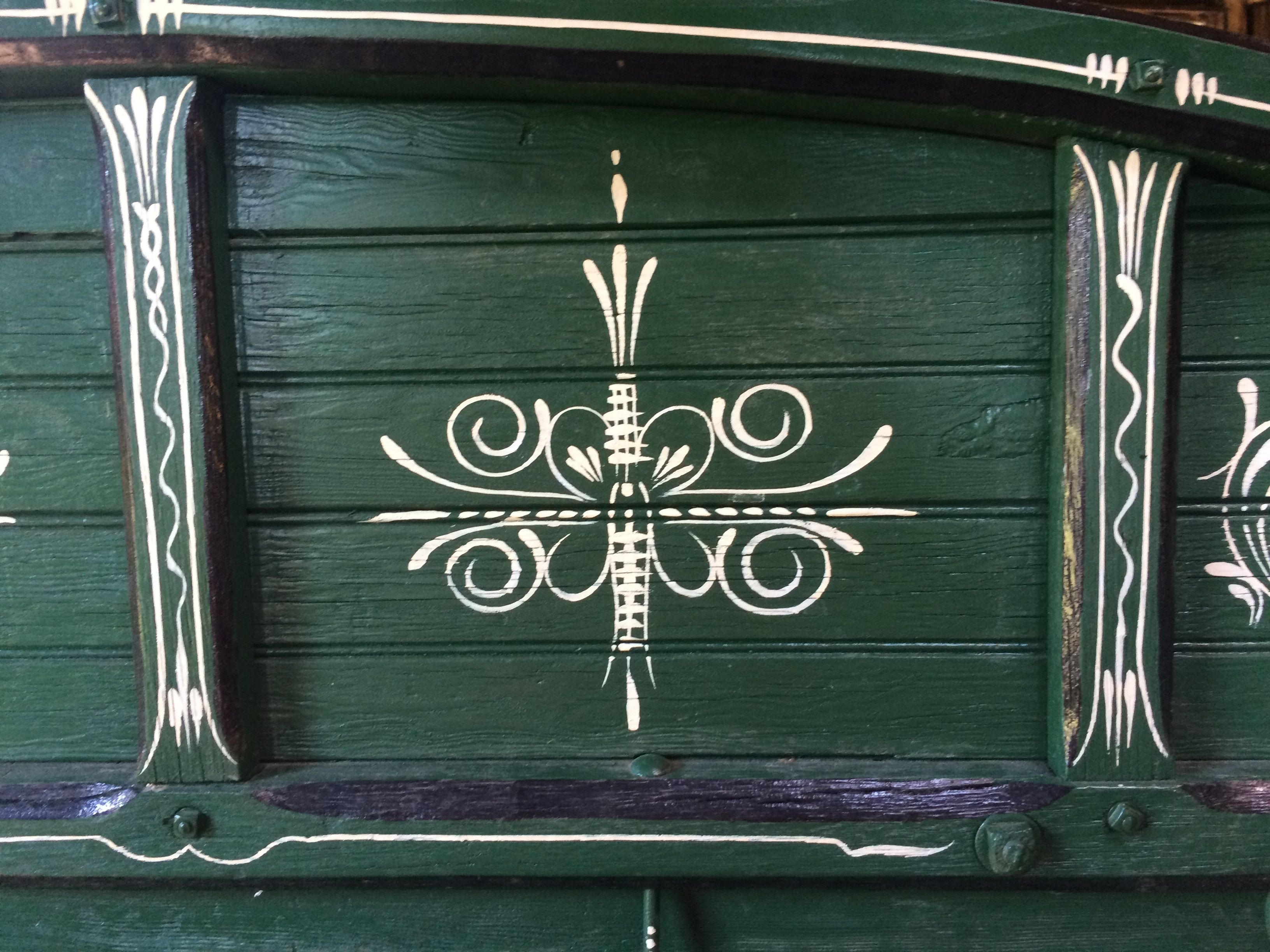
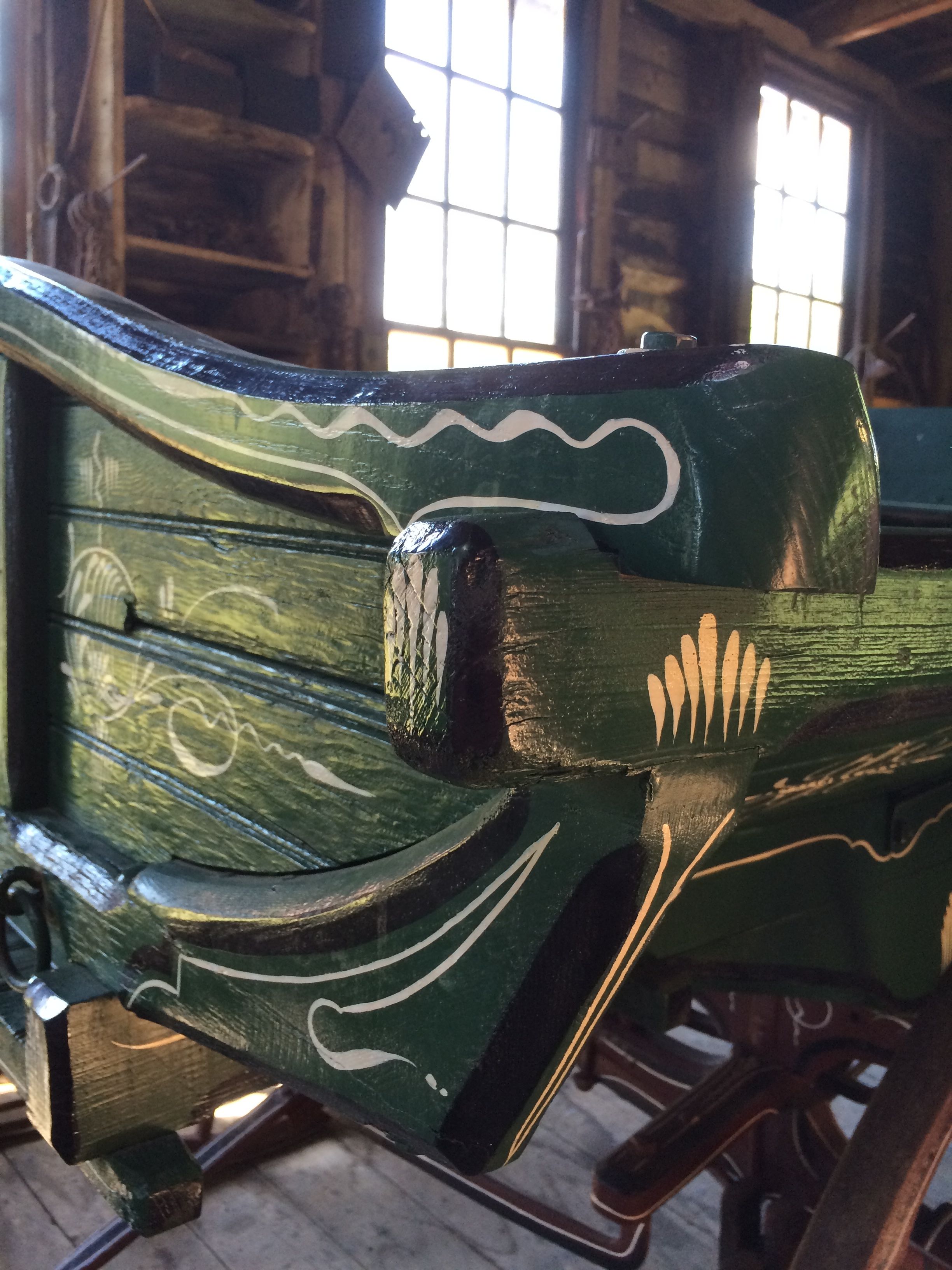
Painting seemed to be a point of pride for them. There were remnants of paint on the older wheelbarrows and glorious designs on the hay flat that had been restored by “Dutch” Maugle from Quakertown, PA.
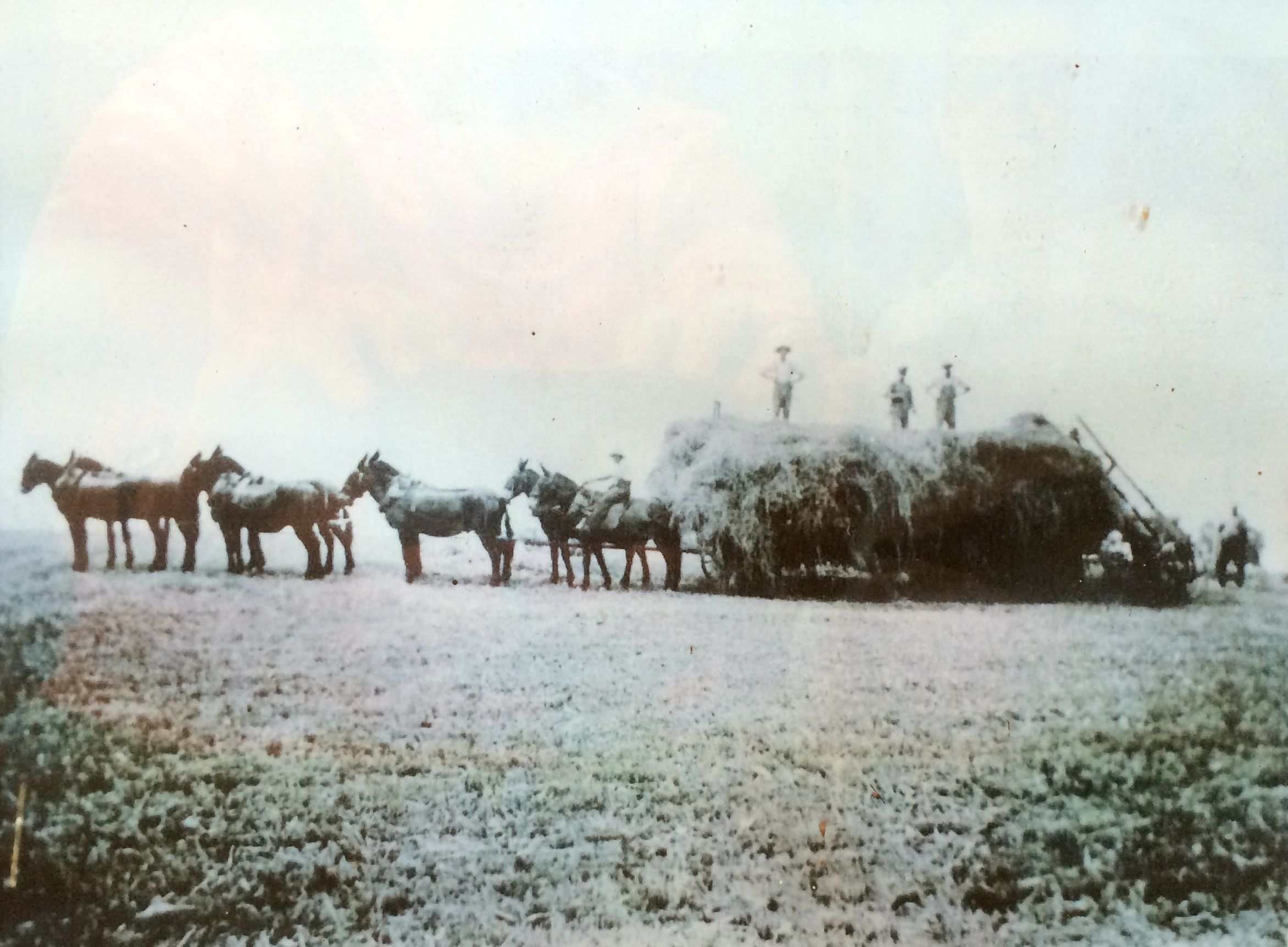
I couldn’t get a full shot of the restored hay flat, but here is an old picture of one being used to harvest hay.
Old hay flat
Not much hay flat visible under the hay!
Old wagon wheel
You can tell that this is an older wheel because it is made in six segments. As technology evolved, they switched to steaming the wood to bend it. The newer wheels were made with only two pieces.
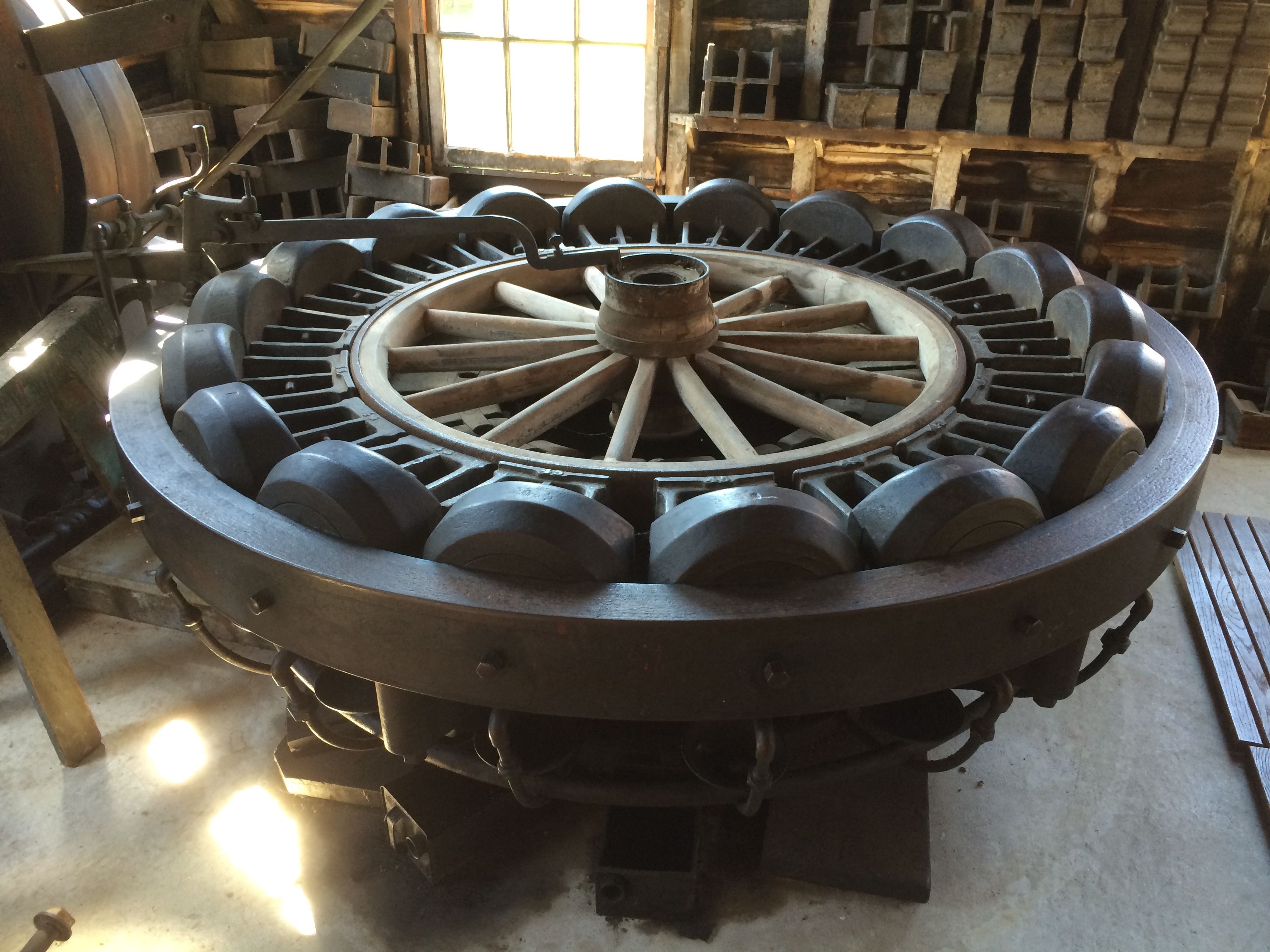
Hydraulic machine for fitting the tire on the wheel
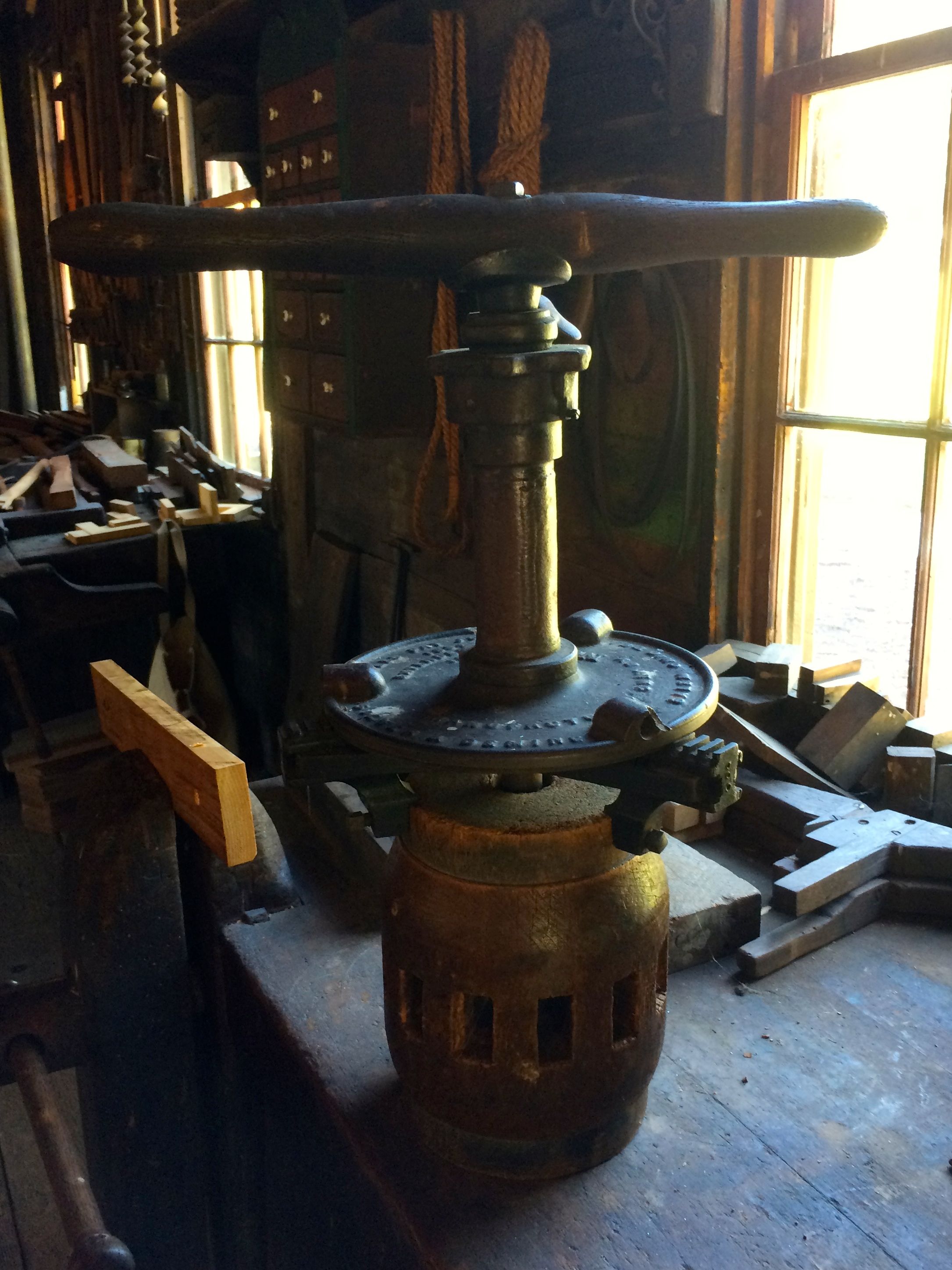
That metal band around the rim is called a tire. In the old days, fitting it to the wheel was done with heat and hammering. Eventually, they switched to a hydraulic press that forced the tire down to the rim. Those round protuberances could be switched out to accommodate wheels of different diameters.
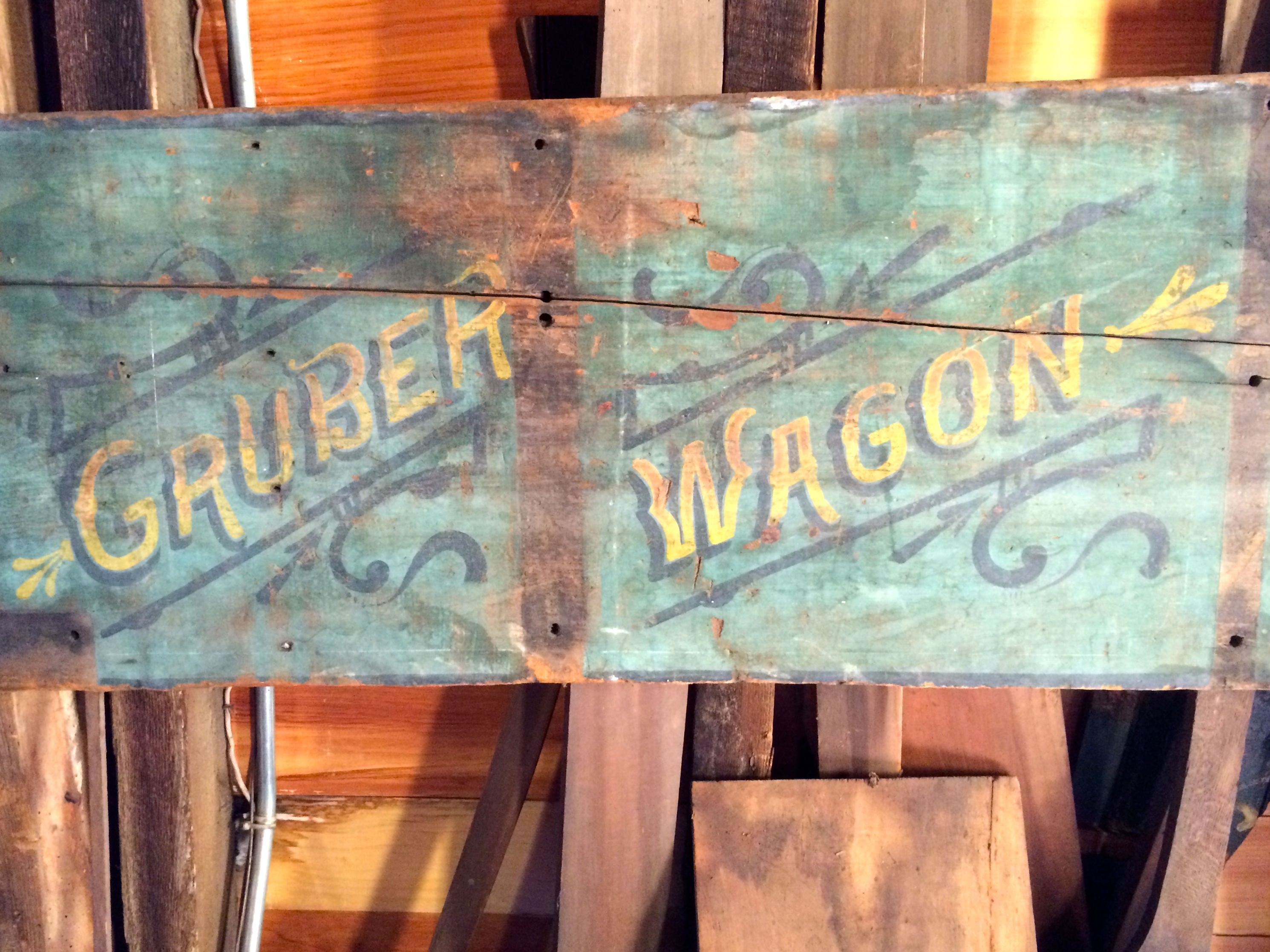
Old advertising
This sign wasn’t their only form of advertising.
If you look carefully, you can see a small anvil extending down from the second floor. That told all who passed by that there was a blacksmith available.
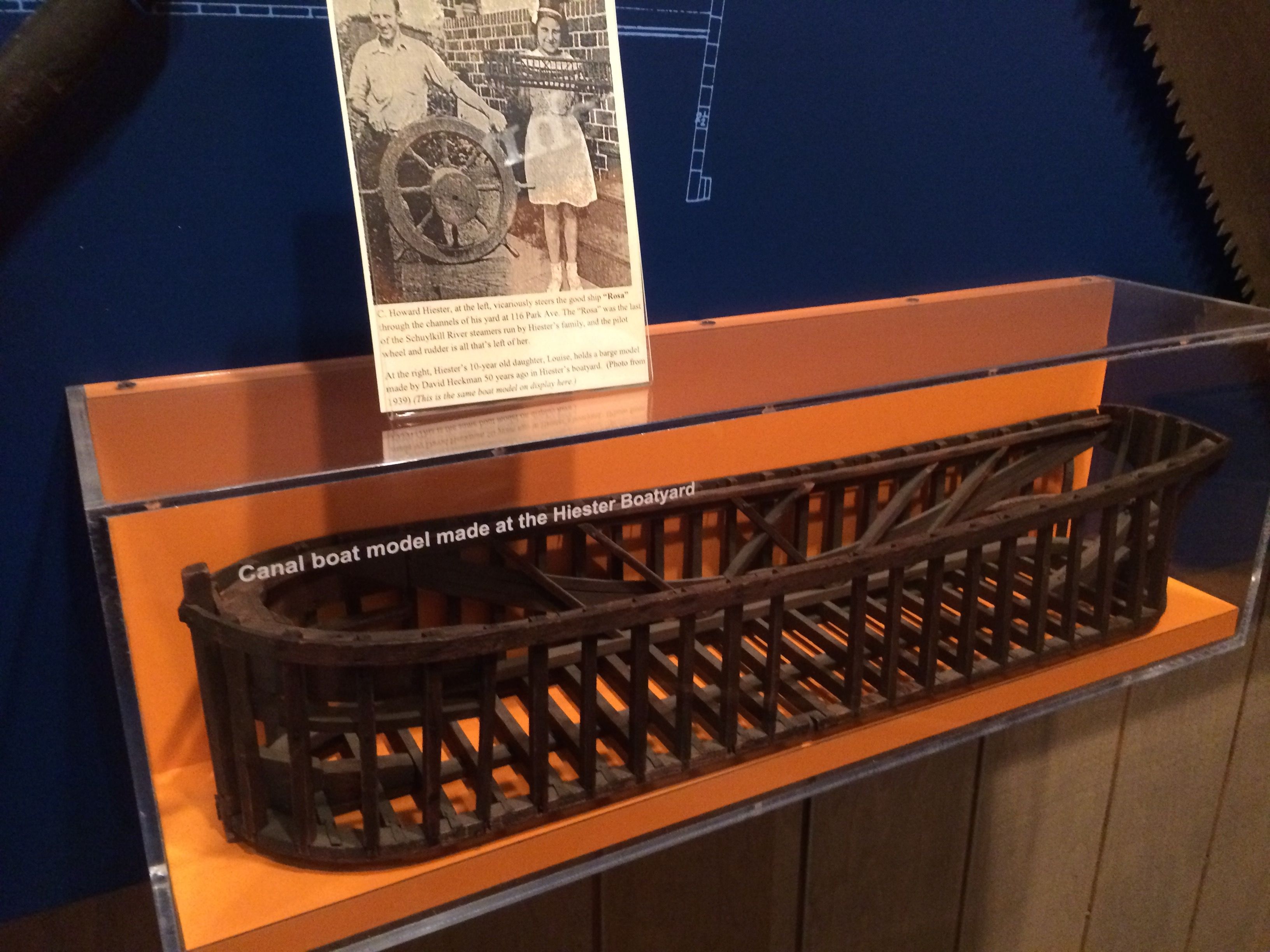
After that, we went over to the C. Howard Hiester Canal Center. Mr. Heister had a boatyard and loved the old canal lore. He collected all that he could.
Unfortunately, canal-related items seems to decay quickly. However, it shed some light on a few questions I had about canals in the region.
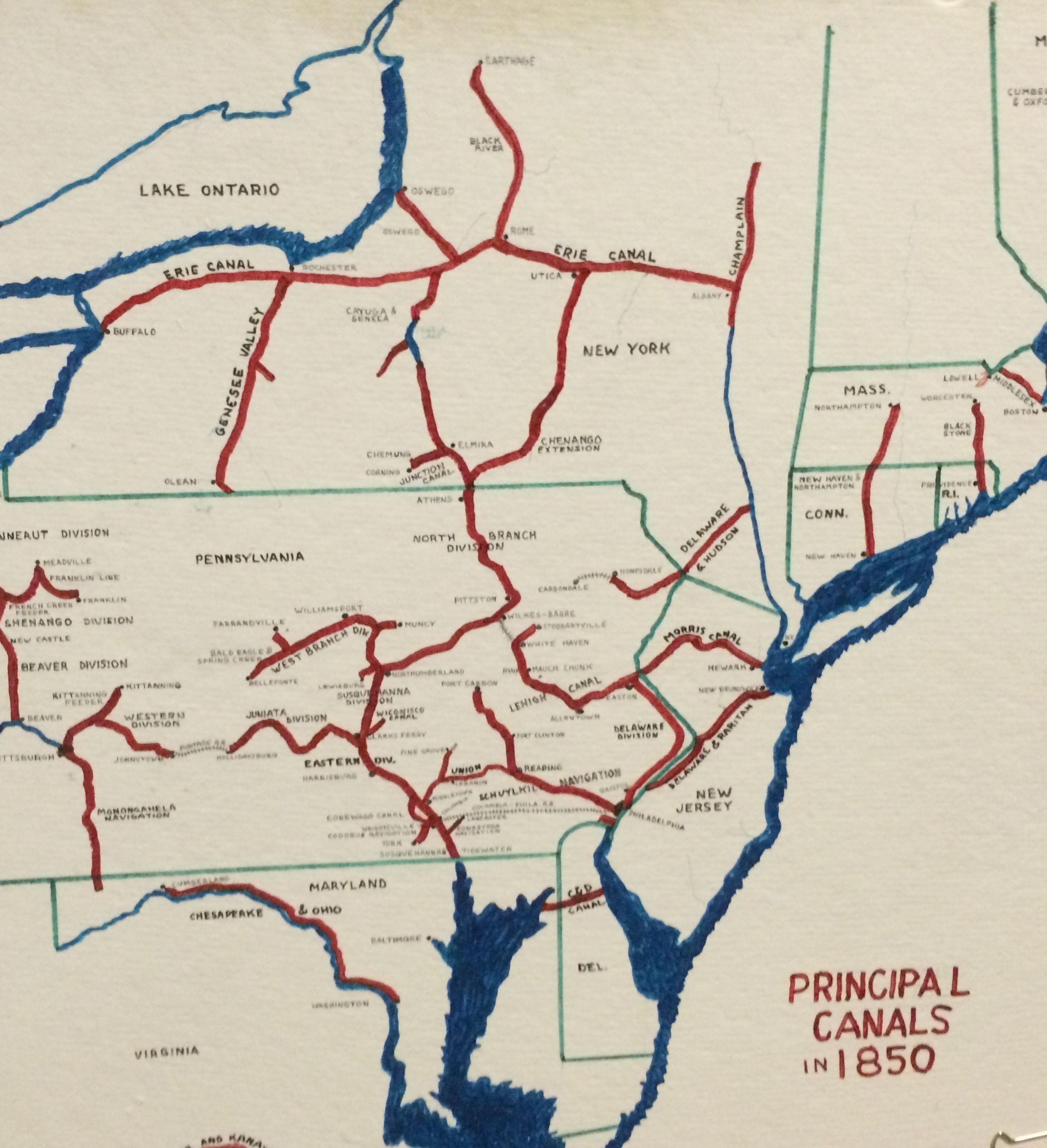
Principal canals in 1850
Now I can see how Elmira could ship things all over!
Canal boat model
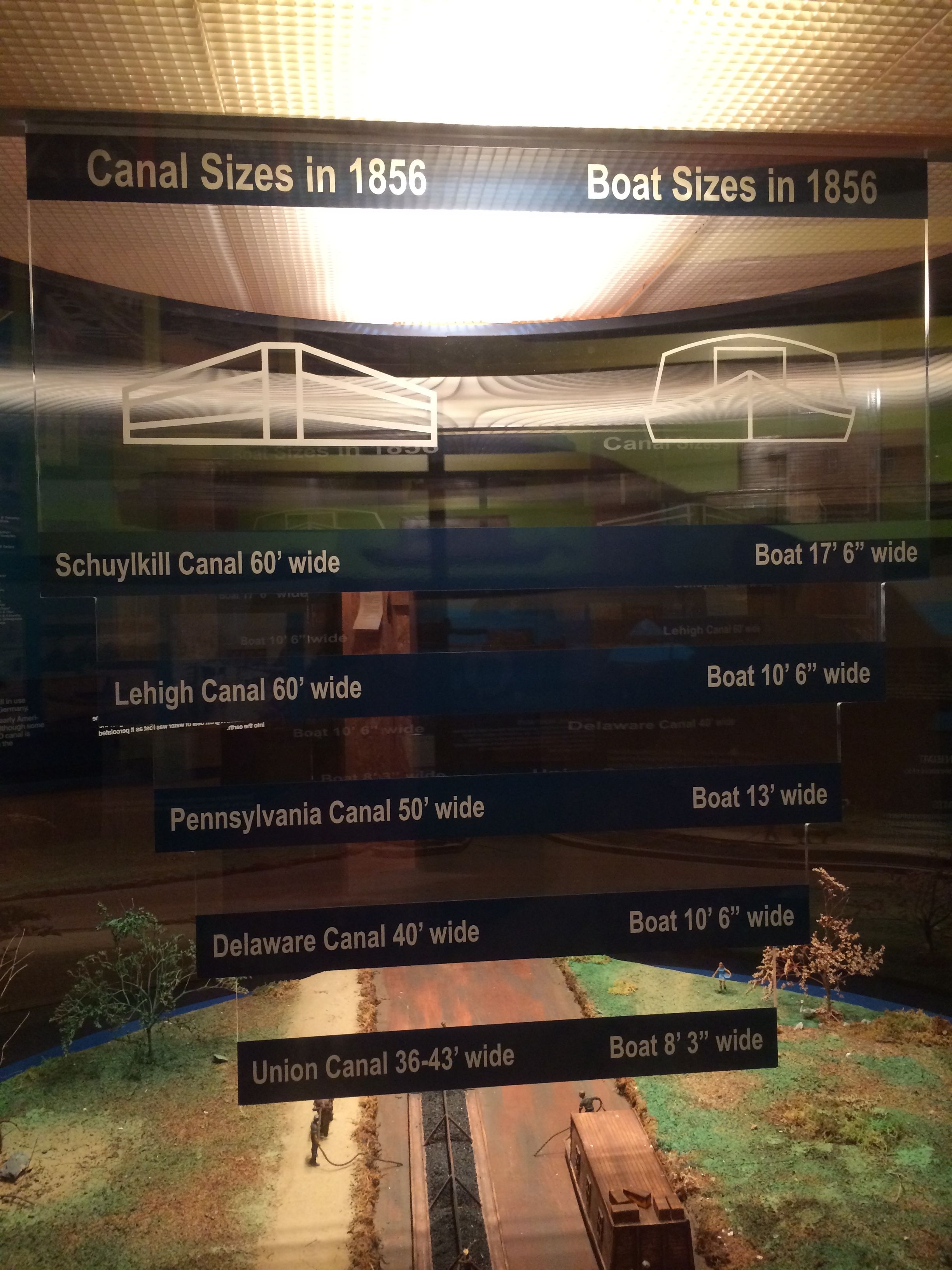
Canal boats had to be the right size to go through the locks. From what I understood, the locks were not necessarily the same width as the canals. Here’s a little data.
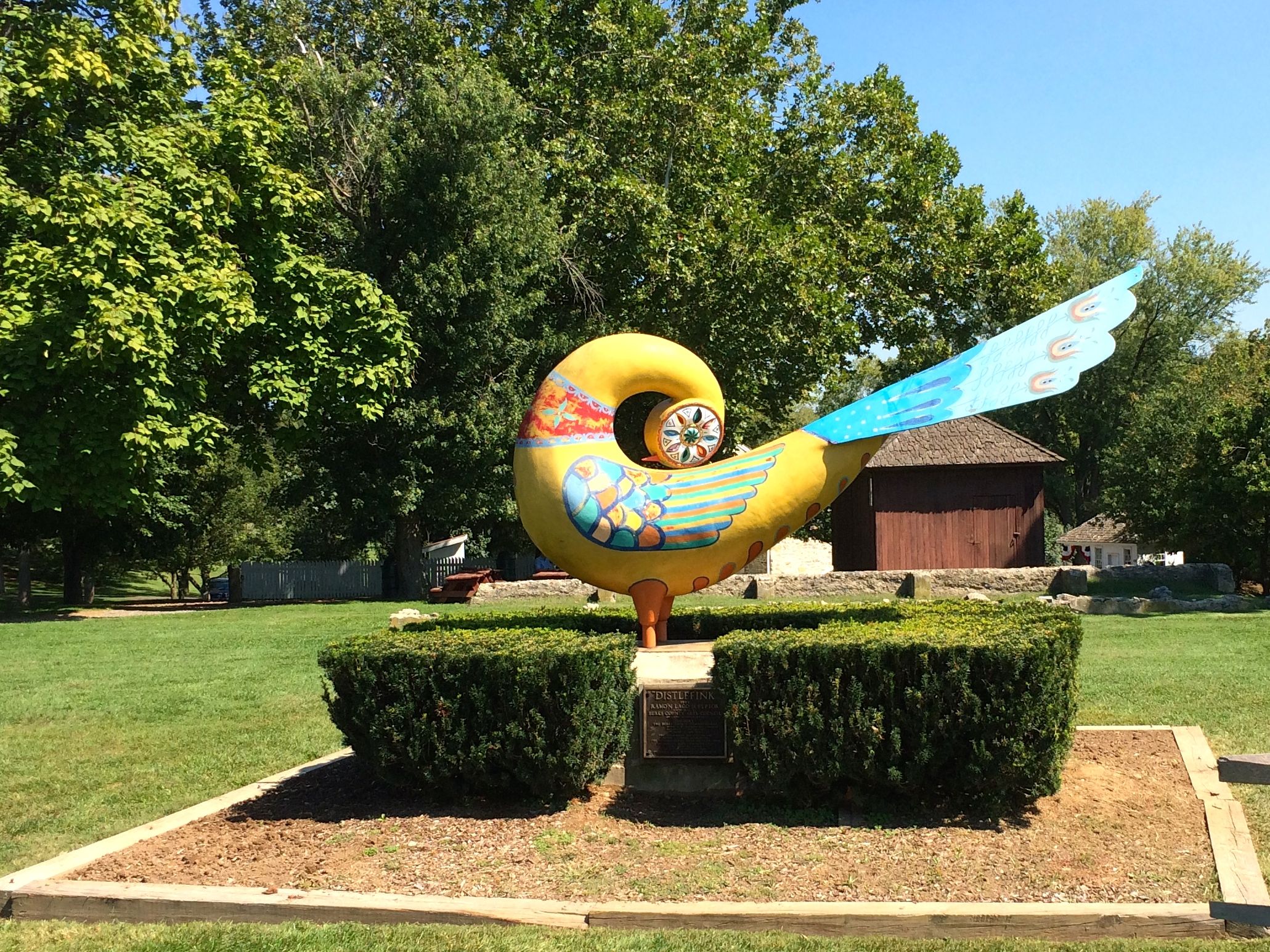
Distelfink
And, after our trip through the canal center, we said our goodbyes to the distelfink, which is a stylized goldfinch that is frequently seen in Pennsylvania Dutch folk art.
On the way home, we stopped and picked up the fixin’s for dinner. I took a nap
Barb and her mother worked on making some Lithuanian dishes for dinner.
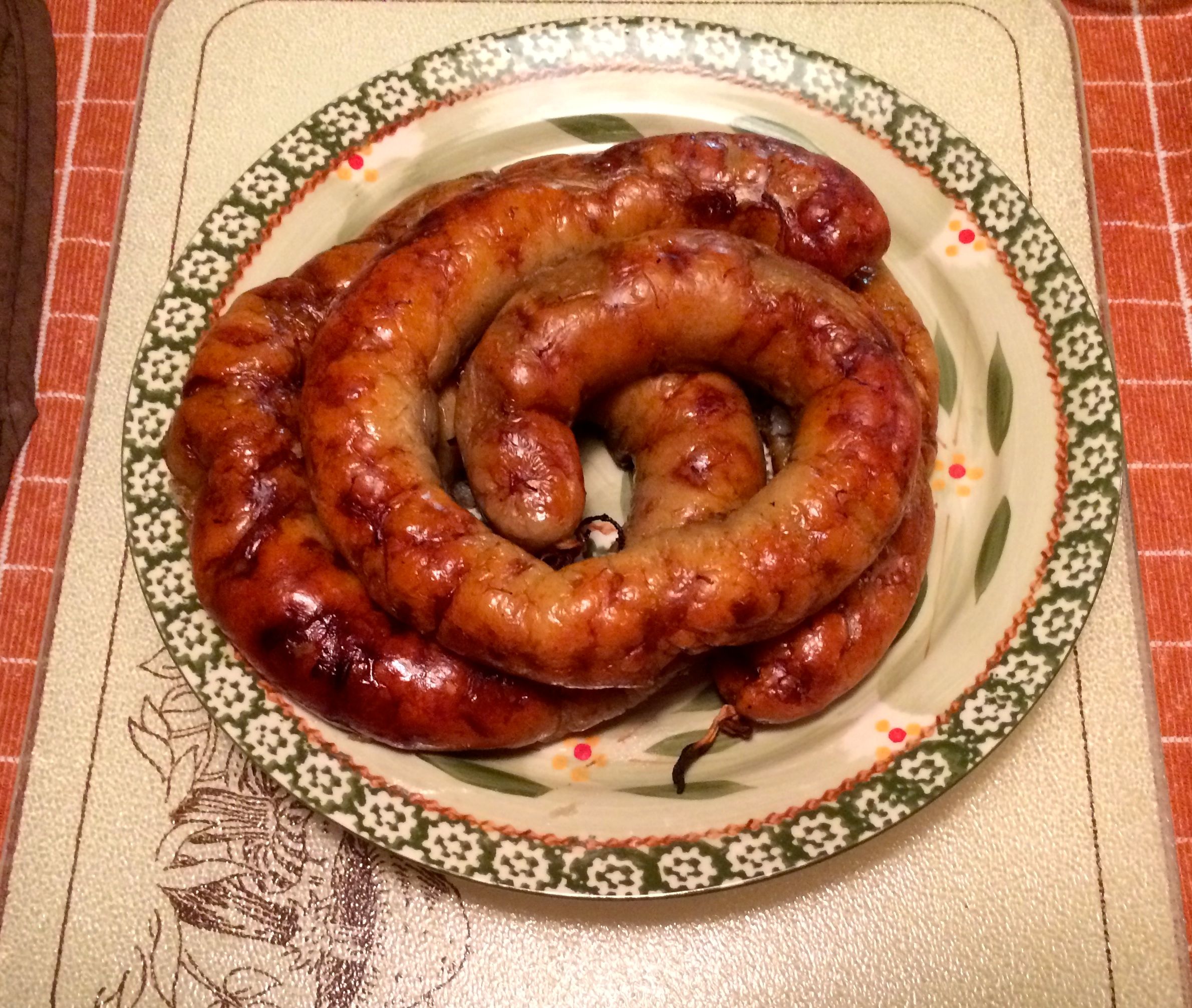
Dashris bulovas
This is a potato sausage.
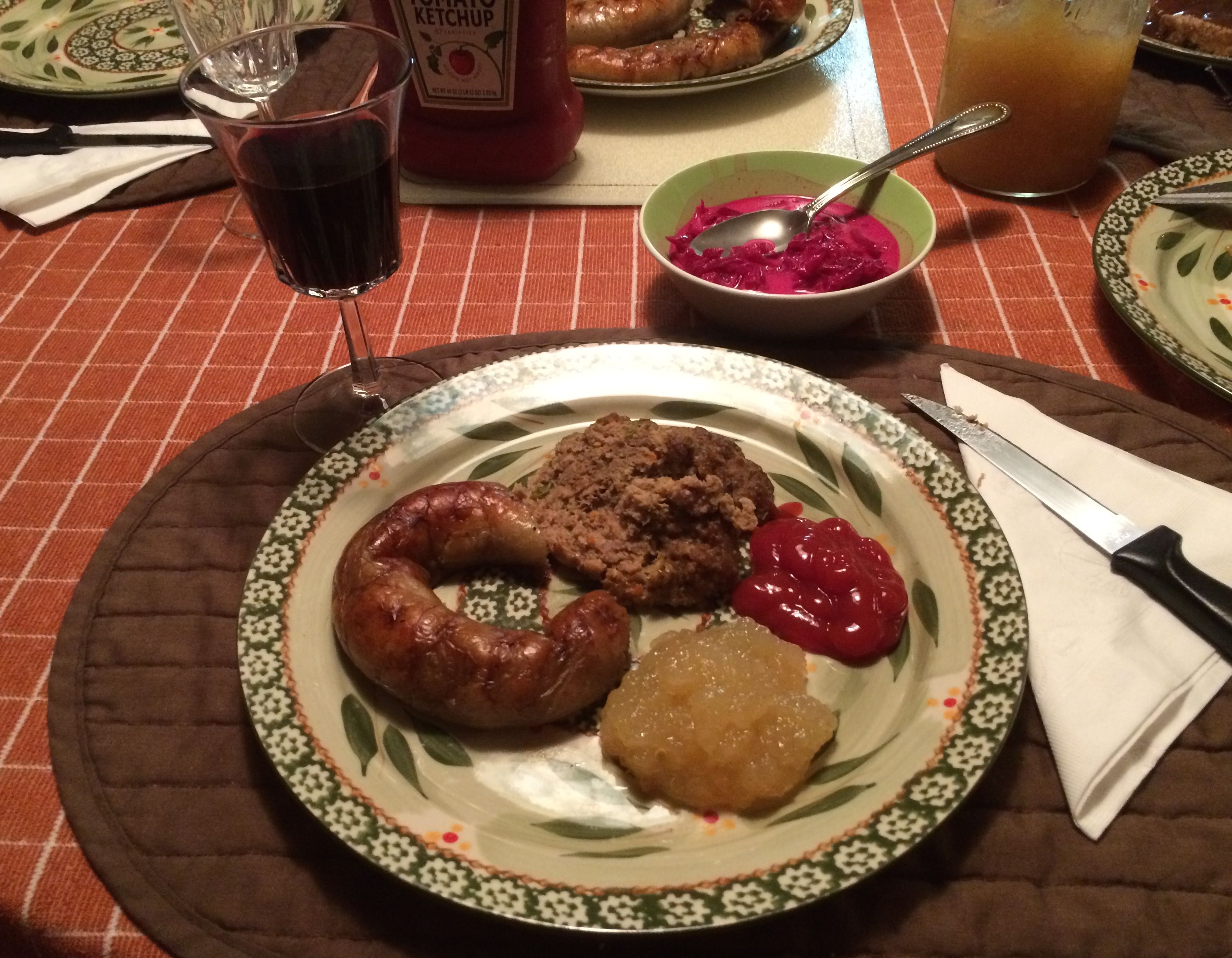
Dashris bulovas, netikas zuikas, and applesauce
Delicious!
Netkas zulikas is meatloaf. It was the best meatloaf I’d had since my mother’s meatloaf.
And ketchup is a vegetable.
The next day: Yuengling Brewery – the oldest brewery in America!
After leaving Elmira, I bounced my way toward Frances Slocum State Park, near Wilkes-Barre in Pennsylvania. I have gotten lazy with my navigation and I have been relying entirely too much on Google Maps and the voice that sounds suspiciously like Siri. After I got to the park, I pulled out a AAA map and tried to figure out where I had been. I’m still not sure, but it seems like there were some nice, smooth Interstates not too far from where I was hippity-hopping my way south.
I eventually arrived at Frances Slocum State Park. I registered and then I shimmied my Airstream into my spot. What a lovely site!
The view from my door
The park was beautiful, too. It was built around a man-made lake and people were out on it fishing in the autumnal sunshine.
The lake
I had electricity at my site, a good wifi signal though my hot spot and several television stations. I could have done more in the tourism realm, but I took advantage of the amenities and didn’t work too hard at seeing the sights.
I did find out some interesting information about Frances Slocum, though. When I was trying to locate the park, I Googled the name and saw listing for places in Pennsylvania and Indiana. Then it occurred to me that “Frances” was a woman’s name. How often are women honored? Oh, yes, there are your Rosa Parks Circles, Eleanor Roosevelt Elementary School and Amelia Earhart Airport, but places for a person unknown to me to have places named for her in two states? I had to do some research!
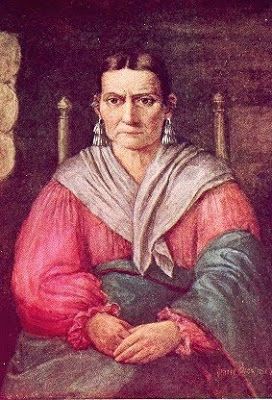
It turns out that Frances Slocum was a youngster who was kidnapped in 1778 at the age of 5. She was taken from the family farm near Wilkes-Barre by three Delaware warriors. She was given to a Delaware chief and his wife who had no children. They migrated west through Niagara Falls and Detroit before settling with her Delaware family near the present-day Fort Wayne, Indiana.
She married a Miami warrior and ended up settling near Peru, Indiana, which is where her family found her in 1837. She chose to remain in Indiana, and managed to use her status as Caucasian to gain exemption from the removals that the Indians were faced with in Indiana. Through her perseverance, the people in her village were among the 148 individuals who formed the basis of the present-day Miami Nation of Indiana.
Frances Slocum portrait
Now, this is probably quite simplified, but you get the gist of things.
It seems to me that she is being remembered in Pennsylvania for the kidnapping and remembered in Indiana for helping the Miami Nation to survive in that state.
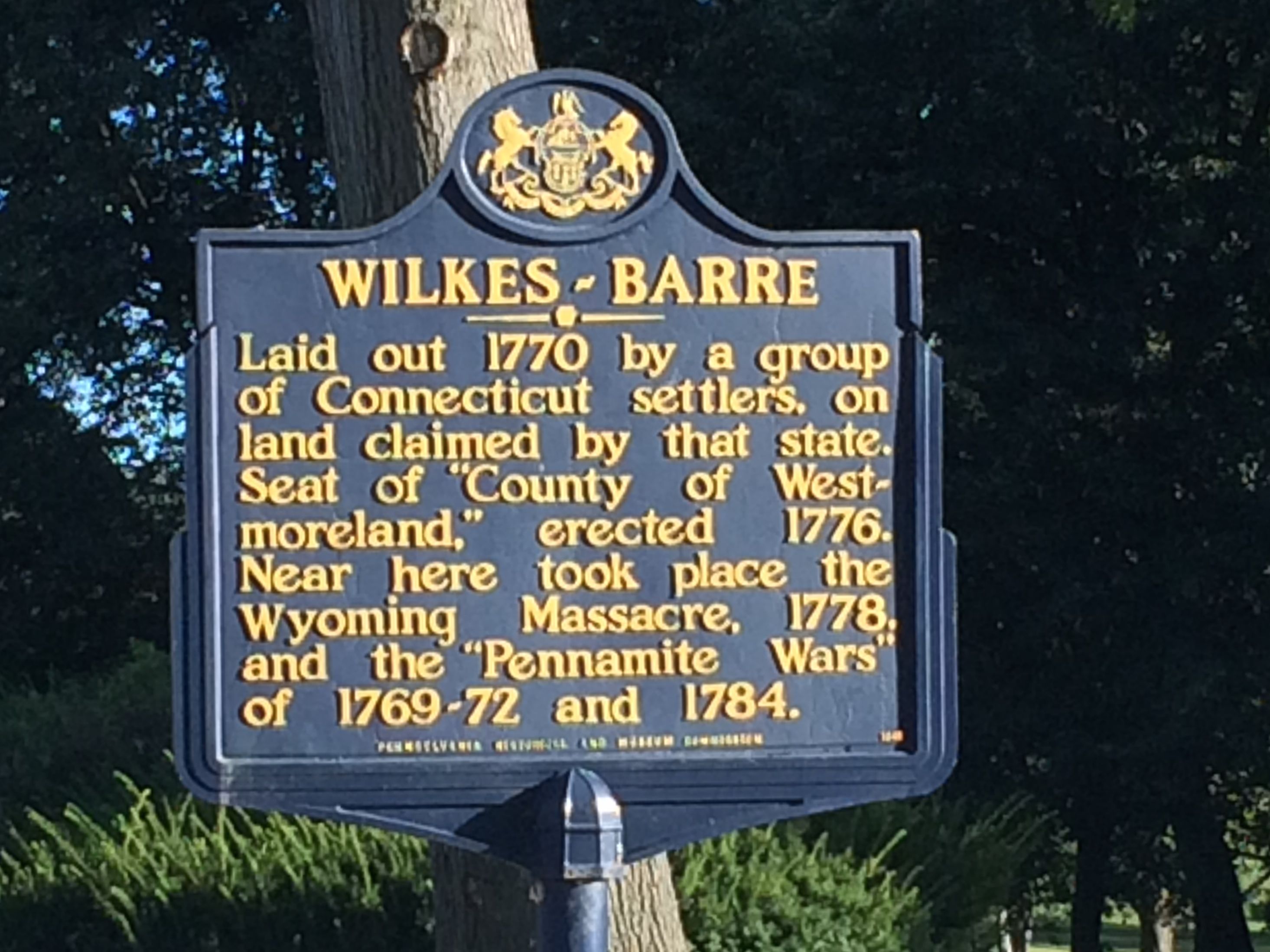
I did zip in to Wilkes-Barre to see what I could see. I found out that the name of the city is pronounced “Wilks Berry.” I always though it was “Wilks Bahr”.
I also found out that Wilkes-Barre was laid out by a group of Connecticut settlers. I found this puzzling, until I did a bit of digging.
It turned out that King Charles II granted charters to Connecticut and Pennsylvania for the same land. Apparently, geography was not one of his strong suits.
He granted Connecticut the Wyoming Valley as part of the land grant of 1662. He included the same area in the Pennsylvania land grant of 1681. Clearly, Connecticut had reason to think they should be able to settle there. The only problem was that Pennsylvania settlers had gotten there first.
There were two Yankee-Pennemite wars. The first one was before the Revolutionary War, in 1769-1772 and then after, in 1784.
During the Revolutionary War, the British attacked the Yankee forts that had been established and they captured them. The terms of surrender was that they would turn over the forts and weapons to the Indians fighting with the British, but would be allowed to stay on their land if they agreed not to fight against the British.
After the war, people began moving back and reestablishing themselves. A decision would have to be made about which state had the land. Congress established a court to decide the matter. After forty days of deliberation, they decided that the land belonged to Pennsylvania.
Of course, this did not settle who actually owned the farms and homes in the area. The Pennsylvania Government decided that the Connecticut people should give up their claims and move to unsettled land in Western Pennsylvania.
Well, they sent Justice Alexander Patterson and a band of Rangers and they drove the settlers from the valley by force. They compelled the settlers to leave without food or supplies and many died because of hunger and hardship. Eventually, the Pennsylvania government stepped in to restore order, but Connecticut and Vermont organized and came to the aide of the Connecticut settlers. There were skirmishes and battles, but the war was over in 1784.
The settlers became law-abiding citizens again and the Yankees from Connecticut became Pennsylvanian and were assured that their land claims would be honored.
Can you believe how much research I had to do to understand this simple roadside sign?
The next day, I had to take Cora to the vet. Luckily, I found one that could see her. Her ears were bothering her. She didn’t like it, but she cooperated. She seems to be doing better now, but I have to take her for a check up in two weeks. Who knows where I’ll be then?
After the vet visit, I decided I had to at least see Scranton. It was just a short trip up I-81.
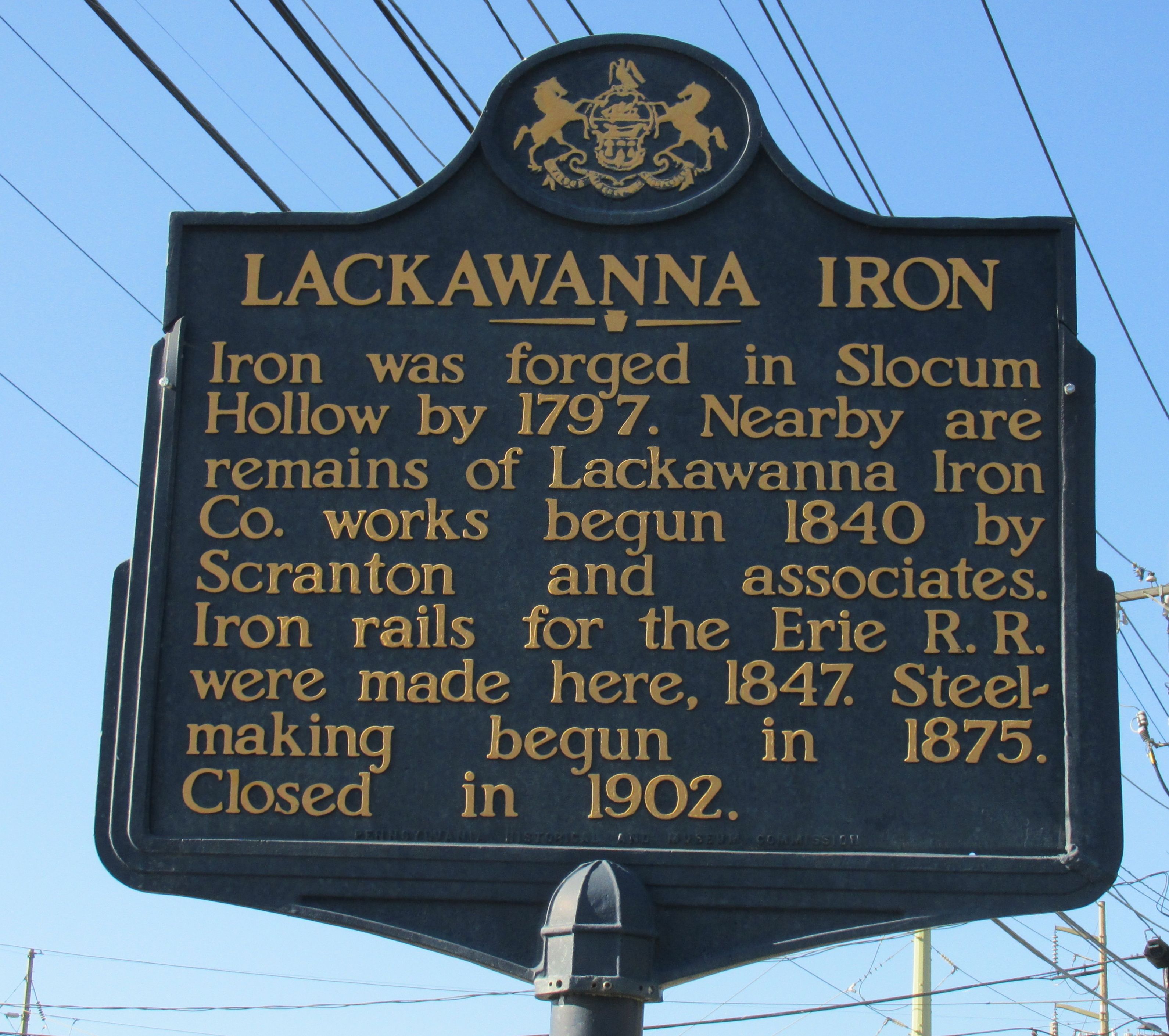
I headed to the Anthracite Heritage Museum and Iron Furnace. I love that HISTORY Here app! How else would I have found it?
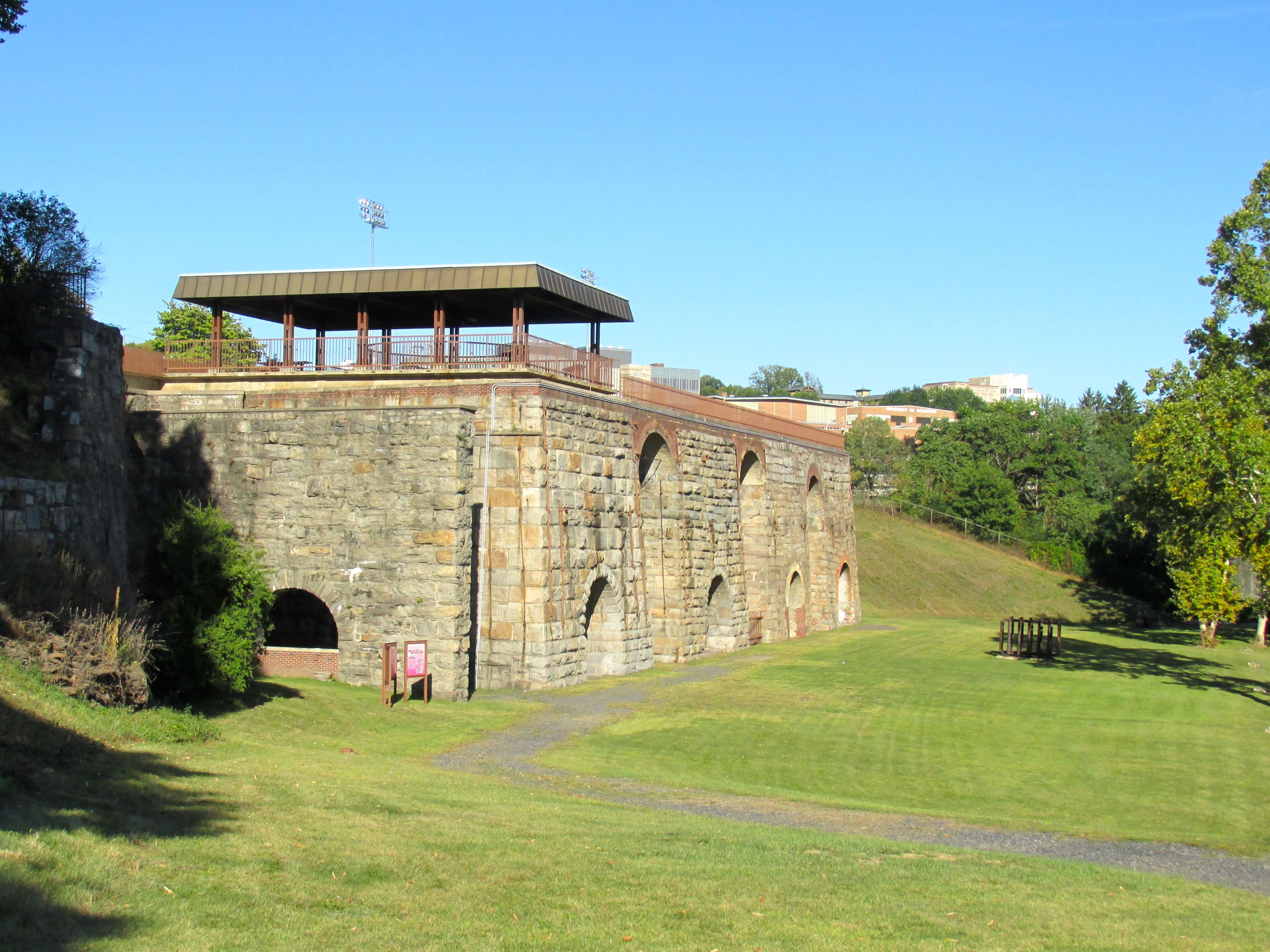
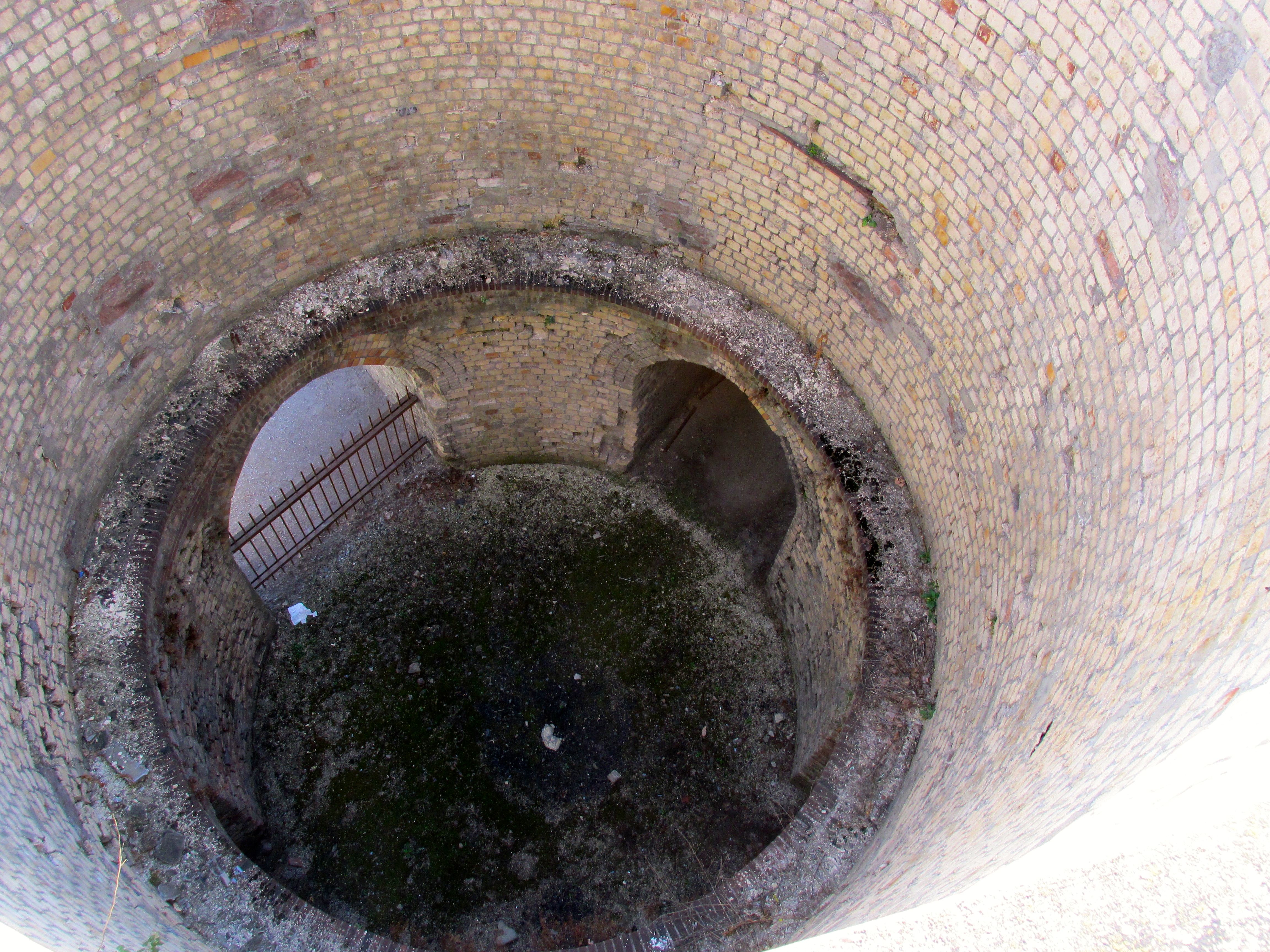
Unfortunately, I arrived so late that all I could see were the remains of the four massive blast furnaces.
I do love ruins, so I was happy that I came.
One thing that contributed to my enjoyment of the site was the sign explaining the rules. It was so polite and welcoming!
They didn’t use ALL CAPS and they communicated politely with their guests.
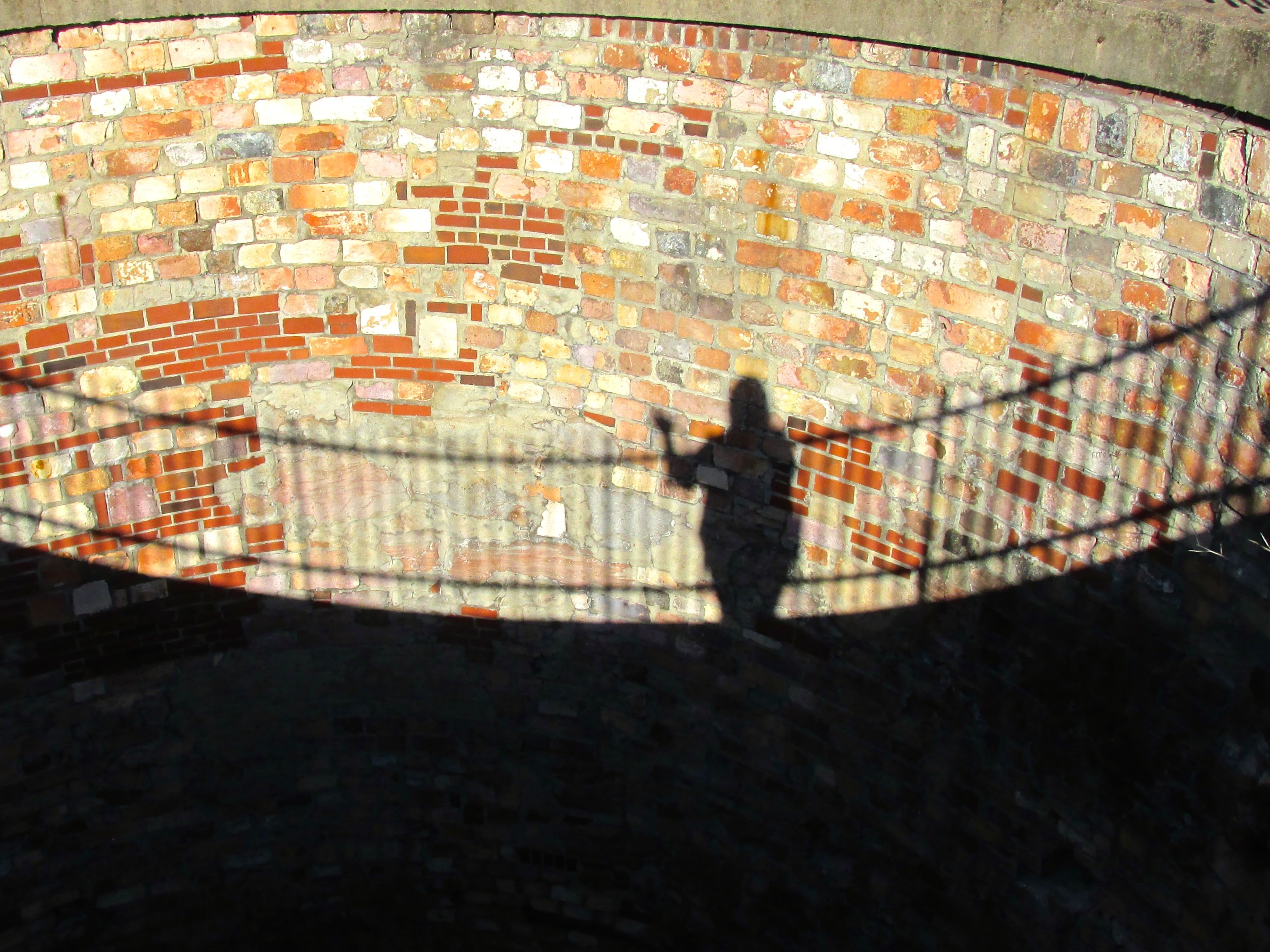
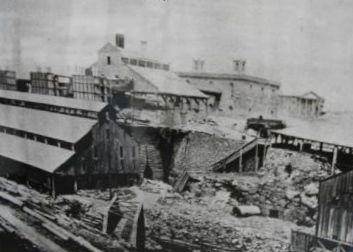
Looking into the one of the furnacesMe and My ShadowScranton Casting Shed
I snapped this photo from one of the excellent interpretive signs they had around the site. From what I understood, the shed was on the flat area in front of the blast furnaces. People from Buffalo will recognize these structures from Bethlehem Steel in Lackawanna.
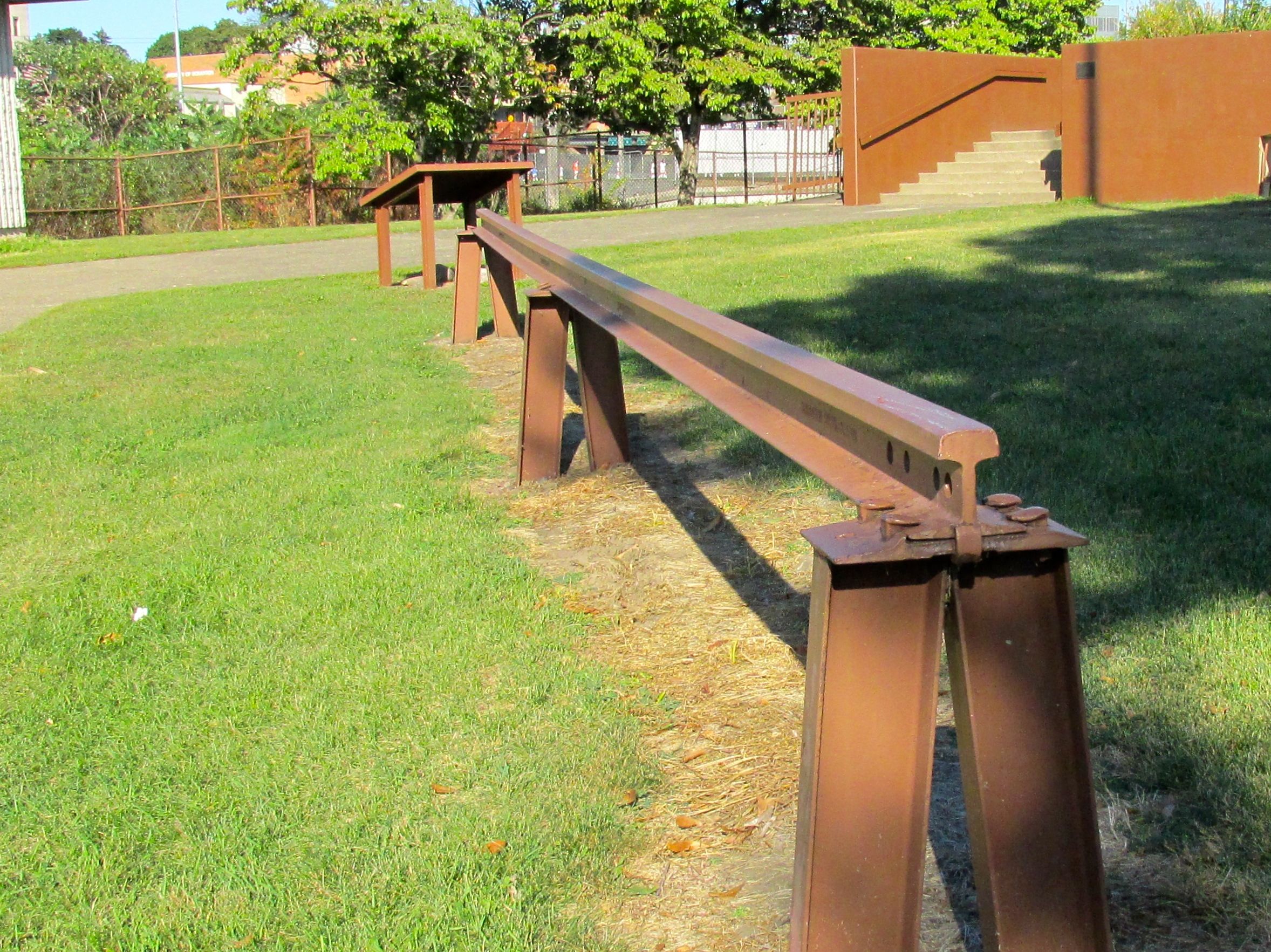
Steel Rail
They created millions of miles of steel rails for the railroads.
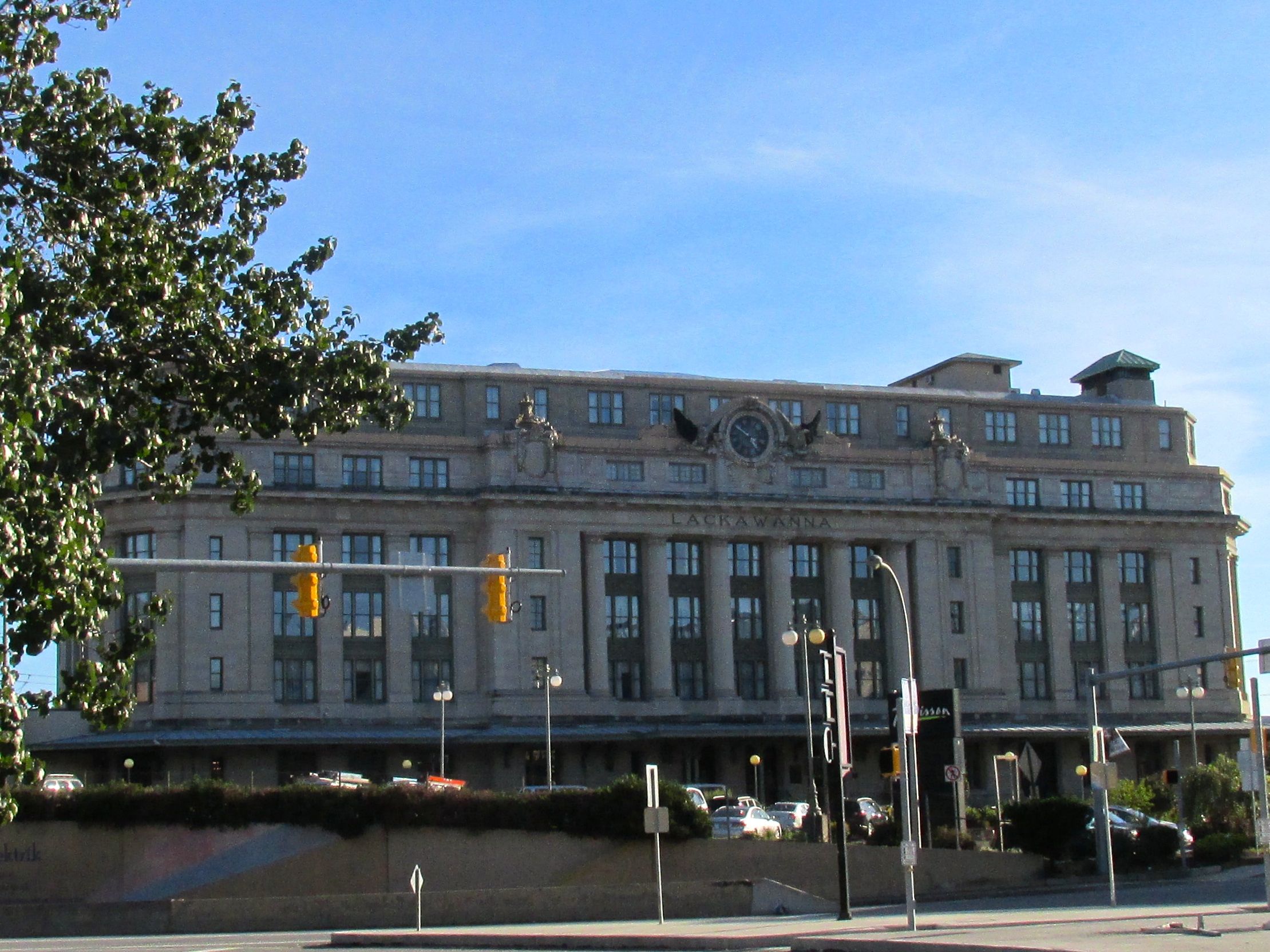
Lackawanna Railroad
The Lackawanna Railroad made it possible to move the region’s iron and coal around the country. The railroad originally ran from Scranton to Buffalo, NY and Hoboken, NJ, but mergers and acquisitions expanded its line.
This station opened in 1907 and an extra floor was added in 1923. Business was booming.
Of course, change is the only constant. By 1972 the railroad went out of business and the station was closed for 10 years.
Eventually, the building was rehabbed and it reopened as a hotel. I wish I had thought to park and look inside, but the traffic was heavy and navigating unfamiliar places with Bart, the big ass red truck, is not a pleasant task.
I decided to head home and check on Cora. The next day was a travel day, so I needed to rest up.
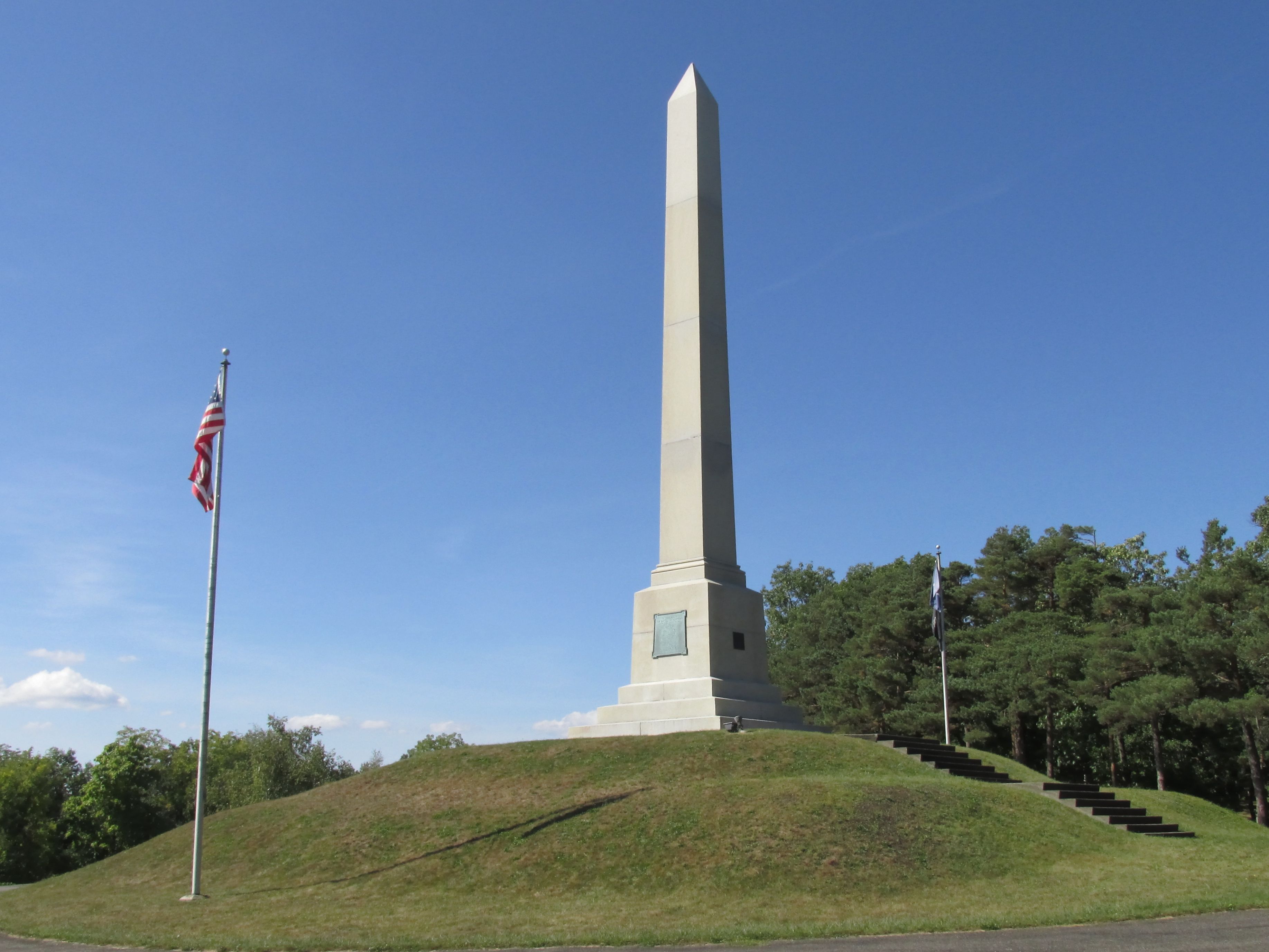
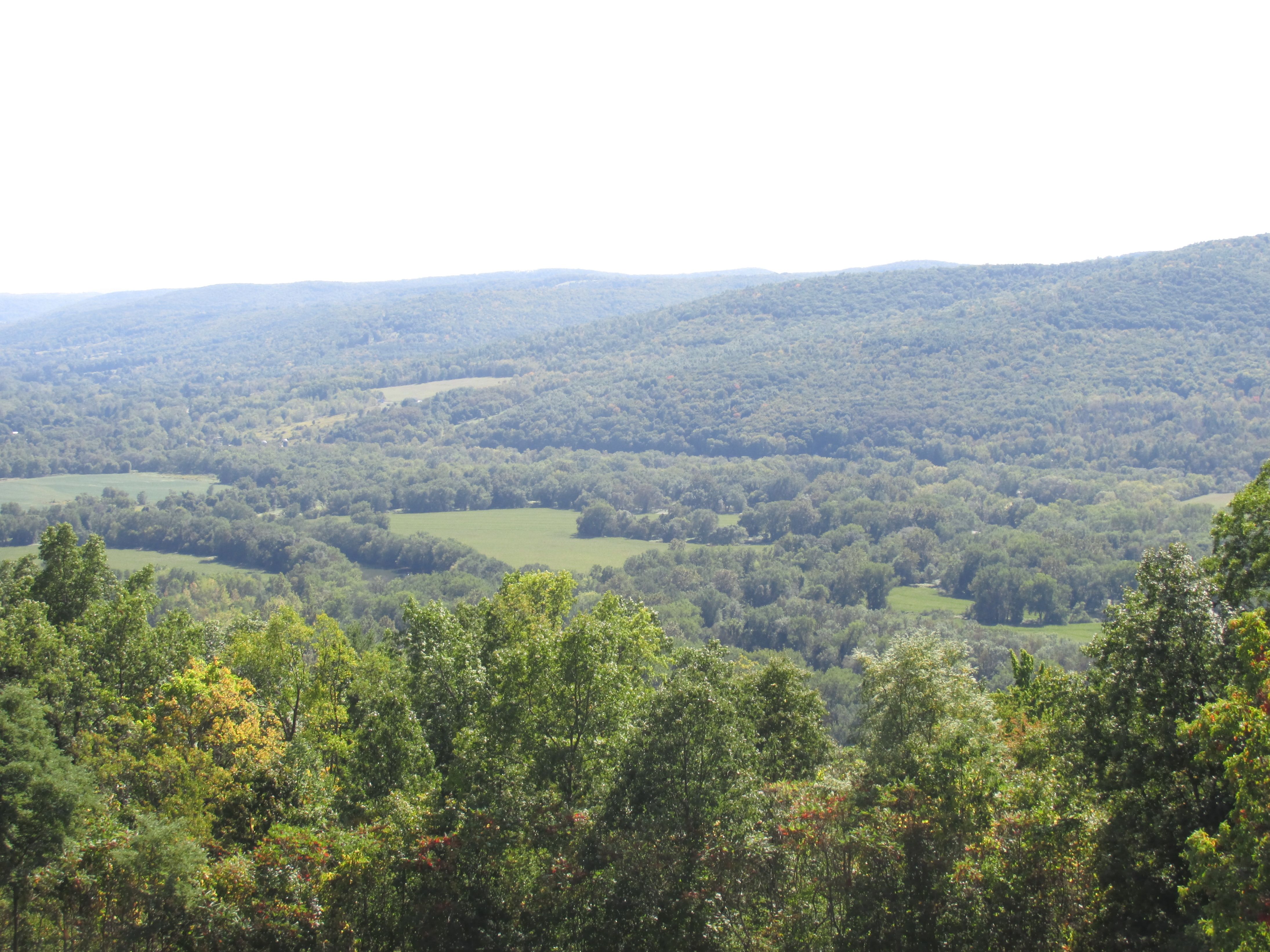
After bouncing and winding my from Watkins Glen to Elmira and then all the way up to the end of the road, I arrived at Newtown Battlefield State Park. I can’t imagine how they managed to fight their way up the mountain. My hands hurt from gripping the steering wheel!
Well, technically, I guess it’s not a mountain, as the crest is only 800 feet above the road next to Chemung River. But, my goodness, it sure felt like a long way up.
And a long way down.
The weather was warm and sunny. It was a great day for outside sightseeing. The next day would be good for indoor activities.
I set up the trailer. That is the good part about camping without hook ups – there is nothing to hook up! I just unhook the trailer and then I’m free to go.
The Newtown Battle was the major battle of the Sullivan Campaign in the Revolutionary War. In 1779, General John Sullivan was directed by the Continental Congress to end the threat of the Iroquois, who had sided with the British.
The Continentals roundly defeated the Iroquois, destroyed their villages and burned their crops. This drove the Seneca up to Fort Niagara. I guess the Seneca have a long memory.
I headed back down the twisty turny narrow road and into Elmira. My HISTORY Here app told me that Mark Twain’s grave was here.
Entrance to Woodlawn Cemetery
The leaves are starting to turn. I entered the cemetery and wondered it there was a guide or directions to Mark Twain’s grave. I needn’t have worried. Elmira is proud of all their citizens.
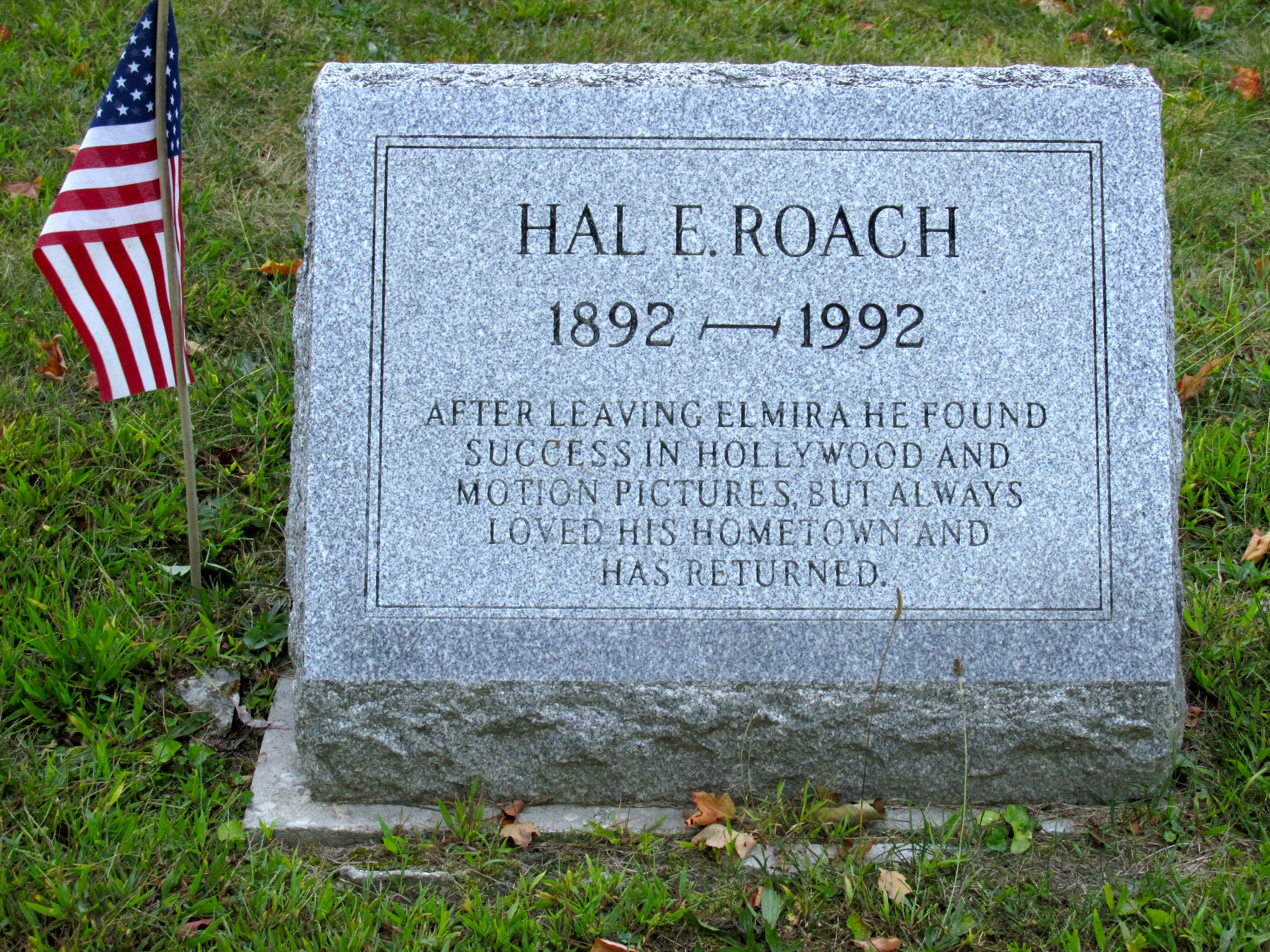
The first sign I saw was for Hal Roach, a film producer whose career spanned from Harold Lloyd in 1915 through working with Laurel and Hardy in the ’30’s and on to syndication in the era of television. He even appeared on the Tonight Show with Jay Leno when he was 100. He passed on in 1992, just two months short of his 101st birthday. That’s a good, long run for anyone!
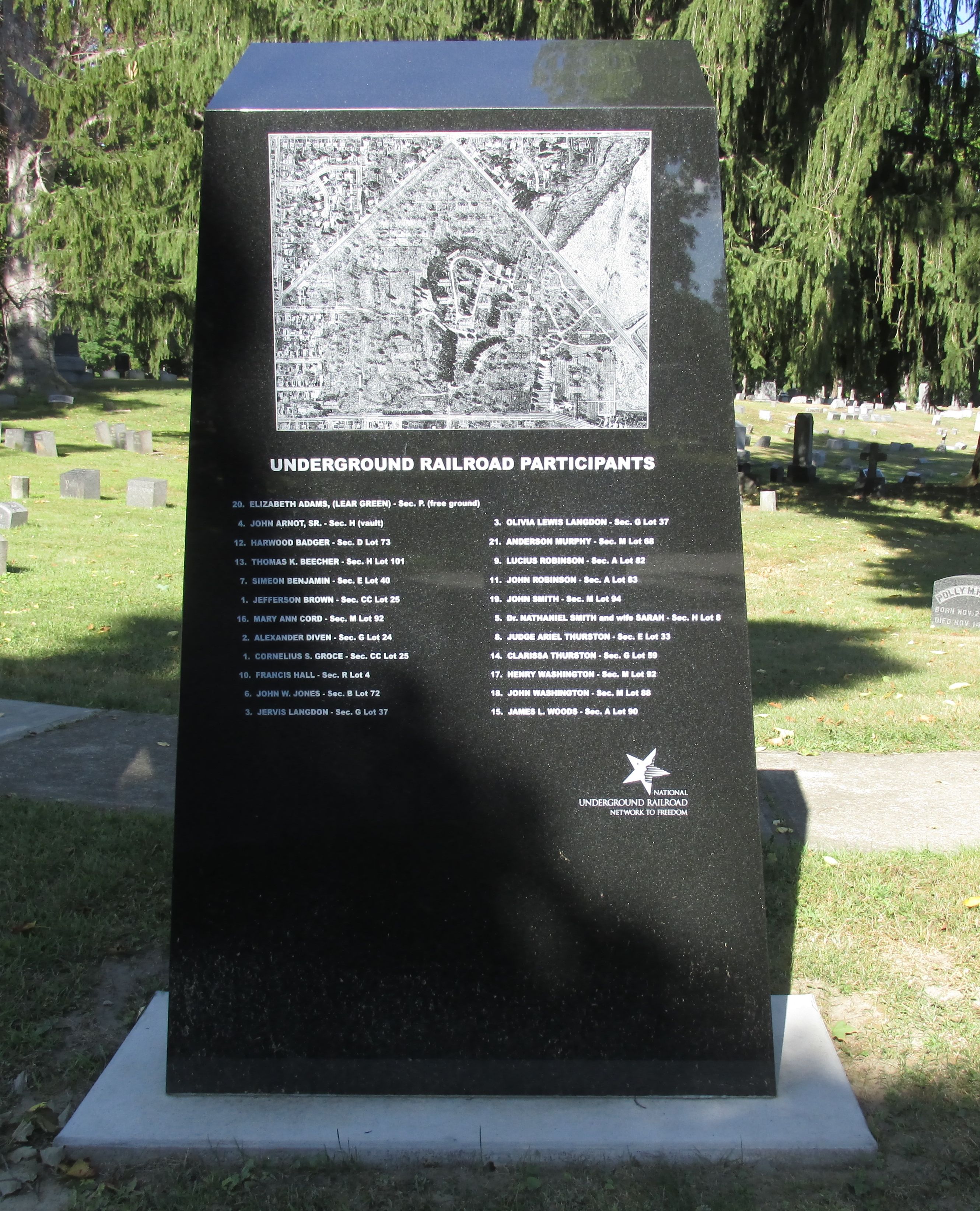
I looped back to the main road of the cemetery, still looking for a map or for more signs. I found this memorial to the participants of the Underground Railroad.
I was impressed with their continuing attention to the struggles of the past.
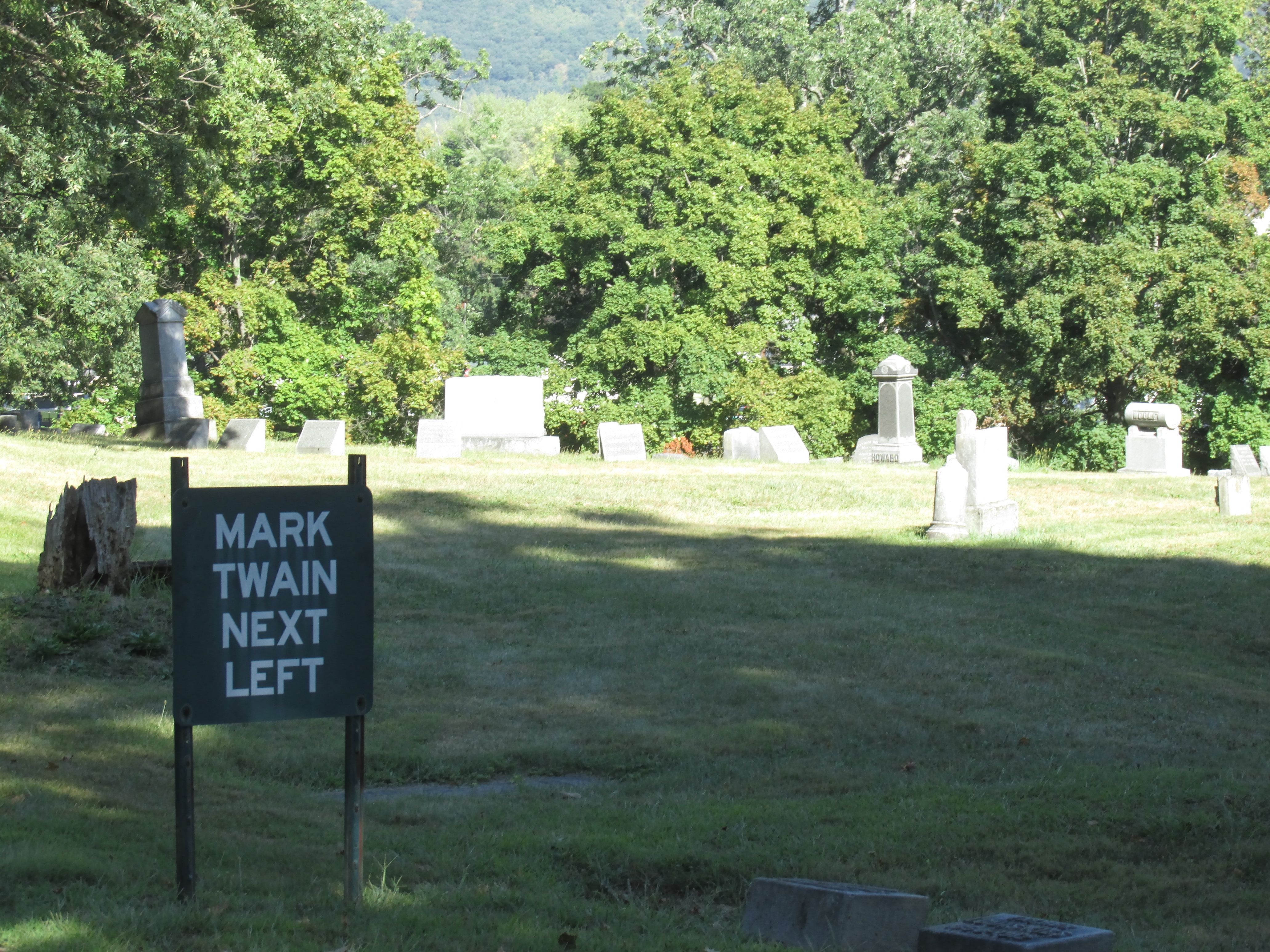
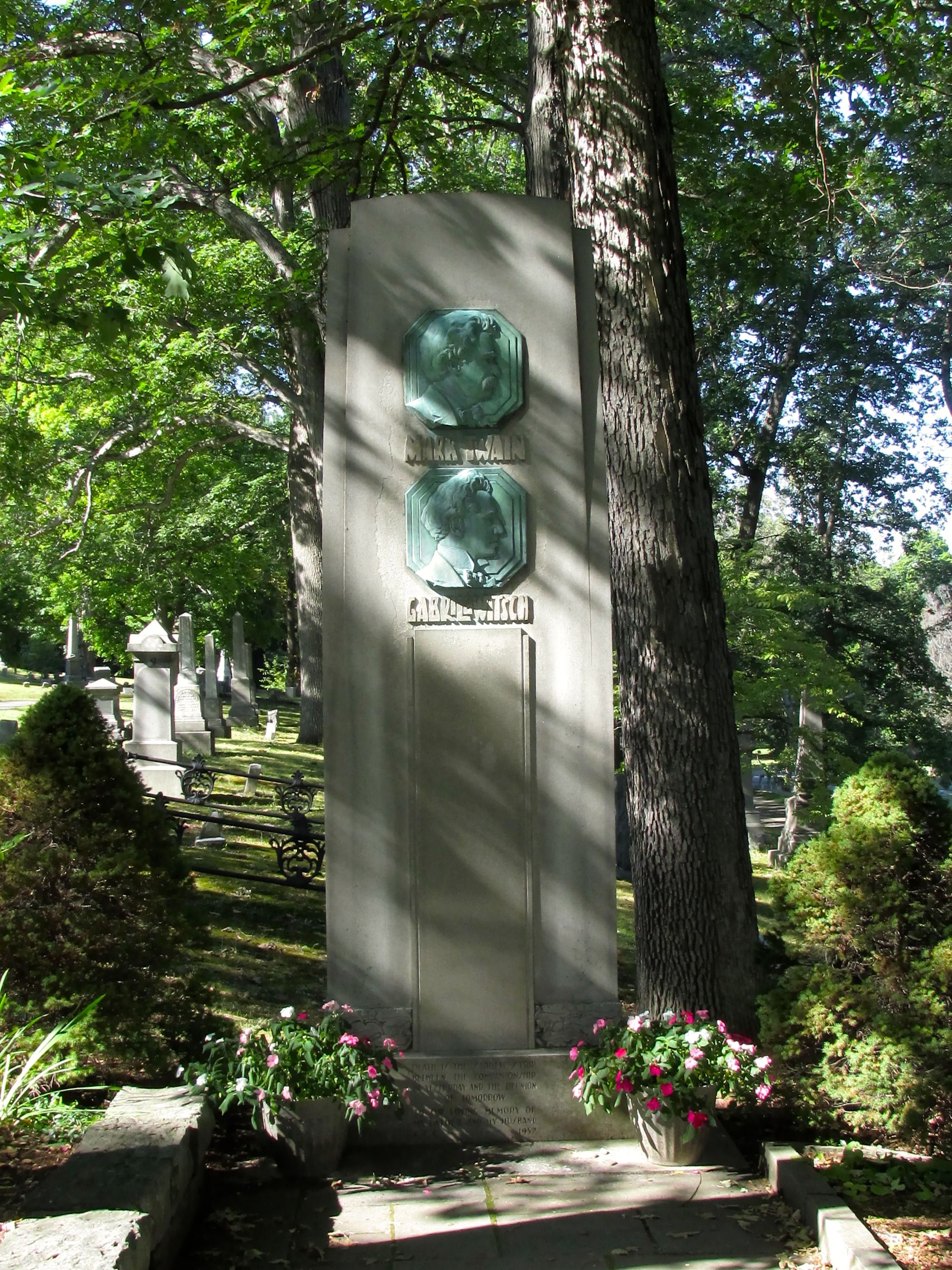
Finally! Directions to Mark Twain’s grave. And then, the grave itself.
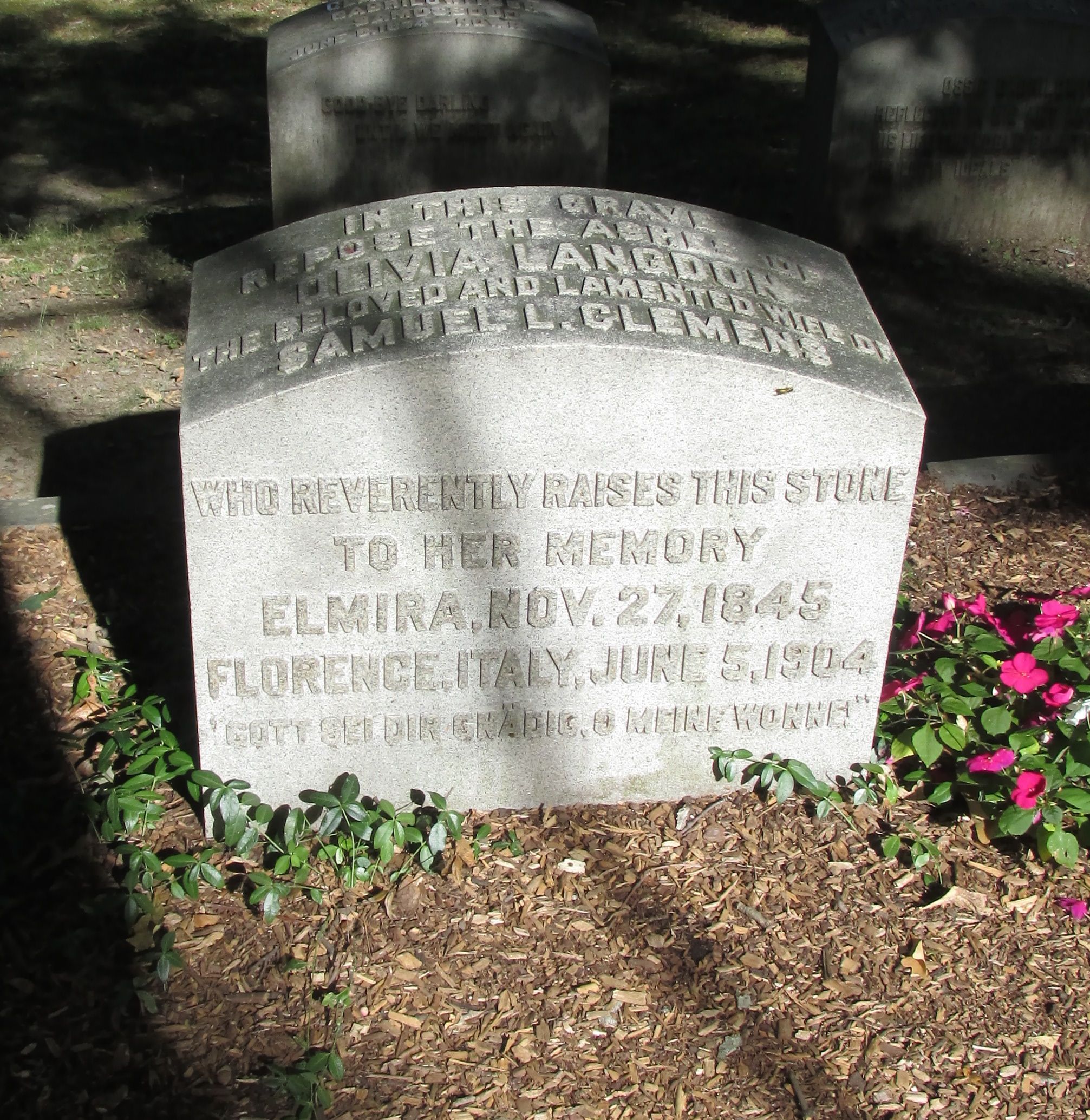
He was buried in the Langdon family plot, which was his wife’s family.
Langdon Family Plot
She predeceased him by six years, dying while they were traveling in Italy.
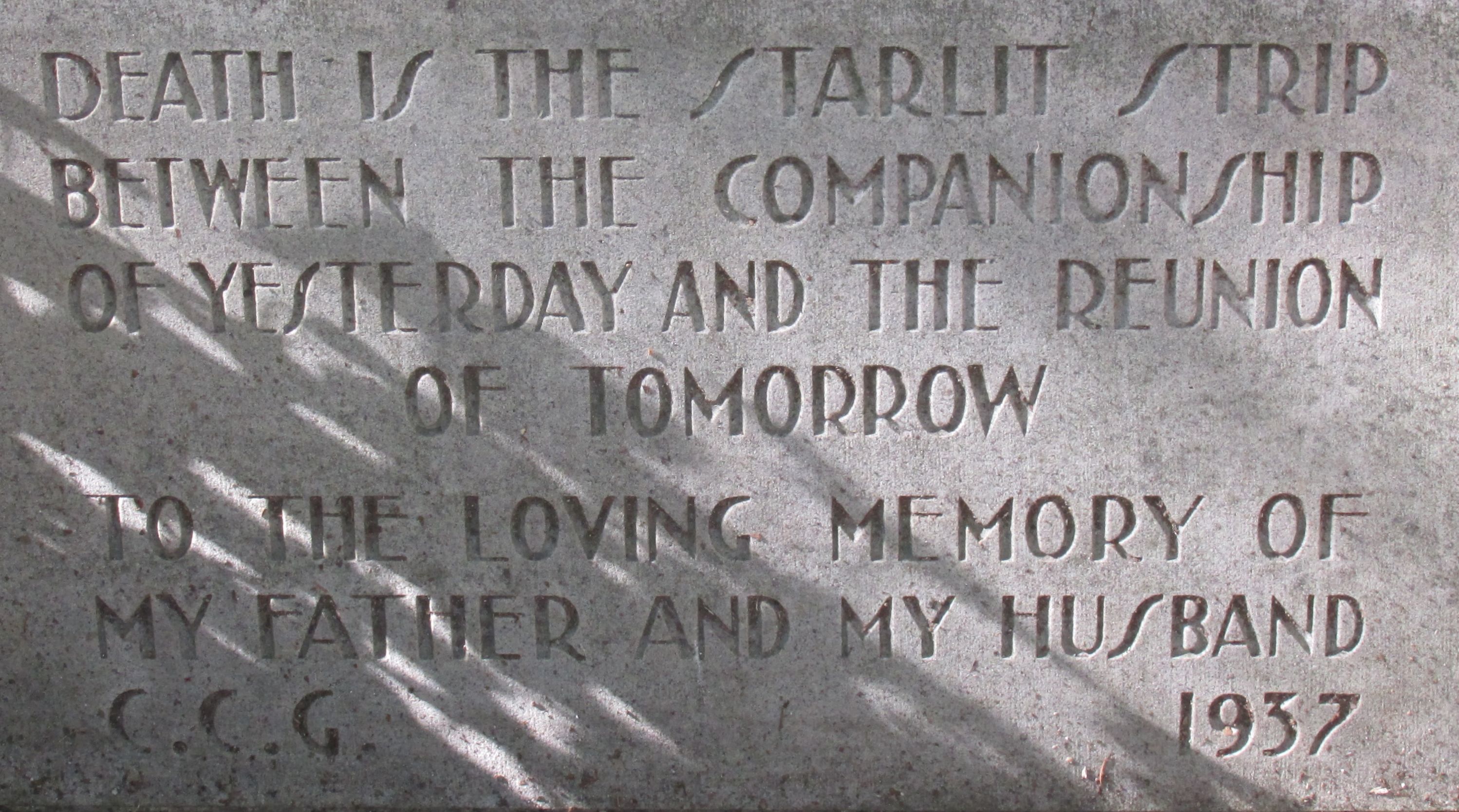
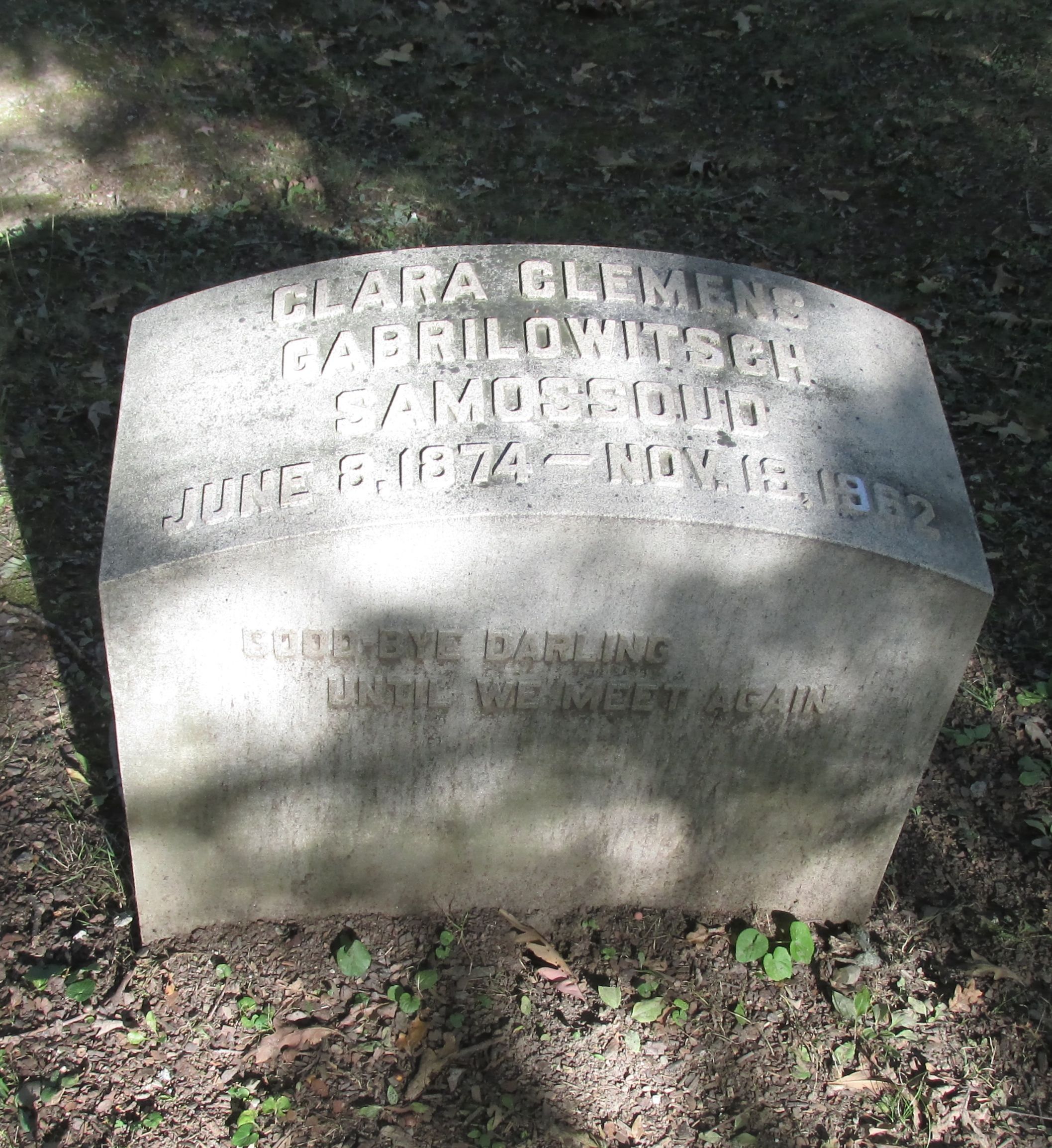
The lower bronze portrait on Mark Twain’s marker is his son-in-law, Russian pianist Ossip Gabrilowitsch. He must have had an awfully high opinion of himself, as he asked to be buried at Mark Twain’s feet. He died in 1936, and Mark Twain’s daughter, Clara, agreed with the request. She added a poem to both her father and her husband at the bottom of the memorial.
It is amazing how close the past is to the present. Mark Twain’s daughter, Clara, lived until 1962. We are practically holding hands with the past.
Of course, everyone knows that Mark Twain lived in Buffalo from 1869 to 1871. He was an editor of The Buffalo Express.
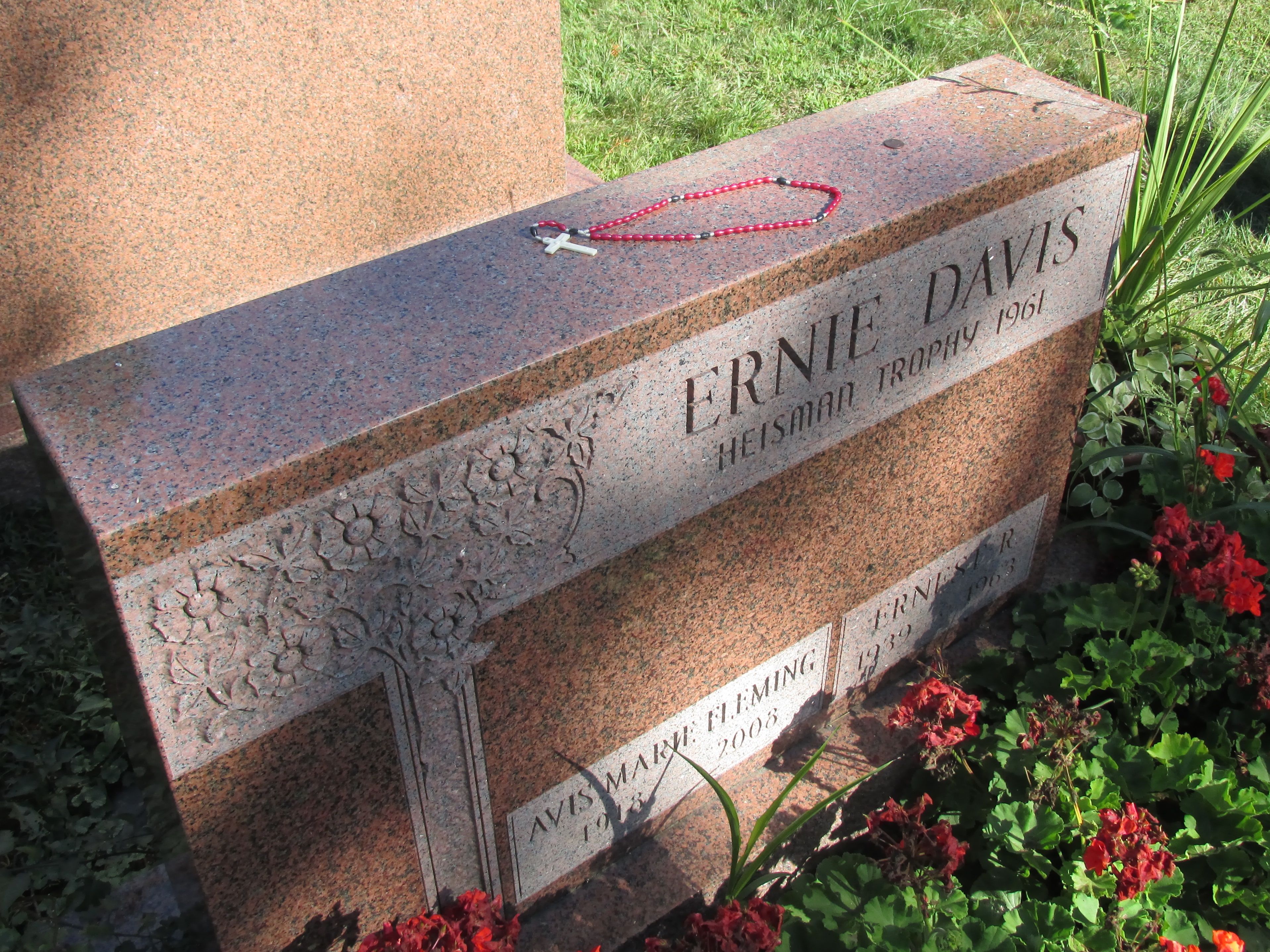
I continued driving around, and noticed a sign for Ernie Davis. I seemed to remember that name, but couldn’t quite figure out why.
I pulled out my phone and Googled his name. I found out that he was the first African-American athlete to win the Heisman Trophy in 1961. He was drafted by the Washington Redskins and then traded to the Cleveland Browns. Unfortunately, he never got to play a professional game. he was diagnosed with leukemia and died in 1963 at the age of 23.
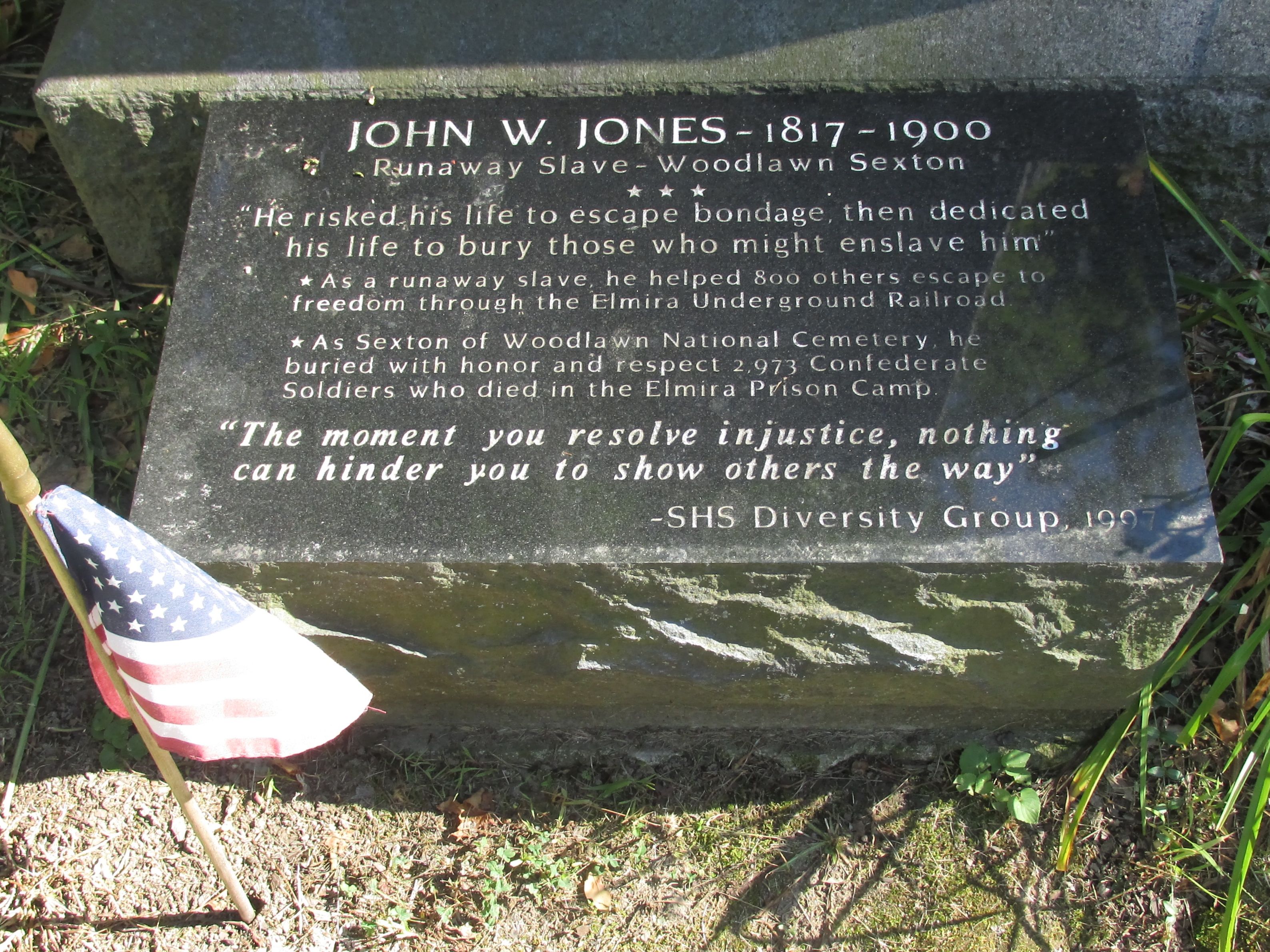
The last sign that I saw was one that pointed the way to the grave of John Jones.
John Jones’ family plot
John Jones had an amazing story. He began life as a slave. He was the houseboy of Sarah Ellzy, but ran away with his half-brothers and two others when she was getting on in years. He was worried about what would happen to him after her death and that prompted him to leave for the north.
He settled in Elmira and worked to help other slaves escape to St. Catharines’ in Canada. By 1860, he had helped over 850 runaways to escape.
During the Civil War, he buried almost 3,000 Confederate soldiers who died while they were in held in the Elmira Prison Camp. He was paid $2.50 for each burial, and the amount enabled him to buy a farm.
His house is now on the national Register of Historic Places. There are plans to open a museum there, but it hasn’t happened yet.
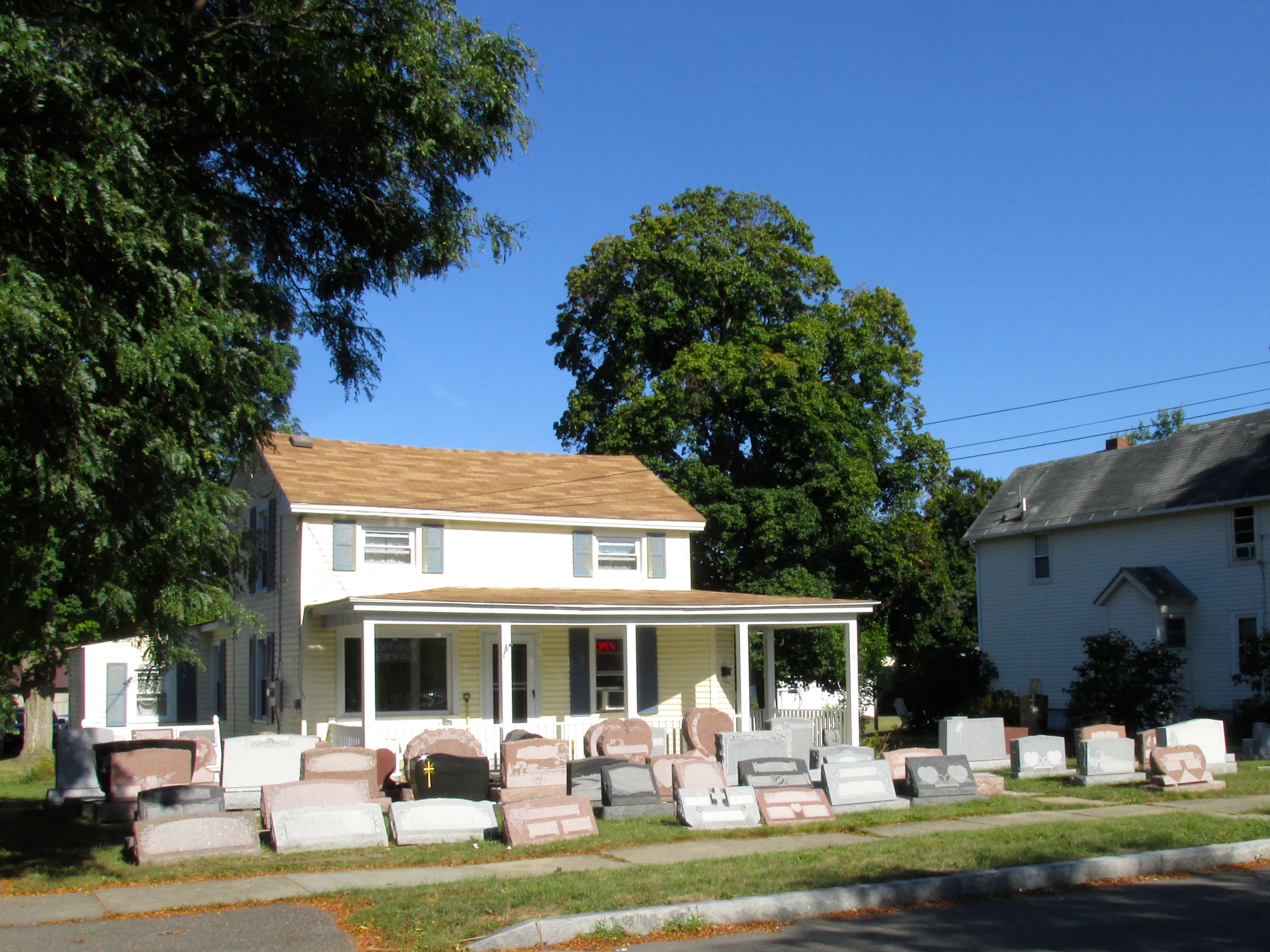
On my way out of the cemetery, I passed a store in the right spot.
Location – location – location
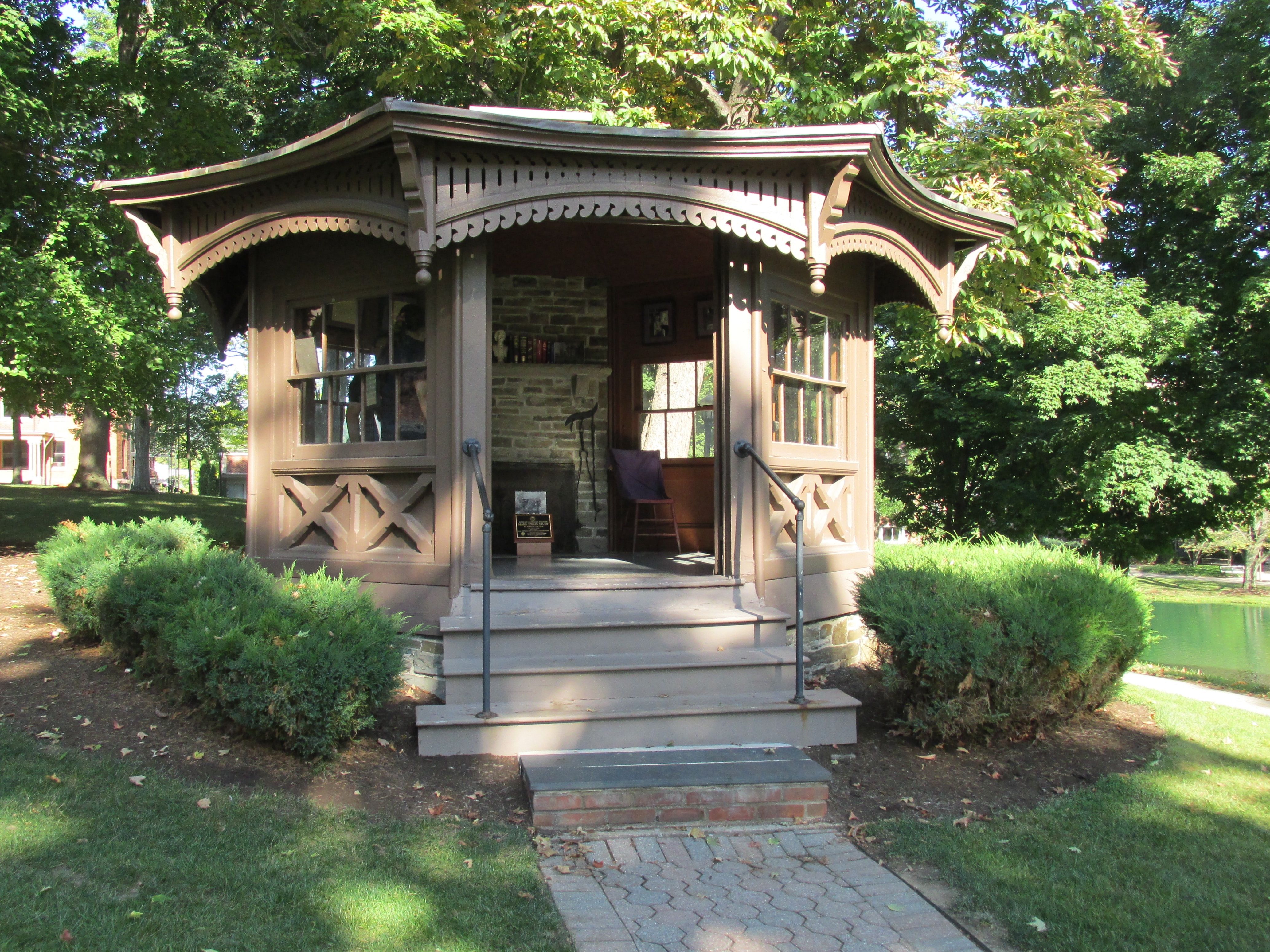
My next stop was the Mark Twain Study on the grounds of Elmira College.
Mark Twain and his family spent summers in Elmira with his sister-in-law’s family. She had this retreat built on the hill above her house so that he could concentrate on his writing. In this little building, he worked on The Adventures of Tom Sawyer, The Adventures of Huckleberry Finn and A Connecticut Yankee in King Arthur’s Court, among other works.
I spoke with a Mark Twain ambassador from the college, and she told me that the study was moved from the house on the other side of the Chemung River to the college in one piece, and she showed me a photo of the move in process. There was a chair in the study that was original. She told me that the other original furniture was in the Mark Twain Center at the college.
My last stop of the day was Quarry Farm, the home of Mark Twain’s sister-in-law.
Quarry Farm Plaque
Unfortunately, they weren’t accepting visitors.
That night the clouds rolled in and the heavens opened up. It was wise to do the outside activities on day one of my stay in Elmira.
The next day, around noon, I headed over to the Chumung County Historical Society. I hoped that I would be able to shed some light on the Chemung Canal.
Yet another marker for the Chemung Canal!
The Historical Society is located in an old bank building. I was greeted by Olivia, a young woman busily working on homework. She described the exhibits and told me that the entrance fee was $5. I overcame my reluctance to pay to enter museums and forked over a Lincoln.
The museum is small, but the items on display are carefully chosen to tell the story of Elmira. The interpretive signs are also enlightening.
In my opinion, Elmira owes its existence to the military. First, the Battle of Newtown opened up the areas for settling by the colonists. They dug the Chemung Canal to connect with outside markets. After that, camps for the Union Army during the civil war brought more opportunities for people to create and sell commodities.
I was surprised by the Chemung Canal, as I couldn’t imagine another canal in the area aside from the Erie Canal. But, I had no idea that the Union Army had camps this far north. And, even more amazing to me was that the Union Army had a prison camp so far north.
Elmira was originally selected as a training and muster point for the army because it The Erie Railway and the Northern Central Railway criss-crossed the city, facilitating transportation. As the war progressed, the camp was used less and eventually the camp’s “Barracks #3” were converted into a military prison. The prison camp was in use from July, 1864 until fall of 1865.
The conditions at this camp were dreadful. The inmates called it “Hellmira” and historians call it “The Andersonville of the north.”
Nichols’ Prison Viewing Tower
The local population was alway prepared to take advantage of business opportunities. In July, Mr. Nichols built an observation tower that was twice as high as the prison’s walls. He charged visitors fifteen cents to climb his tower and look at the prisoners inside. A few weeks later, the Mears boys built a new tower next to Nichols’ tower. Their tower was twenty feet higher and they charged only ten cents.
In any event, the two towers were not allowed to stand for very long. For the time that they were open for business, though, this is the view that they saw.
The view from the tower
The prisoners would do whatever they could do to survive. Rats were a prized catch, as they added much needed protein to their diets. They could also bater them for other things they wanted.
Confederate prisoner art
They also made items for sale to the people of the town.
There were items the prisoners used on display.
Tin dinner ware and a section of sheet from the prisoners hospital
Confederate coat worn in Elmira
The Union was represented, as well.
Union overcoat from the Civil War
The prisoners suffered from the terrible conditions. The population of the prison swelled from 400 in July 1864 to 9,262 in August. Winter snows started in October and the cold weather was exacerbated by the shortages of food, warm clothing and blankets. To top it off, more that half of the soldiers were still housed in tents.
The soldiers were housed in barracks by the beginning of 1865, but the harsh weather, poor sanitation and shortages of food and supplies kept the death rate high. In March 1865, a flood forced the prisoners to take refuge on the upper bunks.
With General Lee’s surrender, the prisoners began to be released. The last Confederate soldiers left on August 11, when the remaining camp materials and buildings were sold. 140 soldiers remained in the Elmira hospital after the camp closed.
In September 1865, the final death toll of the prison camp was released. Of the 12,147 prisoners housed in the Elmira camp, 2,961 died. That is a death rate of 24.3%, the highest of any prisoner of war camp in the north.
Back to happier times.
Maybe this is what I should have named this post.
Transportation seems to be an important factor of Elmira’s growth – along with the government and wars.
Canal boats on the Junction Canal that linked Elmira with Corning
The Chemung River was a major thoroughfare from time immemorial. About 11,00 years ago, mammoths and mastodons roamed the area.
Mammoth Tusk
The Chemung River got its name when Native Americans found a mammoth tusk along its banks. The word “Chemung” is Alogonquin for “place of the big horn.”
The river made Elmira’s progress difficult as well as possible. The river has flooded the town many times over the years, as the city is built on the flood plain of the Chemung River.
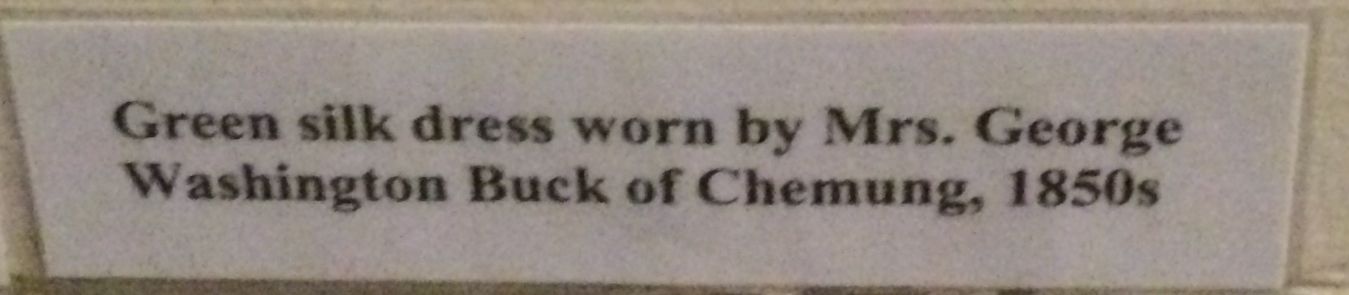
Water bottled by Brewers of Utica ClubElegant Green Silk Dress
This dress belonged to Mrs. George Washington Buck. I’d like to know where she kept her internal organs. I’d also liked to know what her name was.
George Washington Peace Medal
Red Jacket, who is buried in Forest Lawn Cemetery in Buffalo, received one of these.
Surveying tools
George Washington got his start as a surveyor. I always wondered what kind of tools he used.
There was more in the museum, but perhaps this little preview will inspire you to visit.
The weather hadn’t improved while I was inside, but I wanted to find the statue of Ernie
Ernie Davis Statue
I liked the fact that he was portrayed as a scholar, and the statue is in front of the Ernie Davis Middle School.
The last vision of Elmira that I’d like to leave you with is something I haven’t seen in years:
The day after my abbreviated hike up Watkins Glen and the visits to Prejean Winery and Montour, I decided it was time to visit Ithaca.
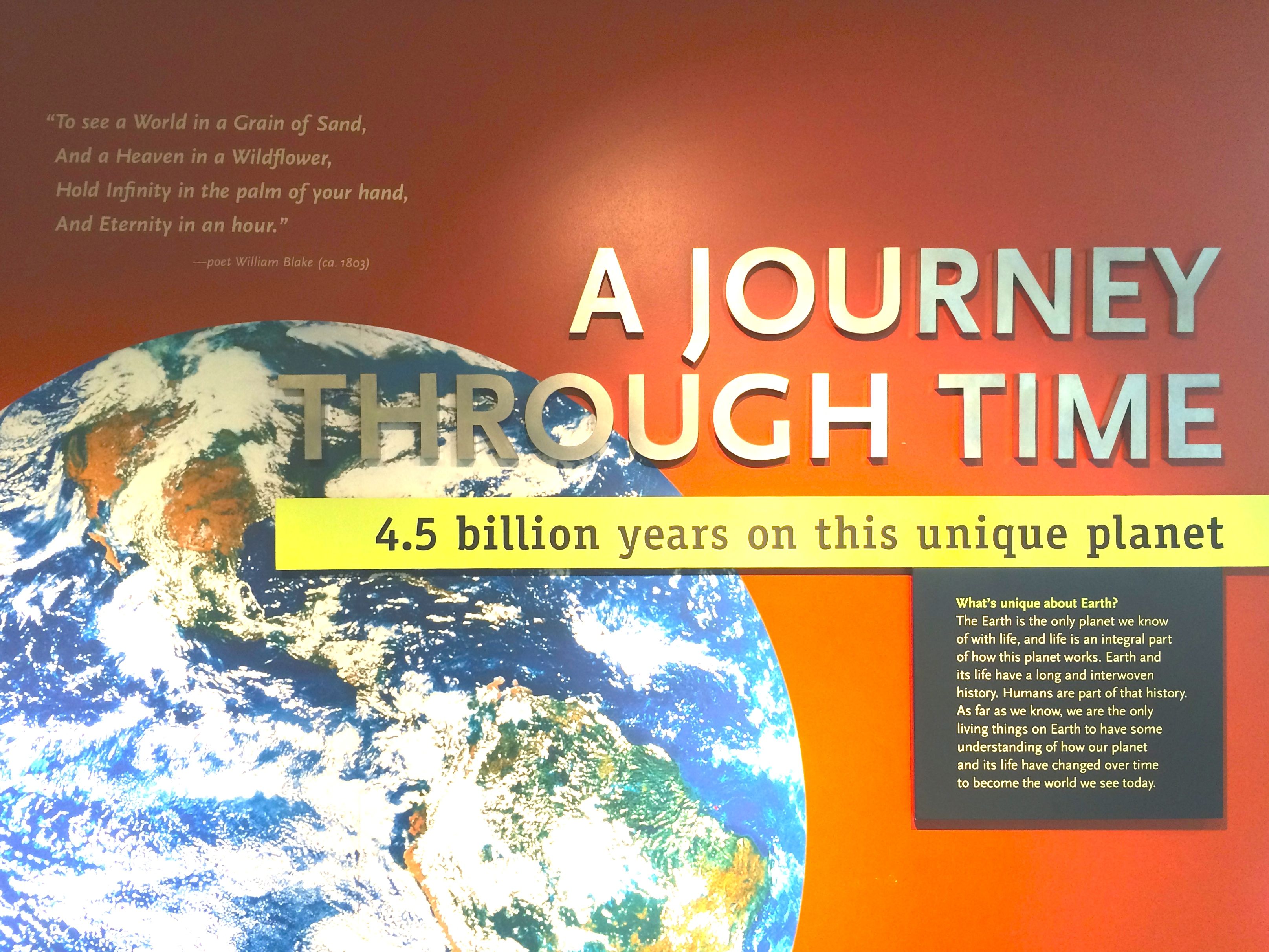
The distance from the tip of Lake Seneca to the tip of Lake Cayuga is about 20 miles. Twenty bouncy, twisty turny miles. My first stop was The Museum of the Earth. This is a must visit museum for all geology and paleontology nerds.
I am probably more a fan than a nerd, as I find I can never remember any of the names or the correct sequence of ages, but this is a wonderful museum.
There are great videos that explain things and wonderful interpretive signage.
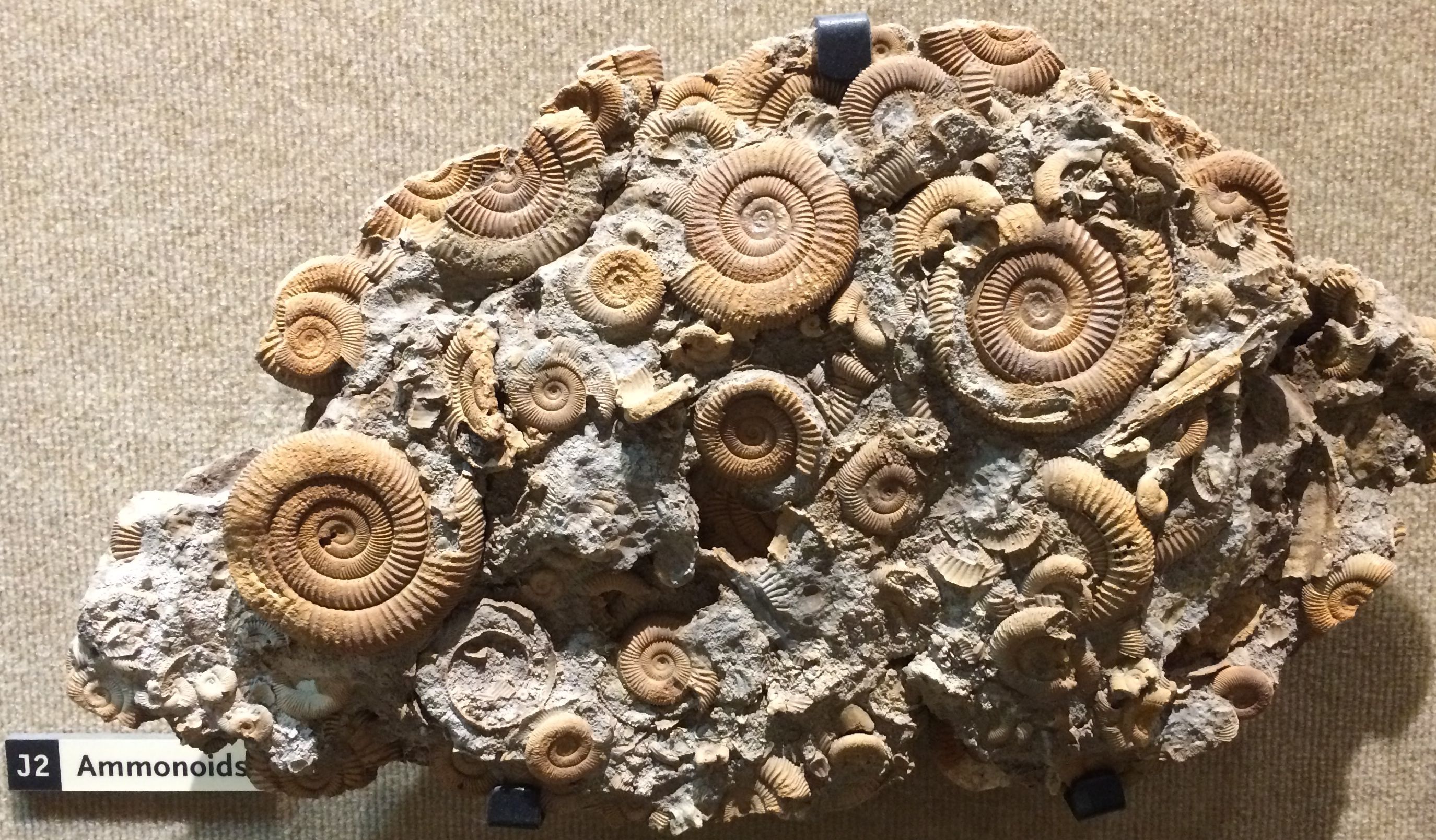
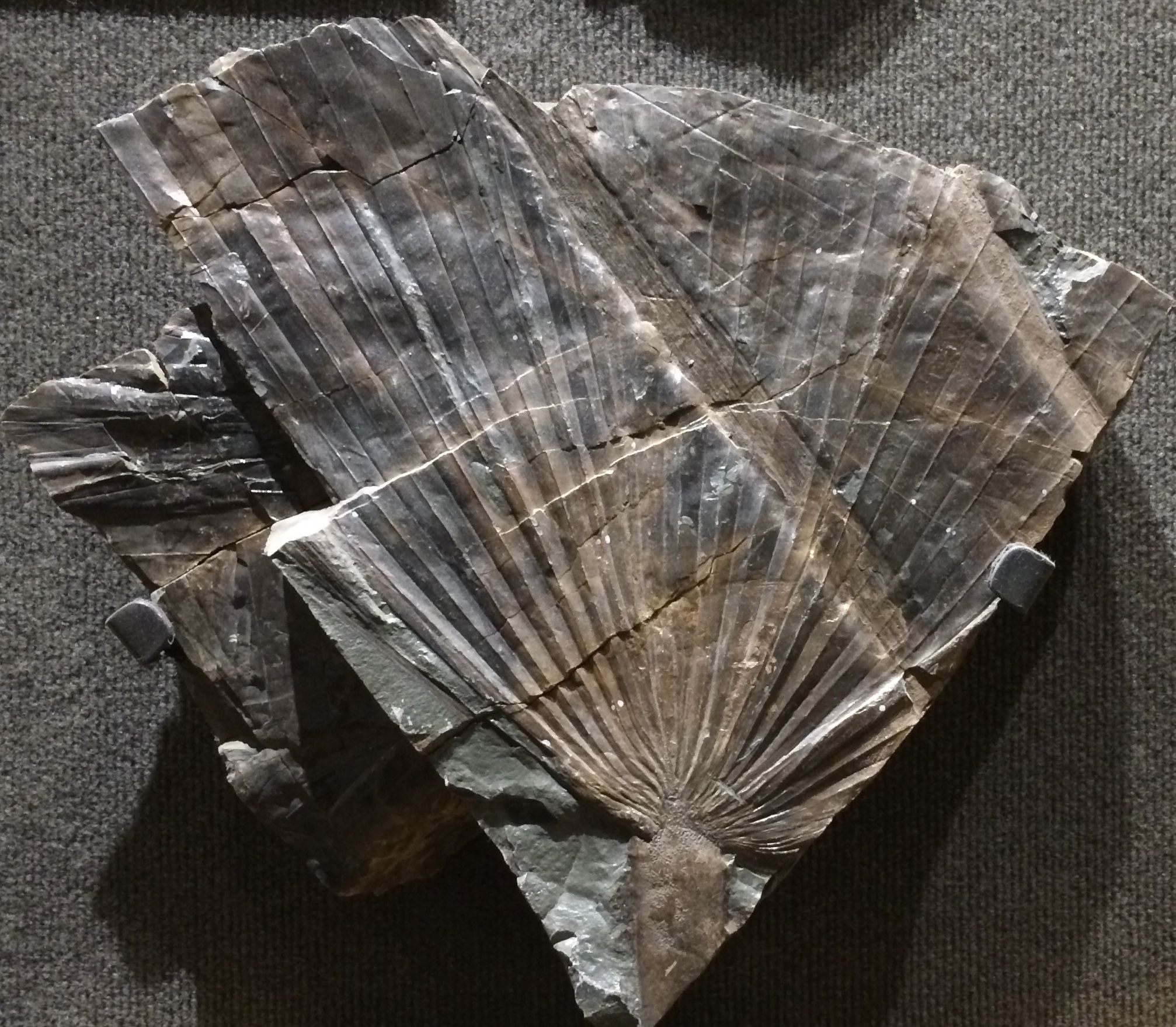
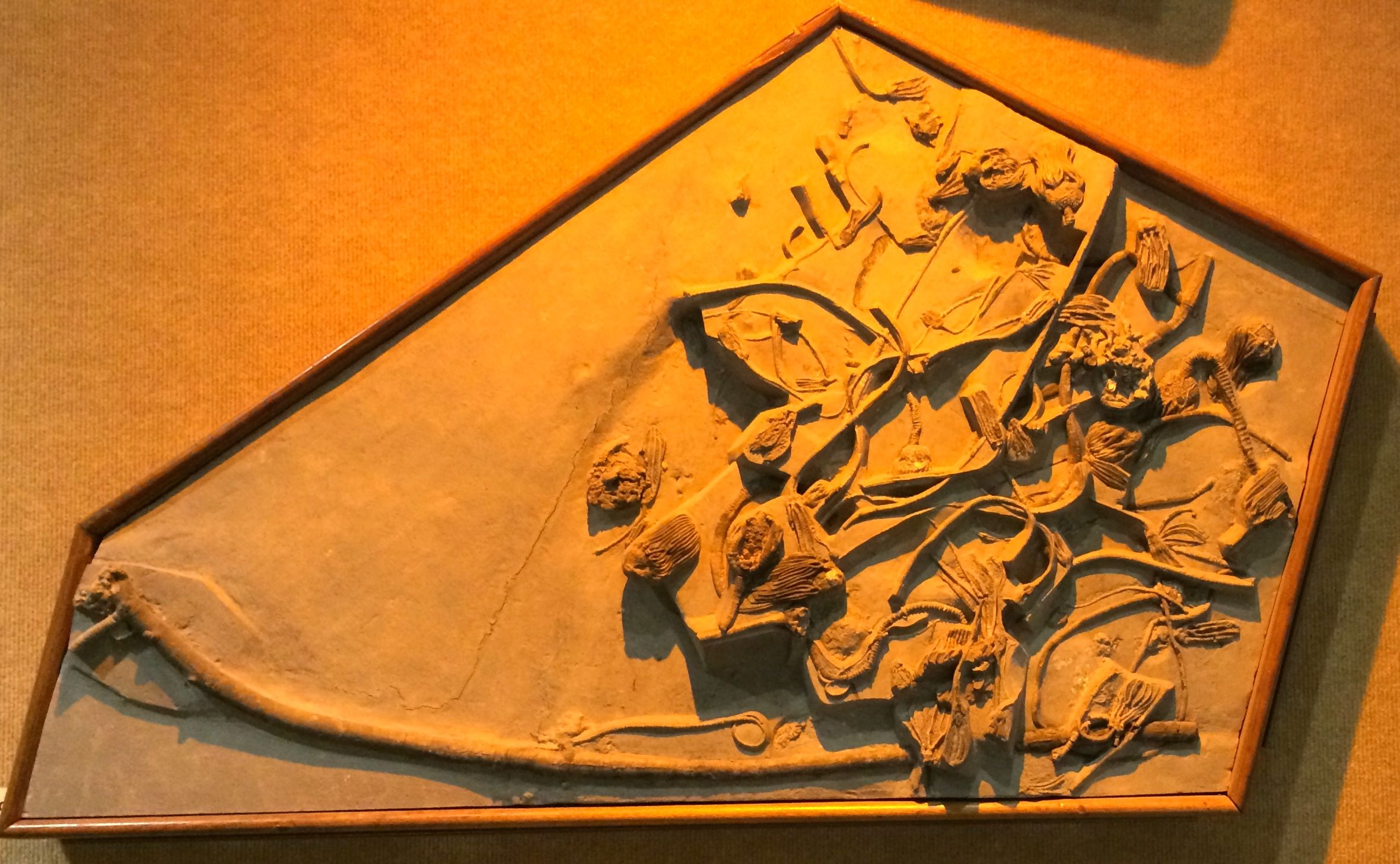
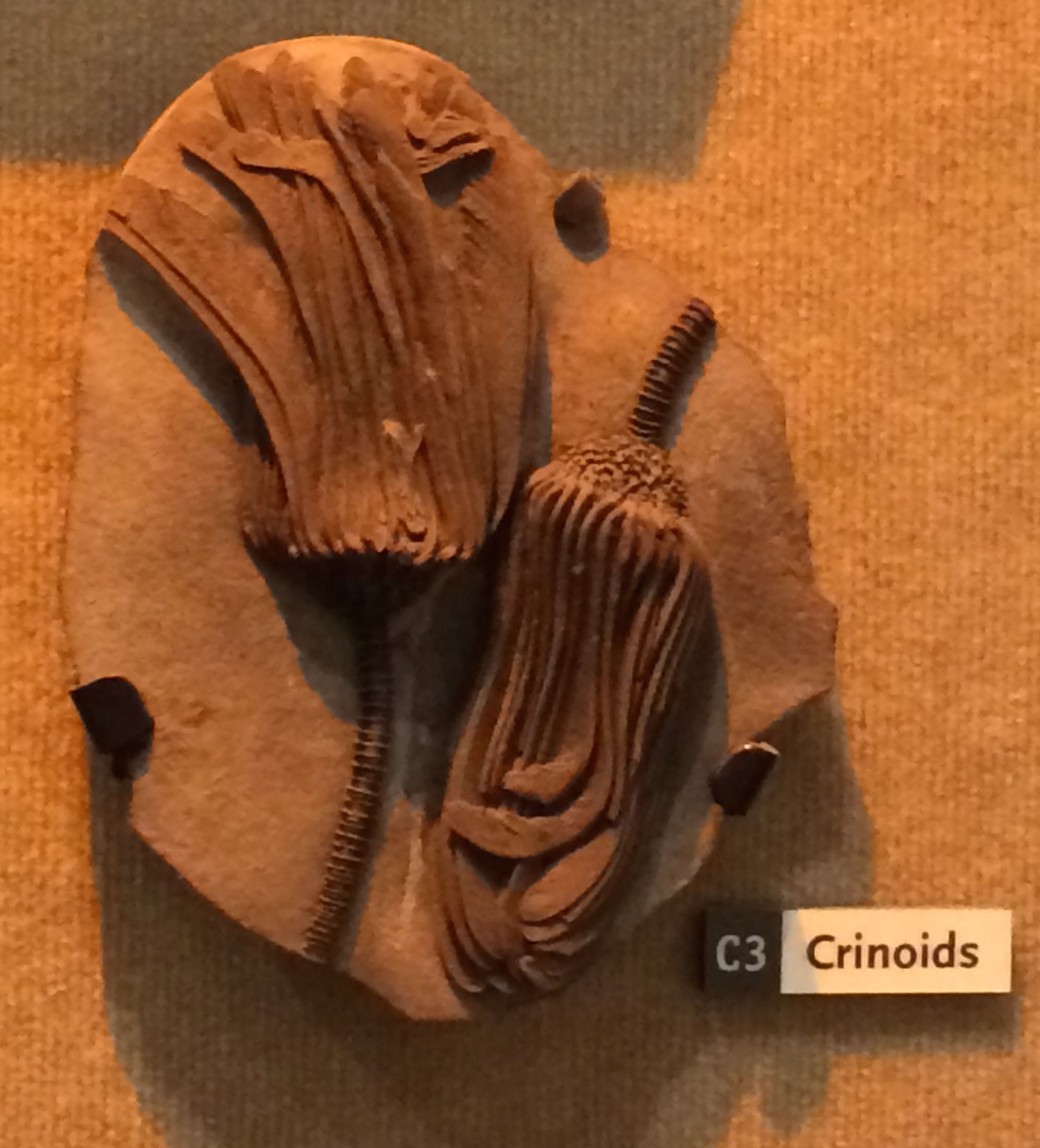
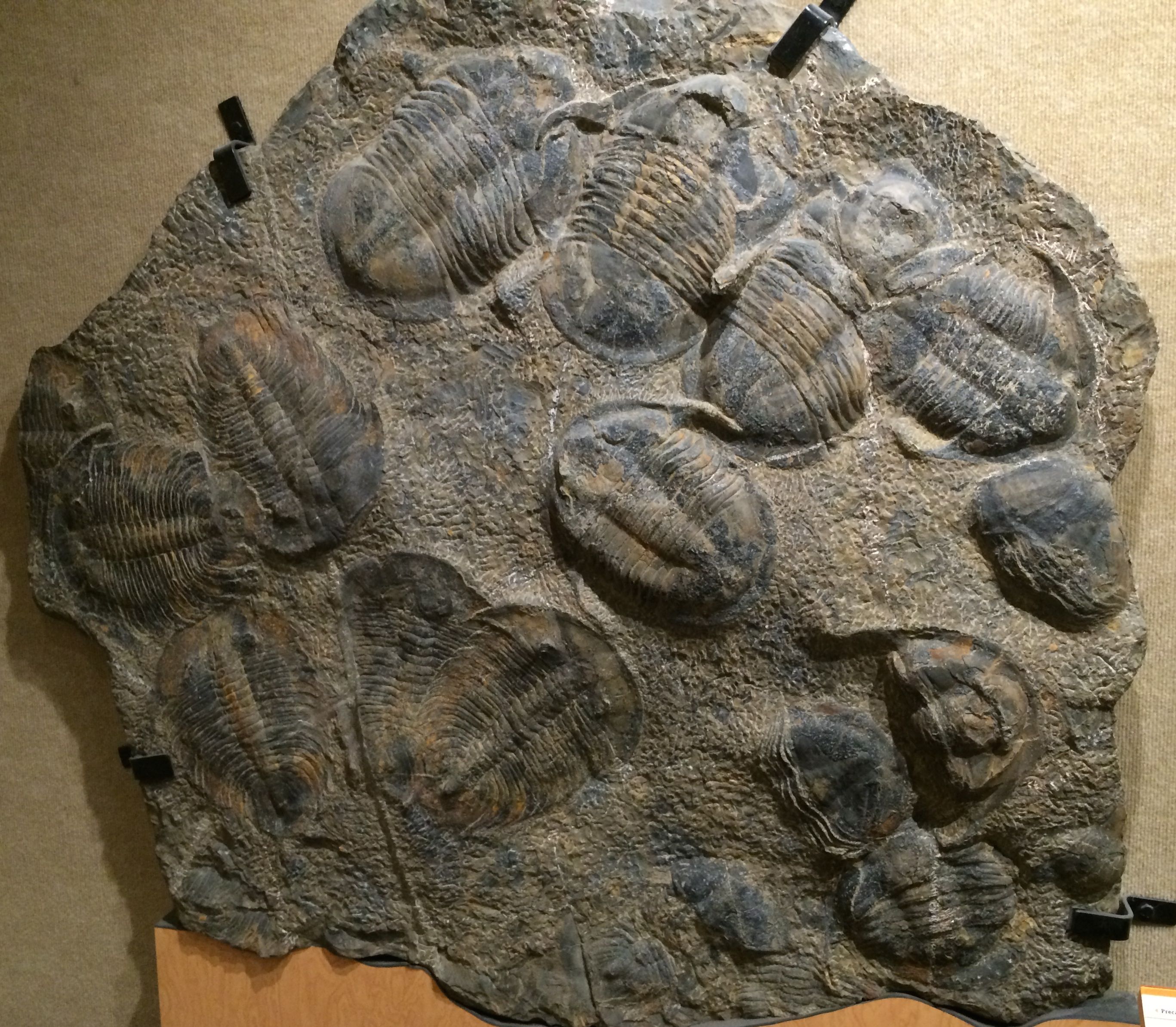
And then, there are the FOSSILS!
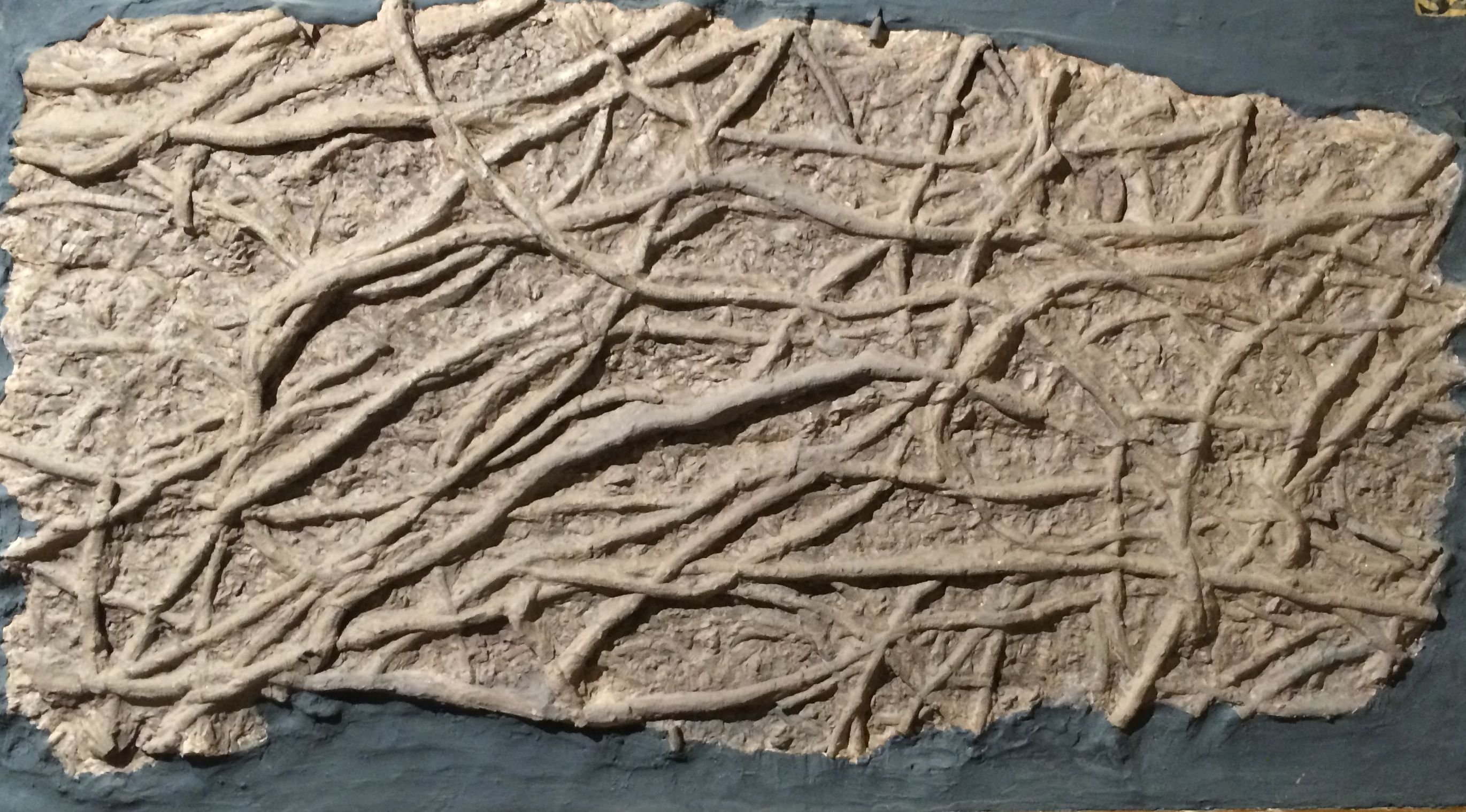
AmmonoidsPalm frondLycopod trunkCrinoidsCrinoid close-upTrilobitesBurrows of unknown animals
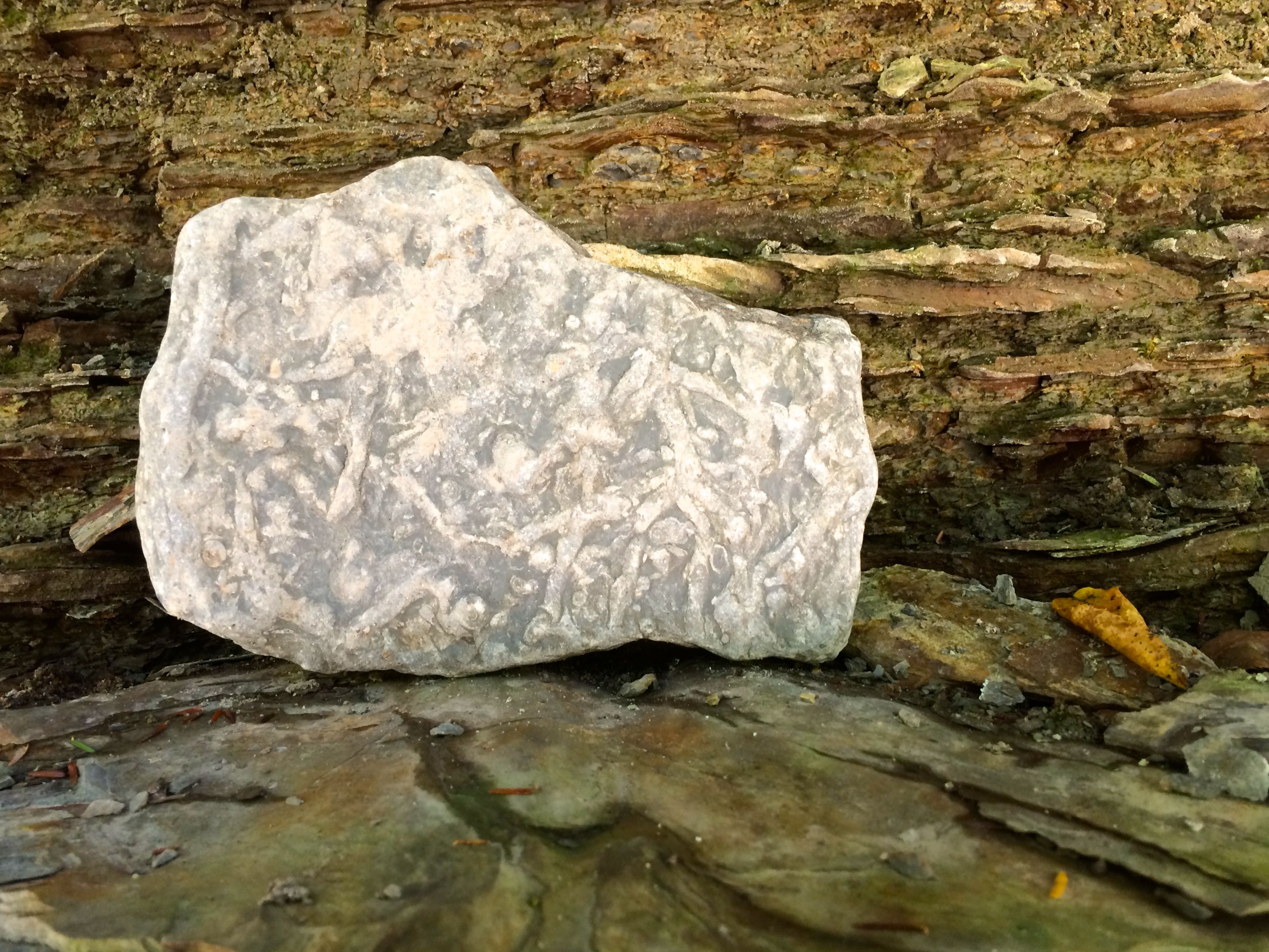
I was particularly excited to see this fossil of burrows of unknown animals. It confirmed for me that the rock I saw in Cattaraugus Creek was, indeed, a fossil.
It is a fossil!
In spite of the erosion from being in a creek bed, you can tell that it is the same kind of fossil.
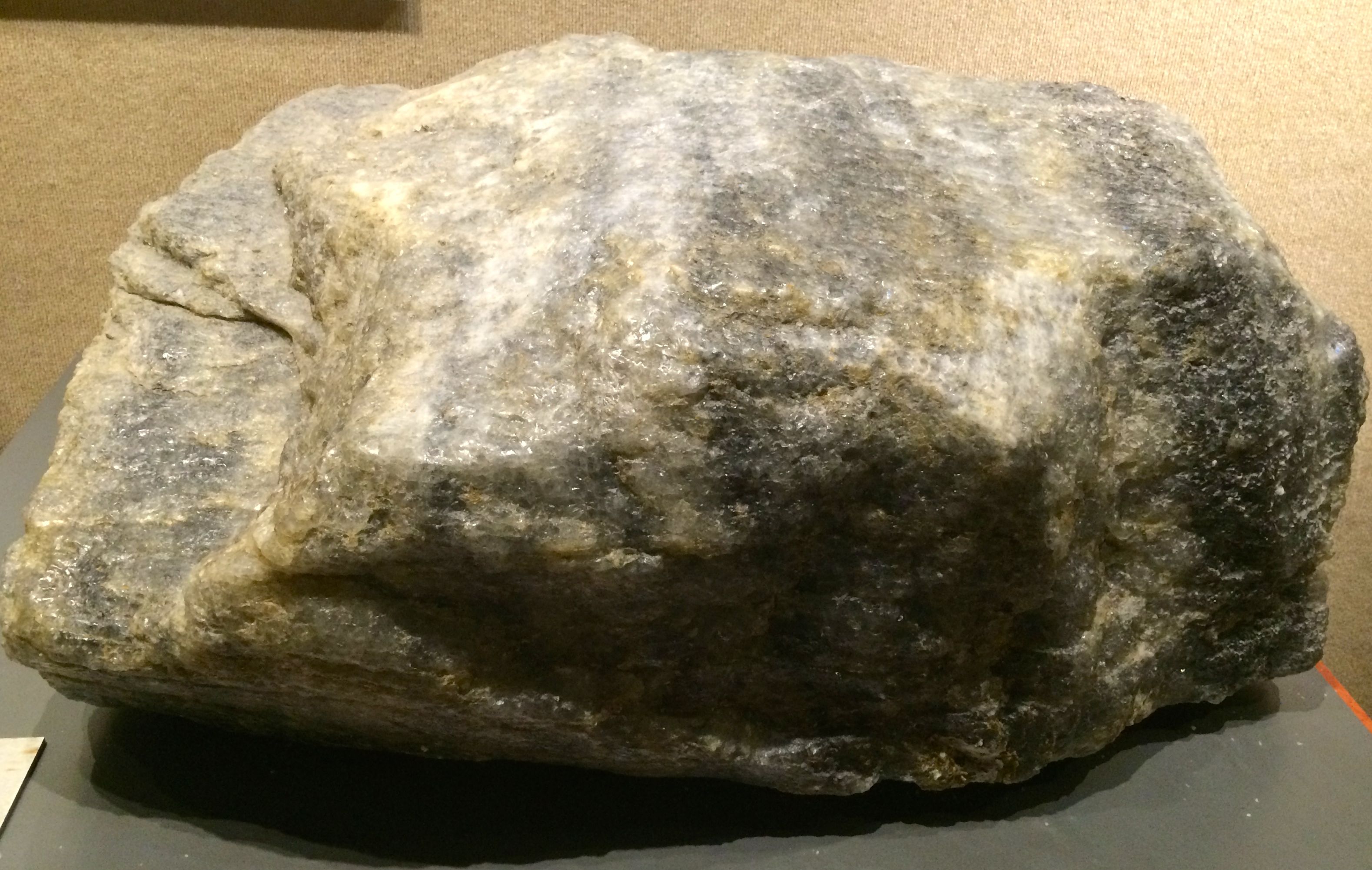
Salt
And, here is some of that salt that U.S. Salt must be mining.
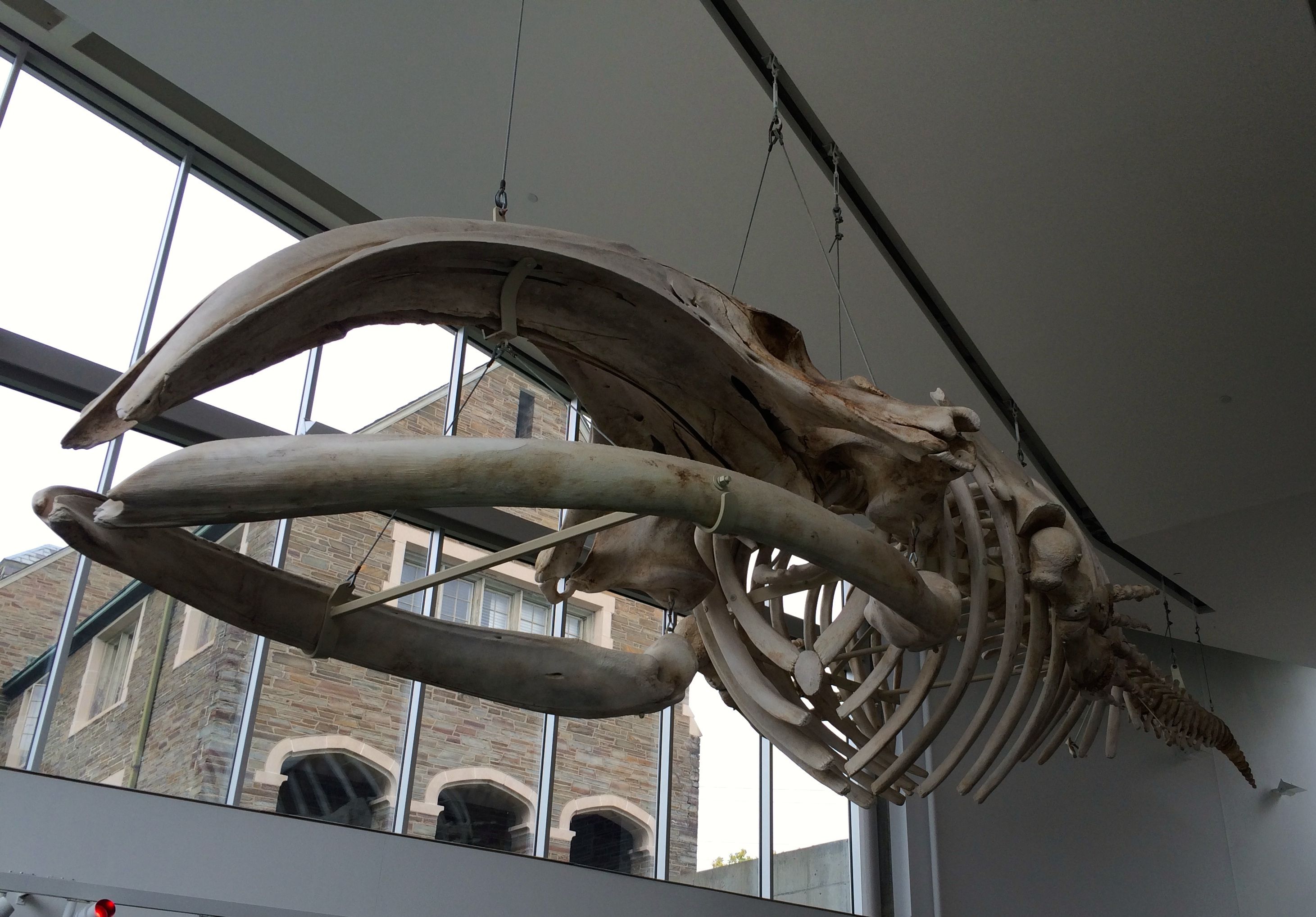
Whale skeleton
I like how they have a whale skeleton hanging in the lobby. It drives home the fact that the earth is continuing to create and destroy. If they had left this skeleton, perhaps it would have become a fossil a few million years hence. Or not.
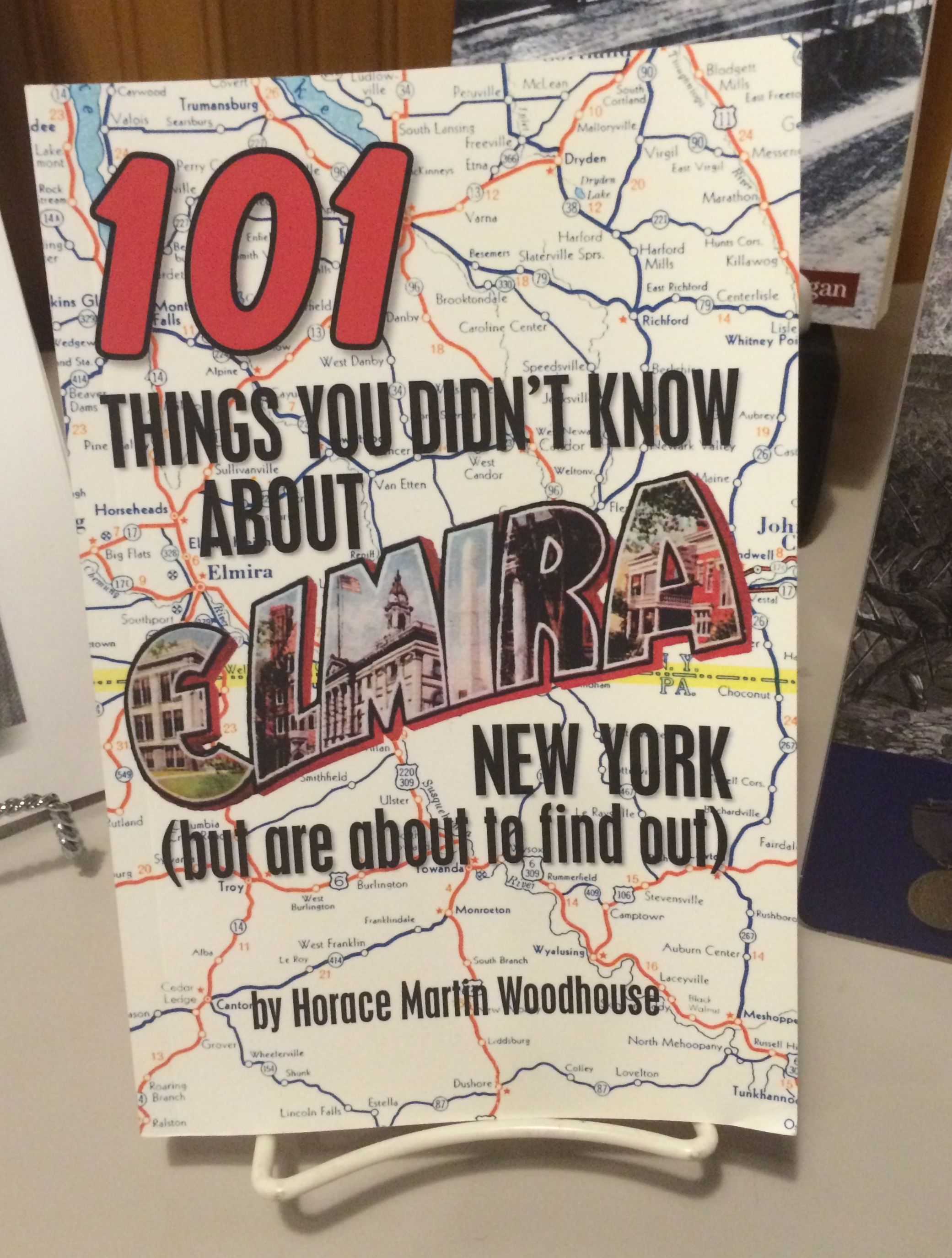
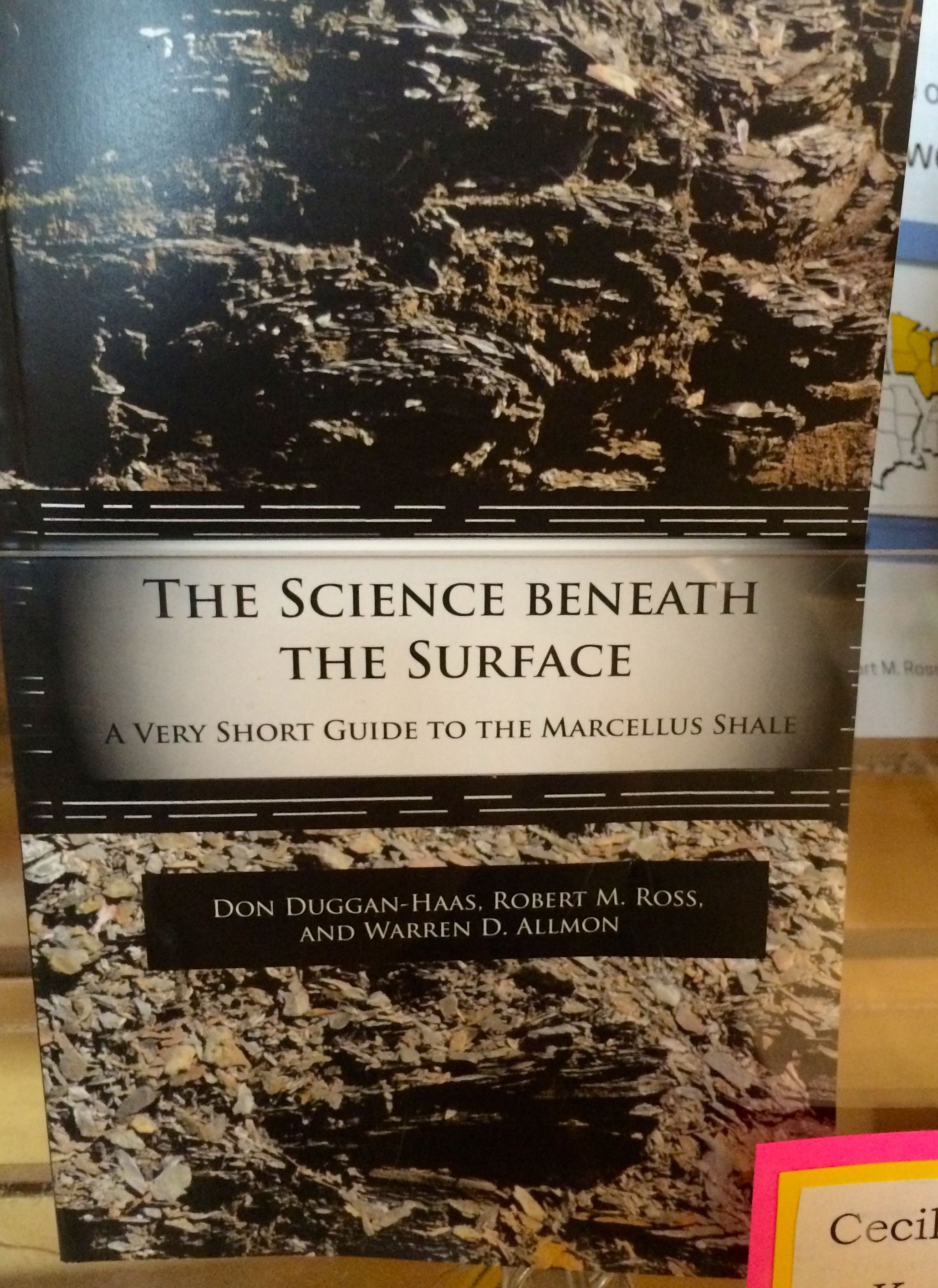
I always look in the gift shop, even if I really can’t buy anything more hefty that a postcard. What a thrill to find a book written by a friend!
Don’s book cover
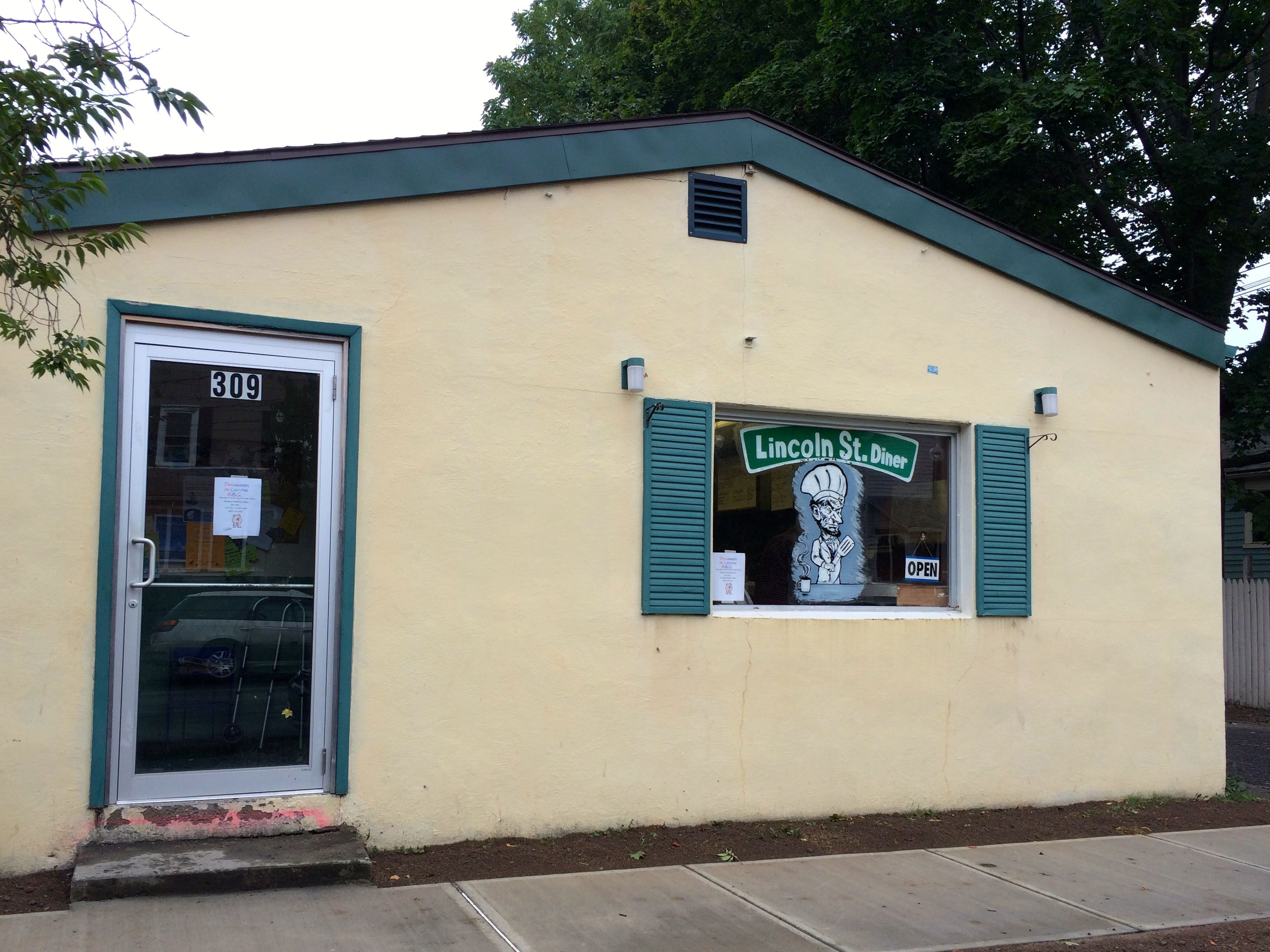
After the museum, I consulted Siri for a recommendation for a place for lunch. I decided on the Lincoln Street Diner.
Lincoln Street Diner
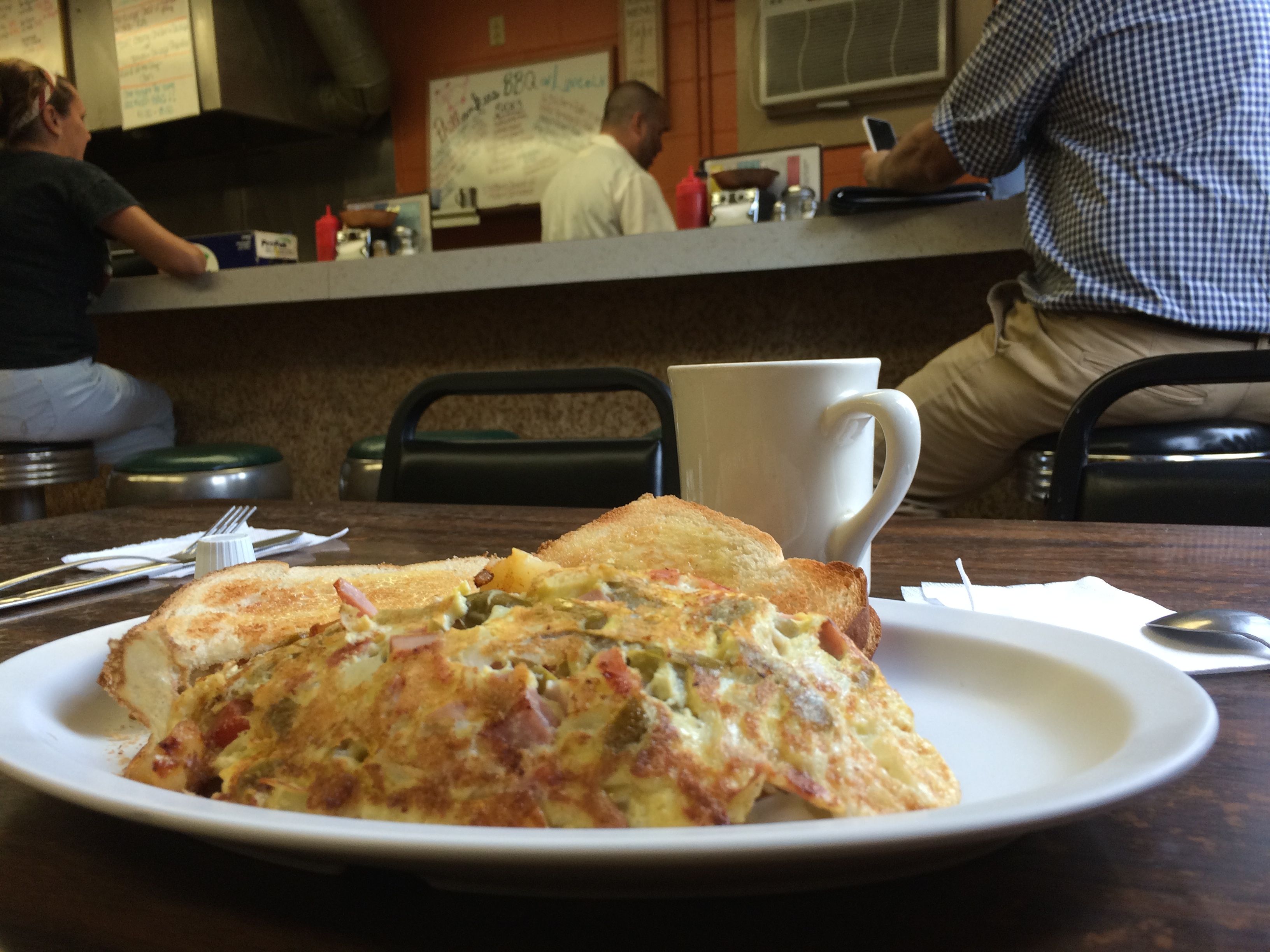
It was a friendly neighborhood eatery. I selected the Ziffy Omelet. I only include this here because eating it reminded me of digging for fossils.
Potatoes, onions, peppers, ham, bacon and cheese.
Sufficiently nourished, I set out to see Ithaca’s gorgeous gorges.
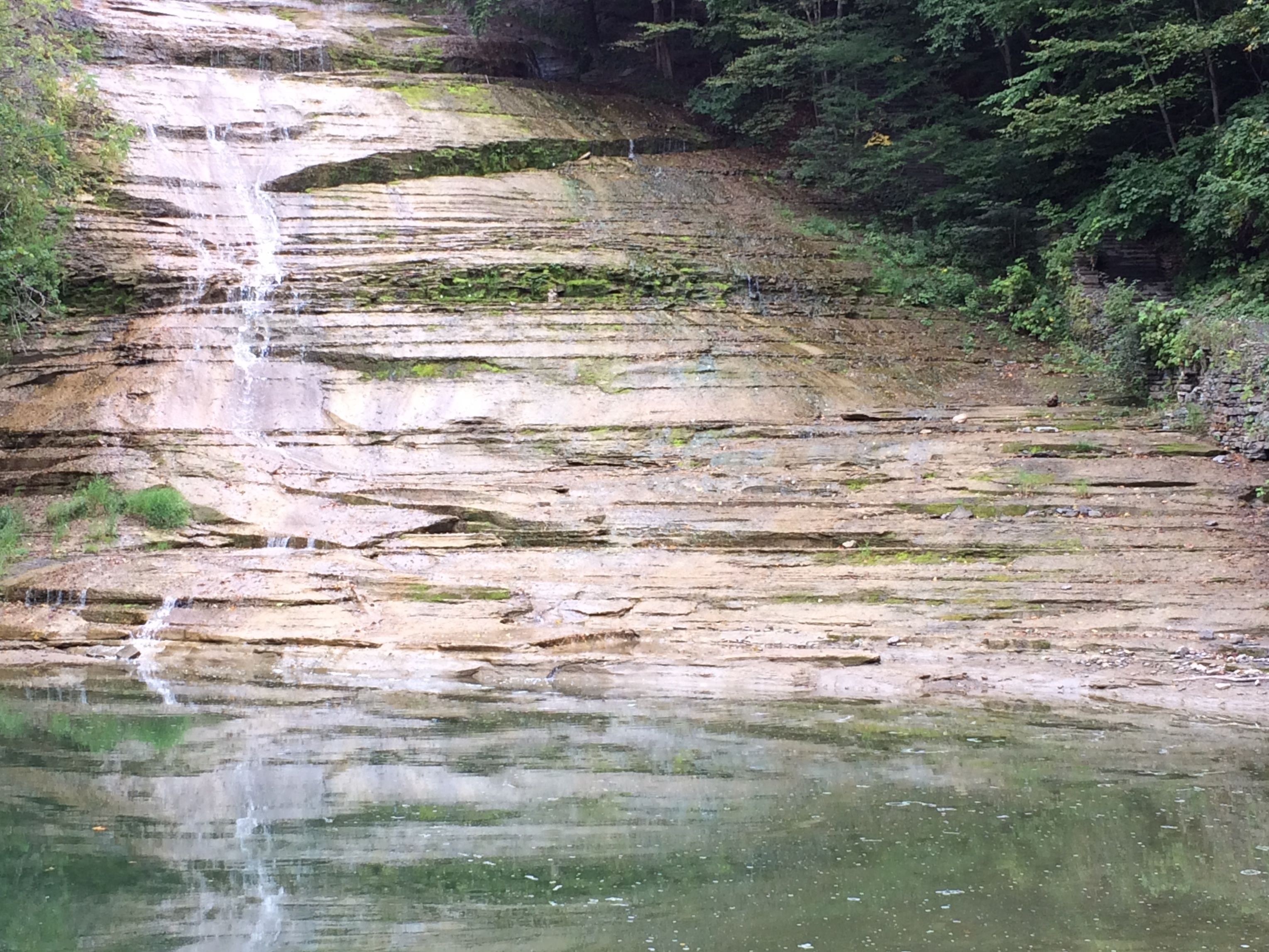
First, Buttermilk Falls. I remember visiting that way back when, but probably mostly because of the delicious name.
Buttermilk Falls
Next stop, Robert Treman State Park.
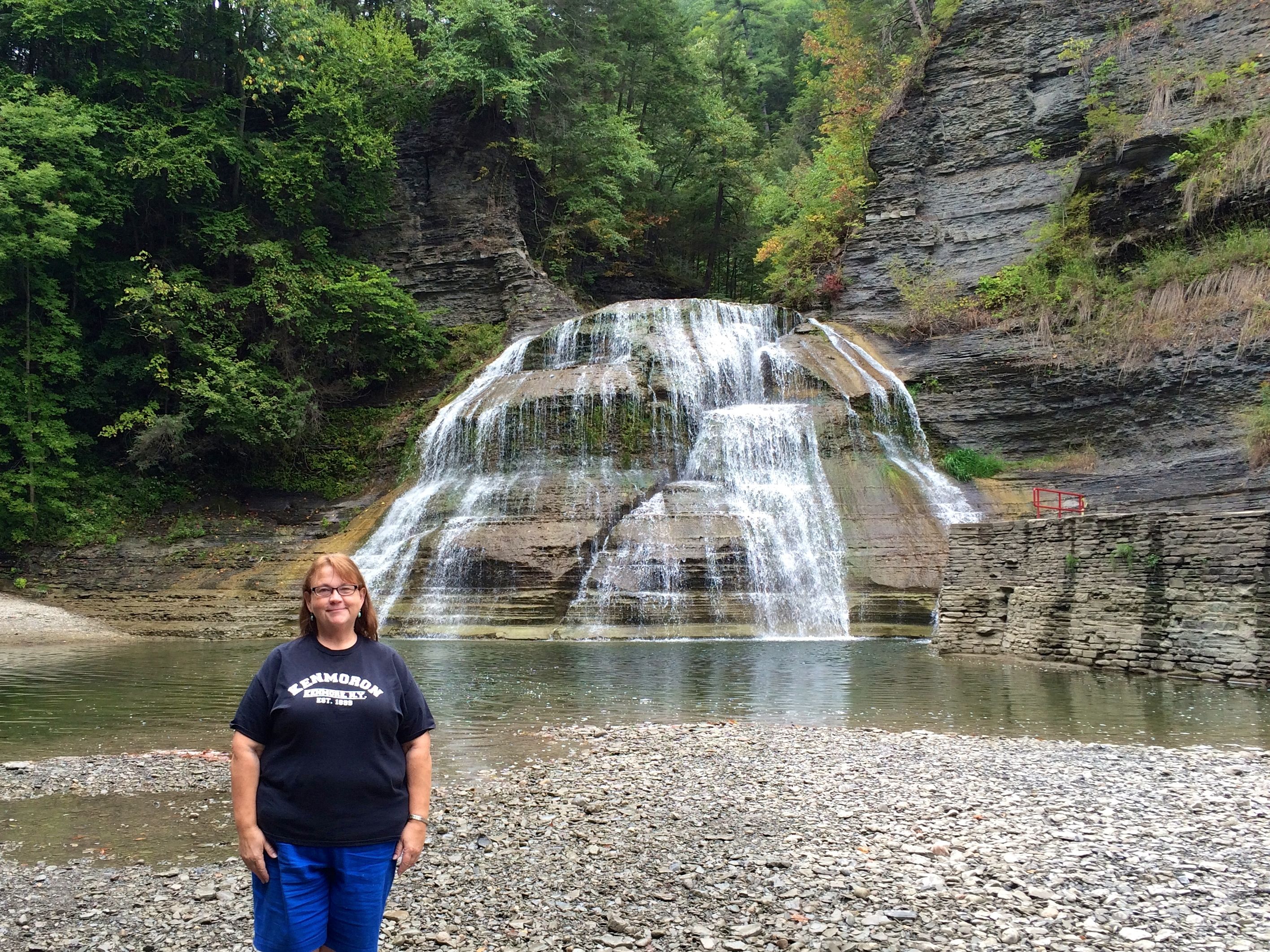
Me at Treman State Park
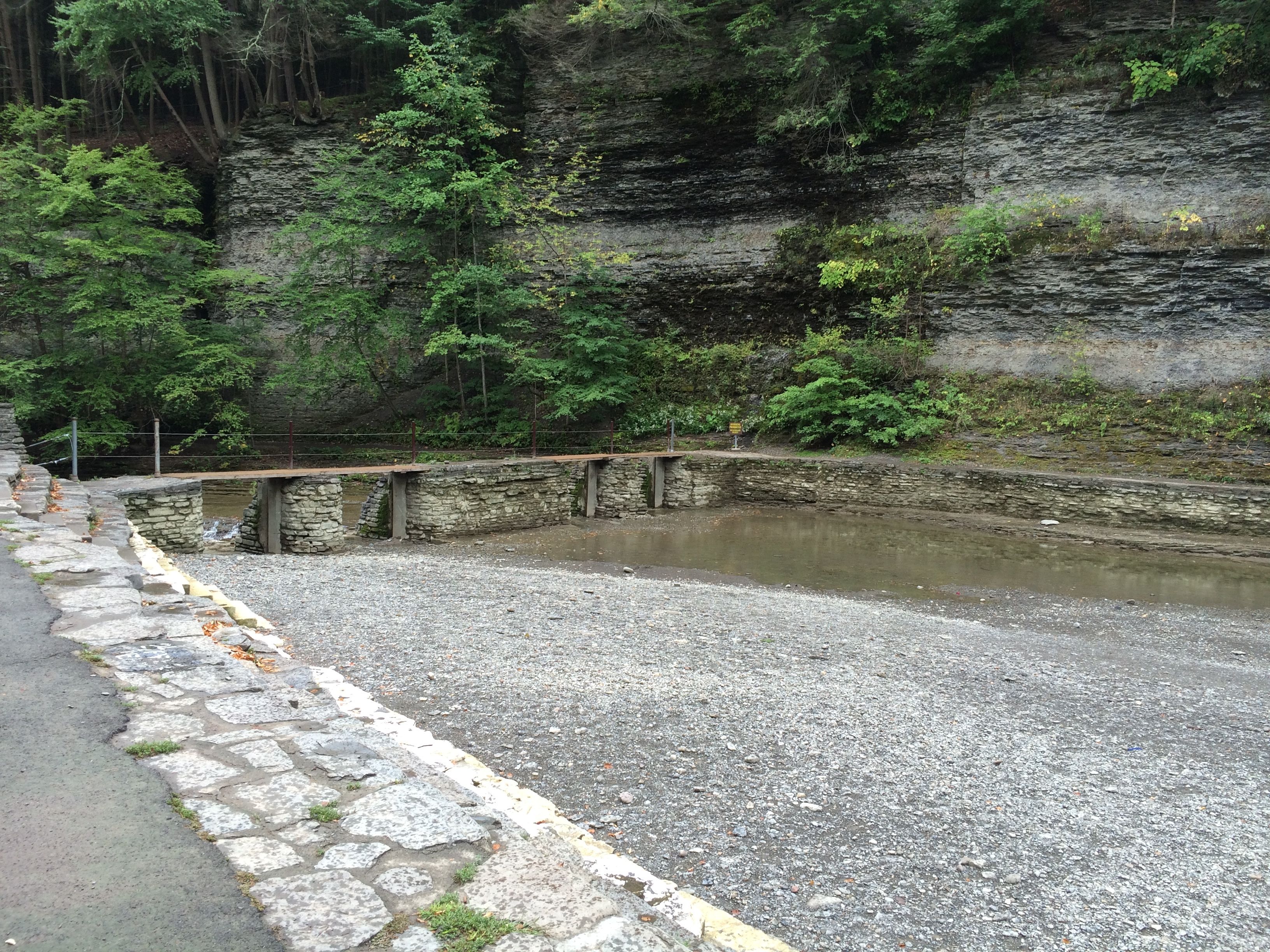
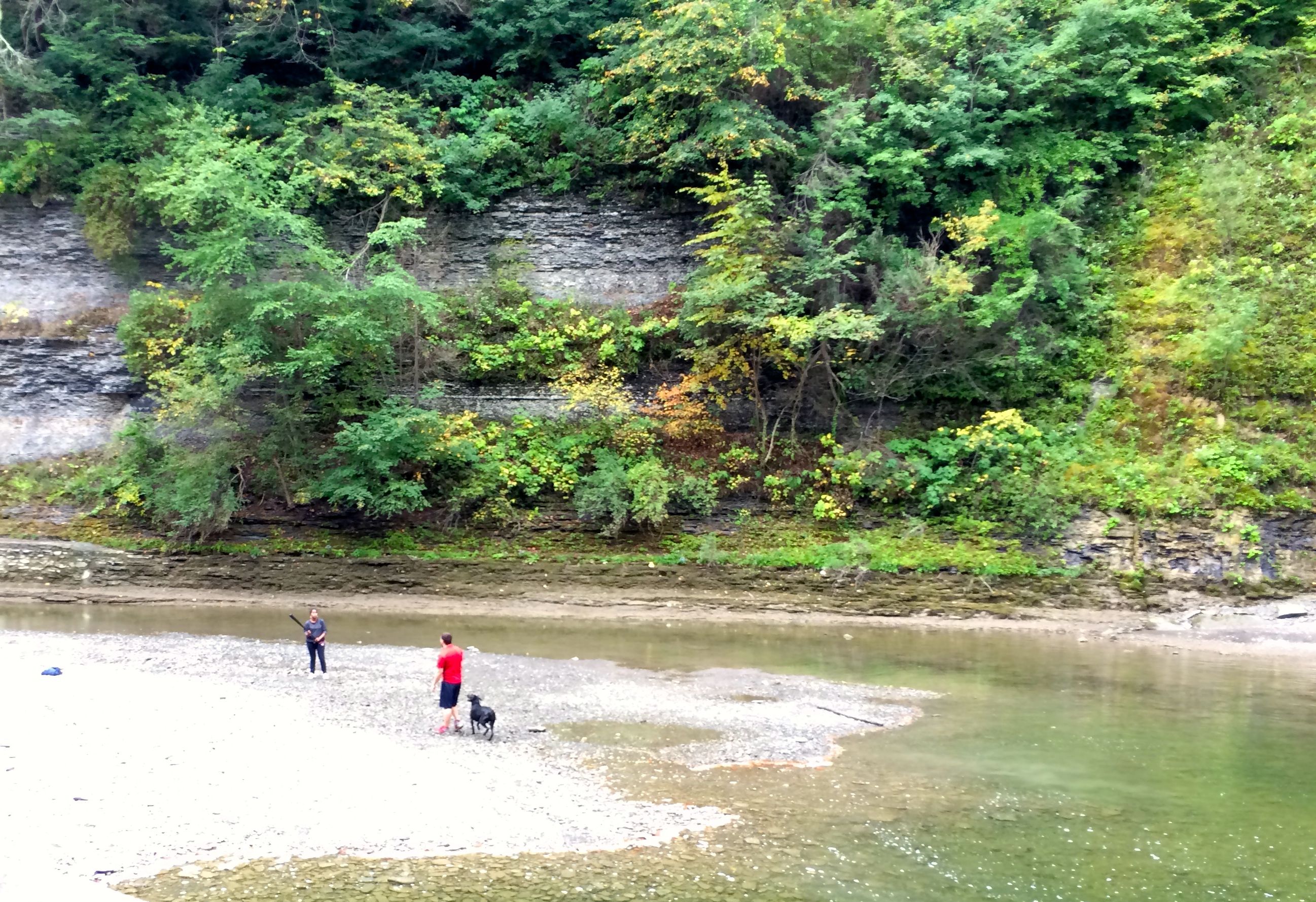
Now, I do remember being here before. In the right season, this is a wonderful swimming hole. But, it’s after Labor Day, and they opened the dam and let out the water.
The dam
I was chatting with people I asked to take my picture. They confirmed that the dam had just been opened and that they had been swimming there a few days earlier. Rats! I missed it.
Oddly enough, these folks were from Kenmore – and I was wearing my Kenmoron shirt!
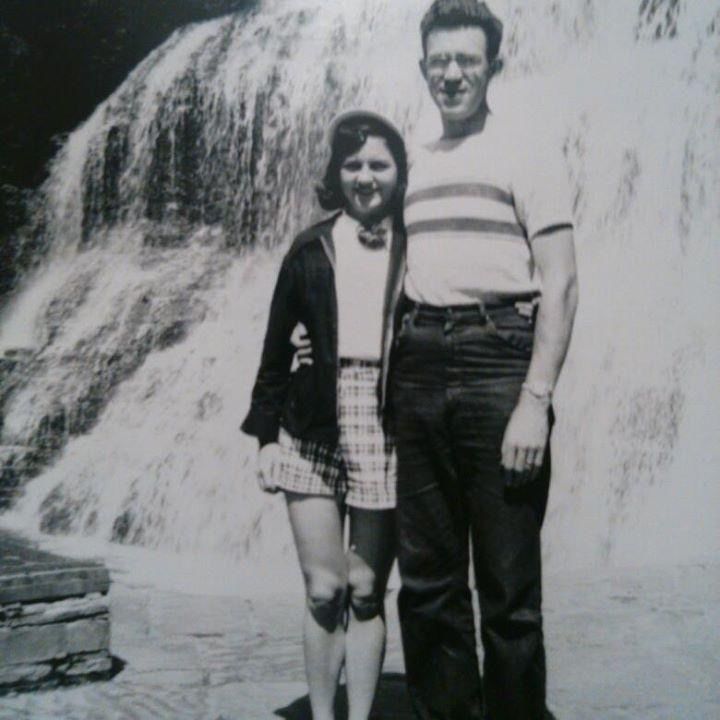
Mom and Dad were here on their honeymoon. I imagine the water is flowing with greater vigor, as they were here in June of 1954. According to the records I dug up, that month was wetter than average.
Mom and Dad on their honeymoon 1954Taken from the same spot
My last park of the day around Lake Cayuga was Taughannock Falls State Park. This is also a park I remember. Dad took Craig and me on a hike to the Candy Glen.
Well, how else do you get kids to set off on a hike? I remember it so clearly! He directed our attention to another spot and then dropped a candy bar and let us discover it. I do believe it was a Butterfinger.
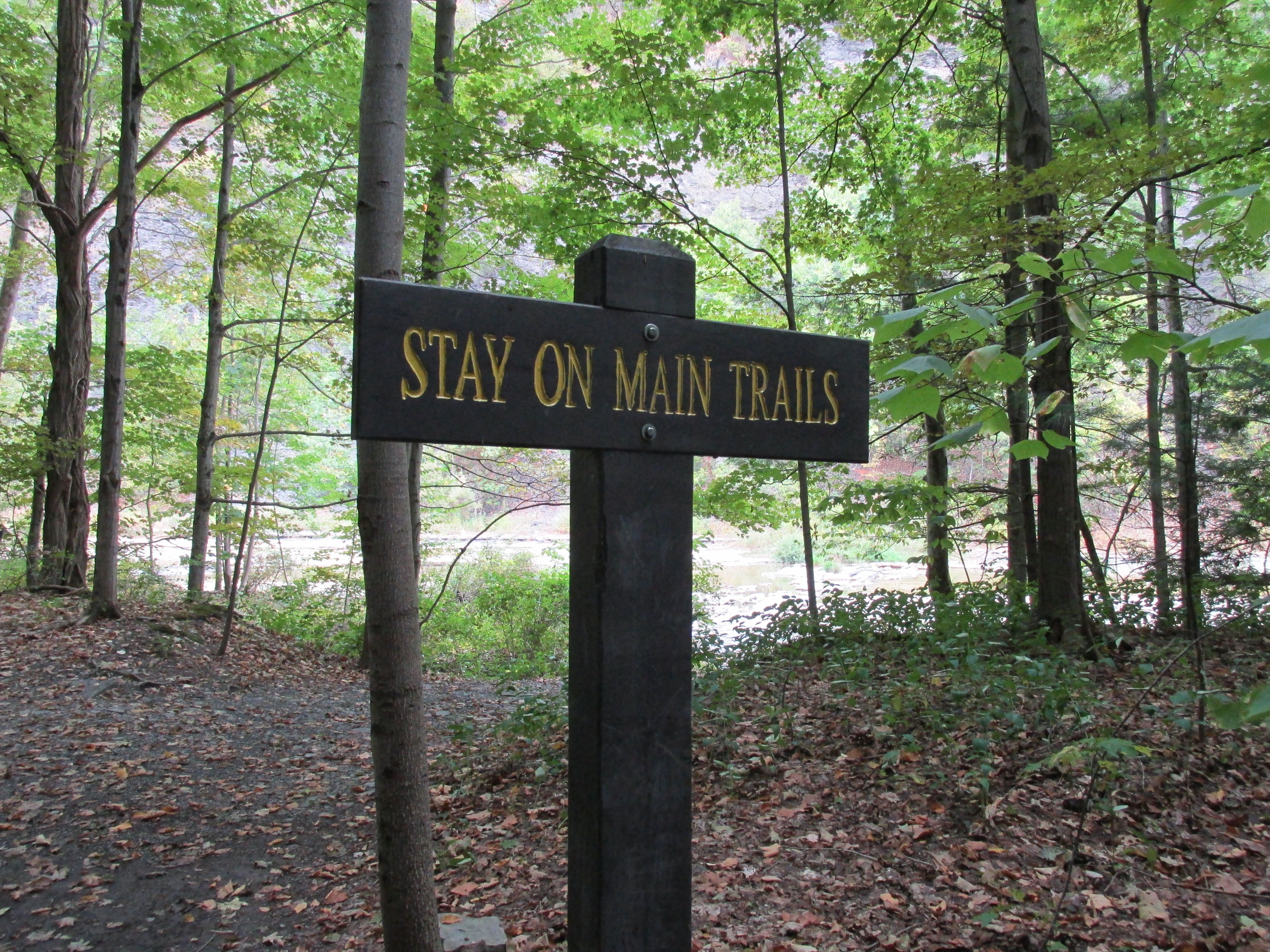
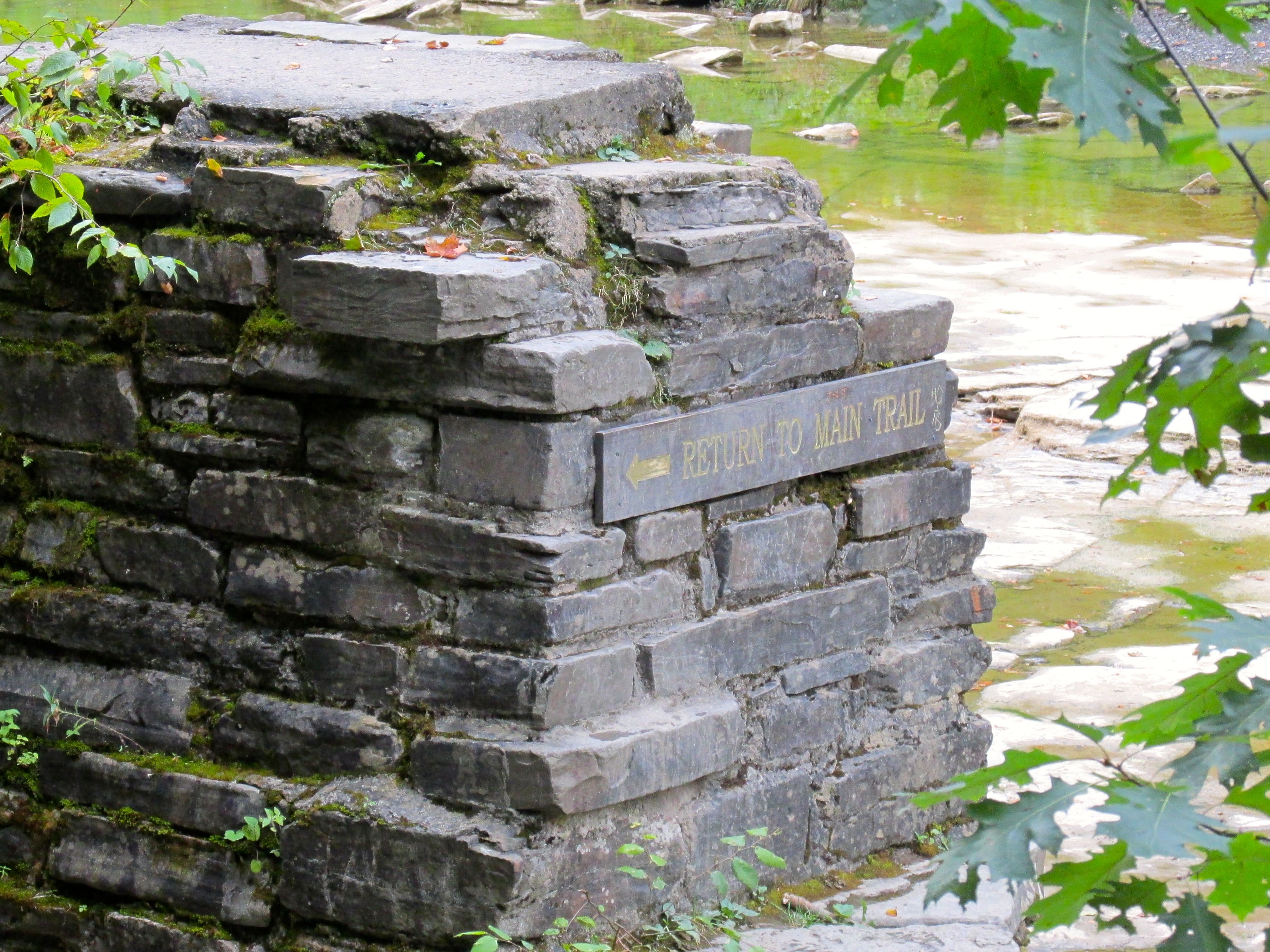
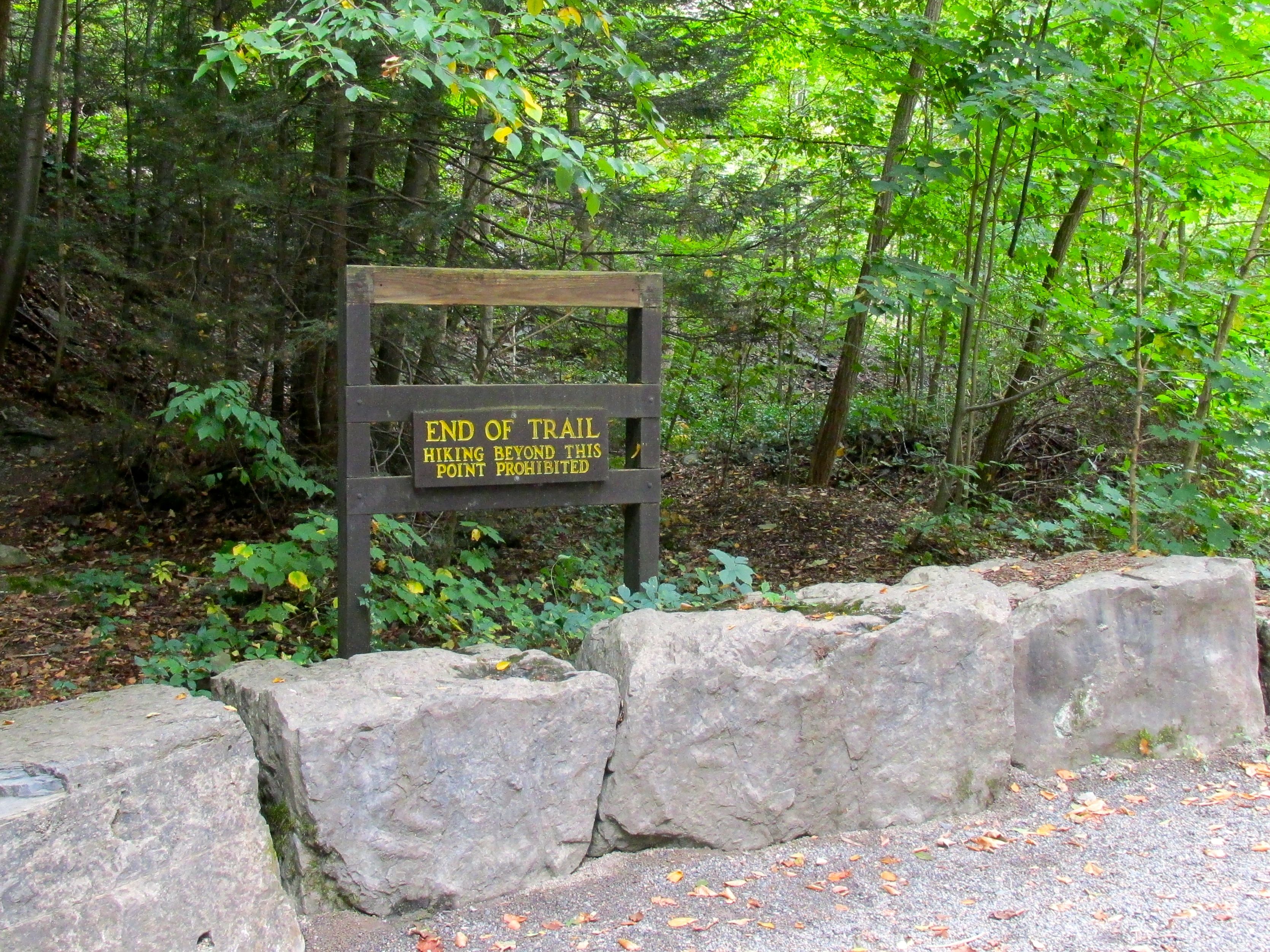
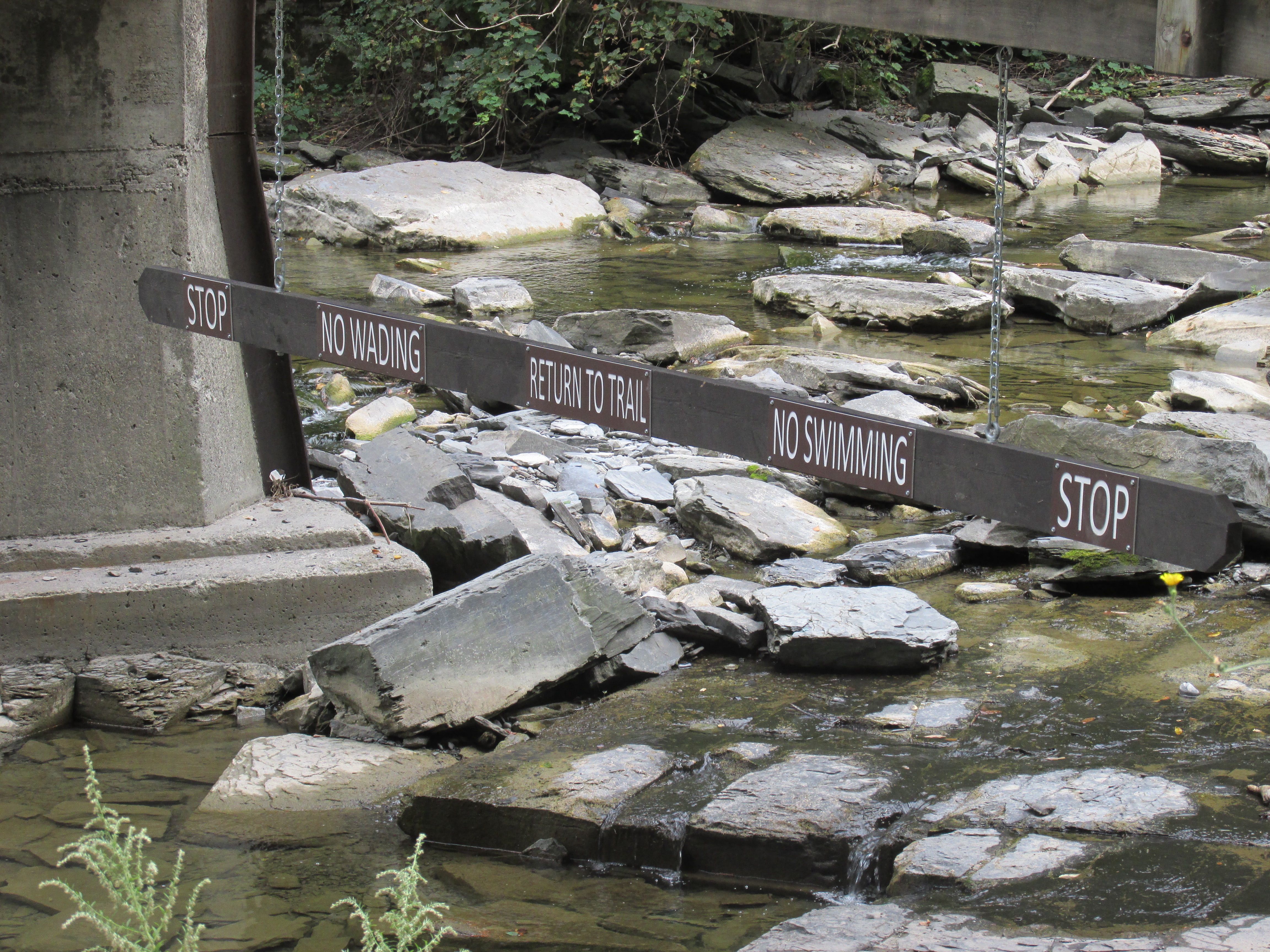
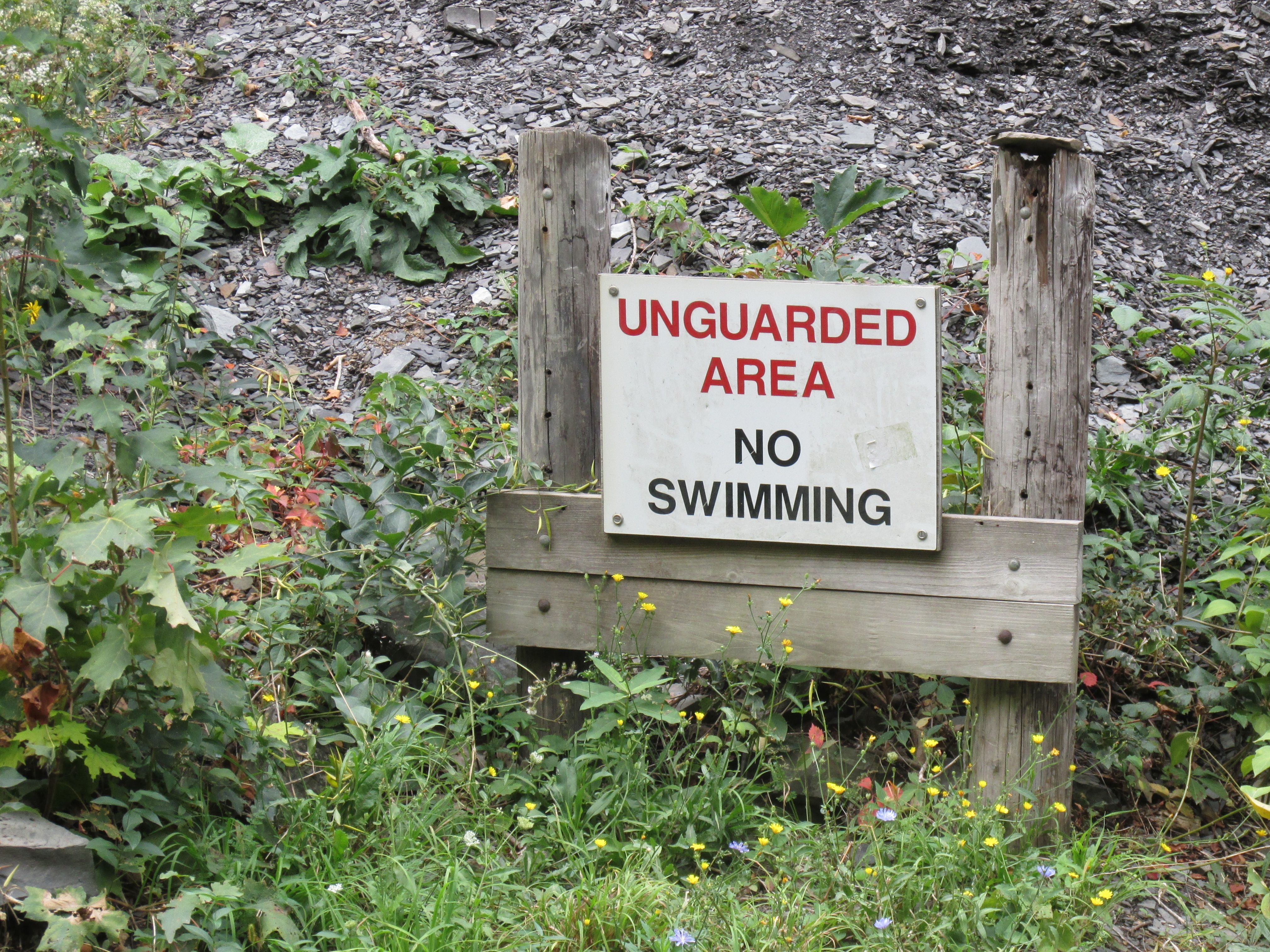
But, I have got to say, all the signs warning and prohibiting just about brought out the rebel in me. I don’t think it helps that the signs are written in ALL CAPS!
STAY ON MAIN TRAILRETURN TO MAIN TRAIL!
STOP NO WADING RETURN TO TRAIL NO SWIMMING STOP
If the area is unguarded, who is going to stop me from swimming?
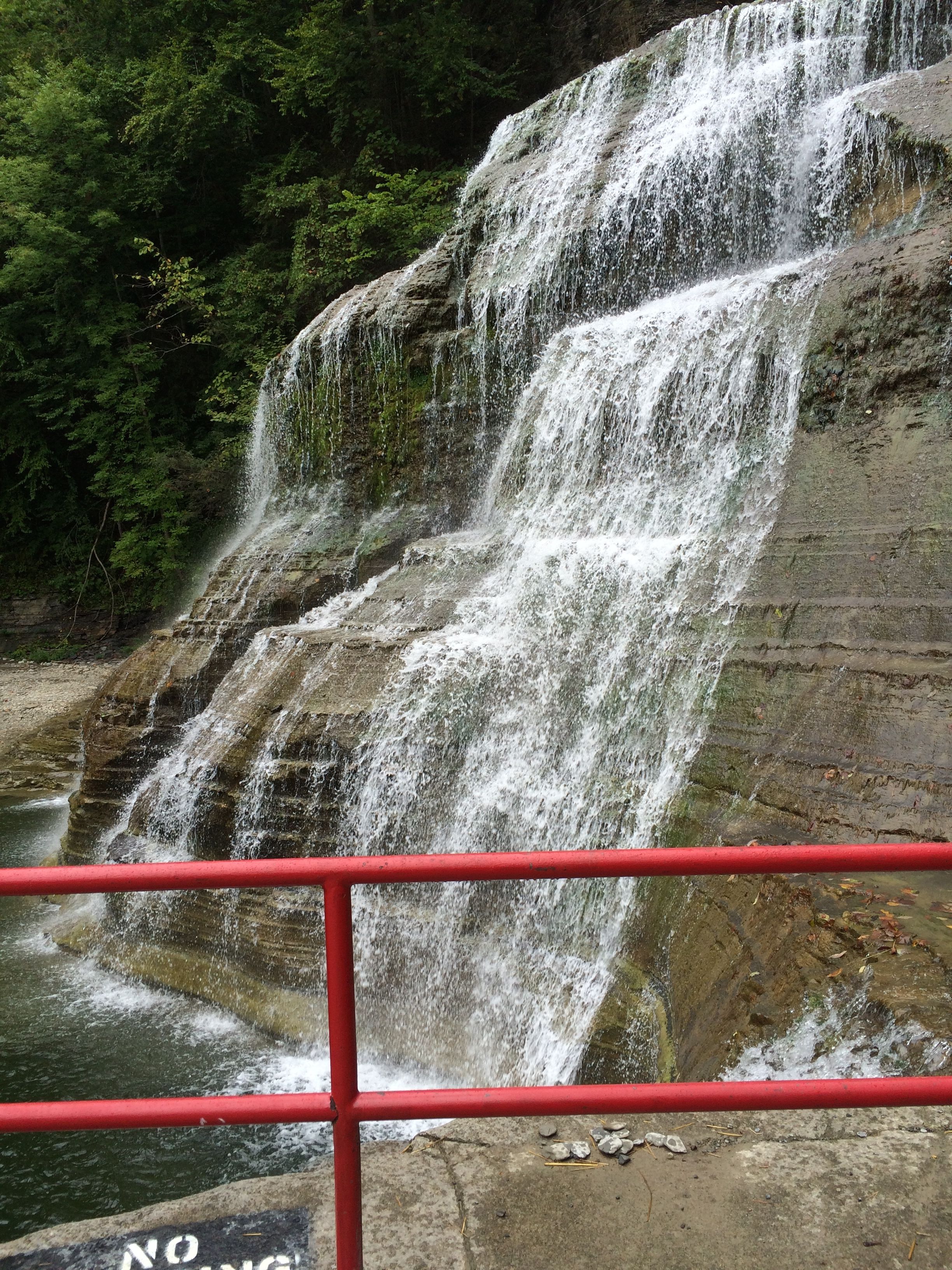
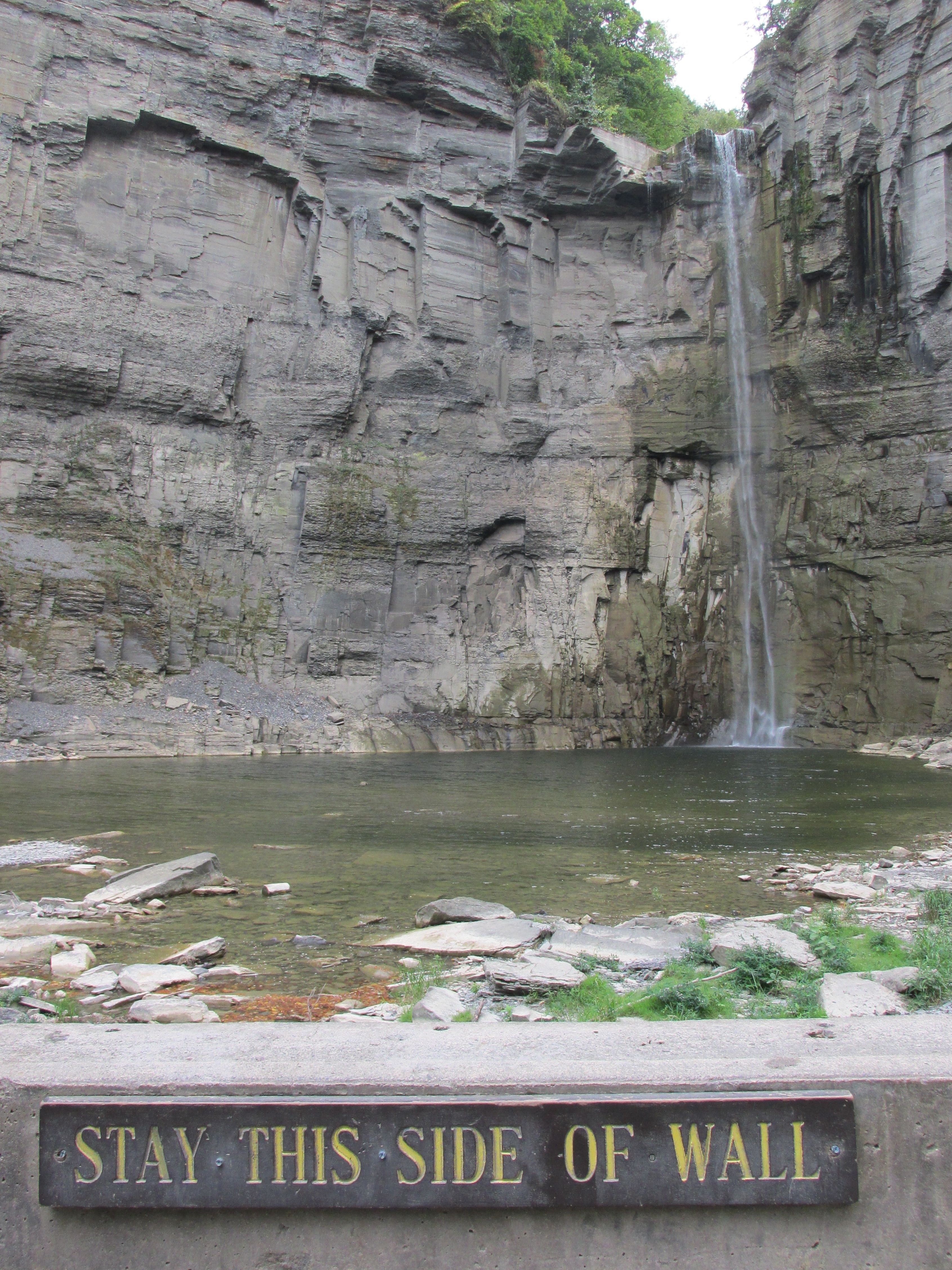
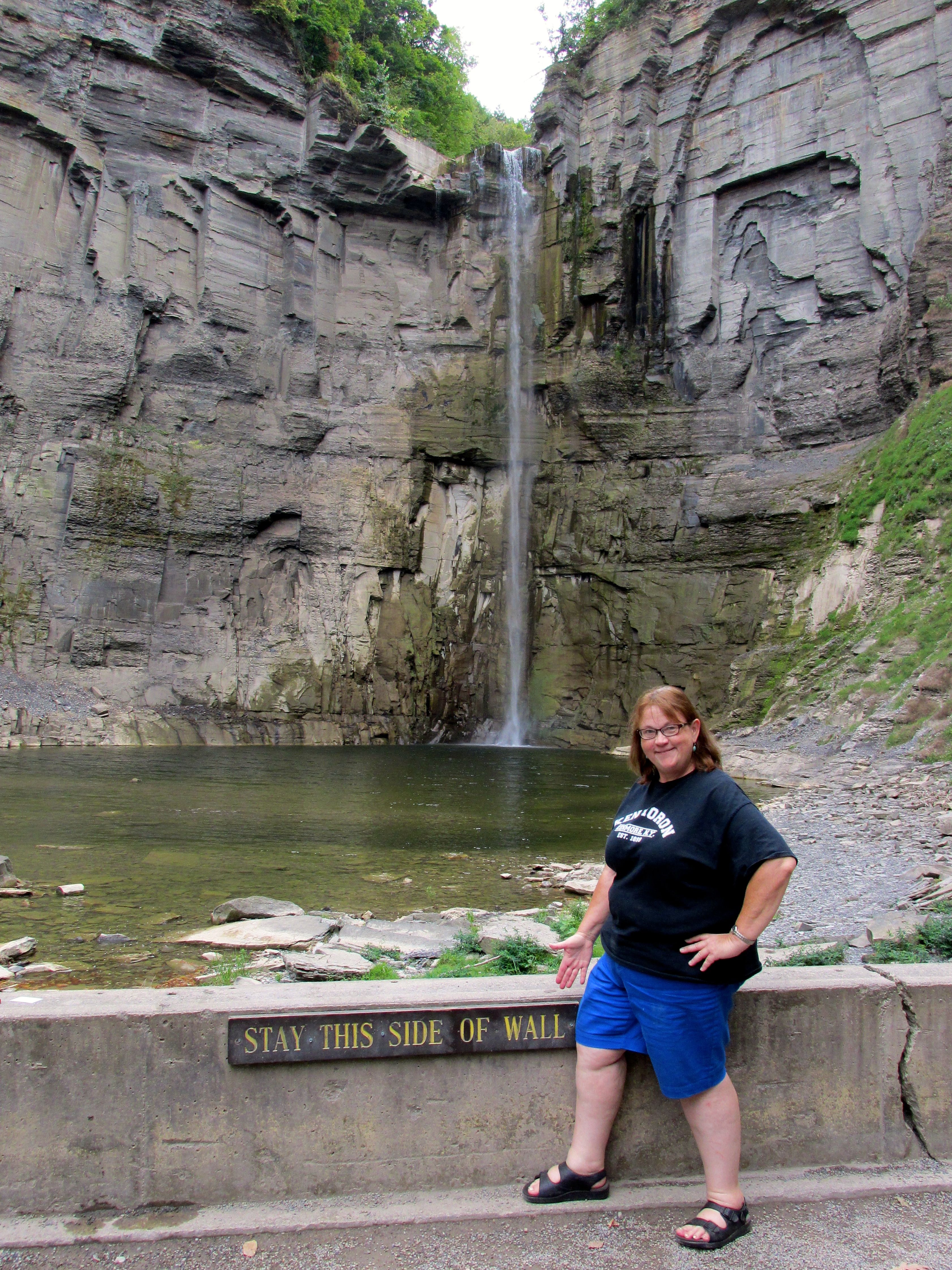
And finally, the falls.
Seriously?! They couldn’t miss one last opportunity for a sign?
Actually, it was a lovely stroll with a falls at the end. No candy bars required to get me to walk.
The Candy Bar Spot
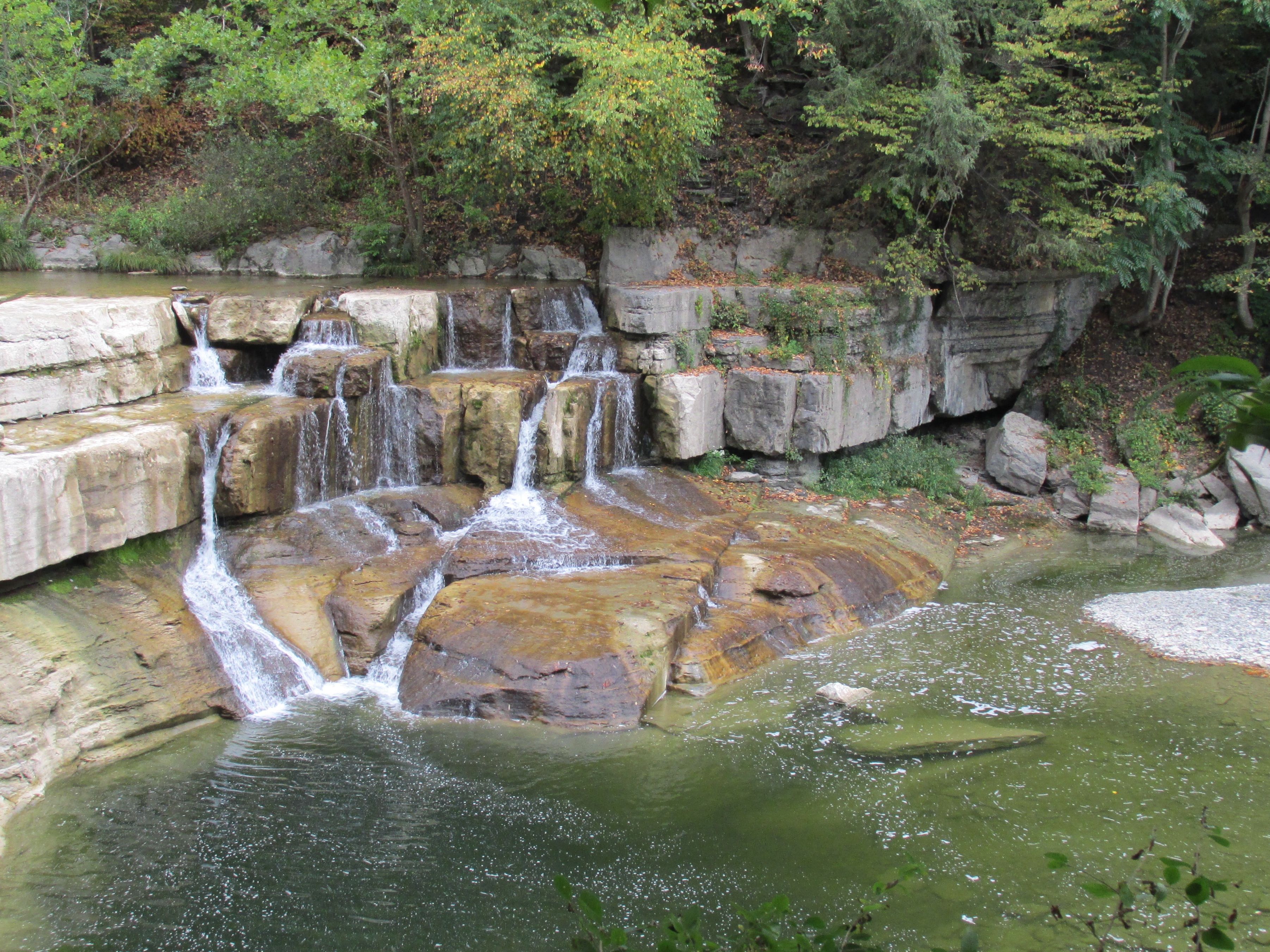
There were little falls along the way, too.
There were signs warning agains swimming and wading and getting off the trail. *sigh* I just didn’t bother taking a photo.
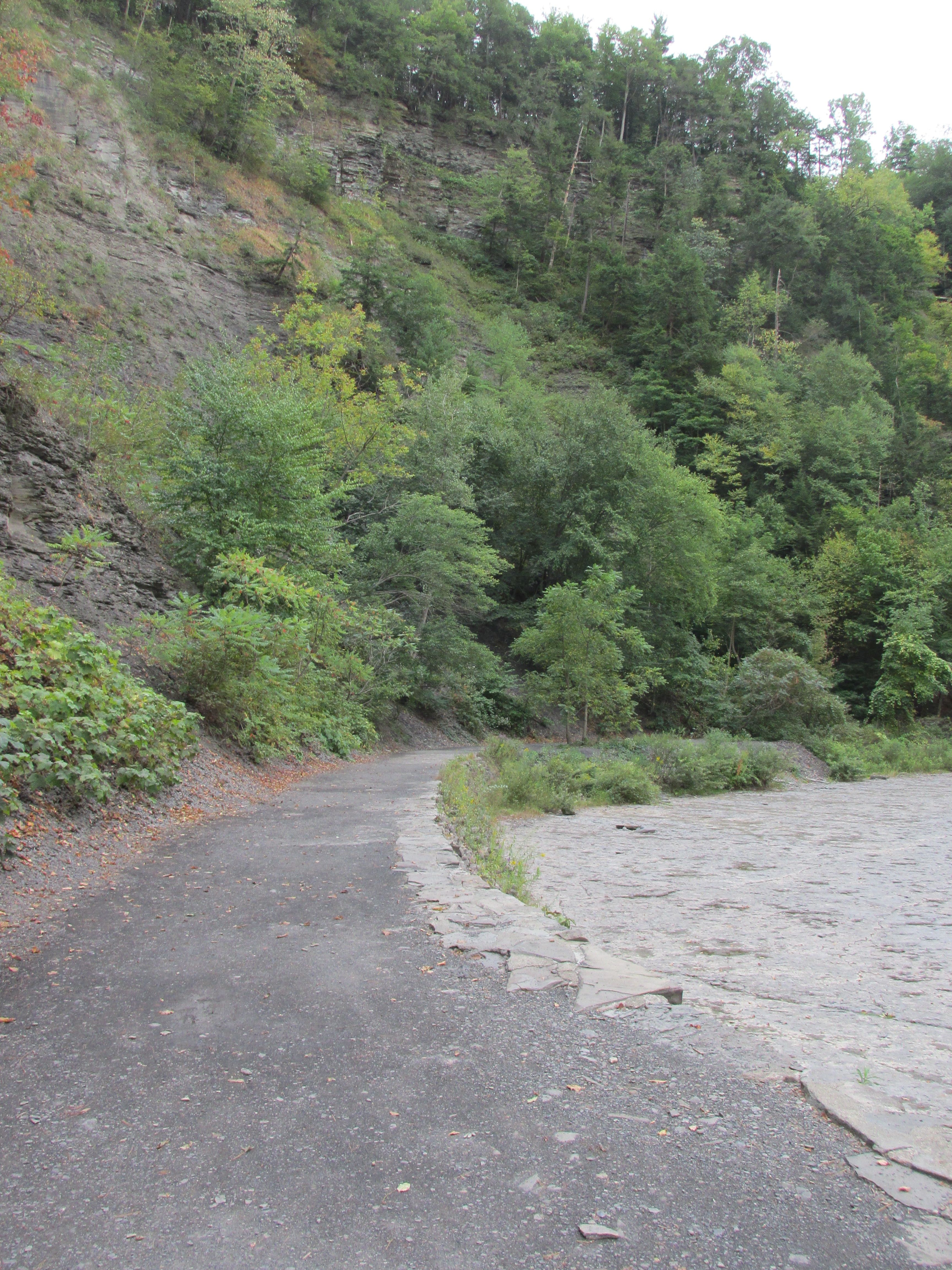
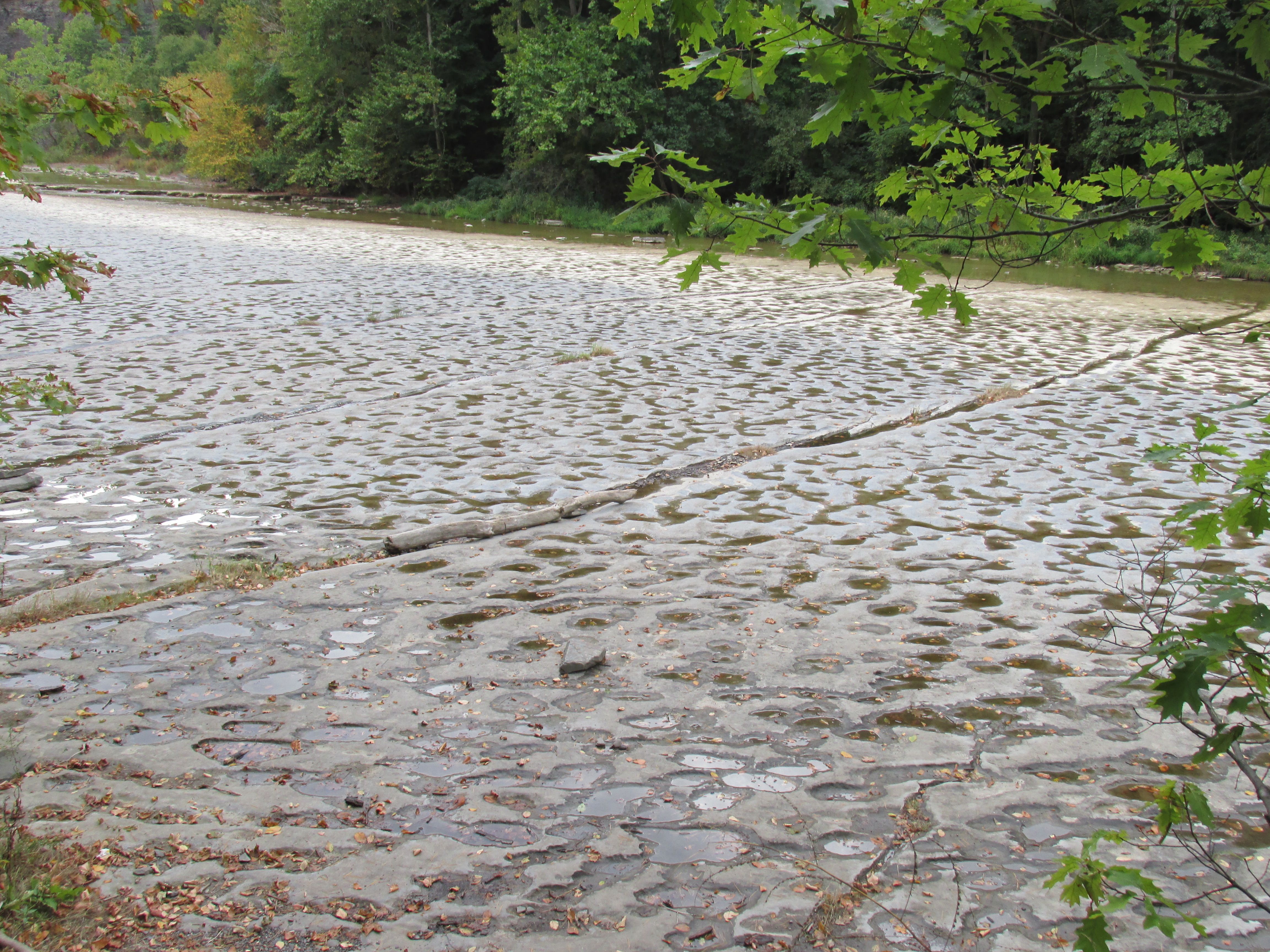
There were cracks in the bed of the river. They had some excellent interpretive signs that explained that they were caused by the pressure when the Allegheny Mountains were lifted up.
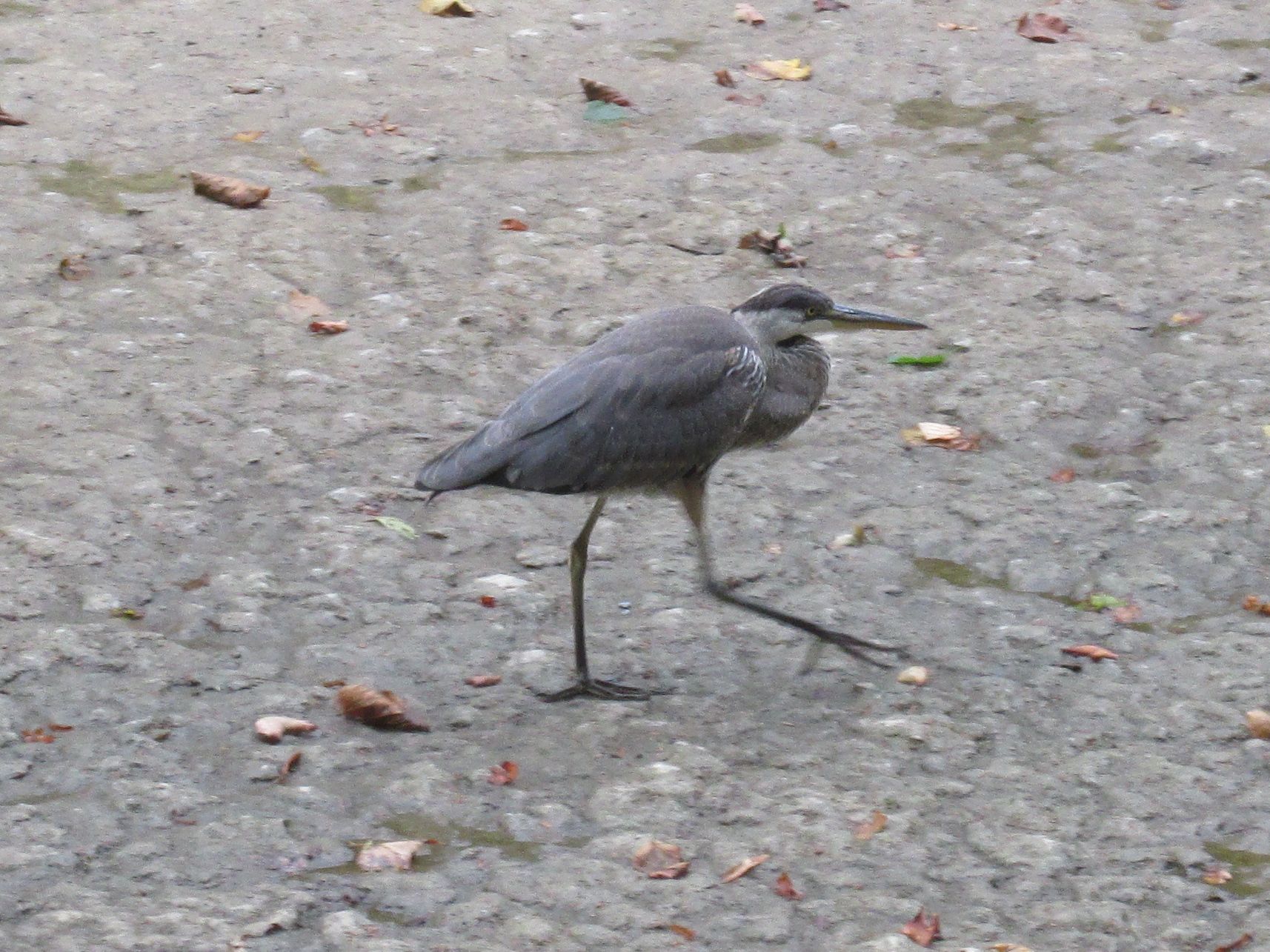
There were interesting birds and wildlife scampering about. A bird fancier might light to identify this one for me. I was thinking heron.
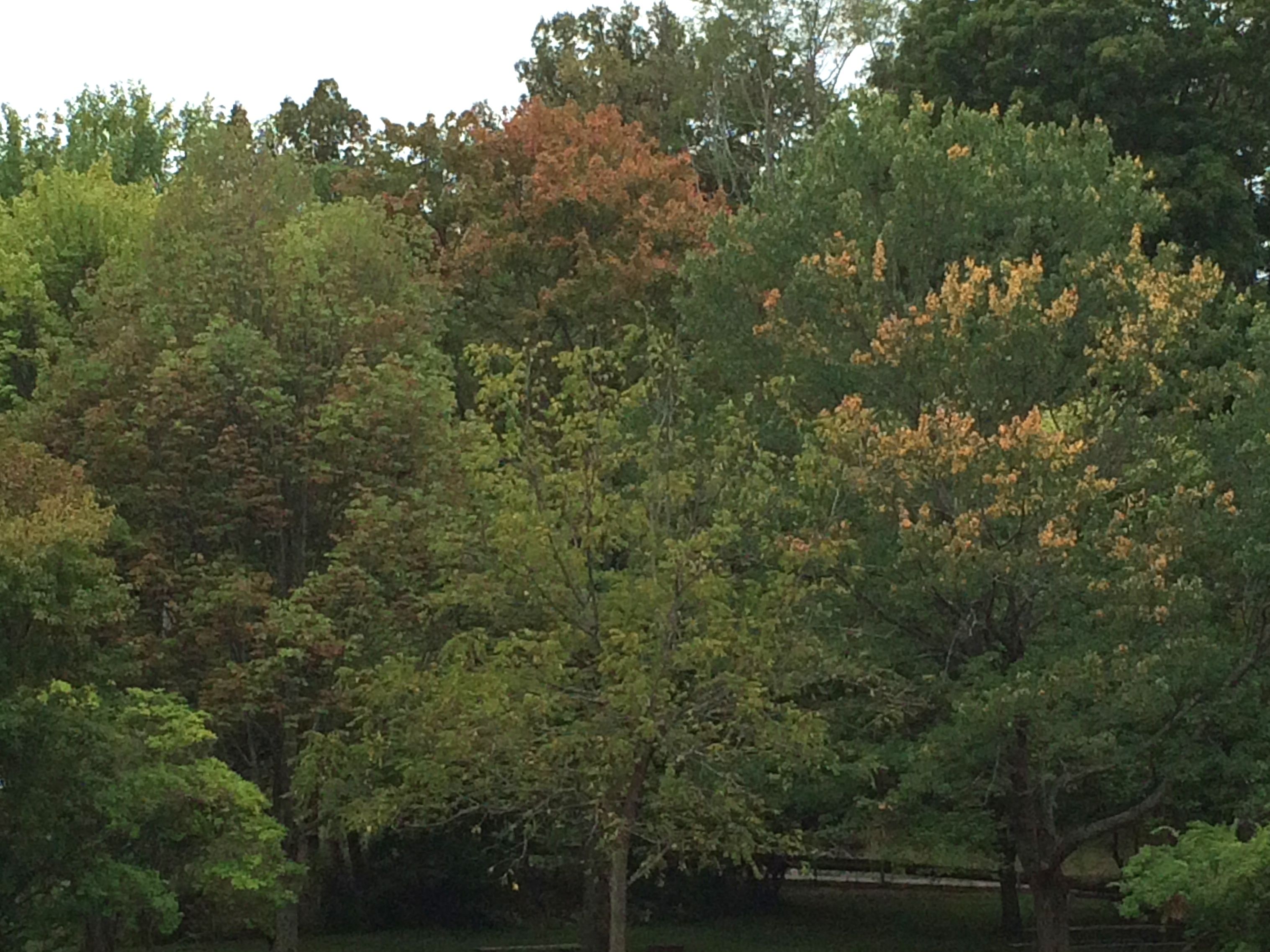
Even though the day was dull and dreary, you could see the trees starting to change colors.
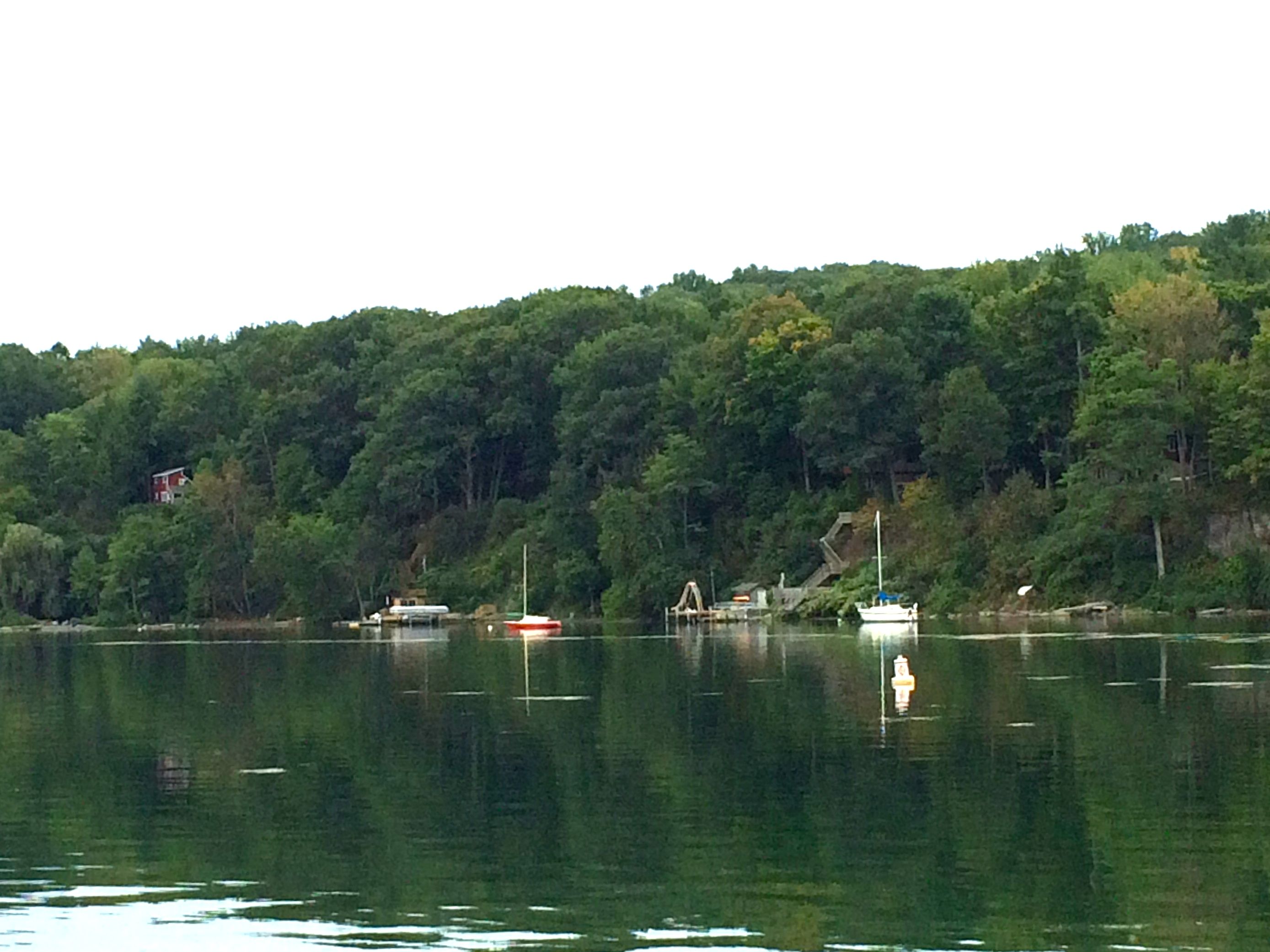
Lake Cayuga
And then it was time to head for home – Watkins Glen.