Mom and Dad took me and Craig – and maybe Scott – on a trip to the Finger Lakes when we were really little. I really only remember a couple things from the trip.
One thing I remember is the pool at Watkins Glen.
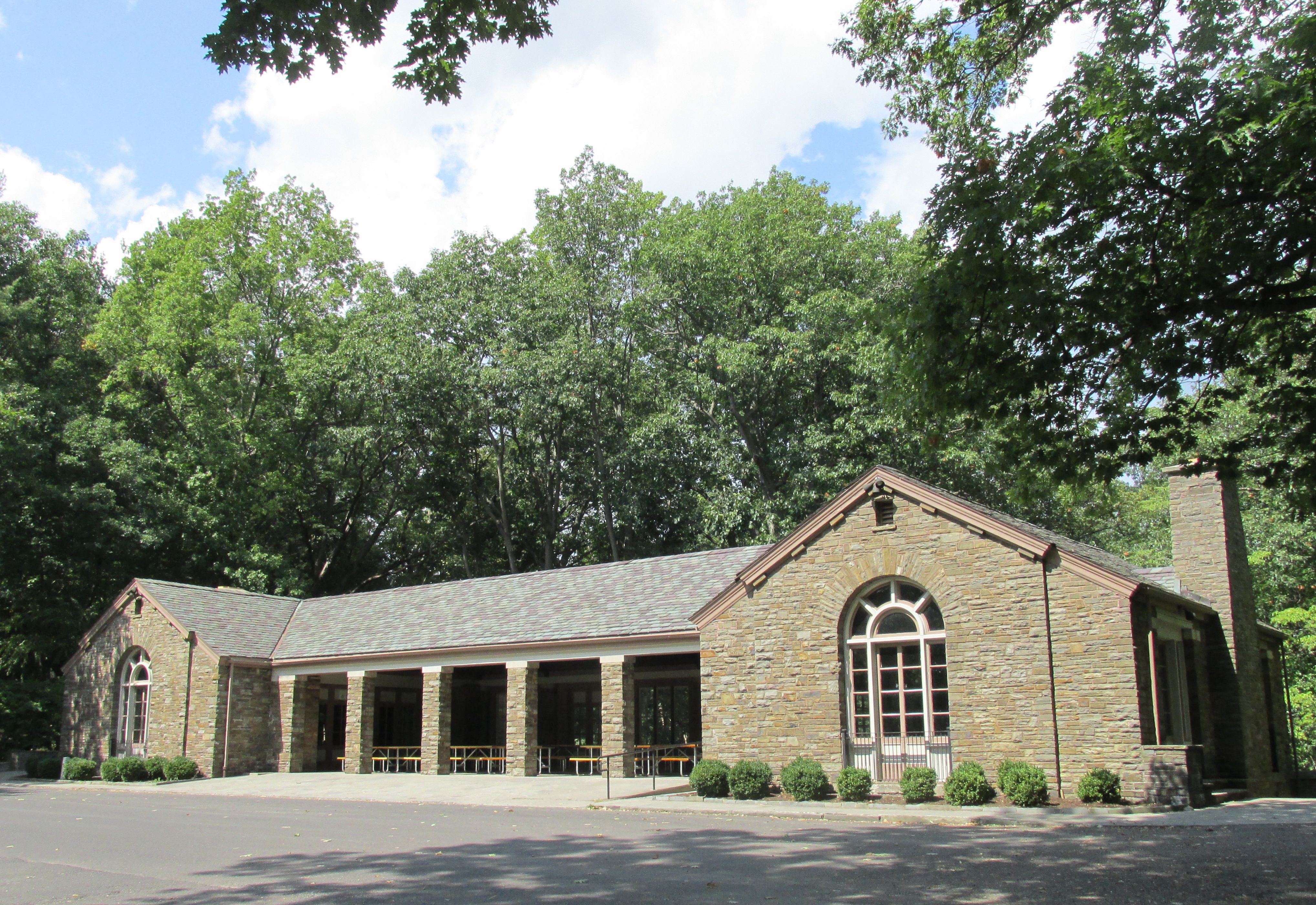
The other thing is this pavilion, that I mis-remembered as being the entrance to the pool.
I think I figured out why I don’t remember anything else about the park.
There are more than 800 stone steps on the trail that goes up the gorge. I can imagine my mother hearing that and saying “Uff da!”
I managed to get into my site with the help of Bob and Greg. Later that night, Greg came to borrow my hose to fill up their tank and he invited me to join them at their campfire that evening. They were from Toronto and would be heading to Letchworth after this. It was a pleasant evening.
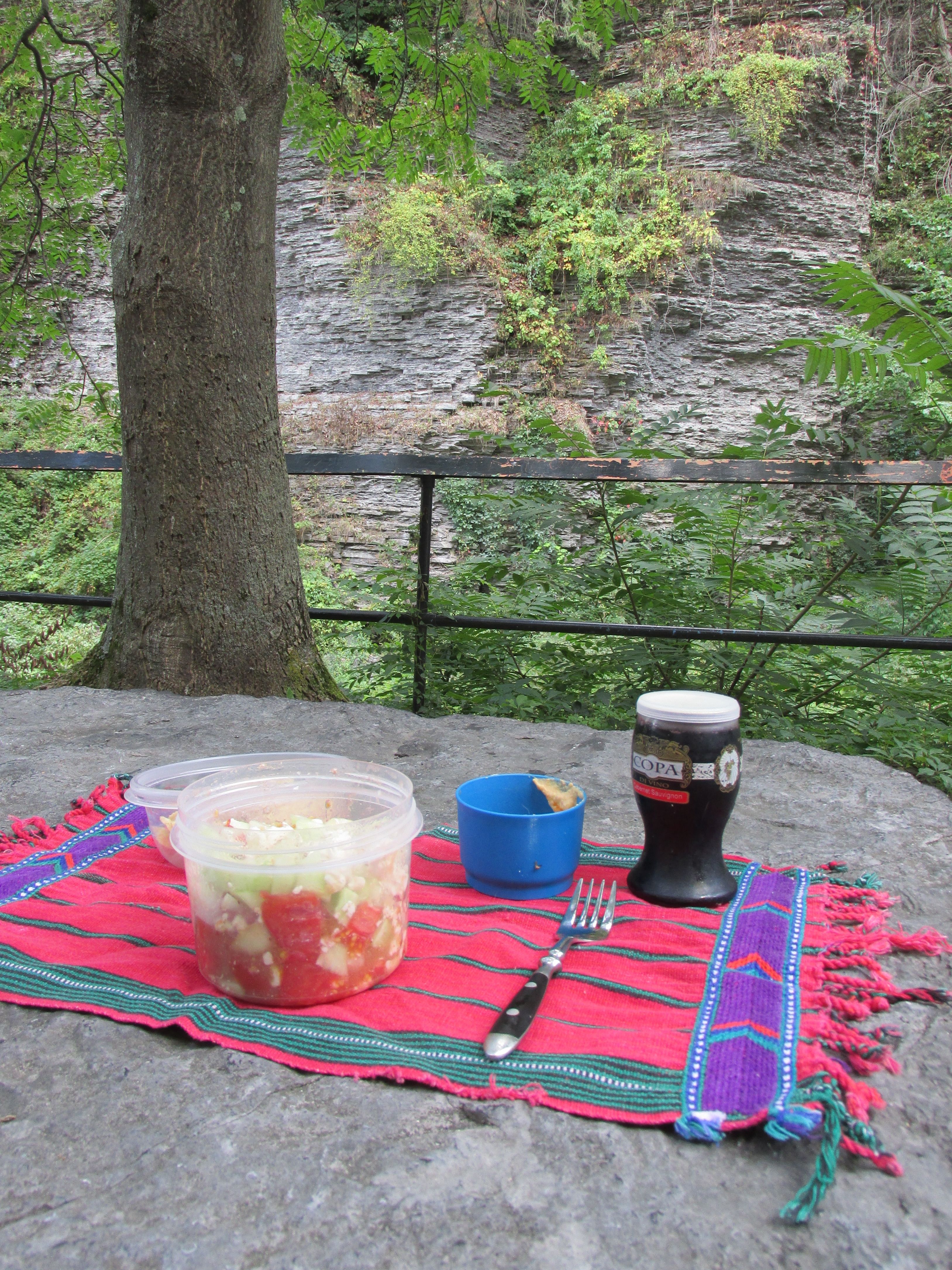
The next day, I was determined that I was going to go at least part way up the trail. I packed a lunch to eat by a waterfall, but the guy at the entrance to that part of the park advised me that I should eat here at the bottom as there were no benches or tables on the trail.
Greek salad, hummus, corn chips and wine
I ate my lunch and chatted with the woman sitting on the next rock over. It turns out that she was in the campsite next to mine. She was waiting for her husband to return from his hike.
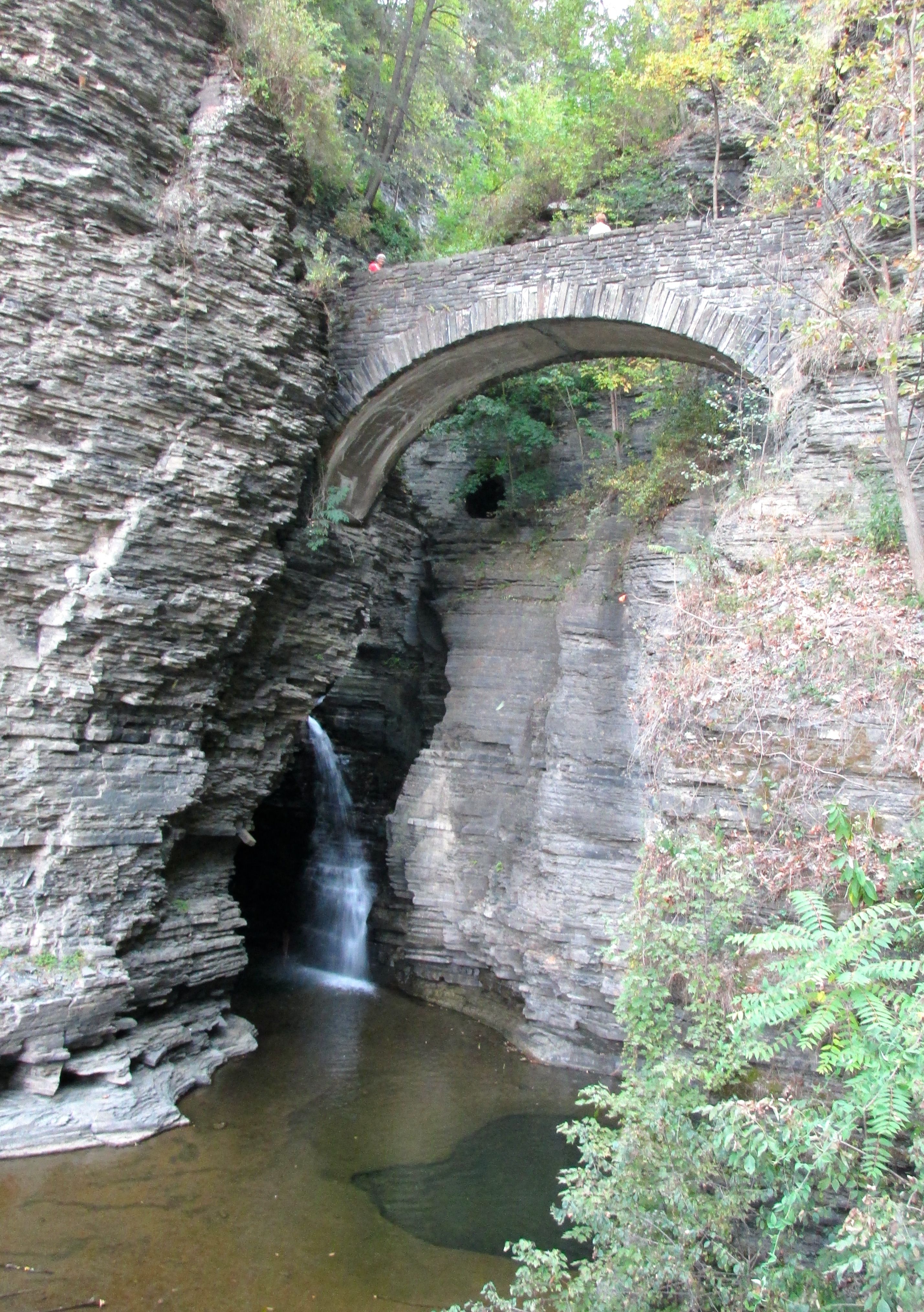
My view of the glen
This is all I saw of the glen. Just as I finished my lunch, the wind kicked up and the rain blew in.
The weather wasn’t the summery day that I had counted on. On to Plan B.
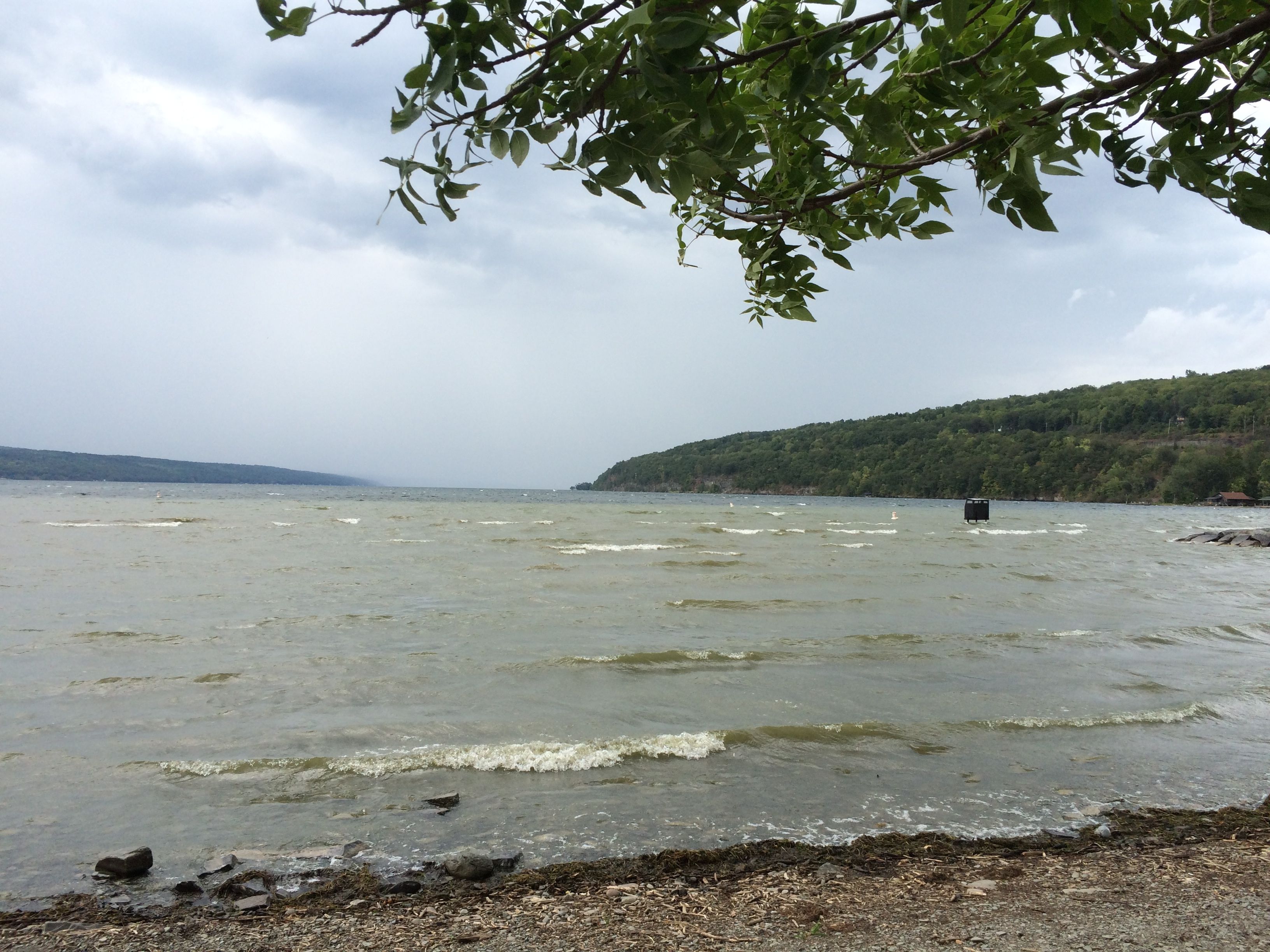
White caps on Lake Seneca
Plan B was a trip to a winery I had considered for a boondock site. I emailed the owner before I left Buffalo and he said that I would be welcome. I ended up taking a different route, so I didn’t pass by before I got to Watkins Glen.
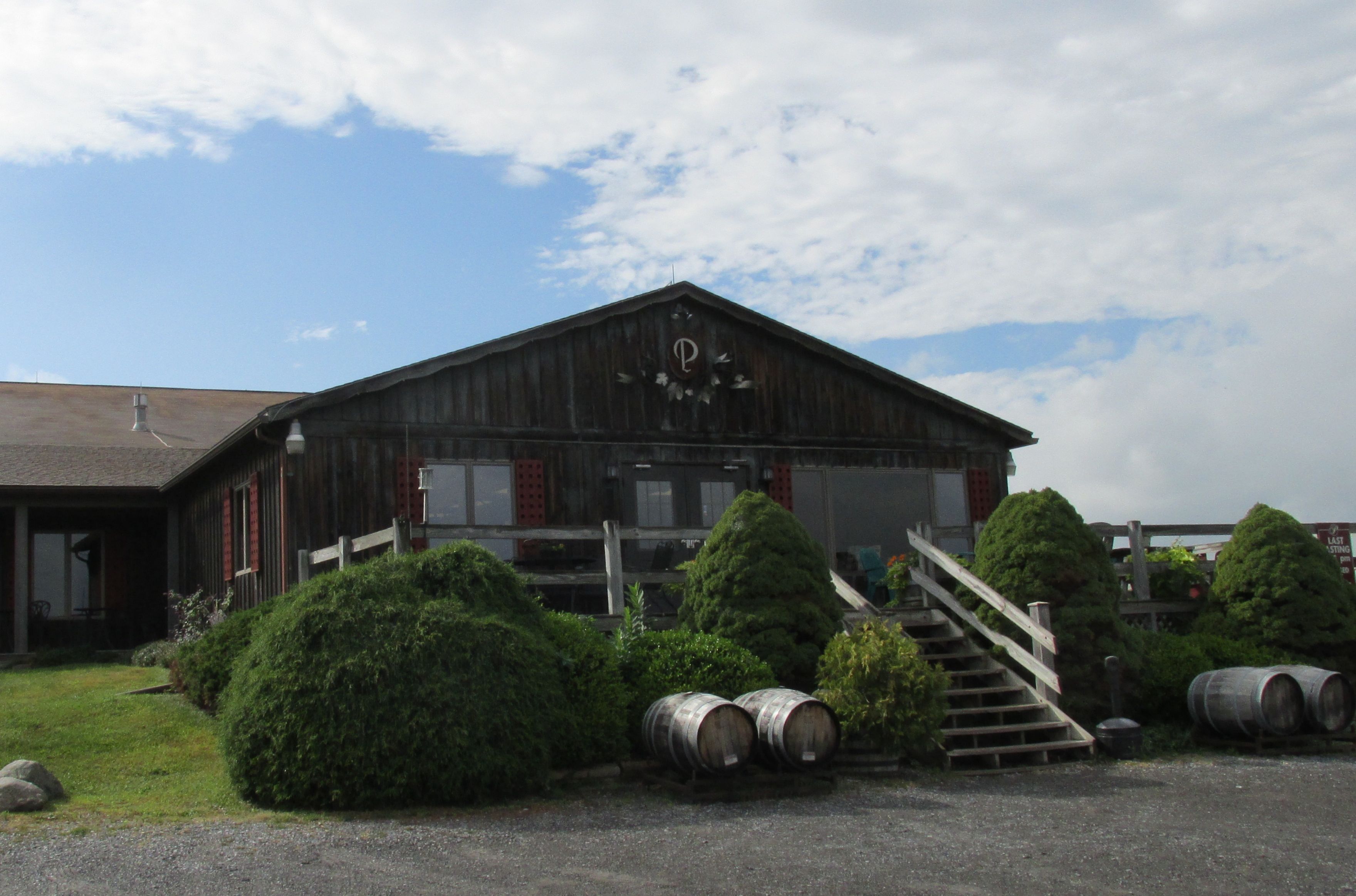
Prejean Winery
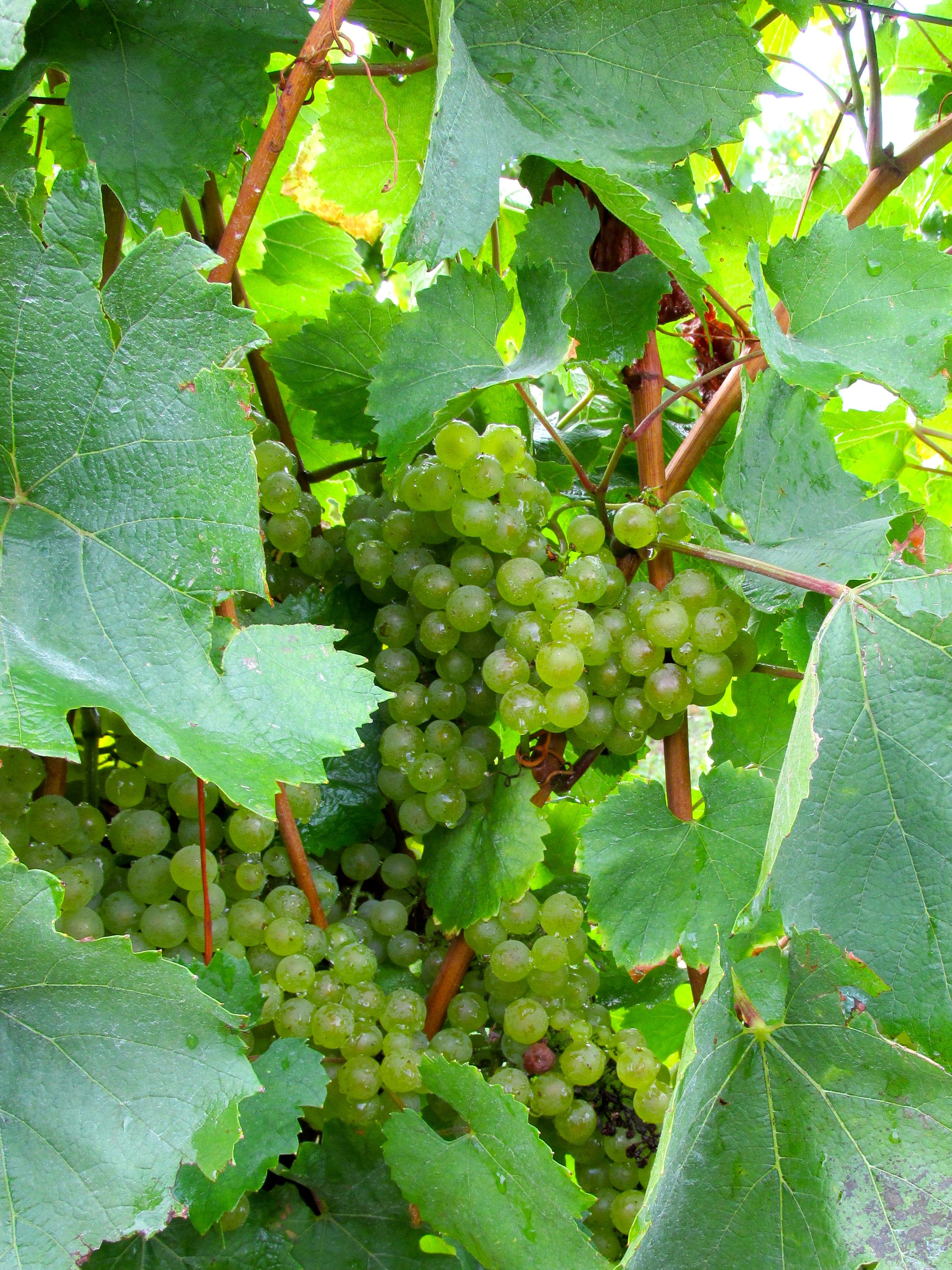
I had a lovely tasting and picked out two wines to take with me. The person assisting me said that the grapes were about ready to be picked. I stopped and checked them out as I left the winery.
Grapes on the vine
Yep, they look about ready to me.
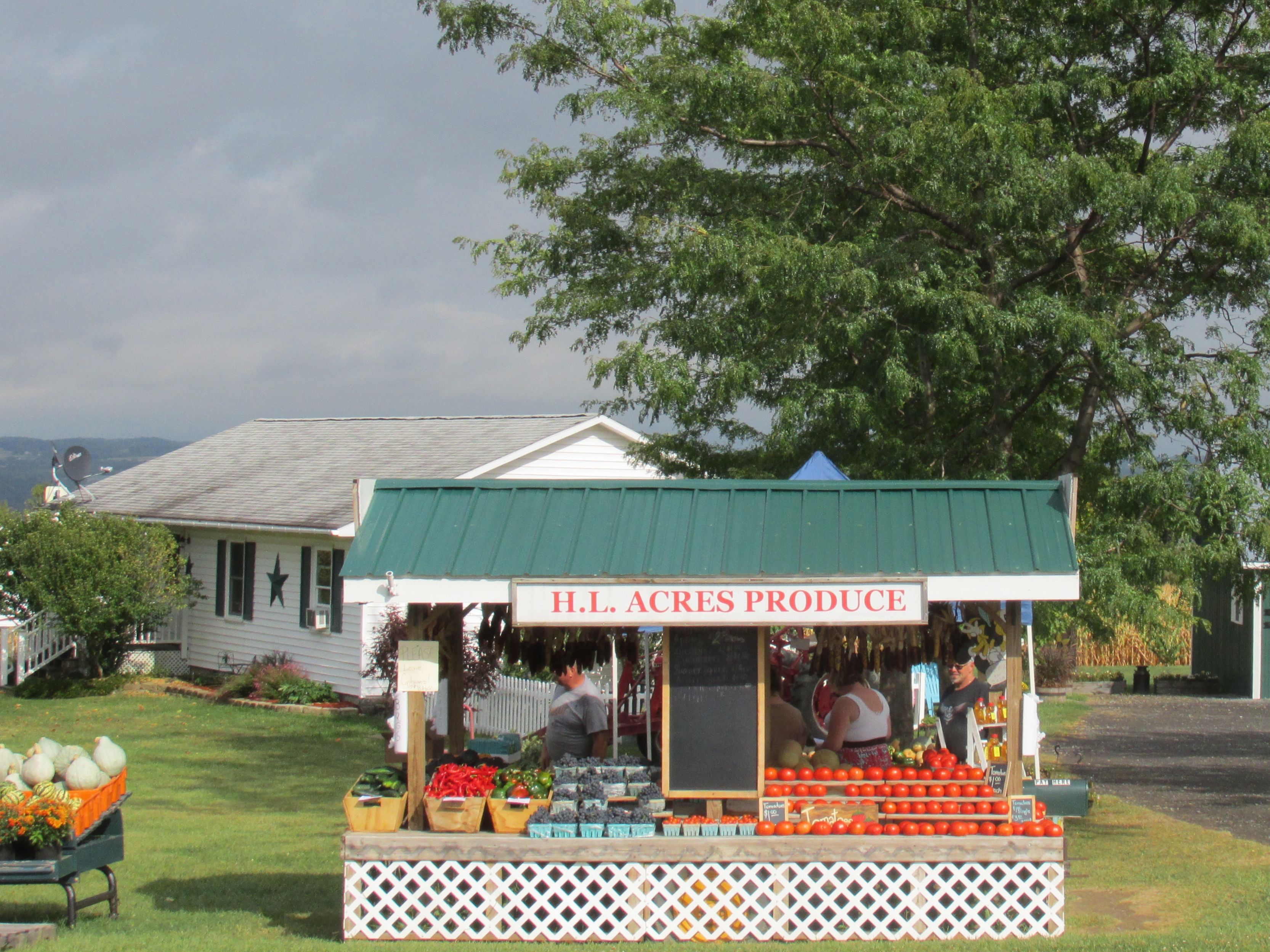
Just down the street, there was a farm stand. They had beautiful produce for sale.
I bought some great stuff, but they didn’t have any peaches.
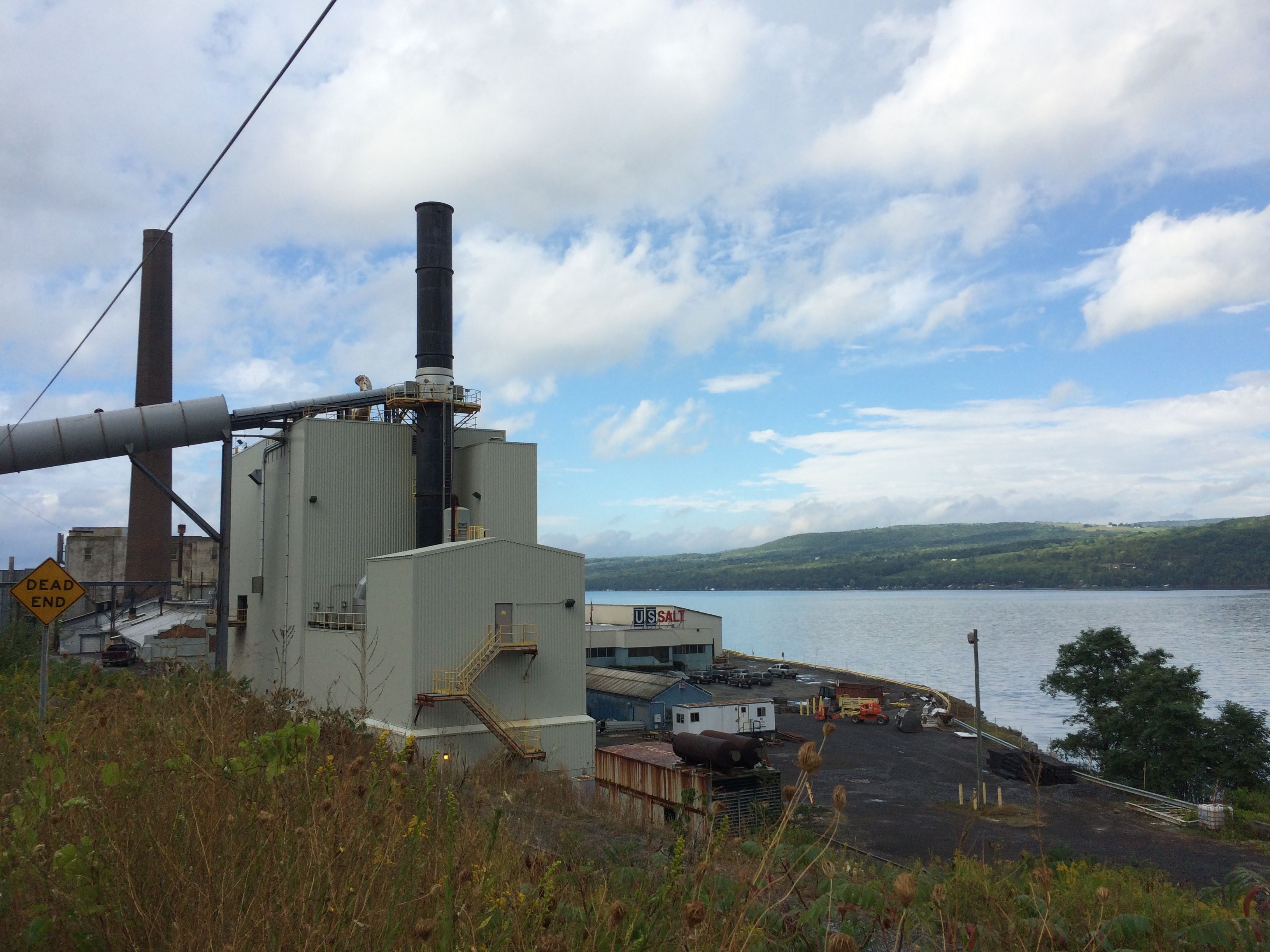
After I got back, I checked out the U.S. Salt company. Who knew they were mining salt in the Finger Lakes? Well, I can tell you that I didn’t.
I called and asked if they give tours, but they don’t. Pretty industrial – not exactly set up for company.
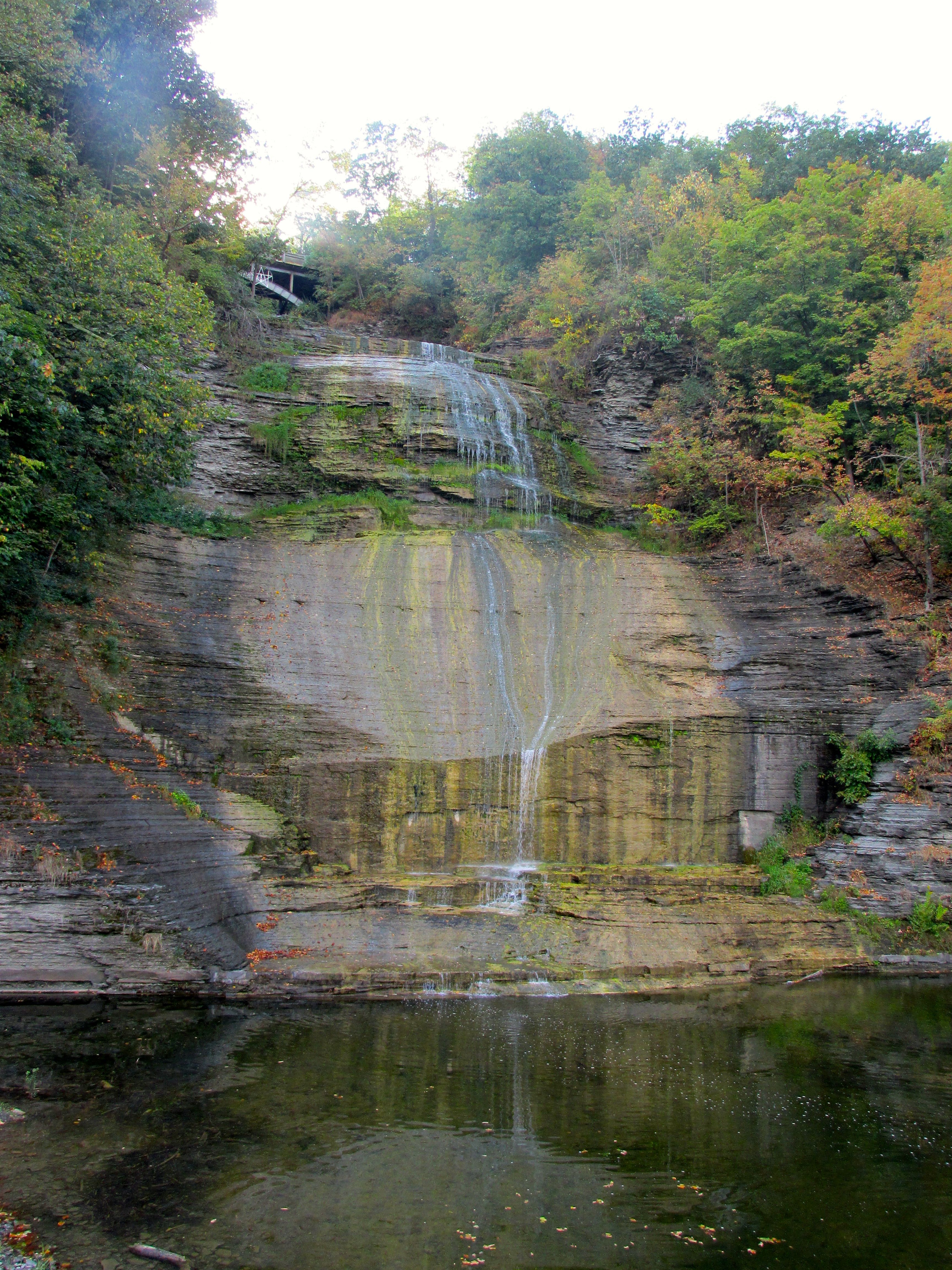
The weather had cleared and I decided to check out Montour, just down the road from Watkins Glen. I had heard that they had a nice waterfall in town.
Chequaqua Falls in Montour
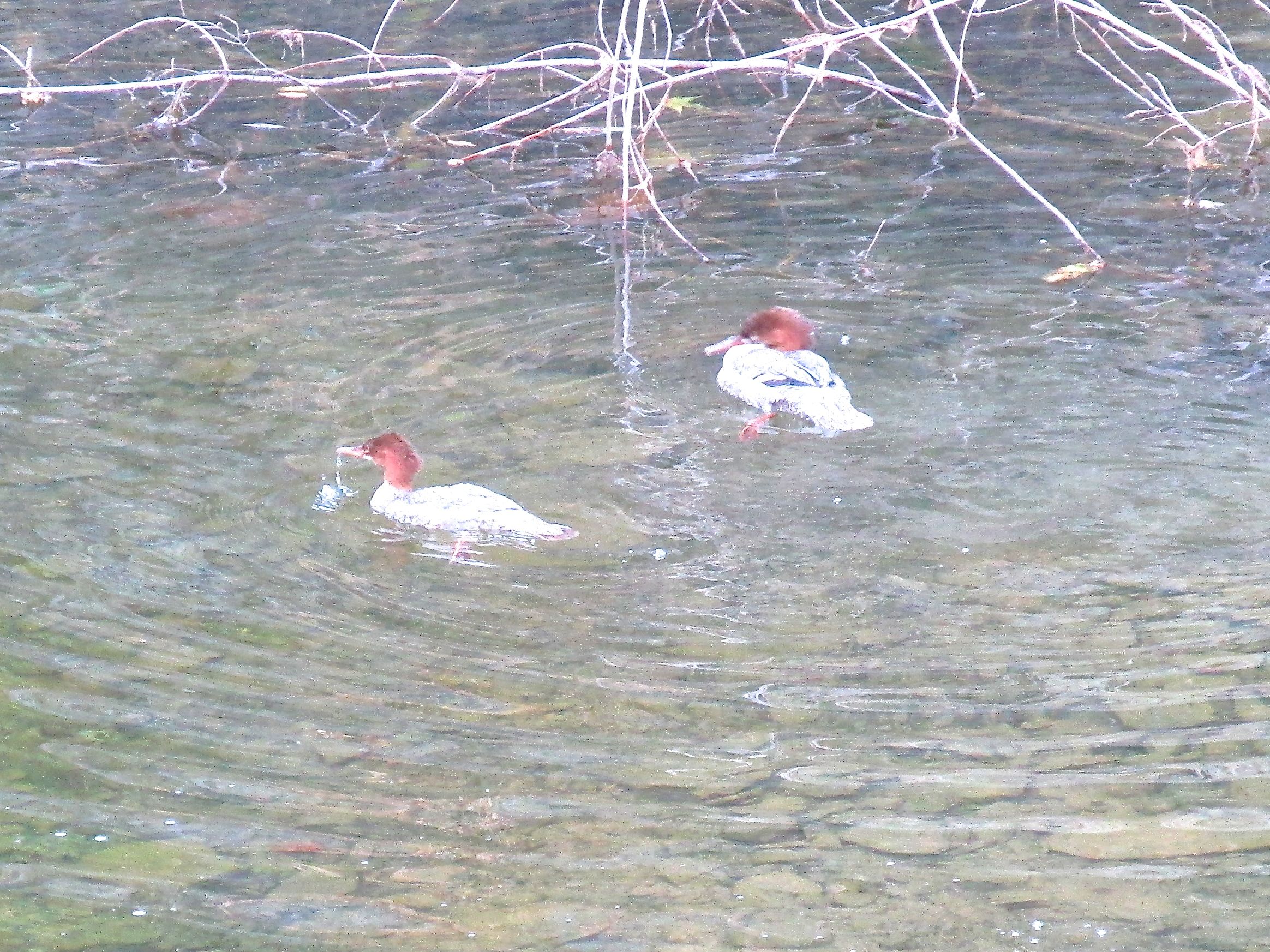
There were ducks swimming around in the pond and diving for their dinners.
There are ducks swimming under water in the pond.
It was so cool looking at the ducks feet propelling them under the water. I wish you could see them. I’d never seen ducks swim underwater like that.
There they are!
Funny thing, in spite of an extensive two minute Google search, I couldn’t find a copy of this sketch by the future king of France.
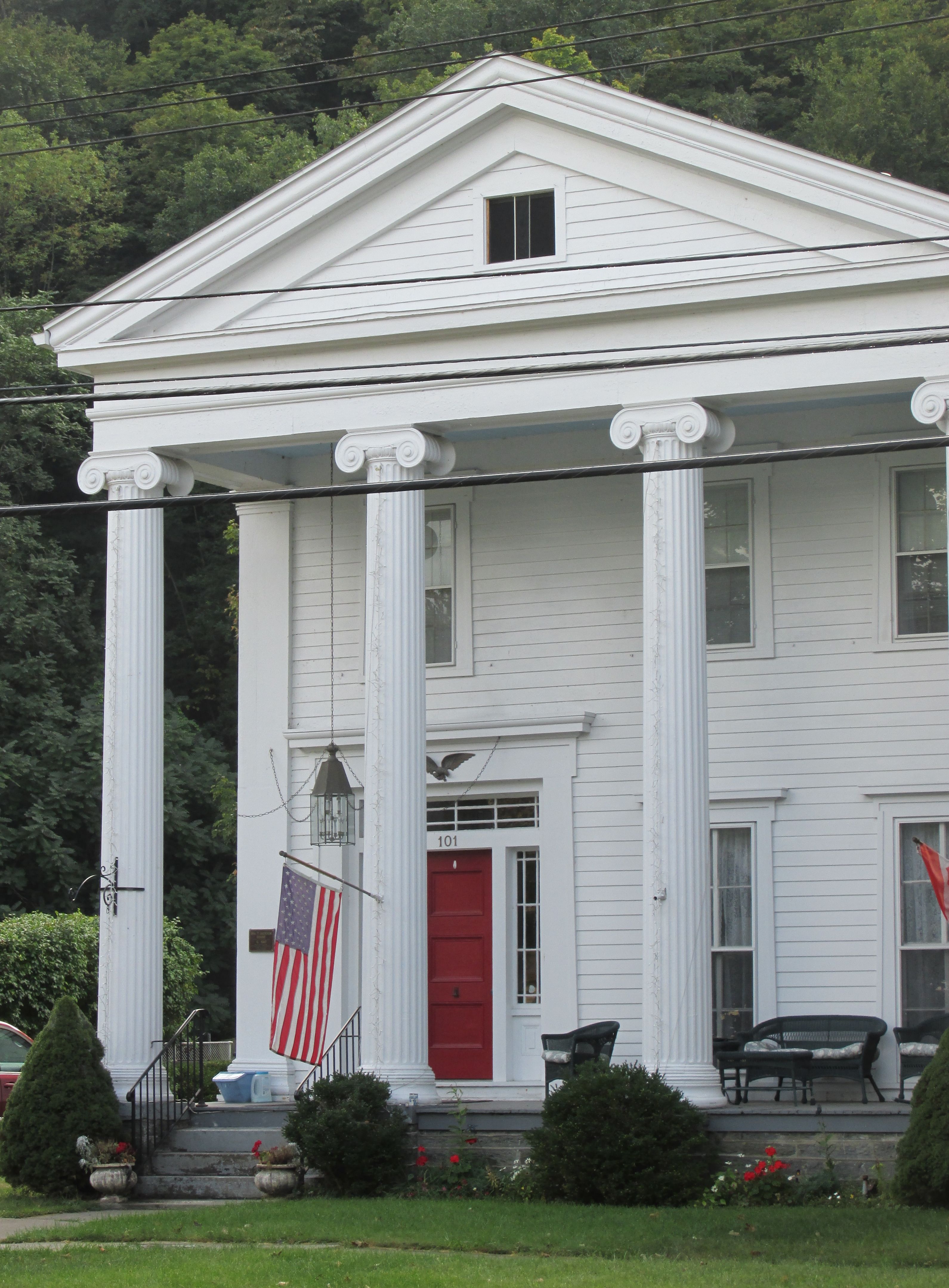
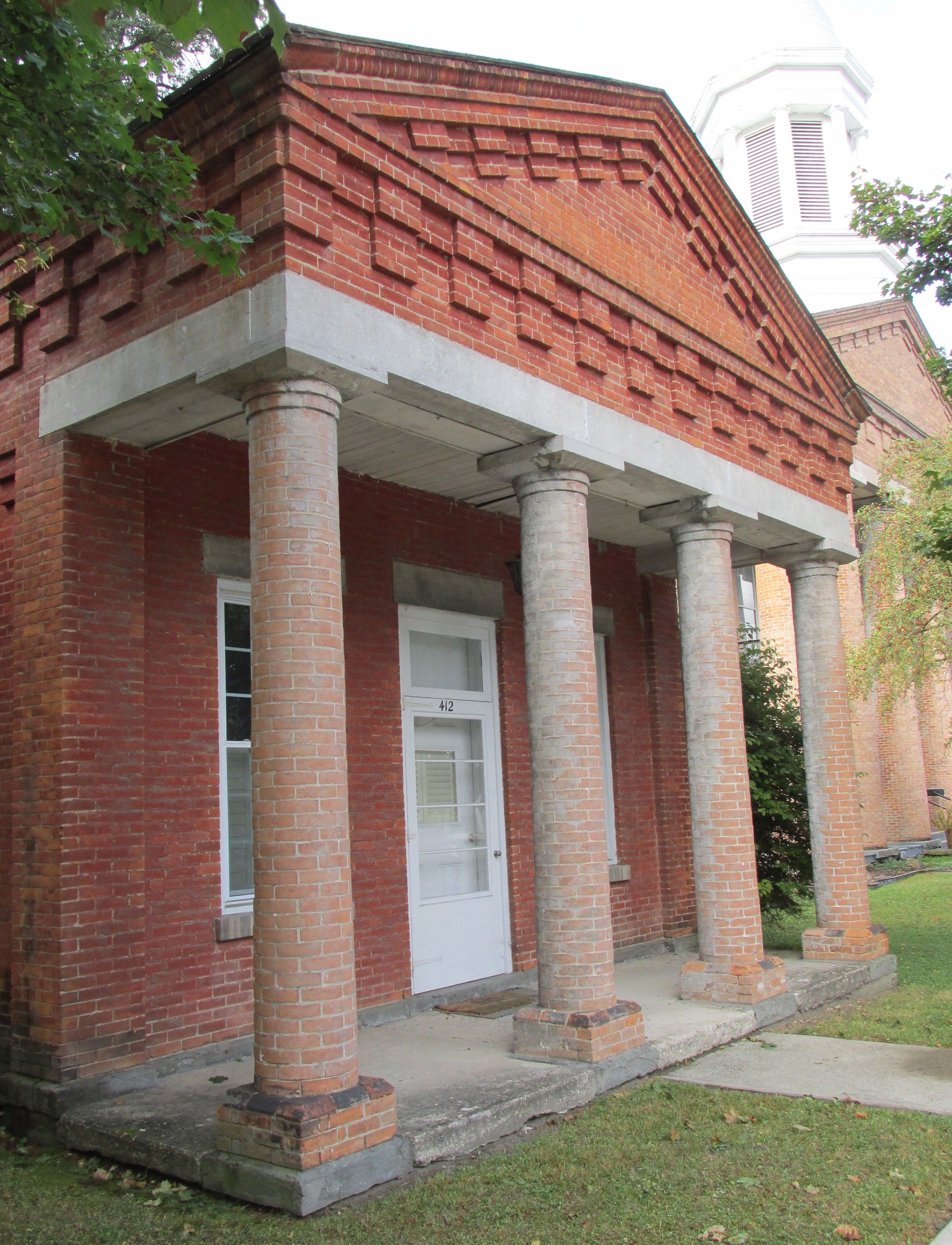
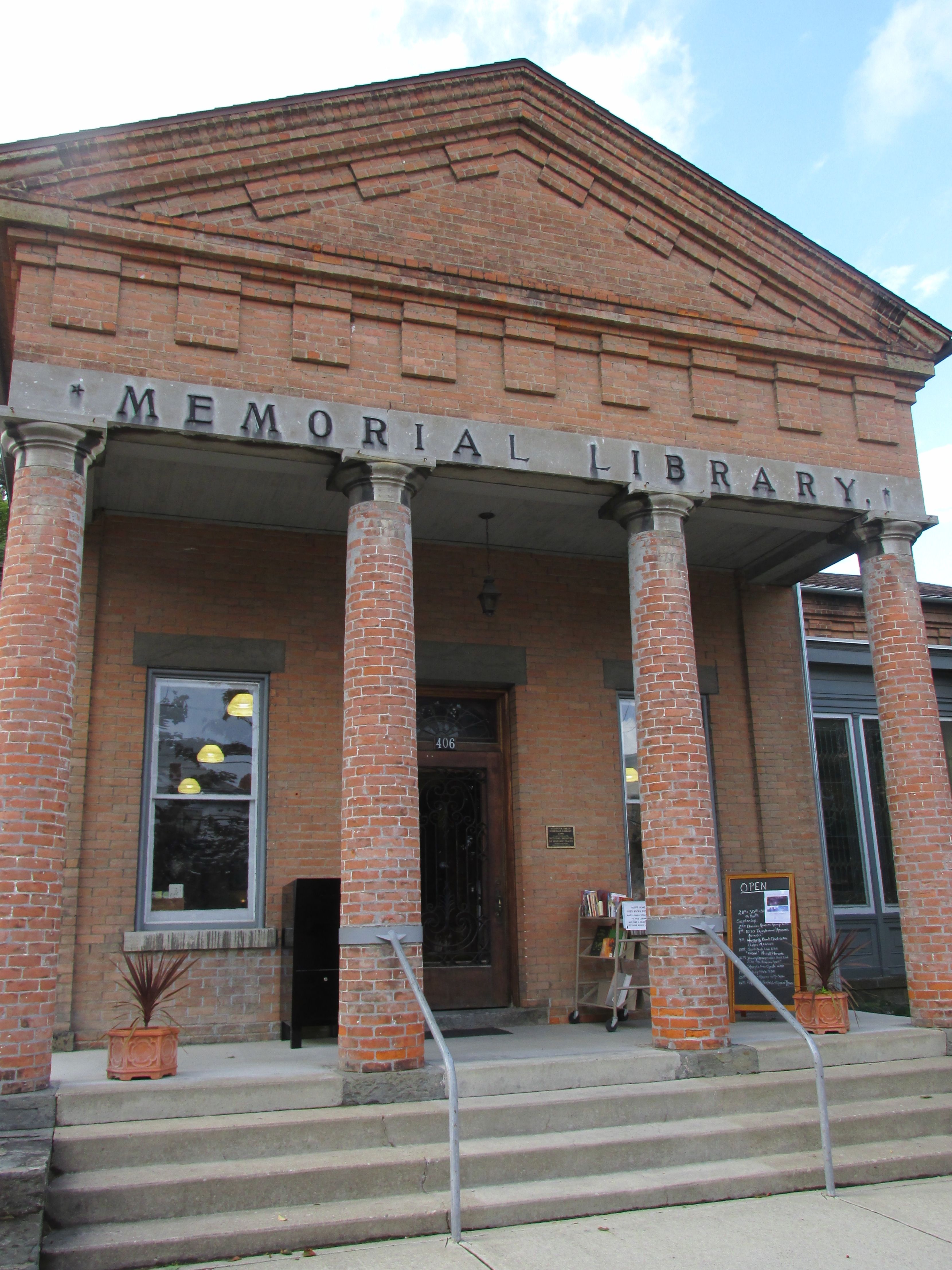
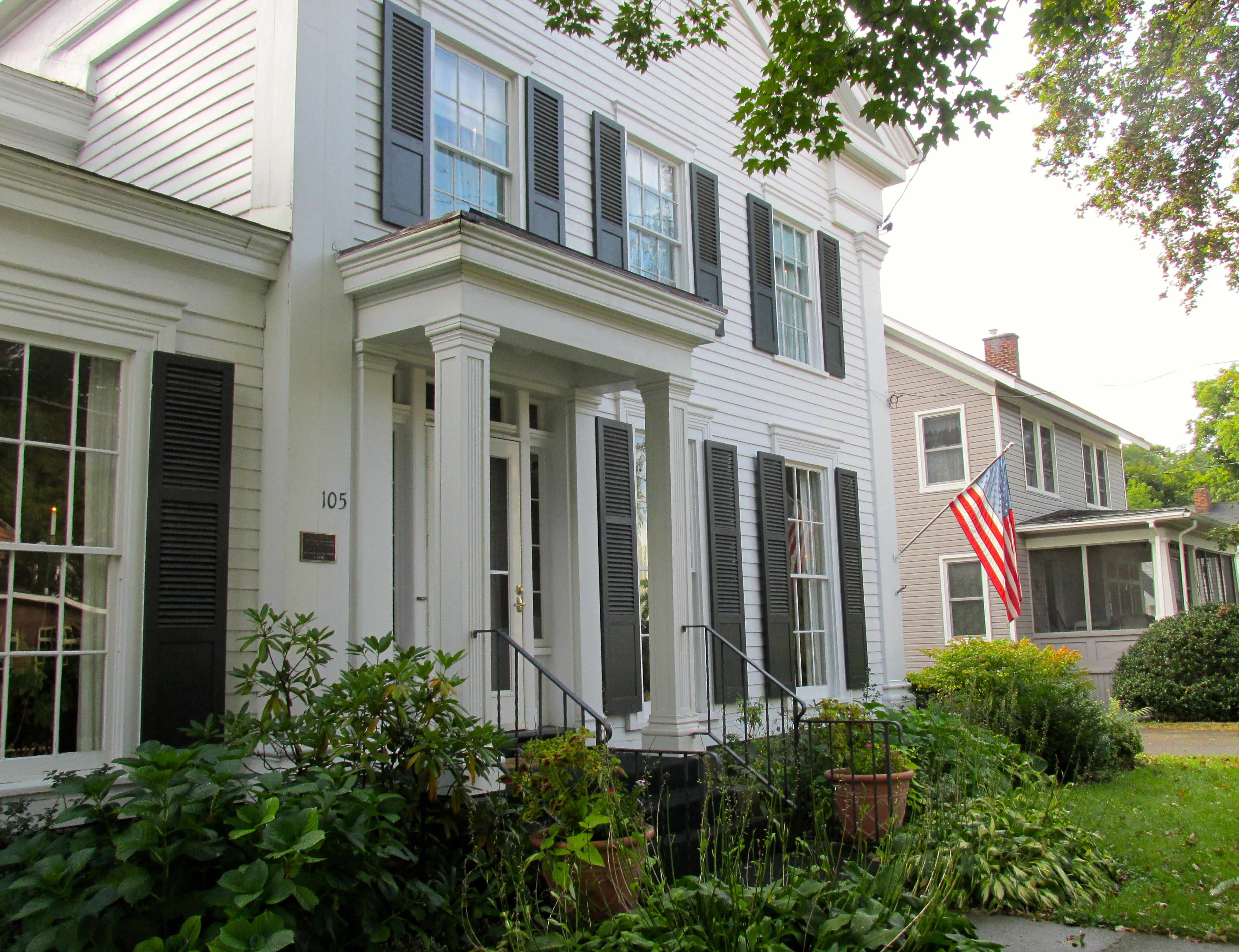
The area of Mintour around the falls is known as the Big T. It is filled with splendidly preserved buildings.
This one is right next to the falls and was used as a cover photo on National Geographic.
The were big into brick columns.
And brick in general.
As I was ready to head back to the park, I noticed a street called Canal Street. I was curious about that. And then I noticed another sign:
What in the world? This area connected to the Erie Canal?
My thanks to all of you who have been following along with me. I spent three weeks in Western New York, and I have a bunch of little bits and pieces that I wanted to include in the Official Record, but never quite got them fit in. So here it is:
LAST CALL FOR BUFFALO!
Buffalo is a great place to eat!
There’s Andersons:
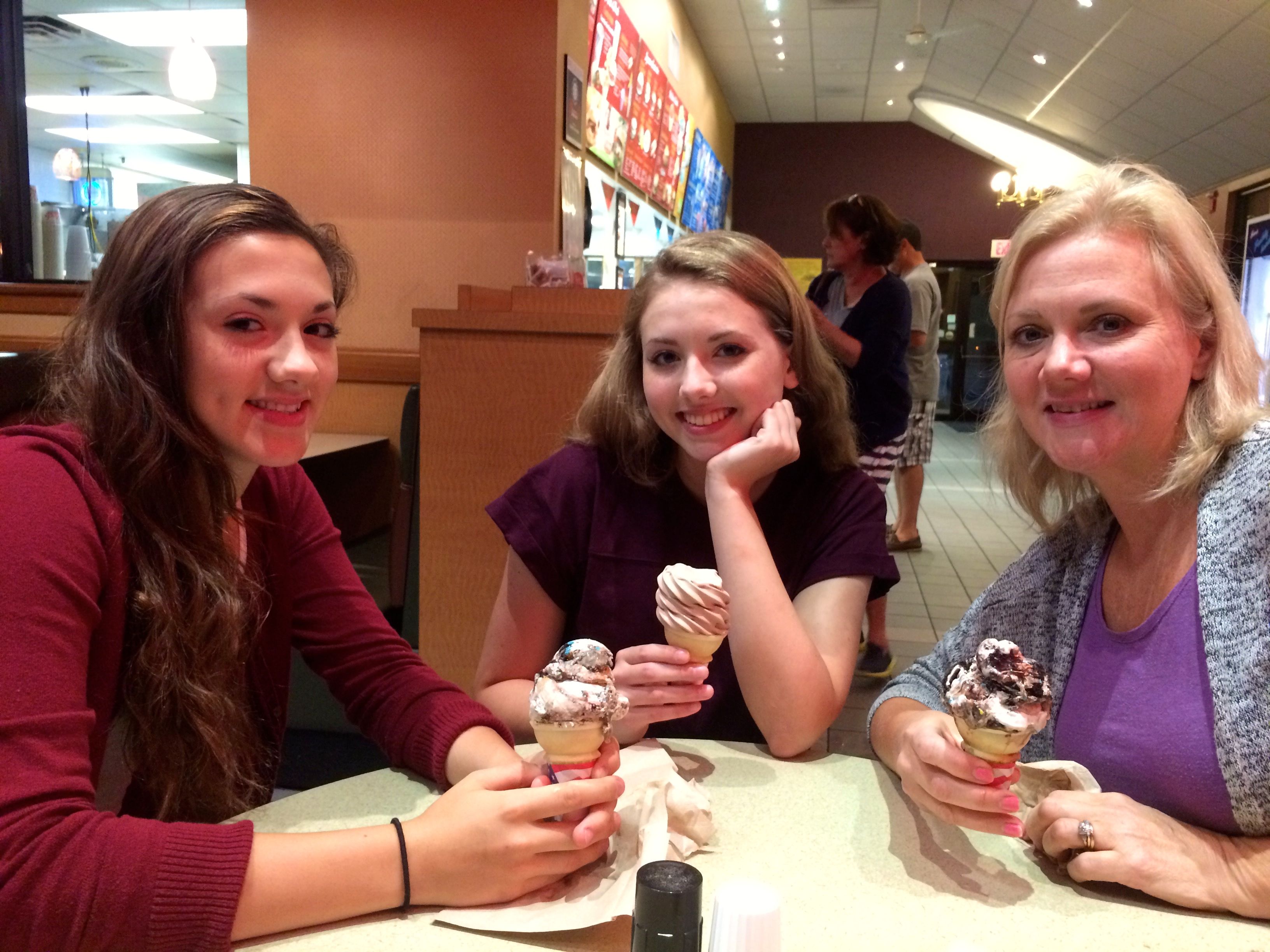
My nieces and my sister out for treats
Of course, there are many great places for beef on weck.
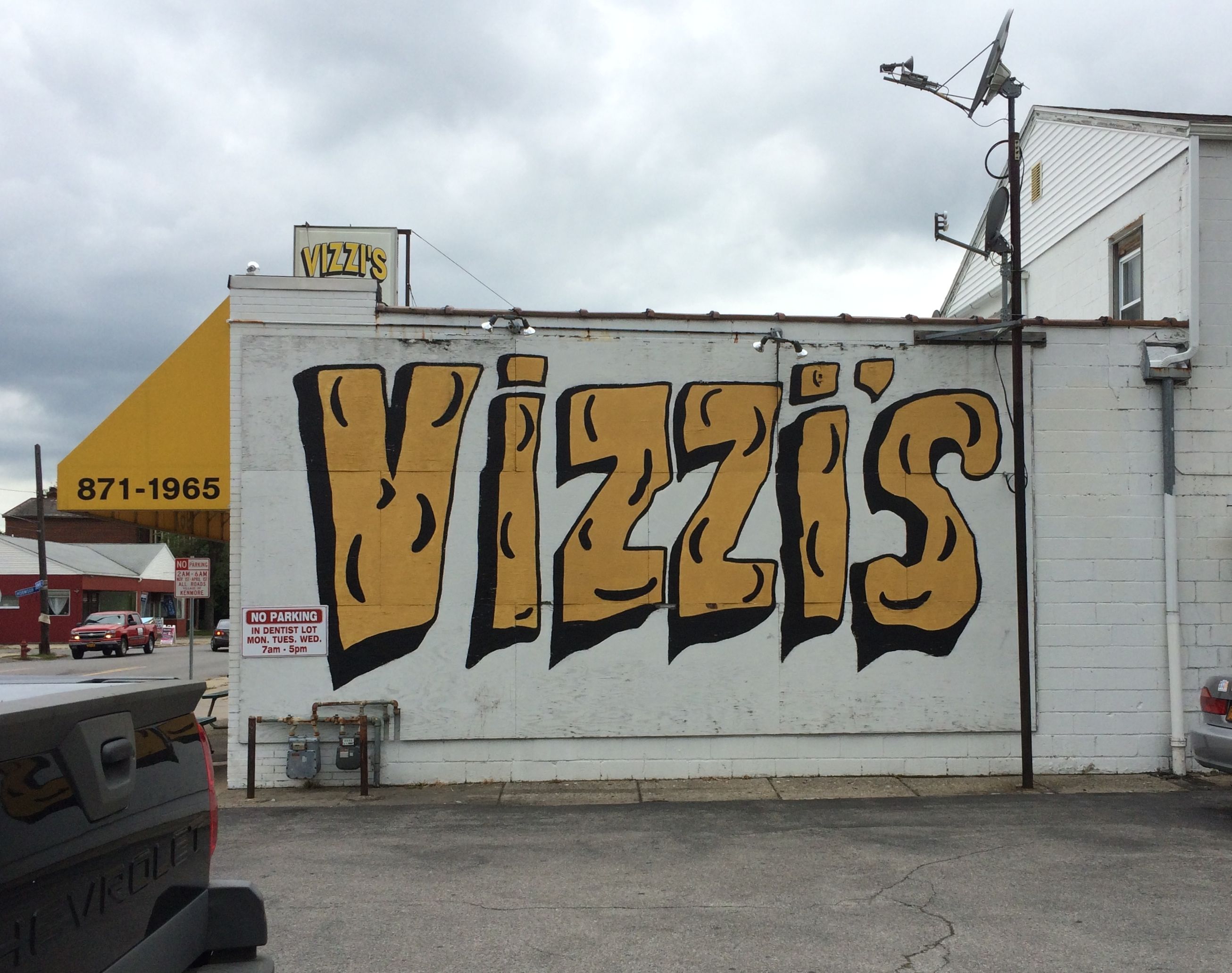
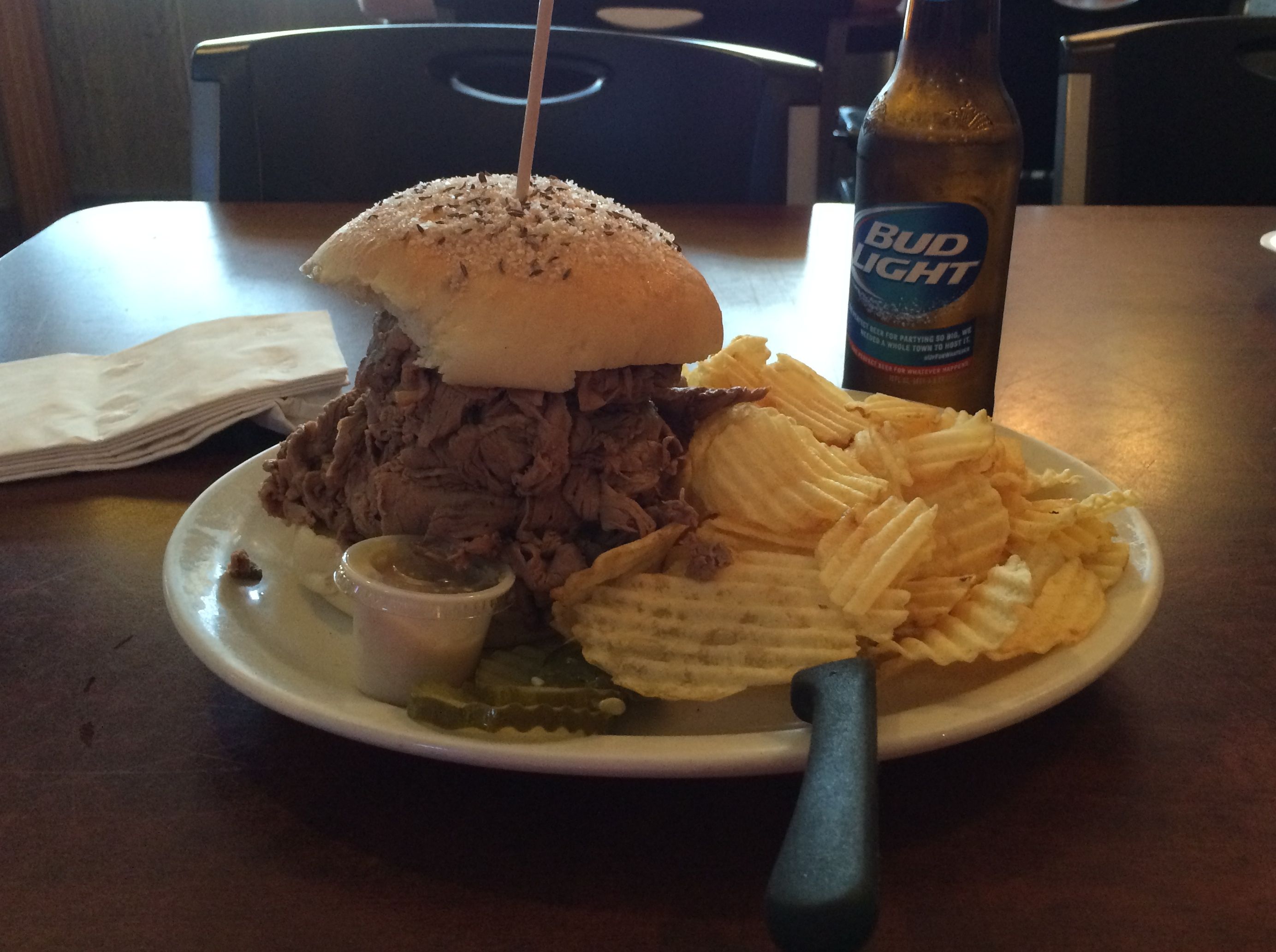
Vizzi’s on Kenmore AvenueA sandwich as big as your head!
There was so much meat on this sandwich that I took some off and asked for a to-go box. I took home enough for two more sandwiches!
Just in case you don’t know what “weck” is, allow me to explain. It is a German style hard roll with rock salt and caraway seeds baked on top. In German, kummel means caraway and weck means roll. So a beef on weck is a thinly sliced roast beef sandwich on kummelweck.
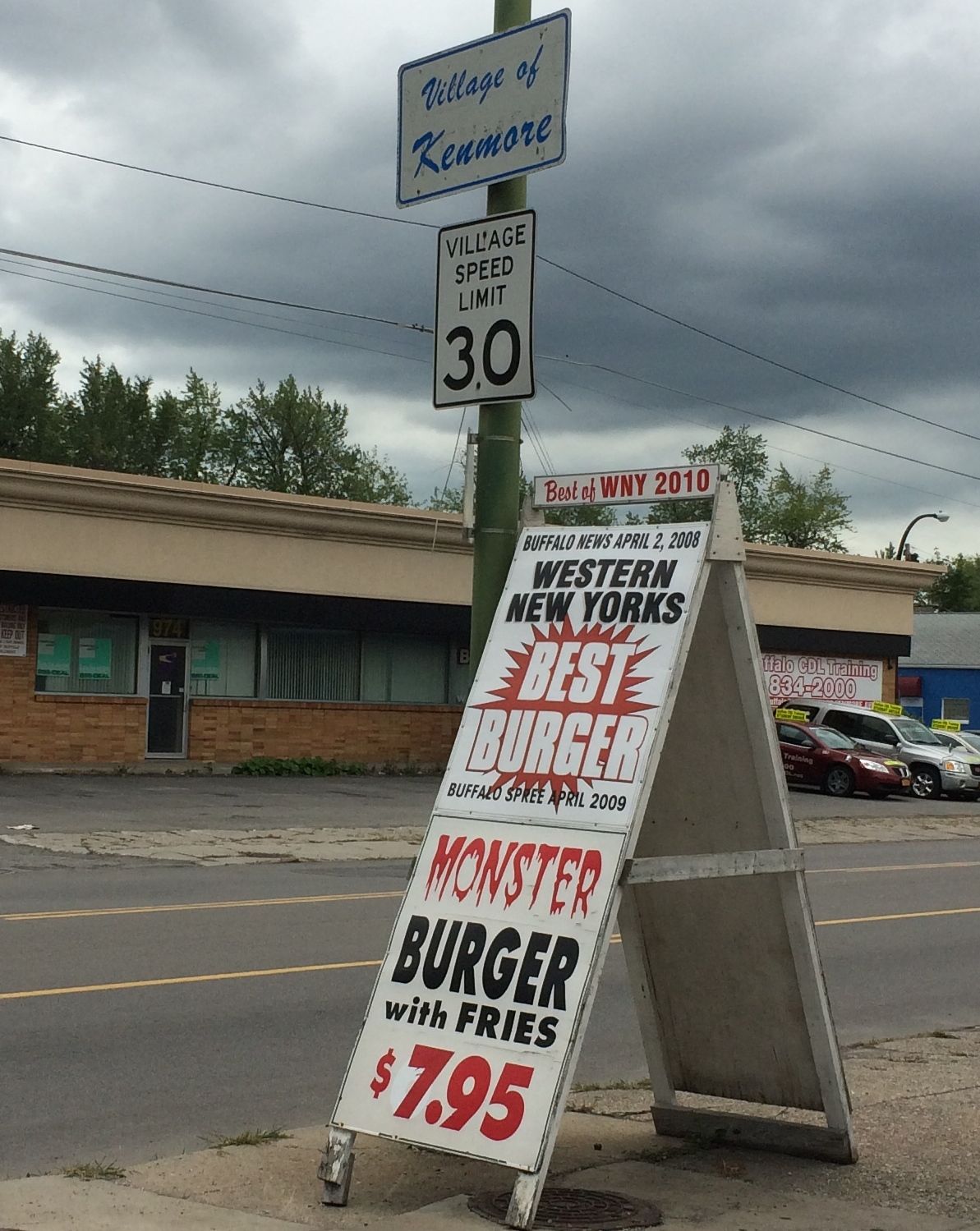
Best of WNY 2010. Have they been resting on their laurels?
The other great bar food mainstay is Buffalo style chicken wings. I didn’t get around to the Anchor Bar this trip. If you are going to have chicken wings in Buffalo, you might as well go to the place that started the whole thing off. But, no wings for me this time around.
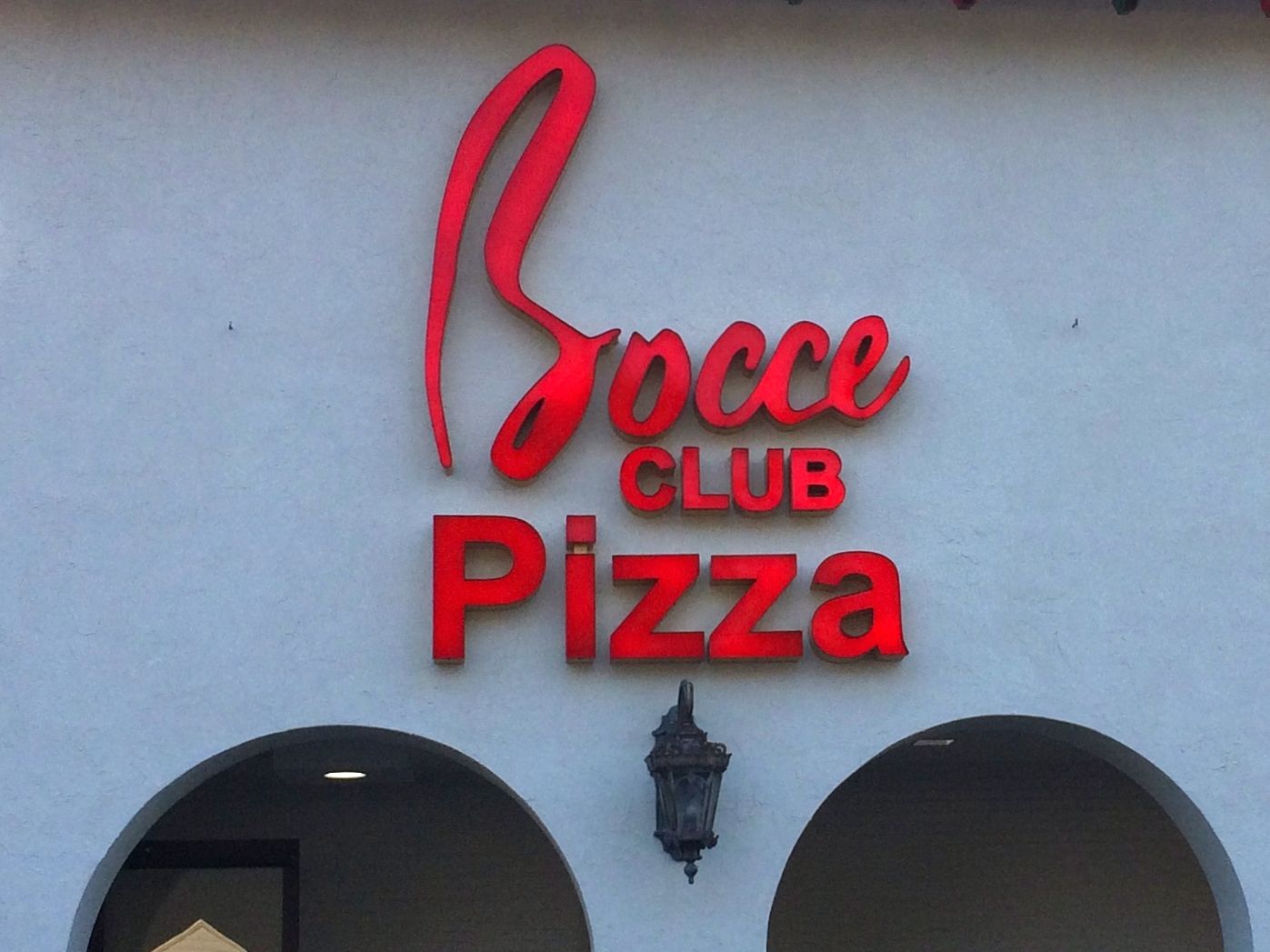
Bocce’s Pizza. It’s always been a family favorite. And, it was voted one of the top 33 pizzerias in America. You can read it right on the box.
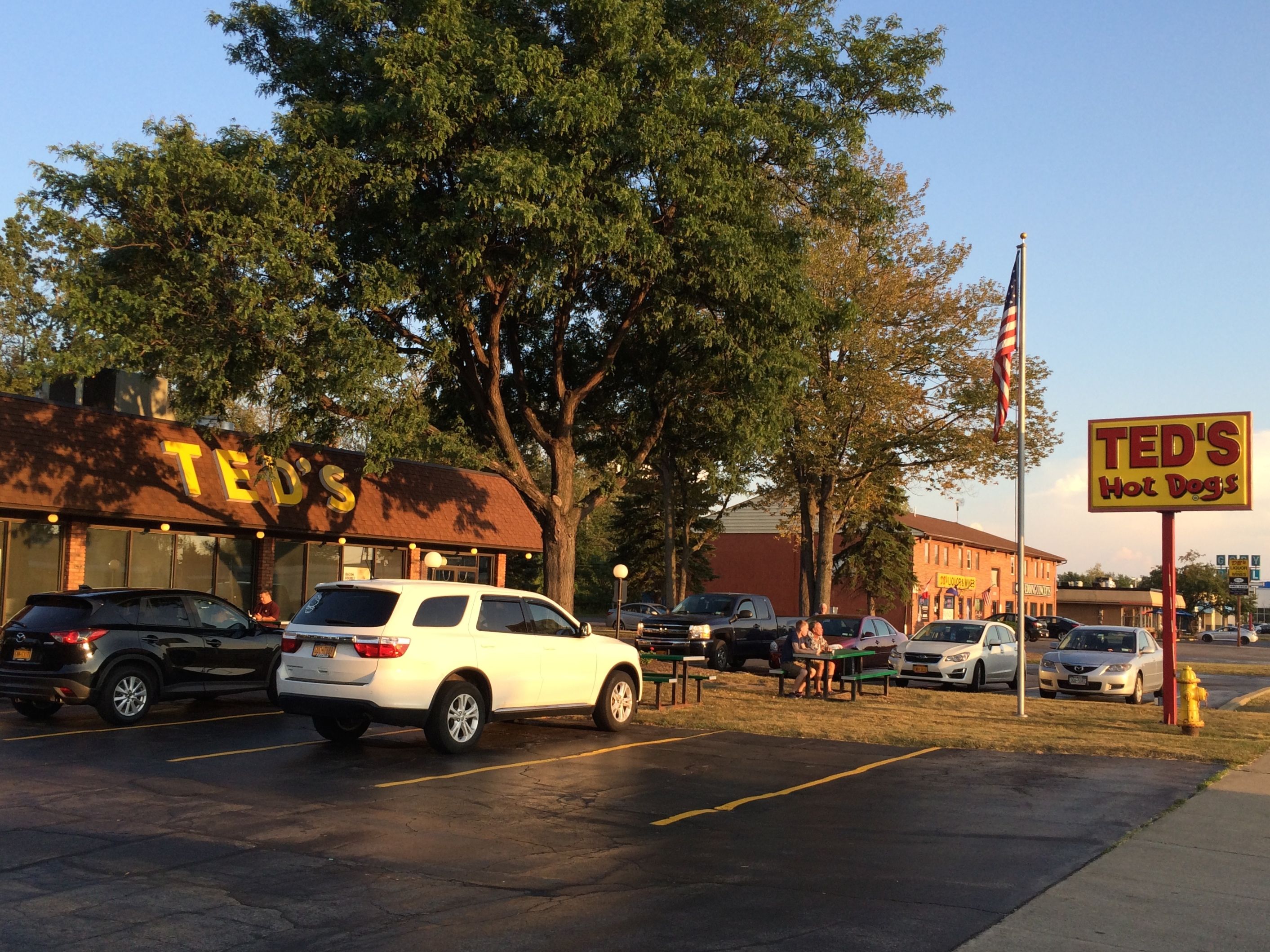
And then there’s Ted’s. High school chum Susan suggested Ted’s when we were trying to decide on a place to go for dinner. I never really cared for Ted’s, so we picked another place. But, I got to thinking about it. I was out and I was hungry and I said, “Why not?”
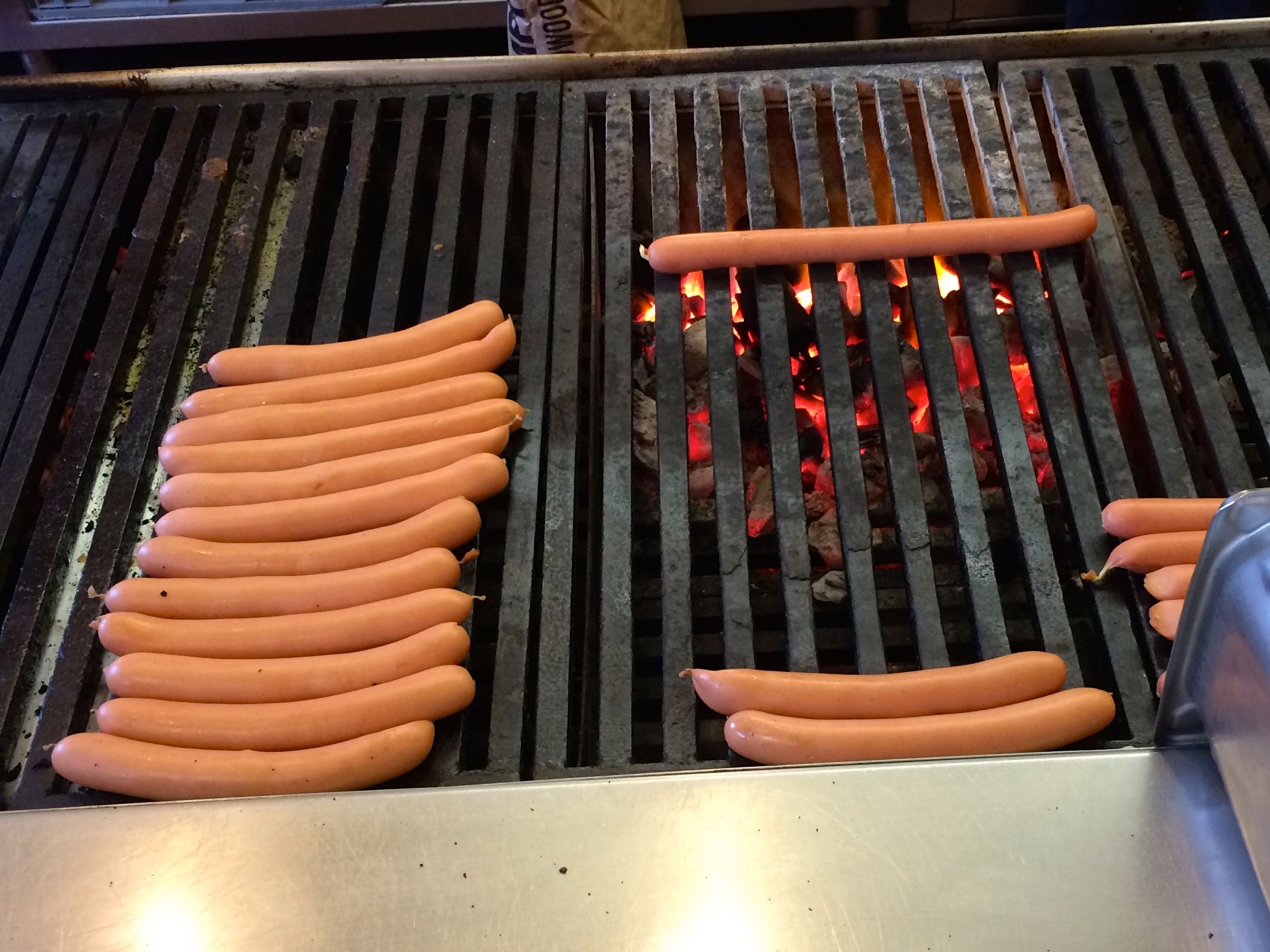
They grill the dogs right over the charcoal. I could never understand why people in Kalamazoo got so worked up about The Root Beer Stand and their boiled hot dogs.
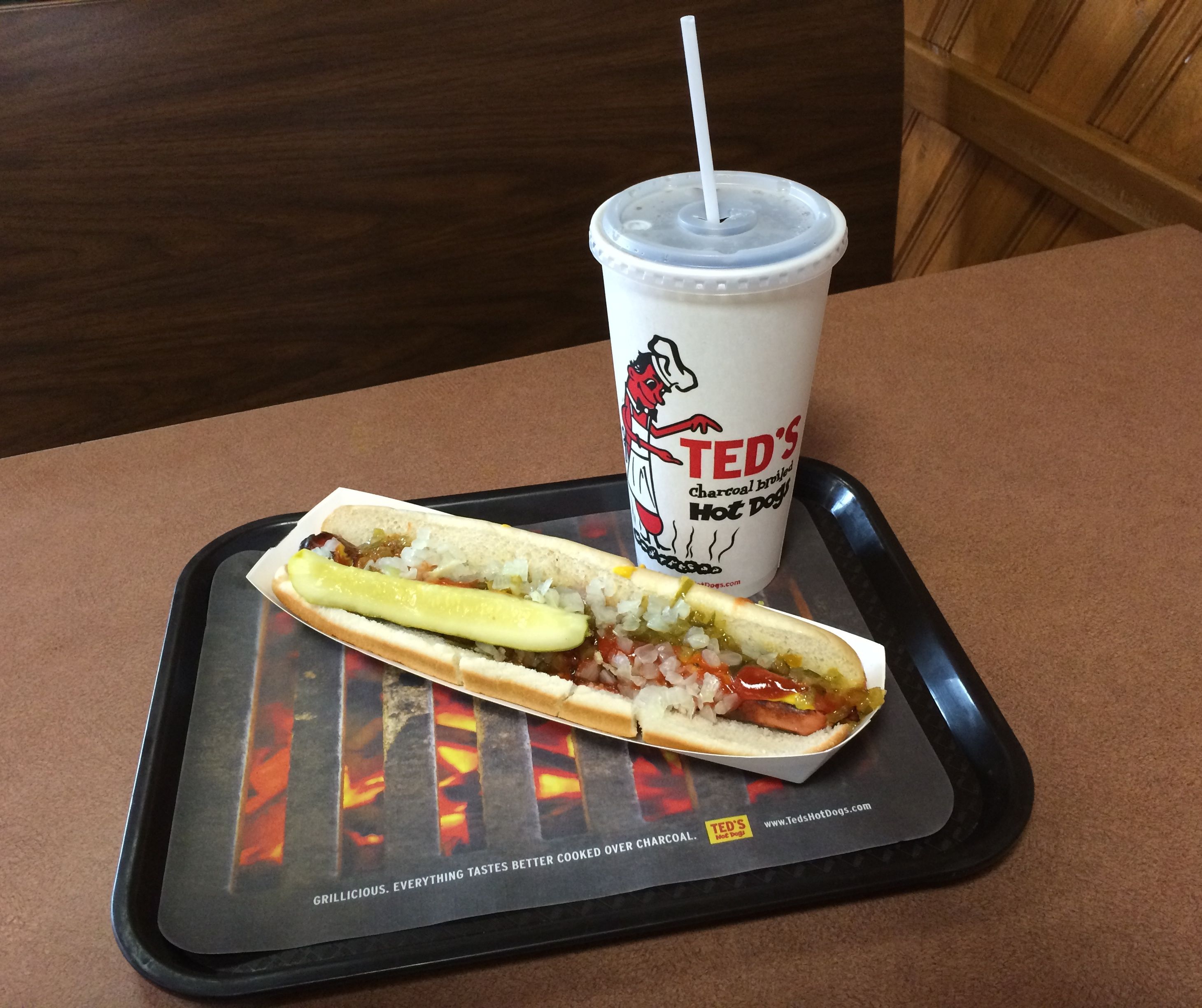
Pretty good presentation. I liked the tray liner that looks like glowing charcoal. Unfortunately, I guess I really don’t care for Ted’s all that much.
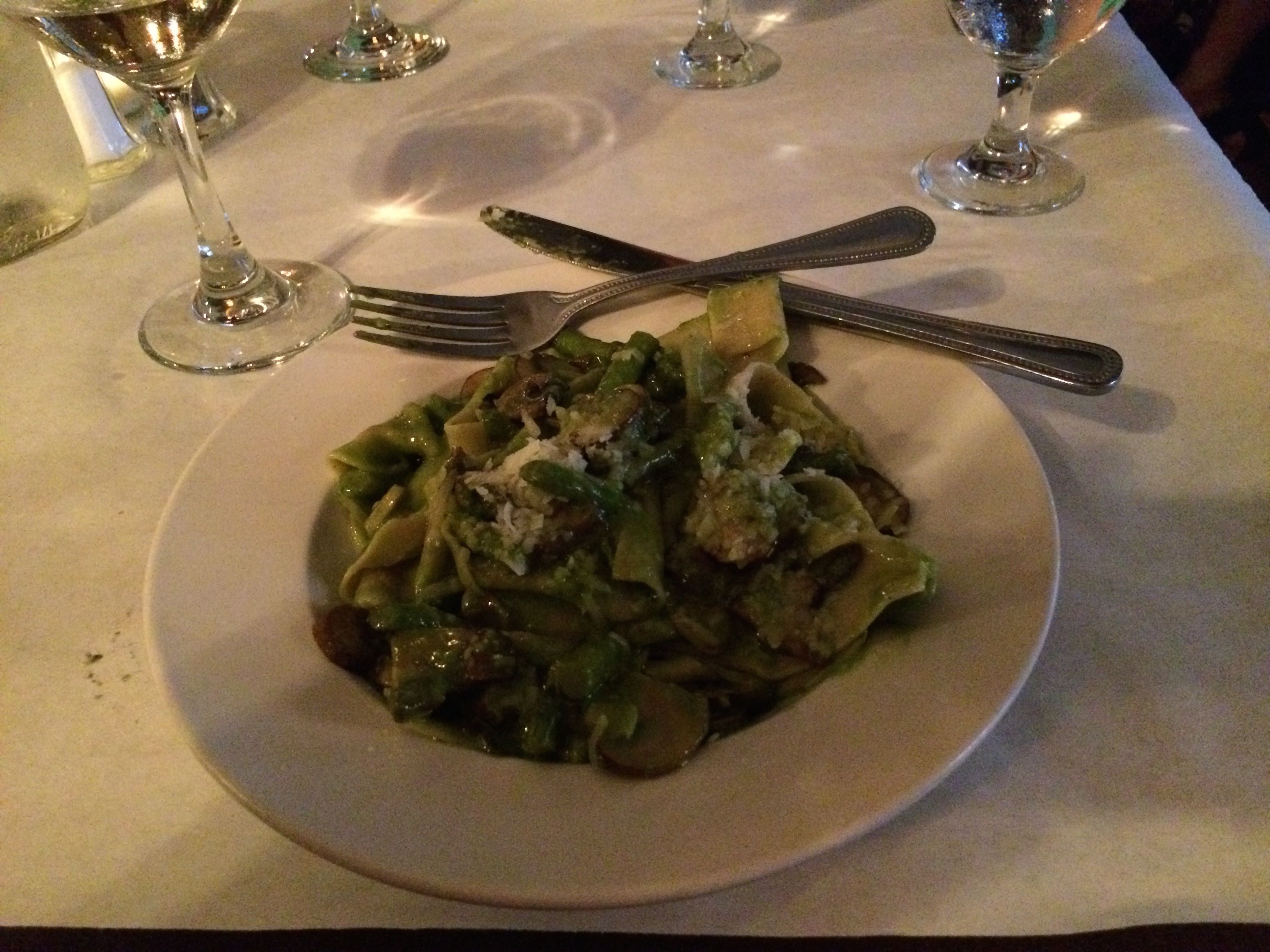
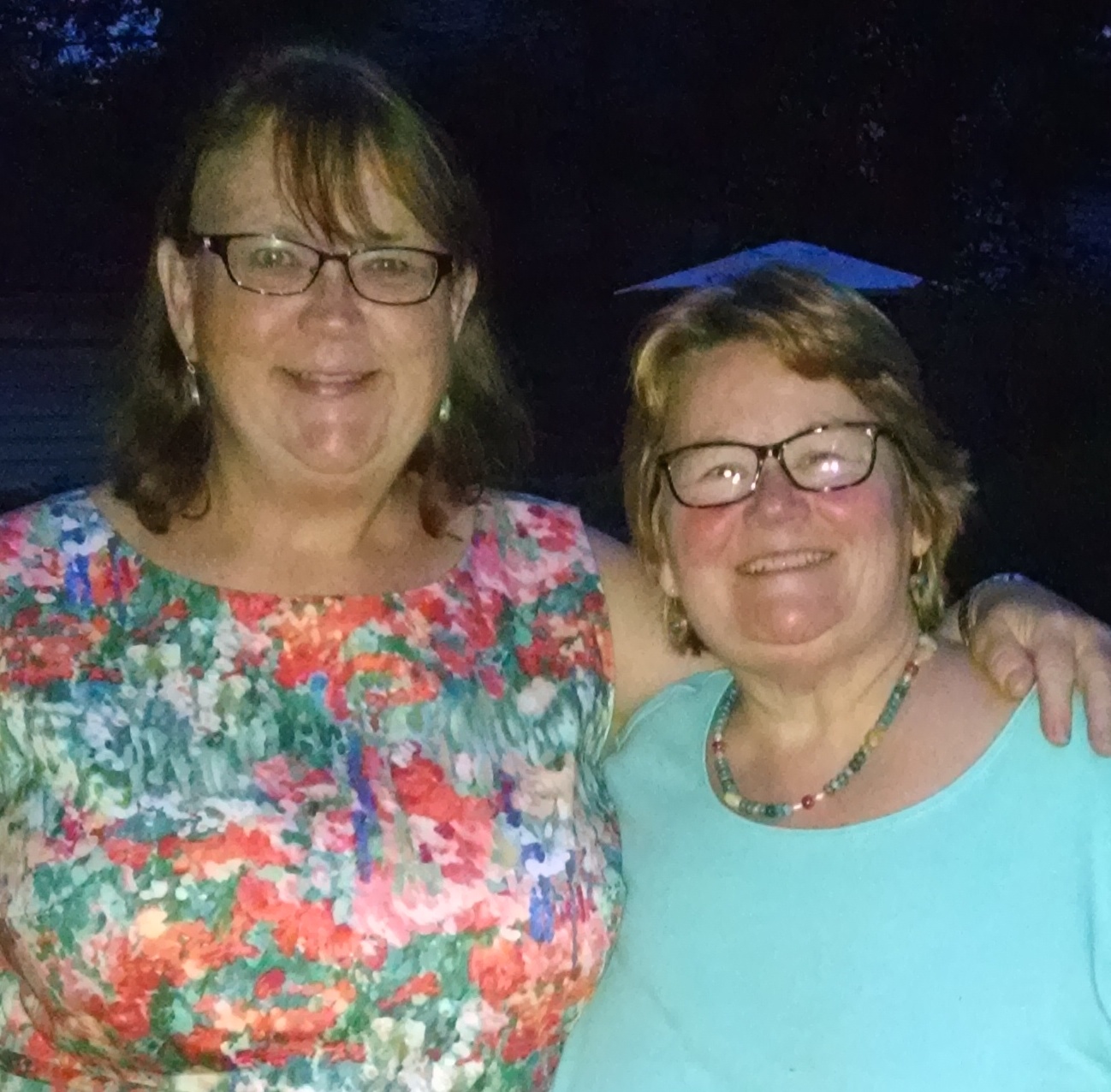
But I did like the meal I had with Susan and Kay at Crav on Hertle. I had Handkerchief Pasta. I was intrigued by the name.
Me and SusanSusan and Kay
Unfortunately, my flash didn’t go off.
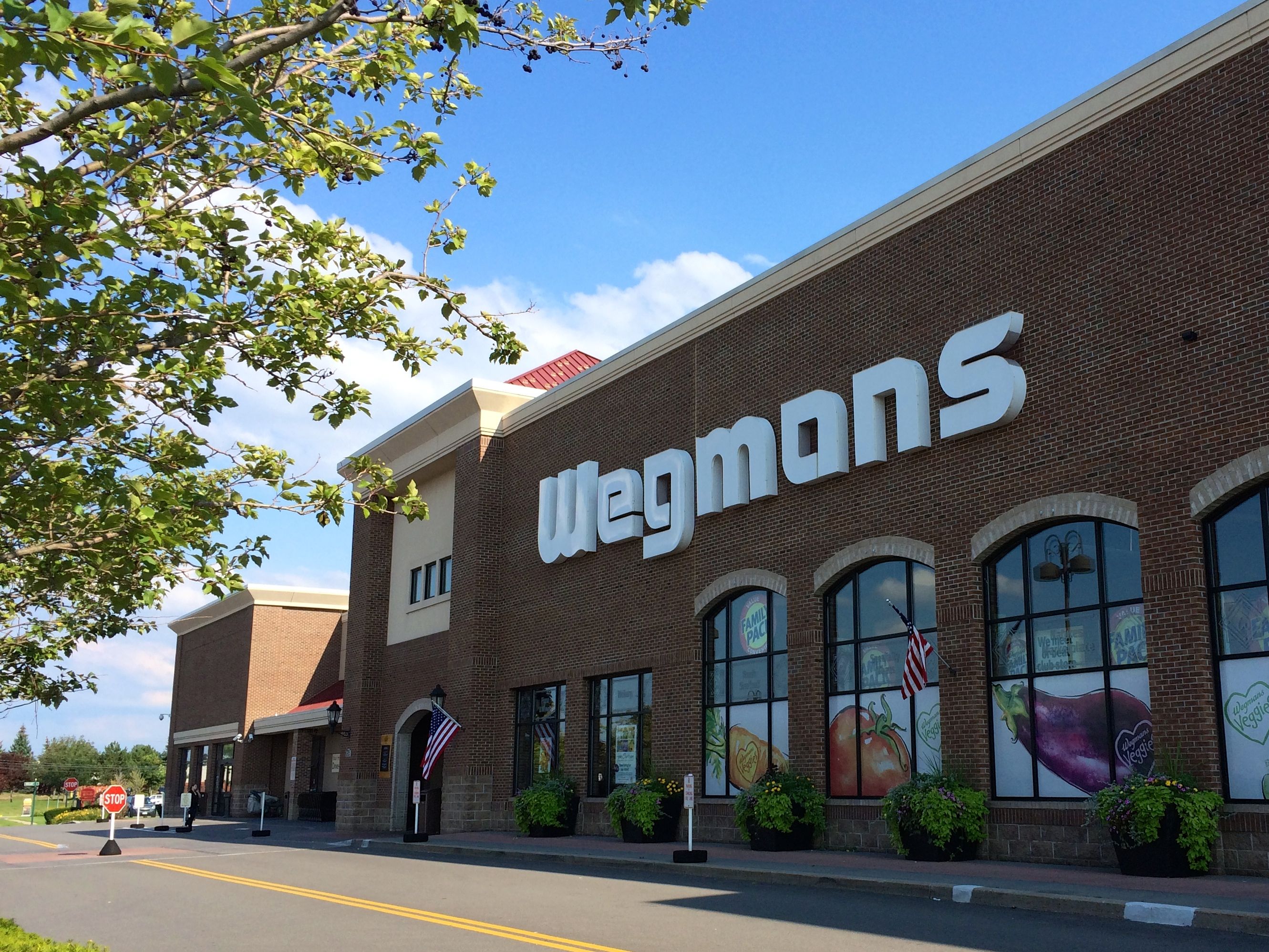
Wegmans!
And, if you can’t find a restaurant you like, you can always buy great food at Wegmans and cook it yourself. (I’ve been told that some people docook.)
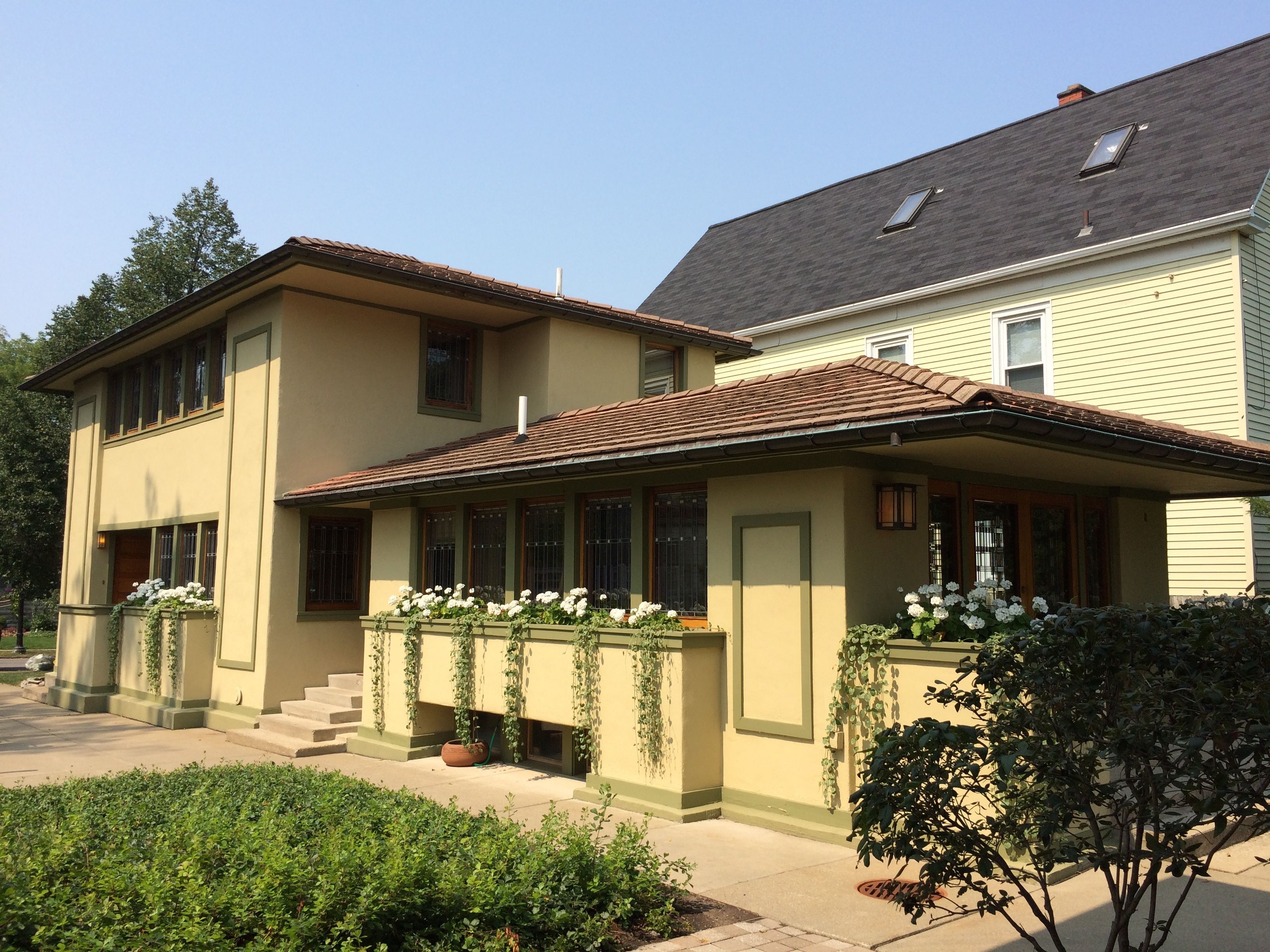
When I am in Buffalo, I always have to at least go by the Darwin Martin House. It is one of Frank Lloyd Wright’s masterpieces finished in 1905
They have done an absolutely fantastic job of renovating it. In fact, they tore down buildings and recreated parts of the estate that had been demolished to make way for apartment buildings. It’s difficult to tell the old sections from the new.
Gardener’s Cottage at the Martin Complex
Living in a house like that would make being someone’s gardener a pleasure!
My first visit to the house was back in the 70’s, before it was renovated. In fact, it was in desperate condition. I take special joy in going by and seeing how beautiful it looks.
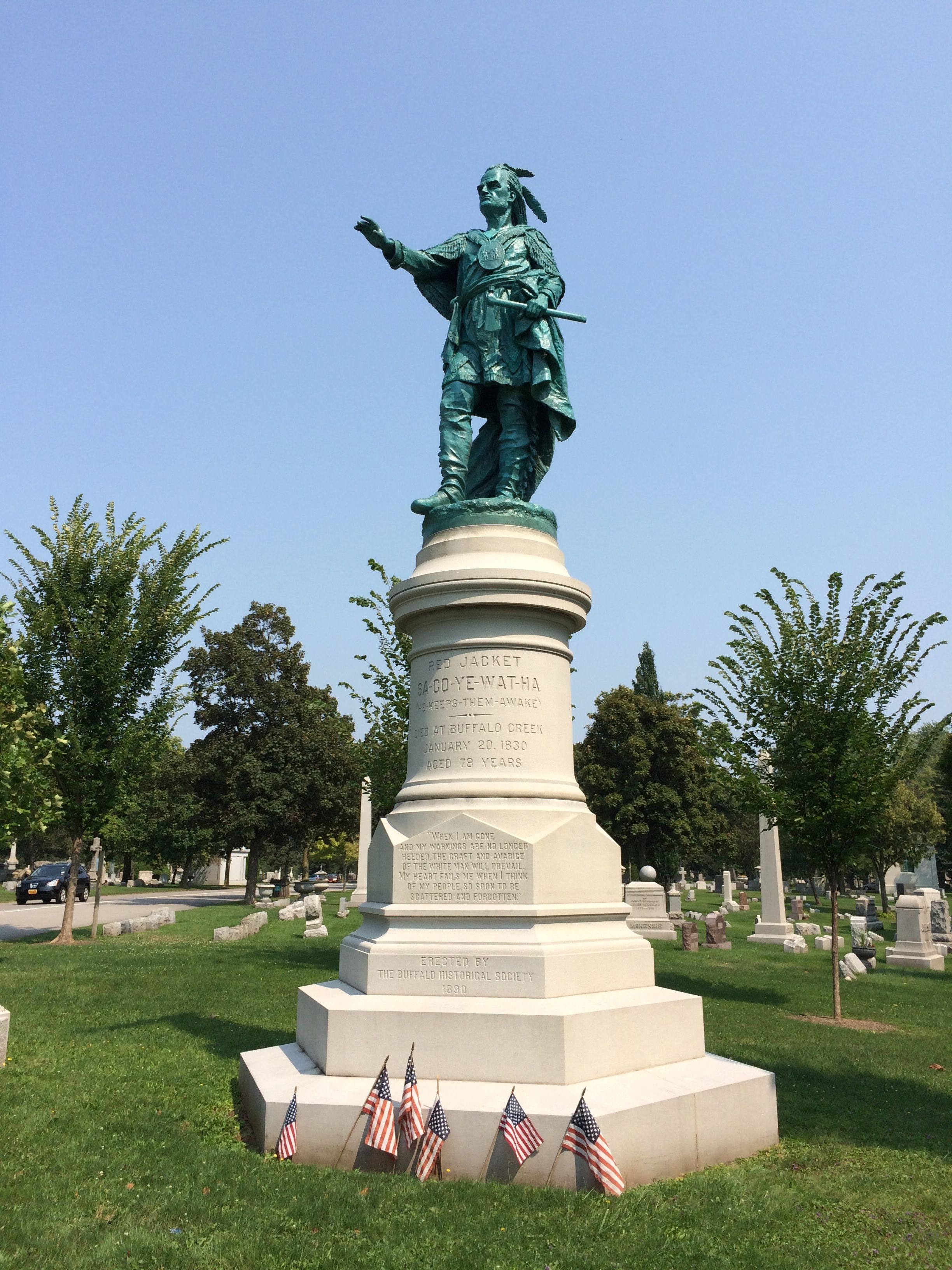
Since I was in the neighborhood, I decided to take a trip through Forest Lawn Cemetery. The first statue that greets you as you enter is Red Jacket.
Red jacket Monument
I have been doing a bit of reading to try refresh my memory regarding Red Jacket. What I am sure of is that he was a powerful Seneca orator and negotiated on behalf of the Wolf Clan with the new United States. He died in 1830 and was buried near a church in South Buffalo. His remains and those of some of his compatriots were reinterred here and this monument was erected in 1890.
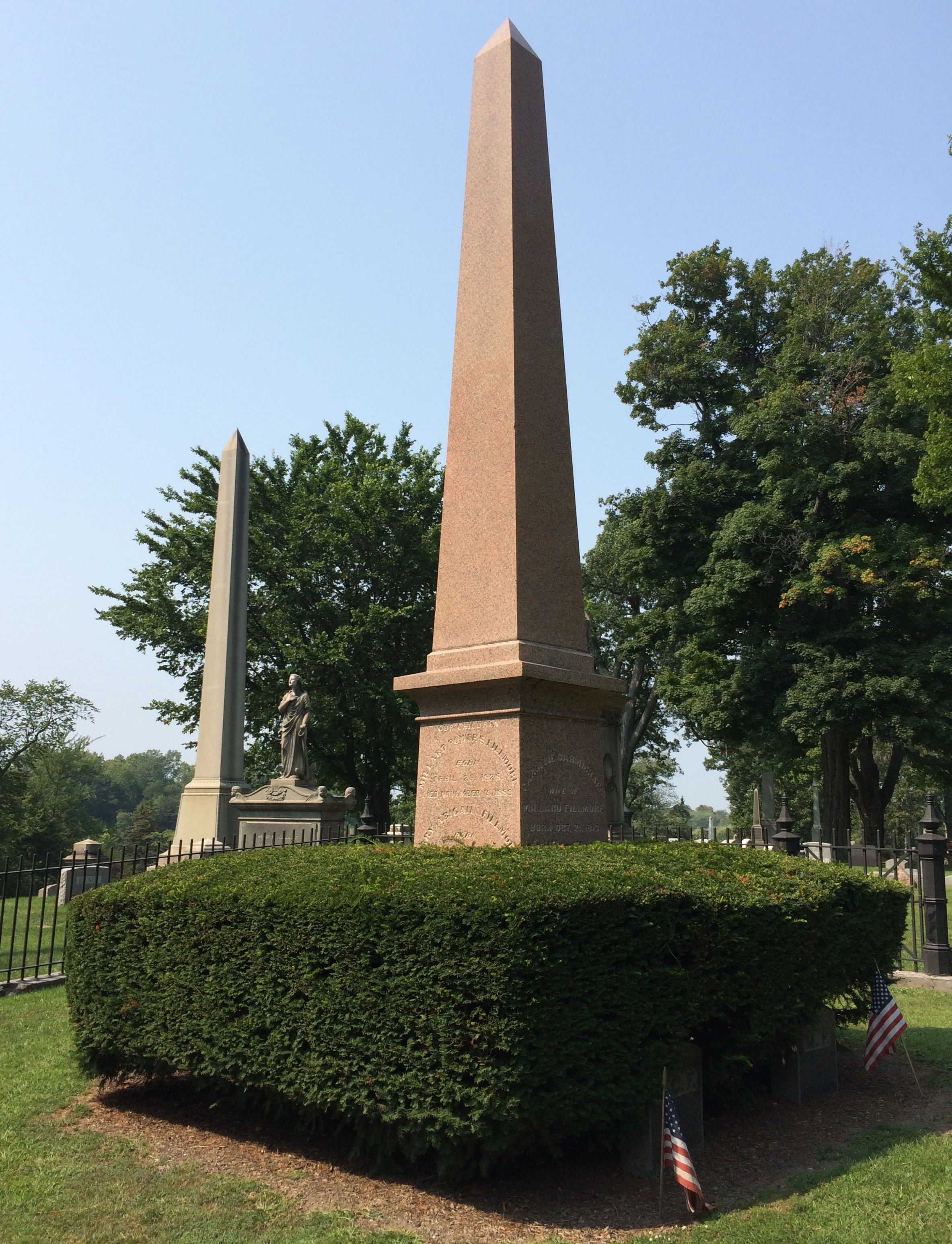
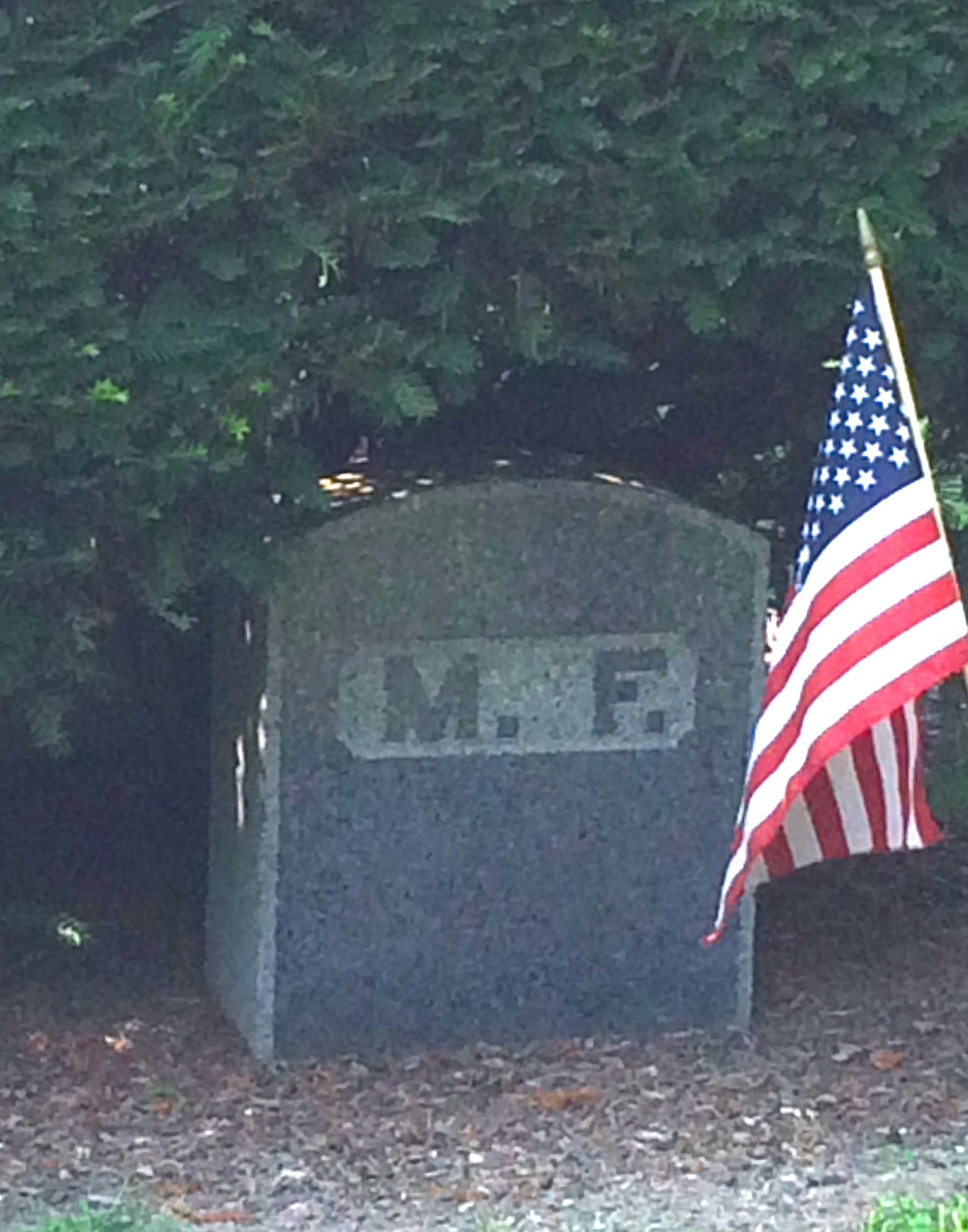
Millard Fillmore MomumentMillard Fillmore’s grave
More Millard than you can shake a stick at! I did a bit of research on him, and I think this understated marker is completely as he would have had it.
Nerd Alert! Skip down to the next photo if you don’t want to read about our 13th president.
In an earlier post I mentioned that he had been apprenticed to a cloth maker. He managed to buy out out his apprenticeship and got some schooling. He married his teacher, read the law and established himself as a lawyer in East Aurora. He was self-taught, in large degree. He served three terms in Congress and had hoped to run as Vice President with Henry Clay. Thurlow Weed, head of the NYS Whig party “convinced” him to run for governor, but he lost.
At the Whig convention in 1848, General Taylor, an under-educated slave owner from Louisiana, was their choice for President on the ticket. To appease the faction in the party that disapproved of Taylor, Fillmore, a man opposed to slavery but promoting compromise as the solution, was included on the ticket.
He was elected as Taylor’s Vice President, but they got on so poorly that he was all but excluded from participating in government. Taylor came down with cholera that he caught at a Fourth of July celebration in 1850 and died shortly after that. Fillmore became president. He supported the Compromise of 1850, which was an attempt to resolve the issue of slavery. It didn’t succeed. He didn’t run for a term after completing Taylor’s term. It sounds like he was just disillusioned with politics.
His wife died shortly after he left Washington. He took an extended tour of Europe, and when Oxford heard he was in the neighborhood, they wanted to award him an honorary degree. He declined the offer, saying that he was uneducated and that since the degree would be written in Latin, he wouldn’t be able to read it.
Which brings me back to his grave marker. It is in keeping with his humble nature.
If you want to know more about Millard, I suggest you check out the information about him at The Miller Center.
*Whew!* Back to our normally scheduled content.
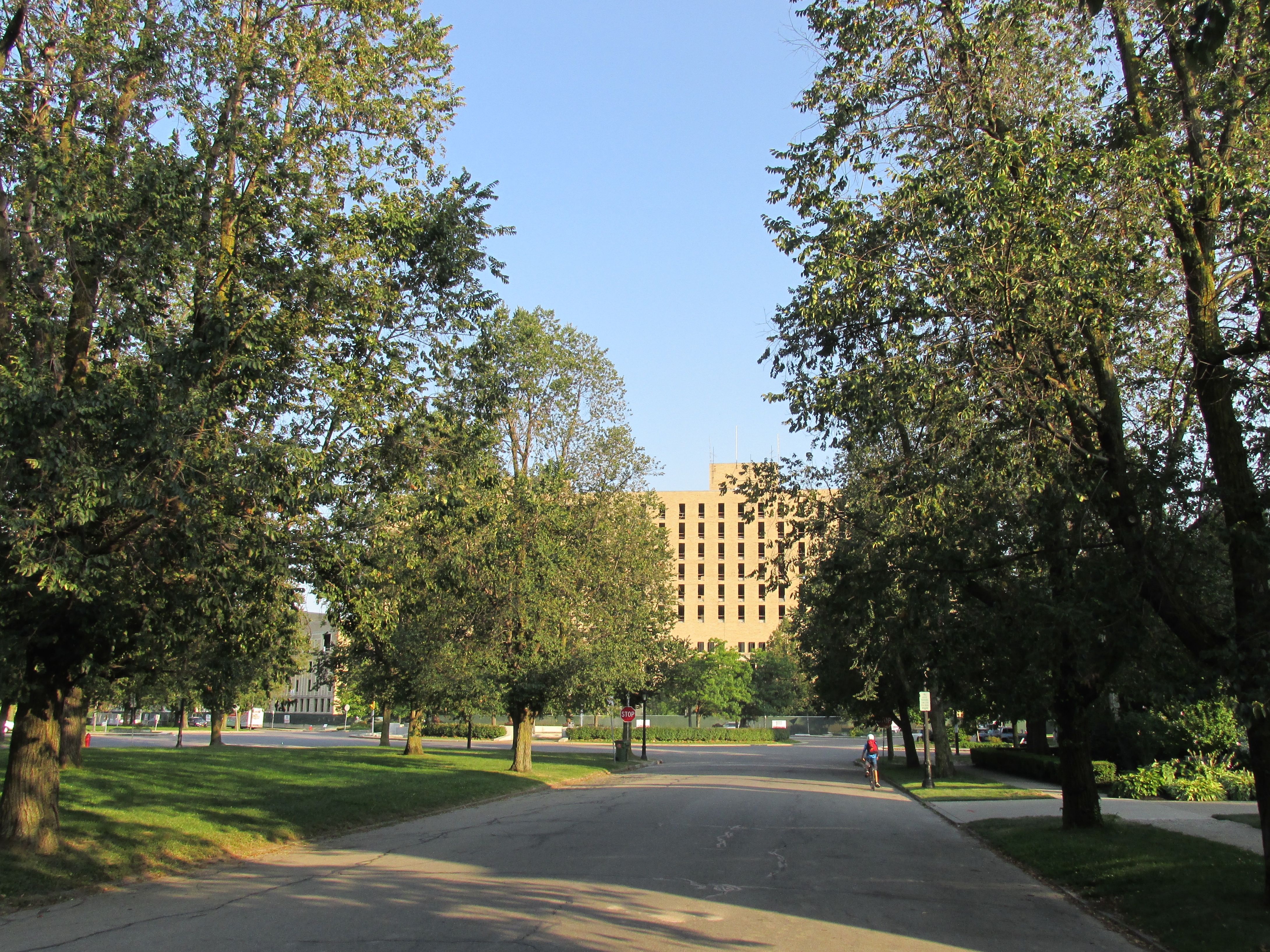
Chapin Parkway looking toward Gates Circle
Frederick Law Olmstead laid out Buffalo’s beautiful system of parks and parkways. The parkways were lined with towering elms. Due to the Dutch Elm Disease of the 1960s and 1970s, the parkways were left bare. I was thrilled to see how the replacements have grown and filled the spaces left behind by the elms.
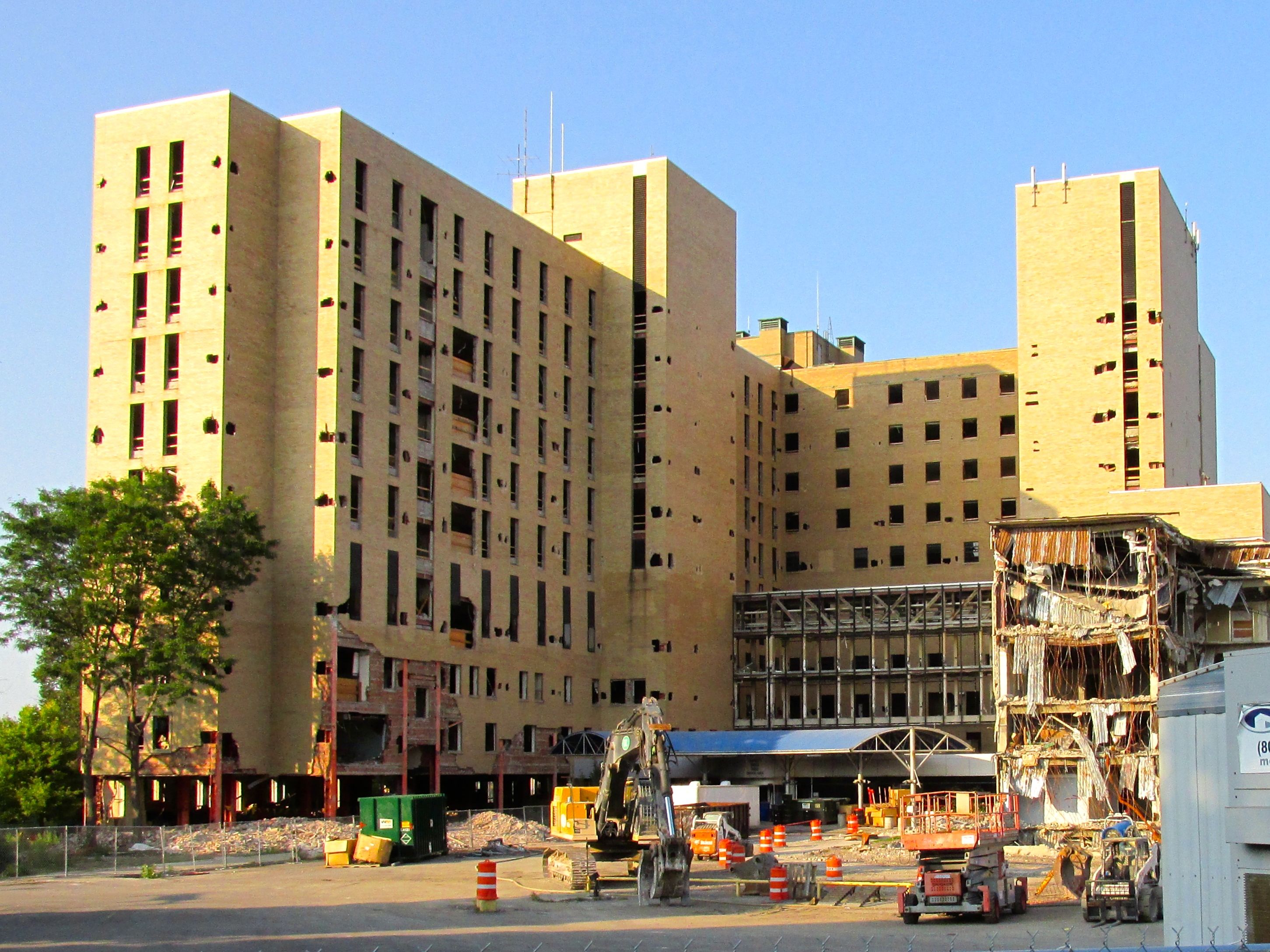
Oh, and see that building at the end of the street? That was Millard Fillmore Hospital.
Coming down!
I hear that this plot of land is going to be redeveloped as a multi-use building – apartments, condos and retail. It’ll be interesting to see what is in its place next time I am in town.
It was a great treat to be able to spend time with family and friends. I got to help out Amy and Steve with driving Katie to practice. Her team won!
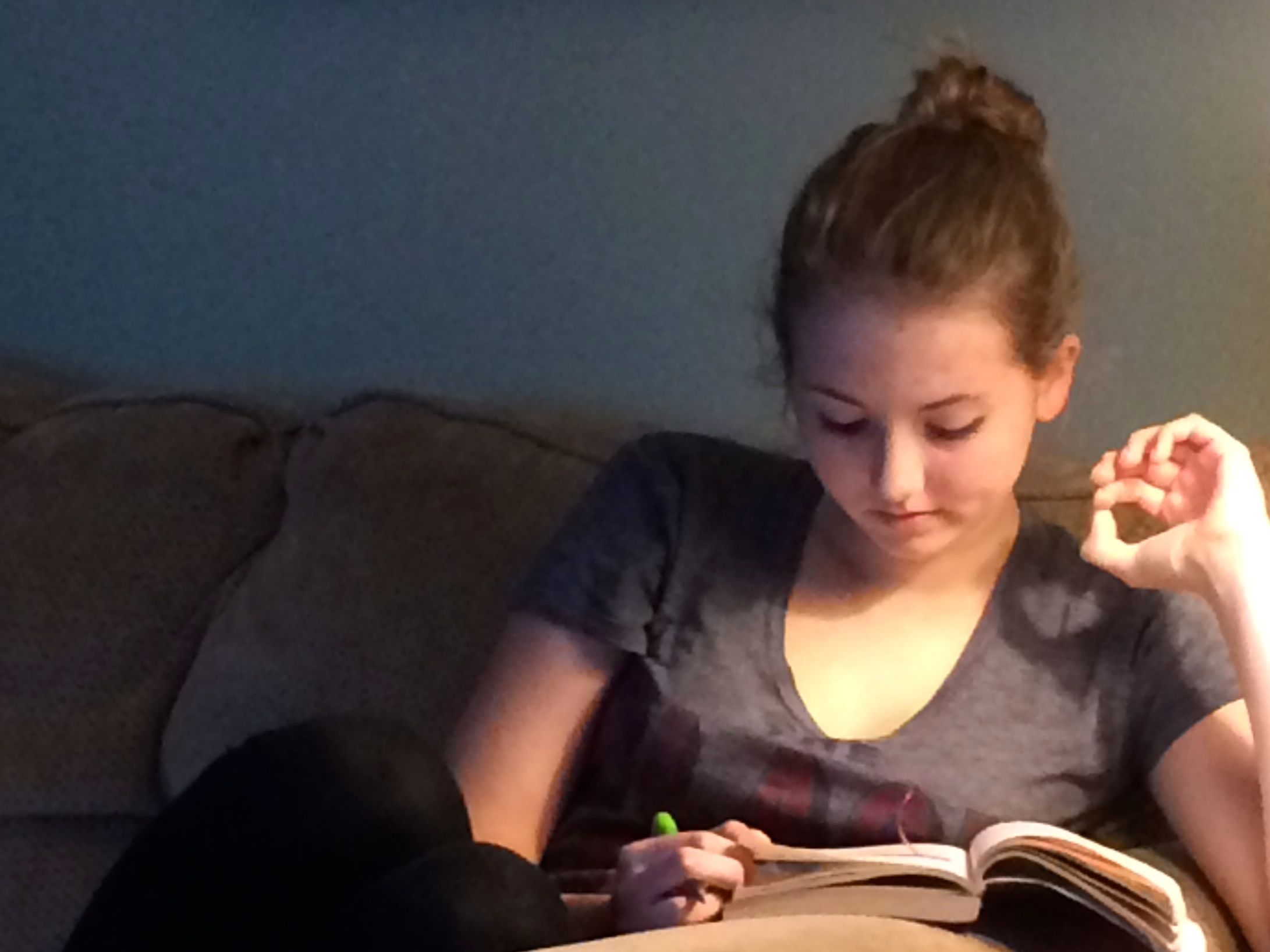
Katie after the field hockey gameSarah working on her AP coursework
Two lovely young ladies!
And, with that, I hitched up and headed out of town.
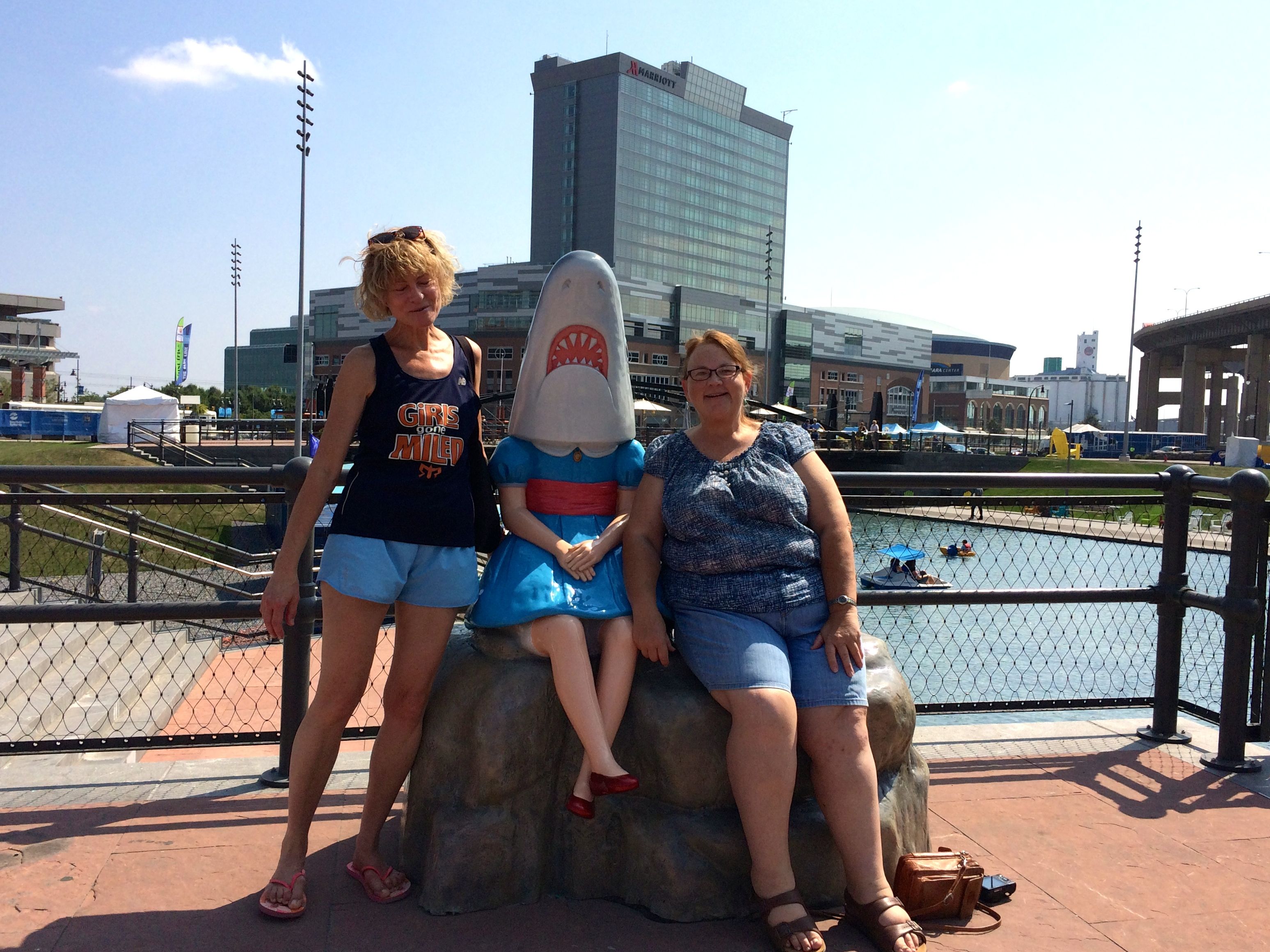
I wasn’t alone or lonely, but I do like going downtown. And, this trip had a special purpose. I was going to meet up with a college chum and we were going to see SHARK GIRL!
Why a girl with a shark head? Why not?!
It was as good a place as any to meet up with Sue. I’m sure I hadn’t seen her in at least 30 years – probably more. I saw on Facebook that she was in Buffalo staying at a hotel nearby, so we met up there. I needn’t have worried that I wouldn’t recognize her. She’s barely changed at all!
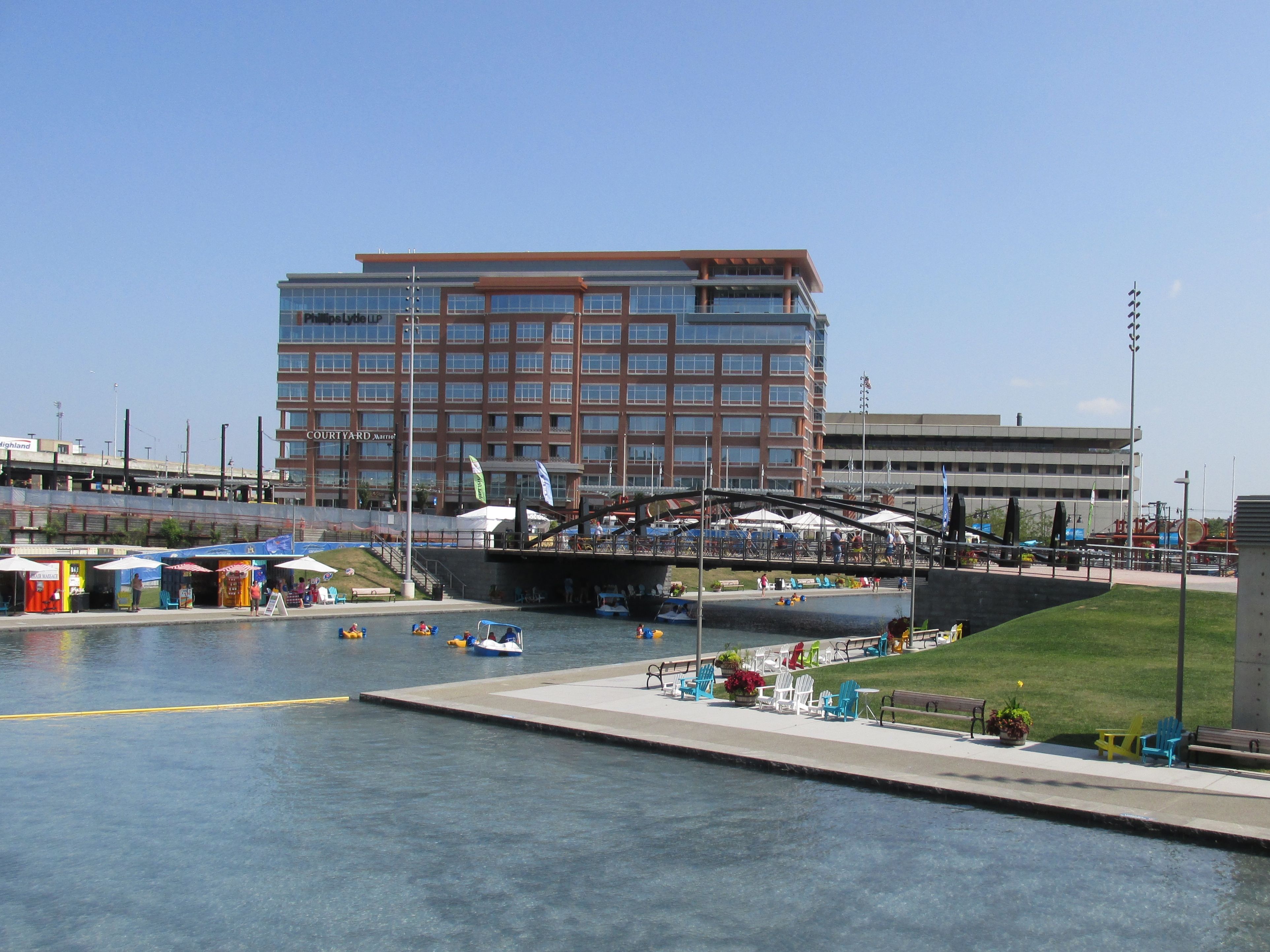
We caught up on where life had taken us – well, at least some of the high points. While we chatted, we strolled about Canalside, Buffalo’s latest amazing development. They have taken an area that was rather utilitarian – or maybe post-utilitarian – and turned it into a place people want to be.
Paddle boats in the canal
This part of the city is the very end of the Erie Canal. A couple of years ago, my friend Kathy, who you may remember from earlier posts, took me over to a part of this development that is the official end of the canal. If I remember correctly, that is. I didn’t get that far this trip. I’ll have to make sure I check it out the next time I am in town.
The canal in this photo has paddle boats for rent, and in the winter, they have skating on it. There are all sorts of attractive seating and things to do all around it.
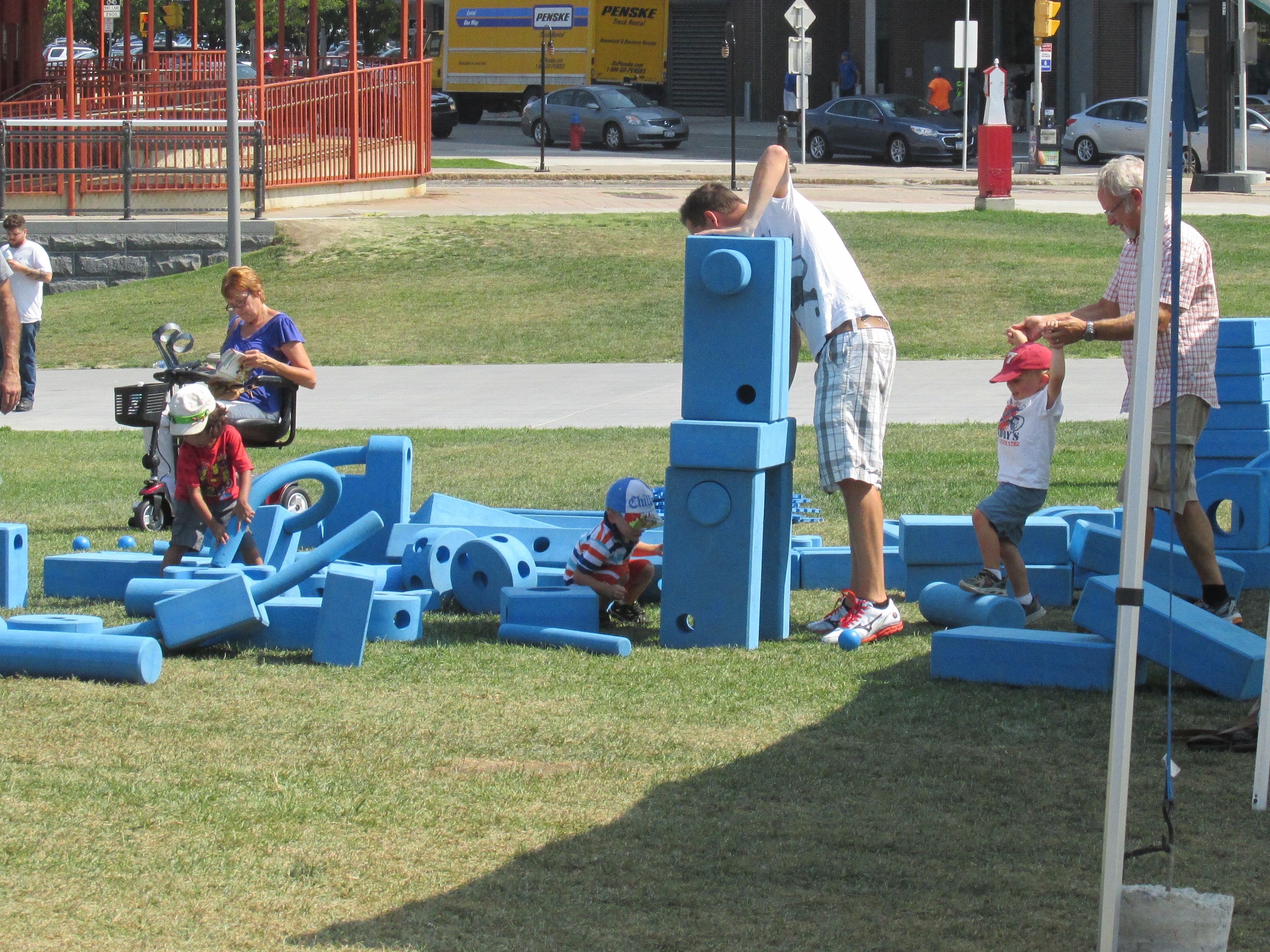
Building blocks
I am not sure who were having more fun – the adults or the kids.
Miles Gilbert “Tim” Horton
A statue commemorating Tim Horton, who played with the Buffalo Sabres from 1972 until his untimely death in 1974. Sue only knew him the name of the donut and coffee shop, which he had founded in 1964 in Hamilton, Ontario, Canada. The first US shop was opened in 1985 in Amherst, NY. Now they are all over the place, although they’re not everywhere – at least not yet.
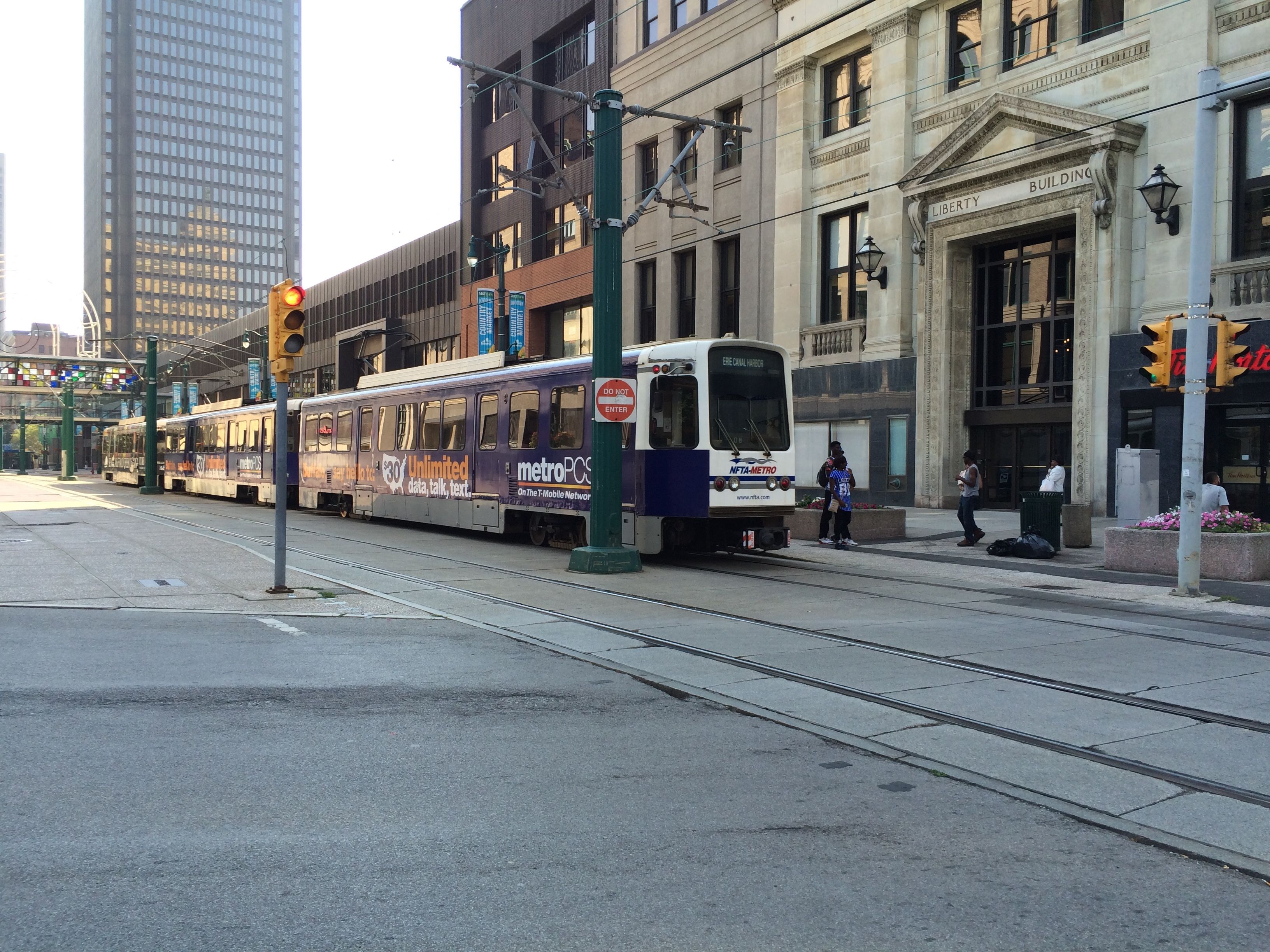
Sue and I parted ways, and I decided to take the Metro. Sue told me that the above ground portion was free. Since I had never ridden it, and it was FREE, why not?
The Metro Rail service started in 1985, after about six years of construction. It is about six and a half miles long and was originally intended to be the basis of a region-wide light rail transit system. But, funding dried up and Buffalo’s population dropped from around 550,000 in the 1950’s to around 260,000 in 2010. It will be interesting to see what the future holds in store for Buffalo. The downtown certainly has changed since I was a kid, but some things are still here that I remember.
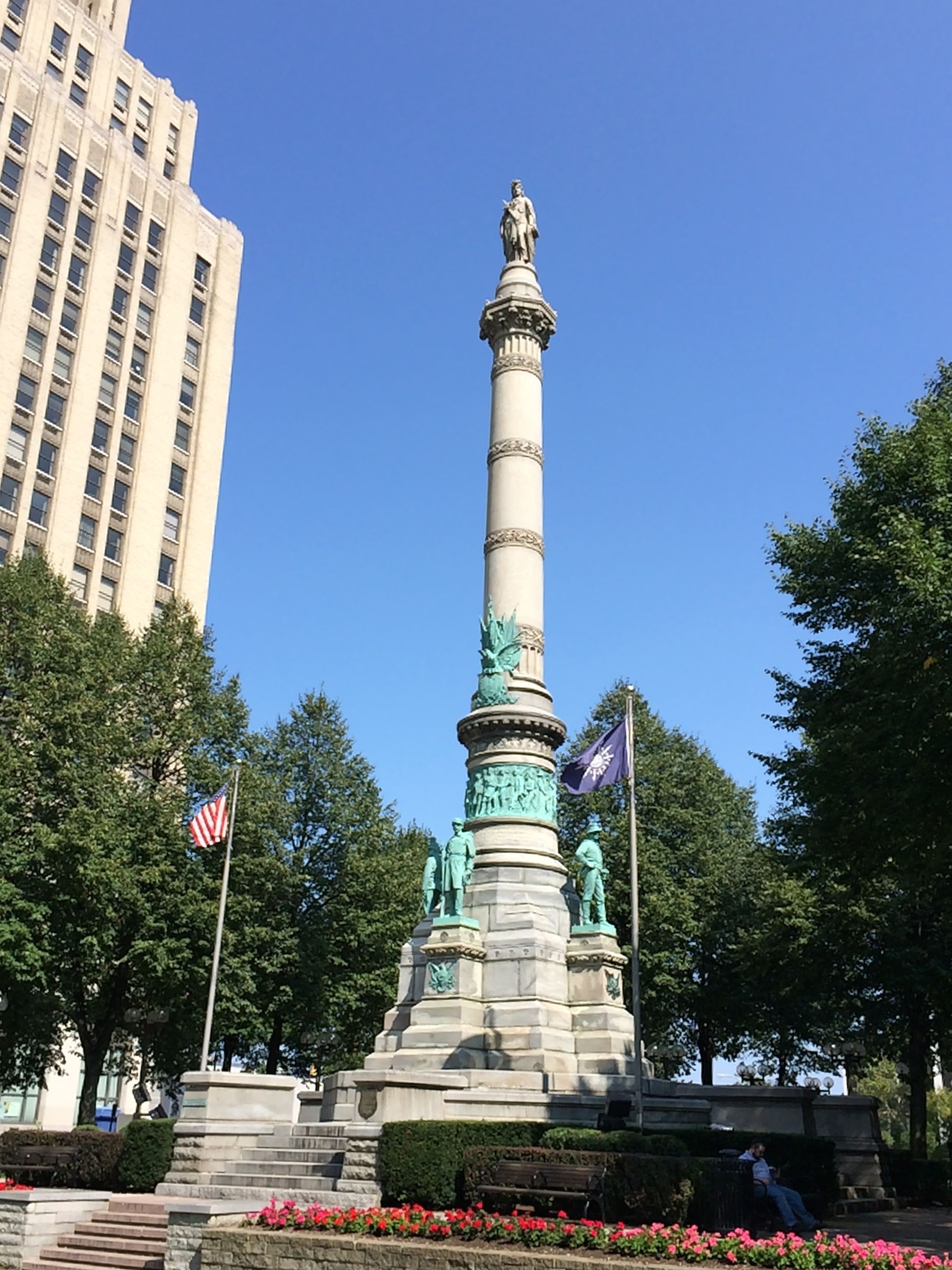
I hopped off the Metro at Lafayette Square.
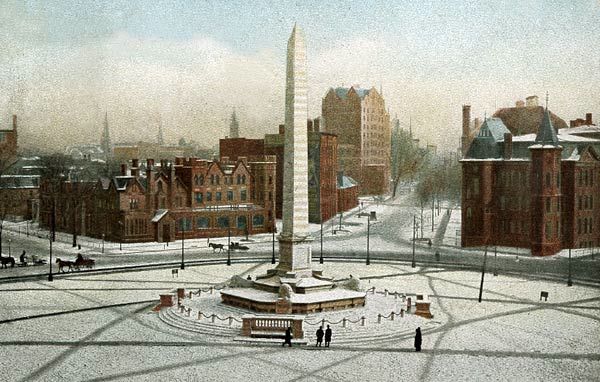
Soldier and Sailors Monument in Lafayette Square
This monument was in honor of the military who fought to preserve the Union in the Civil War. It was dedicated in 1884 by then Governor Grover Cleveland. Across the square is the Hotel Lafayette.
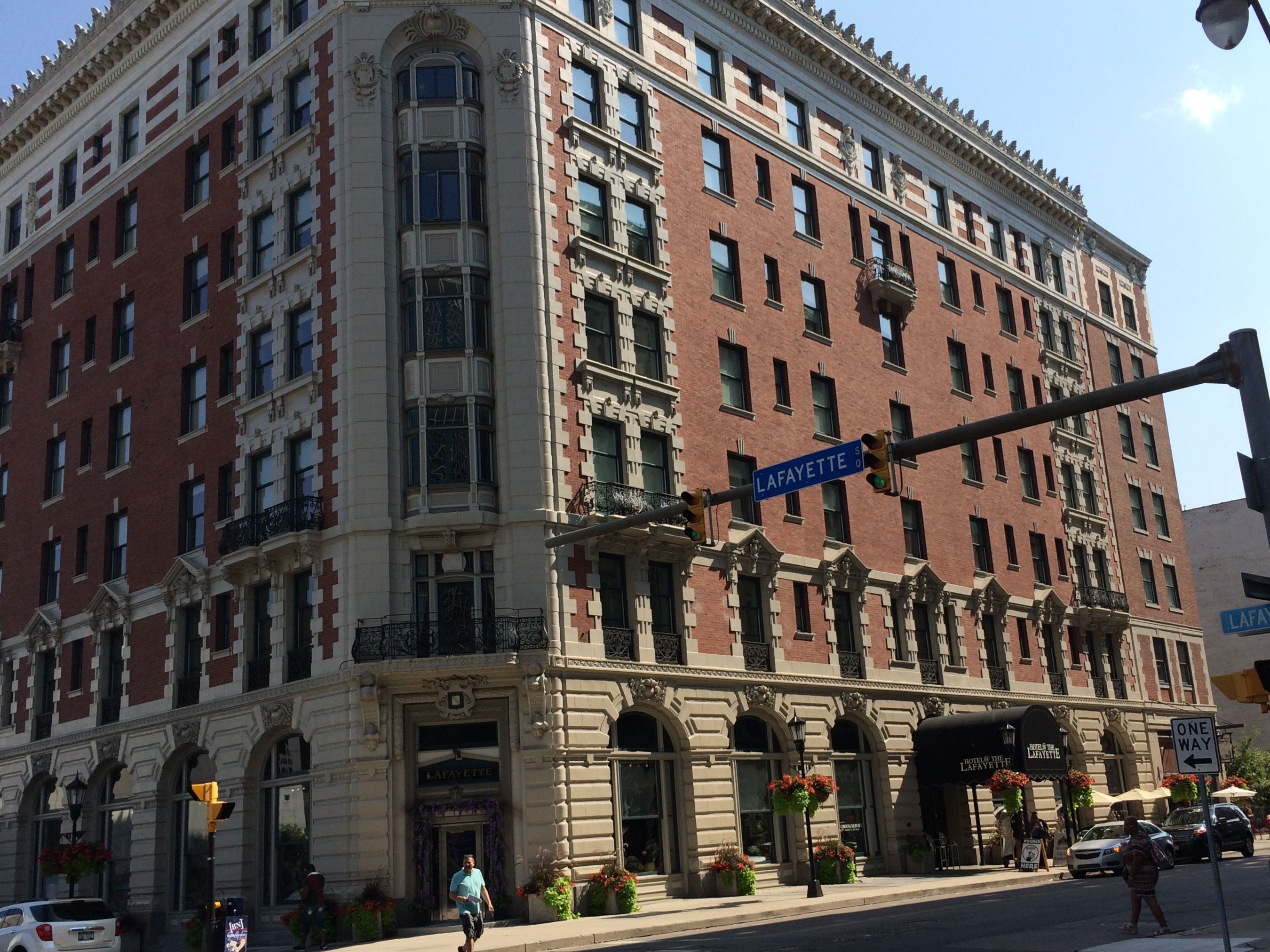
Hotel Lafayette
The 1904 building was designed by Buffalo architect Louise Bethune, the nation’s first female professional architect. It was a grand building when it opened, but suffered when the downtown went into decline. It has been gloriously restored and is absolutely lovely. I was getting hungry and decided to give one of their restaurants a visit.
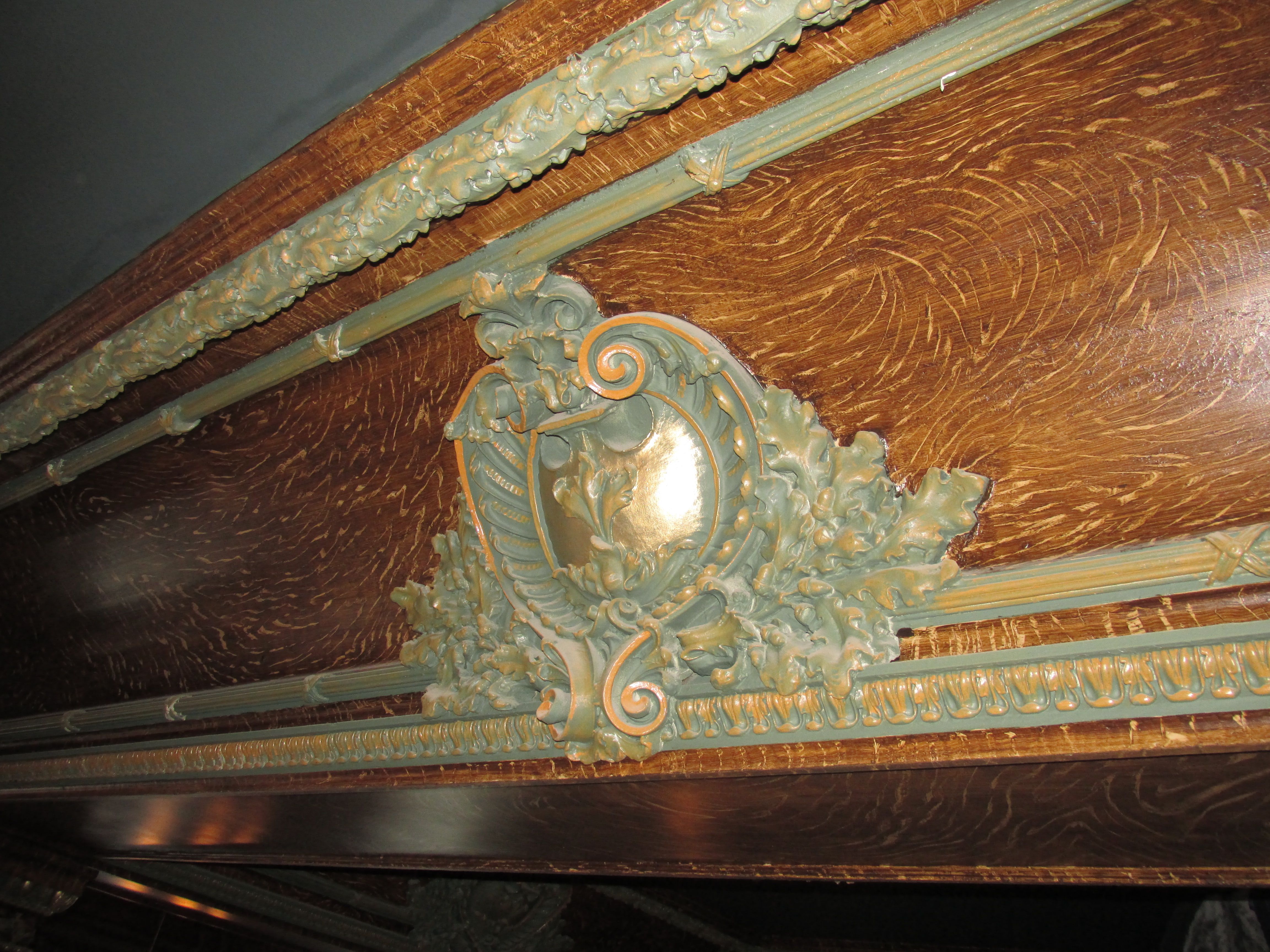
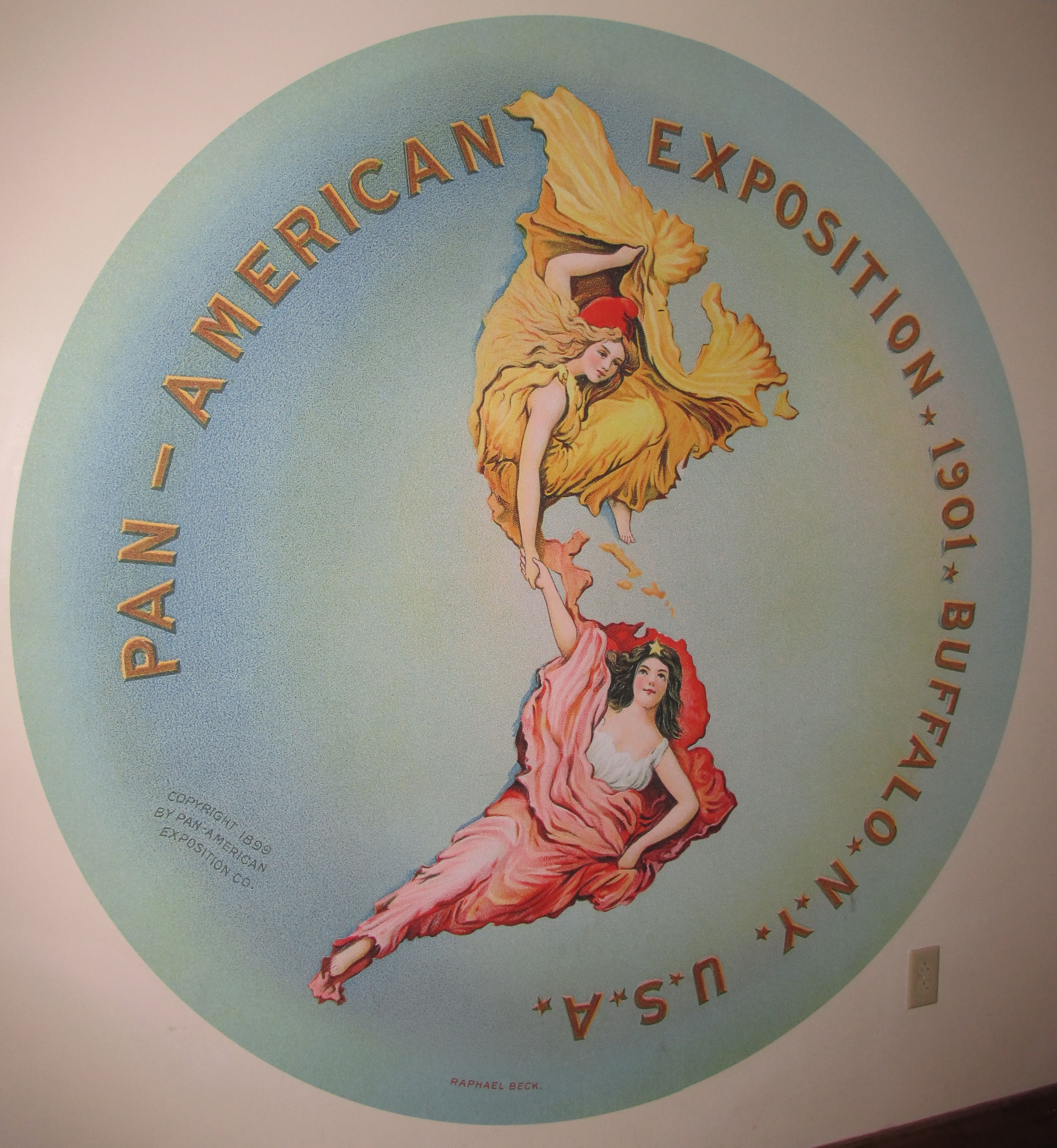
I selected the Pan American Grill and Brewery. It is decked out in the finest turn of the century decor, with heavy wood carvings and decorations from the Pan American Exposition.
Restaurant Woodwork
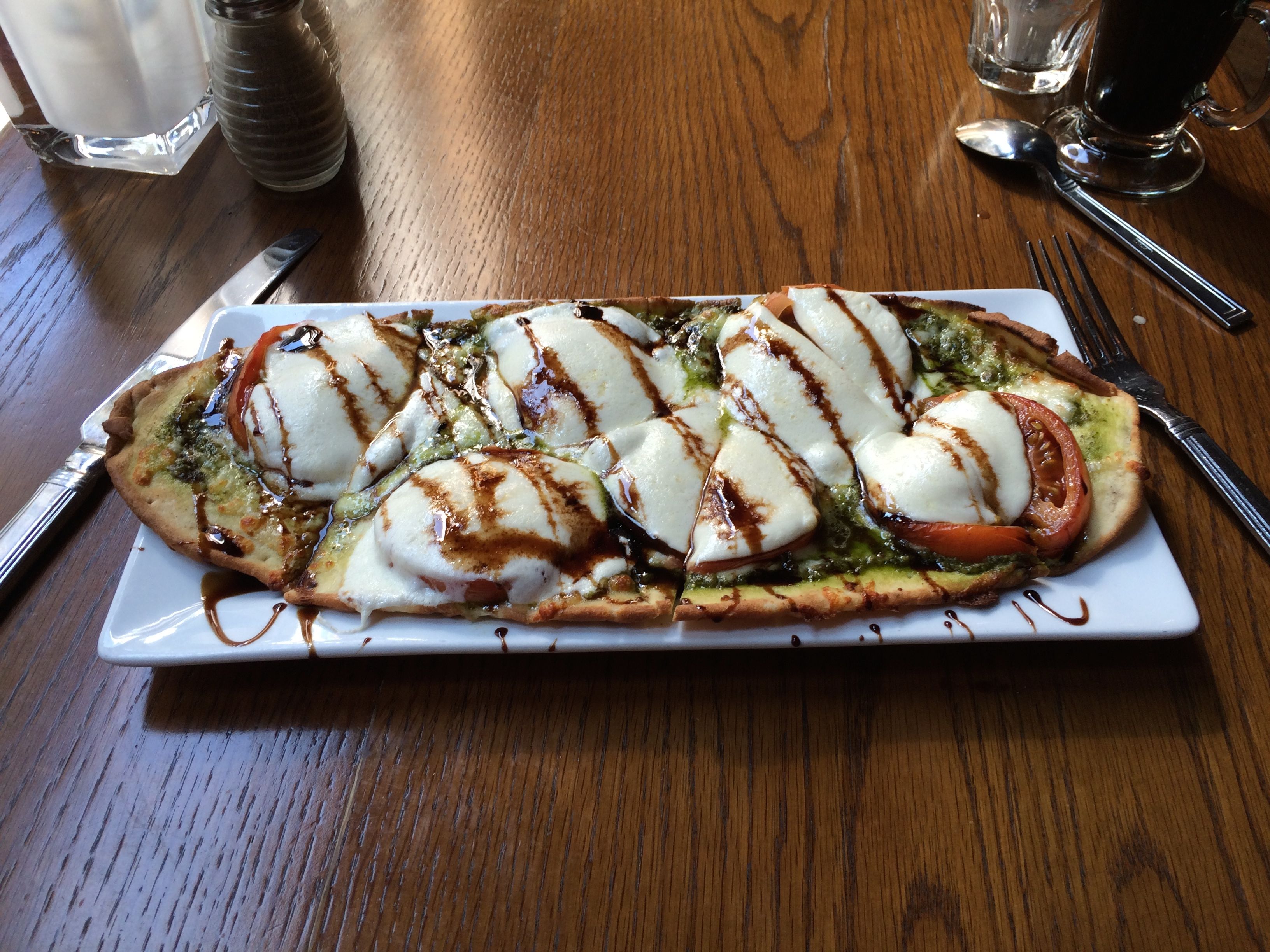
The Pan-American Exposition LogoI chose the Flatbread Caprese and a seat by the window, so that I could watch all the comings and goings.
Flatbread Caprese
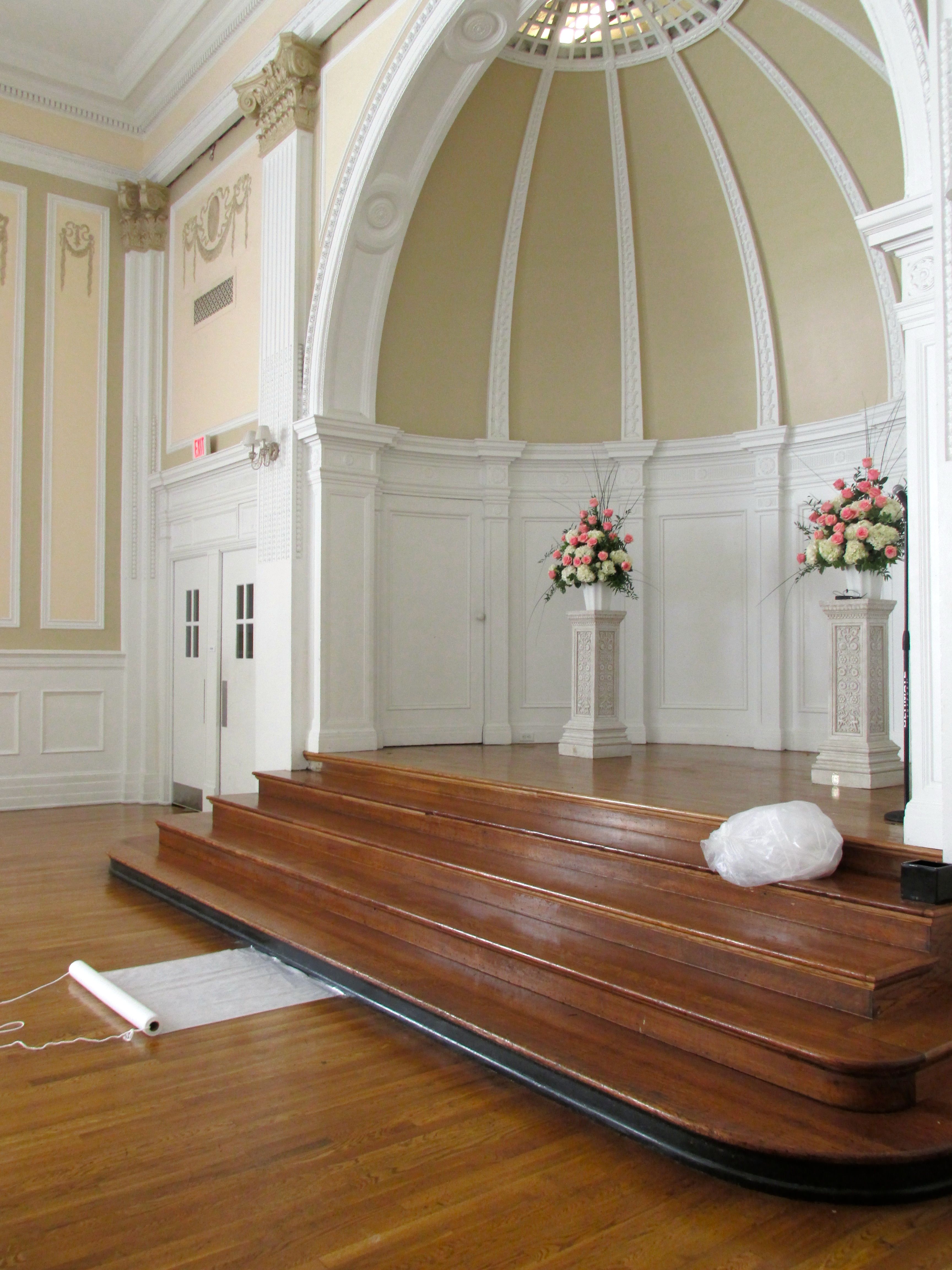
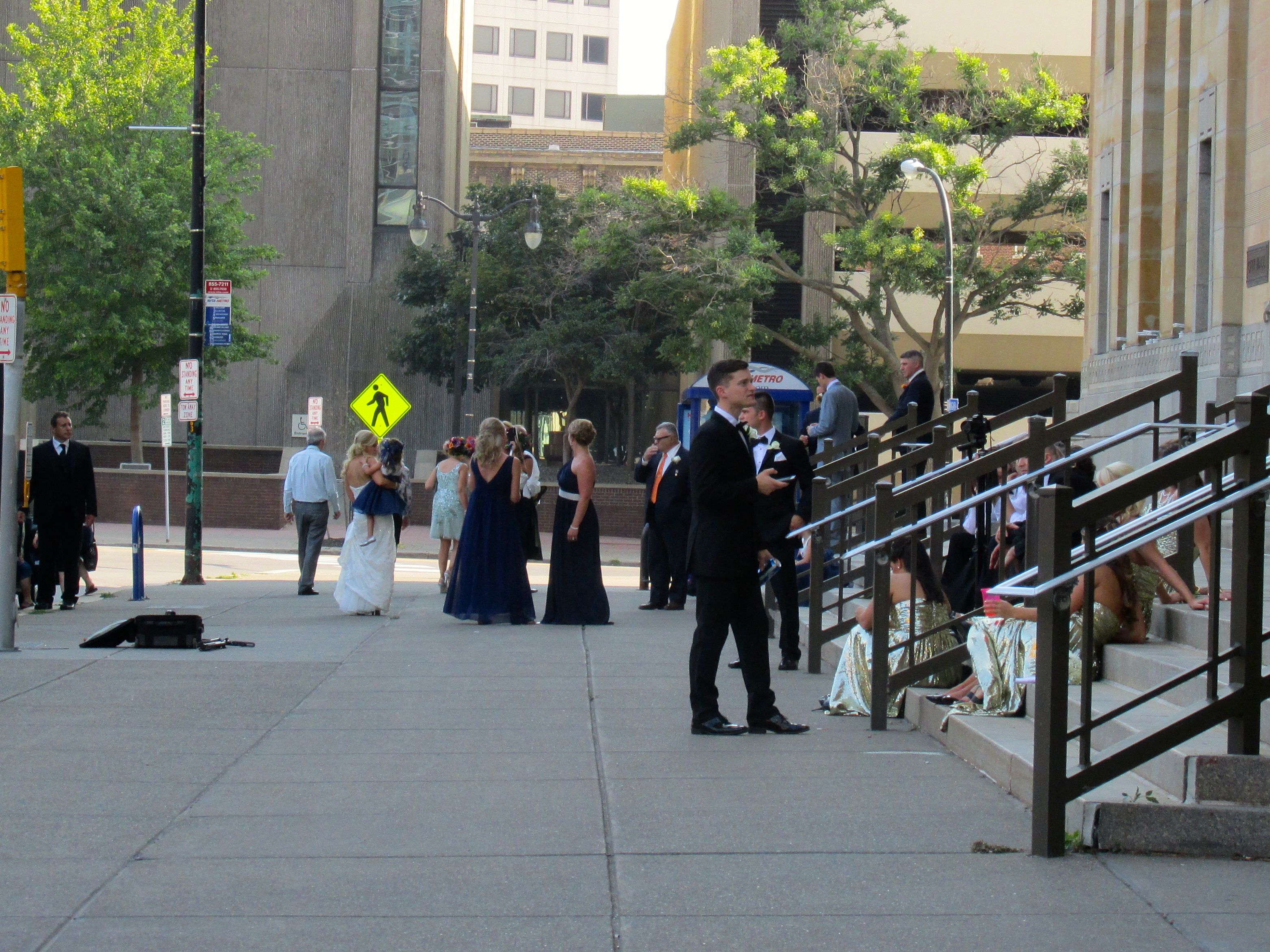
Apparently, this is quite the location for weddings. Two separate bridal entourages came and went while I was watching. They were heading out with photographers for their portraits.
Ready for a wedding
After lunch, I went back into Lafayette Square to investigate something I noticed.
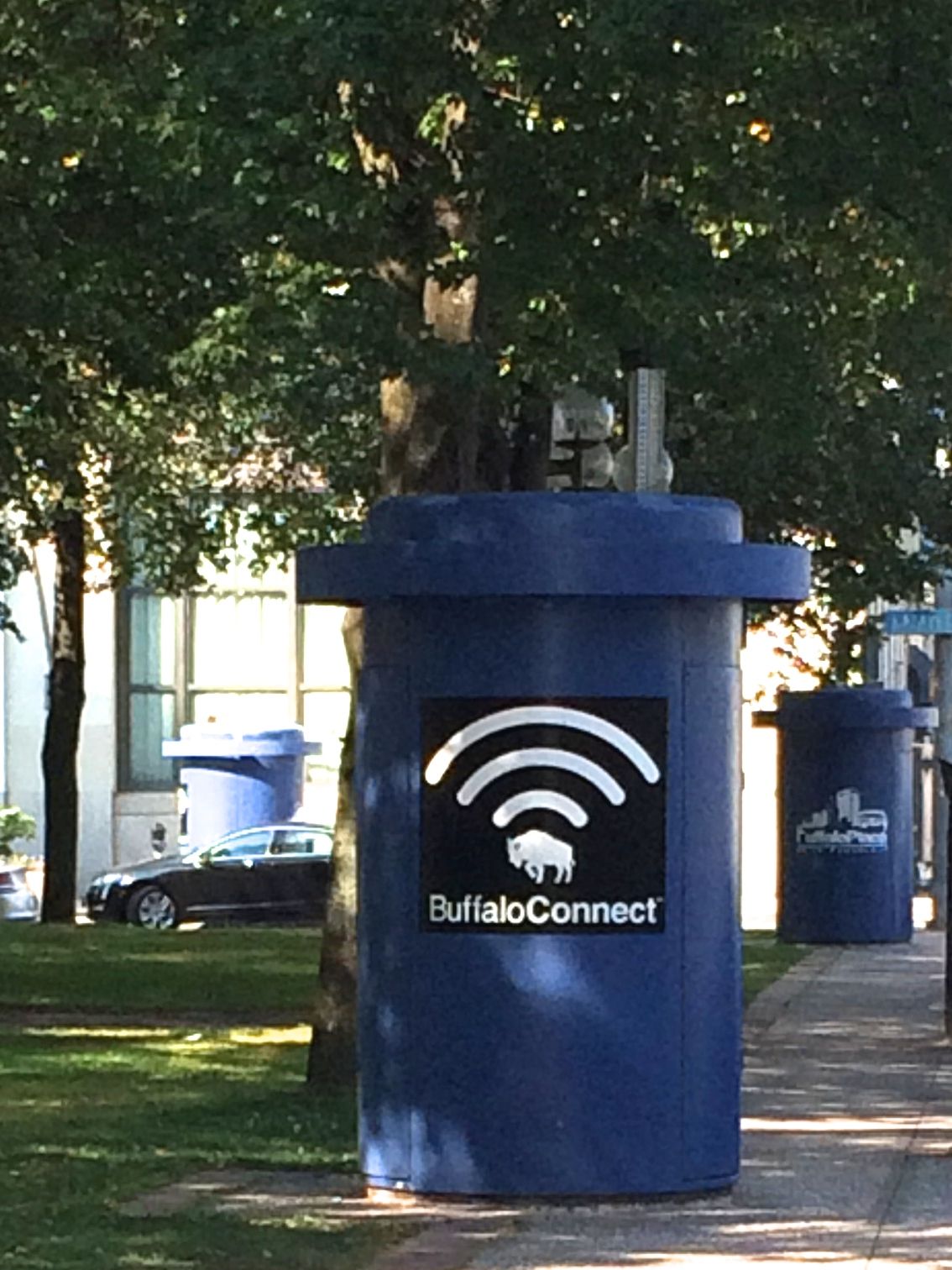
Buffalo Connect
They have free WiFi in the downtown and Canalside areas! Way to go, Buffalo!
City Hall on Niagara Square
I headed down Court Street toward City Hall on Niagara Square. Yes, that’s the McKinley Monument in front of the City Hall.
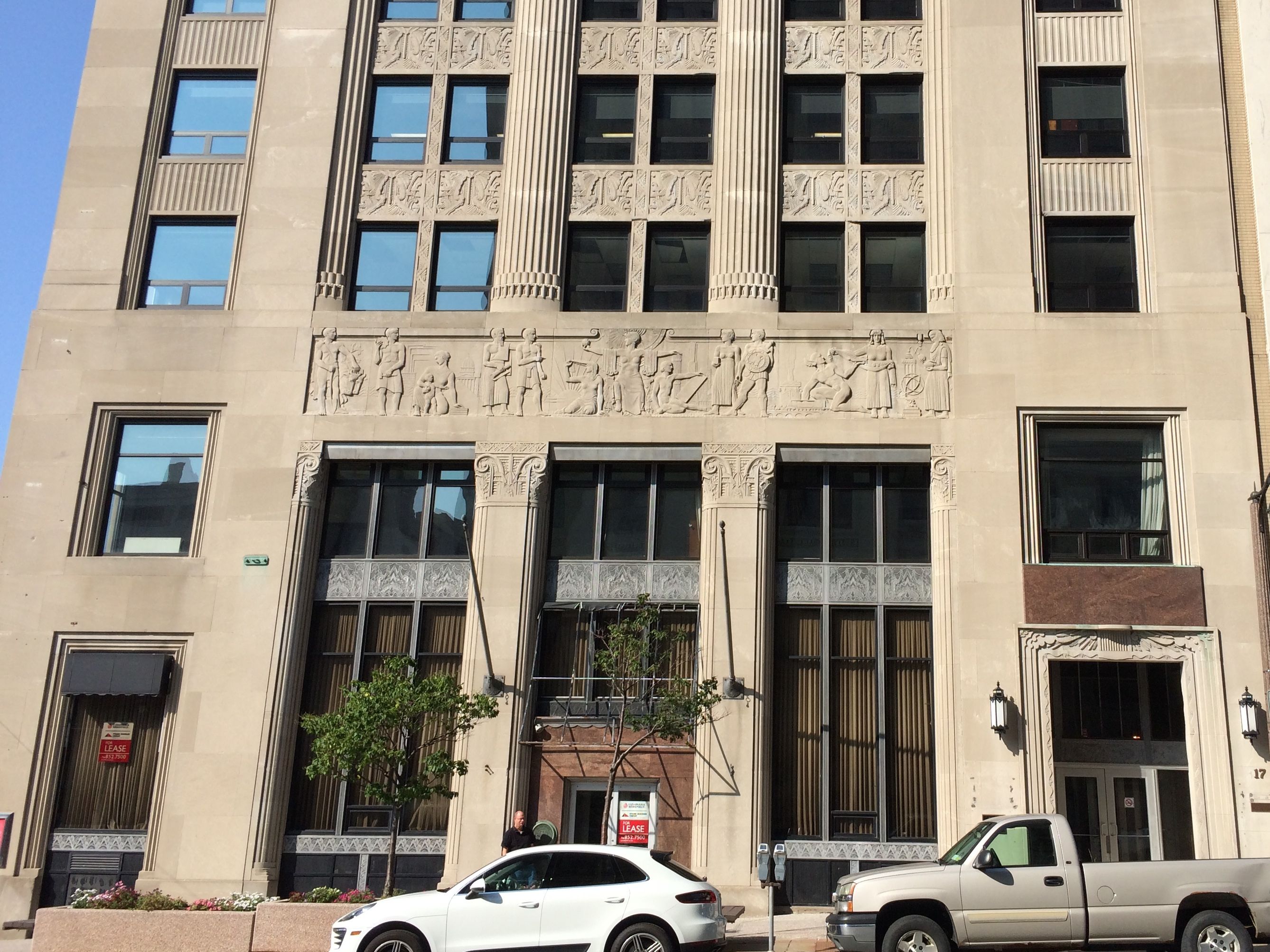
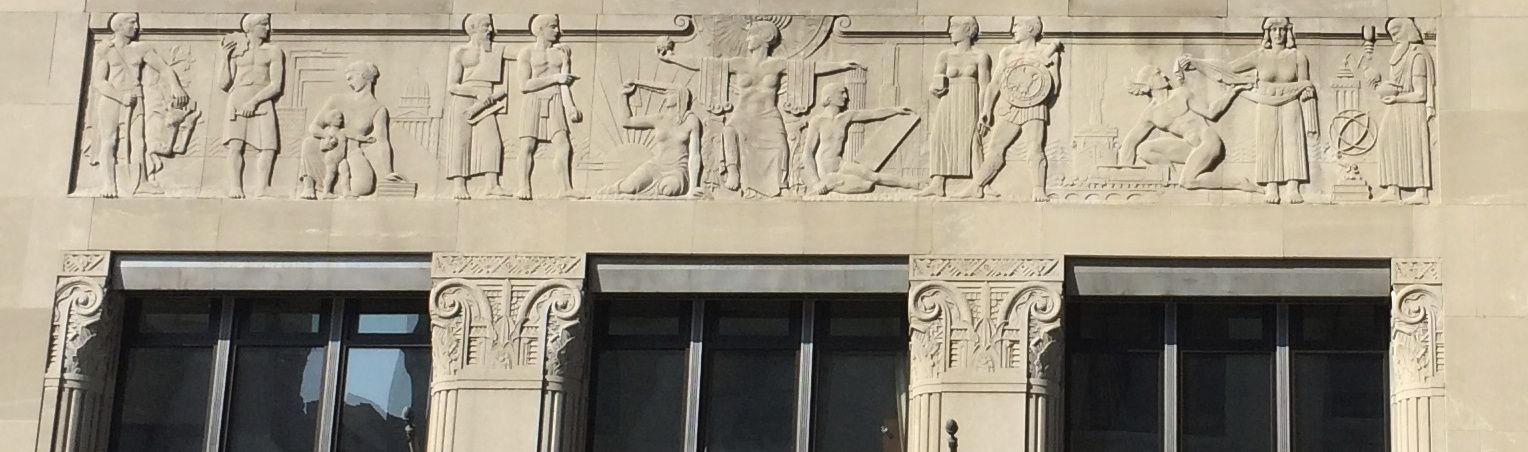
There is always something to see in Buffalo. I was fascinated by this rather Egyptian-motif building.
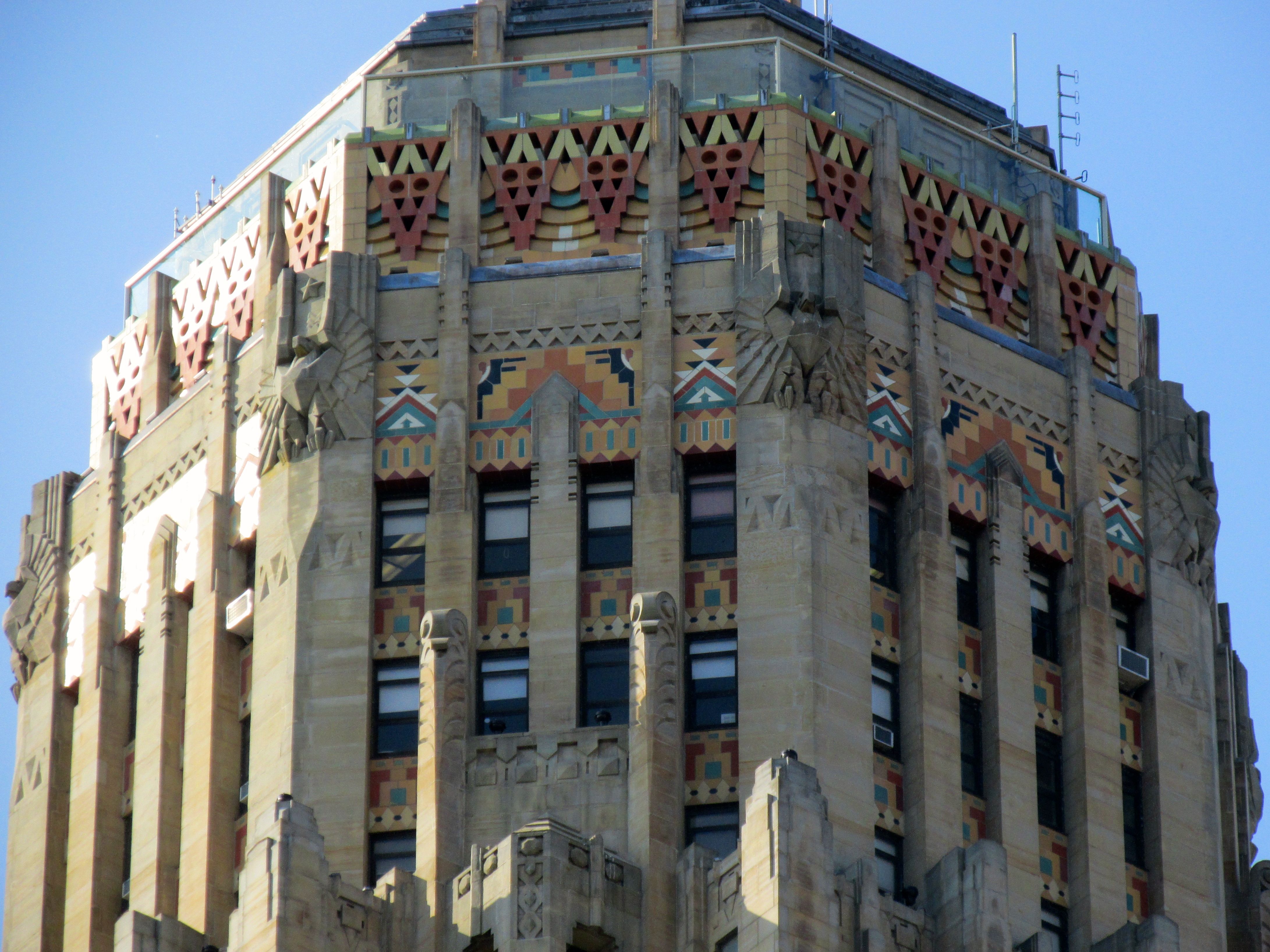
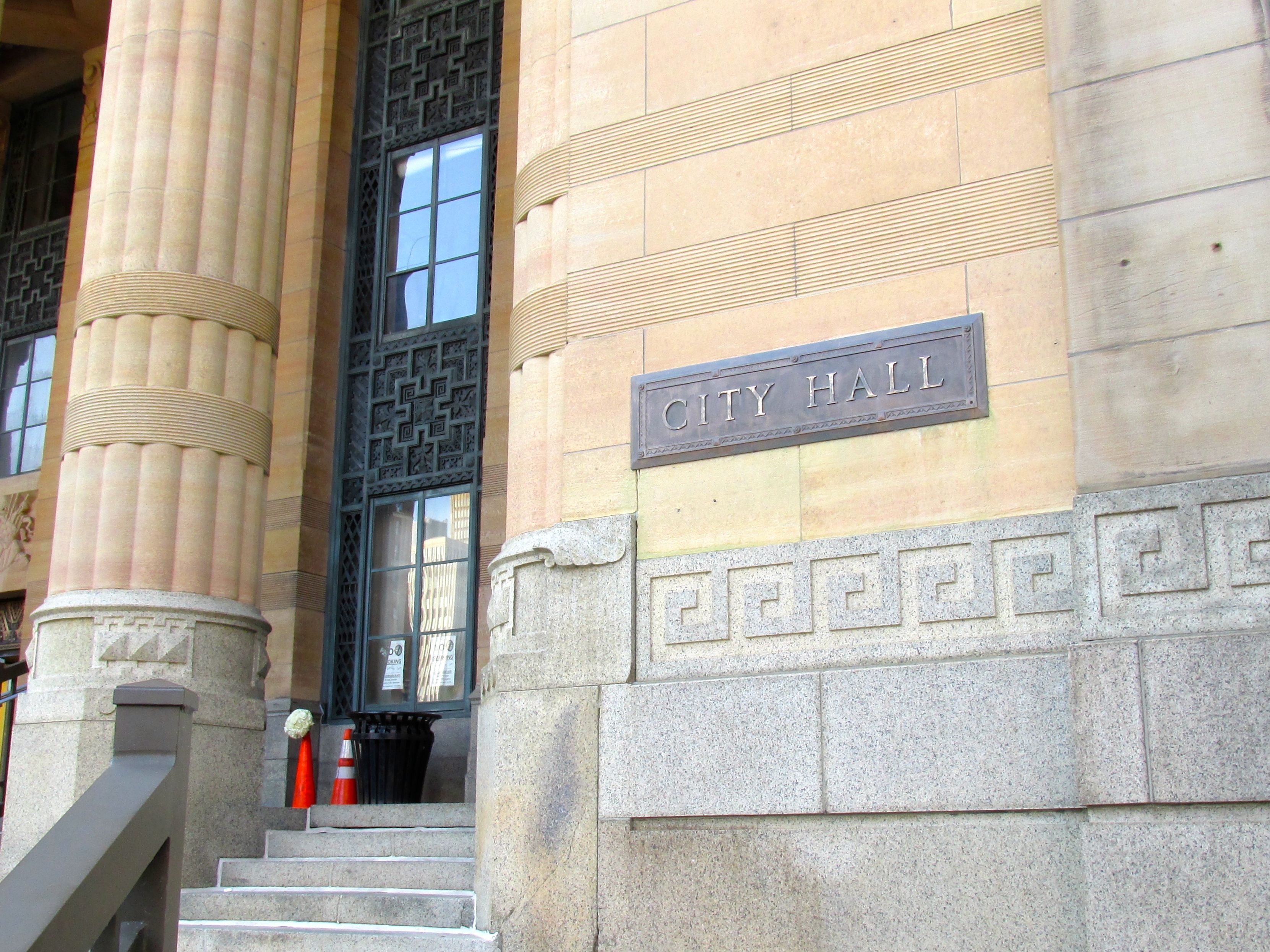
Close upCity Hall
City Hall is an Art Deco gem. They started building it in 1929 and it was open for business in 1931 at a cost of about $7 million dollars.
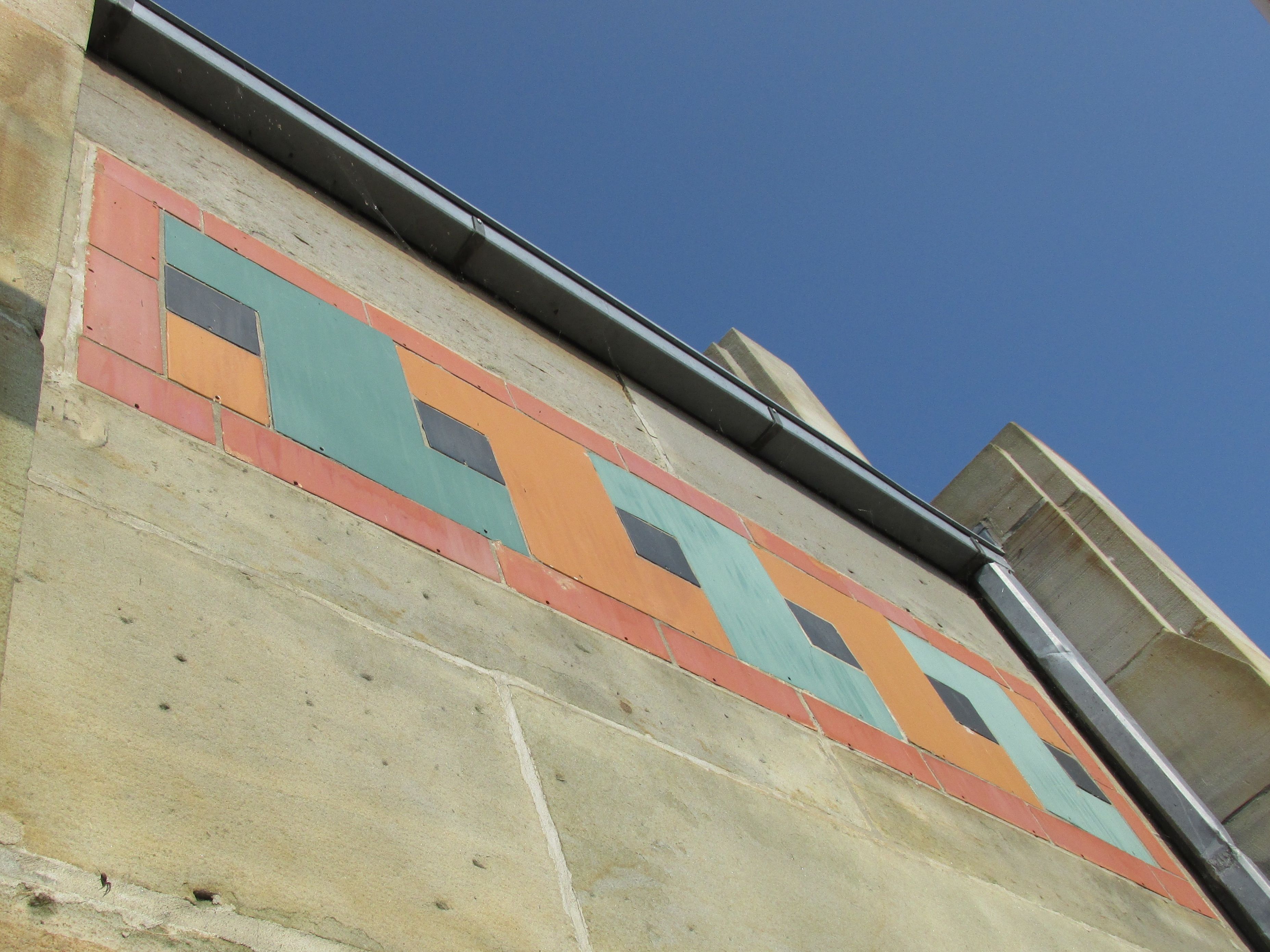
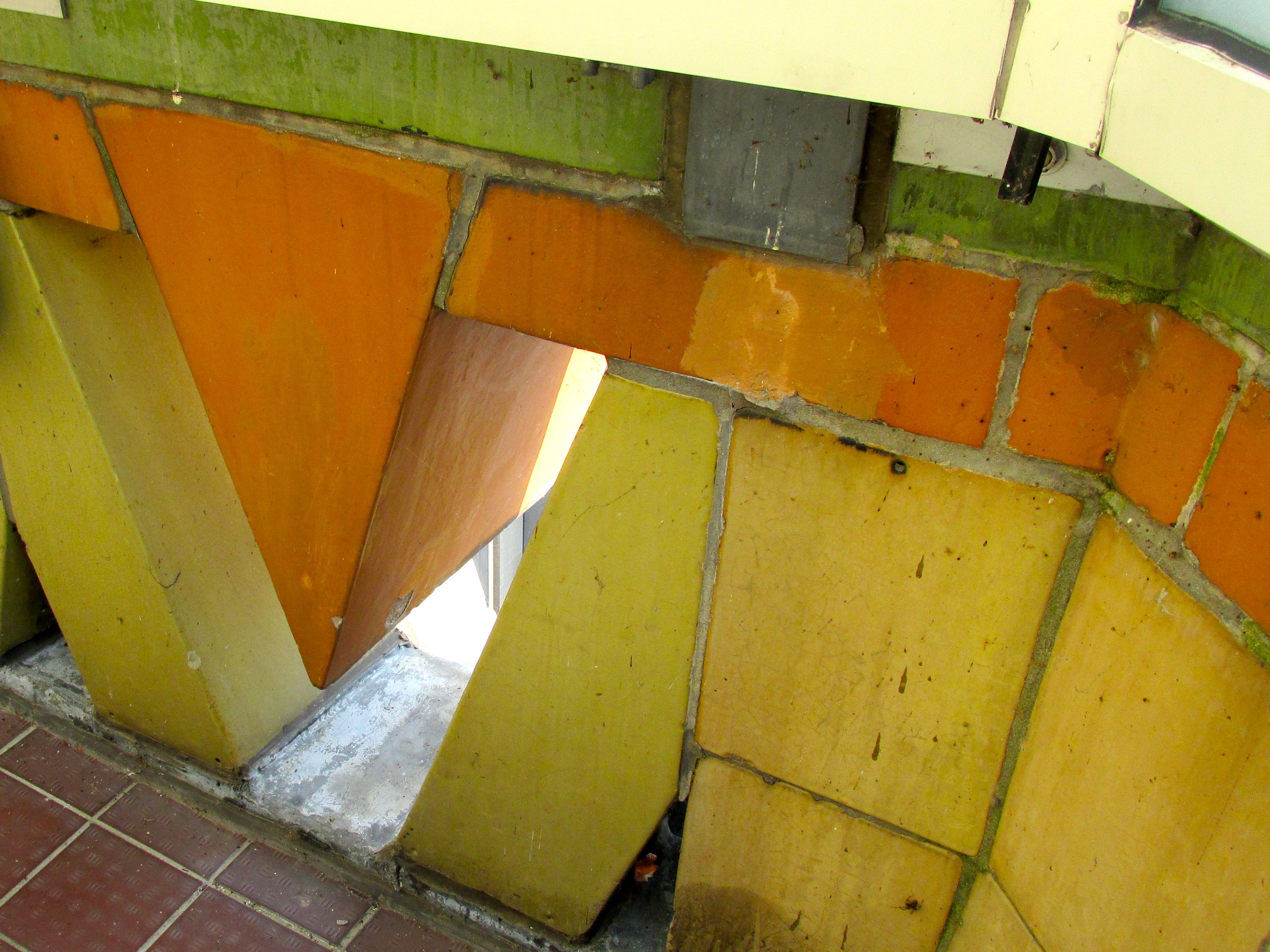
The colorful terra cotta tiles are quite distinctive.
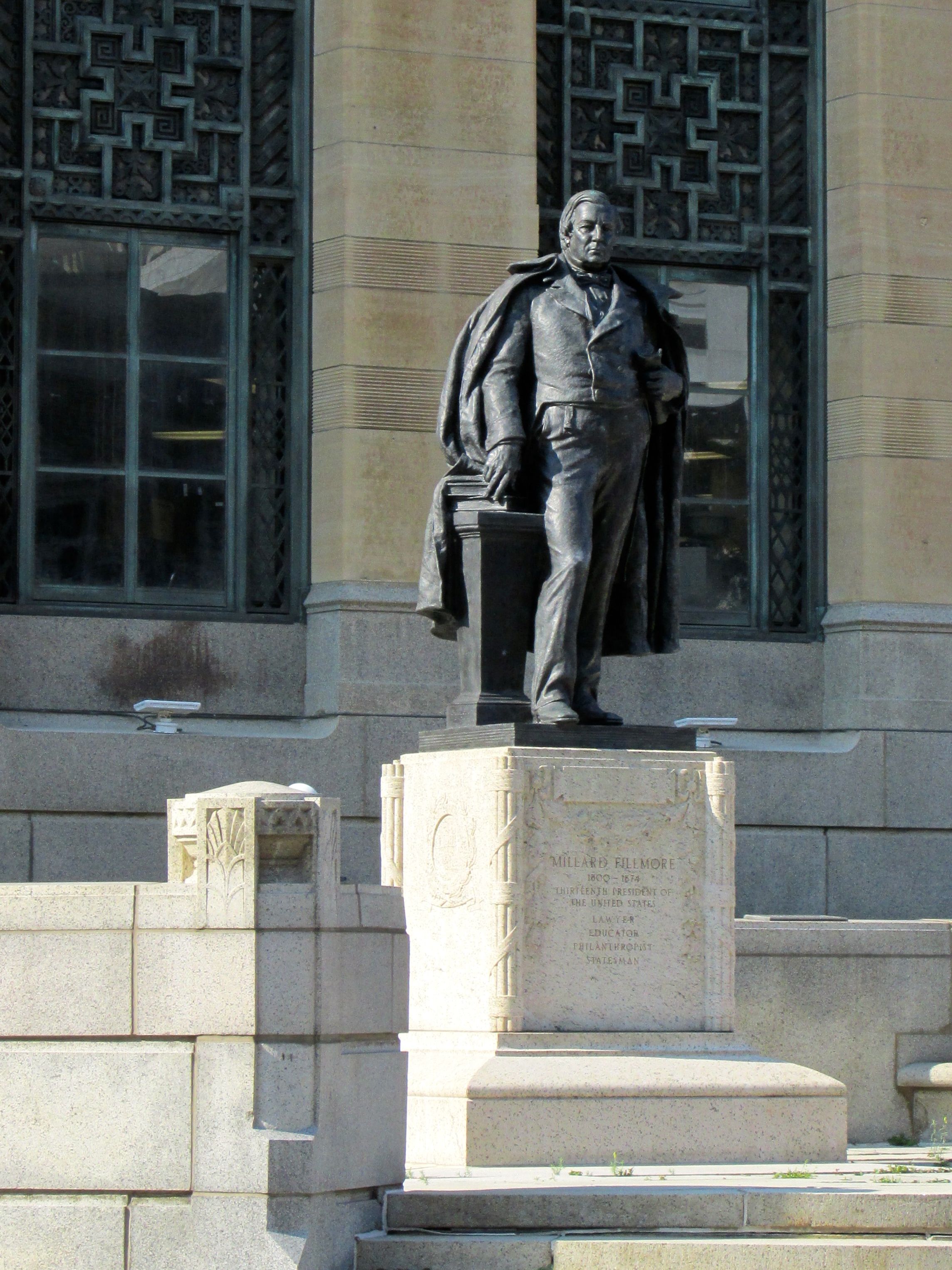
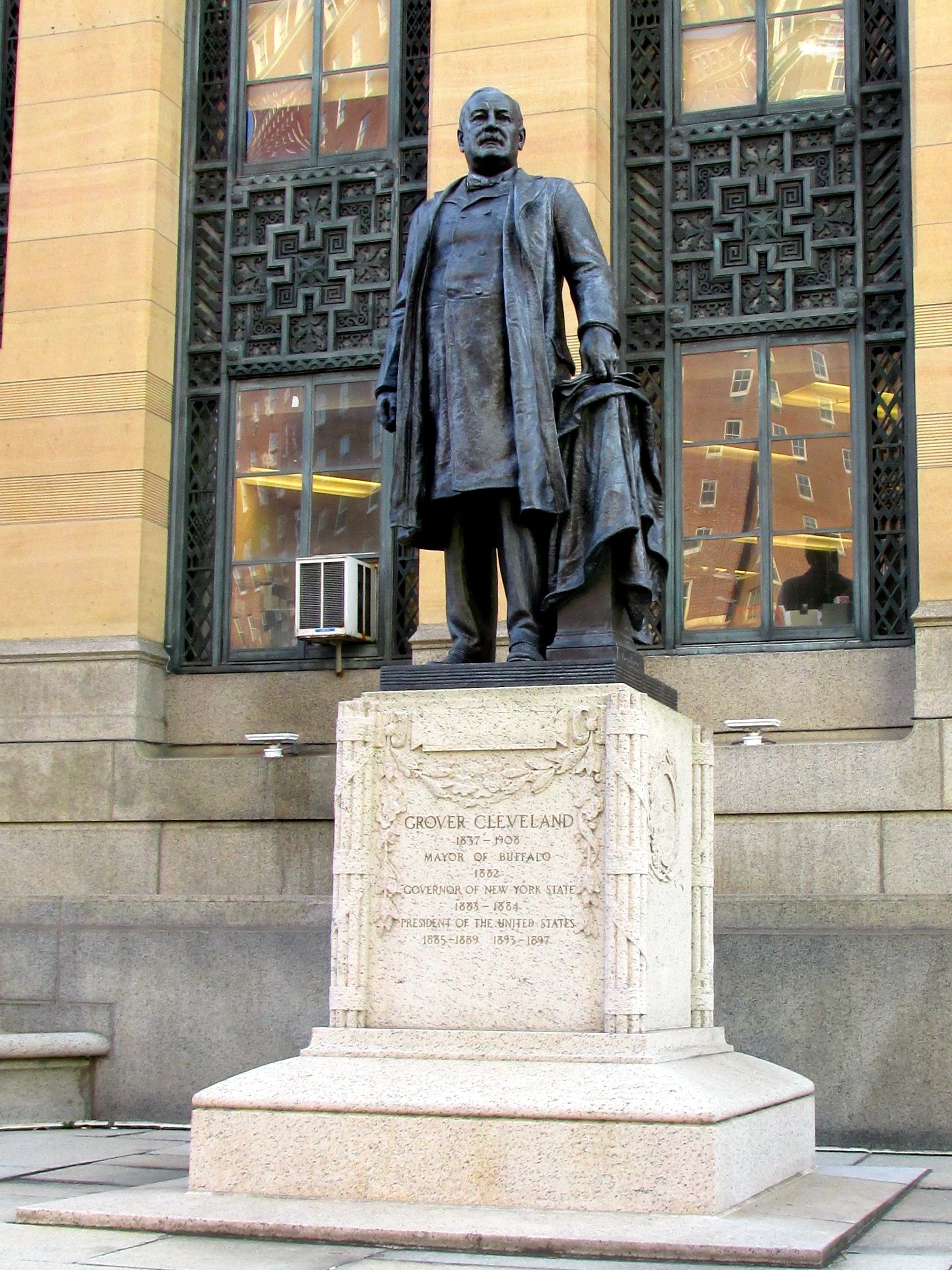
Statues of Buffalo’s favorite sons are on either corner.
Millard FillmoreGrover Cleveland
While I was snapping photos outside, I chatted a bit with a local worker. He encouraged me to go inside an at least check out the lobby – maybe even go up to the observation deck. I thought I might as well. After all, I was in the area and it was FREE.
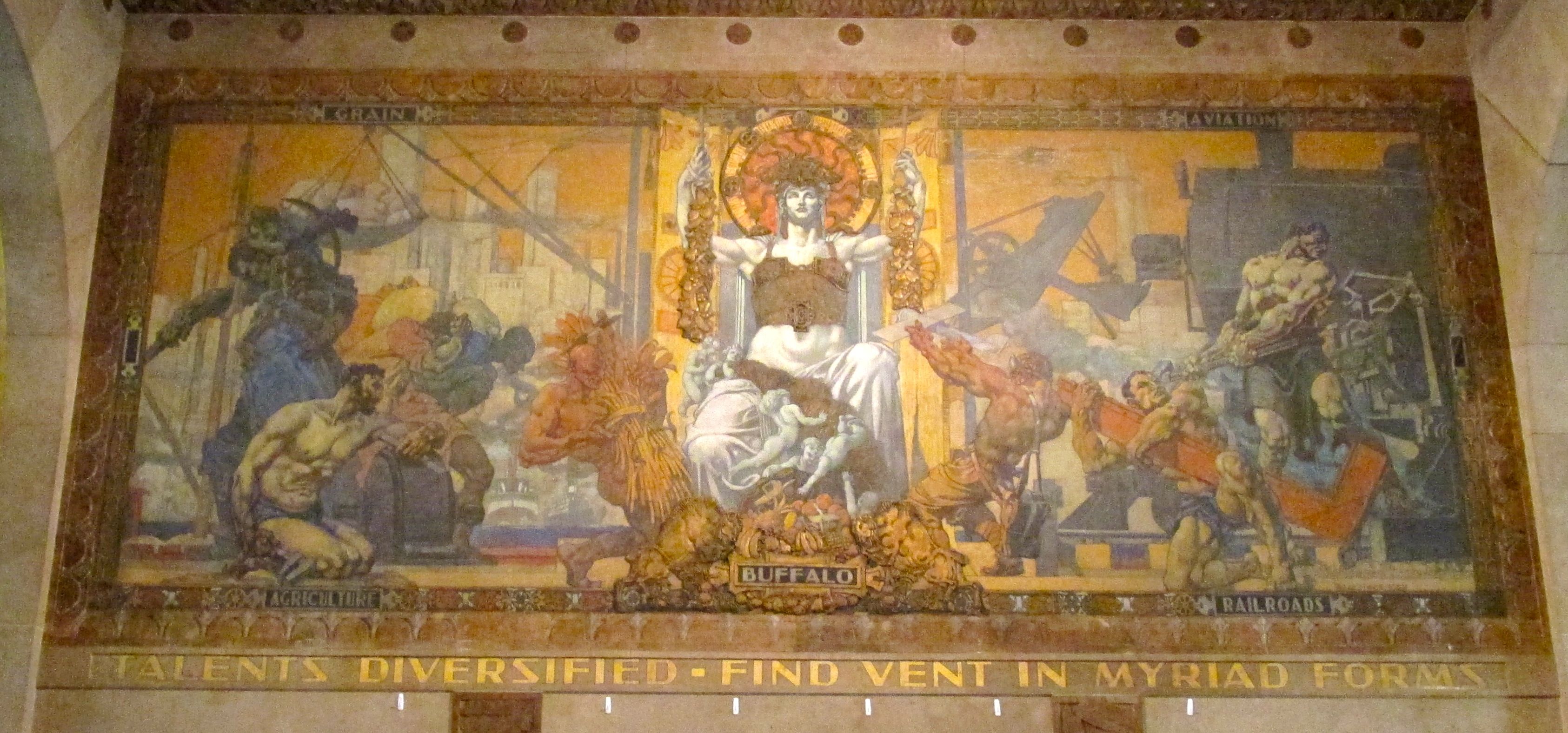
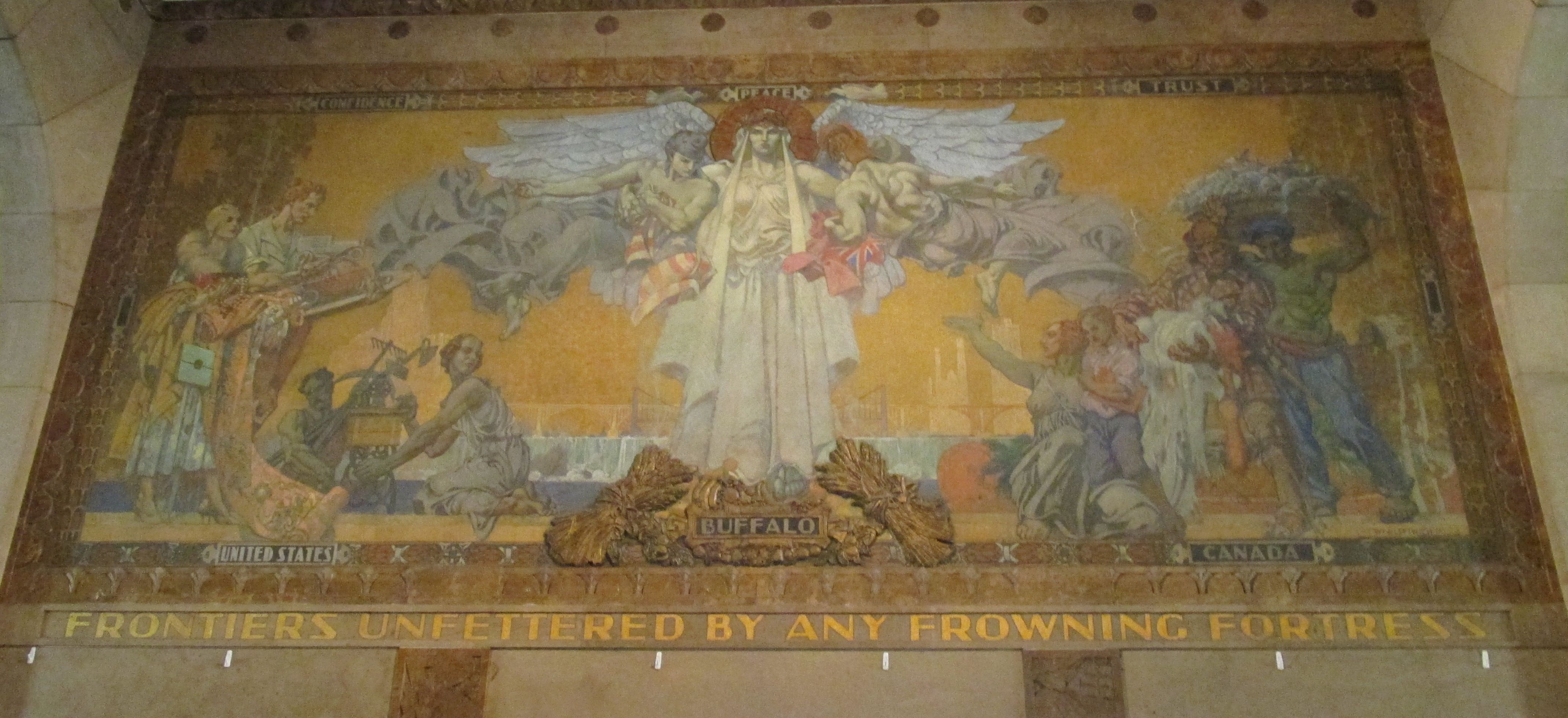
Wow! Was I glad I did! There were two large murals in the lobby. This one celebrated Buffalo as having benefited from the coming together of agriculture and the railroads. If it had been done about a hundred years earlier, the rail roads would have been replaced with the canals.
Talents diversified find vent in myriad forms
Opposite that mural was one celebrating the Buffalo’s special position between Canada and the United States.
Frontiers unfettered by any frowning fortress
As they say in real estate, “Location, location, location.”
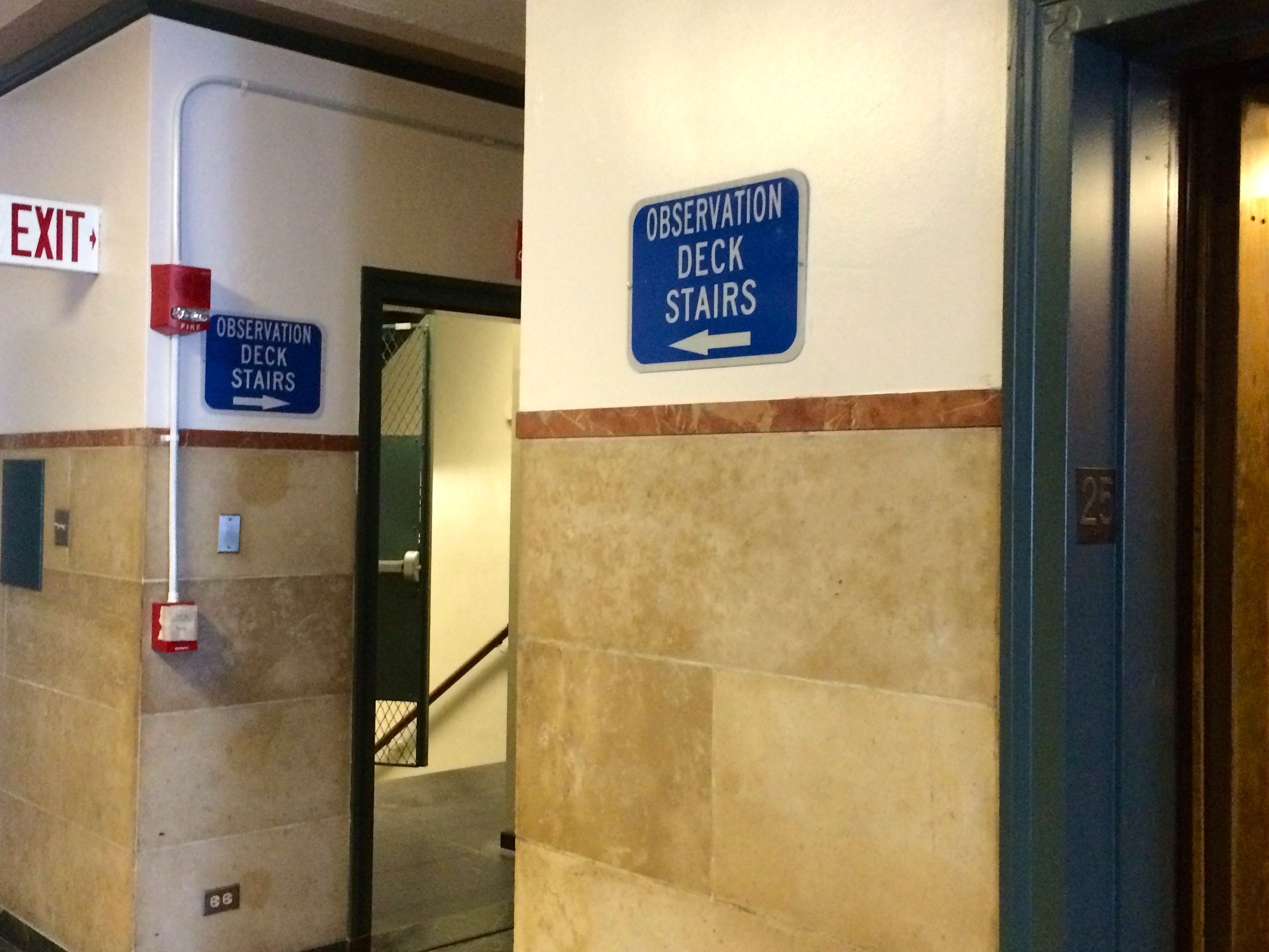
It was only 4:45, and the observation deck was still open and there was a sign, “Elevator to observation deck.” I went up.
They lied.
The elevator went to the 25th floor and then I had to walk.
I have arrived.
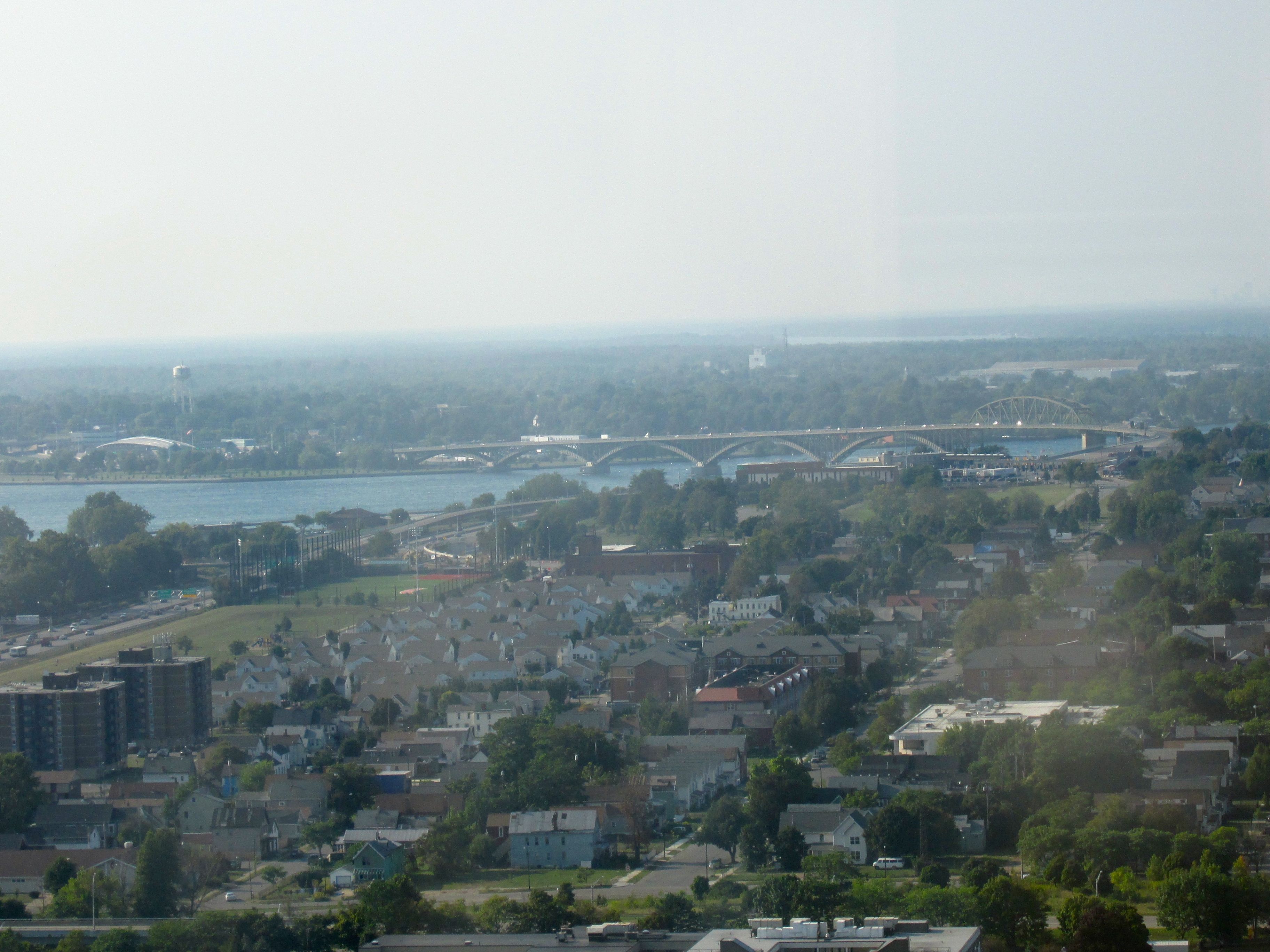
I took a turn around the observation deck.
Roof topsTop of the Liberty Bank building
Interestingly enough, the Liberty Bank used to be named the German American Bank. World War I caused them to change the name to eliminate the connection with the enemy.
Peace Bridge connecting the United States with Canada since 1927Terra cotta tiles at the topTerra cotta on the observation deck railing
After a turn around the observation deck, I headed back down to the lobby.
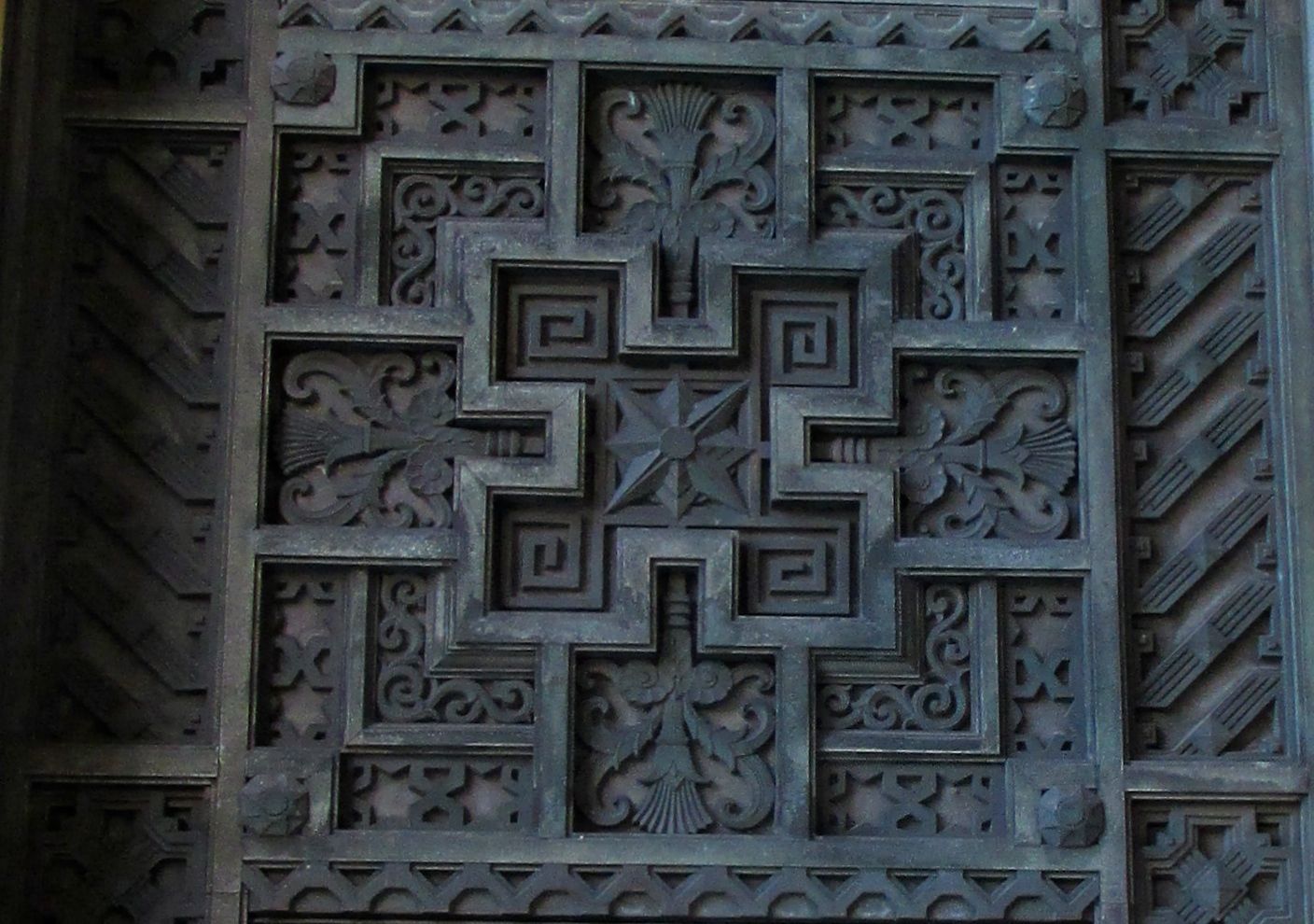
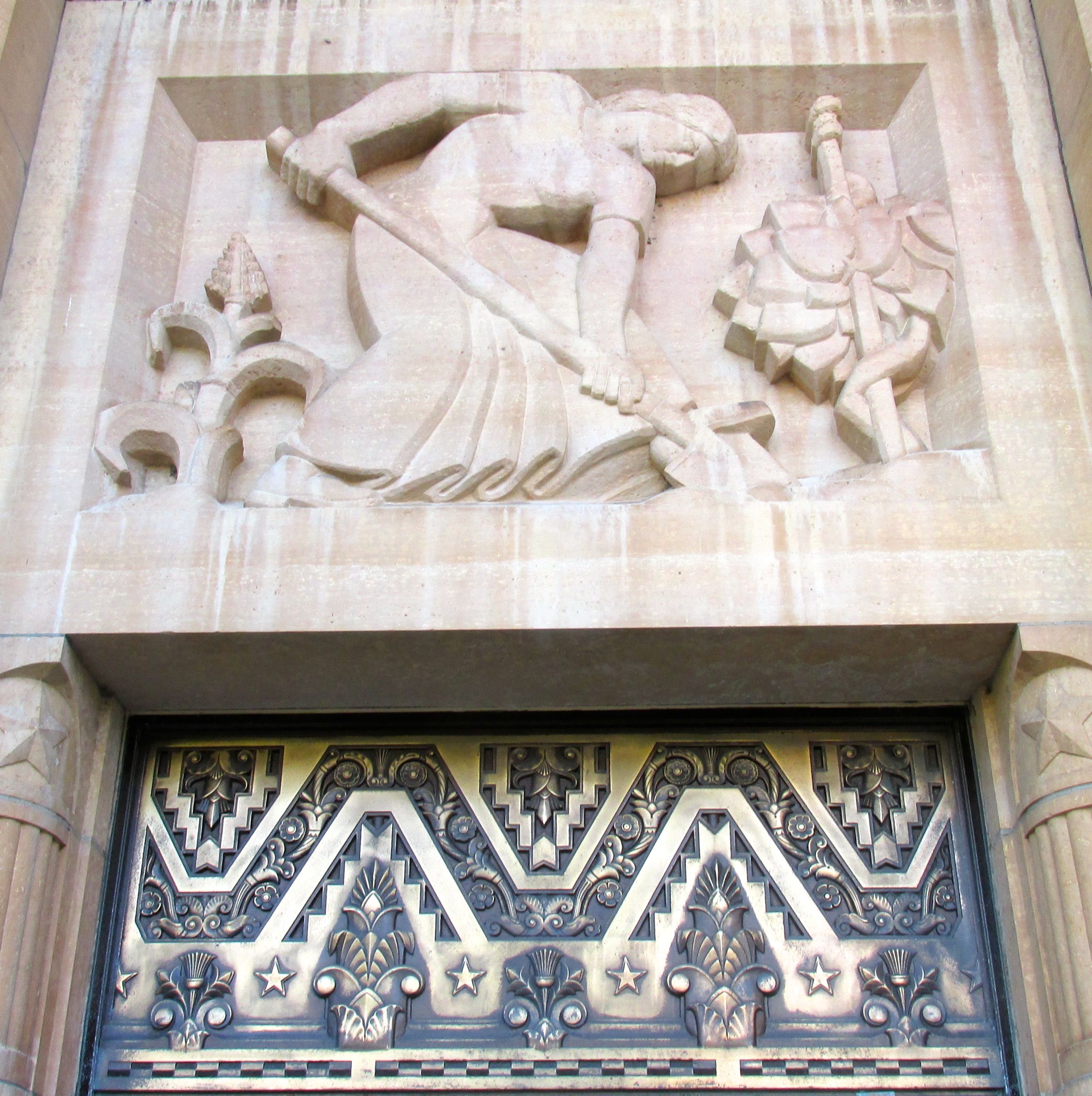
It is a dazzling building, and there is so much to see. There are treasures all over.
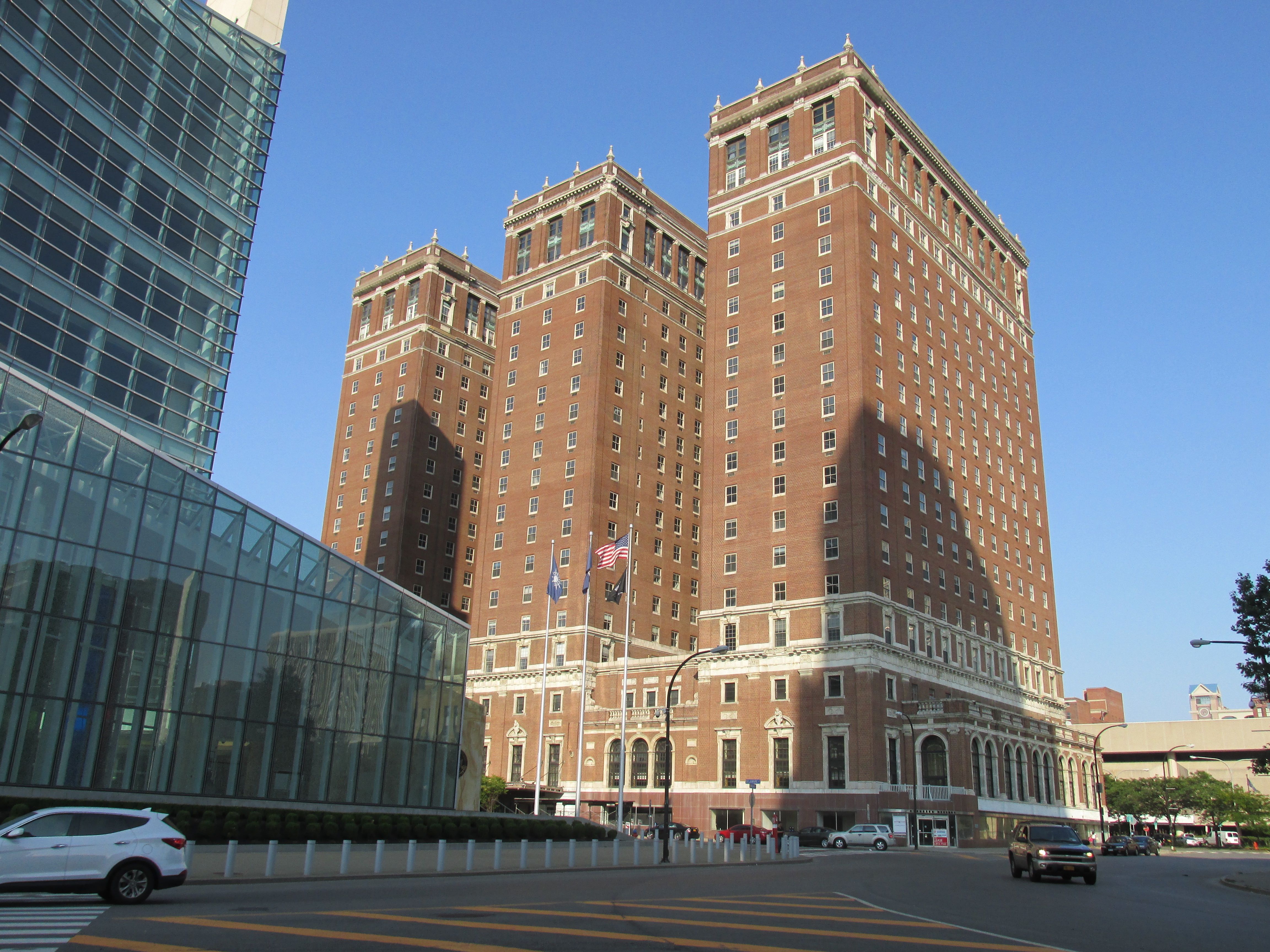
Ornamental iron workDecoration over an entranceStatler Hilton
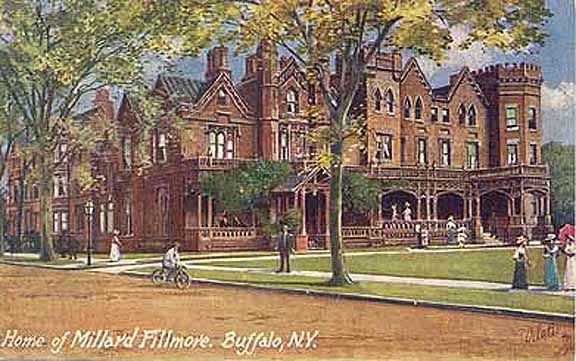
This is the view of the Statler Towers from near where Grover Cleveland’s statue is. Perhaps they thought it would be indelicate to have the statue of Millard Fillmore facing what had been the site of his mansion.
Millard Fillmore Mansion
Before it became the Statler, it was the Castle Inn.
Castle Inn former site of Millard Fillmore’s home
Ellsworth Statler built his hotel right on Niagara Square, and it opened in 1923. To insure its success, he bought the other “fancy” hotel in town, the Iroquois Hotel, and closed it down the day the Statler opened. The Statler Hilton closed as a hotel in 1982, although the last I heard was that it was being renovated to serve as a hotel once more.
Back to City Hall
The photo shoots are in full swing.
Bride and groom number one
And then there are the others who are waiting, not to mention the limo drivers.
Weddings galore
So, I headed toward Canalside to pick up my car.
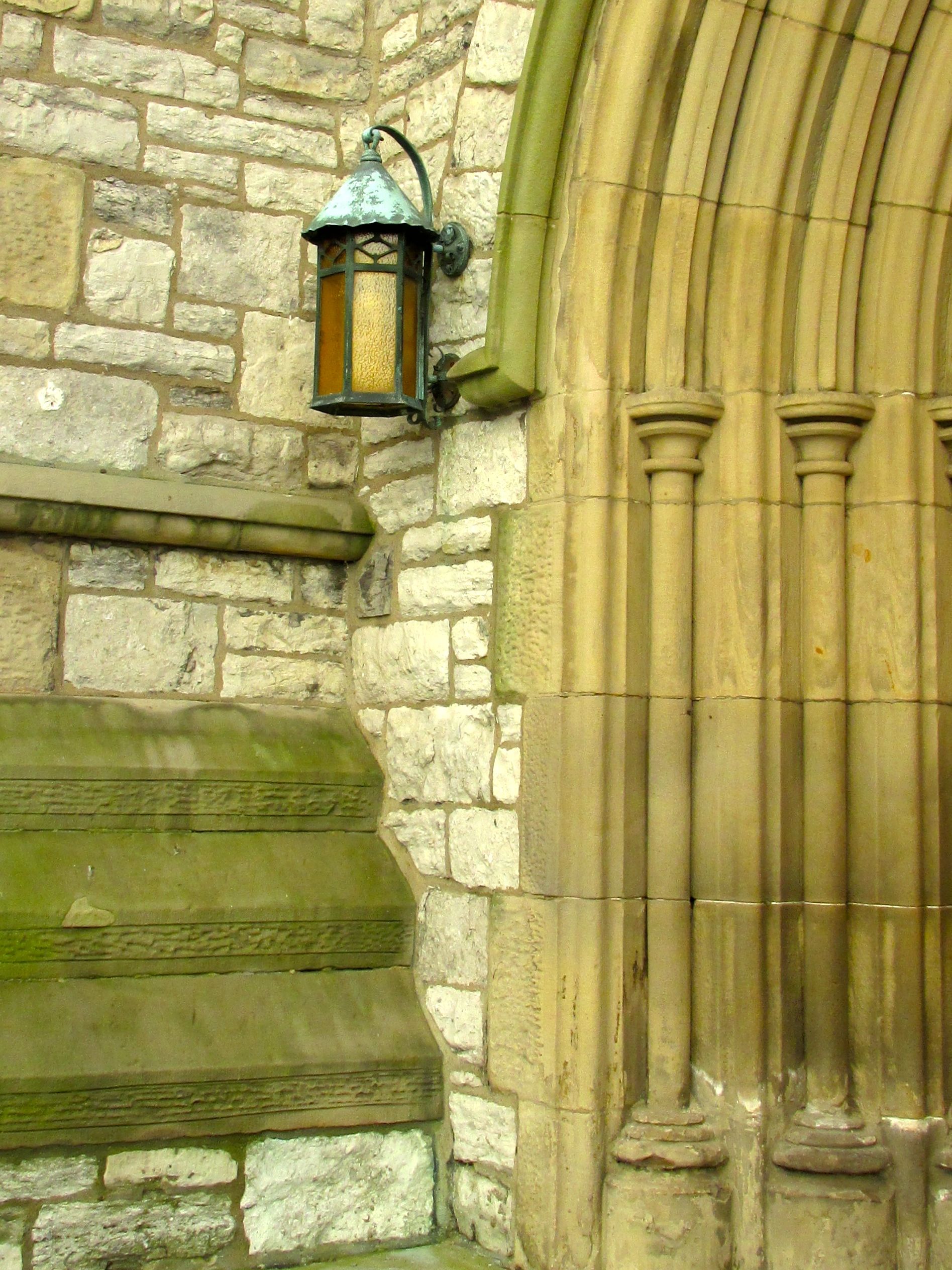
St. Joseph’s Cathedral
Hmm. I wonder if it’s open. I’d like to take a look.
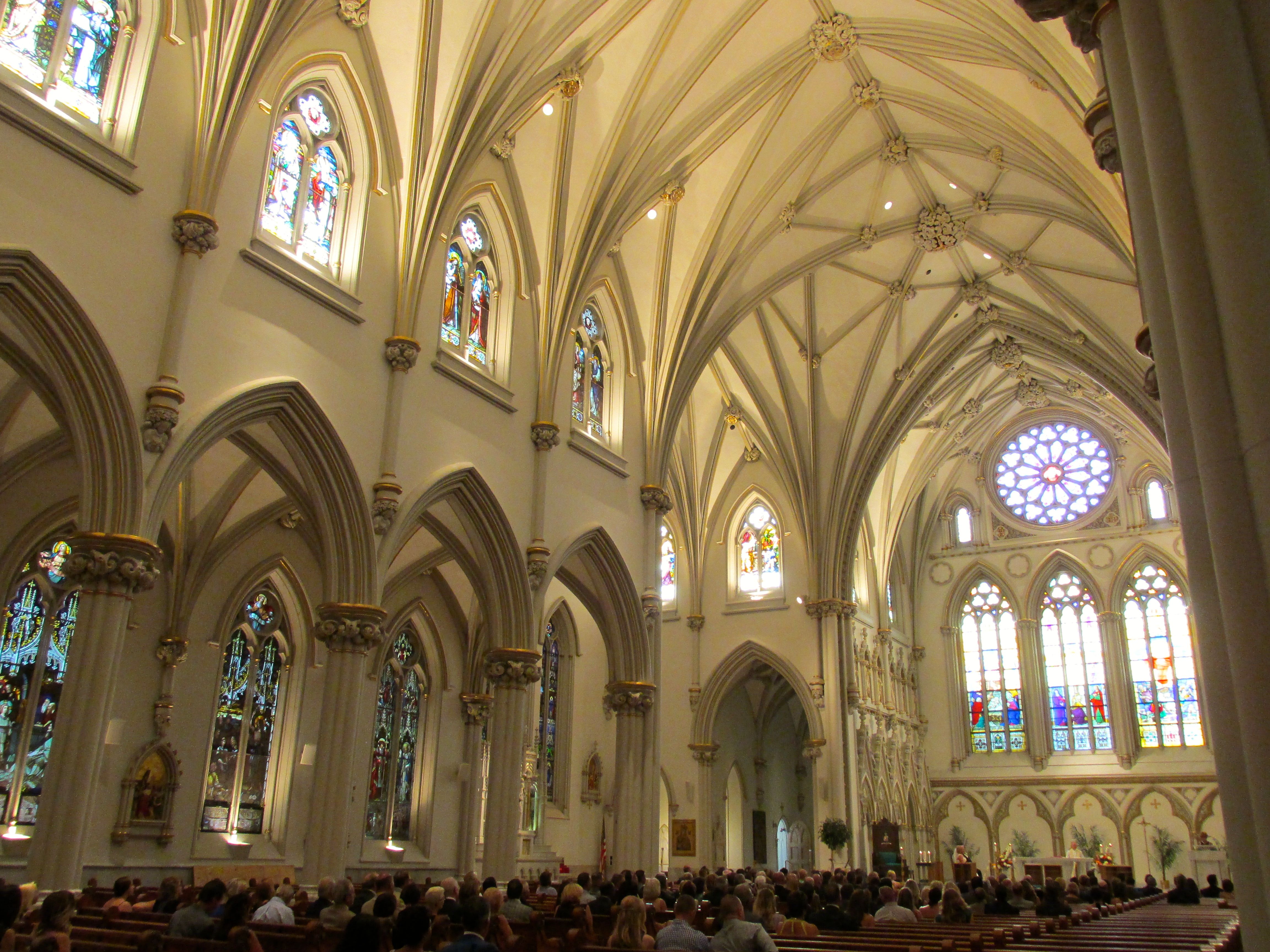
Inside St. Joseph’s Cathedral – another wedding
My goodness! It certainly must be wedding season. It was a beautiful day for it.
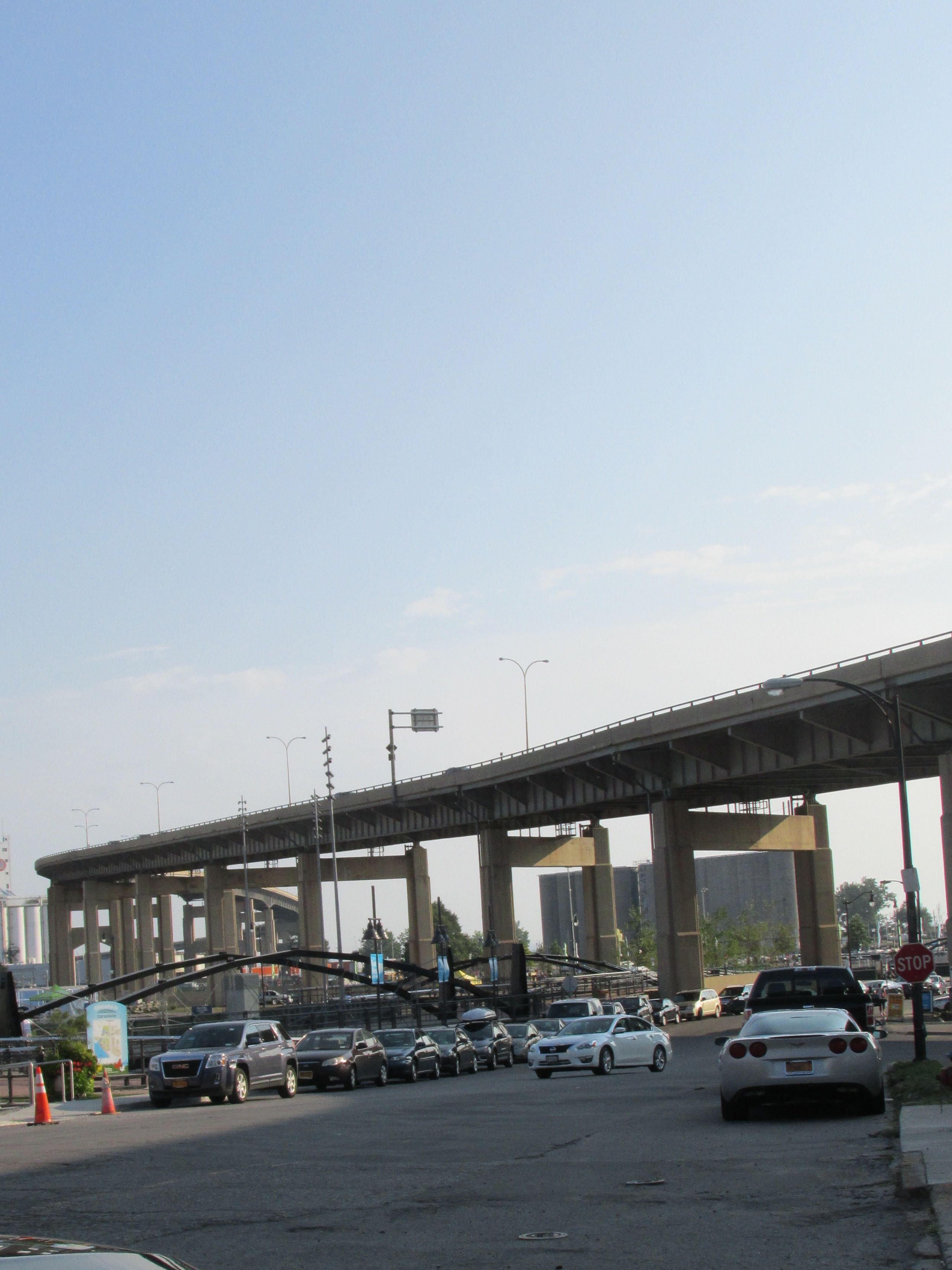
Under The Skyway
I worked my way back over to where I had left Bart. I couldn’t resist taking a photo of the Skyway.
When I was very young, we had taken a ride out to the “country”. I don’t recall what we were doing, but I do remember that we were driving across a field, and somehow the wheel fell off. Dad managed to get it back on – probably using barbed wire from a fence or something. Coming home, we crossed the Skyway. Just to try to ease the tension and make conversation, I remember saying, “I wonder why they make these bridges so high?”
My mother replied, “Uff da! Shut up!”
I’ve always had a special connection with the Skyway.
When I get back to the Buffalo area, I always have to drive around and see the old stomping grounds. First, Tonawanda.
This corner is one I’d been meaning to visit for several years. This is the spot where I learned that President Kennedy had been shot. They always say you remember where you were when you learned Kennedy was shot. Older folks remember where they were when Pearl Harbor was bombed and younger people remember where they were when the World Trade Center was attacked.
The world changed for me that day.
When President Kennedy was shot, I was in third grade in Mrs. Brickell’s class and I was walking home from school. They hadn’t told us at school, but they had told the “big kids” who took the bus over to Alexander Hamilton Elementary. They were talking about the assassination when they got off the bus. When I heard the news, I ran all the way home.
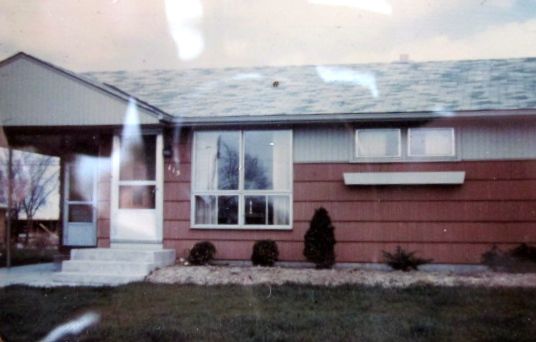
Back in the day
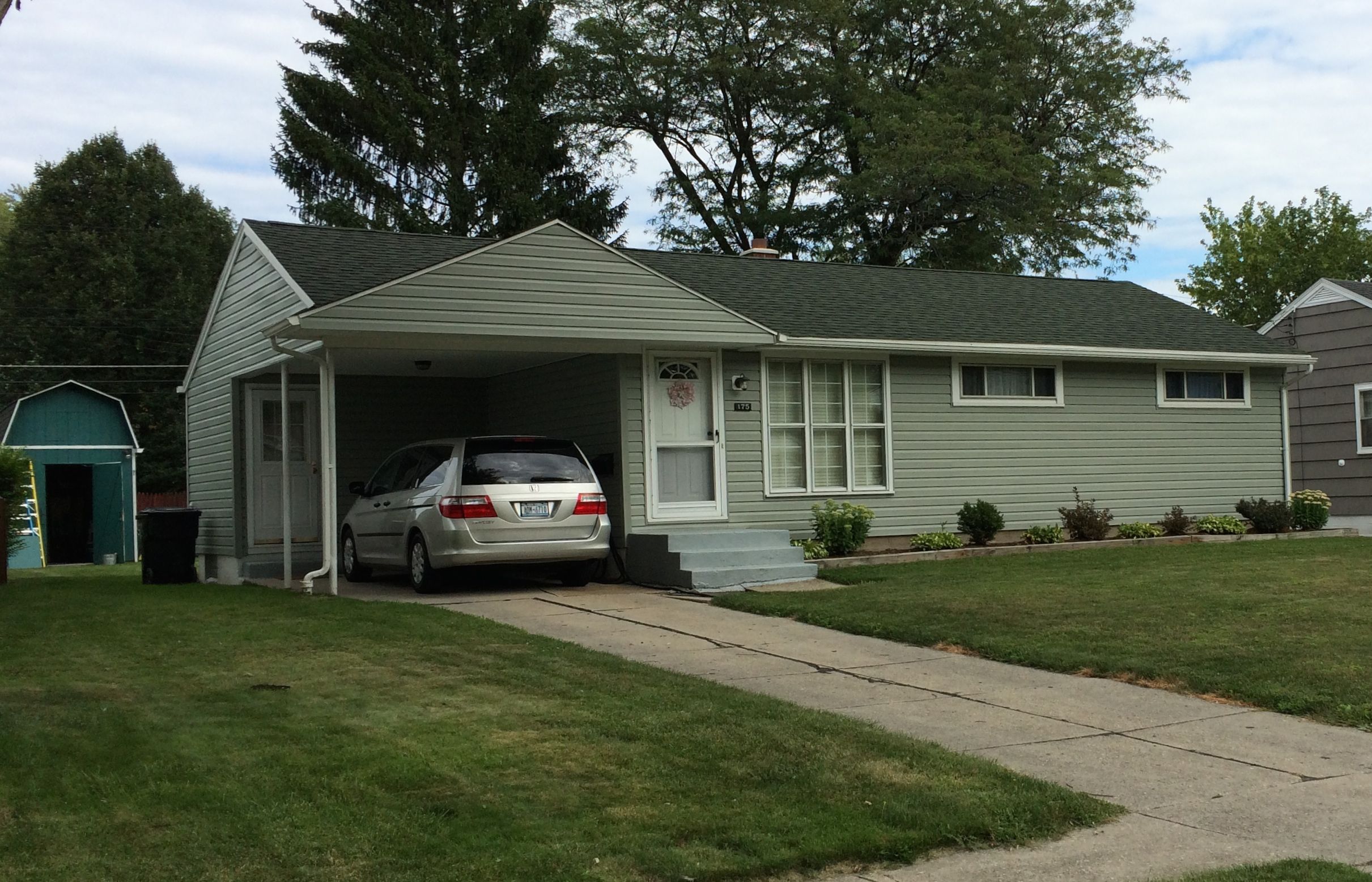
The house has changed hands a few times since we moved out in 1964. I don’t know how, but somehow it shrunk in the past 51 years.
The old homestead today
Next stop: Kenmore
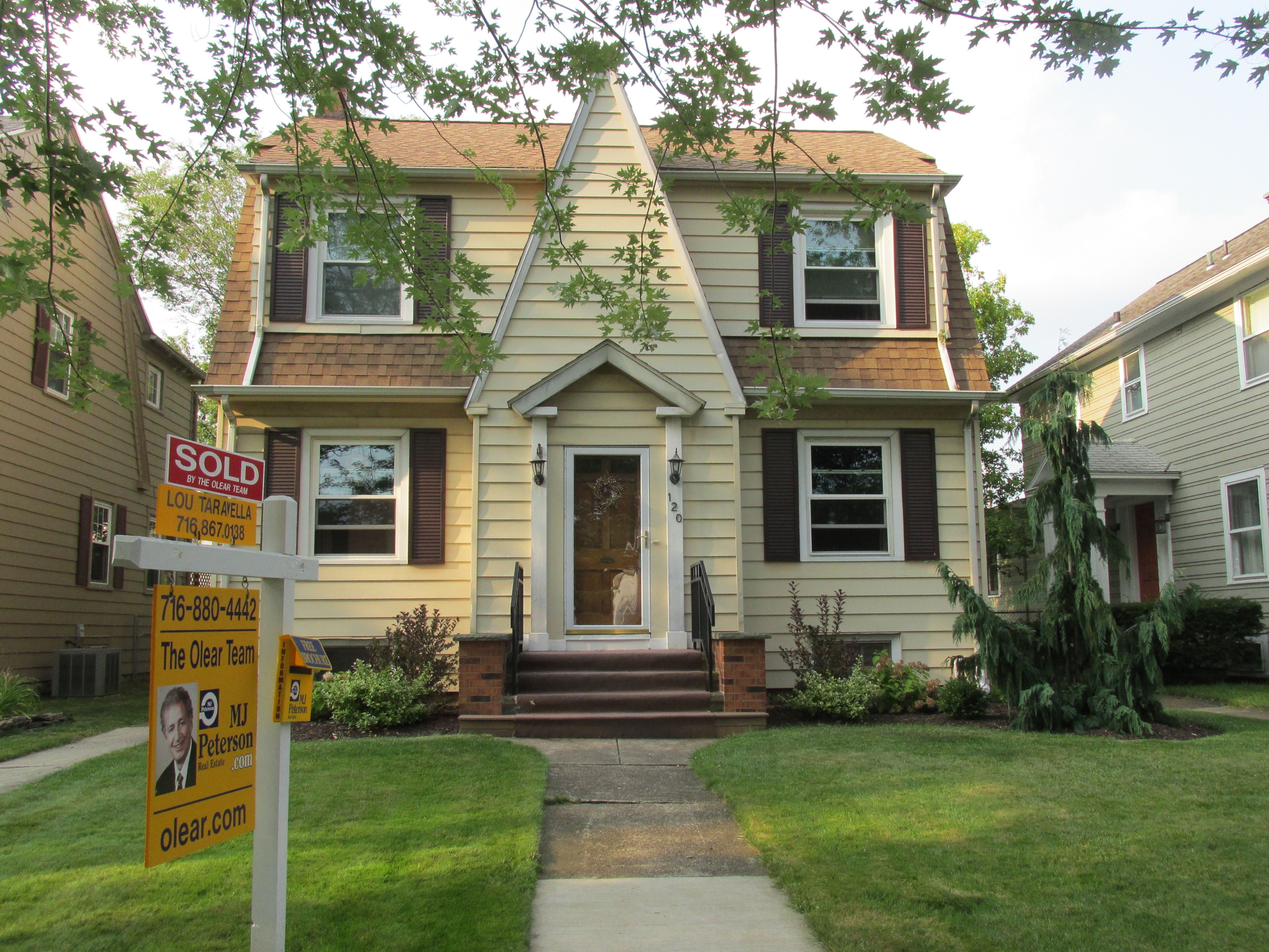
Another house changing hands
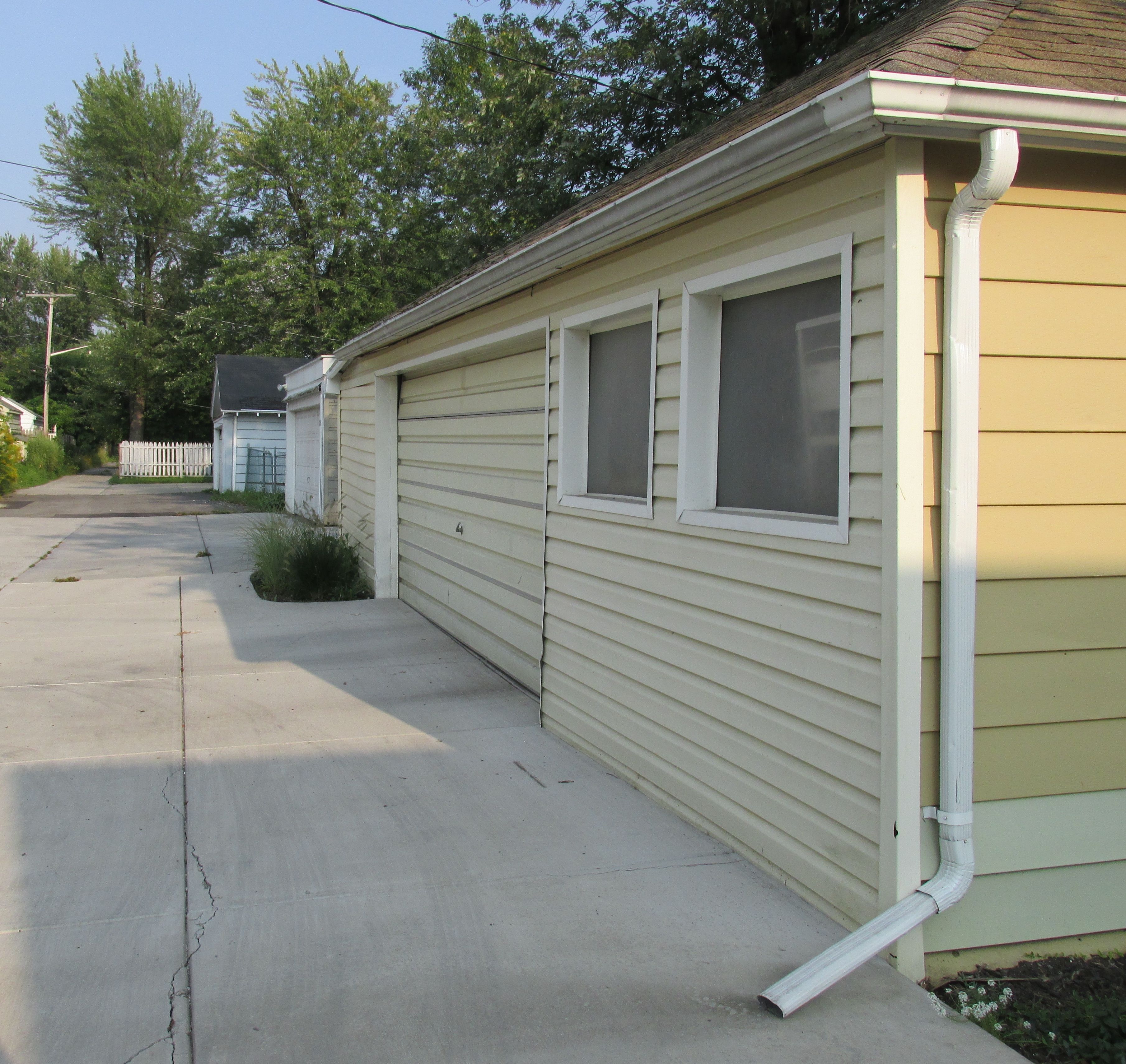
I decided I wanted to take a photo of the old family home while I was in town. I had heard that it had gone on the market and had sold quickly. Oddly enough, the woman who bought the house from my parents, Judith, was just coming out the front door as I stepped out of the truck with my camera. Since I was standing in from t of her house with a camera in my hand, I had little choice but to introduce myself. We chatted for a few minutes. She told me that she had a meeting she had to get to, but invited me to look around and in the garage, too. And so I did!
Judith repaved the apron in the alley! That’s a good looking change.
But inside the garage, things haven’t changed much.
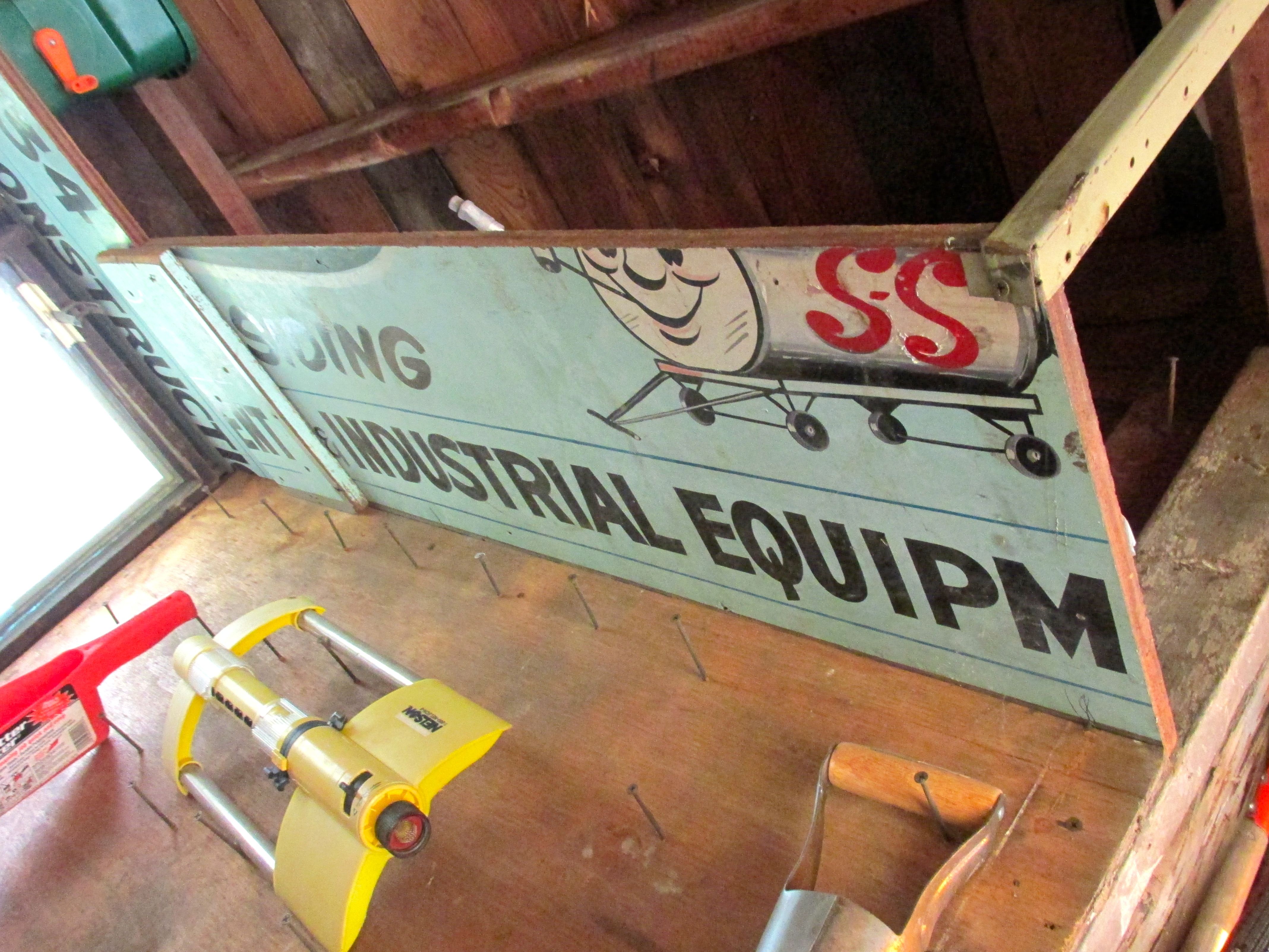
The shelf is still there
In fact, the shelf Dad made from the sign from his steam cleaning business is still there. But, if you want to see it, you have to know where to look. The sign is on the bottom of the shelf!
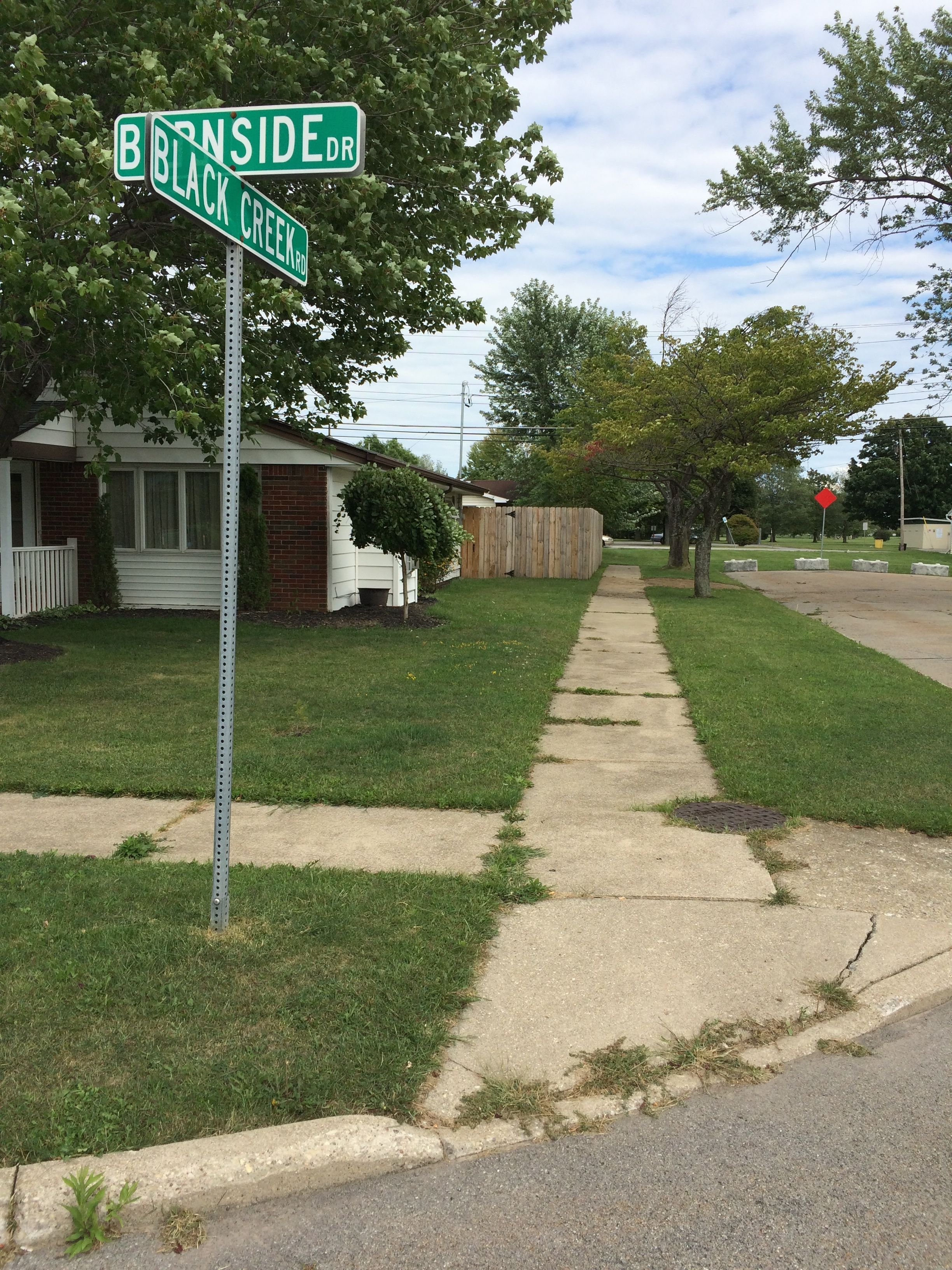
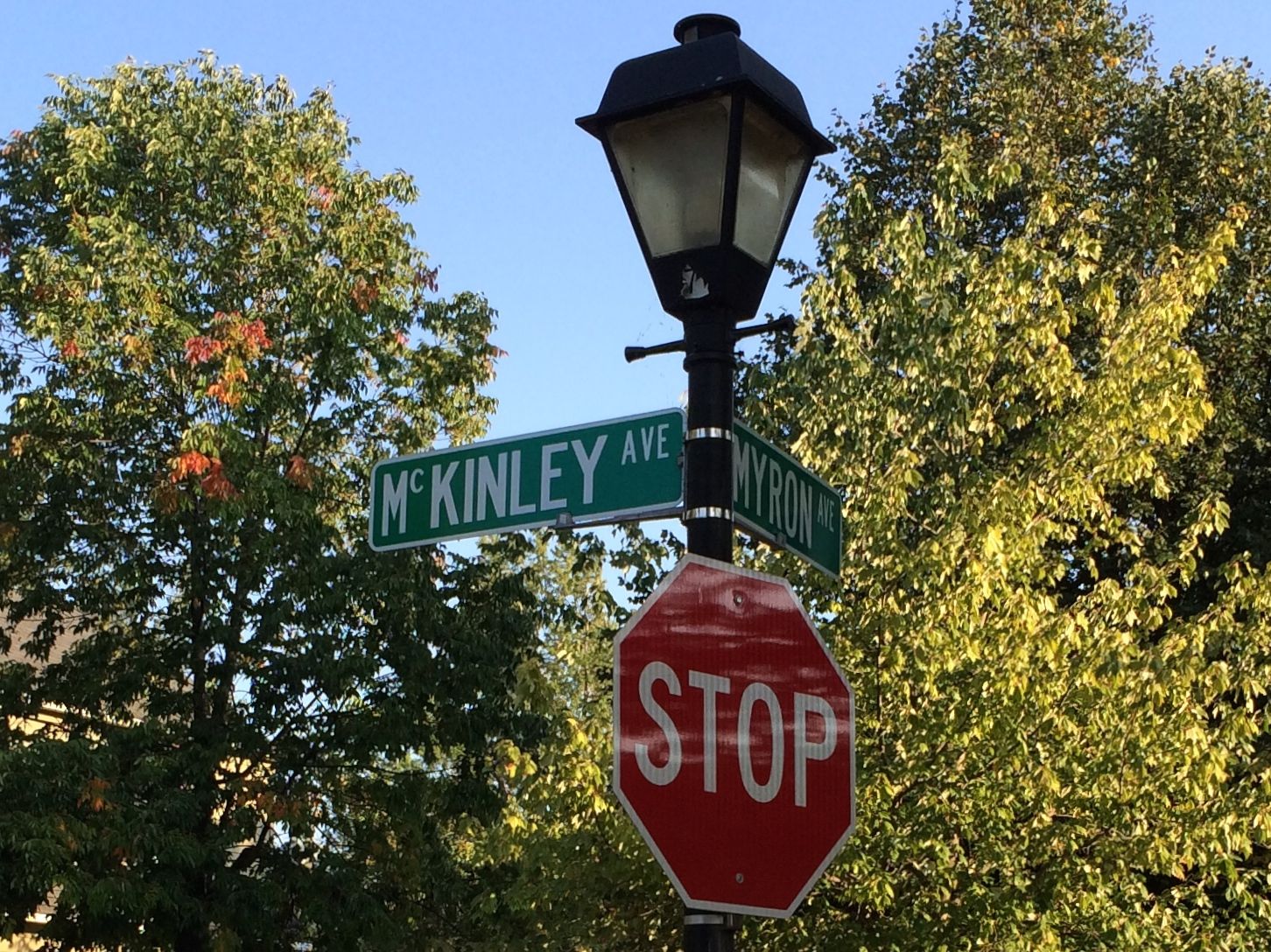
On the street where I lived
Here is another street sign that has to do with a presidential assassination.
President McKinley was shot in Buffalo at the Pan American Exposition in 1901. I always wondered where in the city it happened.
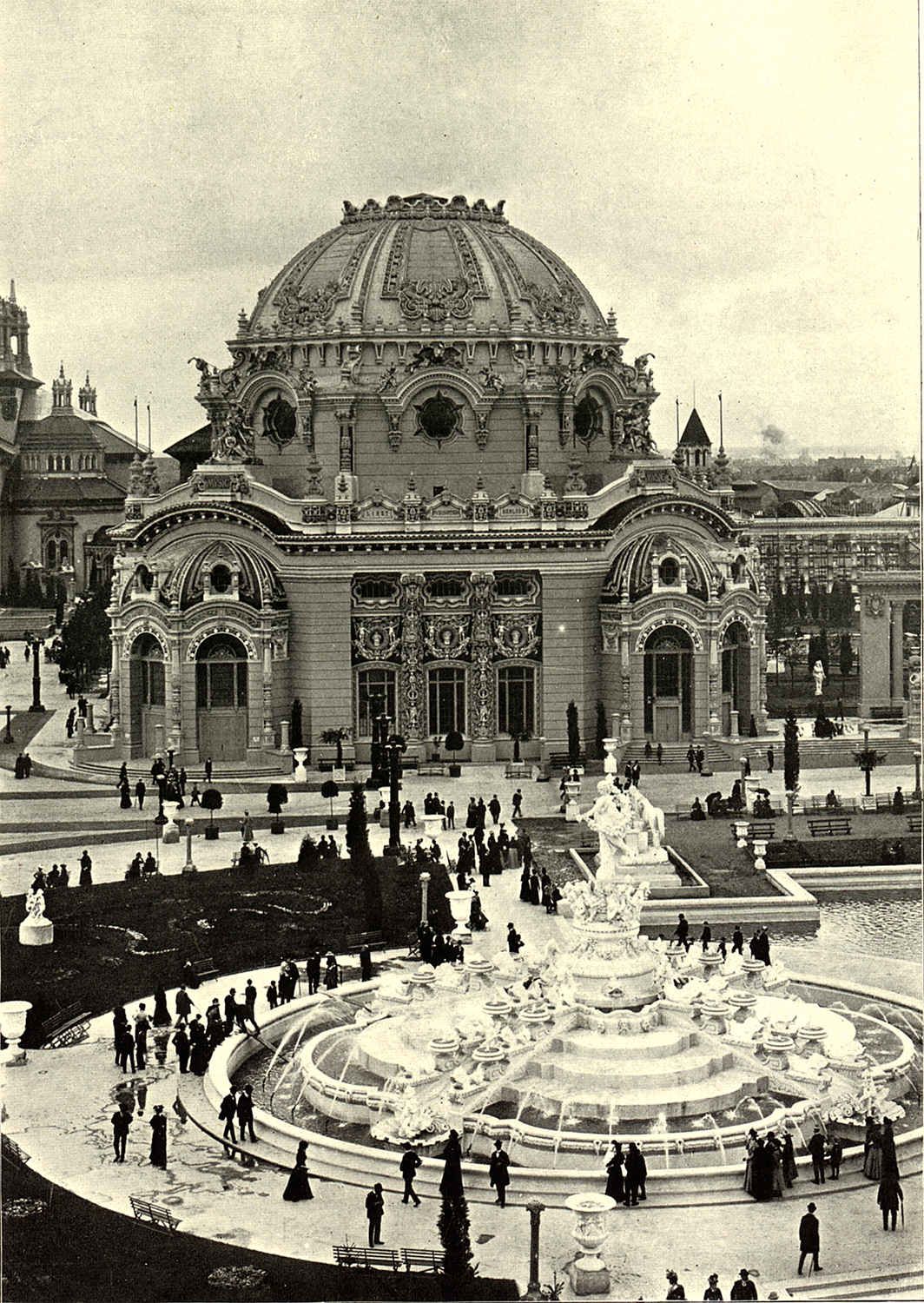
The Fountain of Abundance in front of the Temple of Music at the Pan American Exposition
I knew it was outside the Temple of Music, but the Exposition was torn down after the it was over. I could never believe that they would put up such grand buildings for such a short period of time. But they were torn down and houses were built in its place.
This trip, I found where it the building was.
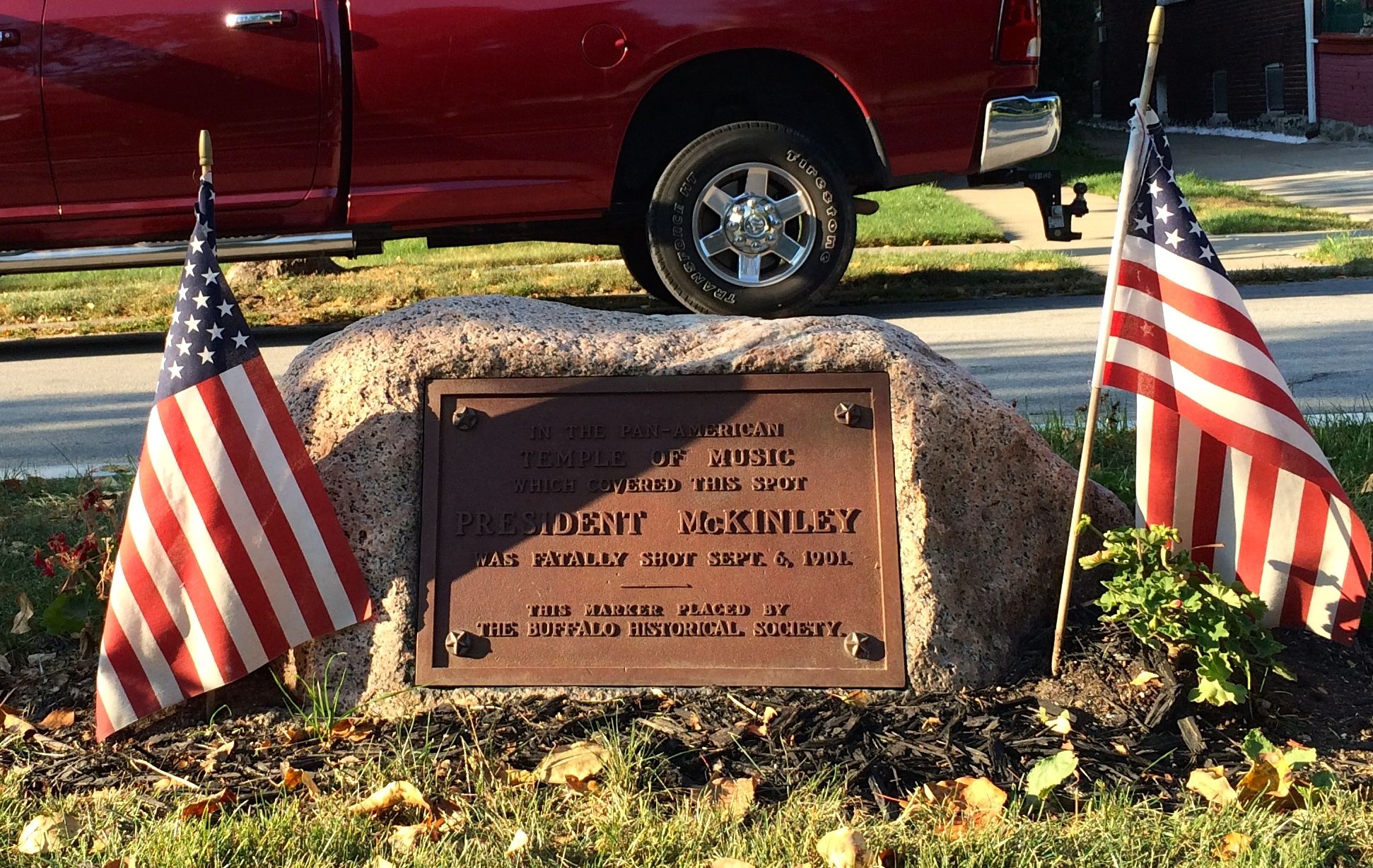
This marker is on Fordham Drive in Buffalo at the approximate location of the assassination. I found it with a wonderful new app I downloaded. It’s HISTORY Here, created by the HISTORY channel. I highly recommend it for finding unexpected things on your travels – or even in your community. Look in your App Store. It was FREE! (Probably one of my favorite words of all time.)
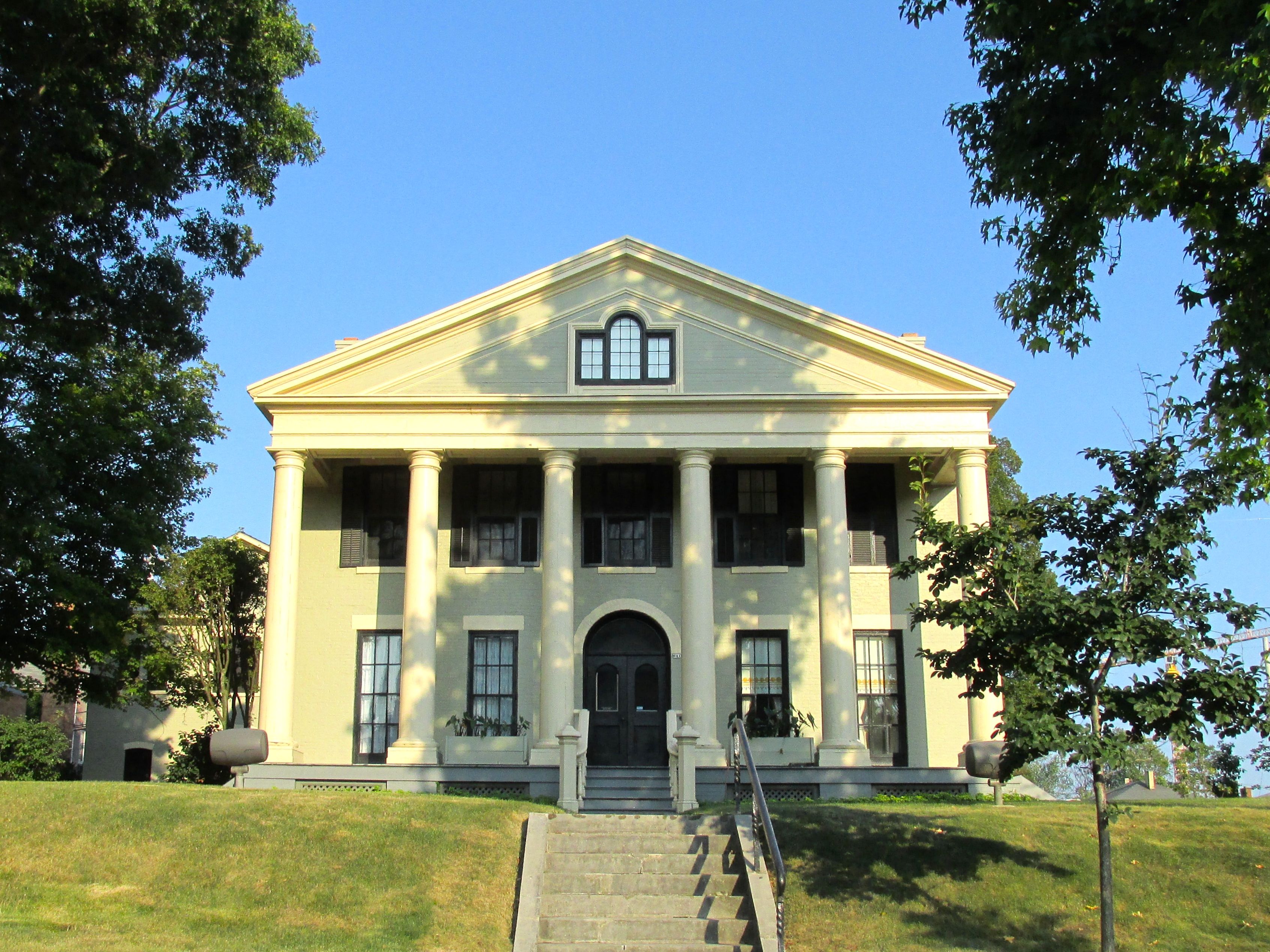
The Wilcox Mansion
This is the Theodore Roosevelt Inaugural National Historic Site, where he was sworn in after McKinley died. McKinley was shot on September 6, 1901, and died on September 13 from gangrene caused by his wounds. Roosevelt was inaugurated the next day at the Wilcox Mansion on Delaware Avenue.
Interestingly enough, there is a direct relationship between the garage on McKinley to Wilcox Mansion. My brother’s wedding reception was held there. As we prepared to leave the house, my father went back to the garage to get a golf umbrella, as rain was threatening. He got stung by a bee when he was back there. By the time we got to the church, he was having a reaction to the bee sting. He had his brother take him to the hospital and he missed the wedding. But, he made it to the reception later.
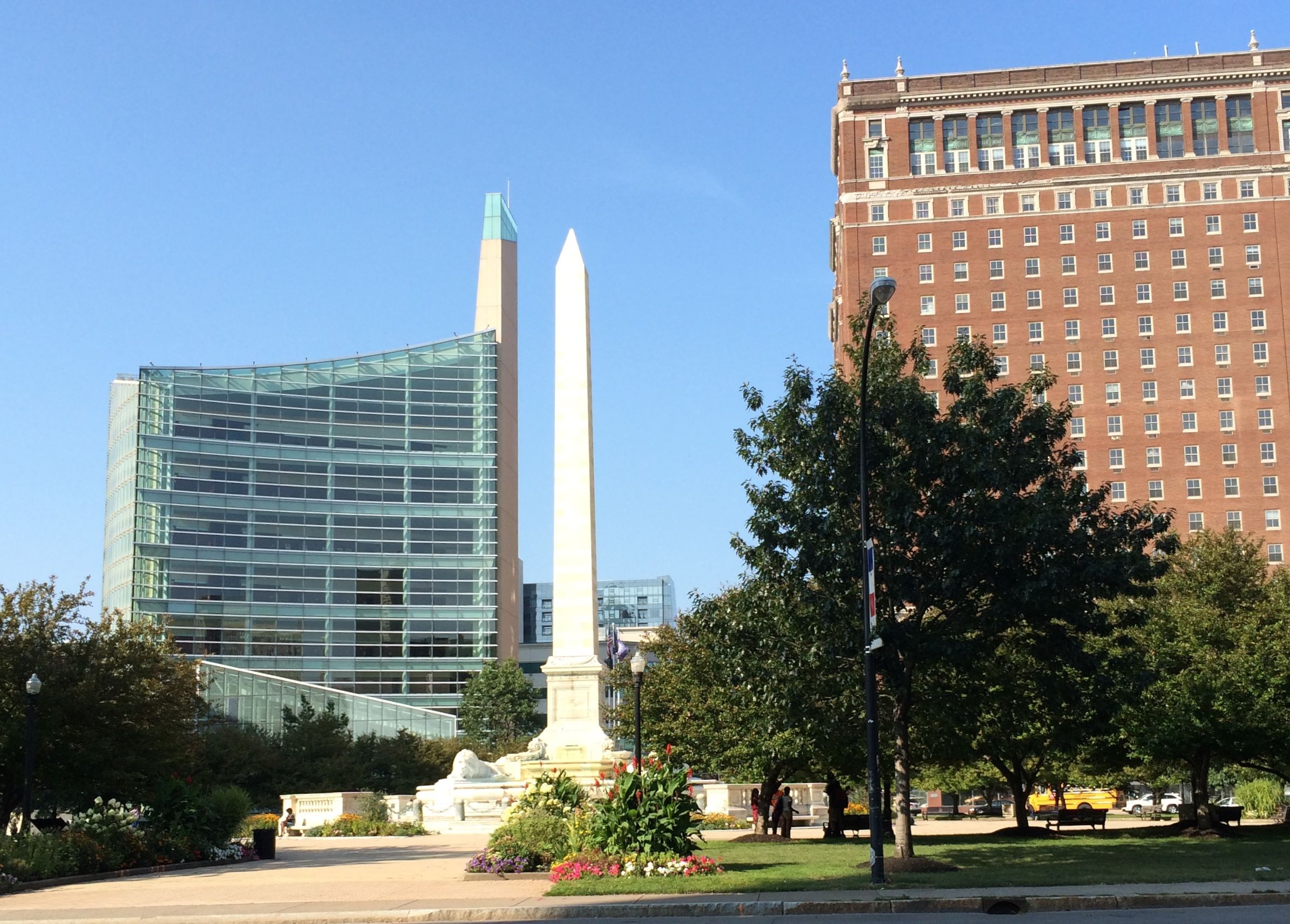
Just a mile or so down the street from the Wilcox Mansion, in downtown Buffalo, is McKinley Monument.
When Kathy, Andrea and I met at Christ the King for lunch, we discussed visiting Sister Maura at Stella Niagara, the motherhouse of the order that founded the college we attended. We got Sister Maura’s email address from a friend of mine. I play Words with Friends with her and she works there. Small world, eh?
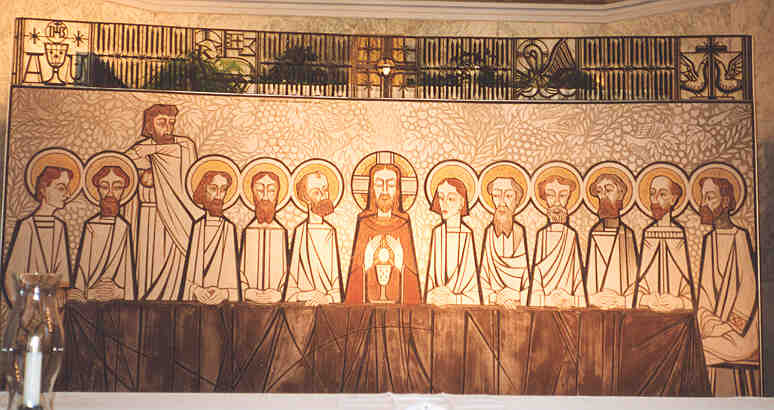
We met Sister Maura and she gave us a little tour. She took us up to the chapel and showed us the sgraffito artwork. I remembered it from when Sister Jeanne took our art history class up to see it back in the 1970’s. Sister Maura described the sgraffito technique as a fresco method, where the work had to be completed before the layers of colored sand dried.
I must admit, that I didn’t think of taking a picture, but I searched the web and found one on a website dedicated to the artwork of Józef Sławiński. This is the altar piece.
After our tour, we went to dinner at The Silo in Lewiston. It’s a hot dog and burger stand right on the Niagara River. The company was great and the view was wonderful.
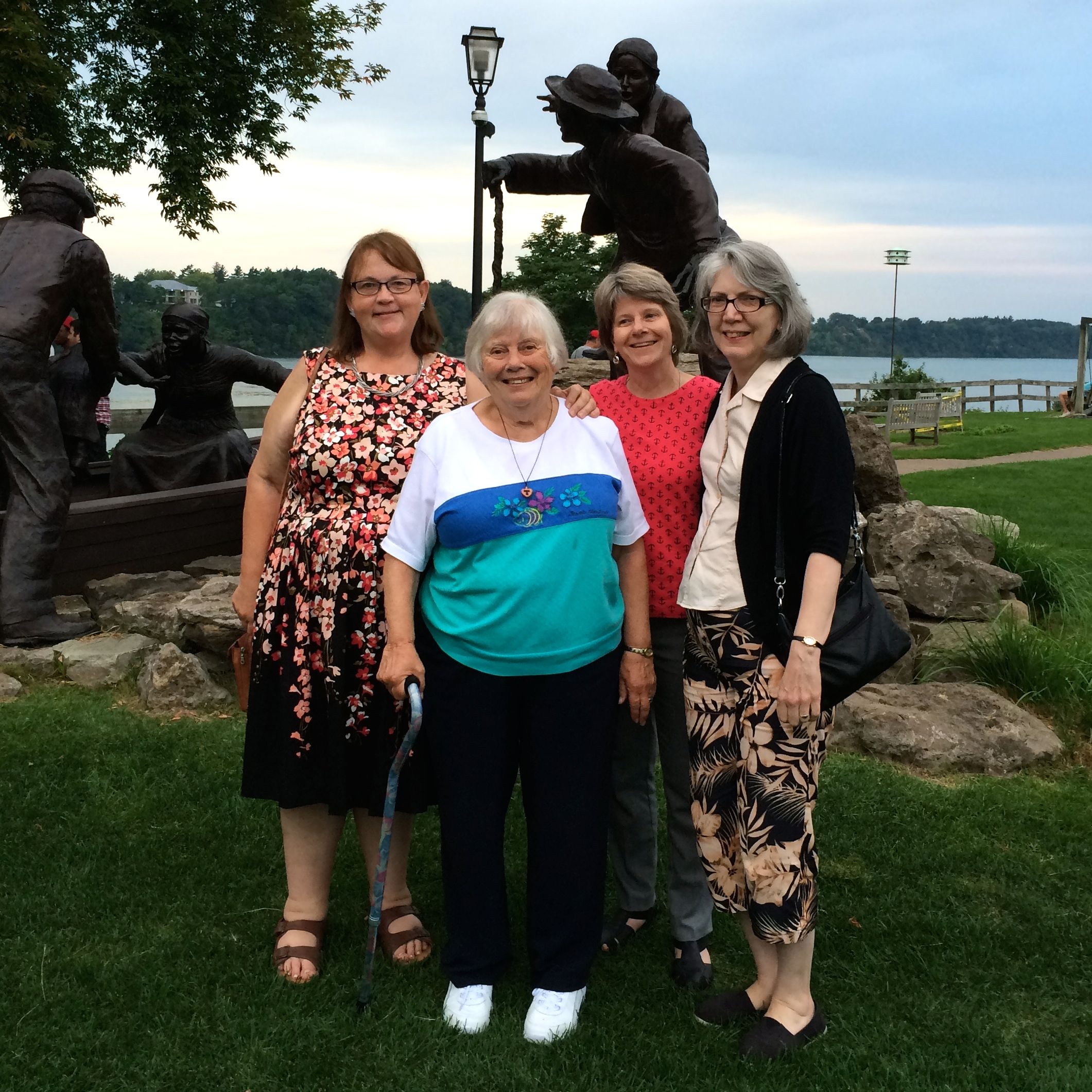
After diner and ice cream (what would summer be without that?) we went over to see an outstanding sculpture grouping. Freedom Crossing Monument is based on the 1969 book Freedom Crossing, by Margaret Goff Clark. The book is one that is popular literature in grades 4 and 5. Since I never got higher than third grade in my professional life and was out of fifth grade before it was written, I had never heard of this book. I may have to go pick up a copy.
This sculpture is a dramatic piece of artwork! The sculptor, Susan Geissler, created a tableau that shows the moment when escaping slaves were getting into a rowboat to cross the Niagara River.
Freedom Crossing
If you get there, try to arrive before the light is fading. the faces and bodies are so expressive. If you can’t wait, check out the sculpture in real time on the Freedom Crossing Webcam.
Here we are at the site
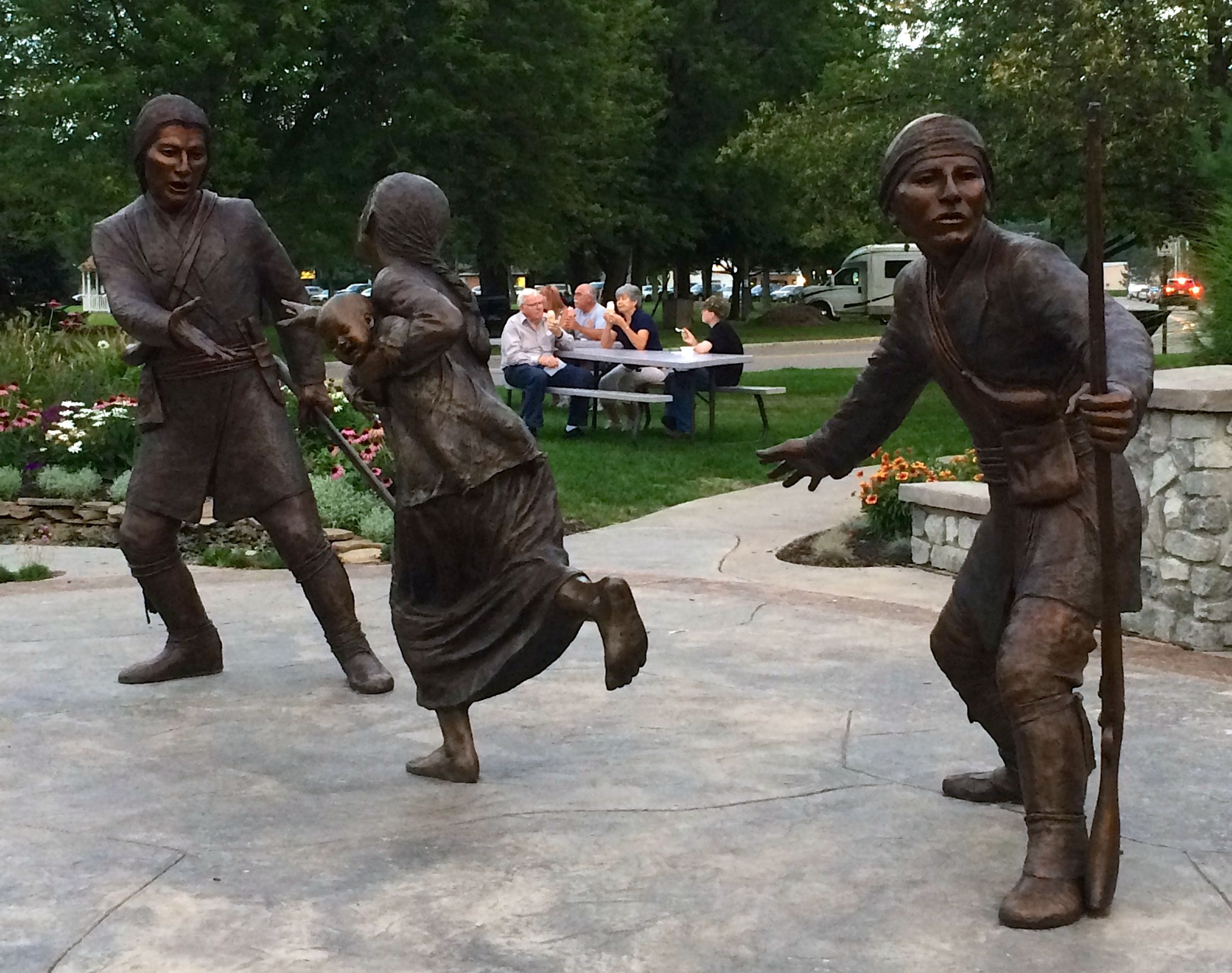
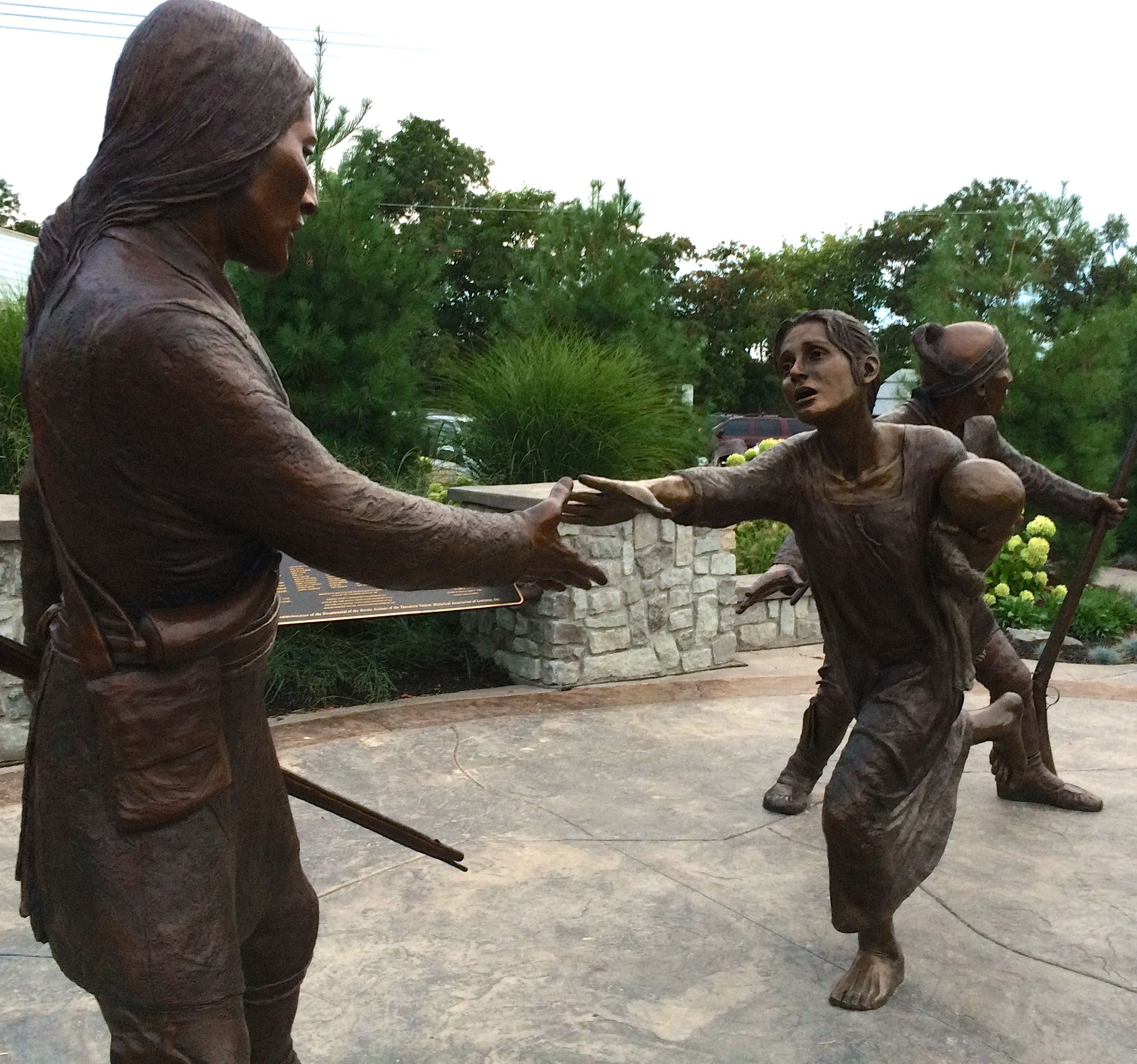
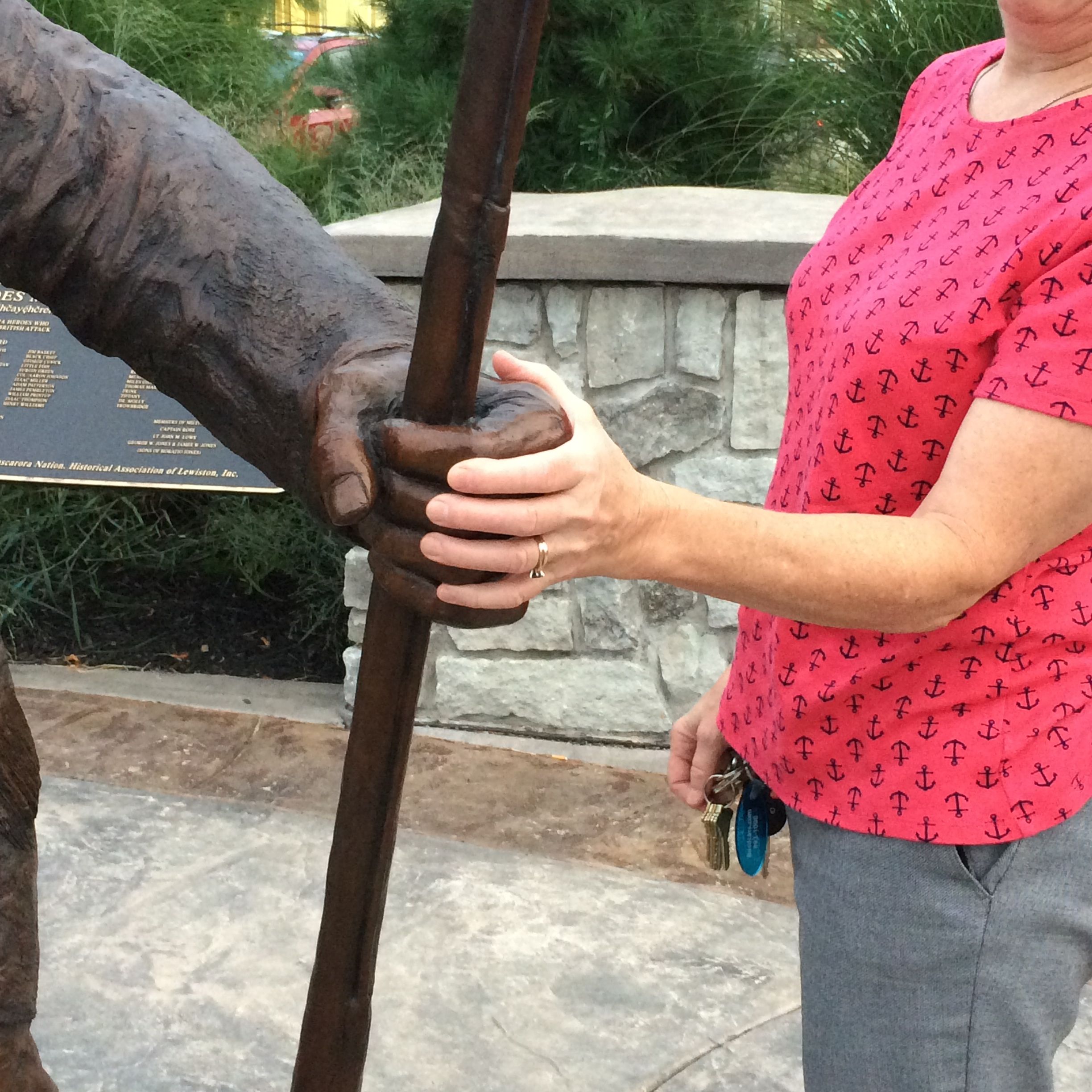
After that, we made a quick stop at another of Susan Geissler’s works, Tuscarora Heroes Monument.
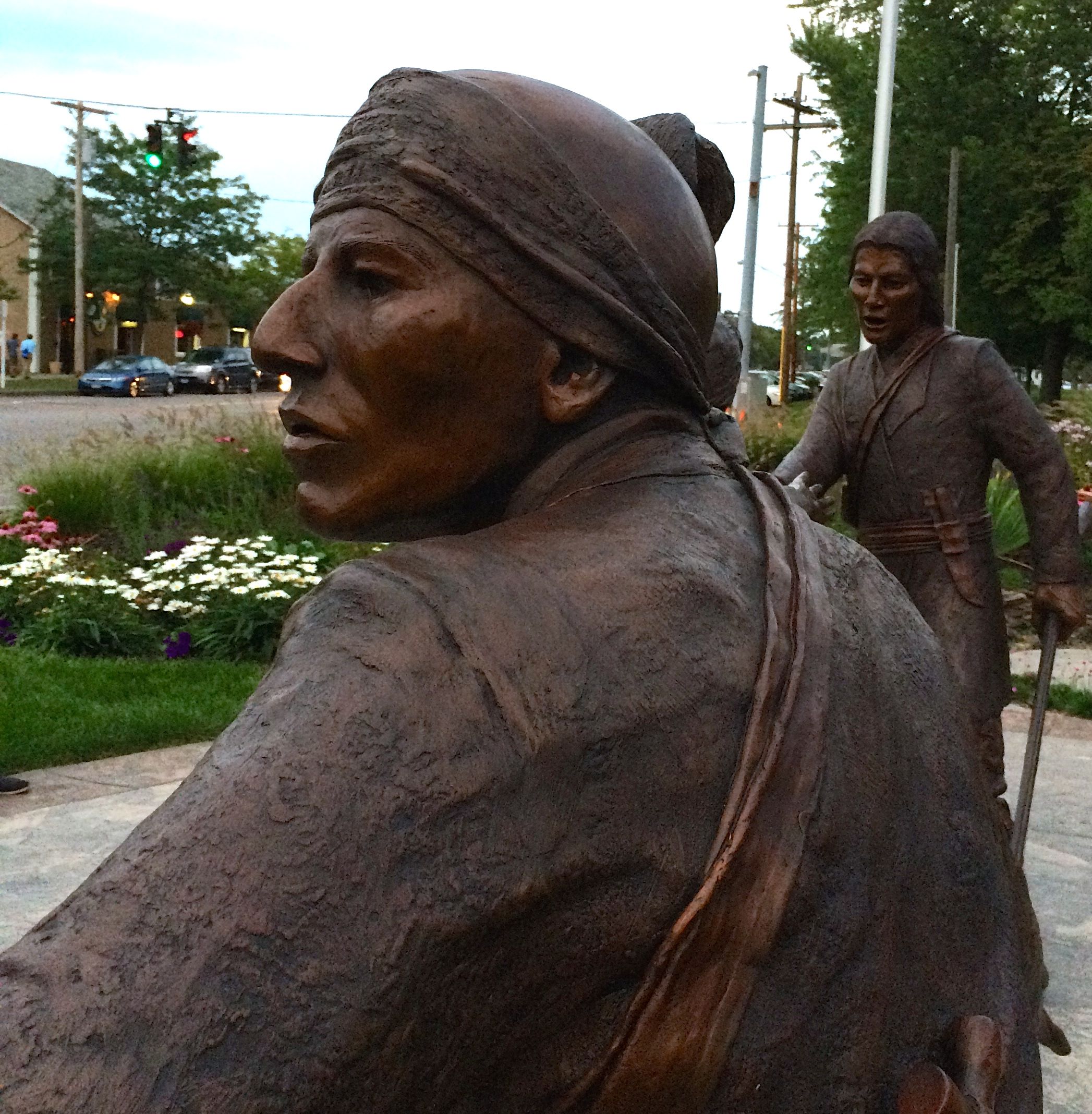
Tuscarora Heroes Monument
This honors the assistance given to the people of Lewiston during the war of 1812.
One the night of December 19, 1813, the British and their “Western Indian” Allies captured nearby Fort Niagara without firing a shot. They then ran down River Road to Lewsiton to seek retribution for an earlier attack on the other side of the river in the British territory of Canada. They sought to burn Lewiston to the ground and kill the citizens. The town was lightly defended, and all the people could do was flee for their lives through the snow and the mud.
The Tuscarora, living up on the escarpment above Lewiston, heard the noise and came to their neighbor’s defense. They used speed and diversionary tactics and gave the impression that they were a large group coming to the rescue. This stopped the enemy in their tracks, despite the fact that the enemy outnumbered the Tuscarora 30 to 1.
The statues are 110% of life-size.
I was able to take a few more pictures here, as I didn’t have to wait for people to clear away. If you would like to check it out in real time, you can click on the Tuscarora Heroes Monument Webcam.
I checked out Susan Geissler’s website, and I found that she has works all across the country – even though she lives in Lewiston. I plan to keep my eyes open for her works of art as I continue my travels.
In these days, when there is so much discussion of immigration, borders and enemies, I find it heartening to reflect on how thoroughly relationships can change – as well as how much change remains to be made.
I had dinner plans in Rochester with a high school chum and her husband, so I decided to take a leisurely drive through the countryside. I could take the Thruway back to Buffalo after the sun had set.
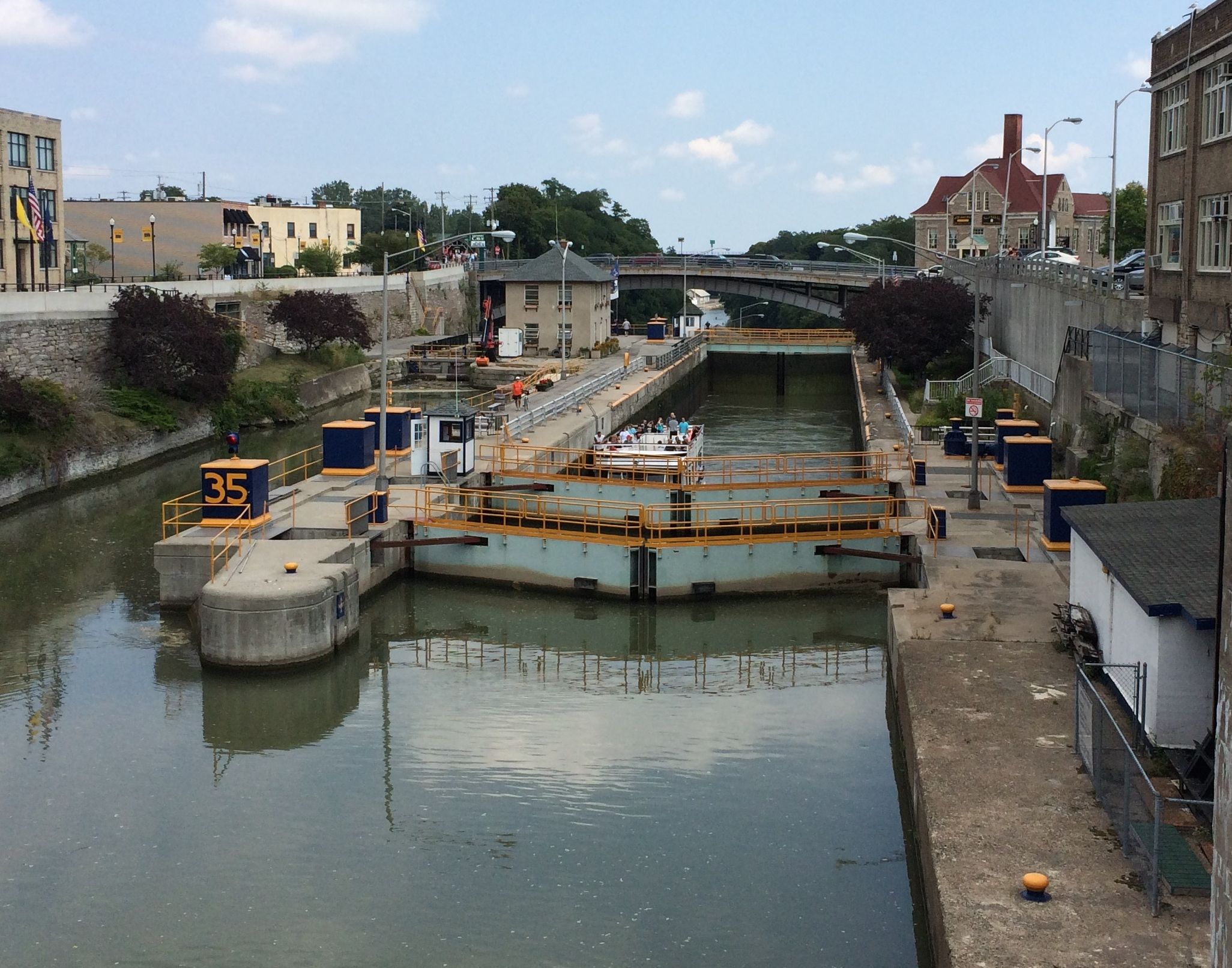
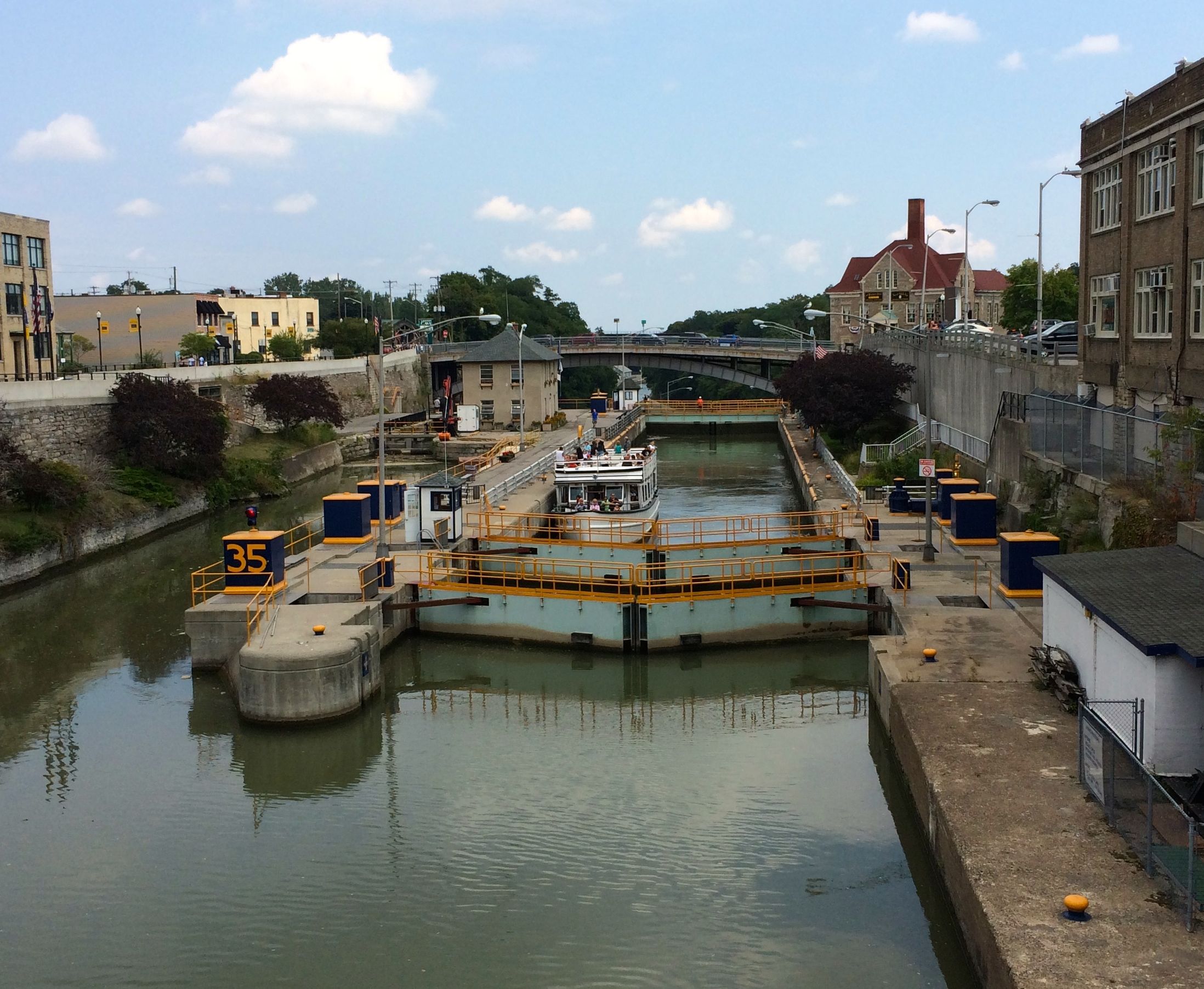
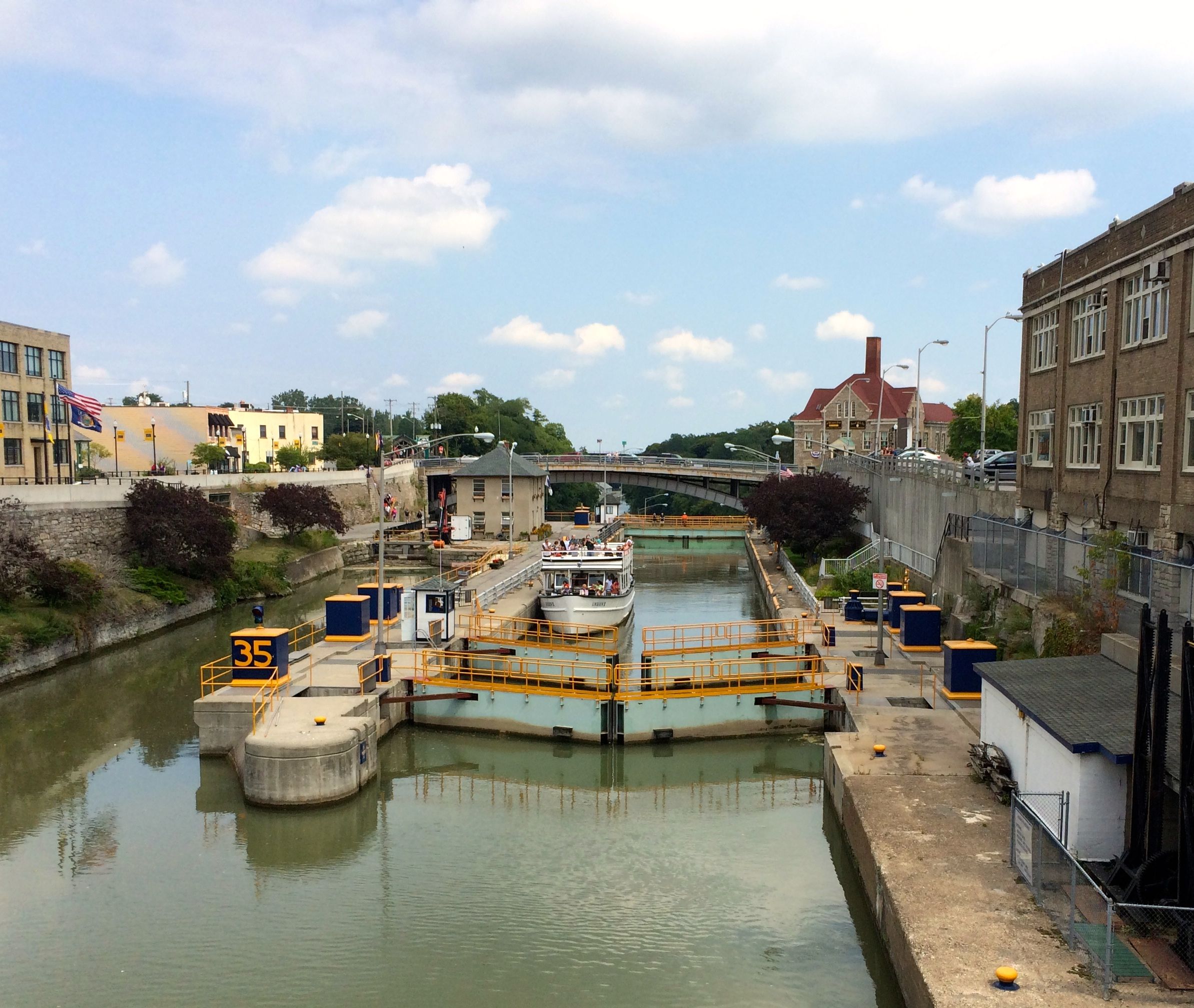
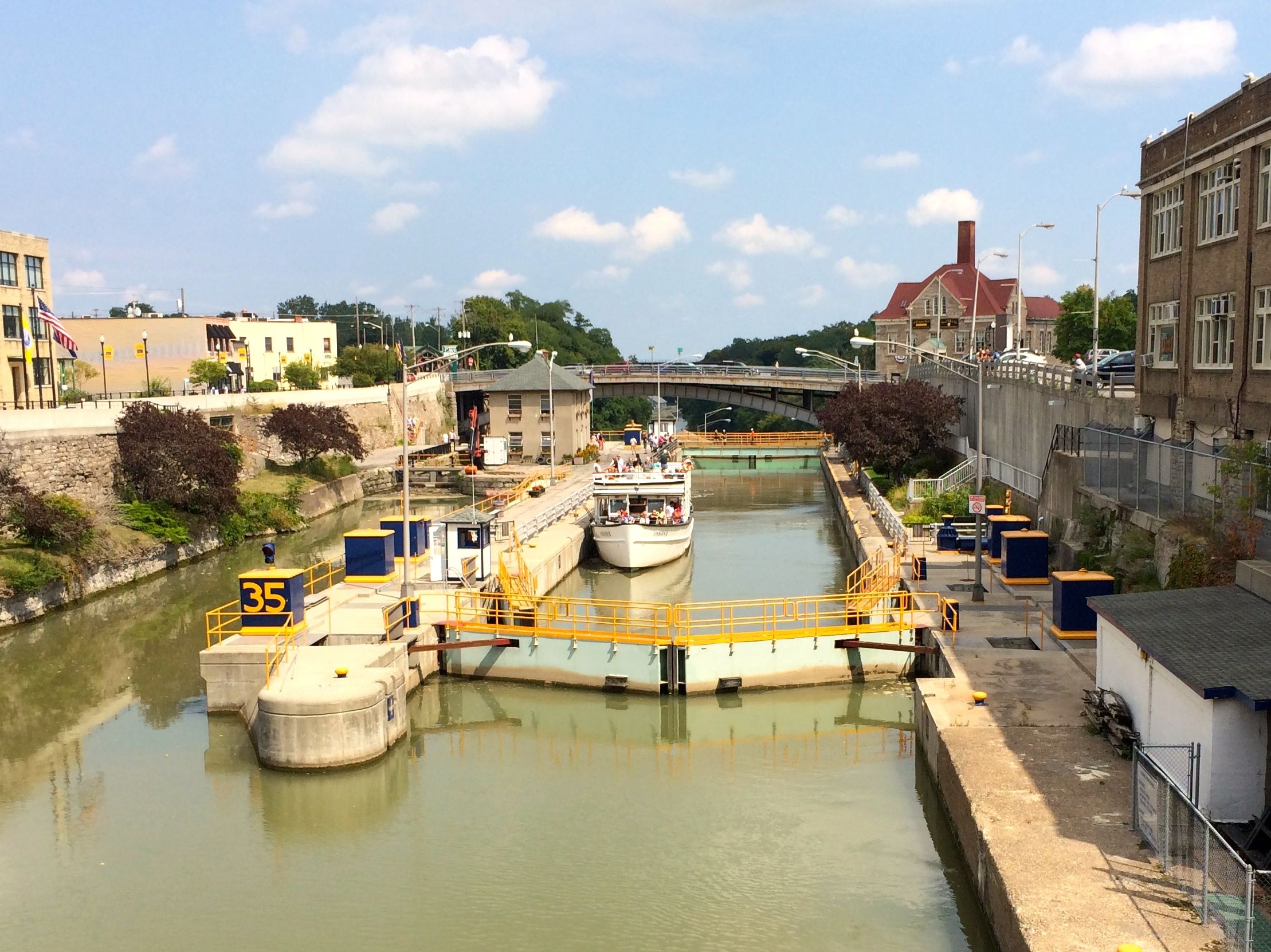
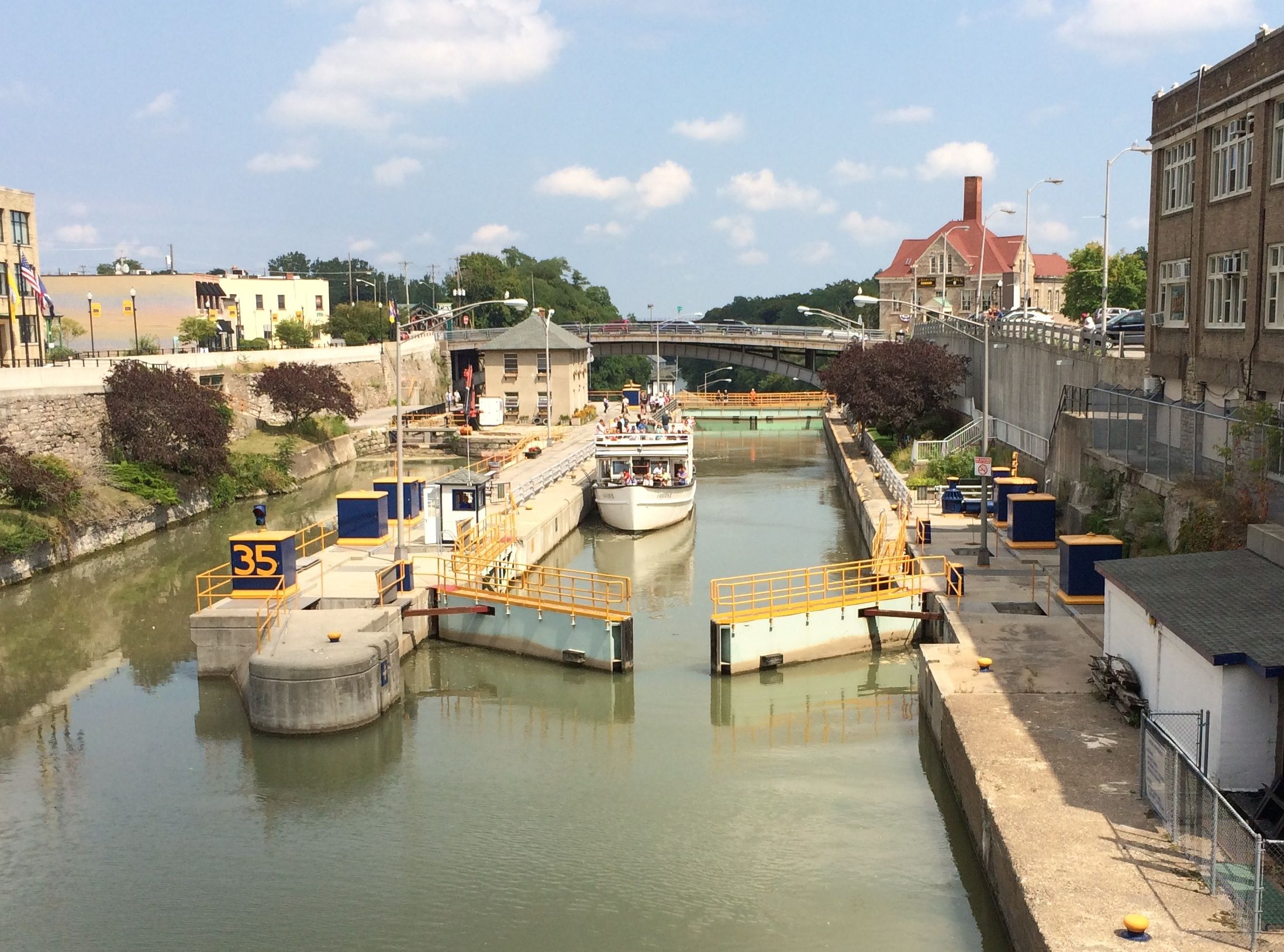
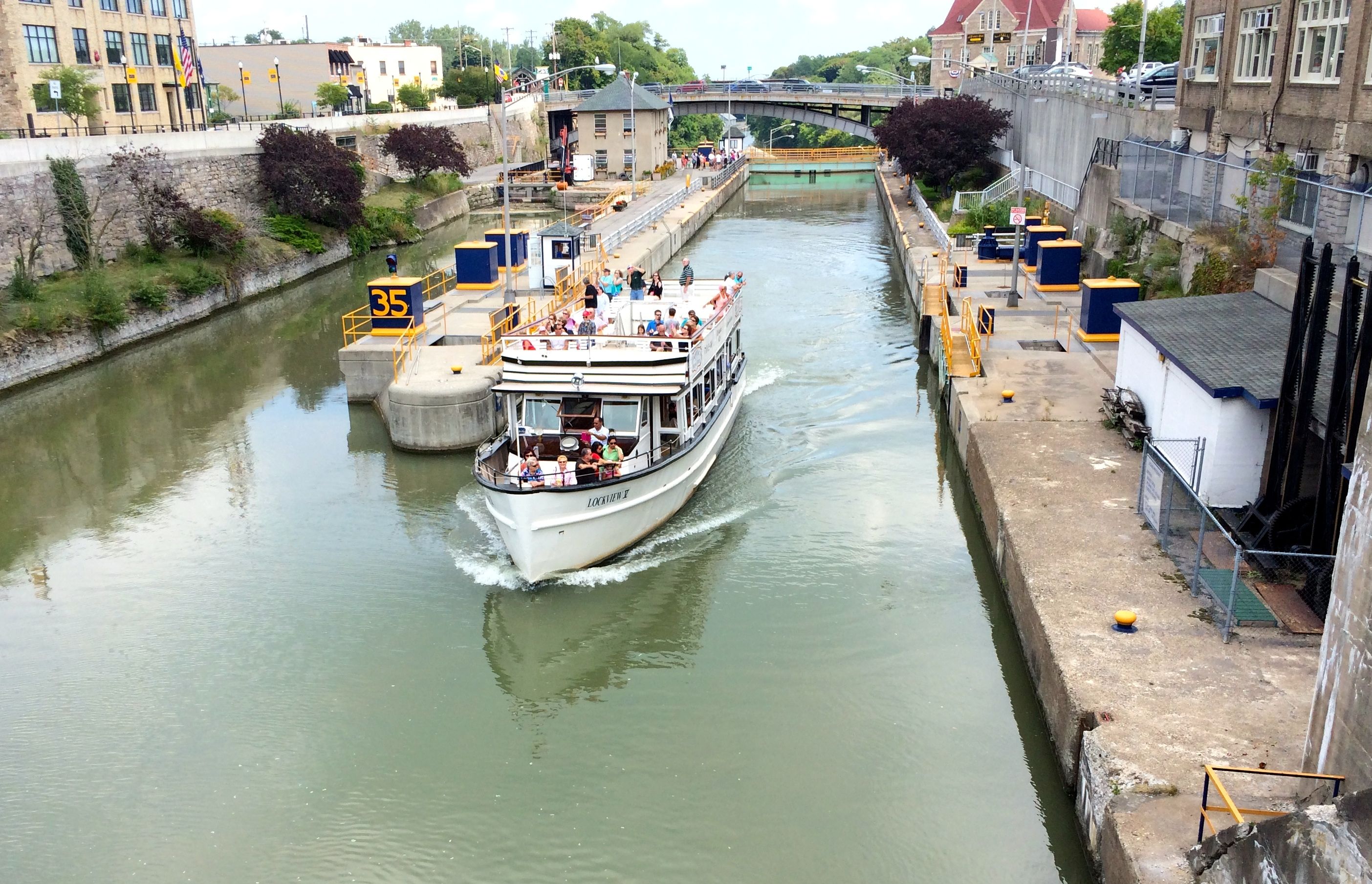
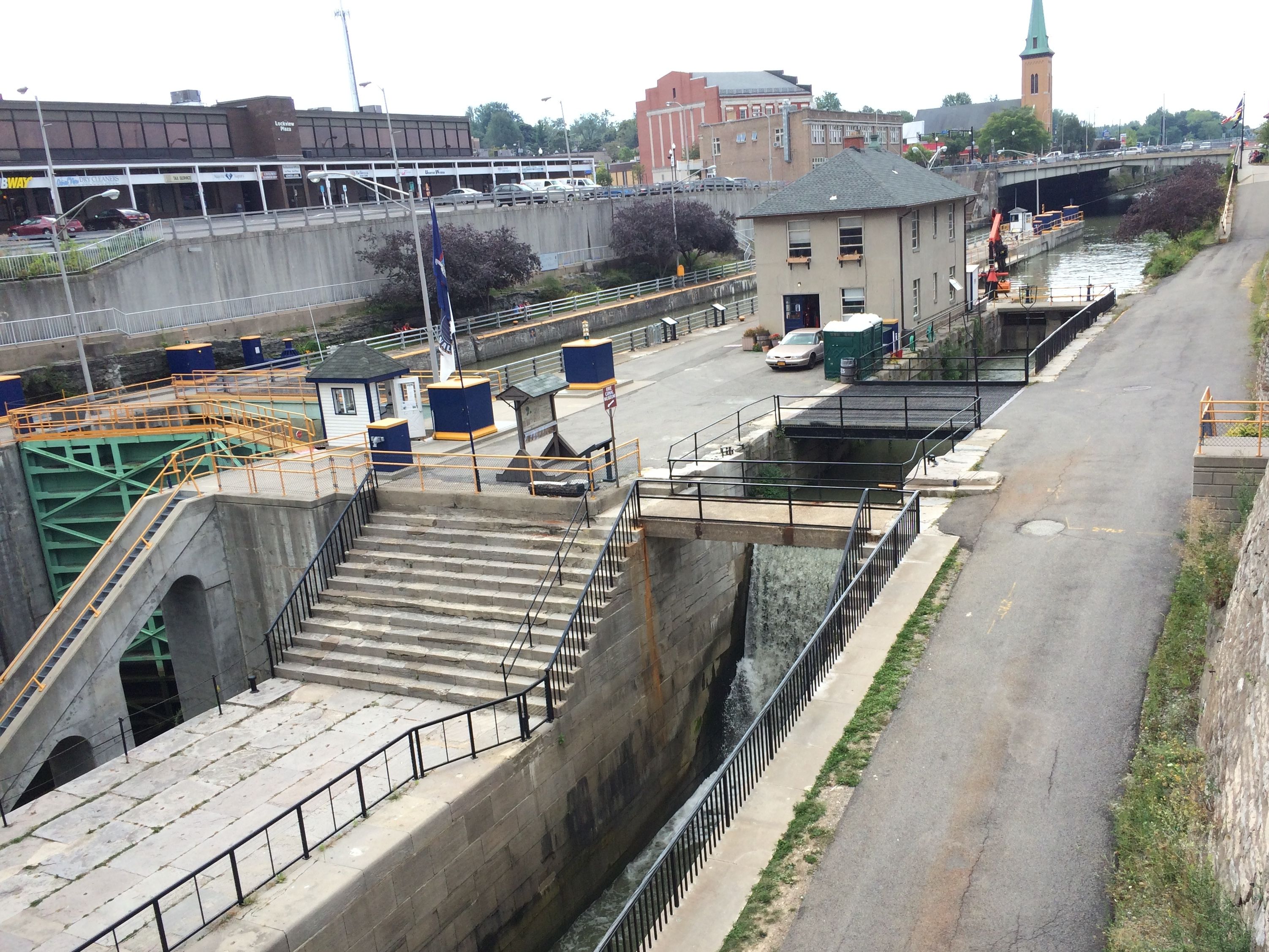
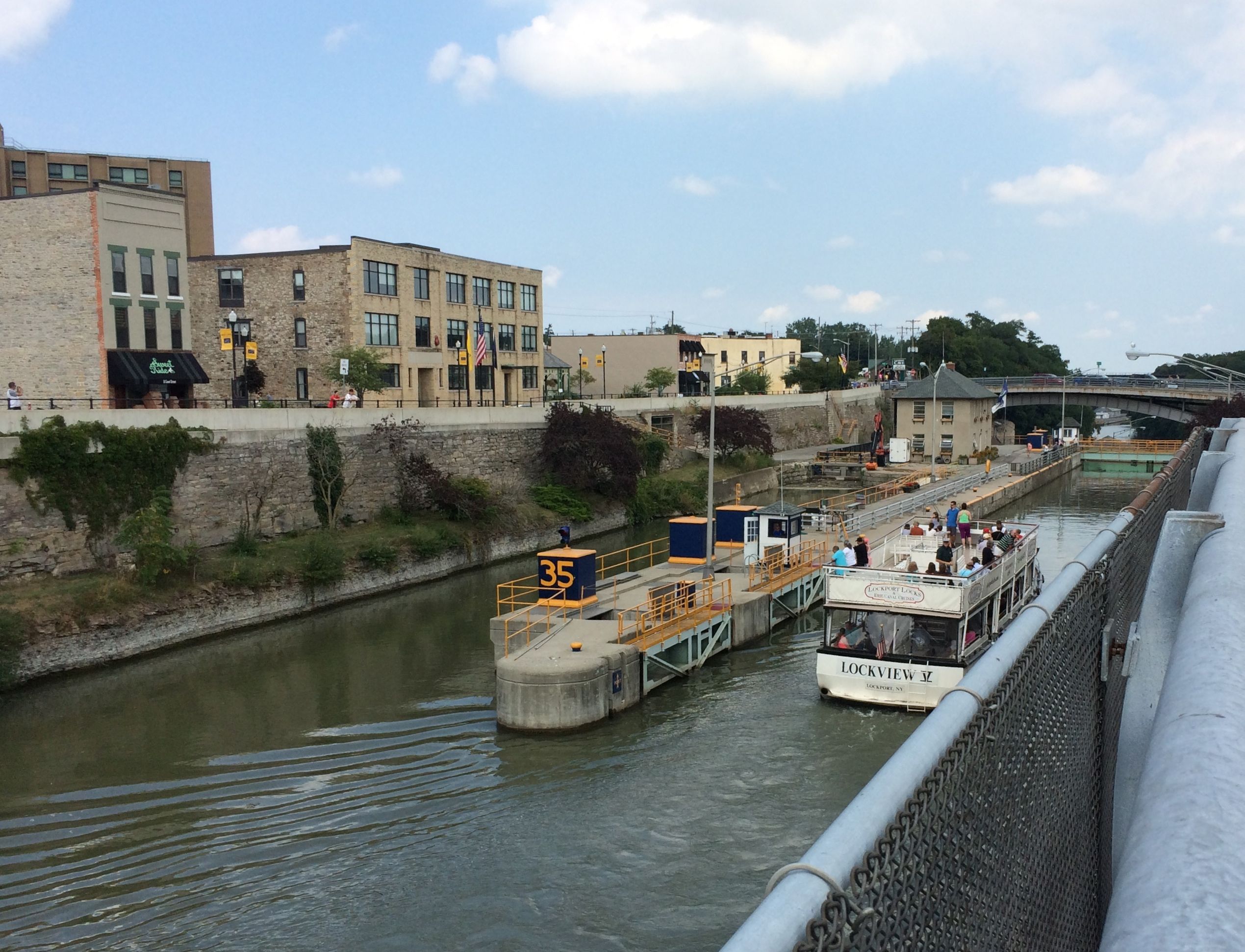
The first stop on my trip was Lockport. As luck would have it, I arrived there just as a boat was getting ready to go though the lock. (I have a lot of good luck!)
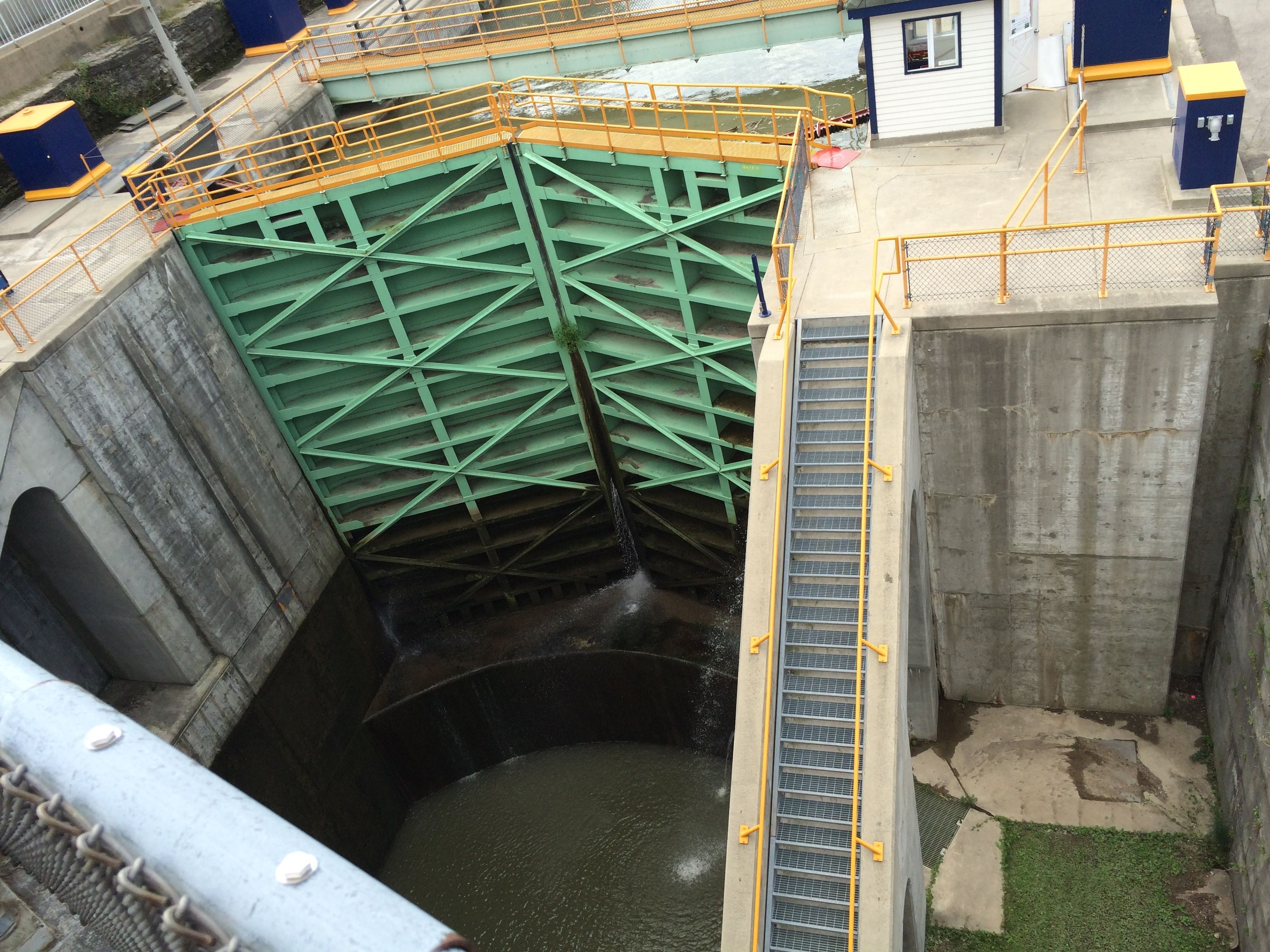
You can see that the surface of the water that the boat is on is lower than the water right in front of the gate.
A little higherHigher…
You can see the first sets of gates opening.
Now, the inner gates are open and the outer gates are starting to open.
Outer gates openingAnd away we go!
There were a lot of signs to read that told some of the story of the digging of the canal. After I watched the boat go through the canal, I walked around and read some of them.
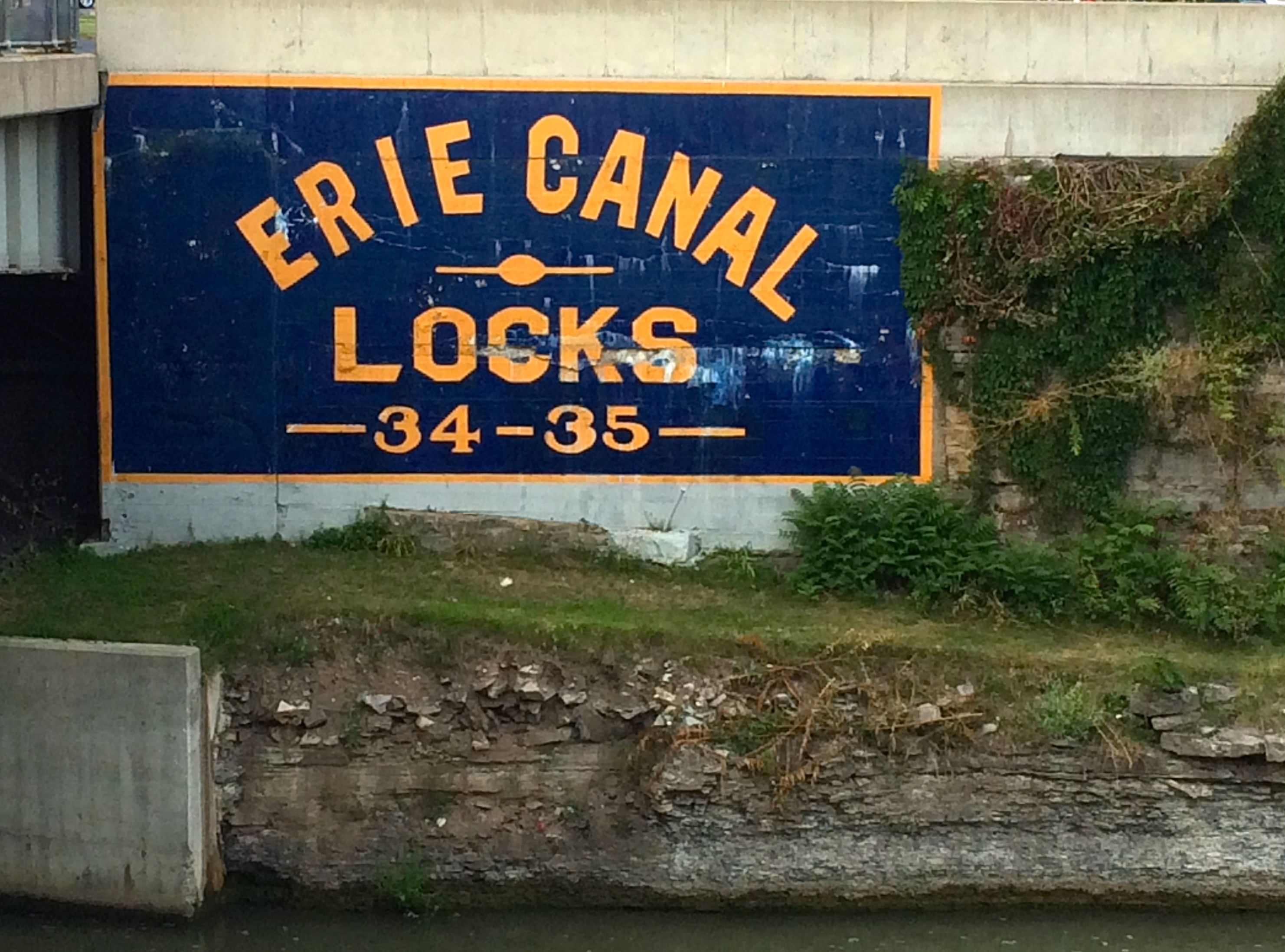
I was watching the action on locks 34 and 35.
Back in the 1970’s I took a canoe trip from Shady Hollow, in North Tonawanda, to another Girls Scout Camp on the other side of the locks. I remember actually going through one of the locks. We looped ropes around the bollards on the side of the canal and used them to help steady ourselves. The funny thing is, I only remember one lock! We must have gone through two locks, minimum. Funny what the mind holds on to and what just slips away.
The canal was first proposed in 1807 and construction began in 1817. DeWitt Clinton, mayor of New York City, pushed for the construction of the canal, and for a long time, it was called “Clinton’s Folly” and “Clinton’s Ditch.” After much politicking and deal-making, it was finally begun when he was governor of the state. He was voted out of office and removed from the Canal Board, but managed to regain the office and took part in the ceremonies opening the canal in 1825.
The canal is about 360 miles long, connecting the Hudson River with the Great Lakes. There are 36 locks on the canal, which makes it possible for ships to overcome an elevation differential of about 565 feet.
The canal was a great boon for the young country, as it made the movement of people and good faster and easier and could be done at a small fraction of the expense of overland transportation.
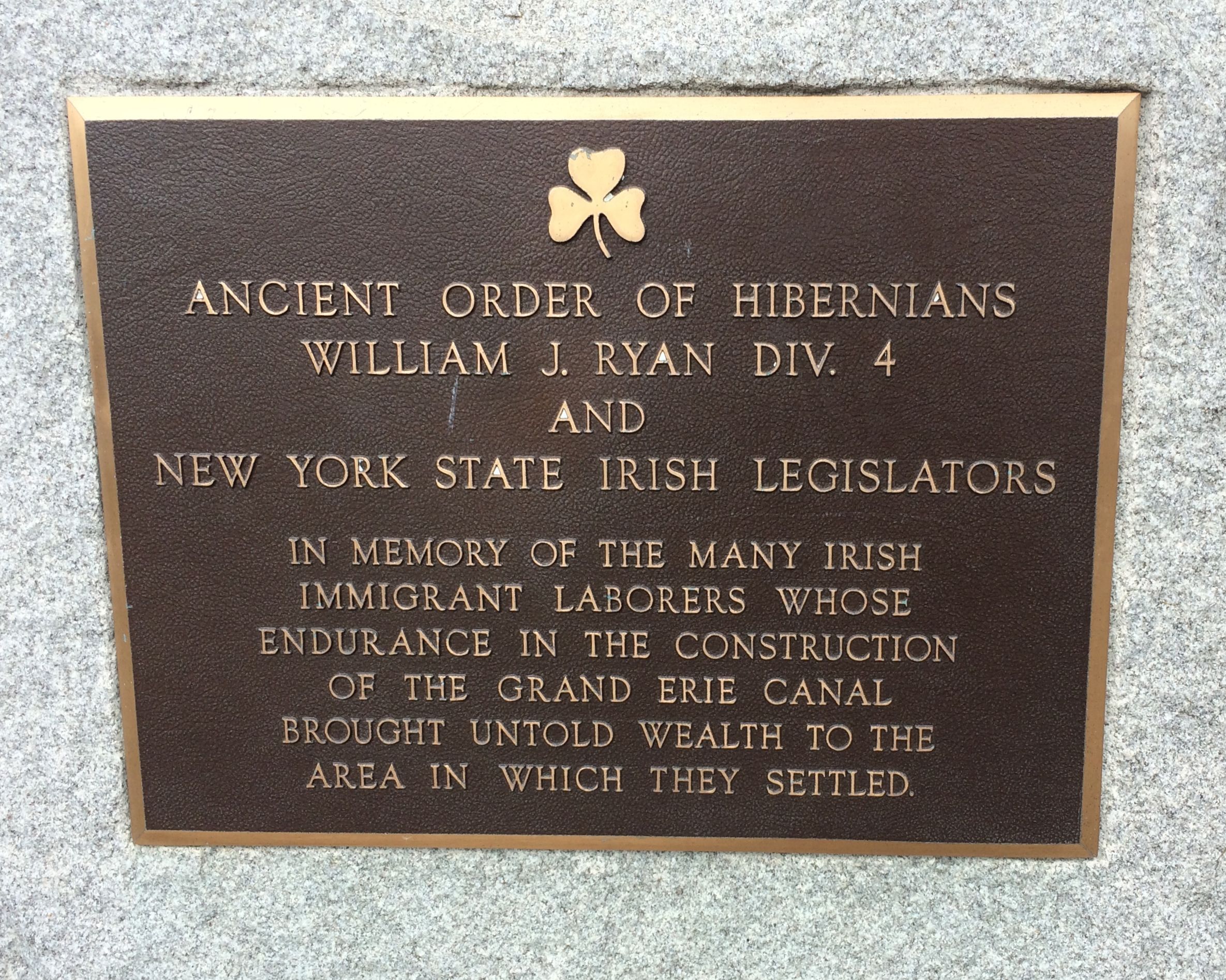
It seems that this country has been dealing with the question of immigrants all along. The Irish were enticed to come over to dig the canal for $12 a month and room and board. Something tells me that those weren’t 40 hour weeks, with time off on Saturday and Sunday. Of course, there were not unions back then, and if you didn’t like the job you could look for another. “No Irish need apply” was a sign that hung in many places of employment.
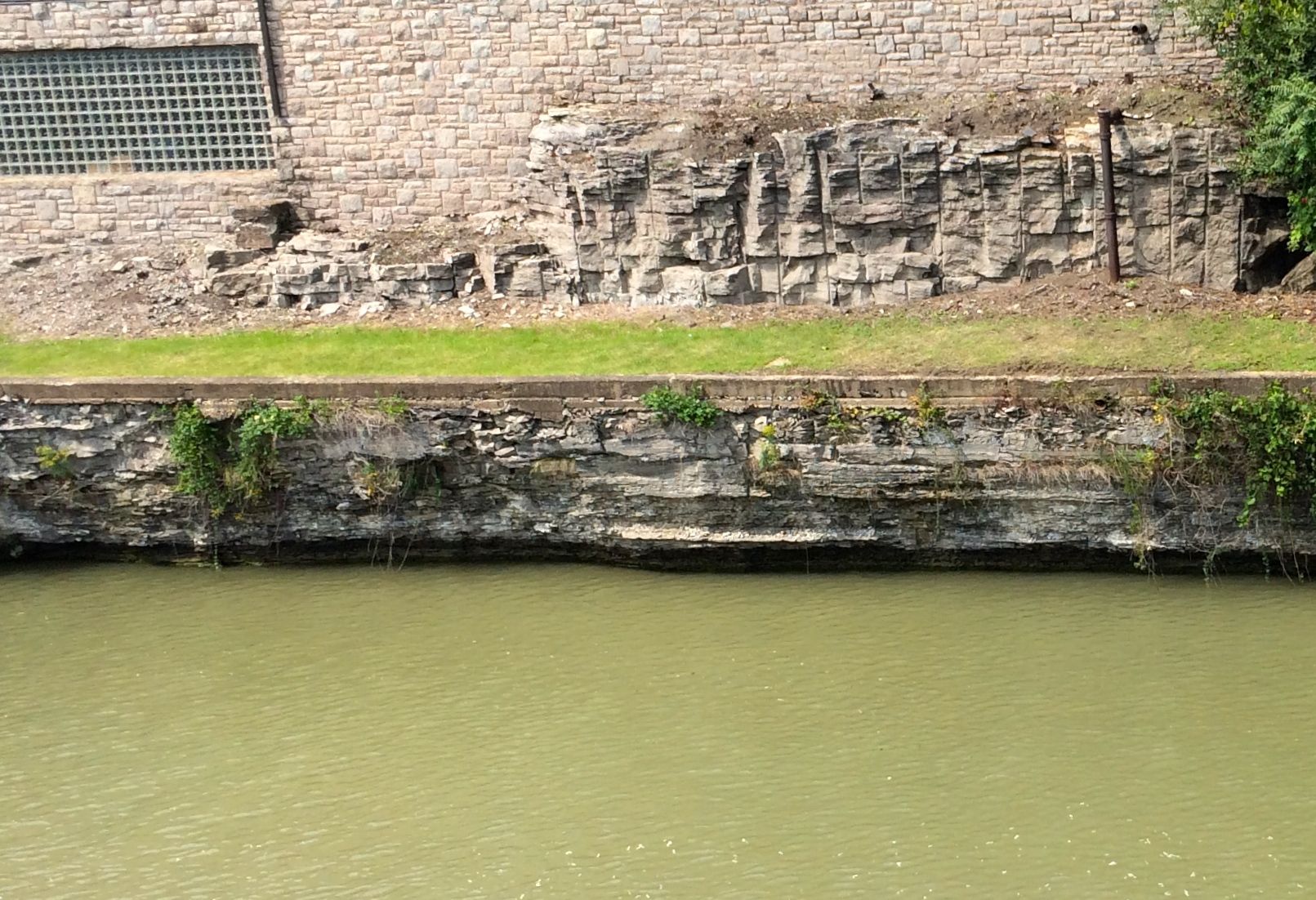
They were hired to dig and blast through the rock of “Lockport Mountain”. That was the first time I’d ever heard of this part of the country referred to as a mountain.
You can see the rocks they had to work with on the side of the canal.
Work would continue through the winter. They would drill holes and fill them with water. When it froze, they would remove the rock that broke off.
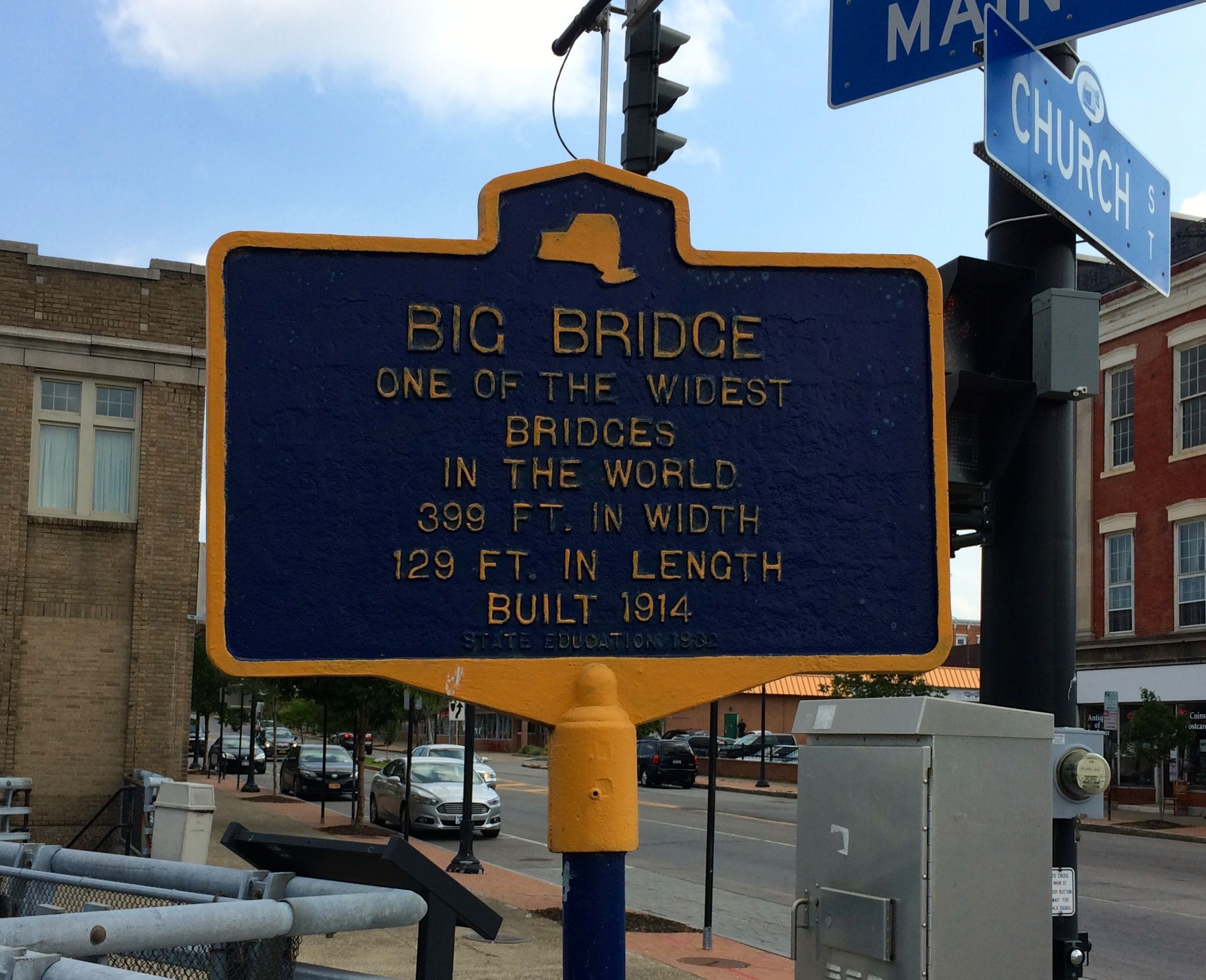
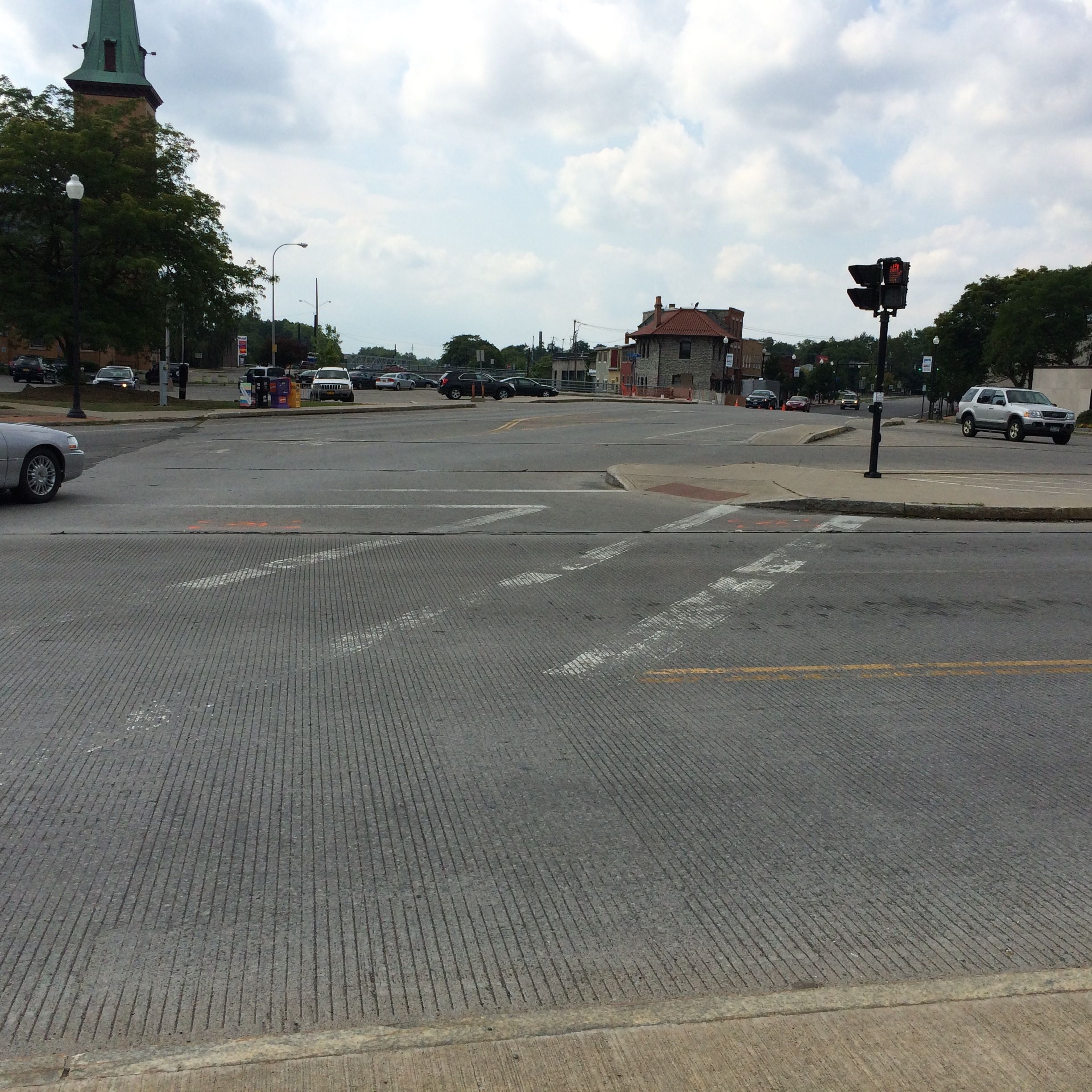
There is a brig across the canal that is one of the widest bridges in the world, according to one of the plaques.
Yep, that’s one big bridgeYes, this is all part of a bridge over the Eric Canal.
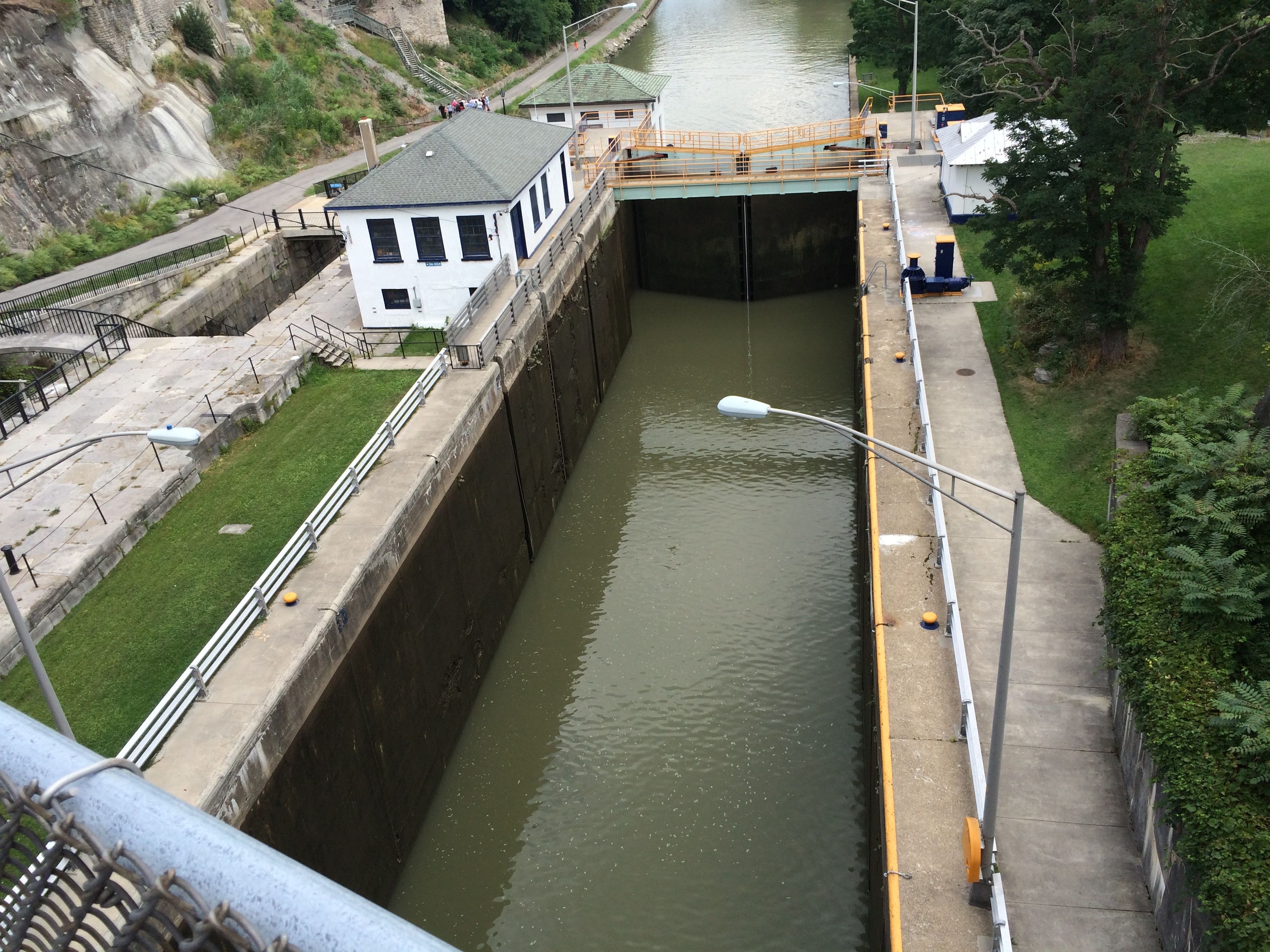
I walked along the canal toward the next bridge. Once I got there, I looked back and could see the smaller lock next to lock 35. I think one of the plaques said that it was used as an auxiliary lock. I think I also read that it was the dimensions of the original locks. There were an awful lot of signs to read!
The small lock to the side of the larger one.Lock 35 holding back the water
This is the far side of lock 35. It is holding back the water until a boat wants to go downstream.
Lock 34
And here is lock 34. The water level is the same as downstream.
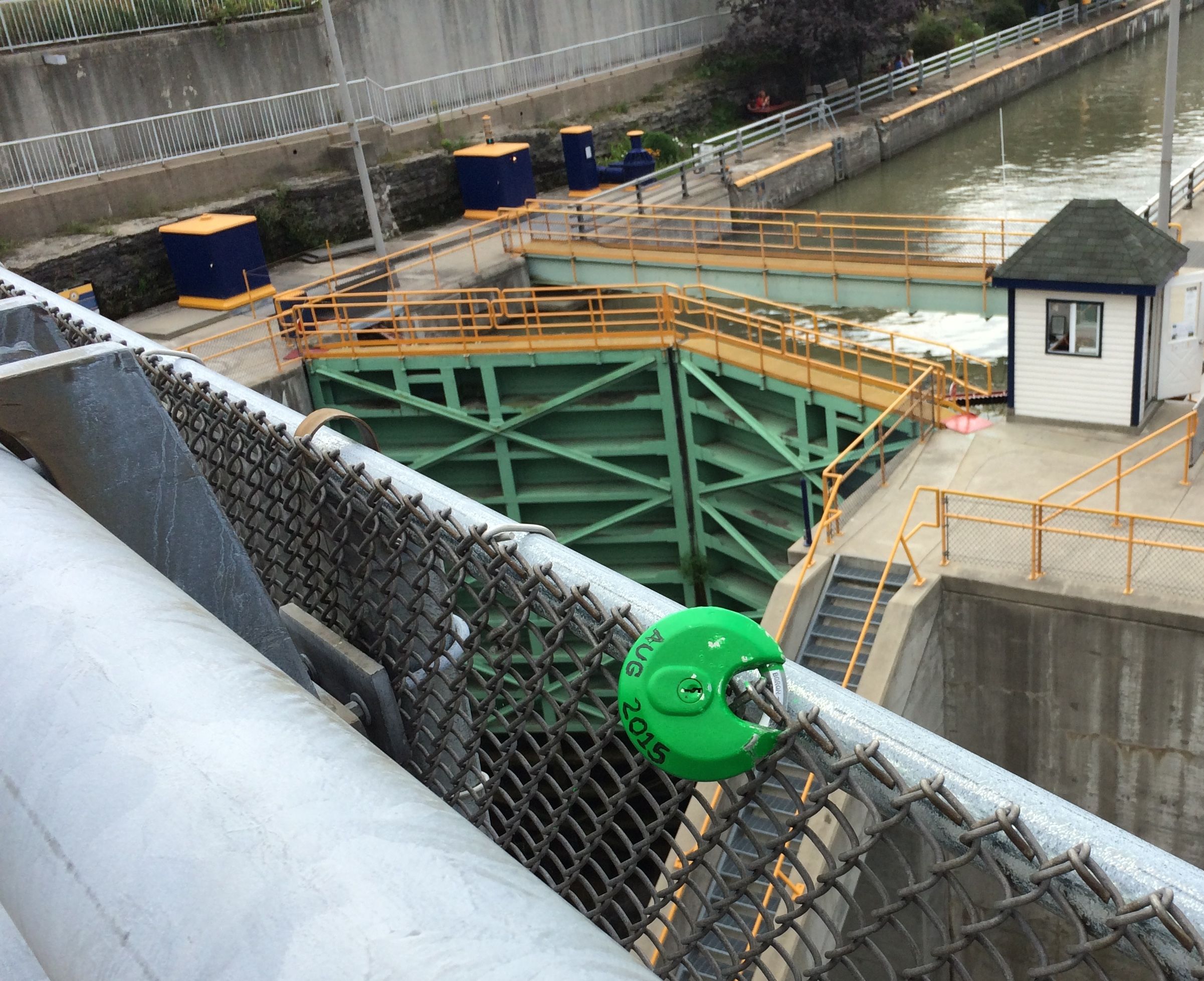
It Ain’t Paris
I guess if you can’t get to Paris to profess your undying love, a bridge across the Erie Canal will do. If you don’t know about the love locks, here is a little information for you. Just click on the link above.
Heading back downstream
I continued my stroll along the canal. When I got back to the Big Bridge, the tour boat was coming back through the lock. Now they reverse the procedure. Sail in, closed gates, empty the lock they are in, fill the lock in front of them, open gates and sail out.
Maybe I should have been a civil engineer. I am fascinated with the infrastructure of our world.
Church picnic
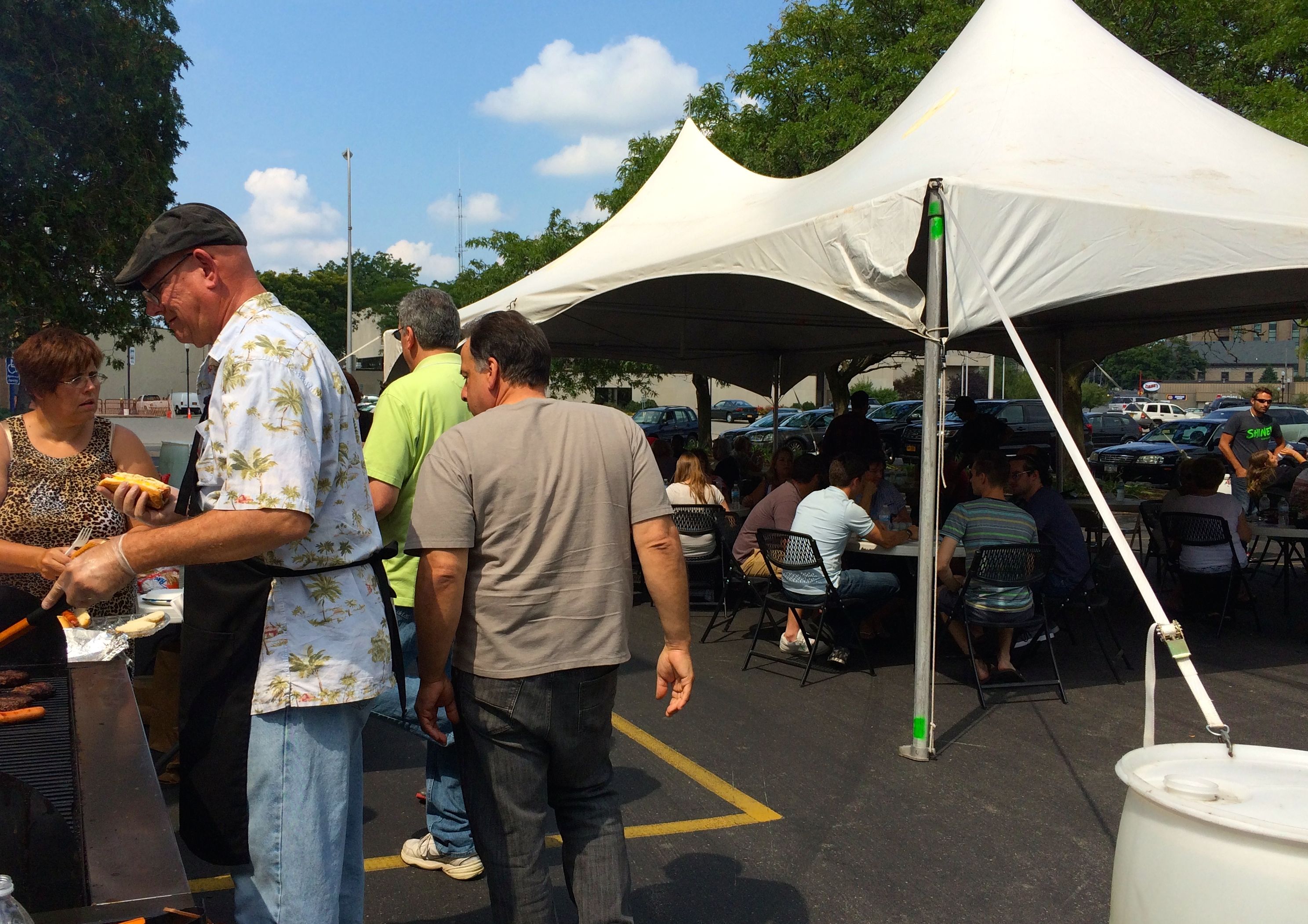
On my way back to Bart (the Big Ass Red Truck) I strolled through a picnic being held in a parking lot next to a church. They offered me a hot dog, which I gladly accepted.
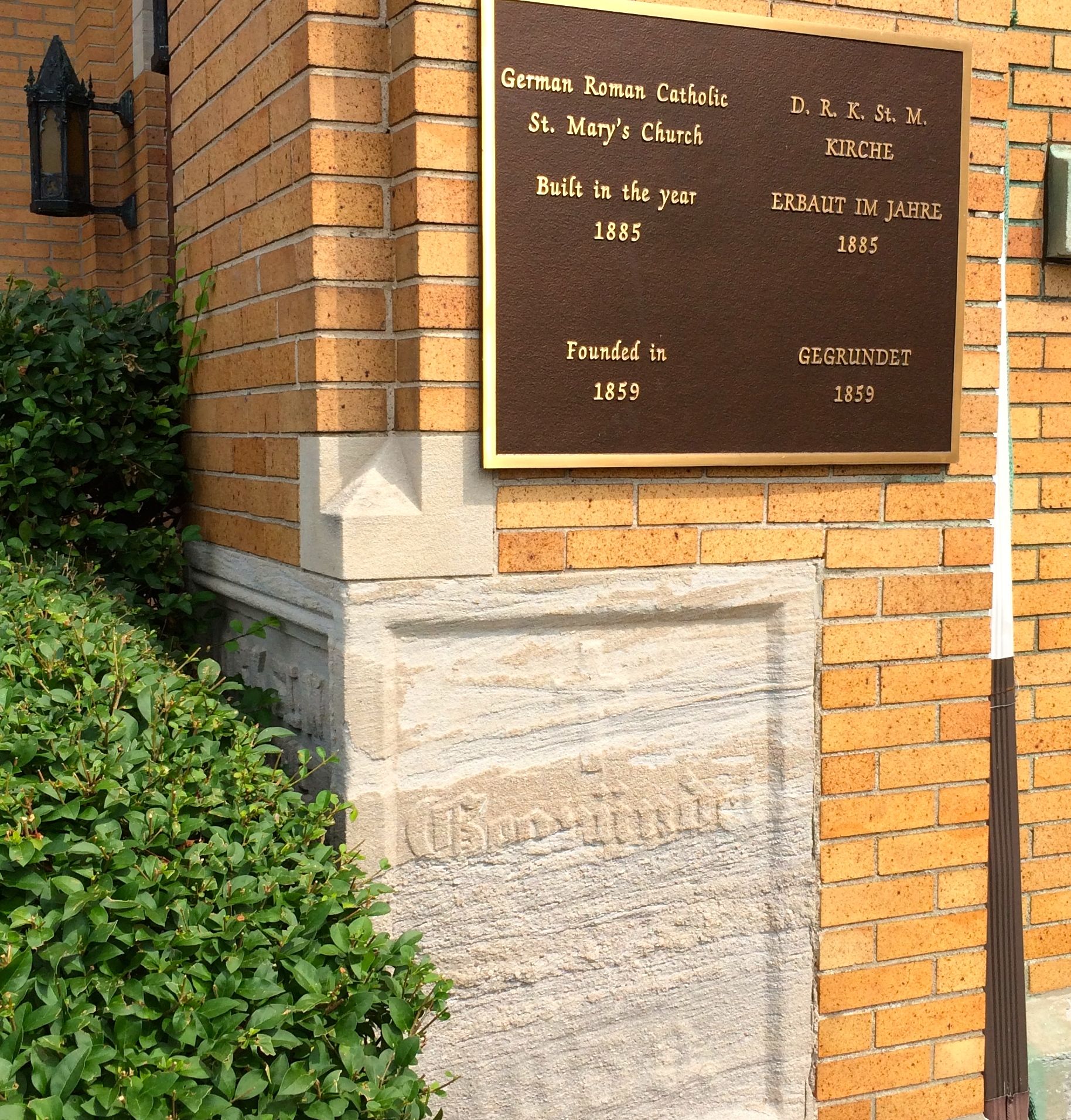
This really points out our immigrant background. It was founded in 1859 as a German church, as you can see in the cornerstone. A German church founded on the bank of the Erie Canal, which was built with a lot of Irish labor. In reading further about the Canal, I learned that German masons were also involved in its construction.
After enjoying my time in Lockport, I set out again. I stopped at a farm stand between Lockport and Medina. I bought some of the most delicious peaches I’ve ever had and chatted with the farmer. I asked him if he know how to get to the tunnel under the canal. I had been there years ago, but couldn’t remember exactly where it was. He gave me directions and I set off to find it.
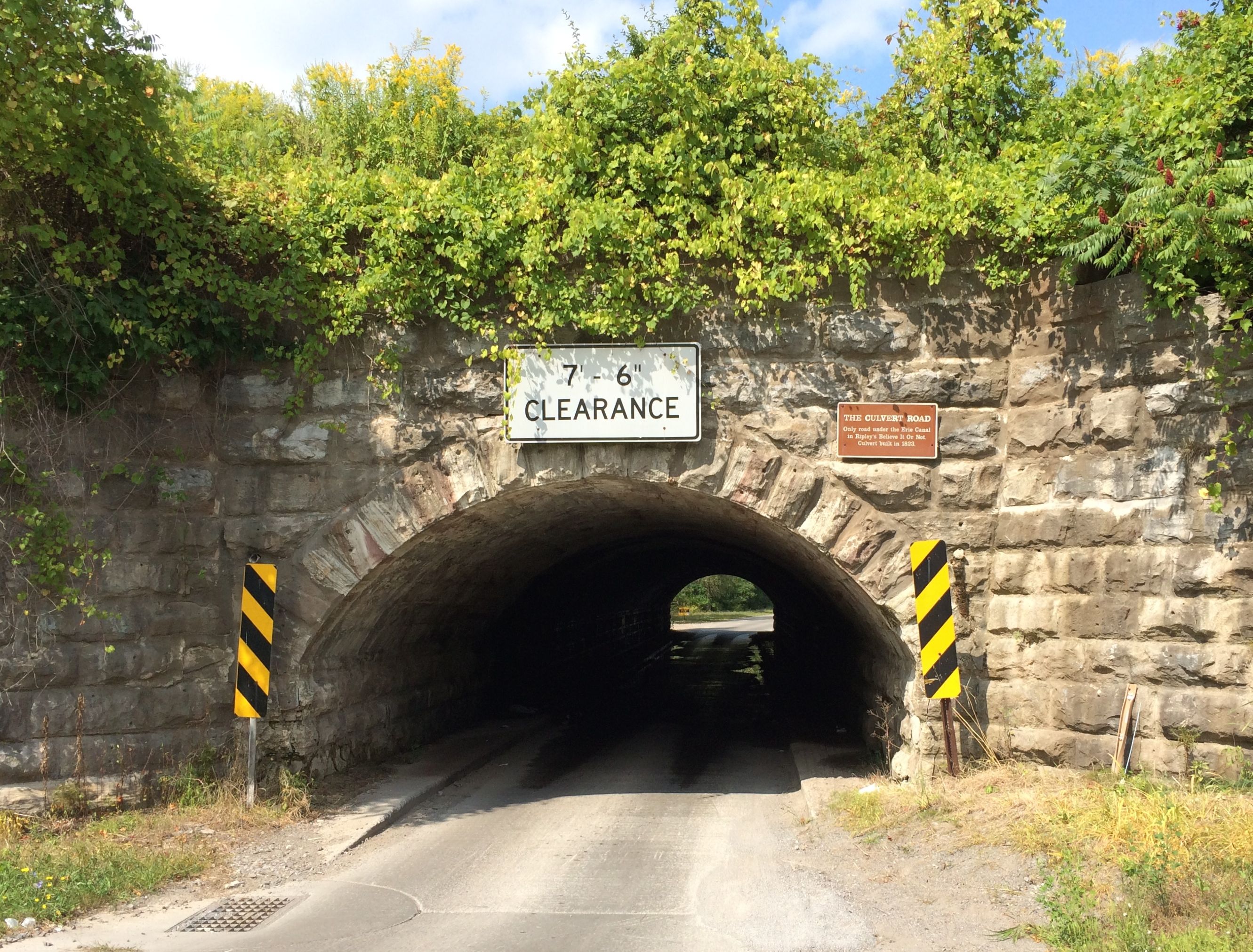
Yes, it’s a tunnel under the Erie Canal!
And, I did find it. I even drove through it. Of course, it is a one lane road at that point.
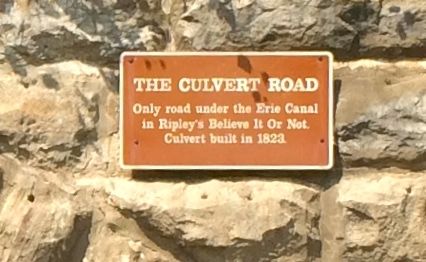
Here’s what the sign says.
This must be some of that fine German masonry. The farmer told me that it sprung a leak a few years back and had to be repaired. I would say that’s not too bad for a piece of engineering that is 192 years old and is filled with water!
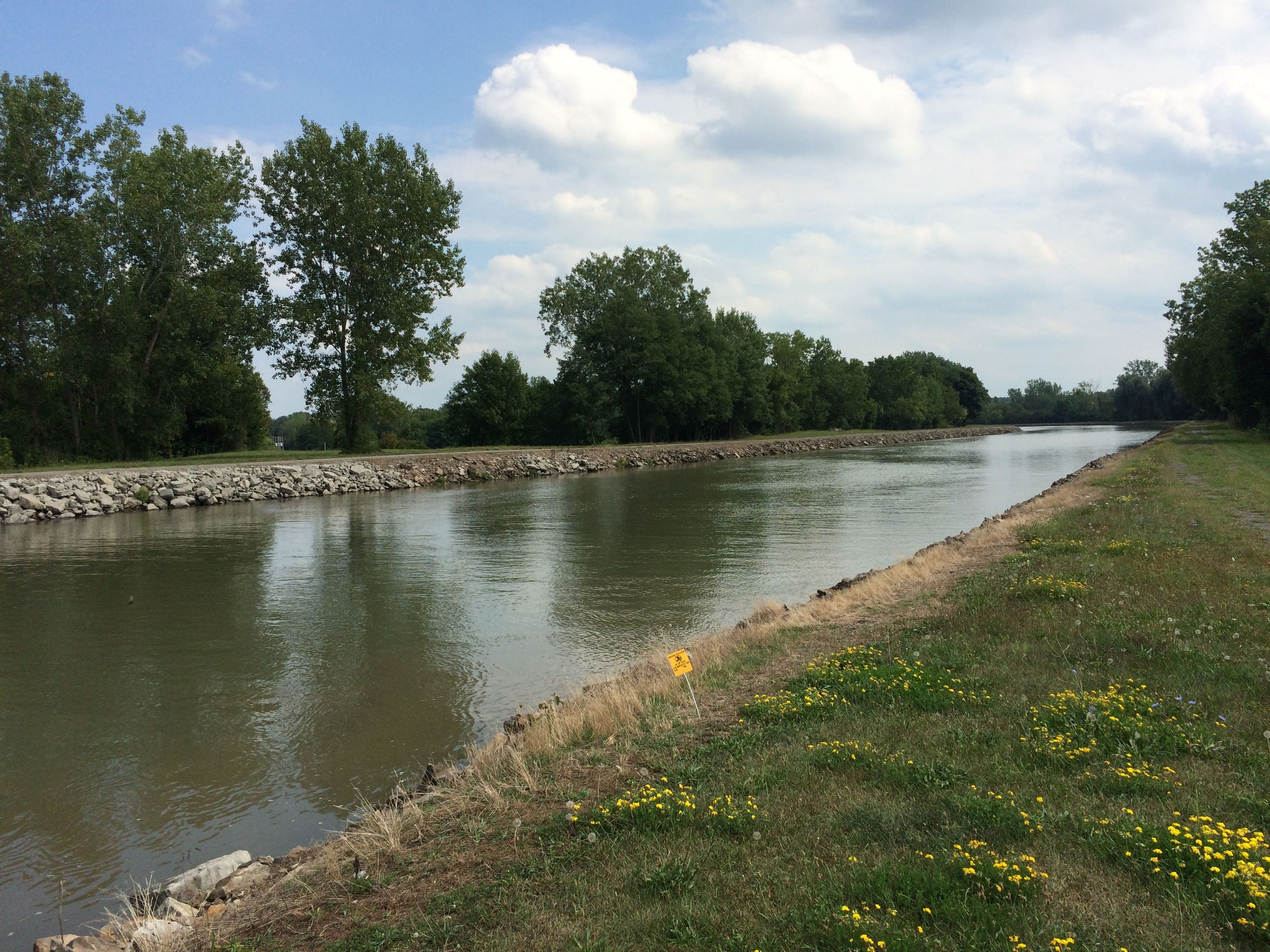
The mule-eye view of the canal
The road ran along side the canal for a bit, and I got to see what the mules would have seen.
I still had a little time left before my expected arrival time at my friends’ house, so I decided to visit Mount Hope Cemetery.
By now, you are thinking that I must be one weird person. First, I get all excited by a 190 year-old canal and then I visit a cemetery.
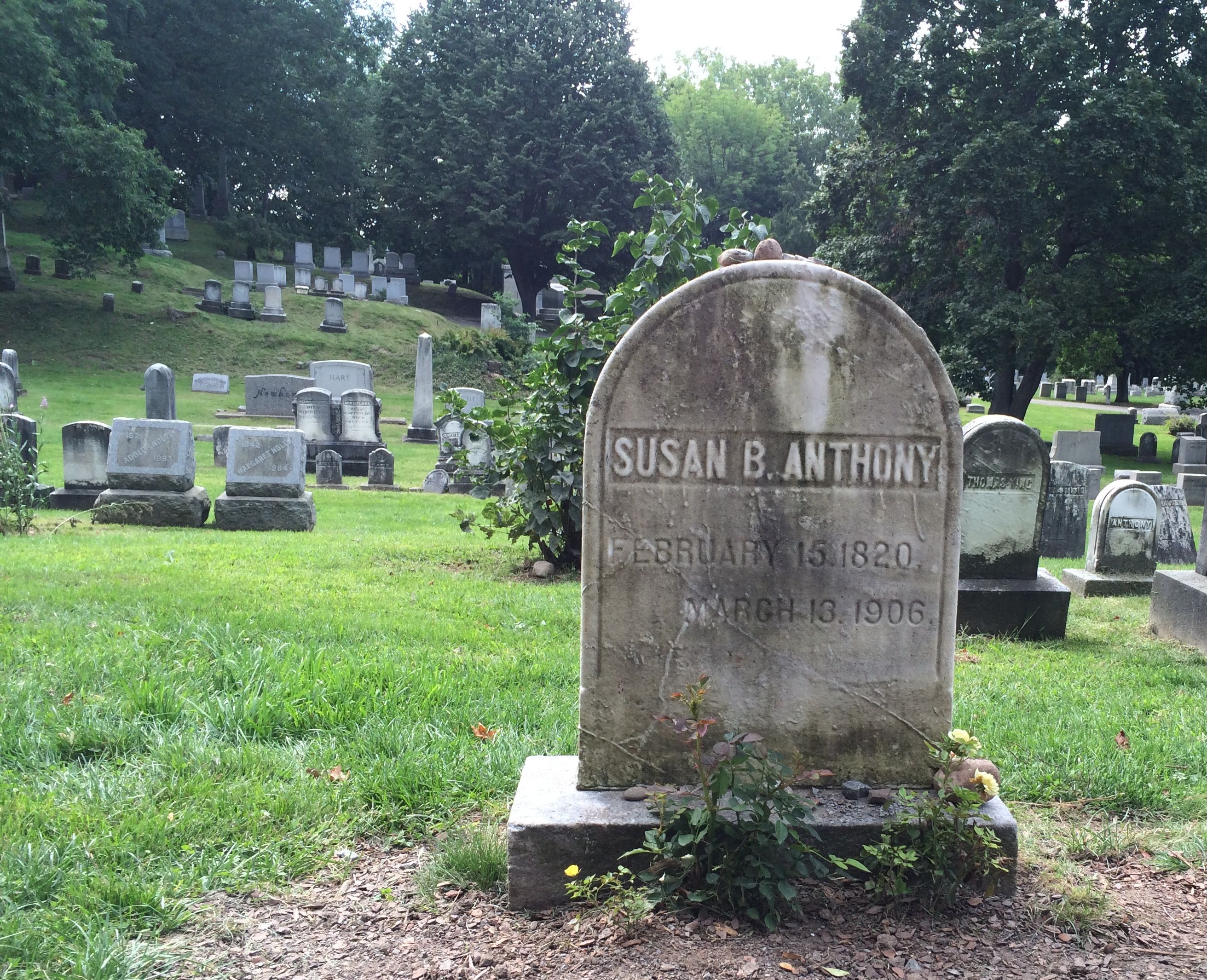
The cemetery itself is filled with spectacular examples of funerary art. That alone is reason enough for a visit. But, this cemetery contains the graves of two important individuals; Frederick Douglass and Susan B. Anthony.
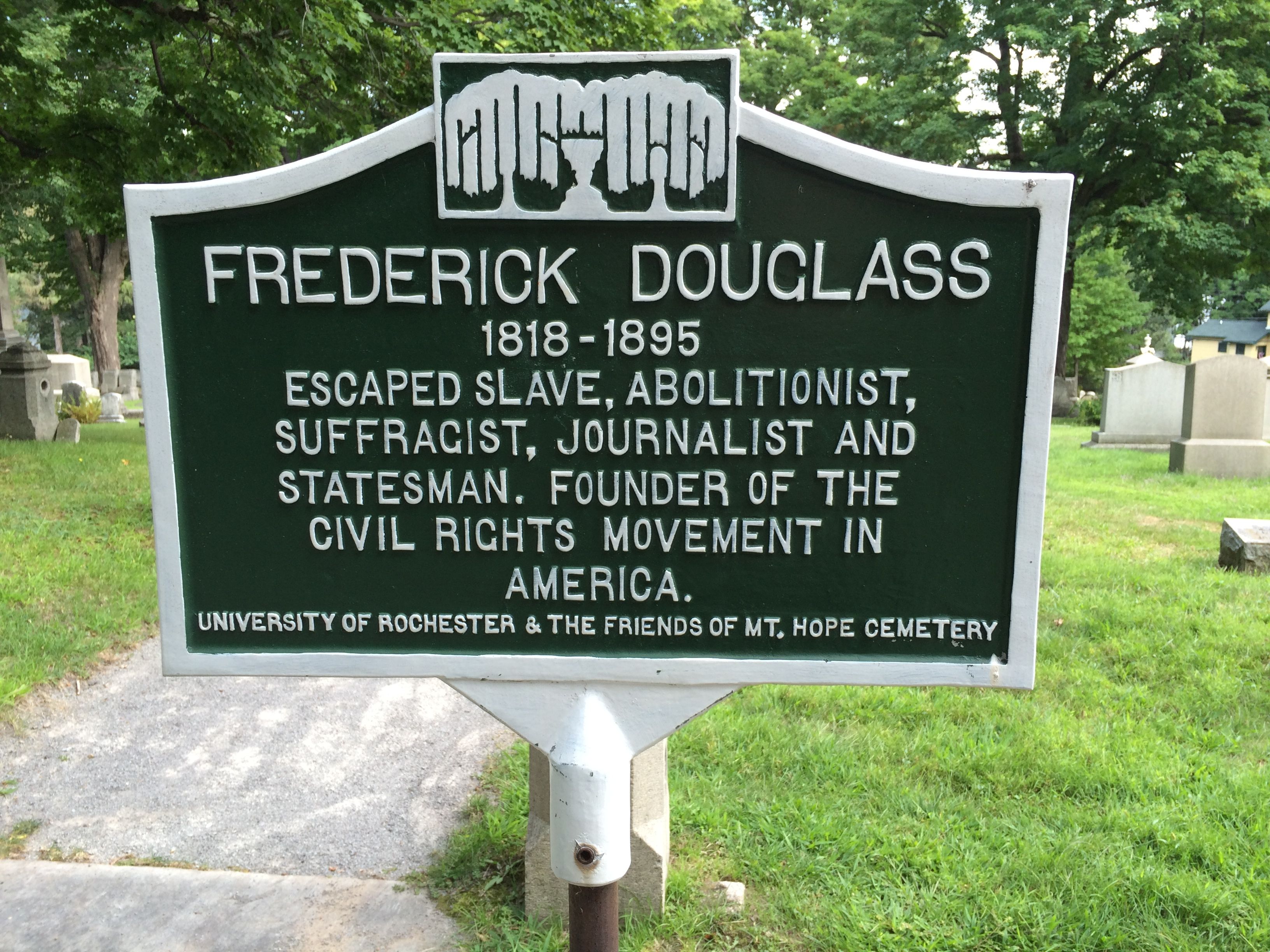
I entered the cemetery, and started driving about the hilly terrain. I thought, “This is nuts! I’ll never find anything in here!” The place was huge. I was about to try to find an exit, when I turned my head to the right and saw a sign:
It’s a sign!
So, I stopped my truck. I got out to look for the grave and to pay my respects.
Frederick Douglass’ grave
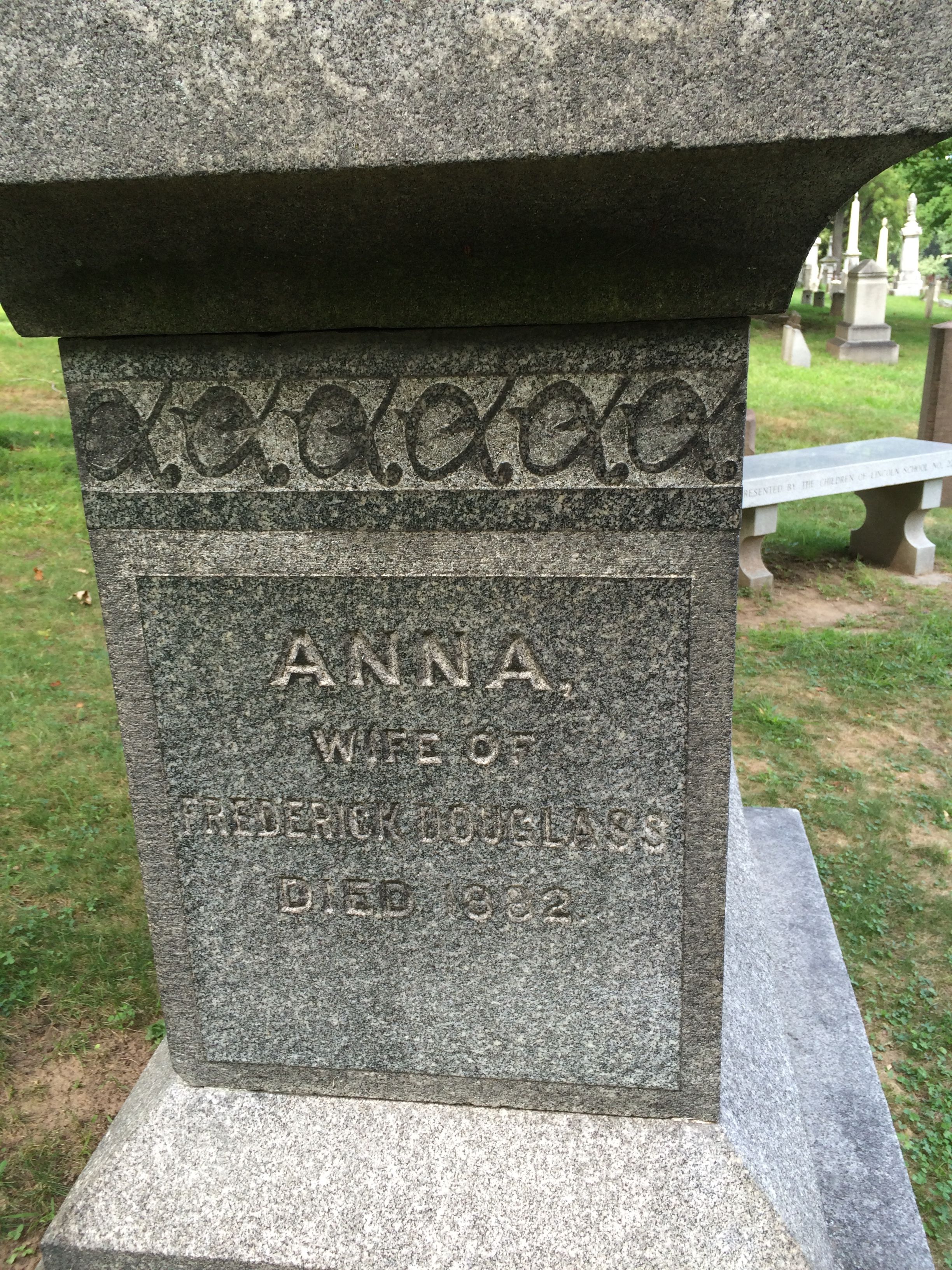
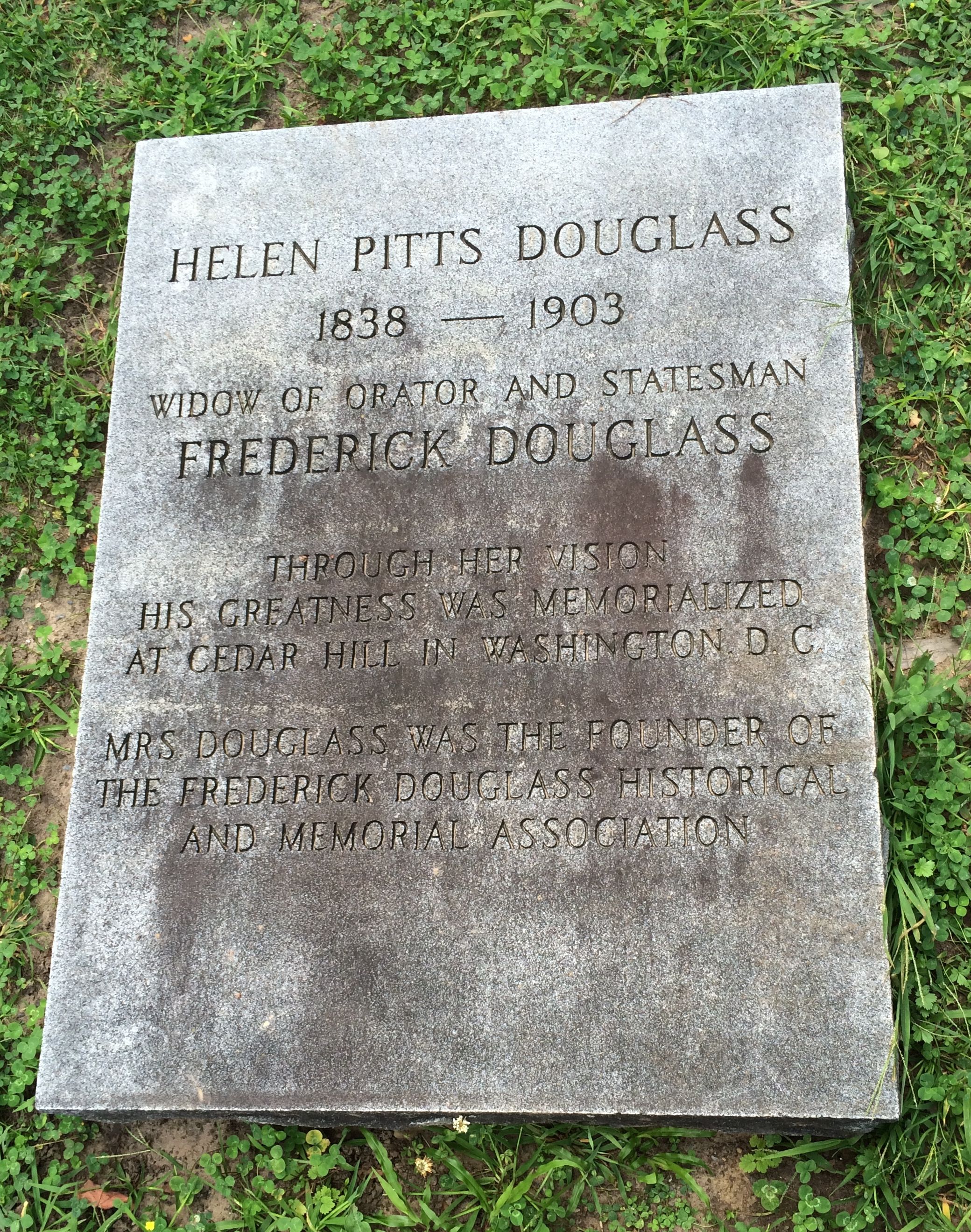
His first wife is buried here.
The first wife’s marker
The second wife got the larger marker.
After paying my respects, I zigged and zagged around a bit until I finally found a map. It turns out that I had almost found Susan B. Anthony’s grave on my own.
Susan’ B. Anthony’s Grave
By the time I had found what I was looking for in Mount Hope Cemetery, it was time to meet up with my old friend, Linda and her husband, Charlie.
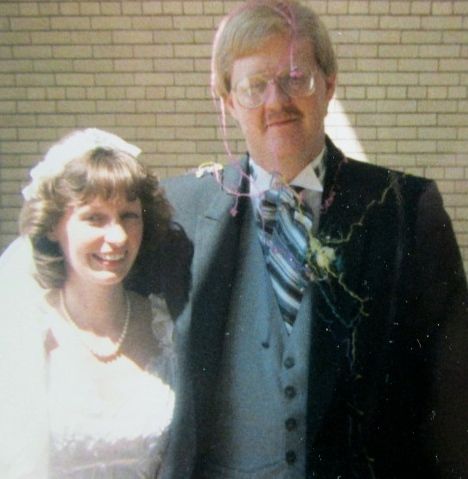
Linda and Charlie’s wedding day
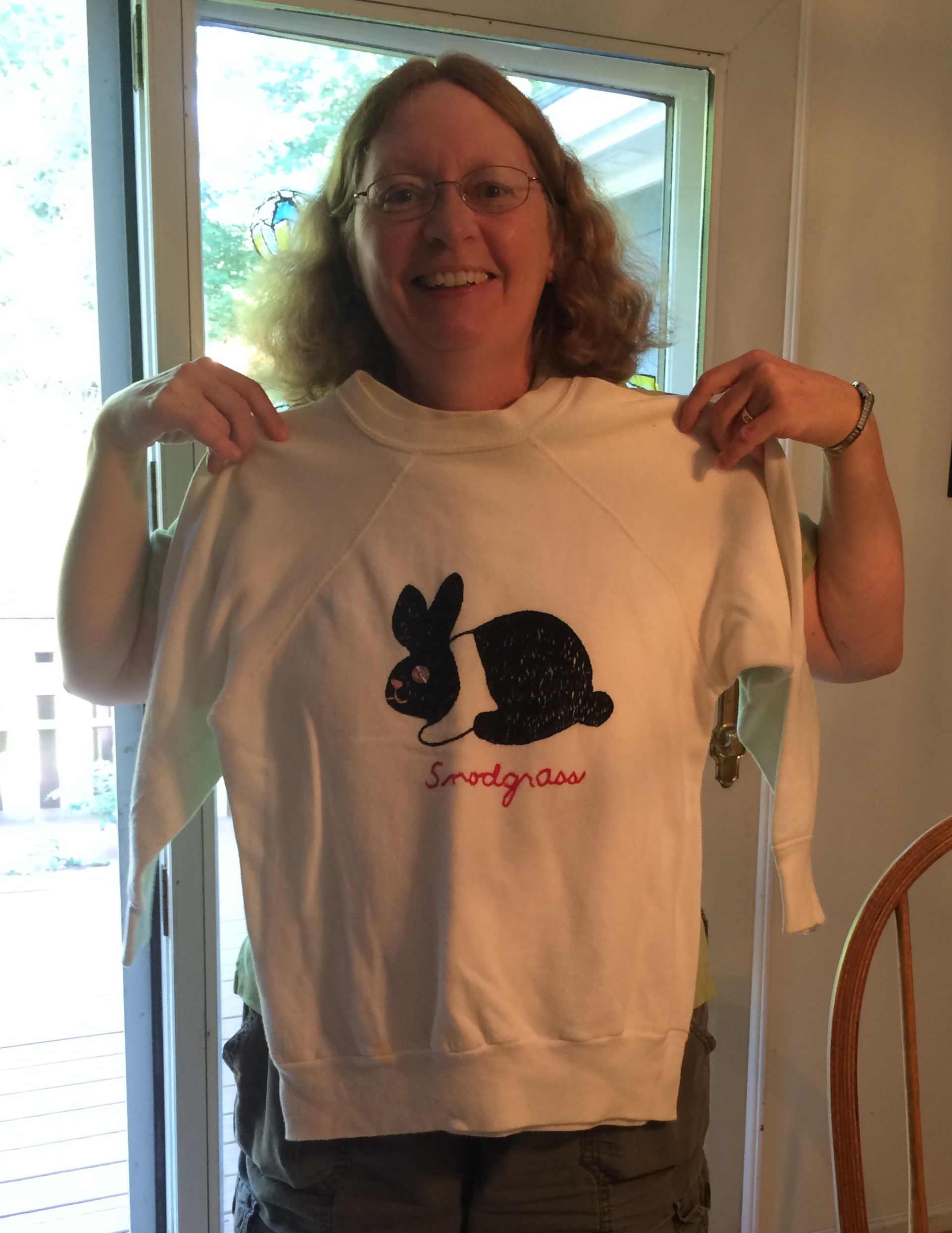
I’m not sure if I had seen Charlie since he was festooned with streamers on his wedding day! Linda and I had gotten together from time to time over the years. We chatted about this and that, and then Linda leapt up and got the sweatshirt I made for her back in the 1970’s, memorializing her rabbit, Snograss.
Linda with her Snodgrass sweatshirt
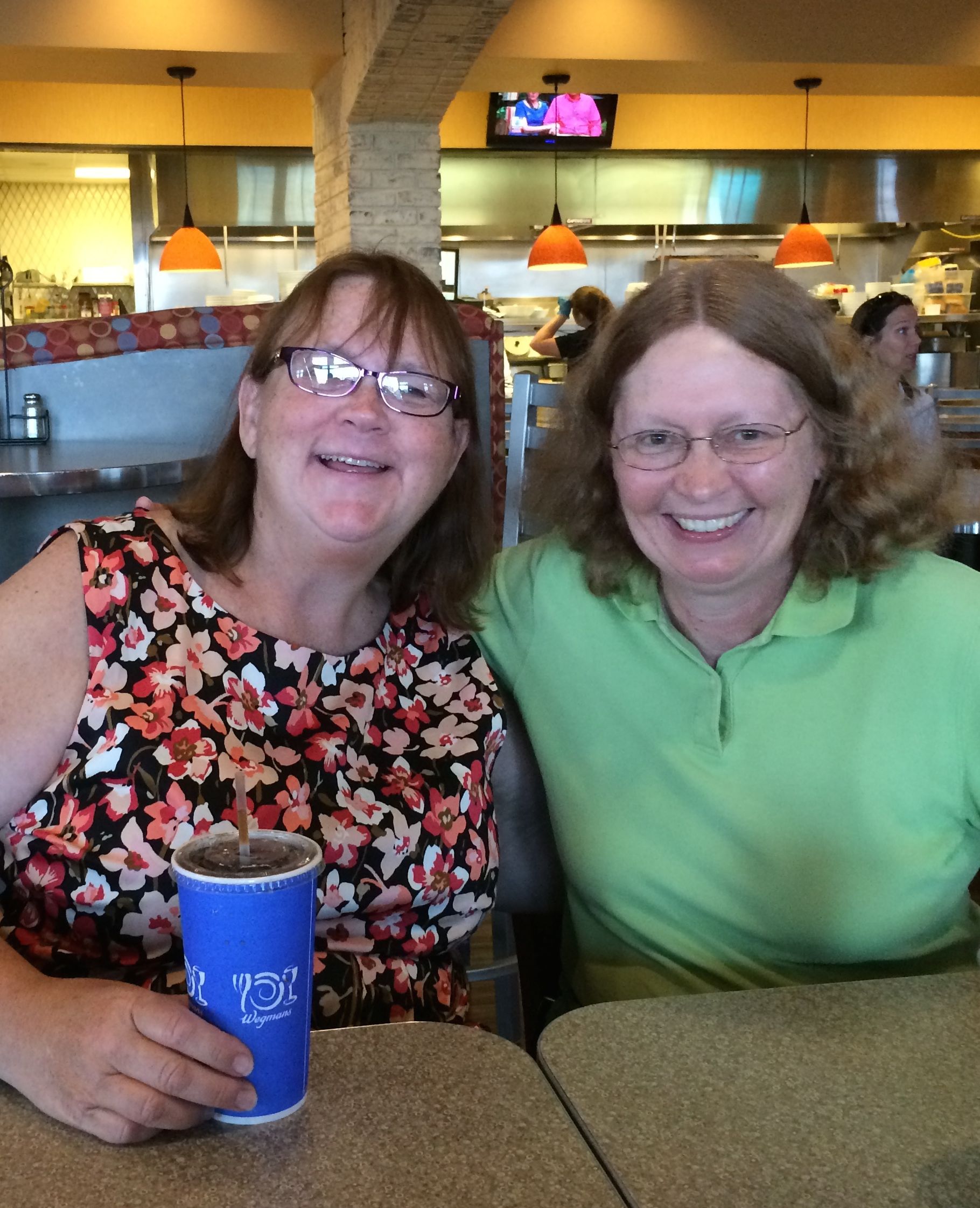
After visiting for a while, Linda and Charlie took me to dinner at The Burger Barn, which is a restaurant in the Wegmans flagship store.
Waiting for dinner at The Burger Barn
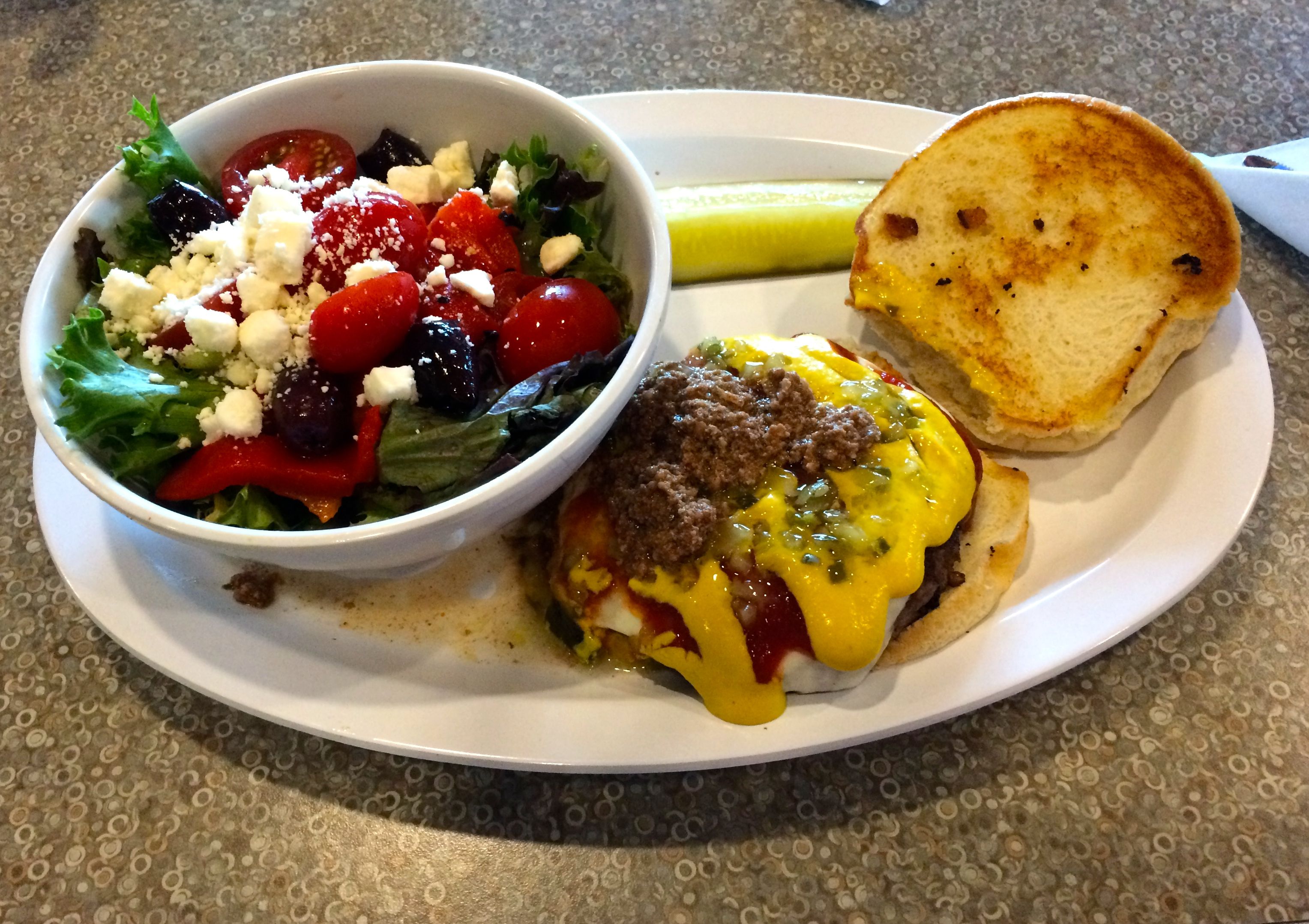
Ah, yes, the obligatory food photo:
My dinner at The Burger Barn
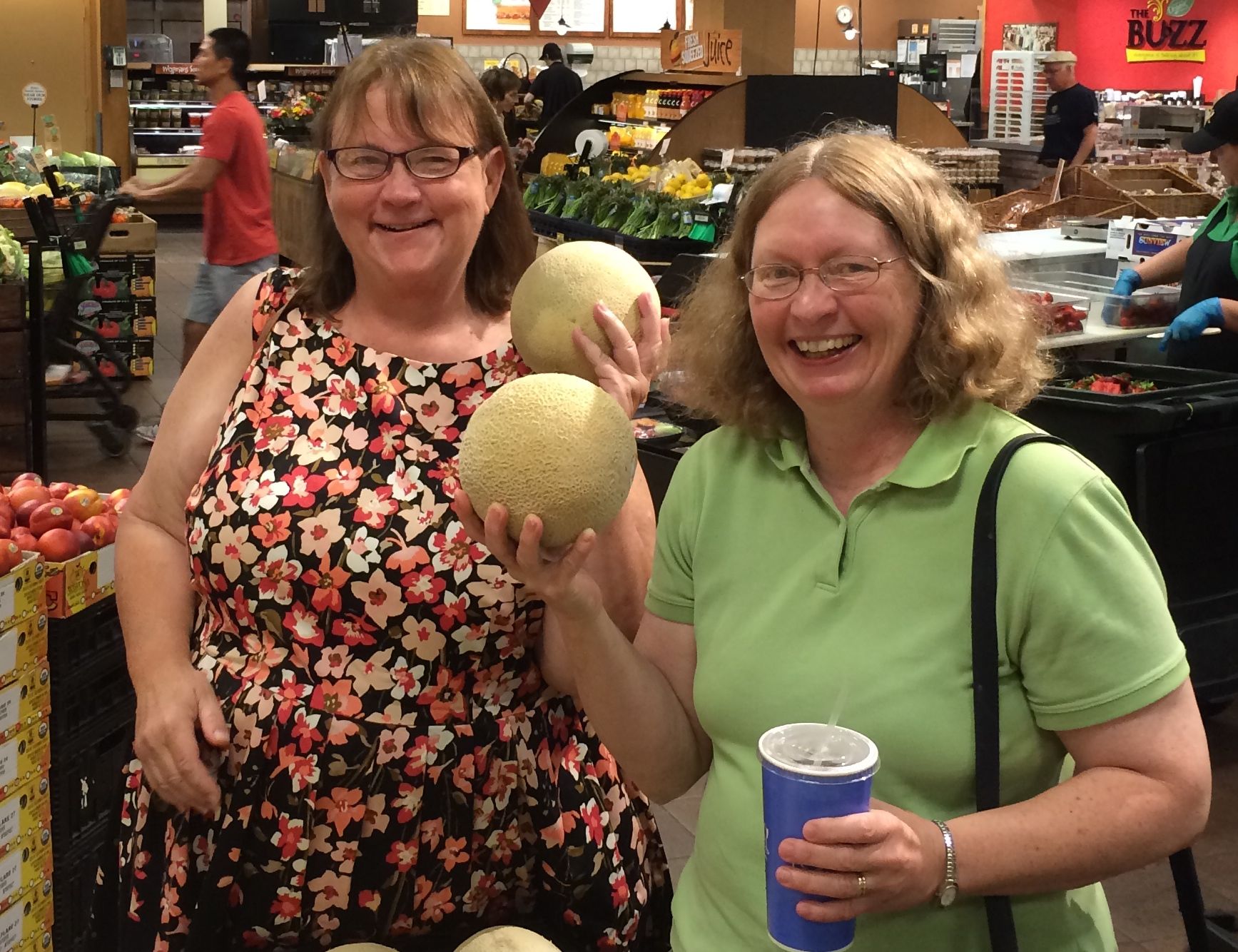
And then, after dinner, we went to the produce section for Fun with Melons.
This is the $7000 dining room table, and no, I didn’t eat lunch on it.
Andrea and I joined Kathy for lunch at Christ the King Seminary. Afterwards, we stopped off to see Kathy’s new office.
We had a lovely lunch and talked over old times. We had gone to Daemen College in Amherst, NY together.
Andrea and me – college days
I’ll let you try to figure out exactly WHEN we went to college!
After lunch, Kathy went back to work, Andrea went to take a stroll about the grounds and I went in to East Aurora. It had been years since I had been there, and I wanted to see the restorations that had been done on the Roycroft Campus.
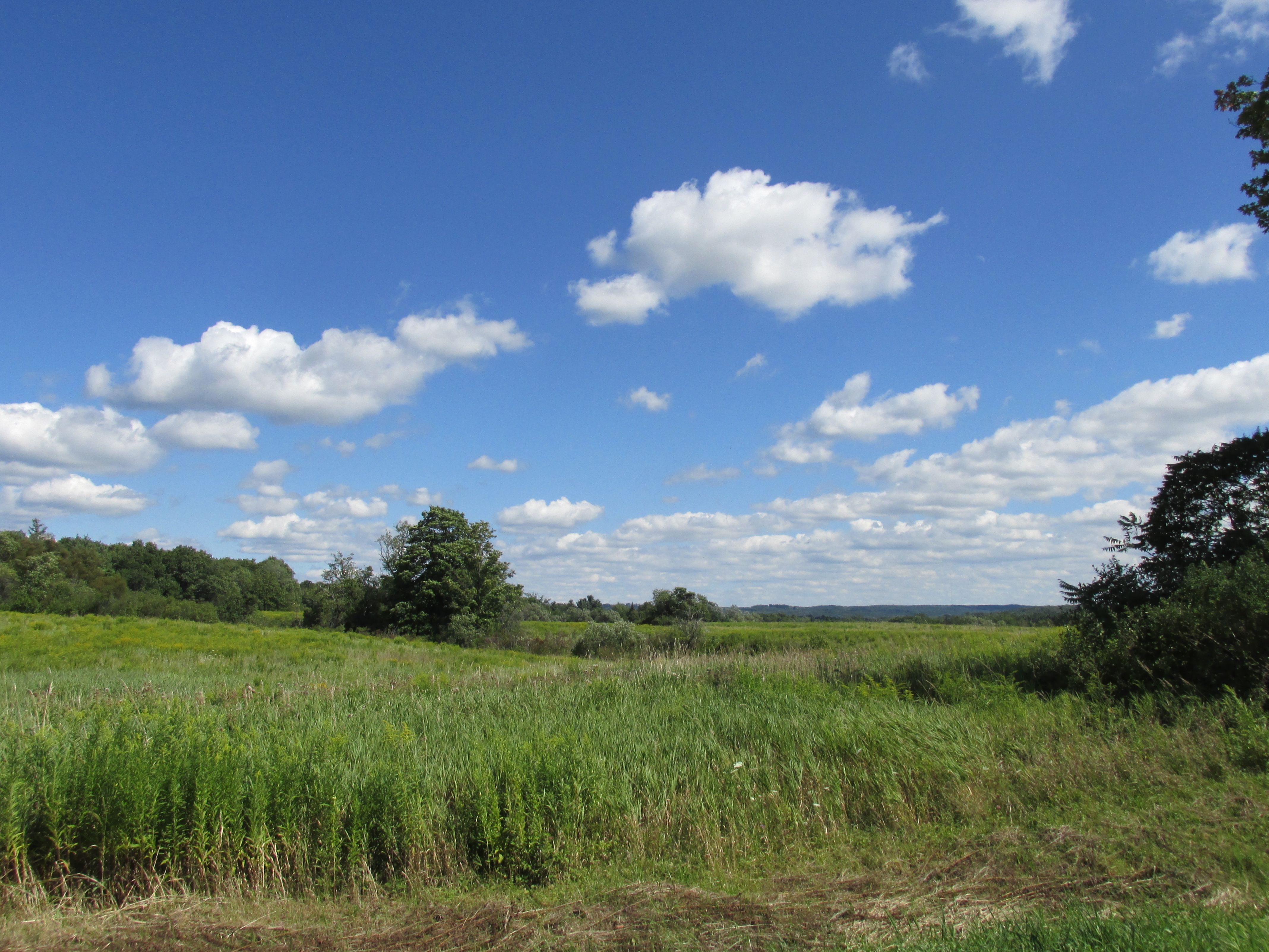
East Aurora is in lovely, rolling hills
The Roycroft was a community and movement of artisans where were influential in the Arts and Crafts movement at the beginning of the twentieth century. It was founded by Elbert Hubbard in 1895 and funded in large part by his essay, A Message to Garcia. The essay was originally included as a filler piece in the magazine, Philistine, that Hubbard published. It was so warmly received that it was published on its own in a pamphlet and then as a book. It sold more than 40 million copies! I guess you could say that it was the “viral sensation” of its day. Eventually two movies were made about the core incident that inspired the essay. One was a silent film in 1916 and the other was a “talkie” in 1936. A radio adaptation was also broadcast in 1953.
If you would like to read A Message to Garcia, click here.
The philosophy of the group was summed up by noted art critic, John Ruskin:
A belief in working with the head, hand and heart and mixing enough play with the work so that every task is pleasurable and makes for health and happiness.
If you ask me, that is a good recipe for life!
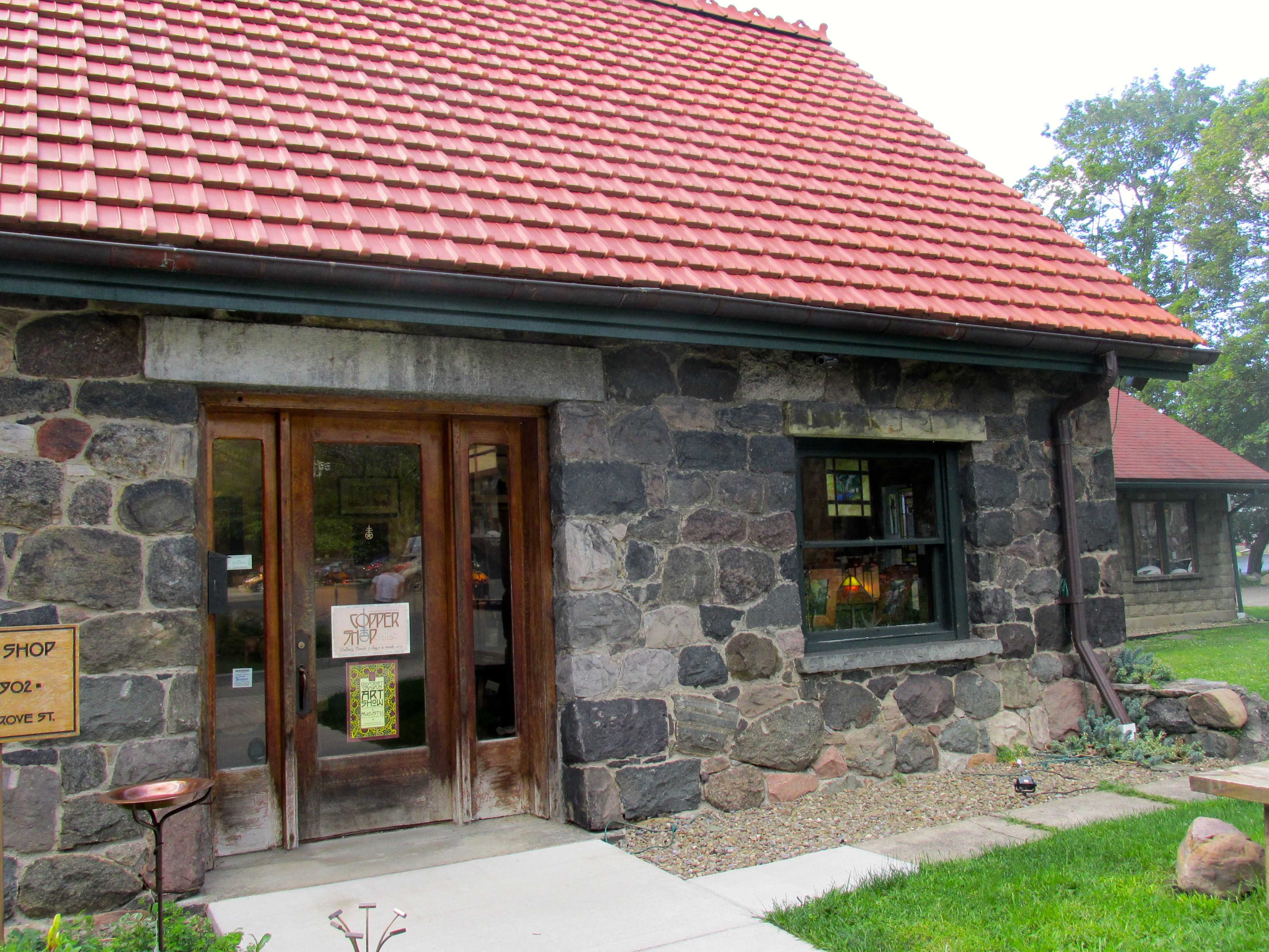
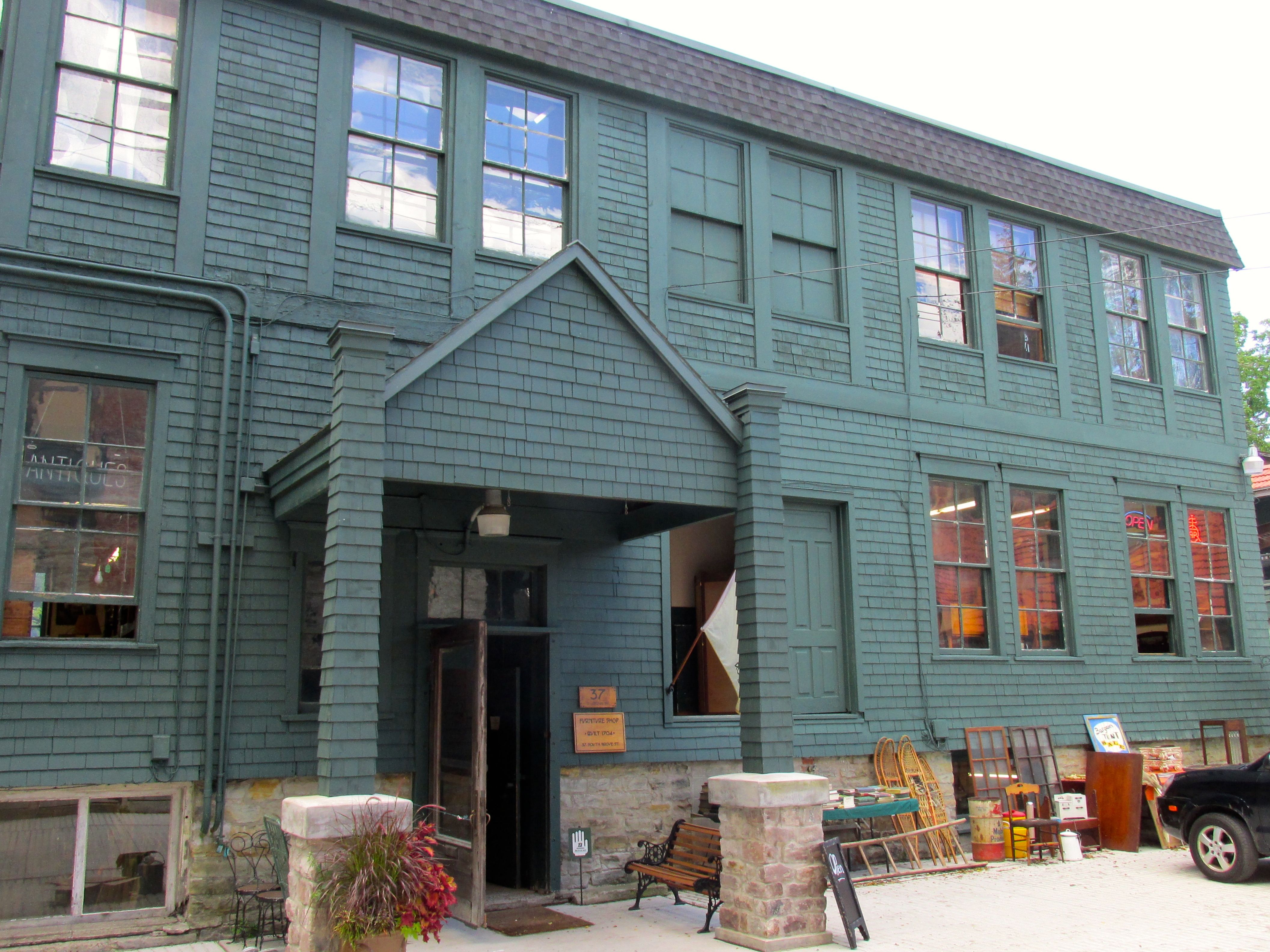
The Roycroft Campus was given National Historic Landmark status in 1986. There are fourteen existing buildings remaining. From what I have read, this is an unusual number of buildings to survive.
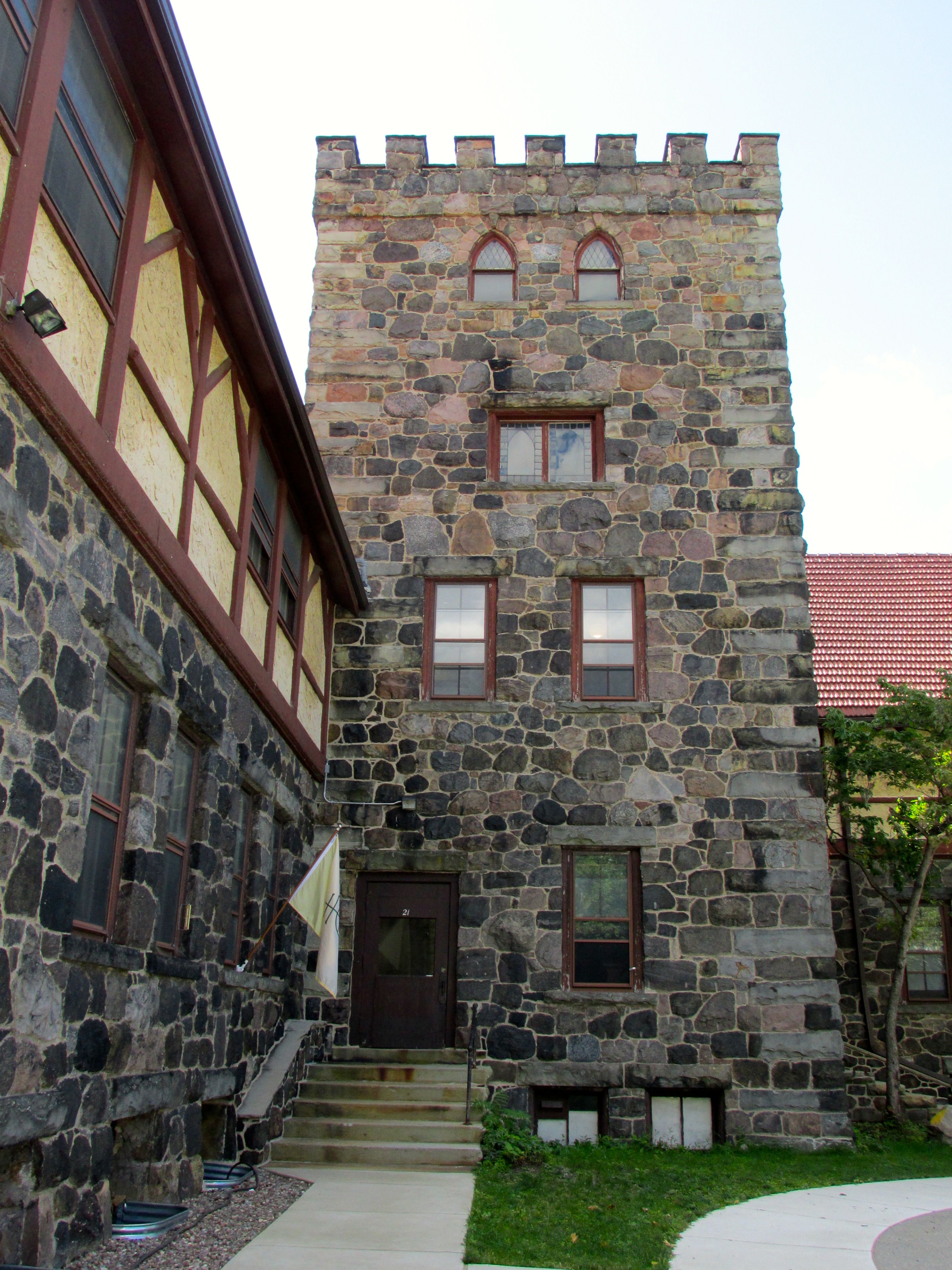
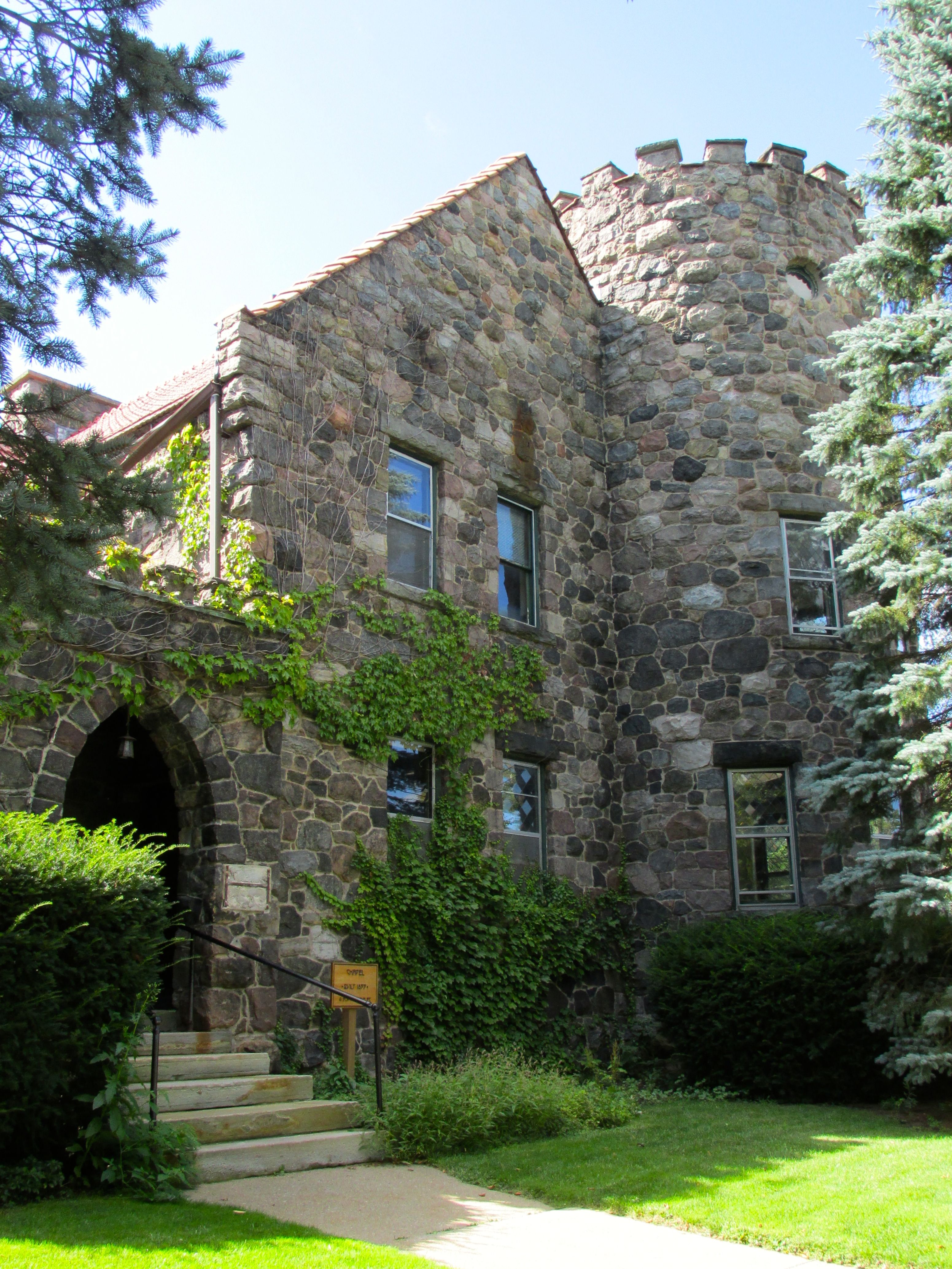
The Copper ShopThe Furniture ShopThe PrintshopThe Chapel
As you can see in the style of the buildings, there was a longing for the “good old days” when everything was handcrafted. The campus looks a lot like modernized buildings from the age of the medieval craftsman.
Across the street from the Roycroft Campus is the Roycroft Inn. I have just added something else to my “Must Do” list.
Roycroft Inn
I want to eat lunch (or dinner) on the Peristyle at the Roycroft Inn!
I can see me here!
Maybe I should just get one of the suites at the Inn and have breakfast, lunch and dinner there.
From what I remember, Hubbard purchased two existing Queen Anne style houses and connected them with a peristyle to create the Roycroft Inn. With 500 artisans working, people were coming from all over to buy their products.
Here you can see the rounded Queen Anne part of the building.
And people coming from all over brings me back to that $7000 dining room table.
You can still buy the products of the Roycrofters. They are thoroughly vetted to make sure they meet the appropriate standards.
Once they do, they are allowed to use the Roycroft Renaissance logo.
Roycroft Renaisance
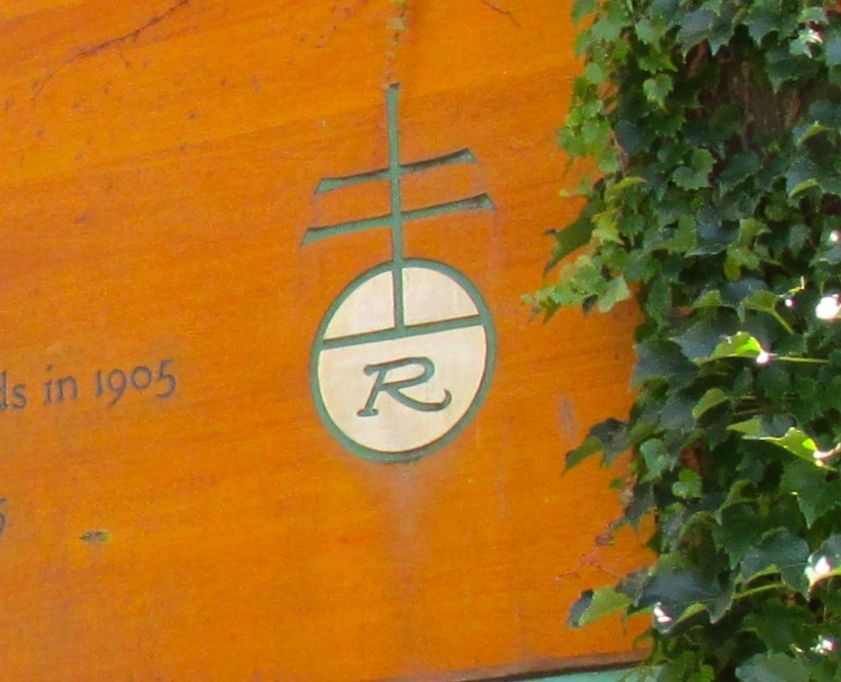
This logo was adopted in 1976. The back-to-back Rs stand for Roycroft Renaissance. The cross arms on one side point down to signify the early roots from Elbert Hubbard, while the other side points up to indicate growth and progress for the future.
Original logo
Hubbard’s original trademark was inspired by a mark used by monks who illuminated manuscripts in the middle ages. Places at the end of their work is meant, “The best I can do, dedicated to God.” Hubbard added the R inside the orb and had the artisans label their work with it to show where it came from.
And the $7000 dining room table? The chairs cost an additional $1000 each.
I am too cheap to have nice things!
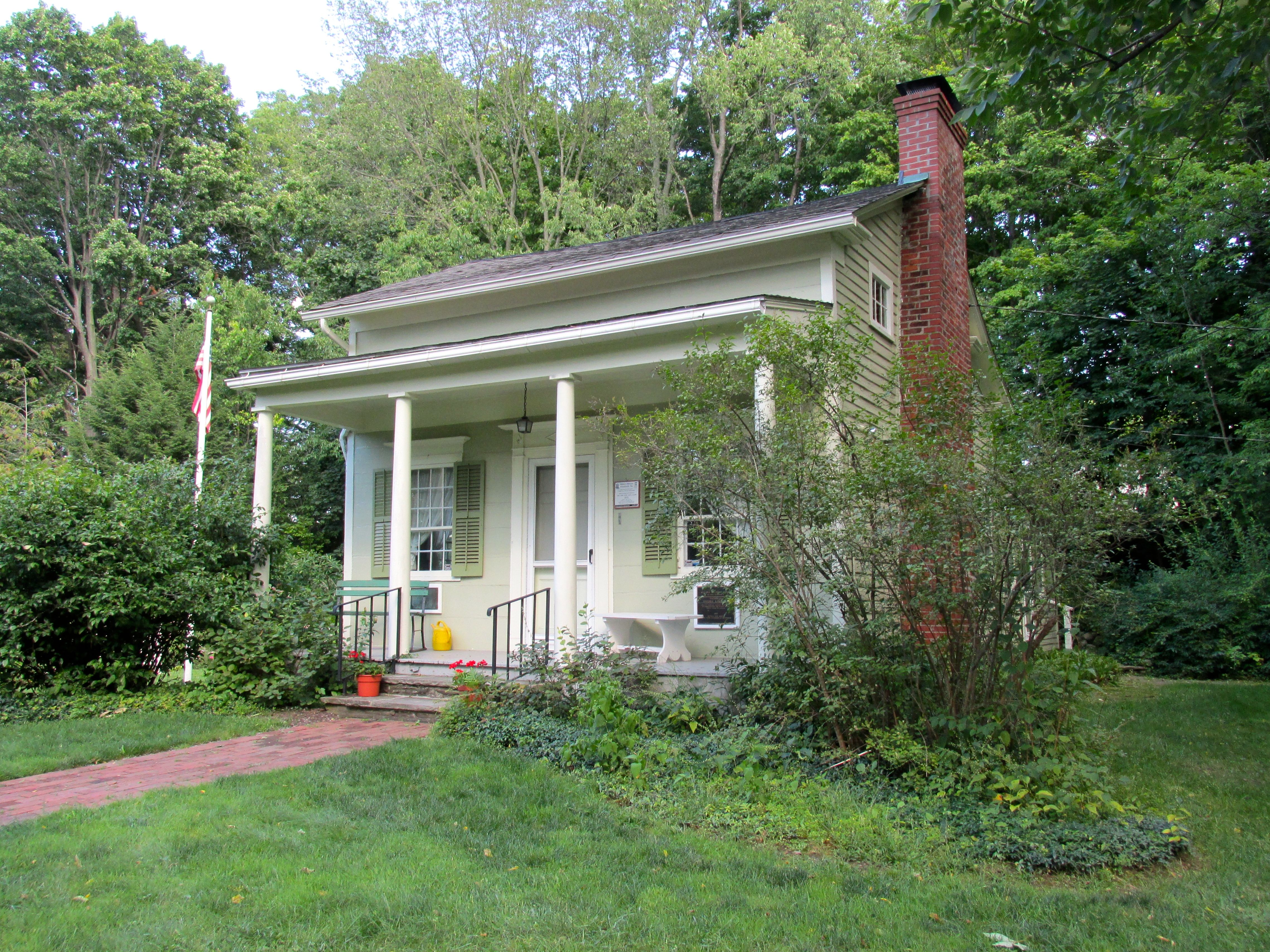
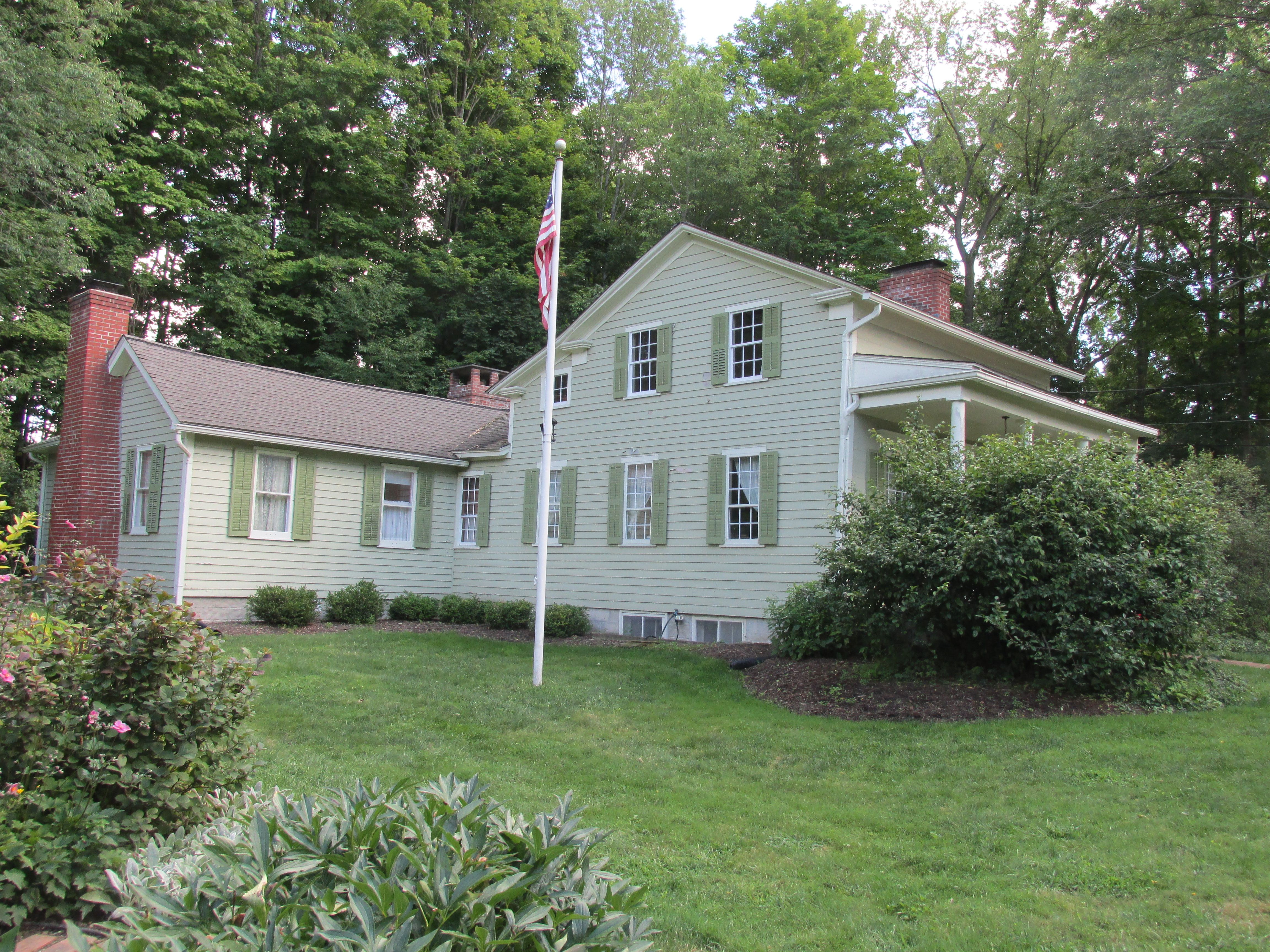
After I left the Roycroft Campus, I went to visit Millard Fillmore’s home. He lived in it from 1826 – 1830. He was president from 1850 – 1853, assuming the office after Zachary Taylor’s death.
Millard Fillmore HomeSide view
I remember from an earlier visit that Millard Fillmore was lacking education, having been apprenticed at an early age. Somehow, he managed to get into school at a later age and ended up marrying his teacher!
He made may not have been much of a president, but he did some good things for Buffalo, including helping to found the University of Buffalo and the Buffalo History Museum.
By this time, my tourism urge was waning. The Fisher Price Toy Museum would have to wait until another day.
My brother, Craig, and sister, Amy, and I teamed up to play on “Bragging Rights!”, a local game show. It’s broadcast on WBBZ from Buffalo, New York, and taped in their studio in Eastern Hills Mall.
Amy got her daughters to come along to be our cheering section. The audience was small, but enthusiastic.
I’m not sure, but they may have trouble getting teams to play. The team we played against seems to be a bunch of regulars – and not much older than high school students. But, once you are knocking on the gates of 60, everyone under 40 looks like they are in high school.
In any event, this nice group of young men played a round with another team – and lost. The other team was wearing Viking helmets with blond braids. Who could be a match for such costuming?
Their “consolation prize” was that they got to be drubbed by us, too.
To help maintain the illusion that these are not taped in batches, the guys put on suit jackets over their T shirts before they played against us.
On a delightful August Sunday, I joined my friends Kathy, Dennis and John on a trip to Zoar Valley near Gowanda, NY. After an early morning mass at Saint Joseph’s on Main Street in Buffalo, we headed south of the city.
Once in Gowanda, we headed first to Kathy’s mother’s house. Her brother was in town from the coast, so we got out of our church clothes, picked up Michael and headed down to Forty. Forty is a road, which I never knew. I’ve been there several times over the years, and I never knew that was the name of the road. I still don’t know why it’s called that. Why not Fifty? Why not Sparkle Buggy Whips?
We parked and met up with their cousin, Rick.
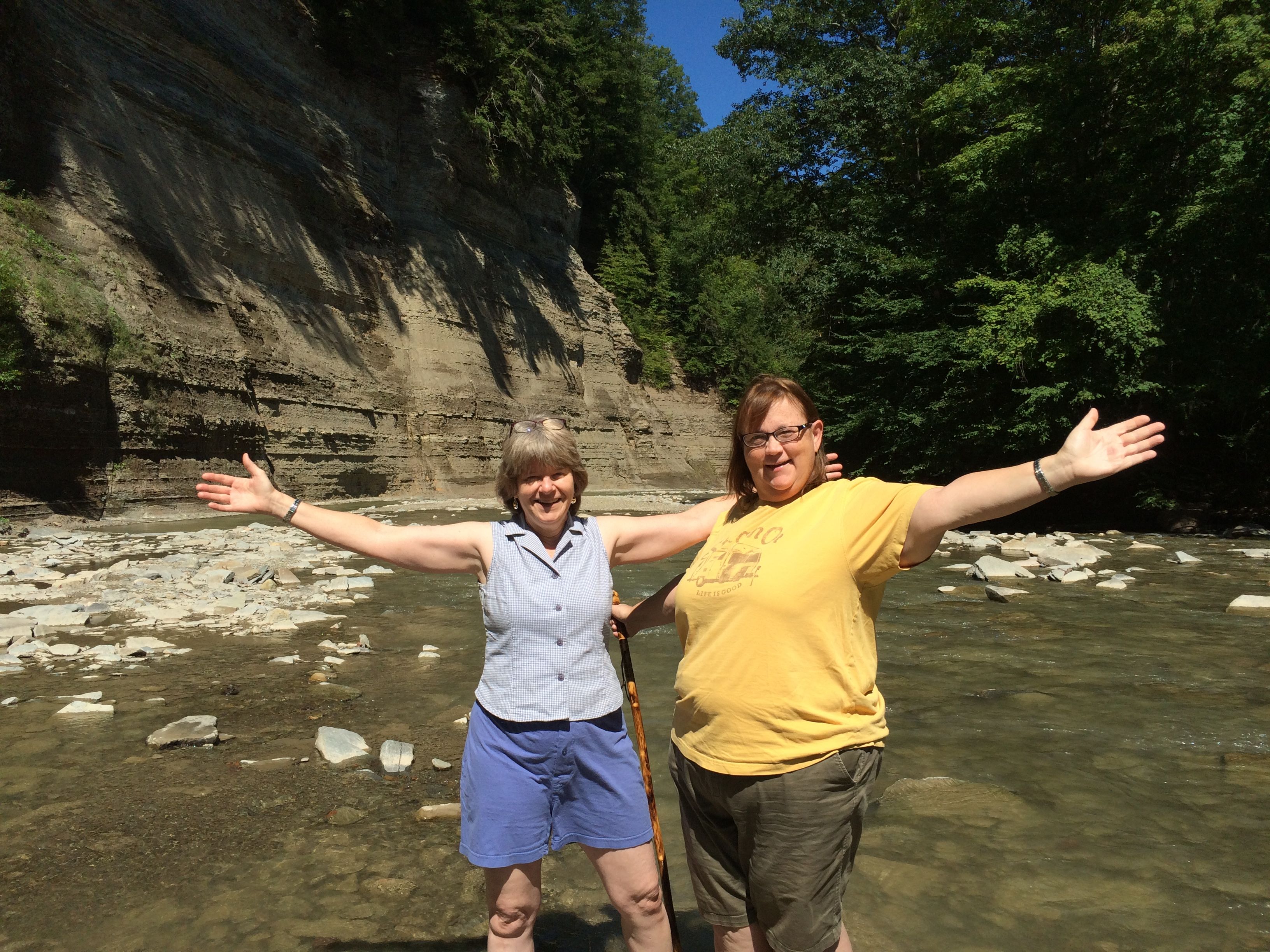
My first visit to this stretch of the Cattaraugus Creek was in 1976, right after Kathy and I returned from our Junior Year (semester) in Spain. It looks about the same.
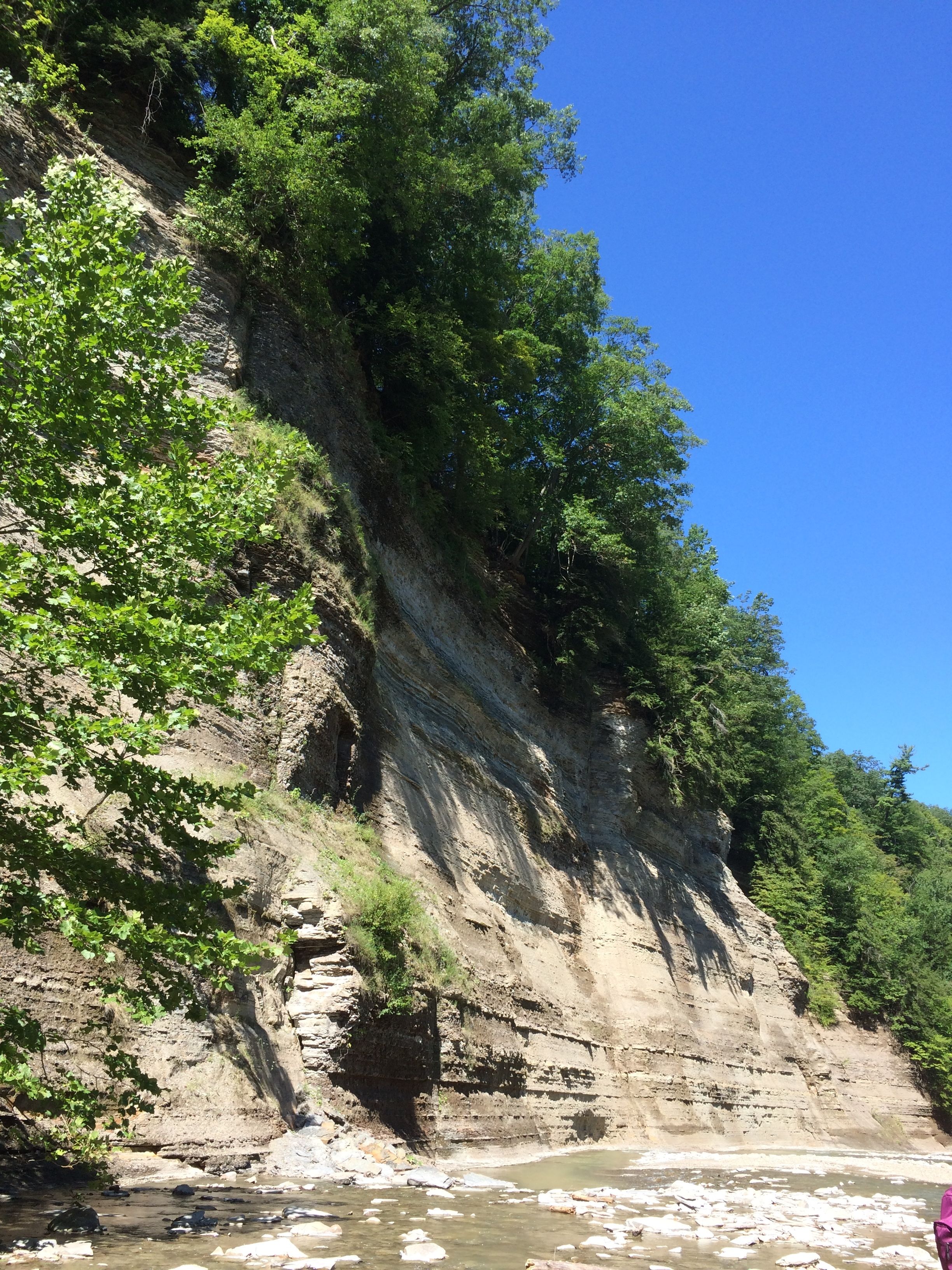
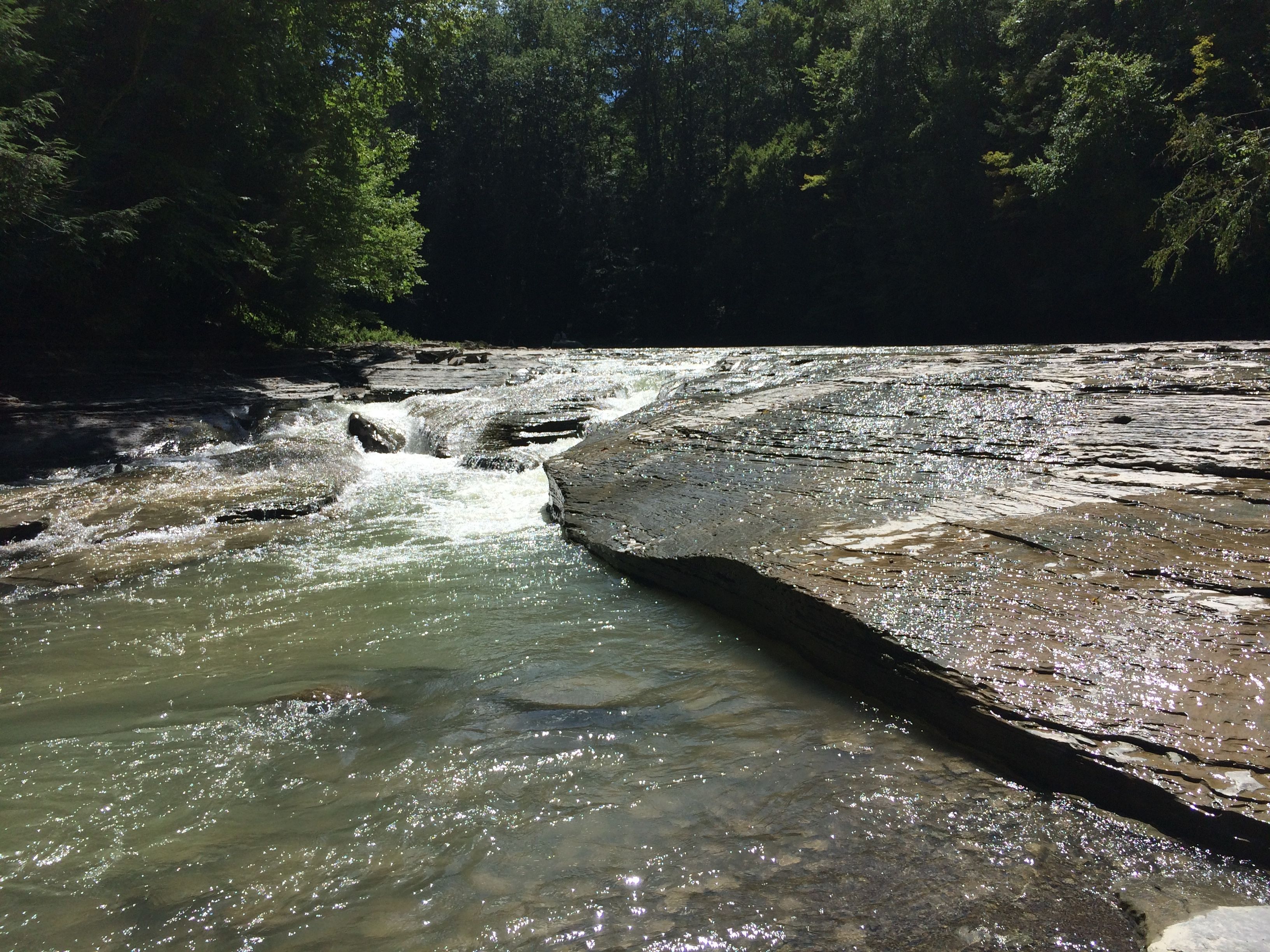
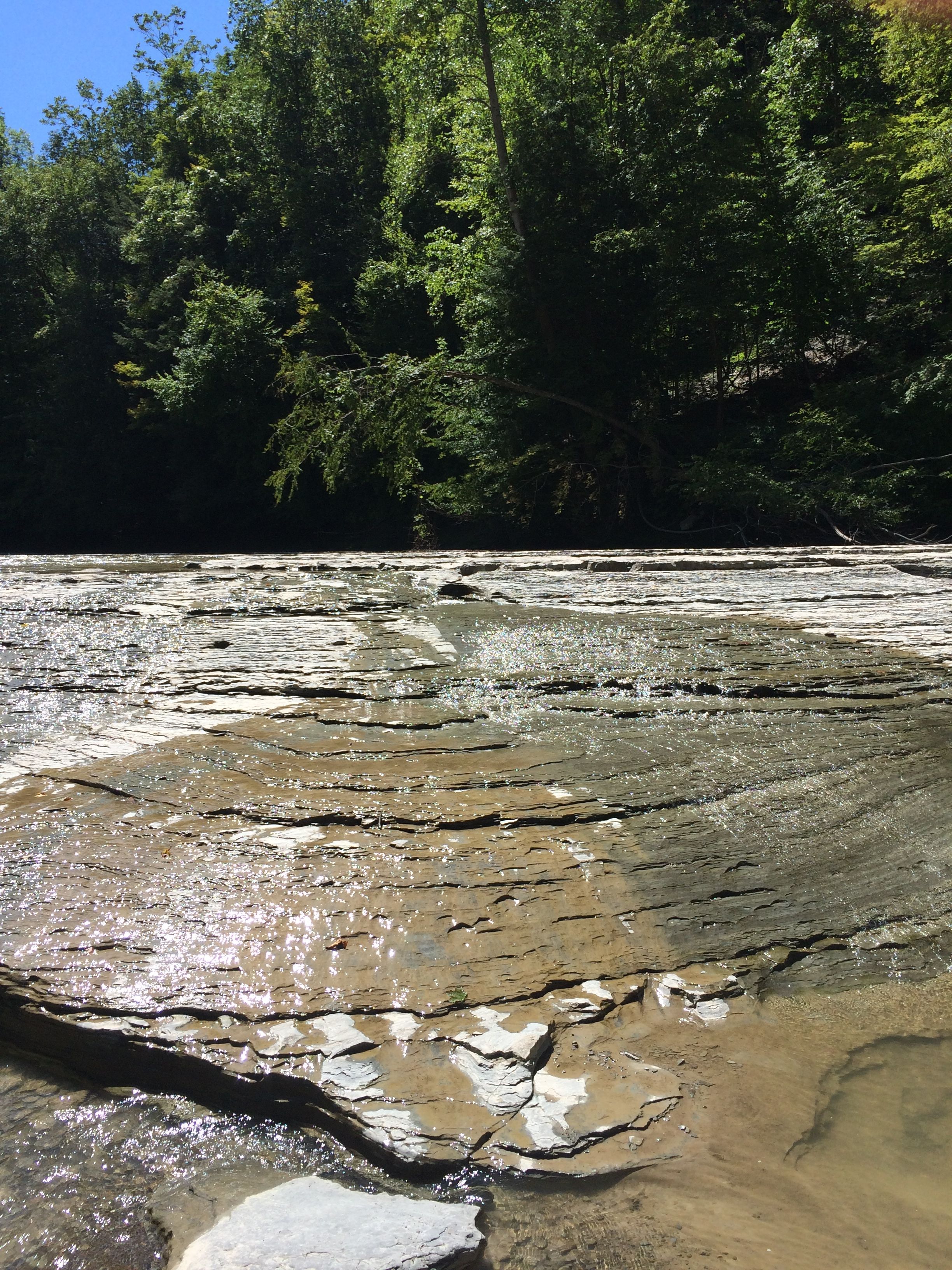
Cattaraugus Creek has cut through these shale hills for a long, long time. Sometimes the water is high. Sometimes the water is low. Today it was just perfect for wading.
Hard to believe that it has been almost forty years since the first time we were here.
There are lots of little falls and ripples to enjoy.
A little fallsWater flowing over rocks
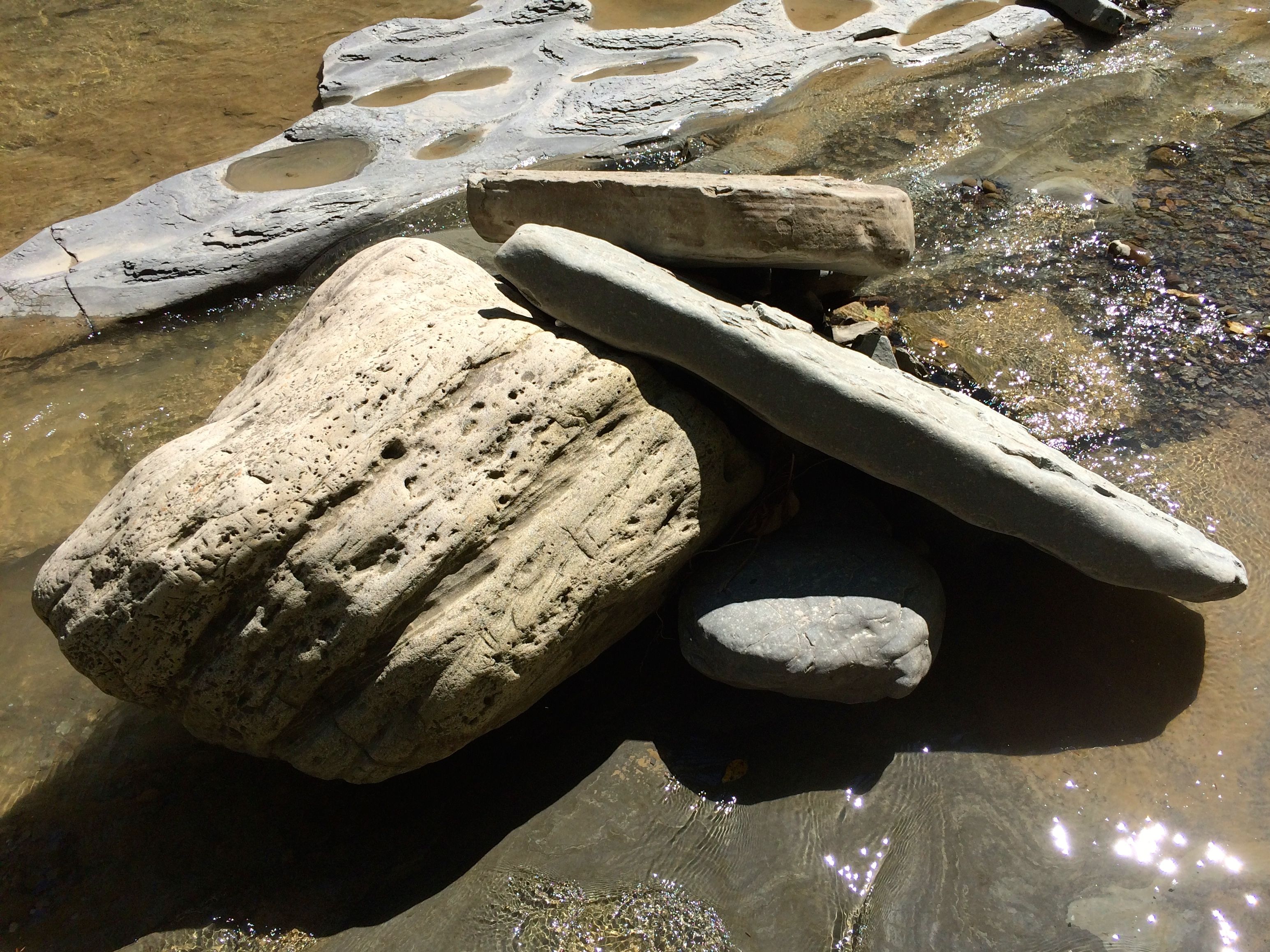
And, speaking of rocks, I was never too enamored of shale. But just about anything is interesting if you take the time to look at it.
This is in the wall of the valley. It looks like there was a roundish sort of rock that fell out of this space.
Kind of like these roundish rocks that were in the creek bed. They kind of look like fossilized footprints, although I can think of any number of reasons why they aren’t.
However, there does seem to be a trail of them. I wonder where they are going and how they were formed.
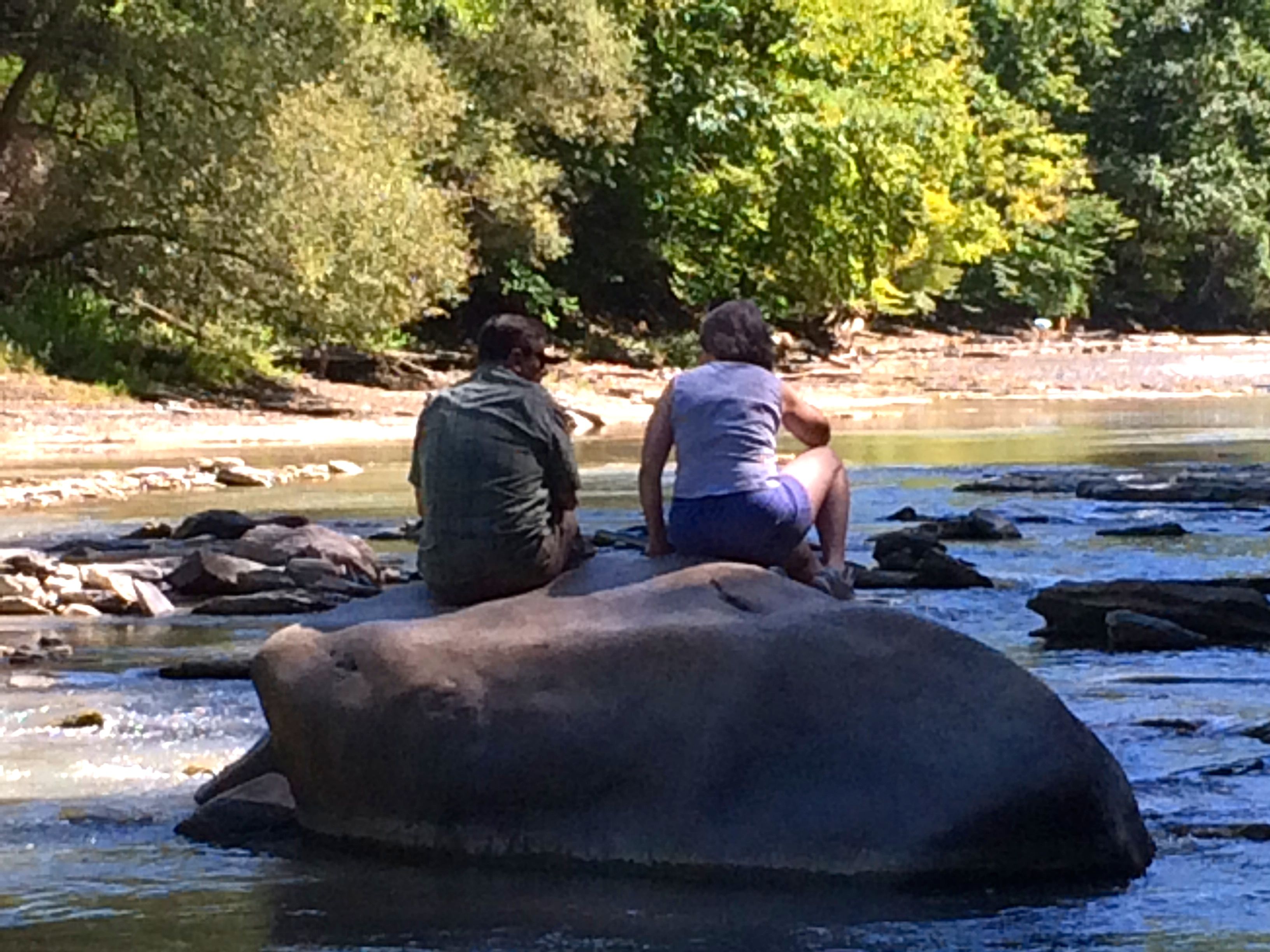
Kathy and her brother, Michael, got up the creek ahead of me. I spent some time looking for the best footing. I found a great route right next to the cliff. The water got over my knees, which was just perfect for a summer afternoon.
There were some wonderful rocks to look at!
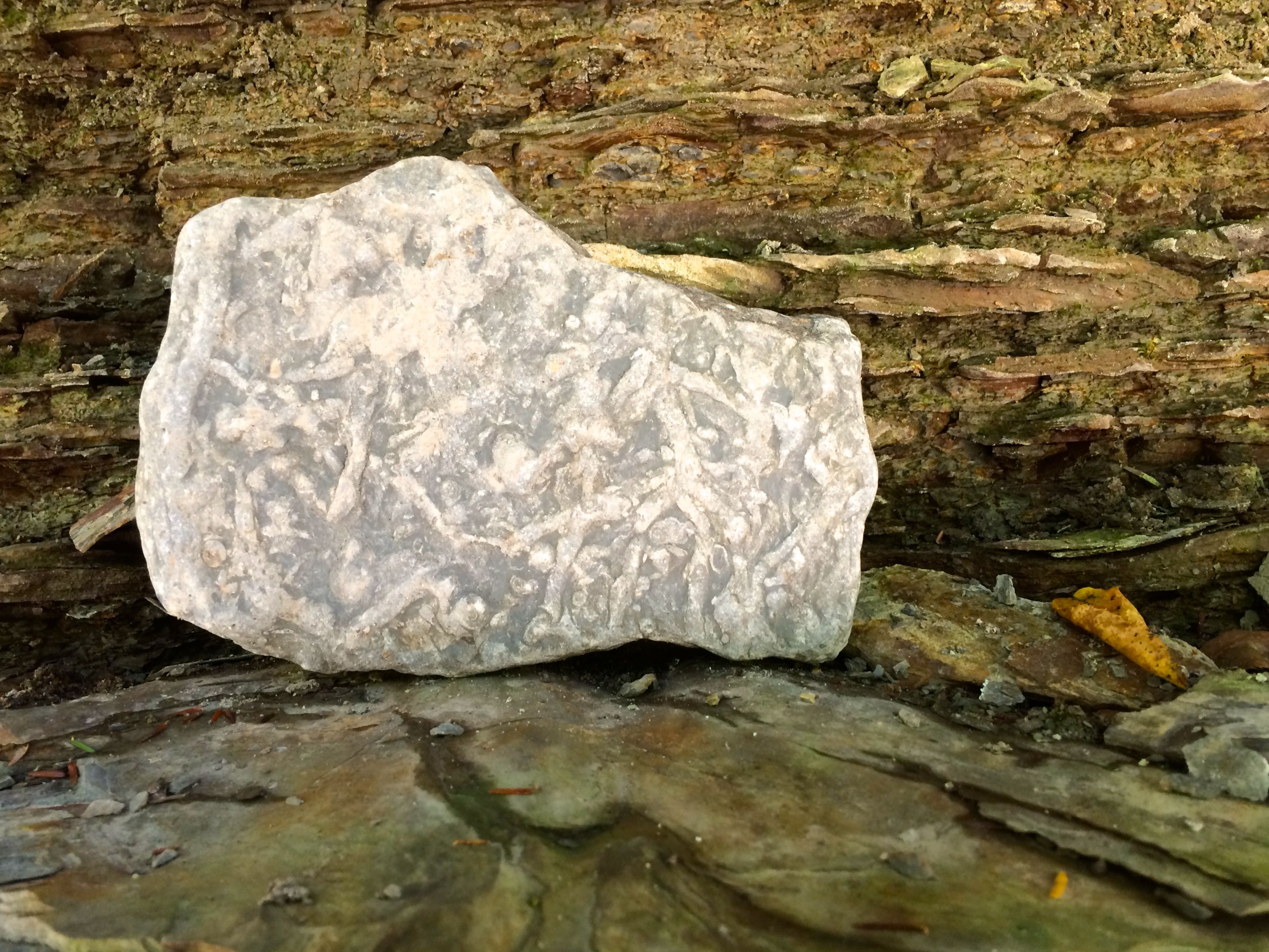
There were some incredible fossils, too. I’ve never seen any like this before. Maybe they aren’t fossils, but they sure do look like them. And, I saw several rocks with the same sorts of marks and formations.
If you’d like to plan your own visit, you can find information for Forty and the Flats here. Pack a lunch and plan to stay a while. We had places to go and things to do, so we left.
I hope we make it back again soon. Forty years is too long to wait! Besides, I’ll be going on 100 then…
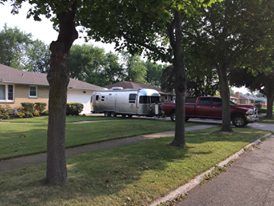
Every house looks better with an Airstream in the driveway!
After getting my new crown installed in Kalamazoo, an over-night in one of Ohio’s great rest areas, I arrived at my sister’s house in Williamsville. It is so great to see everyone!
When I say that Ohio has a great rest area, I mean it from the bottom of my heart. I was on I-80 – the Ohio Turnpike, just across the Indiana border – and I noticed that I was getting tired. I had originally planned to stop at a municipal campground nearer to the Ohio/Pennsylvania border, but I was tired. I saw a sign for the rest stop, and decided to pull over and see what might be in the area.
BE STILL MY HEART! The rest stop had a place set aside for RVs with electric hook ups, as well as a place to get fresh water and empty the holding tanks, if needed. It was only $20 and it was right where I needed it! I pulled up to an electrical post and hooked up. Then I went over to the ticket dispenser, inserted a twenty dollar bill and got the ticket that would entitle me to stay the night.
I turned on the AC, found the local broadcast TV channels and settled in for the night.
Just in case you are interested in the particulars of the Ohio Turnpike RV sites, there are east bound and westbound at the Blue Heron Service Plaza near Genoa, Ohio, which is where I stayed. There are also facilities and the east bound and west bound Vermillion Valle Service Plazas, which are near Berea, Ohio.
I found this information just now by consulting an app I have on my iPhone. It’s called The Ultimate US Campground Project, and it costs $6.99. I have found it to be very useful.
I arrived at my sister’s house the next day and set up shop. I’ve been having a good time with family and friends.