I got back from the seed courier gig in July 2018 and now it was the middle of August.
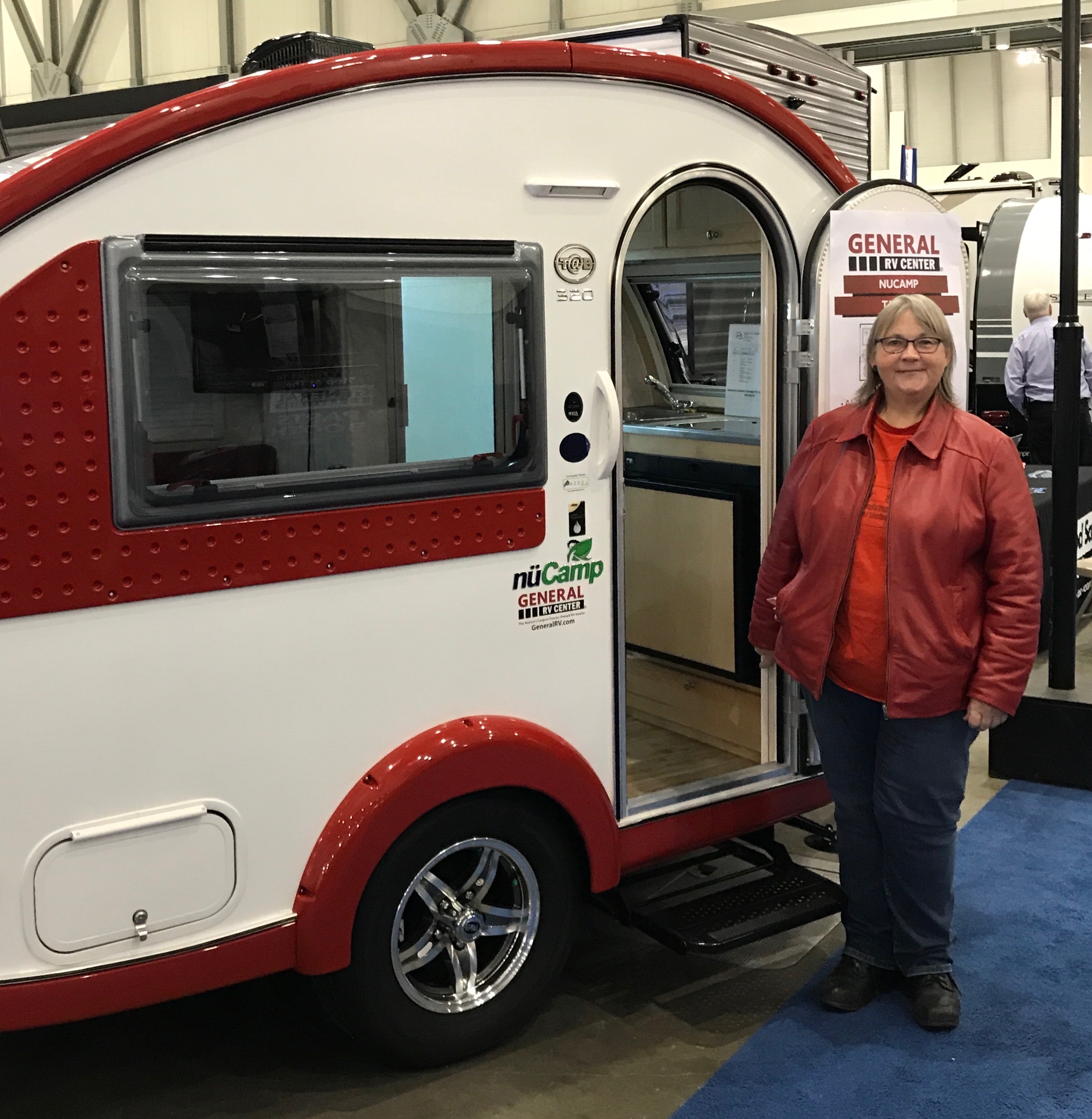
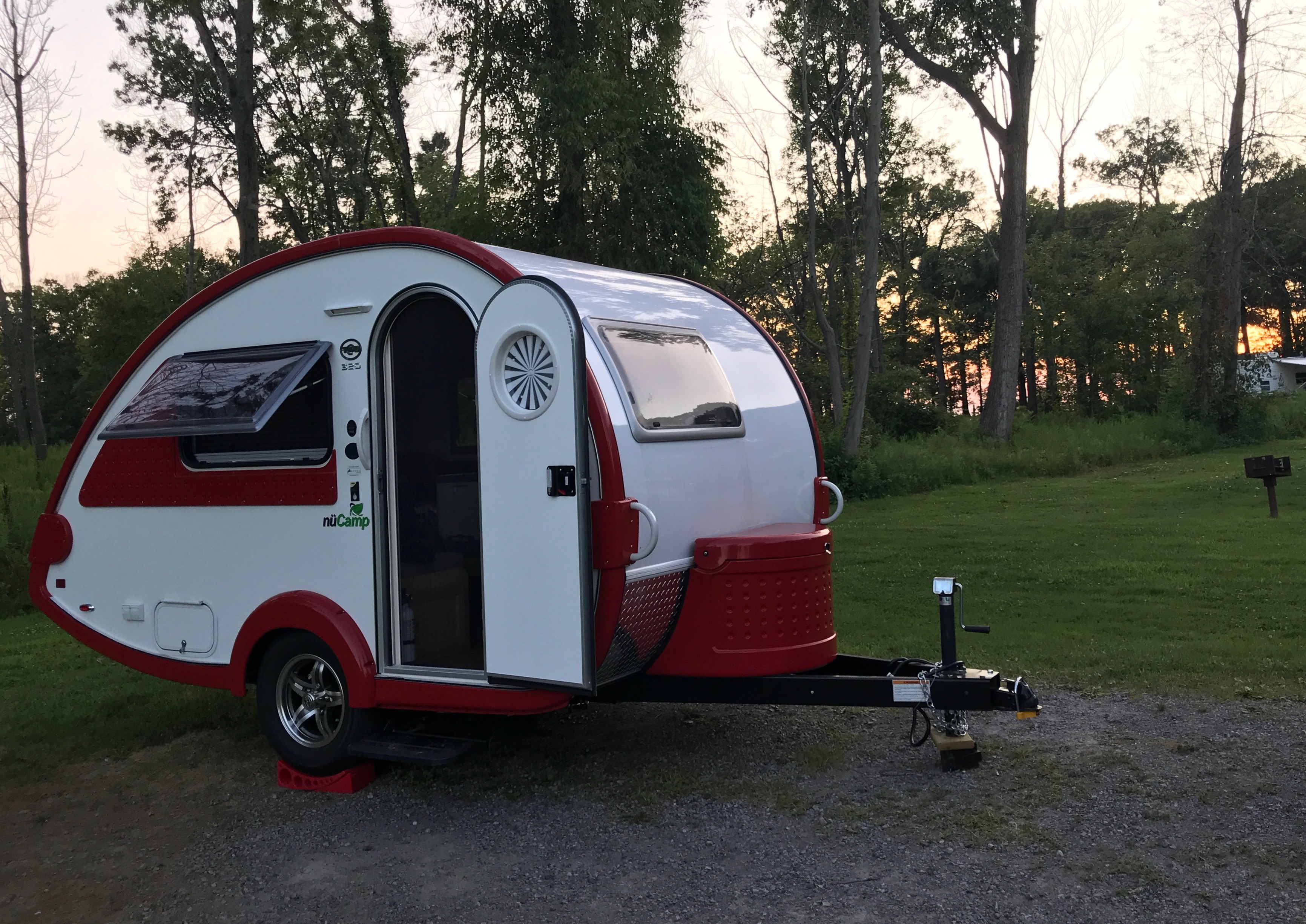
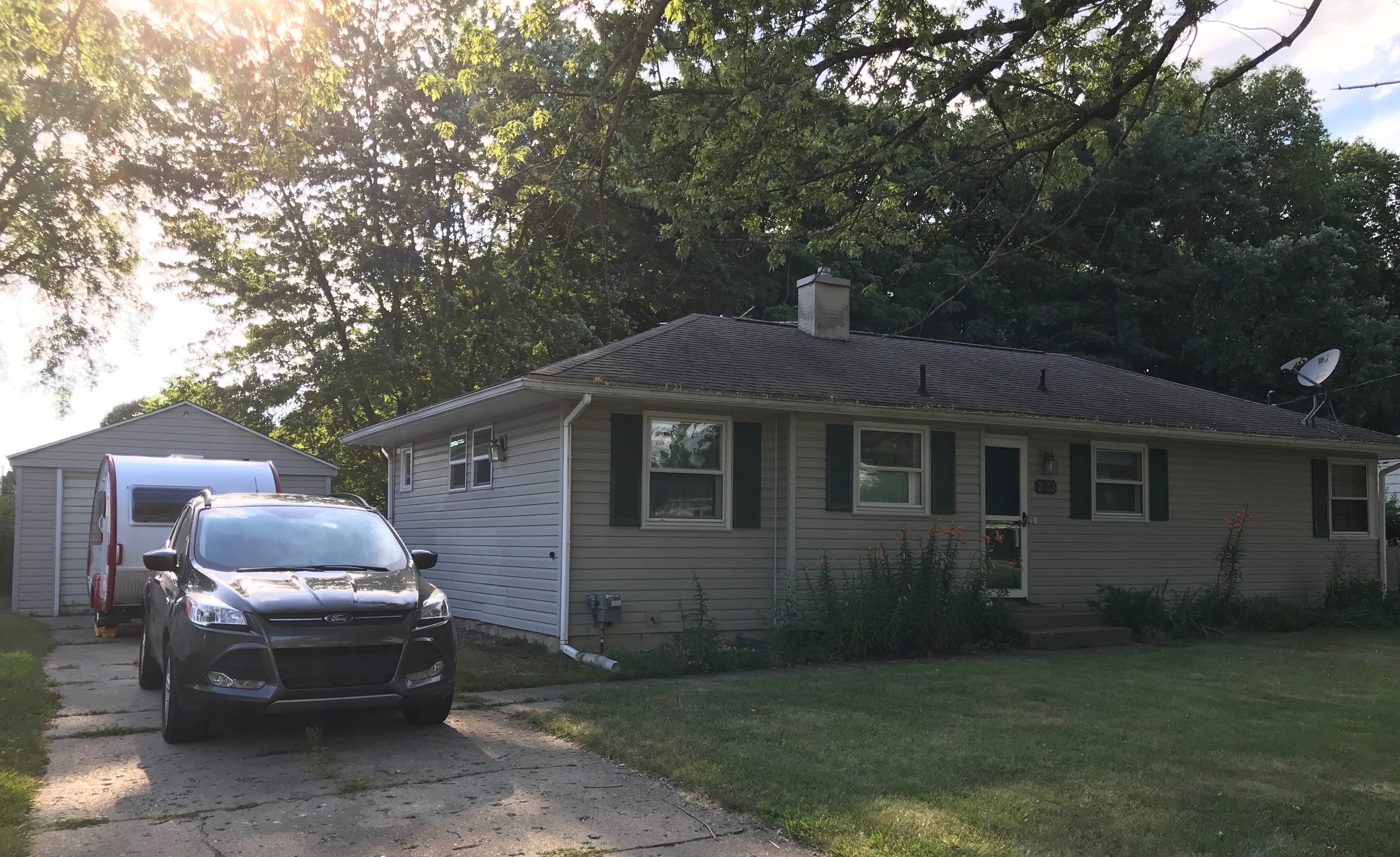
I bought my new trailer in January, but still hadn’t used it. Isn’t it cute? It’s a T@b, made by nuCamp. I figured the I should remedy that situation before the summer was over. I made plans to visit my family on both sides of the border.
After getting a few “minor” things taken care of – like a non-functioning refrigerator – I managed to get to the campground in time for my reservation. I’m glad that I tried to start things up while I was in the driveway. You don’t want to discover that important systems don’t work when you’re on the road.
I headed east, toward the Buffalo, New York region.
I was back in Evangola State Park, a favorite from my Airstreaming days. I even picked a site I had been in before. It’s always nice to know where the water is. In my experience, New York State parks usually have electricity at the campsites for RVs, but you need to fill up your water tanks at a communal spigot.
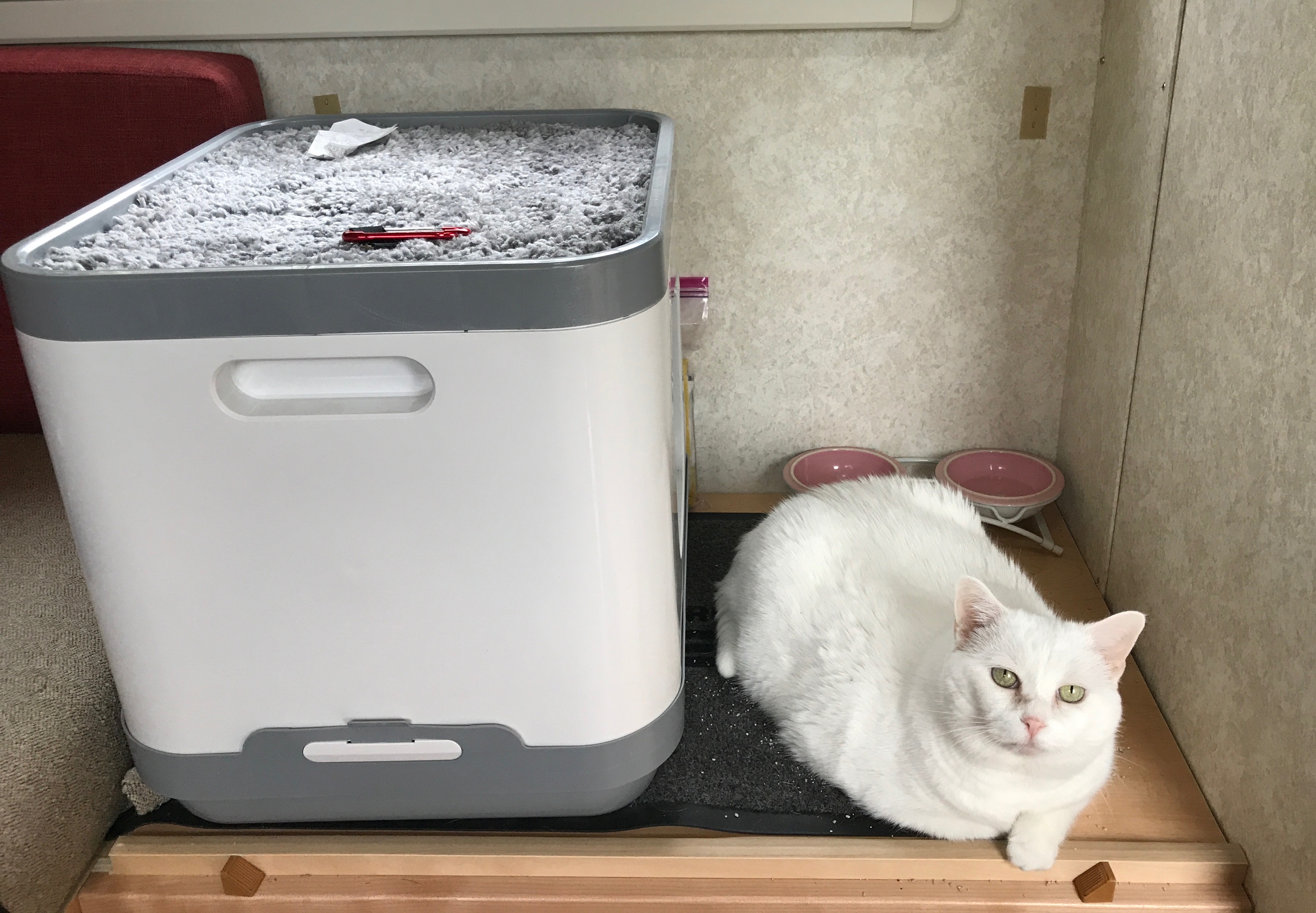
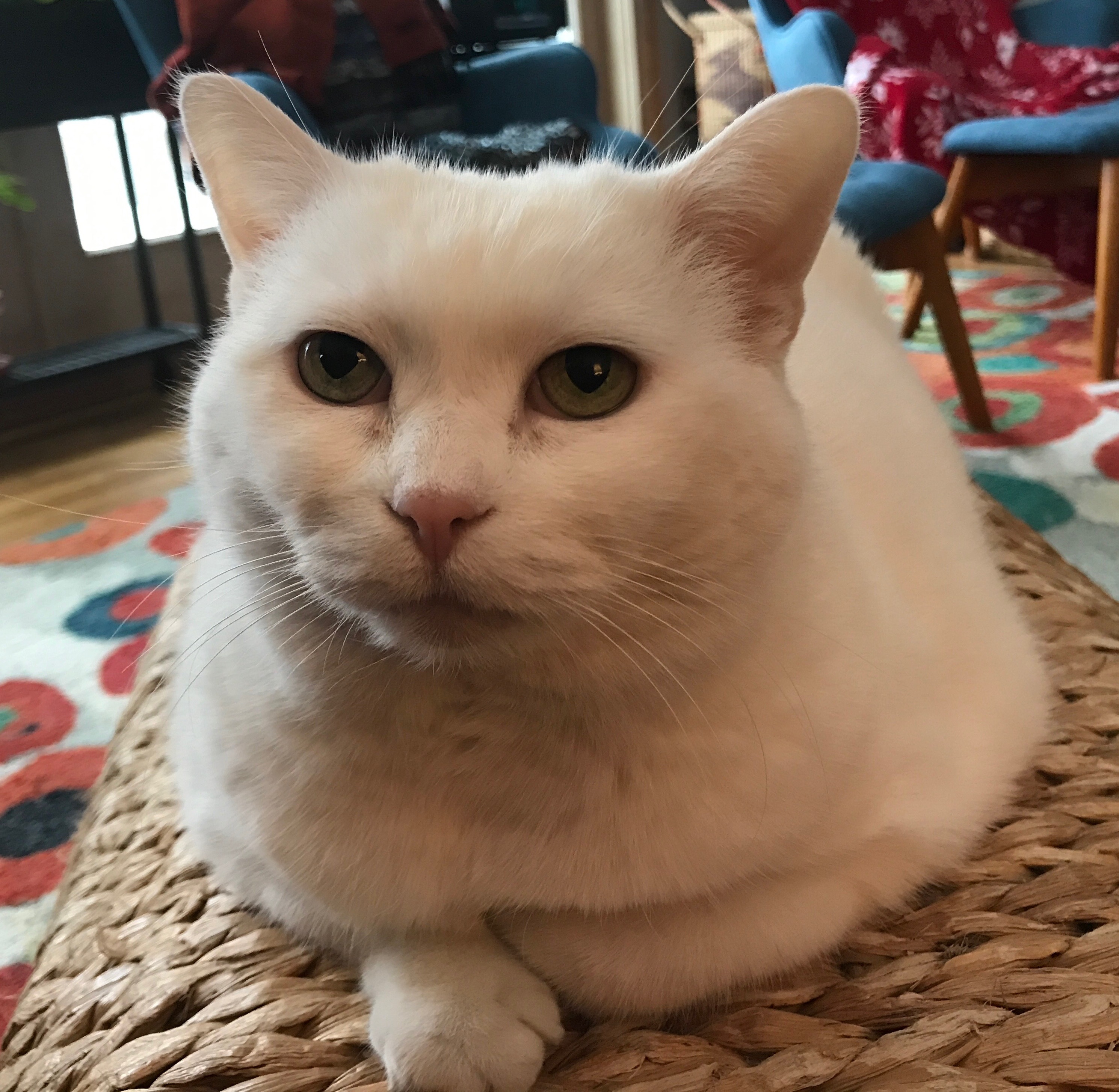
This is Cora’s part of the T@b. Some people have commented that cats don’t like to eat by their “bathroom.” I think you will agree that Cora doesn’t appear to mind. (In case you are impressed with the litter box, here’s a link to it.)
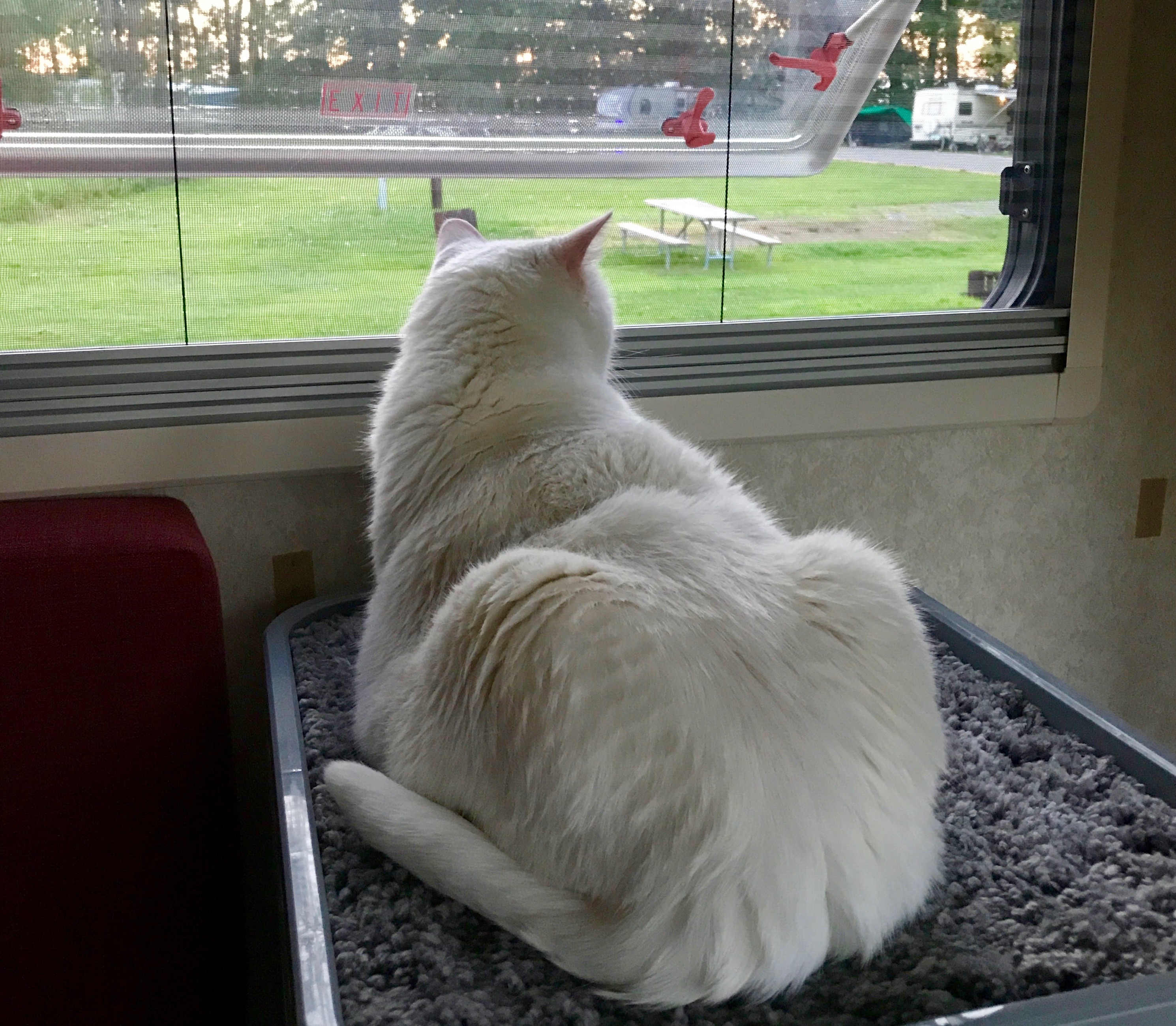
Cora enjoys sitting on top of her litter box and looking out the window.
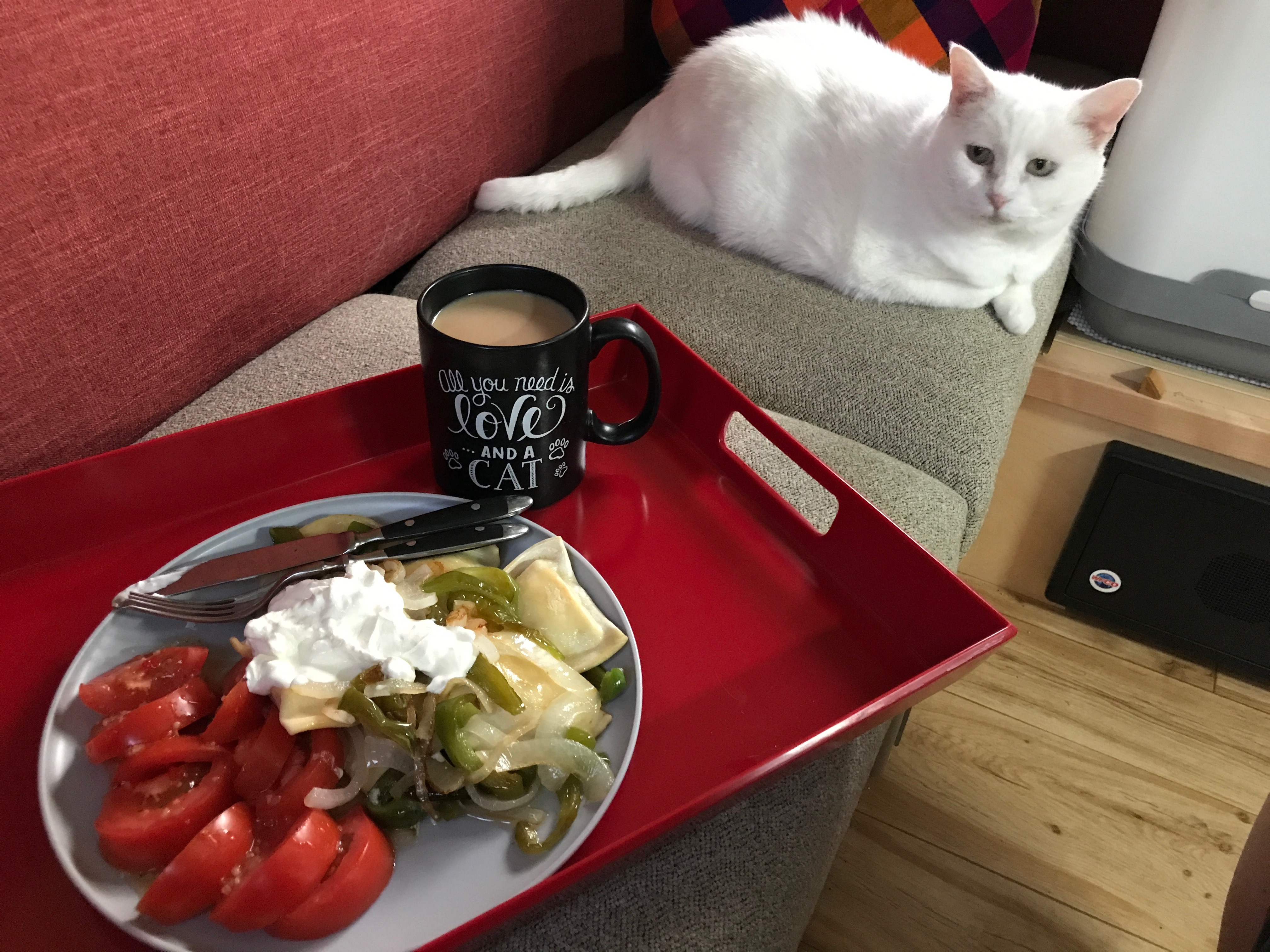
This was my first dinner in my new trailer. Pierogis sautéed with onions and peppers with tomatoes on the side. Some people grill when they camp – I make pierogis.
I figure this photo says it all.
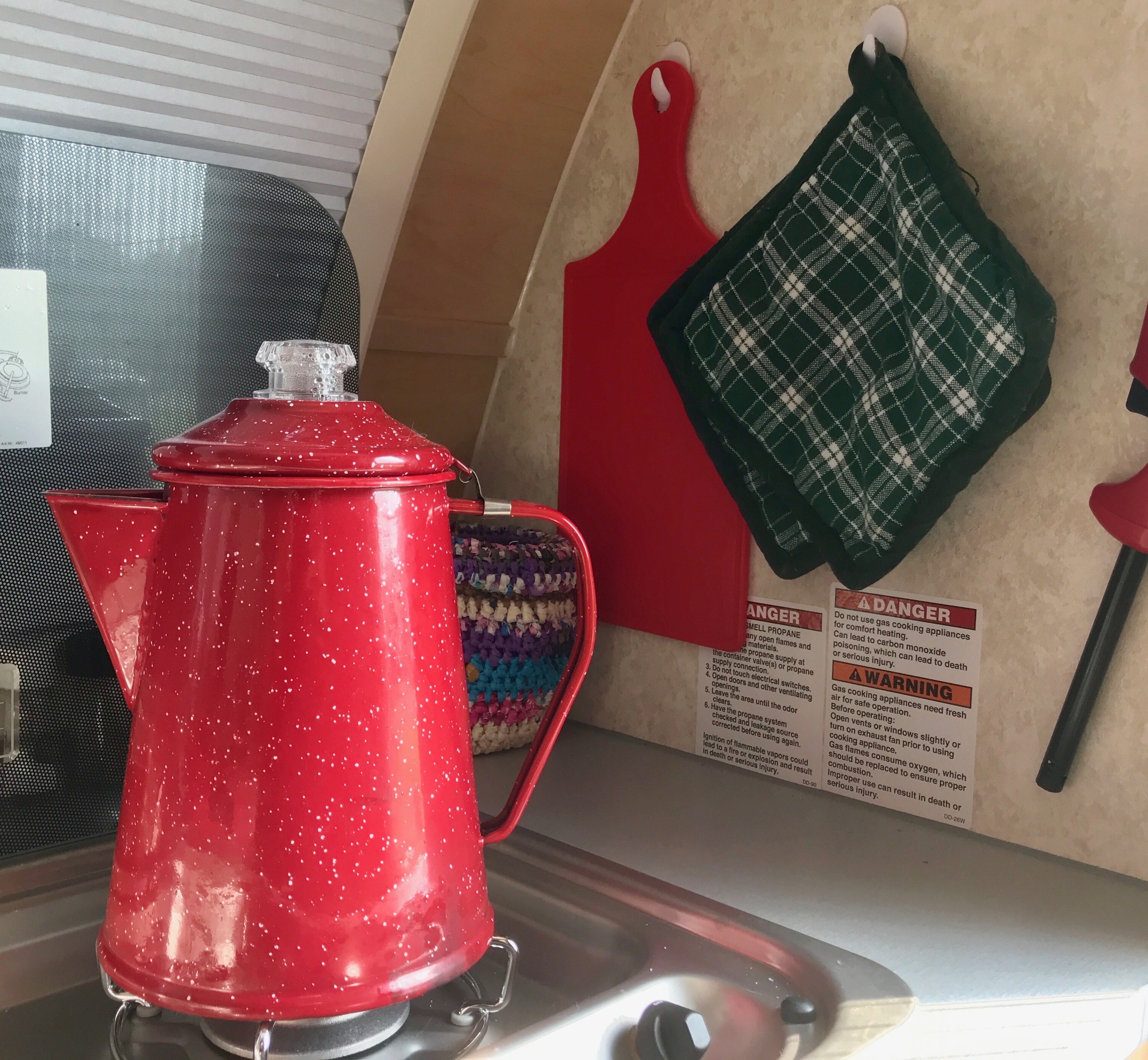
I haven’t really gotten too much into decor yet, but I have a red theme going on that matches the red and white colors of the T@b.
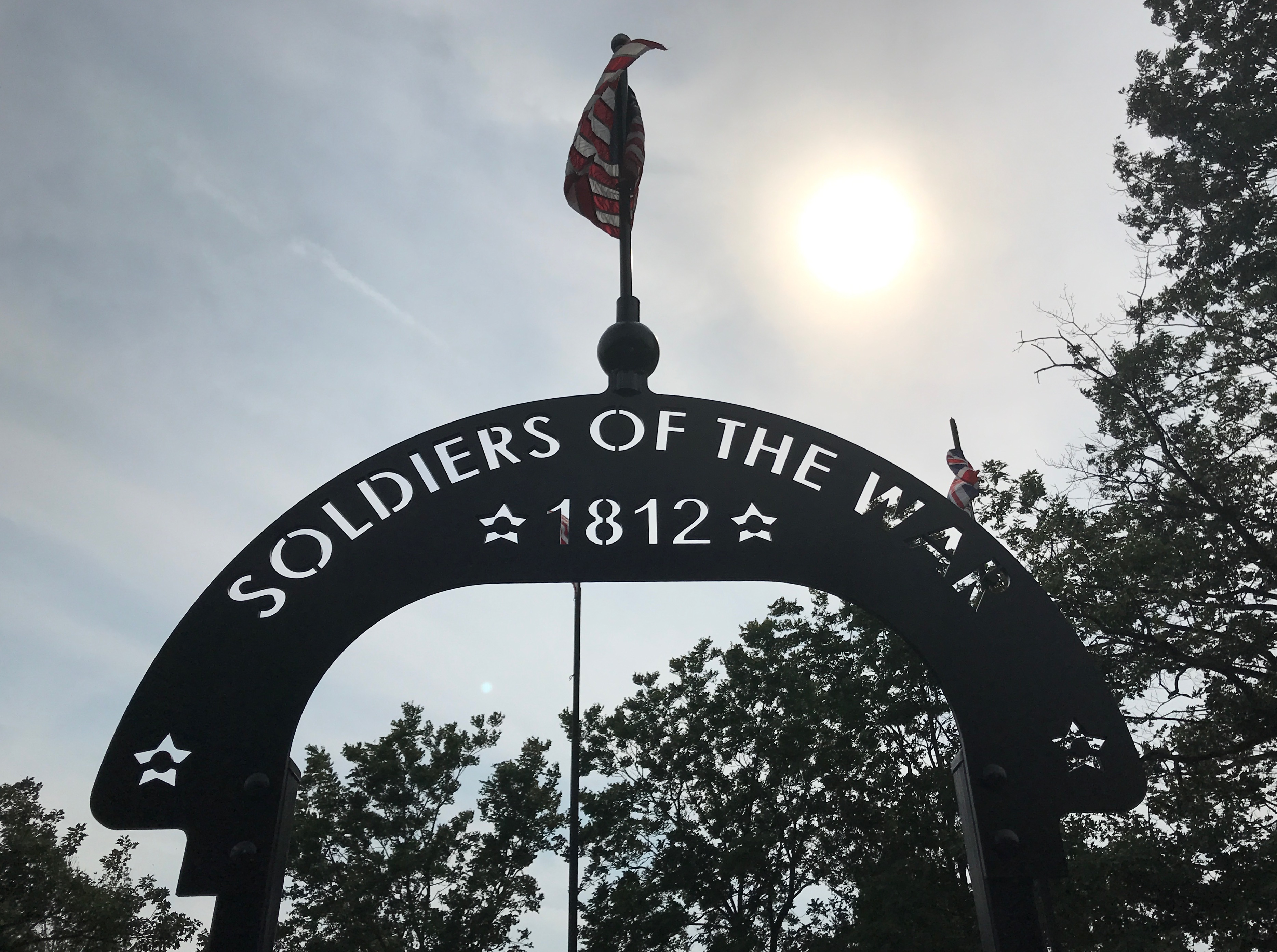
I figure that I’ve covered just about everything there is to cover in Buffalo, but I set out to find some new things to explore. I found a cemetery for soldiers of the War of 182.
You might ask, “Where is that?” Good question.
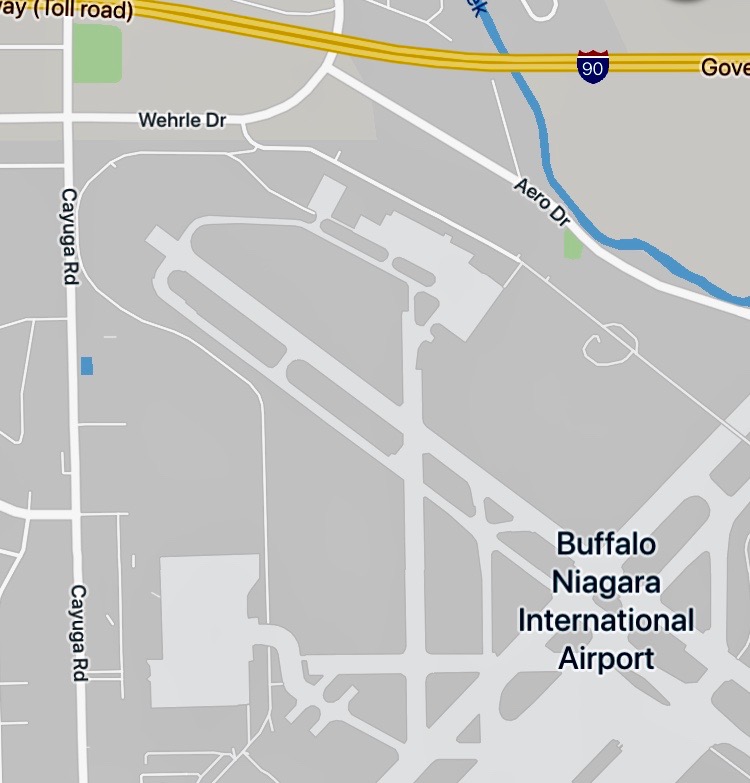
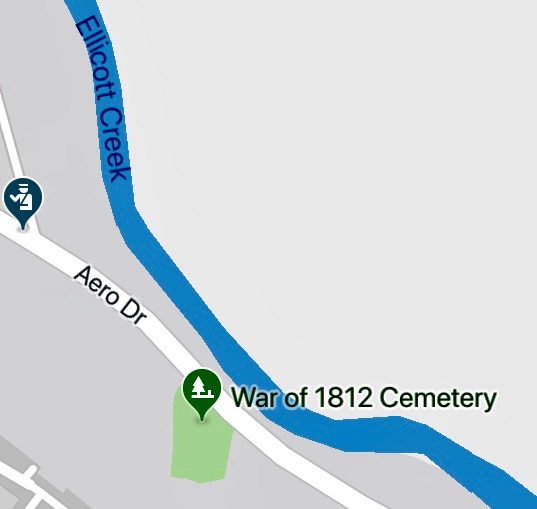
It’s right there, between the Buffalo Niagara International Airport and the Thruway, on the bank of Ellicott Creek. Do you see it?
If you zoom in close enough, it pops right out. There was a military hospital nearby and they buried the dead in this cemetery. The information you can find on the internet is astounding! I found one site that lists the names of the dead and what they died of. Incidentally, diarrhea seems to be a leading cause of death back then.
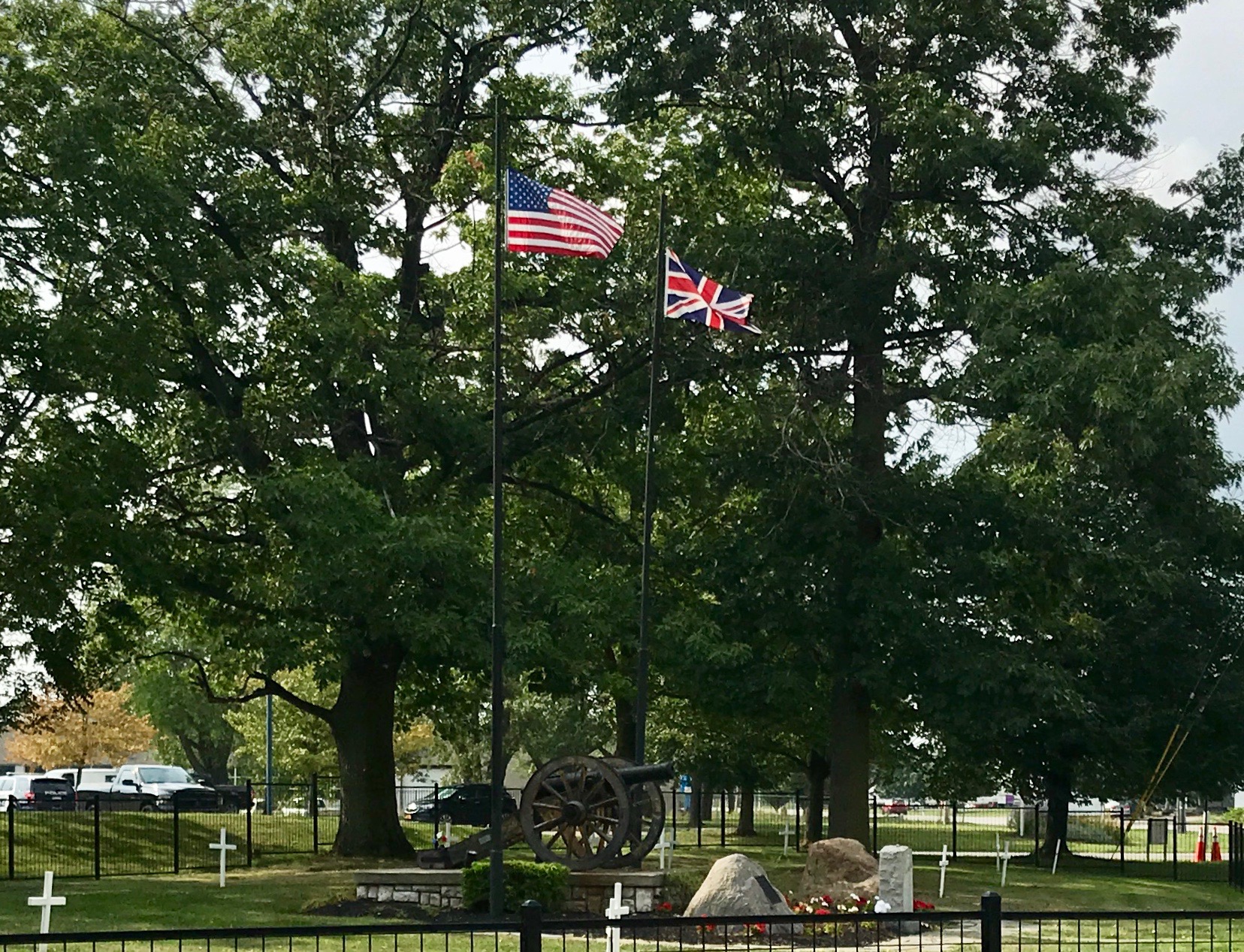
Both American and British soldiers are buried here.
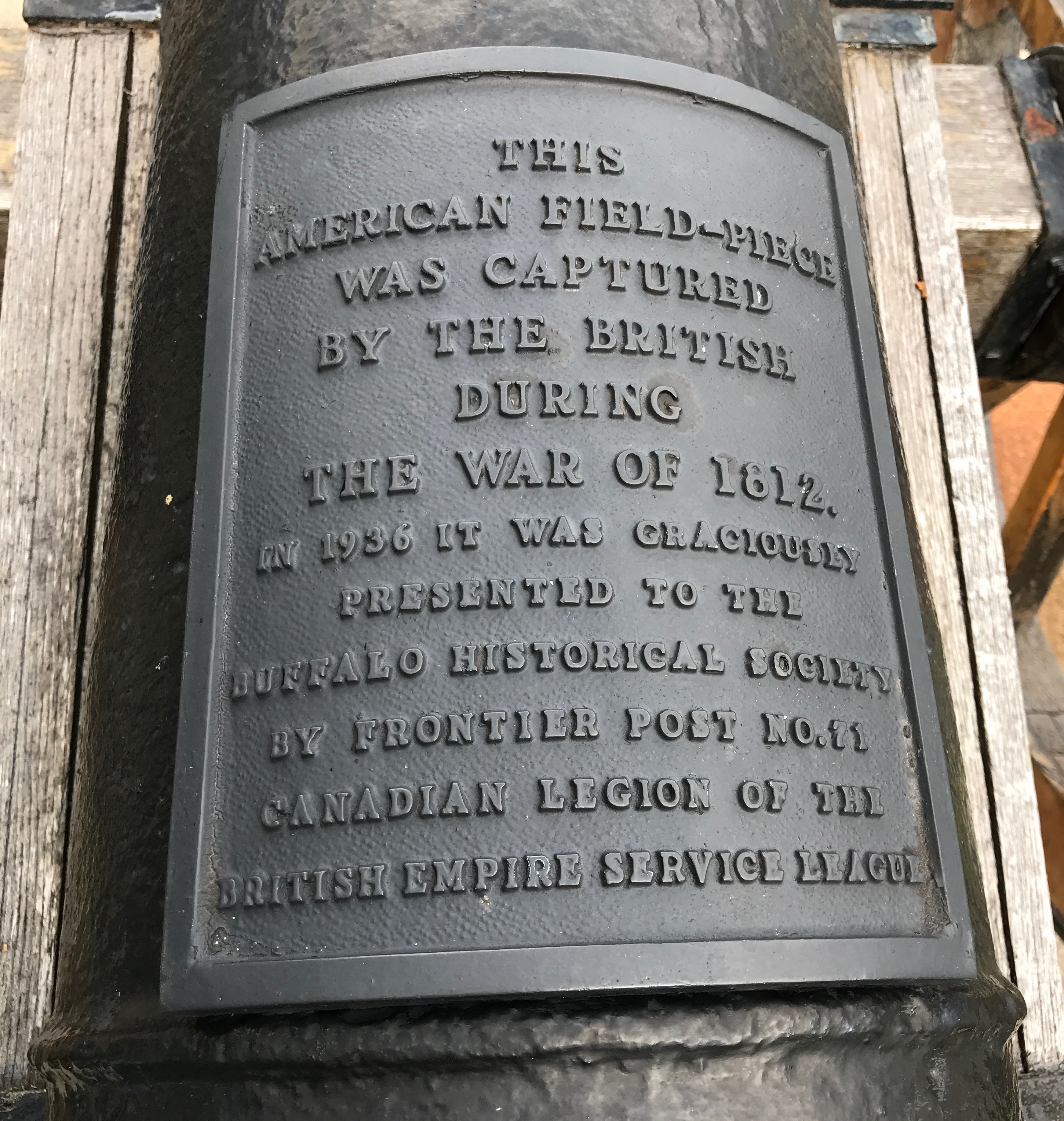
One source I located said that the cannon that was placed there in 1898 by the Buffalo Historical Society, but was donated in 1942 to Bethlehem Steel to be used as scrap metal for the war effort.
So, maybe this is a replacement cannon.
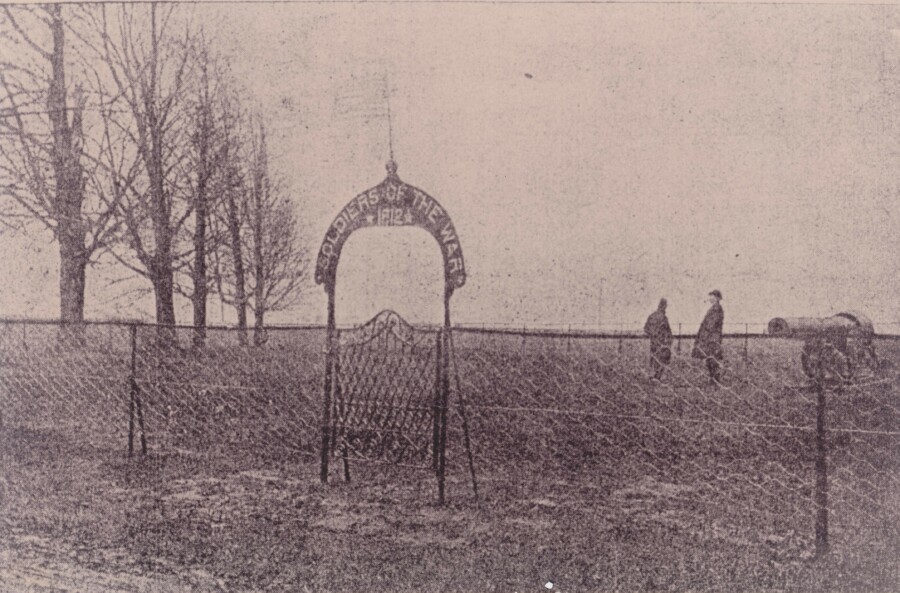
The website identifies this photo from 1898 or 1899.
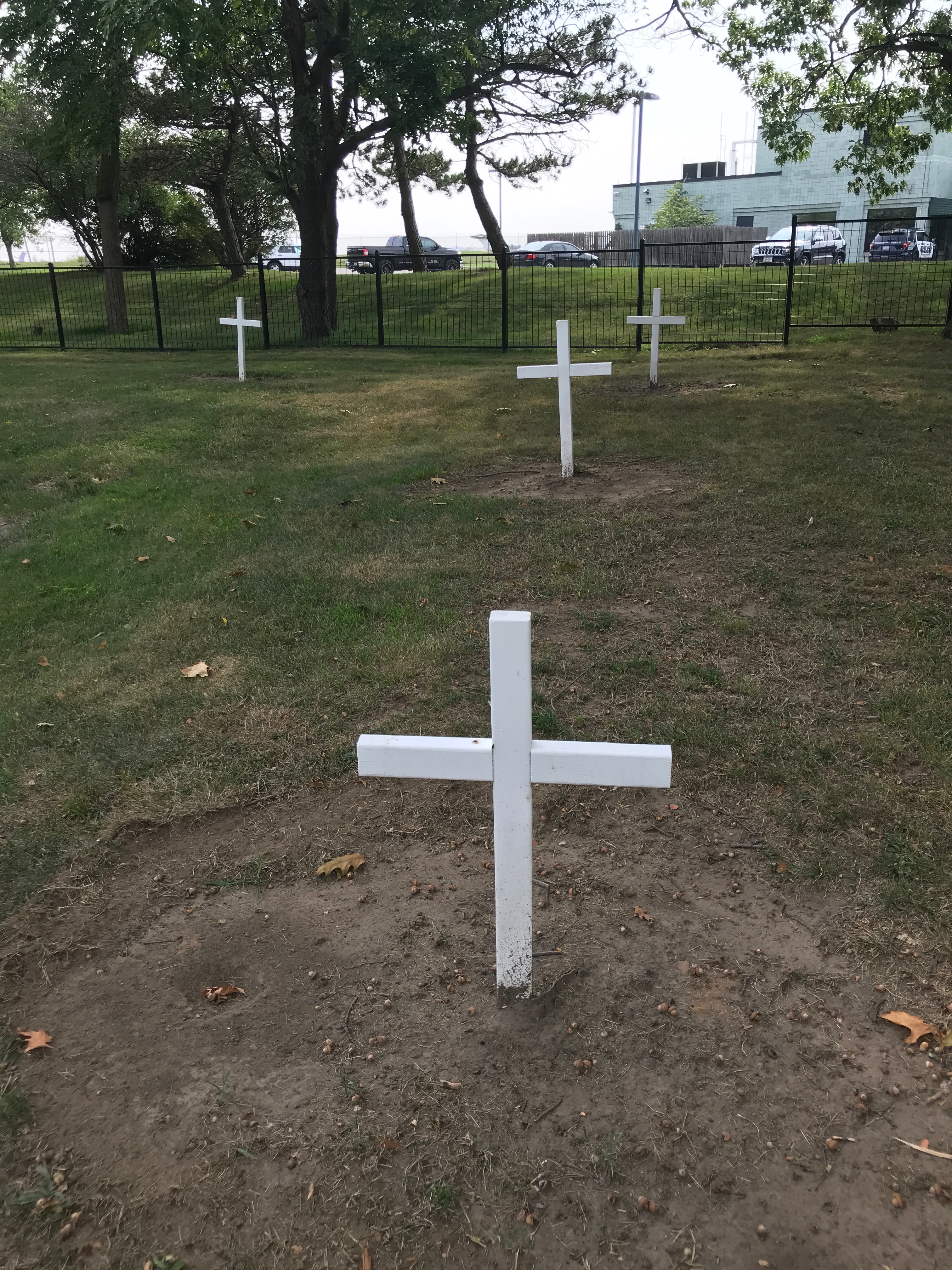
Graves are marked with wooden crosses. I always wonder when you see cemeteries marked with crosses like this if they have actually identified that people are buried in those specific locations or if they are reminders that this is hallowed ground.
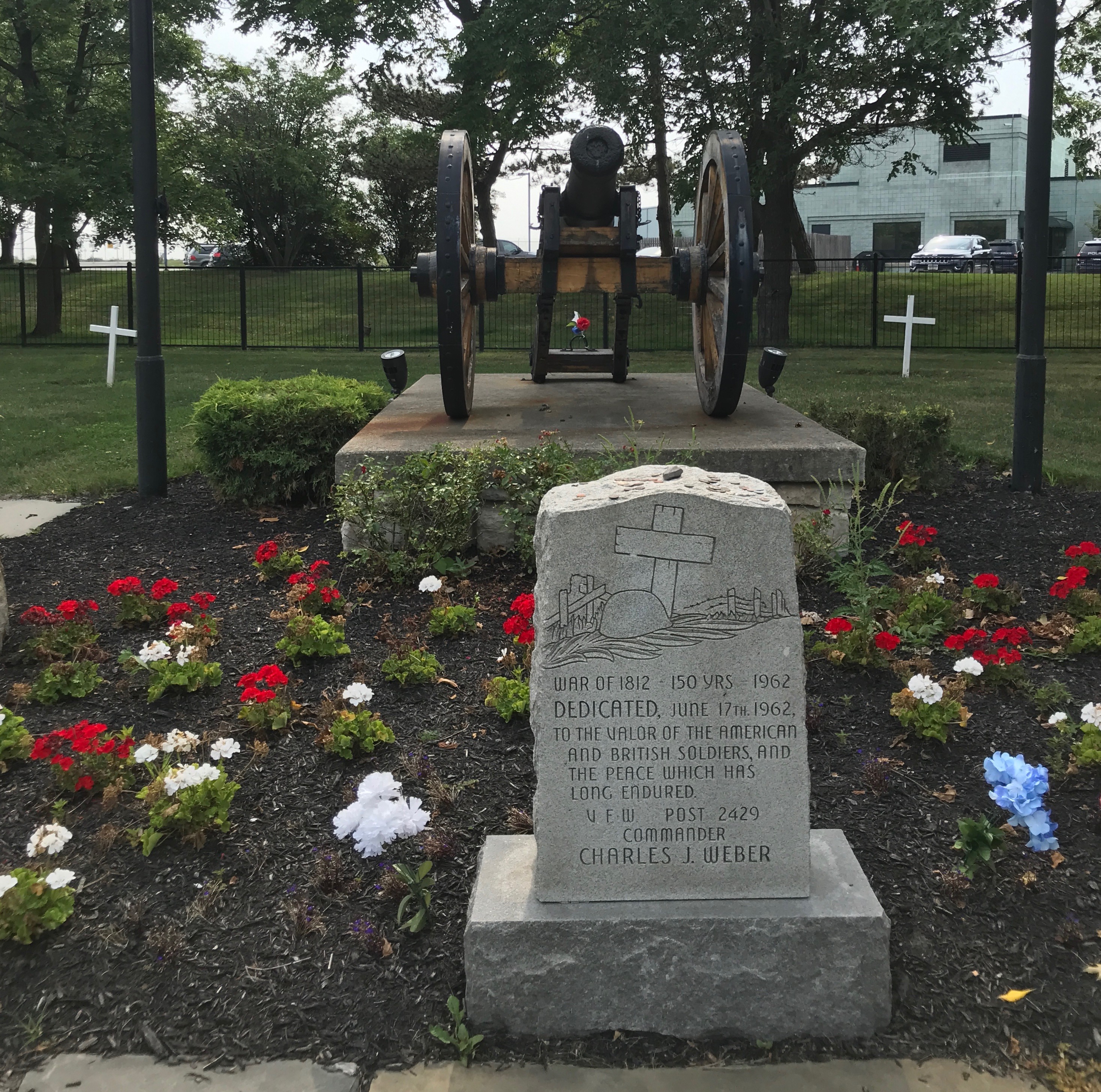
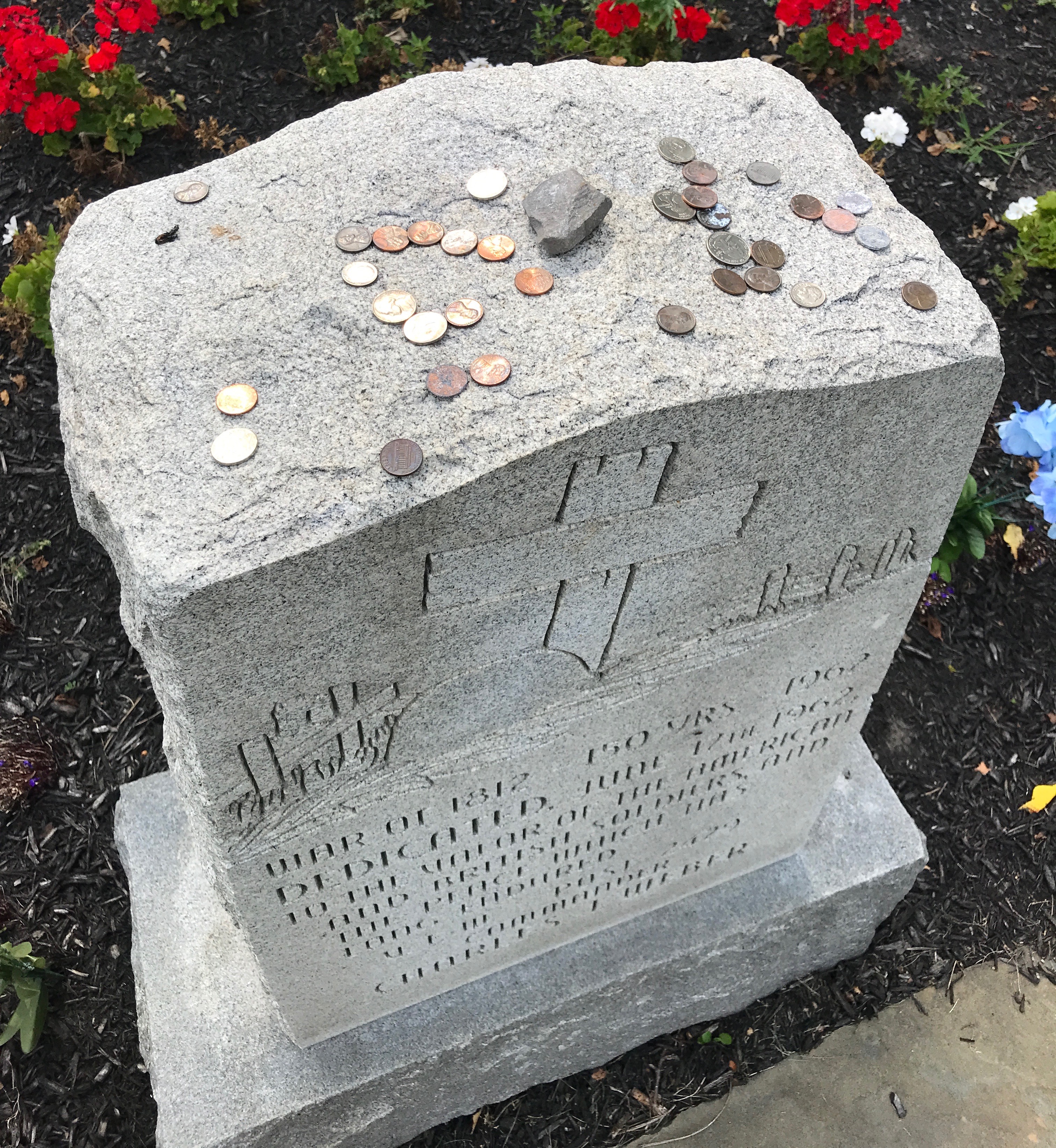
People still come to pay their respects.
I finally managed to get together with my sister, Amy. We picked a spot near her home.
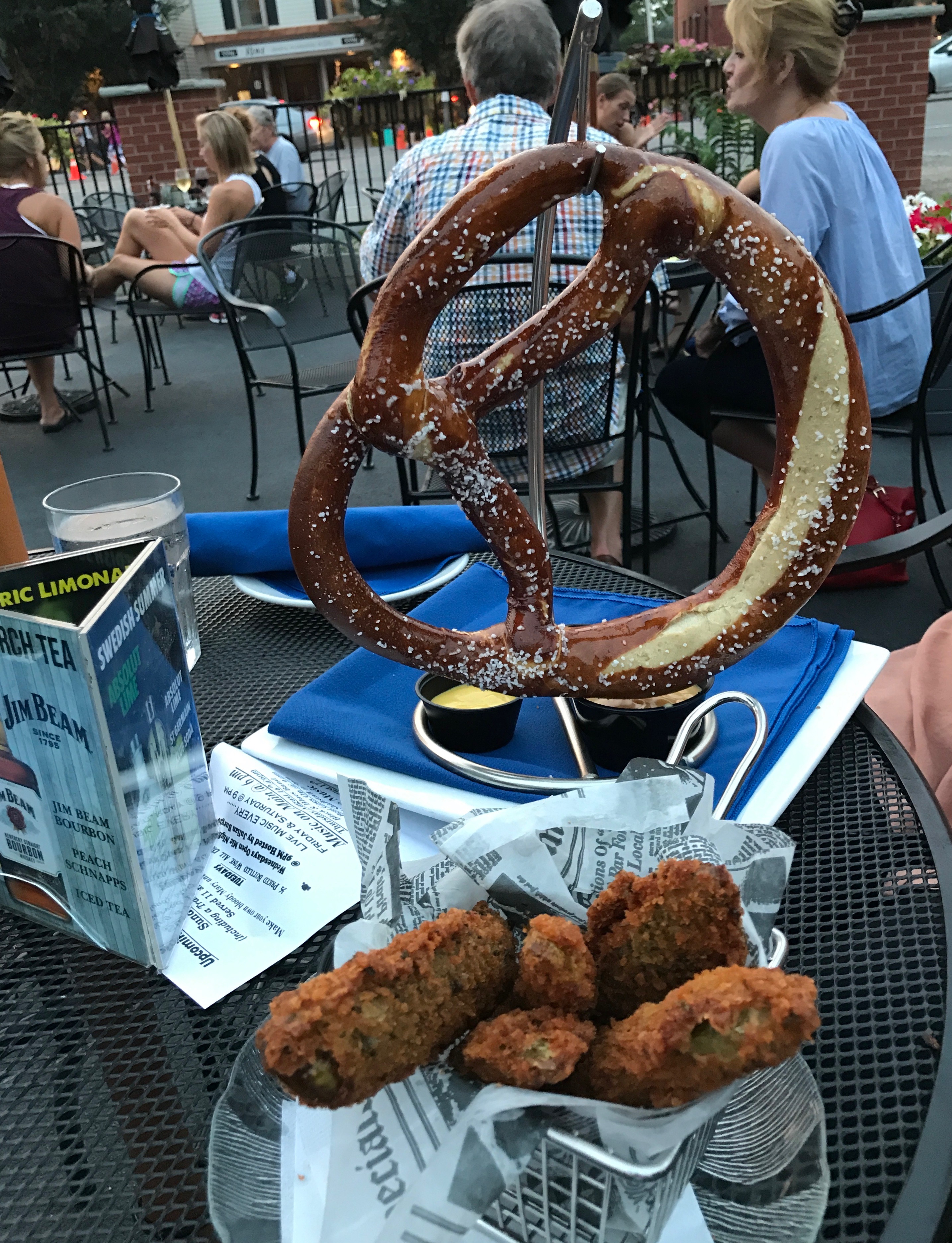
A big ol’ soft pretzel, some sort of fried things, a couple of beers and my sister…that sounds like a recipe for a good evening.
And then it was time to head back to the trailer. Cora was waiting for me!
I hit the road bright and early and continued making my way east.
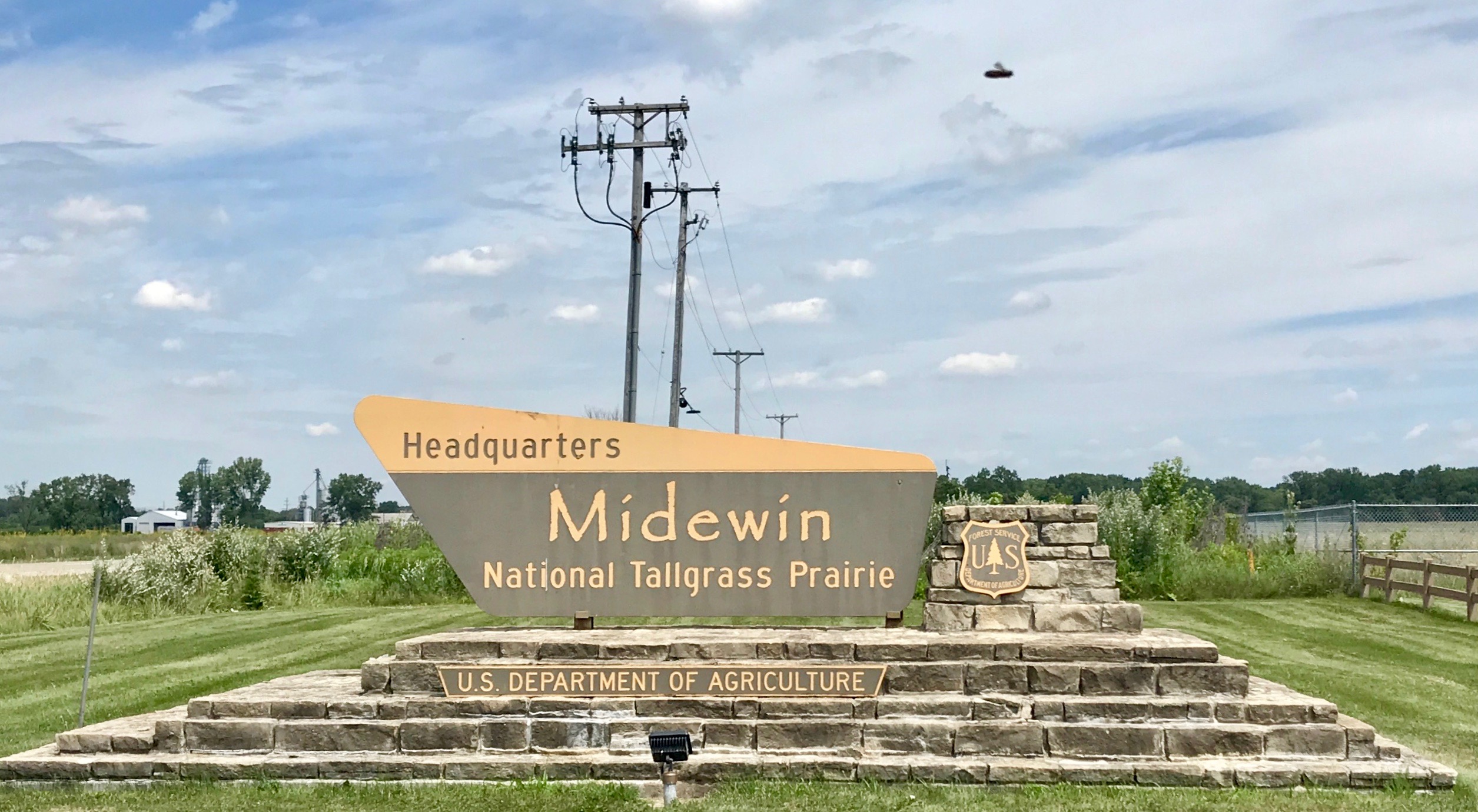
A “brown sign” for the Midewin National Tallgrass Prairie lured me off the Interstate. I’d always been curious about the concept of a Tallgrass Prairie.
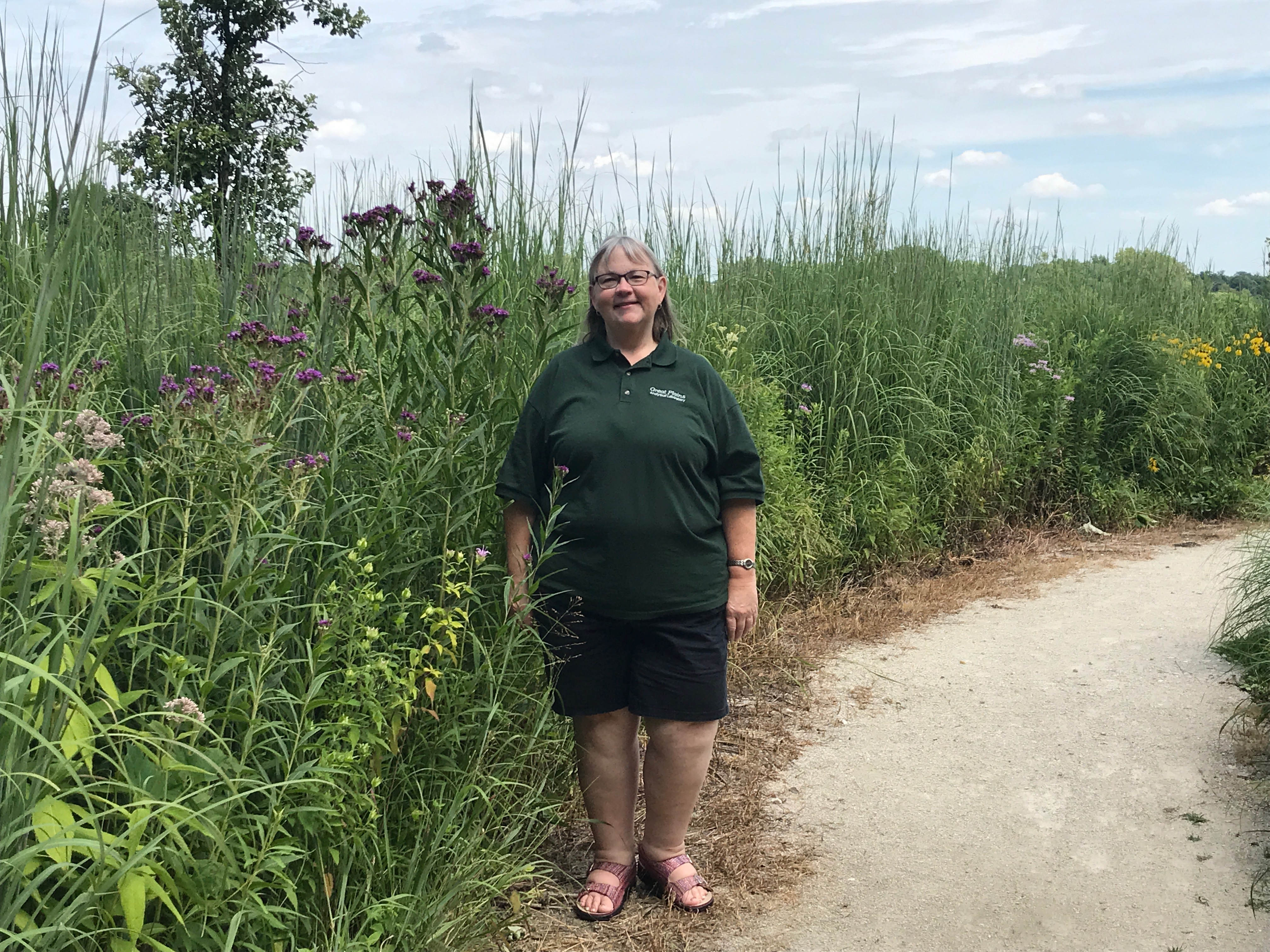
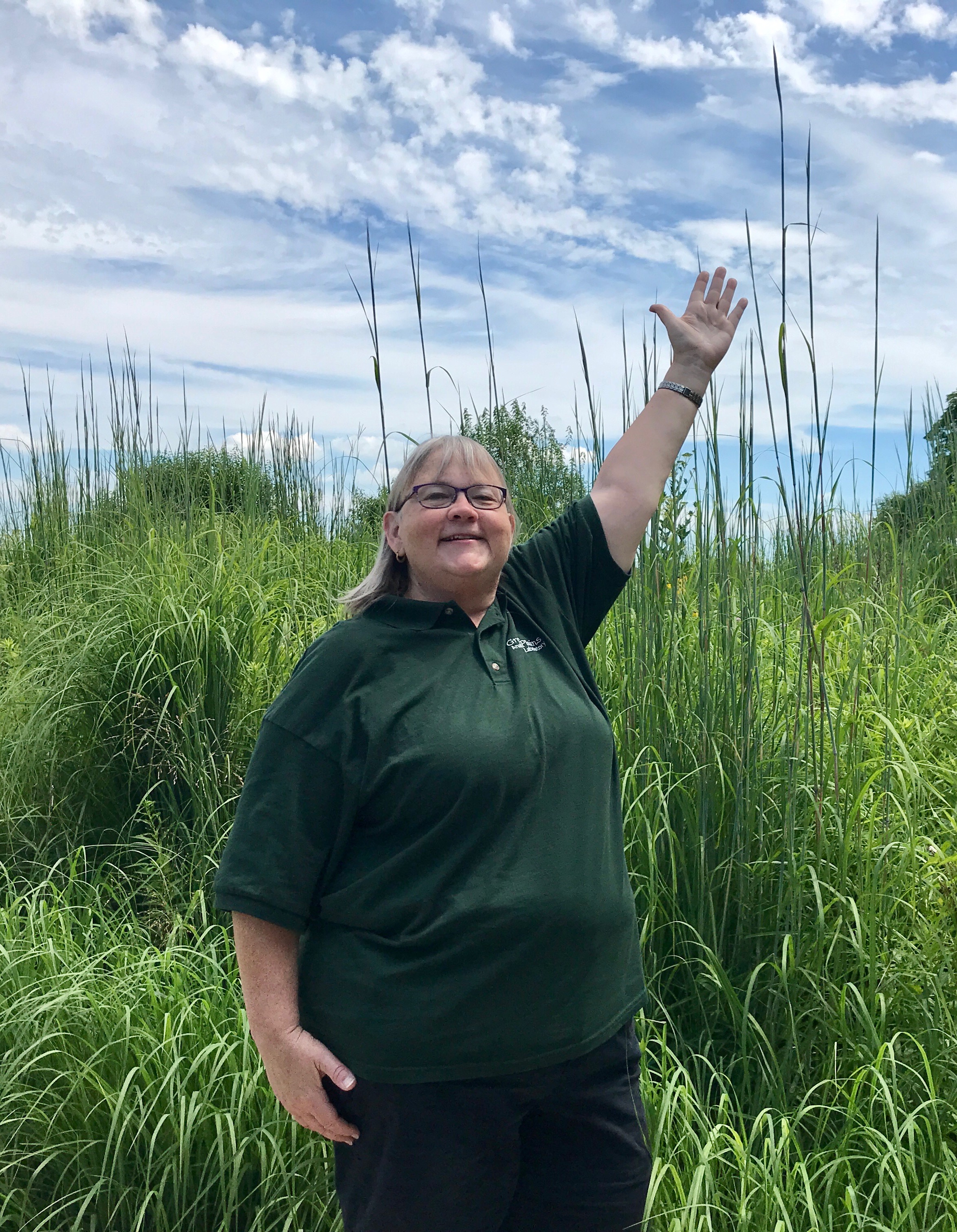
I wanted to know just how tall the tallgrass was.
It was pretty tall.
That is some mighty tall grass!
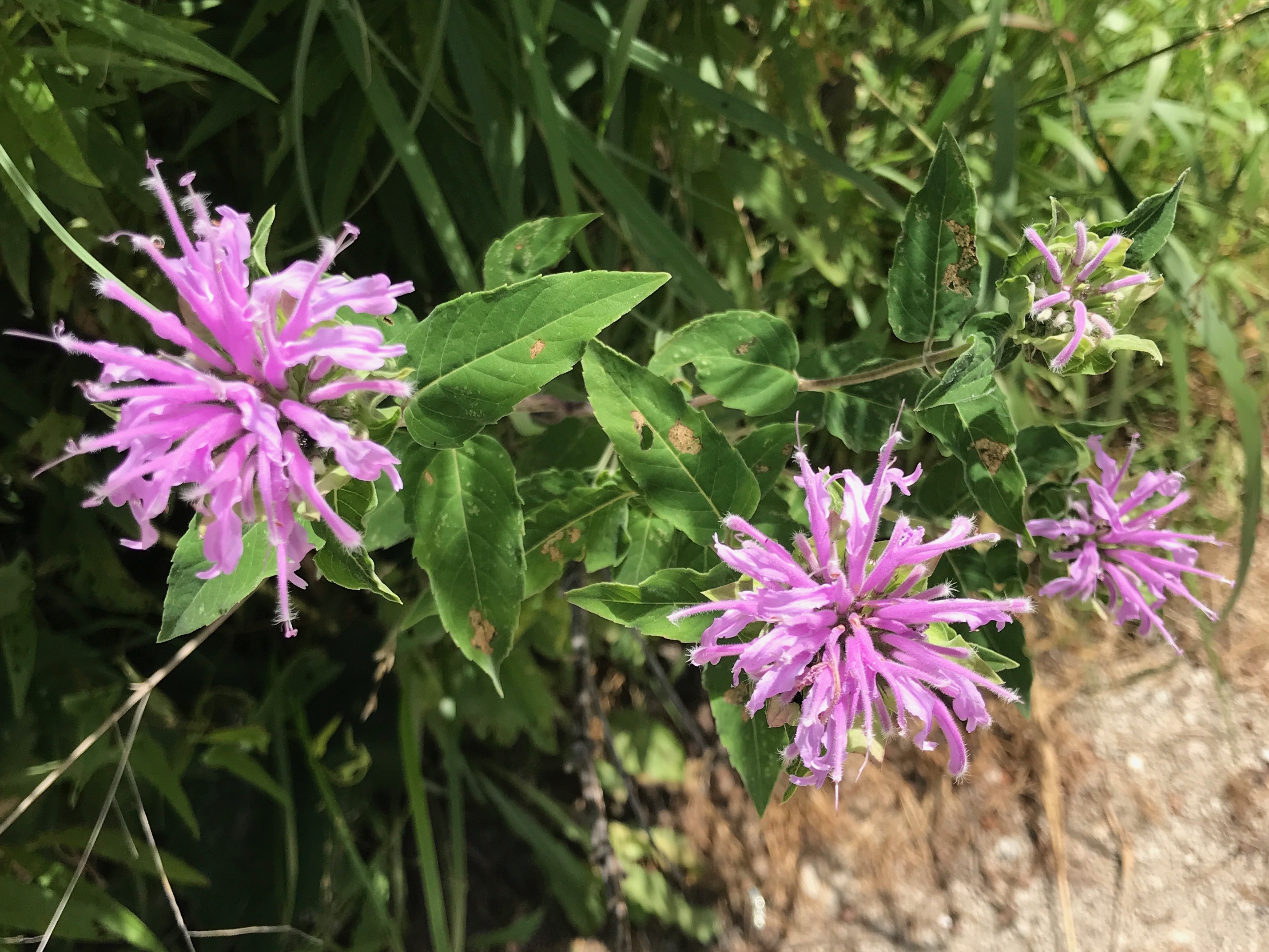
Tucked in the grass were some lovely flowers. There were purple flowers,
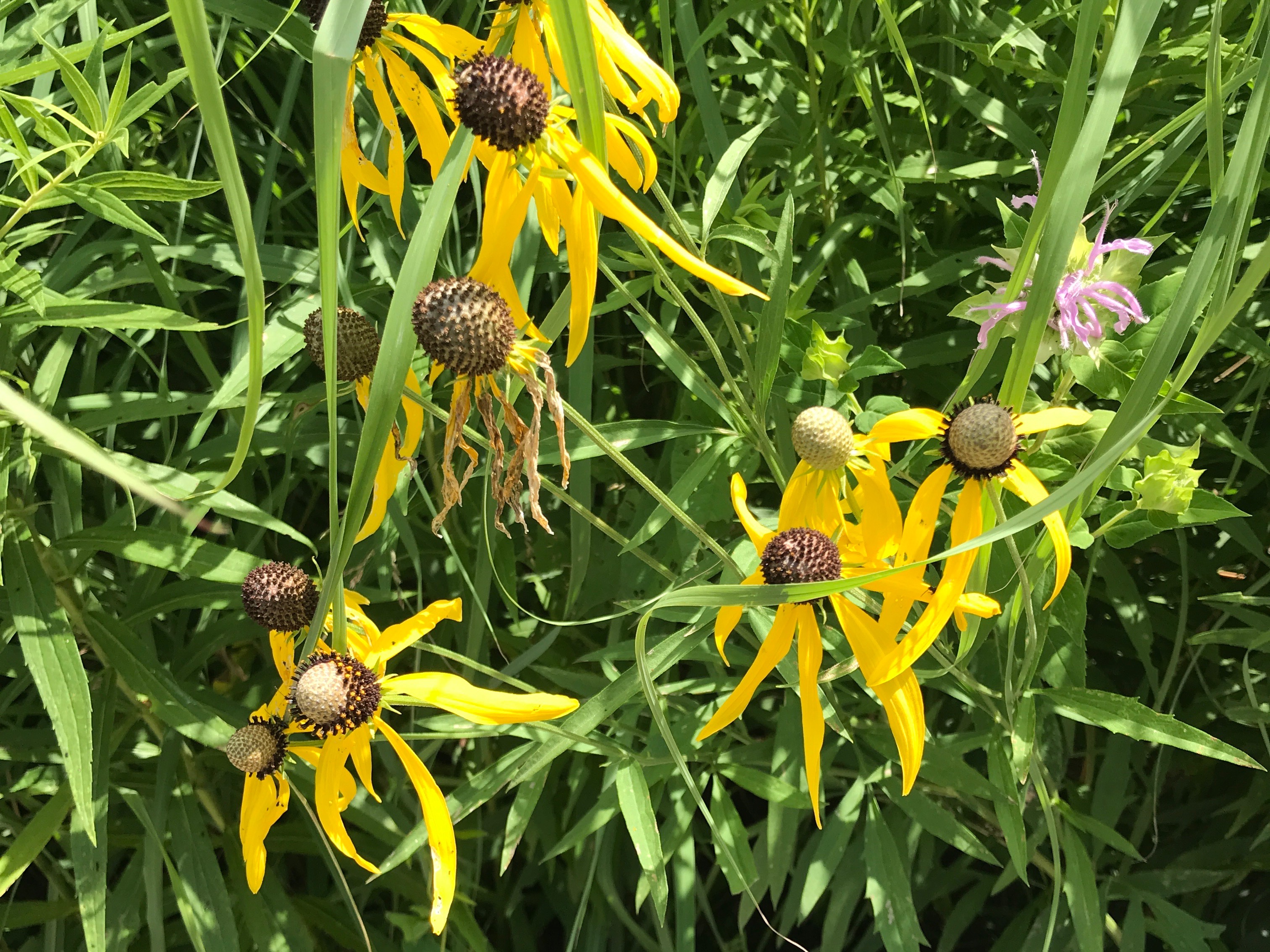
…yellow flowers,
…light and dark purple flowers,
…these interesting white shapes,
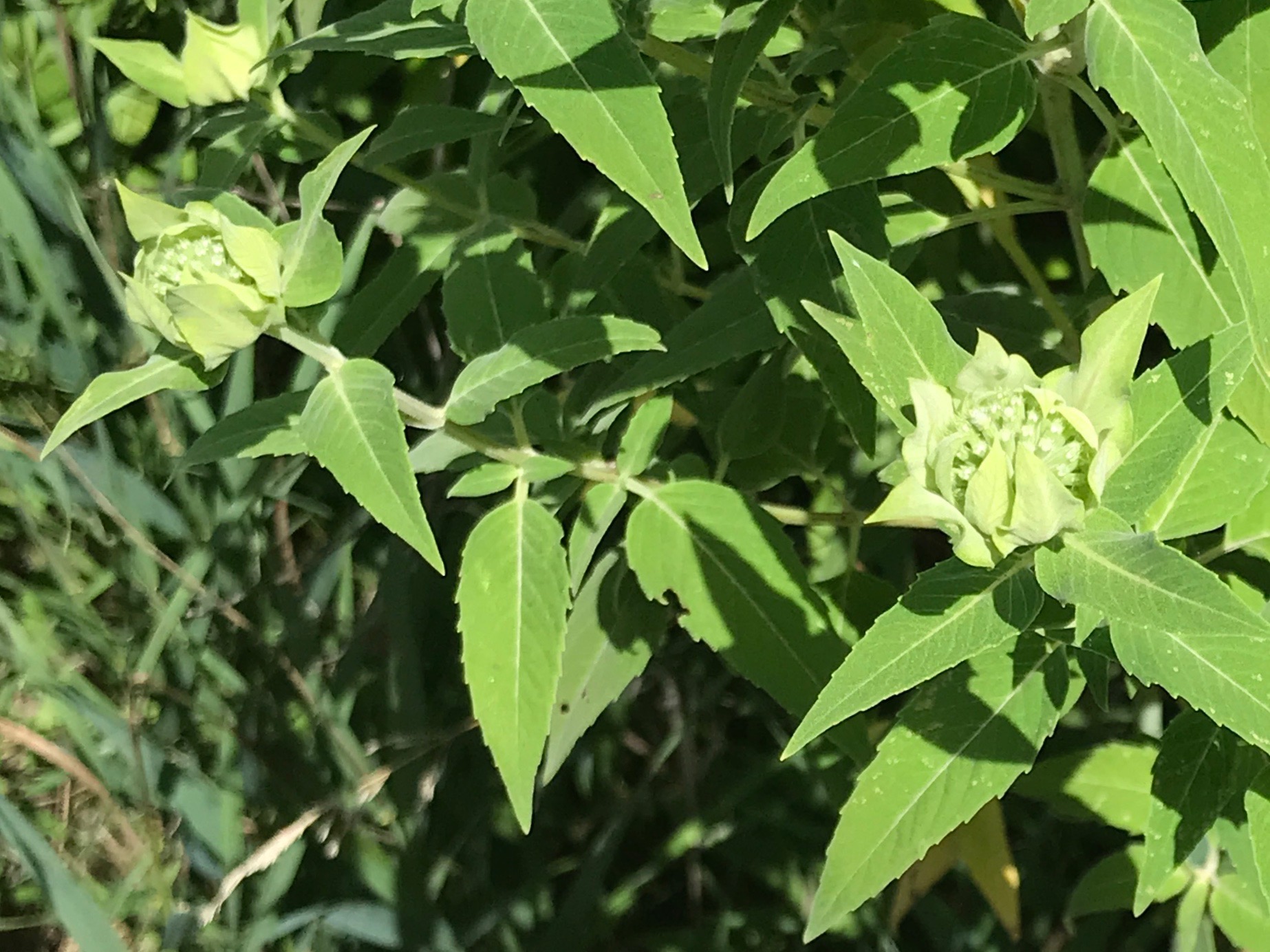
…and these pale structures. Do you suppose they are seed pods?
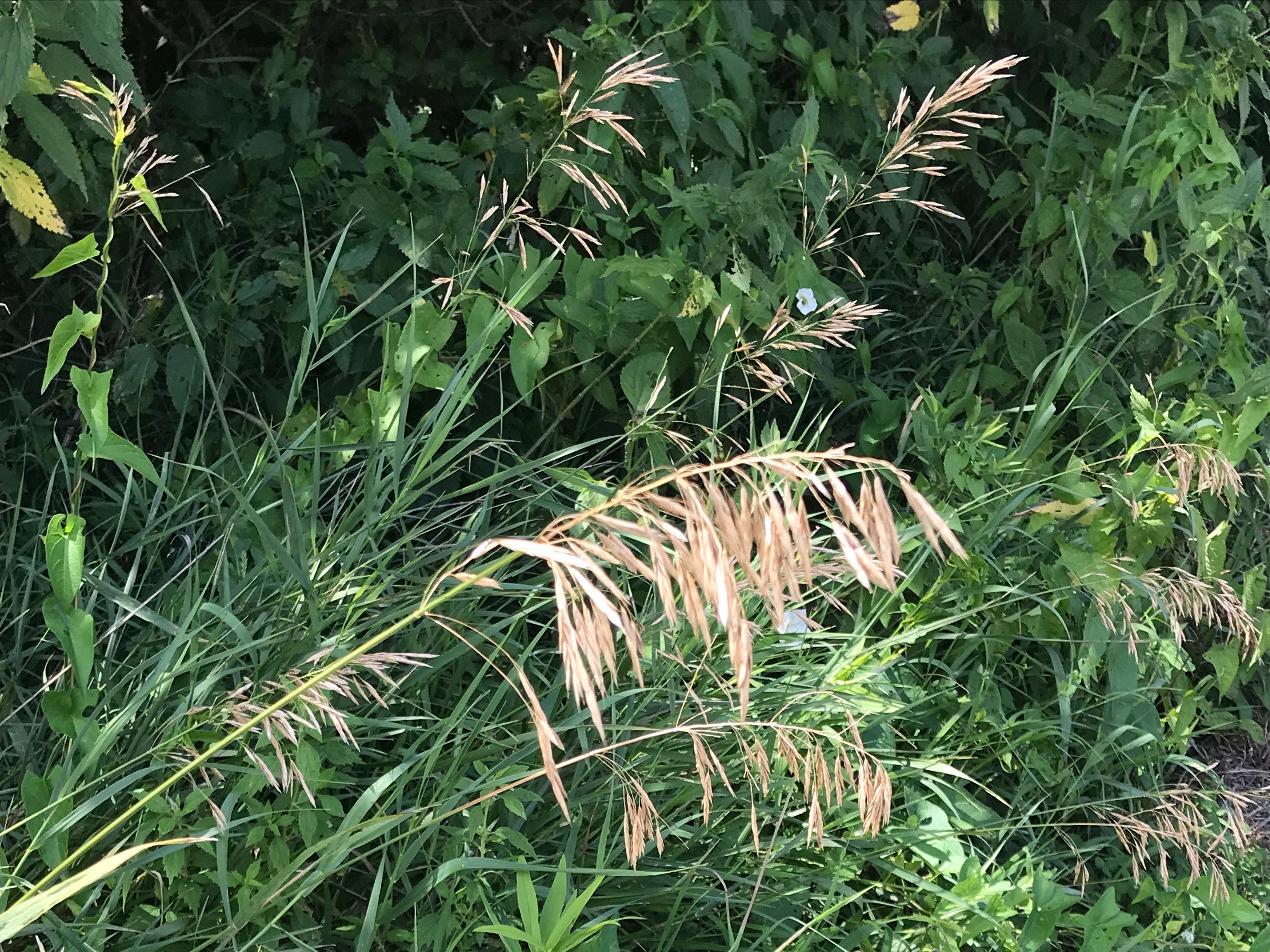
Here’s a shot of more what I expected to see – grass seeds.
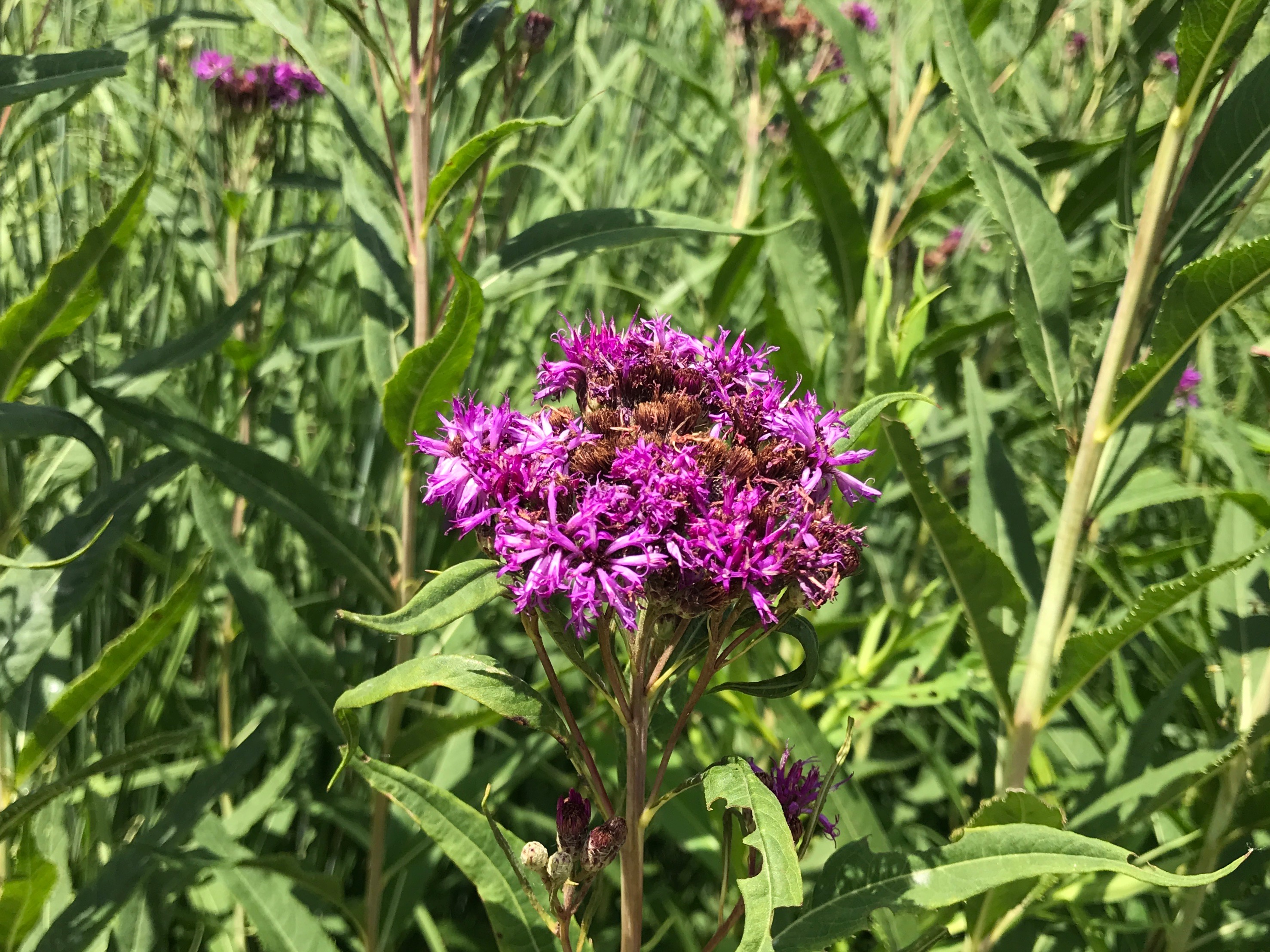
The purple flowers were my favorites.
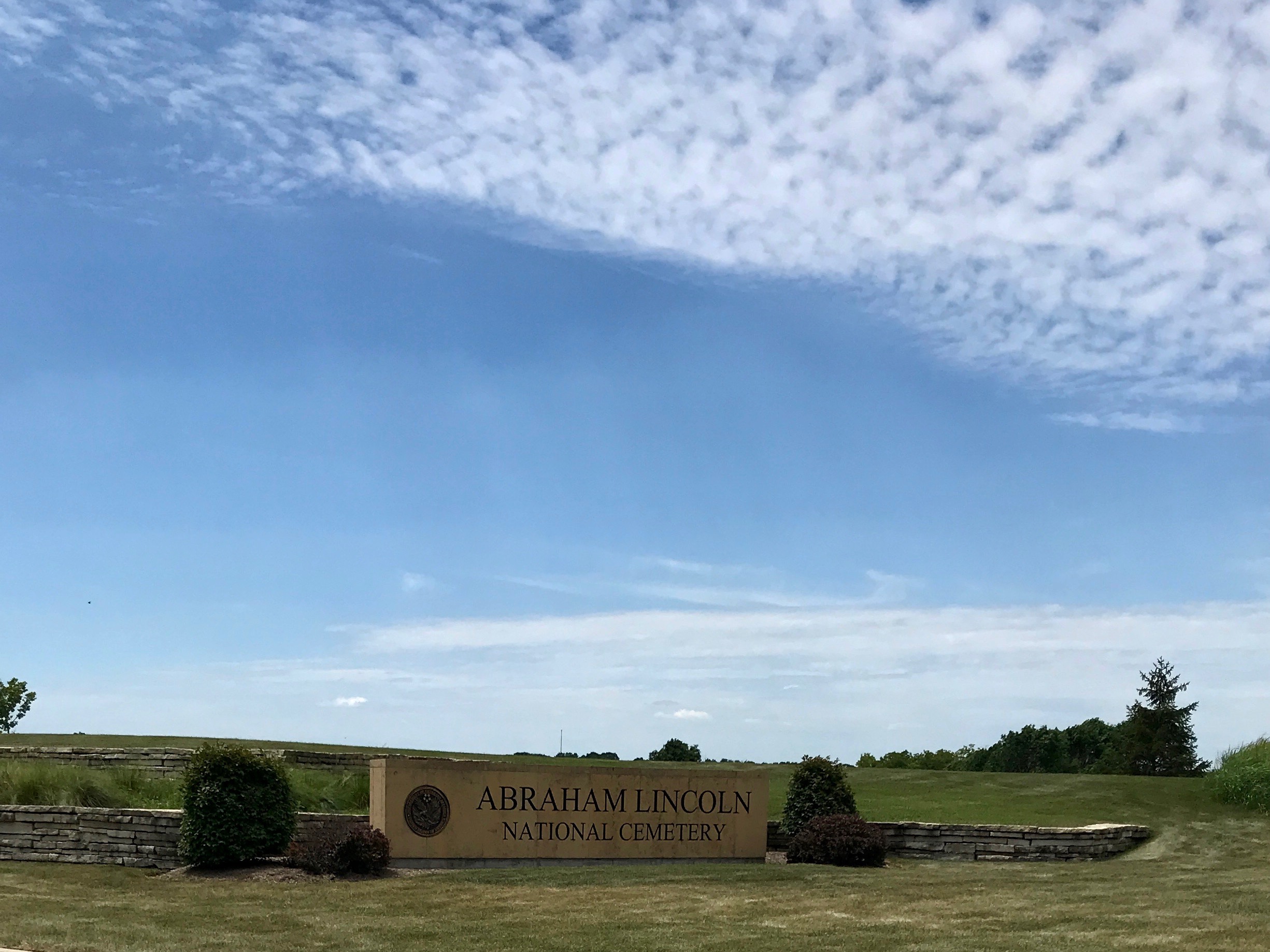
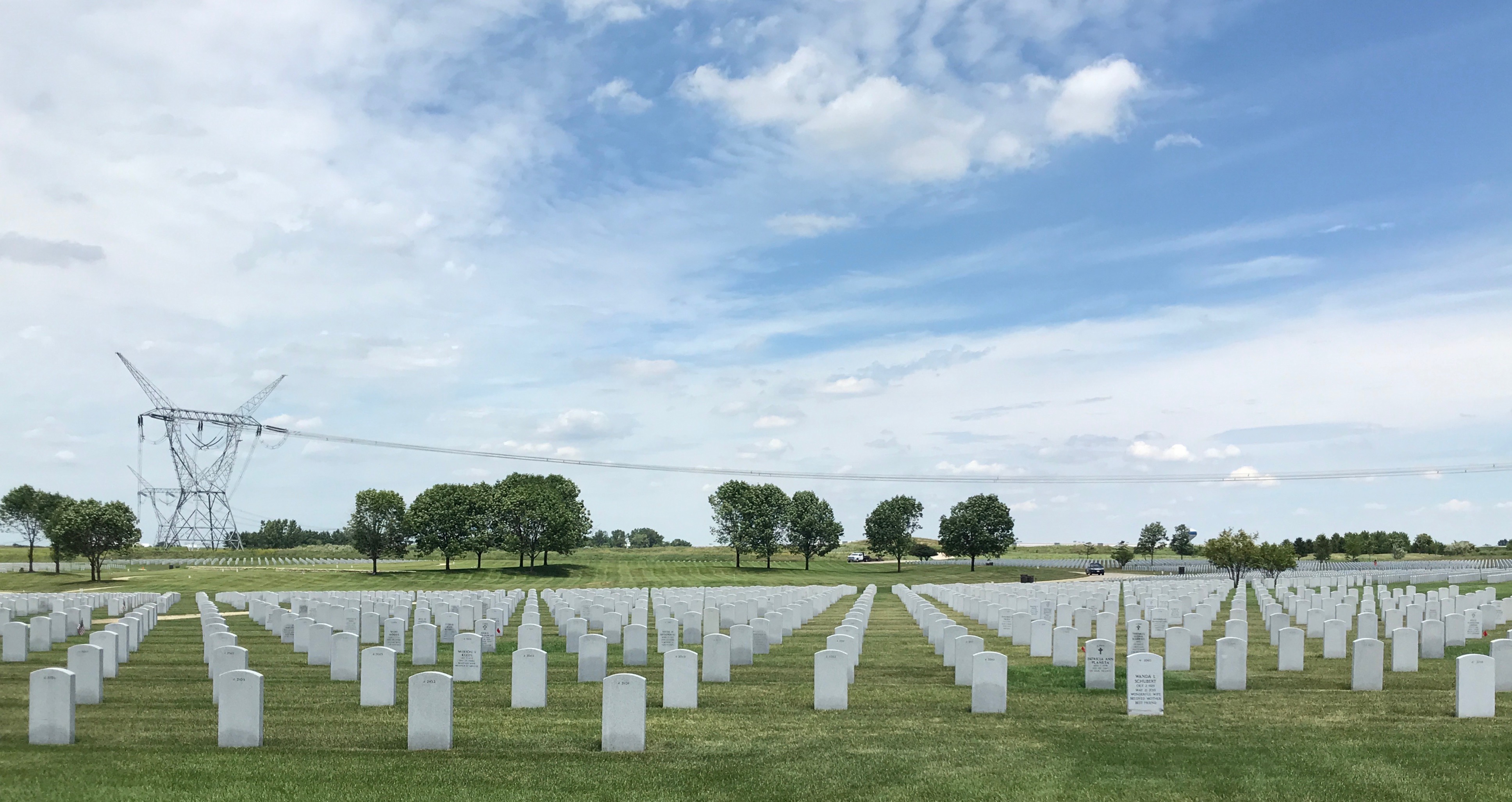
As I left the park, I saw a sign for the Abraham Lincoln National Cemetery, the 117th national cemetery. I decided to pay my respects before jumping back on the Interstate.
I passed through the gate and followed the road around. The cemetery is 982 acres and will provide 400,000 burial spaces when it is fully developed.
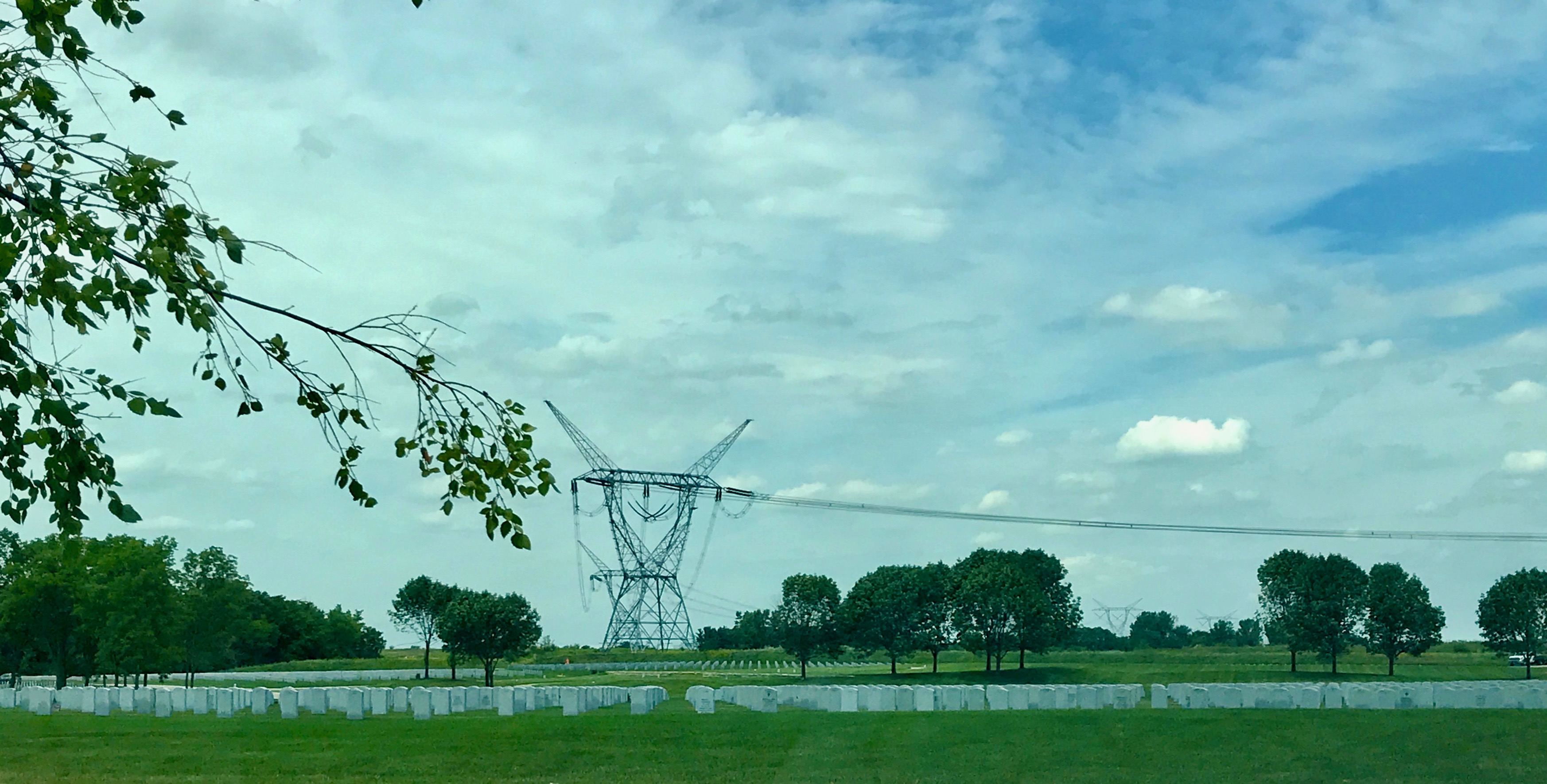
The graves were well-tended, but I found it less than dignified that the veterans were buried by the high tension lines.
There certainly were a lot of graves and there was room for more.
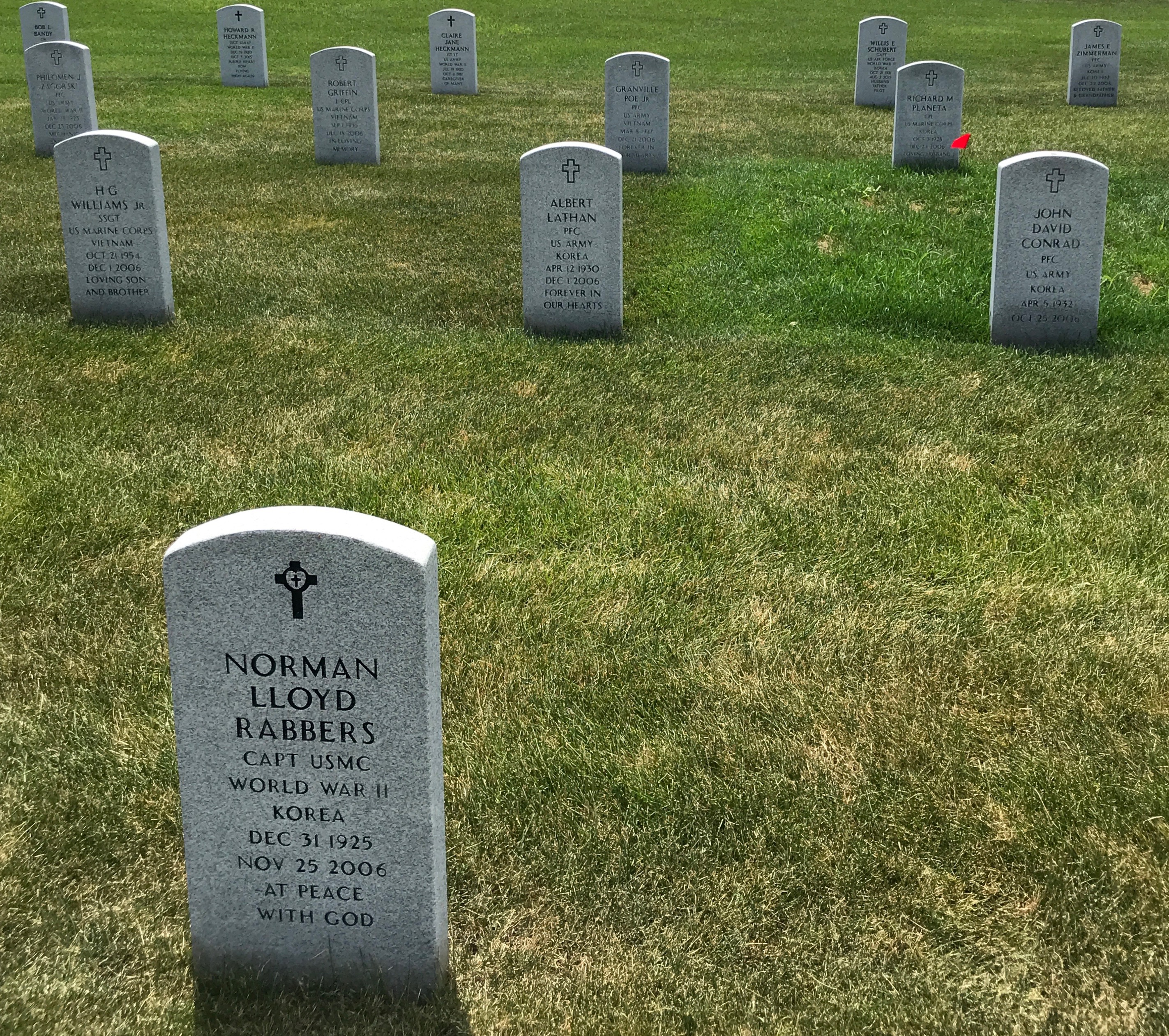
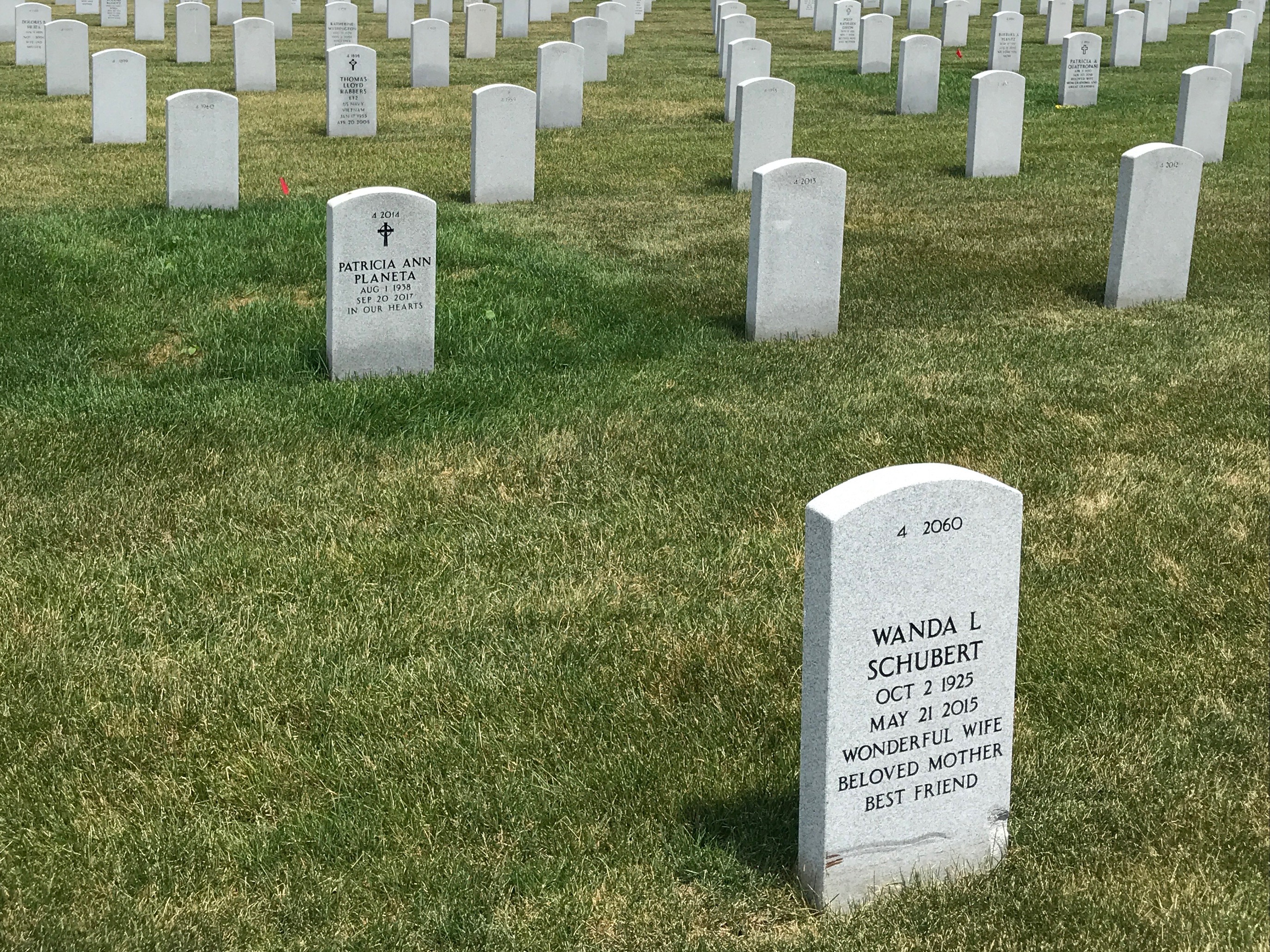
I think it’s nice that there is room for a brief message in addition to the identifying information.
I also appreciate the fact that spouses are buried together. Minor dependent children and, under certain conditions, unmarried adult children with disabilities may also be eligible for burial.
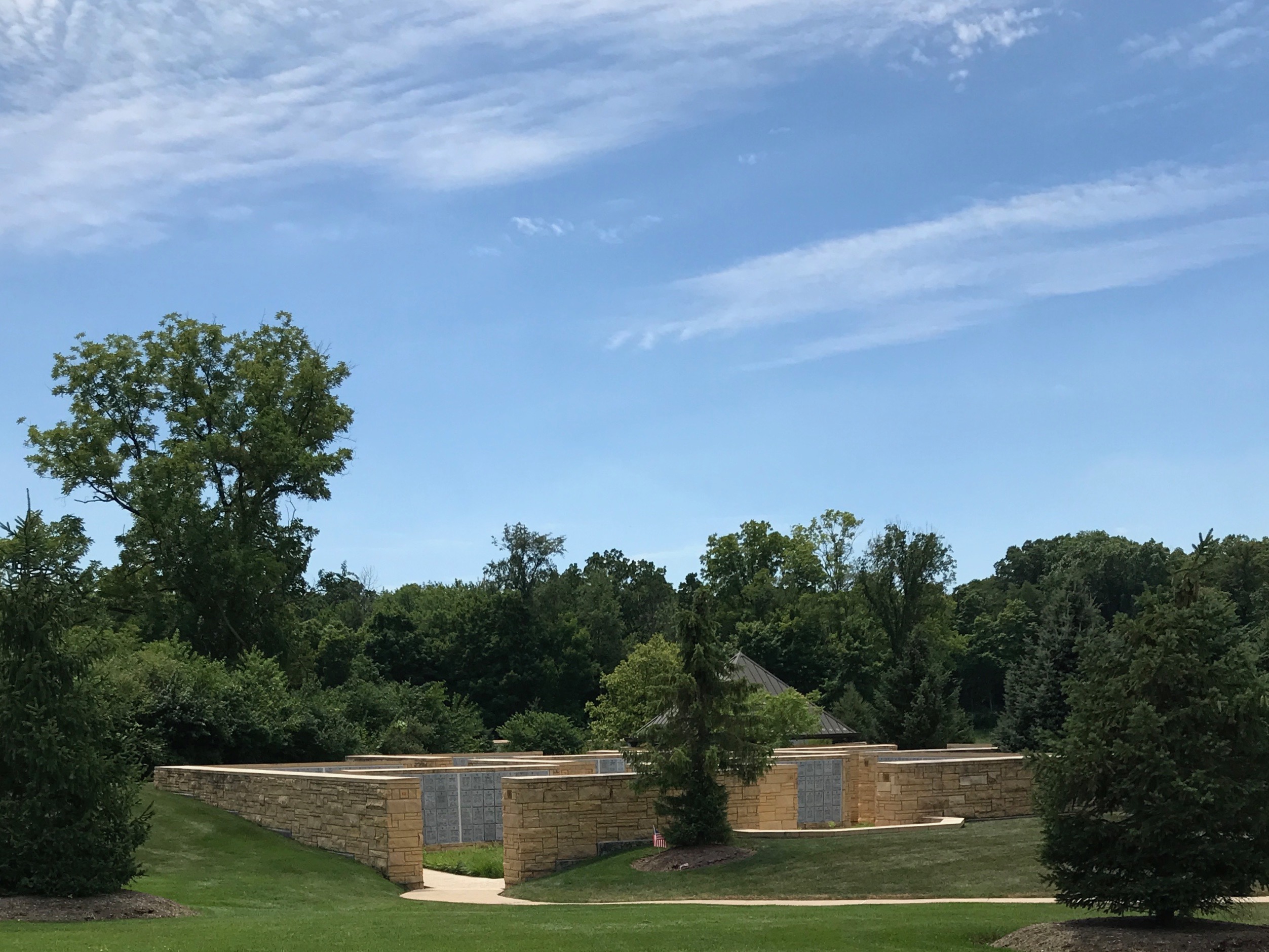
Space is also set aside for cremains in a Columbarium.
It was time to get on the road. I was eager to get home.
One of the Big Lessons I have learned since I hit the road back in 2014 is that you should never pass up the opportunity to use the bathroom.
I thought the brickwork was interesting.
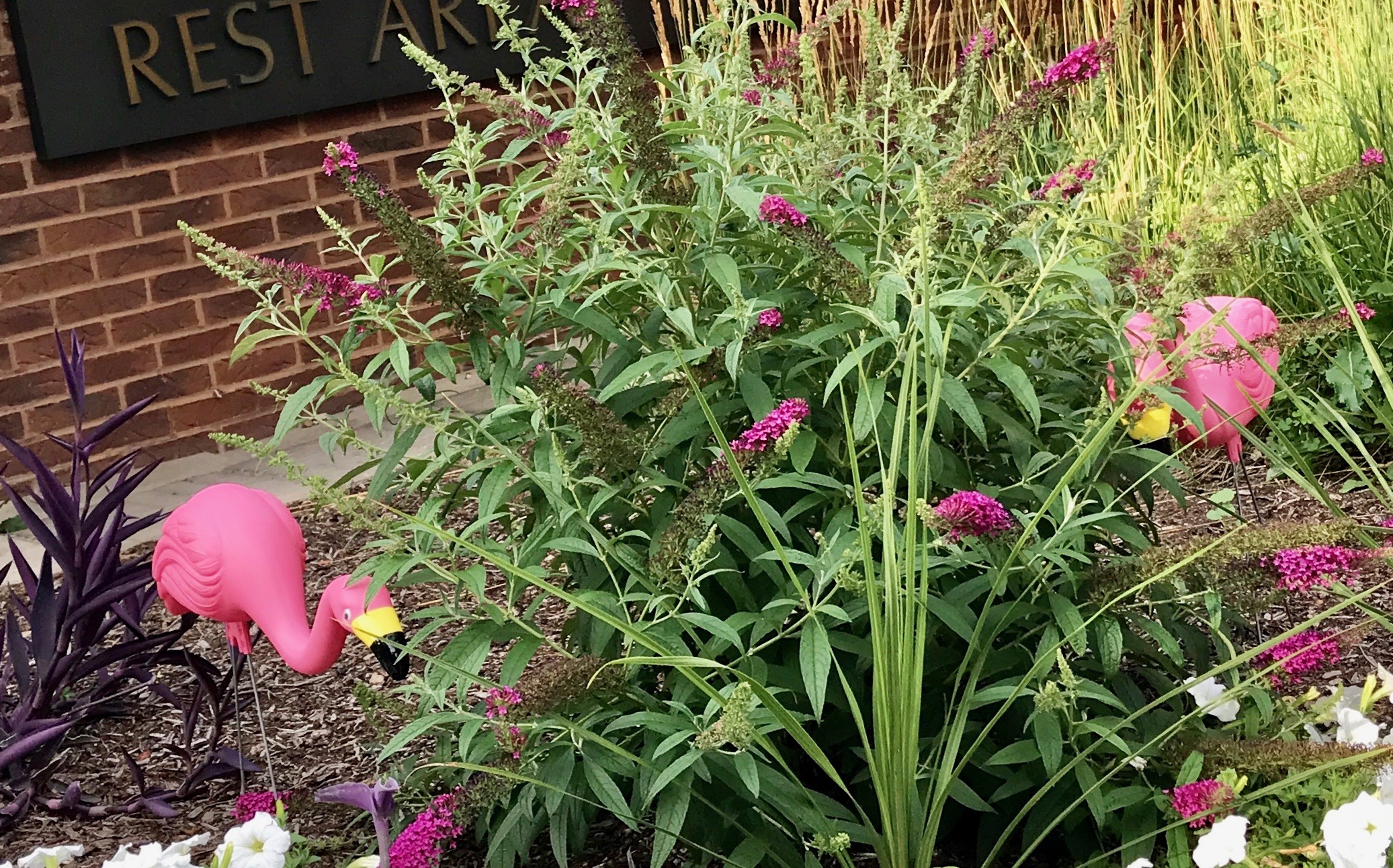
There were flamingos in the garden, too. Where is an Airstream when you need one?
I stopped for the night in Bloomington, Illinois. I checked online reviews for an interesting restaurant for a last dinner courtesy of the company. I decided to dine at Epiphany Farms and I headed downtown.
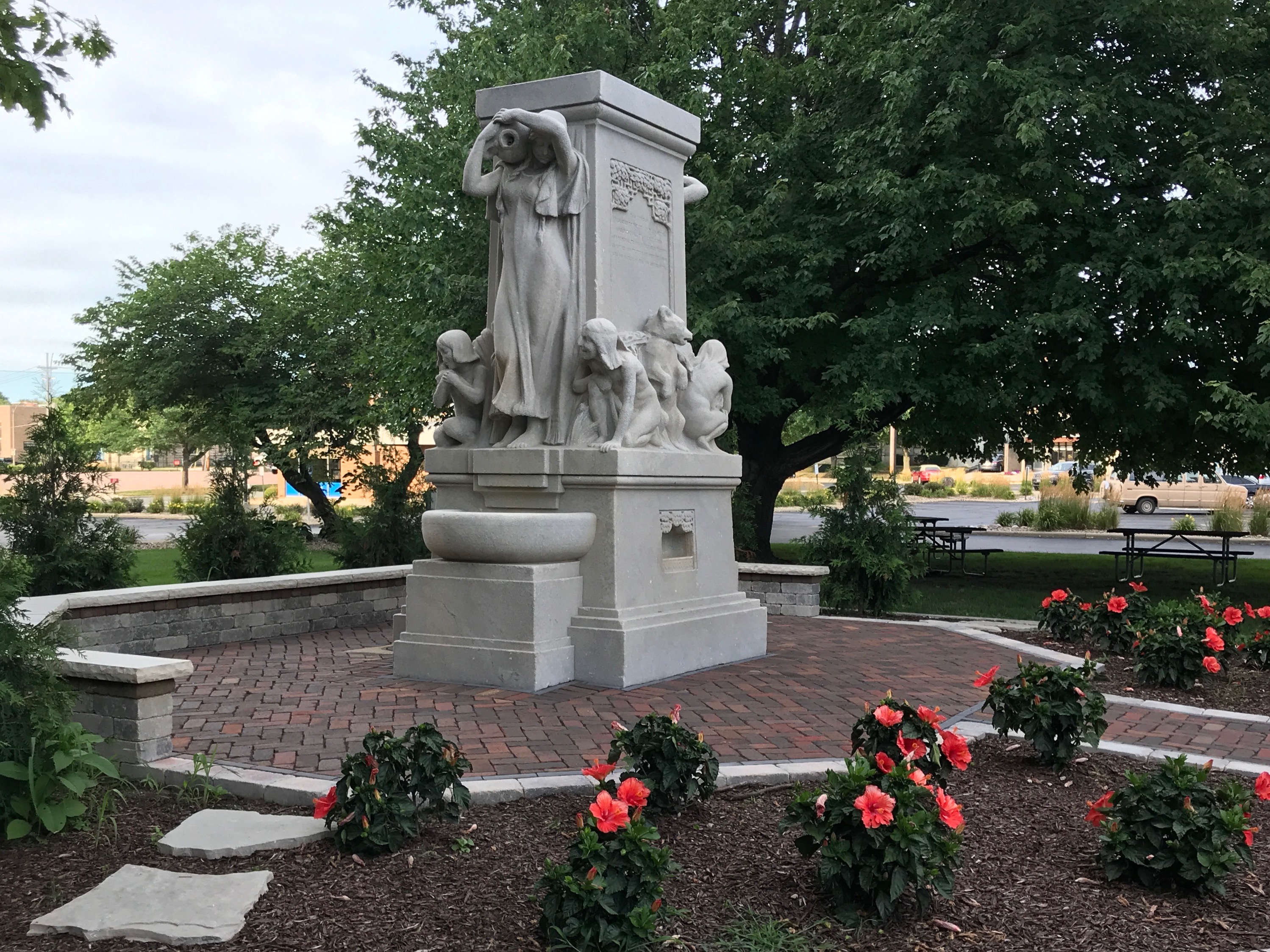
I parked and headed toward the restaurant, but this statue caught my eye. I headed over to check it out.
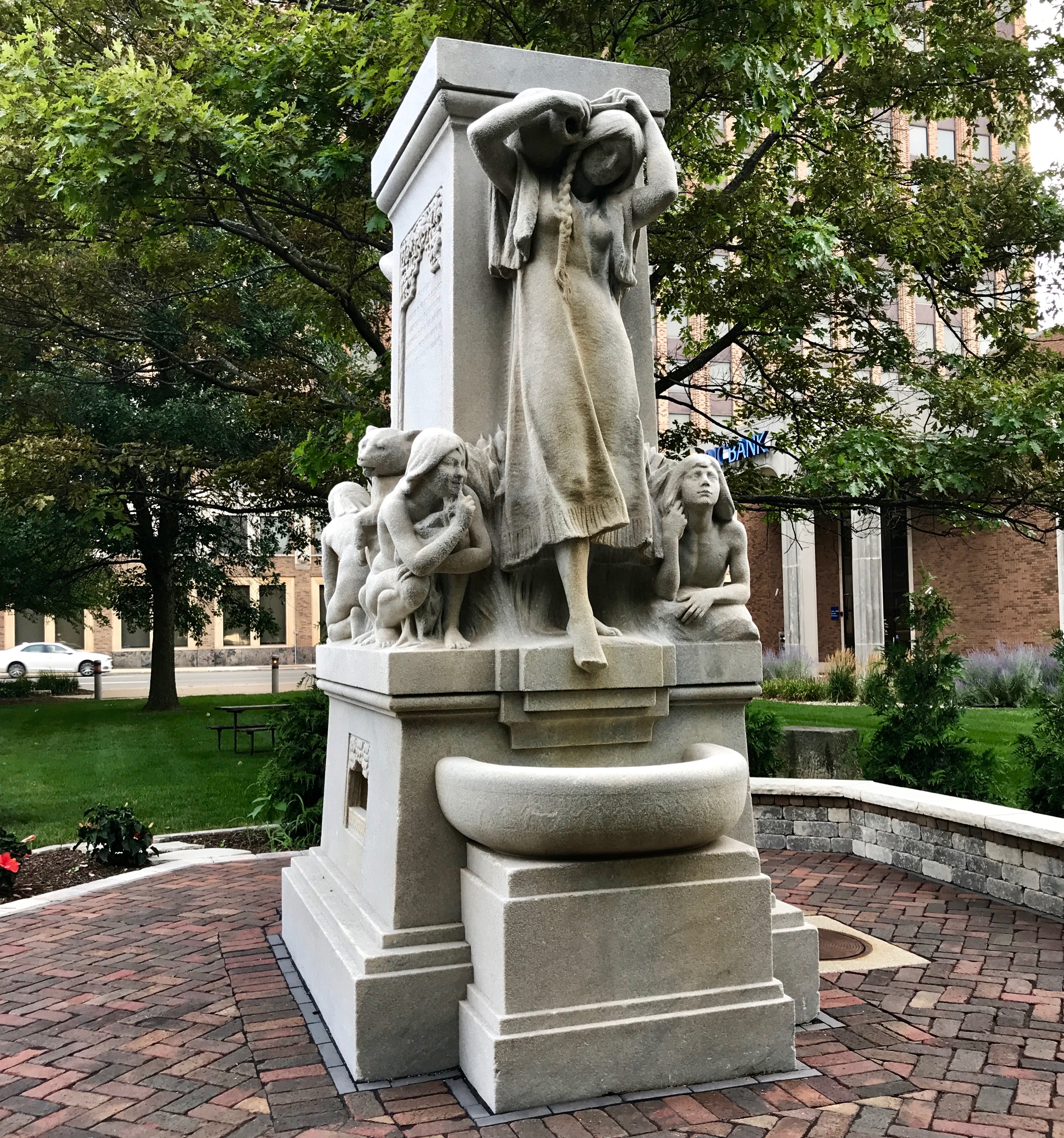
It turns out that it is a fountain known as Trotter Fountain.
The text on the sign says:
“The Trotters, immigrants of the Great Potato Famine in Ireland, were prominent Bloomington businessmen and philanthropists. John was a three-term mayor, and his sister, Georgina, ran a thriving lumber, coal, and grain business on West Market Street near the family home. Georgina was the first woman elected to the Board of Education and was said to be the first woman to become a naturalized American citizen. The last surviving Trotter sibling, James, willed funds to the city for a state to be erected in his family’s honor. Trotter fountain was designed by the wold renowned sculptor, Lord Taft, of Illinois. Made of Georgia marble, it depicts Native American maidens and children and was dedicated during a lavish celebration on May 30, 1911.”
With my commitment to tourism satisfied, I headed over to Epiphany Farms.
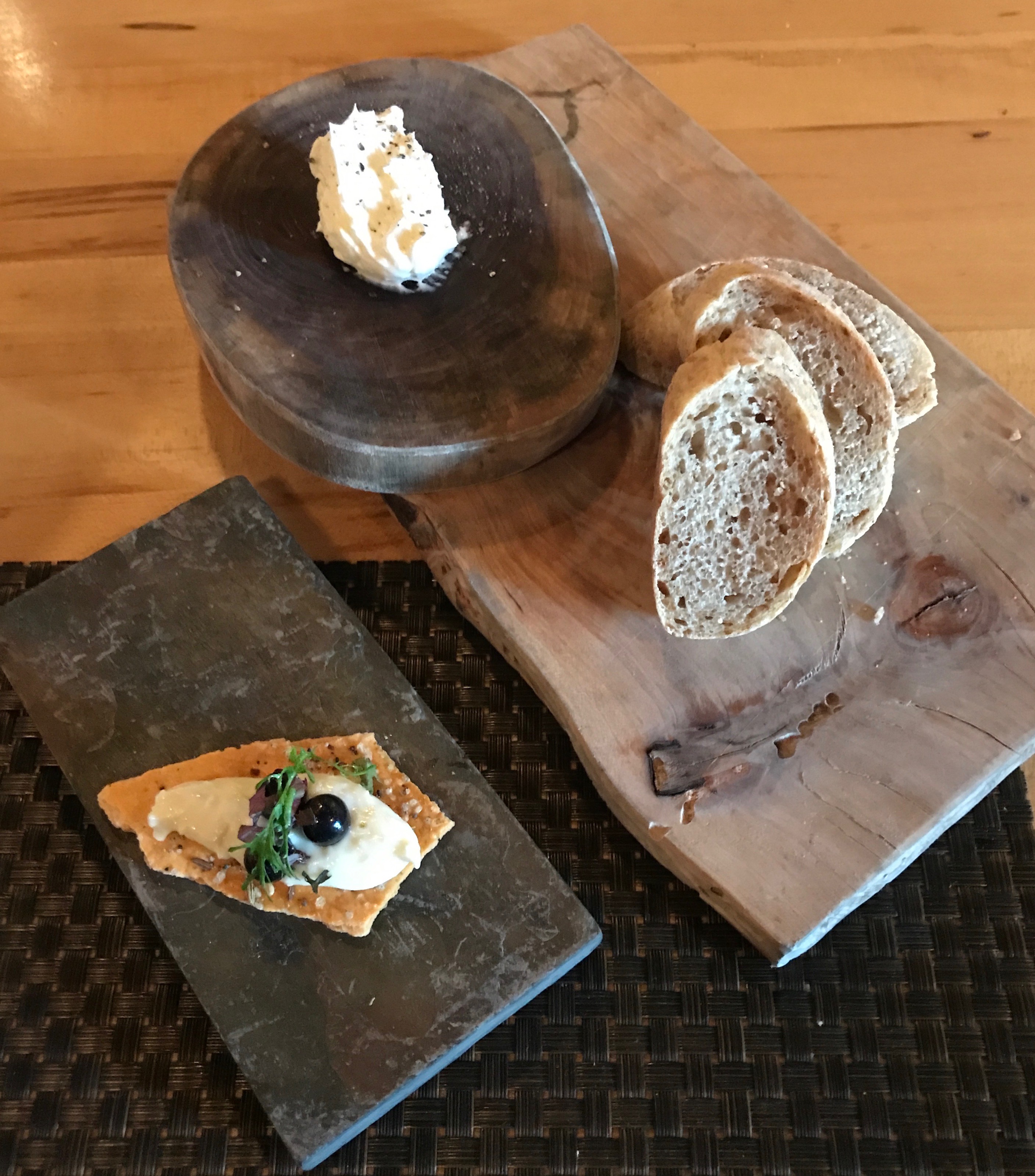
I perused the menu and made my selections. While I was waiting, they brought me a little treat for me to enjoy while I was waiting.
It was a little snack.
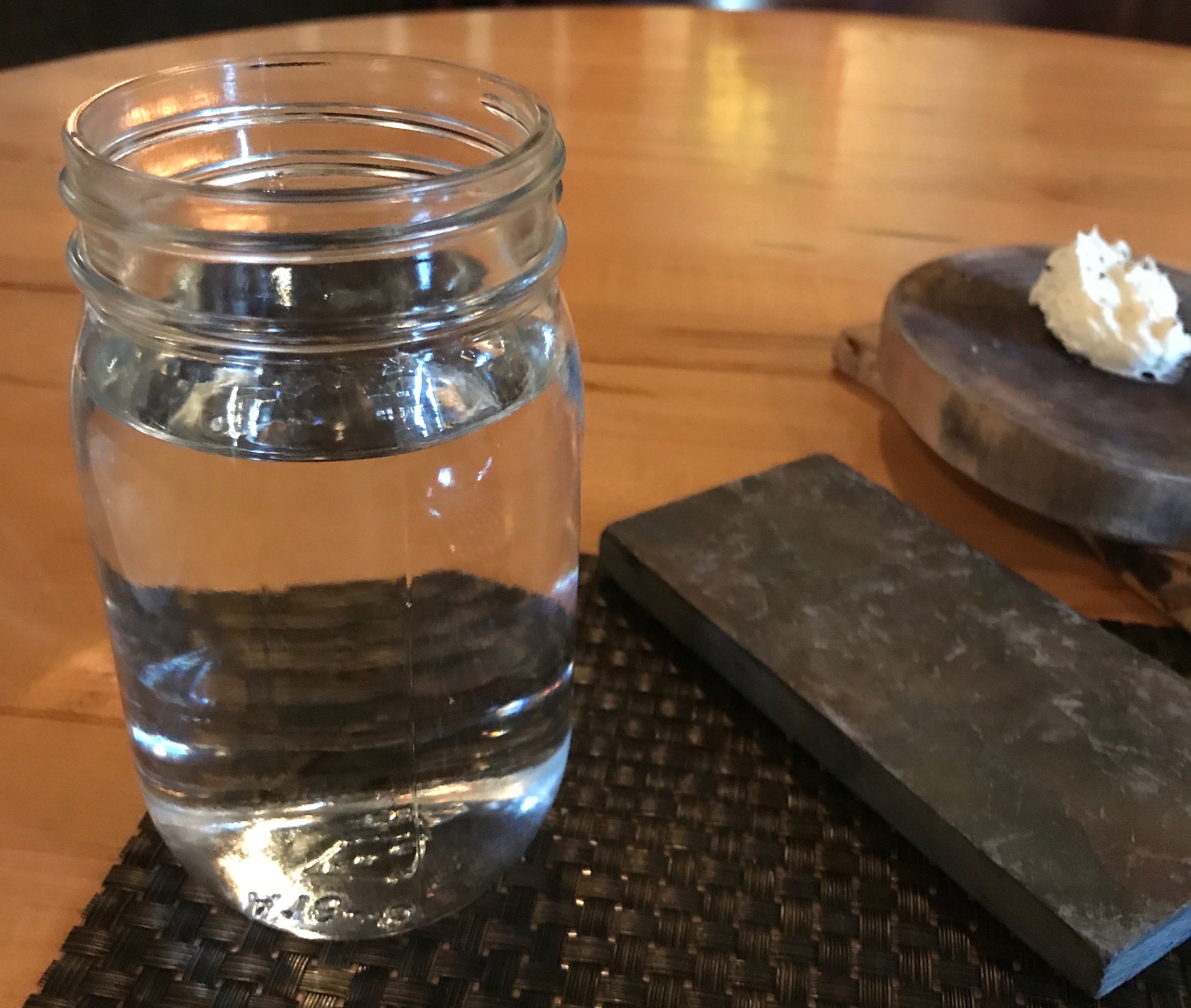
And I sipped on a mason jar filled with cool water. No ice. No lemon. Just cool water. It tasted lovely.
I had soup.
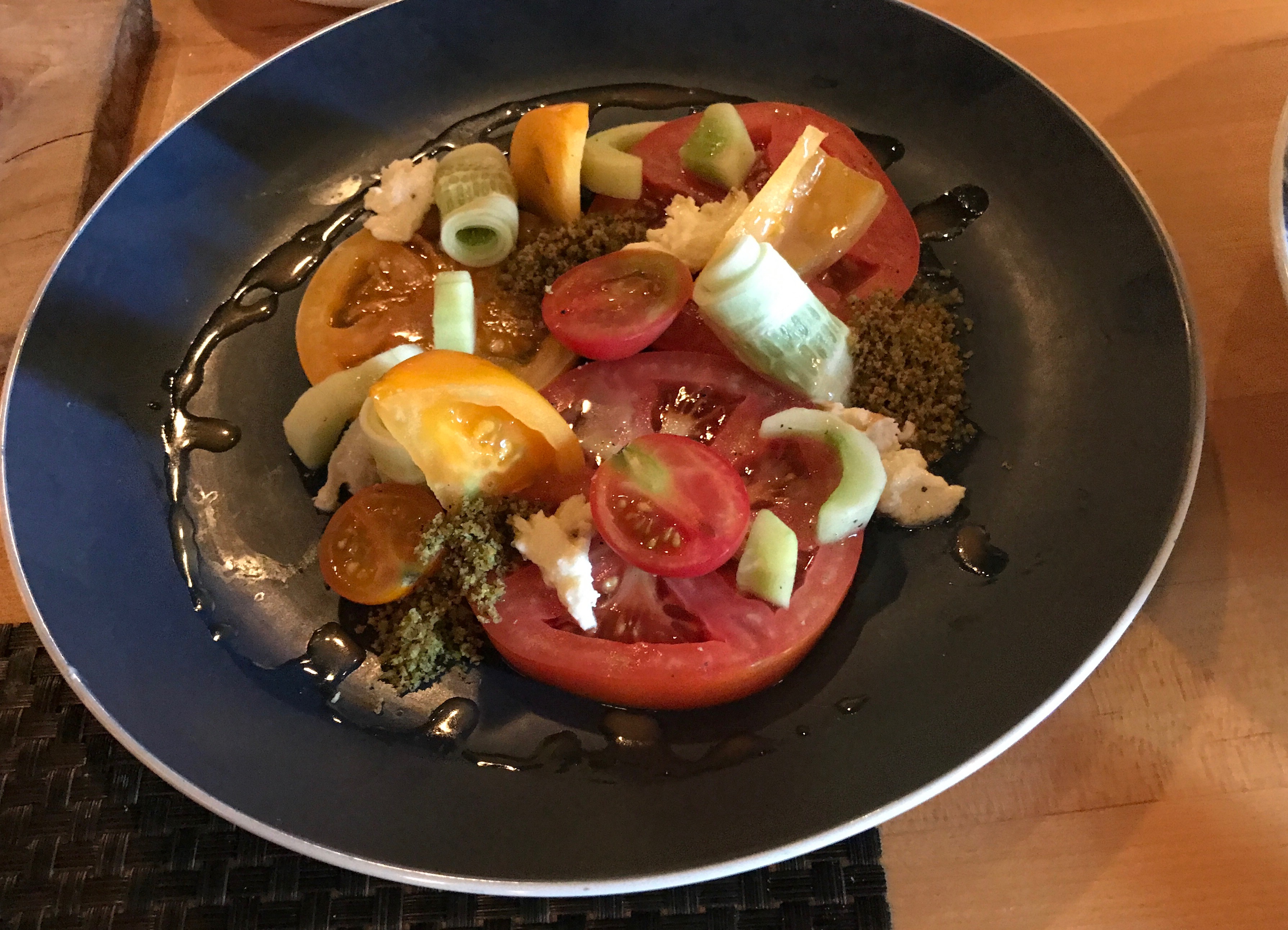
A salad.
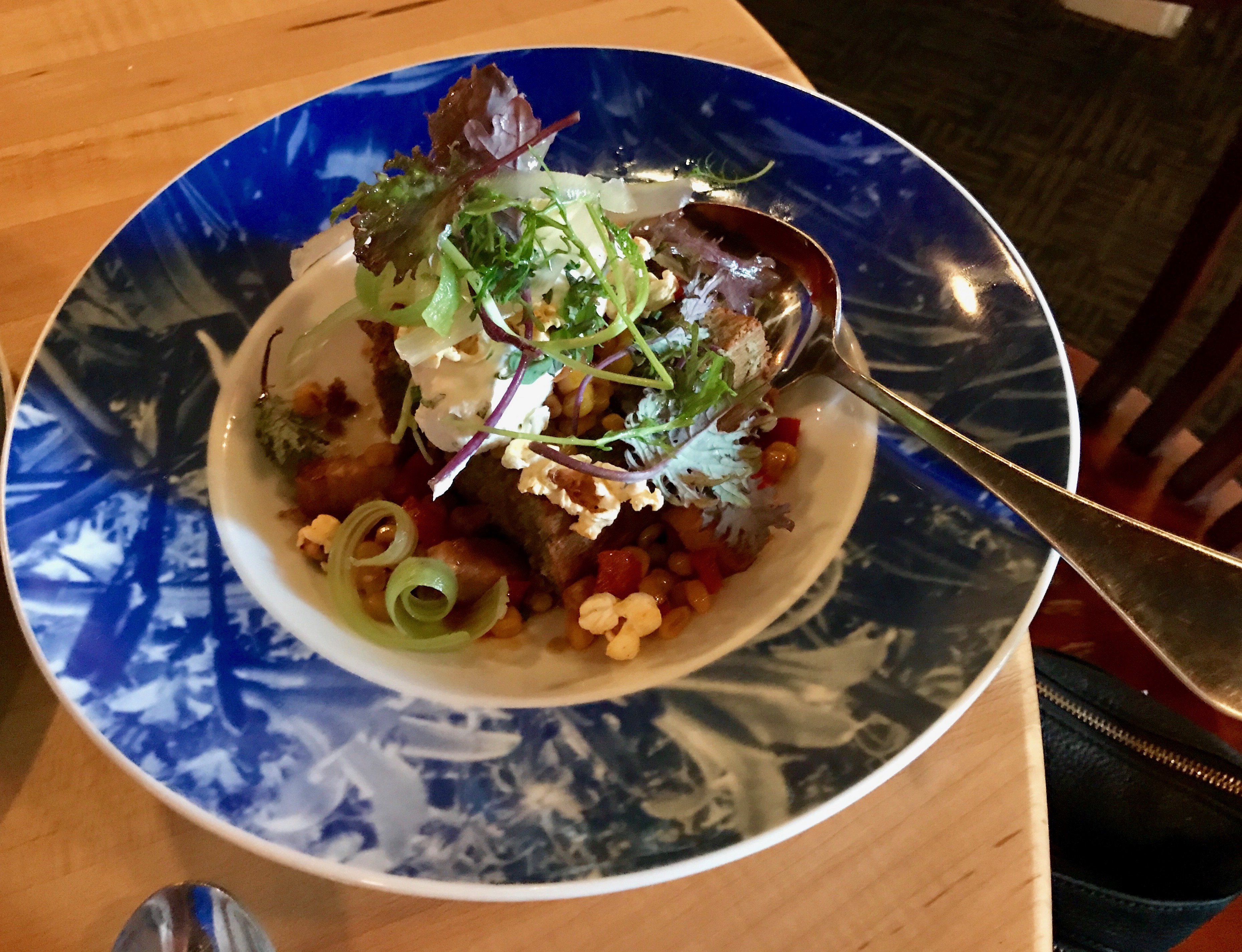
Apparently, I had a second salad.
I finished off the meal with some coffee.
I wish I could say that I thought the meal was great. It wasn’t quite to my liking. But, then, people who know me know that I don’t have the most adventurous palate.
After dinner, I decided to take a little drive around – just to see what I could see.
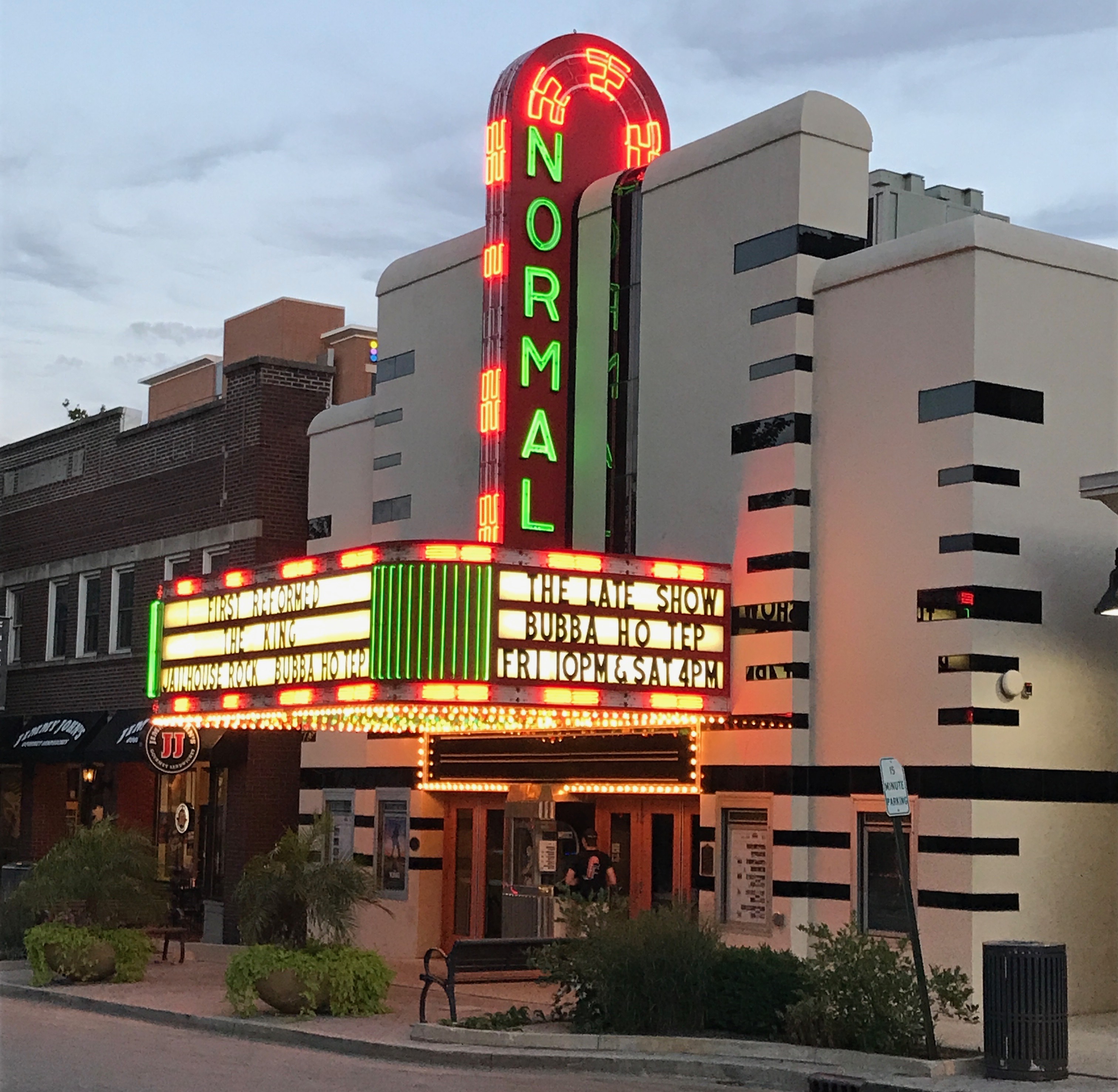
What do you know about that? I found Normal! (And, it’s not even the new Normal.)
With everything loaded up, I was ready to set out. I headed north on I-35 to Cameron, Missouri and then headed east on U.S. 35.
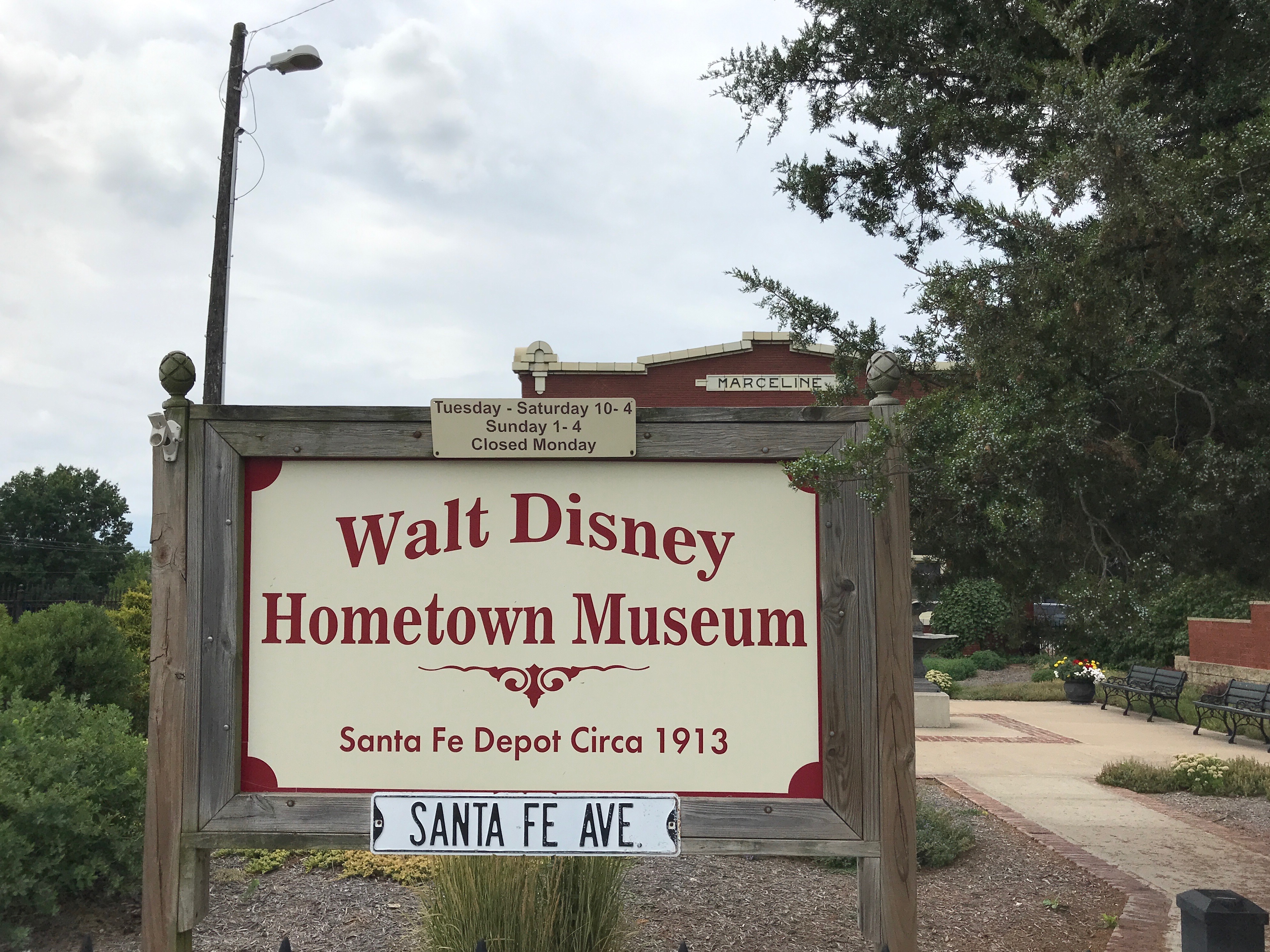
A Facebook acquaintance once mentioned a game she likes to play with her husband when they go out for drives. When they see a “brown sign” for an attraction, they pull off and check it out. I saw a sign for the Walt Disney Hometown Museum and I thought that was worth a visit.
I actually showed up on a day that it was open, but I didn’t want to take the time to tour it. (Which means, there was an admission charge.)
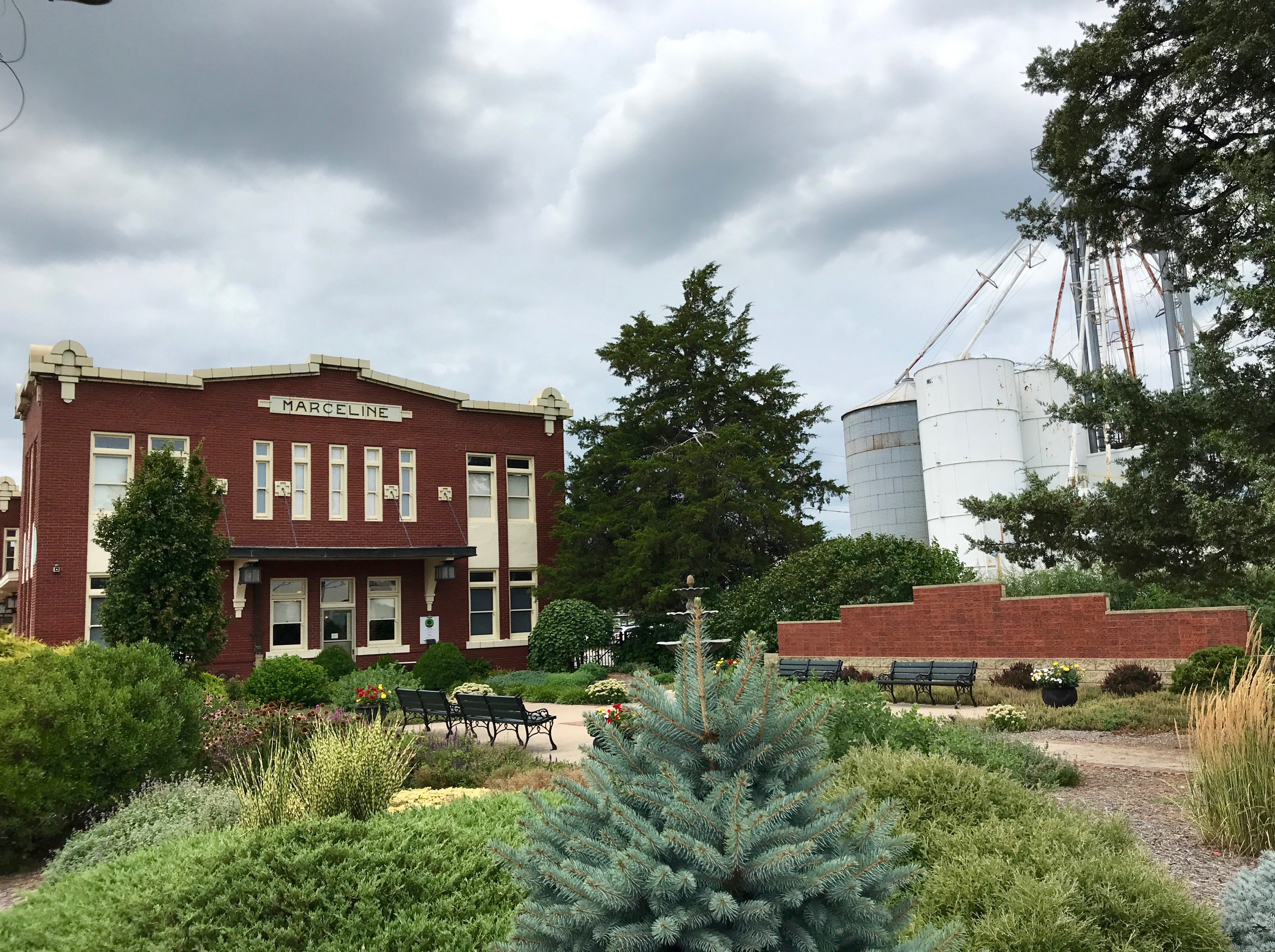
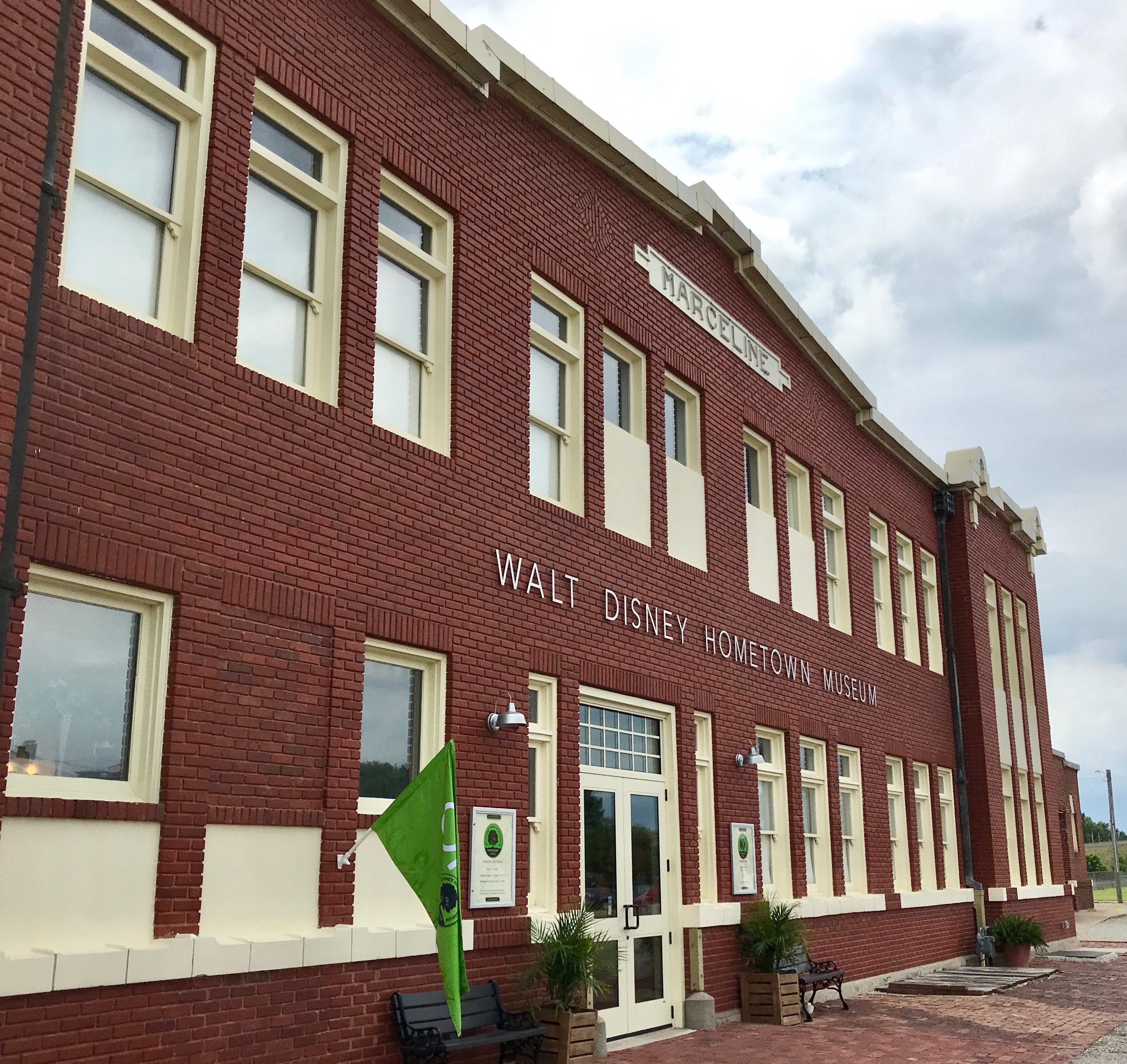
That didn’t stop me from looking around. The museum is located in the restored Santa Fe Railroad Depot.
According to my Preferred Source, the museum opened in 2001 and it houses a collection of memorabilia from the Disney Family’s farm from 1905 – 1909. Many of the items were donated by the family of Ruth Flora Disney Beecher, Walt’s sister. Artifacts include personal family letters and photos, Disney’s wooden school desk and a recording of him asking his parents about their life.
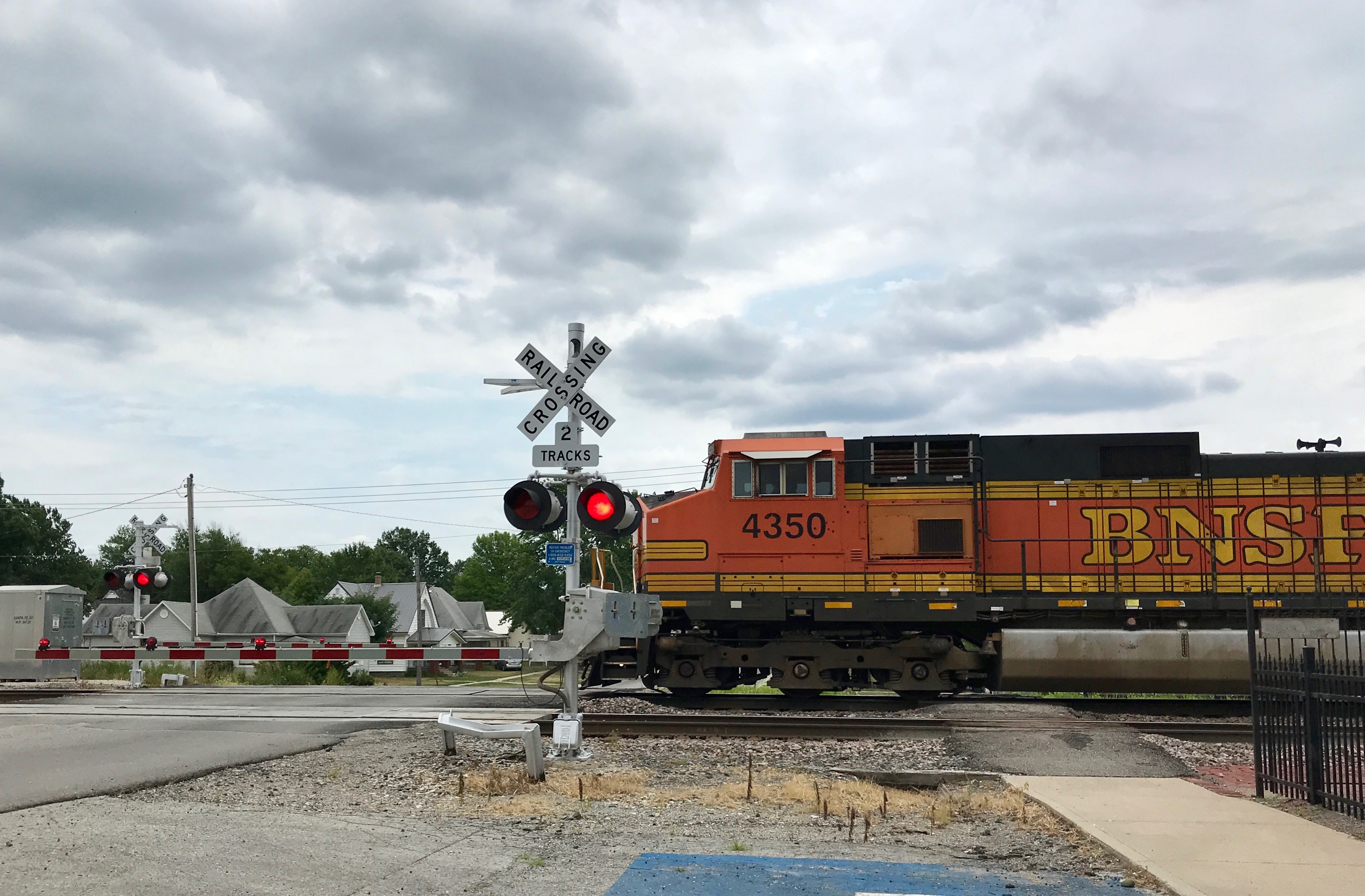
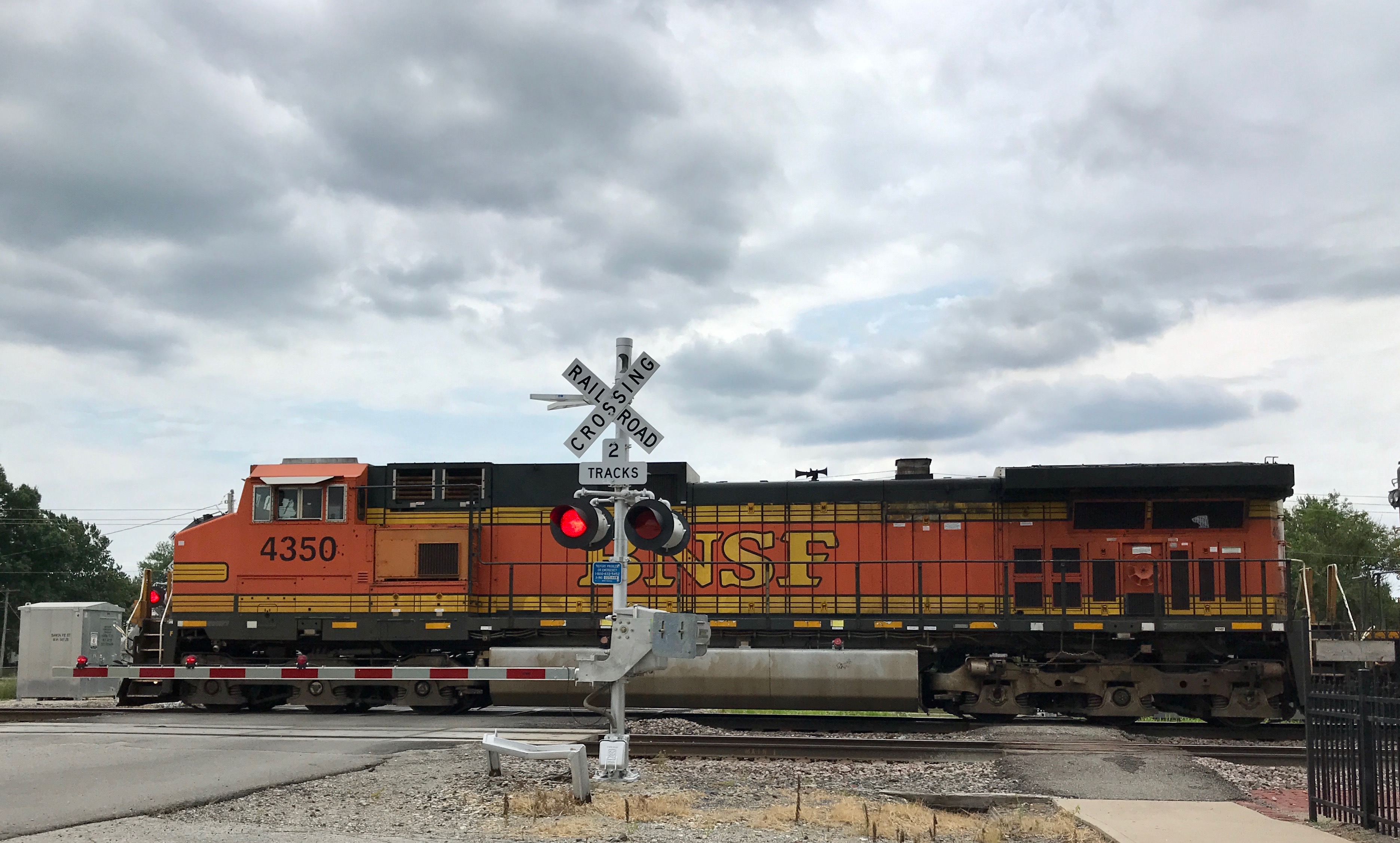
As I was getting ready to head on my way, I heard the railroad crossing bells start clanging, and I headed over to see if I could catch a photo of the locomotive.
I managed to snap two!
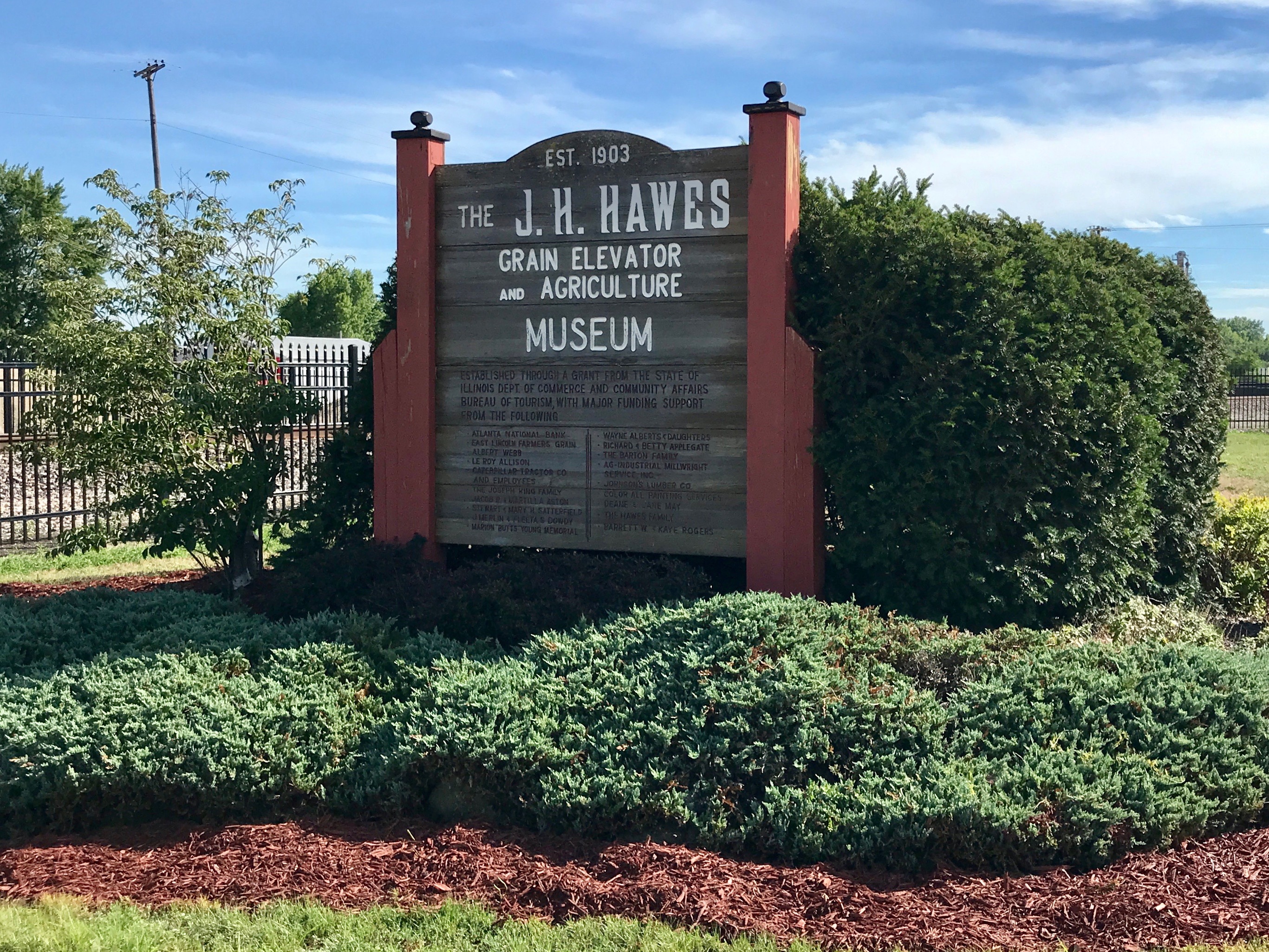
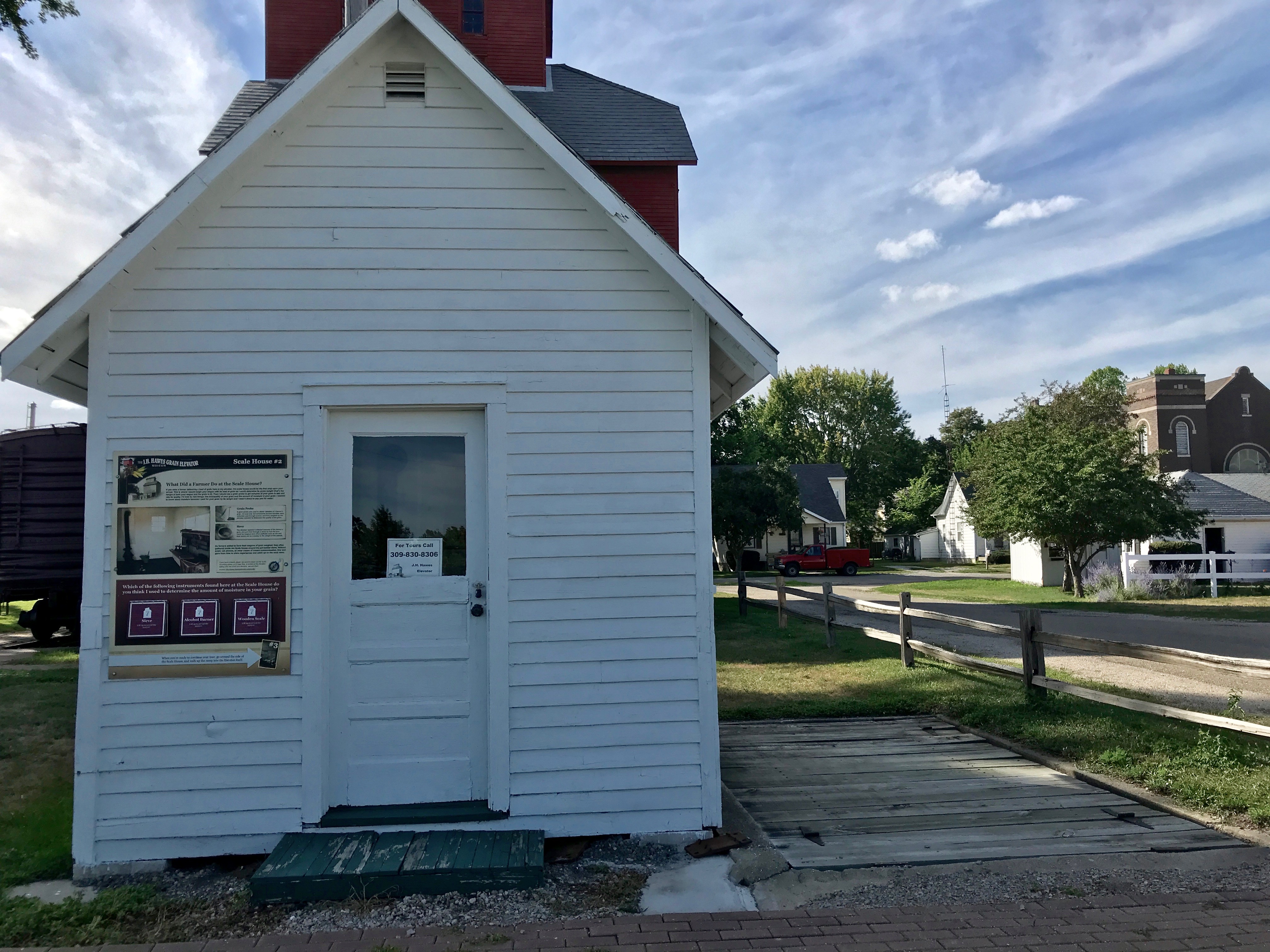
With that, it was time to head out. My next brown sign was for the J.H,Hawes Grain Elevator and Agriculture Museum in Aurora, Illinois.
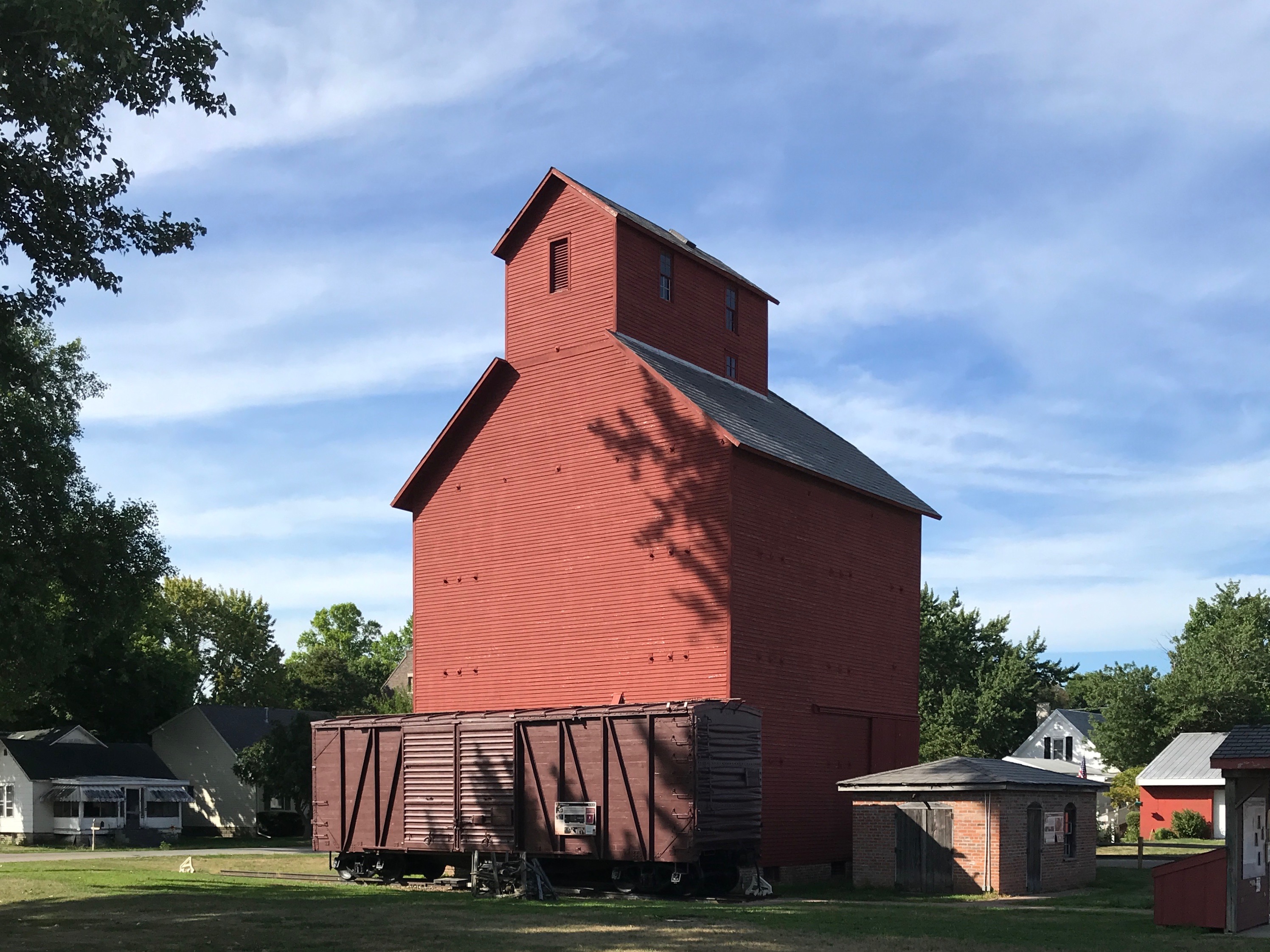
The historic grain elevator, which is on the National Register of Historic Places, was built in 1903 and was in use until 1975.
Unfortunately, it was closed, but they had some excellent interpretive signs around the museum.
For instance, that small brick building to the side is the engine house. There is a conveyor belt that lifts grain up to one of the storage bins. Originally it was powered by a steam engine. That one was replaced in the 1920s with a gas engine.
The engine house is made of brick as a fire prevention method. Grain elevators raise a lot of dust, which is combustible. It was wise to house the engine and any sparks it might emit in a separate, fireproof brick building.
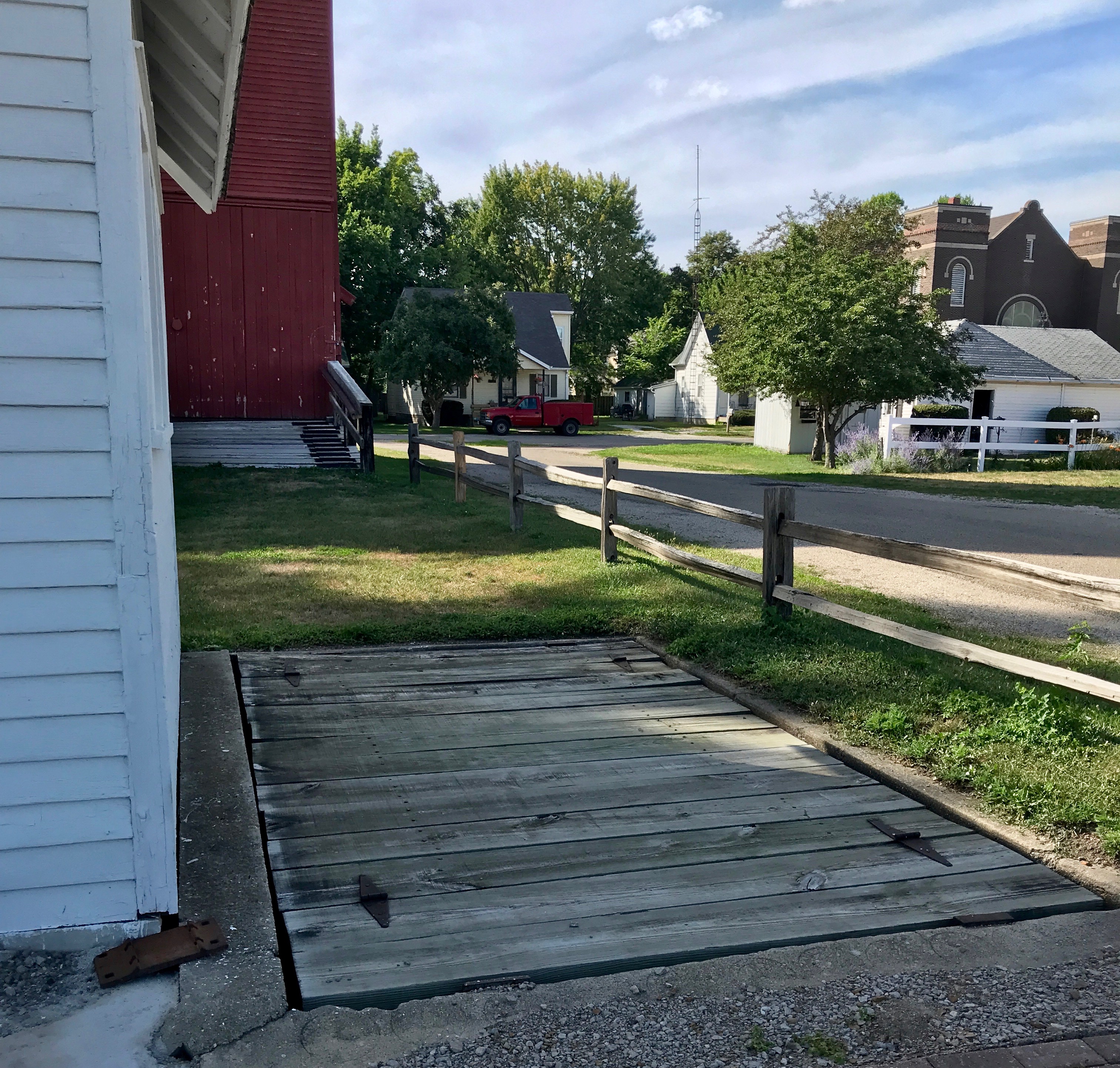
When a farmer brings in a load of grain, the first stop is at the scale house. They weigh the scale loaded and then again after the load is dumped.
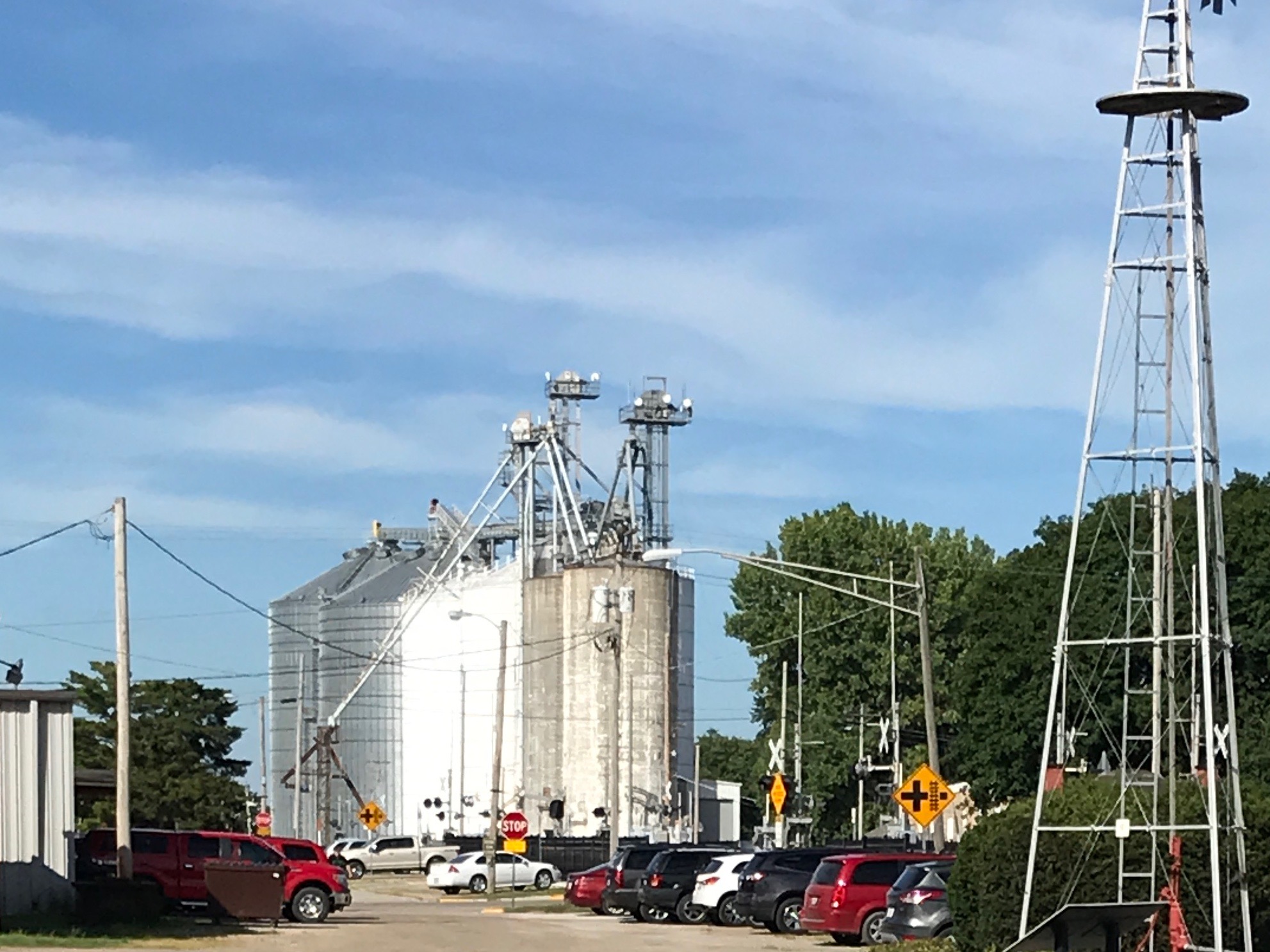
They still do the same things, but the equipment has changed.
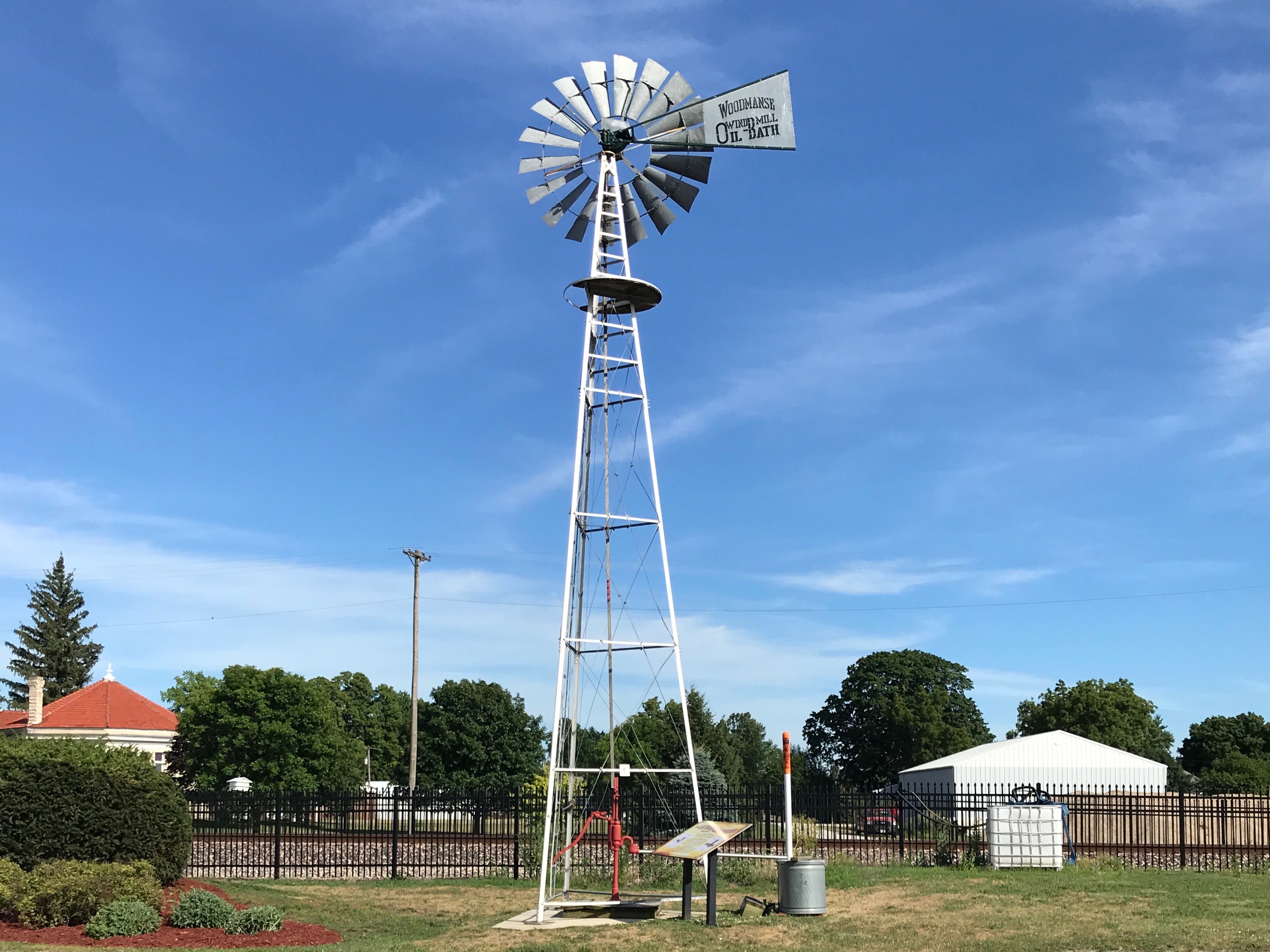
The windmill certainly brought a lot of changes to agriculture.
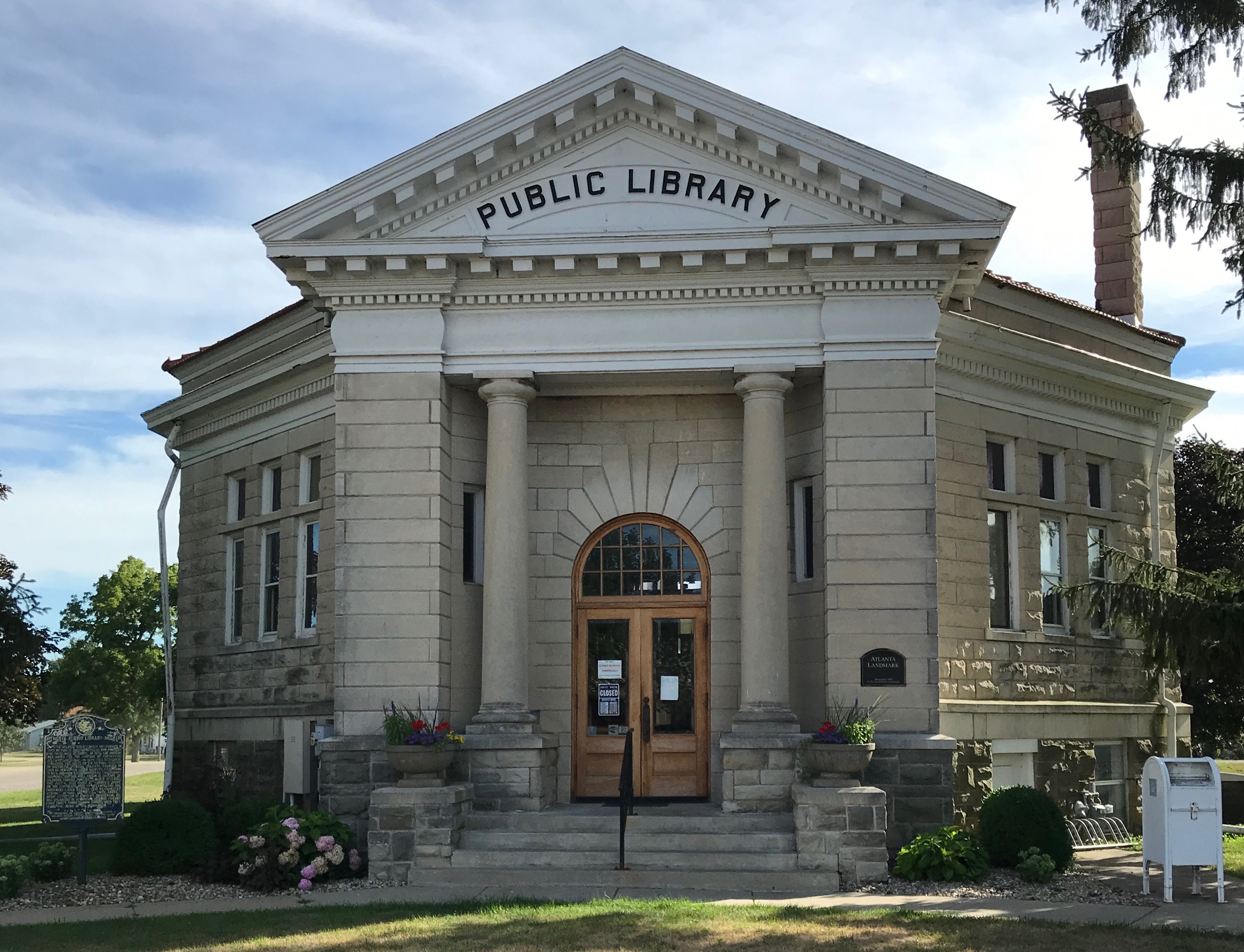
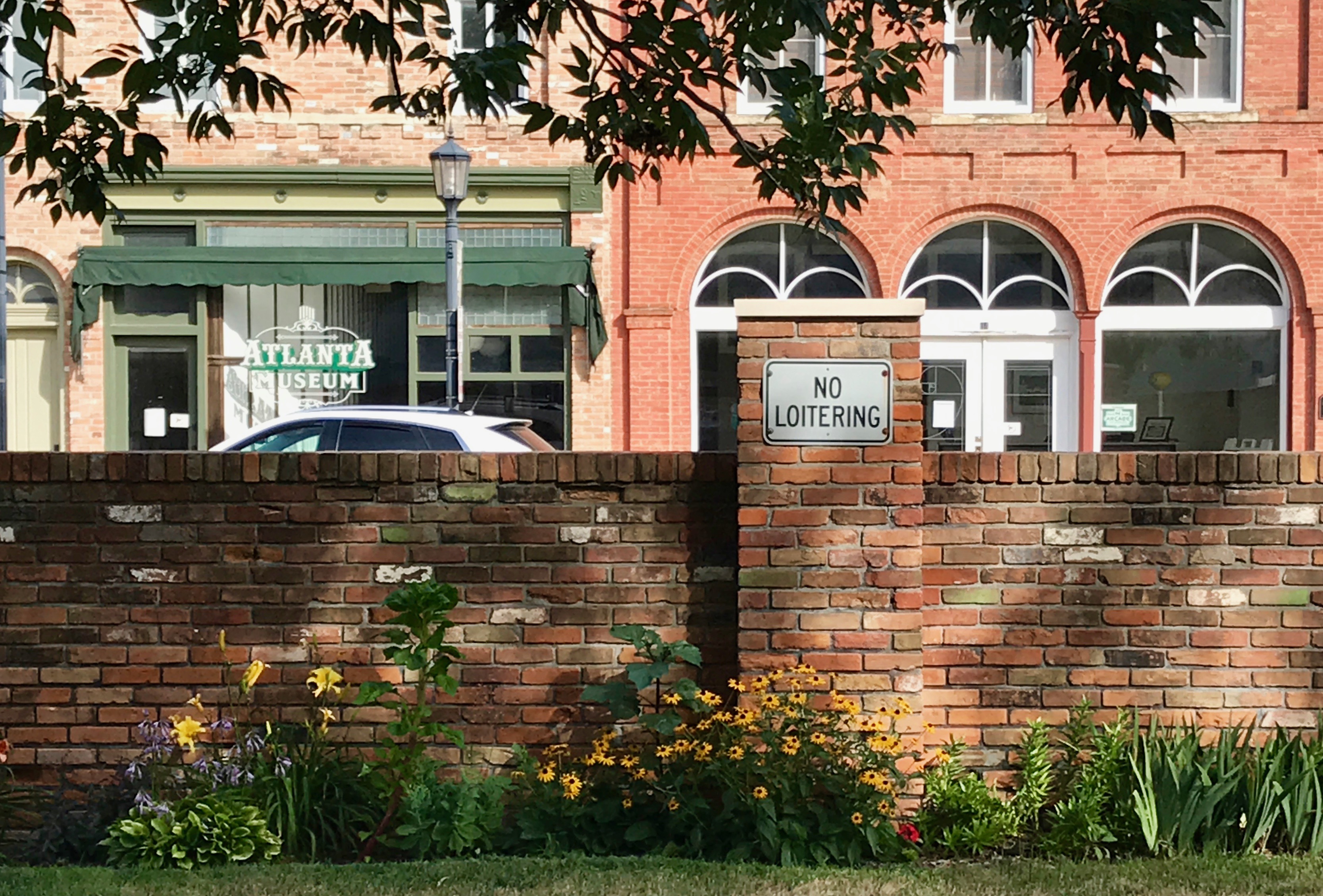
I have no more to say about windmills at this time. I’ve written about them before. I had to be moving along. But, before I leave Atlanta, I need to check out the interesting building with the read roof.
The library was built in 1908. The building combines Neoclassical features on an octagonal floor plan. According to the plaque at the library, the library was founded by “public spirited citizens who realized the importance of books.”
They added a museum to the library for the purpose of preserving the city’s heritage. Atlanta was founded in 1853, although it was originally called Xenia. It had Logan county’s first bank. Abraham Lincoln travels throughout the area and was well known by several of Atlanta’s pioneer families. Lincoln attended the July 4, 1859 picnic and was presented with a gold-handled cane. In 1860, the first “Wide Awake” group that was supportive of Lincoln’s presidential bid was organized in here. His friends in Atlanta fired thirty-three cannon rounds when they heard the news of his nomination.
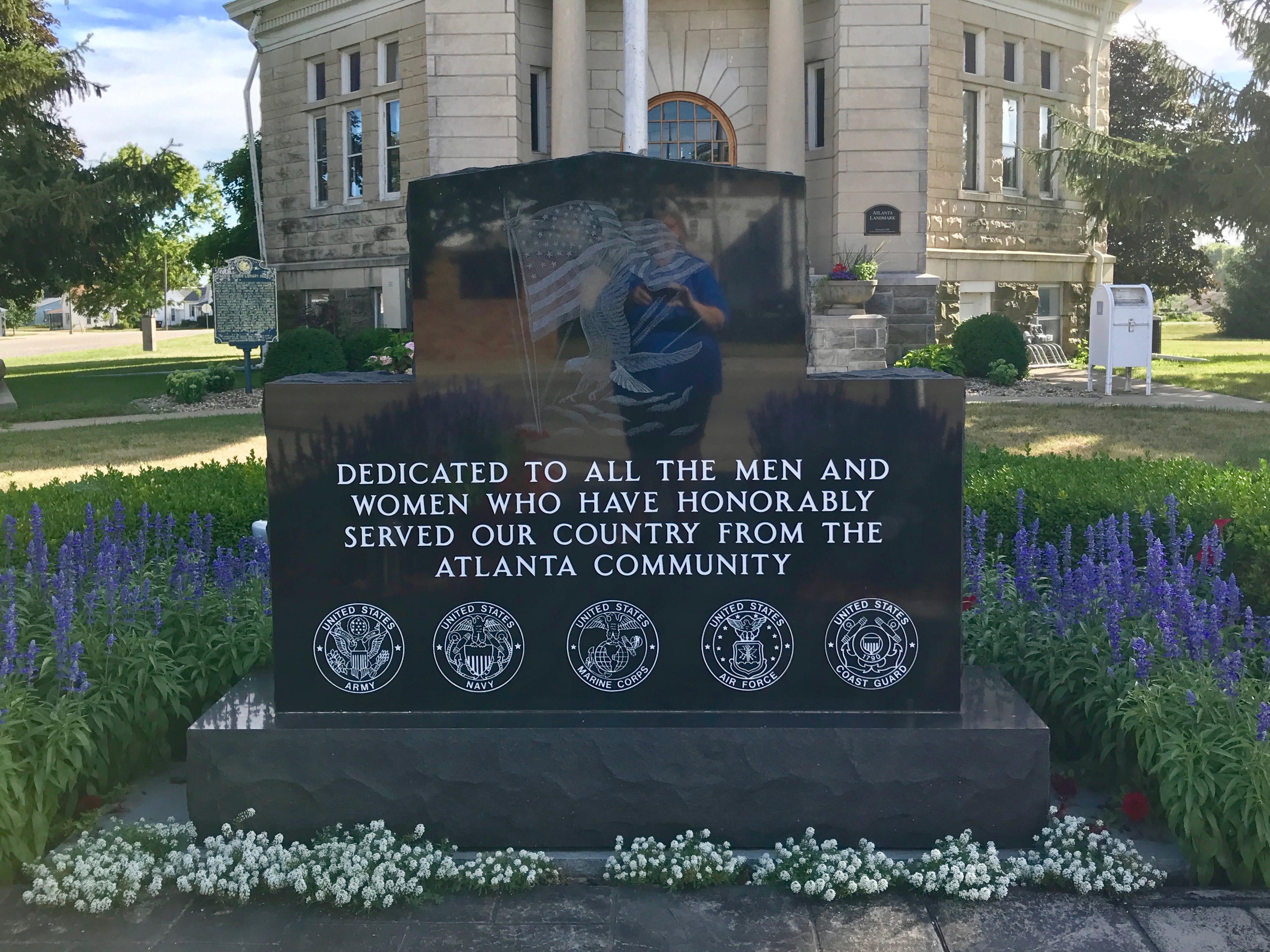
I like this approach to honoring people who serve. It always makes me sad when I see memorials that have extra space for the “next wars.”
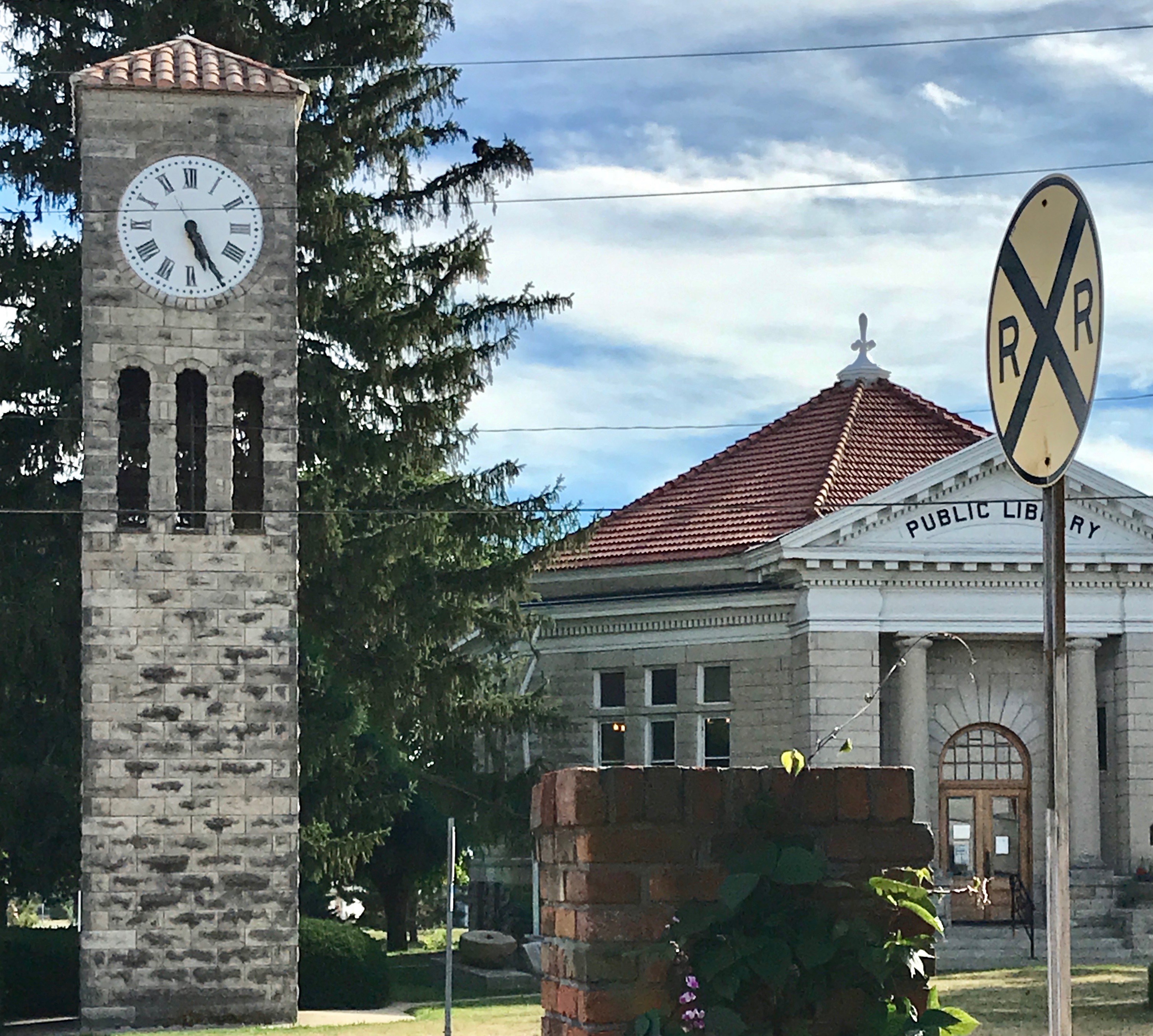
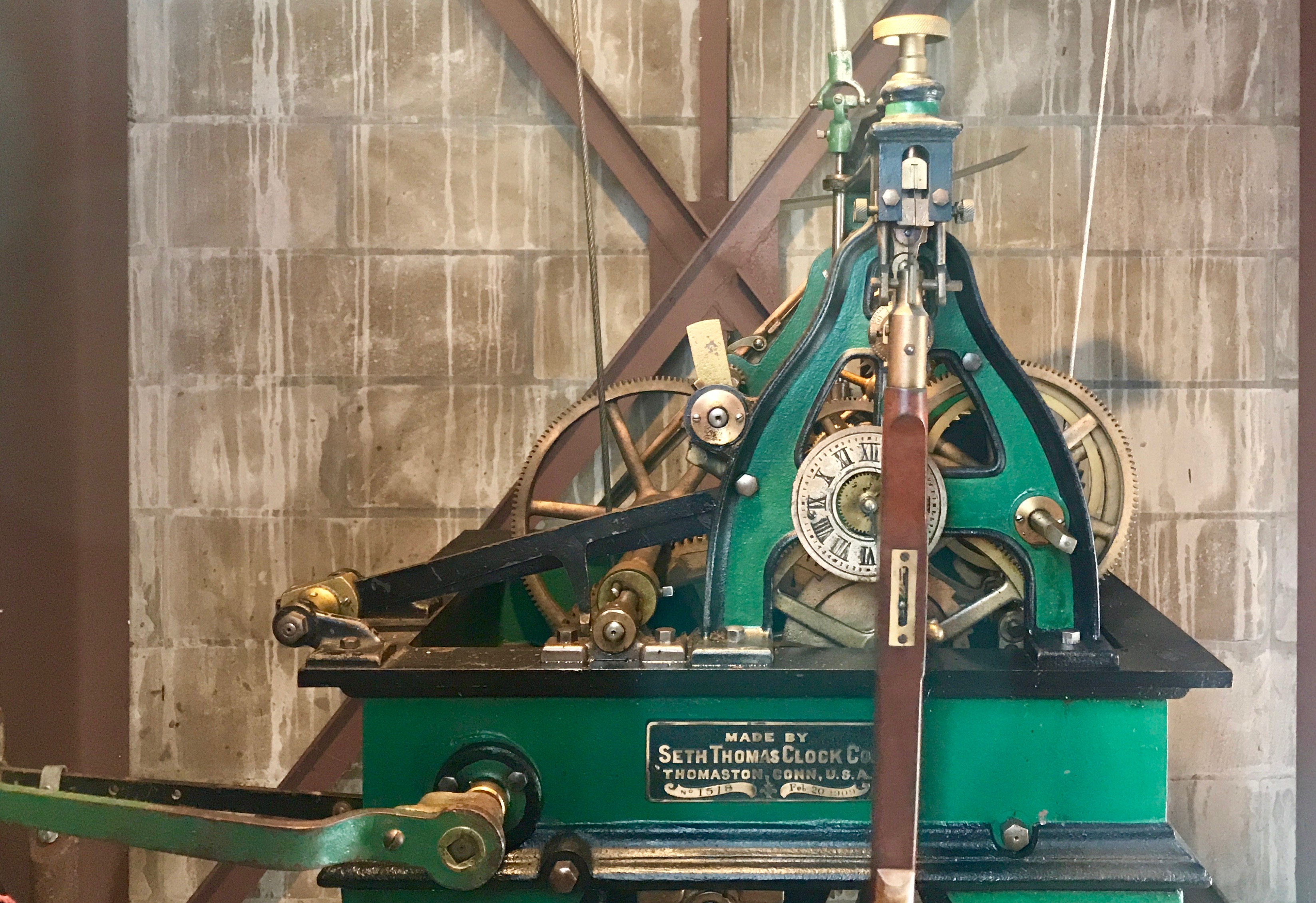
The Library is also graced with a 36 foot tall clock tower. The clock was originally located in the Atlantic High School building. The clock is a 1909 Seth Thomas clock that was installed in the high school thanks to “generous contributions from the citizens of Atlanta and former students of the school.”
According to the sign by the clock tower, when the 1909 Atlanta High School building was to be razed in 1979, concerned citizens began a “Save the Clock” fundraising campaign. Through various funding sources, the clock tower was completed in 1982.
Today, eleven “Keepers of the Clock, who live or work in Atlanta, take turns keeping the clock in operation by hand-winding it approximately 55 turns, three times a week.
The clock’s 36-inch brass bell, weighing 1,200 pounds, sounds on the hour. Unfortunately, this was “drive-by tourism,” so I didn’t get the chance to hear it.
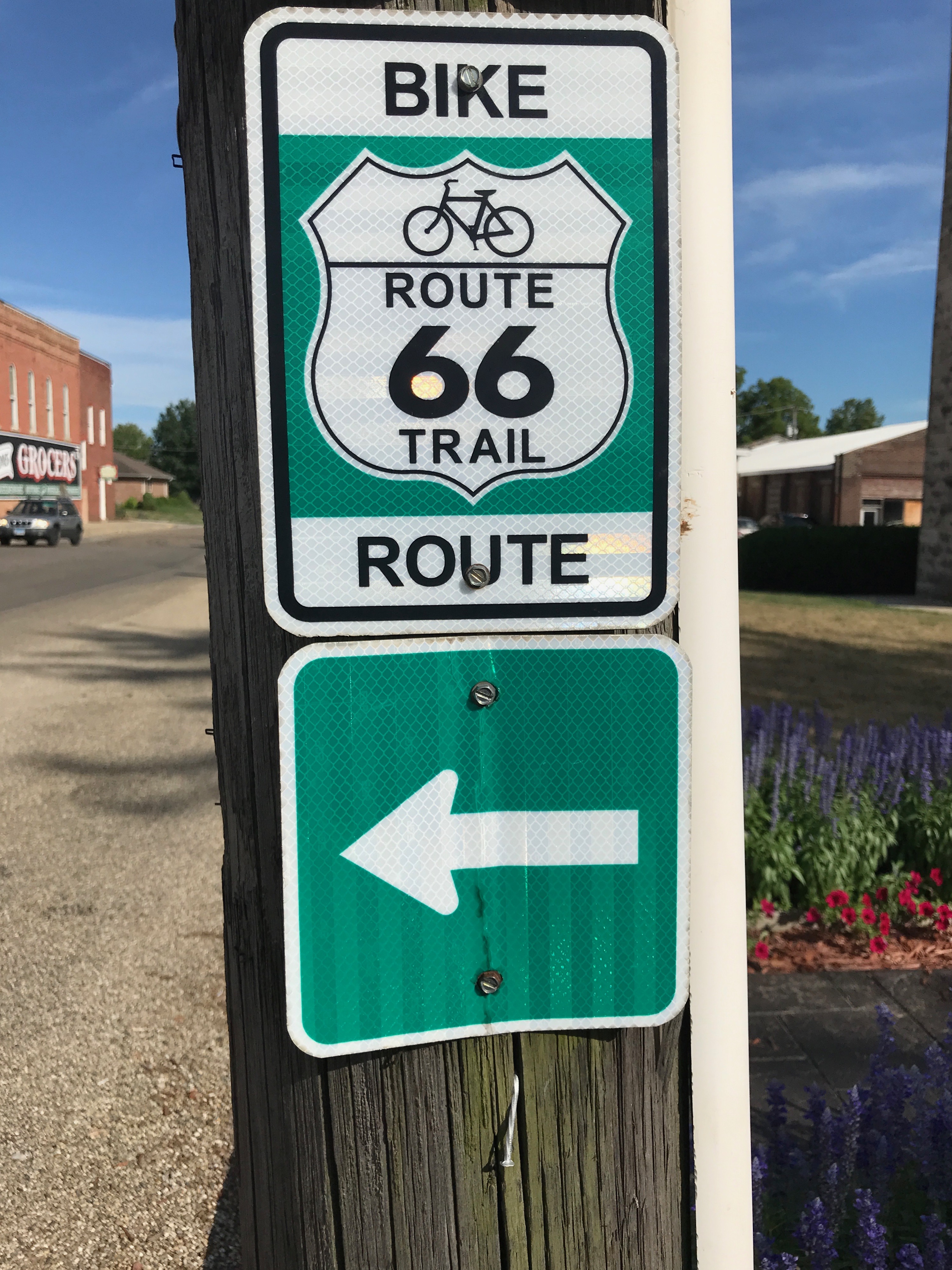
Huh. Who knew that there was a Route 66 bike trail? Not me.
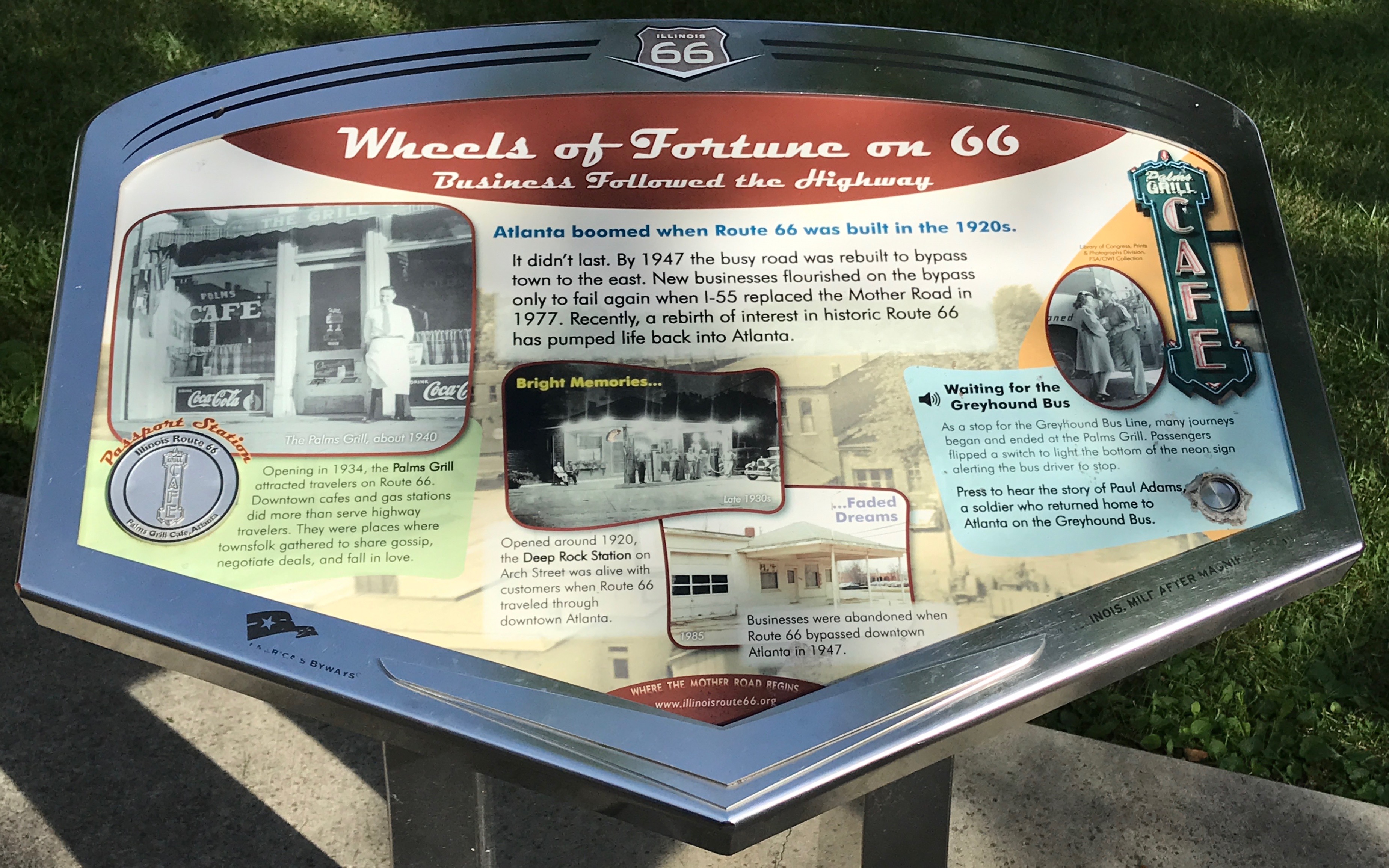
Speaking of driving, Atlanta was on Route 66 for a while. Businesses flourished for a while, but then the route was changed and I-55 pulled the business away. Atlanta is ready to take advantage of he renewed interest in Route 66 – the Mother Road.
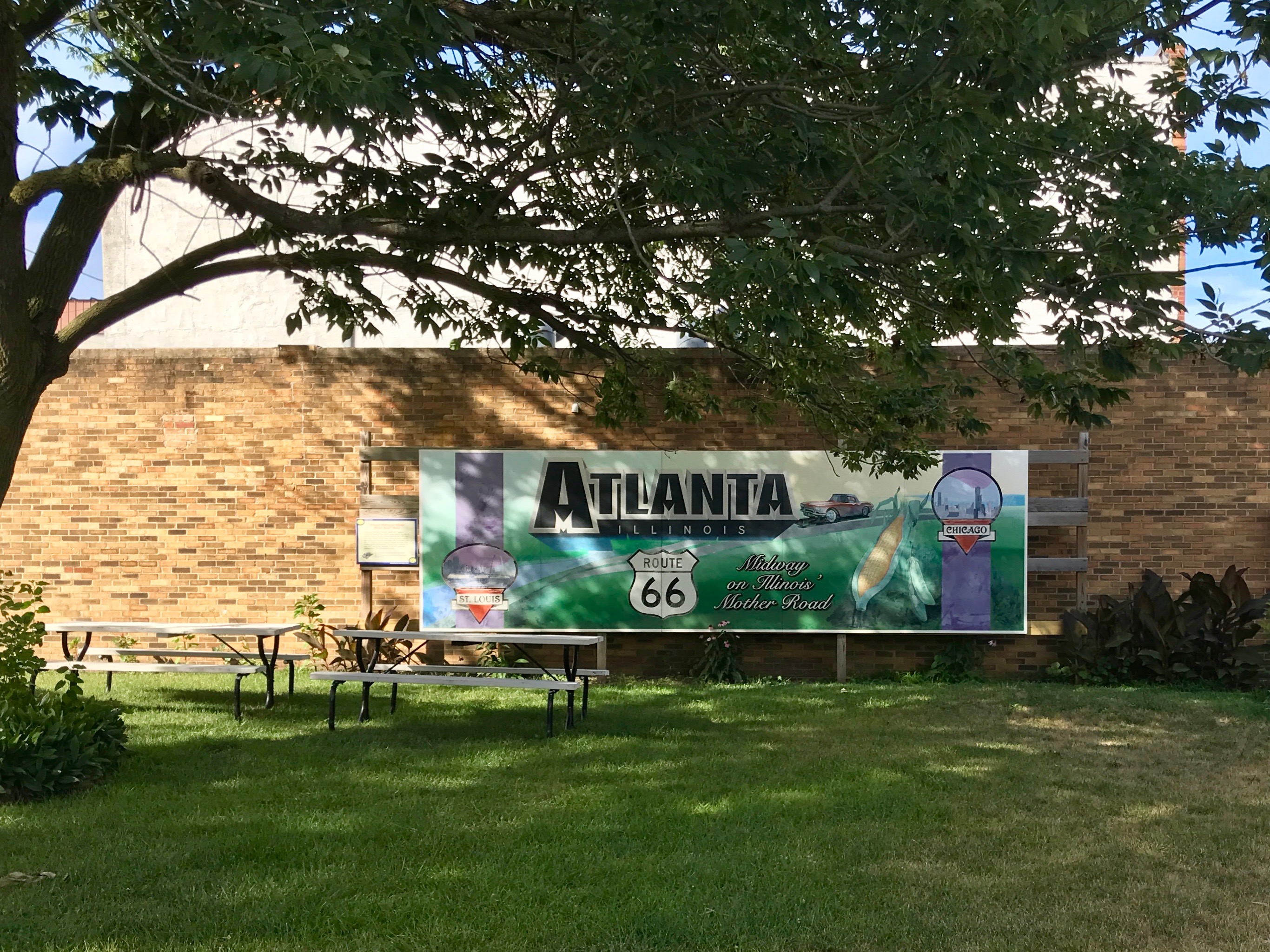
Atlanta is the midway point on the Illinois portion of Route 66.
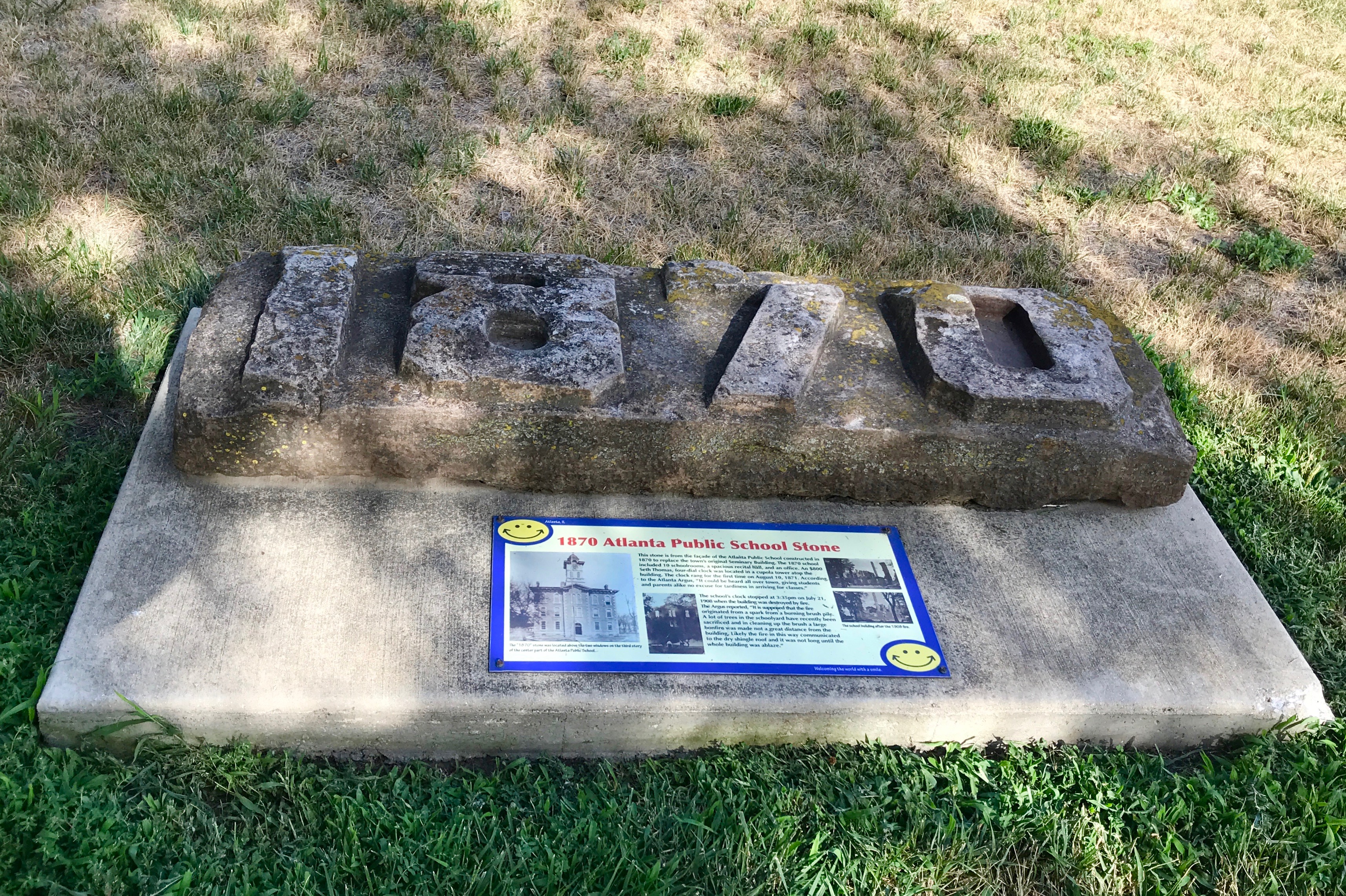
In the lovely tree shaded park are some pieces of Atlanta’s past. For instance, this stone is from the Atlanta Public School that was constructed in 1870. It had an $800 Seth Thomas four-dial clock that was located in a cupola tower atop the building. It was for the first time on August 10, 1871.
The clock stoped at 3:35 pm on July 21, 1906, when the building was destroyed by fire. I guess that is why they had to build a new school and they made sure to include another Seth Thomas clock in it.
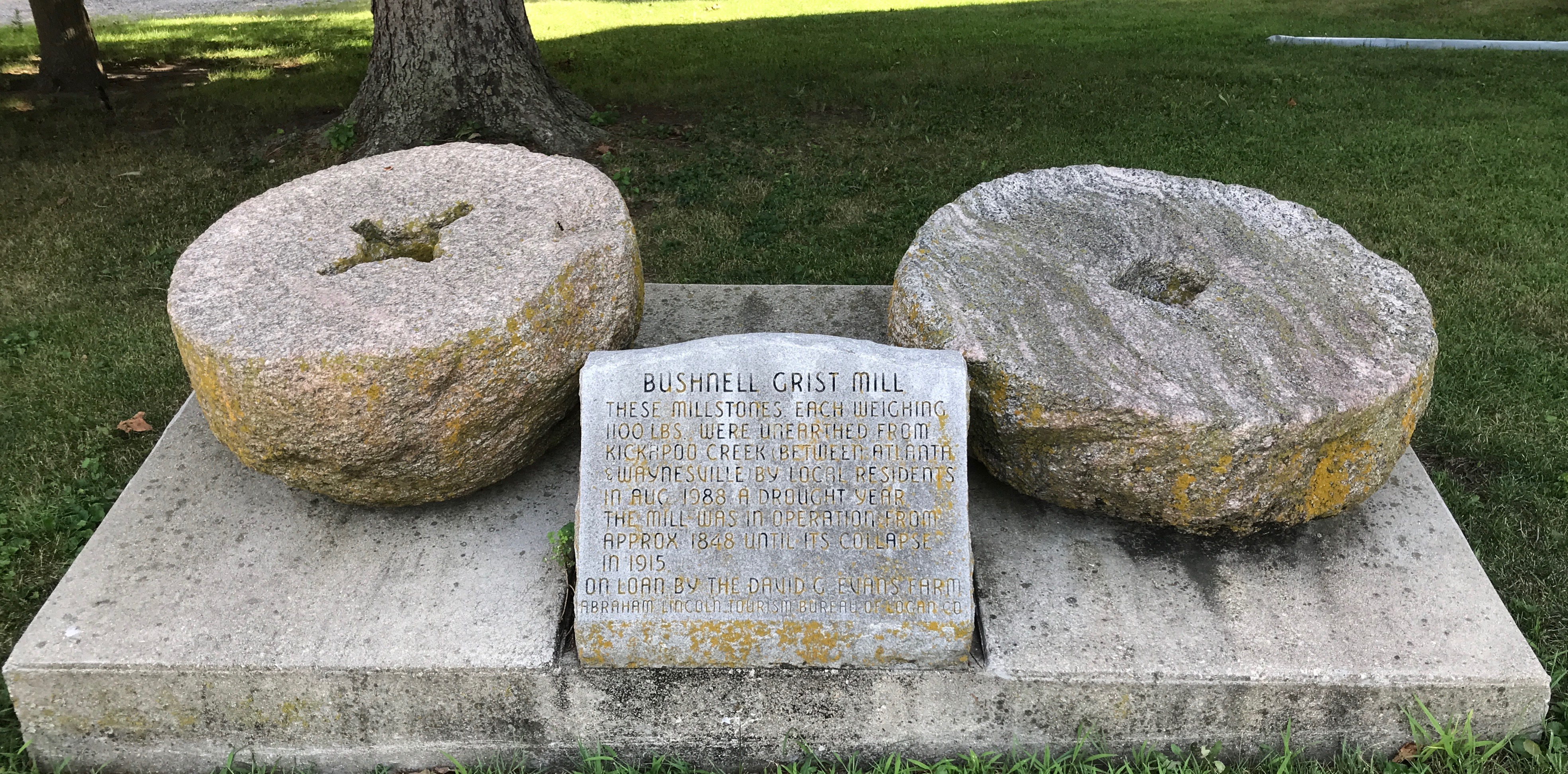
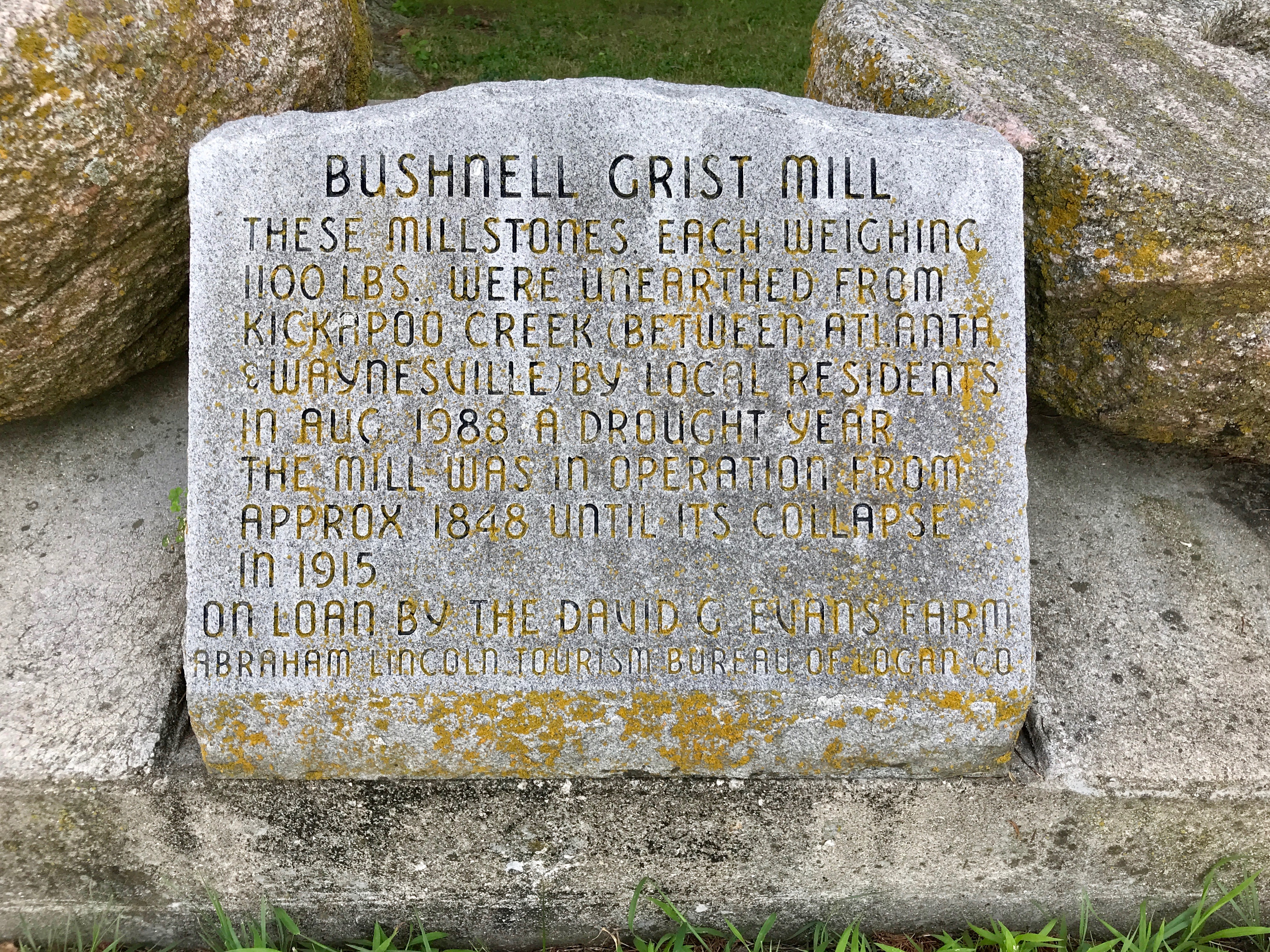
They had some mill stones on display.
If you are interested in how the stones came to be here, you can read the information on the marker.
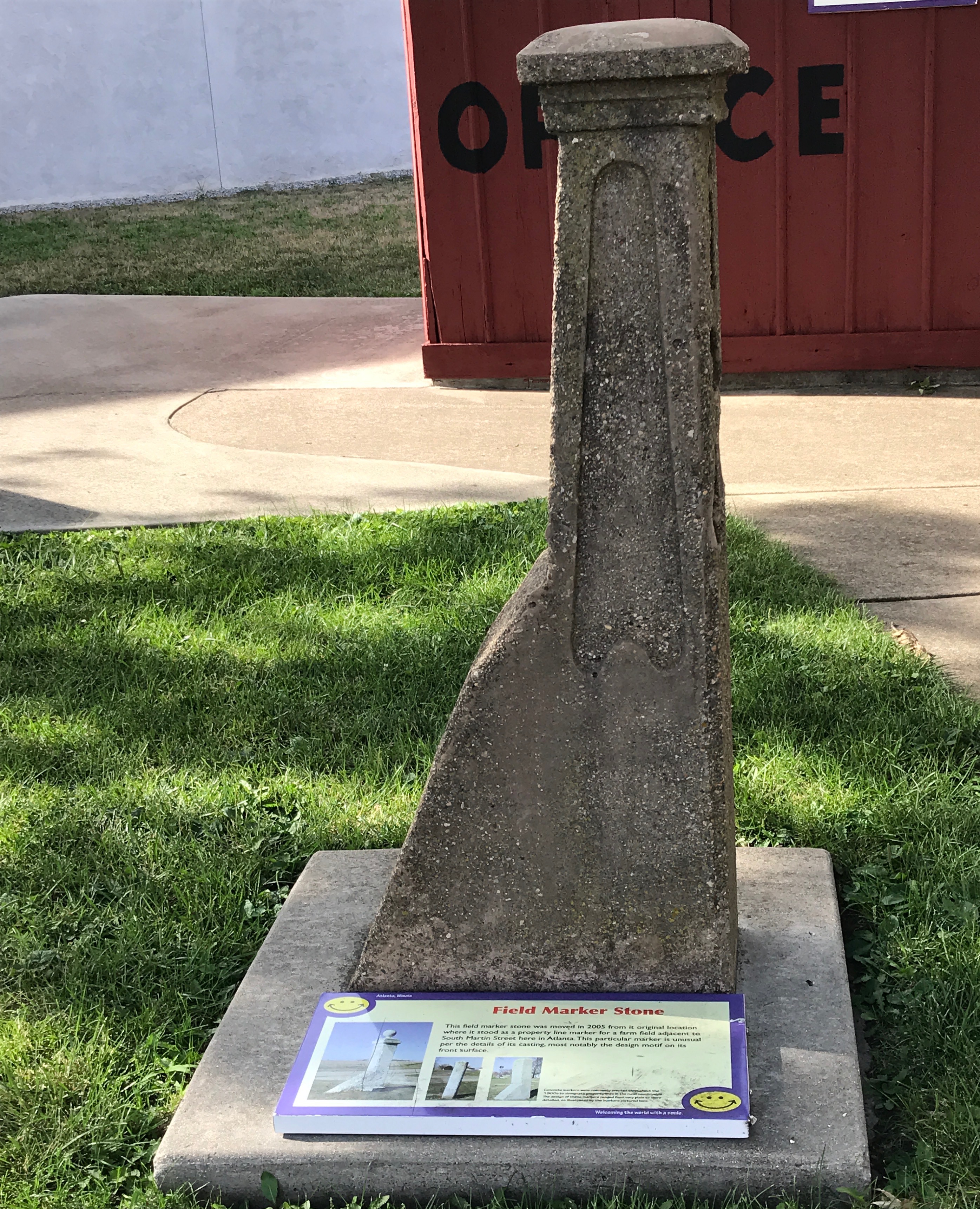
They really enjoy all the small bits of their history. This is a field marker stone that was a property line marker for a farm field in Atlanta. The plaque points out that this particular marker is unusual for the design details of its casting.
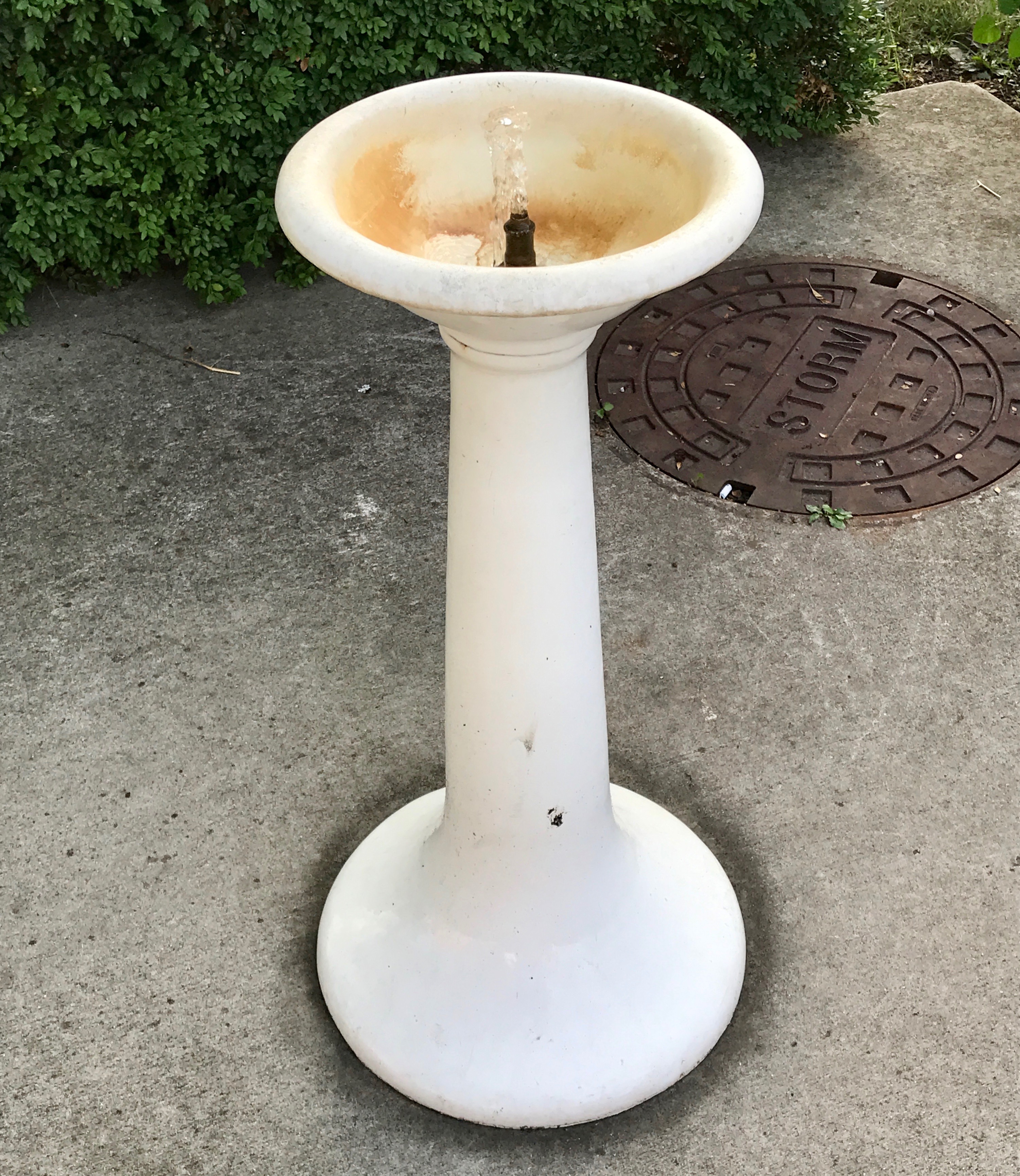
This is one of four drinking fountains installed by the City of Atlanta in 1934. According to the sign with it, sometimes the older boys would pick up the younger ones and sit them on top. You will notice that the water is running. That can’t have been pleasant.
I think I had seen just about all I could see in a quick visit, and the sign warned me against loitering.
After Fort Wayne, I had a few more grain elevators to stop at and then it was just drive, drive, drive until I got back to Kansas City.
I did stop at one memorable place: Blue Springs Cafe in Highland, Illinois. It was about 35 miles east St. Louis just off I-70.
As I approached, the billboards kept touting it as having been on FoodNetwork on “The Best Thing I Ever Ate.” Their claim to fame is their “Mile High Pies.”
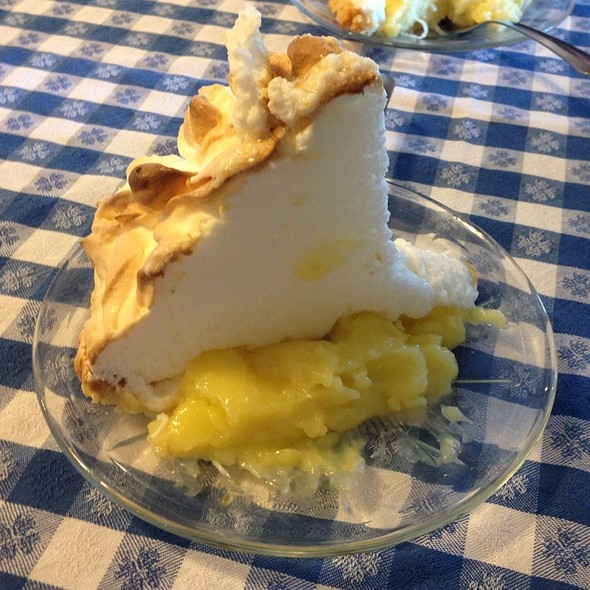
Of course, I had to have a slice.
I borrowed this photo from The FoodNetwork files, I hope they don’t mind.
It was a homey little restaurant. I don’t remember what I ate, aside from the pie, but I do remember that I wasn’t disappointed.
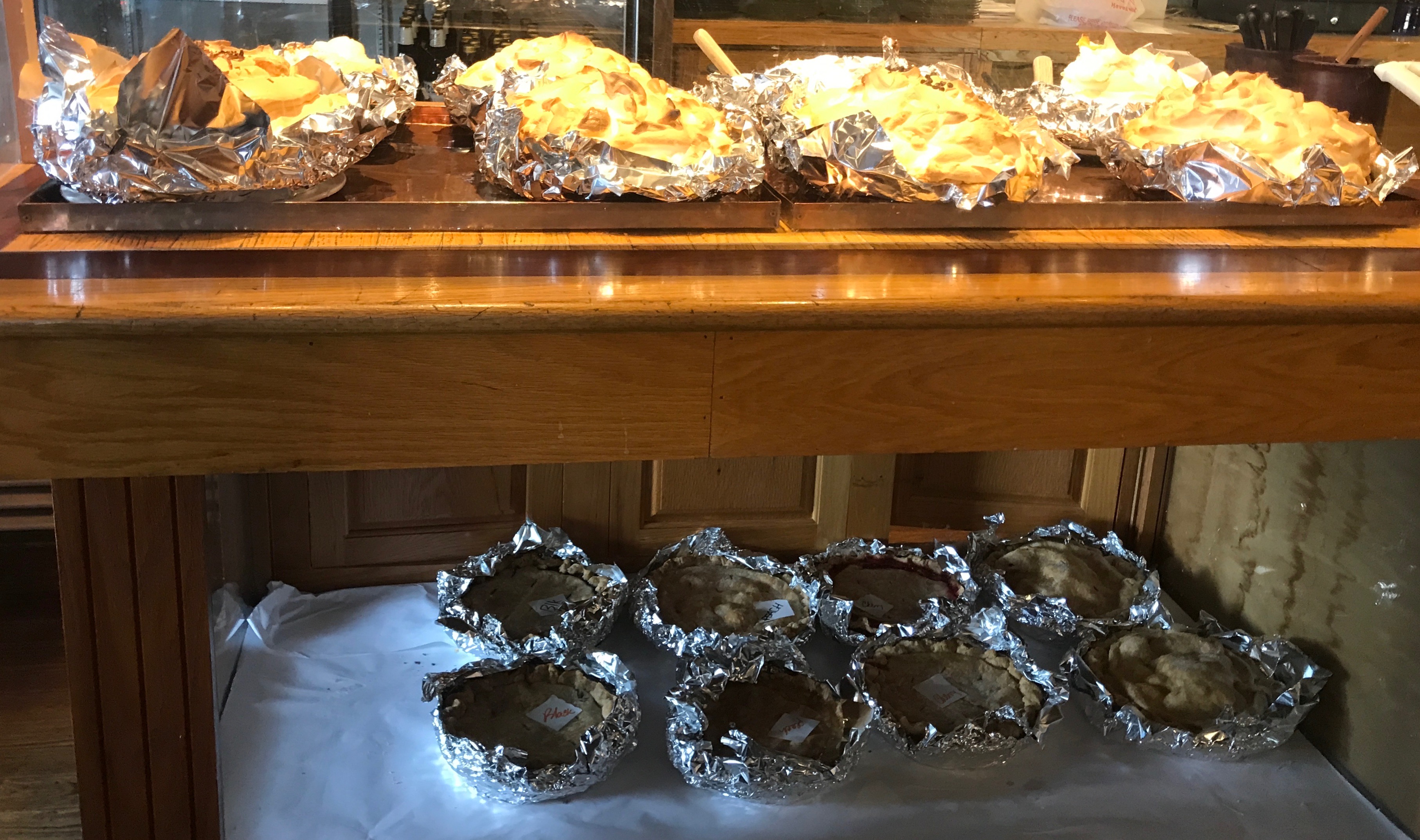
They had a display of pies near the door. I’ll bet you could buy a whole one “to go.” Or, maybe you could just ask for a fork at eat it there.
Another night in a nondescript hotel at an interchange along the interstate and then it was over. I took the company’s car back, transferred my stuff to my Escape and I was ready to head back.
The Summer of Seed Collecting was drawing to a close. I had a few more stops to make before I got back to Kansas City, but the weekend found me in Fort Wayne, Indiana.
I was only about two hours from home, but I was so tired from driving. Since I was essentially picking up the odd sites that weren’t ready for the first collector, the facilities were rather far apart and involved a lot of driving between stops. Rather than make the drive, I holed up in Fort Wayne for a little R and R.
According to my Preferred Source, Fort Wayne was built in 1794 by the United States Army under the direction of Revolutionary War general Anthony Wayne.
He had an interesting nickname – Mad Anthony. He earned it with his military exploits and fiery personality. He was over in this neck of the woods fighting the Northwest Indian War (1785-1795). I honestly don’t remember learning about this war in school or elsewhere. Incidentally, this was was also known as the Ohio War, Little Turtle’s War as well as other names that weren’t included in my Preferred Source.
General “Mad” Anthony Wayne, along with General Charles Scott’s Kentucky Militia triumphed in the final battle of the war in The Battle of Fallen Timbers, on August 20, 1794. The battle took place amid trees that had been toppled by a tornado just north of the Maumee River in northwestern Ohio at the site of the present-day city of Maumee. They were victorious against a combined Native American force of Shawnee under Blue Jacket, the Miami under Little Turtle and numerous others and the British. This battle ended major hostilities* in the region and resulted in British and Indian withdrawal from the southern Great Lakes, western Ohio and northeastern Indiana.
* Uh…there was that little matter of the War of 1812 just a few years later, but that hardly matters, does it?
This is one of the places that popped up in History Here. I sure miss that app! It lead me to some interesting spots I wouldn’t have found otherwise. I’ve just downloaded a new app, What Happened Here? I haven’t tried it yet, but I hope it helps me find more unusual places.
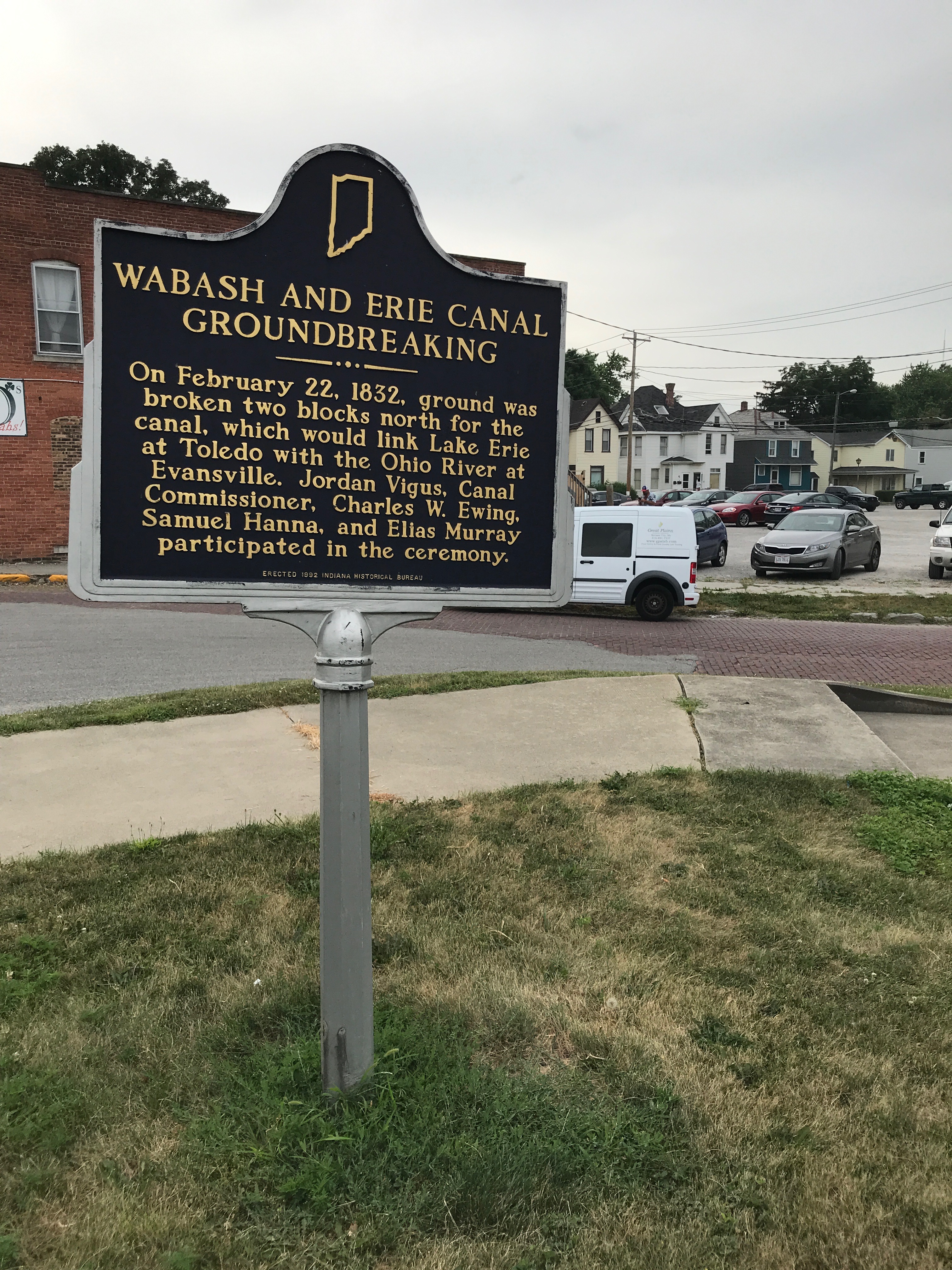
I am just amazed at all the canal building that took place in the early years of the United States. According to another Source, by the 1830s, the country has a complete water route from New York City to New Orleans. By 1840, over 3,000 miles of canals had been built. But, do you know what lead to their decline? The railroad. By the 1860s, they rendered most of them unprofitable. Poor Sal! The mule was replaced by the iron horse.
Anyway, the plaque was placed two blocks south of where the ground was broken. You know I had to see if there were any tell-tale signs of a canal, as the area around the plaque didn’t seem particularly canal-like.
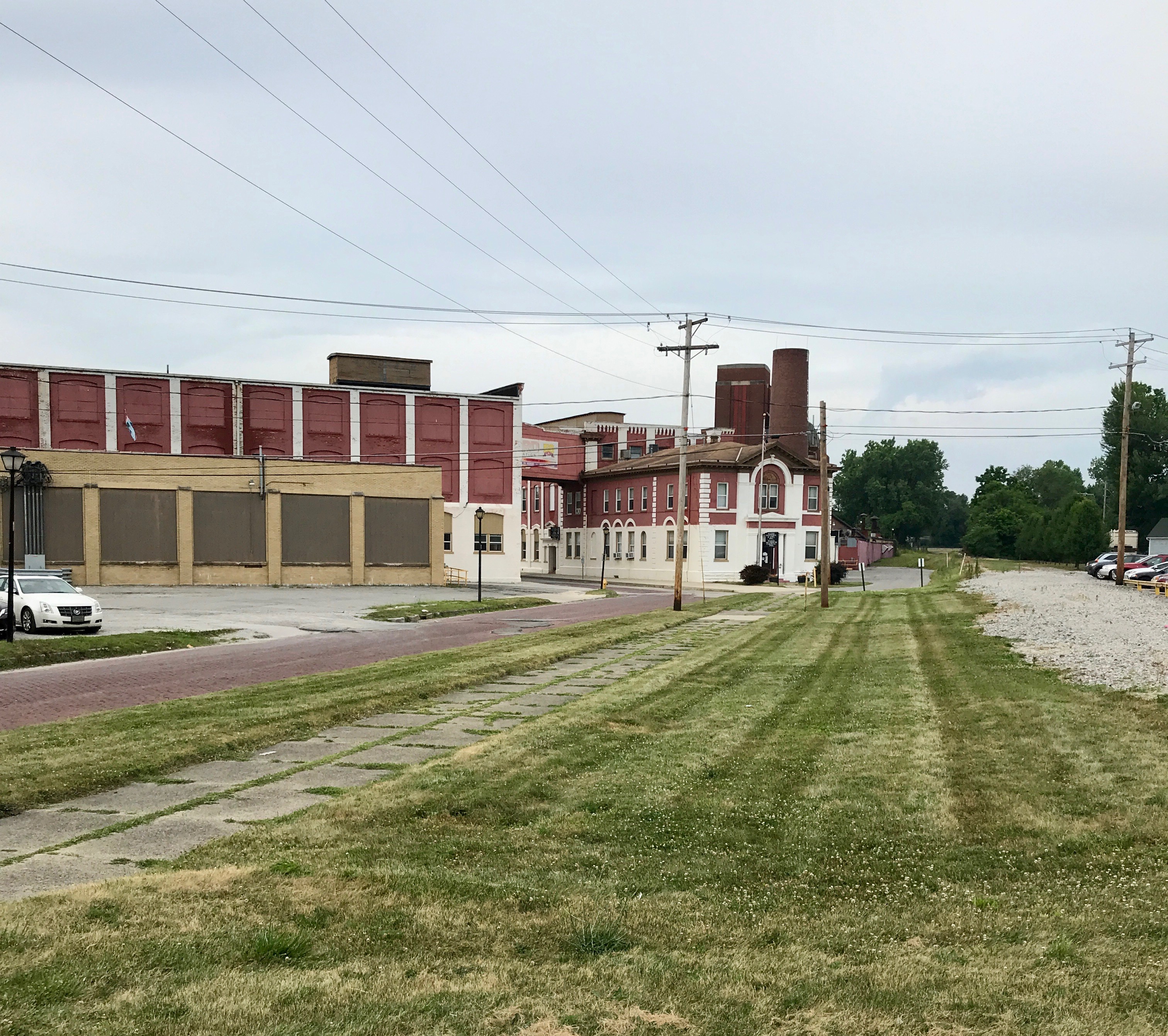
I headed north. No canal here. The road curved around and what should I find?
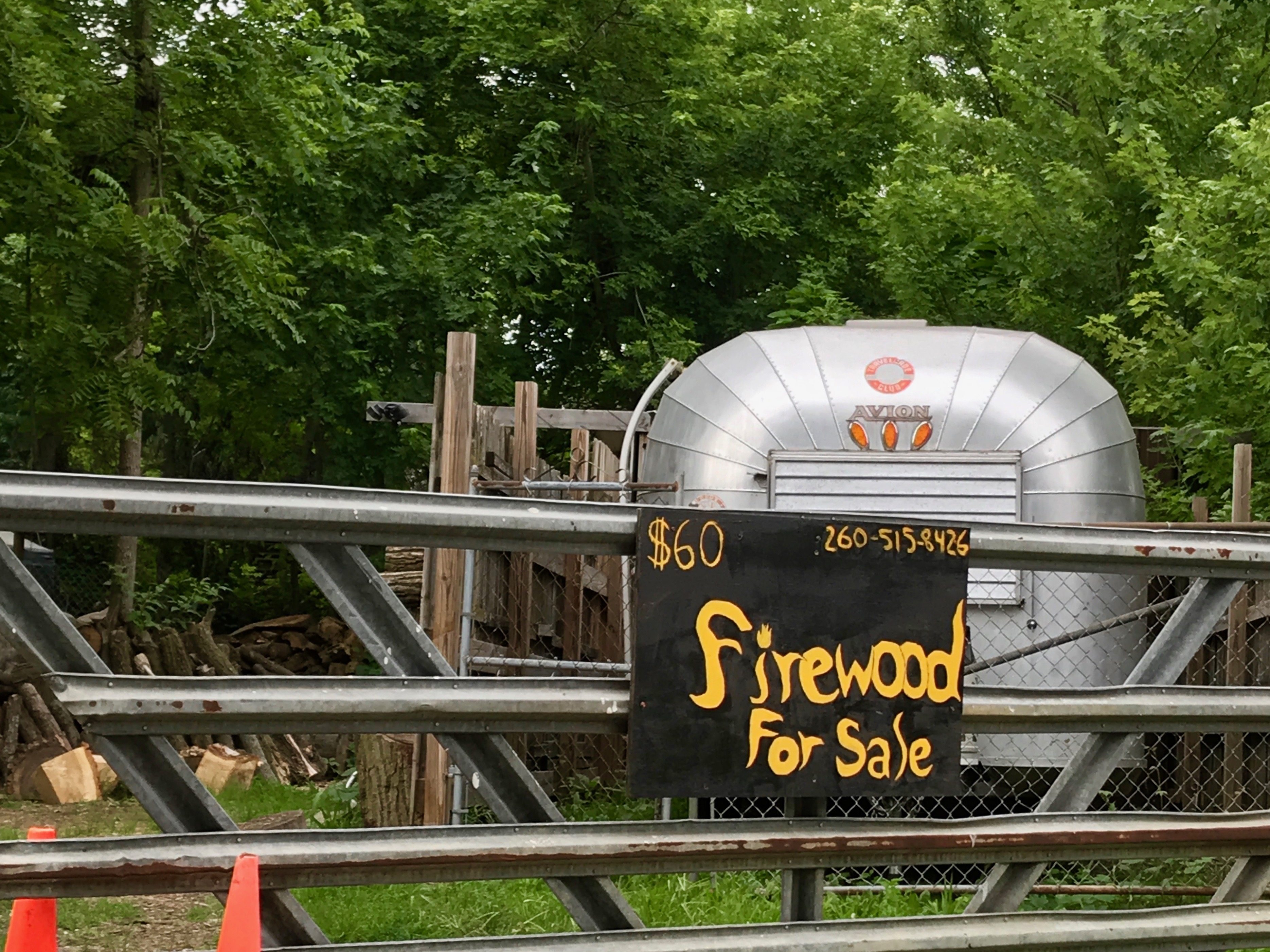
An Avion! It isn’t exactly an Airstream, but aluminum cousins are good in my book.
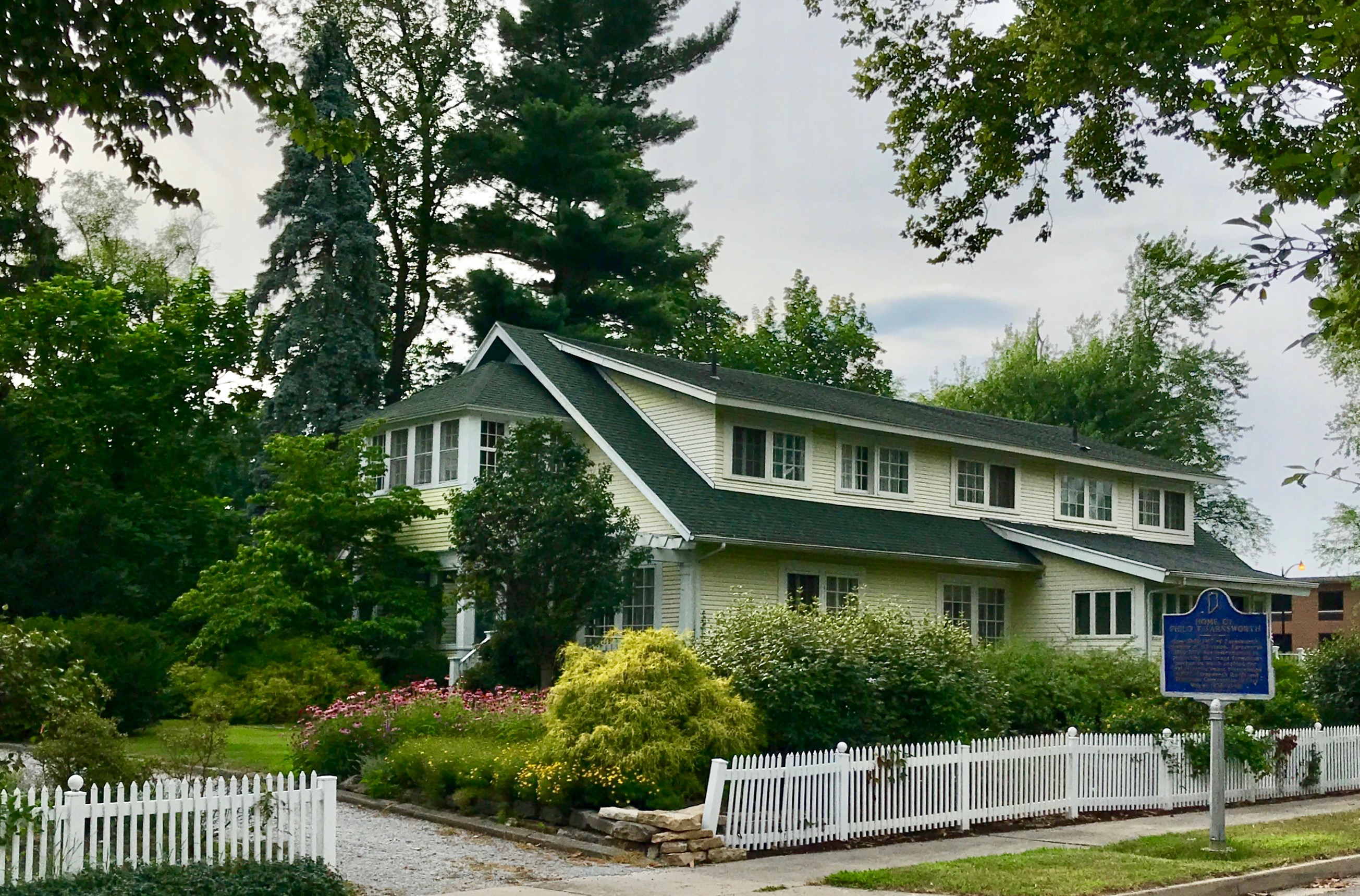
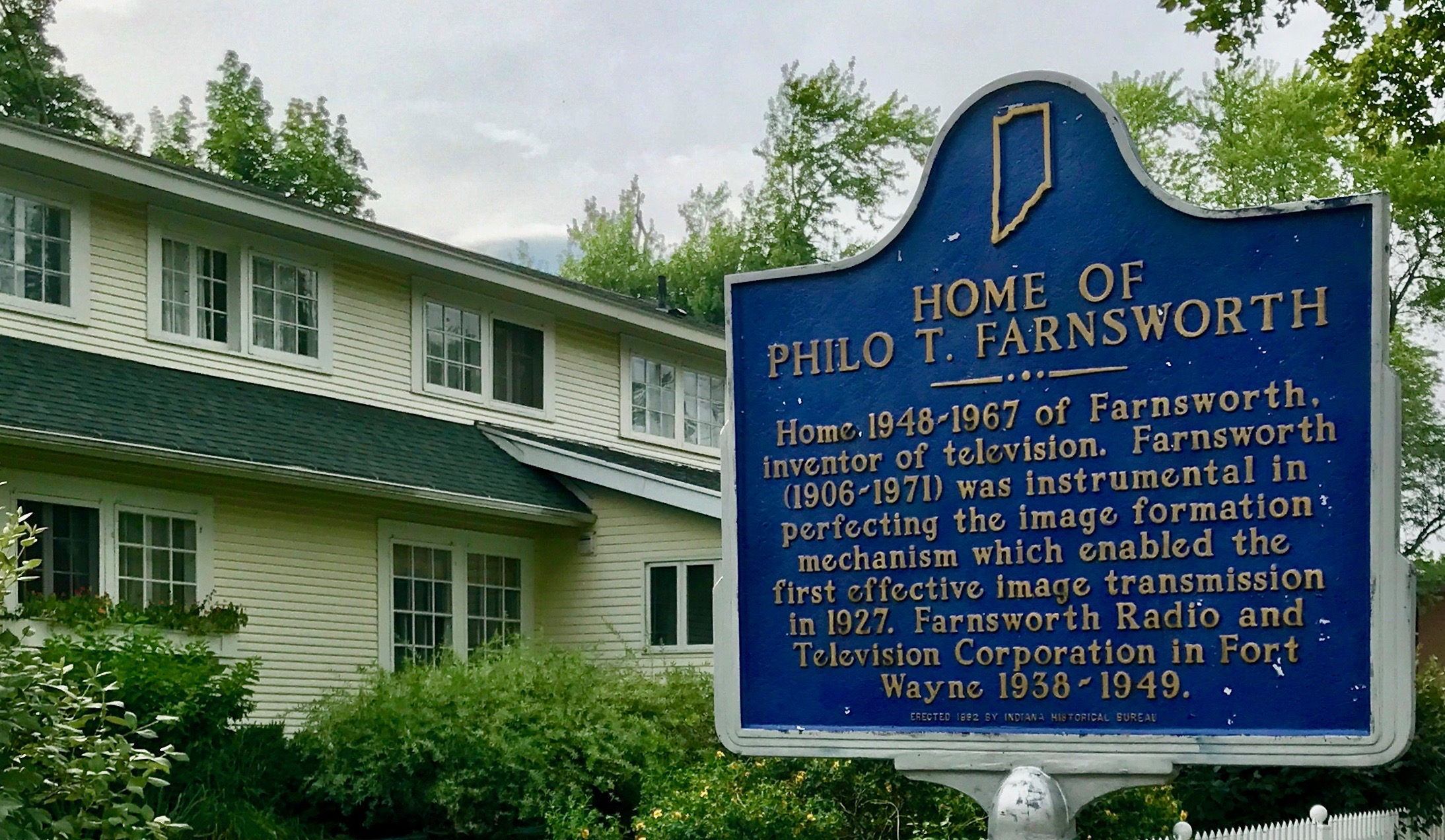
I also followed a History Here lead to the house of Philo T. Farnsworth. Who’s that, you ask?
Why, he is credited with being the inventor of television! He held around 300 patents, mostly in radio and television, although he also invented a small nuclear fusion device, Farnsworth–Hirsch fusor.
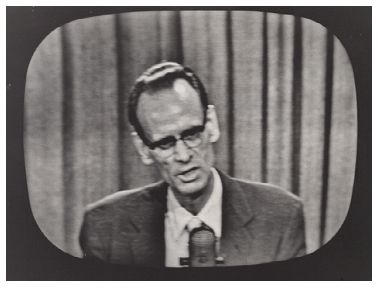
In spite of inventing the medium, he only appeared on television once. On July 3, 1957, he was a mystery guest (“Doctor X”) on the CBS quiz show, I’ve Got a Secret. He fielded questions from the panel as they unsuccessfully tried to guess his secret (“I invented electronic television.”) For stumping the panel, he received $80 and a carton of Winston cigarettes.
When I was just cruising around, I found this house. It was the home of Miami chief Jean Baptiste de Richardville. His name was Pinšiwa in Miami. He was the son of Tacumwah, sister of the Miami chief Pacanne, also known as Little Turtle, and Joseph Drouet de Richerville, a French fur trader from Quebec.
The house was built in 1826 and is called a treaty house. Chief Richardville, who was the principal chief of the Miami from 1812 until his death in 1841, signed several treaties with the United States government as it negotiated with the Miami tribe for its eventual removal from Indiana as a recognized nation. In the treaty, lands were reserved for Richardville and $600 was provided for the building of a home. The $600 only partially covered the cost of building the home. Apparently it was not a problem for Chief Richardville to throw in a bit of money toward building the house, which ended up costing $2,200. At the time of his death in 1841, he was considered to be the richest man in the state of Indiana.
I peered in one of the windows. Apparently, the Allen County-Fort Wayne Historical Society has Miami Indian Heritage Days on the first Saturdays of the month from May-November. If you happen to visit when the house is open, you can see the room where he died. You can also view the large safe in which he stored his wealth, which is estimated to be worth about $23 million in today’s money.
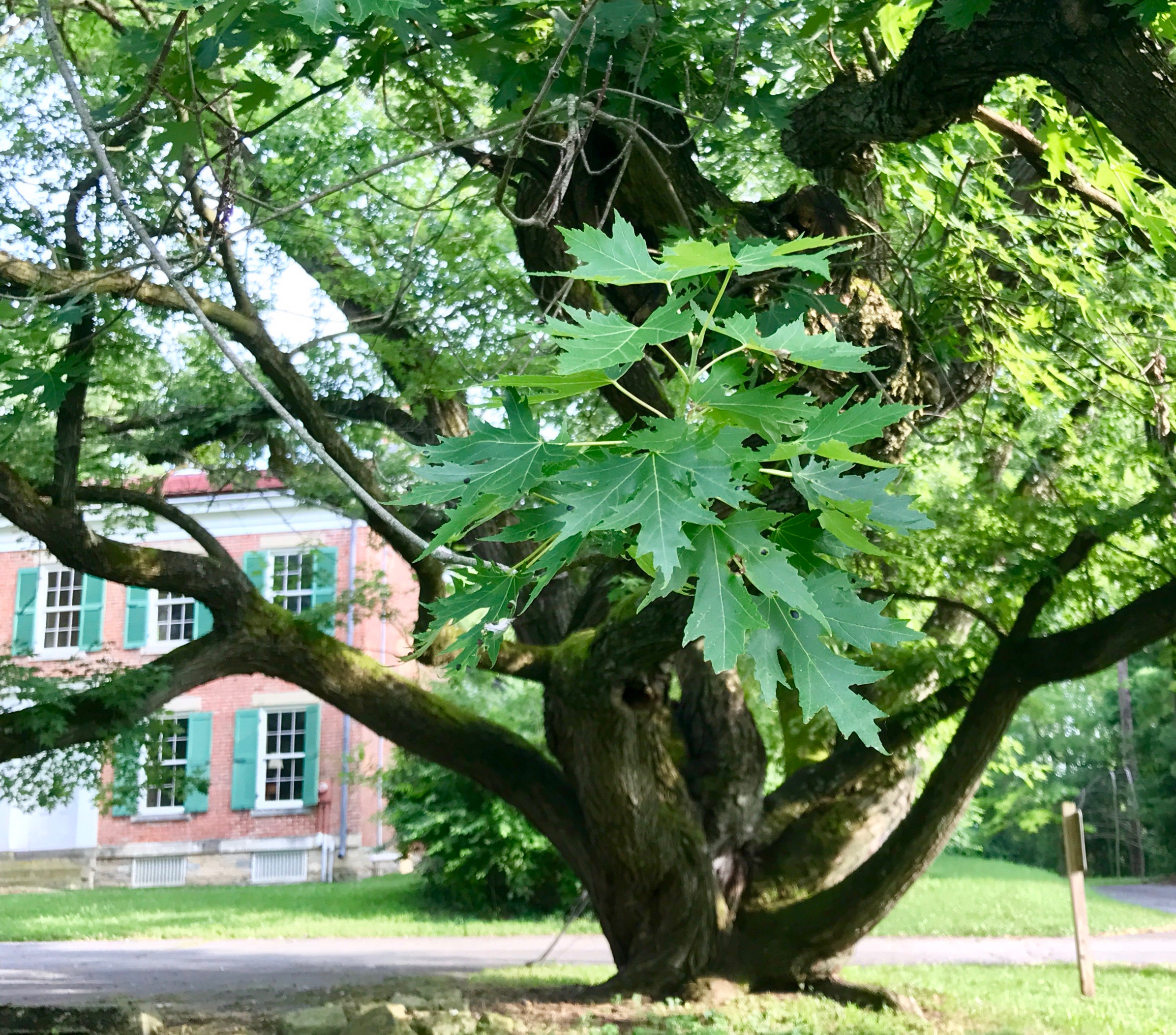
There was also a very large tree in front of the house. If I know anything about trees, that’s a maple. I have to admit that I’ve never seen a maple that was this profile.
In my experience, maples have a longer trunks with the branches growing out of the crown.
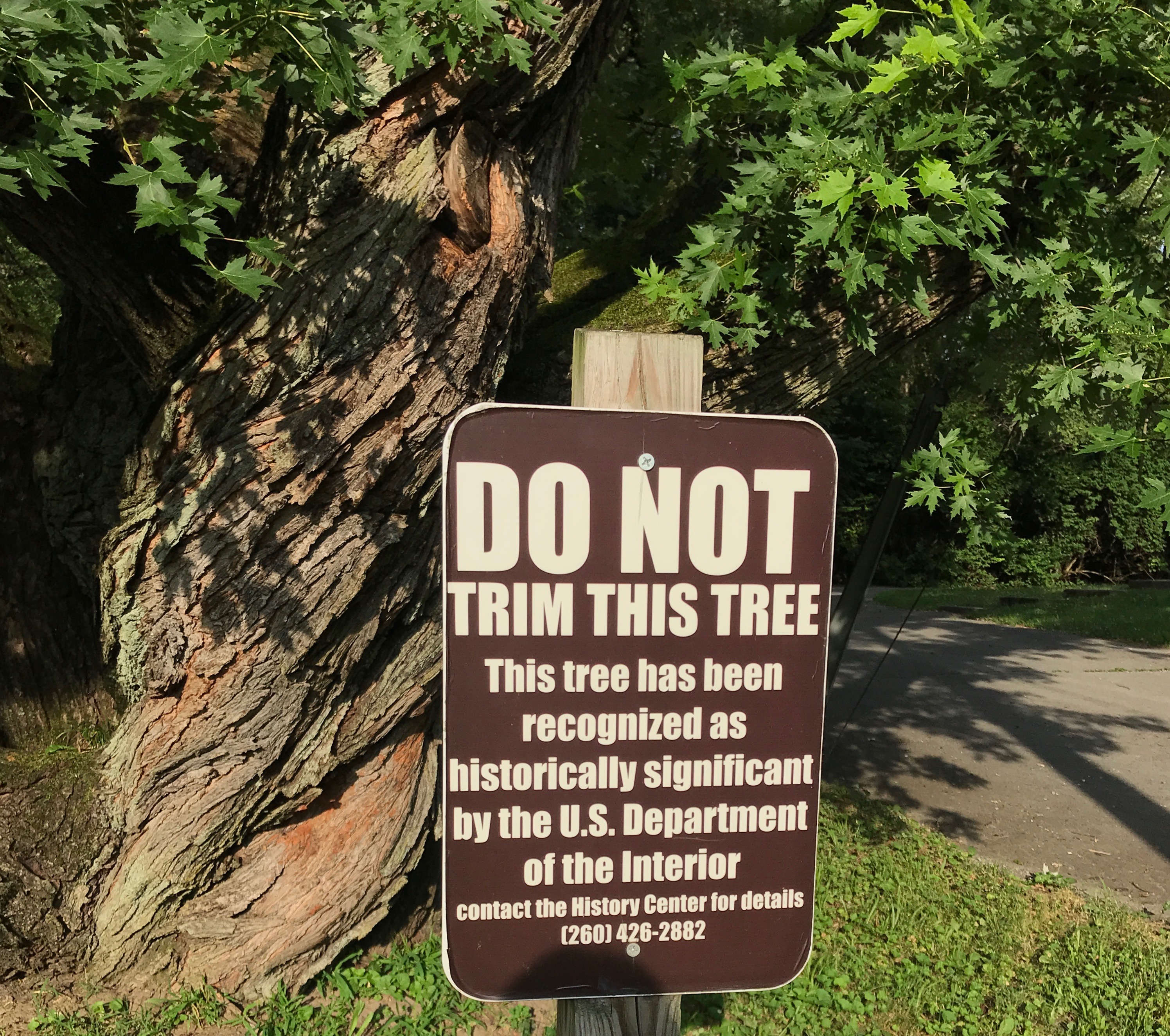
But, could it be that this tree has been growing since Chief Richardville lived here? I haven’t gotten around to calling the number on the sign, but maybe one of my Loyal Readers wants to take on this task and fill me in.
My last surprise in Fort Wayne was that John Chapman, also known as Johnny Appleseed is buried here. Really!
Well, that’s what they say.
It isn’t unusual that there should be some controversy about the exact location of his final resting place.
After all, he did die in 1845. While he wasn’t exactly poor, it doesn’t seem that he placed much value on worldly goods.
He really did go barefoot and wear a pot on his head. These observations were made during his lifetime. I really rather assumed this characterization was hyperbole. Is it any wonder that he never married?
He wasn’t without means, though. At his death, he left an estate of over 1,200 acres of valuable nurseries to his sister. There are still a couple of small apple orchards in Maine that are maintained by John’s great, great, great nephew, who is also named John Chapman. At least one of those trees is said to be descended from this forebear’s own trees.
The popular image of Johnny Appleseed is that he spread apple seeds wherever he went. In truth, he planted his seeds in nurseries. He built fences around his nurseries and left them in the care of neighbors, who received a share of the profits when the trees were sold. He returned to tend the nurseries every couple of years.
According to the sign at the gravesite, he moved ahead of the waves of westbound settlers and had seedlings available when the settlers arrived. His seedlings were valuable because apples were highly nutricious and orchards were a symbol of permanency. He sold trees for 3 cents if you planted them yourself and 6.5 cents if he planted them for you.
In addition to being a nurseryman and businessman, he was also a missionary for the Swedenborgian religion, a Christian denomination, which was influenced by the writings of scientist and Swedish Lutheran theologian Emanuel Swedenborg, whose writings promoted on church based on love and charity.
With all this focusing on apples, I was getting hungry! It was time to find some food.
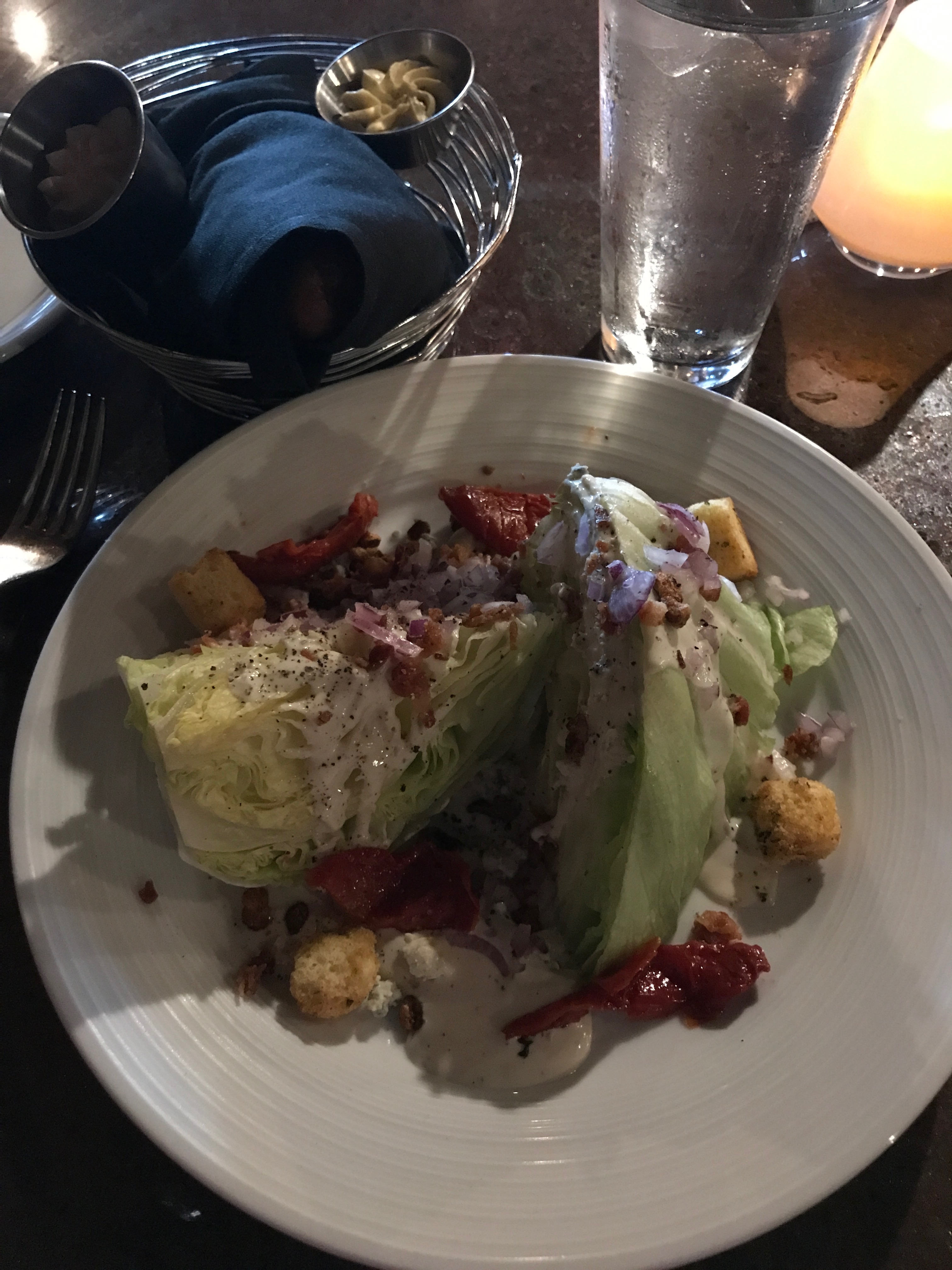
I started off with a wedge salad.
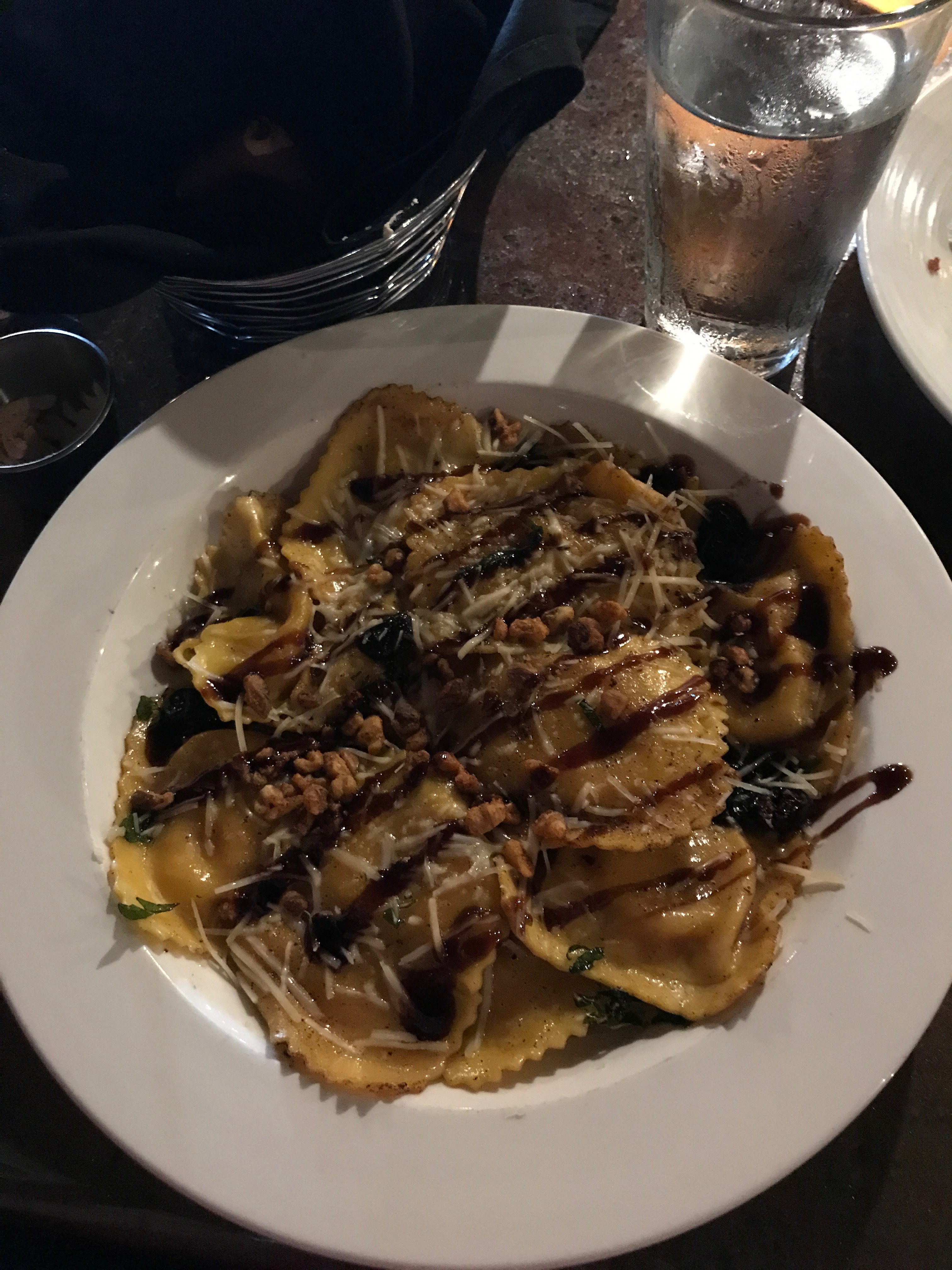
Next course was ravioli.
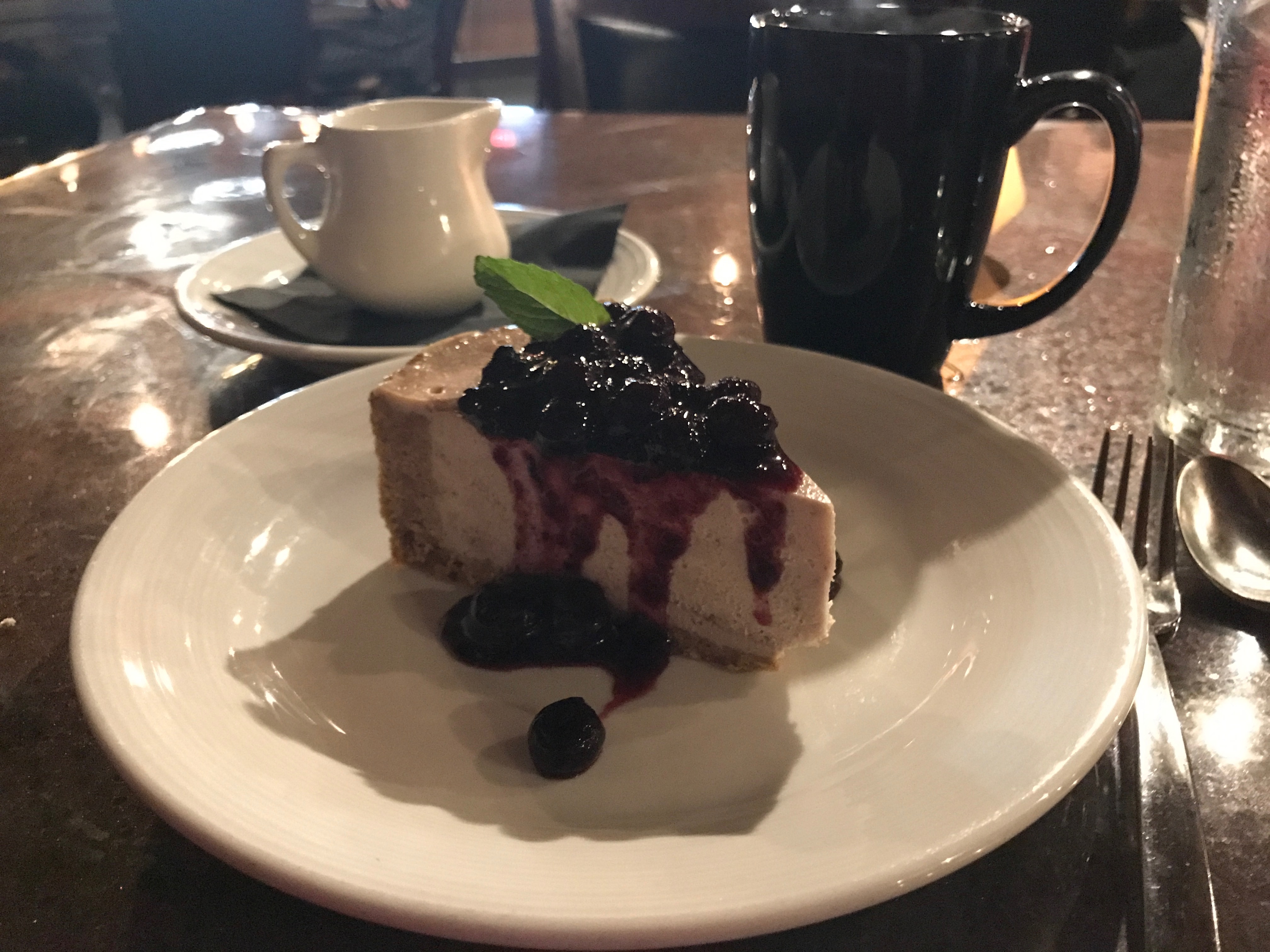
I topped it all off with cheesecake. Yum!
And then it was time to head west, just like those settlers Johnny Appleseed sold his seedlings to.
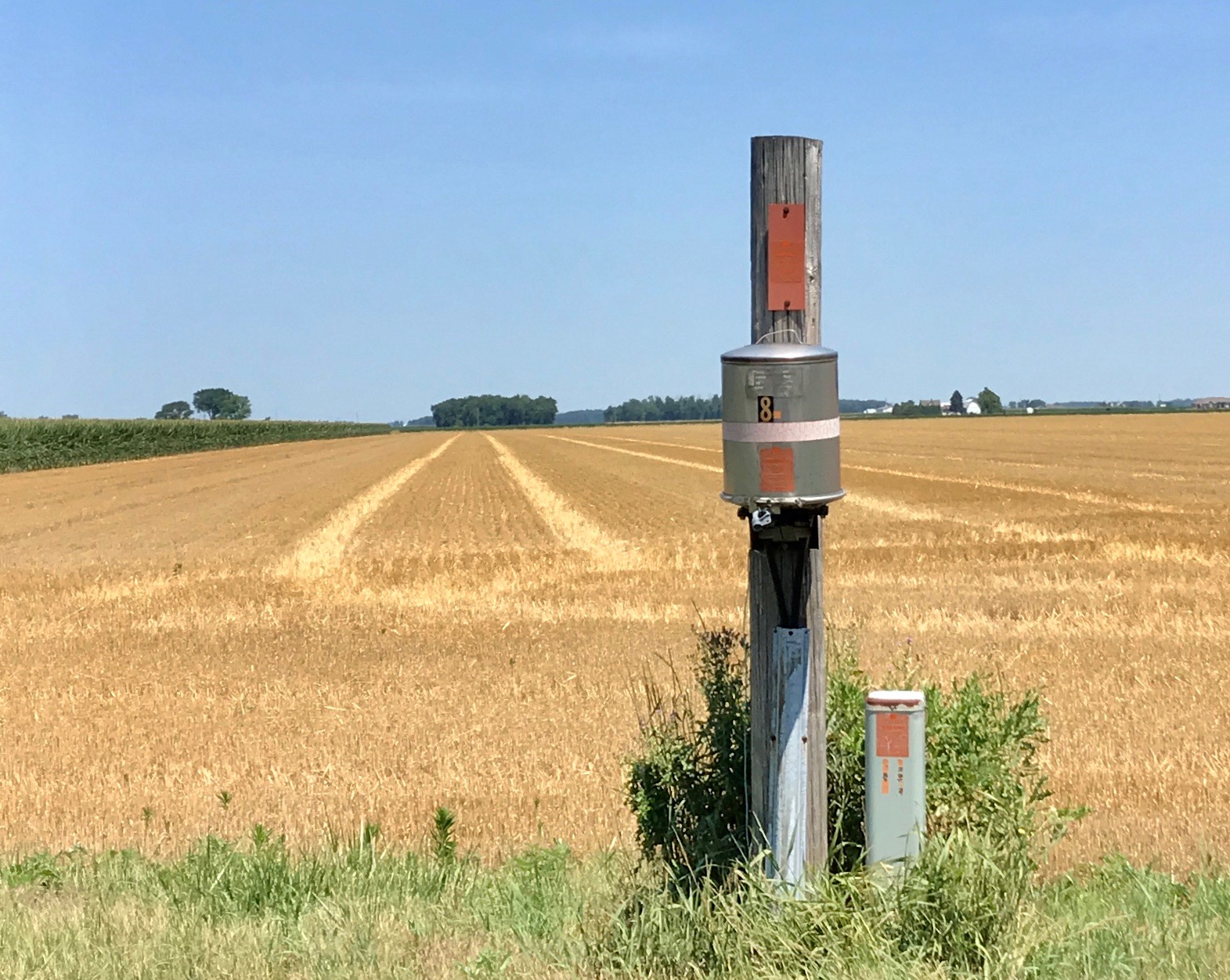
Every now and then, I came across what I imagined might be a wheat field that has already been harvested.
I am still trying to find out what these things are. I imagine they might have something to do with the electrical grid, but I don’t know what. Maybe someone will tell me one of these days – or I will find the right person to ask.
This day’s circling landed me in Bowling Green.
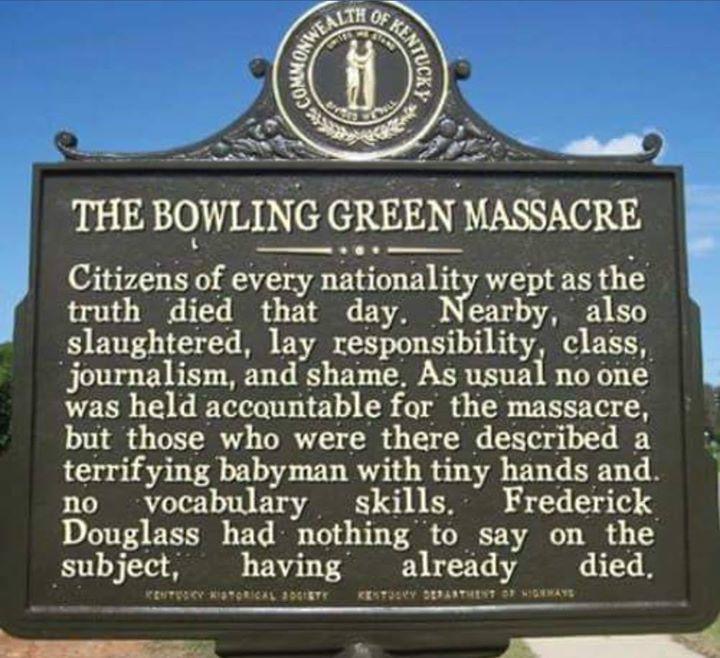
This photo I saved from Facebook seemed appropriate for this post, even if it was referring to Bowling Green, Kentucky.
I didn’t have much time to explore Bowling Green. If you would like to know more, here’s link to my Preferred Source. I took a glance at the site, and here are three things that stood out to me:
Bowling Green State University is located there.
It is located 20 miles southwest of Toledo and is part of the Toledo Metropolitan Area.
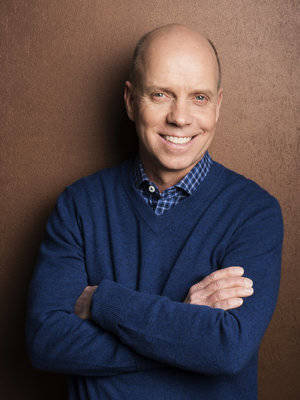
Scott Hamilton was born there in 1960.
Scott Hamilton THENScott Hamilton NOW
Hey, we’re all getting older. He’s still awfully cute.
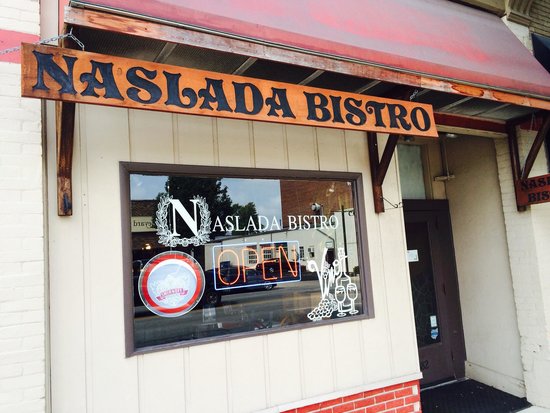
I checked into the hotel and headed out to find dinner. What a dinner I found! I parked down in the central business district and strolled about. I came across Naslada Bistro.
The exterior wasn’t impressive, but it said that it had Bulgarian cuisine. That would be a first for me. I thought I give it a try. After all, if I wasn’t wild about it, another meal would be coming along in the morning.
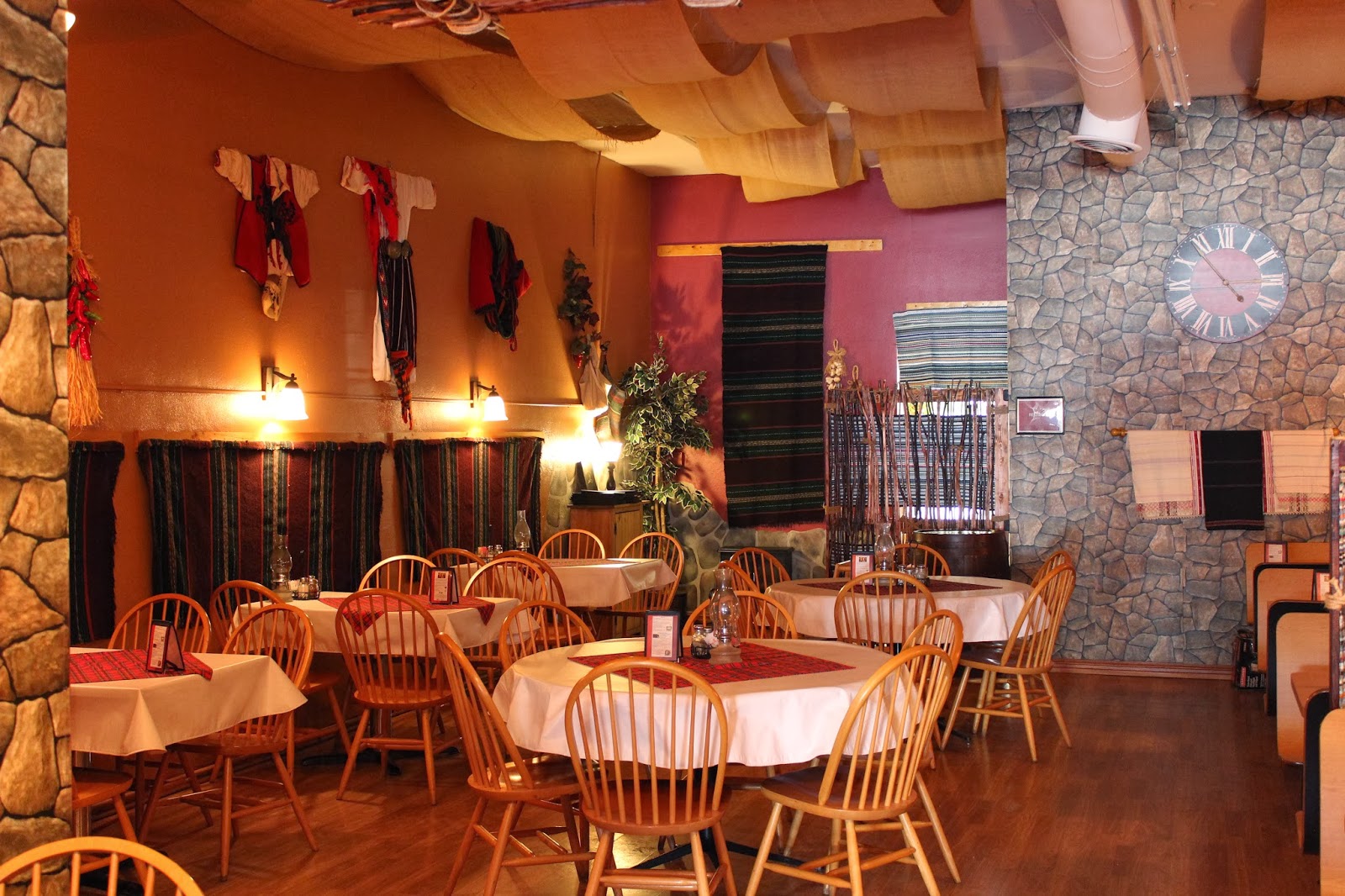
The dining room was comfortable, though. I am a sucker for real cloth napery. I took my seat and decided on my dinner. I decided to order appetizers for dinner.
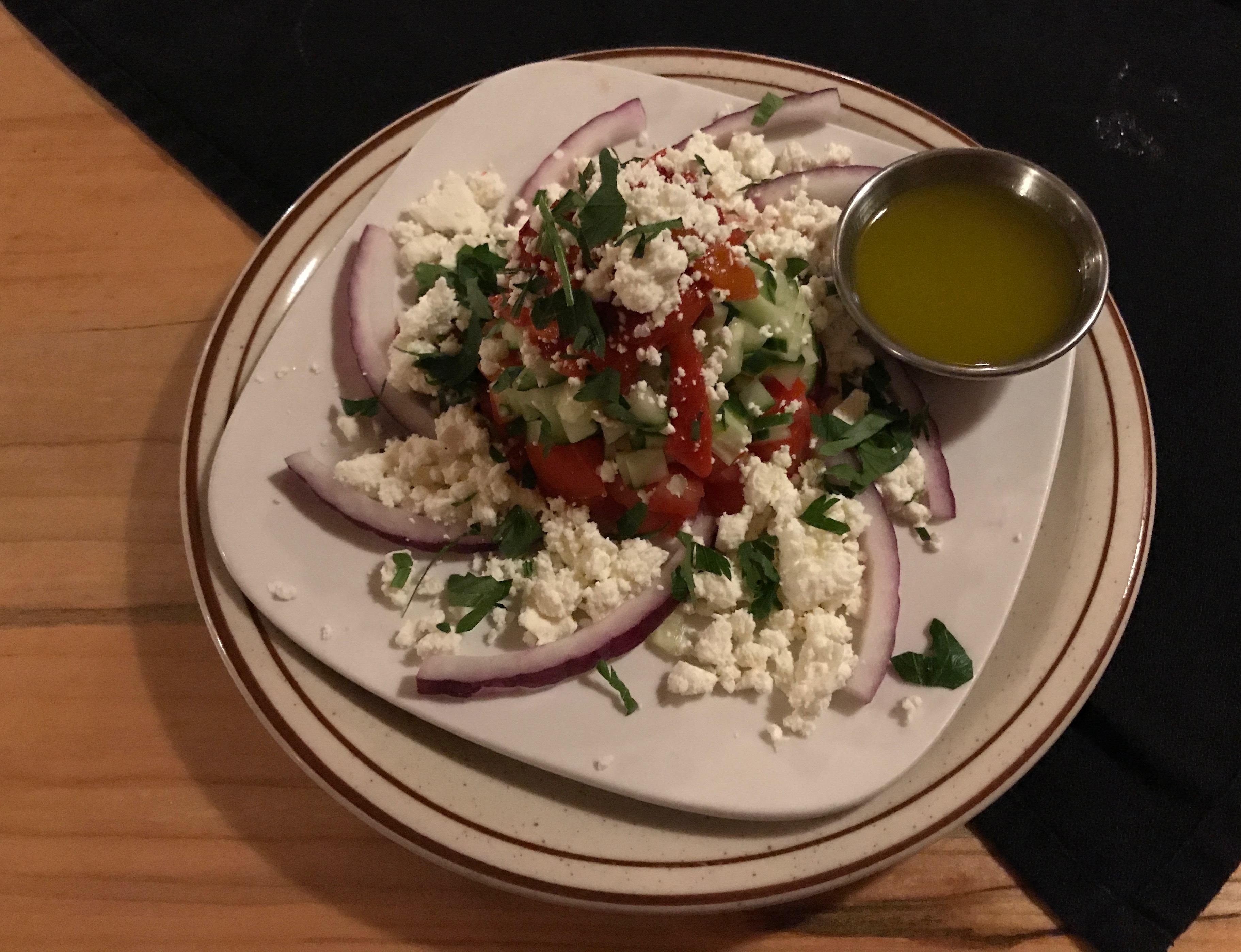
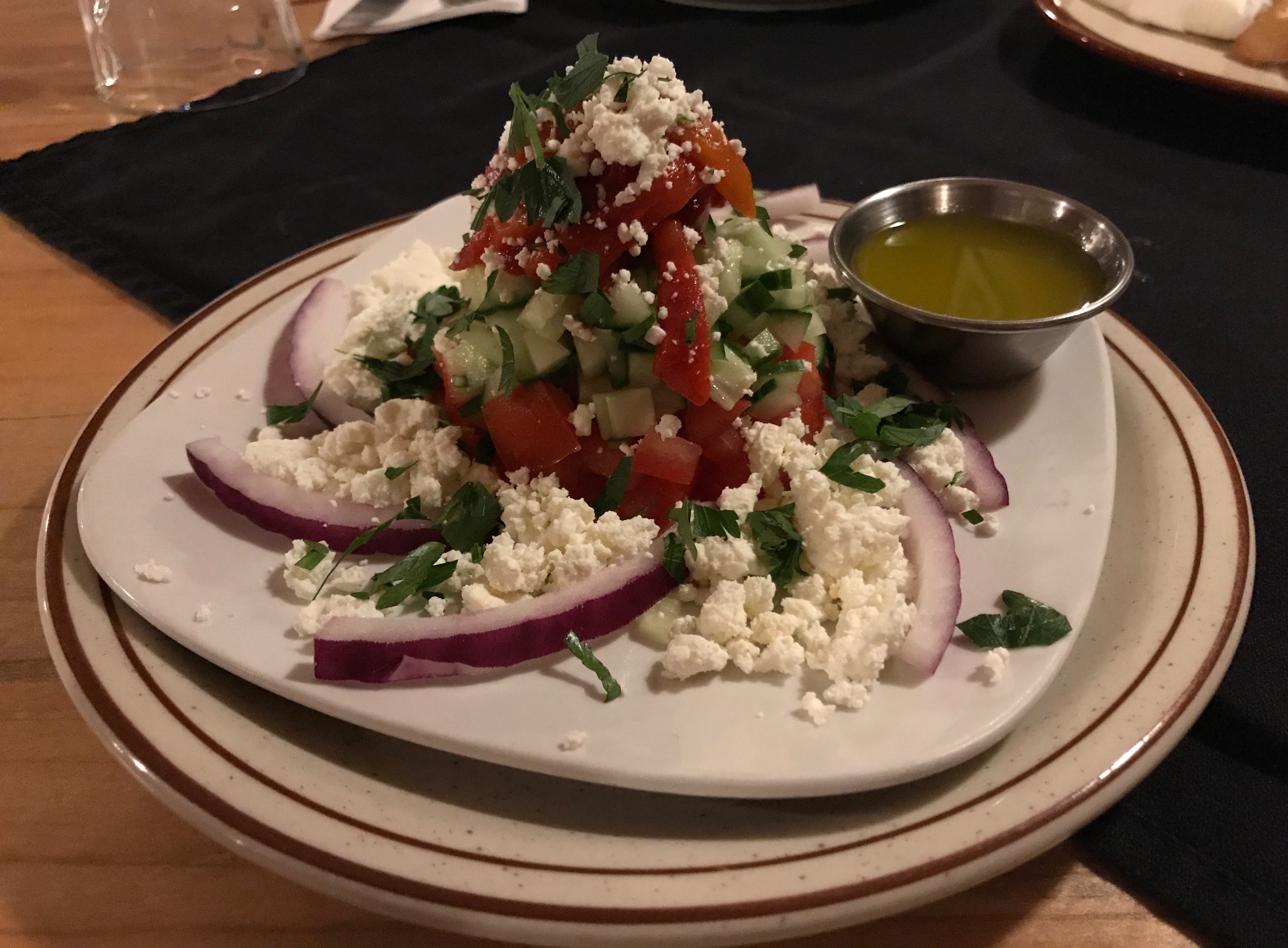
I started with the Shopska Salad.
The top view didn’t do it justice. I had to try for a side view. It was beautiful and tasty, too.
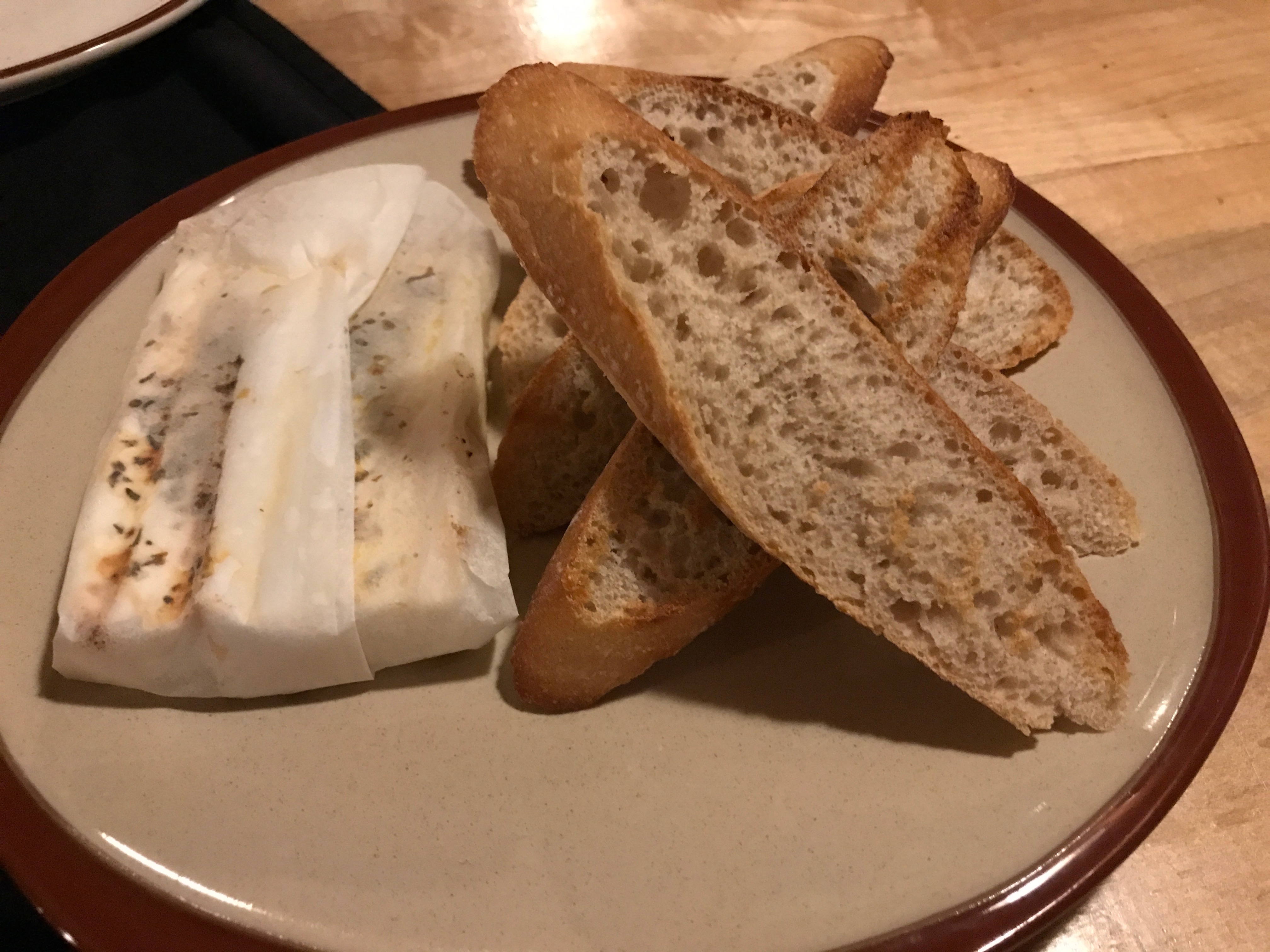
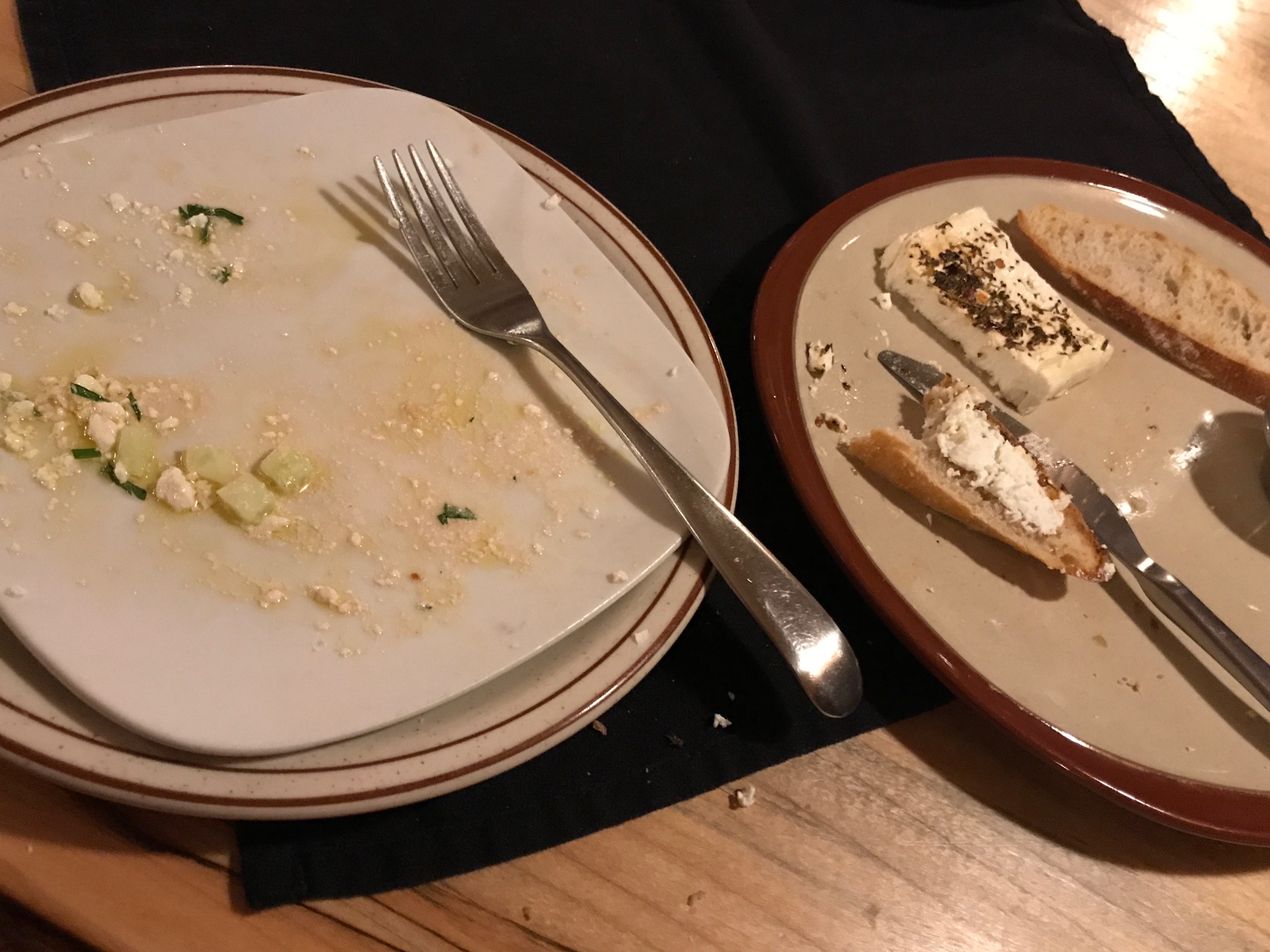
Another dish they had was Seasoned Feta on the Grill. I like feta, but mostly I was curious about how they could grill cheese.
The answer was served to me. They wrap the feta up in a paper before putting it on the grill.
This isn’t a dish you could get at Denny’s!
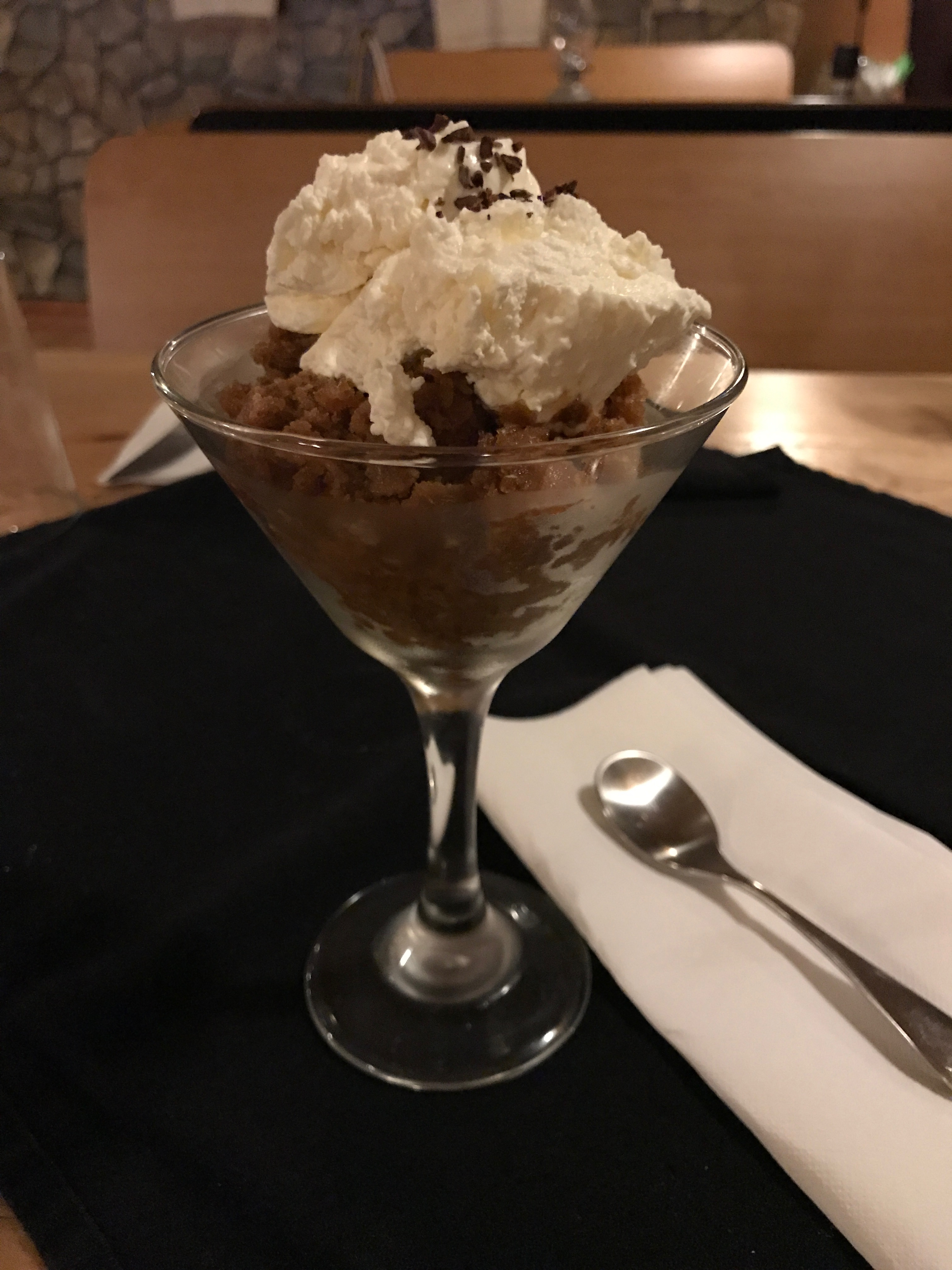
I think I did a pretty good job. Since I joined the Clean Plate Club, I decided that I could order dessert.
Doesn’t that look lovely? It was some sort of espresso ice concoction. I thought I would like it, but unfortunately, it was a little less sweet than I had hoped it would be.
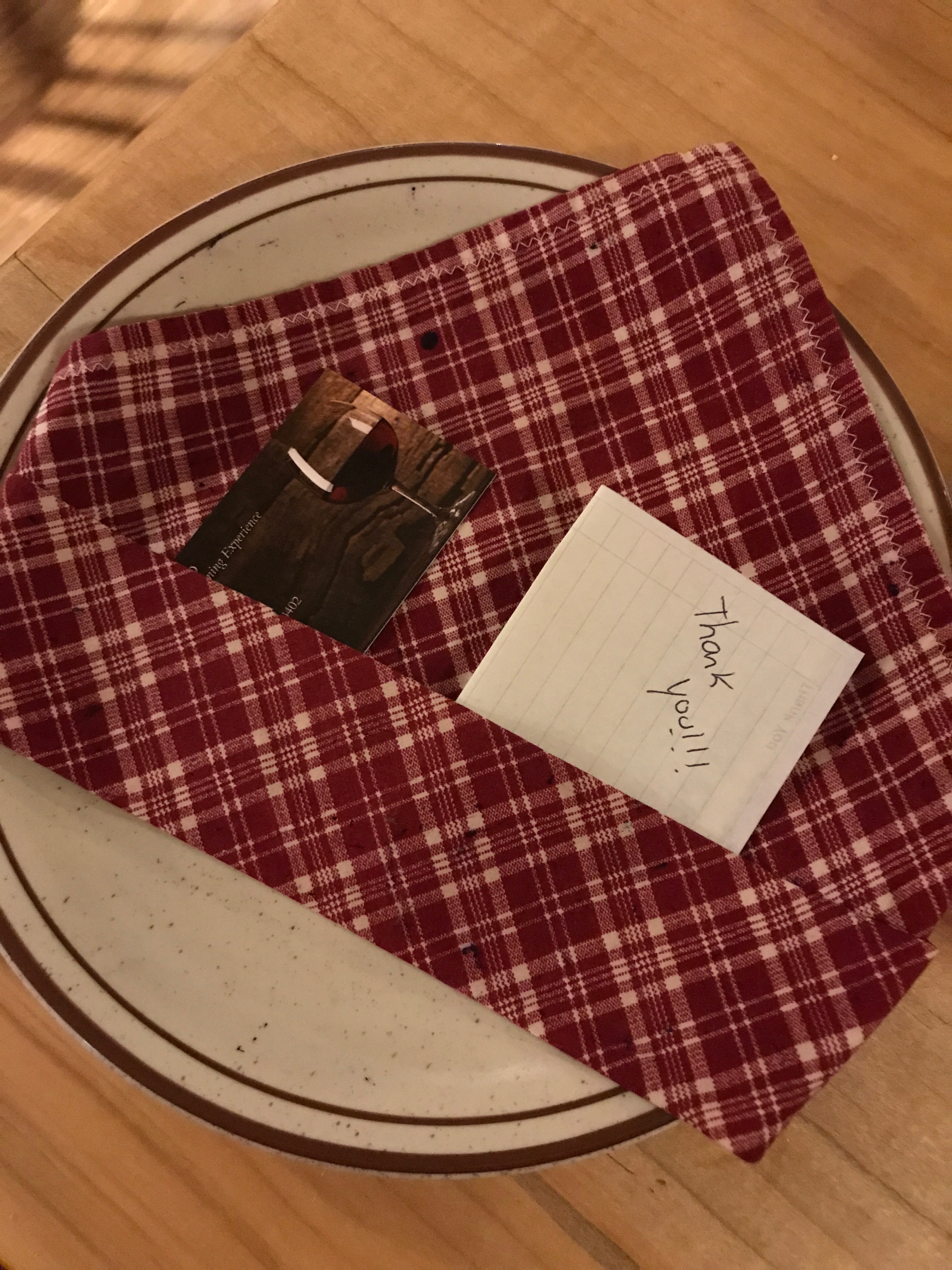
I asked for the check, and they blew me away with the presentation.
Have you ever thought about how many hands touch those plastic folders that bills are frequently presented in? Not only was this attractive, it was sanitary!
They even included a business card!
If you are ever in the area, I highly recommend dining at Naslada Bistro!
With that, I made my way back to the hotel to get rested up for another day of driving in circles.
I made sure to pack up my COMPLEMENTARY GUEST TOWEL. Those people at Best Western sure are hospitable.
I love it when I get to visit places I would not normally visit. In this case, I stopped for the night in Upper Sandusky, Ohio.
You might be wondering, as was I, why it is named Upper Sandusky. As you look at the map, it is clear that Upper Sandusky is below plain ol’ Sandusky. (Home of Cedar Point and The American Crayon Company.)
It turns out that it is named Upper Sandusky because it is located near the headwaters of the Sandusky River. It played a part in the Revolutionary War as well as the War of 1812.
I wasn’t sure if there was anything to see there, but after securing a hotel room for the night, I set out to see what I could.
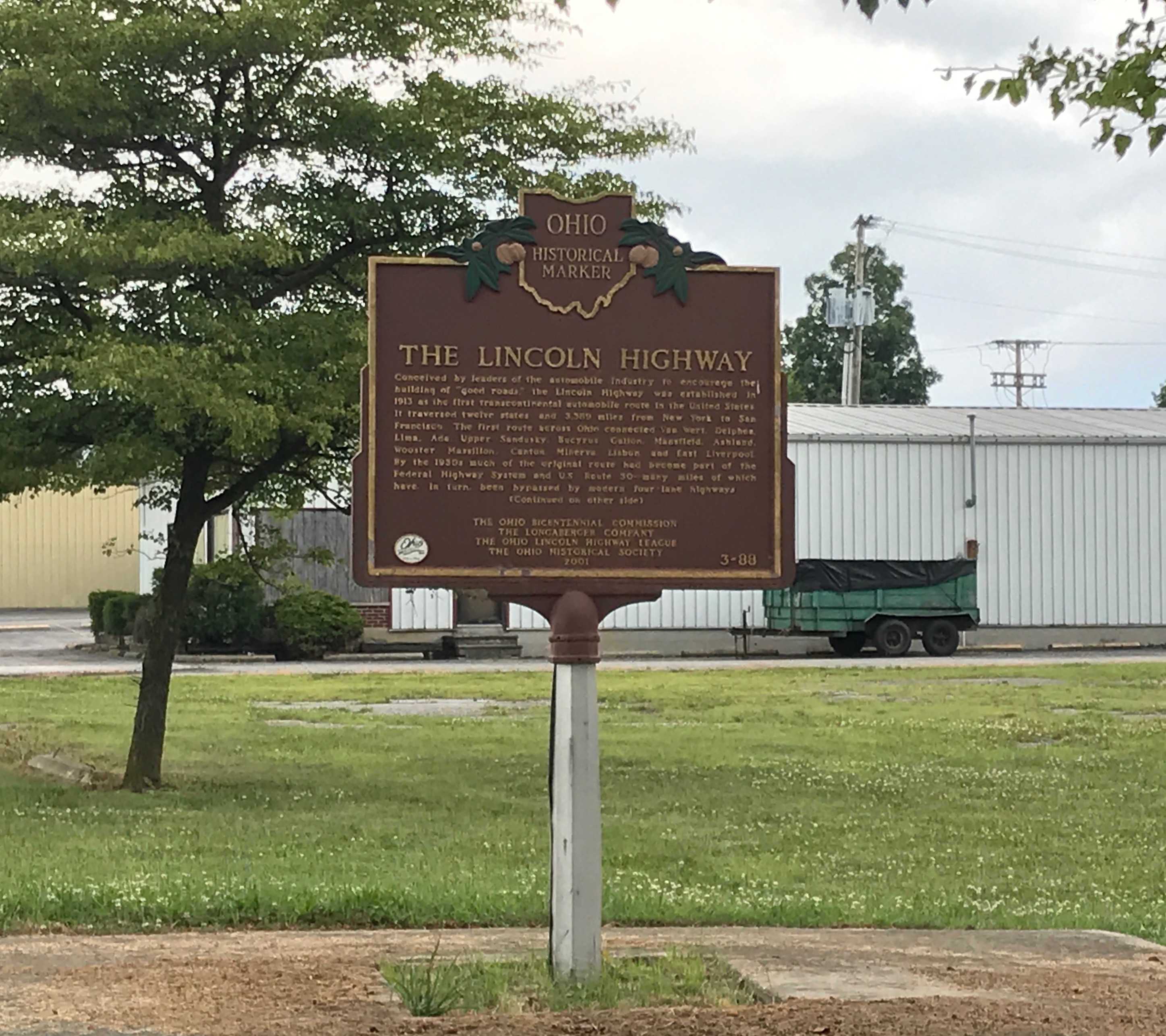
On the way in, I passed a marker for The Lincoln Highway. The sign reads:
THE LINCOLN HIGHWAY
“Conceived by leaders of the automobile industry to encourage the building of “good roads,” the Lincoln Highway was established in 1913 as the first transcontinental automobile route in the United States. It traversed twelve states and 3,3089 miles from New York to San Francisco. The first rout across Ohio connected Van Wert, Delphos, Lima, Ada, Upper Sandusky, Bucyrus, Callon, Mansfield, Ashland, Wooster, Massillon, Canton, Minerva, Lisbon.
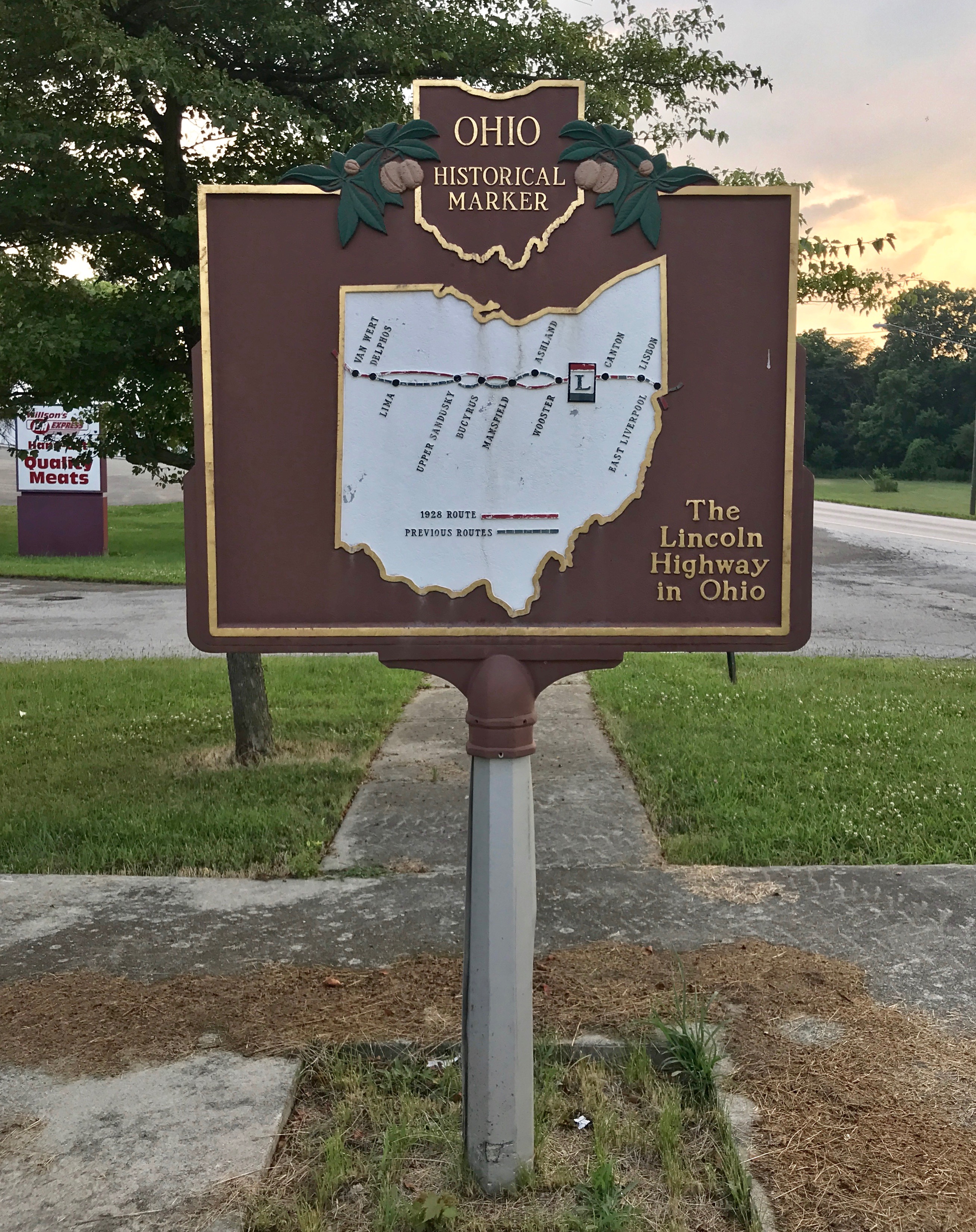
Continued on other side”
I guess change is the only constant.
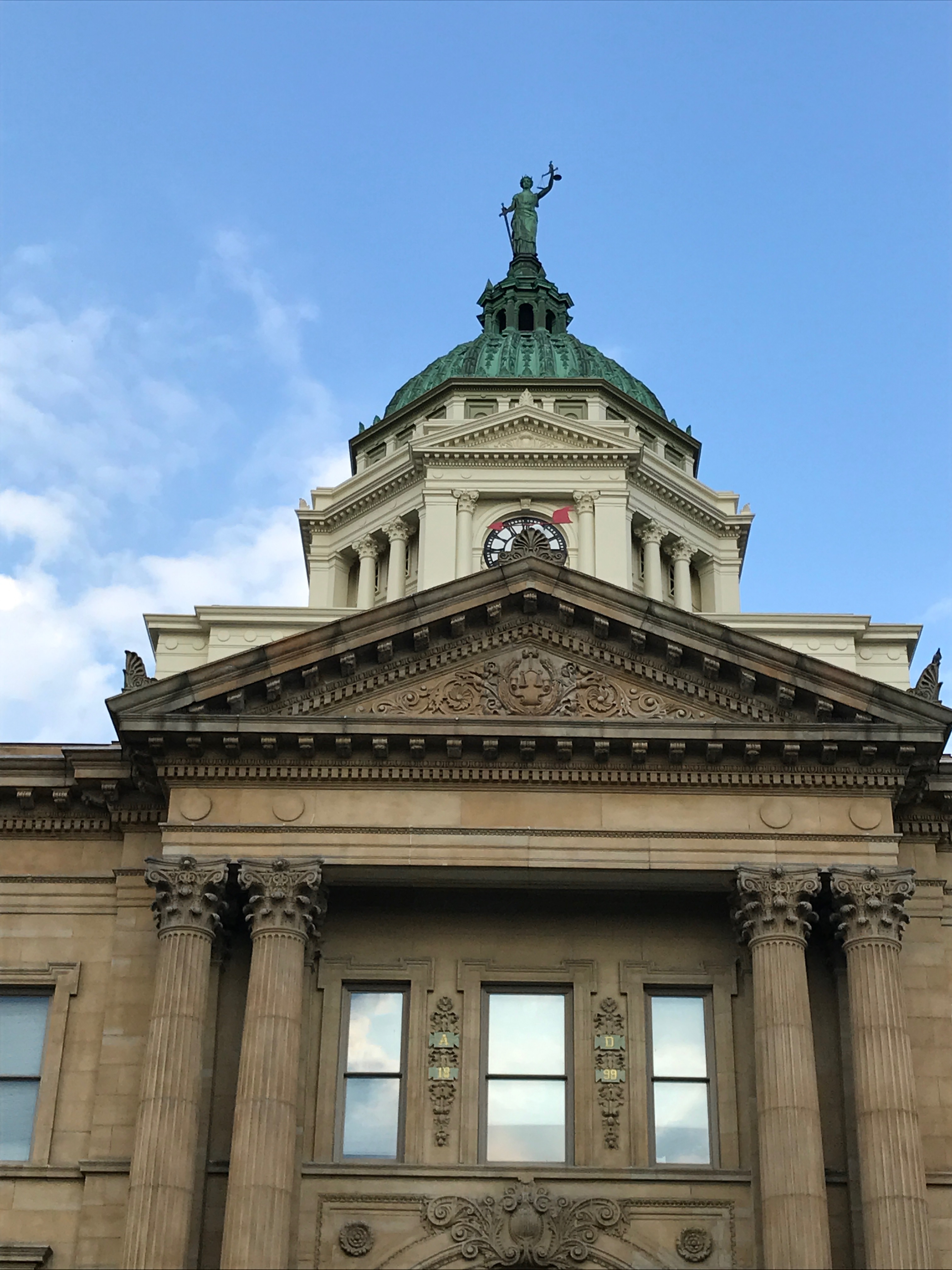
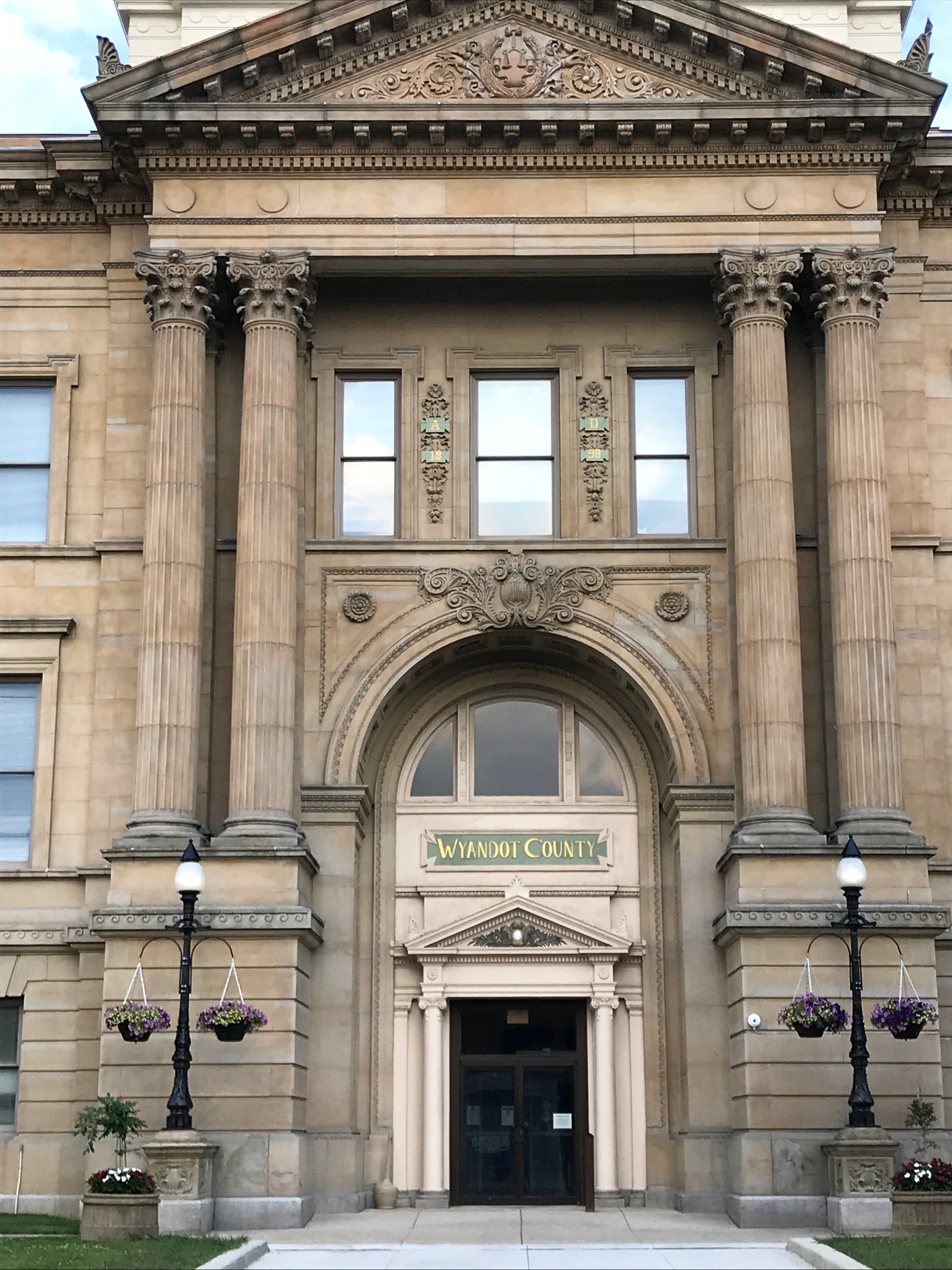
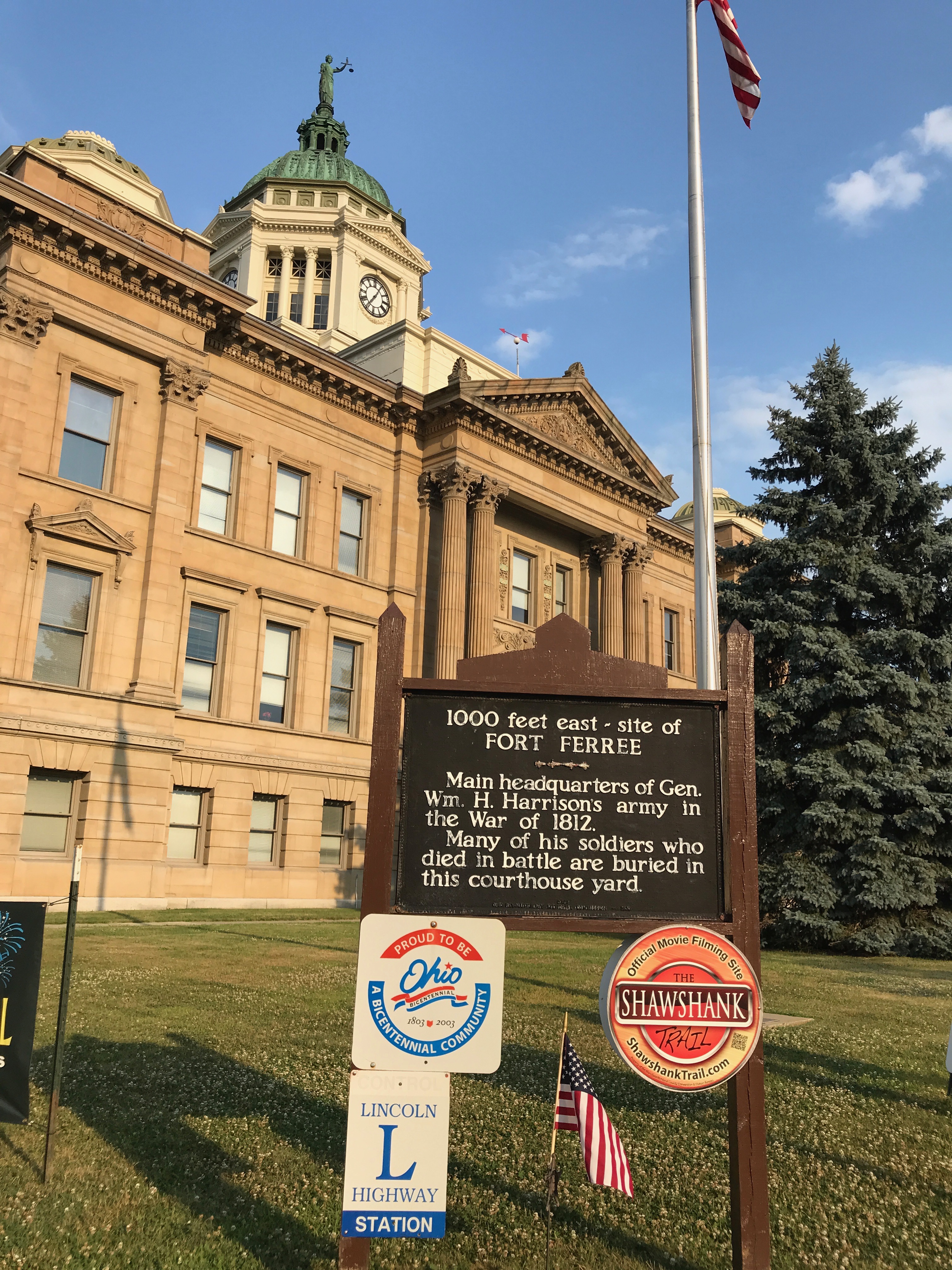
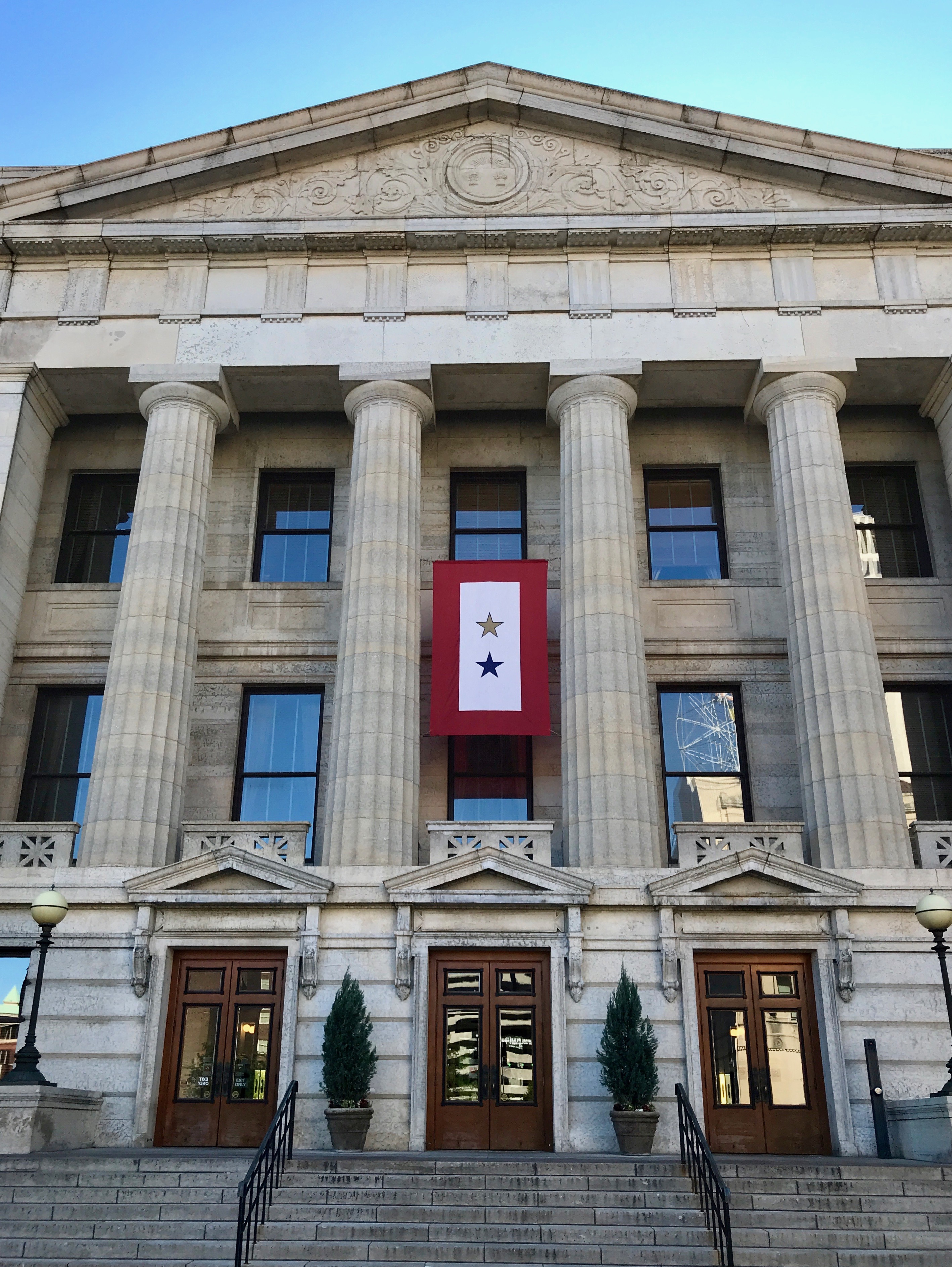
I arrived downtown and spotted this amazing courthouse. I parked the vehicle and got out to explore.
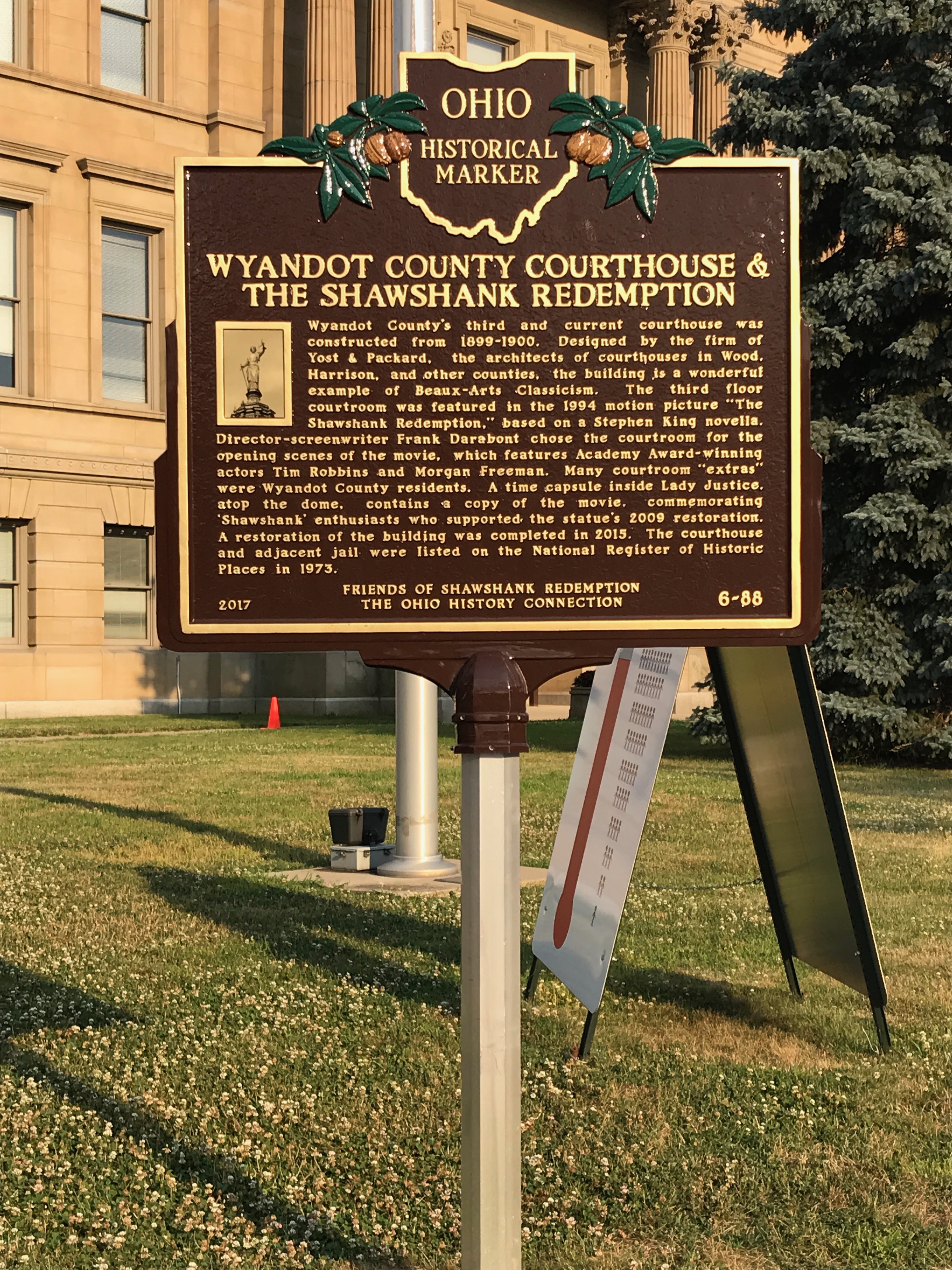
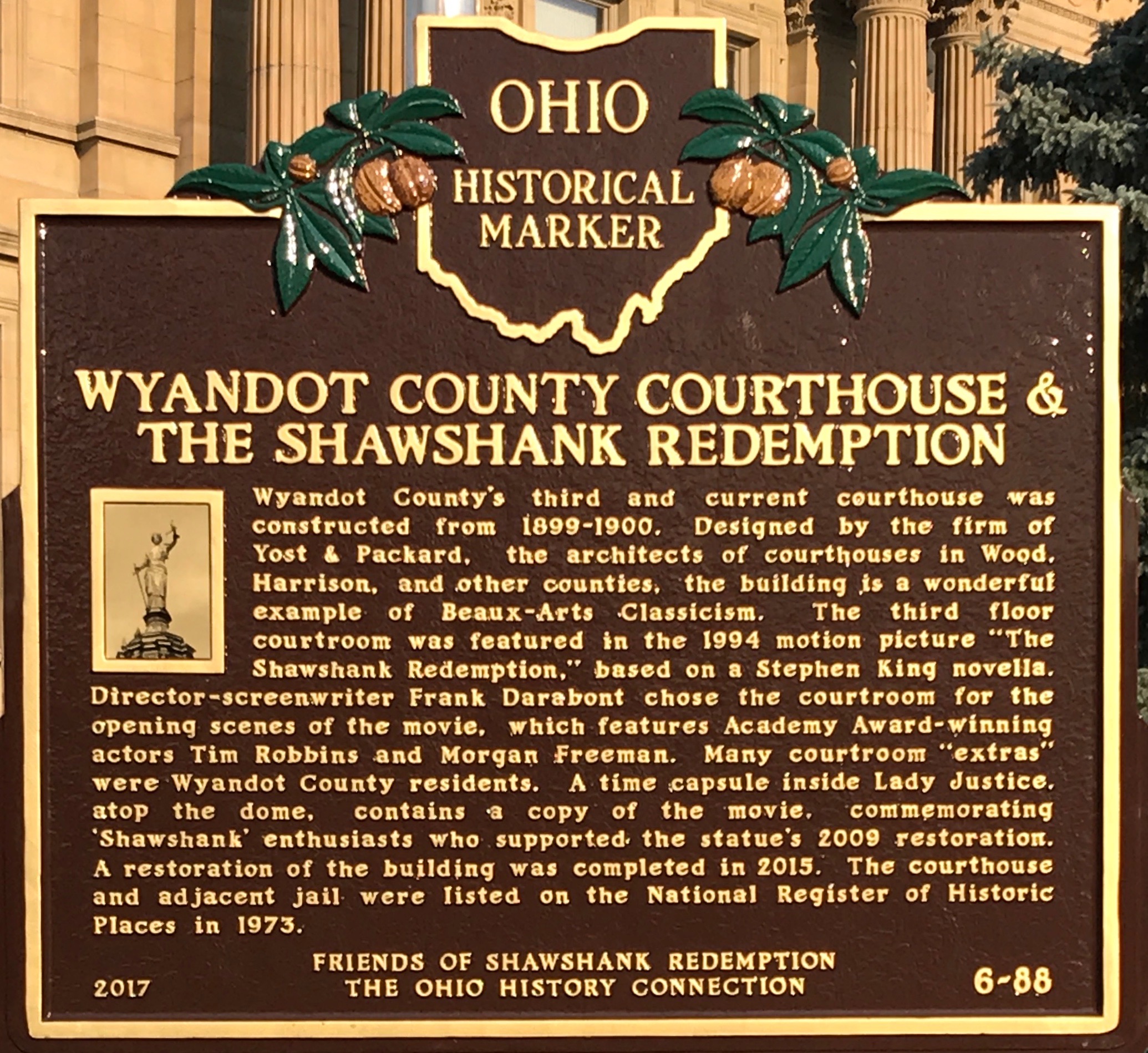
Wait,,,WHAT?! The Shawshank Redemption?! Filmed here?!
I guess so.
It really is a lovely building.
Of course I could only judge the building on the exterior. I make these stops after the end of my work day, which, incidentally, happens to be the end of the work day for just about everyone else.
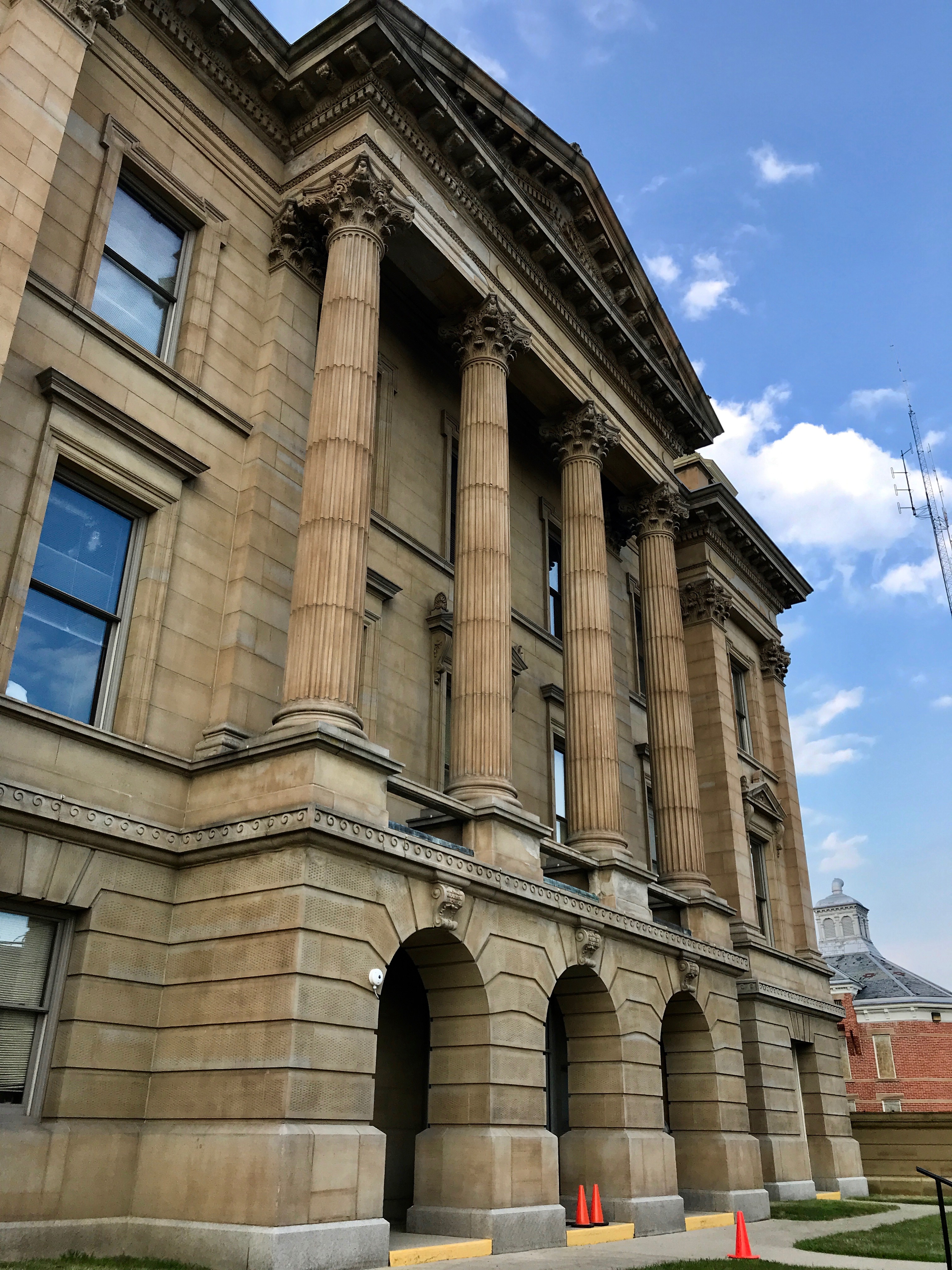
I walked around it, enjoying the solid architecture and the beautiful blue sky.
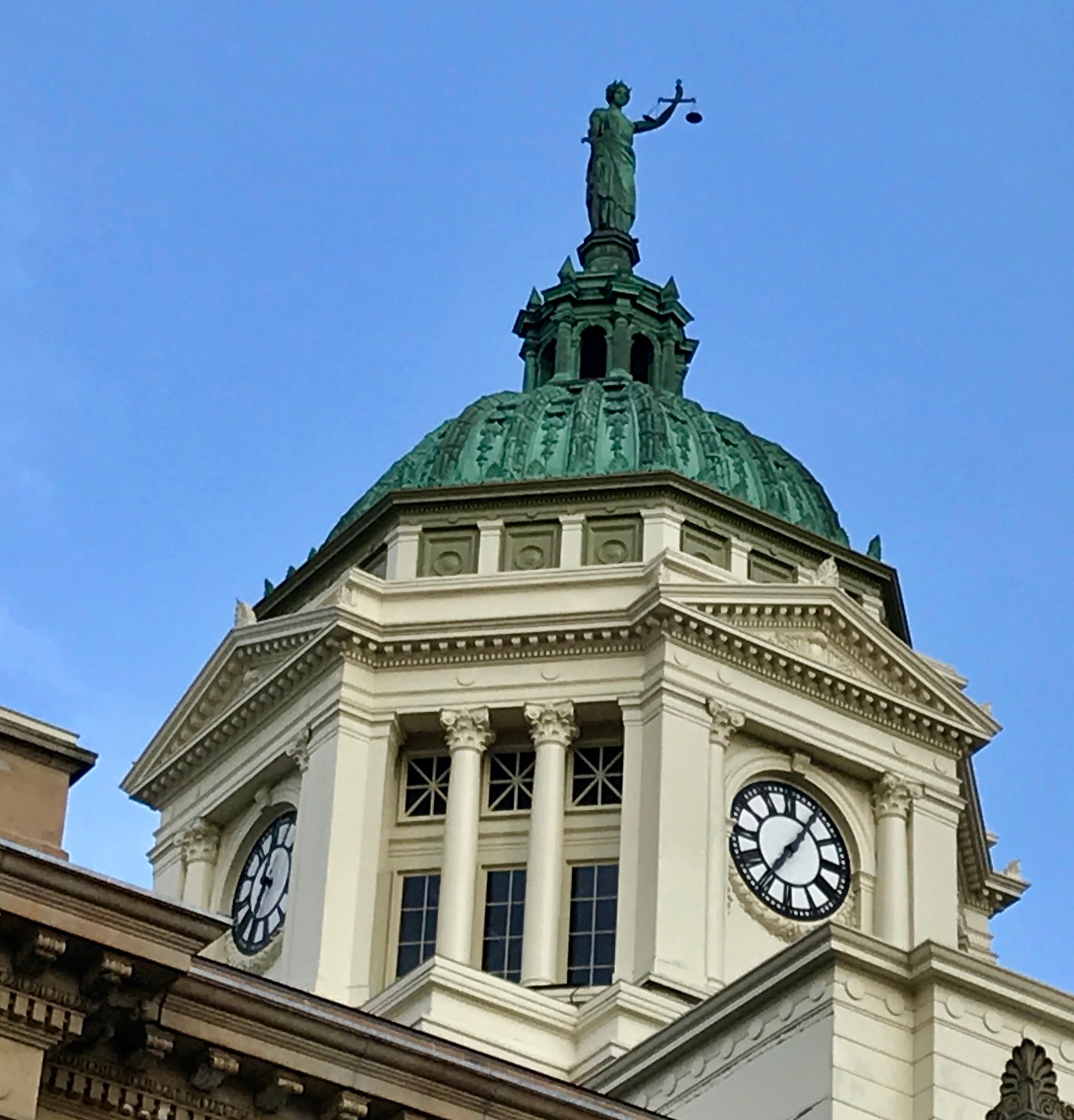
There’s Lady Justice atop the dome, guarding the time capsule with the copy of the Shawshank Redemption. I wonder what technology will be used to play movies when they open the time capsule. I do hope someone thought to include whatever machinery will be needed to play the movie at some point in the future.
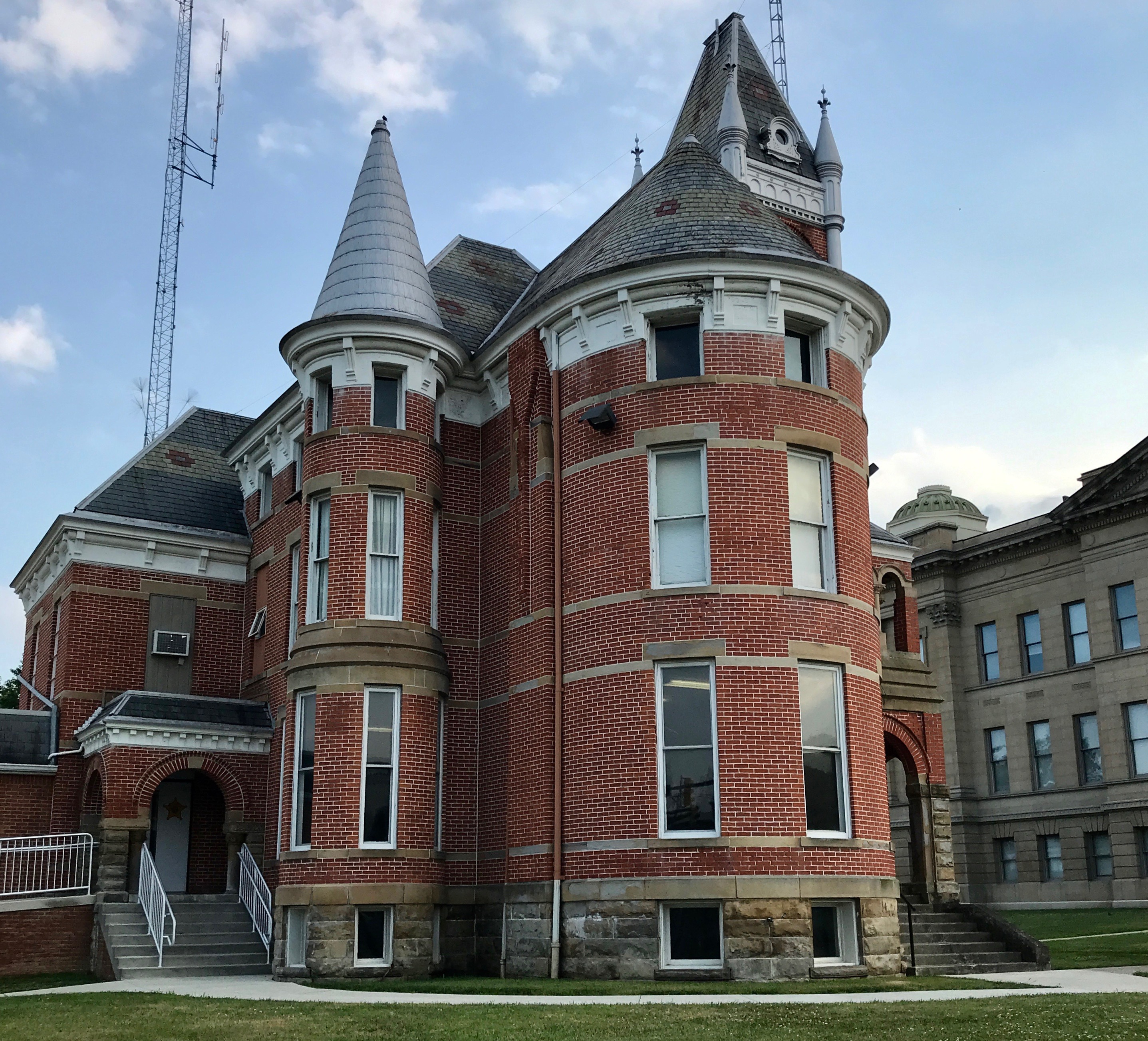
I rounded the corner and came to the jail. The lack of bars on the windows leads me to question whether it might have been repurposed somewhere along the way.
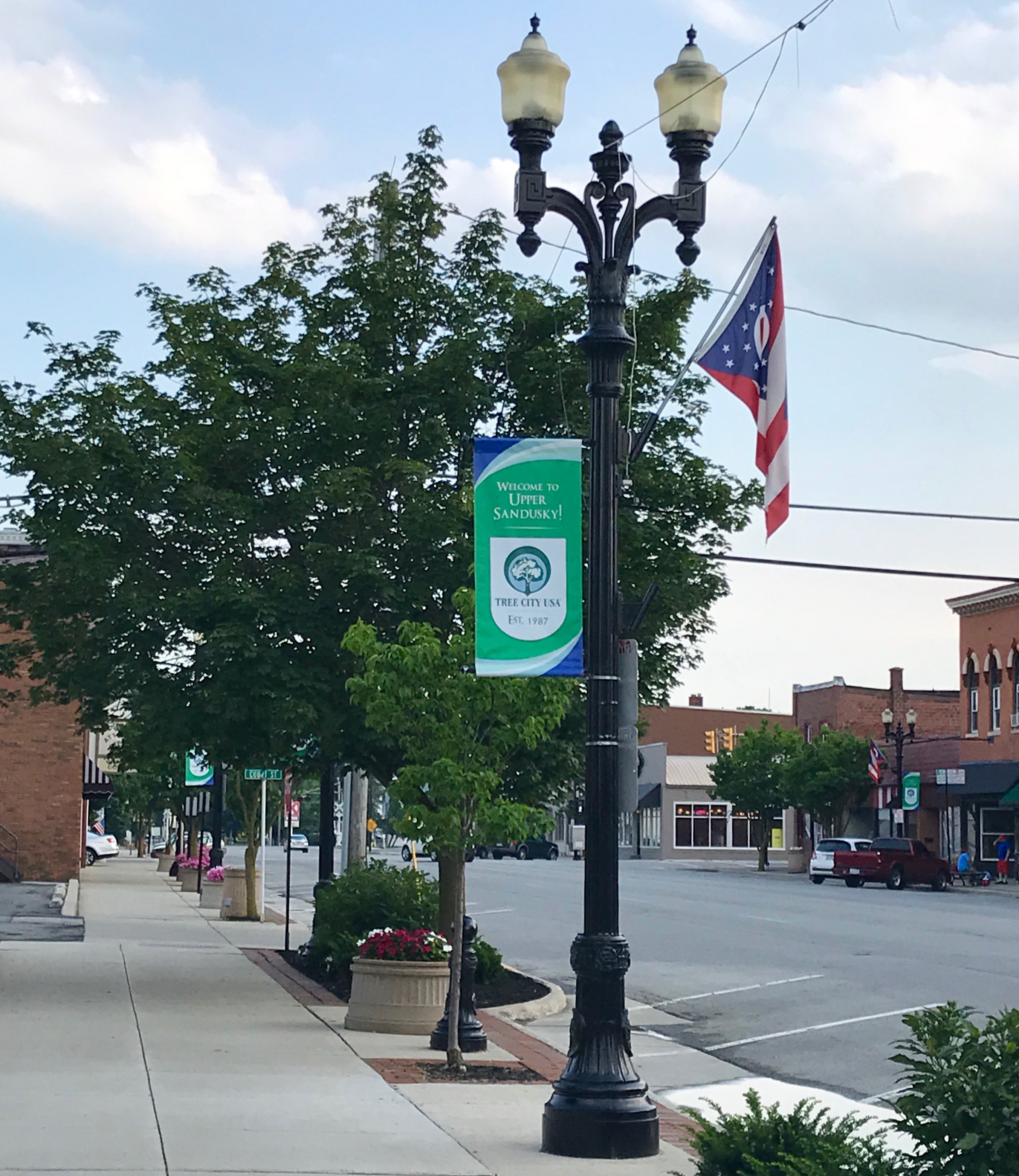
I got back to the vehicle and snapped this picture of the streetlamp banner, to remind myself of where I was, I got back in the driver’s seat and headed back to whatever hotel I was in that night.
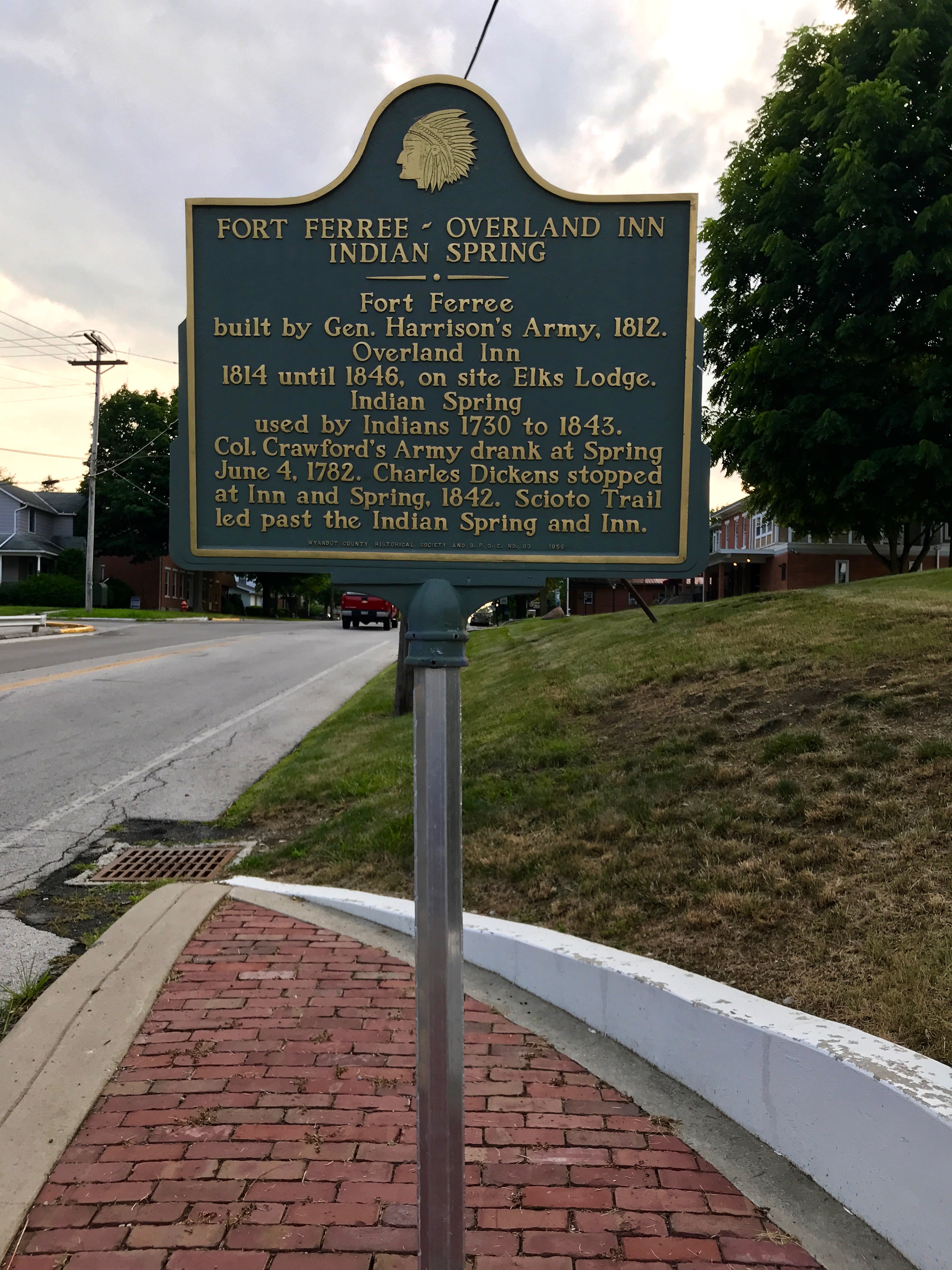
Before calling it quits for the day, though, I thought I’d see if I could track down the site of Fort Ferree.
What do you know? I did find another plaque!
Satisfied, I declared my drive-by tourism a success for the day.
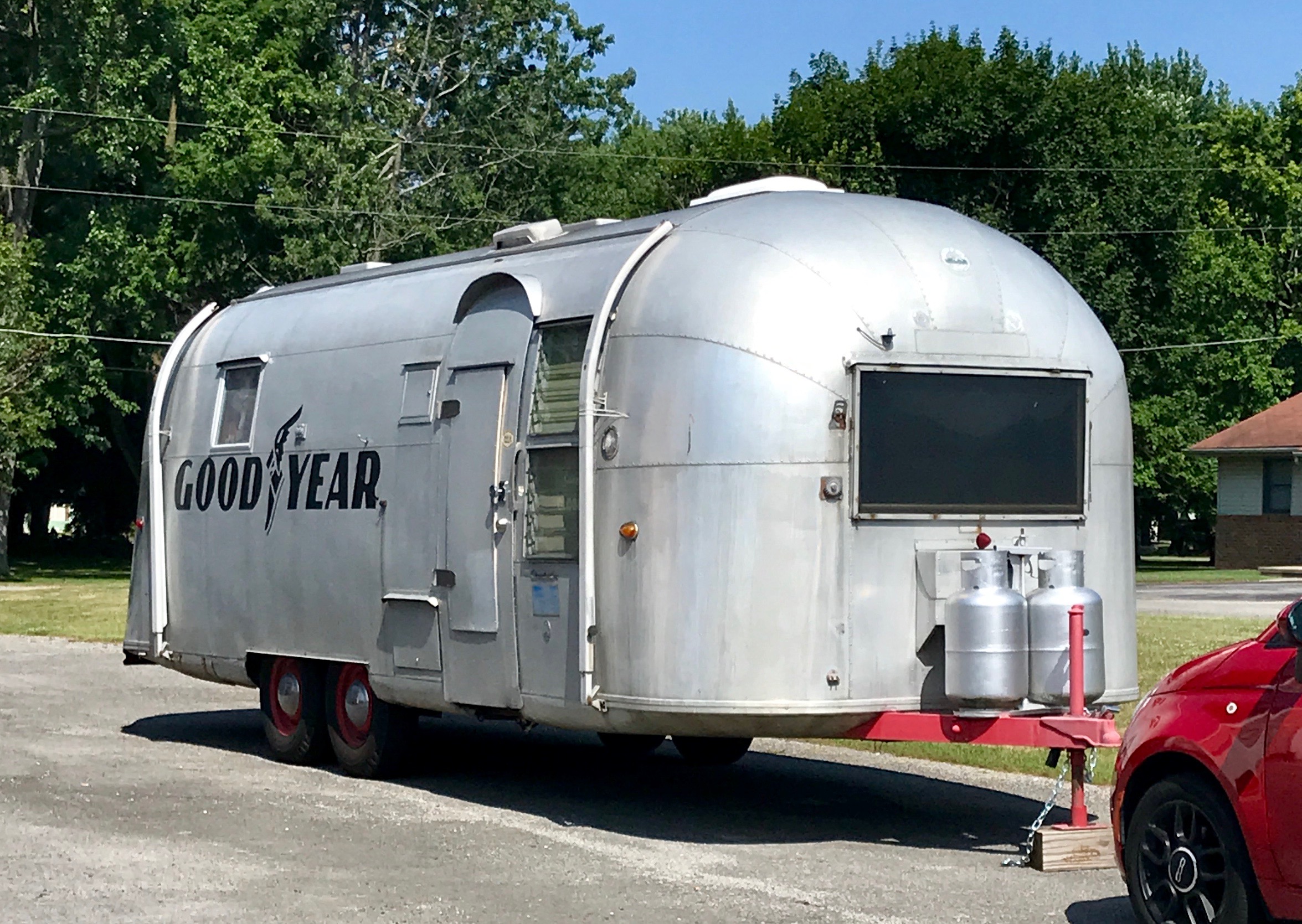
This Airstream I spied parked behind a shop was just the cherry on top!
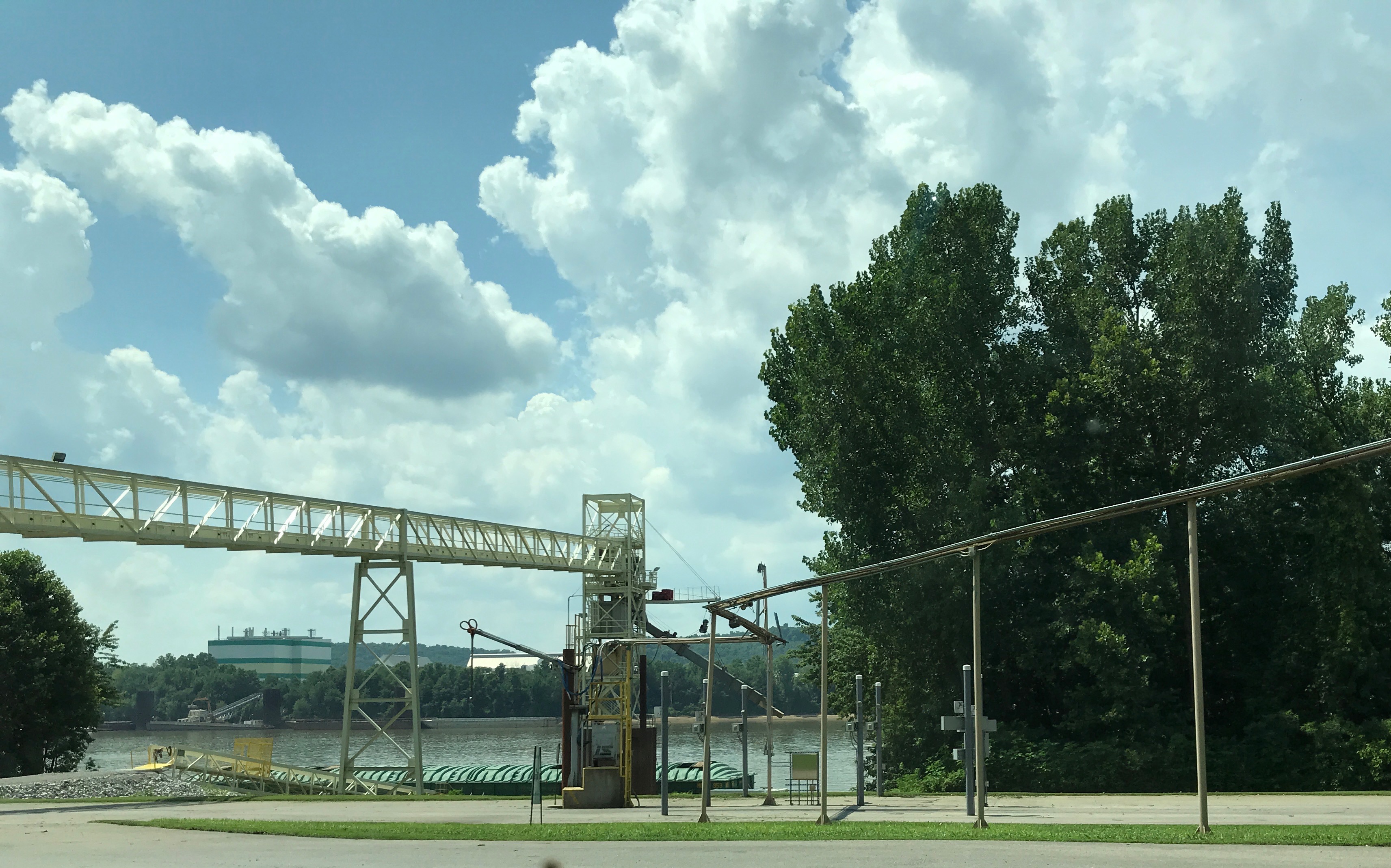
I left my friends’ house and headed for the first stop of the week. It was a facility that loaded the grain right on to barges that took the product to where it was needed.
After that, it was off through the countryside.
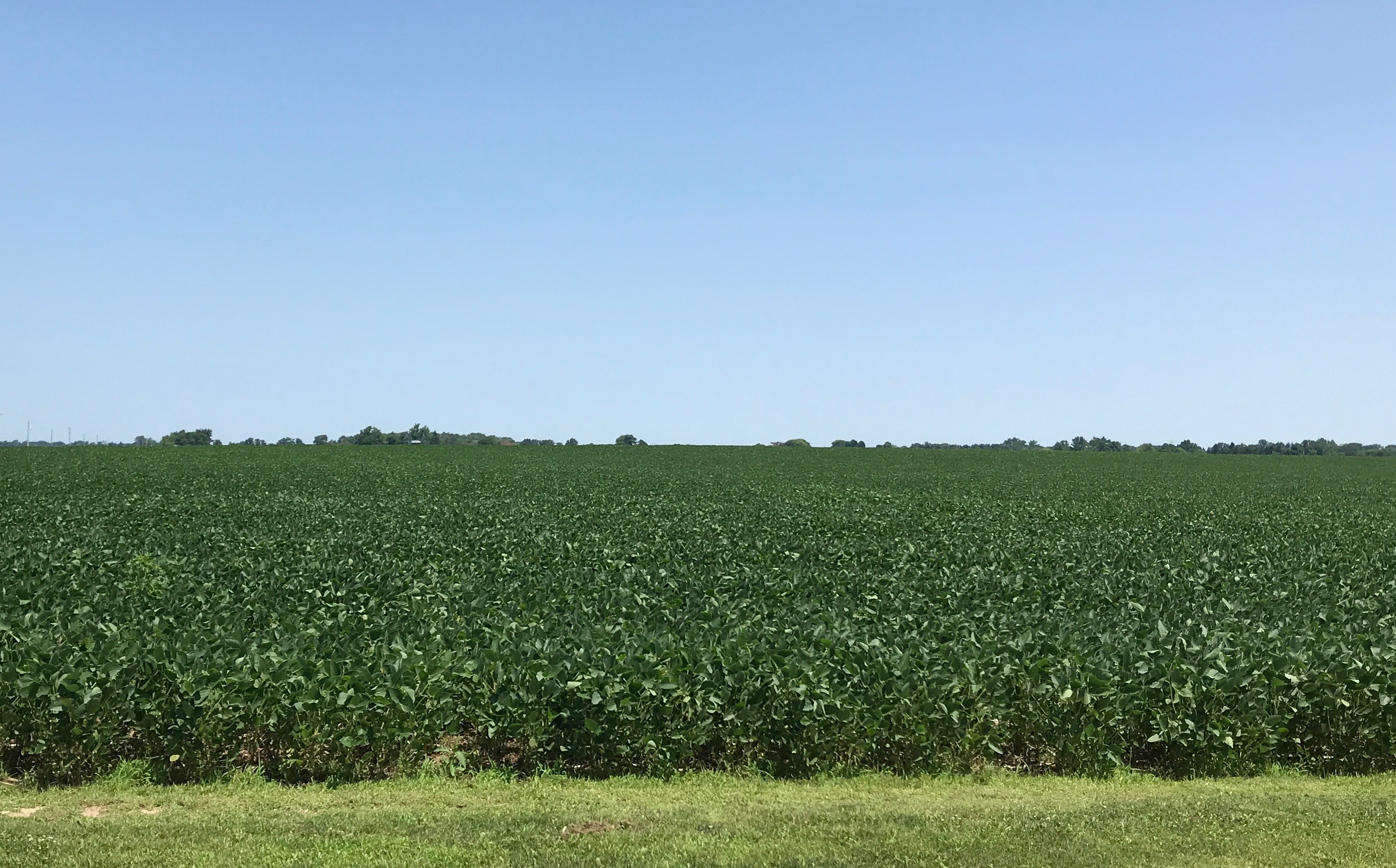
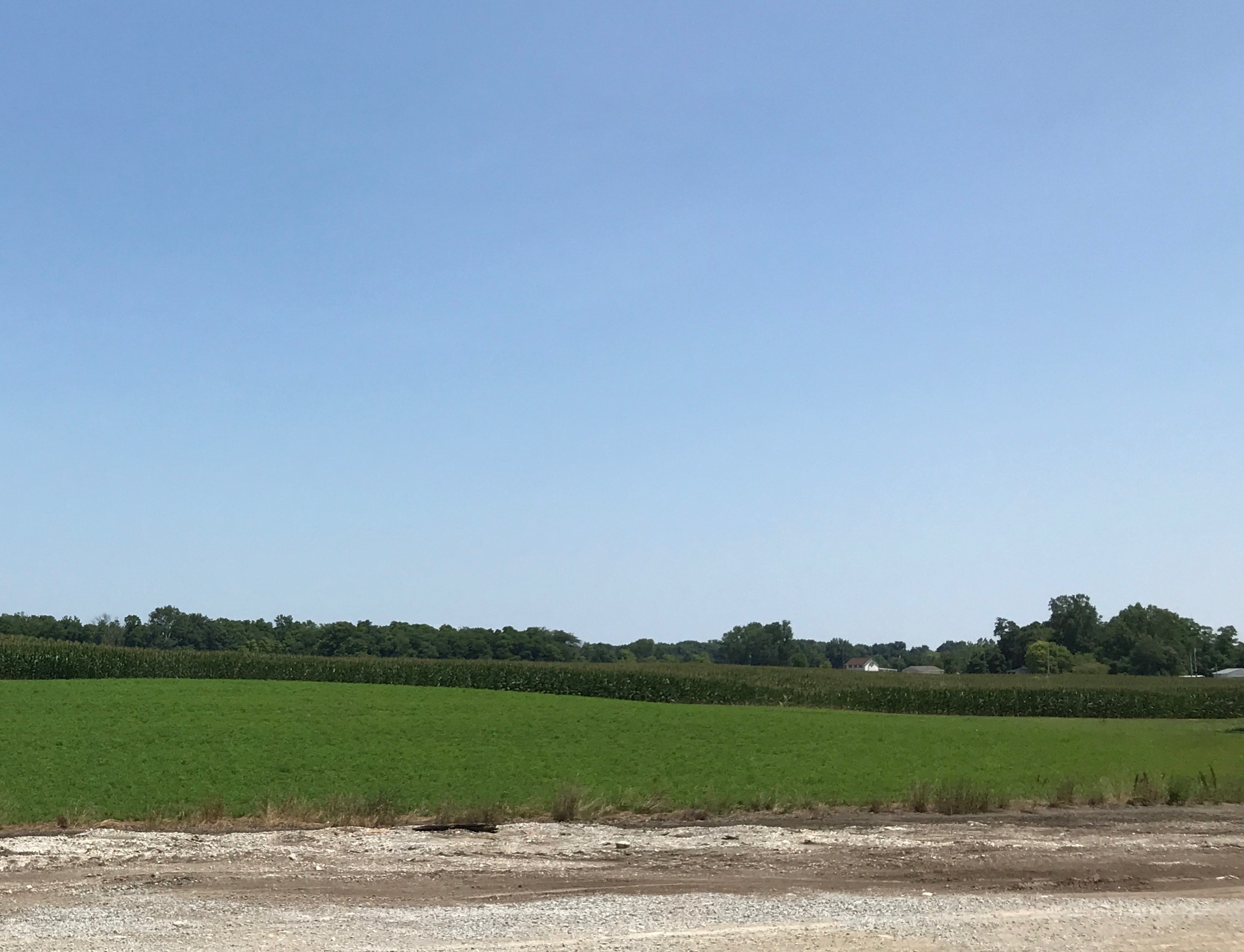
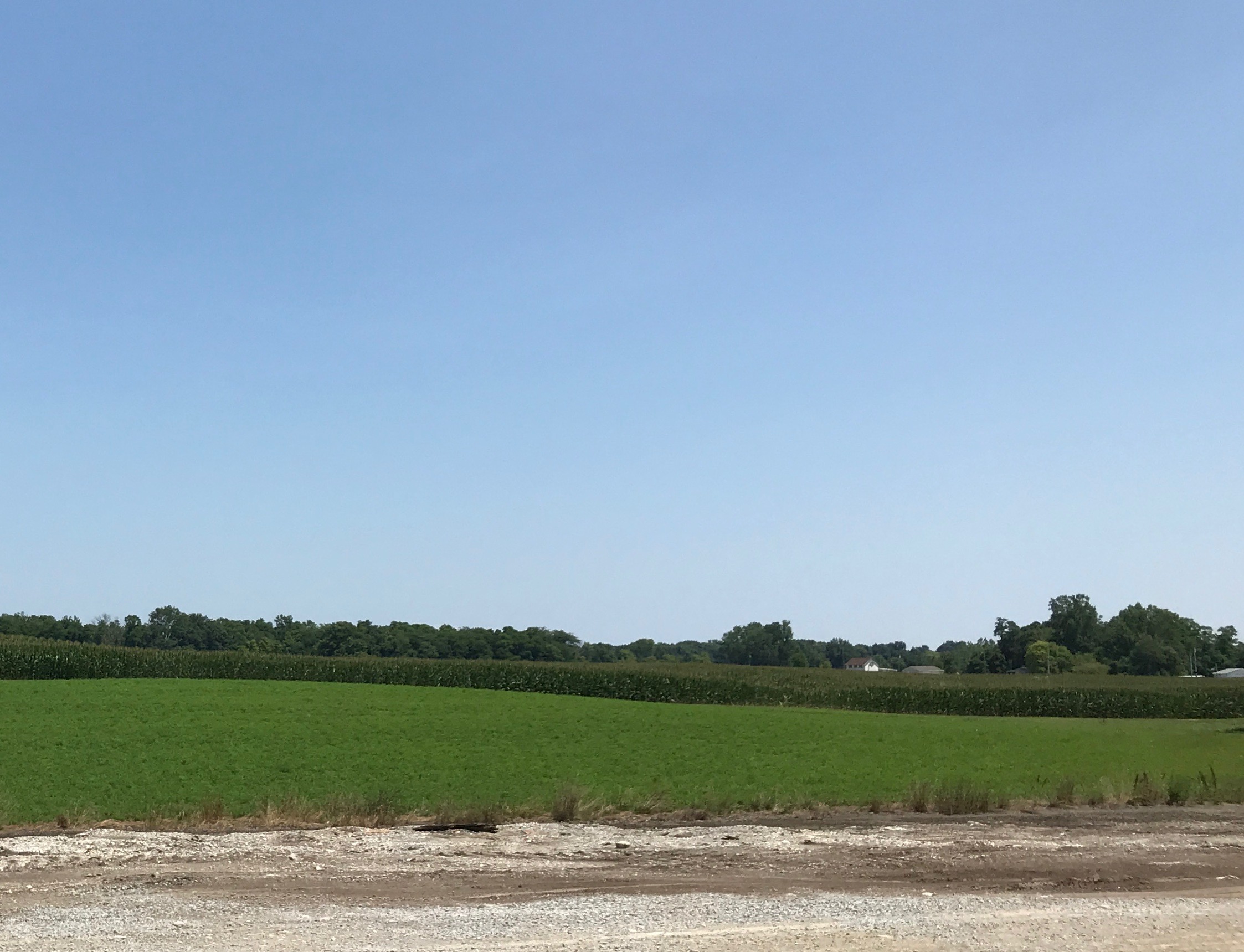
I saw plenty of corn,
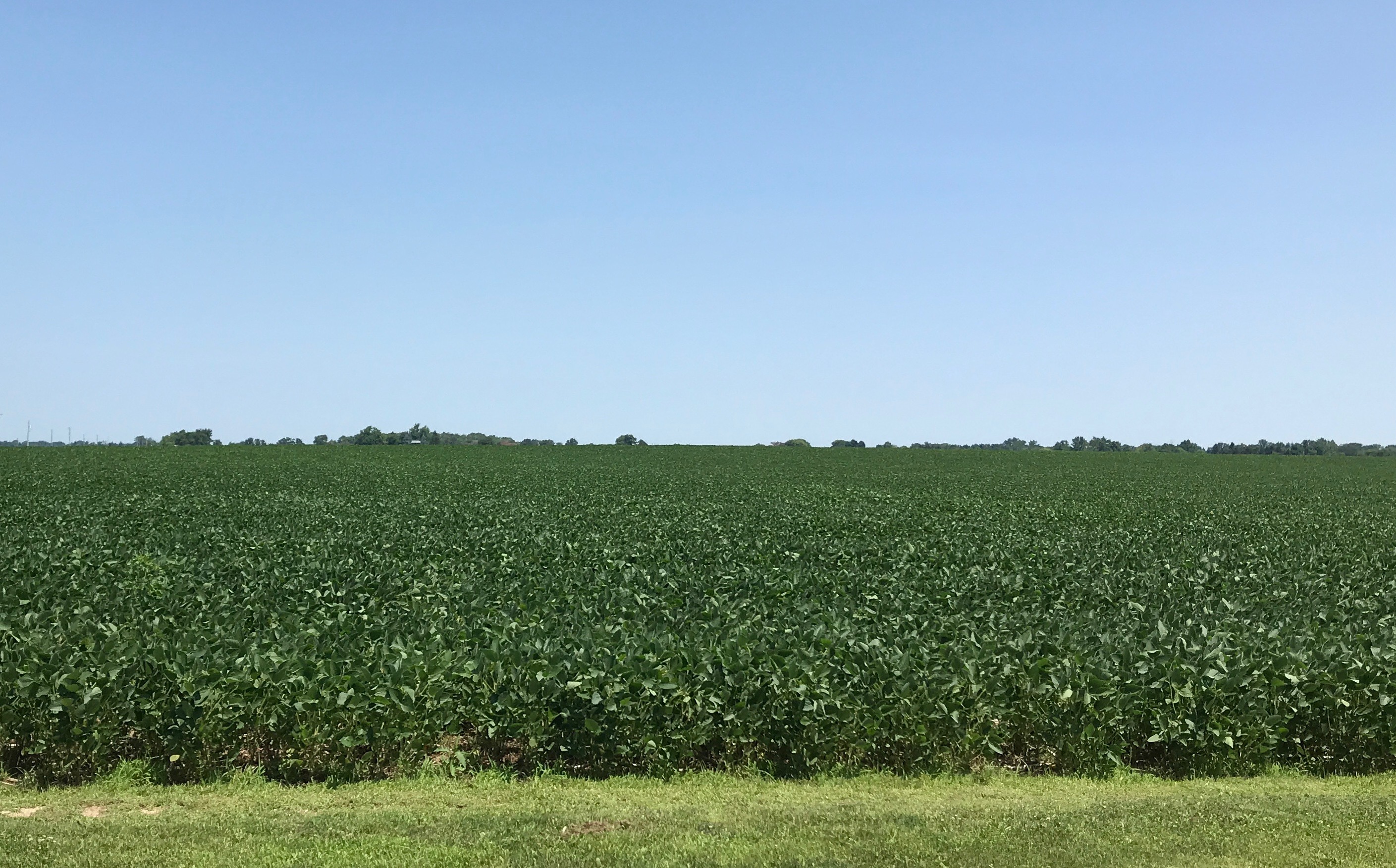
and soy,
and corn and soy,
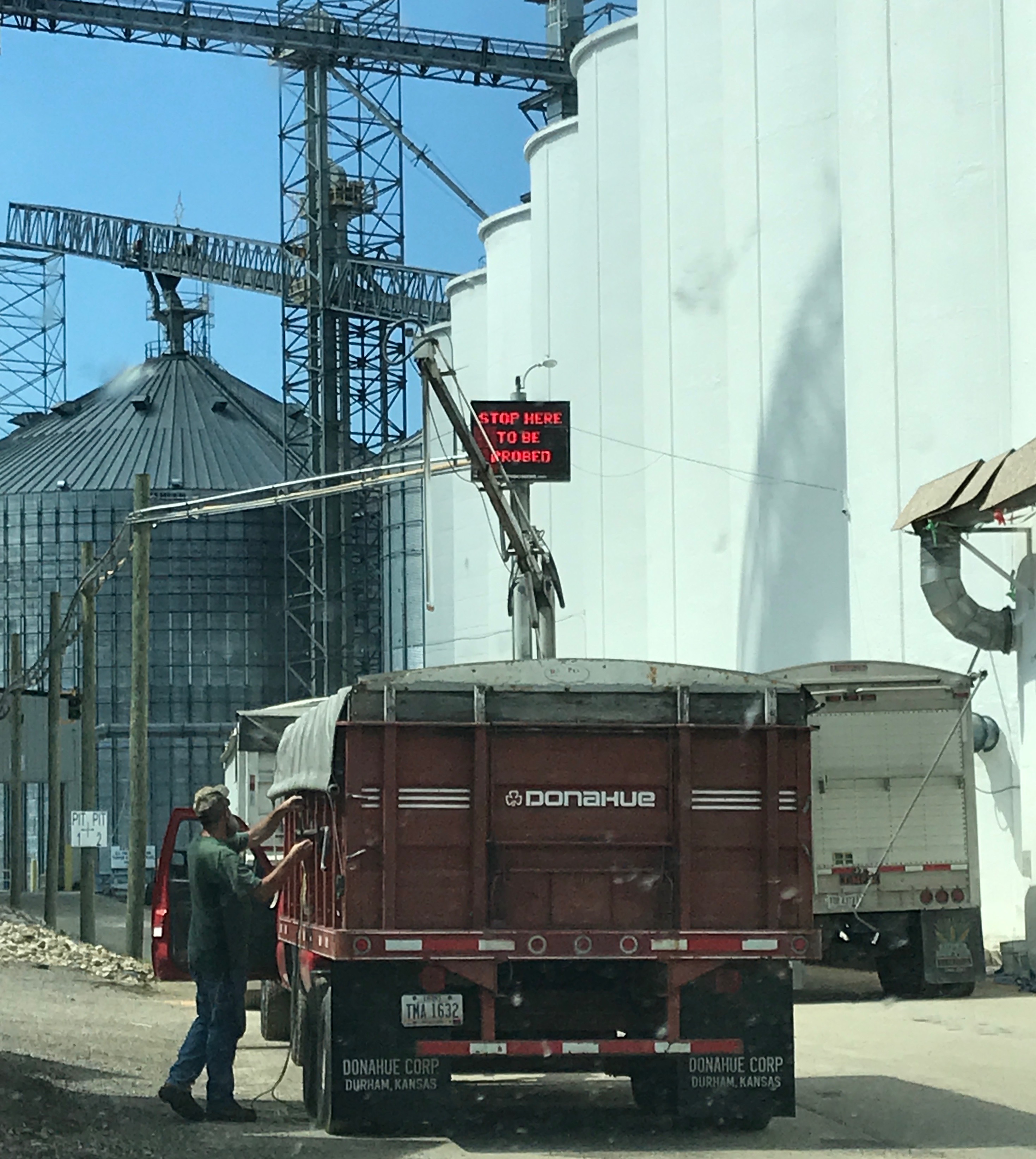
interspersed with the occasional stop at a grain elevator. The next time I do this, I will definitely figure out a way to plot where I have traveled. Honestly, I felt like I was driving circles some days – and I probably was.
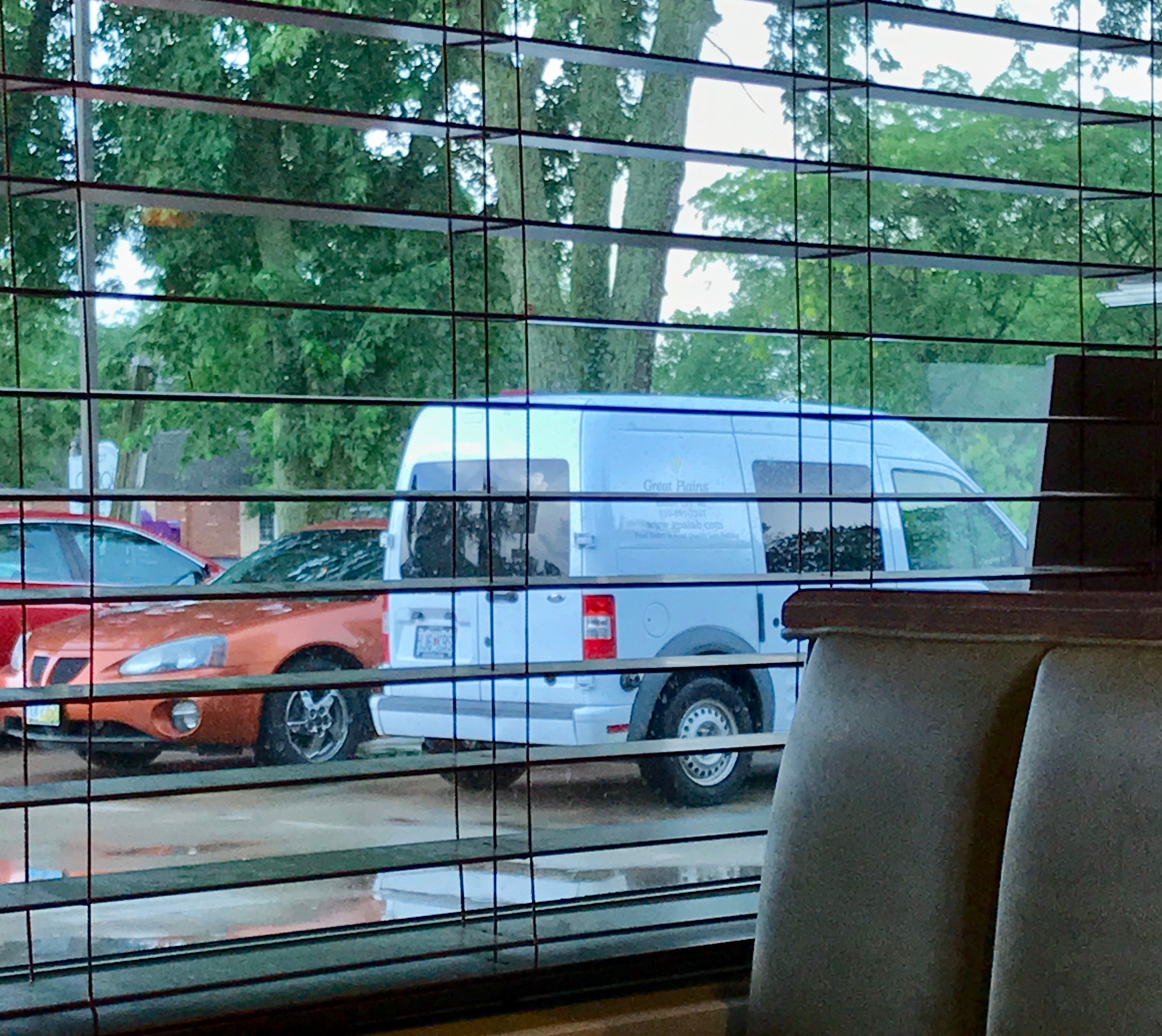
Here’s a somewhat amusing anecdote: I had stopped for the night and I drove over to the closest restaurant for dinner. I was sitting there, eating whatever I had ordered and I looked up and saw a van from Great Plain Analytical Laboratories – my company!
I was all excited. I wondered who was driving that vehicle and where they were seated in the restaurant.
That is, I was excited until I realized that the van was the one Iwas driving. At that point, I realized that I was pretty darned tired and needed a bit of rest before the next day’s labors. I got back to my room and got a good night’s sleep. The next day was Friday, and after that comes the weekend.
This weekend would find me near Columbus, the capital of Ohio.
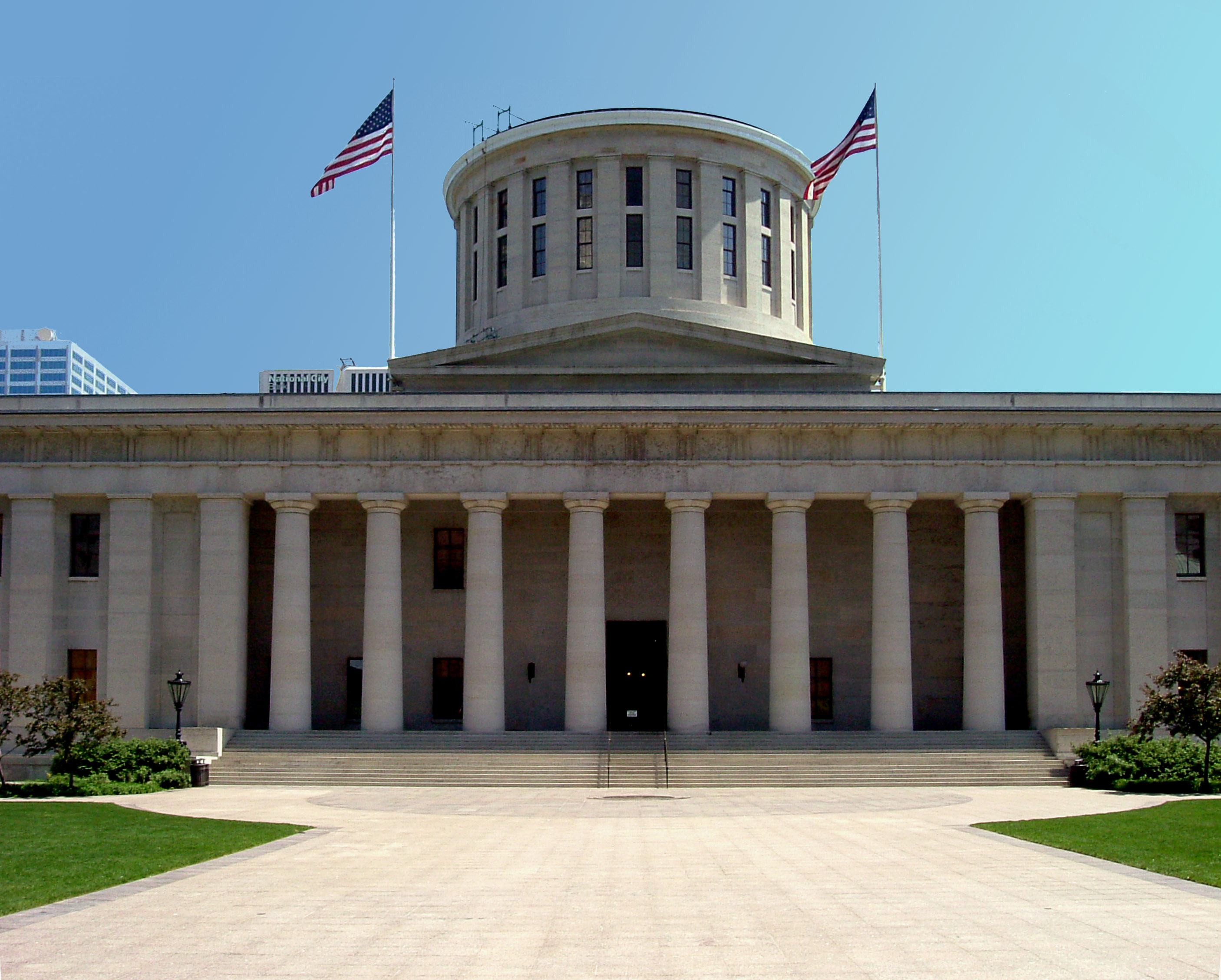
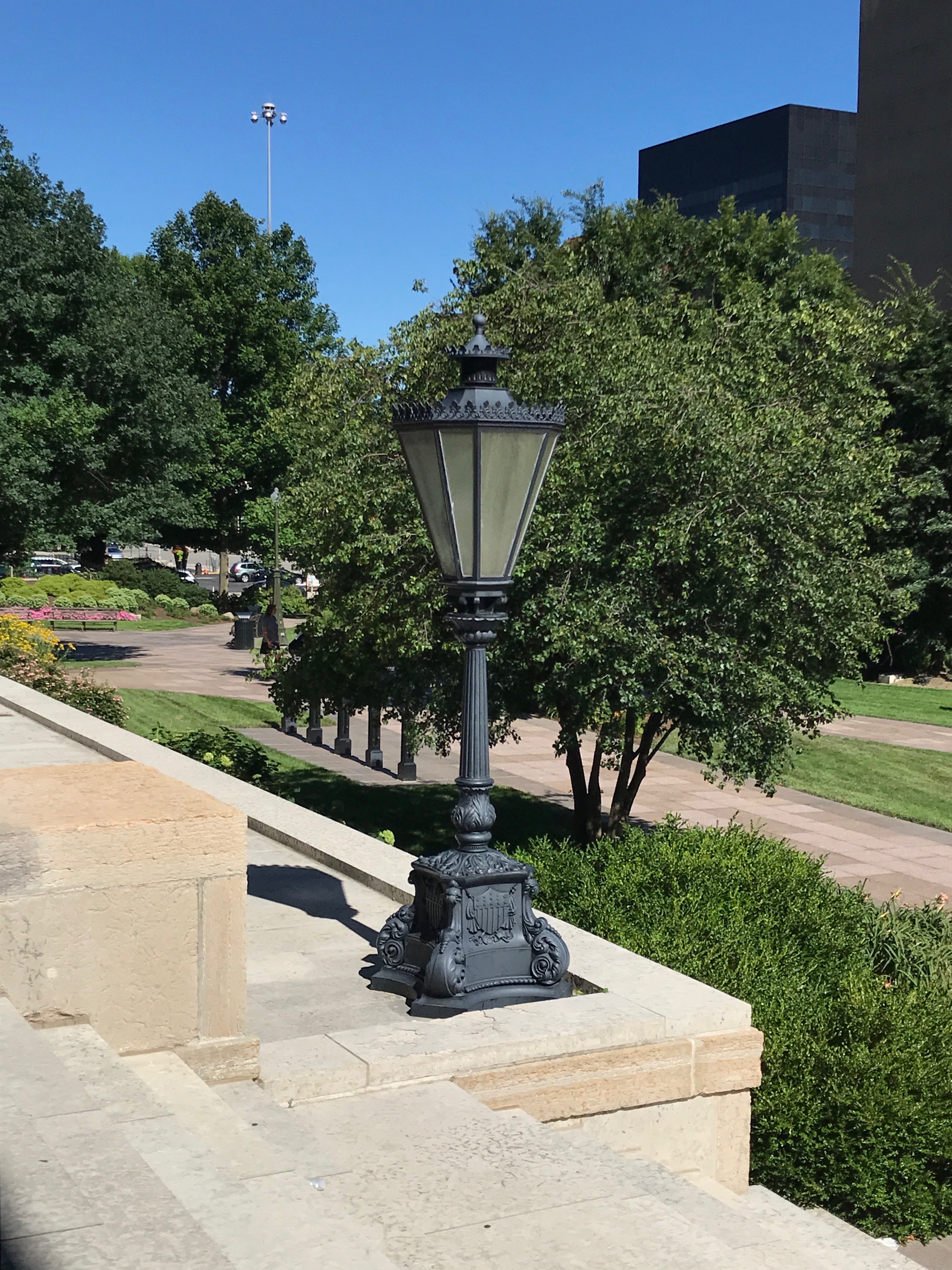
This image is thanks to my Preferred Source. In all the photos I took of the place, I didn’t get one of the west façade. Since I knew the building was not open for visitors, I satisfied myself with looking at the sculptures and memorials on the campus around it.
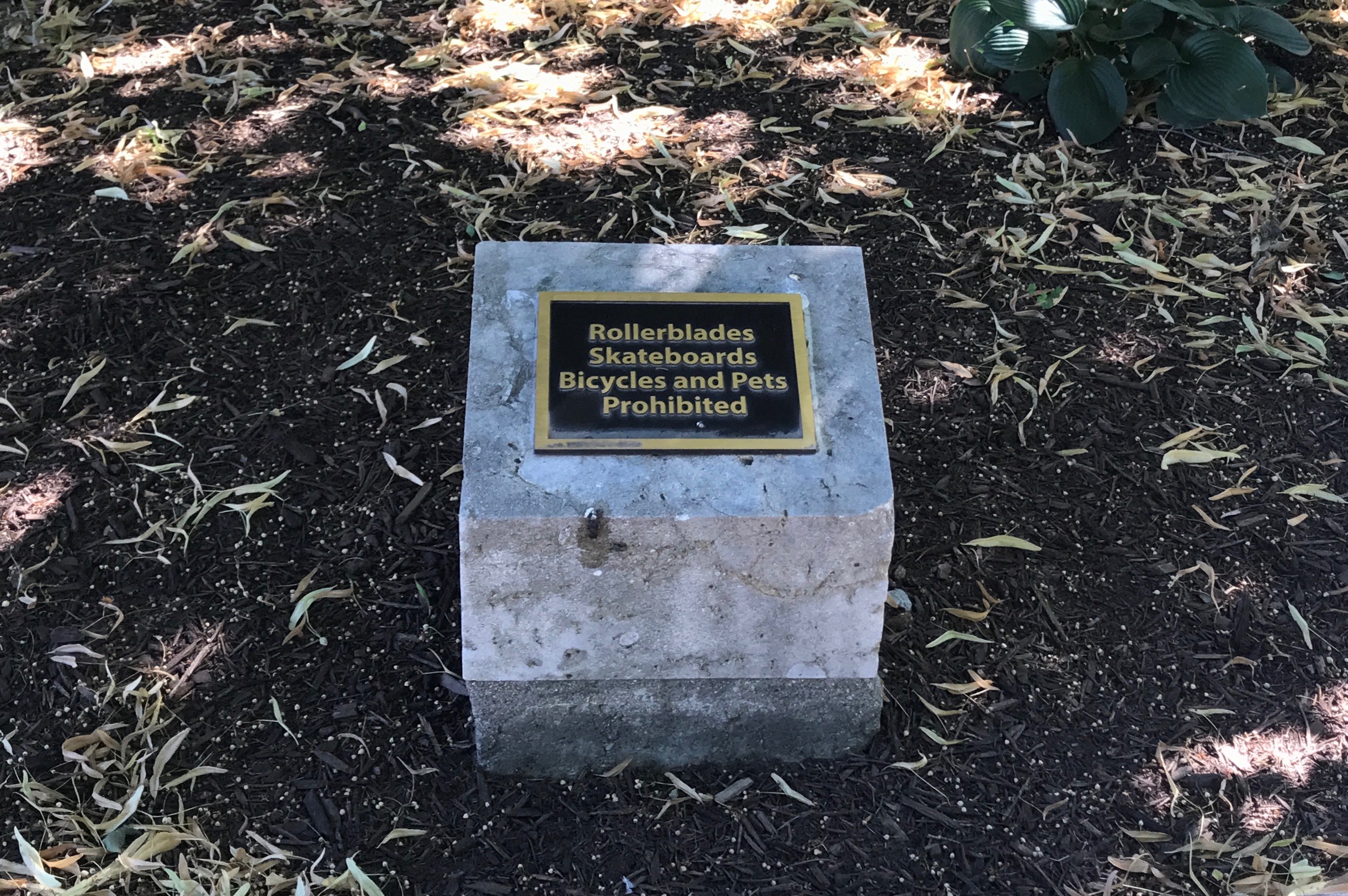
It was all quite stately. Even the signs that told what wasn’t allowed had a rather proper air to them.
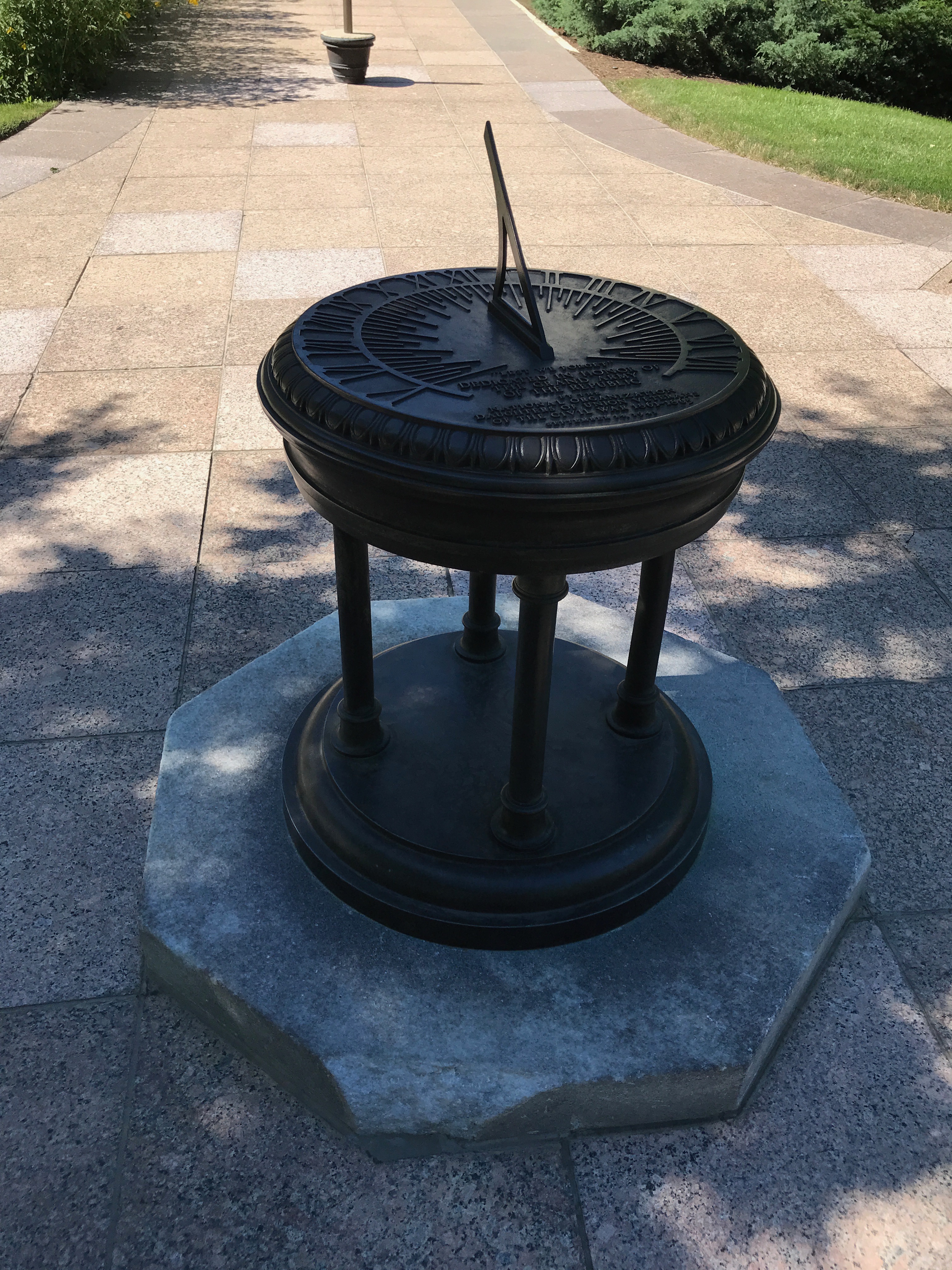
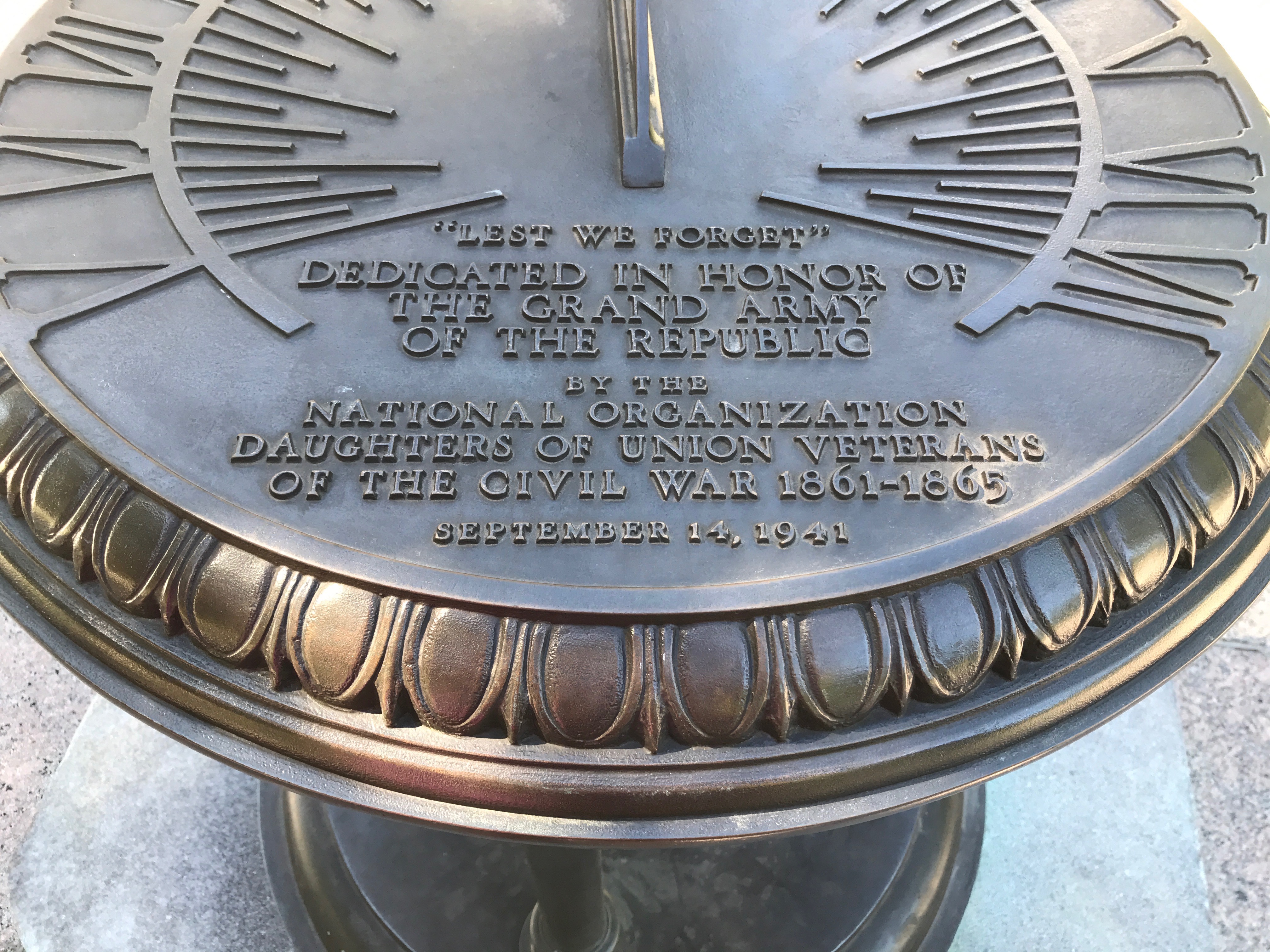
I have seen quite a few sundials that are in shaded locations. I always get a chuckle out of them. Why have a sun dial in the shade?
But, this one was erected in 1941. I suppose that the trees might have filled in since then.
It was a beautiful day to explore the outside of the capitol! I might have to plan a return visit to see the interior.
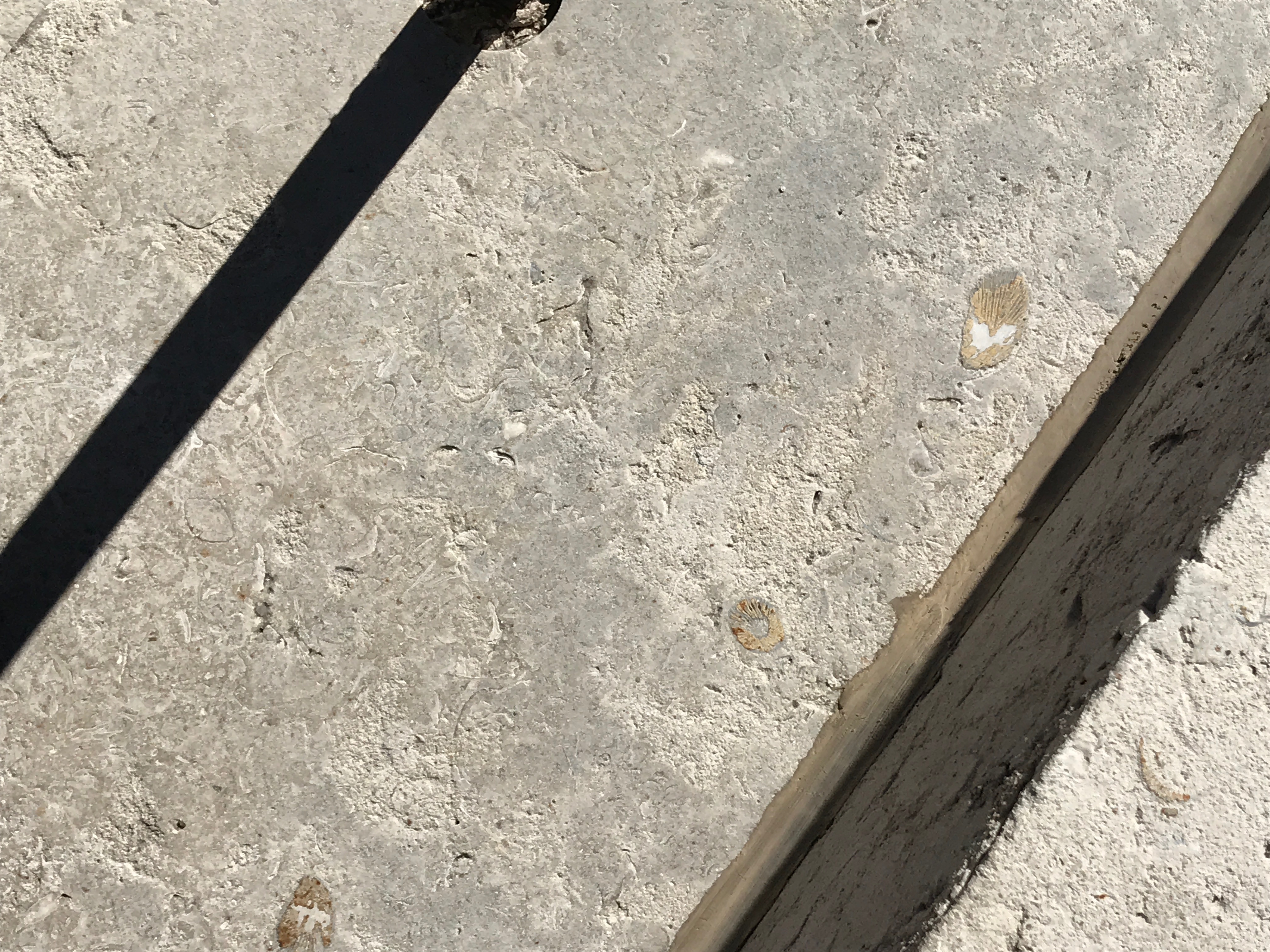
The exterior had a lot to see. For instance, if you look carefully, you can see fossils in the limestone.
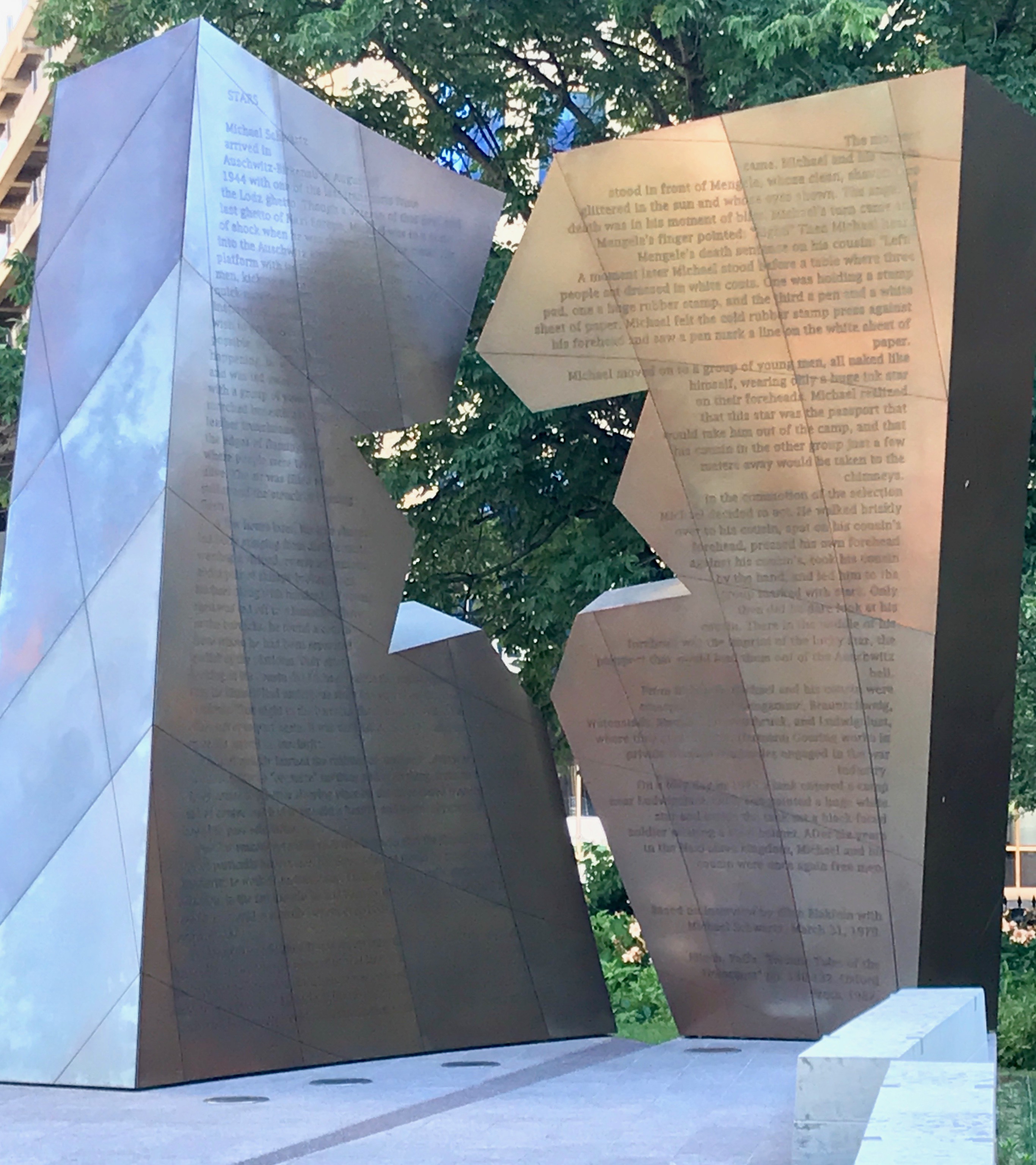
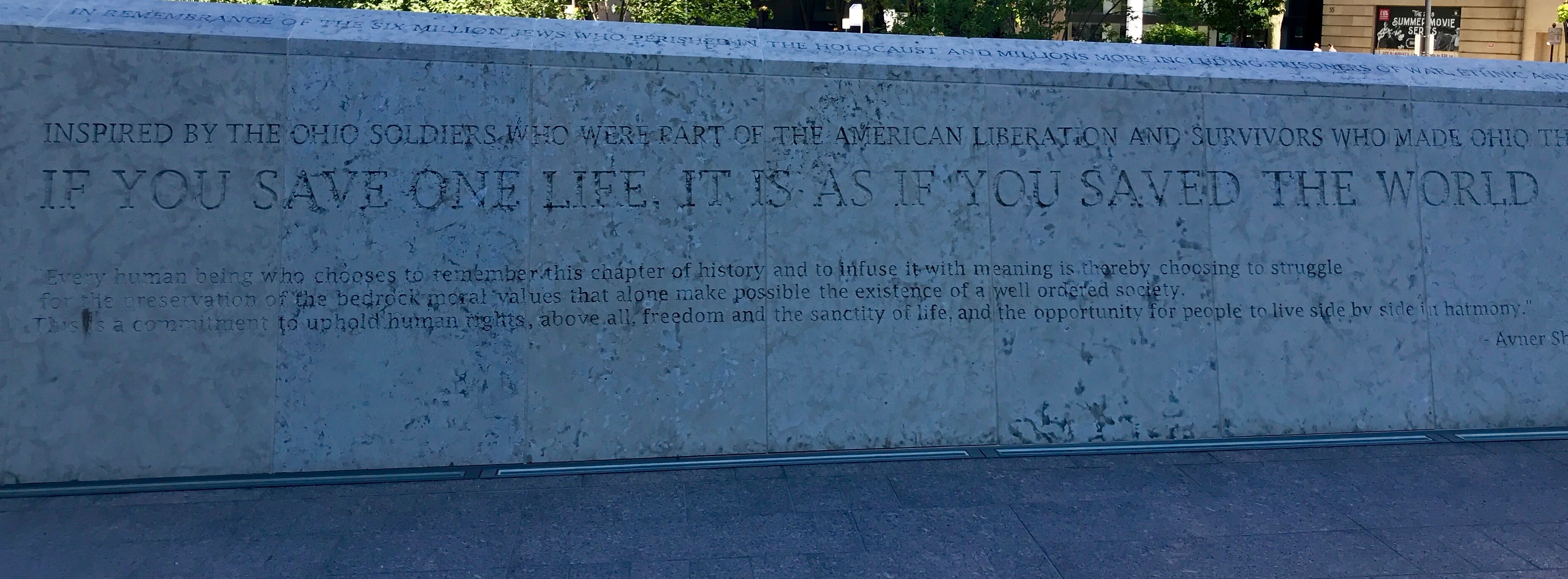
I came upon the Ohio Holocaust and Liberators Memorial. It was unveiled in 2014 by Governor John Kasich and architect Daniel Libeskind. According to the website, “The memorial speaks for the millions of voices the Holocaust silenced and thanks the brave men and women of Ohio who liberated the oppressed and fought for human freedom during the Second World War.”
The story of Michael Schwartz and his cousin is inscribed on the bronze pieces that make up the star. It is moving, and if you are interested reading it, click on the link.
If you save one life, it is as if you saved the world.
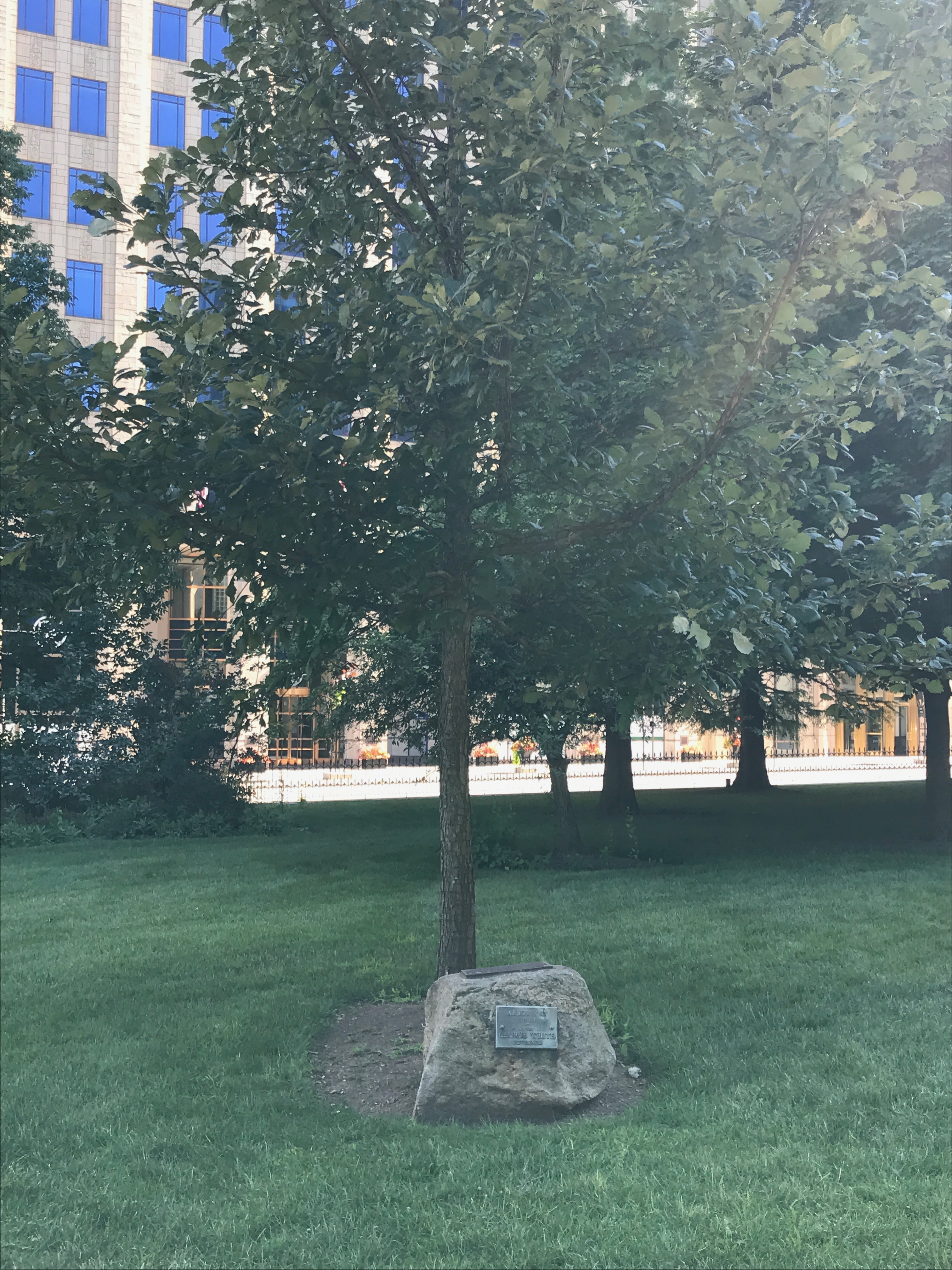
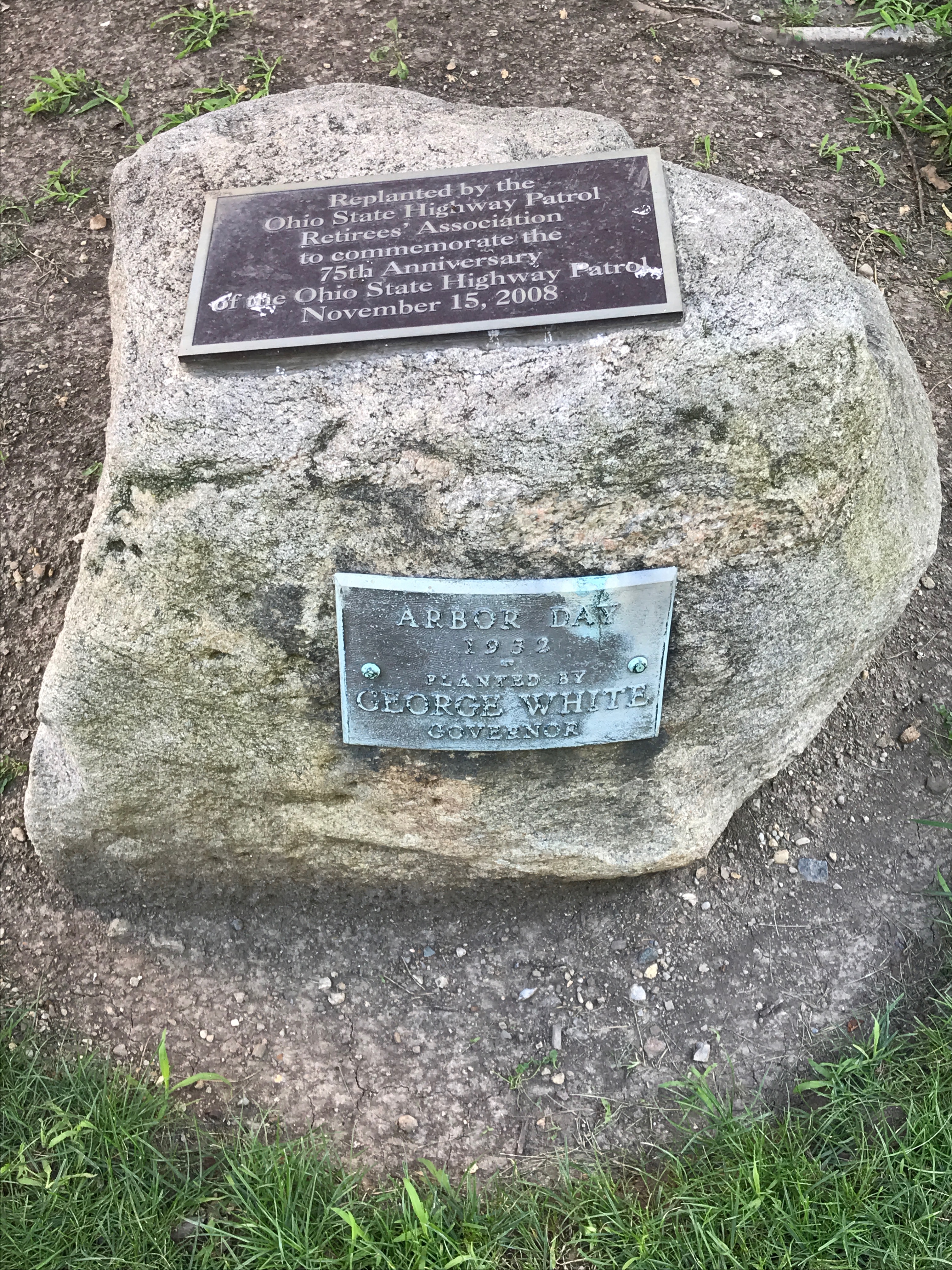
I continued on around the capitol and came upon this tree with a boulder at the base with two plaques on it. I wonder what that is all about?
Since there is no one around to ask, I assume that the original tree, planted in 1932, must have died and they planted a replacement tree in 2008.
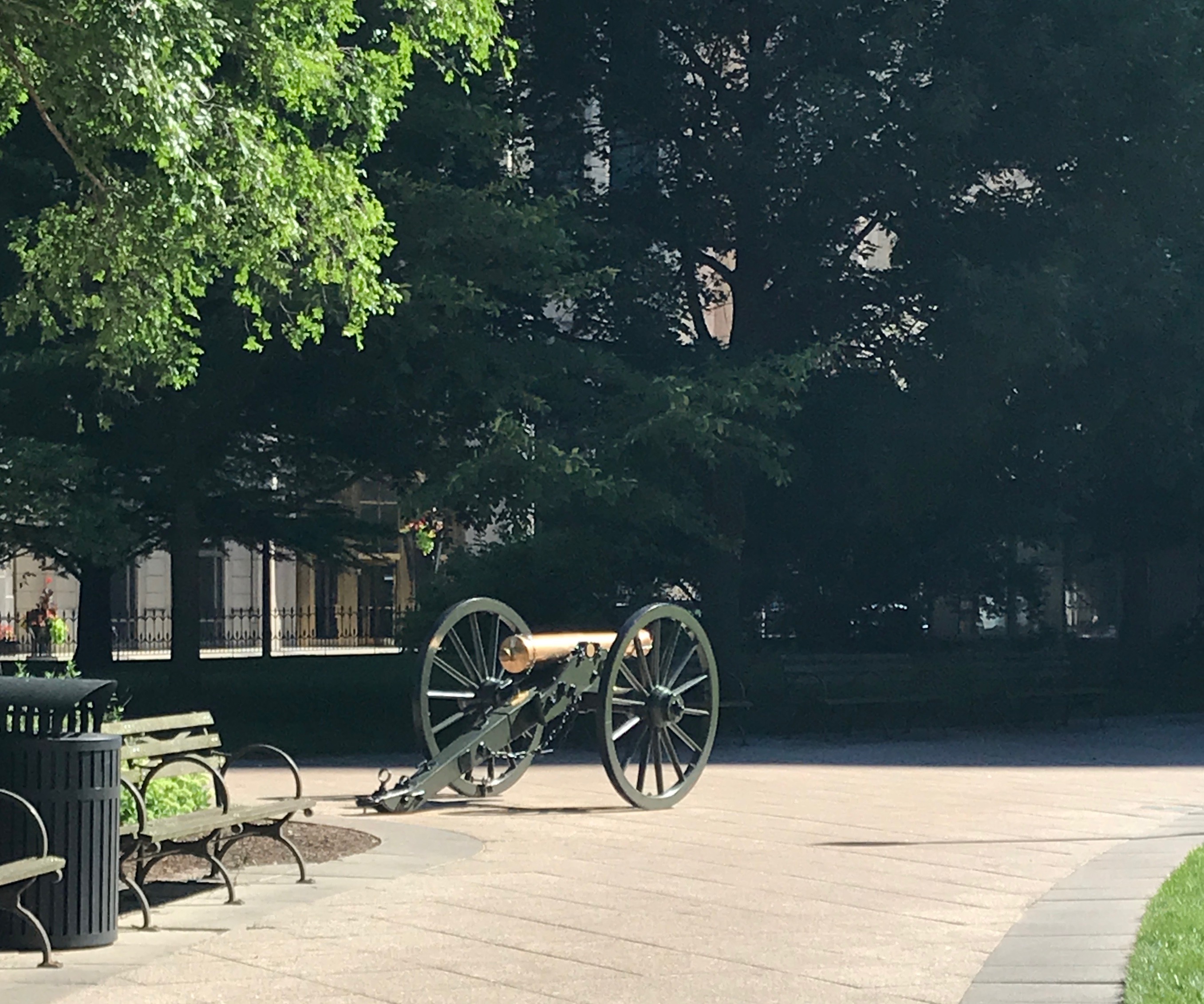
There is the obligatory cannon, defending the capitol from the marauding hoards.
Actually, there are four cannons on the capitol square. They are actual working armaments that were created during the Civil War and intended for active service. By the time of their creation, though, the war was pretty much over. According to the website, they are still in working order and are fired for “ceremonial and educational events.”
The expression might be “Don’t mess with Texas,” but Ohio is actually armed and ready.
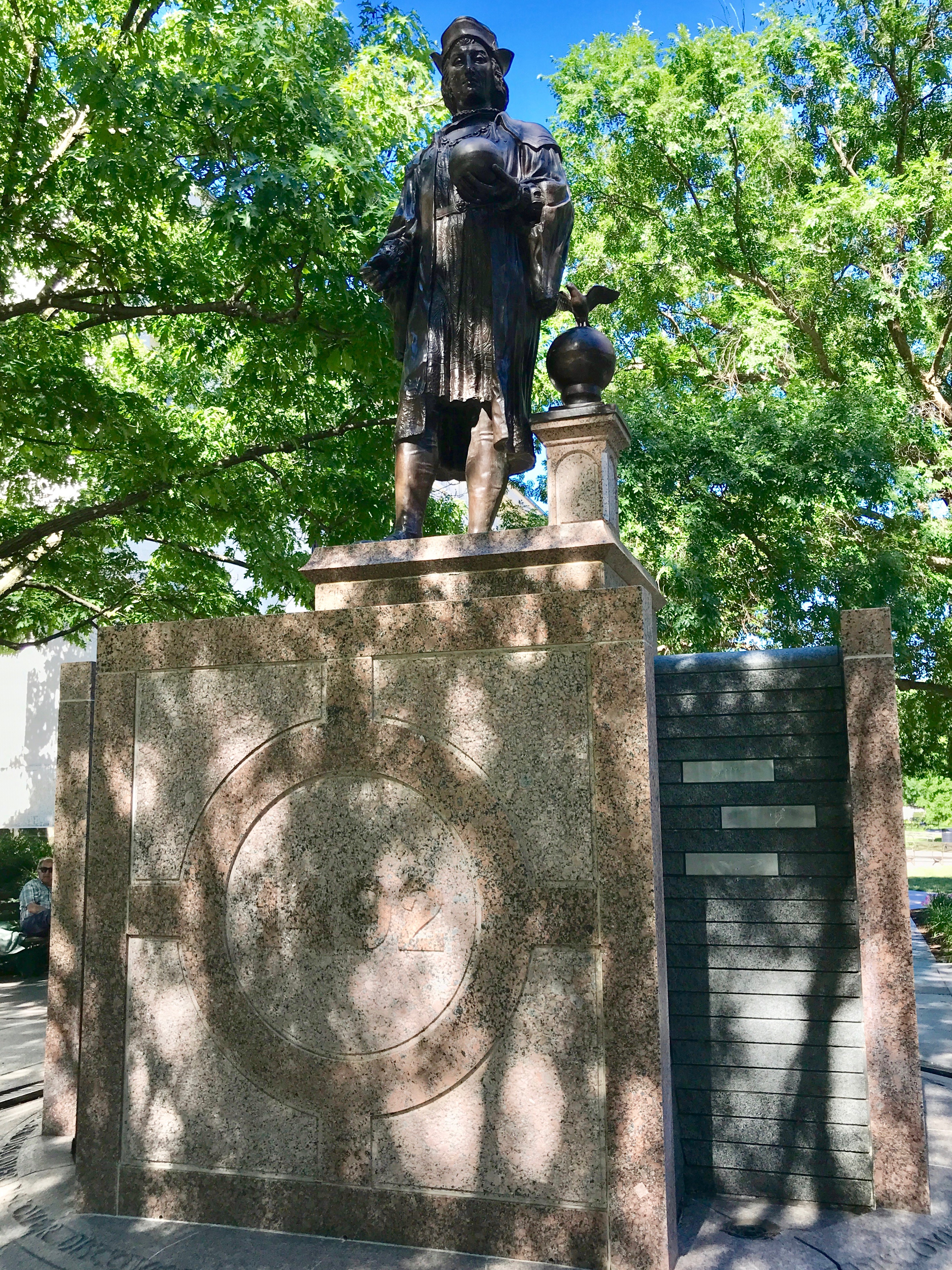
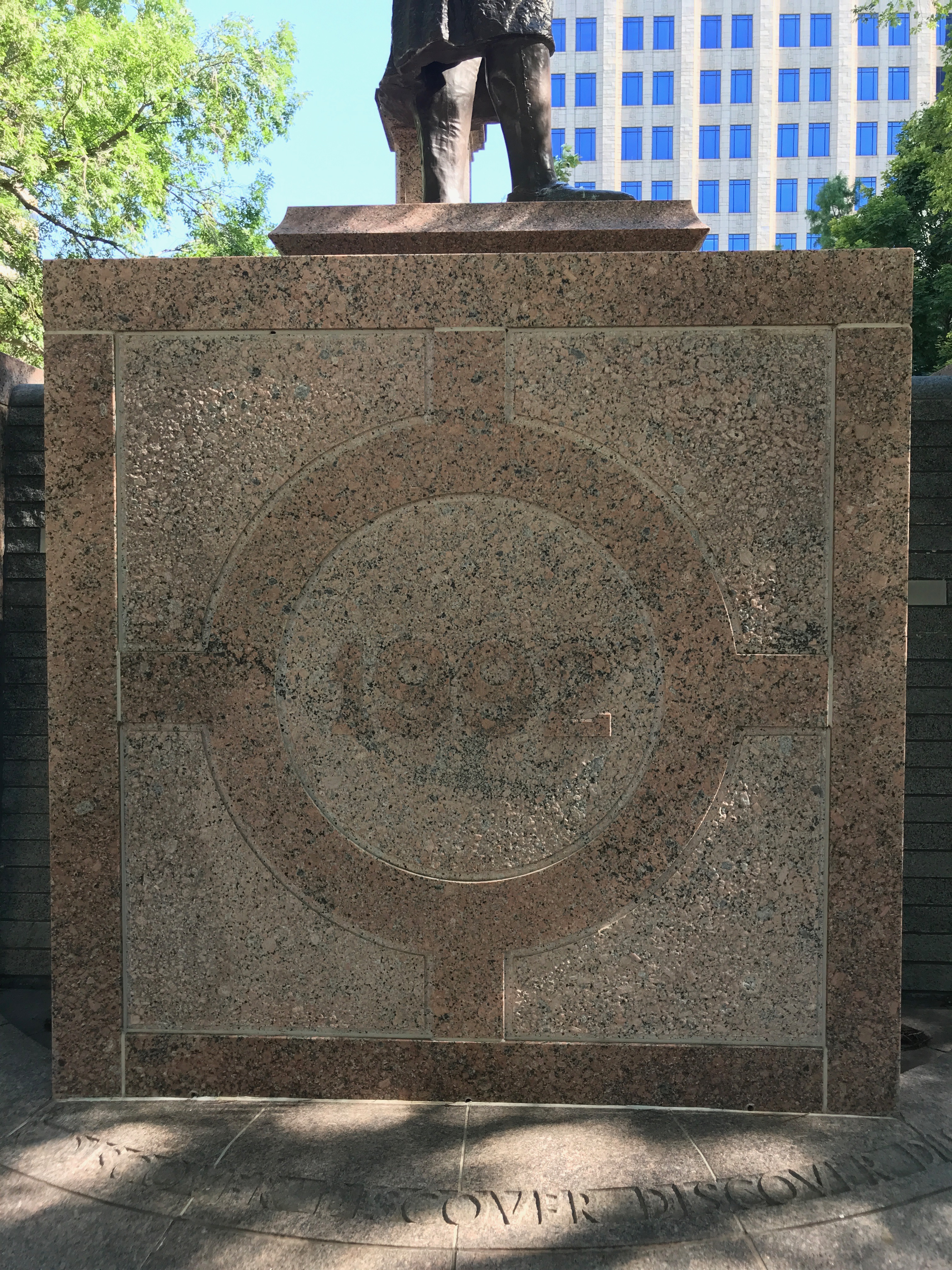
Continuing on around, I came to a Christopher Columbus memorial. I wondered why that was there. It took me but a moment to figure out the connection. The capital of Ohio is Columbus. Duh!
Back in the day, I had some Puerto Rican friends who wore buttons that said, “Me cago en el quinientos aniversario.” If you want to know what that means, here’s a link to Google Translate.
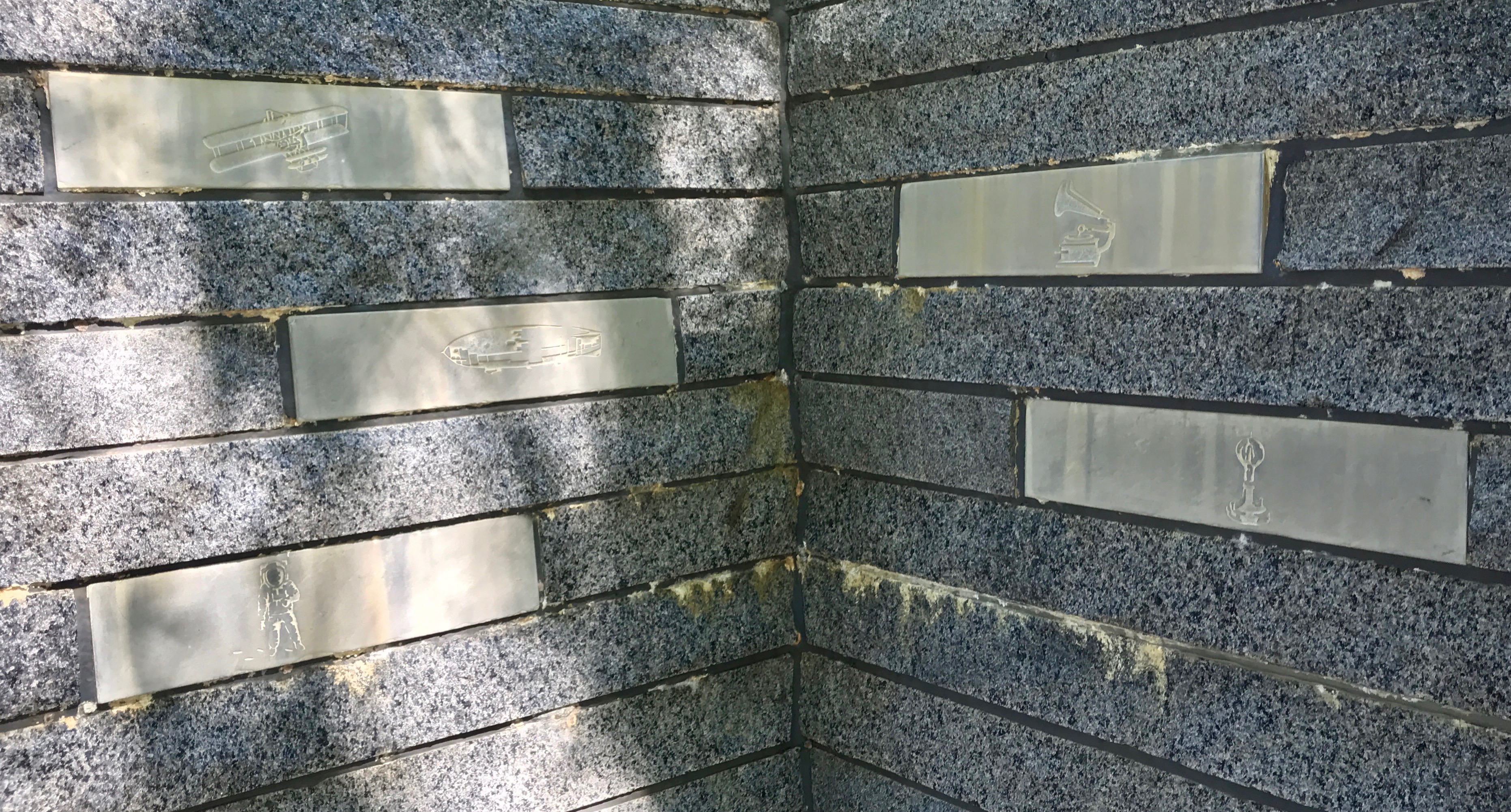
In the slabs around the monument, they had points of Ohioan pride, some of which were flight, space travel, electric light, recording and some other glyph I couldn’t decipher.
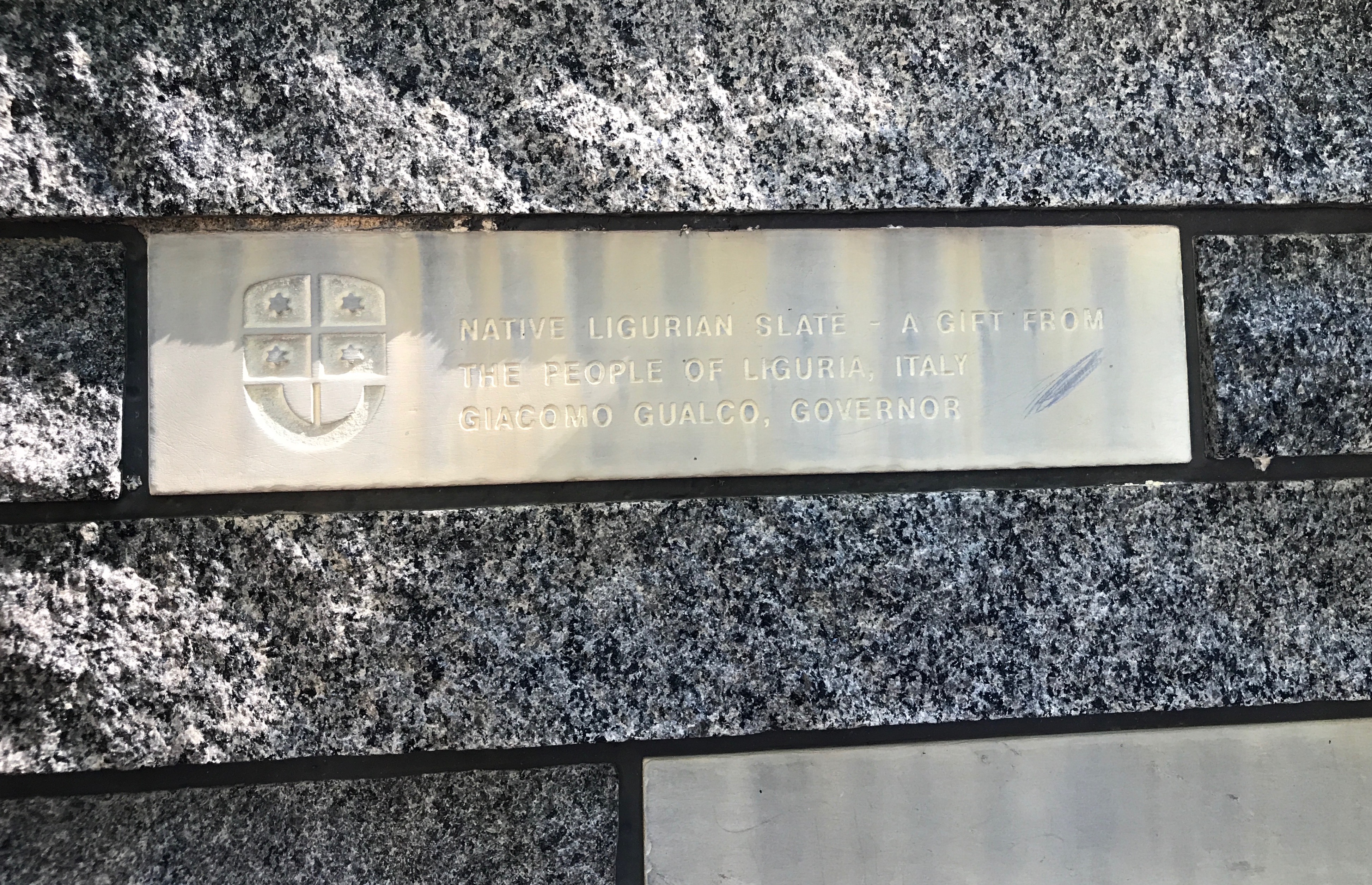
There was also this piece of native Ligurian slate. Genoa, in the region of Liguria, Italy, is generally considered to be the birthplace of Christopher Columbus.
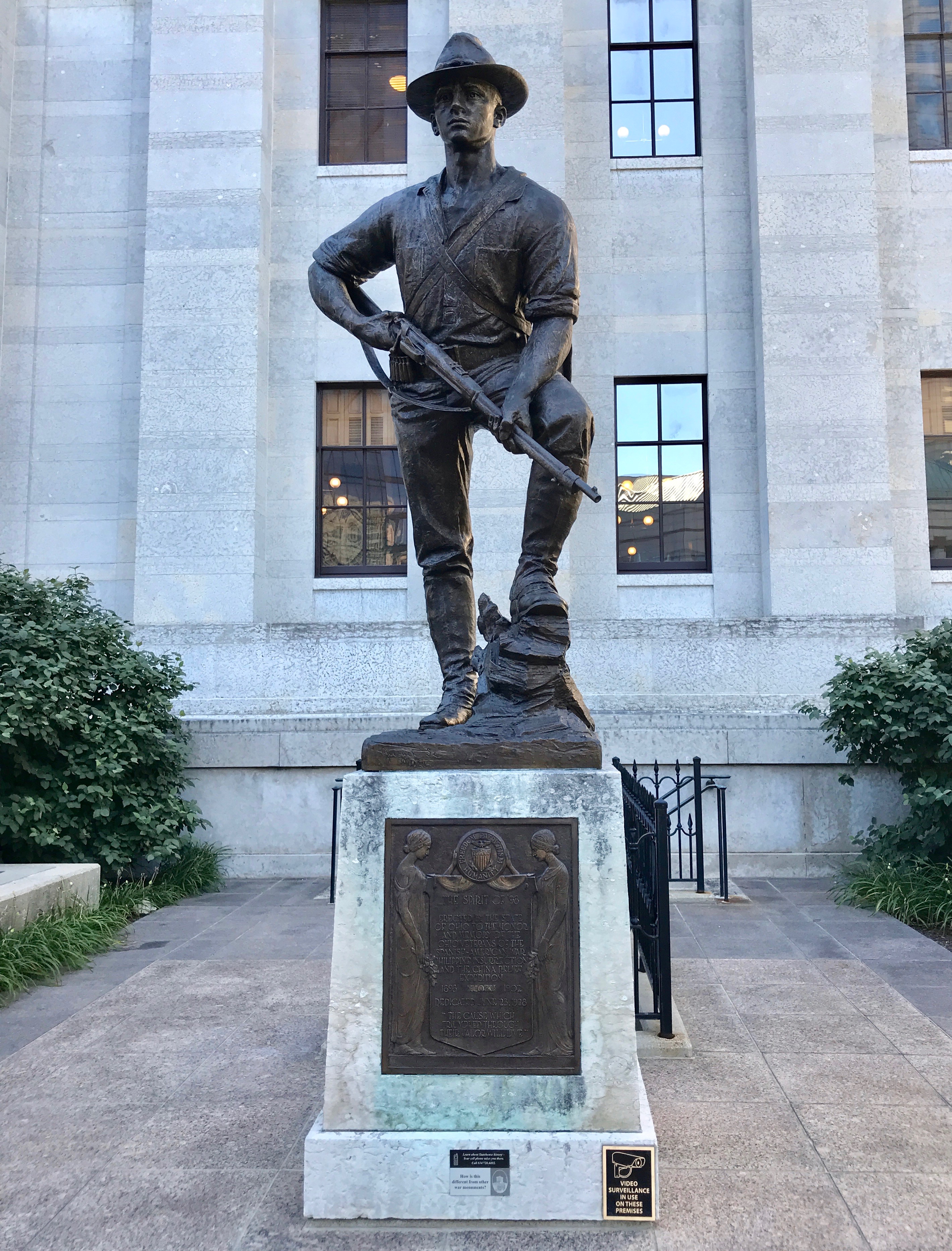
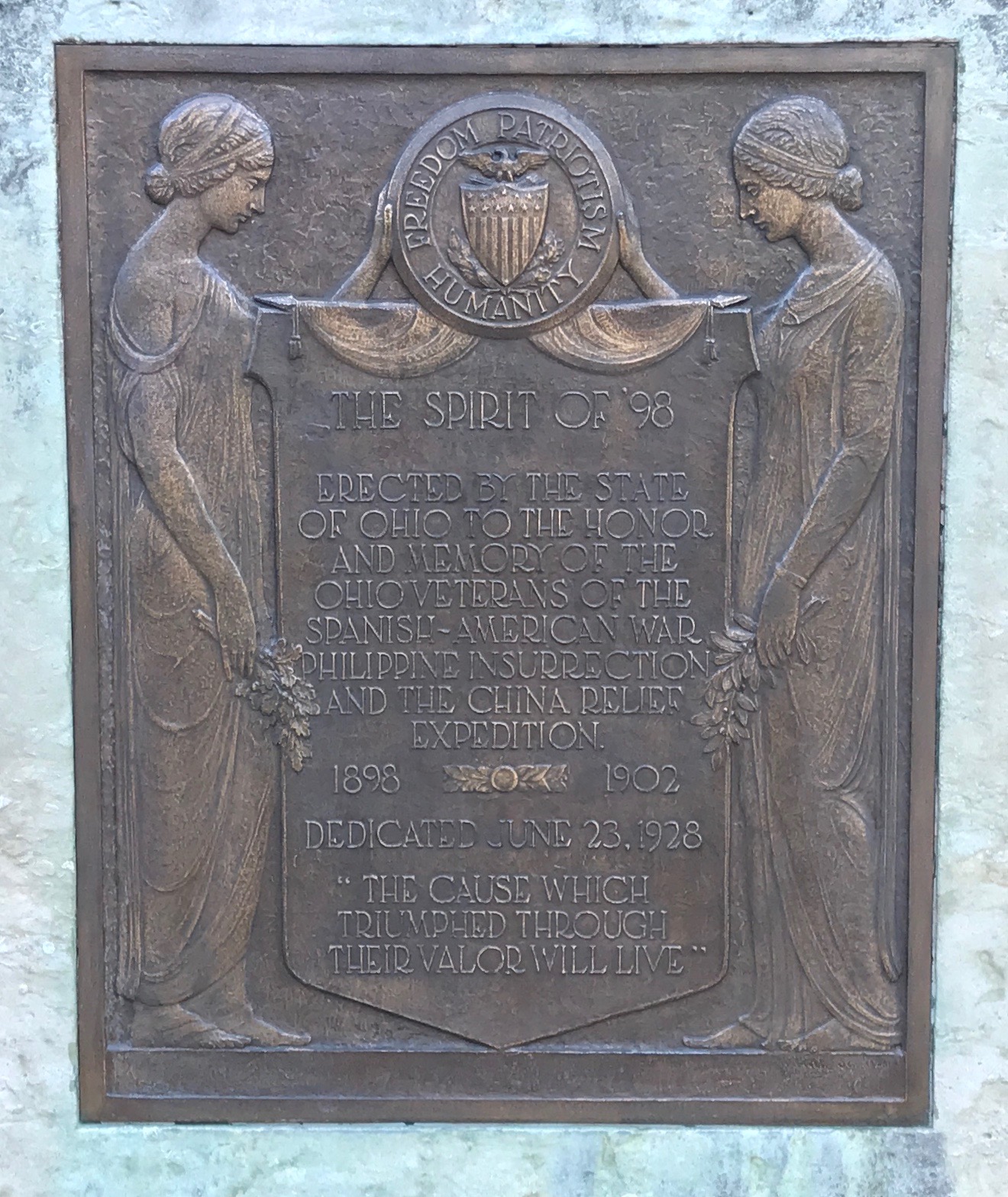
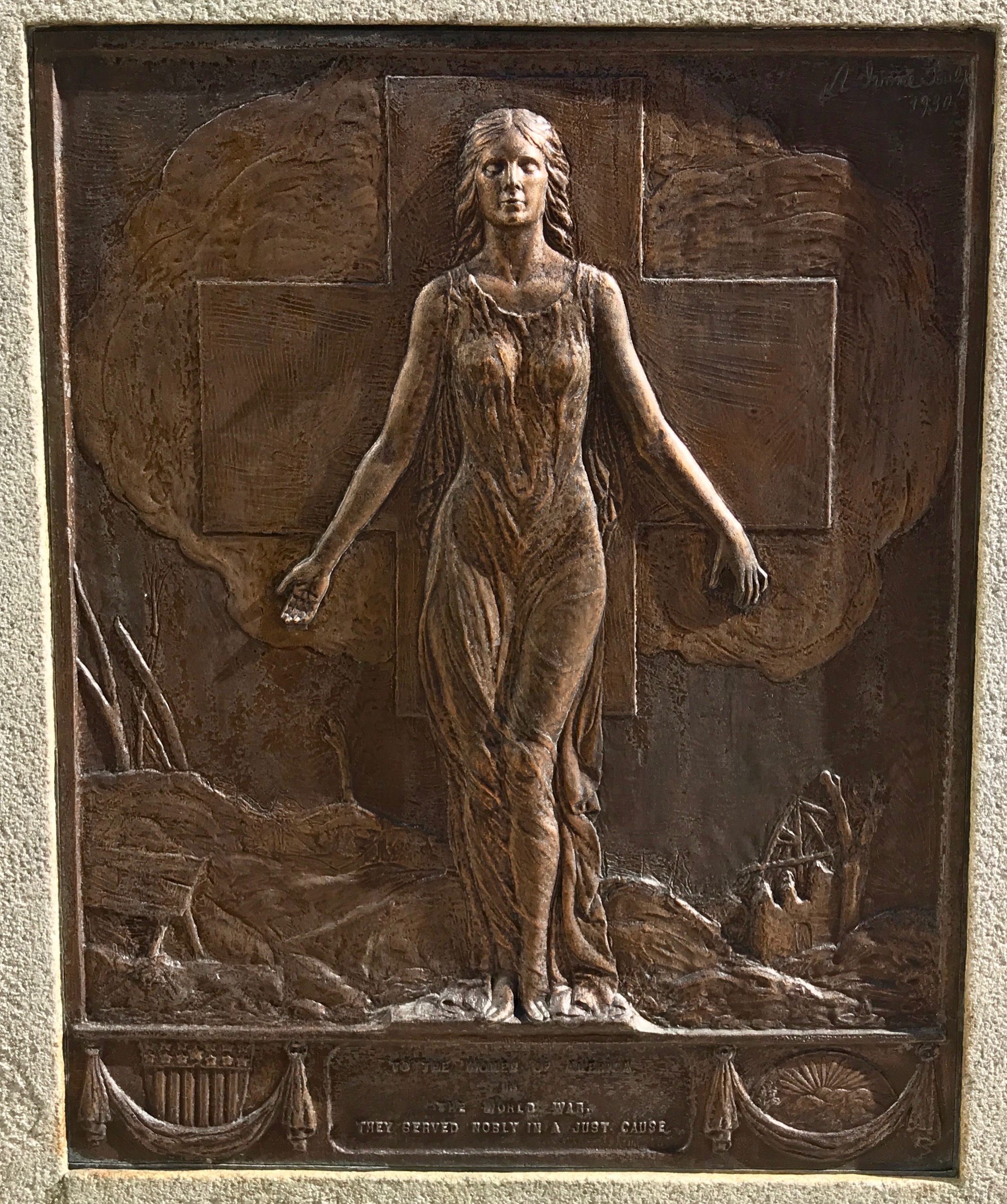
There was this memorial to Ohio veterans of the Spanish-American War.
My goodness! This country has been at war so often that it is easy to forget some of them.
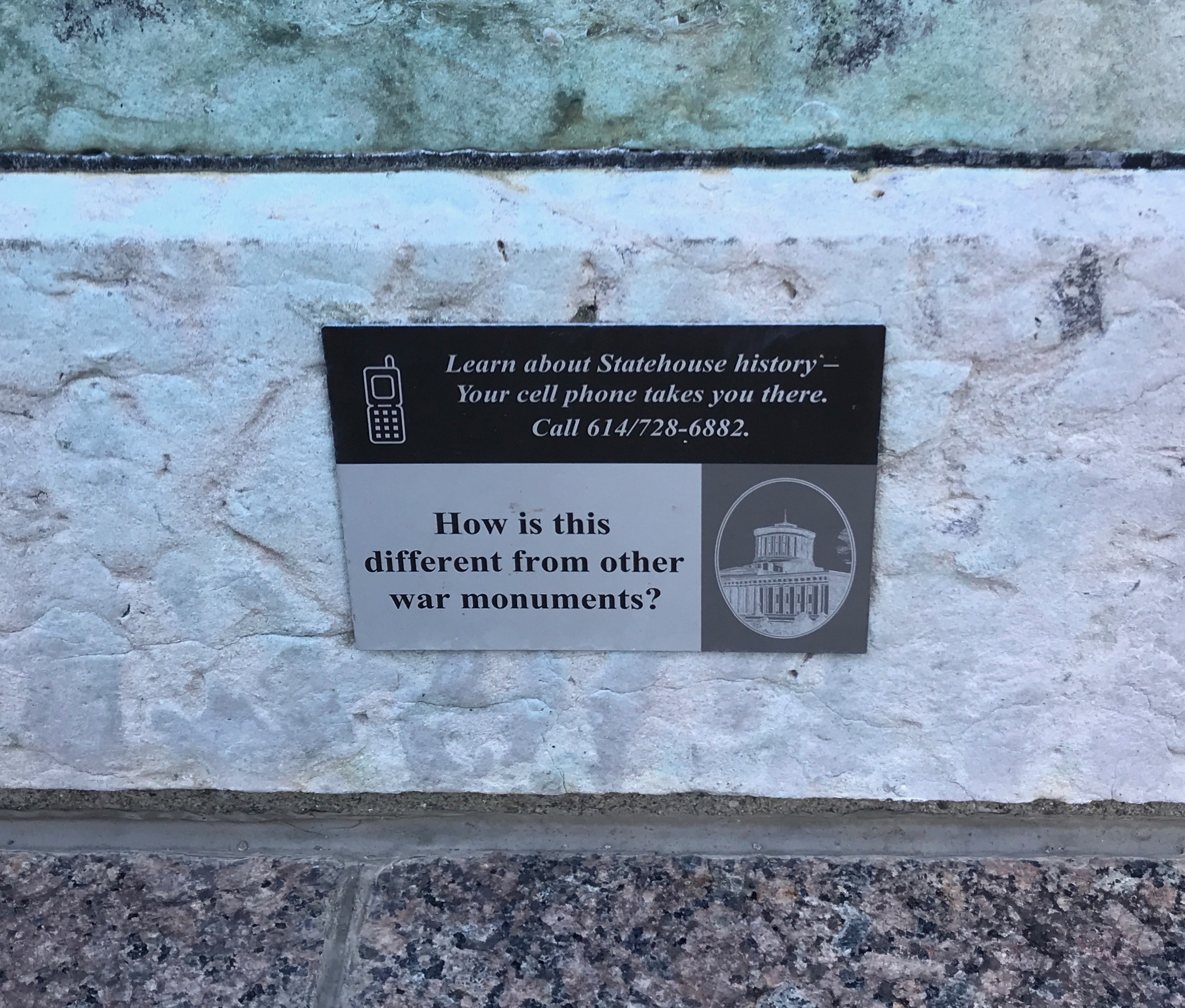
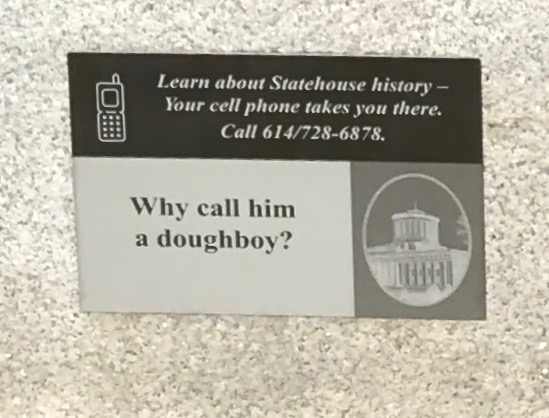
I was impressed that many of the monuments around the capitol have thought-provoking questions about them and phone numbers were you can call for the answer. I took photos of some of them so that I could call later. The sun was setting and the shadows were making it hard to get decent photos.
I just dialed this number. While it does give some interesting information, it doesn’t answer the question! I still don’t know why this monument is different from other war monuments.
*News Flash!*
I just received an email from Mike Rupert, Communications Manager, Capitol Square Review and Advisory Board. He actually read this post and answered the question for me!
He wrote, “The answer to the question on the cell phone tours, is that monuments were starting to focus on the average soldier instead of the famous leaders.”
He went on to thank me for mentioning it and that they would work on the recording. He also wrote, “Your writing is informative and full of humor. We appreciate it.”
Wow! Someone is reading my blog and they like it! My head is swelling up as I add this edit.
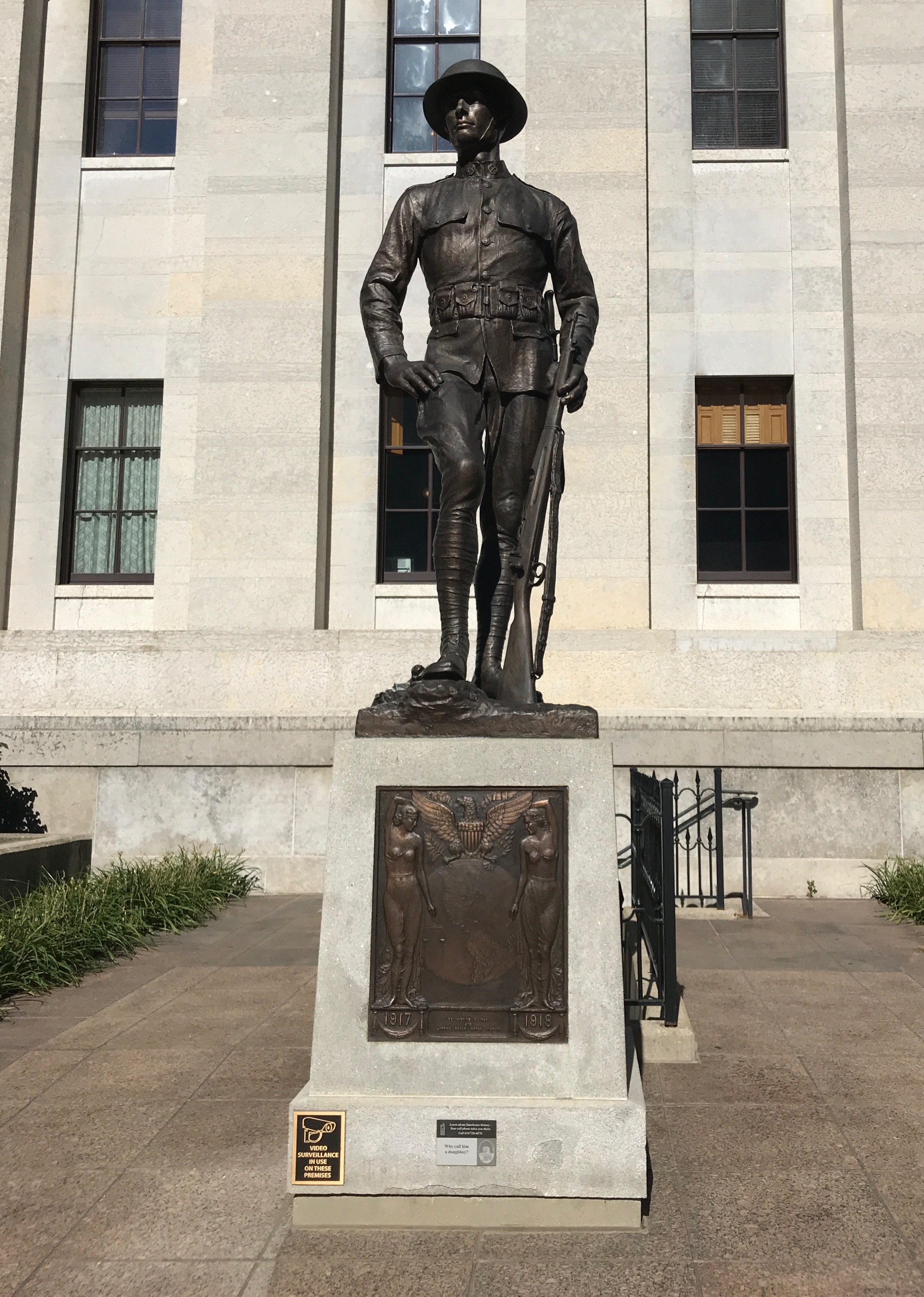
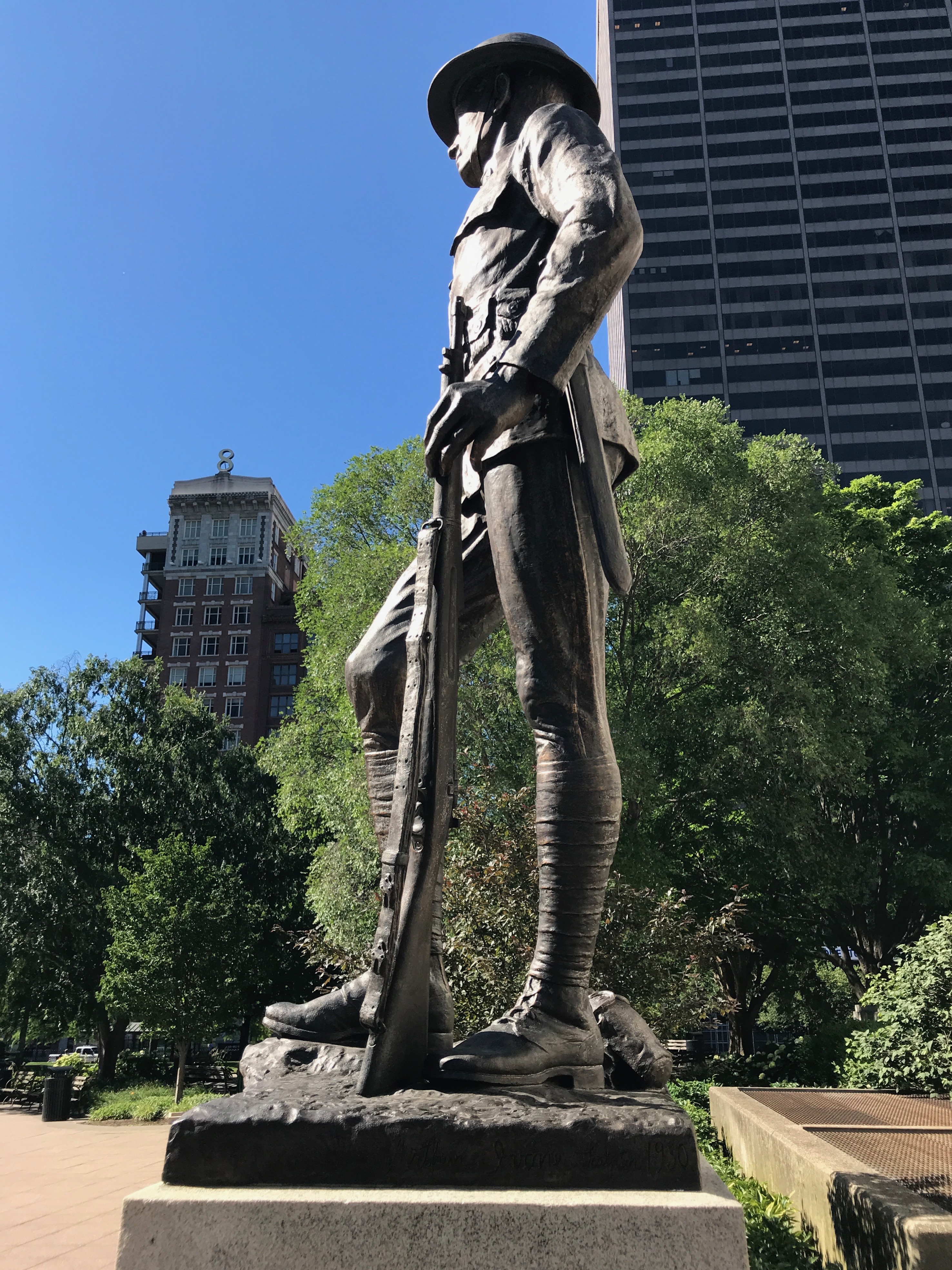
The statue of the doughboy is on the other side of the west entry.
On the other hand, if you call this phone number, you will find out two theories about why soldiers were referred to a “doughboys.”
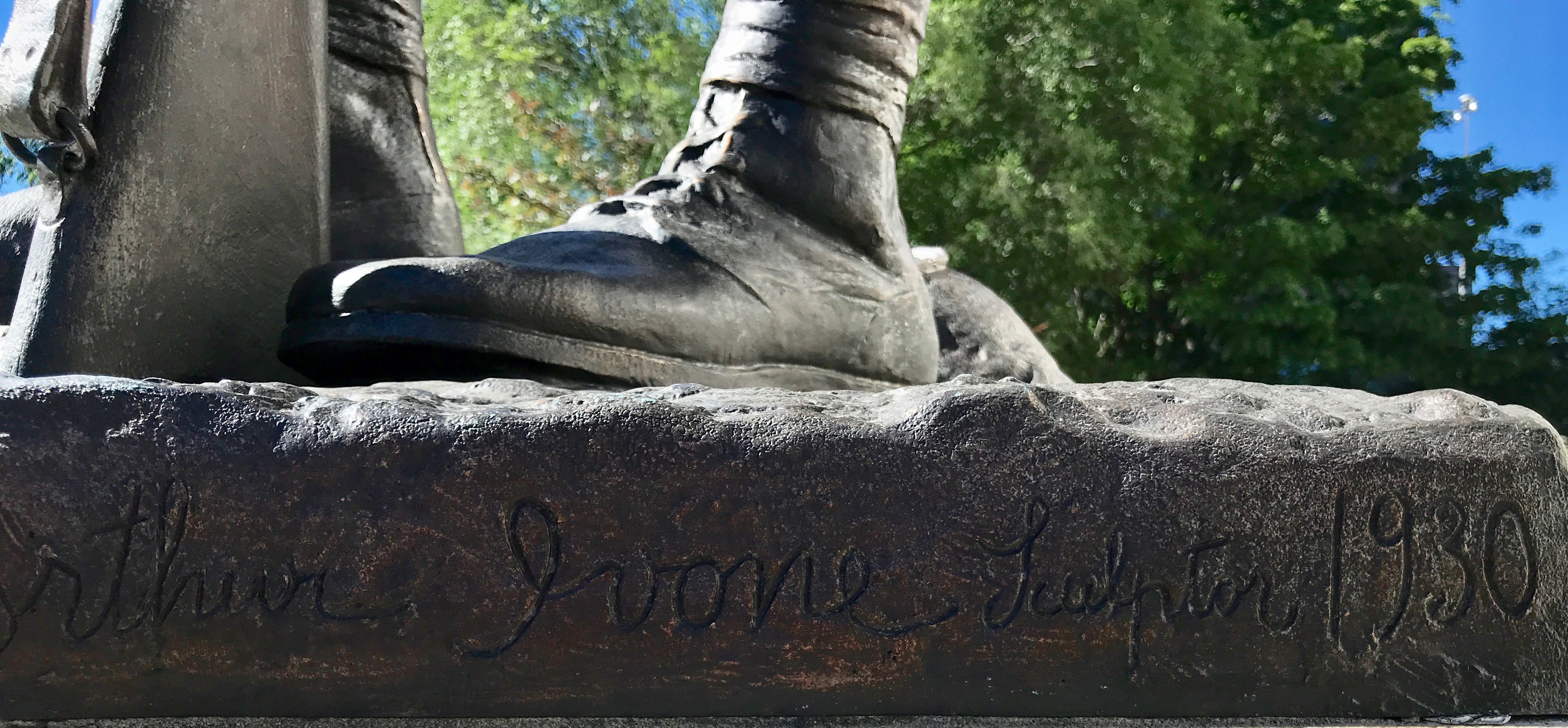
The sculptor was Arthur Ivone. I did some searching on the web, and I was surprised to find no other entries.
Perhaps this was the era when this sort of memorial was falling out of favor.
I looked to my left and I saw a large statue closer to the street and went take a look.
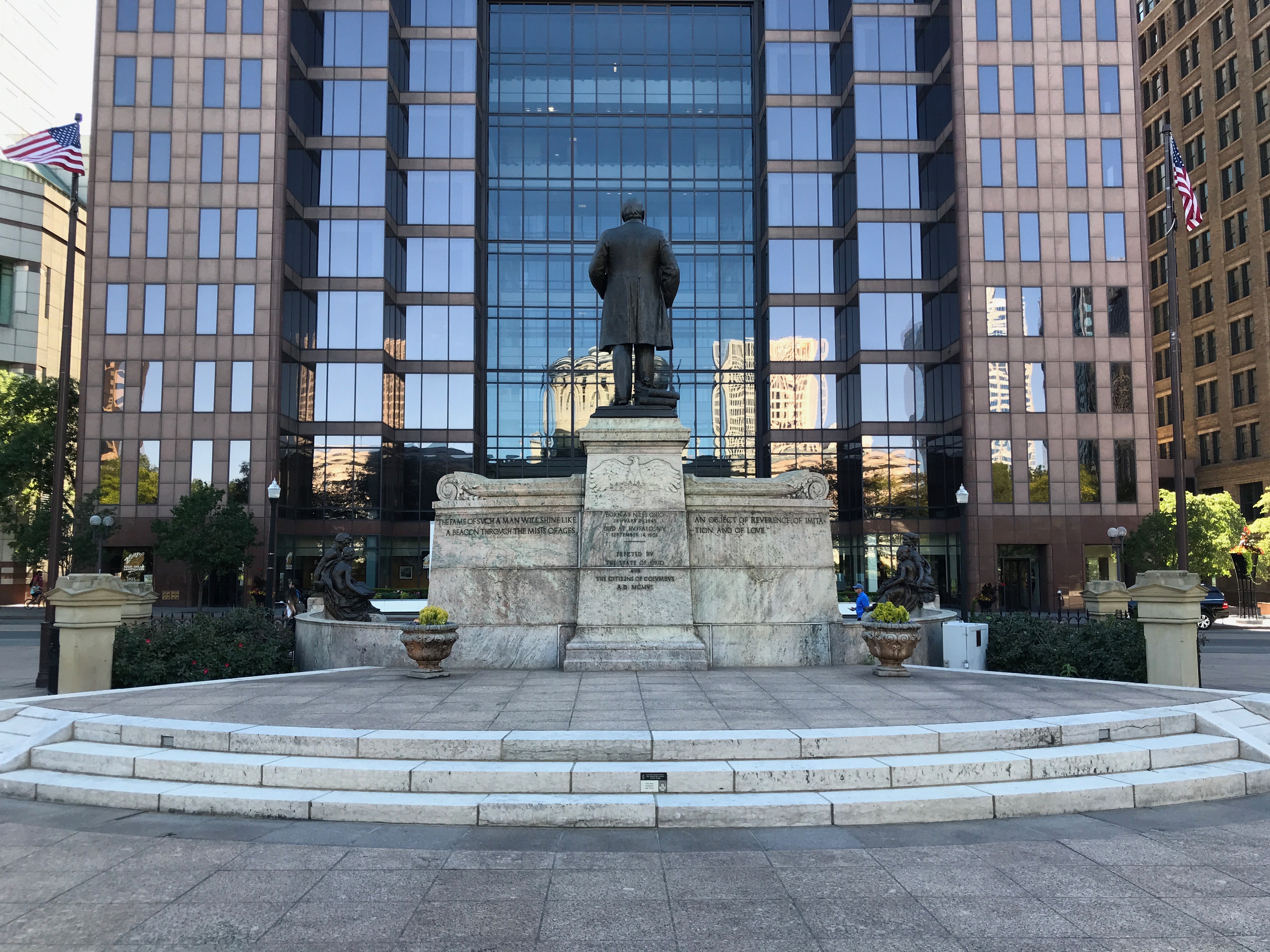
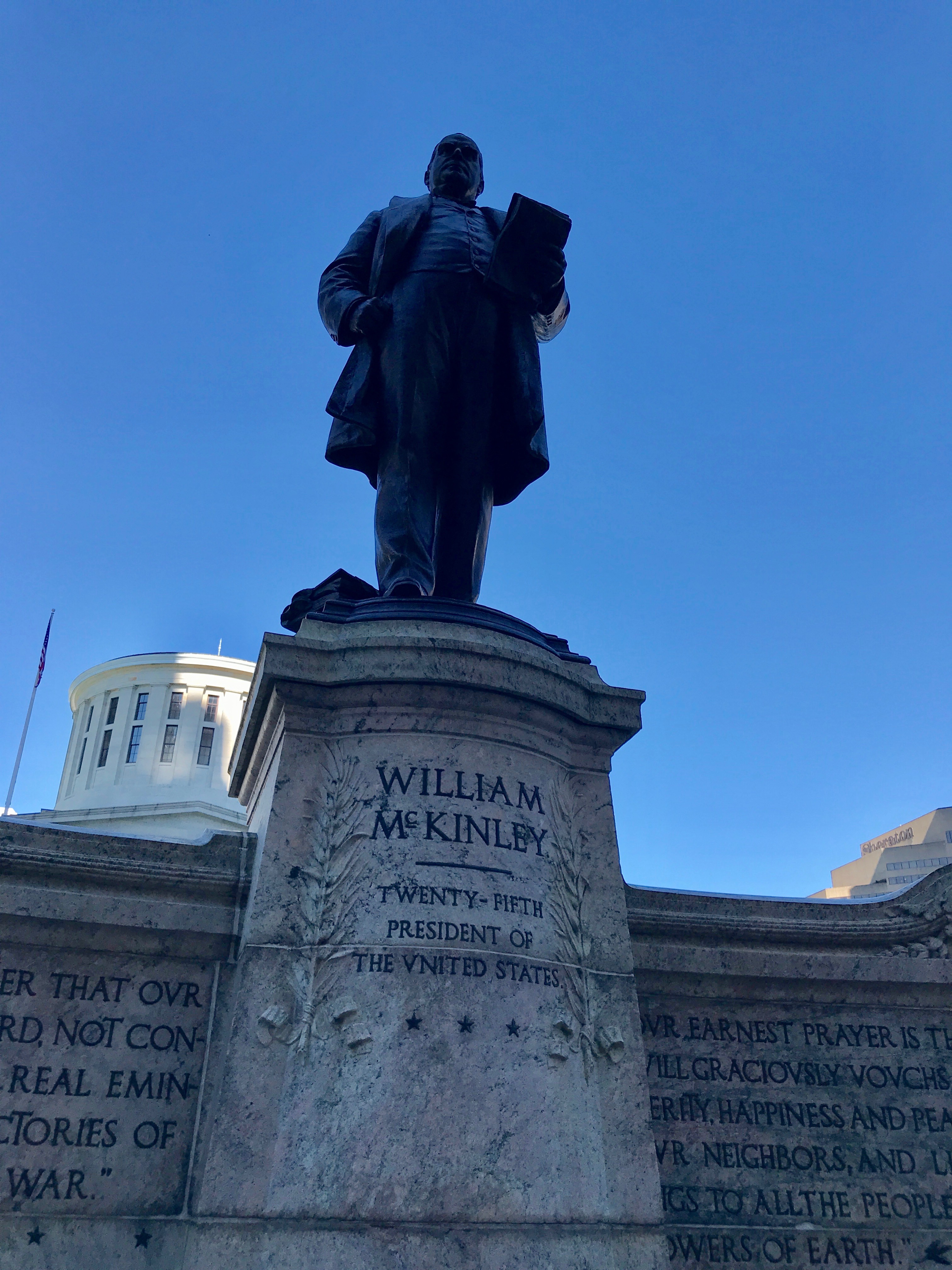
It turns out that it was William McKinley, former governor of Ohio and United States president. He was assassinated in Buffalo in 1901 – my hometown. (And, for those of you keeping track, the name of the street I grew up on.)
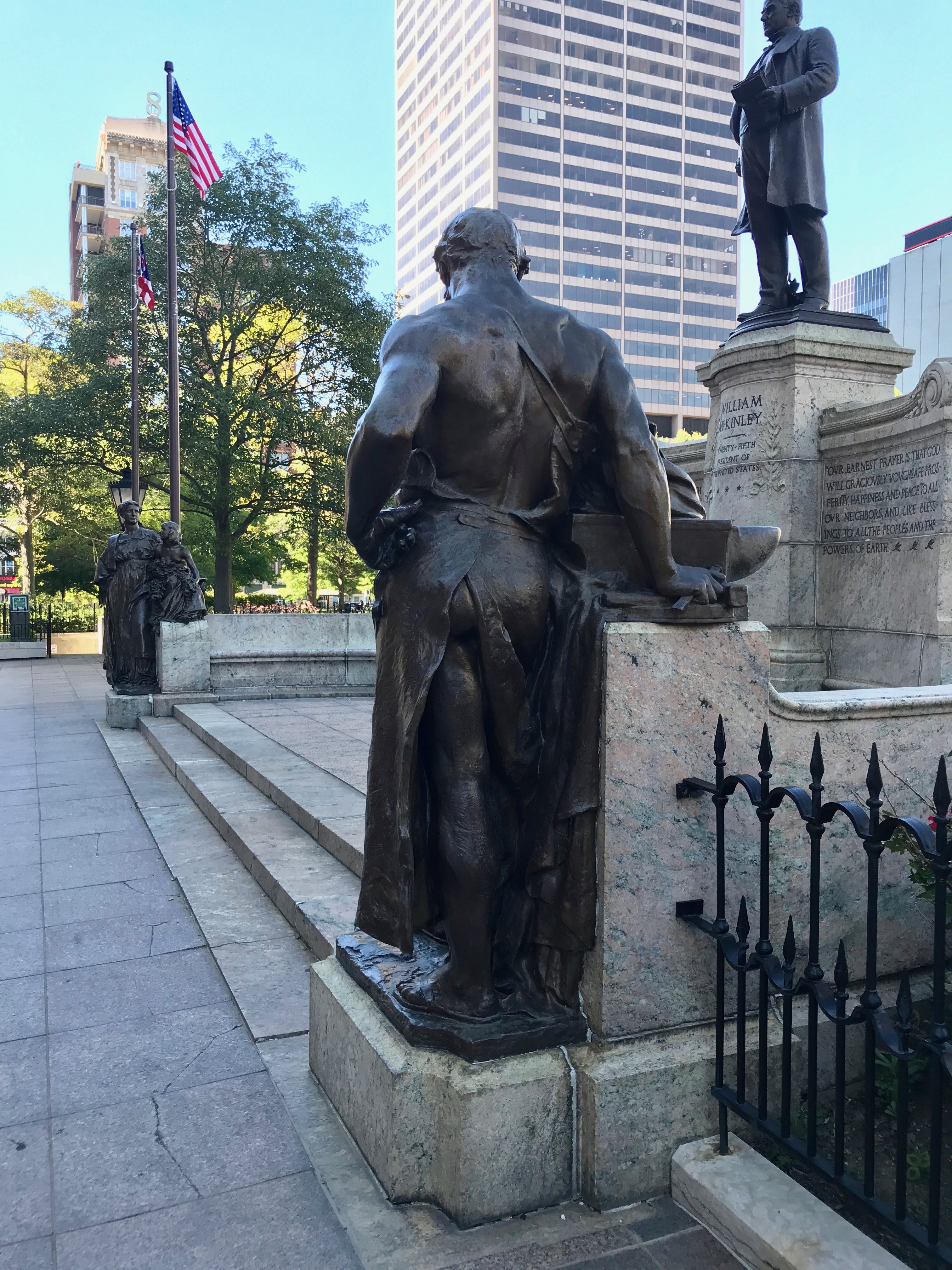
I have to admit that I was a little perplexed by the backside of the man on the right side of the memorial.
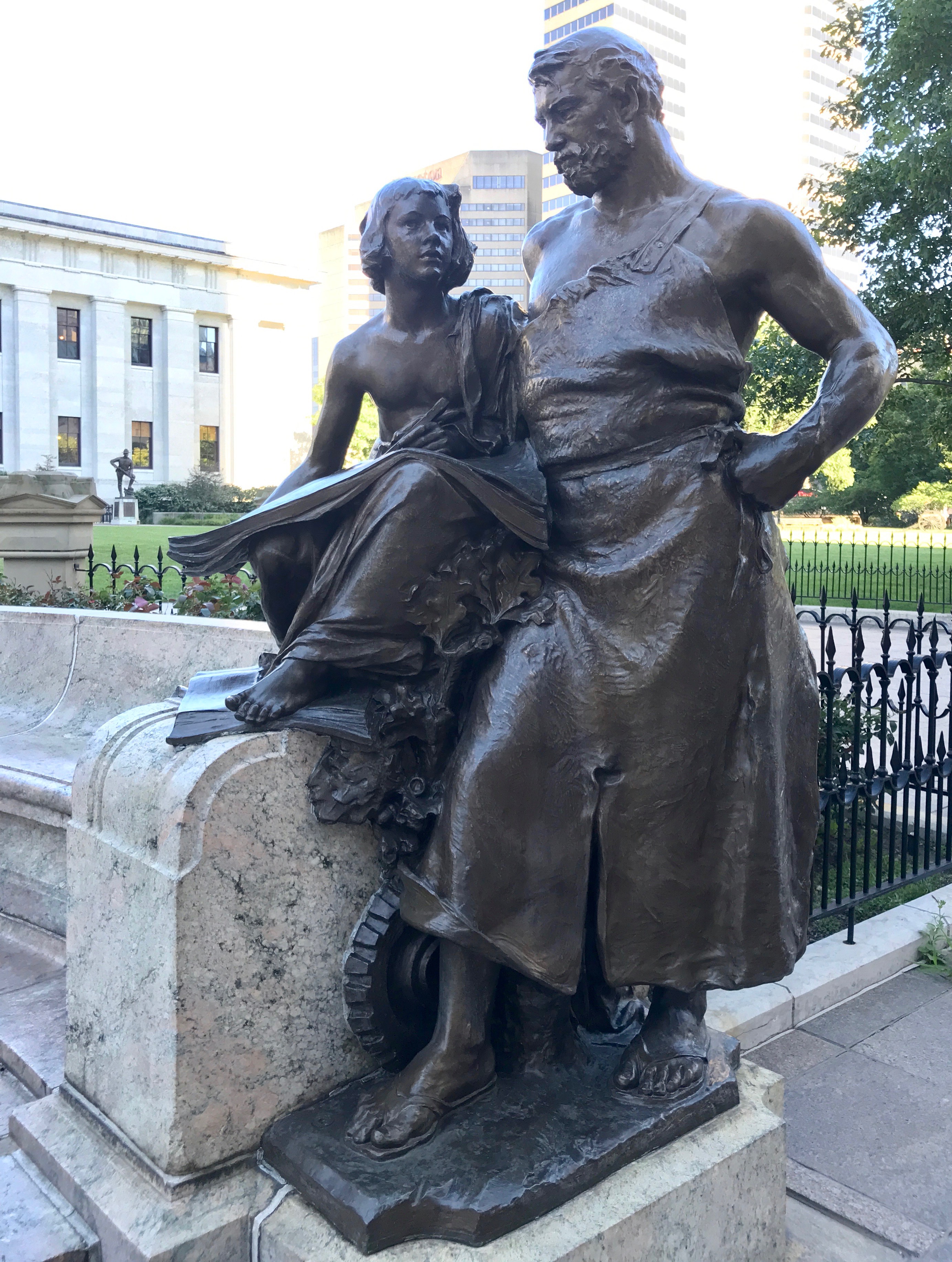
It seems that he is wearing a leather apron. I assume that was to protect himself from whatever his labors were. However, if he needed protection, where in the world were his pants?
However, it does seem that he is reading with a young child – presumably his son.
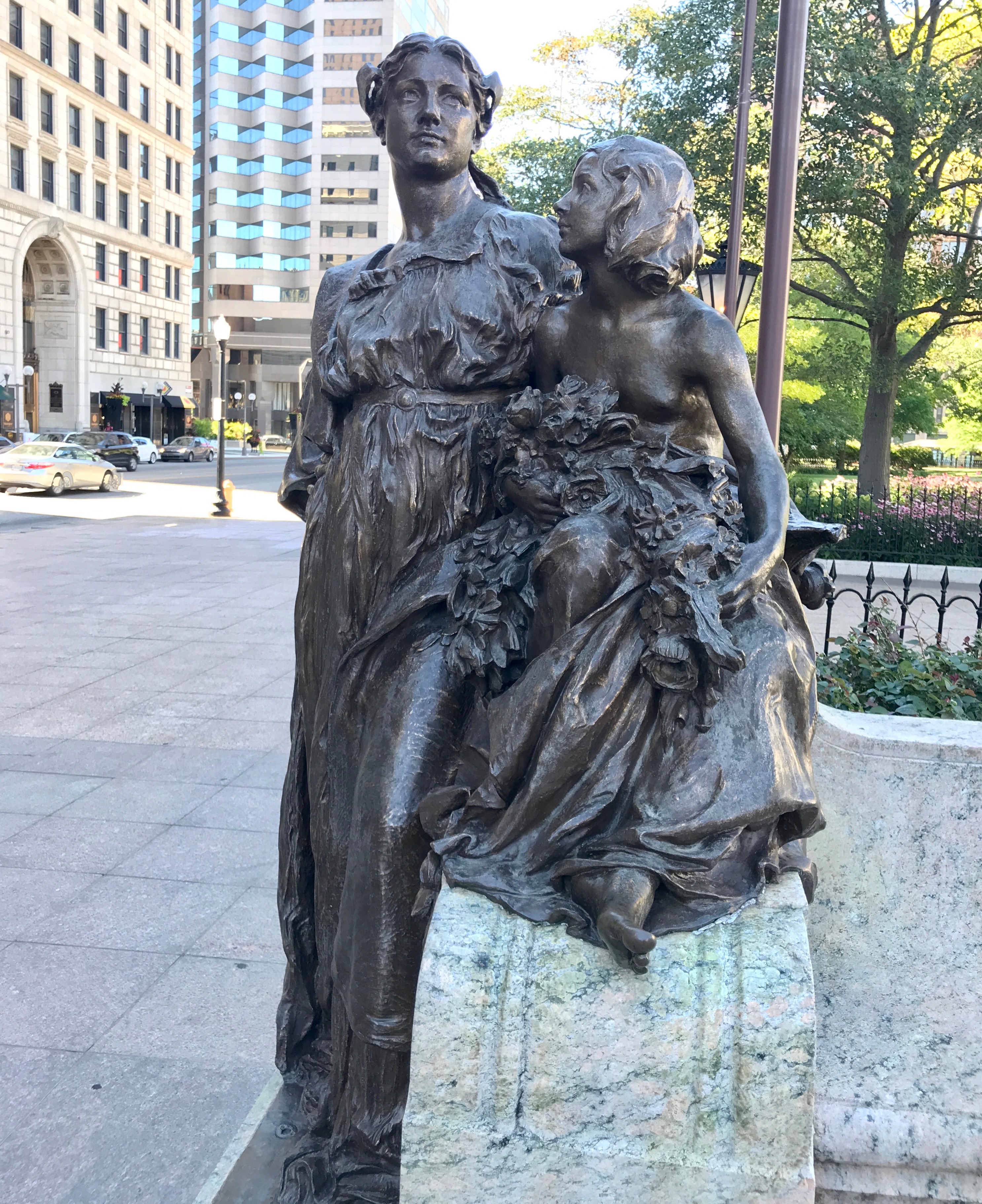
On the other side of the memorial, the women are more modestly clad, although I am not sure why the young female has bare breasts.
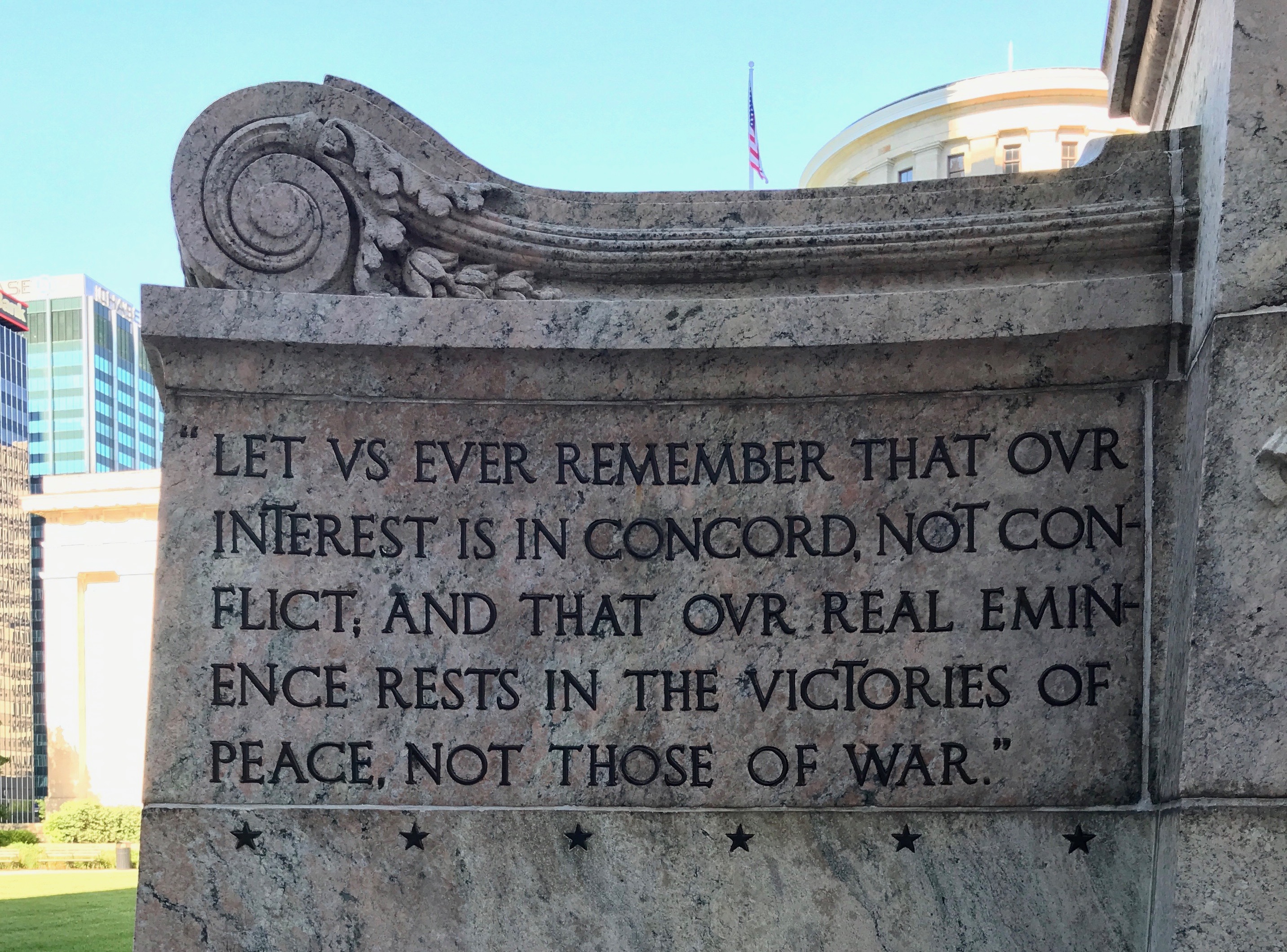
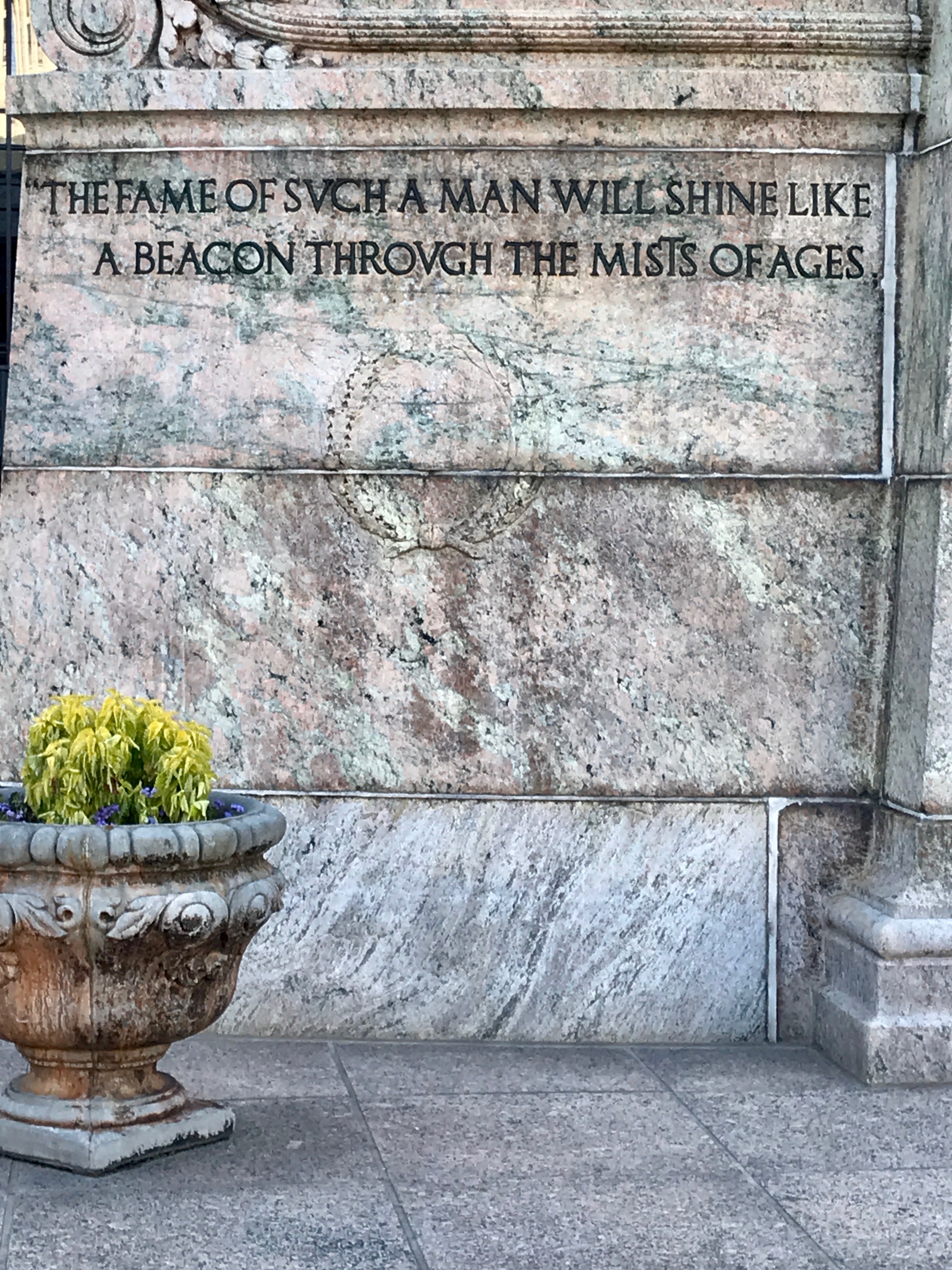
There were some good quotes on the memorial.
Odd, though, that his fame has not persisted. Or, maybe we are just awaiting resurgence of interest in William McKinley.
Rounding the corner, I came upon this memorial to some of Ohio’s favorite sons.
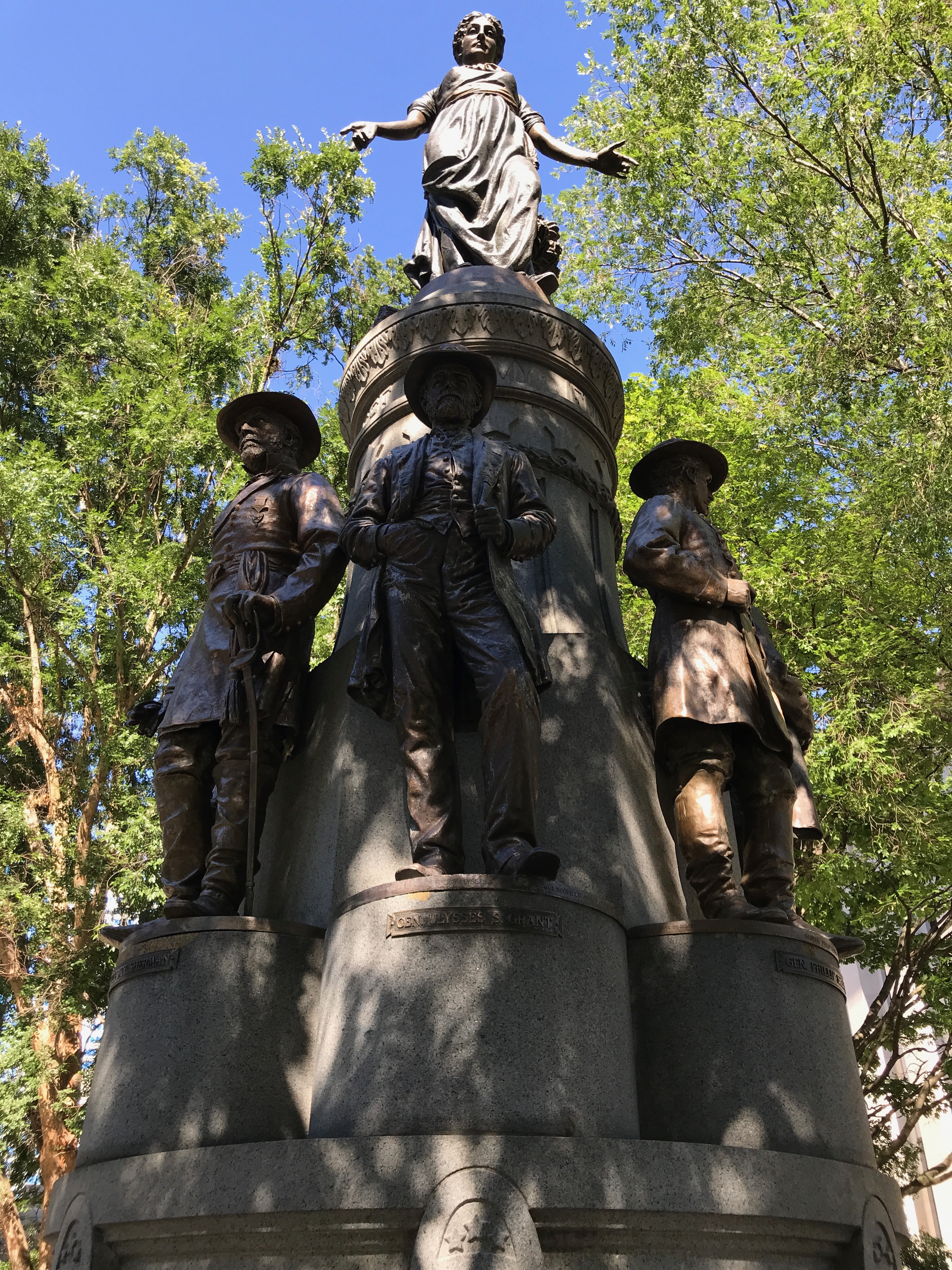
This memorial is called “These Are My Jewels.” The title comes from an anecdote of Roman history about Cornelia, who is depicted at the top of the statue. While her friends took delight in displaying her sumptuous clothing and jewelry, her pride was in her sons.
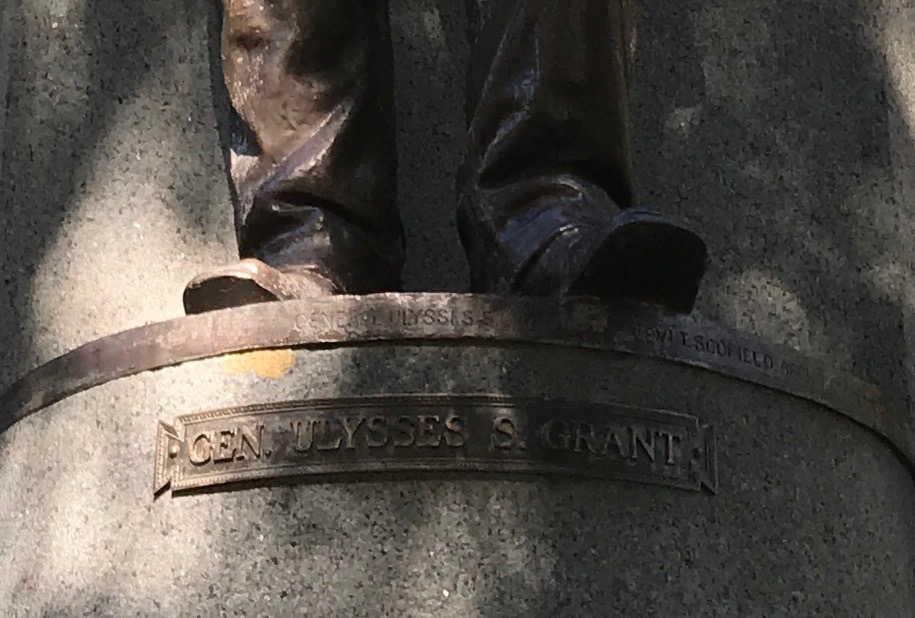
Surrounding the drum that Cornelia stands atop are Generals Ulysses S. Grant, William T. Sherman, James A. Garfield, Phillip Sheridan, Treasury Secretary Salmon P. Chase, Secretary of War Edwin Stanton, as well as Rutherford B.Hayes.
Three of the state’s presidents are honored in this one memorial to military and political leaders from the state of Ohio who were vital to the Union cause during the Civil War.
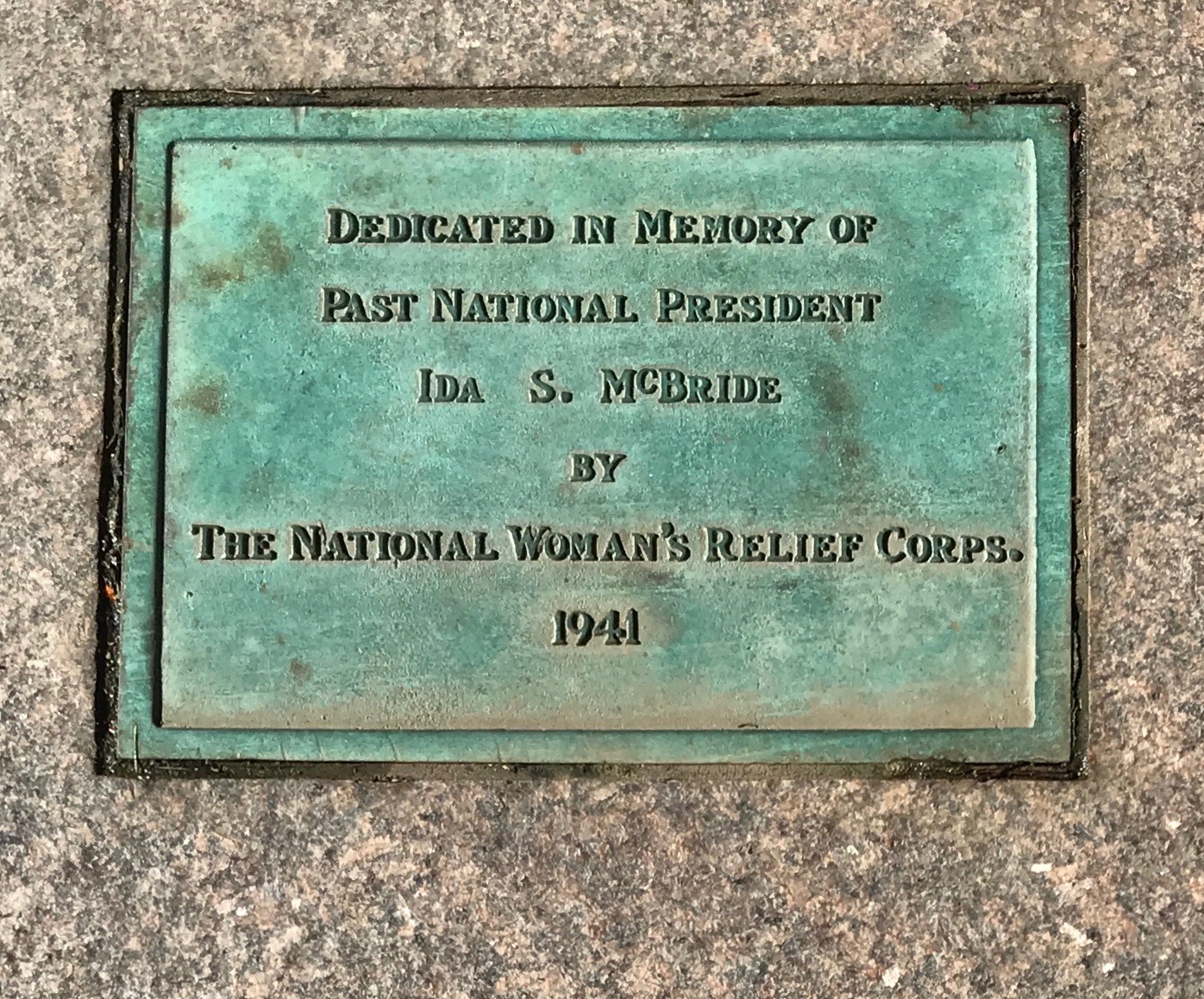
I kept moving along. I wondered if I would ever come to anything that recognized the contributions of real Ohioan females to the world. I was sure there must be something that women from Ohio did.
I finally came upon this plaque.
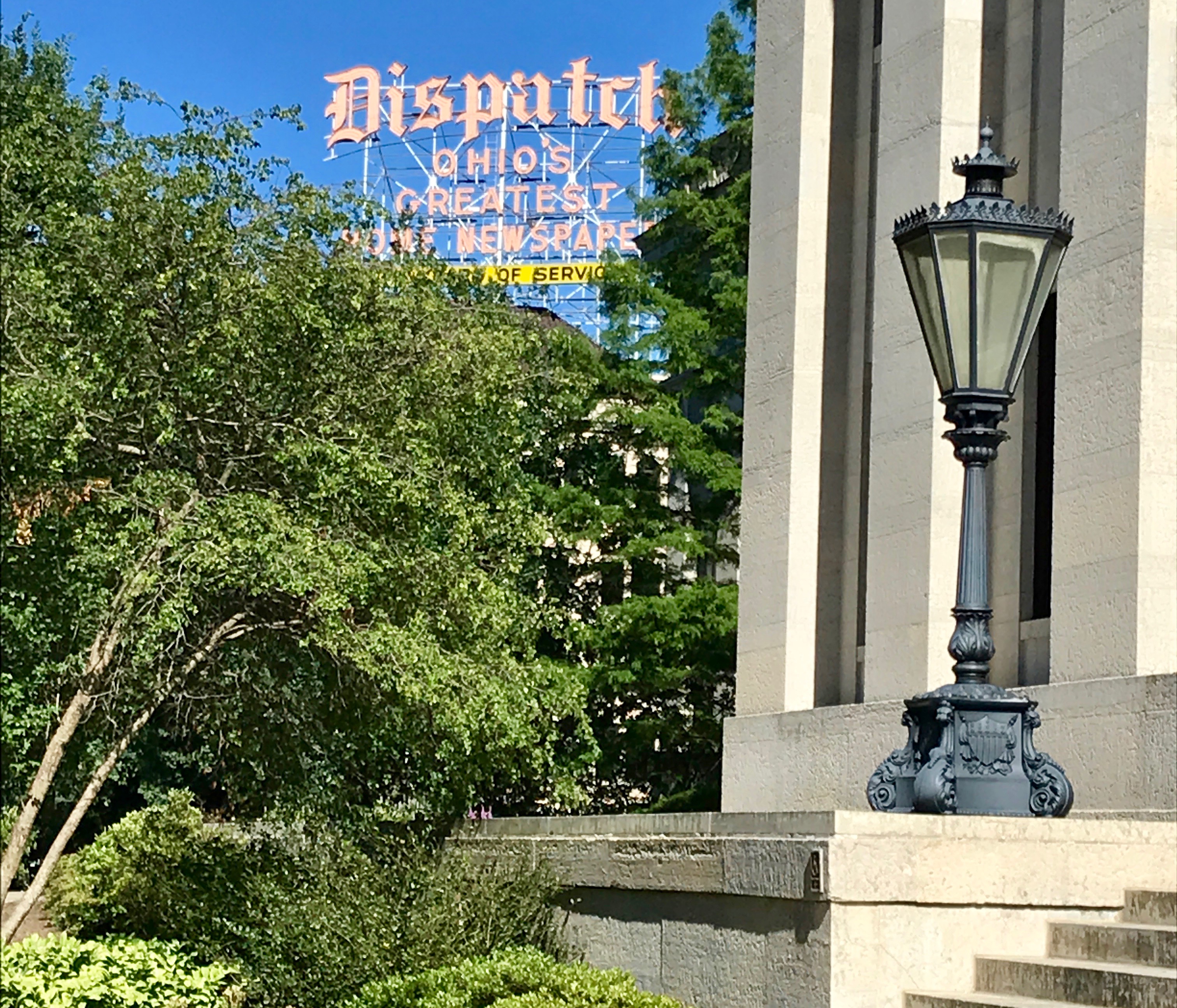
I appreciated the placement of this sign for the Columbus Dispatch. We need to have a vibrant journalistic community watching our government and keeping us informed about what is going on. As The Washington Post’s slogan reminds us, “Democracy Dies in Darkness.”
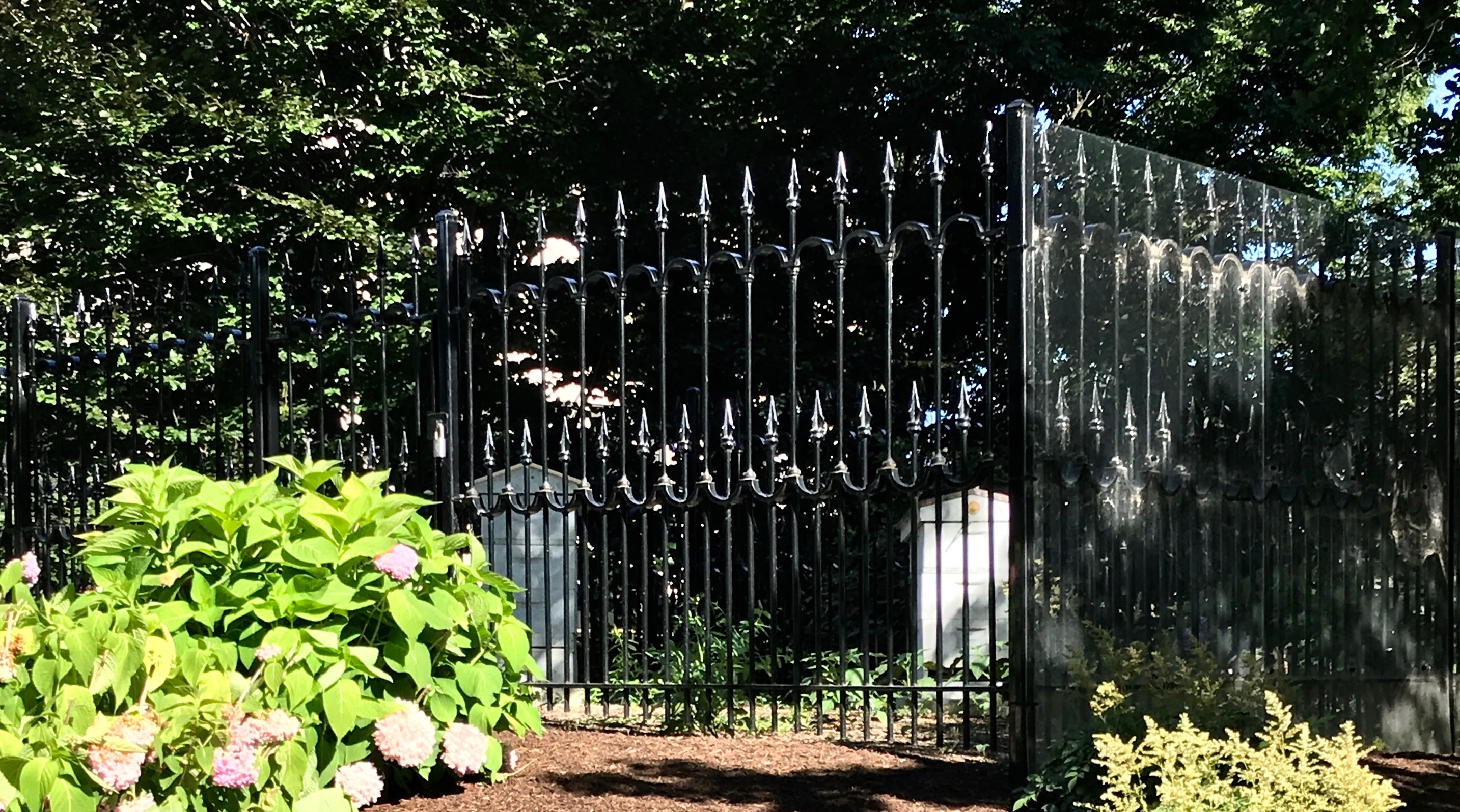
Tucked away in a corner of the 10 acre campus is the Capitol Square Honey Bee Apiary. It was dedicated on Earth Day 2015. It was installed after the Colony Collapse Disorder in 2006, where millions of bees vanished from their hives. It’s located on the capitol square to reinforce Ohio’s commitment to the environment and to help this beneficial pollinator recover from the devastation.
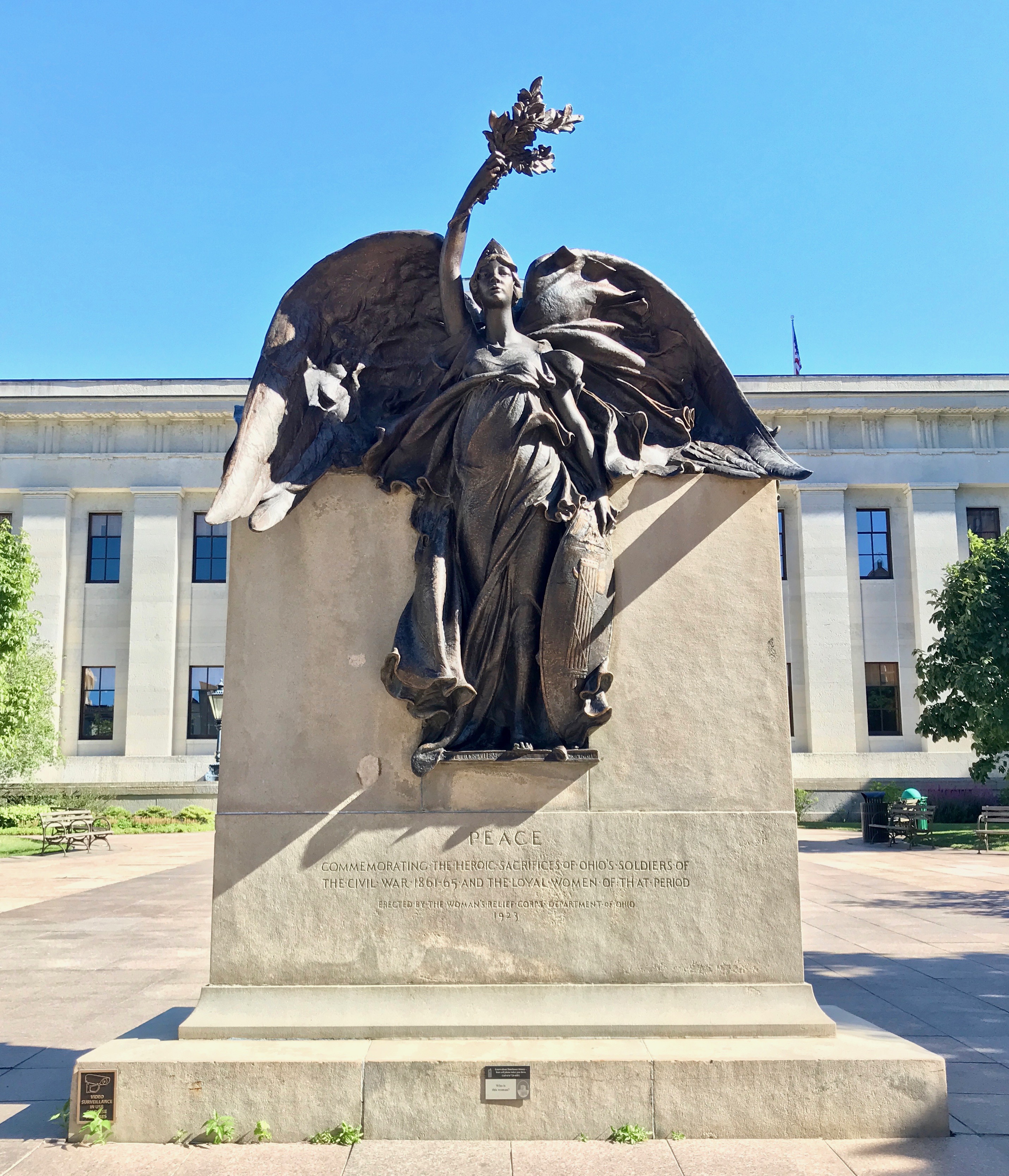
Finally, a monument to peace!
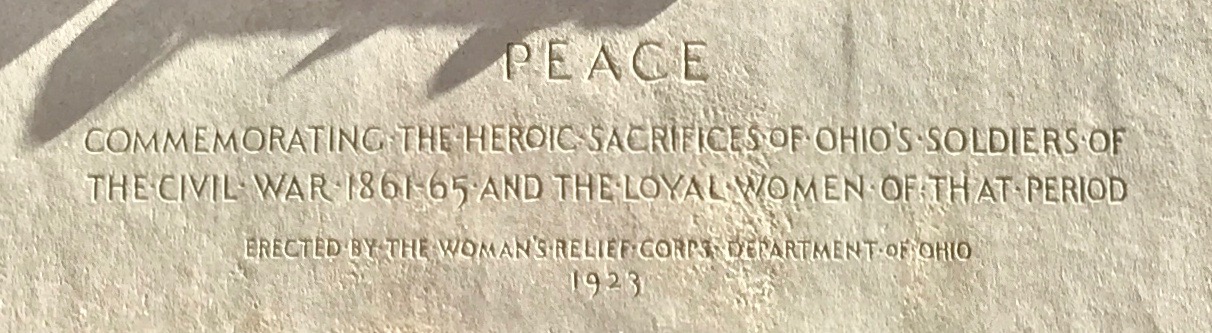
And to women. Of course, the women had to erect it themselves.
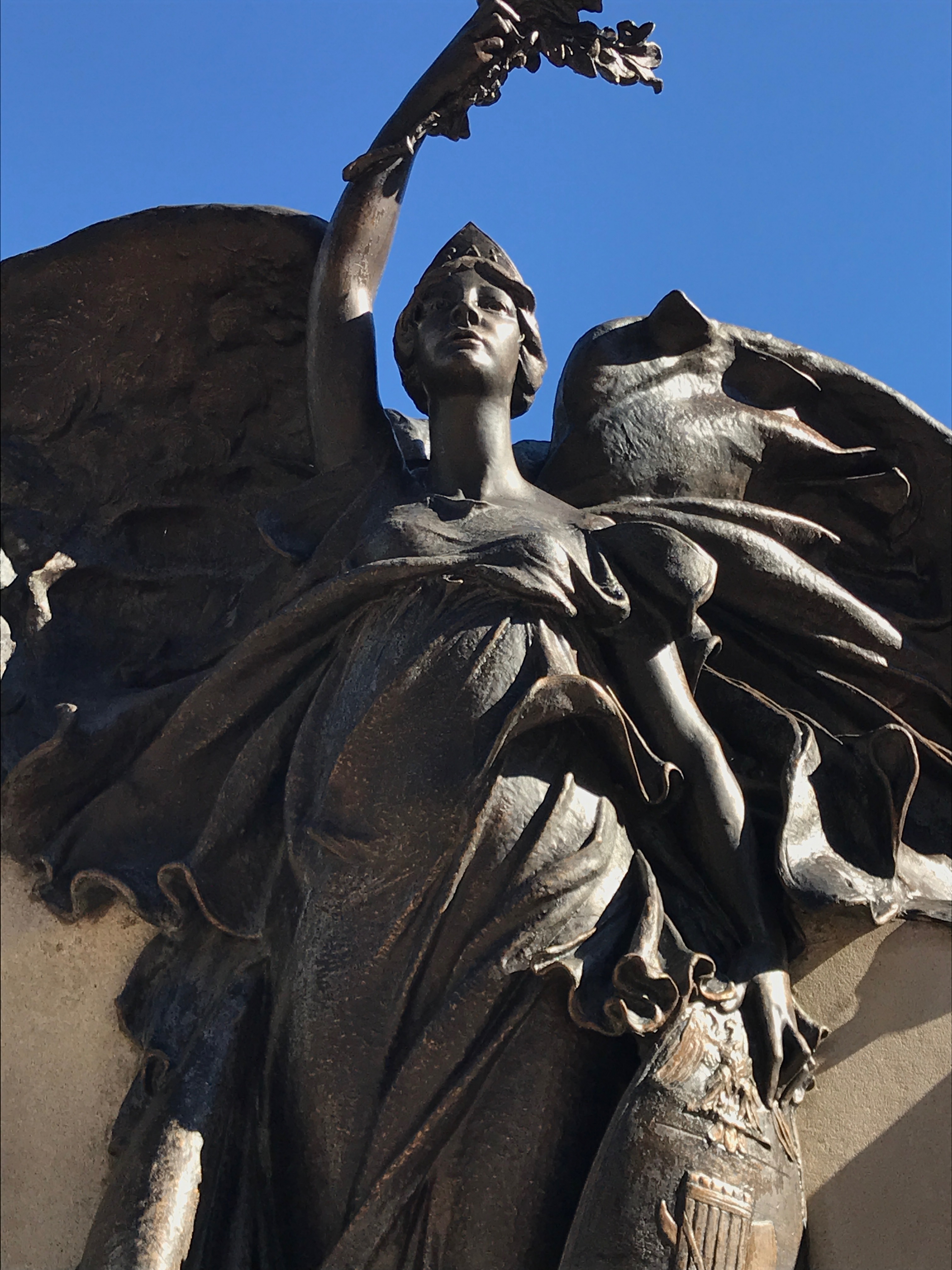
I notice that this woman is fully clad. Maybe it takes a women’s group to think of that.
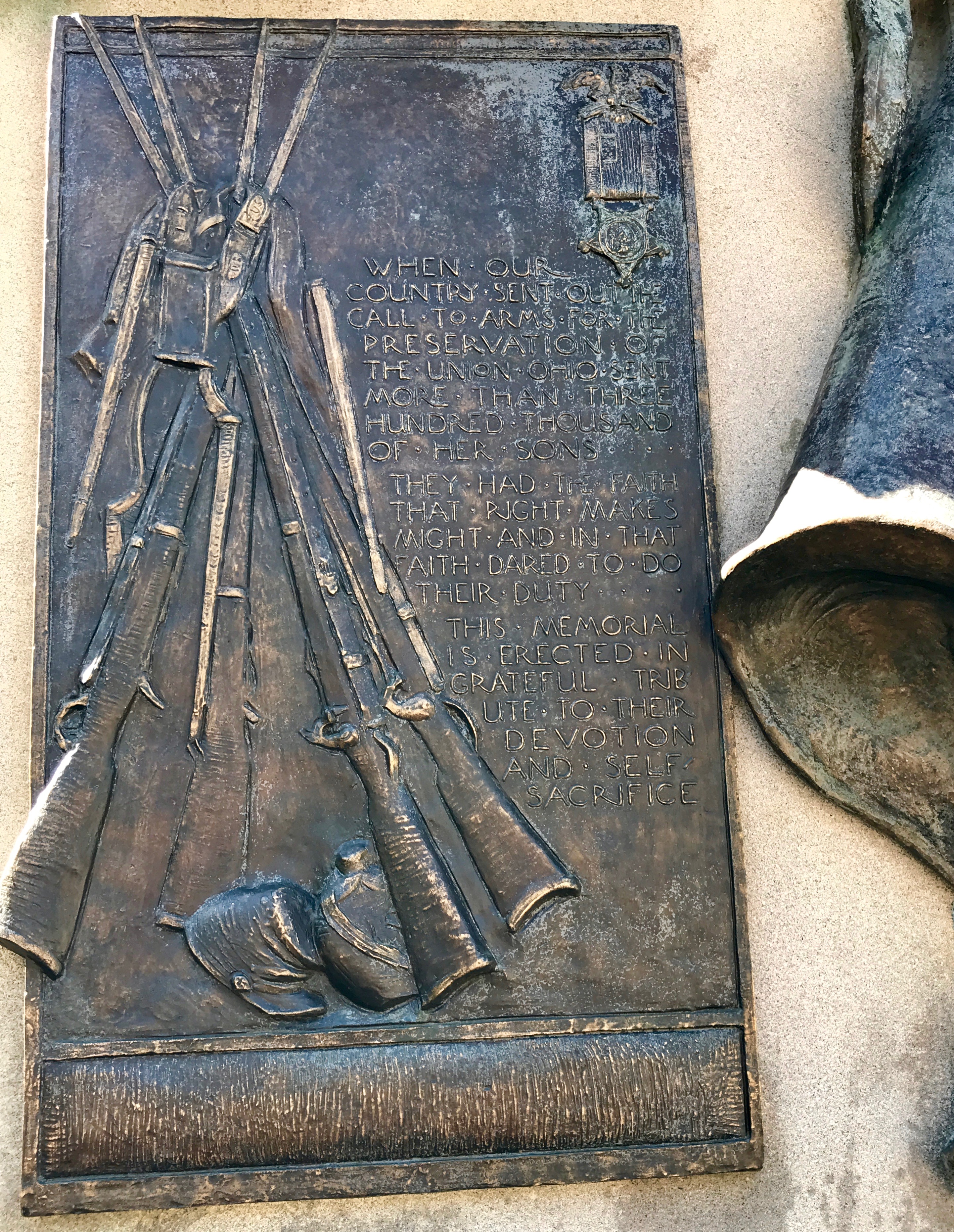
Here’s the plaque for the women.
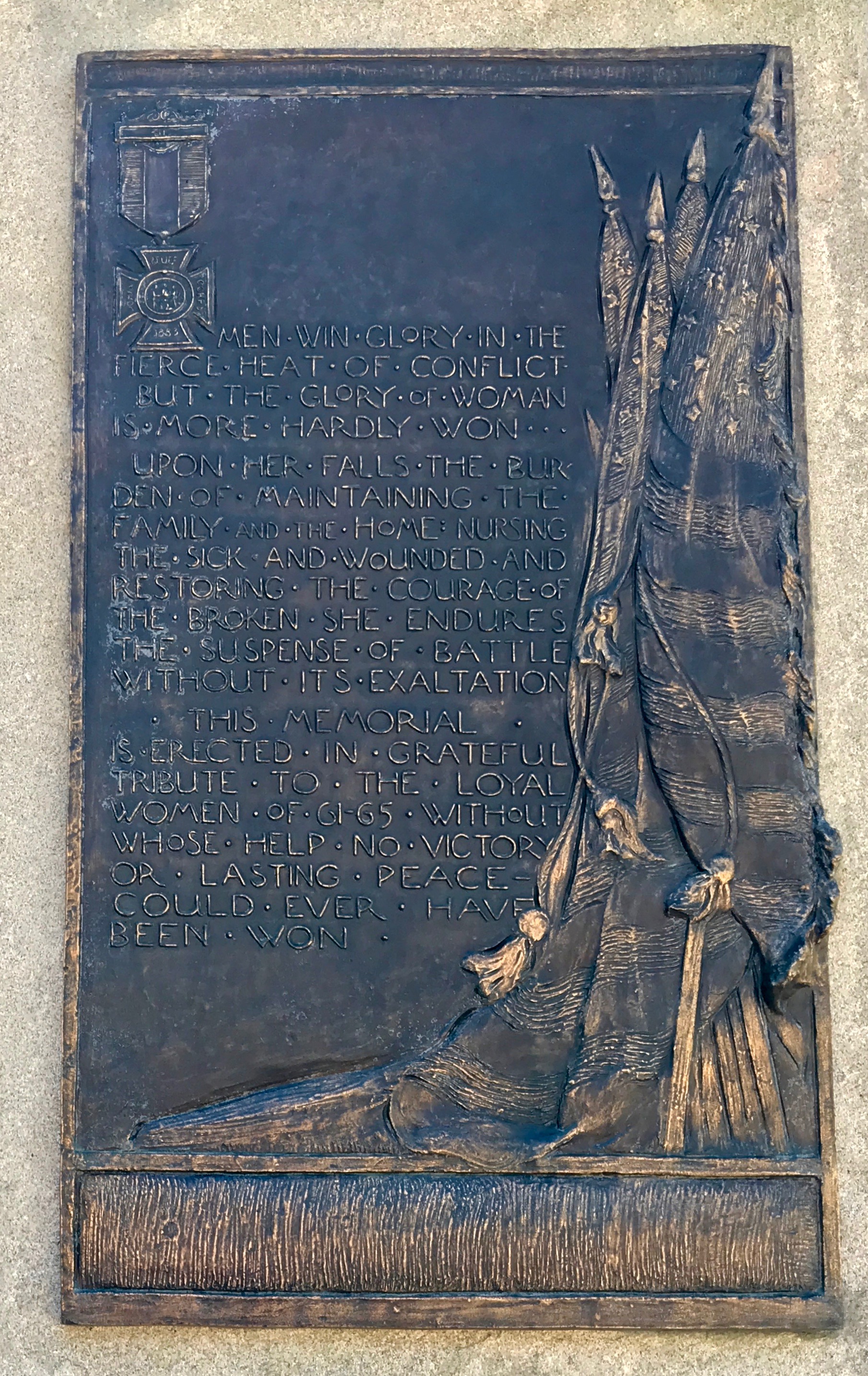
Here’s the plaque for the men.
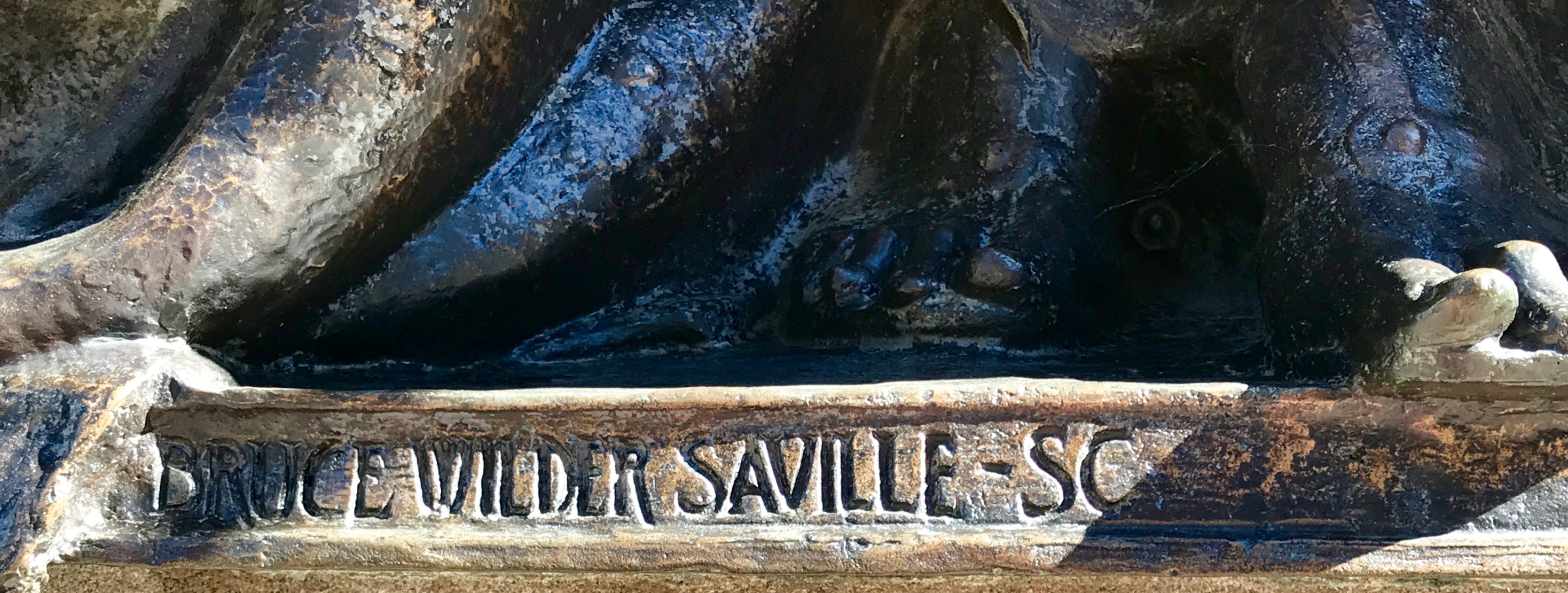
The sculptor, Bruce Wilder Saville, was a fairly prominent sculptor who was known for his monuments. From Quincy, Massachusetts, he was born in 1893 and died in 1938.
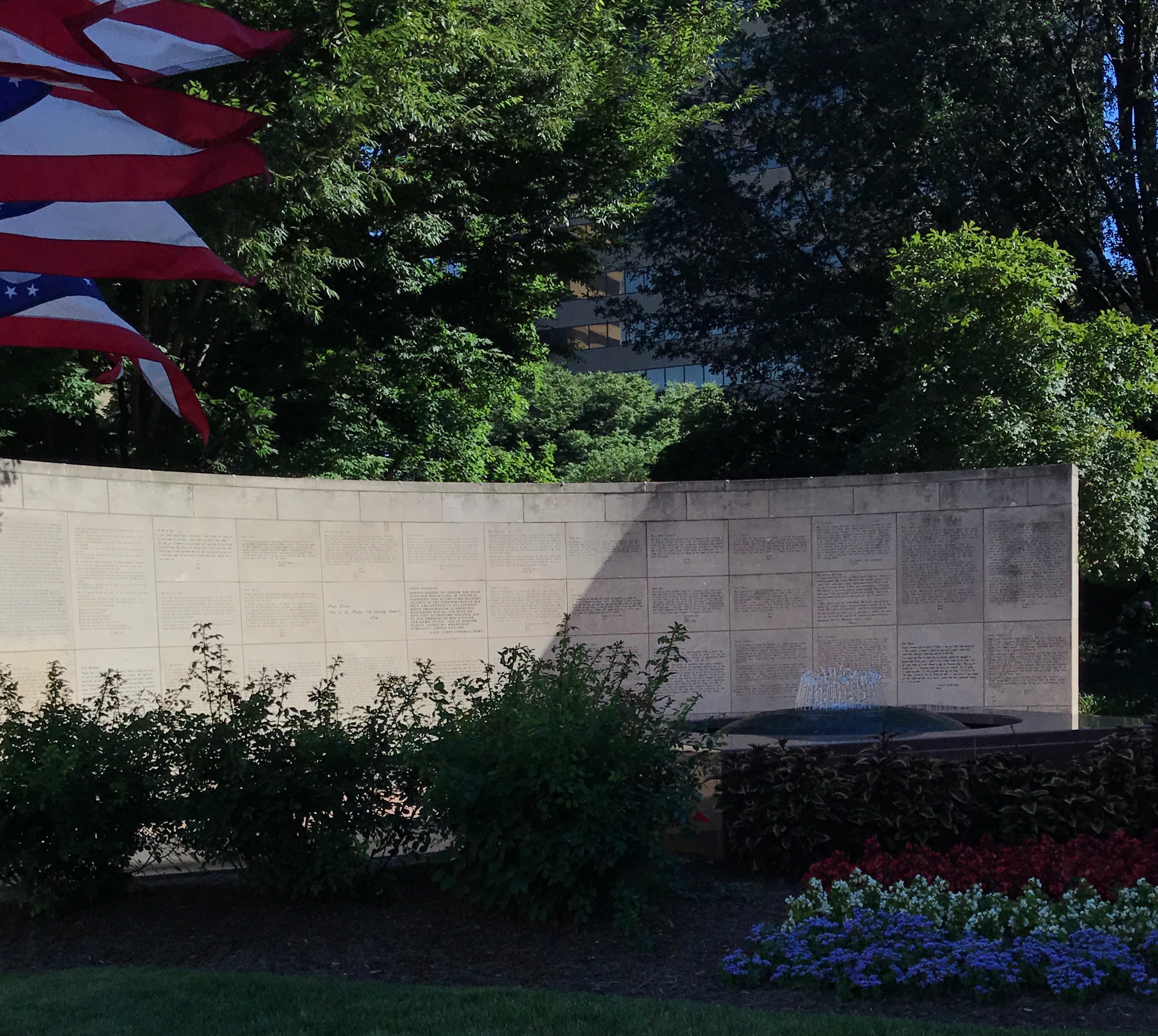
In front of the east façade is the Ohio Veterans Plaza. According to the website, “The inspiration for the Ohio Veterans Plaza is rooted in an act of civil disobedience. In 1981, two Vietnam veterans, Carl Chandler and Harry Edwards, erected under the cover of night on the Capitol grounds a hand painted four-by-eight-foot sheet of plywood as a tribute to veterans of the Vietnam War.”
A bill was passed in the legislature to install a permanent veterans’ memorial. The plaza honors Ohio men and women who have served our country since World War II, as well as those who will serve in the future.
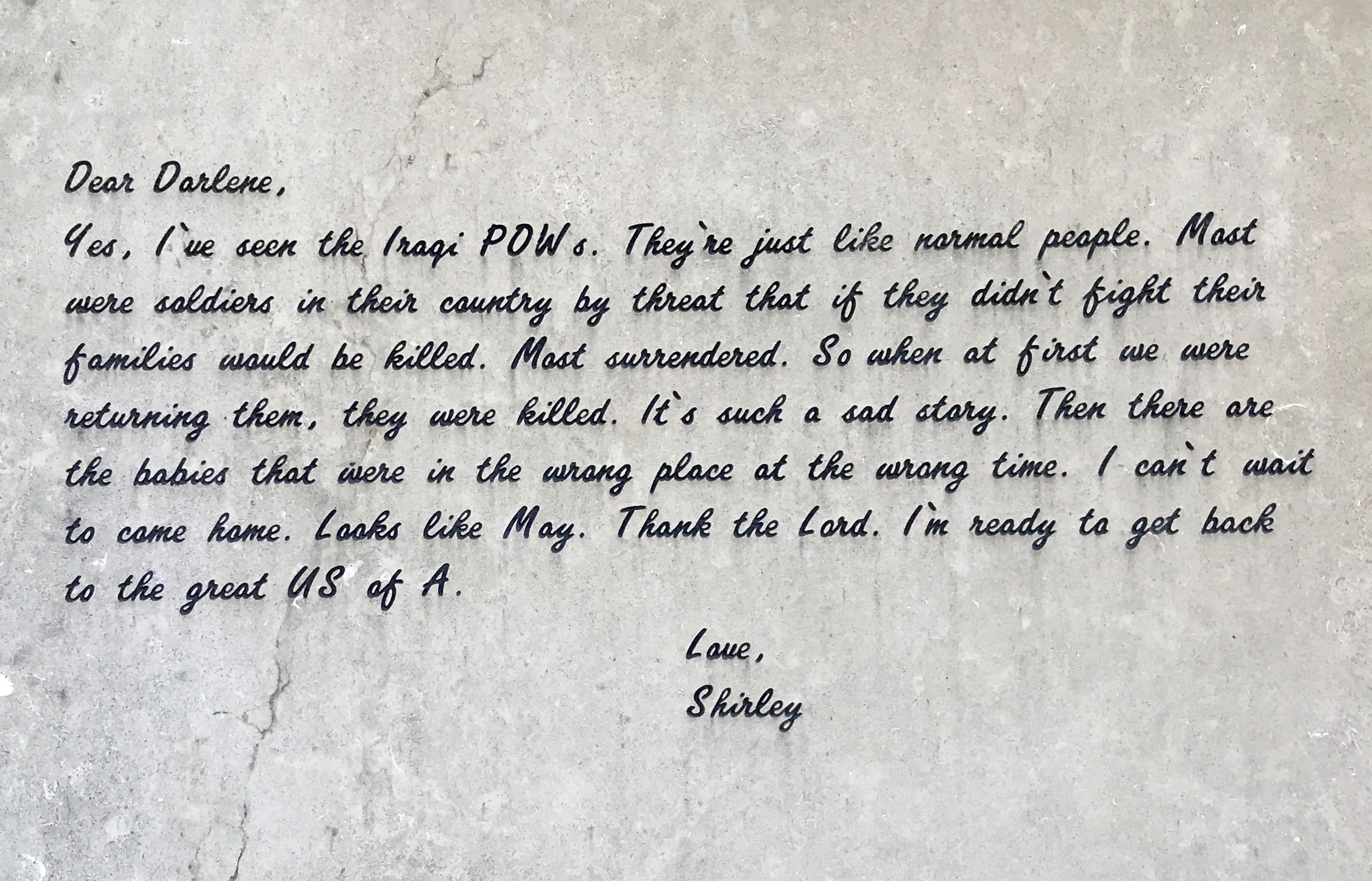
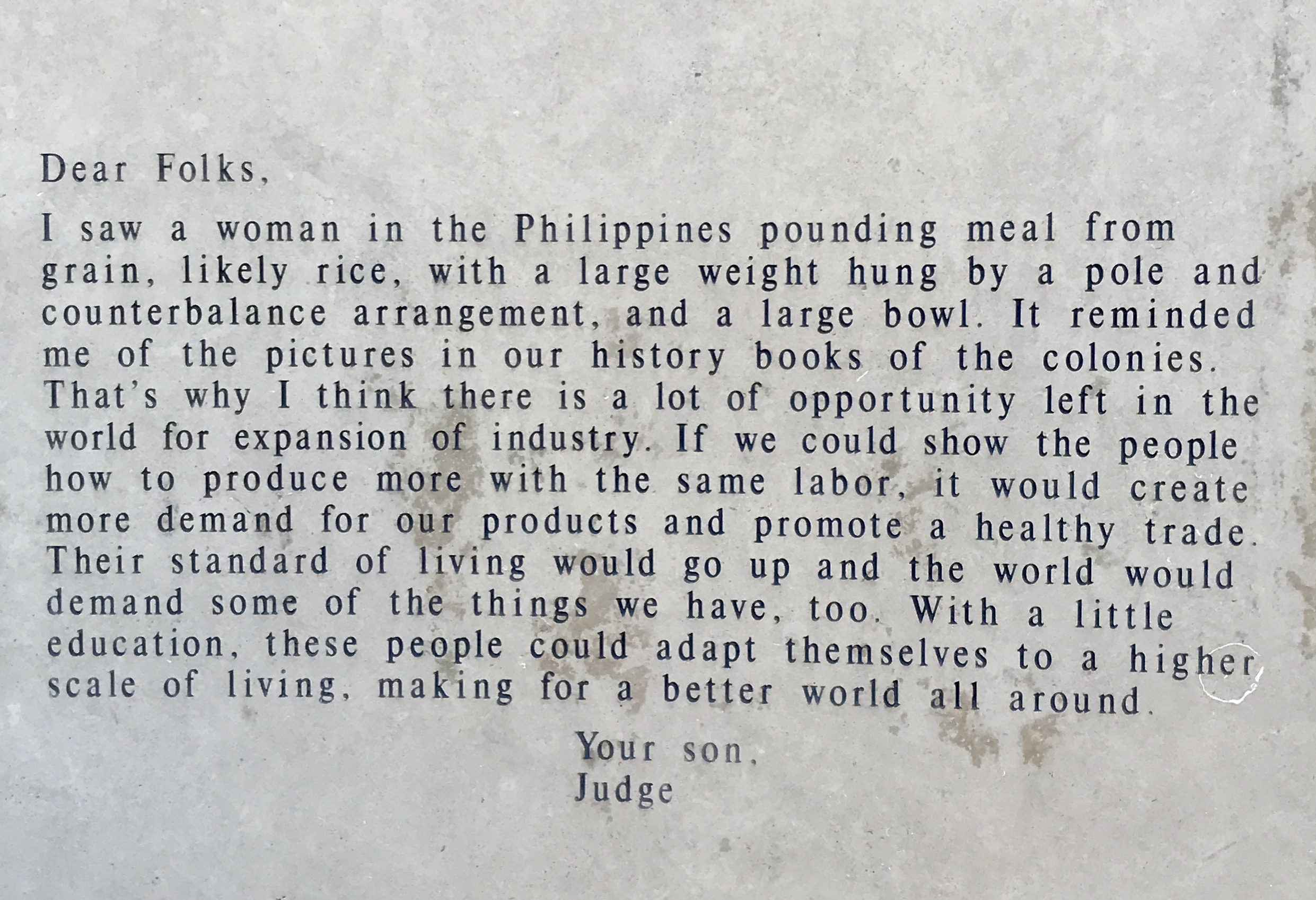
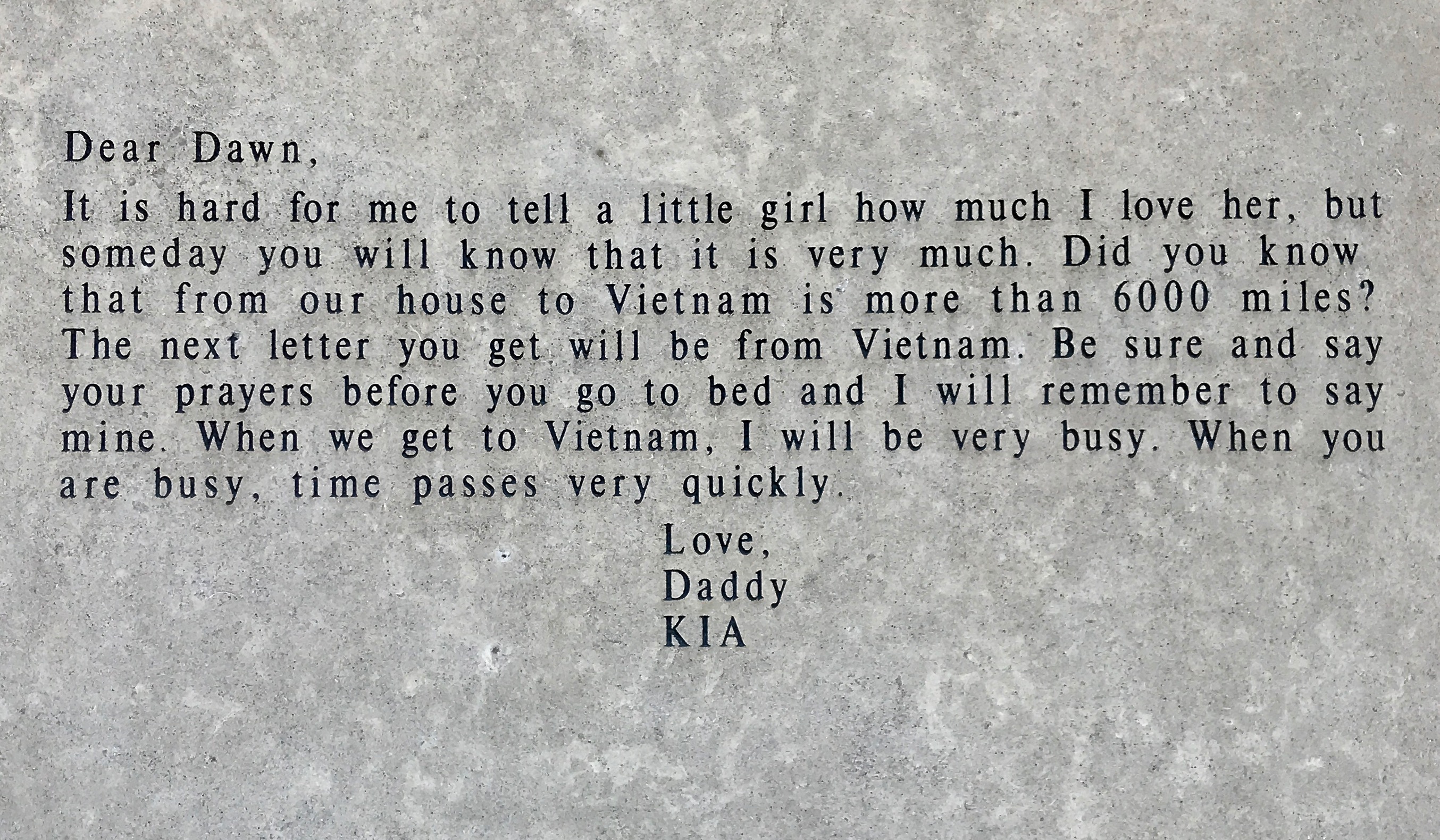
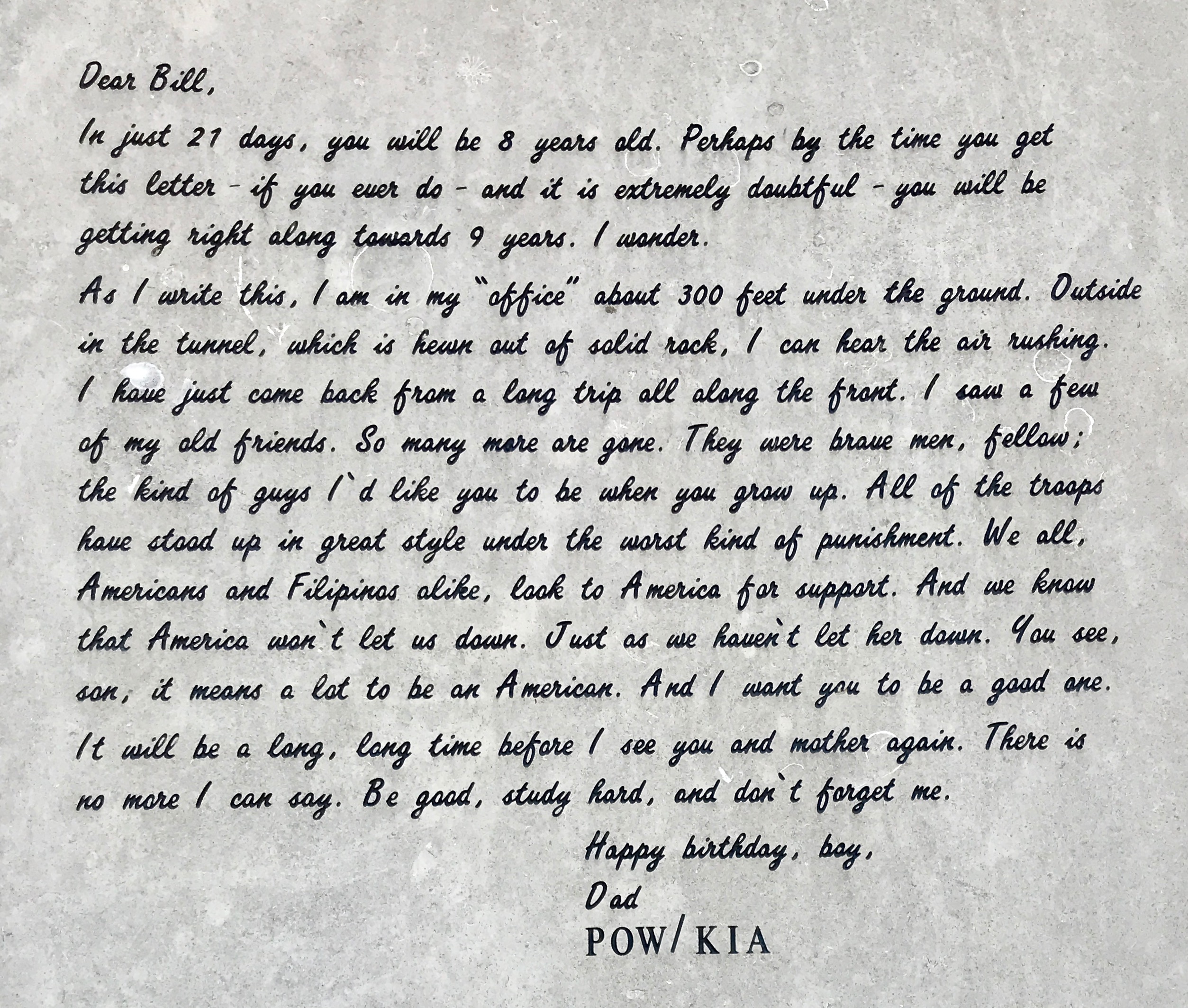
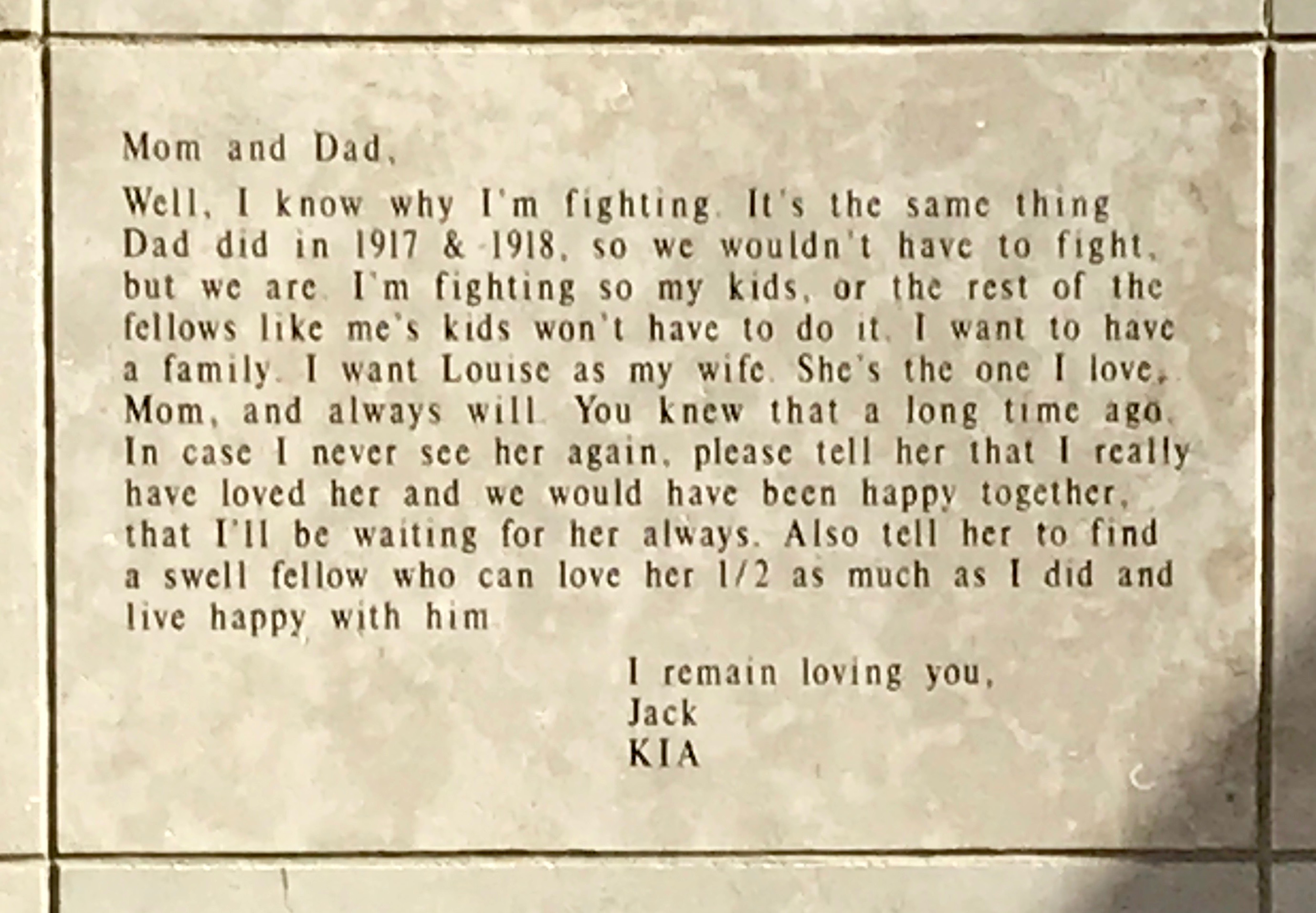
The grassy area lined with Ohio flags is flanked on either end with curved limestone walls that are inscribed with letters from the text from correspondence from Ohio military personnel .
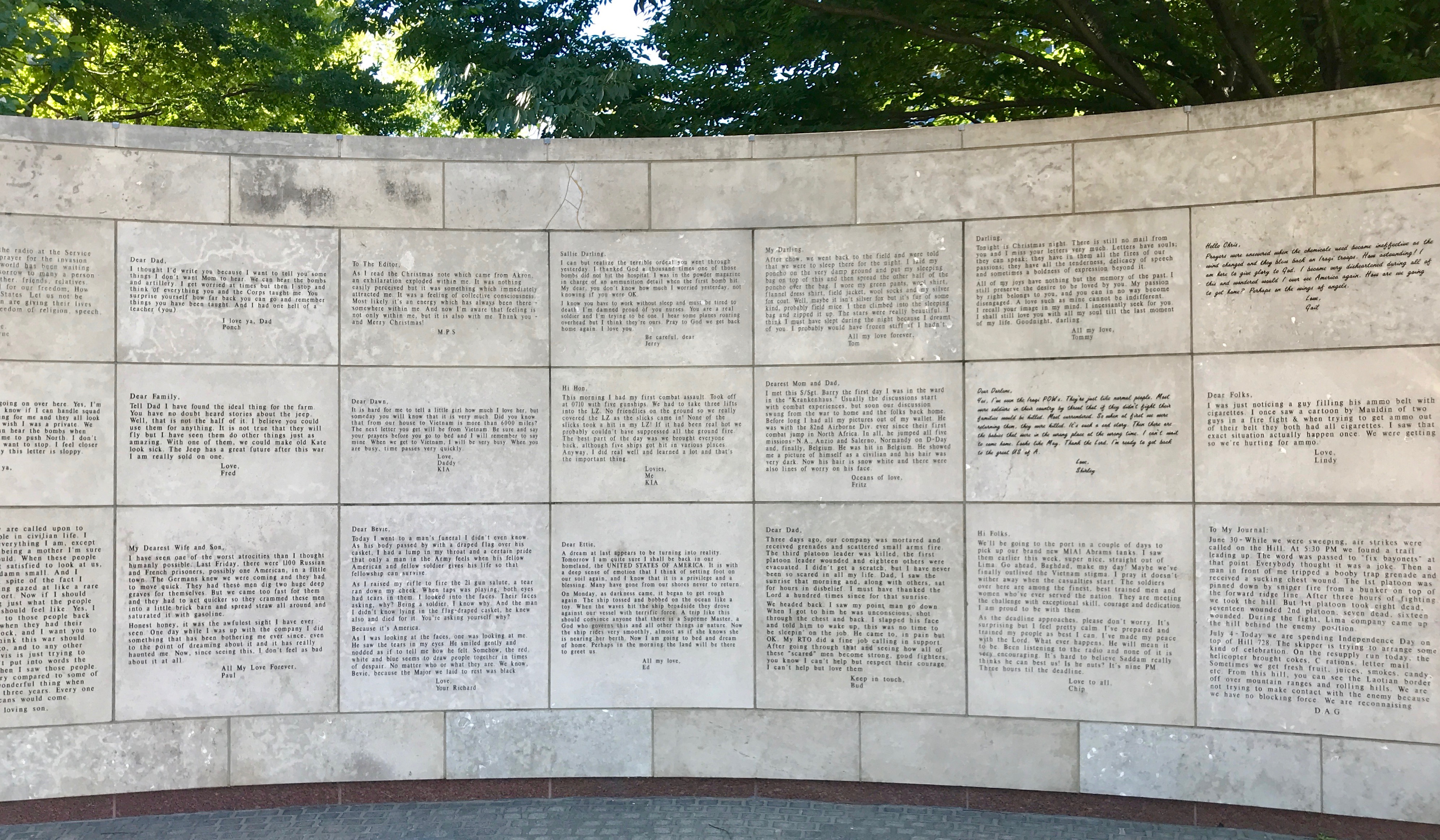
When you get closer, you can read the letters that were selected from the over 1500 letters that were contributed from Ohioan families.
Some described a bit of their experiences.
Others coupled their observations with ideas for the future.
Others were love notes to their families from soldiers that never returned, like this one…
…and this one.
This letter is heartbreaking for the things that never came to pass.
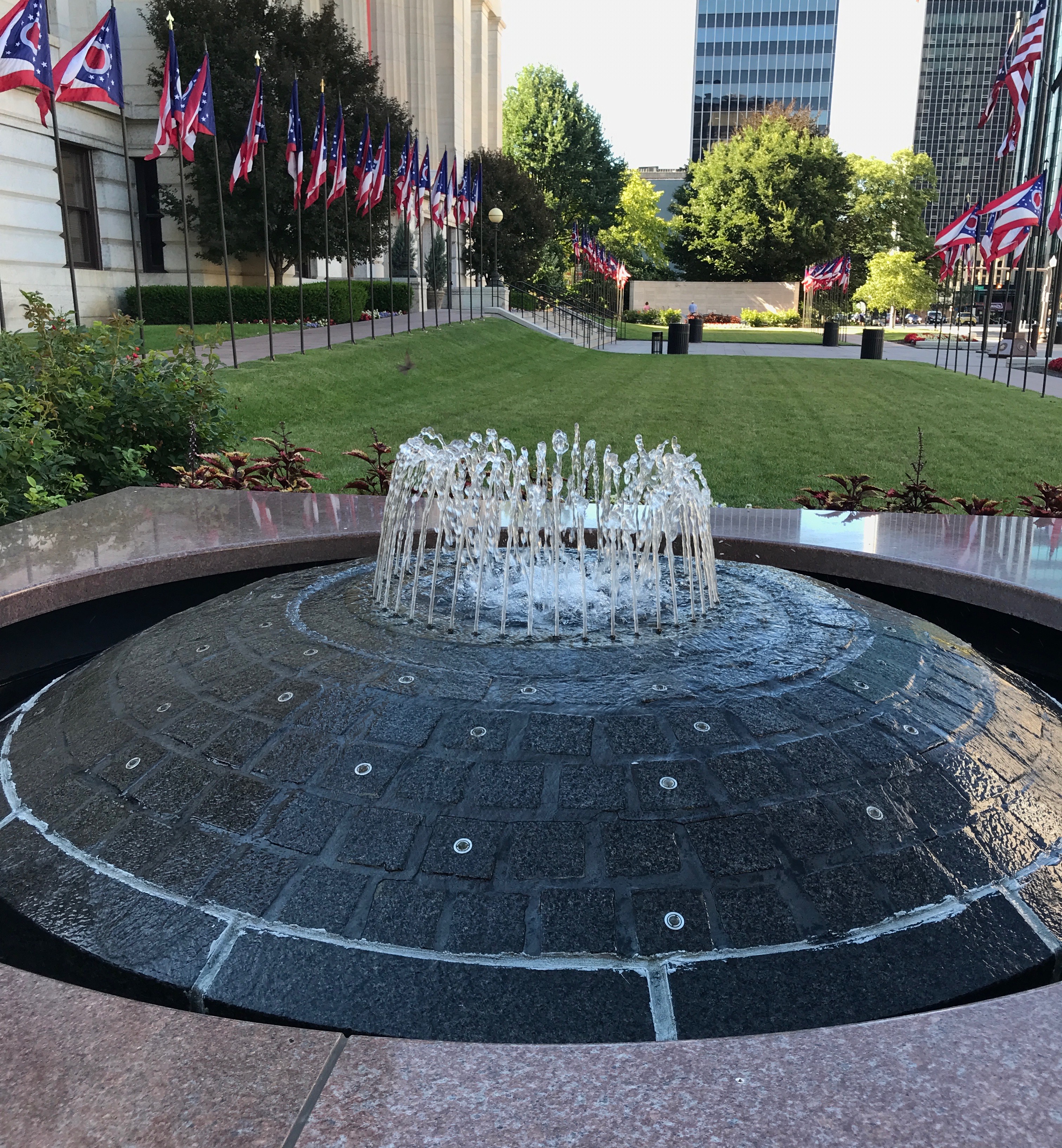
I wonder if this fountain was intended to represent the tears of the loved one, as I was feeling quite sad after reading some of these letters.
By this time I had seen about as much as any casual visitor to Capitol Square could see – without going inside. It was time to move along.
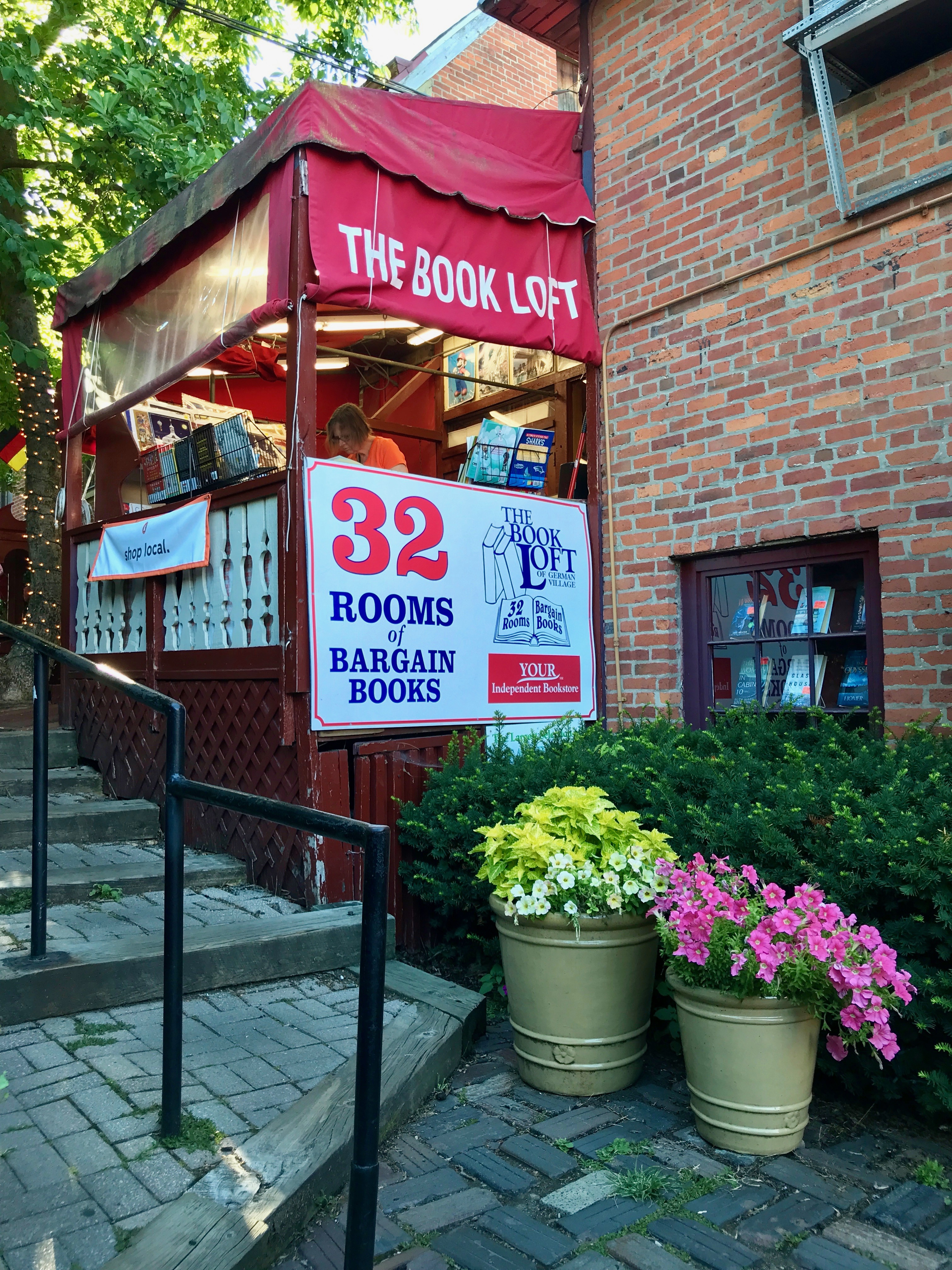
Some friends had recommended that I visit The Book Loft. It wasn’t too far away, so I headed over to see what I could see.
It was a unique store tucked into a building. I believe they really did have 32 rooms of bargain books, but I didn’t spend much time there. I looked in the windows and the entrance. It was just too crowded for my tastes, so I sat on a bench outside for a bit and enjoyed the literary ambiance.
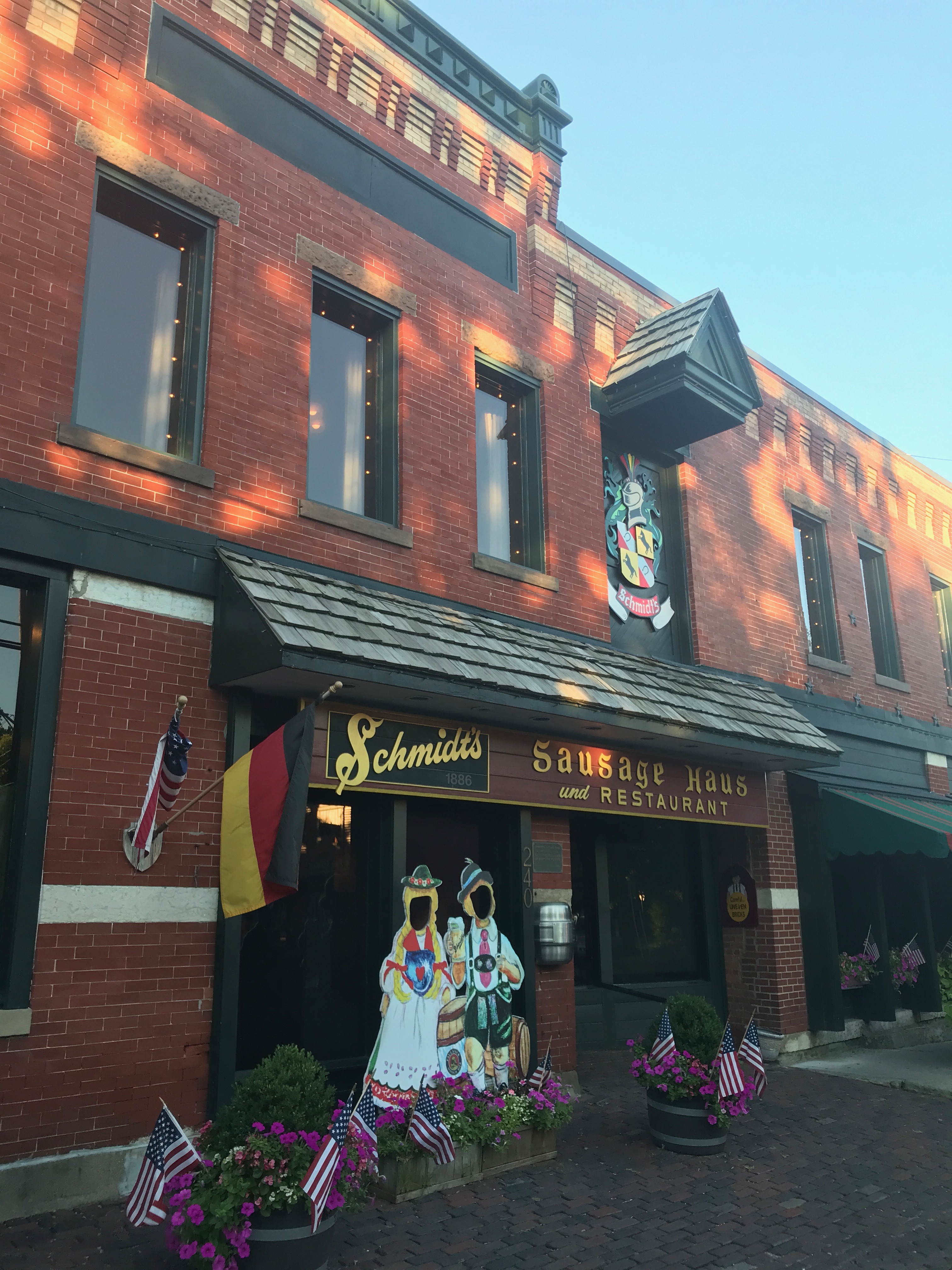
The other recommendation was that I visit German Village for some authentic German food. Since I don’t think I’d had any truly authentic German food since I was last in Germany, I decided to head to Schmidt’s Sausage Haus und Restaurant for dinner.
Since I arrived at the dinner hour on a weekend, there was quite a line up for a table. As I was dining solo, I asked if I might have a seat at the bar. They were happy to accommodate me.
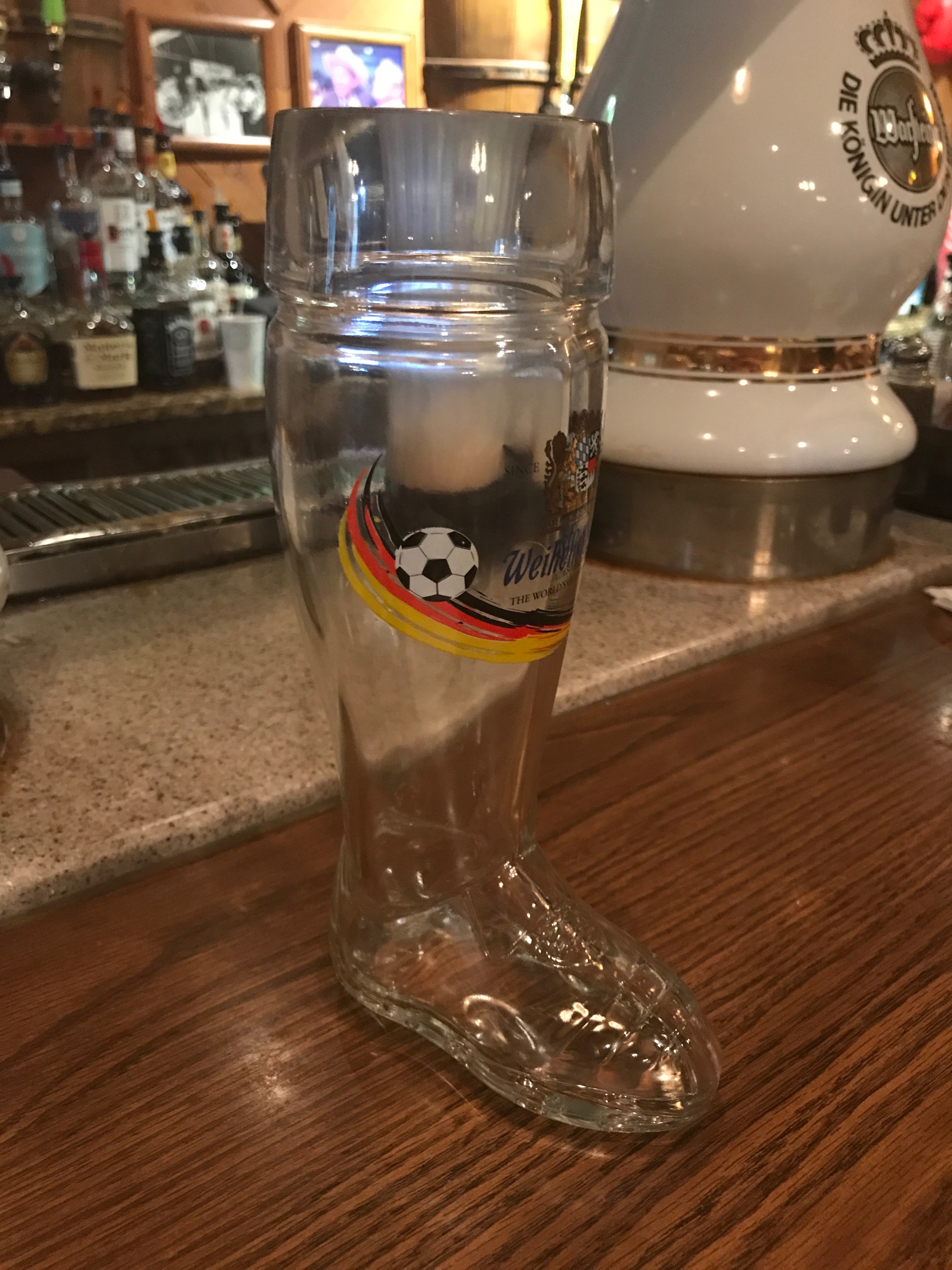
I made my selection from the menu and waited for my food to arrive. In the meanwhile, I looked around. I saw this beer boot and asked to take a photo of it.
Just in case you are wondering why beer is drunk out of a glass boot, this is what my Preferred Source has to say about it:
“Beer boots (or Bierstiefel) have over a century of history and culture behind them. It is commonly believed that a general somewhere promised his troops to drink beer from his boot if they were successful in battle. When the troops prevailed, the general had a glassmaker fashion a boot from glass to fulfill his promise without tasting his own feet and to avoid spoiling the beer in his leather boot. Since then, soldiers have enjoyed toasting to their victories with a beer boot. At gatherings in Germany, Austria and Switzerland, beer boots are often passed among the guests for a festive drinking challenge. Since the movie Beerfest appeared in 2006, beer boots have become increasingly popular in the United States.”
I’d seen them before, but I assumed they were mostly intended for consuming mass quantities of beer.
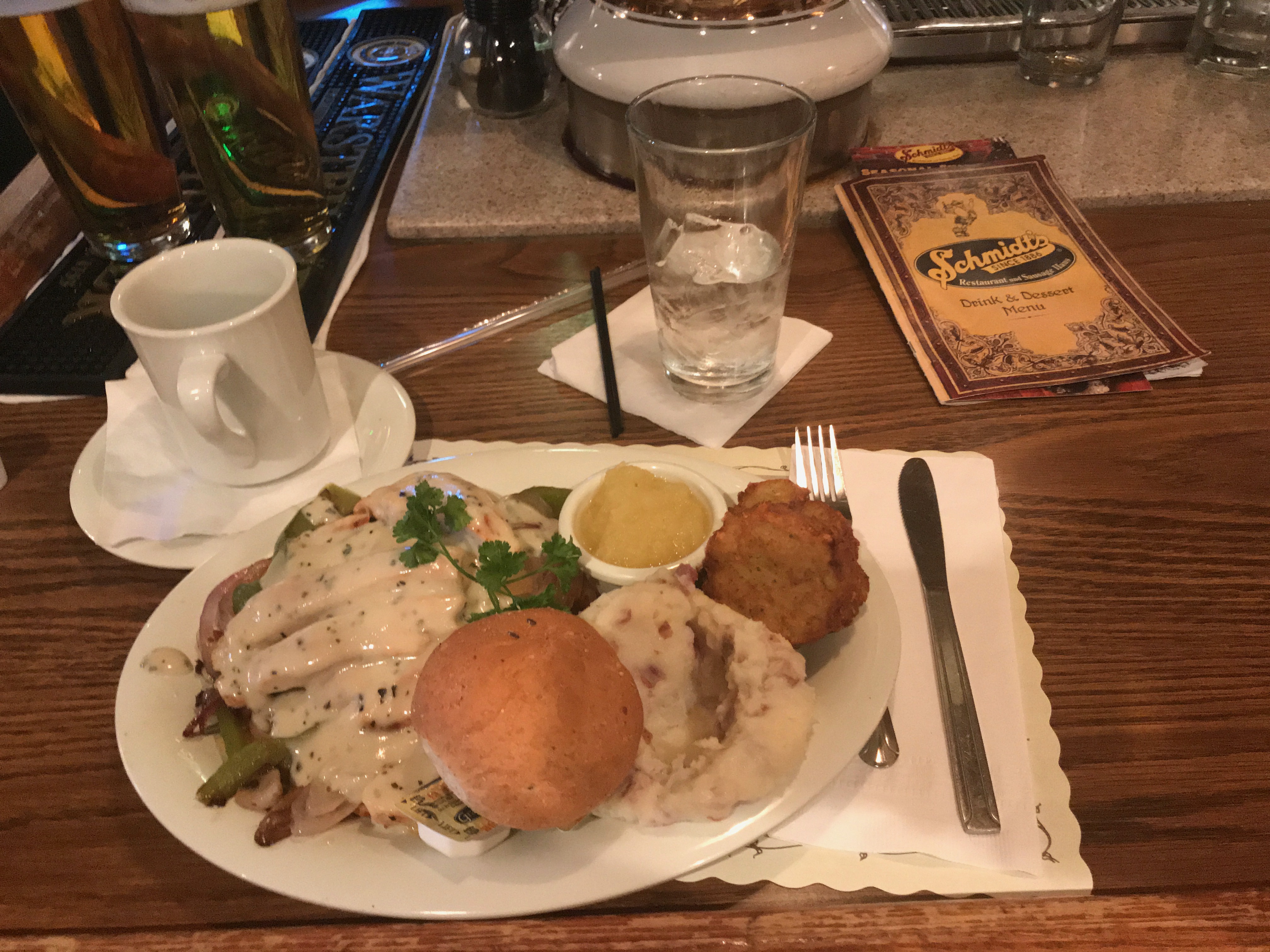
While it was fun gazing at the memorabilia and watching the waiters charging in and out of the kitchen, I was happy when my food arrived at last.
It was quite heavy fare. I sampled everything, but I definitely didn’t join the Clean Plate Club for that meal. That plate looked like it could easily have provided the calories necessary for a small family. But, do I let calorie content stop me?
I do not!
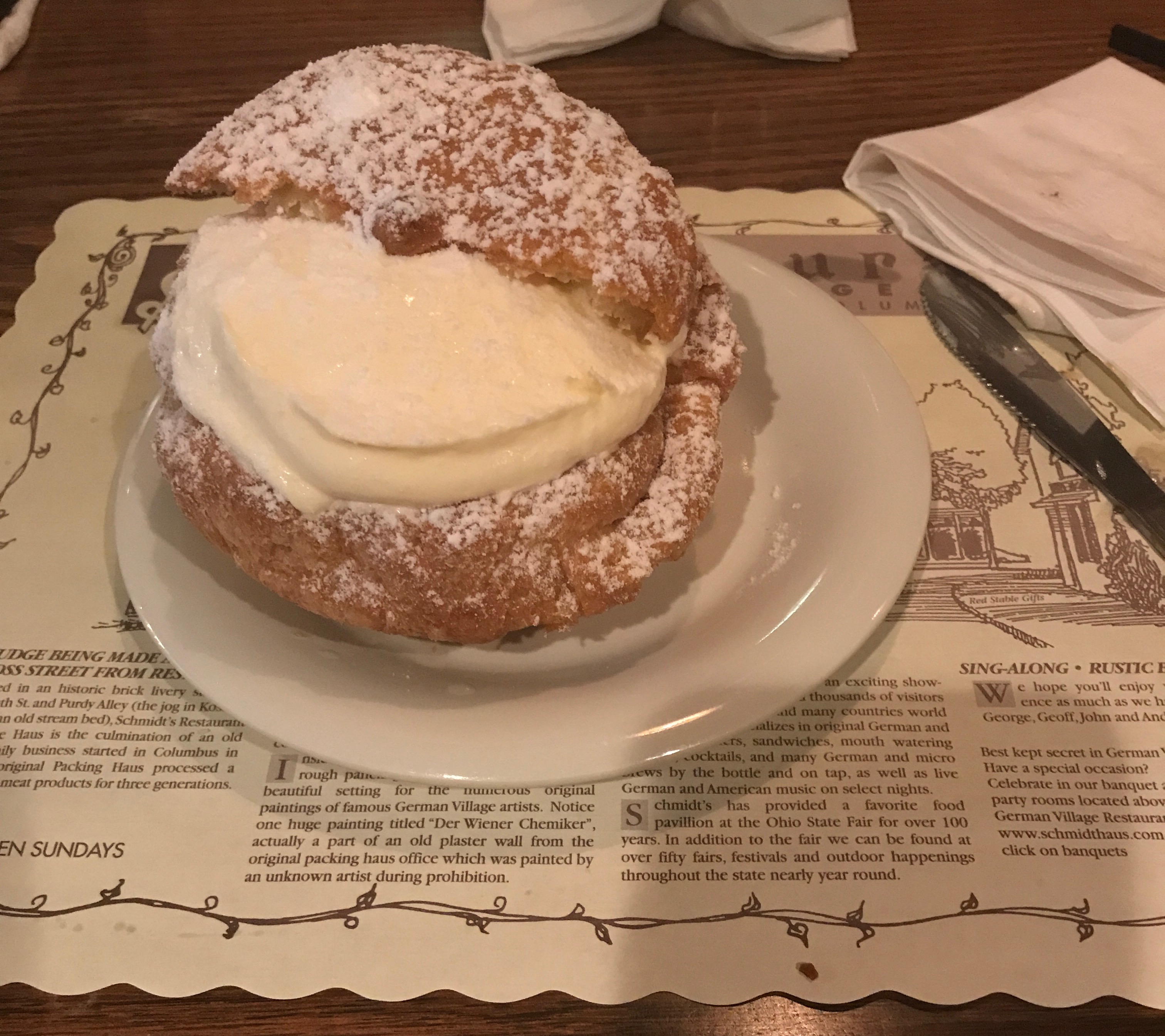
I had to order the Jumbo Cream Puff that people had also urged me to sample. This is how the restaurant’s menu describes it:
“Our famous half pound, award-winning combination of special whipped filling in a lightly baked pastry shell.”
It was enormous! (I didn’t finish the, either.)
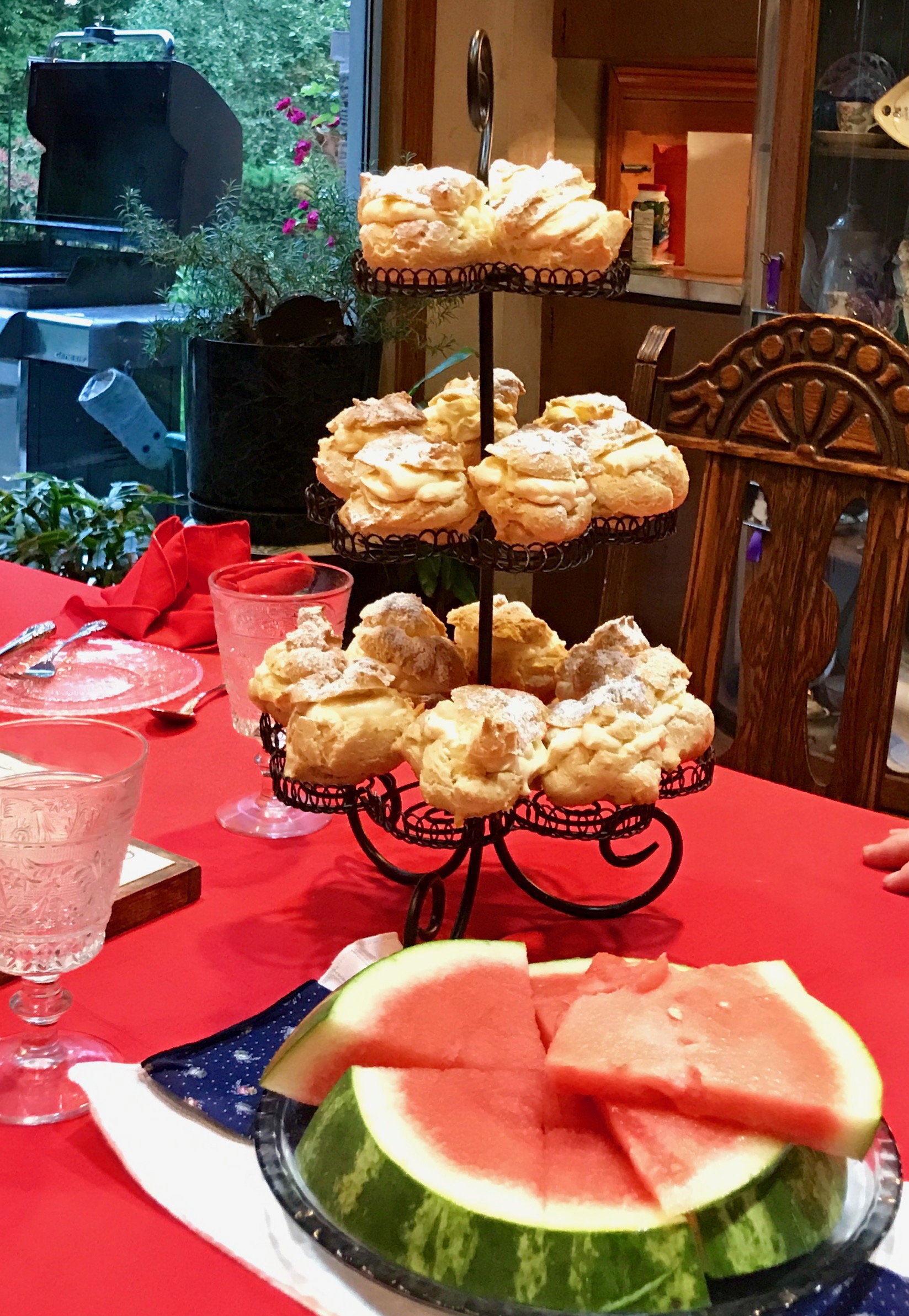
Truth be told, I much prefer my friend Ruth’s cream puffs. They are not a half pound, but, man, are they delicious!
With that it was time to head back to wherever I had parked for the weekend. Time for laundry, rest and preparing for the coming week.
As I mentioned in my last post, the weekend was here and I was spending it with friends.
There’s nothing better than time spent with old friends! We did a lot of hanging out and chilling. Even though it was the Fourth of July weekend, DC had some work obligations, but Ron and I played tourist a bit.
It was a laid back weekend, but Ron and I managed to find something of historic significance to do.
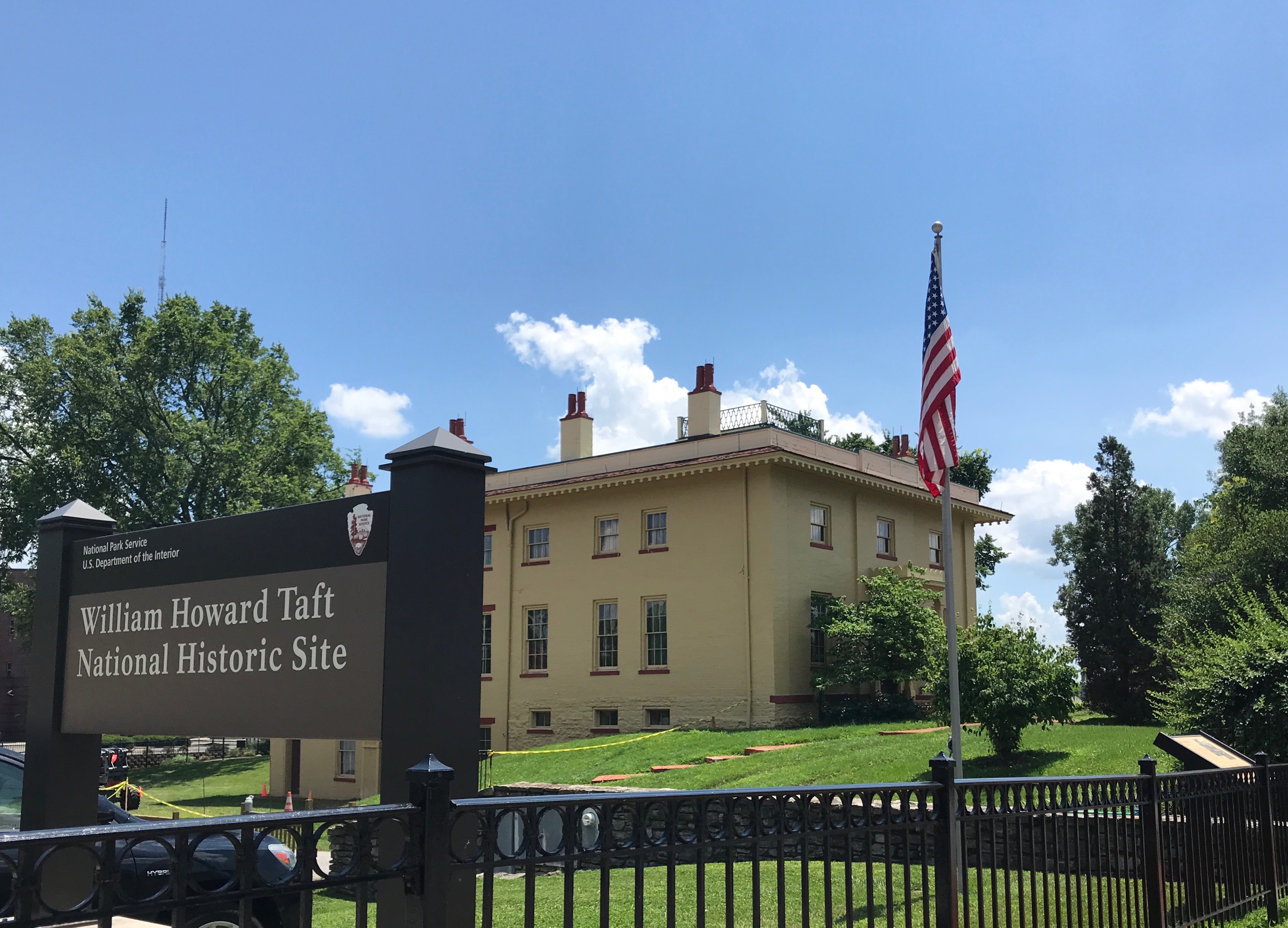
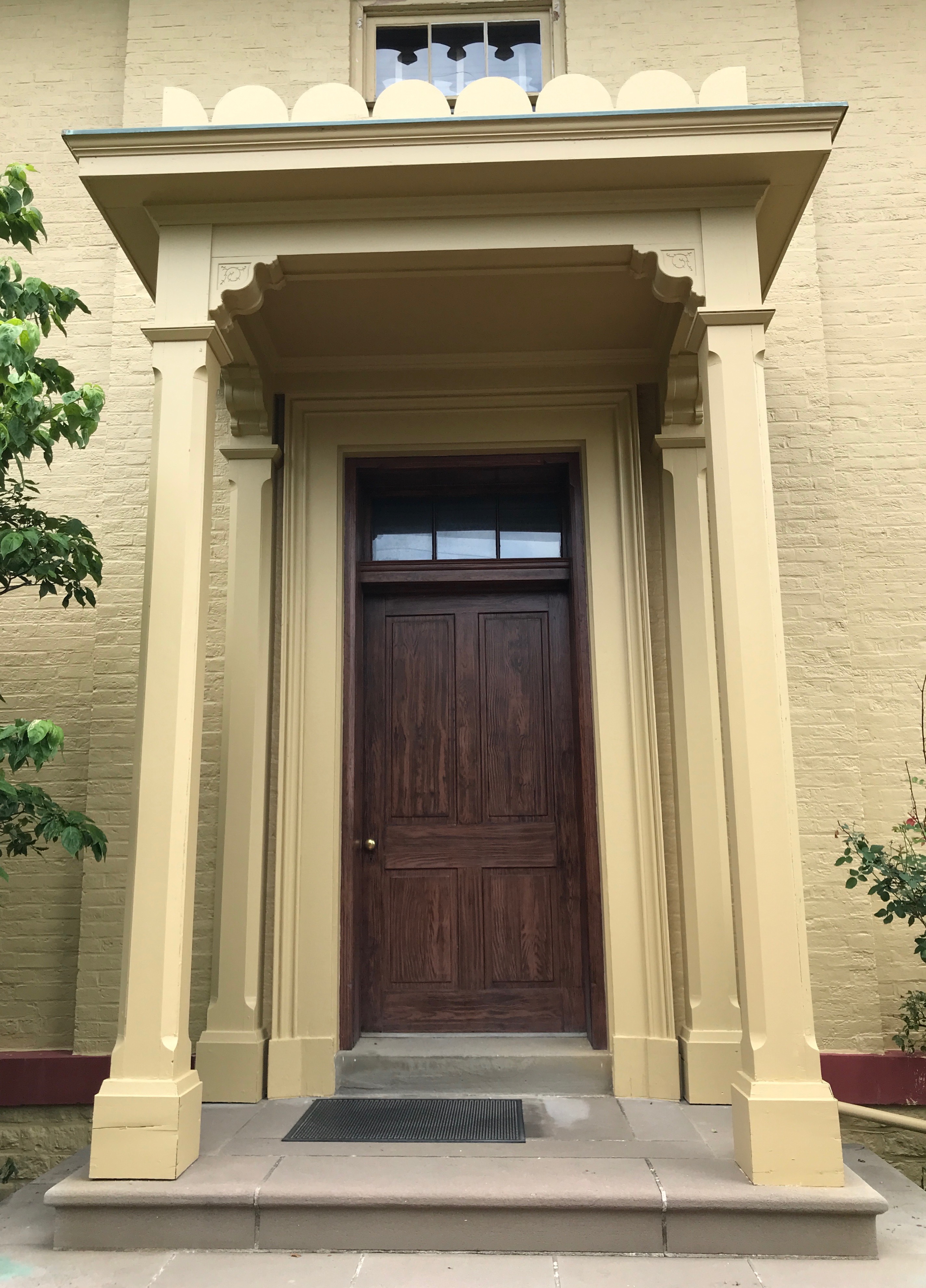
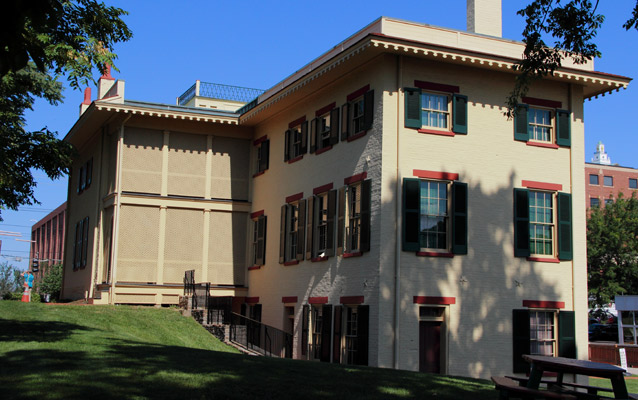
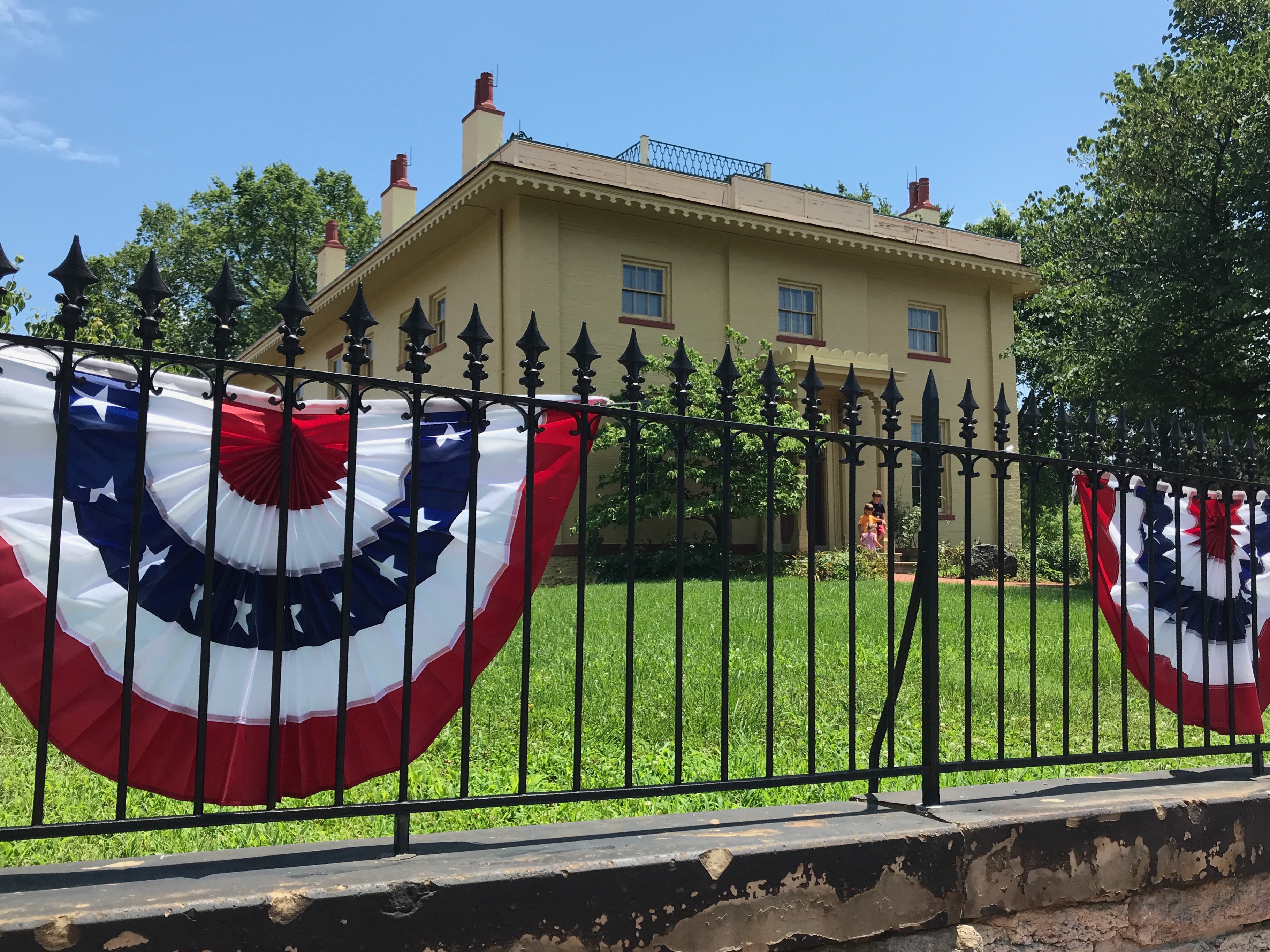
He was born in this Greek revival house on September 15, 1857, high atop one of Cincinnati’s most prominent hilltops. His father, Alphonso Taft, was a U.S. Attorney General and Secretary of War, so he had quite the role model. He attended Yale, like his father, and was also a member of Skull and Bones, like dear ol’ dad.
The house was built in 1840, and Alphonso bought it for his growing family in 1851. He added an addition on to the original structure. William and his six siblings must have been a lively bunch. He lived here until he went to Yale in 1874. The Taft family lived in the house until 1889, when Alphonso and his wife moved to San Diego due to his failing health. Alphonso died in 1891, but it stayed in the Taft family until 1899 when his widow was finally able to sell the house.
Interestingly, my Preferred Source says that the Taft family was not wealthy. This house is described as a “modest” home in the suburb of Mount Auburn. His father, in addition to being part of President Ulysses S. Grant’s cabinet, was also a judge and an ambassador.
Personally, I would consider the family to be fairly well-heeled.
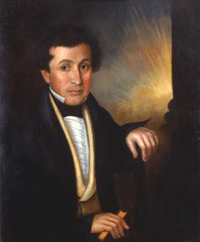
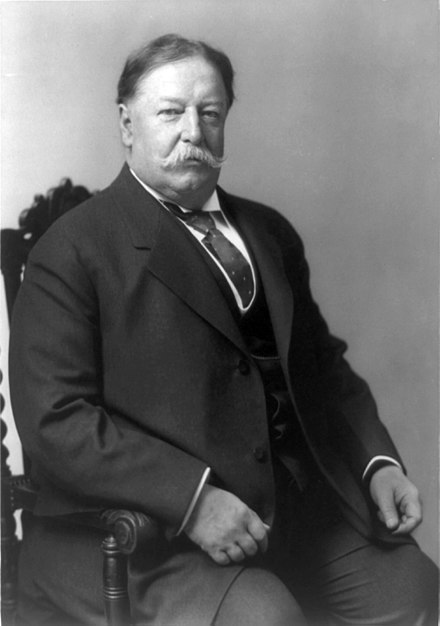
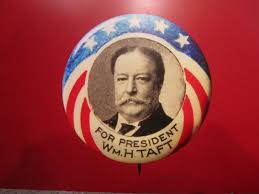
I have included this photo of President Taft, just in case you couldn’t remember what he looked like.
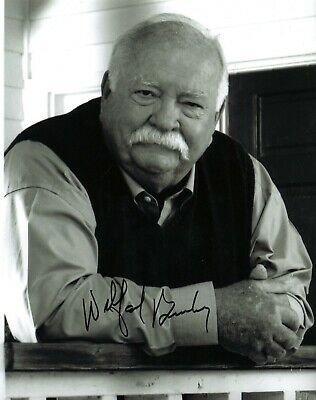
I do believe Wilford Brimley could have played him in a biopic, though.
Since I couldn’t remember anything much about Taft, I had to look up some information about him. He had quite the career.
When he passed the bar, he served as a lawyer and assistant prosecutor of Hamilton County, where Cincinnati is located. President Chester A. Arthur appointed him Collector of Internal Revenue for Ohio’s first district, but quit because he refused to fire competent employees who were politically out of favor.
His next big job was as judge on the Superior Court of Cincinnati.
Taft’s major professional goal was a seat on the Supreme Court of the United States. Ohio Governor Foraker suggested that President Harrison appoint Taft to fill a vacant seat. In 1889 Harrison appointed him, but not to the Supreme Court. He was appointed Solicitor General of the United States and removed to Washington.
In 1891, Taft was appointed as a judge to the Sixth Circuit, which was based in Cincinnati. These appointments are for life, just like the appointments to the Supreme Court. Somewhere along the way, he became dean and Professor of Property at his alma mater, the Cincinnati Law School. I wonder if this was considered to be moonlighting?
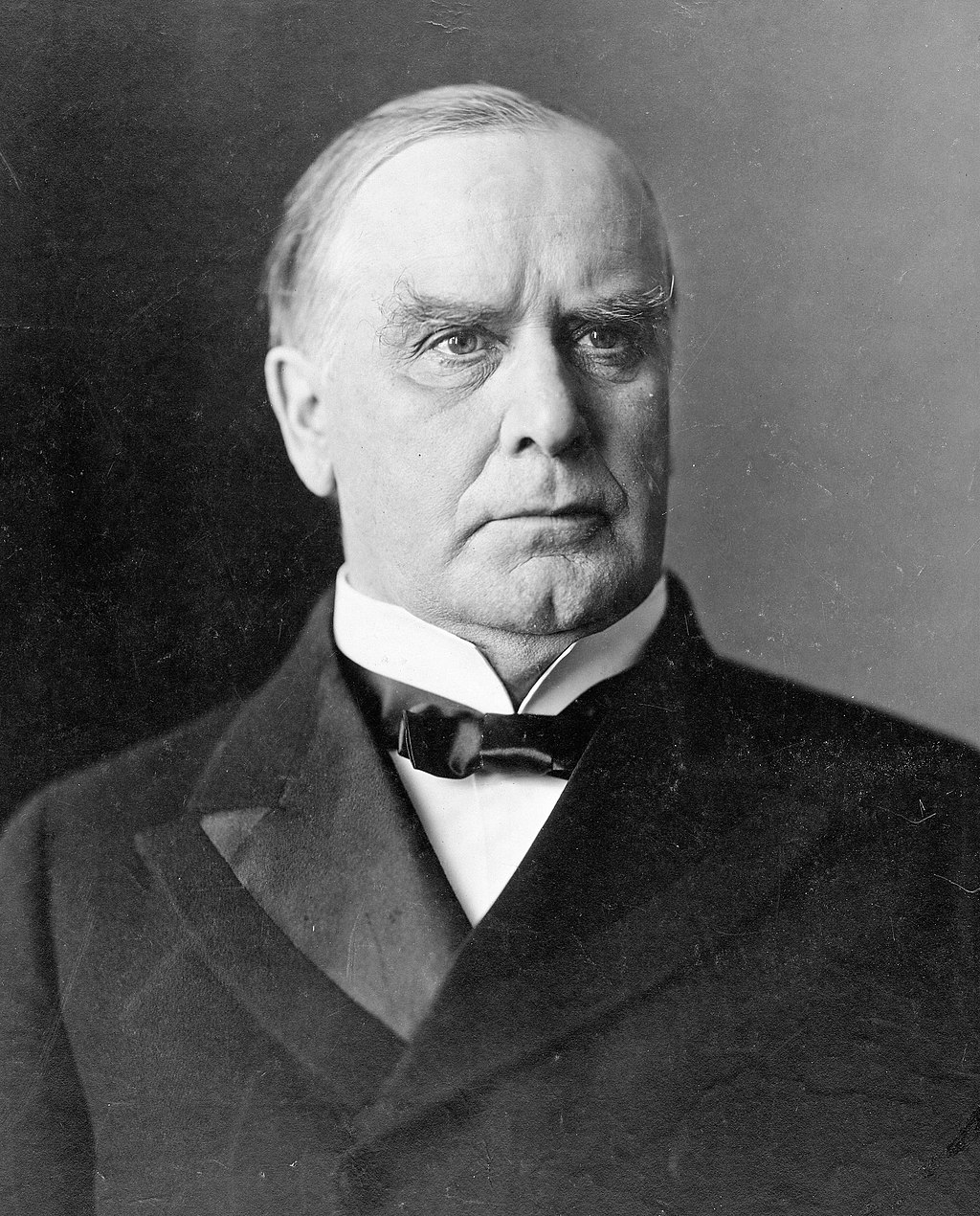
Ohio Governor William McKinley was elected president in 1896.
In 1898, a place on the Supreme Court opened. I imagine that Taft must have thought he had a good shot at the seat, as they were both from Ohio, but McKinley appointed Joseph McKenna.
In 1900, McKinley summoned Taft to Washington. Taft again hoped that a Supreme Court appointment was in the works. Instead, McKinley placed Taft on a commission to organize a civilian government in the Philippines. The appointment would require that Taft resign from the bench, but the president assured him that if he fulfilled this task, McKinley would appoint him to the next vacancy on the high court.
Unfortunately for Taft, McKinley only had one vacancy on the Supreme Court during his term. His presidency was cut short by Leon Czolgosz, who shot him at point blank range at the Pan-American Exposition in Buffalo in 1901.
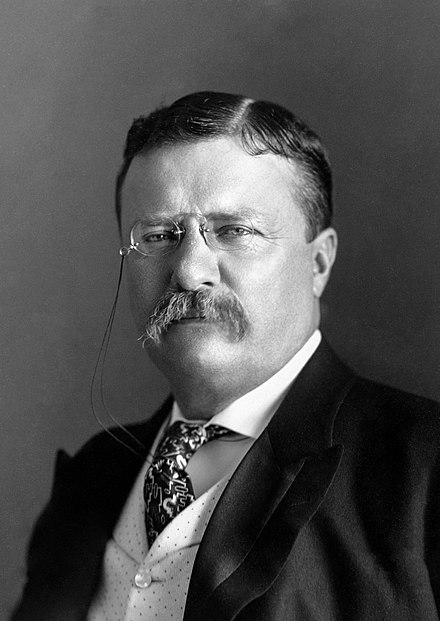
Theodore Roosevelt became president.
Hmm…Perhaps a young Wilford Brimley?
In late 1902, Taft heard from Roosevelt that a seat on the Supreme court would soon fall vacant. Roosevelt wanted Taft to fill it. Even though this was Taft’s lifelong professional goal, he refused the nomination, as he felt that his work in the Philippines was not yet complete. In 1904, Roosevelt asked him to become Secretary of War. As the War Department administered the Philippines, Taft would remain responsible for the islands.
After consulting with his family, Taft agreed and sailed for the United States in December 1903.
Personally, I imagine that his family started packing before the words were out of his mouth. The climate there is characterized by relatively high temperatures, oppressive humidity and plenty of rainfall. Remember that this was before the invention of air conditioning.
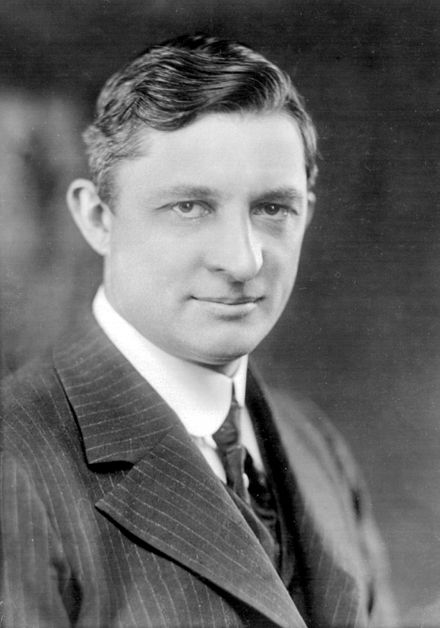
Willis Carrier, Buffalo boy made good, submitted drawings for what became recognized as the world/s first modern air conditioning system. That didn’t happen until 1902, and it was developed for a factory, not for home use.
Roosevelt completed three years of McKinley’s term and won election in his own right in 1904. On the night of his election, he pledged not to run for re-election in 1908. Although Roosevelt came to regret his promise, he stuck by his word. Taft was elected in 1908.
Taft was president from 1909 – 1913. Things happened. There are far too many to recount here. If you are interested in learning more, my Preferred Source is a good place to start.
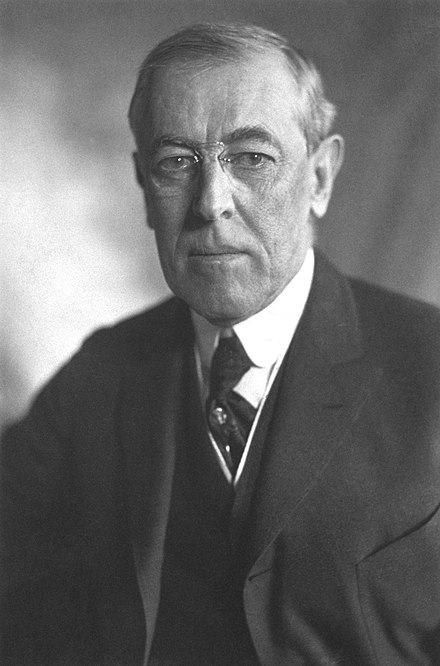
in 1913, Woodrow Wilson became the 28th president of the United States.
After leaving office, Taft was faced with a dilemma. At 56, with no pension or other compensation to expect from the government, he had to figure out how to support himself. The Former Presidents Act, which provides lifetime benefits to presidents who were not removed from office, wasn’t passed until 1958.
He considered returning to the practice of law. However, since he had appointed many federal judges, including a majority of the Supreme Court, this would raise questions of conflict of interest at every federal court appearance. His problem was solved when Yale invited him to be the Kent Professor of Law and Legal History. He also earned money with paid speeches and articles for magazines, and ended his eight years out of office having increased his savings.
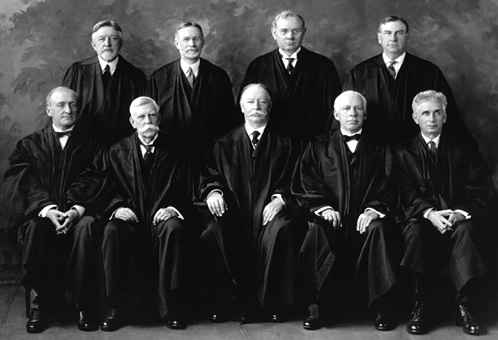
In 1921, Taft finally achieved his lifelong career goal. Warren G. Harding appointed him as chief justice.
Taft’s health declined during the time he was Chief Justice. He died in his home in Washington D.C. on March 8, 1930.
His birthplace was established as a national historic site in 1969 when President Richard Nixon signed the legislation authorizing the William Howard Taft National Historic Site.