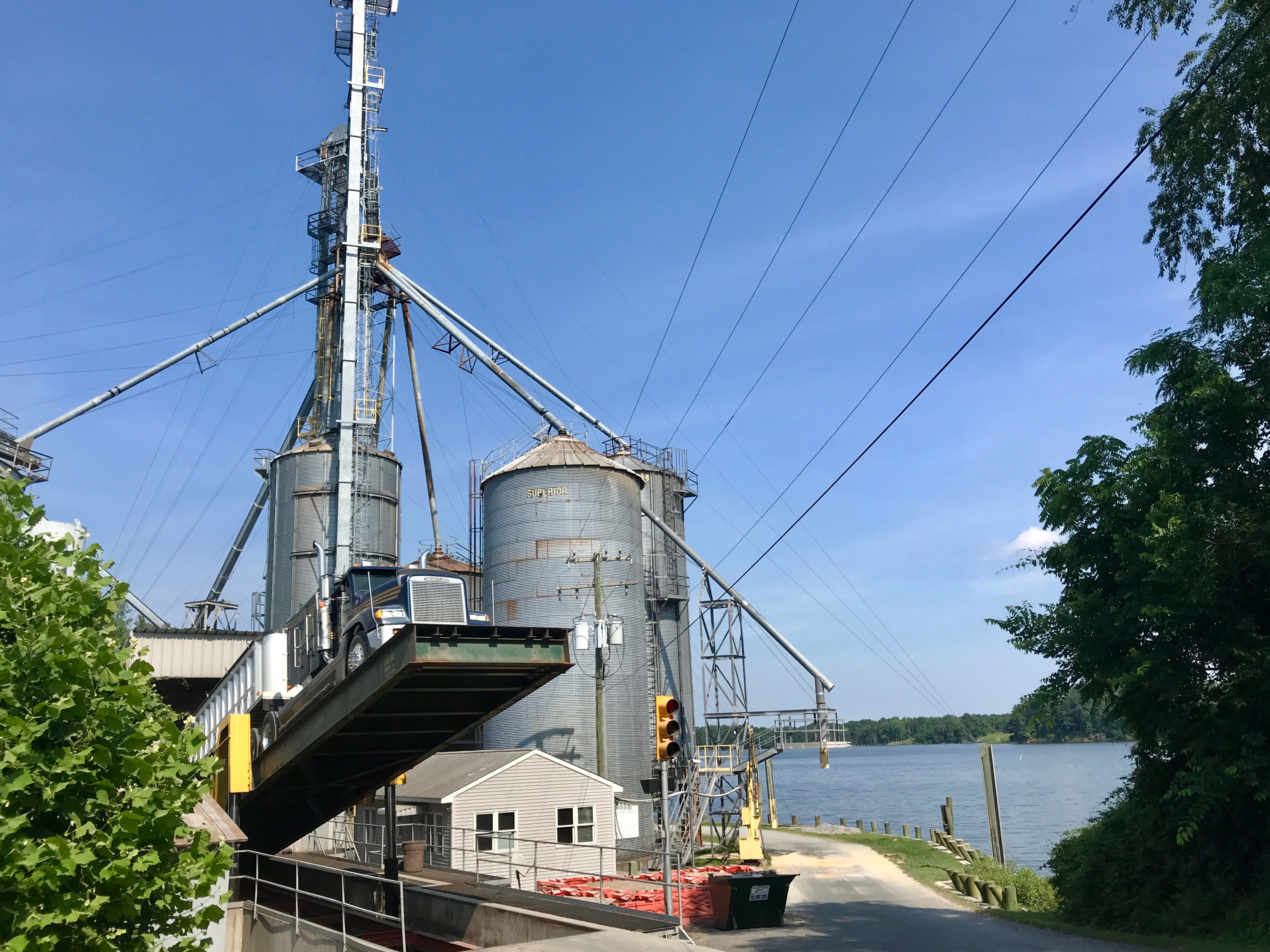
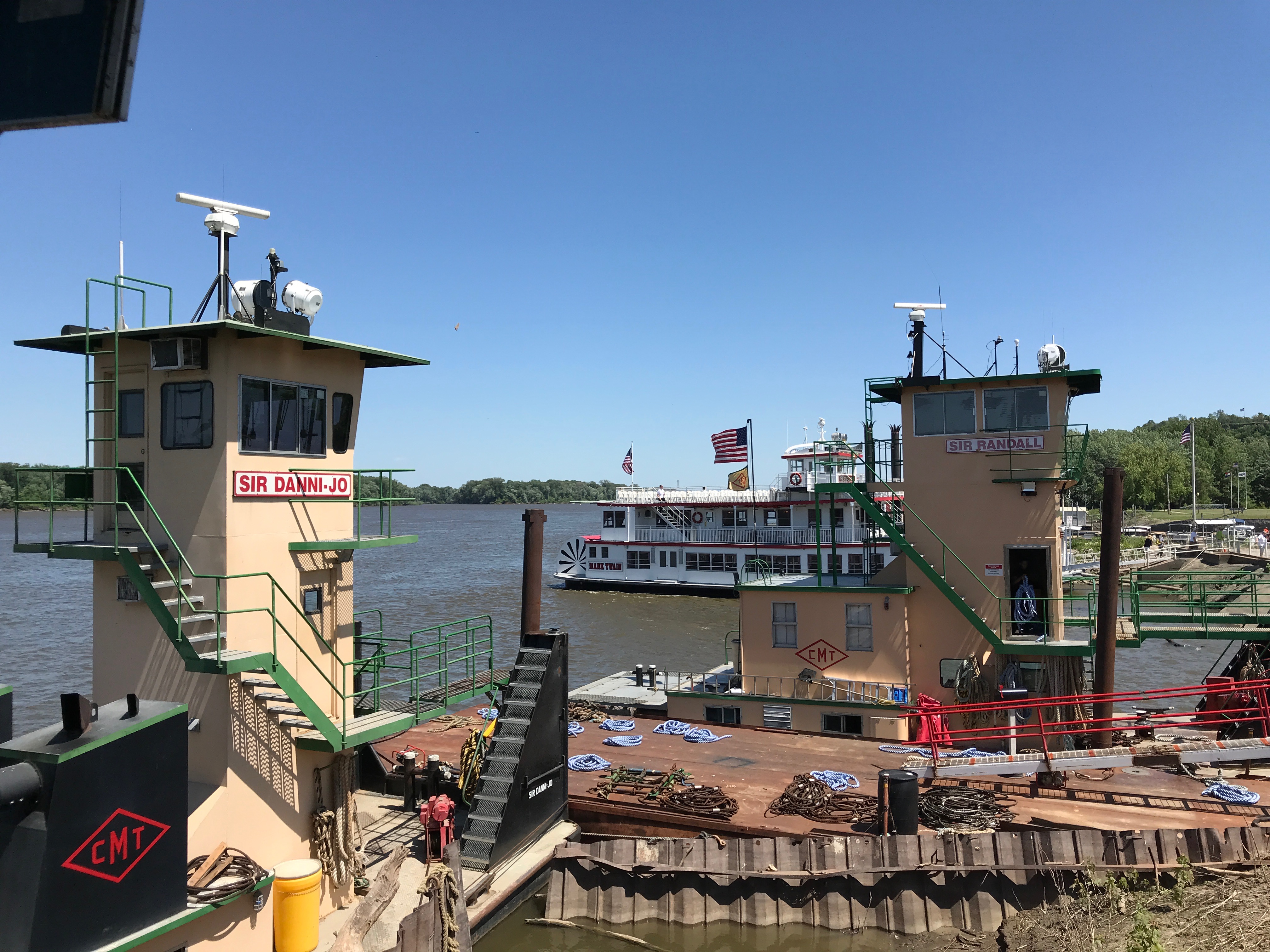
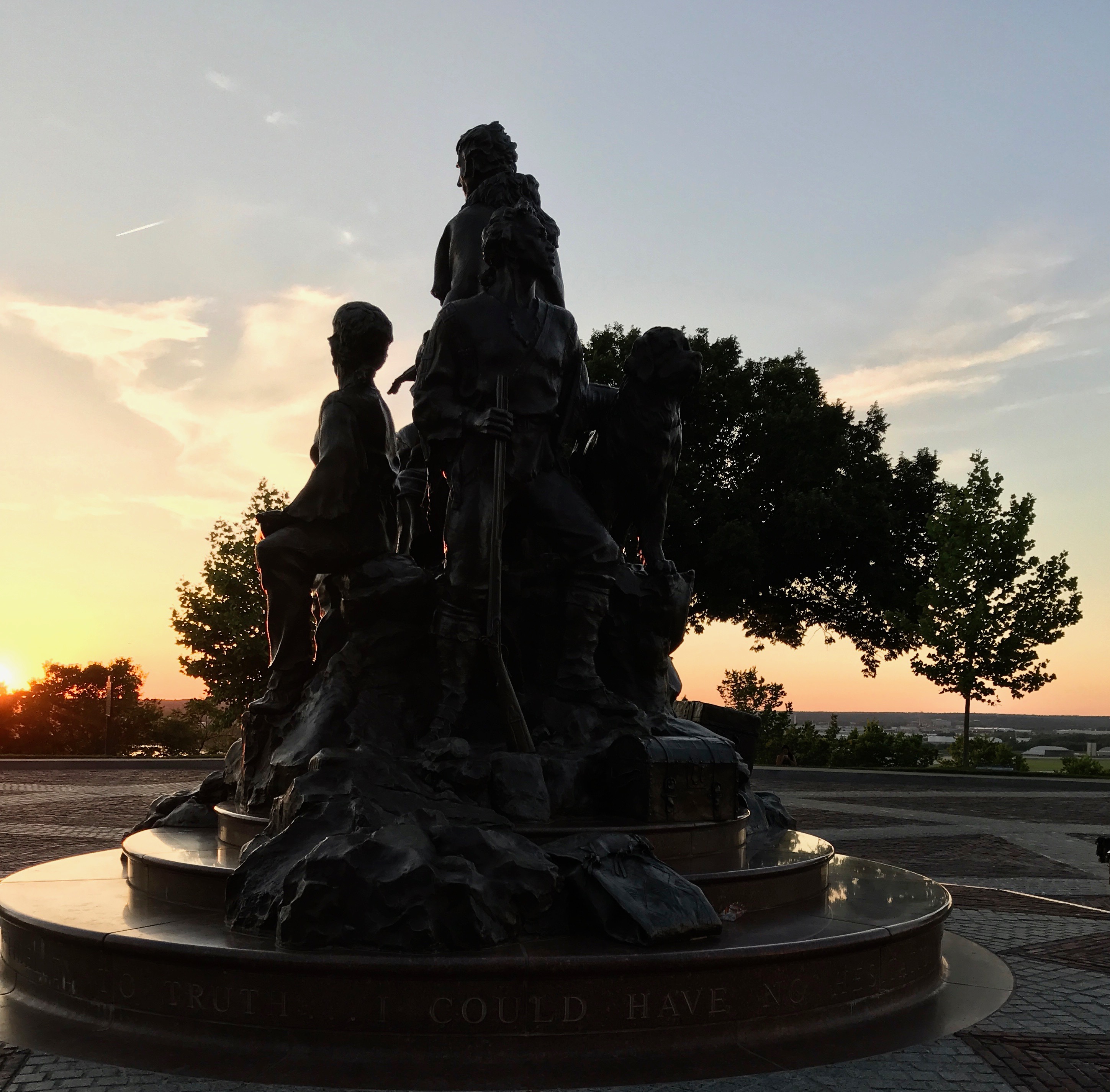
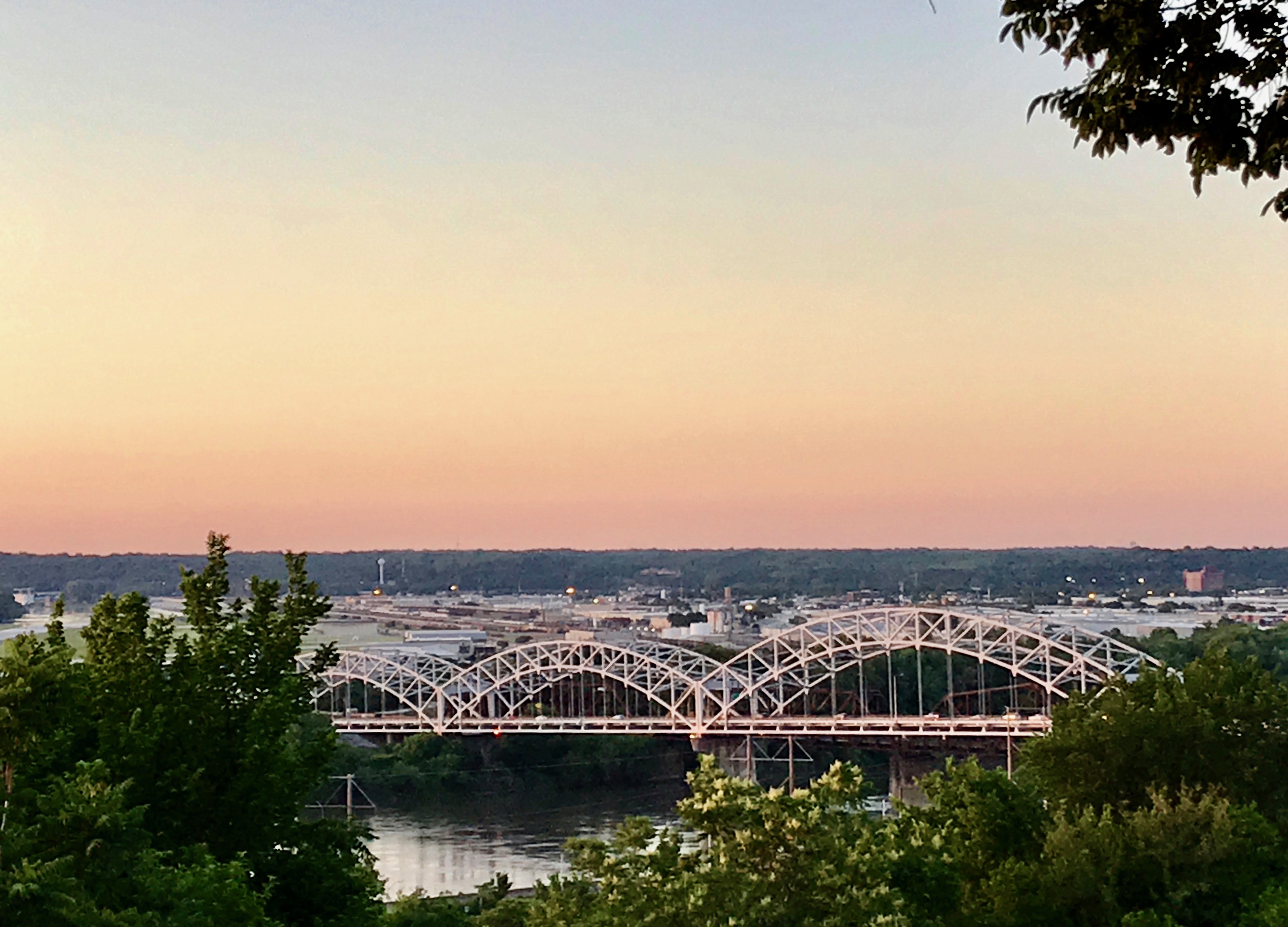
I left my friends’ house and headed for the first stop of the week. It was a facility that loaded the grain right on to barges that took the product to where it was needed.
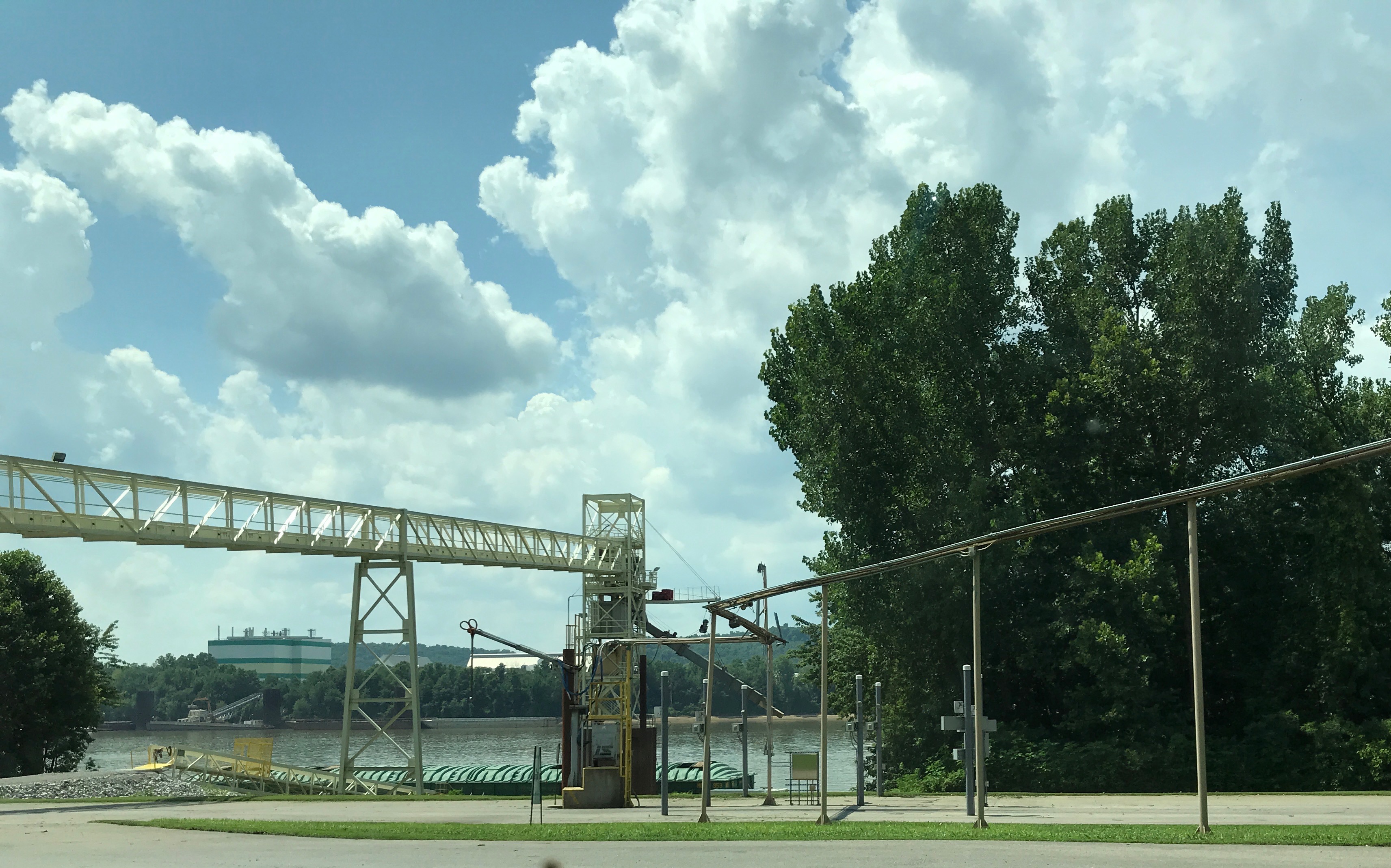
After that, it was off through the countryside.

I saw plenty of corn,

and soy,
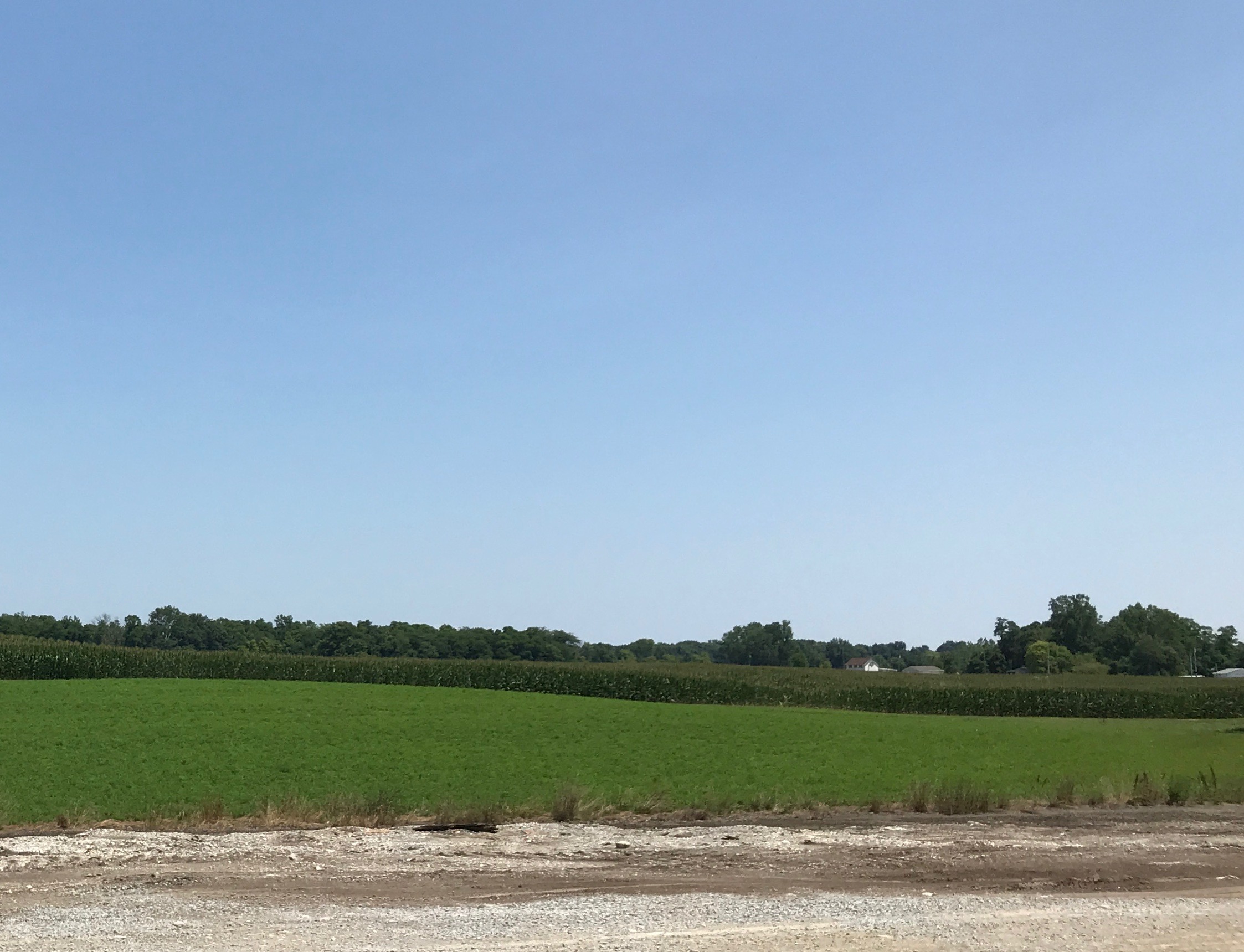
and corn and soy,
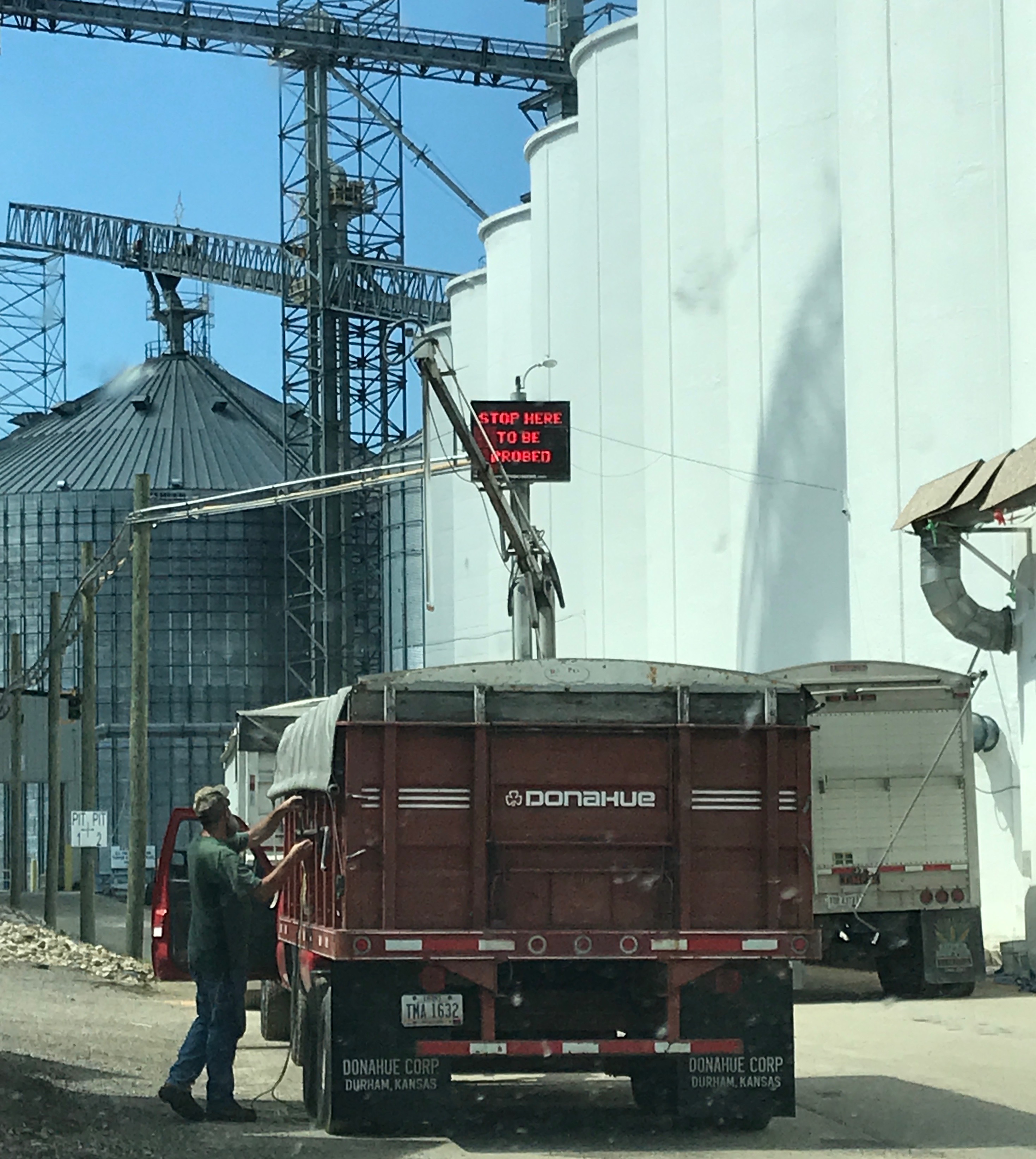
interspersed with the occasional stop at a grain elevator. The next time I do this, I will definitely figure out a way to plot where I have traveled. Honestly, I felt like I was driving circles some days – and I probably was.
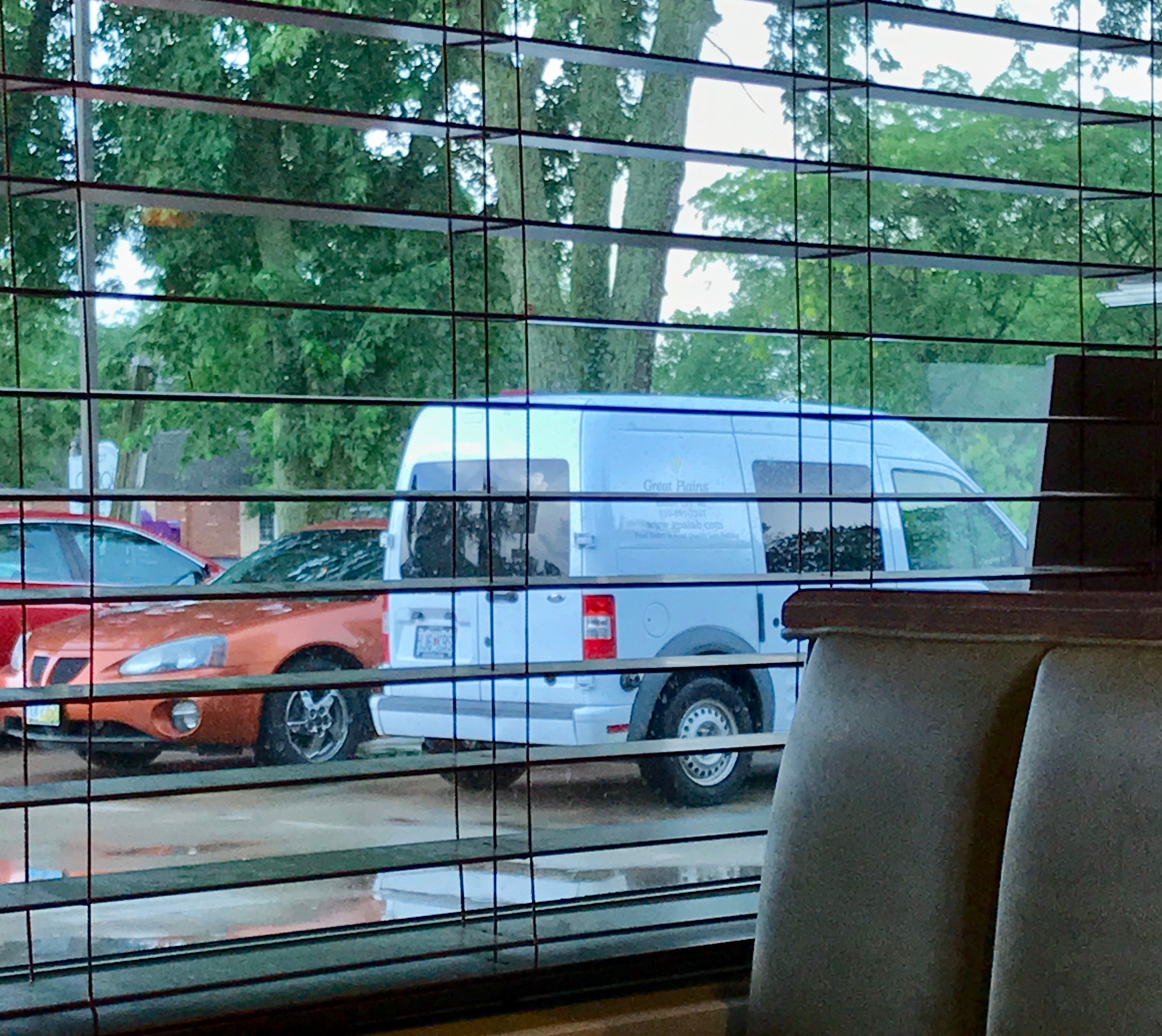
Here’s a somewhat amusing anecdote: I had stopped for the night and I drove over to the closest restaurant for dinner. I was sitting there, eating whatever I had ordered and I looked up and saw a van from Great Plain Analytical Laboratories – my company!
I was all excited. I wondered who was driving that vehicle and where they were seated in the restaurant.
That is, I was excited until I realized that the van was the one I was driving. At that point, I realized that I was pretty darned tired and needed a bit of rest before the next day’s labors. I got back to my room and got a good night’s sleep. The next day was Friday, and after that comes the weekend.
This weekend would find me near Columbus, the capital of Ohio.
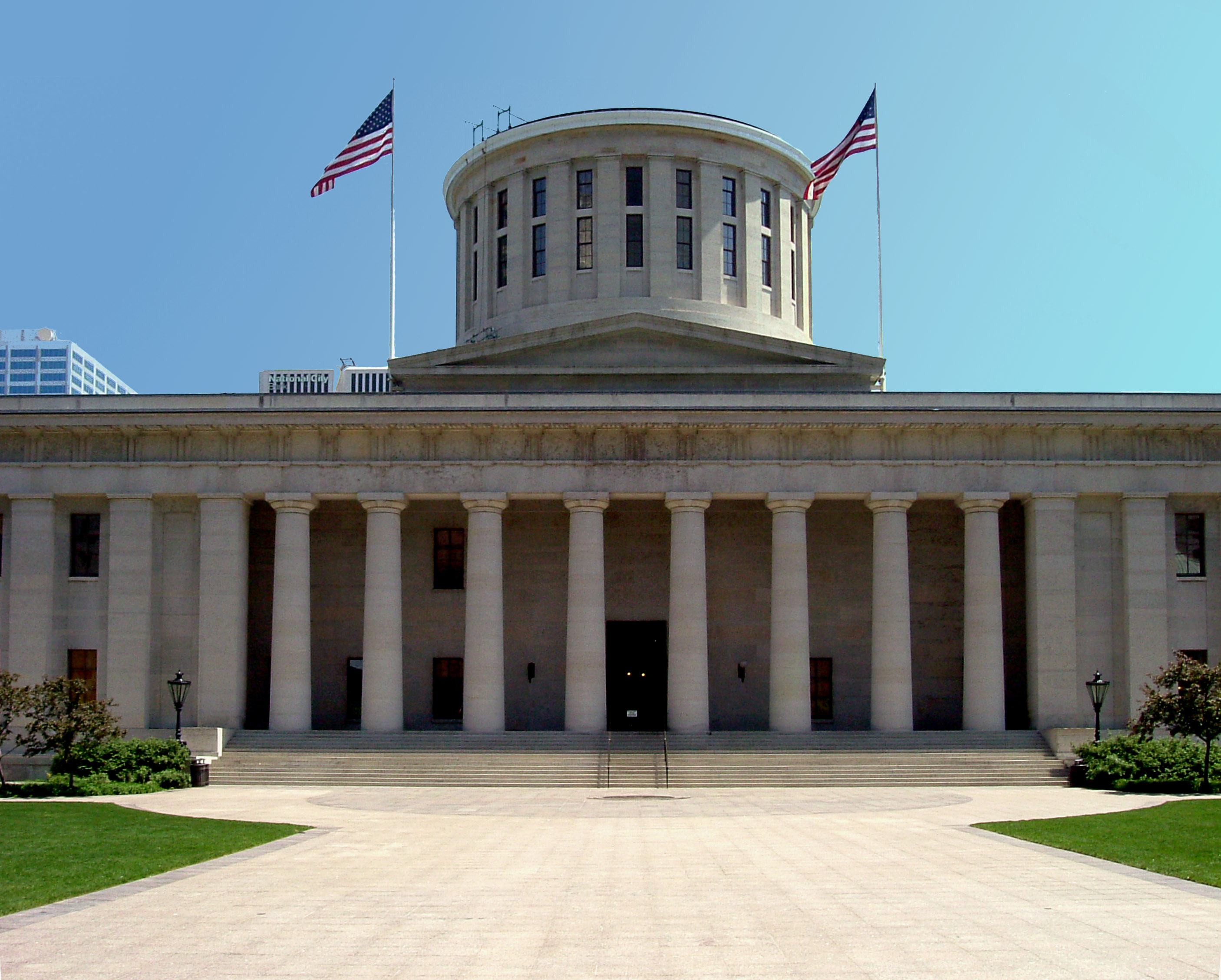
This image is thanks to my Preferred Source. In all the photos I took of the place, I didn’t get one of the west façade. Since I knew the building was not open for visitors, I satisfied myself with looking at the sculptures and memorials on the campus around it.
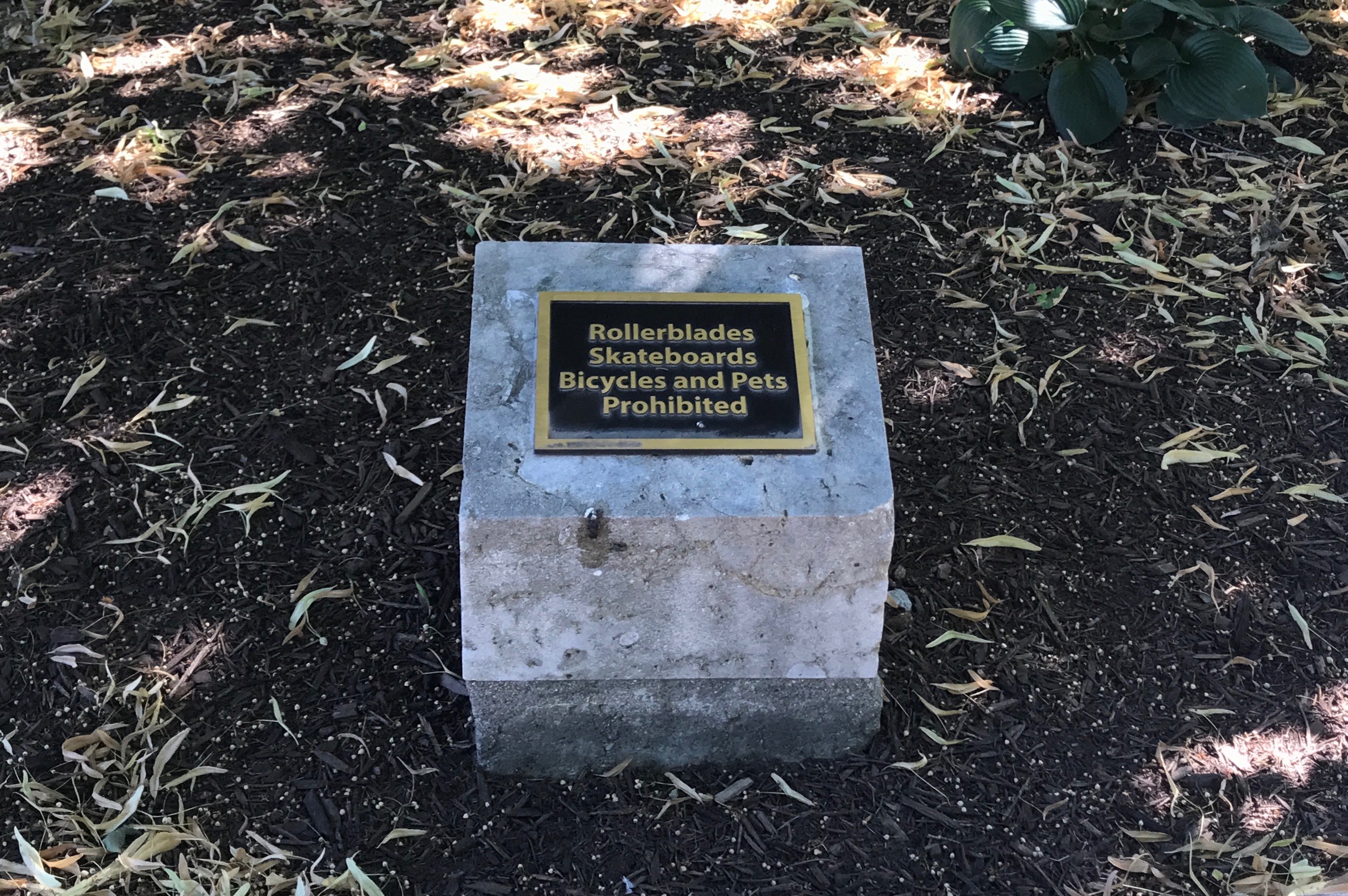
It was all quite stately. Even the signs that told what wasn’t allowed had a rather proper air to them.
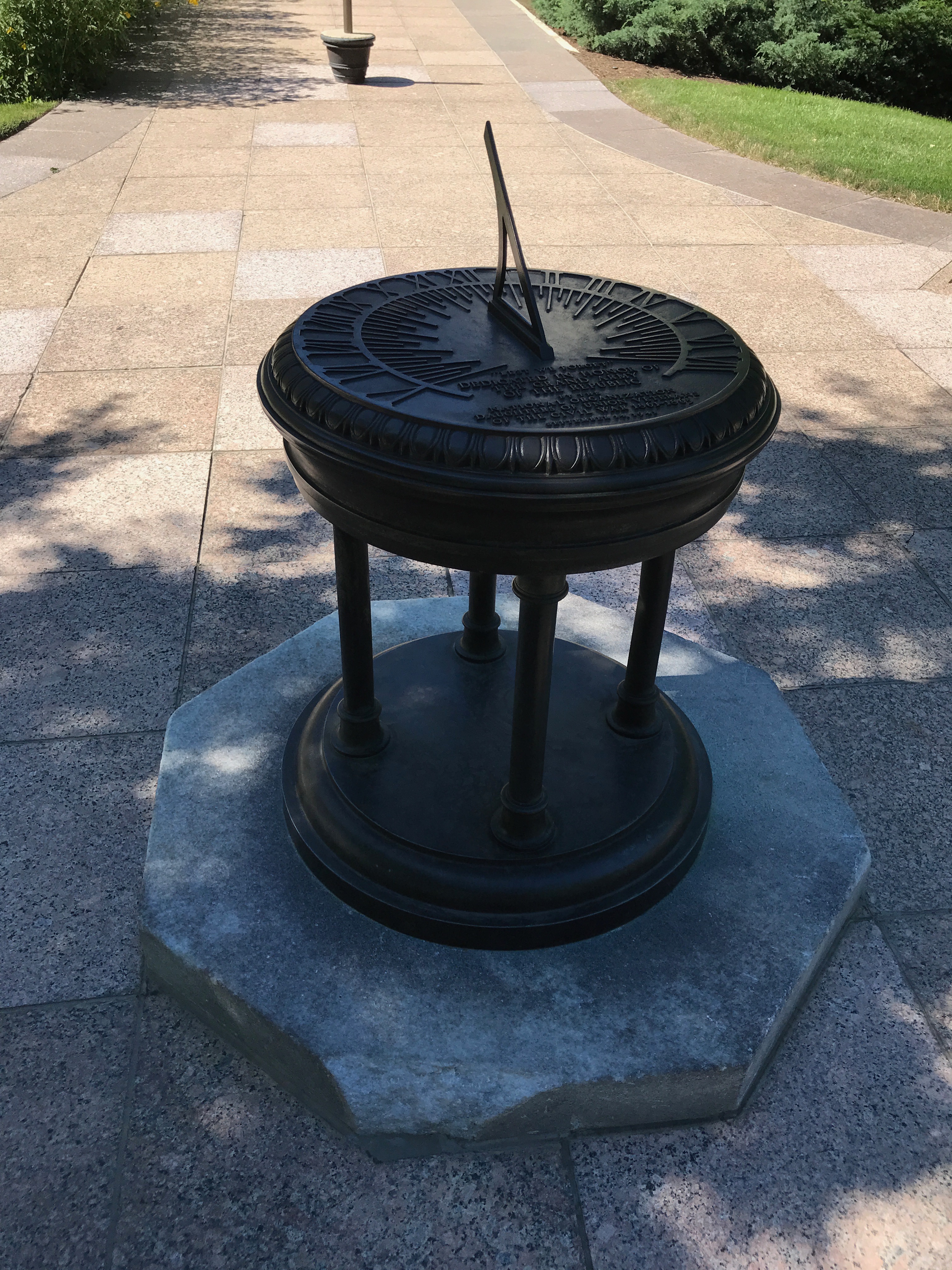
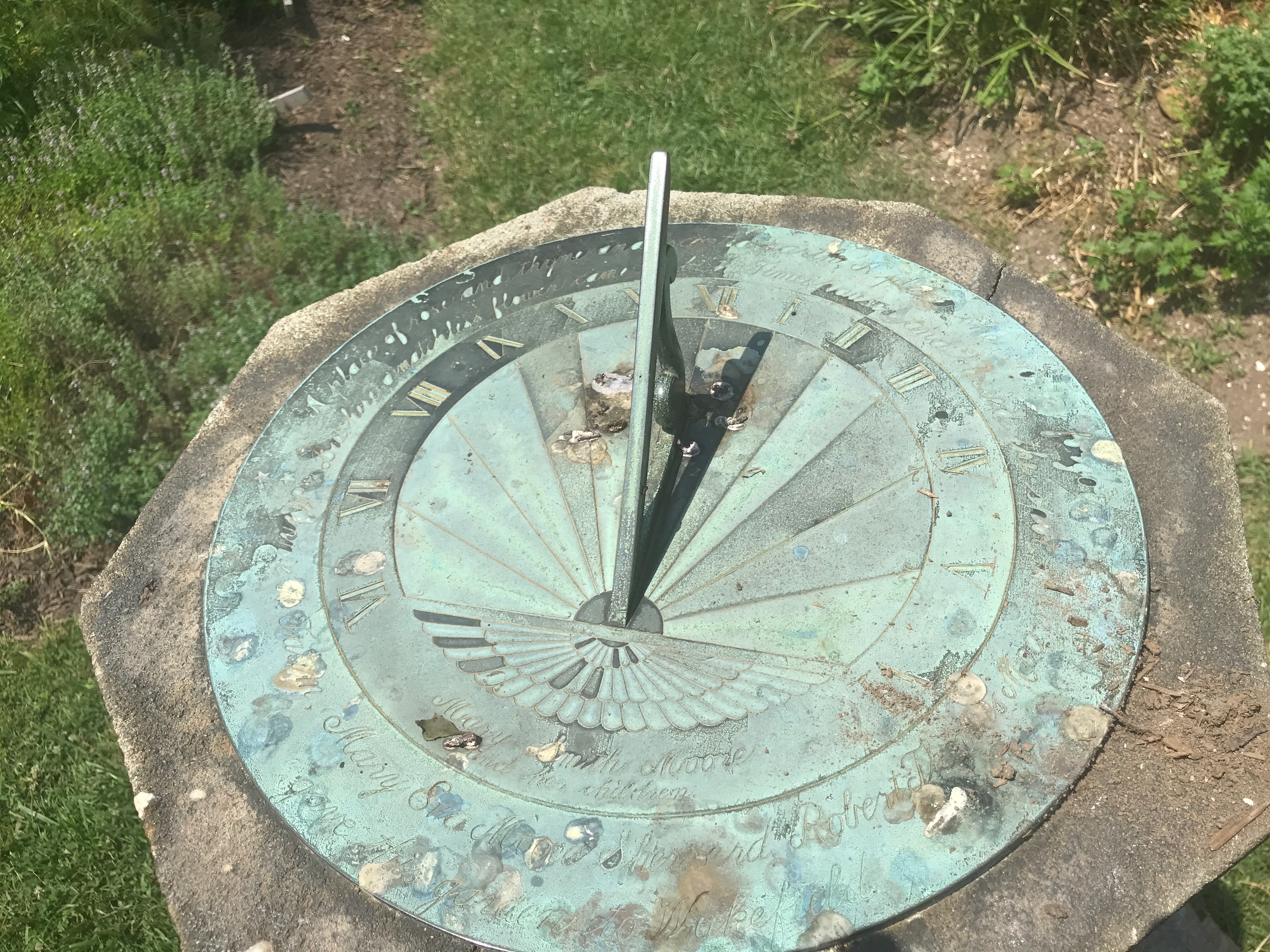
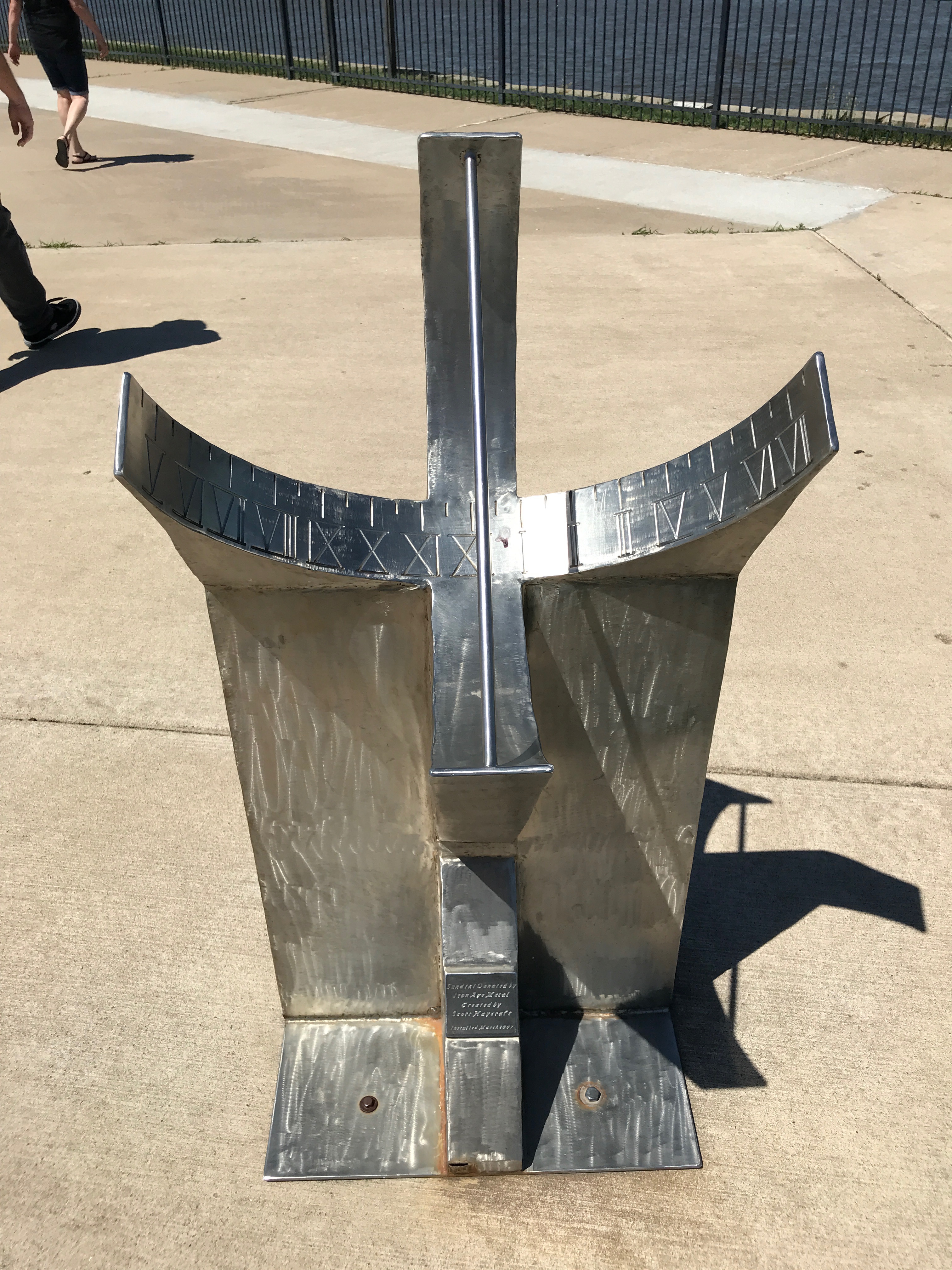
I have seen quite a few sundials that are in shaded locations. I always get a chuckle out of them. Why have a sun dial in the shade?
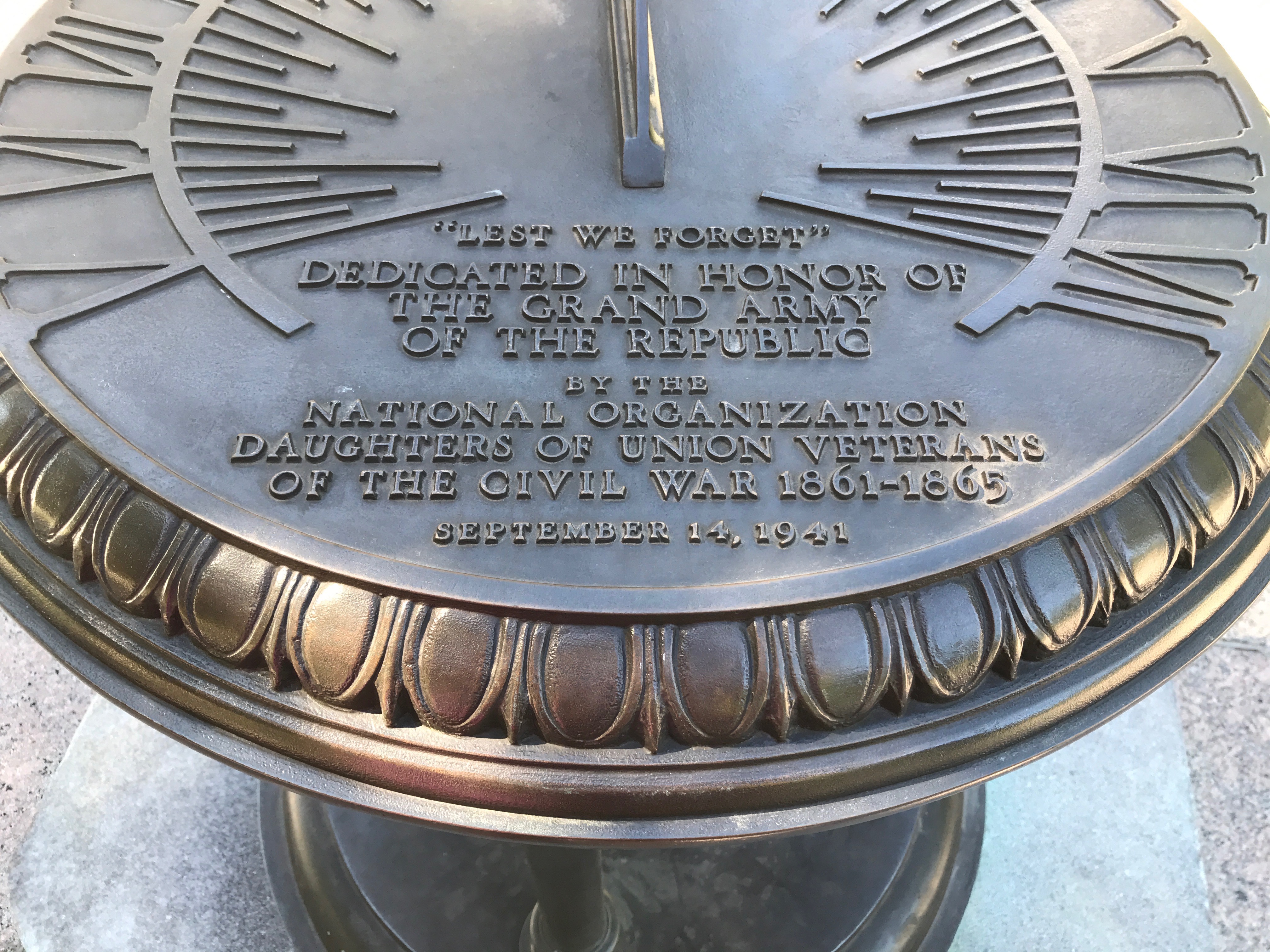
But, this one was erected in 1941. I suppose that the trees might have filled in since then.
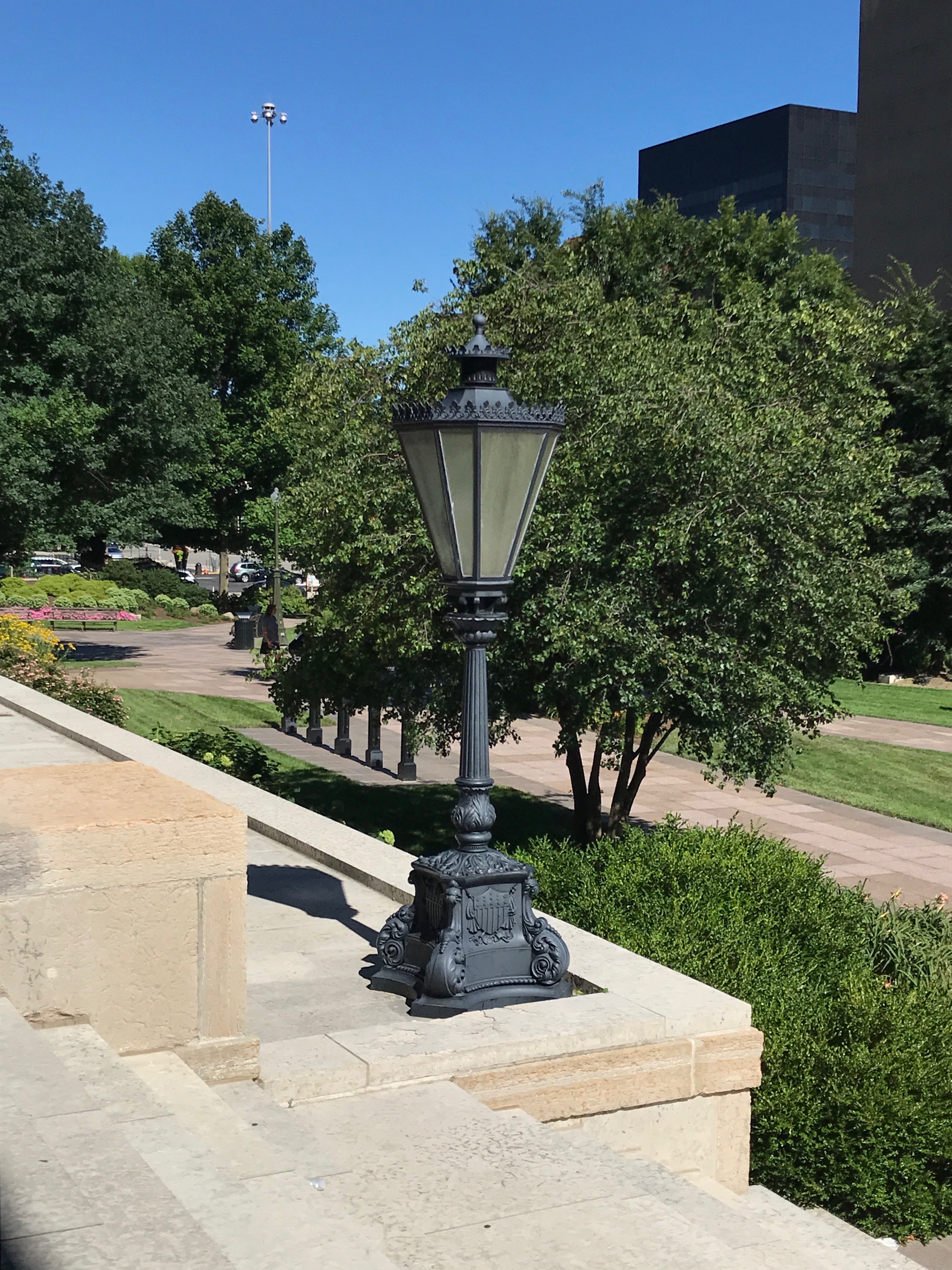
It was a beautiful day to explore the outside of the capitol! I might have to plan a return visit to see the interior.
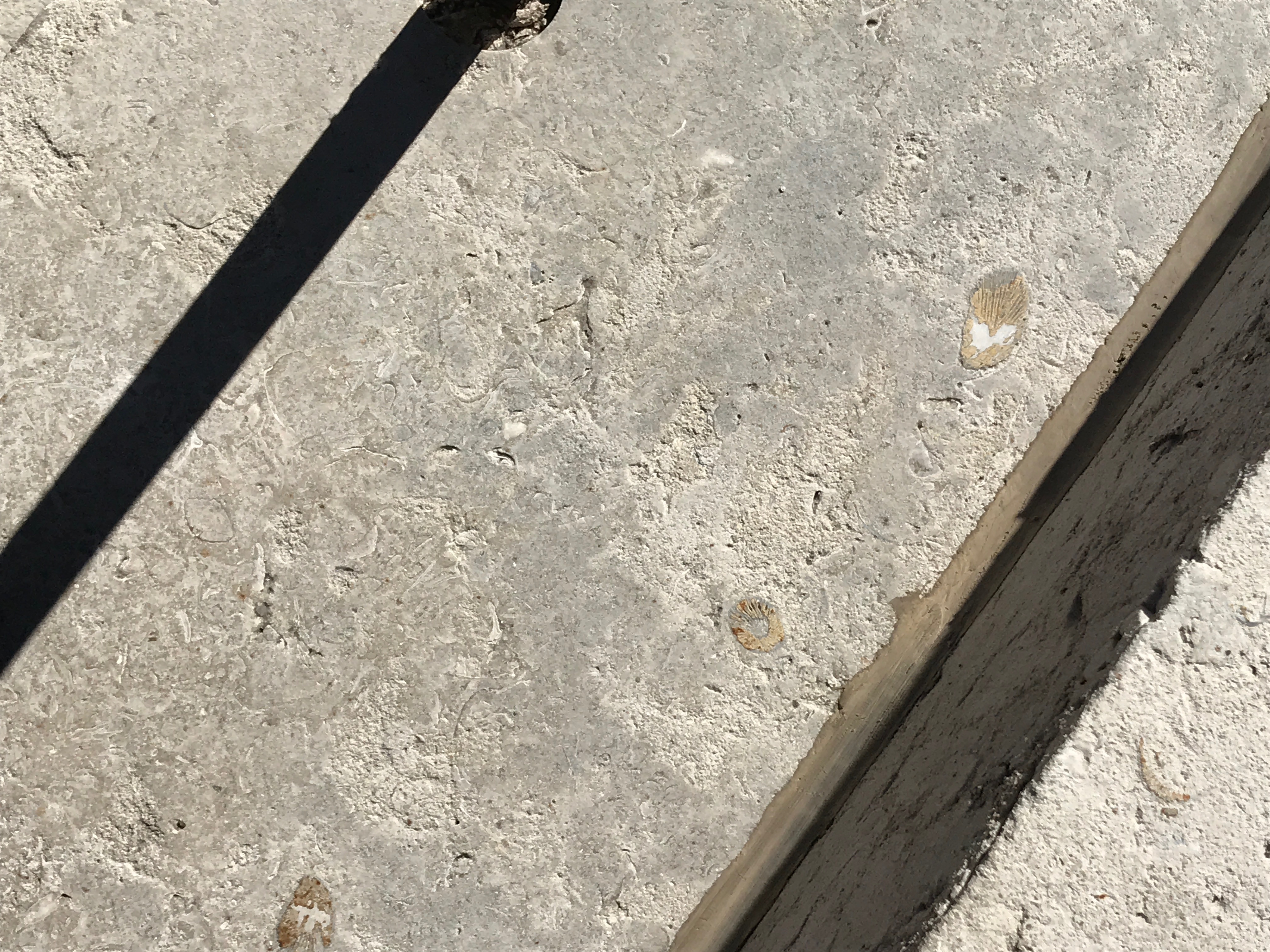
The exterior had a lot to see. For instance, if you look carefully, you can see fossils in the limestone.
I came upon the Ohio Holocaust and Liberators Memorial. It was unveiled in 2014 by Governor John Kasich and architect Daniel Libeskind. According to the website, “The memorial speaks for the millions of voices the Holocaust silenced and thanks the brave men and women of Ohio who liberated the oppressed and fought for human freedom during the Second World War.”
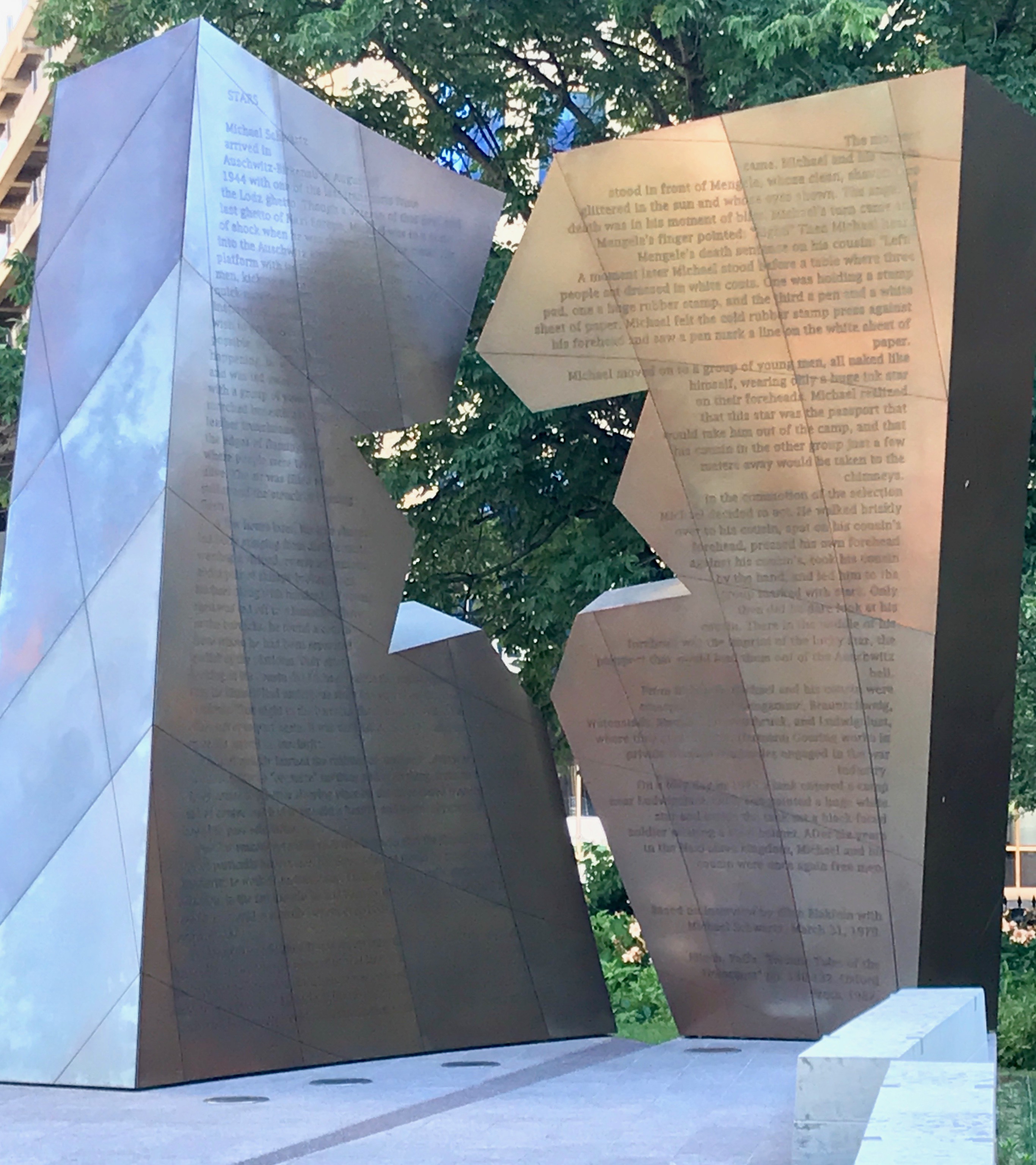
The story of Michael Schwartz and his cousin is inscribed on the bronze pieces that make up the star. It is moving, and if you are interested reading it, click on the link.
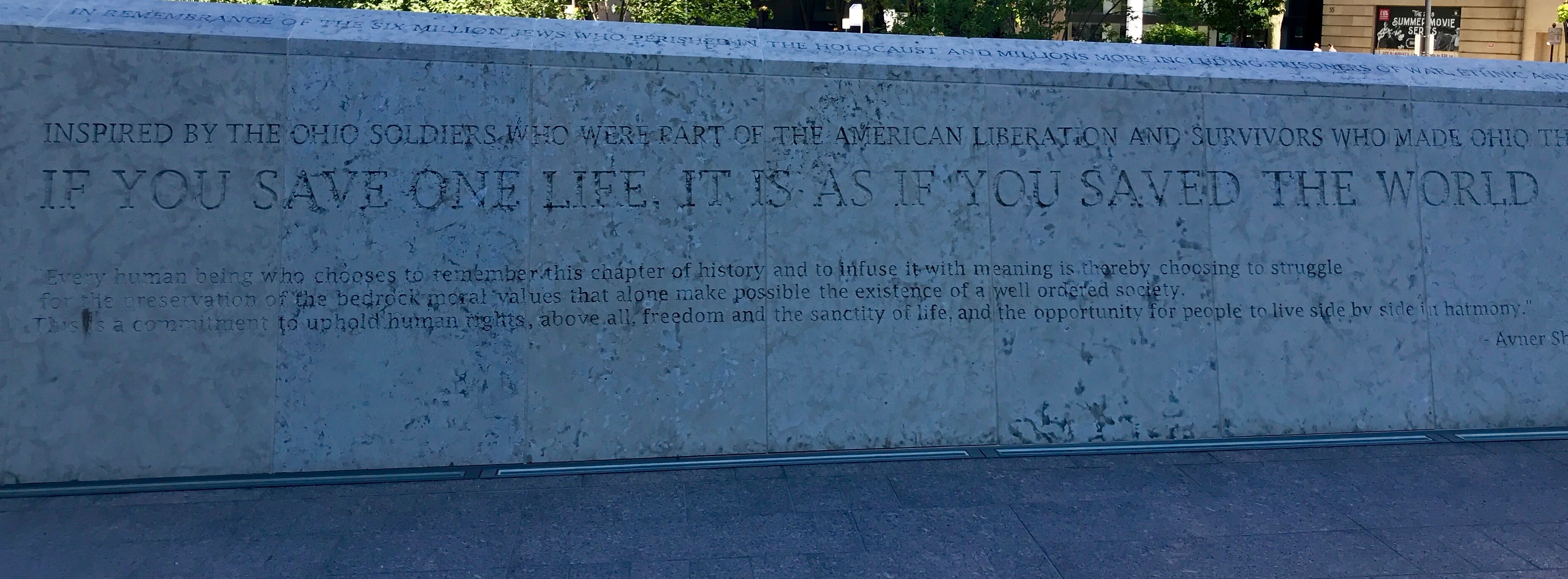
If you save one life, it is as if you saved the world.
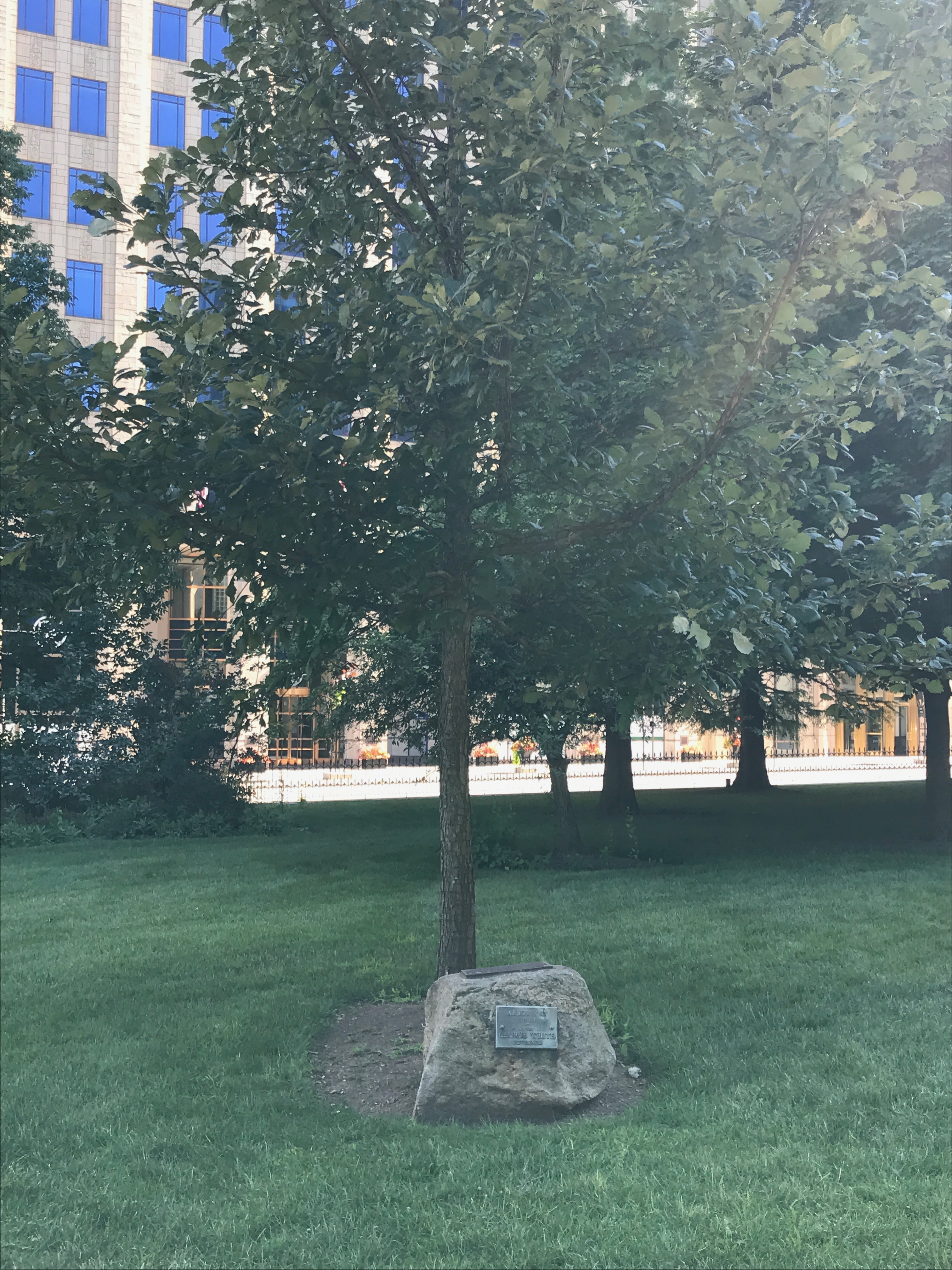
I continued on around the capitol and came upon this tree with a boulder at the base with two plaques on it. I wonder what that is all about?
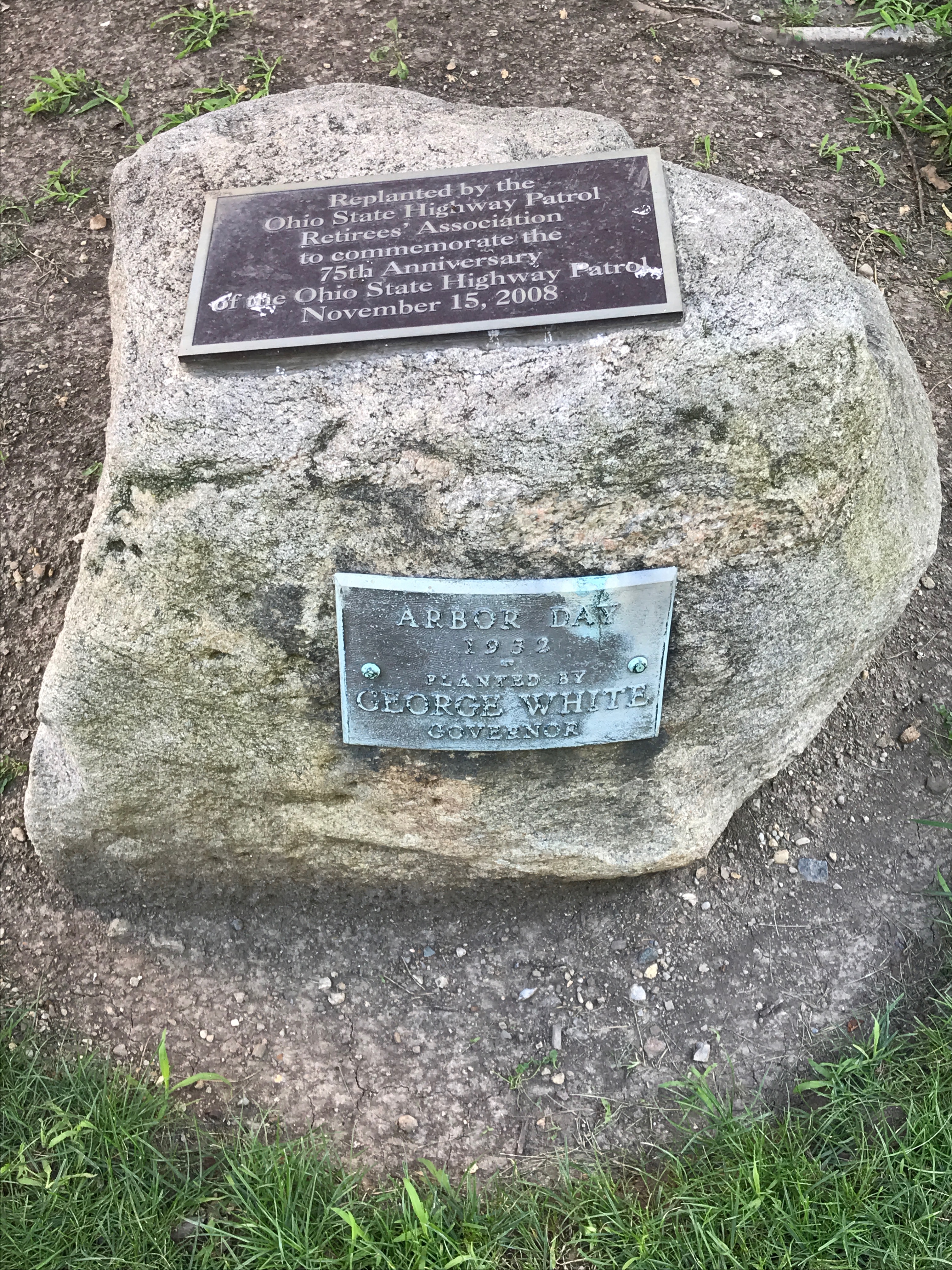
Since there is no one around to ask, I assume that the original tree, planted in 1932, must have died and they planted a replacement tree in 2008.
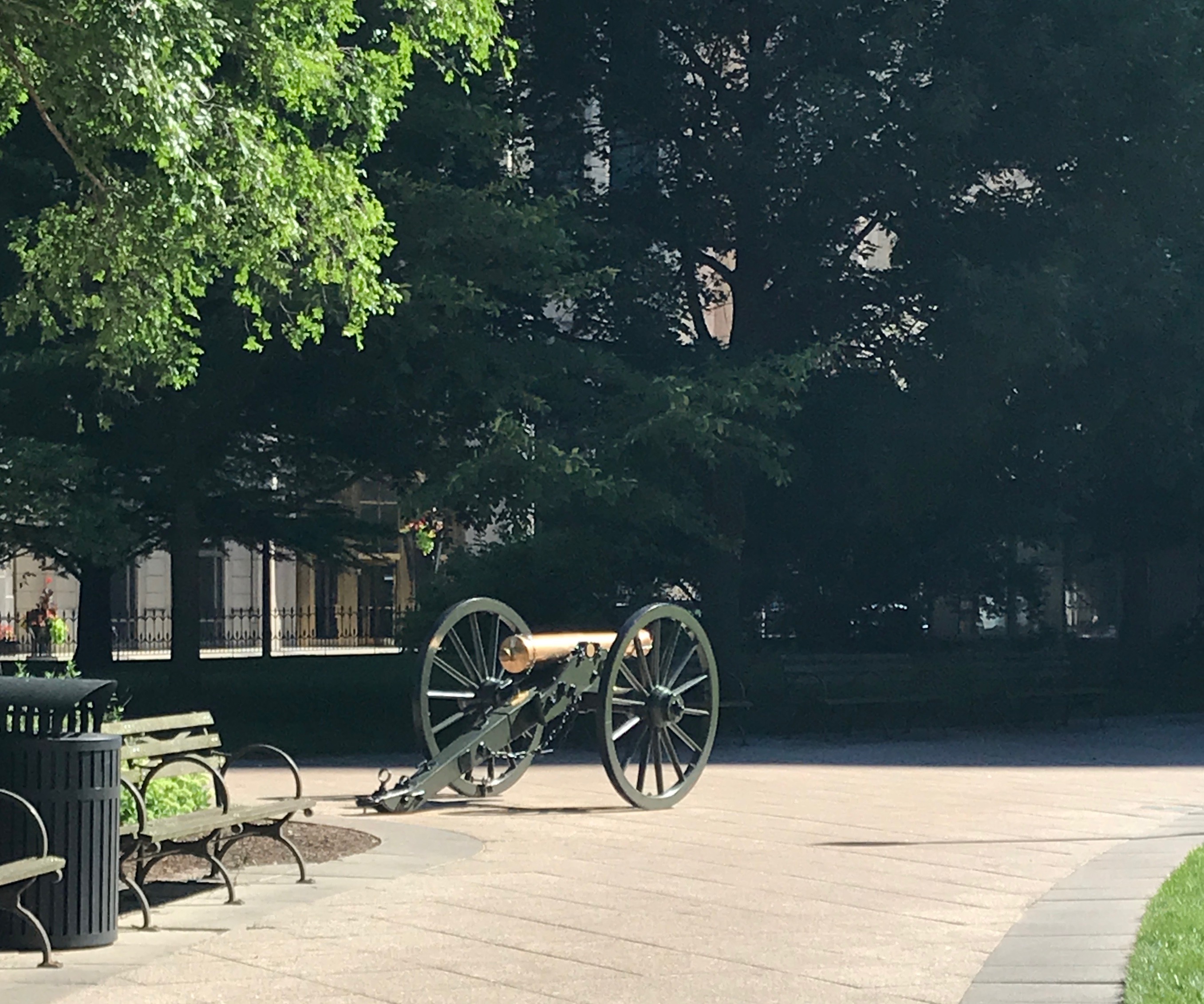
There is the obligatory cannon, defending the capitol from the marauding hoards.
Actually, there are four cannons on the capitol square. They are actual working armaments that were created during the Civil War and intended for active service. By the time of their creation, though, the war was pretty much over. According to the website, they are still in working order and are fired for “ceremonial and educational events.”
The expression might be “Don’t mess with Texas,” but Ohio is actually armed and ready.
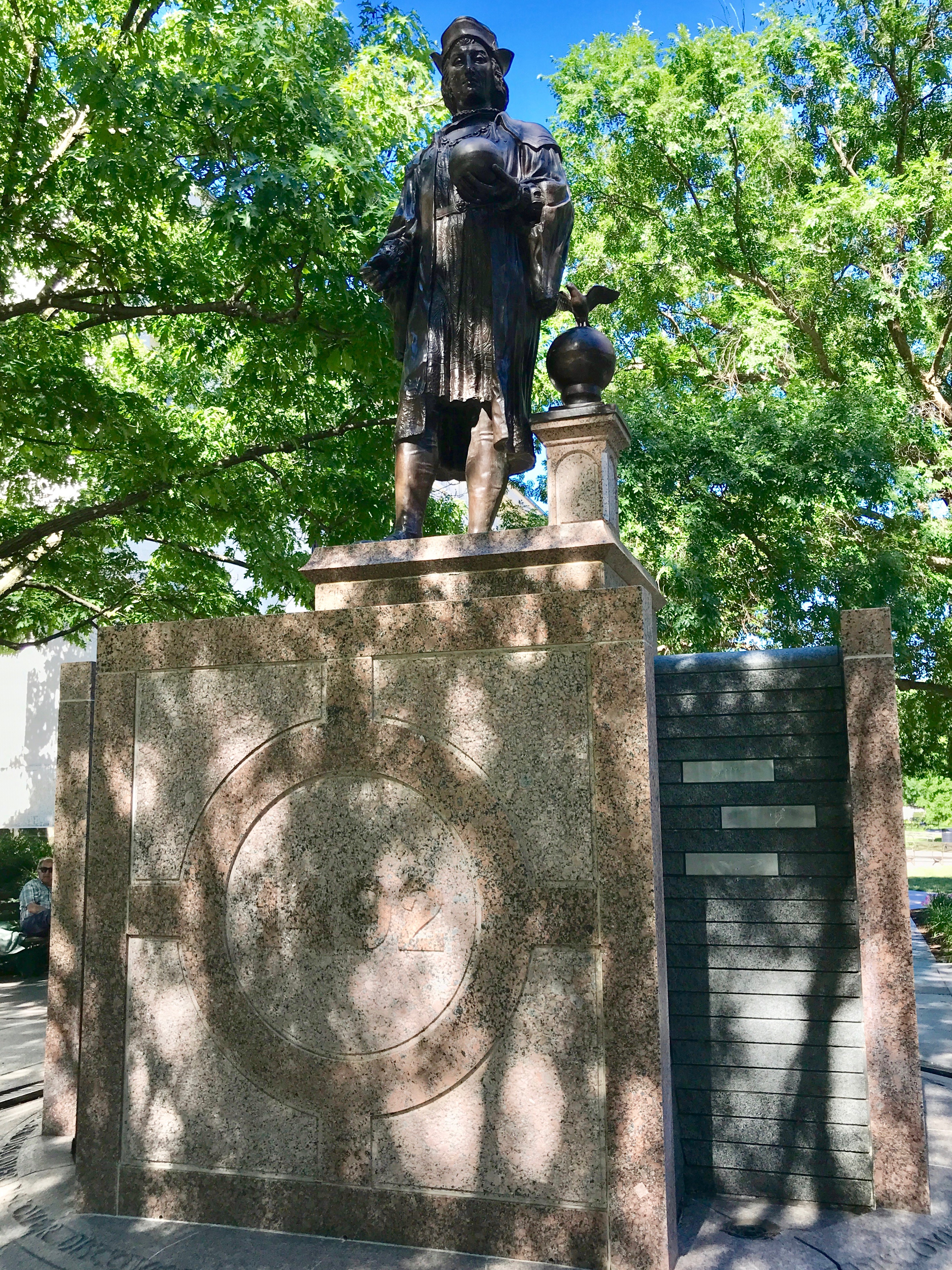
Continuing on around, I came to a Christopher Columbus memorial. I wondered why that was there. It took me but a moment to figure out the connection. The capital of Ohio is Columbus. Duh!
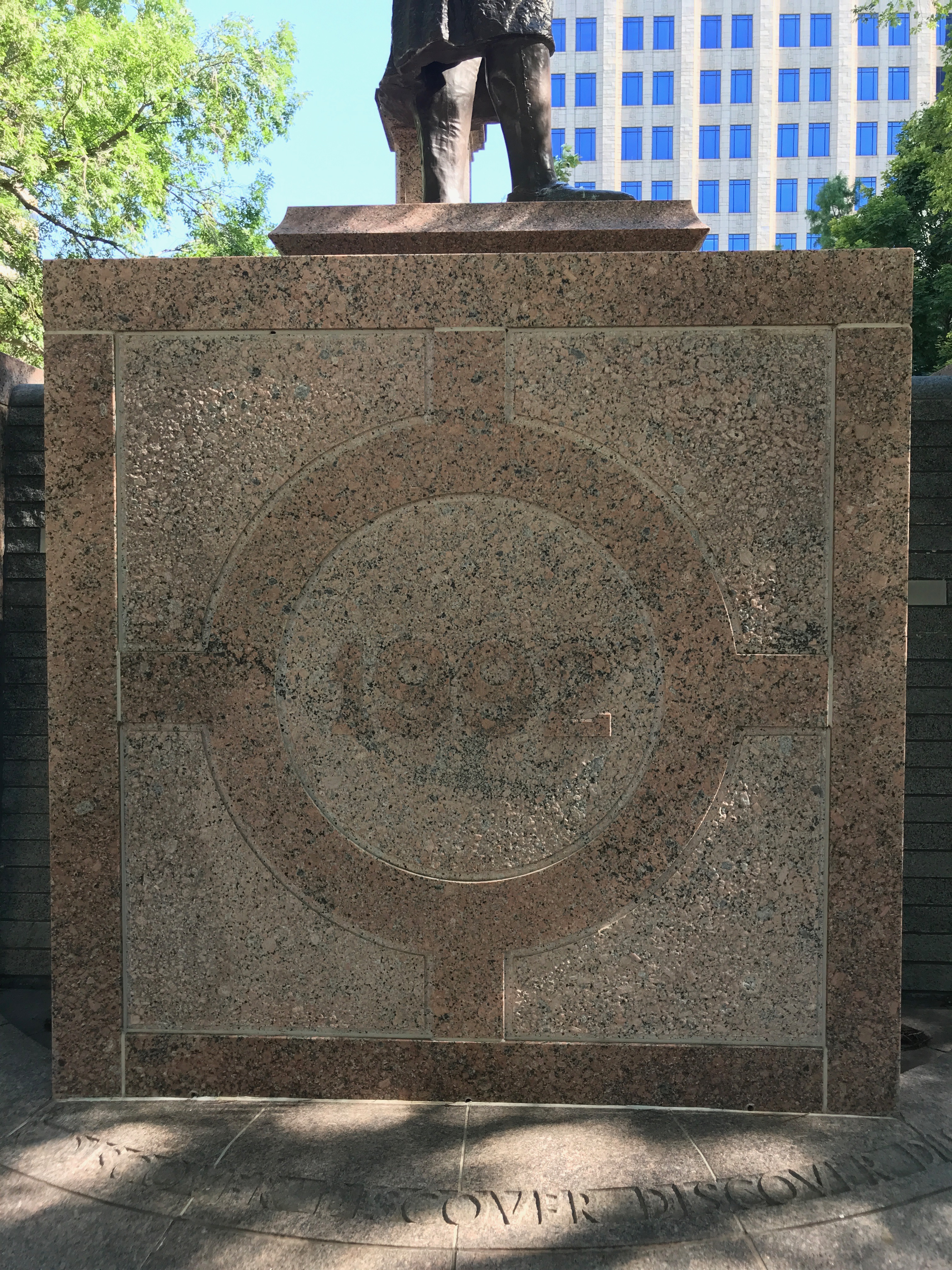
Back in the day, I had some Puerto Rican friends who wore buttons that said, “Me cago en el quinientos aniversario.” If you want to know what that means, here’s a link to Google Translate.
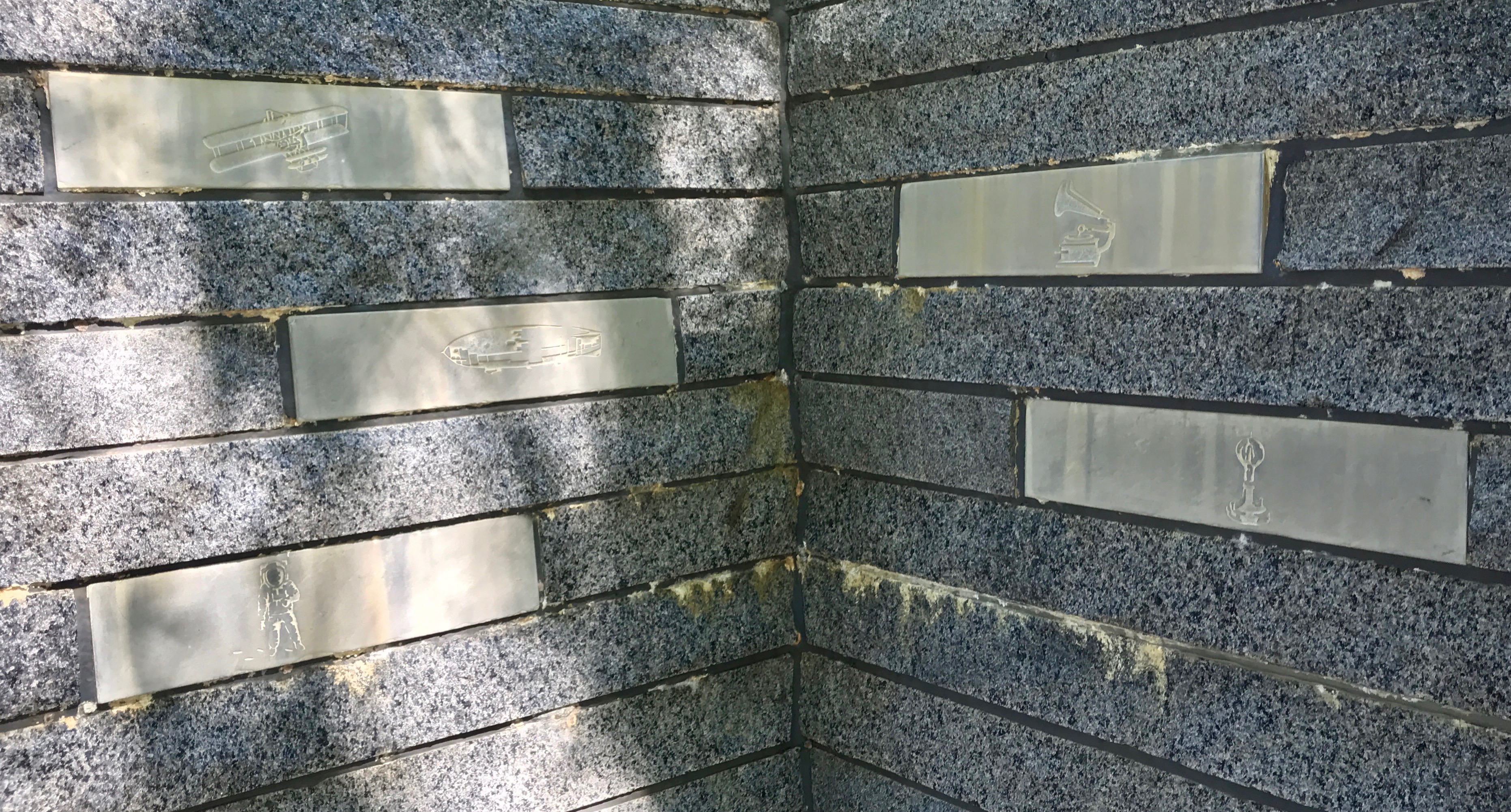
In the slabs around the monument, they had points of Ohioan pride, some of which were flight, space travel, electric light, recording and some other glyph I couldn’t decipher.
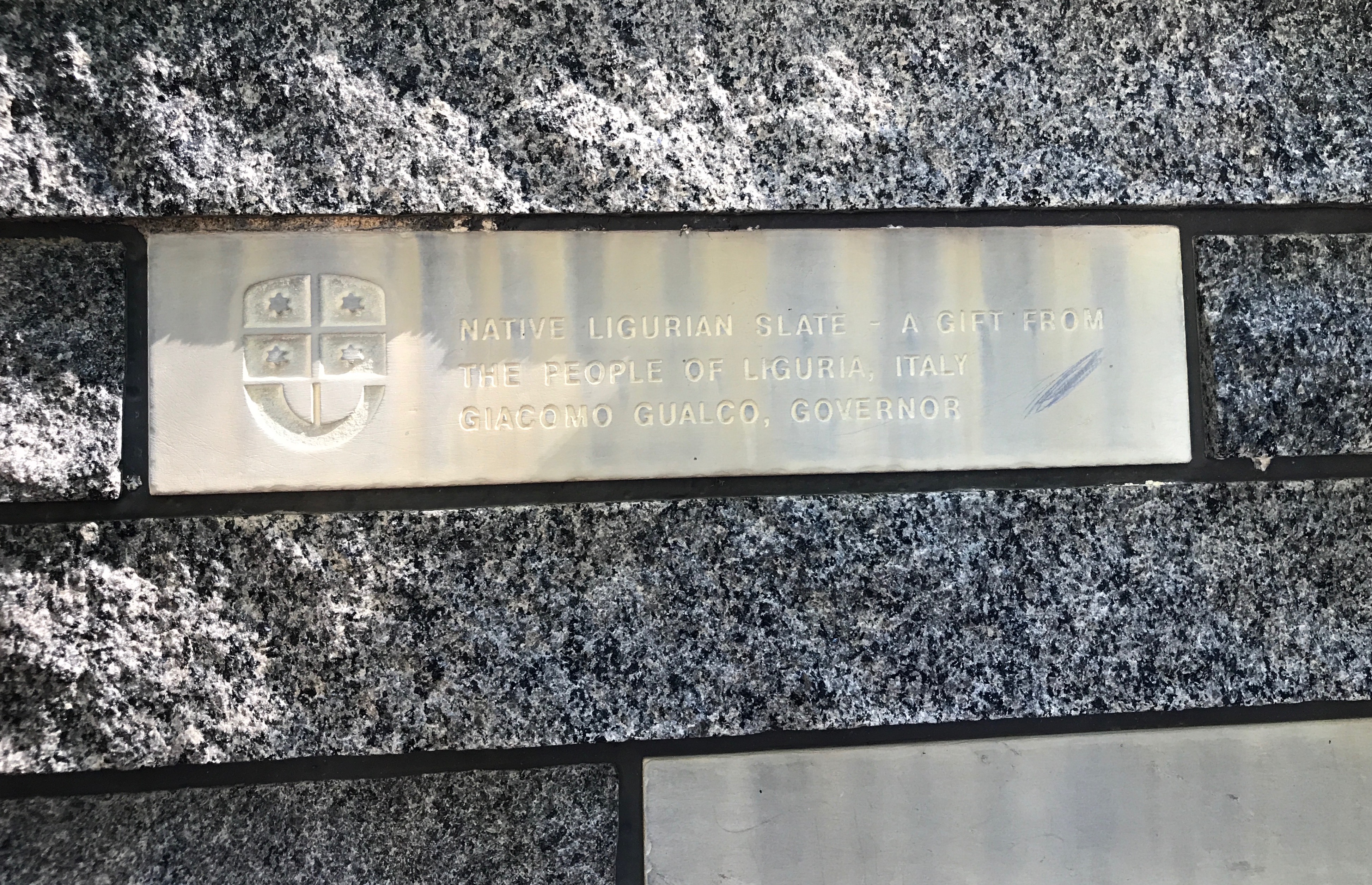
There was also this piece of native Ligurian slate. Genoa, in the region of Liguria, Italy, is generally considered to be the birthplace of Christopher Columbus.
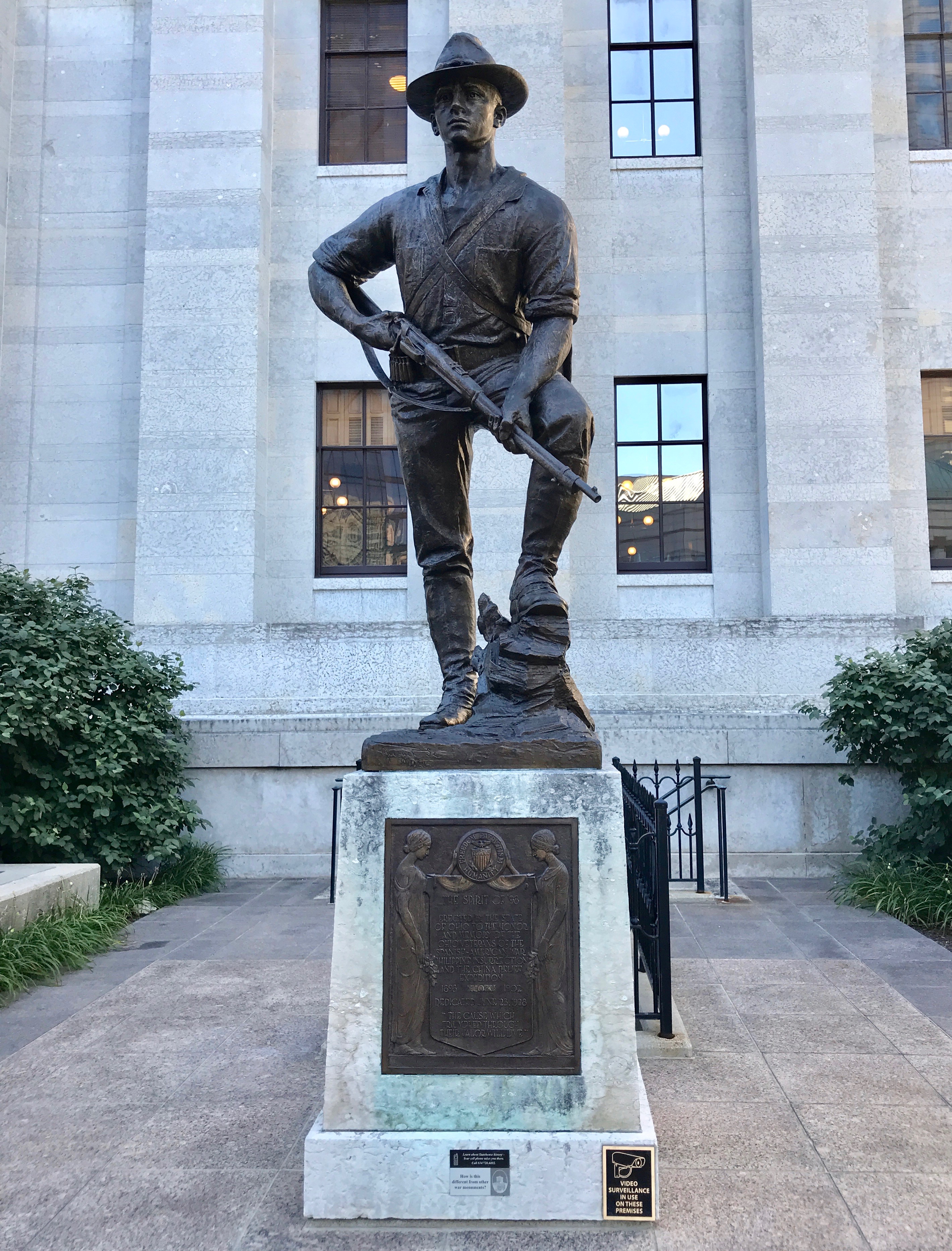
There was this memorial to Ohio veterans of the Spanish-American War.
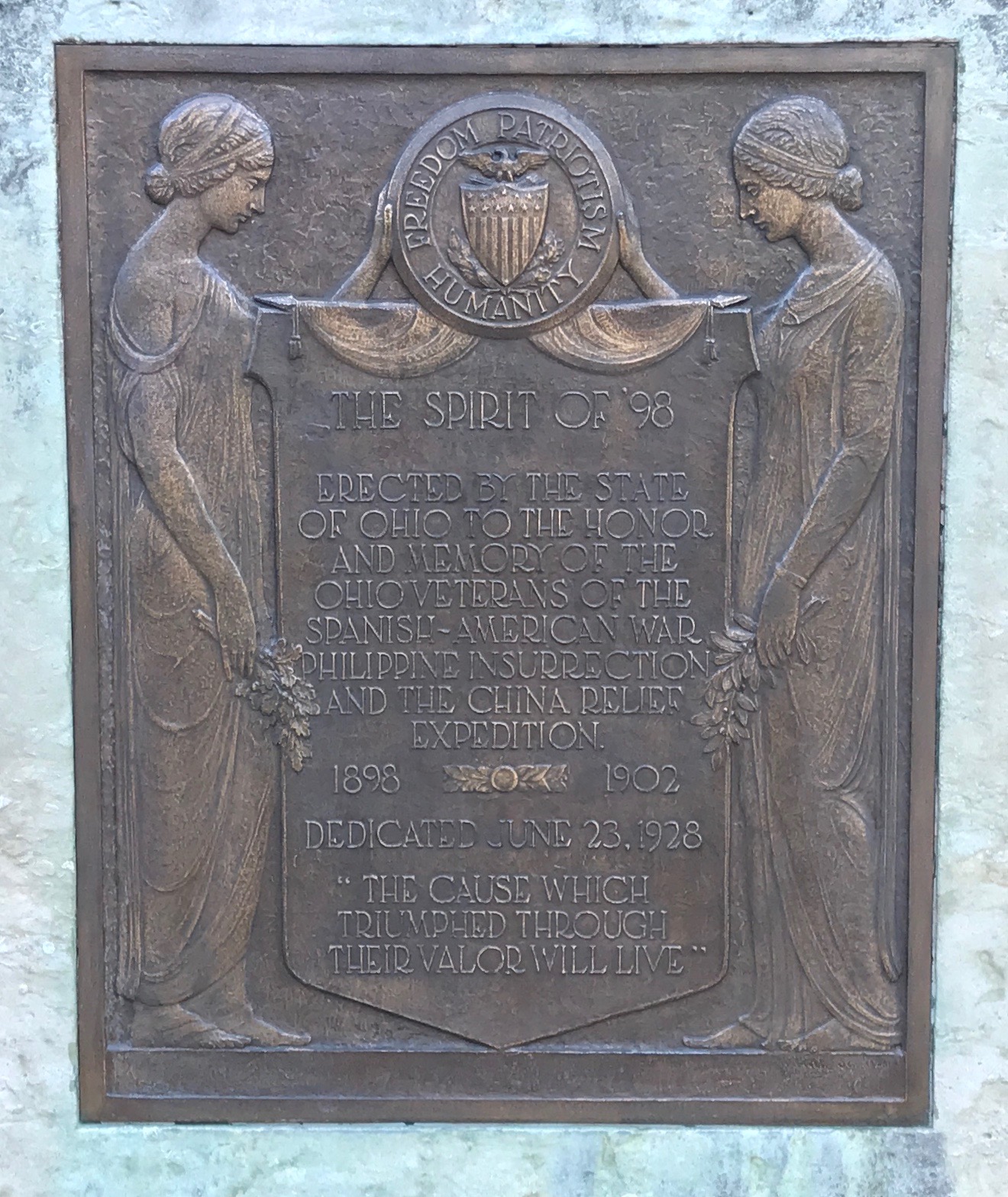
My goodness! This country has been at war so often that it is easy to forget some of them.
I was impressed that many of the monuments around the capitol have thought-provoking questions about them and phone numbers were you can call for the answer. I took photos of some of them so that I could call later. The sun was setting and the shadows were making it hard to get decent photos.
I just dialed this number. While it does give some interesting information, it doesn’t answer the question! I still don’t know why this monument is different from other war monuments.
*News Flash!*
I just received an email from Mike Rupert, Communications Manager, Capitol Square Review and Advisory Board. He actually read this post and answered the question for me!
He wrote, “The answer to the question on the cell phone tours, is that monuments were starting to focus on the average soldier instead of the famous leaders.”
He went on to thank me for mentioning it and that they would work on the recording. He also wrote, “Your writing is informative and full of humor. We appreciate it.”
Wow! Someone is reading my blog and they like it! My head is swelling up as I add this edit.
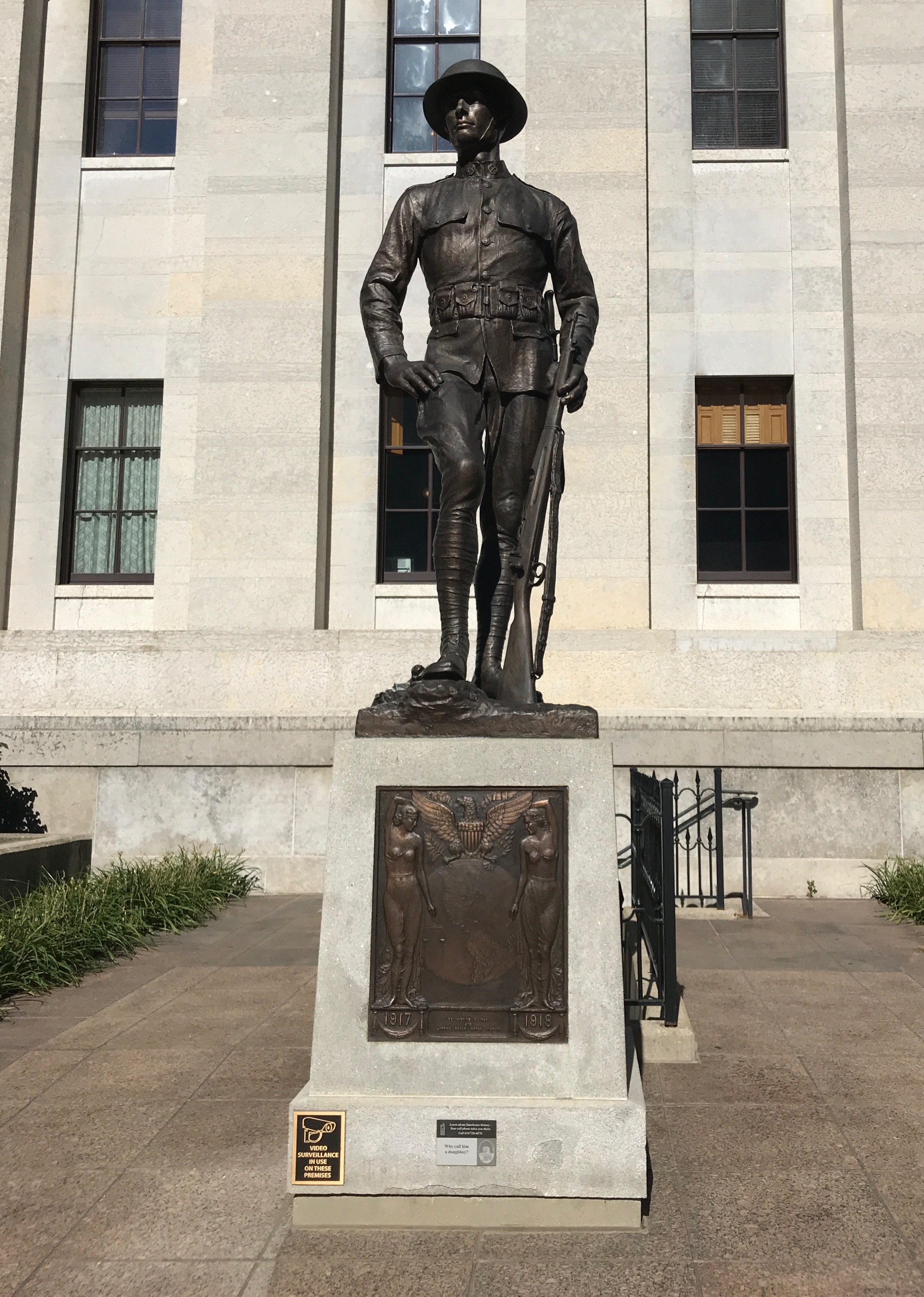
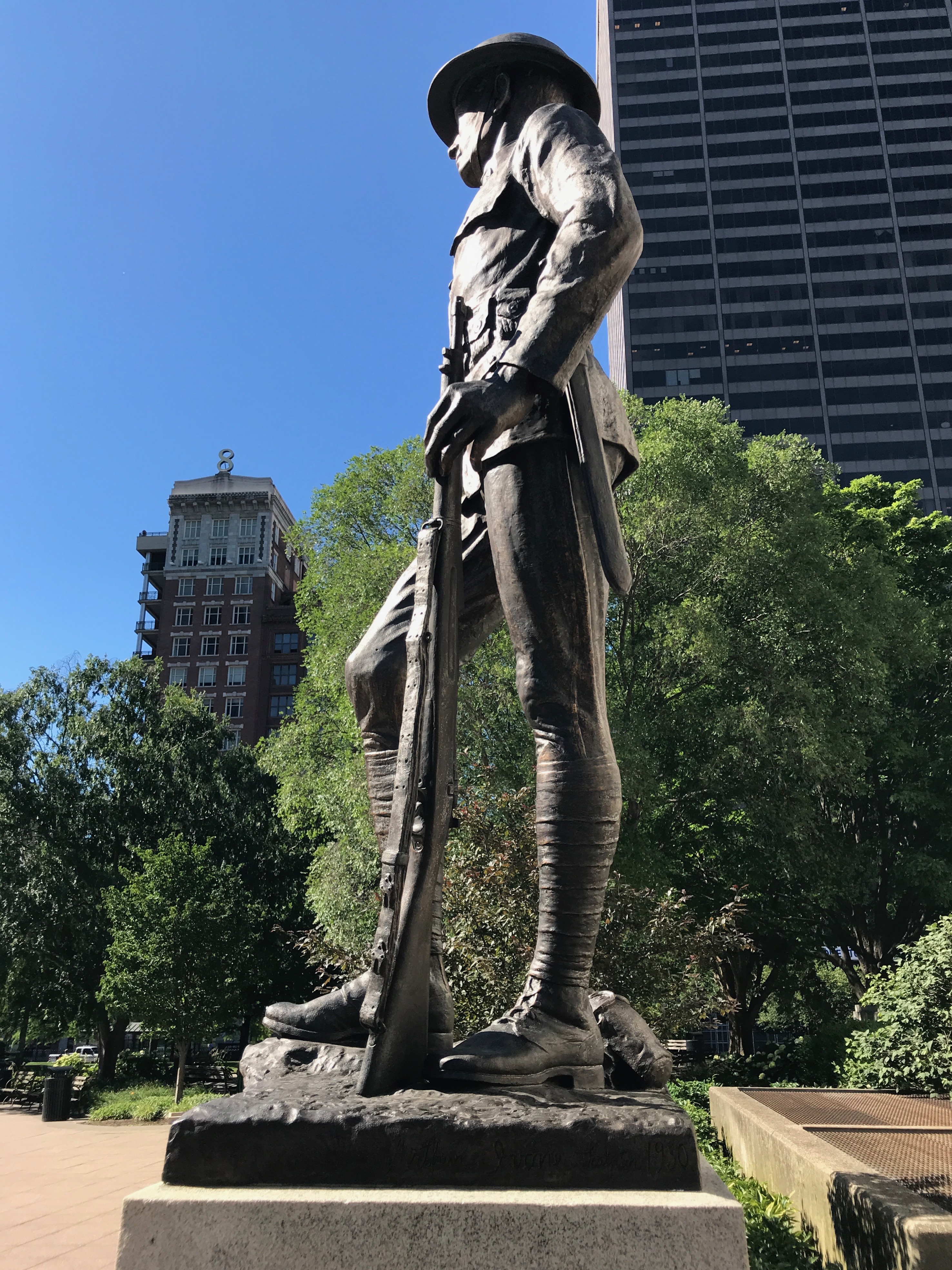
The statue of the doughboy is on the other side of the west entry.
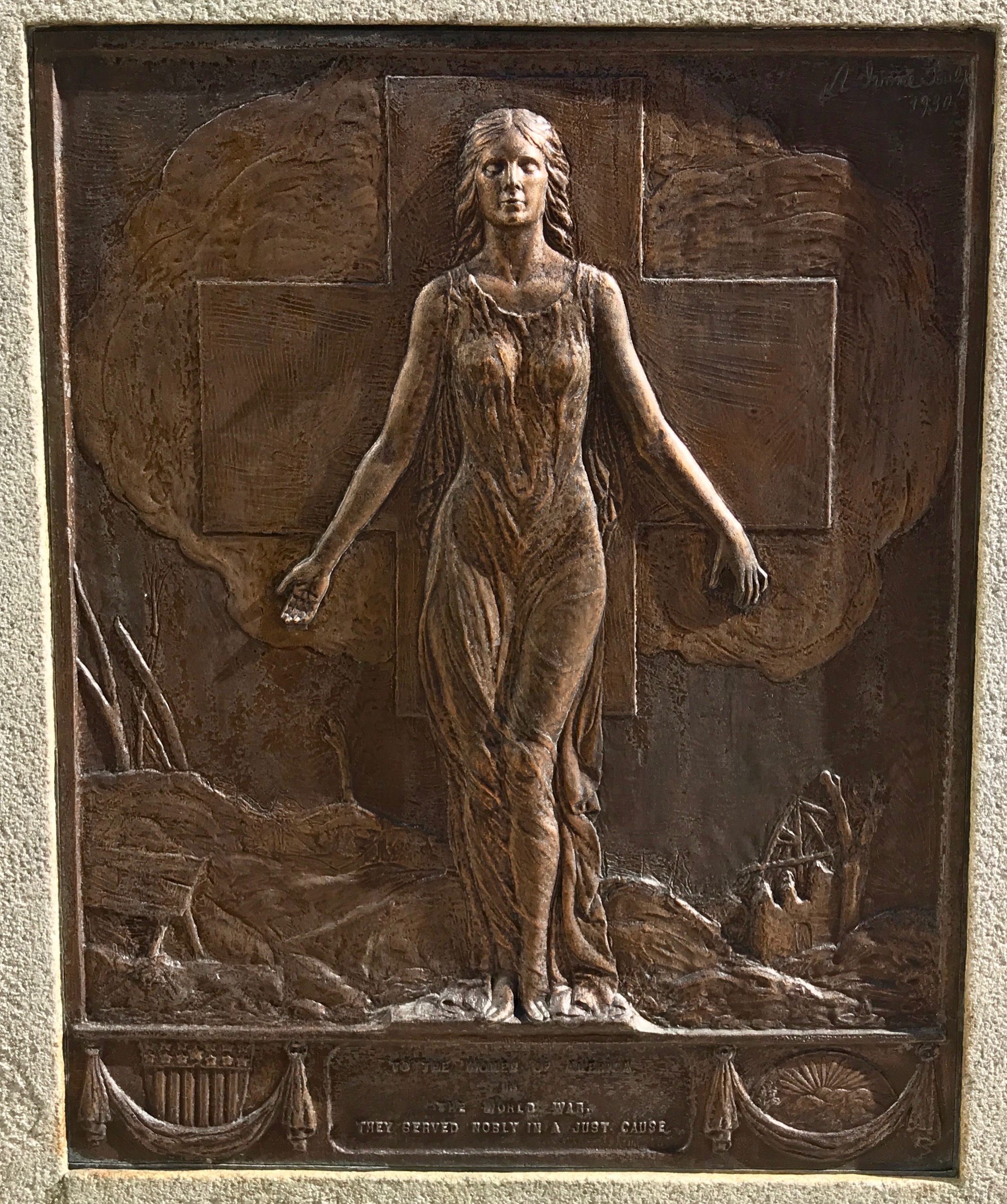
On the other hand, if you call this phone number, you will find out two theories about why soldiers were referred to a “doughboys.”
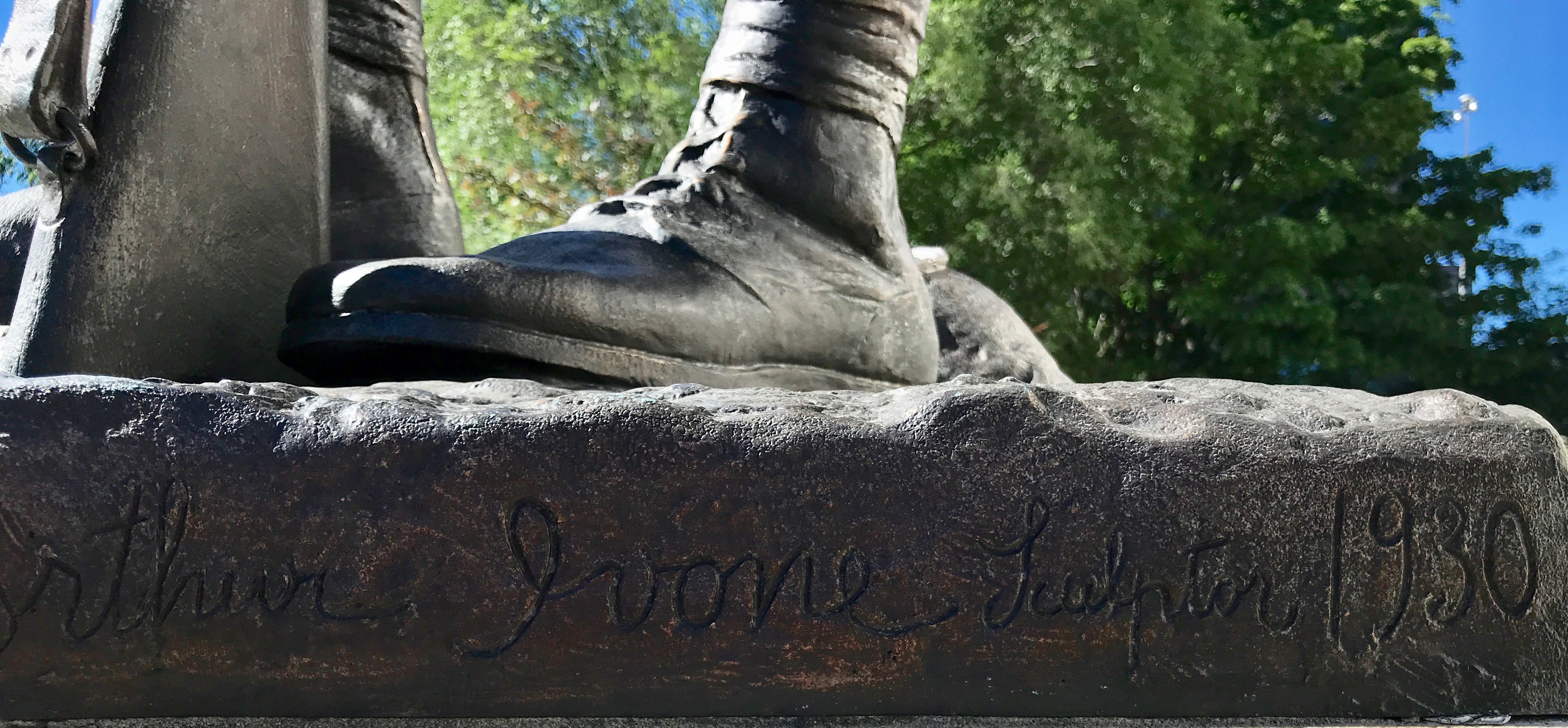
The sculptor was Arthur Ivone. I did some searching on the web, and I was surprised to find no other entries.
Perhaps this was the era when this sort of memorial was falling out of favor.
I looked to my left and I saw a large statue closer to the street and went take a look.
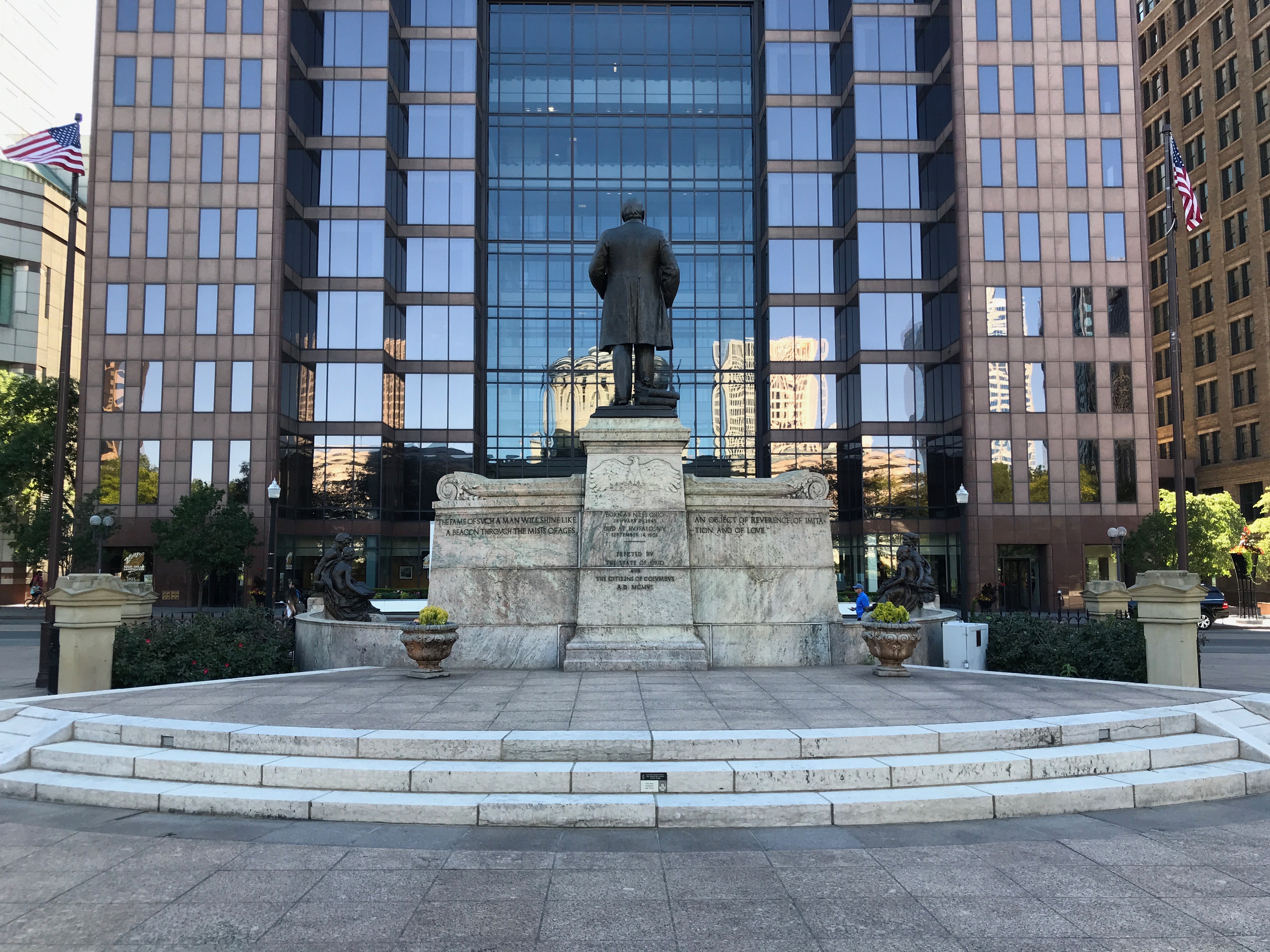
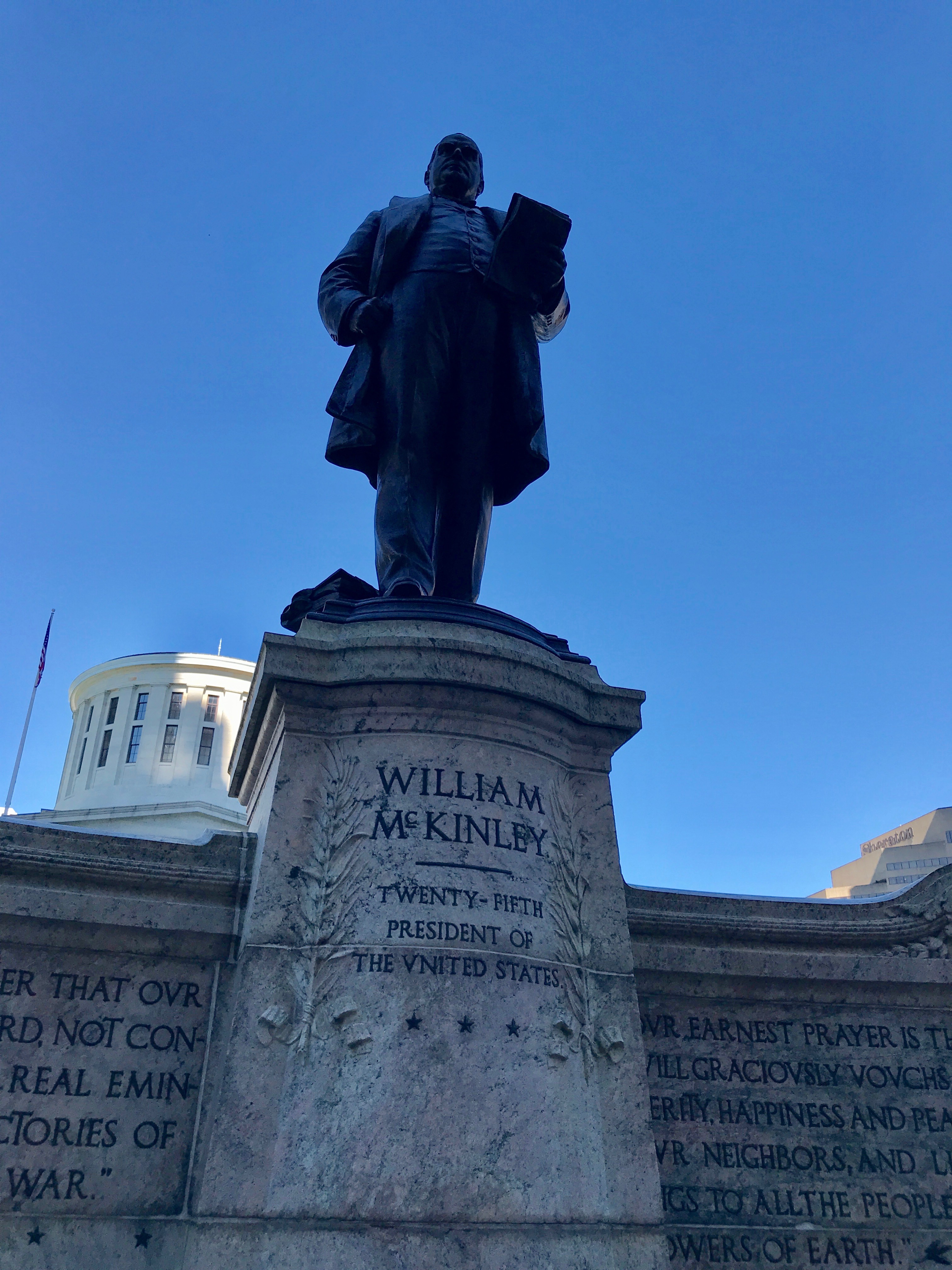
It turns out that it was William McKinley, former governor of Ohio and United States president. He was assassinated in Buffalo in 1901 – my hometown. (And, for those of you keeping track, the name of the street I grew up on.)
I have to admit that I was a little perplexed by the backside of the man on the right side of the memorial.
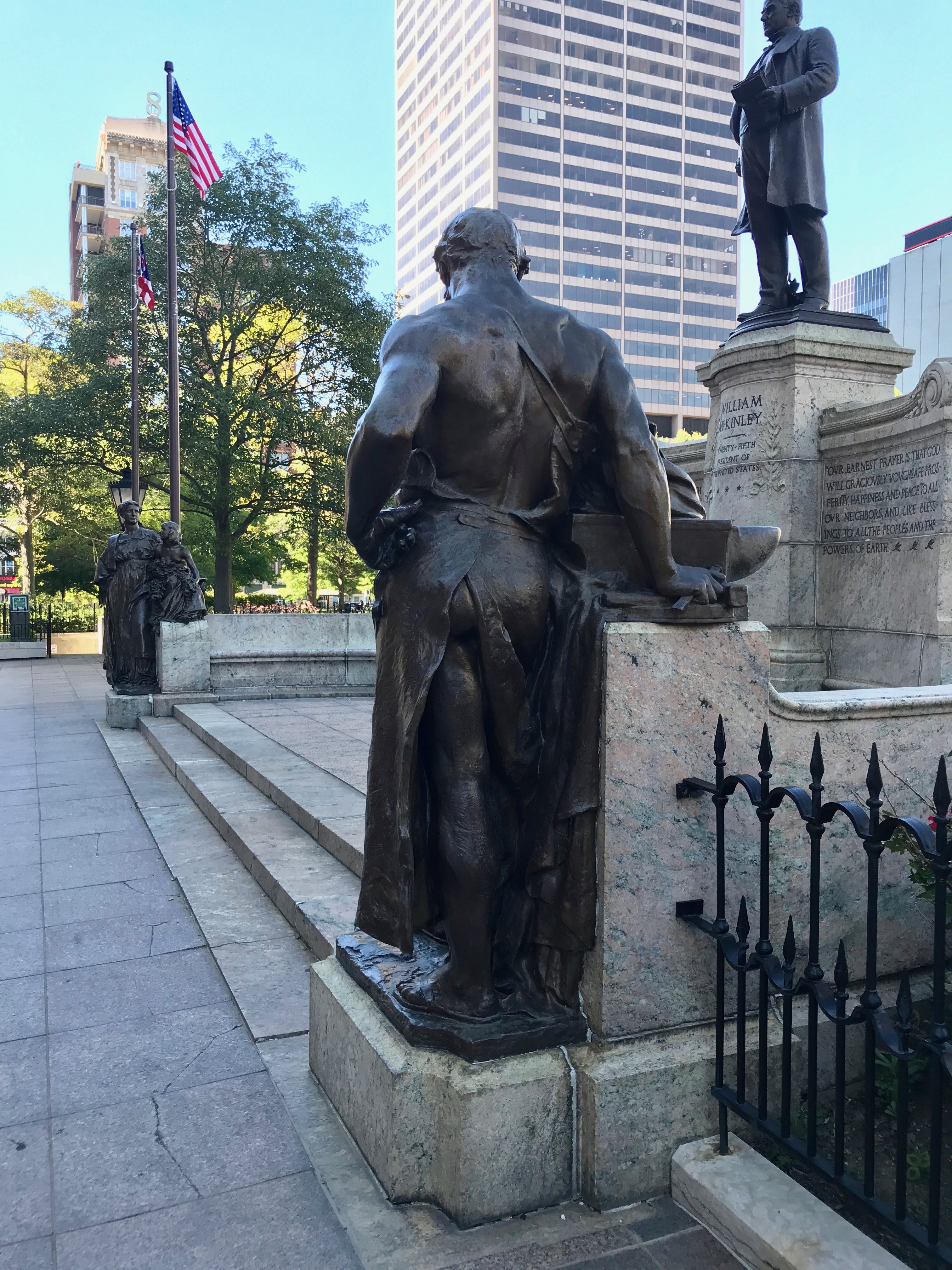
It seems that he is wearing a leather apron. I assume that was to protect himself from whatever his labors were. However, if he needed protection, where in the world were his pants?
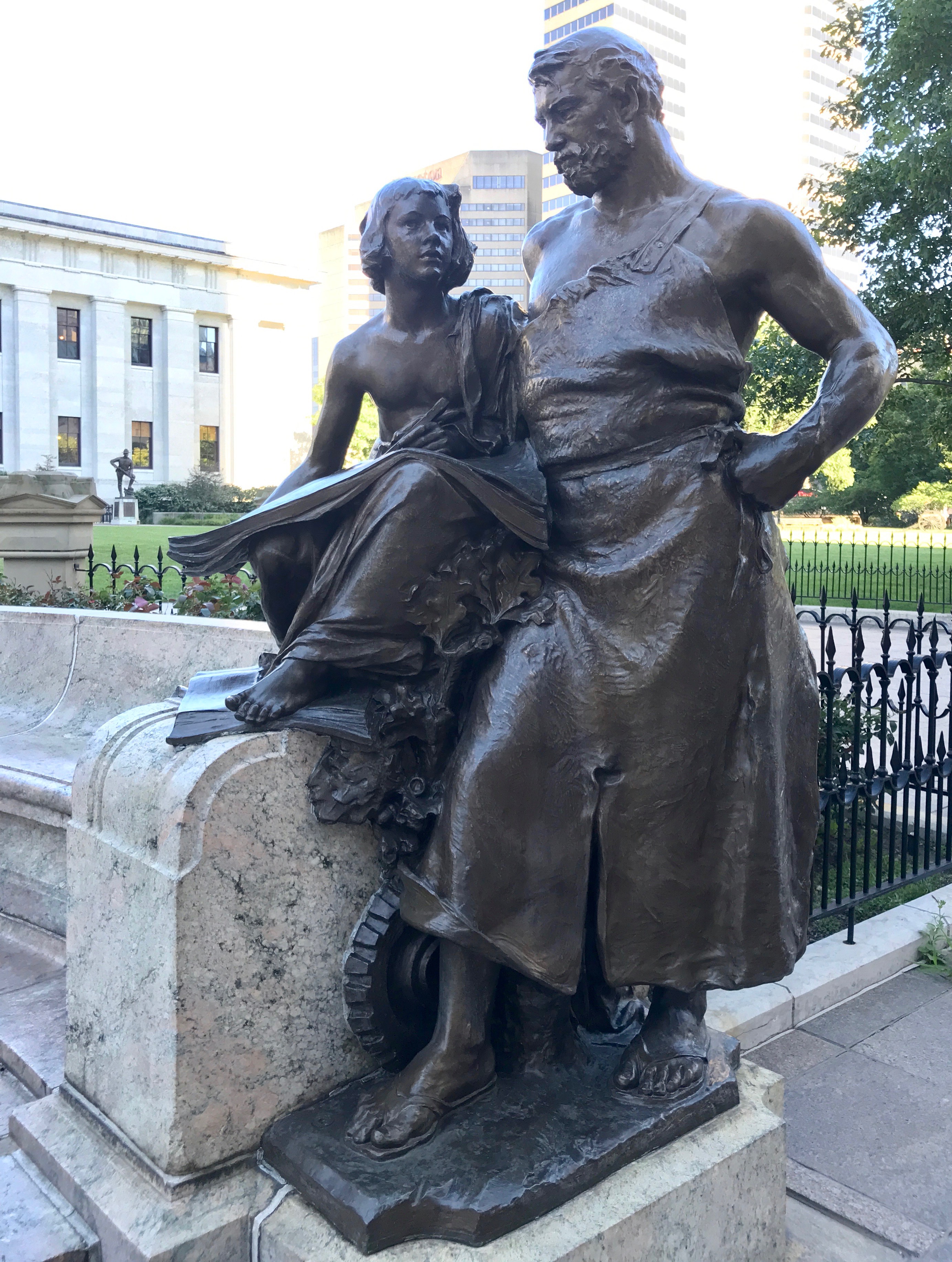
However, it does seem that he is reading with a young child – presumably his son.
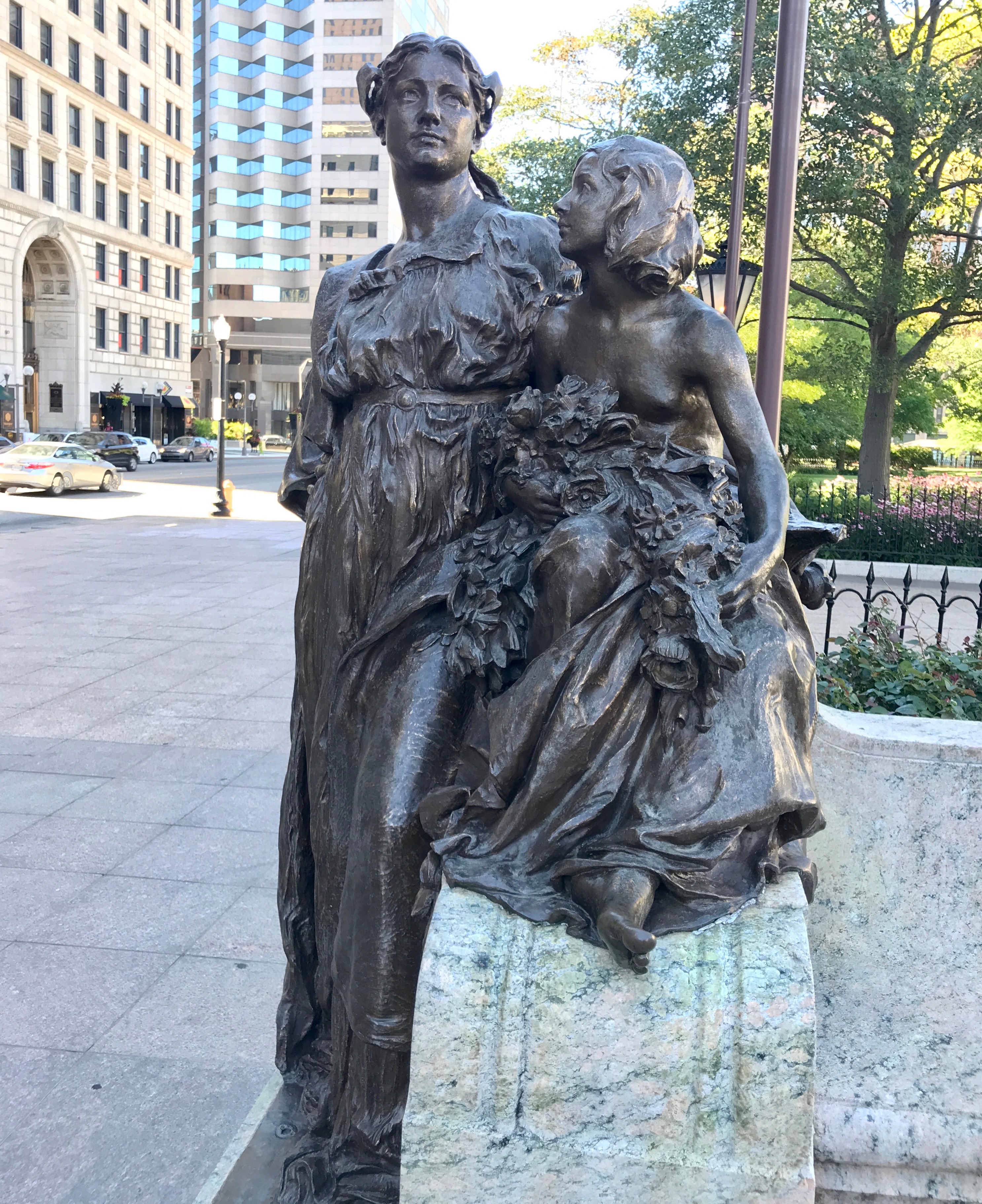
On the other side of the memorial, the women are more modestly clad, although I am not sure why the young female has bare breasts.
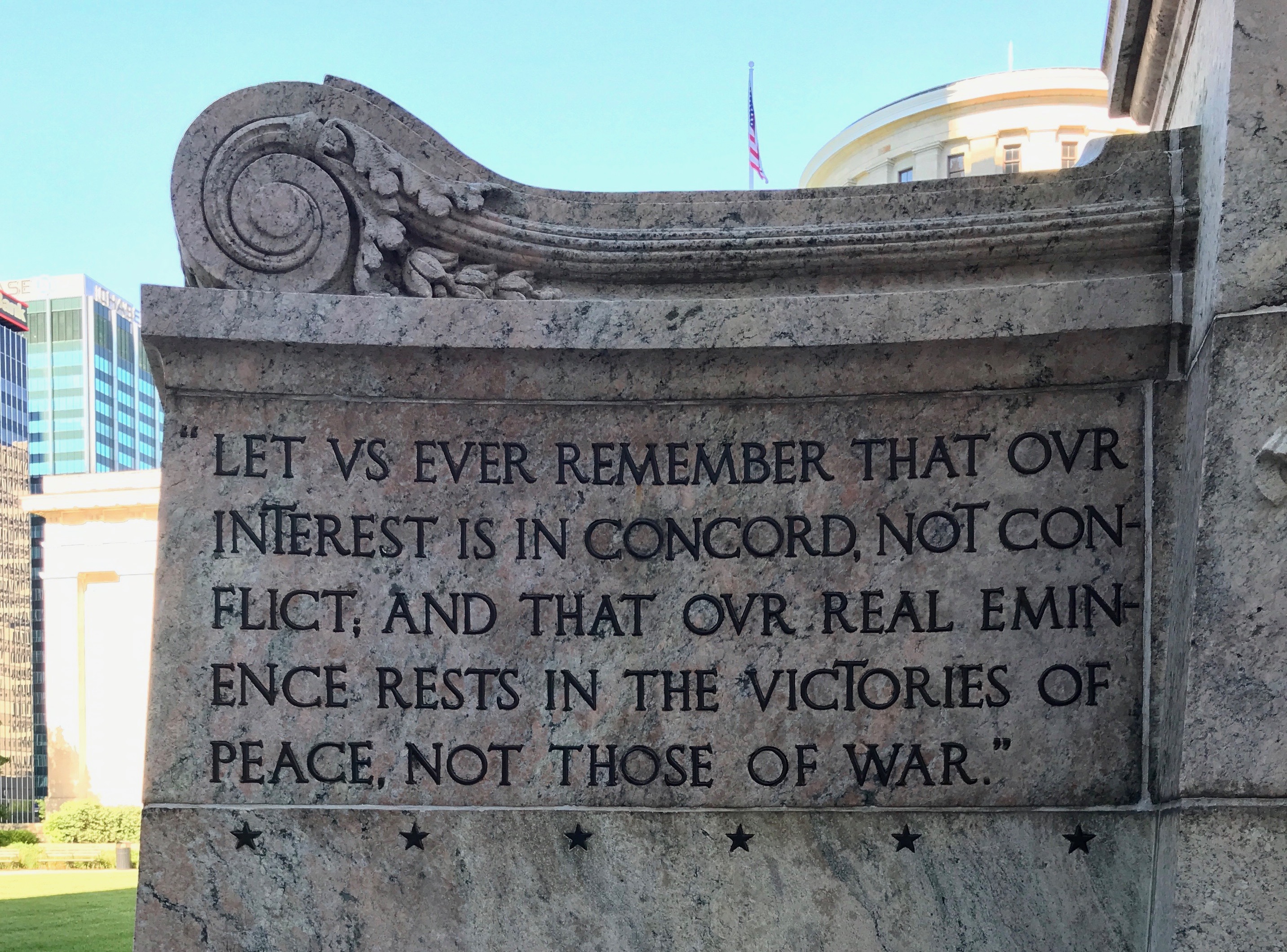
There were some good quotes on the memorial.
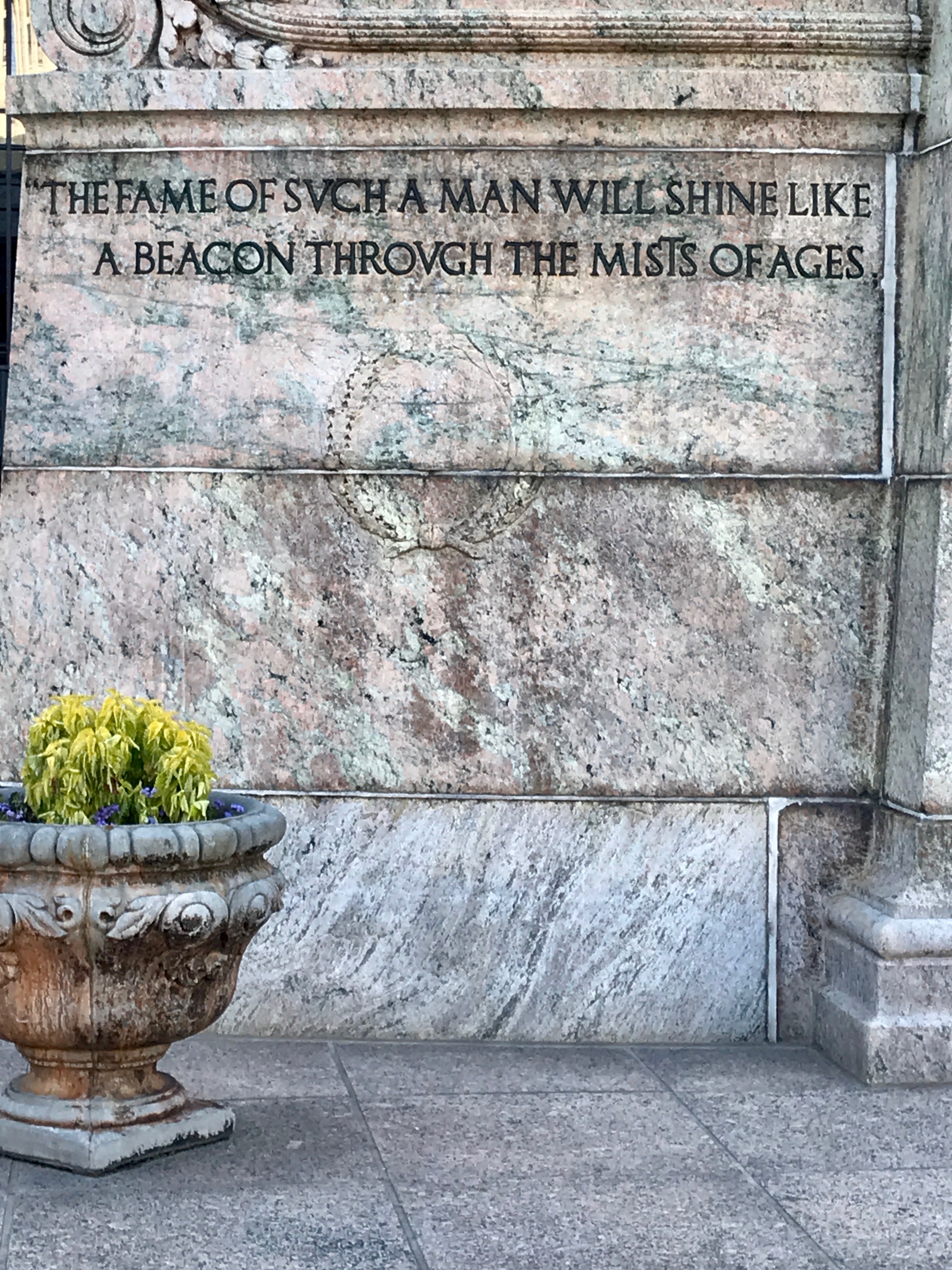
Odd, though, that his fame has not persisted. Or, maybe we are just awaiting resurgence of interest in William McKinley.
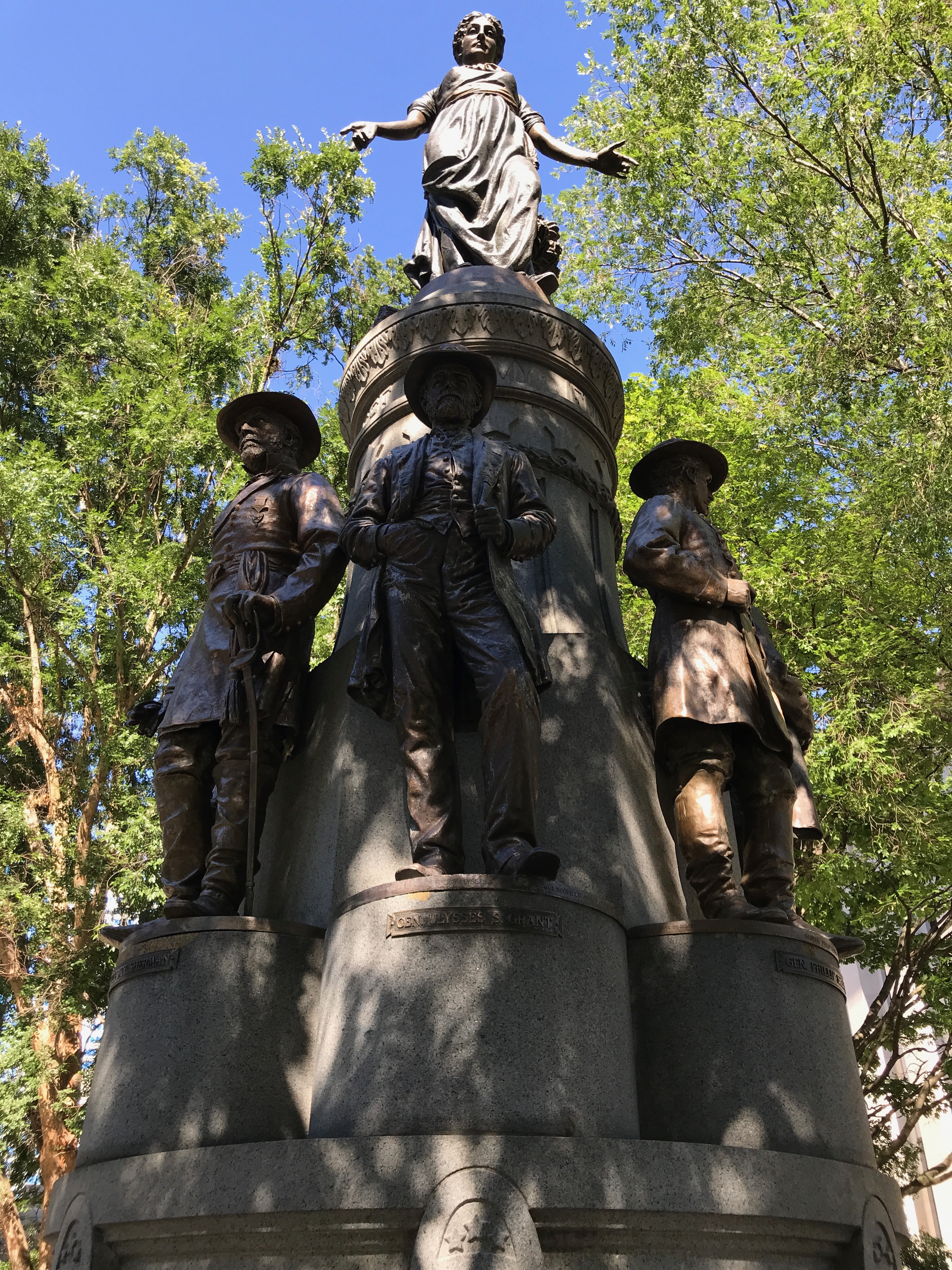
Rounding the corner, I came upon this memorial to some of Ohio’s favorite sons.
This memorial is called “These Are My Jewels.” The title comes from an anecdote of Roman history about Cornelia, who is depicted at the top of the statue. While her friends took delight in displaying her sumptuous clothing and jewelry, her pride was in her sons.
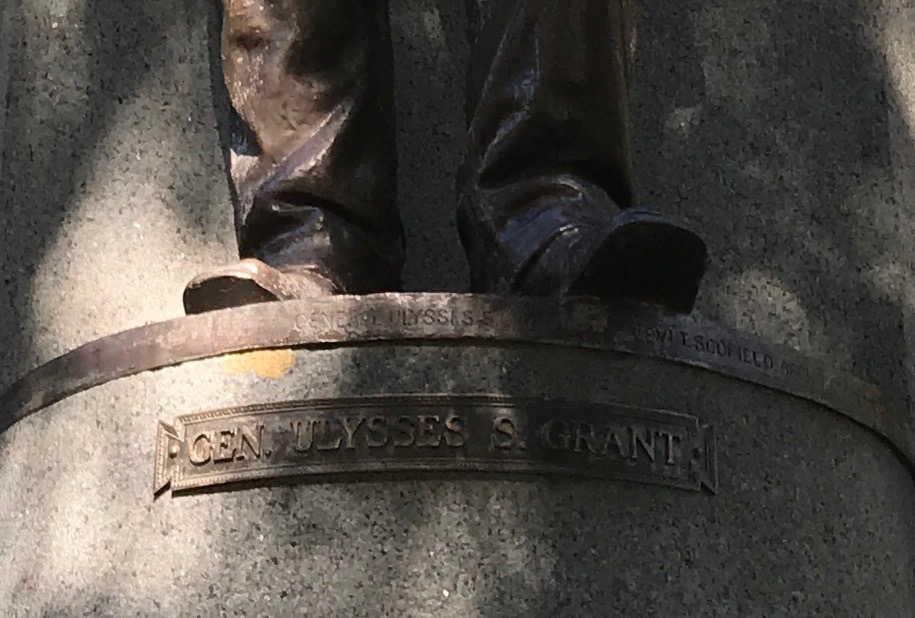
Surrounding the drum that Cornelia stands atop are Generals Ulysses S. Grant, William T. Sherman, James A. Garfield, Phillip Sheridan, Treasury Secretary Salmon P. Chase, Secretary of War Edwin Stanton, as well as Rutherford B.Hayes.
Three of the state’s presidents are honored in this one memorial to military and political leaders from the state of Ohio who were vital to the Union cause during the Civil War.
I kept moving along. I wondered if I would ever come to anything that recognized the contributions of real Ohioan females to the world. I was sure there must be something that women from Ohio did.
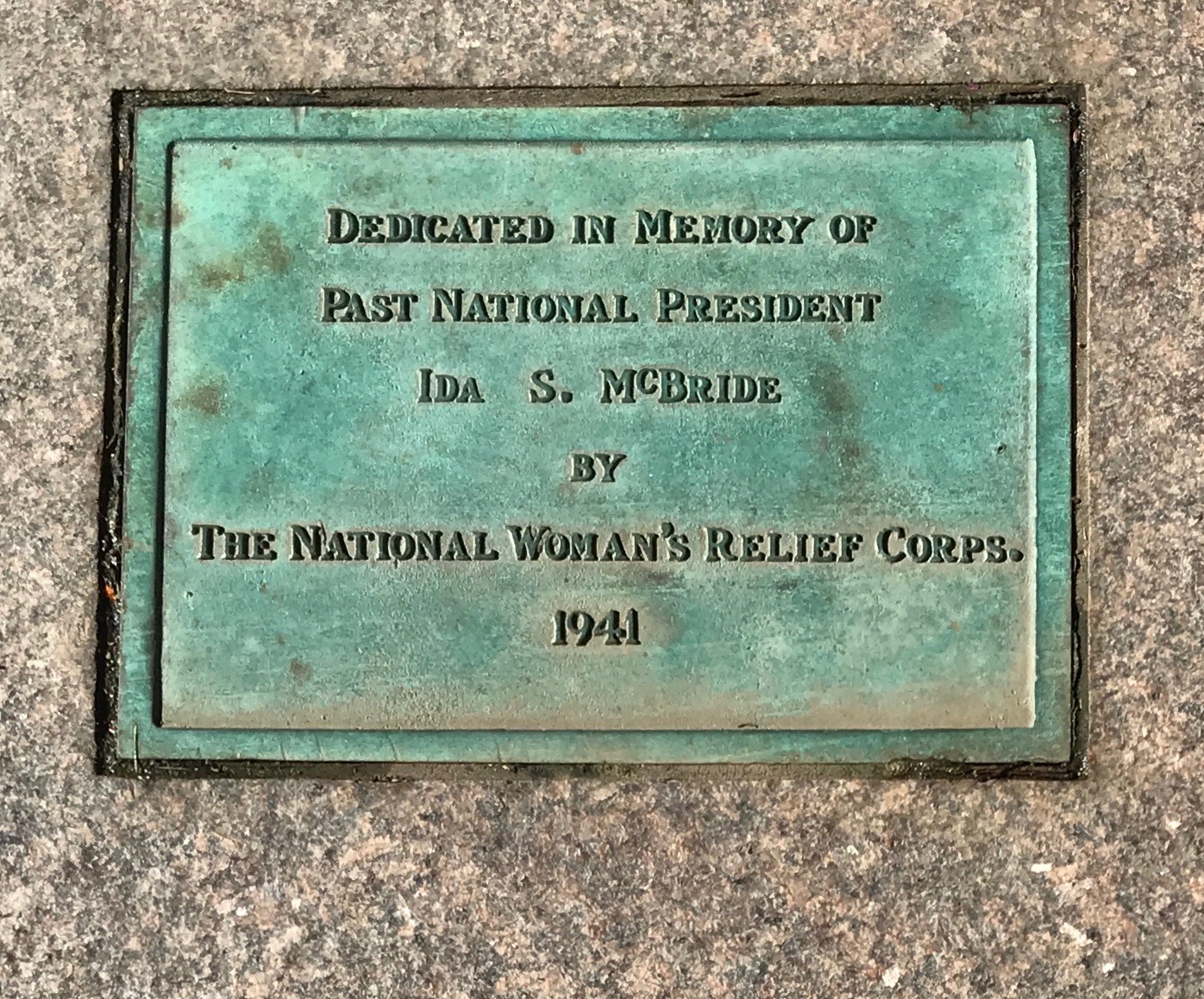
I finally came upon this plaque.
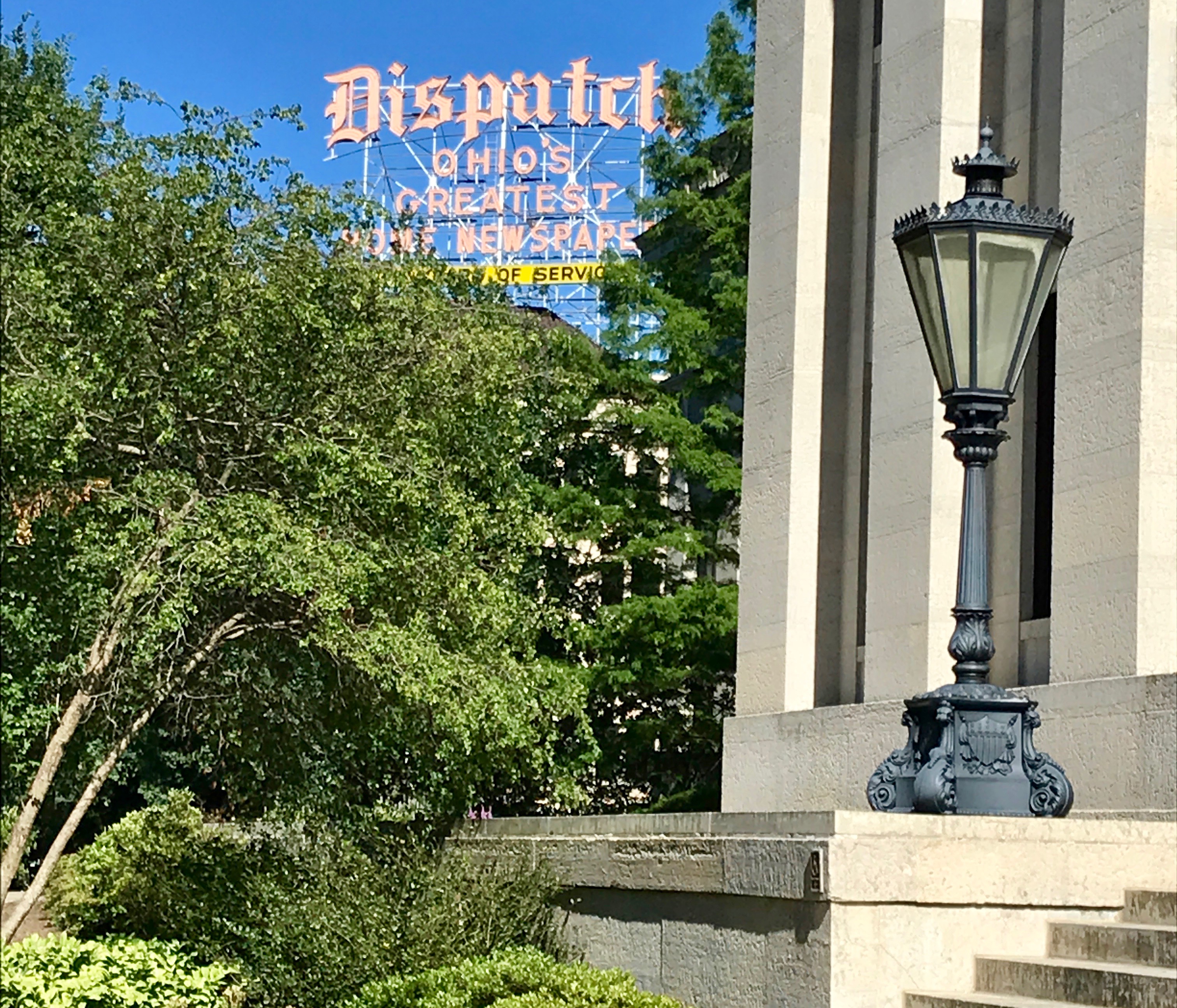
I appreciated the placement of this sign for the Columbus Dispatch. We need to have a vibrant journalistic community watching our government and keeping us informed about what is going on. As The Washington Post’s slogan reminds us, “Democracy Dies in Darkness.”
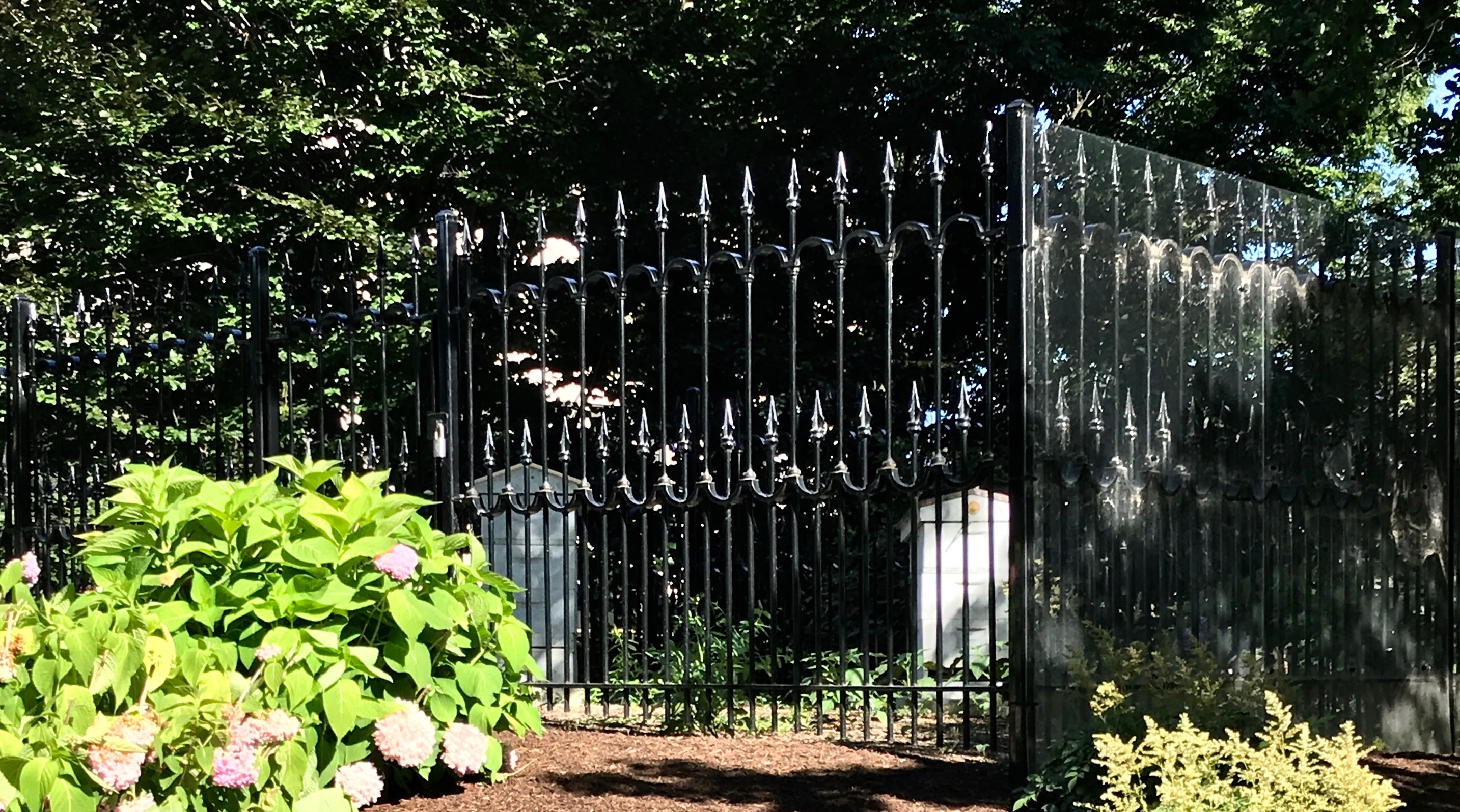
Tucked away in a corner of the 10 acre campus is the Capitol Square Honey Bee Apiary. It was dedicated on Earth Day 2015. It was installed after the Colony Collapse Disorder in 2006, where millions of bees vanished from their hives. It’s located on the capitol square to reinforce Ohio’s commitment to the environment and to help this beneficial pollinator recover from the devastation.
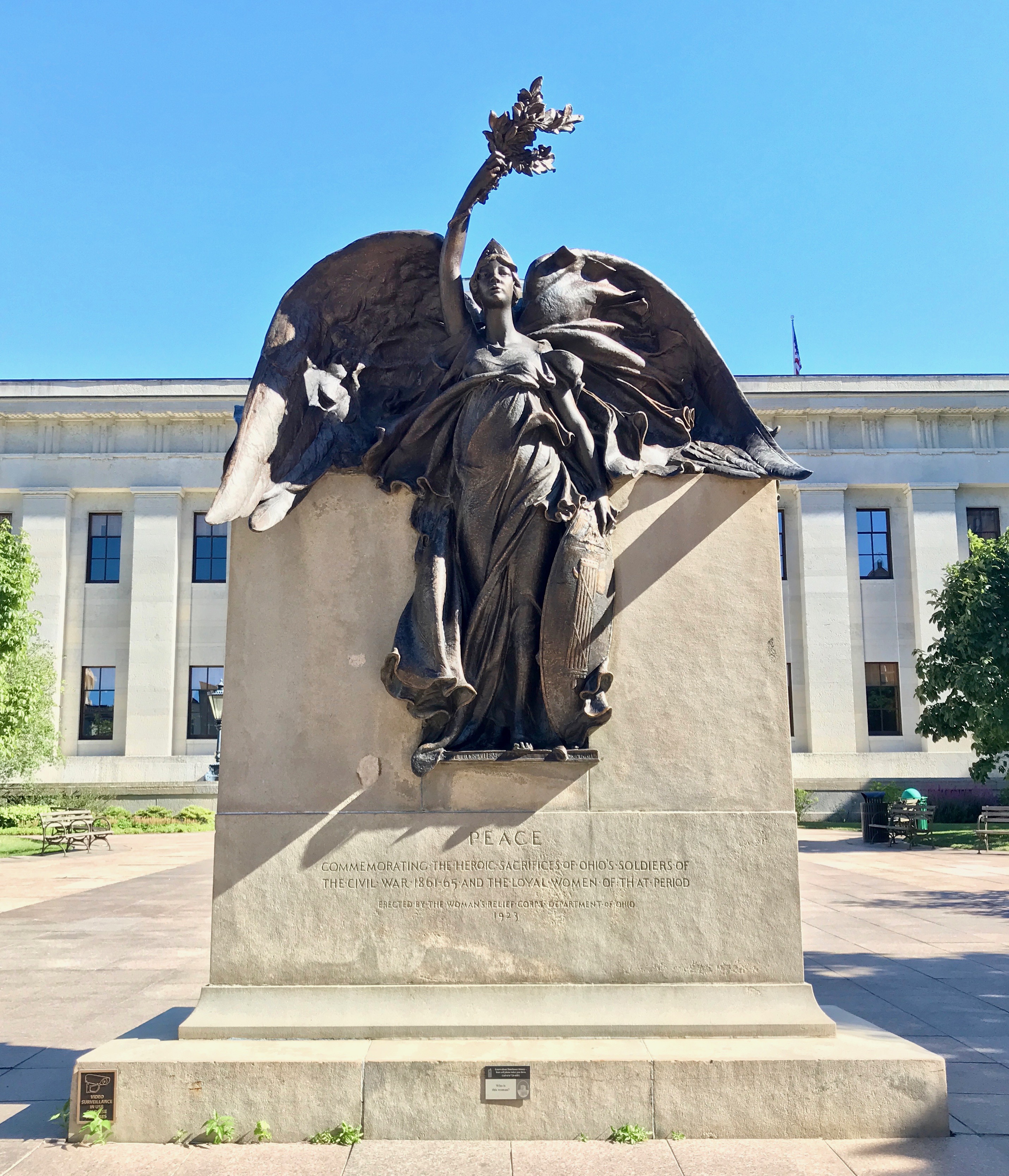
Finally, a monument to peace!
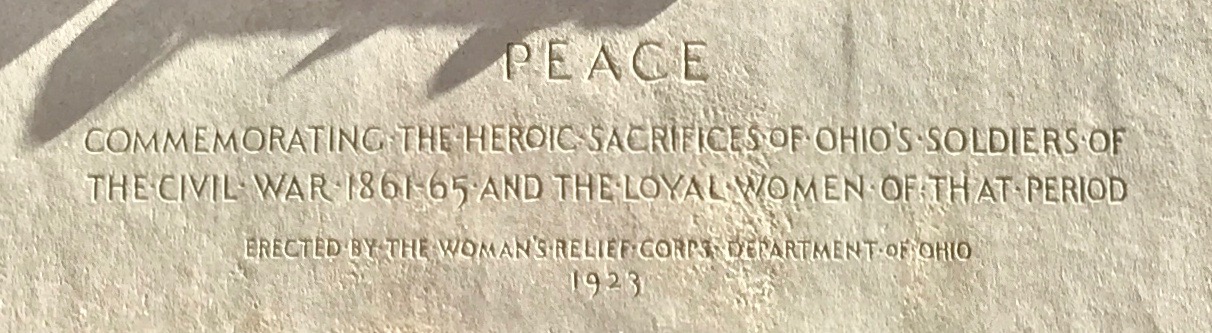
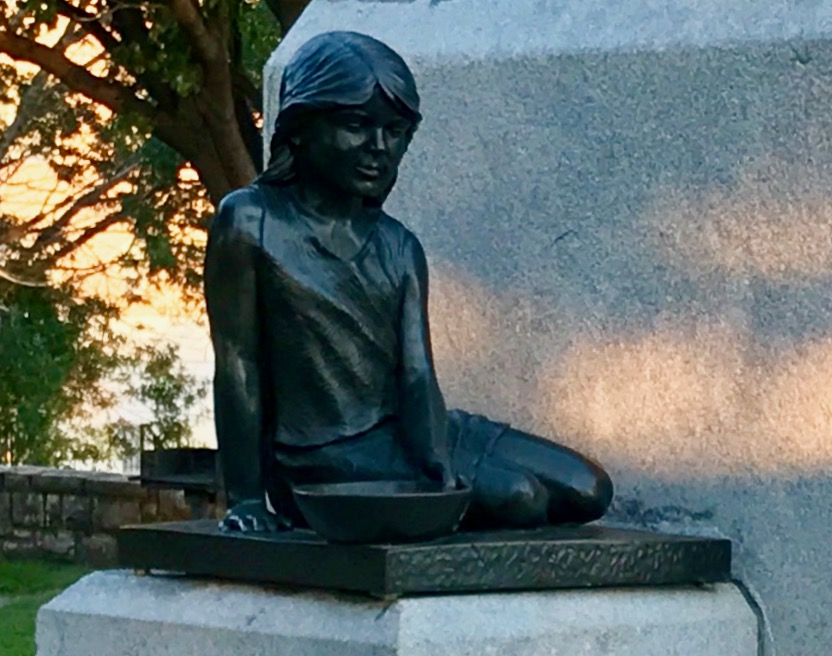
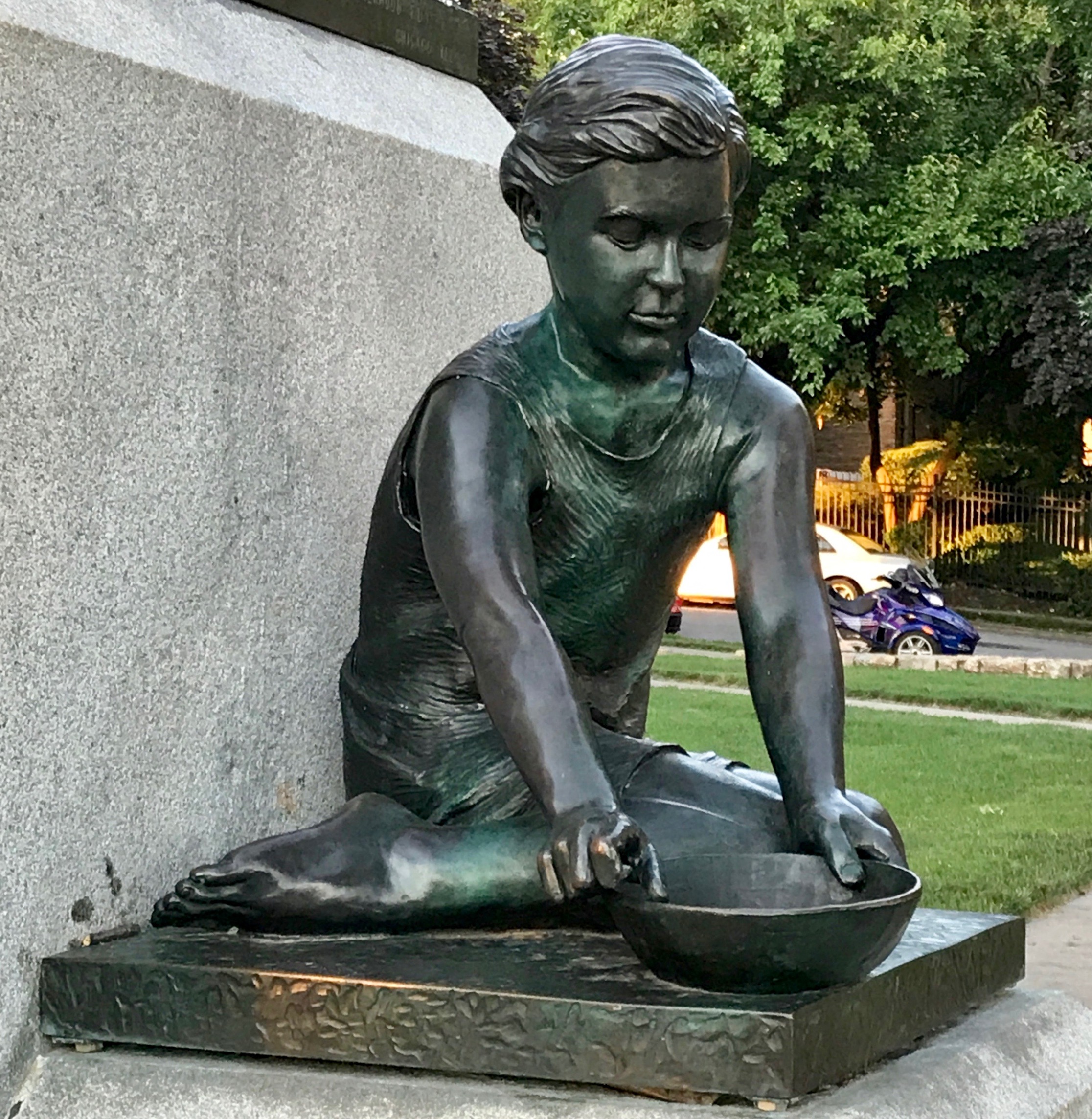
And to women. Of course, the women had to erect it themselves.
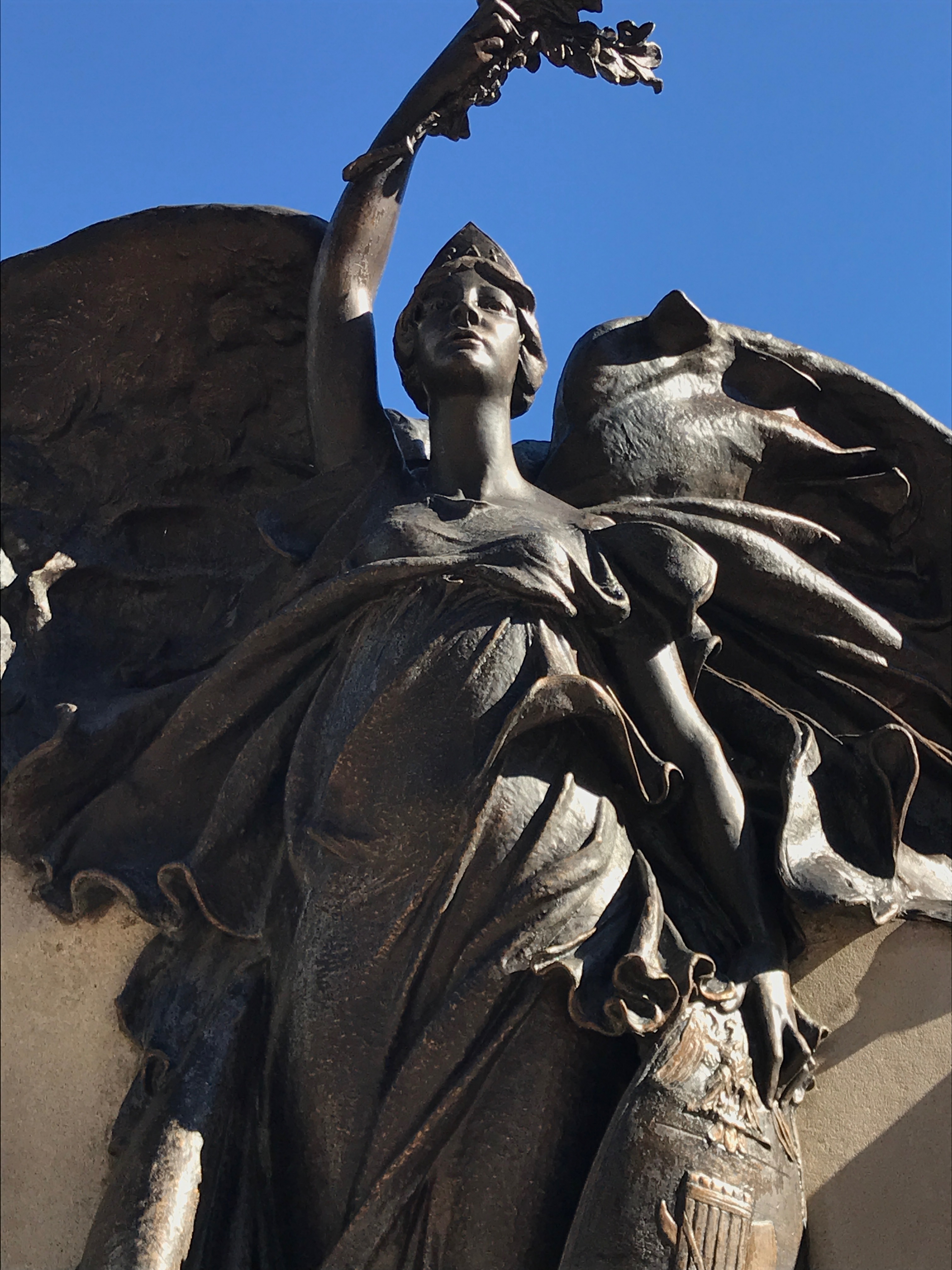
I notice that this woman is fully clad. Maybe it takes a women’s group to think of that.
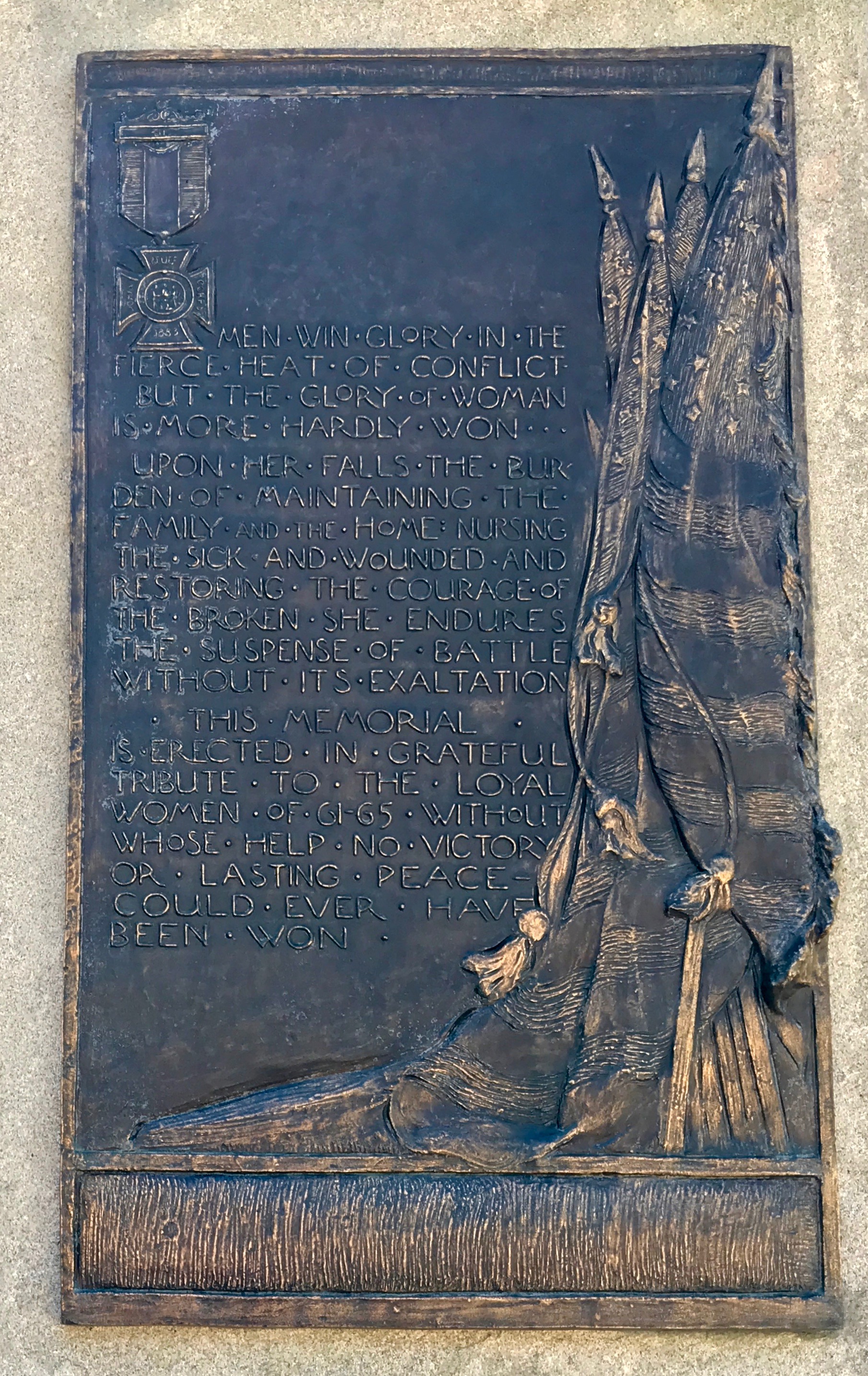
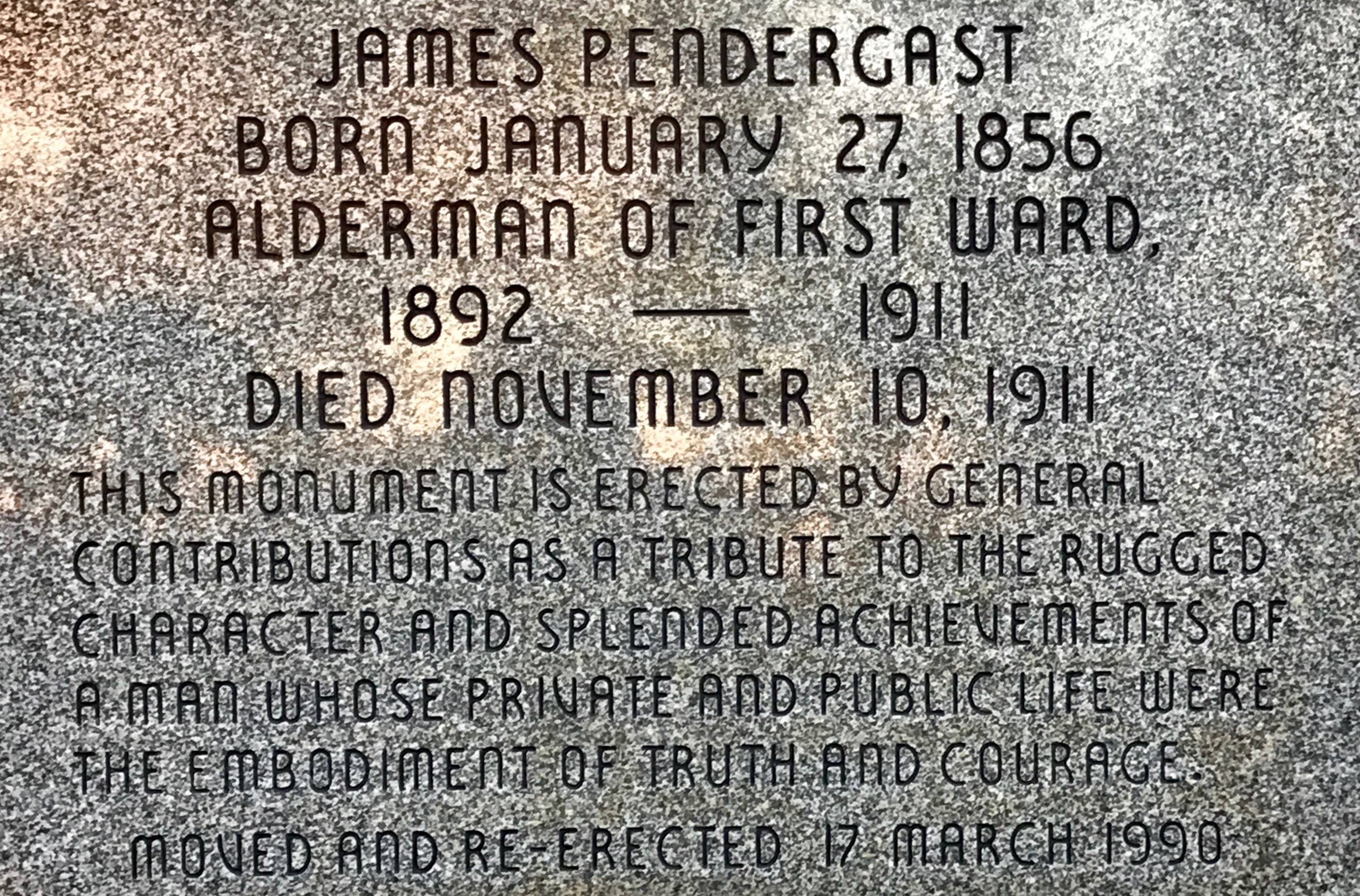
Here’s the plaque for the women.
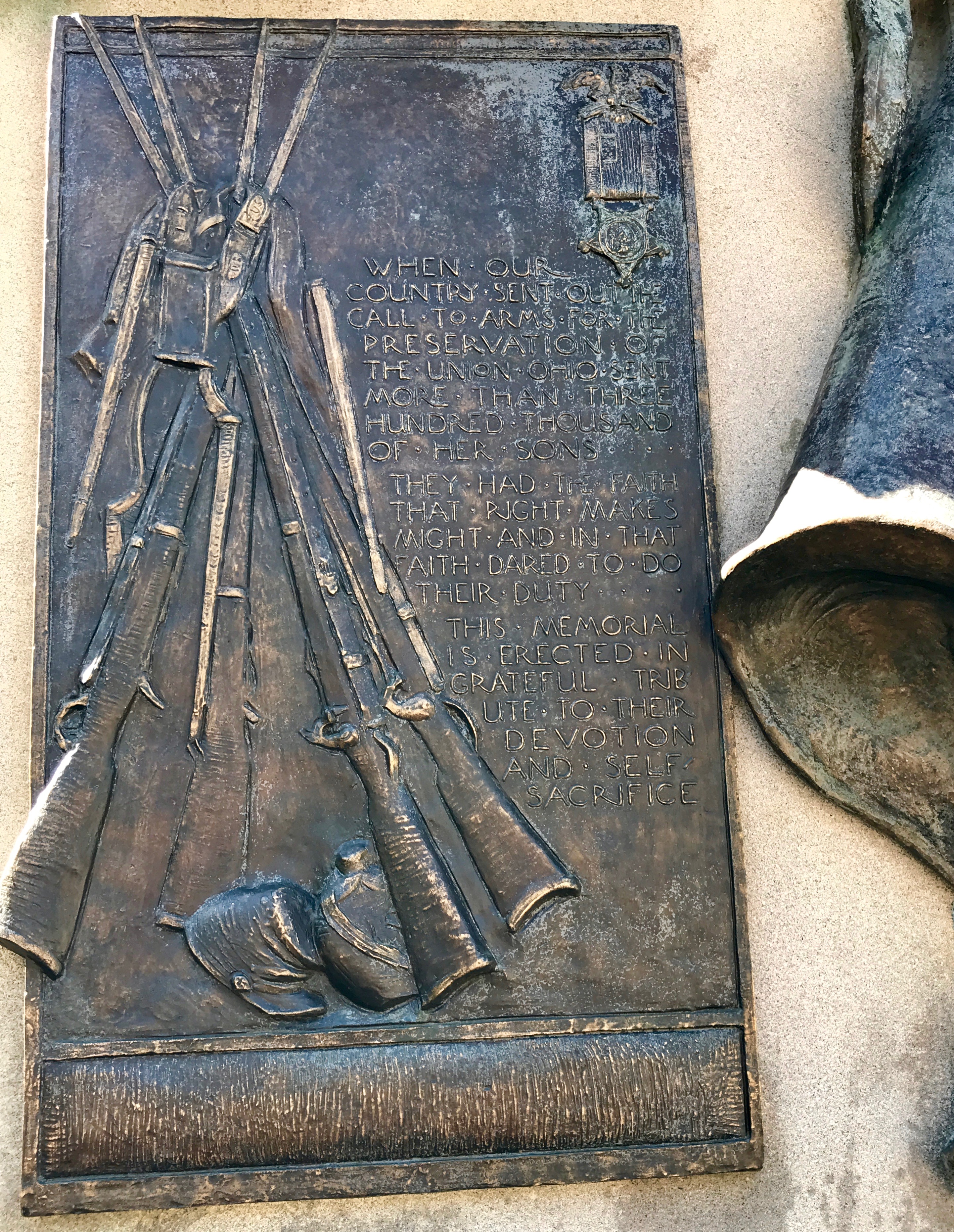
Here’s the plaque for the men.
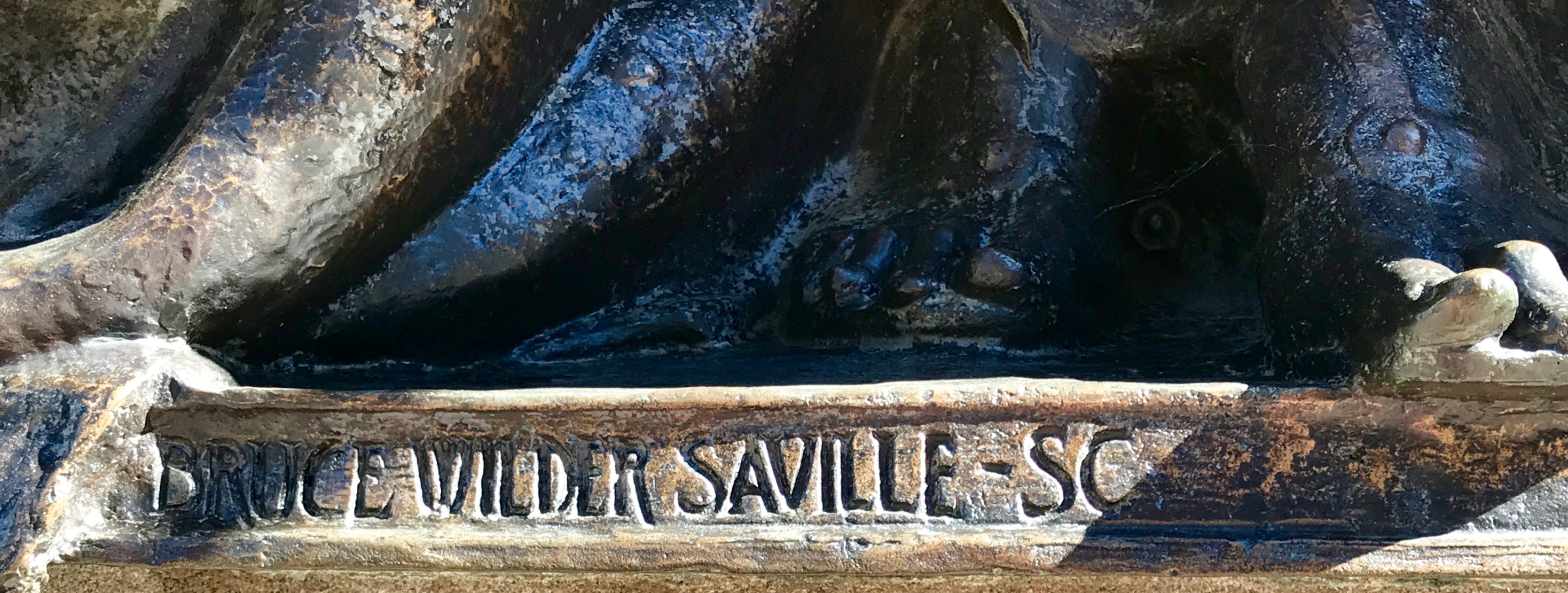
The sculptor, Bruce Wilder Saville, was a fairly prominent sculptor who was known for his monuments. From Quincy, Massachusetts, he was born in 1893 and died in 1938.
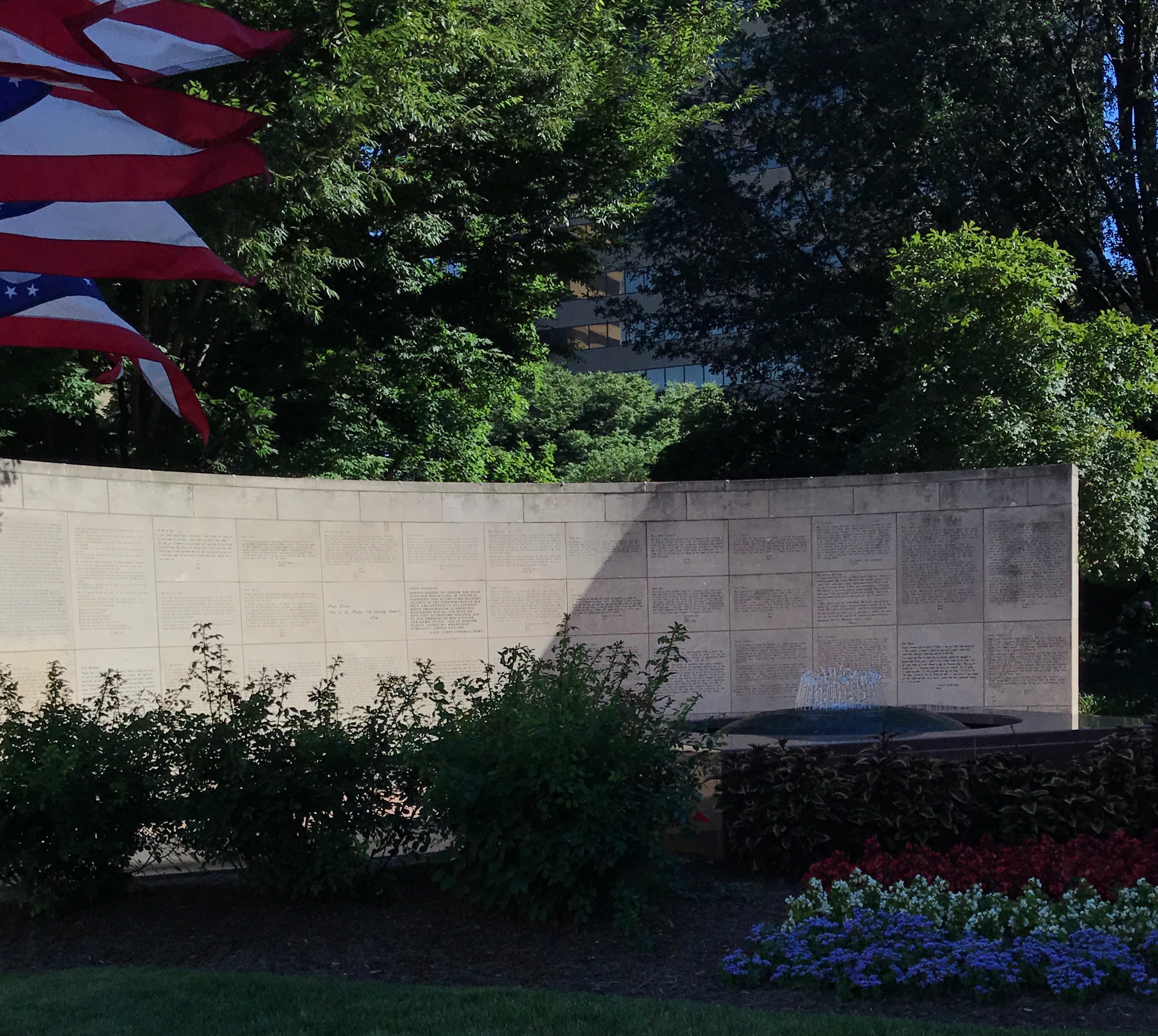
In front of the east façade is the Ohio Veterans Plaza. According to the website, “The inspiration for the Ohio Veterans Plaza is rooted in an act of civil disobedience. In 1981, two Vietnam veterans, Carl Chandler and Harry Edwards, erected under the cover of night on the Capitol grounds a hand painted four-by-eight-foot sheet of plywood as a tribute to veterans of the Vietnam War.”
A bill was passed in the legislature to install a permanent veterans’ memorial. The plaza honors Ohio men and women who have served our country since World War II, as well as those who will serve in the future.
The grassy area lined with Ohio flags is flanked on either end with curved limestone walls that are inscribed with letters from the text from correspondence from Ohio military personnel .
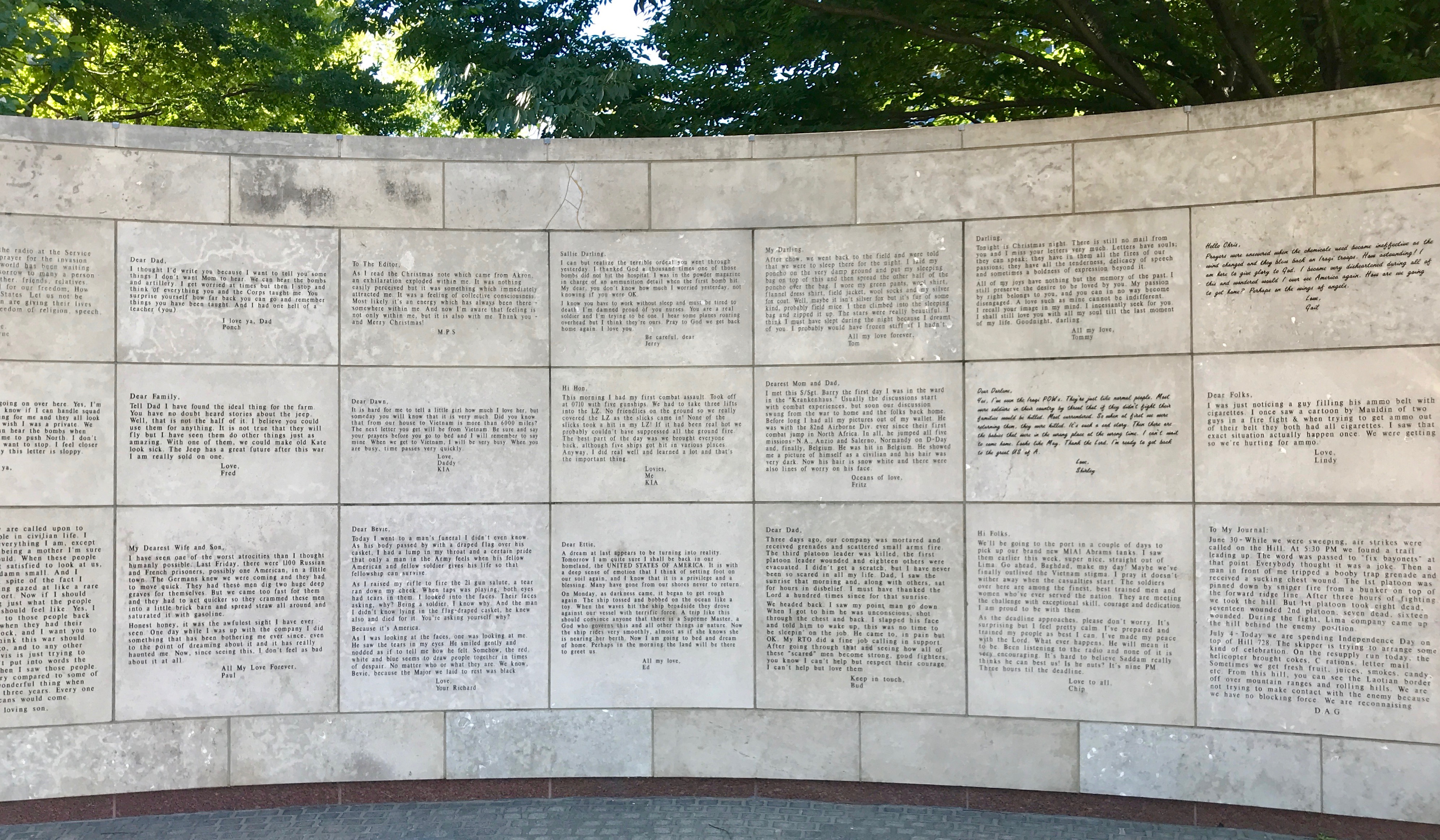
When you get closer, you can read the letters that were selected from the over 1500 letters that were contributed from Ohioan families.
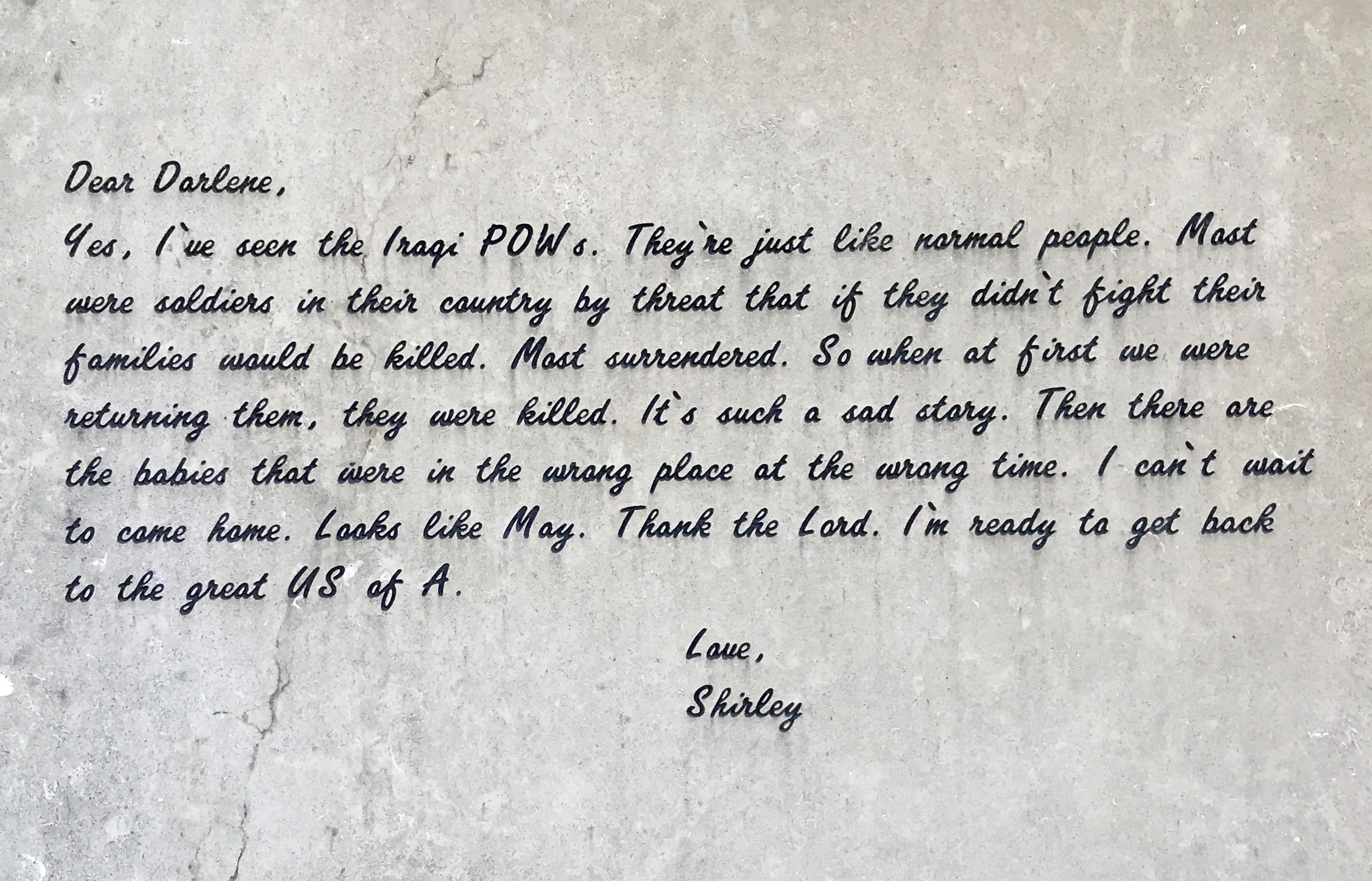
Some described a bit of their experiences.
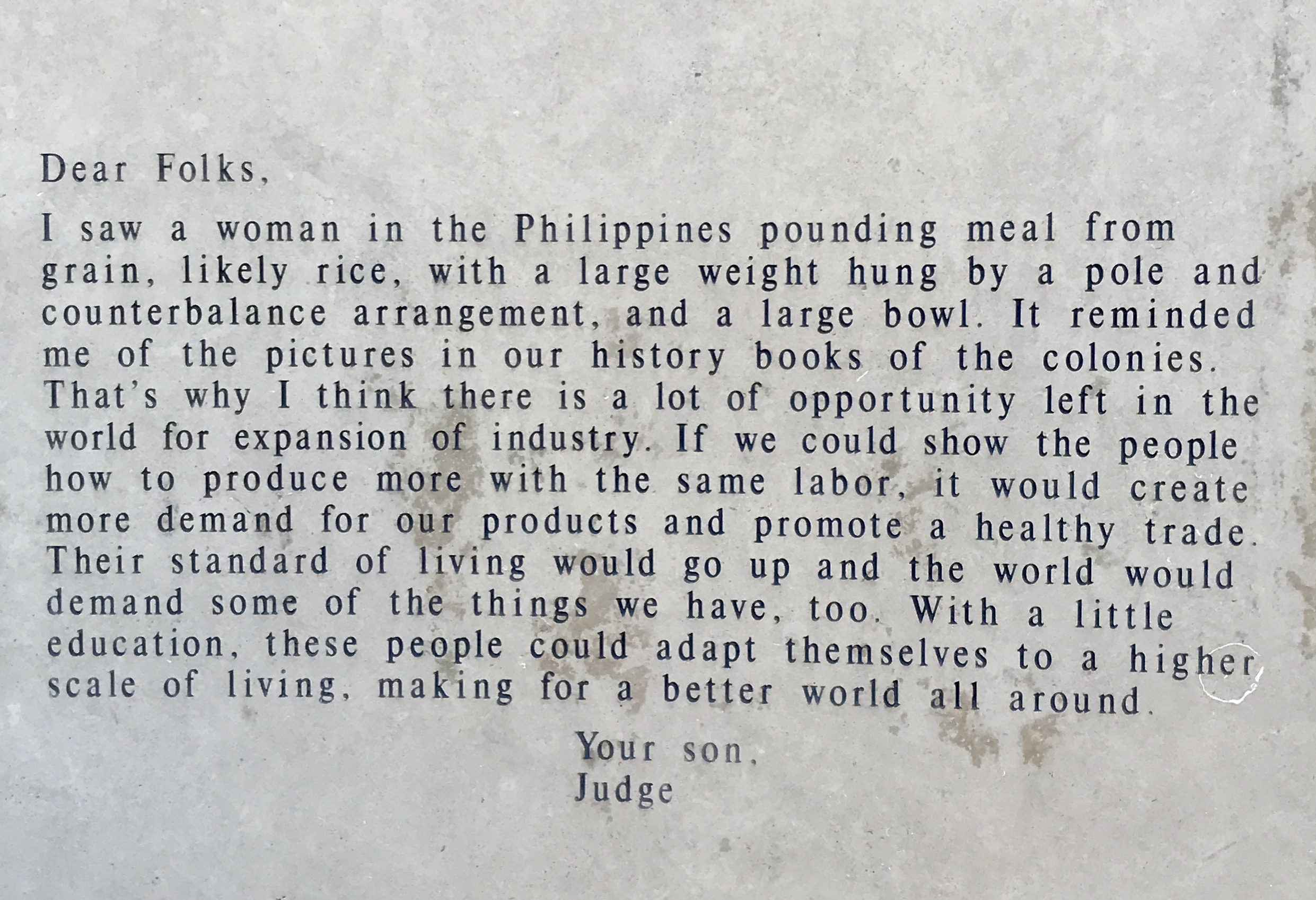
Others coupled their observations with ideas for the future.
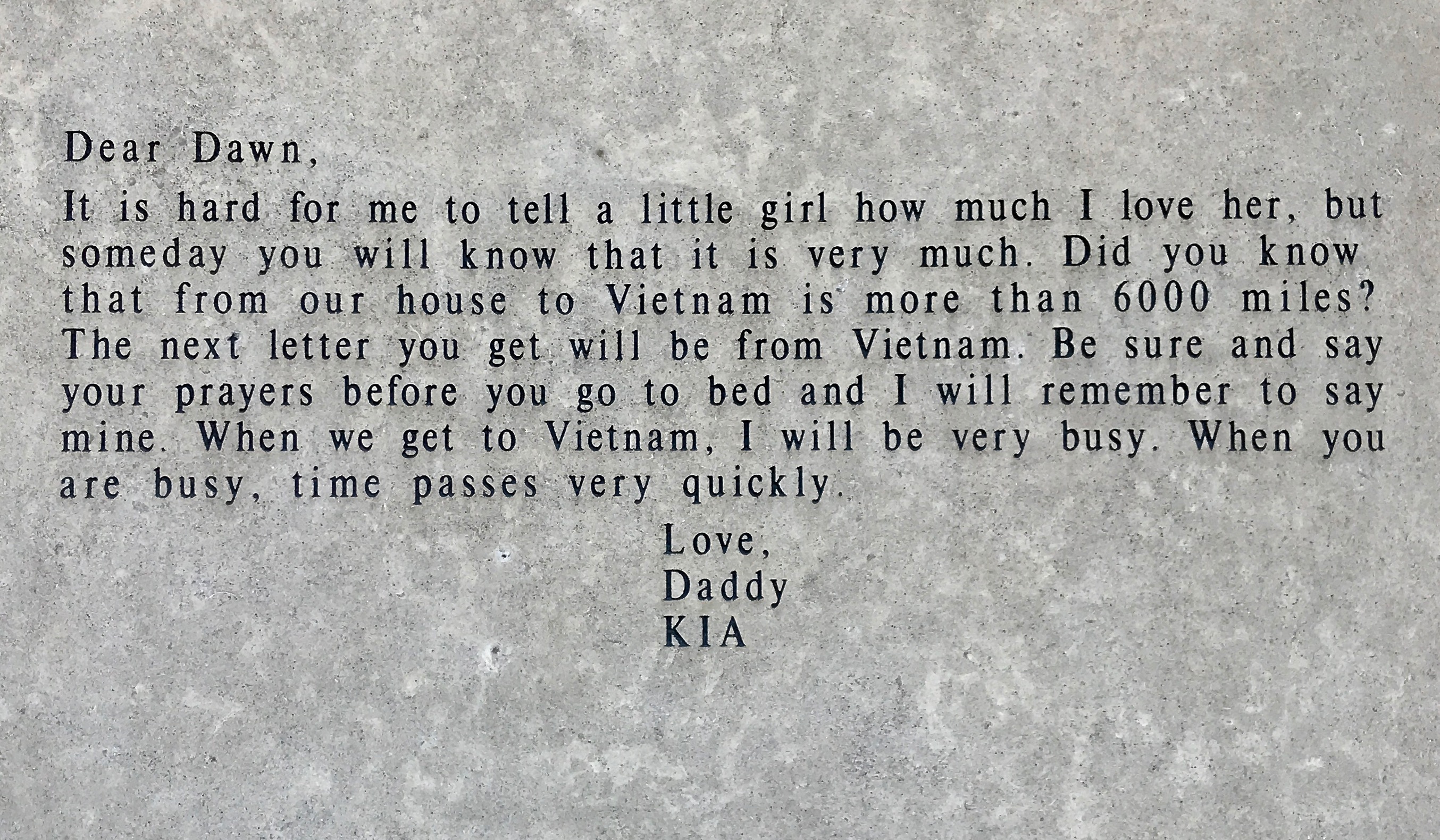
Others were love notes to their families from soldiers that never returned, like this one…
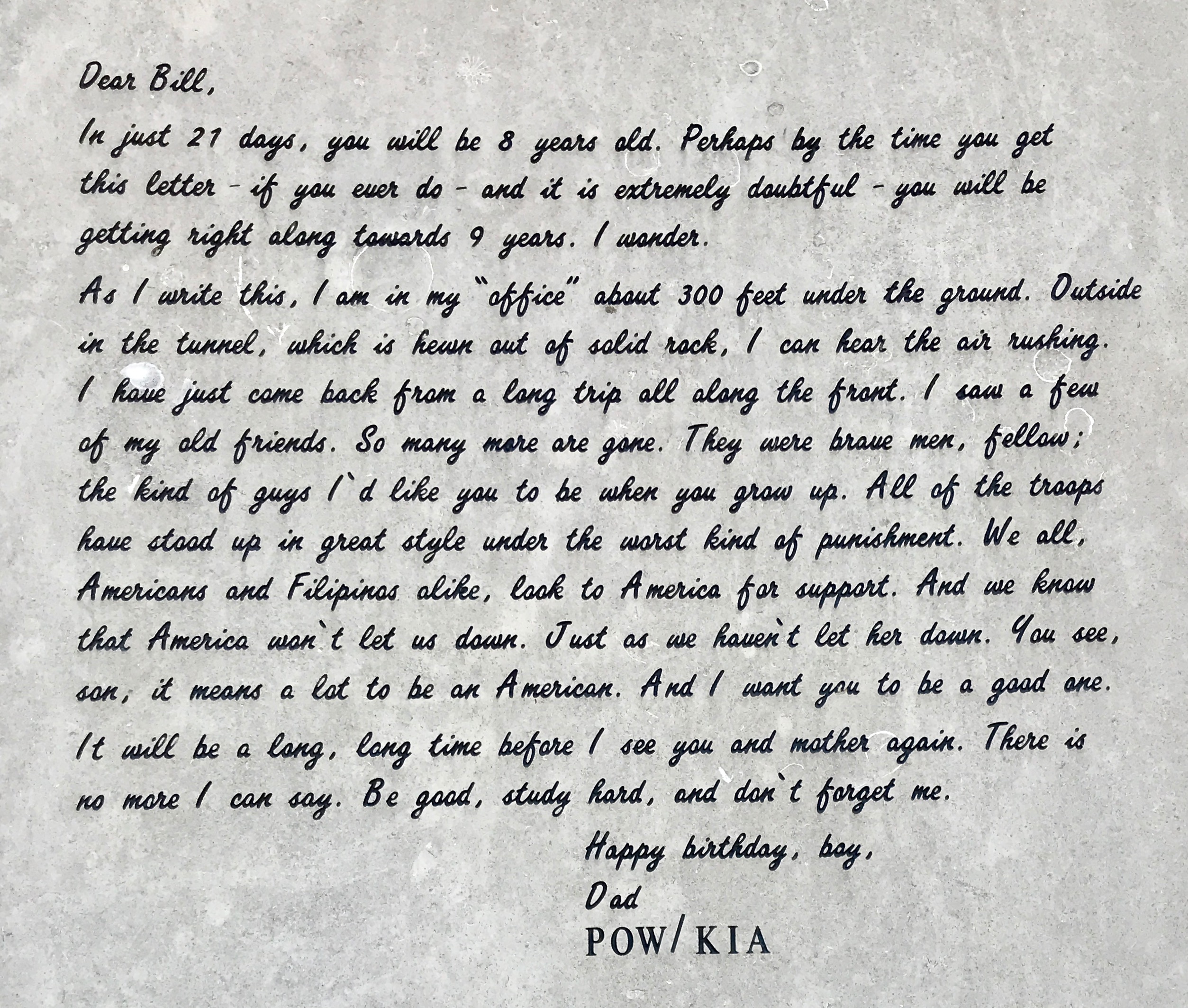
…and this one.
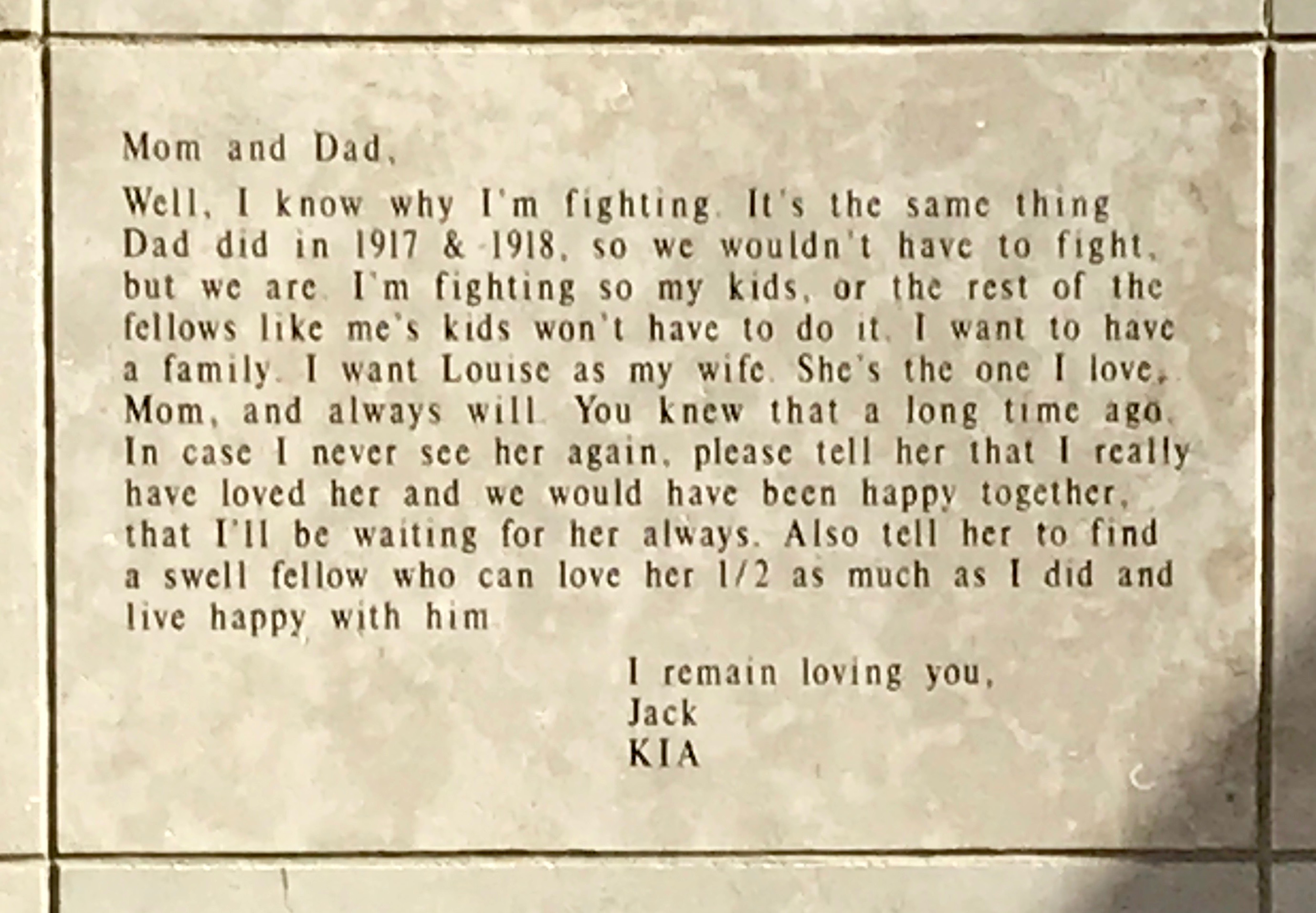
This letter is heartbreaking for the things that never came to pass.
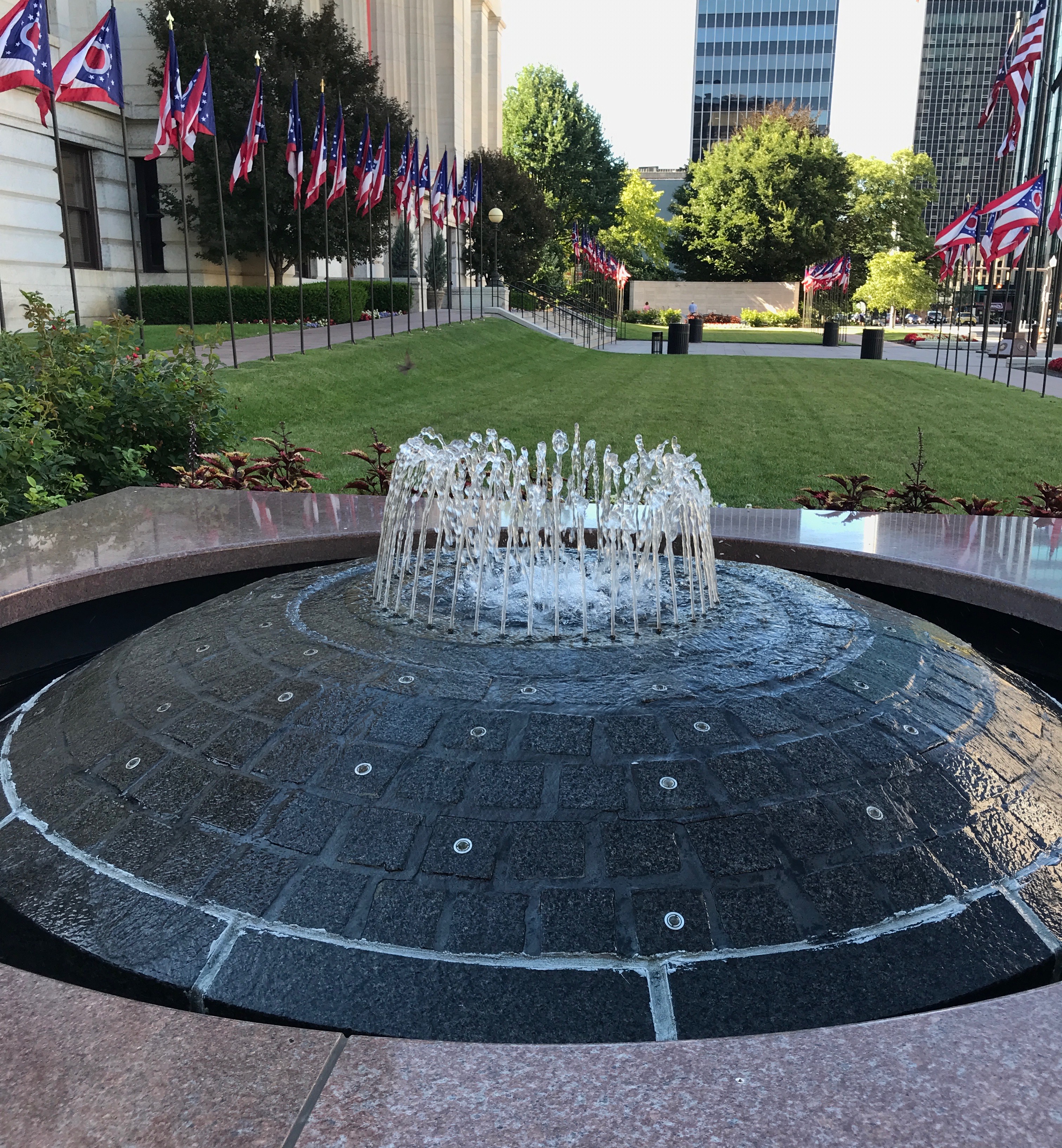
I wonder if this fountain was intended to represent the tears of the loved one, as I was feeling quite sad after reading some of these letters.
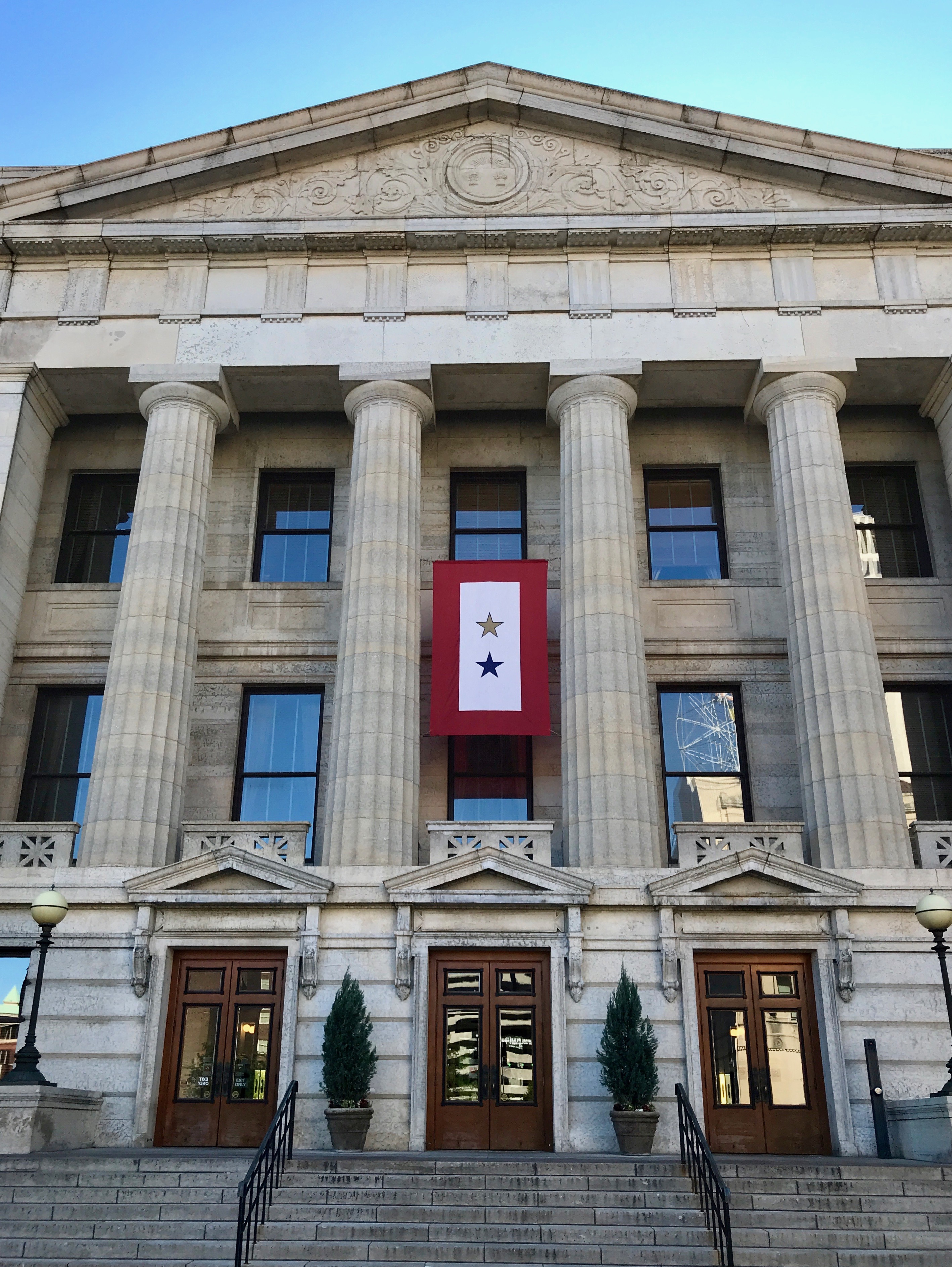
By this time I had seen about as much as any casual visitor to Capitol Square could see – without going inside. It was time to move along.
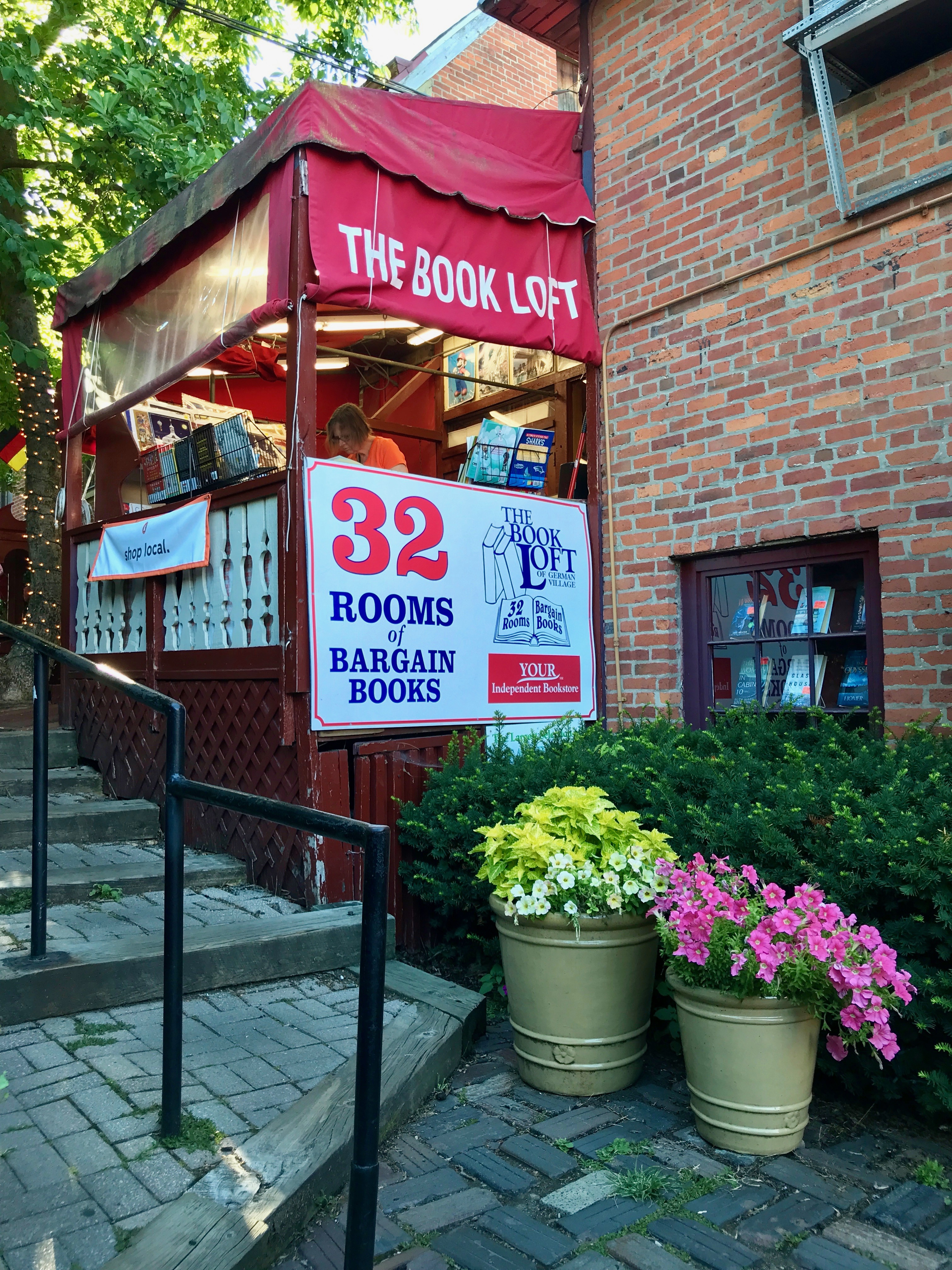
Some friends had recommended that I visit The Book Loft. It wasn’t too far away, so I headed over to see what I could see.
It was a unique store tucked into a building. I believe they really did have 32 rooms of bargain books, but I didn’t spend much time there. I looked in the windows and the entrance. It was just too crowded for my tastes, so I sat on a bench outside for a bit and enjoyed the literary ambiance.
The other recommendation was that I visit German Village for some authentic German food. Since I don’t think I’d had any truly authentic German food since I was last in Germany, I decided to head to Schmidt’s Sausage Haus und Restaurant for dinner.
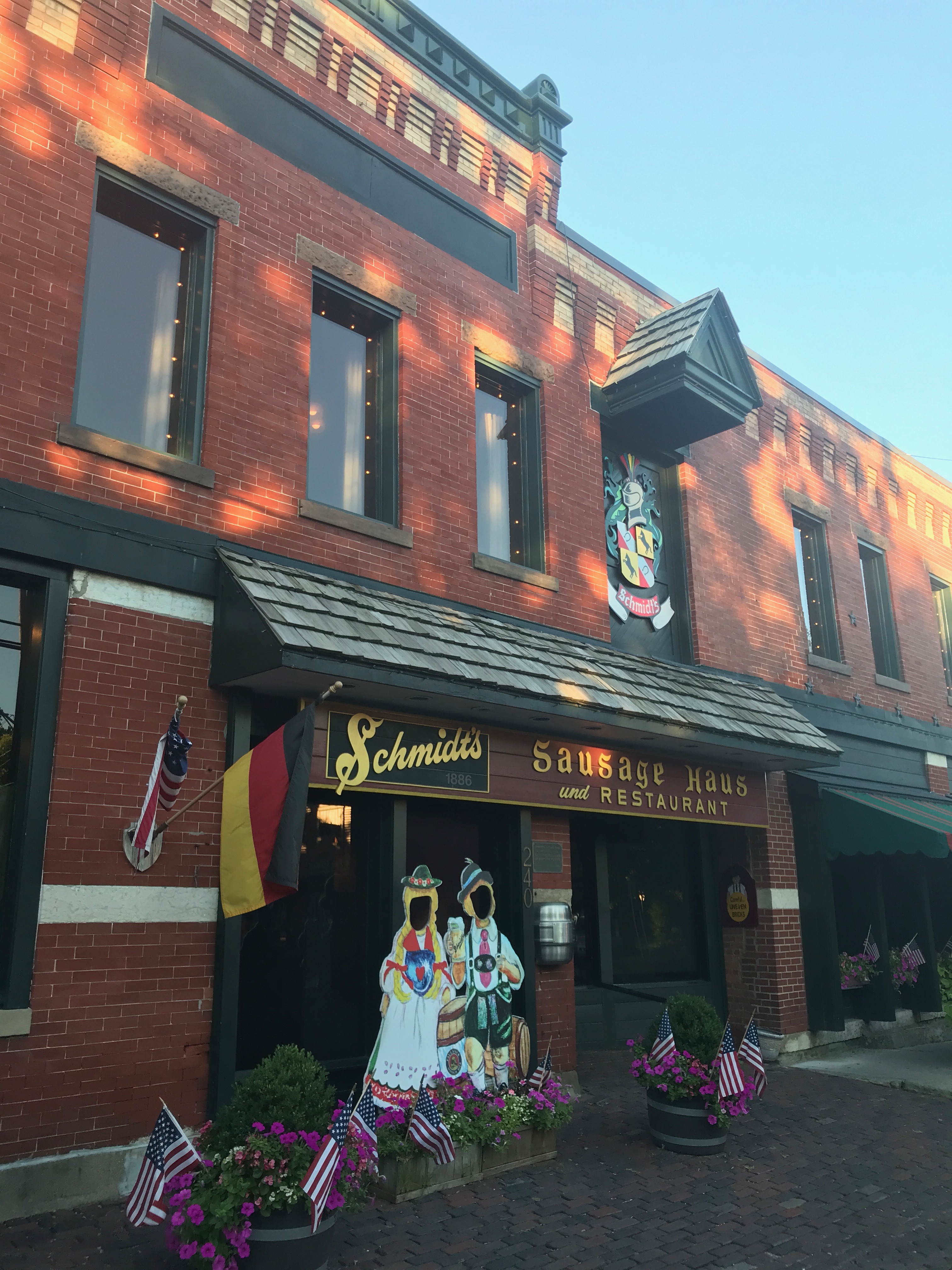
Since I arrived at the dinner hour on a weekend, there was quite a line up for a table. As I was dining solo, I asked if I might have a seat at the bar. They were happy to accommodate me.
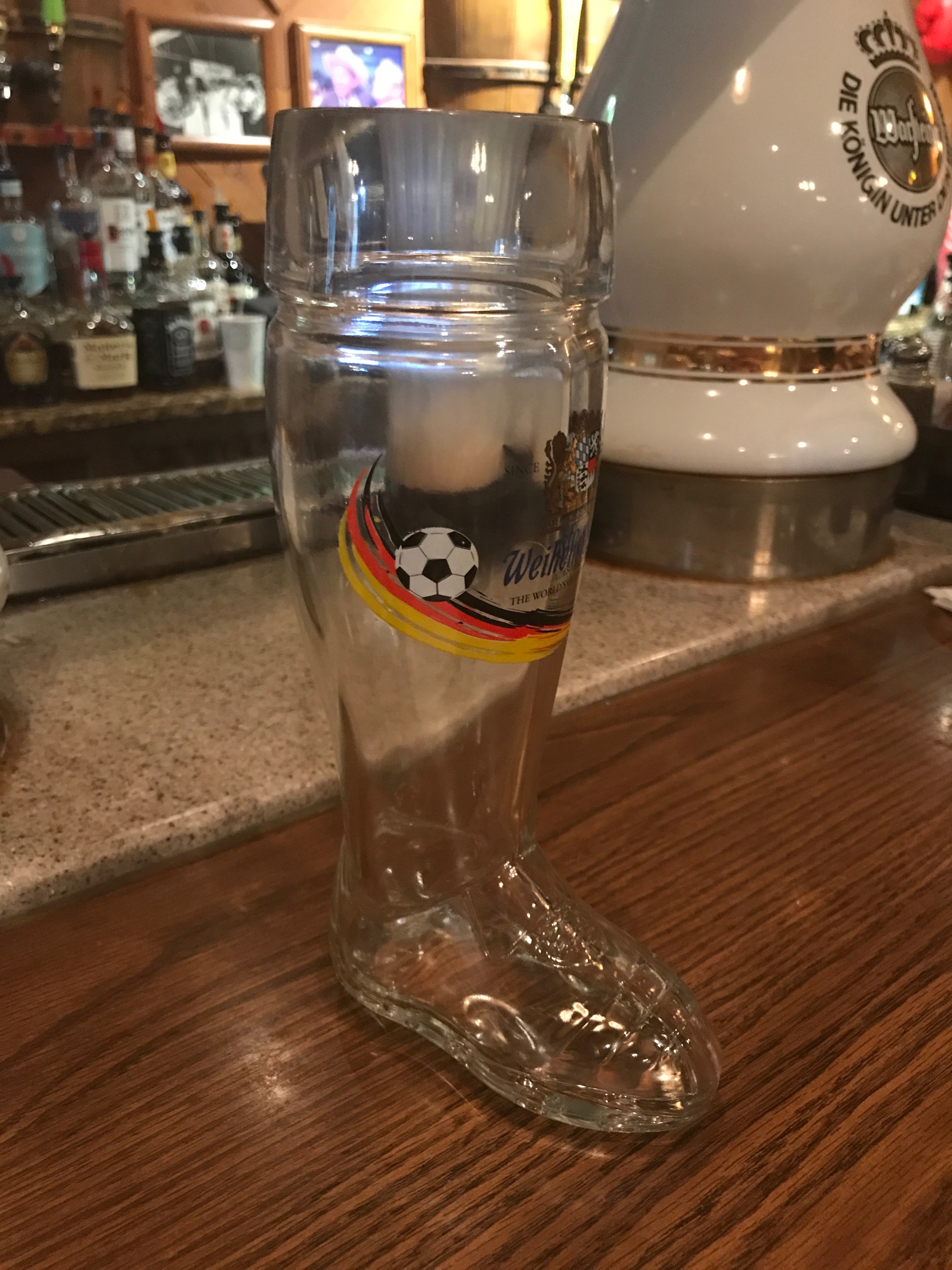
I made my selection from the menu and waited for my food to arrive. In the meanwhile, I looked around. I saw this beer boot and asked to take a photo of it.
Just in case you are wondering why beer is drunk out of a glass boot, this is what my Preferred Source has to say about it:
“Beer boots (or Bierstiefel) have over a century of history and culture behind them. It is commonly believed that a general somewhere promised his troops to drink beer from his boot if they were successful in battle. When the troops prevailed, the general had a glassmaker fashion a boot from glass to fulfill his promise without tasting his own feet and to avoid spoiling the beer in his leather boot. Since then, soldiers have enjoyed toasting to their victories with a beer boot. At gatherings in Germany, Austria and Switzerland, beer boots are often passed among the guests for a festive drinking challenge. Since the movie Beerfest appeared in 2006, beer boots have become increasingly popular in the United States.”
I’d seen them before, but I assumed they were mostly intended for consuming mass quantities of beer.
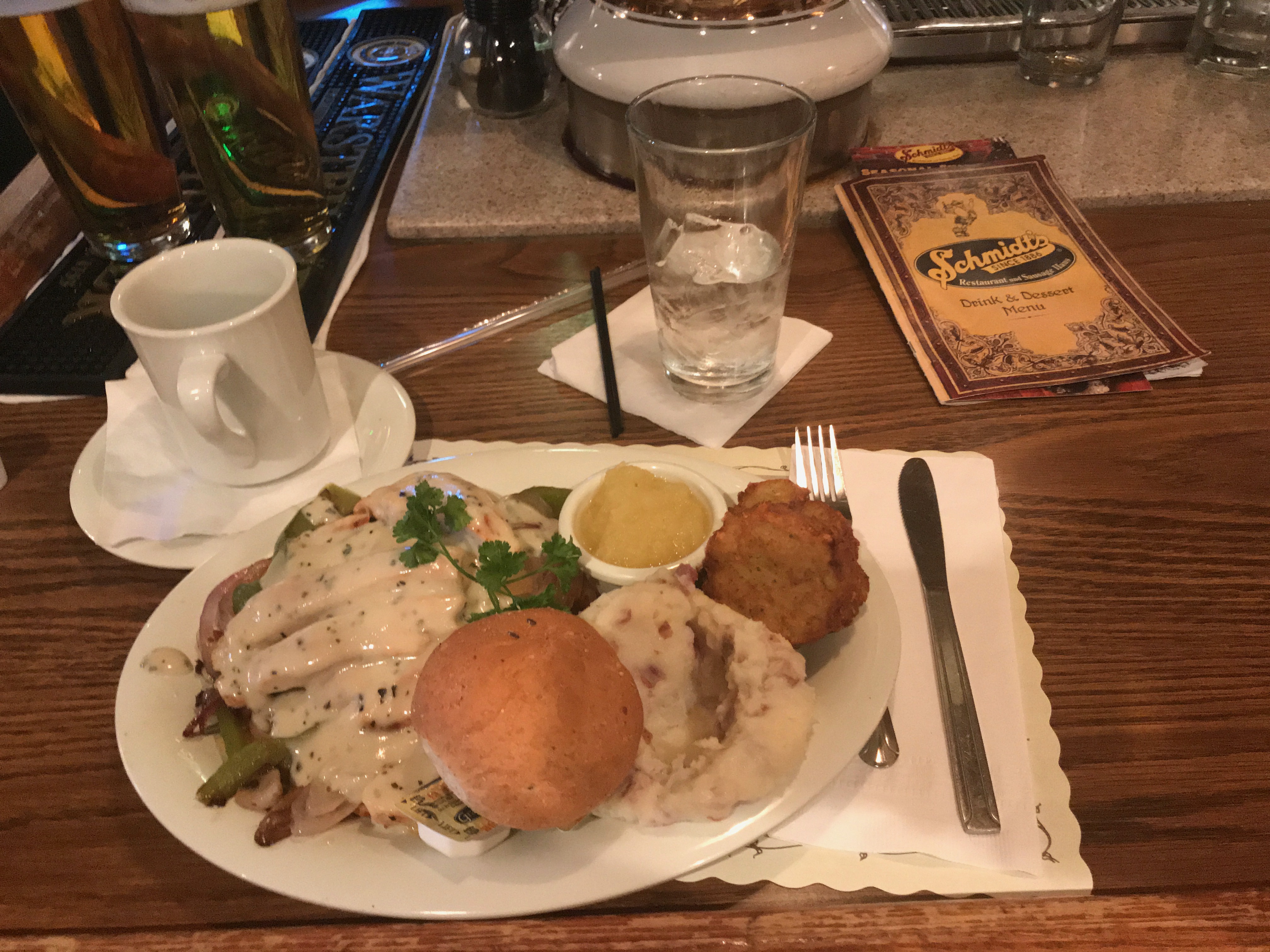
While it was fun gazing at the memorabilia and watching the waiters charging in and out of the kitchen, I was happy when my food arrived at last.
It was quite heavy fare. I sampled everything, but I definitely didn’t join the Clean Plate Club for that meal. That plate looked like it could easily have provided the calories necessary for a small family. But, do I let calorie content stop me?
I do not!
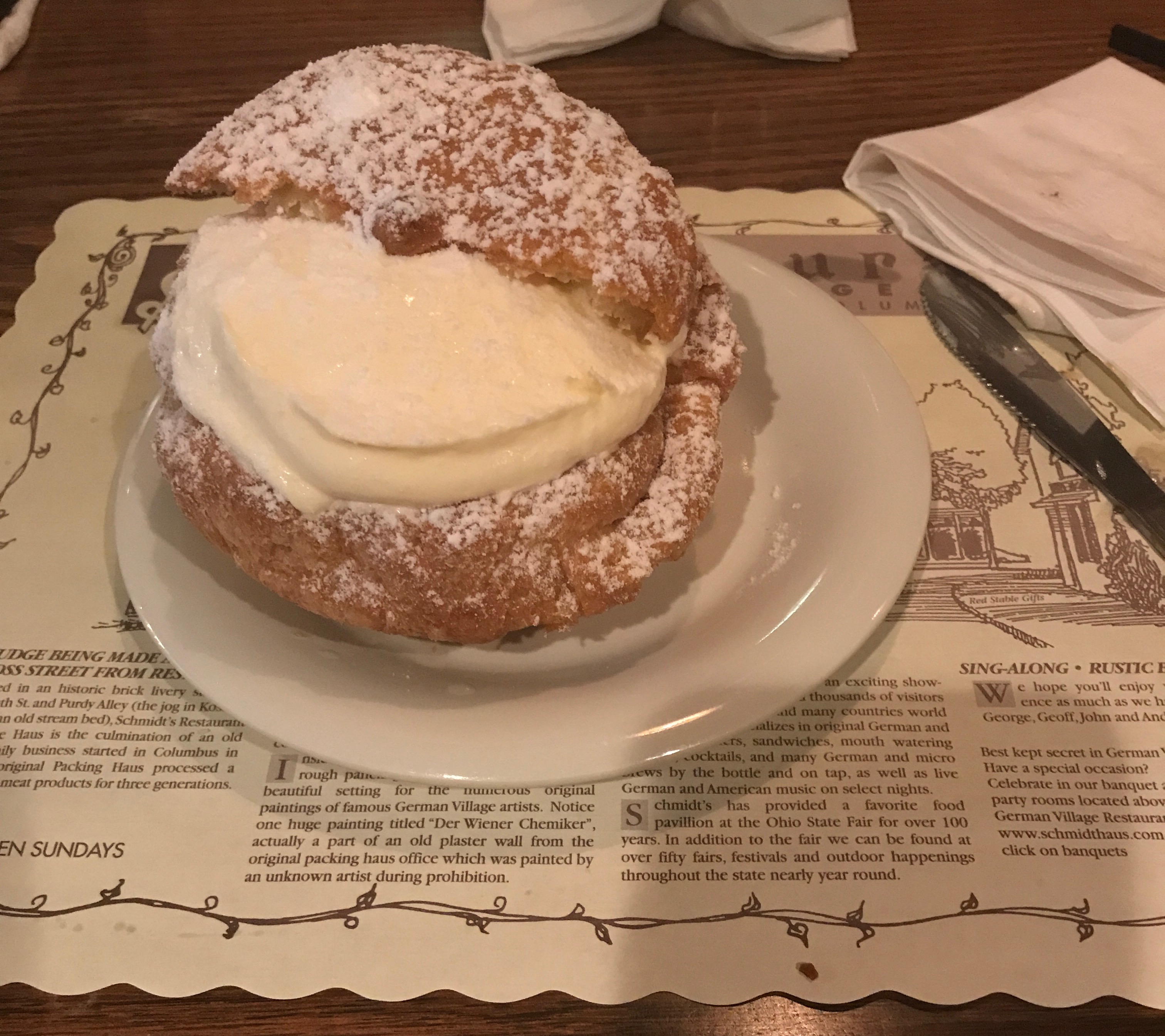
I had to order the Jumbo Cream Puff that people had also urged me to sample. This is how the restaurant’s menu describes it:
“Our famous half pound, award-winning combination of special whipped filling in a lightly baked pastry shell.”
It was enormous! (I didn’t finish the, either.)
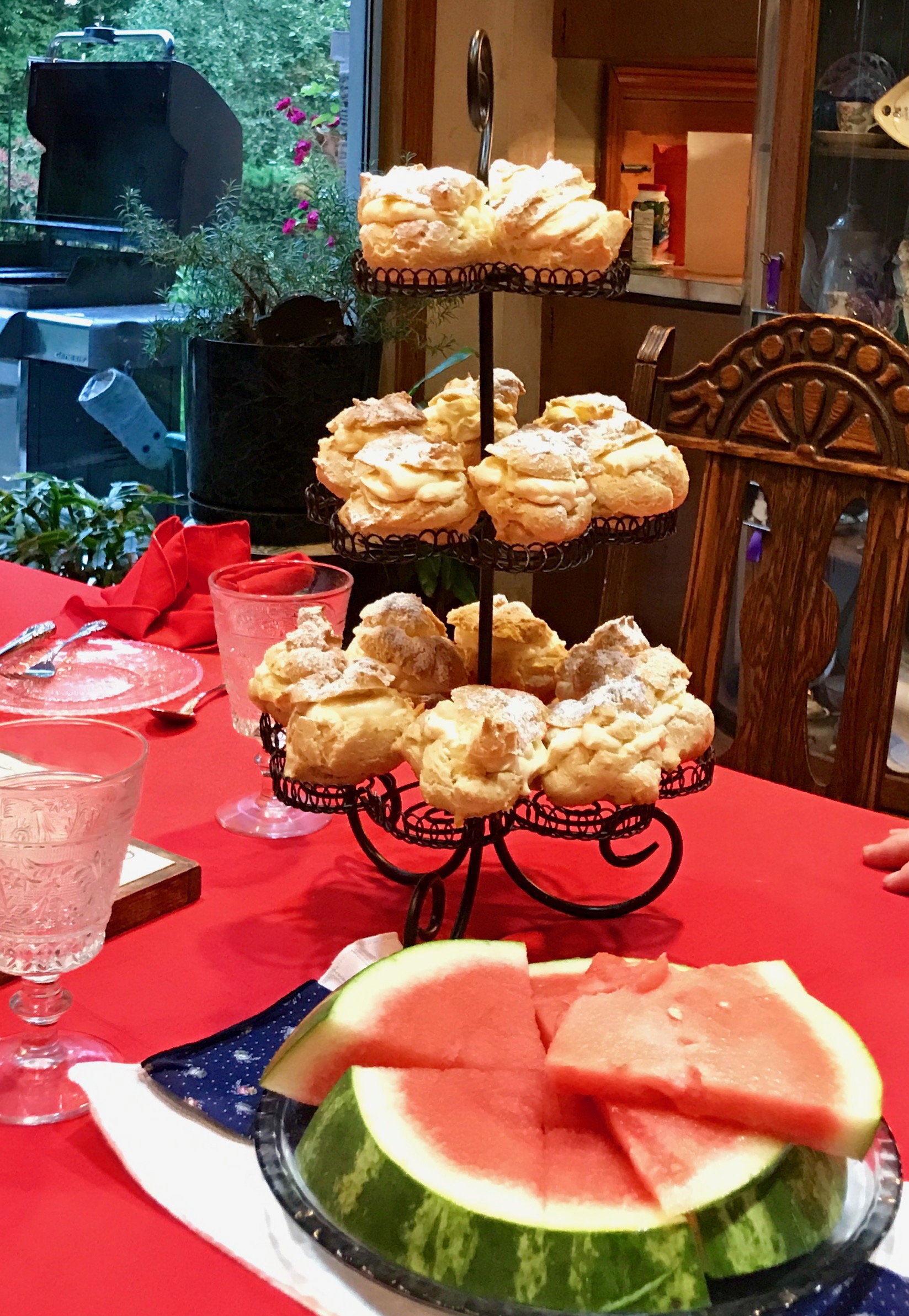
Truth be told, I much prefer my friend Ruth’s cream puffs. They are not a half pound, but, man, are they delicious!
With that it was time to head back to wherever I had parked for the weekend. Time for laundry, rest and preparing for the coming week.