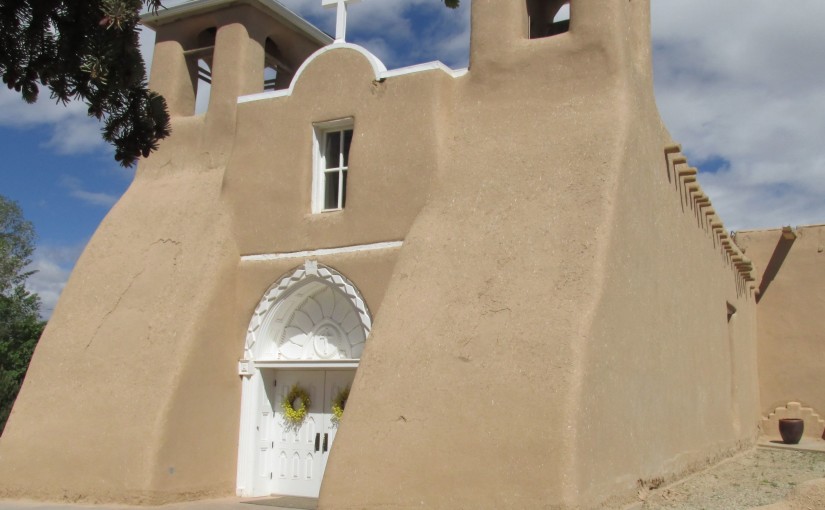
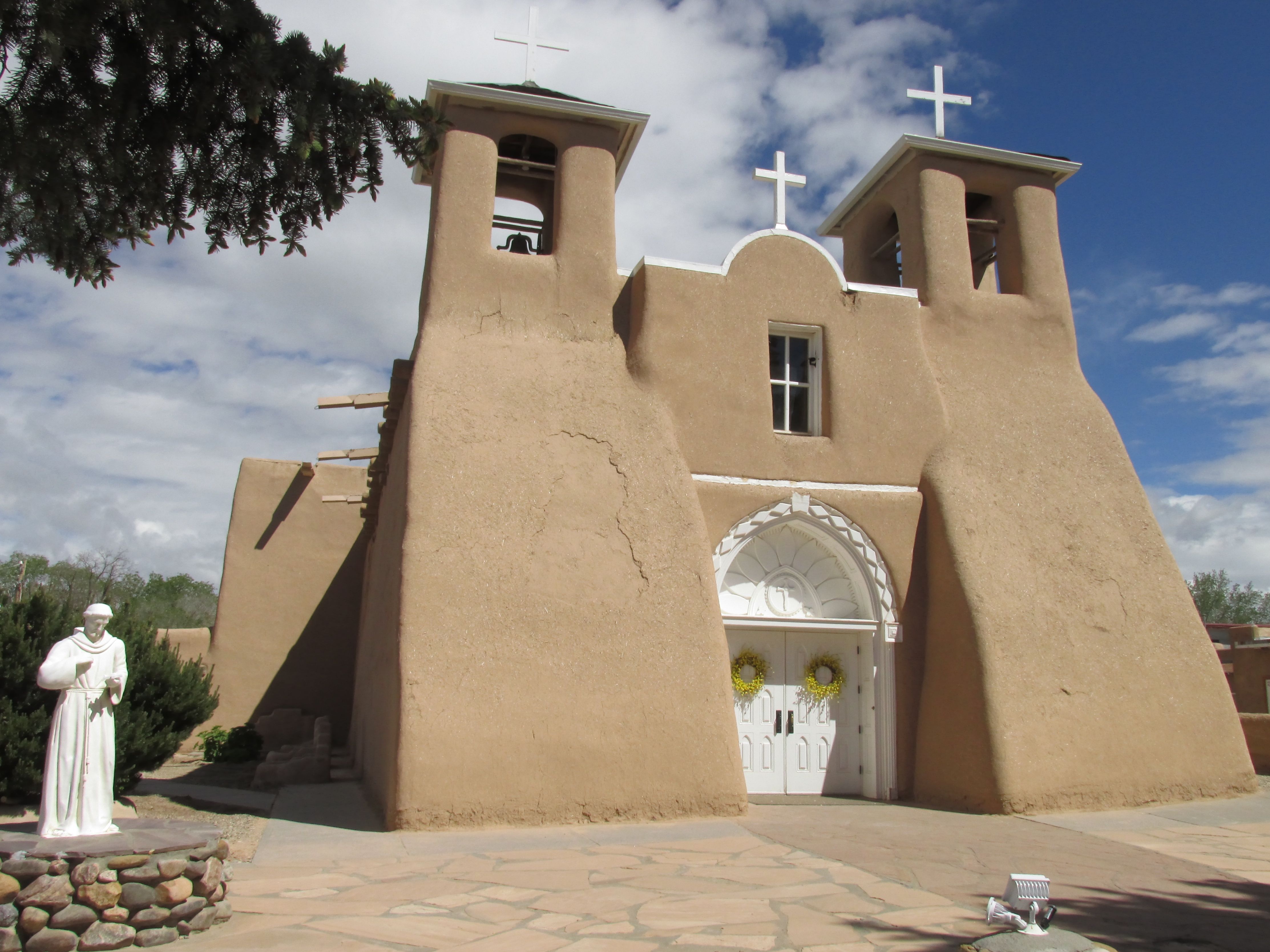
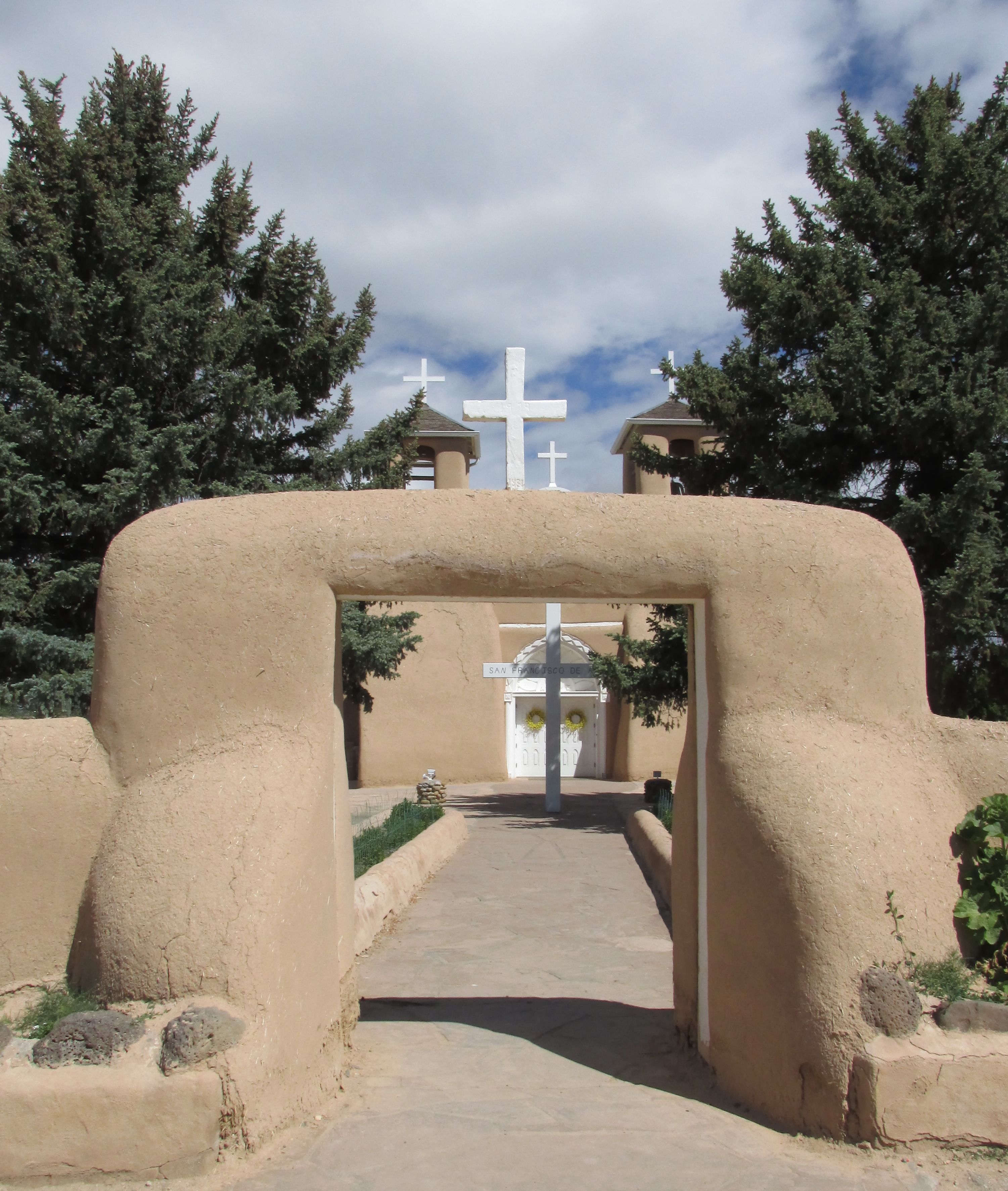
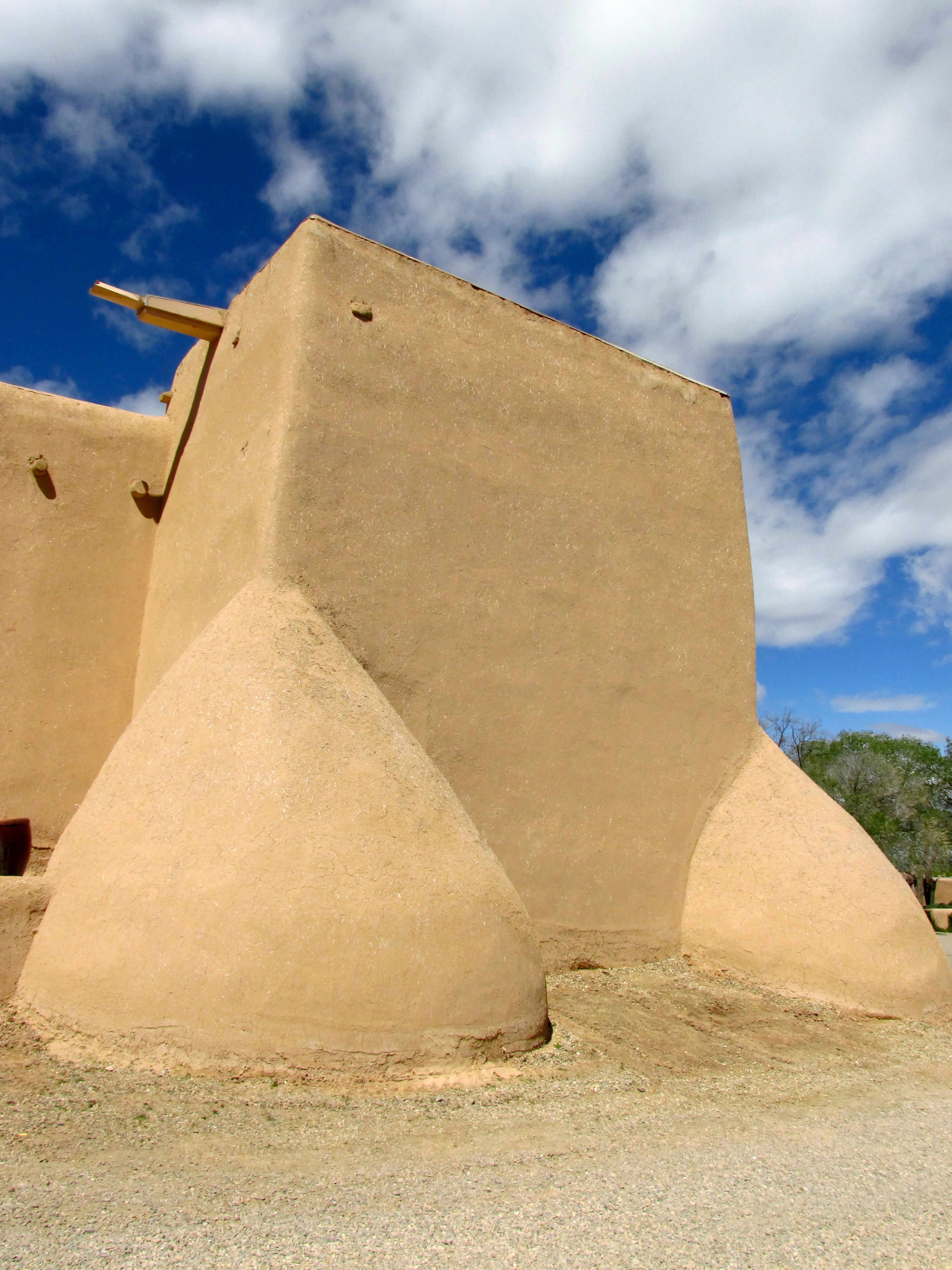
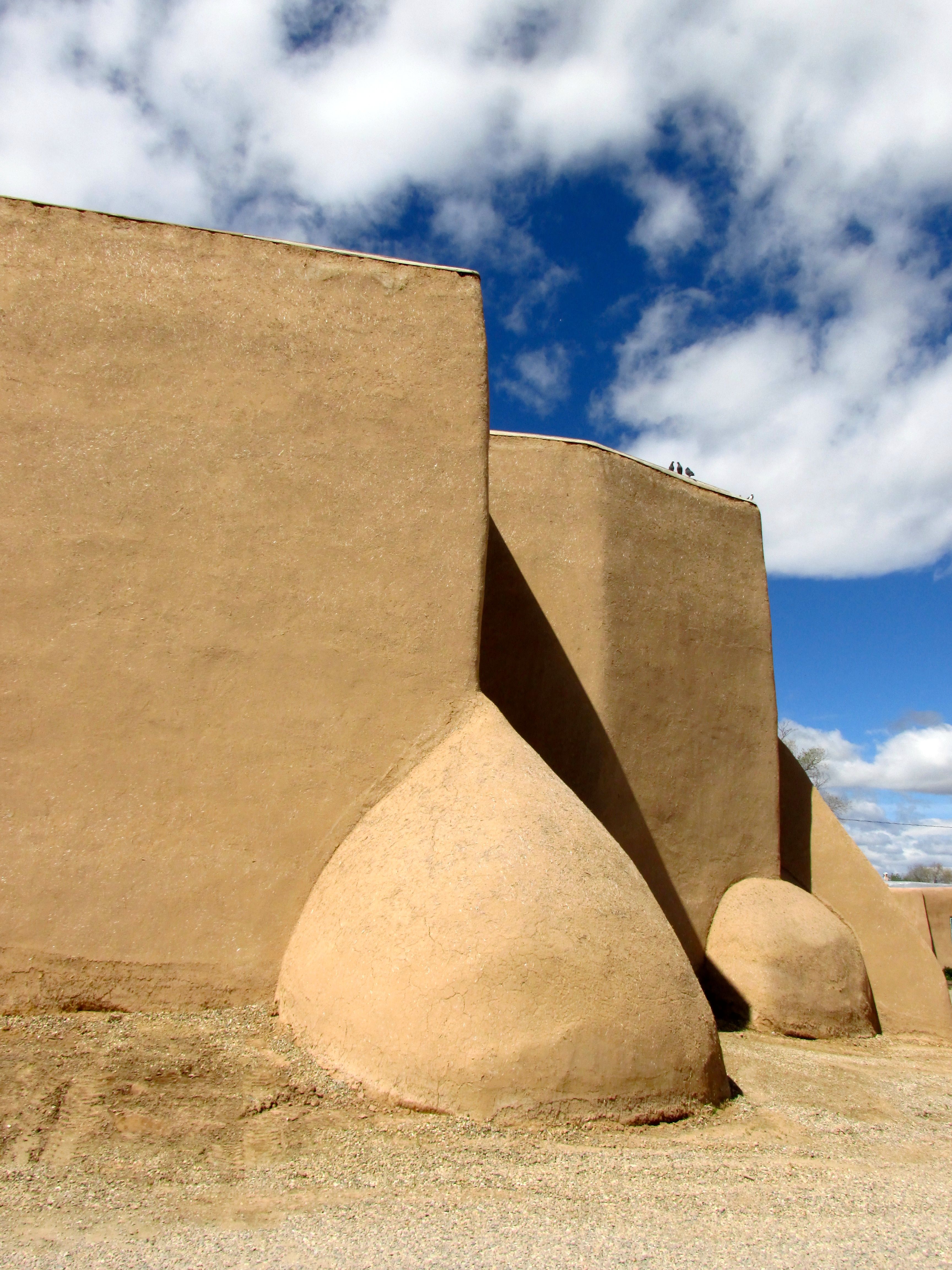
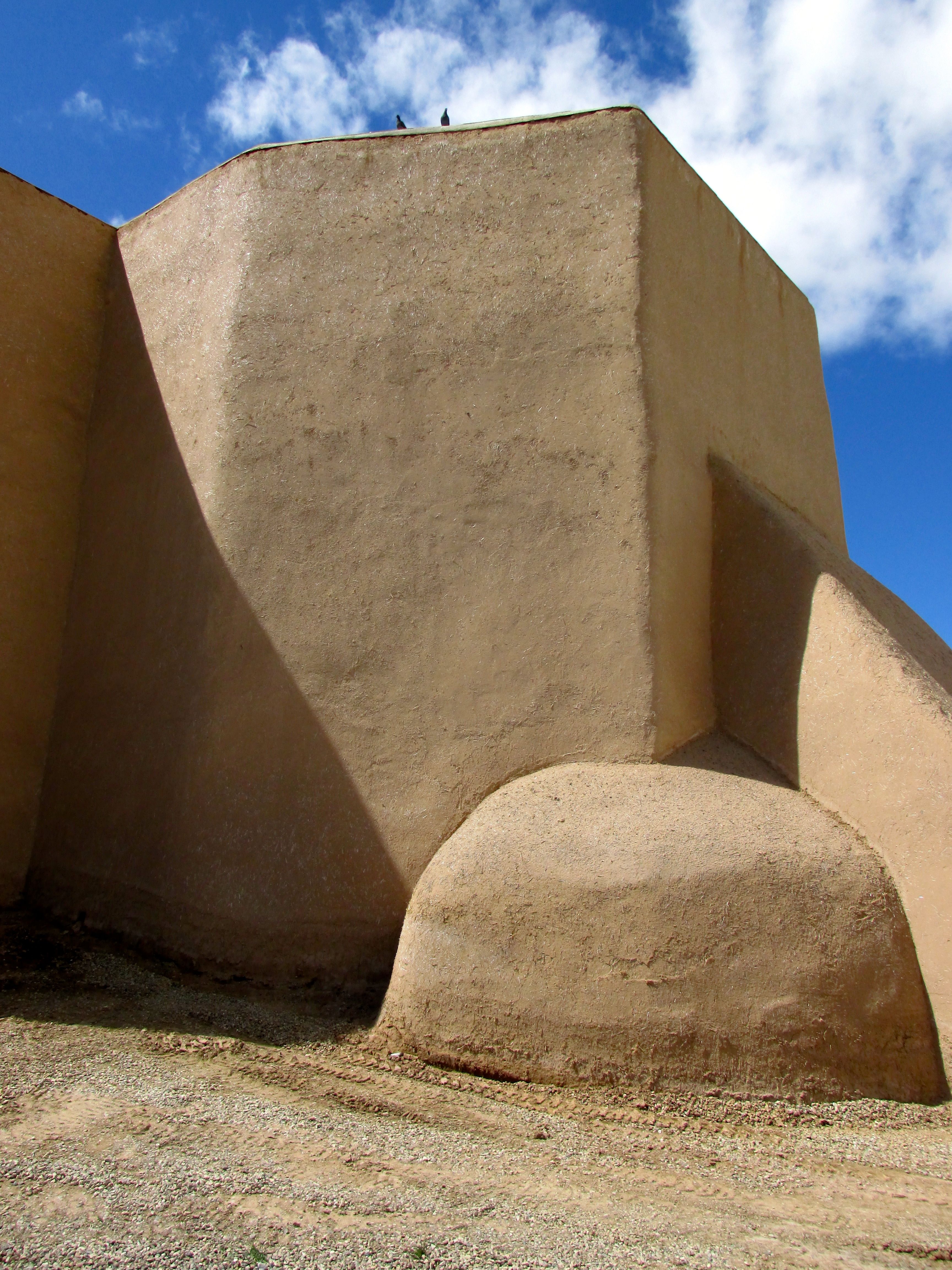
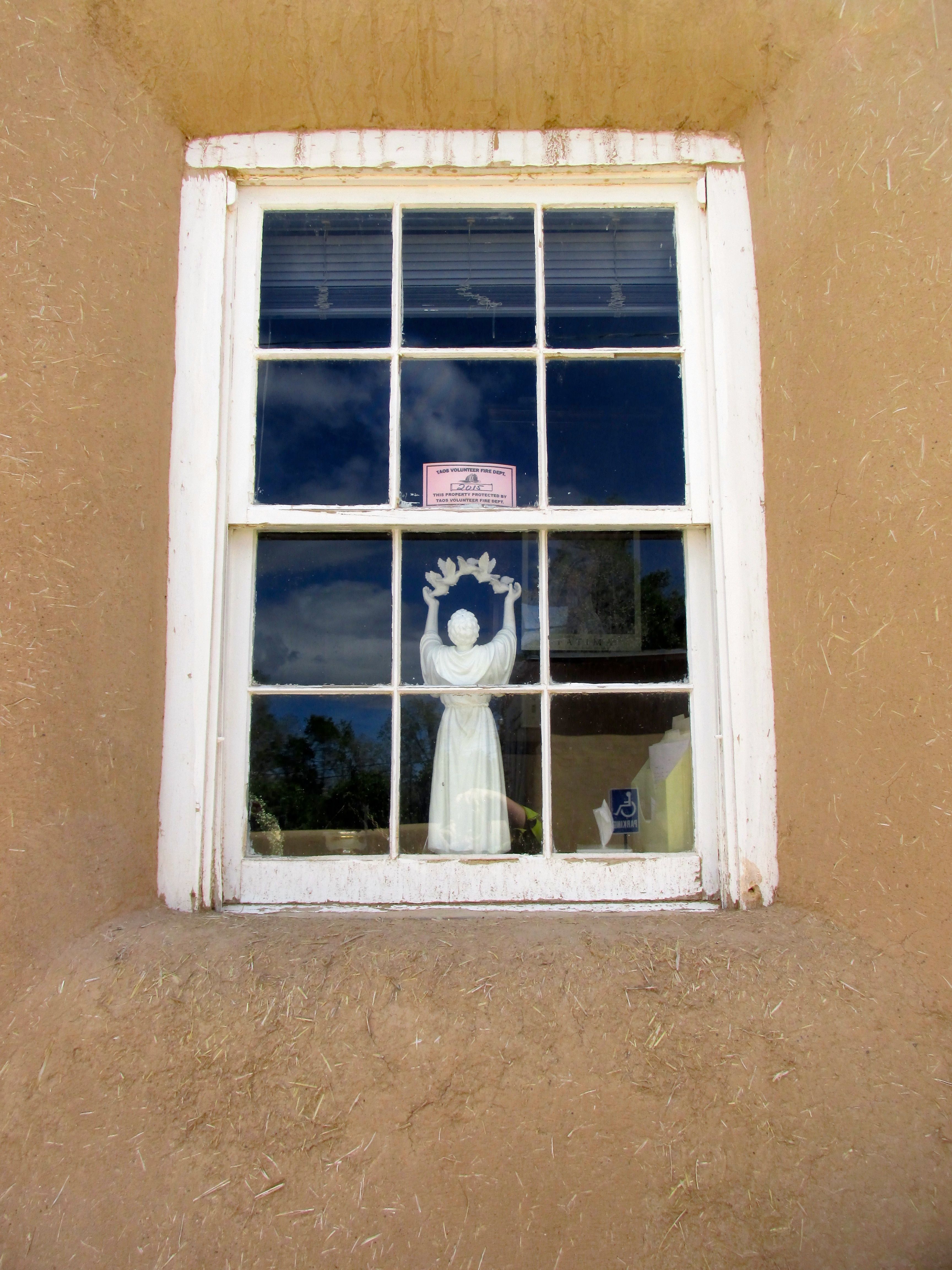
The last stop on the Sister Jeanne Art History Tour of Taos is the church of San Francisco de Asis in Ranchos de Taos, which is just outside Taos on the south side of town.
As the tourism information specialist told me when I first got to Taos, “This is one of the most photographed and painted churches in the world.” It is the subject of paintings by Georgia O’Keeffe and photos by Ansel Adams among others.
While I was visiting to take photos, there were seven other photographers there, engaged in serious art-making. I had to jockey around to get pictures without them in the frame. Of course, that would have been part of the story, too.
I have no photos of the interior, as they request that we not take them. I did buy a couple of postcards, but I try to avoid copyright infringement. However, you can find more information on Wikipedia, among other sites you can Google.
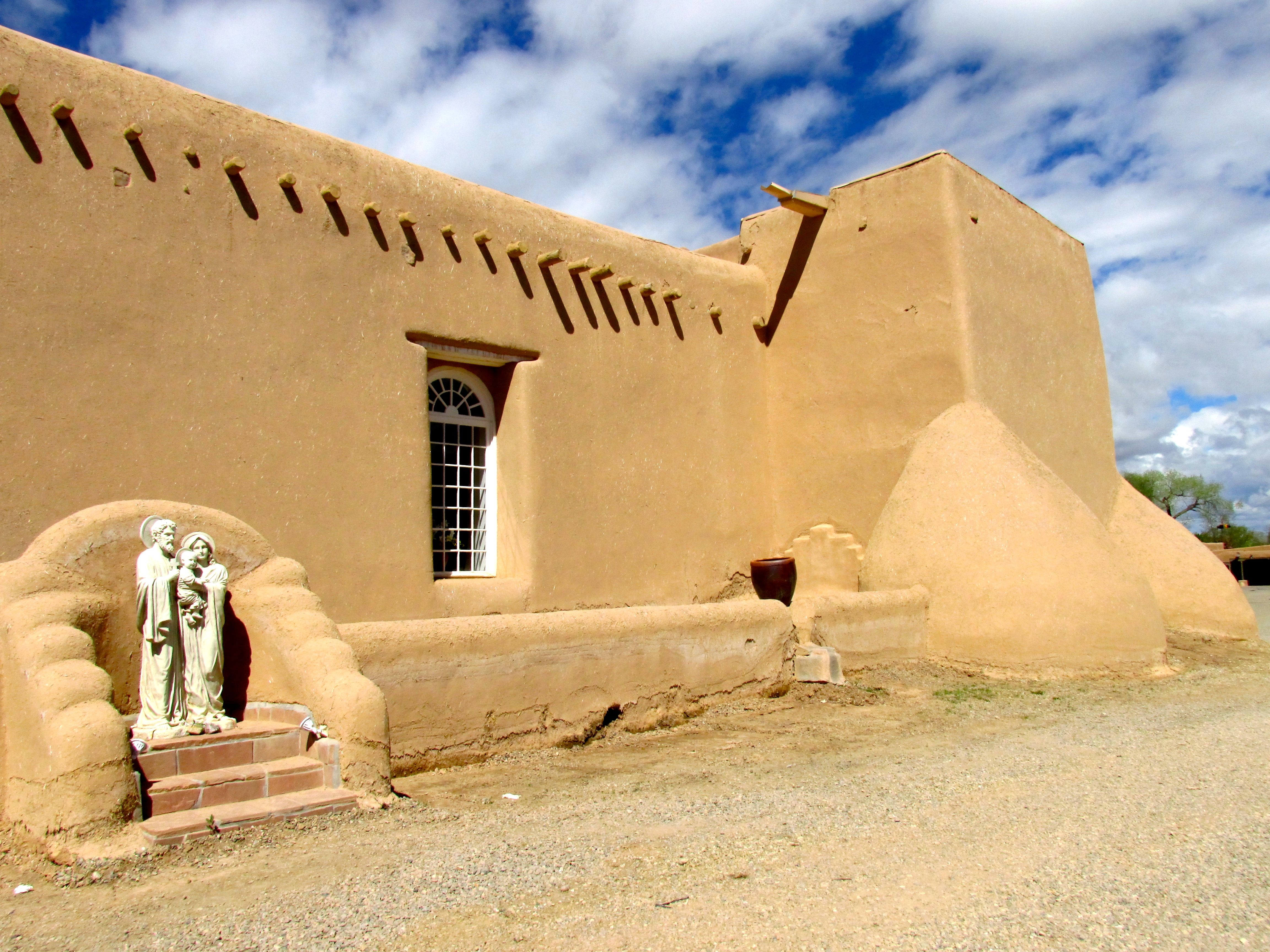
It was built between 1772 and 1816 and requires constant upkeep. I attended mass there on Sunday, and the priest was talking about the work that would be required to replaster the building. They call it “enjarrar”.
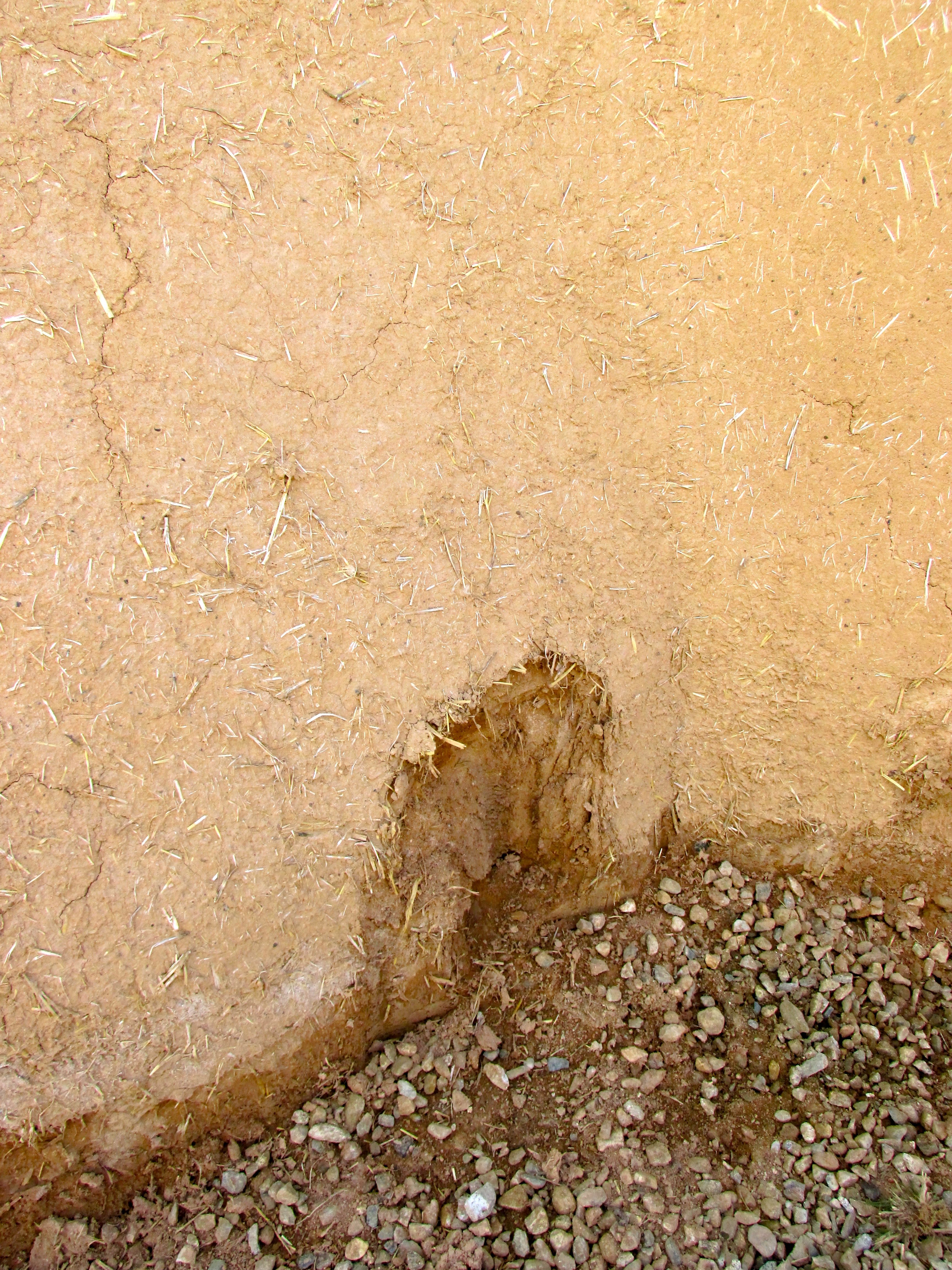
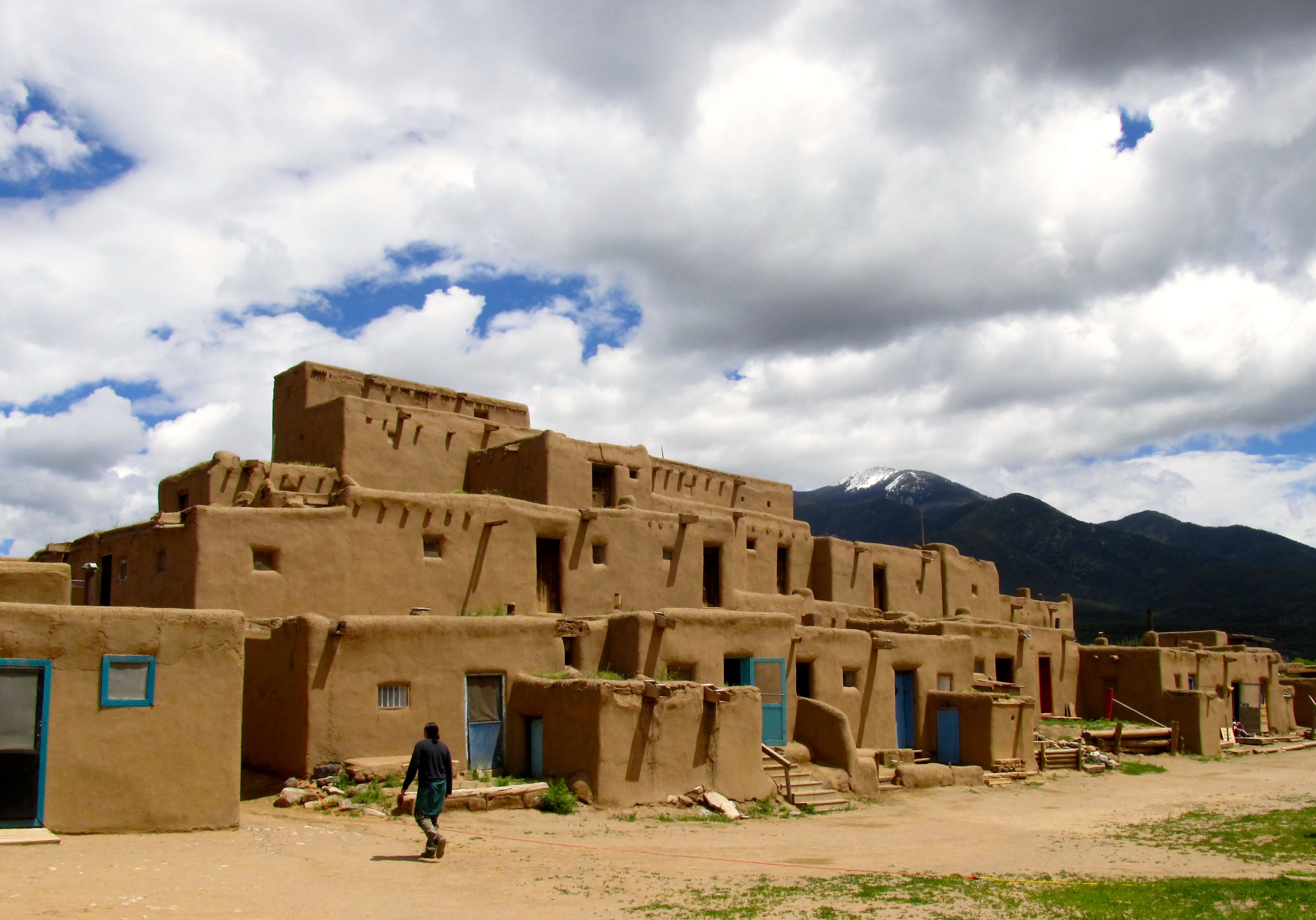
Here you can see a damaged portion of the exterior. You can also see the straw that is used in the mixture. What happens when you take care of an adobe building faithfully? You get the Taos Pueblo.
North building of Taos Pueblo
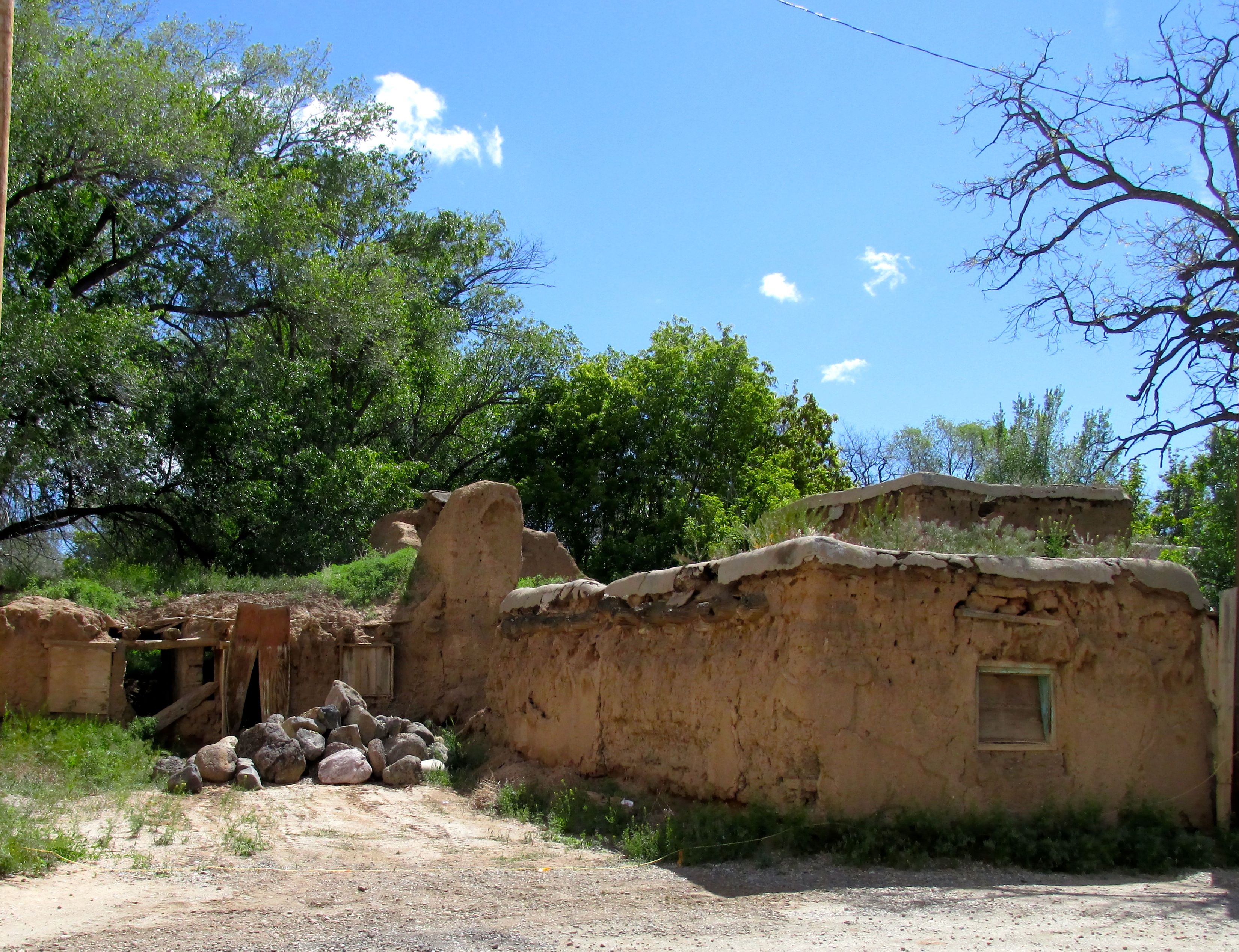
What happens when you don’t maintain the building? They don’t last as long.
My next stop was another Bureau of Land Management site, Valley of Fires, near Carrizozo, New Mexico, just a little ways down the road from Three Rivers Petroglyph Site.
I pulled in and selected a great campsite with a view. Even better than the view was the sense of accomplishment I had when I backed it in on the first pass and didn’t hit anything.
Actually, it wasn’t hard to select a campsite with a view. The campground was situated on a sandstone hill that the lava flowed around.
The lava flow has the distinction of being one of the youngest flows in the continental United States, which took place between 1,500 and 2,000 years ago.
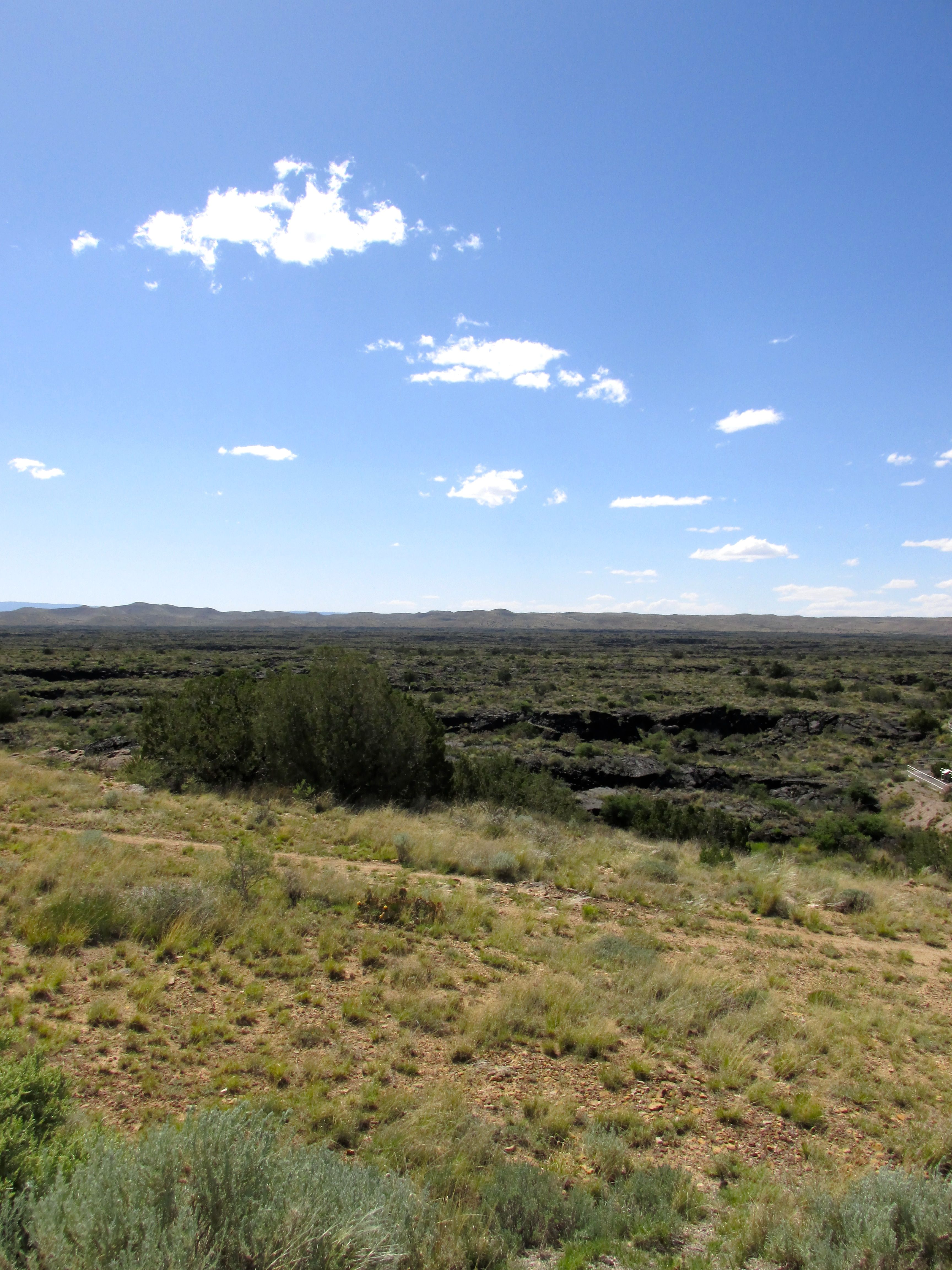
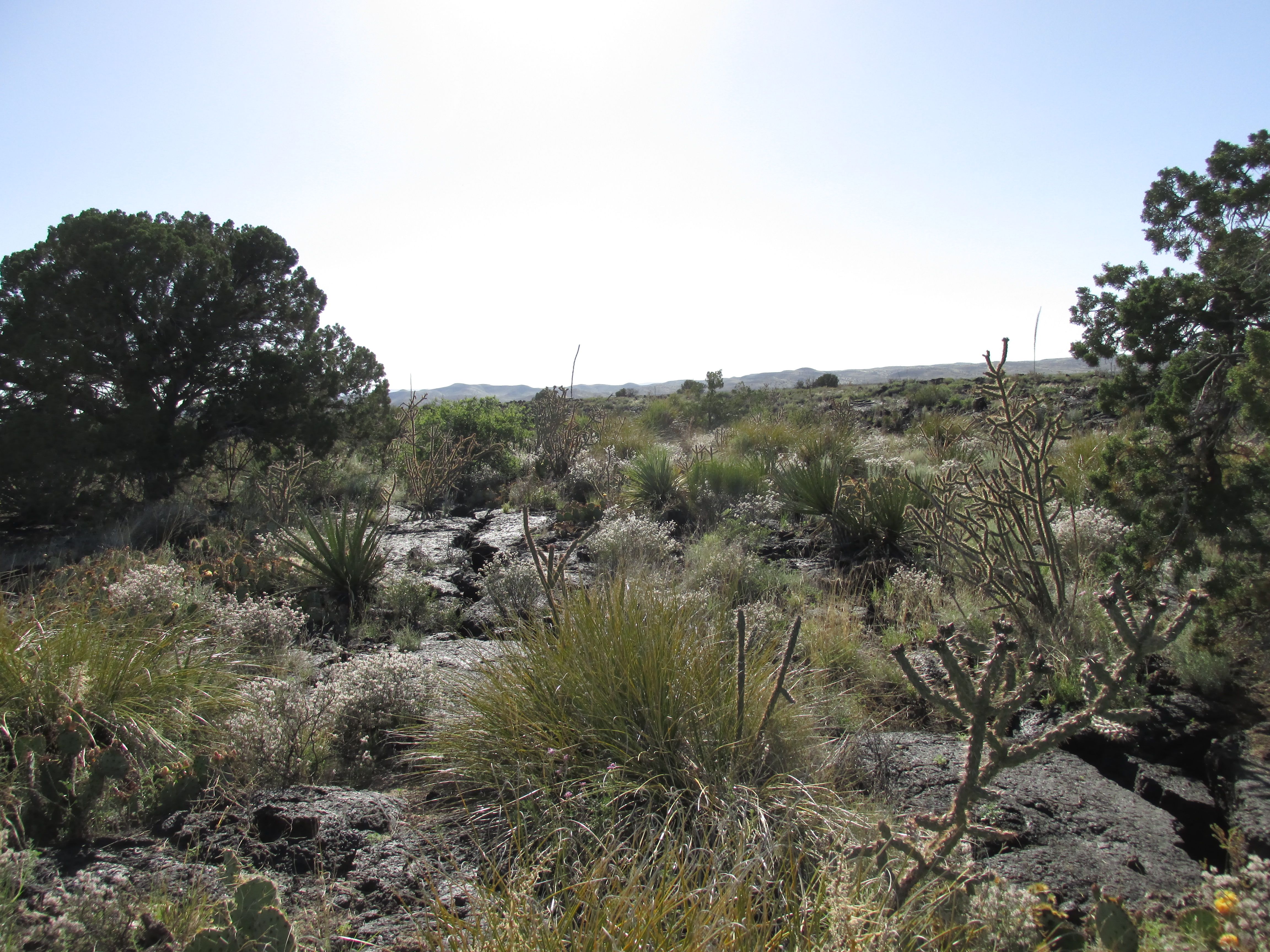
The lava is between four and six miles wide and up to 160 feet deep. Due to the fissures in the surface and the dark color that holds the heat, there is a wide variety of plants in the valley. I read on one of the signs that there is double the number of kinds of grass plants here than in the surrounding desert.
A wide variety of plants
There is a paved path that goes through the lava field. That made the hike more like a stroll.
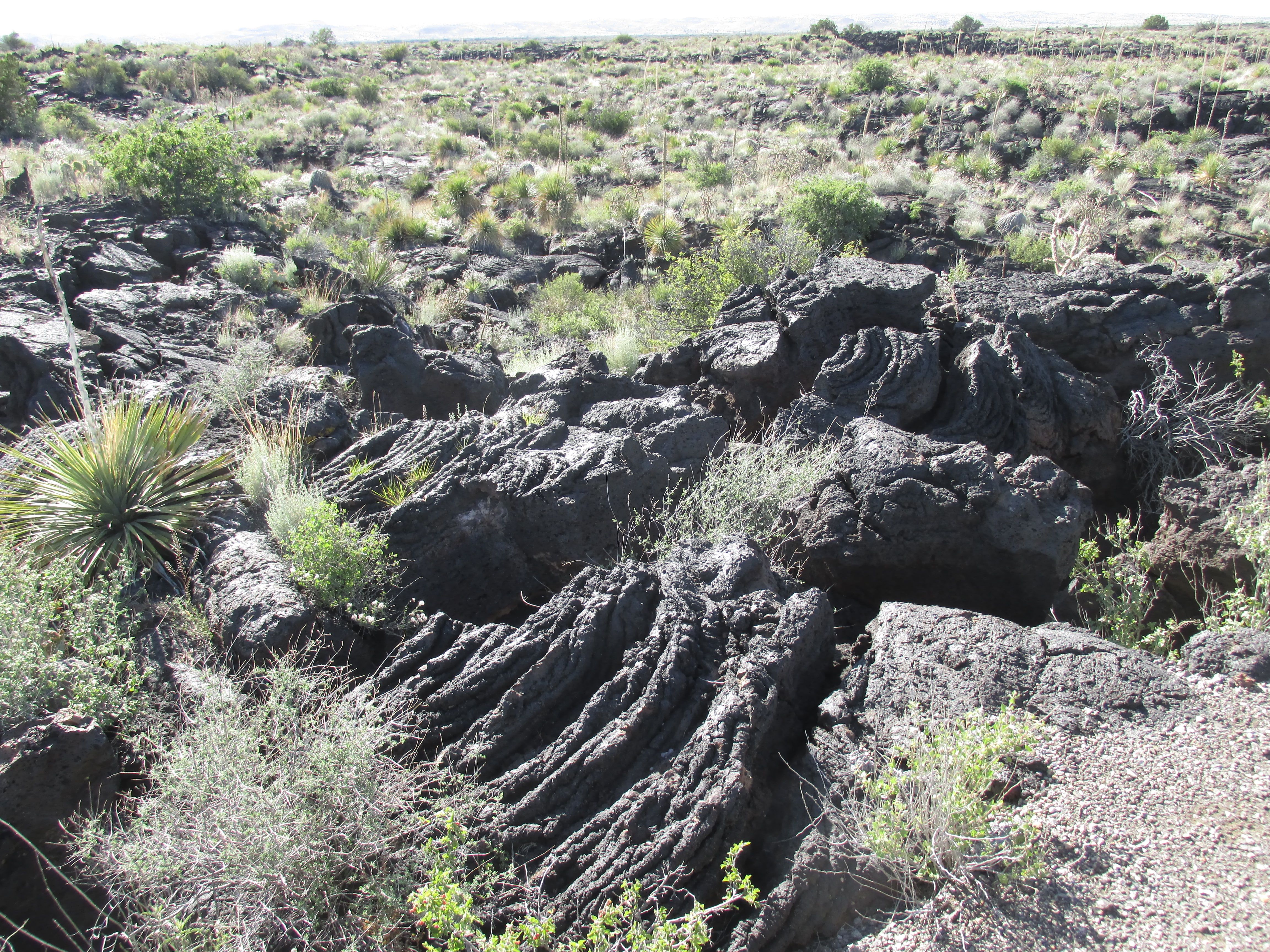
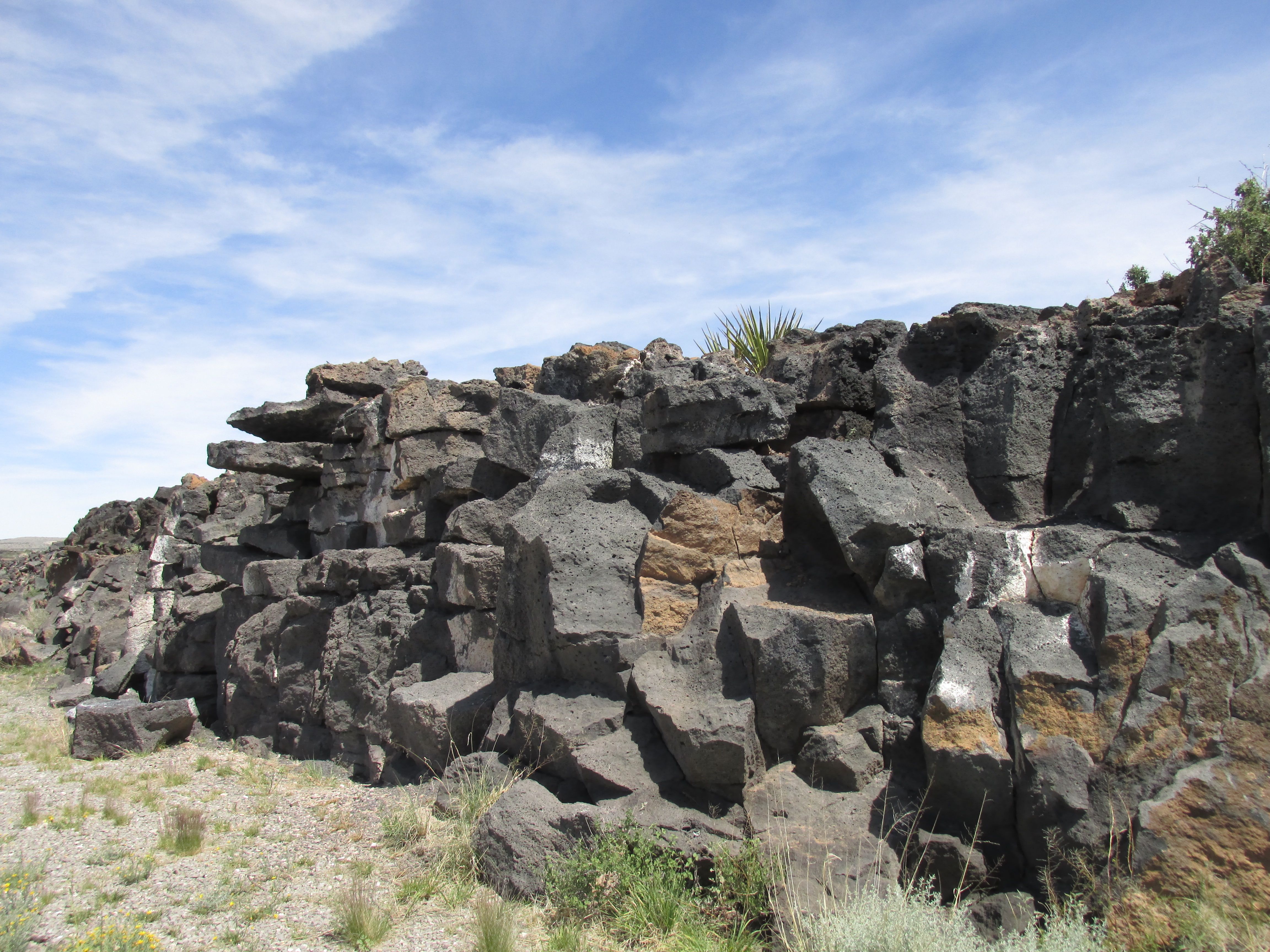
It has two types of lava: pahoehoe (pronounced pa-HOY-HOY) and a’a (pronounced ah-ah) The pahoehoe is a “ropey” lava and a’a is blocky.
Pahoehoe
The pahoehoe really does look like ropes and bundles of cables that are cut into chunks.
This formation wasn’t labeled, but it fits the a’a description as blocky.
There were signs that encouraged us to hike on the lava field. I took a few steps, but it was not a comfortable walking experience, in spite of the fact that I had my best walking shoes on.
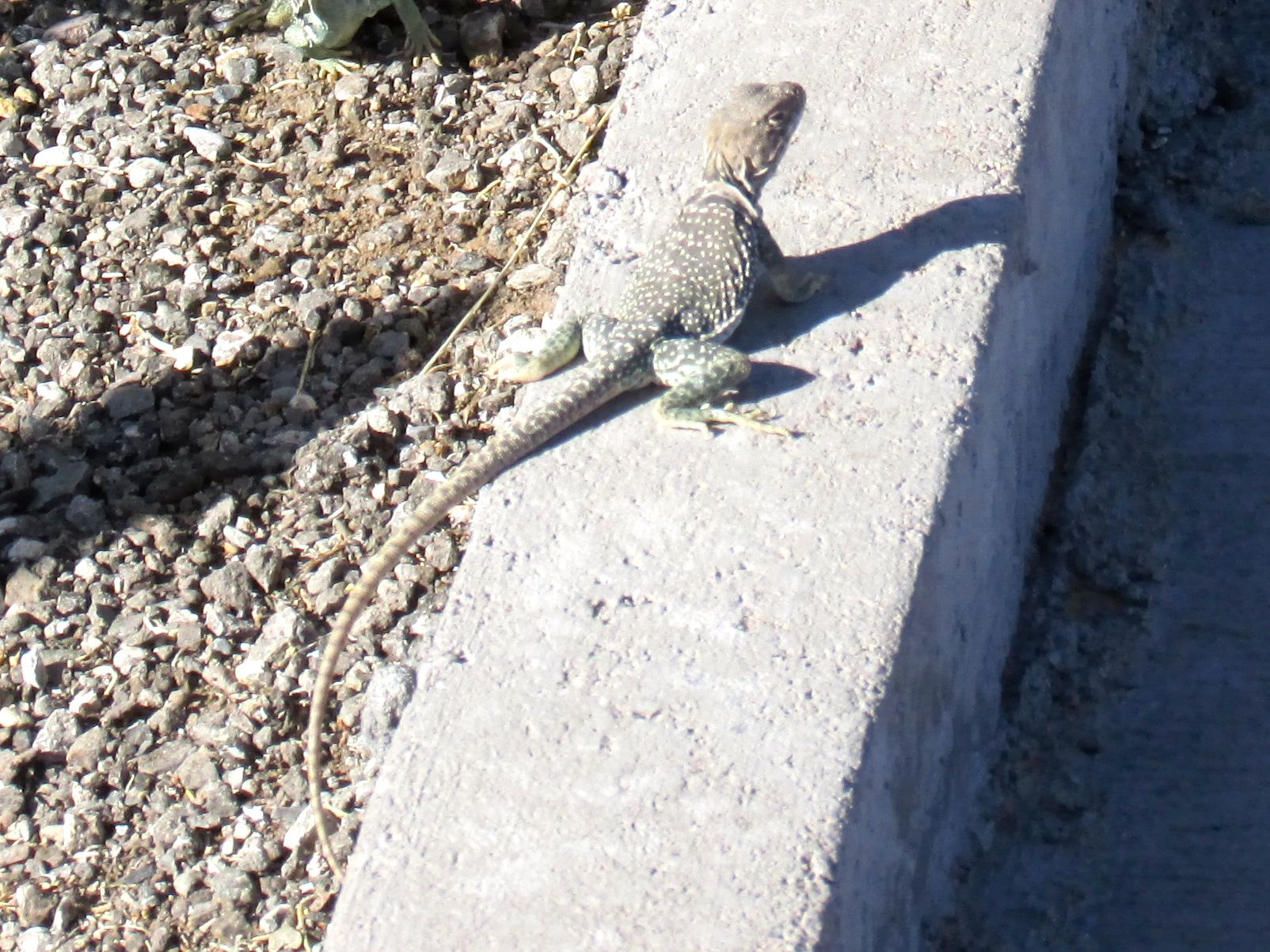
The signs say that they have a nice assortment of animals. I only saw a lizard, squirrels and rabbits. The squirrels and rabbits refused to pose for me, but the lizard didn’t mind posing.
Along the path, there was a 400-year-old juniper tree.
400 year-old juniper
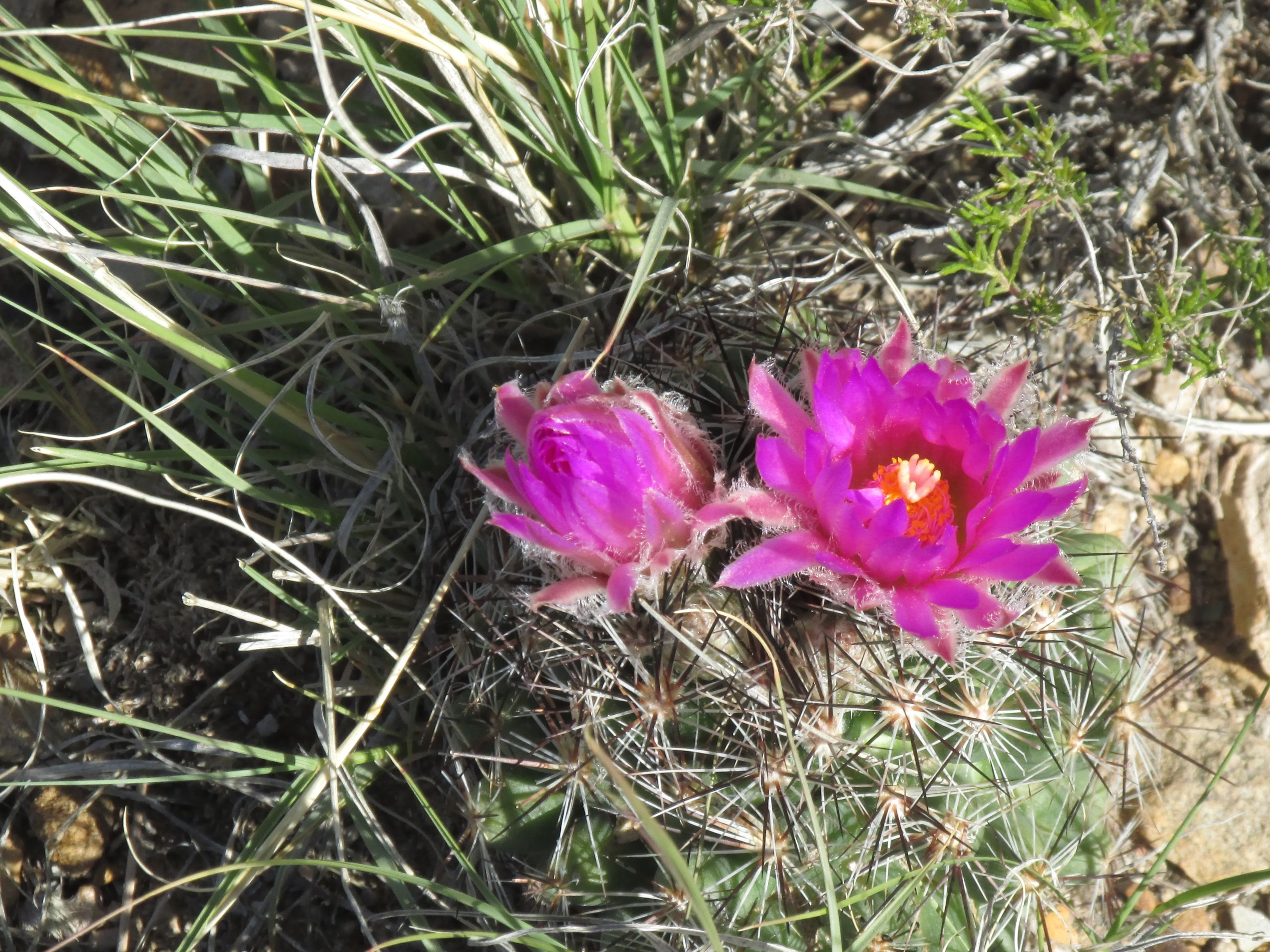
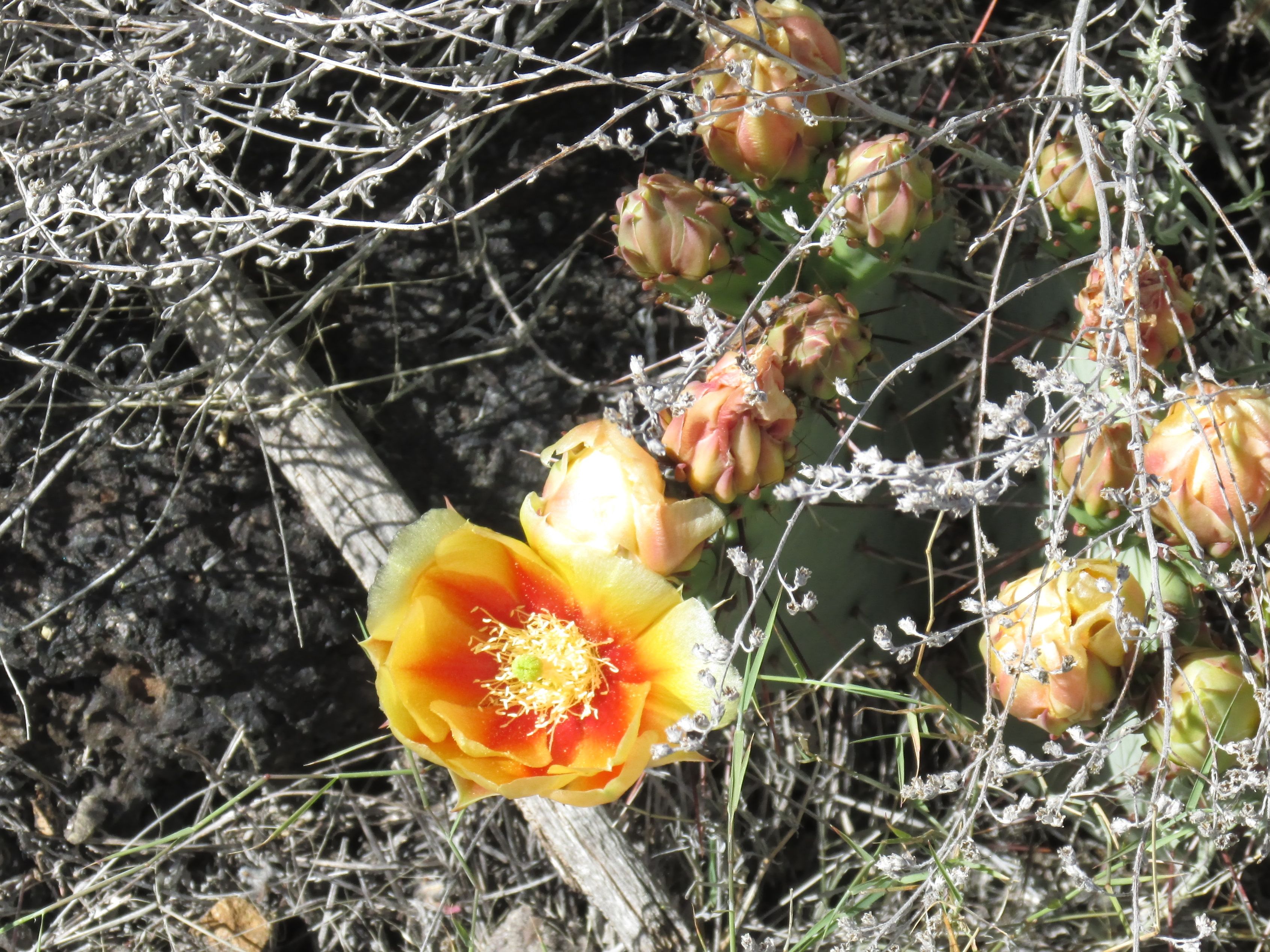
Also, there were some lovely flowers in bloom.
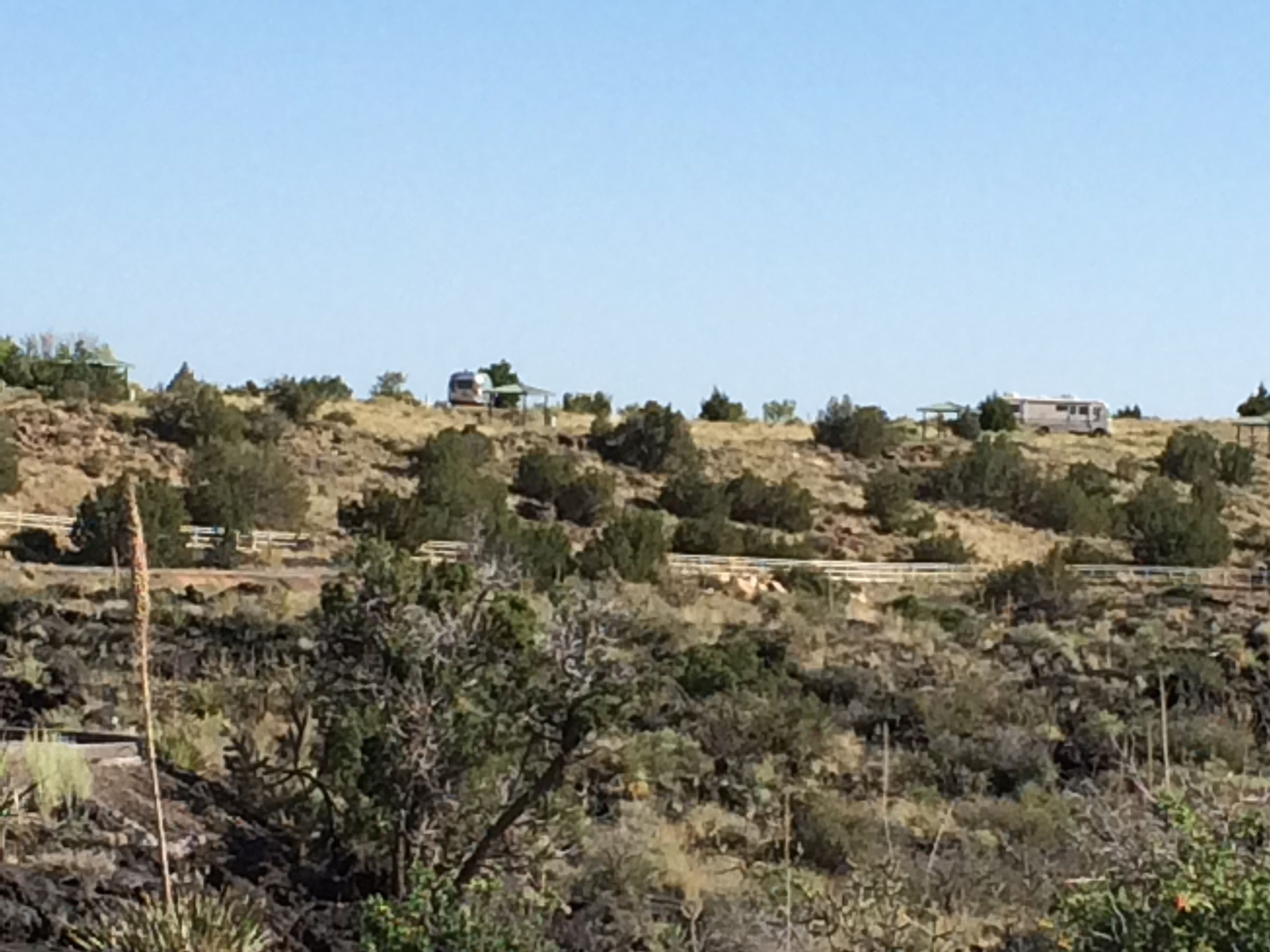
I finished my walk through the lava field and started on my way back to Flo the Airstream. You can see her parked up on top of the ridge.
I stayed the night and left in the morning for a couple of days in Albuquerque to take care of some business. The next post will be about Taos. Stay tuned!
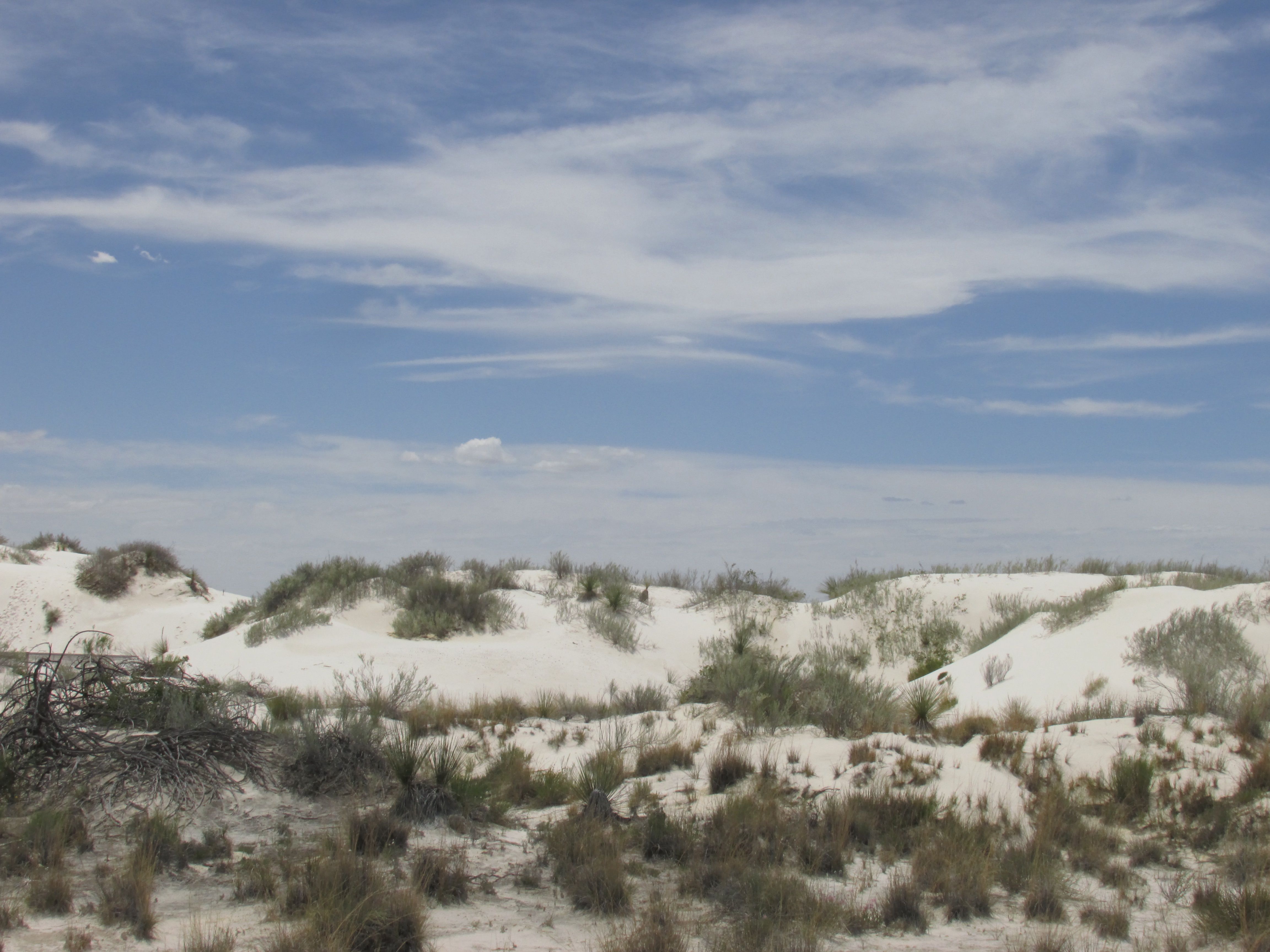
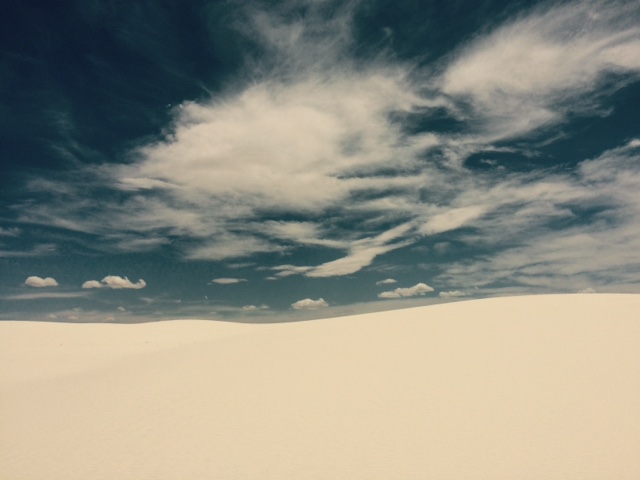
Now, that might seem like a trick question. As you can see in the photo above, the sand is white at White Sands National Monument. And Grant is buried in Grant’s Tomb.
However, as I approached the site, I have to admit that I was a little concerned. I could see some white in the distance, but it looked more like snow drifts in a mall parking lot in March – vaguely white, but with lots of dark matter combined. When I got up to the Monument, I could see that the dark spots were desert plants growing in the white sand. Still, it wasn’t quite what I was expecting.
Dunes with vegetation
I stopped off in the visitor center, looked at the exhibits and saw a video about the dunes and how they are created. Then, I was off to see them for myself.
The first four miles of the Monument are a safety zone, which means there is no stopping. I assume that this has something to do with the fact that White Sands National Monument is smack-dab in the middle of the White Sands Missile Range. I didn’t ask.
The scenery is much like the picture posted above. White dunes sprinkled liberally with desert plants.
I came to a sign that gave me pause.
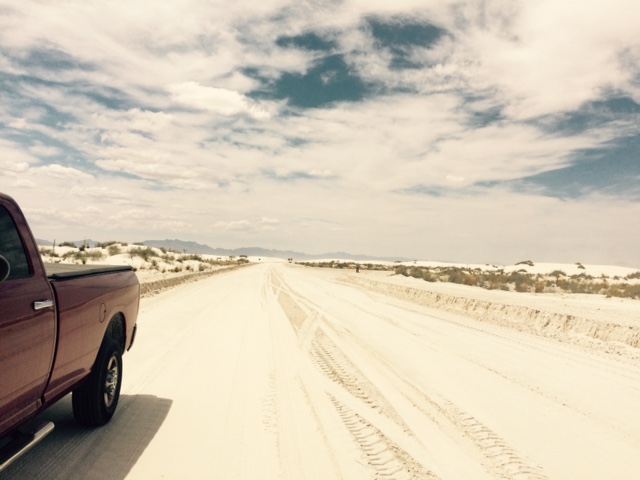
After the jarring rides I had after the pavement ended in Death Valley, I was a little concerned. However, I needn’t have worried.
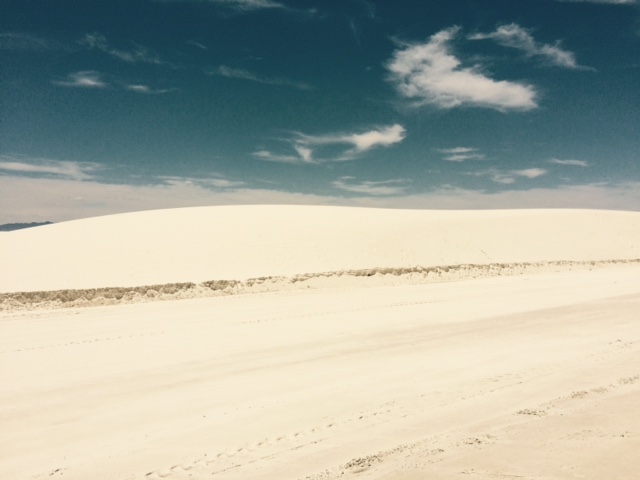
The unpaved road was smoother than the asphalt! If you look to the side of the road, you can see that they have to plow the roads to keep them passable.
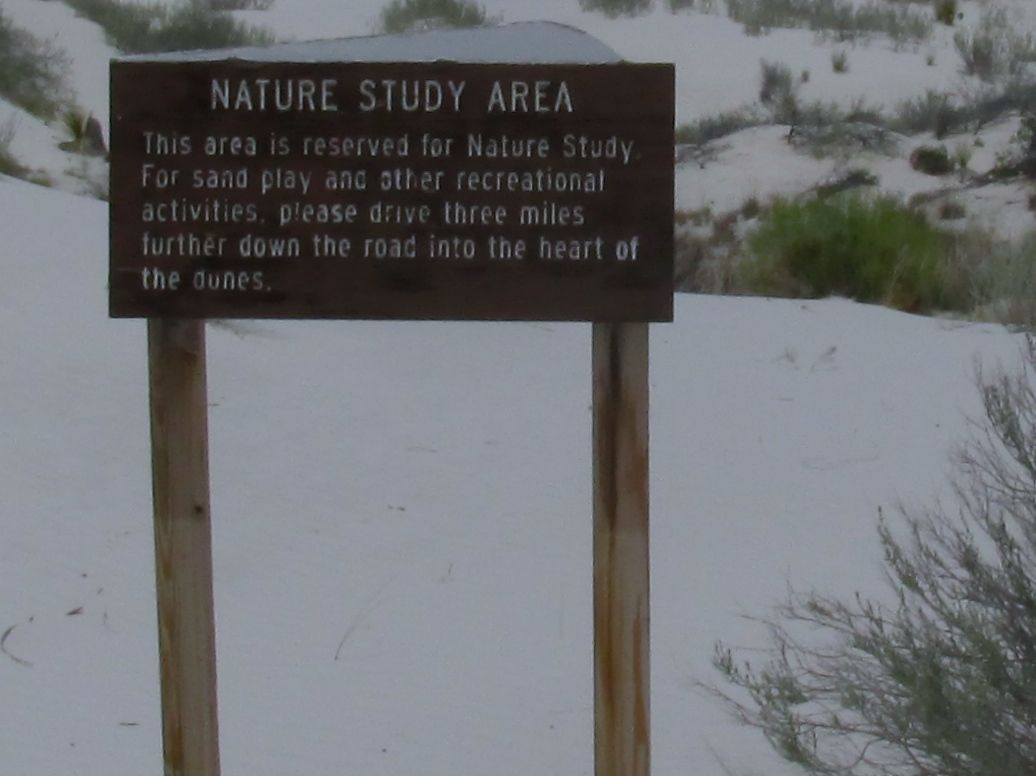
I stopped first to look at a display on the plant and animal life, but what I saw was a sign the made my heart sing!
“This area is reserved for Nature Study. For sand play and other recreational activities, please drive three miles down the road into the heart of the dunes.”
Oh, be still, my heart! Not only was I getting close to the heart of the dunes, but they were actually encouraging sand play! I jumped back into the truck and headed into the heart of the dunes.
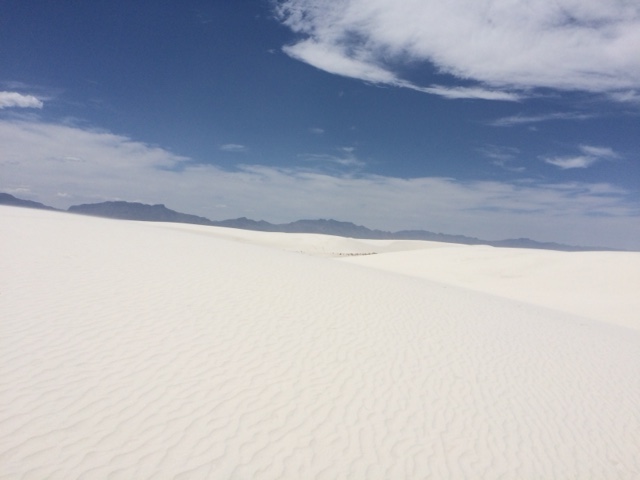
After that, the white dunes that I was hoping to see came into view.
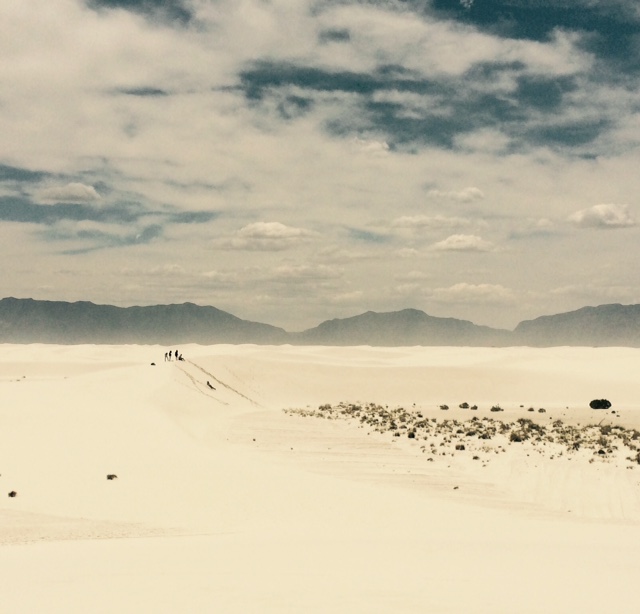
White sand as far as the eye could see!
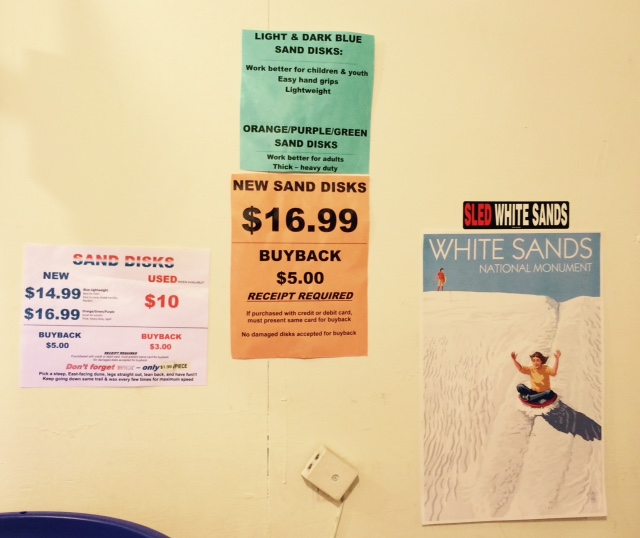
And there were people sledding on the dunes! I kind of wondered how they happened to have flying saucers with them in southern New Mexico. I found out afterwards that they sold them in the gift shop.
I like how they will buy back your sled and resell it. Used sleds are even cheaper than new ones. I was almost tempted to buy one, go back and give it a try. Then I reflected on my last sledding experience more than twenty years ago and thought better of it. The sand wasn’t particularly slippery. Maybe it was due to the rain they had recently.
Actually, the water table is very high here. In the visitor center, they showed that the water is only about a foot below the surface. I didn’t dig down to check it, but I could feel that the sand was much moister than the sand in Death Valley.
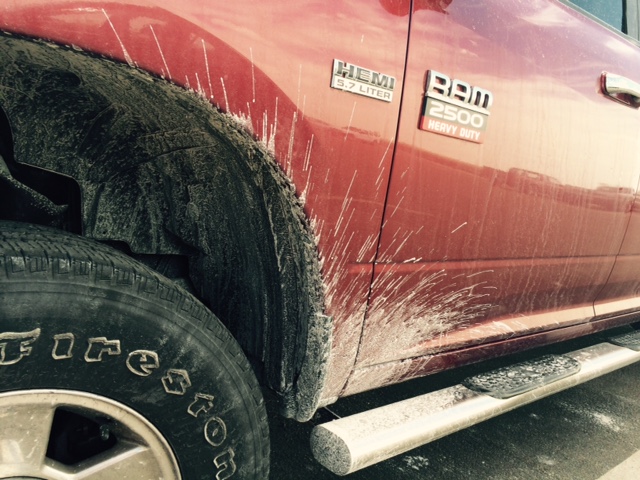
There were actually puddles on the sand. Bart looked really jaunty with the splatters from going through them.
One of the highlights of the experience at White Sands is sunset. They even have a ranger-lead stroll to experience sunset. I vowed to return for that.