OKC…OK?

Scissortail Campground in Edmond, Oklahoma was my next home for a few days. It was on a lake and it had good TV and cell reception. It was a friendly little community with a good library with free wifi. I spent a couple of days just relaxing and taking care of business.

One day, though, I went into Oklahoma City, or OKC as they call it.

I stopped at the tourism office on the way into town and got some information about things to do. The information specialist recommended that I park at the Bass Pro store and then take the free Downtown Discovery bus to see the popular tourist sites.
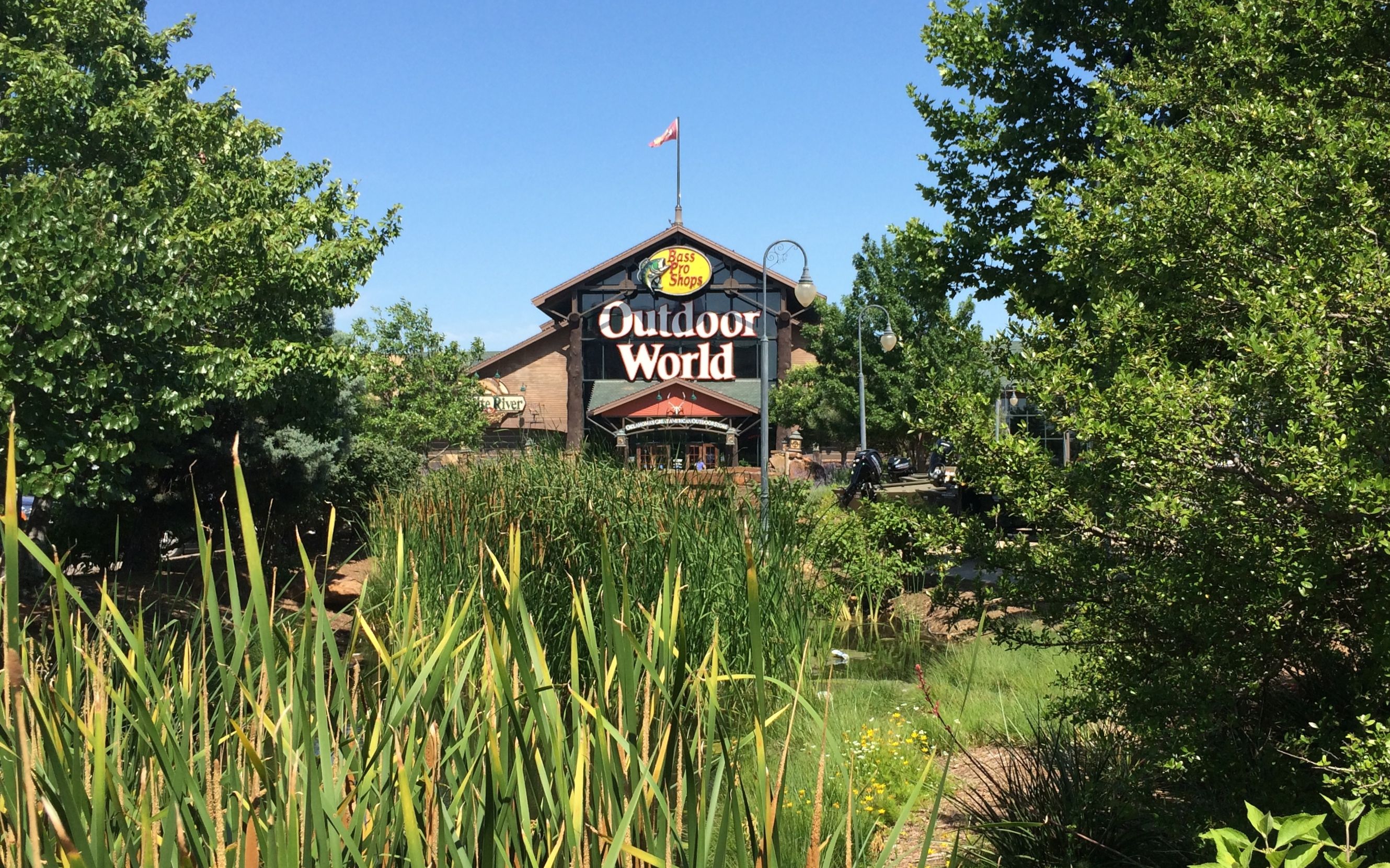
Bass Pro

I wasn’t sure that this was legit, but I did need some stuff that Bass Pro might carry, so I figured I’d park and buy what I needed and then my conscience would be clear. Unfortunately, they didn’t have what I needed. Oh well…I tried.

I wandered around a bit. I noticed some interesting industrial buildings and got a little closer.
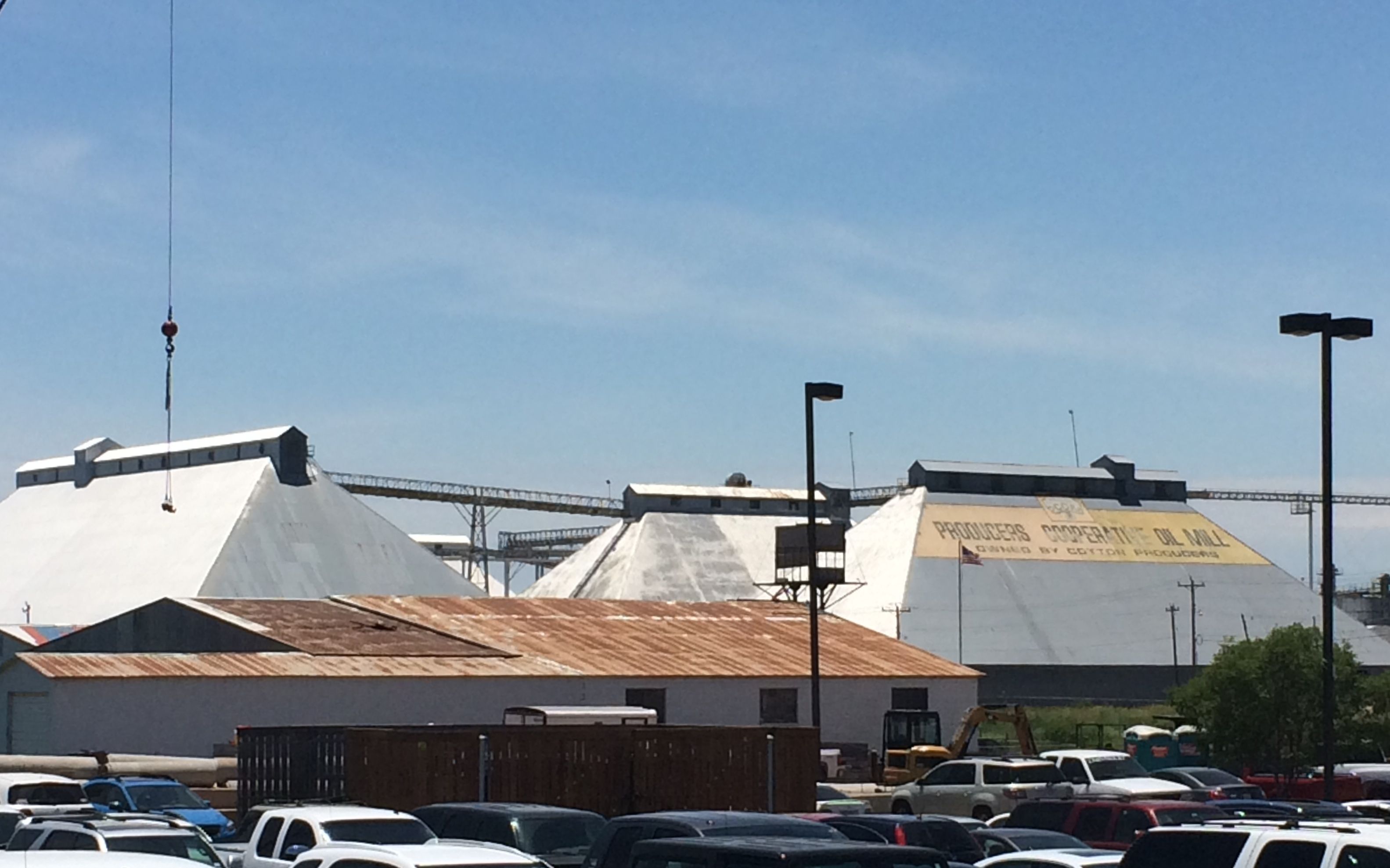
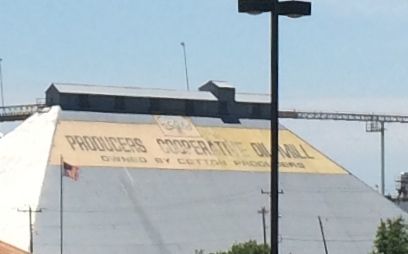
Producers Cooperative Oilmill

Hmm…I wonder what it is?

Producers Cooperative Oilmill closeup

I didn’t know Oklahoma was a cotton producing state. It actually has a long history of cotton growing cotton. It was first planted in 1825 in the Choctaw Nation. Colonel Robert M. Jones, a Choctaw, owned an operation, that in 1851, exceeded five thousand acres. Approximately 2,275 African American slaves harvested seven hundred bales that year.

Cotton production has fluctuated over the years, but it seems to be flourishing now. In 2015, two hundred ten thousand acres were harvested. The yield was 269,000 bales. A bale weighs 480 pounds. That’s a whole lot of cotton!

Fun facts to know and tell!

Nearby, there was a statue and  plaques honoring the Cherokee.
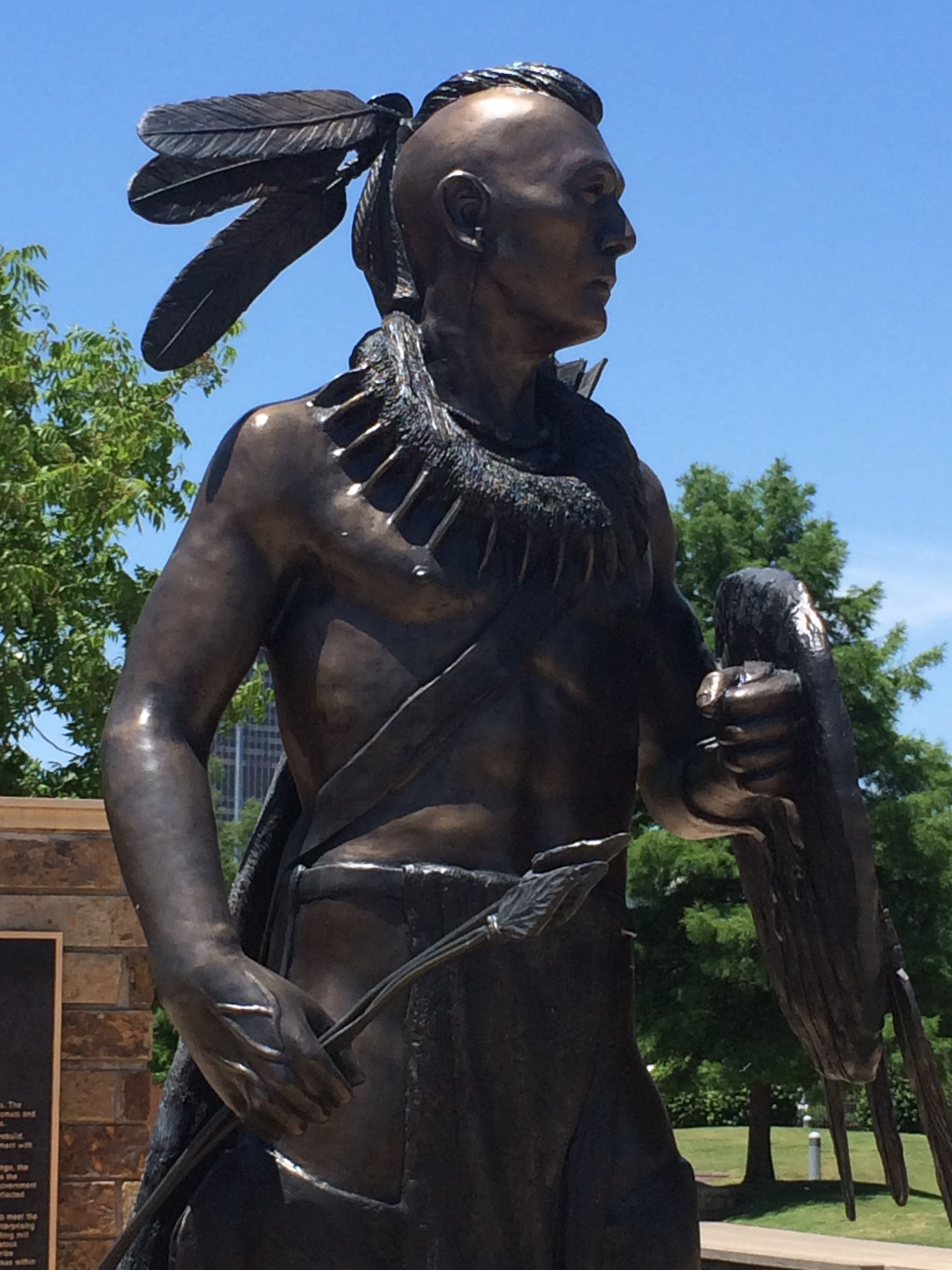
Cherokee statue

Just a little further along, was a building with the Sonic logo.

Sonic headquarters

Sonic’s headquarters is located in Oklahoma City. If it seems like their drive-ins are all over the place, I think it is because they are! In 2015, there were 3,526 restaurants, and it seems like new ones are springing up all the time. They even have one next door to the headquarters building.

The Sonic headquarters looks out on the canal.
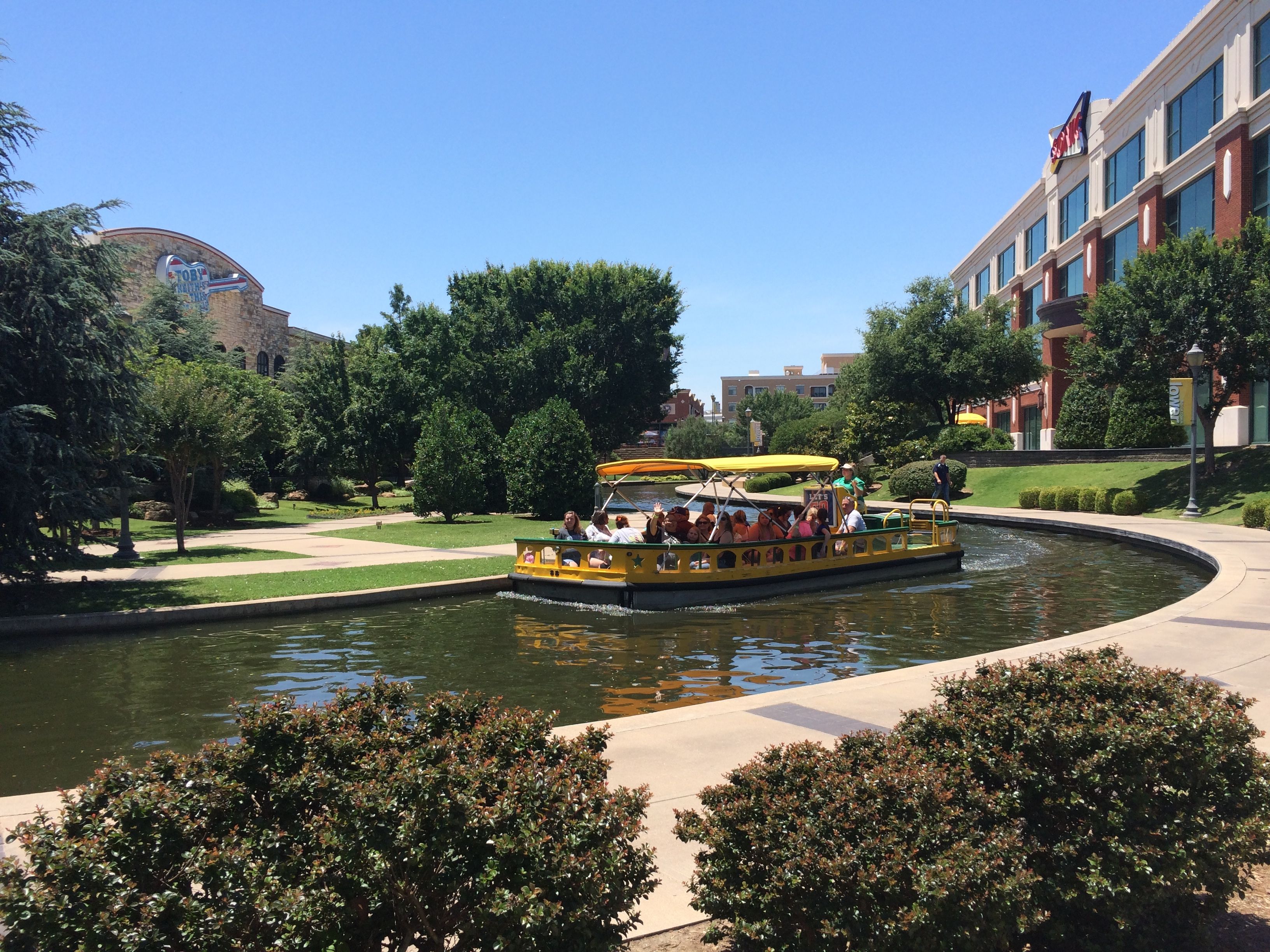
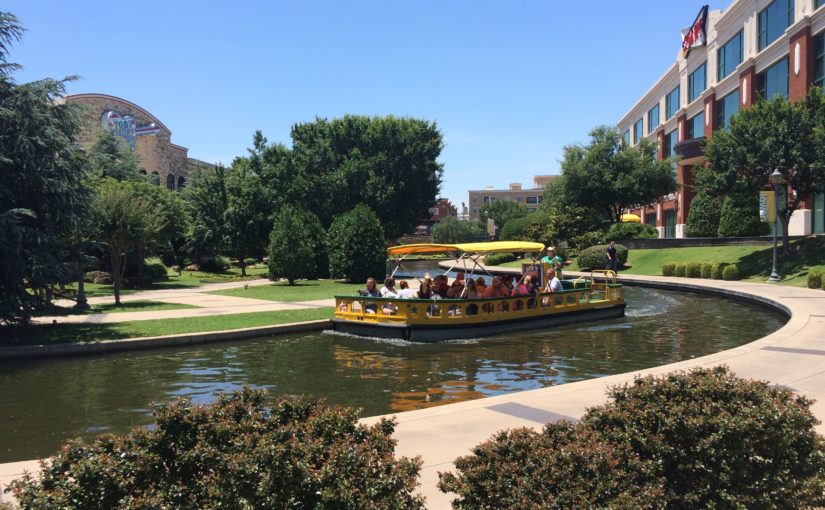
Canal

You can buy tickets for a ride on the canal. From the information I read, you could hop on at a stop and buy a ticket. I asked a passing boatman about where the stop was, and he told me that I had to buy a ticket at a building further down the canal. By the time I had walked most of the length of the canal, I figured that I didn’t need a boat ride. I had already seen the sights!

I kept walking, but I never came across one of the Downtown Discovery bus stops. I did see some interesting architecture along the way.
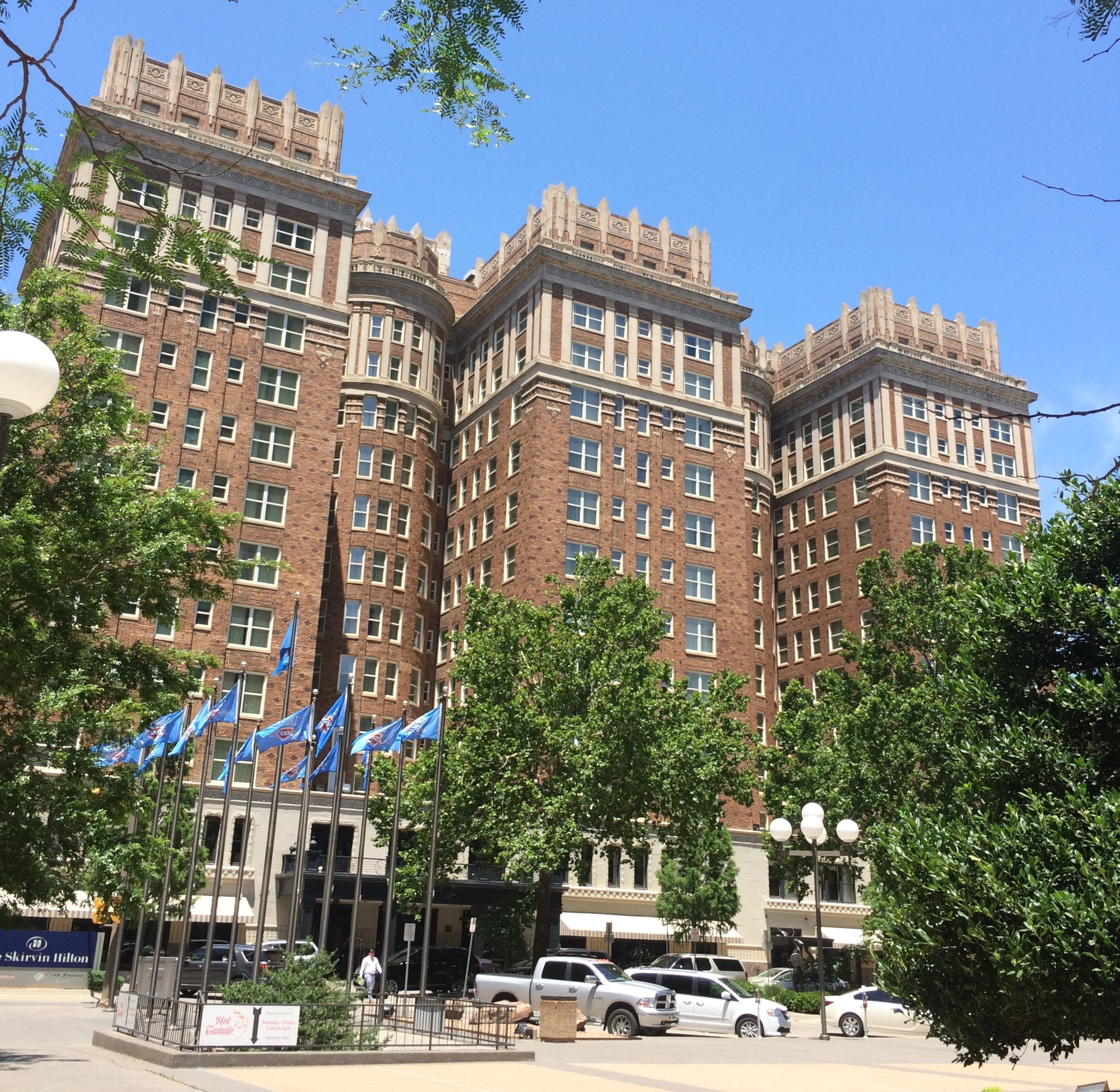
Hotel

This was a novel treatment of the typical three-wing hotel. This one has smaller semi-circular wings between the main ones.
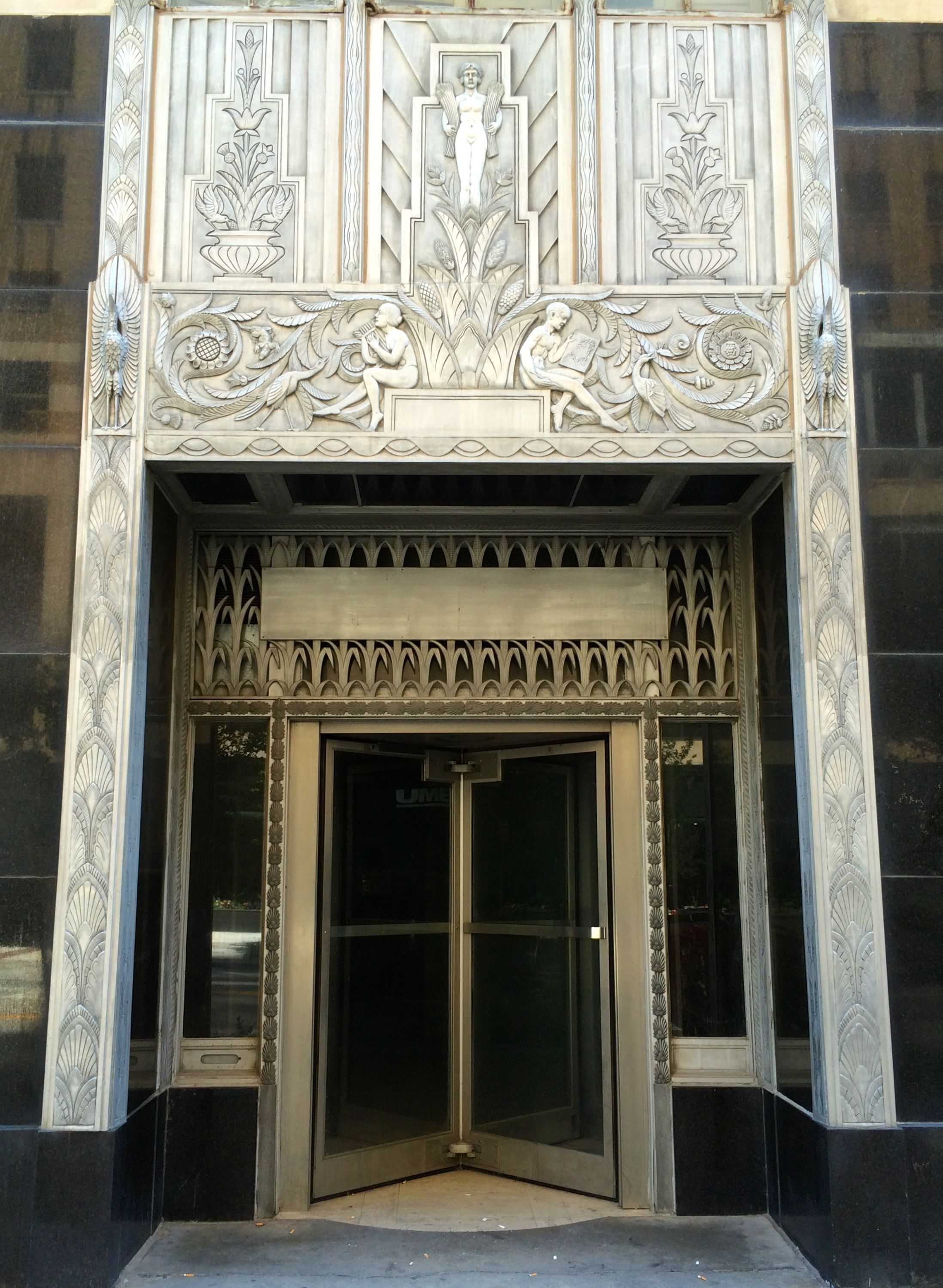
entryway

This building had elegant treatments around the doors and windows.
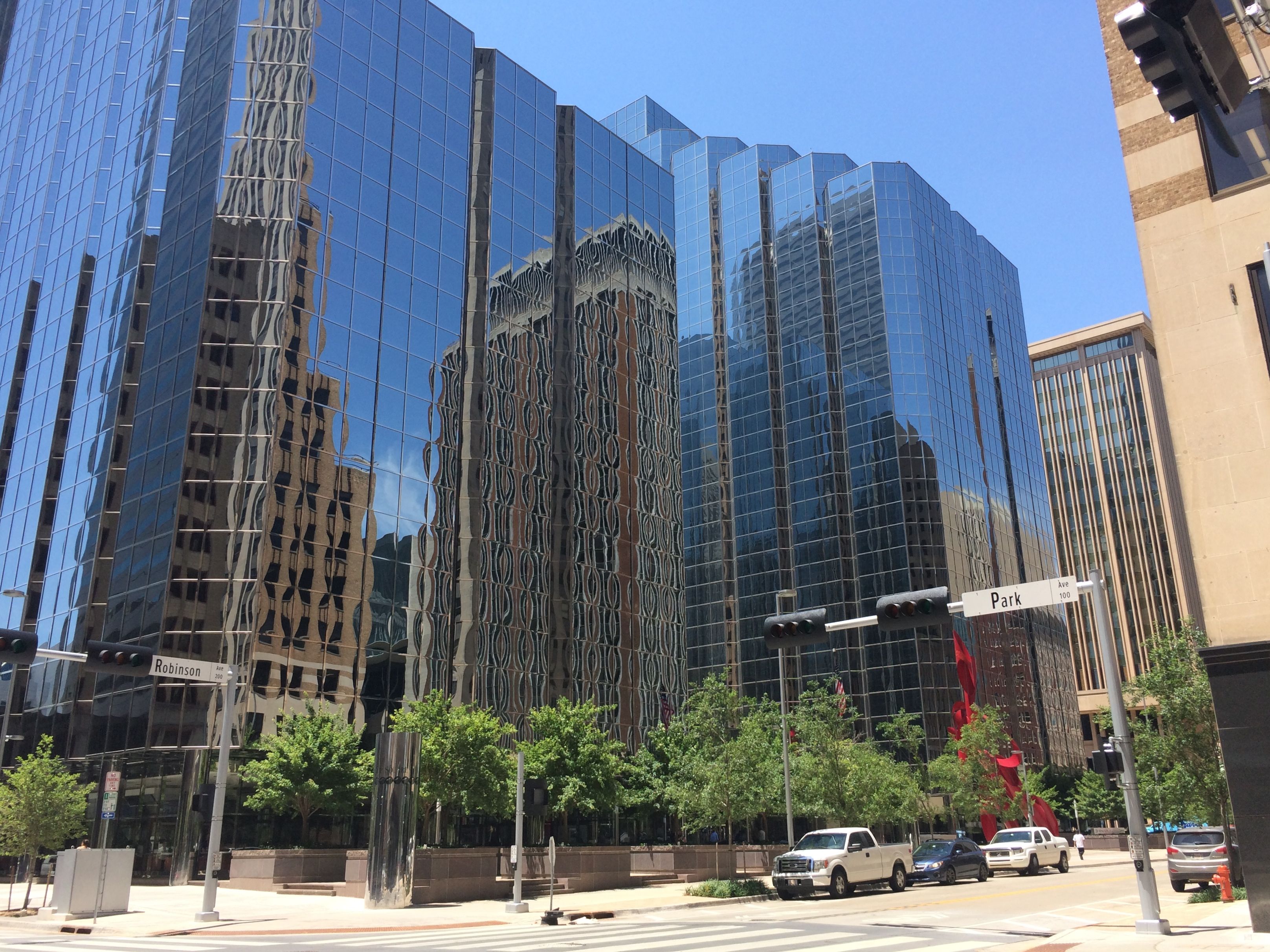
reflecting building

This building was all windows, and it reflected a wavy image of the building across the street.
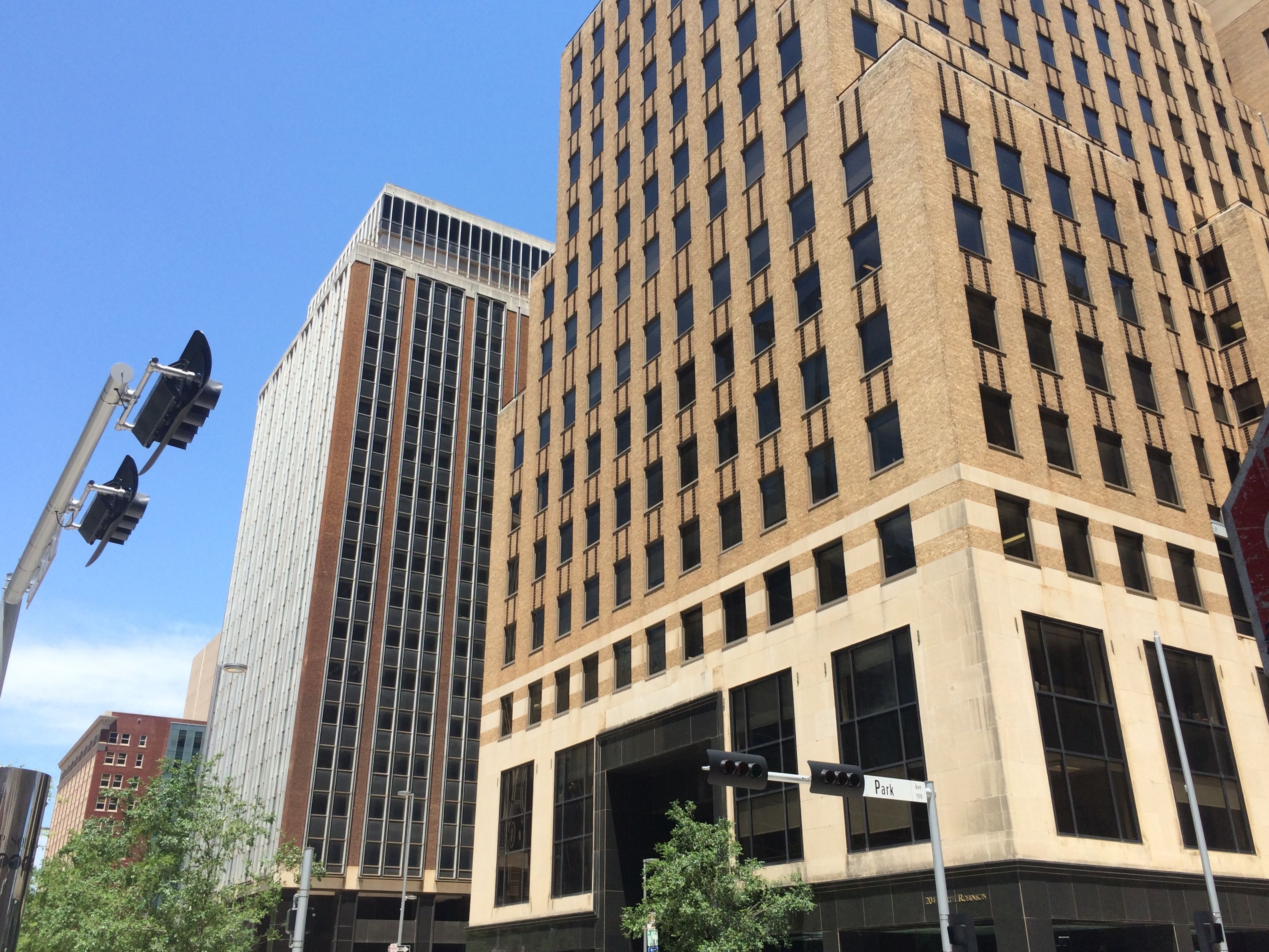
building being reflected

These are the buildings that were being reflected.

Canyon of shiny buildings

There was even a canyon of shiny buildings. Some local workers in their suits paused to see what I was looking at. They had never noticed it before. Tourists do provide a service!

After a long, long walk in the sun, I finally arrived at the site of the Murrah Building.
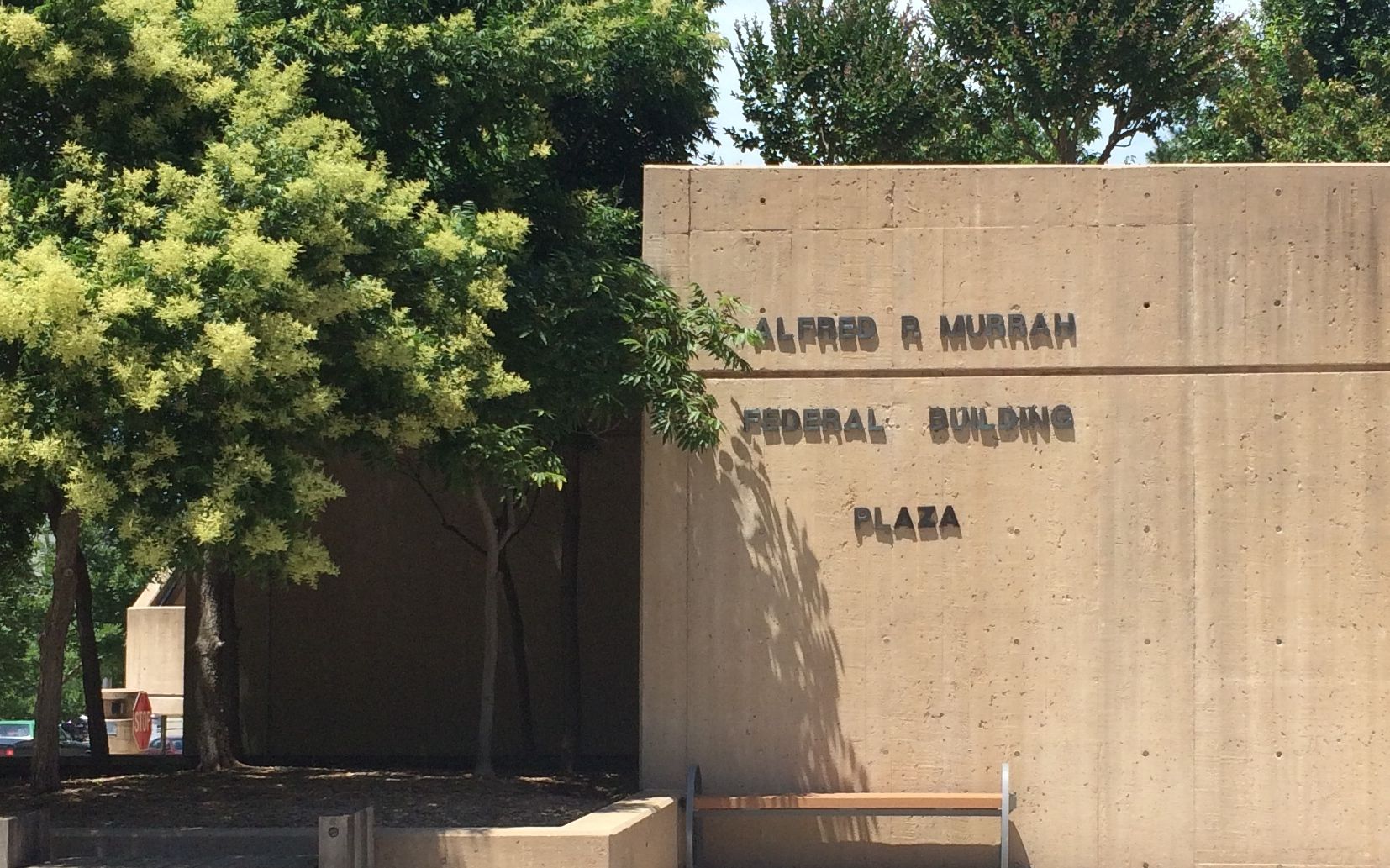
Murrah Federal Building Plaza

I will never forget the coverage of this tragedy on Wednesday, April 19, 1995. They have created a moving memorial.
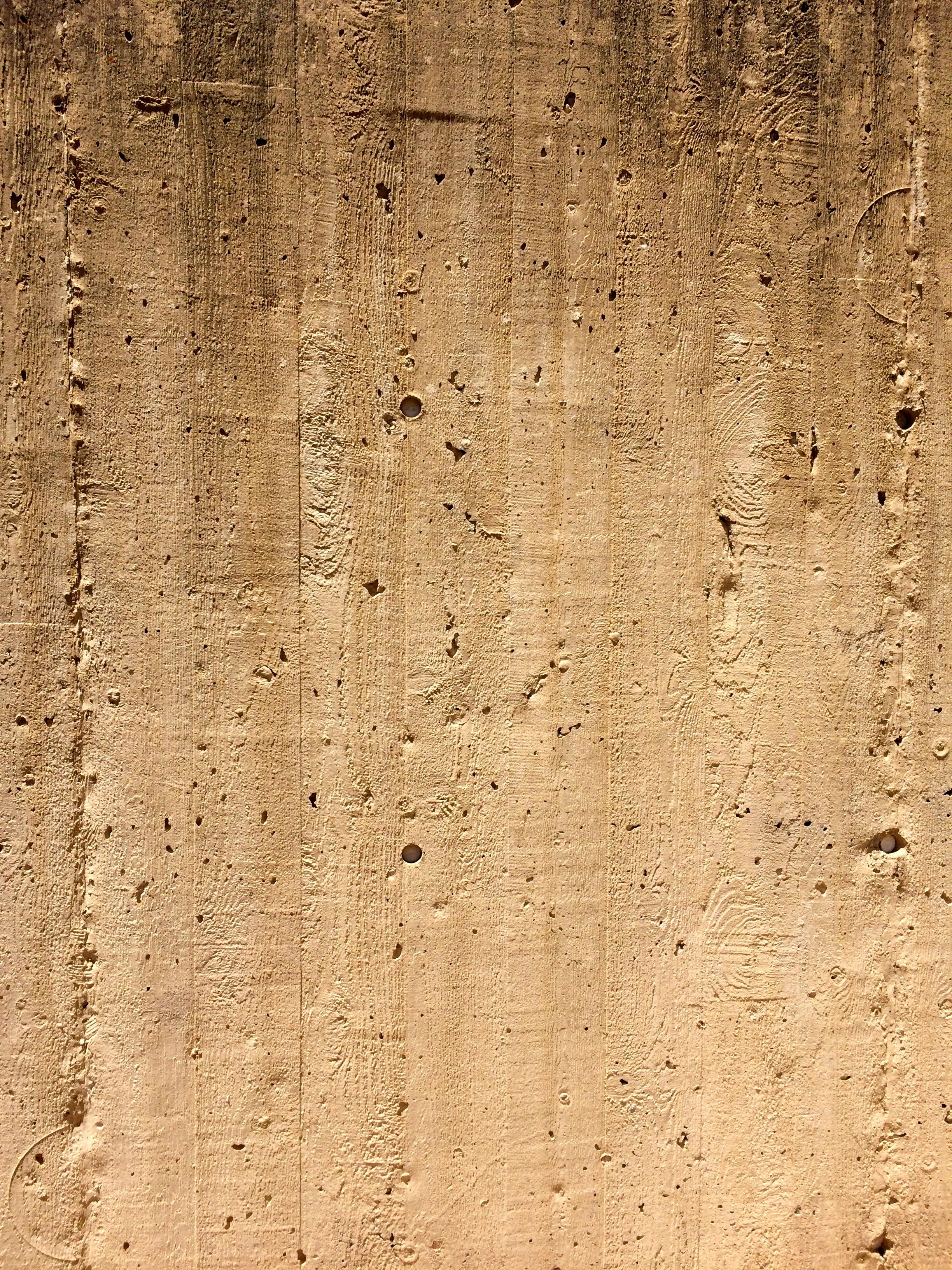
Wood impressions in cement

The texture of the wood in the concrete walls caught my attention. The first time I saw this method of building the first time in the 1970s at the Ontario Science Centre in Toronto, where the impressions of the wood holding the concrete were used as a design element.
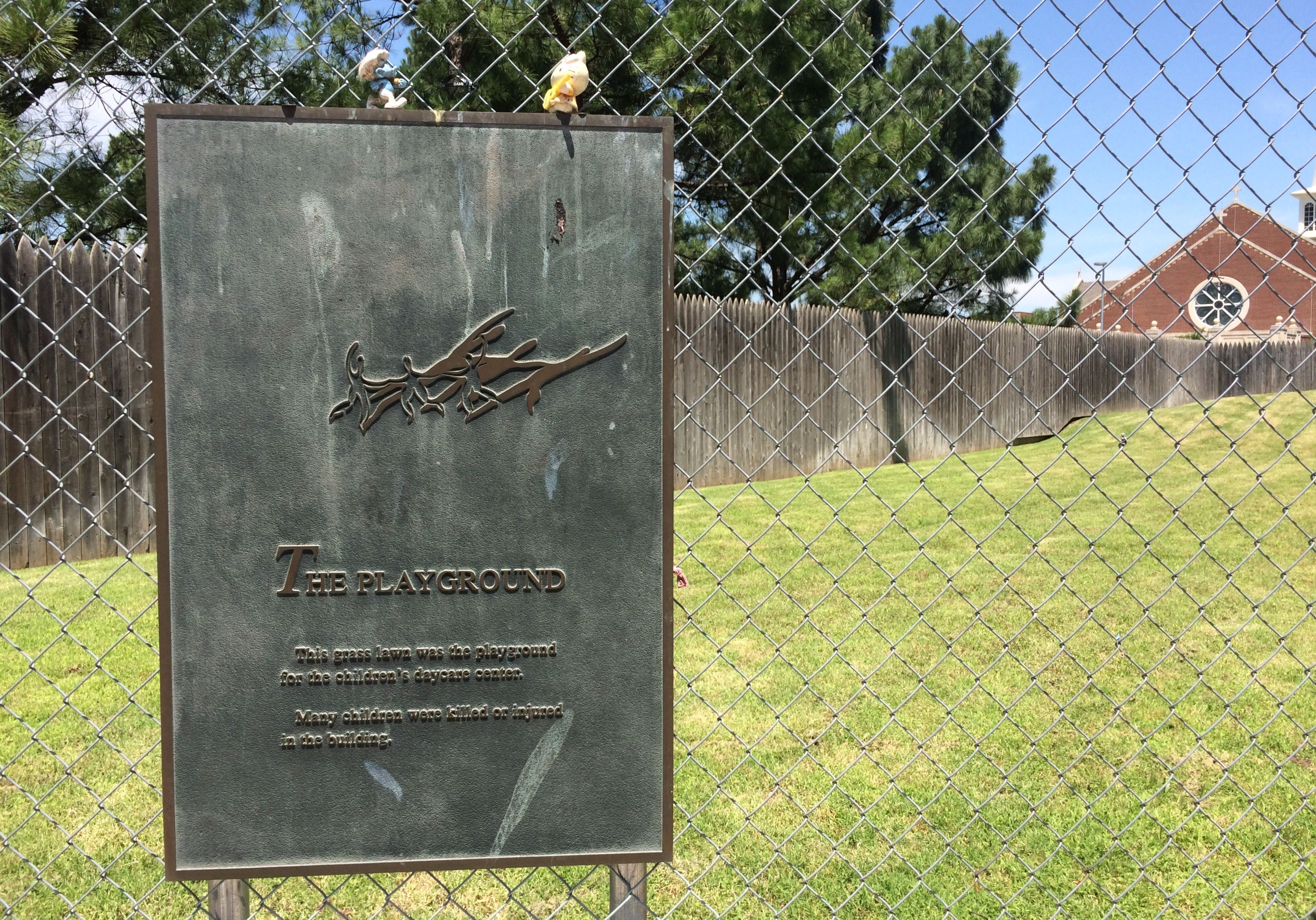
The Playground

The Playground from the daycare center was there. It was up on top of the memorial.
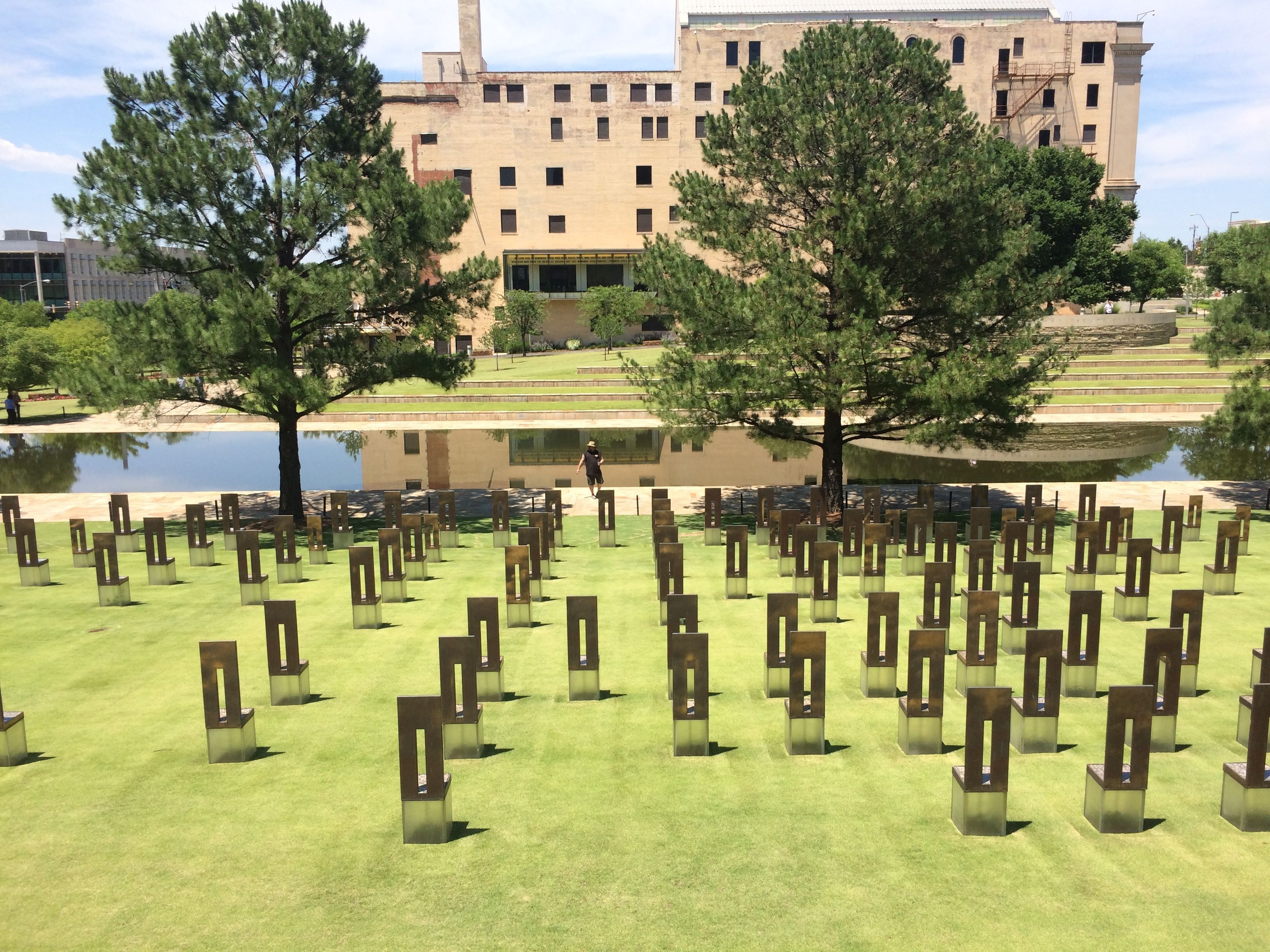
Looking down at the empty chairs

From up on top, there is a view of the 168 empty chairs facing the reflecting pool.
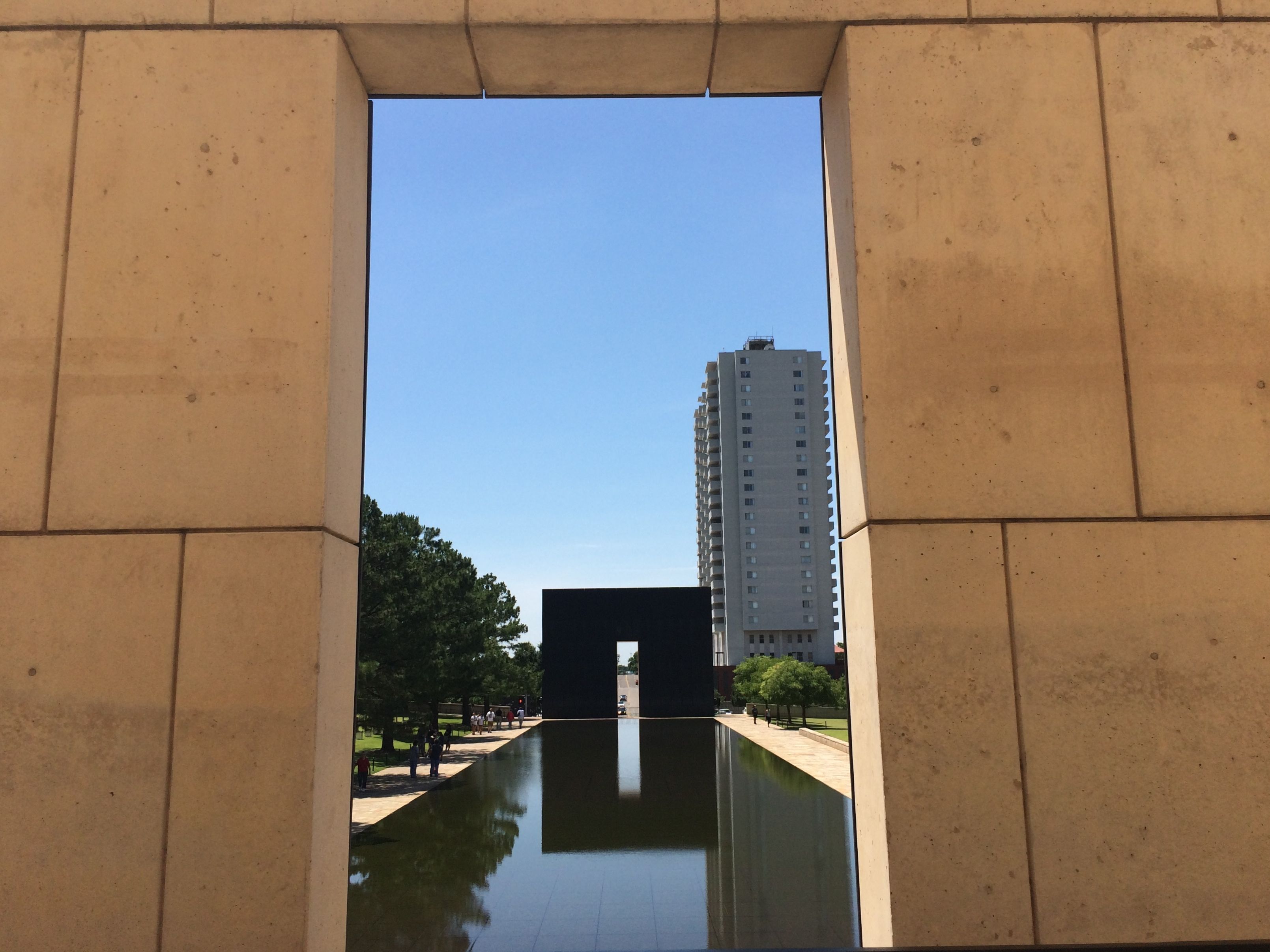
Looking through the gates

I came around to the gates. This picture looks through the 9:01 gate toward the 9:03 gate. The reflecting pool occupies what had been N.W. Fifth Street. The bomber drove down this street and pulled in front of the building that had been on the left side of the pond.
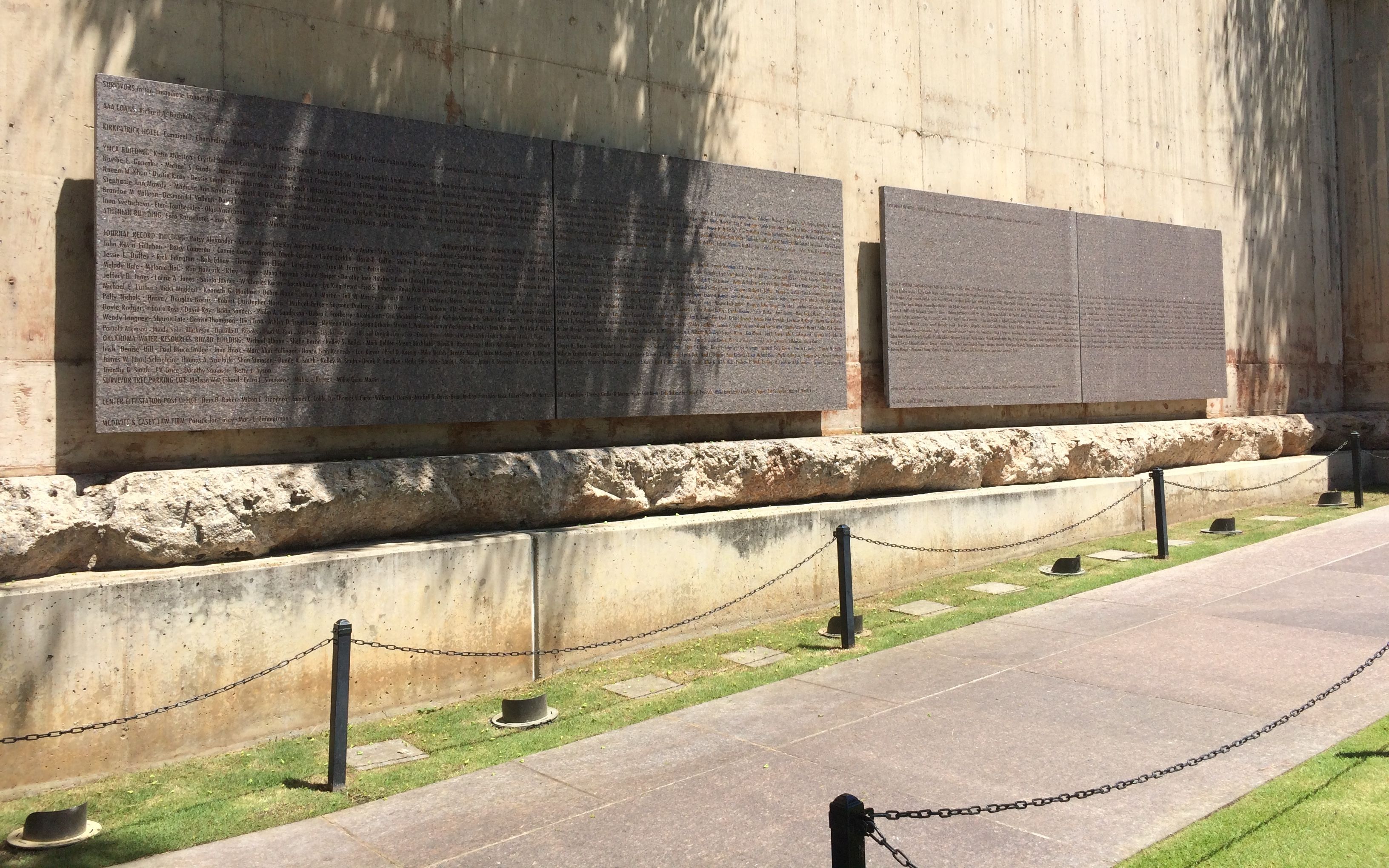
survivors' names

Survivors’ names are inscribed on marble slabs that came from the Murrah Building. The path around the footprint of the building is also made of materials from the building.

The Field of Empty Chairs is a tribute to the 168 people who were killed in the terrorist attack. The nine rows of chairs represent the nine floors of the former Murrah Building. Each person’s chair is positioned in the row that corresponds with the floor that they worked on or were visiting. There are five chairs on the west side of the field for the people who were killed outside the Murrah Building.
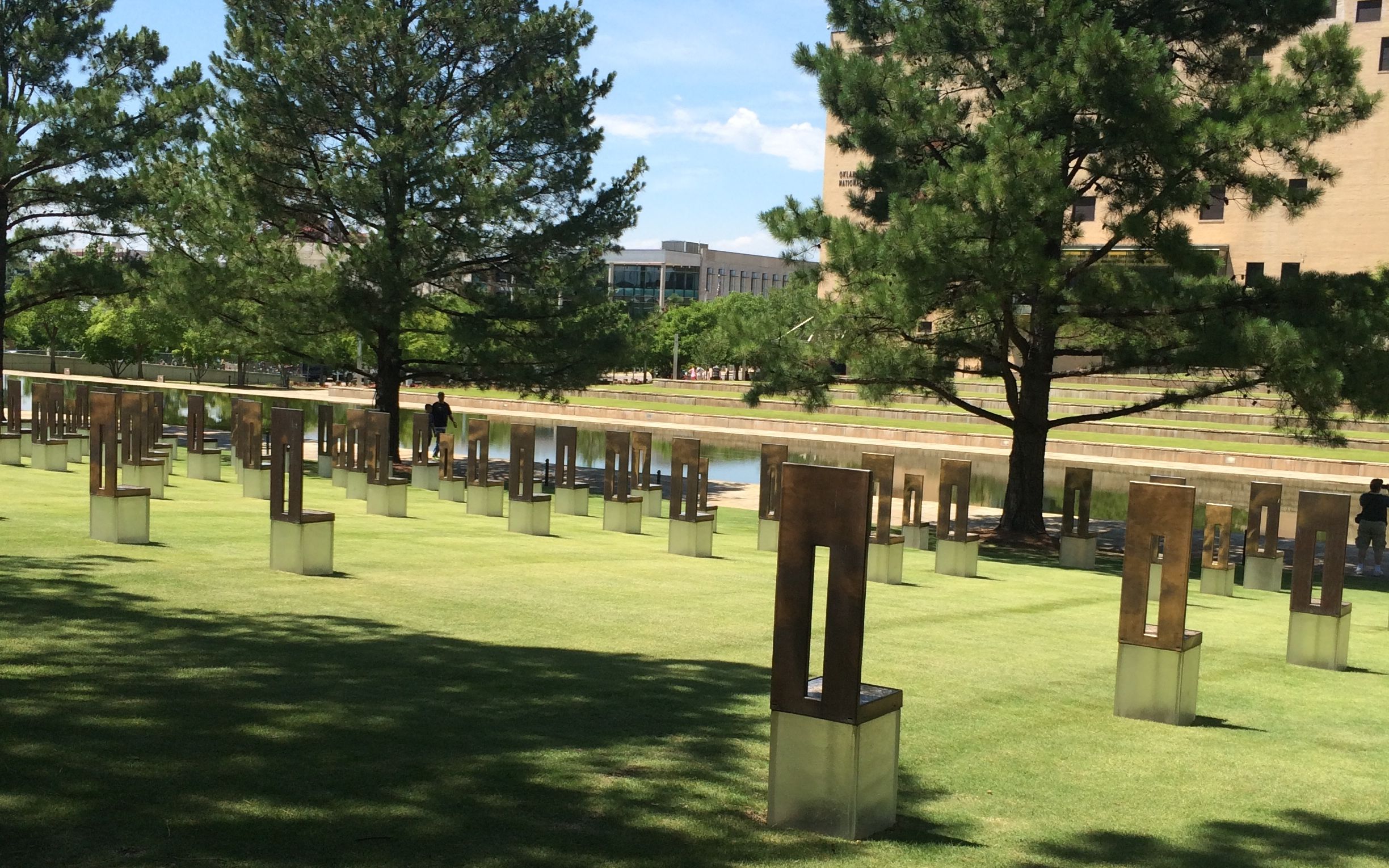
chairs facing the pond

The bottom portion of the chairs are glass and they are illuminated at night. The guard I spoke with told me that the memorial is beautiful and peaceful at night.
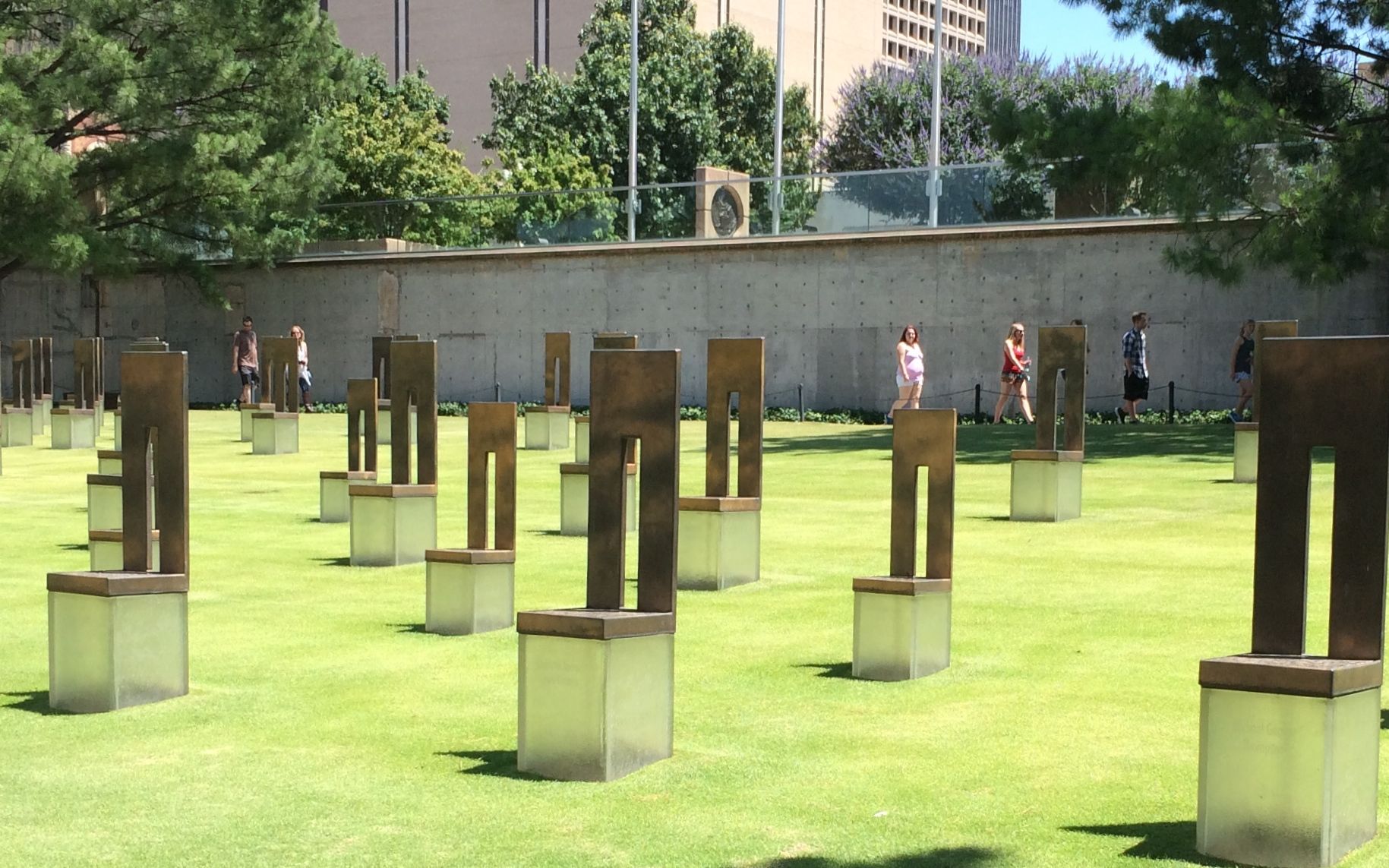
chairs of different sizes

The smaller chairs represent the children who died in the attack.

reflecting pool

The reflecting pool is really shallow. I enjoyed watching the ducks splash about in the water. I don’t think that water was deeper that two inches. They water was continually circulating – draining over the edges and being replenished.

On the exterior of the memorial, there is chain link fence that recalls the original memorials that sprang up after the attack.
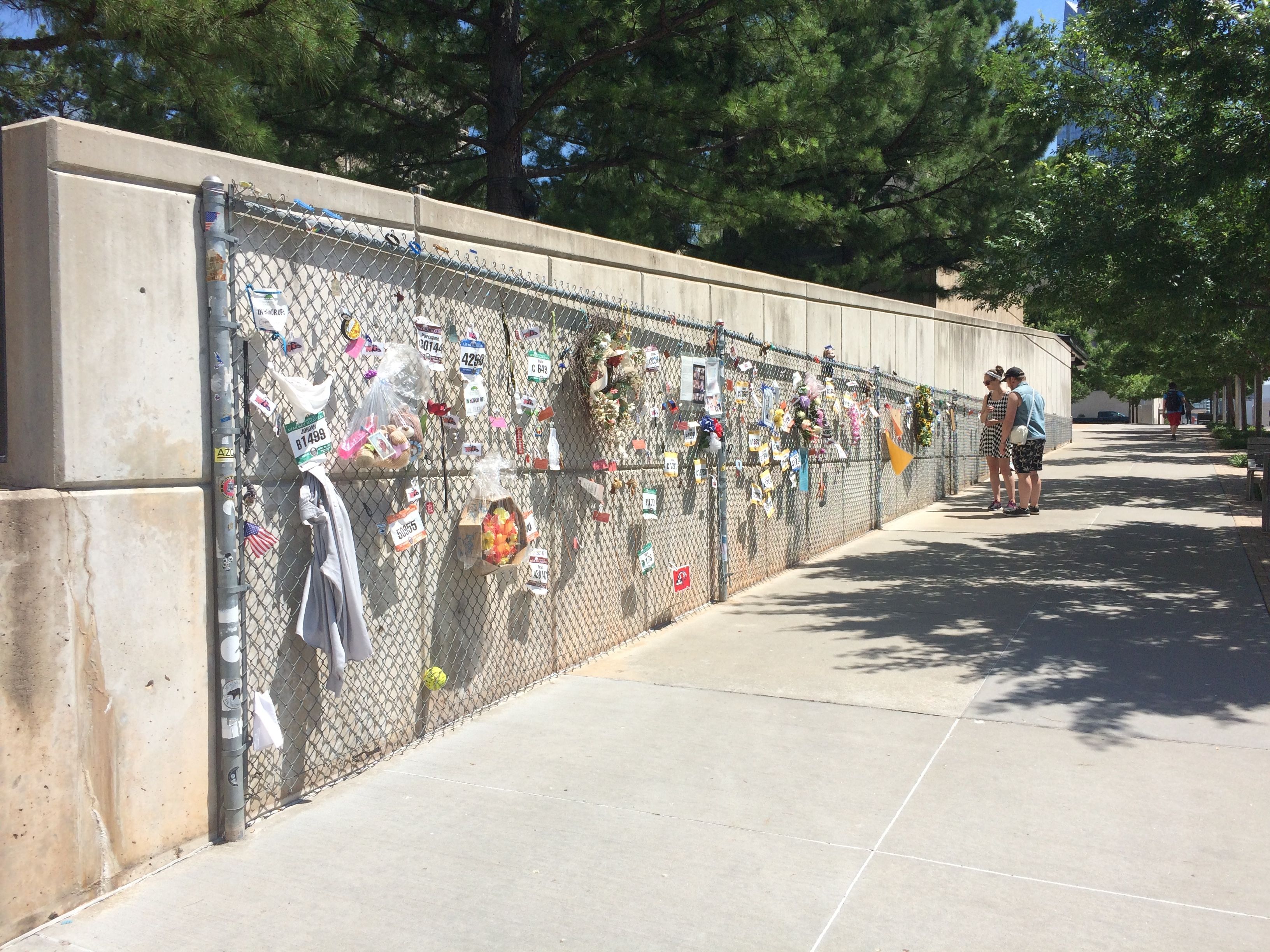
fence with memorials

People are still leaving memorials. As I understand it, the offerings are cataloged in the museum next door. I opted not to visit the museum. I was hot and tired and ready to head back.

I finally found a bus stop at the memorial. I pulled out the brochure and figured out a phone number to call. The operator explained that a bus would be by shortly, and so I waited.
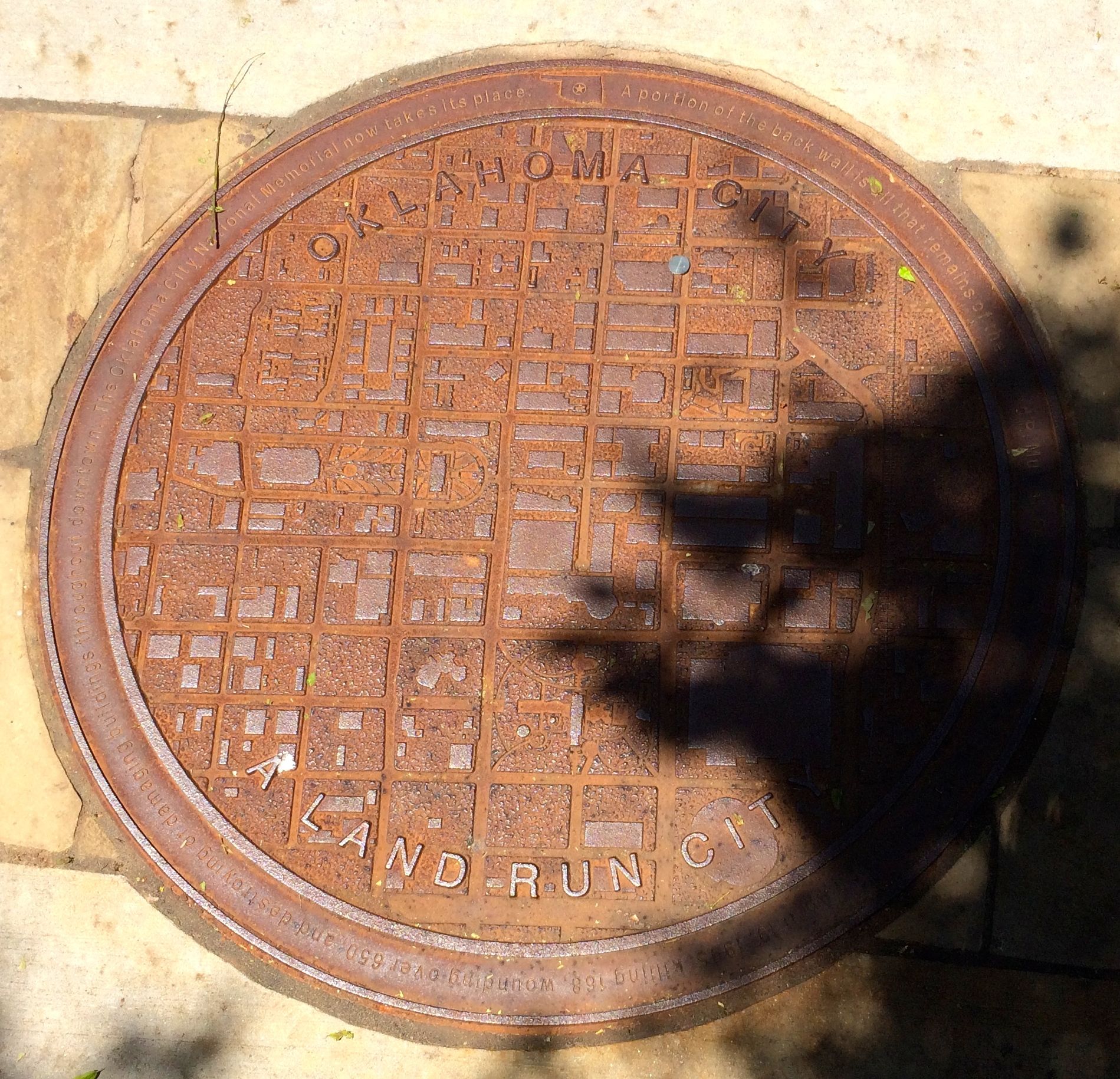
Oklahoma City Landrun City manhole cover

Of course, I always find things to look at. Interesting manhole cover.

The friendly bus driver picked me up and drove me back to Bass Pro Shop. Before I got to my truck, though, I noticed a sign for The Land Run of 1889.

The Land Run of 1889 plaque

The sign says it all.

The monument was an amazing group of statues.
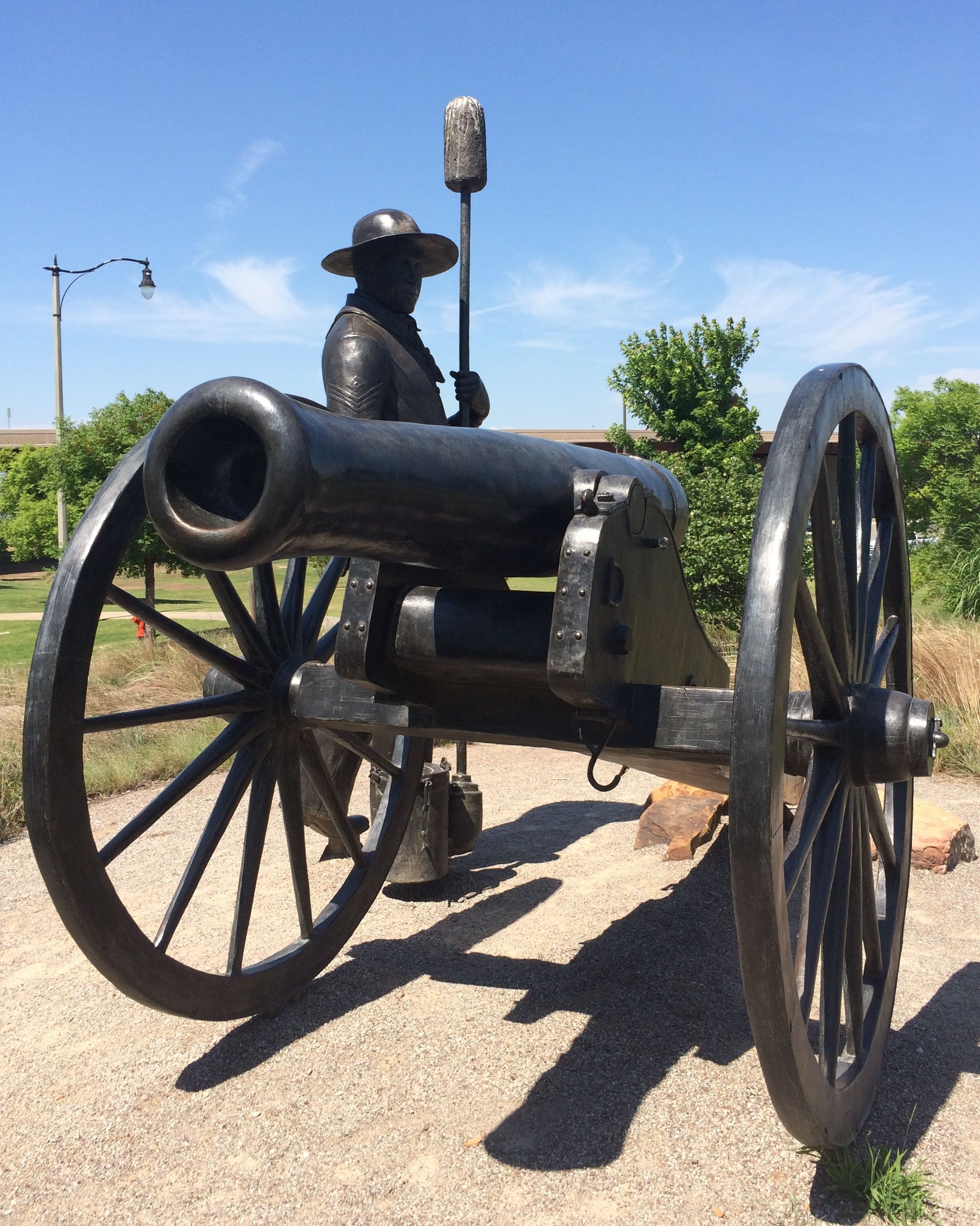
getting ready to fire the starting shot

Off to the right side, there is a soldier waiting to fire the cannon shot to start the land run. On the left side, there is explosive action!
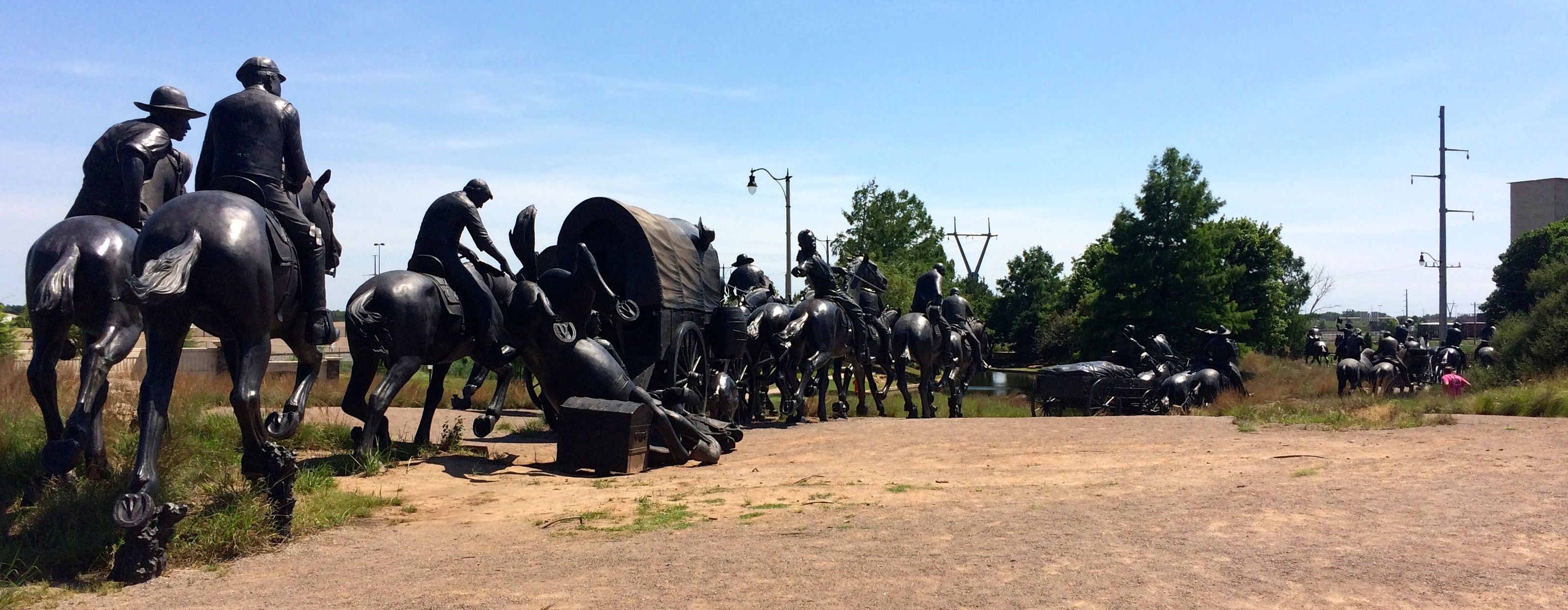
view from the end

You could really spend a long time studying all the details and making up stories to go with the people that are portrayed. It was kind of hard to get good photos with the equipment I had and the light, but here are some to give you a taste.
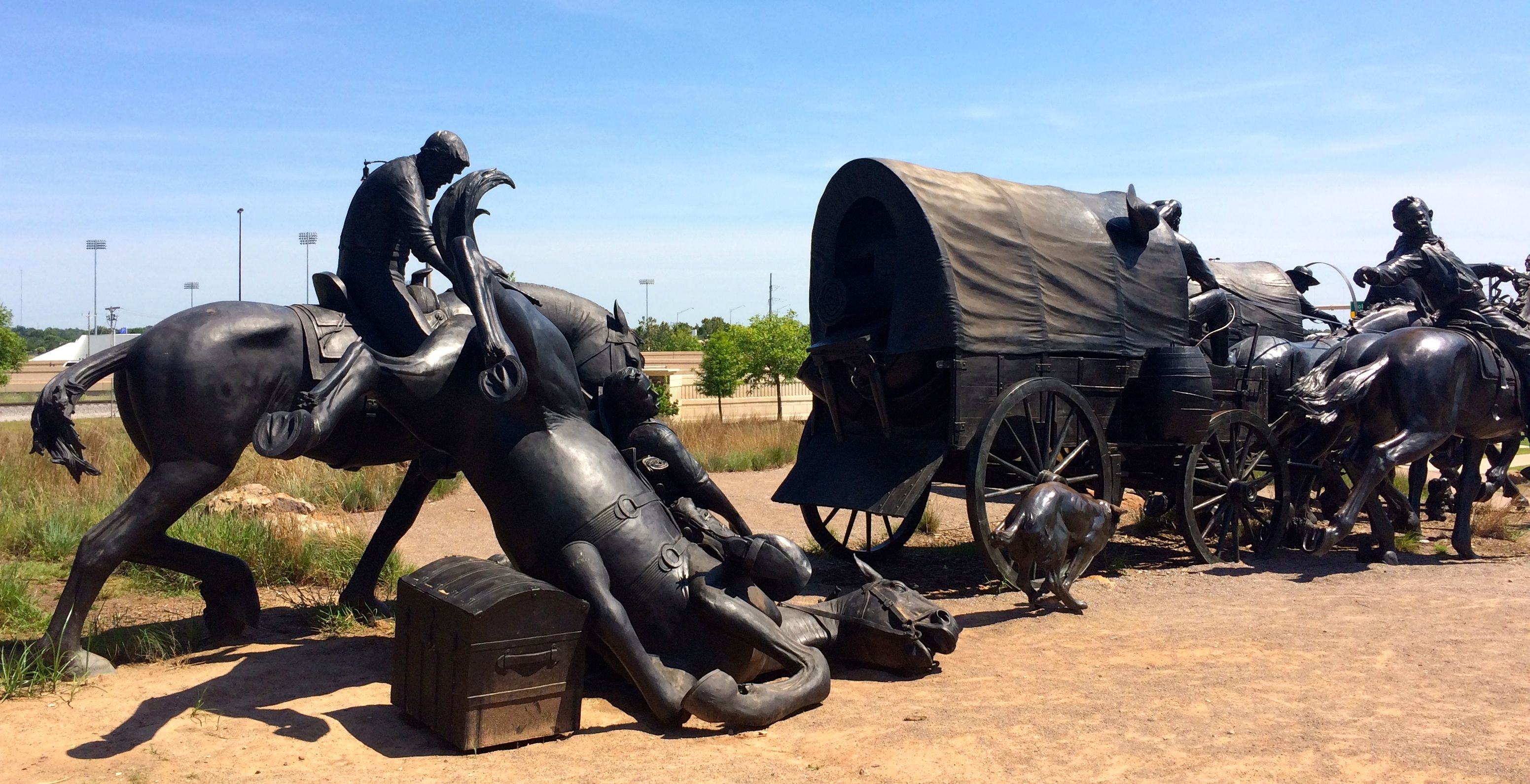
Horse falling over trunk

This horse tripped over a trunk that fell out of the wagon in front of it.
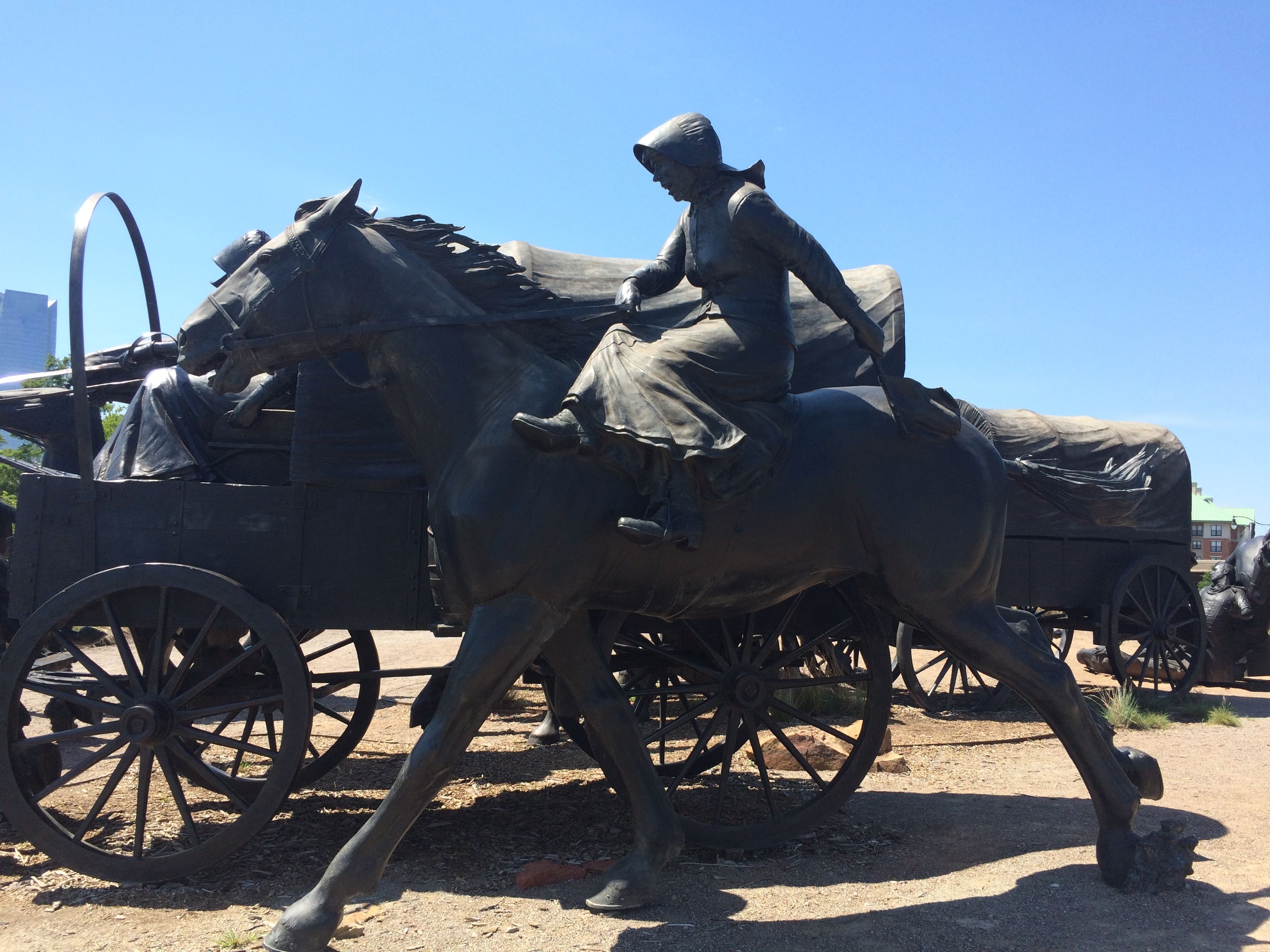
Woman riding side saddle

This homesteader is riding sidesaddle!
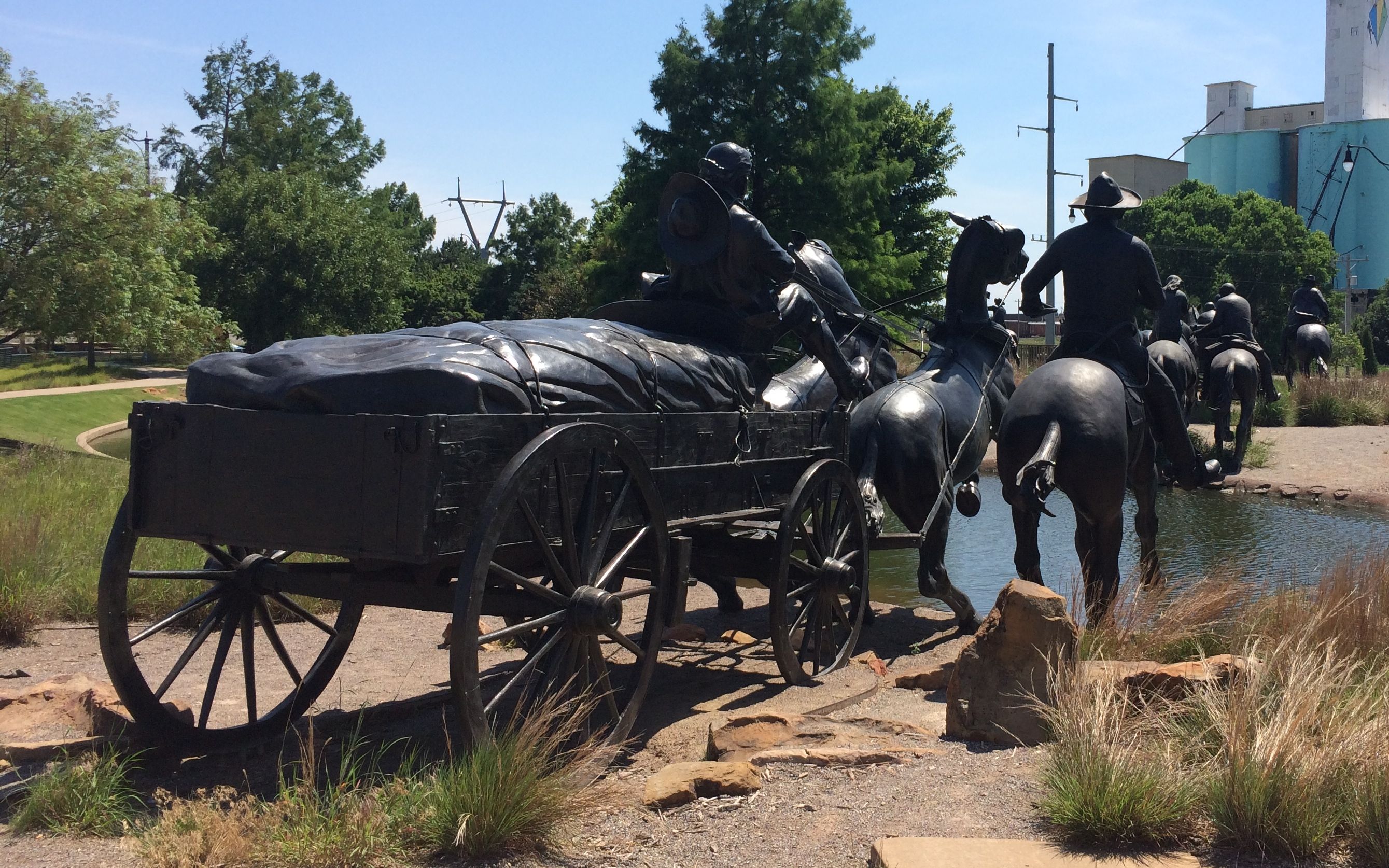
crossing the canal

The riders and wagons proceed across the canal and off into the distance.
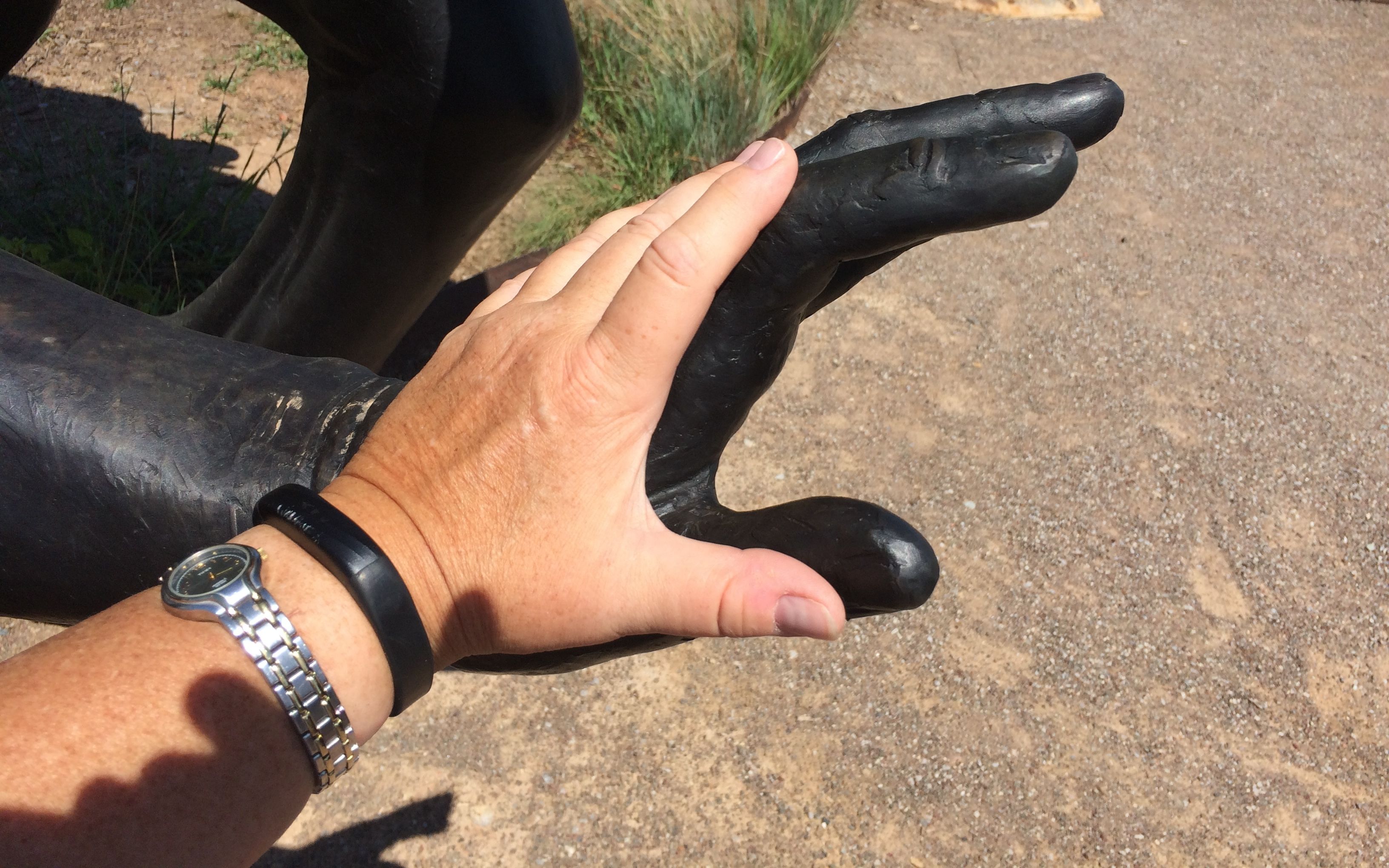
larger than life

Just to give you an idea of the scale of the sculptures, here is a shot of my hand next to one of the riders.

And with that, it was time to head back to the campground. Is there  more to do in Oklahoma City? Definitely!

And I’m going to save that for another visit.
 

Taliesin Time! Cross Another One off the List

Oh, my! Taliesin!

Like many people, I consider myself quite knowledgeable about Frank Lloyd Wright, his life and the evolution of his work. After visiting Taliesin and taking the four hour tour, I realized that I didn’t know as much as I thought.

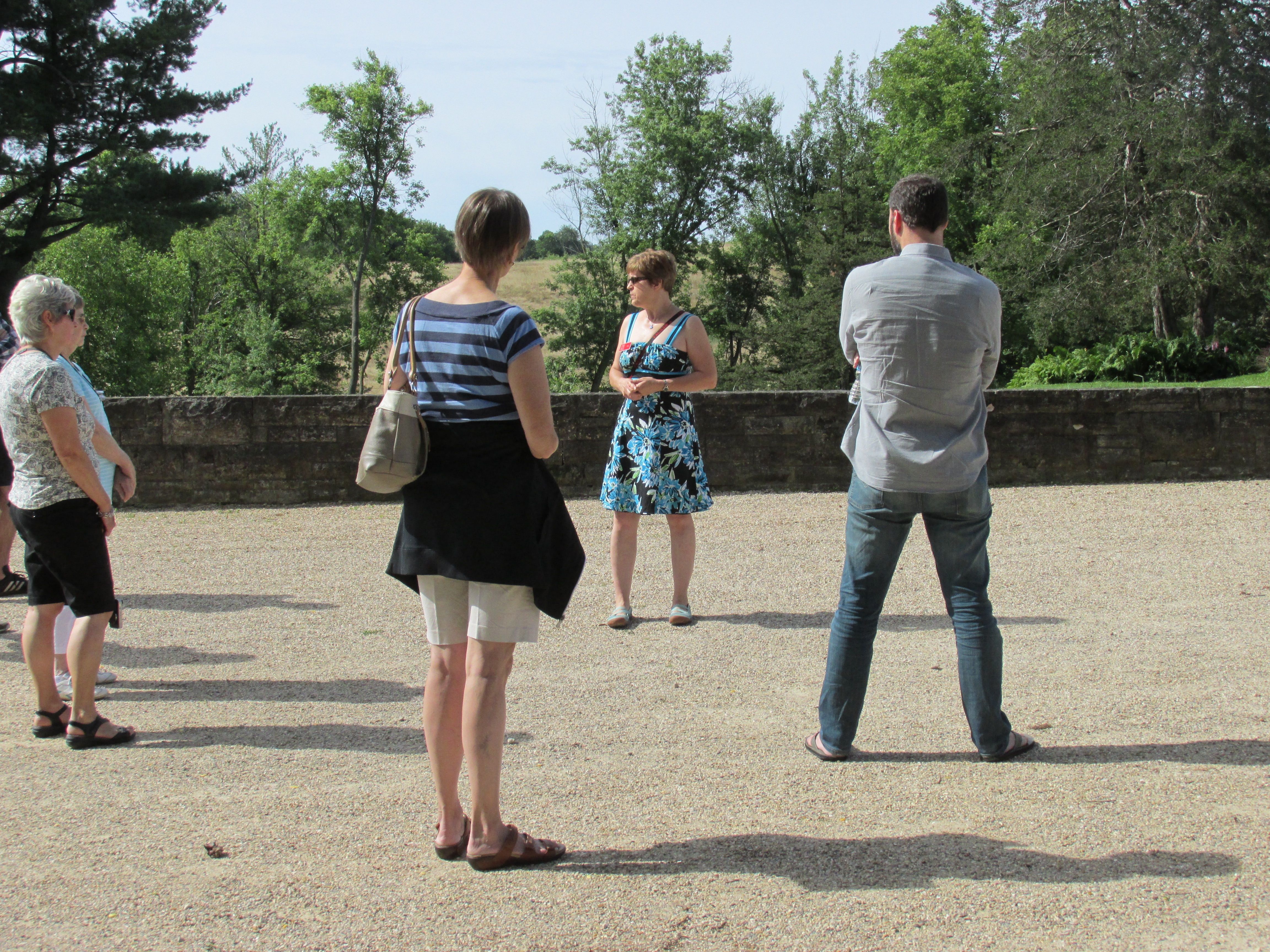
The tour started at the Wright-designed Visitor Center on the bank of the Wisconsin River. After we met our guide, Cyndi, we boarded the little red bus with Taliesin emblazoned on the side that took us to the first stop on our tour.

I have plenty of exterior shots of the buildings, but interior photography is not permitted. However, there are books and postcards available. Exit through the gift shop.

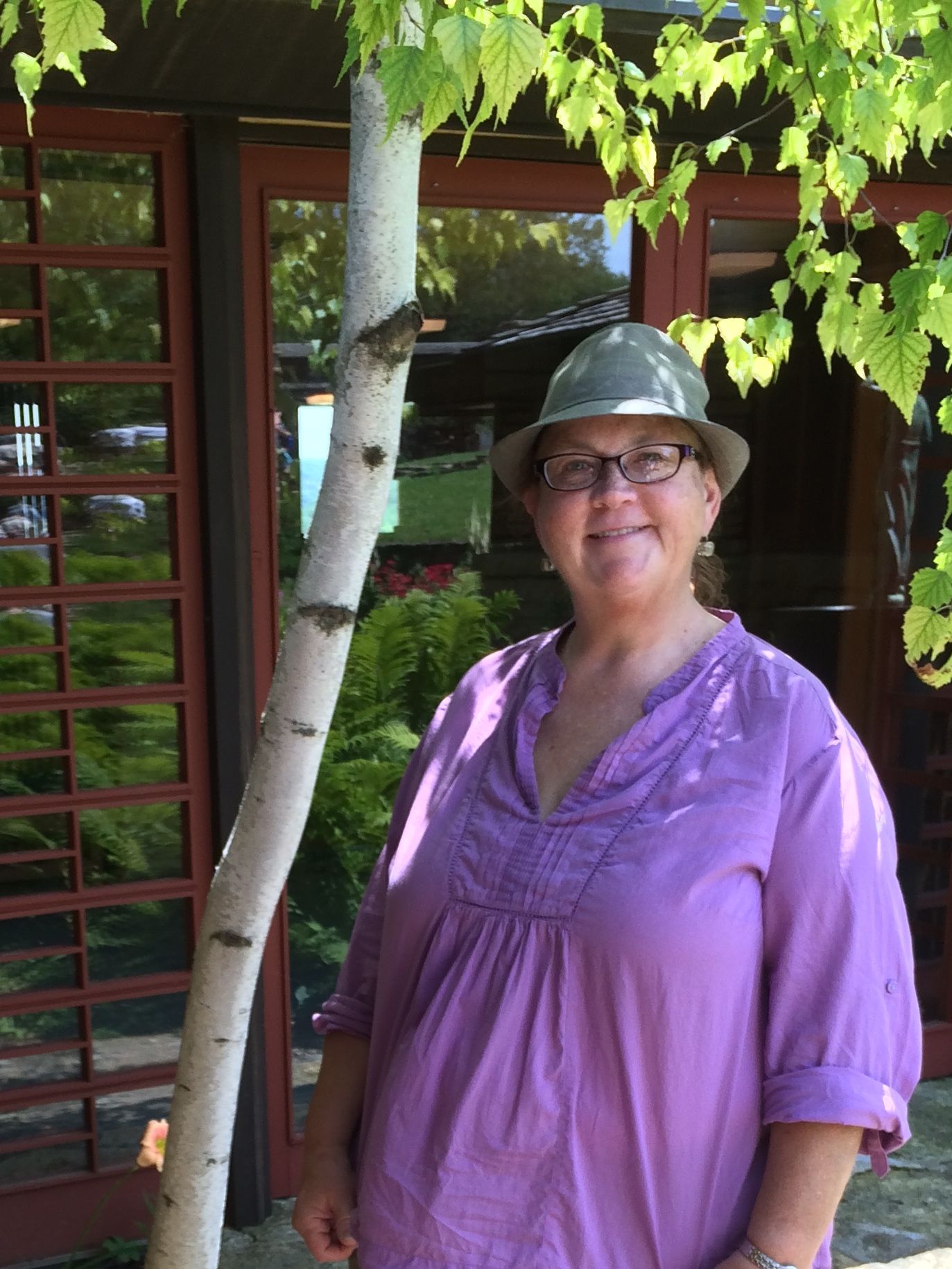
Cyndi, a most excellent tour guide

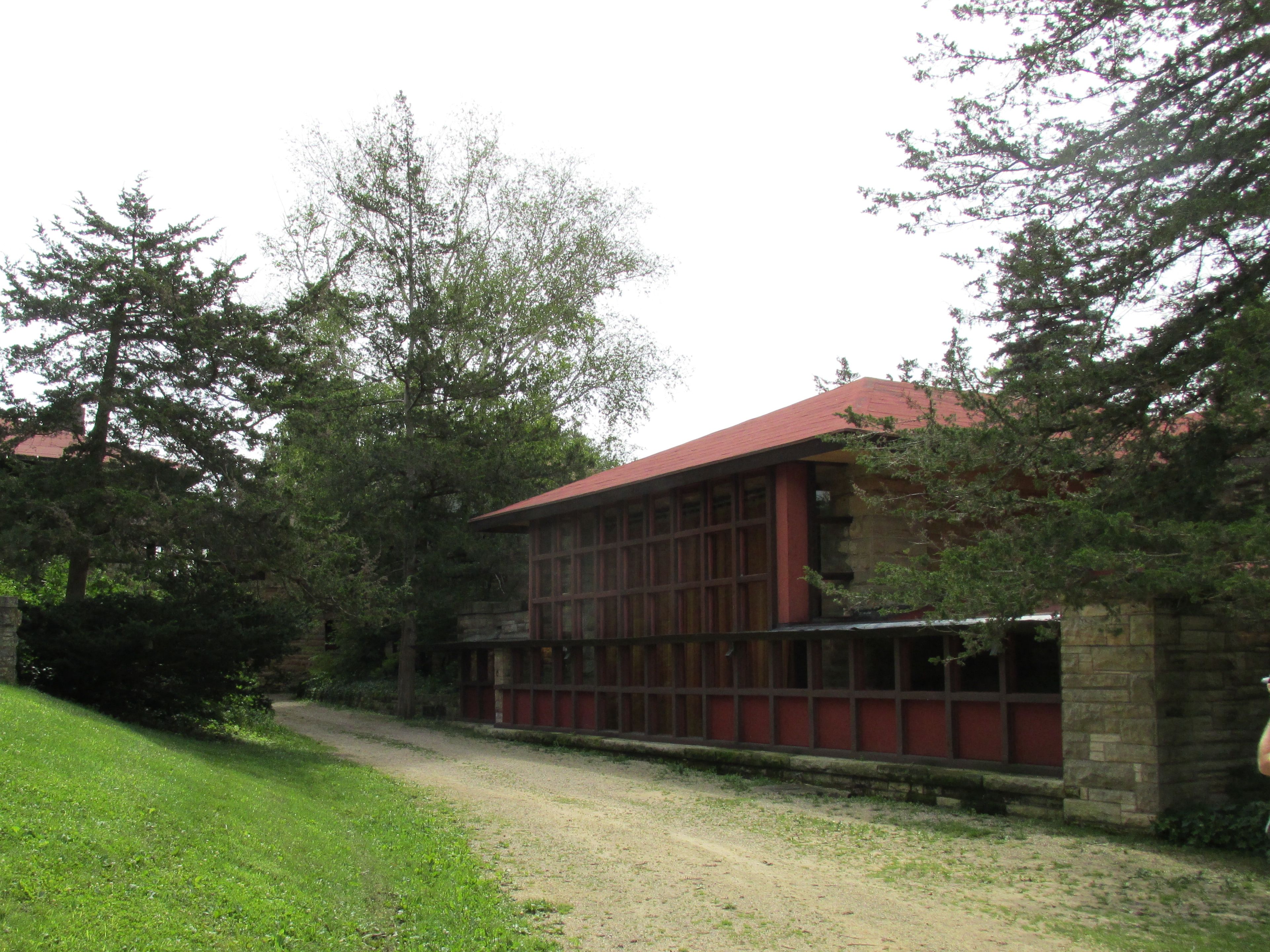
We got off the bus at the Hillside School, which Wright designed for his aunts in 1902. They ran a progressive school that they called Hillside Home School. It was so radical that they even educated boys and girls together.  They did a lot of learning by doing, which is the best way to learn – in my humble opinion.

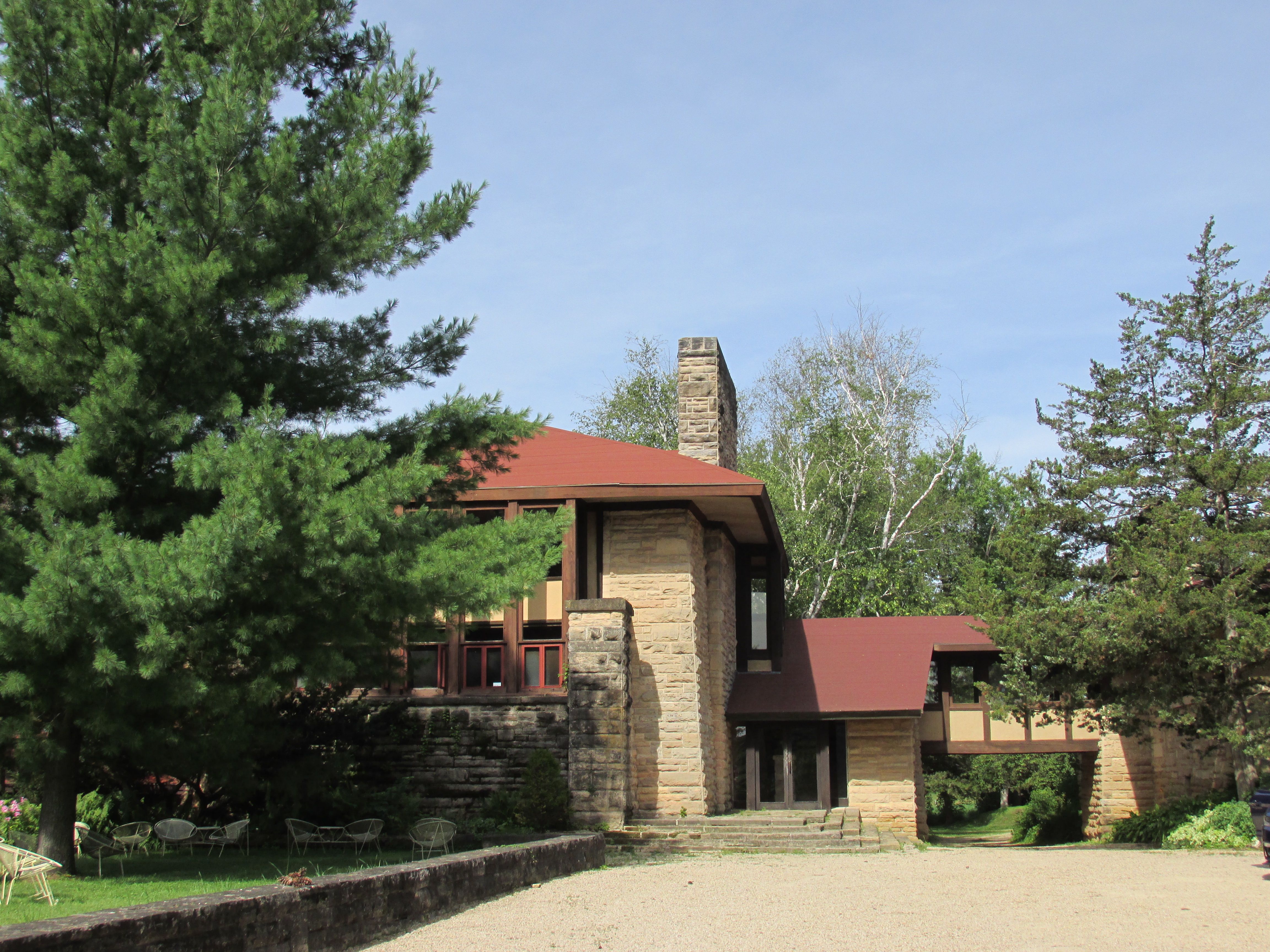
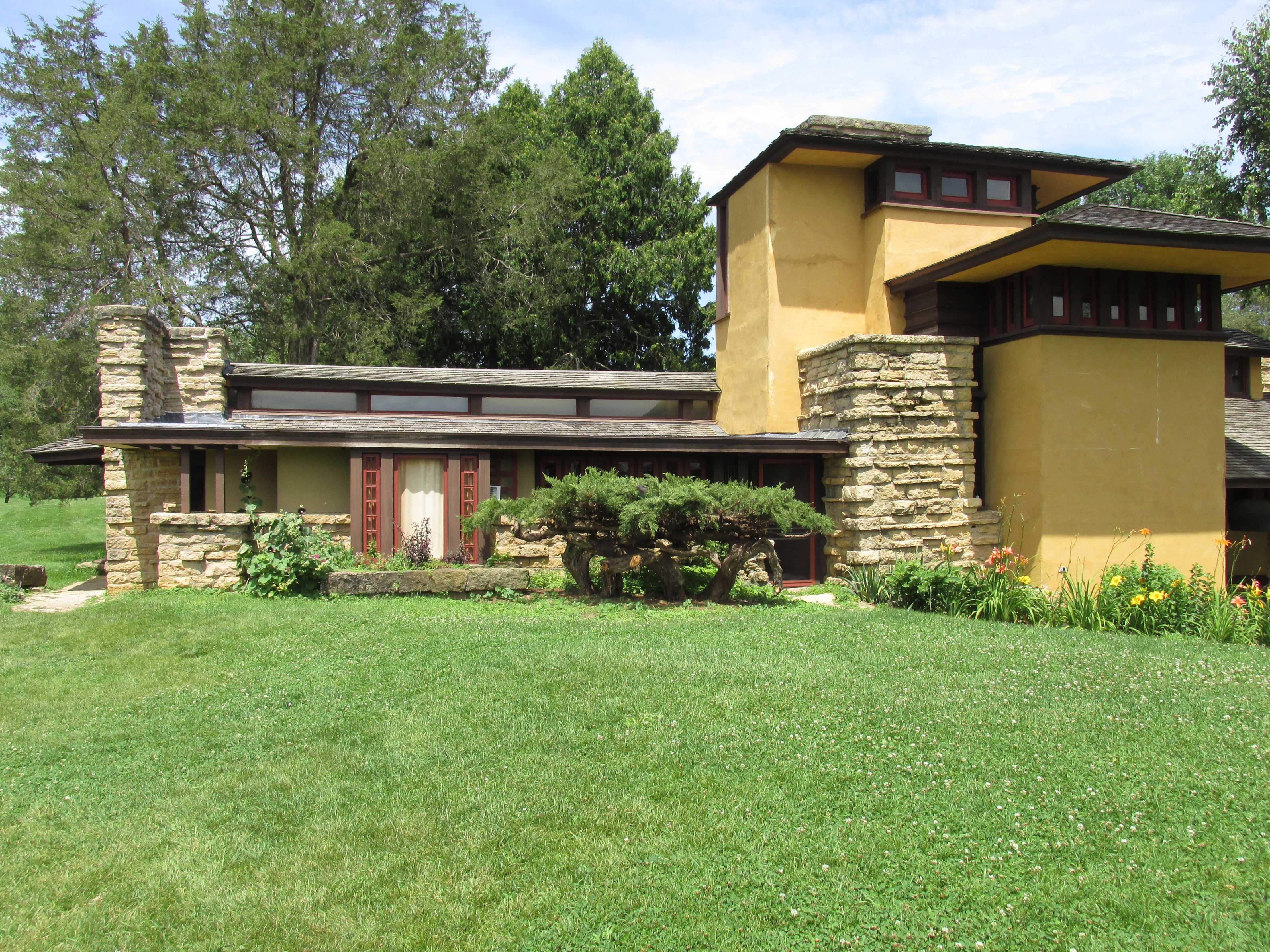
Hillside School
Hillside School

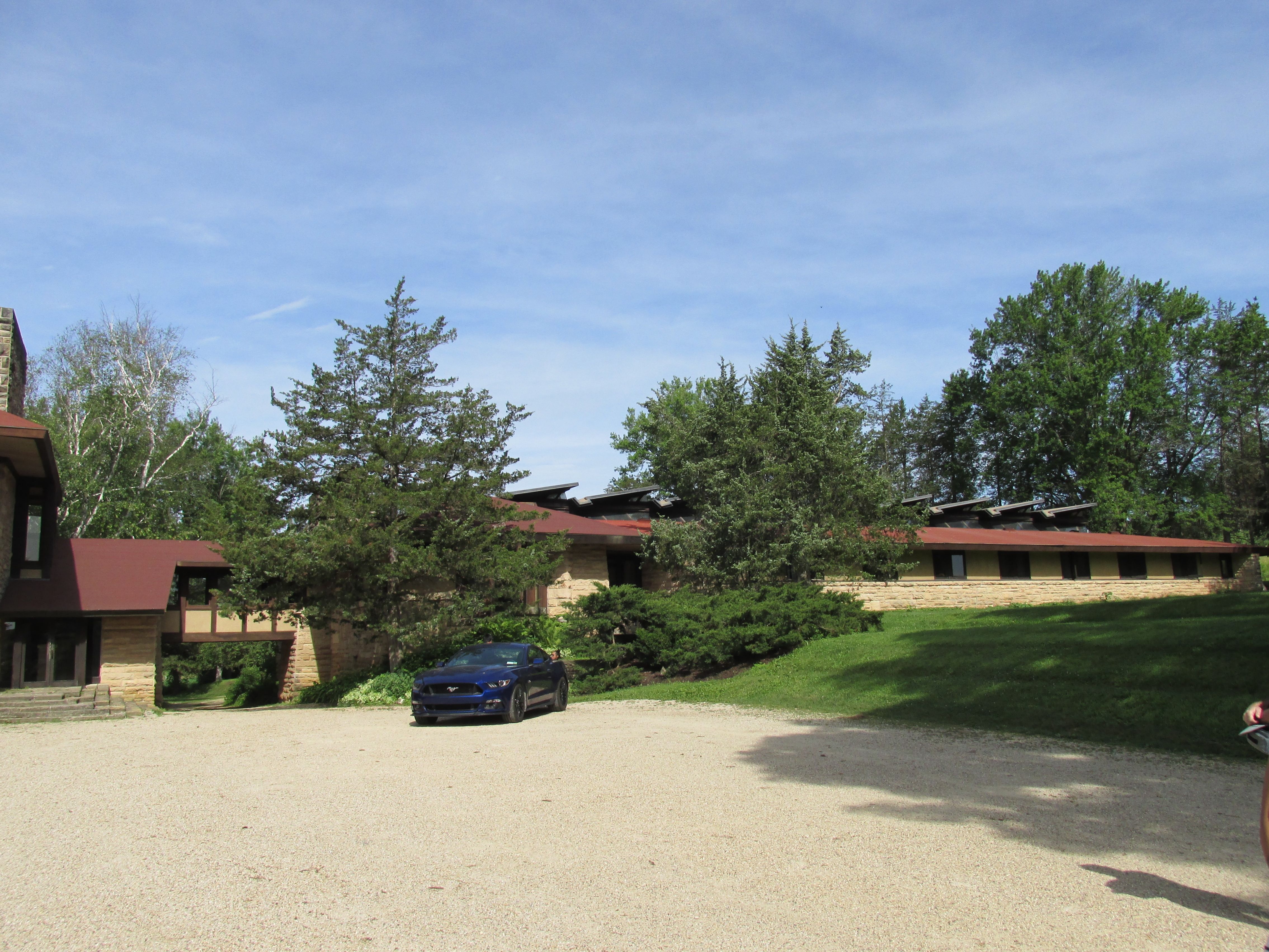
This building replaced an earlier building that Wright had designed for them in 1887. Cyndi showed us the site of the Victorian style building, and told us that it was Wright’s first independent commission.

This was the first building he designed for the school. The second building was a classroom building to the right, across the bridge.

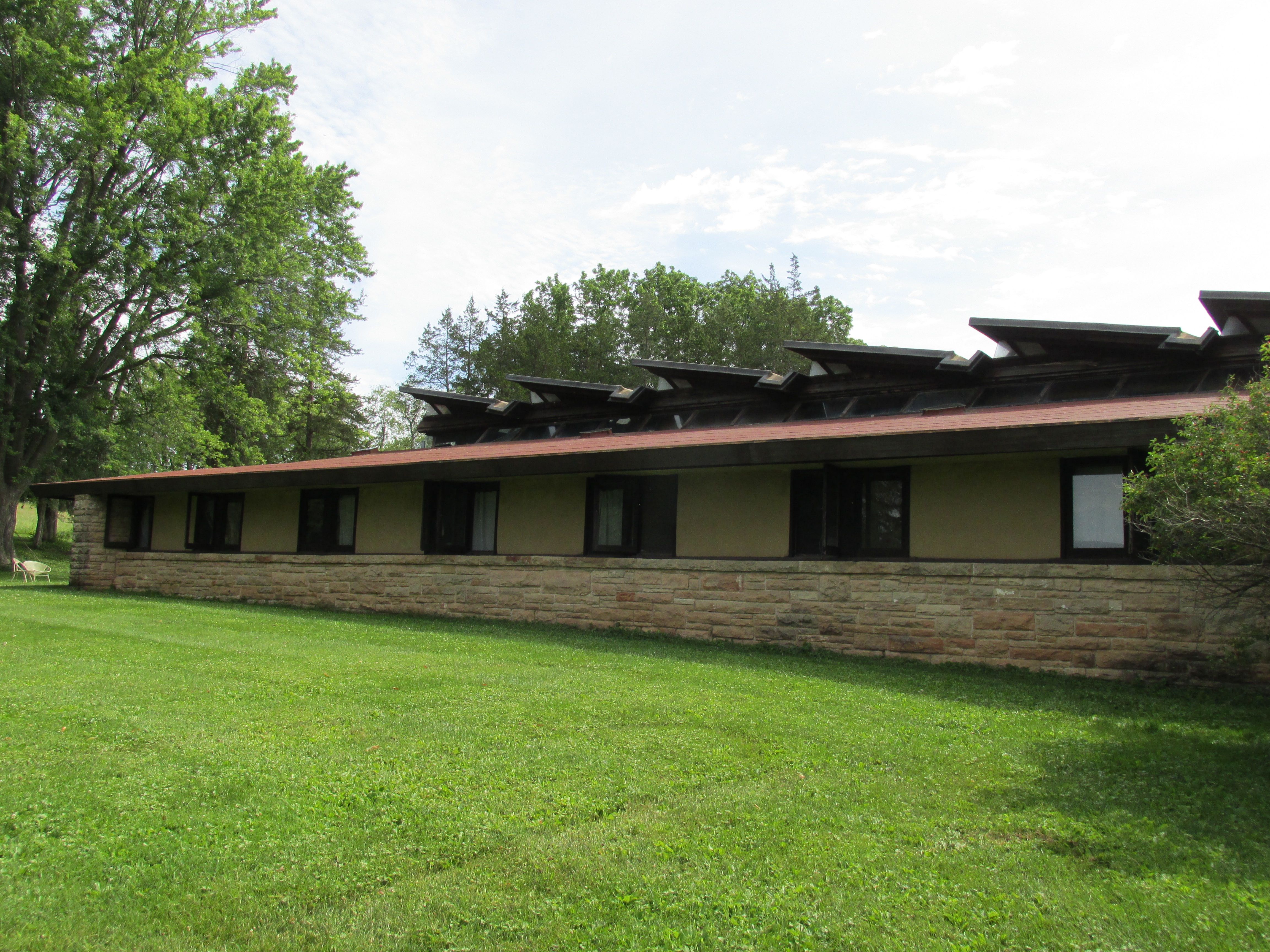
Hillside School, the drafting room wing

The school is now the summer home of the Taliesin Architecture School, and the drafting room and bedrooms have been added on to the classroom building. The drafting room is lit by the skylights; the windows on the sides of the building are for the students’ bedrooms.

The interior of the drafting room is amazing in its construction. The trusses and rafters support the roof in a way that is reminiscent of a forest. The skylights on the roof face north, to provide even light. There are also windows to the east and west on this wing.

West side of the drafting room

The last building in this complex originally built as a gymnasium, but is now used as a theater.

Hillside Theater
Hillside Theater

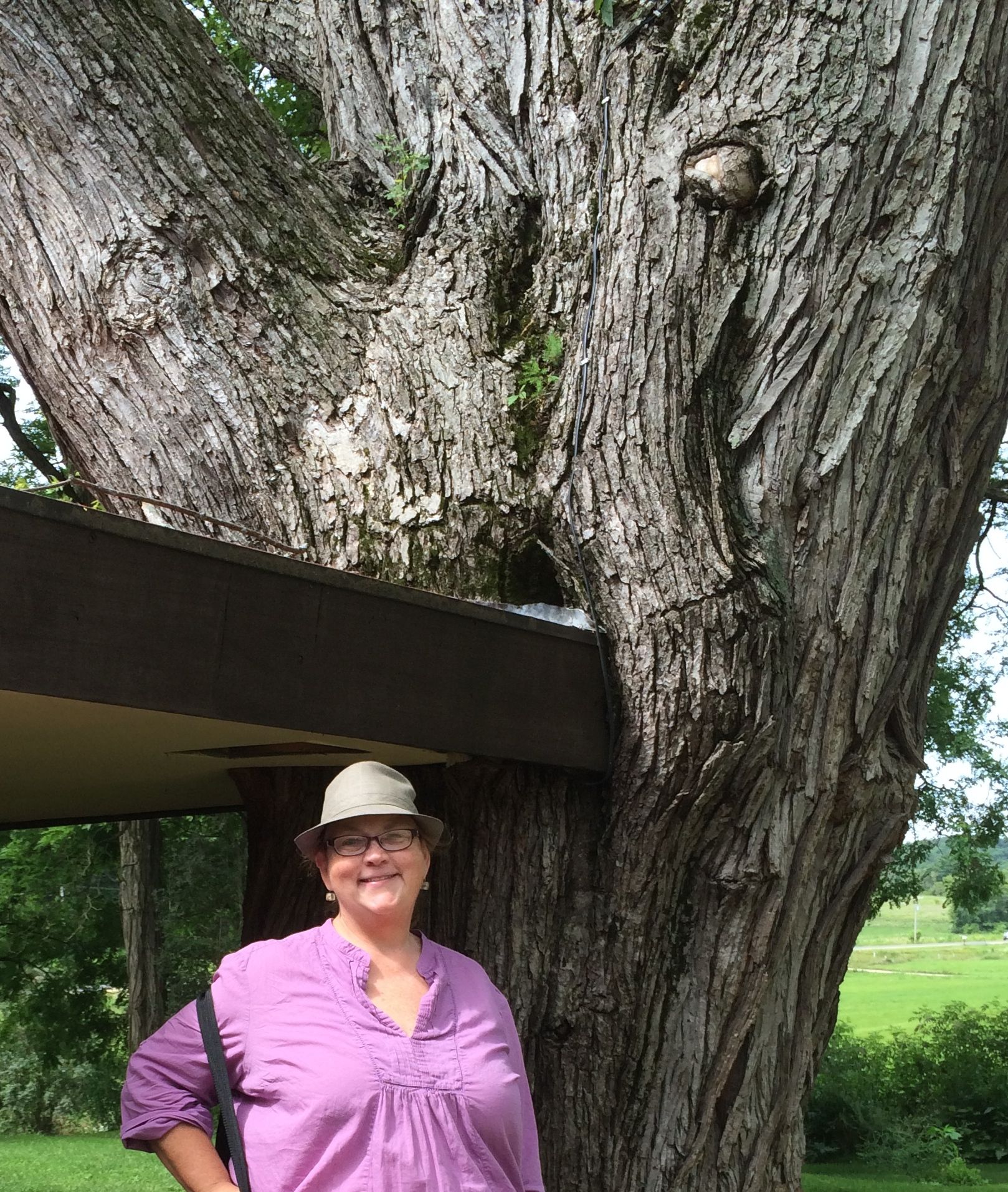
One interesting feature is a tree that is growing right by the roof overhang. A tree that was planted by one of Wright’s uncles was growing there, and it was allowed to stay. Cyndi told us that it reflected Wright’s attitude that he was designing for now. Problems were in the realm of the future and would be worked out later.

Build for the present. Let the future take care of itself.

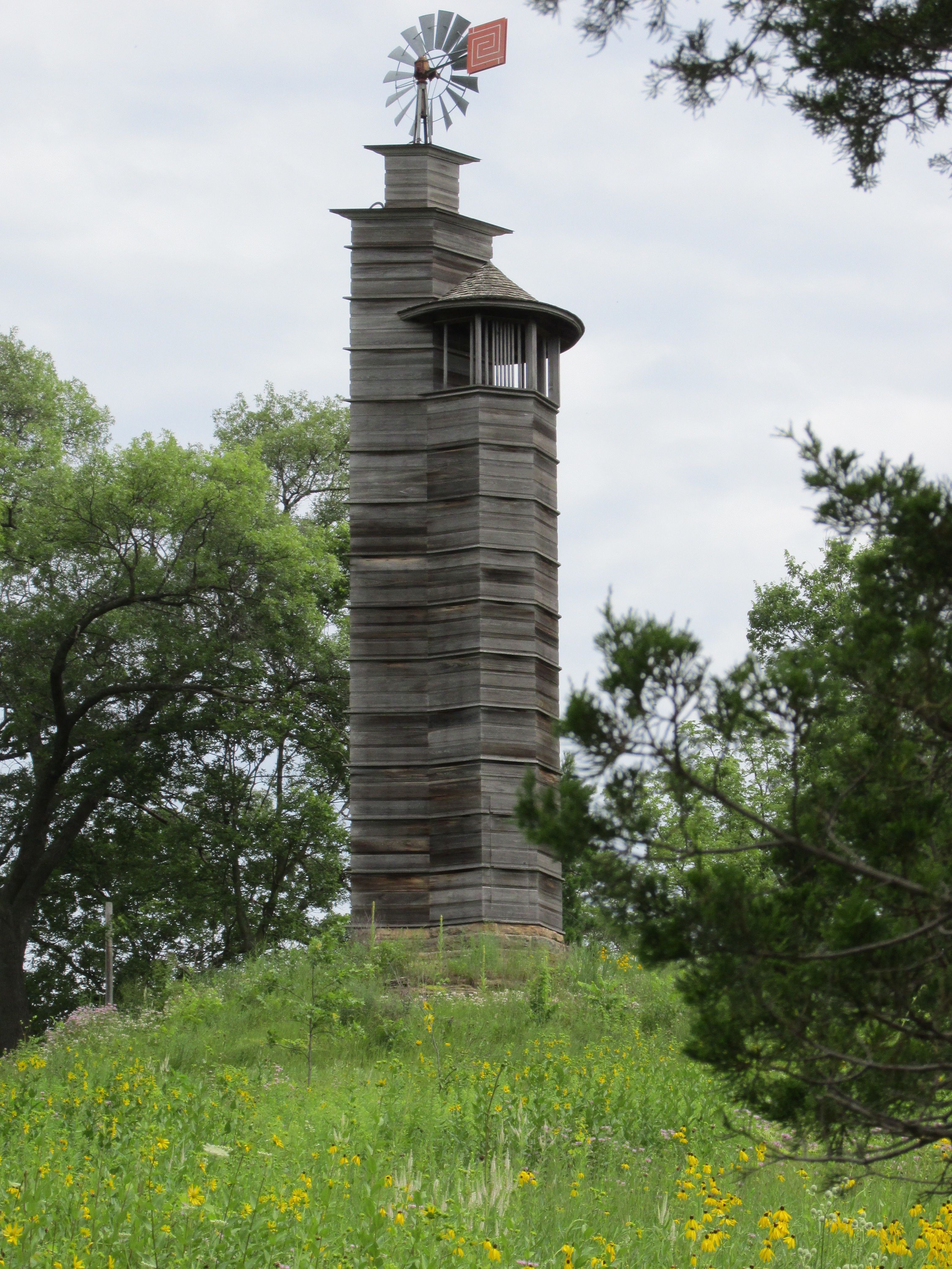
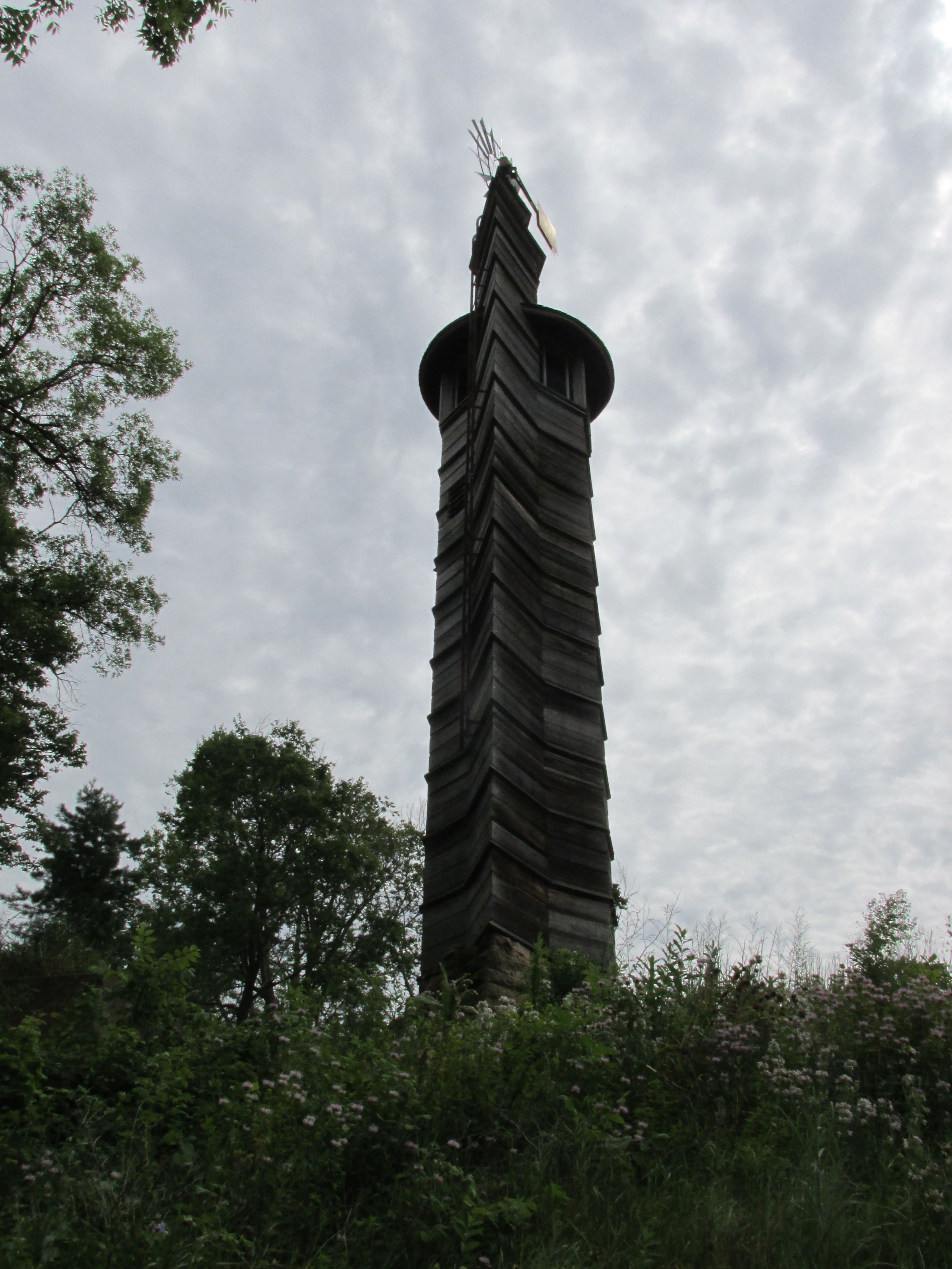
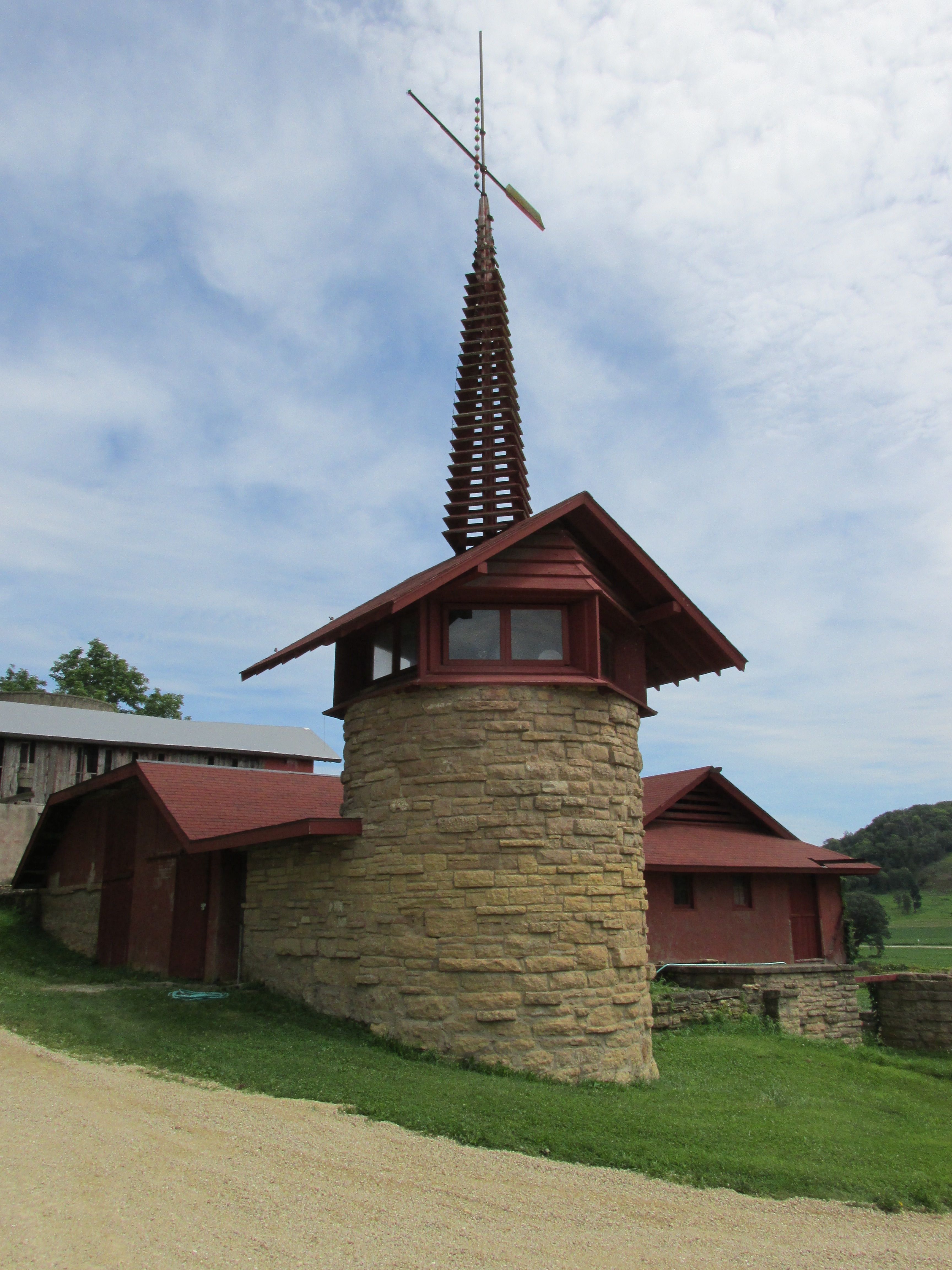
The next commission he received on the family land was the Romeo and Juilet Tower.T- Romeo and Juliet tower

The name came from the method of construction. Cyndi told us that it referred to the diamond and hexagonal shapes that interlocked to make the tower strong.

T- Romeo and Juliet tower bowside

This side operated like the prow of a ship, facing into the prevailing direction of the wind. The wind pressure served to make the structure stronger.

Porter House entrance

The next stop on our tour was Tan-Y-Deri, which Wright designed for his sister, Jane Porter, and her husband. The name is Welsh for “under the oaks.”  She saw the design for his $5000 fireproof house that was published in The Ladies Home Journal in 1907 and wanted to build it. Wright refused. He told her that he would design a house that would fit the land.
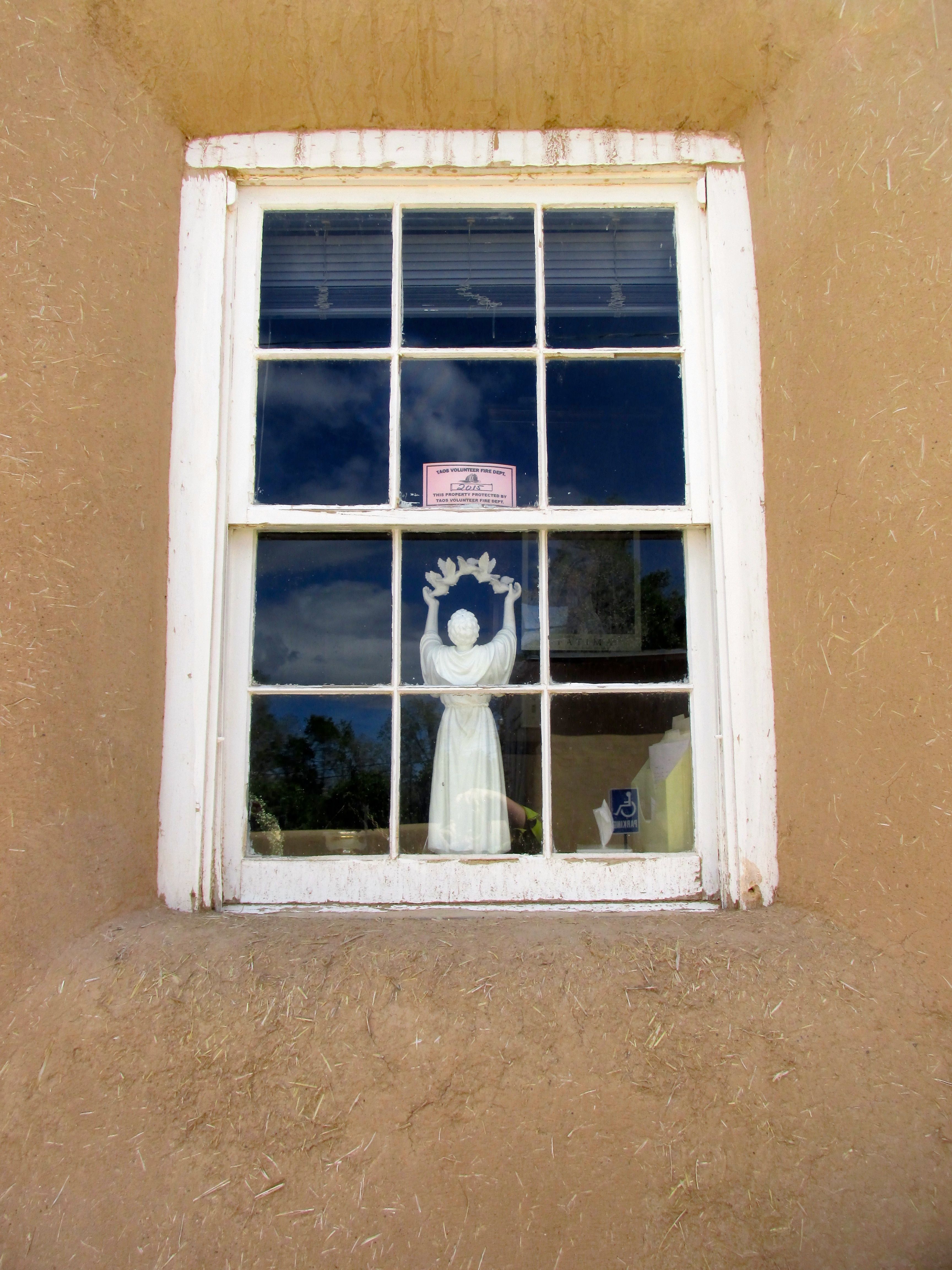
T- Porter house apartment entrance to basement

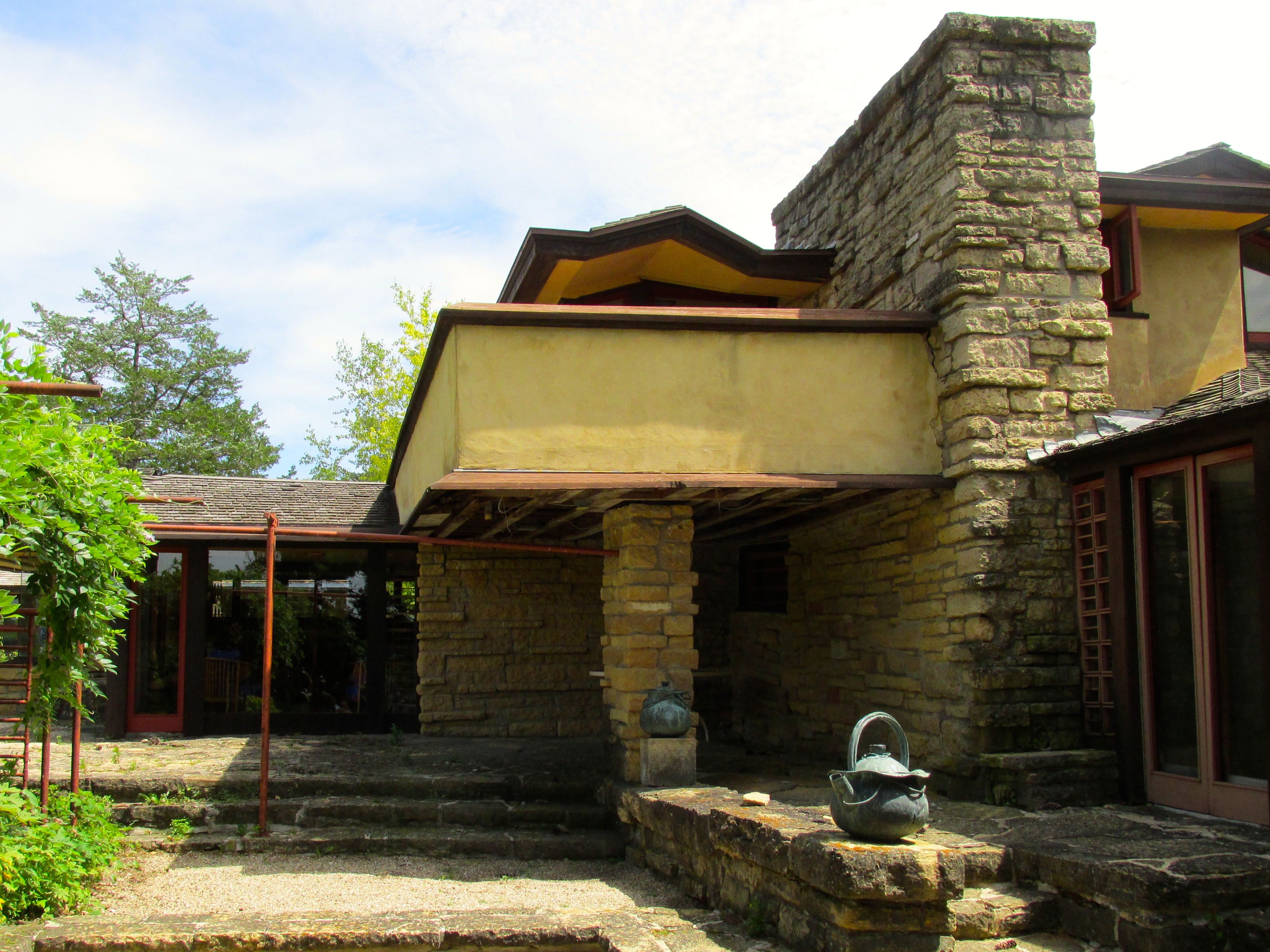
The family added an apartment in a mechanical area. Cyndi told us that Wright was incensed about the addition of the apartment, as it added vertical elements  that disrupted the flow of the horizontal.

The view from Tan-Y-Deri

We were fortunate in that we were able to enter the public areas of the main floor. This is the first year it has been open for visits. Taliesin fellows live here – and in many of the buildings here. The preservations and renovation work is continuing, as it is with all of the buildings at Taliesin.

T- Porter house porch side

We continued on our track across the property. Next stop was The Farm.

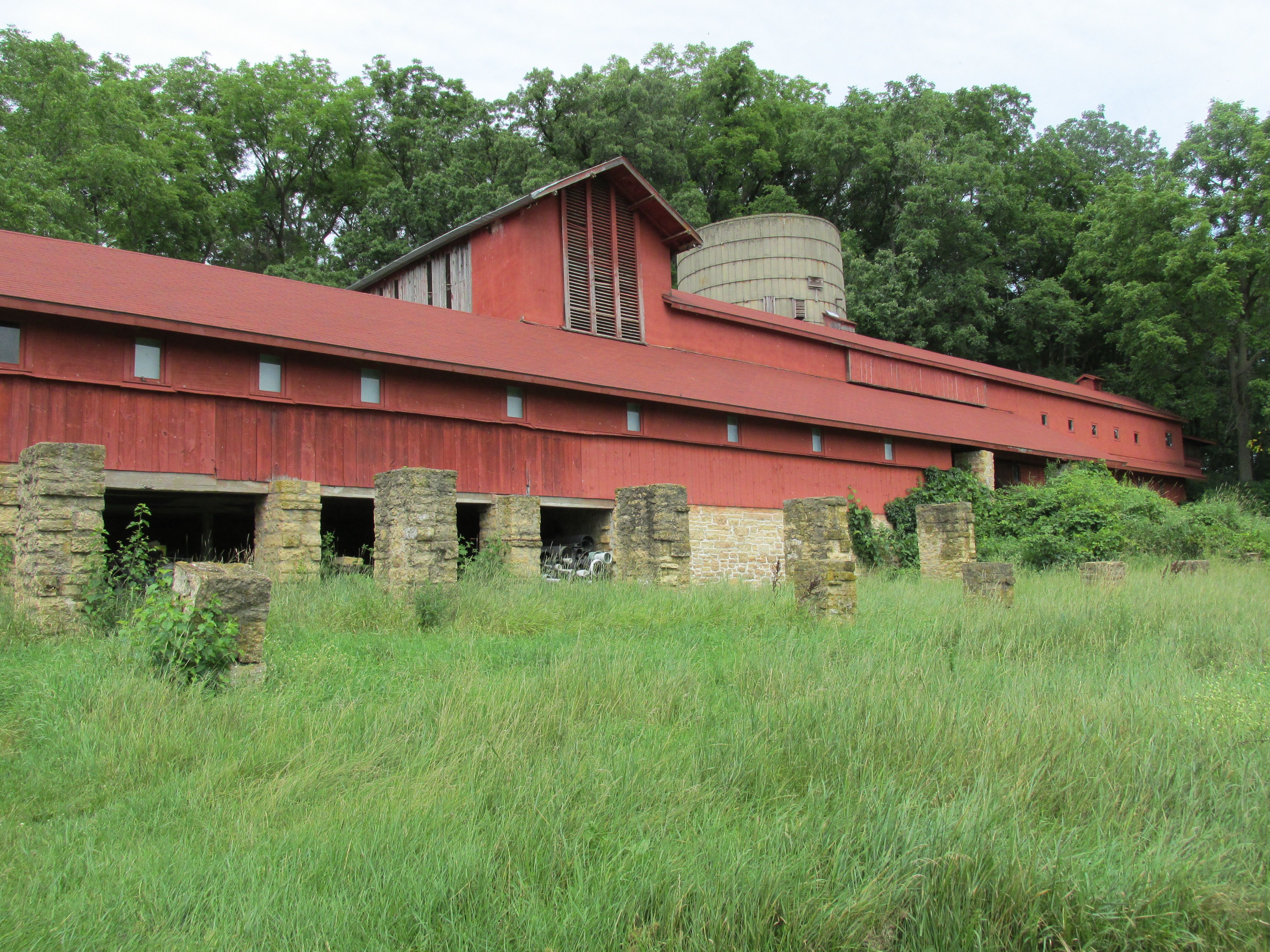
The milling parlor
The milling parlor

It was difficult to get a view of the total. Wright had designed The Farm as a system where the farmers would be able to care for the animals without having to  go outside.

The chicken coop
The chicken coop

After The Farm, it was on to the main attraction: Taliesin!

T- Taliesin shining brow

After a couple of hours of cross-country trekking, we were offered a light refreshment on the patio.

A shot from the patio during the coffee break

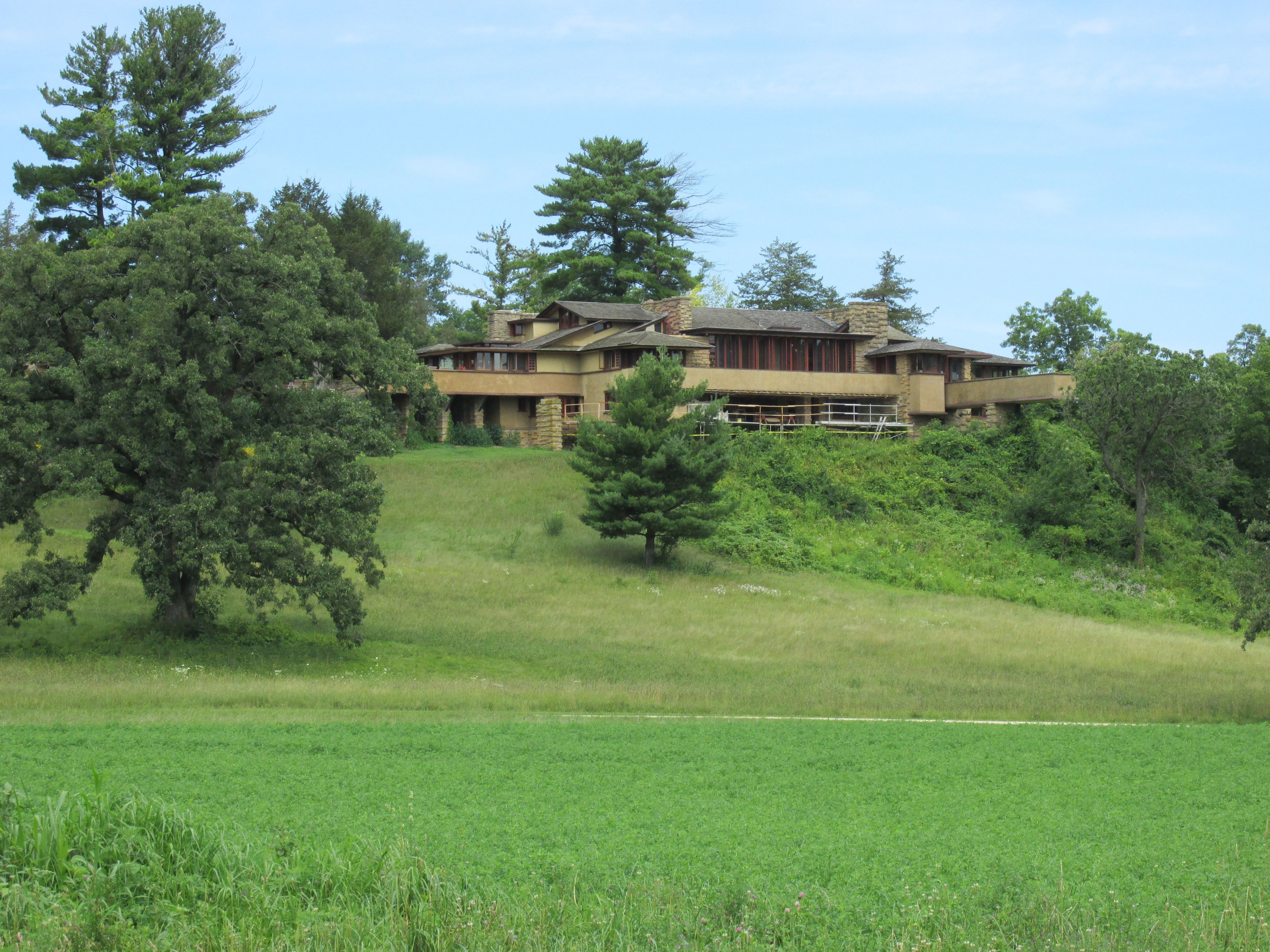
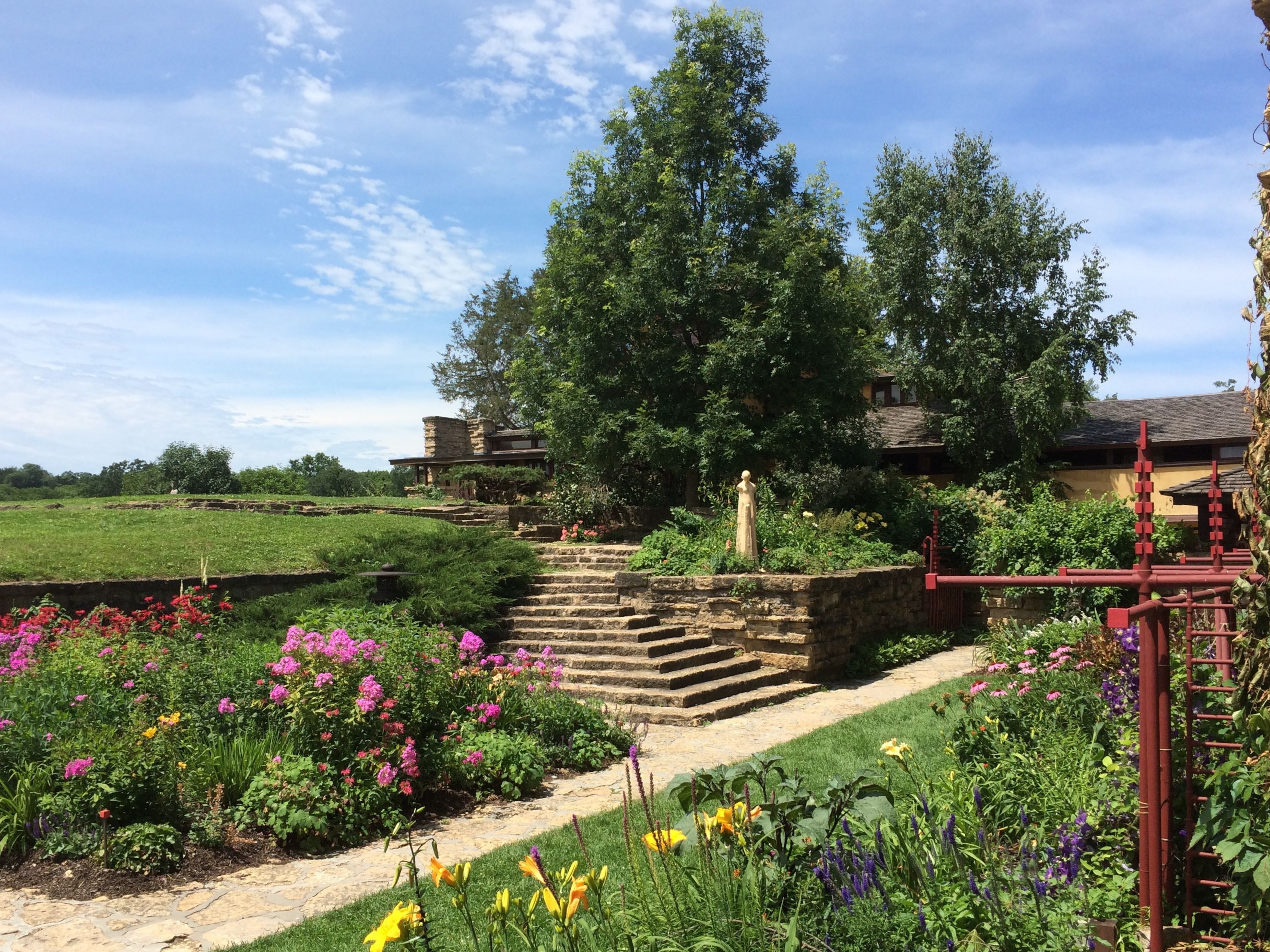
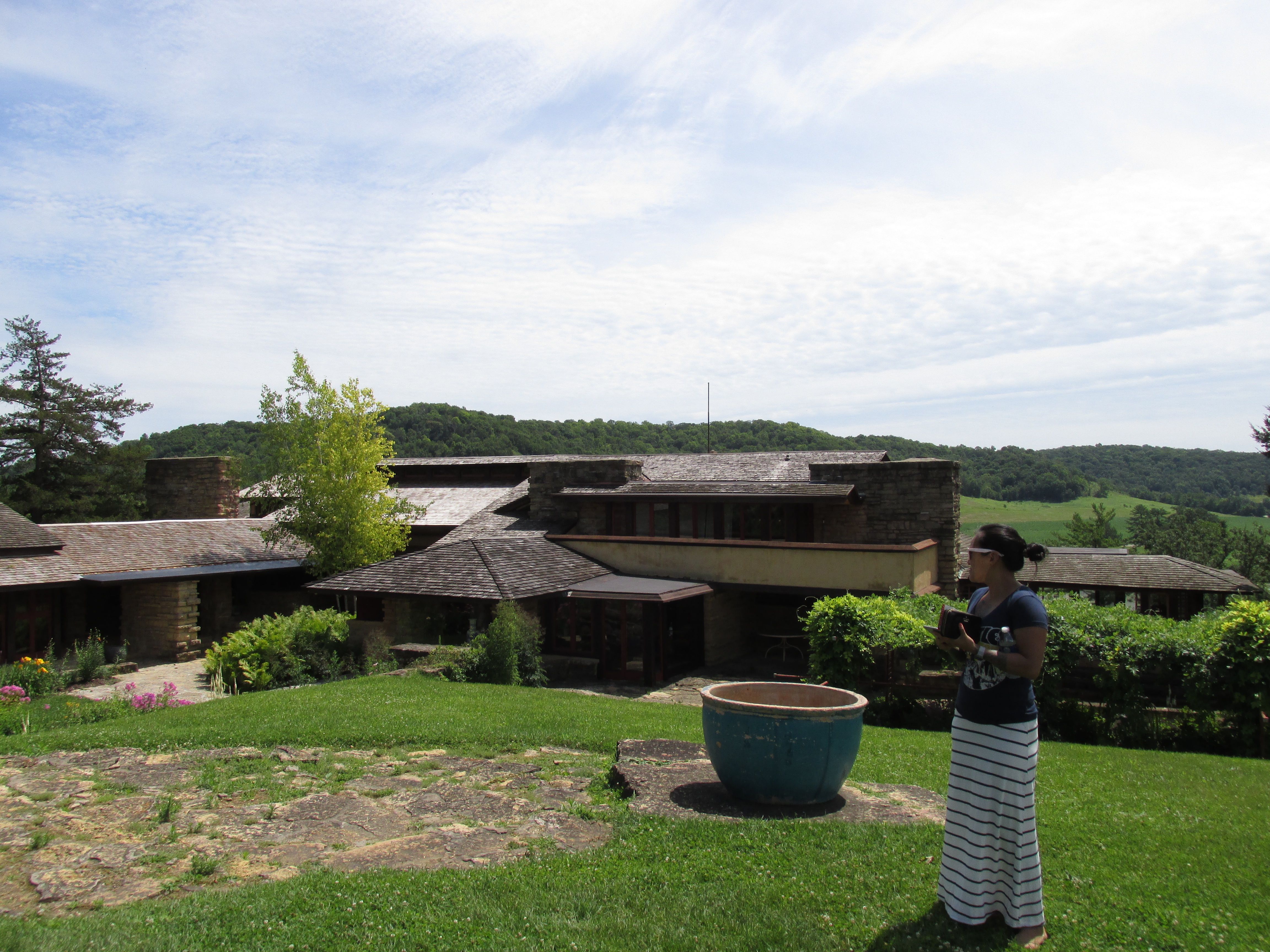
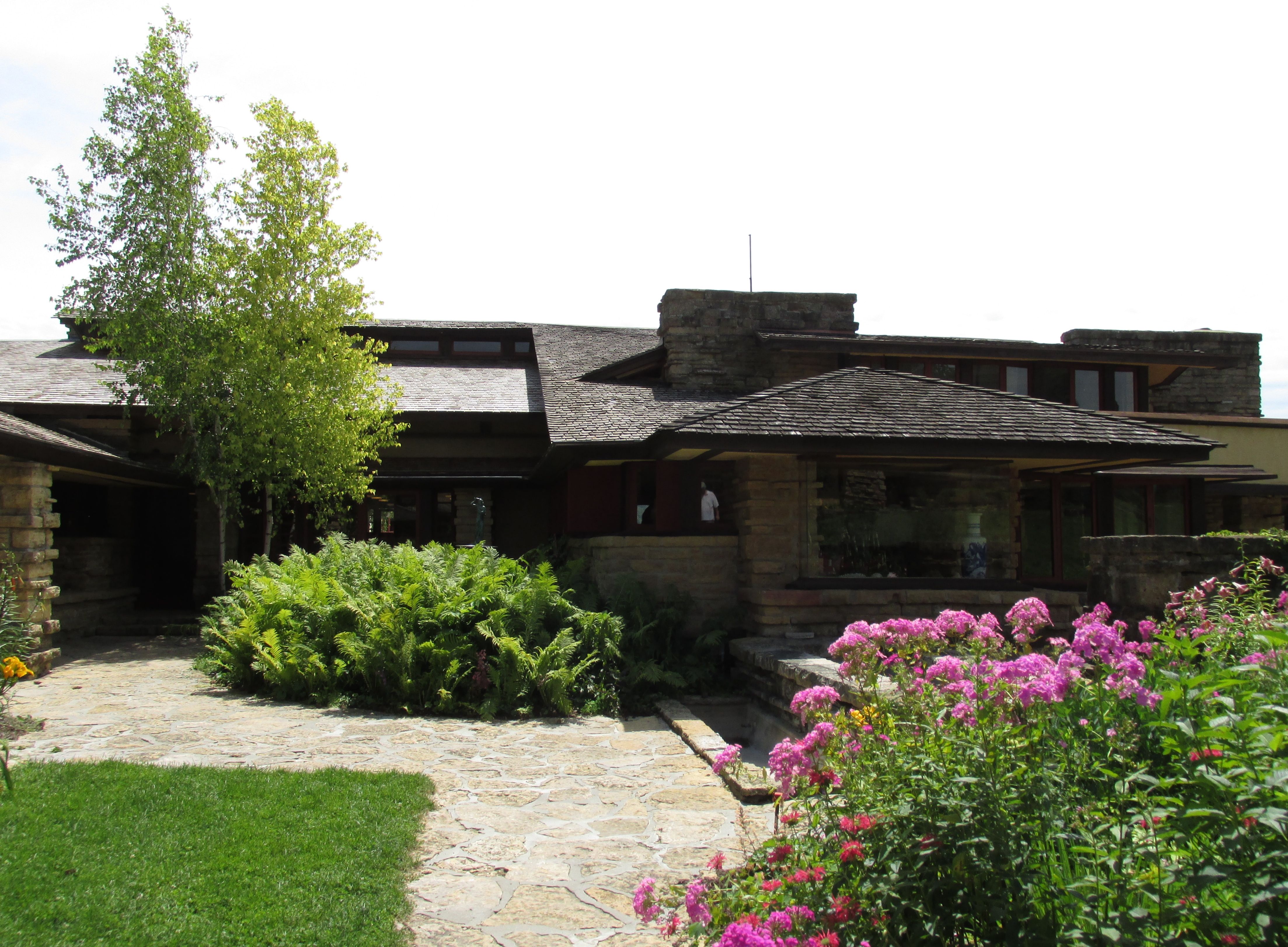
Taliesin is a Welsh name whig means “shining brow”. Wright placed his home on the brow of the hill, leaving the top of the hill open. The complex circles the top of the hill.

Wright started building Taliesin in 1911, and it went through two major revisions, as well as many smaller ones. Again, his “build it for today and let the future take care of the problems” has caused the Foundation many preservation issues, which they have handled and are continuing to address.

Wright didn't like hand railings
Wright didn’t like hand railings

Here you can see the crown of the hill and get a feeling for the manner in which the building encircled it.
T- Taliesin circle the hill

The woman in this photo had just gotten married at Kentuck Knob, another Wright building. It is located in Pennsylvania, not too far from Fallingwater. I didn’t ask, but I got the feeling that she and her husband were on a Frank Lloyd Wright-inspired honeymoon.
I learned many things I didn’t know about Wright and his work during this tour. One of the things I didn’t know was that Wright had designed his home to be as self-sufficient as possible. We’d already walked past The Farm. During the tour of Taliesin, we saw some other features that showed that desire for independence and self-sufficiency.

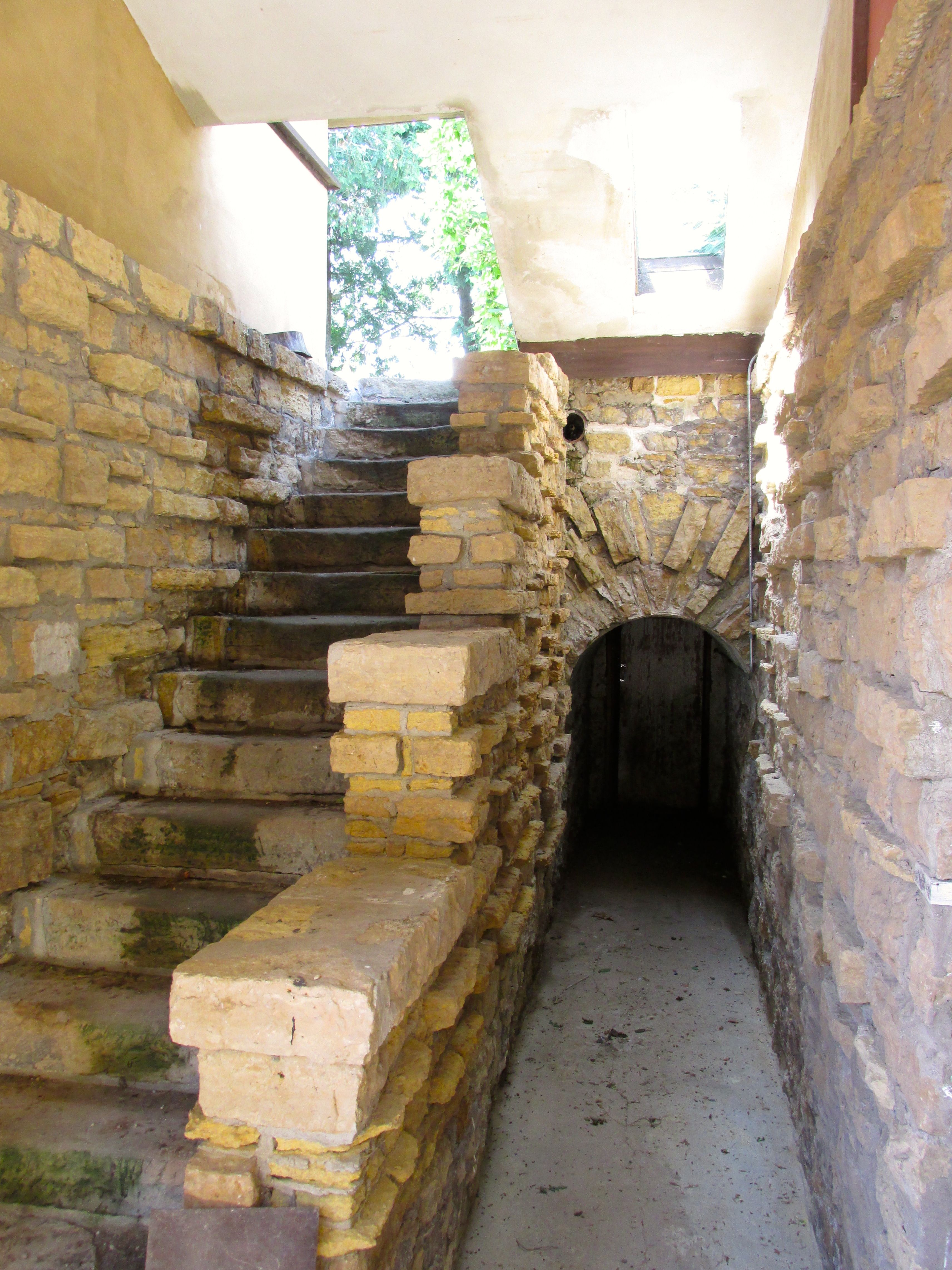
The entrance to the root cellar

I was struck by the arched doorway. I’d never seen something like that in a Wright building. But, it was just in a utility area.

The West Wing apartment

Another was this apartment that houses one of the Taliesin Fellows. The call it The West Wing, but it is not as grand as television’s The West Wing. It was built in the pig pen! Pretty nice digs!

When the property was handed over to the Foundation, provisions were made for the Taliesin Fellows who had worked with Wright to be able to live there for the rest of their lives. The eat with the students in the dining hall at the school and are included in all aspects of the community life. I think that is wonderful!

Another thing that I learned – although I might have figured it out, had I thought about it – was that this building was begun in the era of horse and buggy and was worked on and revised right up to Wright’s death in 1959.

That meant that the building changed to accommodate the technology.

T- former port cochere apartment

If I understood Cyndi correctly, the main entrance used to be via a porte cochere that was under that triangular shaped roof. When people stopped using horses, he rerouted the traffic to the back of the house where he put in stalls for cars. He filled in the former porte cochere to bring the floor level up and build a meeting area with a tremendous view of the courtyard and the land around it. The corners are mitered glass so that the sense on indoors and outdoors would be undetectable.  Cyndi told us that he built this area to pitch his ideas for the Guggenheim Museum in New York City.

Apparently, this is a good strategy for getting a job – IF you are Frank Lloyd Wright. I think the rest of us had better stick to resumes.

And, if you are an architect, and you enjoy indulging your children, why not build them something? It the above photo, to the right and just under the roof is the APARTMENT he built for his you daughter. Some kids want tree houses or play houses – she wanted an apartment, and that is what she got, complete with guest bedroom and sitting area.

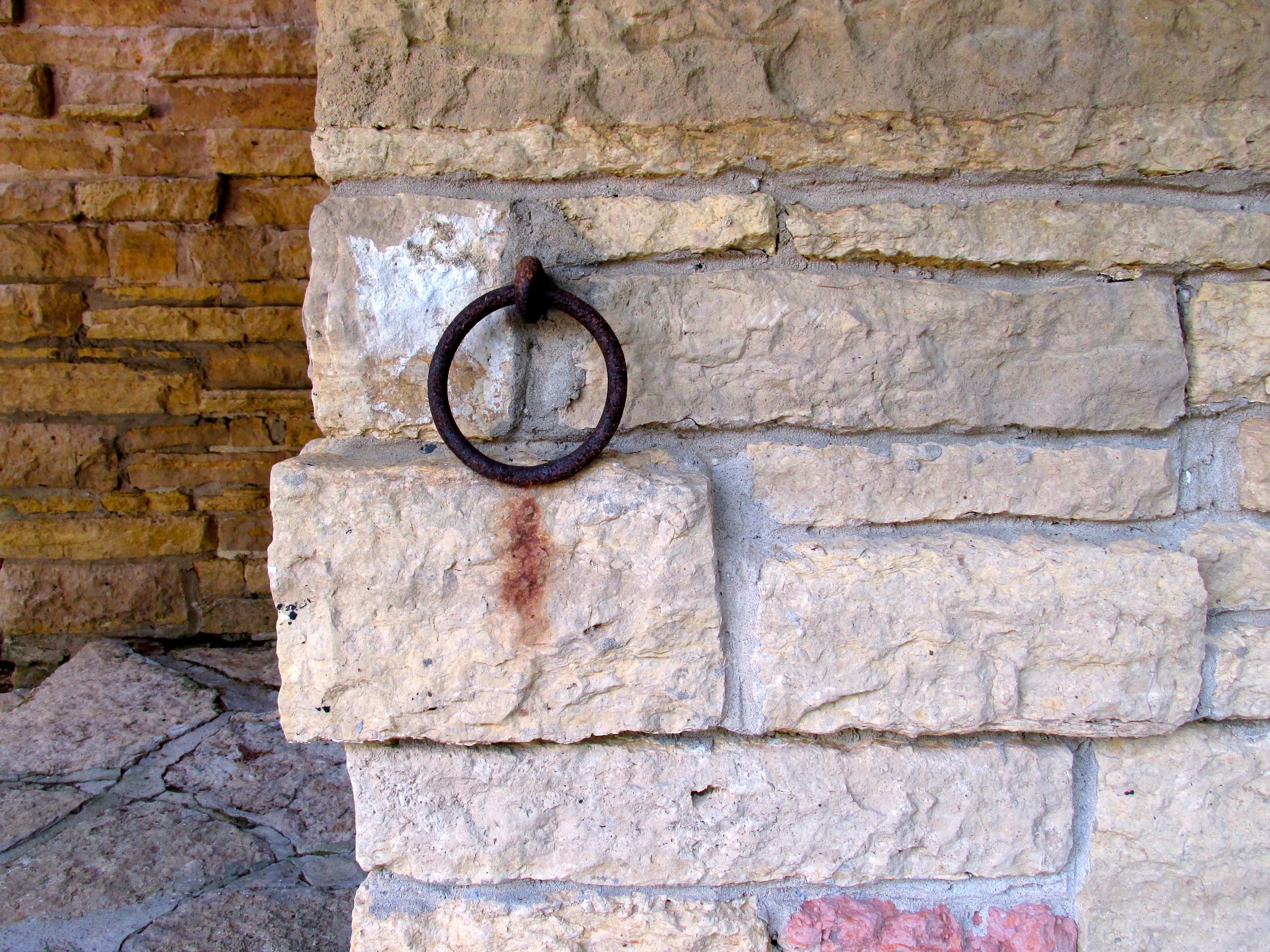
There are remnants of old technology here and there, however.

Iron ring to tie up horses

I didn’t manage to take a picture, but Wright even generated his own electricity for a time. He dammed a stream and built a generator that was topped with a Japanese pagoda, according to Cyndi. A flood took it out  in the ’40’s, if I remember correctly. The dam still exists and water is still flowing over it.

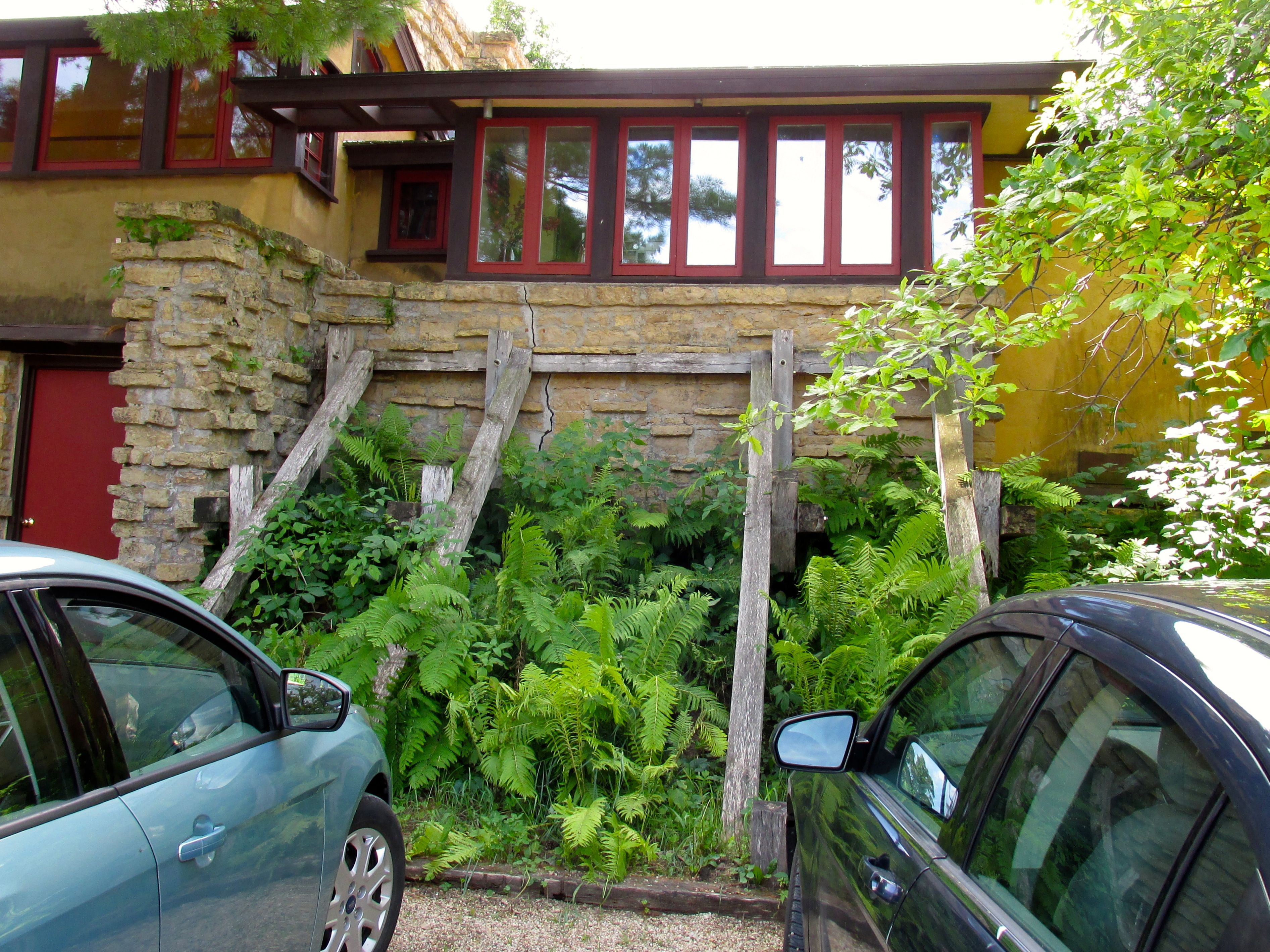
T- structure fail apartment

Time is catching up to this lovely building. Repairs need to be made constantly. This is an apartment where a Taliesin Fellow currently resides. They are doing Just enough work to keep the structure sound. When the time comes, they will do major preservation work.

It makes me wonder what percentage of the building failures are due to Wright’s tendency to build for the present and let the future solve the problems down the road, what is due to deferred maintenance due to lack of funding and what is due to the fact that Wright’s buildings are old. It’s hard to remember that they are old when they look so modern.

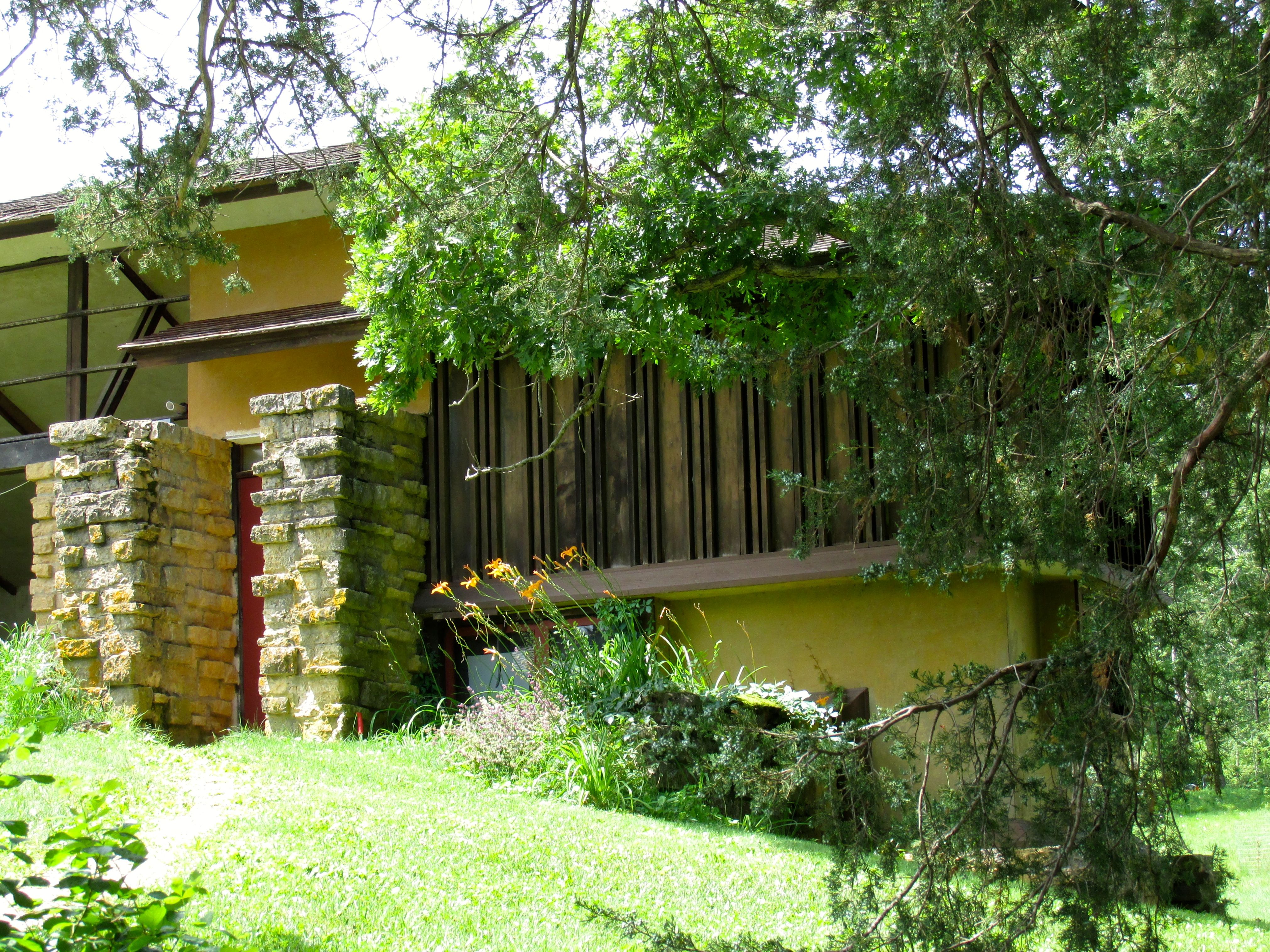
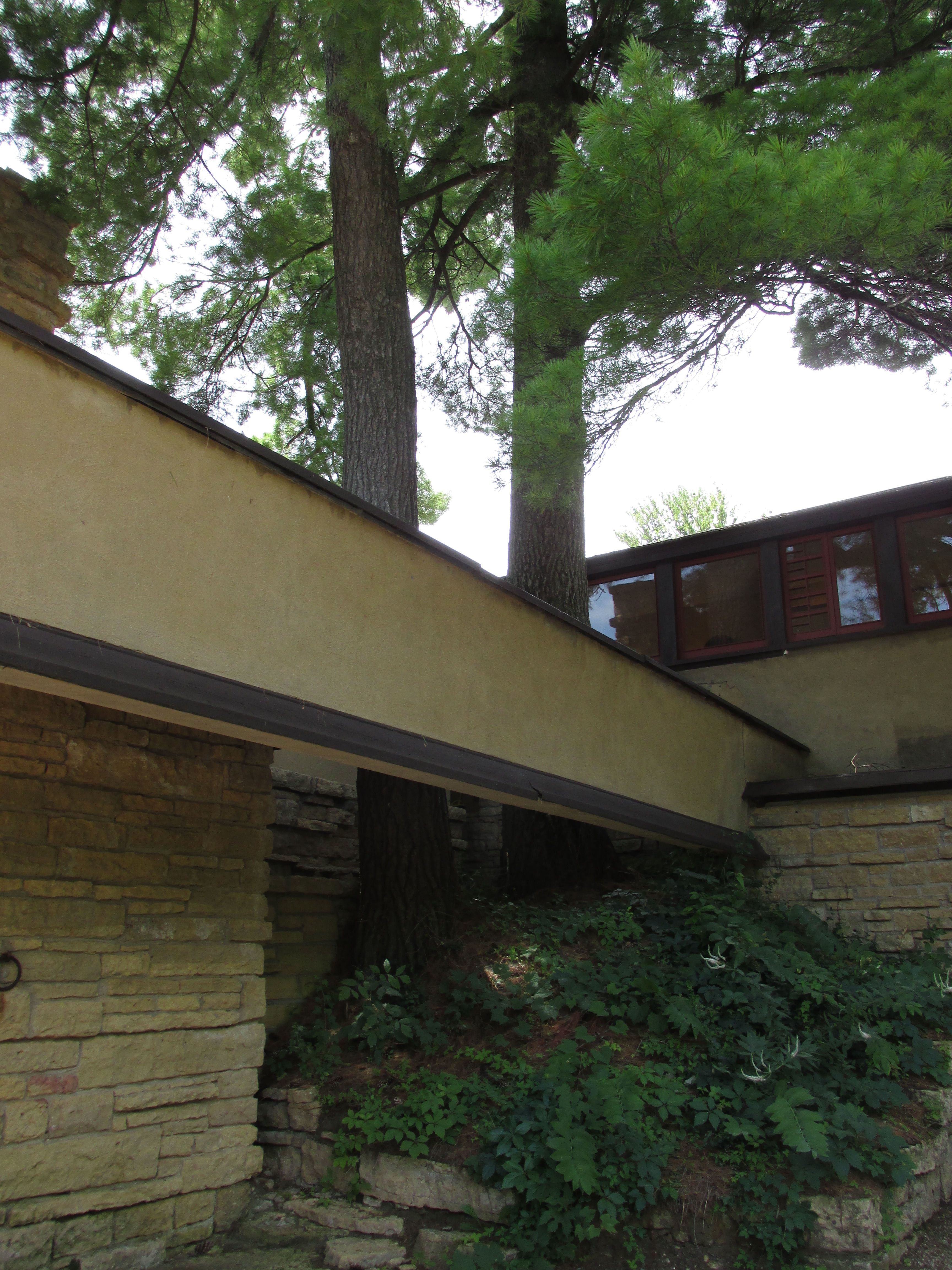
T- Trees in a structureWright built around these two trees. It looks good from this side, but on the other side, you can see that the roots are pushing walls over.

T- another view Taliesin

Still, what a wonderful building!

At the end of the tour, we got to put on little booties over our shoes and experience Taliesin from the inside. Of course, I have no photos to share, but it was lovely. We are able to enter areas that had been closed for years. Preservation is ongoing, and we got to enjoy the fruits of their labors.

Another thing I found interesting and amusing was that Wright ordered upholstered furniture from Marshal Fields for his house. He insisted on designing furniture for his clients that many found uncomfortable. He didn’t hold himself to the same standards.

And then it was time to go. We slid off our booties and exited the building.

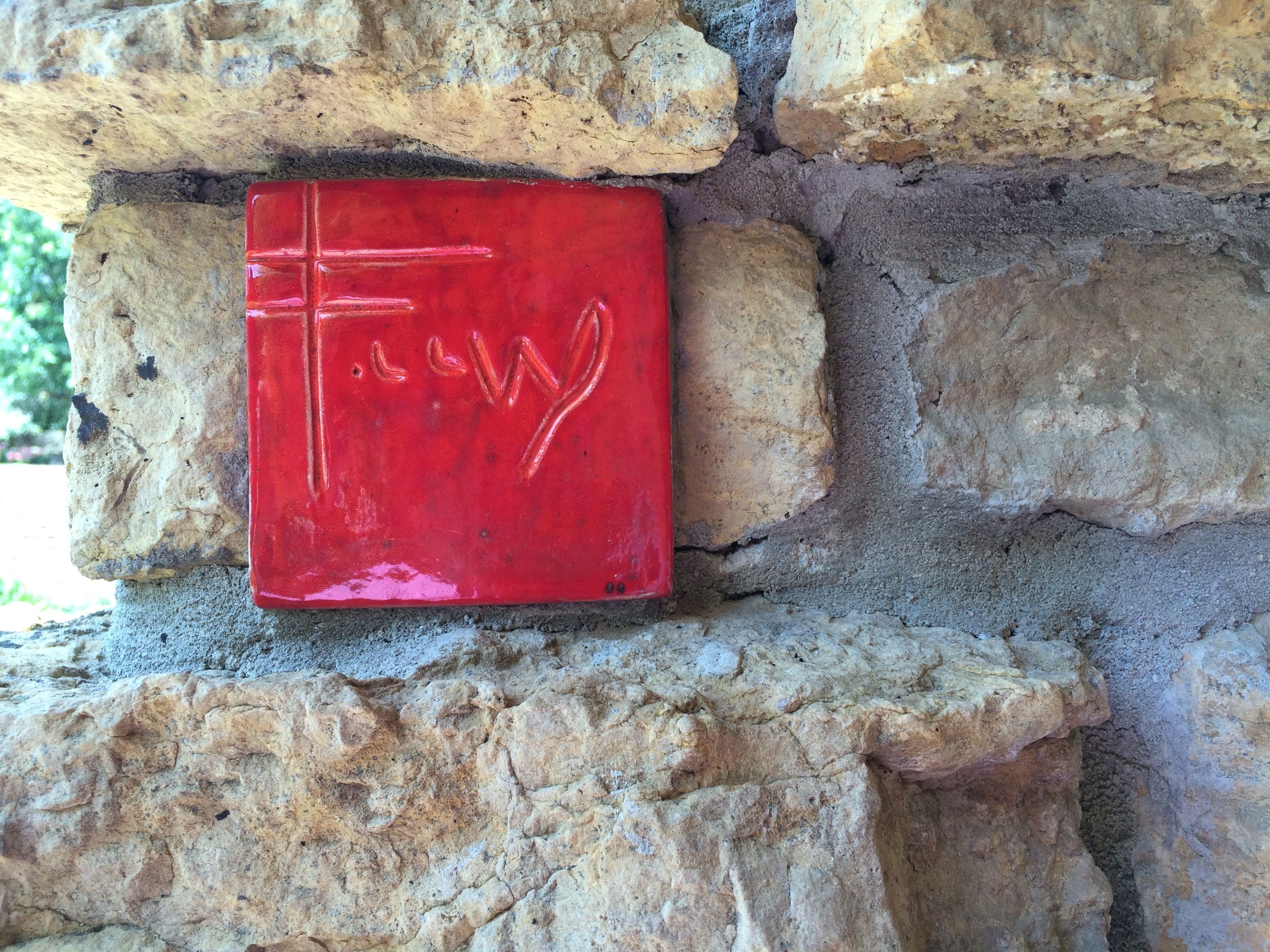
T- signature

T- self portrait outside Taliesin

We got back into the little red Taliesin bus and headed back to the Visitor Center.

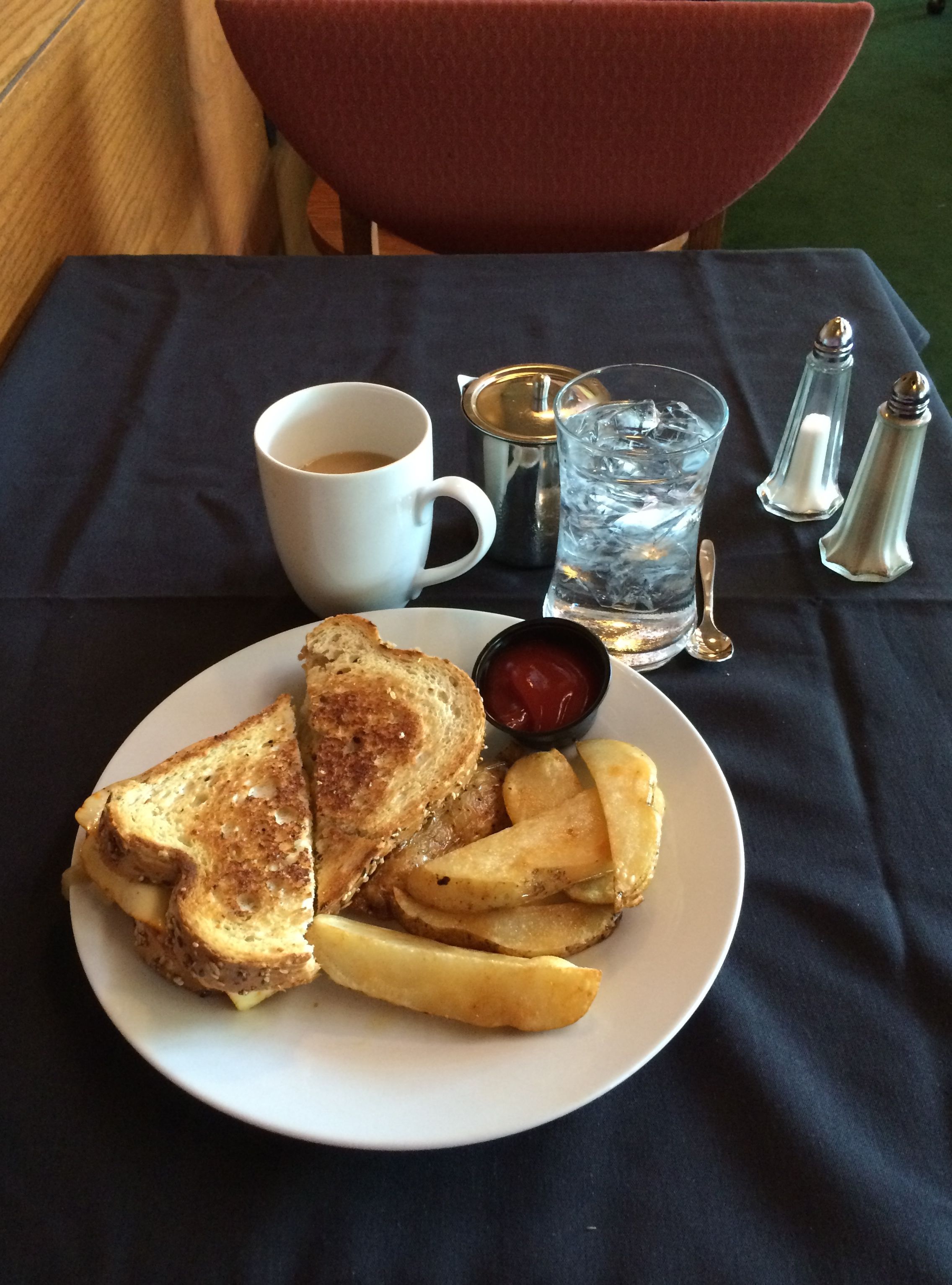
A Wisconsin lunch at Riverview Terrace Cafe in the Visitor's Center - a grilled cheese sandwich
A Wisconsin lunch at Riverview Terrace Cafe in the Visitor’s Center – a grilled cheese sandwich

Where I had lunch.

The view from the visitor's center
The view from the visitor’s center

And a view.

Next stop: Racine, Wisconsin.


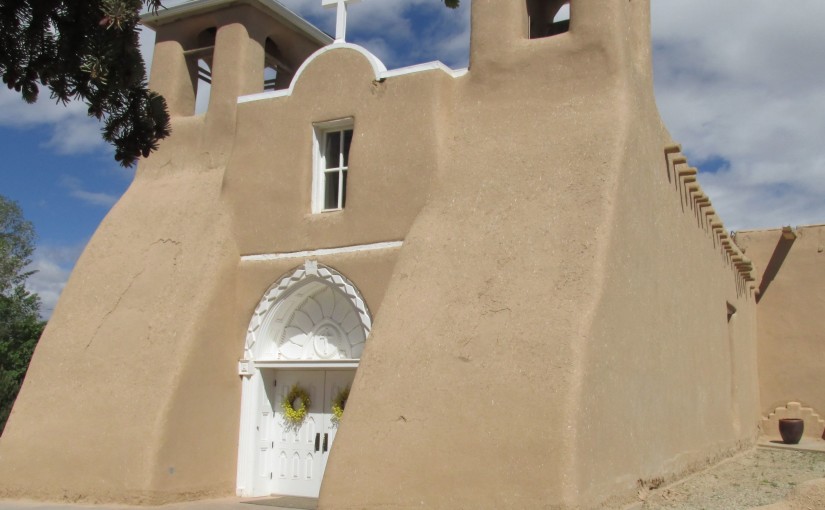
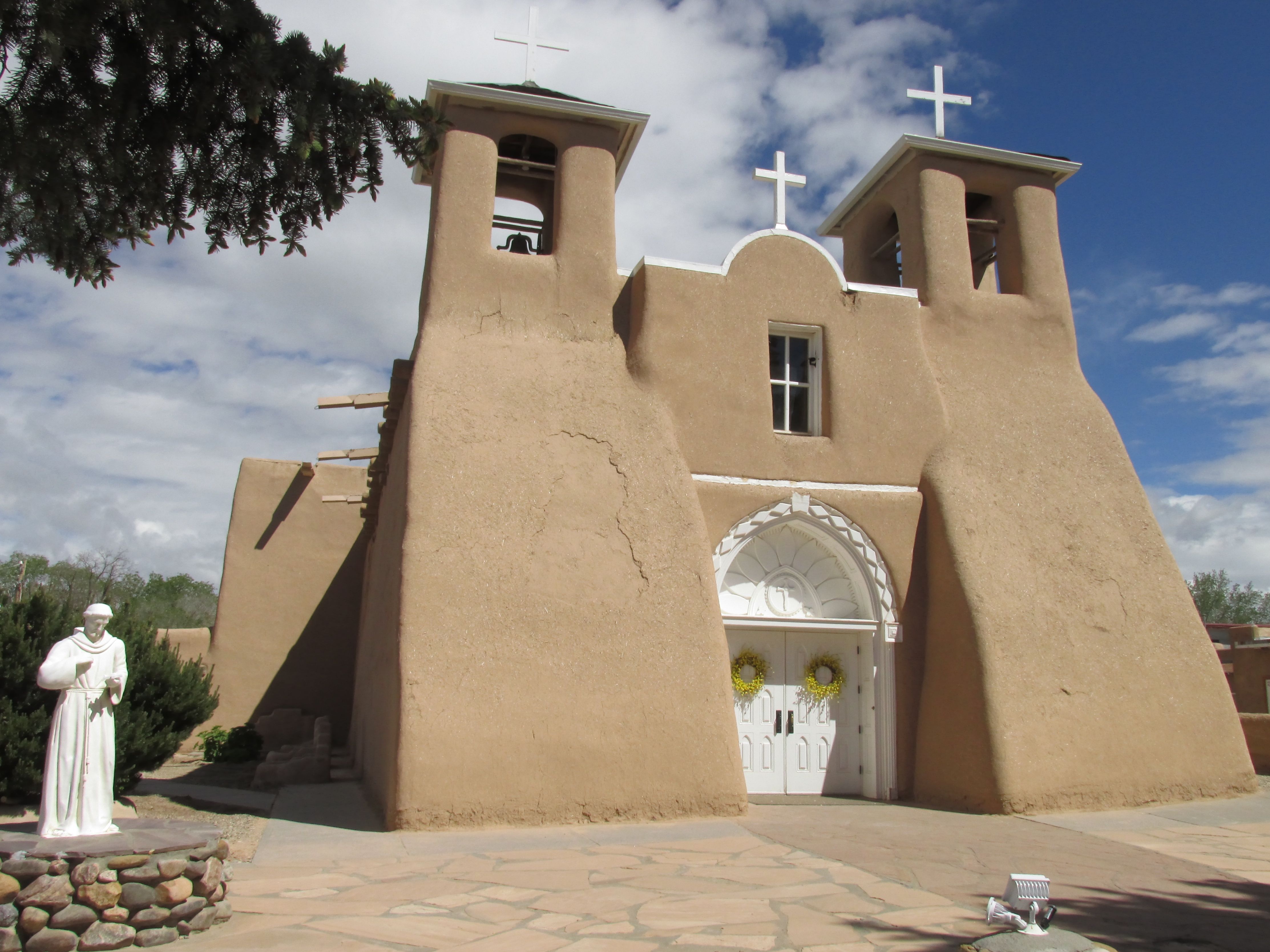
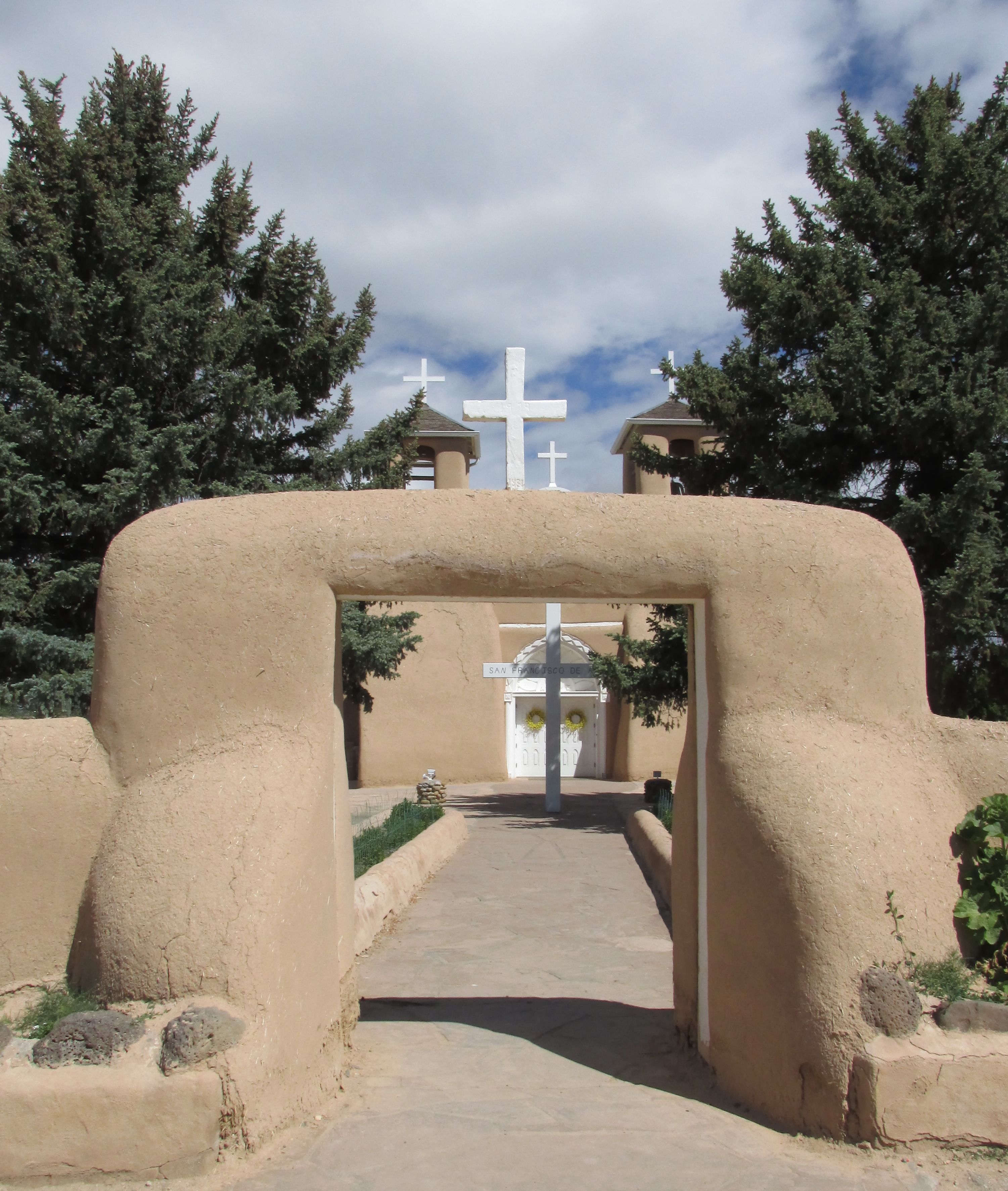
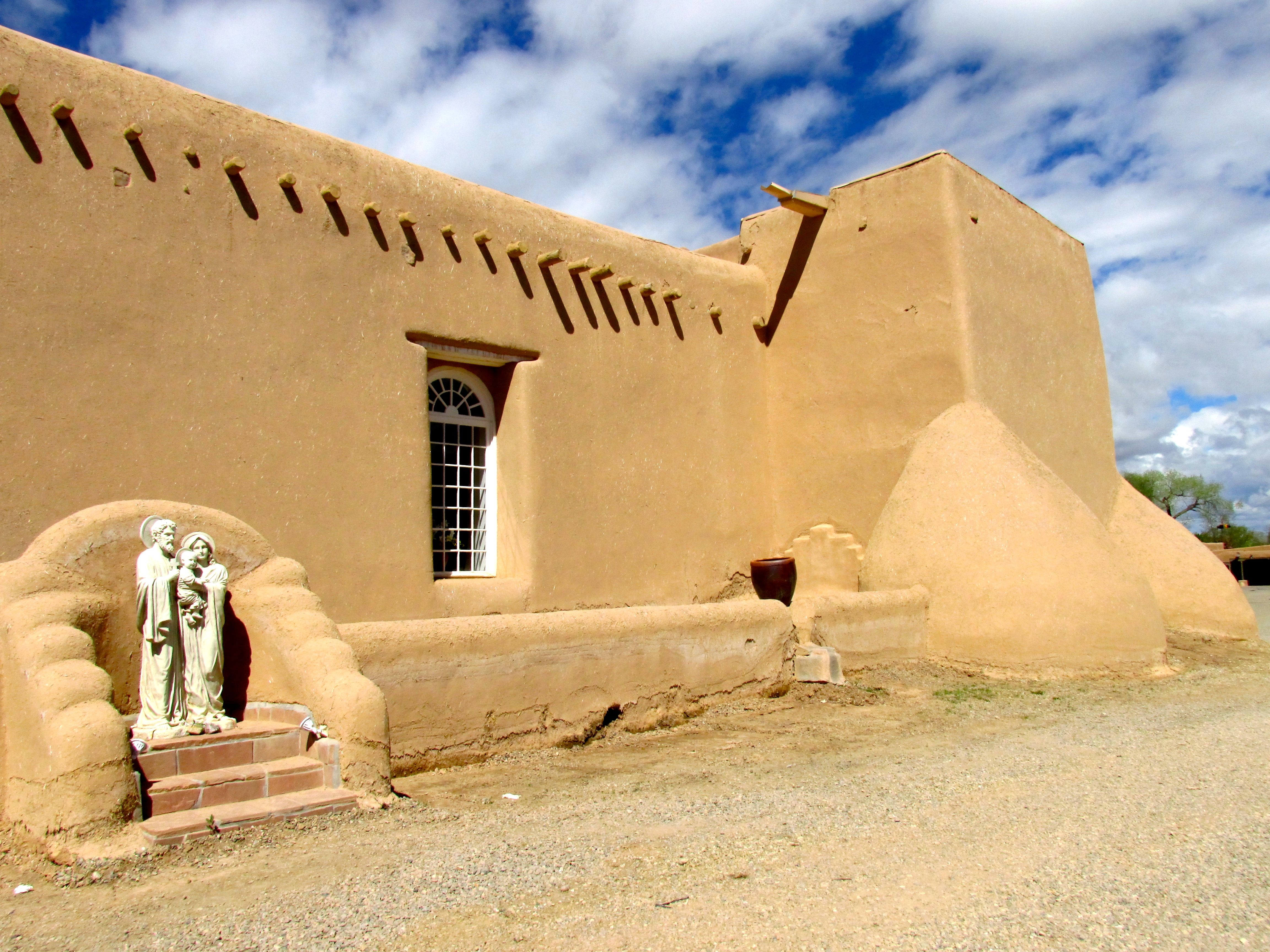
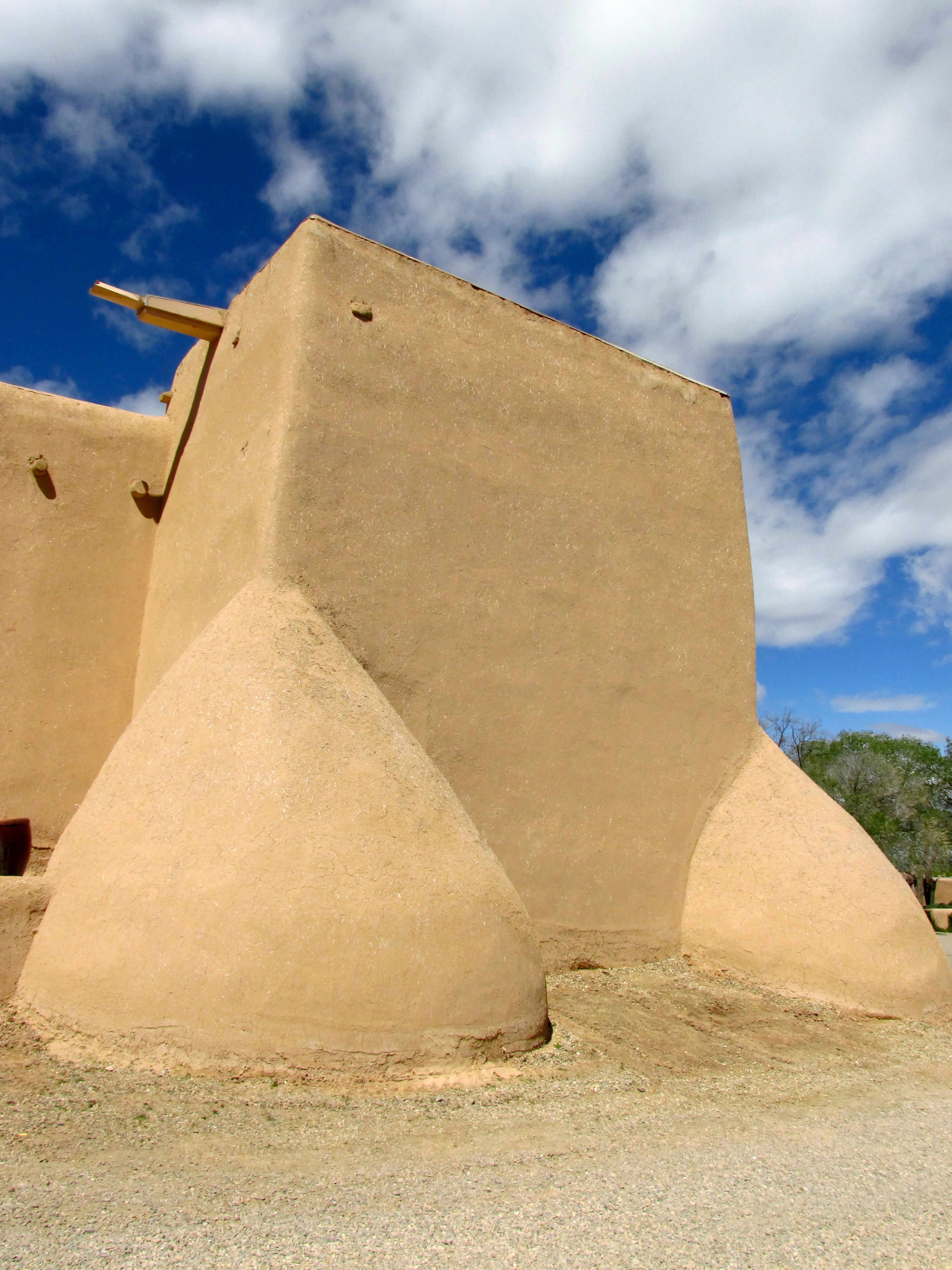
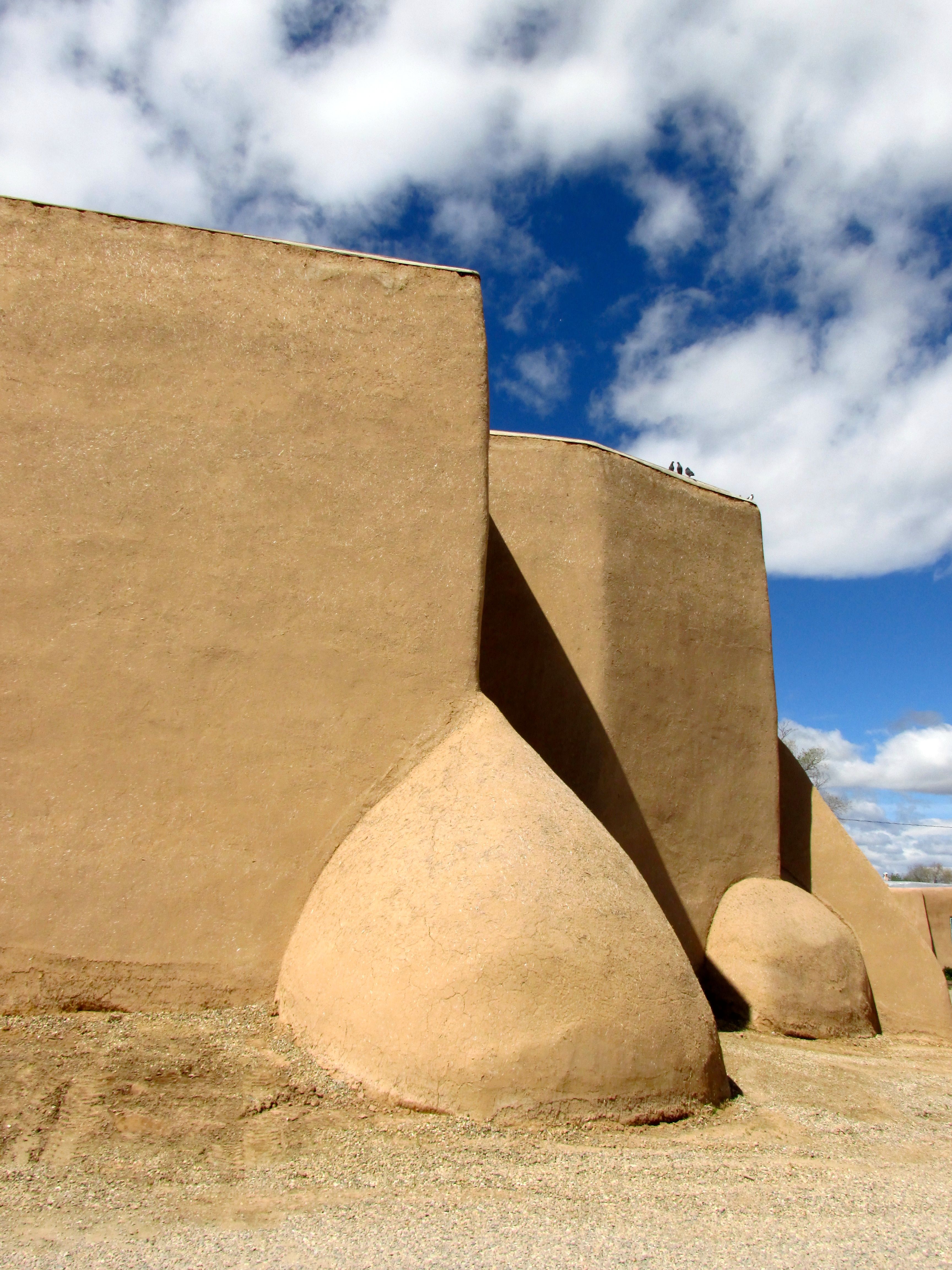
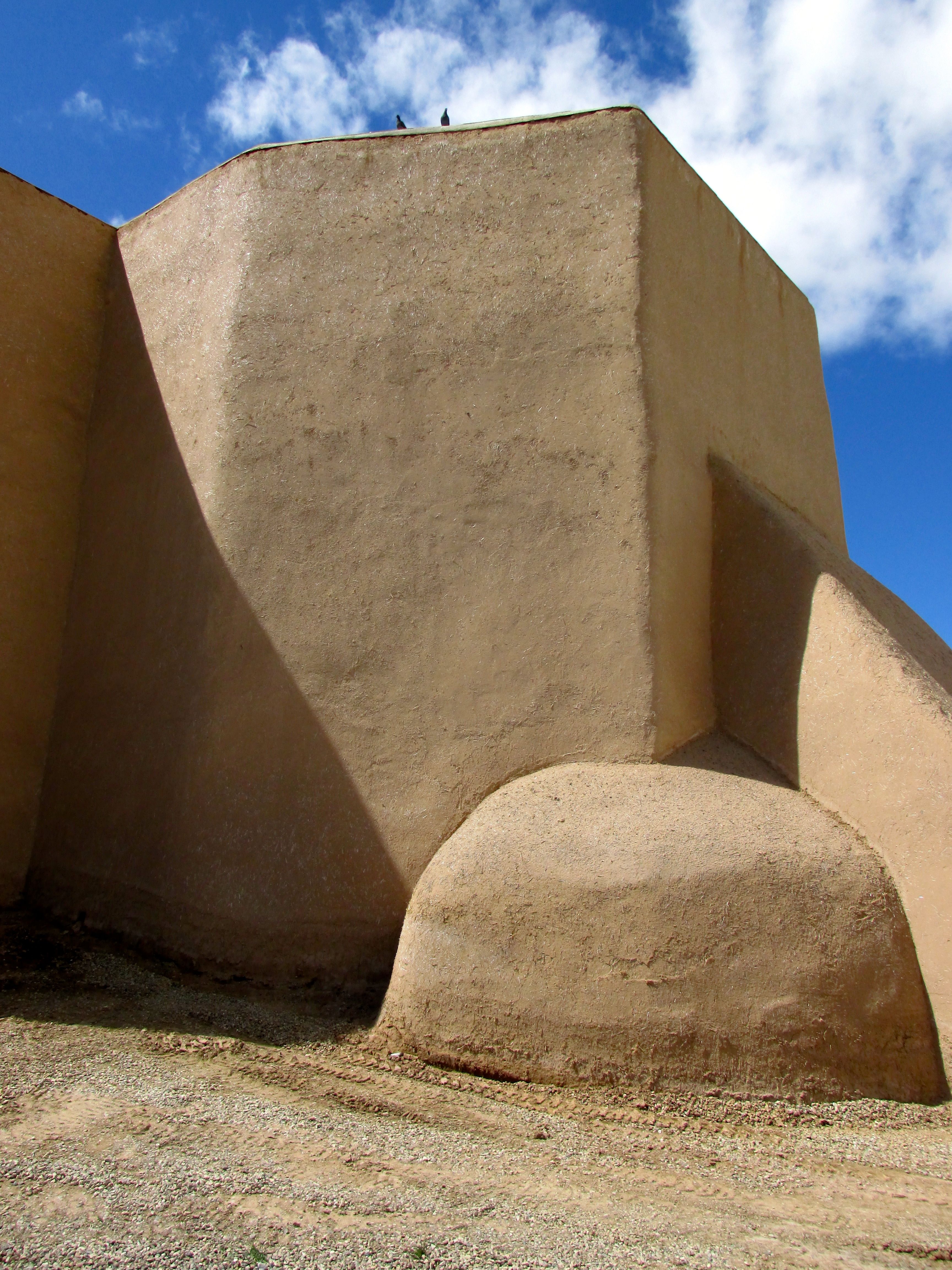
San Francisco de Asis in Ranchos de Taos

The last stop on the Sister Jeanne Art History Tour of Taos is the church of San Francisco de Asis in Ranchos de Taos, which is just outside Taos on the south side of town.RT 2

As the tourism information specialist told me when I first got to Taos, “This is one of the most photographed and painted churches in the world.” It is the subject of paintings by Georgia O’Keeffe and photos by Ansel Adams among others.

While I was visiting to take photos, there were seven other photographers there, engaged in serious art-making. I had to jockey around to get pictures without them in the frame. Of course, that would have been part of the story, too.

I have no photos of the interior, as they request that we not take them. I did buy a couple of postcards, but I try to avoid copyright infringement. However, you can find more information on Wikipedia, among other sites you can Google.

RT 1

RT 4

RT 5

RT 6

RT 7

RT 9

It was built between 1772 and 1816 and requires constant upkeep. I attended mass there on Sunday, and the priest was talking about the work that would be required to replaster the building. They call it “enjarrar”.

RT 8

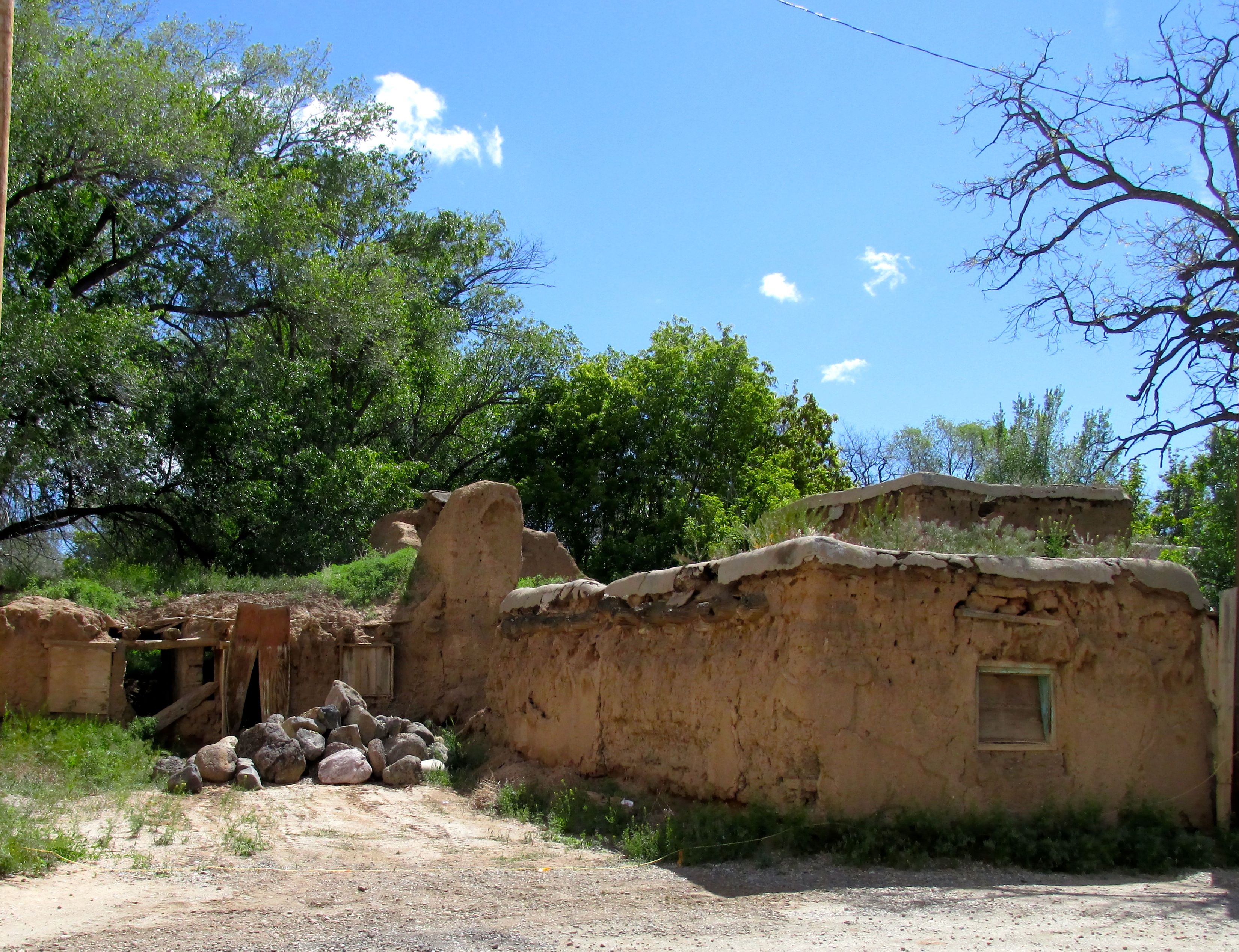
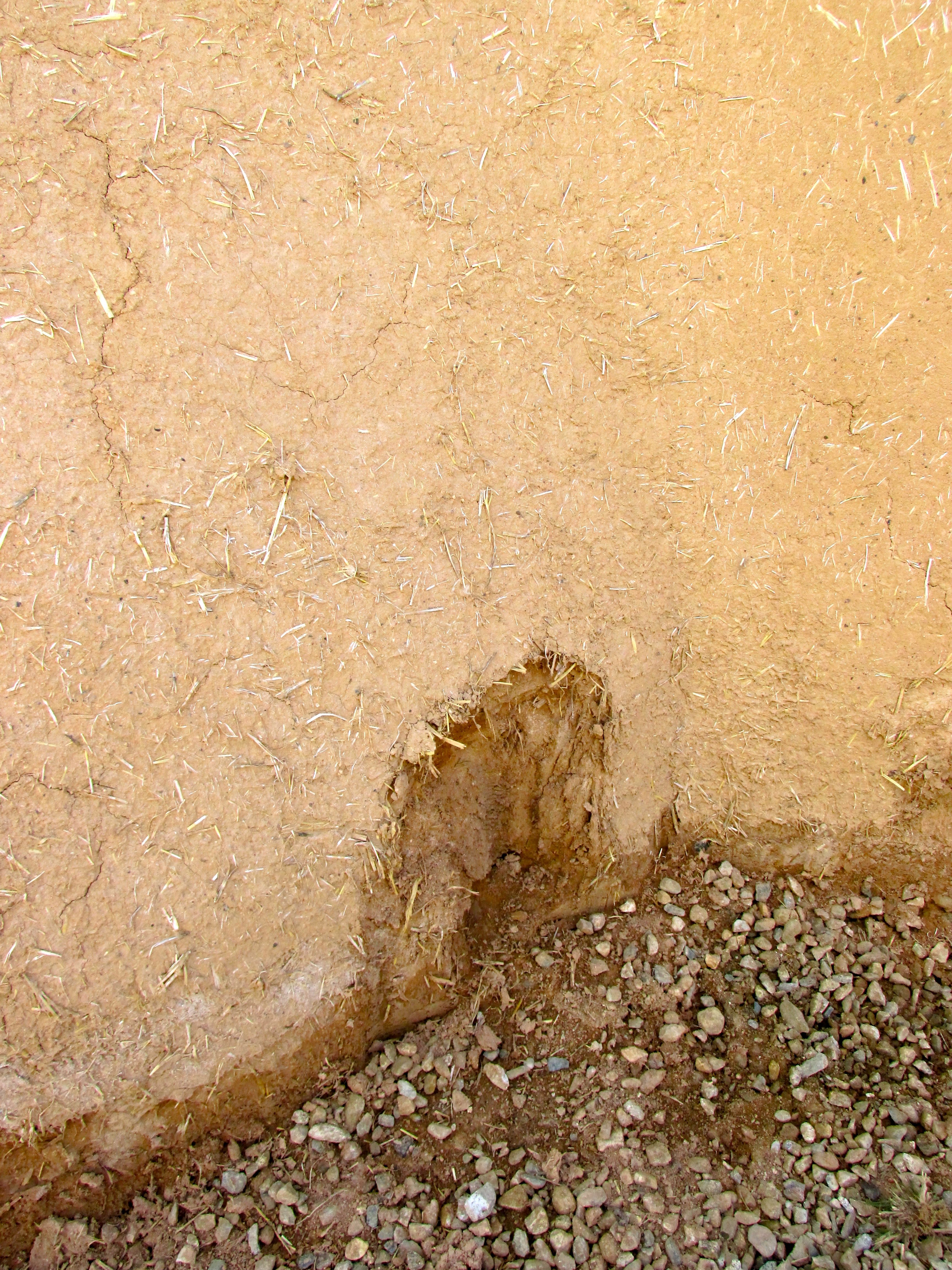
Here you can see a damaged portion of the exterior. You can also see the straw that is used in the mixture. What happens when you take care of an adobe building faithfully? You get the Taos Pueblo.

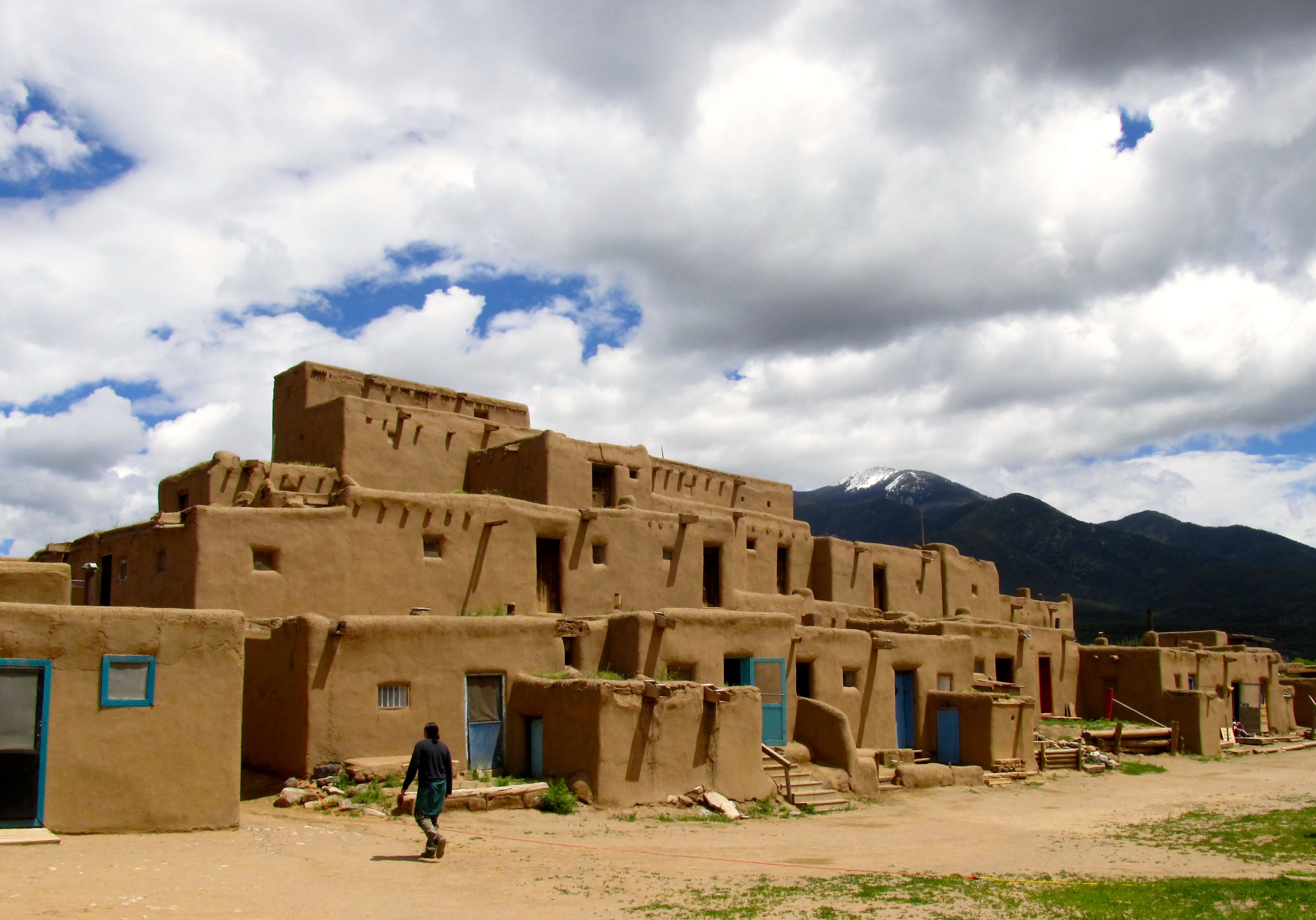
North building
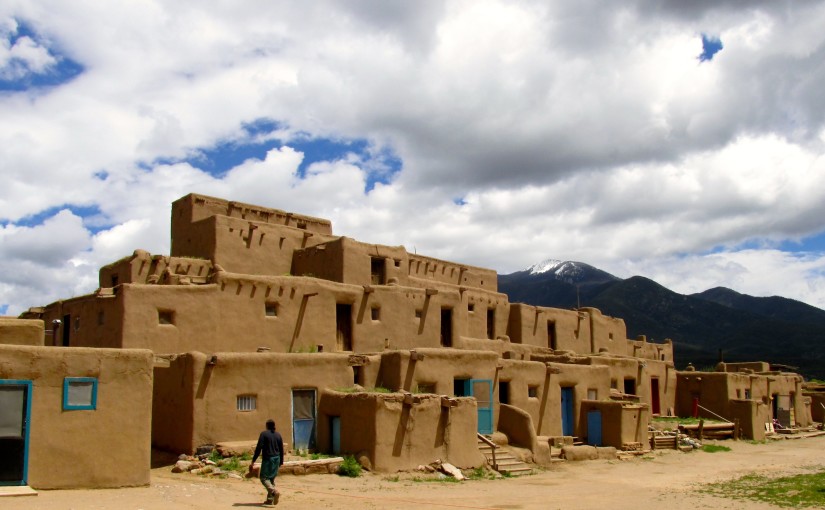
North building of Taos Pueblo

What happens when you don’t maintain the building? They don’t last as long.

RT 10

Taos Pueblo

Taos Pueblo is another site that Sister Jeanne, my art history teacher, introduced me to. It is a UNESCO World Heritage Site and a National Historic Landmark that is located about a mile outside of Taos. It’s a community of multi-storied adobe buildings that have been continuously inhabited for over 1000 years.

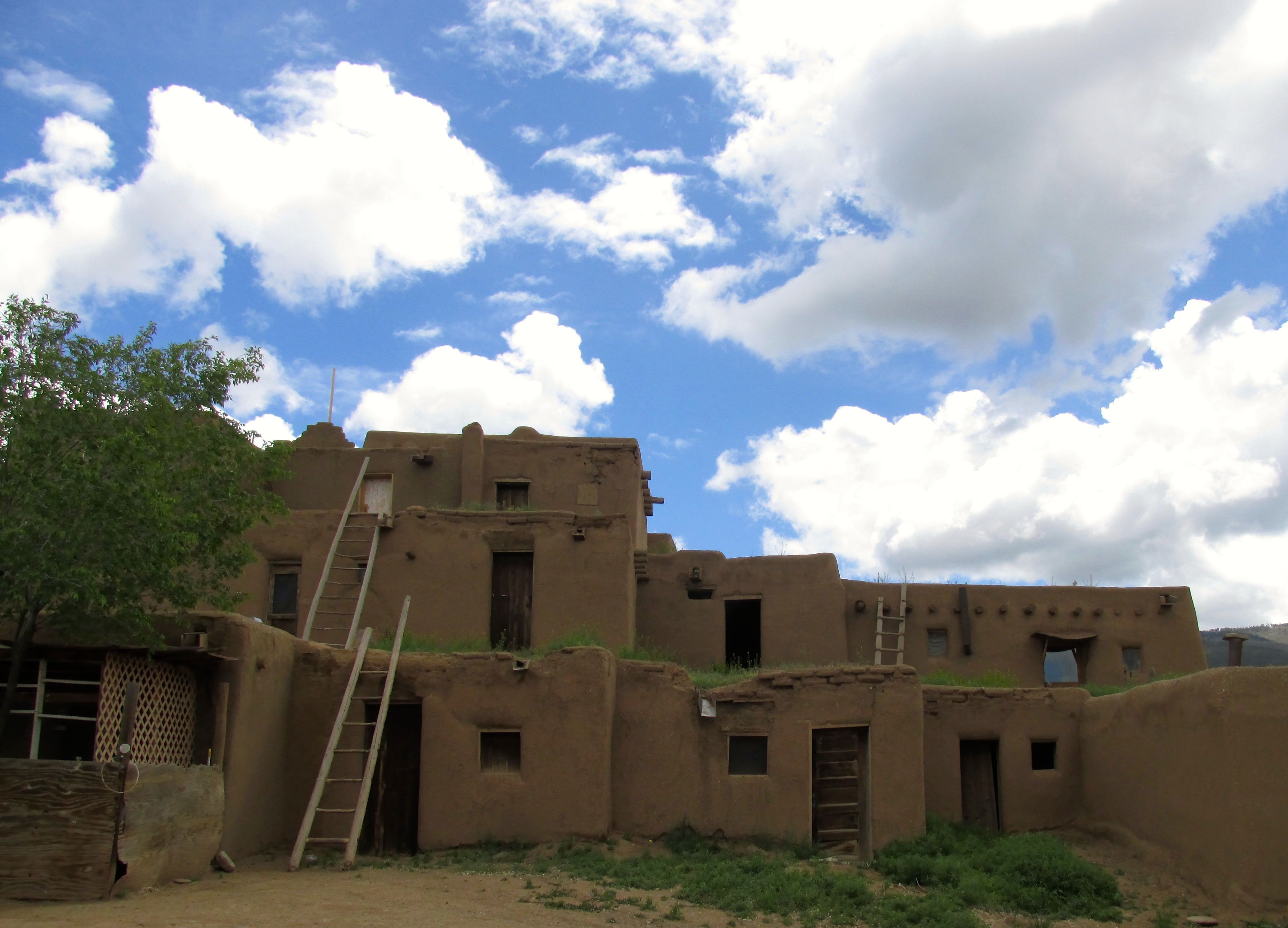
They tell visitors that the buildings have changed very little over the years. They have added doors and windows. Originally, access was by climbing ladders to the roof and entrance through square holes to descend into the rooms. The buildings within the pueblo do not have electricity, running water or indoor plumbing. Some people do have wood stoves, according to what I was told, but heating is done with small fireplaces.

TP 8

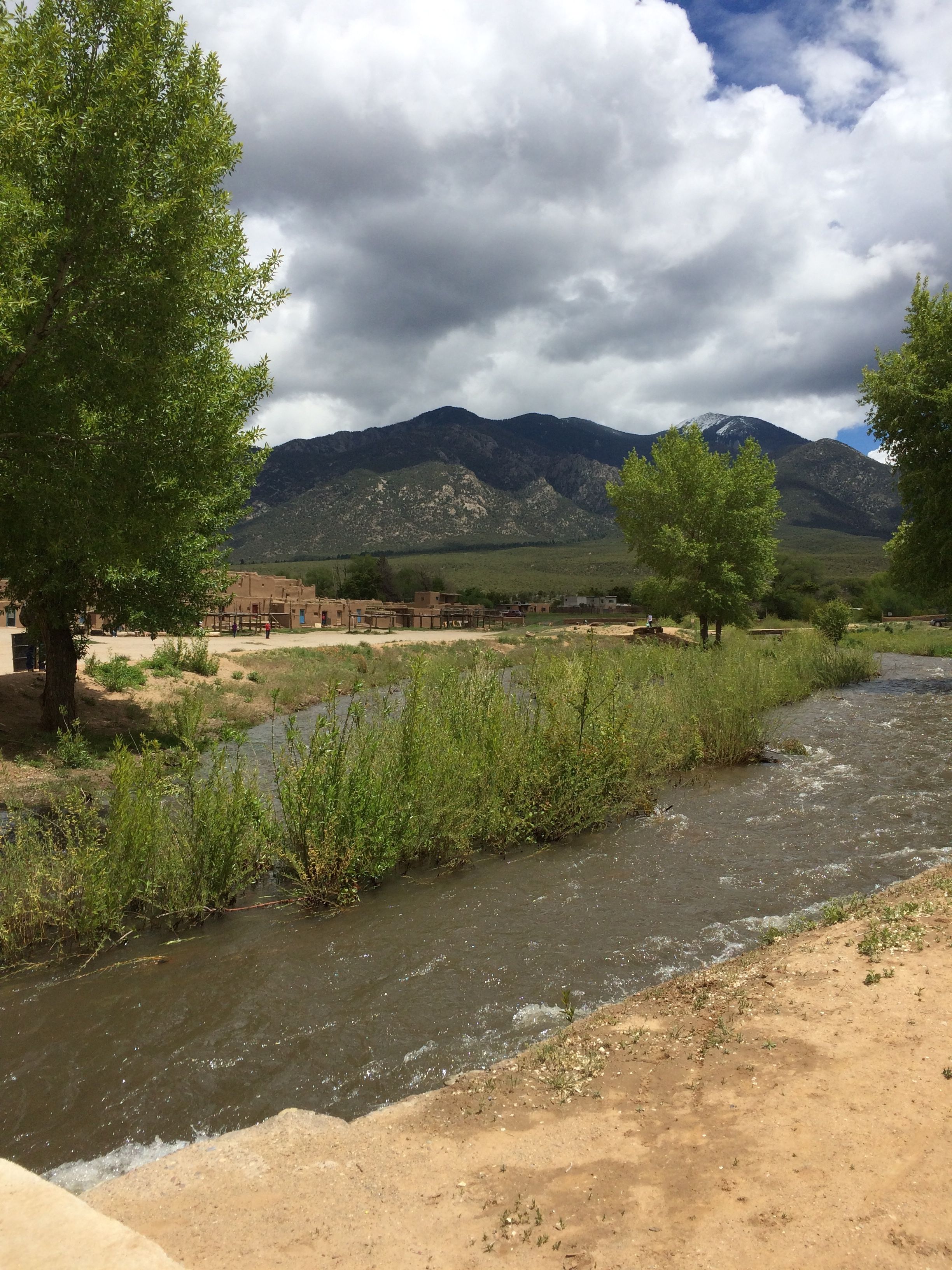
The pueblo is built on the banks of the Red Willow Creek, which is also called Rio Pueblo. The water was very high the day I visited due to all the recent rain.

The north building is the most frequently photographed part of the pueblo.

North building
North building
South Building
South Building

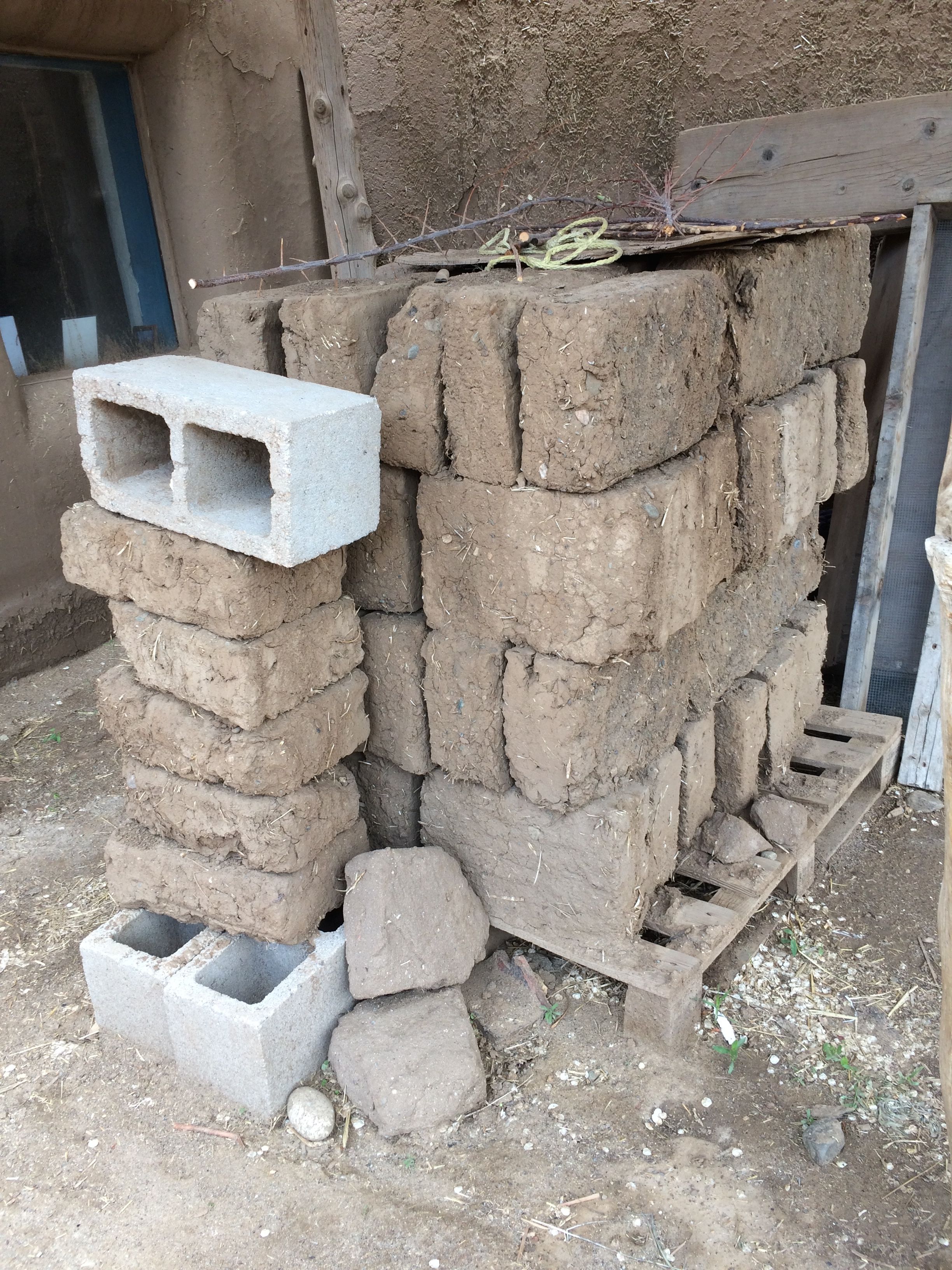
The walls of the buildings are close to a yard thick at the base and get thinner as they go up. The walls of the rooms at the top are around a foot thick. The roofs are supported with cedar beams, a layer of branches, a thick layer of mud and finished with adobe.

Each year, the buildings are refinished with another coat of mud. There is a great deal of similarity between the Earthships and Taos Pueblo in that they both use the materials they have on hand to create sustainable communities.

A stack of adobe bricks

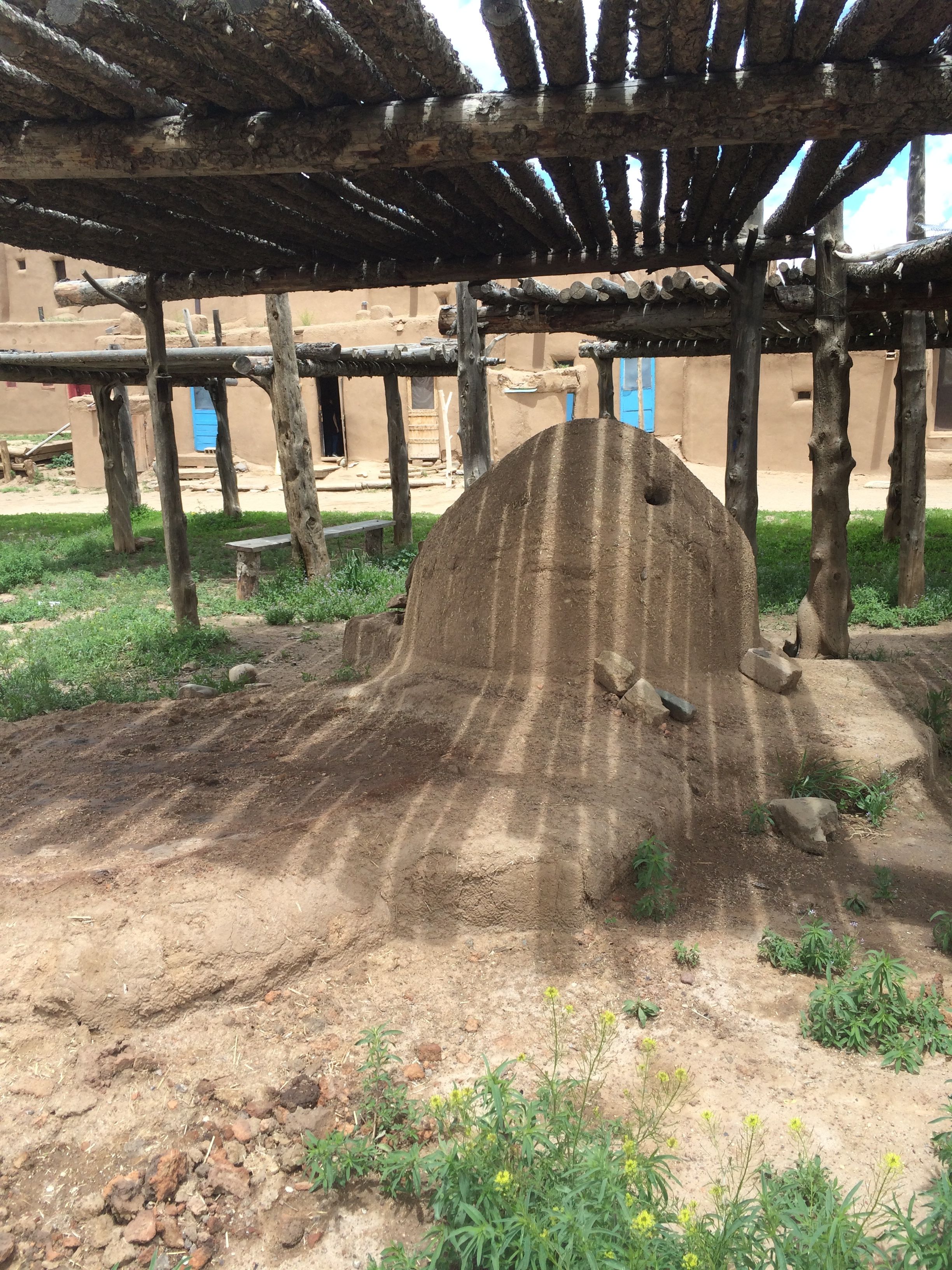
In the center of the plaza are racks that they said are for drying food. They also provide nice shade. There is are ovens located conveniently throughout the pueblo. I like the idea of having one under shade.

Oven under the drying racks
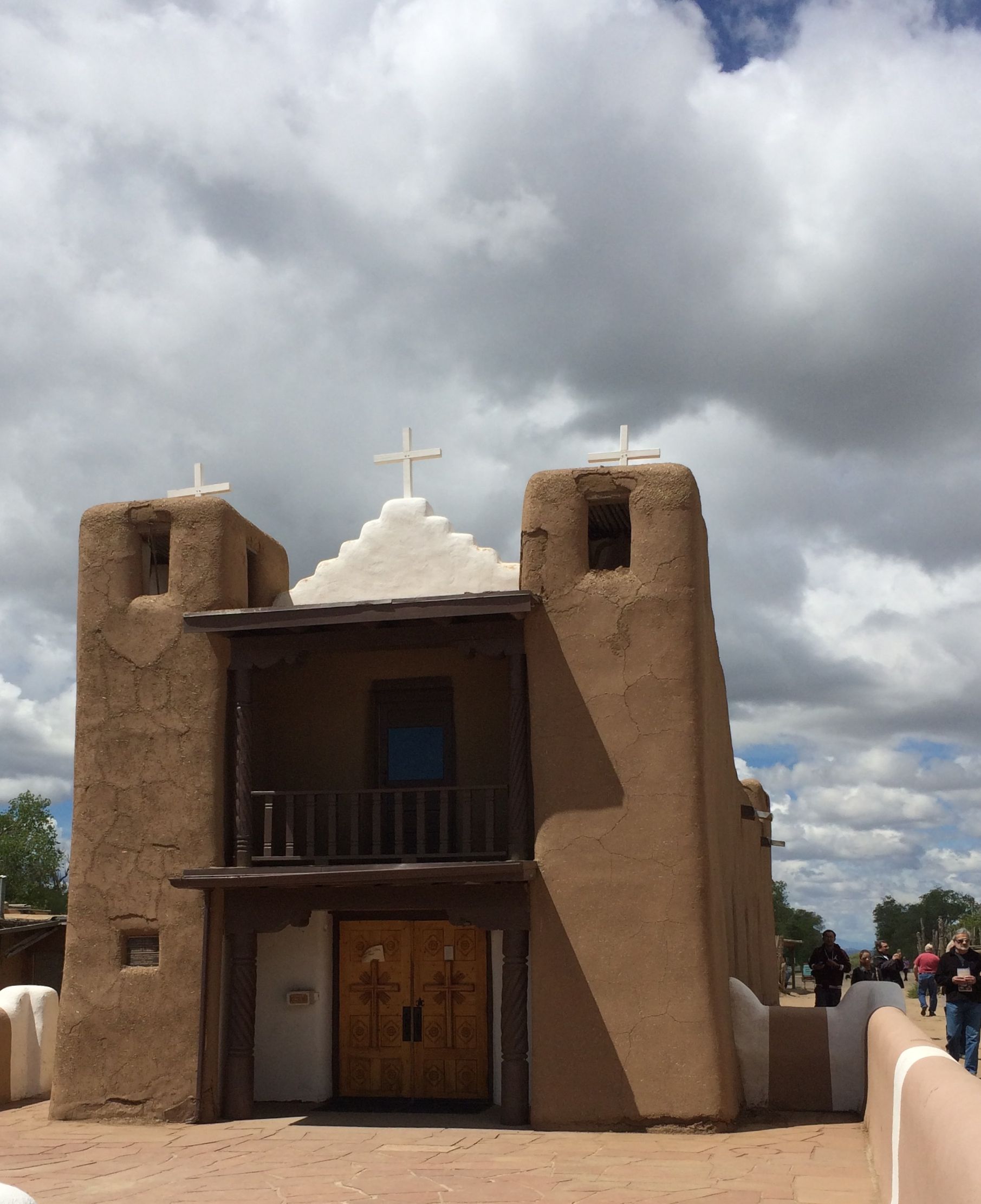
!9th century church
!9th century church

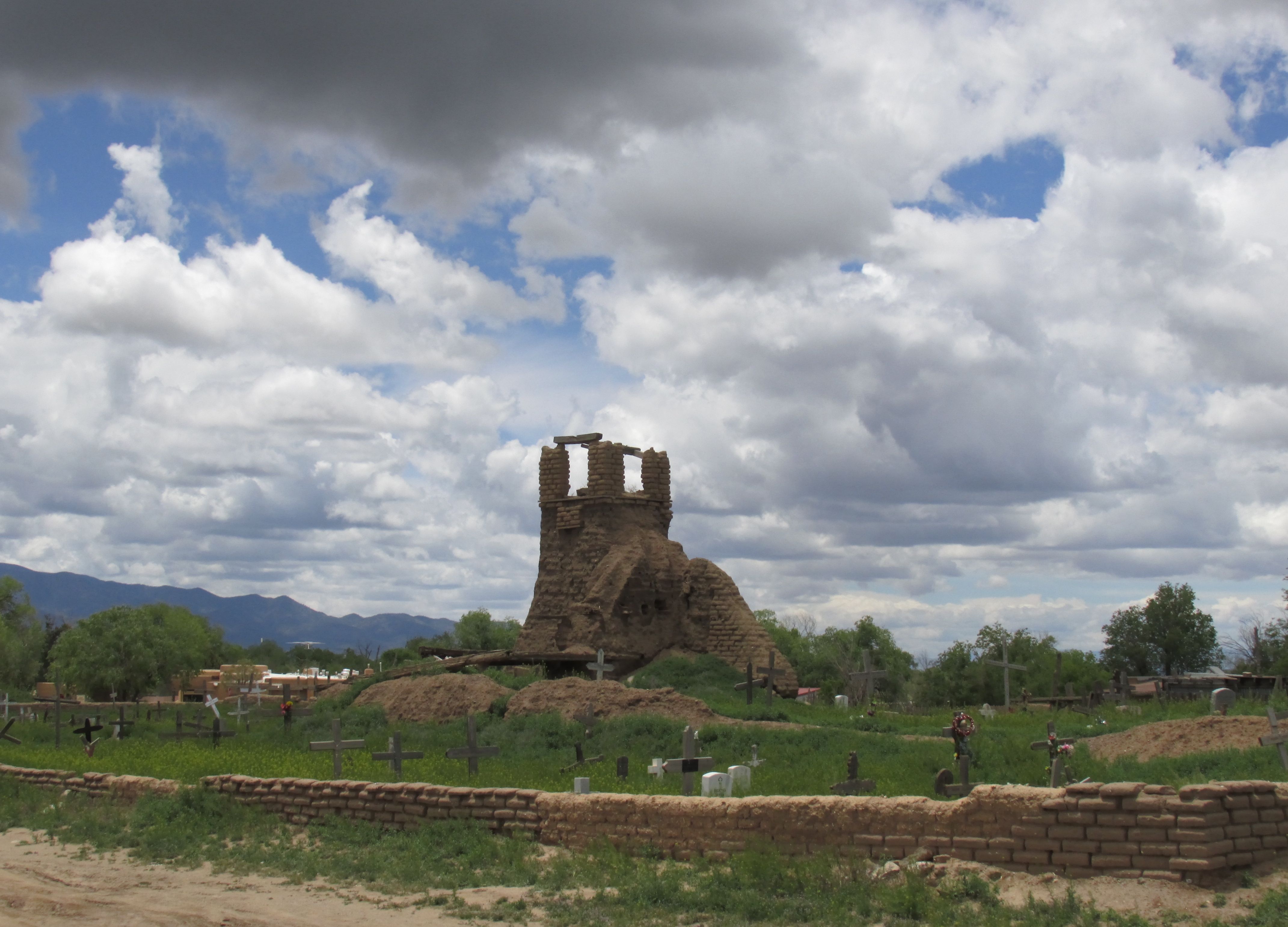
There is a church on the plaza. It it is a replacement for a church that was destroyed by the United States military during the Pueblo Massacre of 1847.

Church destroyed in the Pueblo Massacre of 1847
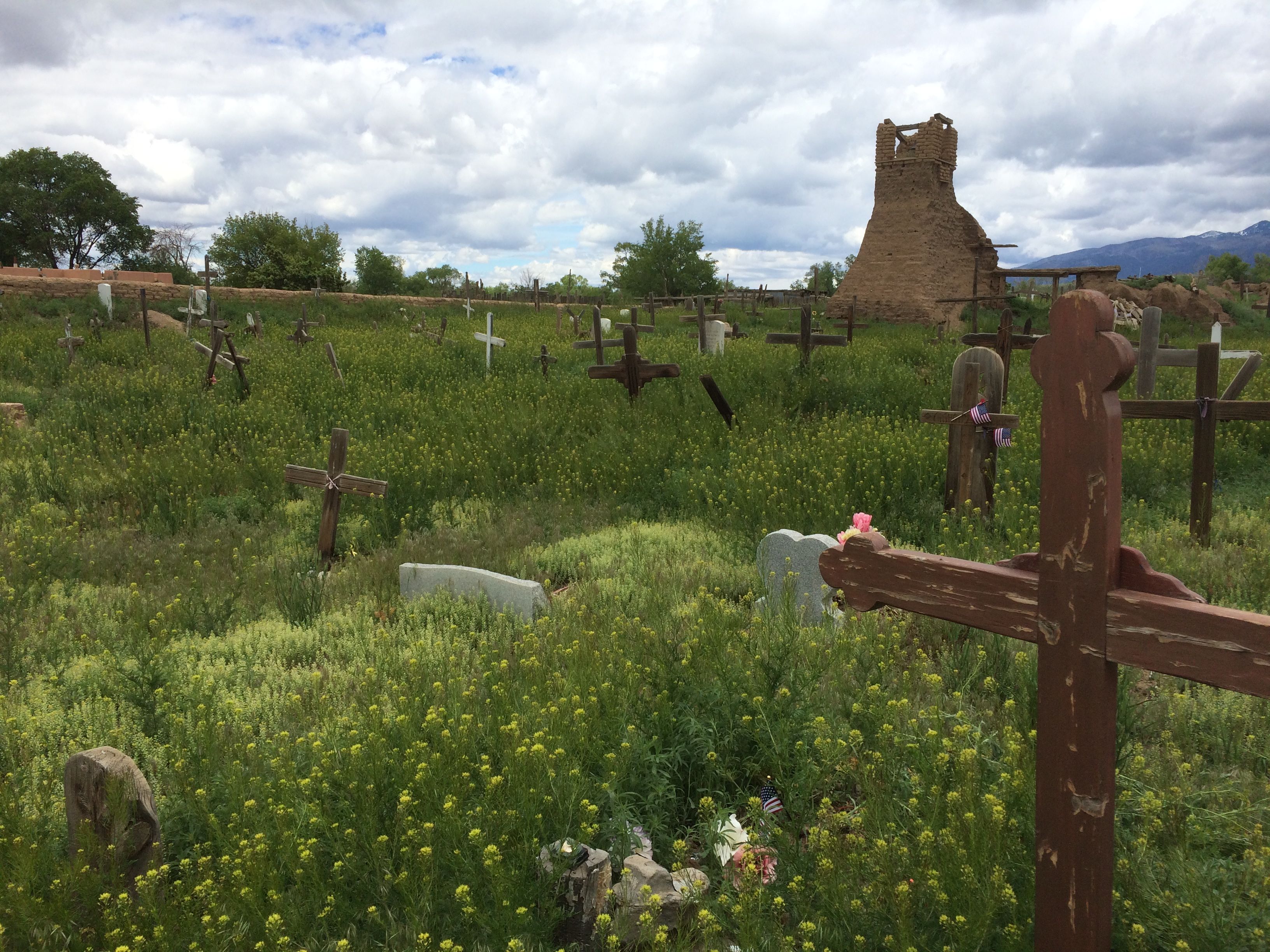
Graveyard near the ruined church

The warm welcome I received from all the members of the Pueblo made me feel so sad about the treatment they received at the hands of the Spaniards and the United States.

May we all learn to live together in peace and with mutual respect.