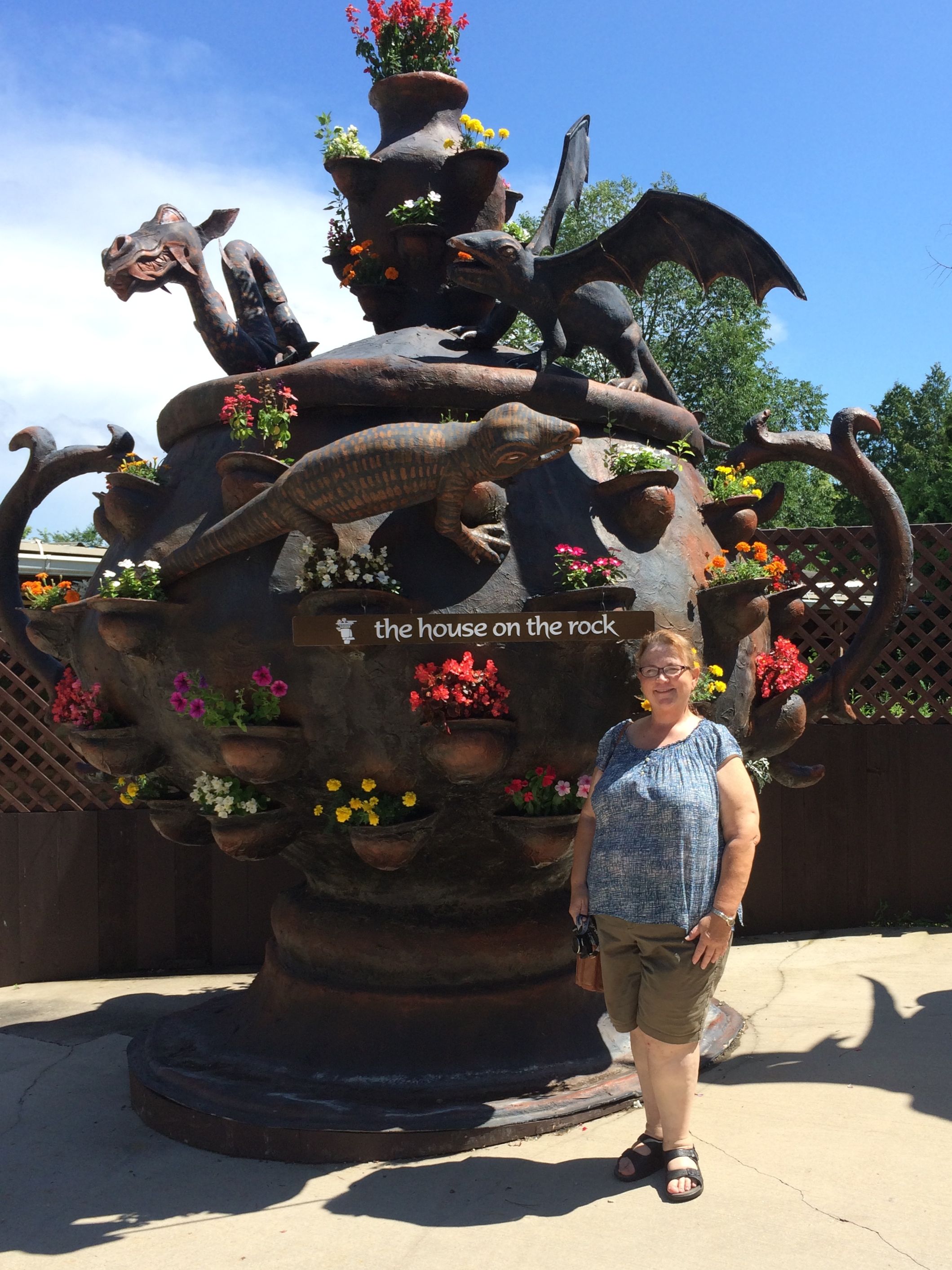
Oh, my! Taliesin!
Like many people, I consider myself quite knowledgeable about Frank Lloyd Wright, his life and the evolution of his work. After visiting Taliesin and taking the four hour tour, I realized that I didn’t know as much as I thought.
The tour started at the Wright-designed Visitor Center on the bank of the Wisconsin River. After we met our guide, Cyndi, we boarded the little red bus with Taliesin emblazoned on the side that took us to the first stop on our tour.
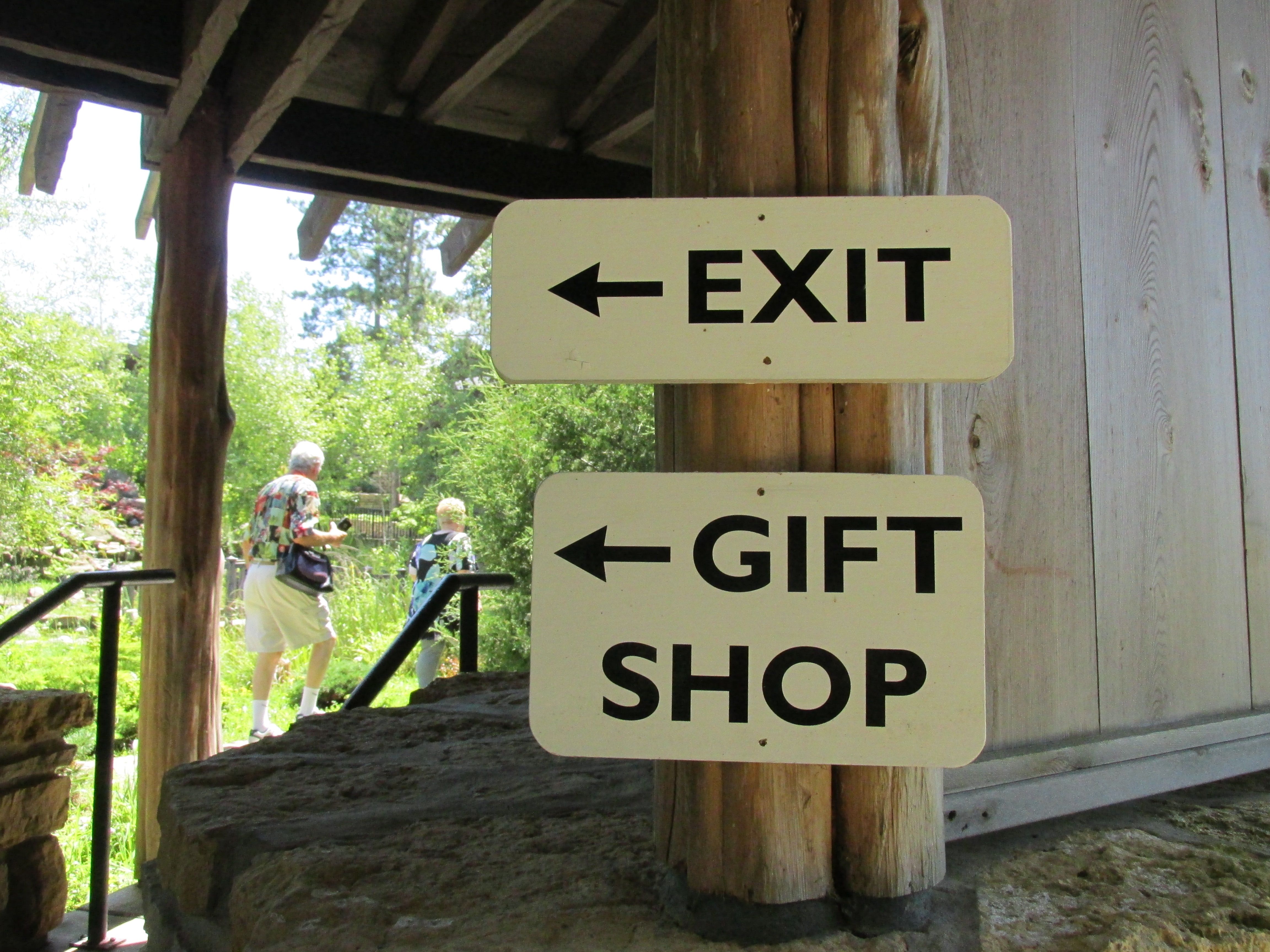
I have plenty of exterior shots of the buildings, but interior photography is not permitted. However, there are books and postcards available. Exit through the gift shop.
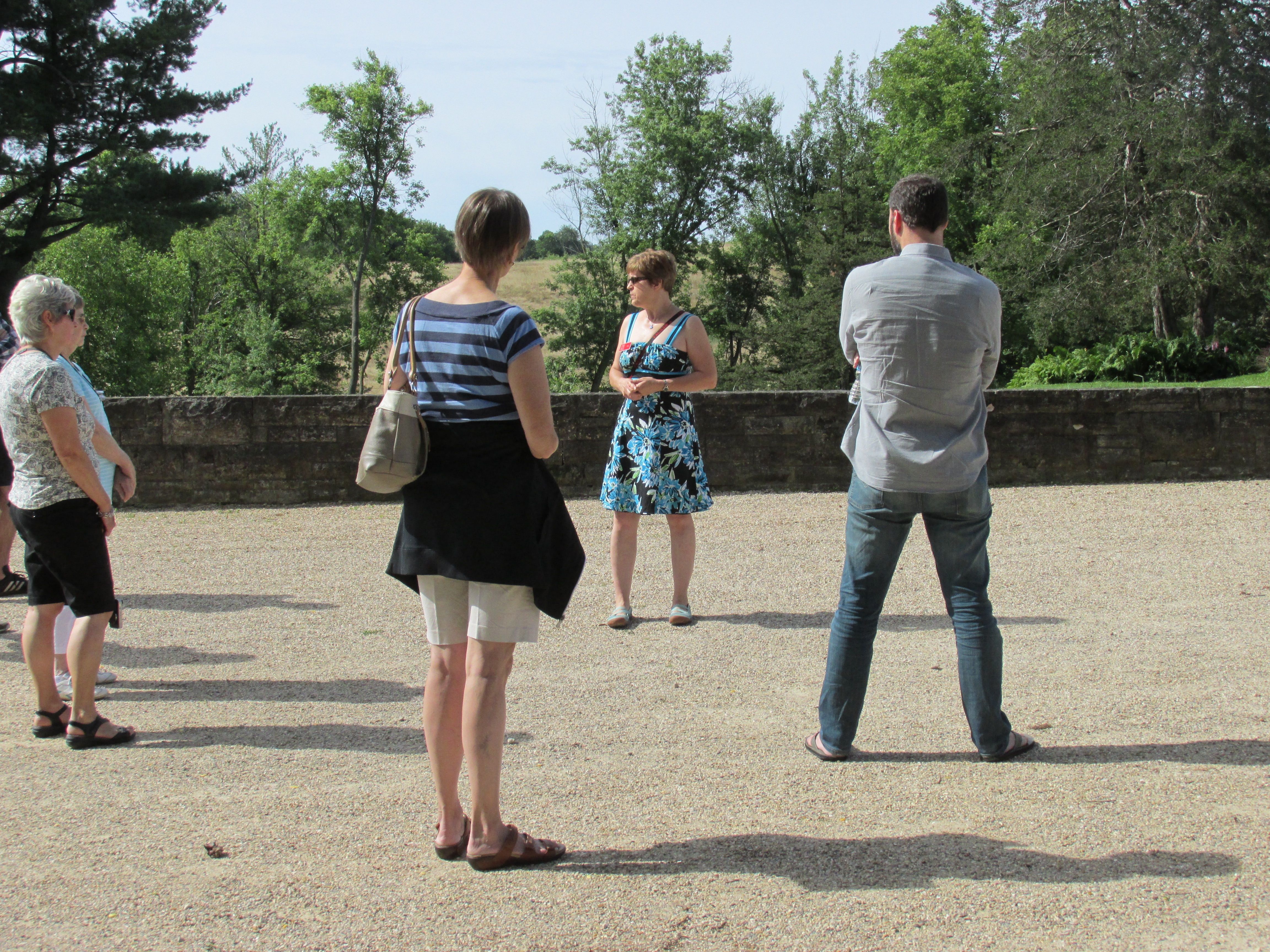
We got off the bus at the Hillside School, which Wright designed for his aunts in 1902. They ran a progressive school that they called Hillside Home School. It was so radical that they even educated boys and girls together. They did a lot of learning by doing, which is the best way to learn – in my humble opinion.
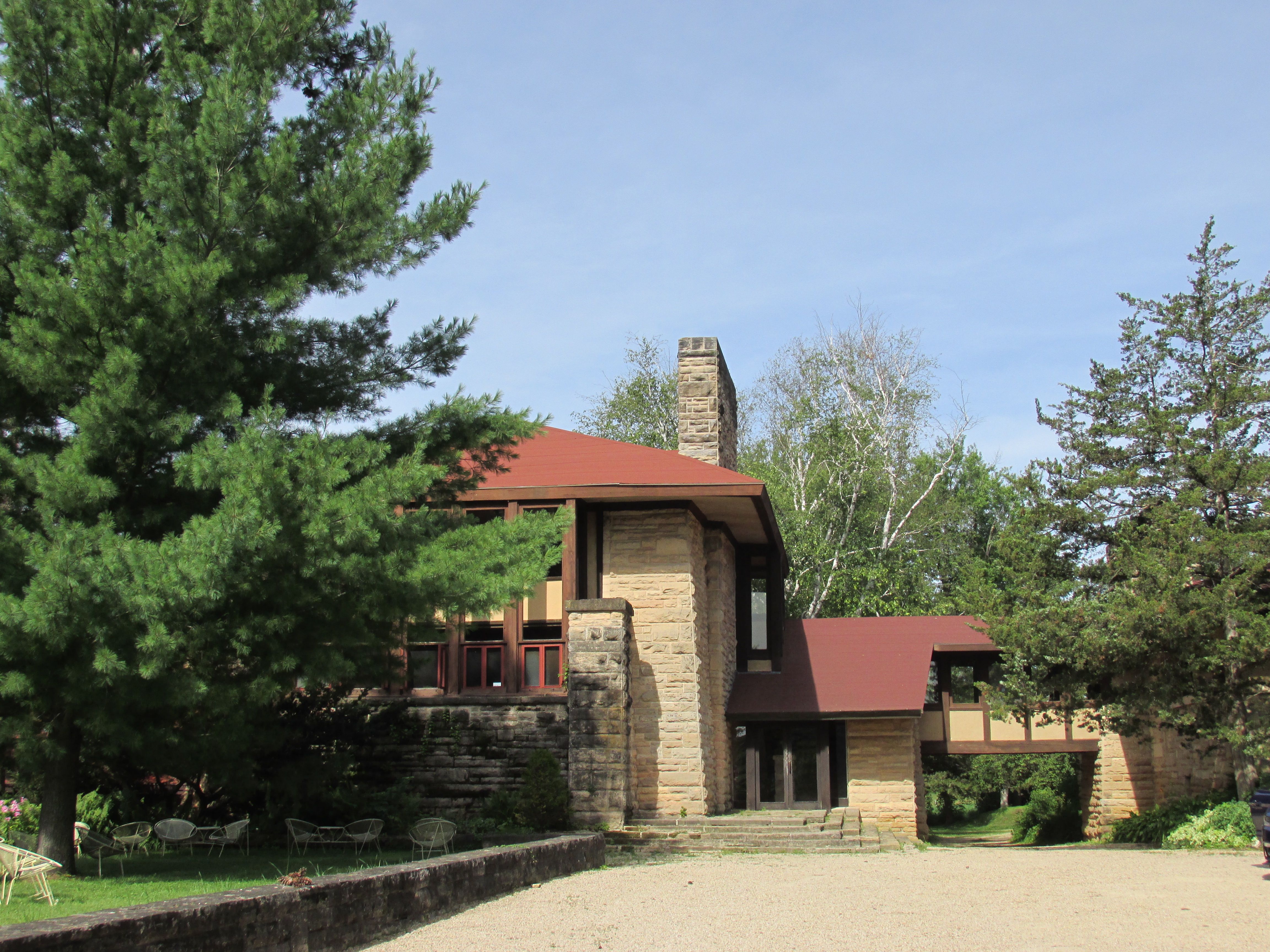
This building replaced an earlier building that Wright had designed for them in 1887. Cyndi showed us the site of the Victorian style building, and told us that it was Wright’s first independent commission.
This was the first building he designed for the school. The second building was a classroom building to the right, across the bridge.
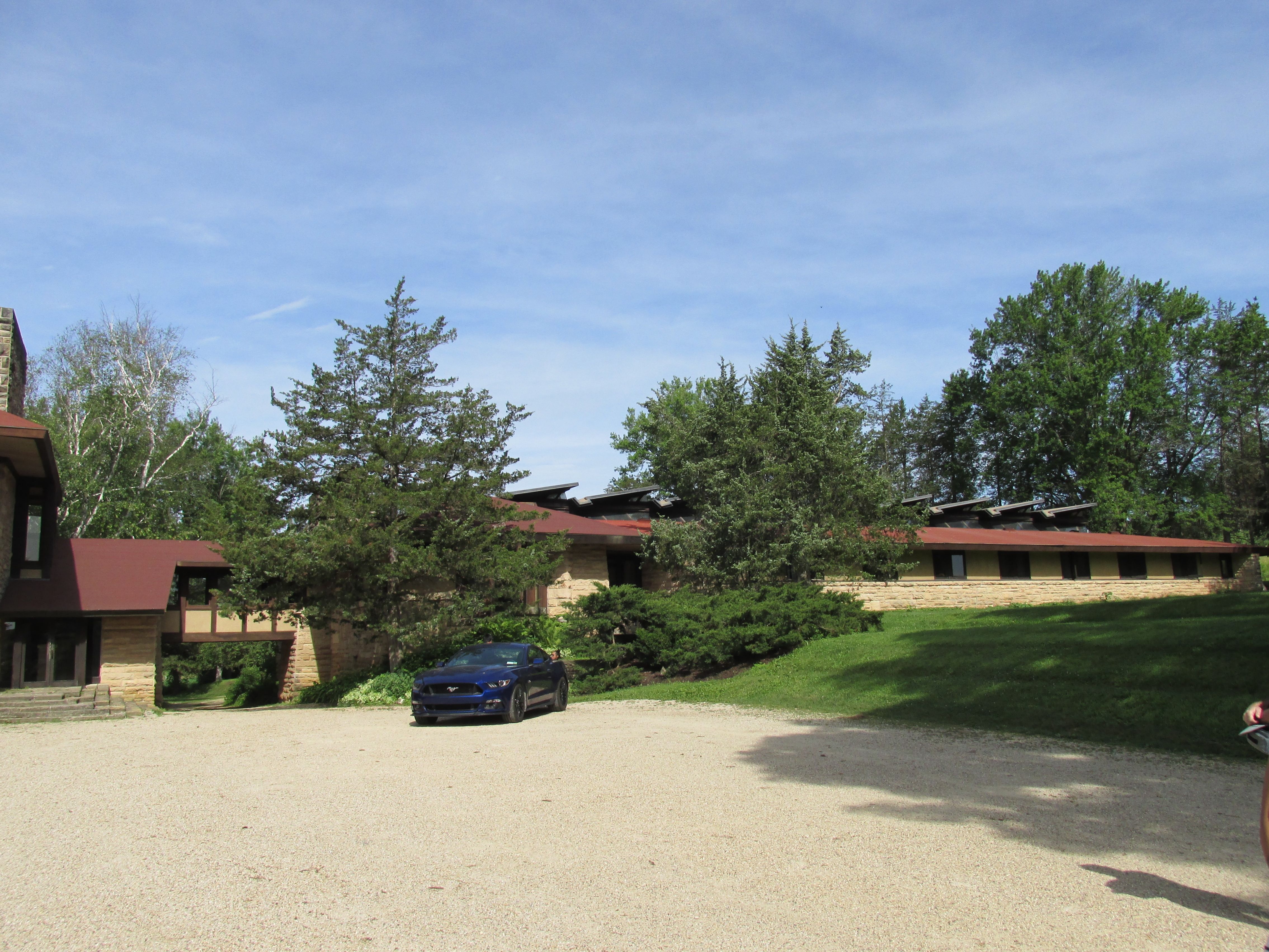
The school is now the summer home of the Taliesin Architecture School, and the drafting room and bedrooms have been added on to the classroom building. The drafting room is lit by the skylights; the windows on the sides of the building are for the students’ bedrooms.
The interior of the drafting room is amazing in its construction. The trusses and rafters support the roof in a way that is reminiscent of a forest. The skylights on the roof face north, to provide even light. There are also windows to the east and west on this wing.
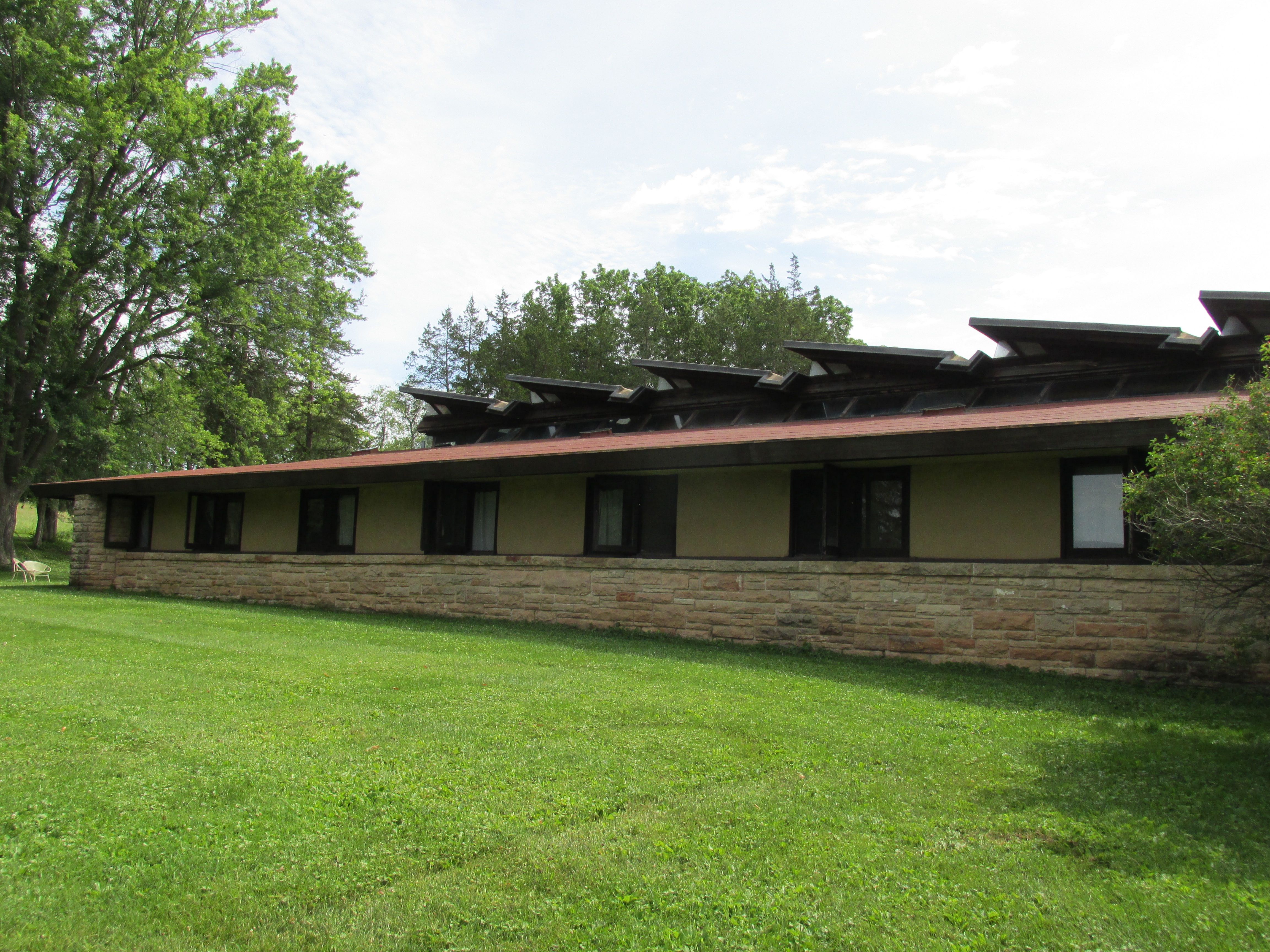
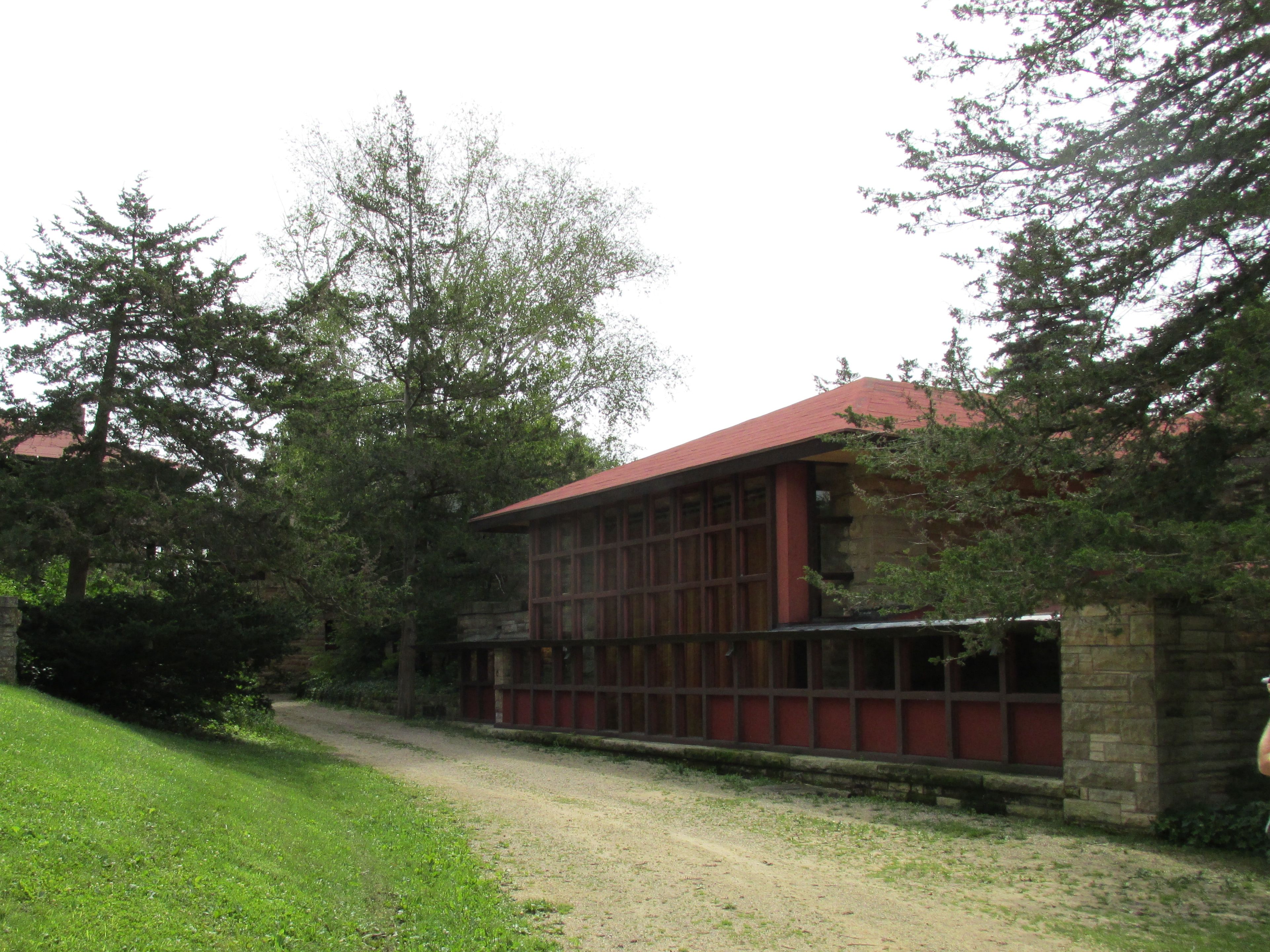
The last building in this complex originally built as a gymnasium, but is now used as a theater.
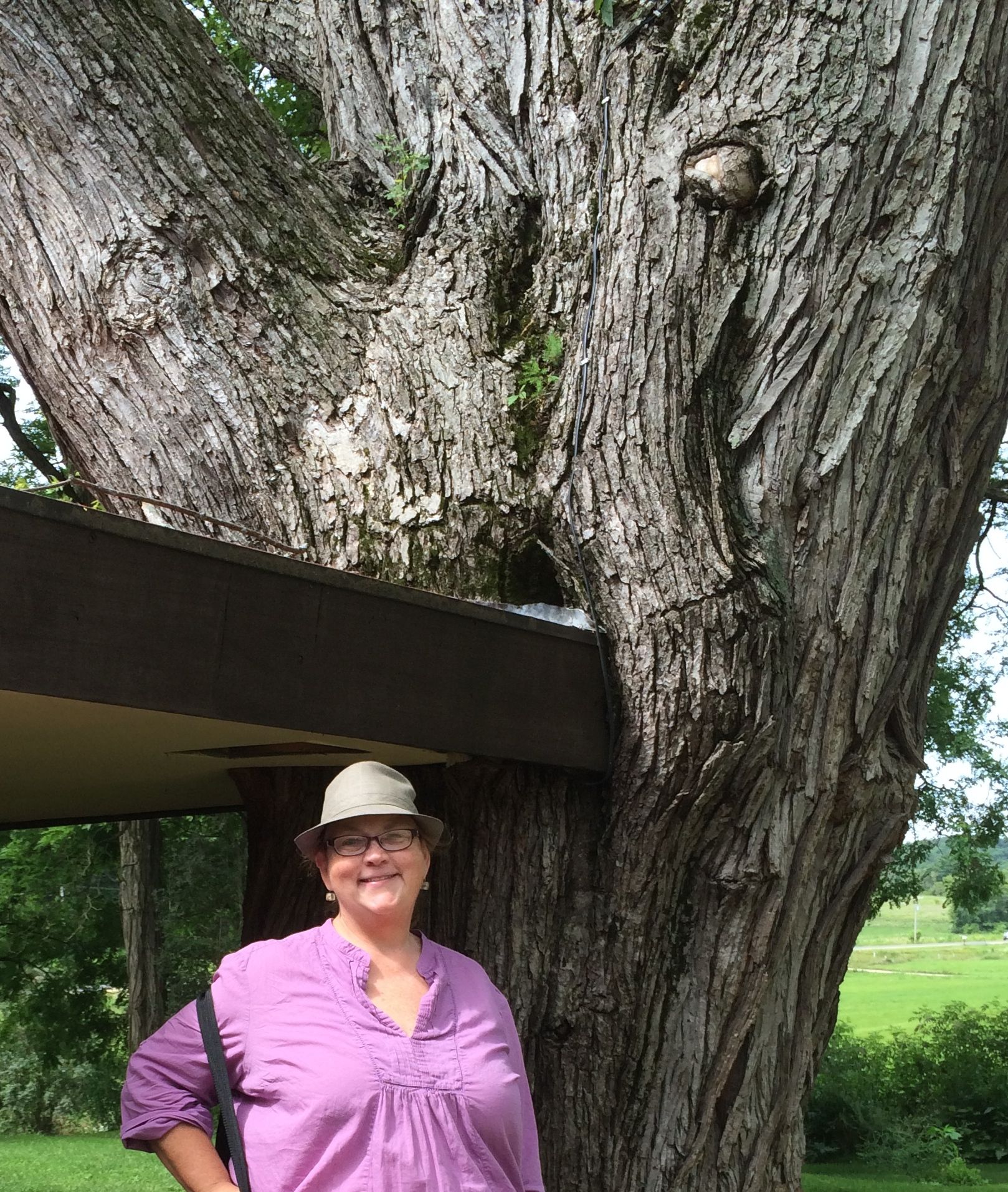
One interesting feature is a tree that is growing right by the roof overhang. A tree that was planted by one of Wright’s uncles was growing there, and it was allowed to stay. Cyndi told us that it reflected Wright’s attitude that he was designing for now. Problems were in the realm of the future and would be worked out later.
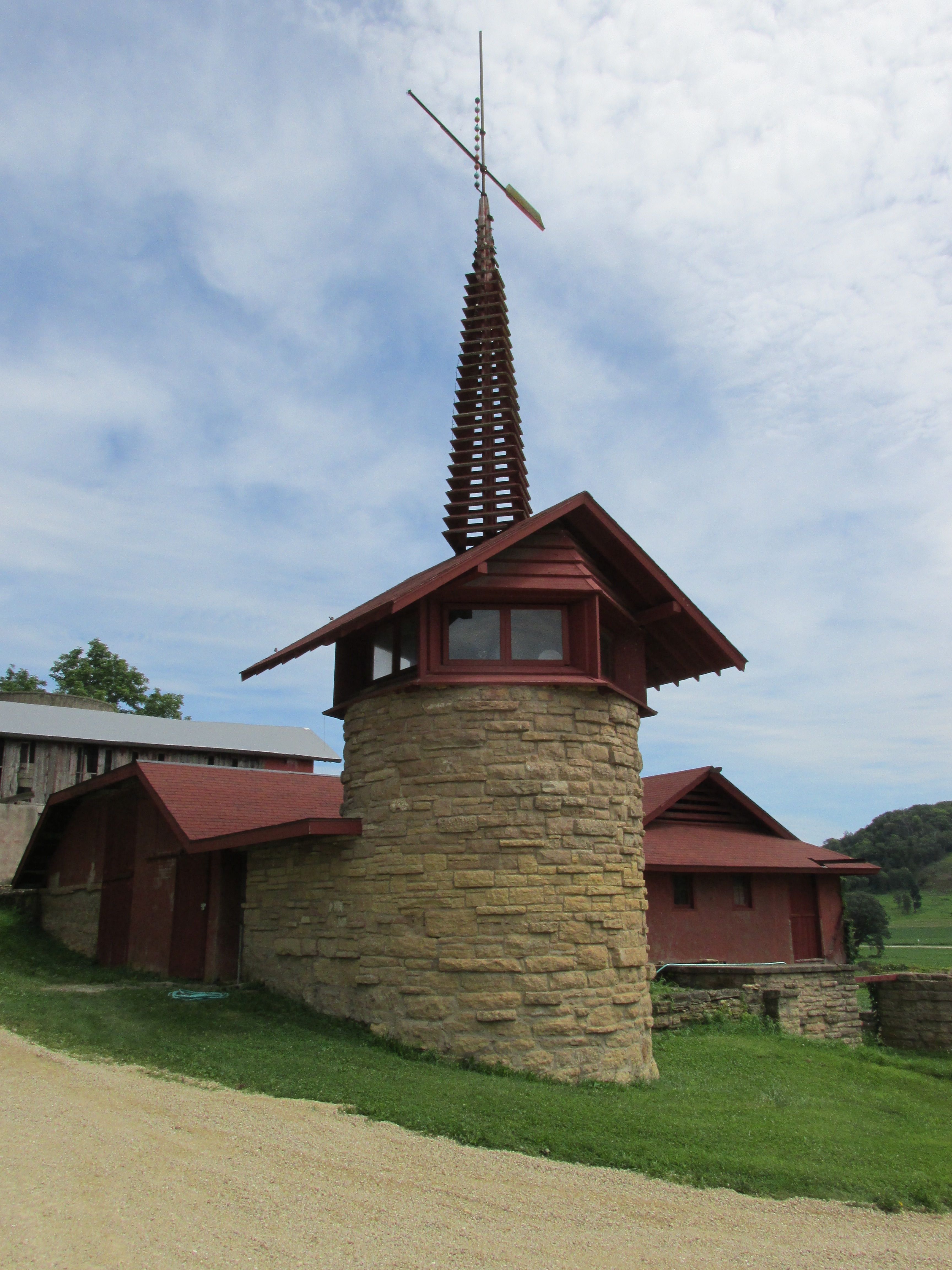
The next commission he received on the family land was the Romeo and Juilet Tower.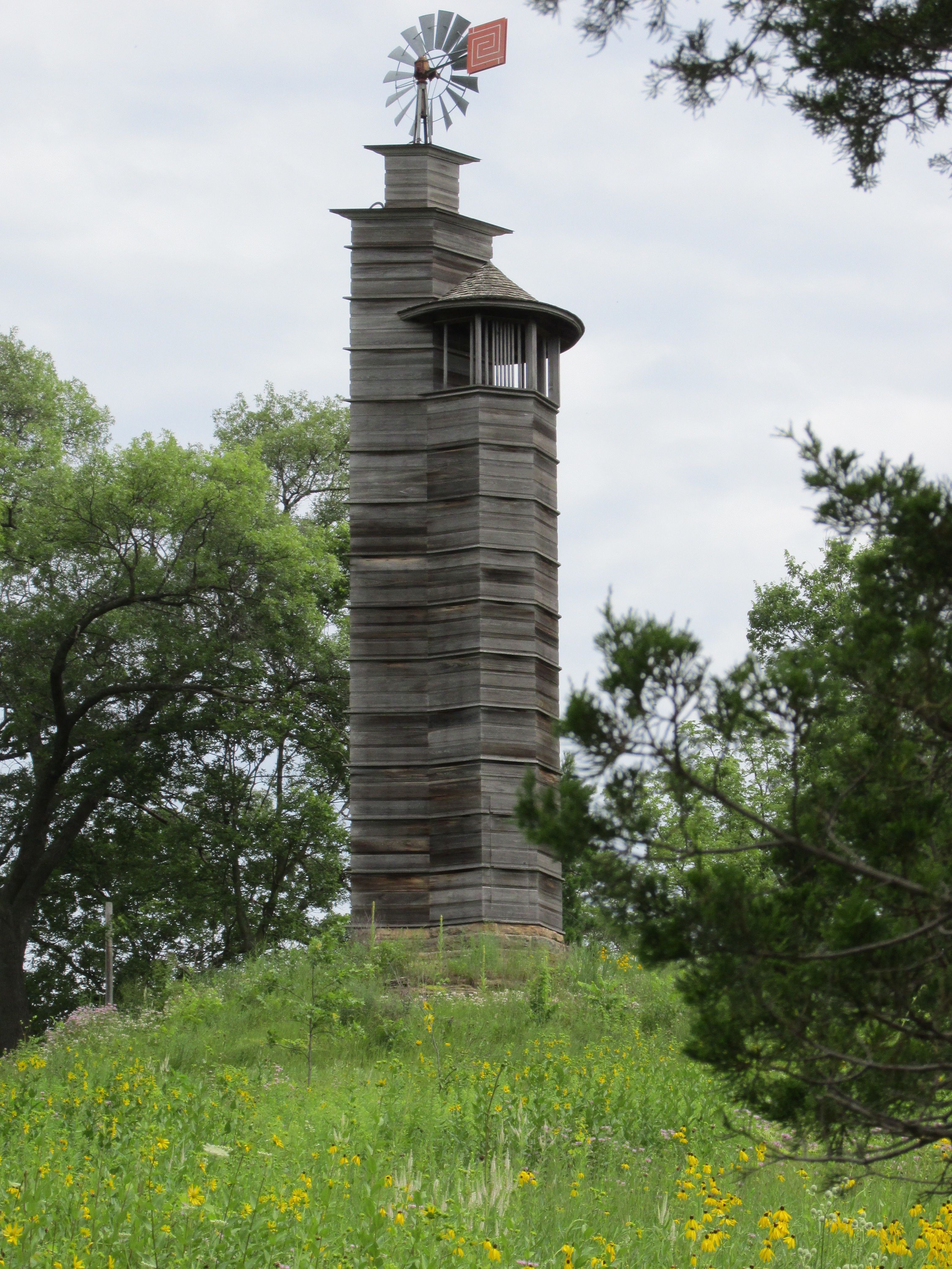
The name came from the method of construction. Cyndi told us that it referred to the diamond and hexagonal shapes that interlocked to make the tower strong.
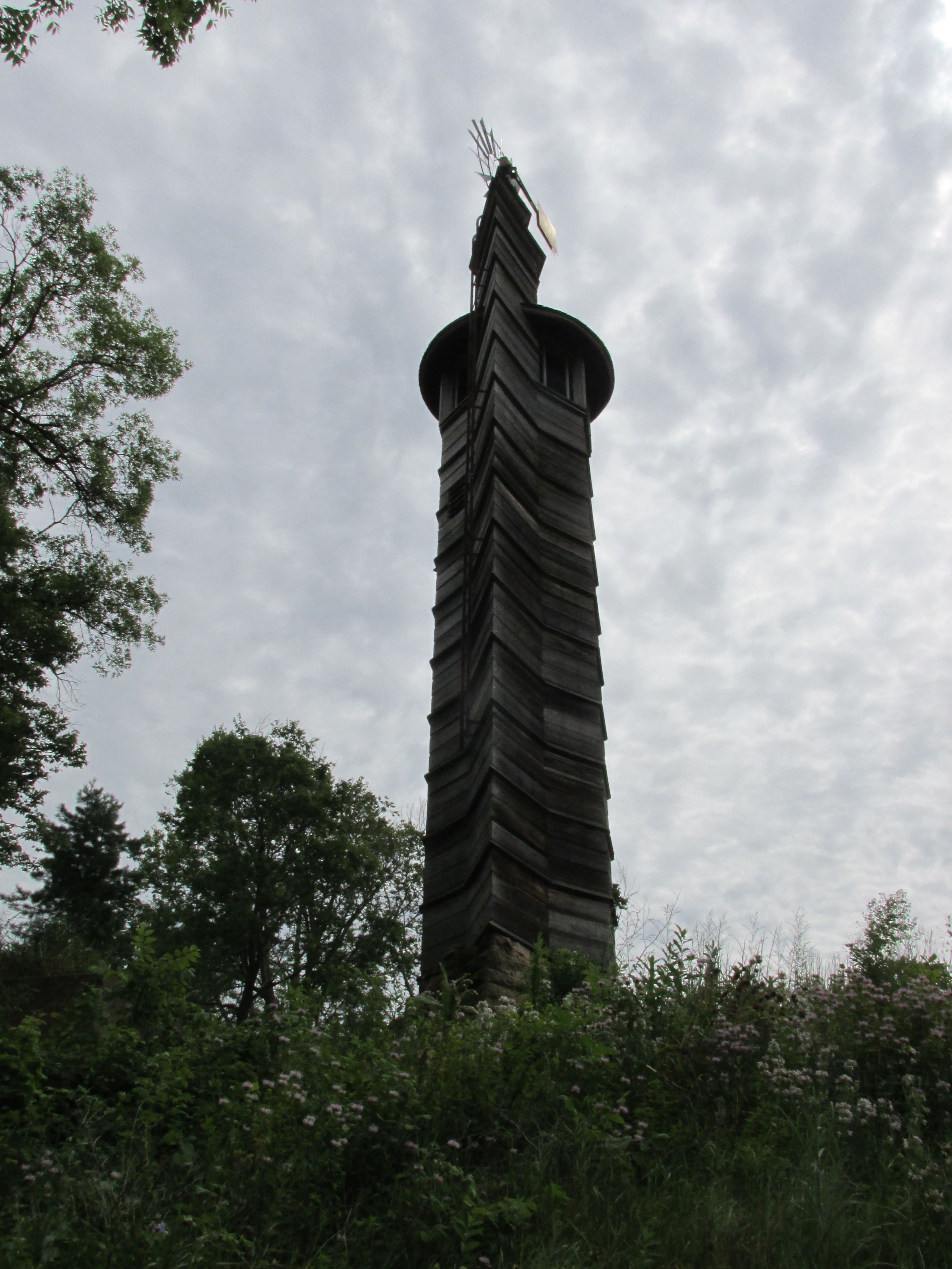
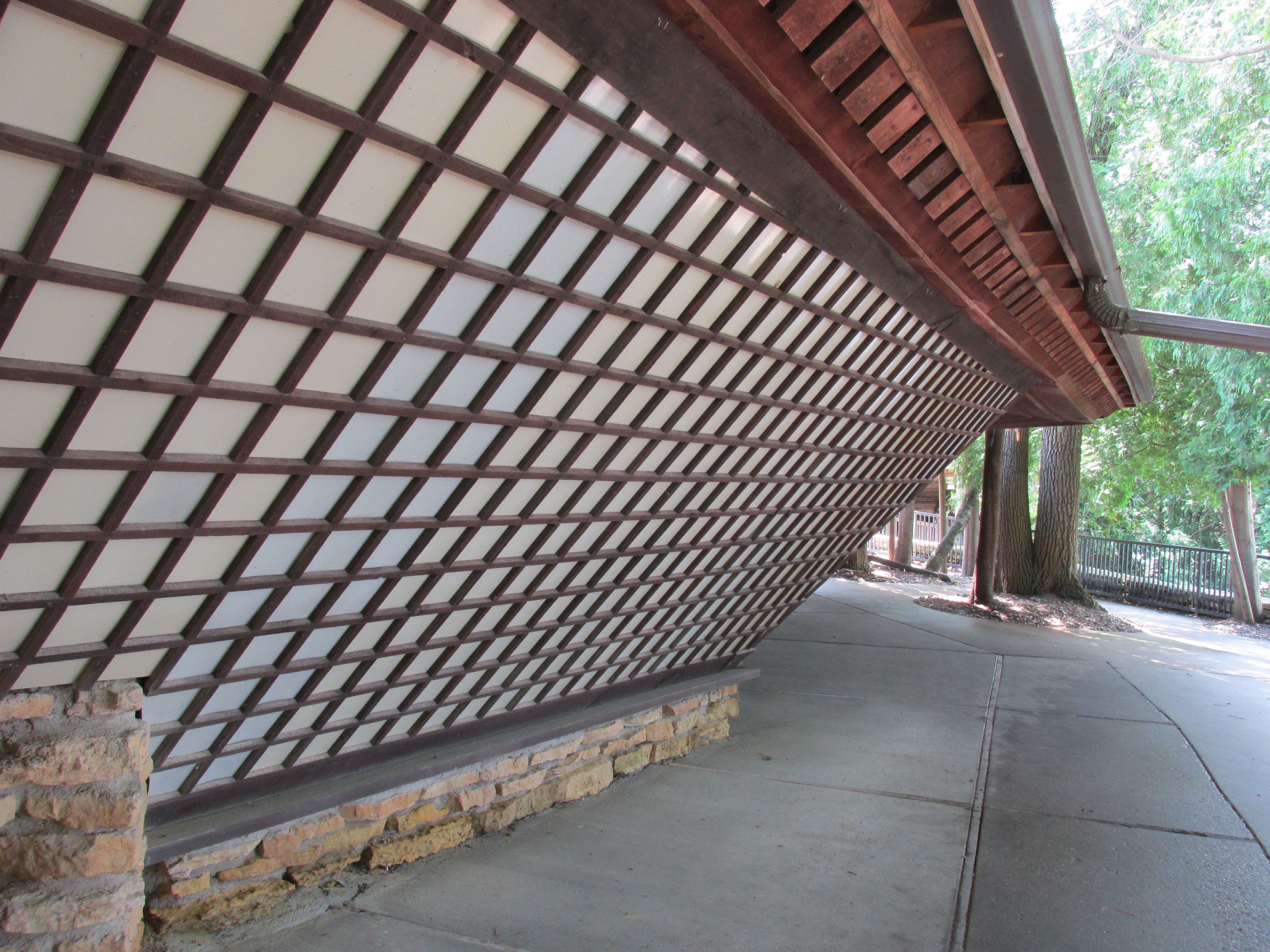
This side operated like the prow of a ship, facing into the prevailing direction of the wind. The wind pressure served to make the structure stronger.
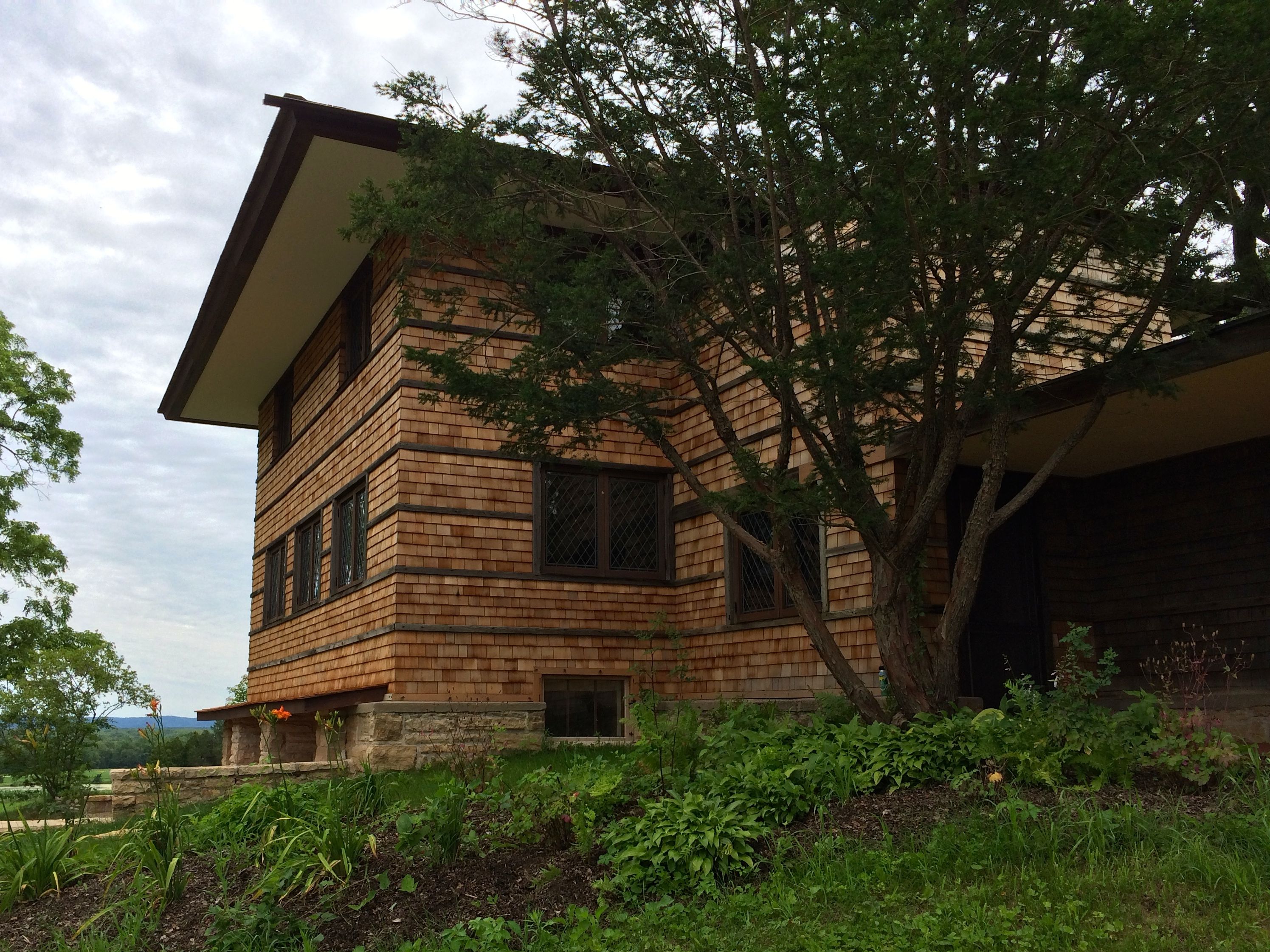
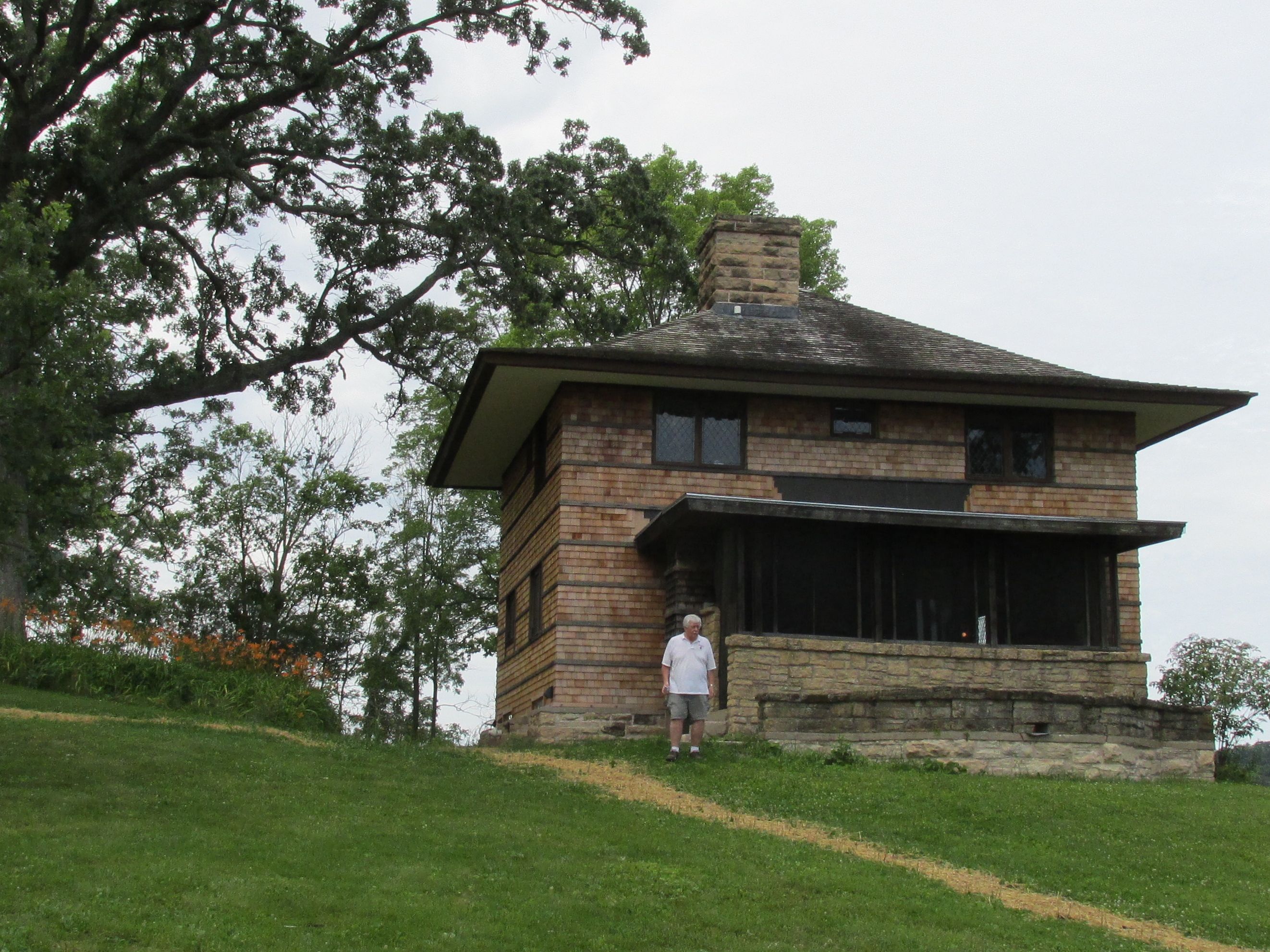
The next stop on our tour was Tan-Y-Deri, which Wright designed for his sister, Jane Porter, and her husband. The name is Welsh for “under the oaks.” She saw the design for his $5000 fireproof house that was published in The Ladies Home Journal in 1907 and wanted to build it. Wright refused. He told her that he would design a house that would fit the land.
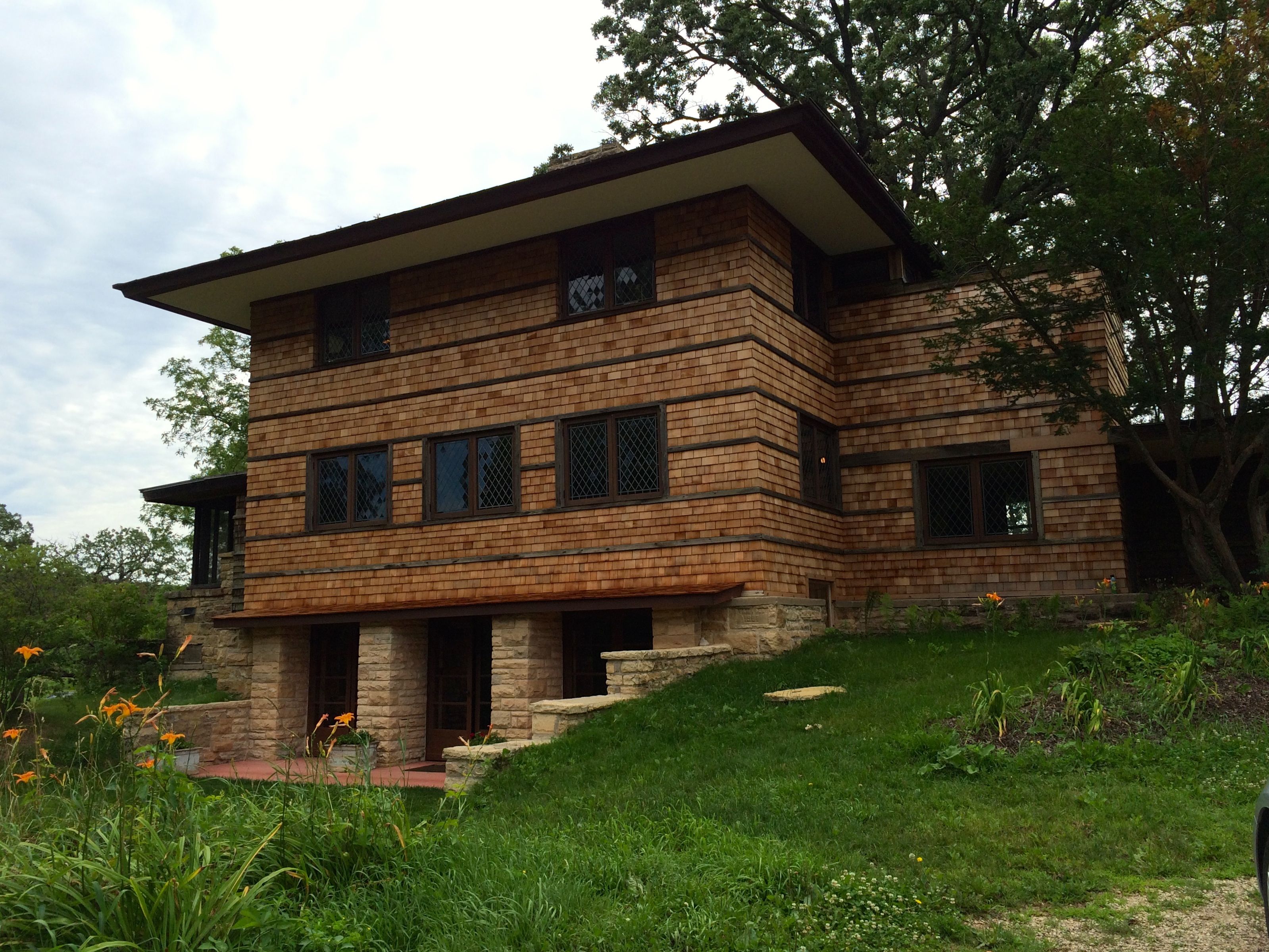
The family added an apartment in a mechanical area. Cyndi told us that Wright was incensed about the addition of the apartment, as it added vertical elements that disrupted the flow of the horizontal.
We were fortunate in that we were able to enter the public areas of the main floor. This is the first year it has been open for visits. Taliesin fellows live here – and in many of the buildings here. The preservations and renovation work is continuing, as it is with all of the buildings at Taliesin.
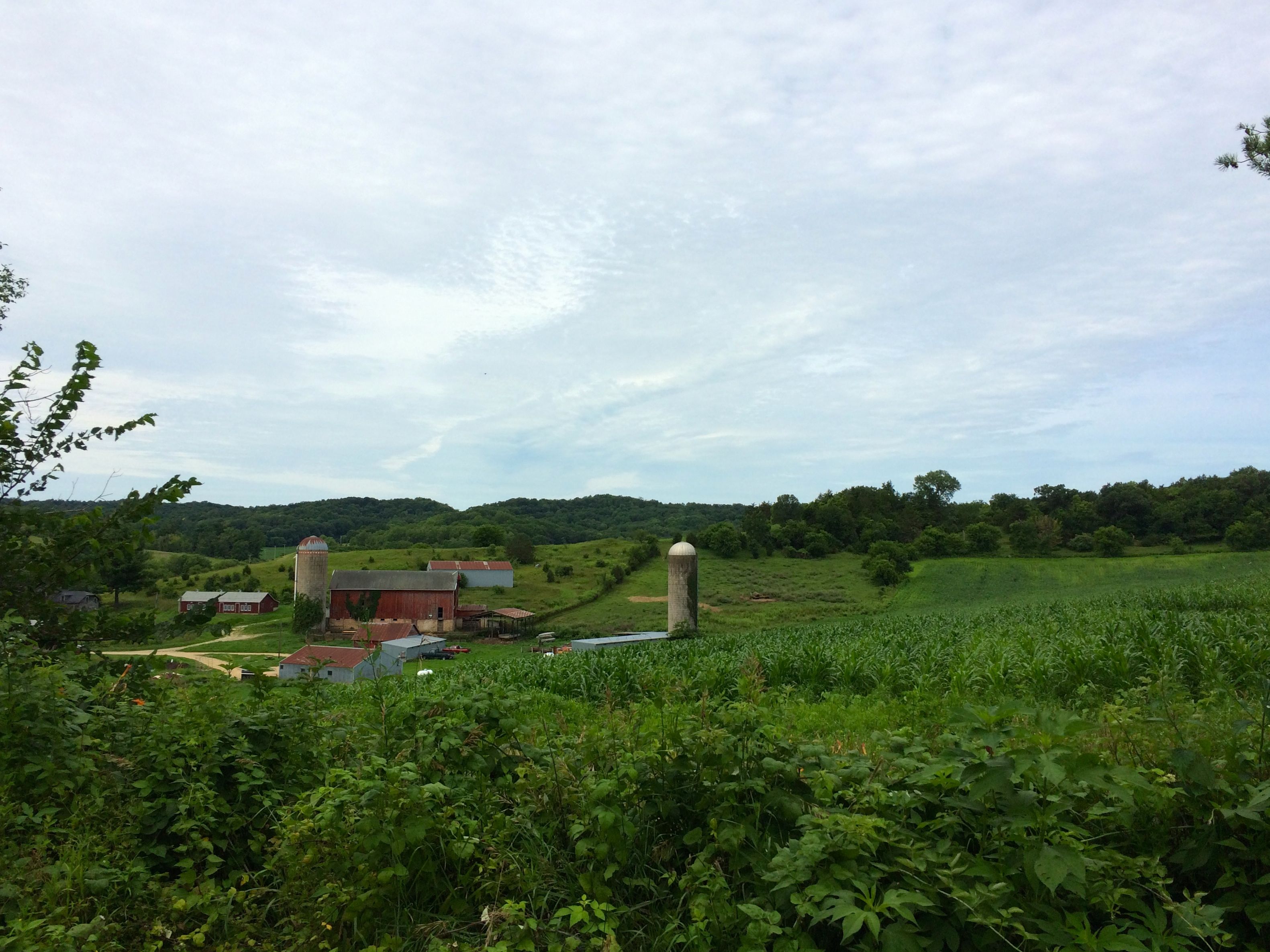
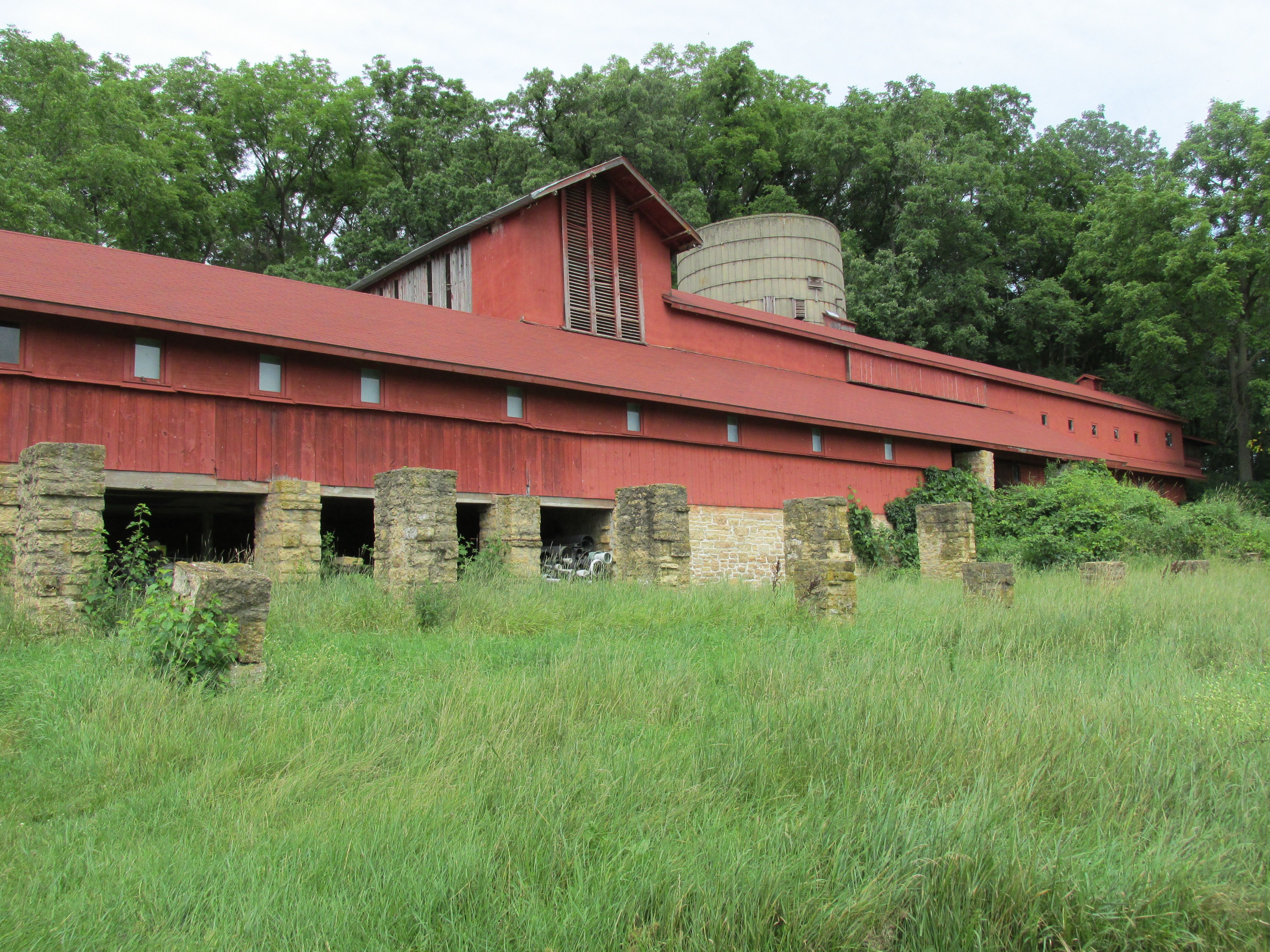
We continued on our track across the property. Next stop was The Farm.
It was difficult to get a view of the total. Wright had designed The Farm as a system where the farmers would be able to care for the animals without having to go outside.
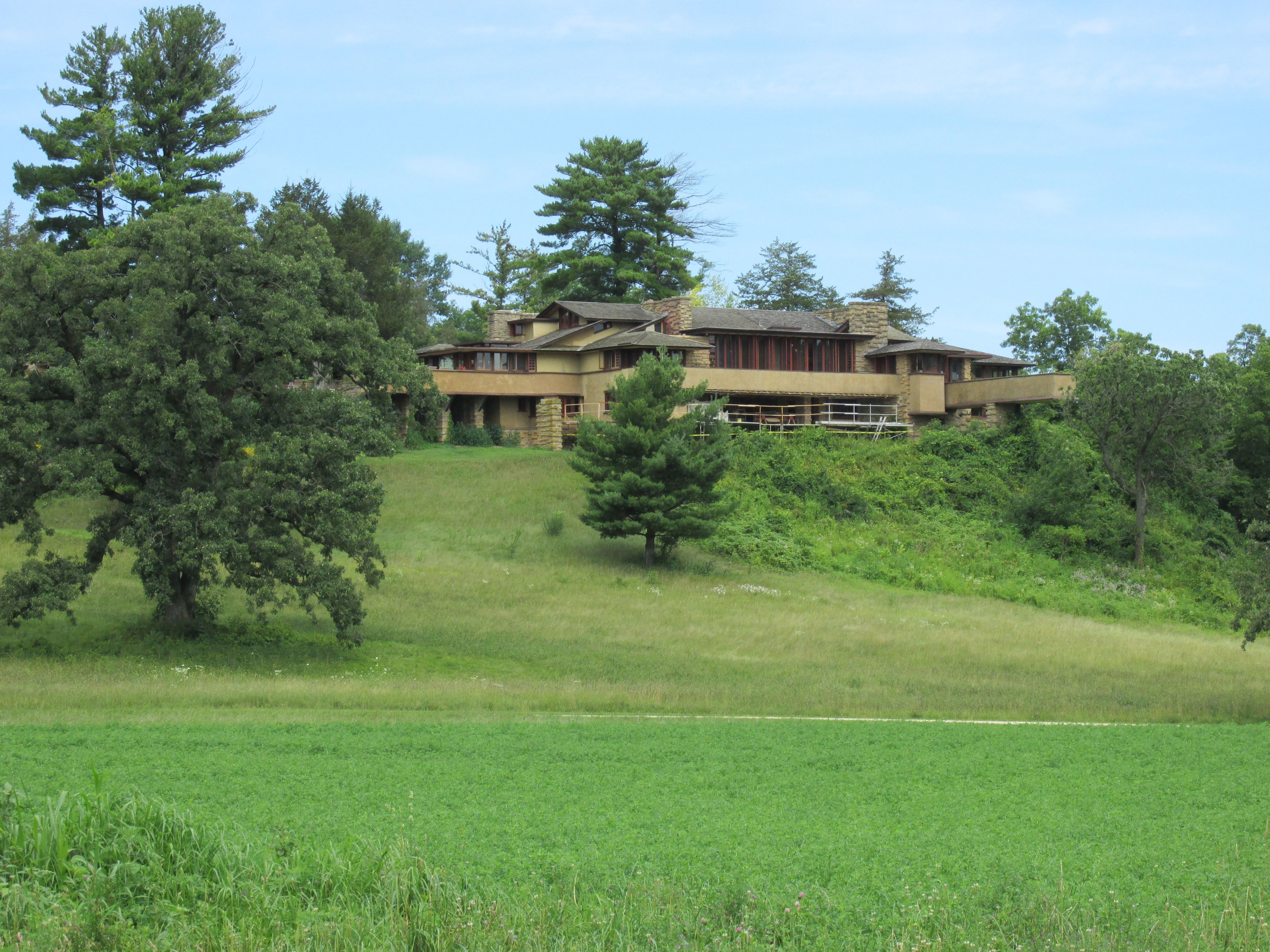
After The Farm, it was on to the main attraction: Taliesin!
After a couple of hours of cross-country trekking, we were offered a light refreshment on the patio.
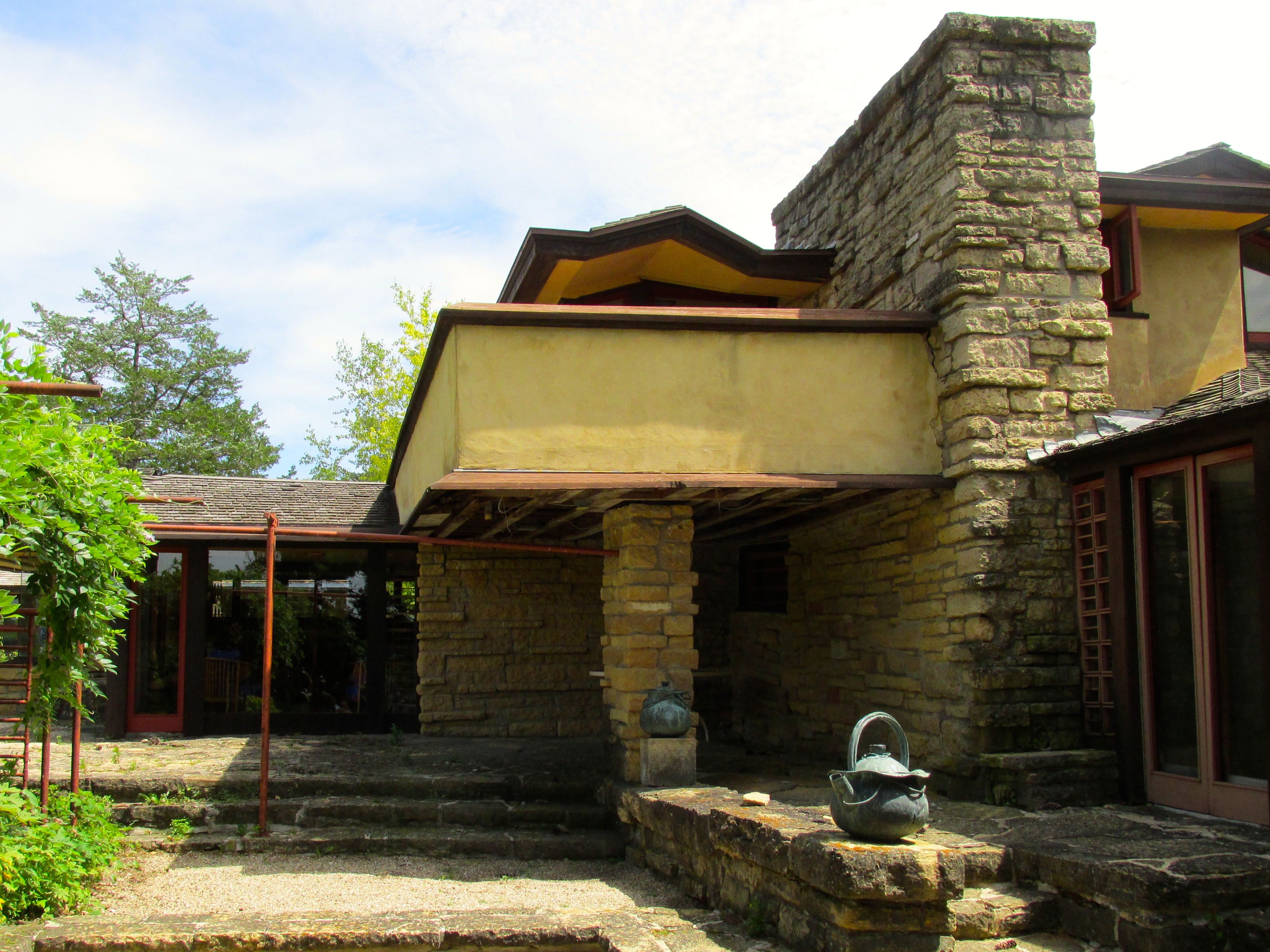
Taliesin is a Welsh name whig means “shining brow”. Wright placed his home on the brow of the hill, leaving the top of the hill open. The complex circles the top of the hill.
Wright started building Taliesin in 1911, and it went through two major revisions, as well as many smaller ones. Again, his “build it for today and let the future take care of the problems” has caused the Foundation many preservation issues, which they have handled and are continuing to address.
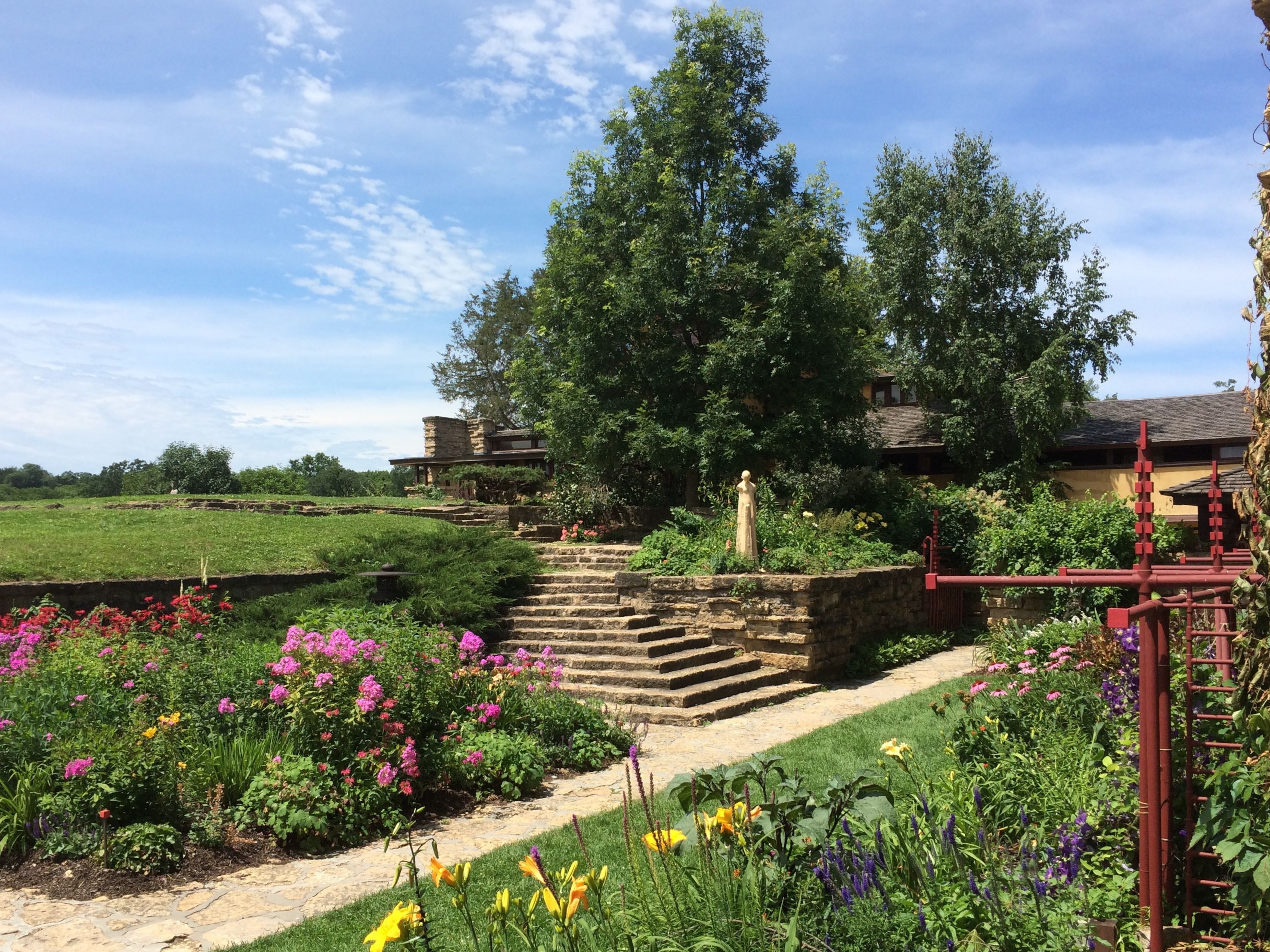
Here you can see the crown of the hill and get a feeling for the manner in which the building encircled it.
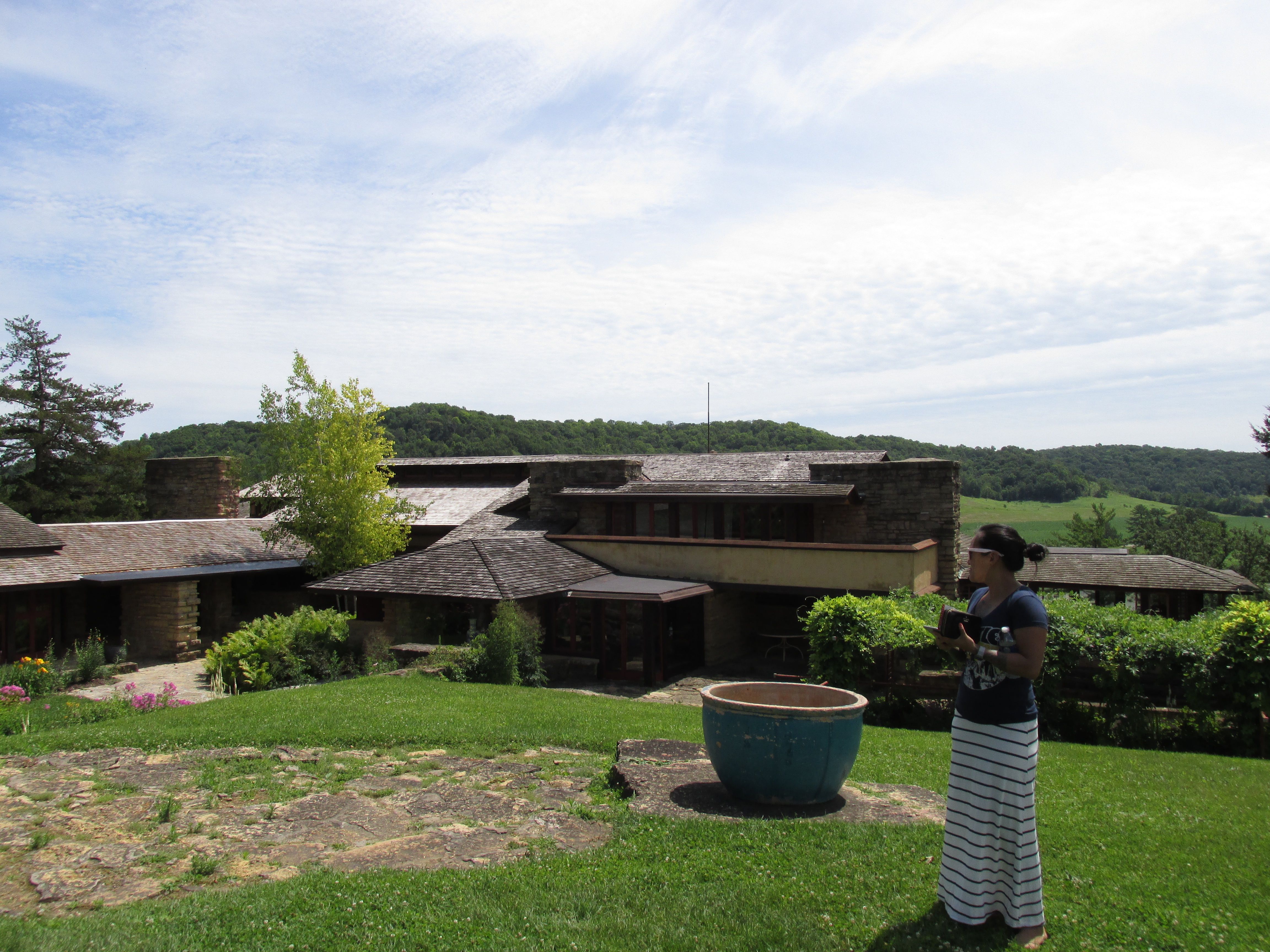
The woman in this photo had just gotten married at Kentuck Knob, another Wright building. It is located in Pennsylvania, not too far from Fallingwater. I didn’t ask, but I got the feeling that she and her husband were on a Frank Lloyd Wright-inspired honeymoon.
I learned many things I didn’t know about Wright and his work during this tour. One of the things I didn’t know was that Wright had designed his home to be as self-sufficient as possible. We’d already walked past The Farm. During the tour of Taliesin, we saw some other features that showed that desire for independence and self-sufficiency.
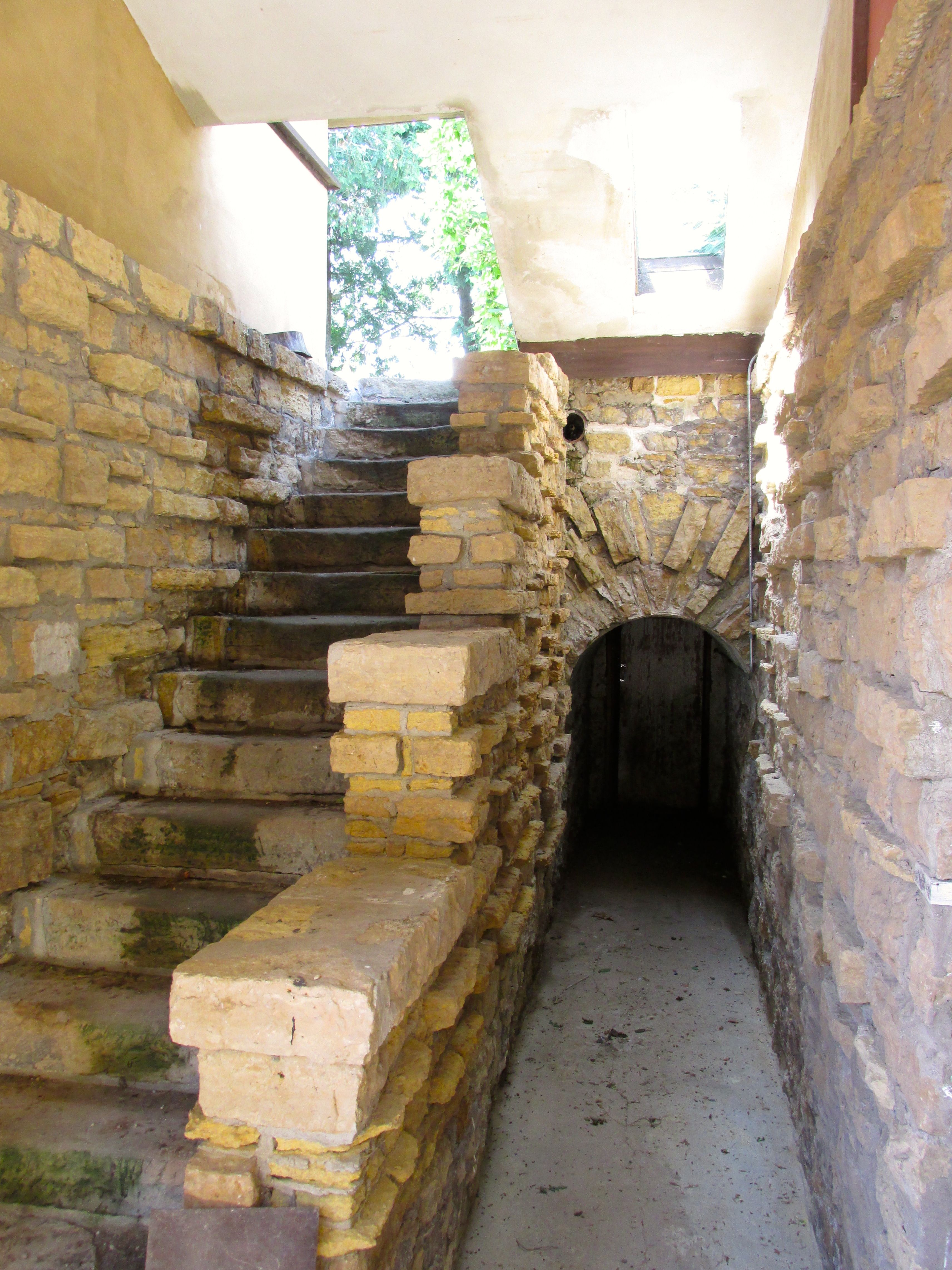
I was struck by the arched doorway. I’d never seen something like that in a Wright building. But, it was just in a utility area.
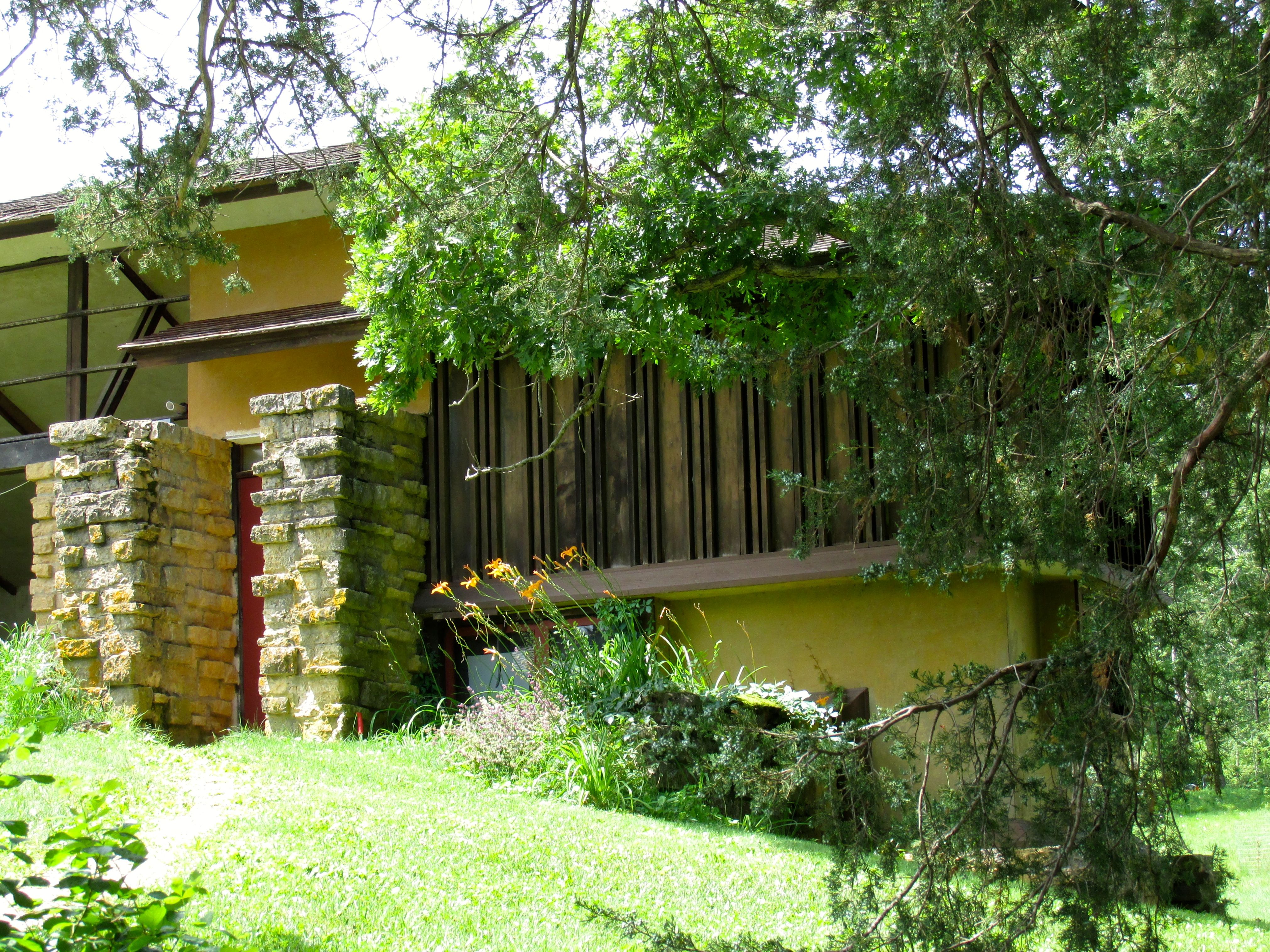
Another was this apartment that houses one of the Taliesin Fellows. The call it The West Wing, but it is not as grand as television’s The West Wing. It was built in the pig pen! Pretty nice digs!
When the property was handed over to the Foundation, provisions were made for the Taliesin Fellows who had worked with Wright to be able to live there for the rest of their lives. The eat with the students in the dining hall at the school and are included in all aspects of the community life. I think that is wonderful!
Another thing that I learned – although I might have figured it out, had I thought about it – was that this building was begun in the era of horse and buggy and was worked on and revised right up to Wright’s death in 1959.
That meant that the building changed to accommodate the technology.
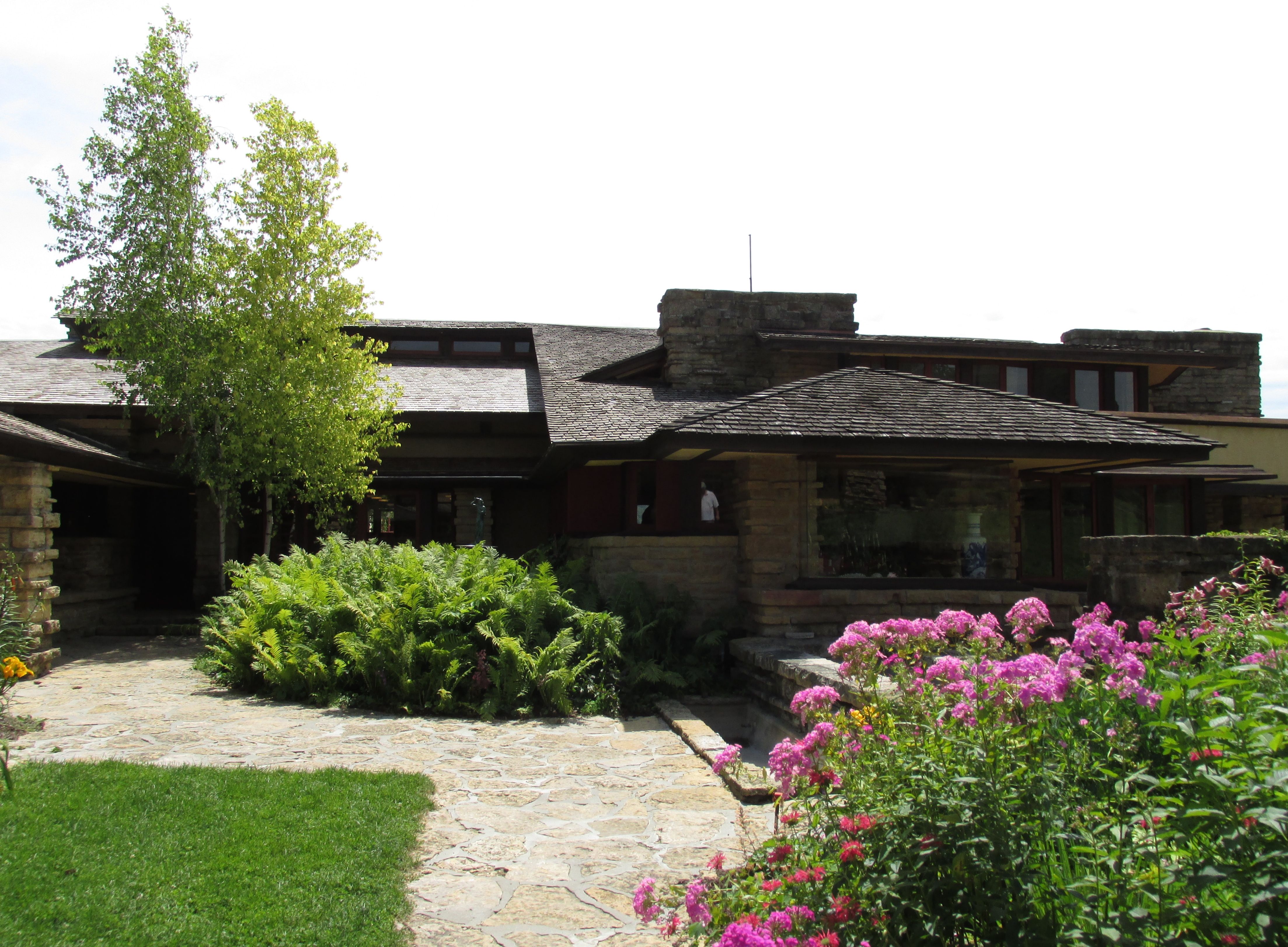
If I understood Cyndi correctly, the main entrance used to be via a porte cochere that was under that triangular shaped roof. When people stopped using horses, he rerouted the traffic to the back of the house where he put in stalls for cars. He filled in the former porte cochere to bring the floor level up and build a meeting area with a tremendous view of the courtyard and the land around it. The corners are mitered glass so that the sense on indoors and outdoors would be undetectable. Cyndi told us that he built this area to pitch his ideas for the Guggenheim Museum in New York City.
Apparently, this is a good strategy for getting a job – IF you are Frank Lloyd Wright. I think the rest of us had better stick to resumes.
And, if you are an architect, and you enjoy indulging your children, why not build them something? It the above photo, to the right and just under the roof is the APARTMENT he built for his you daughter. Some kids want tree houses or play houses – she wanted an apartment, and that is what she got, complete with guest bedroom and sitting area.
There are remnants of old technology here and there, however.
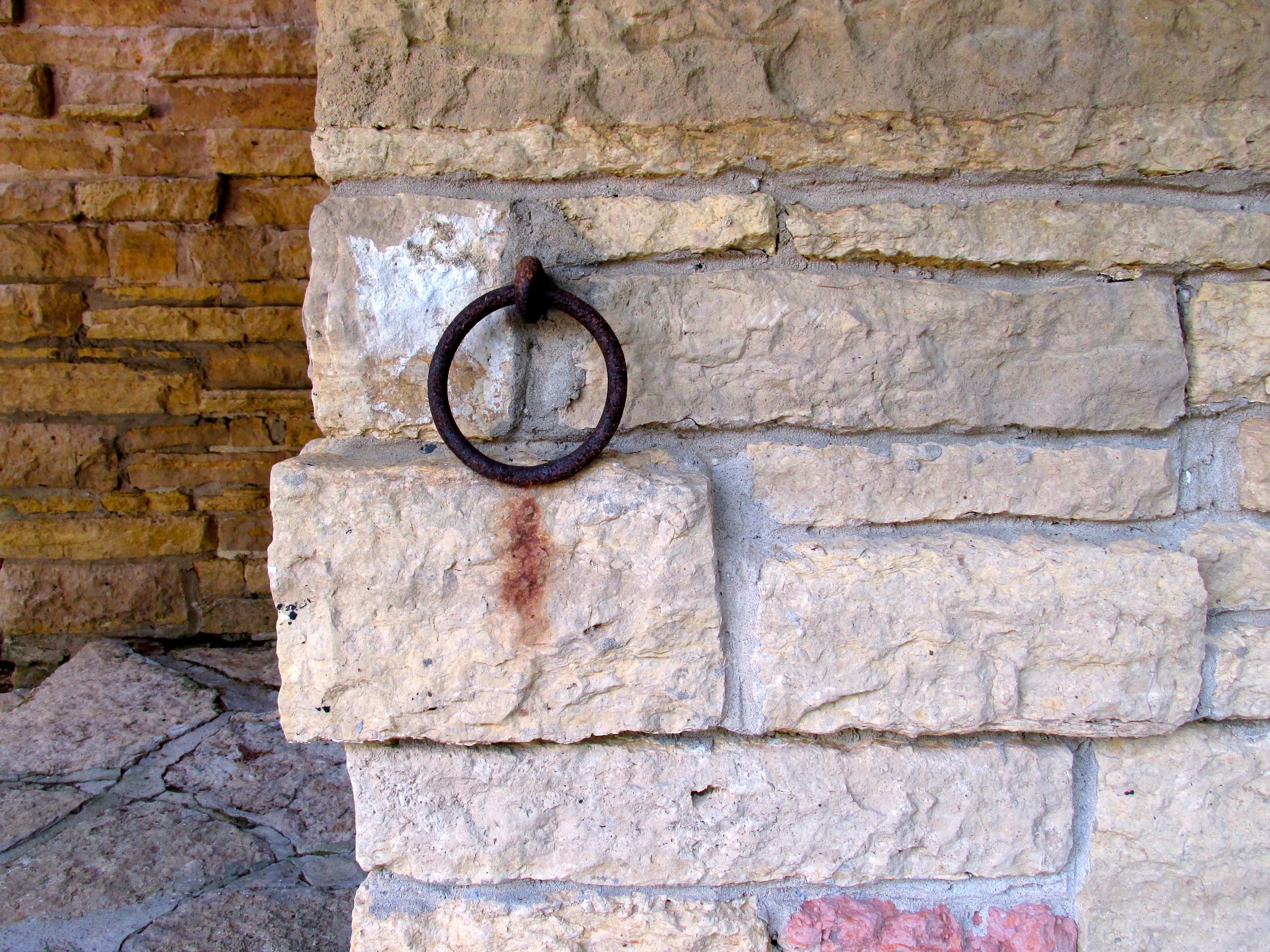
I didn’t manage to take a picture, but Wright even generated his own electricity for a time. He dammed a stream and built a generator that was topped with a Japanese pagoda, according to Cyndi. A flood took it out in the ’40’s, if I remember correctly. The dam still exists and water is still flowing over it.
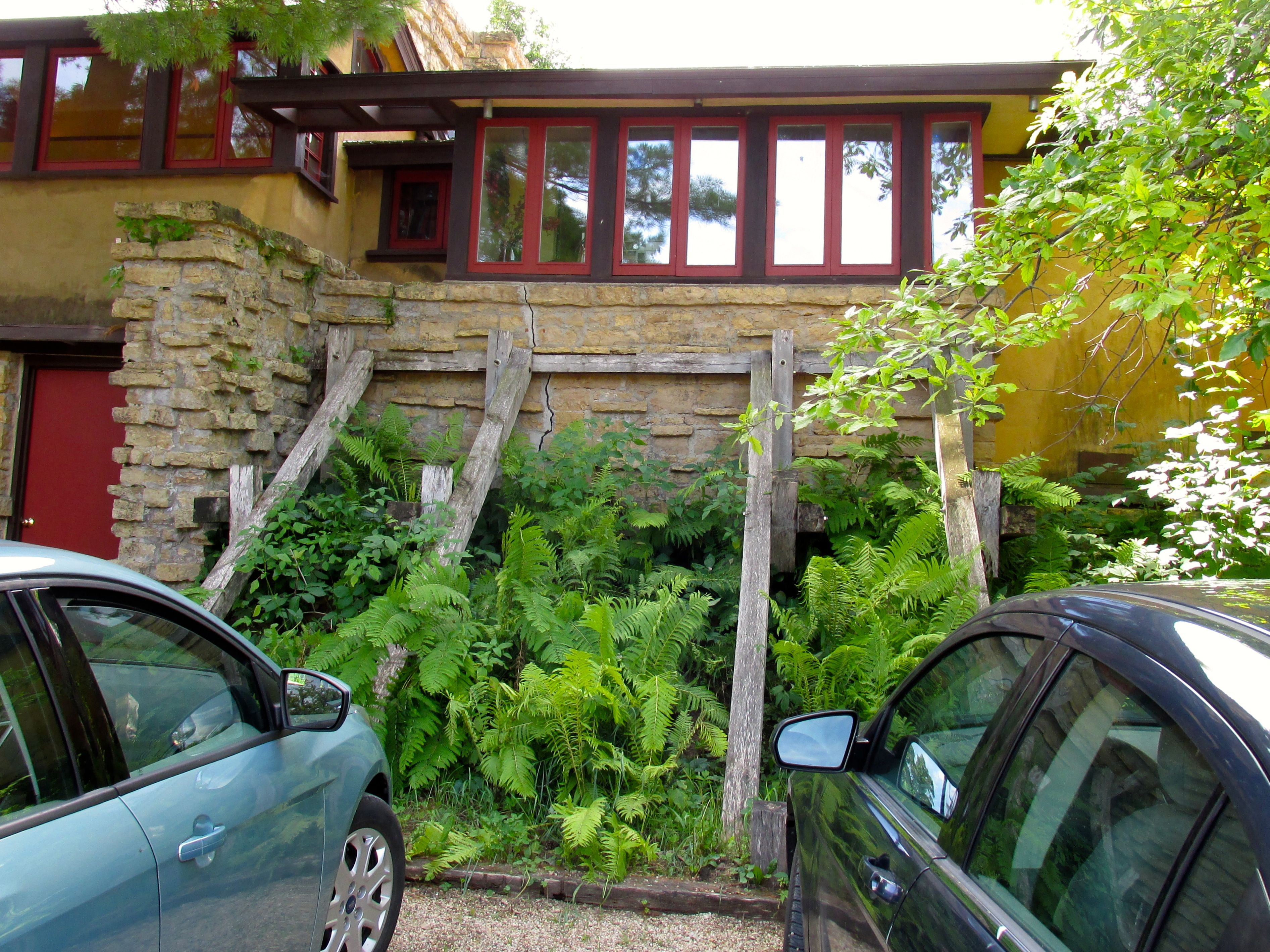
Time is catching up to this lovely building. Repairs need to be made constantly. This is an apartment where a Taliesin Fellow currently resides. They are doing Just enough work to keep the structure sound. When the time comes, they will do major preservation work.
It makes me wonder what percentage of the building failures are due to Wright’s tendency to build for the present and let the future solve the problems down the road, what is due to deferred maintenance due to lack of funding and what is due to the fact that Wright’s buildings are old. It’s hard to remember that they are old when they look so modern.
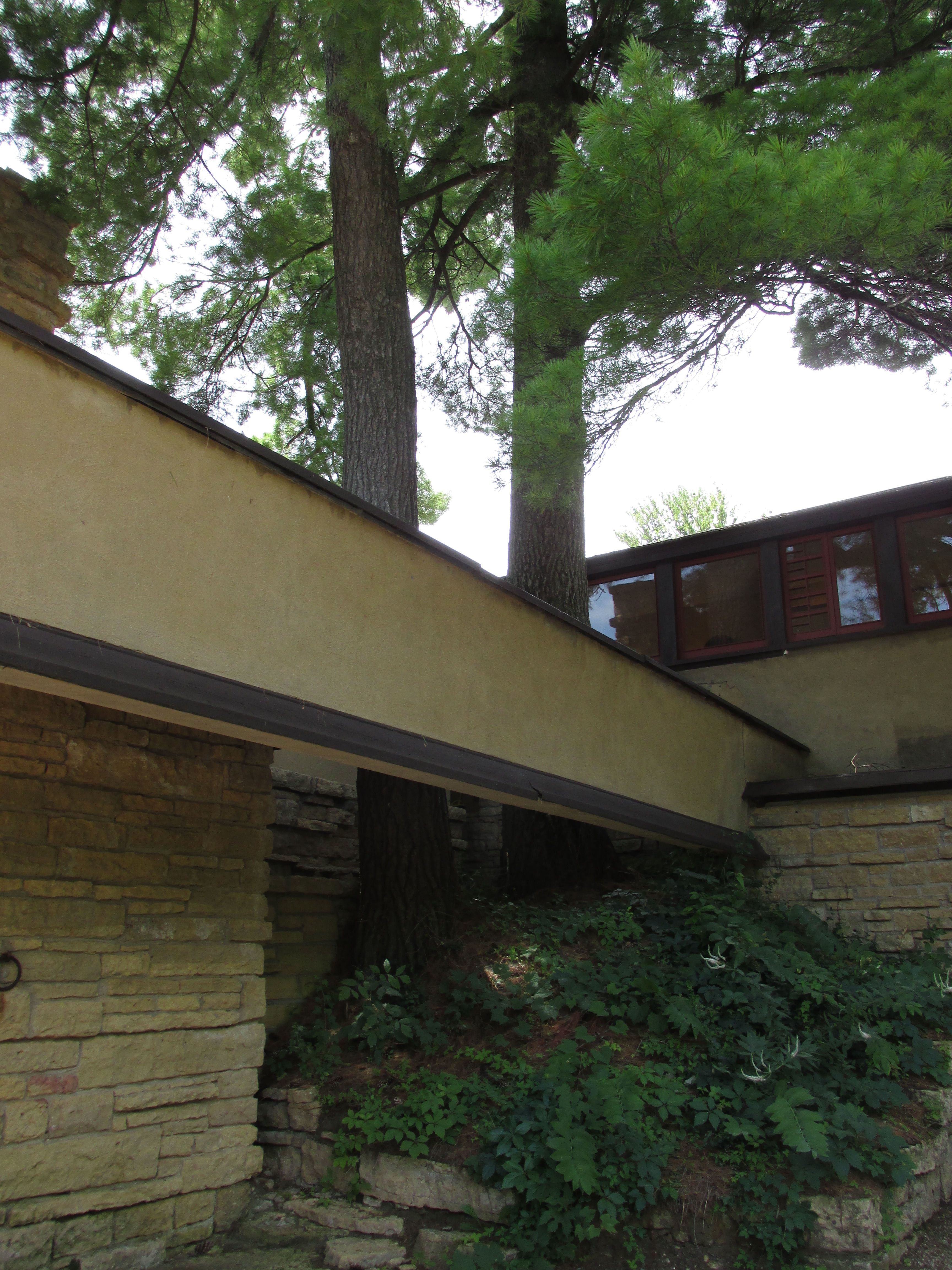 Wright built around these two trees. It looks good from this side, but on the other side, you can see that the roots are pushing walls over.
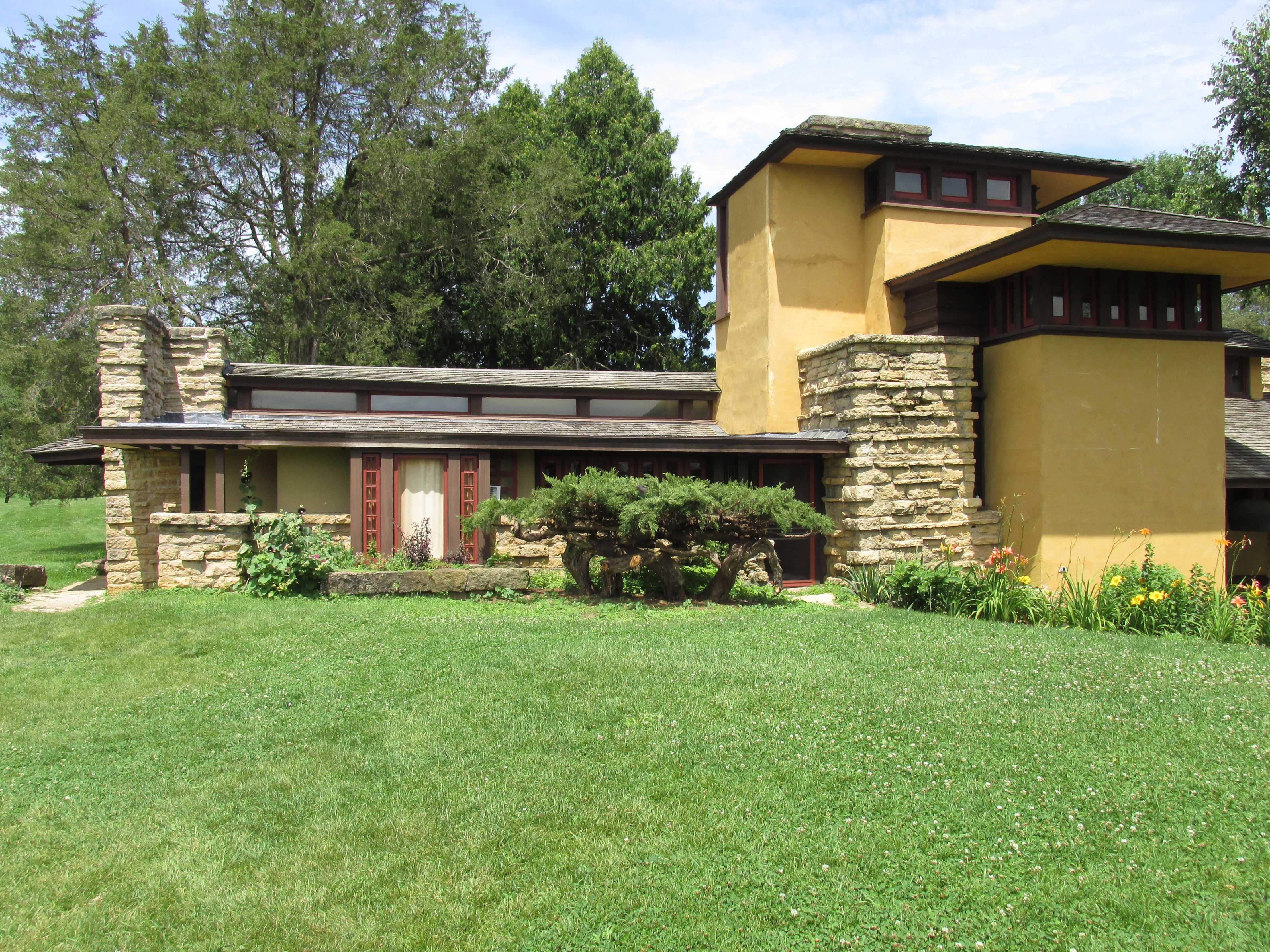
Still, what a wonderful building!
At the end of the tour, we got to put on little booties over our shoes and experience Taliesin from the inside. Of course, I have no photos to share, but it was lovely. We are able to enter areas that had been closed for years. Preservation is ongoing, and we got to enjoy the fruits of their labors.
Another thing I found interesting and amusing was that Wright ordered upholstered furniture from Marshal Fields for his house. He insisted on designing furniture for his clients that many found uncomfortable. He didn’t hold himself to the same standards.
And then it was time to go. We slid off our booties and exited the building.
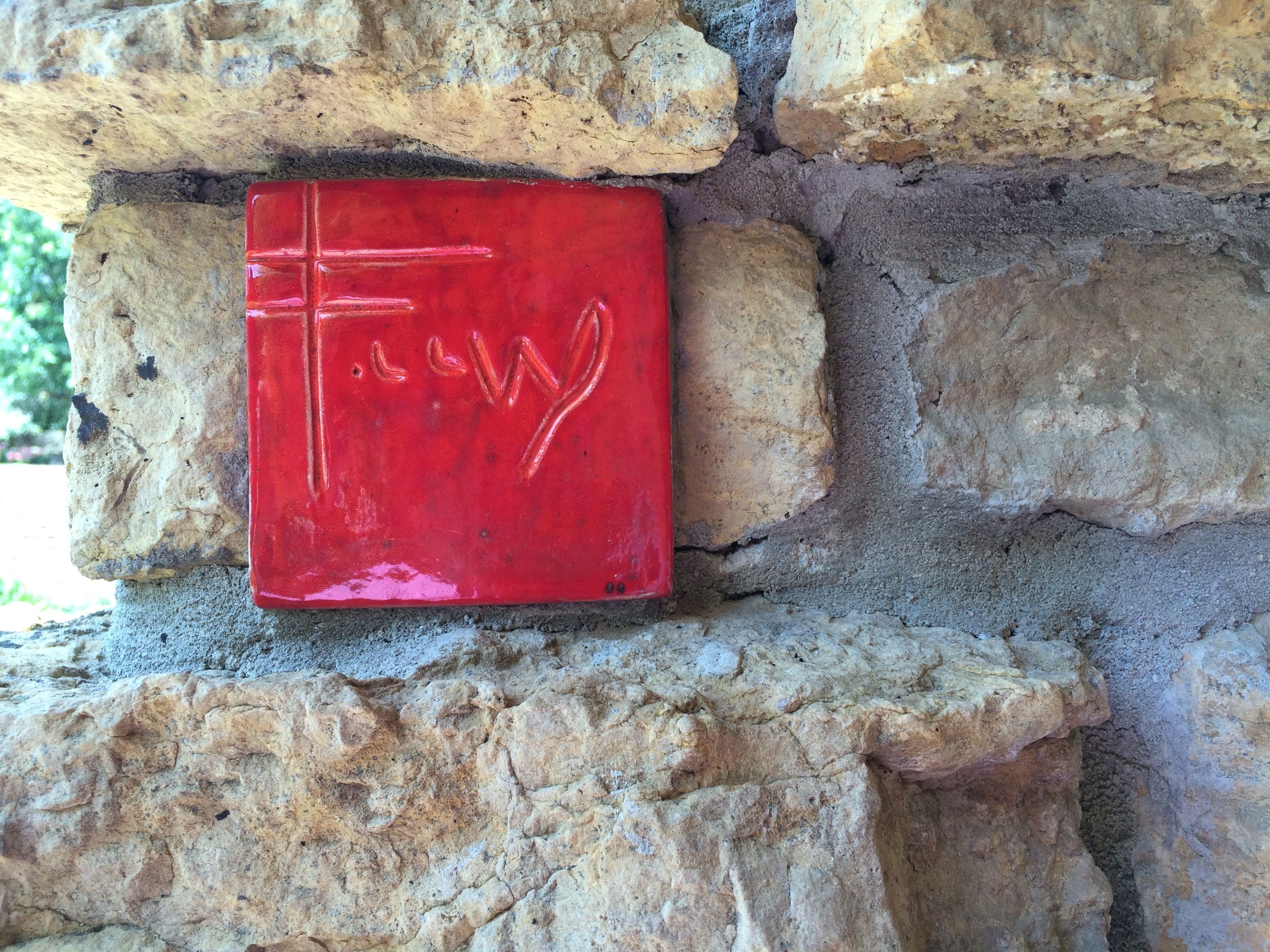
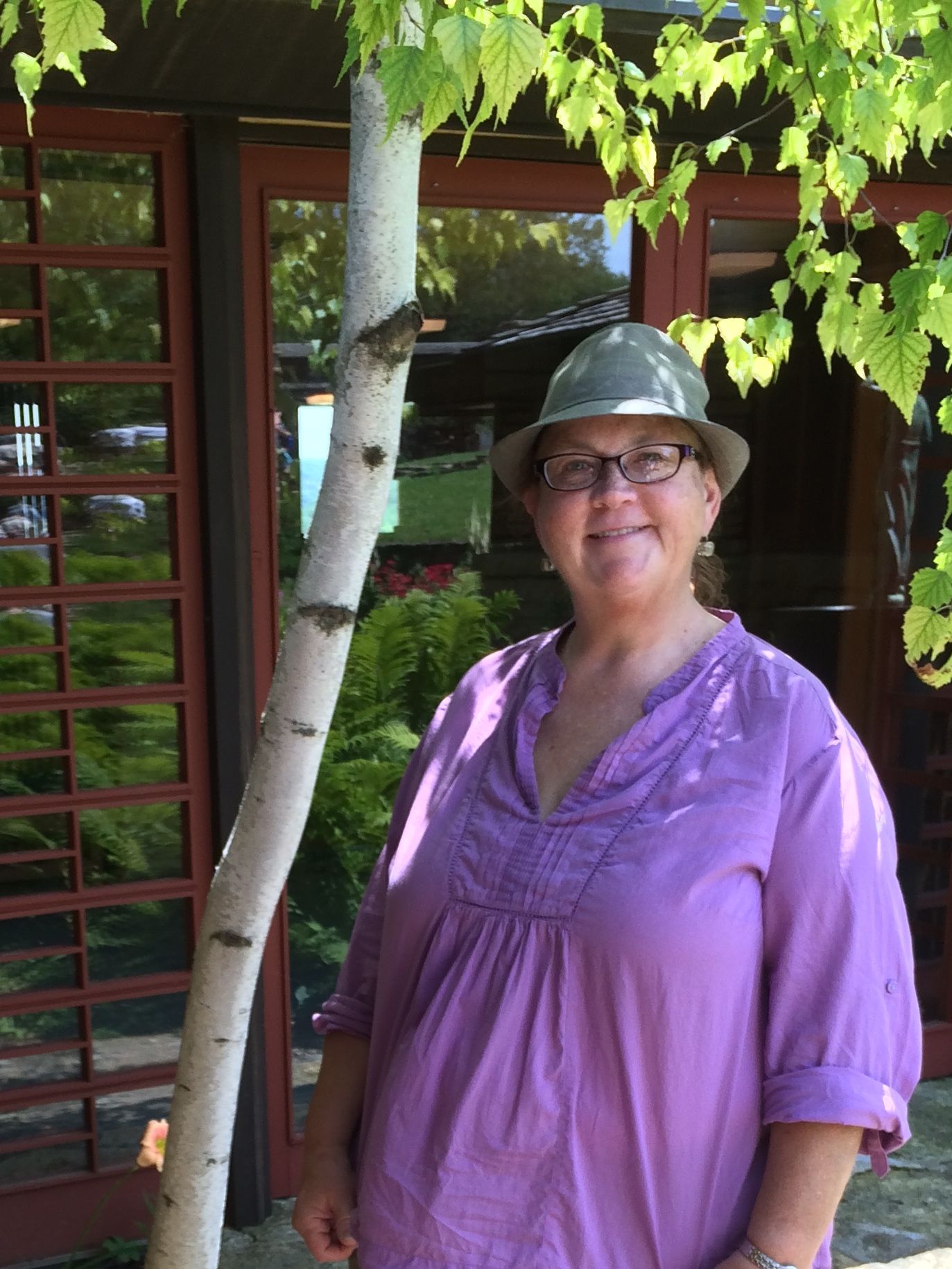
We got back into the little red Taliesin bus and headed back to the Visitor Center.
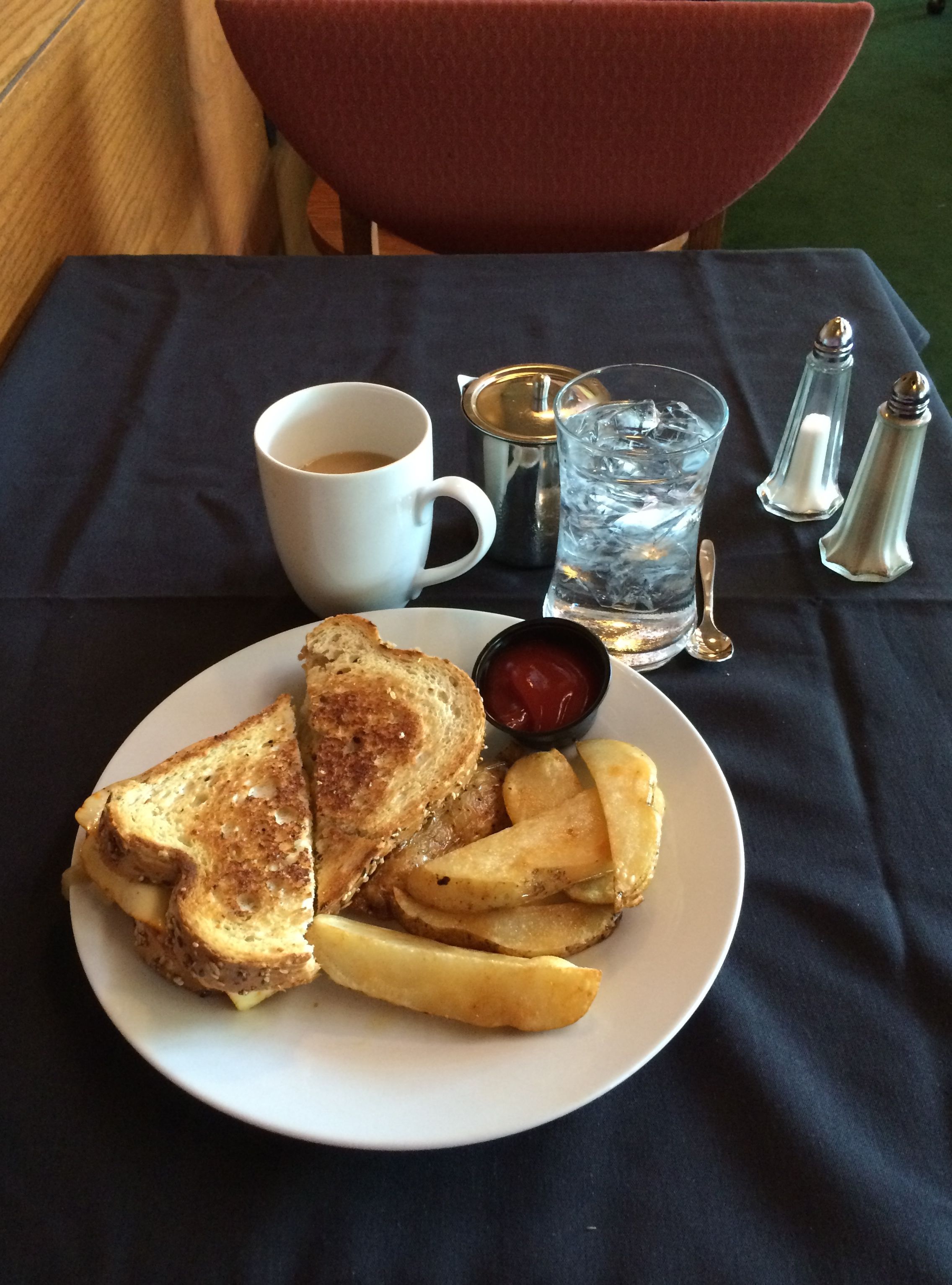
Where I had lunch.
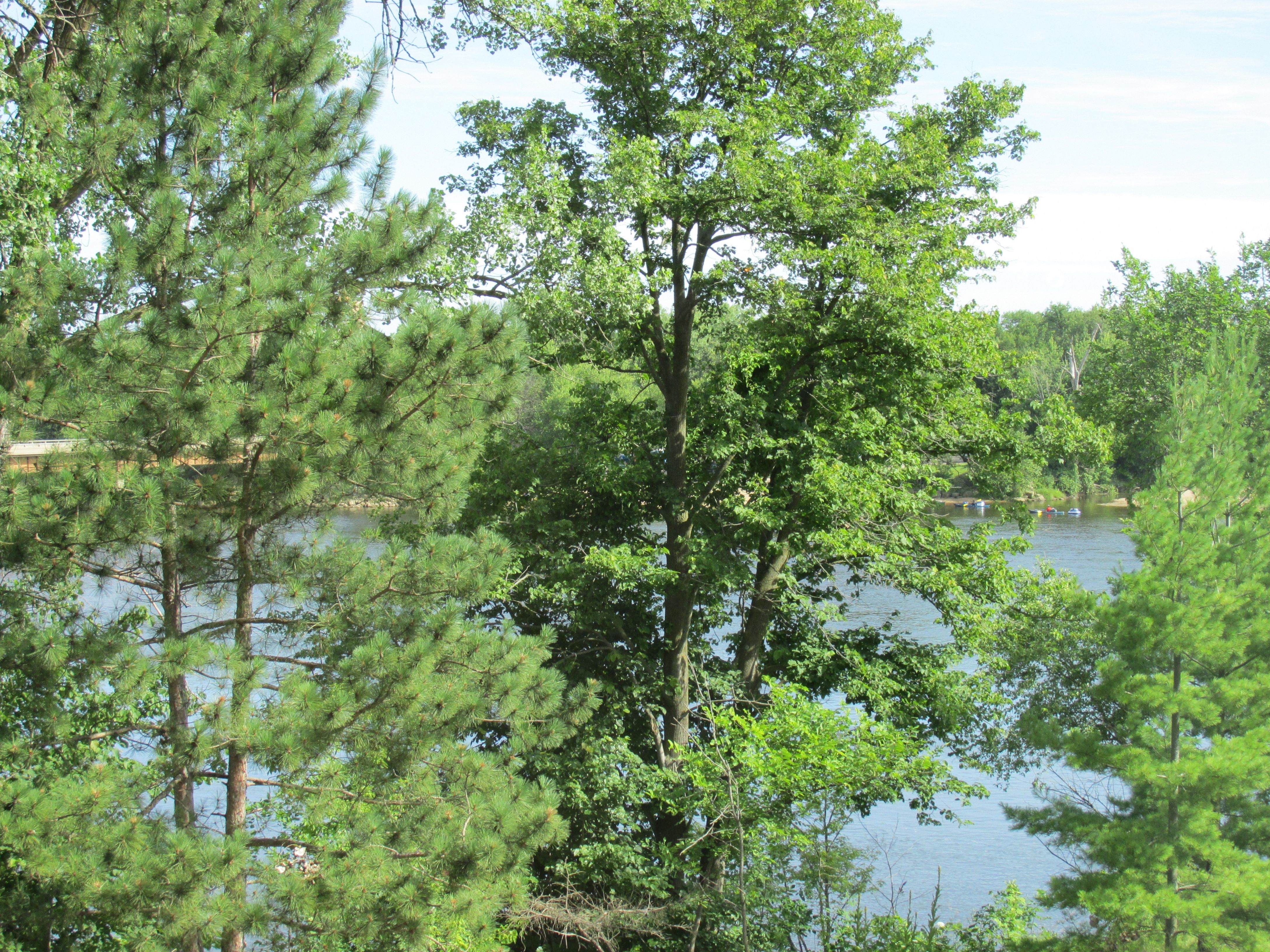
And a view.
Next stop: Racine, Wisconsin.