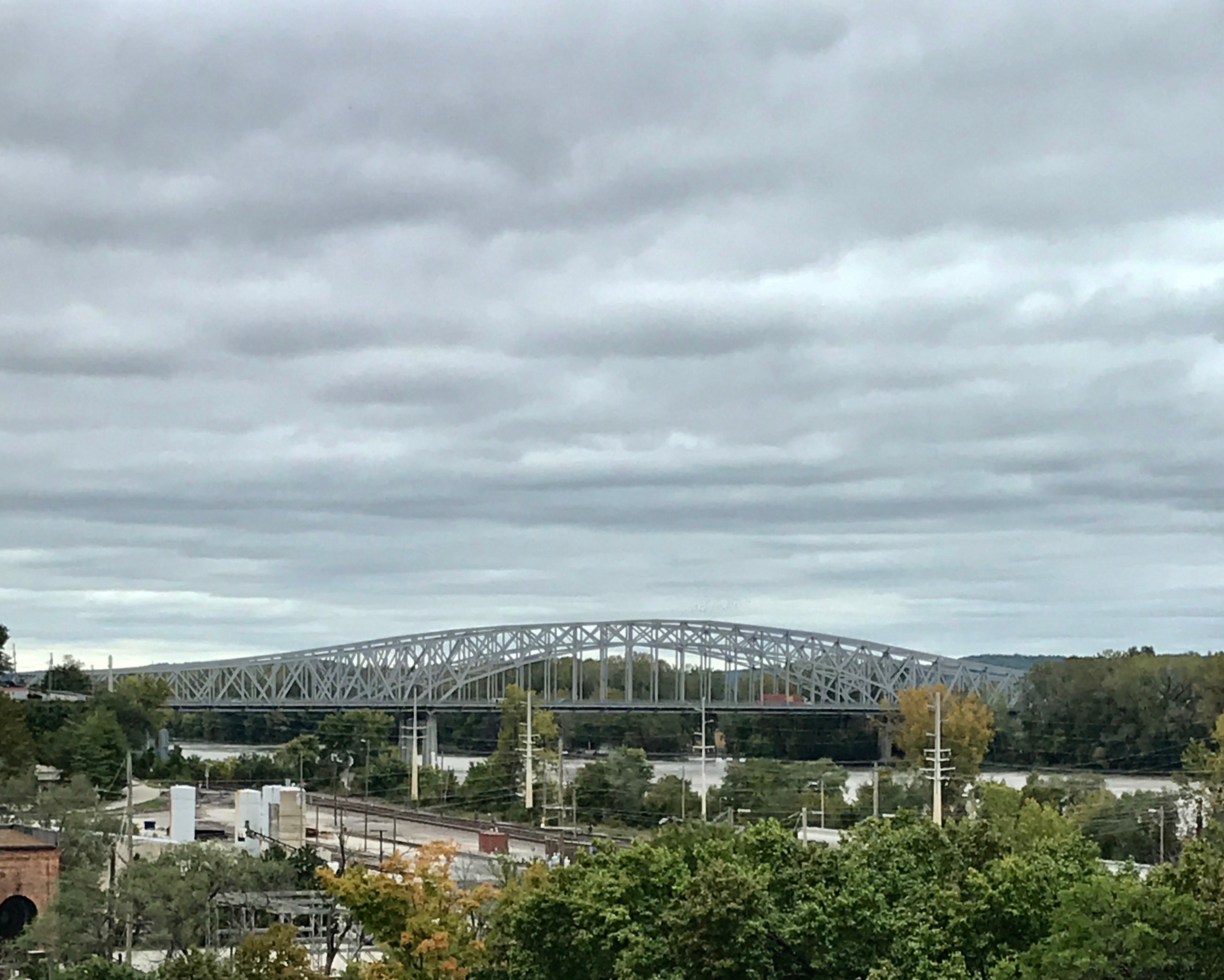
Next Stop: Montgomery (April 2019)

After taking my leave of Scott and Lesley in Phenix City I headed west to Montgomery, Alabama. It was an easy drive, less than two hours down the road. I had planned a couple days in the city. My first day’s exploration took me to the State Capitol.
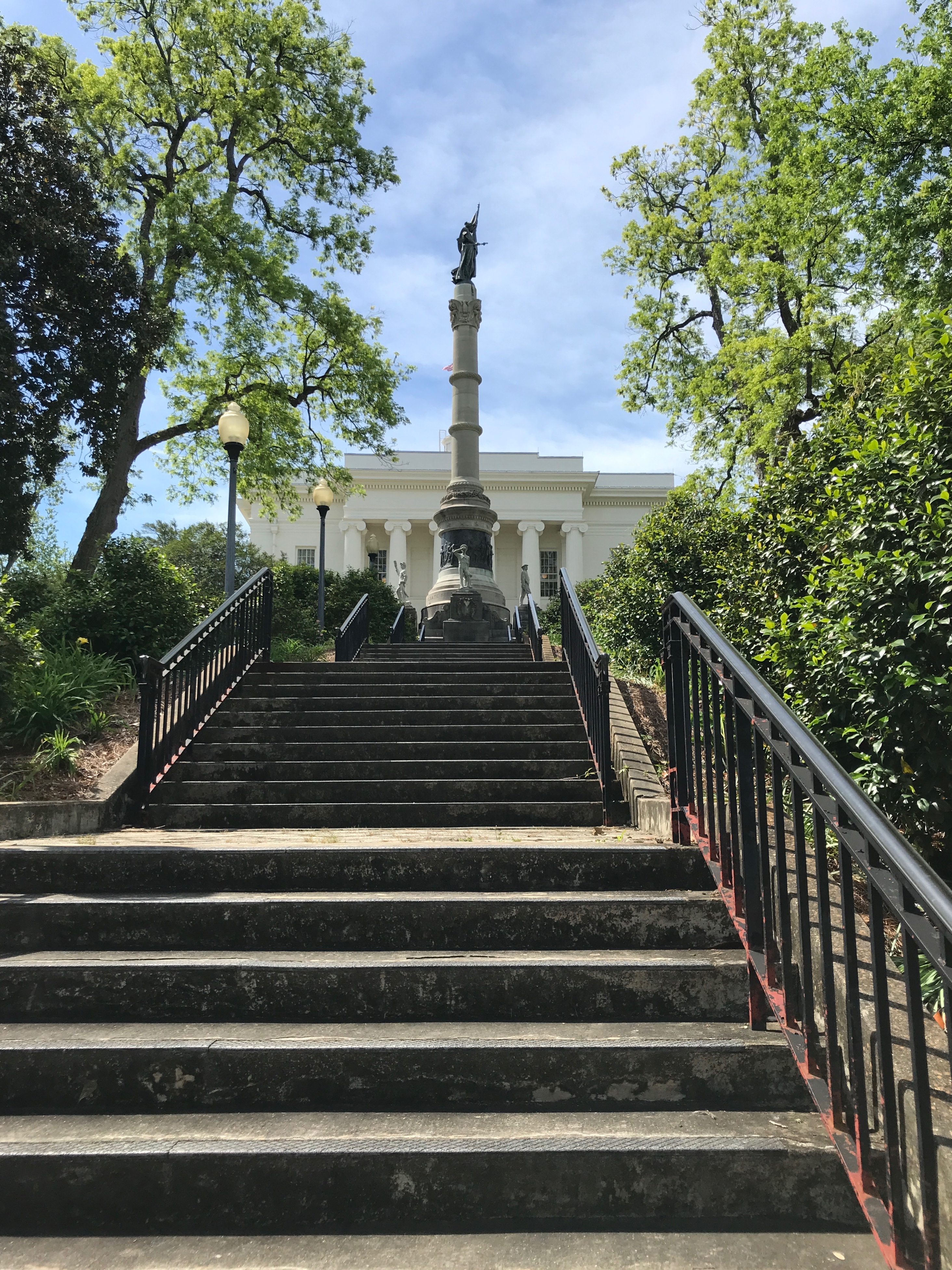
I found a place to park and started up.

“UP” being the operative word. What is with all the steps at state capitols?
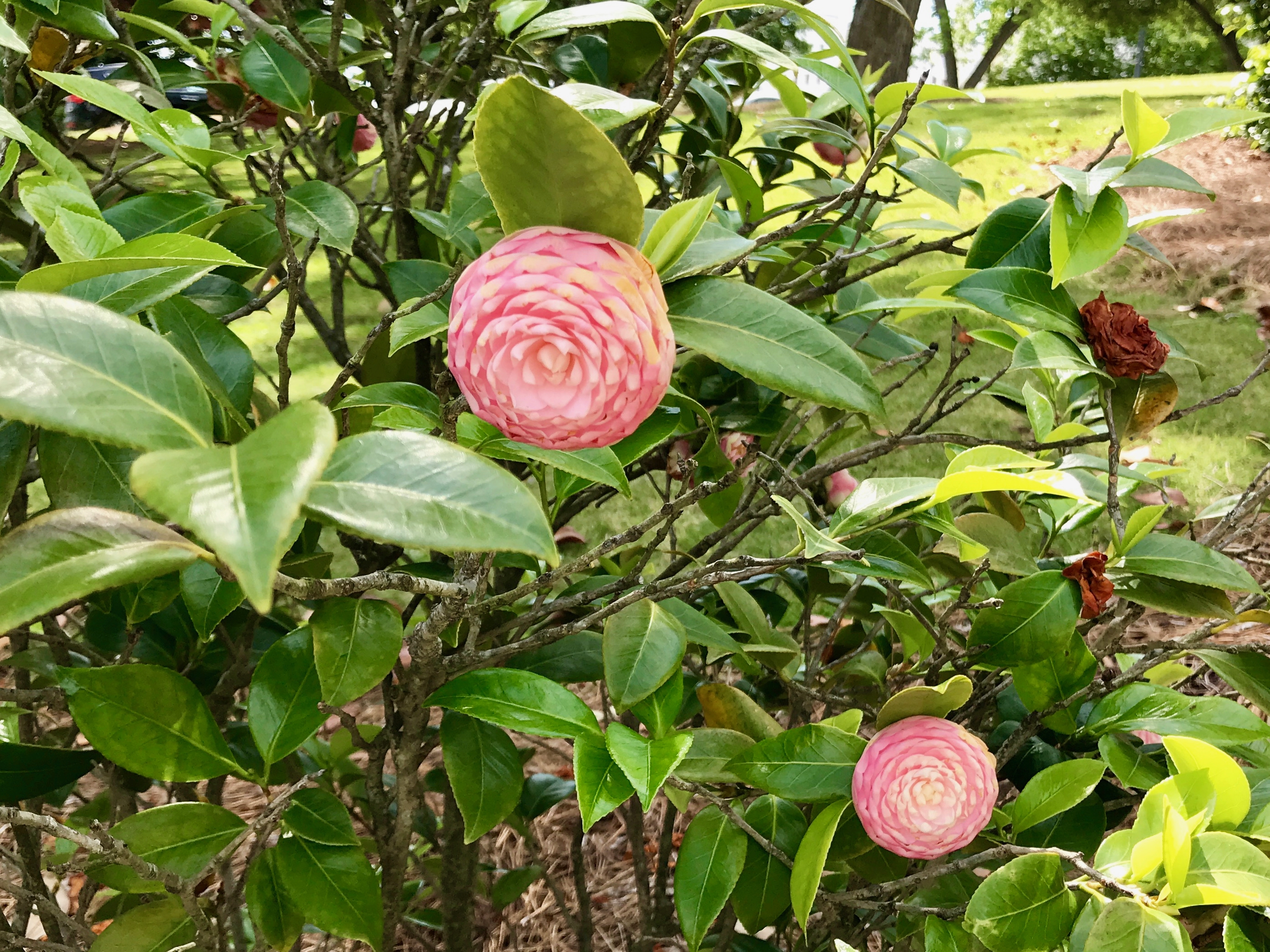
Along the way, I passed the state flower, the camellia.
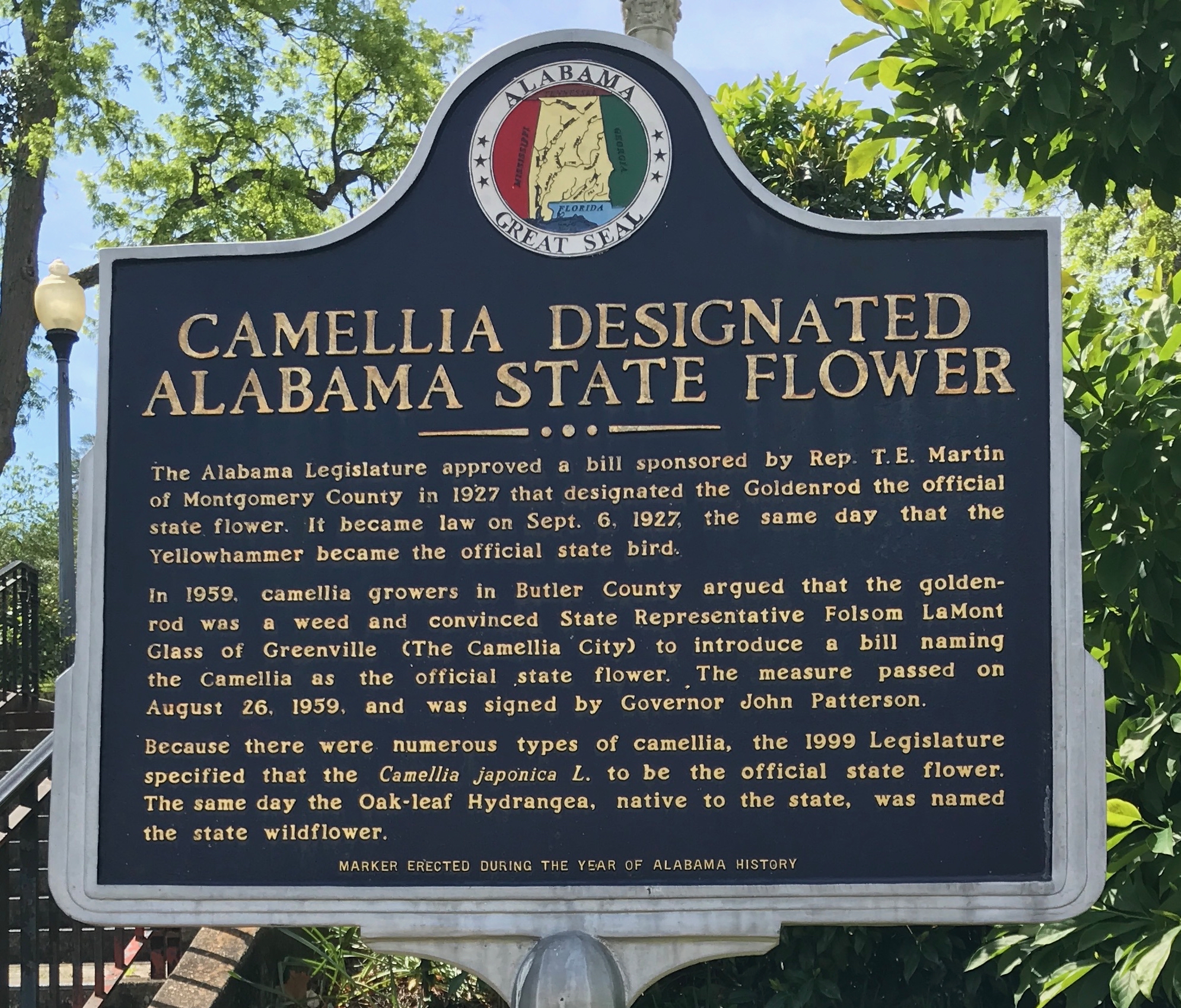
I thought it was interesting that the first flower that had been designated as the state flower was the goldenrod. If you read the sign, you can see that the goldenrod was chosen in 1927. In 1959, the camellia growers of Butler County convinced a state representative to introduce a bill naming their product as the official state flower. It was adopted and the camellia became the state flower and the oak-leaf hydrangea became the state wildflower.

Poor goldenrod was left out altogether.
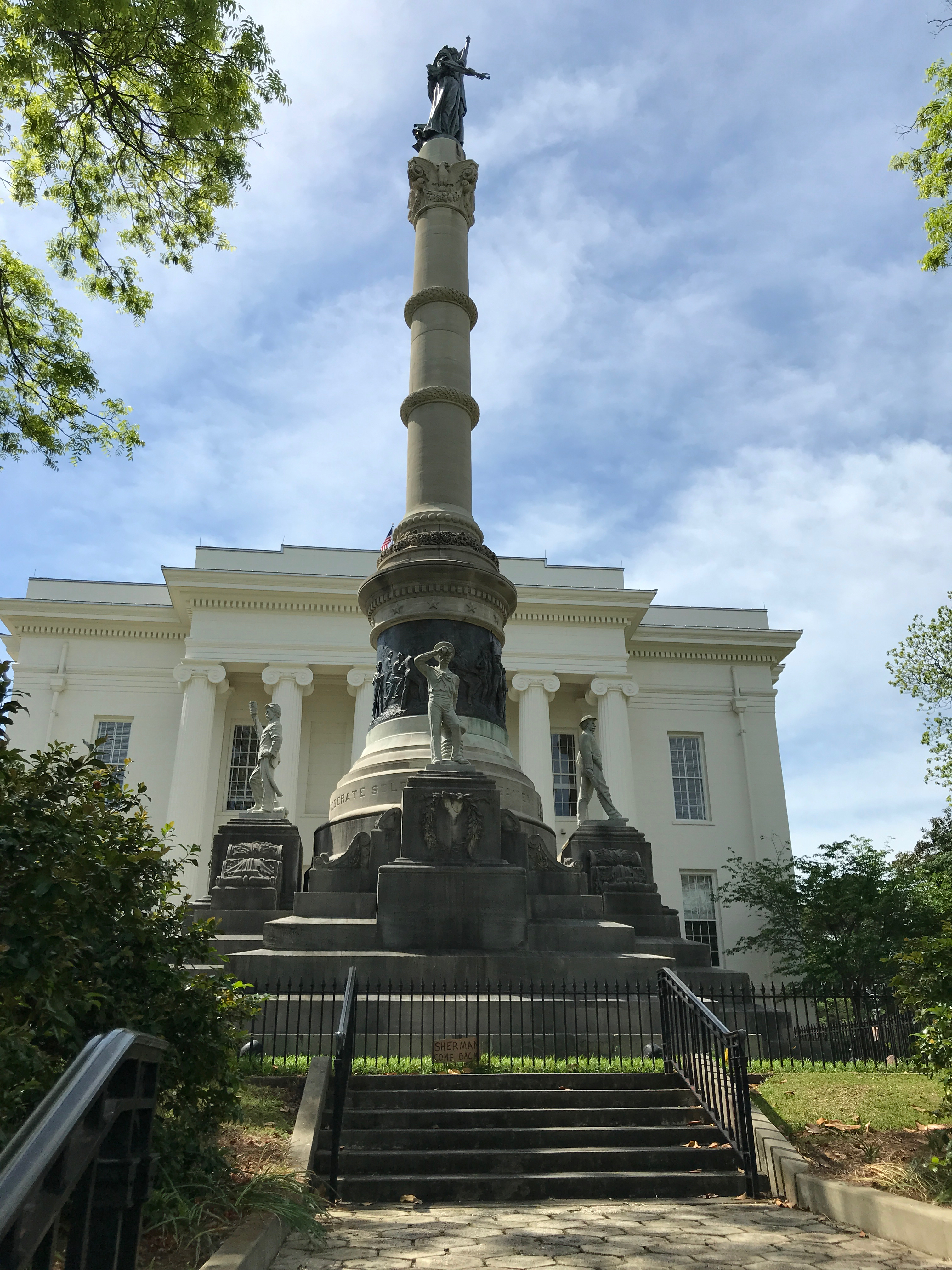
At the top of the stairs is the Confederate Memorial Monument, to honor the sacrifice of the state’s more than 122.000 veterans of the Civil War.

I always try to find out when memorials and such were set up. This one had been in the planning stage as far back as November 1865. According to my preferred source, (Wikipedia) “funding for the monument included $20,000 in the form of two grants from the state legislature, $10,000 contributed by the Ladies Memorial Association of Alabama, $6,755 from the Historical and Monumental Association of Alabama… and $5,000 from politicians.”

The monument was established in 1898.

It used to have flagpoles with the flags of the Confederate States of America, along with the Confederate Battle flag. These were removed on the morning of June 24, 2015, in the wake of the Charleston Church shooting of June 17, 2015.
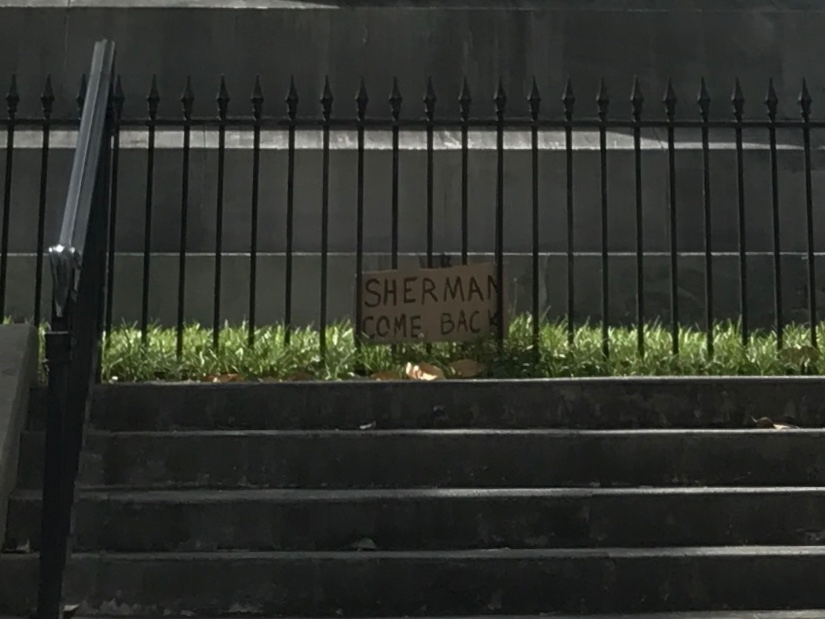
I found this sign confusing. Actually, I still wonder about it. At first, I assumed that it referred to General Sherman, but I couldn’t locate any information that indicated that he was ever in Montgomery.
Do you suppose Mr. Peabody was looking for his boy, Sherman?
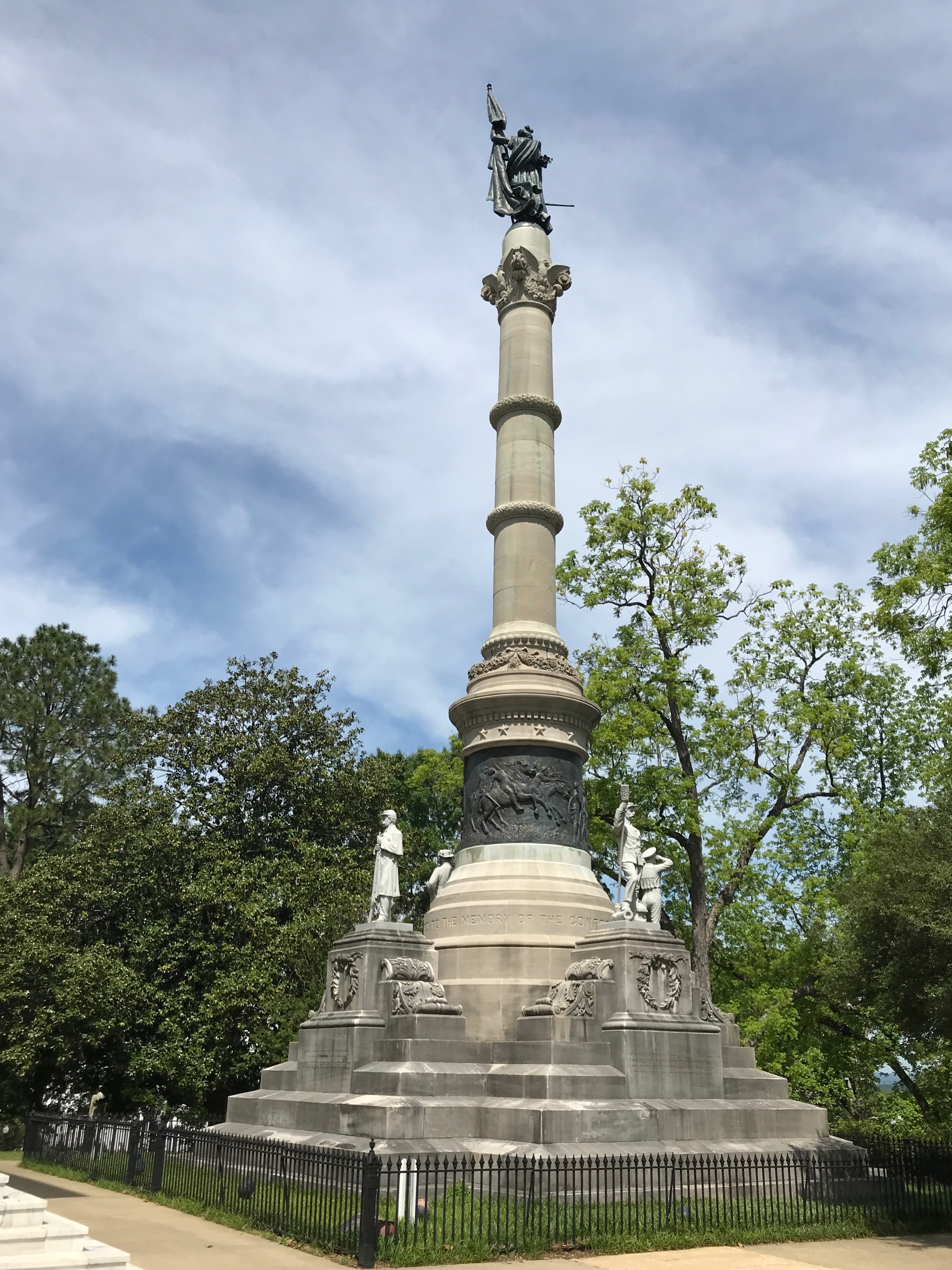
Here’s another view of the Memorial.
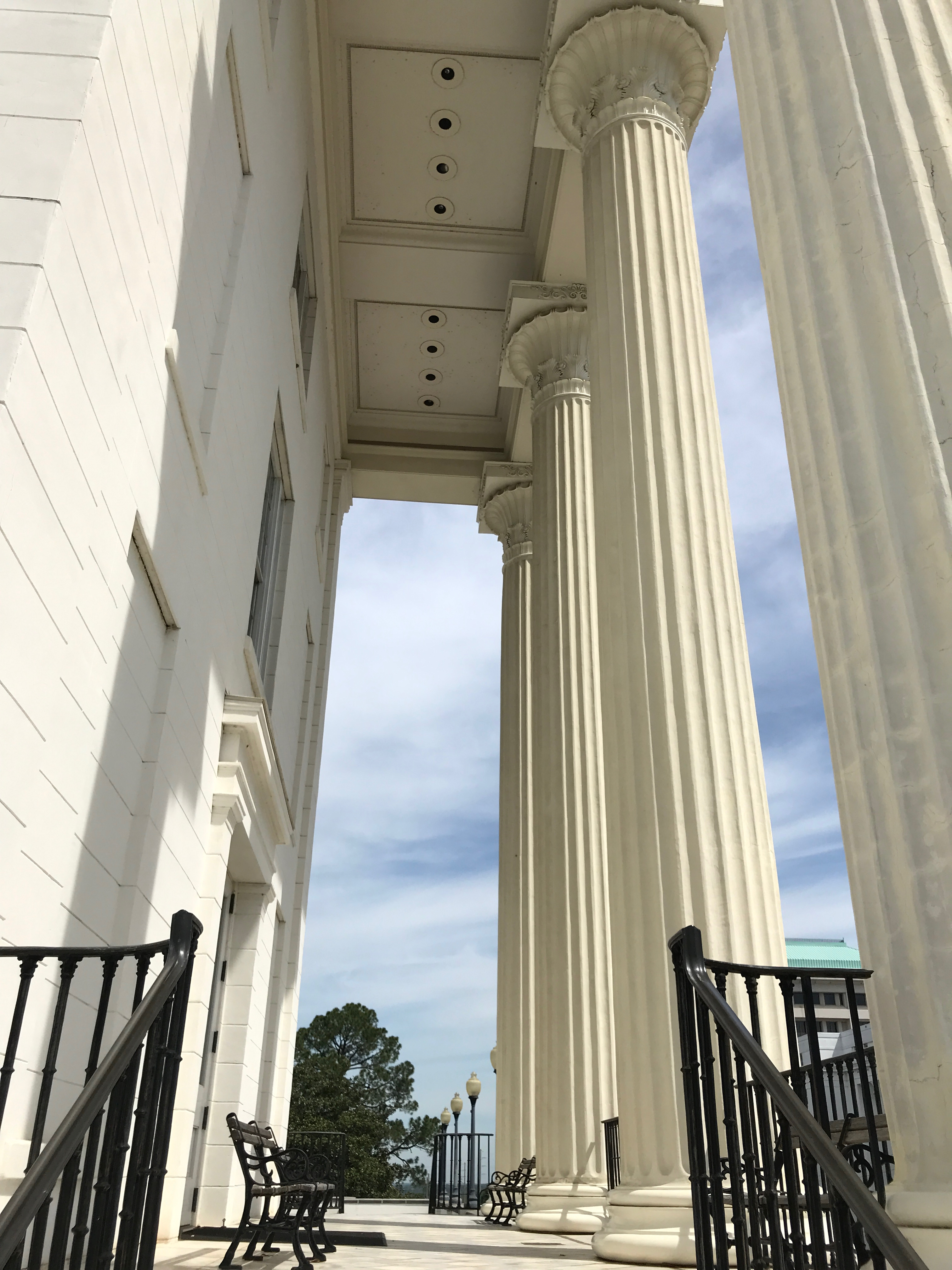
On to the Capitol.
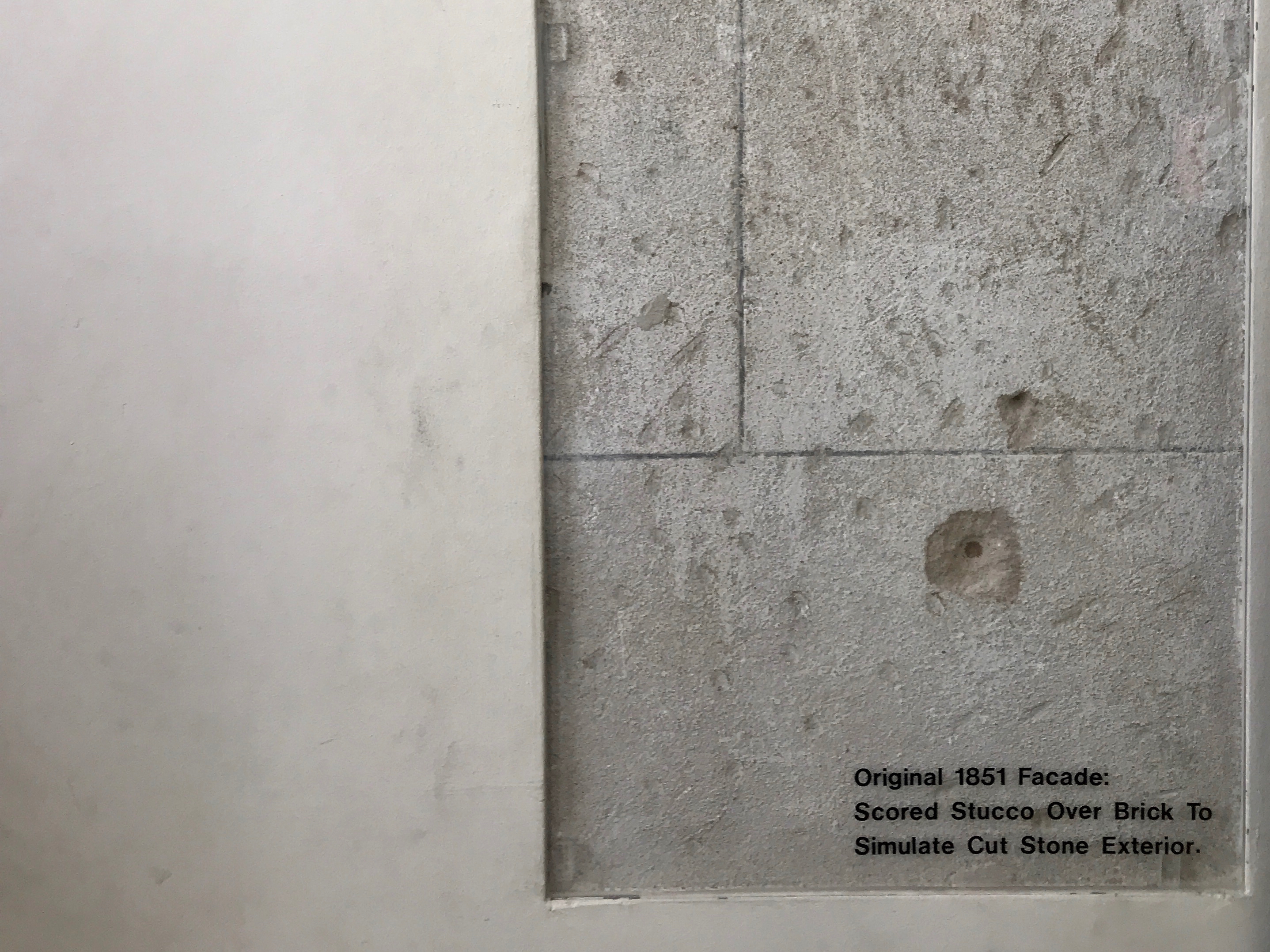
The current capitol building was built 1850-1851 on the site of a previous capitol that had burned down.

I thought this little “truth window”  was interesting. It reminded me of how George Washington’s Mount Vernon was actually a faux stone. It was wood that was stuccoed or plastered to look like stone.
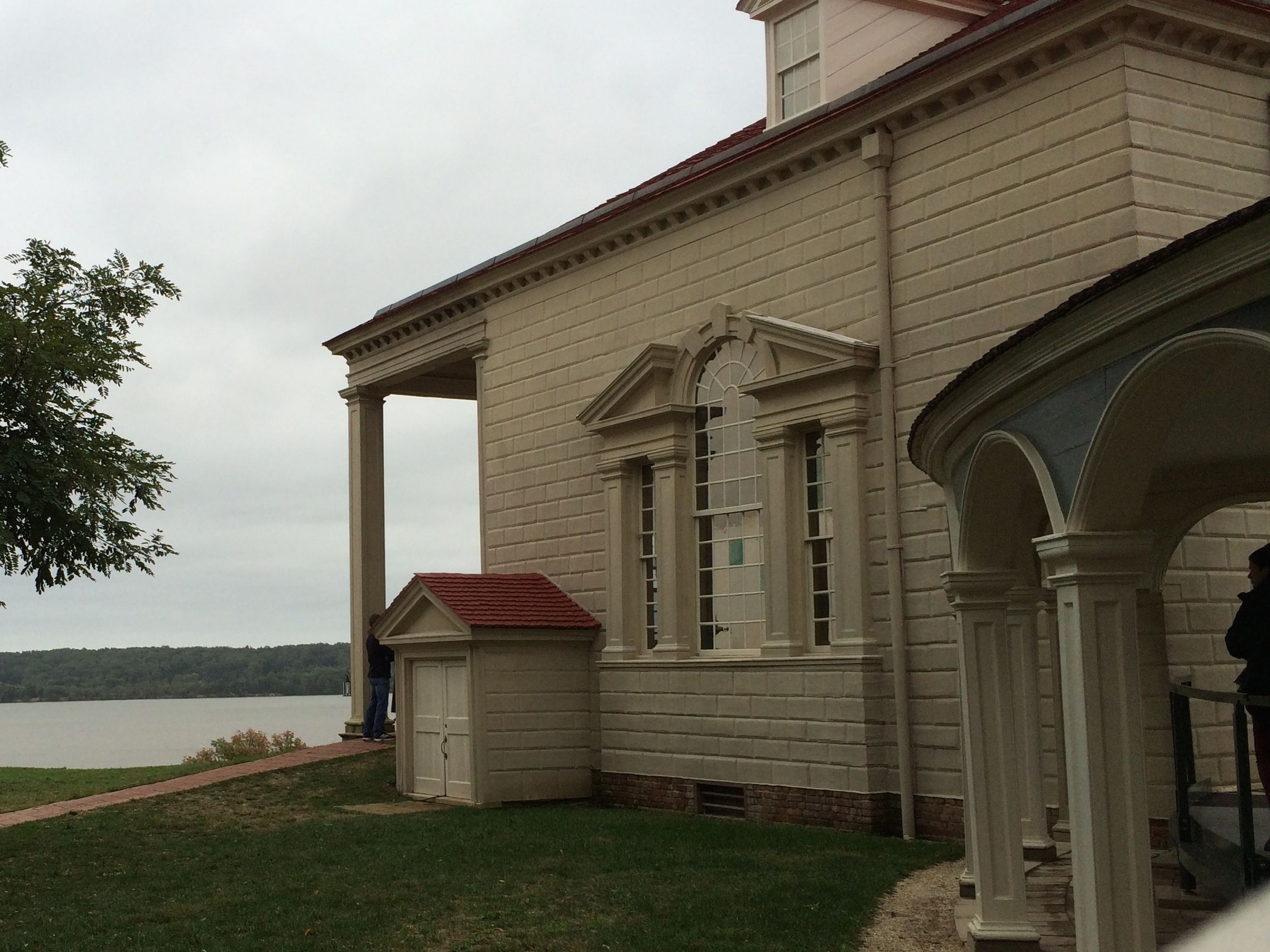
I took this photo when I visited Mount Vernon, back in 2015.
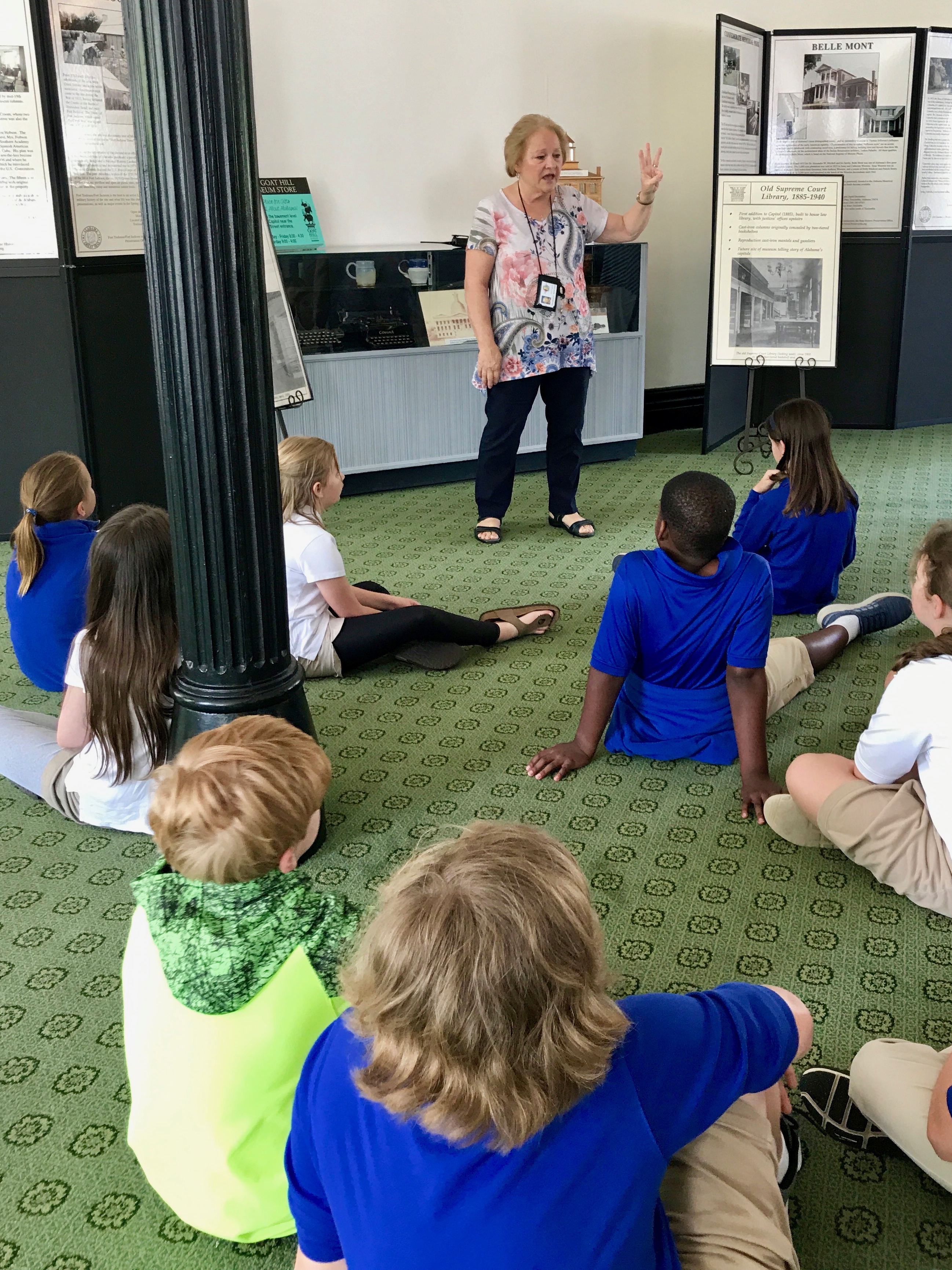
I happened upon a field trip in progress, and kind of hovered nearby. If I’m not in the way, and things are going well, sometimes I stick with groups. If not, I peal off and do my own thing.
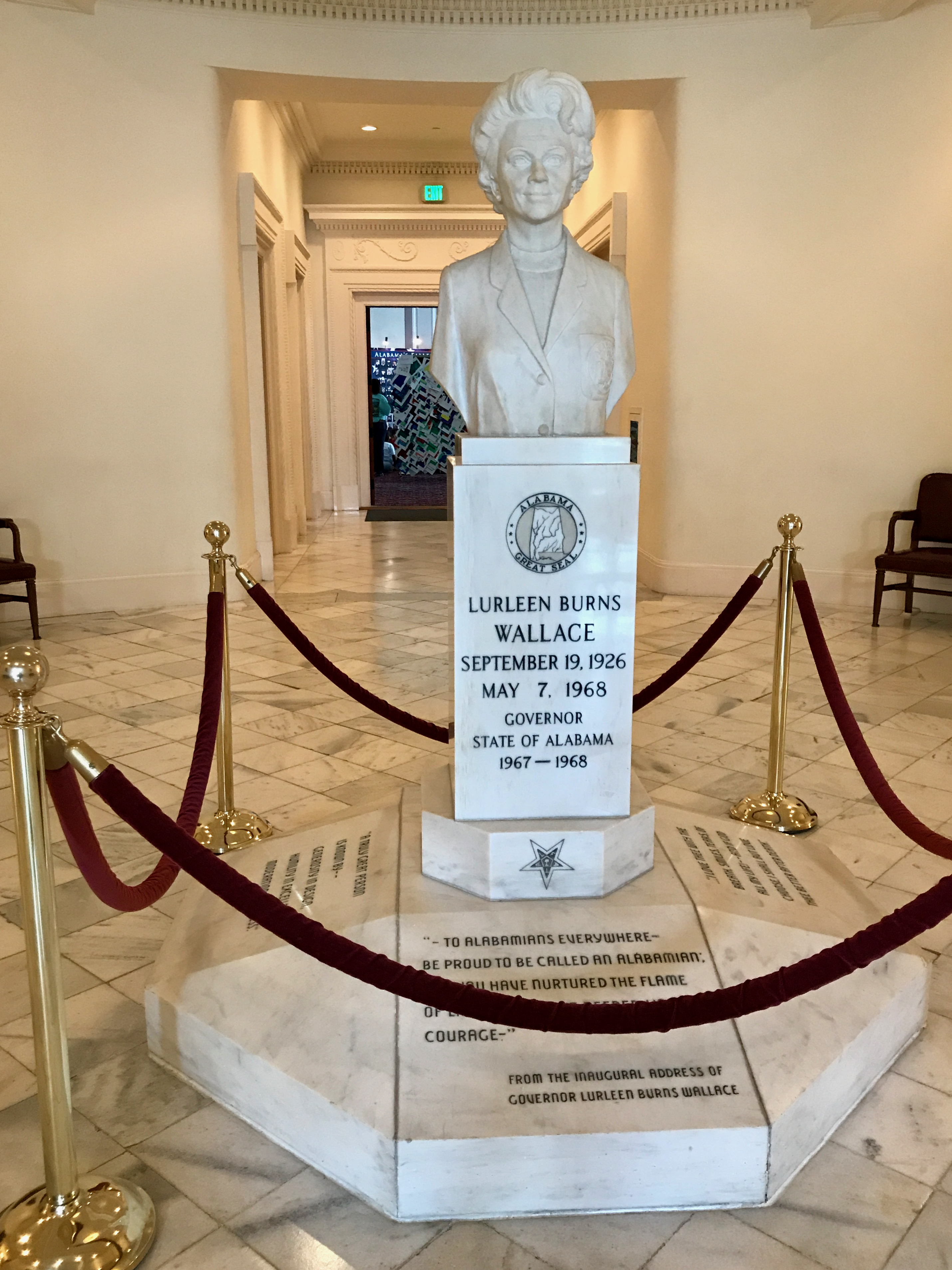
Many state capitols have extensive memorials to all the people who have served as governor. This is the only one I remember seeing inside the capitol. Lurleen Wallace became governor after her husband, George. She was the first female governor of the state. Kay Ivey, who took office inn 2017, is the second female governor of Alabama.
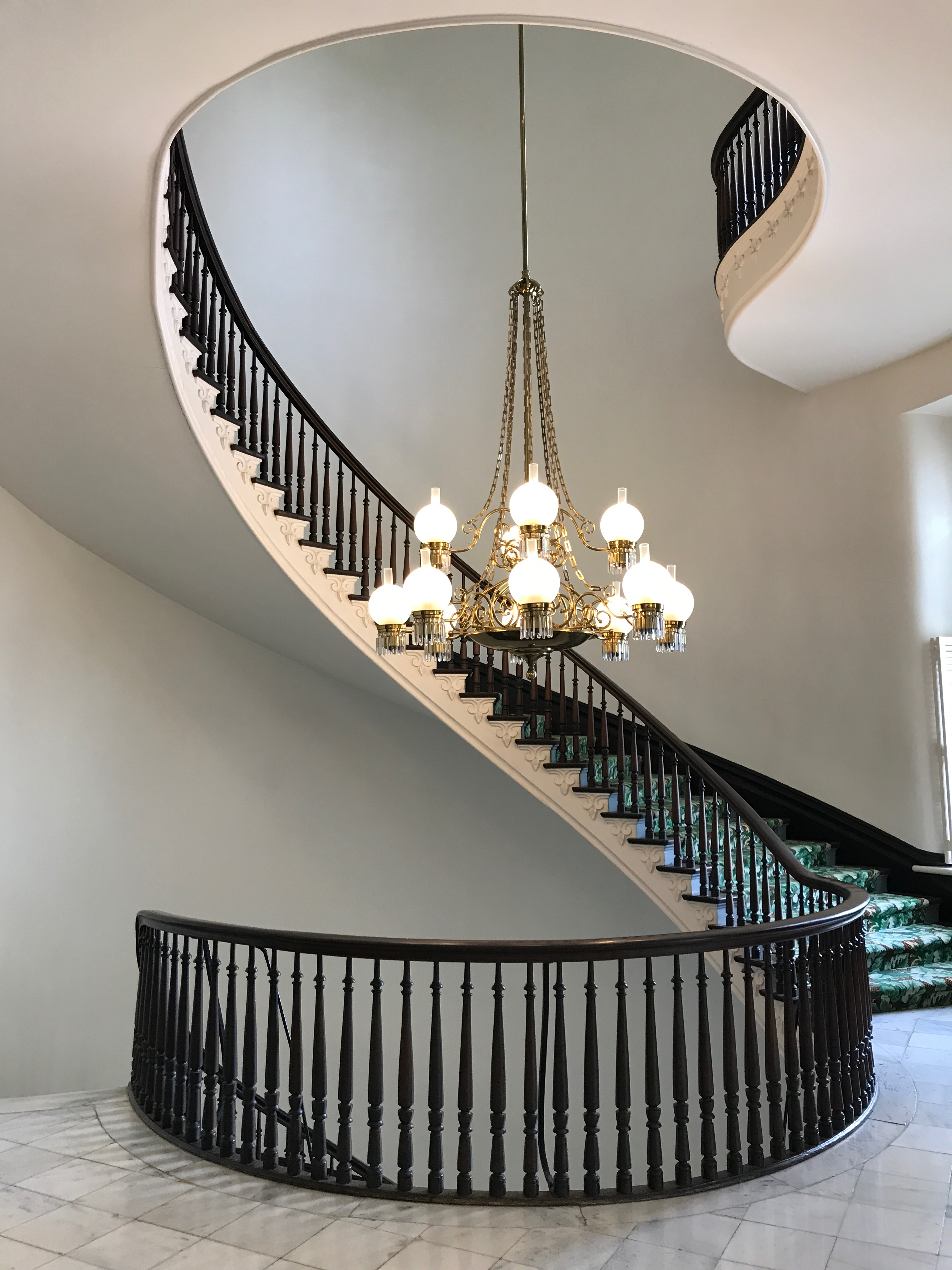
In my opinion, this cantilevered staircase is worth the visit.
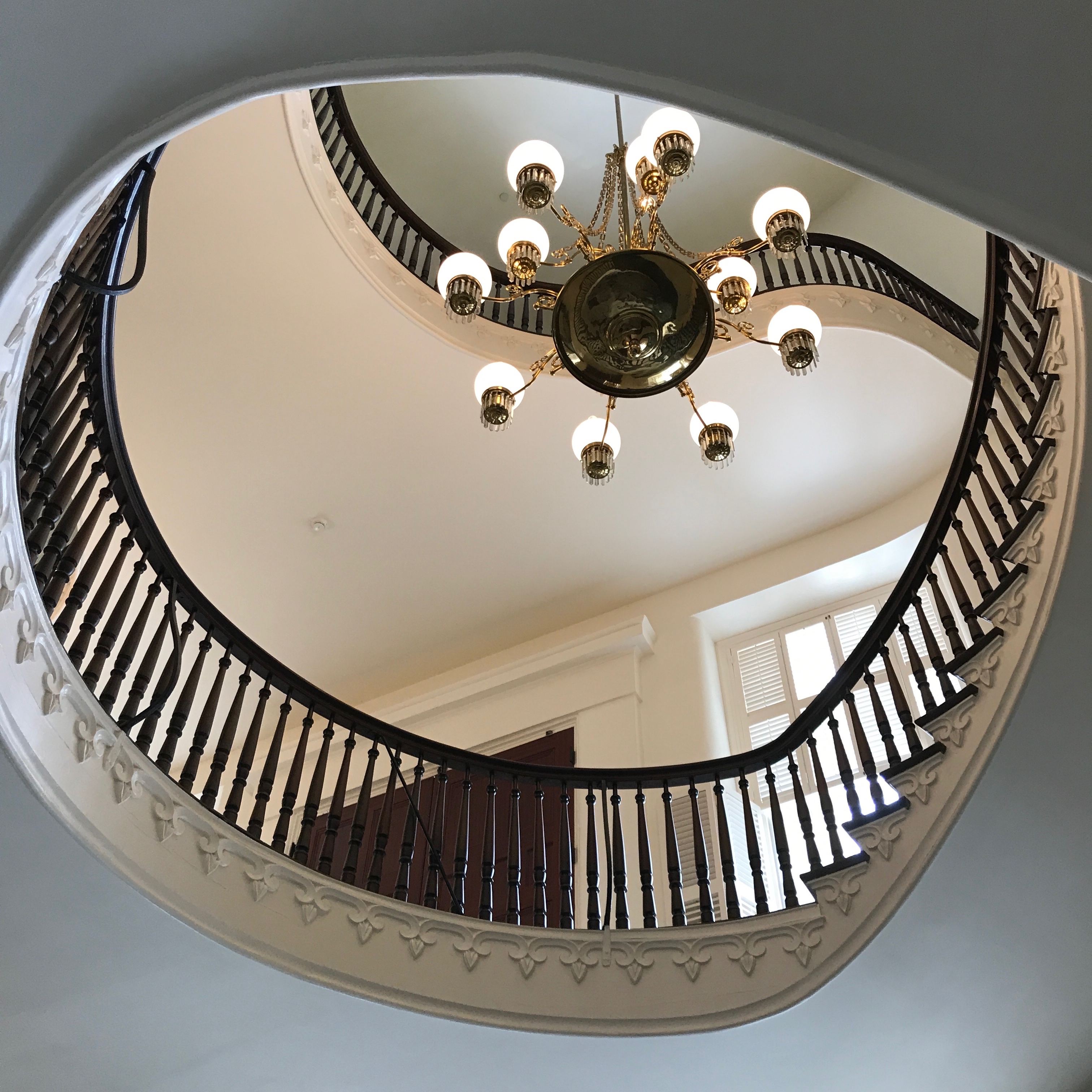
Its swoops and swirls are breathtaking.
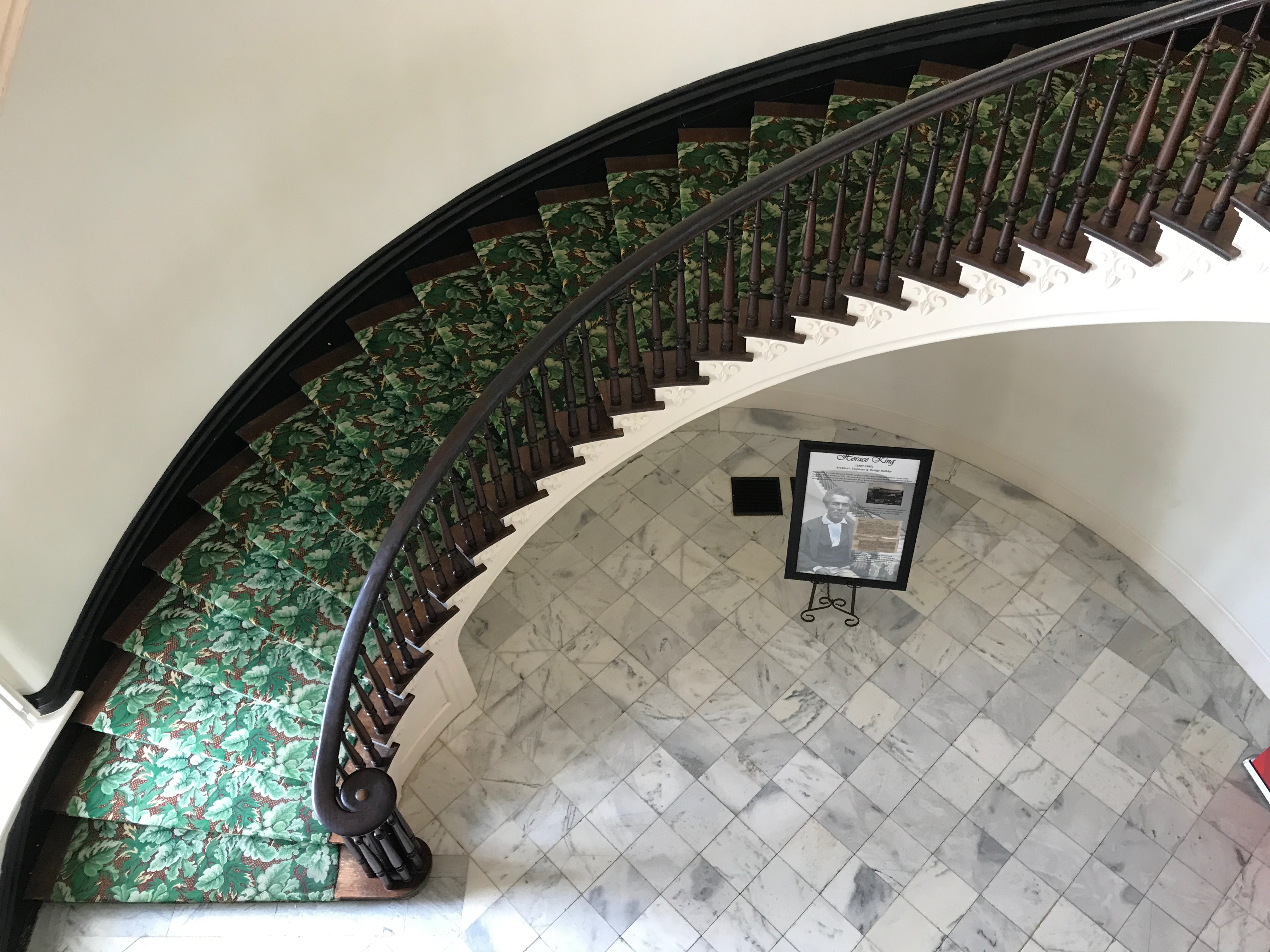
It was the creation of Horace King, architect, engineer and bridge builder.
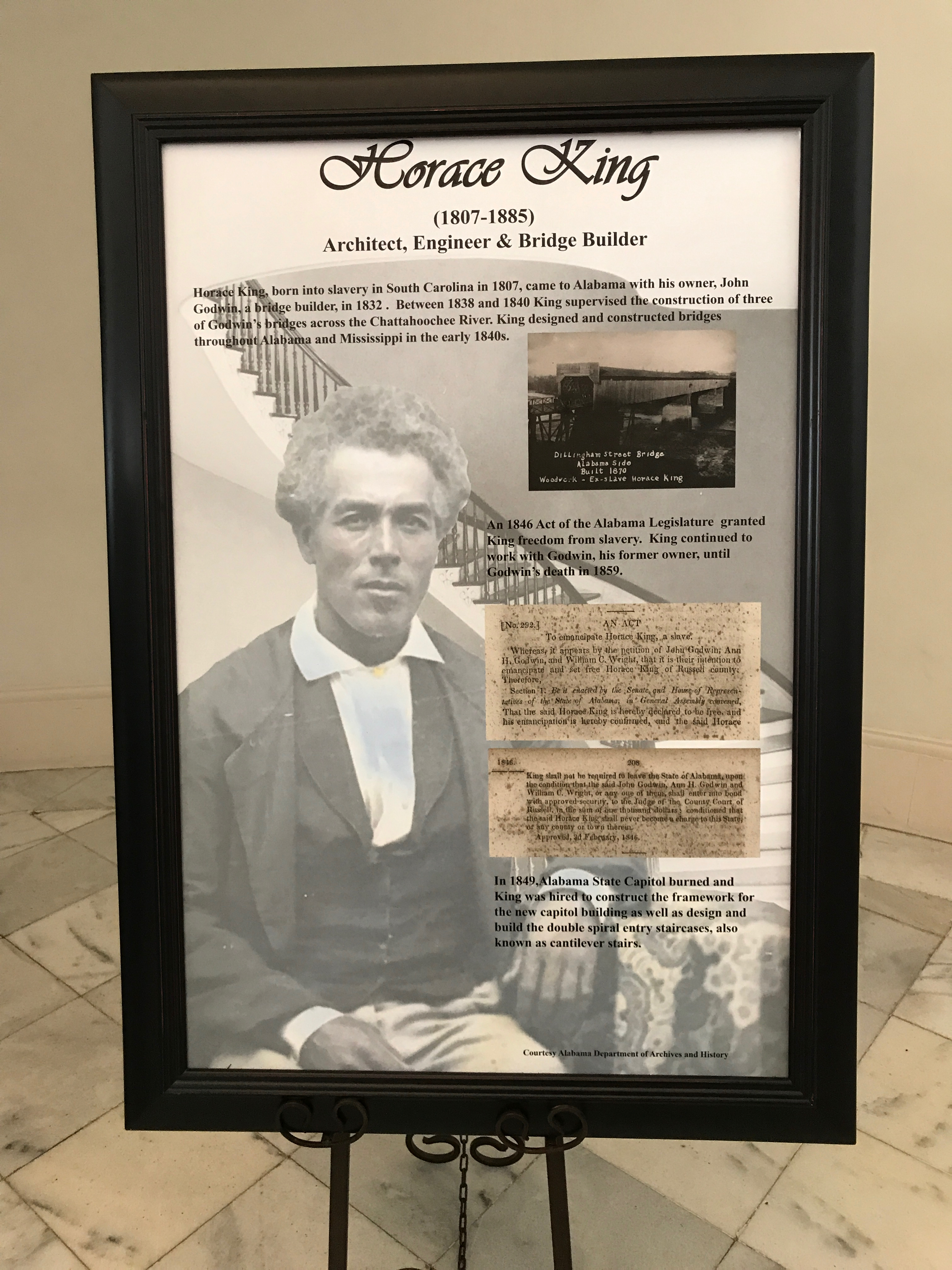
I found his story to be inspirational.

While born into slavery, his natural abilities convinced his owners to educate him and give him increasing responsibility and opportunity. He learned to read and write and became a proficient carpenter and mechanic by the time he was a teenager.

He partnered with his second owner to build many construction projects, including houses, bridges and cotton warehouses, and eventually began designing and directing construction on his own.

Despite his enslavement, he was allowed to keep a large portion of the income from his work. In 1846, he purchased his freedom. Under the Alabama law of the time, a freed slave was allowed to remain in the state for only year after manumission. One of the men he had built bridges for was a state senator, as well as a mill owner and businessman. He arranged for the state legislature to pass a special law giving King his freedom and exempting him from the manumission law.

It helps to have sought after skills and to have friends in high places.

I didn’t expect to find this, but King was also a slaveholder. In the 1850s, he purchased a slave who eventually became known as celebrated abolitionist J. Sella Martin. When King attempted to subdue Martin by flogging him, he was disappointed by the man’s resistance and sold him to a slave trader. (Click on the link for more information about his life.)

People are certainly complex.
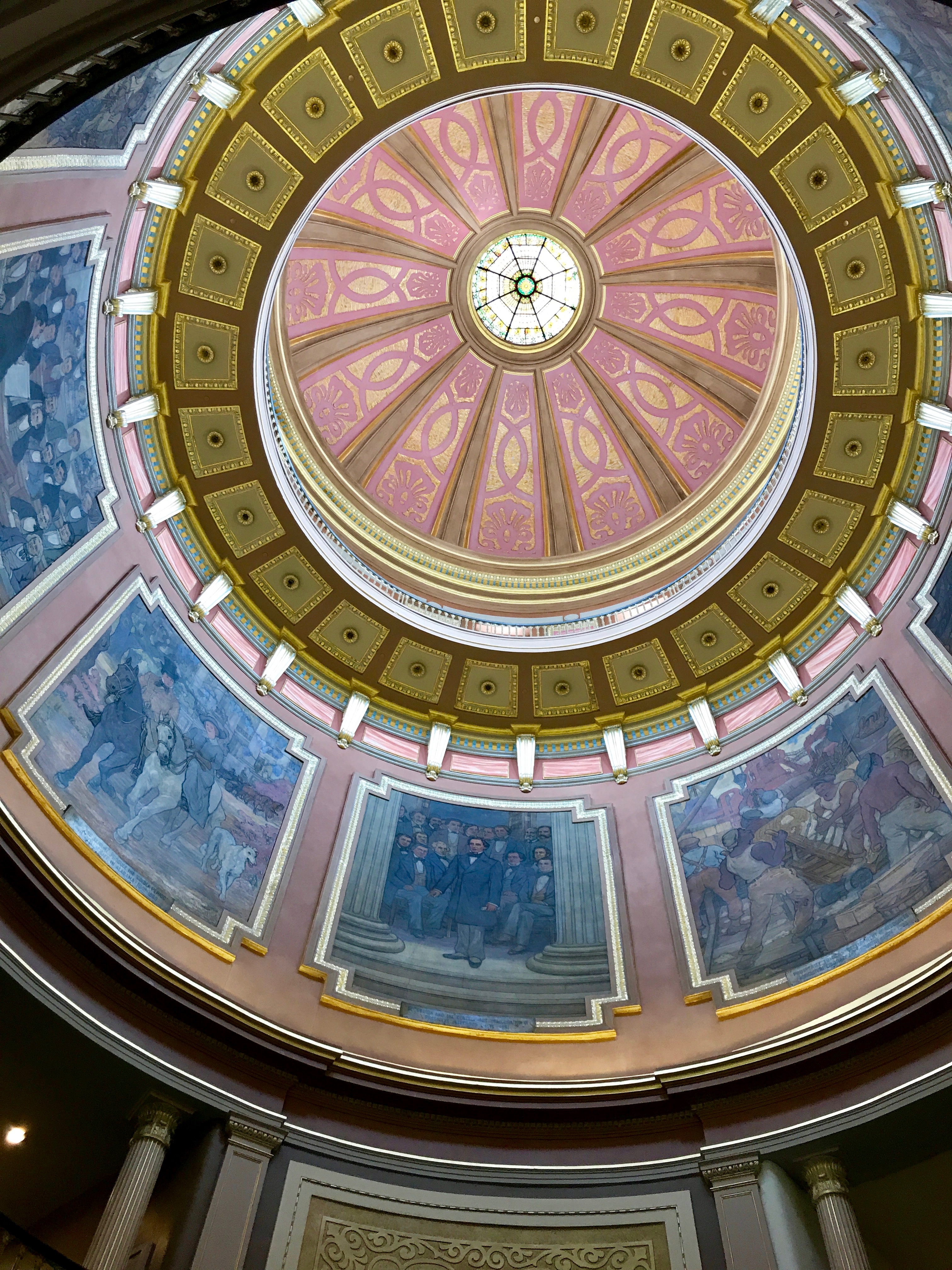
Back to the capitol building.  Here is a look up into the dome.
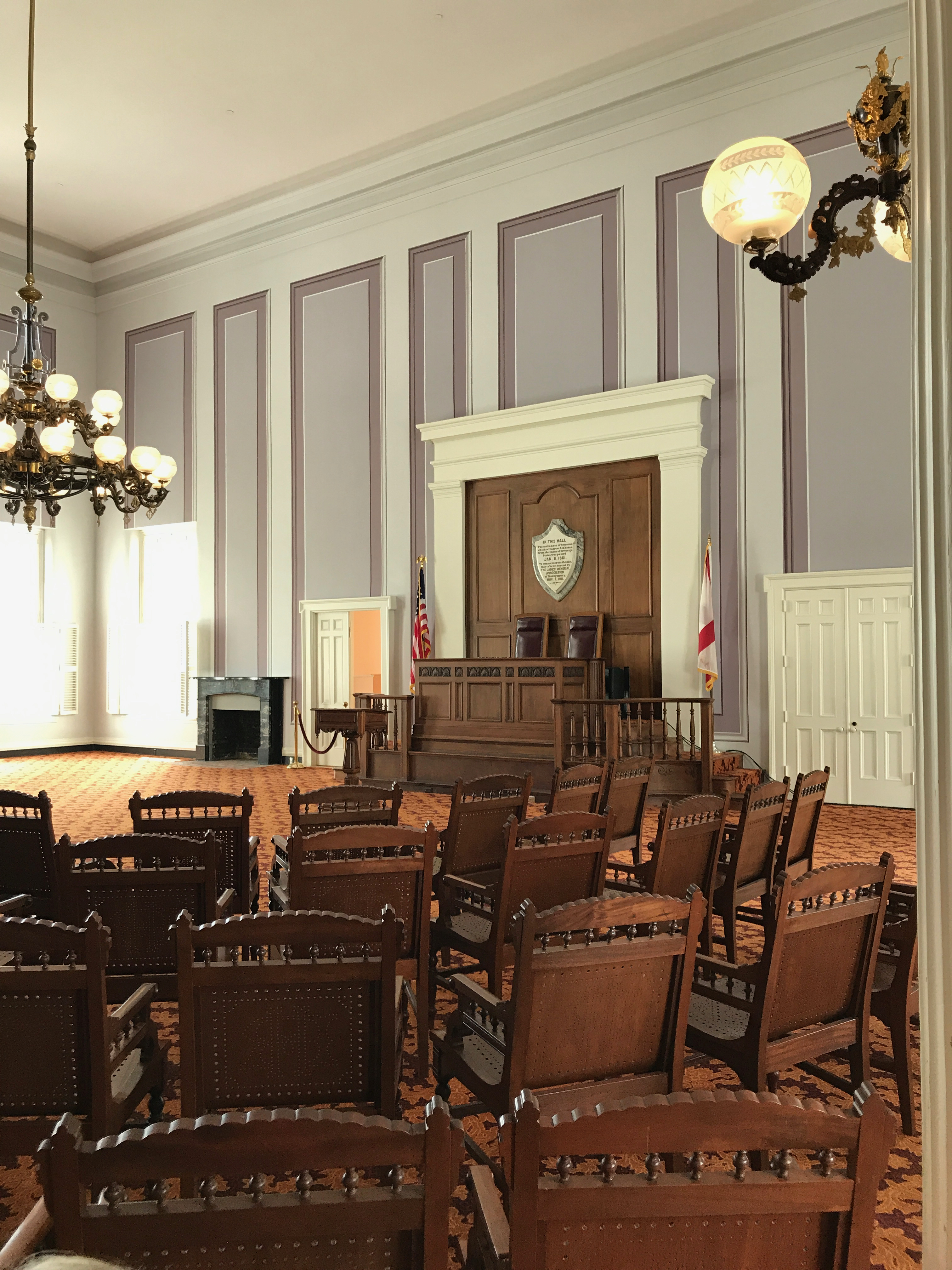
This is the House of Representatives chamber. In case you might think that this is where they currently meet, it isn’t.
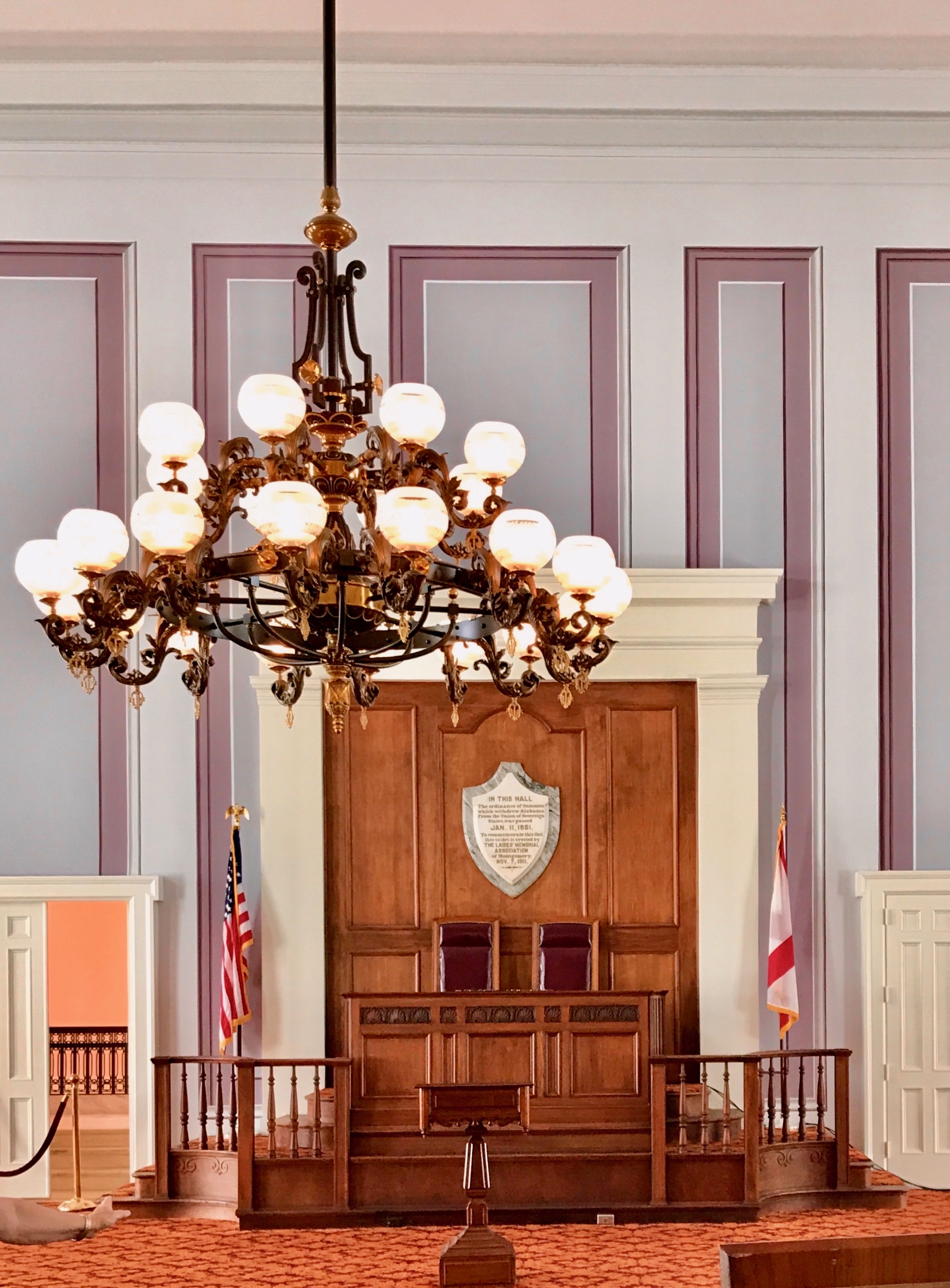
This building served as home to the Alabama Legislature until 1985, when it moved to the new Alabama State House. Officially, this move was temporary, since the Alabama Constitution requires that the Legislature meet in the capitol.

In 1984, a constitutional amendment was passed that allowed the Legislature to move to another building if the capitol were to be renovated. The renovation started in 1985 and was completed in 1992 by the architecture group Holmes and Holmes. When the capitol was reopened, the Governor of Alabama and numerous other state offices moved back into the building, but the legislature remained at the State House.
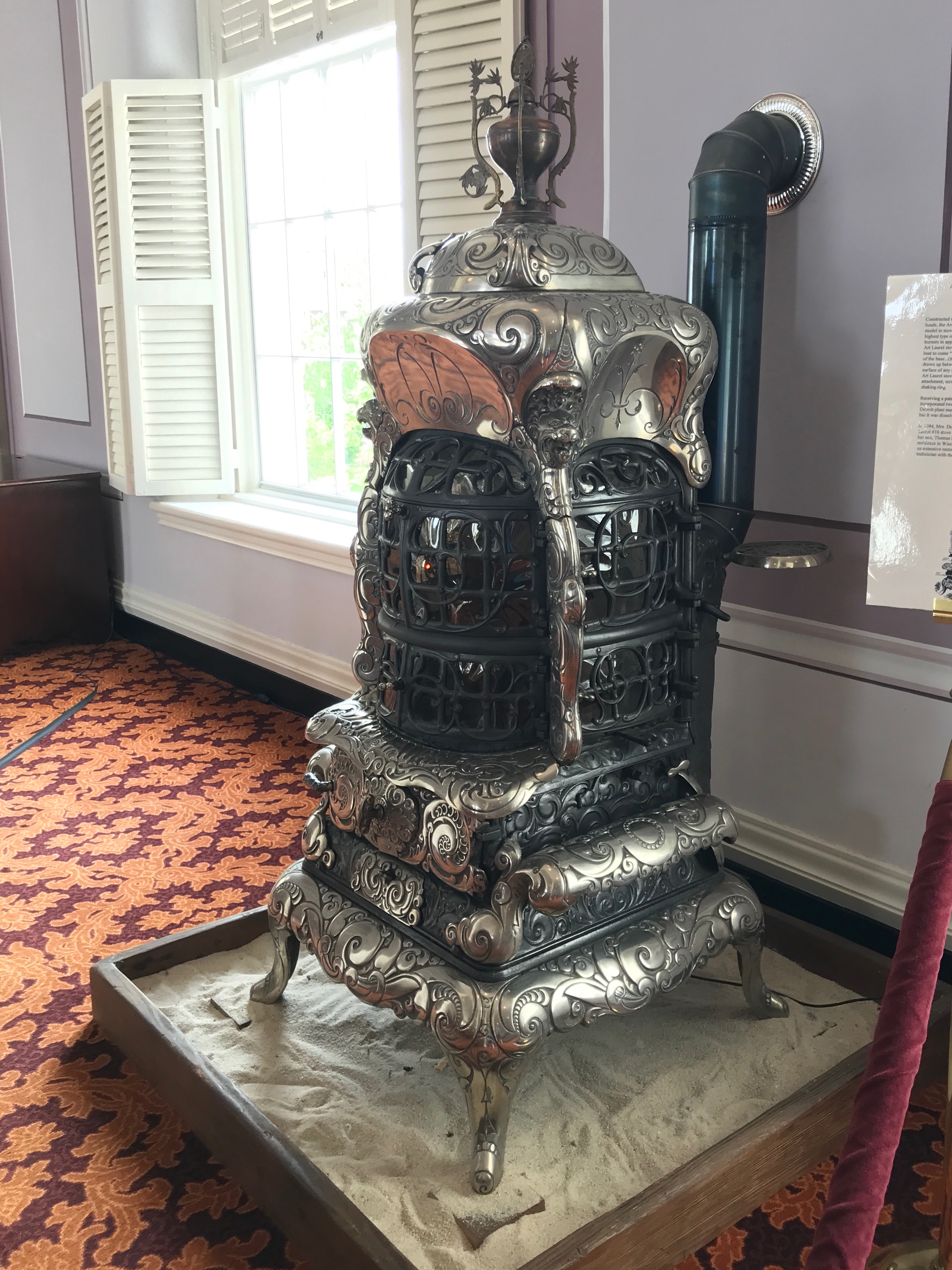
This 1904 stove made by the Art Stove Company, with plants in Detroit and Chicago. Apparently this was a top of the line stove. A 1904 catalog described it as  “…surpassing all other base burners in appearance, in heating capacity and economy of fuel.”

This particular stove came from a private residence in Wisconsin, and was donated to the Alabama Historical Society inn 1994 by Mrs. Dorothy Rapaich Echols of Montgomery in honor of her son, Thomas Rapaich. It was installed in the Old House Chamber after extensive restoration and cleaning by technician William Missildine.
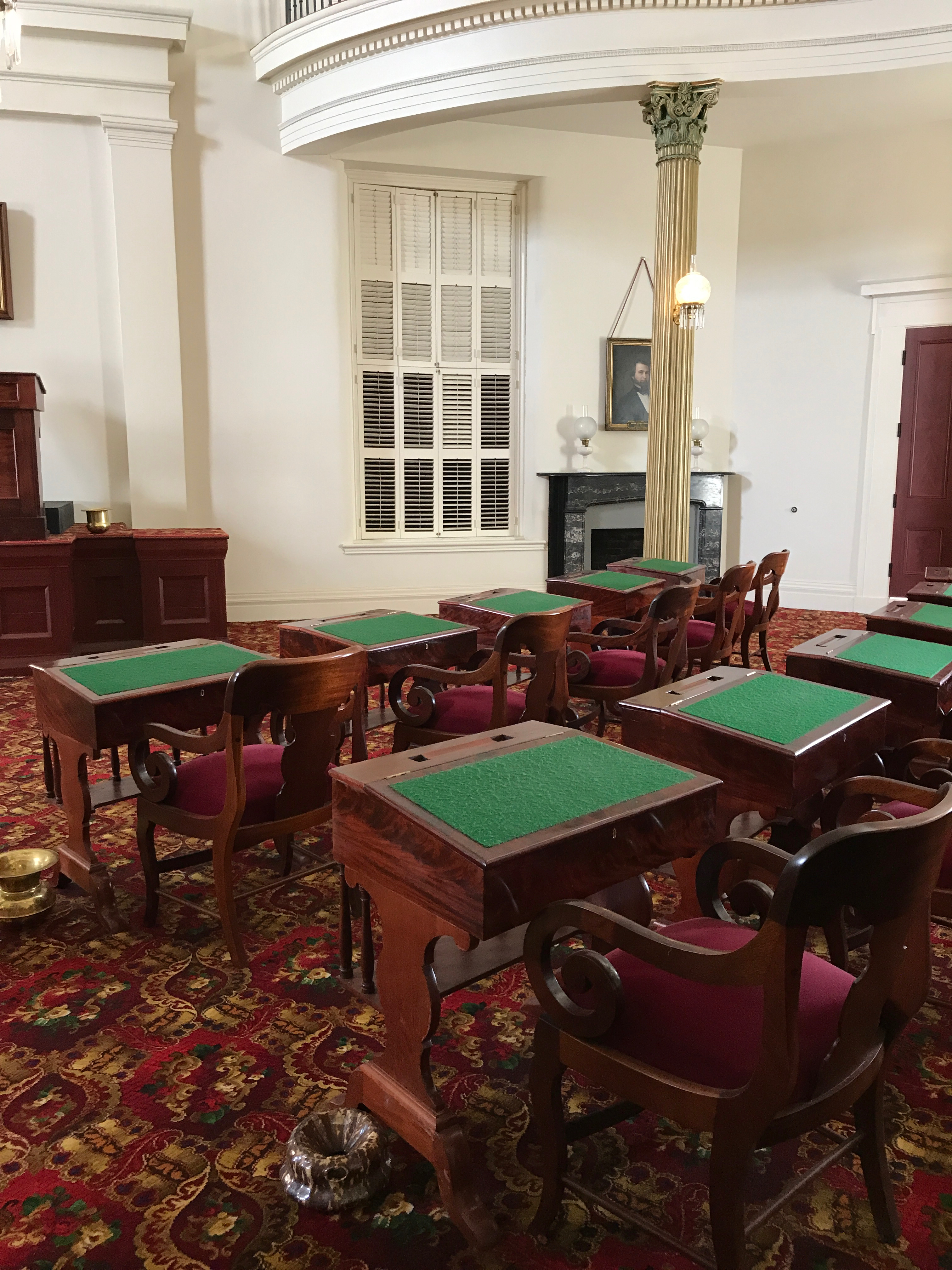
I took this photo in the Old Senate Chamber. I’d like to know why Senators always seem to get desks while Representatives have to make do with chairs. These desks are recreations of the originals.
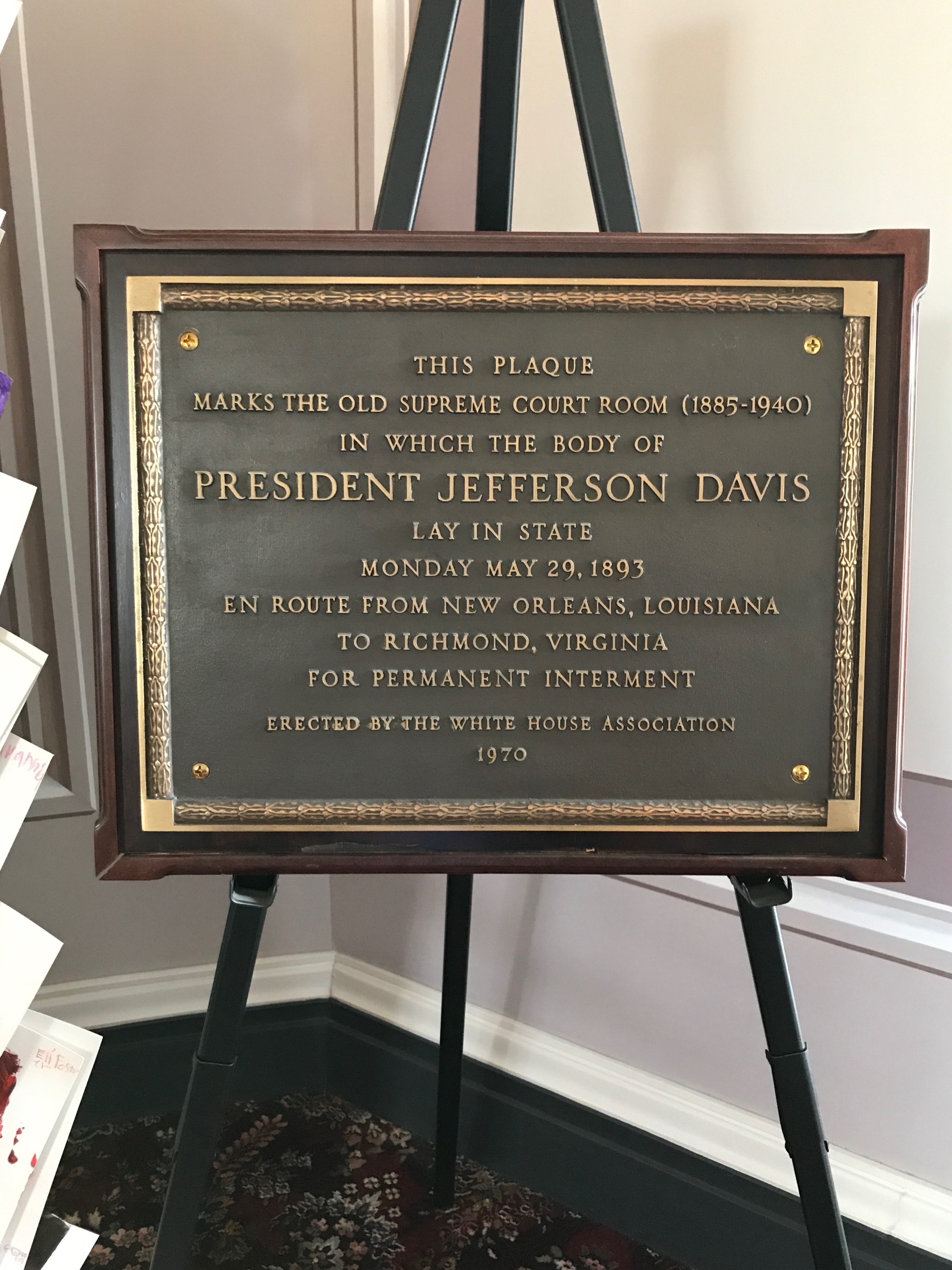
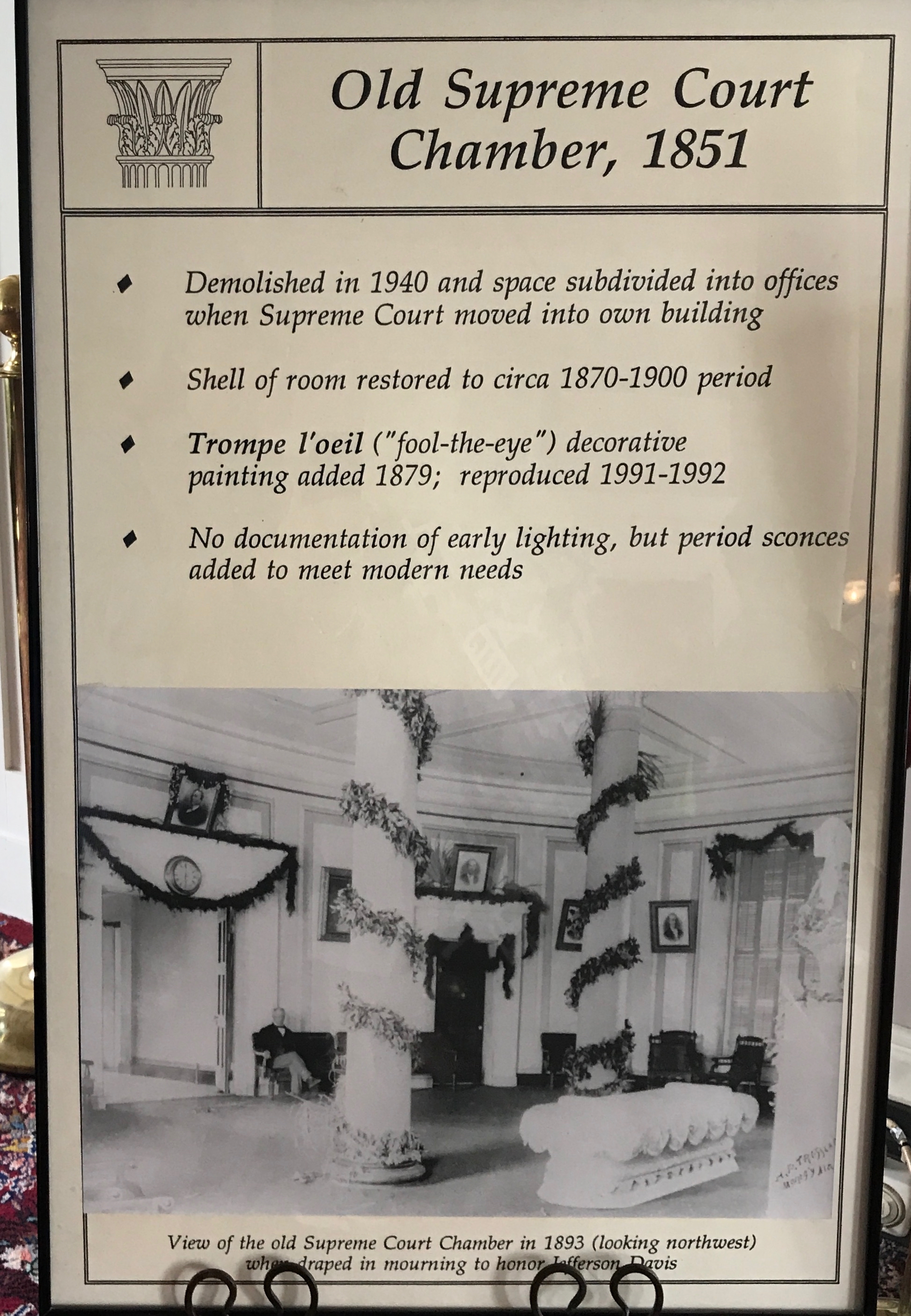
On to the recreation of the Old Supreme Court, where Jefferson Davis’ body lay in state in the first capitol of the Confederacy.
Then it was time to find an exit.

I went down a hall and ended up outside.
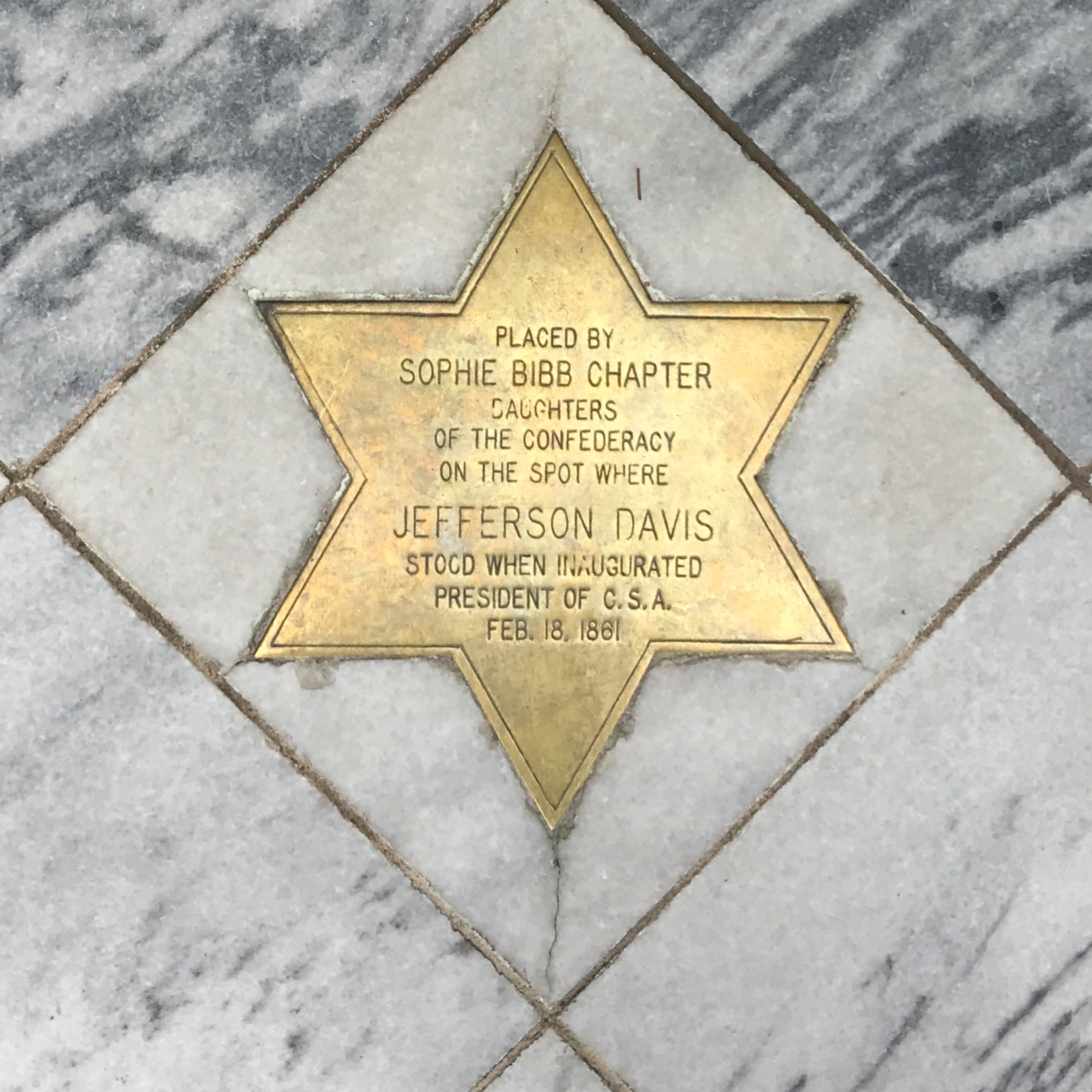
Apparently, he’s down there somewhere in the crowd.
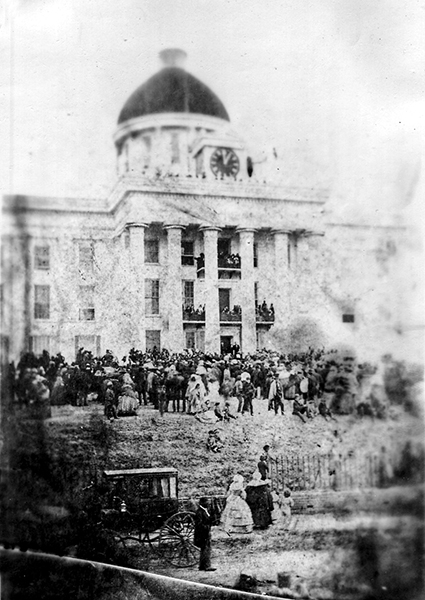
I set off to see what I could see around the building.
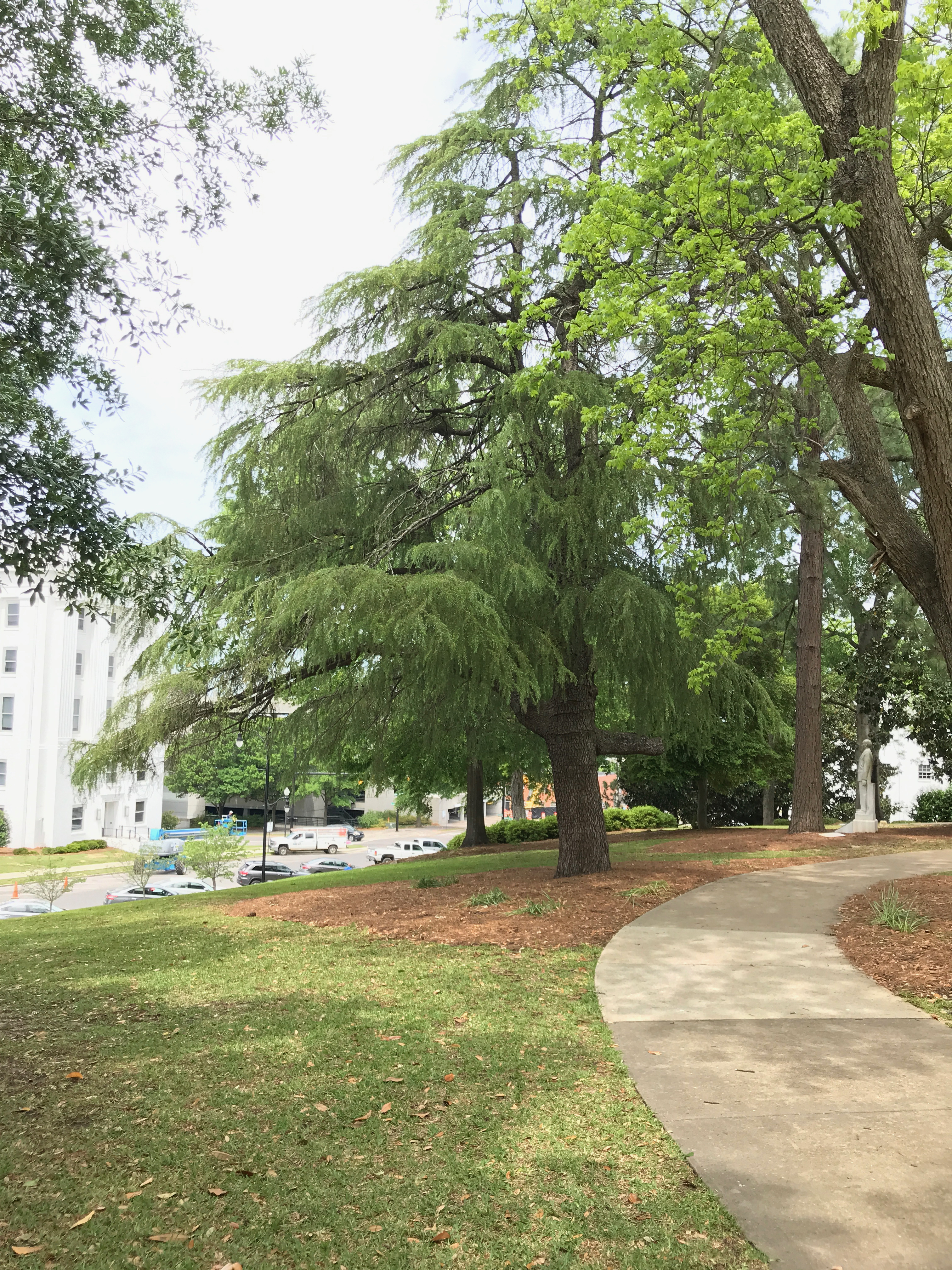
Nicely maintained walks.
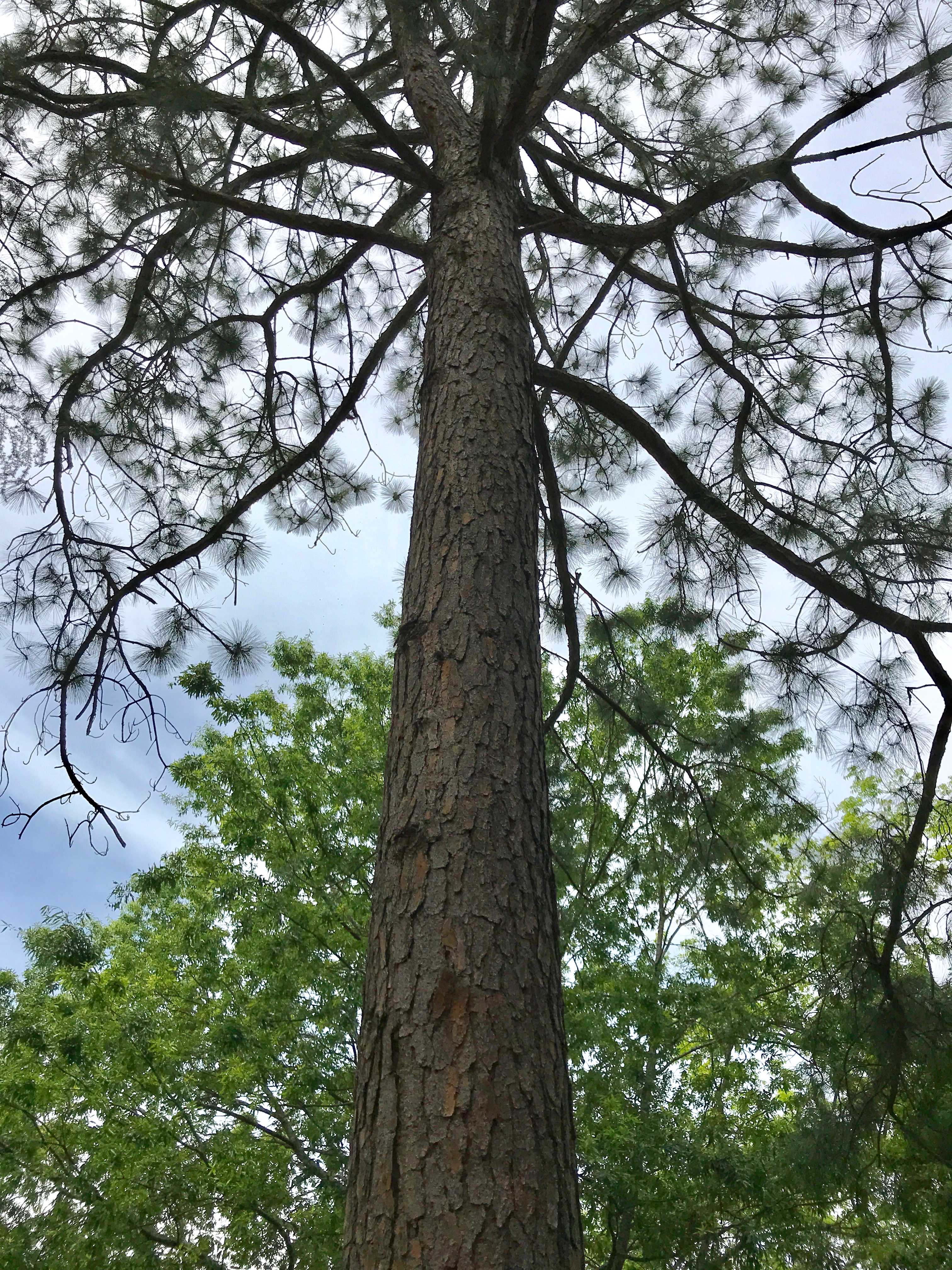
I came across a “Moon Tree”
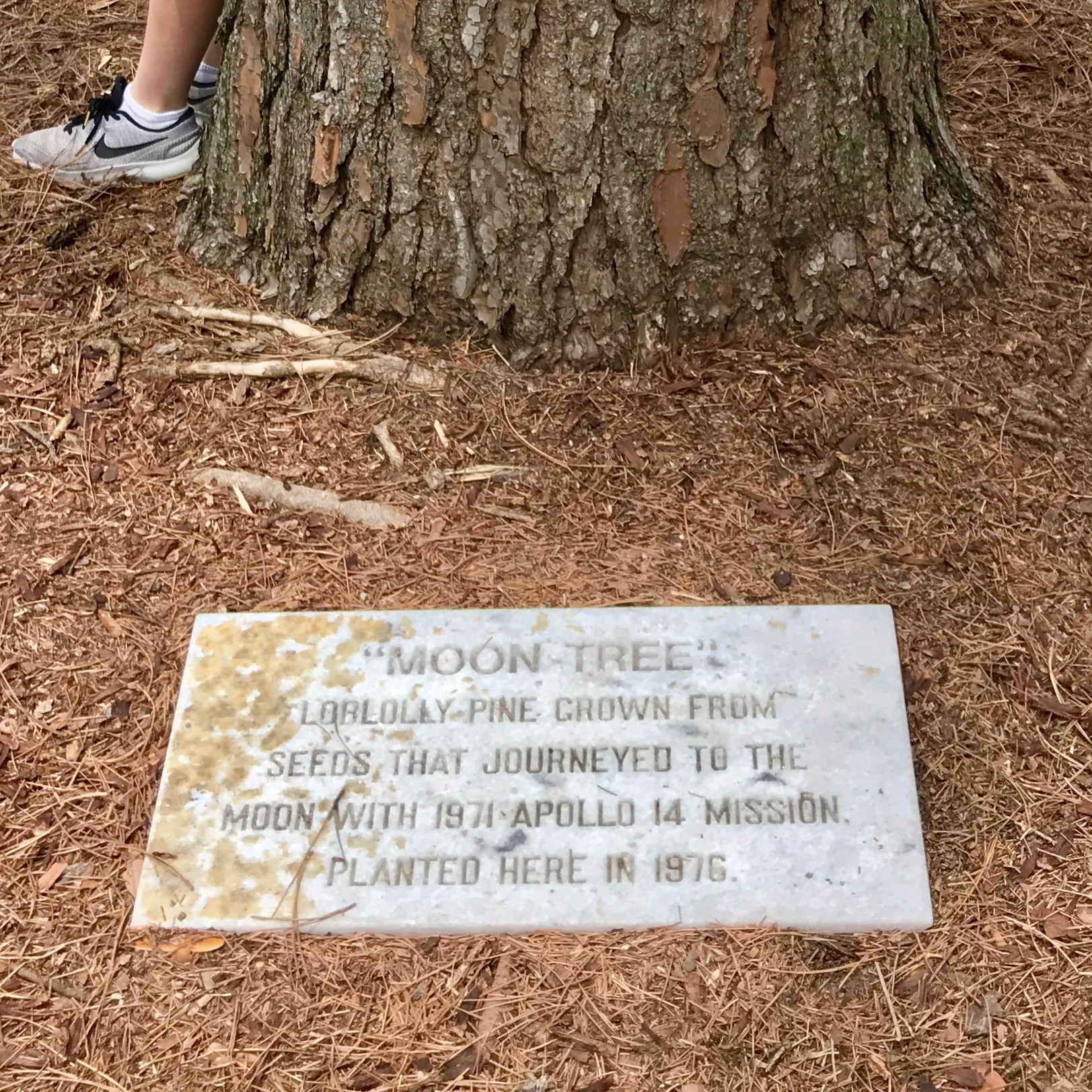
I wonder how large the tree was when they planted it in 1976? It’s grown well since then. It was probably about 45 years old when I took this photo.
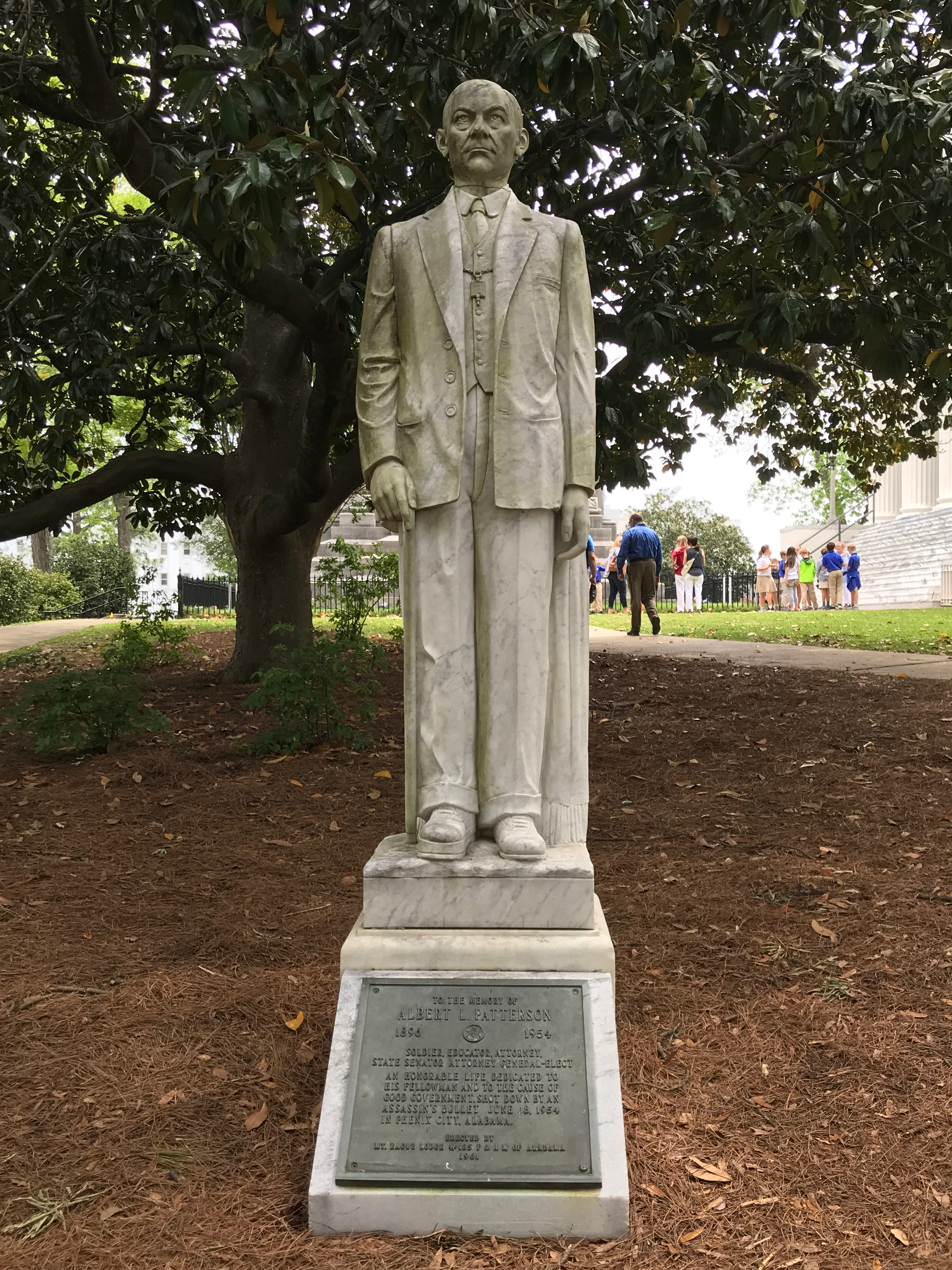
I came across this rather stiff looking statue of Albert L. Patterson, who was Attorney General – elect when he was assassinated in Phenix City in 1954. I remembered reading something about a Patterson being governor, but the plaque didn’t mention that, so I had to look up some information about him.
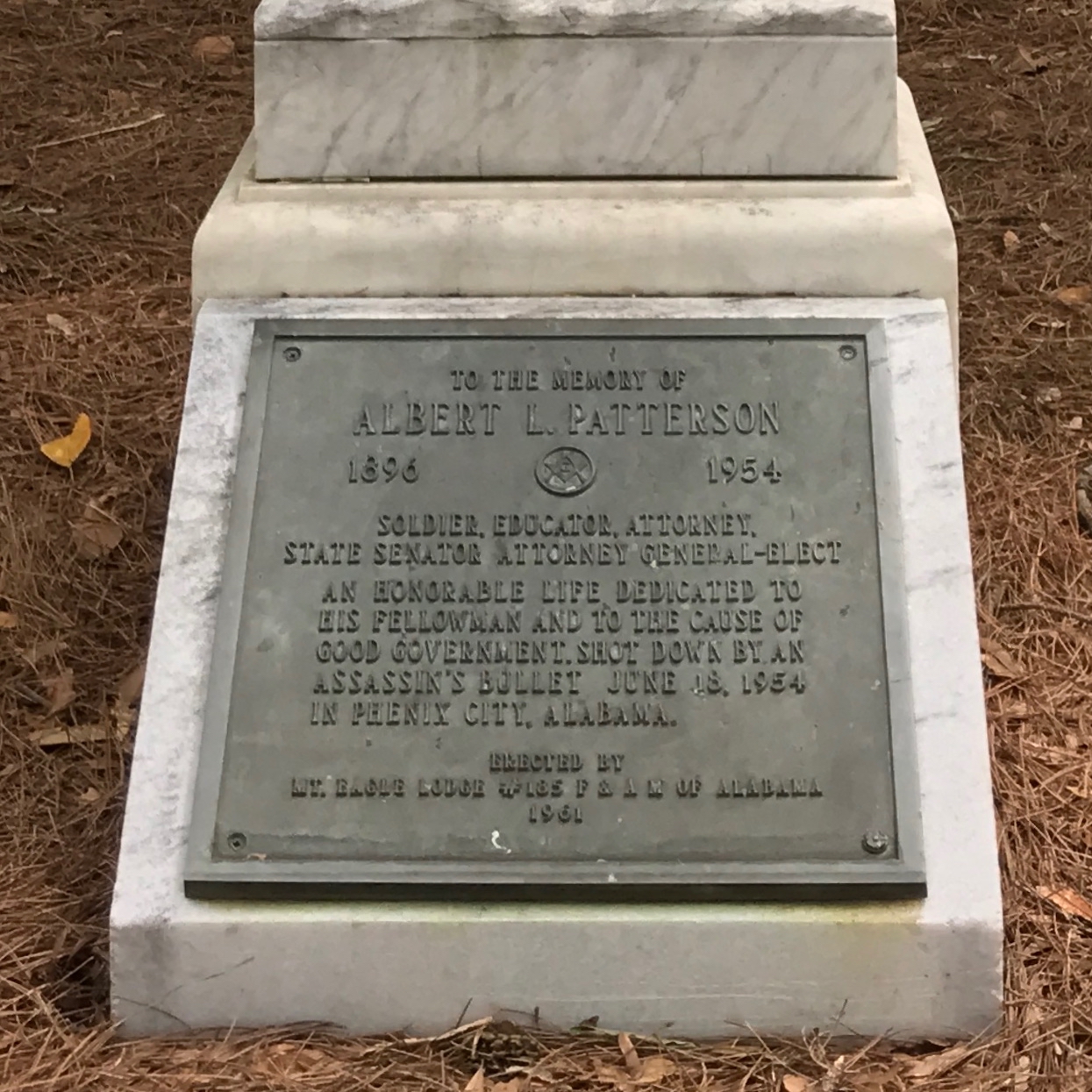
It turns out that it was his son who was governor, and when Albert ran for Attorney General, he ran on a platform of “reforming the rife corruption and vice in Phenix City.” He was well aware that his life was inn danger, as he commented to a church group one night earlier, “I have only a 100-to-1 chance of ever being sworn in as attorney general.”

Phenix City must have been quite the place, as the special grand jury handed down 734 indictments against local law enforcement officials and local business owners connected to organized crime. Chief Deputy Sheriff Albert Fuller was convicted and sentenced to life in prison.
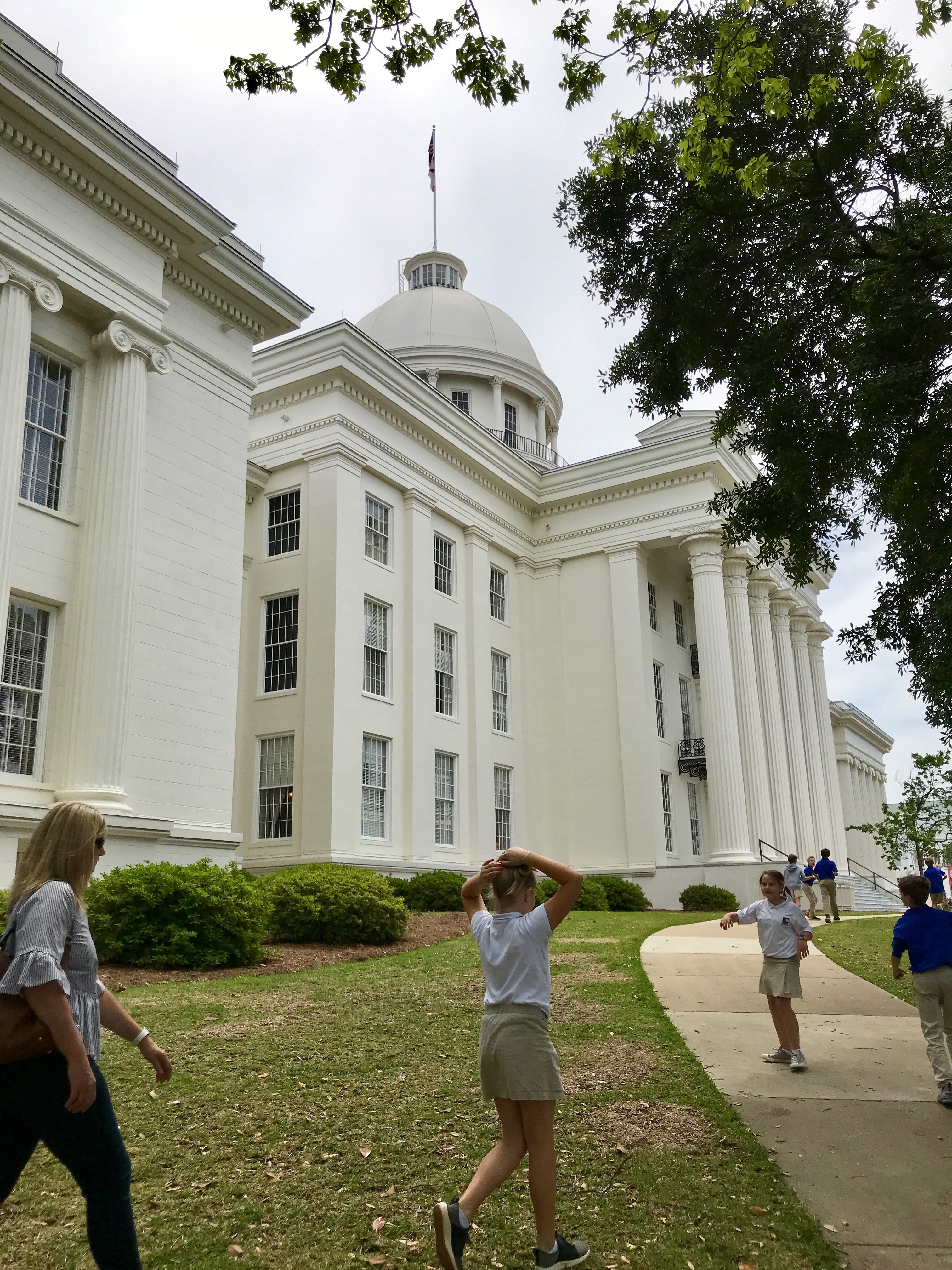
I continued on my walk.
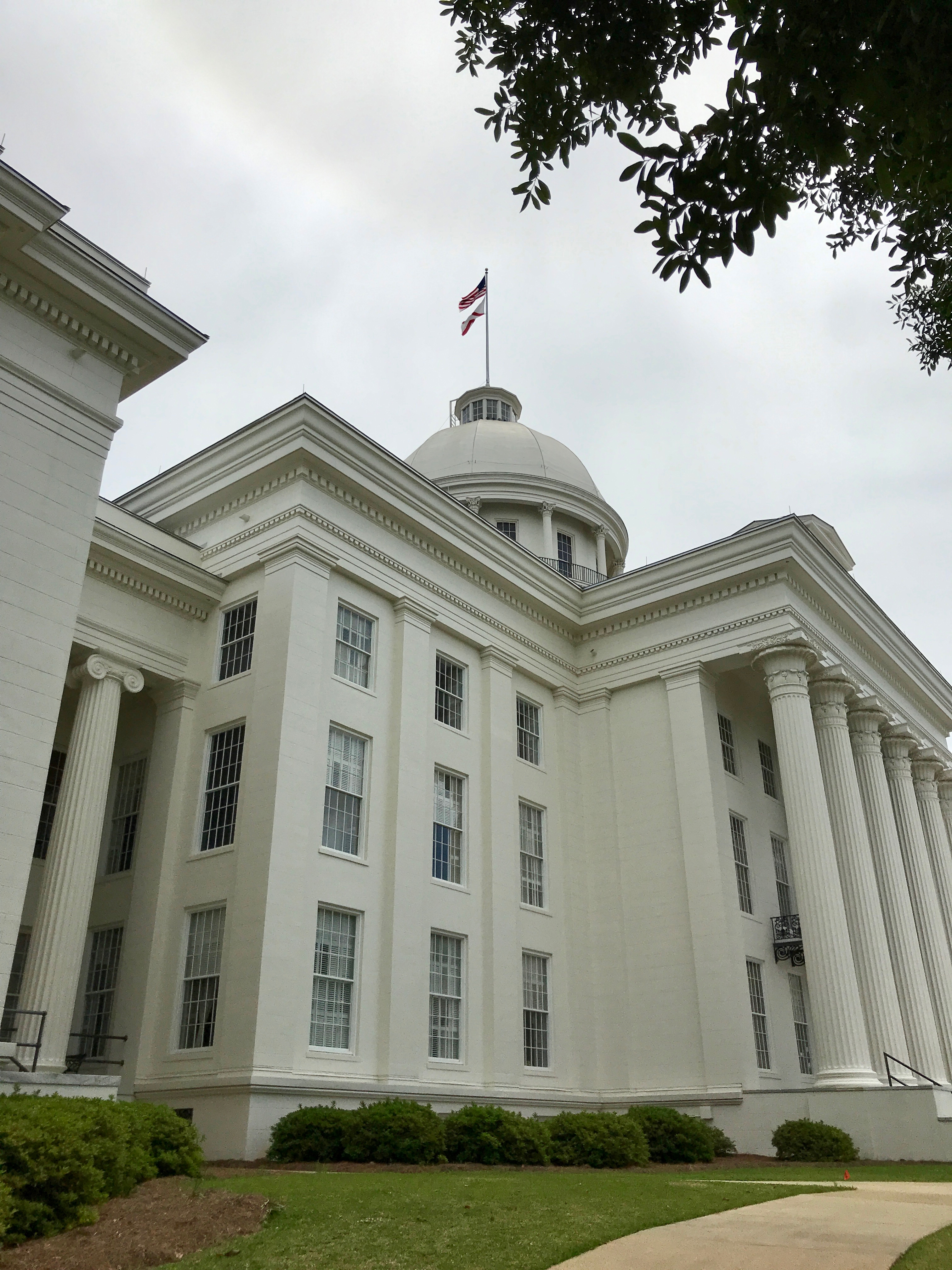
Around the building I went.
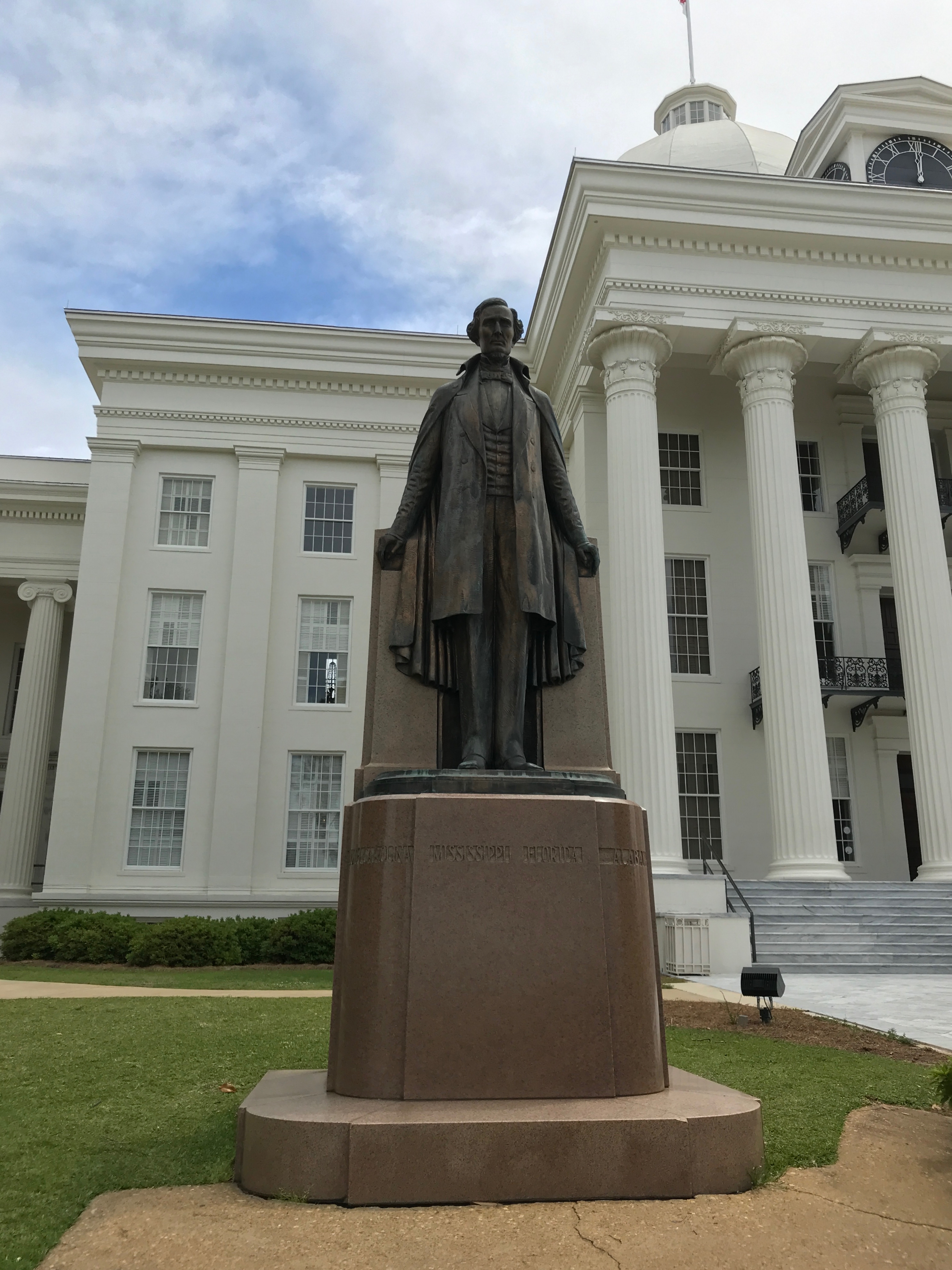
Jefferson Davis.
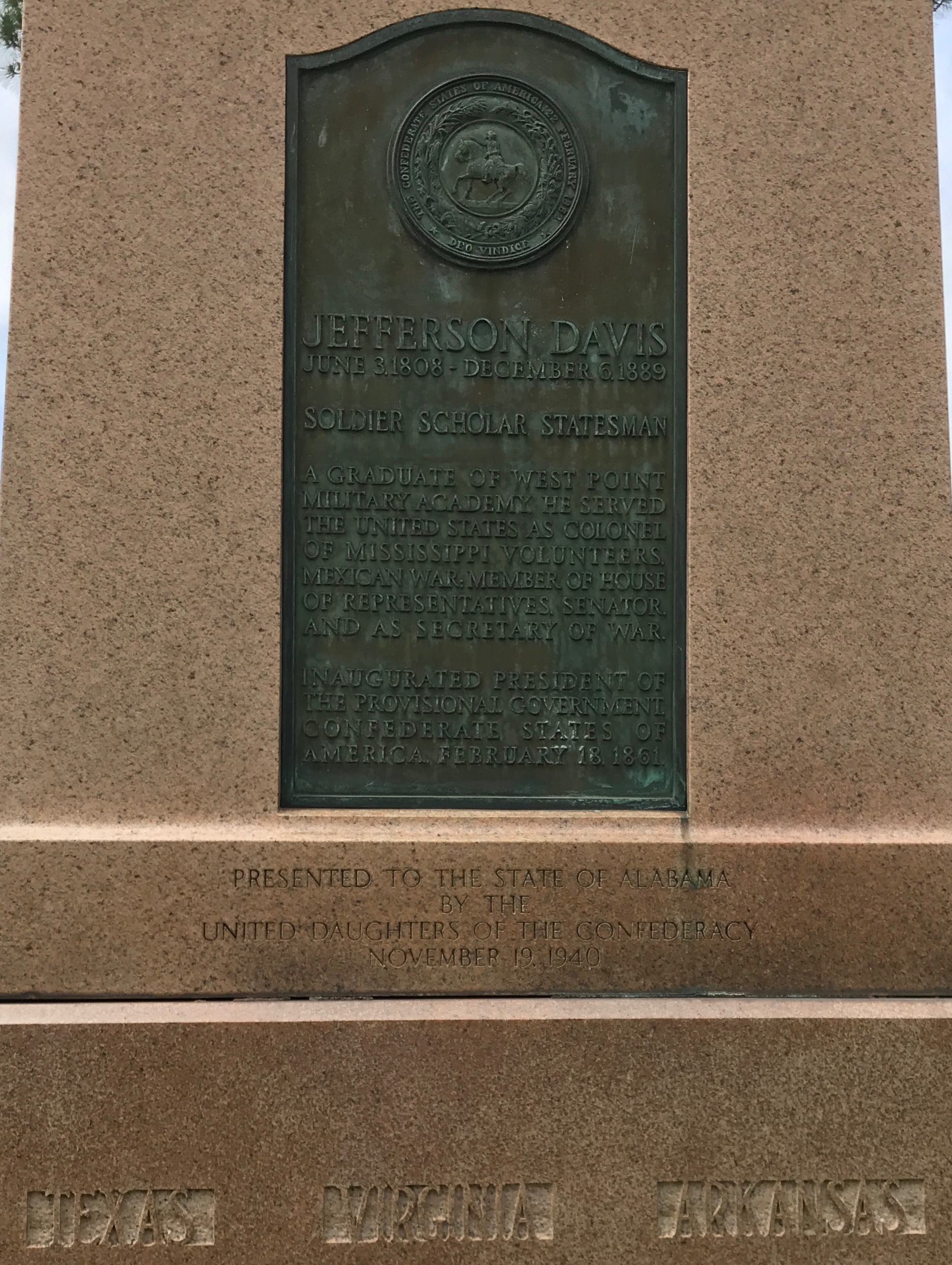
This statue was presented to the State of Alabama in 1940. That late date surprises me. It seems that most of the statue I’ve seen honoring Confederates were erected closer to the turn of the 20th century.
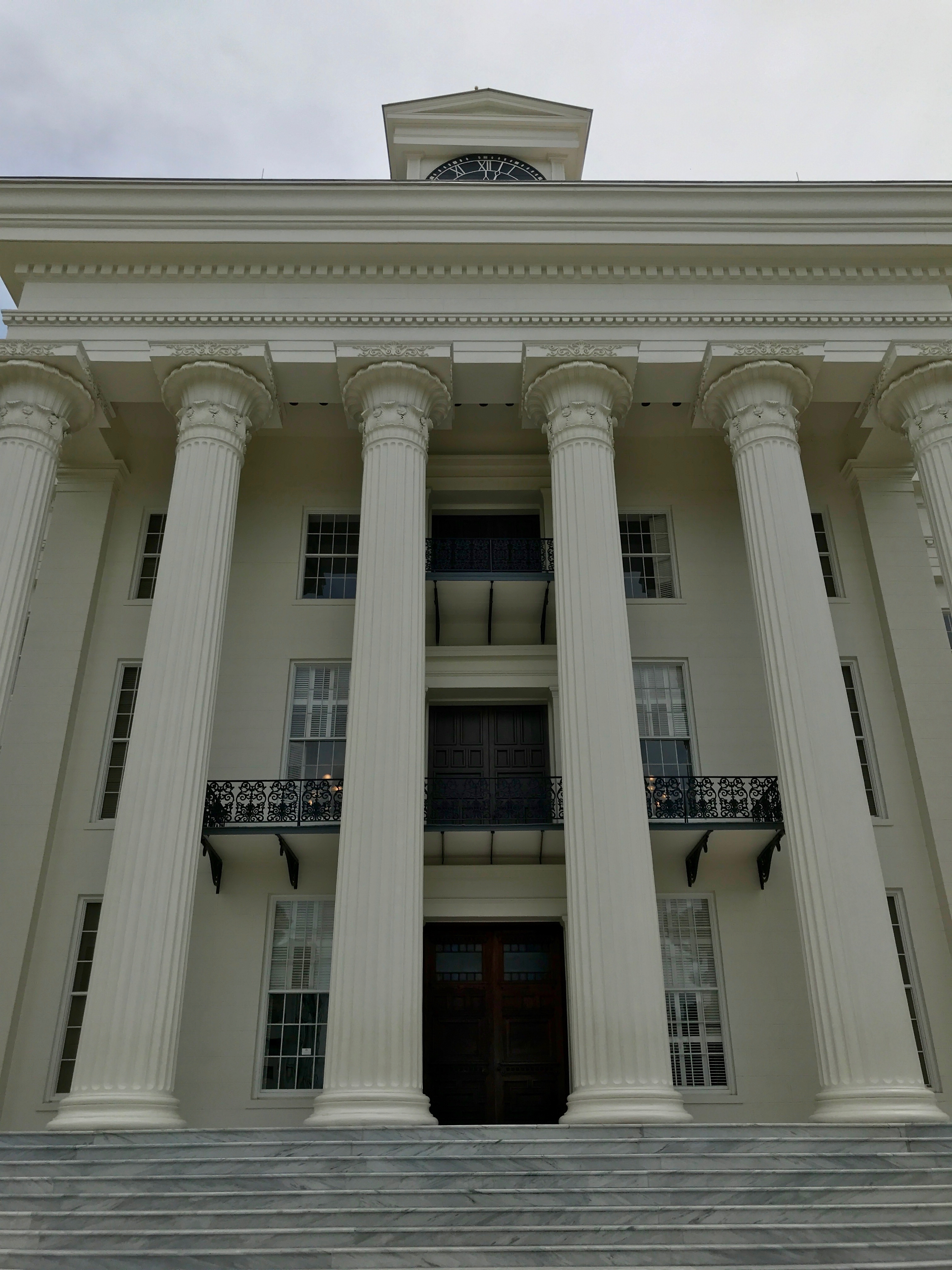
The columns give the building a stately air.
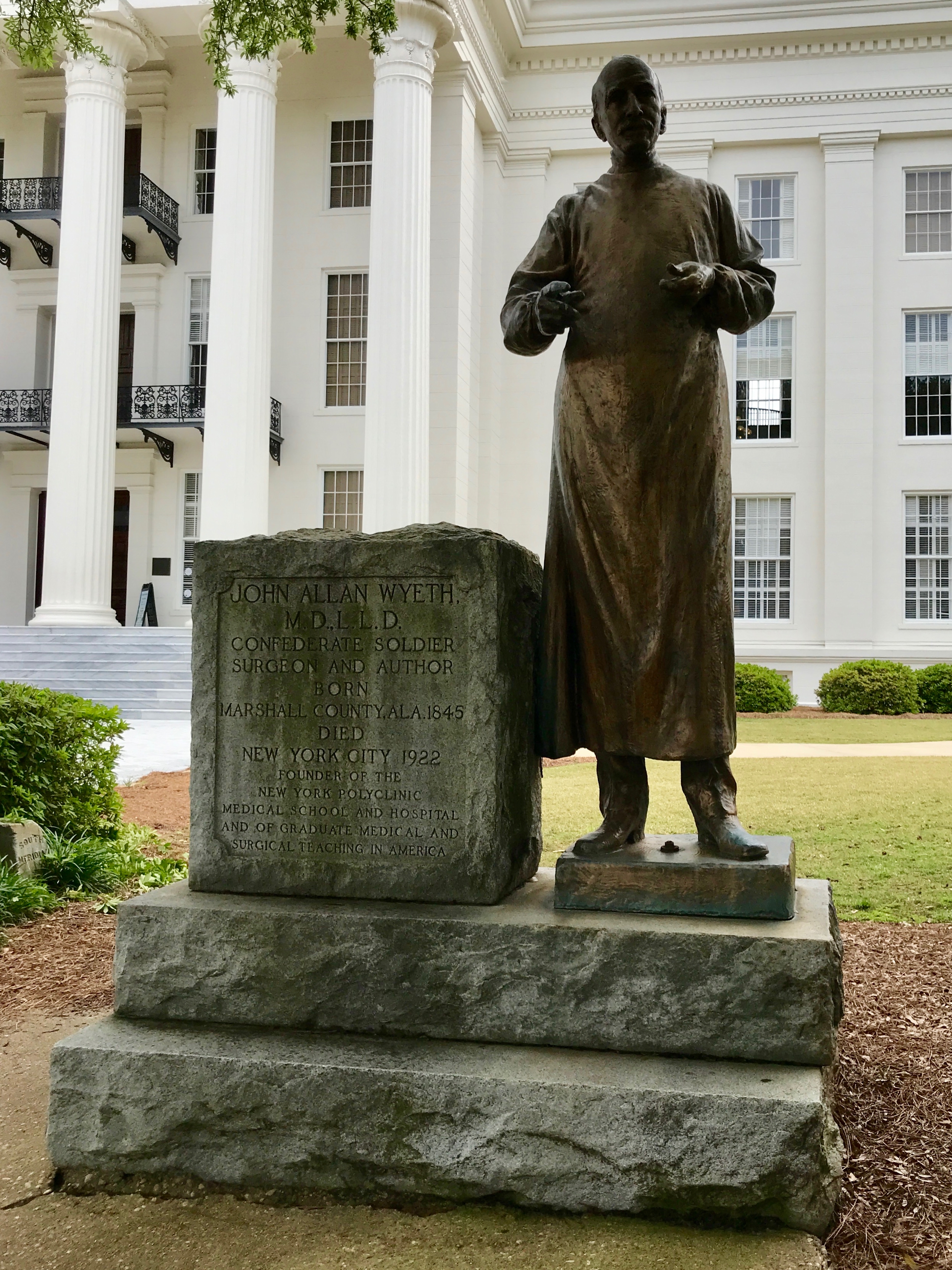
I came across another statue to another Confederate. I didn’t see a date on this statue, though.
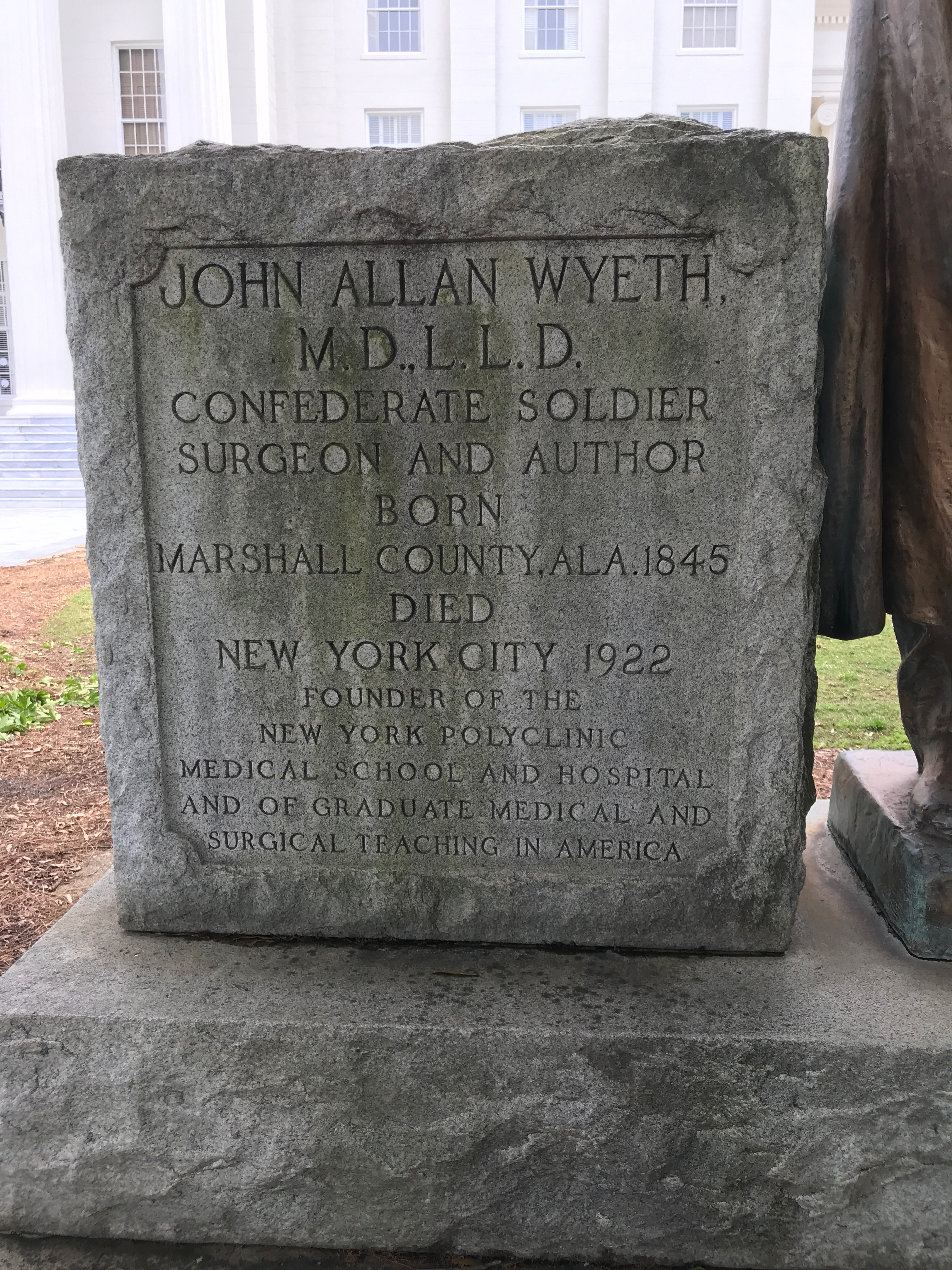
On to another statue.
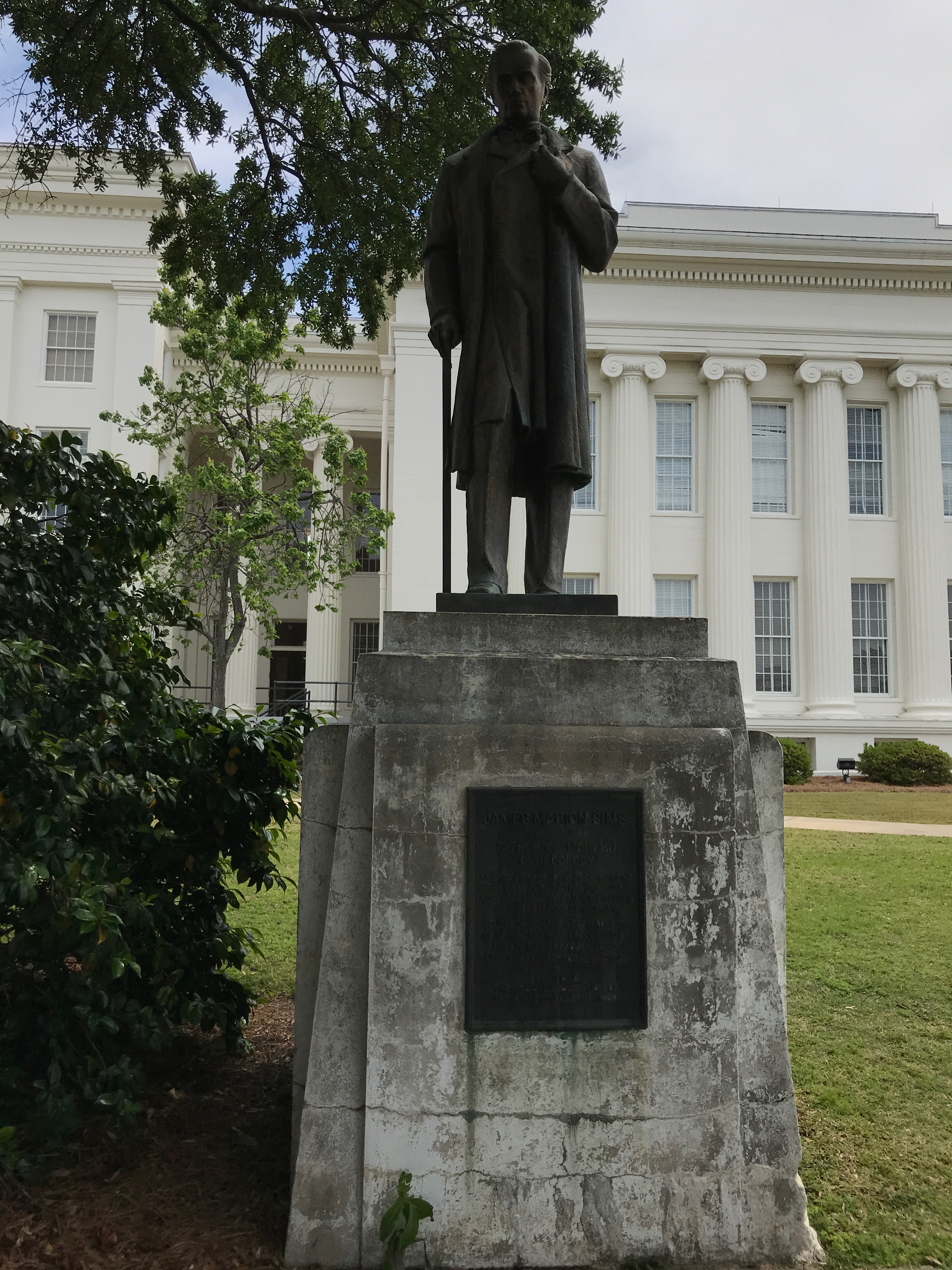
What is it with all these statues to the medical profession?
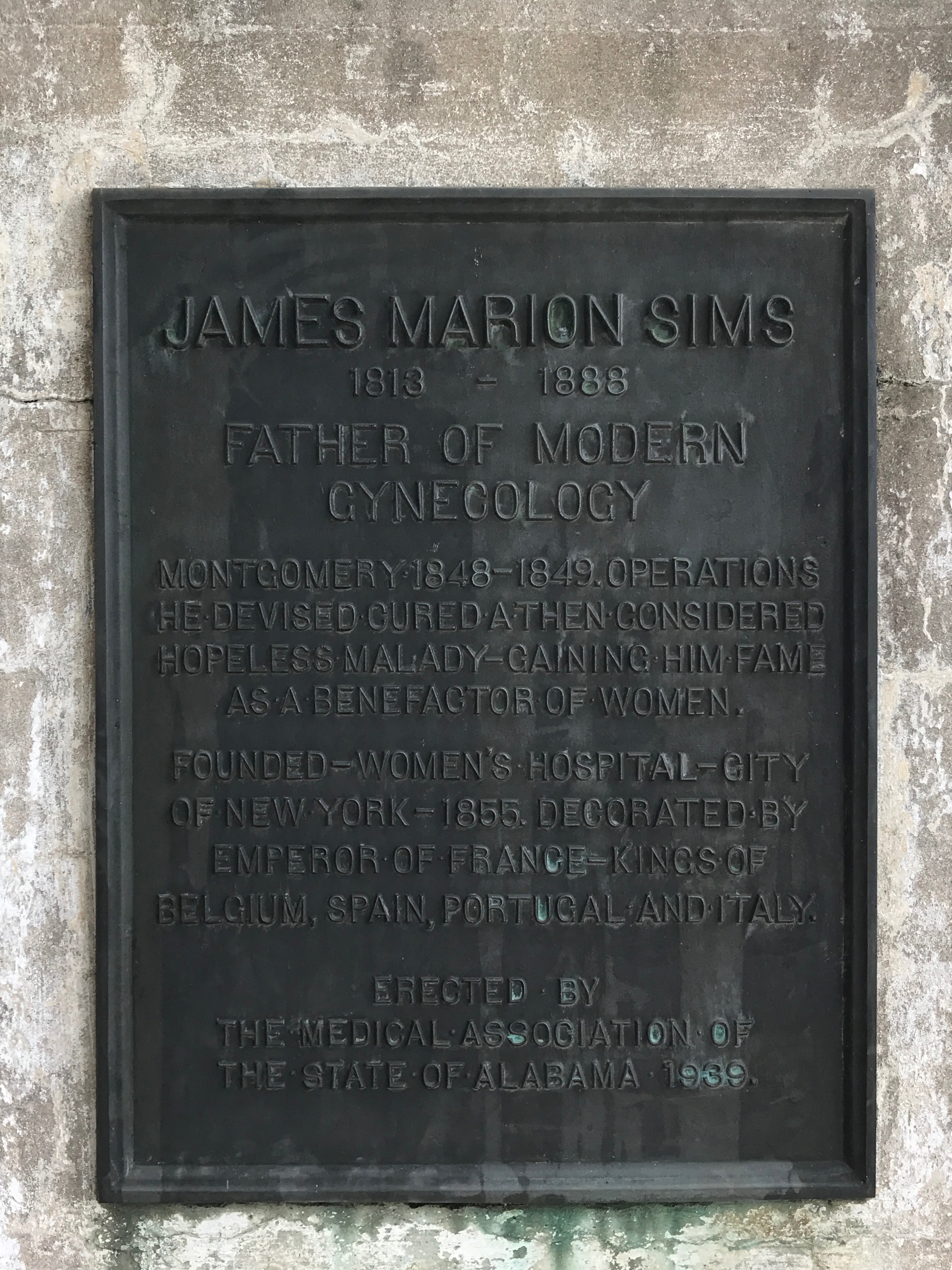
I wanted to know more, so of course I had to look. I kind of wish I hadn’t.

It turns out that J. Marion Simms  developed his surgical techniques by operating without anesthesia on enslaved black women. The father of modern gynecology – oh, and a Confederate spy. Of course there is a statue honoring him on the capitol grounds,

I guess I’m “glad” I didn’t know more when I was visiting.
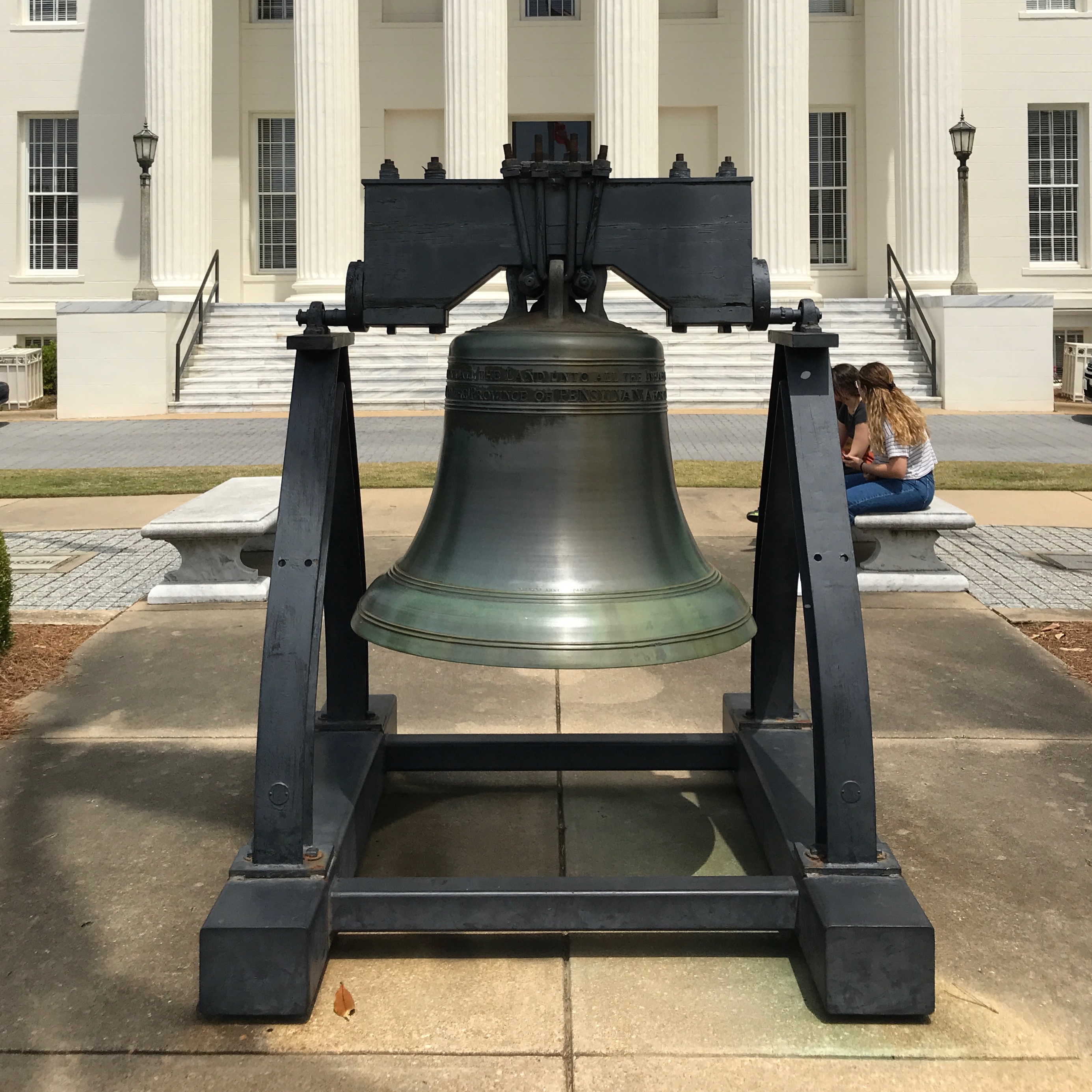
There is a copy of the Liberty Bell in front of the south portico near the Avenue of Flags.
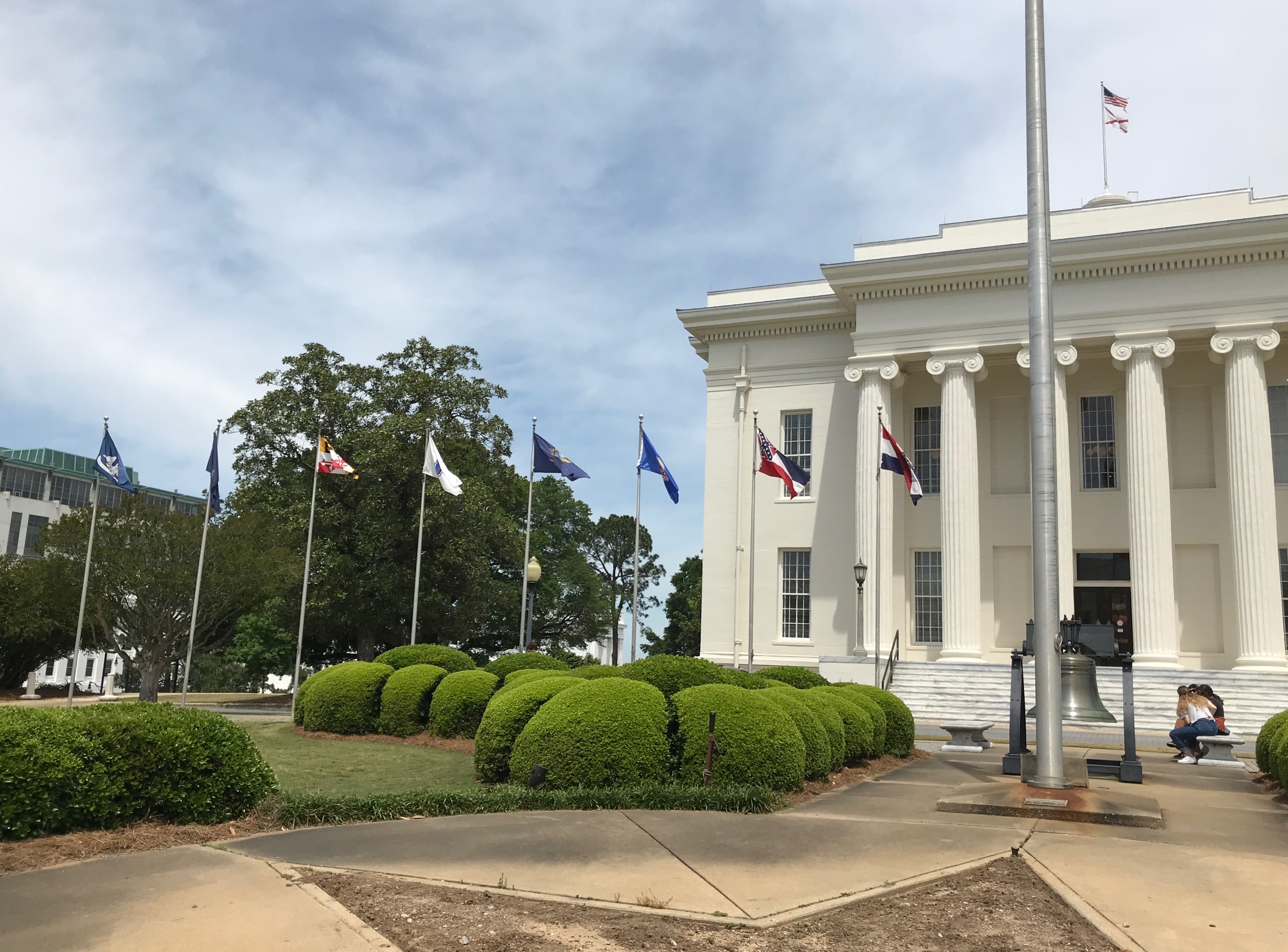
There are flags from all fifty states with a native stone from each state, engraved with its name, set at the base of each flagpole
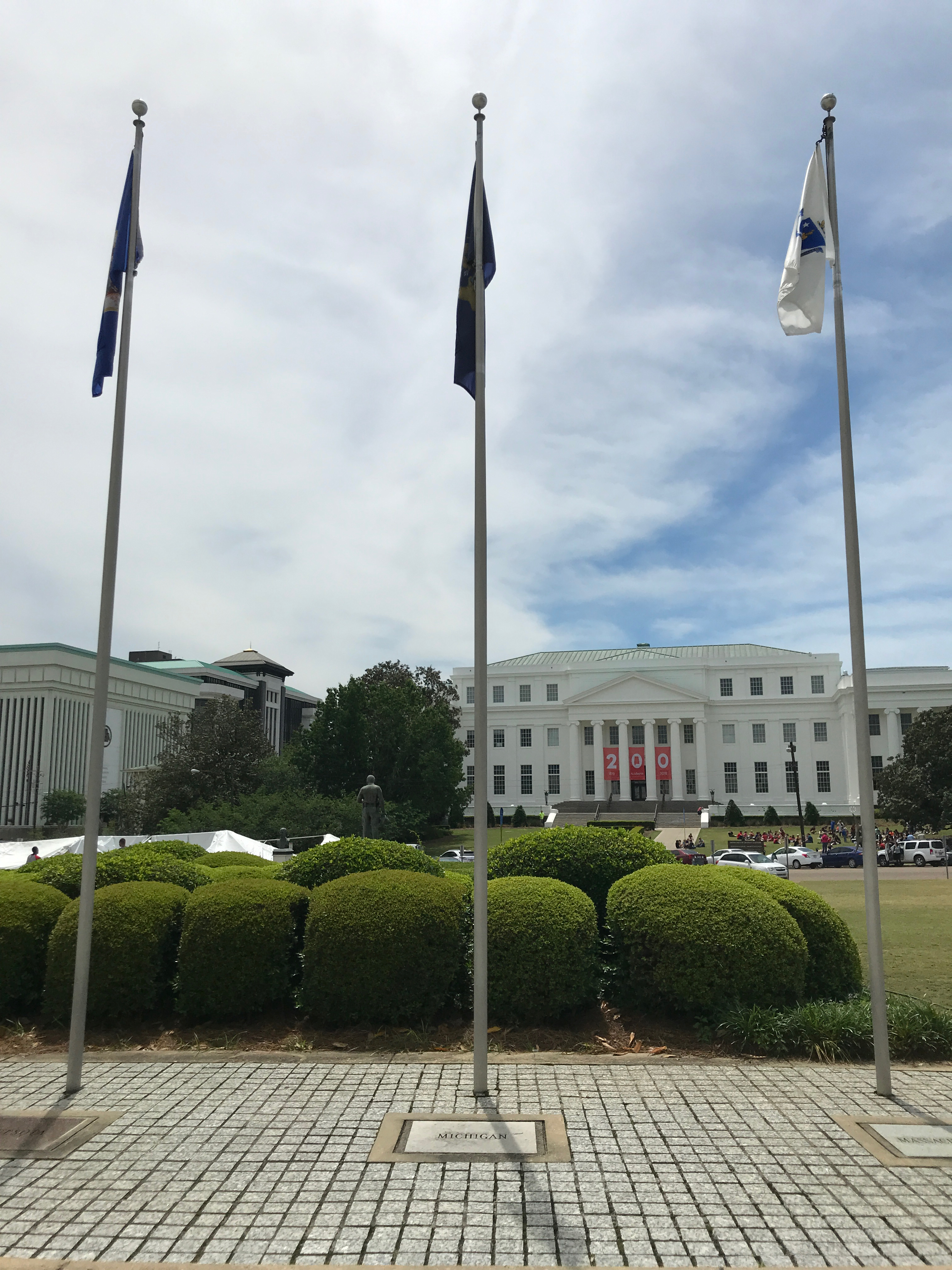
I had to look for Michigan’s flag.
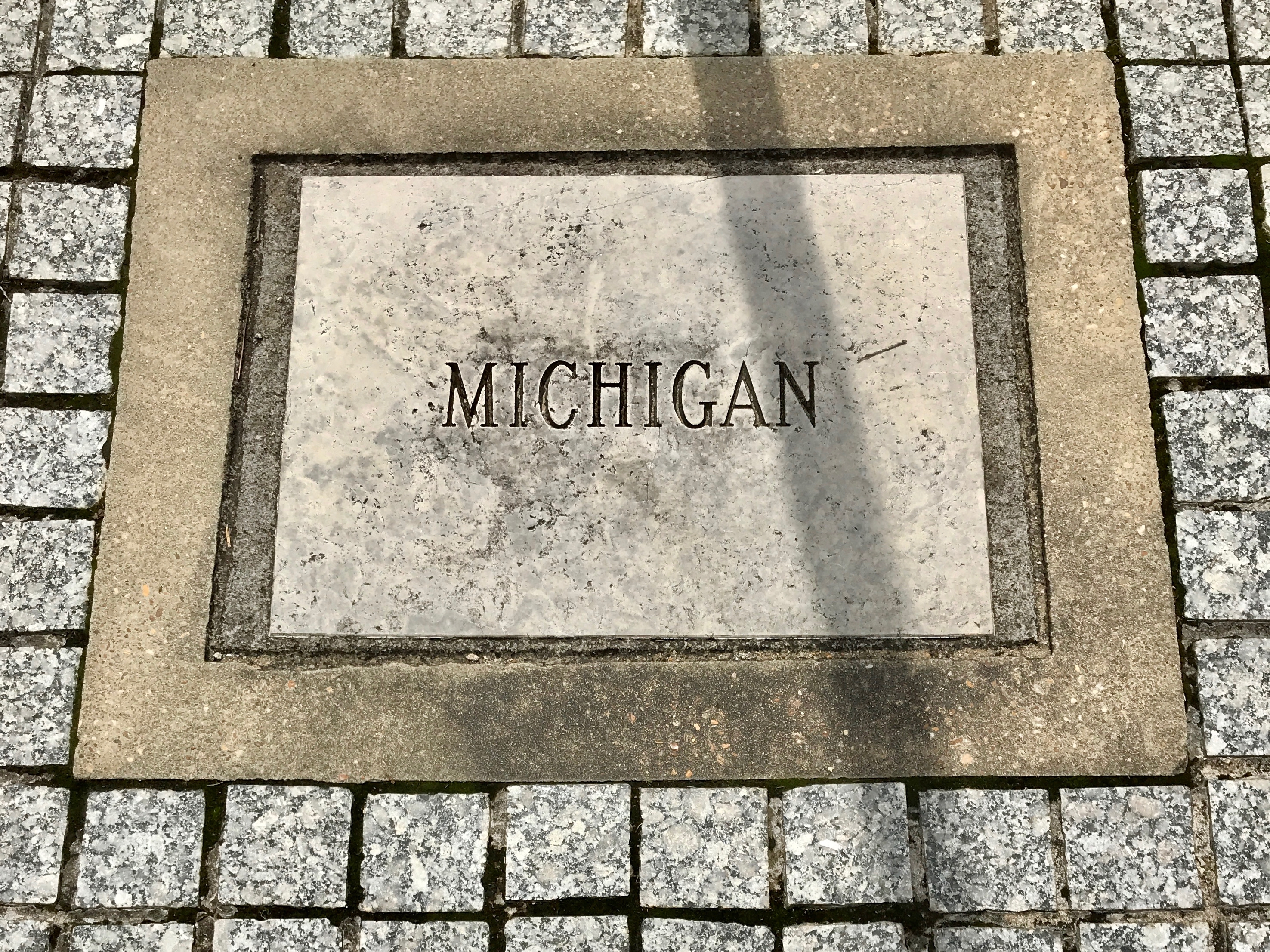
I wish I knew what stones they used for each state. Michigan’s looks like it might be limestone.
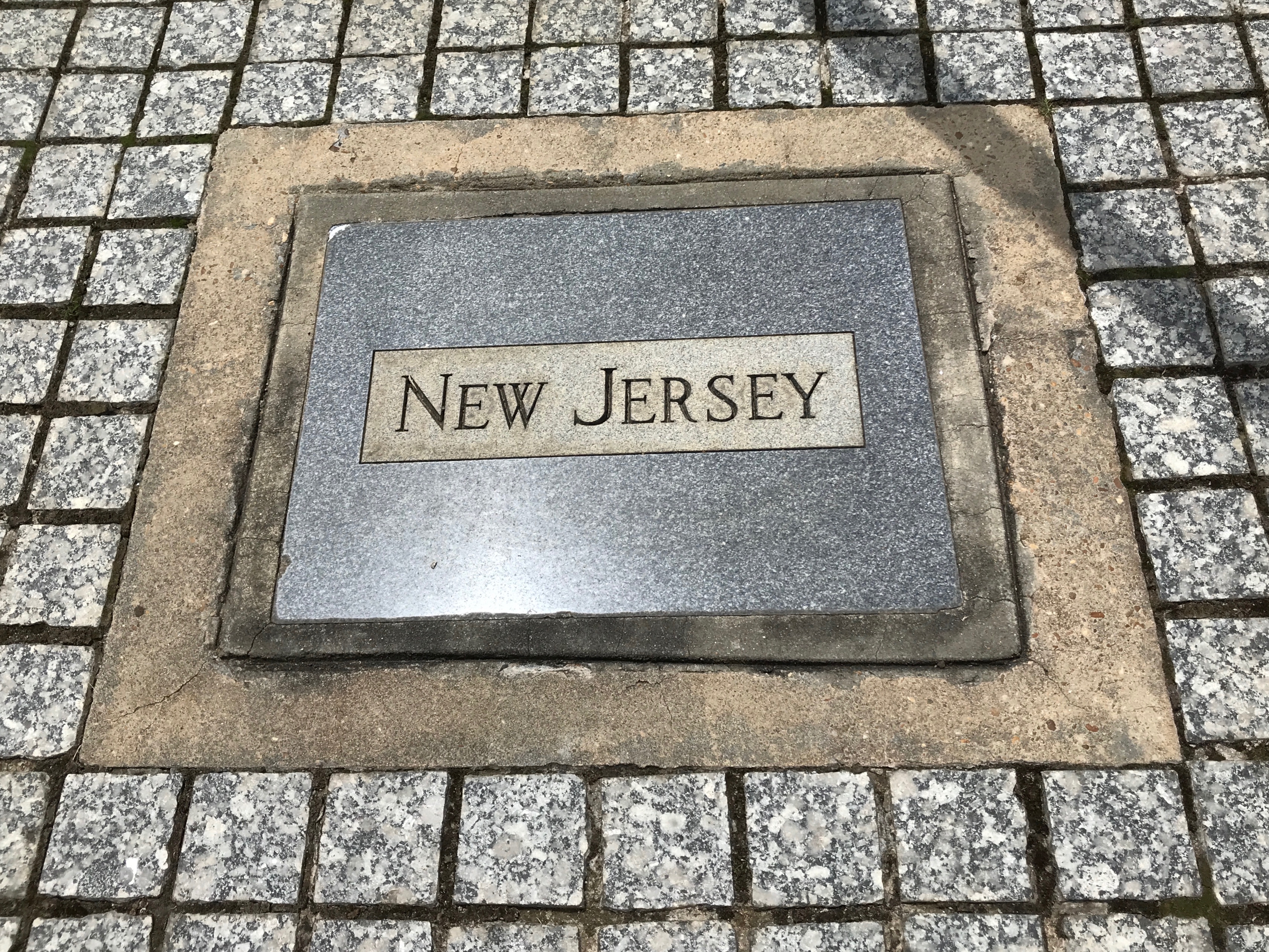
New Jersey’s looks like granite, but I don’t know if they have granite in that state. (I’m not going to look it up.)
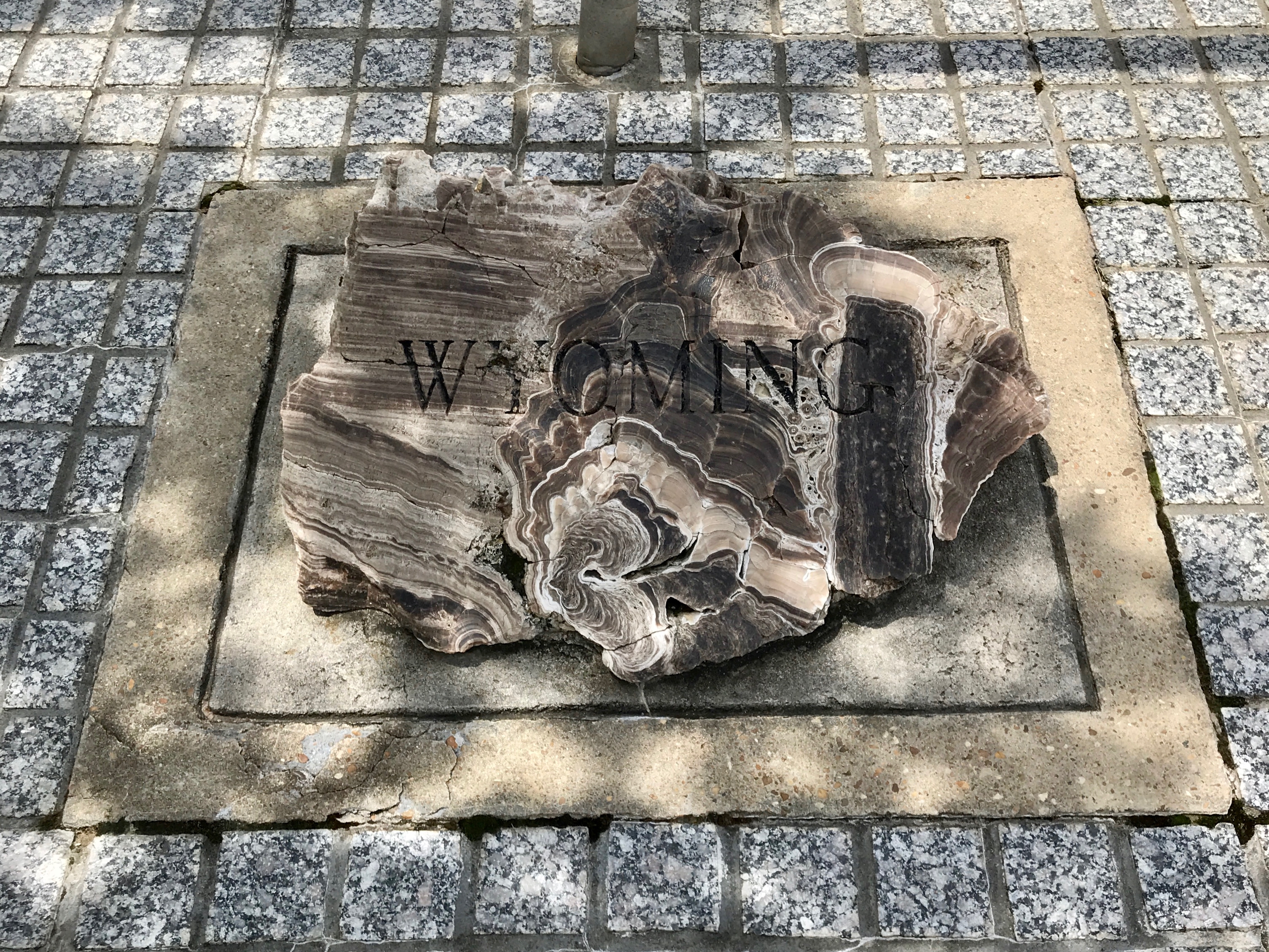
Wyoming’s is cool.
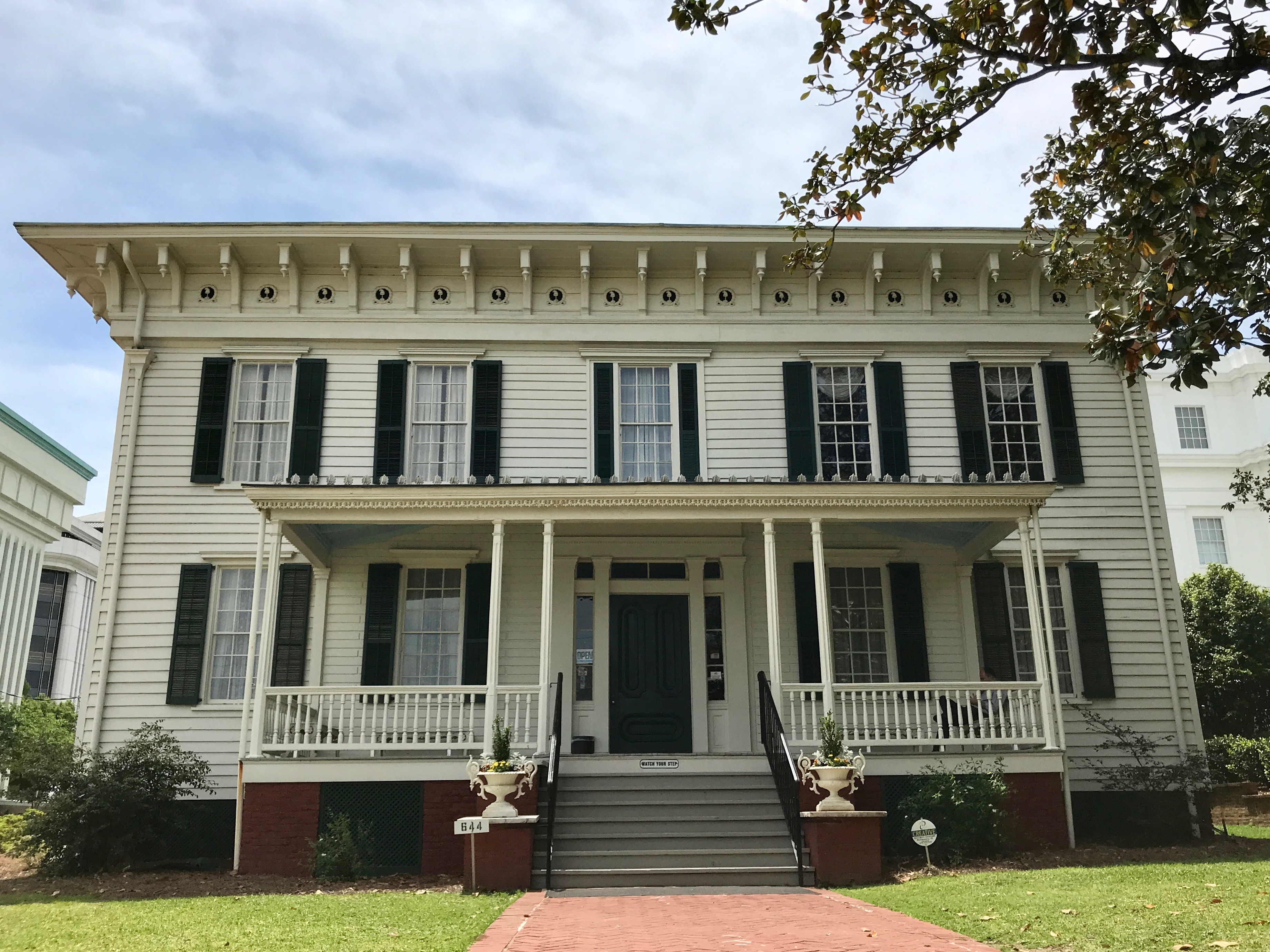
I continued down the Avenue of Flags and came to this rather comfortable looking house.
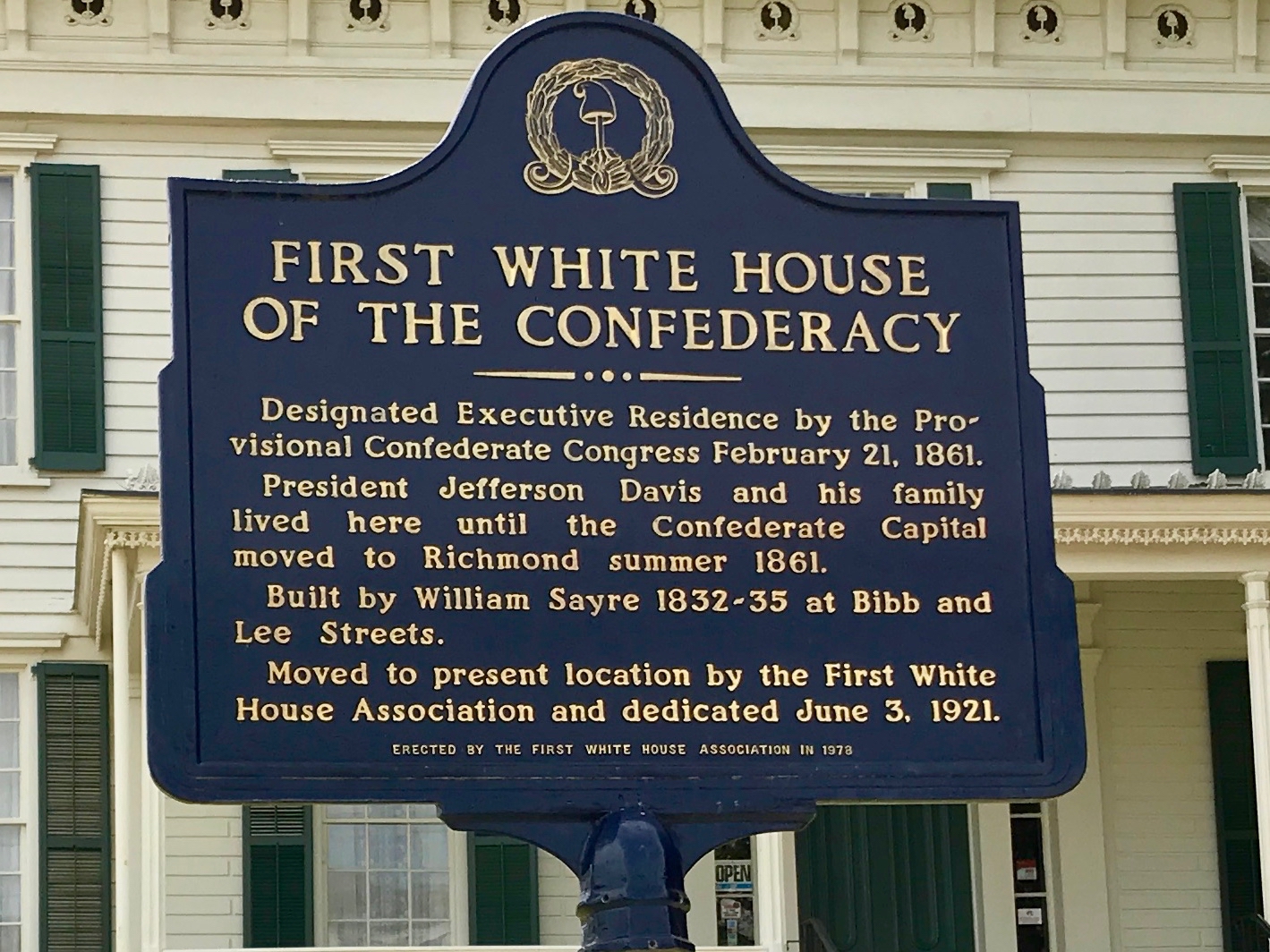
I’ll let you read the plaque to learn more about it.
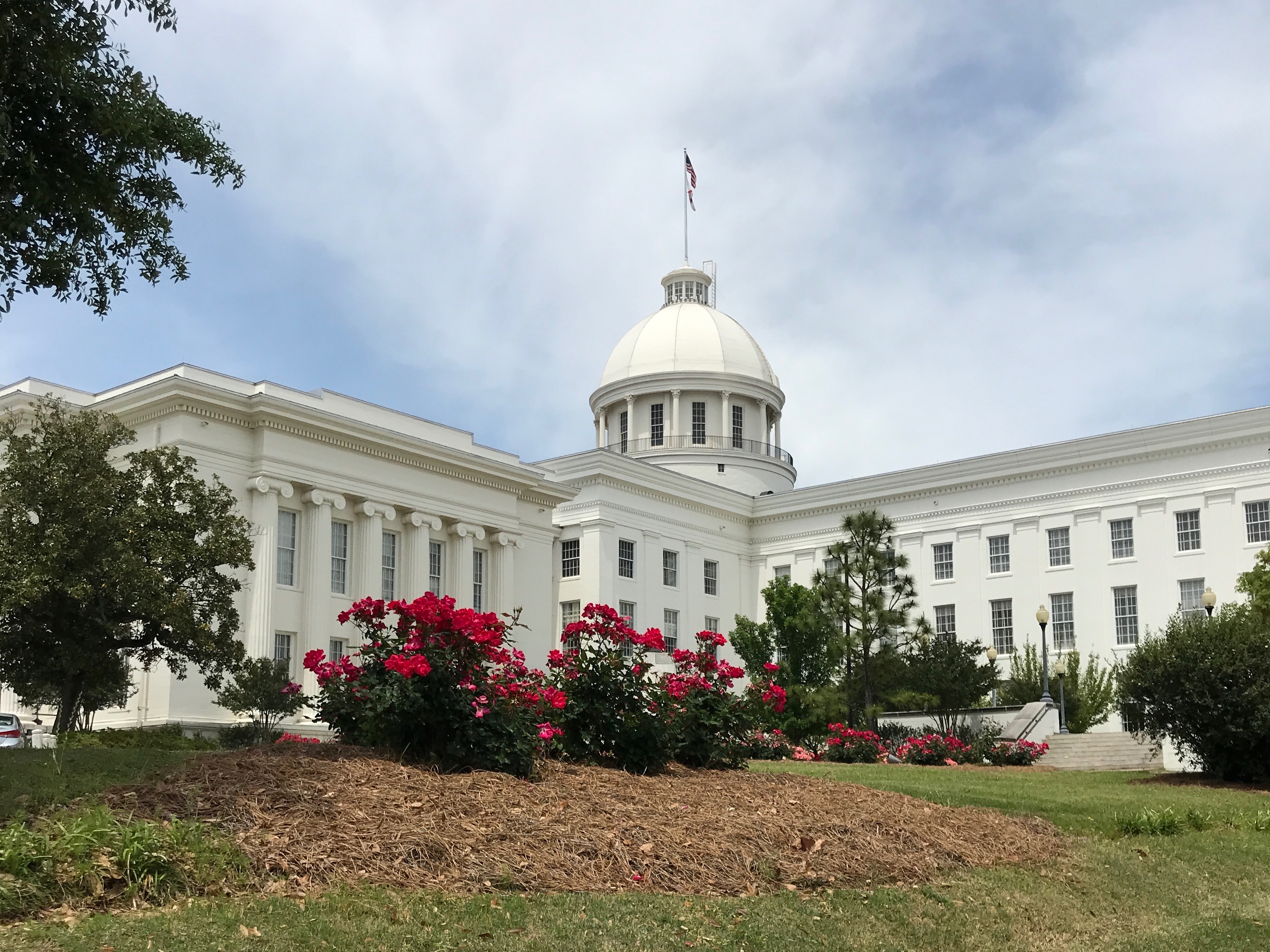
And with that, my trip to the Alabama State Capitol is complete.
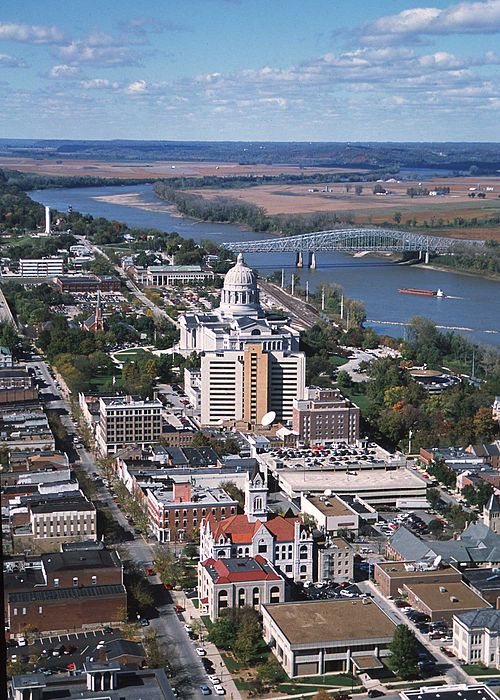
Oh, My! The Capitol Building of Missouri!

The capital of Missouri is Jefferson City – that’s Jeff City to its friends. It’s a surprisingly small city for a state capital. The 2010 census pegged it at about 43,000. According to my Preferred Source, it is the 15th largest city in Missouri. The largest city in the state is Kansas City, at about 460,000, and the populations continue down from there. In fact, the smallest place listed as a city in this source is Triplett with a population of 41 in 2010. What is at the bottom of the list? Well, it’s Goss, with a population of 0, according to the 2010 census. (But it’s only identified as a town.)

While the city is on the small side, the capitol building is not. It is built on a bluff on the south side of the Missouri River. Lewis and Clark paddled past this very spot on their 1804-1806 Corps of Discovery Expedition. Of course, none of these buildings were here.

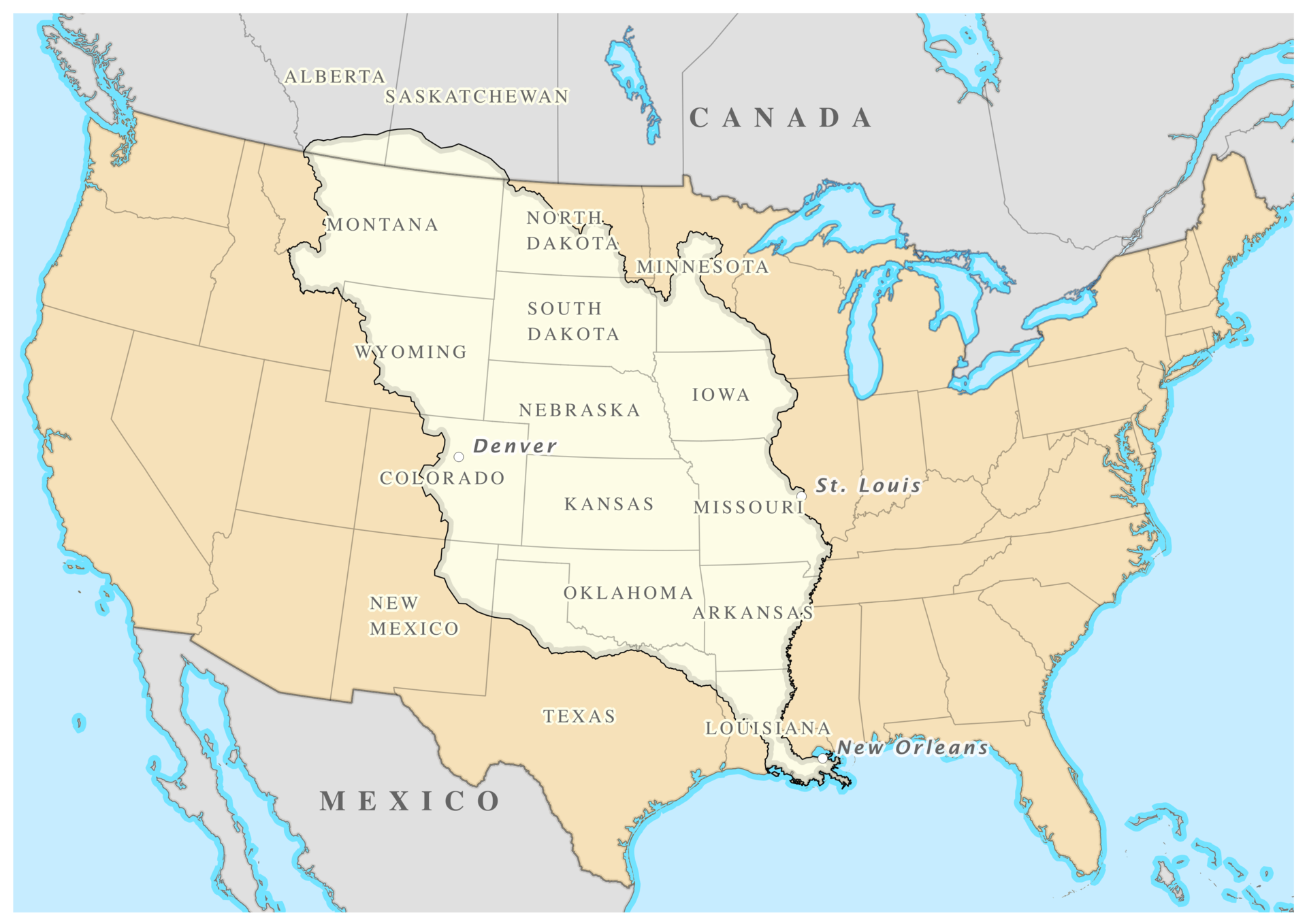
I was tempted to say that Missouri wasn’t even part of the United States at that time, but it was acquired from the French in 1803 as part of the Louisiana Purchase. The USA paid the French fifteen million dollars, or approximately $18 per square mile. That works out to about three cents an acre. They acquired a total of 530,000,000 acres – or about 830,000 square miles.

The Missouri Territory was organized in 1812. St. Louis, on the Mississippi River, was the seat of government. St. Charles, located on the Missouri River, became the second seat of government. Jefferson City was chosen as the new capital in 1821. The village was first called “Lohman’s Landing.” When the legislature decided to relocate there, they proposed changing the name to “Missouriopolis.”

I don’t know about you, but I prefer the name Jefferson City.

The settlement was incorporated as a city in 1825 and the Missouri legislature met there for the first time a year later.

I spent a lot of time trying to figure out how to present this capitol building. The building itself is mammoth, but it is filled with the more amazing works of art that I have seen in most state capitols. So, I have decided to break this up in to two posts. The first one will focus mainly on the building. If you’re not so much into the building, the post with the artwork should be along in a few days.

If you are not a fan of my state capitol posts, well, something else will be along in a eventually.

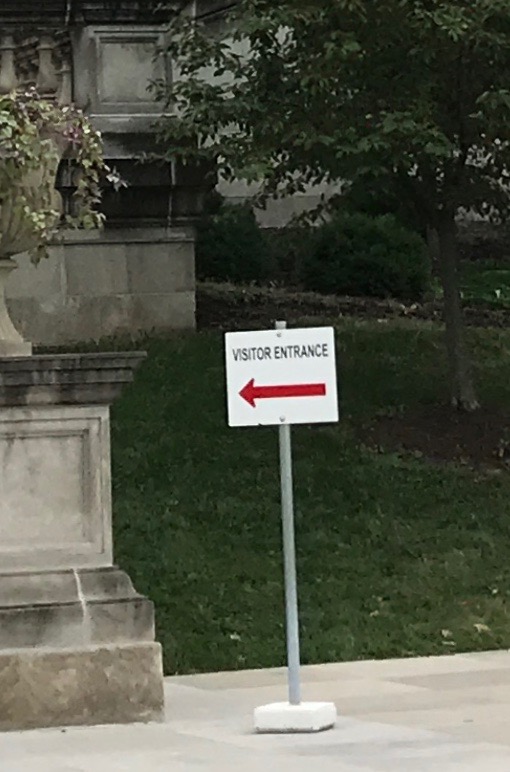
It was still a soggy day when I got up, but not quite as bad as what I had driven through the day before. I got myself ready and headed to the Capitol Building. I parked and found a sign directing me to the visitor’s entrance.

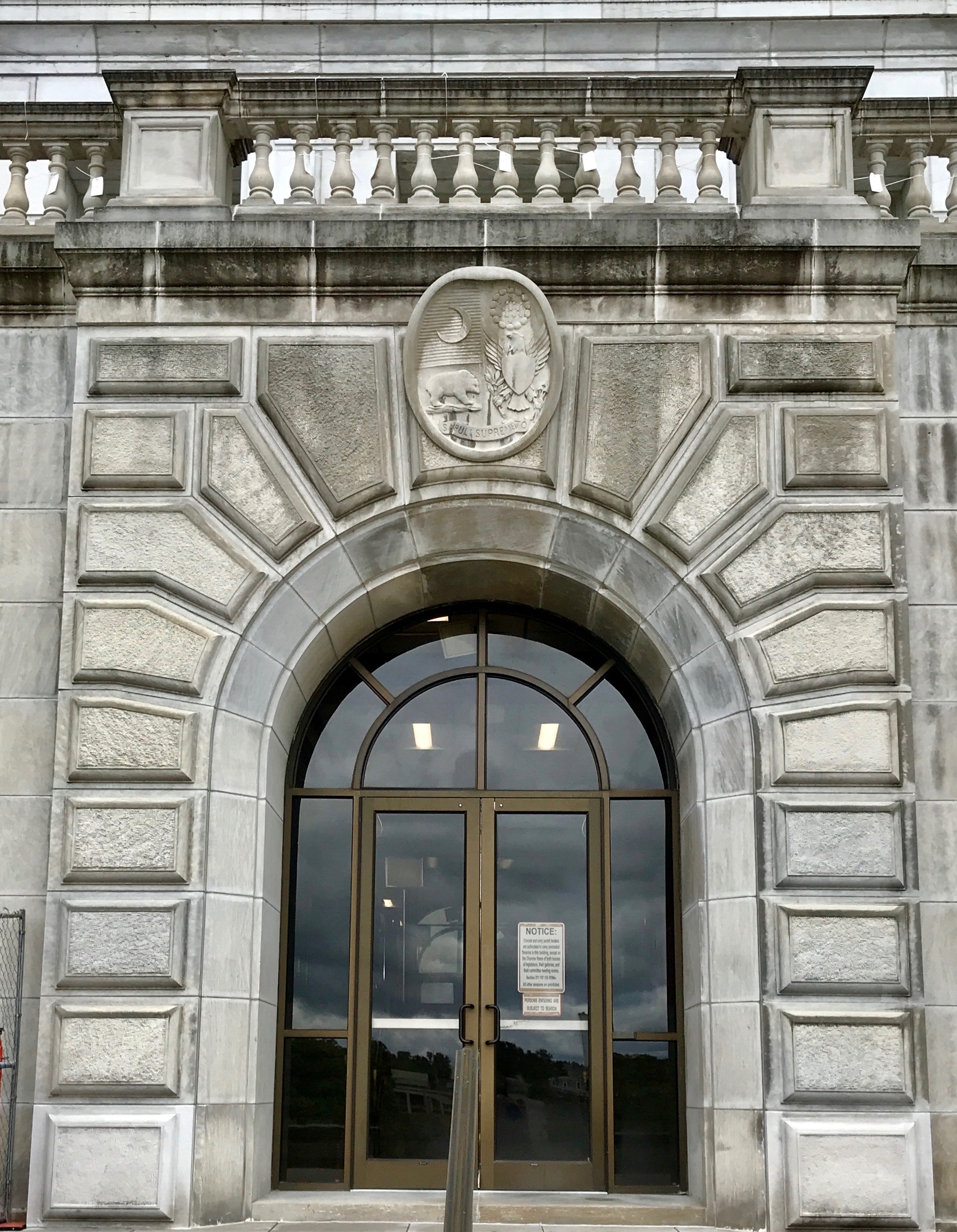
I started climbing. At one landing, there was an entrance. It wasn’t my entrance, however.

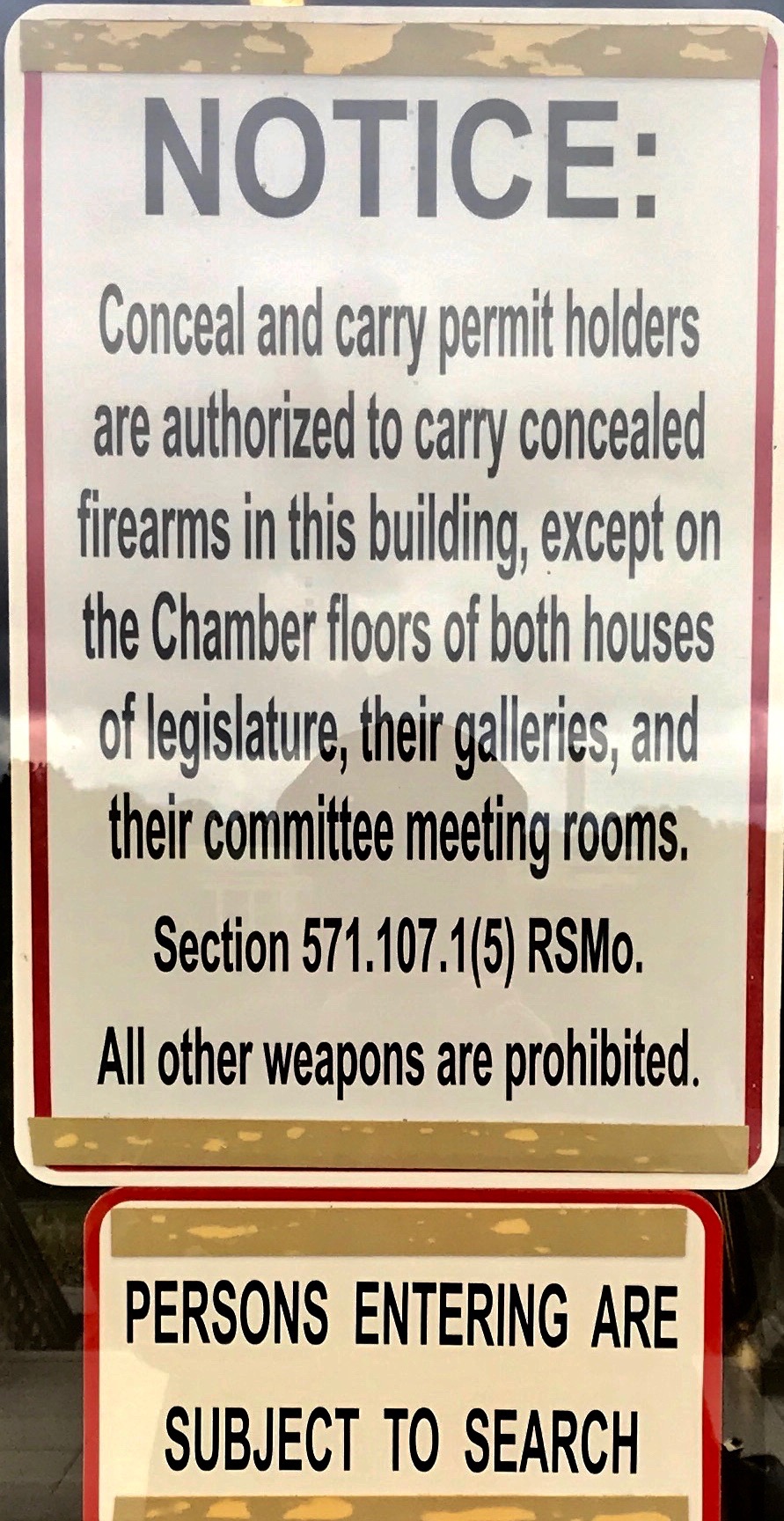
Of course, I had to go up and read the signs on the door.

And, if you wanted to know what the signs said, now you do. I continued on up the stairs.

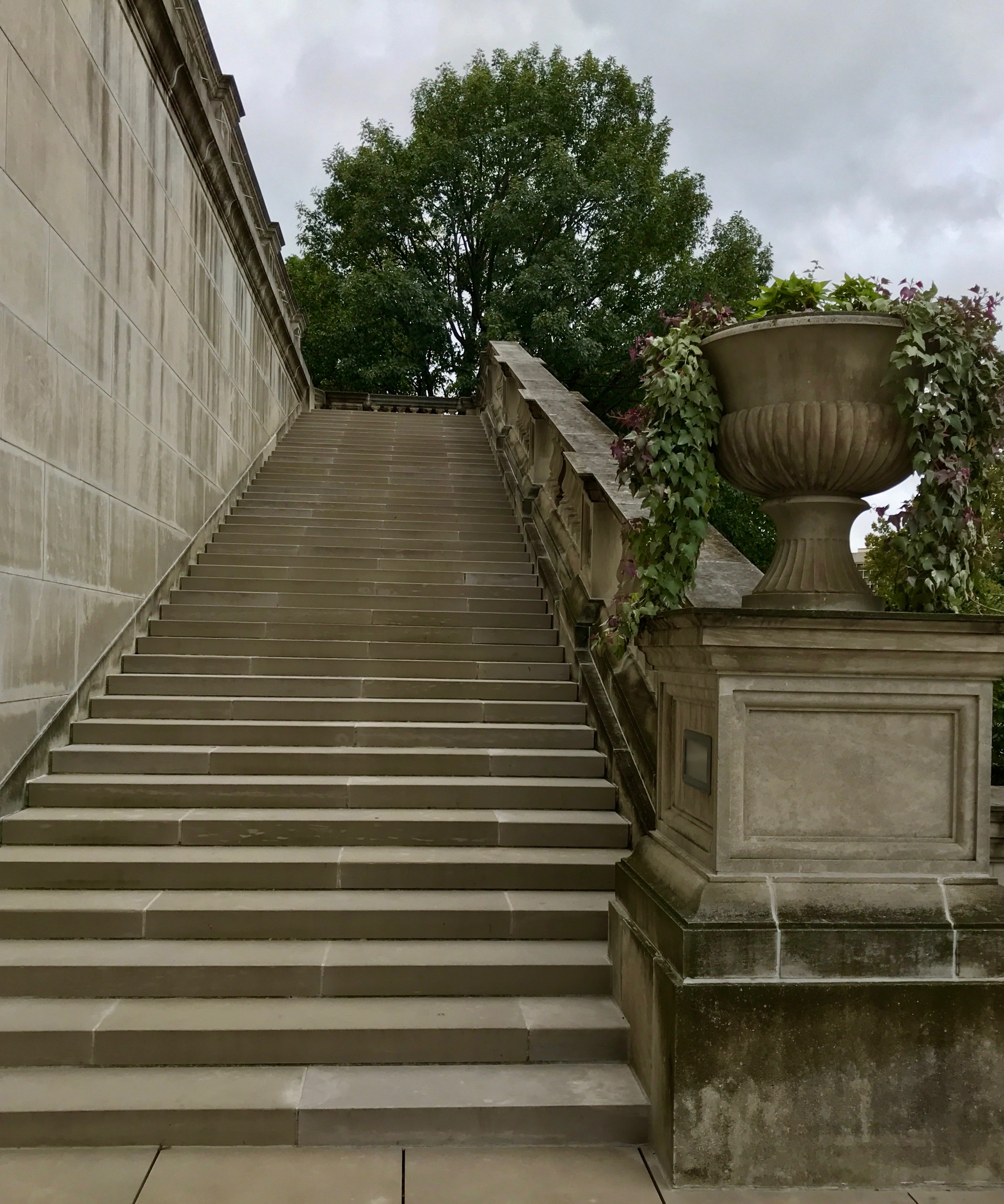
I wish I had been counting the number of stairs! They seemed to go on for ever.

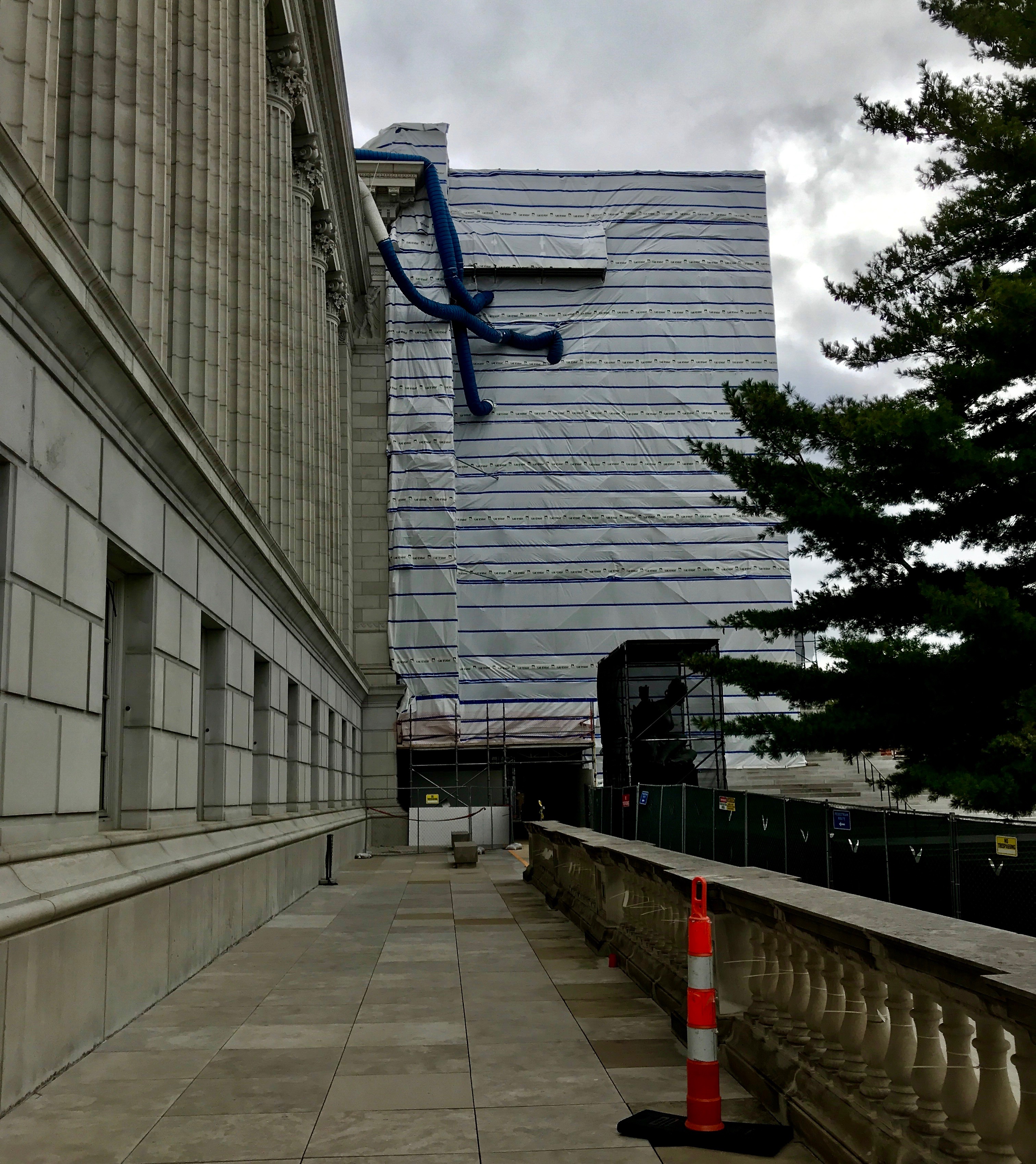
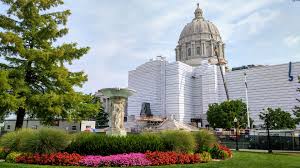
I followed the arrows around to the visitor’s entrance. I guess they must be doing some renovations. It kind of reminds me of one of Christo’s wrapped buildings.

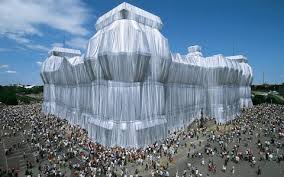
Here’s a photo of the Reichstad in Berlin in 1995.

You can see the similarities, although Christo’s wrapping was only up for fourteen days. I wonder how long the wrapping on the capitol will be up? Incidentally, while Christo didn’t wrap the Reichstad until 1995, I first heard about it in art history class with Sister Jeanne when I was in college. Christo started planning that temporary work of art in the sevenities.

Thank you, Sister Jeanne!

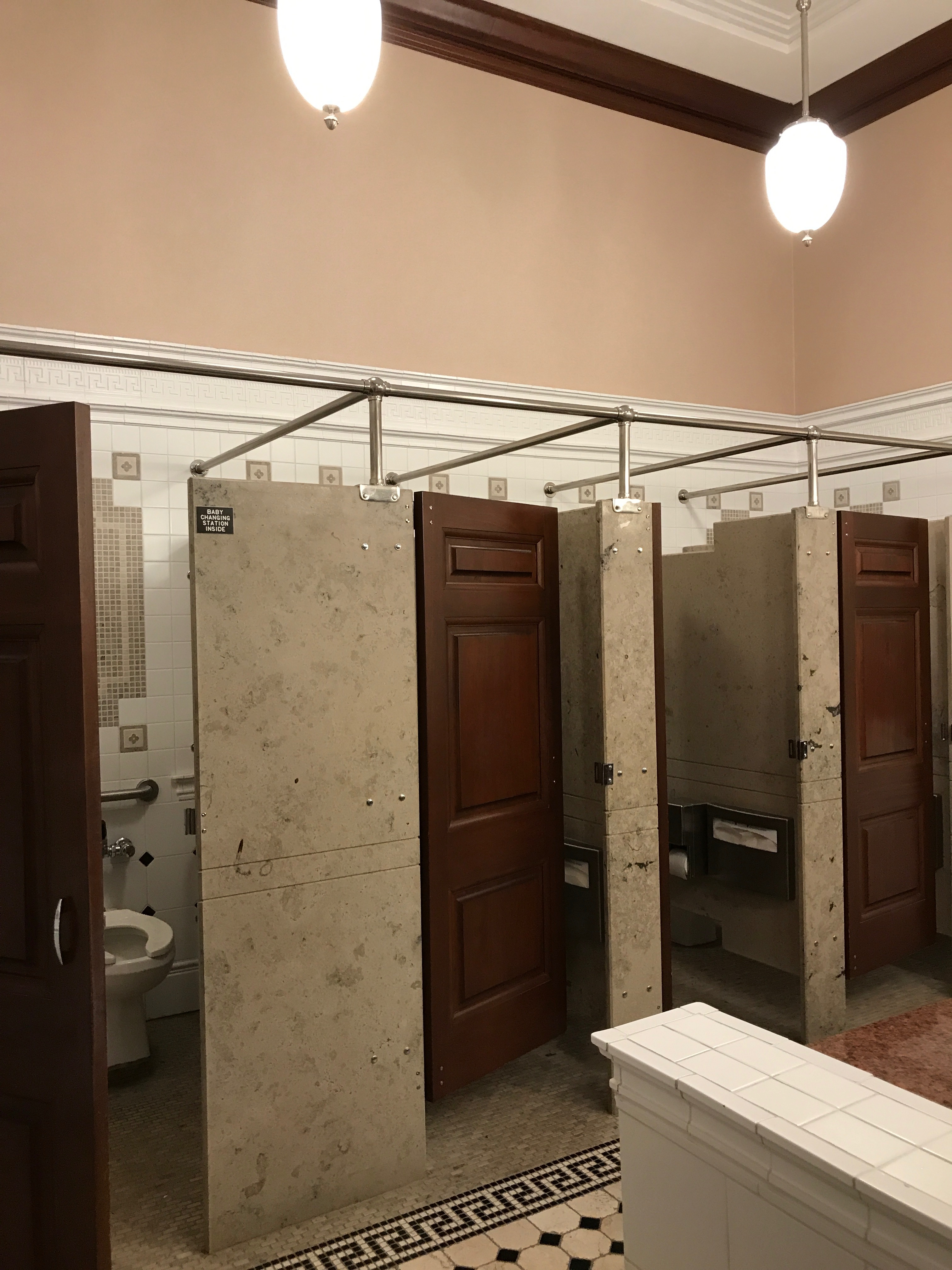
Anyway, I entered the building and looked around for a restroom. The tour wasn’t going to start for a bit, and I figured that I might as well make myself comfortable.

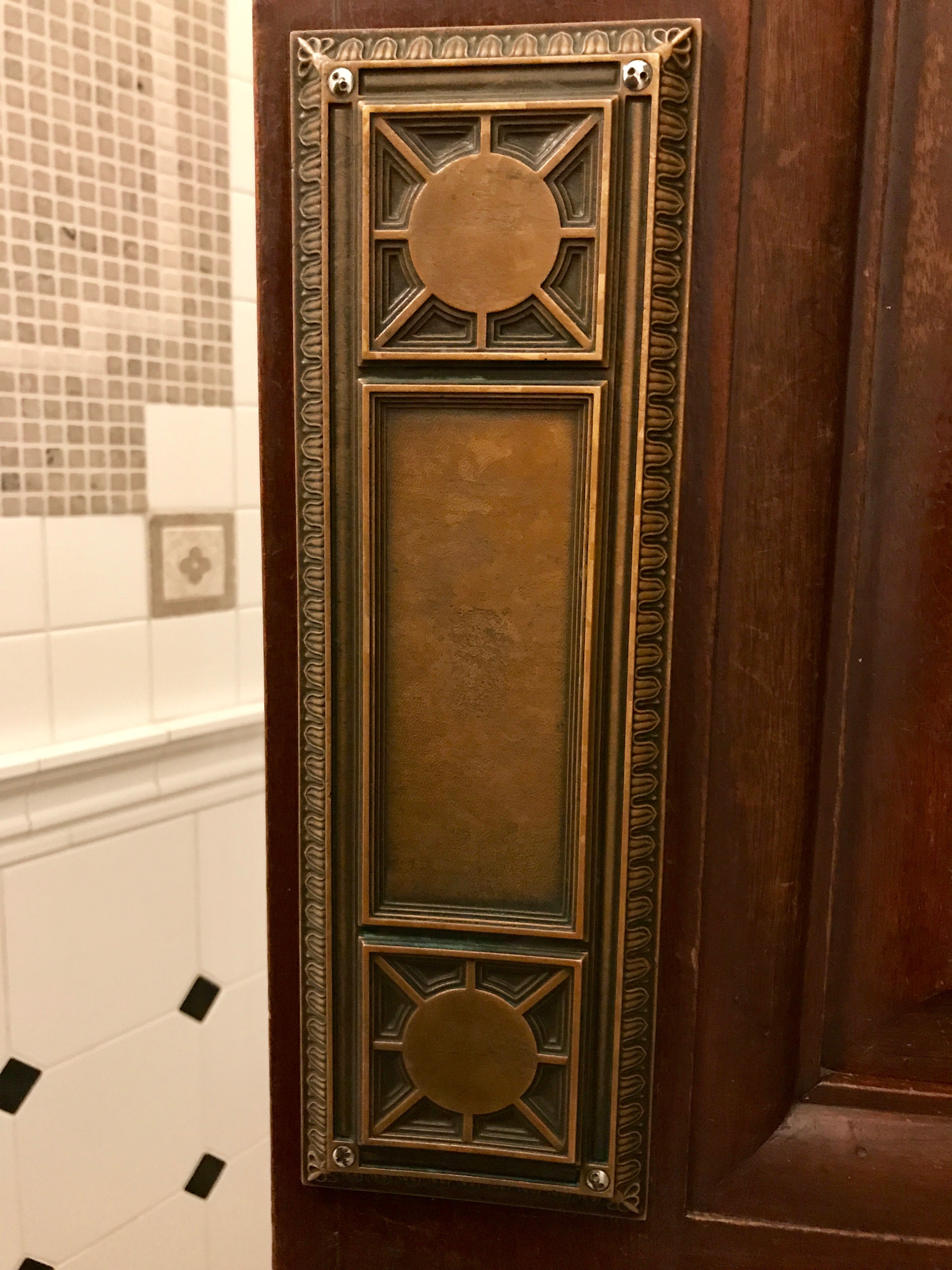
The push plate on the door was quite lovely.

The restroom was also elegantly appointed with marble and tile work.

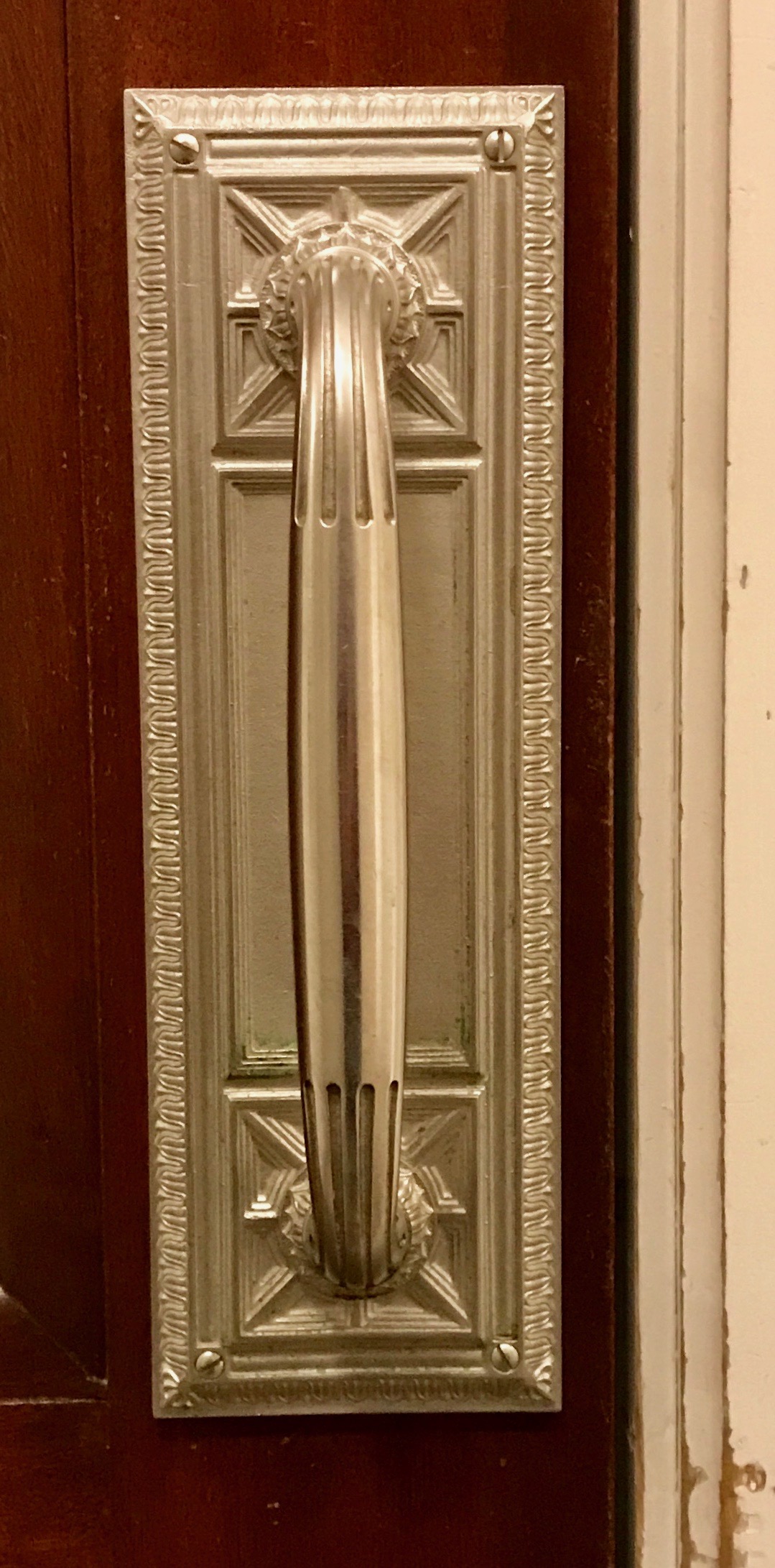
As I left, I was struck by the quality of the pull plate. At this point, I was starting to think that this building might really be something out of the ordinary.

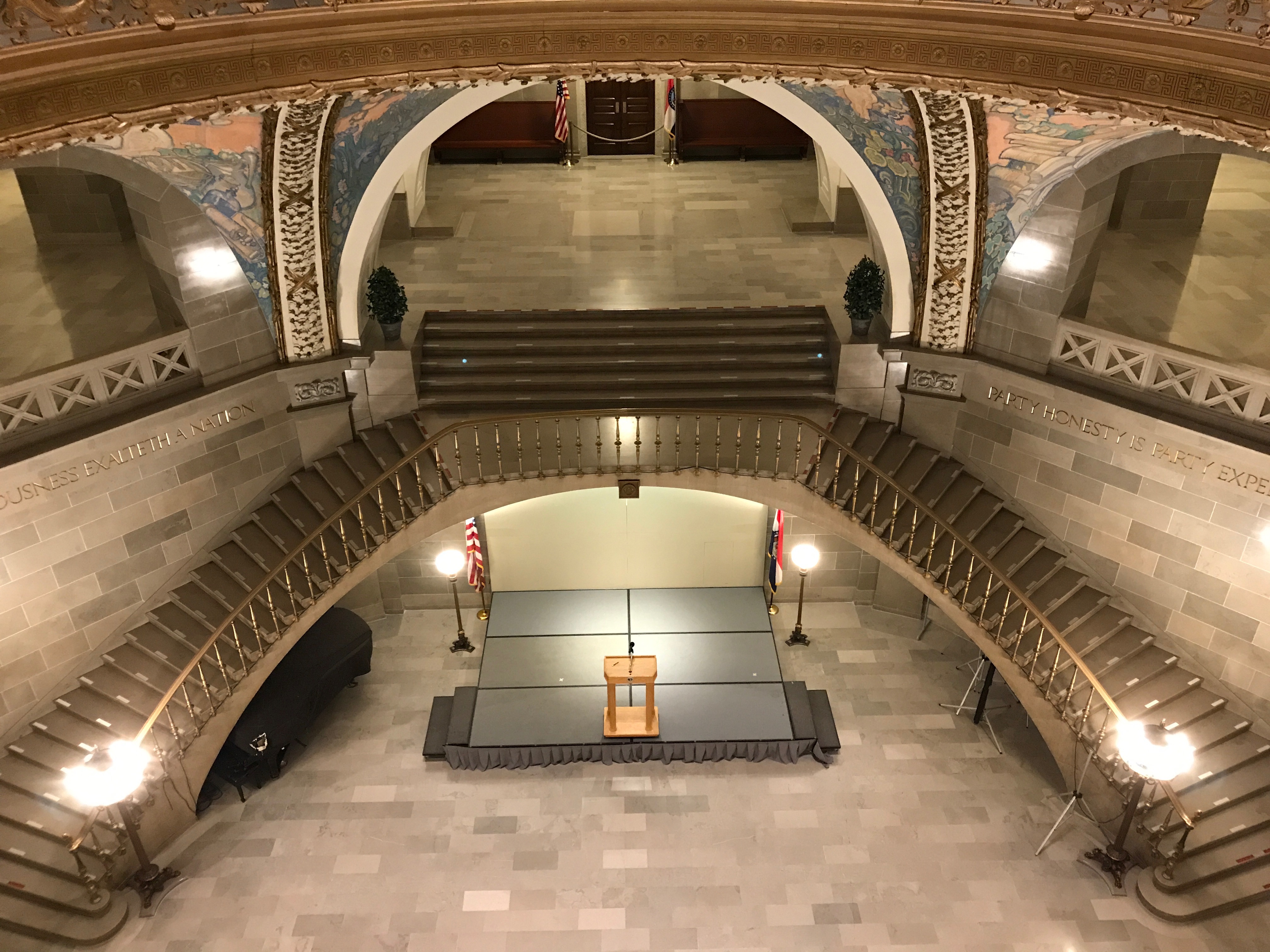
Oh, my! I do believe this building is designed to be inspirational as well as elegant.

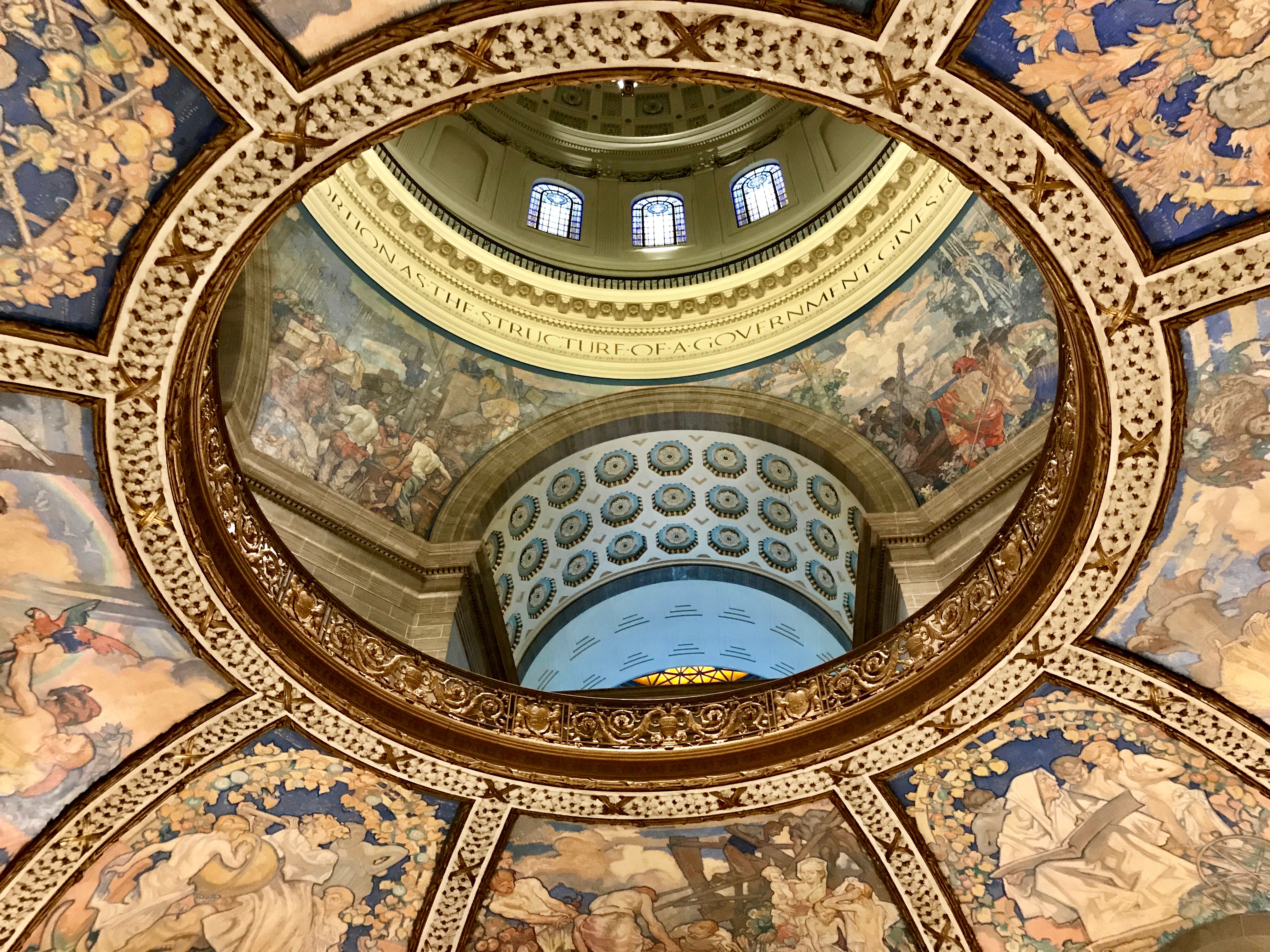
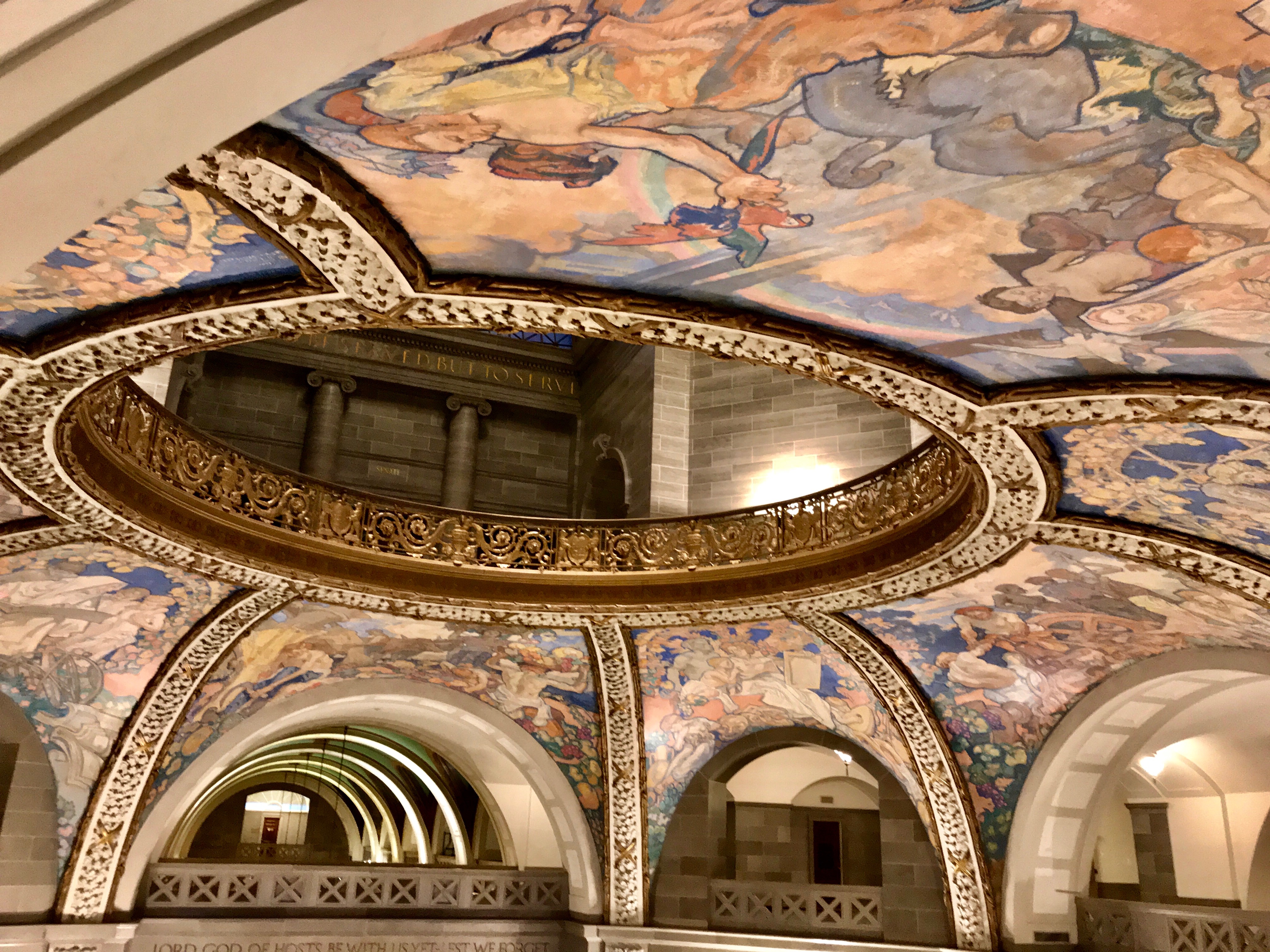
This is one of the views looking up into the dome.

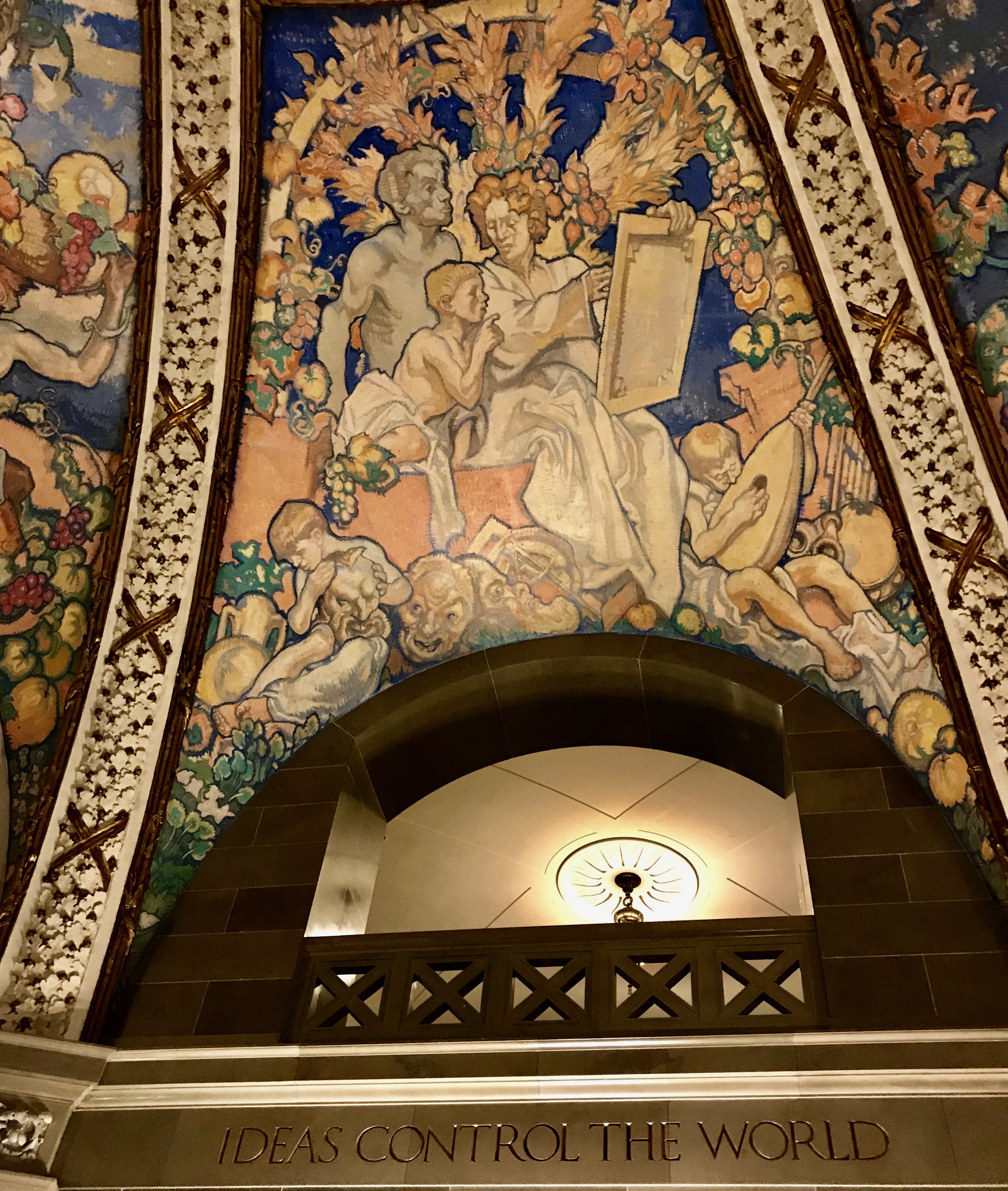
All the areas of the dome are covered with artwork and inscriptions designed to inspire. I particularly liked with panel. I think of it as a pro-education, pro-teacher segment. But, even if it is just “pro-get-a-clue,” I like it.

The views change depending on which floor you are standing on and where exactly you are standing.

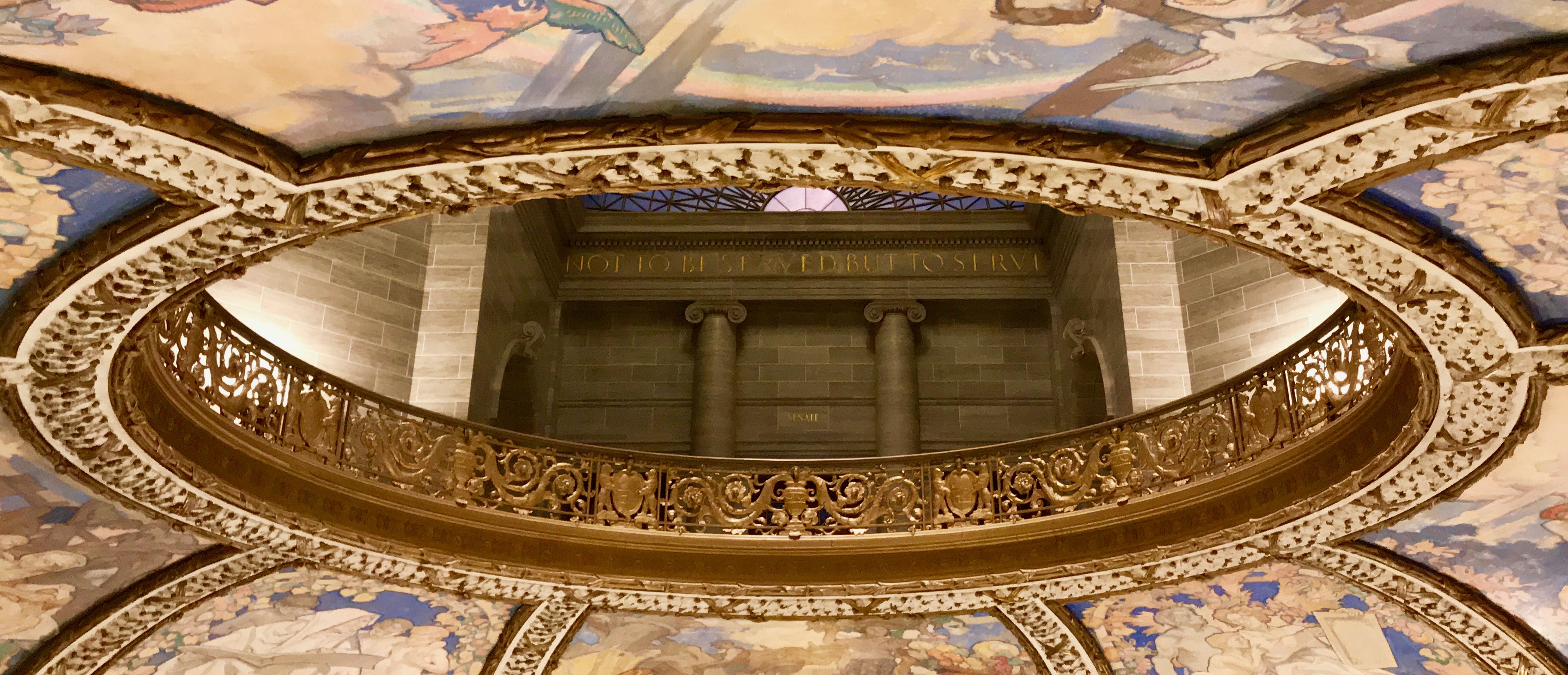
These are noble words, as well. In case you can’t read the inscription seen through the circle, it says, “Not to be served but to serve.” I hope that is over the entrance to one of the legislative chambers – and I hope they look up and read it from time to time. Maybe they could even think about it. (Incidentally, this is not a critique of the Missouri legislators. I am not familiar with the workings of Missouri politics.)

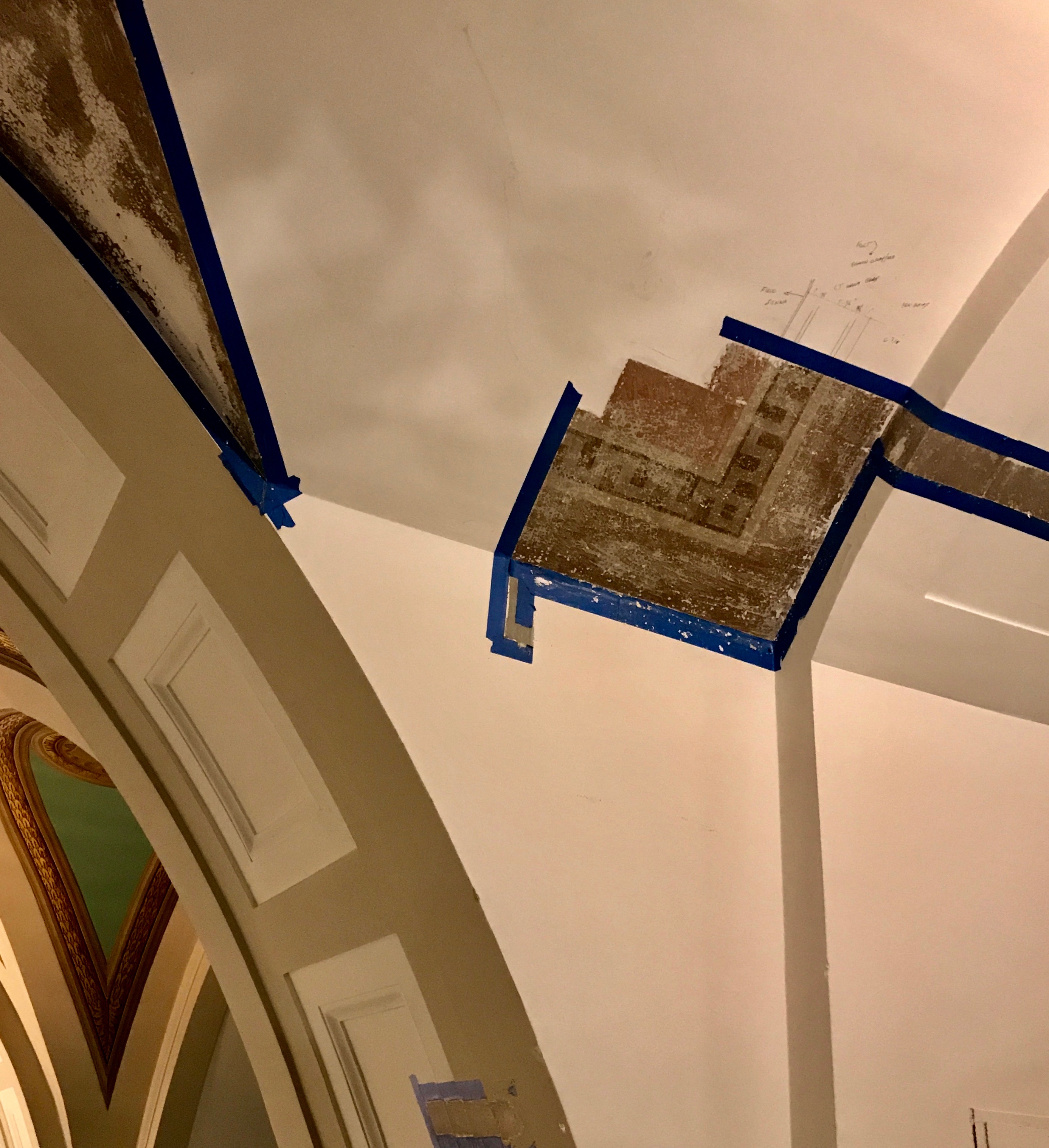
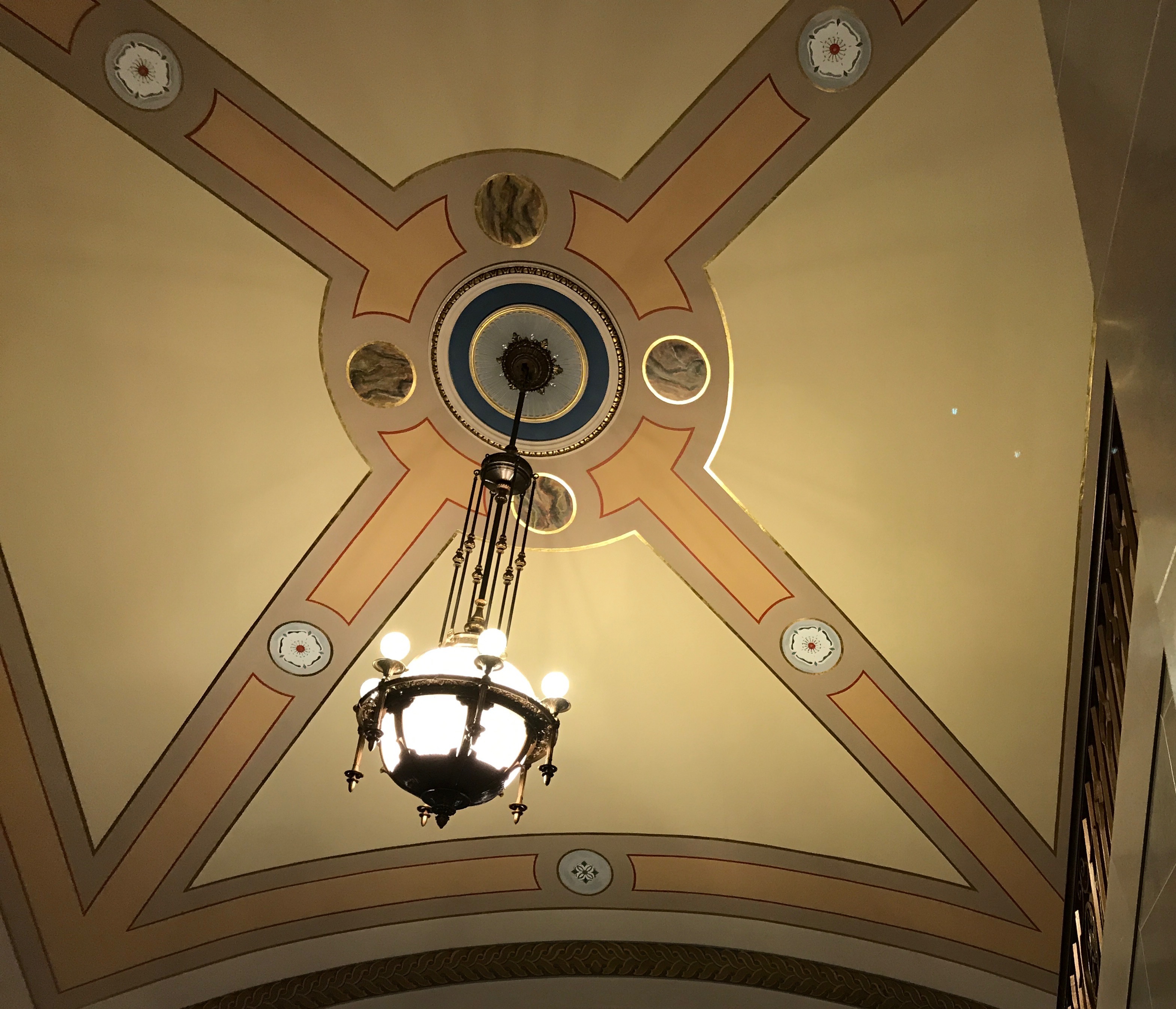
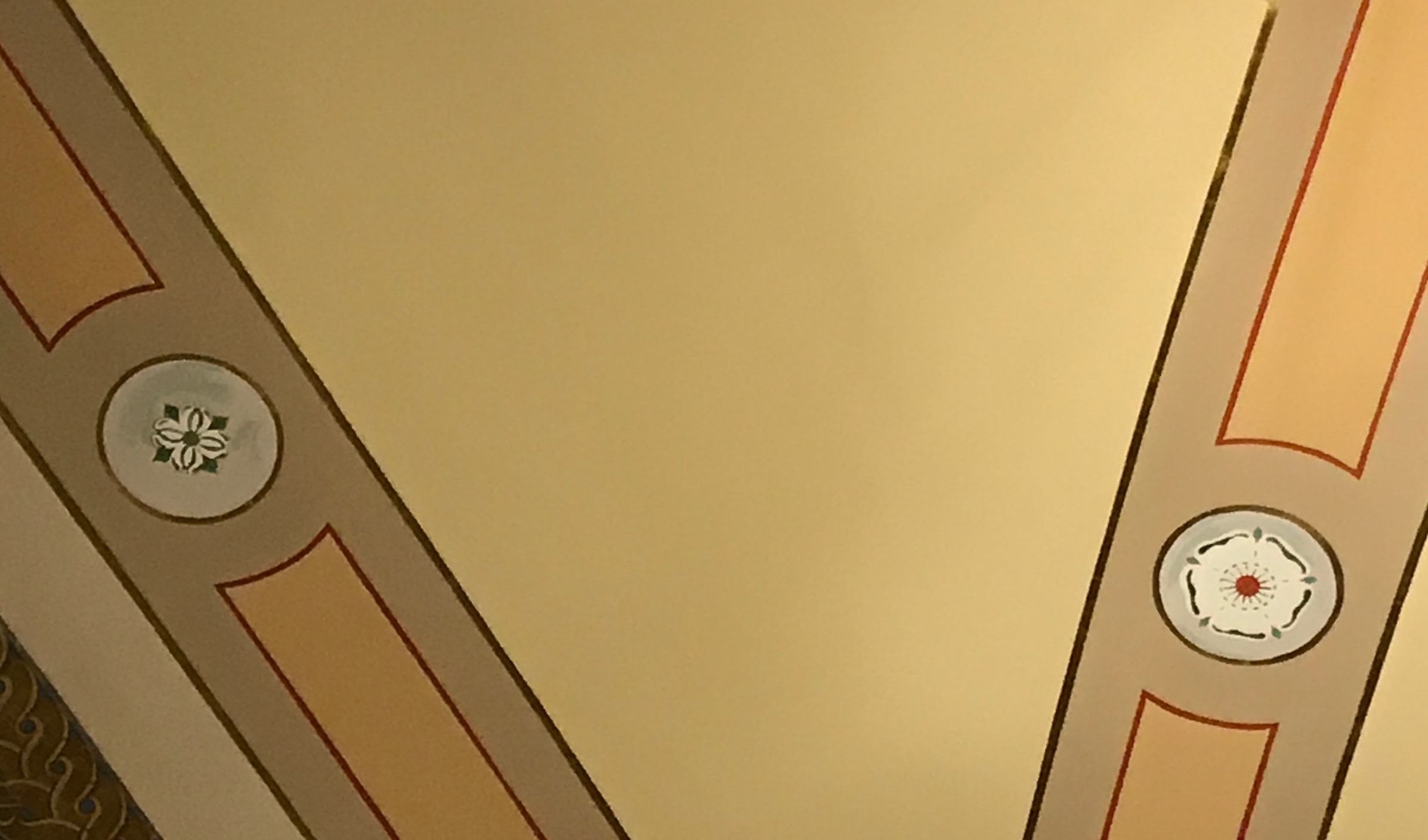
This is a building under renovation. This is the third building to serve as the capitol in Jefferson City. It was completed in 1917. You can see a remnant of some of the original paint in this fragment.

The colors and the sensibilities have been used in some of the restorations that are already complete. This was in the area that visitors pass through when they enter.

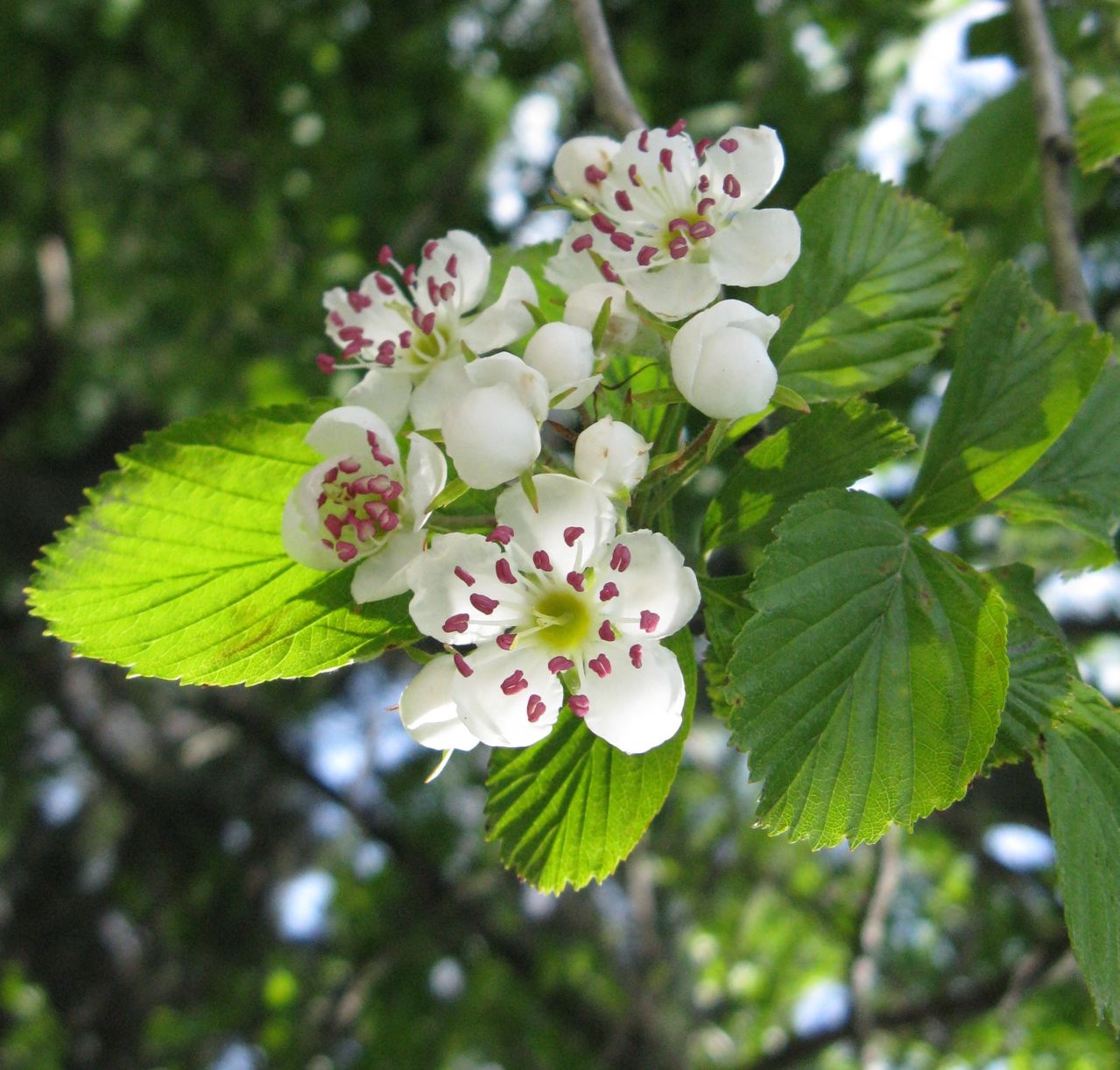
Incidentally, the state flower and the state tree are included in the designs. The state flower is Crataegus punctata, which is a kind of hawthorn. The state tree is the Cornus florida, or the flowering dogwood.

This is the state flower, which looks almost like a tree.

This is the flowering dogwood, which is a tree.

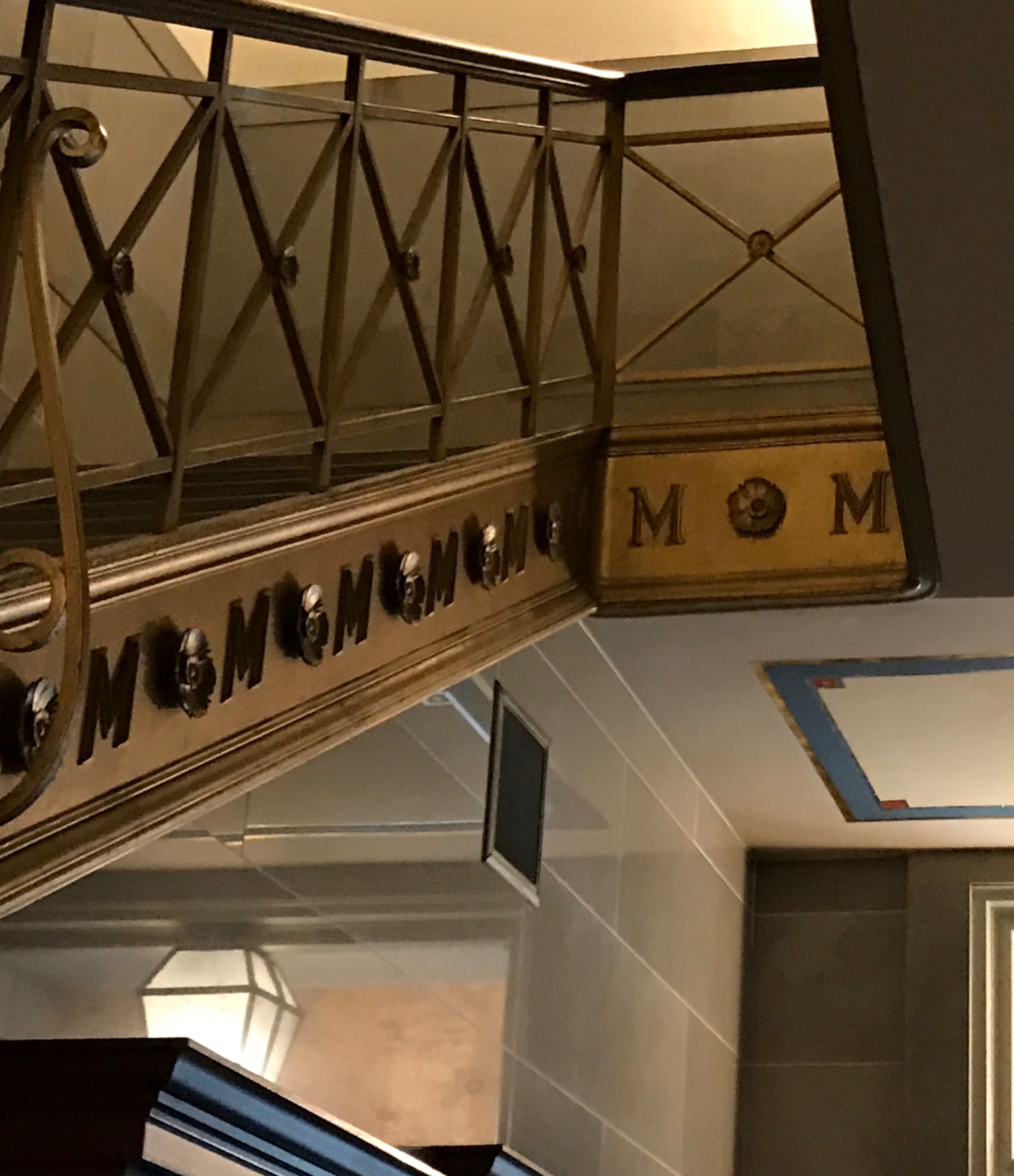
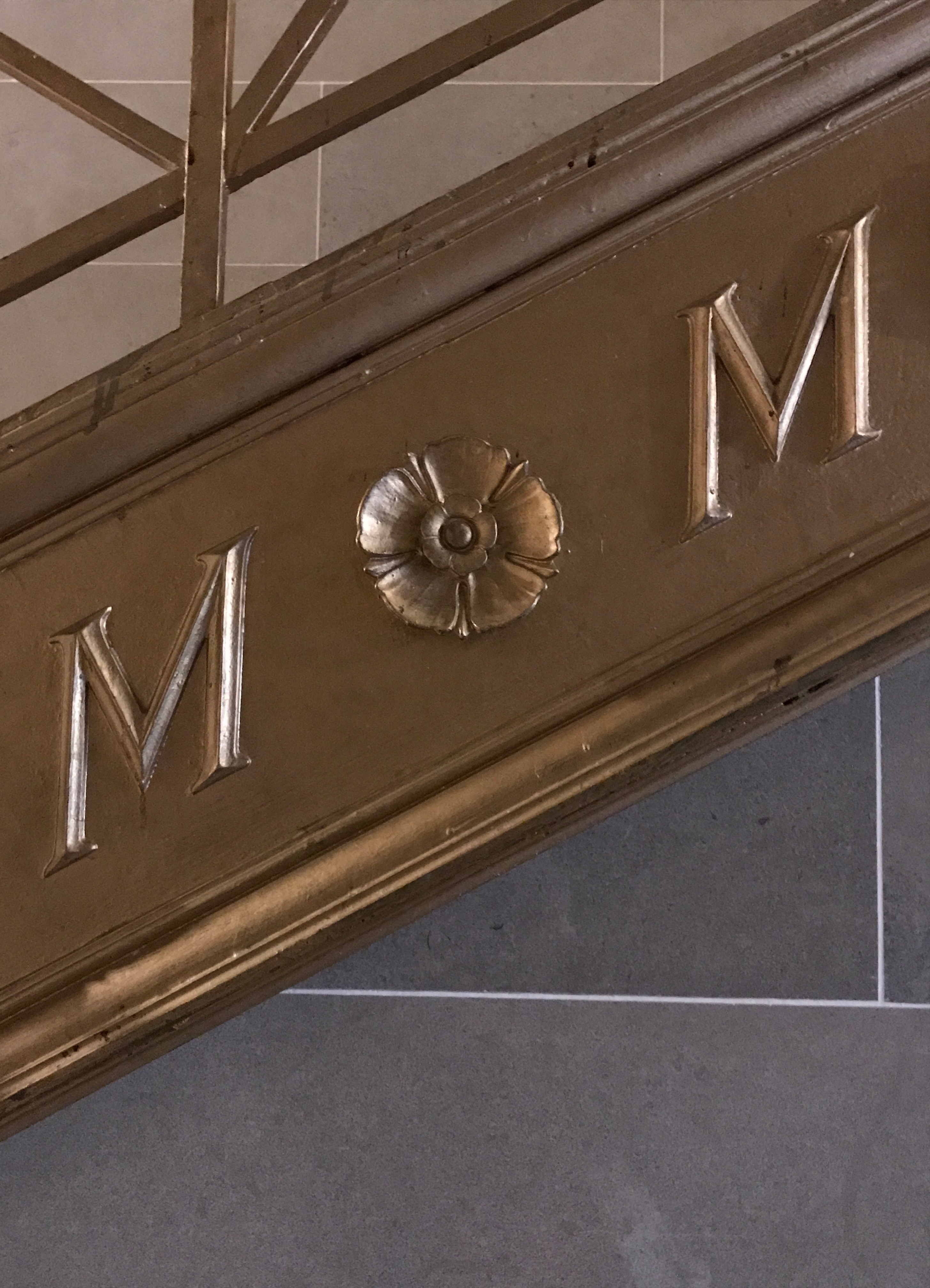
This stairway in the same area had the hawthorn as a repeating motif.

It also tickled me the way it looked like it spelled out “MOM.”

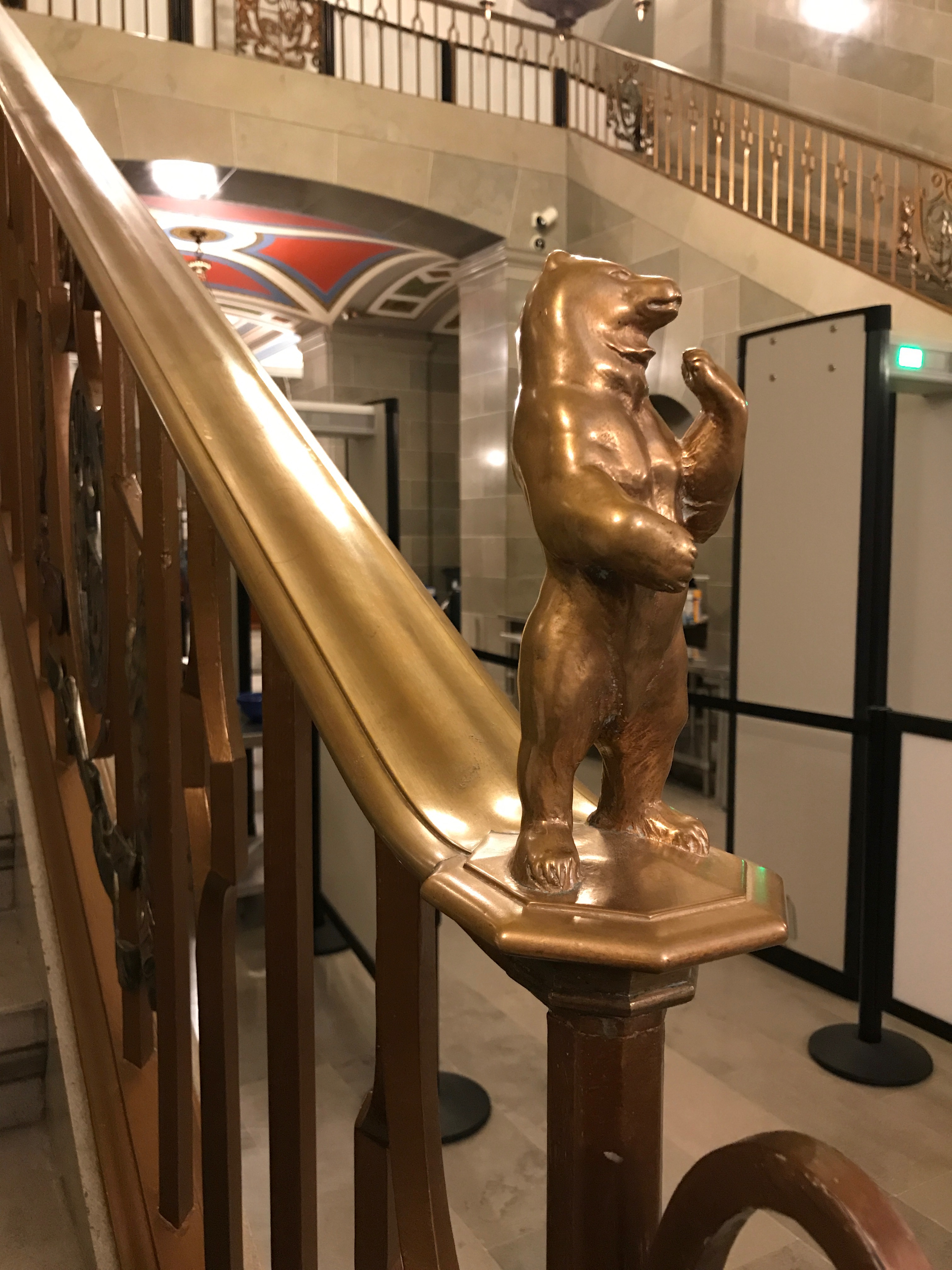
Incidentally, at the end of the balustrade, was this amazing finial. I figured that the bear must be the state animal. I asked our guide if it was, but, no, it turns out that the state animal is the mule. Incidentally, the state bird is the bluebird, the state dessert is the ice cream cone and the state dance is the square dance. The factoids you can find if you look!

You might be wondering why the ice cream cone is Missouri’s state dessert. I had an idea about that, so I did a little research. According to my Preferred Source, the ice cram cone became mainstream in the USA at the St. Louis World’s Fair in 1904. Arnold Fornachou ran out of the paper cups he was using to serve the ice cream he was selling. Next door to him as a waffle vendor named Ernest Hamwi. He sold Arnold some of his waffles. Arnold rolled the waffles into cones to hold the ice cream. The rest is history.

And mighty delicious history, at that!

Speaking of our guide, he spent a lot of the tour talking about the artwork. Really, this building is so rich in art, that it’s hard to separate the art from the building. You do notice that I haven’t completely avoided the art. The reason that there is so much art in the building is that they ended up with too much money.

The original budget allotted $3 million for the building and and additional $500,000 allocated for the site and furnishings. The state miscalculated on the revenue projections and ended up collecting $4,215,000.  I whipped out my calculator, and figured that they collected $715,000 more than they thought they would need. If I remember correctly what the guide told us, by law they could only spend the money they raised on the capitol. That is why there is so much artwork and why it is of such high calibre. I will talk more about the artwork in the next post.

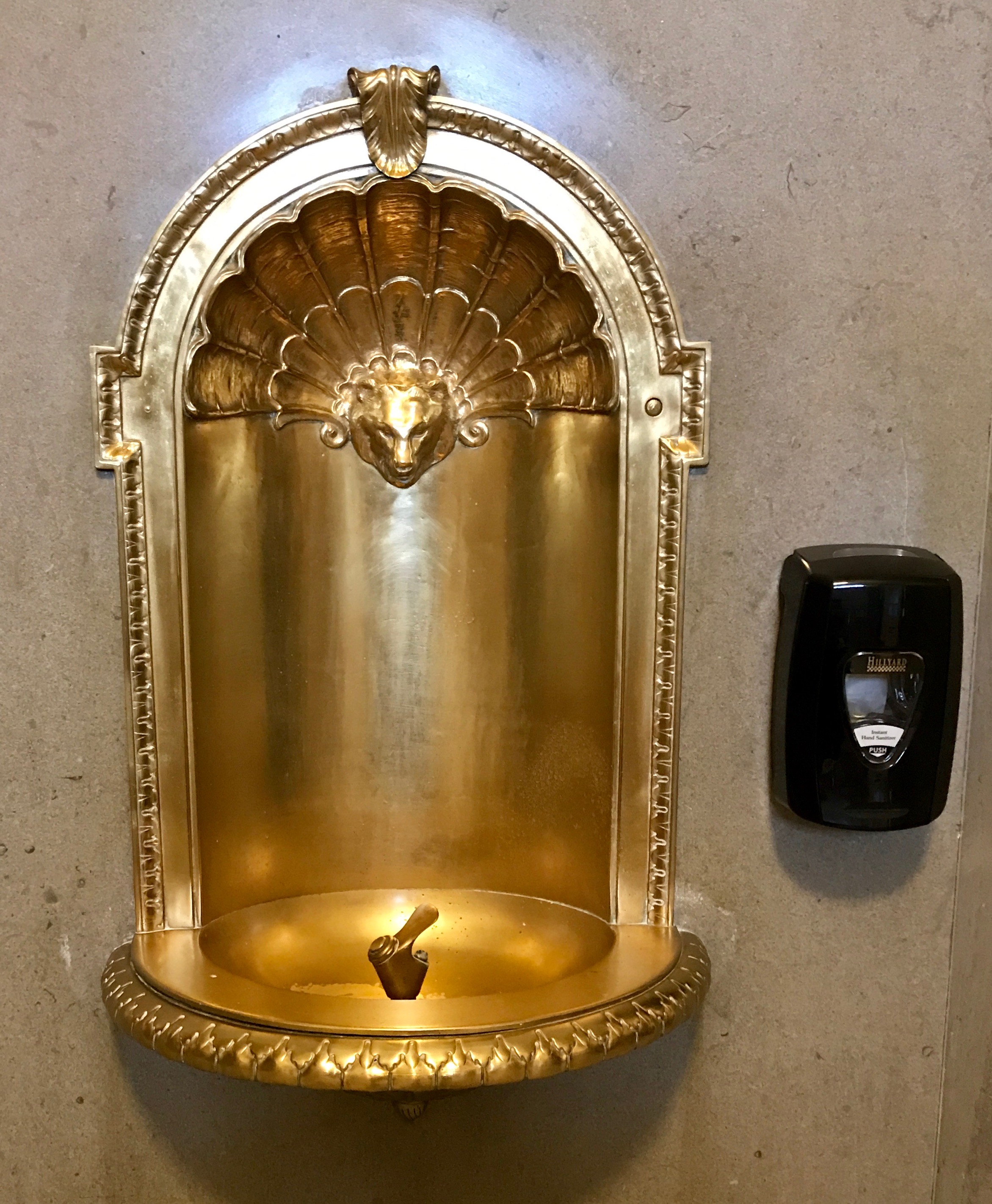
But, as long as I’ve paused to talk about funding, compare and contrast this original drinking fountain with the hand sanitizer dispenser. (Go ahead, I’ll wait.)

In my opinion, they ought to fling that ugly piece of plastic far away. I doesn’t belong next to that glorious drinking fountain.

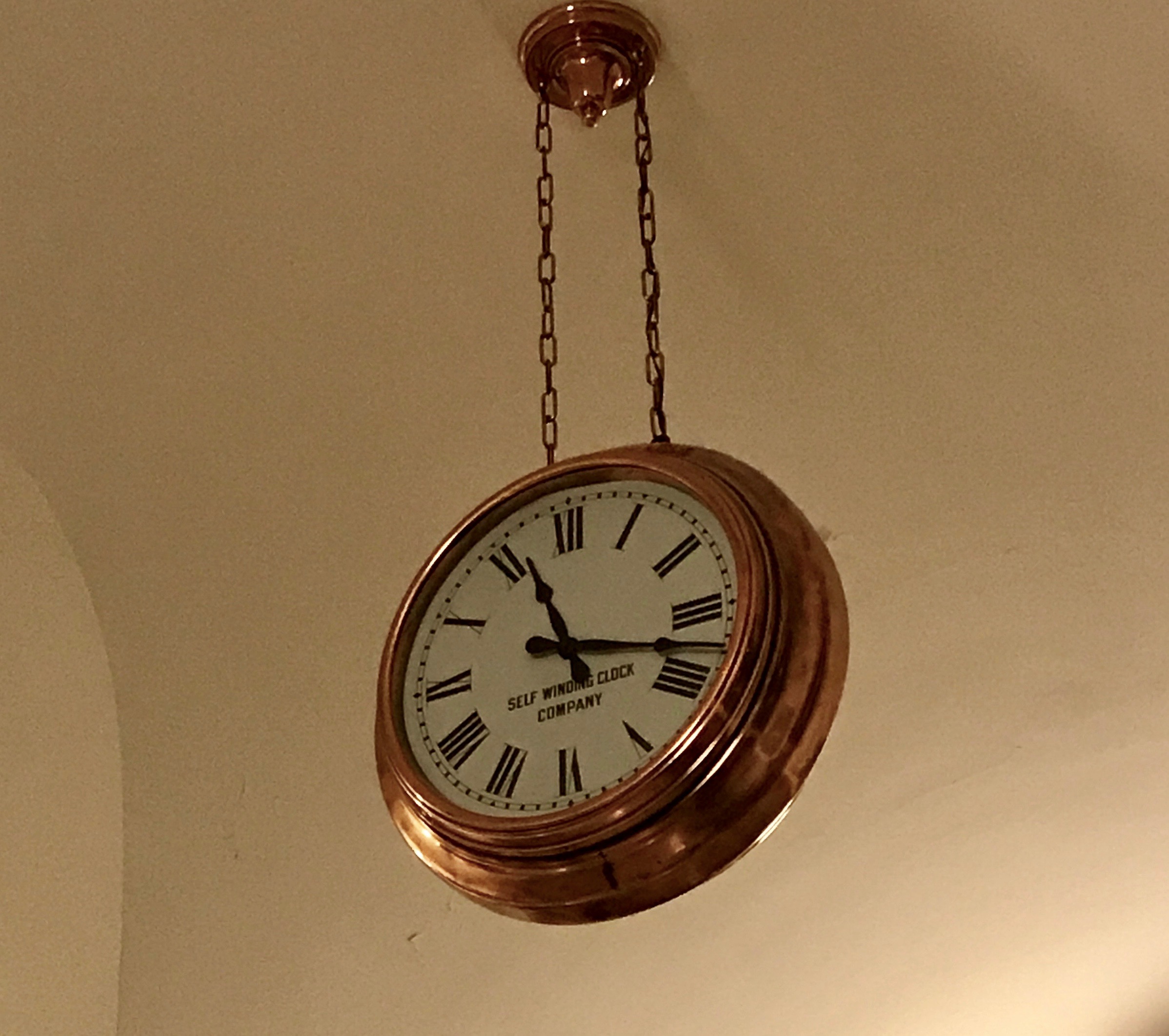
And how about that elegant clock hanging in the hallway? The dial proclaims it to be “self winding.” I wonder how that works? Do you think the wire woven into the chain on the right side has something to do with it how it operates?

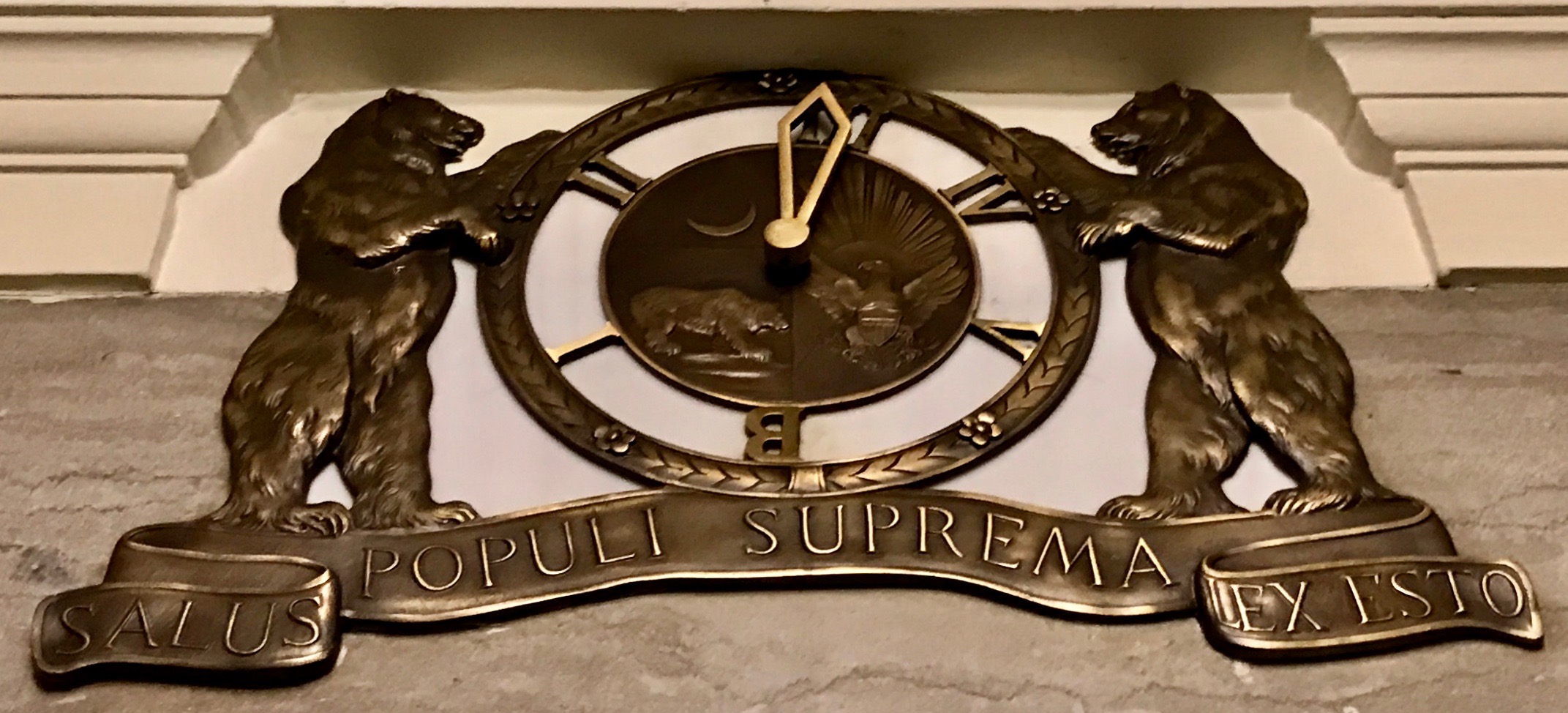
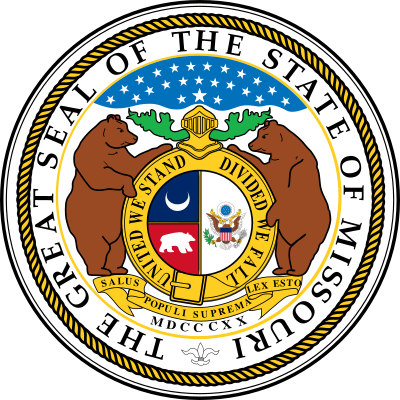
Take a look at this elevator dial! I am sure someone wanted a bear as the state animal. The state’s motto is “Salus populi suprema lex esto” which means “Let the good of the people be the supreme law.”

The elevator dial is based on the Great Seal of the State of Missouri. The bears represent strength and bravery. The crescent moon represents the newness of statehood and the potential for growth. MDCCCXX is Roman numerals for 1820, although Missouri wasn’t admitted to the union until 1821. They must have been into the power of positive thinking. Incidentally, take a look at the yellow belt with the words “United we stand divided we fall” in the enter of the seal. Do you see the buckle? The buckle signifies the State’s ability to secede from the Union if they deemed it necessary. The belt can be unbuckled.

So, did Missouri unbuckle during the Civil War? According to my Preferred Source, it was a “hotly contested border state, populated by both Union and Confederate sympathizers.” Both the Union and the Confederacy claimed the state. It sent armies, generals and supplies to both sides and maintained dual governments. They carried on a bloody neighbor-against-neighbor intrastate war within the larger national war.

By the end of the war in 1865, nearly 110,000 Missourians had served in the Union Army, and at least 30,000 had served in the Confederate Army. The war in Missouri was continuous between 1861 and 1865. There were battles and skirmishes in all areas of the state. The largest battle west of the Mississippi River  was the Battle of Westport in Kansas City. If you count all the military actions, from the large ones to the minor skirmishes, Missouri saw more than 1.200 distinct engagements within its boundaries. Only Virginia and Tennessee had exceeded that number.

I guess the belt buckle stayed fastened.

I wandered around a bit more. You can really see the money that was spent on the building.

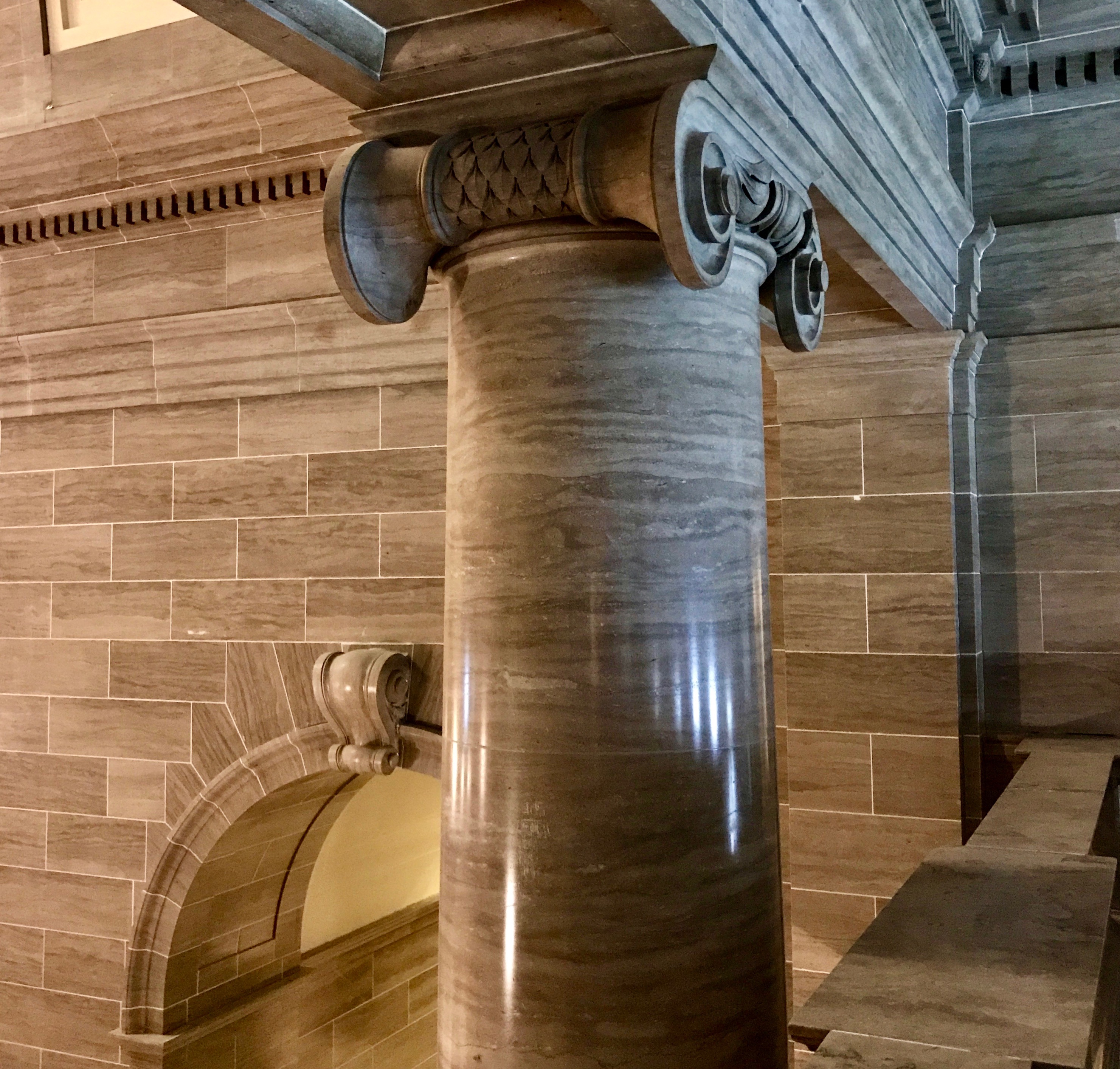
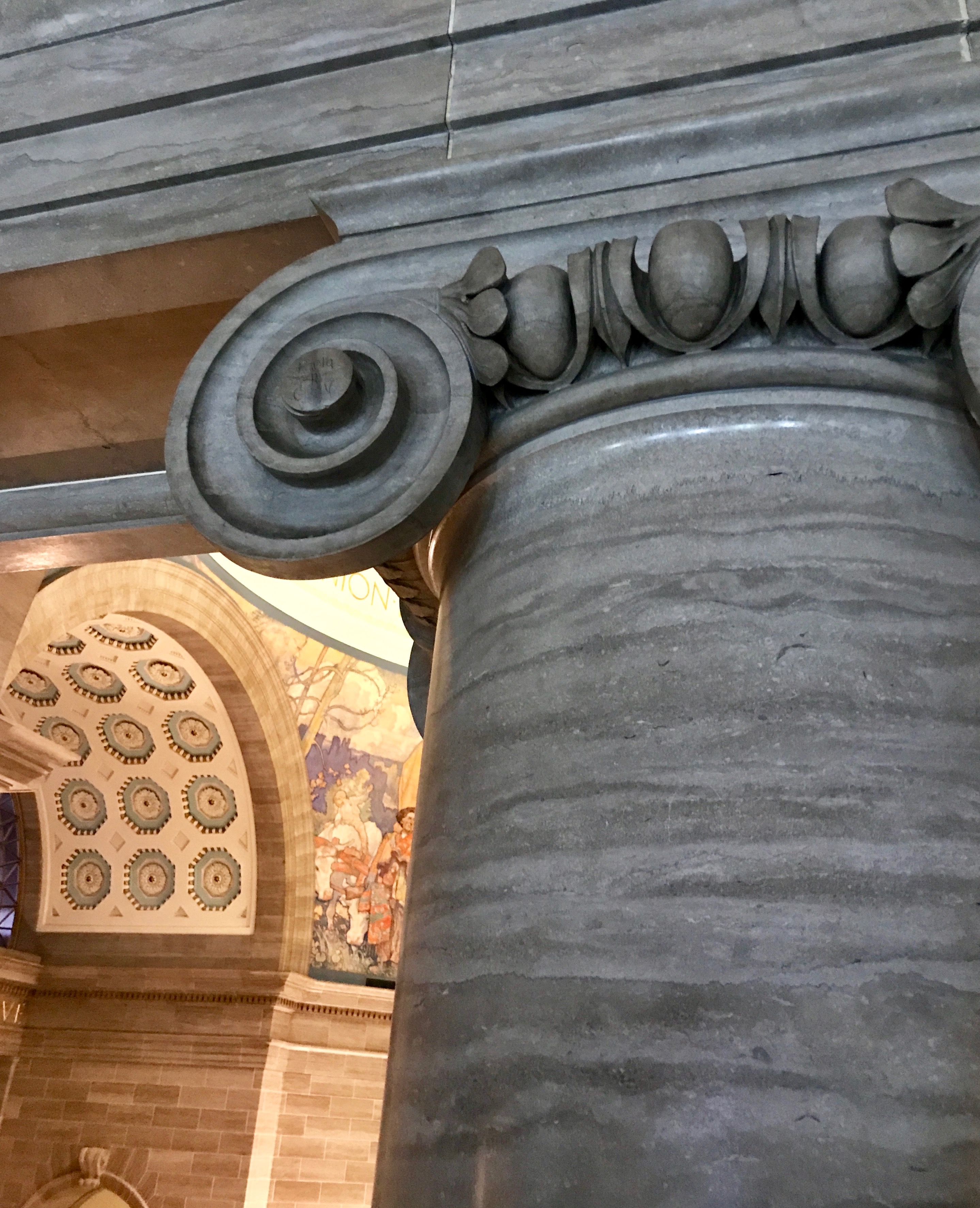
The stonework is so well done.

I wonder if there are even enough skilled artisans left in the world if we wanted to recreated these structures?

Everywhere you look, there is a little vignette waiting to be appreciated.

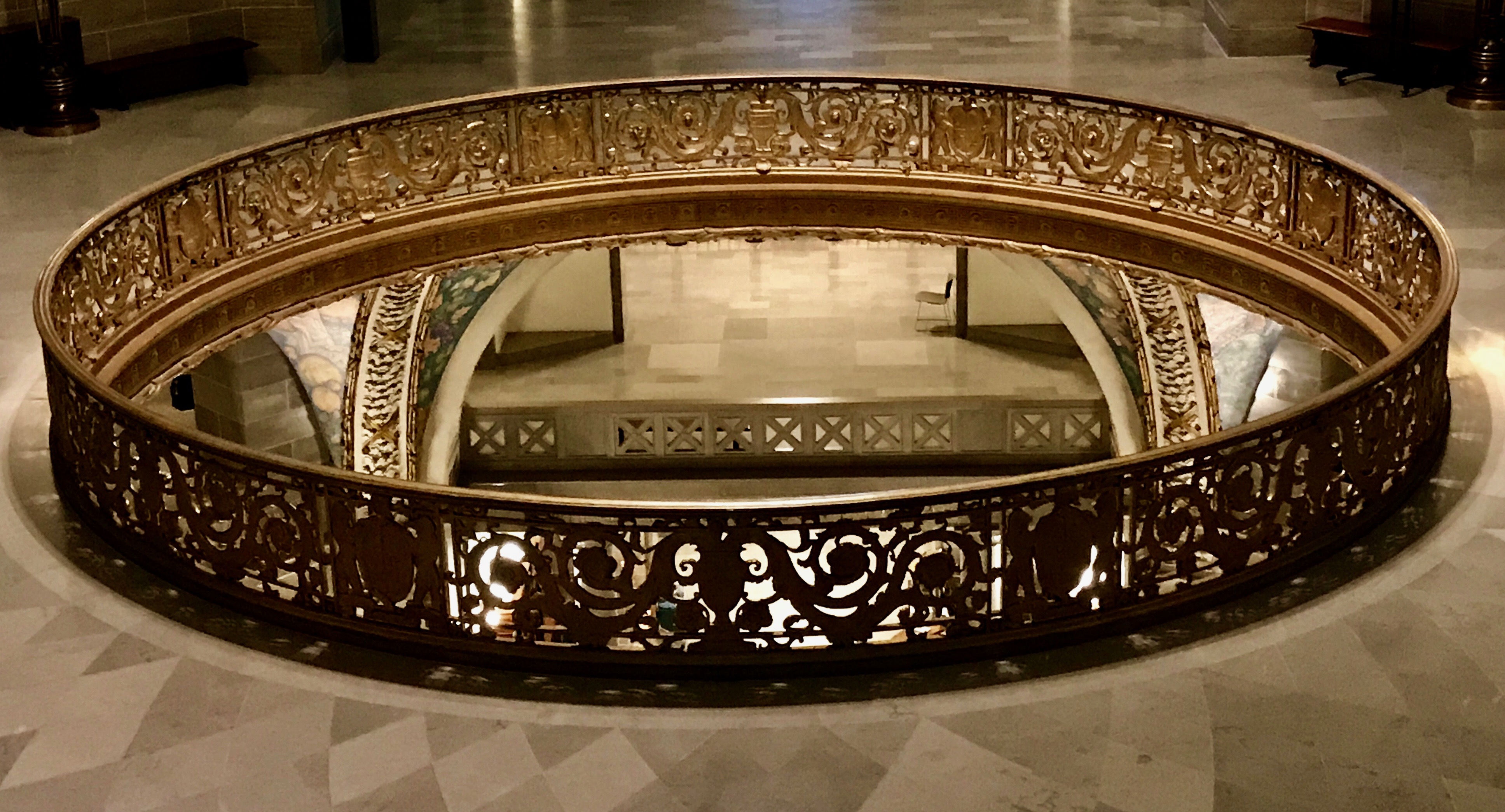
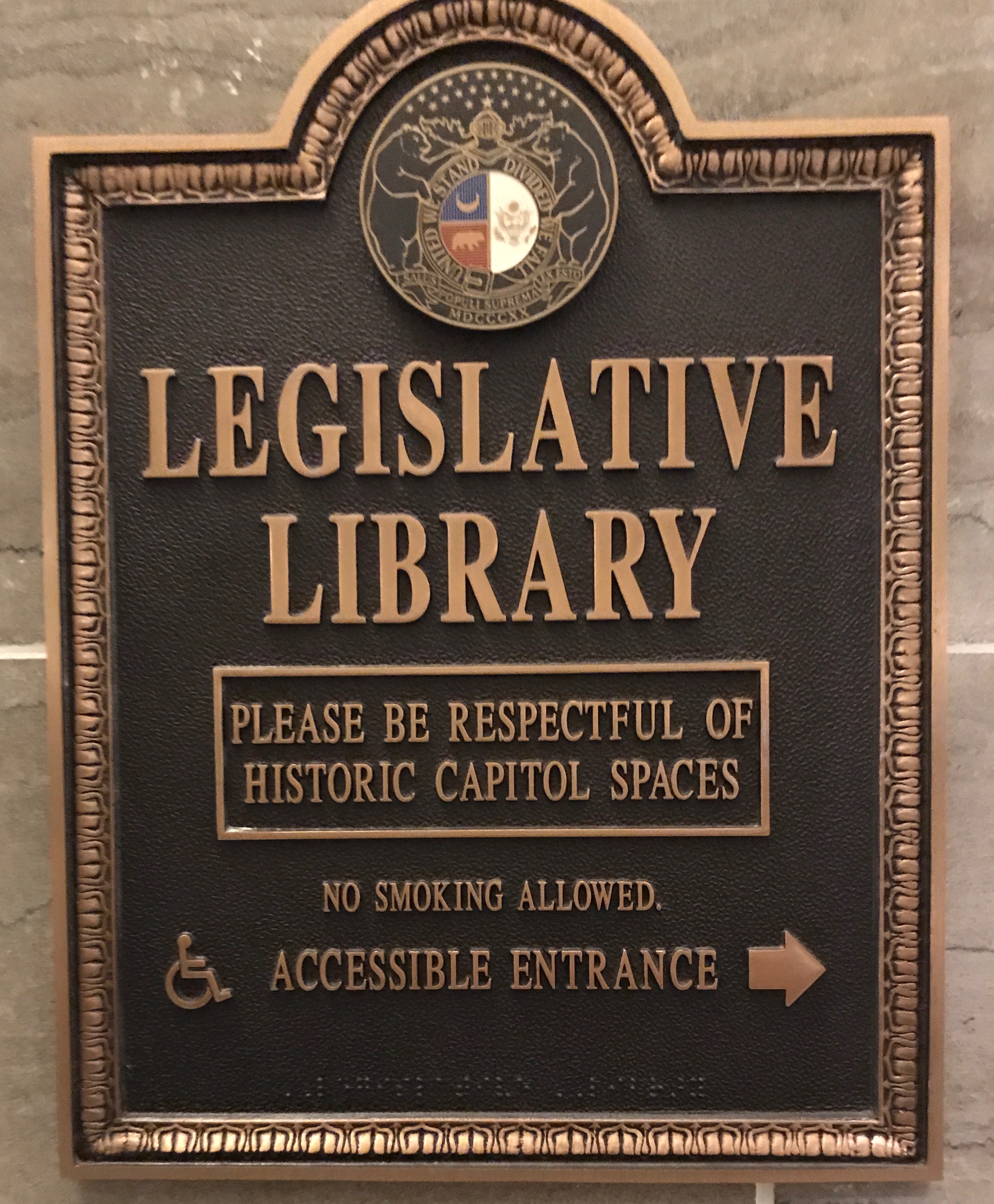
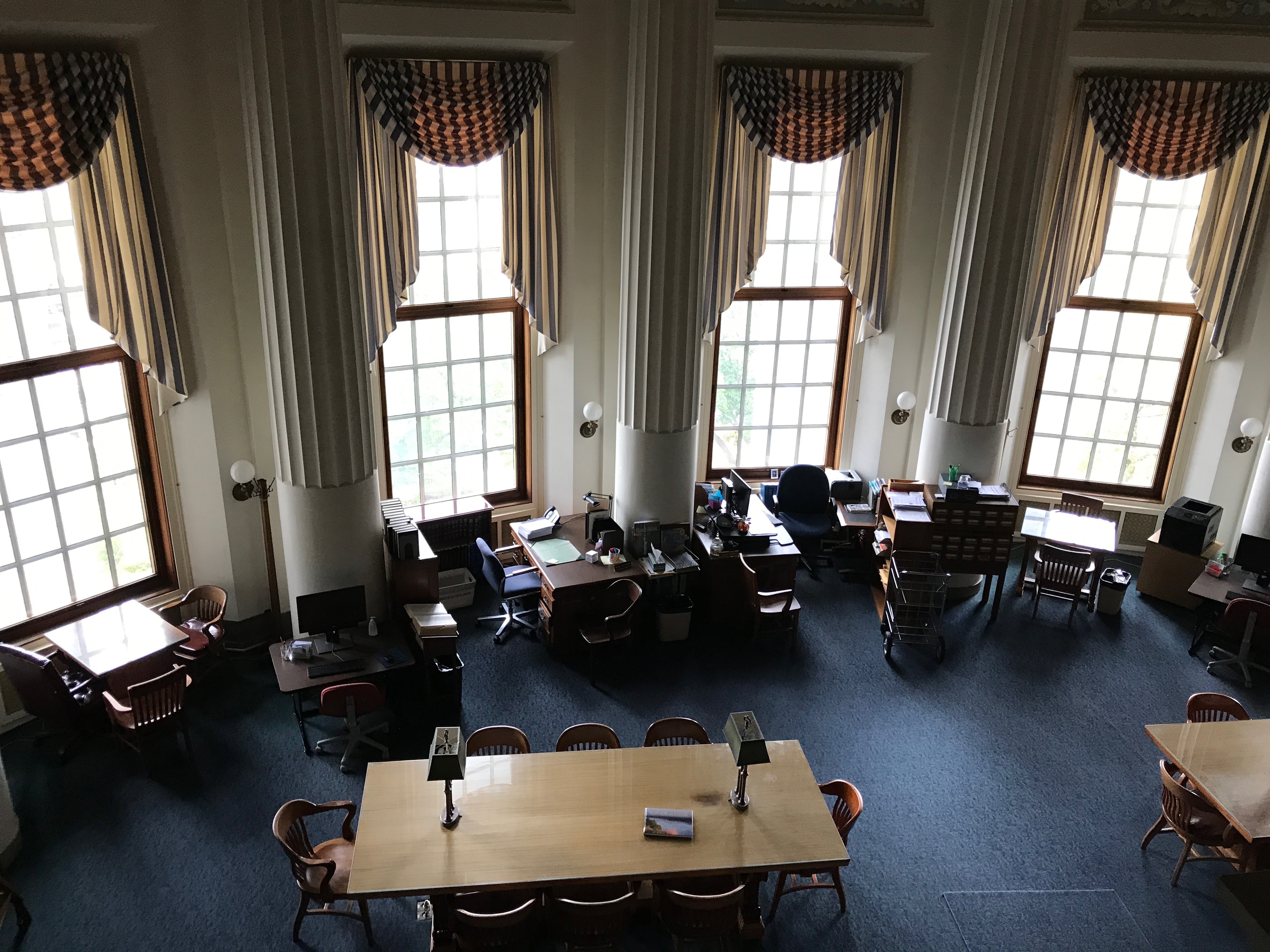
The Legislative Library was open to be viewed.

You had to look at it from above, but that makes it easier of take a photo, anyway.

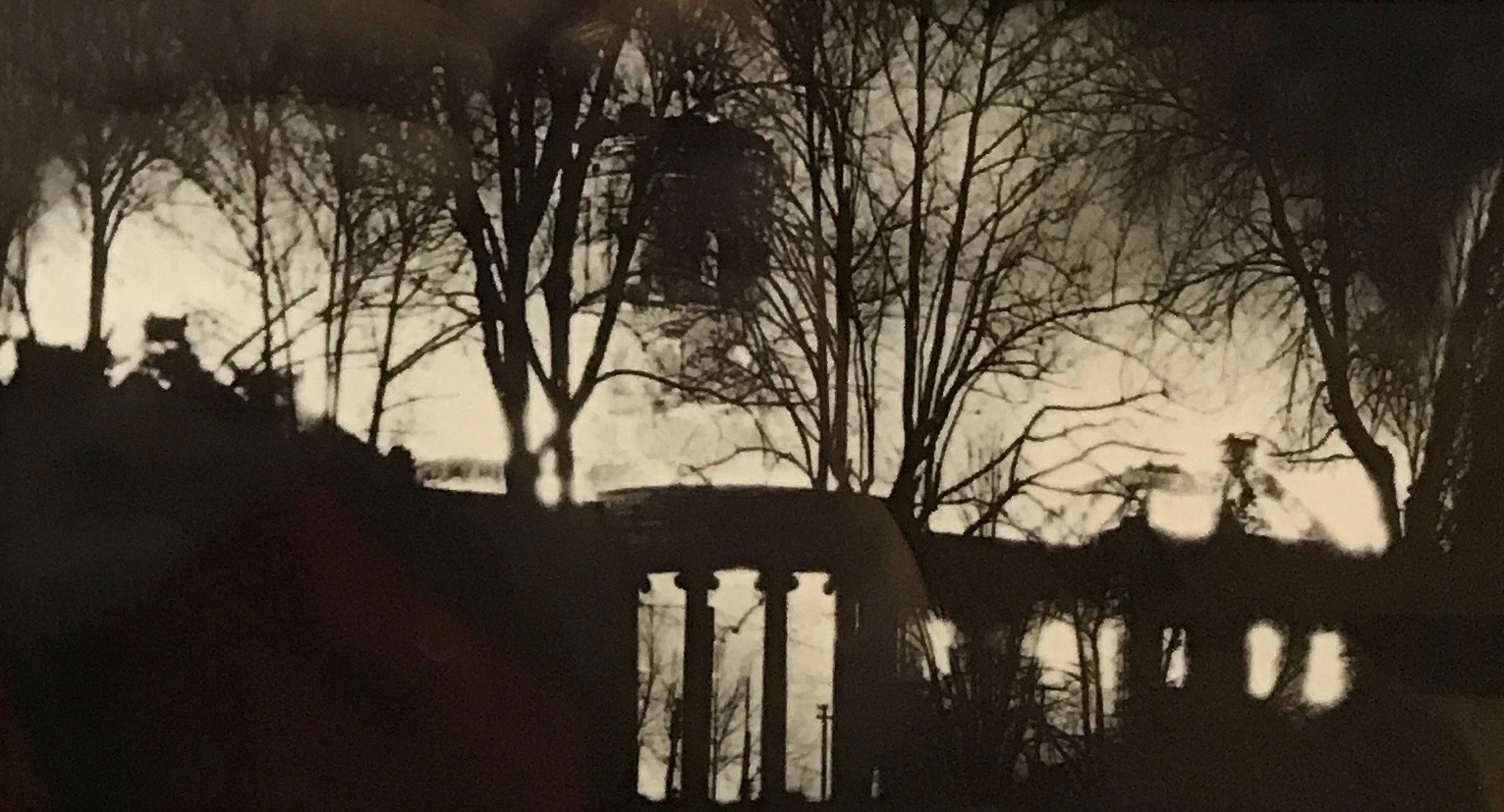
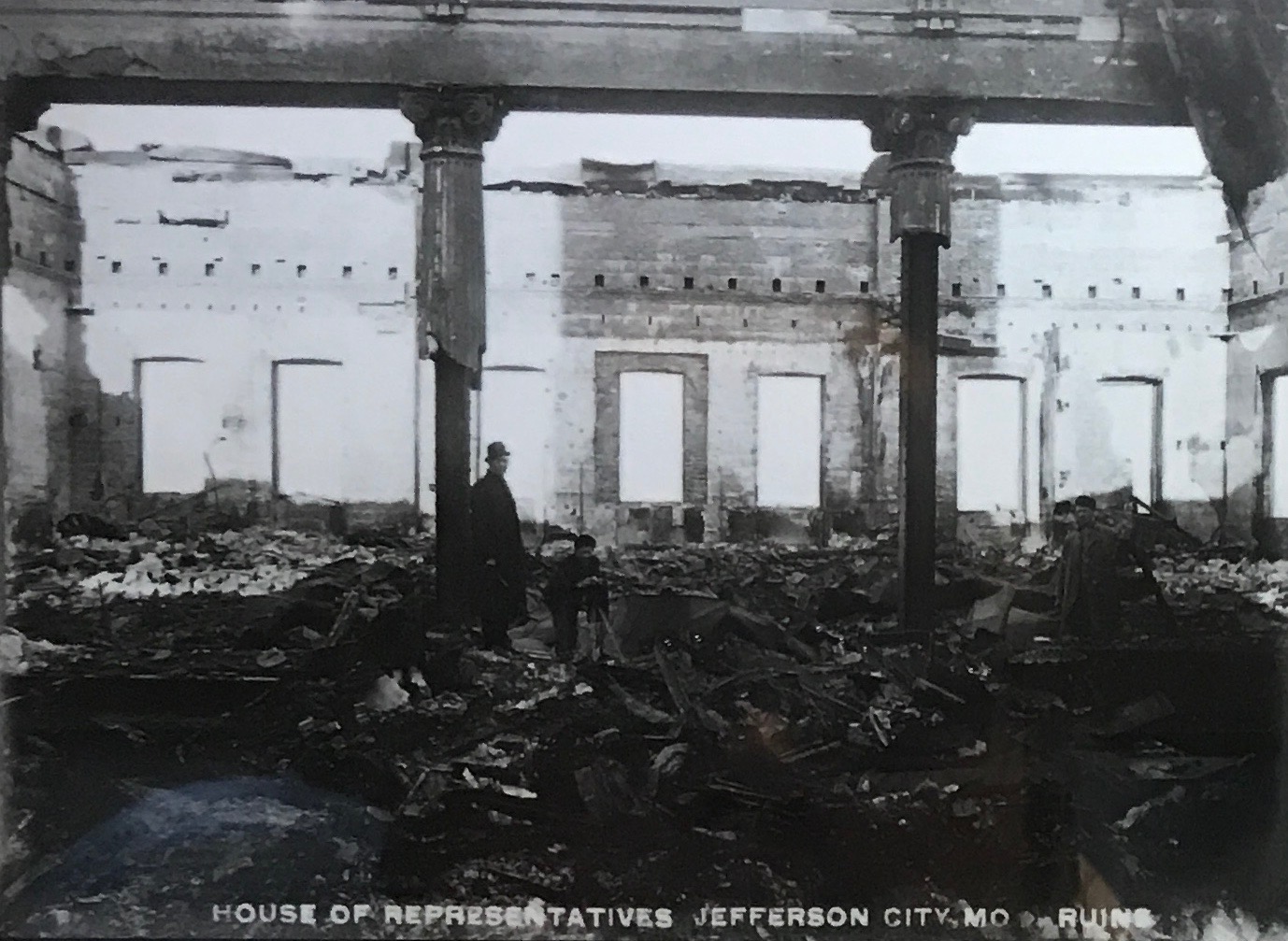
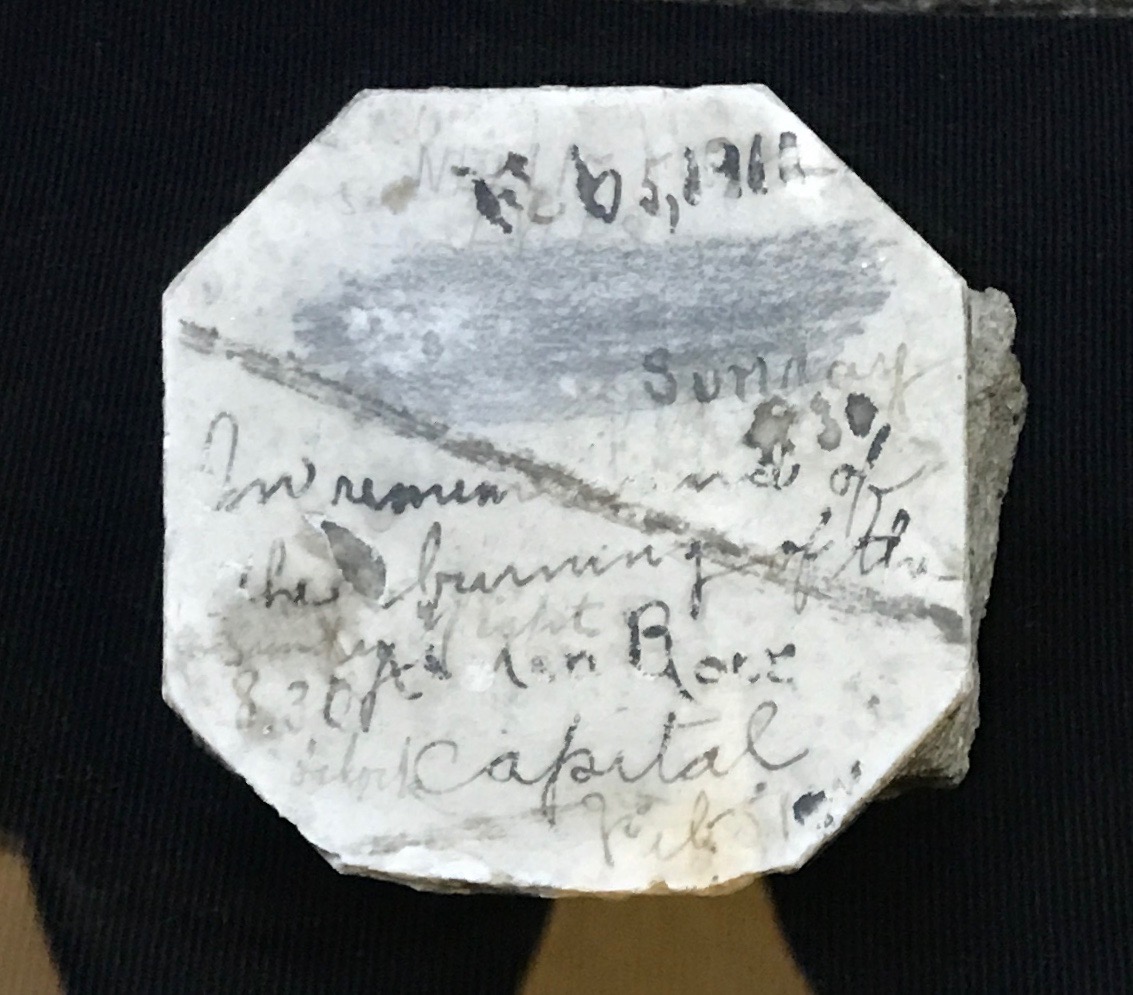
In the basement was a display about the fire that took down the previous capitol. It was struck by lightning in 1911 and burned throughout the night.

The House of Representatives lay in ruins – along with the rest of the building.

According to the sign with this artifact, “A curiosity seeker pulled this floor tile from the rubble of the 1911 fire. It reads, “Feb. 5, 1911…Sunday…In remembrance of the burning of the Capitol…8:30 A[M]” the rest of the inscription may be names.

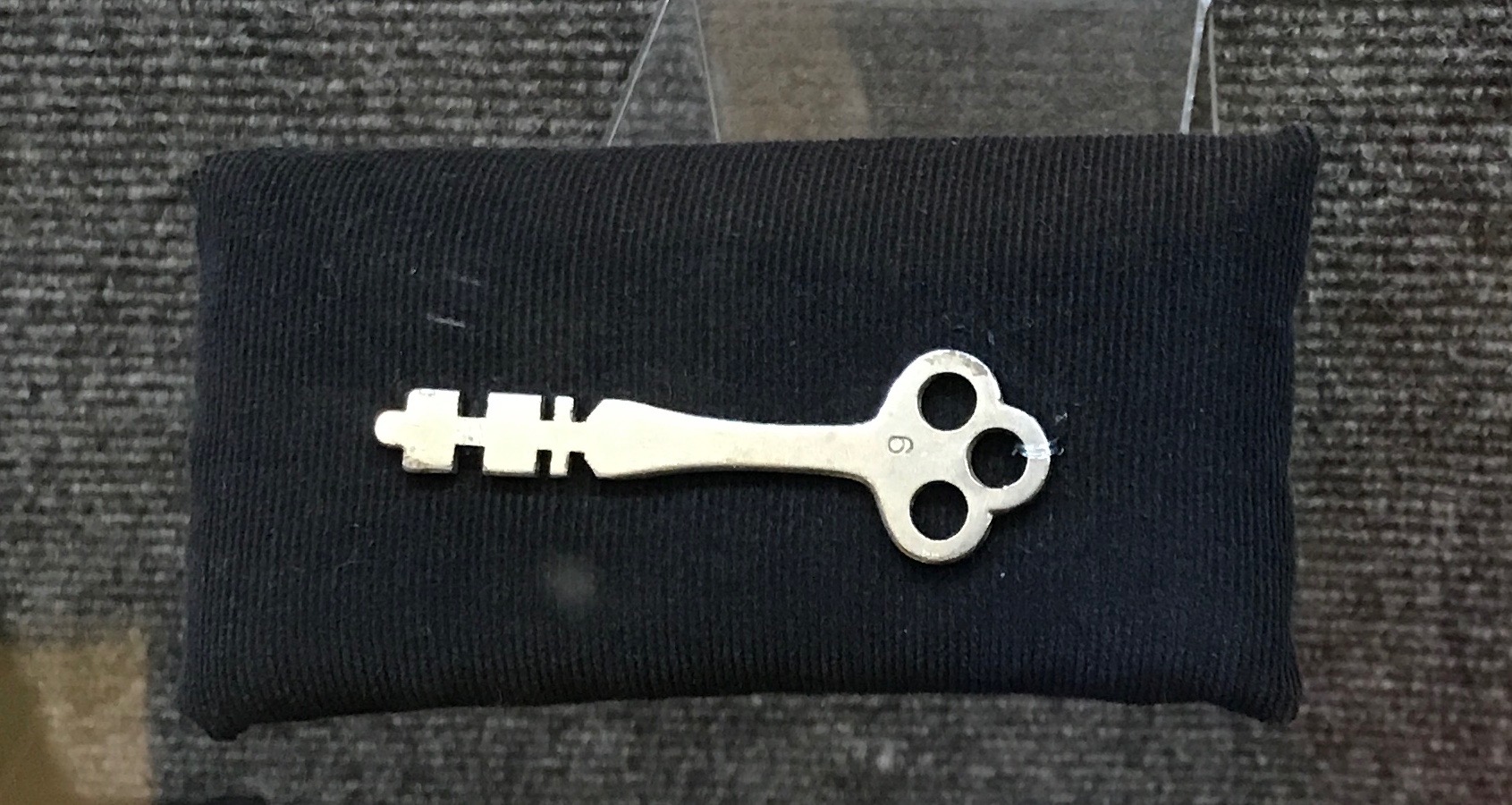
This is the key to the dome of the capitol that burned in 1911. If I remember correctly what the guide said, someone had taken it home. Since it wasn’t at the capitol, it hampered the fire fighting. This key may be the reason why the building burned to the ground. But, maybe I am not remembering this correctly.

I will tell you more about the artwork in my next installment. At this point, I wound my way out.

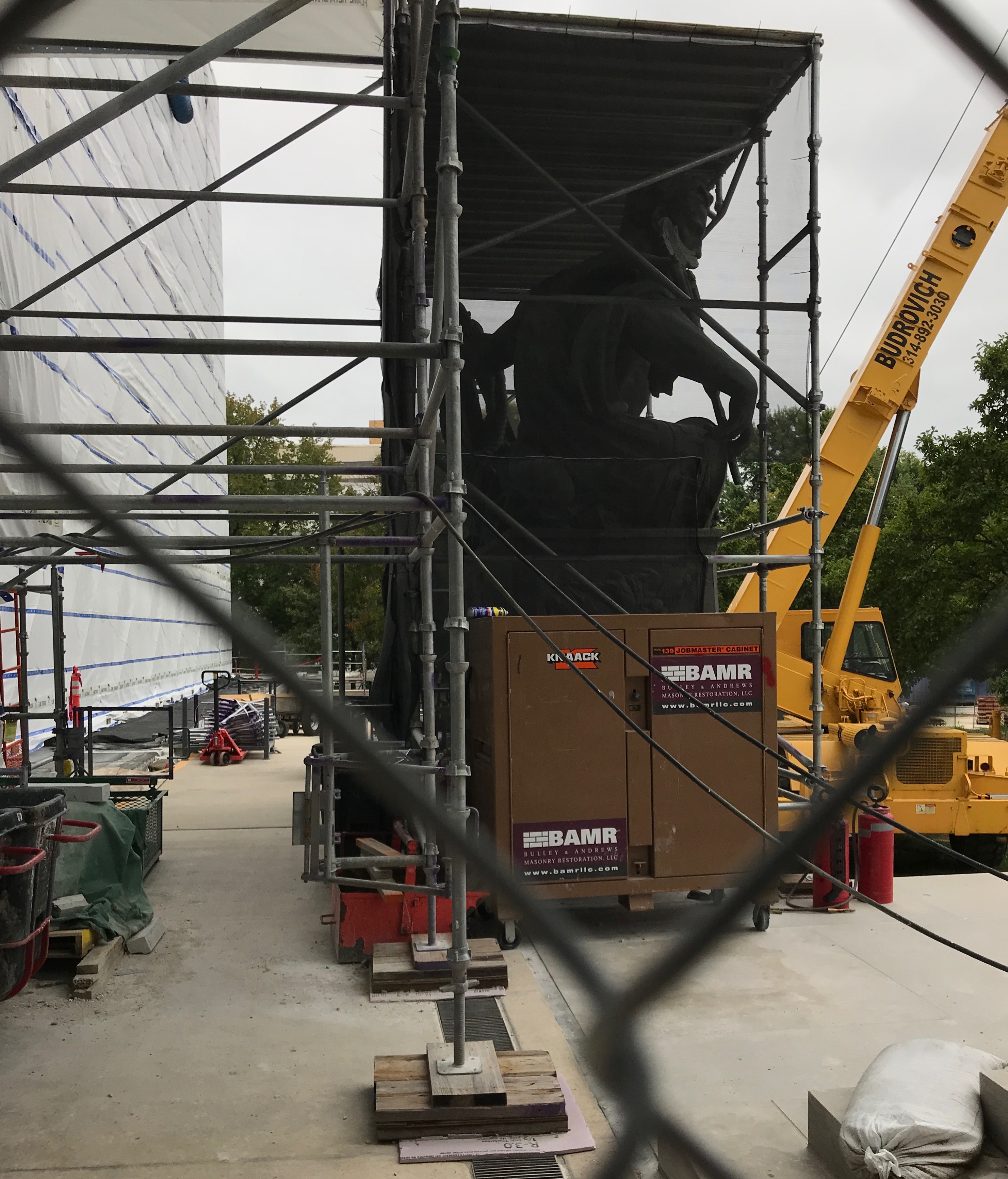
I passed the statuary that was protected by mesh during the reconstruction.

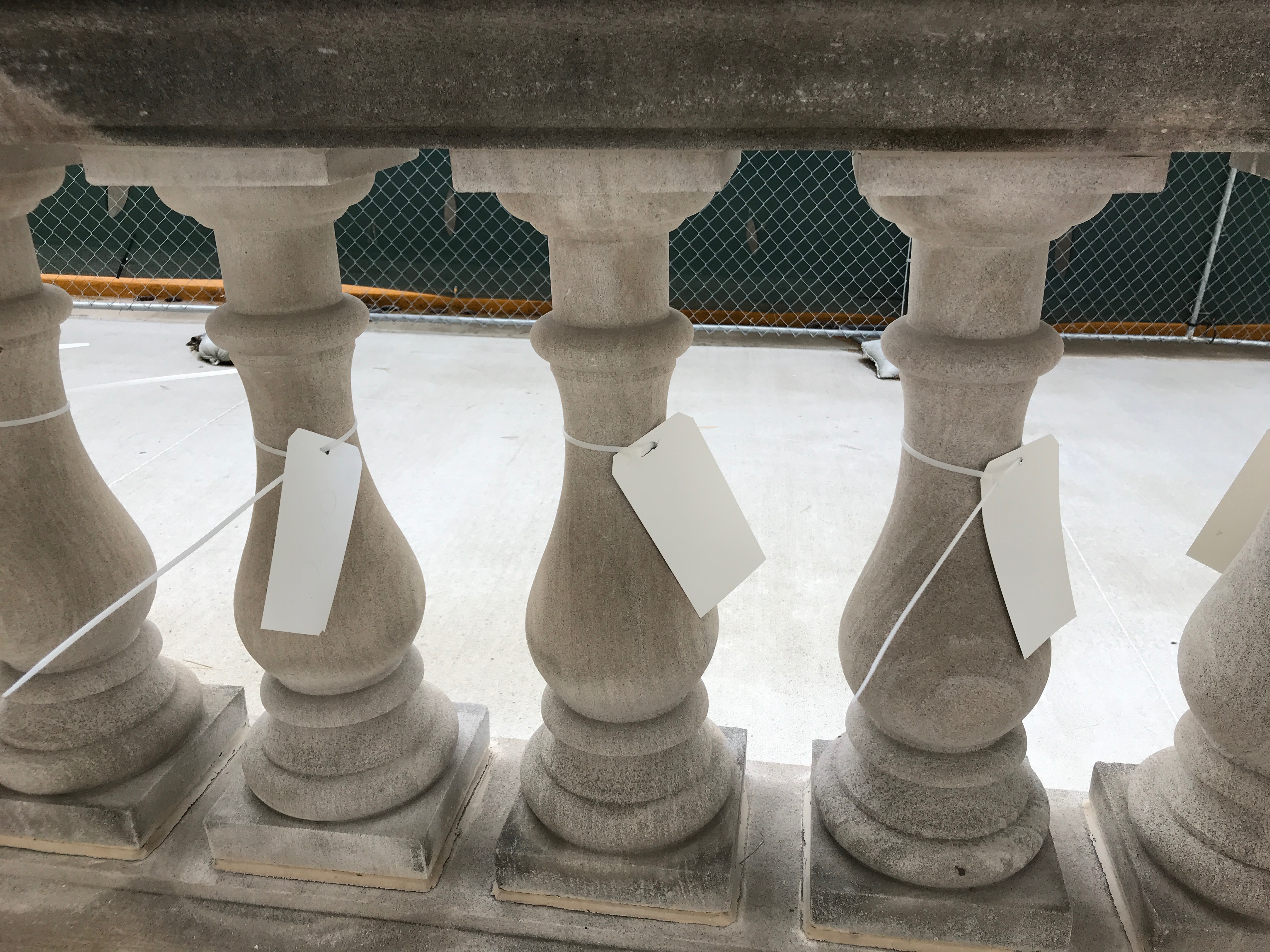
I passed the tagged balustrade. I imagine they are going to remove these and then return them when the work is complete. You want to make sure you put things in the right spots!
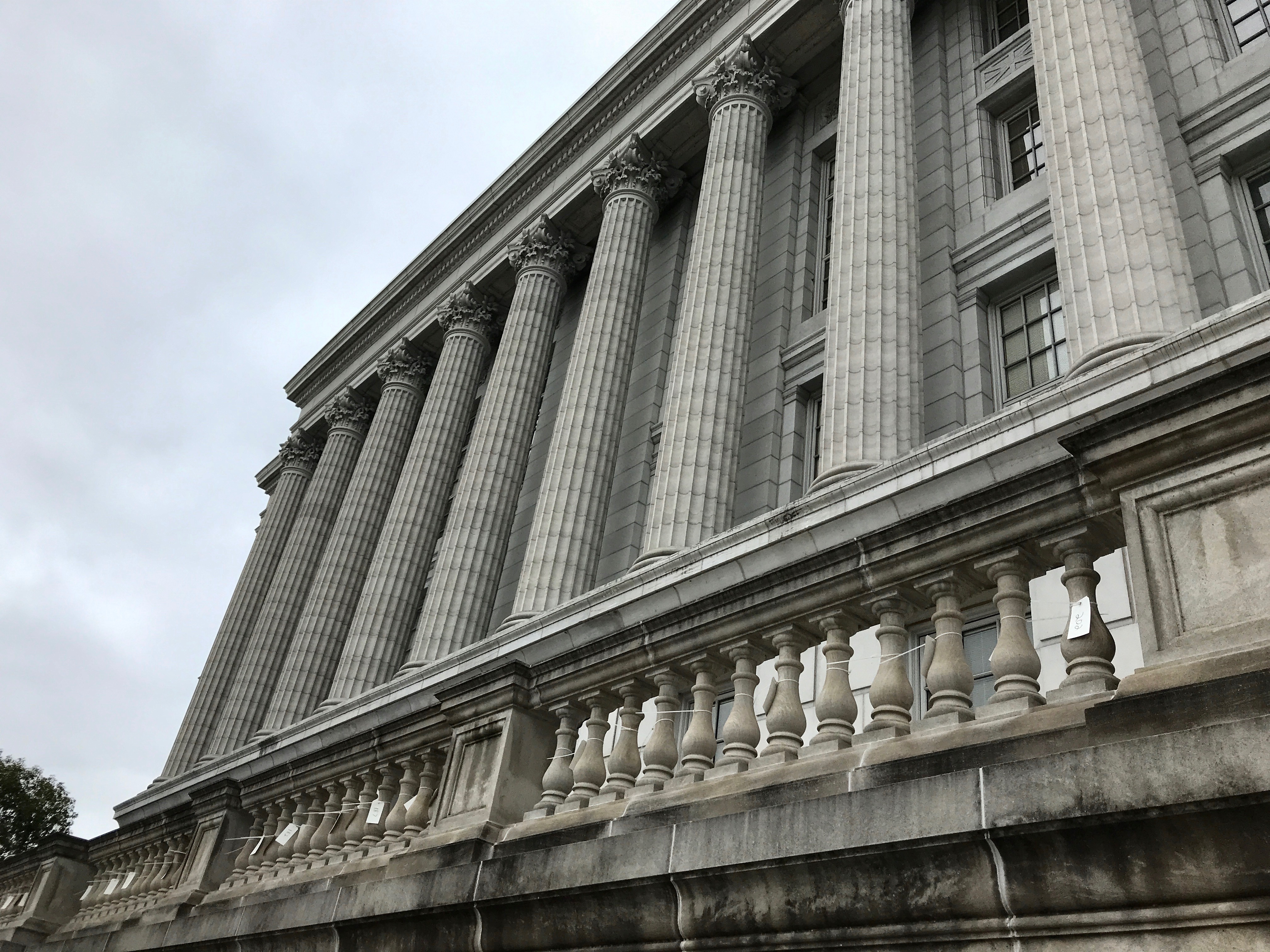
I looked up at the columns.
I paused to snap a photo of the bridge across the Missouri, and then I went to find my car. It was time to go find something to eat!