Oh, My! The Capitol Building of Missouri!

The capital of Missouri is Jefferson City – that’s Jeff City to its friends. It’s a surprisingly small city for a state capital. The 2010 census pegged it at about 43,000. According to my Preferred Source, it is the 15th largest city in Missouri. The largest city in the state is Kansas City, at about 460,000, and the populations continue down from there. In fact, the smallest place listed as a city in this source is Triplett with a population of 41 in 2010. What is at the bottom of the list? Well, it’s Goss, with a population of 0, according to the 2010 census. (But it’s only identified as a town.)
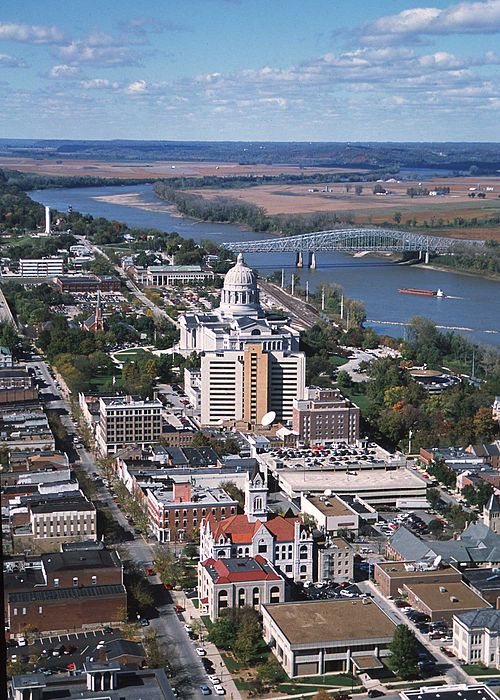
While the city is on the small side, the capitol building is not. It is built on a bluff on the south side of the Missouri River. Lewis and Clark paddled past this very spot on their 1804-1806 Corps of Discovery Expedition. Of course, none of these buildings were here.
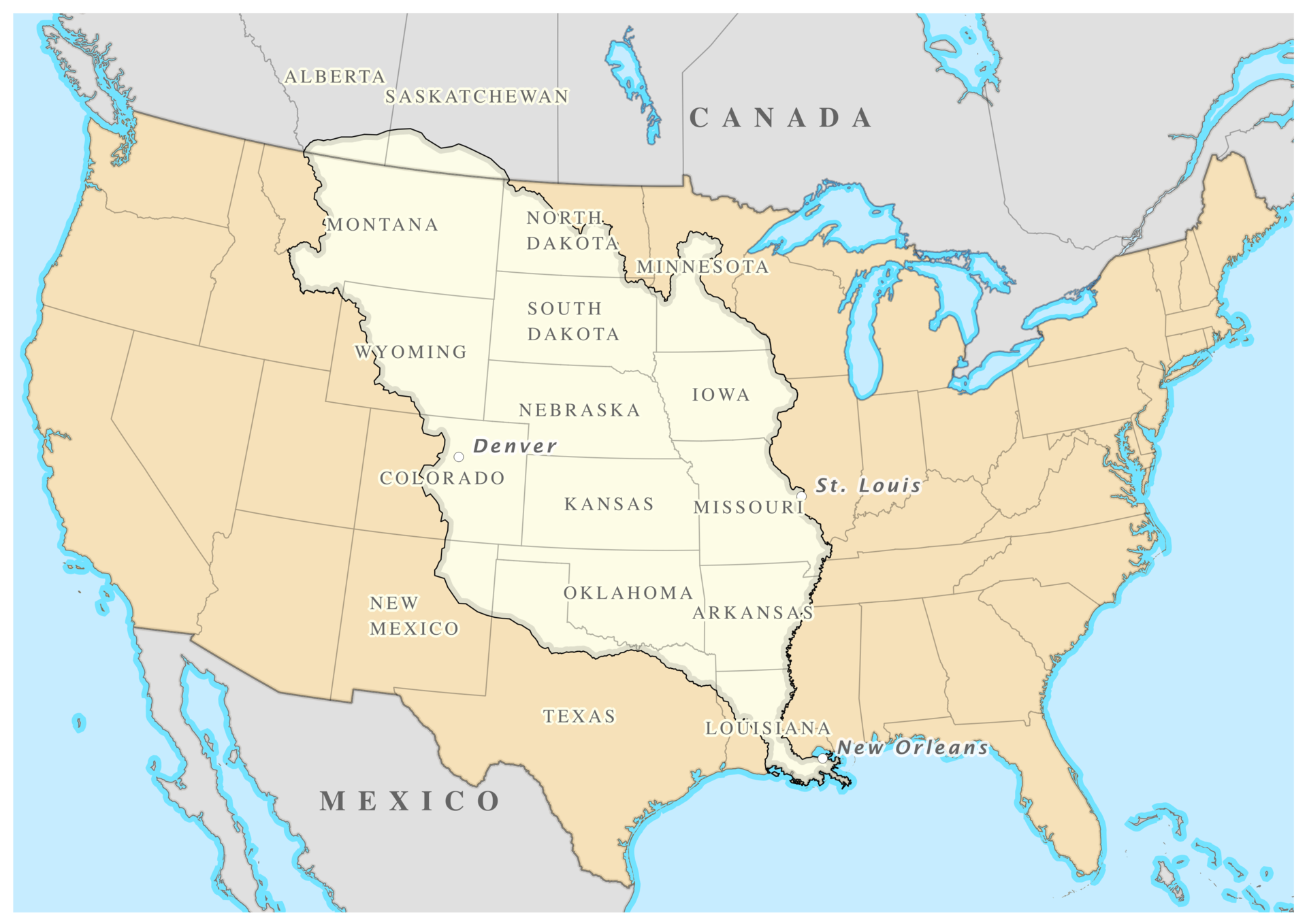
I was tempted to say that Missouri wasn’t even part of the United States at that time, but it was acquired from the French in 1803 as part of the Louisiana Purchase. The USA paid the French fifteen million dollars, or approximately $18 per square mile. That works out to about three cents an acre. They acquired a total of 530,000,000 acres – or about 830,000 square miles.

The Missouri Territory was organized in 1812. St. Louis, on the Mississippi River, was the seat of government. St. Charles, located on the Missouri River, became the second seat of government. Jefferson City was chosen as the new capital in 1821. The village was first called “Lohman’s Landing.” When the legislature decided to relocate there, they proposed changing the name to “Missouriopolis.”

I don’t know about you, but I prefer the name Jefferson City.

The settlement was incorporated as a city in 1825 and the Missouri legislature met there for the first time a year later.

I spent a lot of time trying to figure out how to present this capitol building. The building itself is mammoth, but it is filled with the more amazing works of art that I have seen in most state capitols. So, I have decided to break this up in to two posts. The first one will focus mainly on the building. If you’re not so much into the building, the post with the artwork should be along in a few days.

If you are not a fan of my state capitol posts, well, something else will be along in a eventually.

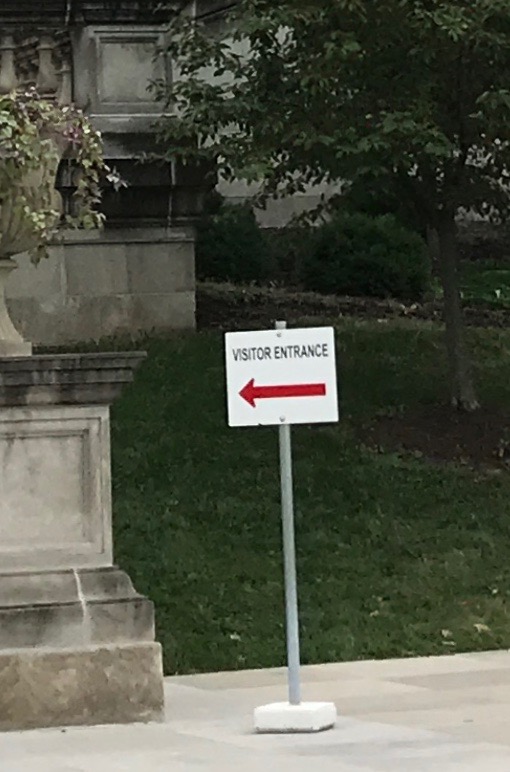
It was still a soggy day when I got up, but not quite as bad as what I had driven through the day before. I got myself ready and headed to the Capitol Building. I parked and found a sign directing me to the visitor’s entrance.
I started climbing. At one landing, there was an entrance. It wasn’t my entrance, however.
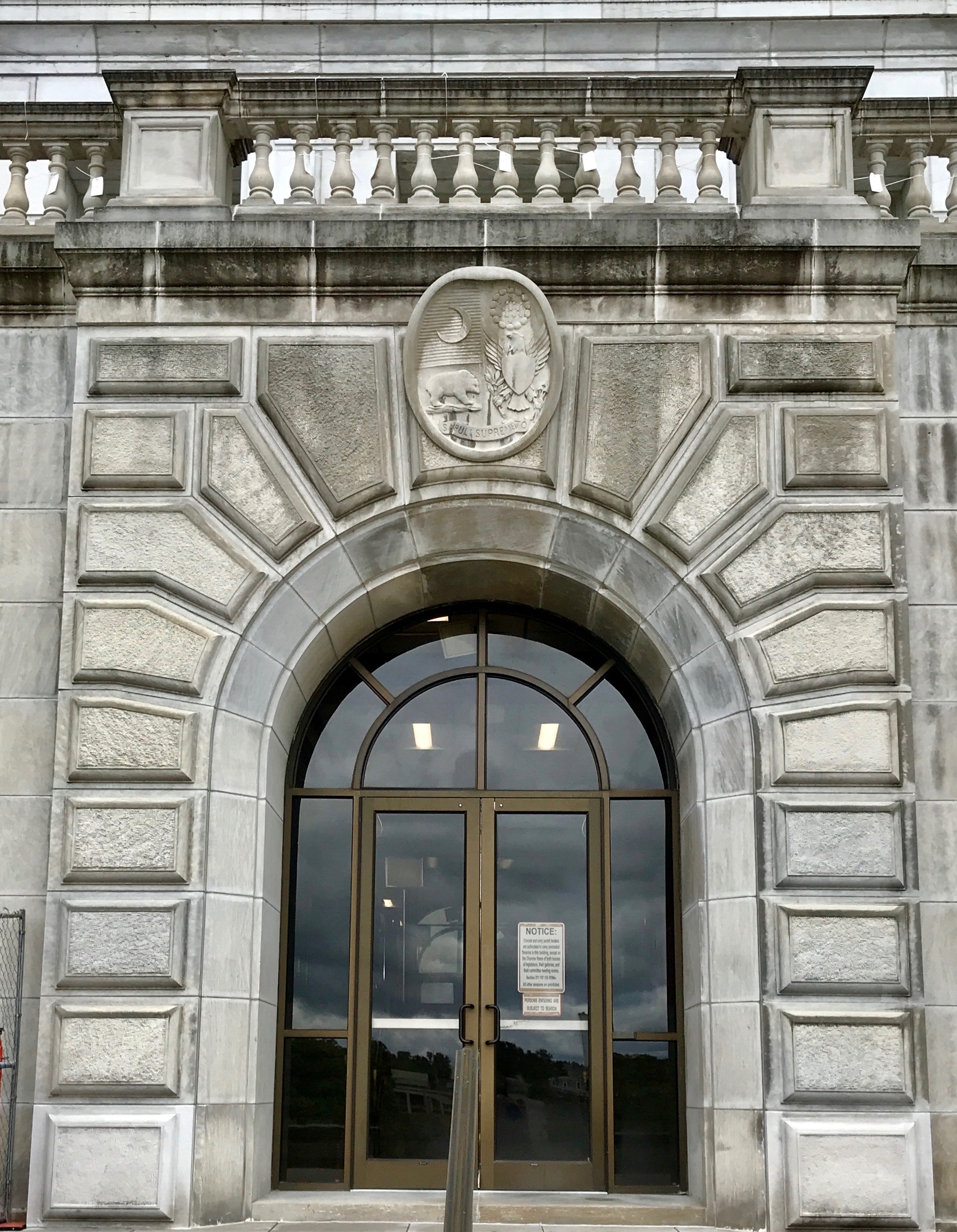
Of course, I had to go up and read the signs on the door.
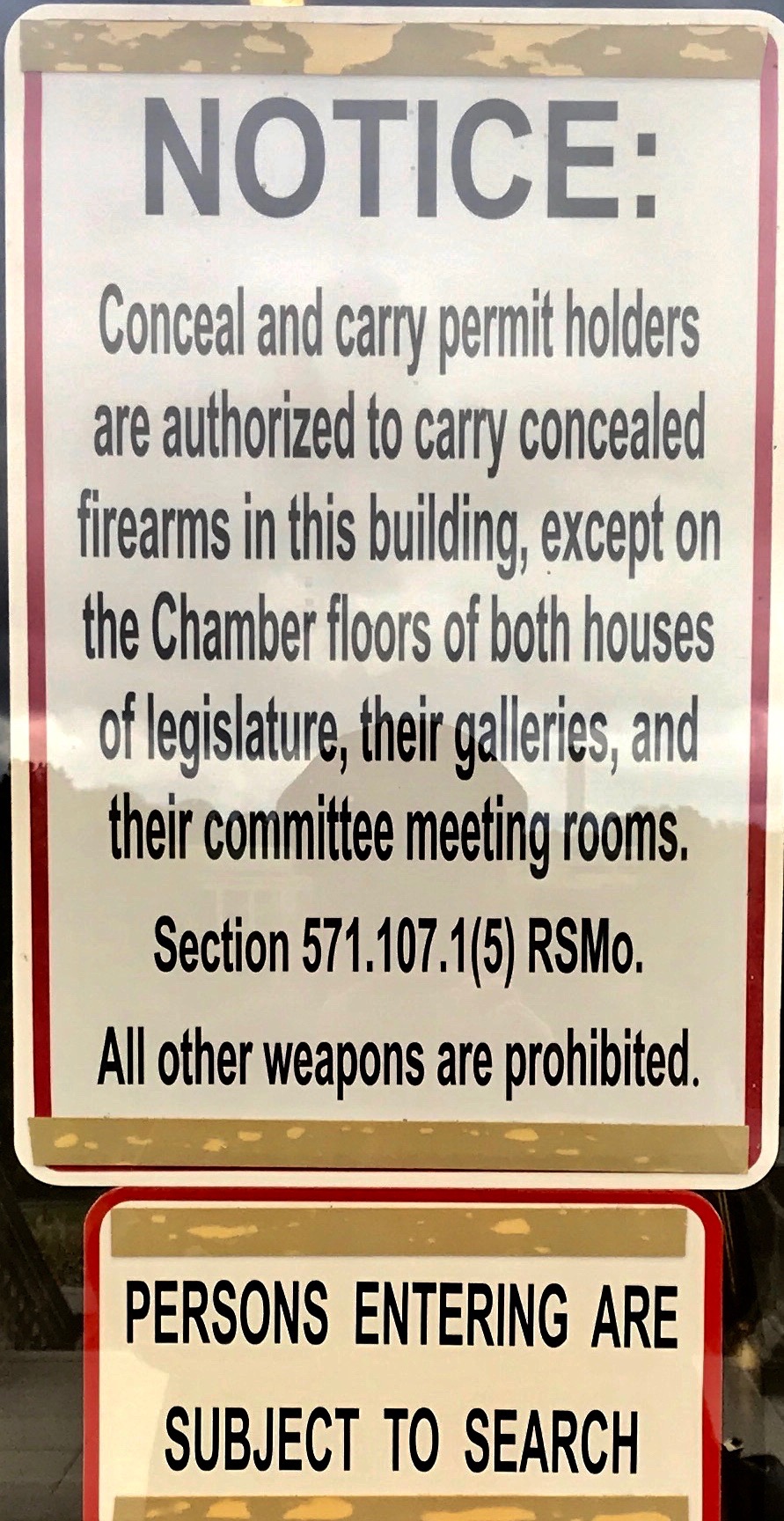
And, if you wanted to know what the signs said, now you do. I continued on up the stairs.
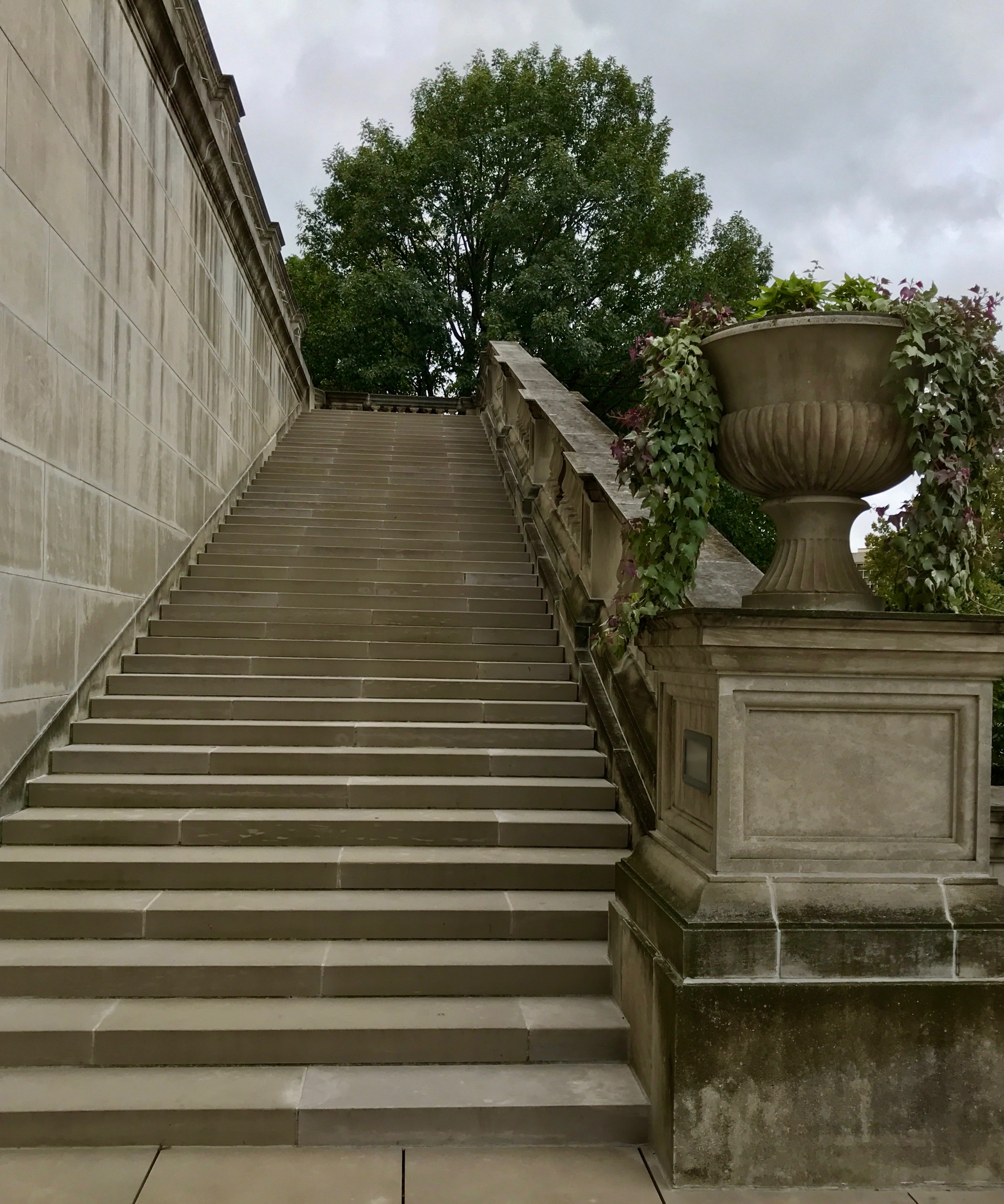
I wish I had been counting the number of stairs! They seemed to go on for ever.
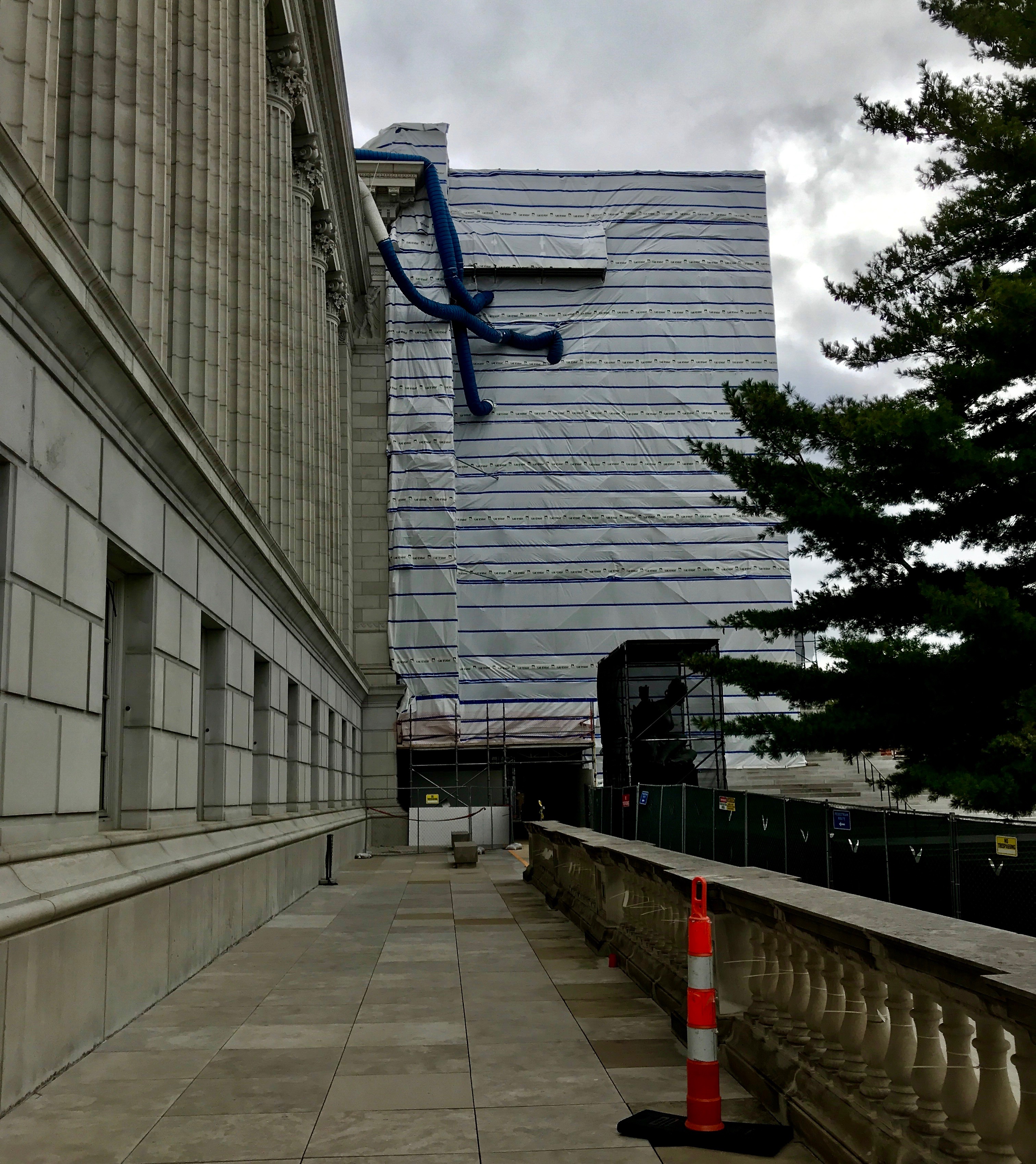
I followed the arrows around to the visitor’s entrance. I guess they must be doing some renovations. It kind of reminds me of one of Christo’s wrapped buildings.
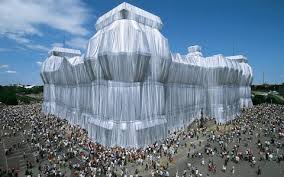
Here’s a photo of the Reichstad in Berlin in 1995.
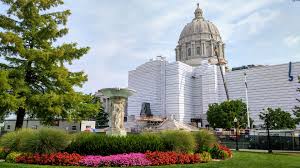
You can see the similarities, although Christo’s wrapping was only up for fourteen days. I wonder how long the wrapping on the capitol will be up? Incidentally, while Christo didn’t wrap the Reichstad until 1995, I first heard about it in art history class with Sister Jeanne when I was in college. Christo started planning that temporary work of art in the sevenities.

Thank you, Sister Jeanne!

Anyway, I entered the building and looked around for a restroom. The tour wasn’t going to start for a bit, and I figured that I might as well make myself comfortable.
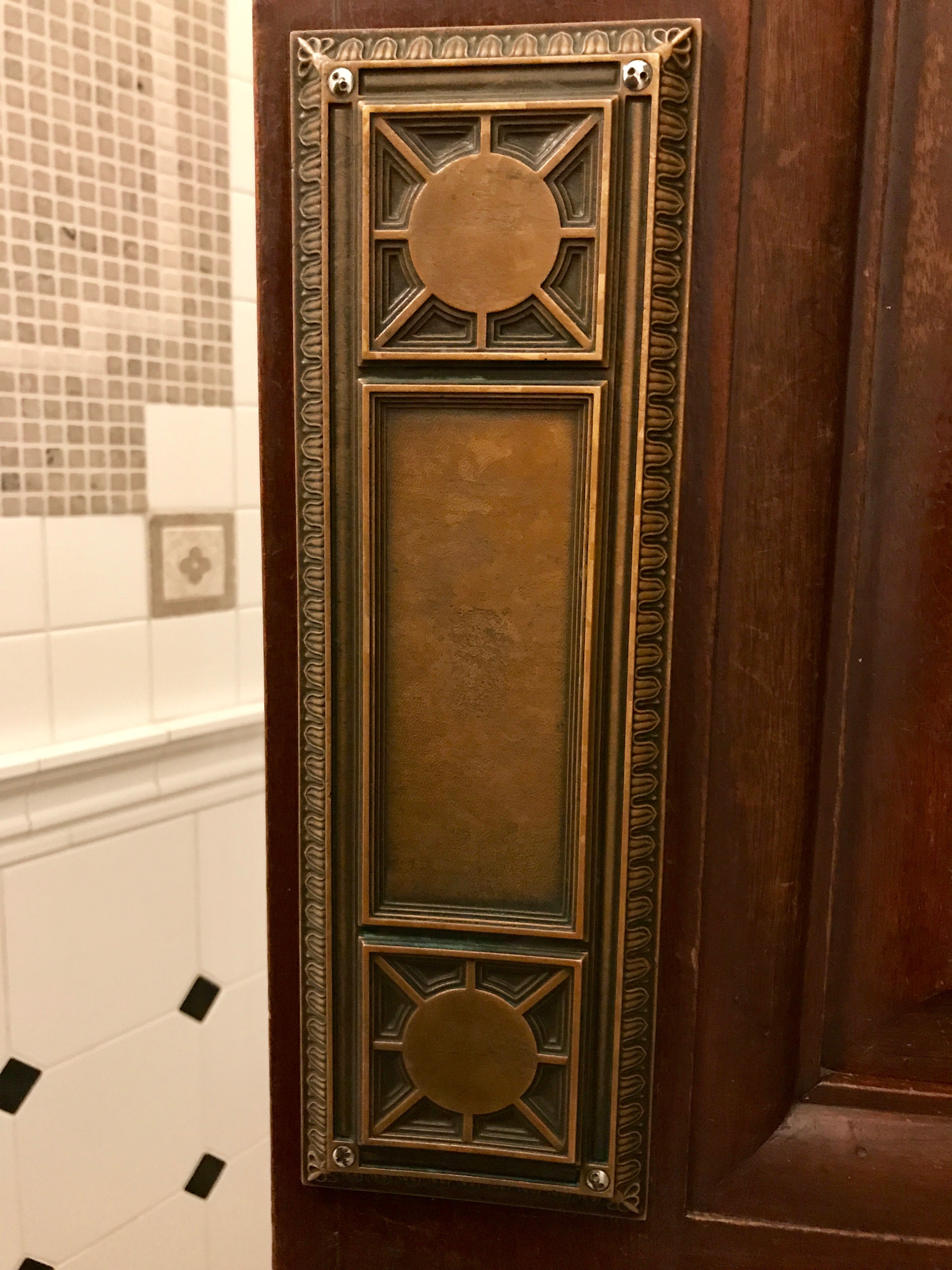
The push plate on the door was quite lovely.
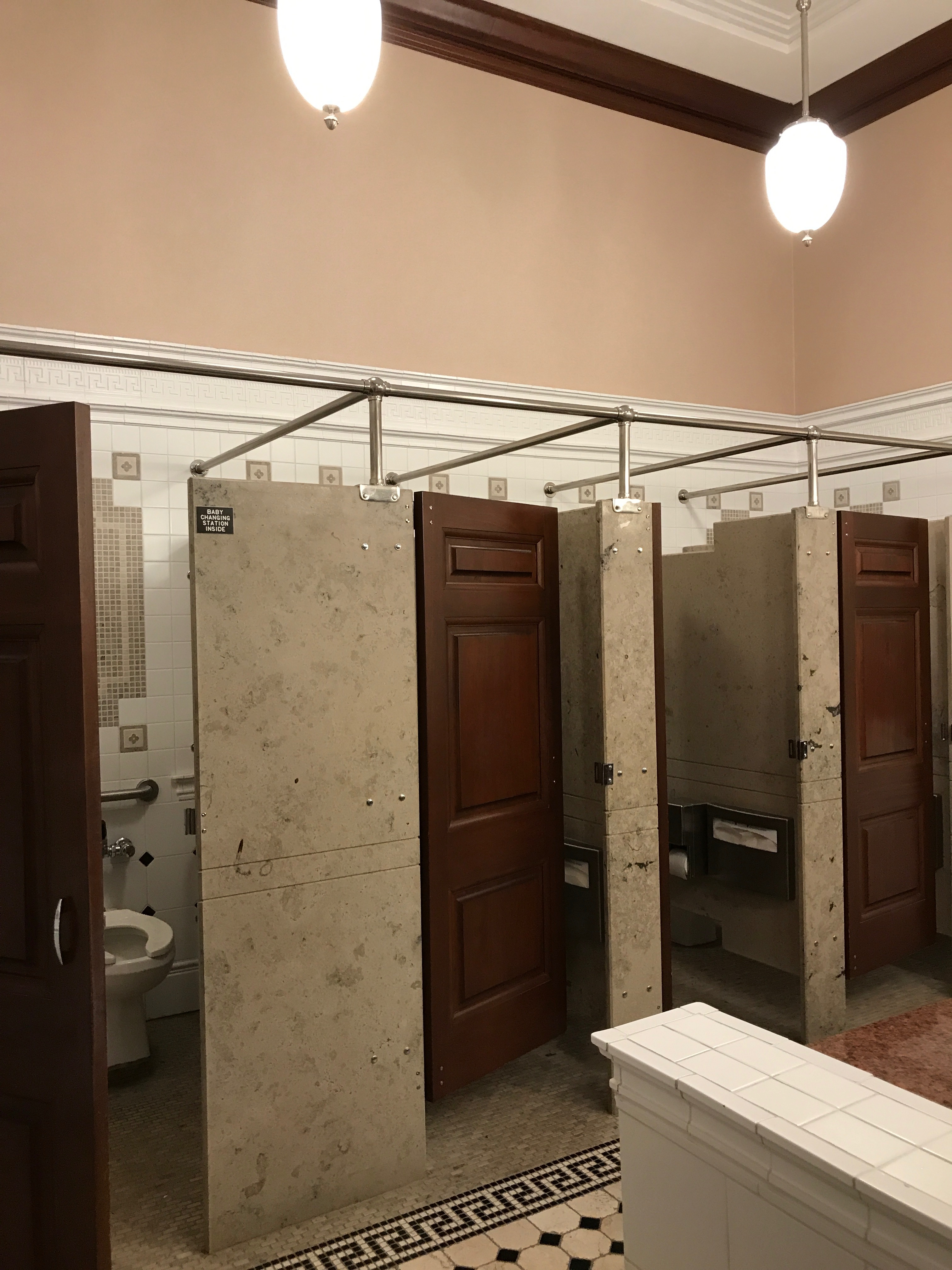
The restroom was also elegantly appointed with marble and tile work.
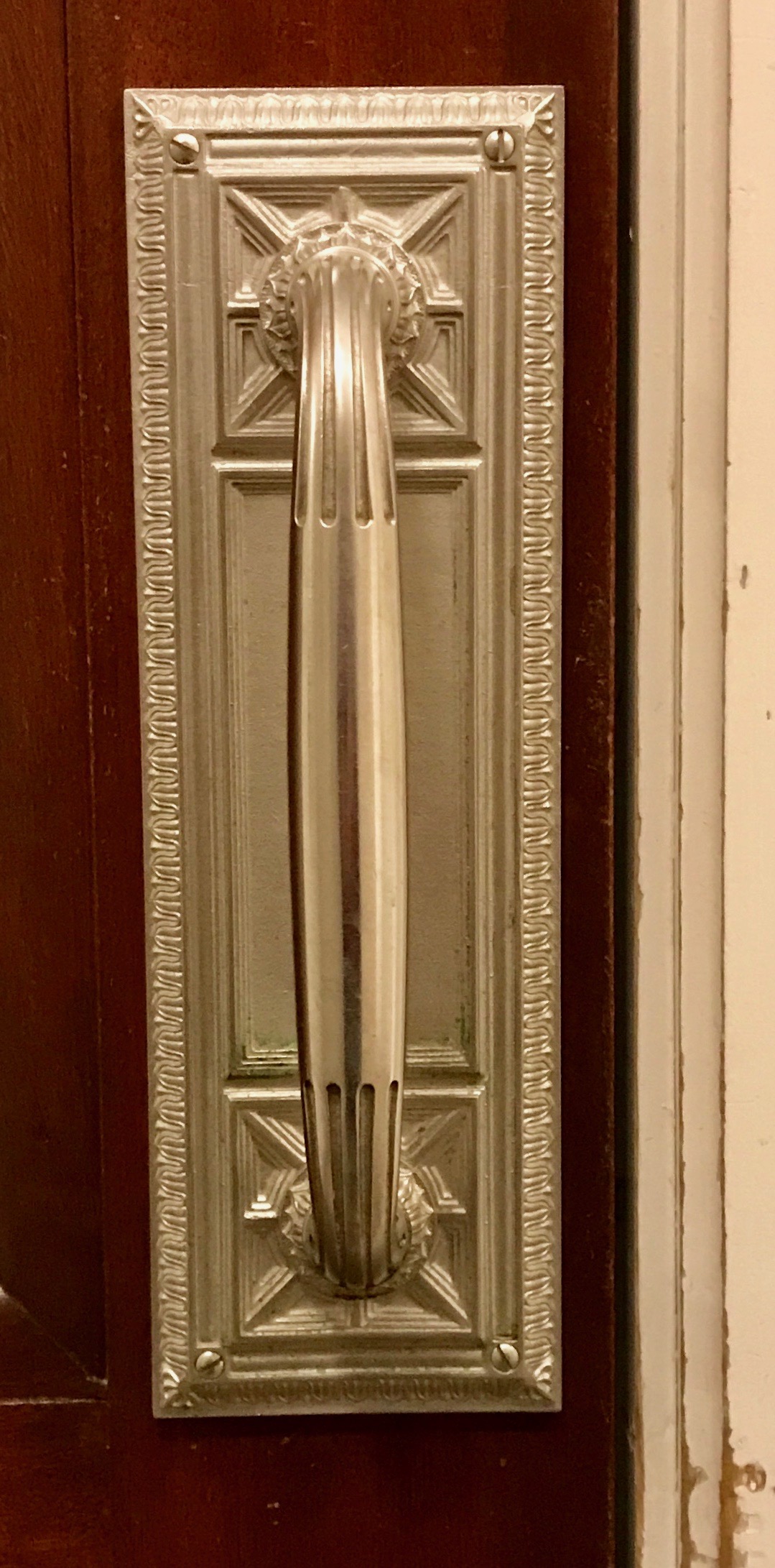
As I left, I was struck by the quality of the pull plate. At this point, I was starting to think that this building might really be something out of the ordinary.
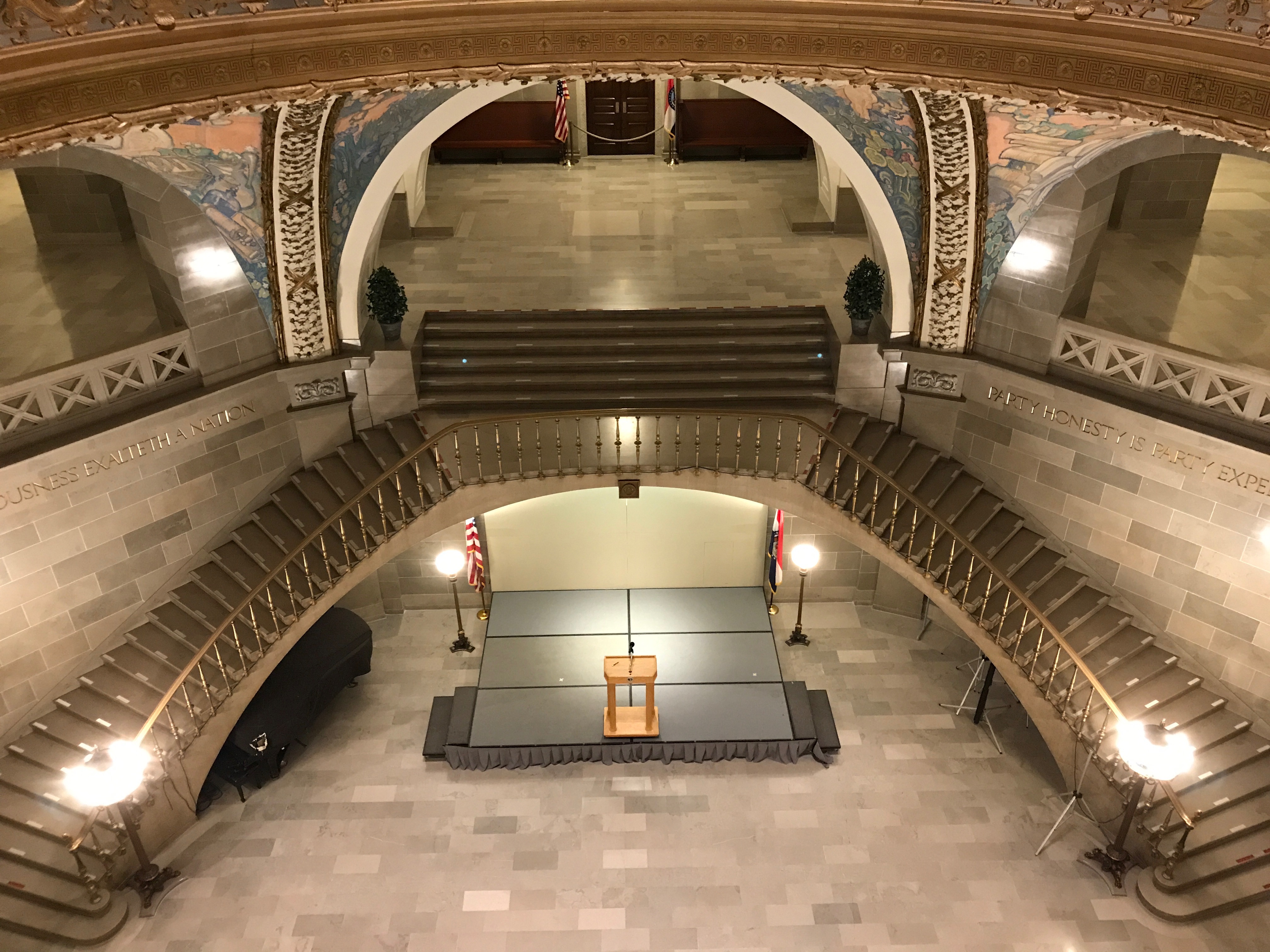
Oh, my! I do believe this building is designed to be inspirational as well as elegant.
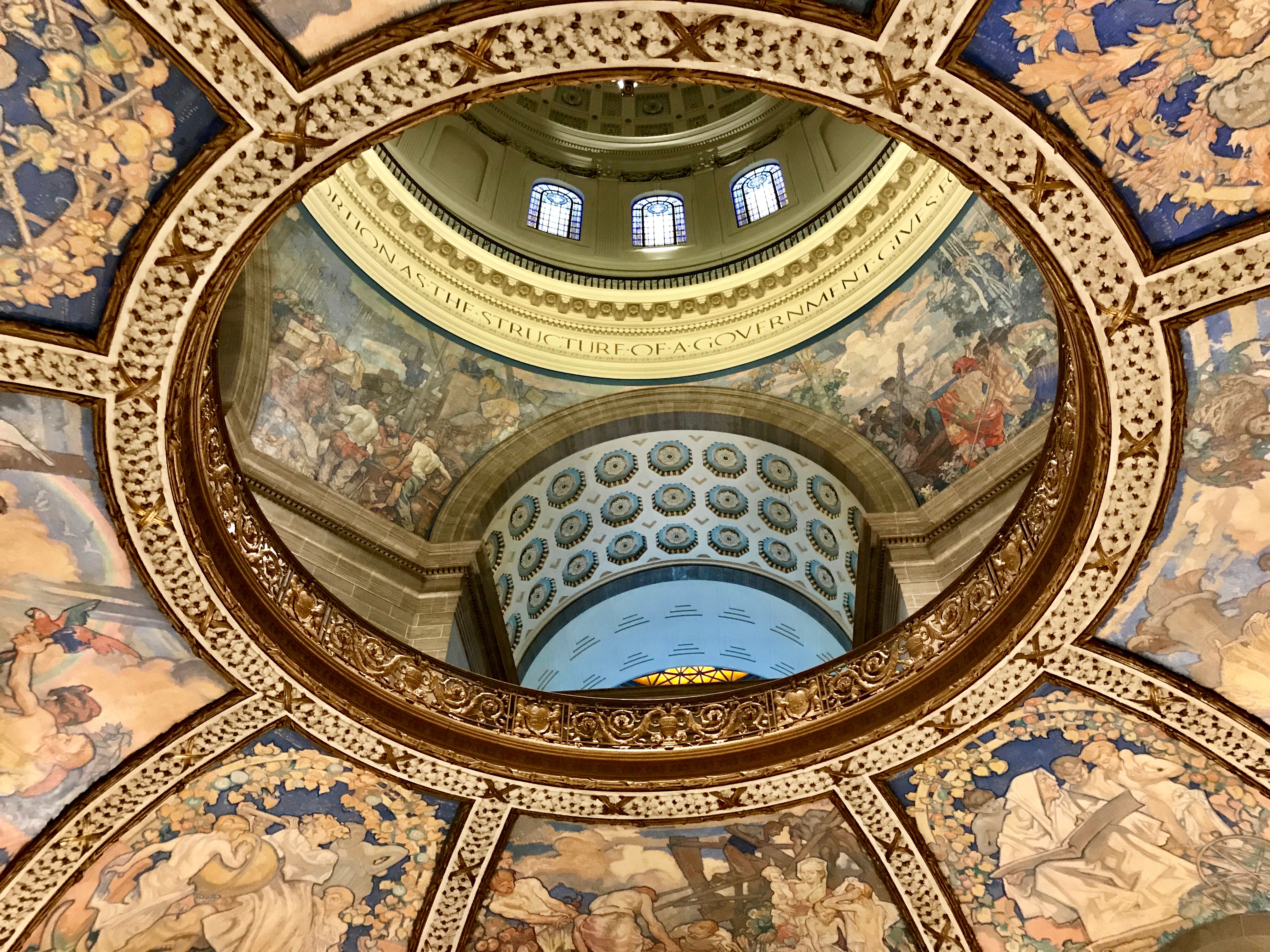
This is one of the views looking up into the dome.
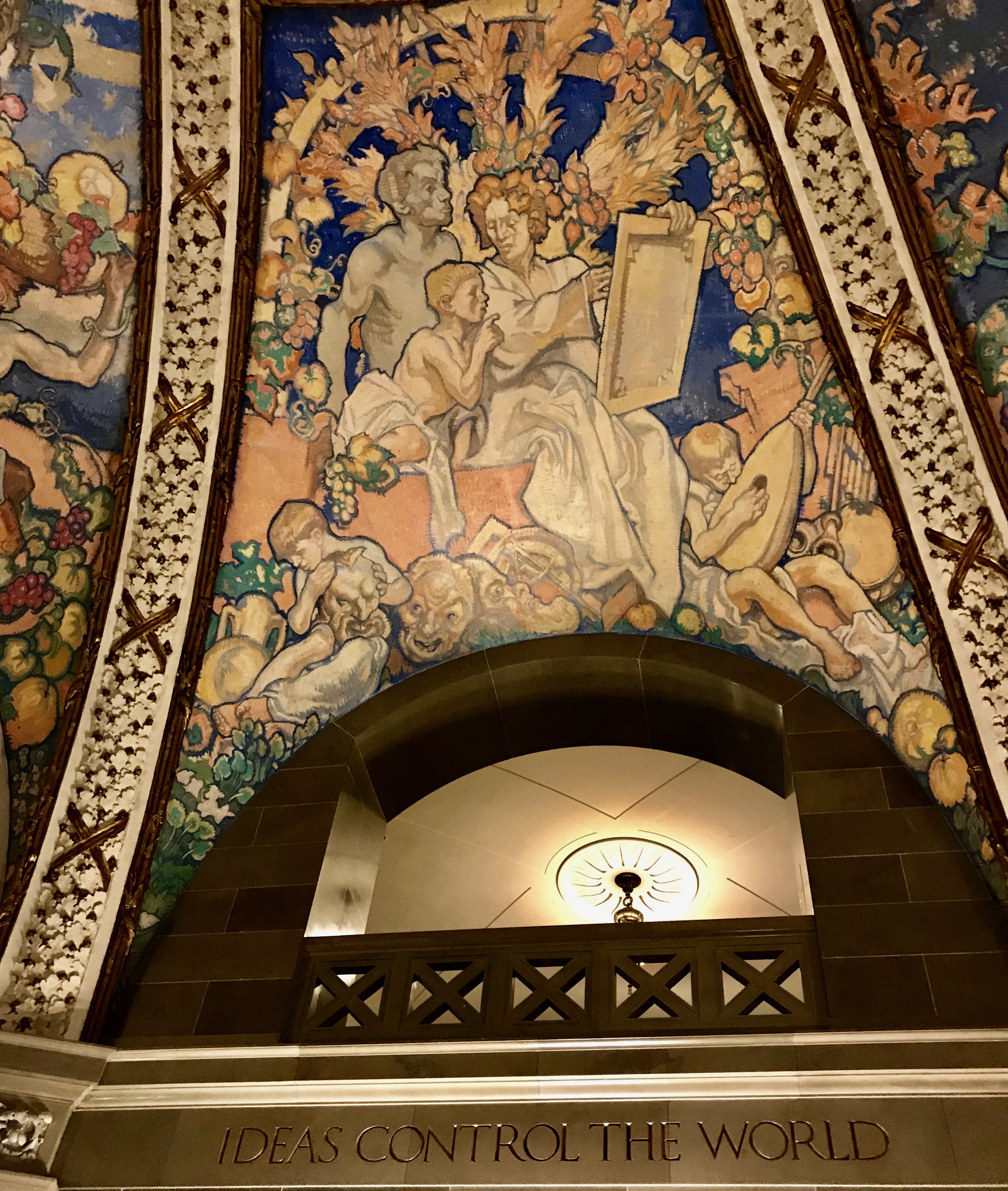
All the areas of the dome are covered with artwork and inscriptions designed to inspire. I particularly liked with panel. I think of it as a pro-education, pro-teacher segment. But, even if it is just “pro-get-a-clue,” I like it.
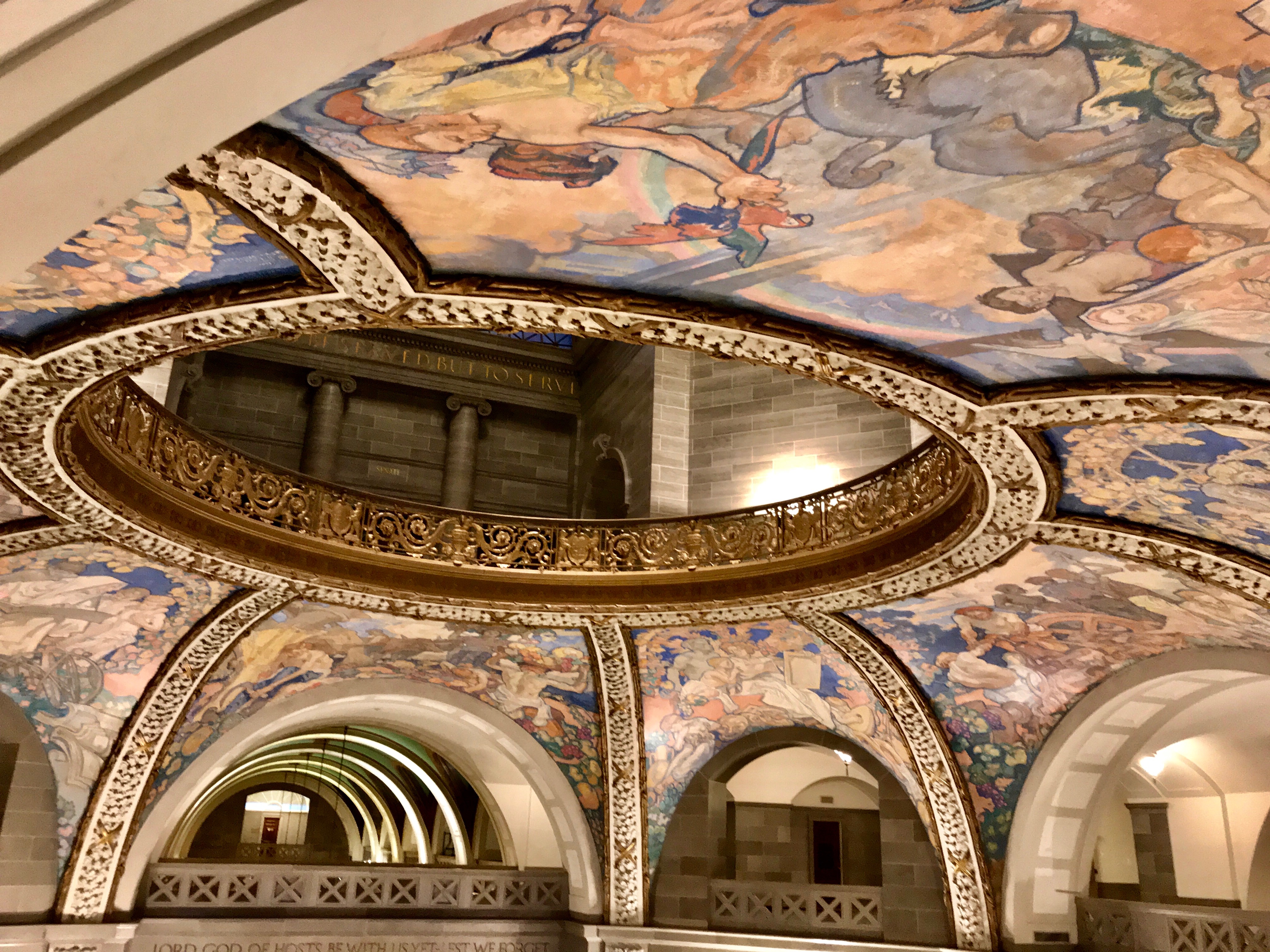
The views change depending on which floor you are standing on and where exactly you are standing.
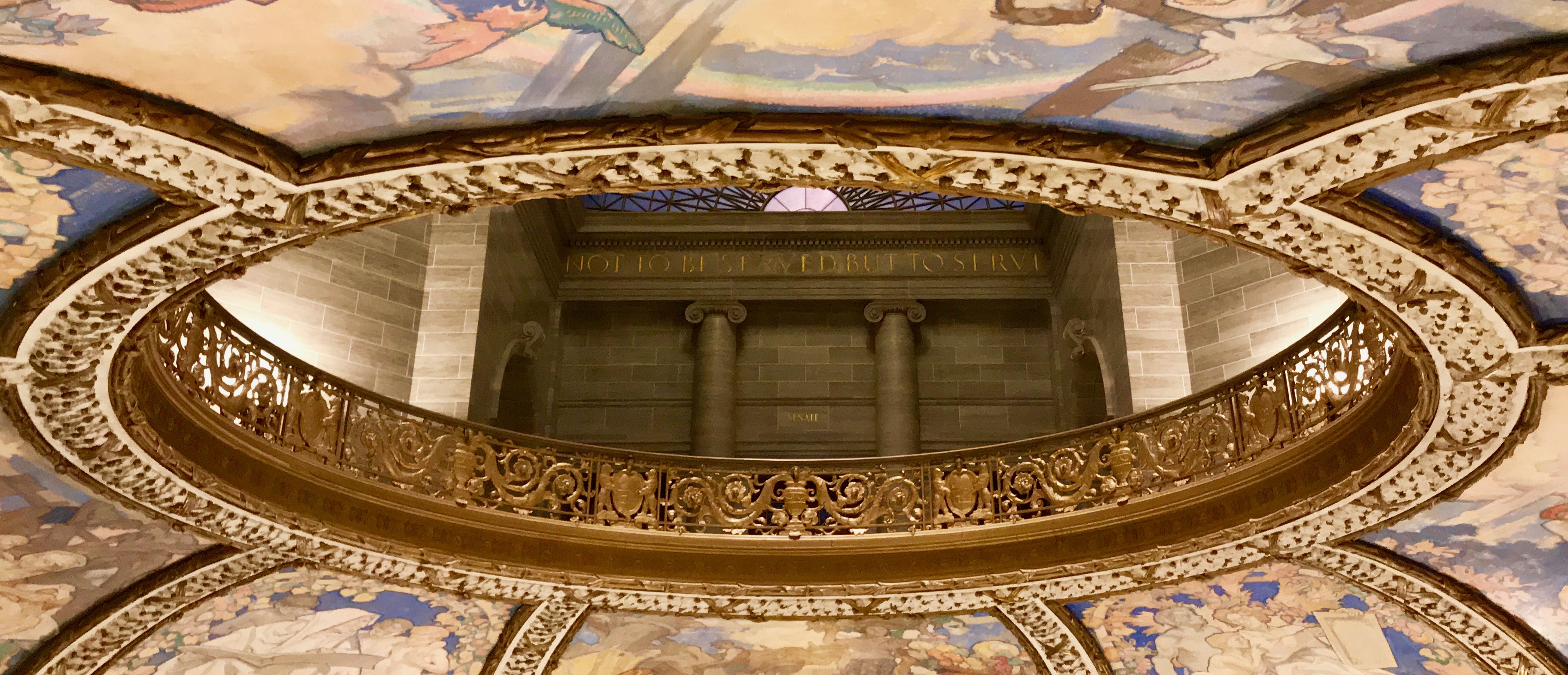
These are noble words, as well. In case you can’t read the inscription seen through the circle, it says, “Not to be served but to serve.” I hope that is over the entrance to one of the legislative chambers – and I hope they look up and read it from time to time. Maybe they could even think about it. (Incidentally, this is not a critique of the Missouri legislators. I am not familiar with the workings of Missouri politics.)
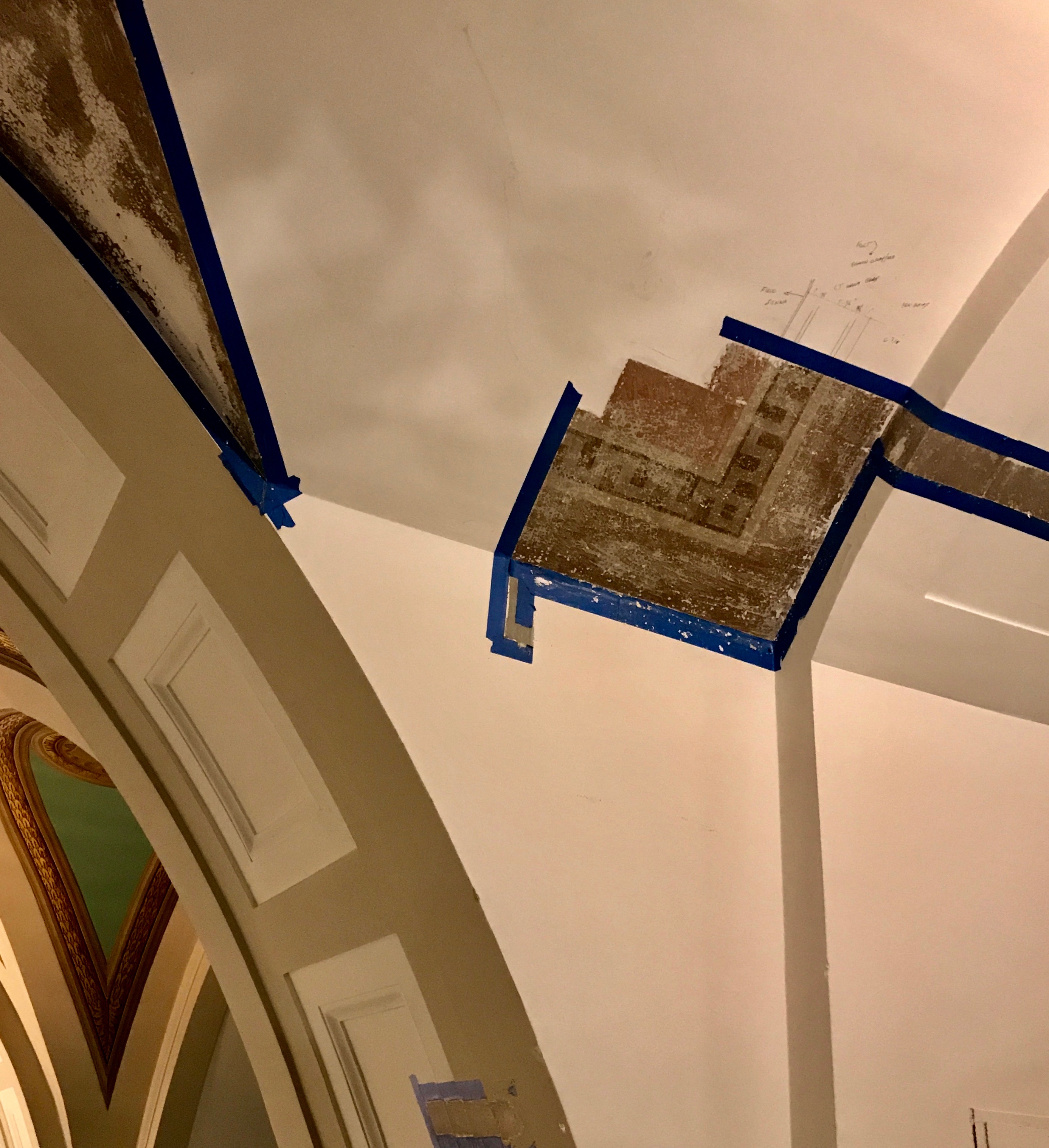
This is a building under renovation. This is the third building to serve as the capitol in Jefferson City. It was completed in 1917. You can see a remnant of some of the original paint in this fragment.
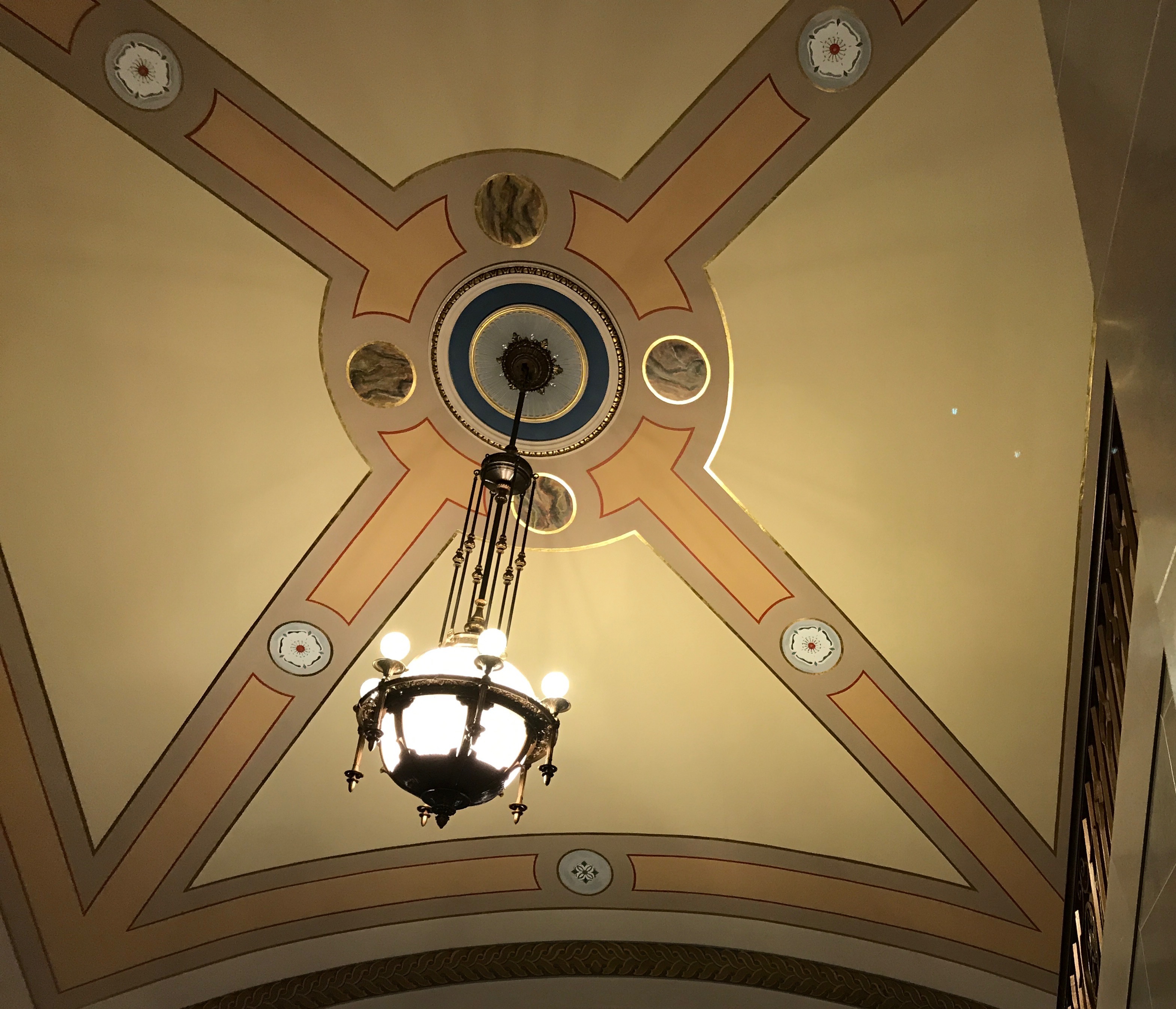
The colors and the sensibilities have been used in some of the restorations that are already complete. This was in the area that visitors pass through when they enter.
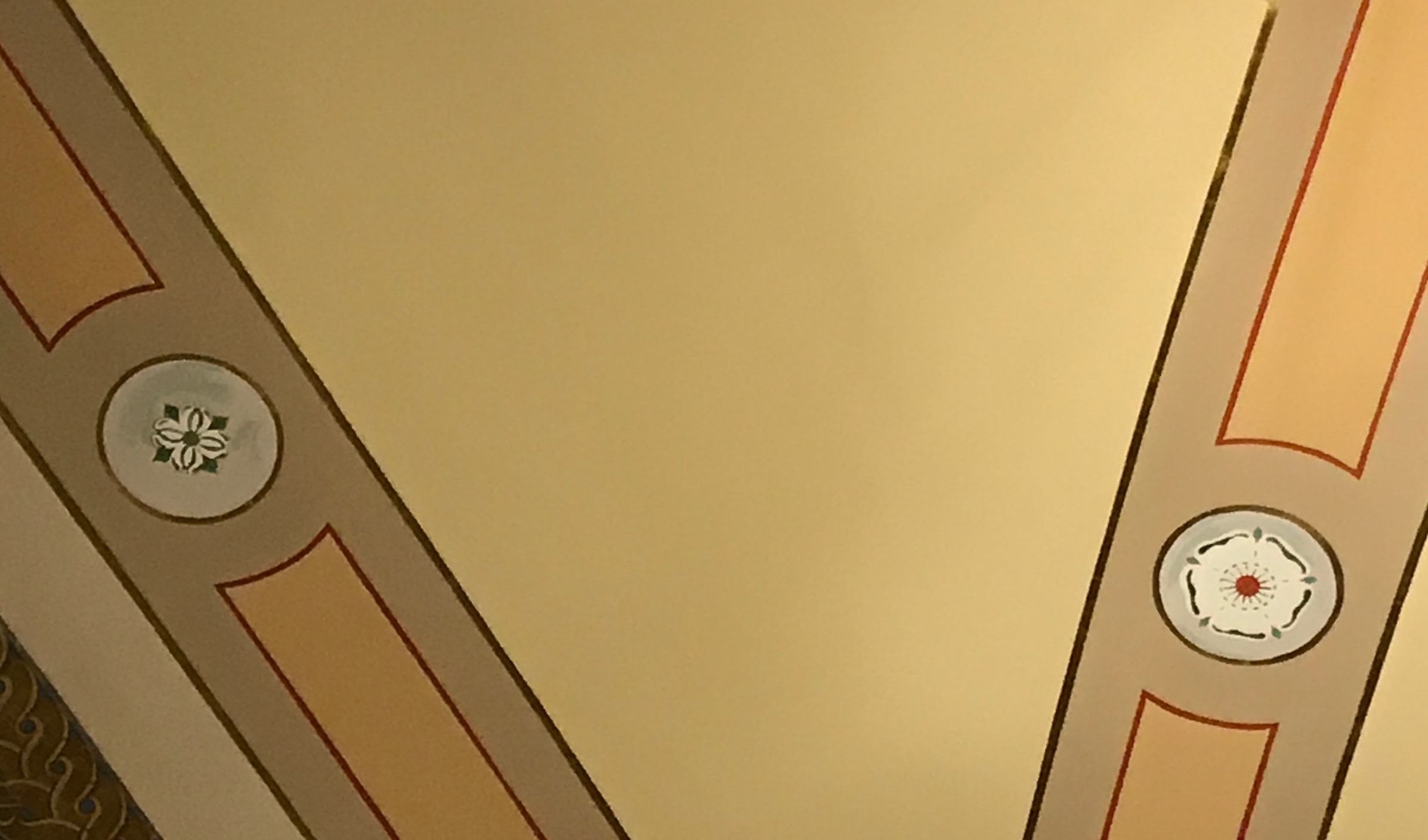
Incidentally, the state flower and the state tree are included in the designs. The state flower is Crataegus punctata, which is a kind of hawthorn. The state tree is the Cornus florida, or the flowering dogwood.
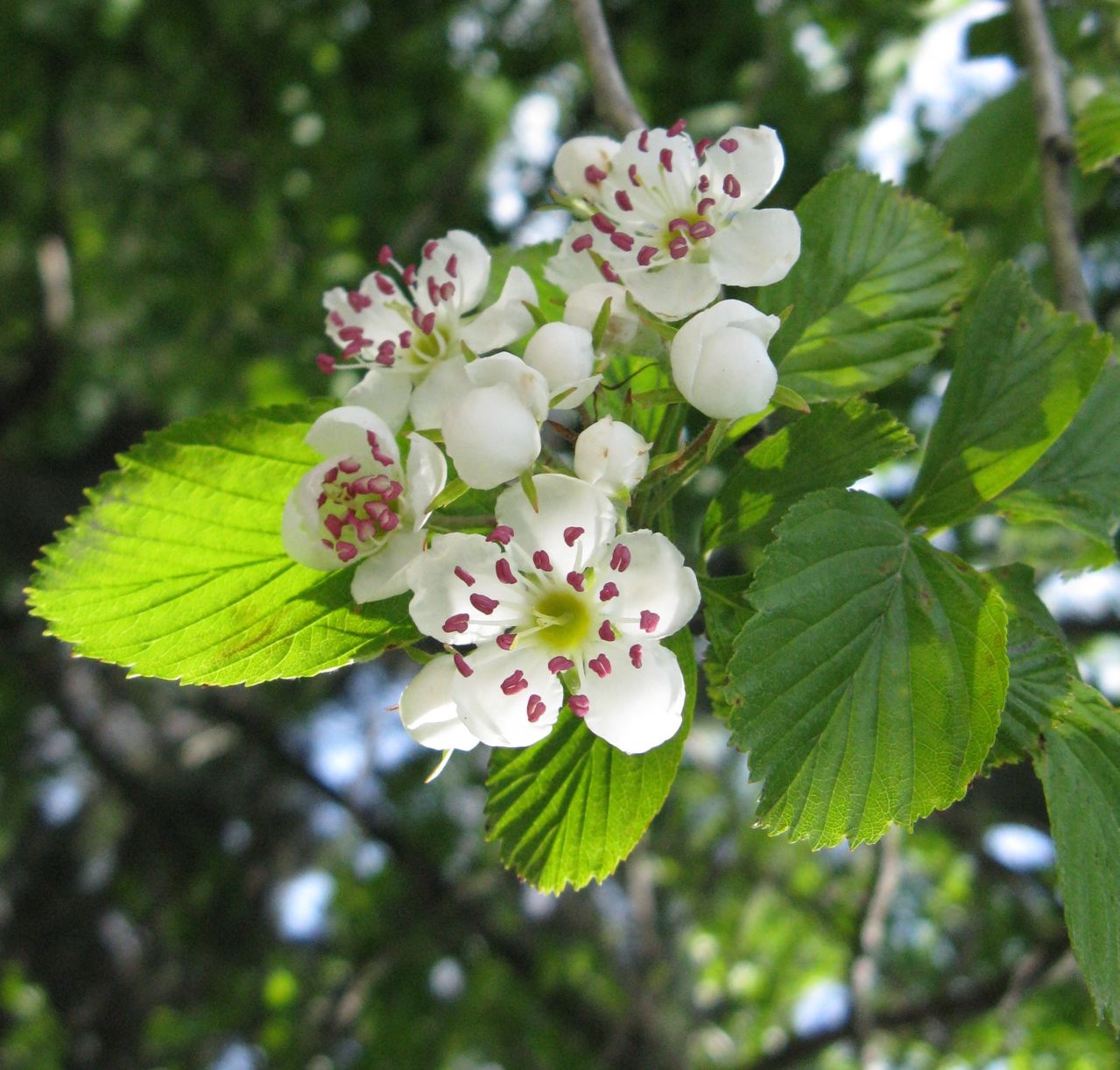
This is the state flower, which looks almost like a tree.

This is the flowering dogwood, which is a tree.
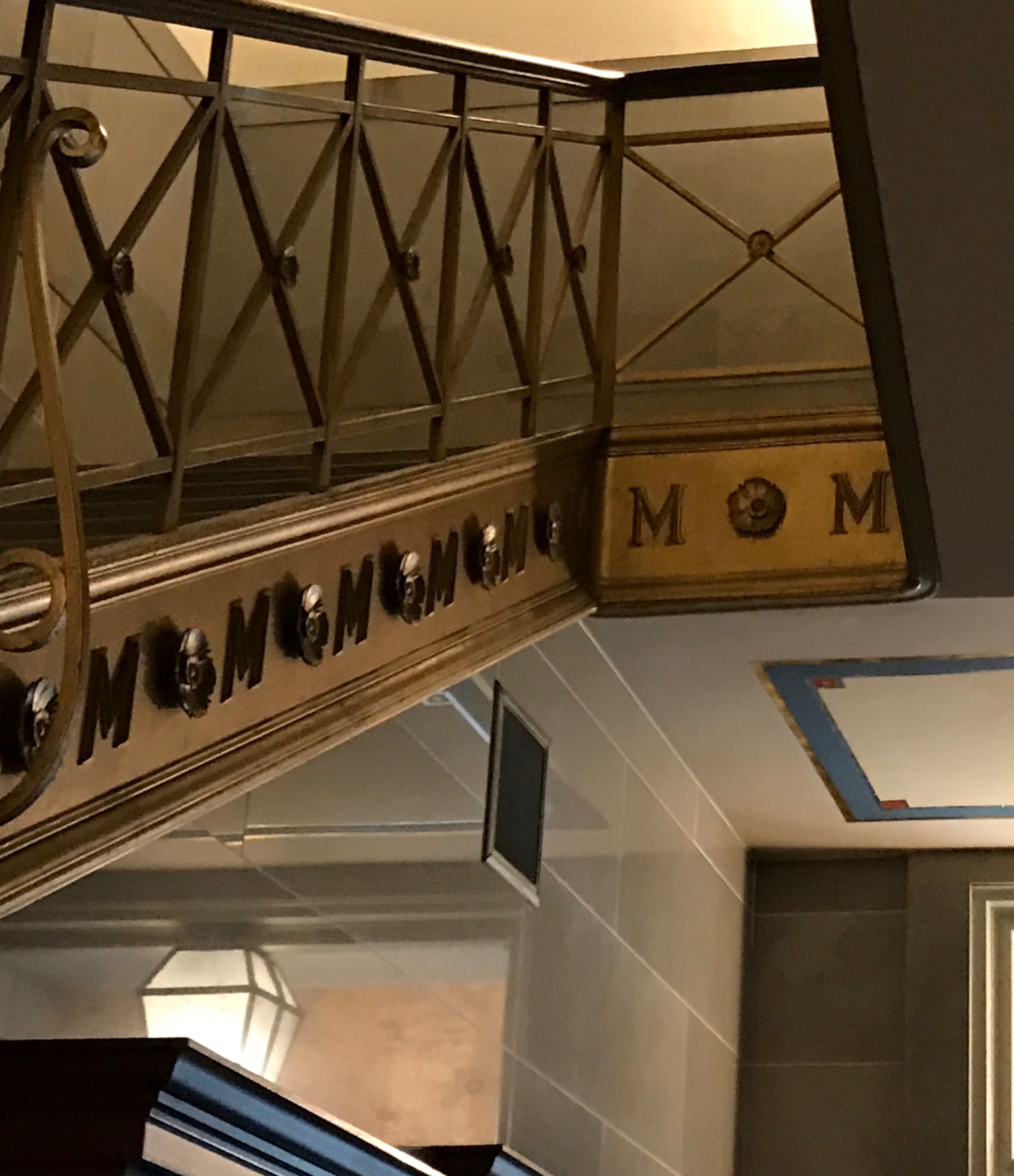
This stairway in the same area had the hawthorn as a repeating motif.
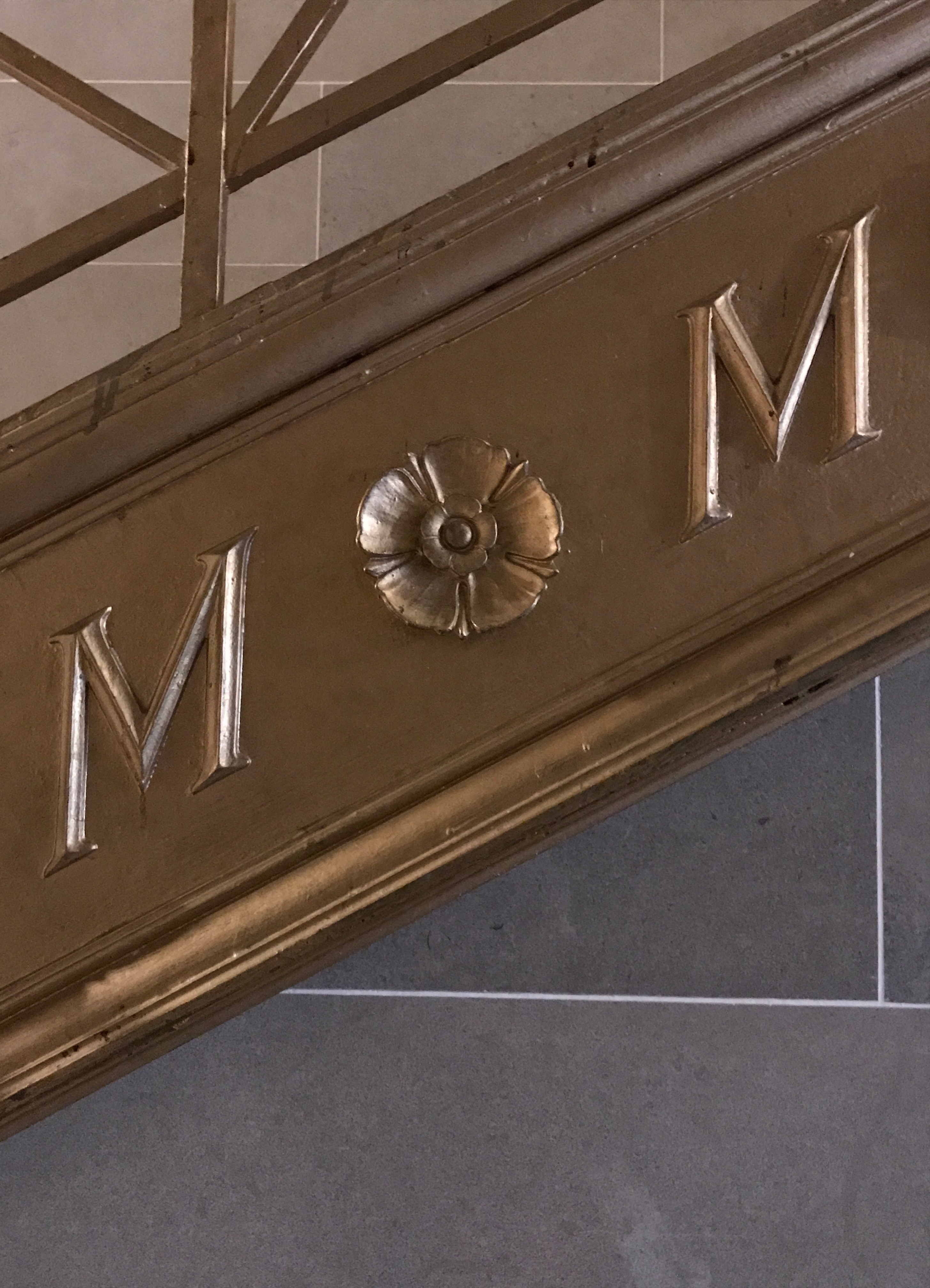
It also tickled me the way it looked like it spelled out “MOM.”
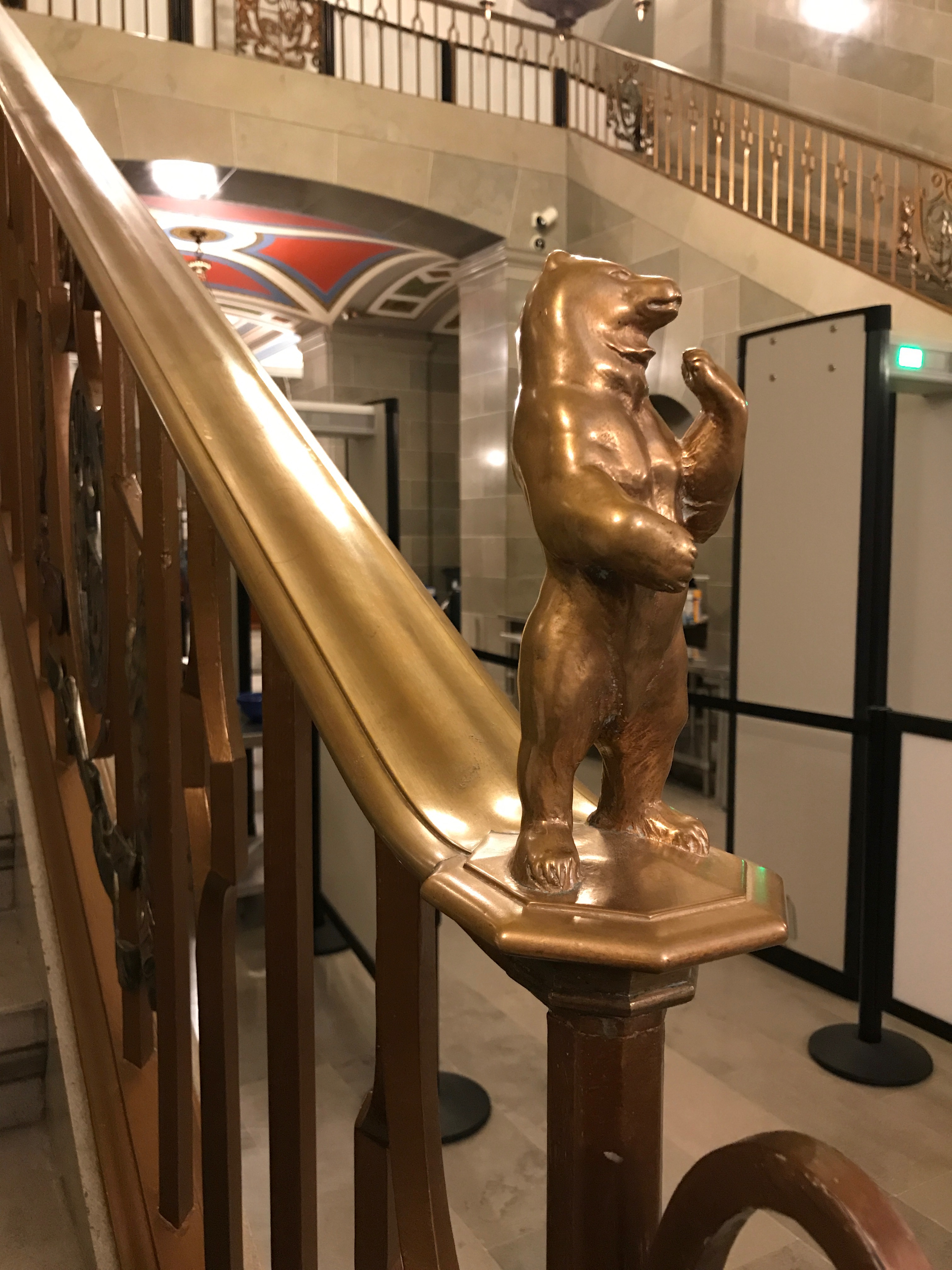
Incidentally, at the end of the balustrade, was this amazing finial. I figured that the bear must be the state animal. I asked our guide if it was, but, no, it turns out that the state animal is the mule. Incidentally, the state bird is the bluebird, the state dessert is the ice cream cone and the state dance is the square dance. The factoids you can find if you look!

You might be wondering why the ice cream cone is Missouri’s state dessert. I had an idea about that, so I did a little research. According to my Preferred Source, the ice cram cone became mainstream in the USA at the St. Louis World’s Fair in 1904. Arnold Fornachou ran out of the paper cups he was using to serve the ice cream he was selling. Next door to him as a waffle vendor named Ernest Hamwi. He sold Arnold some of his waffles. Arnold rolled the waffles into cones to hold the ice cream. The rest is history.

And mighty delicious history, at that!

Speaking of our guide, he spent a lot of the tour talking about the artwork. Really, this building is so rich in art, that it’s hard to separate the art from the building. You do notice that I haven’t completely avoided the art. The reason that there is so much art in the building is that they ended up with too much money.

The original budget allotted $3 million for the building and and additional $500,000 allocated for the site and furnishings. The state miscalculated on the revenue projections and ended up collecting $4,215,000.  I whipped out my calculator, and figured that they collected $715,000 more than they thought they would need. If I remember correctly what the guide told us, by law they could only spend the money they raised on the capitol. That is why there is so much artwork and why it is of such high calibre. I will talk more about the artwork in the next post.
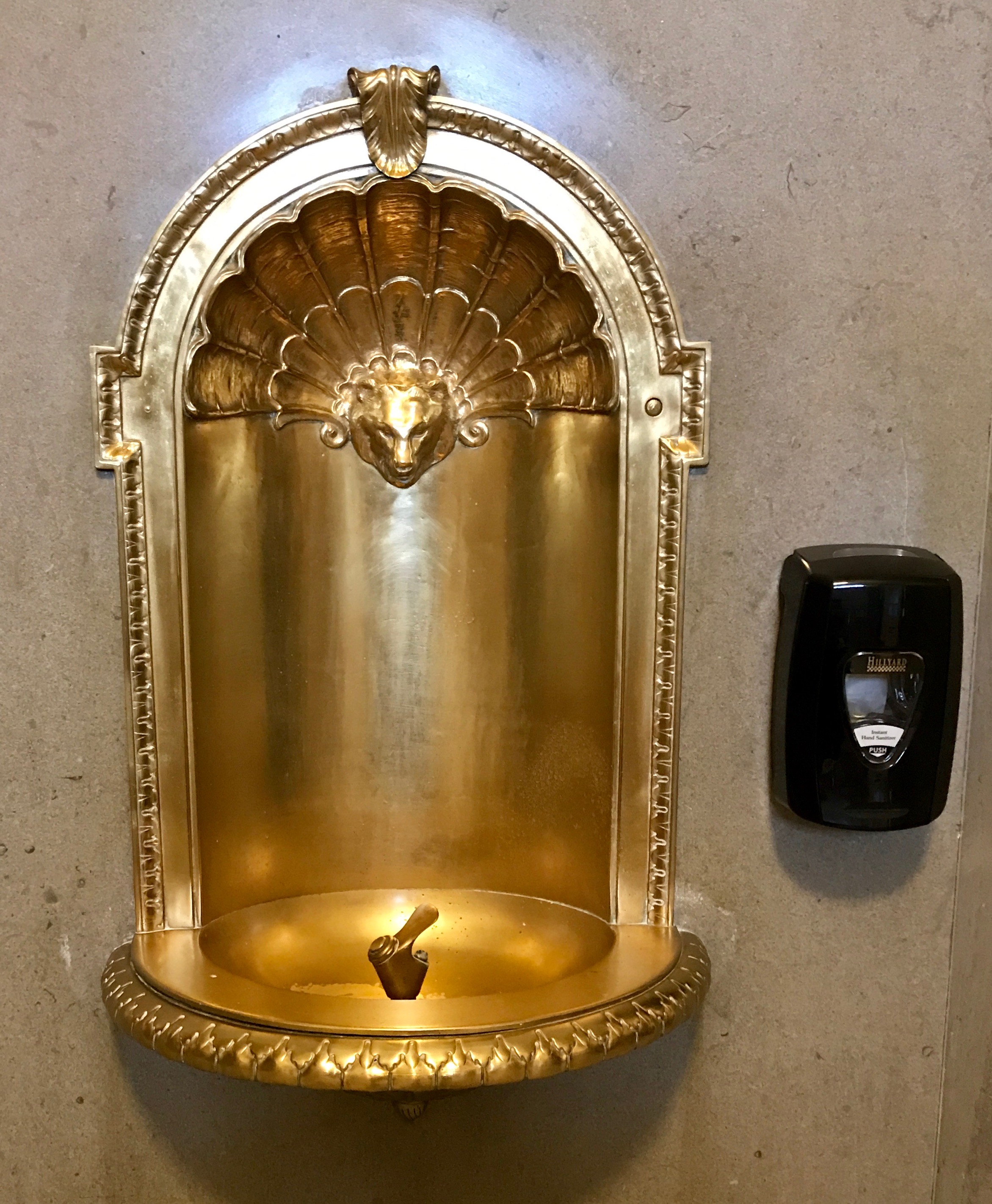
But, as long as I’ve paused to talk about funding, compare and contrast this original drinking fountain with the hand sanitizer dispenser. (Go ahead, I’ll wait.)

In my opinion, they ought to fling that ugly piece of plastic far away. I doesn’t belong next to that glorious drinking fountain.
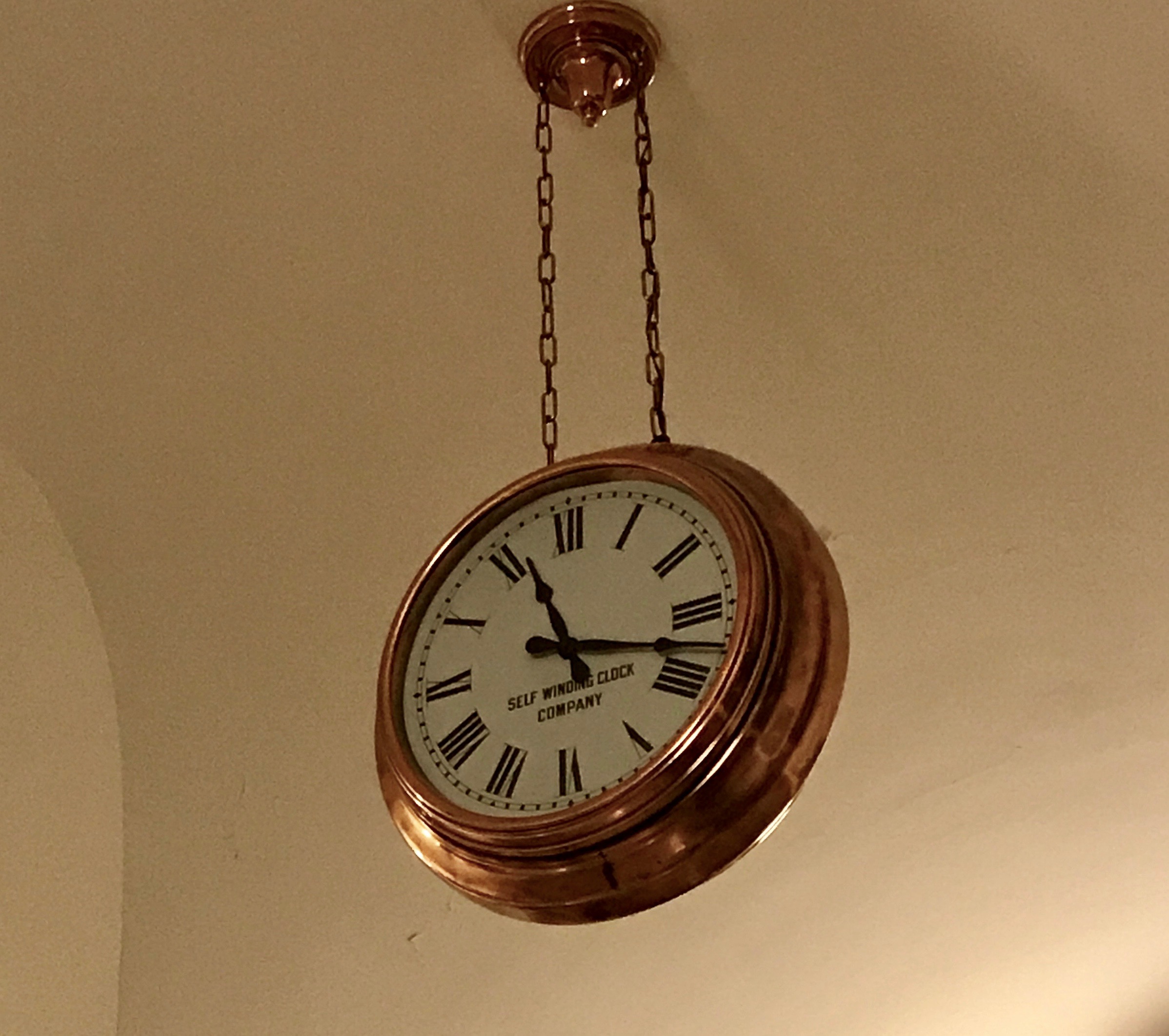
And how about that elegant clock hanging in the hallway? The dial proclaims it to be “self winding.” I wonder how that works? Do you think the wire woven into the chain on the right side has something to do with it how it operates?
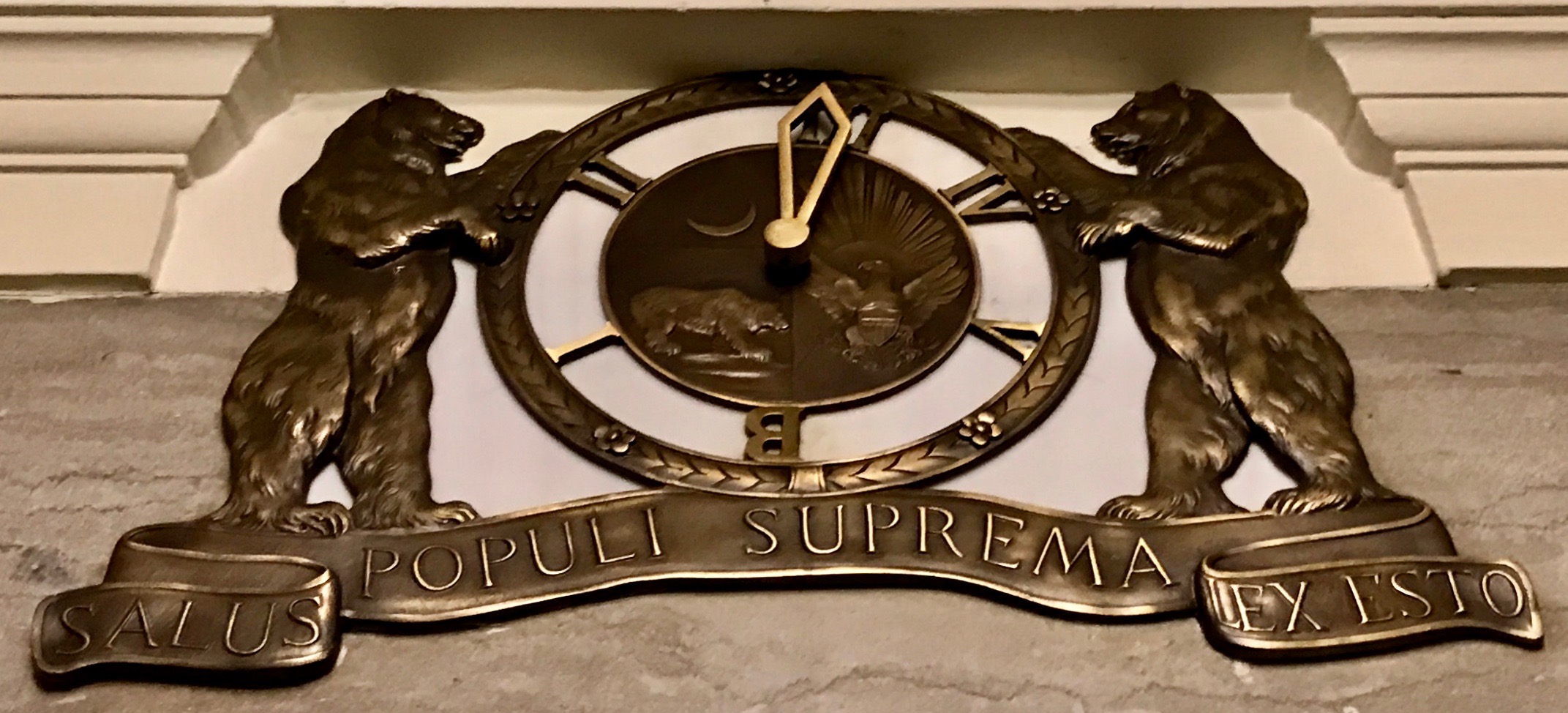
Take a look at this elevator dial! I am sure someone wanted a bear as the state animal. The state’s motto is “Salus populi suprema lex esto” which means “Let the good of the people be the supreme law.”
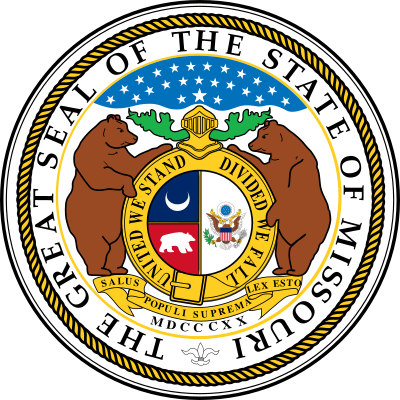
The elevator dial is based on the Great Seal of the State of Missouri. The bears represent strength and bravery. The crescent moon represents the newness of statehood and the potential for growth. MDCCCXX is Roman numerals for 1820, although Missouri wasn’t admitted to the union until 1821. They must have been into the power of positive thinking. Incidentally, take a look at the yellow belt with the words “United we stand divided we fall” in the enter of the seal. Do you see the buckle? The buckle signifies the State’s ability to secede from the Union if they deemed it necessary. The belt can be unbuckled.

So, did Missouri unbuckle during the Civil War? According to my Preferred Source, it was a “hotly contested border state, populated by both Union and Confederate sympathizers.” Both the Union and the Confederacy claimed the state. It sent armies, generals and supplies to both sides and maintained dual governments. They carried on a bloody neighbor-against-neighbor intrastate war within the larger national war.

By the end of the war in 1865, nearly 110,000 Missourians had served in the Union Army, and at least 30,000 had served in the Confederate Army. The war in Missouri was continuous between 1861 and 1865. There were battles and skirmishes in all areas of the state. The largest battle west of the Mississippi River  was the Battle of Westport in Kansas City. If you count all the military actions, from the large ones to the minor skirmishes, Missouri saw more than 1.200 distinct engagements within its boundaries. Only Virginia and Tennessee had exceeded that number.

I guess the belt buckle stayed fastened.

I wandered around a bit more. You can really see the money that was spent on the building.
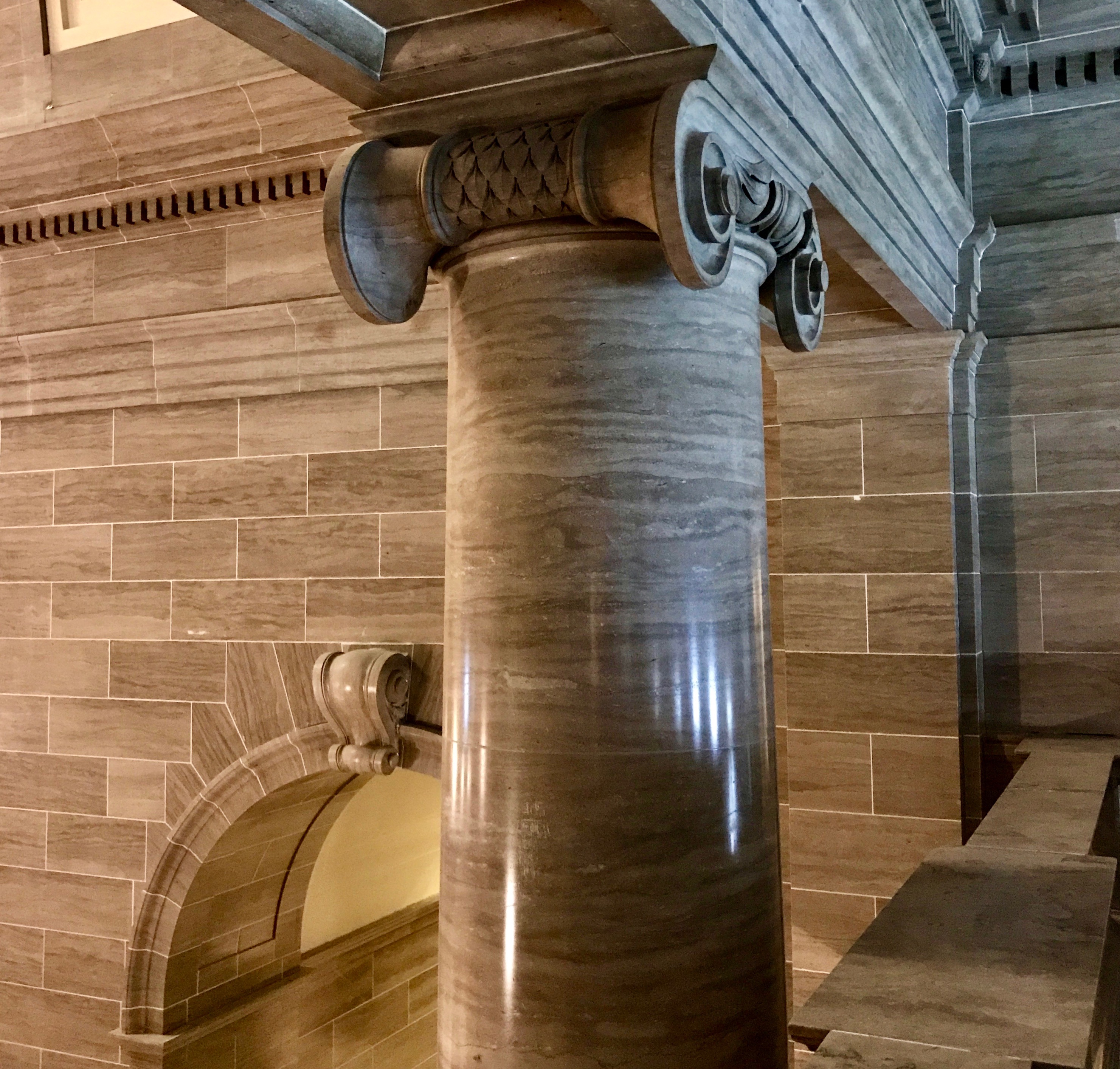
The stonework is so well done.
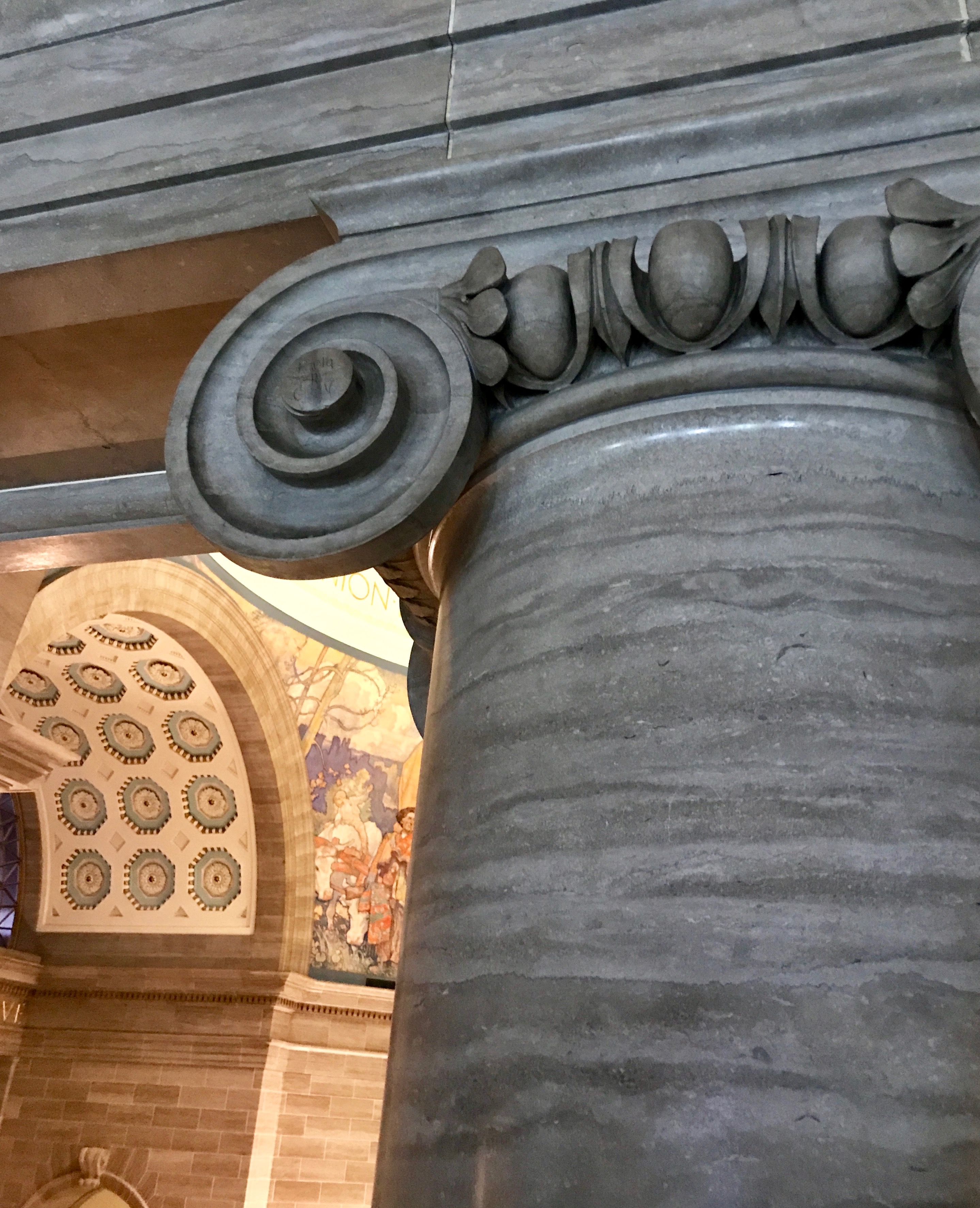
I wonder if there are even enough skilled artisans left in the world if we wanted to recreated these structures?
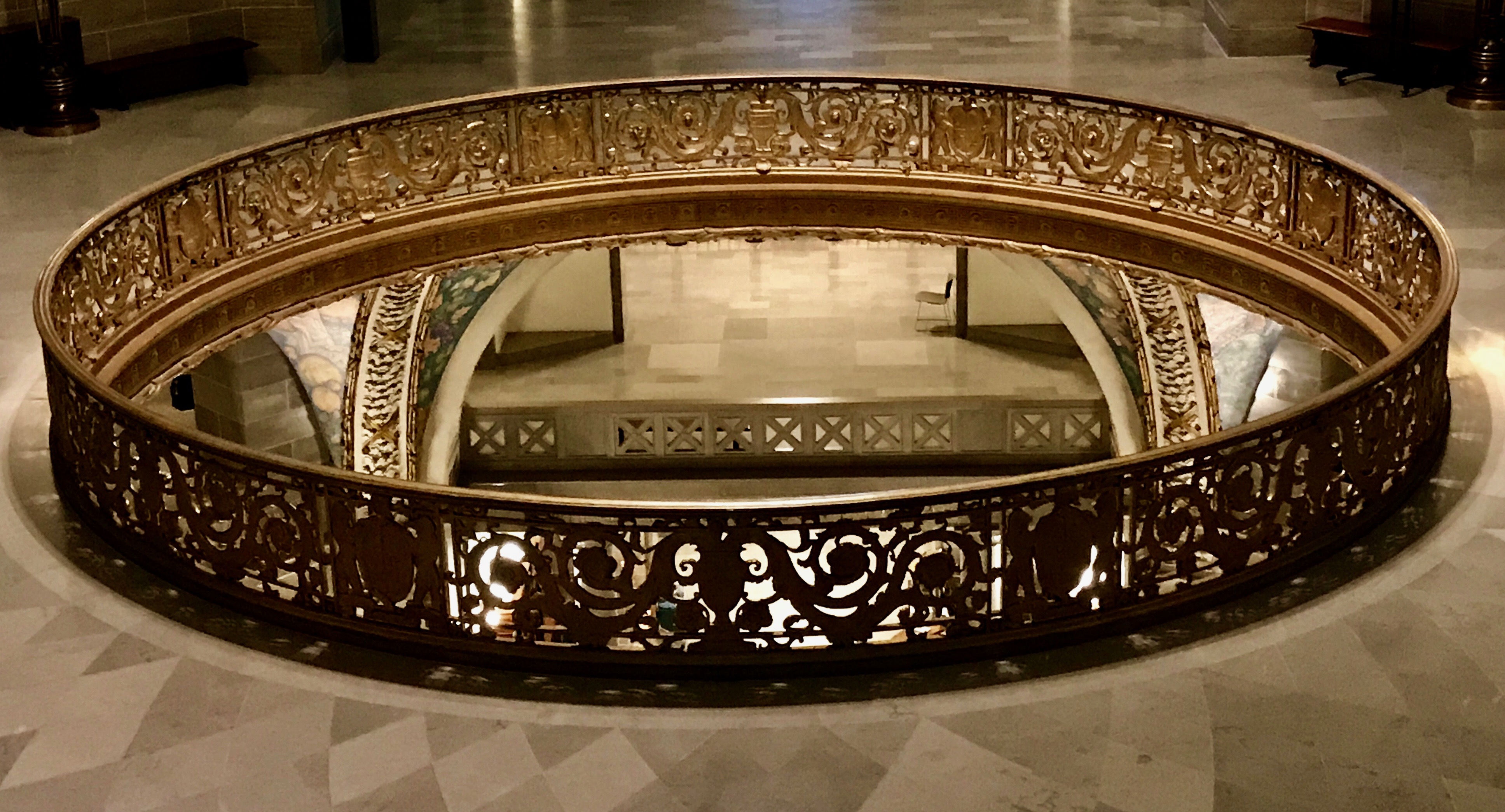
Everywhere you look, there is a little vignette waiting to be appreciated.
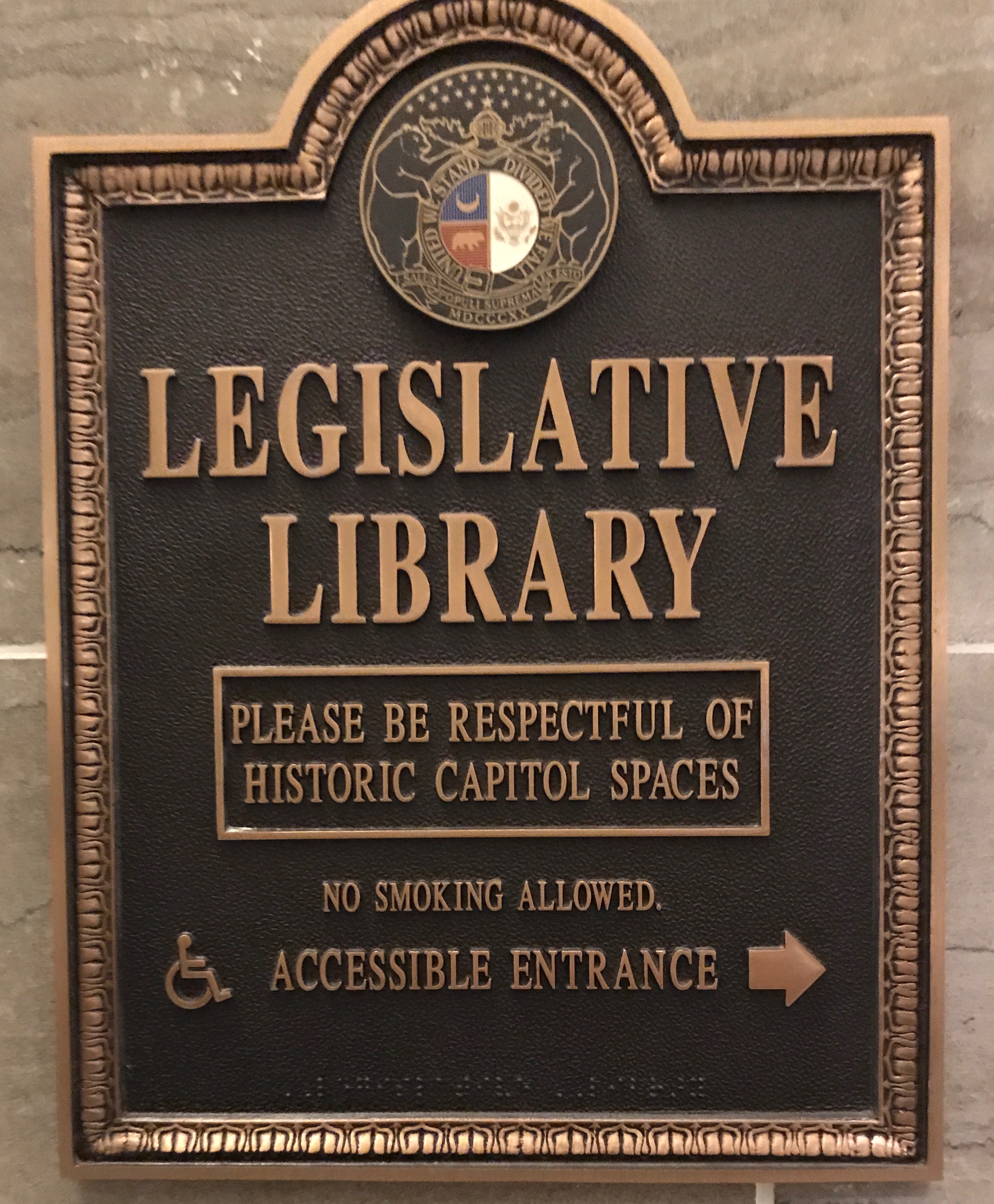
The Legislative Library was open to be viewed.
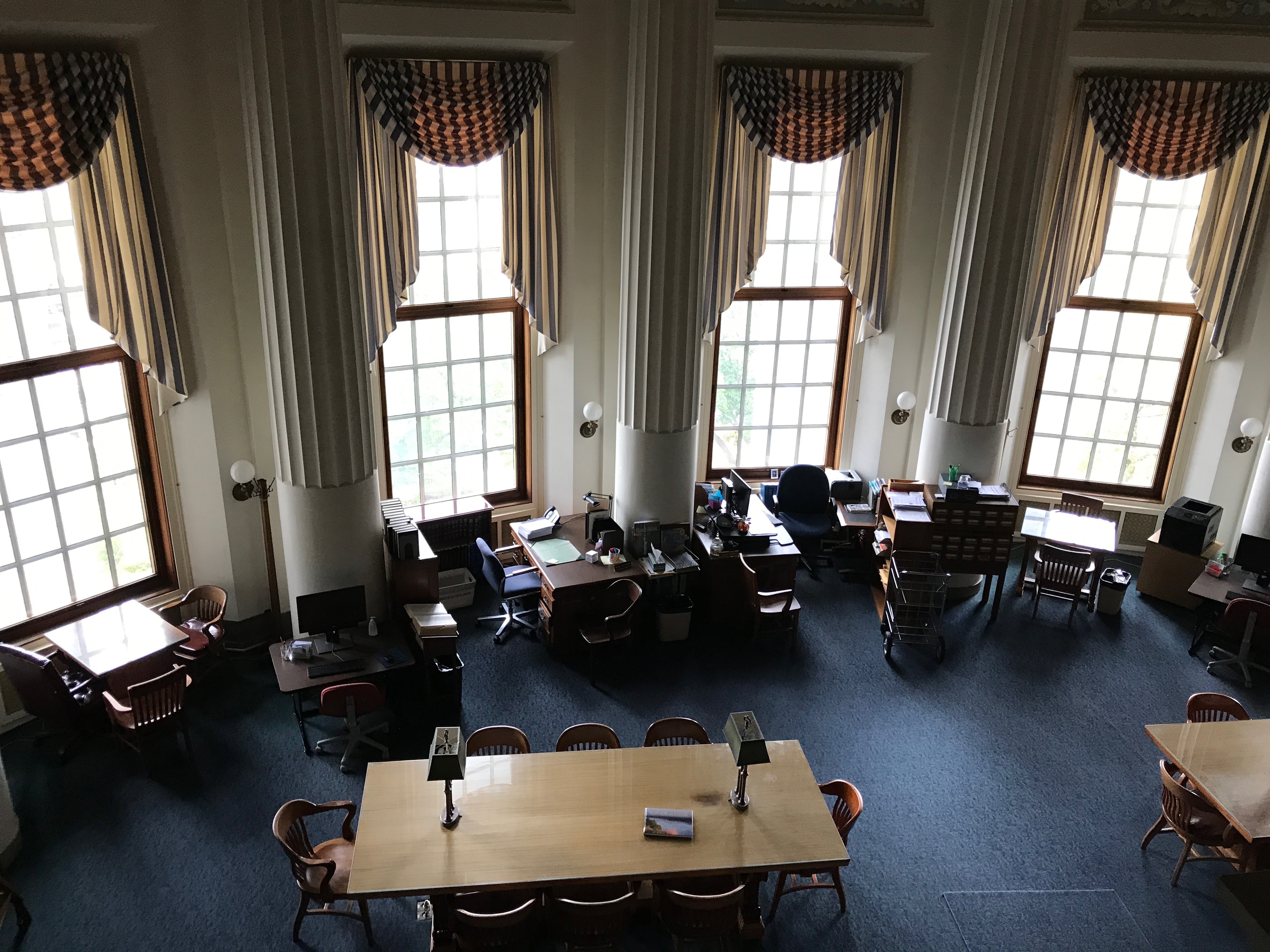
You had to look at it from above, but that makes it easier of take a photo, anyway.
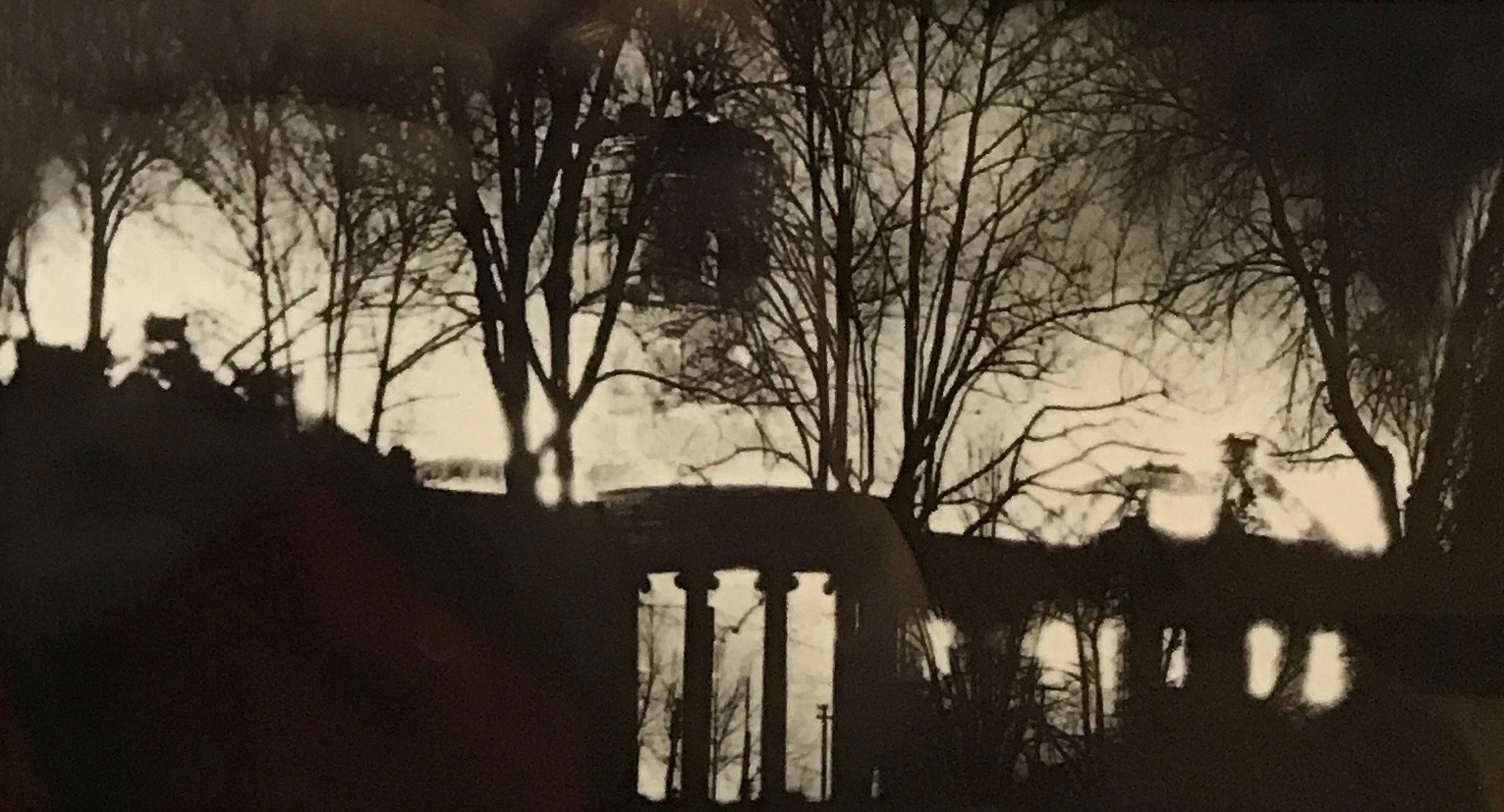
In the basement was a display about the fire that took down the previous capitol. It was struck by lightning in 1911 and burned throughout the night.
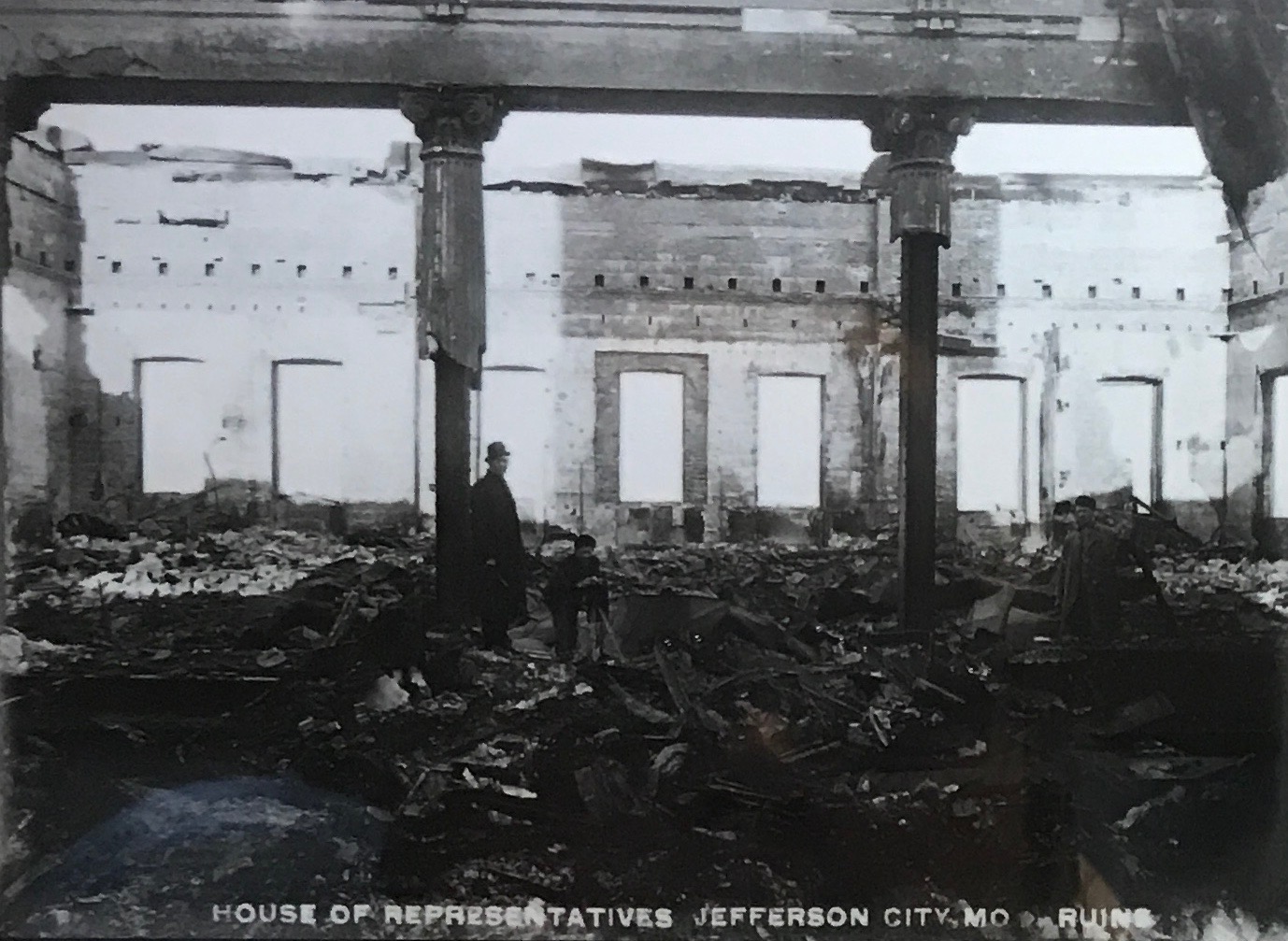
The House of Representatives lay in ruins – along with the rest of the building.
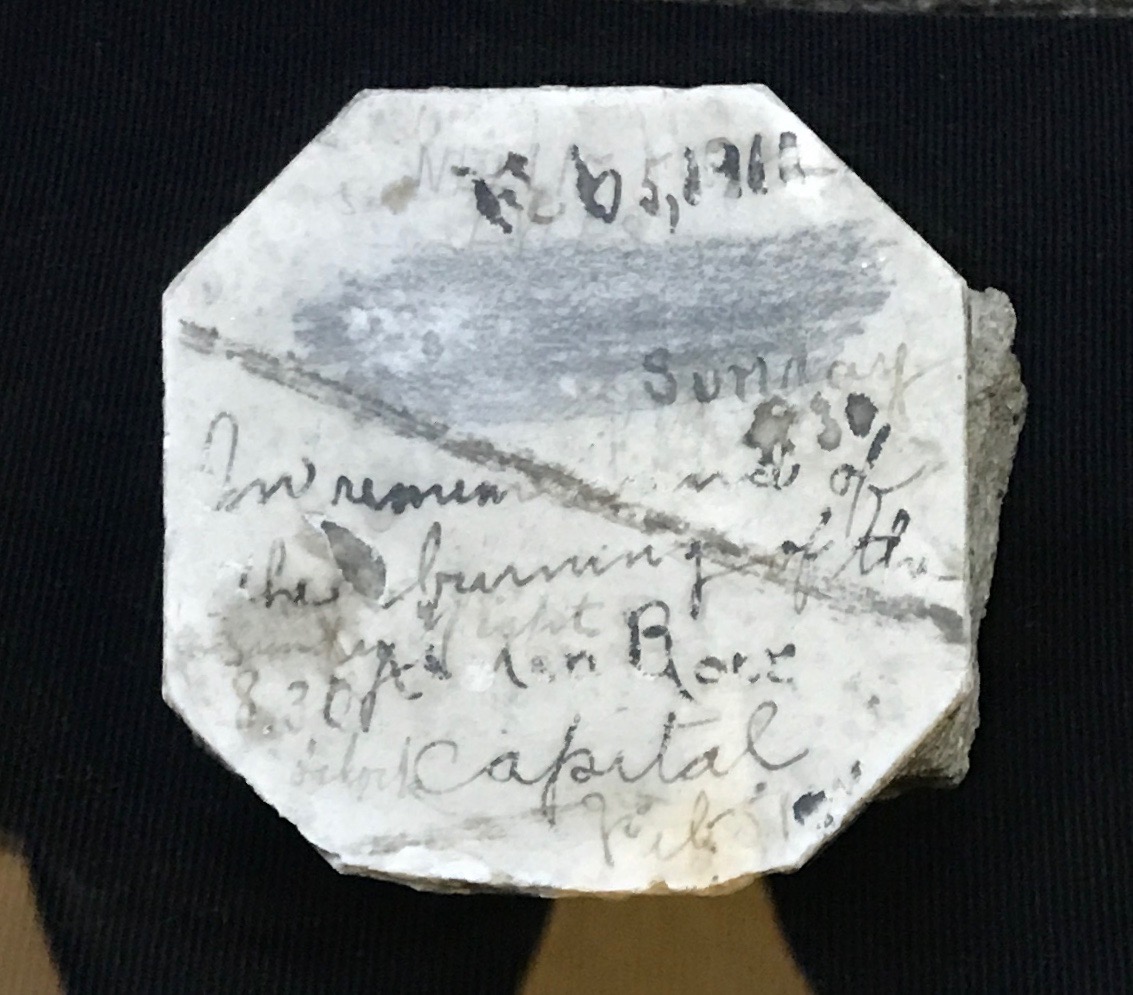
According to the sign with this artifact, “A curiosity seeker pulled this floor tile from the rubble of the 1911 fire. It reads, “Feb. 5, 1911…Sunday…In remembrance of the burning of the Capitol…8:30 A[M]” the rest of the inscription may be names.
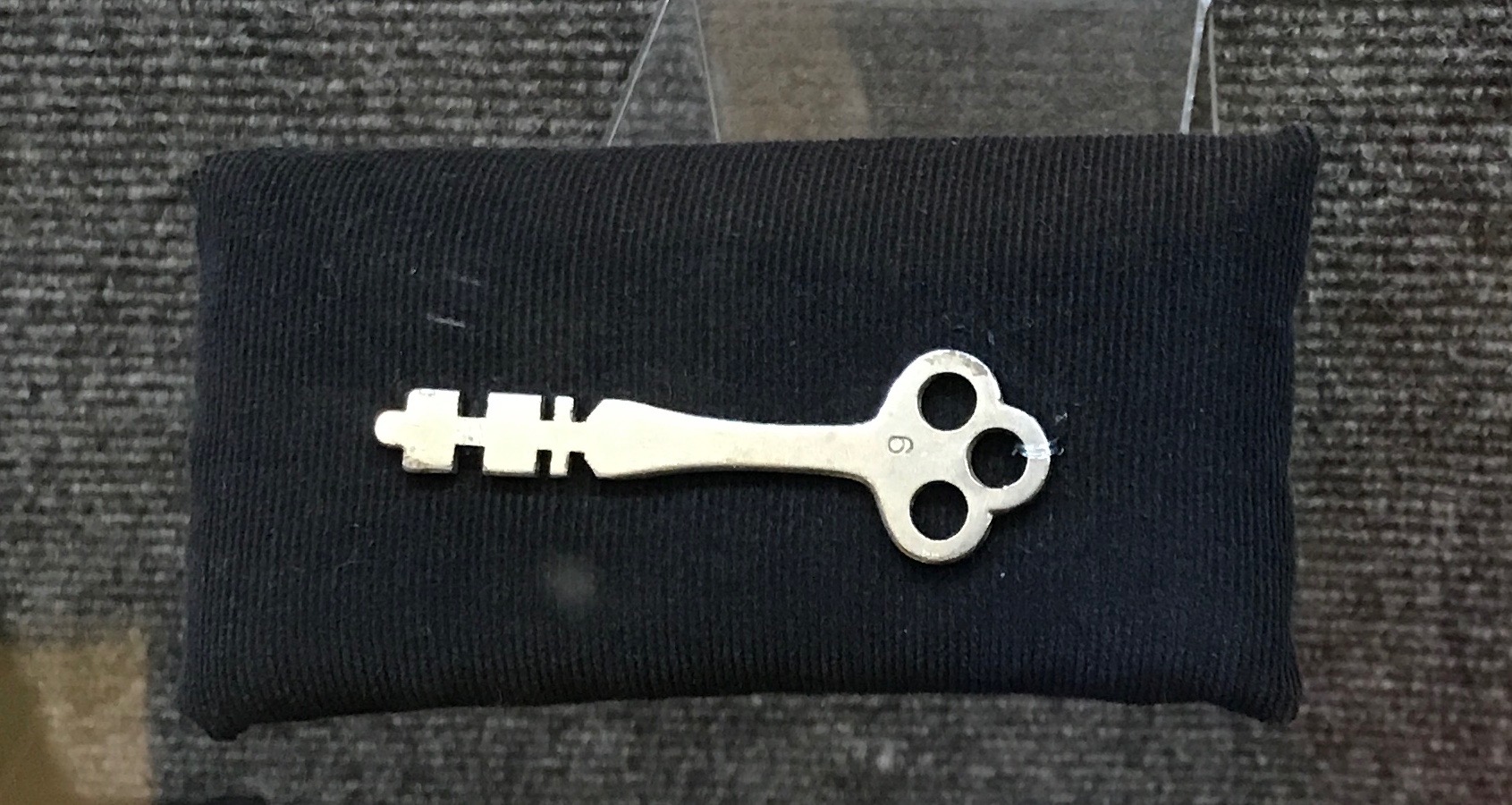
This is the key to the dome of the capitol that burned in 1911. If I remember correctly what the guide said, someone had taken it home. Since it wasn’t at the capitol, it hampered the fire fighting. This key may be the reason why the building burned to the ground. But, maybe I am not remembering this correctly.

I will tell you more about the artwork in my next installment. At this point, I wound my way out.
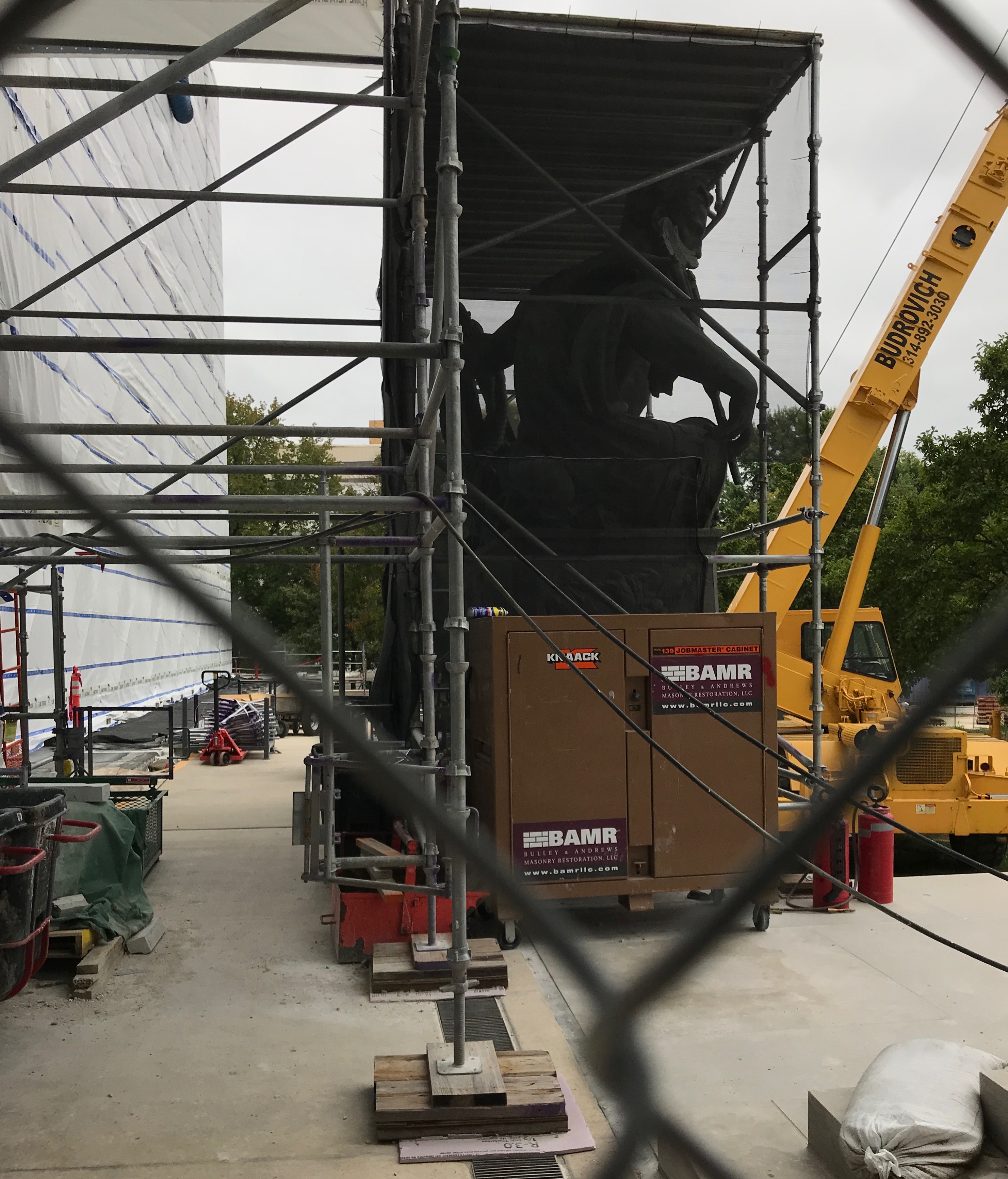
I passed the statuary that was protected by mesh during the reconstruction.
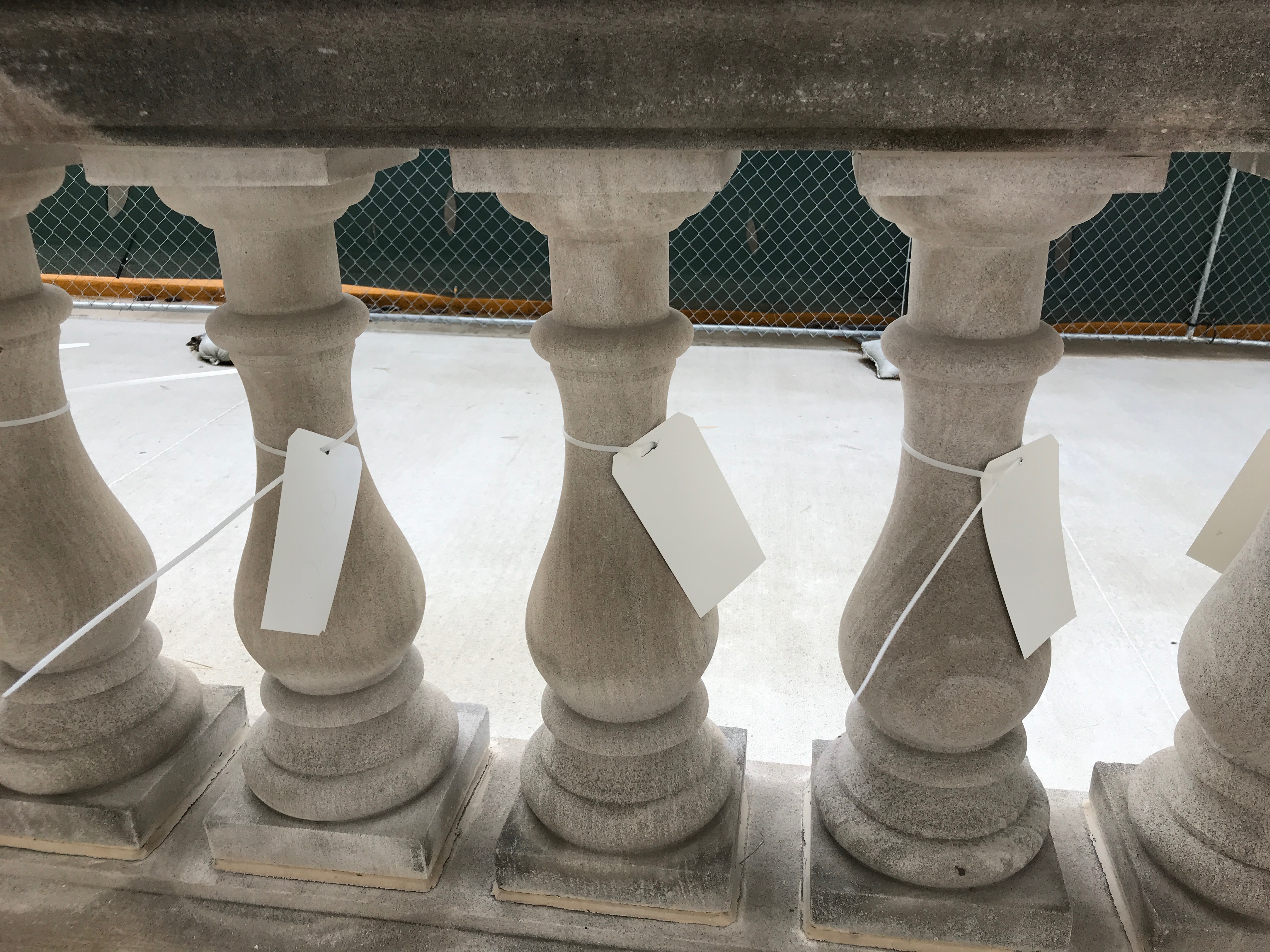
I passed the tagged balustrade. I imagine they are going to remove these and then return them when the work is complete. You want to make sure you put things in the right spots!
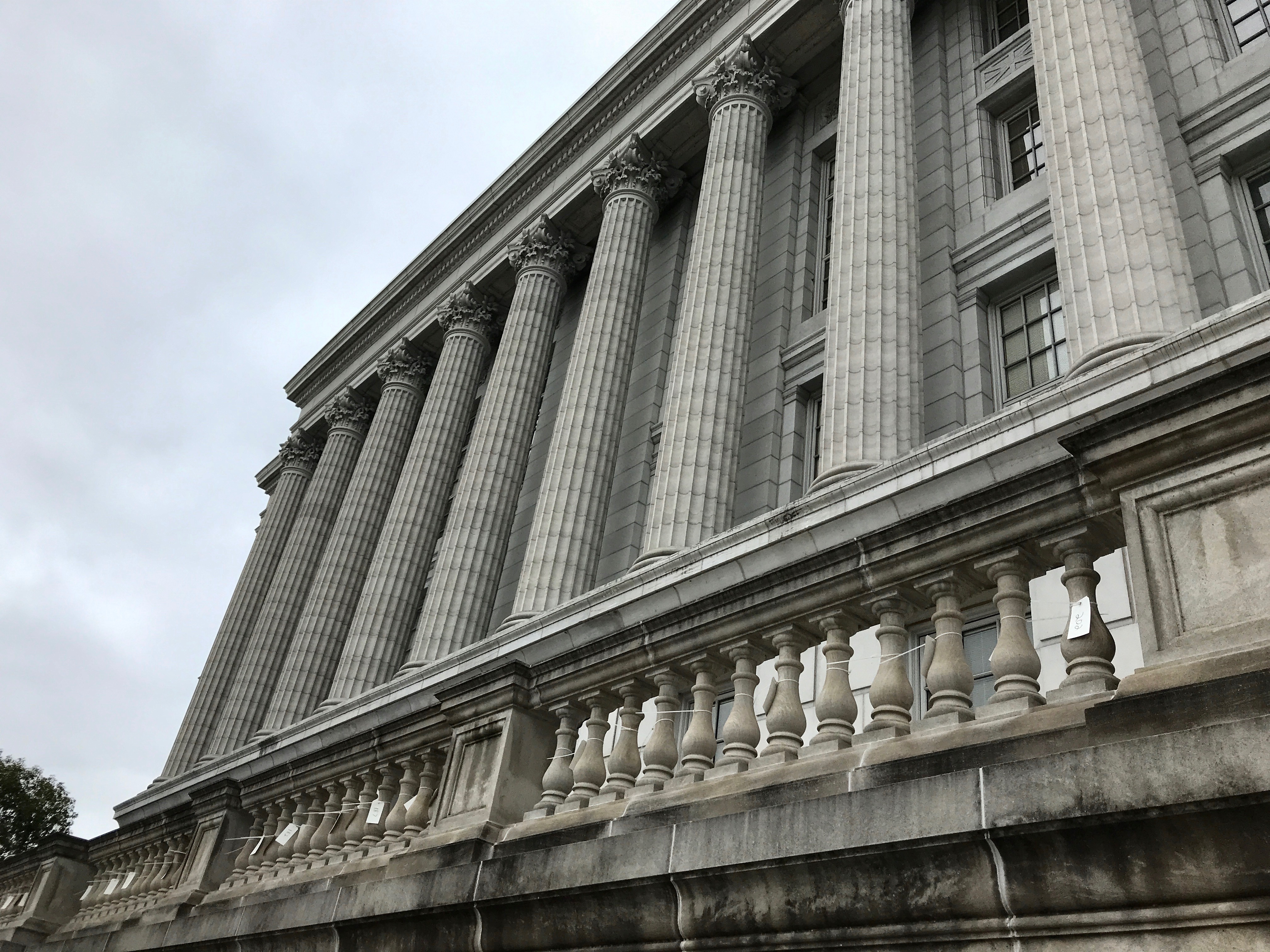
I looked up at the columns.
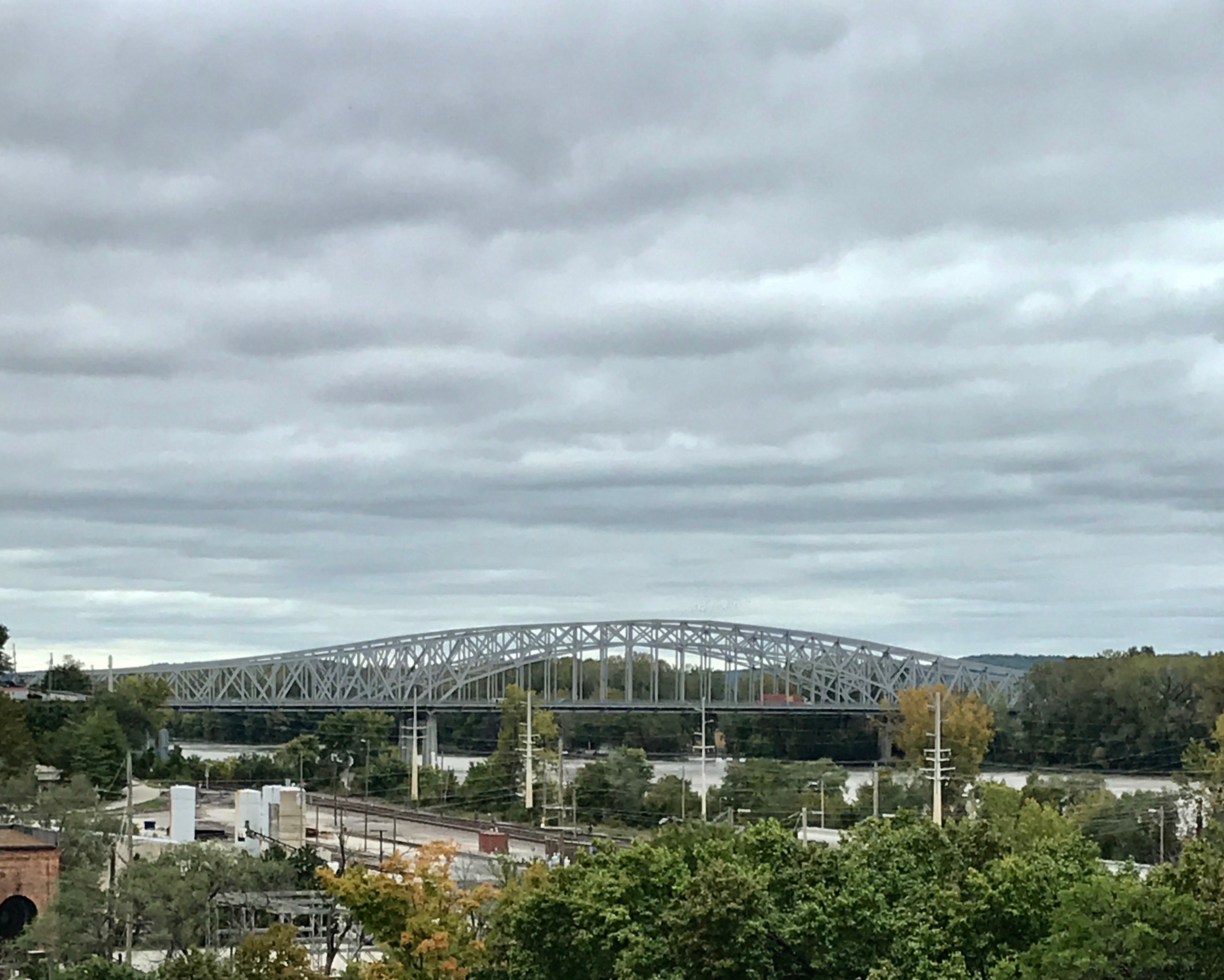
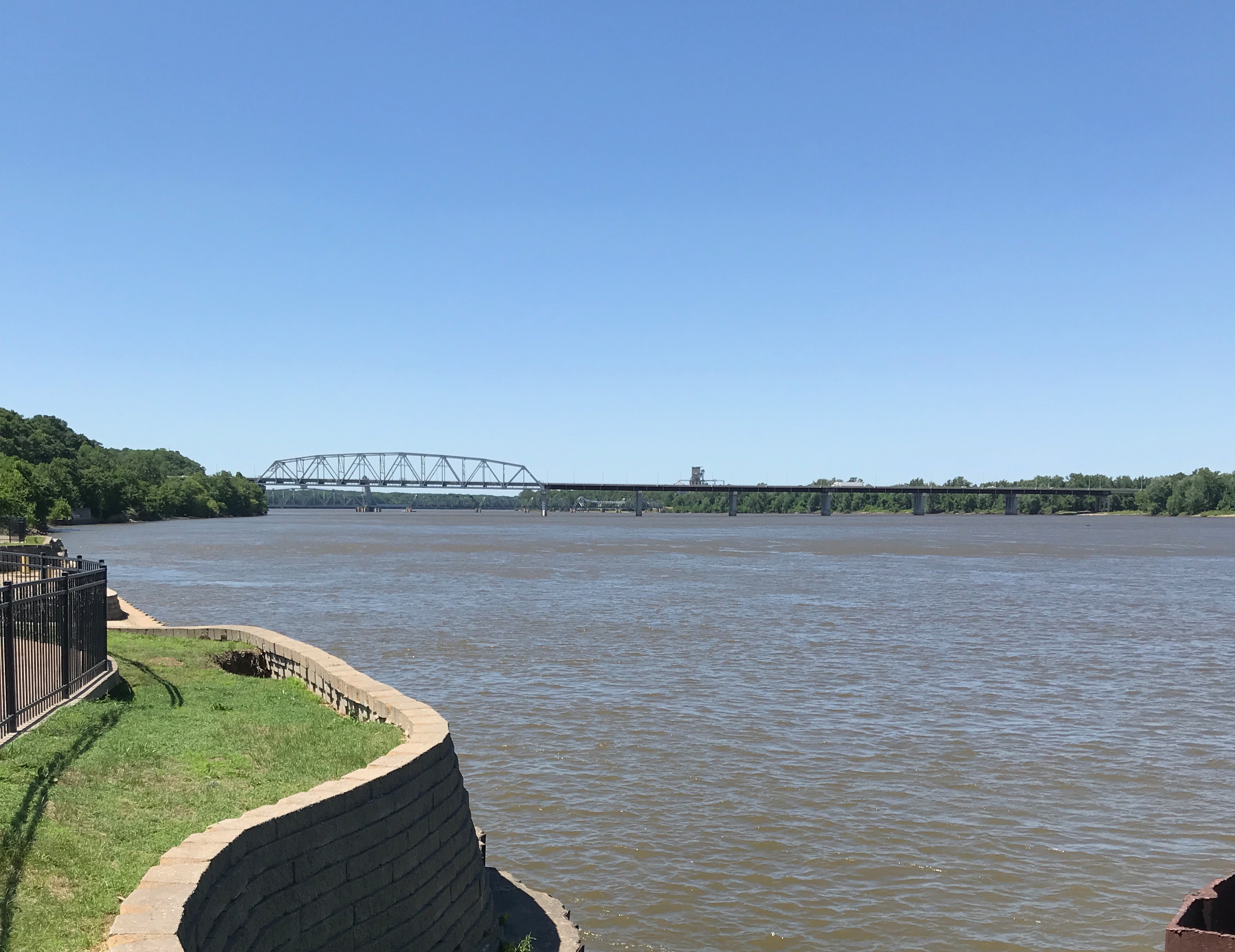
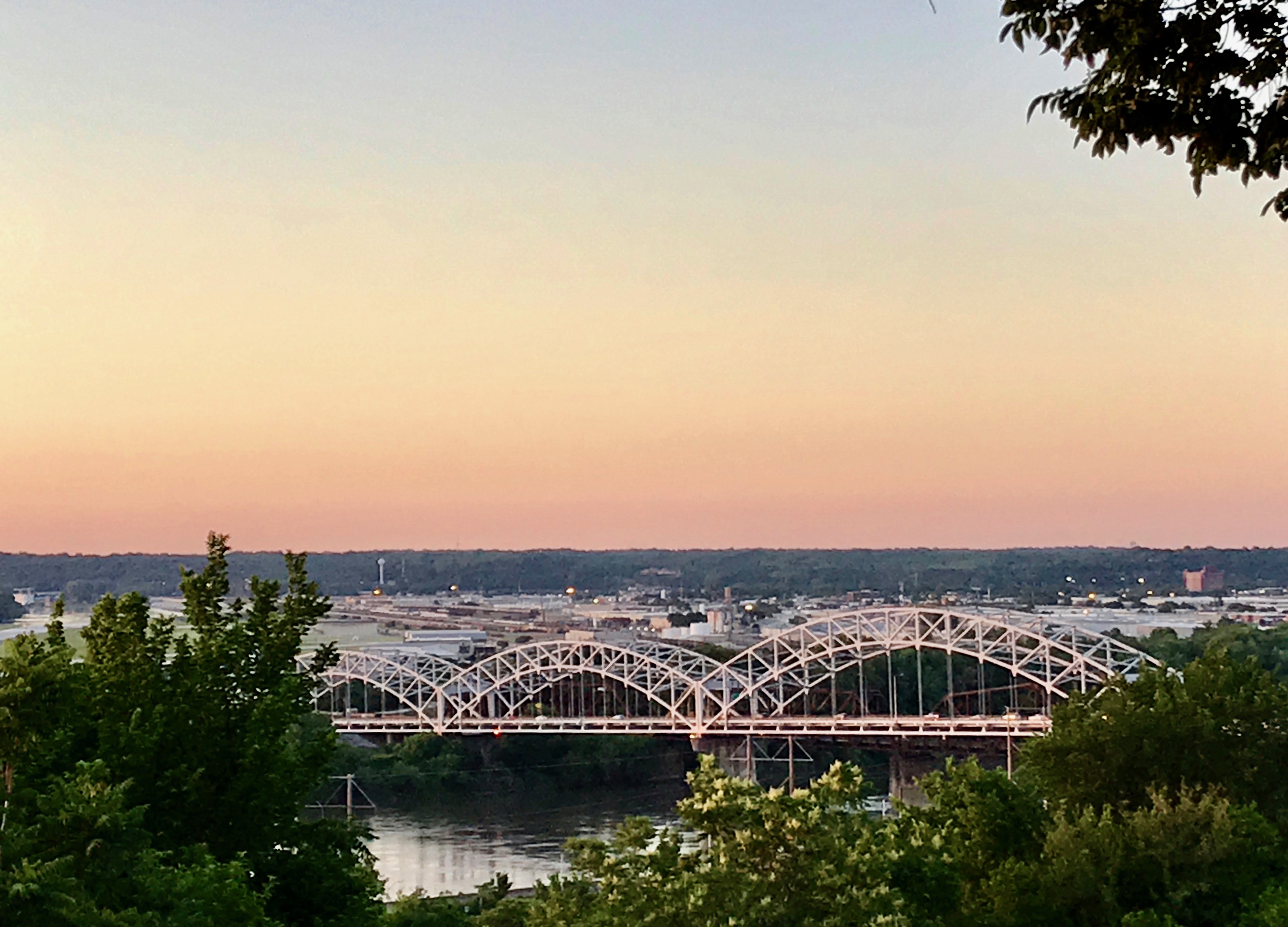
I paused to snap a photo of the bridge across the Missouri, and then I went to find my car. It was time to go find something to eat!
 

Kansas City, Here I Come!

My goal was Kansas City. I had to be there the next day for my orientation as a seed courier, but that still left plenty of time for drive-by tourism.

My first stop was Hannibal, Missouri. I mean, I had been on the road for a couple of hours. It was time for a break.

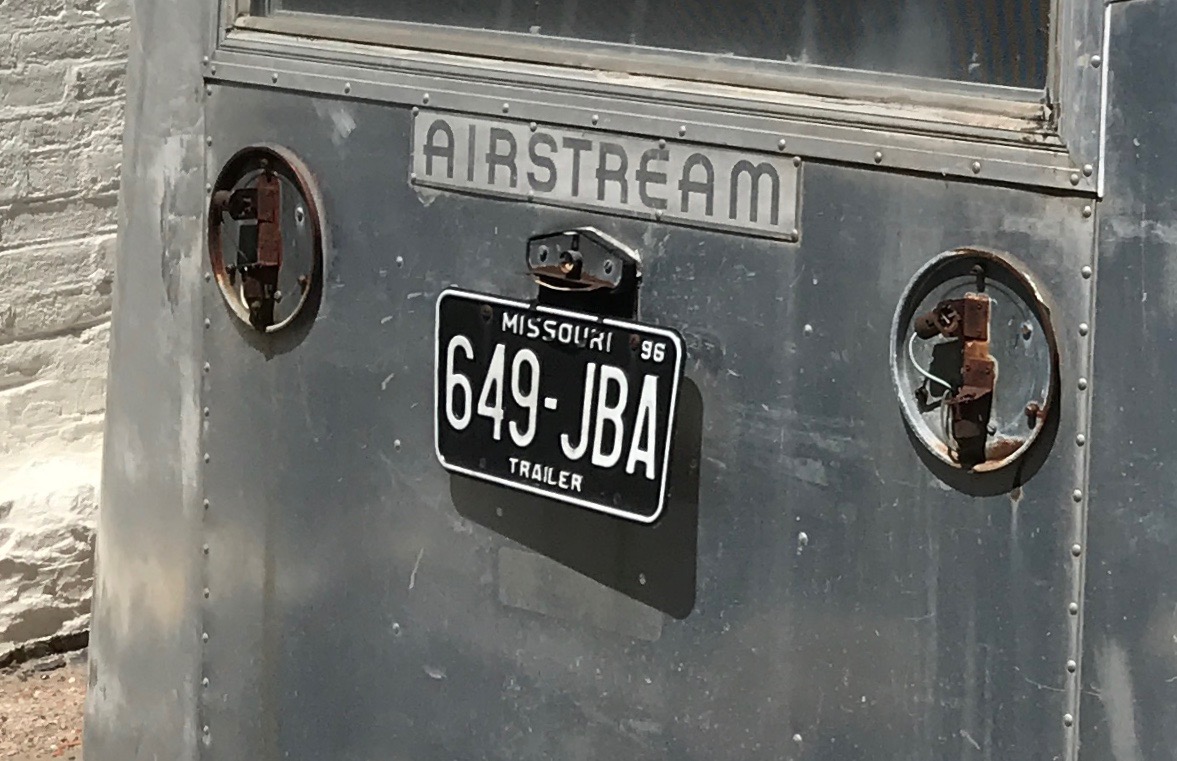
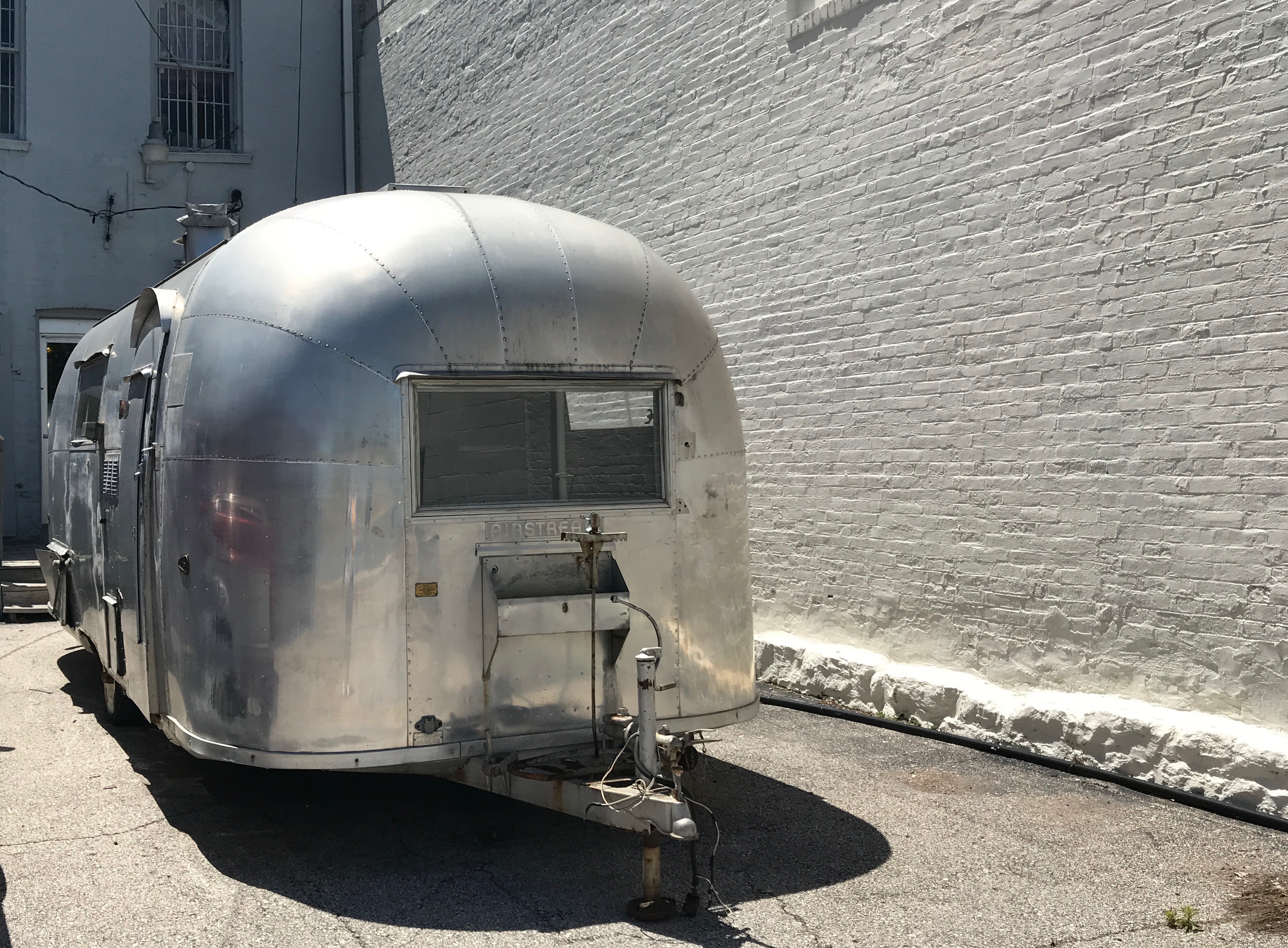
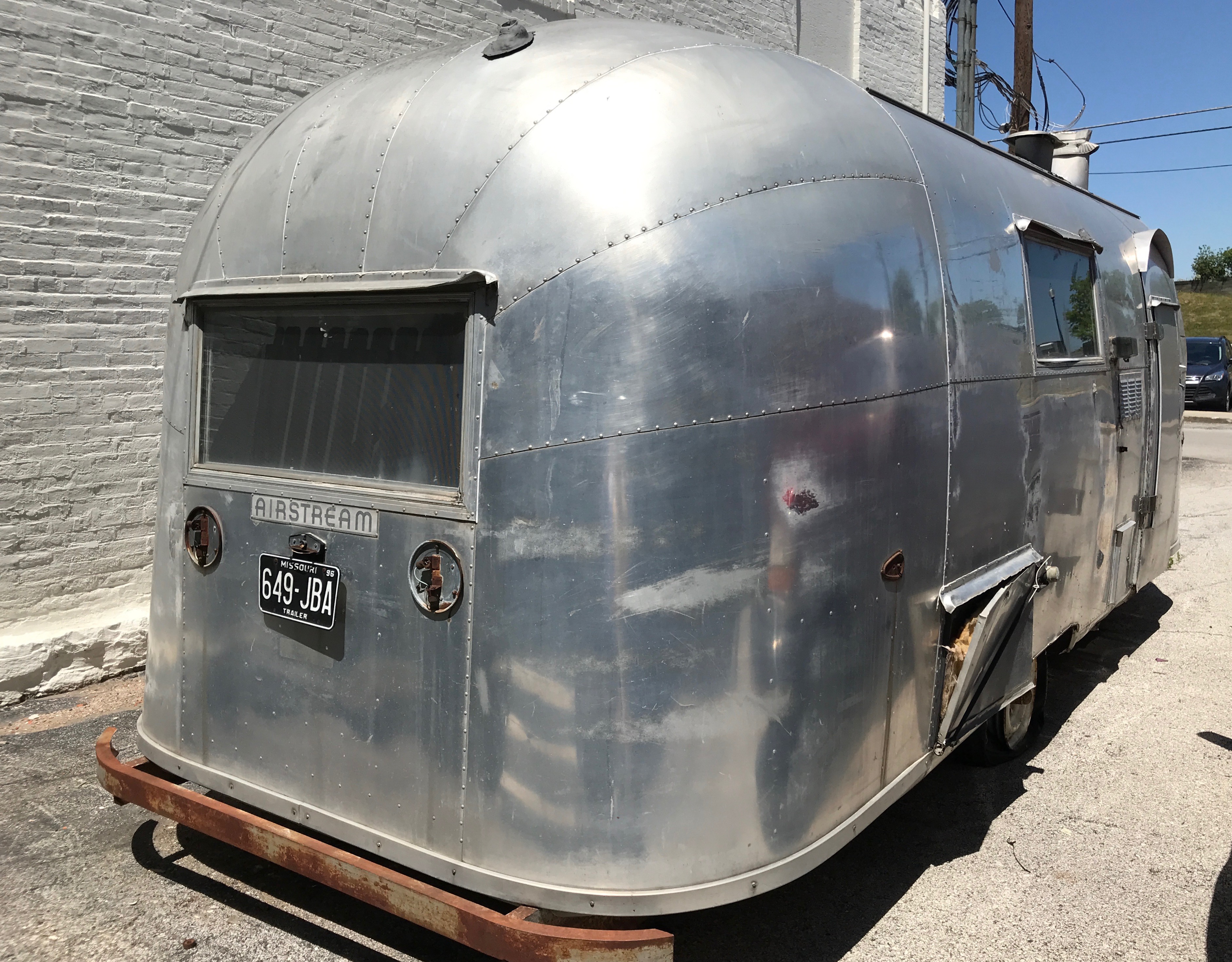
I got off the interstate and looked for a likely spot to park and then find a restroom. Wouldn’t you know it? I find an Airstream!

It’s tucked away behind some stores.

The old gal looks like she’s had many adventures behind her. She even has a plate on! However, the plate is from 1996, and there aren’t any brake lights.

I suppose the lack of brake lights is fine, since I can’t imagine that she still has working brakes.

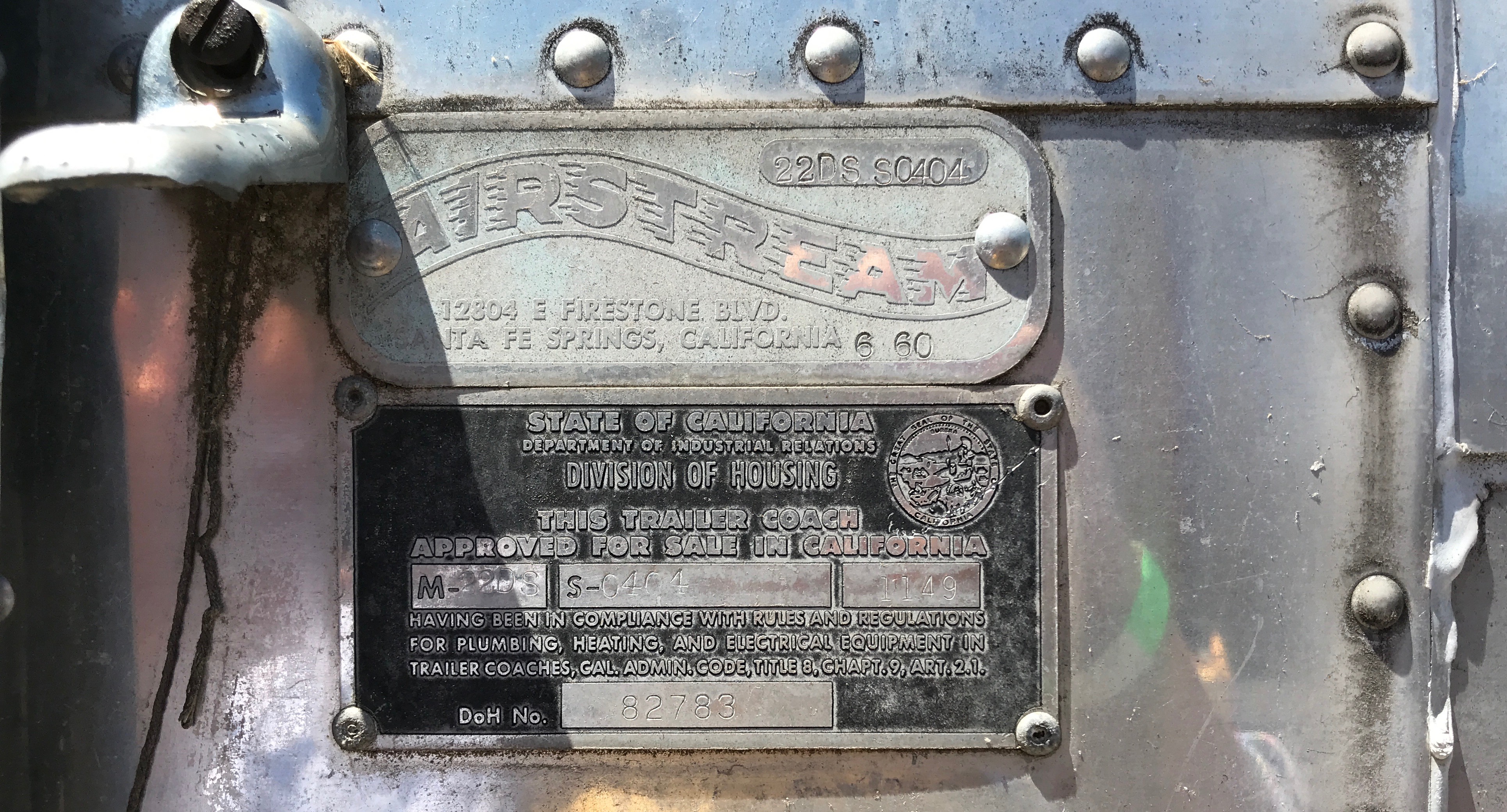
I’m including the identification tags, just in case you are into those sorts of things.

My goal, in my whirlwind visit to Hannibal, was to see what I would see of Samuel Langhorne Clemens’ childhood home.

You know, Mark Twain – the writer who gave us Tom Sawyer and Huckleberry Finn.

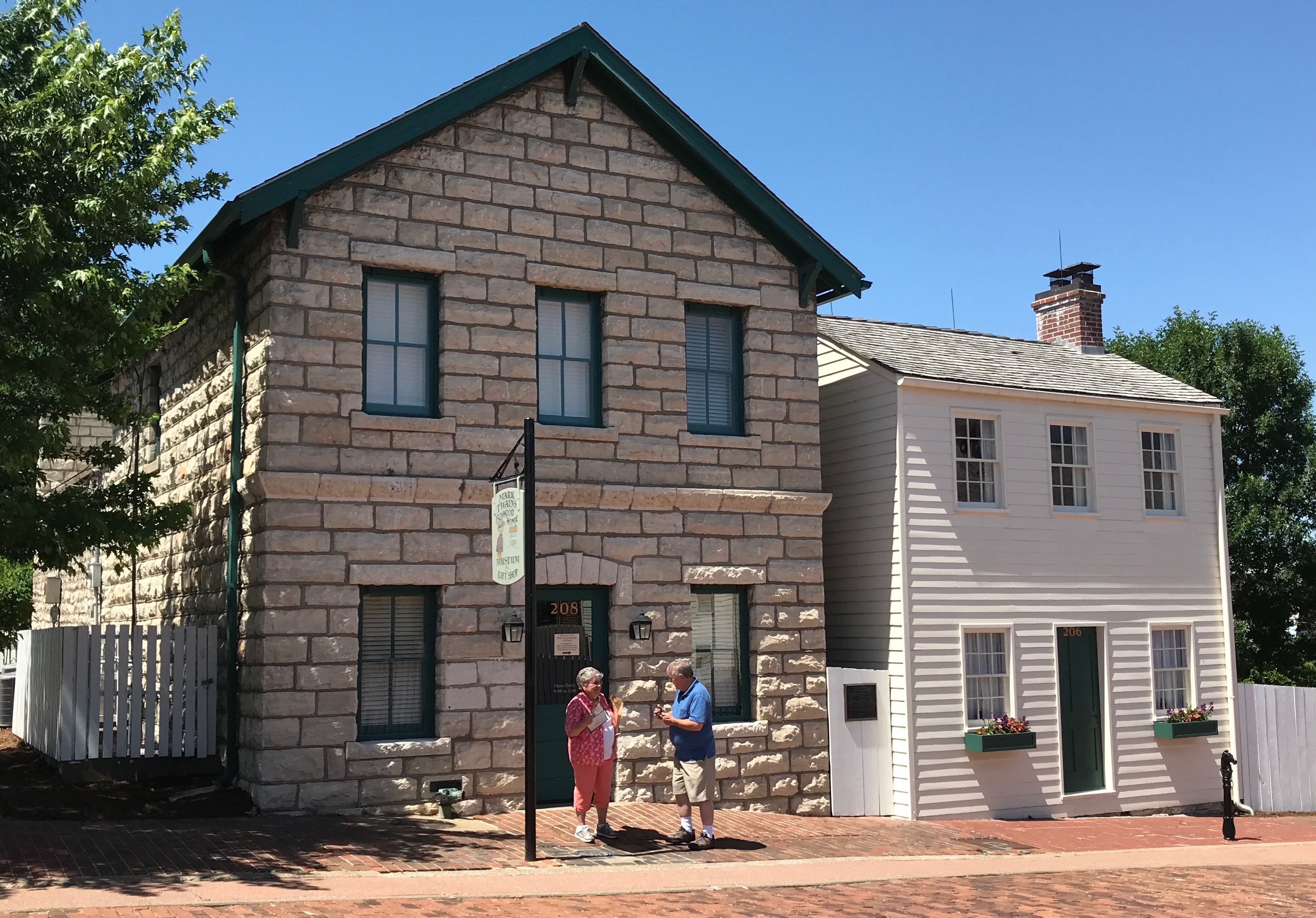
Mark Twain lived in Hannibal from 1844 to 1853, from about the age of nine to age eighteen. He lived house he lived in is now a museum. Of course, I was moving far too quickly to invest in a museum ticket. Maybe I’ll put that on my “Next Time” list.

He lived in that little white house.

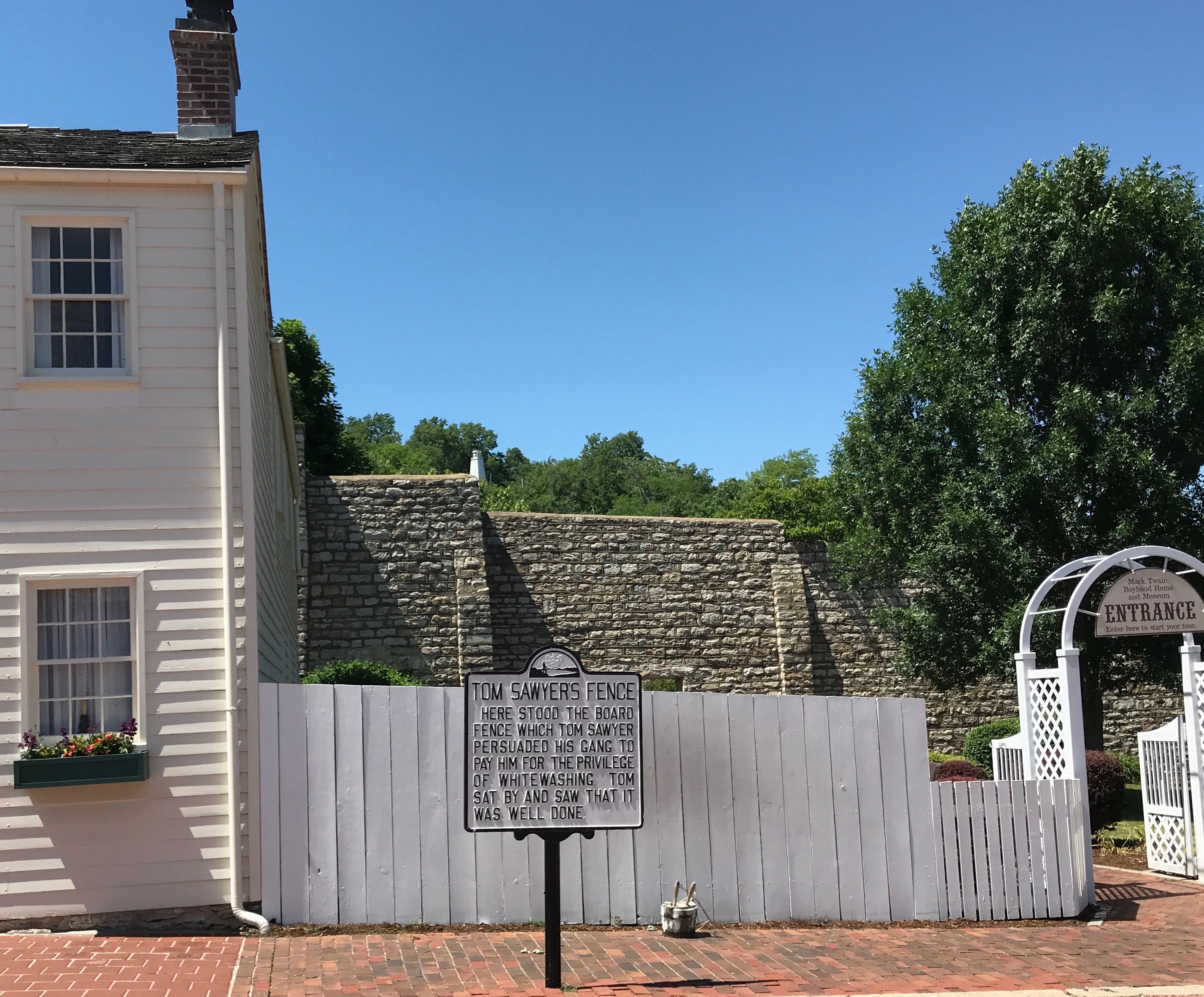
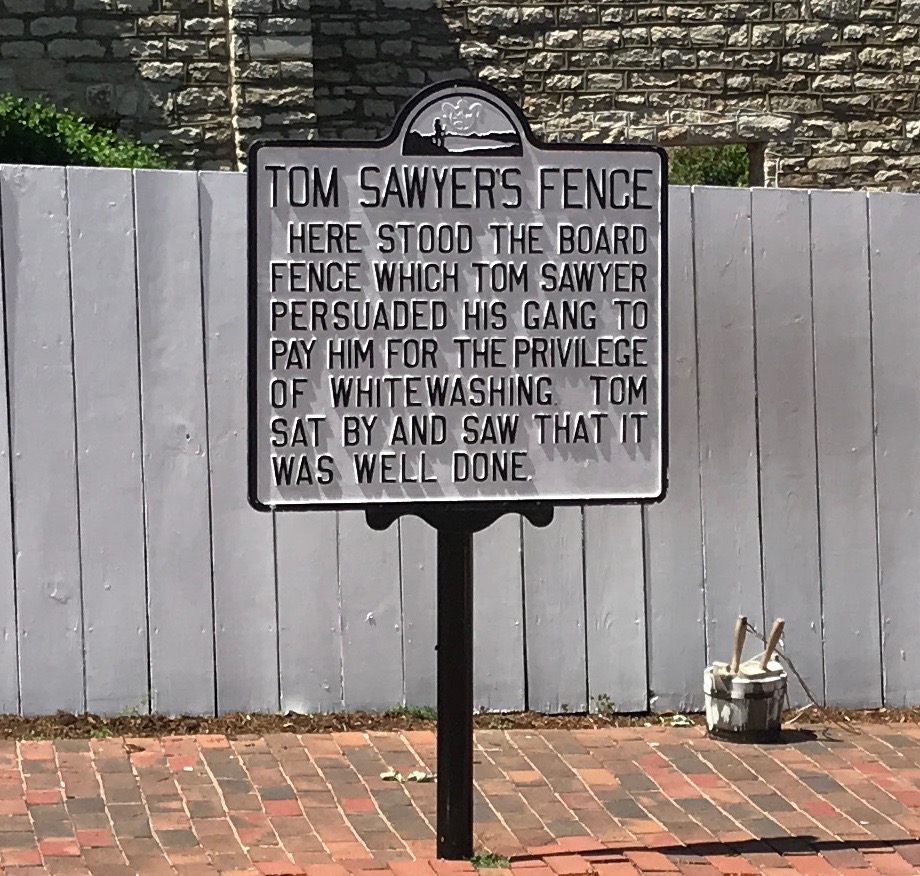
Right next to a recreation of Tom Sawyer’s fence.

It is complete with a bucket of whitewash and some brushes.

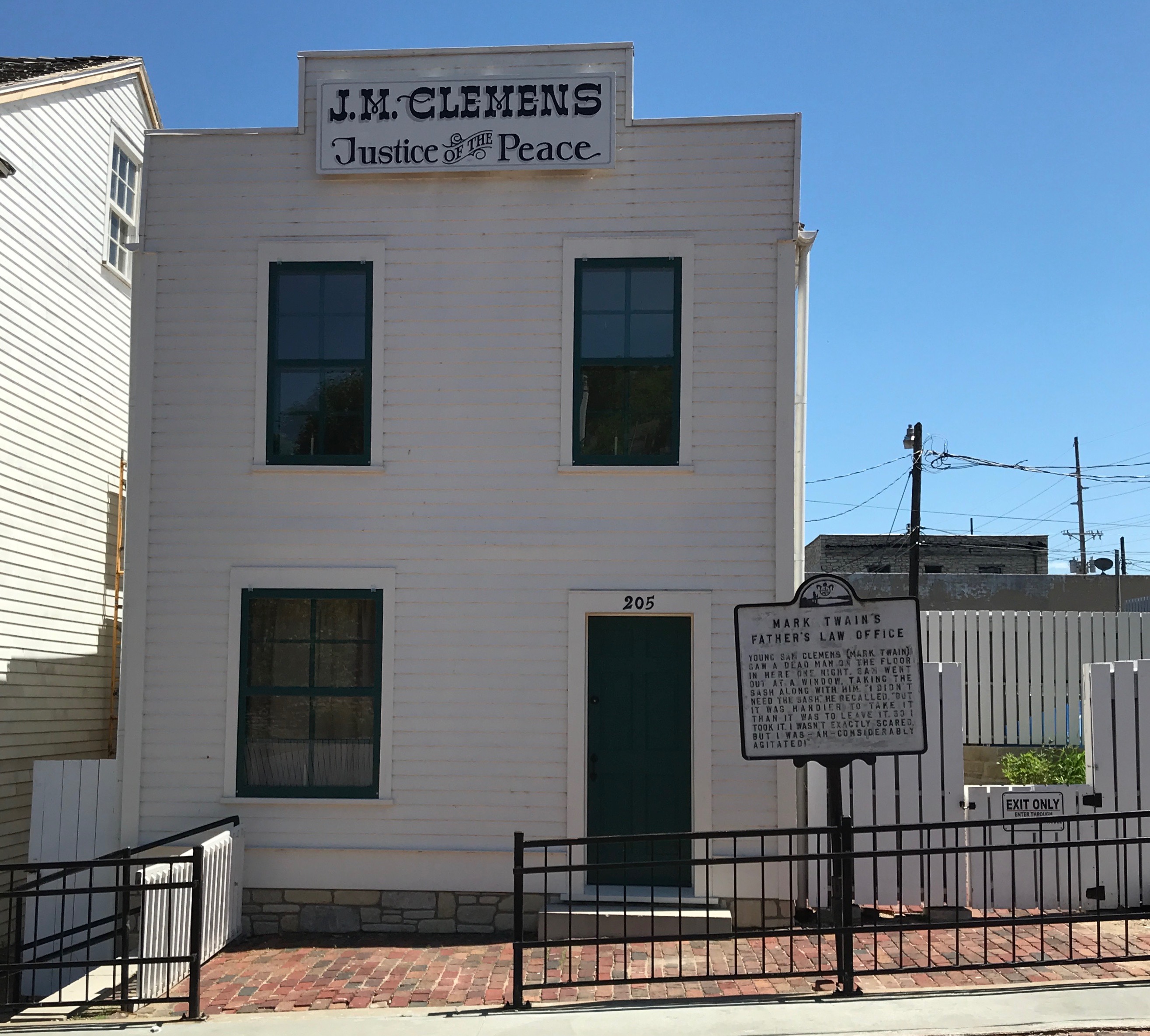
His father’s law office was right across the street from the house. According to the sign in front – in case you can’t make it out – here young Sam Clemens (Mark Twain) saw a dead man on the floor one night. Sam went out a window, taking the sash along with him. “I didn’t need the sash,” he recalled. “But it was handier to take it that it was to leave it, so I took it. I wasn’t exactly scared, but I was – ah -considerably agitated.”

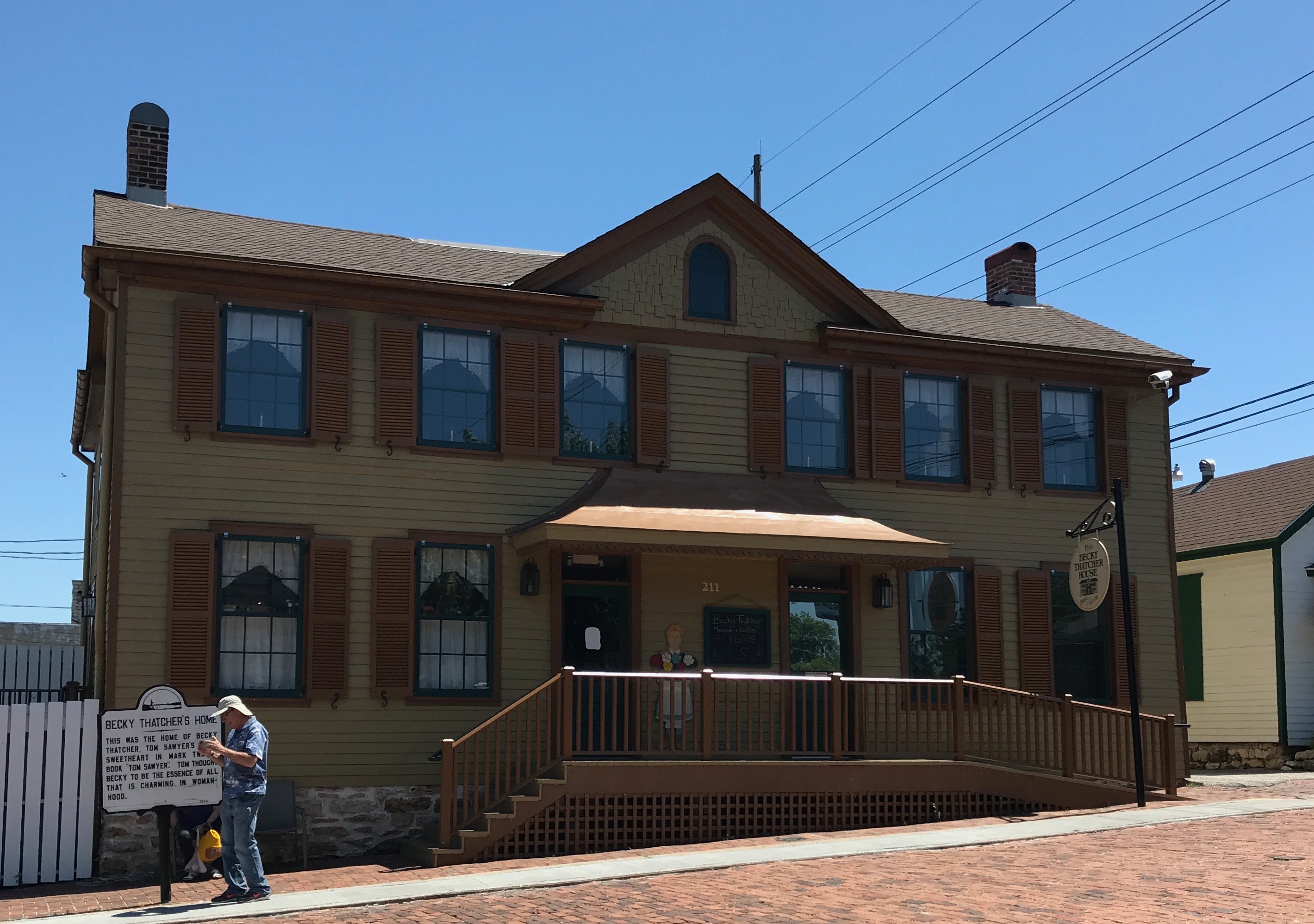
“Becky Thatcher’s” house is on Hill Street, too. Actually, it was the home of Mark Twain’s childhood sweetheart, Laura Hawkins.

Hill Street, where the Clemenses and Hawkinses lived, was paved with Missouri Block, made in Moberly, MO.

I decided that I should head down to the Mississippi River, a couple blocks away, to check it out.

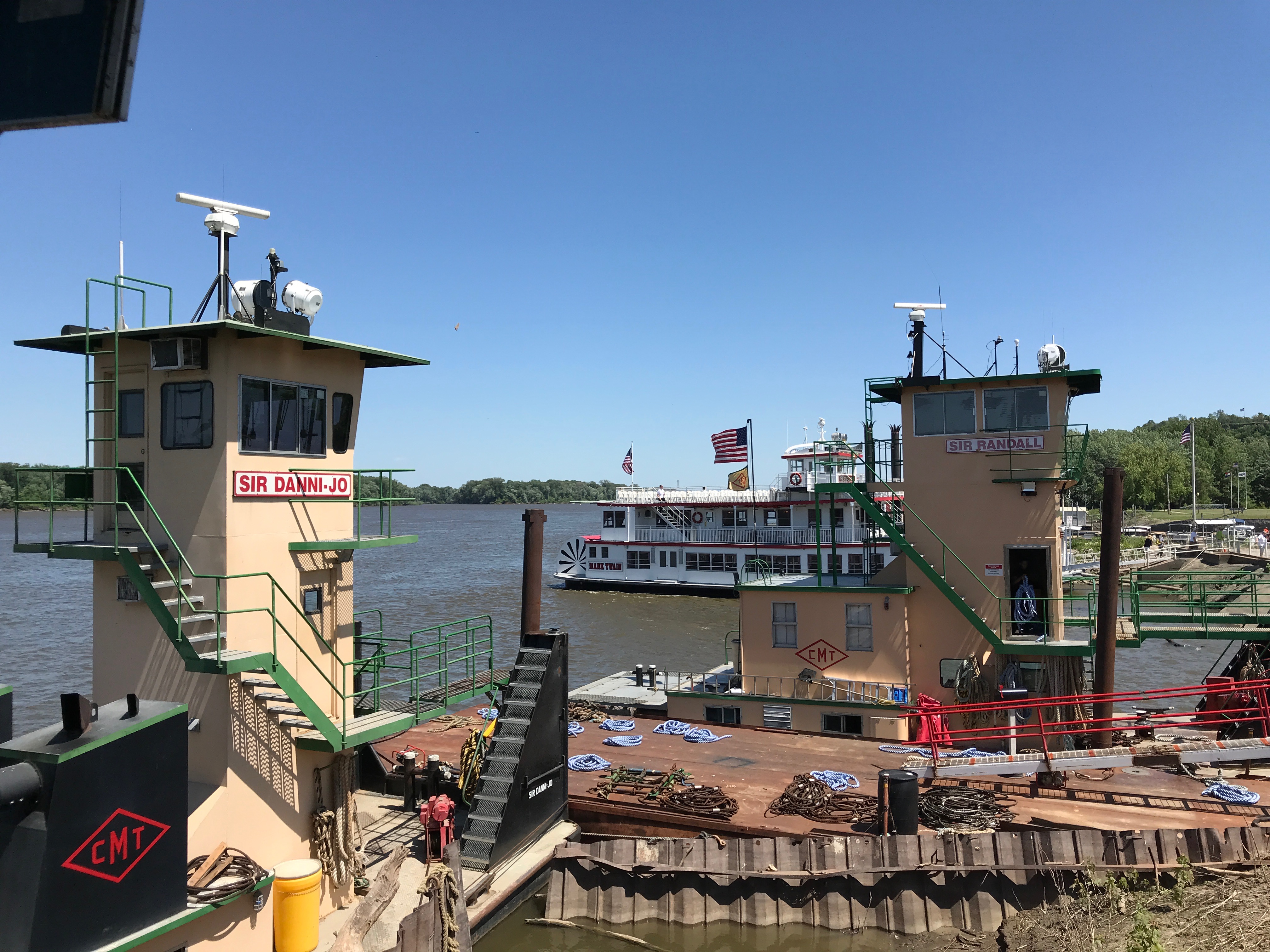
I didn’t see any barge traffic, but there was a stern wheeler there, and I imagine they had some tourist excursions scheduled. What a beautiful day to be out enjoying the river!

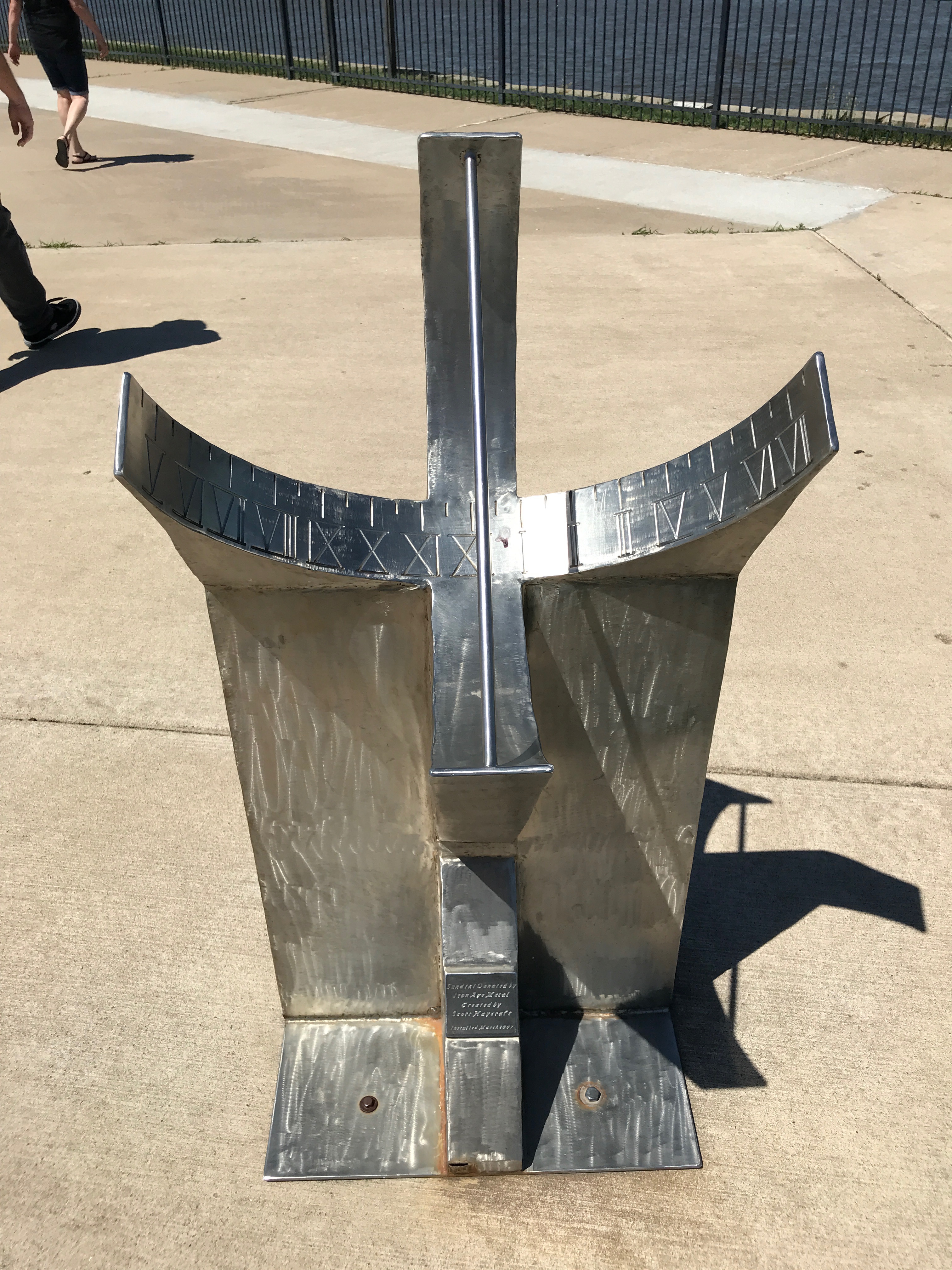
I came across a sundial.

Incidentally, this is the easiest-to-read sundial I have ever seen! For one thing, it’s in a spot that isn’t shaded by trees.

Seeing the sundial reminded me that I did need to be on my way. Bladder empty and tank full, I pulled back on the interstate.

My next goal was Kansas City and the American Motel. If I had known ahead of time, that they were paying for my expenses in getting to the job, I might have chosen an establishment that was a little more…upscale. But, it was only for one night and it would do.

I dropped my overnight bag and went out to see what I could see. HISTORY Here sent me to Clark’s Point, overlooking the Missouri River.

Fun Fact: The Missouri River is the longest river in the United States, according to the United States Geological Survey. It starts flowing in the Rockies in Western Montana and empties into the Mississippi 2,341 miles later. The Mississippi is a close second, at 2,202 miles. It starts in Lake Itasca in Minnesota and empties into the Gulf of Mexico.

After that comes the Yukon River at 1,979  miles and the Rio Grande at 1,759 miles.

Near this site, the Lewis and Clark expedition stopped to camp in 1804. At that time, this was a good vantage point for the merging of the Osage and Missouri Rivers. Another source I saw said that they stopped there in 1806. Maybe they stopped on the way out and the way back.

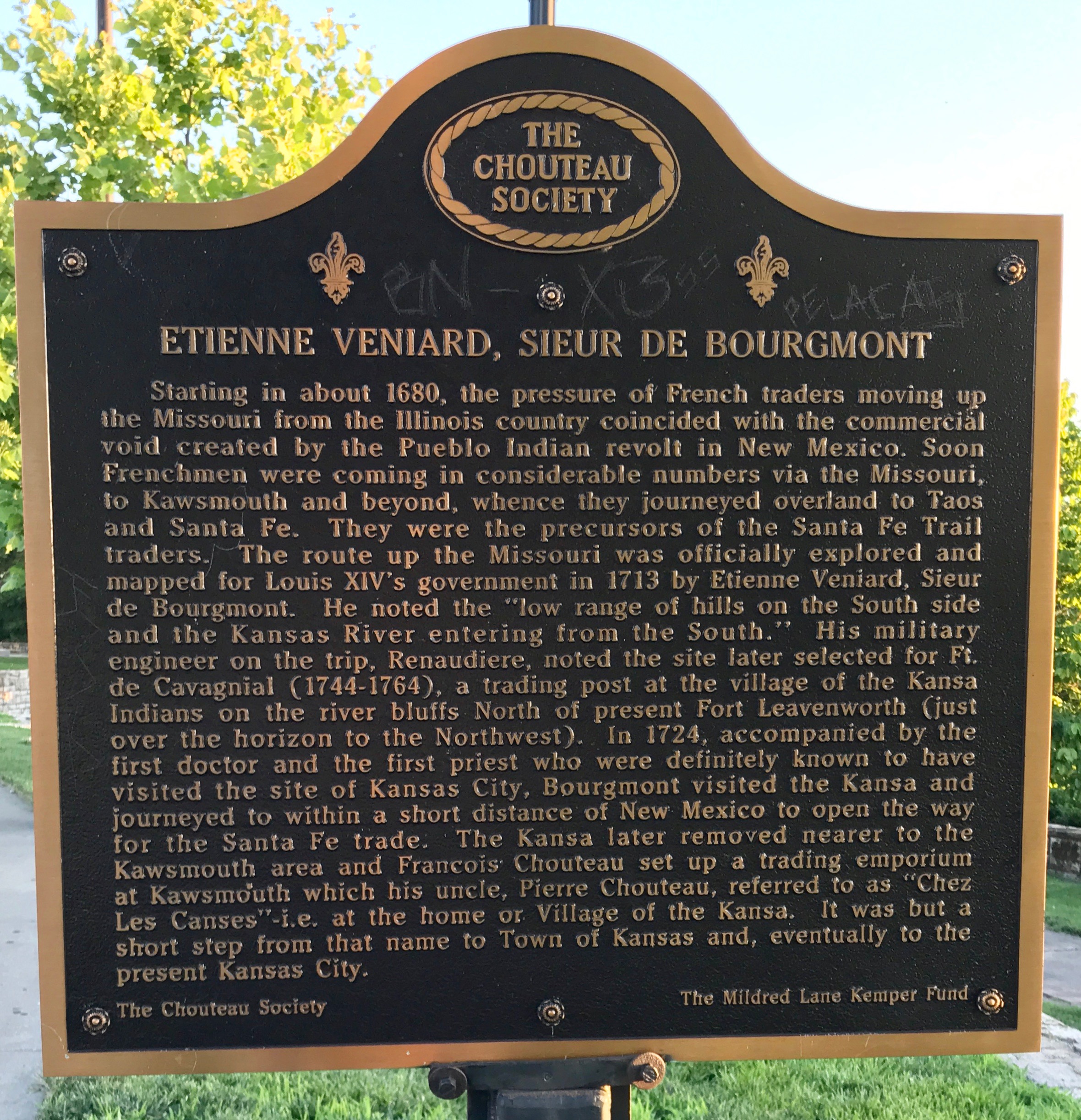
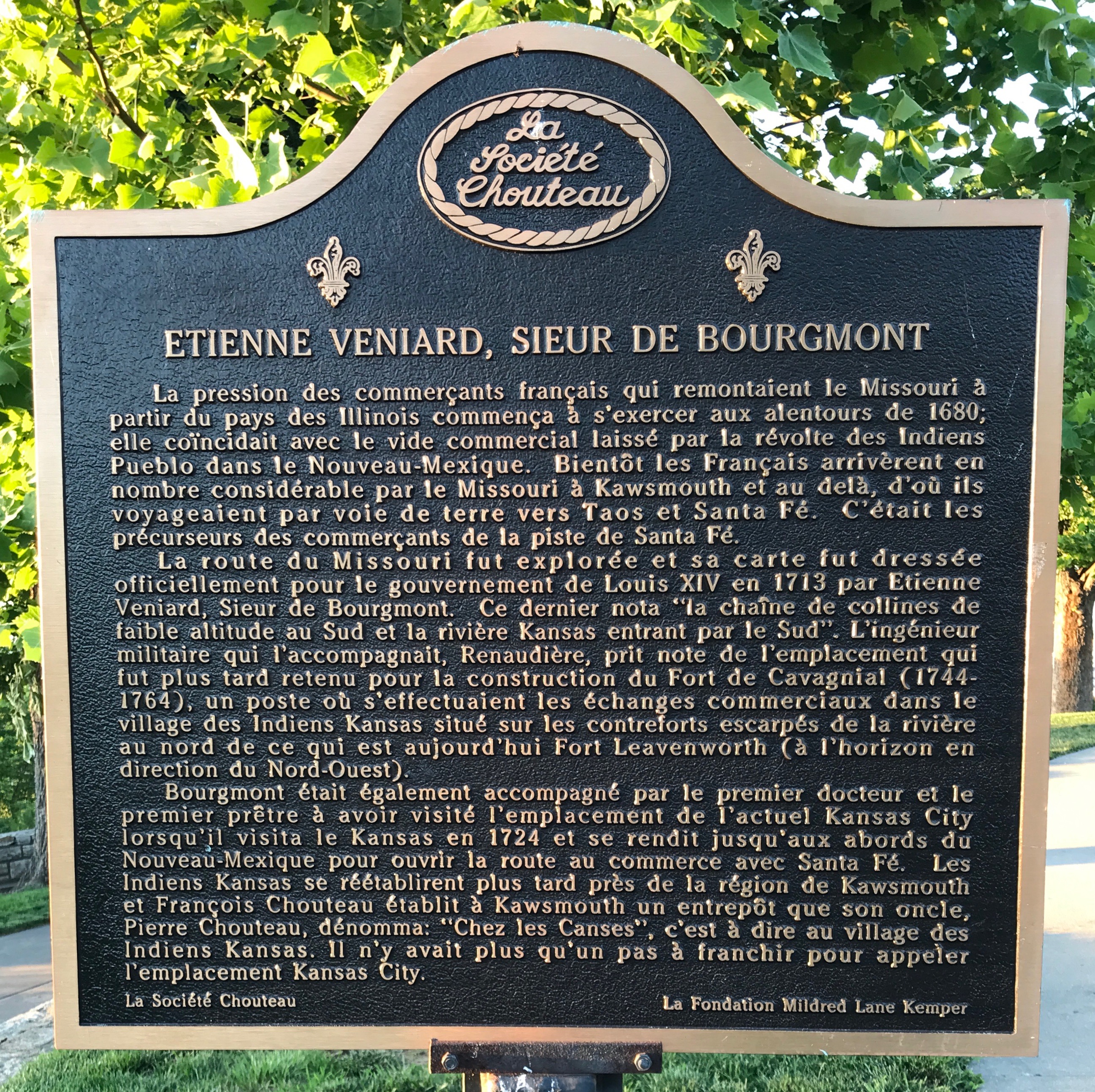
Apparently, Lewis and Clark were not the only visitors to the river. Étienne de Veniard, Sieur de Bourgmont came through, too.

And since he was French, the sign was in English with a French translation on the other side.

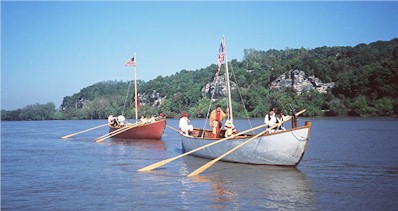
It was an arduous journey, to say the least. The men of the Corps of Discovery had to tow the keelboat and the two pirogues that made up the flotilla against the river’s powerful current. If that wasn’t bad enough, they had to cut trees down along the way to be able to tow the boats. AND it was a hot day!

Just in case, you are curious, this is a replica of Lewis and Clark’s 55 foot keelboat.

To clear up any confusion, these are pirogies…

and these are pirogues.

It was a hard bit of travel, but they got to rest for two days. At this point, they had been on the river for a month and a half and they were about 367 miles from the mouth of the Missouri.

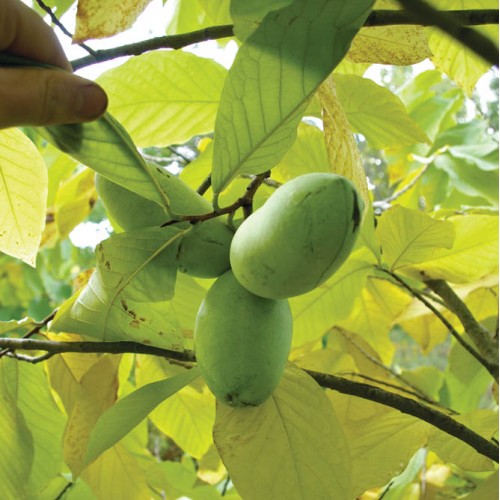
While they were camped at this spot, then crew got to gather paw paws, otherwise know as custard apples.

I know you just want to sing the song now…Pickin’ up paw paws, put ’em in your pocket…

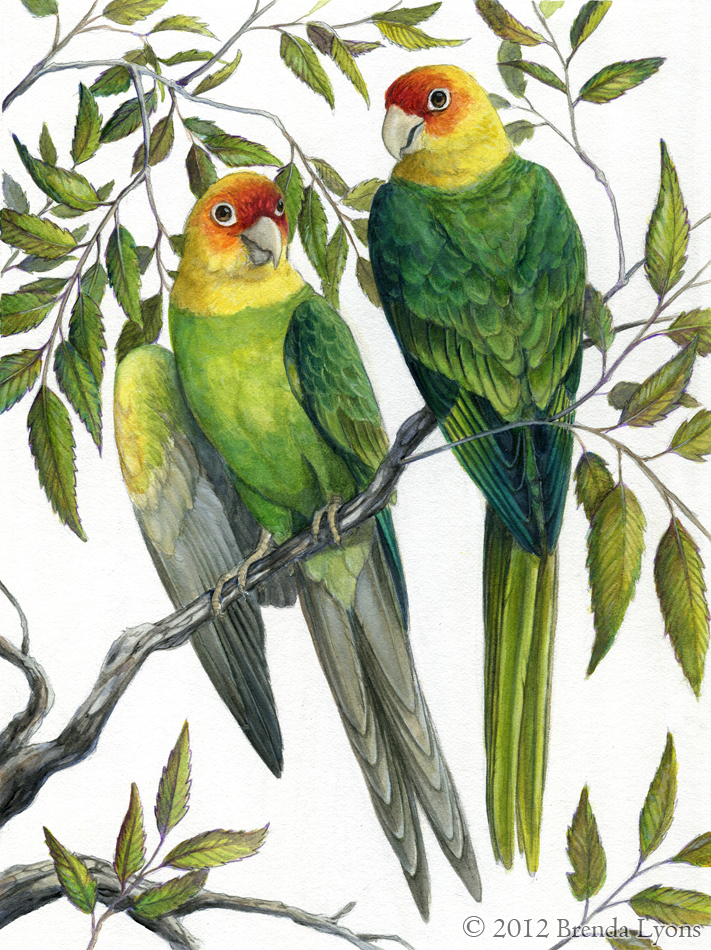
According to the signage at the park, Clark recorded seeing “an immense flock of Carolina parakeets.”

This was the first documented sighting of the birds. Unfortunately, they are now extinct.

It was getting close to sunset. I strolled around the park, to see what I could see.

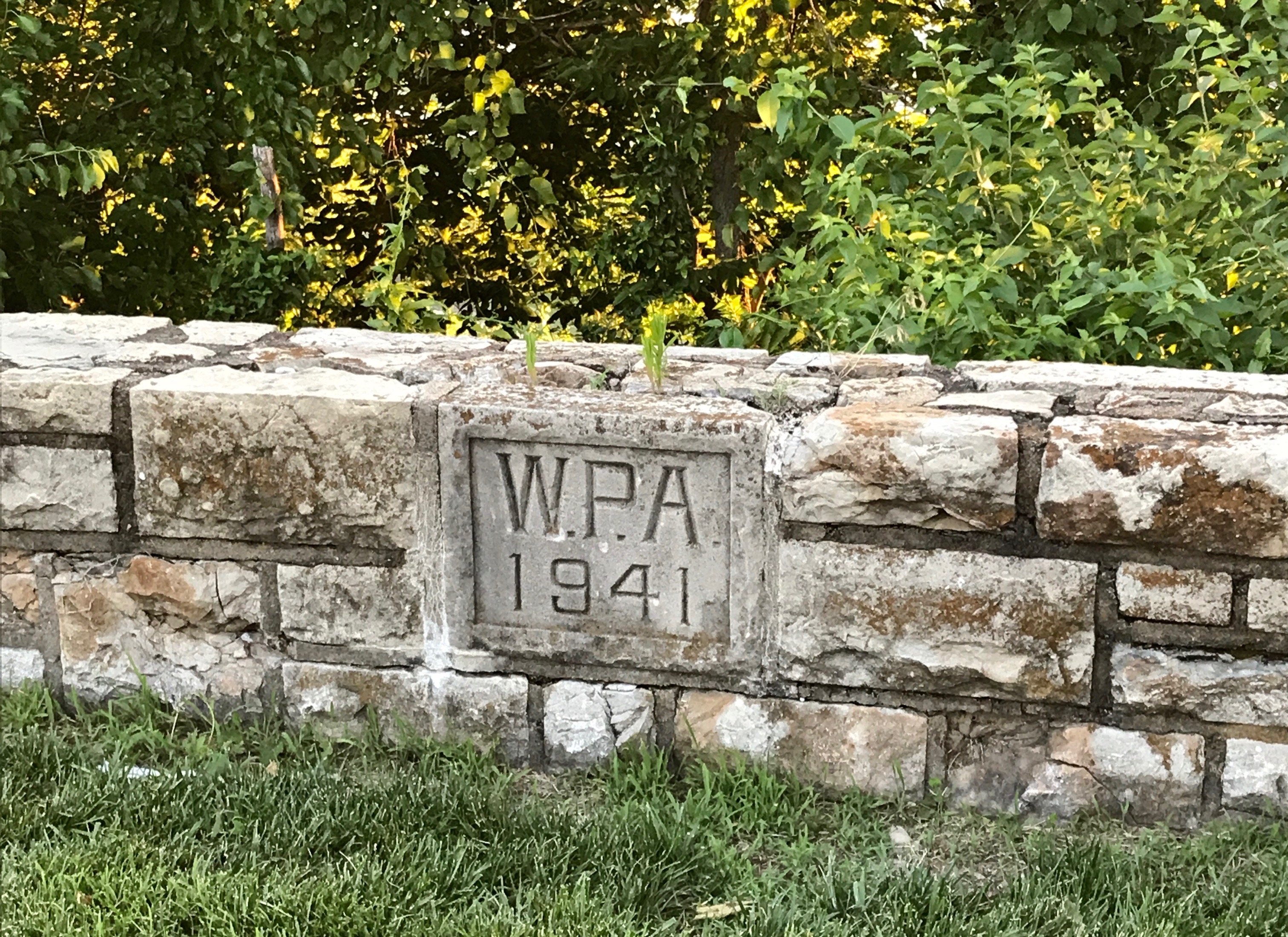
Gee…spending our country’s wealth on building infrastructure that is still in use more than 65 years later, and providing the dignity of work to the citizens.  What a novel idea!

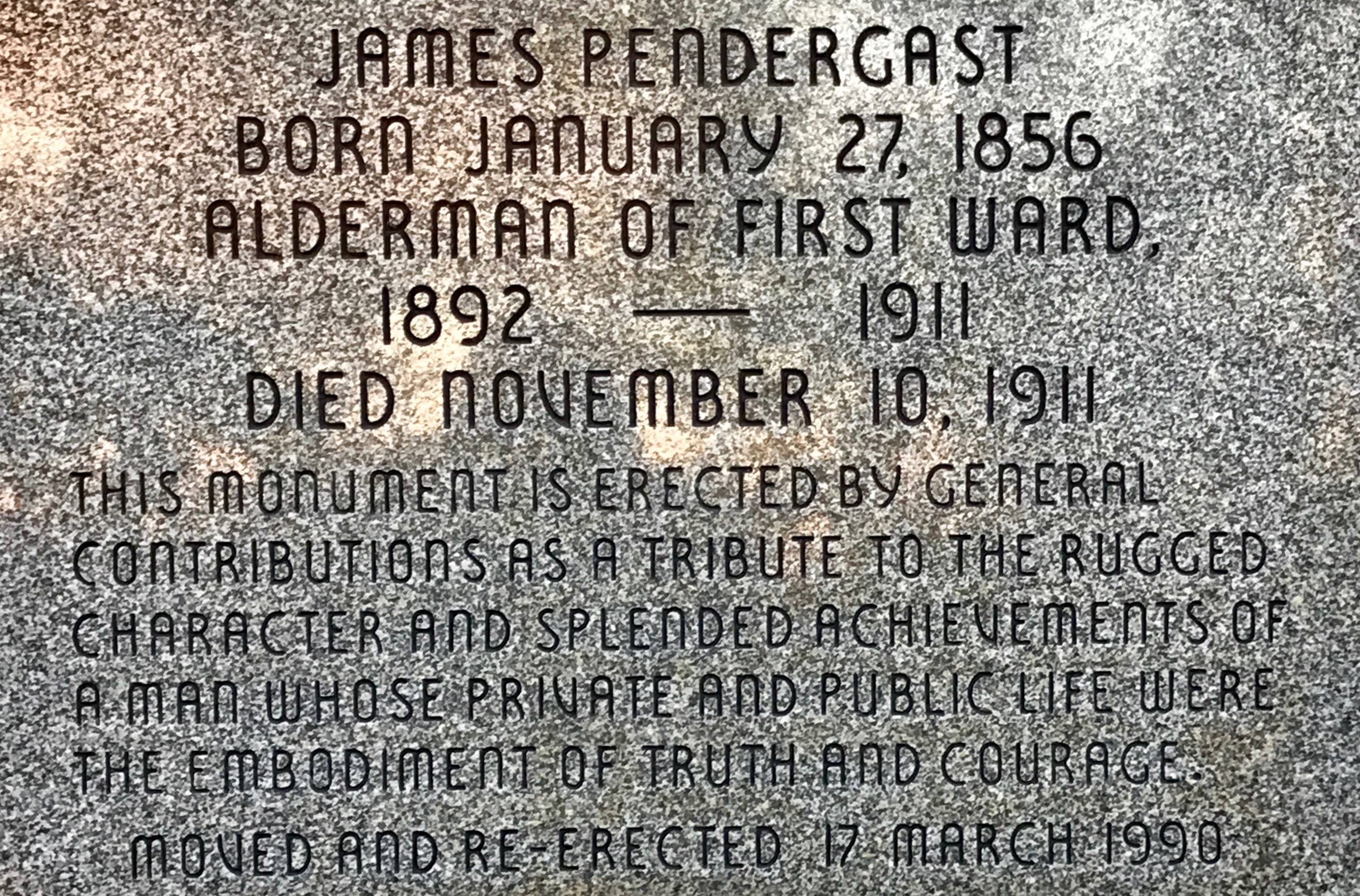
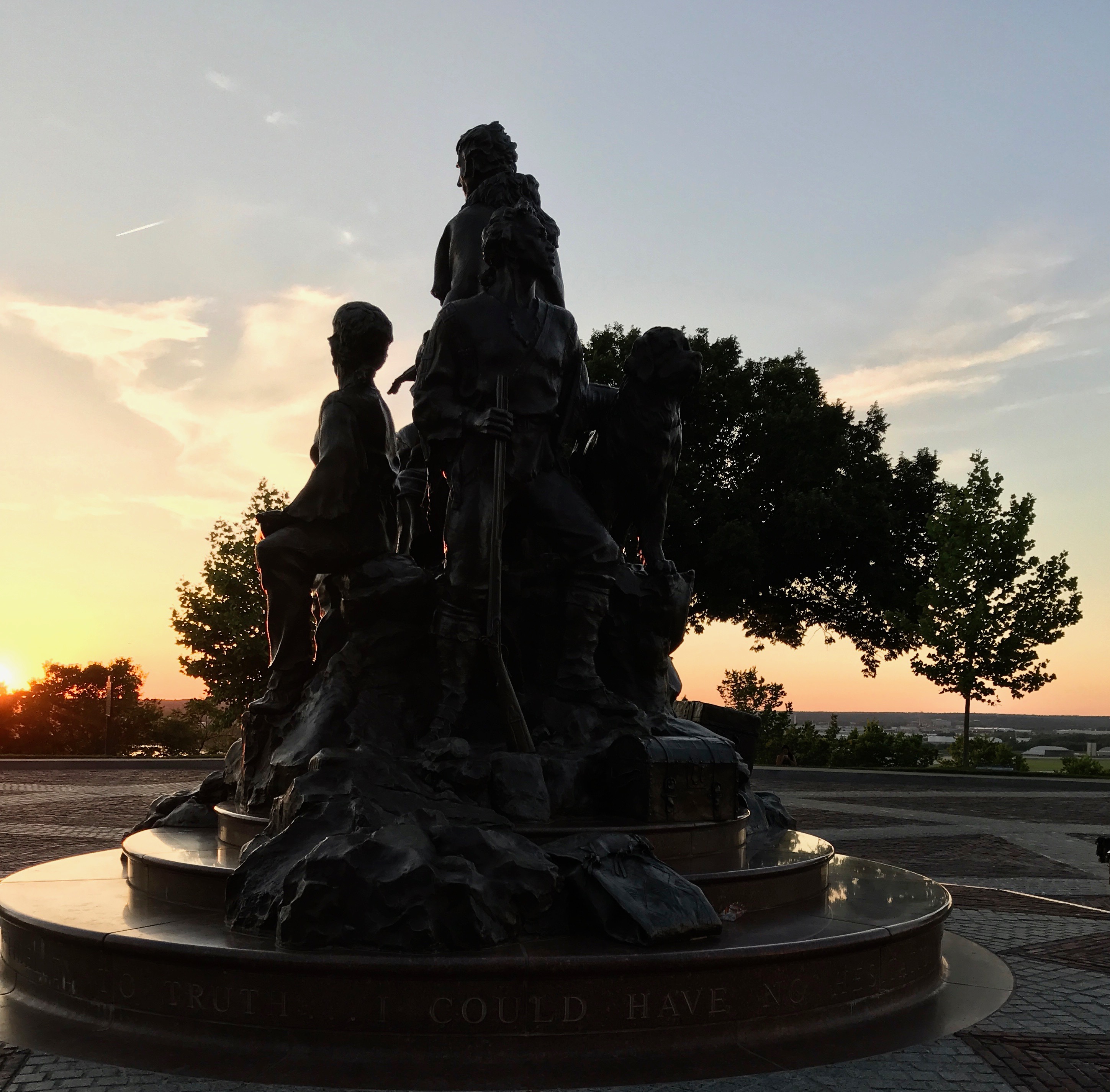
As the shadows deepen, I came across this statue of James Pendergast.

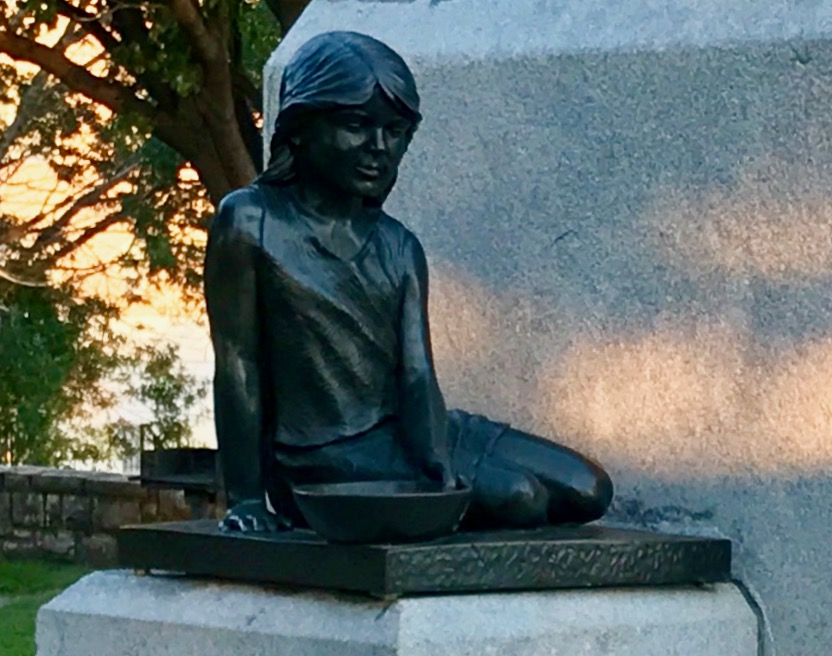
The statue of Pendergast was flanked by two smaller statues. This one of a young girl.

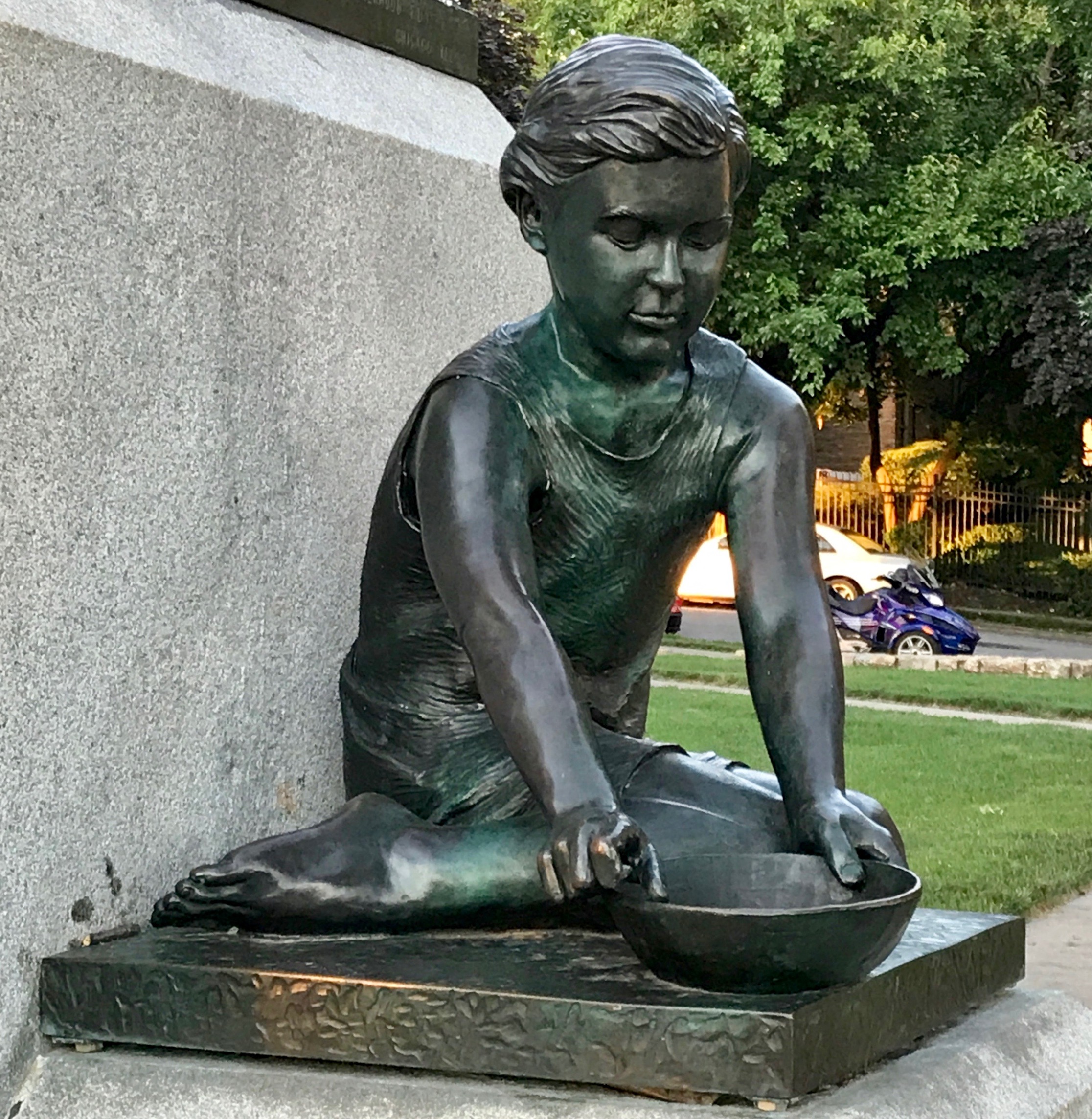
On the left is a statue of a young boy.

Of course I had to look for more information. I couldn’t locate as specific links to feeding hungry children or, perhaps, arts programs. I mean, who wouldn’t like to make a nice ceramic bowl?

It turns out that James Pendergast was part of the “Pendergast Machine” run by him and his brother, Thomas. At the turn of the century, political bosses and their  machines that operated in large American cities enjoyed strong support among the poor and immigrants, who returned the favor by voting for the bosses’ preferred candidates. I think the best known “big boss” – at least to those of us east of the Mississippi – is Boss Tweed of New York City.

According to an article in the Social Welfare History Project, Many immigrants saw bosses and political machines as a means to greater enfranchisement. For immigrants and the poor in many large U.S. cities, the political boss represented a source of patronage jobs.

In 1887, James Pendergast became the Democratic committeeman from the first ward, and he was elected alderman in 1892. During the peak of his power, he not only hand picked this own mayor, James A Reed, but every other key office at City Hall. One of those occupants of the key offices in city hall was his brother, Thomas. He became Superintendent of Streets, which allowed him to hire 200 workers and buy material and equipment for the street paving program.

After James’ death in 1911, his brother Thomas took over running the Kansas City political machine, but that shall be covered in a later post.

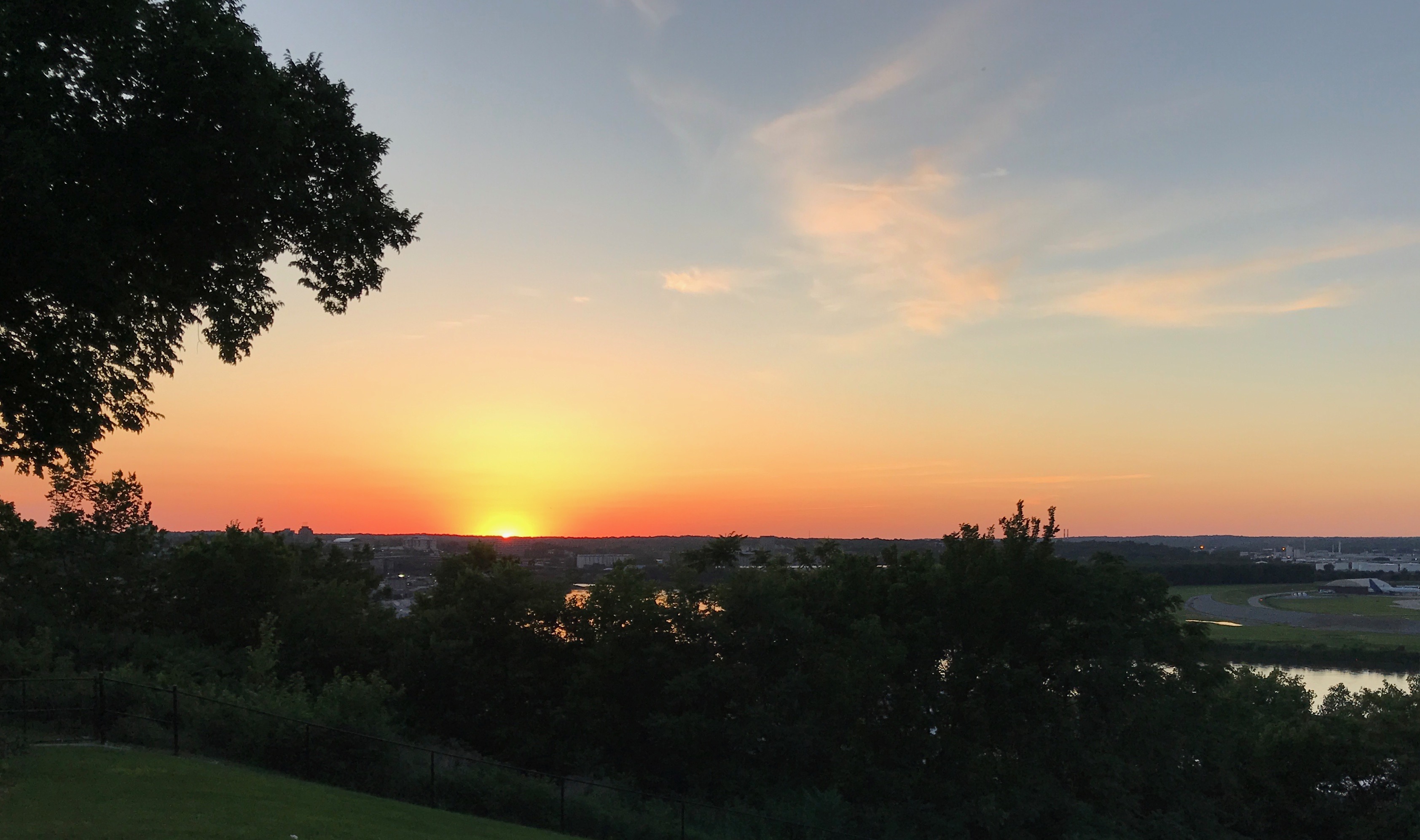
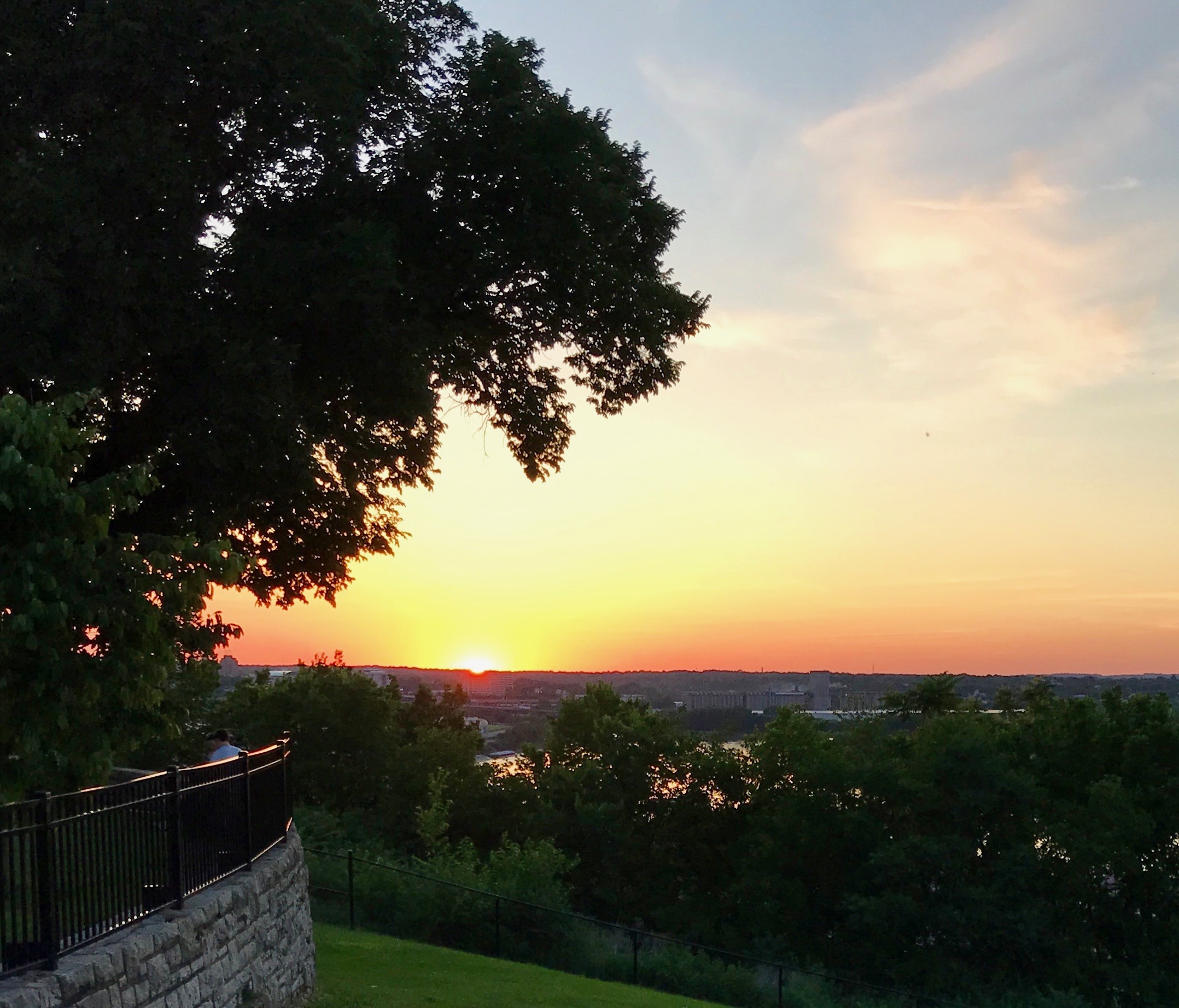
I decided it was time to find a good vantage point for viewing the sunset.

Along the way, I came across this paver for the Riverfront Heritage Trail. But there was no time for that now.

The sun was setting!

I love that peachy glow off toward the northeast.

It’s going.

And it slides behind the horizon.

And tomorrow I go to work!


The World’s Only Corn Palace!

I have to admit that I didn’t really know what a corn palace was.

Was it built with corn? Decorated with corn? I didn’t know, but I was planning on finding out!
The next day, I got hitched up and moseyed about three hours down I-90.

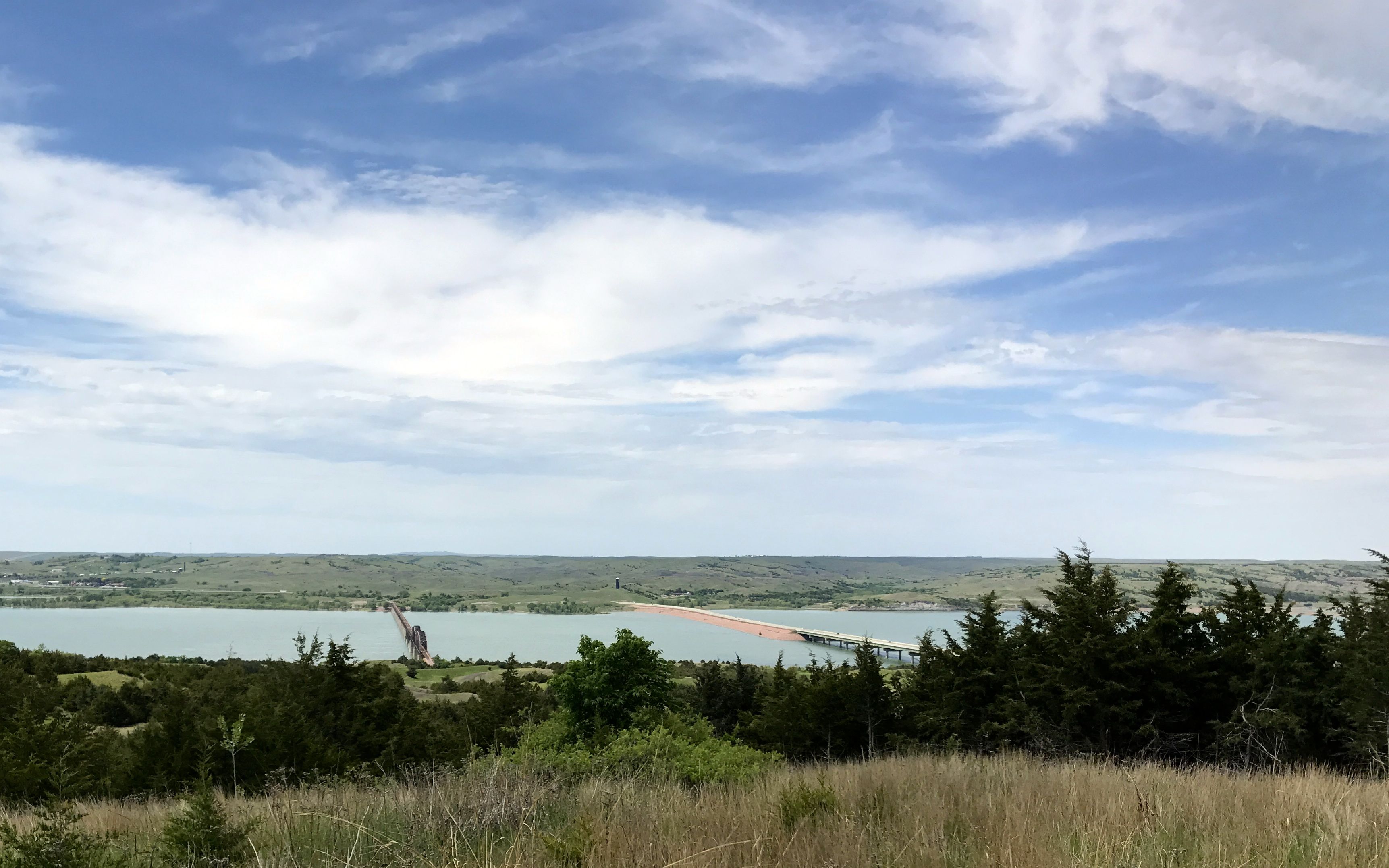
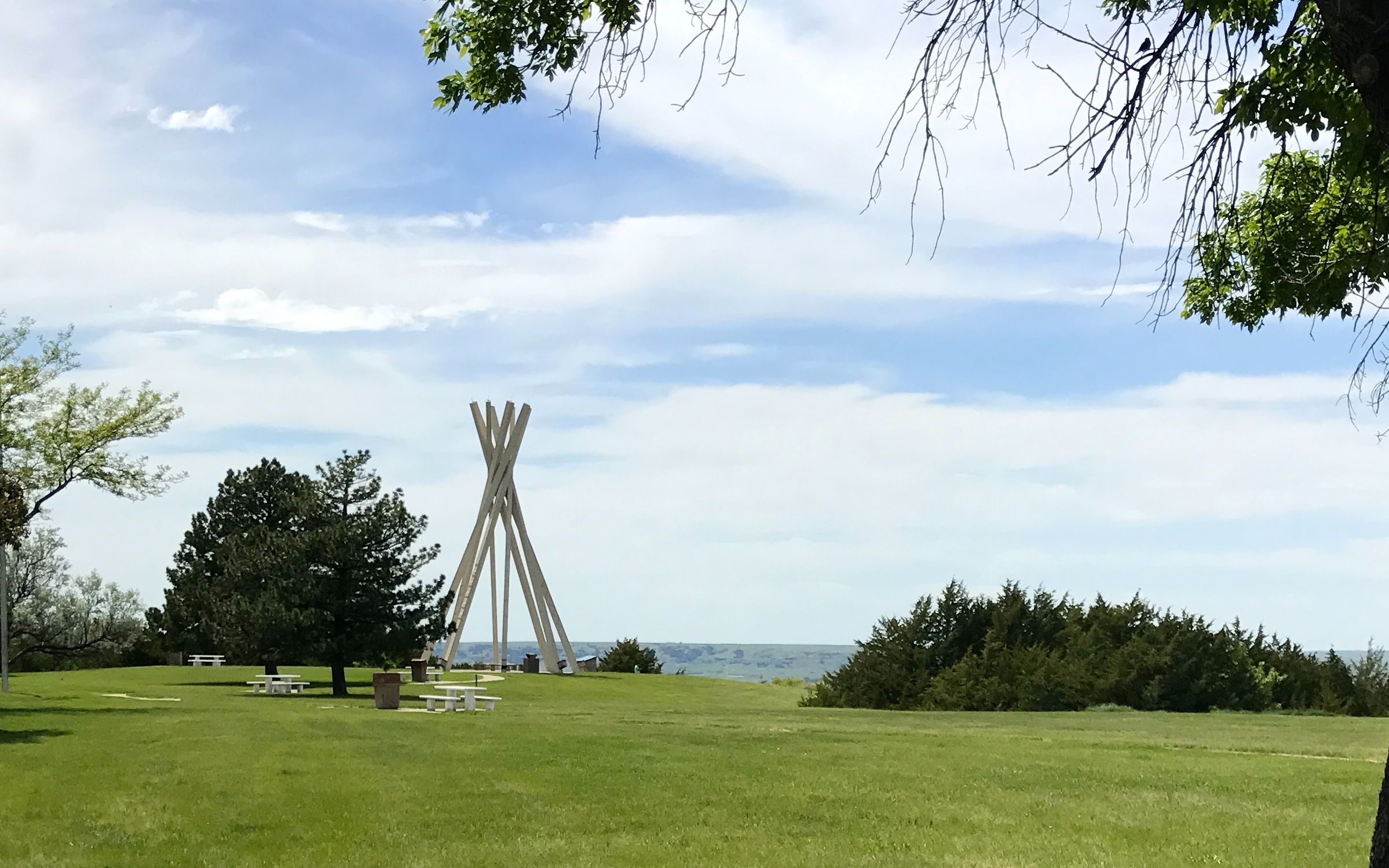
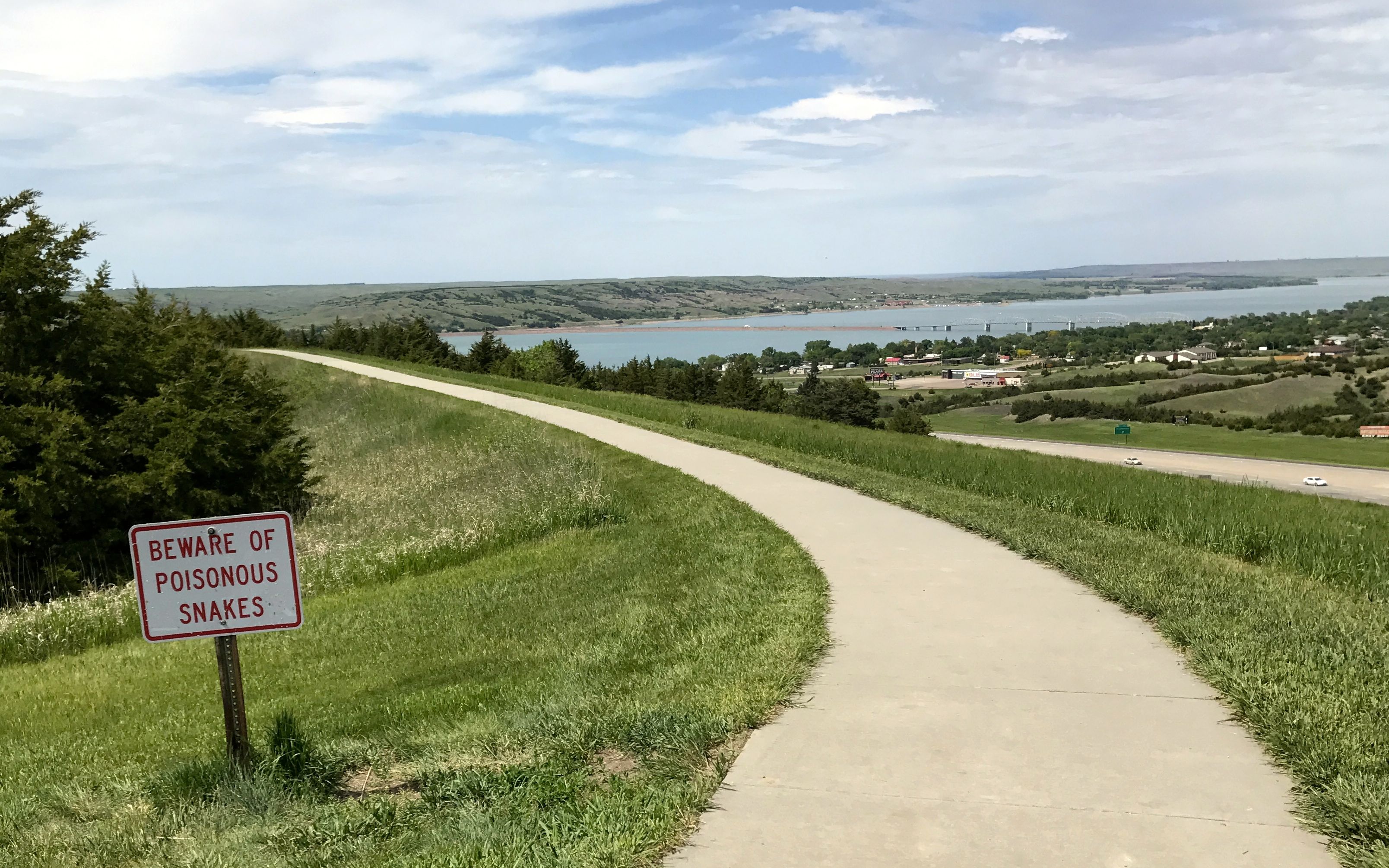
When I got to the Missouri River, I found the most wonderful rest stop.

It was a great view of the river.

But what really made it outstanding was the enormous statue.

The statue is entitled “Dignity of Earth and Sky” and is a tribute that states the Native cultures are alive and standing with dignity.

According to the rest stop’s website, it was sculpted by South Dakotan Dale Lamphere. He used three Native American models, ages 14, 29 and 55 to inspire the face of Dignity. The dress was fashioned to resemble dresses from the 1850s. She is holding a star quilt with 100 blue stainless steel diamond that flutter in the wind. It is lit by LED lighting and is visible from I-90 day and night.

The statue was installed in 2016, which was just the year before my visit. It looked marvelous. I hope it continues to age well.

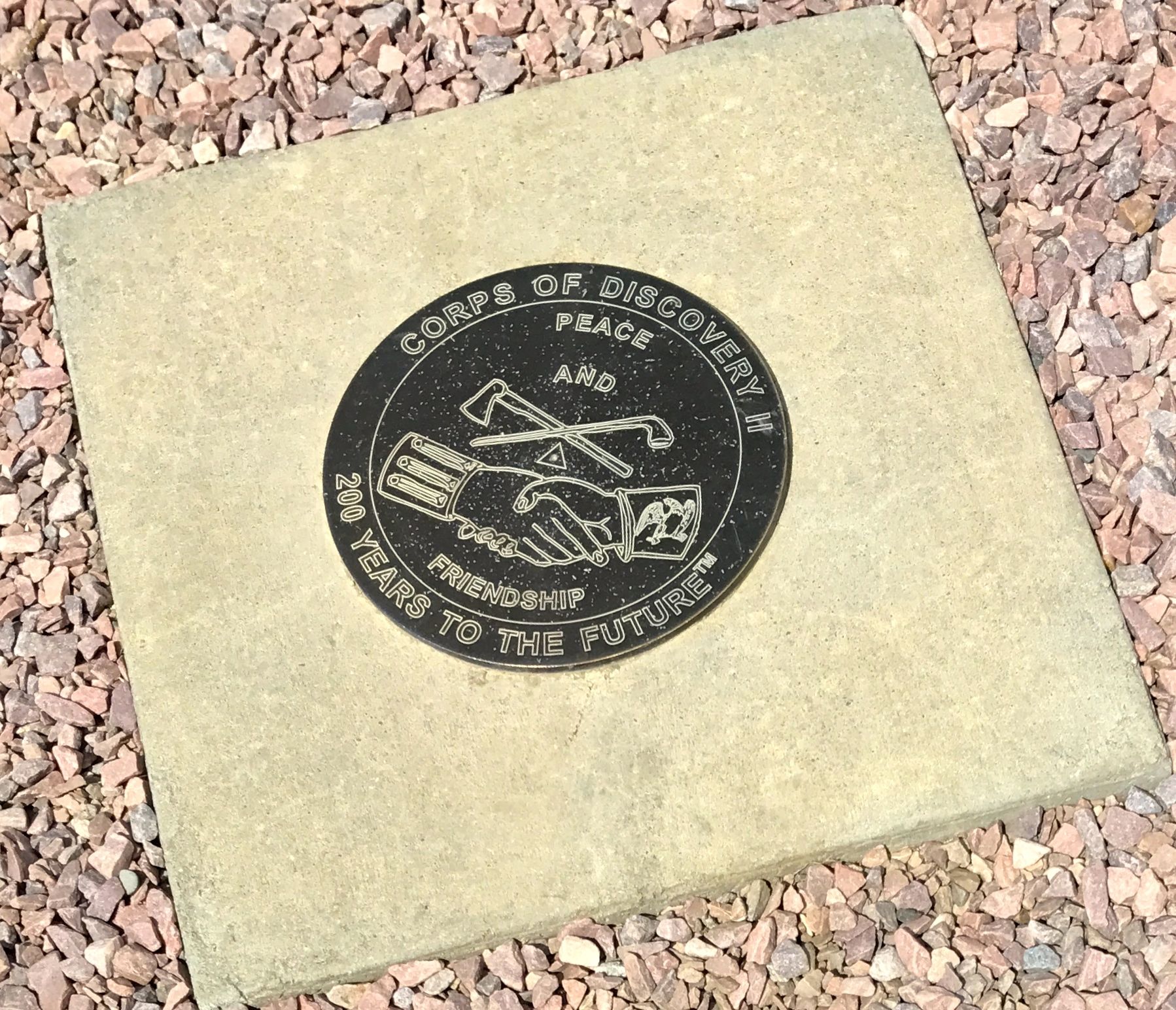
If you are near the Missouri River, you should expect to find some mention of Lewis and Clark and the Expedition of the Corps of Discovery.

According to the plaque nearby, this marker commemorates the bicentennial of the Lewis and Clark expedition. The geographic position of this marker has been established using the satellite-based Global Positioning System. This marker is part of the National Spatial Reference System, which is the standard used for positioning, mapping, and navigation in the United States.

Kind of amazing to think about how much navigation has changed in the 200 years since Lewis and Clark passed this way.

Just in case you were wondering, the position of this marker is at 43 degrees, 47 minutes, 13.66 seconds north latitude and 99 degrees, 20 minutes, 18.16 seconds west longitude. It is 1718 feet above mean sea level.

If you are crossing South Dakota on I-90, this is a wonderful rest stop. In fact, they also have a small museum with a full-sized model of one of the boats that Lewis and Clark used. It is an outstanding rest stop.

You can get out and stretch your legs.

Or not.

I continued on my way and finally reached Mitchell. I got set up in some little nondescript campground that was just off the Interstate and headed toward the World’s Only Corn Palace.

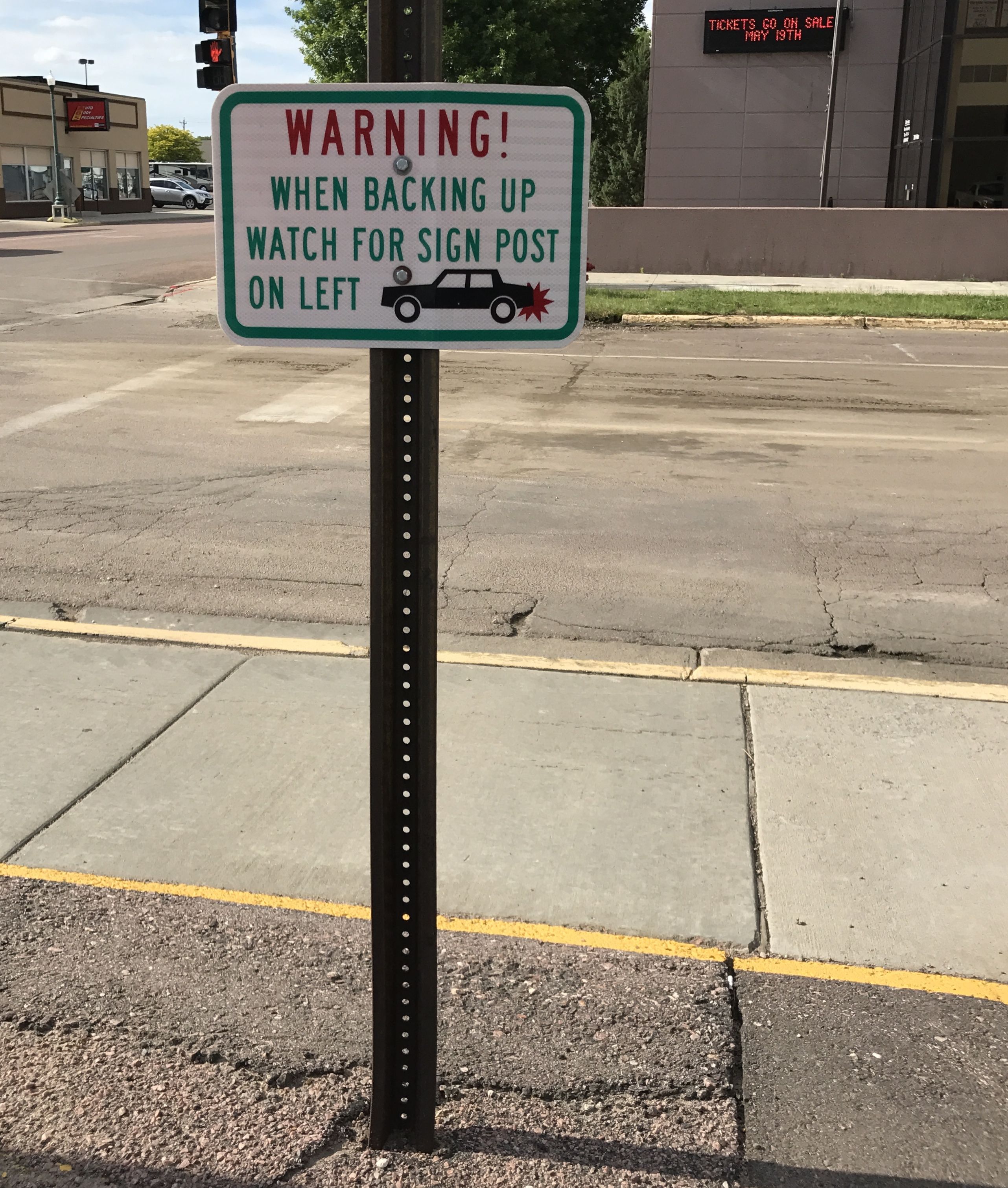
I found a spot to park near this oddly specific warning sign.

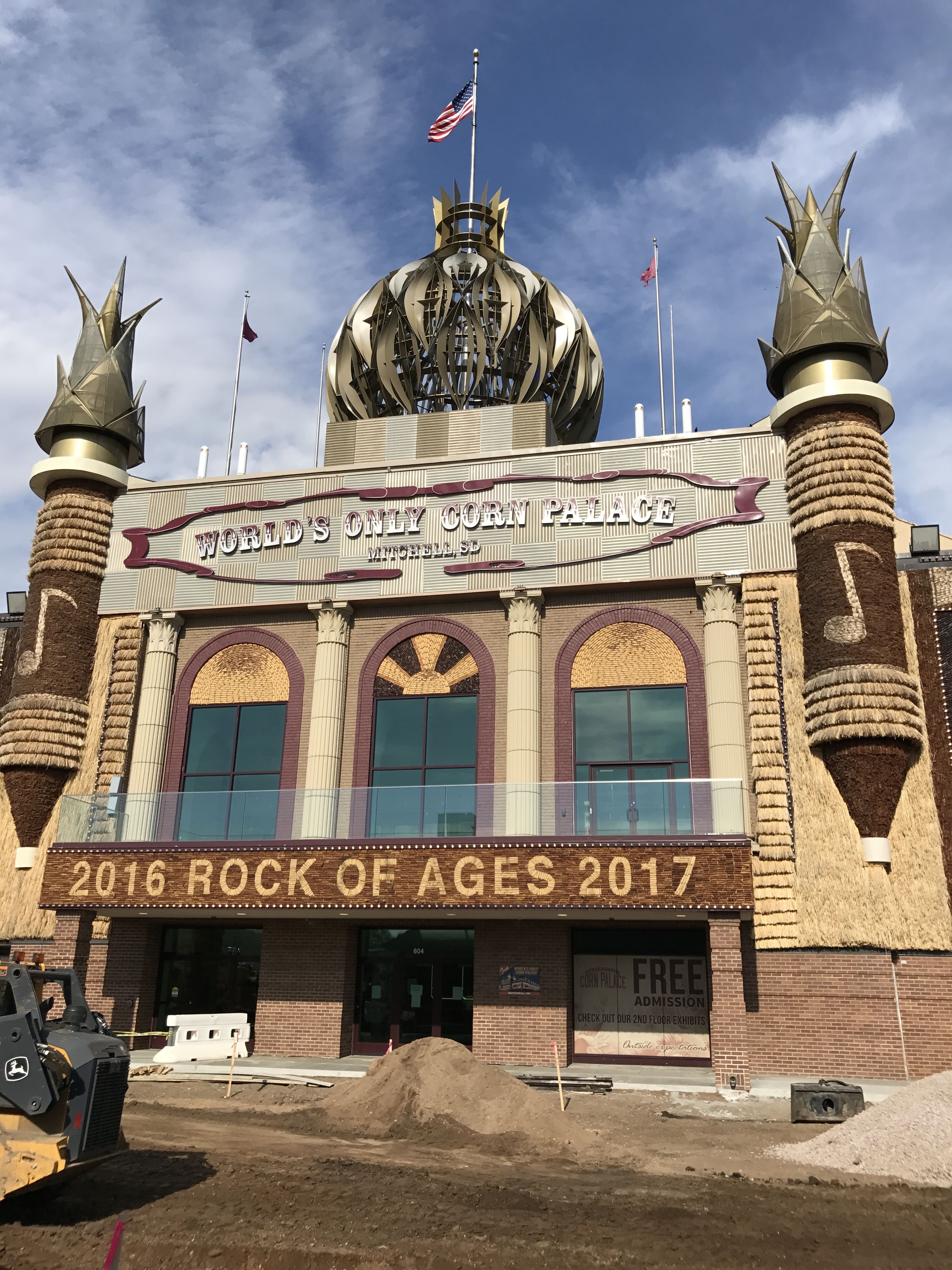
I found it! In spite of all the road work going on.
So, what is the Corn Palace? It is a multi-purpose arena/facility that is decorated with crop art. A new design is constructed each year. According to my preferred source, the Corn Palace is a venue for concerts, sports evens, exhibits and other community events. Each year the Corn Palace is celebrated with a citywide festival.

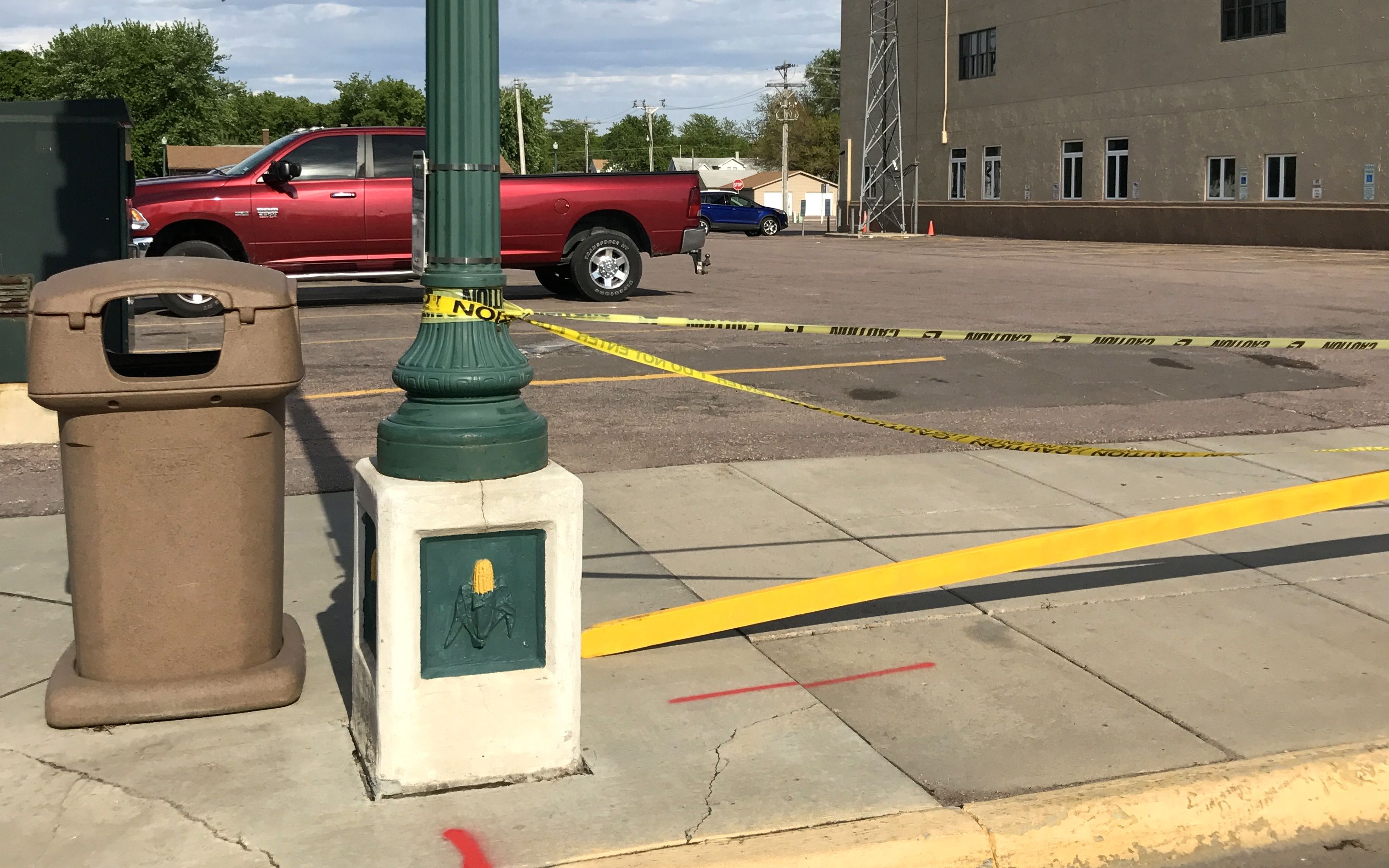
Mitchell is all about the corn. I thought the corn motif on the base of the streetlight was a nice touch.

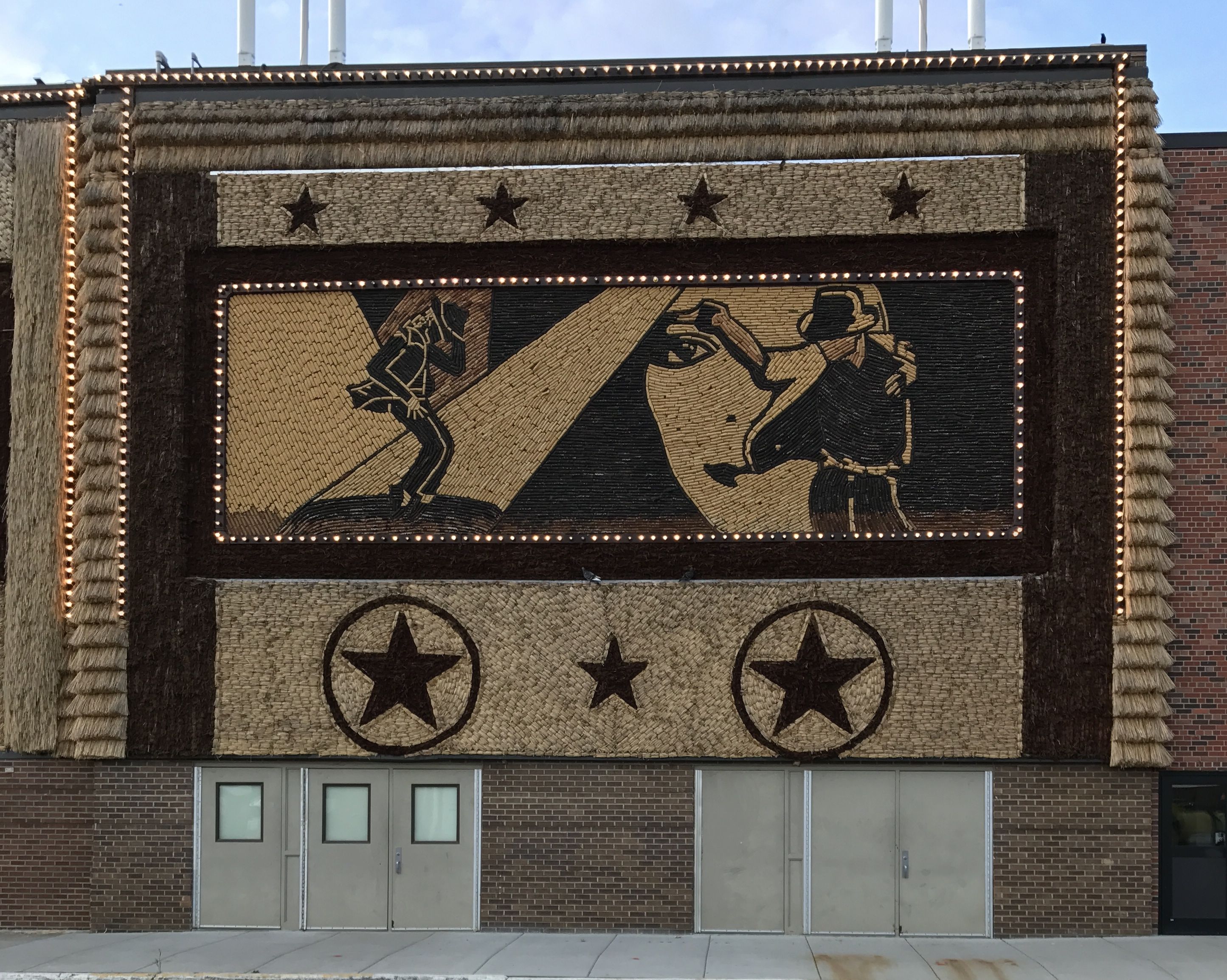
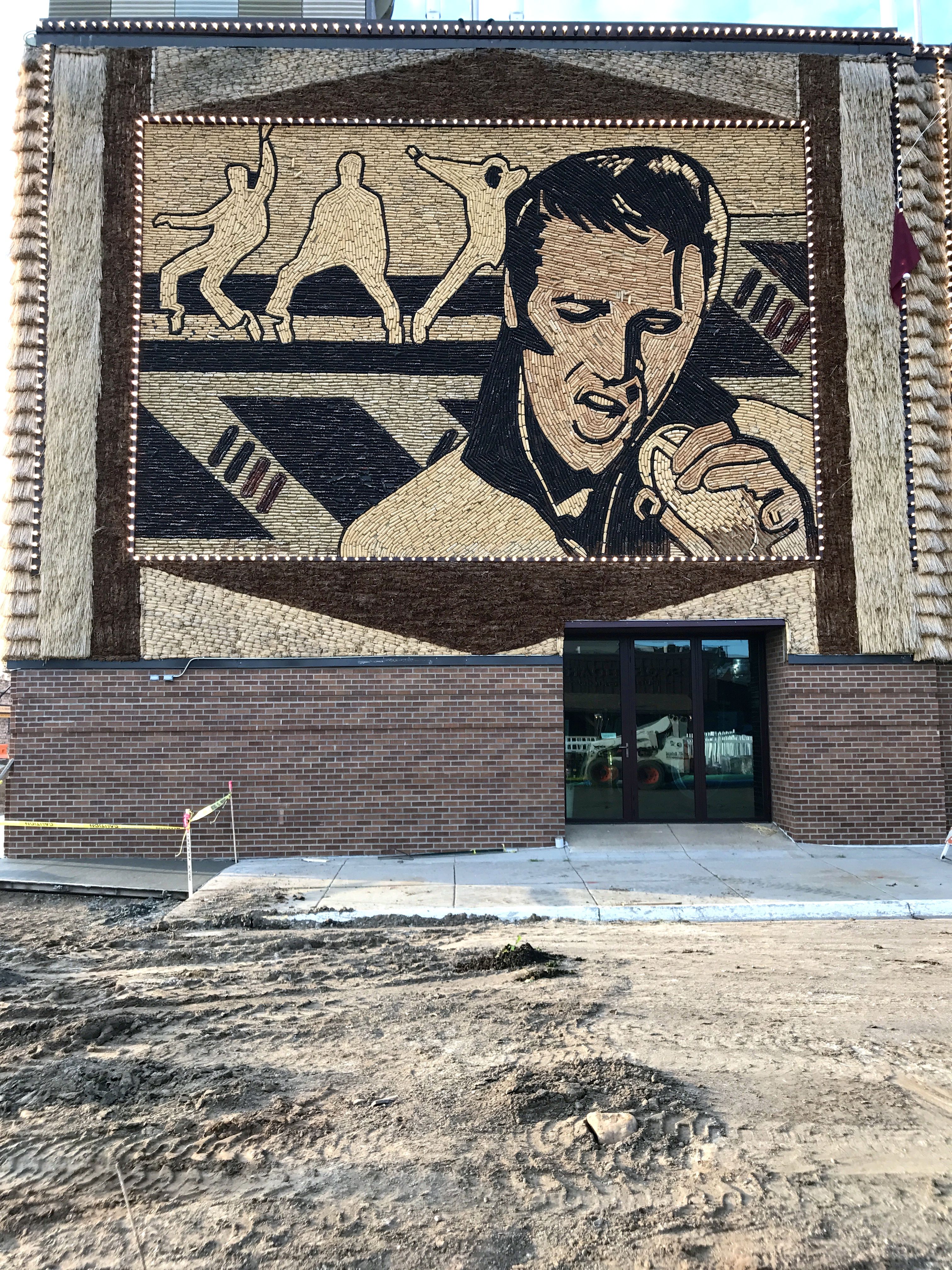
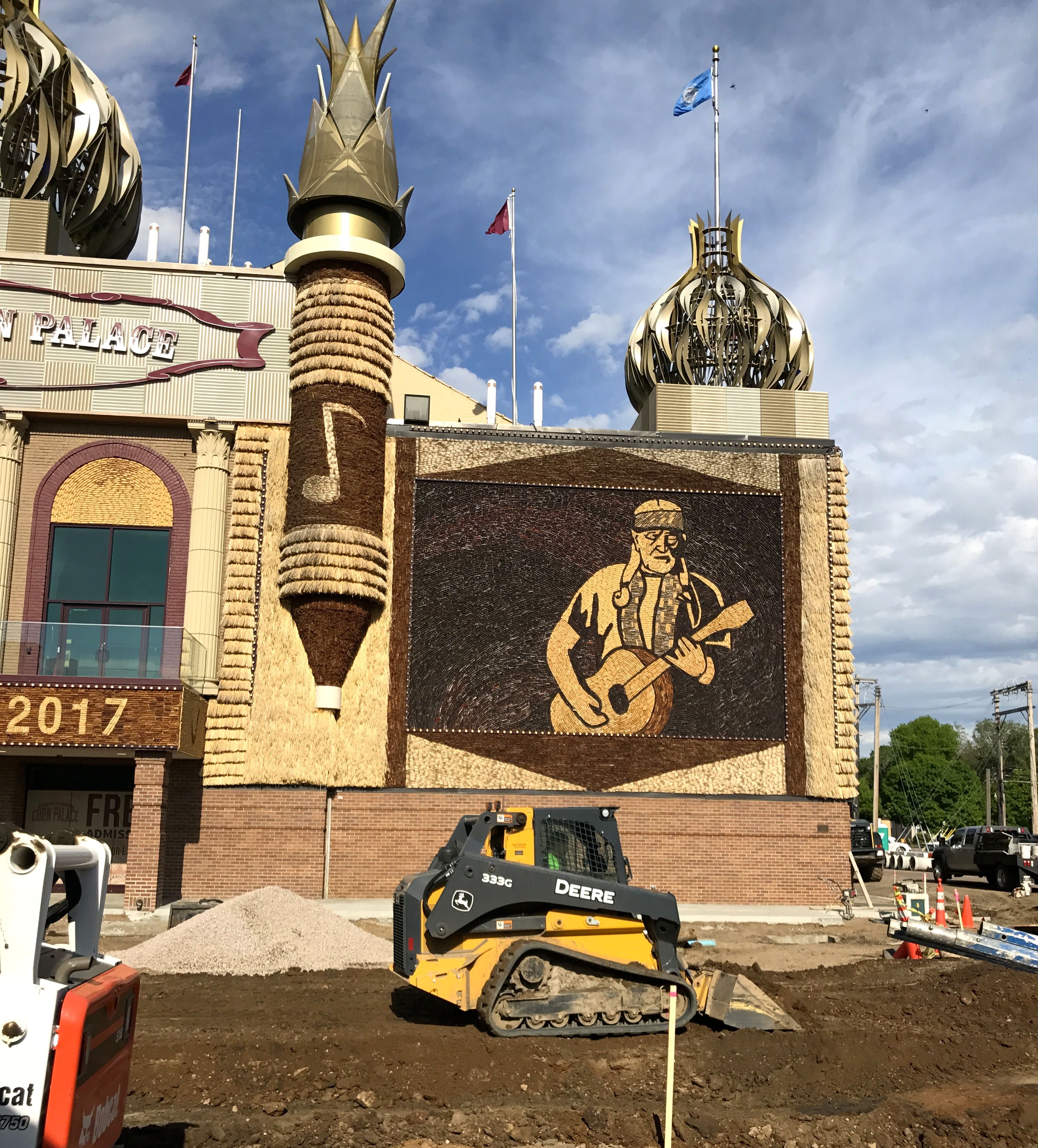
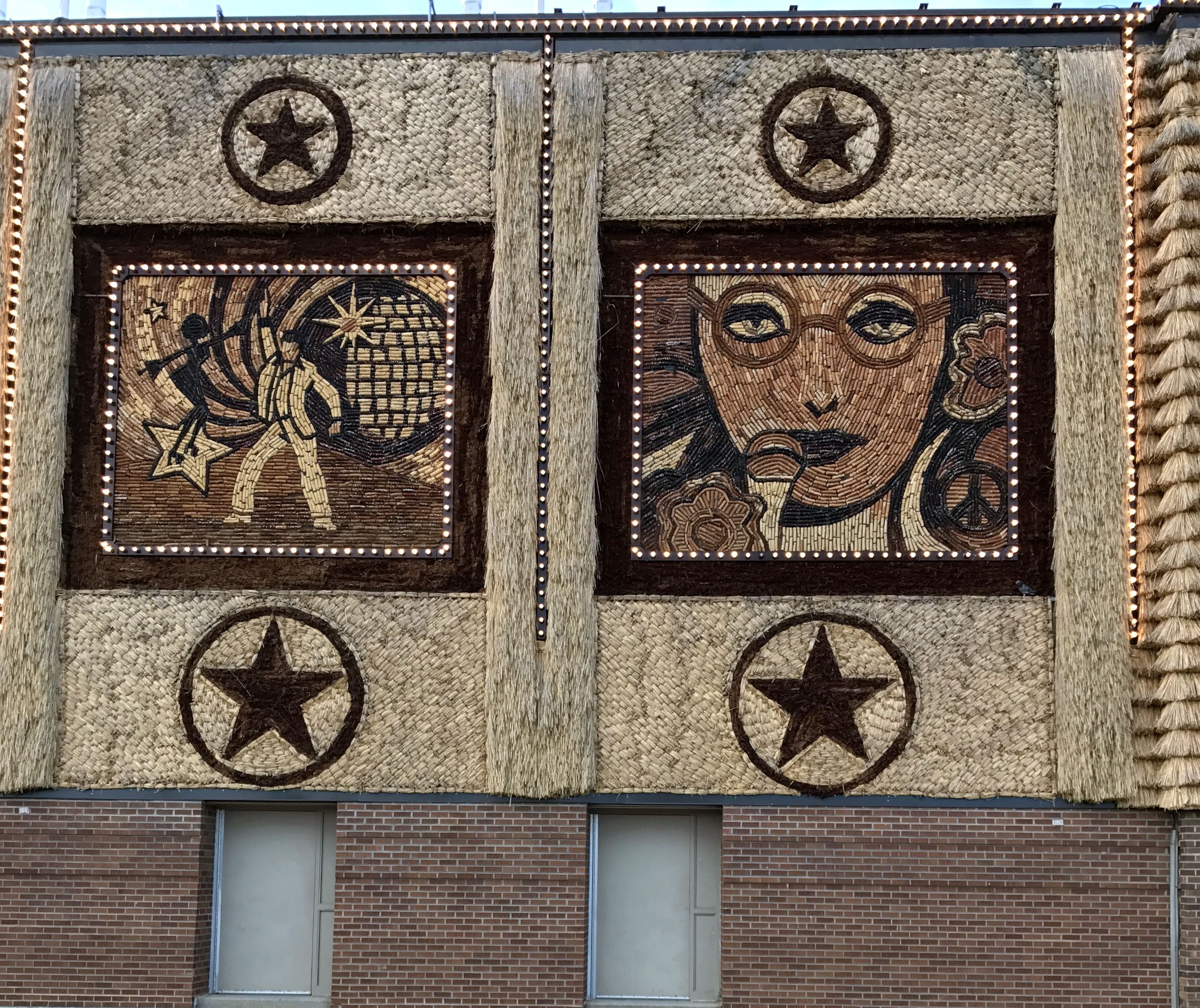
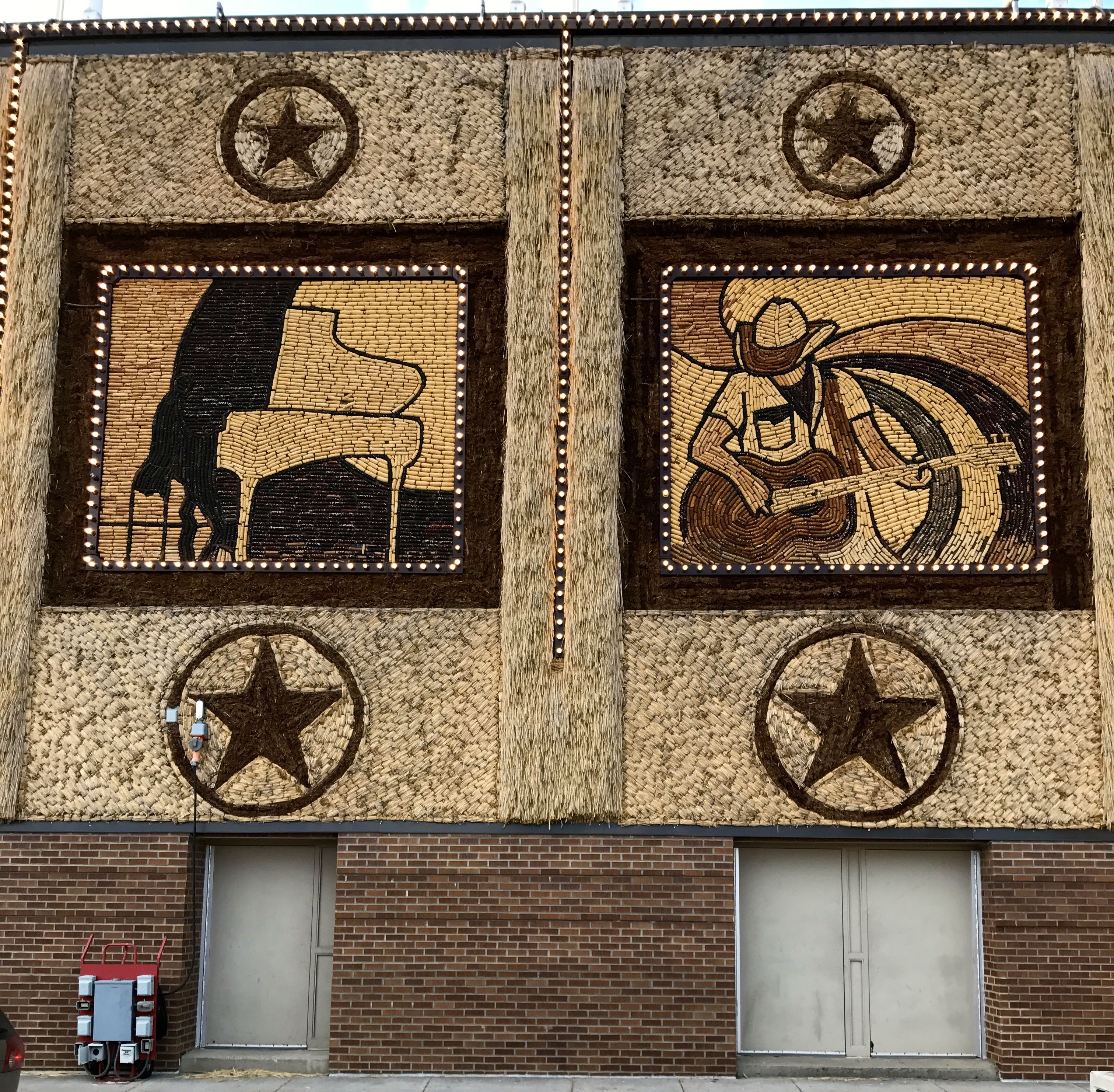
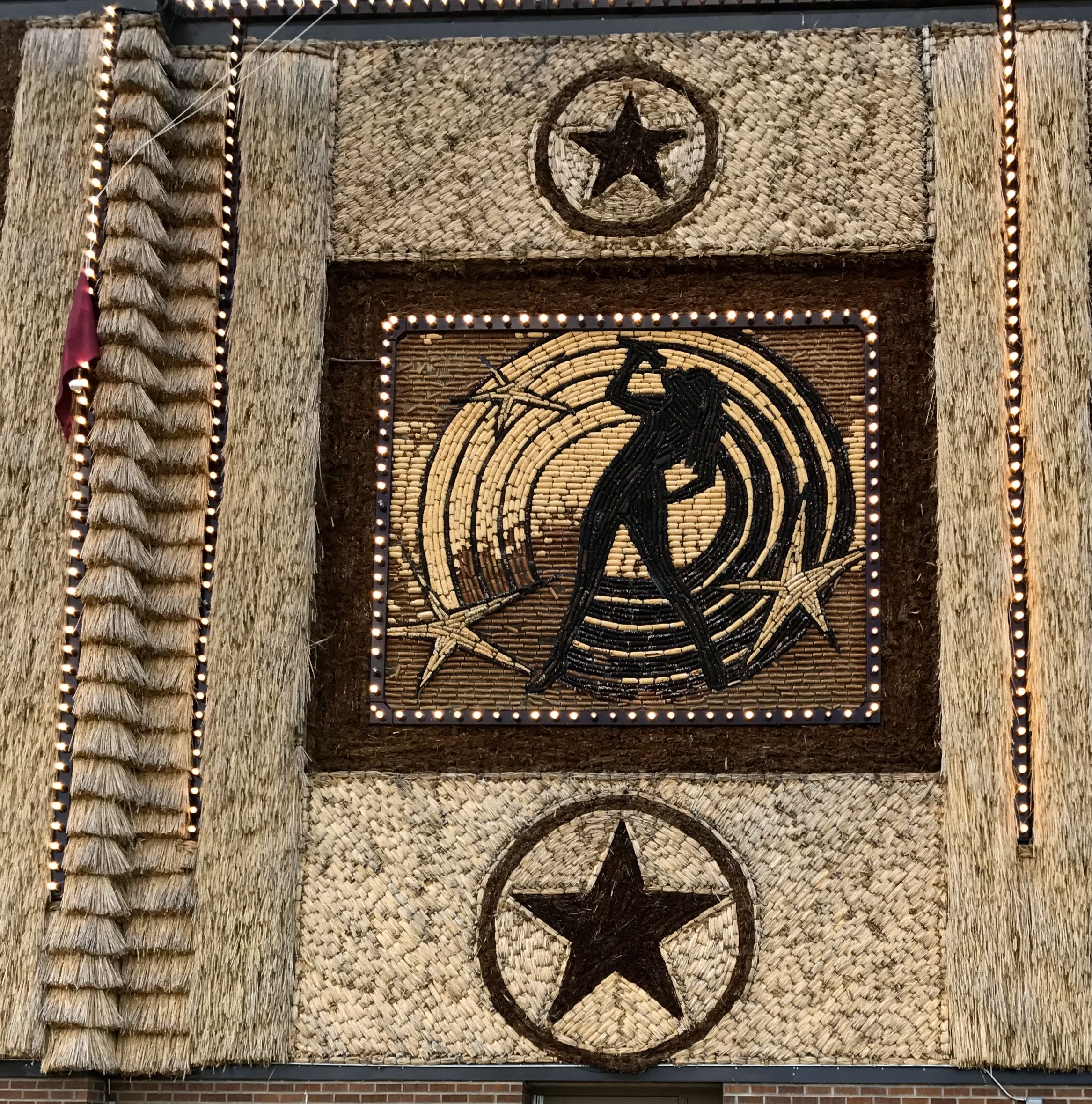
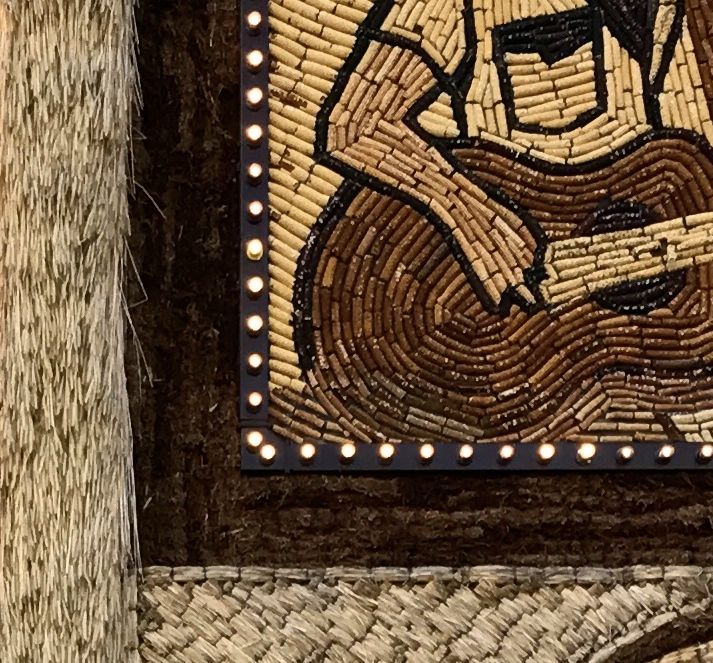
The theme of the murals when I visited in 2017 was “Rock of Ages” and they portrayed various music stars through the years.

Some were not easy to identify.

Other murals were iconic. Here’s The King!

And Willie Nelson.

I’m pretty sure that the one on the left is John Travolta in his iconic white suit in Saturday Night Fever. I’m not sure about the one on the right side.

I’m not sure about these, either, but they are definitely musical.

This one also fits in with the theme.

If I had gotten there earlier in the day, there might have been someone to ask.

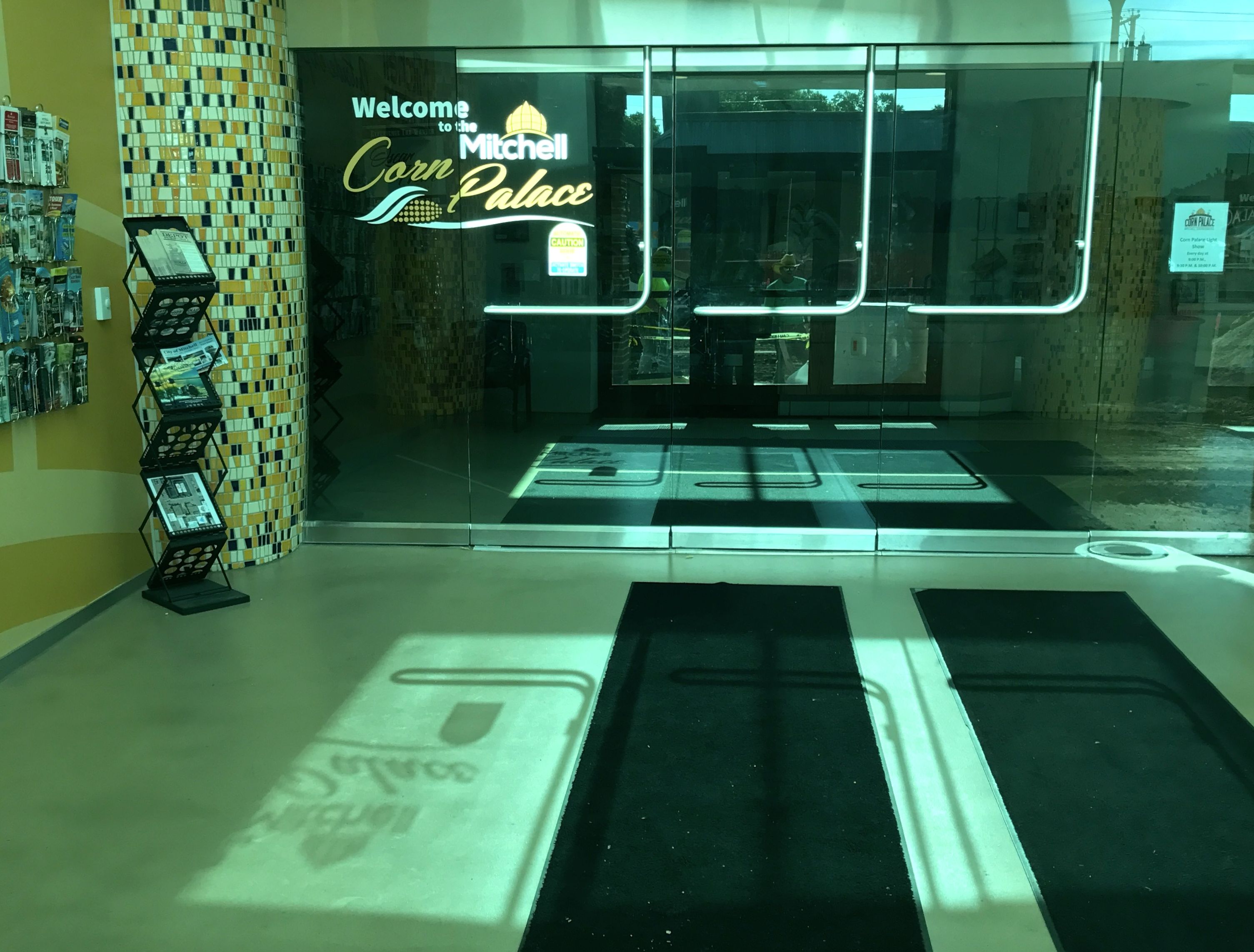
But, in keeping with my usual timing, the building was locked up tighter than a drum.

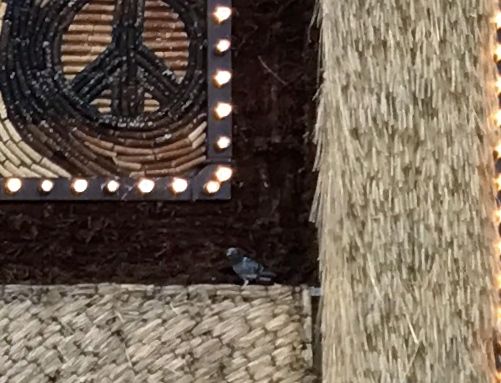
In addition to asking about the subjects of the murals, I wanted to know when they changed them and if the birds (and possibly rodents) affected the murals. I did notice this bird perched on it.

If you look closely, you can see where kernels are missing from the corn.

Speaking of kernels, the name of the Mitchell High School baseball team is the Kernels! I love it!

In checking on information to write this post, I came across a list of the themes of the murals. The year I visited, it was “Rock of Ages”. This year the theme is “South Dakota Weather.” I would love to see what those murals look like.

I bid my farewells to the mascot for the World’s Only Corn Palace and headed back to Flo for my last night in South Dakota.