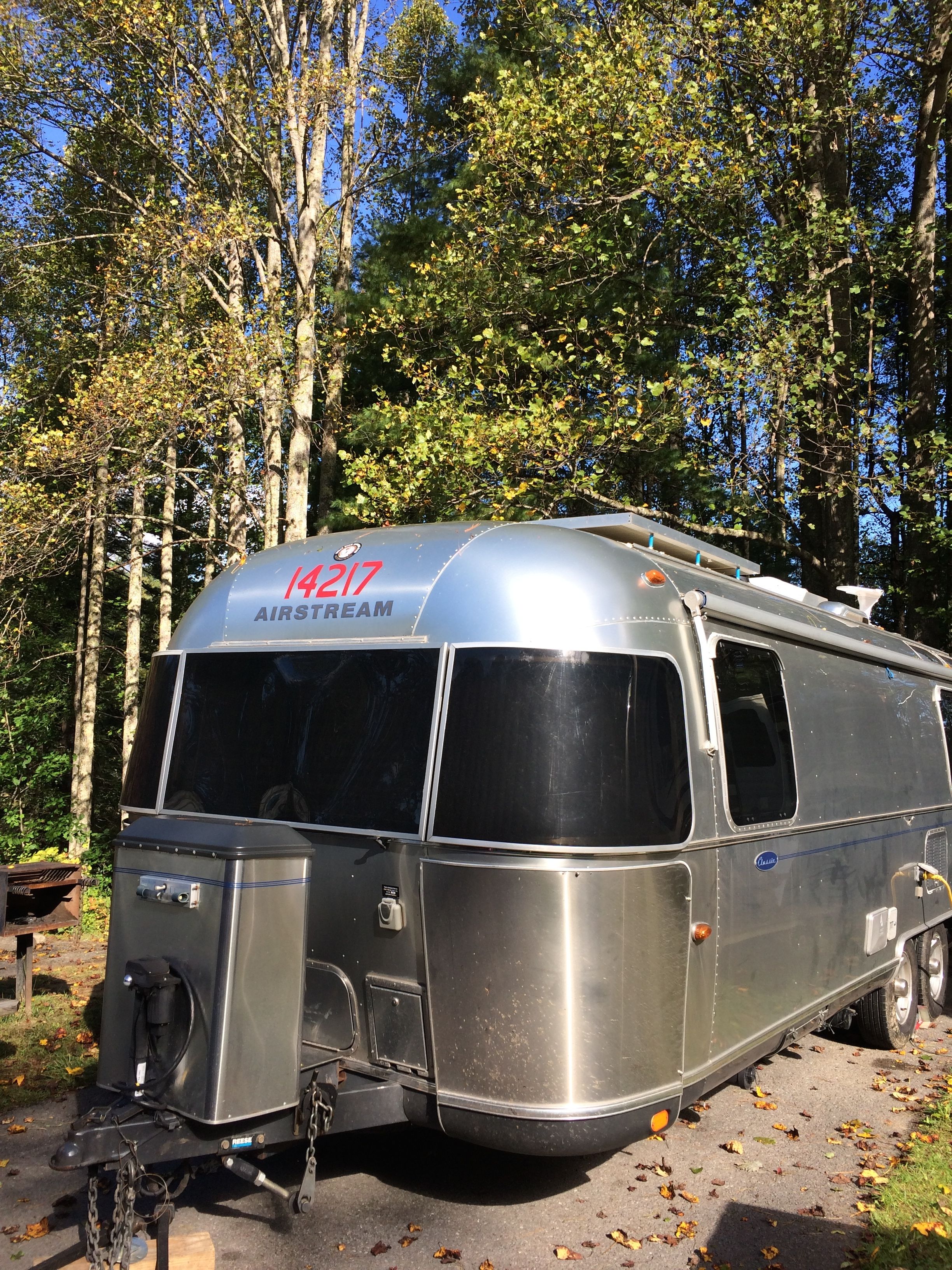
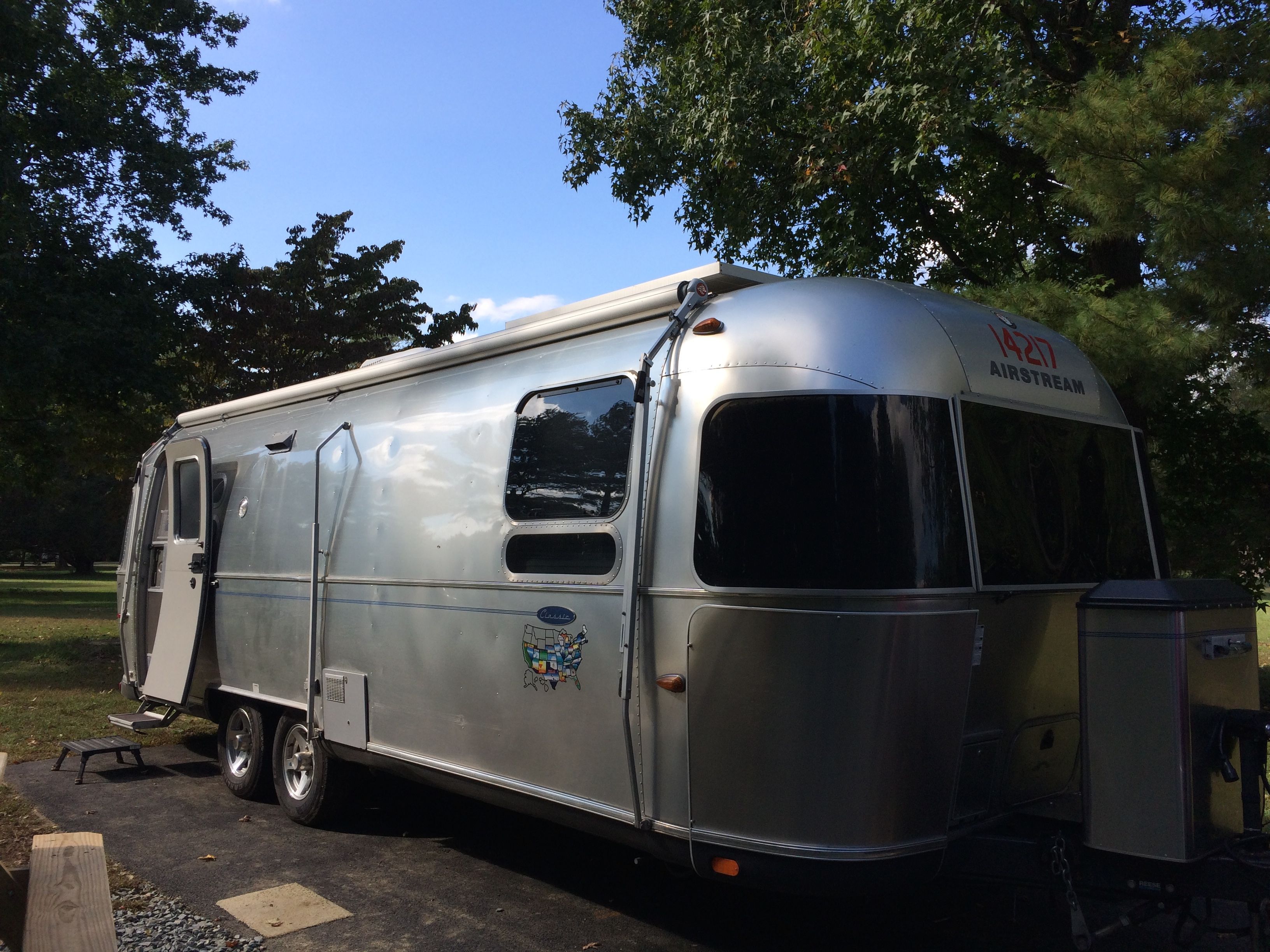
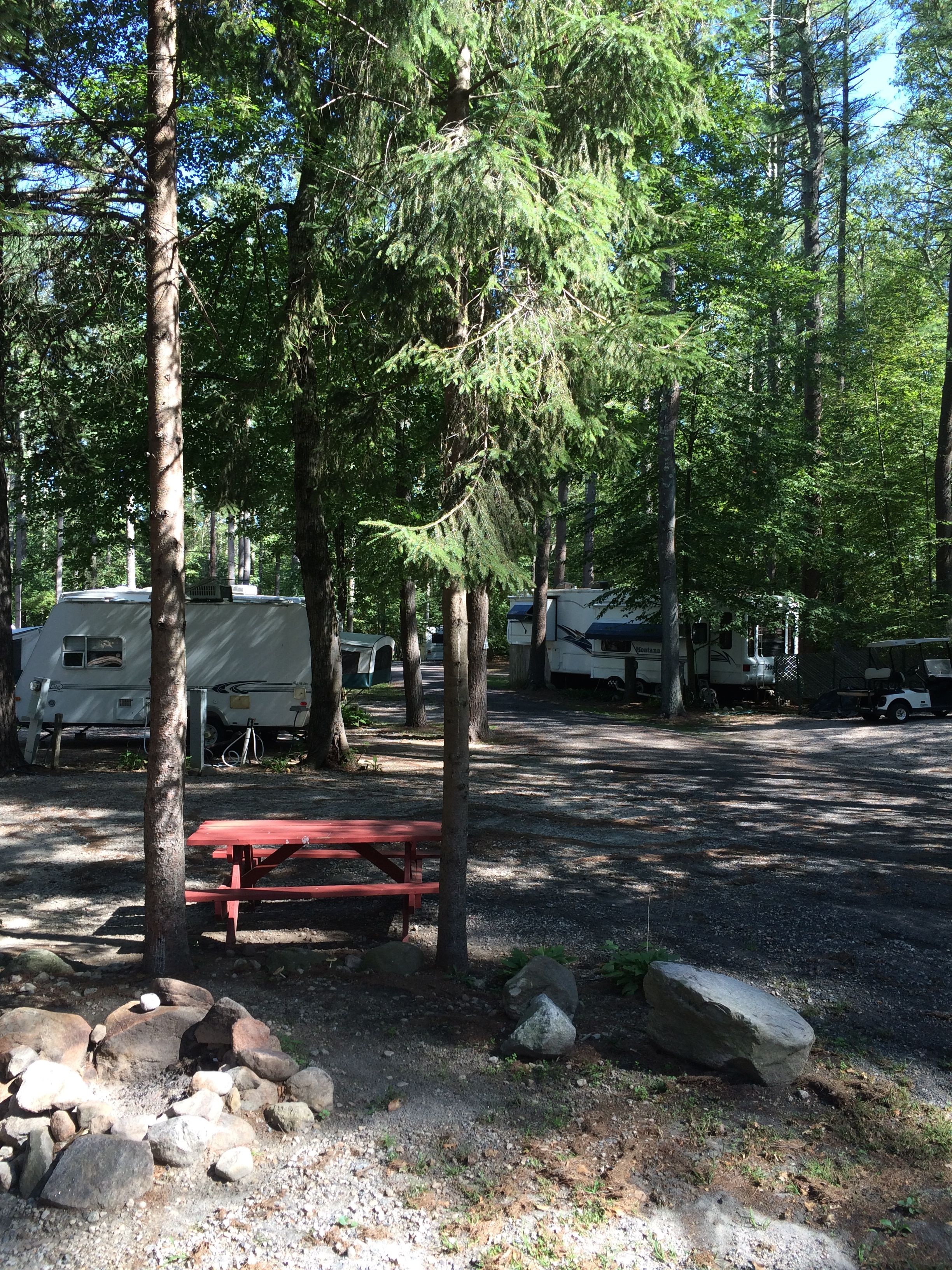
My next stop was Fort Boonesborough State Park. It was a good stop over place between Beckley, West Virginia and Campbellsville, Kentucky, where I was going to work for Amazon as part of their CamperForce.
It was a rather long drive. I think I was behind the wheel for almost five hours, so when I got there, I pretty much got backed in and hung out inside until it was time to sleep.
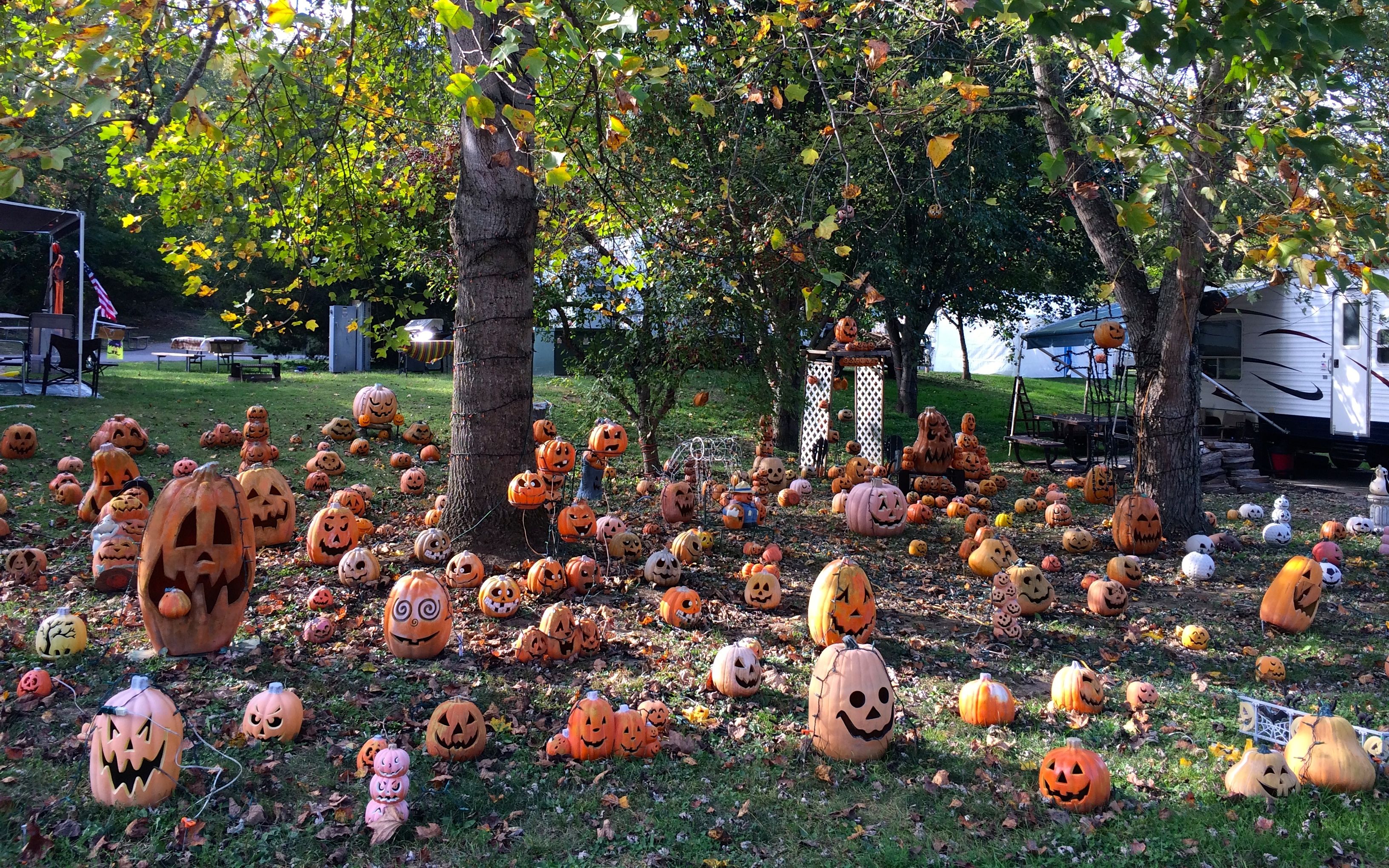
The next day, however, I just had to get out and enjoy the decorations.
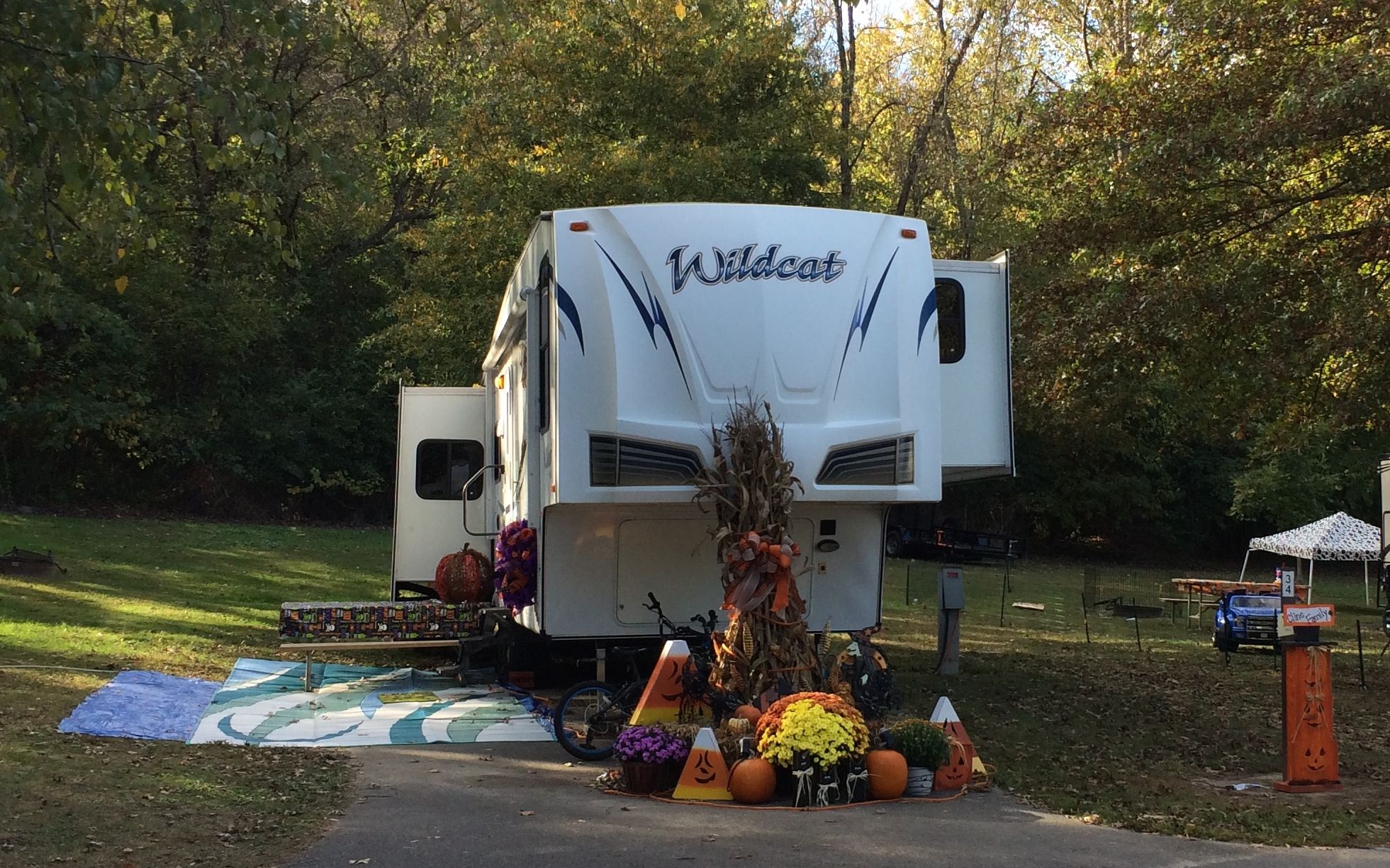
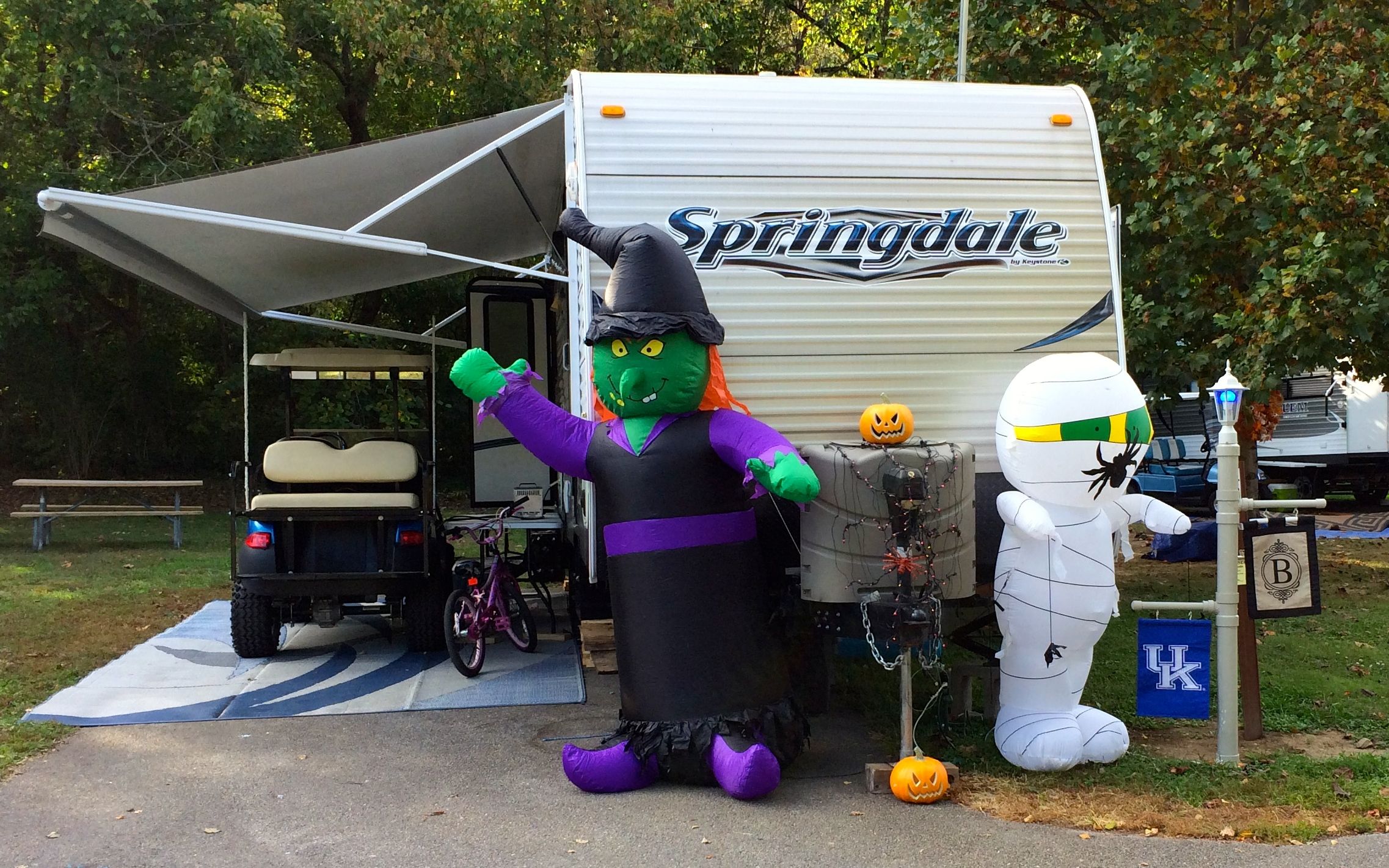
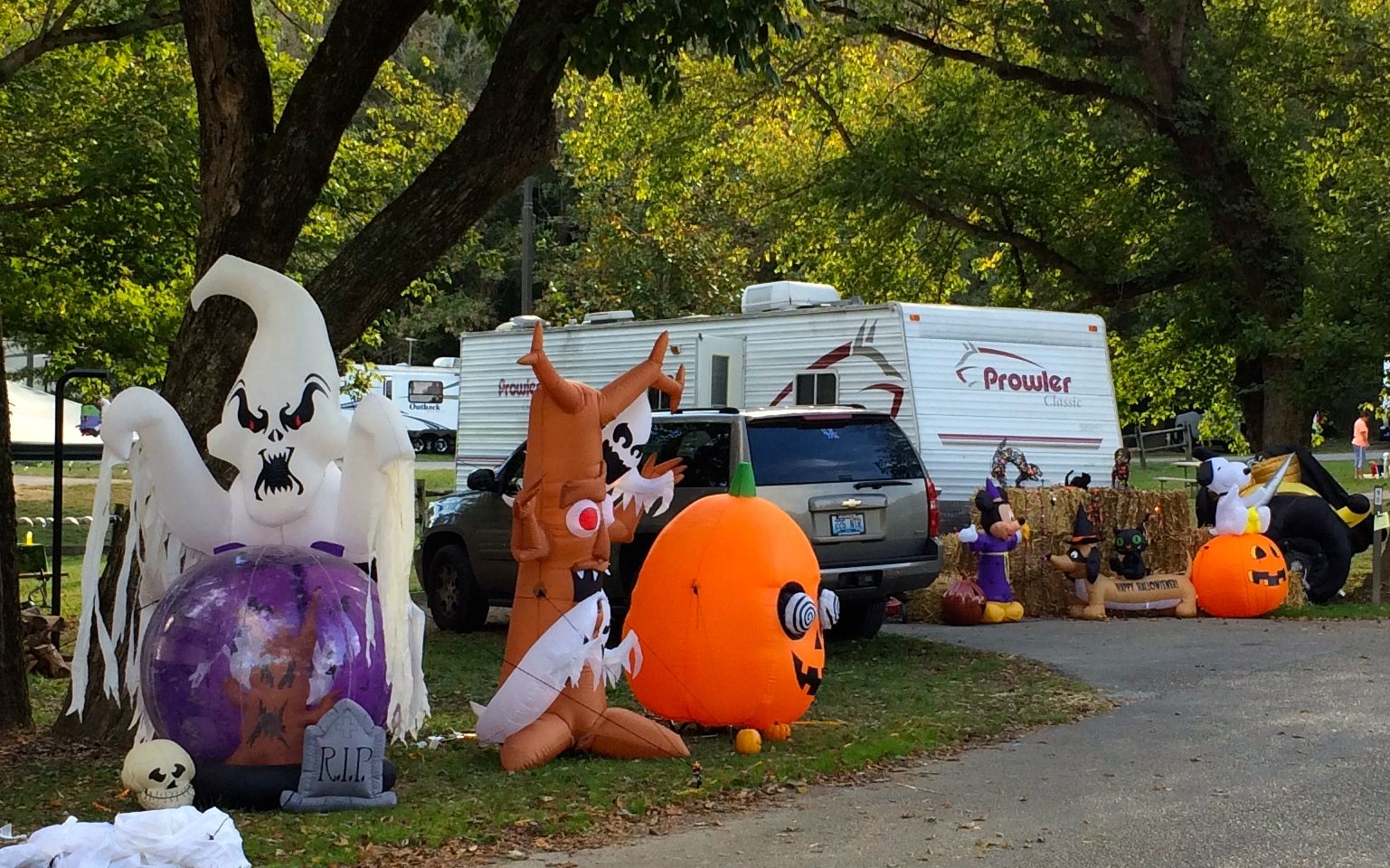
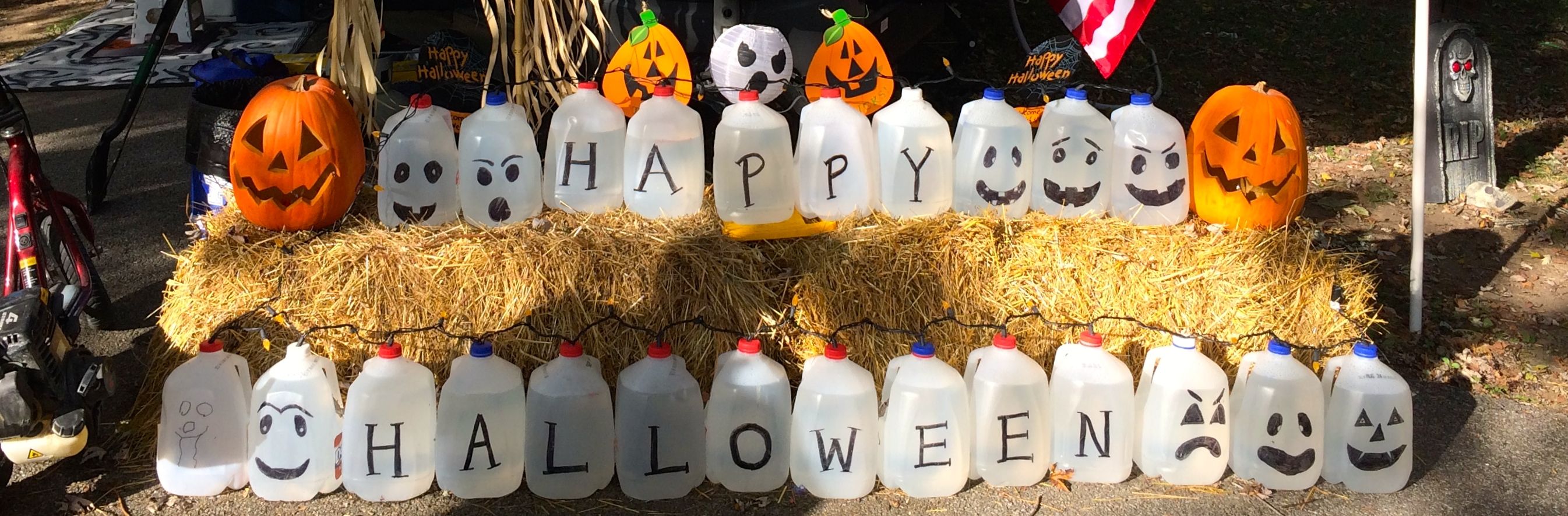
It turns out that the campers in the area come back year after year to celebrate Halloween, and they go all out with their decorations. I was there mid-week and people would come over to the campground after work to put up their decorations.
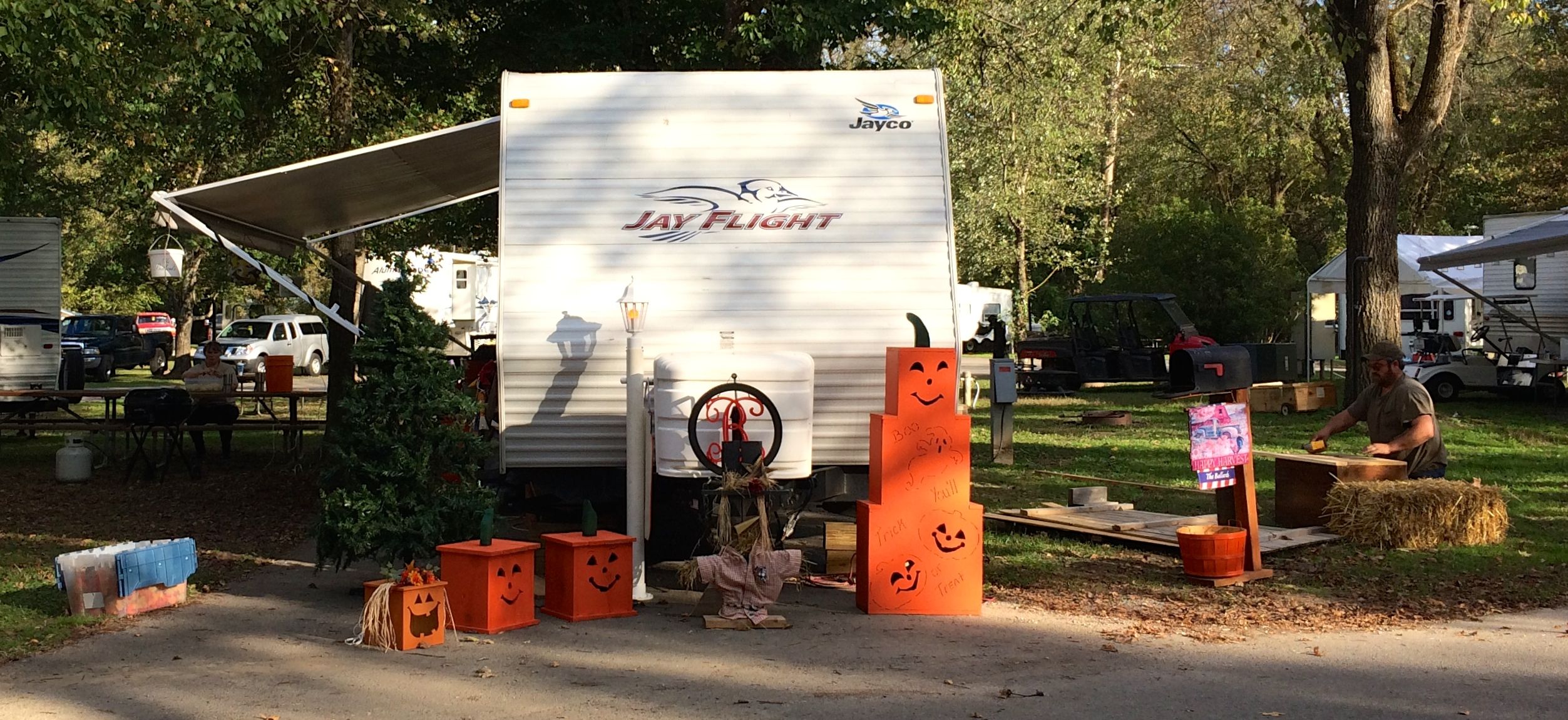
Some of the decorations were kind of understated…
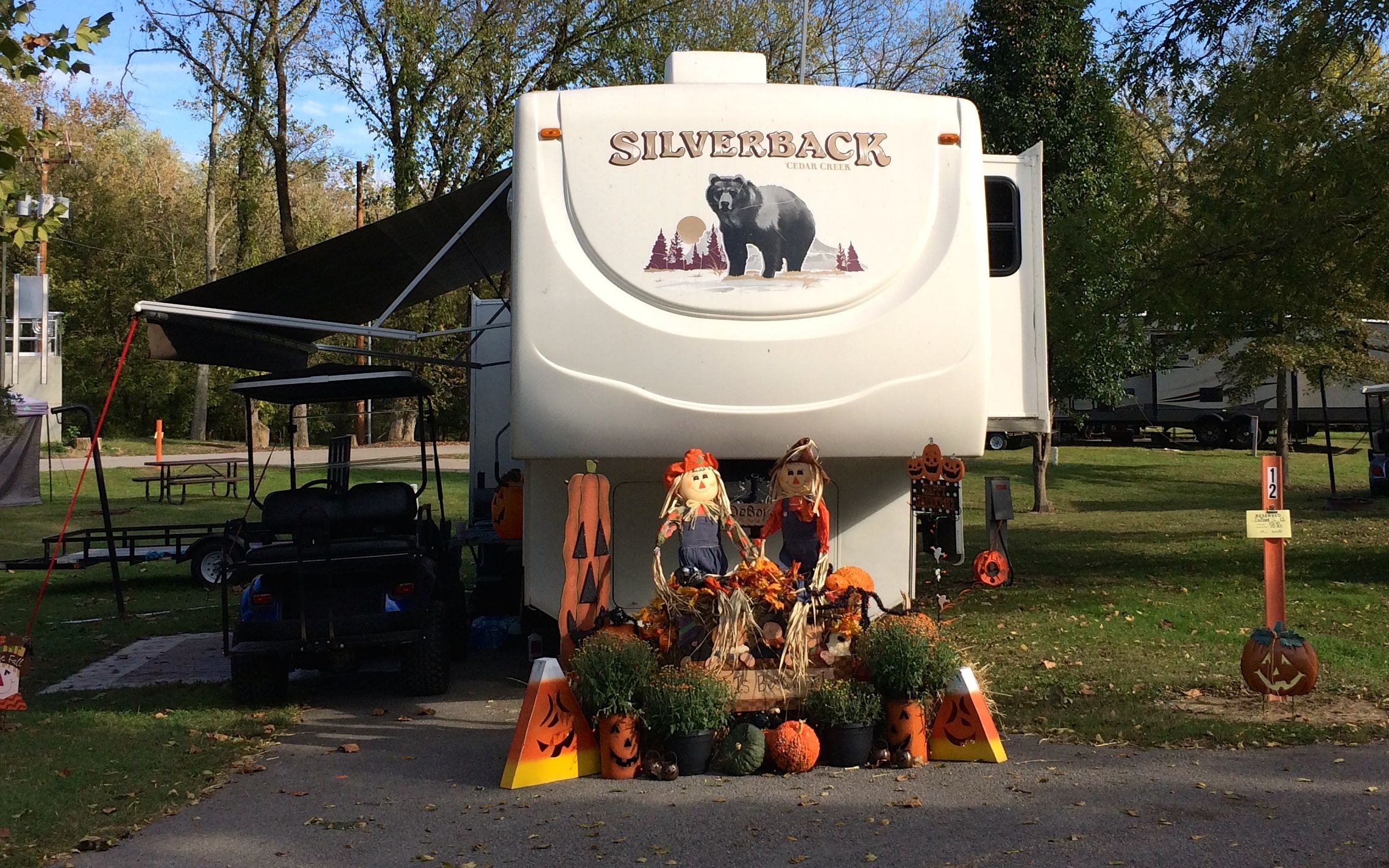
yet elegant – in a Halloween-y sort of way.
Incidentally, do you notice the golf car parked under the awning? I was surprised at how many people had them here at the park. A major activity seemed to be driving around.
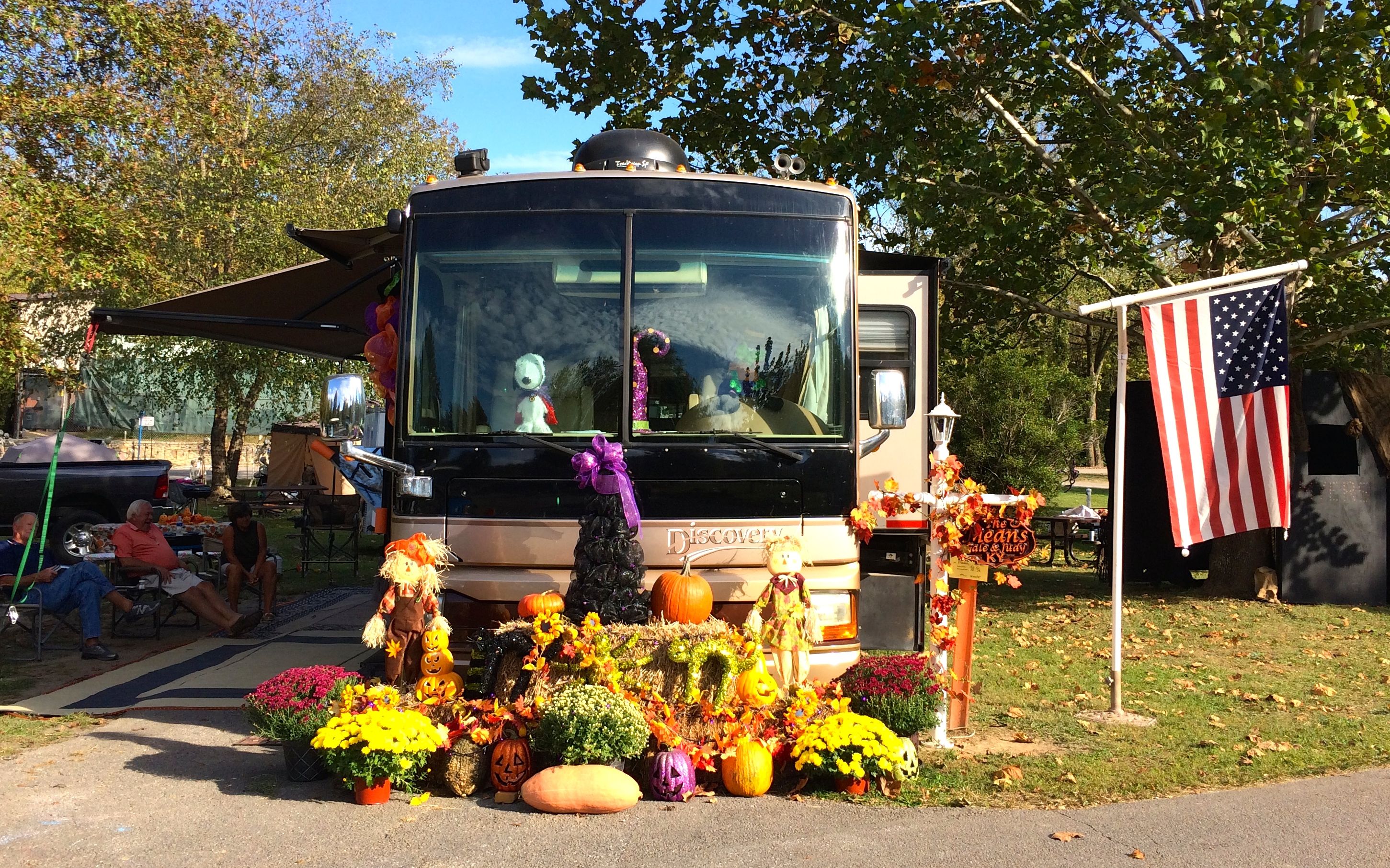
I came upon these folks relaxing in the shade. They filled me in on what was going on with all the decorations. They also handed me books that their children had made of trips they made with their them and their grandchildren. Beautiful photos. Of course I returned them.
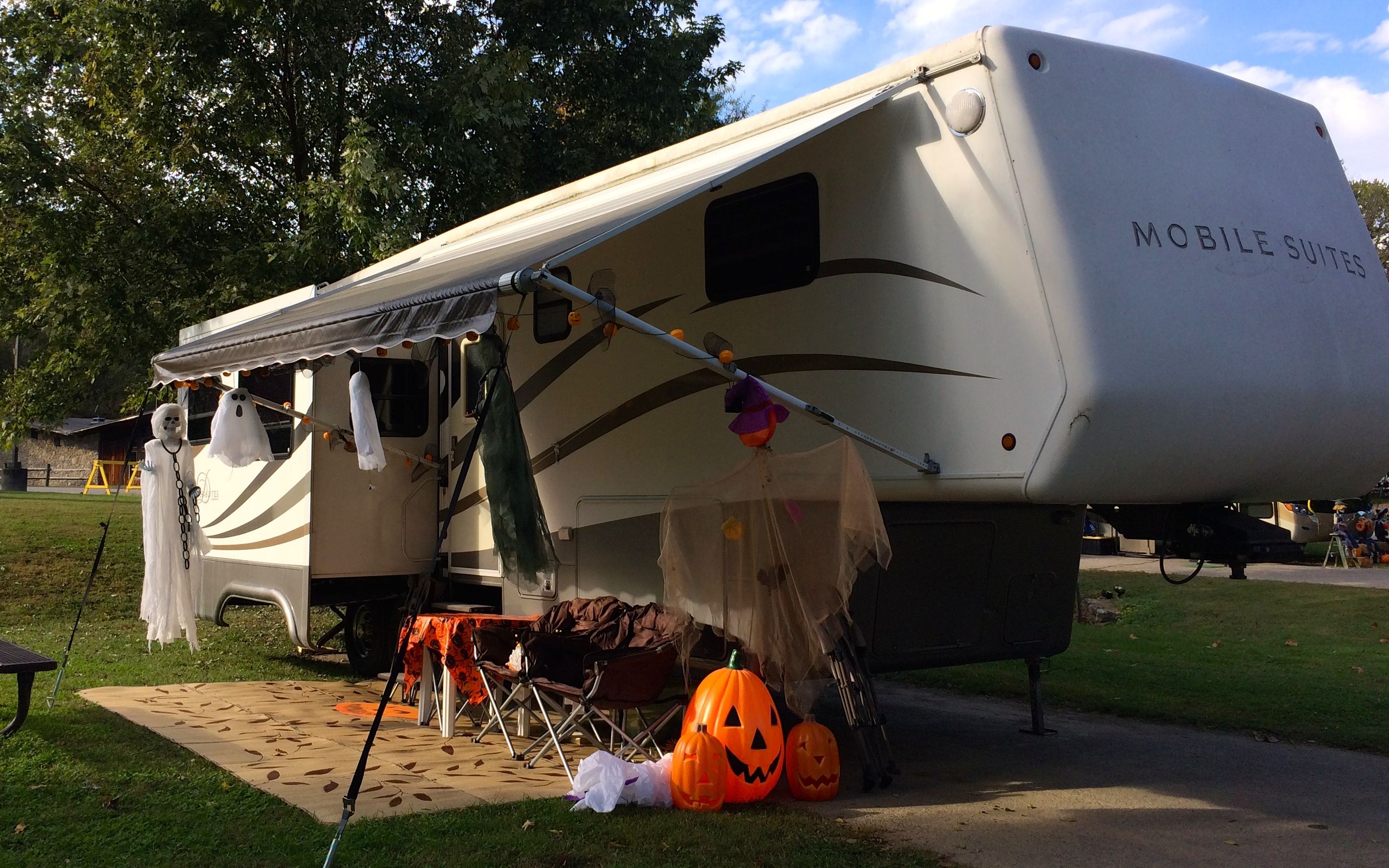
I can only assume that these people were not finished with their decorating.
Near the camp store there was the pumpkin patch.
Really – there were golf cars all over!
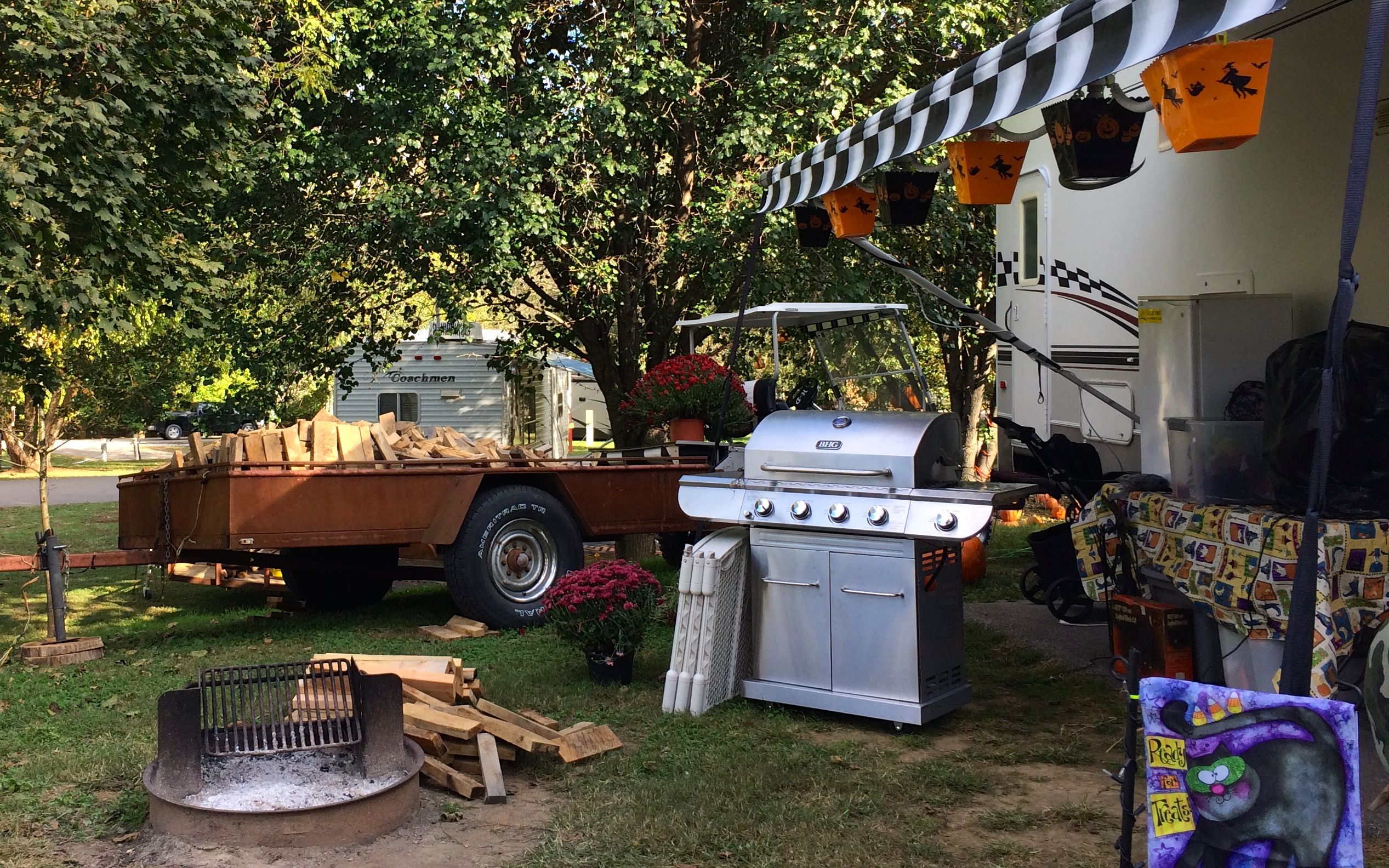
People must make trip after trip to get all this stuff out to the park. And, would you look at that trailer?! It’s full of firewood!
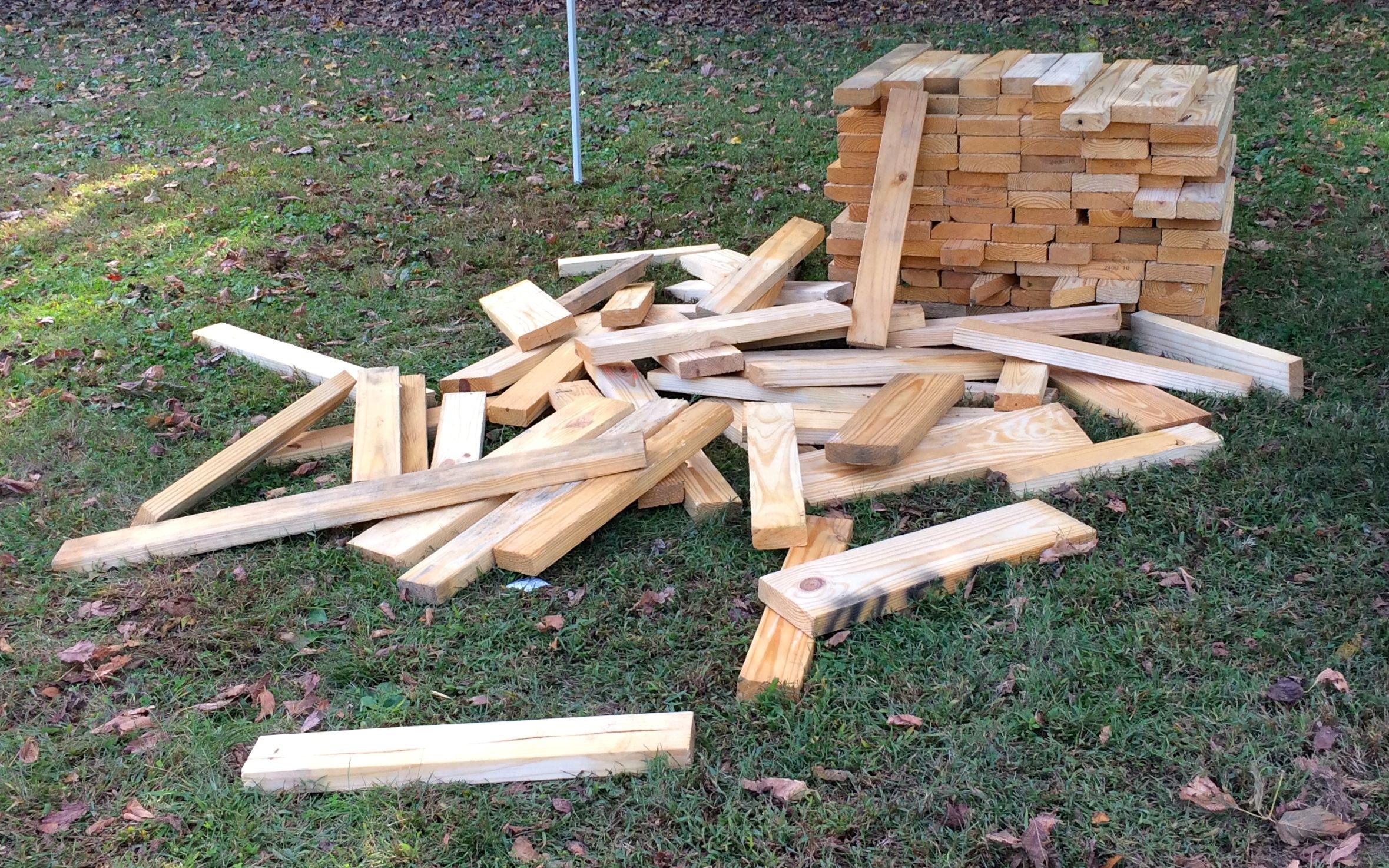
Speaking of firewood, I noticed that many sites had stacks of lovely dimensional lumber. I came across a guy who was working on unloading some from the back of his pickup and asked him about it.
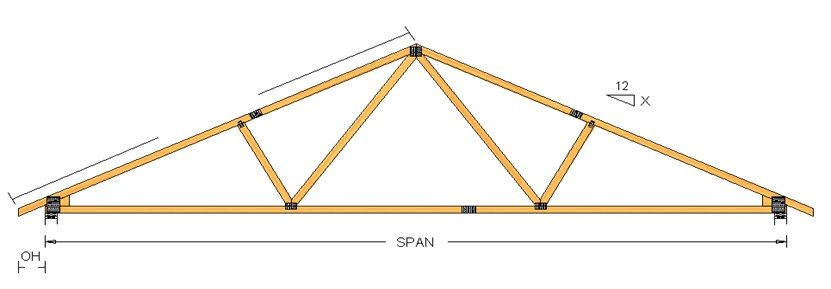
He told me that there were companies that made trusses. When they had cutoffs available, they would sell them by the pallet-ful.
Just in case you are not up on your building terms, this is one example of what a truss is.
There were massive inflatables all over.
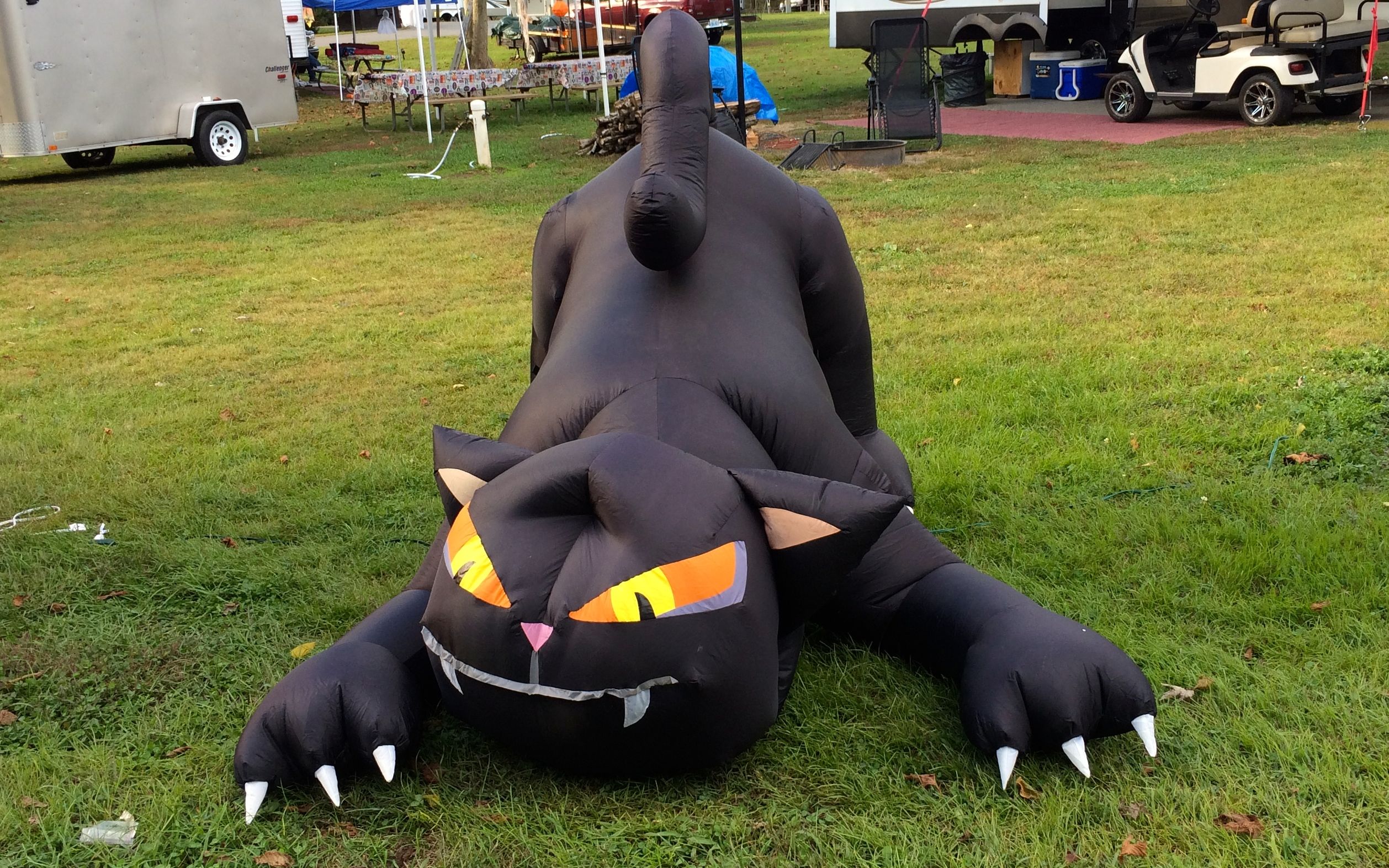
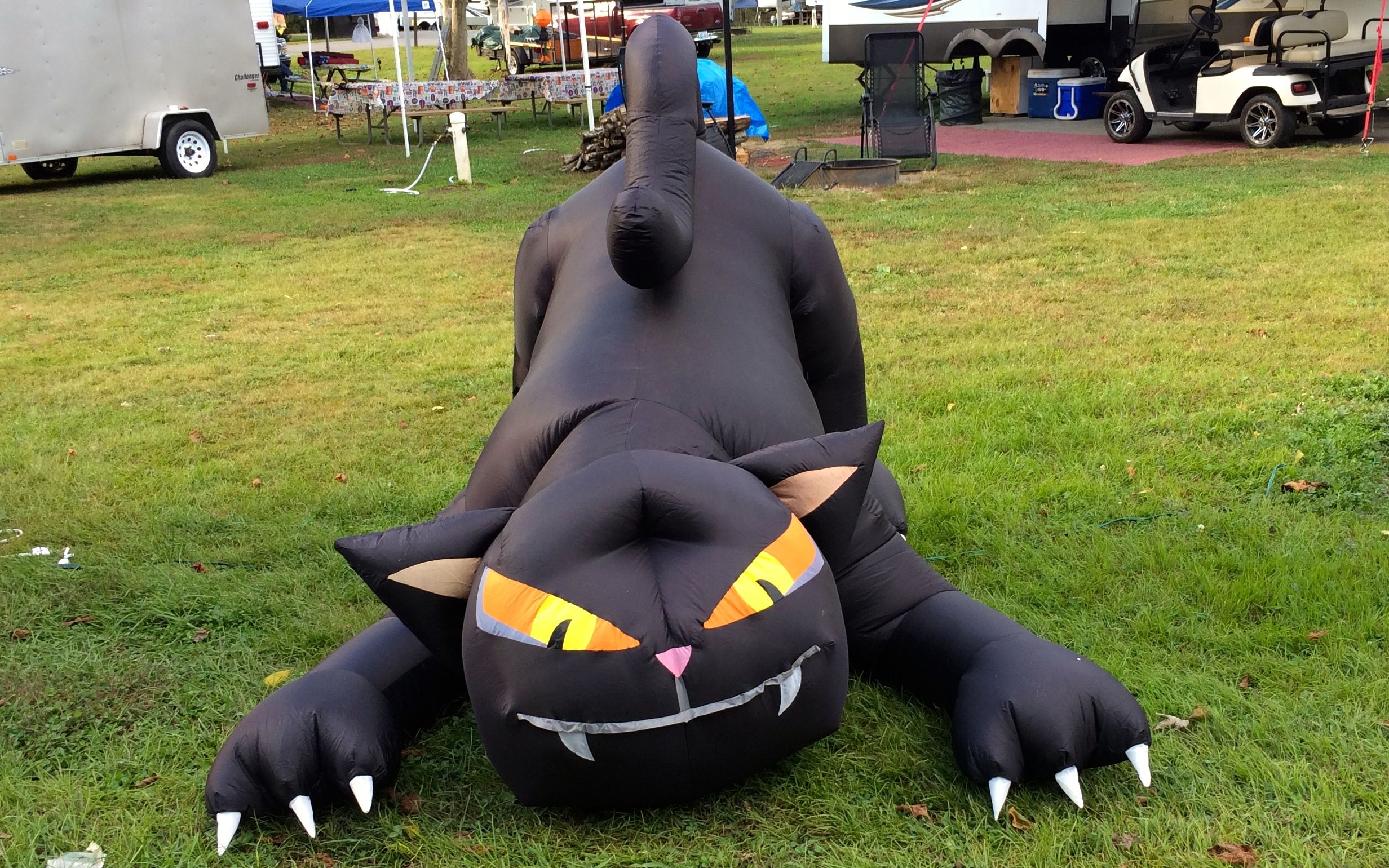
I particularly liked this black cat.
It moved its head back and forth!
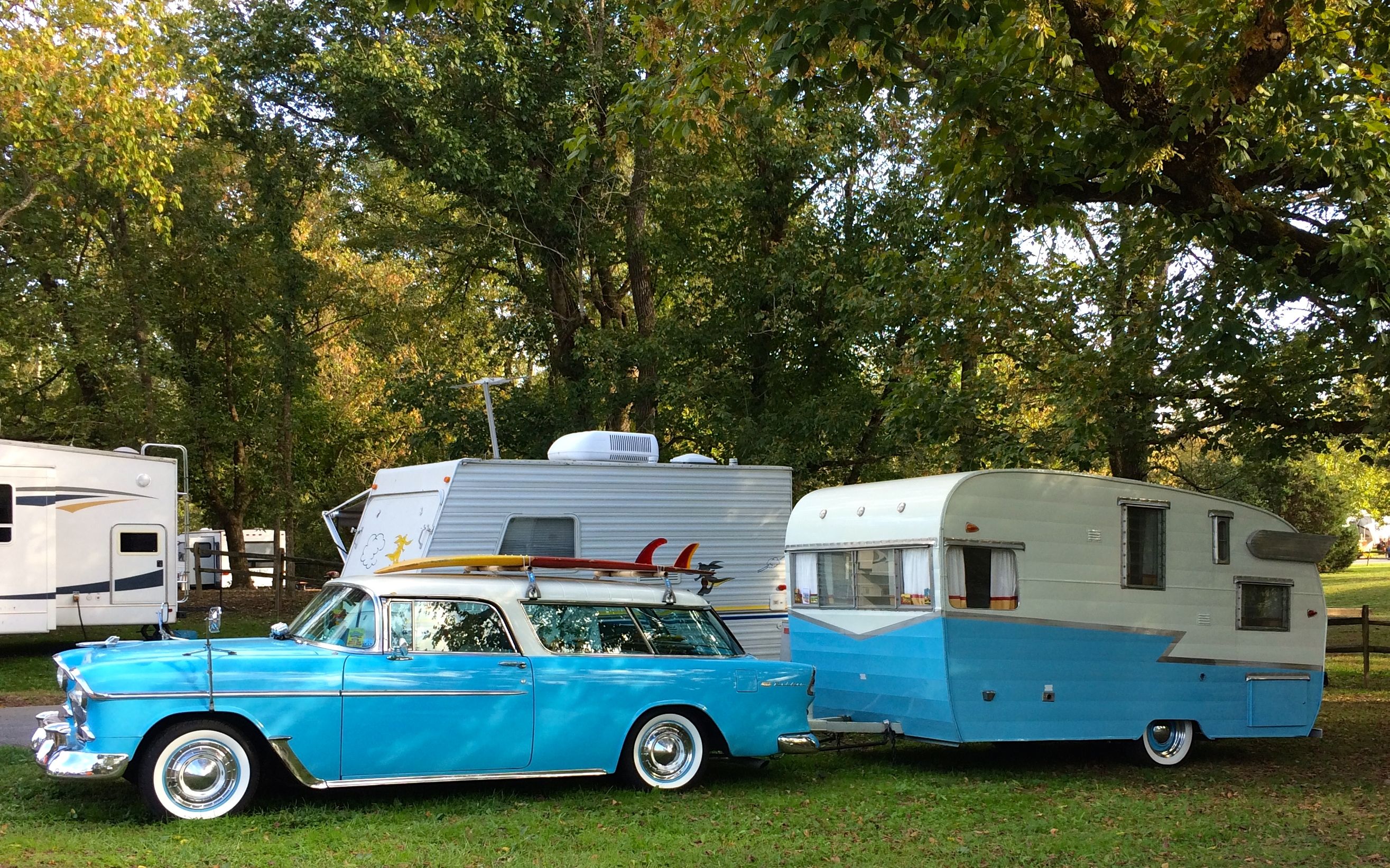
Isn’t this classic set up wonderful? I love how they match!
I came upon this guy who was busy building things for his display. When I stopped to talk with him, he told me what he was building.
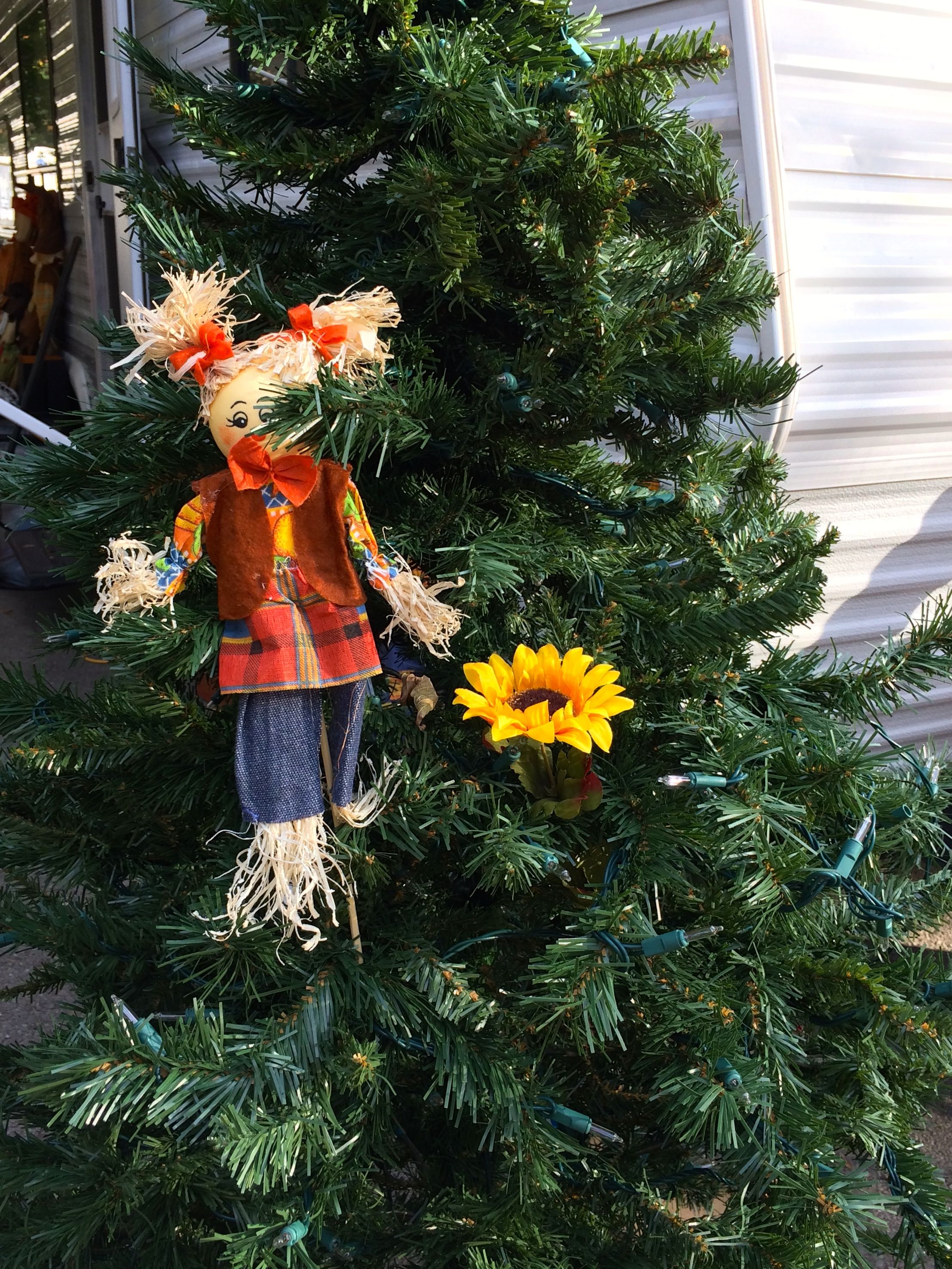
He was going to decorate this Christmas tree for the season, too. He took me to meet his wife, who was busy peeling and dicing apples for apple sauce. He wanted her to show me the photos from last year’s decorations that she had on her phone.
These folks are really proud of their displays.
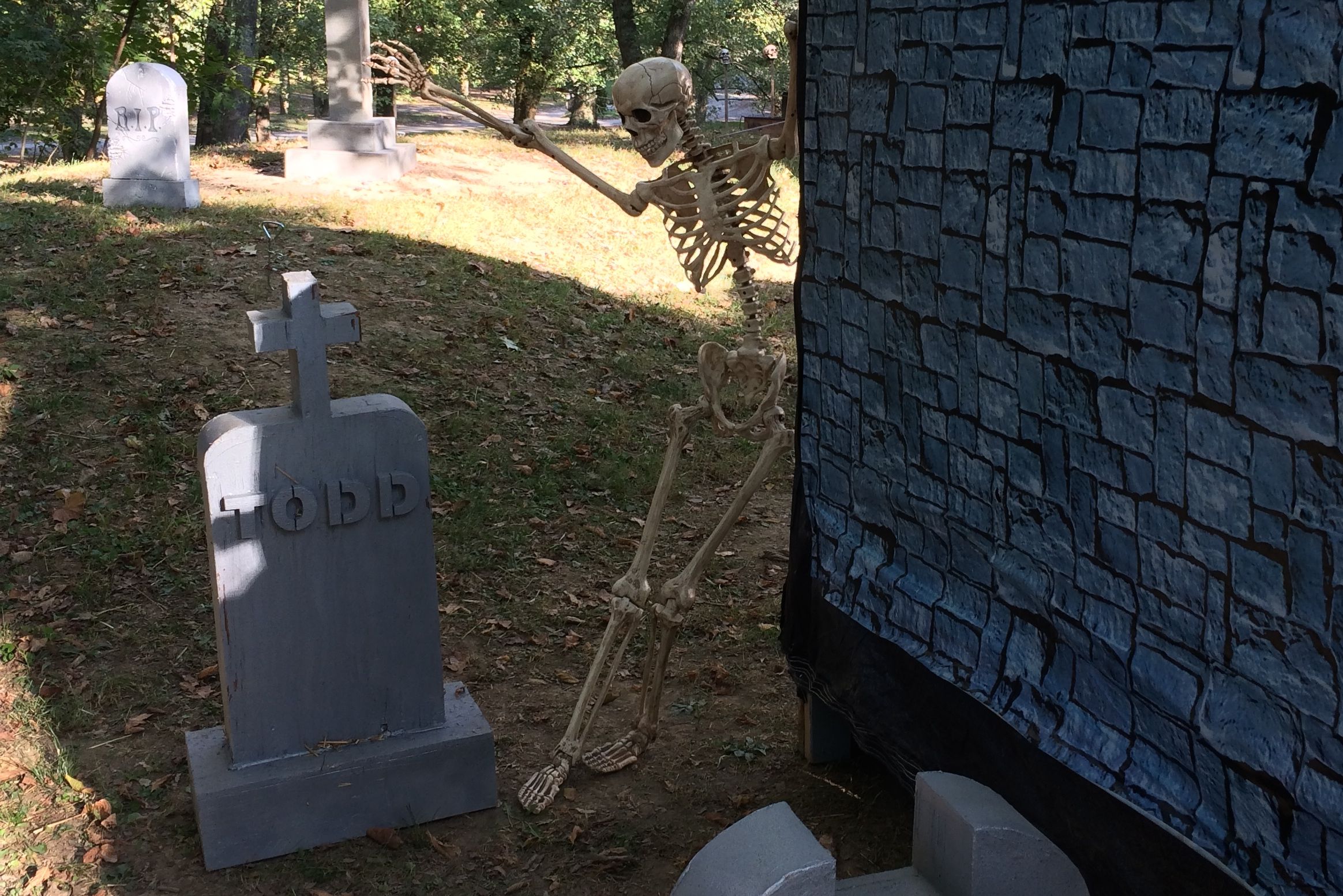
These folks had a small haunted house in their display, along with tombstones and skeletons.
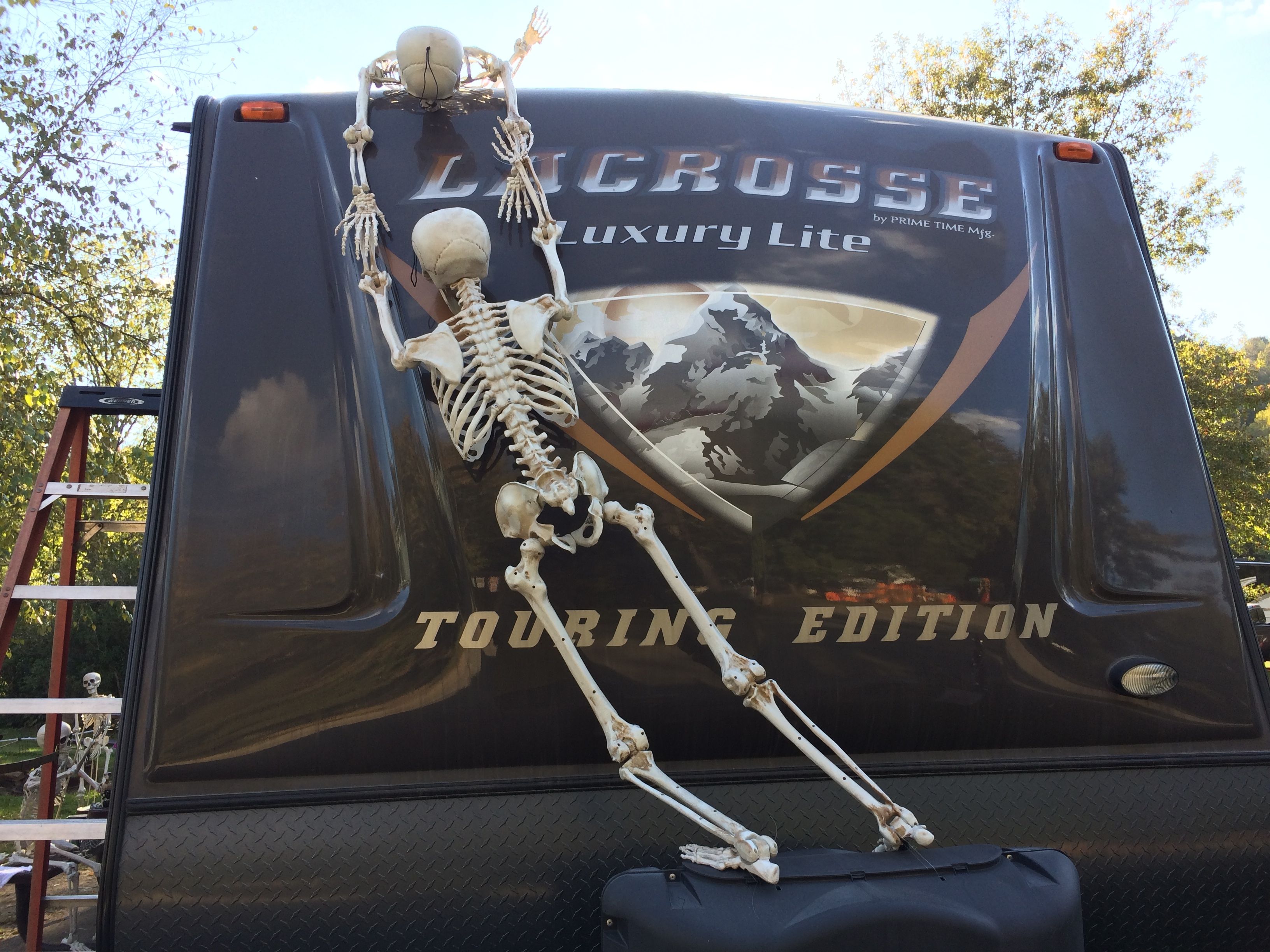
Across the way, this rig was really into the skeletons.
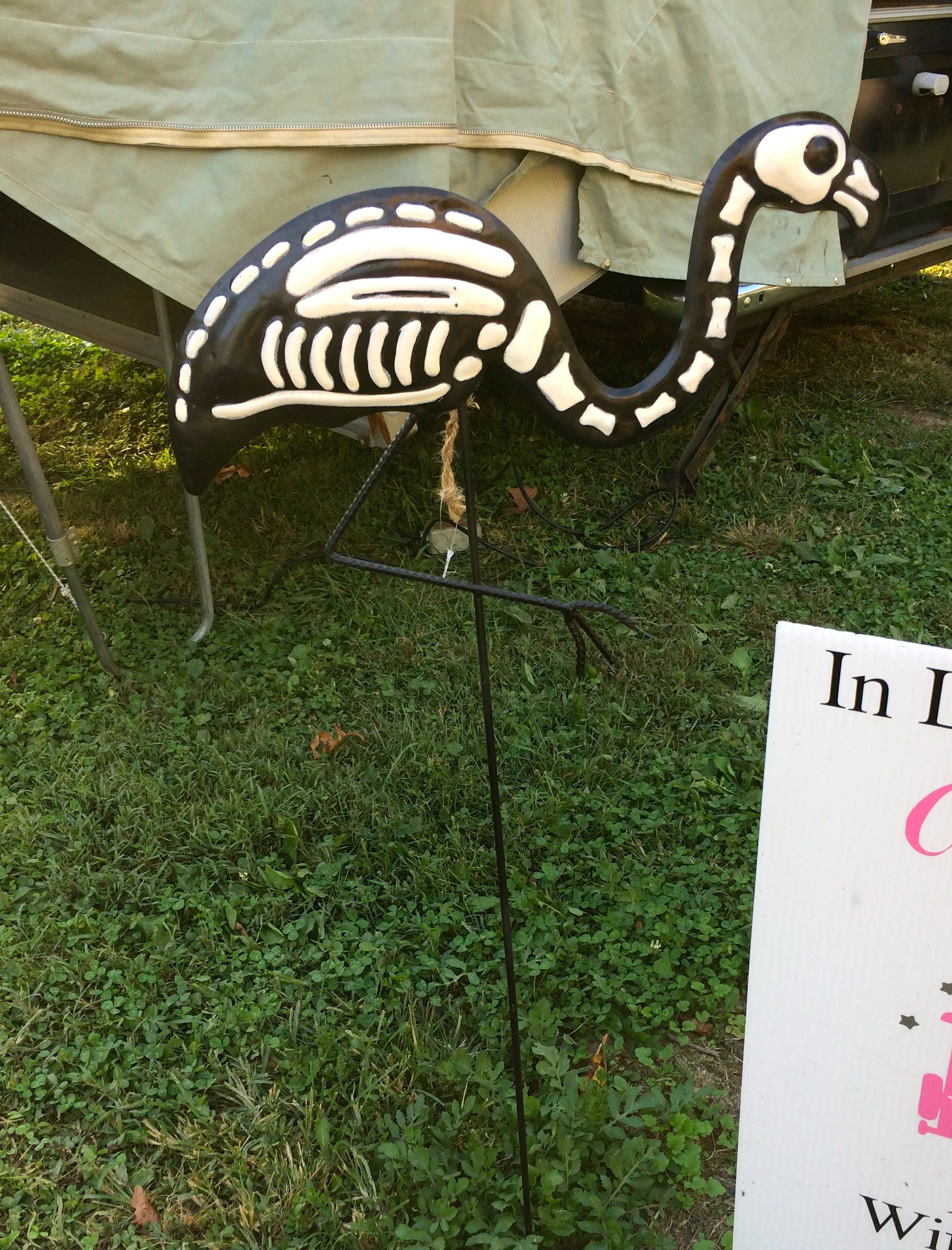
I mean, they even had a flamingo skeleton!
Believe me, there was much more, but you get the idea.
I hope you had a happy Halloween, a wonderful Thanksgiving and that your Christmas is going to be delightful!
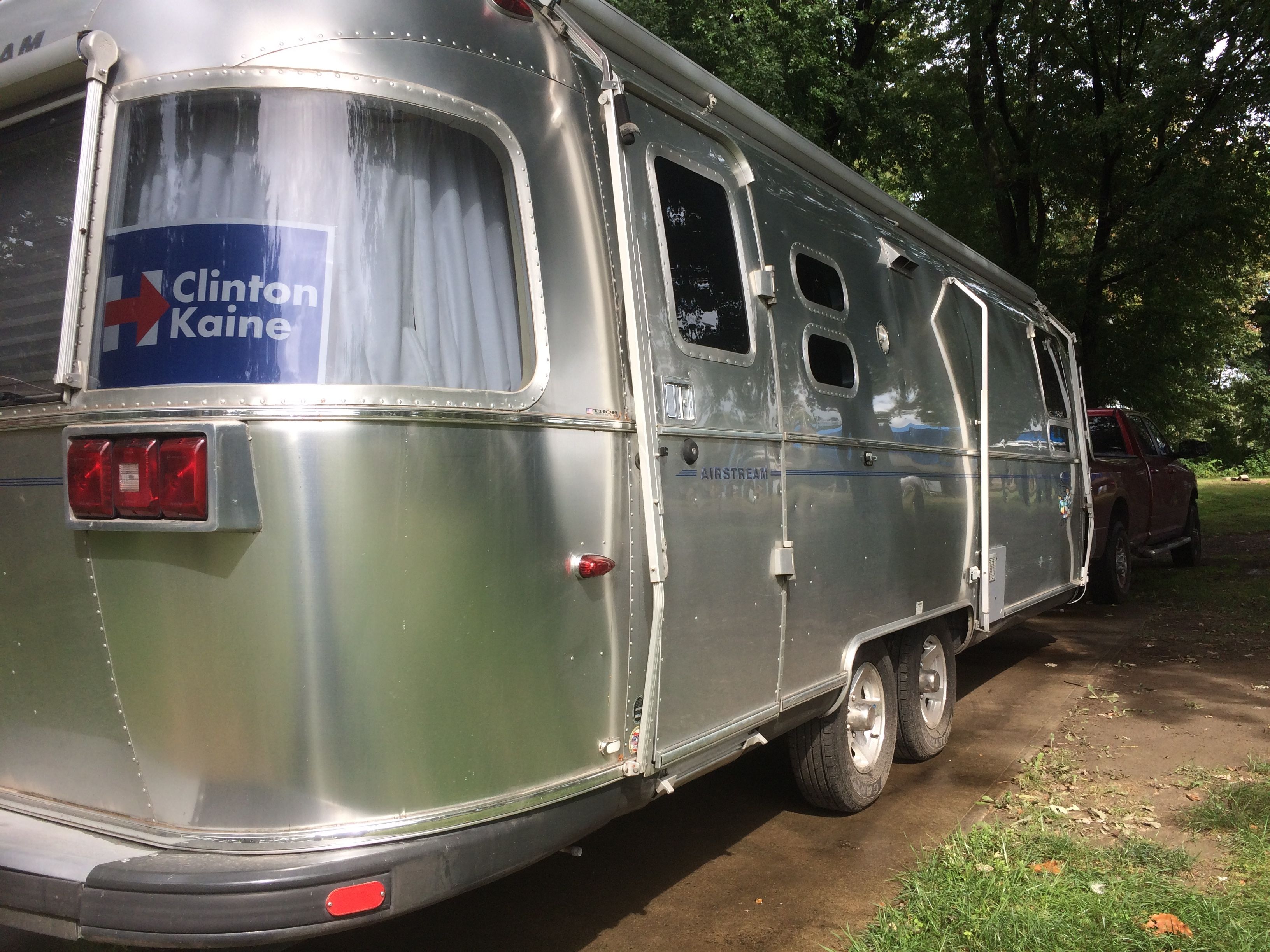
My next goal was to get some issues addressed with Flo the Airstream. I left Appomattox Courthouse and got to Out-of-Doors Mart in Colfax, North Carolina in time to drop her off before I went to check into the motel.
It felt great to leave her at an Airstream dealer that actually had Airstreams on the lot!
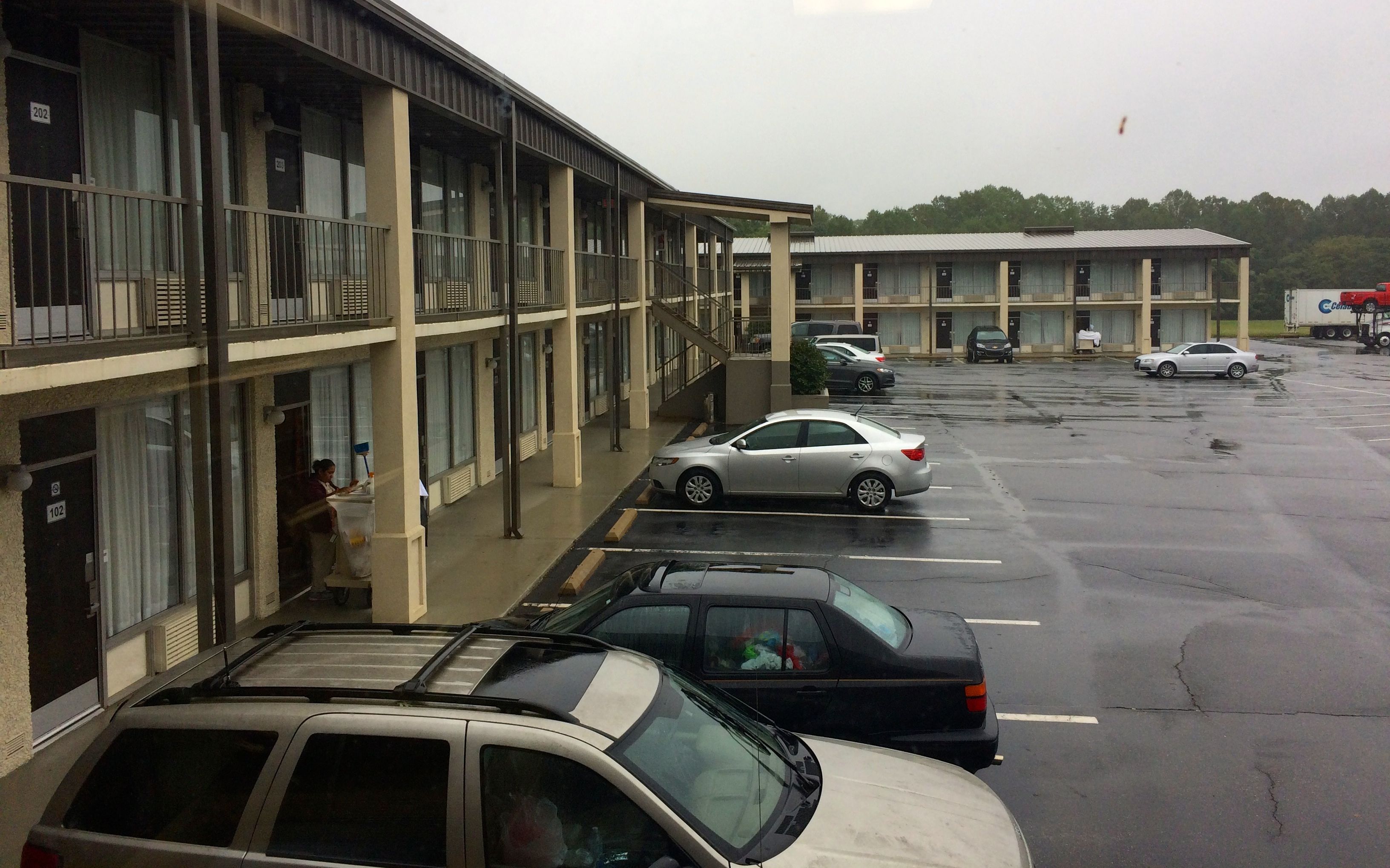
I headed back to the motel, which they describe as “classic”.
I think another way to describe it would be “old”.
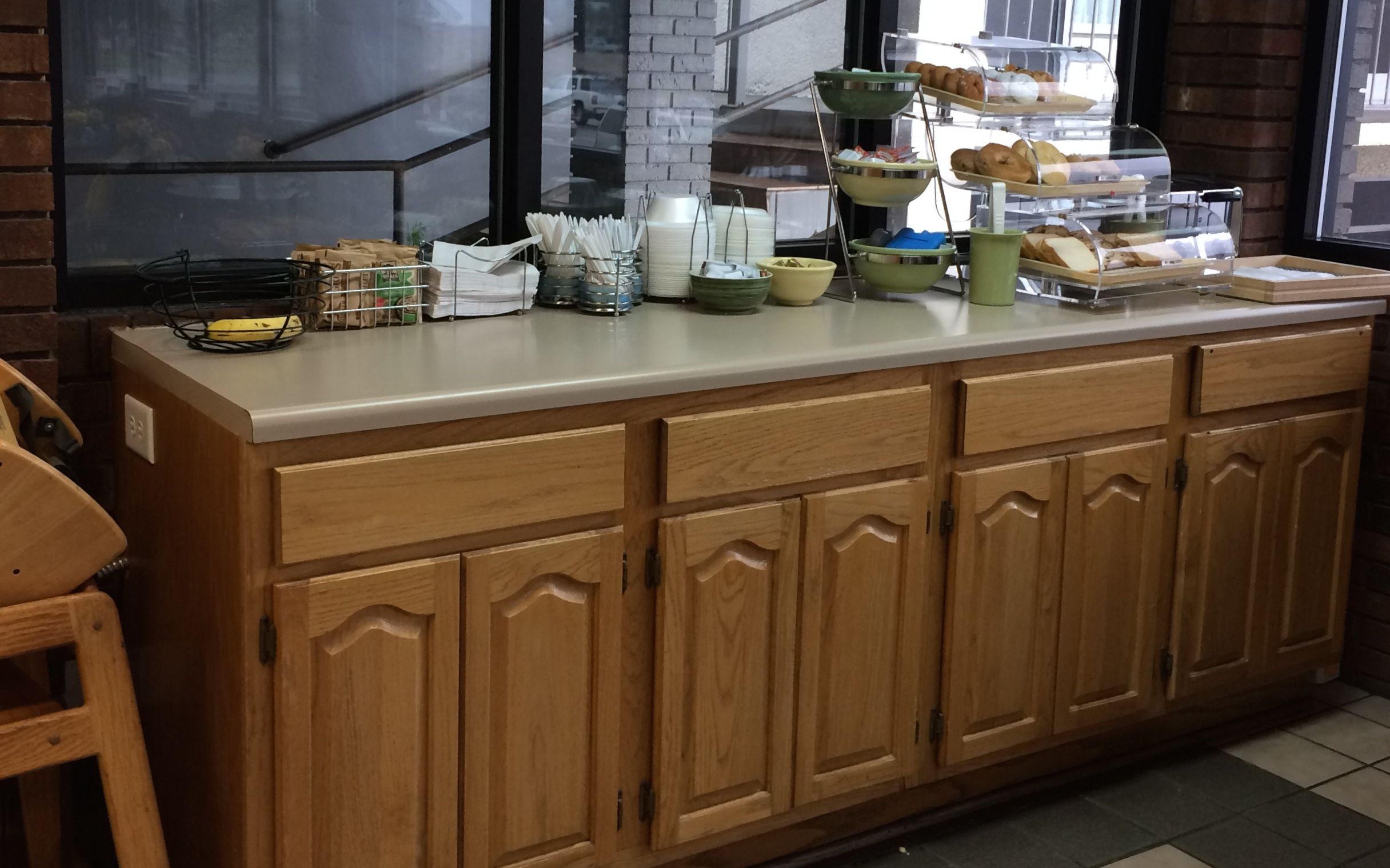
They do offer a “continental breakfast”. The offerings were rather meager, though. I’ve never seen a breakfast bar that didn’t even have cereal. If you look carefully, you can see one banana in the basket on the left end of the counter.
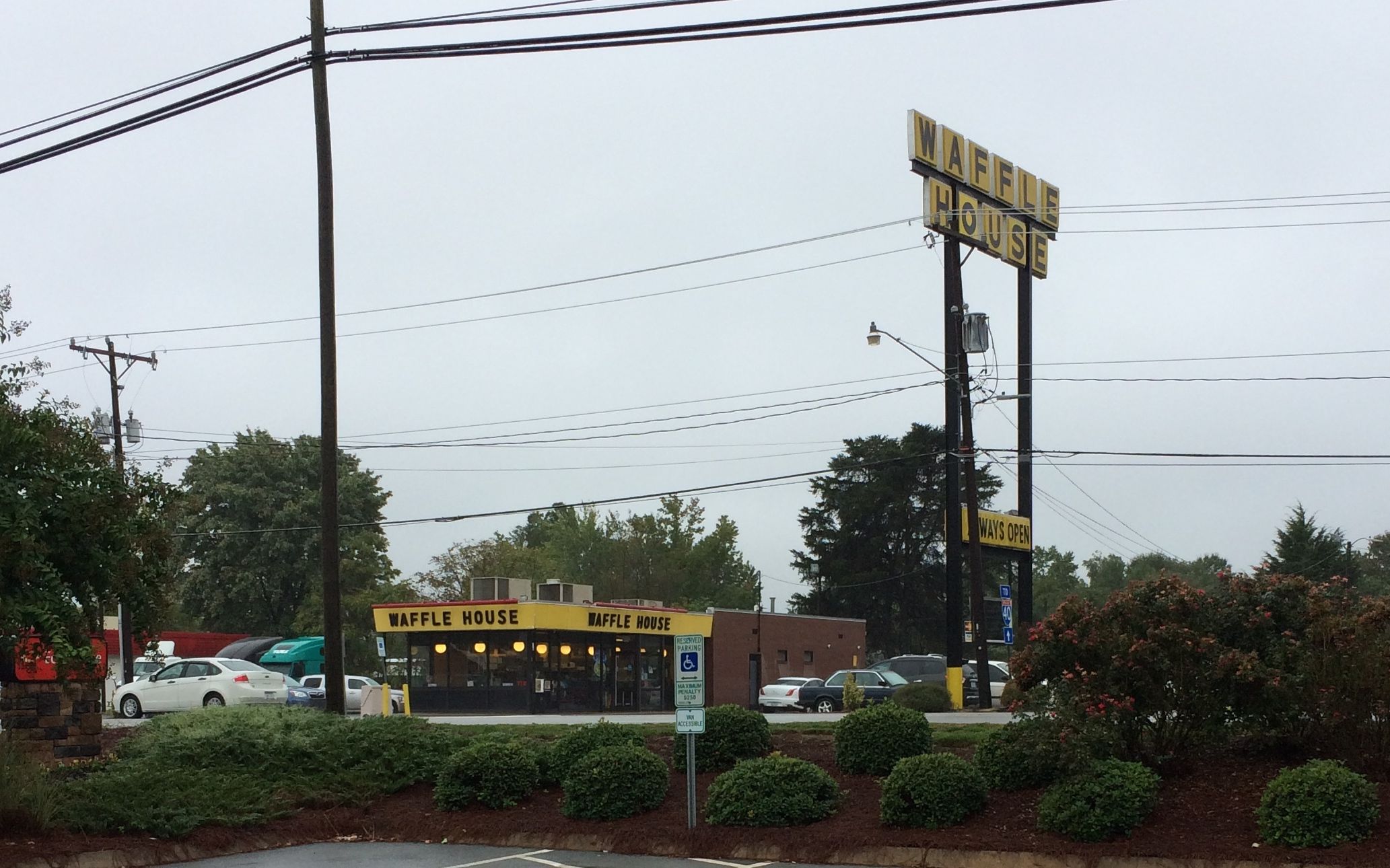
I suppose I could have gone across the street to the Waffle House, though.
It was just for a couple of days, though. Before long, I was on the way to West Virginia.
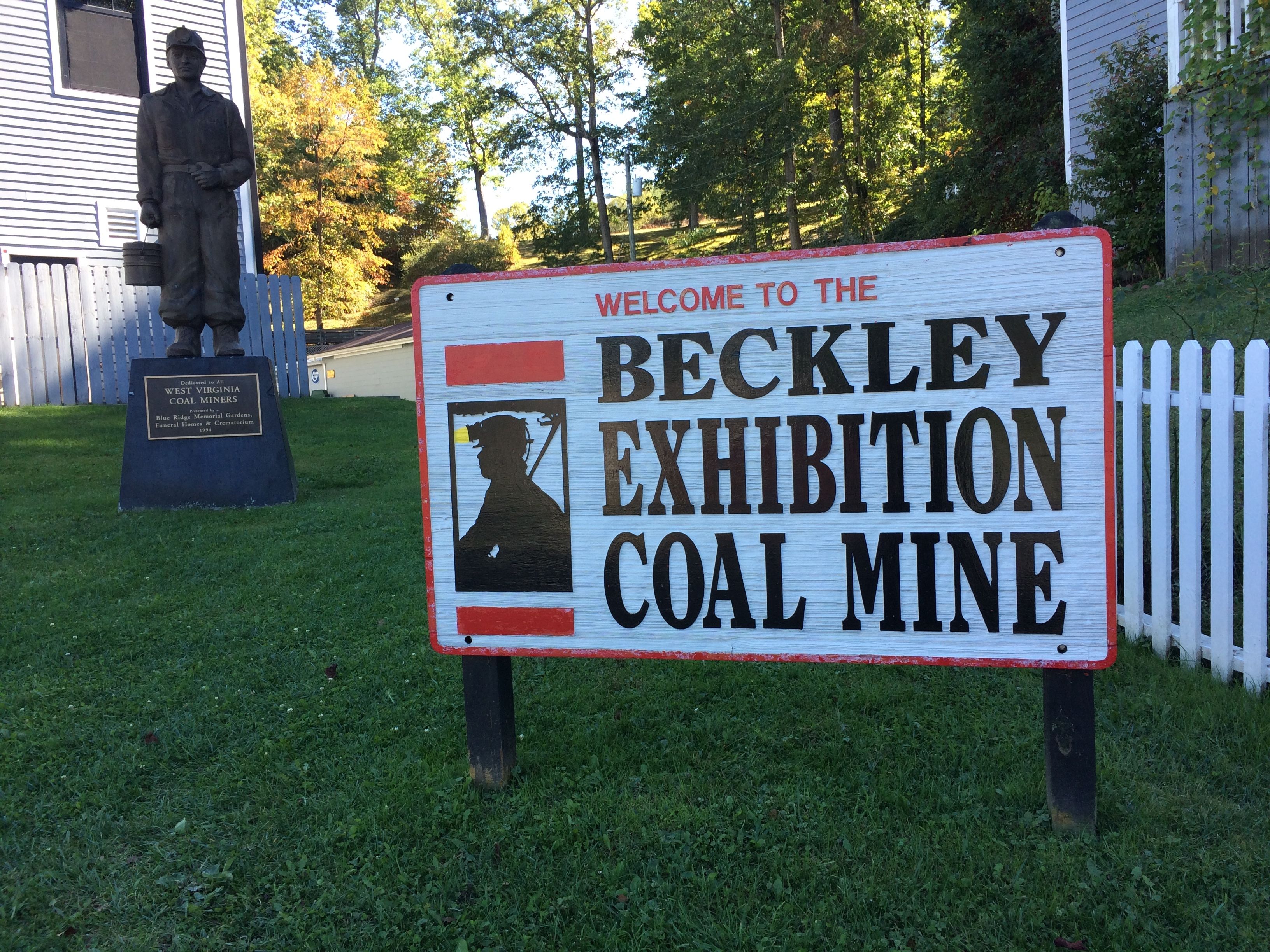
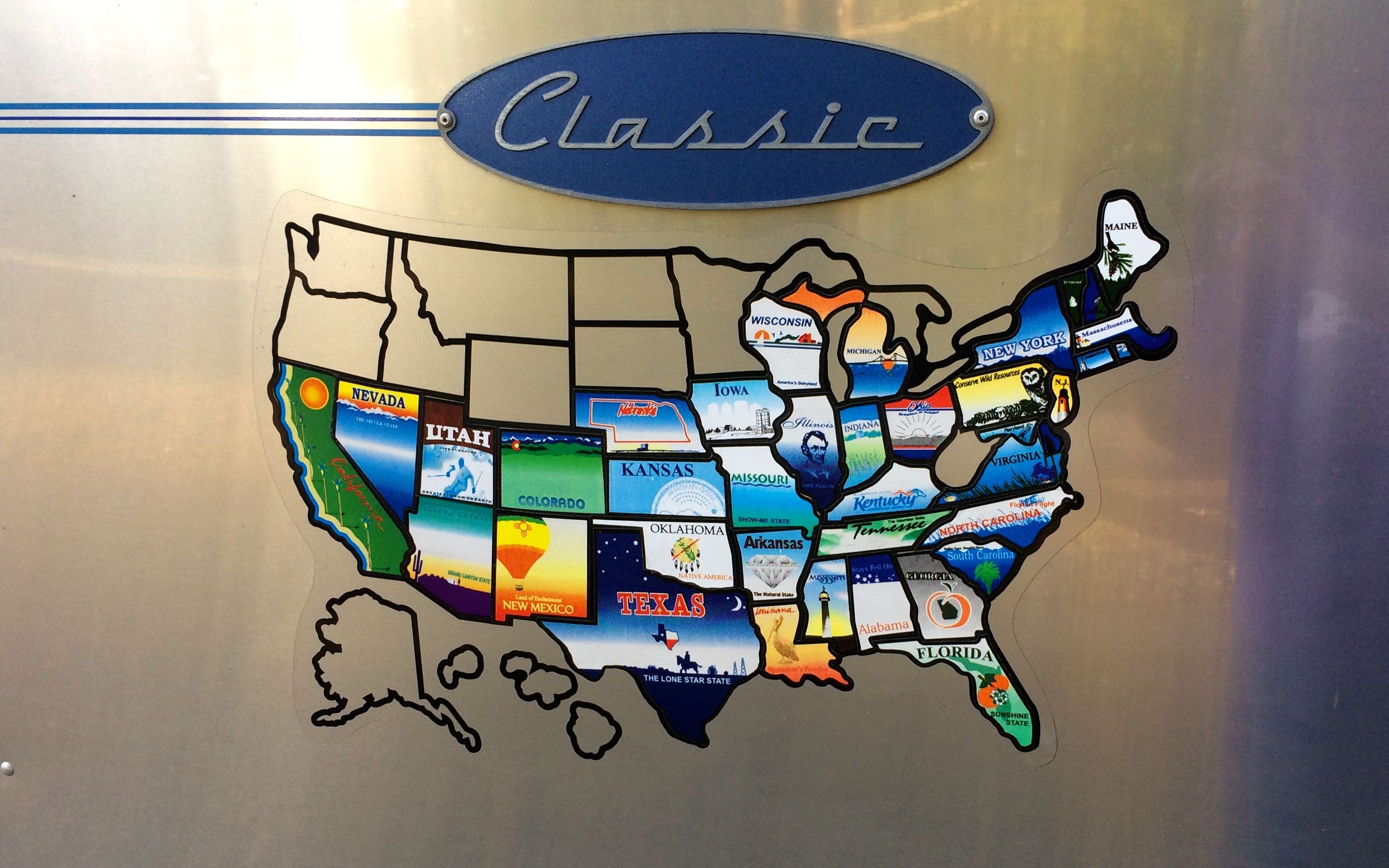
West Virginia! Finally! I was going to be able to put that sticker on my map. My destination was Beckley, West Virginia. I had booked a campsite on the hill above the Beckley Exhibition Coal Mine.
How clever of the city to put in a campground! It was small but the sites were level and easy enough to get into. They were also full hook up sites and there were trash cans at each site. At only $25 a night, it was a good deal.
I took care of some tasks of daily living – I did my laundry and restocked the larder. I love the things I see when I’m out shopping.
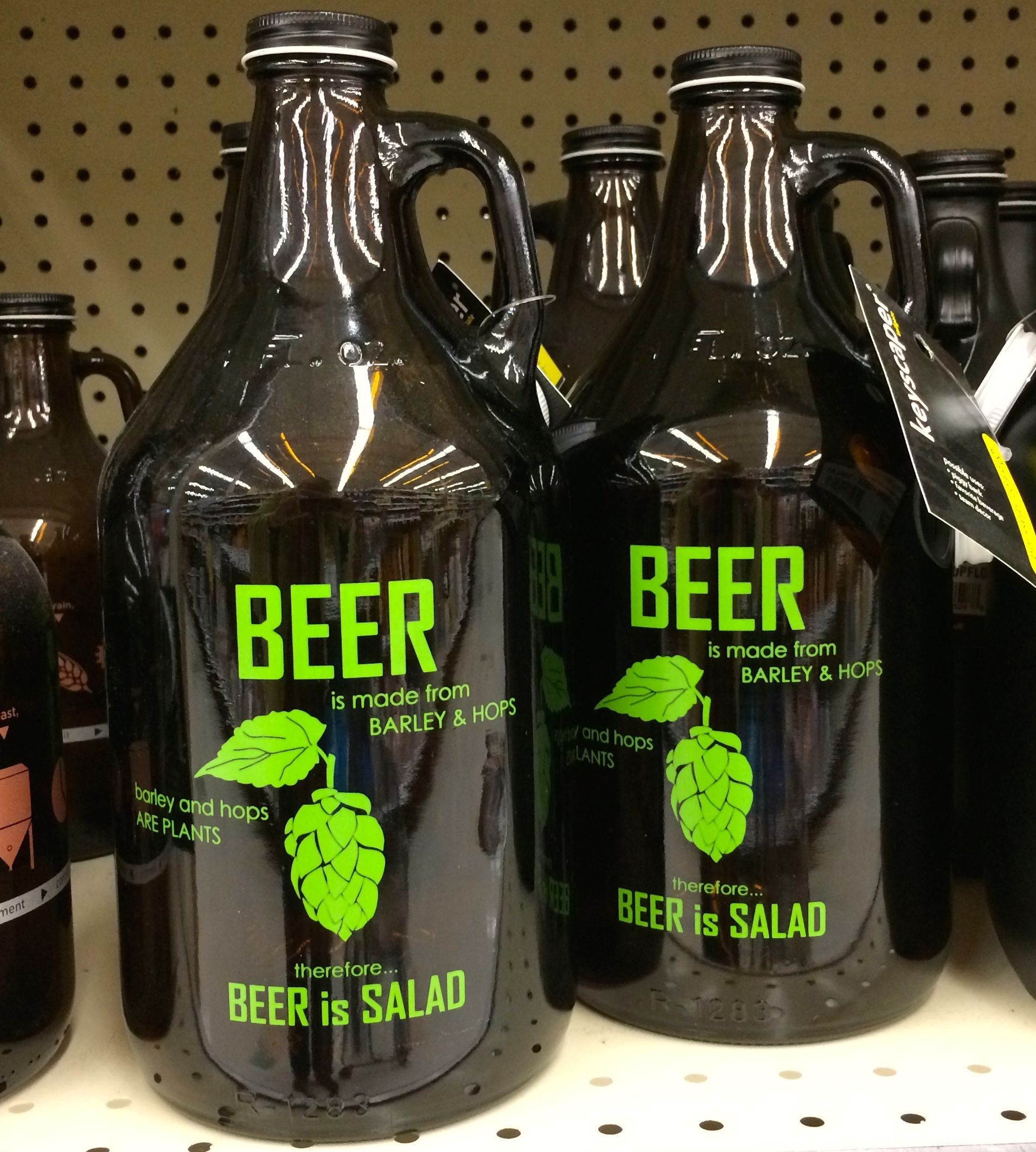
The growler says, “Beer is made from barley and hops. Barley and hops are plants, therefore beer is salad”.
You can’t argue with logic like that.
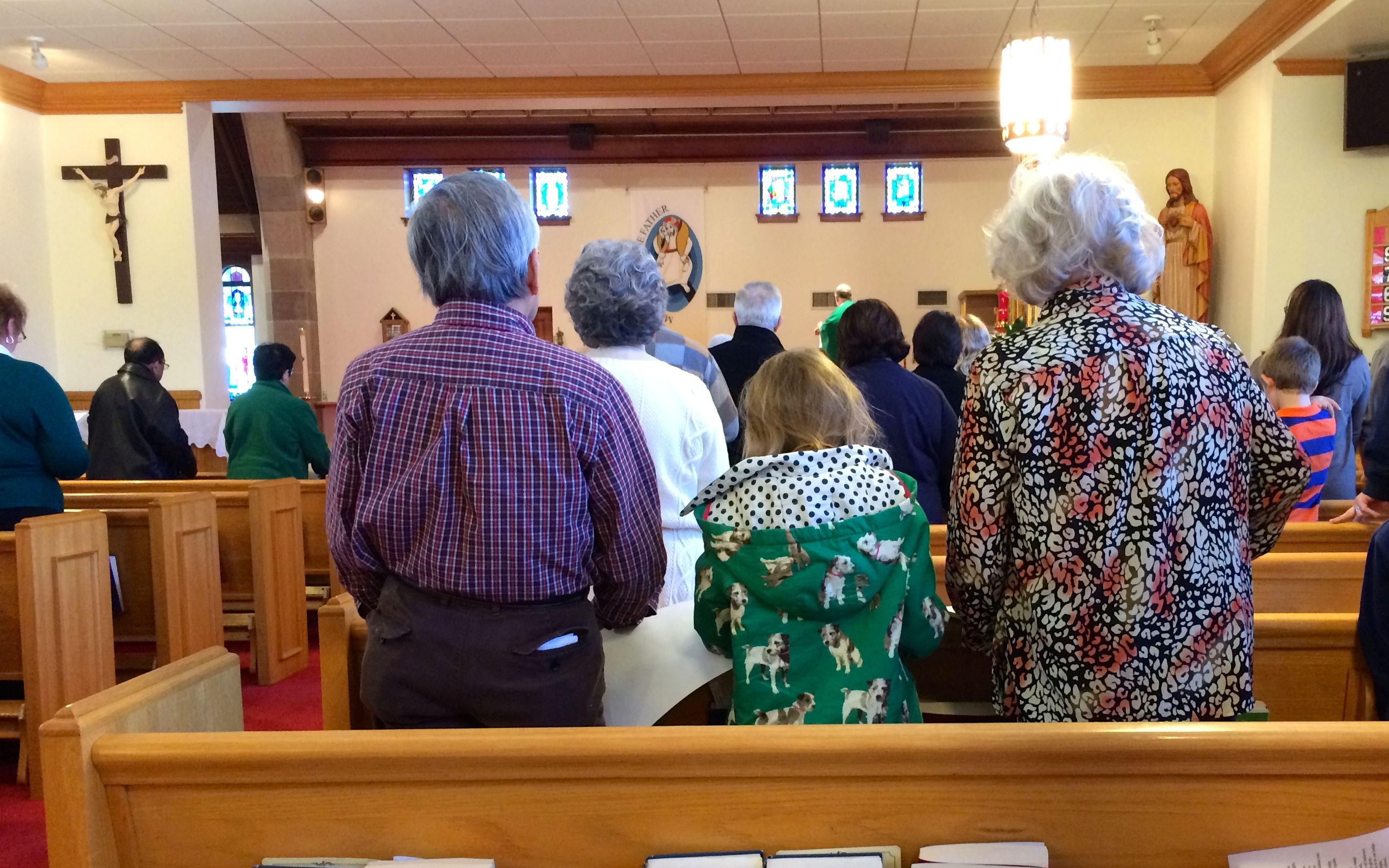
I also went to church.
I snapped this photo because I liked this girl’s jacket that was covered with dogs. We had a nice little chat about it after mass. It turns out that she has a friend who had a backpack made of the same material.
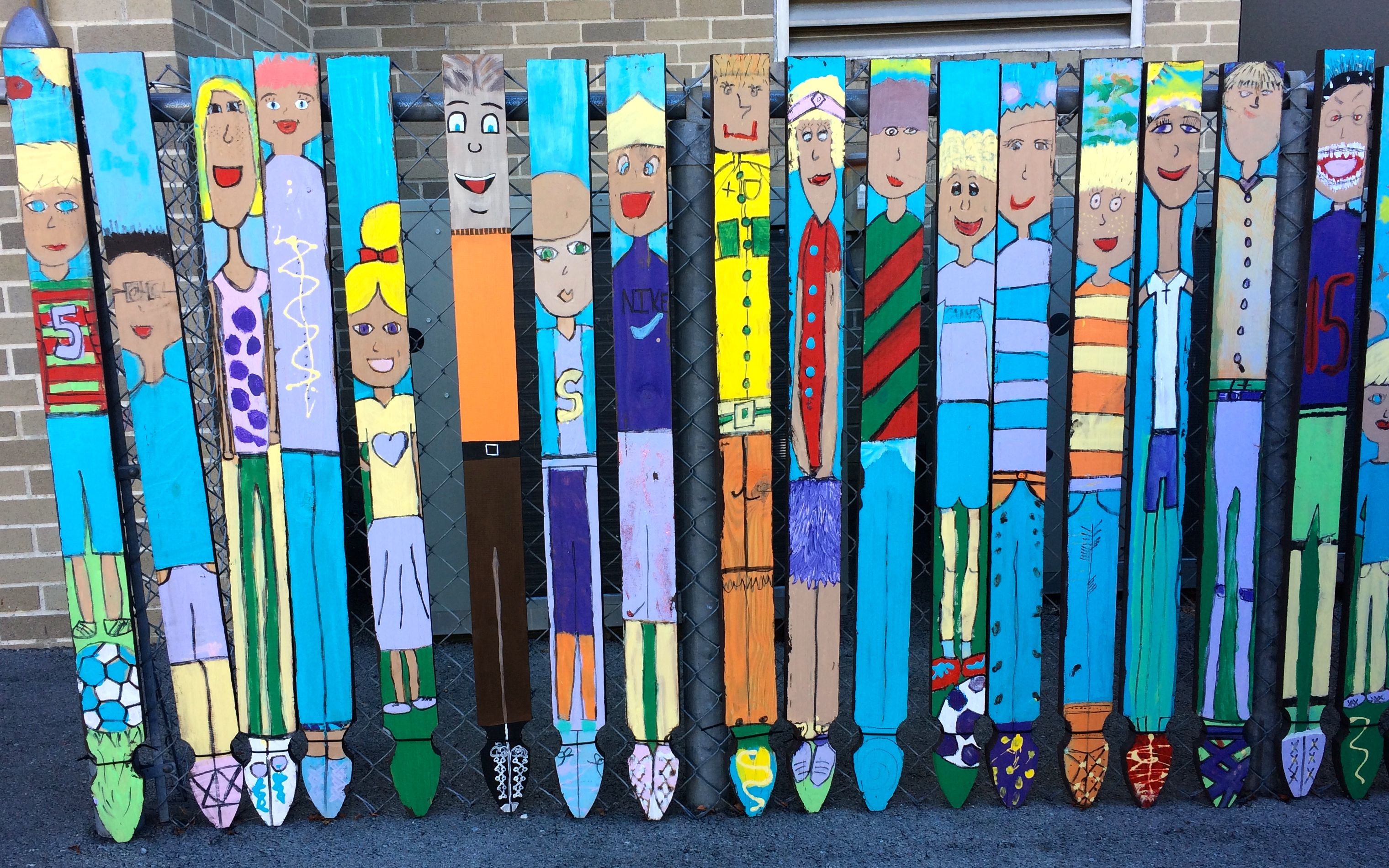
I liked this group project that seemed to be a decorative cover for the HVAC equipment.
Although my main purpose for visiting Beckley was to actually stay in West Virginia, I decided to see what I could see at the Beckley Exhibition Coal Mine, without paying the admission fee.
I mean, I have been in a lot of mines. I wasn’t in the mood to see another one.
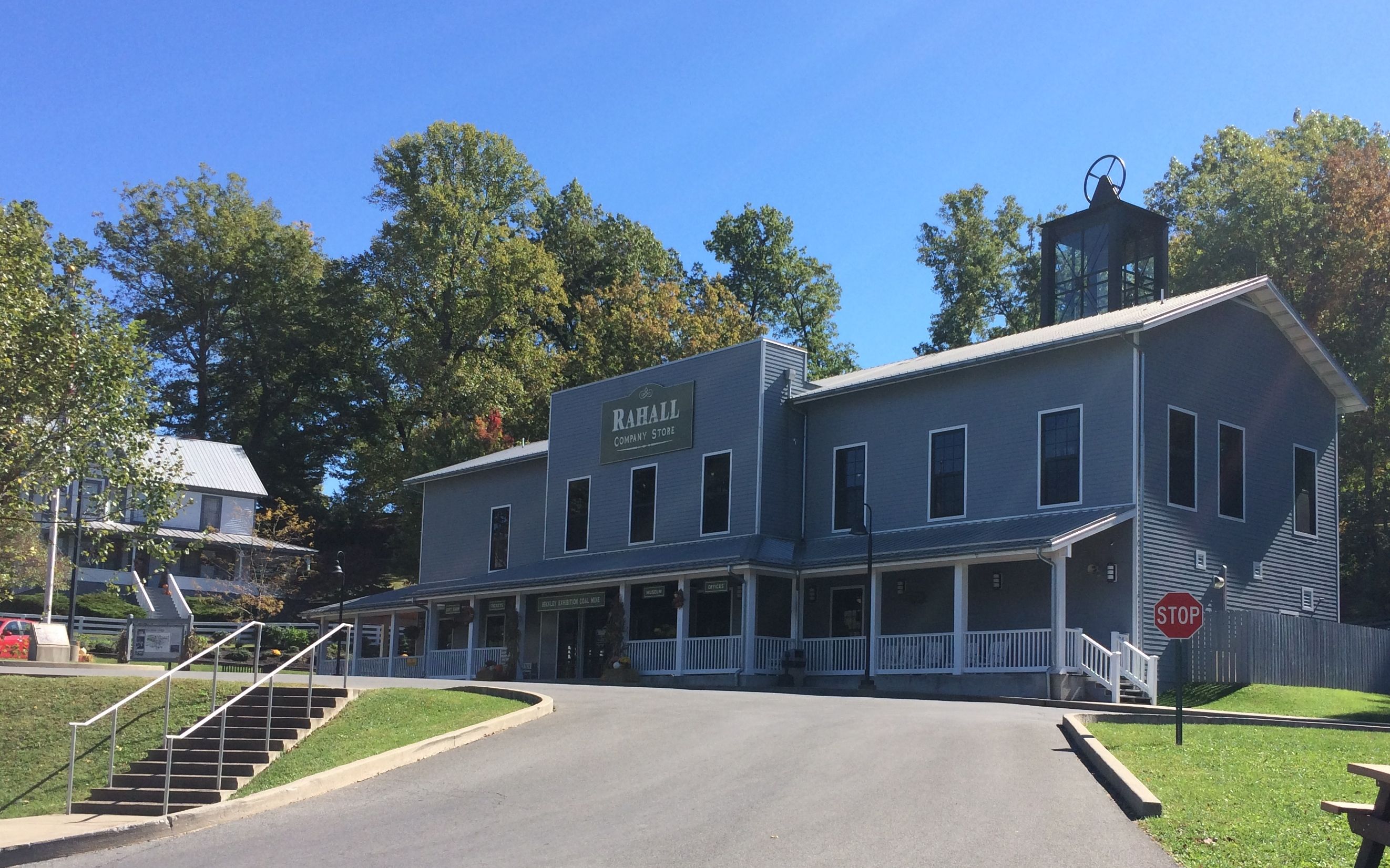
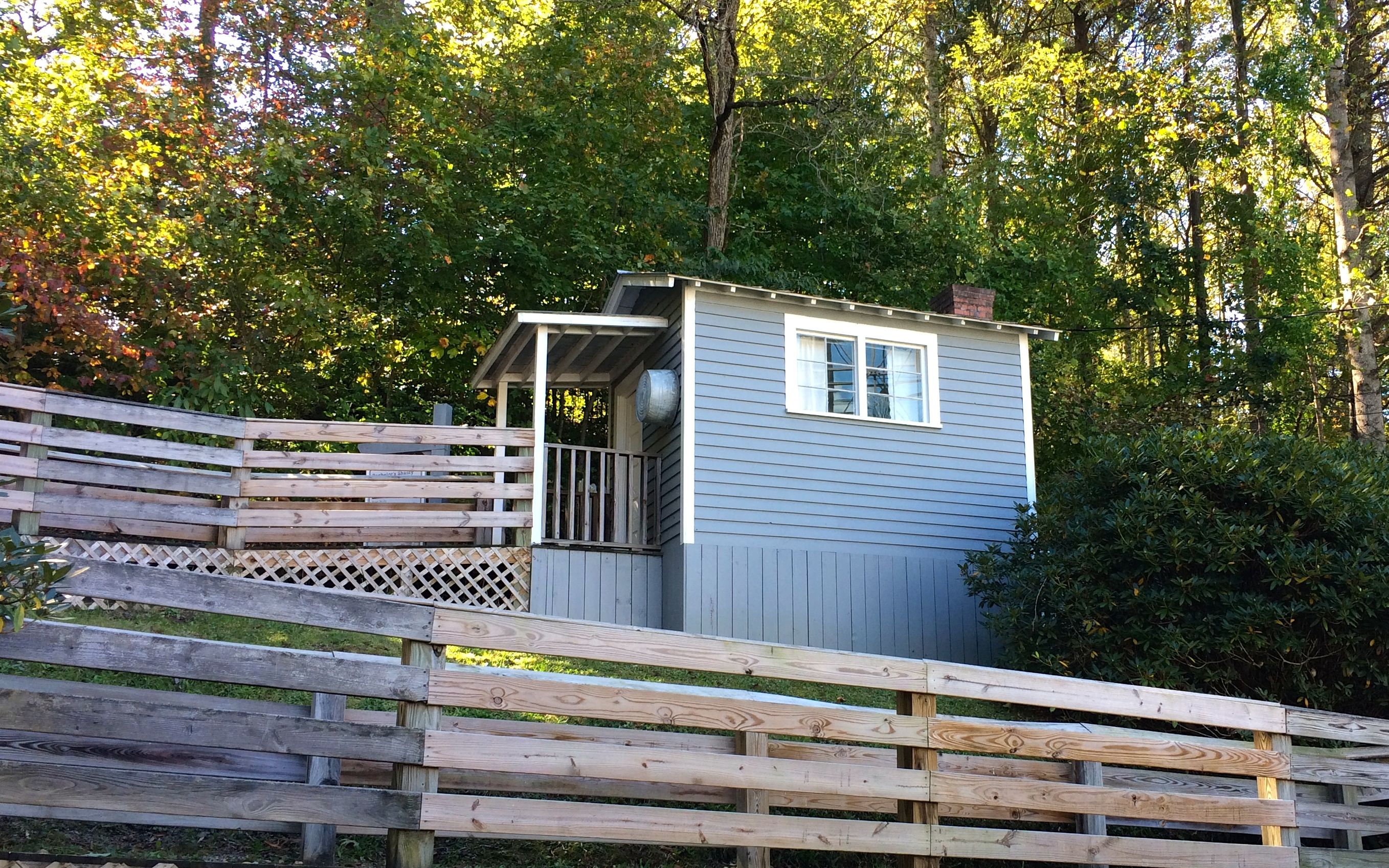
There was the camp store, which had a gift shop – naturally – and some displays.
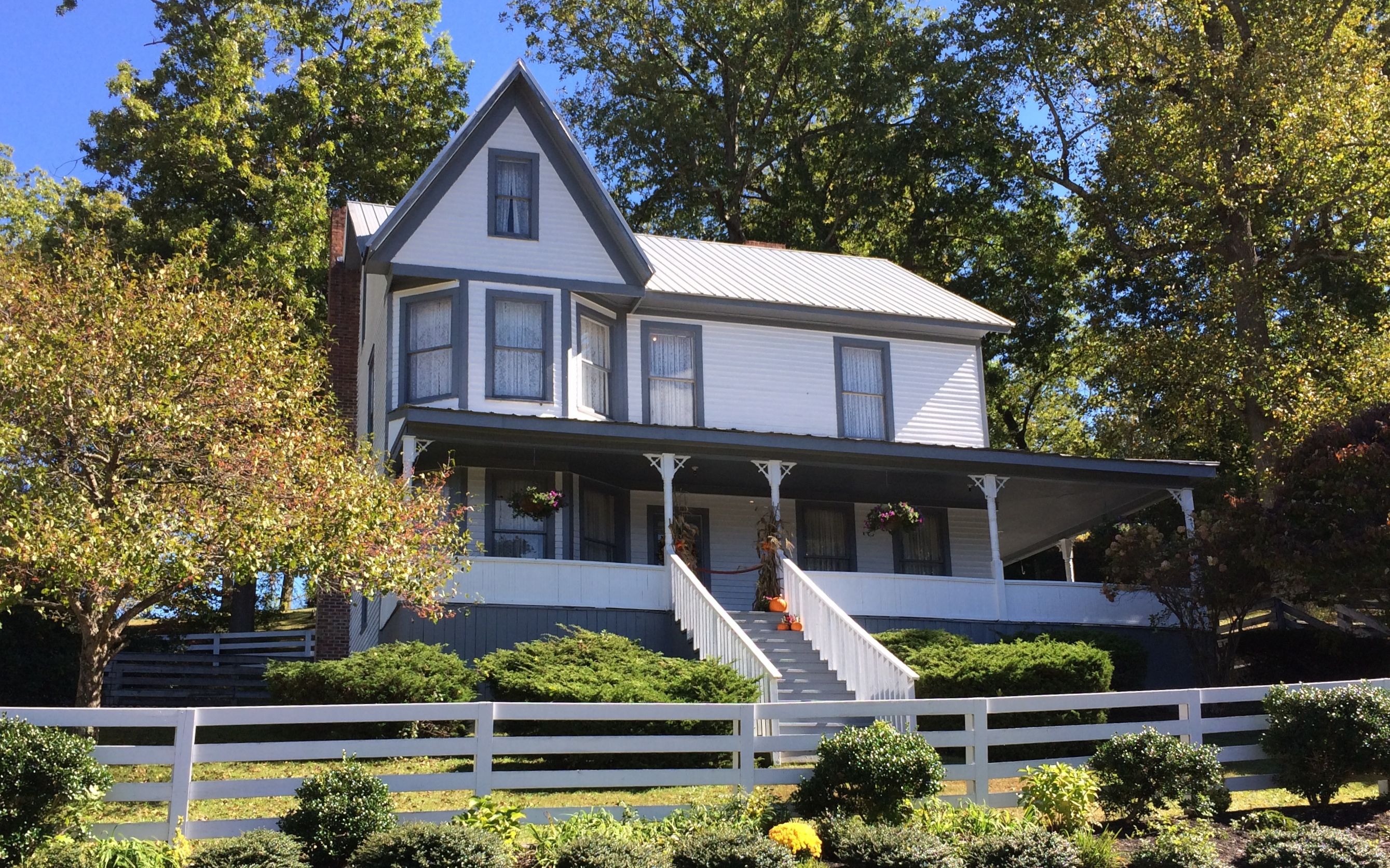
This was the boss’ house.
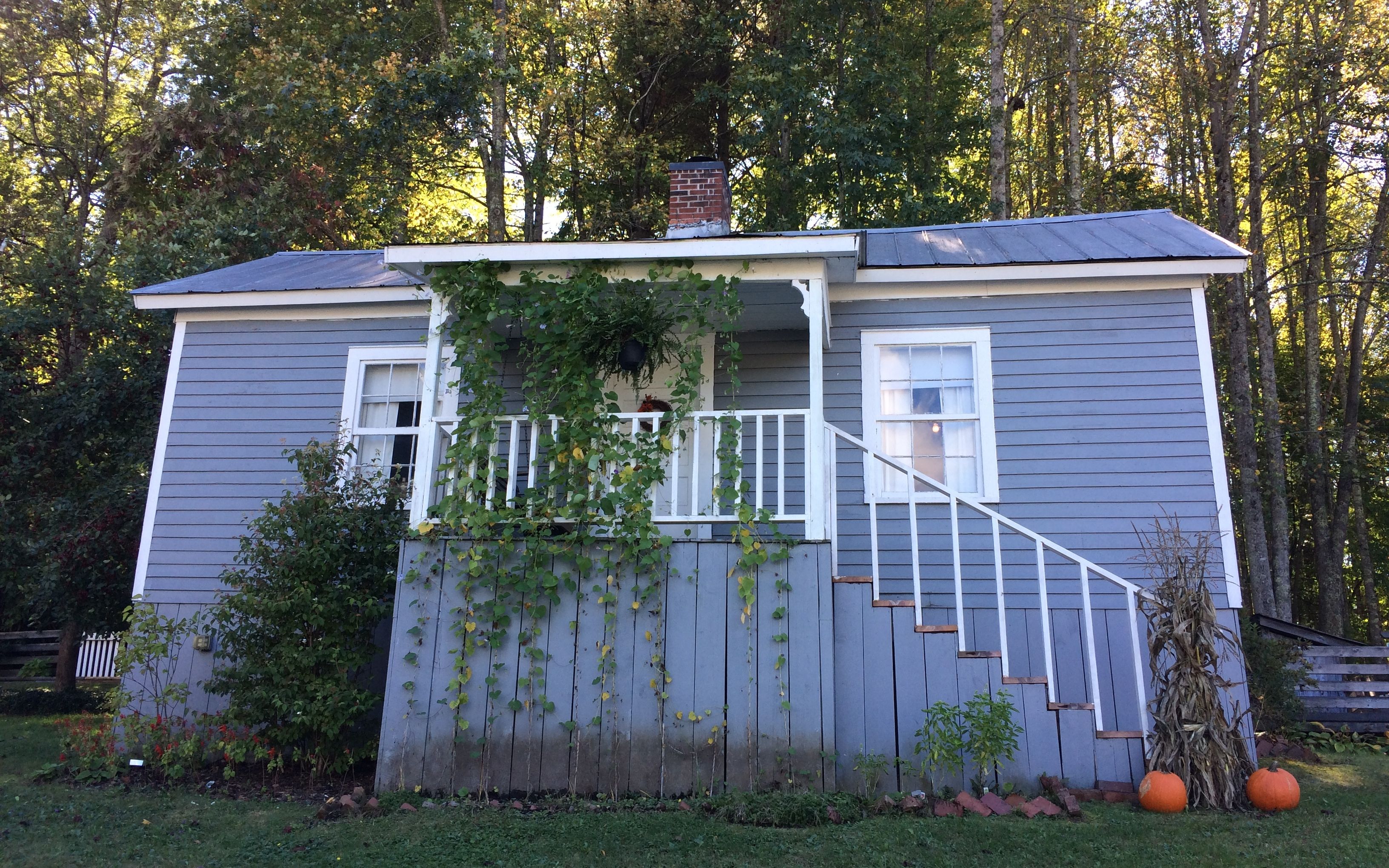
This was a miner’s house. These houses were known as “Jenny Linds” and they were three or four room no-frills houses. I wondered why they were called “Jenny Linds” so I looked it up. The article doesn’t discuss where the name comes from, but it give you more information, if you are interested.
Here’s the front elevation of the house.
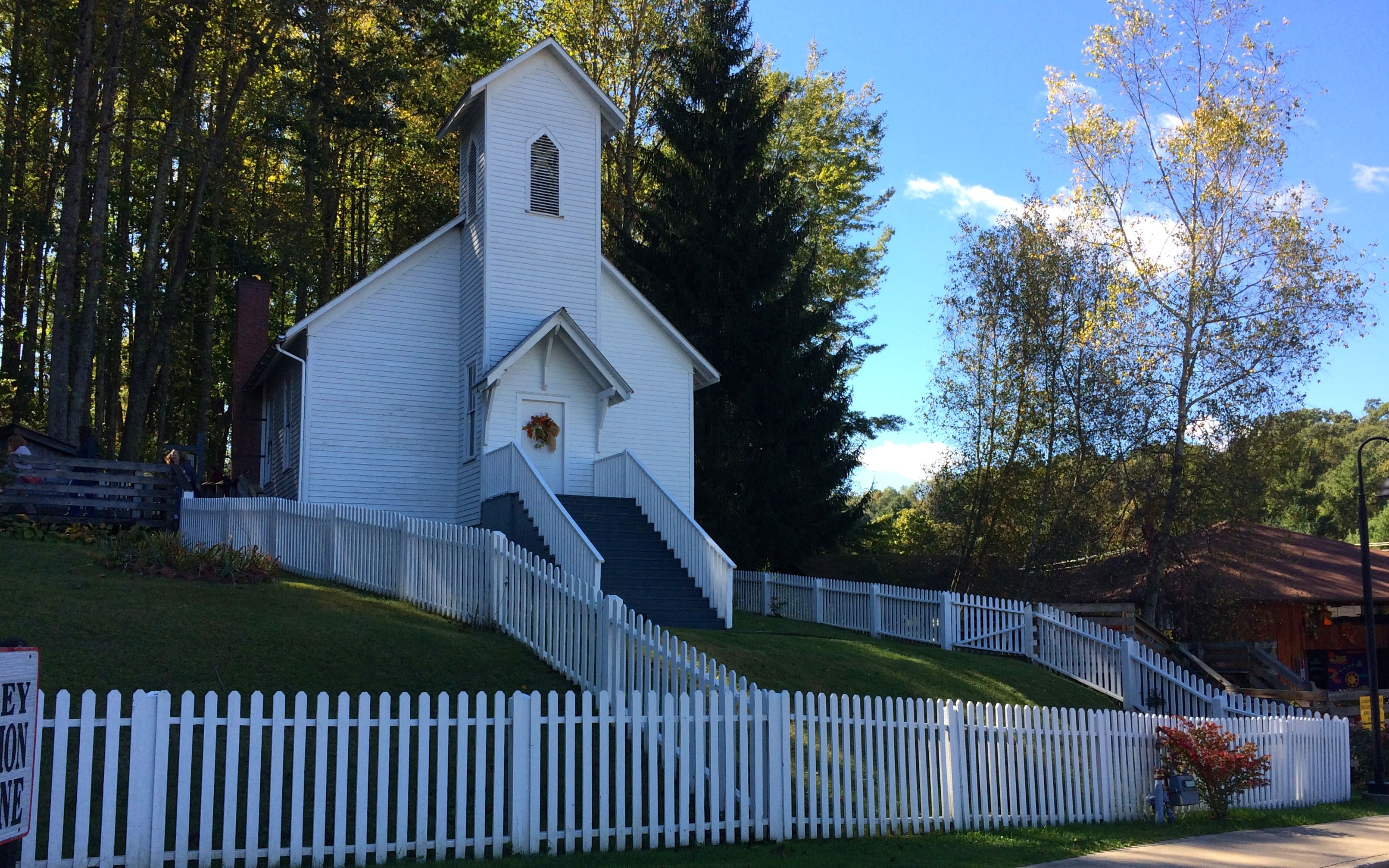
Of course a mining community would need a church
and a school.
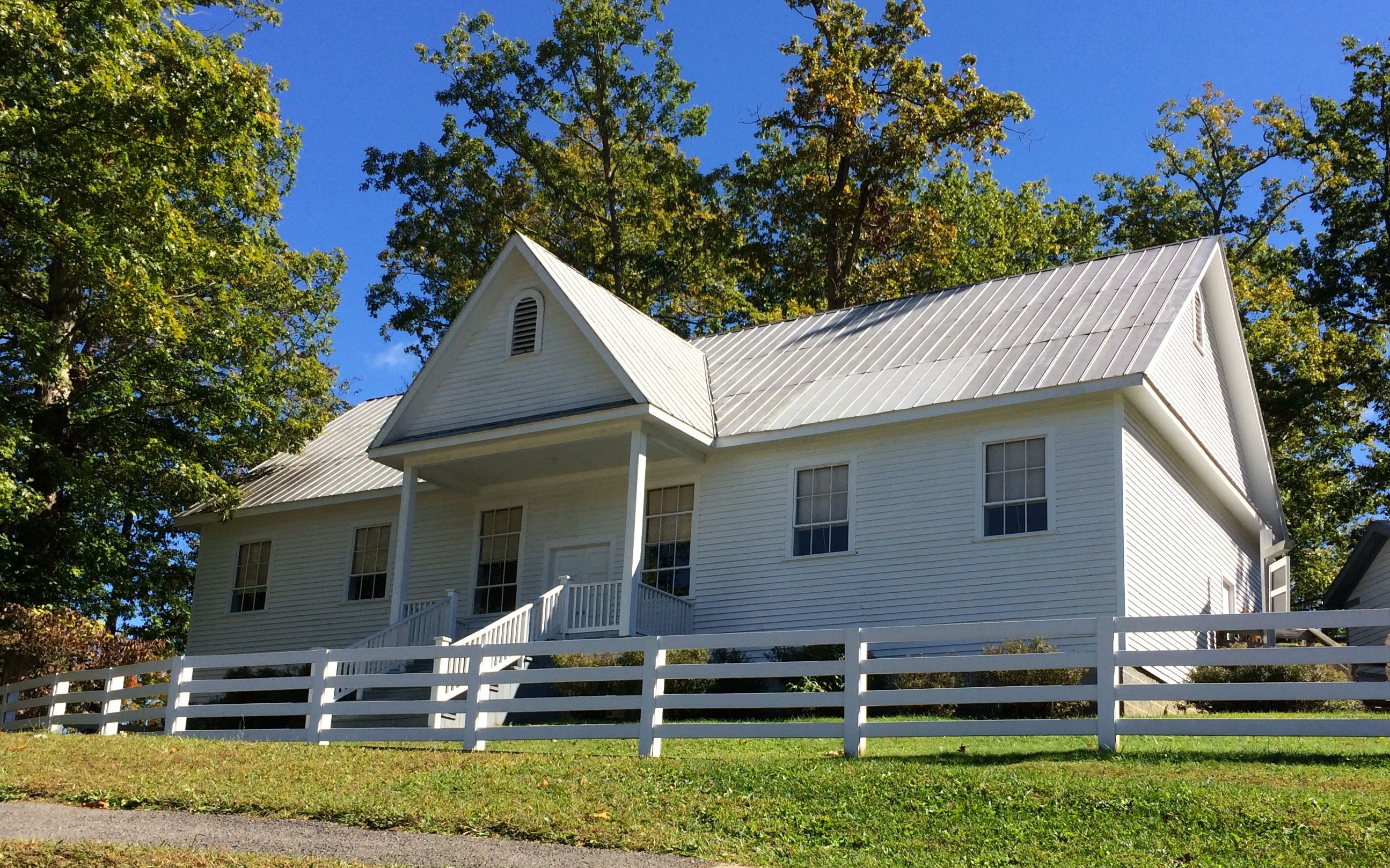
There was also a children’s museum on the campus, but it was closed on the day I visited.
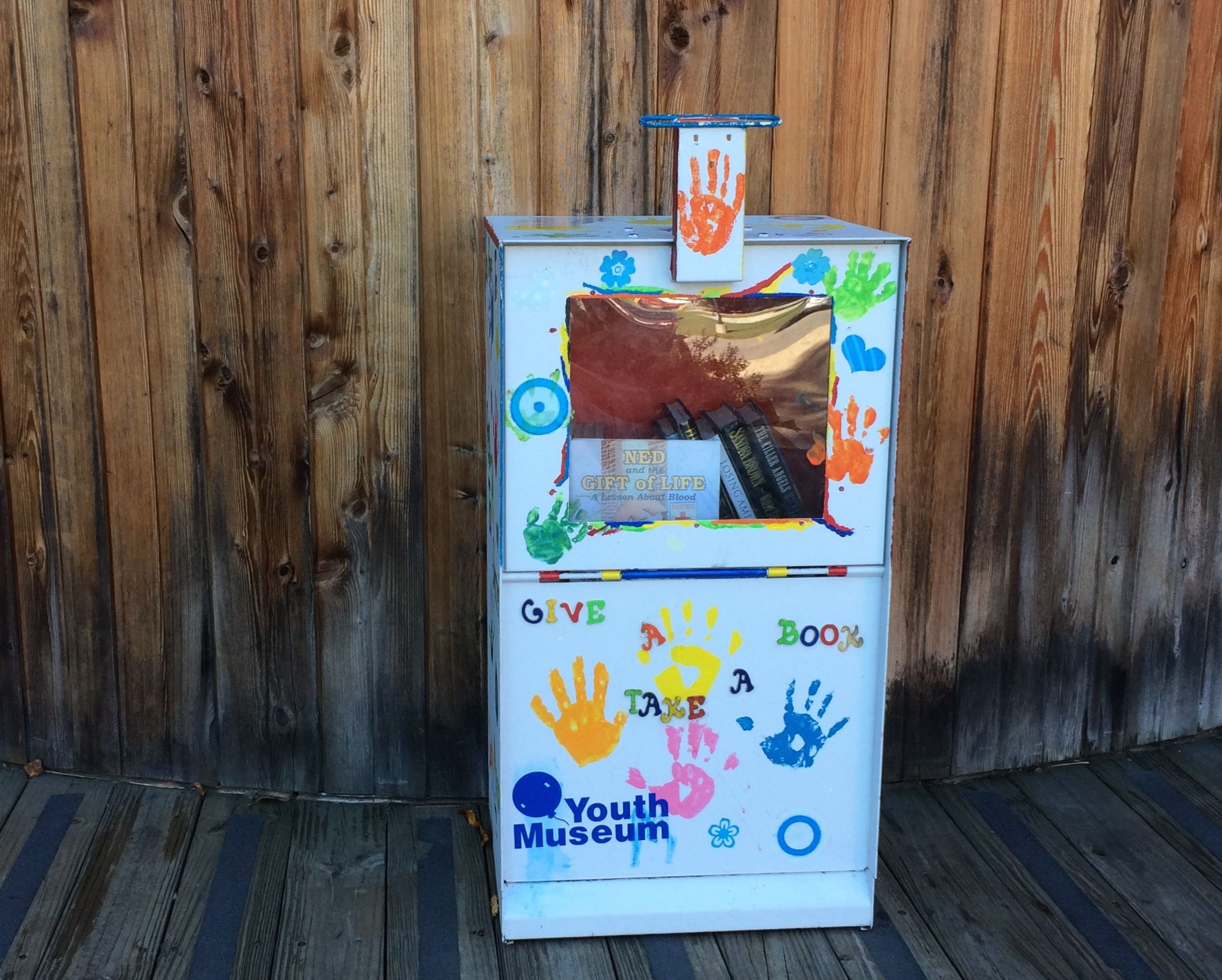
I thought this was an innovative use of an old newspaper box. I love seeing the Little Libraries when I travel around.
And that was about it for my visit to West Virginia. Just one thing left to do.
My next destination was Colfax, North Carolina, a mere 450 miles away. I had an appointment to have some work done on my Airstream. I decided to break the trip up and spend the night in the Cracker Barrel parking lot in Lynchburg, Virginia.
Appomattox Courthouse was only about 25 miles away from Lynchburg, and it is one of the places I had hoped to visit last year but didn’t get to. Since I only had about 150 more miles to go to I figured I had enough time to pay a visit.
In case the significance of Appomattox Courthouse escapes you at the moment, it is where General Lee surrendered to General Grant.
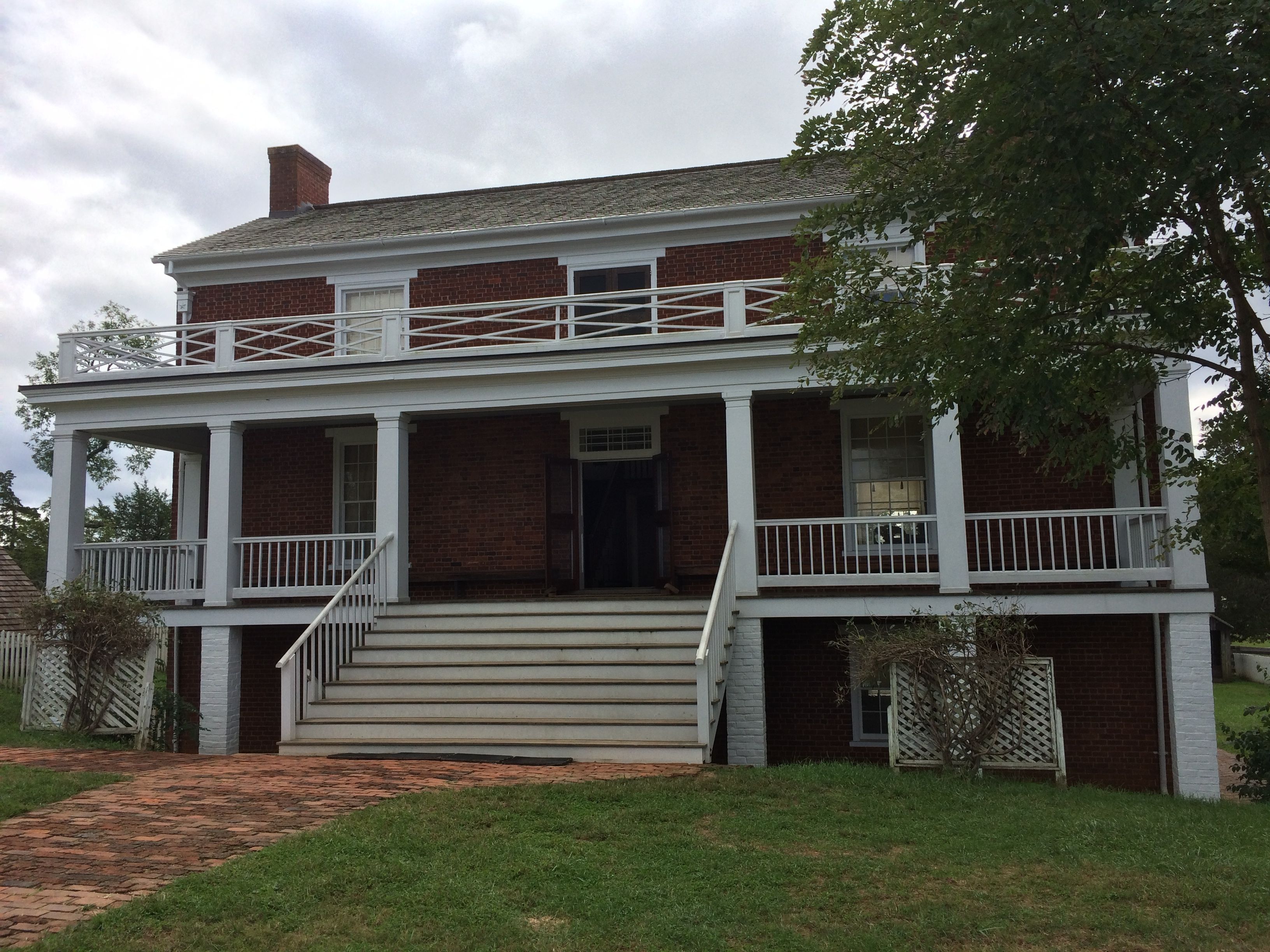
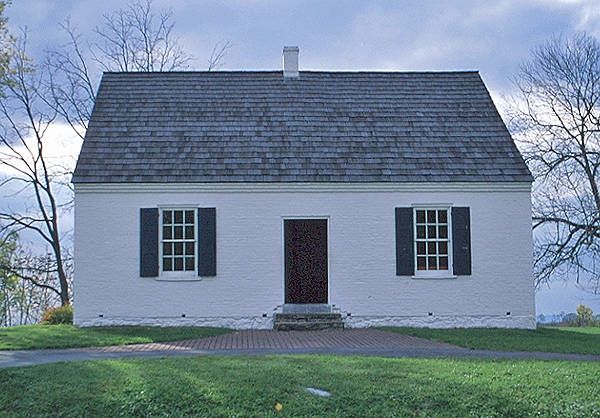
It happened right here in this house, the home of Wilmer McLean and his family.
Poor Wilmer McLean! His house was involved in the first battle of Bull Run in 1861. For business reasons as well as to keep his family safe, he moved about 120 miles south.
I was so excited to visit! This is another one of my “bucket list” places. I parked Flo and Bart in the overflow area and made my way to the courthouse.
The park headquarters and museum was located there. It was very informative. One thing I learned is that the whole village was there due to aggressive restoration.
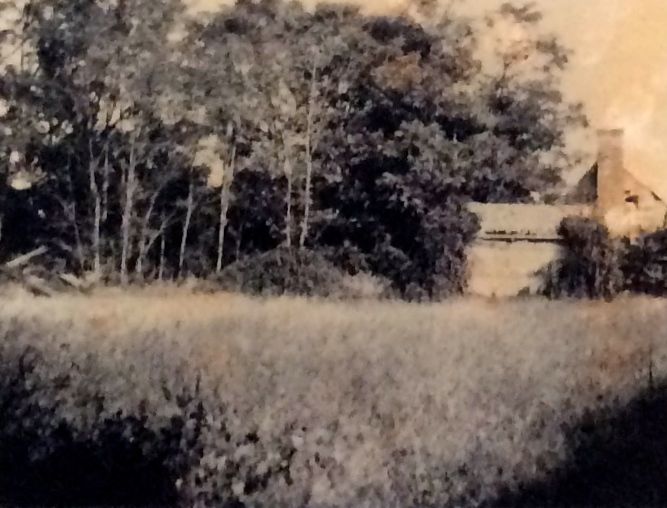
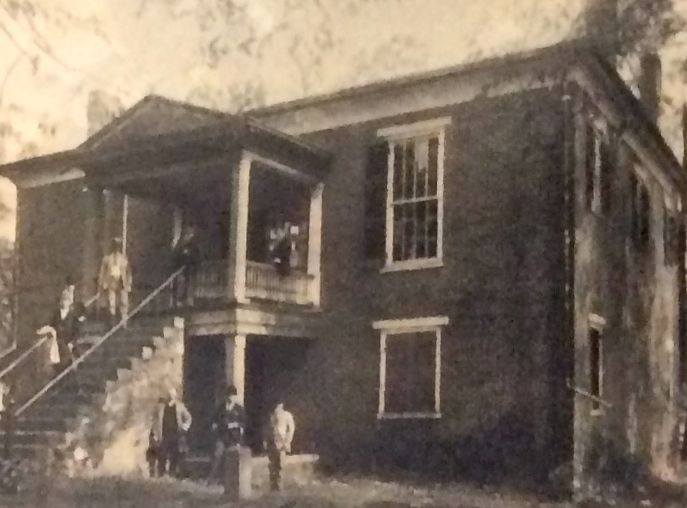
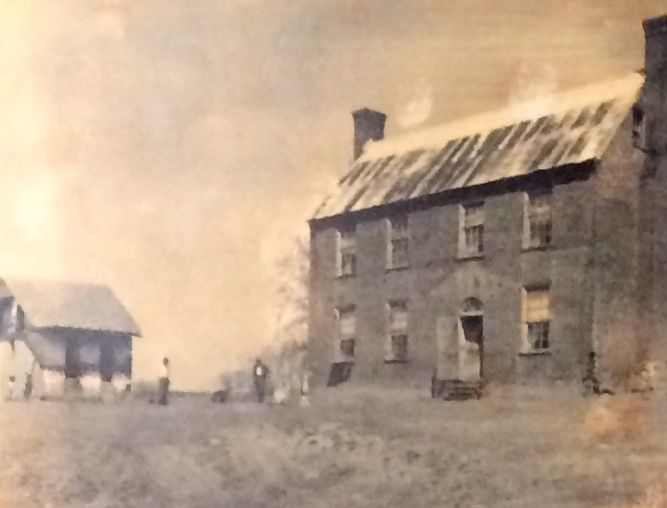
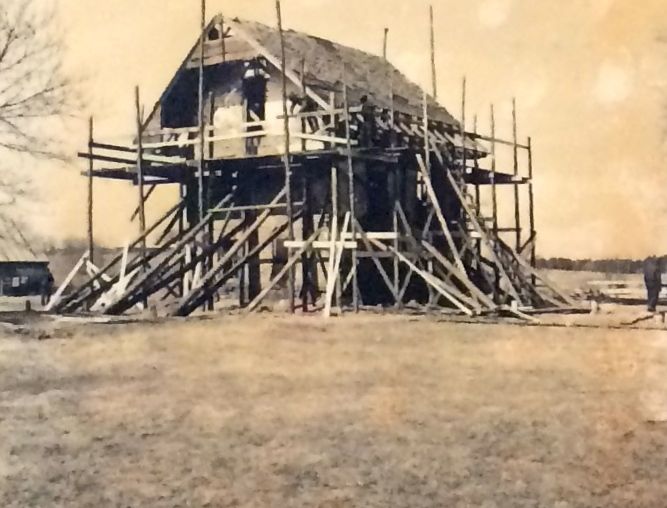
“Aggressive restoration” is my term. It turns out that the McLean house looked like this before it was restored.
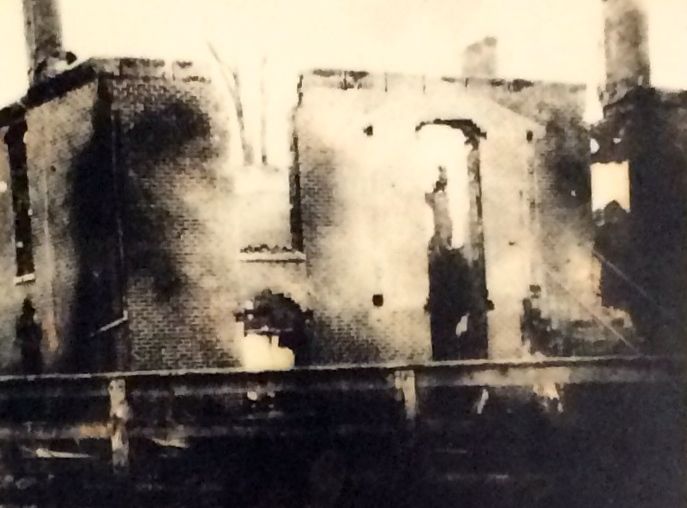
Do you see a house there? This photo was taken in 1914. It turns out that the house was sold to people who dismantled it. They intended to reconstruct it somewhere and probably charge admission to see it. They dismantled the house, documented it so that they would be able to reconstruct it and then stored the materials on site.
They never got around to carrying out their plans and some of the materials got carried off by people looking for souvenirs or maybe just looking for building materials. According to the ranger, about 30% of the bricks in the house today were actually there in 1865. They did a masterful job of recreating the house.
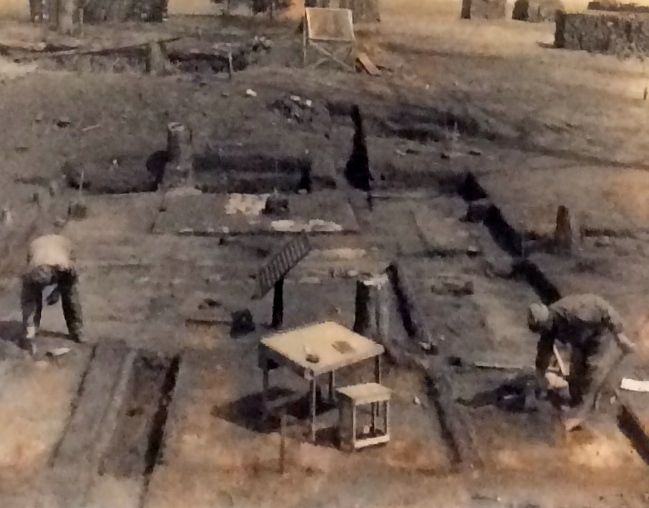
They started with archeological examination of the site in 1941.
That, with the detailed records made when they dismantled the house allowed them to put the house back the way it was in 1865.
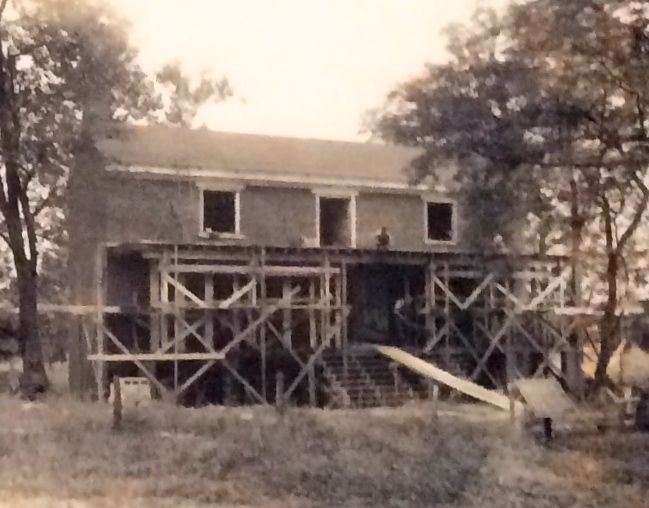
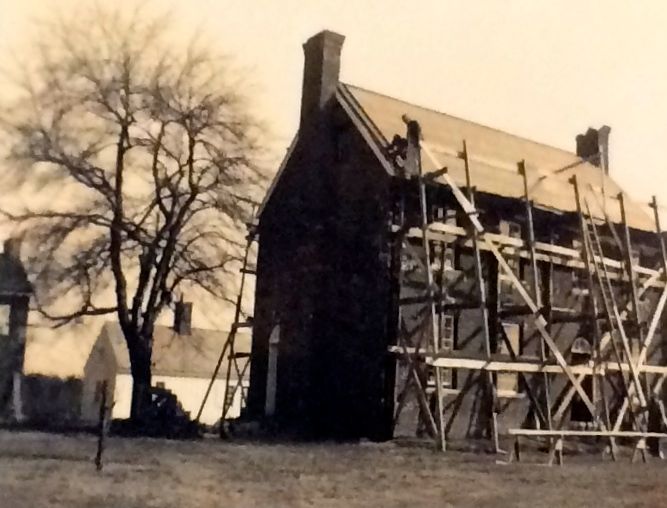
Here’s a shot of it under restoration in 1948.
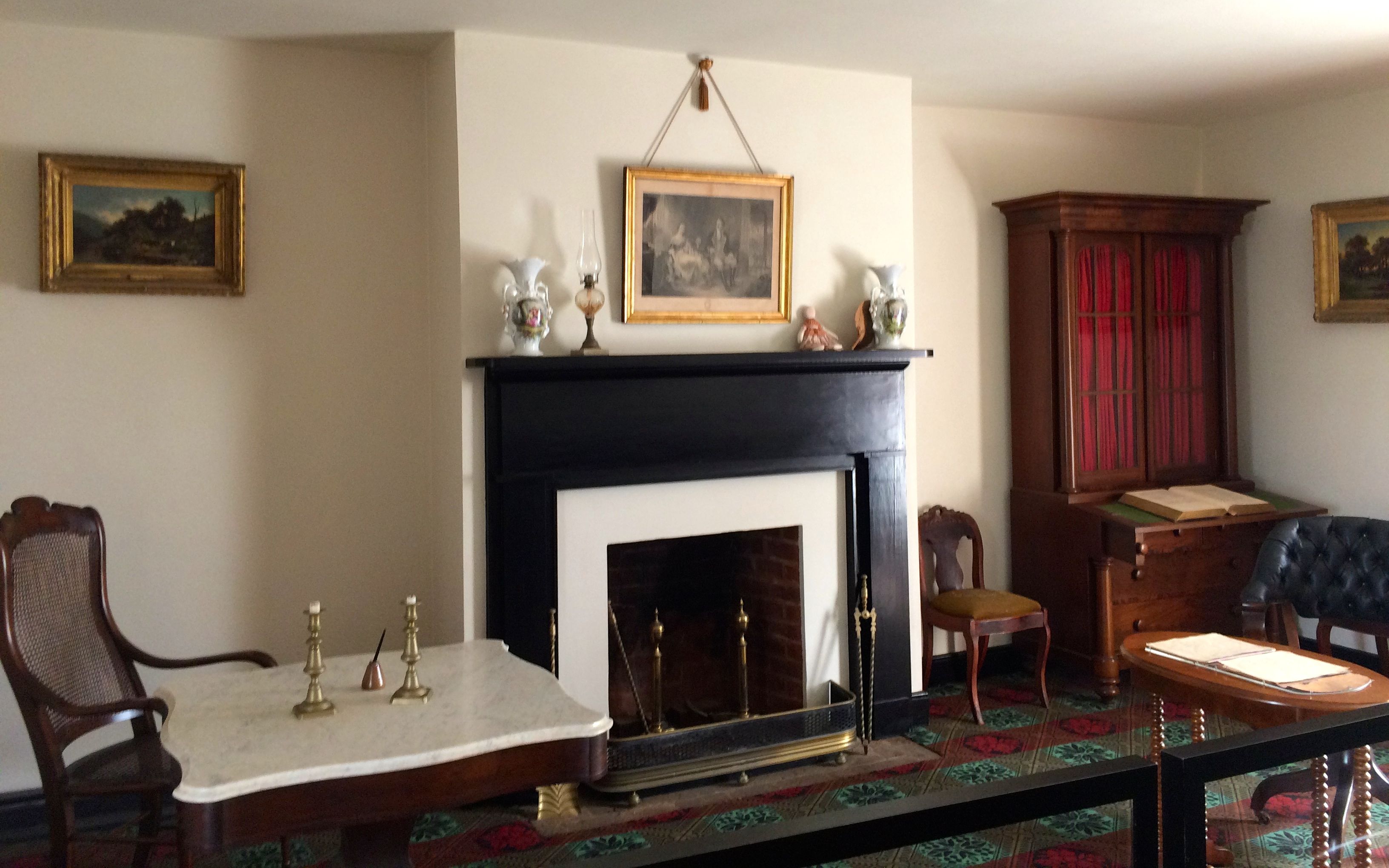
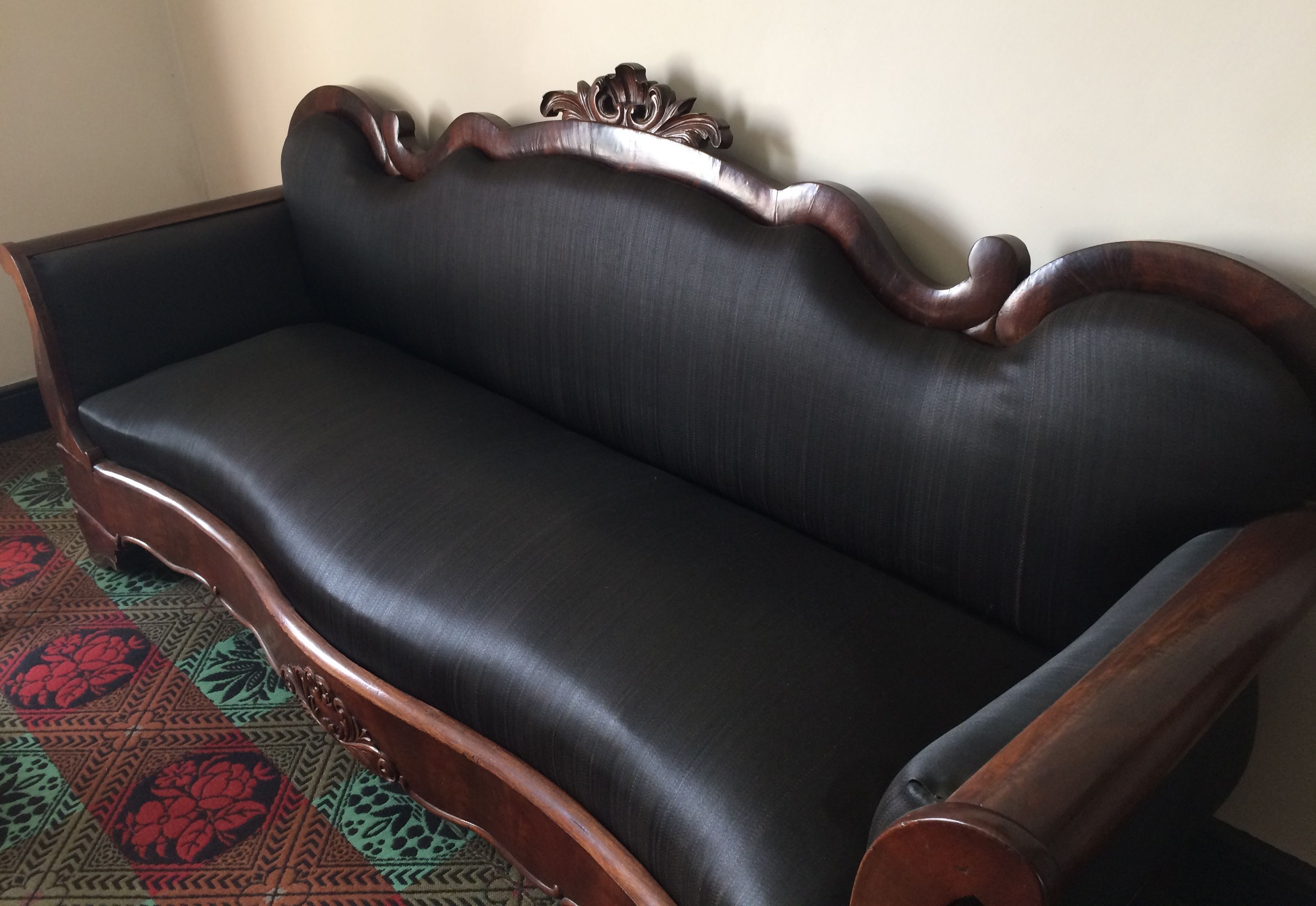
This is the parlor where Lee and Grant reached the terms of surrender. It was on the first floor, at the top of the stairs
Horsehair furniture was all the rage in the Victorian era. I always thought that the horsehair was used as stuffing. It turns out that it was used also used to weave the fabric.
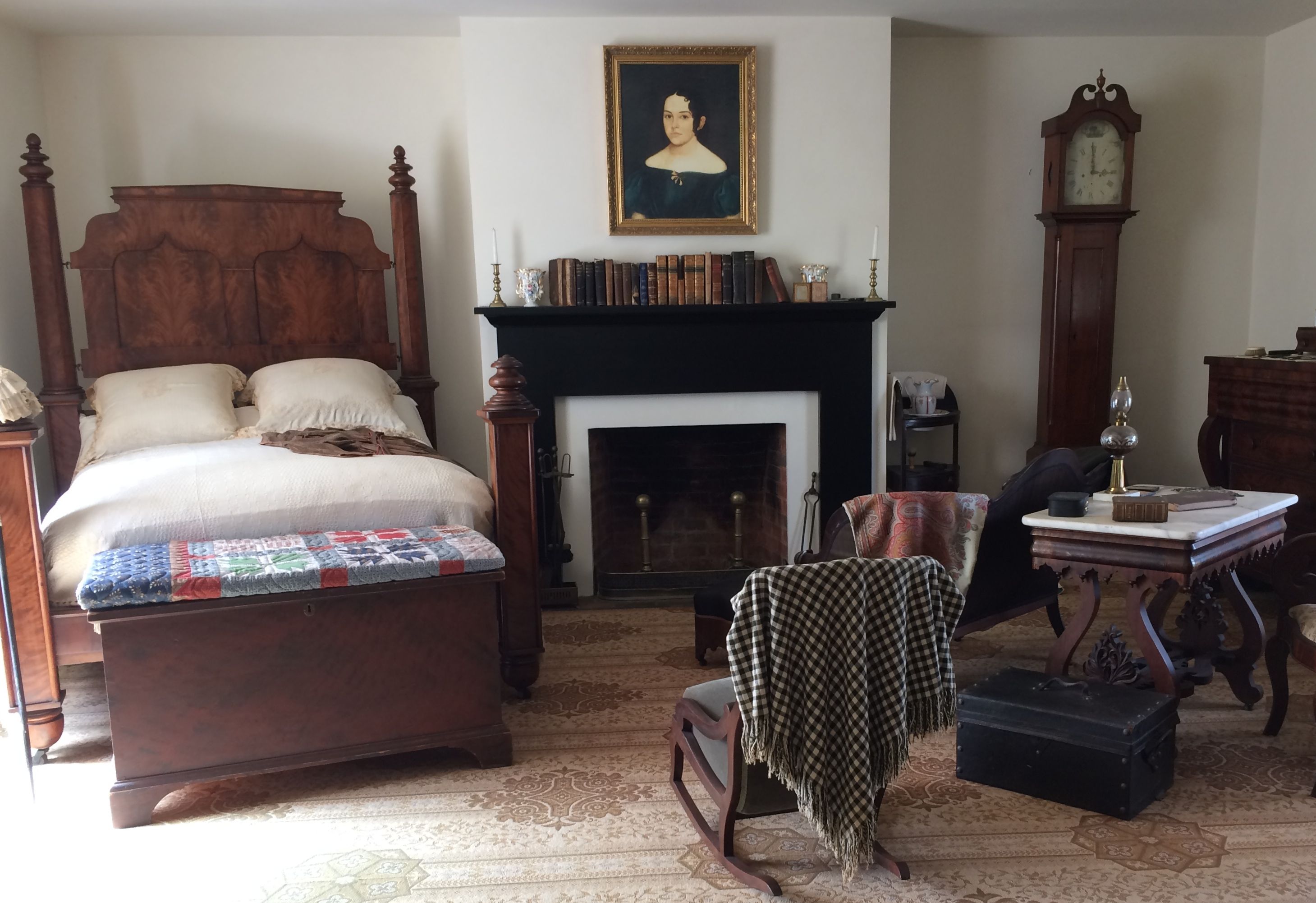
This was Wilmer and Virginia’s bedroom, across from the parlor.
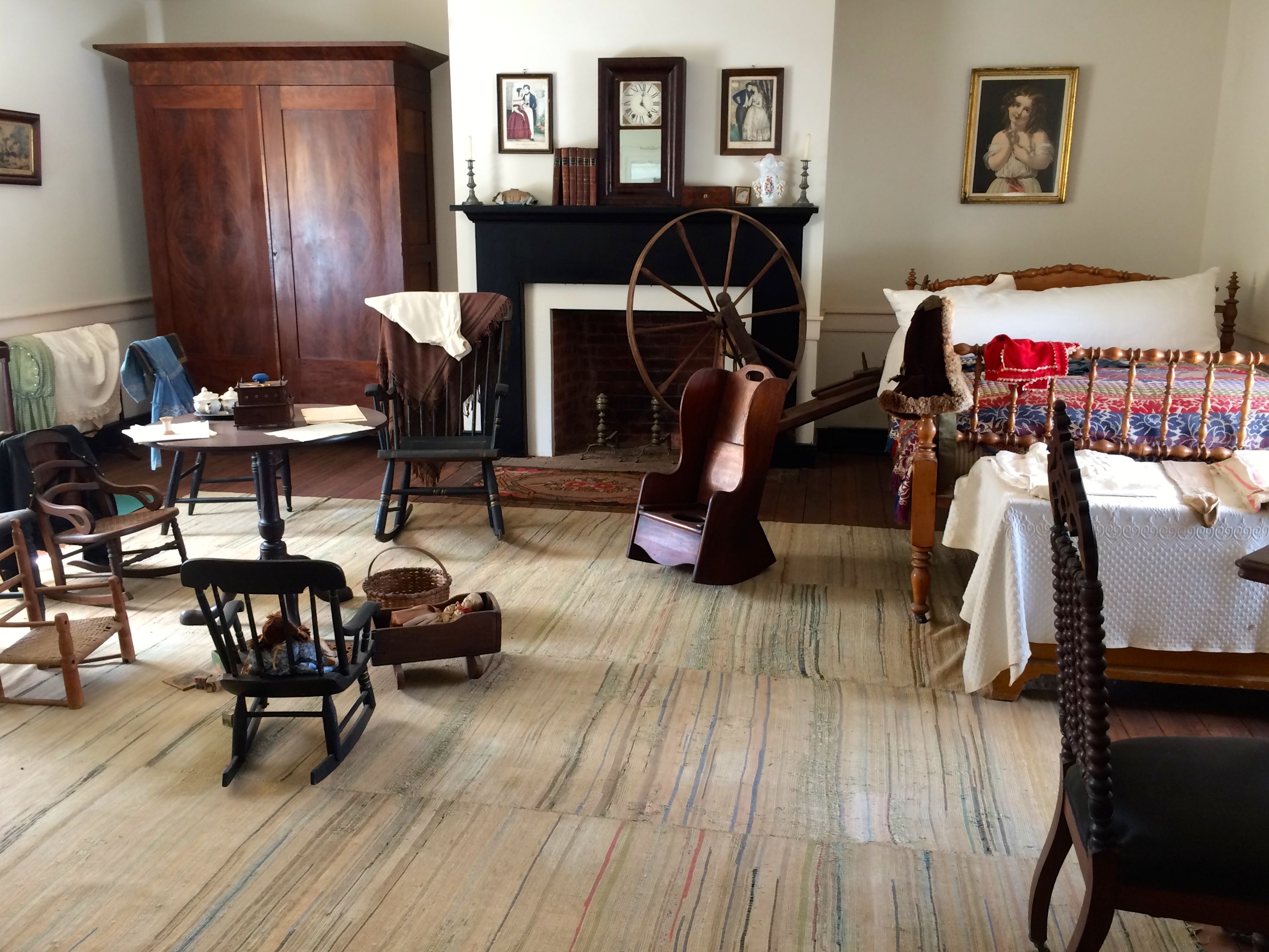
This was one of the children’s bedrooms on the second floor.
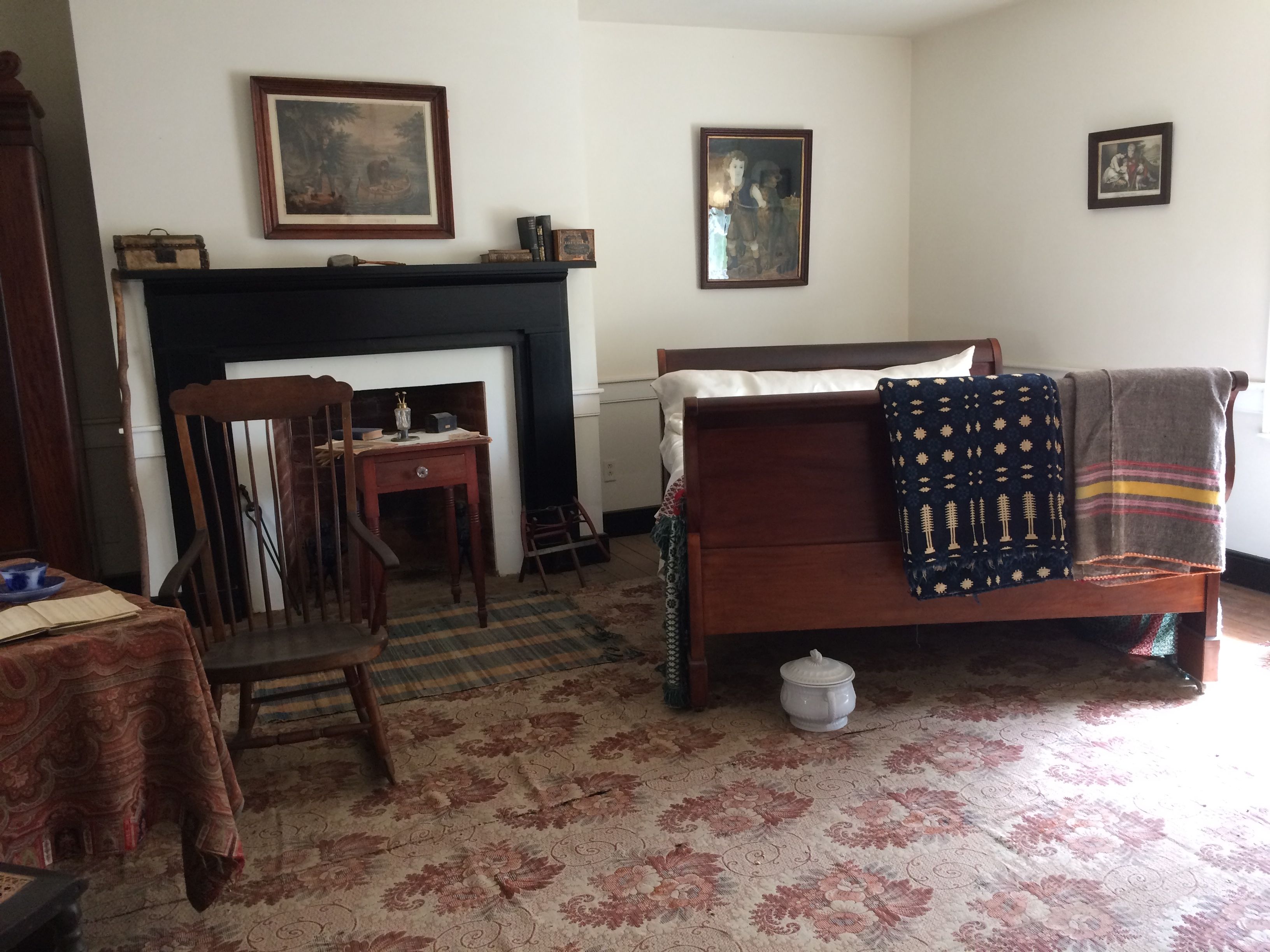
This was another of the children’s bedrooms.
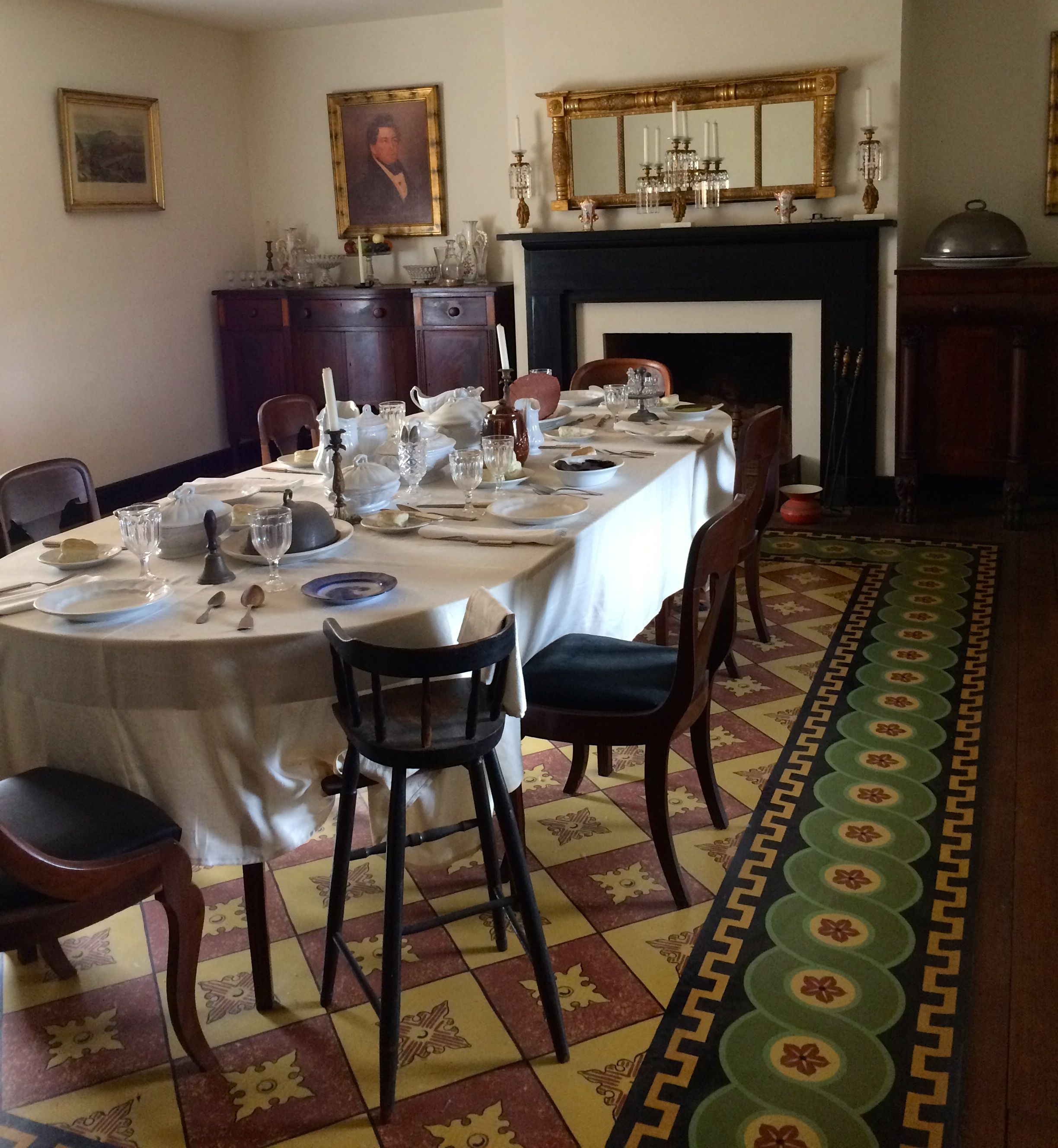
The dining room was on the ground floor,
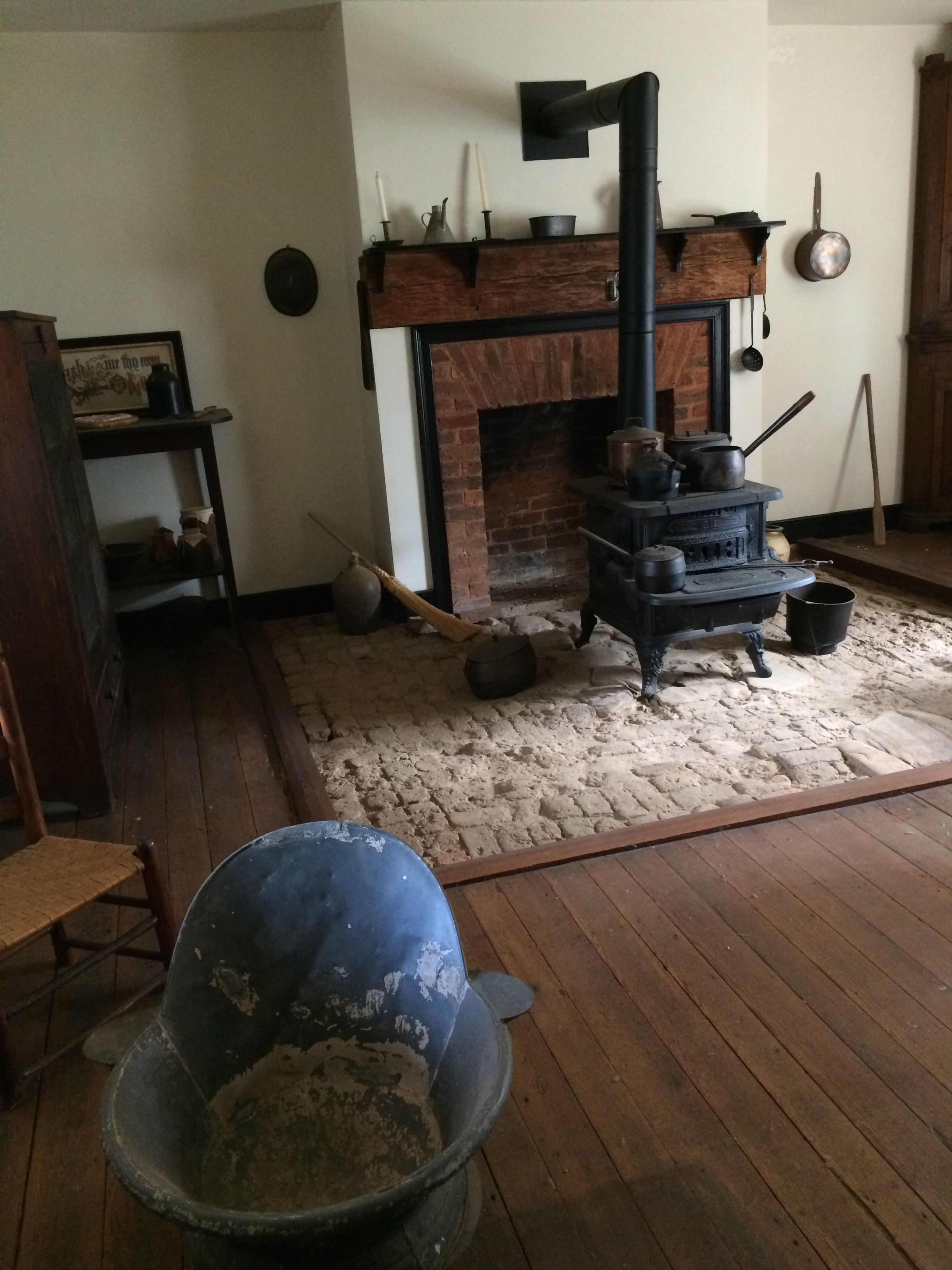
and the warming kitchen was right across from the dining room. Kitchen fires were very dangerous, so most of the cooking was done in a separate building.
This is the kitchen behind the house.
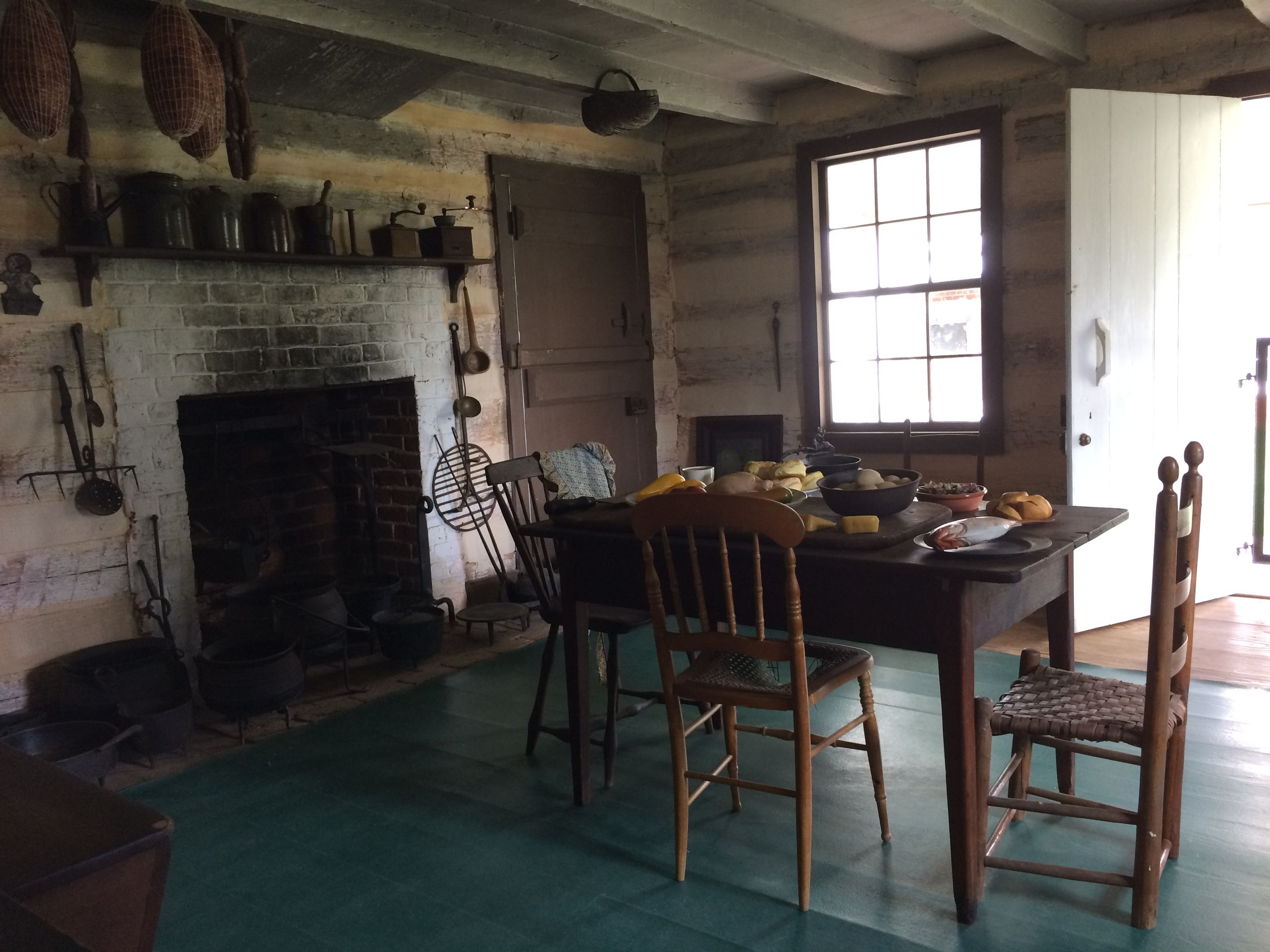
This is the real kitchen where the majority of the food preparation took place. Of course, the cooking wasn’t done by any of the McLeans. It was done by their slaves.
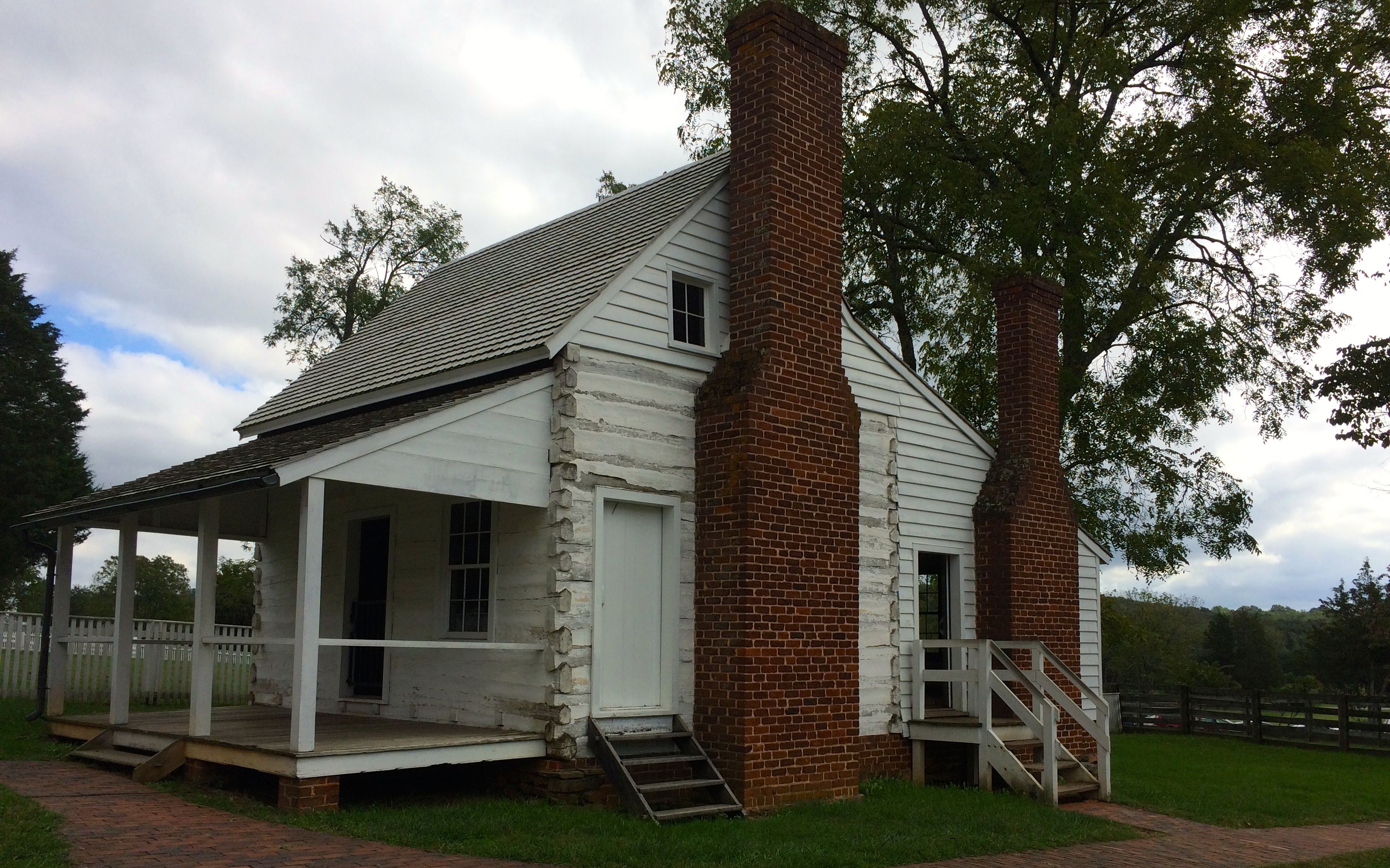
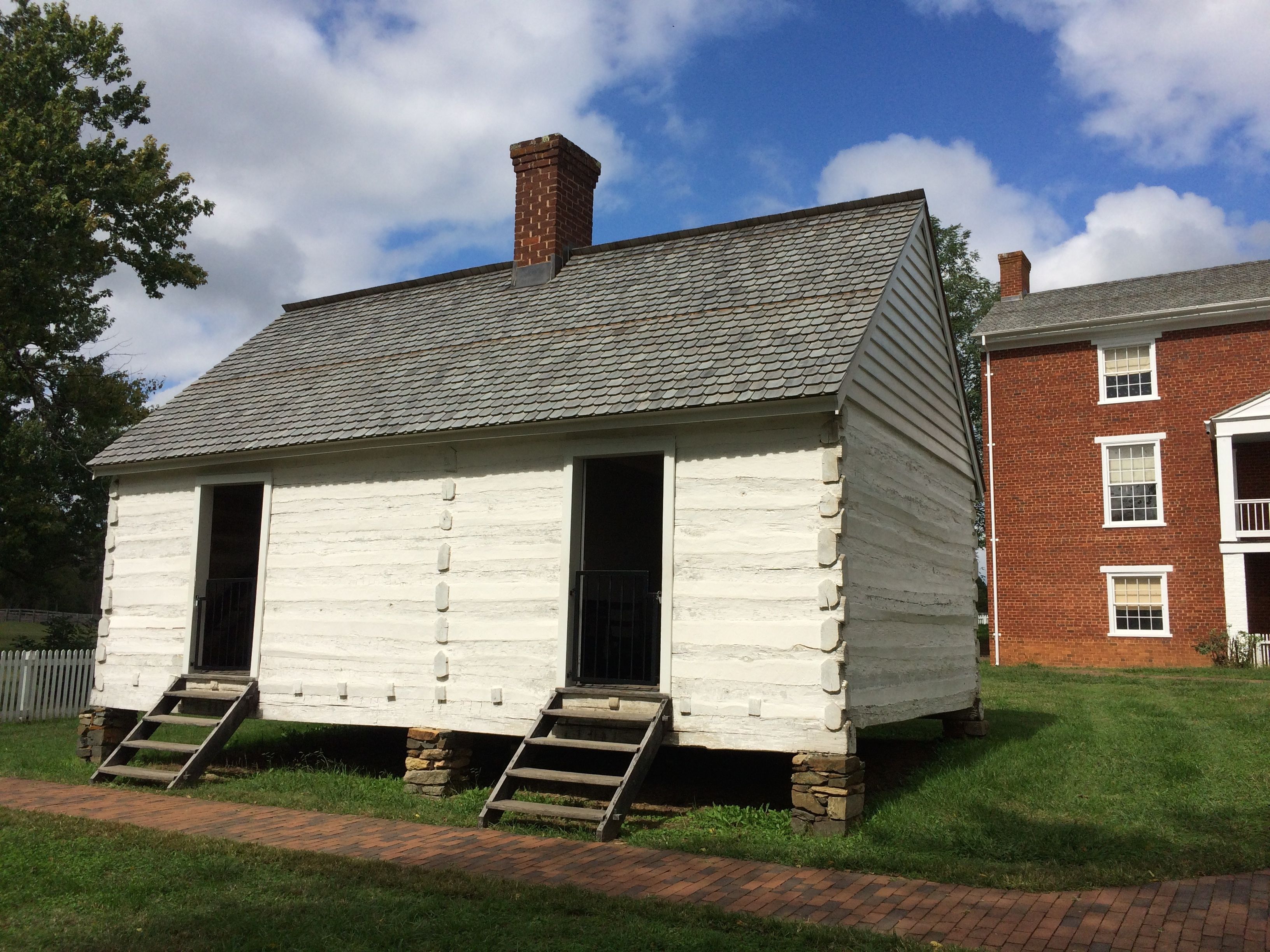
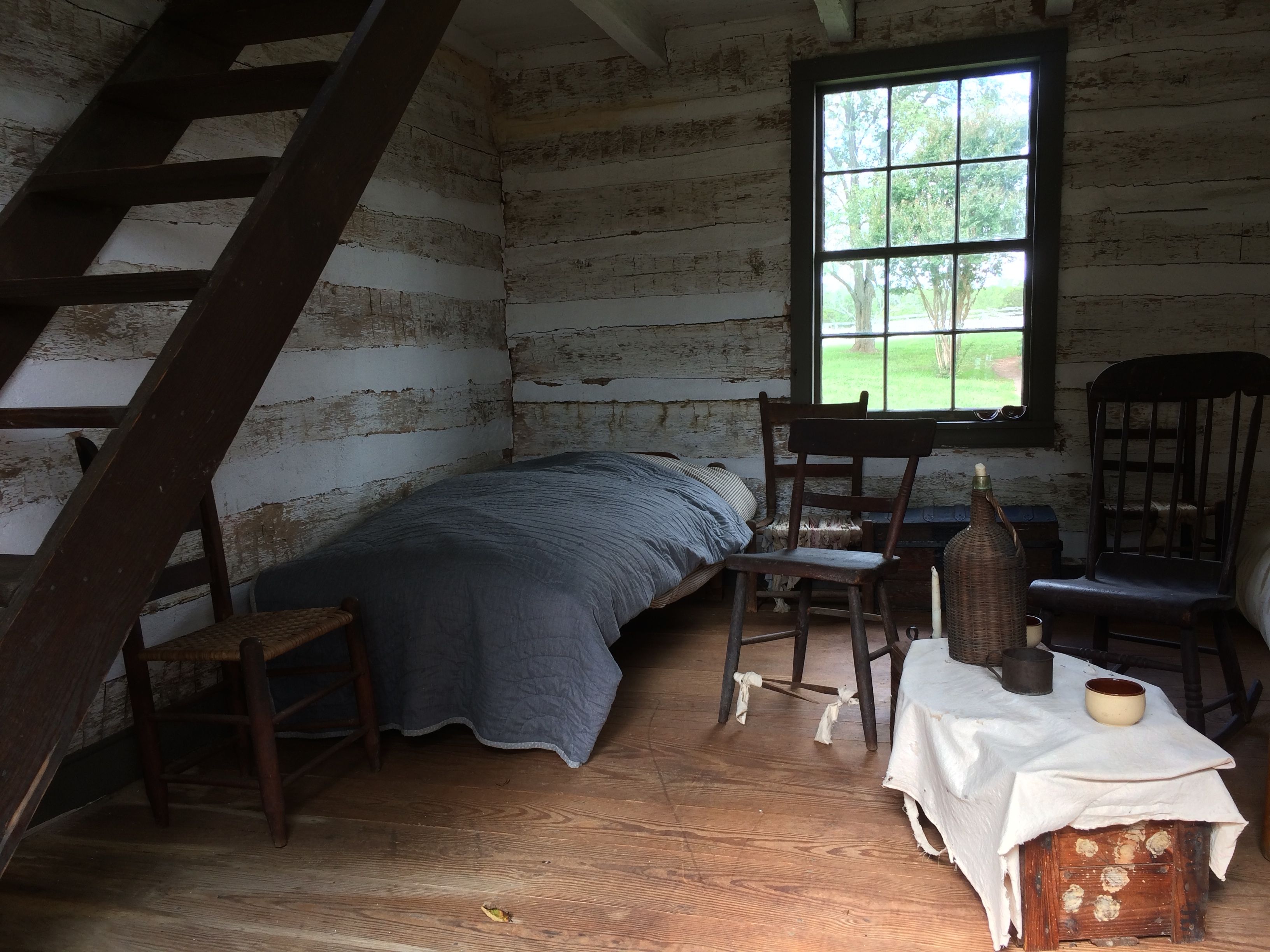
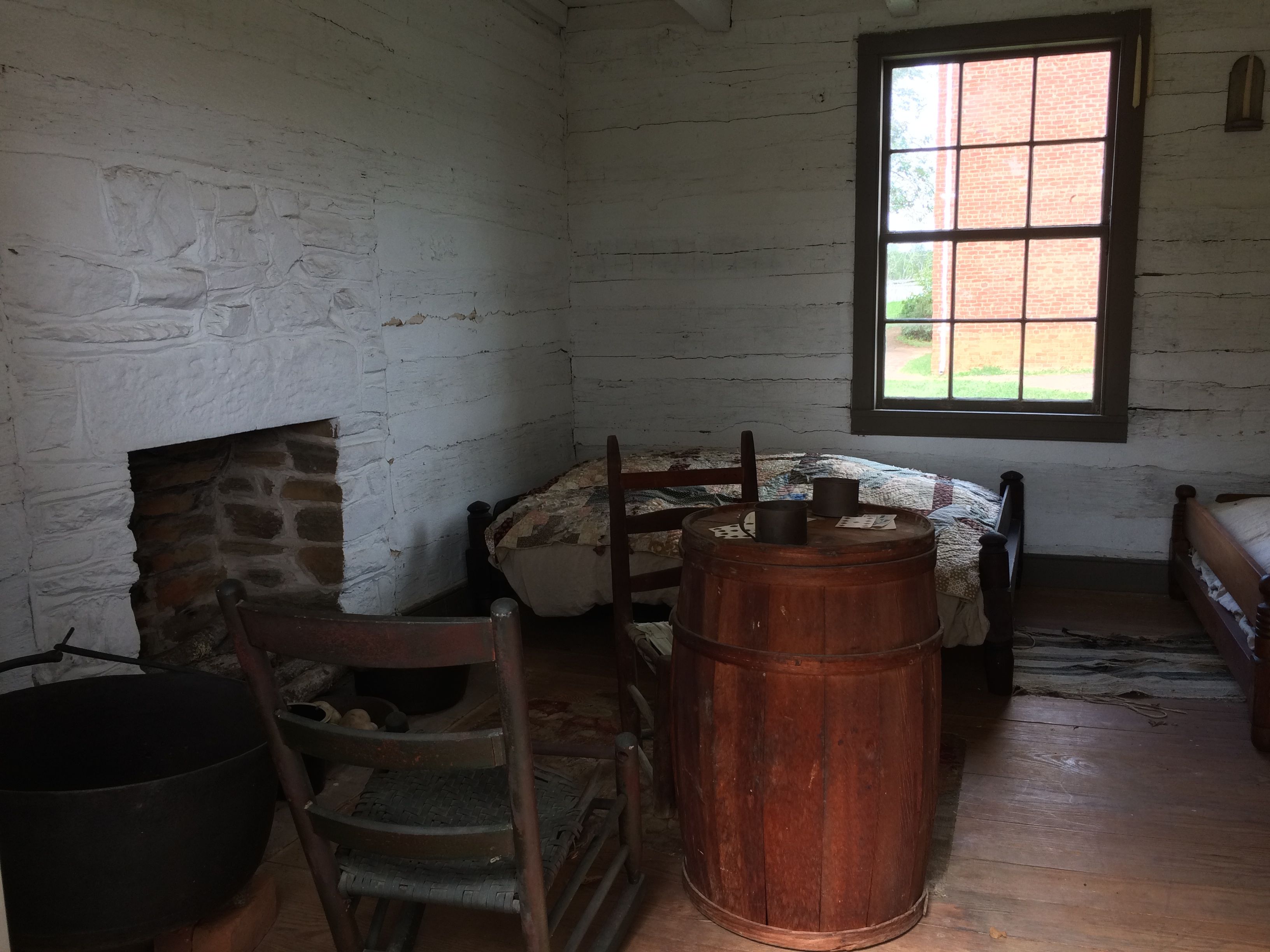
Their quarters were also behind the house.
This was the room on the left.
This is the room on the right.
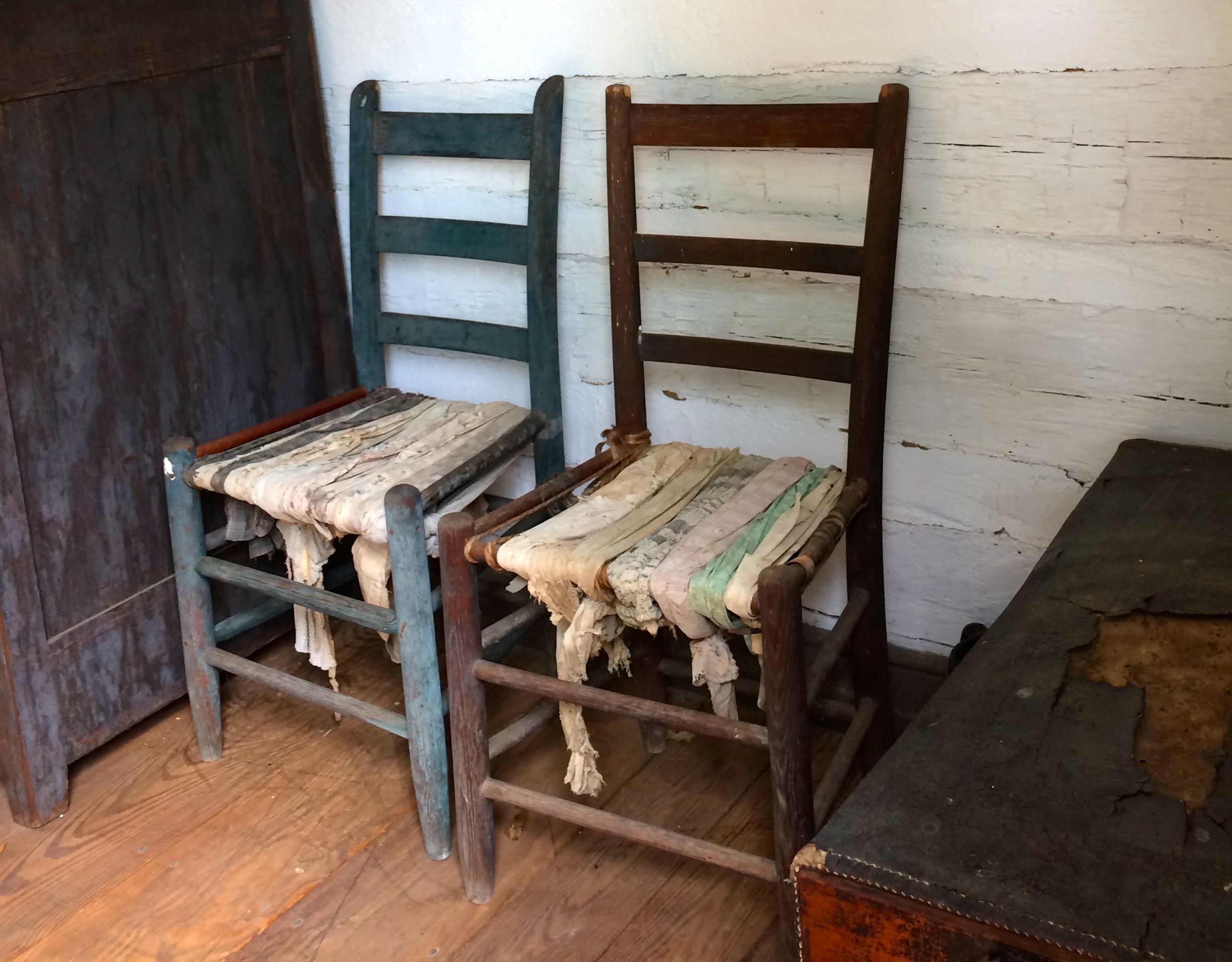
I was struck by the creativity in repairing these chairs that they were allowed to use.
So, what happened to the family after surrender? After the war, McLean and his family sold their house in 1867, unable to keep up the mortgage payments. After all, at least part of his income came from selling foodstuffs to the Confederate army. That market kind of dried up. They returned to their home in Manassas. According to Wikipedia, the family eventually moved to Alexandria, Virginia where he worked for the Internal Revenue Service from 1873 to 1876. He died in 1886 and is buried in St. Paul’s Episcopal Cemetery in Alexandria.
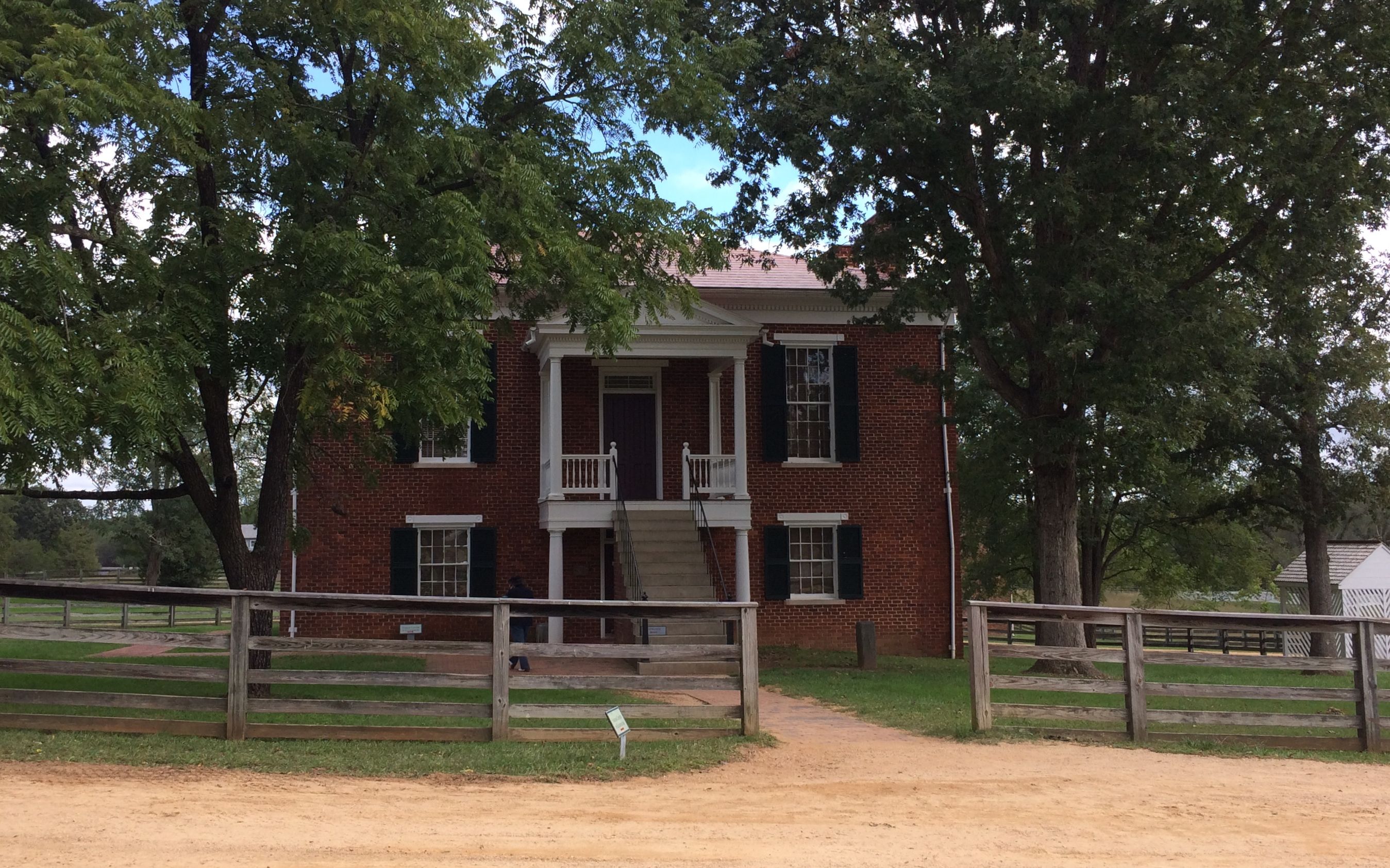
On to the rest of the town. As I mentioned before, the town was aggressively restored. This was the courthouse in 1890.
Here is the courthouse in 1892, after the fire.
They did a great job of recreating the courthouse, too.
At the courthouse, they had a great little museum.
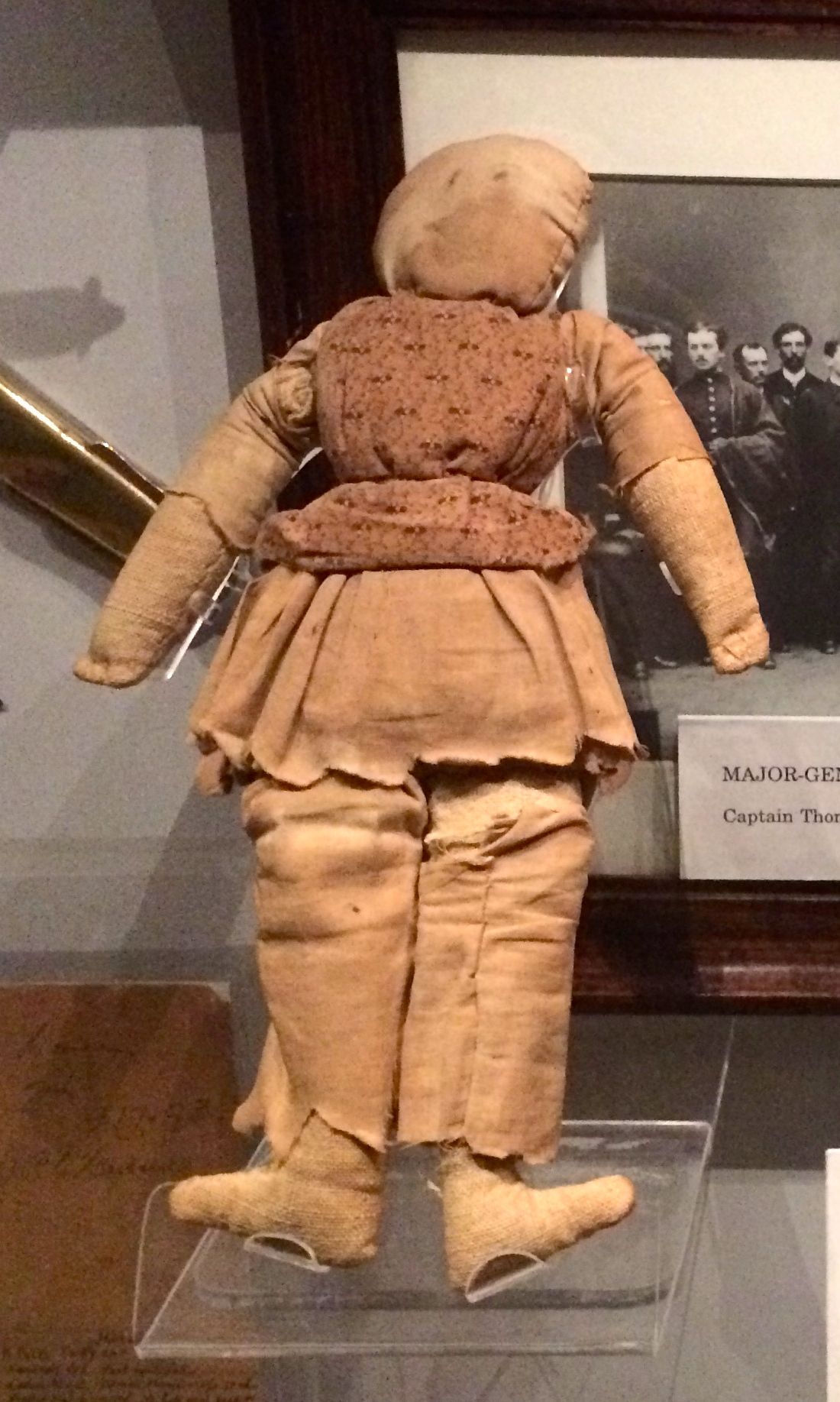
One artifact I was eager to see was a doll called “the silent witness.” She belonged Lula McLean, one of Wilmer’s daughters. She had left it on the horsehair sofa and in the aftermath of the signing, Union soldiers took things as souvenirs.
The soldiers were tossing the doll around, and joking about it as being a silent witness. Lula’s doll was taken home by Captain Thomas W.C. Moore of Major General Sheridan’s staff. For more than a century, the Moore family kept the doll as a “war trophy” of sorts.
The doll was donated to Appomattox Court House National Historical Park in December 1992, and is now on permanent exhibit at the park.
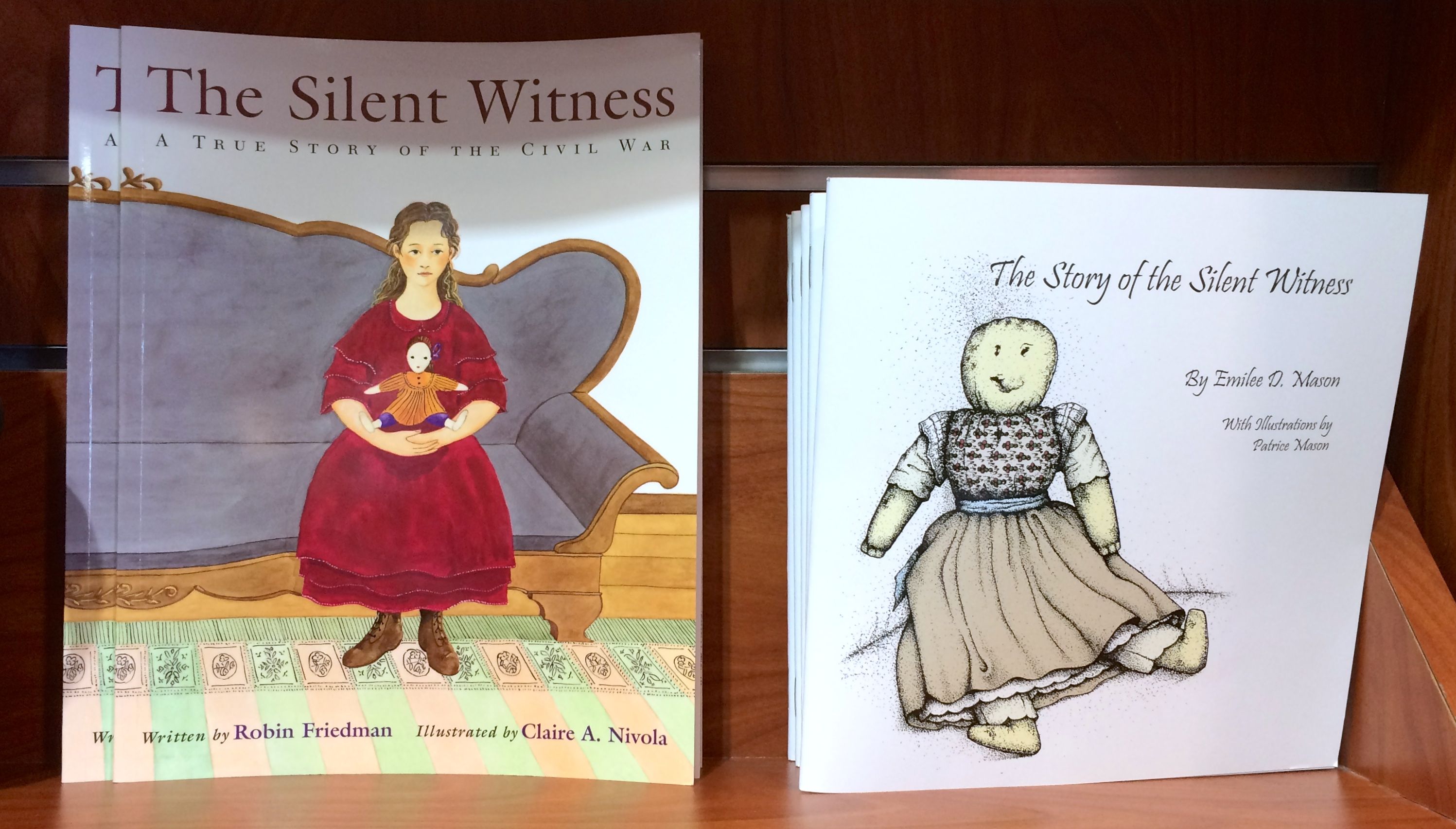
I had the book on the left in my classroom library.
The museum had all sorts of interesting bits and pieces.
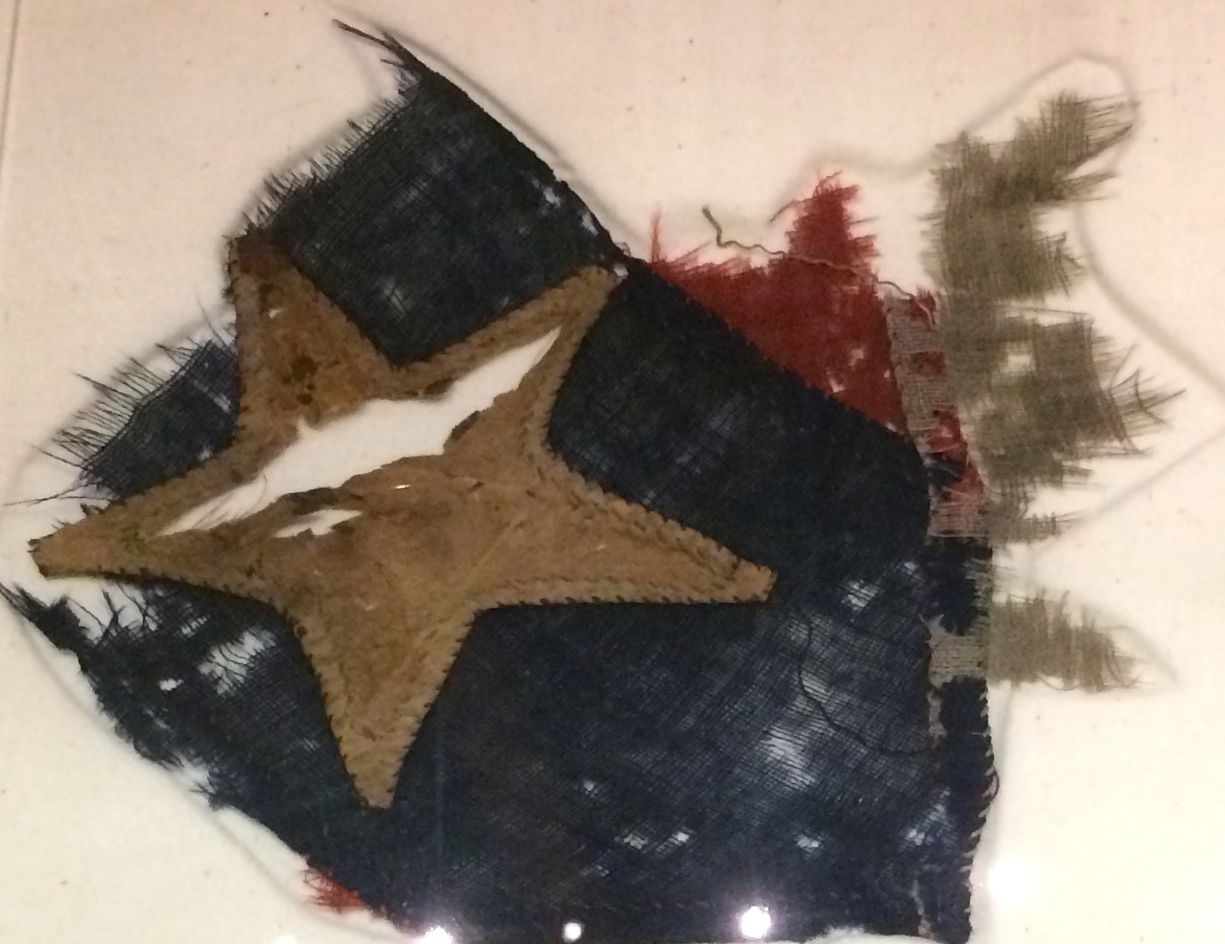
This is a section of the 24th Georgia Regiment flag.
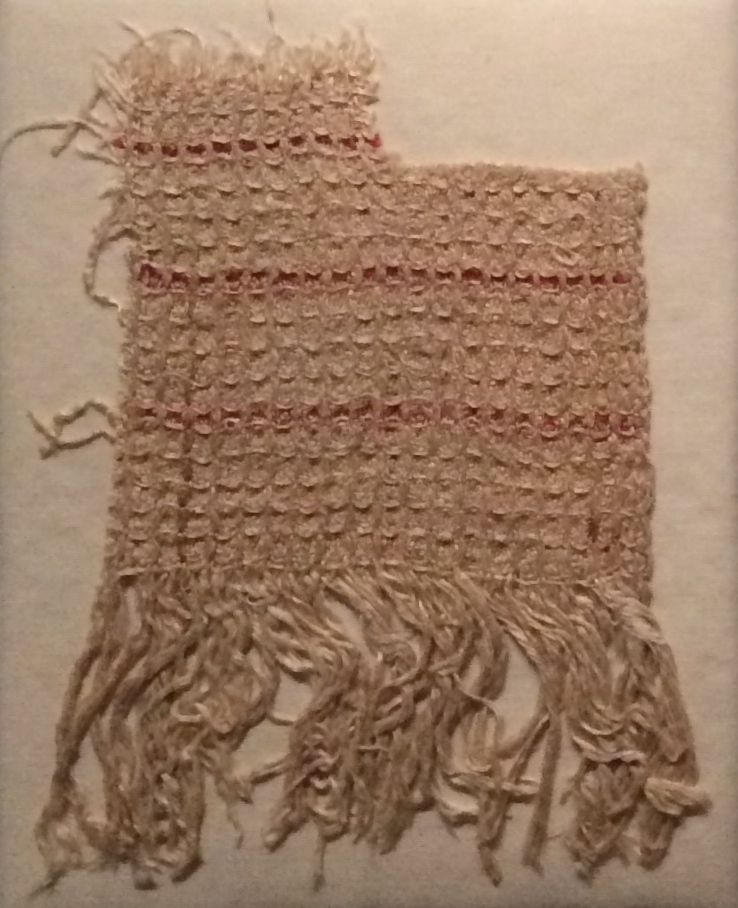
This is a fragment of the white flag that was used to signal surrender. It was actually a dish towel.
The terms of Surrender included this line “each officer and man will be allowed to return to their homes not to be disturbed by United State authority so long as they observe their paroles and the laws in force where they reside.” This one phrase would later prevent Lee from being tried for Treason and proved to be a godsend for the healing and reunification of the Nation, according to the display in the museum.
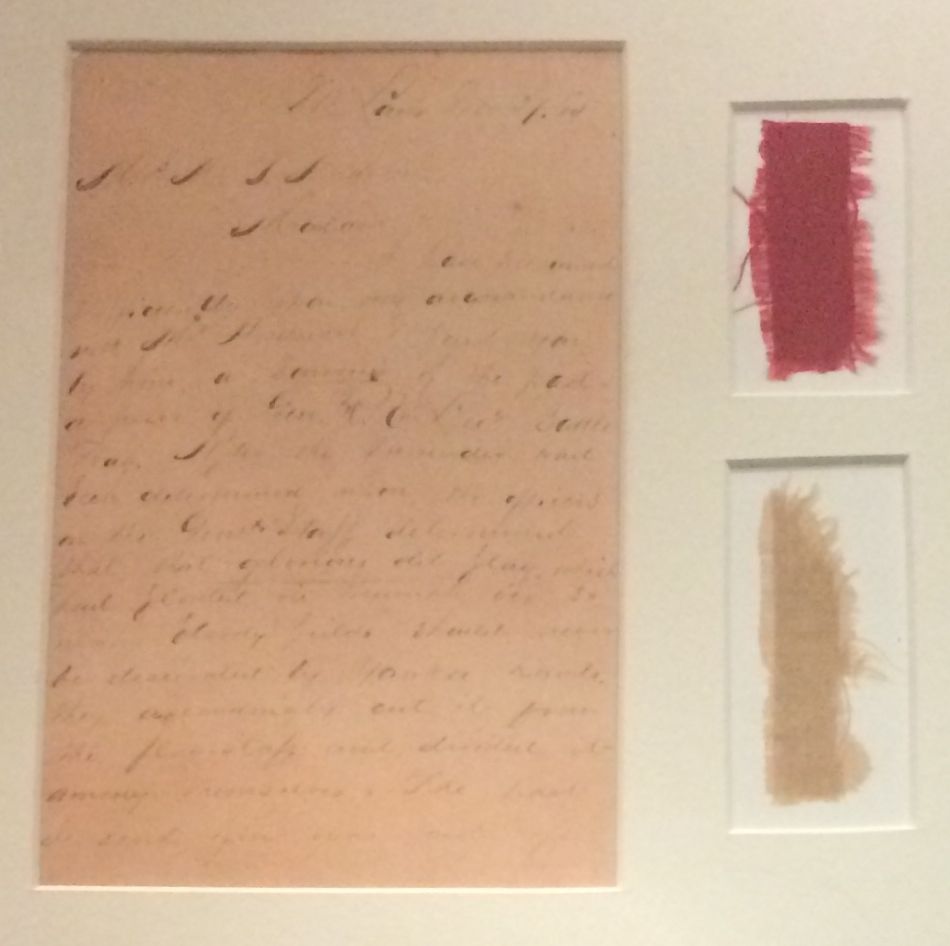
These little fragments are from General Lee’s flag. The text of the letter that accompanies it read, in part, that the officers of his staff determined that “the glorious old flag, which had floated in triumph o’er so many bloody fields should never be desecrated by Yankee hands.” They cut it from the flag staff and divided it among themselves.
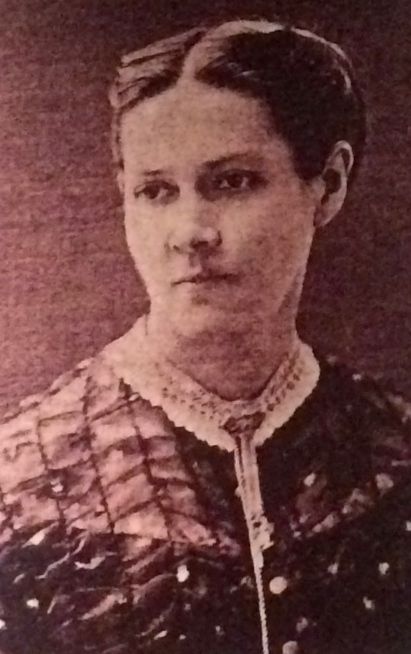
It was a Christmas gift from S.C. Calhoun, late of the C.S.A. to Mrs. M.T. Andrews.
It’s more impressive than a Chia Pet or a Salad Shooter.
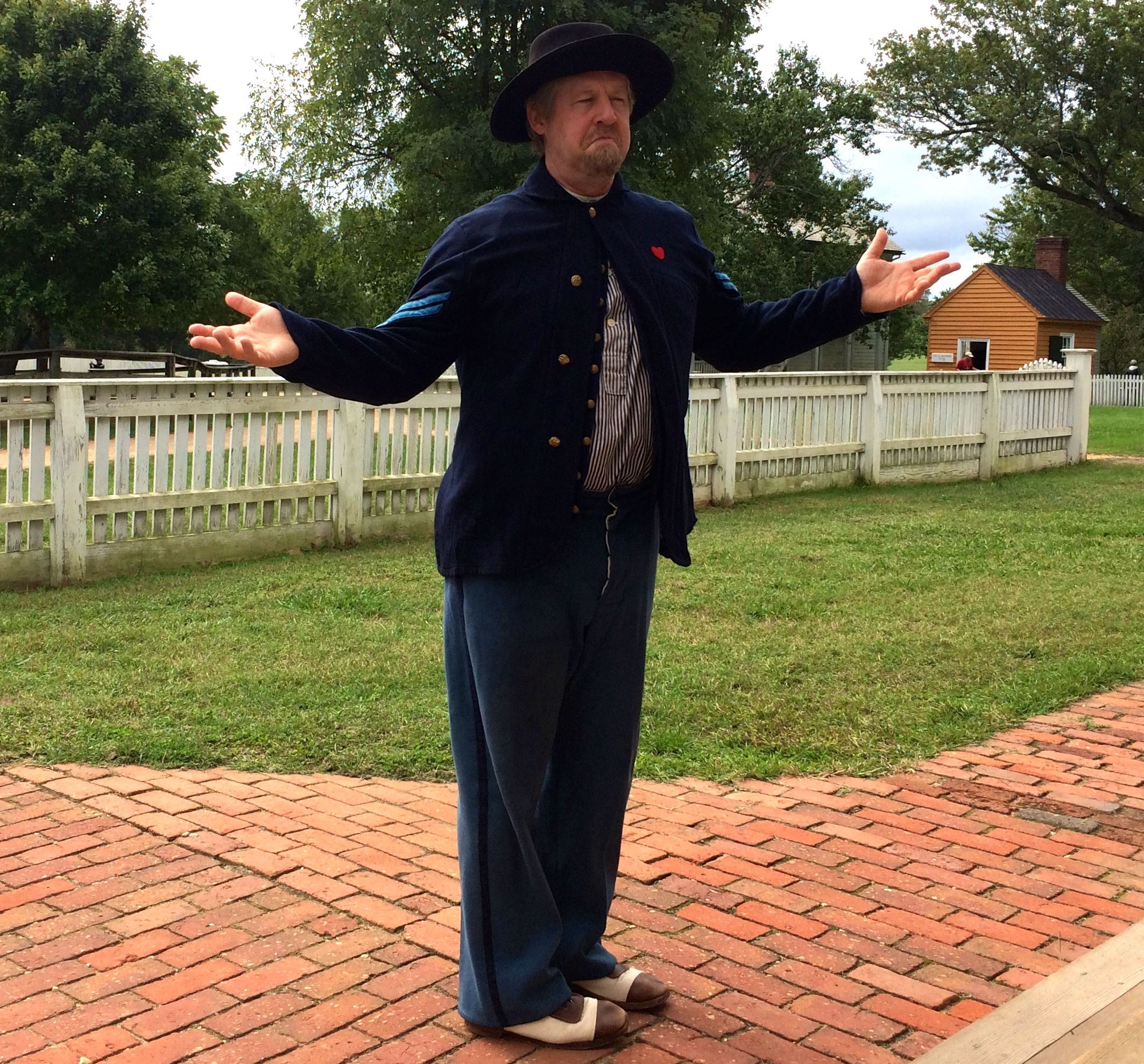
At the Visitor Center, there was a schedule of tours being given by historical re-enactors. I was lucky enough to join a talk by Corporal James Cook, Federal Provost Guard.
He was an animated speaker and focused on the surrender and what happened after.
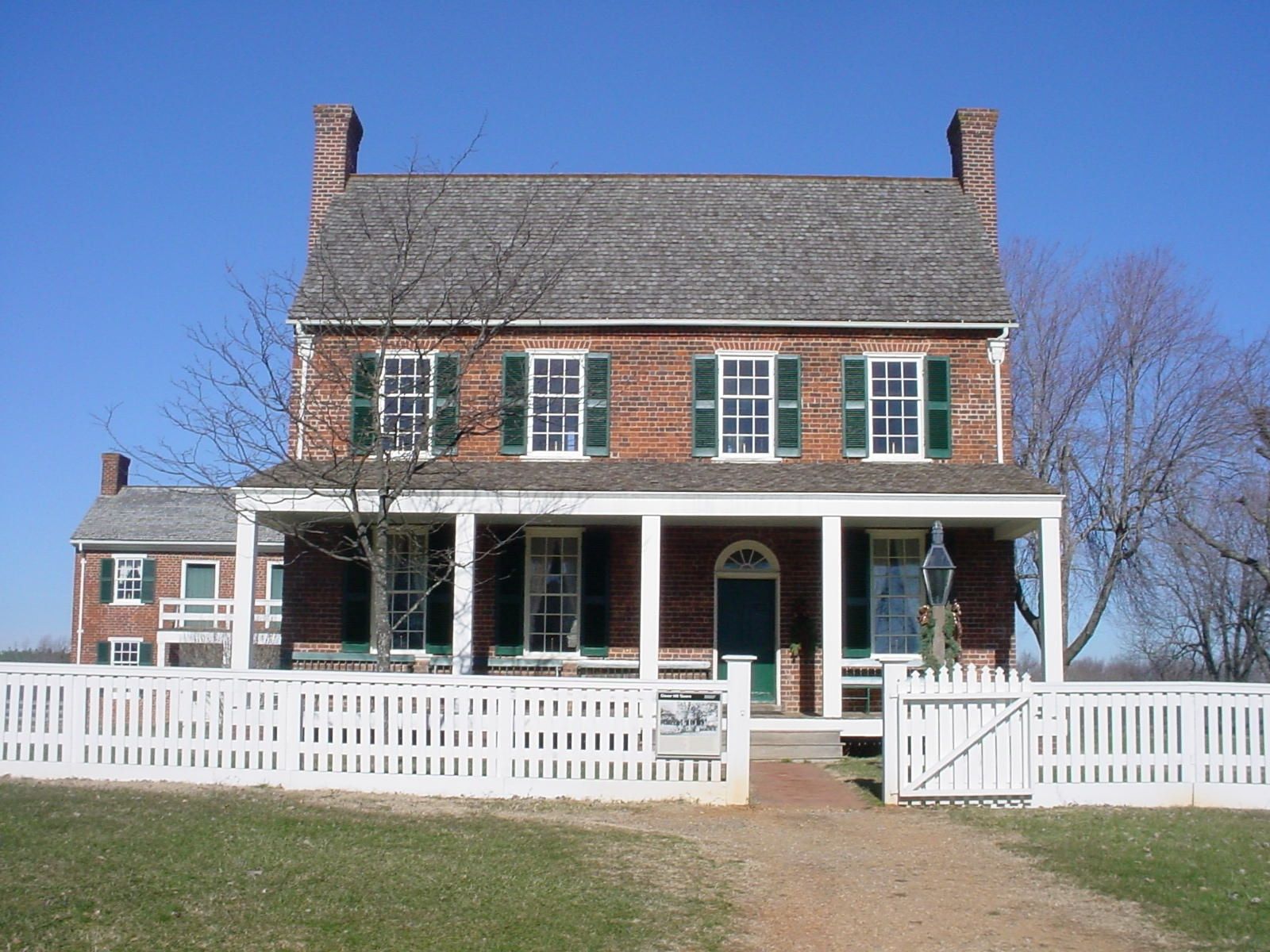
He gave his talk about in front of Clover Hill Tavern, where they set up the printing presses.
I borrowed this photo from the park’s website.
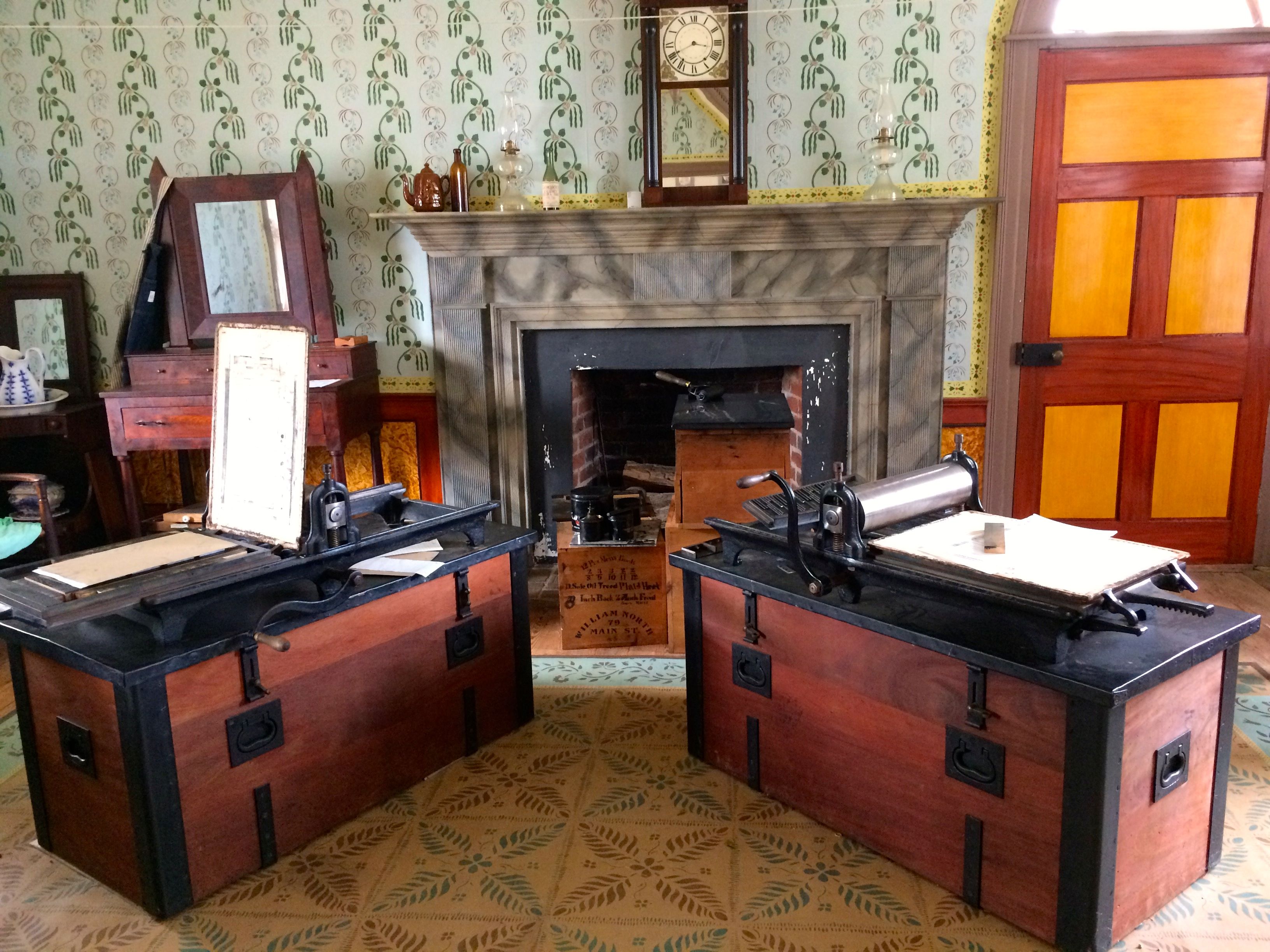
In order to release the Confederate soldiers to return home, they needed to print paroles to carry with them to prove that they we free to go.
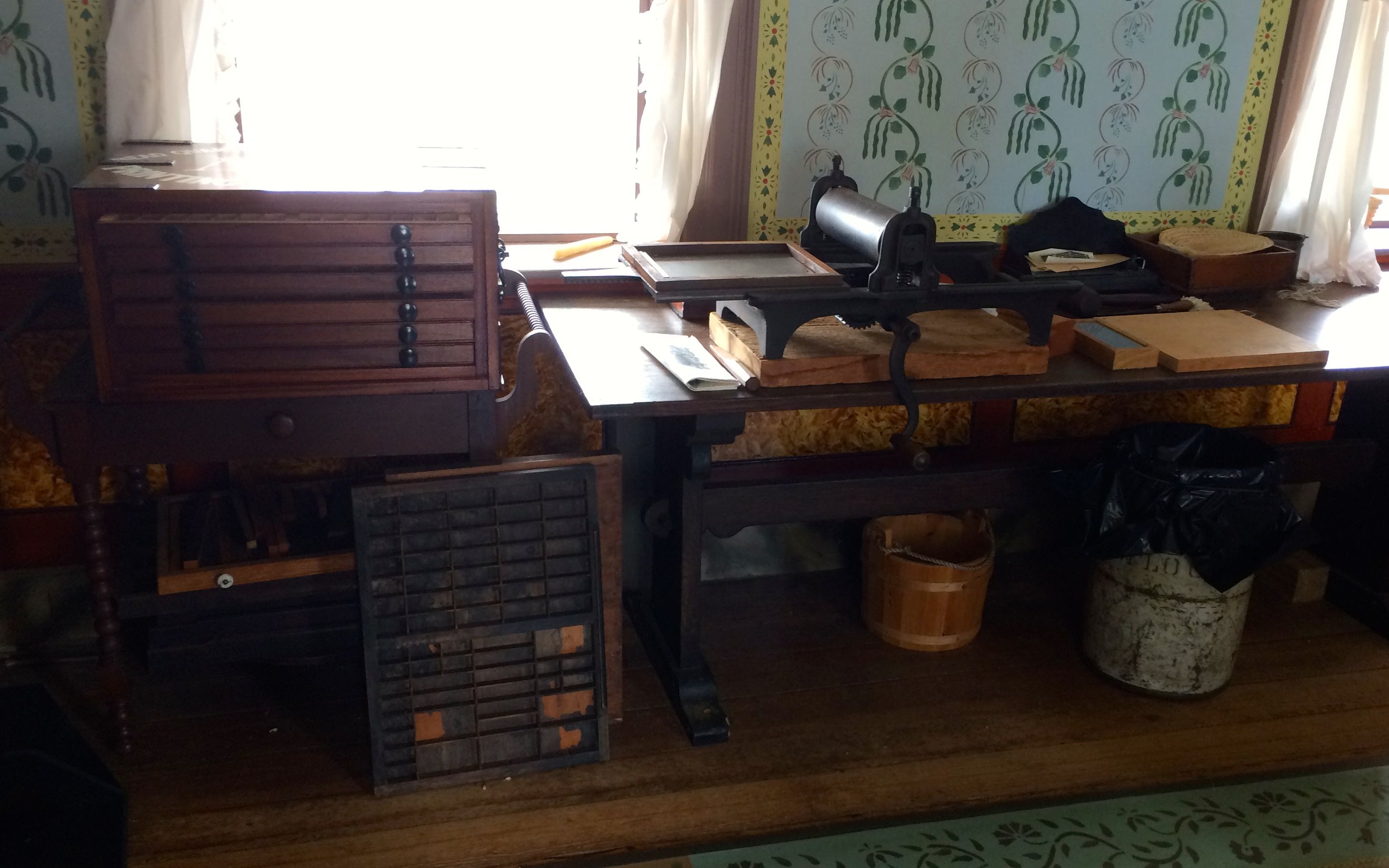
The Army sure had to carry a lot of things with them as they were fighting.
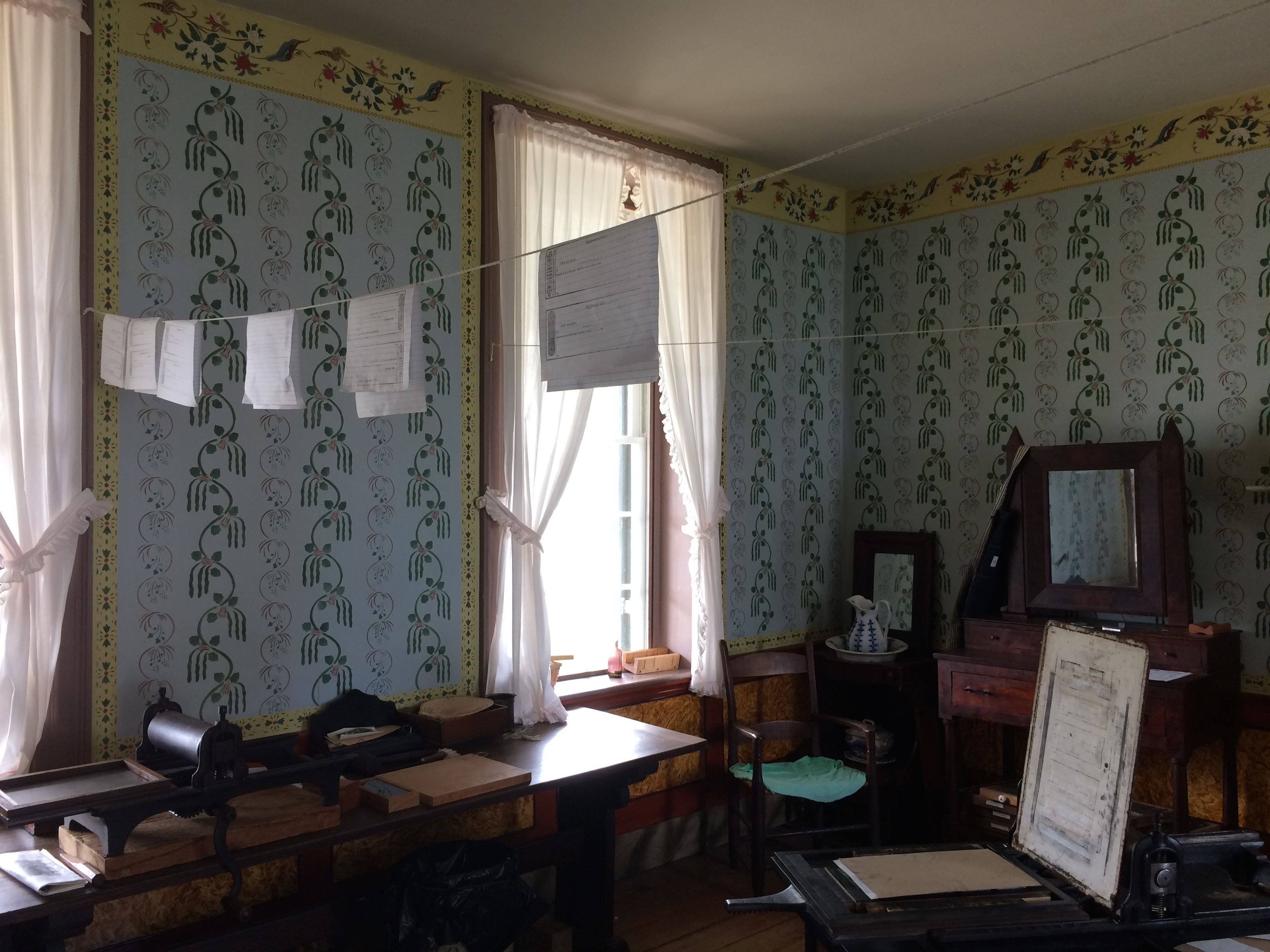
They had trays of type and ink and everything they needed to print the paroles.
They hung the printed paroles on lines to dry. It took them a while to process everything.
Incidentally, this is what the tavern looked like in 1932. Considering that it was built in 1819, and that there wasn’t much of a population left, it’s kind of amazing that it was still standing.
This is how it looked in 1954, when they were working on restoration.
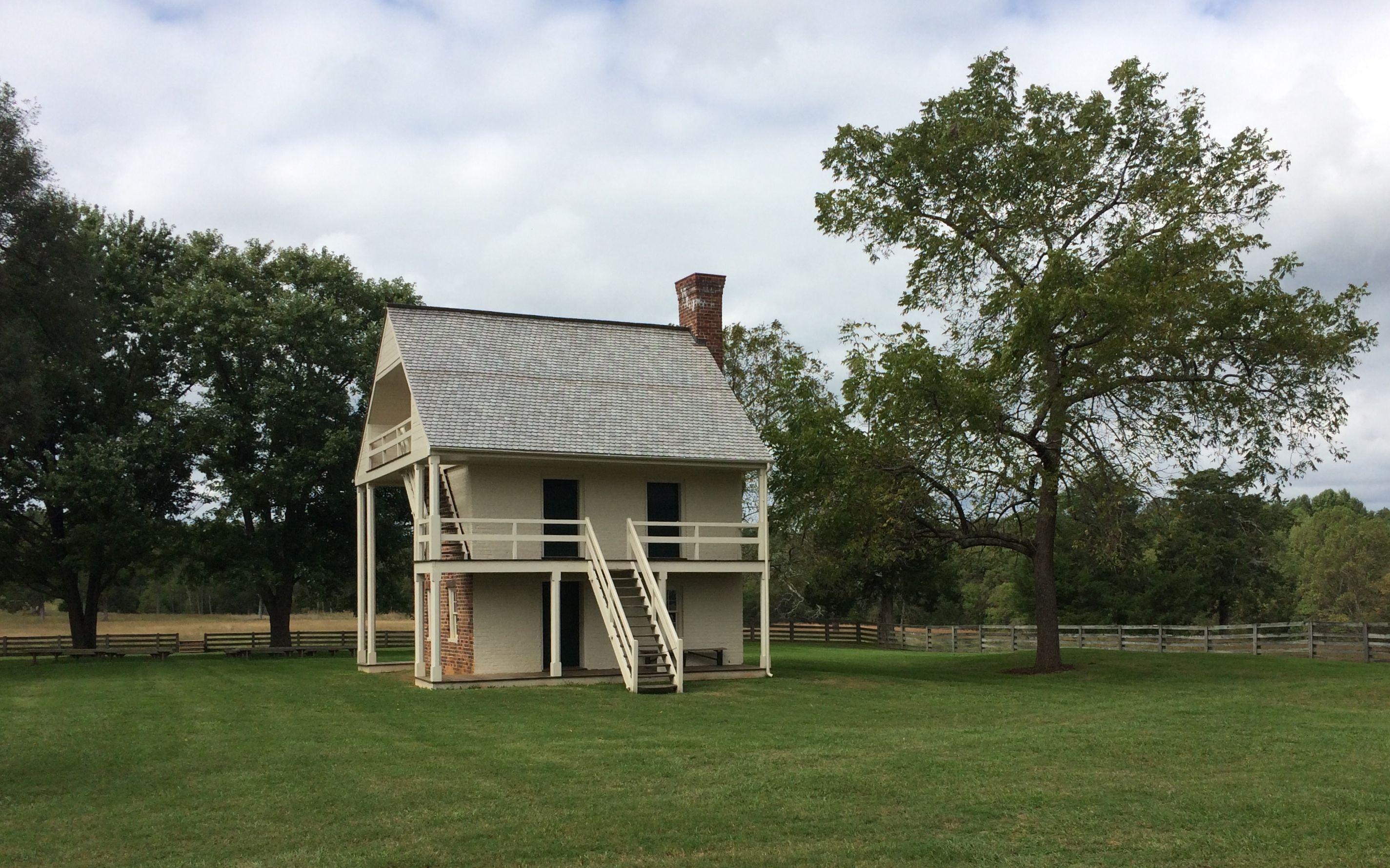
This is the tavern’s guesthouse.
Here is a shot of it in 1942, when they were working on stabilizing and preserving it.
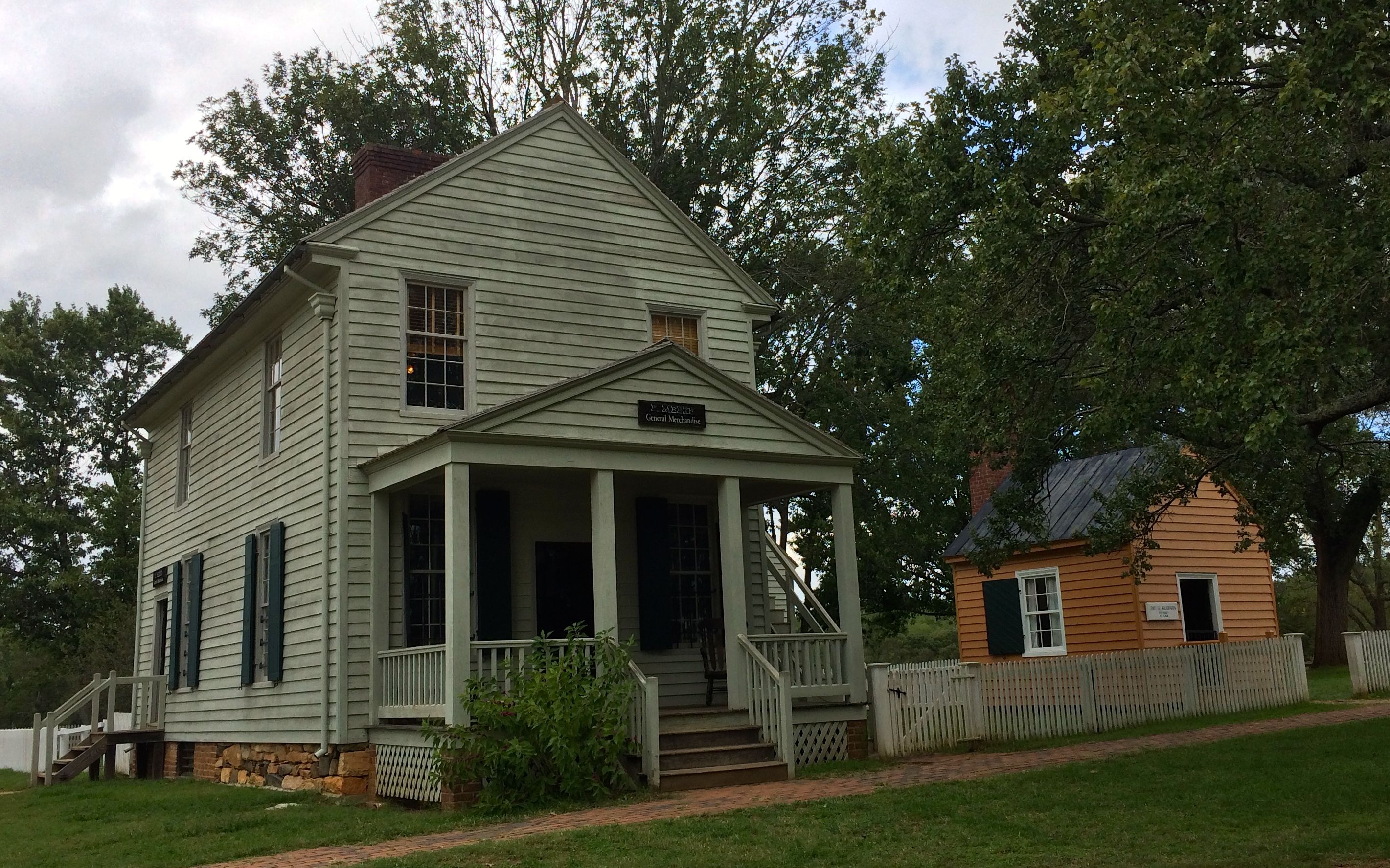
My time was growing short, so I needed to keep moving. Here is Meeks Store. The little brown building next door is a law office.
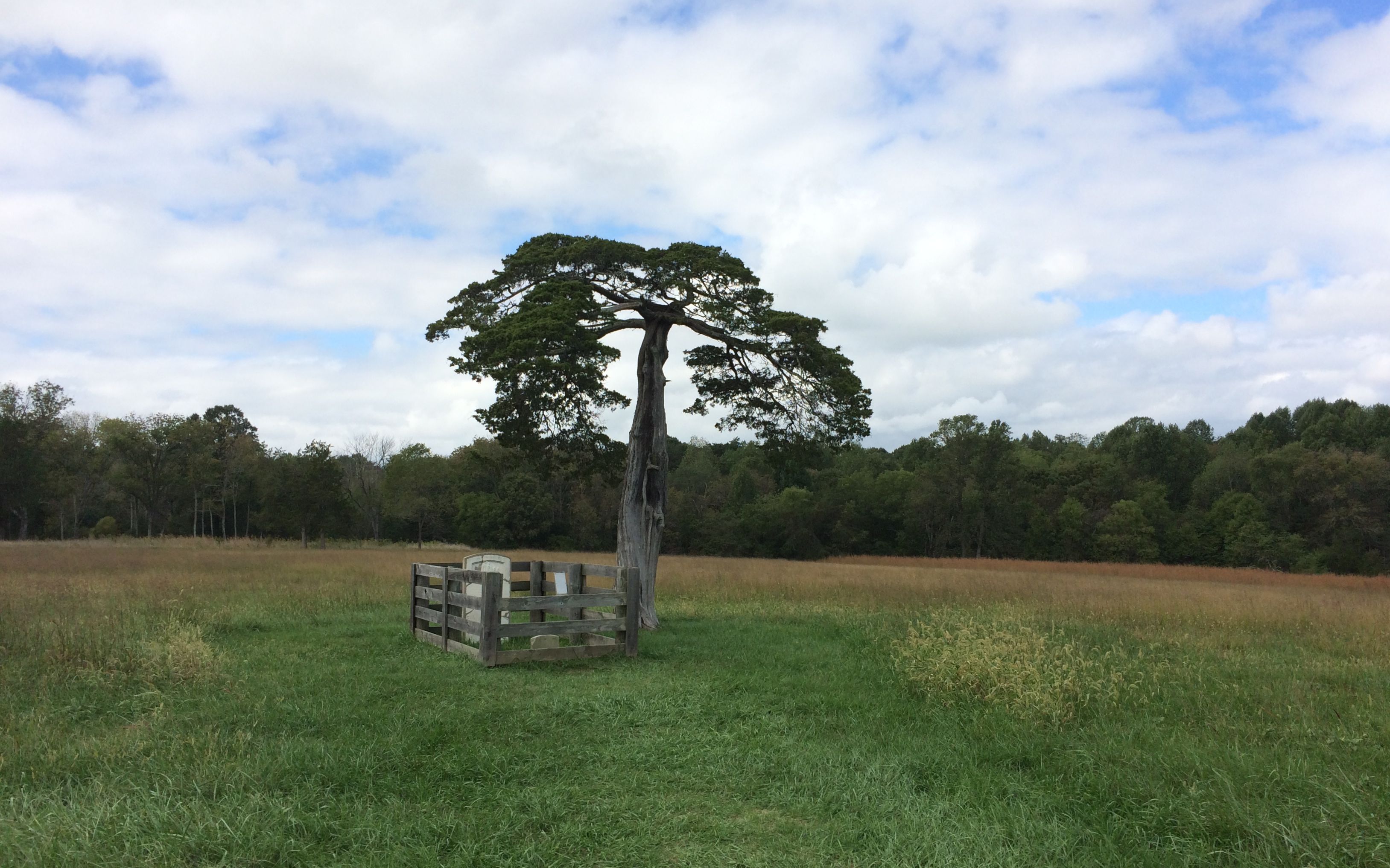
In the pasture behind the store is the grave of Lafayette Meeks, their son. He joined the 2nd Virginia Cavalry in the spring on 1861 at the age of 19. A few months later, he died of typhoid having never seen a battle. A interesting fact I learned was that 2/3 of all American Civil War deaths were from disease and not gunshot wounds.
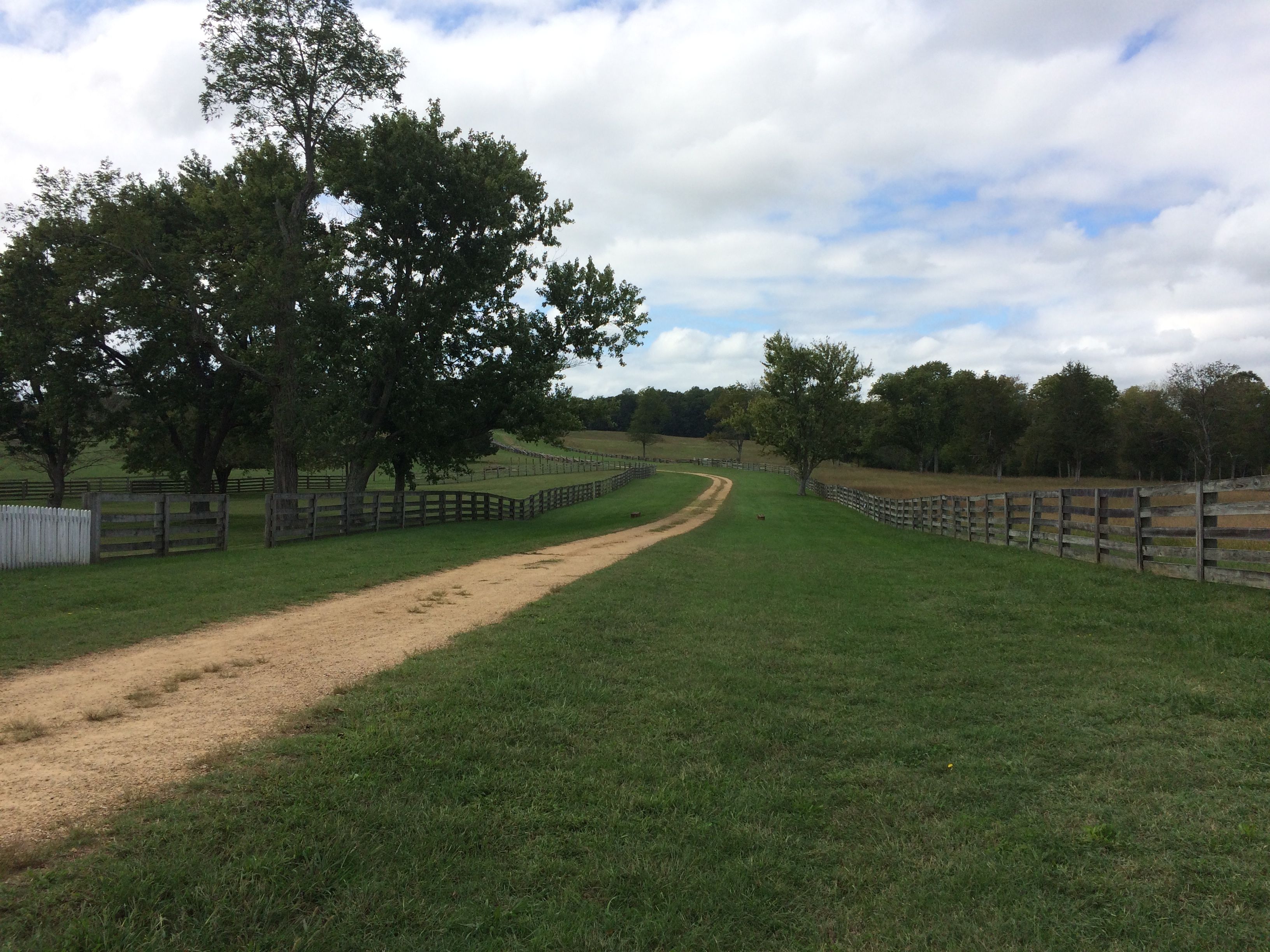
The grave was near the road through town. It is humbling to think of all the people that traveled down it in the spring of 1865.
It was a quick visit. It was time for me to get moving.
How many of you know that song? The answer is, “She wore a new jersey, boys.”
My next stop was Delaware. I was en route to the shop that I hoped would resolve some of my Airstream issues. I only had a day to spare, but spending a night in Delaware counted for filling in my map.
I had a lovely campsite at Lums Pond State Park near Bear, Delaware.
I found my campsite and then went to fill out the registration form. Since it was after the peak season, they didn’t have people staffing the gate house.
The bait machine kind of tickled my fancy, though.
I took a walk around the campground and chatted with a few of the other campers. It turns out that this is a local favorite, and that people who live only a few miles away come to camp here.
I told them that I thought the park was lovely and I could see why they would want to come spend time here, but that I wasn’t enjoying the stink bugs.
They told me that the bugs had just shown up yesterday.
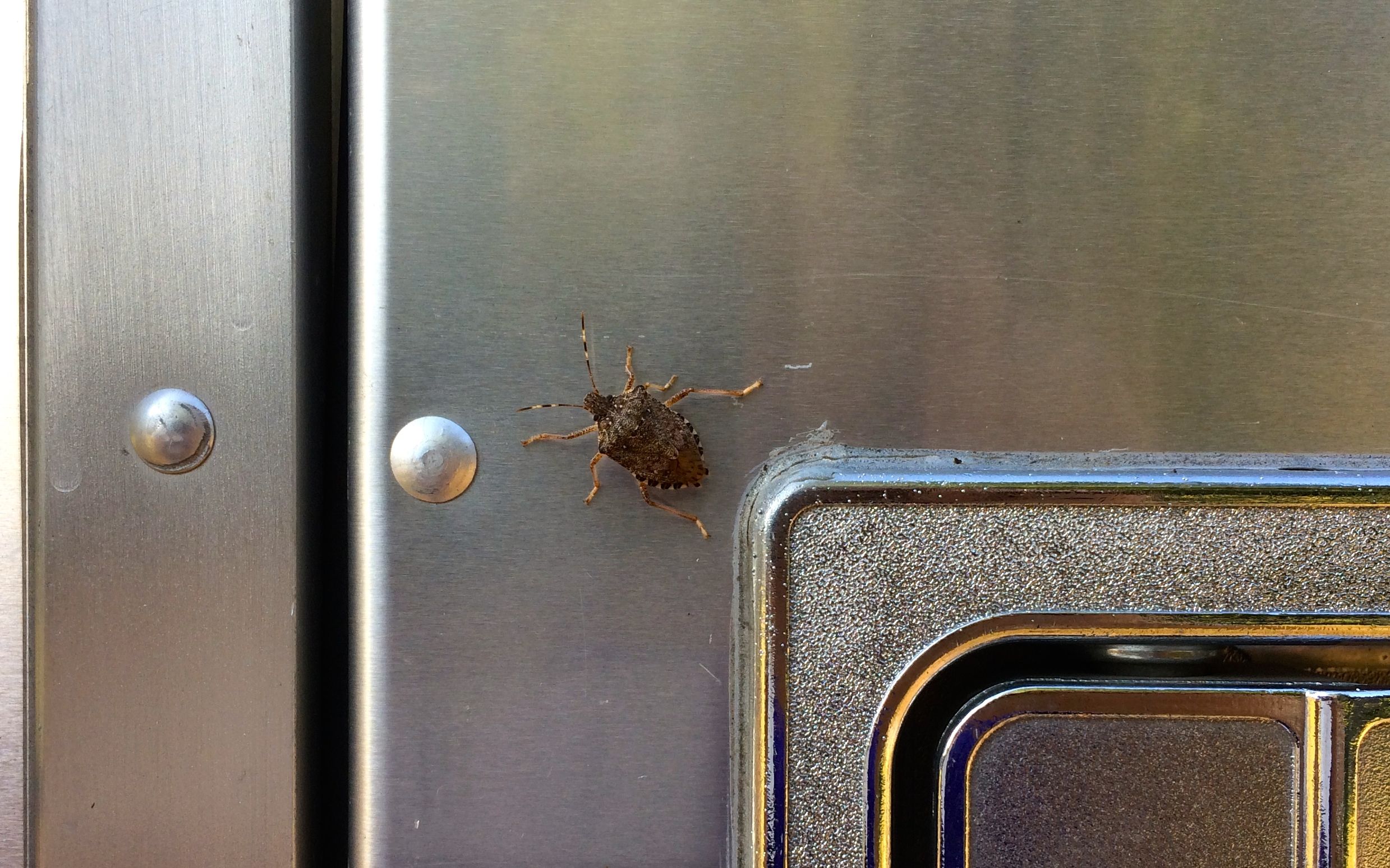
Great. My trailer was covered with them, and some managed to crawl inside, as well. The are quite amazing insects, but I am not partial to the creepy-crawlies.
I spent a quiet night and then got ready to head to my next destination.
I worked at an Amazon Fulfillment Center in Campbellsville, Kentucky for most of the month, so my campsite was a perk of the job. Peak season continues until just before Christmas, but I decided to leave early. I generally enjoy the work but the facility has gone over mostly to apparel, and that stuff is heavy! The shelves seem much, much higher than when I worked there two years ago – or could it be that I am two years older? In any event, I left on the 22nd.
Other Expenses $338.64
Campsites 232.09
Gas 178.77
Groceries and such 163.03
Eating out 54.46
Laundry 3.00
Food and drink on-the-go 1.06
TOTAL $968.05
The main unexpected expense for November was vet visits for Cora the Travel Cat. She had ear issues that needed to be addressed, and then she had some sort of allergy issues that caused her to scratch the fur off the top of her head. There is no such thing as a free cat!
In November, I camped in Kentucky, North Carolina and South Carolina and drove through Tennessee. I drove 1,177 miles, which was the least amount of driving I have done in a month since I have been recording.
After Connecticut, my next goal was New Jersey. I am really crossing the states off my list now!
It was kind of an adventure getting there. I decided to use my paper maps until I got close. Unfortunately, paper maps (at least of the AAA variety) don’t warn you about which roads not to take.
I was rolling down Sawmill Parkway in New York State, when I noticed a few people honking as they passed me. “Odd,” I thought.
Finally a guy rolled down his window and motioned for me to do the same. I did, and he told me that trailers weren’t allowed on the parkway and warned me that I should get off or I might get a ticket.
I gave him a thumbs up and resolved to get off at the next exit. BEFORE I got to the next exit, I saw a sign warning of low clearance – 8’8″. GULP! My trailer is 10’6″. I slowed down and approached cautiously. The overpass was an arch, so I moved to the center of the roadway and kept my fingers crossed. It looked a lot taller that 8’8″. Luckily, they must have been measuring at the lowest part, so I passed through without an issue – unless you call sweaty palms an issue.
I managed to make my way to New Jersey and to the parking lot where I was going to meet my friend, Mary Ellen. We sang in a church choir together in Kalamazoo. The last time I saw her was in 2006, when I stopped off on my way to a summer in Europe.
She invited me to park in her driveway and enjoy her hospitality. She didn’t have to ask me twice. Come to think of it, maybe I asked her if I could stay. In any event, she was a marvelous hostess!
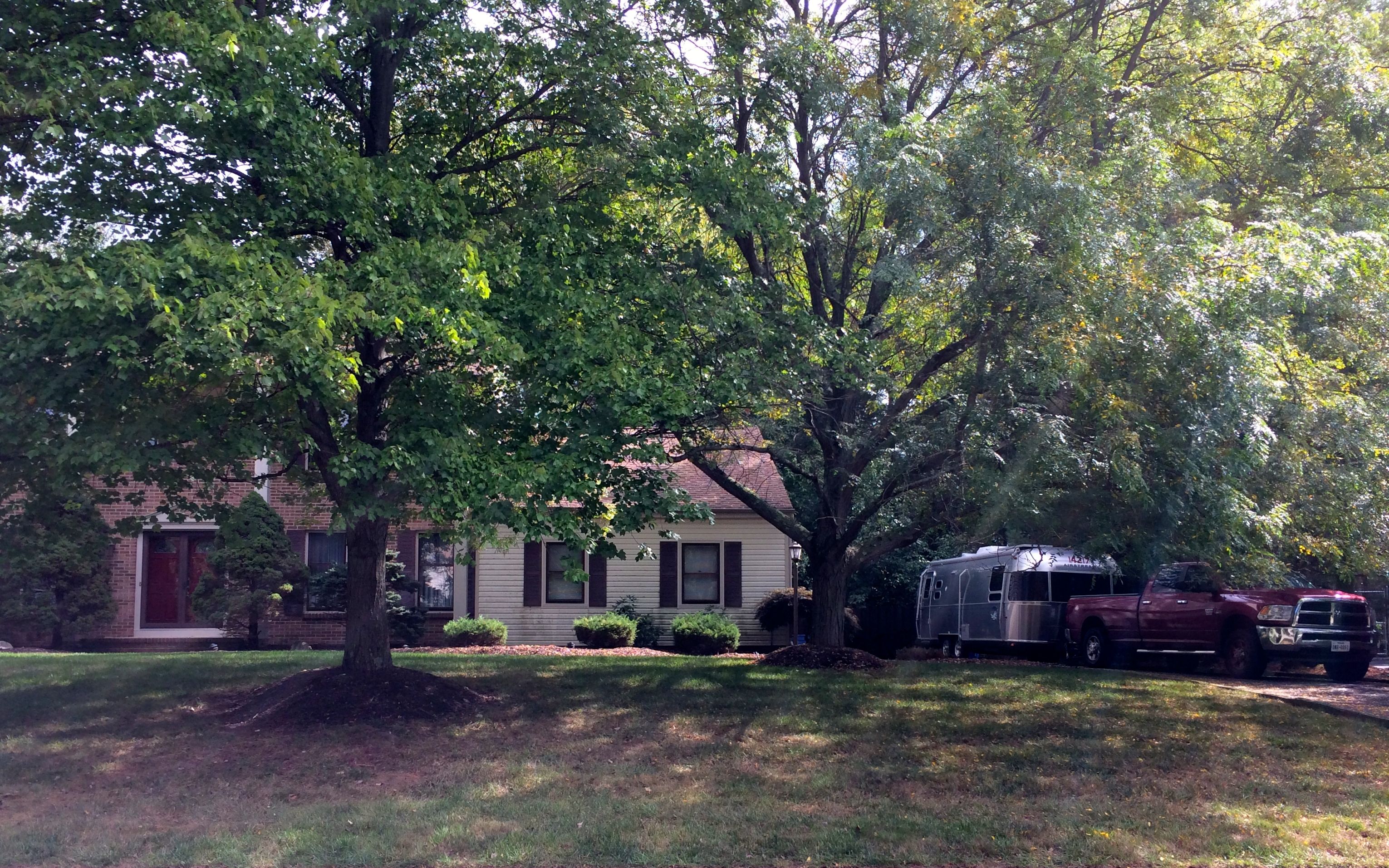
She has a lovely home, but isn’t every house even better with an Airstream in the driveway?
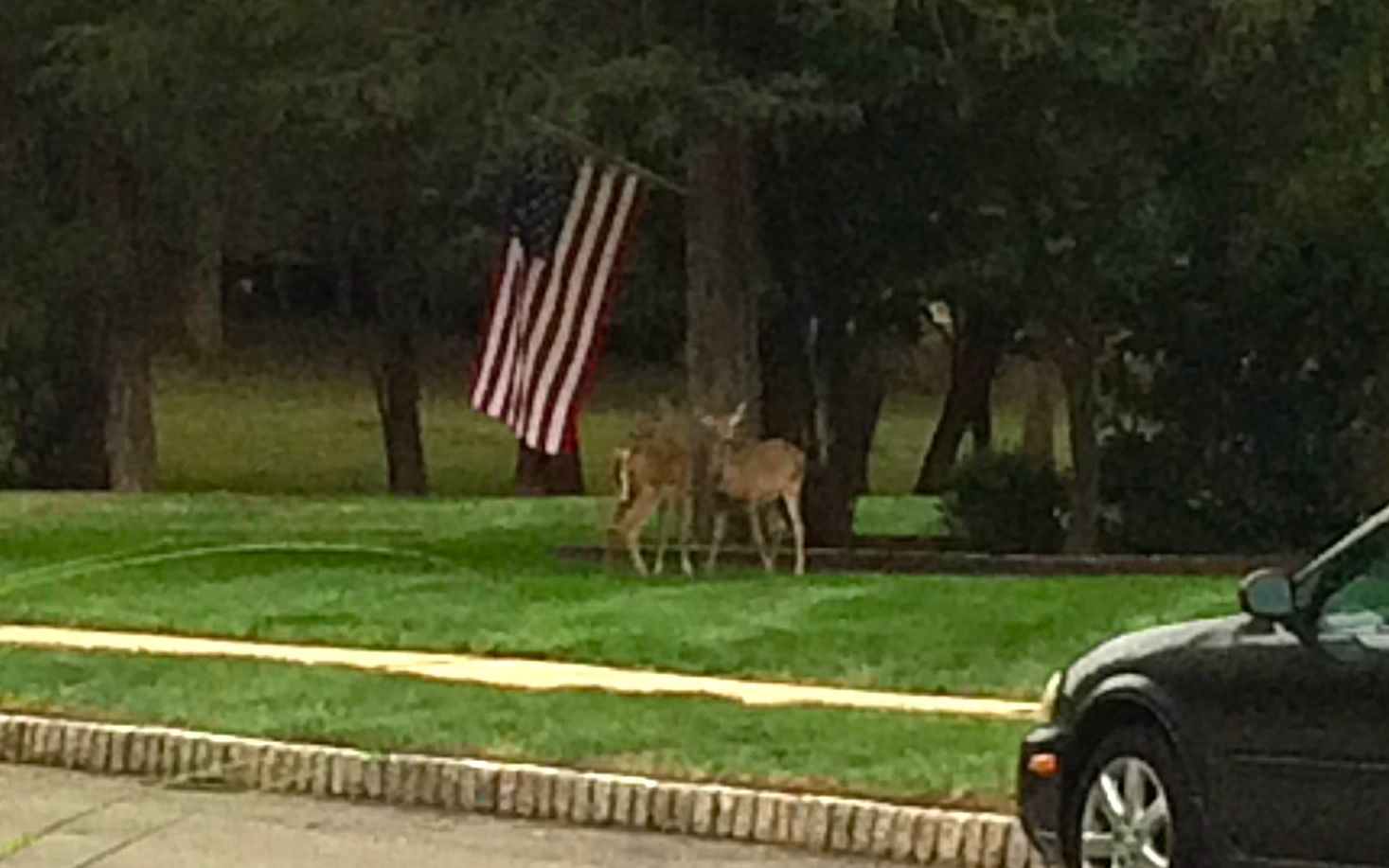
When I think of New Jersey, I think of urban sprawl. Really, though, it is a state that is less developed and more agricultural that you might think. The deer were all over. I snapped this photo right across the street from her house.
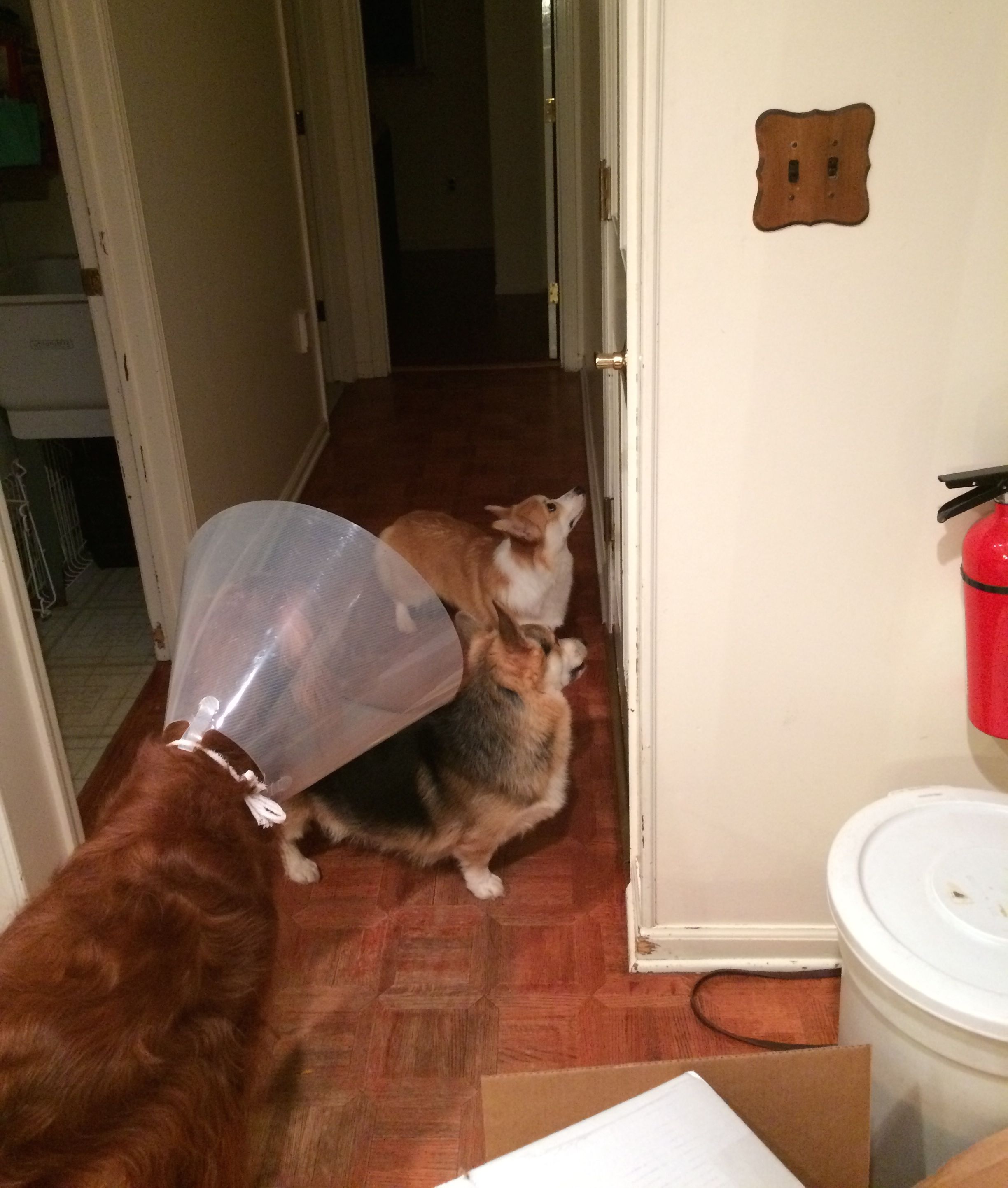
Mary Ellen went to work every day, and I spent time at home. I was having trouble getting my website and blog to work, so I spent a couple of days working on that. When she came home, her dogs were waiting eagerly for her return.
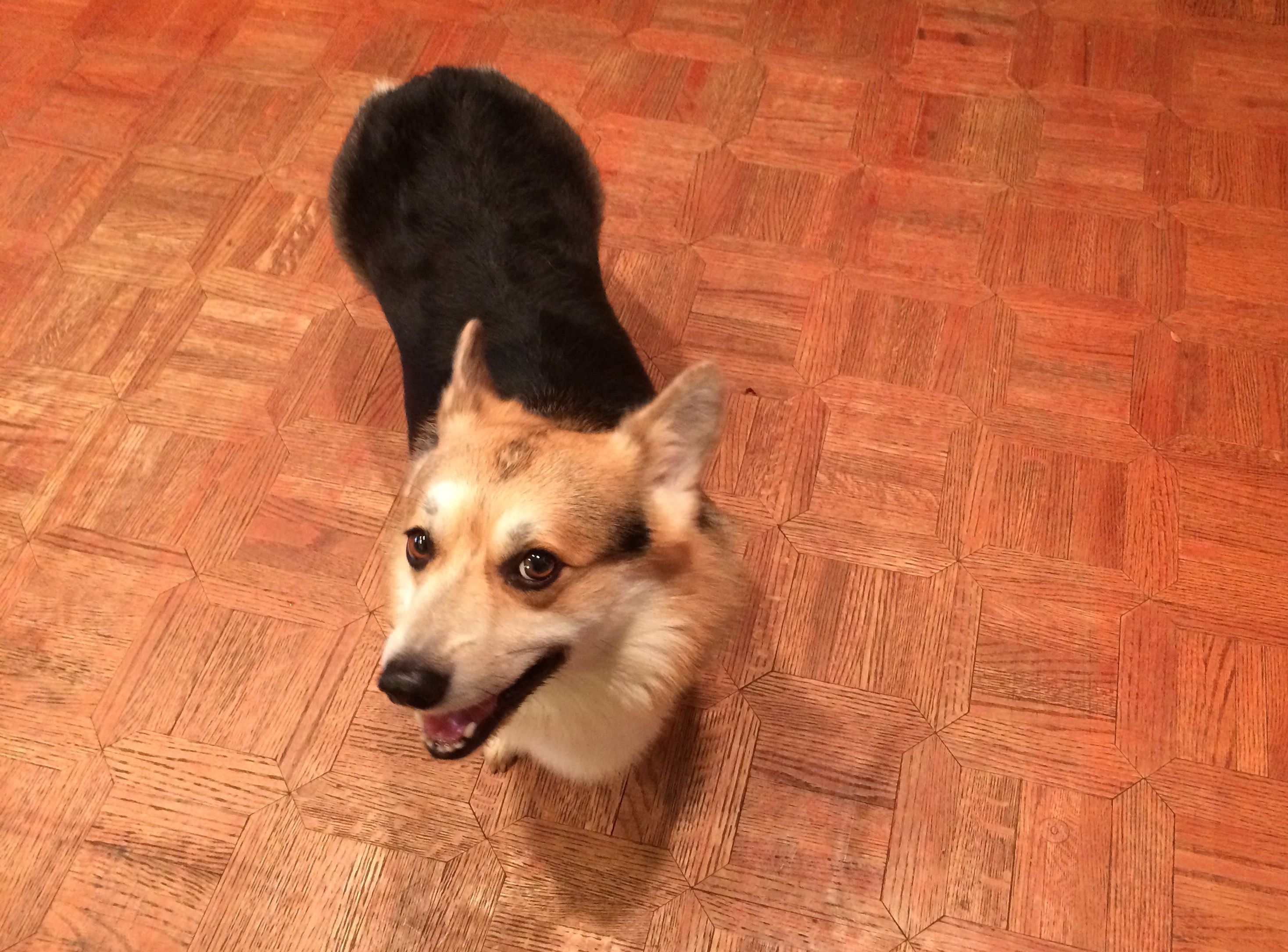
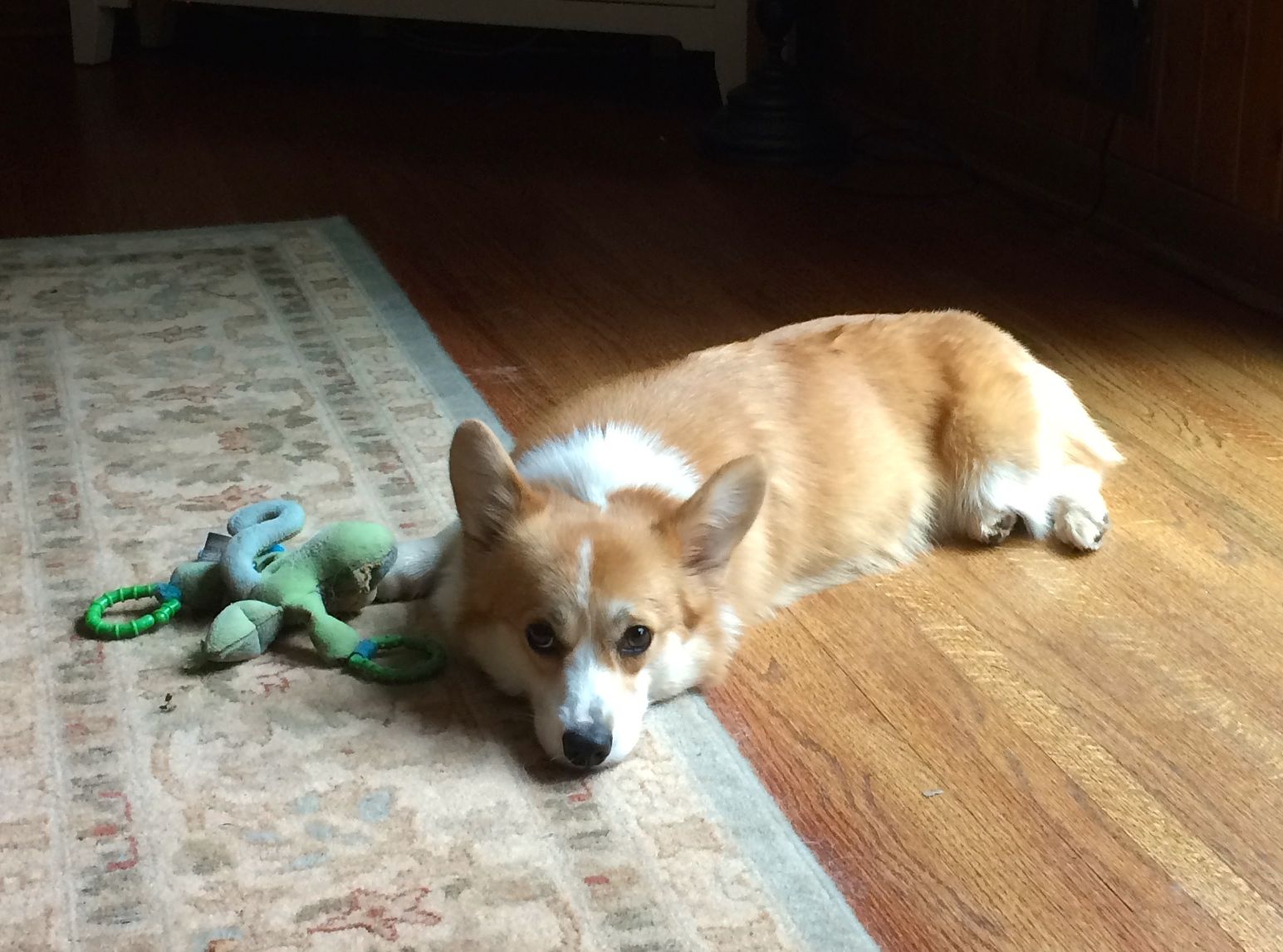
Halen and Fiona are the corgis and poor Bree had to wear the “cone of shame”.
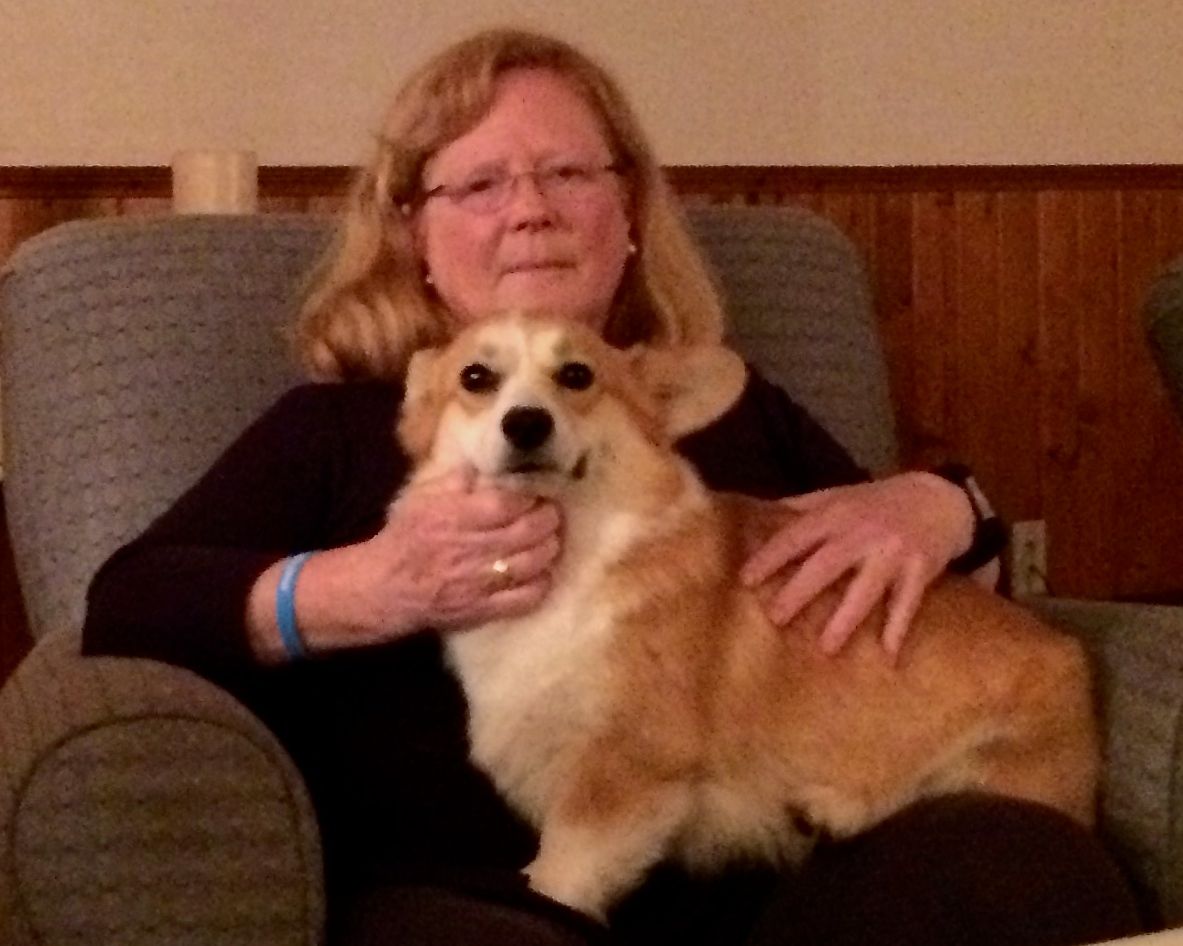
Here’s Fiona having a little “quality time” with Mary Ellen.
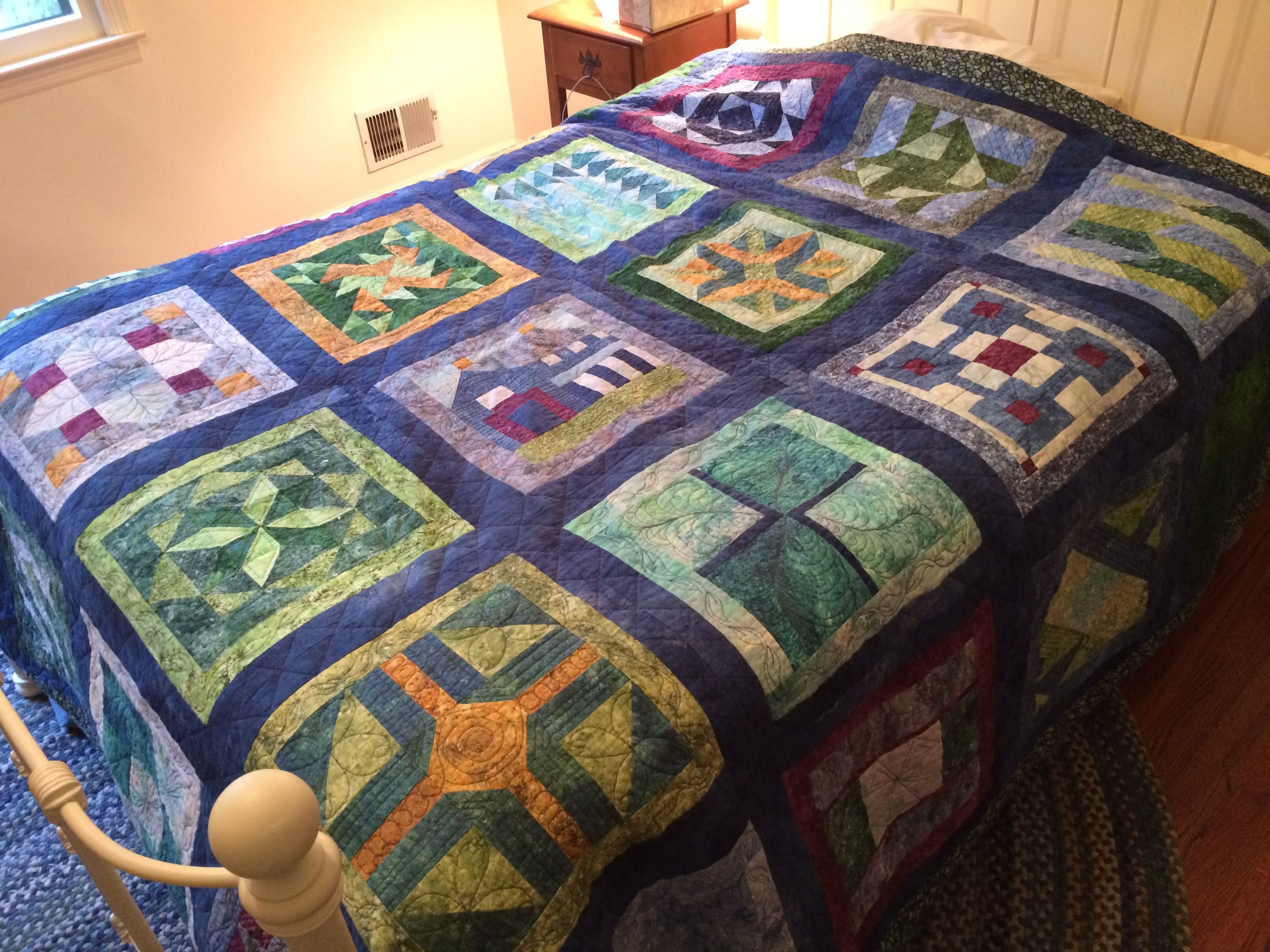
It was a novel experience to sleep in a bed with such a lovely quilt. Mary Ellen made it, and it is in my favorite colors. I left it on the bed when I departed, just in case you are wondering.
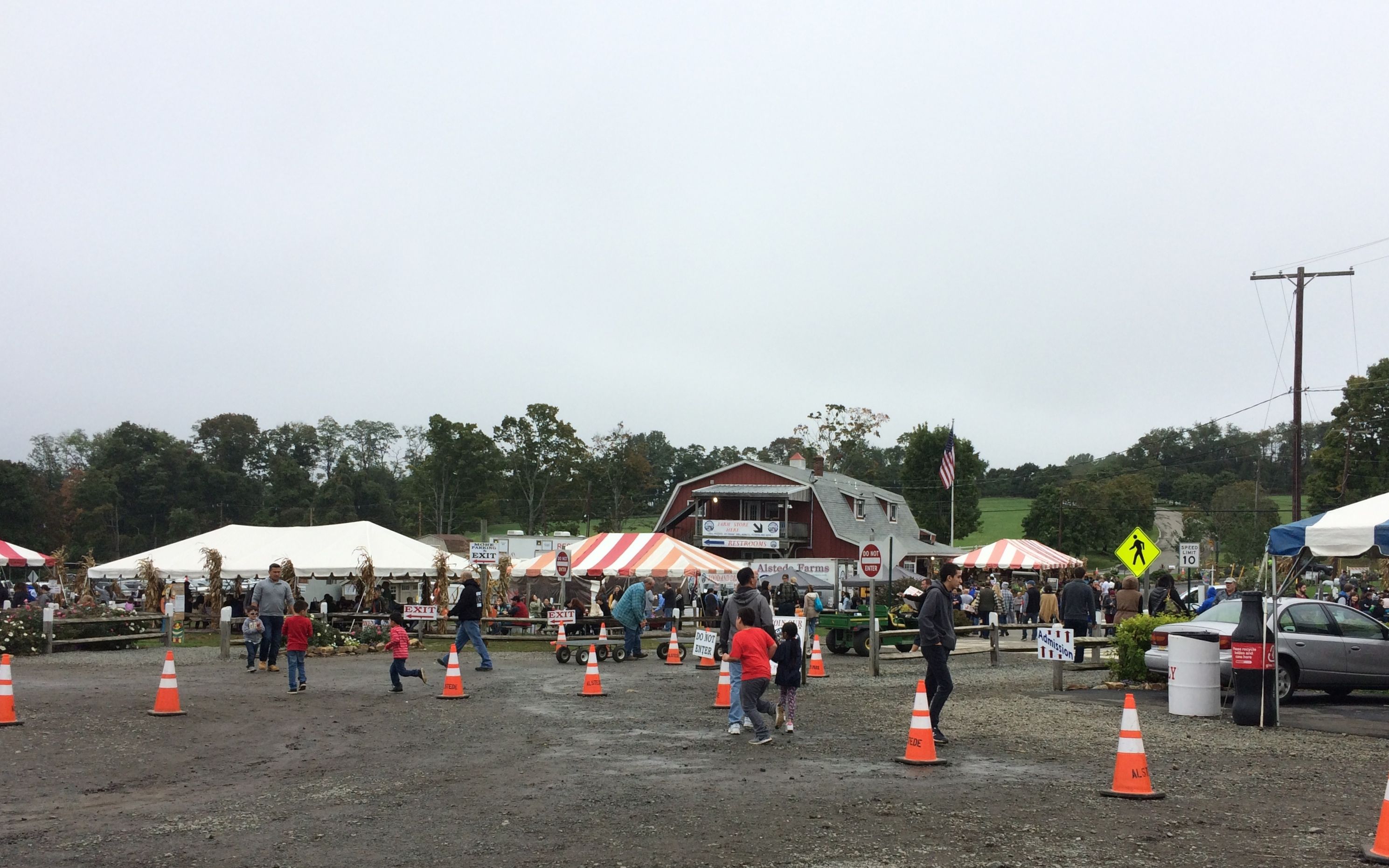
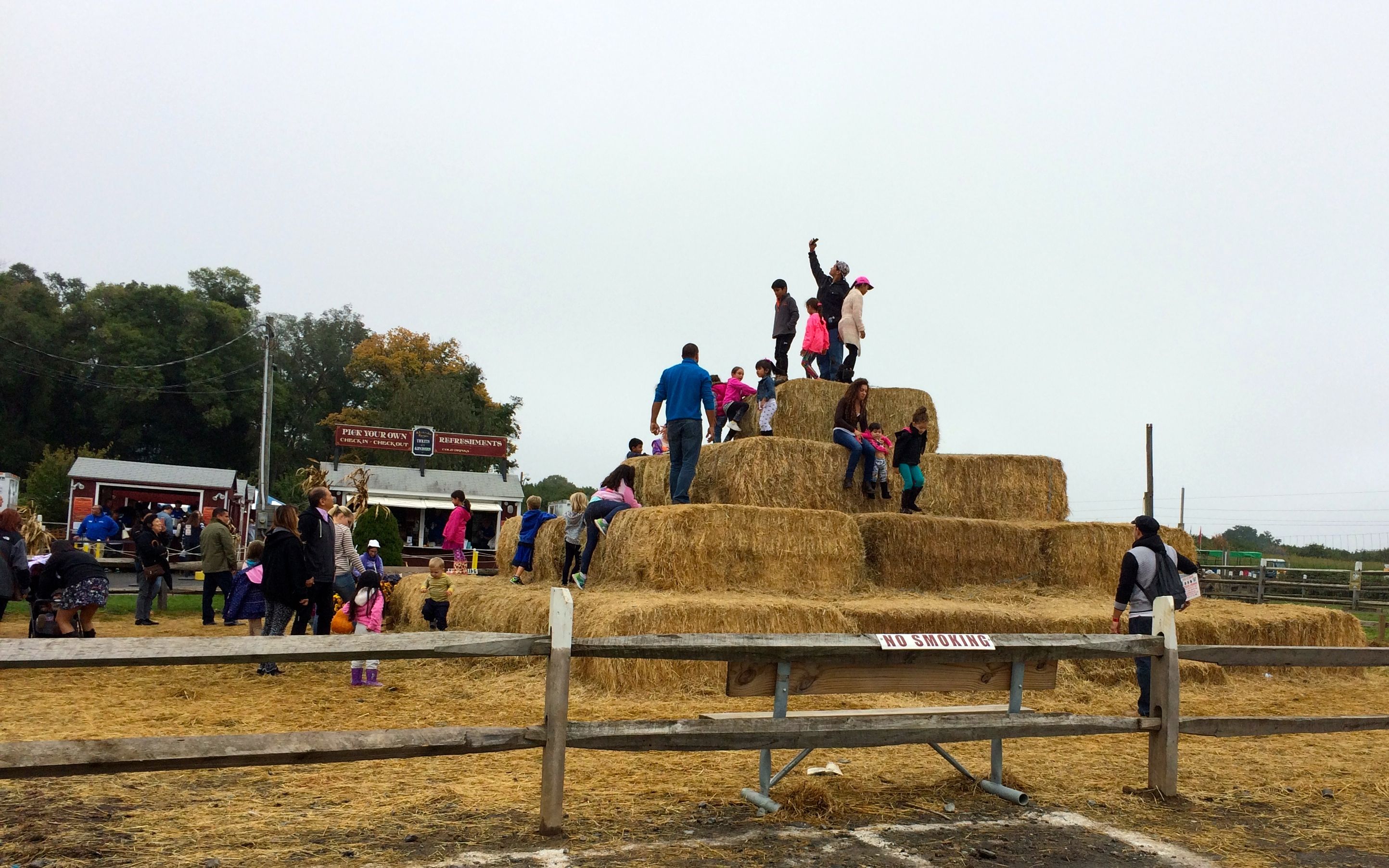
During the weekend I was there, we ran a few errands and stopped by Alstede Farms to drop off some boxes from the community supported agriculture that Mary Ellen belonged to.
I was amazed by the crowds turning out for the “pick-your-own” fun.
We also went in and bought some of their products. I mean, we managed to get in and get a parking spot – why not?
It was lovely to spend time with Mary Ellen, Bree,
Harlan
and Fiona!
I hope it’s not ten years before we see each other again.
I only had two days in Rhode Island, but I got to spend three in Connecticut. The odd thing about Connecticut is that it is kind of hard to find a place to camp. But, after searching all my usual sites, I finally found a spot at Portland Riverside Campground, a few miles away from Hartford, the capital of Connecticut.
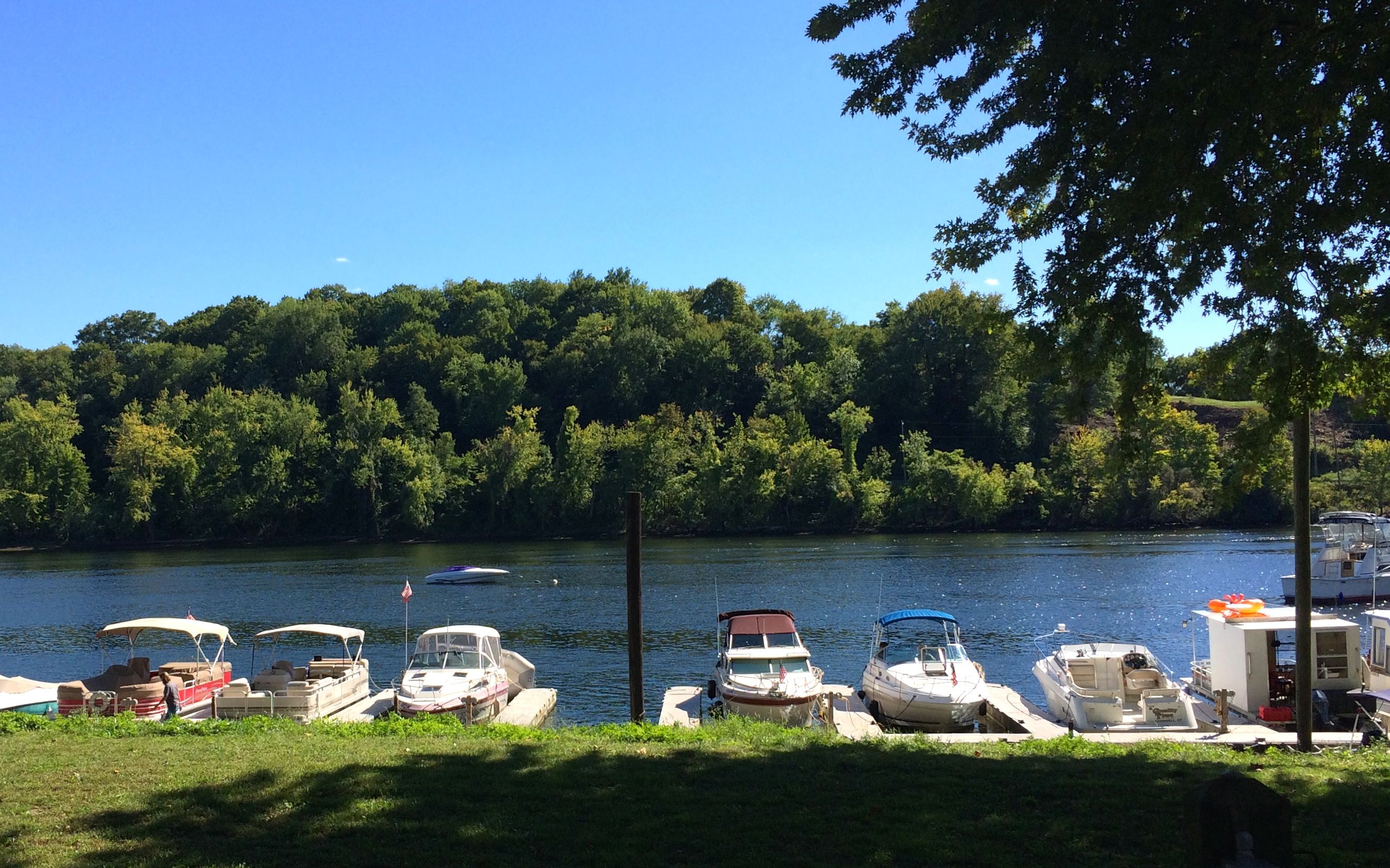
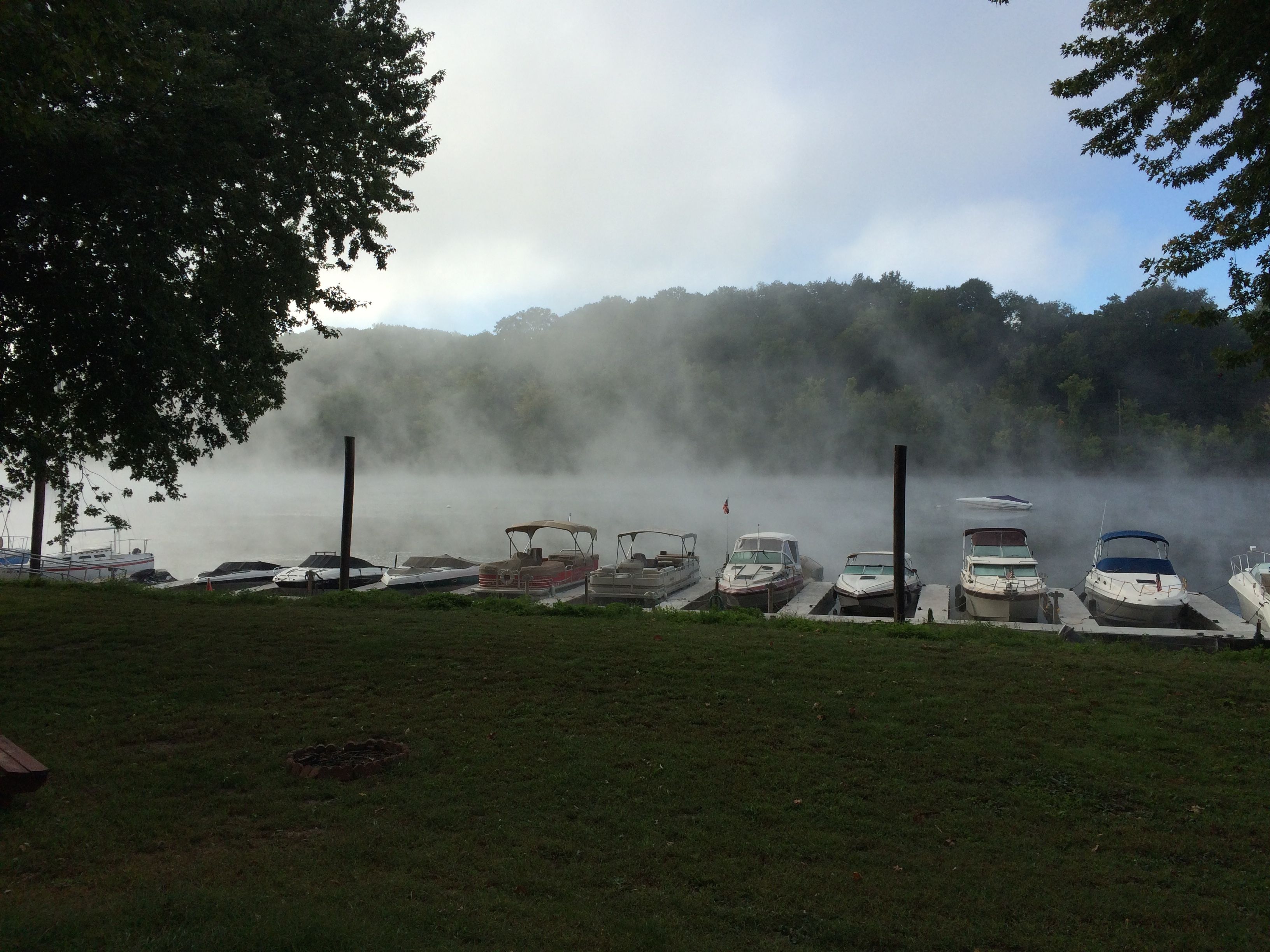
It’s an unusual place, tucked back behind a marina and a boatyard. In fact, to get to the marina, I had to mince my way through a neighborhood, taking a left at a cemetery and down a road. However, once I got there, I had a beautiful view.
As you can tell by the color of the trees, this stay was quite a while ago!
I consulted my History Here app and found a few interesting places I wanted to check out.
The first was the Harriet Beecher Stowe house. After all, I had just seen her grave in Andover, Massachusetts.
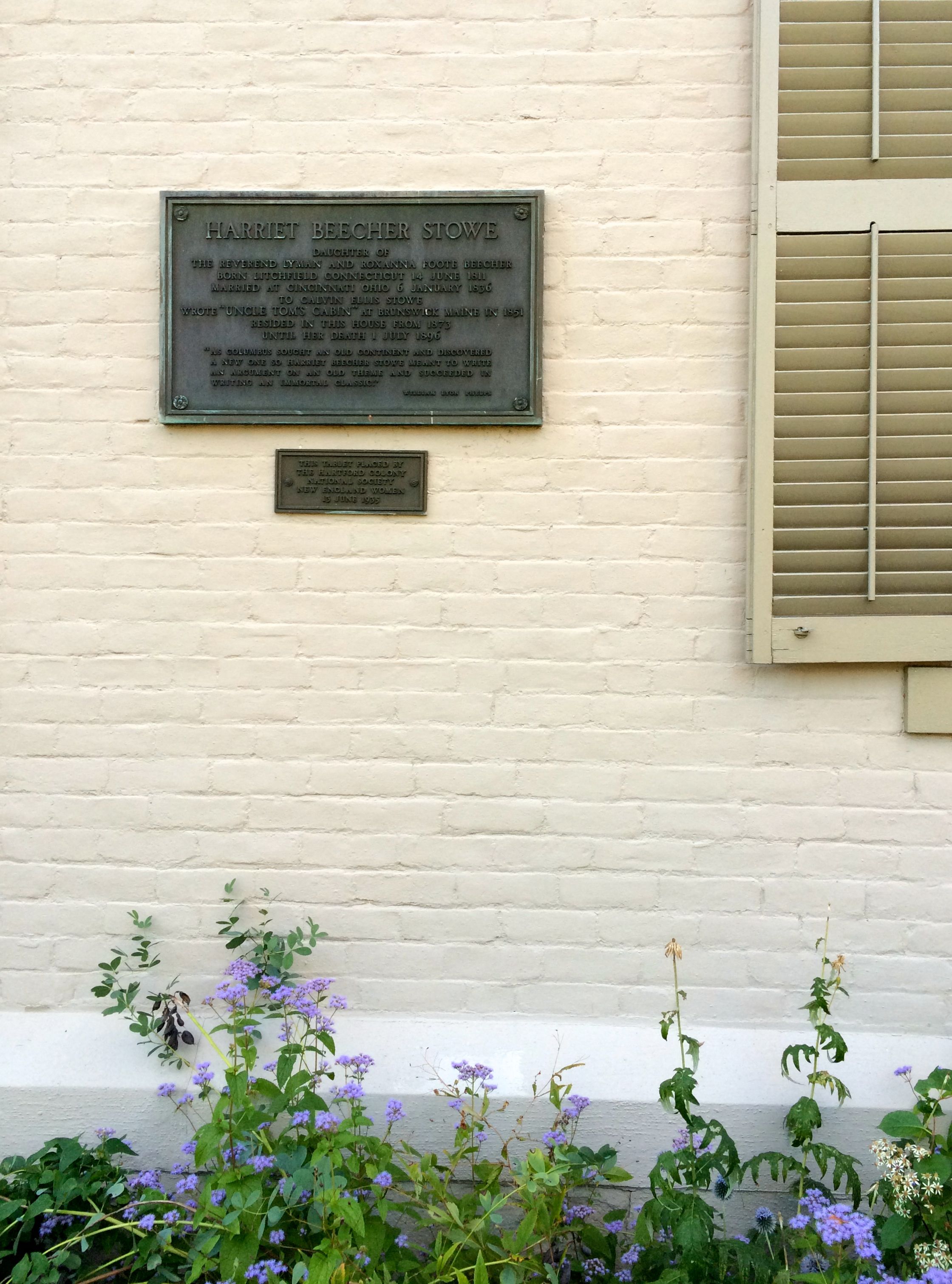
She lived in this house from 1873 until her death in 1896.
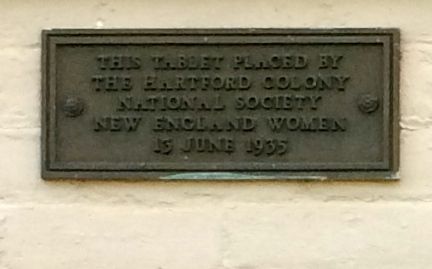
In my quest to find out when things are memorialized, this plaque was posted in 1935. They have been working on renovating the house, and it wasn’t open to tours.
I liked this sign in front of the house. “Preservation Means Jobs In Your Community.” We all benefit when we take care of of our cultural resources.
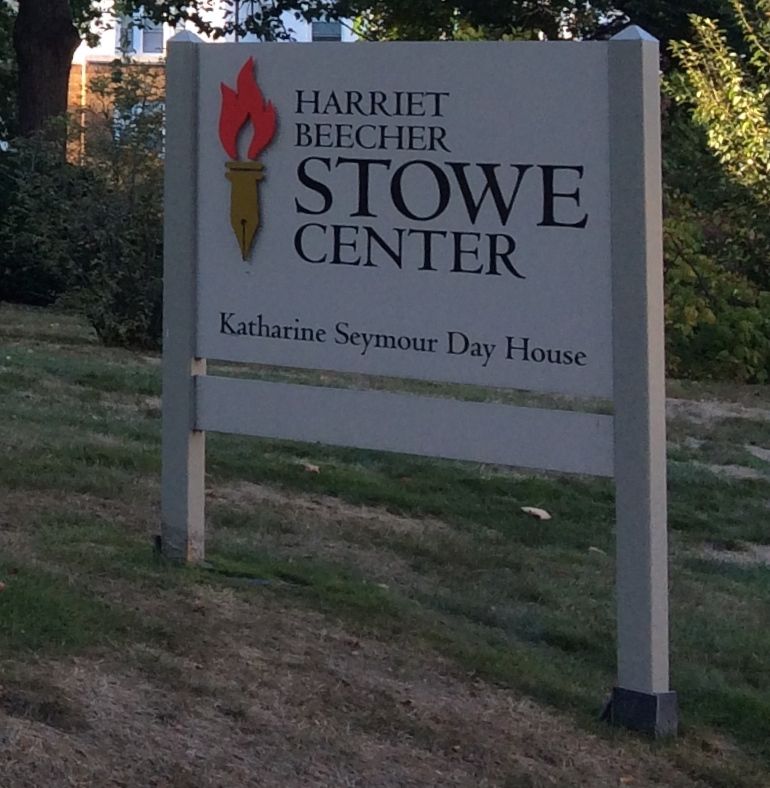
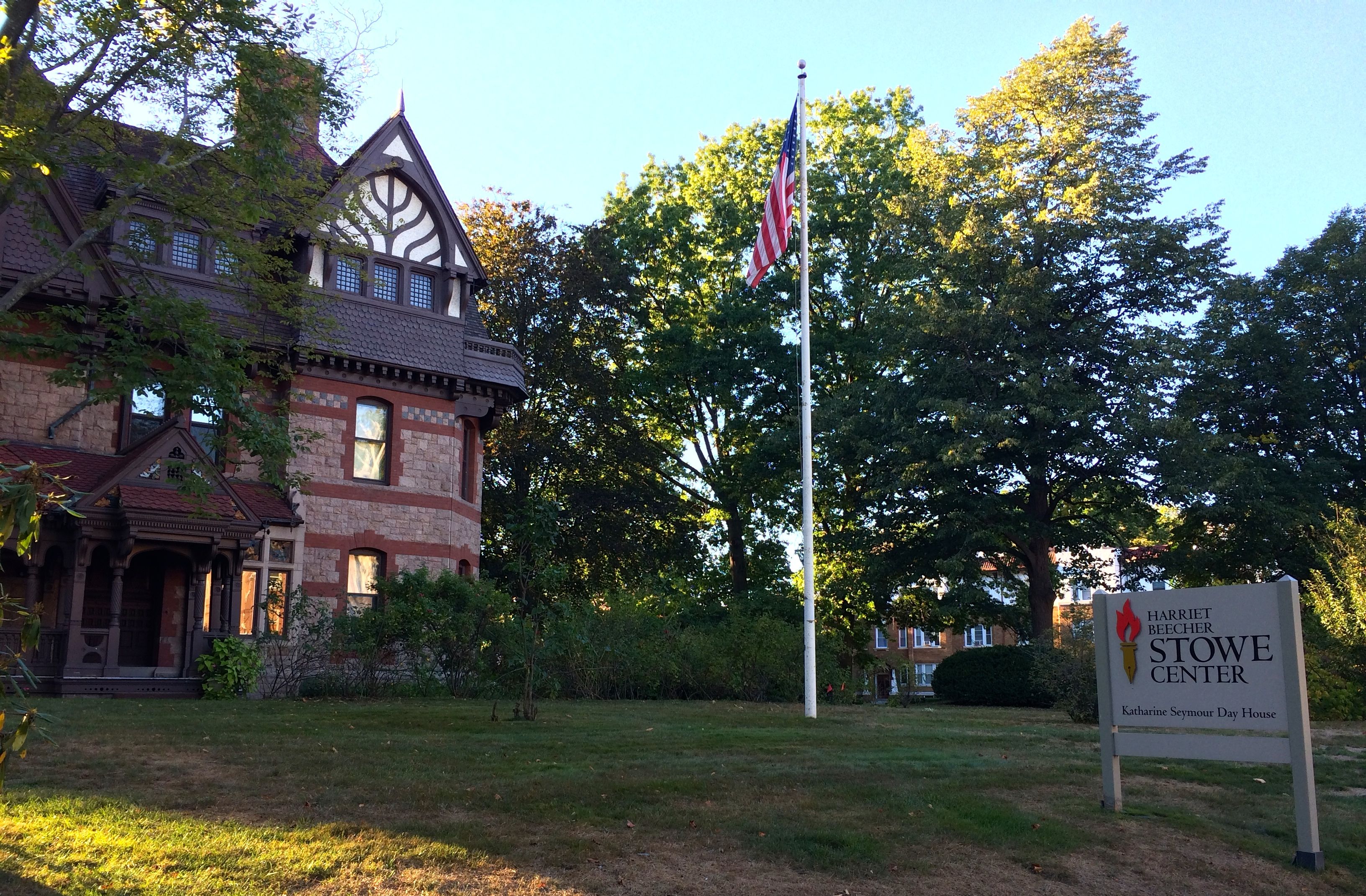
This house is part of the Harriet Beecher Stowe Center. Next door is the spectacular Katharine Seymour Cay House. It wasn’t open when I got there.
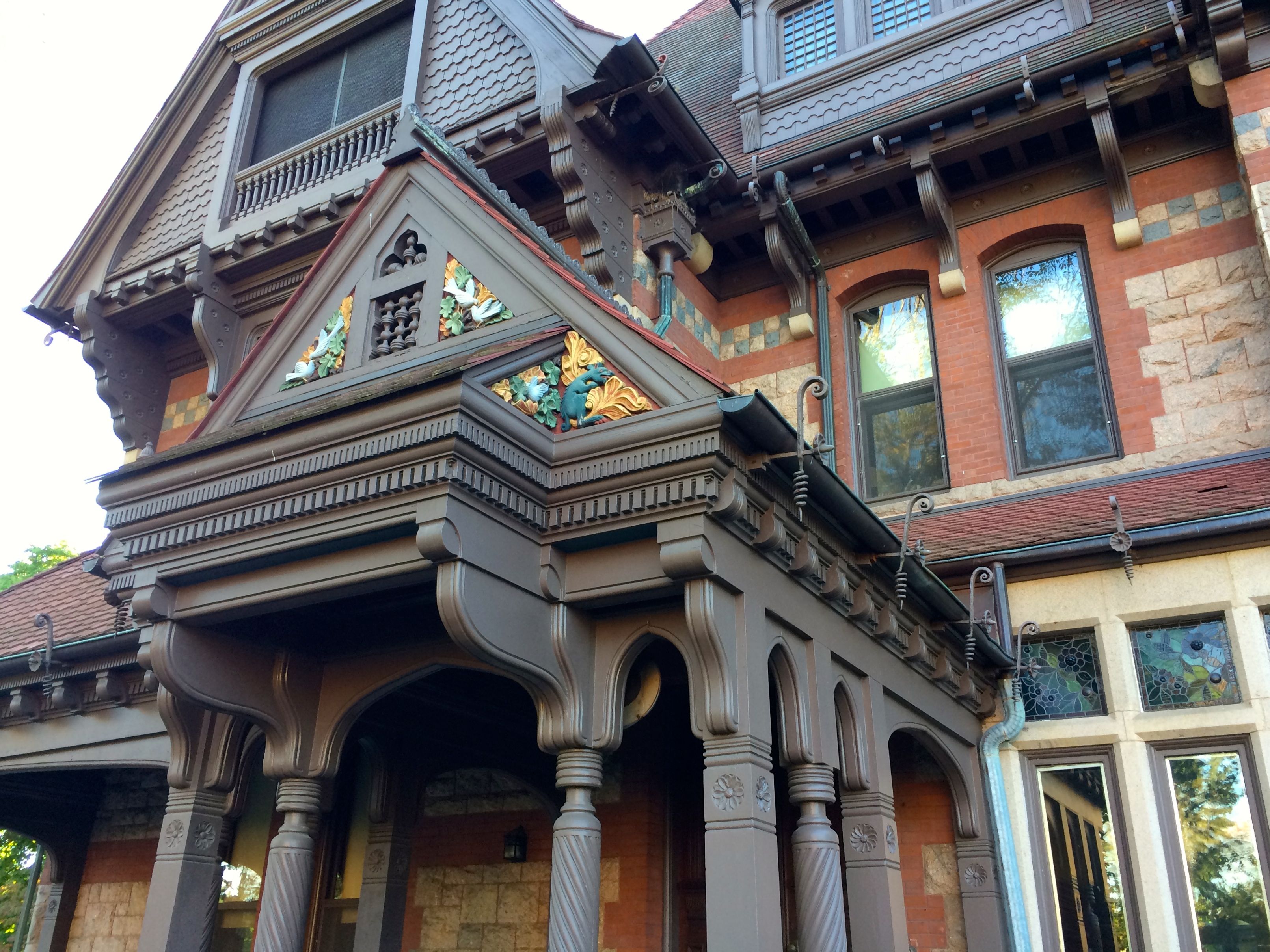
It is quite an elegant house, as opposed with the more ordinary, but still lovely, Stowe house next door.
The details are exquisite. Look at the colored inserts and the brick work.
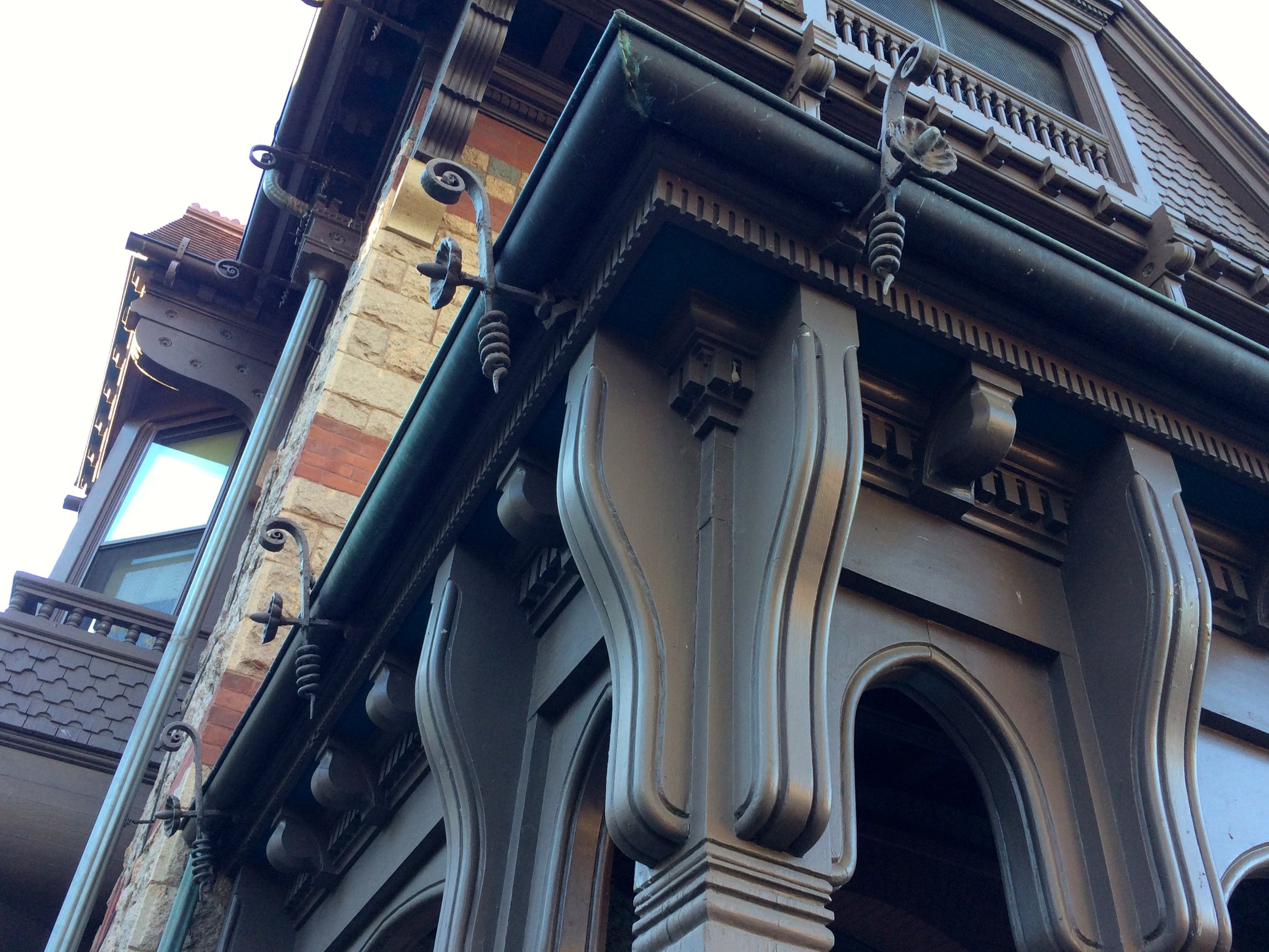
The wrought iron supports for the gutters are works of art!
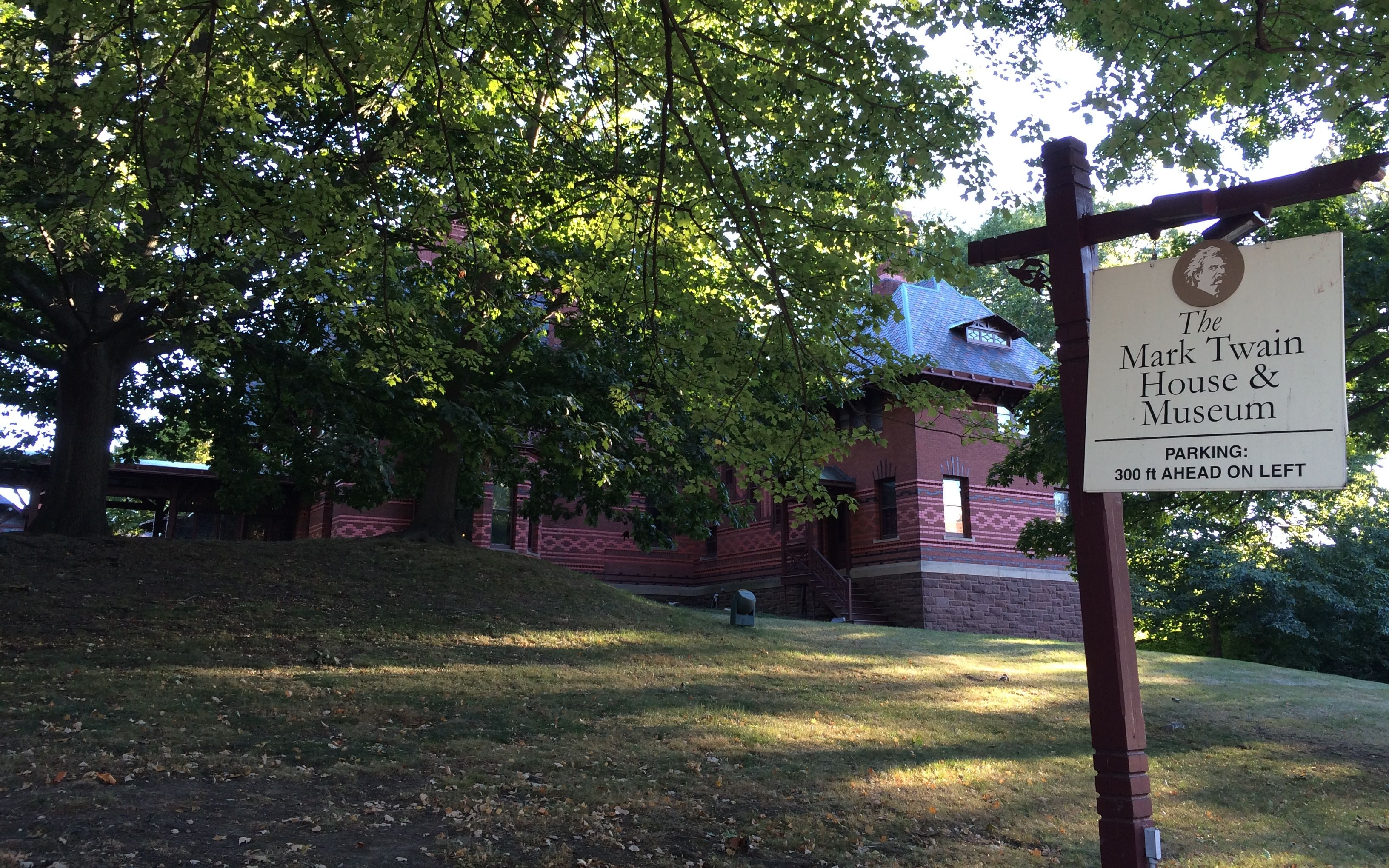
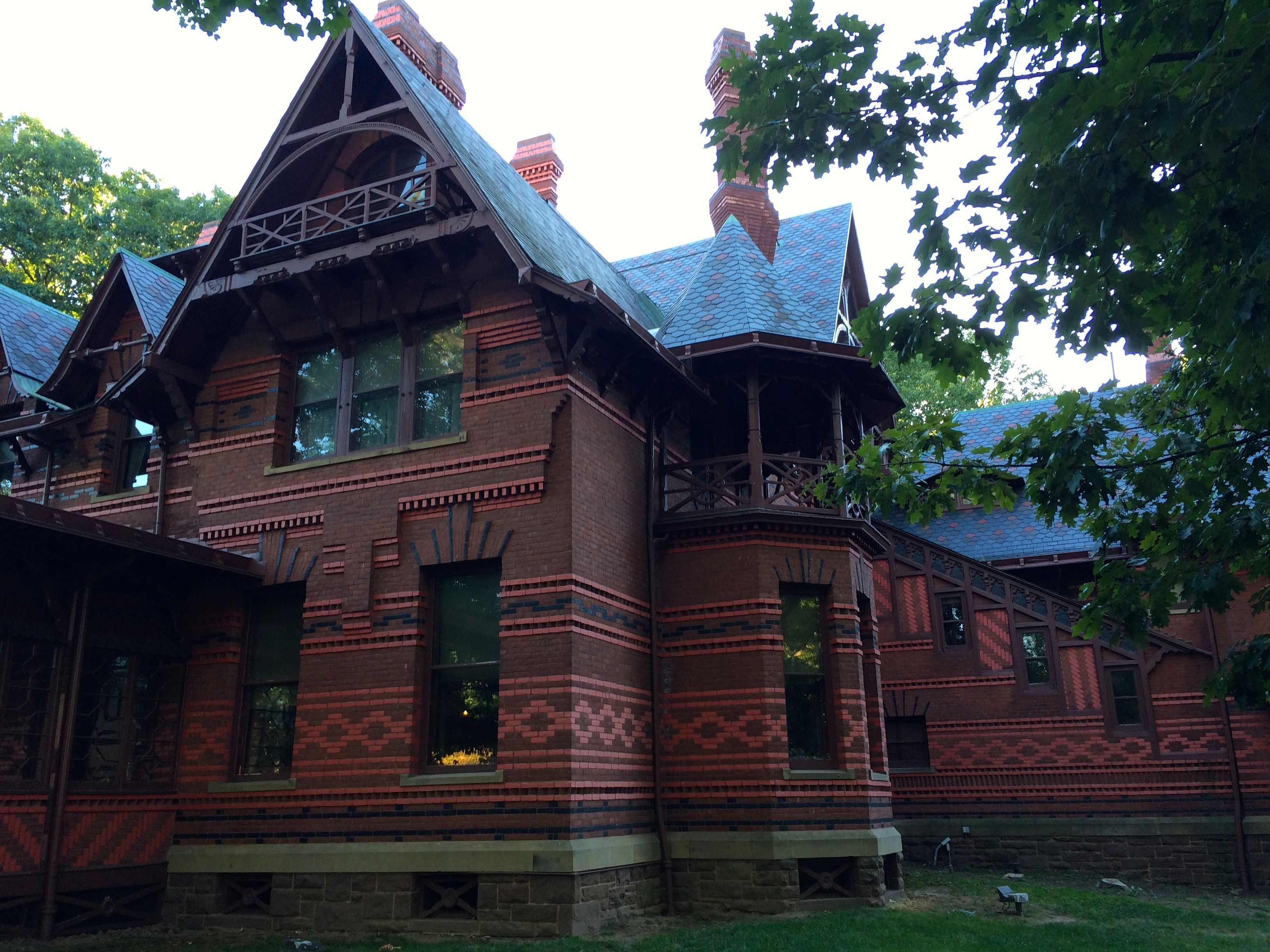
Not far away was Mark Twain’s house. He’s another person I’ve encountered before in my travels. I saw his grave in Elmira, and the house he and his family stayed in when they would visit.
I got there after they closed, but I walked up to take a look.
The brickwork was amazing! I had seen photos of the house, but they must have been incorrectly exposed. I always thought the house was a plain brown.
I walked up to take more shots and then I got the dreaded notice that my storage was full. Now, that shouldn’t happen!
That evening there was a story telling event at the Connecticut Historical Society, Speak Up. It was $10, and we got to tour the galleries before the show, and they had snacks and drinks before the show. It was fun.
The next day, I needed to attend to my phone. Could it be planned obsolescence? I mean, iPhone 7 had just come out.
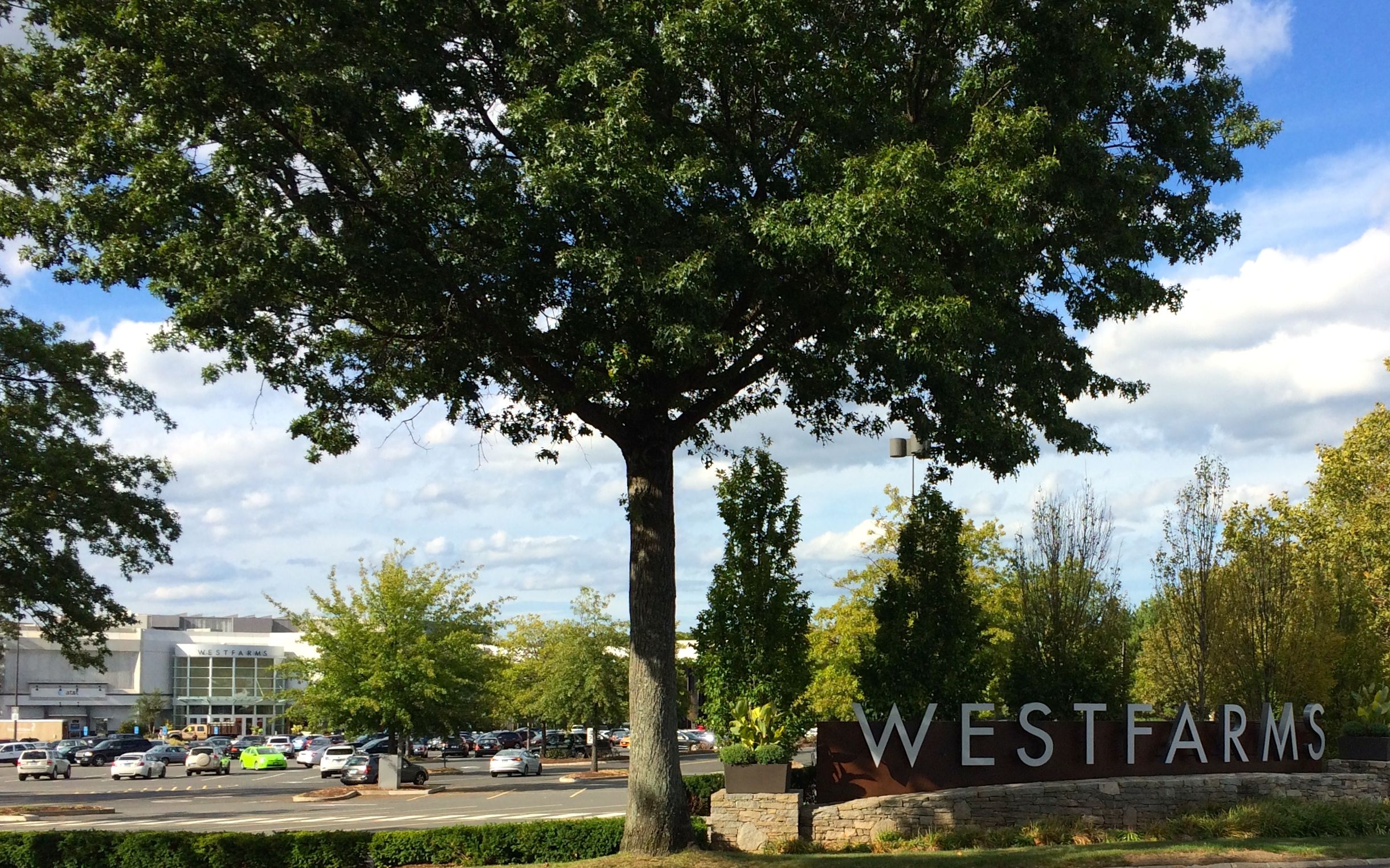
Luckily, there was an Apple store at Westfarms Mall. It was quite the shopping emporium! The folks at Williams-Sonoma were making chicken stock, and the aroma was driving me wild!
I checked in at the Apple store and got my time to come back. I roamed around the mall for a while, until I realized that it was Sunday, and they would be closing at 5:00. Even though they gave me a time at 4:45, I figured that there was no way that they would be able to get my job done that day. I decided to go get something to eat and come back the next day.
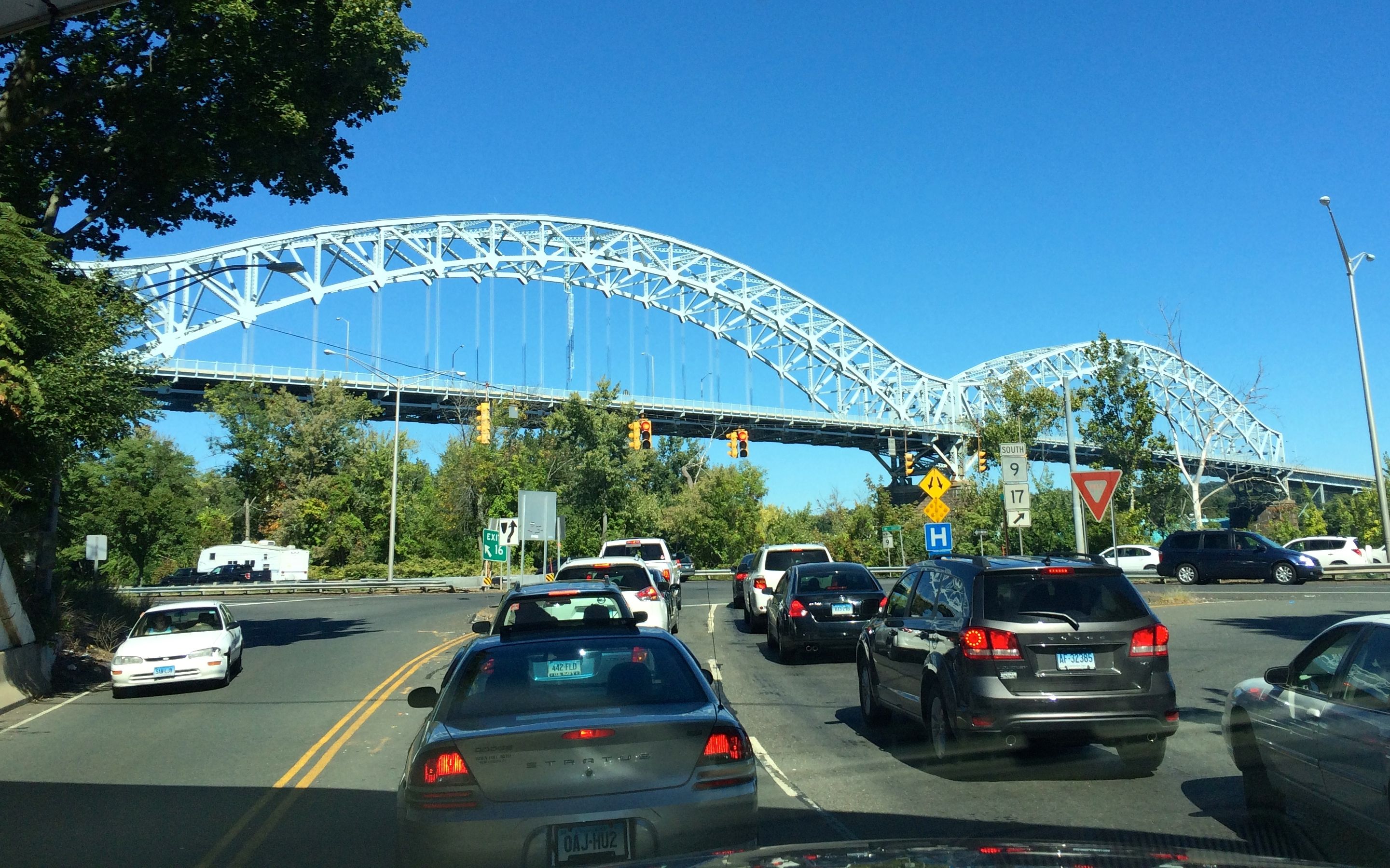
I headed back to the campground. This interesting double hump bridge leads across the Connecticut River from the Hartford side to the Portland side.
Really, this campground was pretty nice, if you give a lot of weight to the view. I love the steam rising from the water in the mornings.
I went back to the mall and got in to the Apple store with only a minimal wait. (Well, maybe an hour…) It took the Genius who helped me more than an hour to get my phone working again.
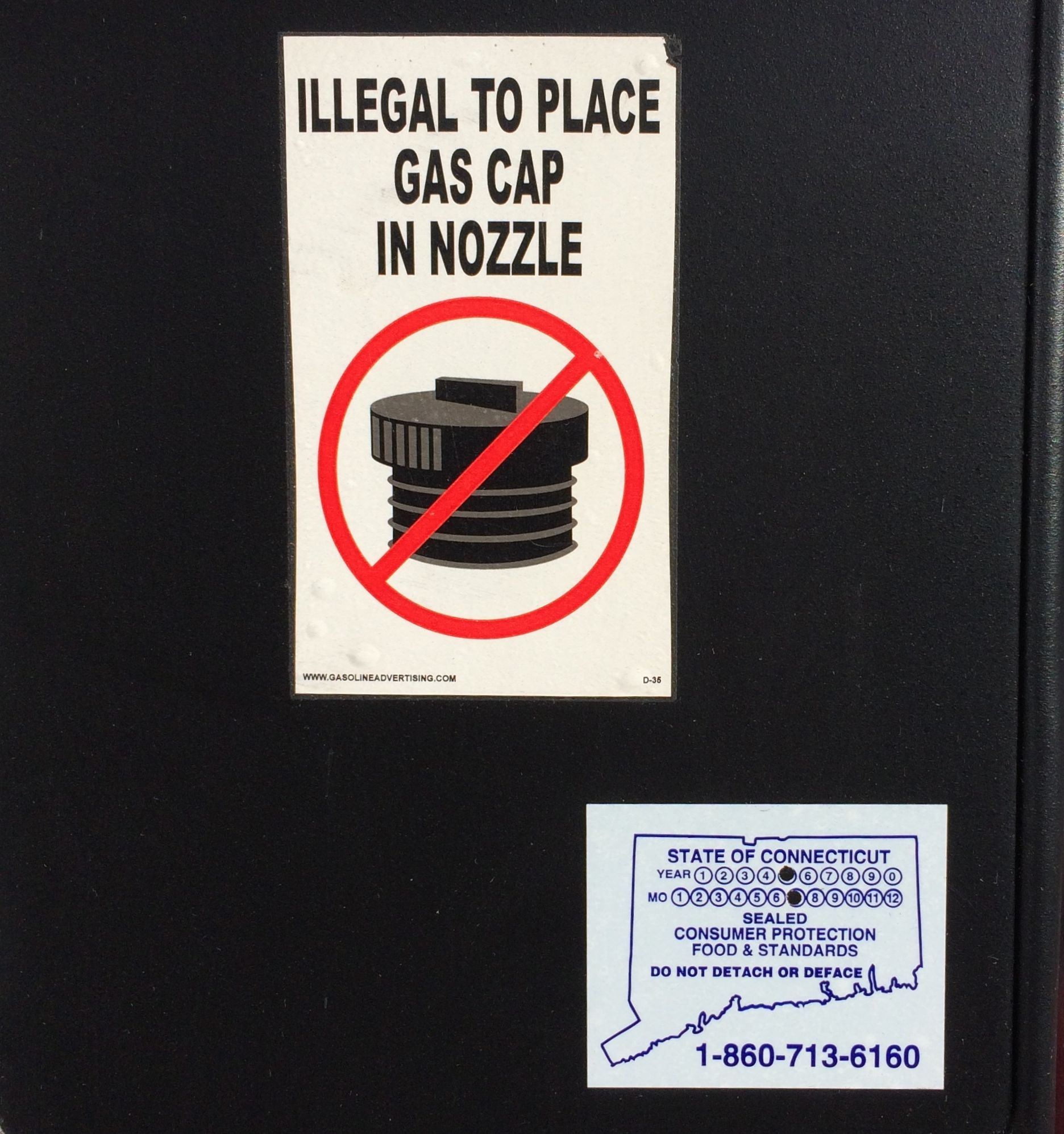
When I got gassed up and ready to hit the road in the morning, I encountered a sign I had never see before. I don’t understand several things about this prohibition.
Why would you place your gas cap in the nozzle.
How would you place your gas cap in the nozzle. I mean, mine is on one of those straps so that you don’t loose it.
The next day, early, I got hooked up and ready to hit the road.
Rhode Island – the smallest state in the nation. Given the extra time the AC repairs took, this is going to be one of the quickest state visits so far.
I left Nickerson State Park on Cape Cod and made the trip to Whispering Pines Campground in Hope Valley, Rhode Island. I got checked in and set up camp. It was a pull-through site with electricity and water! Woo-hoo!
The main event for my first night in Rhode Island was dinner with a friend I met on Facebook. I like how social “social media” can be! We met for dinner at 11th Green Restaurant and Pub.
It’s always fun meeting people for the first time in real life. The pub was full, so they put us in the back room. It was nice and quiet so we got to chat.
The next day, I slept in. I did a bunch of phoning around and finally found an Airstream repair shop that can help me with what might be the source of the leaking I’ve been experiencing. I wish someone had told me that the roof needed to be resealed from time to time!
By the time I got showered and dressed and on the road, it was kind of late. I would have been happy to just hang out in the park, but I take my touristic responsibilities seriously. The only thing I really knew about Rhode Island was that there were all sorts of “cottages” in Newport that belonged to the rich and famous around the turn of the 20th century. I jumped in the truck and headed that way.
When I stopped for gas, I noticed a sign that pointed the way to Gilbert Stuart’s birthplace.
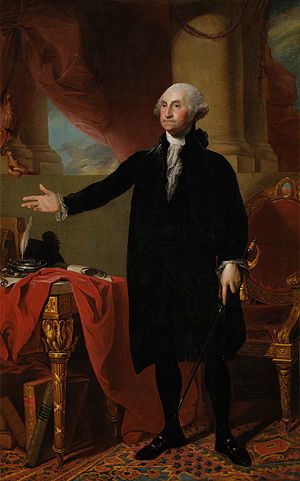
For those of you who may have forgotten, Gilbert Stuart is the artist who painted the famous portrait of George Washington.
This is called the “Lansdowne Portrait”. It shows Washington at age 64 renouncing a third term as President. It was painted in 1796 and commissioned by Senator William Bingham of Pennsylvania and his wife Anne. It was given as a gift of appreciation to British Prime Minister, born William Petty FitzMaurice; the second Earl of Shelburne and later the first Marquess of Lansdowne. He was an American sympathizer who supported the colonies independence in Parliament. He secured peace with American while he was Prime Minister of Great Britain.
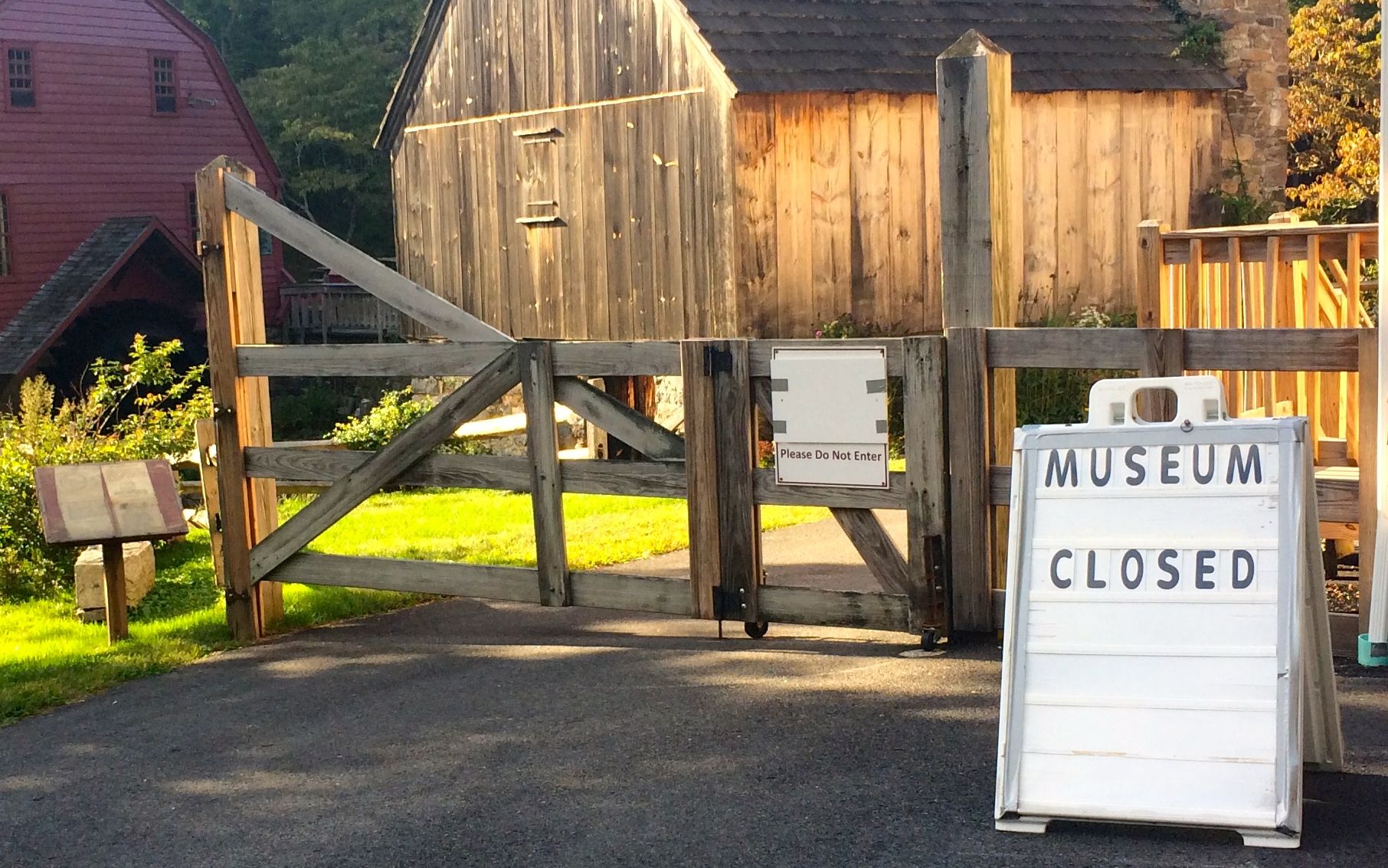
I remembered much of this from lessons taught by my beloved art history professor, Sister Jeanne File. The rest of it came from searching on Google. Why? Because I was too late to visit the museum.
Oh, well.
As I walked up to the door to make sure that it was really closed, I caught the scent of boxwood. That seemed very appropriate, as I associate the smell of boxwood with George Washington and Mount Vernon.
I couldn’t go in, but I could look from outside the fence.
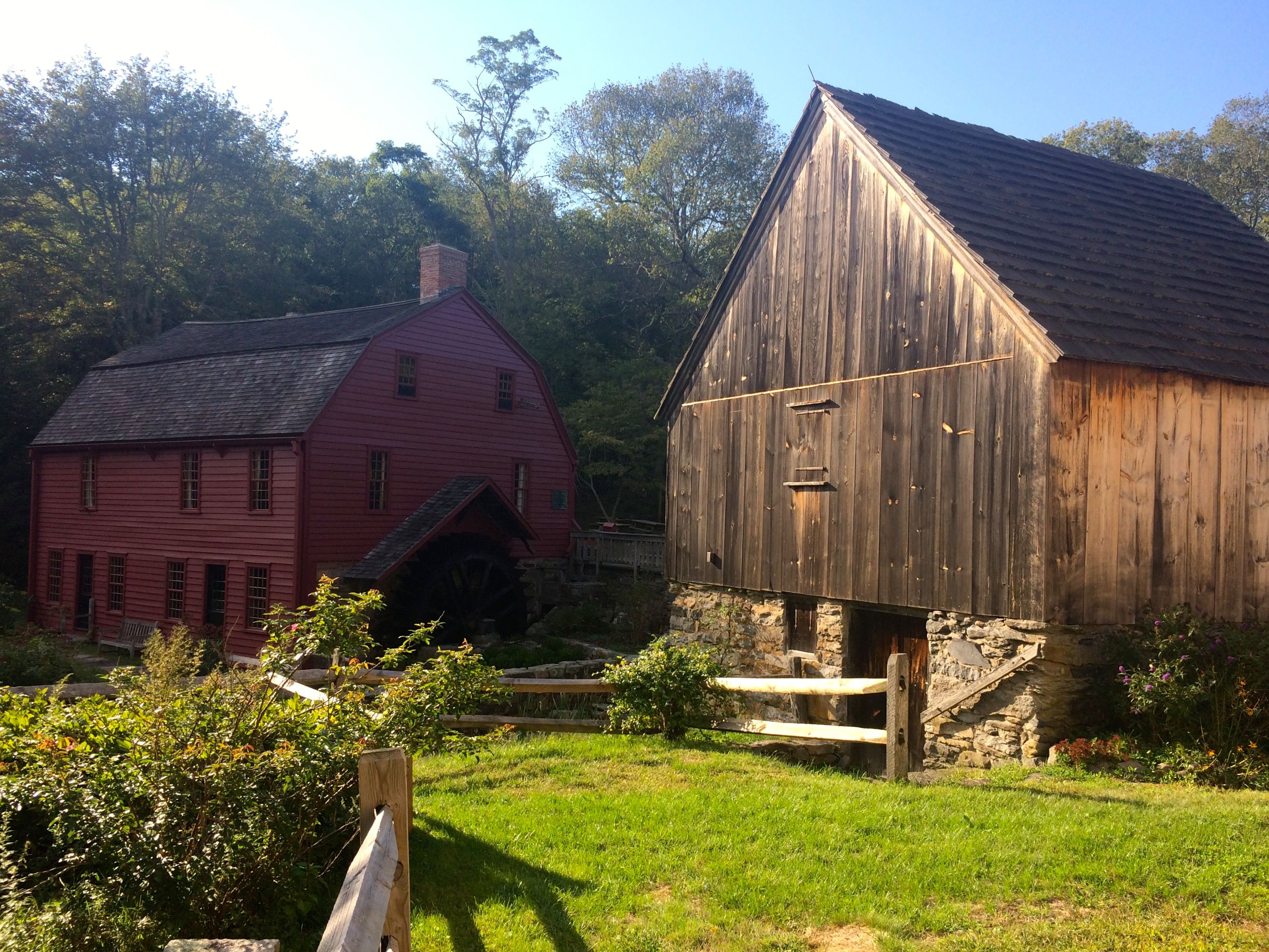
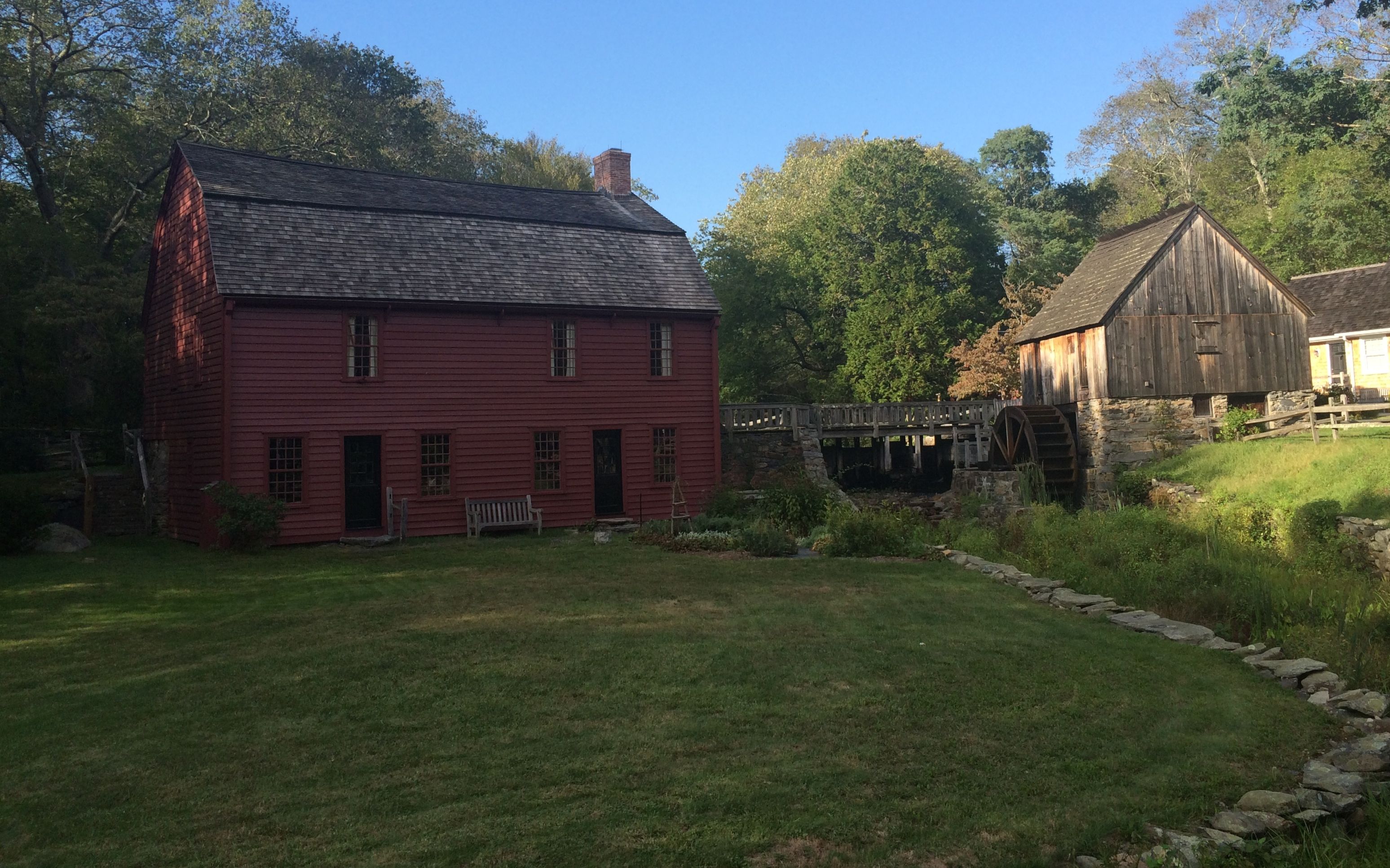
Gilbert Stuart was born in the red building. According to the information on the museum’s website, his room was right above the waterwheel. This building is unique because it was both a family dwelling and a place of industry. It’s the site of the first snuff mill in the colonies.
I like the practical nature of the site. There is a second mill operating on the same mill pond.
The Stuart family lived here until 1761 when they moved to Newport. Many families lived here over the next 170 years. By the late 1920s, the buildings had fallen into disrepair and was in danger of being torn down. A group was formed that raised money and purchased the grounds in 1930. The buildings were restored by Norman Isham who was a renowned specialist in colonial restoration.
By 1933, the State of Rhode Island got around to commemorating the site, as well.
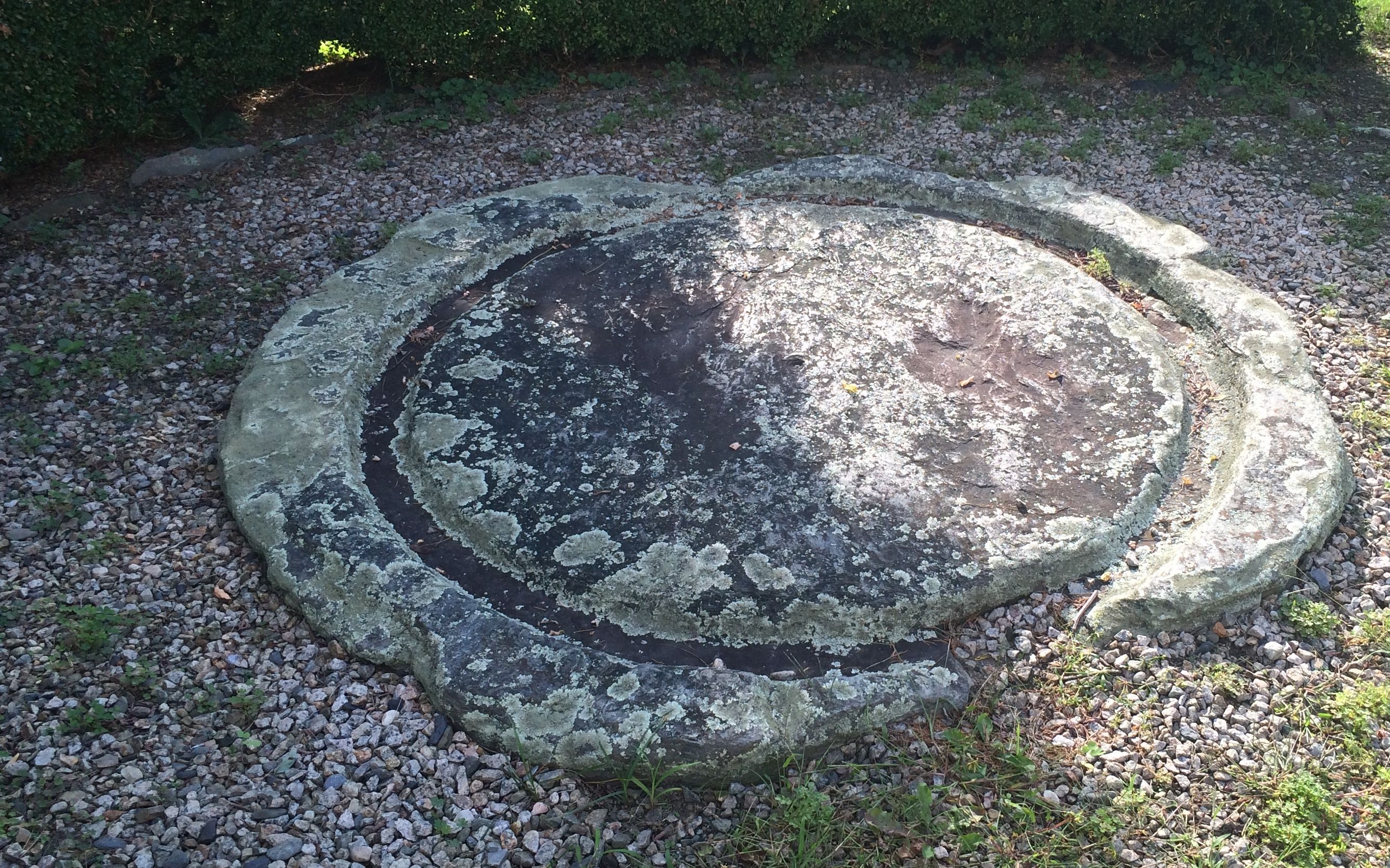
Outside the fence, there was also this interesting artifact. Do you have any guesses as to what it is?
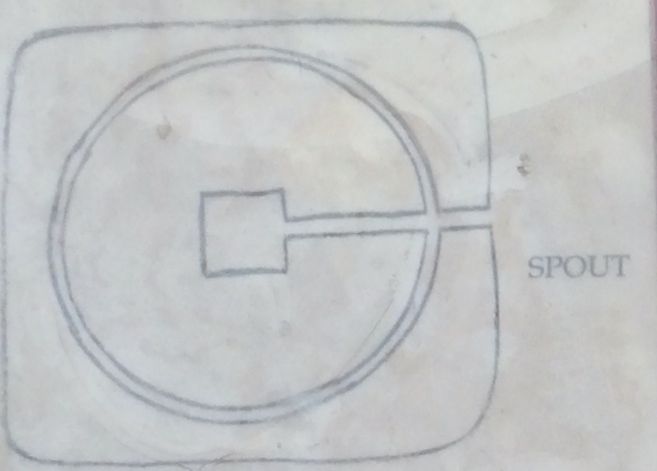
It’s a leeching stone. I was used for creating potash lye, which is mixed with animal or vegetable fat to make soap. A barrel is fitted into the circle carved into the stone. Wood ashes are saturated with water and allowed to soak for about two weeks. After soaking, the barrel was filled with water and the liquid was allowed to seep out through the spout.
At least, that is the way it seemed from the somewhat faded sign by the leeching stone. I am always curious about how things are done.
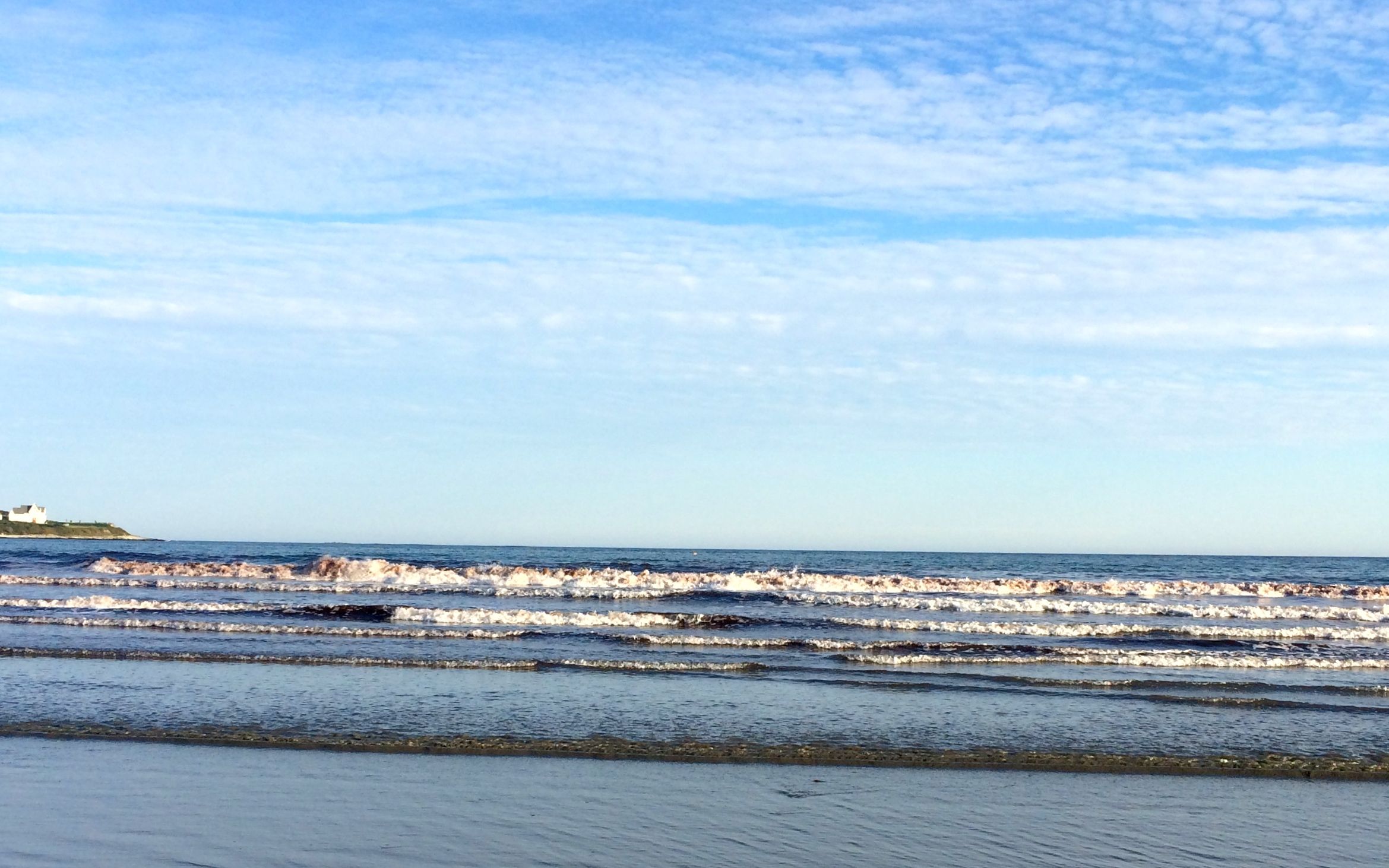
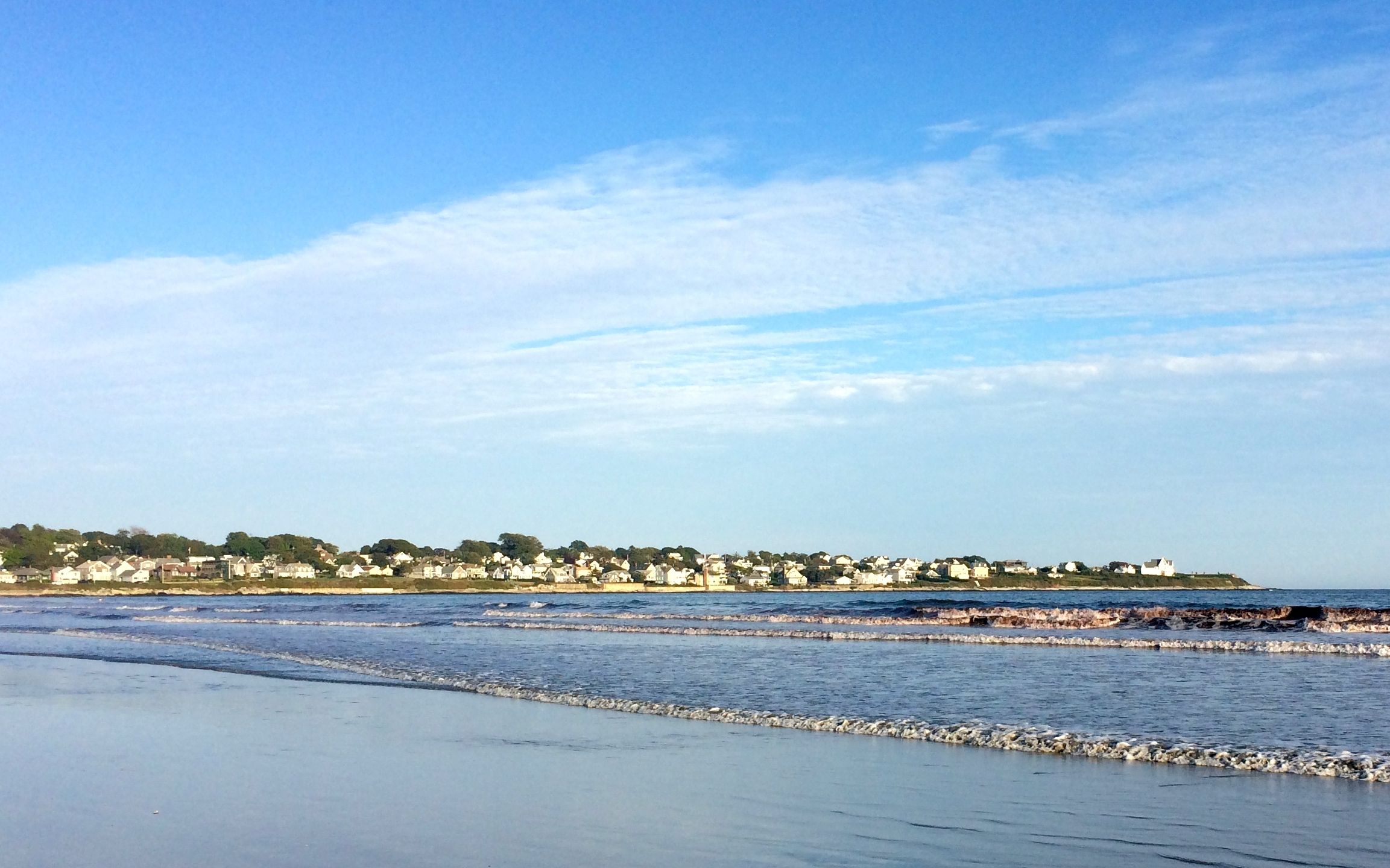
With that, it was time to continue to Newport. I made my way to the area near the Cliff Walk. I parked by the beach and went to stroll in the surf.
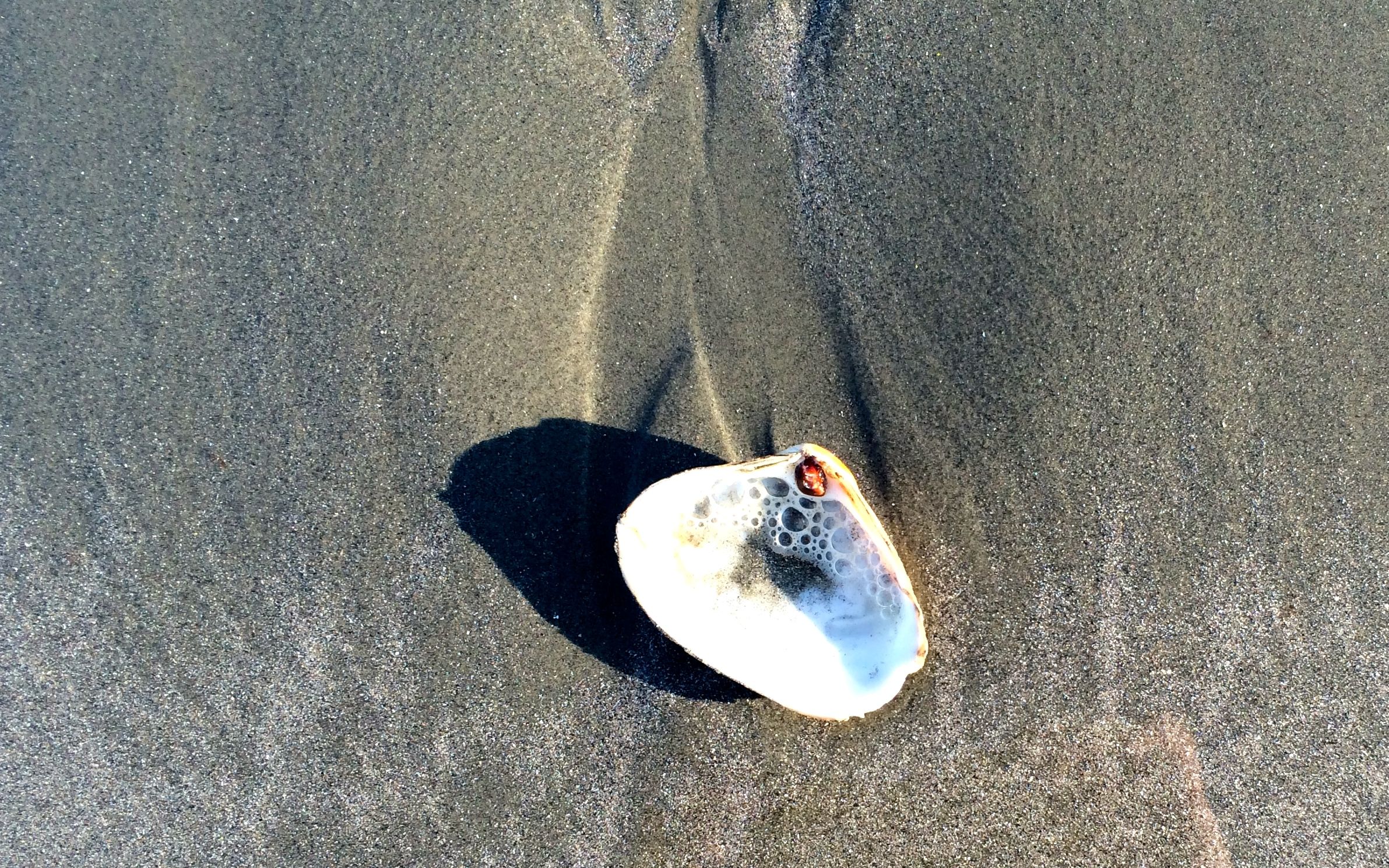
The beach was wide and smooth and studded here and there with shells.
I looked around and took it all in.
Ah, the smell of money!
I read about the Cliff Walk on the internet, and it didn’t sound like a good hike. Well, not good for me, anyway. It sounded like the path wasn’t well-maintained and some property owners made it hard for people to pass though, even though people do have the right to access the trail. It was also damaged by Hurricane Sandy.
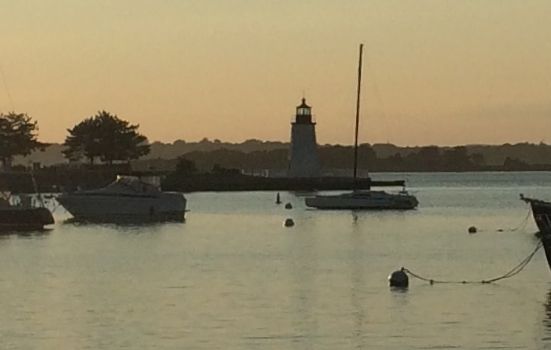
So, I looked for other things to do, and this lighthouse popped up. I drove over, but couldn’t access the island it’s on because it was being used for a conference.
I managed to get a nice view from across the water.
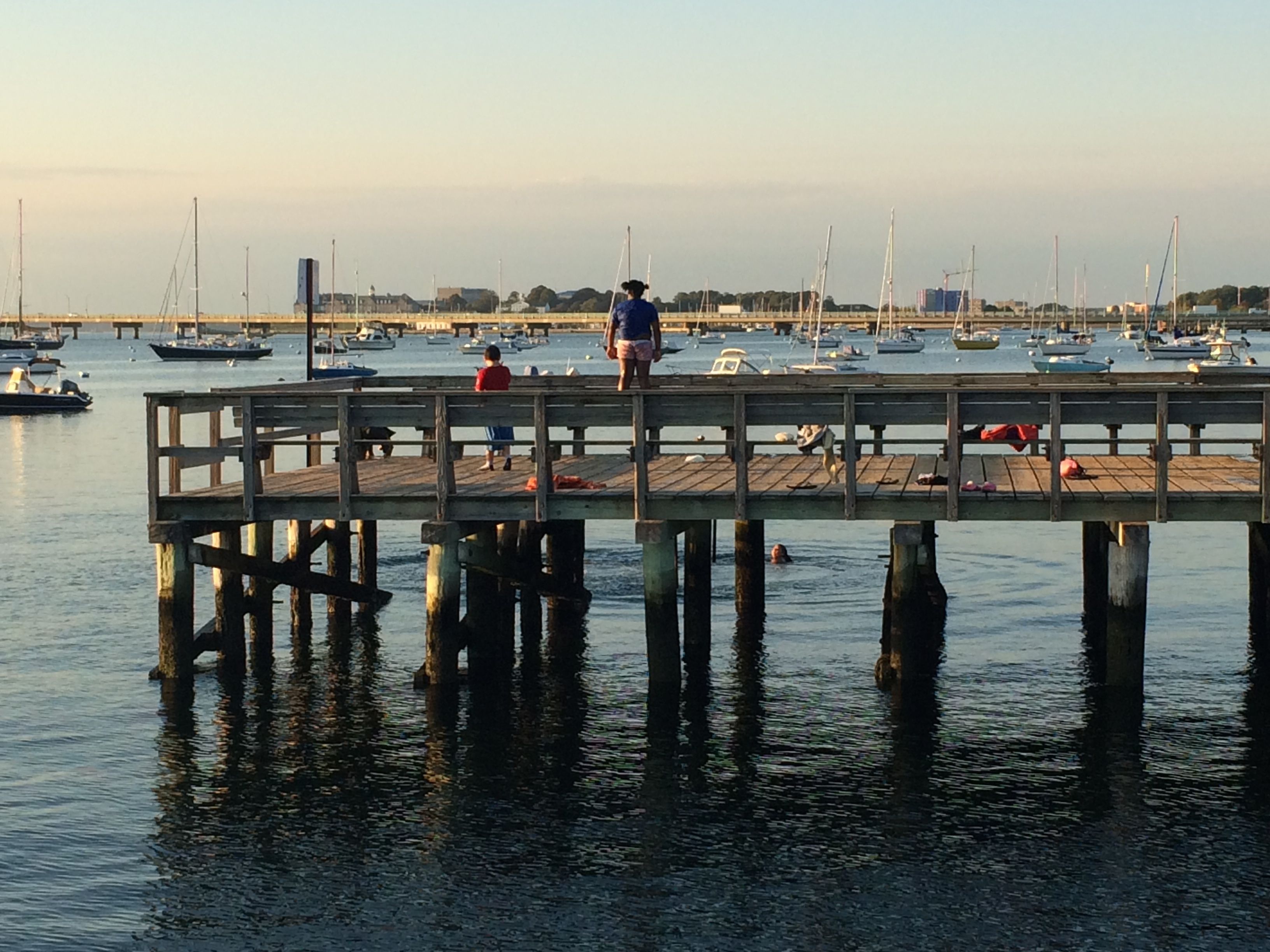
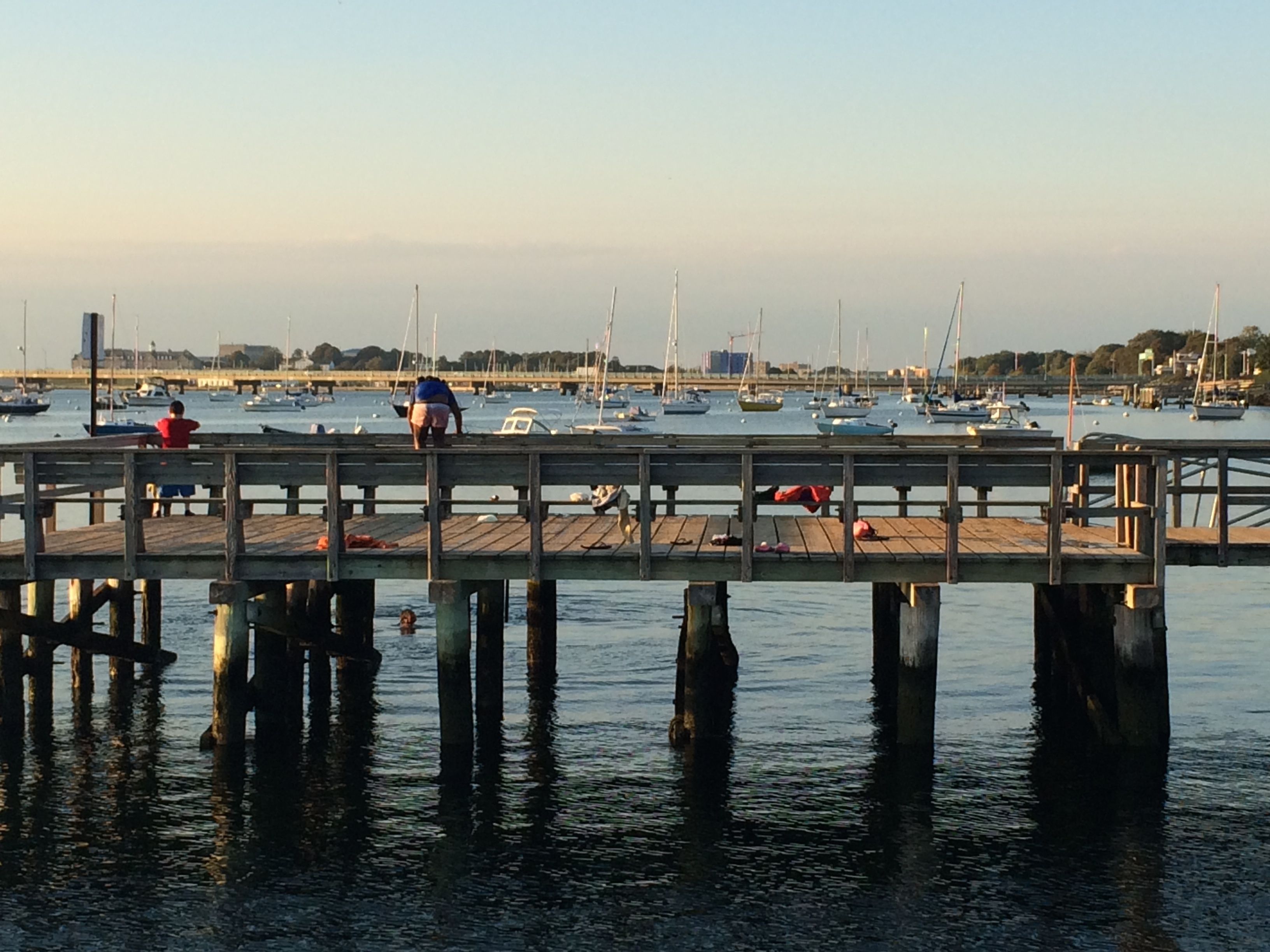
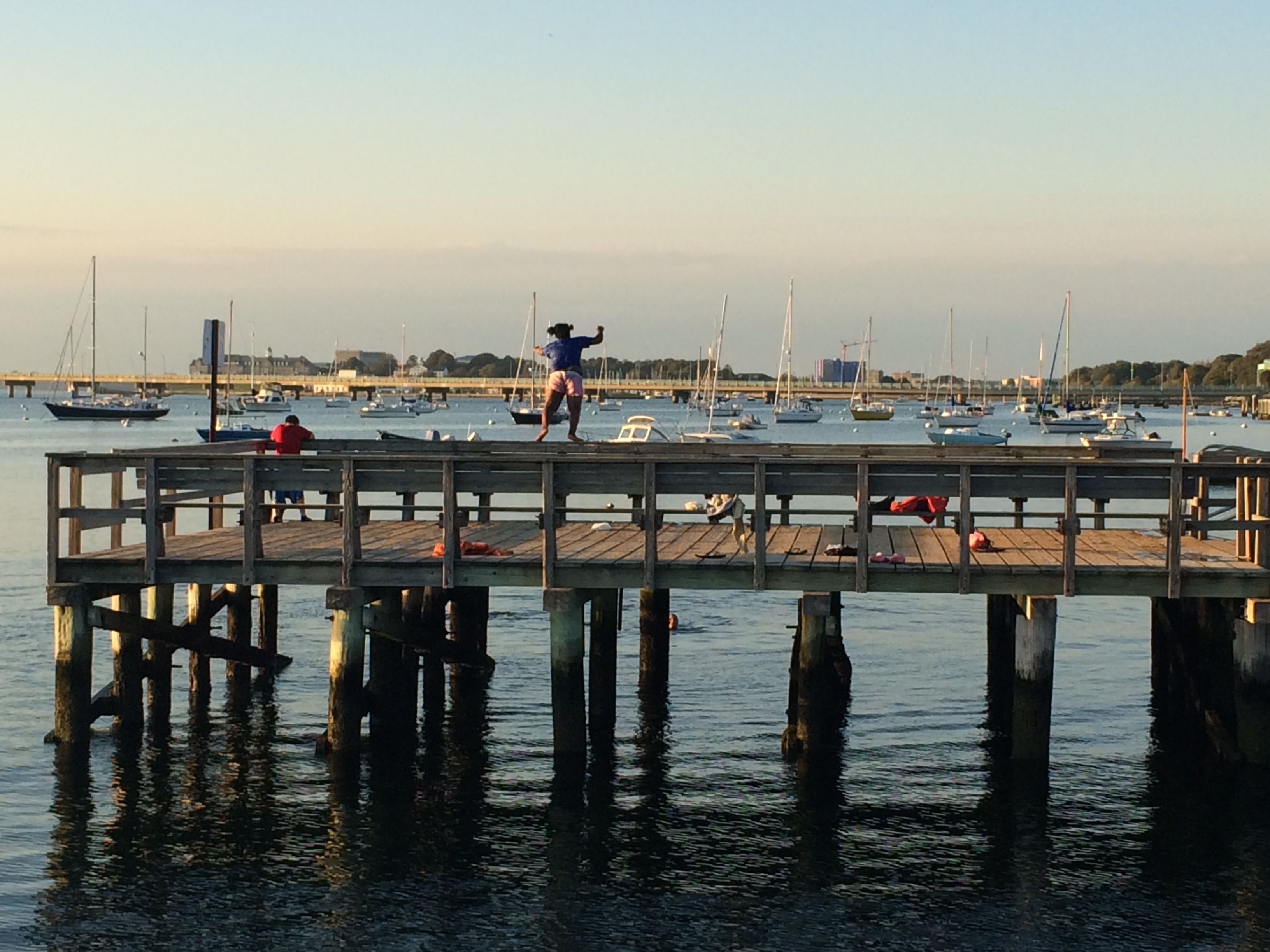
I also watched some kids playing on a dock and swimming. They were having so much fun. I loved watching this girl. First, she climbed up.
Then she lost her courage and stepped back down.
She must have watched her friends down in the water and decided she wanted to have fun, too.
And she jumped!
Afterwards, I walked over and showed her the photos, and she really got a kick out of them.
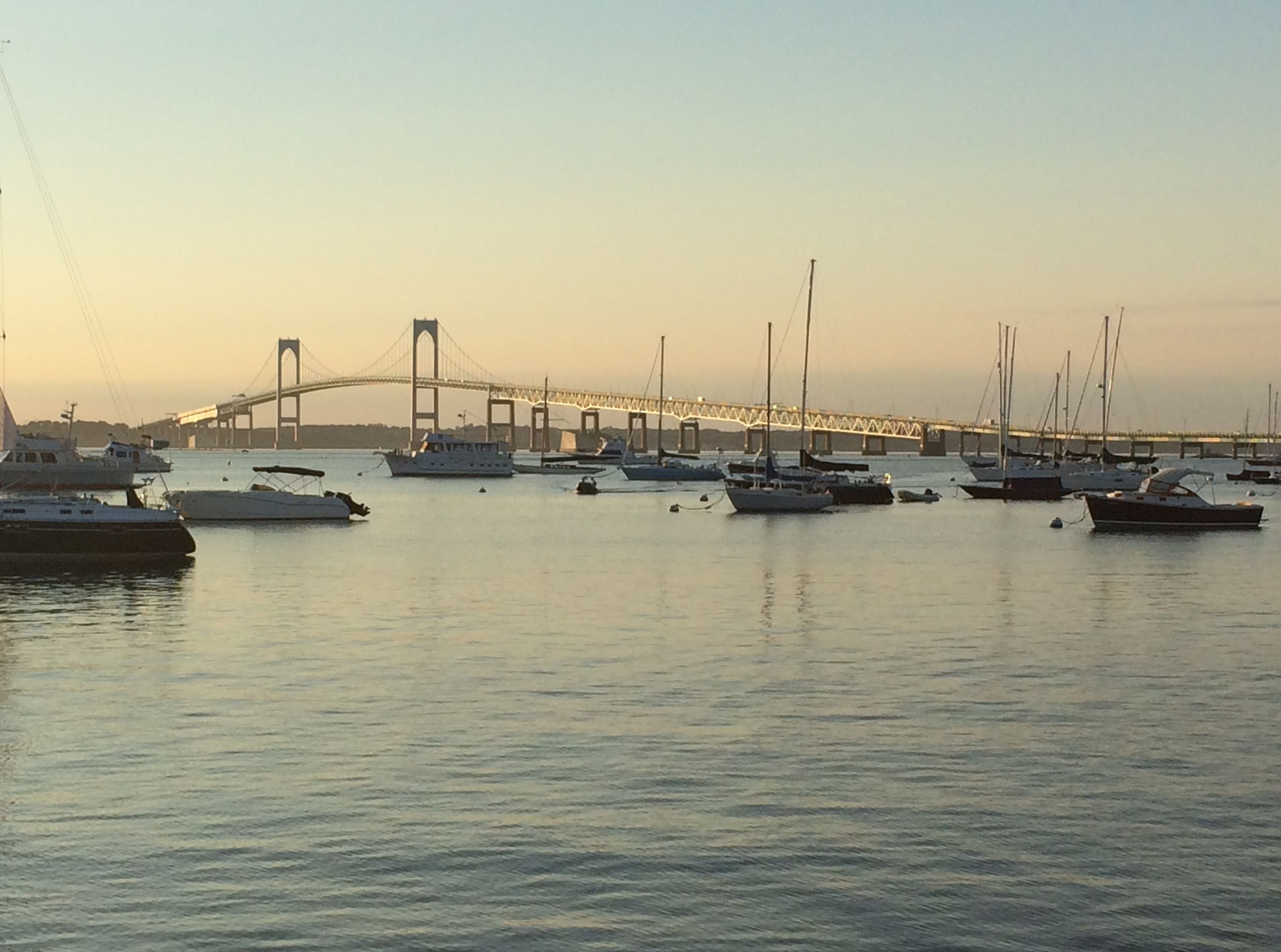
This is the bridge I crossed over to get to Newport. It’s the Claiborne Pell Bridge, named for Senator Claiborne Pell. He served in the Senate for six terms. I imagine most people are familiar with his name because he was the sponsor of the Pell Grant.
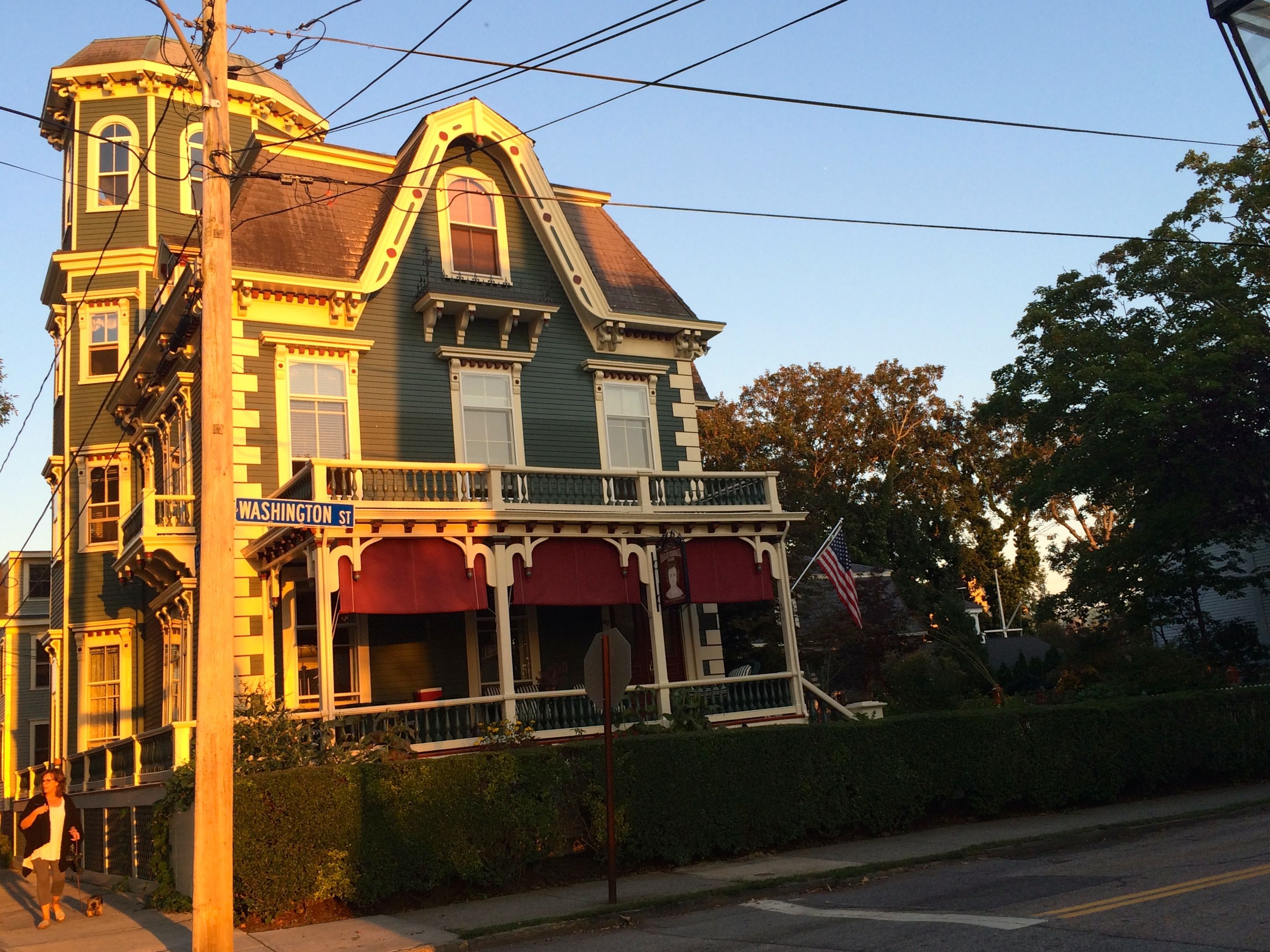
On my way back to where I had parked the truck, I stopped to notice some of the houses lining Washington Street.
There were large gingerbready houses.
The front of this house reminded me of the house I grew up in, except that we didn’t have dormers on the third floor.
Our house was the Marlin House and it was built circa 1927. Also, our house didn’t have a fancy plaque on it.
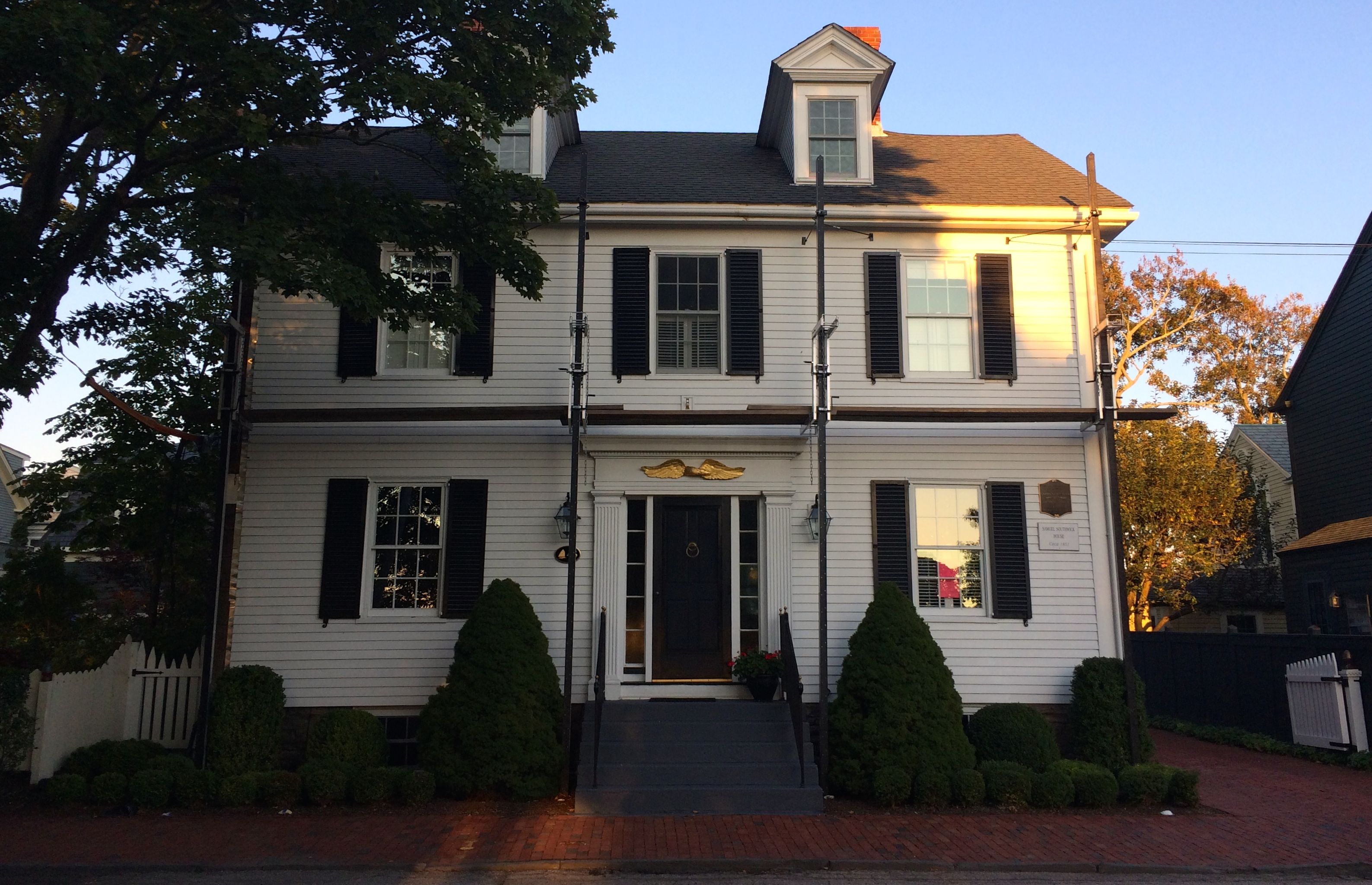
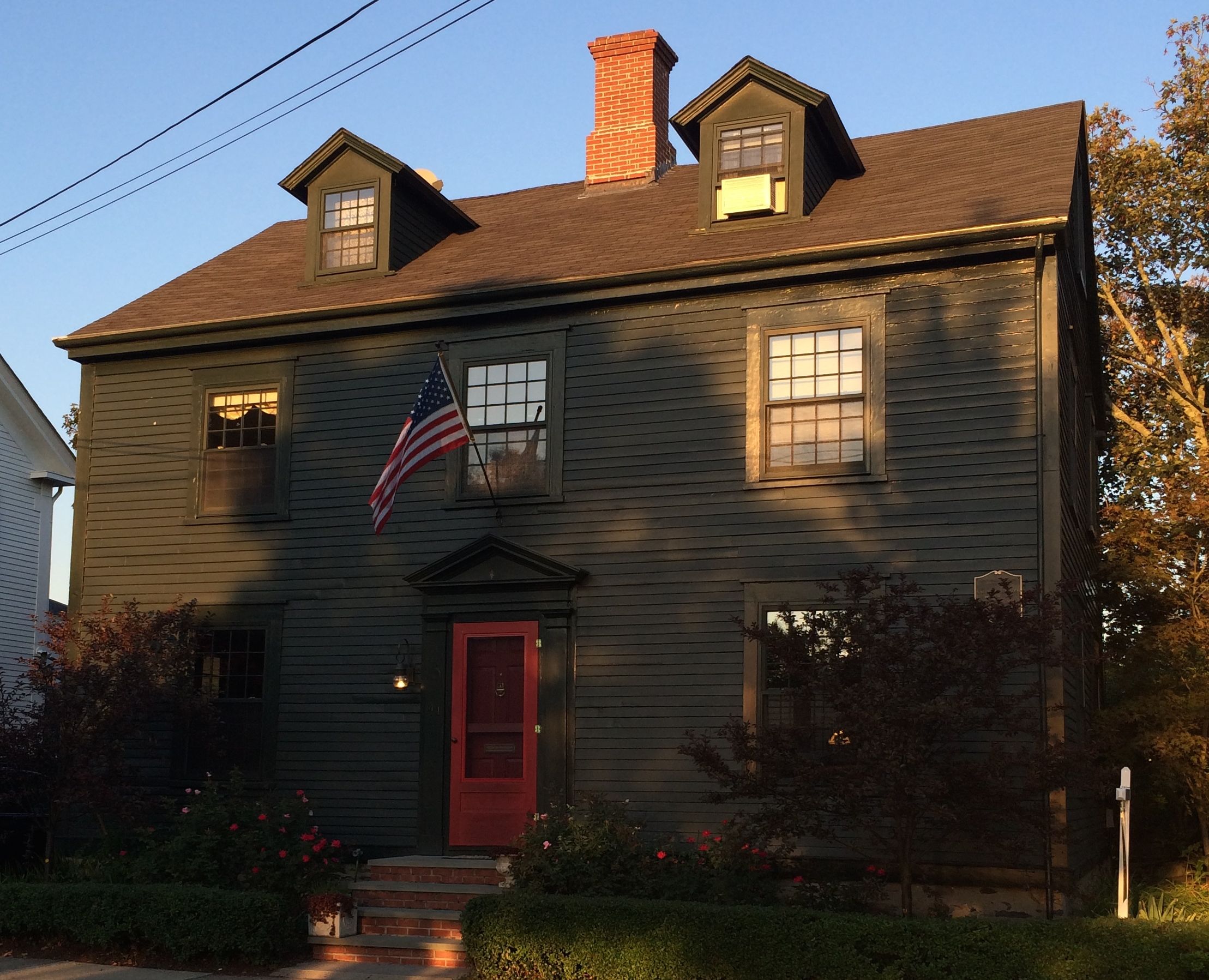
This is the John Bigelow house from around 1770. If you fancy it, it could be yours!
It’s only $1,295,000. If you’re interested, contact the realtor. Actually, I was surprised that the price was so low.
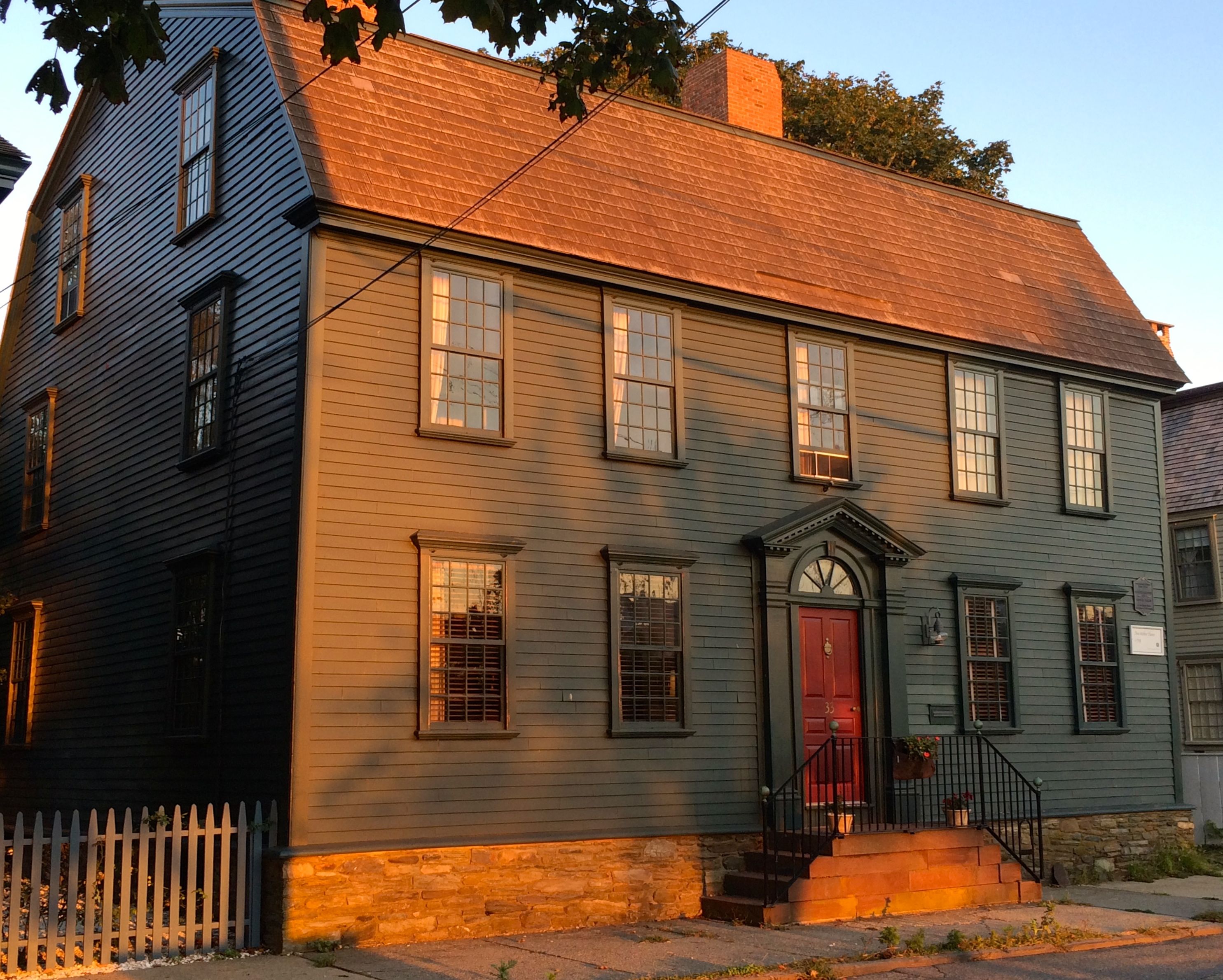
There were large houses, like this one from 1794.
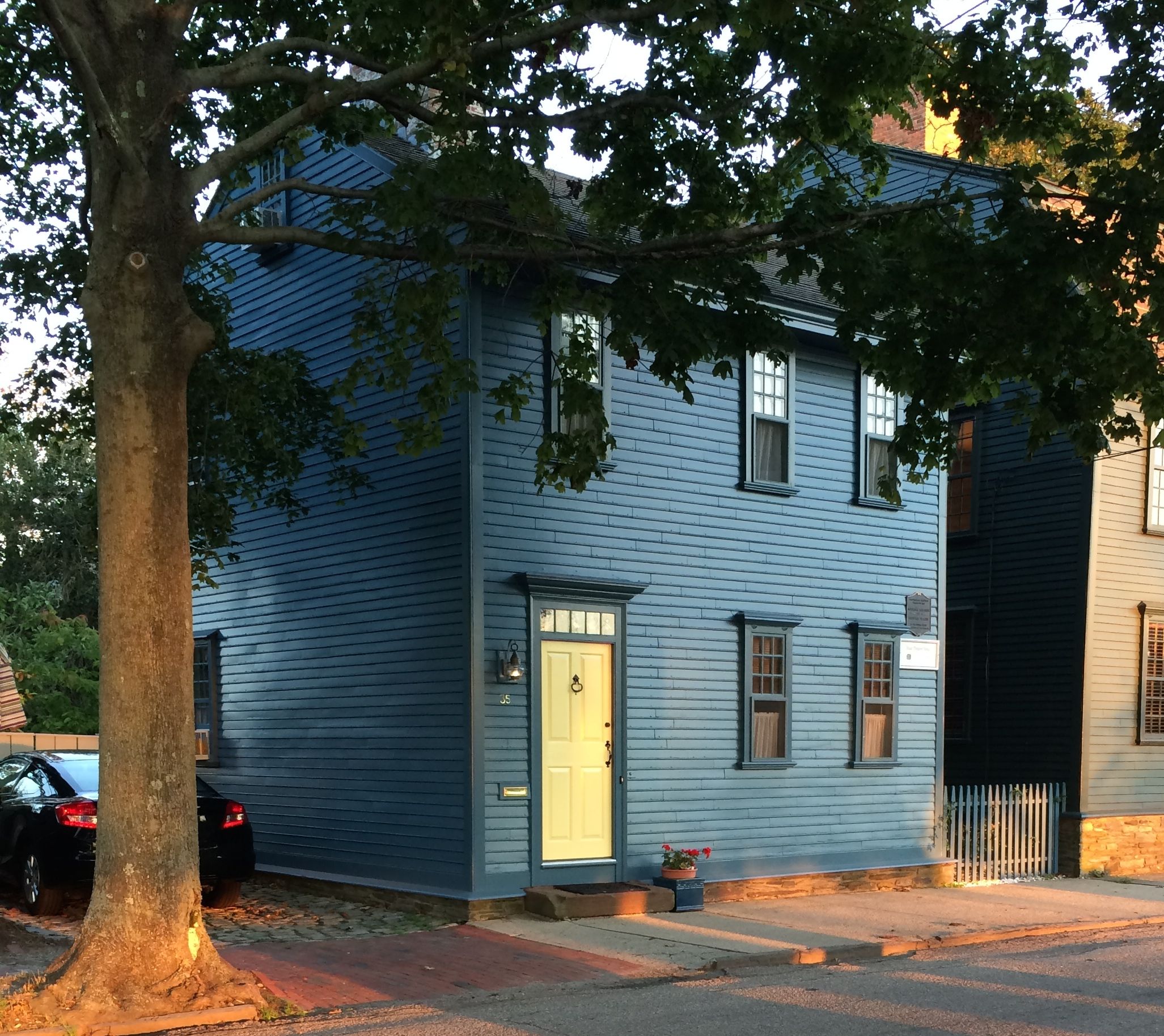
And small houses, like this one next door.
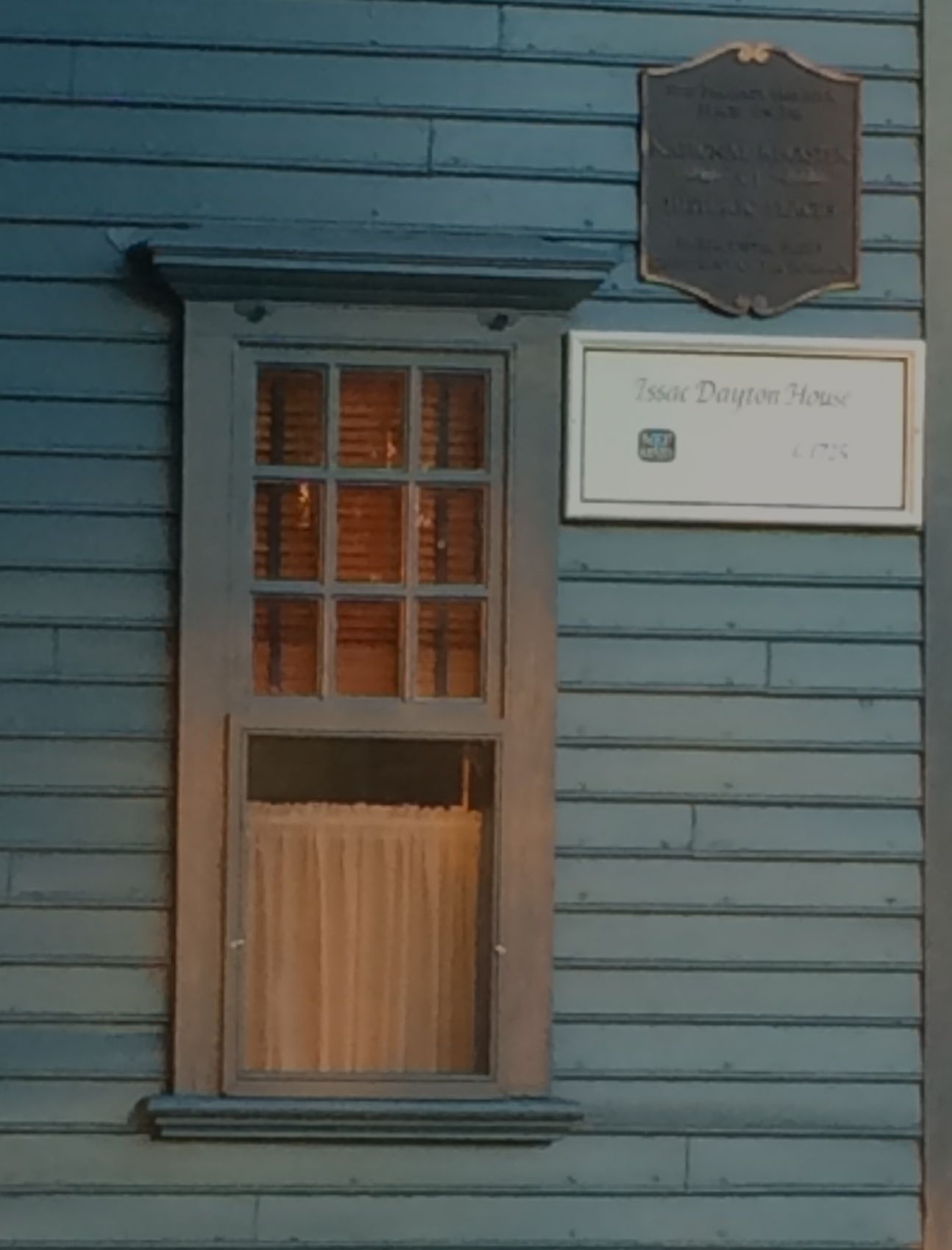
The Isaac Dayton house from 1786.
And they all had a lovely view.
By then, the time on my meter was about to run out and it was time to head back over the Claiborne Pell bridge and get back to my little aluminum home on wheels.
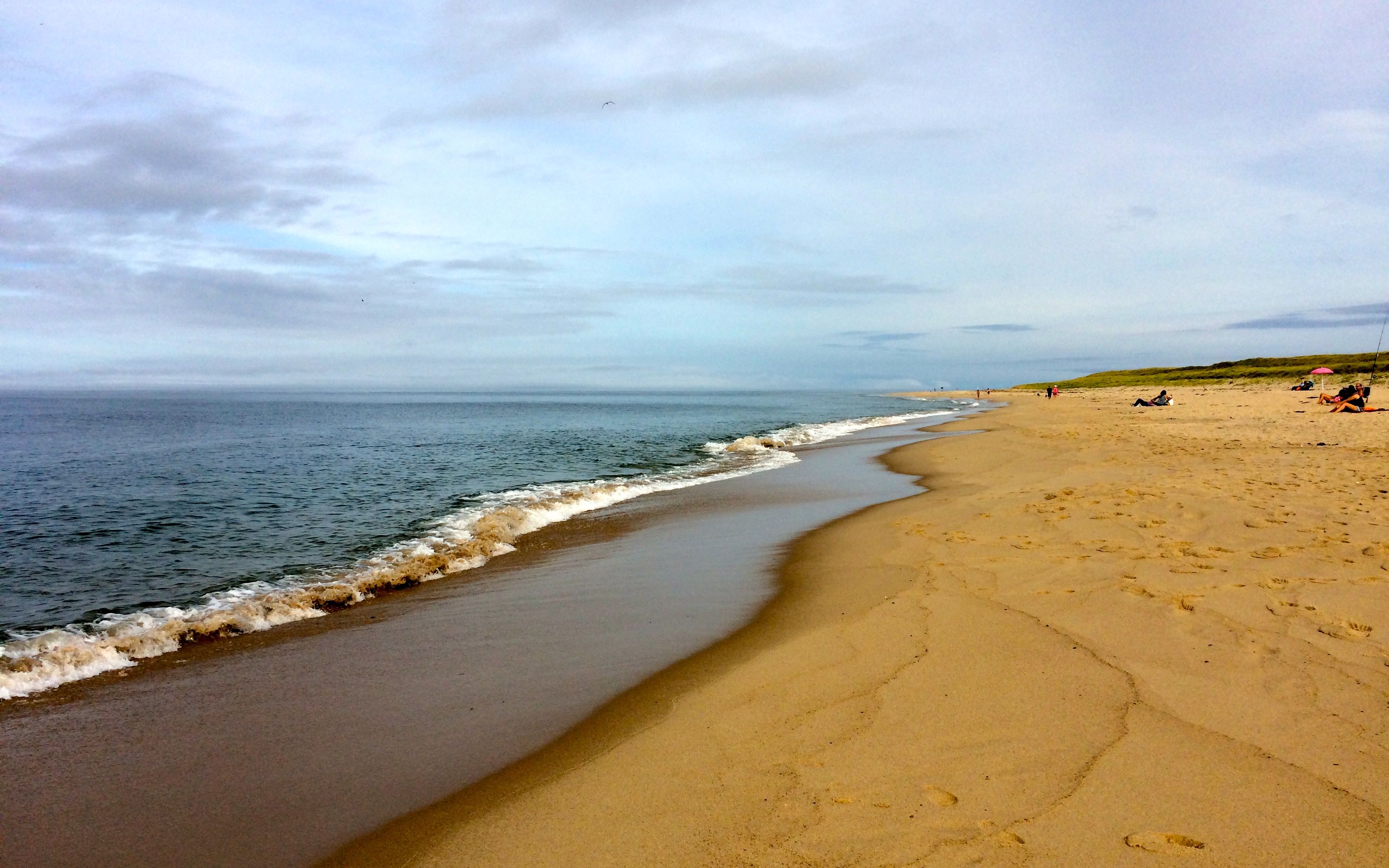
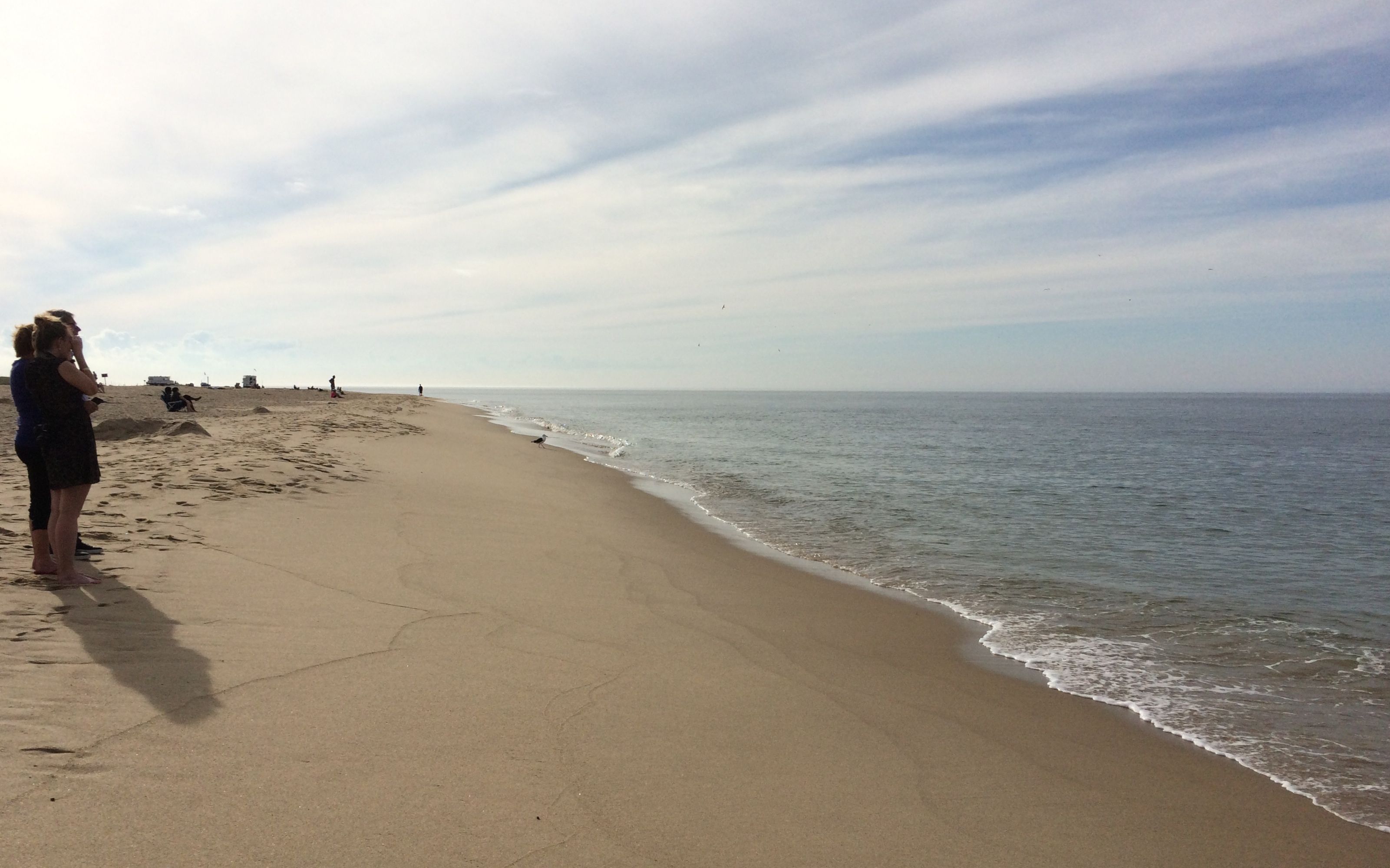
A lot better! I walked the beach up near Provincetown and enjoyed wading in the water.
After a stroll up and down the beach, I walked past these folks a couple times. I asked them what they were looking at. They told me that they saw whales! I stood and looked with them for a bit, but I saw about as much whale action as I did manatee action when I was in Florida last winter – which is to say, not much of anything.
After a bit, it was time for lunch.
I stopped at Mac’s Fish House. The reviews were good and they had a parking lot. Land is at a premium and parking that huge truck is always a headache. The fish was tasty and they had lots of ketchup. How could I leave Cape Cod without trying the cod?
I have to admit that the memories of my time in Cape Cod are a bit jumbled. It was a while back, but I still feel compelled to report on my stay.
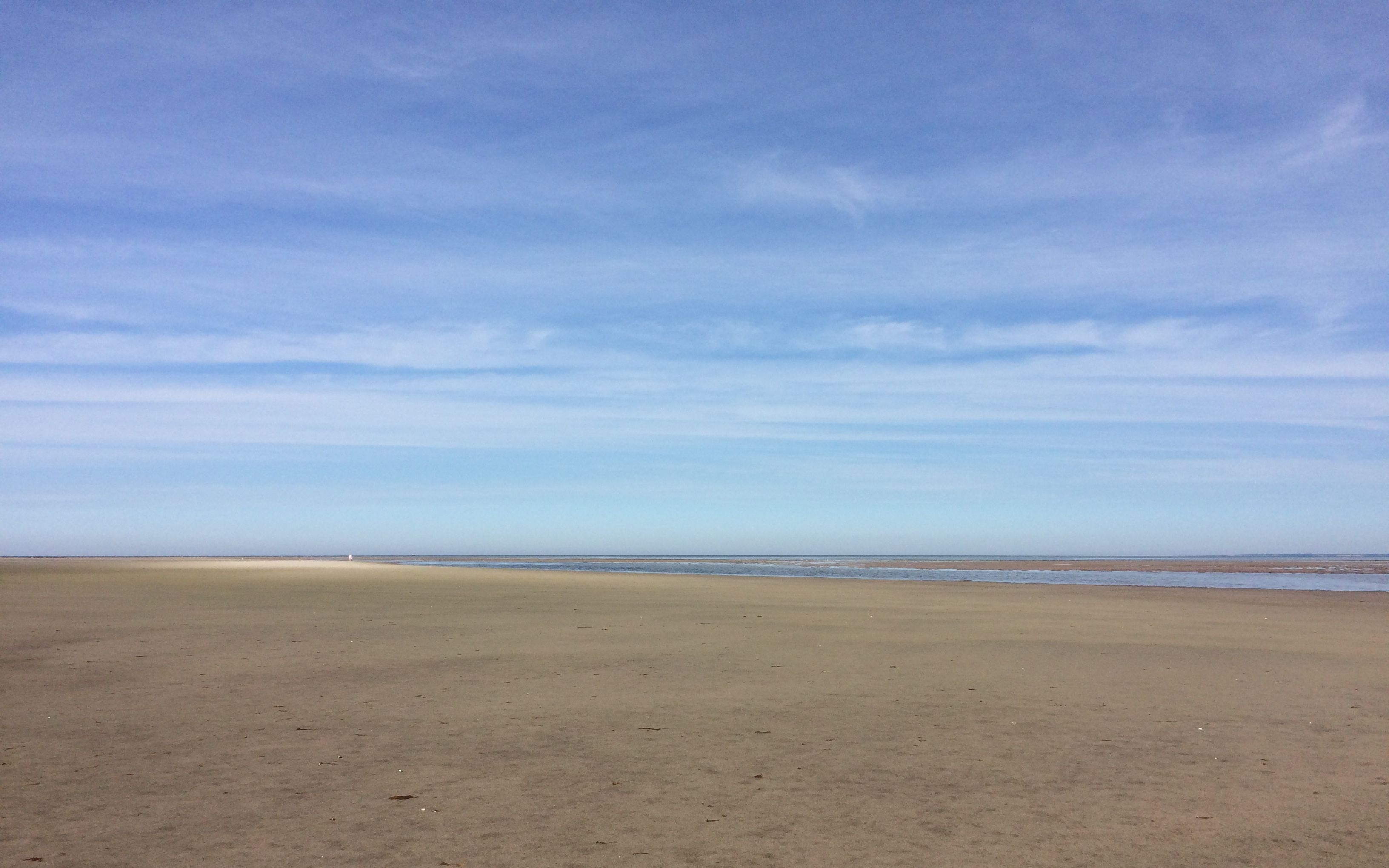
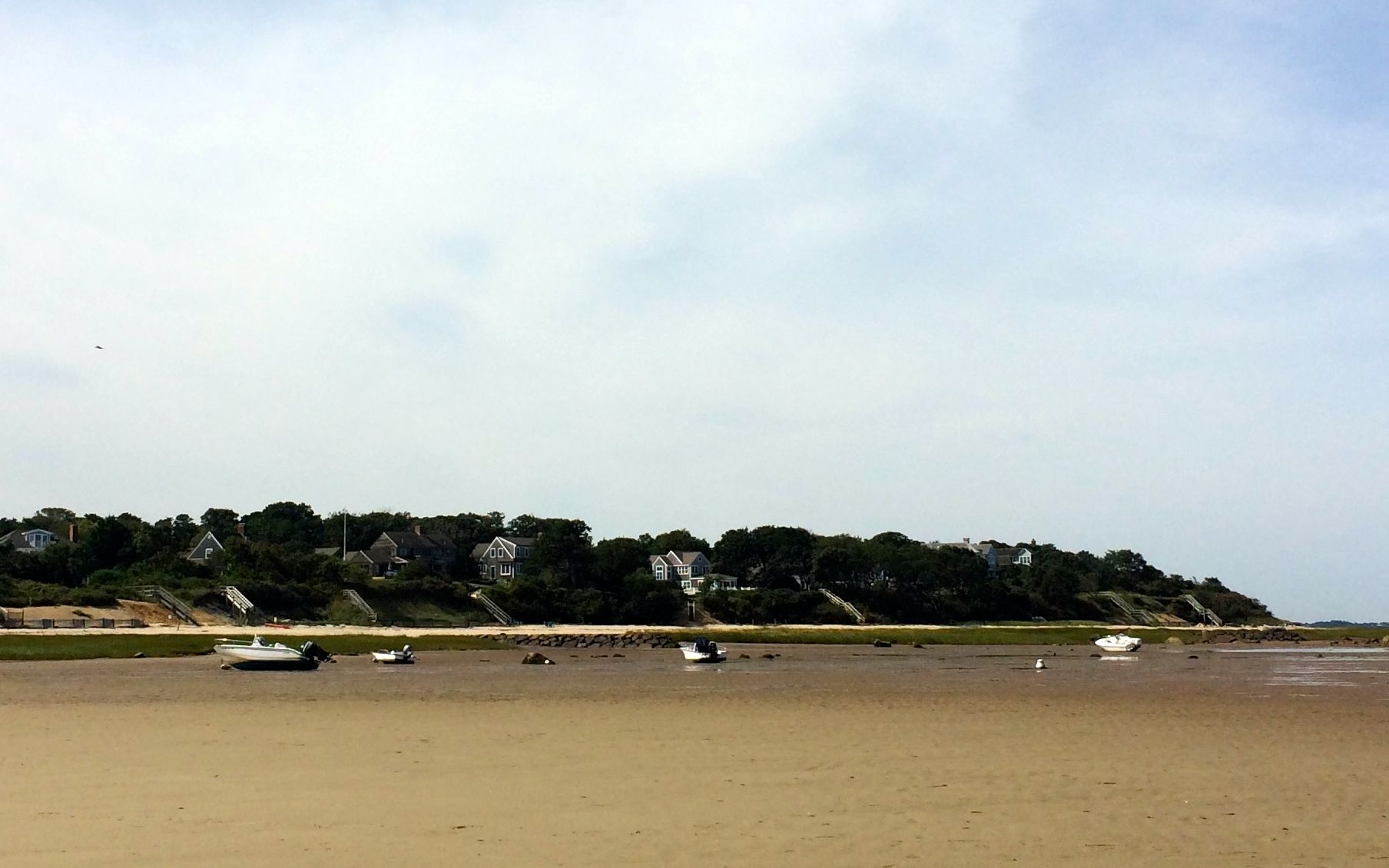
The next day, I took a walk at low tide on the side that faces Cape Cod Bay.
Being a “Fresh Water Girl”, the idea of boats just being left there while the tide goes out is kind of amazing. It also gives real meaning to the phrase, “A rising tide lifts all boats.”
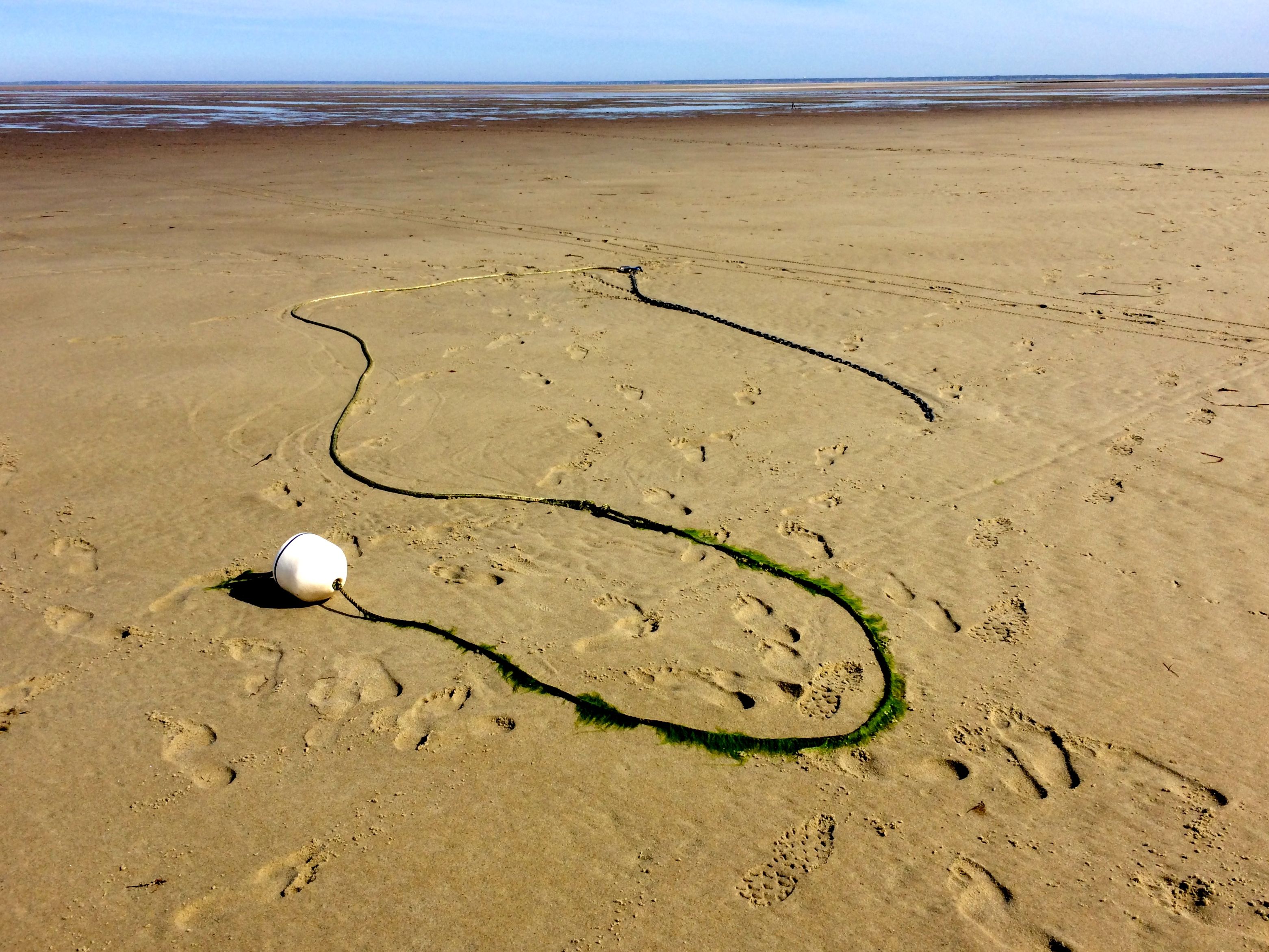
I am kind of a beach comber at heart. I walk around looking at the sand.
This line covered with mossy plant material with some sort of a float at the end caught my eye.
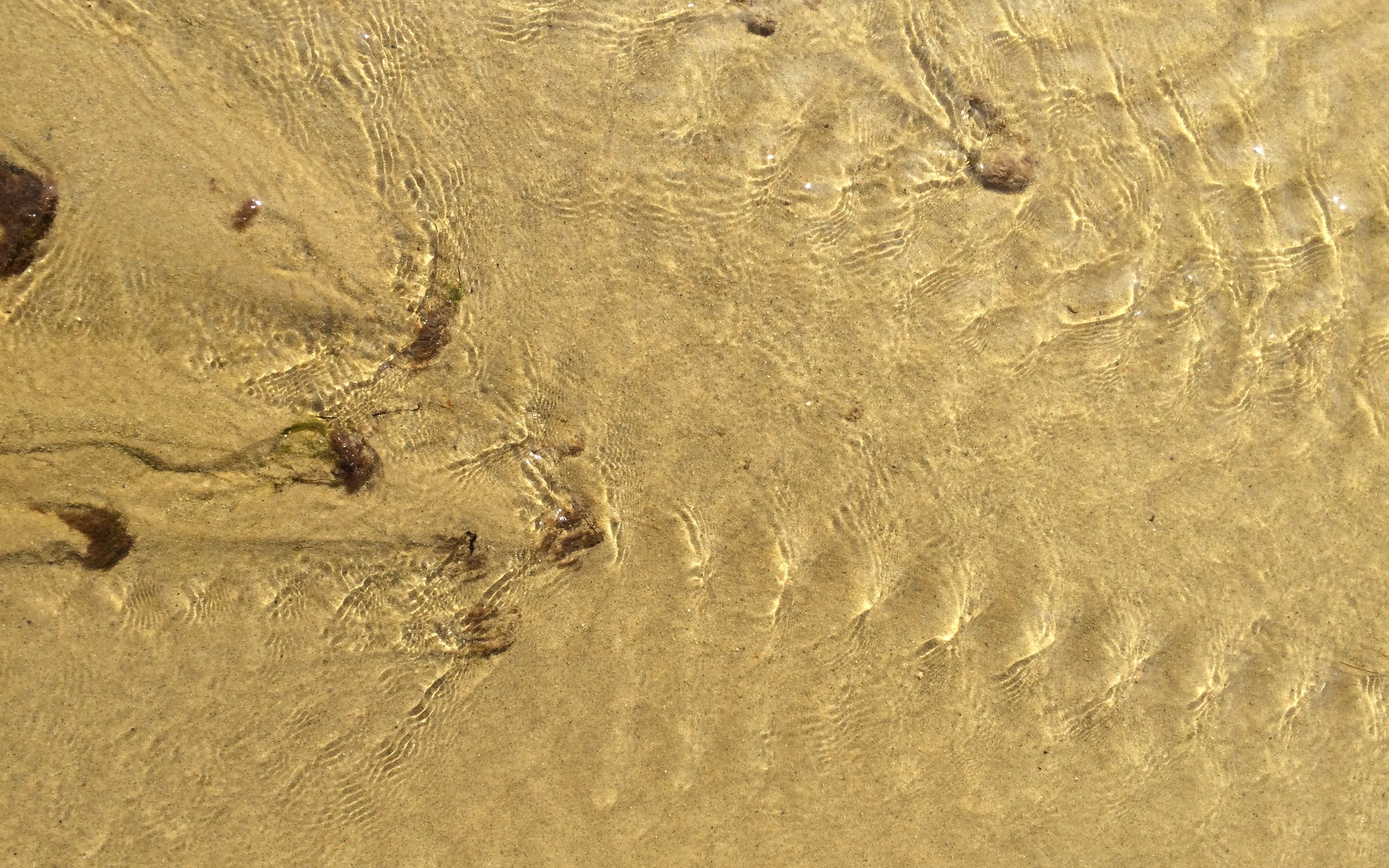
So did the ripples in the water caused me to stop and admire them. I love the way the light refracts through the water.
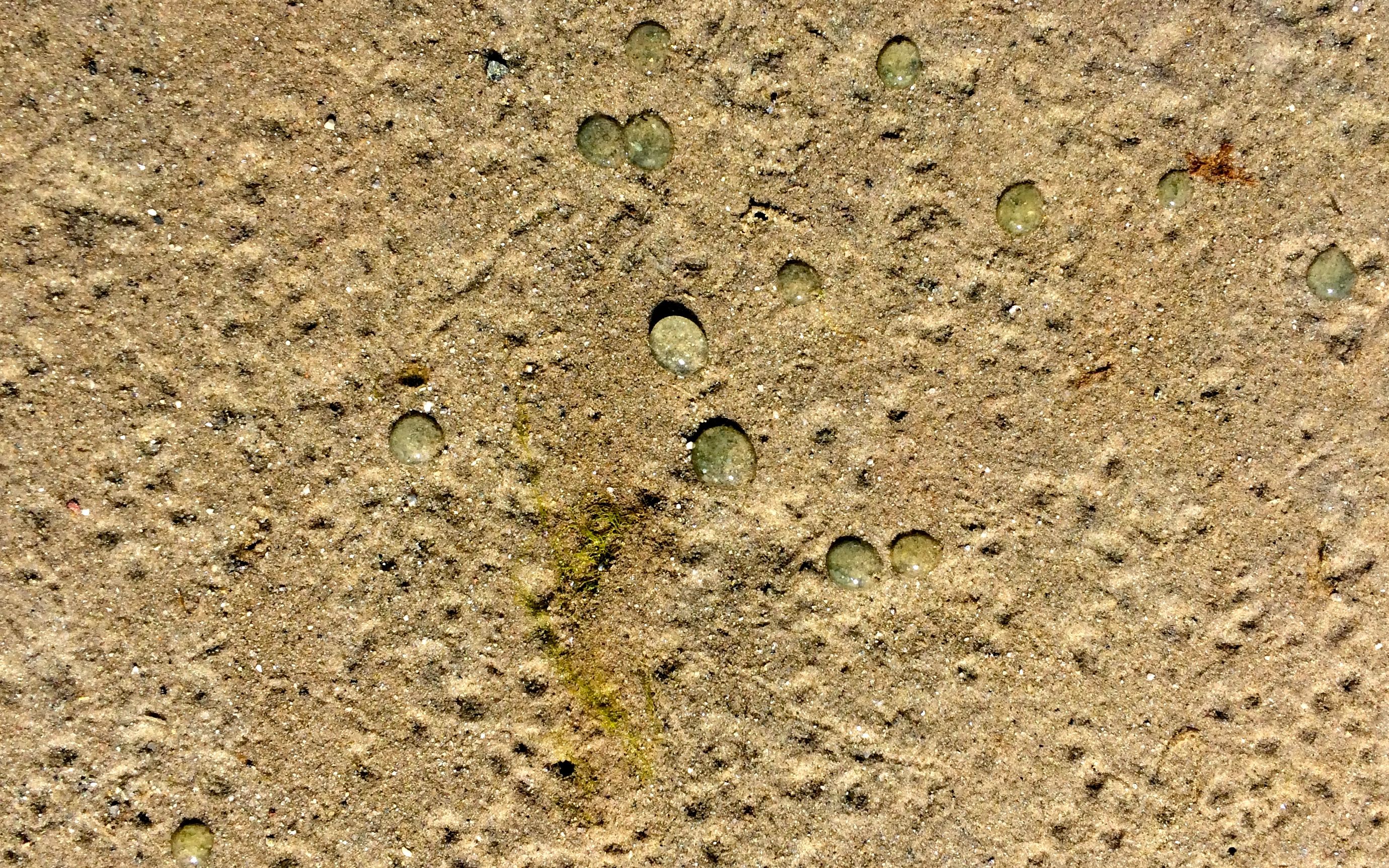
I encountered these greenish clear blobs on the sand. I have no idea what they are, but I imagine they might be something I probably shouldn’t touch. When I was a kid, I remember walking out in the snow to entertain myself while my mother was visiting with a friend. I found all these unusual dark pellets on top of the snow. I collected a pocketful and took them in to show my mother. She laughed and told me that they were rabbit droppings. You can tell I’m easily intrigued by the natural world.
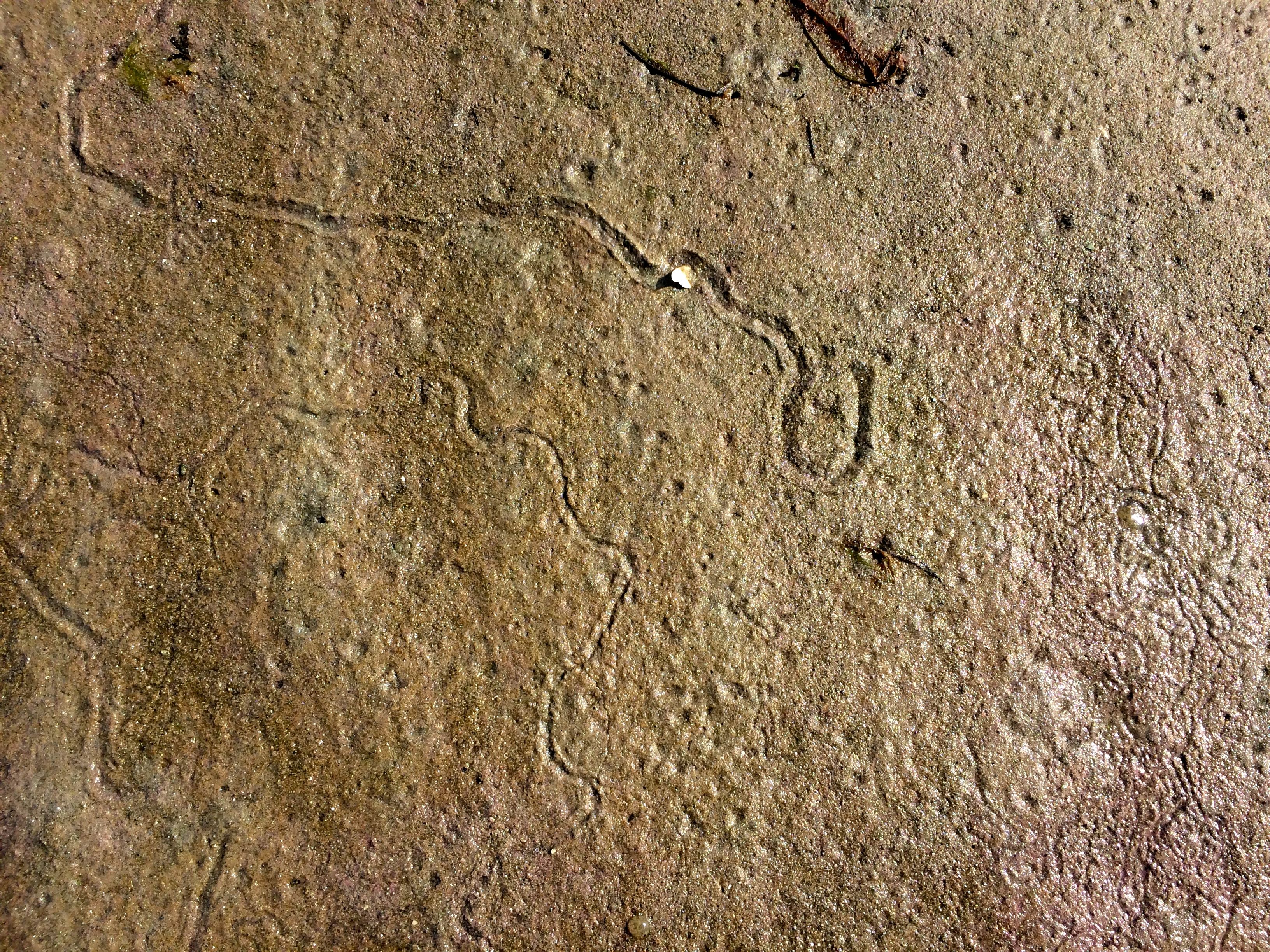
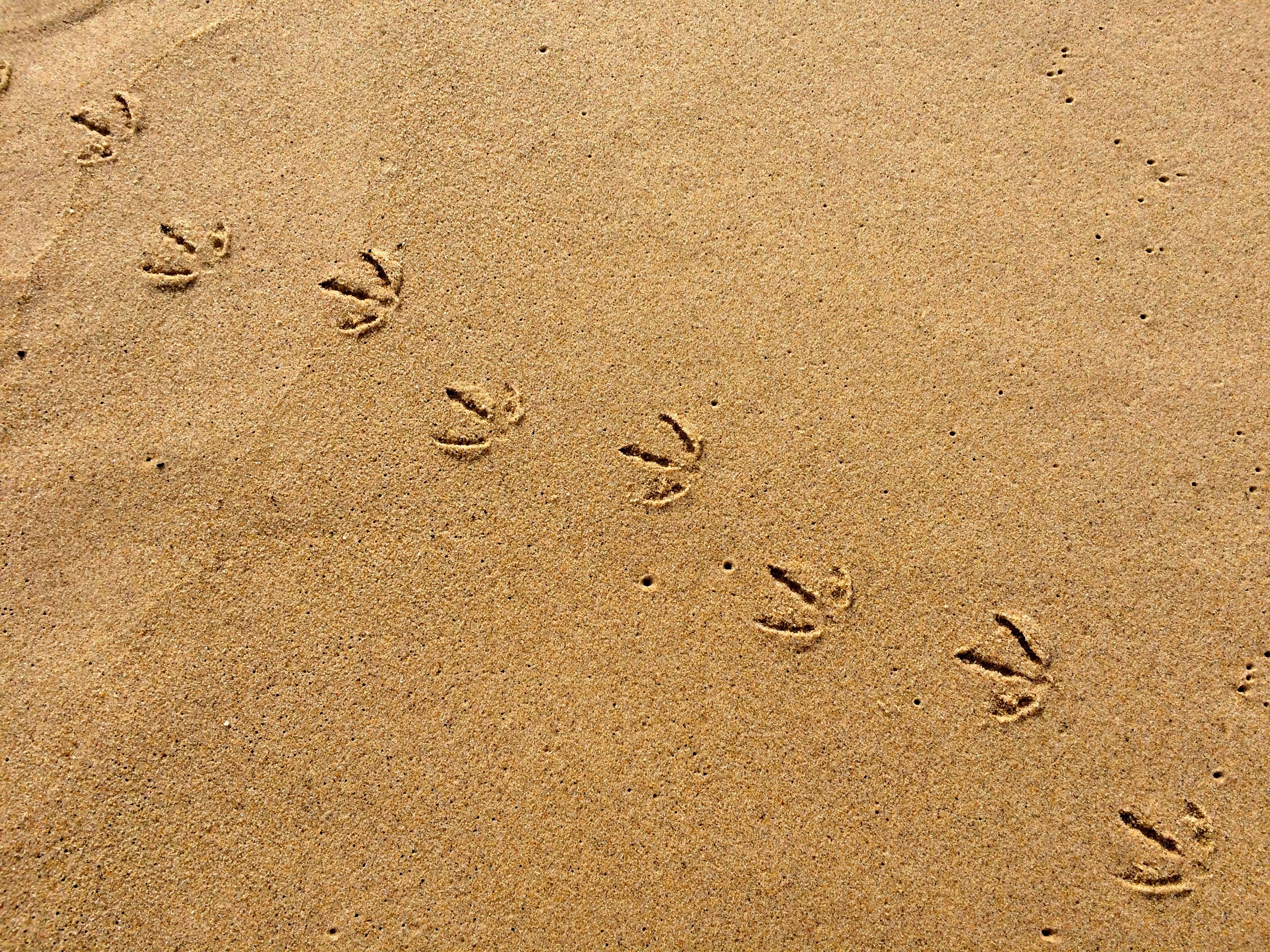
Then there were these tracks in the sand. I wonder what made them? I am sure someone out there knows. Me? Color me curious!
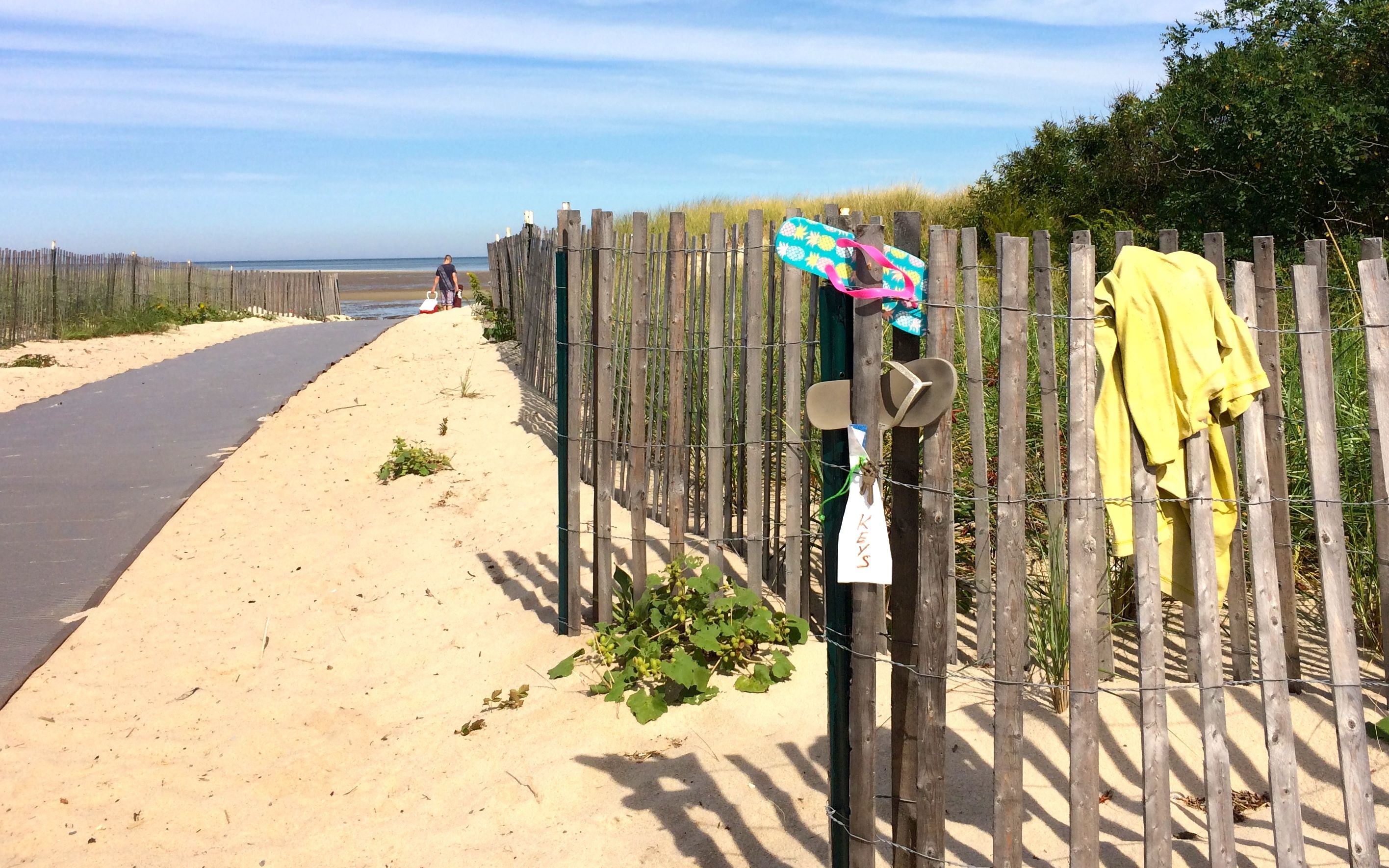
After walking out for a good, long while, I decided to turn around and head back to the parking area. Wouldn’t you know it? More lost shoes! Also keys…I hope someone comes back for them.
After that, I headed down the shore a bit to another beach. A woman in the tourism center had said that I might find some beach glass there. It was close to the site of the Sandwich Glass Company.
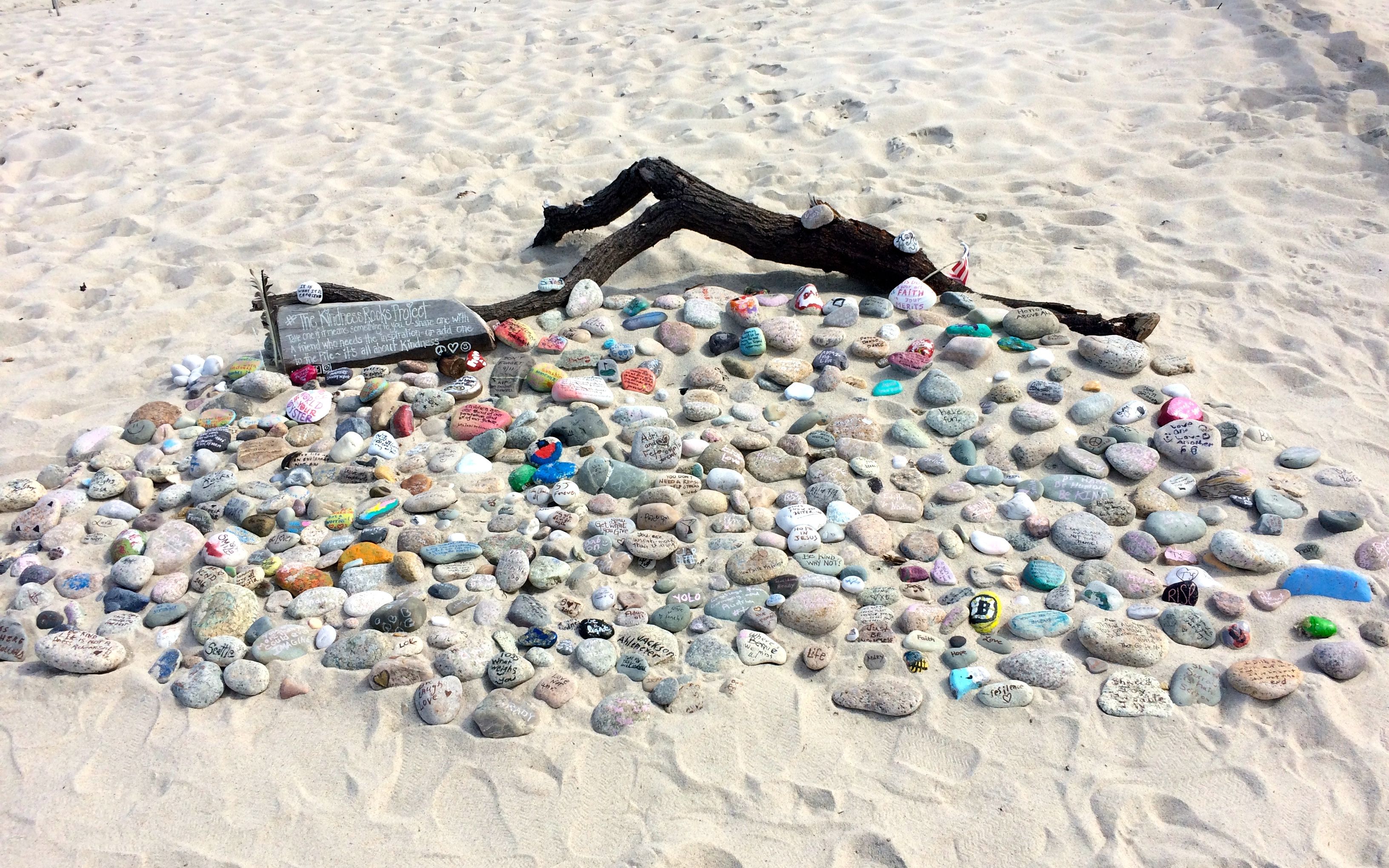
When I got to the beach, I found this wonderful interactive art installation – the Kindness Rocks Project.
What a great idea! I would have made a few if I had known about it. Although they invited people to take them, I didn’t. Rocks and the mobile lifestyle don’t mix.
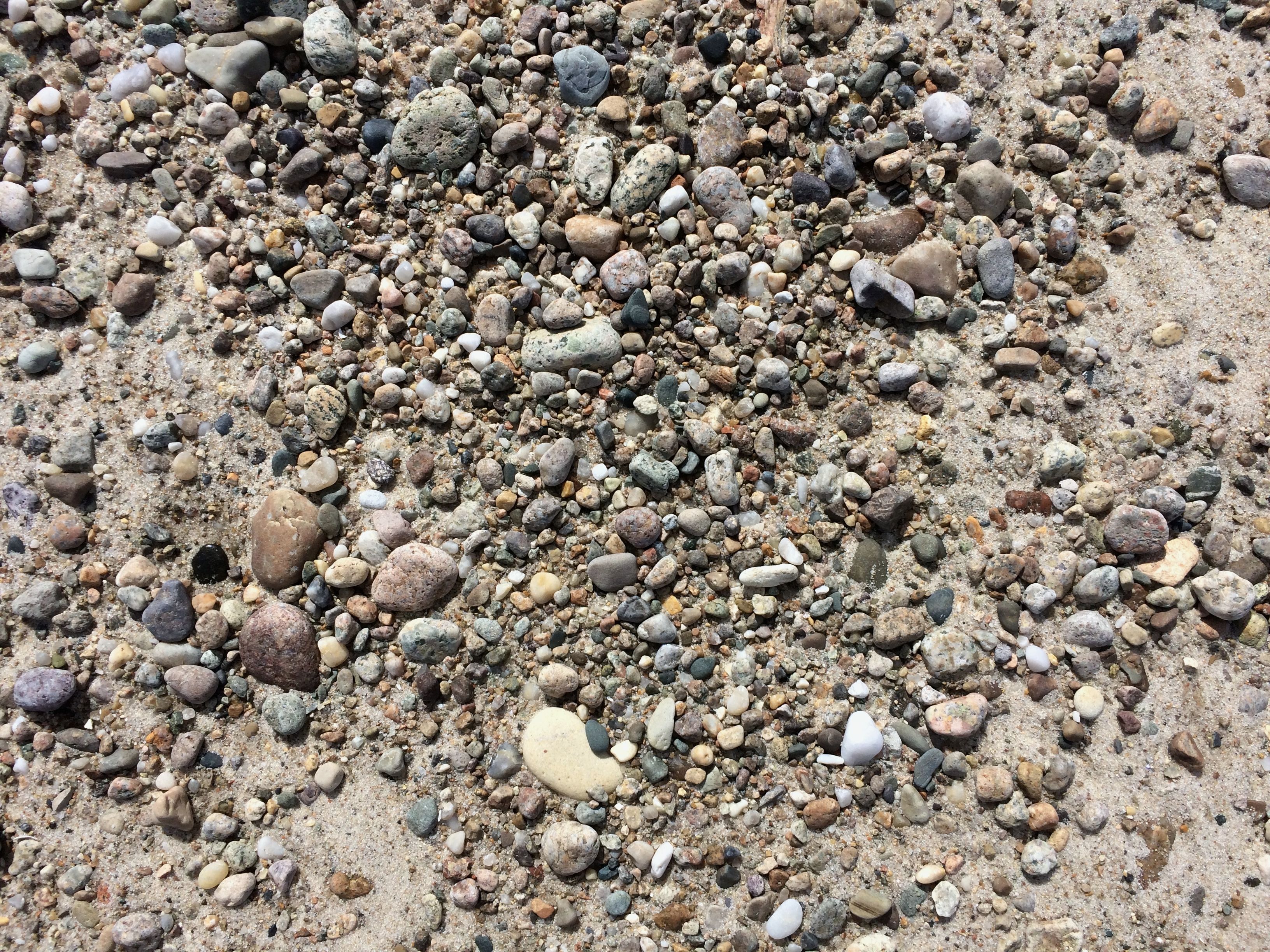
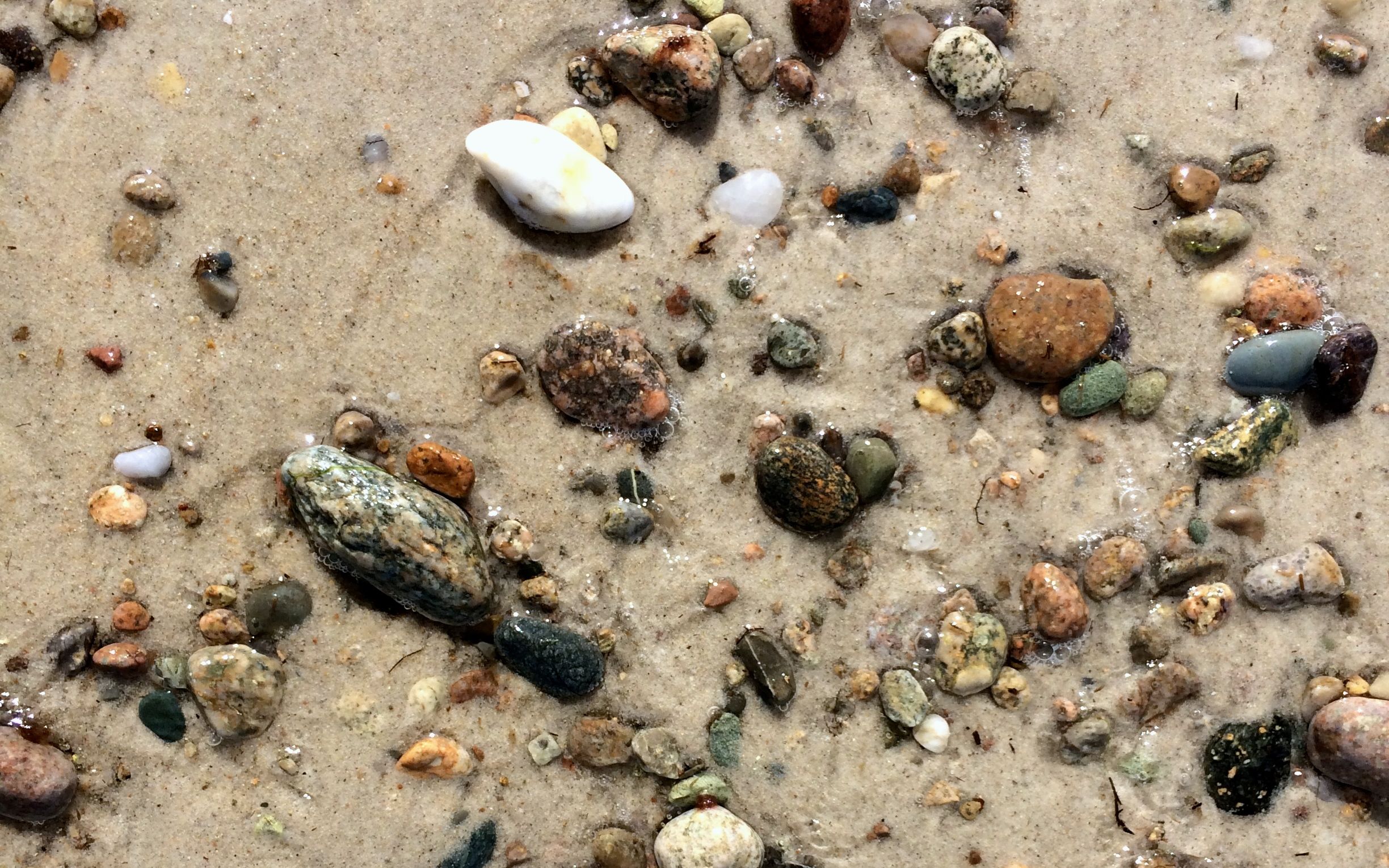
There were lots of rocks to look at, and I studied them all, hoping to find a piece of beach glass.
After scouring the beach, I actually found the smallest bit of a brown beer bottle. Unfortunately, I misplaced it, so you will just have to take my word for it. (I know – I know – no photo: it didn’t happen. But you’ll have to take my word for it.)
By that time, I had worked up a bit of an appetite. I decided that since I’d already had cod on Cape Cod, I’d have a sandwich in Sandwich.
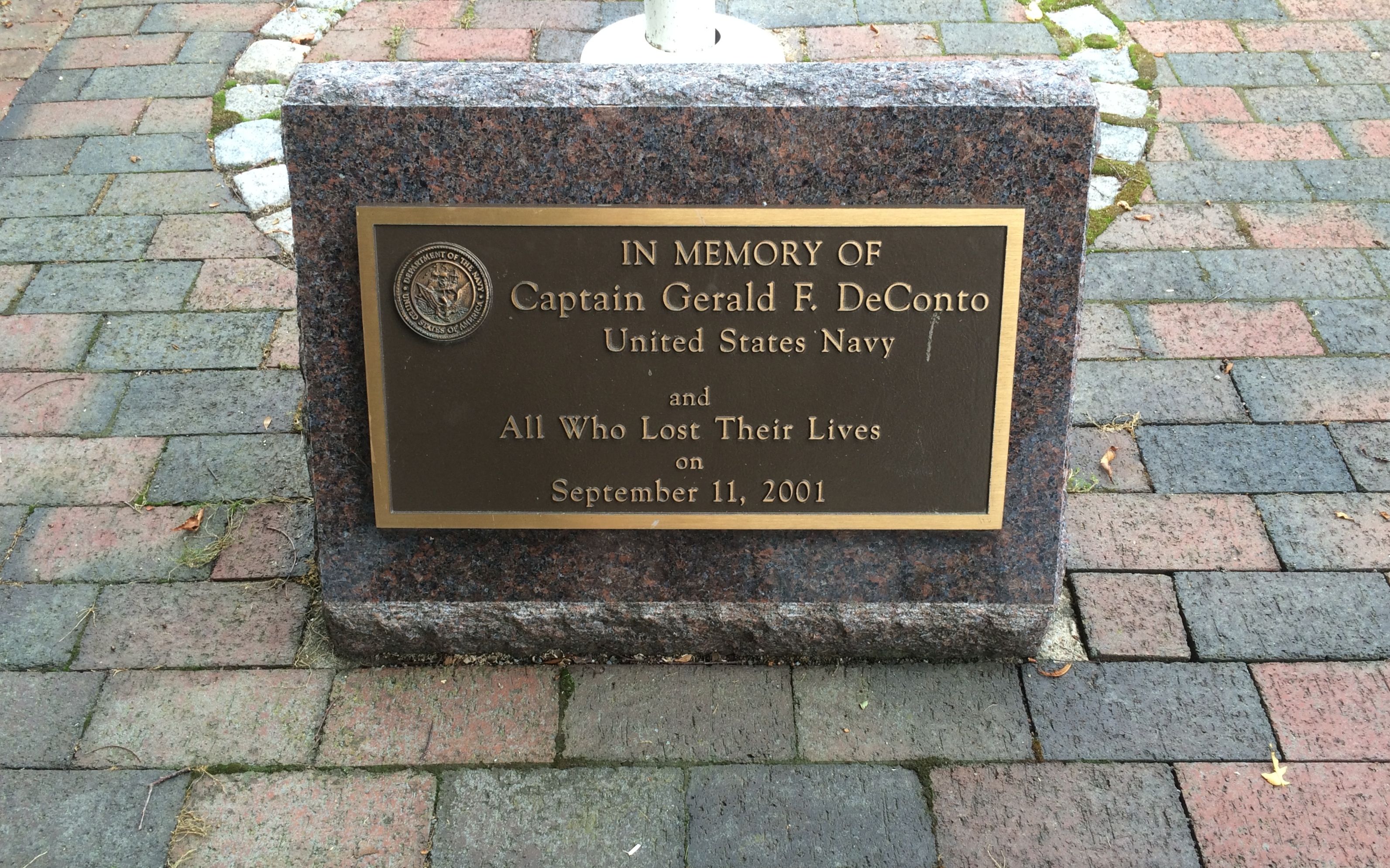
Near the Sandwich sandwich shop, I found a small memorial.
This is the first one I’ve encountered for 9/11 since I’ve been looking to see what communities choose to honor and when they do it. The date for “when” isn’t on it, but this is a pretty quick turn around, compared with some of the other monuments I’ve seen.
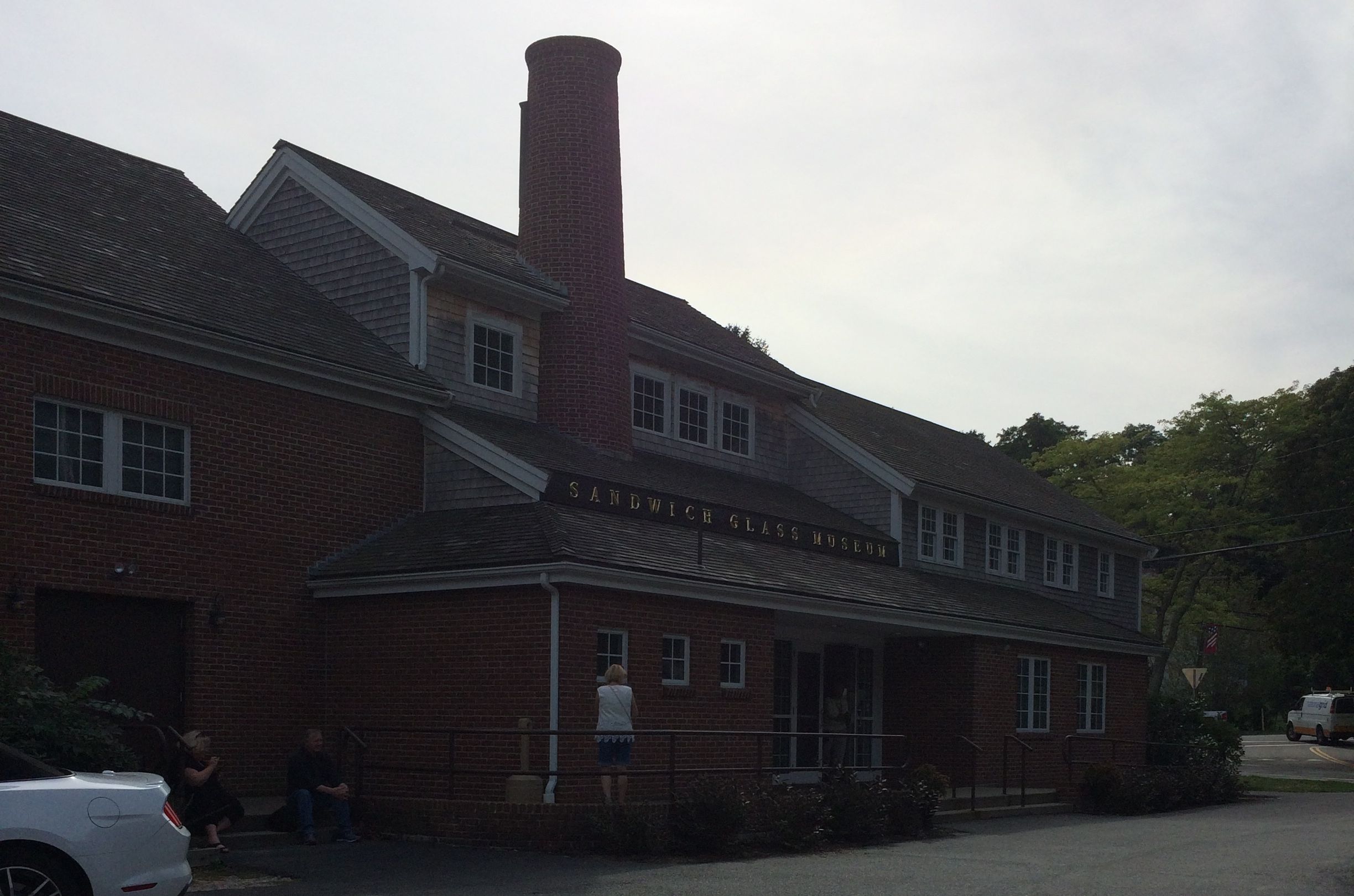
After lunch, it was time for the Sandwich Glass Museum.
Now, I had heard of sandwich glass my whole life (more or less) and I always thought it referred to the process of pressing the glass – the glass is “sandwiched” between the molds. Apparently, I was wrong.
The glass factory in Sandwich was started in 1825 by Boston entrepreneur Deming Jarves. He was familiar with the area because he hunted and fished here and he believed the area would be a good location for glass production.
But why? People who are familiar with what goes into making glass know that sand is an essential ingredient.
And while there is no shortage of sand here, the sand had too many impurities to be useful in glass production. So, what was the draw?
It was the fuel!
Glass melts at around 2,000 degrees Fahrenheit. A factory requires a lot of fuel to keep the temperatures constant. And, the temperature has to be kept up even when they aren’t creating product.)
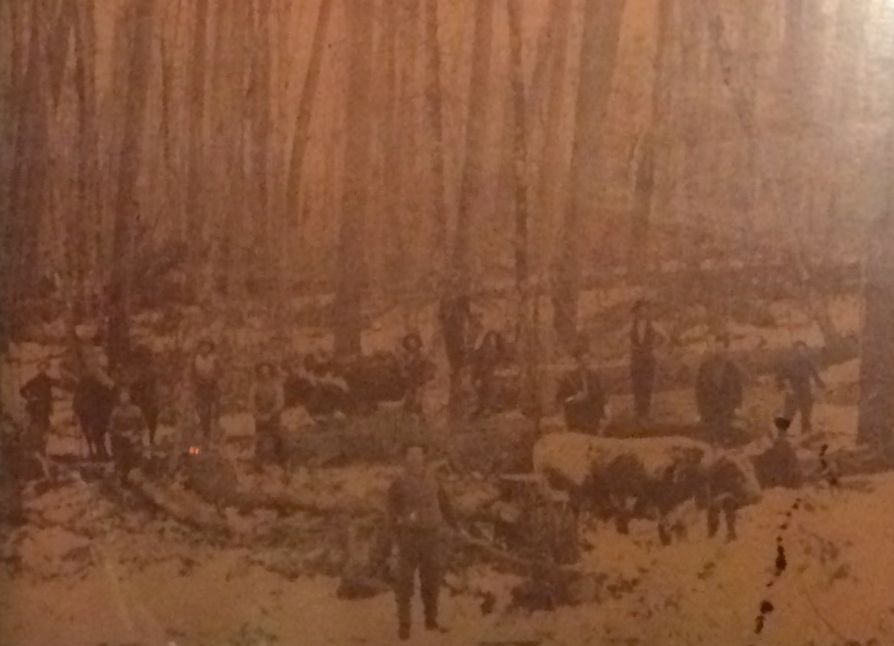
Jarves bought extensive woodlots of white pine in 1824 and hired local workers to cut and prepare the wood. In 1836, the furnaces were converted to burn coal, which proved to be more economical.
(Just a politcal aside: I wonder if the coal miners cared about the lumber jacks they put out of business? Did they consider their their employment put others out of work? Of course not! Keep me posted about how they are doing in “getting their jobs back”.)
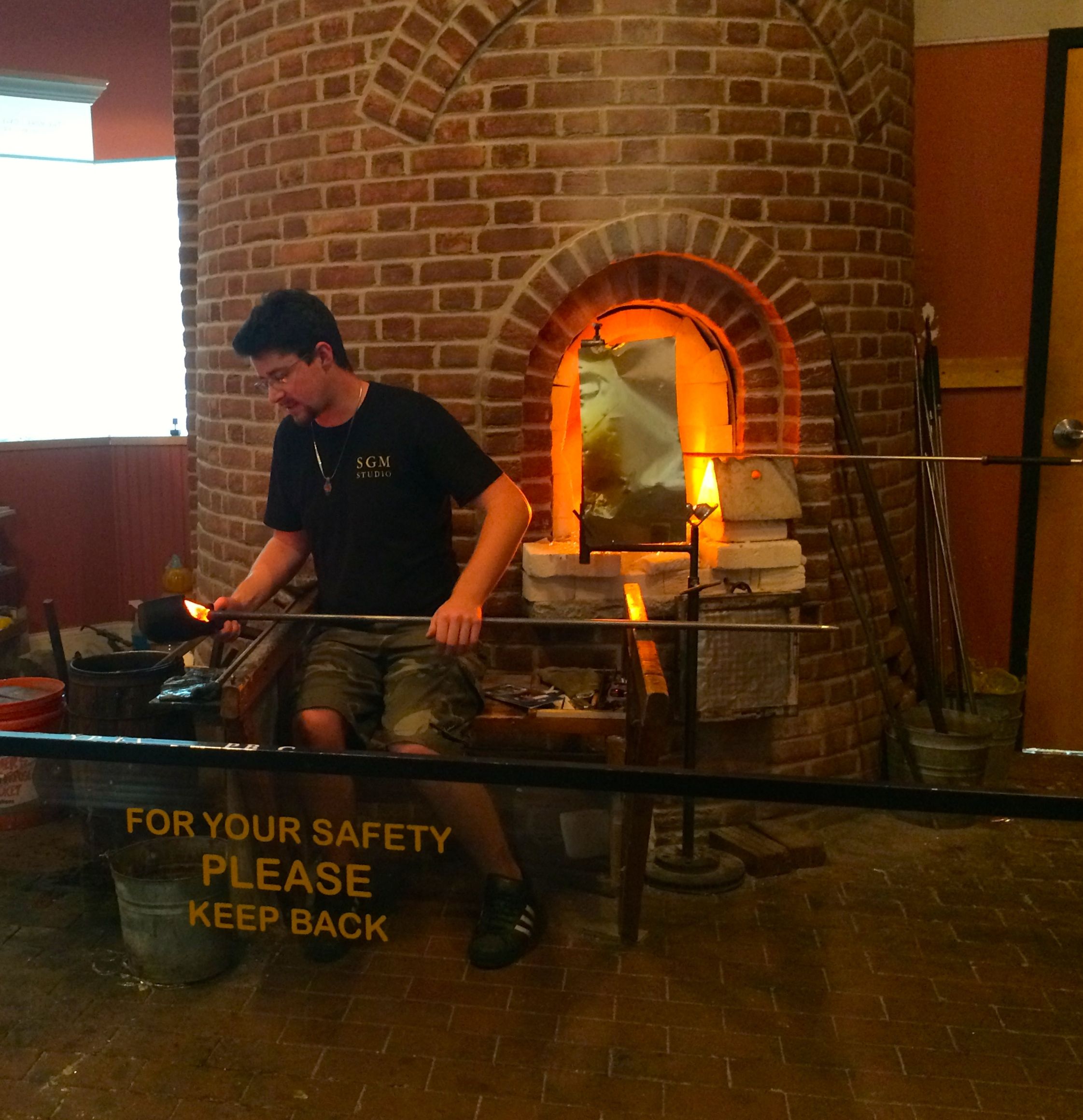
I went in to see what it cost and to check out the gift shop – here you enter and exit through the gift shop. The cost seemed kind of high, considering that I have seen plenty of glass blowing. In fact, I have even blown a glass ornament at the Louisville Glassworks about a decade ago. I asked the guy to tell me what I’d learn if I toured the museum. He convinced me that it was worth my while because the glassblower would explain the connection of the factory with its location.
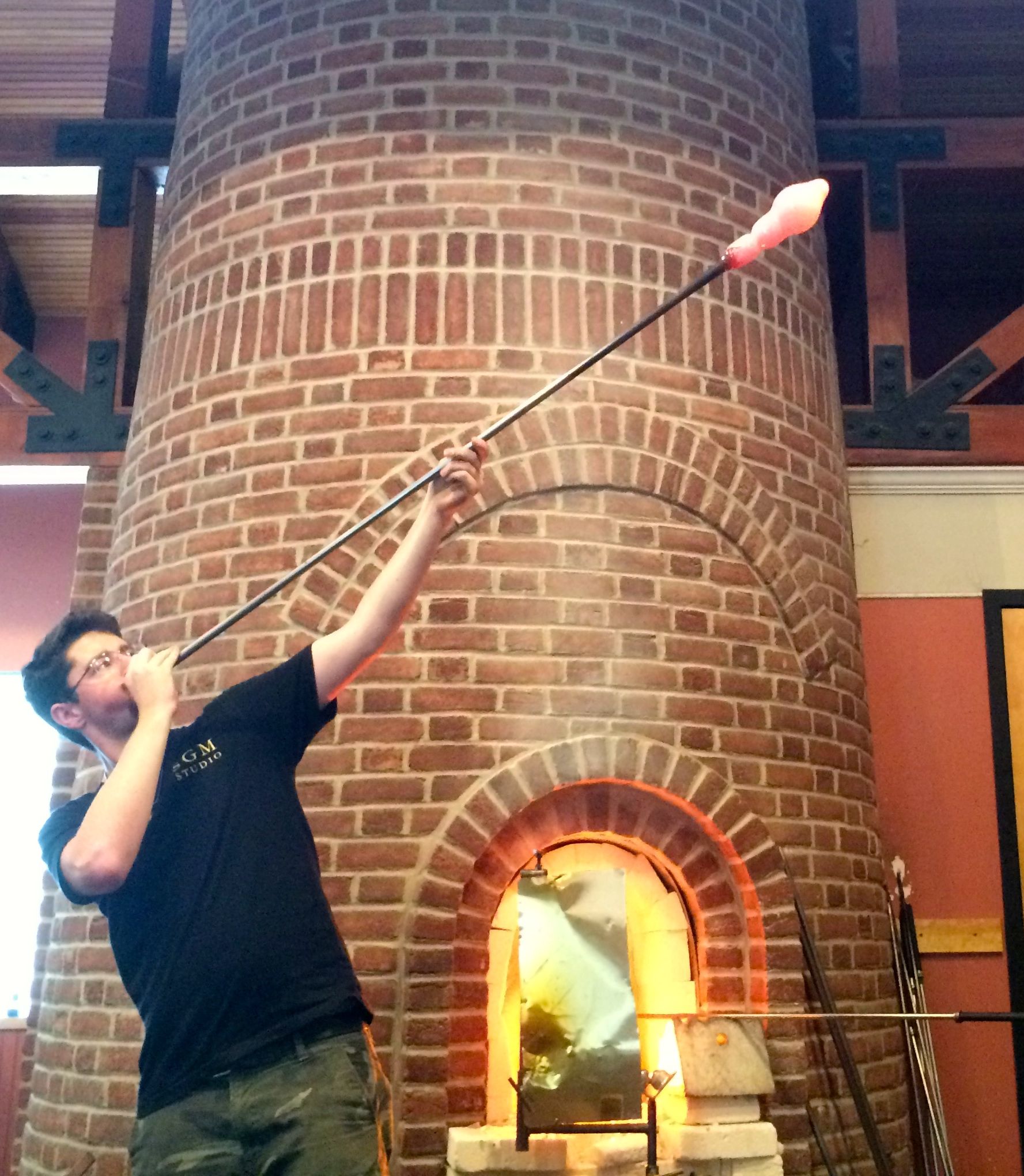
This was the first time I’d seen a glass blower working alone. Most of the time, there are at least two people working together – sometimes there are more moving around the action.
He created a vase, and it was interesting to see him work alone. However, he didn’t explain anything that was promised. He did direct me into the museum, where he said my questions would be answered.
And so I left the glass blower to learn more about the factory and its history.
Jarves left the company he founded in 1858, but the company continued producing fine blown, mold-blown and pressed glassware. The the middle of the 19th century, it had become one of the largest glass factories in the United States, employing over 500 people.
Following the Civil War, glass factories moved closer to fuel sources – such as the coal deposits in Pennsylvania and West Virginia – and they were able to undersell the inexpensive Sandwich products.
(Another political aside: Did the people in Pennsylvania and West Virginia mind the fact that they contributed to hardship for the workers in Massachusetts? Doubtful.)
The company closed its doors in 1888.
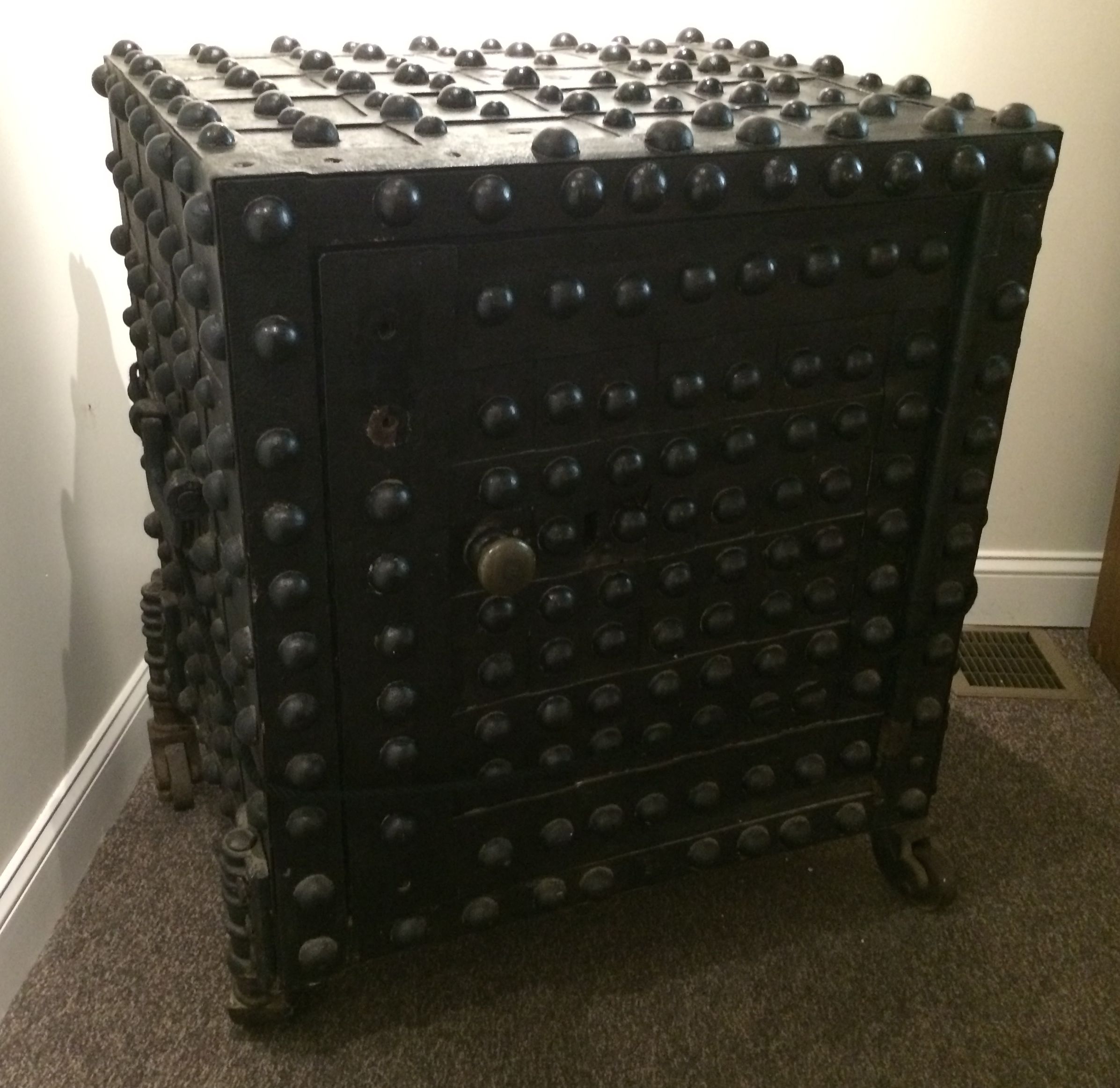
This is the safe from the company, also called it’s “iron chest.” It was found among the demolished buildings of the company in 1920. It was quite an engineering feat. Over a treated wooden frame, it was covered with thin sheet-iron, and then banded and strapped. The metal was fastened with large nails and had prominent knobs with cast iron heads. The keyhole was revealed by moving the knobs in a specific sequence. According to the label, it was probably made by a company in New York City that operated between 1825-1859.
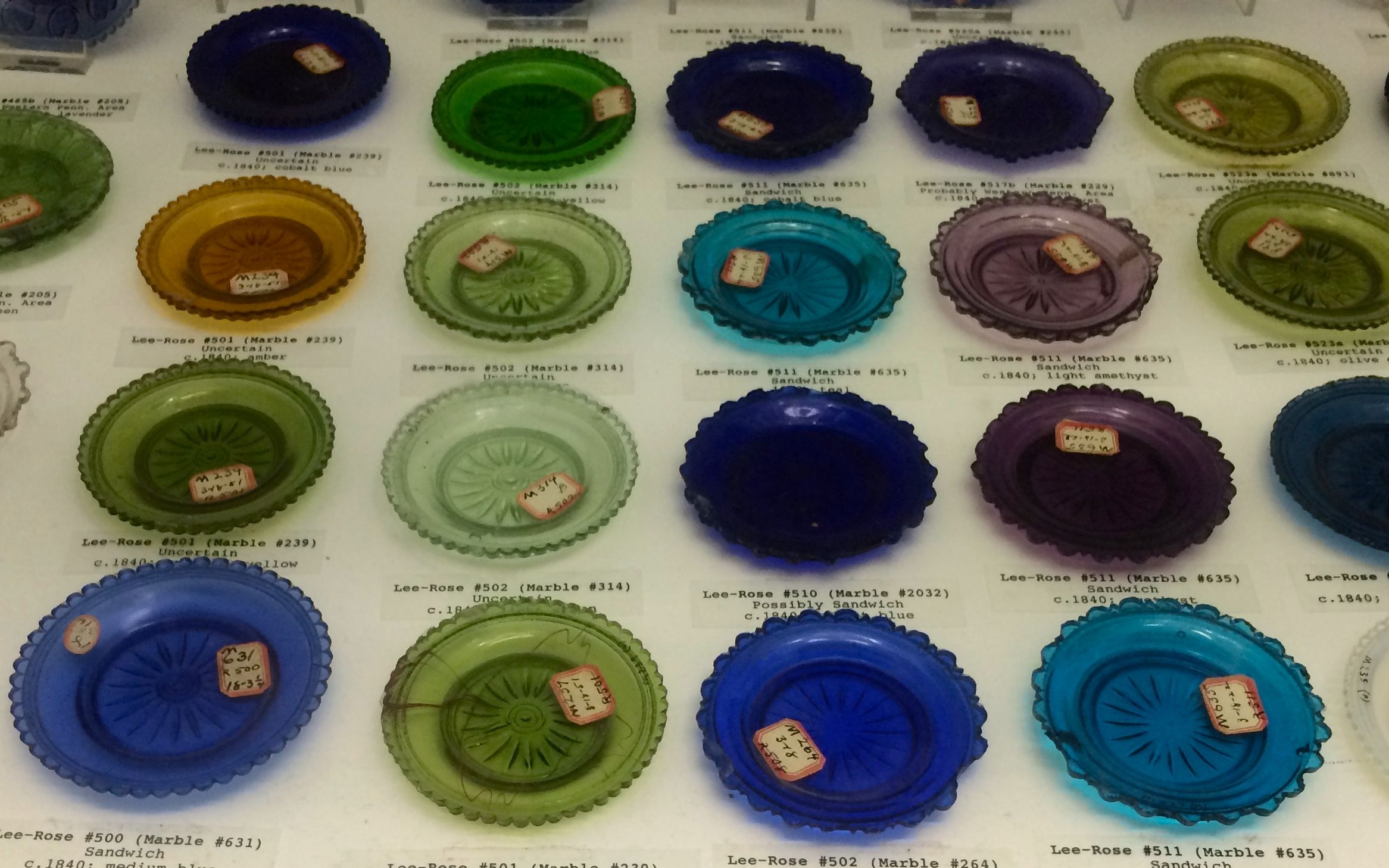
Of course there was a lot of glass in the museum, too. I was fascinated by their large collection of “cup plates.” They are small plates, usually about 3 1/2″ in diameter. They were used to hold the tea cup while the tea was being cooled in the saucer. That strikes me as an odd practice, but it became popular in England in the 18th century, and it may have been a reaction to the discomfort of drinking hot tea from the handleless, oriental-form cups.
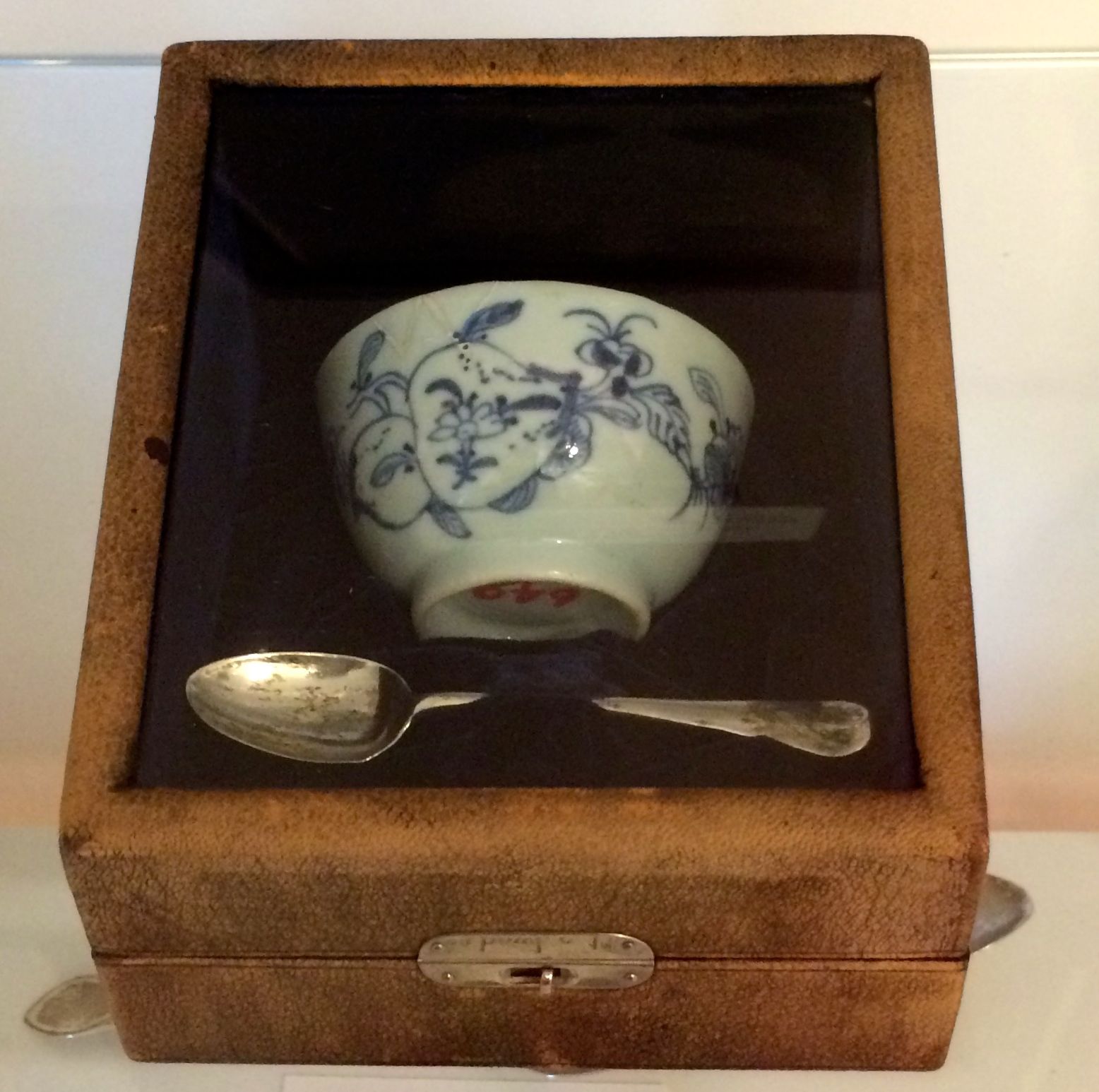
Do you remember this tea cup that Washington drank from at Munroe Tavern in Lexington? This is what they were using in the 18th century.
By the 1829s and 1830s cups with handles were in common use, yet the custom of pouring tea from the cup to the saucer remained popular in America. According to the information in the museum, the use of cup plates became unfashionable by the 1850s.
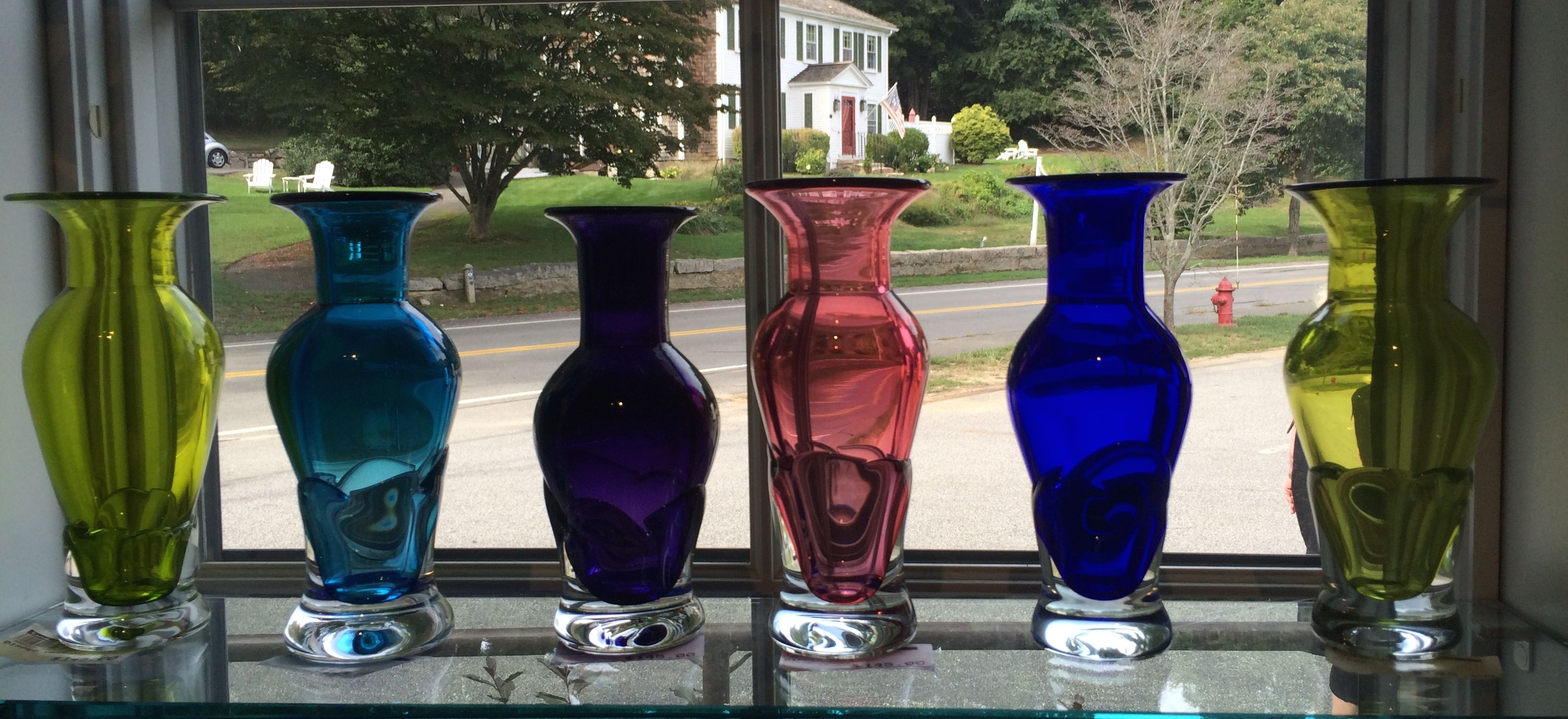
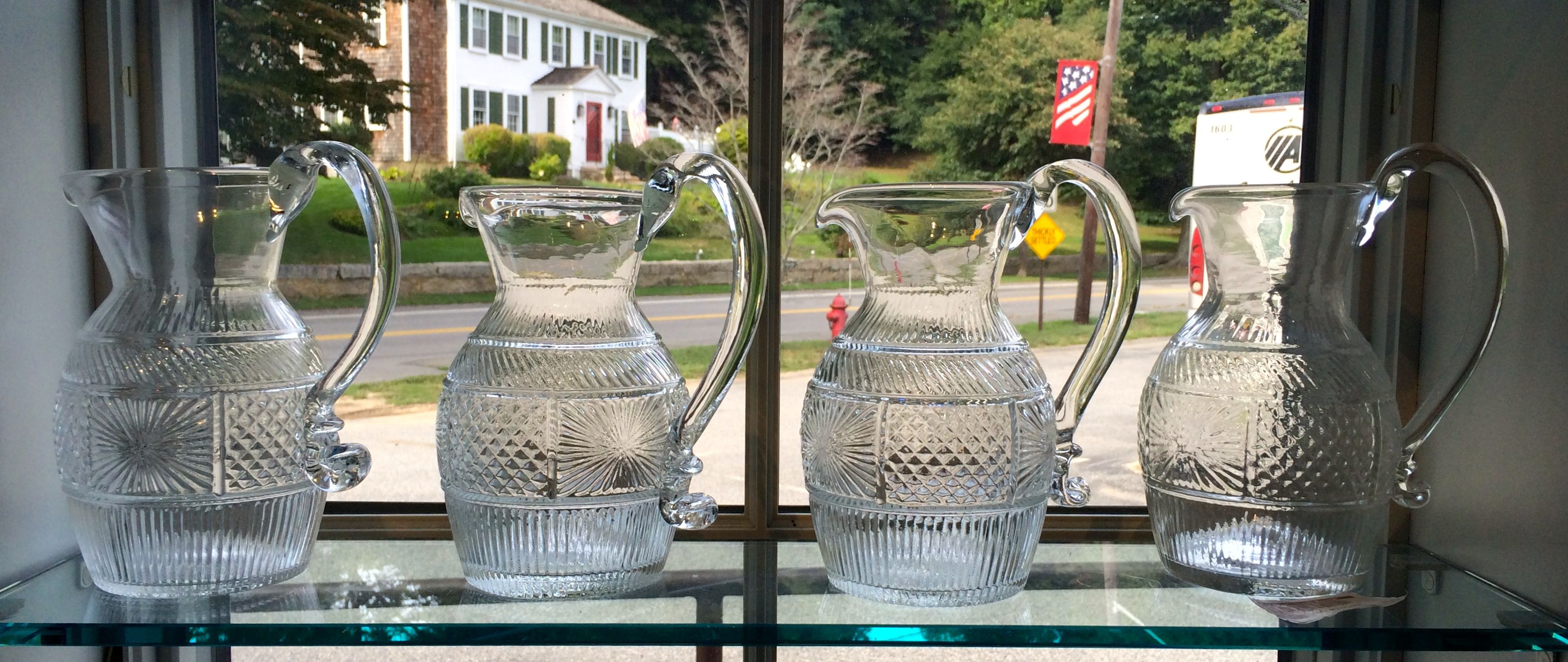
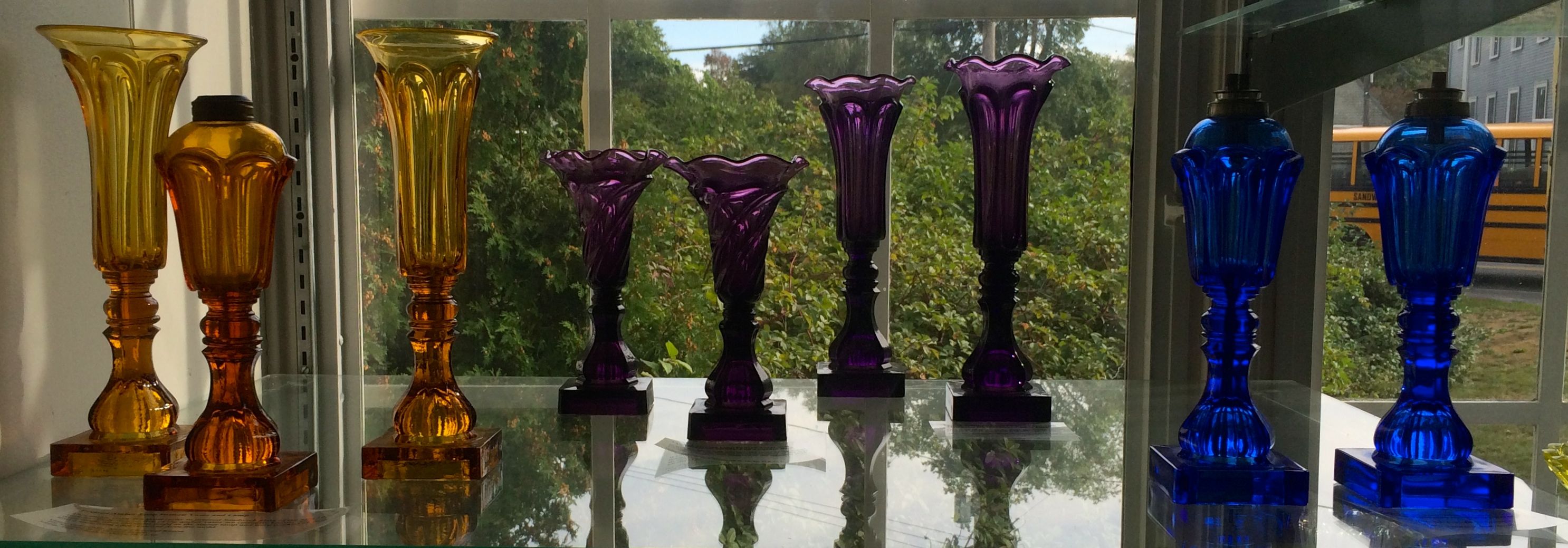
There were lots of beautiful pieces to examine. Vases made of colored glass,
clear glass pitchers,
these colorful pieces,
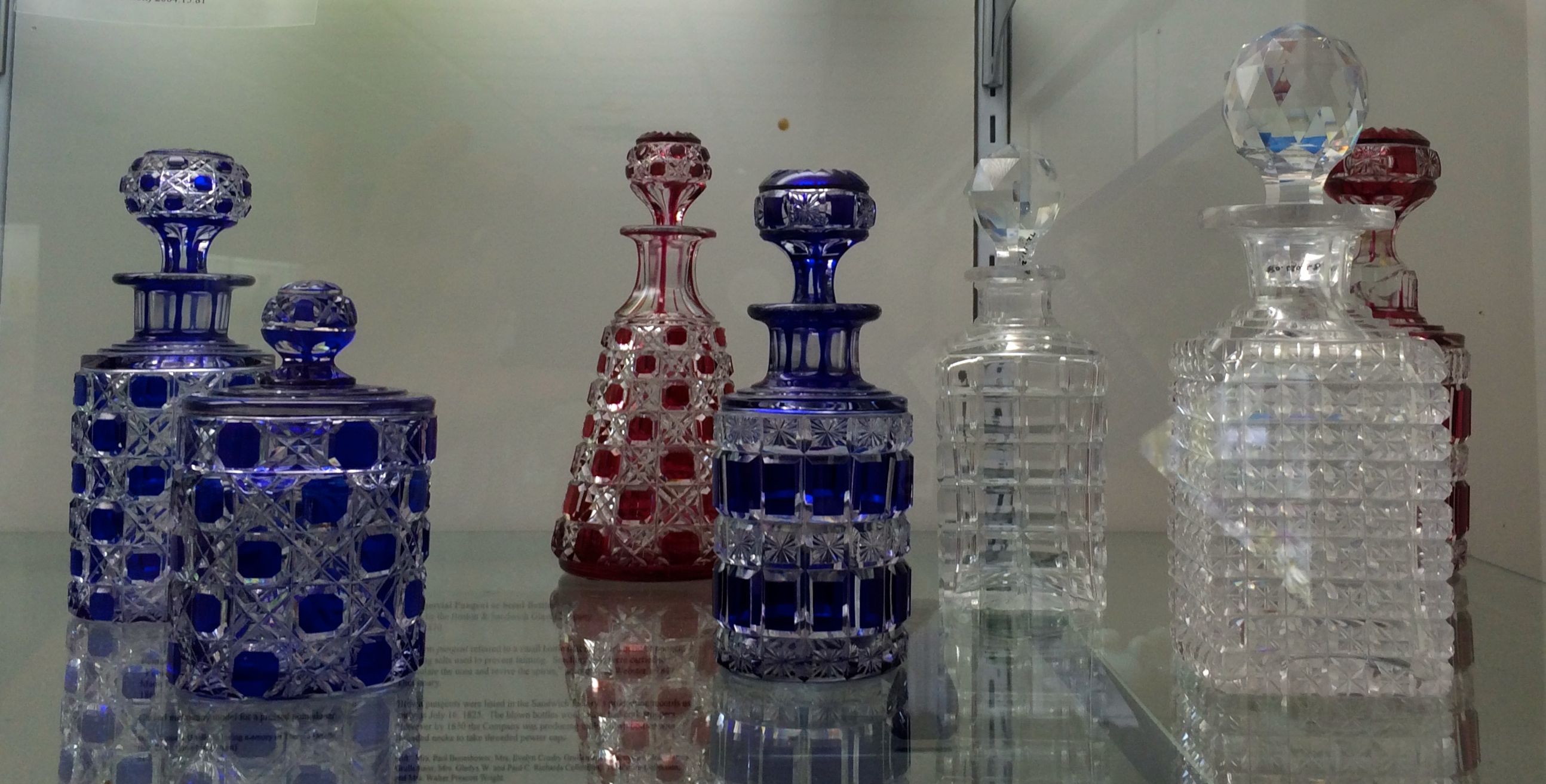
and fancy stoppered bottles.
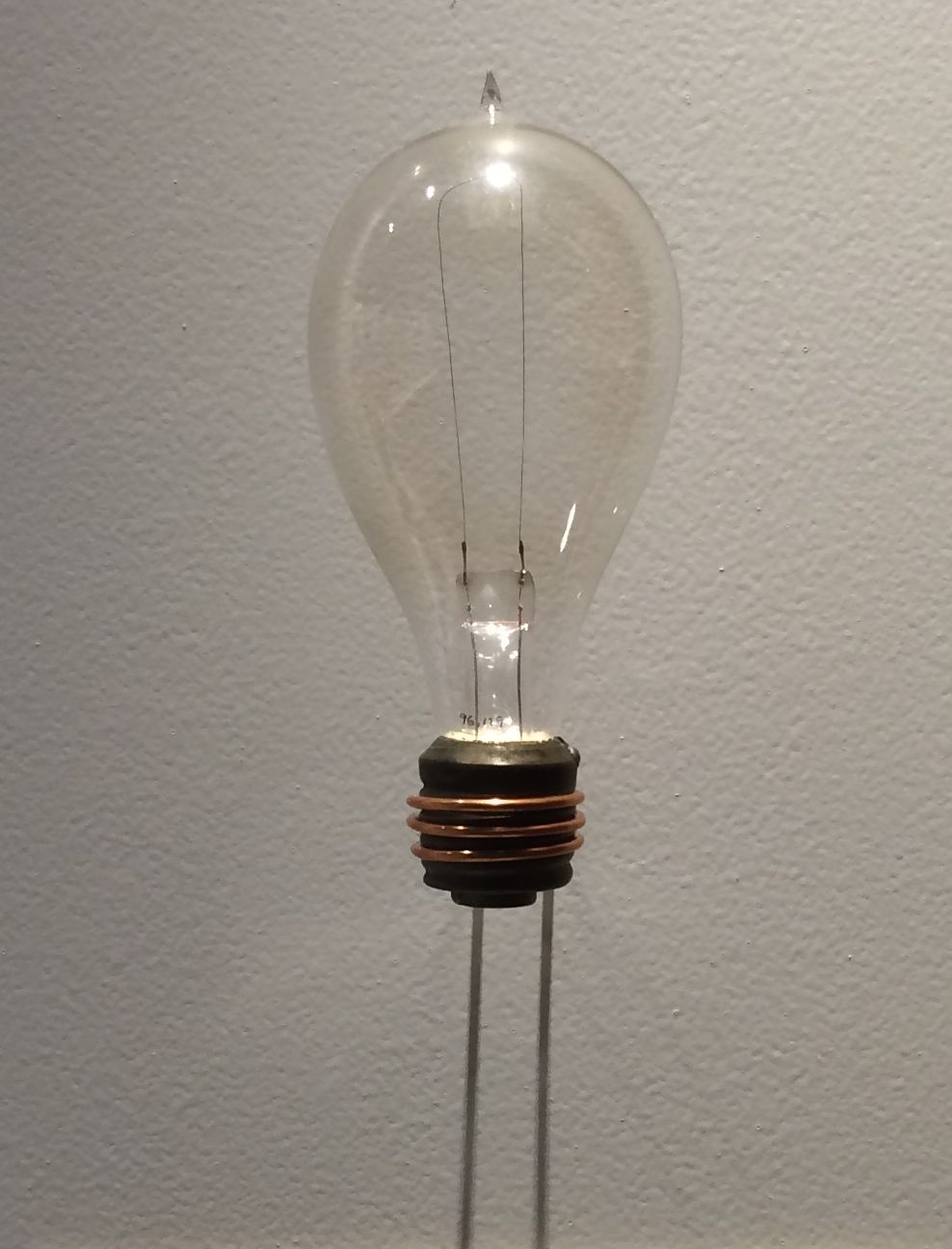
They also produced lightbulbs for a while.
This one was produced in 1887. Of course, it was a short-lived production run, as the factory closed in 1888.
With that, I left the museum. I timed my visit well, as I hit just as one tour bus was leaving and left just as another was arriving.
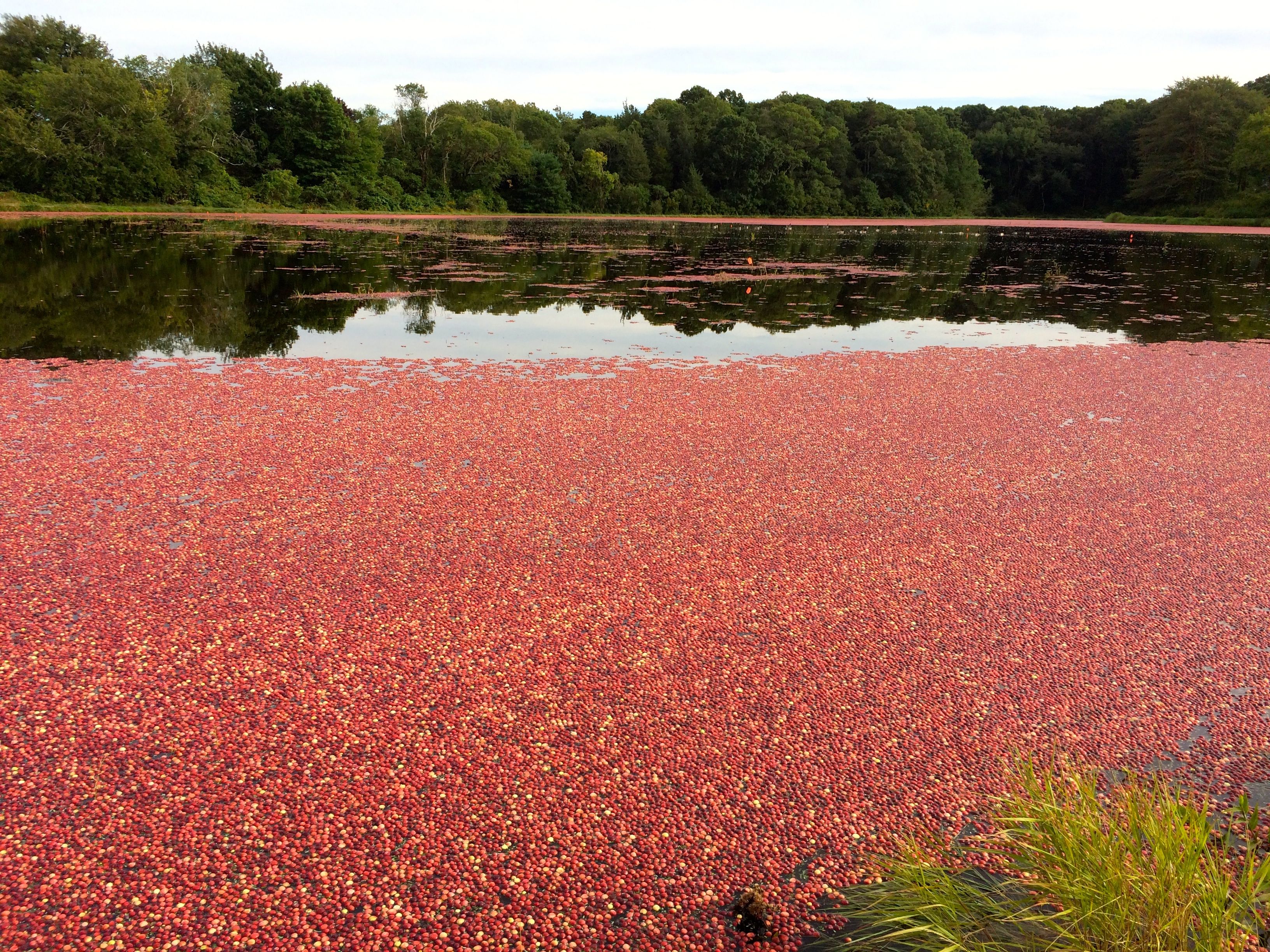
Another thing I saw while driving around was a cranberry bog! It was sitting there, right next to the road.
I pulled over to check it out.
Imagine that! A pond with cranberries floating on it.
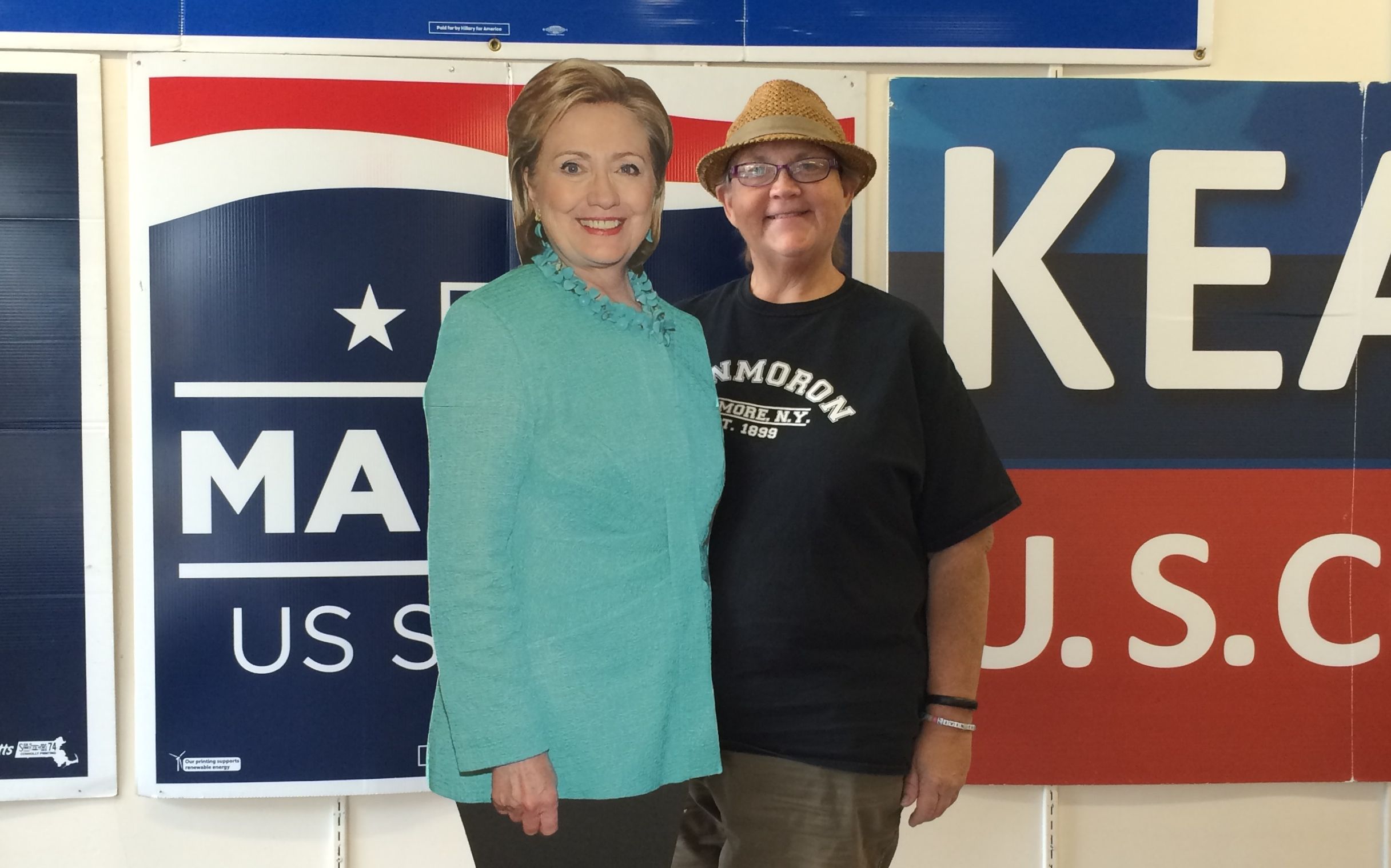
As I mentioned a couple of posts ago, my last stop on Cape Cod was Hyannis Port to visit the Clinton campaign headquarters.
My next destination was Cape Cod. I’d always wanted to go there. Growing up during the Kennedy administration, it always had such an allure. Also you have got to love a place named after a fish
Okay, this is probably the only time you’ll find me referencing a fish on my blog
and a place that has its own style of house.
There is also the fact that my friends Susan, Liz and Pam vacationed there for years with their parents. I was so jealous! Well, finally, it was my turn to see the magical Cape Cod!
It was a dreary day when I pulled into Nickerson State Park. No hook ups, but the site was large and level, and I had a view of trees.
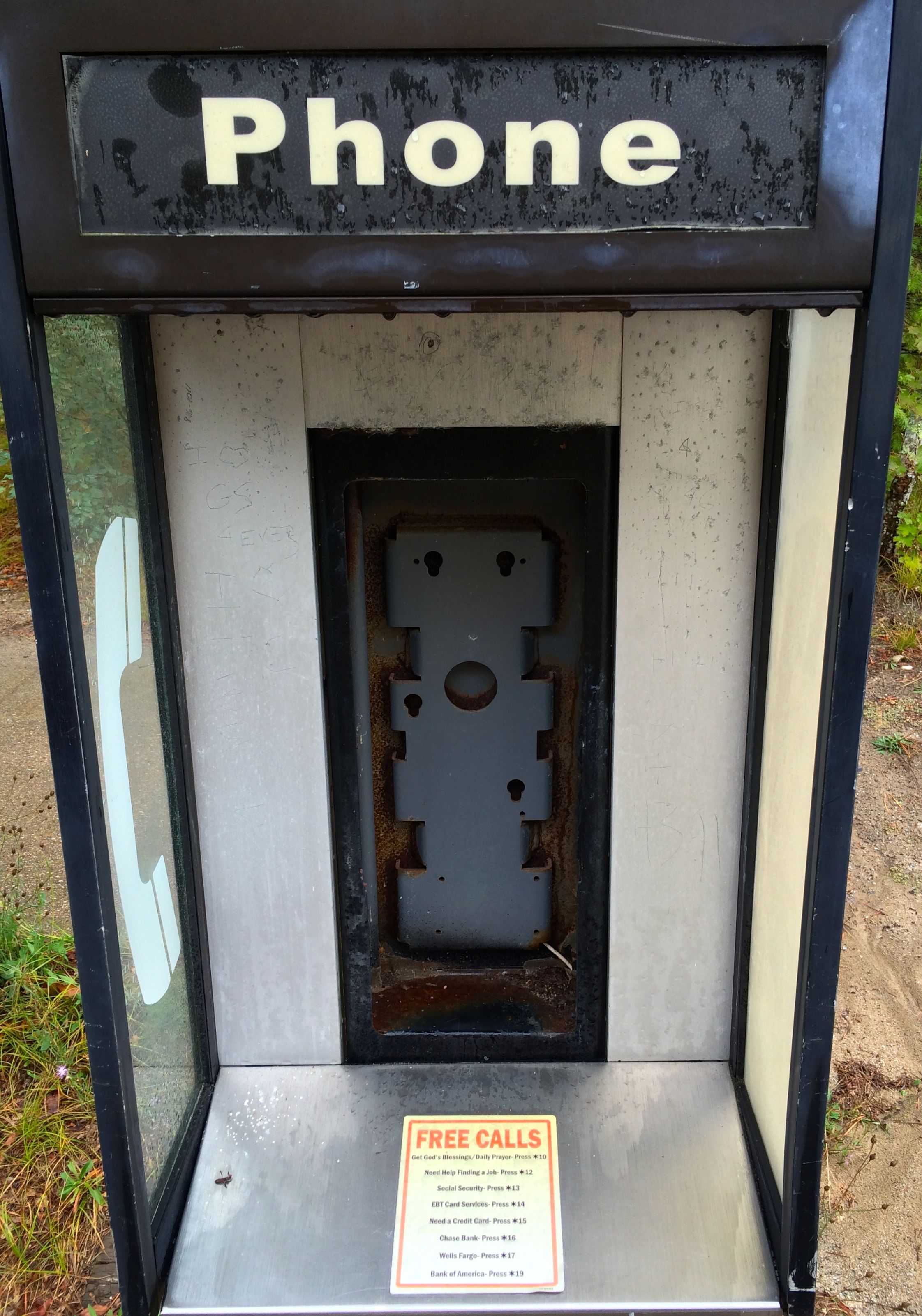
Always on the look out for the incongruous, I had to laugh at this “pay phone” near the office.
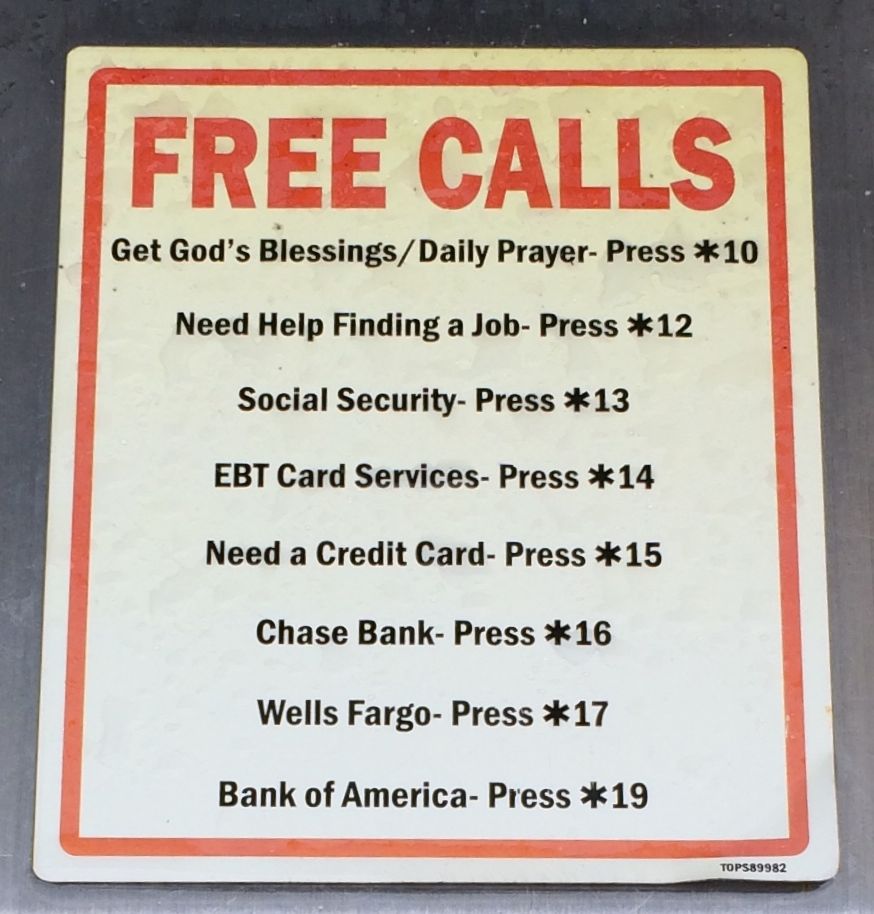
Of course, a pay phone location without a phone isn’t all that unusual any more. I remember how hard it was to get a pay phone installed at the Kalamazoo/Battle Creek International Airport when the new terminal was built in 2011. They are taking out phones, not putting them in. What really gave me a chuckle was the sticker inside the shelter.
Hey – it made me laugh! (Your mileage may vary.)
The next day, I set out to explore. The weather was gloomy and damp. It drizzled and it rained and I learned the difference between water resistant and water repellant. My new jacket is water resistant and I was damp and chilly a good bit of the day. Thank goodness for a good heater in the truck!
I parked and set out to hike one of the trails. (Hiking sounds so much more vigorous than strolling – which is more like what I did.)
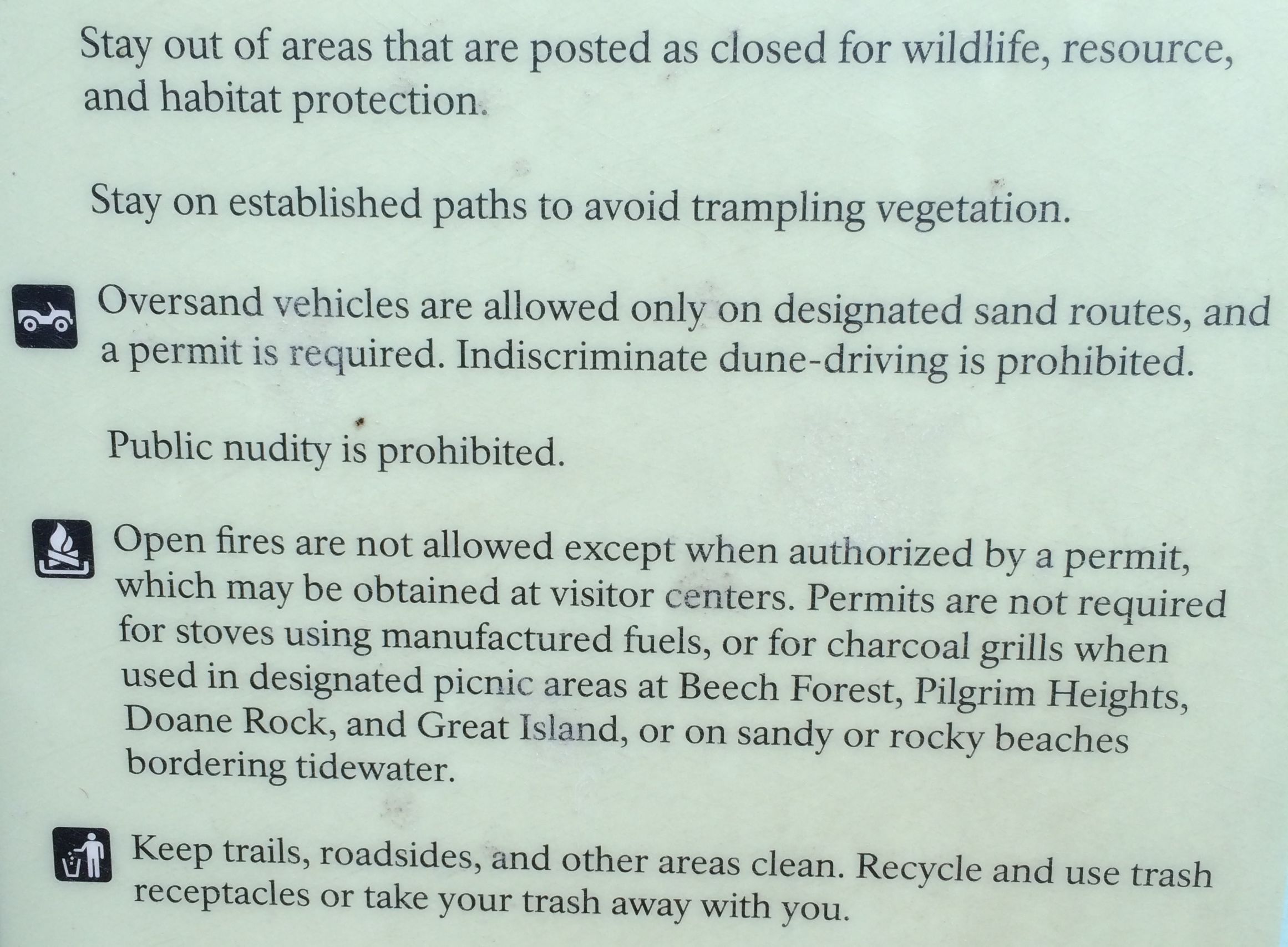
At the trail head, there were the usual list of rules and regulations.
Public nudity is prohibited? Drat! I guess I’ll just have to hike with my clothes on. It was too cold for strolling nude, anyway.
Unfortunately, I am writing this more than a month after the fact – actually closer to two months after the fact. So, if you know the details, feel free to post them in the comments. I picked up a brochure, but it dissolved in the rain.
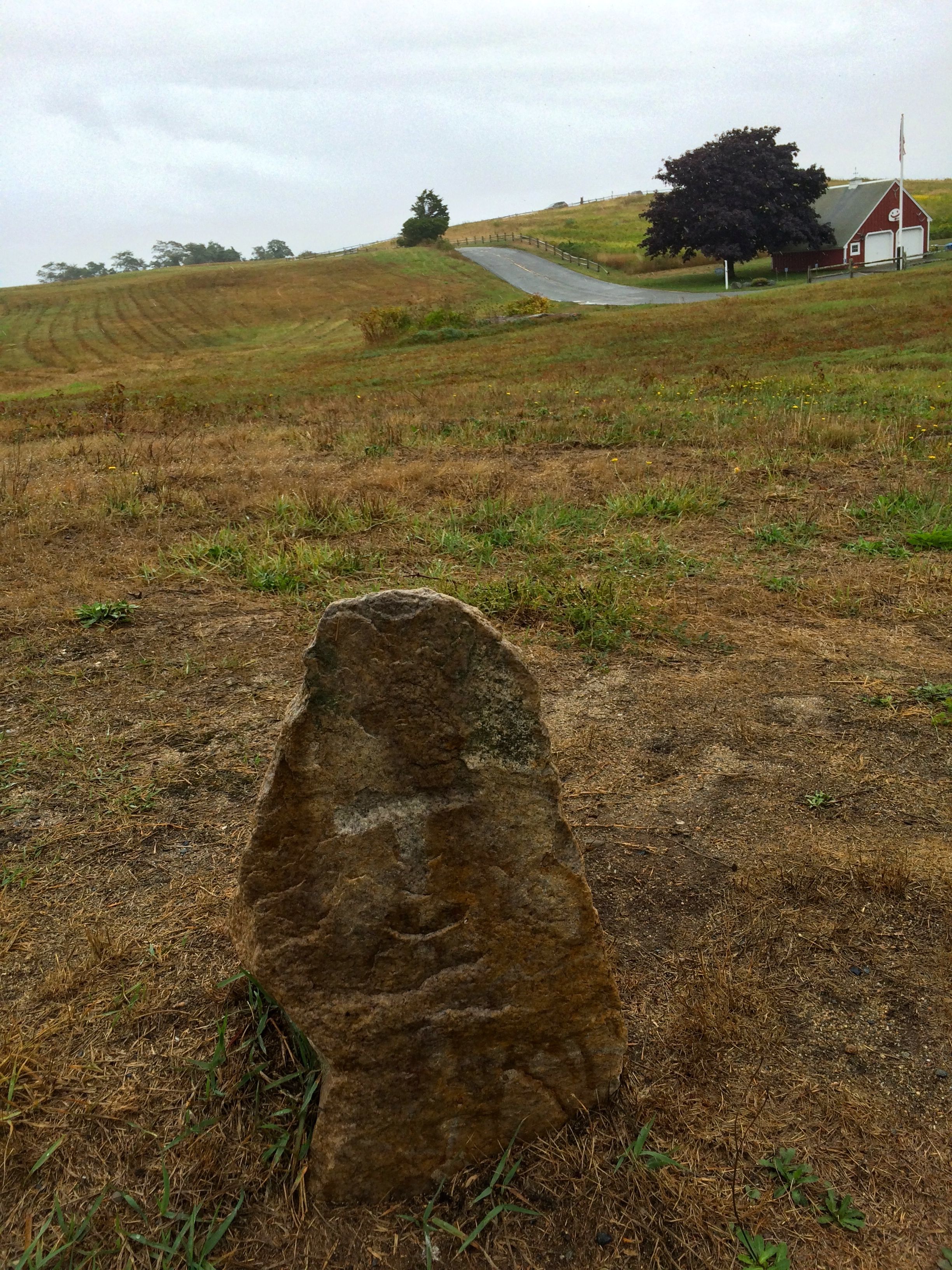
There was this stone with a T carved into it. I think it marked the site of some former building.
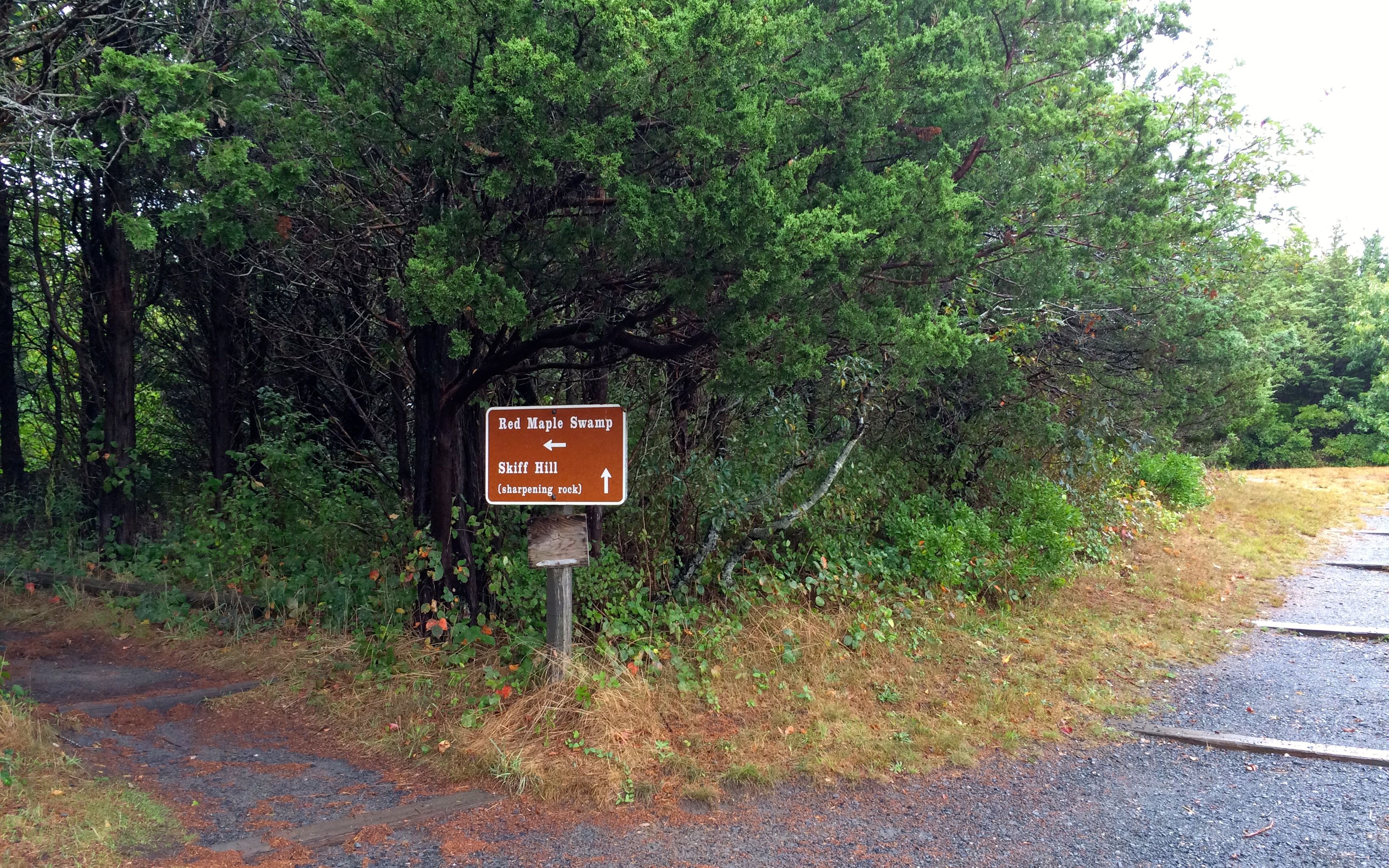
I slogged along until I came to a fork in the road – so I decided to take it. (Thanks to Yogi Bera.)
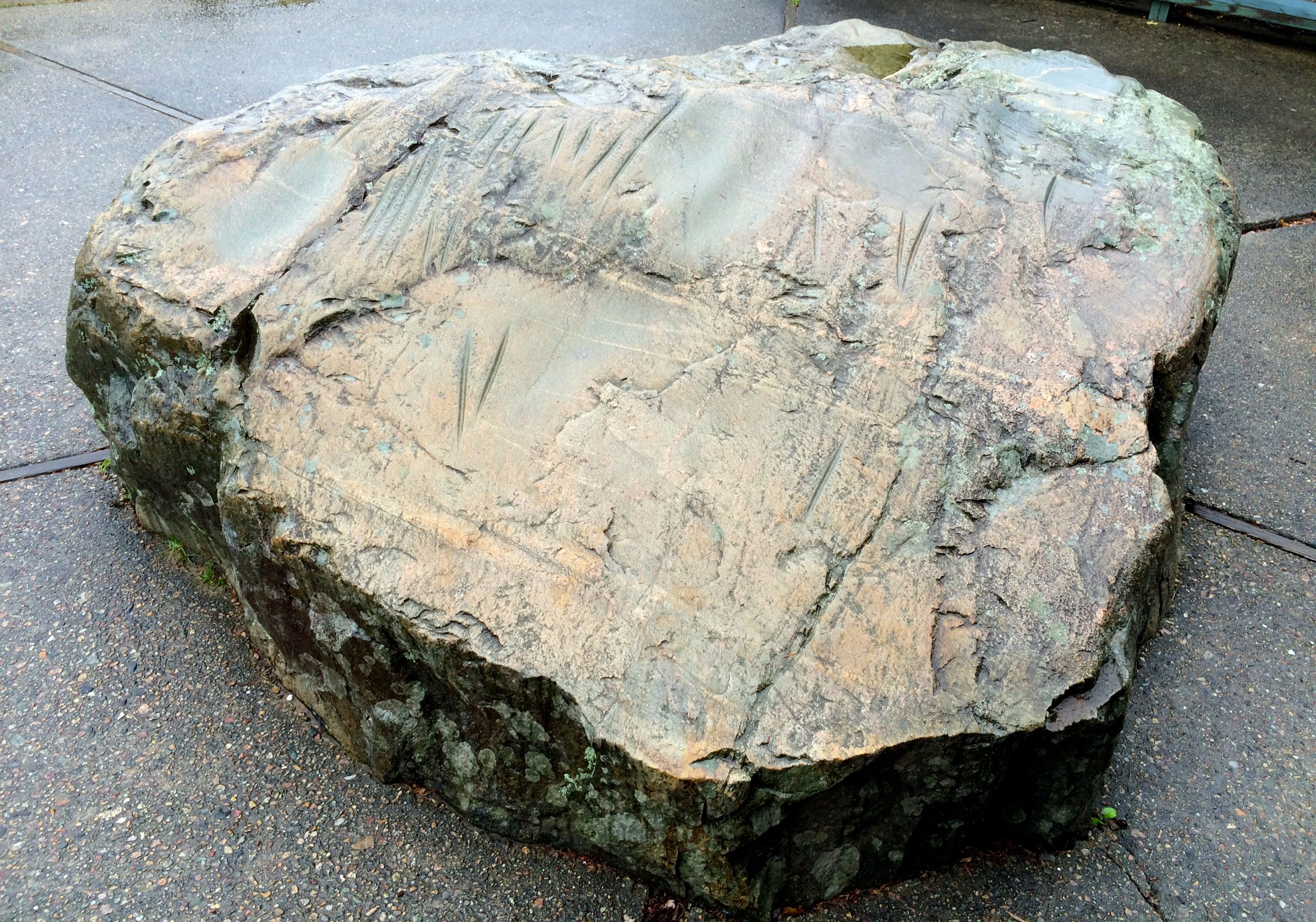
I got to a turn off to see “Indian Rock.” I was curious. I love all the petroglyphs out west. I wondered what this might be.
It turns out that “Indian Rock” that is the record of the occupation of the Nauset Indians who lived beside the marshes of Cape Cod. They used this rock for grinding and polishing implements made of stone and animal bones. Stone axes were sharpened on the concave surfaces and bone fishhooks were shaped in the narrow groves.
This 20-ton boulder was originally located just below where I saw it, embedded in the mud of the marsh. The National Park Service moved it to this site in 1965.
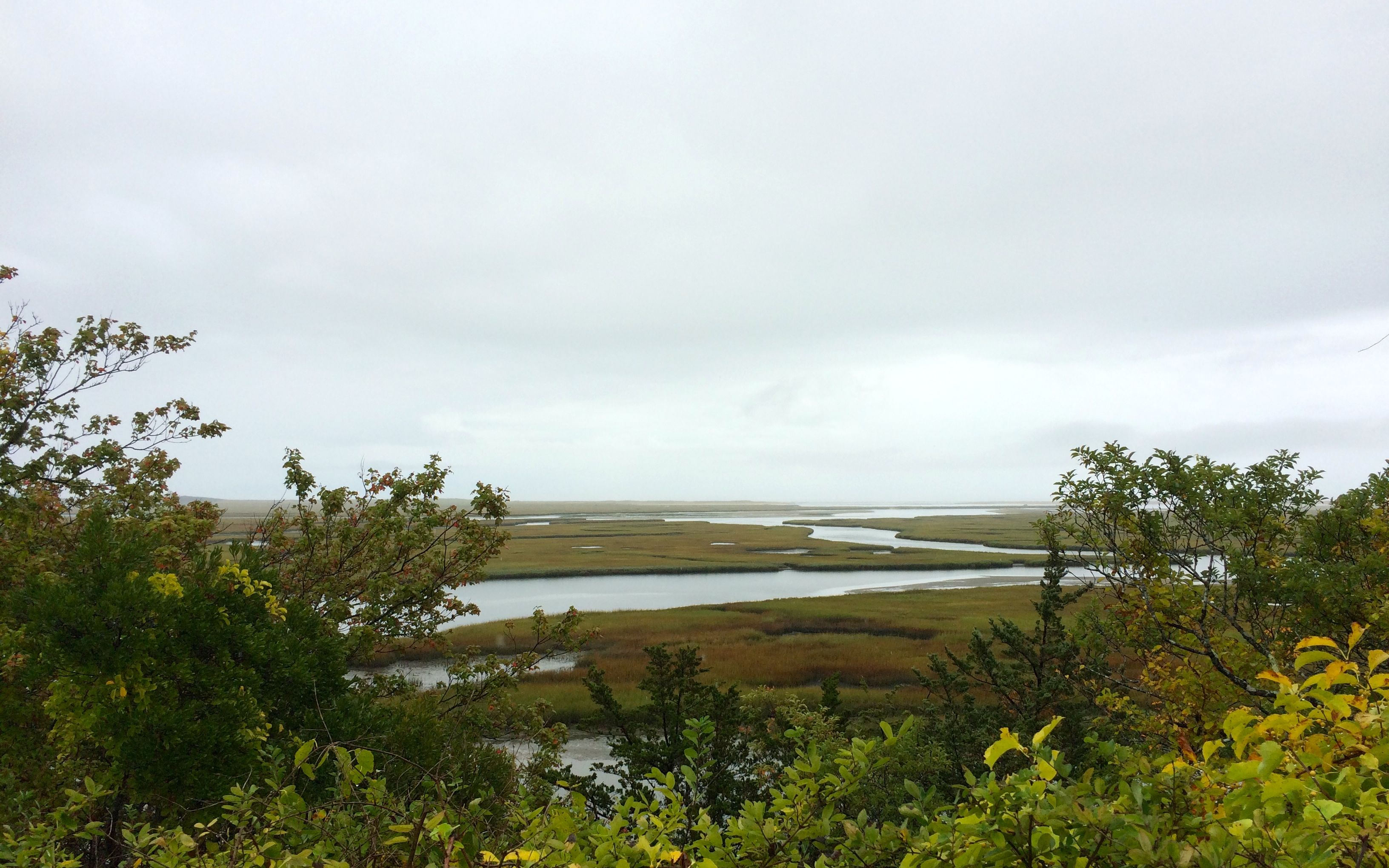
This is the of the salt marsh. Salt marshes are something new to this freshwater girl.
I headed over to one of the two headquarters for the Cape Cod National Seashore. I needed to get a stamp in my National Parks Passport.
I took in an excellent video about the cape and toured a museum with some interesting artifacts. Since the weather was so dismal, it was rather crowded. I did manage to snap a few shots of some of the items that caught my attention.
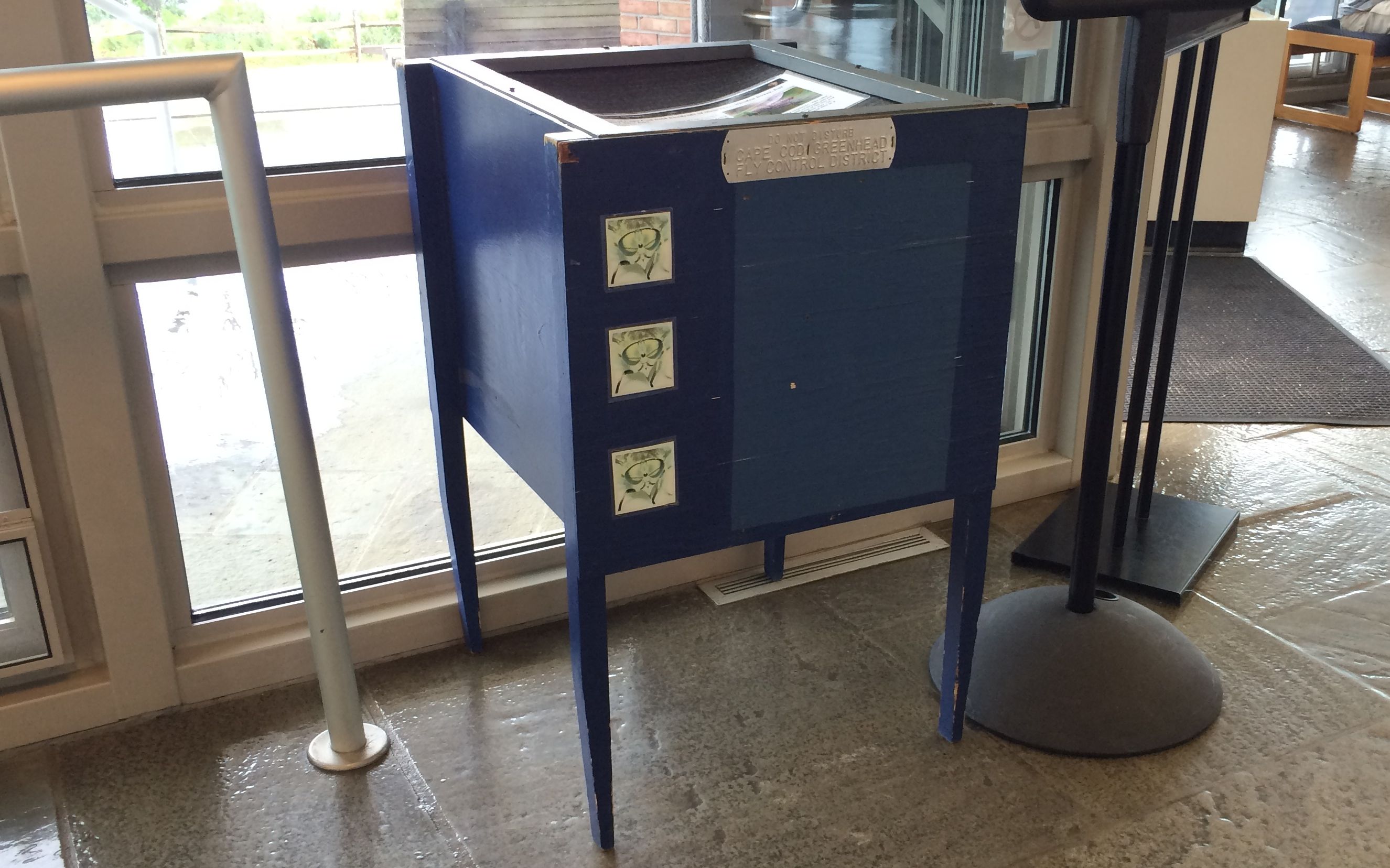
This is a fly control box. They are placed in the marshes of Cape Cod. I had seen some in New Hampshire, but I didn’t have anyone to ask. The boxes are there to control the greenhead fly, which is known for its painful bite.
Female green heads lay two sets of eggs. After she lays her first set, she requires protein in order to make the second set viable. She gets the protein from blood, and they follow the carbon dioxide exhaled by mammals to find the blood. They are also attracted by the color blue.
These blue boxes. contain bait called Octnol, which is an artificial ox-breath. (Artificial ox-breath? There are so many things in the world that I had no idea that even exist.) They fly in through the bottom and are caught inside a secondary trap from which they can’t escape. According to the information I photographed, one of these boxes is capable of capturing twenty thousand greenhead flies in a single summer. That’s a whole lot of painful bites avoided.
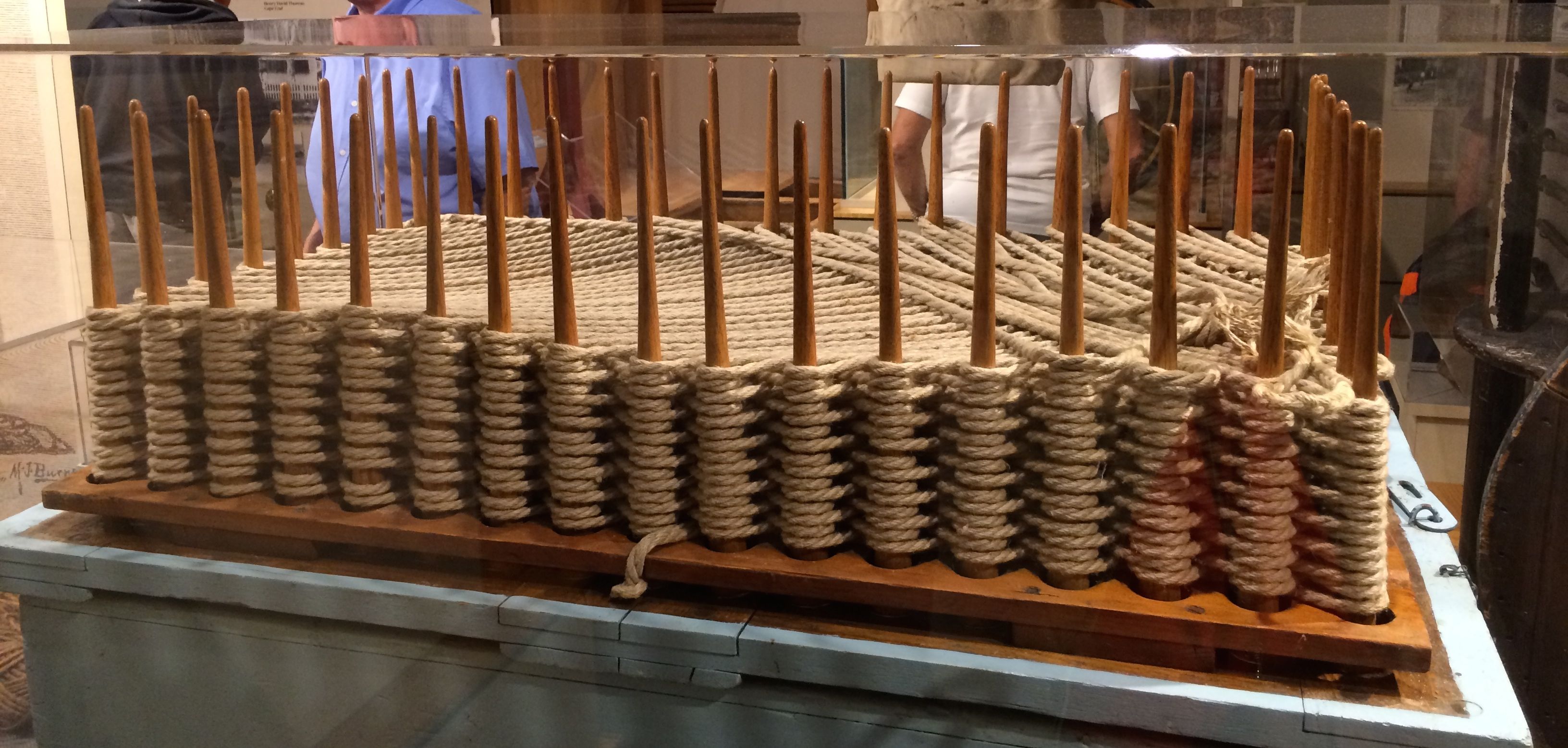
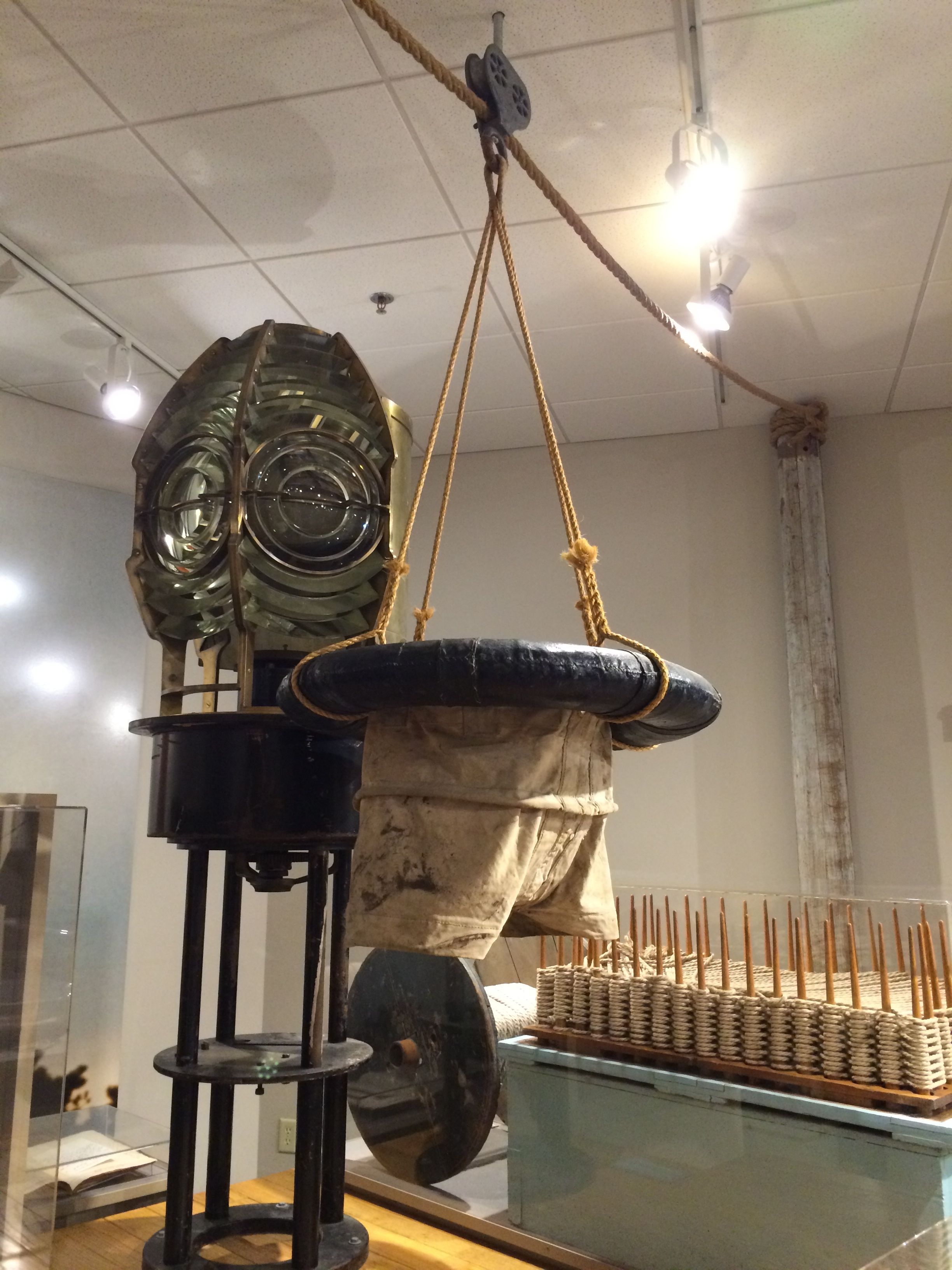
After enjoying the information about greenhead fly control, I entered the museum. I was interested in the display about the breeches buoy that was used for rescuing people when ships would run aground or start sinking.
They would use a small cannon to fire a rope to the ship. They prepared the rope for this by wrapping it around the posts in this frame.
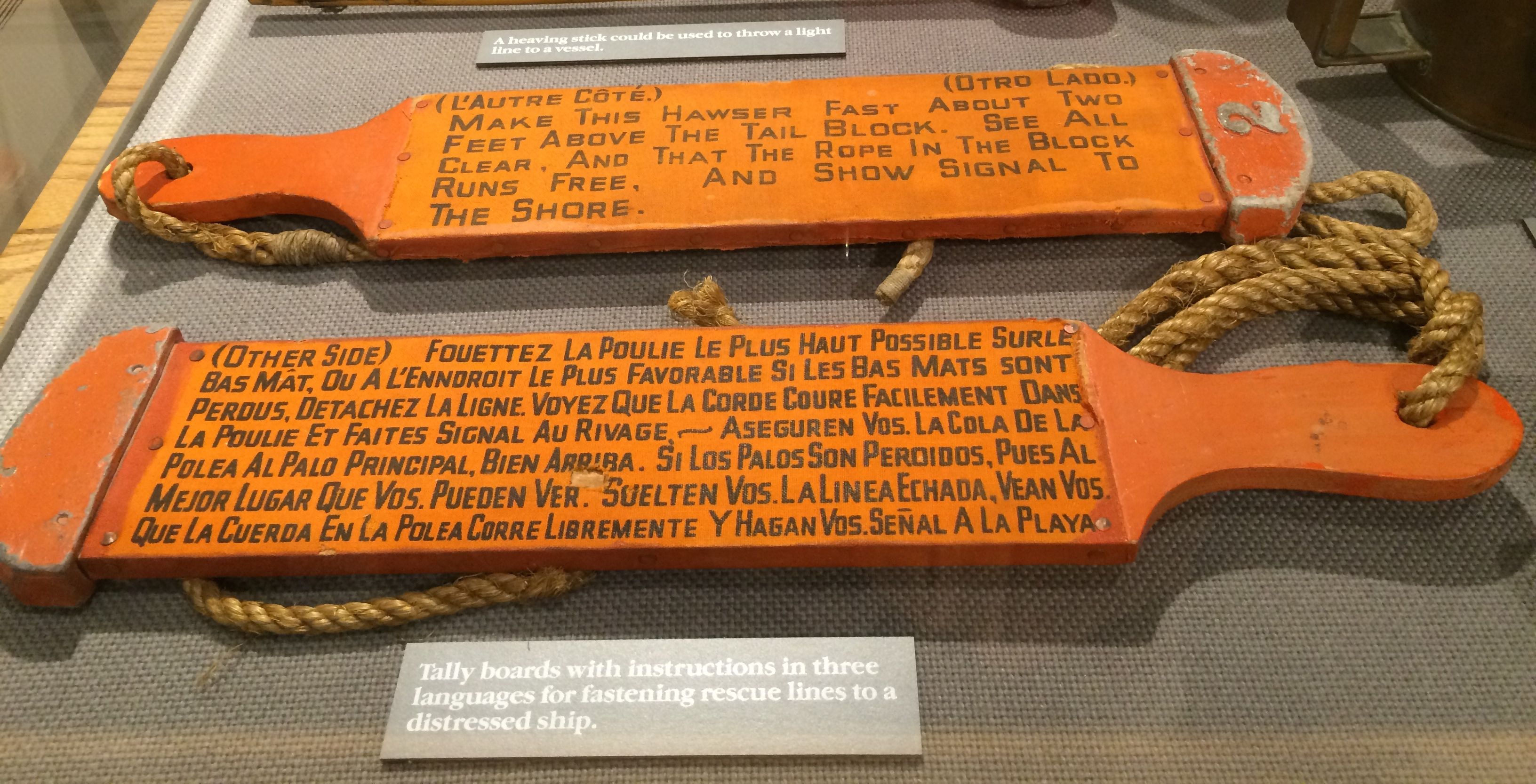
Directions were sent along for what to do. They were written on wooden paddles, that would definitely stand up to water better than paper. The directions were written in multiple languages, because trade has always been a multinational venture.
Then they would send across the breeches buoy. People would climb inside and stick their legs out the bottom and then slide back across the rope to safety.
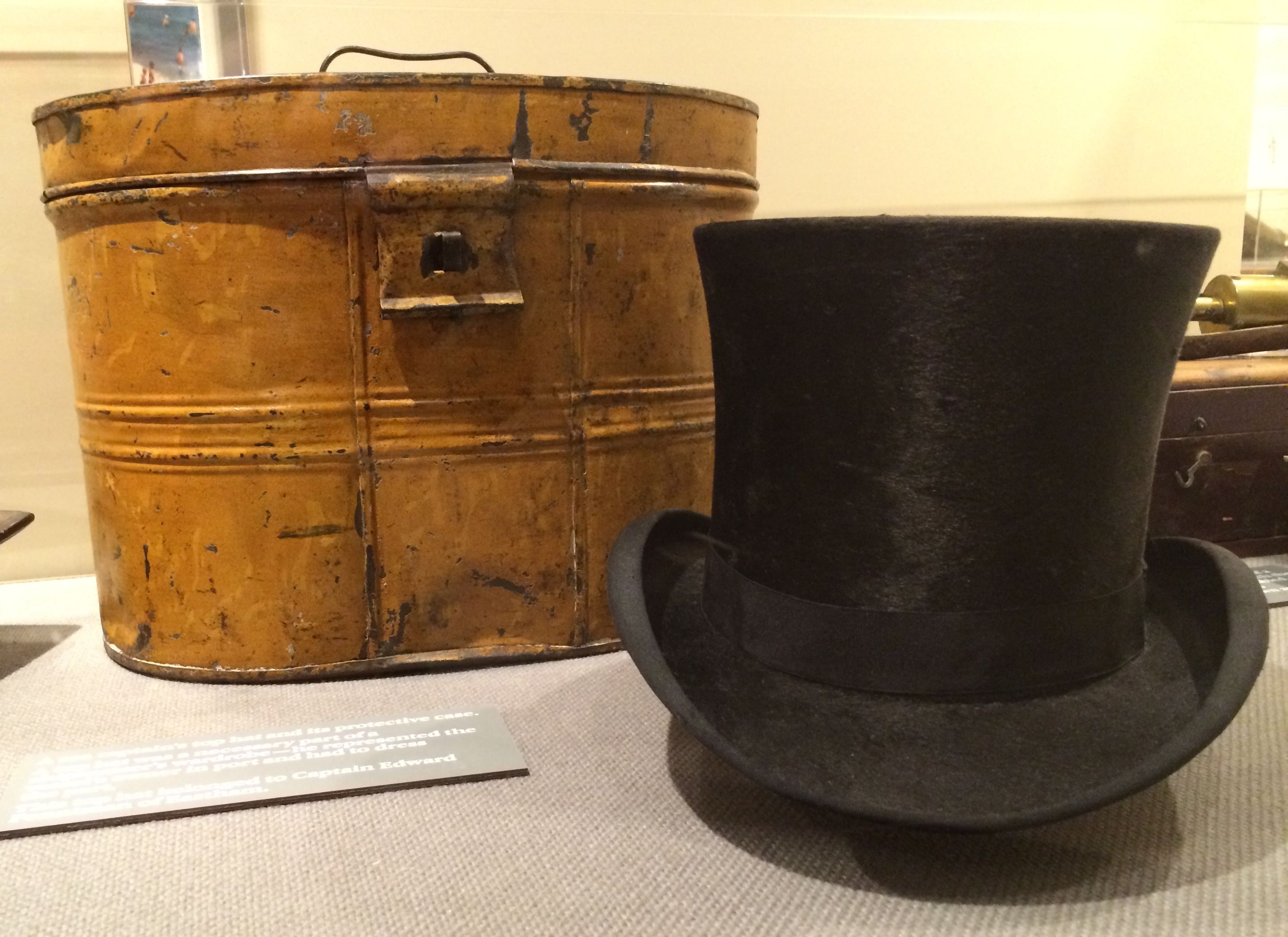
Being a ship’s captain was a dignified profession. I was surprised that he would travel with a top hat. Popeye wouldn’t have had one.
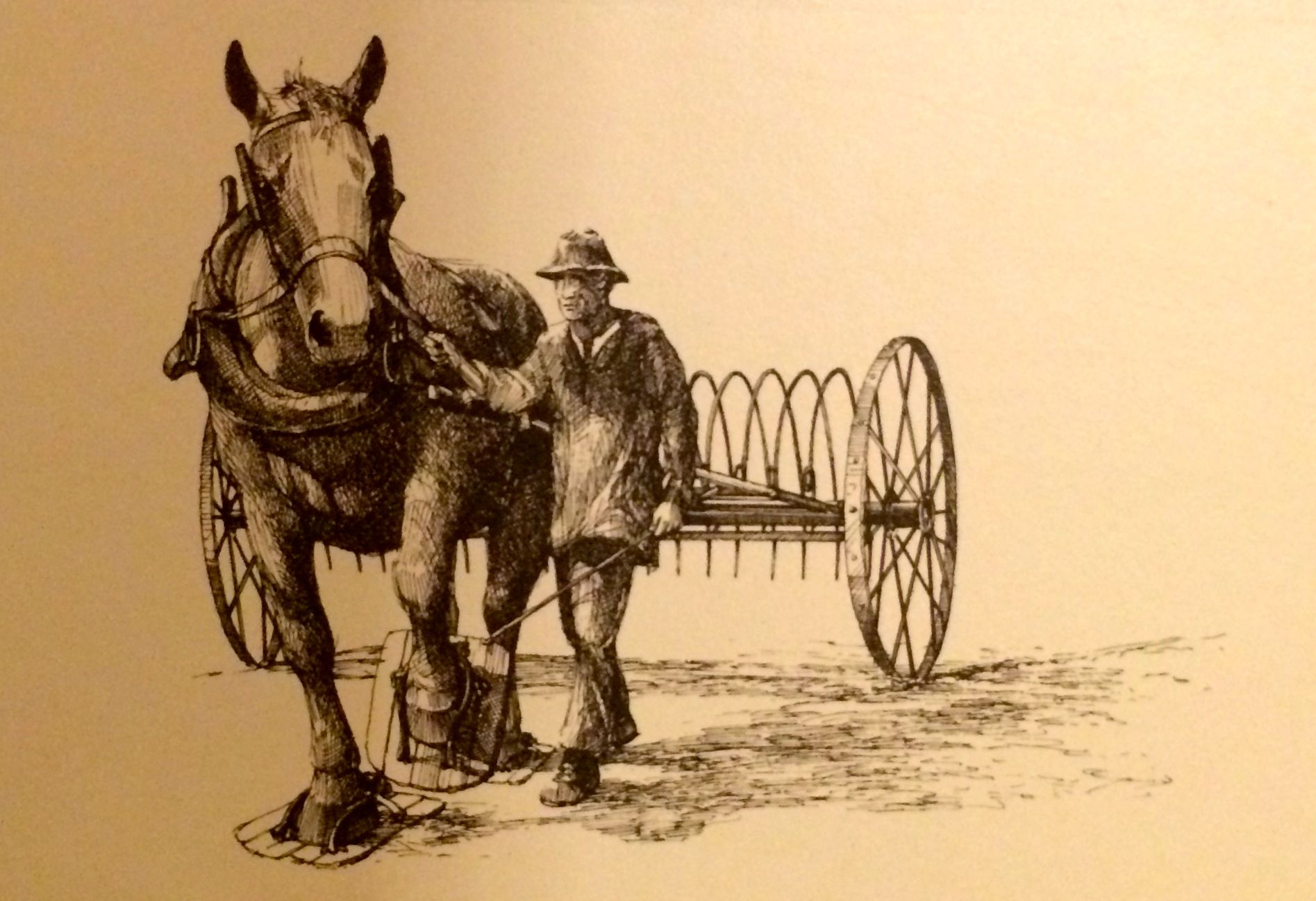
Another interesting thing was that horses would wear bog shoes to keep from sinking when they were working in the soggy areas.
They actually had some bog shoes, but I couldn’t get a good photo.
After the museum, I drove around a bit more. The weather was improving.
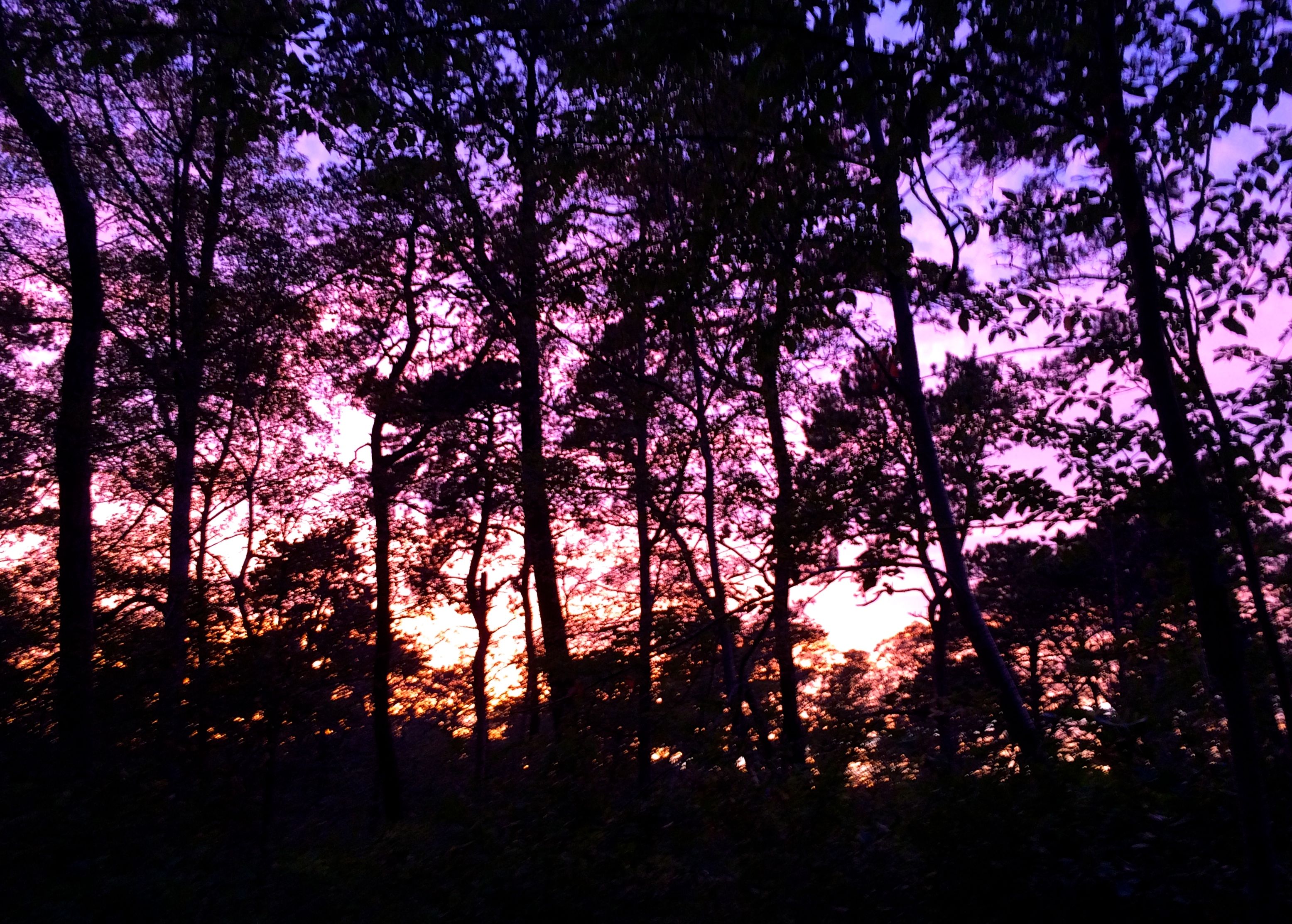
By the time I got back to camp, I had a beautiful sunset. Perhaps the next day would be more enjoyable for being outside.